/


Author: Fattorusso E. Taglialatela-Scafati O.
Tags: organic chemistry analytical chemistry biochemistry organic synthesis
ISBN: 978-3-527-31521-5
Year: 2008

Text
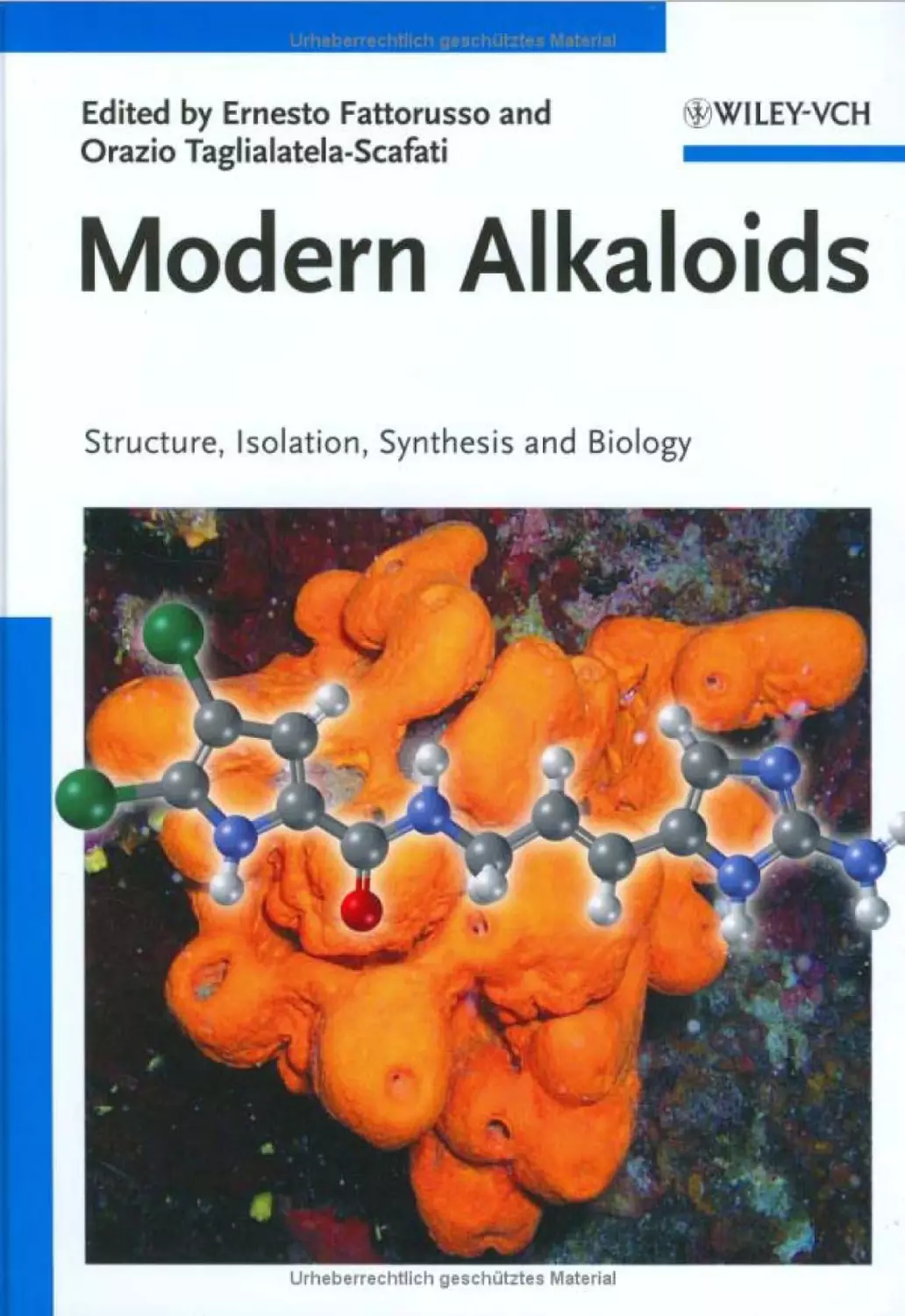
Modern Alkaloids
Edited by
Ernesto Fattorusso and
Orazio Taglialatela-Scafati
Related Titles
Tietze, Lutz F. / Eicher, Theophil / Diederichsen, Ulf / Speicher, Andreas
Reactions and Syntheses
in the Organic Chemistry Laboratory
2007
ISBN: 978-3-527-31223-8
Hudlicky, Tomas / Reed, Josephine W.
The Way of Synthesis
Evolution of Design and Methods for Natural Products
2007
ISBN: 978-3-527-31444-7
Sarker, Satyajit / Nahar, Lutfun
Chemistry for Pharmacy Students
2007
ISBN: 978-0-470-01780-7
Kayser, Oliver / Quax, Wim J. (eds.)
Medicinal Plant Biotechnology
From Basic Research to Industrial Applications
2006
ISBN: 978-3-527-31443-0
Eicher, Theophil / Hauptmann, Siegfried
The Chemistry of Heterocycles
Structure, Reactions, Syntheses, and Applications
2003
ISBN: 978-3-527-30720-3
van de Waterbeemd, Han / Lennernäs, Hans / Artursson, Per (Eds.)
Drug Bioavailability
Estimation of Solubility, Permeability, Absorption and Bioavailability
2003
ISBN: 978-3-527-30438-7
Hesse, Manfred
Alkaloids
Nature’s Curse or Blessing?
2002
ISBN: 978-3-906390-24-6
Modern Alkaloids
Structure, Isolation, Synthesis and Biology
Edited by
Ernesto Fattorusso and Orazio Taglialatela-Scafati
The Editors
Prof. Ernesto Fattorusso
Univ. Federico II Dipto. di
Chimica delle Sost. Naturali
Via D. Montesano 49
80131 Napoli
Italien
Prof. O. Taglialatela-Scafati
Univ. Federico II, Dipto. di
Chimica delle Sost. Naturali
Via D. Montesano 49
80131 Napoli
Italien
All books published by Wiley-VCH are carefully
produced. Nevertheless, authors, editors, and
publisher do not warrant the information contained
in these books, including this book, to be free of
errors. Readers are advised to keep in mind that
statements, data, illustrations, procedural details or
other items may inadvertently be inaccurate.
Library of Congress Card No.:
applied for
British Library Cataloguing-in-Publication Data
A catalogue record for this book is available from the
British Library.
Bibliographic information published by
the Deutsche Nationalbibliothek
Die Deutsche Nationalbibliothek lists this publication in the Deutsche Nationalbibliografie; detailed
bibliographic data are available in the Internet at
http://dnb.d-nb.de.
# 2008 WILEY-VCH Verlag GmbH & Co. KGaA,
Weinheim
All rights reserved (including those of translation
into other languages). No part of this book may be
reproduced in any form – by photoprinting,
microfilm, or any other means – nor transmitted or
translated into a machine language without written
permission from the publishers. Registered names,
trademarks, etc. used in this book, even when not
specifically marked as such, are not to be considered
unprotected by law.
Typesetting Thomson Digital, Noida
Printing betz-druck GmbH, Darmstadt
Binding Litges & Dopf GmbH, Heppenheim
Cover Design Grafik-Design Schulz,
Fußgönheim
Printed in the Federal Republic of Germany
Printed on acid-free paper
ISBN: 978-3-527-31521-5
V
Contents
Preface XVII
List of Contributors
XIX
1
I
Bioactive Alkaloids: Structure and Biology
1
Ecological Roles of Alkaloids 3
Michael Wink
Introduction: Defense Strategies in Plants 3
Ecological Roles of Alkaloids 4
Modes of Action 9
Unspecific Interactions 11
Specific Interactions 12
Cytotoxicity of Alkaloids 16
Evolution of Alkaloidal Defense Systems 19
Conclusions 23
1.1
1.2
1.3
1.3.1
1.3.2
1.3.3
1.4
1.5
2
2.1
2.2
2.2.1
2.2.1.1
2.2.1.2
2.2.1.3
2.2.1.4
2.2.1.5
2.2.2
2.2.2.1
2.2.2.2
2.2.2.3
2.2.2.4
2.2.2.5
Antitumor Alkaloids in Clinical Use or in Clinical Trials
Muriel Cuendet, John M. Pezzuto
Introduction 25
Antitumor Alkaloids in Clinical Use 25
Vinca Alkaloids 25
Vinblastine (VLB, 1) 28
Vincristine (VCR, 2) 28
Vindesine (VDS, 3) 28
Vinorelbine (VRLB, 4) 29
Vinflunine (VFL, 5) 29
Camptothecin and Analogs 29
Camptothecin (CPT, 6) 31
Irinotecan (CPT-11) 31
Topotecan 32
Exatecan 32
Gimatecan 32
25
Modern Alkaloids: Structure, Isolation, Synthesis and Biology. Edited by E. Fattorusso and O. Taglialatela-Scafati
Copyright ß 2008 WILEY-VCH Verlag GmbH & Co. KGaA, Weinheim
ISBN: 978-3-527-31521-5
VI
Contents
2.2.2.6
2.2.2.7
2.2.2.8
2.2.3
2.2.3.1
2.2.3.2
2.3
2.3.1
2.3.2
2.3.3
2.3.4
2.3.5
2.3.6
2.4
2.4.1
2.4.2
2.5
2.6
2.7
Karenitecin 32
Lurtotecan 32
Rubitecan (9-nitrocamptothecin) 33
Taxanes 33
Paclitaxel 33
Docetaxel 35
Antitumor Alkaloids in Clinical Trials 36
Ecteinascidin-743 (Yondelis, Trabectedin) 36
7-Hydroxystaurosporine (UCN-01) 37
Ellipticine and Analogs 37
Acronycine and Analogs 38
Colchicine and Analogs 39
Ukrain 40
Alkaloids Used for MDR Reversal 40
Cinchona Alkaloids 40
Dofequidar Fumarate (MS-209) 41
Alkaloids Used for Cancer Prevention 42
Conclusions 43
Acknowledgments 44
3
Alkaloids and the Bitter Taste 53
Angela Bassoli, Gigliola Borgonovo, Gilberto Busnelli
Introduction 53
The Bitter Taste Chemoreception Mechanism 54
Bitter Alkaloids in Food 58
The Bitter Taste of Alkaloids in Other Drugs and Poisons
Alkaloids and Taste in Insects 66
The Bitter Taste of Alkaloids: Should We Avoid, Mask, or
Understand? 69
Acknowledgments 70
3.1
3.2
3.3
3.4
3.5
3.6
3.7
4
4.1
4.2
4.3
4.4
4.5
4.6
4.7
4.8
63
Capsaicin and Capsaicinoids 73
Giovanni Appendino
Introduction 73
What Is an Alkaloid? Is Capsaicin an Alkaloid? 73
Diversity, Biosynthesis, and Metabolism of Capsaicinoids 77
Quantization of Capsaicinoids and Their Distribution in Chili
Pepper 83
Isolation and Synthesis of Capsaicin 86
TRV1 as the Biological Target of Capsaicin and the Ecological Raison
d’être of Capsaicinoids: A Molecular View 90
Naturally Occurring Analogs and Antagonists of Capsaicin
and Endogenous Vanilloids 93
Structure–Activity Relationships of Capsaicinoids 94
Contents
4.9
4.9.1
4.9.2
4.9.3
4.9.4
4.9.5
4.9.6
4.9.7
4.9.8
4.9.9
4.9.10
4.9.11
4.9.12
4.9.13
4.9.14
4.10
4.11
5
5.1
5.2
5.2.1
5.2.1.1
5.2.1.2
5.2.2
5.2.2.1
5.2.2.2
5.2.2.3
5.2.3
5.2.3.1
5.2.3.2
5.2.4
5.2.4.1
5.2.4.2
5.3
5.3.1
5.3.1.1
5.3.1.2
5.3.1.3
5.3.2
Molecular Gastronomy of Hot Food 98
Biomedical Relevance of Capsaicin-Induced Trigeminal
Responses 98
Effect of Capsaicin on Taste 98
Gustatory Sweating 99
Gustatory Rhinitis 99
Hot Food Mitridatism 99
Effect of Capsaicin on Digestion 100
Capsaicin and Stomach Cancer 100
The Effect of Age and Sex on the Sensitivity to Capsaicin
Capsaicin as a Slimming Agent 101
Quenching Capsaicin 101
Chilies and Olive Oil 102
Who Should Avoid Chilies? 102
How can the Pungency of Chilies be Moderated? 102
Psychology of Pepper Consumption 102
Conclusions 103
Acknowledgments 103
100
Glycosidase-Inhibiting Alkaloids: Isolation, Structure, and
Application 111
Naoki Asano
Introduction 111
Isolation and Structural Characterization 111
Deoxynojirimycin and Related Compounds 112
Isolation from Morus spp. (Moraceae) 112
Isolation from Thai Medicinal Plants ‘‘Thopthaep’’ and ‘‘Cha
Em Thai’’ 113
a-Homonojirimycin and Related Compounds 115
Isolation from Garden Plants 115
Isolation from the Thai Medicinal Plant ‘‘Non Tai Yak’’ 117
Isolation from Adenophora spp. (Campanulaceae) 117
Indolizidine and Pyrrolizidine Alkaloids 117
Isolation from the Leguminosae Family 118
Isolation from the Hyacinthaceae Family 120
Nortropane Alkaloids 122
Isolation from the Solanaceae Family 123
Isolation from the Convolvulaceae Family 124
Biological Activities and Therapeutic Application 125
Antidiabetic Agents 125
a-Glucosidase Inhibitors 125
Glycogen Phosphorylase Inhibitors 128
Herbal Medicines 128
Molecular Therapy for Lysosomal Storage Disorders 129
VII
VIII
Contents
5.3.2.1
5.3.2.2
5.4
Substrate Reduction Therapy 130
Pharmacological Chaperone Therapy 130
Concluding Remarks and Future Outlook 133
6
Neurotoxic Alkaloids from Cyanobacteria 139
Rashel V. Grindberg, Cynthia F. Shuman, Carla M. Sorrels, Josh Wingerd,
William H. Gerwick
Introduction 139
Neurotoxic Alkaloids of Principally Freshwater and Terrestrial
Cyanobacteria 141
Anatoxin-a, Homoanatoxin-a, Anatoxin-a(s), and Analogs 141
Anatoxin-a 142
Homoanatoxin-a 145
Anatoxin-a(s) 145
b-Methylaminoalanine 146
Saxitoxin 151
Neurotoxic Alkaloids of Marine Cyanobacteria 156
Antillatoxin A and B 156
Jamaicamide A, B, and C 158
Kalkitoxin 161
Conclusion 162
6.1
6.2
6.2.1
6.2.1.1
6.2.1.2
6.2.1.3
6.2.2
6.2.3
6.3
6.3.1
6.3.2
6.3.3
6.4
7
7.1
7.2
7.3
7.4
7.5
7.6
7.7
7.8
7.9
8
8.1
8.2
8.2.1
8.2.1.1
8.2.1.2
8.2.1.3
8.2.1.4
8.2.2
8.3
Lamellarin Alkaloids: Structure and Pharmacological Properties
Jérôme Kluza, Philippe Marchetti, Christian Bailly
Introduction 171
The Discovery of Lamellarins 172
Modulation of Multidrug Resistance 174
Antioxidant Properties 176
Inhibition of HIV-1 Integrase 176
Cytotoxicity 177
Topoisomerase I Inhibition 178
Targeting of Mitochondria and Proapoptotic Activities 180
Conclusion 184
171
Manzamine Alkaloids 189
Jiangnan Peng, Karumanchi V. Rao, Yeun-Mun Choo, Mark T. Hamann
Introduction 189
Manzamine Alkaloids from Marine Sponges 191
b-Carboline-containing Manzamine Alkaloids 191
Manzamine A Type 191
Manzamine B Type 195
Manzamine C Type 196
Other b-Carboline-containing Manzamines 196
Ircinal-related Alkaloids 198
Source and Large-scale Preparation of Manzamine Alkaloids 202
Contents
8.3.1
8.3.2
8.3.3
8.4
8.4.1
8.4.2
8.4.3
8.4.4
8.4.5
8.4.6
8.5
8.5.1
8.5.2
8.5.3
8.5.4
8.6
9
9.1
9.2
9.3
9.3.1
9.3.2
9.3.3
9.4
9.5
9.5.1
9.5.2
9.6
9.6.1
9.6.2
9.6.3
9.7
9.8
9.9
10
10.1
10.2
10.3
Source of Manzamine Alkaloids 202
Large-scale Preparation of Manzamines 204
Supercritical Fluid Chromatography Separation of Manzamine
Alkaloids 205
Synthesis of Manzamine Alkaloids 206
Total Synthesis of Manzamine A and Related Alkaloids 206
Total Synthesis of Manzamine C 208
Total Synthesis of Nakadomarin A 214
Synthetic Studies of Manzamine Alkaloids 216
Studies on Biomimetic Synthesis 217
Synthesis of Manzamine Analogs 219
Biological Activities of Manzamines 220
Anticancer Activity 220
Antimalarial Activity 222
Antimicrobial and Antituberculosis Activity 224
Miscellaneous Biological Activities 225
Concluding Remarks 226
Antiangiogenic Alkaloids from Marine Organisms 233
Ana R. Diaz-Marrero, Christopher A. Gray, Lianne McHardy, Kaoru Warabi,
Michel Roberge, Raymond J. Andersen
Introduction 233
Purine Alkaloids 235
Terpenoid Derivatives 236
Avinosol 236
Cortistatins A–D 237
Squalamine 238
Motuporamines 240
Pyrrole-Imidazole Alkaloids: ‘‘Oroidin’’-Related Alkaloids 244
Agelastatin A 245
Ageladine A 247
Tyrosine-derived Alkaloids 250
Aeroplysinin-1 250
Psammaplin A 254
Bastadins 256
Tryptophan-derived Alkaloids 259
Ancorinosides 262
Concluding Remarks 263
A Typical Class of Marine Alkaloids: Bromopyrroles
Anna Aiello, Ernesto Fattorusso, Marialuisa Menna,
Orazio Taglialatela-Scafati
Introduction 271
Oroidin-like Linear Monomers 273
Polycyclic Oroidin Derivatives 278
271
IX
X
Contents
10.3.1
10.3.2
10.3.3
10.3.4
10.3.5
10.3.6
10.4
10.5
10.6
C-4/C-10 Derivatives 278
N-1/C-9 Derivatives 281
N-7/C-11 þ N-1/C-12 Derivatives 281
N-7/C-11 þ C-4/C-12 Derivatives 284
N-1/C-12 þ N-7/C-12 Derivatives 285
N-1/C-9 þ C-8/C-12 Derivatives 285
Simple or Cyclized Oroidin-like Dimers
Other Bromopyrrole Alkaloids 291
Conclusions 296
11
11.1
11.2
11.3
11.4
11.5
11.6
11.7
Guanidine Alkaloids from Marine Invertebrates 305
Roberto G.S. Berlinck, Miriam H. Kossuga
Introduction 305
Modified Creatinine Guanidine Derivatives 305
Aromatic Guanidine Alkaloids 307
Bromotyrosine Derivatives 309
Amino Acid and Peptide Guanidines 310
Terpenic Guanidines 320
Polyketide-derived Guanidines 321
II
New Trends in Alkaloid Isolation and Structure Elucidation
12
Analysis of Tropane Alkaloids in Biological Matrices 341
Philippe Christen, Stefan Bieri, Jean-Luc Veuthey
Introduction 341
Extraction 343
Plant Material 343
Supercritical Fluid Extraction 343
Microwave-assisted Extraction 344
Pressurized Solvent Extraction 345
Solid-phase Microextraction 345
Biological Matrices 346
Analysis of Plant Material and Biological Matrices 348
Gas Chromatography 348
High-performance Liquid Chromatography 355
Capillary Electrophoresis 359
Desorption Electrospray Ionization Mass Spectrometry 361
Conclusions 362
12.1
12.2
12.2.1
12.2.2
12.2.3
12.2.4
12.2.5
12.2.6
12.3
12.3.1
12.3.2
12.3.3
12.3.4
12.4
13
13.1
13.2
286
339
LC-MS of Alkaloids: Qualitative Profiling, Quantitative Analysis,
and Structural Identification 369
Steven M. Colegate, Dale R. Gardner
Introduction 369
LC-MS Overview 369
Contents
13.2.1
13.2.1.1
13.2.1.2
13.2.1.3
13.2.1.4
13.3
13.3.1
13.3.2
13.3.2.1
13.3.2.2
13.3.2.3
13.4
13.4.1
13.4.1.1
13.4.1.2
13.4.1.3
13.4.2
13.4.3
13.4.3.1
13.4.3.2
13.5
13.5.1
13.5.2
13.5.2.1
13.5.2.2
13.5.3
13.5.3.1
13.5.3.2
13.6
13.6.1
13.6.1.1
13.6.1.2
13.6.1.3
13.6.2
13.6.2.1
13.6.2.2
13.6.3
13.6.3.1
13.6.3.2
13.6.3.3
13.7
Optimization 370
Modification of Mobile Phases and Ionization Parameters 370
HPLC Versus UPLC 372
Fluorinated HPLC Solid Phases 372
Reduction of Ion Suppression 373
Clinical Chemistry and Forensic Applications 374
Extraction and Analytical Considerations 375
Forensic Detection of Plant-derived Alkaloids 375
Plant-associated Intoxications 375
Illicit Drug Use: Multiple Reaction Monitoring 376
Quality Control of Herbal Preparations: APCI-MS 376
Metabolite Profiling and Structure Determination 376
LC-MS/MS Approaches to the Identification/Structural Elucidation
of Alkaloid Drug Metabolites 377
Tandem MS 377
Accurate Mass Measurement 378
Chemical Modification 378
Minimization of Sample Treatment 378
Structure Determination 380
Nudicaulins from Papaver nudicaule:
High-resolution MS 380
Endophyte Alkaloids: An MS Fragment Marker 380
Pyrrolizidine Alkaloids and Their N-Oxides 382
Solid Phase Extraction 383
Qualitative Profiling 383
Echium plantagineum and Echium vulgare 385
Senecio ovatus and Senecio jacobaea 387
Quantitative Analysis 392
Calibration Standards 393
Honey 394
Alkaloids from Delphinium spp. (Larkspurs) 395
Flow Injection (FI) Mass Spectrometry 396
Qualitative FI Analysis 397
Quantitative FI Analyses 398
Chemotaxonomy of Delphinium Species 399
LC-MS Analysis of Diterpene Alkaloids 400
Toxicokinetics and Clearance Times 400
Diagnosis of Poisoning 401
Structural Elucidation of Norditerpenoid Alkaloids 402
Stereochemical Indications 402
Isomeric Differentiation Using Tandem Mass
Spectrometry 403
Novel Diterpene Alkaloid Identification: Application of Tandem
Mass Spectrometry 405
Conclusions 405
XI
XII
Contents
14.5
14.6
14.6.1
14.6.2
14.6.3
14.6.3.1
14.6.3.2
14.6.3.3
14.6.3.4
14.6.3.5
14.6.4
14.6.5
14.6.6
14.6.7
14.6.8
14.7
14.8
Applications of 15N NMR Spectroscopy in Alkaloid Chemistry 409
Gary E. Martin, Marina Solntseva, Antony J. Williams
Introduction 409
15
N Chemical Shift Referencing 409
15
N Chemical Shifts 411
15
N Reviews and Monographs 411
Indirect-Detection Methods Applicable to 15N 412
Accordion-optimized Long-range 1H–15N Heteronuclear Shift
Correlation Experiments 413
Pulse Width and Gradient Optimization 414
Long-range Delay Optimization 414
Establishing F1 Spectral Windows 416
15
N Chemical Shift Calculation and Prediction 418
Structure Verification Using a 15N Content Database 418
15
N NMR Prediction 419
Enhancing NMR Prediction With User-‘‘trained’’ Databases 420
Validating 15N NMR Prediction 420
Computer-assisted Structure Elucidation (CASE) Applications
Employing 15N Chemical Shift Correlation Data 422
Applications of 15N Spectroscopy in Alkaloid Chemistry 428
Applications of Long-range 1H–15N 2D NMR 430
Five-membered Ring Alkaloids 430
Tropane Alkaloids 436
Indoles, Oxindoles, and Related Alkaloids 437
Strychnos Alkaloids 437
Azaindoles 439
Indoloquinoline Alkaloids 439
Vinca Alkaloids 441
Other Indole Alkaloids 442
Carboline-derived Alkaloids 448
Quinoline, Isoquinoline, and Related Alkaloids 450
Benzo[c]phenanthridine Alkaloids 453
Pyrazine Alkaloids 456
Diazepinopurine Alkaloids 459
Pyridoacridine, Quinoacridine, and Related Alkaloids 460
Conclusions 465
III
New Trends in Alkaloid Synthesis and Biosynthesis
15
Synthesis of Alkaloids by Transition Metal-mediated Oxidative
Cyclization 475
Hans-Joachim Knölker
Silver(I)-mediated Oxidative Cyclization to Pyrroles 475
Synthesis of the Pyrrolo[2,1-a]isoquinoline Alkaloid Crispine A
14
14.1
14.1.1
14.1.2
14.1.3
14.2
14.2.1
14.2.2
14.2.3
14.2.4
14.3
14.3.1
14.3.2
14.3.3
14.3.4
14.4
15.1
15.1.1
473
477
Contents
15.1.2
15.2
15.3
15.3.1
15.3.2
15.3.3
15.3.4
15.3.5
15.4
15.4.1
15.4.2
15.4.3
15.4.4
16
16.1
16.2
17
17.1
17.2
17.3
17.4
17.4.1
17.4.2
17.5
17.5.1
17.5.2
17.5.2.1
17.5.2.2
17.5.2.3
17.5.3
17.6
Synthesis of the Indolizidino[8,7-b]indole Alkaloid
Harmicine 478
Iron(0)-mediated Oxidative Cyclization to Indoles 478
Iron(0)-mediated Oxidative Cyclization to Carbazoles 481
3-Oxygenated Carbazole Alkaloids 482
Carbazole-1,4-Quinol Alkaloids 483
Furo[3,2-a]carbazole Alkaloids 483
2,7-Dioxygenated Carbazole Alkaloids 485
3,4-Dioxygenated Carbazole Alkaloids 487
Palladium(II)-catalyzed Oxidative Cyclization to
Carbazoles 488
Carbazolequinone Alkaloids 489
Carbazomadurins and Epocarbazolins 492
7-Oxygenated Carbazole Alkaloids 493
6-Oxygenated Carbazole Alkaloids 495
Camptothecin and Analogs: Structure and Synthetic Efforts
Sabrina Dallavalle, Lucio Merlini
Introduction: Structure and Activity 503
Synthetic Efforts 507
503
Combinatorial Synthesis of Alkaloid-like Compounds In Search
of Chemical Probes of Protein–Protein Interactions 521
Michael Prakesch, Prabhat Arya, Marwen Naim, Traian Sulea,
Enrico Purisima, Aleksey Yu. Denisov, Kalle Gehring, Trina L. Foster,
Robert G. Korneluk
Introduction 521
Protein–Protein Interactions 523
Alkaloid Natural Products as Chemical Probes of Protein–Protein
Interactions 524
Indoline Alkaloid Natural Product-inspired
Chemical Probes 525
Indoline Alkaloid-inspired Chemical Probes 526
Tetrahydroquinoline Alkaloid-inspired Chemical Probes 528
Alkaloid Natural Product-inspired Small-molecule Binders to Bcl-2
and Bcl-XL and In Silico Studies 532
Alkaloid Natural Product-inspired Small-molecule Binders to
Bcl-XL and NMR Studies 533
Alkaloid Natural Product-inspired Small-molecule Probes
for XIAP 535
Cell Death Assay 535
Caspase-3 Activation Assay 536
Caspase-9 Release Assay 536
Summary and Future Outlook 536
Acknowledgments 538
XIII
XIV
Contents
18
18.1
18.2
18.2.1
18.2.2
18.2.3
18.2.4
18.2.5
18.2.6
18.2.7
18.2.8
18.2.9
18.2.10
18.2.11
18.2.12
18.2.13
18.3
18.3.1
18.3.2
18.3.3
18.3.4
18.3.5
18.3.6
18.3.7
18.3.8
18.4
18.4.1
18.4.1.1
18.4.1.2
18.4.2
18.4.2.1
18.4.2.2
18.4.2.3
18.4.2.4
18.4.2.5
18.4.2.6
18.5
18.6
19
19.1
19.2
Daphniphyllum alkaloids: Structures, Biogenesis, and Activities 541
Hiroshi Morita, Jun’ichi Kobayashi
Introduction 541
Structures of Daphniphyllum Alkaloids 542
Daphnane-type Alkaloids 542
Secodaphnane-type Alkaloids 543
Yuzurimine-type Alkaloids 543
Daphnilactone A-type Alkaloids 543
Daphnilactone B-type Alkaloids 544
Yuzurine-type Alkaloids 544
Daphnezomines 545
Daphnicyclidins 551
Daphmanidins 557
Daphniglaucins 559
Calyciphyllines 560
Daphtenidines 560
Other Related Alkaloids 561
Biosynthesis and Biogenesis 564
Biosynthesis of Daphniphyllum Alkaloids 564
Biogenesis of the Daphnane and Secodaphnane Skeletons 564
Biogenesis of the Daphnezomines 565
Biogenesis of the Daphnicyclidins 568
Biogenesis of the Daphmanidins 569
Biogenesis of the Daphniglaucins 570
Biogenesis of the Calyciphyllines 573
Biogenesis of the Daphtenidines 573
Synthesis 575
Biomimetic Chemical Transformations 575
Transformation of an Unsaturated Amine to the Daphnane
Skeleton 575
Transformation of Daphnicyclidin D to Daphnicyclidins E and J 575
Biomimetic Total Synthesis 576
Methyl Homosecodaphniphyllate and Protodaphniphylline 576
Secodaphniphylline 579
Methyl Homodaphniphyllate and Daphnilactone A 580
Codaphniphylline 582
Bukittinggine 583
Polycyclization Cascade 583
Activities 585
Conclusions 586
Structure and Biosynthesis of Halogenated Alkaloids
Gordon W. Gribble
Introduction 591
Structure of Halogenated Alkaloids 591
591
Contents
19.2.1
19.2.2
19.2.3
19.2.4
19.2.5
19.3
19.3.1
19.3.2
19.3.3
19.3.4
Indoles 591
Carbazoles 596
b-Carbolines 596
Tyrosines 598
Miscellaneous Halogenated Alkaloids 603
Biosynthesis of Halogenated Alkaloids 605
Halogenation Enzymes 605
Indoles 606
Biosynthesis of Halogenated Tyrosines 609
Biosynthesis of Miscellaneous Alkaloids 612
20
Engineering Biosynthetic Pathways to Generate Indolocarbazole
Alkaloids in Microorganisms 619
César Sánchez, Carmen Méndez, José A. Salas
Introduction 619
Studies Made Before the Identification of Biosynthetic Genes 620
Identification of Genes Involved in Indolocarbazole Biosynthesis 621
Genes Involved in Rebeccamycin Biosynthesis 621
Genes Involved in Staurosporine Biosynthesis 625
Genes Involved in Biosynthesis of Other Indolocarbazoles 625
Indolocarbazole Biosynthetic Pathways and Their Engineering 626
Tryptophan Modification 626
Formation of Bisindole Pyrrole 627
Formation of Carbazole 630
Formation of the Sugar Moiety 632
Sugar Moieties in Rebeccamycin and AT2433 632
The Staurosporine Sugar Moiety 634
Regulation and Self-resistance 636
Perspectives and Concluding Remarks 637
Acknowledgments 638
20.1
20.2
20.3
20.3.1
20.3.2
20.3.3
20.4
20.4.1
20.4.2
20.4.3
20.4.4
20.4.4.1
20.4.4.2
20.4.5
20.5
20.6
Index
641
XV
XVII
Preface
Alkaloids constitute one of the widest classes of natural products, being synthesized
practically by all phyla of both marine and terrestrial organisms, at any evolutionary
level. The extraordinary variety (and often complexity) of alkaloid structures and
biological properties have long intrigued natural product chemists (for structure
determination and biosynthetic studies), analytical chemists, and synthetic organic
chemists. Toxicologists, pharmacologists and pharmaceutical companies have used
and will certainly continue to use alkaloids as biological tools and/or as lead
compounds for development of new drugs.
When we started our project of a handbook on alkaloid science, we were faced
with an impressive number of papers describing the structures and activities of
alkaloids, and also with an intense review activity, published in excellent book series
or in single books covering specific classes of alkaloids. Consequently, we decided to
organize our handbook to present the different aspects of alkaloid science (e.g. the
structure and pharmacology of bioactive alkaloids; recent advances in isolation,
synthesis, and biosynthesis) in a single volume, aiming to provide representative
examples of more recent and promising results as well as of future prospects in
alkaloid science. Obviously, the present handbook cannot be regarded as a comprehensive presentation of alkaloid research, but we feel that the diversity of topics
treated, ranging from bitterness to the anticancer activity of alkaloids, can provide a
good idea of the variety of active research in this field.
In particular, Section I describes the structures and biological activities of selected
classes of alkaloids. Almost half of the chapters focus their attention on terrestrial
alkaloids (Chapters 1–5). The other half (Chapters 7–11) describe recent results in
the field of marine alkaloids, while Chapter 6 is focused on neurotoxic alkaloids
produced by cyanobacteria, microorganisms living in both marine and terrestrial
environments. The particular emphasis on marine alkaloids undoubtedly reflects
our long-standing research activity on marine metabolites, but it is also a result of
the impressive amount of work carried out in the last few decades on marine natural
product chemistry. Section II (Chapters 12–15) gives an account of modern techniques used for the detection and structural elucidation of alkaloids, while Section III
is divided into two parts: different methodologies for the synthesis of alkaloids and
accounts of modern biosynthetic studies.
Modern Alkaloids: Structure, Isolation, Synthesis and Biology. Edited by E. Fattorusso and O. Taglialatela-Scafati
Copyright ß 2008 WILEY-VCH Verlag GmbH & Co. KGaA, Weinheim
ISBN: 978-3-527-31521-5
XVIII
Preface
Finally, we should point out that even today the term alkaloid is ambiguous (a
discussion on the definition of alkaloid is presented in Chapter 4). The initial
definition of Winterstein and Trier (1910) ("nitrogen-containing basic compounds
of plant or animal origin") has obviously been superseded. The most recent definition of alkaloid can be attributed to S. W. Pelletier (1984): "compound containing
nitrogen at a negative oxidation level characterized by a limited distribution in
Nature". In the preparation of this handbook we have decided to follow this last
definition and, thus, to include "borderline" compounds such as capsaicins and nonribosomal polypeptides.
We cannot conclude without thanking all the authors who have made their expert
contributions to the realization of this volume, which we hope will stimulate further
interest in one of the most fascinating branches of natural product chemistry.
Naples, July 2007
Ernesto Fattorusso
Orazio Taglialatela-Scafati
XIX
List of Contributors
Anna Aiello
Università di Napoli ‘‘Federico II’’
Dipartimento di Chimica delle
Sostanze Naturali
Via D. Montesano, 49
80131 Napoli
Italy
Raymond J. Andersen
University of British Columbia
Biological Sciences 1450
Vancouver BC, V6T 1Z1
Canada
Giovanni Appendino
Università del Piemonte Orientale
Largo Donegani, 2
28100 Novara
Italy
Prabhat Arya
National Research Council of Canada
Steacie Institute for Molecular Sciences
100 Sussex Drive,
Ottawa, Ontario, K1A 0R6,
Canada
Naoki Asano
Hokuriku University
Faculty of Pharmaceutical Sciences
Ho-3 Kanagawa-machi
Kanazawa, 920-1181
Japan
Christian Bailly
INSERM U-524, Centre Oscar
Lambret
Place de Verdun
59045 Lille
France
Angela Bassoli
Università di Milano
Dipartimento di Scienze Molecolari
Agroalimentari
Via Celoria, 2
20133 Milano
Italy
Roberto G.S. Berlinck
University of Sao Paulo
CP 780, CEP 13560-970
3566590 - Sao Carlos, SP
Brazil
Stefan Bieri
Official Food Control
Authority of Geneva
20, Quai Ernest-Ansermet
1211 Geneva 4
Switzerland
Modern Alkaloids: Structure, Isolation, Synthesis and Biology. Edited by E. Fattorusso and O. Taglialatela-Scafati
Copyright ß 2008 WILEY-VCH Verlag GmbH & Co. KGaA, Weinheim
ISBN: 978-3-527-31521-5
XX
List of Contributors
Gigliola Borgonovo
Università di Milano
Dipartimento di Scienze Molecolari
Agroalimentari
Via Celoria, 2
20133 Milano
Italy
Sabrina Dallavalle
Università di Milano
Dipartimento di Scienze Molecolari
Agroalimentari
Via Celoria, 2
20133, Milano
Italy
Gilberto Busnelli
Università di Milano
Dipartimento di Scienze Molecolari
Agroalimentari
Via Celoria, 2
20133 Milano
Italy
Aleksej Dansiov
Department of Biochemistry
McGill University
3655 Promenade Sir William Osler
Montreal, Quebec H3G IV6
Canada
Yeun-Mun Choo
University of Mississippi
Department of Pharmacognosy
Mississippi, MS 38677
USA
Philippe Christen
University of Lausanne
School of Pharmaceutical
Science EPGL
30, Quai Ernest Ansermet
1211 Genèva 4
Switzerland
Steven M. Colegate
CSIRO Livestock Industries
Private Bag 24
East Geelong, Victoria 3220
Australia
Muriel Cuendet
Gerald P. Murphy
Cancer Foundation
3000 Kent Ave, Suite E 2-400
West Lafayette, IN 47906
USA
Ana R. Diaz-Marrero
Instituto de Productos Naturales y
Agrobiologı́a del CSIC,
Avda Astrofisico F. Sánchez 3
Apdo 195
38206 La Laguna
Tenerife
Spain
Ernesto Fattorusso
Università di Napoli ‘‘Federico II’’
Dipartimento di Chimica delle
Sostanze Naturali
Via D. Montesano, 49
80131 Napoli
Italy
Trina L. Foster
Apoptosis Research Centre
Children’s Hospital of Eastern Ontario
(CHEO)
401 Smyth Road
Ottawa K1H 8L1
Canada
List of Contributors
Dale R. Gardner
Poisonous Plant Research Lab
USDA, Agricultural Research Service
1150 E 1400 N
Logan
Utah, 84341
USA
Kalle Gehring
Department of Biochemistry
McGill University
3655 Promenade Sir William Osler
Montreal
Quebec H3G IV6
Canada
Rashel V. Grindberg
University of California, San Diego
Center for Marine Biotechnology and
Biomedicine
Scripps Institution of Oceanography
and The Skaggs School of Pharmacy
and Pharmaceutical Sciences,
La Jolla, California 92093
USA
Mark T. Hamann
University of Mississippi
Department of Pharmacognosy
Mississippi, MS 38677
USA
William Gerwick
University of California at San Diego
Scripps Institution of Oceanography
9500 Gilman Drive
La Jolla, CA 92093-0210
USA
Jerome Kluza
INSERM U-524, Centre Oscar
Lambret
Place de Verdun
59045 Lille
France
Christopher A. Gray
University of British Columbia
Chemistry of Earth and Ocean
Sciences
2146 Health Sciences Mall
Vancouver
British Columbia V6T 1Z1
Canada
Hans-Joachim Knölker
University of Dresden
Institut für Organische Chemie
Bergstrasse 66
01069 Dresden
Germany
Gordon W. Gribble
Dartmouth College
Department of Chemistry
6128 Burke Laboratory
Hanover, NH 03755
USA
Jun’ichi Kobayashi
Hokkaido University
Graduate School of Pharmaceutical
Sciences
Sapporo 060-0812
Japan
Robert G. Korneluk
National Research Council of Canada
Steacie Institute for Molecular Sciences
100 Sussex Drive,
Ottawa, Ontario, K1A 0R6,
Canada
XXI
XXII
List of Contributors
Miriam H. Kossuga
Instituto de Quı́mica de São Carlos
Universidade de São Paulo
CP 780
CEP 13560–970
São Carlos
Brazil
Lucio Merlini
Università di Milano
Dipartimento di Scienze Molecolari
Agroalimentari
Via Celoria, 2
20133, Milano
Italy
Philippe Marcetti
INSERM U-524, Centre Oscar Lambret
Place de Verdun
59045 Lille
France
Hiroshi Morita
Hokkaido University
Graduate School of Pharmaceutical
Sciences
Sapporo 060-0812
Japan
Gary E. Martin
Schering - Plough Research Institute
Pharmaceutical Science
556 Morris Avenue
Summit, NJ 07901
USA
Lianne McHardy
University of British Columbia
Biological Sciences 1450
Vancouver BC, V6T 1Z1
Canada
Carmen Mendez
Universidad de Oviedo
Departamento de Biologı́a Funcional
C/. Julián Claveria, s/n
33006 Oviedo
Spain
Marialuisa Menna
Università di Napoli ‘‘Federico II’’
Dipartimento di Chimica delle Sostanze
Naturali
Via D. Montesano, 49
80131 Napoli
Italy
Mohammed Naim
Biotechnology Research Institute
National Research Council of Canada
6100 Royalmount Avenue
Montréal, Quebec, H4P 2R2
Canada
John M. Pezzuto
University of Hawaii
Hilo College of Pharmacy
60 Nowelo St., Suite
Hilo, Hawaii 96720
USA
Michael Prakesch
National Research Council of Canada
Steacie Institute for Molecular Sciences
100 Sussex Drive,
Ottawa, Ontario, K1A 0R6,
Canada
Jangnan Peng
University of Mississippi
Department of Pharmacognosy
Mississippi, MS 38677
USA
List of Contributors
Karumanchi V. Rao
University of Mississippi
Department of Pharmacognosy
Mississippi, MS 38677
USA
Michel Roberge
University of British Columbia
2146 Health Sciences Mall
Vancouver BC, V6T 1Z3
Canada
Jose A. Salas
Universidad de Oviedo
Departamento de Biologı́a Funcional
C/. Julián Claveria, s/n
33006 Oviedo
Spain
Cesar Sanchez
Universidad de Oviedo
Departamento de Biologı́a Funcional
C/. Julián Claveria, s/n
33006 Oviedo
Spain
Cynthia F. Shumann
University of California, San Diego
Center for Marine Biotechnology and
Biomedicine
Scripps Institution of Oceanography
and The Skaggs School of Pharmacy and
Pharmaceutical Sciences,
La Jolla, California 92093
USA
Marina Solntseva
ACD Limited
Bakuleva 6, Str 1
117513 Moscow
Russia
Carla M. Sorrels
University of California, San Diego
Center for Marine Biotechnology and
Biomedicine
Scripps Institution of Oceanography
and The Skaggs School of Pharmacy
and Pharmaceutical Sciences,
La Jolla, California 92093
USA
Traian Sulea
Biotechnology Research Institute
National Research Council of Canada
6100 Royalmount Avenue
Montréal, Quebec, H4P 2R2
Canada
Orazio Taglialatela-Scafati
Università di Napoli ‘‘Federico II’’
Dipartimento di Chimica delle
Sostanze Naturali
Via D. Montesano, 49
80131 Napoli
Italy
Jean-Luc Veuthey
University of Geneve
Faculty of Sciences
20, Bd d’Yvoy
1211 Genèva 4
Switzerland
Kaoru Warabi
University of British Columbia
Chemistry and Earth and Ocean
Sciences
2146 Health Sciences Mall
Vancouver
British Columbia V6T1Z1
Canada
XXIII
XXIV
List of Contributors
Anthony J. Williams
Chem Zoo
904 Tamaras Circle
Wake Forest, North Carolina 27587
USA
Josh Wingerd
University of California, San Diego
Center for Marine Biotechnology and
Biomedicine
Scripps Institution of Oceanography
and The Skaggs School of Pharmacy
and Pharmaceutical Sciences,
La Jolla, California 92093
USA
Michael Wink
University of Heidelberg,
Institute of Pharmacy and Molecular
Biotechnology
Im Neuenheimer Feld 364
69120 Heidelberg
Germany
1
I
Bioactive Alkaloids: Structure and Biology
Modern Alkaloids: Structure, Isolation, Synthesis and Biology. Edited by E. Fattorusso and O. Taglialatela-Scafati
Copyright ß 2008 WILEY-VCH Verlag GmbH & Co. KGaA, Weinheim
ISBN: 978-3-527-31521-5
3
1
Ecological Roles of Alkaloids
Michael Wink
1.1
Introduction: Defense Strategies in Plants
Plants are autotrophic organisms and serve as both a major and the ultimate source of
food for animals and microorganisms. Plants cannot run away or fight back when
attacked by a herbivore, nor do they have an immune system to protect them against
pathogenic bacteria, fungi, viruses, or parasites. Plants struggle for life, as do other
organisms, and have evolved several strategies against herbivorous animals, parasites, microorganisms, and viruses. Plants also compete with neighboring plants for
space, light, water, and nutrients [1–8].
Apparently plants have evolved both physical and chemical defense measures,
similar to the situation of sessile or slow moving animals. Among physical defense
strategies we find [8]
formation of indigestible cell walls containing cellulose, lignin,
or callose;
presence of a hydrophobic cuticle as a penetration barrier
for microbes and against desiccation;
formation of a thick bark in roots and stems against water loss,
microbes, and herbivores;
development of spines, thorns, hooks, trichomes, and
glandular and stinging hairs (often filled with noxious
chemicals) against herbivores;
formation of laticifers and resin ducts (filled with gluey and
noxious fluids);
a high capacity for regeneration so that parts that have been
browsed or damaged by infection can be readily replaced
(so-called open growth).
Secondly, plants are masters of chemical defense, with a fascinating ability to
produce a high diversity of chemical defense compounds, also known as secondary
metabolites or allelochemicals [1–17]. Chemical defense involves macromolecular
compounds, such as diverse defense proteins (including chitinase [against fungal cell
Modern Alkaloids: Structure, Isolation, Synthesis and Biology. Edited by E. Fattorusso and O. Taglialatela-Scafati
Copyright ß 2008 WILEY-VCH Verlag GmbH & Co. KGaA, Weinheim
ISBN: 978-3-527-31521-5
4
1 Ecological Roles of Alkaloids
walls], b-1,3-glucanases [against bacteria], peroxidase, and phenolase, lectins, protease
inhibitors, toxalbumins, and other animal-toxic peptides), polysaccharides, and polyterpenes. More diverse and more prominent are low molecular weight secondary
metabolites, of which more than 100 000 have been identified in plants (Figure 1.1).
Among the secondary metabolites that are produced by plants, alkaloids figure as a
very prominent class of defense compounds. Over 21 000 alkaloids have been
identified, which thus constitute the largest group among the nitrogen-containing
secondary metabolites (besides 700 nonprotein amino acids, 100 amines, 60 cyanogenic glycosides, 100 glucosinolates, and 150 alkylamides) [2,3,18,19]. However, the
class of secondary metabolites without nitrogen is even larger, with more than 25 000
terpenoids, 7000 phenolics and polyphenols, 1500 polyacetylenes, fatty acids, waxes,
and 200 carbohydrates.
1.2
Ecological Roles of Alkaloids
Alkaloids are widely distributed in the plant kingdom, especially among angiosperms
(more than 20 % of all species produce alkaloids). Alkaloids are less common but
present in gymnosperms, club mosses (Lycopodium), horsetails (Equisetum), mosses,
and algae [1–5,17]. Alkaloids also occur in bacteria (often termed antibiotics), fungi,
many marine animals (sponges, slugs, worms, bryozoa), arthropods, amphibians
(toads, frogs, salamanders), and also in a few birds, and mammals [1–5,13,17,20].
Alkaloids are apparently important for the well-being of the organism that produces them (Figures 1.1–1.3). One of the main functions is that of chemical defense
against herbivores or predators [2,3,8,18]. Some alkaloids are antibacterial, antifungal, and antiviral; and these properties may extend to toxicity towards animals.
Alkaloids can also be used by plants as herbicides against competing plants [1,3,8,18].
The importance of alkaloids can be demonstrated in lupins which – as wild
plants – produce quinolizidine alkaloids (‘‘bitter lupins’’), that are strong neurotoxins
(Table 1.1) [21,22]. Since lupin seeds are rich in protein, farmers were interested in
using the seeds for animal nutrition. This was only possible after the alkaloids (seed
content 2–6 %) had been eliminated. Plant breeders created so-called sweet lupins
with alkaloid levels below 0.02 %. If bitter and sweet lupins are grown together in the
field it is possible to study the importance of alkaloids for defense. For example,
Figure 1.3 shows that rabbits strongly discriminate between sweet and bitter lupins
and prefer the former. This is also true for insects, as aphids and mining flies always
favor sweet lupins. In the wild, sweet lupins would not survive because of the lack of
an appropriate chemical defense [8,21].
Secondary metabolites are not only mono- but usually multifunctional. In many
cases, even a single alkaloid can exhibit more than one biological function. During
evolution, the constitution of alkaloids (that are costly to produce) has been modulated so that they usually contain more than one active functional group, allowing
them to interact with several molecular targets and usually more than one group of
enemies [3,18,19,21–24]. Many plants employ secondary metabolites (rarely alka-
1.2 Ecological Roles of Alkaloids
Fig. 1.1 Relationships between plants, their secondary
metabolites, and potential enemies (herbivores,
microorganisms, and viruses). Example: Lupins produce
quinolizidine alkaloids, isoflavonoids, and saponins as
main defense compounds.
5
1 Ecological Roles of Alkaloids
Secondary metabolites
UV-Protection
N-storage
Function
Defense
Attraction
Herbivores/
predators
Microbes/
viruses
•insects
•molluscs
•vertebrates
•bacteria
•fungi
•repellence
•deterrence
•toxicity
•growth inhibition
•growth inhibition
•toxicity
•pollinating insects
•seed dispersing animals
•root nodule bacteria
•adapted organisms
(specialists)
Competing
organisms
inhibition of
•germination and
•growth of seedlings
Fig. 1.2 Overview of the ecological functions of secondary
metabolites.
Selective herbivory by rabbits
60
40
20
0
500
1000
3
4
5
6
1
Lupins with Agromyzidae (%)
Completely eaten lupins (%)
80
2
Selective herbivory by mining flies
Alkaloid content [µg/g FW]
1
100
Alkaloid content [µg/g FW]
6
2
3
4
5
6
100
80
60
40
20
0
500
1000
Fig. 1.3 Importance of quinolizidine alkaloids for lupins
against herbivores.In this experiment, lupins with or without
alkaloids were grown in the field. When rabbits got into the
field, they preferentially consumed the sweet, alkaloid-free
lupins. Also larvae of mining flies preferred sweet lupins.
1-4 = Lupinus albus
5 = L. mutabilis
6 = L. polyphyllus
1-3 = sweet lupins
1.2 Ecological Roles of Alkaloids
Tab. 1.1
Molecular targets of alkaloids in neuronal signal transduction [2,3,19].
Target
Neuroreceptor
Muscarinic
acetylcholine
receptor
Nicotinic acetylcholine
receptors
Adrenergic receptors
Dopamine receptor
GABA receptor
Glycine receptor
Glutamate receptor
Serotonine receptor
Adenosine receptor
Opiate receptor
Selected alkaloids
Hyoscyamine, scopolamine, and other tropane alkaloids (AA);
acetylheliosupine and some other pyrrolizidine alkaloids;
arecoline (A); berbamine, berberine, and other isoquinoline
alkaloids; dicentrine and other aporphine alkaloids; strychnine,
brucine; cryptolepine (AA); sparteine and other quinolizidine
alkaloids (A); pilocarpine (A); emetine; himbacine and other
piperidine alkaloids (A); imperialine (AA); muscarine (A)
Nicotine and related pyridine alkaloids (A); Ammodendrine (A);
anabasine (A); arborine (AA); boldine and other aporphine
alkaloids (AA); berberine and related protoberberine alkaloids;
C-toxiferine (AA); coniine and related piperidine alkaloids (A);
cytisine, lupanine, and other quinolizidine alkaloids (A);
tubocurarine (AA); codeine (A); erysodine and related Erythrina
alkaloids (AA); histrionicotoxin (AA); lobeline (A);
methyllycaconitine (AA); pseudopelletierine (A)
Acetylheliosupine and related pyrrolizidine alkaloids; ajmalicine,
reserpine (AA); arecoline; berbamine, berberine, laudanosine,
and other isoquinoline alkaloids (AA); boldine, glaucine, and
other aporphine alkaloids (AA); cinchonidine and other quinoline
alkaloids; corynanthine, yohimbine, and other indole alkaloids
(AA); emetine; ephedrine; ergometrine, ergotamine, and related
ergot alkaloids (A/AA); ephedrine and related phenylethylamines
(A); higenamine (A); N-methyldopamine, octopamine (A)
Agroclavine, ergocornine, and related ergot alkaloids (A);
bulbocapnine and related aporphine alkaloids (AA); anisocycline,
stylopine, and related protoberberine alkaloids; salsolinol and
related isoquinolines (A); tyramine and derivatives (A)
Bicuculline (AA), cryptopine, hydrastine, corlumine, and related
isoquinoline alkaloids (AA); securinine; harmaline and related
b-carboline alkaloids (A); muscimol (A); securinine (AA)
Corymine, strychnine, and related indole alkaloids (AA)
Histrionicotoxin and related piperidines (AA); ibogaine and related
indole alkaloids (AA); nuciferine and related aporphine
alkaloids (AA)
Akuaminine and related indole alkaloids (A); annonaine, boldine,
liriodenine and related aporphine alkaloids (AA); berberine and
related protoberberine alkaloids; ergotamine, ergometrine, and
related ergot alkaloids (AA); psilocin, psilocybine (A); bufotenine,
N,N-dimethyltryptamine, and related indoles (A); harmaline and
related b-carboline alkaloids (A); kokusagine and related
furoquinoline alkaloids (AA); mescaline (A); ibogaine and other
monoterpene indole alkaloids (A); gramine;
N,N-dimethyltryptamine and derivates (AA)
Caffeine, theobromine, and other purine alkaloids (AA)
Morphine and related morphinan alkaloids (A); akuammine,
mitragynine (A), ibogaine and related indole alkaloids
(continued )
7
8
1 Ecological Roles of Alkaloids
Tab. 1.1
(Continued )
Target
Selected alkaloids
Acetylcholine esterase
Galanthamine (AA); physostigmine and related indole alkaloids
(AA); berberine and related protoberberine alkaloids (AA);
vasicinol and related quinazolines (AA); huperzine (AA);
harmaline and related b-carboline alkaloids (AA); demissine
and related steroidal alkaloids (AA)
Monoamine oxidase
Harmaline and related b-carbolines (AA); carnegine, salsolidine,
O-methylcorypalline, and related isoquinolines (AA);
N,N-dimethyltryptamine and related indoles (AA);
Neurotransmitter
Ephedrine and related phenylalkyl amines (AA); reserpine, ibogaine,
uptake (transporter)
and related indole alkaloids (AA); cocaine (AA); annonaine and
related aporphine alkaloids (AA); arecaidine (AA); norharman
and related b-carboline alkaloids (AA); salsolinol and related
isoquinolines (AA)
Naþ, Kþ channels
Aconitine and related diterpene alkaloids (A); veratridine,
zygadenine, and related steroidal alkaloids (A); ajmaline,
vincamine, ervatamine, and other indole alkaloids (AA);
dicentrine and other aporphine alkaloids (AA); gonyautoxin
(AA); paspalitrem and related indoles (AA); phalloidin (AA);
quinidine and related quinoline alkaloids (AA); sparteine and
related quinolizidine alkaloids (AA); saxitoxin (AA); strychnine
(AA); tetrodotoxin (AA)
Ca2þ channels
Ryanodine (A); tetrandrine, berbamine, antioquine, and related
bis-isoquinoline alkaloids (AA); boldine, glaucine, liriodenine, and
other aporphine alkaloids (AA); caffeine and related purine
alkaloids (A/AA); cocaine (AA); corlumidine, mitragynine, and
other indole alkaloids (A/AA); bisnordehydrotoxiferine (AA)
Adenylate cyclase
Ergometrine and related ergot alkaloids (AA); nuciferine and related
aporphine alkaloids (AA)
cAMP
Caffeine and related purine alkaloids (AA); papaverine (AA);
phosphodiesterase
chelerythrine, sanguinarine, and related benzophenanthridine
alkaloids (AA); colchicines (AA); infractine and related indole
alkaloids (AA)
Protein kinase A (PKA) Ellipticine and related indole alkaloids (AA)
Protein kinase C (PKC) Cepheranthine and related bis-isoquinoline alkaloids (AA);
michellamine B and related isoquinoline alkaloids (AA);
chelerythrine and related benzophenanthridine alkaloids (AA);
ellipticine and related indole alkaloids (AA)
Aristolochic acid and related aporphine alkaloids (AA);
Phospholipase (PLA2)
berbamine and related bis-isoquinoline alkaloids (AA)
A ¼ agonist; AA ¼ antagonist.
loids, mostly colored phenolics and fragrant terpenoids) to attract pollinating and
seed-dispersing animals; the compounds involved are usually both attractant and
feeding deterrents. Attracted animals are rewarded by nectar or fleshy fruit tissues
but should leave seeds or flowers undamaged. Hence, a multifunctional or pleiotropic effect is a common theme in alkaloids and other secondary metabolites.
1.3 Modes of Action
An alkaloid never occurs alone; alkaloids are usually present as a mixture of a few
major and several minor alkaloids of a particular biosynthetic unit, which differ in
functional groups. Furthermore, an alkaloid-producing plant often concomitantly
accumulates mixtures of other secondary metabolites, mostly those without nitrogen,
such as terpenoids and polyphenols, allowing them to interfere with even more
targets in animals or microorganisms. When considering the total benefits to a plant
from secondary metabolites or the pharmacological activities of a drug, the potential
additive or even synergistic effect of the different groups of secondary metabolites
should be taken into account [10,25].
The multiple functions that alkaloids can exhibit concomitantly include a few
physiological tasks: sometimes, alkaloids also serve as toxic nitrogen storage and
nitrogen transport molecules [3,8]. Plants that produce few and large seeds, nearly
always invest in toxic defense compounds (often alkaloids) that are stored together
with proteins, carbohydrates, or lipids [8]. Since nitrogen is a limiting factor for plant
growth, nitrogen apparently is a valuable asset for plants. In many species that store
nitrogen in proteins and/or secondary metabolites in seeds or tubers, a remobilization has been observed after germination or regrowth in spring [2]. In plants that shed
their leaves, alkaloids are usually exported to storage organs prior to leaf fall [2].
Alkaloids are definitely not waste products as had previously been assumed.
Aromatic and phenolic compounds can mediate UV-protecting activities, which
might be favorable for plants living in UV-rich environments, such as high
altitudes [1]. Alkaloids (such as isoquinoline, quinoline, and indole alkaloids) that
derive from aromatic amino acids, such as phenylalanine, tyrosine, and tryptophan,
may have UV-absorbing properties, besides antiherbivoral and antimicrobial activities.
Only the defensive properties of alkaloids will be discussed in more detail in this
chapter.
1.3
Modes of Action
In order to deter, repel, or inhibit the diverse set of potential enemies, ranging from
arthropods and vertebrates to bacteria, fungi, viruses, and competing plants, alkaloids must be able to interfere with important cellular and molecular targets in these
organisms. A short overview of these potential targets is given in Figure 1.4a and b.
The modulation of a molecular target will negatively influence its communication
with other components of the cellular network, especially proteins (cross-talk of
proteins) or elements of signal transduction. As a consequence, the metabolism and
function of cells, tissues, organs, and eventually the whole organism will be affected
and an overall physiological or toxic effect achieved. Although we know the structures
of many secondary metabolites, our knowledge of their molecular modes of action is
largely fragmentary and incomplete. Such knowledge is, however, important for an
understanding of the functions of secondary metabolites in the producing organism,
and for the rational utilization of secondary metabolites in medicine or plant
protection [10,25].
9
10
1 Ecological Roles of Alkaloids
Ribosomes
(a)
•Tetracyclin
•Streptomycin
•Erythromycin
•Chloramphenicol
DNA
DNA/RNA-polymerases; repair enzymes
•Intercalators: aromatic alkaloids; berberine
•Alkylants: PAs, aristolochic acids, cycasin
Proteins
Enzymes
Structural proteins
Regulatory proteins
polysomes
(b)
plasmid
Biomembrane
Cell wall
•Polymixins
•Steroidal alkaloids
•Vancomycin
•Penicillin
•Cephalosporin
Ion channels
•Many alkaloids
•PROTEINS
Enzymes
Structural proteins
Regulatory proteins
–Covalent modifications
–Non-covalent interactions
–Ligands
–Substrates; inhibitors
Receptors
•Many alkaloids
Signal
Transduction
•Many alkaloids
YY
Microtubules
•Taxol
•Colchicine
•Vinblastine
Ribosomes
•Protein biosynthesis inhibitors
•emetine
ER & Golgi
•Indolizidine alkaloids
Actin filaments
•Amphotericin B
•Phalloidin
DNA
DNA/RNA polymerases; repair enzymes; topoisomerase I/II:
•Intercalators: berberine, indoles, isoquinolines
•Alkylants: PAs, aristolochic acids, cycasin
•Protein inhibitors: camptothecin
Biomembrane
•Steroidal alkaloids
Transporters
•Reserpine
•Ephedrine
•Cocaine
Fig. 1.4 Molecular targets for secondary metabolites,
especially alkaloids. (a) Targets in bacterial cells, (b) targets
in animal cells.
Mitochondria
•Respiratory chain
•ATP generation
1.3 Modes of Action
Whereas many secondary metabolites interact with multiple targets, and thus have
unspecific broad (pleiotropic) activities, others, especially alkaloids, are more specific
and interact exclusively with a single particular target. Secondary metabolites with
broad and nonspecific activities interact mainly with proteins, biomembranes, and
DNA/RNA which are present in all organisms.
1.3.1
Unspecific Interactions
Among broadly active alkaloids, a distinction can be made between those that are able
to form covalent bonds with proteins and nucleic acids, and those that modulate the
conformation of proteins and nucleic acids by noncovalent bonding.
Covalent modifications are the result when the following functional groups
interact with proteins [18,25]:
reaction of aldehyde groups with amino and sulfhydryl groups;
reaction of exocyclic methylene groups with SH groups;
reaction of epoxides with proteins and DNA (epoxides can be
generated in the liver as a detoxification reaction);
reaction of quinone structures with metal ions (Fe2þ/Fe3þ).
Noncovalent bonds are generated when the following groups interact with proteins
[18,25]:
ionic bonds (alkaloids with phenolic hydroxyl groups, that can
dissociate as phenolate ions; alkaloid bases that are present as
protonated compounds under physiological conditions);
hydrogen bonds (alkaloids with hydroxyl groups, carbonyl, or
keto groups);
van der Waals and hydrophobic interactions (lipophilic
compounds).
Noncovalent bonds, especially hydrogen bonds, ionic bonds, hydrophobic interactions, and van der Waals forces are weak individually, but can be powerful if they
work cooperatively. For example, alkaloids with phenolic properties (found in several
isoquinoline and indole alkaloids) usually have two or more phenolic hydroxyl groups
that can form hydrogen bonds with proteins and nucleic acids. Furthermore, these
OH groups may dissociate under physiological conditions to form phenate ions that
can form ionic bonds with positively charged amino acid residues, such as those from
lysine, arginine, and histidine. These OH groups are crucial for the biological activity
of phenolics [18,25].
Molecules of nitrogen-containing compounds, such as alkaloids, amines, and
peptides, usually contain (under physiological conditions) positively charged Natoms that can form ionic bonds with negatively charged amino acid residues of
glutamic and aspartic acid in proteins. Both the covalent and the noncovalent
interactions will modulate the three-dimensional protein structure, that is, the
conformation that is so important for the bioactivities of proteins (enzymes,
11
12
1 Ecological Roles of Alkaloids
receptors, transcription factors, transporters, ion channels, hormones, cytoskeleton).
A conformational change is usually associated with a loss or reduction in the activity
of a protein, leading to inhibition of enzyme or receptor activity or interference with
the very important protein–protein interactions [17,18,25].
Lipophilic compounds, such as the various terpenoids, tend to associate with other
hydrophobic molecules in a cell; these can be biomembranes or the hydrophobic core
of many proteins and of the DNA double helix [10,18,24,25]. In proteins, such
hydrophobic and van der Waals interactions can also lead to conformational changes,
and thus protein inactivation. A major target for terpenoids, especially saponins, is
the biomembrane. Saponins (and, among them, the steroid alkaloids) can change the
fluidity of biomembranes, thus reducing their function as a permeation barrier.
Saponins can even make cells leaky, and this immediately leads to cell death. This can
easily be seen in erythrocytes; when they are attacked by saponins these cells burst
and release hemoglobin (hemolysis) [1,6,17]. Among alkaloids, steroidal alkaloids
(from Solanaceae) and other terpenoids have these properties.
These pleiotropic multitarget bioactivities are not specific, but are nevertheless
effective, and this is critical in an ecological context. Compounds with pleiotropic
properties have the advantage that they can attack any enemy that is encountered by a
plant, be it a herbivore or a bacterium, fungus, or virus. These classes of compounds
are seldom unique constituents; quite often plants produce a mixture of secondary
metabolites, often both phenolics and terpenoids, and thus exhibit both covalent and
noncovalent interactions. These activities are probably not only additive but synergistic [10,25].
1.3.2
Specific Interactions
Plants not only evolved allelochemicals with broad activities (see Section 1.3.1) but
also some that can interfere with a particular target [3,6,17–19,25]. Targets that are
present in animals but not in plants are nerve cells, neuronal signal transduction, and
the endocrinal hormone system. Compounds that interfere with these targets are
usually not toxic for the plants producing them. Plants have had to develop special
precautions (compartmentation: resin ducts, trichomes, laticifers) in order to store
the allelochemicals with broad activities that could also harm the producer.
Many alkaloids fall into the class of specific modulators and have been modified
during evolution in such a way that they mimic endogenous ligands, hormones, or
substrates [1,3,18,19]. We have termed this selection process ‘‘evolutionary molecular
modeling’’ [12,13,19,23]. Many alkaloids are strong neurotoxins that were selected for
defense against animals [2,3,19]. Table 1.1 summarizes the potential neuronal targets
that can be affected by alkaloids. Extensive reviews on this topic have been published
[2,3,19].
Neurotransmitters derive from amino acids; most of them are amines that become
protonated under physiological conditions. Since alkaloids also derive from amino
acids (often the same ones as neurotransmitters) it is no surprise that several
alkaloids have structural similarities to neurotransmitters. They can be considered
as neurotransmitter analogs (Figure 1.5a–c).
1.3 Modes of Action
Fig. 1.5 Agonistic or antagonistic modulation
of neuroreceptors by alkaloids that mimic
neurotransmitters. (a) Interaction at
cholinergic neurotransmitters that bind
acetylcholine: nicotinic acetylcholine receptor
(nAChR) and muscarinic acetylcholine
receptors (mAChR), (b) interaction at
adrenergic receptors that bind noradrenaline
and adrenaline, (c) interaction at serotonergic
receptors that bind serotonin.
13
14
1 Ecological Roles of Alkaloids
Fig. 1.5 (Continued )
1.3 Modes of Action
Fig. 1.5 (Continued )
15
16
1 Ecological Roles of Alkaloids
Alkaloids that structurally mimic neurotransmitters can bind to neuroreceptors
and either activate (agonists) or inactivate (antagonists) them (Table 1.1). Additional important targets are ion channels, such as the Naþ, Kþ, and Ca2þ
channels; several alkaloids are known that inhibit or activate these ion channels
(Table 1.1).
Neuronal signal transduction is a very critical target in animals, since all organs
are controlled by either the parasympathetic or the sympathetic nervous system.
Its disturbance stops organ function (heart and circulation, respiration), mobility,
orientation, and ability for flight in most animals. Many alkaloids are indeed
strong (even deadly) neurotoxins or have mind-altering and hallucinogenic properties [1–3,17,19].
1.3.3
Cytotoxicity of Alkaloids
Many alkaloids are infamous for their strong toxicity towards animals and
humans. Most of the deadly alkaloids fall into the class of neurotoxins (see
above). The others have cytotoxic properties (Table 1.2). A cytotoxic effect can be
generated when cell membranes are made leaky (as by saponins or steroidal
alkaloids), or when elements of the cytoskeleton are inhibited. The spindle
poisons vinblastine, vincristine, colchicine, and taxol are particularly famous.
Actin filament formation is blocked by fungal poisons such as phalloidin from
Amanita phalloides.
DNA can also be a target for alkaloids: planar and lipophilic alkaloids, such as
berberine and sanguinarine (Figure 1.6) are intercalating compounds that assemble
between the stacks of paired nucleotides in the DNA double helix [2,3,18,23].
DNA intercalation can disturb replication, DNA repair, and DNA topoisomerases.
Frameshift mutations are one of the adverse consequences of intercalating
compounds. Some alkaloids, such as pyrrolizidine alkaloids, aristolochic acids,
cycasin, and furoquinoline alkaloids, are known to form covalent adducts with
DNA bases. Mutations and tumor formation can be the result of such interactions. DNA alkylation occurs in some alkaloids only after activation by liver
enzymes, such as cytochrome p450 oxidases (pyrrolizidine alkaloids, aristolochic
acids) [17,18,24].
Ribosomal protein biosynthesis is often inhibited by alkaloids that interact
with nucleic acids [23]. There are also more specific inhibitors, such as
emetine.
Disturbances of the cytoskeleton, DNA replication, and DNA topoisomerase, or
DNA alkylation and intercalation usually lead to cell death by apoptosis [18]
(Table 1.2). The cytotoxic properties are usually not specific for animals but also
affect bacteria, fungi, other plants, and even viruses. Alkaloids thus defend plants
against a wide diversity of enemies. They have the disadvantage that a producing
plant could theoretically kill itself by its own poison. Compartmentation, target-site
insensitivity, and other mechanisms (which are largely unknown) must have evolved
to overcome such problems.
X
X
X
X
X
X
X
X
X
X
X
X
X
X
X
X
X
X
X
Toxicity
(animals)
X
X
X
X
X
X
X
X
X
X
X
X
X
X
X
X
Cytotoxicity
X
x
X
X
X
X
X
X
X
X
X
X
X
X
X
X
X
X
X
X
DNA
topoisomerase
X
Apoptosis
Microtubules
Molecular modes of action of selected cytotoxic alkaloids [3,18].
Alkaloids derived
from tryptophan
Camptothecin
Cinchonine, cinchonidine
Cryptolepine
Dictamnine
Ellipticine
Ergotamine
Evodiamine
Fagarine
Harmine
Quinine
Vincristine
Alkaloids derived from
phenylalanine, tyrosine
Aristolochic acids
Berbamine
Berberine
Chelerythrine
Chelidonine
Colchicine
Coralyne
Dicentrine
Alkaloid
Tab. 1.2
X
X
Telomerase
Membrane
lysis
X
X
X
X
X
X
X
X
X
X
X
X
X
X
DNA
intercalation
X
X
X
DNA
alkylation
X
X
X
X
X
X
Mutagenic
(continued )
Inhibition
of protein
biosynthesis
1.3 Modes of Action
17
(Continued )
Emetine
Fagaronine
Liriodenine
Lycorine
Noscapine
Piperine
Salsolinol
Sanguinarine
Tetrandrine
Alkaloids derived from
ornithine, arginine
Pyrrolizidine alkaloids
Miscellaneous alkaloids
Acronycine
Cycasin
Cyclopamine
Lobeline
Maytansine
Paclitaxel
Solarmargine
Alkaloid
Tab. 1.2
X
X
X
X
X
X
X
X
X
X
X
X
X
X
X
X
X
X
X
X
X
X
X
X
X
X
X
X
X
Apoptosis
X
X
X
X
X
X
X
X
X
Cytotoxicity
X
X
X
X
X
Toxicity
(animals)
X
X
X
Microtubules
X
X
DNA
topoisomerase
Telomerase
X
X
Membrane
lysis
X
X
X
X
X
DNA
intercalation
X
X
X
DNA
alkylation
x
X
X
X
X
X
Mutagenic
X
Inhibition
of protein
biosynthesis
18
1 Ecological Roles of Alkaloids
1.4 Evolution of Alkaloidal Defense Systems
Fig. 1.6 Examples of alkaloids that intercalate DNA.
Intercalation increases the melting temperature of DNA;
relevant Tm values are shown in parentheses.
1.4
Evolution of Alkaloidal Defense Systems
Alkaloids are apparently well-adapted molecules that can serve plants as potent
defense chemicals which are used on their own or together with other mostly
19
20
1 Ecological Roles of Alkaloids
Fig. 1.7 Evolution of alkaloids in the phylogeny of plants.
Using nucleotide sequences of the chloroplast gene rbcL a
phylogenetic tree was computed with Maximum
Parsimony. A bootstrap cladogram is shown with bootstrap
values shown at the nodes. Branches leading to taxa that
accumulate alkaloids are shown in bold.
co-occurring secondary metabolites, such as phenolics or terpenoids. We can
speculate on the question of when alkaloid defense systems first arose during the
evolution of plants. Figure 1.7 maps the character ‘‘alkaloid defense’’ on a phylogenetic tree that covers the whole plant kingdom. Alkaloids are present already in early
branches of land plants, such as lycopods and horse-tails. They are also present in
some members of the gymnosperms, especially in the Gnetales (i.e., Ephedra) and
Cycadales (i.e., families Cycadaceae, Zamiaceae). Only a few conifers produce
alkaloids (e.g., Taxus, Harringtonia). Within the angiosperms, however, alkaloid
formation is a widely distributed trait and especially abundant in the families
Solanaceae, Convolvulaceae, Fabaceae, Strychnaceae, Loganiaceae, Apocynaceae,
Asclepiadaceae, Ranunculaceae, Papaveraceae, Berberidaceae, Fumariaceae, Buxaceae, Punicaceae, Celastraceae, Erythroxylacae, Zygophyllaceae, Rutaceae, Gelsemiaceae, Colchicaceae, Iridaceae, Boraginaceae, and Asteraceae. It can be speculated that
the ancestors of present day plants developed alkaloids as defense chemicals early
on because they had to face the attack of herbivorous animals (which were
present already in the Cambrian) [2,12,26]. This would mean that genes for the
biosynthesis of alkaloids are not only present in plants that actually produce the
particular alkaloid but that they may be much more widely distributed among
the plant kingdom [2,12,26].
1.4 Evolution of Alkaloidal Defense Systems
Secondary metabolites with similar structural types and pharmacophoric groups
can be seen in several bacteria (where they are often termed antibiotics if they
have antimicrobial or cytotoxic properties). Since eukaryotic cells had taken up
a-proteobacteria (which became mitochondria) and cyanobacteria (which became
chloroplasts), they also inherited a number of genes that encode enzymes for
pathways leading to secondary metabolites. Therefore, we may speculate that early
plants already had the capacity of building defense compounds and that alkaloids
were among the first. Since the numbers and types of herbivores and other enemies
have increased within the last 100 million years, angiosperms have had to face more
enemies and as a consequence have developed a more complex pattern of defense
and signal compounds.
Alkaloids can assume their defense role if they are present at the right place,
concentration, and time. Since alkaloids are costly for the plants to produce [2,12],
usually only the most important plant tissues and organs (such as young leaves,
flowers, seeds, and storage organs, such as roots and tubers) are heavily defended by
them. For the same reason, alkaloids are not discarded with falling leaves or
senescing tissues but remobilized and stored in seeds, roots, or tubers. Many
secondary metabolites accumulate in special cells and tissues.
Several plants produce milk juice sequestered in laticifers; in several plant genera
alkaloids are mainly stored in latex vesicles, such as isoquinoline alkaloids in Papaver
and Chelidonium, or piperidine alkaloids in Lobelia. If herbivores wound such a plant,
the latex will spill out and the herbivore will immediately be confronted with alkaloids.
Since most of them are strong poisons, a deterrent effect is usually achieved. Another
strategic way to store alkaloids is their sequestration in epidermal vacuoles or in
trichomes. These tissues have to ward off not only herbivores (especially small ones)
but also microorganisms in the first place. Several classes of alkaloids have been
found in epidermal tissues, such as quinolizidine and tropane alkaloids [2,3].
Most plants produce an alkaloid in one organ and transport the alkaloids after
synthesis, via either xylem or phloem (Table 1.3), to other plant tissues in which the
alkaloids are stored for defense or signaling [2,11,21].
Xylem transport has been reported for tropane alkaloids and
nicotine, which are synthesized in roots but accumulate in
aerial parts.
Tab. 1.3
Transport of alkaloids in plants [2].
Alkaloid
Type
Occurrence
Phloem
Xylem
Lupanine
Quinolizidine
Yes
No
Senecionine
Aconitine
Swainsonine
Nicotine
Hyoscyamine
Rutacridone
Pyrrolizidine
Diterpene
Indolizidine
Pyrrolidine
Tropane
Quinoline
Lupinus, Genista, Cytisus
Laburnum, Spartium
Senecio, Petasites, Adenostyles
Aconitum
Astragalus
Nicotiana
Atropa, Datura, Hyoscyamus
Ruta
Yes
Yes
Yes
No
No
No
No
?
No
Yes
Yes
Yes
21
22
1 Ecological Roles of Alkaloids
Phloem transport is known for quinolizidine, pyrrolizidine
alkaloids, and aconitine.
The transport of toxic alkaloids in the phloem can be an advantage for plants
against phloem-feeding insects, such as aphids [8]. For example: alkaloid-rich lupins
are avoided by aphids, whereas sweet lupins with very low alkaloid contents are
preferred by polyphagous aphids [8,22].
No defense system is 100 % safe. This is also true for alkaloidal defense against
herbivores. A few herbivores, mostly insects, have overcome the chemical defense
system of their host plants by adapting to it [1,20,27]. A common theme in mono- and
oligophagous insects is their ability not only to tolerate alkaloids but also to store them in
their body (often the integuments). Alkaloids sequestered by insects include pyrrolizidine, quinolizidine alkaloids, and aconitine [1,3–5,20,27–29]. These specialized
insects, which are often aposematically colored, employ the acquired alkaloids for
their own defense against predators. The mechanisms by which these specialized
insects overcome alkaloid toxicity remain open questions. It could be a target-site
modification as observed for cardiac glycosides at the Naþ/Kþ-ATPase in Monarch
butterflies [30] or simply sequestration in tissues or cells without corresponding targets.
A comparable situation to insect specialists can be found in parasitic and hemiparasitic plants, another example of multitrophic interactions. In several instances it
can be shown that the parasites can tap the xylem or phloem of their host plants and
sequester the host alkaloids into their own system [2,31]. The parasites would gain
chemical defense against herbivores by such a process (Table 1.4). In Osyris alba it can
be shown that plants exist that can sequester the alkaloids of more than one host
plant: that is, pyrrolizidine and quinolizidine alkaloids [32]. The situation of Lolium is
even more complex [33]. If the grass Lolium temulentum is infected by an endophytic
Tab. 1.4
Transfer of alkaloids from host plants to parasitic and hemiparasitic plants [30–32].
Alkaloid
Type
Host plant
Hemiparasite/parasite
Sparteine
Retamine
Cytisine
Lupanine
Quinolizidine
Quinolizidine
Quinolizidine
Quinolizidine
Cytisus scoparius
Retama shaerocarpa
Genista acanthoclada
Lupinus spp.
Thermopsine
N-Methylcytisine
Isolupanine
Anagyrine
Senecionine
Senecionine
Quinolizidine
Quinolizidine
Quinolizidine
Quinolizidine
Pyrrolizidine
Pyrrolizidine
Orobanche rapum-genistae
Viscum cruciatum
Cuscuta palaestina
Cuscuta reflexa;
Castilleja integra
Castilleja indivisa
Castilleja miniata
Osyris alba
Pedicularis semibarbata
Pedicularis semibarbata
Pedicularis semibarbata
Castilleja integra
cis-Pinnidol
Norditerpene
Loline
Piperidine
Pyrrolizidine
Lupinus texensis
Lupinus argenteus
Spartium junceum
Lupinus falcata
Lupinus spp.
Senecio triangularis
Senecio spp.; Liatris
punctata
Picea engelmannii
Delphinium occidentale
Lolium temulentum
Arceutholobium microcarpum
Castilleja sulphurea
Rhinanthus minor
References
fungus, it acquires the fungal toxins (the pyrrolizidine alkaloid loline). If Lolium was
parasitized by Rhinanthus minor, a second transfer was observed into the hemiparasite, which could increase its fitness through this sequestration [33].
1.5
Conclusions
Alkaloids are not waste products but have evolved mainly as defense compounds
against herbivores, but also against microbes, competing other plants, and even
viruses. Although the production and storage of alkaloids is costly for plants, they are
apparently a good investment against enemies. Alkaloid structures have been shaped
during evolution so that they can interfere with critical targets in potential enemies. A
disturbance of DNA/RNA and related enzymes, of the cytoskeleton, of ribosomal
protein biosynthesis, and of membrane permeability by several alkaloids can be
interpreted as a defense against all types of organism, ranging from bacteria to
animals. The interference of alkaloids with neuroreceptors, ion channels, and other
elements of the neuronal signal transduction chain is more specific and certainly a
measure against animal herbivores.
Alkaloids do not only serve as poisons against herbivores and microorganisms;
they can also be interesting and important in medicine as pharmaceutical agents.
Given at a lower dose (than the plants use for defense) these alkaloids no longer work
as poisons but can mediate useful pharmacological activities, such as reducing blood
pressure, relieving pain and spasms, stimulating circulation and respiration, or
killing tumor cells [10,14,25].
References
1 Harborne, J.B. (1993) Introduction to
2
3
4
5
Ecological Biochemistry, 4th edn
Academic Press, London.
Roberts, M.F. and Wink, M. (1998)
Alkaloids – Biochemistry, Ecological
Functions and Medical Applications,
Plenum Press, New York.
Wink, M. (1993) Allelochemical
properties and the raison d’etre of
alkaloids. In Cordell G. (ed.): The
Alkaloids: Chemistry and Biology, Vol.
43 Academic Press, San Diego, 1–118.
Rosenthal, G.A. and Berenbaum, M.R.
(1991) Herbivores: their interactions
with secondary plant metabolites, The
Chemical Participants, Vol. 1 Academic
Press, San Diego.
Rosenthal, G.A. and Berenbaum, M.R.
(1992) Herbivores: their interactions
6
7
8
9
10
11
with secondary plant metabolites,
Ecological and Evolutionary Processes,
Vol. 2 Academic Press, San Diego.
Seigler, D.S. (1998) Plant Secondary
Metabolism, Kluwer, Boston.
Swain, T. (1977) Annual
Review of Plant Physiology and
Plant Molecular Biology, 28, 479–501.
Wink, M. (1988) Theoretical and
Applied Genetics, 75, 225–233.
Dewick, P.M. (2002) Medicinal natural
products, A Biosynthetic Approach,
Wiley, New York.
van Wyk, B.-E. and Wink, M. (2004)
Medicinal Plants of the World, Briza,
Pretoria.
Luckner, M. (1990) Secondary
Metabolism in Microorganisms, Plants
and Animals, Springer, Heidelberg.
23
24
1 Ecological Roles of Alkaloids
12 Wink, M. (1999) Biochemistry of plant
13
14
15
16
17
18
19
20
21
22
secondary metabolism, Annual Plant
Reviews, Vol. 2 Sheffield Academic
Press, Sheffield.
Wink, M. (1999) Function of plant
secondary metabolites and their
exploitation in biotechnology, Annual
Plant Reviews, Vol. 3 Sheffield
Academic Press, Sheffield.
Mann, J. (1992) Murder, Magic and
Medicine, Oxford University Press,
London.
Hegnauer, R. and Hegnauer, M. (1994)
Chemotaxonomie der PflanzenLeguminosae, Birkhäuser Verlag, Basel.
Hegnauer, R. and Hegnauer, M. (1996)
Chemotaxonomie der PflanzenLeguminosae, Birkhäuser Verlag, Basel.
Hegnauer, R. and Hegnauer, M. (2001)
Chemotaxonomie der PflanzenLeguminosae, Birkhäuser Verlag, Basel.
Hegnauer, R. (1962–1996)
Chemotaxonomie der Pflanzen, Vols. I–
XI Birkhäuser, Basel.
Teuscher, E. and Lindequist, U. (1998)
Biogene Gifte, Wissenschaftliche
Verlagsgesellschaft, Stuttgart.
Wink, M. The Alkaloids (ed. G.,
Cordell), Academic Press, in press.
Wink, M. (2000) Interference of
alkaloids with neuroreceptors and ion
channels. In Rahman A. U. (ed.):
Bioactive Natural Products, Vol. 11
Elsevier, Amsterdam, pp. 3–129.
Blum, M.S. (1981) Chemical Defenses
of Arthropods, Academic Press,
New York.
Wink, M. (1992) The Role of
quinolizidine alkaloids in plant insect
interactions. In Bernays E.A. (ed.):
Insect–Plant Interactions, Vol. IV
CRC Press, Boca Raton,
pp. 133–169.
Wink, M. (1993) Quinolizidine
alkaloids. In Waterman P. (ed.):
23
24
25
26
27
28
29
30
31
32
33
Methods in Plant Biochemistry, Vol. 8
Academic Press, London, pp. 197–239.
Wink, M., Schmeller, T., Latz-Brüning,
B. (1998) Journal of Chemical Ecology,
24, 1881–1937.
Wink, M. and Schimmer, O. (1999)
Modes of action of defensive
secondary metabolites. In Wink M.
(ed.): Function of Plant Secondary
Metabolites and Their Exploitation in
Biotechnology, Vol. 3 Sheffield
Academic Press and CRC Press,
Annual Plant Reviews, pp. 17–133.
Wink, M. (2005) Zeitschr Phytother,
teitschrift für Phytotherapie 26,
271–274.
Wink, M. (2003) Phytochemistry, 64,
3–19.
Eisner, T. (2004) For Love of Insects,
Harvard University Press.
Eisner, T., Eisner, M., Siegler, M.
(2005) Secret Weapons: Defenses of
Insects, Spiders, Scorpions, and Other
Many-Legged Creatures, Harvard
University Press.
Brown, K.S. and Trigo, J.L. (1995) The
ecological activity of alkaloids. Cordell
G. (ed.): The Alkaloids, Vol. 47
Academic Press, San Diego,
pp. 227–354.
Holzinger, F. and Wink, M. (1996)
Journal of Chemical Ecology, 22,
1921–1937.
Stermitz, F.R. (1998) Planta parasites.
Roberts M. F. and Wink M. (eds.):
Alkaloids – Biochemistry, Ecological
Functions and Medical Applications,
Plenum Press, New York, pp. 327–336.
Woldemichael, G. and Wink, M.
(2002) Biochemical Systematics and
Ecology, 30, 139–149.
Lehtonen, P., Helander, M., Wink, M.,
Sporer, F. and Saikkonen,
K. (2006) Ecology letters, 8,
1256–1263.
25
2
Antitumor Alkaloids in Clinical Use or in Clinical Trials
Muriel Cuendet, John M. Pezzuto
2.1
Introduction
Cancer is a group of diseases characterized by uncontrolled growth and spread of
abnormal cells. The estimated worldwide incidence of cancer is about 6 million new
cases per year [1]. In the United States, cancer is now the leading cause of death for
people younger than 85 years, and it is only exceeded by heart disease in older
individuals [2]. The treatment of many diseases is highly dependent on natural
products, and this is especially true for the treatment of cancer [3,4]. Unique classes
of natural products, such as alkaloids, have shown significant antitumor action. In this
chapter, we will focus attention on plant-derived alkaloids used in the clinic, including
the Vinca alkaloids, analogs of camptothecin, and taxanes, as well as alkaloids currently
in clinical trials used to treat, reverse multidrug resistance (MDR), or prevent cancer.
2.2
Antitumor Alkaloids in Clinical Use
2.2.1
Vinca Alkaloids
The vinca alkaloids, isolated from the Madagascar periwinkle, Catharantus roseus G.
Don., comprise a group of about 130 terpenoid indole alkaloids [5]. Their clinical
value was clearly identified as early as 1965 and so this class of compounds has been
used as anticancer agents for over 40 years and represents a true lead compound for
drug development [6]. Today, two natural compounds, vinblastine (VLB, 1) and
vincristine (VCR, 2), and two semisynthetic derivatives, vindesine (VDS, 3) and
vinorelbine (VRLB, 4), have been registered (Figure 2.1). Owing to the pharmaceutical importance and the low content of VLB and the related alkaloid VCR, Catharanthus roseus became one of the best-studied medicinal plants. Using super-acidic
chemistry, a new family of such compounds was synthesized and vinflunine (VFL, 5),
a difluorinated derivative, was selected for clinical testing [7].
Modern Alkaloids: Structure, Isolation, Synthesis and Biology. Edited by E. Fattorusso and O. Taglialatela-Scafati
Copyright ß 2008 WILEY-VCH Verlag GmbH & Co. KGaA, Weinheim
ISBN: 978-3-527-31521-5
26
2 Antitumor Alkaloids in Clinical Use or in Clinical Trials
N
N
OH
N
N
N
H
H3COOC
H
H3CO
N
H
R1
Compound
1
2
3
R1
CH3
CHO
CH3
OH
N
H
H3COOC
C2H5
H3CO
OR3
COR2
R2
OCH3
OCH3
NH2
H
N
H
CH3
R3
COCH3
COCH3
H
OH
C2H5
OCOCH3
COOCH3
4
F
F
N
N
N
H
H3COOC
H
H3CO
N
H
CH3
OH
C2H5
OCOCH3
COOCH3
5
Fig. 2.1 Chemical structures of vinca alkaloids.
Among the many biochemical effects observed after exposure of cells and tissues to
the vinca alkaloids are disruption of microtubules, inhibition of synthesis of proteins
and nucleic acids, elevation of oxidized glutathione, alteration of lipid metabolism
and the lipid content of membranes, elevation of cyclic adenosine monophosphate
(cAMP), and inhibition of calcium-calmodulin-regulated cAMP phosphodiesterase
[8–16]. Despite these multiple biochemical actions, the antineoplastic activity of the
vinca alkaloids is usually attributed to disruption of microtubules, resulting in
dissolution of mitotic spindles and metaphase arrest in dividing cells [9,17–20].
Microtubules are involved in many cellular processes in addition to mitosis, and
exposure to vinca alkaloids gives rise to diverse biological effects, many of which
could impair essential functions, both in dividing and in nondividing cells [21–23].
The effects of the vinca alkaloids on the organization and function of microtubules
have been extensively characterized [8]. It appears that each heterodimer of a-btubulin possesses a single ‘‘vinca-specific’’ site of high intrinsic affinity and an
unknown number of nonspecific sites of low affinity [24]. The relative strength of
drug binding to vinca-specific sites on the a- and b-heterodimers of tubulins is
VCR > VDS > VLB > VRLB > VFL [25–27]. From the several effects of VLB on the
2.2 Antitumor Alkaloids in Clinical Use
in vitro assembly of microtubules, it is generally assumed that the vinca alkaloids
disrupt microtubules by more than one mechanism [28,29]. At low concentrations,
VLB inhibits microtubule formation in a ‘‘substoichiometric’’ fashion in that
assembly is blocked by binding of only a few molecules to high-affinity sites on
tubulin heterodimers located at the ends of microtubules. At higher concentrations,
disassembly results from binding of VLB to tubulin heterodimers located along the
microtubule surface, through stoichiometric interaction with vinca-specific sites of
reduced affinity and/or nonspecific ionic interaction.
Although there is no question that the vinca alkaloids disrupt microtubules, the
biological mechanisms underlying the antineoplastic activity of these drugs are less
certain. In actively proliferating cells, the mechanism of cytotoxicity of the vinca
alkaloids is usually considered to be disruption of the mitotic spindle, resulting in
metaphase arrest and, ultimately, cell death [9,17–20]. Among anticancer drugs, the
vinca alkaloids are classified as mitotic inhibitors, with their primary site of action
being M phase of the cell cycle, but it is not certain that mitotic inhibition is the
predominant in vivo cytotoxic mechanism. Recent studies suggest that disruption of
the cell cycle may lead to cell death through apoptosis [30,31]. The many biological
actions of the clinically active vinca alkaloids are seen over a wide range of drug
concentrations, and there are selective effects in various normal and neoplastic
tissues. The difference in structure of these drugs does not alter the mechanism of
action and binding to tubulin in any fundamental way, but structure is of considerable
significance with regard to their clinical spectrum of antitumor efficacy and clinical
toxicity. In vivo differences in biological activity must be due either to heterogeneity of
expression of various tubulin isoforms in different tissues, or to differences in
processes that influence interaction with tubulin by affecting drug binding or by
limiting the availability of the drug [32–35]. A key determinant of the pharmacological
activity of the vinca alkaloids in different tissue types appears to be cellular retention
of the drug.
Resistance of tumor cells to the cytotoxic actions of the vinca alkaloids has been
well-described experimentally and appears to have clinical correlates [36–38].
Although the vinca alkaloids bind to tubulin and disrupt microtubules, some tumor
cells express resistance to these agents through a mechanism that does not appear to
involve alterations in tubulin binding. When studied with cultured tumor cells,
resistance to the vinca alkaloids appears to be due primarily to their decreased
accumulation and retention [39]. The altered cellular pharmacology is mediated by
the action of P-glycoprotein (Pgp), which is expressed in the plasma membrane of the
drug-resistant tumor cells [36]. This protein, encoded by the MDR1 gene, spans the
membrane 12 times and forms a pore or channel in the membrane through which
drugs are transported [40]. P-Glycoprotein appears to bind the vinca alkaloids and
extrudes them from the tumor cell through a process that requires energy [41,42].
This is the most likely mechanism leading to cross-resistance with other compounds
such as colchicines, etoposide, or doxorubicin, although alternative mechanisms
have been proposed [36]. Novel drug resistance-associated proteins, such as MPR and
LRP/MVP, that may have an impact on the cellular and clinical resistance to the vinca
alkaloids, have been identified [43,44]. The degree of resistance between vinca
27
28
2 Antitumor Alkaloids in Clinical Use or in Clinical Trials
alkaloids may differ, and the dose and intensity of therapy may determine the
response rate in vinca-resistant disease [45]. It is known that many of the drugs that
can circumvent vinca-alkaloid resistance or MDR also bind to Pgp and compete
with the anticancer drug for binding to this protein [46,47]. As a consequence of
this competition, the efflux of the anticancer drug from the resistant tumor cell is
blocked, and concentrations in the cell rise to levels that are apparently cytotoxic [48].
P-Glycoprotein, which is central to vinca-alkaloid resistance and MDR, is also
expressed in normal tissues. Drugs that bind to and inhibit tumor cell Pgp will also
do the same to the Pgp of these normal tissues, consequently increasing their levels of
the anticancer drug and causing unacceptable tissue-toxic effects [49,50]. Several
important clinical trials of Pgp modulators have been performed [39,49]. The key
finding is that the modulator can increase the plasma levels and half-lives of the
anticancer agents, possibly through inhibition of hepatic Pgp, showing that modulators of Pgp have potential pharmacokinetic actions that may necessitate decreasing the dose of the anticancer drug administered [51,52]. Vinca alkaloids have been
incorporated into combination chemotherapy protocols, based not only on their
lack of cross-resistance with drugs that alkylate DNA but also on their different
mechanisms of action.
2.2.1.1 Vinblastine (VLB, 1)
VLB is approved as a component of combination therapy for use in Hodgkin’s
lymphoma, non-Hodgkin’s lymphomas (including lymphocytic, mixed cell, histiocytic, undifferentiated, nodular, and diffuse), advanced mycosis fungoides, advanced
testicular carcinoma, Kaposi’s sarcoma, and histiocytosis [53–57]. The dose-limiting
toxicity of VLB is myelosuppression, with the nadir of leucopenia 5–9 days after
administration and recovery occurring within 14–21 days. The usual doses are
4–5 mg/m2 every week by i.v. injection, although, because of variable leucopenia,
an escalating schedule has been suggested.
2.2.1.2 Vincristine (VCR, 2)
VCR has a similar spectrum of activity for Hodgkin’s and non-Hodgkin’s lymphomas
to VLB and has been used in rhabdomyosarcoma of childhood, neuroblastoma,
Wilms’ tumor (nephroblastoma), Ewing sarcoma, melanoma, and small-cell lung
cancer (SCLC) [58–63]. The dose-limiting toxic effect of VCR is neurological, with
extensive peripheral neuropathy occurring at higher doses [64]. Early symptoms of
neurotoxicity are numbness and painful paresthesias in the fingers and toes, and
depression of the Achilles tendon reflex, followed, if treatment continues, by severe
muscle weakness and uncoordinated movements. The usual dose in adults is
1.4 mg/m2 every week by i.v. injection [65].
2.2.1.3 Vindesine (VDS, 3)
The spectrum of antitumor activity of VDS is similar to that of VCR, but with milder
experimental neurotoxicity. Its terminal half-life is 24 h and its plasma clearance
is intermediate between those of VLB and VCR. The maximal tolerated dose is
4–5 mg/m2/week, the dose-limiting toxicity being myelosuppression (nadir by
2.2 Antitumor Alkaloids in Clinical Use
days 7–8 and recovery by days 11–13) [66]. Vindesine has already been demonstrated
as efficient in childhood acute lymphoid leukemia (ALL), non-Hodgkin’s lymphoma,
blastic crisis of chronic myeloid leukemia, and esophageal carcinoma. It has also
shown activity in Hodgkin’s disease, breast and germ cell carcinomas, and melanoma. Intolerance is mainly neurological, with paresthesias, without motor impairment, or hematological, with leukopenia, and sometimes alopecia, asthenia, and
muscle pains. There appears to be no cross-resistance with its parent, VCR, as
documented in ALL [67].
2.2.1.4 Vinorelbine (VRLB, 4)
VRLB is a semisynthetic derivative of VLB (50 -noranhydrovinblastine), structurally
distinguished from other members of its class by the modification of the catharanthine nucleus rather than the vindoline ring. This alteration is probably responsible for differences in its antitumor activity and tolerability profile compared
with other vinca alkaloids [68]. VRLB is effective as monotherapy or in combination
with a platinum derivative in patients with advanced NSCLC and advanced breast
cancer [69,70]. Myelosuppression is the major dose-limiting toxicity. VRLB is
administered weekly; nadirs are usually reached within 14 days and patients
recover within the next two weeks [71]. VRLB is also well absorbed orally. Oral
and i.v. forms show similar interindividual variability, the same metabolism
pattern, reproducible intrapatient blood exposure, and the same pharmacokinetic–pharmacodynamic relationship. Given at 60 mg/m2/week for the first three
administrations and then increased to 80 mg/m2/week it achieved the same
efficacy as i.v. VRLB (30 mg/m2) in terms of progression-free survival, overall
survival, and objective response [70].
2.2.1.5 Vinflunine (VFL, 5)
VFL is a novel vinca alkaloid obtained by semisynthesis using super-acidic chemistry
to introduce two fluorine atoms selectively at the 200 position of VRLB. The preclinical
evaluations of the new derivative VFL have already suggested that certain in vitro
assays, in addition to in vivo experiments, could be proposed to select more rationally
newer generation Vincas. Moreover, recent studies have demonstrated that certain
newly identified properties, such as antiangiogenic activities, could enlarge the
therapeutic usage of natural and semisynthetic vinca alkaloids. VFL is presently
in phase III experimentation for treatment of bladder cancer and nonsmall-cell lung
cancer (NSCLC) [72].
2.2.2
Camptothecin and Analogs
Camptothecin (CPT, 6, Figure 2.2) was first isolated from the Chinese ornamental
tree Camptotheca acuminata Decne, also known as the ‘‘tree of joy’’ and ‘‘tree of love.’’
It occurs in different plant parts such as the roots, twigs, and leaves. It is a member of
the quinoline alkaloid group and consists of a pentacyclic ring structure that includes
a pyrrole quinoline moiety and one asymmetric center within the a-hydroxy lactone
29
30
2 Antitumor Alkaloids in Clinical Use or in Clinical Trials
R2
R1
A
B
R3
O
R4
C N
D
N
E
OH
Compound
R1
R2
6
H
H
7
-CH2CH3
H
8
H
-CH2N(CH3)2
O
R3
R4
H
H
O
O C N
CH CH2 CH2
NH3
9
O
N
H
OH
H
CH3
F
10
-CH=NOC(CH3)3
H
H
H
11
H
-CH2CH2Si(CH3)3
H
H
12
13
CH2 N
N CH3
H
H
NO2
-OCH2CH2OH
H
Fig. 2.2 Chemical structures of camptothecin and analogs.
ring with 20(S) configuration (ring E). (See Volume 2 for synthesis of camptothecin
and analogs.)
In the early 1960s, the discovery of CPT by Wall and Wani as an anticancer drug
added an entirely new dimension to the field of chemotherapy [73,74]. Preliminary
studies revealed a substantial antitumor activity in standard in vitro test systems as
well as in mouse leukemia cells. Interest in CPTand analogs remained low until 1985
when it was discovered that CPT, by a unique mechanism, inhibited the enzyme
topoisomerase I [75–77]. Topoisomerase I involves the transient single strand cleavage
of duplex DNA, followed by unwinding and relegation. These actions facilitate the
occurrence of essential cellular processes such as DNA replication, recombination,
and transcription [78]. The camptothecins bind to and stabilize the normally transient
DNA–topoisomerase I cleavage complex [75]. Collision of the DNA replication fork
with the ternary drug–enzyme–DNA complex produces an irreversible double-strand
break that ultimately leads to cell death [79]. The camptothecins are, therefore, S
phase-specific drugs, because ongoing DNA synthesis is a necessary condition to
induce the above sequence of events leading to cytotoxicity. This has important
implications for the clinical use of these agents, because optimal therapeutic efficacy
of S phase-specific cytotoxic drugs generally requires prolonged exposure of the tumor
to concentrations exceeding a minimum threshold.
2.2 Antitumor Alkaloids in Clinical Use
A variety of mechanisms of resistance to topoisomerase I-targeted agents have
been characterized with in vitro models, although relatively little is known about their
significance in the clinical setting. These mechanisms involve either pretarget events,
such as drug accumulation, metabolism, and intracellular drug distribution, or drug–
target interactions [80–83]. More recently, post-target events, such as DNA synthesis
or repair, cell cycle progression, and regulation of cell death, have also been shown to
play an important role in the sensitivity to these drugs [84–88].
2.2.2.1 Camptothecin (CPT, 6)
Camptothecin was approved by the US Food and Drug Administration (FDA) in the
1970s against colon carcinoma and, thus, it was evaluated as a possible drug in the
treatment of human cancer in phase I and II studies [89,90]. Although CPT showed
strong antitumor activity among patients with gastrointestinal cancer, it also caused
unpredictable and severe adverse effects including myelosuppression, vomiting,
diarrhea, and severe hemorrhagic cystitis. In 1972, these findings resulted in the
discontinuation of phase II trials. Since CPT could not be used as a drug of choice
owing to its severe toxicity, several groups have tried to synthesize derivatives with
lower toxicity. The planar pentacyclic ring structure (rings A–E) was suggested to be
one of the most important structural features. Earlier, it was reported that the
complete pentacyclic ring system is essential for its activity, but other reports have
shown that the E-ring lactone is not essential. However, this ring, in the present
lactone form with specific C-20 configuration, is required for better activity [91]. The
most successful derivatives of CPT have been obtained by modifications of rings A
and B. To date, the only CPT analogs approved for clinical use are irinotecan and
topotecan, which were obtained by modification of these rings. Modifications can
involve additions to the quinoline ring or the complete replacement of the quinoline
ring with an alternative ring system, but the quinoline ring system was found to be
the most potent [92].
2.2.2.2 Irinotecan (CPT-11)
Irinotecan (7, Figure 2.2) is a water-soluble prodrug designed to facilitate parenteral
administration of the biologically active 7-ethyl-10-hydroxy analog of camptothecin
(SN-38) [93]. Irinotecan is now widely used, especially for colorectal and lung cancers
[94,95]. The main dose-limiting toxicities of irinotecan therapy are myelosuppression
and delayed-type diarrhea [96]. Unfortunately, as a result of its complicated and highly
variable expressed metabolic pathways, irinotecan and its metabolites are subject to
extensive interindividual pharmacokinetic and pharmacodynamic variability [97].
Many attempts have been made to understand the complex pharmacokinetic profile
of irinotecan. However, up to now, this has not resulted in a better prediction of
occurrence and severity of adverse effects in clinical practice. The approved administration schedule of irinotecan in the United States is 125 mg/m2 given as a 90-min
i.v. infusion once weekly for four of six weeks [96]. In Europe, the most widely used
dosing regimen is 350 mg/m2 given as a 60-min i.v. infusion once every three weeks
[98], whereas in Japan, 100 mg/m2 every week or 150 mg/m2 every other week are
the schedules more commonly used [99].
31
32
2 Antitumor Alkaloids in Clinical Use or in Clinical Trials
2.2.2.3 Topotecan
Topotecan (8, Figure 2.2) is a semisynthetic derivative of camptothecin with a basic
N,N-dimethylaminomethyl functional group at C-9 that confers water solubility on
the molecule. Topotecan is approved in more than 70 countries for the second-line
treatment of metastatic ovarian cancer after failure of initial or subsequent chemotherapy, and in more than 30 countries for the treatment of patients with
chemotherapy-sensitive SCLC after failure of first-line chemotherapy. The approved
schedule is a 30-min i.v. infusion at a starting dose of 1.5 mg/m2 per day on days 1–5
of a 21-day course [100]. The dose-limiting toxicity for topotecan is myelosuppression,
with the most common severe adverse event being noncumulative grade 4 neutropenia [101]. Thus, toxicity is generally managed by treatment delays and dose
reductions.
2.2.2.4 Exatecan
Exatecan (9, Figure 2.2) is a synthetic hexacyclic water-soluble derivative of camptothecin that potently inhibits the growth of human tumor cell lines and tumor
xenografts, including tumors resistant to irinotecan or topotecan [102]. Phase II
clinical trials suggest that exatecan has modest activity against pancreatic, gastric, and
breast cancers [103–105]. Neutropenia proved to be dose limiting [106].
2.2.2.5 Gimatecan
The realization that position 7 of camptothecin allows several options in chemical
manipulation of the drug has stimulated a systematic investigation of a variety of
substituents in this position. These efforts resulted in the identification of a novel
series of 7-oxyiminomethyl derivatives. Among compounds of this series, gimatecan
(10, Figure 2.2), a lipophilic derivative, was selected for further development. Using
different schedules and dosing durations, gimatecan exhibited an acceptable toxicity
profile, with myelotoxicity being the dose-limiting toxic effect. The clinical development of gimatecan is currently ongoing, with phase II studies in diverse tumor types
(colon, lung, breast carcinoma, and pediatric tumors) [107].
2.2.2.6 Karenitecin
Karenitecin (11, Figure 2.2) is a very lipophilic compound that exhibits more potent
cytotoxic activity than camptothecin with both in vitro and in vivo scenarios. In
addition to superior in vitro potency, its increased lactone stability and enhanced oral
bioavailability are potential clinical advantages [108]. Karenitecin showed significant
activity in metastatic melanoma and the dose-limiting toxicity consisted of neutropenia and thrombocytopenia [109].
2.2.2.7 Lurtotecan
The liposome encapsulated form of lurtotecan (12, Figure 2.2), which is a water-soluble
analog of camptothecin, has an in vivo potency similar to topotecan [110]. Pharmacology/toxicology studies in tumor xenograft models show that encapsulation of lurtotecan results in a significant increase in therapeutic index (percentage tumor growth
inhibition) and in plasma concentrations higher than free lurtotecan and topotecan
2.2 Antitumor Alkaloids in Clinical Use
[110]. Dose-limiting toxicity is myelosuppression: primarily thrombocytopenia,
although neutropenia was also noted [111]. So far, liposomal lurtotecan has shown
limited activity in phase II studies of ovarian, and head and neck tumors [112–114].
2.2.2.8 Rubitecan (9-nitrocamptothecin)
Rubitecan (13, Figure 2.2), a potent but poorly soluble camptothecin analog, is an
orally available camptothecin analog that also has potential for delivery transdermally
or by inhalation. Rubitecan exists in equilibrium as 9-nitro-camptothecin (9-NC) and
9-amino-camptothecin (9-AC), a metabolite that is thought to be active although
it failed in clinical trials [115]. Preclinically, rubitecan has shown activity against a
broad spectrum of tumor types with in vitro and in vivo human tumor xenograft
models [116]. Frustratingly, the level of activity of an agent in preclinical models has
not always translated into similar activity against human tumors in clinical trials. To
date, with the exception of pancreatic and possibly ovarian cancer, rubitecan has
shown disappointing activity against a number of other solid tumors in relatively
small phase I/II trials; however, it has shown some activity against pancreatic cancer,
a malignancy that remains difficult to treat, so clinical trials for this indication will
continue to be evaluated [117].
2.2.3
Taxanes
Taxanes are a class of structurally complex yet homogenous diterpene alkaloids that
occur in the genus Taxus, commonly known as the yew. This family of diterpenoids
has long been known for its toxicity as well as for other biological activities. The first
chemical study of the metabolites of the yew dates backs to the mid-nineteenth
century, when a mixture of taxanes was obtained by the German pharmacist Lucas
in 1856 [118]. The structure characterization of these compounds, which were
named taxine by Lucas was, however, extremely slow, owing to the complexity of the
substance and the lack of modern spectroscopic techniques. In 1963, the constitution of the taxane nucleus was established for the first time by independent
work of Lythgoe’s group, Nakanishi’s group, and Uyeo’s group as tricyclic polyalcohols esterified with acids, such as taxinine [119,120], whose stereochemistry
was established three years later [121]. More importantly, in 1971, Wani and Wall
discovered the highly potent anticancer agent paclitaxel (14, Figure 2.3) [122,123].
This remarkable accomplishment not only shifted the attention of the scientific
community to paclitaxel itself, but also attracted extensive studies on various
species of yew tree that led to the isolation of many new taxane family members. To
date, over 100 taxanes have been isolated and structurally elucidated. Paclitaxel, and
an analog, docetaxel, are currently regarded as very useful anticancer chemotherapeutic agents.
2.2.3.1 Paclitaxel
Paclitaxel (14, Figure 2.3), a complex diterpenoid alkaloid, occurs widely in plants of
Taxus species. Among various Taxus species and various parts of taxus trees, the
33
2 Antitumor Alkaloids in Clinical Use or in Clinical Trials
34
H3C
H3C
O
O
OH
O
O
NH
O
O
O OH O
OH
NH
O
O
CH3
H
O
HO
O
OH
H
OH
O
CH3
H
O
O OH O
O
O
O
14
O
CH3
O
H
CH3
15
Fig. 2.3 Chemical structures of taxanes.
bark of T. brevifolia Nutt. has the highest content of paclitaxel [124]. However, even
this content is relatively low – only about 0.01 % on a dry weight basis. Moreover,
yew trees grow very slowly. Paclitaxel isolation is therefore restricted as a result of
the relative scarcity of the Pacific yew tree and the low yield of its bark. However,
other species and other parts of taxus trees also produce paclitaxel and related
taxanes [125]. The major barrier to early clinical development of paclitaxel was its
low abundance in the yew trees, since chemical synthesis had not been possible;
there simply was not enough paclitaxel to perform the appropriate trials. This
situation has changed because of the development of novel semisynthetic methods
and the identification of new sources of taxanes. An important biosynthetic
precursor of paclitaxel, 10-deacetylbaccatin III, was isolated in 1981 [126] in
reasonably good yield from the leaves of Taxus baccata L., as a renewable source,
as well as from the bark of Taxus brevifolia in 1982 [127]. It serves as the starting
material for the production of paclitaxel through a coupling reaction with an
appropriately protected side chain that can be prepared synthetically. The total
synthesis of paclitaxel has also been a challenging target for a number of research
groups. Both the Holton group and the Nicolaou group synthesized paclitaxel
almost simultaneously in 1994, but both syntheses are too cumbersome to have
commercial value [128,129].
Among antineoplastic drugs that interfere with microtubules, paclitaxel exhibits a
unique mechanism of action [130–133]. Paclitaxel promotes assembly of microtubules by shifting the equilibrium between soluble tubulin and microtubules toward
assembly, reducing the critical concentration of tubulin required for assembly. The
result is stabilization of microtubules, even in the presence of conditions that
normally promote disassembly of microtubules. The remarkable stability of microtubules induced by paclitaxel is damaging to cells because of the perturbation in the
dynamics of various microtubule-dependent cytoplasmic structures that are required
for such functions as mitosis, maintenance of cellular morphology, shape changes,
neurite formation, locomotion, and secretion [134–137]. The binding site for
paclitaxel is distinct from the binding sites for the vinca alkaloids, colchicine or
podophyllotoxin [132]. Other natural products, such as epothilone and discodermolide, have also been reported to share the mechanism of paclitaxel in promoting
2.2 Antitumor Alkaloids in Clinical Use
microtubule assembly and have shown potential anticancer activity. Cells treated
with pharmacologic levels of paclitaxel are arrested in the G2 and M phases of the cell
cycle and contain disorganized arrays of microtubules, often aligned in parallel
bundles [133].
Paclitaxel was found to be highly active in numerous preclinical tumor models,
and in 1981 it entered phase I clinical trials, which established toxicity profiles and
dose schedules for further trials. A high prevalence of acute hypersensitivity
reactions necessitated discontinuation of many trials. However, concomitant
administration of steroids histamine H1 and H2 receptor antagonists and
prolonged infusion (6–24 h) have been used successfully. Partial or minor
responses were observed in patients with melanoma, refractory ovarian carcinoma,
breast carcinoma, NSCLC, and head and neck carcinoma [138]. Phase II trials
began in 1985, and during those trials paclitaxel showed remarkable activity against
refractory and advanced ovarian cancer, which was confirmed by other investigators
[139,140]. Activities have also been reported in metastatic breast cancer, as well as in
NSCLC, urothelial, and head and neck cancers [141–143]. In December of 1992, the
FDA approved paclitaxel for the treatment of drug refractory metastatic ovarian
cancer [144]. Today, the drug is used for a variety of cancers, including ovarian,
breast, small-cell and large-cell lung cancers, and Karposi’s sarcoma. The dose
recommendations are generally in the range of 200–250 mg/m2. A predominant
focus is now the evaluation of paclitaxel in combination with other agents, such as
cisplatin, carboplatin, or vinorelbine [145,146]. Paclitaxel is tolerated better than
any other anticancer drug used today, but it also has some side effects, such as
nausea, numbness, and a reduction in the white blood cells, which can be prevented
by the administration of a granulocyte colony-stimulating factor [147].
Resistance to paclitaxel has been described in cultured cells, and it appears in
several forms. In one, resistance is associated with altered expression or mutation in
a- and b-tubulins [148,149], whereas in another, paclitaxel resistance is associated
with overexpression of Pgp and the MDR phenotype [150].
2.2.3.2 Docetaxel
Docetaxel (15, Figure 2.3), a semisynthetic side-chain analog of paclitaxel, also
has potent antitumor activities. It was first synthesized by Potier’s group in
1984, from one of the yew tree taxanes, 10-deacetyl-baccatin III, found in the leaves
of Taxus baccata L. This has the advantage of being a renewable source [151].
Although the mechanisms of action of the taxanes docetaxel and paclitaxel are
identical, docetaxel has almost a twofold higher binding affinity for the target site,
b-tubulin. Docetaxel, initially developed for the treatment of breast cancer, has a high
degree of activity in lung cancer. In clinical trials, individuals previously treated with
paclitaxel benefited from docetaxel. Docetaxel is the standard of care in second-line
therapy of advanced NSCLC and is effective, alone and in combination, in first-line
treatment of advanced NSCLC [152]. The dose recommendations are generally in the
range of 75–100 mg/m2 every three weeks. The most toxic effect seen was neutropenia occurring in the majority of patients. For most patients neutropenia was of
short duration, allowing re-treatment on schedule. Patients receiving more than four
35
36
2 Antitumor Alkaloids in Clinical Use or in Clinical Trials
cycles of docetaxol had fluid retention, which could be largely controlled through the
use of diuretics, and were less frequent in patients premedicated with glucocorticoids
[153].
2.3
Antitumor Alkaloids in Clinical Trials
2.3.1
Ecteinascidin-743 (Yondelis, Trabectedin)
Ecteinascidin-743 (ET-743, 16, Figure 2.4) is a tetrahydroisoquinolone alkaloid
isolated from Ecteinascidia turbinata Herdman, a tunicate that grows on mangrove
roots throughout the Caribbean Sea [154]. Most likely, the compound is produced by
the marine tunicate as a defense mechanism to survive in its natural environment
[155].
ET-743 binds to the N2 position of guanine in the minor groove of DNA with some
degree of sequence specificity, altering the transcription regulation of induced genes
[156]. ET-743 was selected for clinical development because of its original mode of
action involving DNA repair machinery [157] and its cytotoxic activity against a variety
of solid tumor cell lines, including sarcoma cell lines, even those resistant to many
other cytotoxic agents [158]. In phase I clinical trials, ET-743 was generally well
tolerated with noncumulative hematological and hepatic toxicities being the most
commonly reported adverse events. The dose-limiting toxicities were neutropenia
and fatigue. A dose-related asymptomatic and reversible rise in transaminase levels
was prevalent, but not a treatment-limiting toxicity [159]. Patients with any baseline
liver-function test exceeding the upper limit of the normal ranges have a significantly
OCH3
HO
H
CH3
R1
N
O
OOCH3
H
H3C
NCH3
N
O
O
S
O
H3CO
N
OH
O
O
N
H
CH3
OCH3
NH
N
H3C
HO
16
Compound
17
18
H
R1
H
OH
Fig. 2.4 Chemical structures of ecteinascidin-743 and staurosporines.
2.3 Antitumor Alkaloids in Clinical Trials
greater incidence of severe hepatic toxicity [160]. This should be used as a reference
to identify patients eligible to receive full doses of ET-743. The phase II data for ET743 administered as a single agent has established a clinical role for the compound
in advanced soft tissue sarcoma, and promising potential in pretreated ovarian
cancer [154,161]. Owing to its original mechanism of action, ET-743 may act
synergistically in combination with other cytotoxic agents. Several preclinical or
phase I studies explored this possibility. ET-743 combined with other drugs (i.e.
cisplatin, paclitaxel, or doxorubicin) showed more than additive effects in several
preclinical systems and initial clinical results (e.g. a combination of ET-743 with
cisplatin) appear to confirm the preclinical findings [162,163]. Phase III studies
comparing conventional therapy with ET-743 are necessary to fully elucidate the
therapeutic potential of this agent.
2.3.2
7-Hydroxystaurosporine (UCN-01)
Staurosporine (17, Figure 2.4), an alkaloid isolated from Streptomyces spp., is a
potent nonspecific protein and tyrosine kinase inhibitor. Thus, efforts to find
analogs of staurosporine have identified compounds specific for protein kinases
[164]. UCN-01 (18, Figure 2.4) is a potent inhibitor of protein kinase C [165], and
has antiproliferative activity in several human tumor cell lines. Work from several
groups supports the hypothesis that UCN-01 promotes its antitumor activity
through induction of apoptosis by either modulation of cyclin-dependent kinases
or inhibition of cell cycle checkpoints. UCN-01 may act by abrogating the G2
block often induced by cellular damage, thus causing inappropriate progression
to G2 and subsequent apoptosis [166]. Also, synergistic effects of UCN-01 have
been observed with many chemotherapeutic agents, including mitomycin C,
5-fluorouracil, and camptothecin [167–169]. Phase I clinical studies showed that
the drug had an unexpectedly long half-life (about 30 days) [170]. Dose-limiting
toxicities were nausea, vomiting, hyperglycemia, and hypoxia when UCN-01 was
given as a prolonged 72h infusion, and hypotension when the compound was
administered over 1 h. Phase I trials of UCN-01 in combination with topotecan or
5-fluorouracil were relatively well tolerated and showed some preliminary evidence of
efficacy [171,172].
2.3.3
Ellipticine and Analogs
Ellipticine (19) and its other two naturally occurring analogs, 9-methoxyellipticine
(20) and olivacine (21), showed promising activity as potential anticancer drugs
(Figure 2.5). Ellipticine was first isolated in 1959 from the leaves of the evergreen
tree Ochrosia elliptica Labill., but its biological activities were only recognized
in 1967 [173]. Since then, the design, synthesis, and structure–activity relationships of this class of compounds have been studied by a number of laboratories [174,175].
37
38
2 Antitumor Alkaloids in Clinical Use or in Clinical Trials
Studies on the mechanism of cytotoxicity and anticancer activity of the ellipticine
analogs suggest a complex set of effects, including DNA intercalation, inhibition of
topoisomerase, covalent alkylation of macromolecules, and generation of cytotoxicfree radicals [176,177]. Owing to cardiovascular toxicity and hemolysis observed
during preclinical toxicity studies, development of the parent compound ellipticine
was halted. Interest then shifted to the 9-substituted derivatives, including
9-hydroxyellipticine, 9-methoxyellipticine, and elliptinium. Only limited activity
was observed in clinical trials with 9-hydroxyellipticine and 9-methoxyellipticine.
Phase II clinical trials of elliptinium yielded moderately promising results. S16020, a
cytotoxic agent derived from 9-hydroxyolivacine, was tested in phase I studies, and
demonstrated improved toxicities by showing no hemolysis and no detection of antiS16020 antibodies [178]. None of the ellipticine derivatives have reached clinical
practice, but the ellipticine family may still yield clinically useful anticancer drugs.
2.3.4
Acronycine and Analogs
The pyranoacridone alkaloid, acronycine (22, Figure 2.5), isolated from Acronychia
baueri Schott. [179], was shown to exhibit promising activity against a broad spectrum
of solid tumors [180]. However, its moderate potency and poor solubility in aqueous
solvents severely hampered subsequent clinical trials, which were rapidly discontinued, owing to modest therapeutic effects and dose-limiting gastrointestinal
toxicity after oral administration [181]. Consequently, the development of structural
analogs with increased potency and/or better water solubility was highly desirable.
Efforts to design more potent derivatives were guided by the hypothesis of in vivo
bioactivation of the 1,2-double bond of acronycine into the corresponding epoxide.
The high reactivity of acronycine 1,2-epoxide, which readily reacts with water to give
the corresponding cis and trans diols, suggested that this compound could be the
active metabolite of acronycine, able to alkylate some nucleophilic target within
the tumor cell. Accordingly, significant improvements in terms of potency were
obtained with derivatives modified in the pyran ring, which had a similar reactivity
toward nucleophilic agents such as acronycine epoxide but improved chemical
CH3
R1
R2
R3
CH3
CH3
N
O
N
N
H
Me
Compound
19
20
21
R1
H
OCH3
H
R2
CH3
CH3
H
O
R3
H
H
CH3
22
Fig. 2.5 Chemical structures of ellipticines and acronycine.
OCH3
2.3 Antitumor Alkaloids in Clinical Trials
stability [182,183]. The benzo[b]acronycine derivative S23906-1 demonstrated a
marked antitumor activity in human orthotopic models of lung, ovarian, and colon
cancers xenografted in nude mice, and is currently in phase I clinical trials. The
mechanism of its action implies alkylation of the 2-amino group of DNA guanine
residues by the carbocation resulting from the elimination of the ester leaving group
at position 1 of the drug [184].
2.3.5
Colchicine and Analogs
Colchicine (23, Figure 2.6) is a three-ring amine alkaloid derived from the corms of
Colchicum autumnale L. Like the anticancer indole alkaloids, vinblastine and vincristine, it depolymerizes microtubules at high concentrations and stabilizes microtubule dynamics at low concentrations. It was recognized as having damaging effects
on tumor vasculature as long ago as the 1930s and 1940s, causing hemorrhage and
extensive necrosis in both animal and human tumors [185,186]. Although its toxicity
precluded further clinical development, sporadic reports of tumor vascular damage
induced by related compounds, such as podophyllotoxin, continued to emerge [187].
Since the late 1990s, the combretastatins and N-acetylcolchinol-O-phosphate
(ZD6126, 24, Figure 2.6), compounds that resemble colchicine and bind to
the colchicine domain on tubulin, have undergone extensive development as
antivascular agents. ZD6126 is a phosphate prodrug of the tubulin-binding agent
N-acetylcolchinol. Profound disruption of the tumor blood vessel network has been
noted in a wide variety of preclinical tumor models. The observed effects include
vascular shutdown, and reduced tumor blood flow. Histologic assessment has
revealed central tumor necrosis extending to within a few cell layers from the tumor
margins [188]. Following treatment, a ring of viable tumor cells is invariably found on
the tumor periphery [189]. Since the residual tumor tissue can serve as a foundation for
tumor regrowth, the vascular disrupting agent could be combined with other treatment options so that the entire tumor cell population can be completely eradicated.
Several studies involving the use of ZD6126 in conjunction with conventional
chemotherapeutic agents led to enhanced responses in a wide variety of tumor
models [188]. Each phase I clinical trial reported similar toxicity profiles, including
anemia, constipation, and fatigue [190]. It is noteworthy that this toxicity profile is
O
O
NHAc
NHAc
O
O
O
O
O
23
O
Fig. 2.6 Chemical structures of colchicines and ZD6126.
OPO3H2
24
39
40
2 Antitumor Alkaloids in Clinical Use or in Clinical Trials
distinct from the toxicity profile of conventional anticancer agents. These phase I trials
revealed some signs of clinical activity, and ZD6126 will be evaluated as a single agent
for the treatment of renal carcinoma [191]. However, there is little doubt that the
greatest potential utility of vascular damaging agents lies in their combination with
other treatment options and this should be evaluated in further clinical trials.
2.3.6
Ukrain
Ukrain (NSC-631570) has been described by Novicky Pharma (Vienna, Austria) as a
semisynthetic compound derived from Chelidonium majus L., which contains a range
of alkaloids, most notably chelidonine. Ukrain consists of one molecule of thiophosphoric acid conjugated to three molecules of chelidonine. A mass-spectrometric
analysis of Ukrain components failed to demonstrate the presence of the semisynthetic thiothepa derivative. Instead, analysis of the pharmaceutical preparation
Ukrain revealed well-known alkaloids from Chelidonium majus, including chelidonine, chelerythrine, sanguinarine, protopine, and allocryptopine [192]. Since 1990,
preclinical investigations have pointed to the promising antineoplastic activity of
Ukrain. These studies suggested that Ukrain exerts selective cytotoxic effects on
tumor cells without adverse side effects on normal cells and tissues [193,194].
However, observations on the selective cytotoxicity of Ukrain are still subject to
controversy [195]. In addition to the above mentioned promising preclinical data,
some clinical investigations, predominantly from Eastern Europe, suggested beneficial effects of Ukrain in the treatment of patients suffering from various cancers
when given as a single drug or in combination with standard chemotherapeutic drugs
or ionizing radiation [196]. However, the random clinical trials reported in the
literature have serious methodological limitations and the mechanism of action of
Ukrain as an anticancer drug remains elusive [196]. Before positive recommendations can be issued, independent replication with definitive trials and larger sample
sizes seem mandatory.
2.4
Alkaloids Used for MDR Reversal
2.4.1
Cinchona Alkaloids
Cinchona alkaloids isolated from the bark of several species of cinchona trees have
been extensively studied for their antimalarial properties [197]. Later, quinine (25)
and cinchonine (26) (Figure 2.7) were shown to have a potential use in reversing
multidrug resistance in cancer patients, and are considered as first-generation
blockers. In addition to their known role as inhibitors of Pgp, these chemomodulators
have been suggested to have intracellular protein targets that may be involved in
drug distribution [198–200]. Phase I/II clinical trials demonstrated that quinine
2.4 Alkaloids Used for MDR Reversal
OH
N
H
H
HO
N
H
O
OCH2CHCH2 N
N
C
H
HO
OCH3
N
N
N
25
3/2
COOH
HOOC
26
27
Fig. 2.7 Chemical structures of cinchona alkaloids and MS-209.
could be used safely in combination with various chemotherapeutic agents,
including mitoxantrone, vincristine, adriamycin, or paclitaxel for the treatment
of clinically resistant acute leukemias, advanced breast cancer, or non-Hodgkin’s
lymphomas [201–203]. Phase III clinical trials in patients with acute leukemia
showed modest results [204,205]. In preclinical studies, cinchonine was reported to
be more efficient than quinine as an anti-MDR agent [200,206]. A Phase I trial
showed that cinchonine in combination with doxorubicin, vinblastine, cyclophosphamide, and methylprednisolone could be safely administered in patients with
malignant lymphoid diseases and an MDR reversing activity was identified in the
serum from every patient [207]. The development of third-generation drugs, which
are highly specific for Pgp and which seem to have only modest effects on drug
clearance, include dofequidar fumarate, tariquidar, zosuquidar, and laniquidar,
which are in phase I/II trials and show promise for future treatment.
2.4.2
Dofequidar Fumarate (MS-209)
MS-209 (27, Figure 2.7), a quinoline derivative, was developed specifically as a
selective Pgp inhibitor [208]. MS-209 alone has no antitumor activity and did not
show serious toxicity at doses up to 2000 mg/kg. In preclinical models, MS-209
enhanced the antitumor effects of anticancer agents including adriamycin, vincristine, paclitaxel, and docetaxel in multidrug-resistant tumor cell lines [209]. It also
enhanced the efficacy of anticancer agents against cancer cells sensitive to anticancer
agents. MS-209 in combination with adriamycin was more effective than adriamycin
alone against transplanted murine tumors, multidrug-resistant murine tumors, and
human tumors transplanted to nude mice [210]. A phase I trial designed to determine
the safety and tolerability of MS-209 when given in combination with docetaxel
showed no significant differences in docetaxel-induced nadir neutrophil and platelet
counts in the absence or presence of MS-209 [211]. A clinical trial including MS-209
in combination with cyclophosphamide, doxorubicin, and fluorouracil therapy for
patients with advanced or recurrent breast cancer showed promising efficacy in
patients who had not received prior therapy [212]. By March 2003, phase II trials in
breast and NSCLC had been initiated [213].
41
42
2 Antitumor Alkaloids in Clinical Use or in Clinical Trials
2.5
Alkaloids Used for Cancer Prevention
Unlike cancer chemotherapy, cancer chemoprevention involves the prevention
or delay of carcinogenesis through the ingestion of pharmaceutical or dietary agents
[214]. Only few compounds have been approved by the FDA for use as chemopreventive agents. They include the cyclooxygenase-2 specific inhibitor celecoxib (28,
Figure 2.8) to reduce the number of adenomatous colorectal polyps in familial
adenomatous polyposis, as an adjunct to usual care, as well as tamoxifen (29) and
three aromatase inhibitors, anastrozole (30), letrozole (31), and exemestane (32), for
O
H2N
N(CH3)2
S
O
O
N
N
CF3
H3C
28
29
N
N
CH3
N
N
N
N
CH3
H
H
H3C
H3C
CH3
CN
CN
NC
CH3
CN
CH2
30
31
32
H
N
O
H3CO
H
O
SCH3
N
H
S
33
N
HO
34
H
O
S
CH2OH
N=C=S
35
O
S
N
H
S
36
N
H
SCH3
Fig. 2.8 Chemical structures of alkaloids with promising
cancer chemopreventive activity.
37
O
2.6 Conclusions
the adjuvant treatment of postmenopausal women with hormone receptor-positive
early breast cancer. Obviously, these drugs are not alkaloids.
Capsaicin (33), an alkaloid and the main ingredient of hot chili pepper, is found
in most Capsicum spp. (see Chapter 4). Preclinical studies have demonstrated
that capsaicin inhibits mutagenicity and DNA binding of some chemical carcinogens, possibly by suppressing their metabolic activation [215]. With cells in
culture, capsaicin inhibited proliferation by decreasing NADH oxidase activity
[216]. Capsaicin also alters the expression of tumor forming-related genes by
mediating the overexpression of p53 and/or c-myc genes as well as induces
apoptosis in cancer cell lines [217,218]. With in vivo studies, capsaicin inhibited
the growth of xenograft prostate tumors in mice [218]. Promising data suggest
the antitumor properties of capsaicin and this compound should be explored
additionally for clinical use.
Even though not alkaloids, some nitrogen-containing natural products have shown
promising in vitro and in vivo cancer chemopreventive activities. Cruciferous vegetables provide the indole dithiocarbamate brassinin (34) and several natural and
synthetic analogs, which were shown to induce quinone reductase and glutathione
S-transferase activities with in vitro and in vivo models [219]. Sulforaphane (35), an
isothiocyanate isolated from broccoli, has potent monofunctional phase 2 enzymeinducing activity [220]. A novel analog, suforamate (36), exhibited similar potency to
sulforaphane, with one-third of the toxicity. Sulforamate also increased GSH levels
[221]. Sulforaphane and sulforamate have shown similar dose–response patterns for
inhibiting 7,12-dimethylbenz(a)anthracene (DMBA)-induced lesions in mouse
mammary organ culture, and significant inhibition of DMBA-induced mammary
carcinogenesis in Sprague–Dawley rats has been demonstrated [222]. Indole-3carbinol (37), a compound found in high concentrations in broccoli, cauliflower,
Brussels sprouts, and cabbage, has a number of potential mechanisms of action that
are associated with cancer chemoprevention. Indole-3-carbinol has antiestrogenic
activity by competing with estrogen for binding sites [223] and reduces the activity of
the tumor-promoting enzymes ornithine decarboxylase and tyrosine kinase [224], as
well as inducing apoptosis in various cell types through inactivation of the nuclear
factor-kappaB [225]. Preclinical and phase I trials in breast, prostate and cervical
cancers showed some efficacy and very low toxicity [226,227].
2.6
Conclusions
Natural products, especially alkaloids, have been a source of highly effective conventional drugs for the treatment of many forms of cancer. While the actual
compounds isolated from a natural source may not serve as the drugs, they provide
leads for the development of potential novel agents to treat or prevent cancer, as well
as to modulate MDR. As new technologies are developed, some of the agents which
were abandoned or failed earlier clinical studies are now stimulating renewed
interest.
43
44
2 Antitumor Alkaloids in Clinical Use or in Clinical Trials
2.7
Acknowledgments
The authors are grateful to the National Cancer Institute for support provided under
the auspices of program project P01 CA48112 entitled ‘‘Natural Inhibitors of
Carcinogenesis.’’
References
1 Stewart, B. W. and Kleihues, P.
2
3
4
5
6
7
8
9
10
11
12
13
(2003) World Cancer Report, IARC
Press, Lyon.
American Cancer Society (2006)
Cancer Facts and Figures 2006,
American Cancer Society, Atlanta.
Pezzuto, J. M. (1997) Biochemical
Pharmacology, 53, 121–133.
Cragg, G. M., Newman, D. J.,
Snader, K. M. (1997) Journal
of Natural Products, 60, 52–60.
Svoboda, G. H. and Barnes, A. J., Jr.
(1964) Journal of Pharmaceutical
Sciences, 53, 1227–1231.
Johnson, I. S., Armstrong, J. G.,
Gorman, M., Burnett, J. P., Jr. (1963)
Cancer Research, 23, 1390–1427.
van Der Heijden, R., Jacobs, D. I.,
Snoeijer, W., Hallard, D., Verpoorte,
R. (2004) Current Medicinal
Chemistry, 11, 607–628.
Wilson, L., Bamburg, J. R., Mizel, S.
B., Grisham, L. M., Creswell, K. M.
(1974) Federation Proceedings, 33,
158–166.
Malawista, S. E., Sato, H., Bensch,
K. G. (1968) Science, 160, 770–
772.
Watanabe, K., Williams, E. F., Law, J.
S., West, W. L. (1981) Biochemical
Pharmacology, 30, 335–340.
Schroeder, F., Fontaine, R. N., Feller,
D. J., Weston, K. G. (1981)
Biochimica et Biophysica Acta, 643,
76–88.
Kotani, M., Koizumi, Y., Yamada, T.,
Kawasaki, A., Akabane, T. (1978)
Cancer Research, 38, 3094–3099.
Kennedy, M. S. and Insel, P. A.
(1979) Molecular Pharmacology, 16,
215–223.
14 Creasey, W. A. and Markiw, M. E.
15
16
17
18
19
20
21
22
23
24
25
26
27
(1965) Biochimica et Biophysica Acta,
103, 635–645.
Cline, M. J. (1968) British Journal of
Haematology, 14, 21–29.
Beck, W. T. (1980) Biochemical
Pharmacology, 29, 2333–2337.
Bruchovsky, N., Owen, A. A., Becker,
A. J., Till, J. E. (1965) Cancer
Research, 25, 1232–1237.
George, P., Journey, L. J., Goldstein,
M. N. (1965) Journal of the National
Cancer Institute, 35, 355–375.
Krishan, A. (1968) Journal of the
National Cancer Institute, 41, 581–
595.
Lengsfeld, A. M., Schultze, B.,
Maurer, W. (1981) European Journal
of Cancer, 17, 307–319.
Mareel, M. M., Storme, G. A., De
Bruyne, G. K., Van Cauwenberge, R.
M. (1982) European Journal of Cancer
Clinical Oncology, 18, 199–210.
Zakhireh, B. and Malech, H. L.
(1980) Journal of Immunology, 125,
2143–2153.
Chan, S. Y., Worth, R., Ochs, S.
(1980) Journal of Neurobiology, 11,
251–264.
Na, G. C. and Timasheff, S. N.
(1986) Biochemistry, 25, 6214–6222.
Na, G. C. and Timasheff, S. N.
(1986) Biochemistry, 25, 6222–6228.
Owellen, R. J., Owens, A. H., Jr.,
Donigian, D. W. (1972) Biochemical
and Biophysical Research
Communications, 47, 685–691.
Fellous, A., Ohayon, R., Vacassin, T.,
Binet, S., Lataste, H., Krikorian, A.,
Couzinier, J. P., Meininger, V. (1989)
Seminars in Oncology, 16, 9–14.
References
28 Lobert, S., Ingram, J. W., Hill, B. T.,
29
30
31
32
33
34
35
36
37
38
39
40
41
42
43
Correia, J. J. (1998) Molecular
Pharmacology, 53, 908–915.
Jordan, M. A., Margolis, R. L.,
Himes, R. H., Wilson, L. (1986)
Journal of Molecular Biology, 187,
61–73.
Tsukidate, K., Yamamoto, K., Snyder,
J. W., Farber, J. L. (1993) American
Journal of Pathology, 143, 918–925.
Kerr, J. F., Winterford, C. M.,
Harmon, B. V. (1994) Cancer, 73,
2013–2026.
Bowman, L. C., Houghton, J. A.,
Houghton, P. J. (1986) Biochemical
and Biophysical Research
Communications, 135, 695–700.
Ferguson, P. J. and Cass, C. E.
(1985) Cancer Research, 45, 5480–
5488.
Houghton, J. A., Meyer, W. H.,
Houghton, P. J. (1987) Cancer
Treatment Report, 71, 717–721.
Owellen, R. J., Hartke, C. A.,
Dickerson, R. M., Hains, F. O.
(1976) Cancer Research, 36, 1499–
1502.
Beck, W. T. (1987) Biochemical
Pharmacology, 36, 2879–2887.
Dalton, W. S., Grogan, T. M., Rybski,
J. A., Scheper, R. J., Richter, L.,
Kailey, J., Broxterman, H. J., Pinedo,
H. M., Salmon, S. E. (1989) Blood,
73, 747–752.
Goldstein, L. J., Fojo, A. T., Ueda, K.,
Crist, W., Green, A., Brodeur, G.,
Pastan, I., Gottesman, M. M. (1990)
Journal of Clinical Oncology, 8, 128–
136.
Beck, W. T. (1984) Advances in
Enzyme Regulation, 22, 207–227.
Gerlach, J. H., Endicott, J. A.,
Juranka, P. F., Henderson, G.,
Sarangi, F., Deuchars, K. L., Ling, V.
(1986) Nature, 324, 485–489.
Beck, W. T., Cirtain, M. C., Lefko, J.
L. (1983) Molecular Pharmacology, 24,
485–492.
Cornwell, M. M., Pastan, I.,
Gottesman, M. M. (1987) The Journal
of Biological Chemistry, 262, 2166–
2170.
Zaman, G. J., Flens, M. J., van
Leusden, M. R., de Haas, M.,
44
45
46
47
48
49
50
51
52
53
54
Mulder, H. S., Lankelma, J., Pinedo,
H. M., Scheper, R. J., Baas, F.,
Broxterman, H. J. F, Borst, P.
(1994) Proceedings of the National
Academy of Sciences of the United
States of America, 91, 8822–8826.
Scheffer, G. L., Wijngaard, P. L.,
Flens, M. J., Izquierdo, M. A.,
Slovak, M. L., Pinedo, H. M., Meijer,
C. J., Clevers, H. C., Scheper, R. J.
(1995) Nature Medicine, 1, 578–
582.
Lowenbraun, S., DeVita, V. T.,
Serpick, A. A. (1970) Cancer, 25,
1018–1025.
Qian, X. D. and Beck, W. T. (1990)
The Journal of Biological Chemistry,
265, 18753–18756.
Safa, A. R. (1988) Proceedings of the
National Academy of Sciences of the
United States of America, 85, 7187–
7191.
Tsuruo, T., Iida, H., Tsukagoshi, S.,
Sakurai, Y. (1981) Cancer Research,
41, 1967–1972.
Arceci, R. J. (1993) Blood, 81, 2215–
2222.
Horton, J. K., Thimmaiah, K. N.,
Houghton, J. A., Horowitz, M. E.,
Houghton, P. J. (1989) Biochemical
Pharmacology, 38, 1727–1736.
Sonneveld, P., Suciu, S.,
Weijermans, P., Beksac, M.,
Neuwirtova, R., Solbu, G., Lokhorst,
H., van der Lelie, J., Dohner, H.,
Gerhartz, H., Segeren, C. M.,
Willemze, R., Lowenberg, B. (2001)
British Journal of Haematology, 115,
895–902.
Sikic, B. I., Fisher, G. A., Lum, B. L.,
Halsey, J., Beketic-Oreskovic, L.,
Chen, G. (1997) Cancer Chemotherapy
and Pharmacology, 40 (Suppl.), S13–
S19.
Volberding, P. A., Abrams, D. I.,
Conant, M., Kaslow, K., Vranizan, K.,
Ziegler, J. (1985) Annals of Internal
Medicine, 103, 335–338.
Gobbi, P. G., Levis, A., Chisesi, T.,
Broglia, C., Vitolo, U., Stelitano, C.,
Pavone, V., Cavanna, L., Santini, G.,
Merli, F., Liberati, M., Baldini, L.,
Deliliers, G. L., Angelucci, E.,
Bordonaro, R., Federico, M. (2005)
45
46
2 Antitumor Alkaloids in Clinical Use or in Clinical Trials
55
56
57
58
59
60
61
62
63
64
65
66
67
68
69
Journal of Clinical Oncology, 23,
9198–9207.
Canellos, G. P. (2004) Seminars in
Hematology, 41, 26–31.
Koynov, K. D., Tzekova, V. I.,
Velikova, M. T. (1993) International
Urology and Nephrology, 25, 389–394.
McClain, K. L. (2005) Expert Opinion
on Pharmacotherapy, 6, 2435–2441.
Seeber, S., Siemers, E., Hoffken, K.,
Schmidt, C. G., Holfeld, H., Schmitt,
G., Scherer, E. (1979) Deutsche
medizinische Wochenschrift, 104,
804–807.
Breitfeld, P. P. and Meyer, W. H.
(2005) Oncologist, 10, 518–527.
Schleiermacher, G., Rubie, H.,
Hartmann, O., Bergeron, C.,
Chastagner, P., Mechinaud, F.,
Michon, J. (2003) British Journal of
Cancer, 89, 470–476.
Gommersall, L. M., Arya, M.,
Mushtaq, I., Duffy, P. (2005) Nature
Clinical Practice. Oncology, 2, 298–
304.
Vuoristo, M. S., Hahka-Kemppinen,
M., Parvinen, L. M., Pyrhonen, S.,
Seppa, H., Korpela, M., KellokumpuLehtinen, P. (2005) Melanoma
Research, 15, 291–296.
Thatcher, N., Qian, W., Clark, P. I.,
Hopwood, P., Sambrook, R. J.,
Owens, R., Stephens, R. J., Girling,
D. J. (2005) Journal of Clinical
Oncology, 23, 8371–8379.
Rosenthal, S. and Kaufman, S.
(1974) Annals of Internal Medicine,
80, 733–737.
Desai, Z. R., Van den Berg, H. W.,
Bridges, J. M., Shanks, R. G. (1982)
Cancer Chemotherapy and
Pharmacology, 8, 211–214.
Toso, C. and Lindley, C. (1995)
American Journal of Health-System
Pharmacy, 52, 1287–1304.
Bayssas, M., Gouveia, J., de Vassal,
F., Misset, J. L., Schwarzenberg, L.,
Ribaud, P., Musset, M., Jasmin, C.,
Hayat, M., Mathe, G. (1980) Recent
Results Cancer Research, 74, 91–97.
Potier, P. (1989) Seminars in
Oncology, 16, 2–4.
Curran, M. P. and Plosker, G. L.
(2002) Drugs and Aging, 19, 695–721.
70 Gebbia, V. and Puozzo, C. (2005)
71
72
73
74
75
76
77
78
79
80
81
82
83
Expert Opinion on Drugs Safety, 4,
915–928.
Romero, A., Rabinovich, M. G.,
Vallejo, C. T., Perez, J. E., Rodriguez,
R., Cuevas, M. A., Machiavelli, M.,
Lacava, J. A., Langhi, M., Romero
Acuna, L. (1994) Journal of Clinical
Oncology, 12, 336–341.
Bennouna, J., Campone, M., Delord,
J. P., Pinel, M. C. (2005) Expert
Opinion on Investigational Drugs, 14,
1259–1267.
Wall, M., Wani, M., Cook, C.,
Palmer, K., McPhail, A., Sim, G.
(1966) Journal of the American
Chemical Society, 88, 3889.
Wall, M. E. (1998) Medicinal Research
Reviews, 18, 299–314.
Hsiang, Y. H., Hertzberg, R., Hecht,
S., Liu, L. F. (1985) The Journal of
Biological Chemistry, 260, 14873–
14878.
Redinbo, M. R., Stewart, L., Kuhn,
P., Champoux, J. J., Hol, W. G.
(1998) Science, 279, 1504–1513.
Staker, B. L., Hjerrild, K., Feese, M.
D., Behnke, C. A., Burgin, A. B., Jr.,
Stewart, L. (2002) Proceedings of the
National Academy of Sciences of the
United States of America, 99, 15387–
15392.
Gupta, M., Fujimori, A., Pommier, Y.
(1995) Biochimica et Biophysica Acta,
1262, 1–14.
Tsao, Y. P., Russo, A., Nyamuswa,
G., Silber, R., Liu, L. F. (1993)
Cancer Research, 53, 5908–5914.
Hoki, Y., Fujimori, A., Pommier, Y.
(1997) Cancer Chemotherapy and
Pharmacology, 40, 433–438.
Chen, Z. S., Furukawa, T.,
Sumizawa, T., Ono, K., Ueda, K.,
Seto, K., Akiyama, S. I. (1999)
Molecular Pharmacology, 55, 921–928.
Maliepaard, M., van Gastelen, M. A.,
de Jong, L. A., Pluim, D., van
Waardenburg, R. C., RuevekampHelmers, M. C., Floot, B. G.,
Schellens, J. H. (1999) Cancer
Research, 59, 4559–4563.
Danks, M. K., Garrett, K. E., Marion,
R. C., Whipple, D. O. (1996) Cancer
Research, 56, 1664–1673.
References
84 Eng, W. K., McCabe, F. L., Tan, K.
85
86
87
88
89
90
91
92
93
94
95
96
97
B., Mattern, M. R., Hofmann, G. A.,
Woessner, R. D., Hertzberg, R. P.,
Johnson, R. K. (1990) Molecular
Pharmacology, 38, 471–480.
Beidler, D. R. and Cheng, Y. C.
(1995) Molecular Pharmacology, 47,
907–914.
Goldwasser, F., Shimizu, T.,
Jackman, J., Hoki, Y., O’Connor, P.
M., Kohn, K. W., Pommier, Y. (1996)
Cancer Research, 56, 4430–4437.
Shao, R. G., Cao, C. X., Shimizu, T.,
O’Connor, P. M., Kohn, K. W.,
Pommier, Y. (1997) Cancer Research,
57, 4029–4035.
Zwelling, L. A., Slovak, M. L.,
Doroshow, J. H., Hinds, M., Chan,
D., Parker, E., Mayes, J., Sie, K. L.,
Meltzer, P. S., Trent, J. M. (1990)
Journal of the National Cancer
Institute, 82, 1553–1561.
Moertel, C. G., Schutt, A. J.,
Reitemeier, R. J., Hahn, R. G. (1972)
Cancer Chemotherapy Report, 56,
95–101.
Muggia, F. M., Creaven, P. J.,
Hansen, H. H., Cohen, M. H.,
Selawry, O. S. (1972) Cancer
Chemotherapy Report, 56, 515–521.
Jaxel, C., Kohn, K. W., Wani, M. C.,
Wall, M. E., Pommier, Y. (1989)
Cancer Research, 49, 1465–1469.
Lackey, K., Besterman, J. M.,
Fletcher, W., Leitner, P., Morton, B.,
Sternbach, D. D. (1995) Journal of
Medicinal Chemistry, 38, 906–911.
Garcia-Carbonero, R. and Supko, J.
G. (2002) Clinical Cancer Research, 8,
641–661.
Vanhoefer, U., Harstrick, A.,
Achterrath, W., Cao, S., Seeber, S.,
Rustum, Y. M. (2001) Journal of
Clinical Oncology, 19, 1501–1518.
Langer, C. J. (2003) Oncology, 17,
30–40.
Rothenberg, M. L., Kuhn, J. G.,
Burris, H. A., 3rd, Nelson, J., Eckardt,
J. R., Tristan-Morales, M., Hilsenbeck,
S. G., Weiss, G. R., Smith, L. S.,
Rodriguez, G. I. (1993) Journal of
Clinical Oncology, 11, 2194–2204.
Mathijssen, R. H., van Alphen, R. J.,
Verweij, J., Loos, W. J., Nooter, K.,
98
99
100
101
102
103
104
105
106
107
108
Stoter, G., Sparreboom, A. (2001)
Clinical Cancer Research, 7, 2182–
2194.
Rivory, L. P. and Robert, J. (1995)
Cancer Chemotherapy and
Pharmacology, 36, 176–179.
Negoro, S., Fukuoka, M., Masuda,
N., Takada, M., Kusunoki, Y., Matsui,
K., Takifuji, N., Kudoh, S., Niitani,
H., Taguchi, T. (1991) Journal of the
National Cancer Institute, 83, 1164–
1168.
van Warmerdam, L. J., Verweij, J.,
Schellens, J. H., Rosing, H., Davies,
B. E., de Boer-Dennert, M., Maes, R.
A., Beijnen, J. H. (1995) Cancer
Chemotherapy and Pharmacology, 35,
237–245.
Creemers, G. J., Bolis, G., Gore, M.,
Scarfone, G., Lacave, A. J., Guastalla,
J. P., Despax, R., Favalli, G.,
Kreinberg, R., Van Belle, S., Hudson,
I., Verweij, J. (1996) Journal of
Clinical Oncology, 14, 3056–3061.
Joto, N., Ishii, M., Minami, M.,
Kuga, H., Mitsui, I., Tohgo, A.
(1997) International Journal of Cancer,
72, 680–686.
Kuppens, I. E., Beijnen, J., Schellens,
J. H. (2004) Clinical Colorectal
Cancer, 4, 163–180.
Ajani, J. A., Takimoto, C., Becerra, C.
R., Silva, A., Baez, L., Cohn, A.,
Major, P., Kamida, M., Feit, K., De
Jager, R. (2005) Investigational New
Drugs, 23, 479–484.
Esteva, F. J., Rivera, E., Cristofanilli,
M., Valero, V., Royce, M., Duggal, A.,
Colucci, P., DeJager, R., Hortobagyi,
G. N. (2003) Cancer, 98, 900–907.
Rowinsky, E. K., Johnson, T. R.,
Geyer, C. E., Jr., Hammond, L. A.,
Eckhardt, S. G., Drengler, R.,
Smetzer, L., Coyle, J., Rizzo, J.,
Schwartz, G., Tolcher, A., Von Hoff,
D. D., De Jager, R. L. (2000) Journal
of Clinical Oncology, 18, 3151–3163.
Pratesi, G., Beretta, G. L., Zunino, F.
(2004) Anticancer Drugs, 15, 545–
552.
Schilsky, R., Hausheer, F., Bertucci,
D., Berghorn, E., Kindler, H., Ratain,
M. (2000) Proceedings of the American
Society of Clinical Oncology, 19, 195.
47
48
2 Antitumor Alkaloids in Clinical Use or in Clinical Trials
109 Daud, A., Valkov, N., Centeno, B.,
110
111
112
113
114
115
116
117
118
119
120
Derderian, J., Sullivan, P., Munster,
P., Urbas, P., Deconti, R. C.,
Berghorn, E., Liu, Z., Hausheer, F.,
Sullivan, D. (2005) Clinical Cancer
Research, 11, 3009–3016.
Emerson, D. L., Besterman, J. M.,
Brown, H. R., Evans, M. G., Leitner,
P. P., Luzzio, M. J., Shaffer, J. E.,
Sternbach, D. D., Uehling, D.,
Vuong, A. (1995) Cancer Research,
55, 603–609.
Gelmon, K., Hirte, H., Fisher, B.,
Walsh, W., Ptaszynski, M., Hamilton,
M., Onetto, N., Eisenhauer, E. (2004)
Investigational New Drugs, 22, 263–
275.
Dark, G. G., Calvert, A. H.,
Grimshaw, R., Poole, C., Swenerton,
K., Kaye, S., Coleman, R., Jayson, G.,
Le, T., Ellard, S., Trudeau, M., Vasey,
P., Hamilton, M., Cameron, T.,
Barrett, E., Walsh, W., McIntosh, L.,
Eisenhauer, E. A. (2005) Journal of
Clinical Oncology, 23, 1859–1866.
Duffaud, F., Borner, M., Chollet, P.,
Vermorken, J. B., Bloch, J.,
Degardin, M., Rolland, F., Dittrich,
C., Baron, B., Lacombe, D.,
Fumoleau, P. (2004) European
Journal of Cancer, 40, 2748–2752.
Seiden, M. V., Muggia, F., Astrow,
A., Matulonis, U., Campos, S.,
Roche, M., Sivret, J., Rusk, J.,
Barrett, E. (2004) Gynecologic
Oncology, 93, 229–232.
Pantazis, P., Harris, N., Mendoza, J.,
Giovanella, B. (1995) European
Journal of Haematology, 55, 211–213.
Clark, J. W. (2006) Expert Opinion on
Investigational Drugs, 15, 71–79.
Burris, H. A., 3rd, Rivkin, S.,
Reynolds, R., Harris, J., Wax, A.,
Gerstein, H., Mettinger, K. L.,
Staddon, A. (2005) Oncologist, 10,
183–190.
Lucas, H. (1856) Archiv der
Pharmazie, 85, 145.
Kurono, M., Nakadaira, Y., Onuma,
S., Sasaki, K., Nakanishi, K. (1963)
Tetrahedron Letters, 30, 2153–2160.
Ueda, K., Uyeo, S., Yamamoyo, Y.,
Maki, Y. (1963) Tetrahedron Letters,
30, 2167–2171.
121 Eyre, D., Harrison, J., Lythgoe, B.
122
123
124
125
126
127
128
129
130
131
132
133
134
(1967) Journal of Chemical Society, 6,
452–462.
Wani, M. C., Taylor, H. L., Wall, M.
E., Coggon, P., McPhail, A. T. (1971)
Journal of the American Chemical
Society, 93, 2325–2327.
Suffness, M. (1995) Taxol: Science
and Applications, CRC Press, Boca
Raton, FL.
Vidensek, N., Lim, P., Campbell, A.,
Carlson, C. (1990) Journal of Natural
Products, 53, 1609–1610.
Witherup, K. M., Look, S. A., Stasko,
M. W., Ghiorzi, T. J., Muschik, G.
M., Cragg, G. M. (1990) Journal of
Natural Products, 53, 1249–
1255.
Chauviere, G., Guenard, D., Picot,
F., Senilh, V., Potier, P. (1981)
Comptes Rendus Hebdomadaires des
seances de l’Academic des Sciences, 293,
501– 503.
Kingston, D. G., Hawkins, D. R.,
Ovington, L. (1982) Journal of
Natural Products, 45, 466–470.
Holton, R., Somoza, C., Kim, H.,
Liang, F., Biediger, R., Boatman, P.,
Shindo, M., Smith, C., Kim, S.,
Nadizadeh, H., Suzuki, Y., Tao, C.,
Vu, P., Tang, S., Zhang, P., Murthi,
K., Gentile, L., Liu, J. (1994) Journal
of the American Chemical Society, 116
(4), 1597–1598.
Nicolaou, K. C., Yang, Z., Liu, J. J.,
Ueno, H., Nantermet, P. G., Guy, R.
K., Claiborne, C. F., Renaud, J.,
Couladouros, E. A., Paulvannan, K.,
Sorensen, E. J. (1994) Nature, 367,
630–634.
Manfredi, J. J. and Horwitz, S. B.
(1984) Pharmacology and
Therapeutics, 25, 83–125.
Schiff, P. B., Fant, J., Horwitz, S. B.
(1979) Nature, 277, 665–667.
Kumar, N. (1981) The Journal of
Biological Chemistry, 256, 10435–
10441.
Thompson, W. C., Wilson, L.,
Purich, D. L. (1981) Cell Motility, 1,
445–454.
Baum, S. G., Wittner, M., Nadler, J.
P., Horwitz, S. B., Dennis, J. E.,
Schiff, P. B., Tanowitz, H. B. (1981)
References
135
136
137
138
139
140
141
142
143
144
145
146
147
148
Proceedings of the National Academy of
Sciences of the United States of
America, 78, 4571–4575.
Letourneau, P. C. and Ressler, A. H.
(1984) The Journal of Cell Biology, 98,
1355–1362.
Rowinsky, E. K., Donehower, R. C.,
Jones, R. J., Tucker, R. W. (1988)
Cancer Research, 48, 4093–4100.
Roytta, M., Laine, K. M., Harkonen,
P. (1987) Prostate, 11, 95–106.
Rowinsky, E. K., Cazenave, L. A.,
Donehower, R. C. (1990) Journal of
the National Cancer Institute, 82,
1247–1259.
McGuire, W. P., Rowinsky, E. K.,
Rosenshein, N. B., Grumbine, F. C.,
Ettinger, D. S., Armstrong, D. K.,
Donehower, R. C. (1989) Annals of
Internal Medicine, 111, 273–279.
Einzig, A. I., Wiernik, P. H., Sasloff,
J., Runowicz, C. D., Goldberg, G. L.
(1992) Journal of Clinical Oncology,
10, 1748–1753.
Holmes, F. A., Walters, R. S.,
Theriault, R. L., Forman, A. D.,
Newton, L. K., Raber, M. N., Buzdar,
A. U., Frye, D. K., Hortobagyi, G. N.
(1991) Journal of the National Cancer
Institute, 83, 1797–1805.
Murphy, W. K., Fossella, F. V., Winn,
R. J., Shin, D. M., Hynes, H. E.,
Gross, H. M., Davilla, E., Leimert, J.,
Dhingra, H., Raber, M.N. Krakoff,
J.H., Hong, W.K. (1993) Journal of
the National Cancer Institute, 85,
384–388.
Ozols, R. F. (1995) Seminars in
Oncology, 22, 1–6.
Eisenhauer, E. A. and Vermorken,
J. B. (1998) Drugs, 55, 5–30.
Neijt, J. P. and du Bois, A. (1999)
Seminars in Oncology, 26, 78–83.
Grunberg, S. M., Dugan, M. C.,
Greenblatt, M. S., Ospina, D. J.,
Valentine, J. W. (2005) Cancer
Investigations, 23, 392–398.
Srivastava, V., Negi, A. S., Kumar,
J. K., Gupta, M. M., Khanuja, S. P.
(2005) Bioorganic and Medicinal
Chemistry, 13, 5892–5908.
Haber, M., Burkhart, C. A., Regl,
D. L., Madafiglio, J., Norris, M. D.,
Horwitz, S. B. (1995) The Journal of
149
150
151
152
153
154
155
156
157
158
159
160
161
Biological Chemistry, 270, 31269–
31275.
Gonzalez-Garay, M. L., Chang, L.,
Blade, K., Menick, D. R., Cabral, F.
(1999) The Journal of Biological
Chemistry, 274, 23875–23882.
Roy, S. N. and Horwitz, S. B. (1985)
Cancer Research, 45, 3856–3863.
Gueritte-Voegelein, F., Guenard, D.,
Potier, P. (1992) Comptes rendus des
séances de la Société de biologie et de
ses filiales, 186, 433–440.
Belani, C. P. and Eckardt, J. (2004)
Lung Cancer, 46, S3–S11.
Aapro, M. S. (1995) Seminars in
Oncology, 22, 1–2.
Verweij, J. (2005) Journal of Clinical
Oncology, 23, 5420–5423.
Minuzzo, M., Marchini, S., Broggini,
M., Faircloth, G., D’Incalci, M.,
Mantovani, R. (2000) Proceedings of
the National Academy of Sciences of
the United States of America, 97,
6780–6784.
Pommier, Y., Kohlhagen, G., Bailly,
C., Waring, M., Mazumder, A.,
Kohn, K. W. (1996) Biochemistry, 35,
13303–13309.
Damia, G., Silvestri, S., Carrassa, L.,
Filiberti, L., Faircloth, G. T., Liberi,
G., Foiani, M., D’Incalci, M. (2001)
International Journal of Cancer, 92,
583–588.
van Kesteren, C., de Vooght, M. M.,
Lopez-Lazaro, L., Mathot, R. A.,
Schellens, J. H., Jimeno, J. M.,
Beijnen, J. H. (2003) Anticancer
Drugs, 14, 487–502.
van Kesteren, C., Cvitkovic, E.,
Taamma, A., Lopez-Lazaro, L., Jimeno,
J. M., Guzman, C., Mathot, R. A.,
Schellens, J. H., Misset, J. L., Brain, E.,
Hillebrand, M. J., Rosing, H., Beijnen,
J. H. (2000) Clinical Cancer Research,
6, 4725–4732.
Puchalski, T. A., Ryan, D. P., GarciaCarbonero, R., Demetri, G. D.,
Butkiewicz, L., Harmon, D., Seiden,
M. V., Maki, R. G., Lopez-Lazaro, L.,
Jimeno, J., Guzman, C., Supko, J. G.
(2002) Cancer Chemotherapy and
Pharmacology, 50, 309–319.
Sessa, C., De Braud, F., Perotti, A.,
Bauer, J., Curigliano, G., Noberasco,
49
50
2 Antitumor Alkaloids in Clinical Use or in Clinical Trials
162
163
164
165
166
167
168
169
170
171
172
C., Zanaboni, F., Gianni, L.,
Marsoni, S., Jimeno, J., D’Incalci,
M., Dall’o, E., Colombo, N. (2005)
Journal of Clinical Oncology, 23,
1867–1874.
D’Incalci, M., Colombo, T., Ubezio,
P., Nicoletti, I., Giavazzi, R., Erba,
E., Ferrarese, L., Meco, D., Riccardi,
R., Sessa, C., Cavallini, E., Jimeno,
J., Faircloth, G. T. (2003) European
Journal of Cancer, 39, 1920–1926.
Takahashi, N., Li, W. W., Banerjee,
D., Scotto, K. W., Bertino, J. R.
(2001) Clinical Cancer Research, 7,
3251–3257.
Takahashi, I., Asano, K., Kawamoto,
I., Tamaoki, T., Nakano, H. (1989) The
Journal of Antibiotics, 42, 564–570.
Seynaeve, C. M., Kazanietz, M. G.,
Blumberg, P. M., Sausville, E. A.,
Worland, P. J. (1994) Molecular
Pharmacology, 45, 1207–1214.
Wang, Q., Worland, P. J., Clark, J. L.,
Carlson, B. A., Sausville, E. A. (1995)
Cell Growth Differentiation, 6, 927–
936.
Akinaga, S., Nomura, K., Gomi, K.,
Okabe, M. (1993) Cancer
Chemotherapy and Pharmacology, 32,
183–189.
Hsueh, C. T., Kelsen, D., Schwartz,
G. K. (1998) Clinical Cancer Research,
4, 2201–2206.
Jones, C. B., Clements, M. K., Wasi,
S., Daoud, S. S. (2000) Cancer
Chemotherapy and Pharmacology, 45,
252–258.
Sausville, E. A., Arbuck, S. G.,
Messmann, R., Headlee, D., Bauer,
K. S., Lush, R. M., Murgo, A., Figg,
W. D., Lahusen, T., Jaken, S., Jing,
X., Roberge, M., Fuse, E., Kuwabara,
T., Senderowicz, A. M. (2001) Journal
of Clinical Oncology, 19, 2319–2333.
Hotte, S. J., Oza, A., Winquist, E.
W., Moore, M., Chen, E. X., Brown,
S., Pond, G. R., Dancey, J. E., Hirte,
H. W. (2006) Annals of Oncology, 17,
334–340.
Kortmansky, J., Shah, M. A.,
Kaubisch, A., Weyerbacher, A., Yi, S.,
Tong, W., Sowers, R., Gonen, M.,
O’Reilly, E., Kemeny, N., Ilson, D. I.,
Saltz, L. B., Maki, R. G., Kelsen, D.
173
174
175
176
177
178
179
180
181
182
183
184
P., Schwartz, G. K. (2005) Journal of
Clinical Oncology, 23, 1875–1884.
Goodwin, S., Smith, A. F., Horning,
E. C. (1959) Journal of the American
Chemical Society, 81, 1903–1908.
Acton, E. M., Narayanan, V. L.,
Risbood, P. A., Shoemaker, R. H.,
Vistica, D. T., Boyd, M. R. (1994)
Journal of Medicinal Chemistry, 37,
2185–2189.
Jurayj, J., Haugwitz, R. D., Varma, R.
K., Paull, K. D., Barrett, J. F.,
Cushman, M. (1994) Journal of
Medicinal Chemistry, 37, 2190–2197.
Kohn, K. W., Waring, M. J.,
Glaubiger, D., Friedman, C. A.
(1975) Cancer Research, 35, 71–76.
Froelich-Ammon, S. J., Patchan, M.
W., Osheroff, N., Thompson, R. B.
(1995) The Journal of Biological
Chemistry, 270, 14998–15004.
Awada, A., Giacchetti, S., Gerard, B.,
Eftekhary, P., Lucas, C., De Valeriola,
D., Poullain, M. G., Soudon, J.,
Dosquet, C., Brillanceau, M. H.,
Giroux, B., Marty, M., Bleiberg, H.,
Calvo, F., Piccart, M. (2002) Annals
of Oncology, 13, 1925–1934.
Macdonald, P. L. and Robertson, A.
V. (1966) Australian Journal of
Chemistry, 19, 275–281.
Svoboda, G. H., Poore, G. A.,
Simpson, P. J., Boder, G. B. (1966)
Journal of Pharmaceutical Sciences, 55,
758–768.
Scarffe, J. H., Beaumont, A. R.,
Crowther, D. (1983) Cancer Treatment
Report, 67, 93–94.
Elomri, A., Mitaku, S., Michel, S.,
Skaltsounis, A. L., Tillequin, F.,
Koch, M., Pierre, A., Guilbaud, N.,
Leonce, S., Kraus-Berthier, L.,
Rolland, Y., Atassi, G. (1996) Journal
of Medicinal Chemistry, 39, 4762–
4766.
Costes, N., Le Deit, H., Michel, S.,
Tillequin, F., Koch, M., Pfeiffer, B.,
Renard, P., Leonce, S., Guilbaud, N.,
Kraus-Berthier, L., Pierre, A., Atassi,
G. (2000) Journal of Medicinal
Chemistry, 43, 2395–2402.
David-Cordonnier, M. H., Laine, W.,
Kouach, M., Briand, G., Vezin, H.,
Gaslonde, T., Michel, S., Doan Thi
References
185
186
187
188
189
190
191
192
193
194
195
196
197
198
Mai, H., Tillequin, F., Koch, M.,
Leonce, S., Pierre, A., Bailly, C.
(2004) Bioorganic and Medicinal
Chemistry, 12, 23–29.
Boyland, E. and Boyland, M. E.
(1937) Biochemistry Journal, 31, 454–
460.
Seed, L., Slaughter, D. P., Limarzi, L.
R. (1940) Surgery, 7, 696–709.
Algire, G. H., Legallais, F. Y.,
Anderson, B. F. (1954) Journal of the
National Cancer Institute, 14, 879–
893.
Blakey, D. C., Westwood, F. R.,
Walker, M., Hughes, G. D., Davis, P.
D., Ashton, S. E., Ryan, A. J. (2002)
Clinical Cancer Research, 8, 1974–
1983.
Siemann, D. W. and Rojiani, A. M.
(2002) International Journal of
Radiation Oncology, Biology, Physics,
53, 164–171.
Gadgeel, S. M., LoRusso, P. M.,
Wozniak, A. J., Wheeler, C. (2002)
Proceedings of the American Society of
Clinical Oncology, 21, 438.
Siemann, D. W., Chaplin, D. J.,
Horsman, M. R. (2004) Cancer, 100,
2491–2499.
Habermehl, D., Kammerer, B.,
Handrick, R., Eldh, T., Gruber, C.,
Cordes, N., Daniel, P. T., Plasswilm,
L., Bamberg, M., Belka, C.,
Jendrossek, V. (2006) BMC Cancer, 6,
14.
Hohenwarter, O., Strutzenberger, K.,
Katinger, H., Liepins, A., Nowicky, J.
W. (1992) Drugs under Experimental
and Clinical Research, 18 (Suppl.),
1–4.
Cordes, N., Plasswilm, L., Bamberg,
M., Rodemann, H. P. (2002)
International Journal of Radiation
Biology, 78, 17–27.
Panzer, A., Hamel, E., Joubert, A.
M., Bianchi, P. C., Seegers, J. C.
(2000) Cancer Letters, 160, 149–157.
Ernst, E. and Schmidt, K. (2005)
BMC Cancer, 5, 69.
Warhurst, D. C. (1987) Acta
Leidensia, 55, 53–64.
Lehnert, M., Dalton, W. S., Roe, D.,
Emerson, S., Salmon, S. E. (1991)
Blood, 77, 348–354.
199 Bennis, S., Ichas, F., Robert, J.
200
201
202
203
204
205
206
207
208
209
(1995) International Journal of Cancer,
62, 283–290.
Genne, P., Duchamp, O., Solary, E.,
Magnette, J., Belon, J. P., Chauffert,
B. (1995) Anticancer Drug Design, 10,
103–118.
Solary, E., Caillot, D., Chauffert, B.,
Casasnovas, R. O., Dumas, M.,
Maynadie, M., Guy, H. (1992)
Journal of Clinical Oncology, 10,
1730–1736.
Taylor, C. W., Dalton, W. S., Mosley,
K., Dorr, R. T., Salmon, S. E. (1997)
Breast Cancer Research and Treatment,
42, 7–14.
Miller, T. P., Chase, E. M., Dorr, R.,
Dalton, W. S., Lam, K. S., Salmon,
S. E. (1998) Anticancer Drugs, 9,
135–140.
Solary, E., Witz, B., Caillot, D.,
Moreau, P., Desablens, B., Cahn, J.
Y., Sadoun, A., Pignon, B., Berthou,
C., Maloisel, F., Guyotat, D.,
Casassus, P., Ifrah, N., Lamy, Y.,
Audhuy, B., Colombat, P.,
Harousseau, J. L. (1996) Blood, 88,
1198–1205.
Solary, E., Drenou, B., Campos, L.,
de Cremoux, P., Mugneret, F.,
Moreau, P., Lioure, B., Falkenrodt,
A., Witz, B., Bernard, M., HunaultBerger, M., Delain, M., Fernandes,
J., Mounier, C., Guilhot, F.,
Garnache, F., Berthou, C., KaraSlimane, F., Harousseau, J. L. (2003)
Blood, 102, 1202–1210.
Genne, P., Duchamp, O., Solary, E.,
Pinard, D., Belon, J. P., DimancheBoitrel, M. T., Chauffert, B. (1994)
Leukemia, 8, 160–164.
Solary, E., Mannone, L., Moreau, D.,
Caillot, D., Casasnovas, R. O., Guy,
H., Grandjean, M., Wolf, J. E.,
Andre, F., Fenaux, P., Canal, P.,
Chauffert, B., Wotawa, A., Bayssas,
M., Genne, P. (2000) Leukemia, 14,
2085–2094.
Suzuki, T., Fukazawa, N., San-nohe,
K., Sato, W., Yano, O., Tsuruo, T.
(1997) Journal of Medicinal Chemistry,
40, 2047–2052.
Nakanishi, O., Baba, M., Saito, A.,
Yamashita, T., Sato, W., Abe, H.,
51
52
2 Antitumor Alkaloids in Clinical Use or in Clinical Trials
210
211
212
213
214
215
216
217
218
Fukazawa, N., Suzuki, T., Sato, S.,
Naito, M., Tsuruo, T. (1997) Oncology
Research, 9, 61–69.
Naito, M. and Tsuruo, T. (1997)
Cancer Chemotherapy and
Pharmacology, 40, S20–S24.
Dieras, V., Bonneterre, J., Laurence,
V., Degardin, M., Pierga, J. Y.,
Bonneterre, M. E., Marreaud, S.,
Lacombe, D., Fumoleau, P. (2005)
Clinical Cancer Research, 11, 6256–
6260.
Saeki, T., Tsuruo, T., Sato, W.,
Nishikawsa, K. (2005) Cancer
Chemotherapy and Pharmacology, 56
(Suppl. 1), 84–89.
Robert, J. (2004) Current Opinion
in Investigational Drugs, 5, 1340–
1347.
Pezzuto, J. M., Kosmeder, J. W., II,
Park, E. J., Lee, S. K., Cuendet, M.,
Gills, J., Bhat, K., Grubjesic, S., Park,
H. S., Mata-Greenwood, E., Tan, Y.
M., Yu, R., Lantvit, D. D., Kinghorn,
A. D. (2005) Characterization of
natural product chemopreventive
agents, In Kelloff, G. J., Hawk, E. T.,
Sigman C. C. (Eds.) Cancer
Chemoprevention: Strategies for Cancer
Chemoprevention, Vol. 2, Humana
Press, Totowa, NJ.
Teel, R. W. (1991) Nutrition Cancer,
15, 27–32.
Morre, D. J., Chueh, P. J., Morre, D.
M. (1995) Proceedings of the National
Academy of Sciences of the United
States of America, 92, 1831–1835.
Kim, J. D., Kim, J. M., Pyo, J. O., Kim,
S. Y., Kim, B. S., Yu, R., Han, I. S.
(1997) Cancer Letters, 120, 235–241.
Sanchez, A. M., Sanchez, M. G.,
Malagarie-Cazenave, S., Olea, N.,
Diaz-Laviada, I. (2006) Apoptosis, 11,
89–99.
219 Mehta, R. G., Liu, J., Constantinou,
220
221
222
223
224
225
226
227
A., Thomas, C. F., Hawthorne, M.,
You, M., Gerhauser, C., Pezzuto, J.
M., Moon, R. C., Moriarty, R. M.
(1995) Carcinogenesis, 16,
399–404.
Zhang, Y., Talalay, P., Cho, C. G.,
Posner, G. H. (1992) Proceedings of
the National Academy of Sciences of
the United States of America, 89,
2399–2403.
Gerhauser, C., You, M., Liu, J.,
Moriarty, R. M., Hawthorne, M.,
Mehta, R. G., Moon, R. C., Pezzuto,
J. M. (1997) Cancer Research, 57,
272–278.
Zhang, Y., Kensler, T. W., Cho, C. G.,
Posner, G. H., Talalay, P. (1994)
Proceedings of the National Academy of
Sciences of the United States of
America, 91, 3147–3150.
Yuan, F., Chen, D. Z., Liu, K.,
Sepkovic, D. W., Bradlow, H. L.,
Auborn, K. (1999) Anticancer
Research, 19, 1673–1680.
Hudson, E. A., Howells, L., Ball, H.
W., Pfeifer, A. M., Manson, M. M.
(1998) Biochemical Society
Transactions, 26, S370.
Takada, Y., Andreeff, M., Aggarwal,
B. B. (2005) Blood, 106, 641–649.
Reed, G. A., Peterson, K. S., Smith,
H. J., Gray, J. C., Sullivan, D. K.,
Mayo, M. S., Crowell, J. A., Hurwitz,
A. (2005) Cancer Epidemiology,
Biomarkers and Prevention, 14, 1953–
1960.
Bell, M. C., Crowley-Nowick, P.,
Bradlow, H. L., Sepkovic, D. W.,
Schmidt-Grimminger, D., Howell, P.,
Mayeaux, E. J., Tucker, A., TurbatHerrera, E. A., Mathis, J. M. (2000)
Gynecologic Oncology, 78, 123–
129.
53
3
Alkaloids and the Bitter Taste
Angela Bassoli, Gigliola Borgonovo, Gilberto Busnelli
3.1
Introduction
Bitter taste perception is innate in man and usually induces aversive reactions:
neonates react with stereotypic rejection responses [1]; all animals, with the exception
of some herbivores, react with aversive or repulsive behavior to compounds that
humans consider bitter [2,3]. Substances bitter to humans are also often repulsive to
invertebrates [4,5]. Since numerous harmful compounds, including xenobiotics, salts,
rancid fats, fermentation products, and secondary plant metabolites including alkaloids taste bitter, this taste is usually considered as a defense mechanism against the
ingestion of potentially toxic compounds. Incidentally, human responses to bitterness
show remarkable diversity, ranging from absolute rejection to strong acceptance.
Moreover, the perception of the bitter taste changes significantly during ageing; it is
known that some foodstuffs that are usually rejected by infants and children become
acceptable to adults, when a certain degree of bitterness in food and beverages starts to
become pleasant and contributes to attraction and palatability. This is for instance the
case with coffee or beer, or the bitter taste of nicotine in cigarette smoke. This
phenomenon undoubtedly has an evolutionary significance. Many natural bitter
compounds also have a certain degree of toxicity, therefore the bitter taste receptors
have been designed to recognize and avoid them, particularly when the organism is
potentially more susceptible to intoxication, as during childhood. Similarly, bitter taste
perception changes significantly during pregnancy [6] when the threshold of perception of bitter compounds such as quinine is usually lowered.
A bitter taste has long been associated with alkaloids and in fact many of them have
always been known as bitter. Actually, in most cases the bitter taste was initially
associated with plant extracts containing alkaloids such as cinchona, belladonna, or
aconitum, and subsequently with the pure compounds after isolation. This association
is so strong that the bitter taste of food is still sometimes attributed to the presence of
alkaloids, even when this has not been demonstrated by the isolation of any active
principle and the sensory evaluation of single compounds. There are hundreds of bitter
compounds from many other chemical classes, such as terpenes, aminoacids, salts,
flavonoids, and a number of synthetic chemicals, and often the bitterness associated
Modern Alkaloids: Structure, Isolation, Synthesis and Biology. Edited by E. Fattorusso and O. Taglialatela-Scafati
Copyright ß 2008 WILEY-VCH Verlag GmbH & Co. KGaA, Weinheim
ISBN: 978-3-527-31521-5
54
3 Alkaloids and the Bitter Taste
with these compounds is even stronger than that of alkaloids. Some prototypes of bitter
compounds for sensory studies are for instance PROP (6-n-propyl-2-thiouracil), PTC
(phenylthiocarbamide), denatonium benzoate, sucrose octaacetate, and magnesium
sulfate. Even in food, many bitter principles have a nonalkaloid structure: the flavonoid
naringin, which gives bitterness to grapefruit, humulone, found in beer, or lactucine, a
sesquiterpene lactone found in lettuce, are only some examples. This diversity in the
chemical structure of bitter compounds has a parallel in the large variability of the bitter
taste receptors: we now recognize many bitter taste receptors, compared to the,
probably single, sweet taste receptor. Another significant difference between the bitter
taste and the other basic taste chemoreception mechanisms is the sensitivity: the
detection threshold for the bitter taste of quinine is in the micromolar range, whereas
sucrose or sodium chloride can only be detected at millimolar concentrations. The
evolution and adaptation mechanisms seem therefore to have built a single receptor
with low affinity for the positive selection of the sugar nutrients, and a family of
multiple receptors with higher sensitivity to recognize and avoid potentially dangerous
substances from many different food sources, especially plants.
Despite this diversity, the alkaloids are still considered as reference standards for
bitter taste: in sensory evaluation methodologies caffeine and quinine solutions are
used to train panelists to recognize the bitter taste and to give comparative evaluations
of other bitter principles. This is obviously also due to the fact that these two alkaloids
are among the most important for their use in food, not only as contaminants but as
‘‘active principles’’ selected for their taste profile and biological activity.
Besides these, a number of other alkaloids are known to have a bitter taste, which
was generally discovered accidentally, as many are toxins, poisons, and other
biologically active compounds. Finally, the bitter taste of alkaloids also has some
importance in the interaction between plants and animals, especially insects, which
have a gustative system quite different from that of vertebrates; these interactions
have some important applications in ecology and agriculture.
3.2
The Bitter Taste Chemoreception Mechanism
The primary structures of taste reception are the taste buds, which are found in all
vertebrates except hagfish [7]. Taste buds are assemblies of approximately 100 cells,
which, in humans and other mammals, are present on the tongue, the soft palate,
epiglottis, pharynx, and larynx. In insects, taste cells are present also in legs,
ovipositor organs, and inside the stomach. There are four types of taste receptor
cells (TRCs), called type I to type IV, sometimes subdivided into subclasses [8].
Recently, several signal transduction molecules have been detected in most type II
cells and a small subset of type III cells, suggesting that the TRCs for umami, sweet,
and bitter taste are among these cells [9,10]. TRCs are not neurons but specialized
epithelial cells, and are accordingly designated as secondary sensory cells. In addition
to their organization in taste buds, TRCs may also exist as solitary chemosensory cells
in the developing mammalian gustatory epithelium [11,12] and chemosensory
3.2 The Bitter Taste Chemoreception Mechanism
clusters in the larynx [13]. On the tongue, taste buds are organized in specialized
folds and protrusions, the gustatory papillae. The three types of chemosensory
papillae are the fungiform, foliate, and vallate papillae. In humans the latter are
called circumvallate papillae, because they are completely surrounded by moats.
Branches of the three cranial nerves innervate the taste buds, such that individual
axons supply several TRCs, which may be located in different taste buds [14–17].
Most of the gustatory information is transmitted by the chorda tympani of the
seventh cranial or facial nerve and the glossopharyngeal nerve. In humans the firstorder pseudounipolar ganglionic neurons make contact with second-order neurons in the rostral part of the nucleus tractus solitarius (NTS), in a region referred to
as the gustatory nucleus, located in the medulla, whereas some differences exists
for animals such as rodents and, of course, insects. The response of cultured rat
trigeminal ganglion neurons to bitter tastants has been studied [18]. The authors
investigated the responses of rat chorda tympani and glossopharnygeal neurons to
a variety of bitter-tasting alkaloids, including nicotine (1) yohimbine, quinine (2),
strychnine (3), and caffeine (4), as well as capsaicin (5), the pungent ingredient in
hot pepper.
N
OMe
H
N
H
H
N
O
OH
1
H
N
N
N
H
2
H O
3
O
O
N
N
O
N
N
H
N
HO
4
OMe
5
Of the 89 neurons tested, 34 % responded to 1 mM nicotine, 7 % to 1 mM
caffeine, 5 % to 1 mM denatonium benzoate, 22 % to 1 mM quinine hydrochloride,
18 % to 1 mM strychnine, and 55 % to 1 mM capsaicin. These data suggest that
neurons from the trigeminal ganglion respond to the same bitter-tasting chemical
stimuli as do taste receptor cells and are likely to contribute information sent to the
higher central nervous system regarding the perception of bitter/irritating chemical stimuli. The neural responses of bitter alkaloid compounds in rats have also
been noticed by physiology experiments involving recording the neural activity
from rat glossopharyngeal and chorda tympani neurons. Responses to several
bitter alkaloids were obtained: 10 mM quinine-HCl, 50 mM caffeine, and 1 mM
each nicotine, yohimbine and strychnine, plus a number of nonalkaloid bittertasting compounds and some other tastants (NaCl, HCl and capsaicin). It was
55
56
3 Alkaloids and the Bitter Taste
found that individual neurons in both glossopharyngeal and chorda tympani
nerves differed in their relative sensitivities to the various bitter stimuli. To
determine relationships among these stimuli, the differences in the evoked
responses between each stimulus pair were summarized in a multidimensional
scaling space. In these analyses no nerve showed any obvious similarity between
the placements of quinine and the other bitter stimuli. Such data suggest that firstorder gustatory neurons can discriminate among the above bitter stimuli. For
glossopharyngeal neurons, a certain similarity to quinine was found only for
nicotine and denatonium, and for chorda tympani neurons, some similarity to
quinine was found only for KCl and MgCl2. Of the bitter compounds tested,
quinine evoked the greatest response from glossopharyngeal neurons, suggesting
that quinine can activate taste receptors cells by more transduction mechanisms
than other bitter stimuli [19].
The initial stage of the bitter taste stimulation is the binding of bitter molecules to
a protein receptor on the taste buds. T2Rs are a multigene family of the G proteinCoupled Receptors and have a key role in the detection of bitter tastants [20,21].
According to the latest reports the T2Rs gene repertoire in humans comprises 25
full-length genes and 11 pseudogenes [22]. With the exception of TAS2R1 on
chromosomes 5, 9, and 15 TAS2R genes are present in extended clusters on both
chromosomes 7 and 12. The mouse genome contains slightly more T2R genes,
namely 35 genes and 6 pseudogenes located on chromosomes 2, 6, and 15 [20–23].
All but two genes, which are found on chromosomes 2 and 15 respectively, are
located in two clusters on chromosome 6 [24]. As reported above, T2Rs have a key
role in the detection of bitter tastants together with a-gustducin, a G protein asubunit expressed in about 25 % of TRCs. Indeed, molecularly cloned bitterresponsive taste receptors have been shown to couple and activate heterotrimetric
gustuducin. G protein-coupled receptors mediate the cellular responses to an
enormous diversity of signaling molecules, including hormones, neurotransmitters, and local mediators, varied in structure and in function. Despite this, all of the
GPCRs have a similar structure and are almost certainly evolutionarily related. All
GPCRs have an extracellular N-terminal segment, seven a-helical transmembrane
(TM) domains that form the TM core, three exoloops, three cytoloops, and a Cterminal segment. N-terminal segments (7–595 amino acids), loops (5–230 amino
acids), and C-terminal segments (12–359 amino acids) vary in size. TAS2Rs are
structurally diverse as they display approximately 17–90 % sequence identity at the
amino acid level, suggesting that different family members may recognize chemicals with widely different structures [22]. In general, the cytoplasmic part of the
putative TM segments and the intracellular loops are comparably well conserved,
consistent with the idea that intracellular coupling to signal transduction proteins
is of limited variability. The extracellular loops and upper parts of the TM segments
are less conserved. This is not surprising, since these parts of the TAS2Rs are likely
to form heterogeneous binding motifs for the numerous and structurally diverse
bitter compounds. On the other hand, the carboxyl-terminal part of TAS2Rs is also
highly variable, reflecting possible differences between TAS2Rs in receptor regulation and trafficking. It has been estimated that 6–10 cells per taste bud express
3.2 The Bitter Taste Chemoreception Mechanism
TAS2Rs, corresponding to approximately 15 % of the cells. This estimate applies to
rodent taste organs, where almost every taste bud contains TAS2R-positive
cells [21]. A similar estimate of approximately 20 % has been reached for TAS2R
gene expression in human circumvallate taste buds [25]. If any of the T2Rs is
expressed in approximately 15 % of the cells of circumvallate, foliate, and palate
taste buds and given that there are over 25 T2Rs in humans, a taste cell should
express more than one receptor. Through two-color double-hybridization experiments using a collection of differentially labeled cDNA probes, showed that
the majority of the taste receptor cells expressed nearly, if not all, the full
complement of T2Rs. The observations are consistent with the fact that mammals
are capable of recognizing a wide range of bitter substances but not of distinguishing between them. Bitter compounds activate T2Rs, which activate gustducin
heterotrimers [26]. Dissociation of the heterotrimeric gustducin splits the signal
into two parts. Activated a-gustducin stimulates a phosphodiesterase (PDE) to
hydrolyze cAMP thus reducing the cytosolic concentration of cNMP. The consequences of the a-gustducin-induced decrease in cyclic nucleotide levels are still
not well understood. At the same time, the b/g heterodimer (i.e. b3/g13) complex,
released from activated a-gustducin, activates a phospholipase C (PLCb2) to
generate inositole triphosphate (IP3) which leads to the release of Ca2+ from
internal stores. Calcium ions in turn stimulate TRPM5 channels, resulting in
changes of membrane currents leading to a receptor potential, which translates
into action potentials and release of neurotransmitter. Compared to wild-type
mice, the responses of a-gustducin knockout mice to bitter stimuli are reduced
but not totally abolished, thus suggesting that other G proteins or different
pathways are involved. Gai-3, Ga14, Ga15, Gaq, a-transducin are possible candidates as they are also expressed in TRCs. Quench flow studies with murine taste
tissue indicate that the alkaloids caffeine and theophylline inhibit PDE to raise
TRC cGMP levels [27]. Soluble guanylyl cyclase (GC) is the presumed source of the
cGMP; both GC and nitric oxide synthase (NOS) are known to be present in TRCs.
Quinine is known to block K+ channels and to cause TRC depolarization. Bullfrog
TRC membrane patches contain a cation channel that is apparently gated directly
by quinine and denatonium benzoate and other compounds that humans find
bitter. A complete understanding of the physiology of bitter taste requires exact
knowledge about the interactions of TAS2Rs with bitter substances. There is a vast
excess of numerous, structurally diverse bitter compounds over the about 30
mammalian TAS2R bitter taste receptors [28,29]. The TAS2Rs are therefore highly
unlikely to interact with their bitter stimuli in a simple one-to-one ratio. Instead
they should be broadly tuned to multiple bitter compounds. Great efforts are being
directed toward the deorphanization of all the known receptors and to the
elucidation of their structure–activity relationships. The only established correlation between a bitter alkaloid and a TAS2R is that of strychnine, which activates
hTAS2R10 [30]. Research into the ligands of the bitter taste receptors is at an initial
stage and most of the T2Rs have yet to be analyzed, and it is therefore very likely
that in the near future other alkaloids will be identified as ligands for specific
receptors.
57
58
3 Alkaloids and the Bitter Taste
3.3
Bitter Alkaloids in Food
Despite the supposed universality of bitter taste rejection, many commonly
consumed foods and beverages such as fruits, tea, coffee, chocolate, and
alcohol have bitterness as a major sensory attribute which, in the overall taste profile
of a food, is often appreciated by the consumers. Some alkaloids are certainly
responsible for the bitter taste of known food: the taste threshold is available only
for atropine (0.1 mM), cocaine (0.5 mM), and morphine (0.5 mM) (Table 3.1).
Caffeine is perhaps the most popular of these compounds. It is moderately bitter in
taste, having a taste threshold in water of 0.8–1.2 mM [31]. Major sources of caffeine
are the seeds of Coffea sp. plants. The caffeine content in raw Arabica coffee is
0.8–2.5 %, while in the Robusta variety it can be as high as 4 %. Caffeine is only partly
decomposed during roasting, and can be reduced artificially by chemical extraction
during decaffeination processes. The physiological effects of caffeine are well known:
stimulation of the central nervous system, increased blood circulation and respiration, and many others. Caffeine is present also in the leaves of tea (Camellia sinensis)
in various amounts (2.5–5.5 % in dry leaves) according to the origin, age, and
Tab. 3.1
Some bitter alkaloids and their CAS numbers.
Compound
CAS
Compound
CAS
Brucine
Atropine
Cocaine
357-57-3
51-55-8
50-36-2
299-42-3
57-27-2
561-27-3
130-01-8
315-22-0
113-42-8
80-50-2
298-50-0
479-18-5
483-18-1
1617-90-9
316-41-6
132-60-5
128-62-1
54-05-7
485-35-8
58-08-02
58-55-9
130-95-0
20562-02-1
20562-03-2
Pilocarpine
Cathine
Cathinine
Isoberberine
Coumingine
Norcassaidine
Norcassamidine
Cassaine
Retrorsine
Delsoline
Delcosine
Rodiasine
Infractopicrine
Yohimbine
Solasodine
Pistillarin
Stemonine
Glomerine
Gentianine
Theobromine
Capsaicin
Quinidine sulfate
b-2-chaconine
Solanidine
92-13-7
492-39-7
5265-18-9
477-62-3
26241-81-6
26296-41-3
36150-73-9
468-76-8
480-54-6
509-18-2
545-56-2
6391-64-6
91147-09-0
146-48-5
126-17-0
89647-69-8
27498-90-4
7471-65-0
439-89-4
83-67-0
404-86-4
50-54-4
469-14-7
80-78-4
L-Ephedrine
Morphine
Heroin
Senecionine
Monocrotaline
Methylergonovine
Anisotropine methylbromide
Propantheline
Dyphylline
Emetine
Vincamine
Berberine sulfate
Cincophen
Noscapine
Chloroquine
Cytisine
Caffeine
Theophylline
Quinine
a-Solanine
a-Chaconine
3.3 Bitter Alkaloids in Food
processing. Together with theobromine (6) and theophylline (7), which are present in
much lower percentage, it contributes to the taste of tea.
O
O
N
H
N
N
N
HN
N
O
N
N
O
6
7
Caffeine is also present in matè (Paraguayan tea), the infusion from the leaves of
Ilex paraguariensis. The content of caffeine in matè is 0.5–1.5 % and this beverage is
known to stimulate the appetite; this plant has long been the most important alkaloidcontaining brewed plant in South America. Yerba matè has been investigated for its
caffeine content and the time perception of bitterness of the extract infusions [32].
Caffeine and its stimulating action are also present in other traditional beverages
such as those based on cola nuts, the seeds of a tree of the Sterculiaceae family, genus
Cola sp., growing in West Africa, Madagascar, Sri Lanka, and Central and South
America. The caffeine content is about 2.2 % and theobromine is 0.05 %.
Theobromine is contained in larger amounts, about 1.2 %, in cocoa beans where
caffeine is also present (0.2 %) and therefore these two alkaloids are present in all
chocolate derivatives.
Both theobromine and theophylline have a bitter taste similar to that of caffeine, and
are responsible for the bitter taste of cacao and black chocolate, but in this case the
contribution of other compounds has been demonstrated. Sensory-guided decomposition of roasted cocoa nibs revealed that, besides theobromine and caffeine, a series of
bitter-tasting 2,5-diketopiperazines and flavan-3-ols were the key inducers of the bitter
taste as well as the astringent mouth-feel imparted upon consumption of roasted cocoa.
Actually, the flavanol-3-glycosides not only impart a velvety astringent taste sensation to
the oral cavity but also contribute to the bitter taste of tea infusions by amplifying the
bitterness of caffeine [33]. The mechanism of action of caffeine and other xanthines on
taste receptors is not known in detail. The effects of caffeine in stimulating taste receptor
cells have been studied by calcium imaging techniques using intestinal STC-1 cells [34].
These cells are stimulated by caffeine in a dose-dependent manner.
As for many other bitter compounds, the stimulus of caffeine bitterness is
transduced through multiple mechanisms and complex pathways. To investigate
this idea more thoroughly, caffeine was studied by patch-clamp and radiometric
imaging techniques on dissociated rat taste receptor cells. At behaviorally relevant
concentrations, caffeine produced strong inhibition of outwardly and inwardly
rectifying K currents. Caffeine addition inhibited Ca current, produced a weaker
inhibition of Na current, and had no effect on Cl current. Consistent with its effects
on voltage-dependent currents, caffeine caused a broadening of the action potential
and an increase of the input resistance. Caffeine was an effective stimulus for
elevation of intracellular Ca. This elevation was concentration dependent, independent of extracellular Ca or ryanodine, and dependent on intracellular stores as
59
60
3 Alkaloids and the Bitter Taste
evidenced by thapsigargin treatment. These dual actions on voltage-activated ionic
currents and intracellular calcium levels suggest that a single taste stimulus, caffeine,
utilizes multiple transduction mechanisms [35].
Quinine and quinidine (8) are also bitter. The bitter taste of quinine can still be
detected in a dilution of 1 : 184 175 (unit of bitterness) [36]. Quinine is therefore much
more bitter than caffeine; 1 mM quinine hydrochloride gives the same bitter stimuli as
30–100 mM caffeine [37]. quinine, as quinine salts or extracts from cinchona bark
(Cinchona officinalis L., Rubiaceae), is used as a bittering agent in tonic-type drinks, at a
concentration of approximately 80 mg/L quinine hydrochloride. Quinine has also
been used in some bitter alcoholic beverages and to a small extent in flour
confectionery. The major dietary source of quinine are soft drinks of the tonic or
bitter lemon type. Some consumption studies to explore some potential toxic effect
from quinine consumption have been conducted among users of quinine-containing
soft drinks in the United Kingdom, France, and Spain. These studies demonstrated
that the current levels used are not of toxicological concern, but recommended that the
consumer should be informed by appropriate labeling of the presence of quinine in
foods and beverages in which it is used.
OMe
H
N
N
OH
8
Quinine has been also used as a standard compound to study taste discrimination behavior in nonhuman primates, in order to establish a bitter taste (quinine
sulfate) as a cue for lever selection and food reward in rhesus monkeys. After
training with quinine, all of the animals acquired the discrimination, and the
lowest quinine concentration that maintained consistent behavior was 0.3 mg/mL.
To assess the specificity of the discrimination, compounds from other human taste
categories were tested. A series of compounds that are detected as bitter by humans
(caffeine, strychnine, PTC, denatonium benzoate, and urea) produced full generalization to the quinine sulfate discriminative stimulus, while sweet (as sucrose),
and salty (as sodium chloride) stimuli did not. There was individual variation
among animals in response to ‘‘sour’’ compounds; acetic acid did not generalize to
quinine, but hydrochloric acid produced full generalization in one of three
animals. These results suggest that a bitter taste cue is controlling the quinine
discrimination [38].
Quinine also has pharmacological activity as an antimalarial, and some studies have
been made in order to find a method to diminish or suppress its bitter taste. This can
be achieved by adding sweet compounds such as sucrose or aspartame or nonspecific
bitter taste inhibitors such as NaCl or phosphatidic acid and tannic acid [39]. The
effects have been studied by sensory evaluation tests in human volunteers, a binding
3.3 Bitter Alkaloids in Food
study, and using an artificial taste sensor. It is difficult to understand to what extent
the inhibition is due to adsorption effects or competition for the receptor binding,
since the chemoreception mechanism of the bitter taste of alkaloids is not yet clearly
understood. In order to suppress the bitter taste of quinine some molecularly
imprinted polymers (MIPs) have been devised [40]. L-Arginine, L-ornithine, L-lysine,
and L-citrulline were tested as bitterness-suppressant candidates. In an HPLC study
using a uniformly sized MIP for cinchonidine, which has a very similar structure to
quinine, the retention factor of quinine was significantly shortened by the addition of
L-Arg or L-Orn to the mobile phase, whereas a slight or no decrease was observed
when L-Ctr and L-Lys were added. This suggests that L-Arg and L-Orn may compete with
quinine in the cinchonidine-imprinted space. Finally, the results of human gustatory
sensation tests correlated well with the MIP data and are supported also by NMR
and molecular-modeling studies. The proposed method using MIPs seems to have a
potential for screening bitterness-suppressant agents for quinine and also give some
interesting information on the possible interaction of quinine with amino acids in its
taste receptor. A specific bitter taste receptor for quinine has not yet been identified;
moreover, some experiments recently demonstrated [41] that there is evidence for both
receptor-dependent and -independent transduction mechanisms for a number of
bitter stimuli, including quinine hydrochloride.
Another bitter tasting alkaloid in food is a-solanine (9). This compound and some
analogs (a-chaconine (10), b-2-chaconine (11), and solanidine (12)) are responsible
for the bitterness of greened potatoes and also for their known toxicity. Organoleptic
evaluation of three major potato glycoalkaloids disclosed two distinct taste stimuli: a
bitter caffeine-like taste and an astringent pain sensation, characterized as burning
and peppery. At higher concentrations the two stimuli merged leaving a persistent
burning sensation lasting up to 2 h. The absolute bitter taste thresholds for
a-solanine, a-chaconine, and b-2-chaconine are 0.313, 0.078, and 0.078 mg, respectively, with corresponding values for the pain stimulus at 0.625, 0.323, and 0.156 mg.
Bitterness thresholds for caffeine and solanidine measured in the same conditions
are respectively 1.25 and 0.313 mg, without any pain stimulus up to 1000 ppm [42].
a-Solanine was also identified as the bitter principle of eggplant fruits (Solanum
melongena) [43].
Capsaicin is the principal chemesthetic compound able to generate the hot
sensation, and its activity on the so-called vanilloid receptor has been studied for
a long time (for capsaicin see Chapter 4). Interestingly, the taste of capsaicin (and of
many varieties of hot pepper) is also described as bitter. Many studies have indicated
that capsaicin, traditionally considered to be a pure chemesthetic stimulus, can evoke
a bitter taste and might also cross-desensitize the tastes of some bitter and sour
tastants. The scope and nature of capsaicin effects on bitter taste have therefore been
studied by sensory evaluation techniques. Subjects rated the taste and burning/
stinging of quinine sulfate (QSO4) (0.32 and 1.0 mM), saccharin (1.0 and 3.2 mM),
urea (3.2 and 10 M), MgCl2, (0.18 and 0.56 M), PROP (0.32 mM), and sucrose (0.32
and 1.0 M) applied to the tongue tip with cotton swabs before and after 10 applications
of 300 mM capsaicin. Capsaicin initially evoked a weak bitterness in some subjects,
which quickly diminished over repeated exposures. Following capsaicin treatment,
61
3 Alkaloids and the Bitter Taste
62
OH
OH
HO
HO
OH Me
O
OH
Me
O
O
H
HO
O
OH
Me
H
H
HO
O
H
H
Me
H
N
Me
H
H
O
9
OH
HO
HO
Me
O
H
HO
O
OH
HO
HO
O
H
HO
O
OH
Me
H
H
O
H
O
H
H
H
H
H
N
Me
H
10
H
H
Me
Me
Me
H
H
H
11
N
O
Me
Me
HO
Me
H
Me
Me
OH
H
O
H
Me
O
H
O
HO
H
Me
OH
Me
HO
H
N
Me
H
12
the bitterness of QSO4, urea, MgCl2, and PROP was reduced, as was the burning
sensation produced by MgCl2 and urea. In another experiment, 29 subjects were
examined in the circumvallate region of the tongue using the same general
procedure. Capsaicin induced a weak but persistent bitterness in a subset of subjects
but failed to desensitize its own bitterness or that of any other tastant. These
experiments show that capsaicin can both stimulate and desensitize bitter taste,
but in amounts that vary for different bitter stimuli and between the front and back of
the tongue [44]. Interestingly, a similar effect has been noticed also for menthol, a
cooling chemesthetic compound. Overall, the results suggest that capsaicin and
menthol are capable of stimulating a subset of taste neurons that respond to bitter
substances, perhaps via receptor-gated ion channels like those recently found in
capsaicin- and menthol-sensitive trigeminal ganglion neurons, and that the glossopharyngeal nerve may contain more such neurons than the chorda tympani nerve.
The fact that some people fail to perceive bitterness from capsaicin further implies
that the incidence of capsaicin-sensitive taste neurons varies between people as well
as between gustatory nerves [45].
It is known that some cyclic ketopiperazines coming from the Maillard reaction,
especially in proline rich foodstuffs, have an intense bitter taste. Some new interesting cyclic nitrogen compounds have been identified by taste dilution analysis from
mixtures coming from the Maillard reaction during food processing. Despite these
compounds not being alkaloids strictly speaking, they have some interesting
3.4 The Bitter Taste of Alkaloids in Other Drugs and Poisons
structural analogy with alkaloid compounds. One of these compounds, named
quinizolate (13), exhibits an intense bitter taste at an extraordinarily low detection
threshold of 0.00025 mmol/kg of water. This novel taste compound was found to have
2000- and 28-fold lower threshold concentrations than the standard bitter compounds caffeine and quinine hydrochloride, respectively, and, therefore, it is claimed
to be one of the most intensely bitter compounds reported so far [46]. It is important to
note that in sensory evaluation there is a difference between ‘‘detection threshold’’
and ‘‘recognition threshold’’; the first determines the concentration of a substance
that makes one able to say: this is not pure water; the second means that the panelist is
able to state: this is bitter. Therefore these reported data on the taste of new
compounds must to be taken carefully especially in comparison with others.
O–
O
N
HO
+
O
O
13
3.4
The Bitter Taste of Alkaloids in Other Drugs and Poisons
Most of the alkaloids having psychotropic activity or other general toxicity are
described as bitter. Nevertheless, this attribute is very often reported as obvious
or ‘‘taken for granted’’ even when there are no exhaustive studies, for the obvious
reason that no one is willing to use sensory analysis on toxic compounds. Ancient and
modern literature report many anecdotes about the bitter taste of alkaloid poisons.
The taste of the hemlock potion offered to Socrates to induce his ‘‘suicide’’ should
have been very bitter, but no comments about this are reported by Plato in the last
chapter of Fedone, describing Socrates death, where he is reported to drink the poison
‘‘peacefully,’’ maybe thanks to his interior consciousness. If the bitter taste is indeed a
poorly relevant feature of poisons used for suicide, it is a very negative and
undesirable characteristic for poisons used in homicides. A nice example of this
concept is given in a novel by Agatha Christie [47], where the famous detective Poirot
demonstrates that he has some knowledge of taste chemistry:
‘‘Poirot,’’ I cried, ‘‘I congratulate you! This is a great discovery.’’
‘‘What is a great discovery?’’ ‘‘Why, that it was the cocoa and
not the coffee that was poisoned. That explains everything!
Of course it did not take effect until the early morning, since
the cocoa was only drunk in the middle of the night.’’ ‘‘So you
think that the cocoa – mark well what I say, Hastings, the
cocoa – contained strychnine?’’
63
64
3 Alkaloids and the Bitter Taste
‘‘Mrs. Inglethorp was in the habit of drinking a cup of cocoa
in the middle of the night. Could the strychnine have been
administered in that?’’ ‘‘No, I myself took a sample of the
cocoa remaining in the saucepan and had it analysed. There was
no strychnine present.’’ I heard Poirot chuckle softly beside
me. ‘‘How did you know?’’ I whispered. ‘‘Listen.’’ ‘‘I should say’’ –
the doctor was continuing – ‘‘that I would have been considerably
surprised at any other result.’’
‘‘Why?’’ ‘‘Simply because strychnine has an unusually
bitter taste. It can be detected in a solution of 1 in 70,000,
and can only be disguised by some strongly flavoured substance.
Cocoa would be quite powerless to mask it.’’ One of the
jury wanted to know if the same objection applied to coffee.
‘‘No. Coffee has a bitter taste of its own which would probably
cover the taste of the strychnine.’’
The bitter taste is therefore reported by occasional and accidental tasting or by
the observation of rejection behavior by animals. The equation alkaloid = toxic = bitter
is so strong that sometimes the presence of some bitter alkaloids was assumed in some
bitter plants and never demonstrated by the isolation of any active principle of bitter
taste. It is worth noting that many toxic alkaloids are reported as bitter not only in the
popular tradition but in scientific literature. Table 3.2 lists some of these compounds,
reporting the common name, CAS number and if the compound is listed on Toxnet.
Since these compounds are mostly used as weapons or poisons, the bitter taste is
generally not a problem in their use so, with few exceptions, it has seldom been
studied systematically. One exception is strychnine, which is used as a potent
rodenticide and for which the bitter taste is a limitation since it prevents ingestion
by the animals. Some studies on the bitter taste of this alkaloid have been done with
the aim of masking the taste of strychnine [48]. The threshold for the detection of
strychnine in distilled water is 5.4 mg, in tap water 6.5 mg. Various substances were
added to diluted solutions of strychnine to ascertain whether the bitter taste could be
masked. It was masked to some extent by certain salts, sucrose, and extracts of yerba
santa. It was also noticed that the cation was the significant factor in the masking
Tab. 3.2
Toxic alkaloids referred to as bitter.
Name
CAS
Detection threshold
Strychnine
Nicotine
Sparteine
Lupinine
Hydroxylupanine
Lupanine
Angustifoline
Epilupinine
57-24-9
54-11-5
90-39-1
486-70-4
15358-48-2
550-90-3
550-43-6
486-71-5
0.002 mM
0.0019 mM
0.00 085 g/100 mL
0.0038 g/100 mL
0.0017 g/100 mL
Toxnet
X
3.4 The Bitter Taste of Alkaloids in Other Drugs and Poisons
action of salts. The masking efficiency of cations decreased in the order: Mg 78 %, Ca
25 %, Na 8 %, and K 2 %. NaHCO3 increased the bitterness of strychnine. Five
percent yerba santa extracts increased the threshold from 5.4 to 36.4 mg. This could be
interpreted as a possible competition at molecular level between caffeine contained in
mate and strychnine for the same receptors but we still have no evidence about this.
More recently, the interaction of strychnine with cloned taste receptors of the
T2Rs family has been studied. It has been demonstrated that TAS2R16 and
TAS2R10 are receptors for various bitter glycosides and the alkaloid strychnine,
which activates the TAS2R10 receptor at a concentration of 0.2 mM. These data,
compared with those for other alkaloids will certainly be very useful in predicting
structural requirements for receptor–agonist interactions and in the search for bitterblocking activities [49].
The bitter taste of nicotine is known and is an important component of the flavor of
tobacco and cigarette smoke. Nicotine and its taste have been studied for their effect on
taste preferences and therefore on nutrition. There is a well-known relationship
between the smoking–nonsmoking habits and the dietary preferences of people; in
particular it has been noted that smokers usually consume less sweet food and less
vegetables and fruit. This has some consequences on health: the insufficient consumption of food rich in vitamins and antioxidants lead to a major exposure of smokers
to cardiovascular diseases; on the other hand, they usually gain body weight when they
stop smoking since they start to eat more sweetened food, and this is sometimes a
deterrent to stopping smoking. Of course, this is in part due to the anorectic activity of
nicotine, which is in part recognized. The taste behavior of smokers may also be related
to a different perception of acid and sweet tastes that are representative of different
ripening stages of fruit or of polyphenol astringency. The effects of smoking in
modifying some sensory perceptions in humans are not well known, although some
studies suggest an effect of nicotine on two main tastes, sweet [50–52] and bitter [53]. It
is therefore difficult to find data on the influence of smoking on sensory perception and
the existing data are quite old and often contradictory. Some authors reported that
smoking had no significant effect on the taste receptors [54–57]. Others hypothesized
that smoking could affect taste preferences via the taste mechanism [58]. It has been
reported for a long time that sugar and salt thresholds are higher among smokers than
among nonsmokers but it has also been demonstrated [59] that there are no differences
between smokers and nonsmokers in their thresholds for sweet, salty, and sour, but
only for bitter (significantly higher for smokers); the authors suggested that the
nicotine and other alkaloids in cigarette smoke fatigue the mechanism for perception
of bitter. They also concluded that the decrease in sensitivity is progressive with age and
thus it appears to be the result of prolonged addiction. Interestingly, smokers appear to
drink more coffee than nonsmokers [60,61] and this could also possibly be due to the
elevation of the bitter taste threshold, besides other pharmacological effects. It has
been demonstrated that nicotine induces taste aversion for sweet substances such as
saccharine in rats when preadministered by injection [62]. It is obviously very
complicated to distinguish between the effects of nicotine acting as a drug and those
generated directly on the taste chemoreception apparatus, and some research is
ongoing in order to clarify this point.
65
66
3 Alkaloids and the Bitter Taste
In the case of other compounds listed in Table 3.2, the data on bitter taste are
reported occasionally and seem not to have been studied in detail.
3.5
Alkaloids and Taste in Insects
In insects the perception of taste is particularly interesting both from the theoretical
point of view and for practical applications. Insects have very efficient gustative
organs not only in the mouth but also in legs, antennae, in the abdominal region, and
even in the internal stomach.
Many excellent books and reviews [63–67] describe this complex system and the
role of insect taste in ecology, agriculture, and in the discovery of new molecules to be
used as antifeedants, including many alkaloids, and only some relevant points will be
summarized here.
Obviously, the gustative system of Drosophila melanogaster have been studied in details
[68]. The main taste tissue in Drosophila spp. is composed of the two labial palps located
at the distal end of the proboscis. From taste sensilla located on the prothoracic leg of
females (18 sensilla) and males (28 sensilla), six sensilla have been identified that house
a neuron activated by bitter compounds. These six sensilla fall into two groups: four were
activated when stimulated with quinine but not berberine, and two were activated by
berberine but not quinine. All six sensilla showed similar responses to denatonium and
strychnine. Most interestingly, the bitter-sensing cell within these six sensilla was found
to correspond to the L2 cell, known to be activated by high concentrations of NaCl (a
repulsive stimulus). Thus, the L2 cell is a widely tuned neuron that responds to
chemically diverse repulsive compounds. Many other prothoracic taste bristles, however, did not appear to house an L2 cell activated by bitter-tasting compounds used in this
study; interestingly, however, the firing pattern of the W and S cells in these sensilla –
stimulated by water or sugar – was significantly inhibited in the presence of quinine.
These findings indicate that the detection of chemical compounds avoided by the fly are
mediated through (at least) two different mechanisms, one that leads to the activation of
an avoidance neuron (L2 cell) and one that leads to the inhibition of neurons (S cell)
involved in the detection of attractive substrates, such as sugars. Hiroi et al. [69] recently
investigated the firing pattern of labellar neurons stimulated by bitter-tasting compounds, focusing on i-type sensilla, which have only two neurons, facilitating experimental interpretation of spike patterns. Previous investigations indicated that i-type
sensilla contain an S cell and an L2 cell, responding to sugars and high salt concentrations, respectively. The L2 cell in these sensilla is also activated by very low concentrations of various bitter compounds, including strychnine, berberine, quinine, and
caffeine. In conclusion, the L2 cells of many, but not all, taste bristles located on the
labial palps and the legs appear to be broadly tuned and respond to various repulsive
stimuli including chemically diverse bitter-tasting compounds such as alkaloids as well
as high concentrations of salts.
Since the genome of Drosophila spp. is completely known, taste in this insect has
also been investigated by using flies with some genes – corresponding to the neurons
3.5 Alkaloids and Taste in Insects
Gr5a and Gr66a – ablated by genetic manipulation. Taste responsiveness was assessed
by performing proboscis extension reflex assays in control and DTIexpressing animals.
The proboscis extension reflex is one of the best-studied taste behaviors: when the leg
encounters sugar, the proboscis extends. The probability of extension increases as a
function of sugar concentration and decreases as increasing concentrations of a bitter
substance are added to a fixed concentration of sugar. Gr5a-Gal4, UAS-DTI flies show a
severe decrease in proboscis extension to trehalose, sucrose, glucose, and low salt, all
substances that a fly finds palatable. At high concentrations of sucrose, Gr5a-Gal4,
UAS-DTI flies extend their proboscis with high probability. Extension probability is
reduced when bitter substances were added, with dose sensitivity comparable to wildtype flies. Conversely, Gr66a-Gal4, UAS-DTI flies show normal proboscis extension to
sugars but show a 10-fold decrease in sensitivity to the noxious substance denatonium,
and to the alkaloids berberine, caffeine, and quinine. Both Gr66a-Gal4, UAS-DTI and
Gr5a-Gal4, UAS-DTI flies show normal responses to high salt that are indistinguishable from wild-type. These results seem to suggest that Gr5a cells mediate sugar
detection while Gr66a cells participate in the recognition of bitter compounds.
A certain number of alkaloids have been tested toward herbivorous insects and it is
observed that many alkaloids act as feeding deterrents at concentrations >1 % w/w.
Given the choice, insects tend to select a diet with no or only a small dose of alkaloids.
These data indicate that under natural conditions, plants with a high content of alkaloid
should be safe from most herbivorous insects. This shows the importance of alkaloids for
the well-being of the plant, including the presence of alkaloids at the right concentration
at the right time at the right place. Only if the insects are particularly hungry or have no
choice do they lower the deterrence threshold and feed on a diet rich in alkaloids they
would normally avoid, and in this case toxic effects may appear. Even if most alkaloids are
famous poisons, when compared to the deterrence thresholds the lethal concentrations
are much higher. This indicates that the function of alkaloids in plants is not primarily to
bring about the death of the host herbivore but to avoid a potential danger.
As an example, Manduca sexta caterpillars exhibit an aversive behavioral response
to many plant-derived compounds that taste bitter to humans, including caffeine and
aristolochic acid [70]. This aversive behavioral response is mediated by three pairs of
bitter-sensitive taste cells: one responds vigorously to aristolochic acid alone, and the
other two respond vigorously to both caffeine and aristolochic acid. There is a
peripheral mechanism for behavioral adaptation to specific ‘‘bitter’’ taste stimuli, in
fact 24 h of exposure to a caffeinated diet desensitized all of the caffeine-responsive
taste cells to caffeine but not to aristolochic acid. In addition, it was found that dietary
exposure to caffeine adapted the aversive behavioral response of the caterpillar to
caffeine, but not to aristolochic acid. Glendinning et al. [70] propose that the adapted
aversive response to caffeine was mediated directly by the desensitized taste cells and
that the adapted aversive response did not generalize to aristolochic acid because
the signaling pathway for this compound was isolated from that for caffeine. Some
compounds that are bitter-tasting to humans, both alkaloid (quinine, quinidine,
atropine, and caffeine) and nonalkaloid (denatonium benzoate, sucrose octaacetate,
and naringin), deterred feeding and oviposition by Heliothis virescens [71]. Preliminary electrophysiology studies of gustatory sensilla on the ovipositor of H. virescens
67
68
3 Alkaloids and the Bitter Taste
provided evidence of three neurons, one of which is responsive to sucrose. Responses
of this neuron may be inhibited by quinine and denatonium benzoate.
Some quinolizidine alkaloids such as sparteine (14), lupinine (15), and their
analogs 16–19 are abundant in some varieties of lupin and other Leguminosae and
have been recently studied both for their taste and for their possible use as natural
pesticides. These compounds are in fact produced by the plant as a defense from
predator attacks [72]. While the so called ‘‘bitter’’ lupin species are rich in quinolizidine alkaloids, there are ‘‘sweet’’ species in which the total alkaloids are very low
and these are more susceptible to herbivores. As far as we know, the sweet varieties
only differ from the bitter forms in their degree of alkaloid concentration. Leaf
consumption in sweet (Rumbo) and bitter (El Harrach) Lupinus albus varieties by
Anticarsia gemmatalis increased total alkaloid concentration. Inductive responses in
bitter Lupinus albus accounted for a 70 % increase in alkaloid level after damage, while
concentration in sweet Lupinus albus was 130 % greater in treated plants than in
controls. The higher induction found in the sweet variety Rumbo was mainly because
of an increase in lupanine, sparteine, and tigloiloxilupanine in consumed leaves.
Inductive responses found in El Harrach, were also related to an increase in the major
alkaloid lupanine and to a lesser extent to increases in tigloiloxilupanine and
angustifoline. Lupanine accounted for 73 % and 74 % of the total alkaloid concentration in El Harrach and for 60 % and 68 % in Rumbo, in control and treated plants
respectively. Unlike Rumbo, El Harrach plants had albine and angustifoline as part of
their alkaloids, although they were present in very low concentrations in both control
and treated plants.
OH
H
H
HO
N
H
H
H
N
H
N
H
O
N
H
N
H
15
14
H
H
H
N
H
H
H
H
N
H
17
HO
NH
O
O
N
16
N
H
18
19
In a second experiment, leaves from the previous experiment were offered to new
cohorts of A. gemmatalis larvae, for 24 h. Rumbo was the most palatable variety when
3.6 The Bitter Taste of Alkaloids: Should We Avoid, Mask, or Understand?
leaves were from control plants; however, when Rumbo leaves had experienced
previous herbivore attack, subsequent consumption by other anticarsia caterpillars
strongly diminished, while preference for El Harrach remained unchanged.
A. gemmatalis caterpillars consumed an average of 4.0 cm2 of Rumbo leaves collected
from control plants and 1.28 cm2 (68 % decrease), when leaves were from plants that
had experienced previous herbivore attack, while the mean consumption of El Harrach
control and previously damaged leaves did not change. Therefore a palatability
threshold, that is the level of alkaloid needed for any insect to detect the bitterness
of the tissue, might have been overcome after induction in the sweet variety. A similar
situation was recorded from insects such as aphids, beetles, and flies: the sweet forms
were attacked while the alkaloid-rich ones were largely protected.
The same conclusions were also recorded for vertebrate herbivores. For example
rabbits (Cuniculus europaeus) and hares (Lepus europaeus) clearly prefer the sweet
plants and leave the bitter plants almost untouched, at least as long as there is an
alternative food source. In conclusion, although taste perception in mammals and
insects differs in many aspects, there also some similarities both in anatomy and in
the function of the bitter taste perception. A comparison of the effects of alkaloids, as
well as of other bitter compounds, will be assisted by further advances in the
knowledge of the structure of taste genes and receptors.
3.6
The Bitter Taste of Alkaloids: Should We Avoid, Mask, or Understand?
Understanding of the bitter (and other) taste mechanism at the molecular level is very
recent and raises many questions in this aspect of biology. In the case of alkaloids,
there are several links between taste and biological function. Indeed, these compounds have a ‘‘two-faced’’ behavior: defensive–offensive compounds that should be
avoided, and compounds with important biological activities, features that have
always interested humans. This is only an apparent contradiction, since Nature is
very skilful in giving us signals that we should heed, if we are to optimize the
interactions between our organism and the surrounding world.
There is an interesting debate about this point. Some extreme positions in
vegetarianism state that every food with a bitter taste should be avoided since it is
toxic. This seems to be quite absurd, since many natural compounds, whose benefits
on health have been demonstrated, possess a bitter taste. On the other hand, there is a
growing tendency in the scientific community to argue that the bitter taste of many
phyto-nutrients should be artificially removed or masked, in order to improve the
consumption of these active principles by those consumers who usually avoid them
just because of their taste. However, the idea of altering in any way the natural taste
perception of individuals should be carefully considered, and history has something
to teach us on this point. It is now recognized that the relatively recent practice of
elevating sugar, salt, and fat concentrations in foods to improve their palatability has
the disadvantage of inducing a change in the taste preferences of consumers which is
now recognized as unhealthy, especially for young consumers. In terms of biological
69
70
3 Alkaloids and the Bitter Taste
activity, this practice can also have a secondary effect. Bitter alkaloids such as caffeine,
theobromine or quinine also have well-known pharmacological properties that are
the basis of the increase in their consumption during the centuries; coffee, tea, and
infusions made from coca leaves have always been used by people to improve
endurance during hard work or prolonged walking, or to diminish the sensation of
hunger, so they have been selected for their stimulating properties. In a certain sense,
the bitter taste of these biologically active substances acts as a ‘‘natural deterrent ’’ to
their excessive ingestion; we would not ingest large amounts of pure caffeine extract
because of its taste. But when the bitterness is masked by the addition of sugar or
intensive sweeteners, as in caffeine-based soft drinks, for example, this natural limit
is easily overcome. Since caffeine, like many other alkaloids, produces psychotropic
effects and dependence, the demand for further ingestion follows: this could be one
of the explanations for the great commercial success of this kind of beverage.
The most-recent generation of caffeine-based beverages, so-called ‘‘energy drinks’’,
have in fact a remarkably elevated caffeine content, in order to satisfy this ‘‘caffeine
craving’’ in consumers. In fact there is evidence that the consumption of caffeine is
mainly related to caffeine’s pharmacological properties, although the influence of
flavor has not been eliminated [73]. Today the food industry routinely employs
strategies to reduce bitterness in food, such as selective breeding of plants with lower
bitter principles content and/or commercial de-bittering processes [74]. Recent
advances in the understanding of the receptor mechanisms of bitterness perception
will also probably lead to the design of specific compounds able to mask or block the
bitter taste of some useful nutrients; but the same compounds could also be
employed to induce unnatural consumption of some compounds such as alkaloids,
altering the natural regulatory mechanisms that taste operates in nature. Therefore, it
is to be hoped that progress in clarifying the mechanisms of the bitter taste of
alkaloids will help us to understand, rather than simply avoid or mask, this complex
phenomenon and its importance in biology and life.
3.7
Acknowledgments
We thank Maria Teresa Cascella for suggesting the citations on bitter taste taken from
Plato and Agatha Christie and for finding the original texts.
References
1 Steiner, J.E. (1994) Olfaction and
Taste XI, Springer, Tokyo,
pp. 284–287.
2 Nolte, D.L., Mason, J.R., Lewis, S.L.
(1994) Journal of Chemical Ecology, 20,
303–308.
3 Lindemann, B. (1996) Physiological
Reviews, 76, 718–766.
4 Matsunami, H. and Amrein, H. (2003)
Genome Biology, 4, 220.
5 Hilliard, M.A., Bergamasco, C.,
Arbucci, S., Plasterk, R.H.,
References
6
7
8
9
10
11
12
13
14
15
16
17
18
19
20
21
22
23
Bazzicalupo, P. (2004) The EMBO
Journal, 23, 1101–1111.
Sipiora, M.L., Murtaugh, M.A.,
Gregoire, M.B., Duffy, V.B. (2000)
Physiology and Behavior, 69, 259–67.
Northcutt RG, R.G. (2004) Brain,
Behavior and Evolution, 64, 198–206.
Clapp, T.R., Yang, R., Stoick, C.L.,
Kinnamon, S.C., Kinnamon, J.C.
(2004) The Journal of Comparative
Neurology, 468, 311–321.
Yang, H., Wanner, I.B., Roper, S.D.,
Chaudhari, N. (1999) The Journal of
Histochemistry and Cytochemistry, 47,
431–446.
Clapp, T.R., Yang, R., Stoick, C.L.,
Kinnamon, S.C., Kinnamon, J.C.
(2004) The Journal of Comparative
Neurology, 468, 311–321.
Sbarbati, A., Crescimanno, C.,
Bernardi, P., Osculati, F. (1999)
Chemical Senses, 24, 469–472.
Sbarbati, A., Merigo, F., Benati, D.,
Tizzano, M., Bernardi, P., Osculati, F.
(2004) Chemical Senses, 29, 683–692.
Sbarbati, A. and Osculati, F. (2003)
Cells, Tissues, Organs, 175, 51–55.
Martin, J.H. (1989) Neuroanatomy,
Prentice Hall International, London.
Smith, D.V. and Frank, M.E. (1993)
Mechanisms of Taste Transduction, CRC
Press, Boca Raton, FL, pp. 295–338.
Miller, I.J., Jr. (1995) Handbook of
Olfaction and Gustation, Marcel
Dekker, New York, pp. 521–547.
Whitehead, M.C., Ganchrow, J.R.,
Ganchrow, D., Yao, B. (1999)
Neuroscience, 93, 931–941.
Liu, L. and Simon SA, S.A. (1998)
Chemical Senses, 23, 125–130.
Dahl, M., Erickson, R.P., Simon, S.A.
(1997) Brain Research, 756, 22–34.
Adler, E., Hoon, M., Mark, A., Mueller,
K.L., Chandrashekar, J., Ryba, N.J.P.,
Zuker, C.S. (2000) Cell, 100, 693–702.
Chandrashekar, J., Mueller, K.L.,
Hoon, M.A., Adler, E., Feng, L., Guo,
W., Zuker, C.S., Ryba, N.J.P. (2000)
Cell, 100, 703–711.
Matsunami, J.P., Montmayeur, P.,
Buck, L.B. (2000) Nature, 404, 601–604.
Conte, C., Ebeling, M., Marcuz, A.,
Nef, P., Andres-Barquin, P.J. (2003)
Physiological Genomics, 14, 73–82.
24 Andres-Barquin, P.J. and Conte, C.
25
26
27
28
29
30
31
32
33
34
35
36
37
38
39
40
(2004) Cell Biochemistry and Biophys,
41, 99–112.
Meyerhof, W., Kuhn, C., Brockhoff, A.,
Winnig, M., Bufe, B., Schöley-Pohl, E.,
Behrens, M. (2005) Proceedings of the
8th Wartburg Symposium. State-of-theart in Flavour Chemistry and Biology,
Deutsche Forschungsanstalt für
Lebensmittelchemie, Garching.
Meyerhof, W. (2005) Reviews in
Physiology, Biochemistry and
Pharmacology, 154, 37–72.
Rosenzweig, S., Yan, W., Dasso, M.,
Spielman, A. (1999) Journal of
Neurophysiology, 81, 1661–1665.
Belitz, H.D. and Wieser, H. (1985)
Food Reviews International, 1, 271–354.
Keast, R.S. and Breslin, P.A. (2002)
Chemical Senses, 27, 123–131.
Bufe, B., Hofmann, T., Krautwurst, D.,
Raguse, J.D., Meyerhof, W. (2002)
Nature Genetics, 32, 397–401.
Belitz, H.D. and Grosh, W. (1999)
Food Chemistry, Springer, Berlin.
Calvino, A.M., Tamasi, O.P., Ciappini,
M.C. (2005) Food Science and
Technology International, 11,
401–407.
Scharbert, S. and Hofmann, T. (2005)
Journal of Agricultural and Food
Chemistry, 53, 5377–5384.
Masuho, I., Tateyama, M., Saitoh, O.
(2005) Chemical Senses, 30, 281–290.
Zhao, F., Lu, S., Herness, S. (2002)
American Journal of Physiology, 283,
R115–R129.
Hrynakowski, K., Chwojka, S.,
Zochowski, A. (1938) Kron Farm, 36,
317–21.
Frank, M.E., Bouverat, B.P.,
MacKinnon, B.I., Hettinger, T.P. (2004)
Physiology and Behavior, 80, 421–43.
Aspen, J., Gatch, M.B., Woods, J.H.
(1999) Psychopharmacology, 141, 251–7.
Nakamura, T., Tanigake, A., Miyanaga,
Y., Ogawa, T., Akiyoshi, T.,
Matsuyama, K., Uchida, T. (2002)
Chemical and Pharmaceutical Bulletin,
50, 1589–1593.
Ogawa, T., Hoshina, K., Haginaka, J.,
Honda, C., Tanimoto, T., Uchida, T.
(2005) Journal of Pharmaceutical
Sciences, 94, 353–362.
71
72
3 Alkaloids and the Bitter Taste
41 Nelson, T.M., Munger, S.D., Boughter,
42
43
44
45
46
47
48
49
50
51
52
53
54
55
56
57
58
J.D., Jr. (2005) BMC Genetics.
Zitnak, A. and Filadelfi, M.A. (1985)
Canadian Institute of Food Science and
Technology Journal, 18, 337–9.
Minasyan, S.M. (1947) Biokhimiya
(Moscow), 12, 298–302.
Green, B.G. and Hayes, J. (2003)
Physiology and Behavior, 79, 811–821.
Green, B.G. and Schullery, M.T. (2003)
Chemical Senses, 28, 45–55.
Frank, O., Ottinger, H., Hofmann, T.
(2001) Journal of Agricultural and Food
Chemistry, 49, 231–238.
Christie, A. The Mysterious Affair at
Styles: a detective story, Bodley Head,
London, 1920.
Ward, J.C. and Munch, J.C. (1930)
Journal of the American Pharmaceutical
Association, 1912–1977.
Bufe, B, Scholey-Pohl, E., Kratwurst,
D., Hofmann, T., Meyerhof, W. (2004)
Challenges in Taste Chemistry and
Biology, ACS Symposium Series 867,
USA, p. 45–59.
Grunberg, N.E., Bowen, D.J., Maycock,
V.A., Nespor, S.M. (1985)
Psychopharmacology, 87 ( 2), 198–203.
Etscor, F., Moore, G.A., Hagen, L.S.,
Caton, T.M., Sanders, D.L. (1986)
Pharmacology, Biochemistry, and
Behavior, 24 (3), 567–570.
Villanueva, H.F., Arezo, S., James,
J.R., Rosecrans, J.A. (1990)
Pharmacology, Biochemistry, and
Behavior, 37 (1), 59–61.
Iiyama, S., Toko, K., Yamafuji,
K. (1986) Agricultural and Biological
Chemistry, 50 (11), 2709–2714.
Hopkins, J.W. (1946) Canadian Journal
Research, 24F, 203–214.
Tilgner, D.J. and Barylko-Pikielna, N.
(1959) Acta Physiologica Polonica, 10,
741–754.
Aubek, J.P. (1959) Medical Service
Journal Canada, 15, 731–733.
Cooper, R.M., Bilash, I., Zubek, J.P.
(1959) Journal of Gerontology, 14,
6–58.
Bronte-Steward, B. (1956) British
Medical Journal, 4968, 659.
59 Krut, L.H., Perrin, M.J., Bronte-
60
61
62
63
64
65
66
67
68
69
70
71
72
73
74
Steward, B. (1961) British Medical
Journal, 5223, 384–387.
Beser, E., Baytan, S.H., Akkoyunlu, D.,
Gul, M. (1995) Ethiopian Medical
Journal, 33 ( 3), 155–162.
Jessen, A., Buemann, B., Toubro, S.,
Skovgaard, I.M., Astrup A, A. (2005)
Diabetes, Obesity and Metabolism, 7 (4),
327–333.
Iwamoto, E.T. and Williamson, E.C.
(1984) Pharmacology, Biochemistry, and
Behavior, 21, 527–32.
Barratt-Fornell, A. and Drewsnowski,
A. (2002) Nutrition Today, 37 (4),
144–150.
Arnold, G.W. and Hill, J.L. (1972)
Phytochemical Ecology, New York
Academic Press, London.
Wink, M. (1993) Proceedings of the
Phytochemical Society of Europe, 34,
171–213.
Cordell, G.A., Quinn-Beattie, M.L.,
Farnsworth, N.R. (2001) Phytotherapy
Research, 15, 183–205.
Wink, M. (1998) Alkaloids:
Biochemistry, Ecology and Medicinal
Applications, Plenum, New York.
Amrein, H. and Thorne, N. (2005)
Current Biology, 15, R673–R684.
Hiroi, M., Meunier, N., Marion-Poll,
F., Tanimura, T. (2004) Journal of
Neurobiology, 61, 333–342.
Glendinning, J.I., Brown, H., Capoor,
M., Davis, A., Gbedemah, A., Long, E.
(2001) The Journal of Neuroscience, 21,
3688–3696.
Ramaswamy, S.B., Cohen, N.E.,
Hanson, F.E. (1992) Entomologia
Experimentalis et Applicata, 65,
81–93.
del Pilar Vilarino, M., Mareggiani, G.,
Grass, M.Y., Leicach, S.R., Ravetta,
D.A. (2005) Journal of Applied
Entomology, 129 (5), 233–238.
Newland, M.C. and Brown, K. (1992)
Pharmacology, Biochemistry and
Behavior, 42, 651–9.
Drewnowski, A. and Gomez-Carneros,
C. (2000) The American Journal of
Clinical Nutrition, 72, 1424–1435.
73
4
Capsaicin and Capsaicinoids
Giovanni Appendino
4.1
Introduction
Capsaicin (CPS, 1a), the pungent principle of hot pepper, is one of the best-known
natural products, boasting well over 16 000 entries in the SciFinder database [1], and
even deserving inclusion in the Webster Dictionary of English [2]. Capsaicin is an
extraordinarily versatile agent, as testified by almost 1000 patents covering the use of
the natural product, its synthetic analogs, and capsicum oleoresin in fields ranging
from pharmacology and nutrition to chemical weapons and shark repellence [1].
Reviews covering various aspects of the biomedical relevance of capsaicin appear
regularly in the scientific literature [3]. On the other hand, the seminal review by
Suzuki and Iwai on the chemistry, distribution, biochemistry, and ecological aspects
of capsaicin has remained un-updated for over two decades [4]. This contribution
tries to fill this gap in the light of recent spectacular advances in the molecular
characterization of the biological targets, biosynthesis, and physiological role of
capsaicin. On account of the huge market of capsaicin-flavored food (over 500 million
$/year in the US alone) [5] and the observation that 25 % of the human population
enjoys chili or chili-flavored food daily [6], an attempt will also be made to review the
molecular gastronomy [7] of chili pepper in the light of these recent advances.
O
N
H
HO
1a
OMe
4.2
What Is an Alkaloid? Is Capsaicin an Alkaloid?
Like many other idioms in the language of organic chemistry, the term alkaloid is
poorly defined. As an anonymous chemist once remarked ‘‘an alkaloid is like my wife.
Modern Alkaloids: Structure, Isolation, Synthesis and Biology. Edited by E. Fattorusso and O. Taglialatela-Scafati
Copyright ß 2008 WILEY-VCH Verlag GmbH & Co. KGaA, Weinheim
ISBN: 978-3-527-31521-5
74
4 Capsaicin and Capsaicinoids
I can recognize her when I see her, but I can’t define her’’ [8]. The name ‘‘alkaloid’’ was
coined by the German pharmacist Carl Friedrich Wilhelm Meissner in 1819 to refer to
plant natural products (the only organic compounds known at that time) showing basic
properties similar to those of the inorganic alkalis [9]. The ending ‘‘-oid’’ (from the
Greek eidv, appear) is still used today to suggest similarity of structure or activity, as is
evident in names of more modern vintage such as terpenoid, peptoid, or vanilloid.
Given the limited structural information on organic compounds available in the early
nineteenth century, the definition by Meissner was necessarily vague. As sometimes
happens, vague terms have a bright future ahead of them, and even in the absence of a
clear definition, the name ‘‘alkaloid’’ became firmly entrenched in the chemical and
pharmacological literature of the nineteenth century. ‘‘Alkaloid’’ meant different
things to different people. While some chemists such as Königs had a rather narrow
view, reserving the name alkaloid for plant bases related to pyridine, others such as
Guareschi considered it synonymous with an organic base, applicable to all organic
compounds, including synthetic ones, showing basic properties [10]. An important
attempt to define alkaloids in structural terms was made by Winterstein and Trier in
1910, almost a century after the name was first coined. In their seminal treatise [11],
these authors considered as alkaloids sensu lato all nitrogen-containing basic compounds of plant and animal origin, making, however, a clear distinction between true
alkaloids and alkaloid-related bases. To be classified as a true alkaloid, a natural product
must meet, besides basicity, four additional requirements:
(1) The nitrogen atom must be included in a heterocyclic system.
(2) The structure must be complex.
(3) The pharmacological activity must be potent.
(4) The distribution must be restricted to the plant kingdom.
Several problems were soon evident with this definition of alkaloids. Many
compounds commonly perceived as alkaloids do not show basic properties, bearing
amide nitrogen(s) (e.g. colchicine, 2) or being ammonium salts (e.g. sanguinarine, 3)
or amine N-oxides (indicine N-oxide, 4). Furthermore, factors such as structural
complexity and bioactivity are relative, while origin as a criterion can sometimes be
ambiguous, since certain natural products have a broad distribution in Nature. For
instance, the indole derivative bufotenin (5) was originally isolated from a toad (Bufo
bufo bufo), but was later obtained from plants from the genus Piptadenia, from the
mushroom Amanita mappa, and has even been detected in human urine [8].
O
MeO
O
NH
N
MeO
O
2
O
HO
H
O
MeO
O
3
Me
Me
N
Me
HO
O
O
N
O
4
OH
HO
N
H
5
OMe
An interesting attempt to solve these ambiguities in biogenetic grounds was done by
Hegnauer in the 1960s [12]. While retaining an emphasis on the basic properties,
Hegnauer divided alkaloids into three classes: true alkaloids, pseudoalkaloids, and
protoalkaloids. True alkaloids are compounds derived from the condensation,
4.2 What Is an Alkaloid? Is Capsaicin an Alkaloid?
75
generally in a Mannich fashion, between a decarboxylate amino acid and a nonnitrogenous complementary partner. Benzylisoquinoline alkaloids such as papaverine
(6) and indole alkaloids such as reserpine (7) exemplify this biogenetic pattern of
formation. Pseudoalkaloids are compounds unrelated biogenetically to amino acids,
and whose cyclic nitrogen derives from the formal incorporation of ammonia into a
carbon skeleton, generally of terpenoid or polyketide origin. Aconitine (8) and
solanidine (9) exemplify the incorporation of ammonia into a nor-diterpenoid or a
steroid skeleton, while coniine (10) is the archetypal pseudoalkaloid whose nitrogen is
incorporated into a polyketide framework. Finally, protoalkaloids are amino acidrelated compounds whose nitrogen atom is not part of a heterocyclic system, but has
remained biogenetically ‘‘inert.’’ Alkaloid building blocks such as biogenic amines,
phenylalkylamines such as ephedrine (11) and mescaline (12), and esters of unusual
amino acids such as taxol (13) and meliamine A (14) are examples of this type of
compound. It is curious to note that, according to the biogenetic classification, neither
the steroid alkaloid veratridine (15), the very first compound to which the term alkaloid
was applied [13], nor the aminated polyketide coniine (10), the first alkaloid to be
synthesized [14], would actually be alkaloids, instead being pseudoalkaloid.
OMe
MeO
N
MeO
O
6
N
H
MeO
OMe
OMe
H
Me
H
H
OBz
H
OAc
HO
H
MeO
OMe
H
MeOOC
O
OMe
H
OH
N
H
H
OH
N
OMe
H
7
OMe
HO
MeO
OMe
H
N
H
NHMe
N
H
H
HO
8
MeO
9
AcO
Bz
NH2
10
O
NH O
11
OH
O
H
H
O
MeO
OH
OMe
HO
13
12
H
O
O OH
OAc
OBz
OAc
OH
O
14
NH
N
OMe
HO
OMe
OH
OH
H
OH
O
O
HO
O
H
OH
15
O
NMe2
O
OH
76
4 Capsaicin and Capsaicinoids
The distinction between true alkaloids, pseudoalkaloids, and protoalkaloids is
often difficult to apply. For instance, how should purines be classified? In these
compounds, the nitrogen atoms are not implanted in a carbocycle, but rather make
up the skeletal framework typical of these compounds. It would be clumsy to consider
the purine skeleton as a hydrindane isosterically modified by the inclusion of four
nitrogen atoms, and similar difficulties exist for porfirins. In practice, while the
biogenetic classification by Hegnauer has merits, especially in the field of chemotaxonomy, its application assumes biogenetic knowledge that, especially for new
compounds, can be missing or difficult to guess [15]. For instance, the secondary
amide nitrogen of colchicine (2) and taxol (13) is not included in a cyclic structure,
and, without previous biogenetic knowledge, both compounds would be classified as
protoalkaloids. However, in biogenetic terms, the two compounds are rather different. The amide nitrogen of colchicine is extruded from an isoquinoline framework
[16] while the one of taxol derives from the diotopic enzymatic isomerization of
phenylalanine to b-phenylalanine [17]. Thus, colchicine should be an alkaloid and
taxol a protoalkaloid.
While the name alkaloid was originally defined in terms of biological and/or
biogenetic origin and chemical and pharmacological behavior, its current usage is
largely dissociated from these properties, and defined essentially on structural bases.
A similar semantic transition was undergone by the adjective ‘‘aromatic,’’ exemplifying the tendency of modern organic chemistry to transcend the sensory and chemical
properties of compounds. An appropriate modern definition of alkaloid was proposed in 1984 by S.W. Pelletier: an alkaloid is a compound containing nitrogen at a
negative oxidation level (3 for amines, amides, and ammonium salts, 1 for amine
oxides) characterized by a limited distribution in Nature [8]. Compounds from
various sources can be included, and one speaks therefore of fungal-, anuran-,
arthropod-, and mammalian alkaloids when referring to compounds obtained from
sources different from plants.
Even with these punctilios, gray areas remains, and the line between alkaloids and
other naturally occurring nitrogen compounds is often thin. For instance, in the
realm of natural products from sea organisms, where the actual producer is often
unknown, the name ‘‘marine alkaloids’’ has become popular, referring to the
ecological rather than the biological source of the product. Furthermore, within
microbial compounds, antibiotics such as b-lactams are not considered alkaloids, nor
are aminoglycosides, while compounds devoid of antibiotic activity such as lysergic
acid derivatives are. Since the term antibiotic is no less ambiguous than alkaloid, the
matter is still unsettled, as is the inclusion of peptides within alkaloids. Thus, while
styrylamine-based cyclopeptides such as lotusine A (16) are regarded as alkaloids,
cyclic fungal peptides such as amatoxins and phallotoxins are not. Finally, assessing
how limited the distribution of a compound should be to deserve inclusion in the
alkaloid family is somewhat arbitrary. Few would object to the exclusion from
alkaloids of widespread and structurally simple ‘‘biogenic amines’’ such as
ethanolamine and dopamine, and of ubiquitous polyamines such as spermidine
and putrescine, but these moieties can nevertheless be incorporated into more
complex structures of limited distribution in Nature, and originate compounds
4.3 Diversity, Biosynthesis, and Metabolism of Capsaicinoids
77
referred to as alkaloids. An example is homaline (17), the bis-cinnamoyl adduct of
spermine and cinnamic acid, a compound isolated from the plant Homalium
pronyense [18]. Both spermine and cinnamic acid are ubiquitous, but the way they
are combined in homaline is unique, and it seems therefore logical to consider this
compound as an alkaloid.
Returning to the question in the title of this section, capsaicin does not fall into any
of the three classic types of nitrogen-bearing plant natural products, being neither a
true alkaloid, a protoalkaloid, or a pseudoalkaloid. Capsaicin is of limited distribution
in Nature and shows pharmacological activity, but is non-basic, structurally unsophisticated, and not directly derived from an amino acidic precursor. On the other
hand, the lack of attributes such as basicity, complexity, and an ‘‘amino acidic
pedigree’’ can also be found in compounds commonly perceived as alkaloids. Thus,
colchicine is neutral, ephedrine is structurally unsophisticated, and the nitrogen
atom of the potato alkaloid solanine is not derived from an amino acid, but rather
incorporated into as non-amino acidic framework by a transamination reaction. For
the sake of clarity and consistency, it seems therefore convenient to adopt the modern
definition of alkaloids, and consider capsaicin, as well as alkylamides such as piperine
(18) and pellitorine (19), as such.
O
O
O O
N
HN
O
16
NMe2
N
N
NH Me N
N
O
17
Me
H
O
O
O
N
18
H
H
N
19
4.3
Diversity, Biosynthesis, and Metabolism of Capsaicinoids
The formation of acyl conjugates of vanillamine (capsaicinoids, 20) or vanillic alcohol
(capsinoids, 21) with various C8/C13 alkenoic and alkanoic acids is a unique chemical
trait of plants from the genus Capsicum. Hot peppers are characterized by the
presence of vanillyl conjugates of the amide type, absent or replaced by their
nonpungent ester isosters (capsinoids) in bell (sweet) peppers [19]. Indeed, the
difference between the sensory properties of capsaicin (1a) and its naturally occurring
ester analog capsiate (22) is a remarkable example of the biological relevance of
isosterism.
O
78
4 Capsaicin and Capsaicinoids
O
O
N
H
HO
20
OMe
R
O
R
HO
21
OMe
O
O
HO
22
OMe
The taxonomy of the genus Capsicum is controversial. Twenty-two wild
species and five domesticated species are recognized, along with over 2000
cultivars derived from them [20]. The wild species have been relatively poorly
investigated, and most data on the distribution of vanillyl conjugates in peppers
refer to cultivars. The genus Capsicum is apparently endemic to the highlands of
Bolivia and Peru [21], but peppers are nowadays cultivated all over the temperate and
hot regions of the world. Indeed, it has been estimated that the agricultural land
devoted to the cultivation of peppers corresponds to the size of a country such as
Switzerland [21].
Capsaicinoids occur as complex mixtures of analogs, whose profile is under
epigenetic as well as genetic control. Within a single species, it also changes with
the organ under investigation, since transport from the site of synthesis is apparently
more efficient for some structural types of capsaicinoids than for others. The
taxonomic value of the capsaicinoids is, in any case, difficult to assess, since the
pattern of distribution of these compounds is inconsistent within a single species,
while it is possible to identify clusters characterized by a common capsaicinoid
signature in cultivars of different species [22].
Over a dozen capsaicinoids have been detected in capsicum oleoresin [4], but, since
most natural species of hot peppers have never been investigated chemically, the
number of naturally occurring capsaicinoids might well exceed the current number.
Furthermore, some natural capsaicinoids have only been tentatively identified
without being actually isolated (Table 4.1). Thus, conclusive evidence based on
isolation and structure elucidation is missing for many ‘‘natural’’ capsaicinoids,
and therefore confusion exists in the literature. For instance, three homocapsaicins
have been reported, but the one elongated on the carbonyl side of the double bond
(1q) is not a constituent of capsicum oleoresin, and its occurrence in this source is due
to confusion with the naturally occurring analogs homologated from the other side of
the double bond, namely homocapsaicin I and II [23].
Differences within capsaicinoids depend mainly on their acyl moieties, and three
structural elements are involved, namely (a) the length of the acyl chain (C8–C13), (b)
the way it terminates (linear-, iso-, or anteiso-series), and (c) the presence or absence
of unsaturation at the v-3 (capsaicin type) or v-4 carbon (homocapsaicin I and II type)
position. Furthermore, oxidation of the terminal methyls can also occur, as well as
phenolic coupling between two vanillyl moieties [24] and glycosidation [25]. The
constitutional descriptors nor and homo are used to describe analogs of capsaicin
having extra or fewer carbon compared to the parent compound. Owing to the
existence of branching, the use of these descriptors can create confusion. Indeed, nor
4.3 Diversity, Biosynthesis, and Metabolism of Capsaicinoids
Tab. 4.1
Naturally occurring capsaicinoids.
O
N
H
R
n2
n1
HO
OMe
Compound
n1
D
n2
R
Trivial name
1a
1b
1c
1d
1e
1f
1g
1h
1i
1j
1k
1l
1m
1n
1o
1p
1q
1
1
3
4
0
0
1
1
1
1
0
1
2
3
4
1
2
þ
þ
þ
þ
þ
þ
þ
þ
0
0
0
0
0
0
1
1
0
0
0
0
0
0
0
0
0
CH3
CH3
CH3
CH3
CH3
CH3
CH3
CH3
CH3CH2
CH3CH2
CH3CH2
H
H
H
H
CH2OH
Me
Capsaicin
Dihydrocapsaicin
Bis-homocapsaicina
Tris-homocapsaicina
Norcapsaicin
Nordihydrocapsaicin
Homocapsaicin I
Homodihydrocapsaicin Ia
Homocapsaicin II
Homodihydrocapsaicin IIa
Homonordihydrocapsaicin IIa
Nonivamide
Decivamidea
Undecivamidea
Dodecivamidea
v-Hydroxycapsaicin
Homocapsaicinb
a
Detected in Capsicum oleoresin but not yet isolated.
Wrongly reported as a Capsicum constituent owing to confusion with homocapsaicins I and II.
b
is generally employed to indicate the removal of an alkyl branching, and therefore an
uninitiated reader would assume that norcapsaicin (1e) is actually nonivamide (1l).
The combination of these elements generates the diversity of capsaicinoids
reported to date. Generally, the major constituent of the ‘‘capsaicinoid soup’’ are
capsaicin (1a) and its dihydroderivative (1b). Commercial capsaicin powder is an
approximately 5 : 1 mixture of capsaicin and dihydrocapsaicin, while analytical
(>95 %) capsaicin contains mainly nonivamide as impurity. Despite its trivial name
of ‘‘synthetic capsaicin,’’ nonivamide is a natural trace constituent of capsicum
oleoresin, and concentration >3 % are indicative of adulteration [26]. The addition of
nonivamide to capsicum oleoresin has been detected in products from both the food
and the pharmaceutical markets. Some of them have been found to contain
exclusively nonivamide, even though capsaicin is the only individual constituent
of capsicum oleoresin to be approved by the FDA for human use [26].
From a biogenetic standpoint, capsaicin is an acylated degraded phenylpropanoid.
Both its aromatic and its acyl moiety are the result of unique metabolic processes that,
though simple in principle, are still poorly characterized in terms of enzymology and
regulation. Since vanillamine (23) is abundant in placental tissues of Capsicum, the
only site of biosynthesis of capsaicinoids, the limiting factor for the synthesis of
79
80
4 Capsaicin and Capsaicinoids
capsaicin is the availability of (E)-8-methyl-6-nonenoic acid (24, MNA) [27]. It is
assumed that the availability of the corresponding acids (25, 26) is the limiting factor
for the biosynthesis of homocapsaicins. The acylase responsible for the amidation of
vanillamine with MNA has not yet been characterized enzymatically, but a gene
(Pun 1) encoding for it has been identified [28]. Its product, a putative capsaicin
synthase, shows great similarity with acyltransferase of the BAHD super-family [28].
Lack of pungency is associated to a specific deletion, which spans the promoter and
the first exon of the predicted coding region, and the resulting allele (pun1) is
recessive. This is accordance with the early observations that the production of
capsaicin is controlled by a single dominant factor [29].
HOOC
NH 2
HO
24
HOOC
25
OMe
23
HOOC
26
Linear capsiacinoids with a C9/C12 chain are only trace constituents of capsicum
oleoresin, which mainly contains branched capsaicinoids. The acyl moiety of these
compounds is produced by the branched chain fatty acids pathway (Scheme 4.1) [30].
Depending on the nature of the amino acid that acts as the acyl starter precursor,
different capsaicinoids are formed. Thus, capsaicinoids of the iso series such as CPS
and homocapsaicin I are derived from valine and leucine via isobutyrylCoA and
isovalerylCoA, respectively, while those from the anteiso series such as homocapsaicin II originate from isoleucine via 2-methylbutyrylCoA (Scheme 4.1) [31]. The
polymethylene moiety of norcapsaicin has one less carbon than capsaicin. The
HOOC
H
CoAS
Valine
24
CoAS
NH2
Leucine
H
HOOC
H
O
IsobutyrylCoA
HOOC
H
HOOC
NH2
NH2
Isoleucine
HOOC
O
25
IsovalerylCoA
H
H
CoAS
HOOC
O
2-MethylbutyrylCoA
Scheme 4.1 Biogenetic derivation of capsaicinoid acids 24–26.
26
4.3 Diversity, Biosynthesis, and Metabolism of Capsaicinoids
81
biogenetic origin of this acyl group has not been investigated, nor has that of
capsaicinoids with odd linear chains, which are presumably derived from a propionyl
starter. A keto acyl synthase (KAS) expressed during the ripening of the fruits is
apparently responsible for the formation of the acyl chain of capsaicinoids from the
pool of their corresponding starting AcylCoAs [27]. After various cycles of elongation
with malonylCoA (two for bisnorcapsaicin, three for CPS, and four for bishomocapsaicin), capsaicinoid acids are eventually obtained. In accordance with this
biogenetic derivation, treatment of placental tissues of Capsicum with cerulenine,
a known inhibitor of fatty acids synthase, shuts down the production of CPS and leads
to the accumulation of vanillamine [27]. Variation in capsaicinoid acids also derives
from the way the carbonyl group of the acyl starter is processed after the first step of
elongation. Following ketone-to-alcohol reduction and dehydration, the double bond
can either be retained (compounds of the unsaturated series) or reduced (compounds
of the saturated series).
Vanillamine (23), a compound unique to Capsicum, is produced from vanillin (30)
by a pyrophosphate-dependent aminotransferase reaction, sensitive to inhibition by
amino oxyacetate [27]. In accordance with the hypothesis that MNA and not
vanillamine is the limiting factor for capsaicin synthase, the inhibition degree of
the aminotransferase reaction is poorly correlated with the inhibition of capsaicin
production. For instance, an 80 % inhibition of the aminotransferase reaction caused
only a 20 % reduction of the production of capsaicin, further confirming that MNA
and not vanillamine is the limiting factor for the final acylation [27]. The biosynthesis
of vanillin in Capsicum is presumably similar to that occurring in vanilla pods,
starting from phenylalanine (27) and proceeding, through the intermediary of
cinnamic acid (28), coumaric acid (29), and caffeic acid (30), to ferulic acid (31),
next oxidized to vanillin (32, Scheme 4.2). Regulation seems to exist also at the level of
vanillamine, and precisely at the level of caffeate O-methylation, since the concentration of cinnamate and coumarate is independent of that of capsaicin, while a clear
correlation was found between pungency and the accumulation of ferulic acid [32].
An ortho-diphenol-O-methyltransferase responsible for the transformation of coumarate to ferulate has been cloned from pepper, and found to bear similarity with a
similar enzyme from tobacco [32].
The amide-to-ester isosteric shift observed in some cultivars of sweet pepper
producing capsinoids has not yet been characterized biochemically, but at least two
COOH
H
COOH
NH2
HO
28
27
31
NH2
O
HO
OMe
HO
29
OH
COOH
HO
COOH
COOH
HO
OMe
Scheme 4.2 Biogenetic derivation of vanillamine (23).
32
OMe
23
30
82
4 Capsaicin and Capsaicinoids
modifications seem necessary, namely the inactivation of the putative vanillin
aminotransferase, and a modification of capsaicin-synthase to accept an alcohol
rather than an amine substrate.
Capsaicinoids are metabolized in plant tissues mainly via oxidative phenol coupling.
In hot pepper fruits, capsaicin biosynthesis competes with the accumulation of ligninlike polymeric structures, and pepper placenta cells contain an exclusive peroxidase,
which colocalizes with capsaicin in vacuoles [33]. The lignin-like compounds represent
the major metabolites of capsaicin in peppers [34]. Dimeric compounds resulting
from 5,50 -phenolic coupling have also been isolated, both from peppers and from the
reaction of dihydrocapsaicin with pepper peroxidase. Thus, the homodimer 33,
resulting from 5,50 coupling between capsaicin and its dihydroderivative has been
obtained from the Banshou variety of C. annuum [24], while treatment of dihydrocapsaicin (1b) with crude pepper peroxidase and H2O2 afforded, along with polymeric material, 5,50 -bis dihydrocapsaicin (34a) and 4-O,50 -bis-dihydrocapsaicin (35),
both in unreported yield [34]. Biomimetic oxidative dimerization of nonivamide with
K3[Fe(CN)6] afforded in good yield 5,50 -dinonivamide (34b) [35a], while the reaction
of dihydrocapsaicin with 2,2-diphenyl-1-picrylhydrazyl (DPPH) afforded mainly
degraded products, some of them of the 4-O,50 -dimeric type (36, 37) [35b].
O
O
MeO
MeO
N
H
N
H
R
HO
HO
HO
HO
H
N
MeO
R
H
N
MeO
O
O
33
H
N
R
34a Me
34b H
H
N
CHO
O
O
MeO
O
O
HO
MeO
MeO
MeO
O
HO
HO
H
N
O
MeO
CHO
36
MeO
CHO
37
35
Capsaicin in humans has a very low oral bioavailability, not because of lack of
absorption, but because it is almost completely metabolized in the liver before
reaching the general circulation, where it exists almost exclusively as metabolites.
The very poor oral bioactivity is also responsible for the large difference in LD50
between oral and dermal administration of capsaicin (LD50 about 190 and >510 mg/kg
4.4 Quantization of Capsaicinoids and Their Distribution in Chili Pepper
in mice) compared to intravenous or intraperitoneal administration (LD50 about
0.56 and 7.7 mg/kg, respectively, in mice) [36,37].
The metabolism of capsaicin in humans has remained unknown until recently, but
is now well characterized, thanks to experiments in cell cultures [38]. Capsaicinoids are
metabolized by P450 enzymes, found throughout the body, but especially in liver,
lungs, and kidney. The rate of metabolization is significantly lower in lung microsomes than in liver microsomes, suggesting that respiratory tissues are ill-equipped to
metabolize capsaicin, and are therefore especially sensitive to its toxic effects. The
metabolism of capsaicin is, as expected, essentially oxidative, given its lipophilic
character and the presence of the metabolically vulnerable vanillyl moiety. Three major
sites of oxidation were recognized, namely the phenolic ring, subjected to Odemethylation and aromatic hydroxylation ortho to the phenolic hydroxyl, the benzylic
position, and the terminal isopropyl group. In addition to the compounds of vhydroxylation (1p) and v-1 hydroxylation (42), dehydrogenation to 8,9-dehydrocapsaicin (43) and oxidative N, v-1 macrocyclic cyclization (44) were observed. Scheme 4.3
summarizes the results of the human metabolism investigations. 9-Hydroxycapsaicin
(1p) was previously shown to be a metabolite of CPS in rabbit and in microorganisms
[24], but has more recently also been isolated from the Banshou variety of C. annuum
[24], suggesting that the metabolism of capsaicin shows a certain similarity between
different living organisms. 9-Hydroxycapsaicin, and the products of dimeric oxidative
coupling of dihydrocapsaicin are nonpungent [24], while the product of phenolic
coupling of nonivamide showed only marginal vanilloid activity [40].
4.4
Quantization of Capsaicinoids and Their Distribution in Chili Pepper
Since hot pepper is important for the food and the pharmaceutical industries, a
range of different methods have been developed for the analysis of capsaicinoids in
plant material and finished products. The separation of CPS (1a) and nonivamide
(1l) is especially challenging, since these compounds have similar behavior in
many chromatographic conditions. Since synthetic nonivamide is the most
common adulterant of capsicum oleoresin, various strategies have been suggested
to overcome this problem. Capillary GC does not require previous derivatization of
capsaicinoids, but its separatory power seems lower than that of HPLC, currently
the most popular technique for the quantization of capsaicinoids. GC is, however,
the method of choice for the analysis of the acyl moieties of capsaicinoids as
methyl esters. These can be directly produced from capsaicinoids by oxidative
N-dealkylation with DDQ (2,3-dichloro-5,6-dicyanobenzoquinone), followed by
alcoholysis of the resulting amides with methanol in the presence of an acidic
resin (Scheme 4.4) [41].
The separation of capsaicinoid mixtures is important to assess the Scoville value
of food spiced with chili pepper [42]. This ‘‘Richter scale’’ of pungency was devised
by the Arizona pharmacist Scoville in 1902 to measure the pungency of peppers
(see also Section 4.8). In its original version, the Scoville scale was sensory, being
83
84
4 Capsaicin and Capsaicinoids
O-Demethylation
O
O
MeO
HO
N
H
38
HO
OH
N
H
39
HO
Aromatic hydroxylation
Benzylic oxidation
Benzylic oxidation
O
O
MeO
MeO
N
N
40
HO
41
HO
OH
Aromatic hydroxylation
O
O
N
H
OH
1p
HO
N
H
OMe
OH
42
HO
OMe
w-Hydroxylation
w-1 Functionalization
w-1 Hydroxylation
O
N
H
43
HO
N
OMe
O
44
HO
Dehydrogenation
OMe
Scheme 4.3 Microsomal metabolites of capsaicin.
based on the stepwise dilution of an extract to the point at which pungency was no
longer detectable. Nowadays, the Scoville value is assigned on the basis of the HPLC
capsaicinoid profile of a pepper or product containing it, assigning a fixed pungency
value to each capsaicinoid, and then averaging these values to their concentration
[43]. While HPLC under standard conditions can separate mixtures of up to 10
capsaicinoids, the characterization of the minor constituents generally requires
H
MeO
H O
O
N
H
H2O
MeO
R
O
NC
Cl
NC
OH
O
N
H
R
O
Cl
O
Scheme 4.4 Oxidative N-dealkylation of capsaicinoids.
MeO
HO
N
H
O
O
R
HO
R
4.4 Quantization of Capsaicinoids and Their Distribution in Chili Pepper
more than one technique. Capillary electrophoreses was found to nicely complement the separation achieved by HPLC [44]. The US Pharmacopoeia reports an
official HPLC method for the separation of capsaicinoids in capsicum oleoresin.
This uses a C18 RP silica gel column and isocratic conditions (elution with
methanol and 2 % aqueous acetic acid in a 56 : 44 ratio) [45]. A systematic
investigation on the HPLC separation of capsaicinoids concluded that a mixed
phenyl-cation-exchange stationary phase charged with silver ions was the best
method to resolve mixtures of minor capsaicinoids [46], but the field of capsaicinoid
analysis continues to be vigorously explored, since the separation of these compounds is challenging. Owing to the great variation in the capsaicinoids profile of
peppers, our incomplete knowledge of its minor constituents, and the differences
in potency between natural capsaicinoids, the pharmacological properties of
capsicum oleoresin show a high degree of variability.
The availability of sophisticated analytical methods to separate and quantify
capsaicinoids, has made it possible to study their distribution and kinetics of
formation. Capsaicinoids are unevenly distributed in pepper plants and fruits.
The placenta is their only site of biosynthesis, and they are then translocated to
other plant parts (pericarp, seeds, stem, leaves) [47]. This is in striking contrast with
what is observed in other solanaceous plants, where alkaloids are produced in the
roots and then translocated to the aerial parts. Simple leakage might be responsible
for the detection of capsaicin in seeds, owing to the strict anatomical connection with
the placenta. Indeed, capsaicinoids are synthesized in the epidermal cells of the
placenta, and are then accumulated, just under the cuticle of the placenta surface, in
droplets that can be easily broken by pressure, releasing their contents onto the seeds
and the inner part of the fruits. Typically, over 85 % of the capsaicinoids content of
pungent peppers is located in the placenta, while about 6 % is found in the fleshy
pericarp, and about 8 % in the seeds [47]. Several studies have shown a well-defined
gradient of concentration in the fruits, with the highest concentration occurring in
their basal and apical parts [48]. Differences have also been noticed within the
composition of the capsaicinoid mixture from various plant parts, suggesting a
subtle, but obscure, physiological meaning in the capsaicinoid signature of an organ.
Thus, it was observed that, while capsaicin was the major capsaicinoid in the fruits of
some varieties of C. annuum, dihydrocapsain was more abundant in their vegetative
organs such as leaves and stem [49]. Within a single fruit, the contents and profile of
capsaicinoids depends mainly on the maturation stage. Capsaicinoids can already be
detected one week after flowering, but differences in the kinetics of production exist,
with the highest concentration being reached after two to four weeks, depending on
the cultivar. Fifty days after flowering, capsaicinoid concentrations start to decrease
through oxidative metabolization (see Section 4.3) [50]. In practice, the maximum
concentration of capsaicinoids is attained when the green fruits just begin to change
color. Interestingly, within a single plant, fruits collected at the same time from
flowering show the same capsaicinoid pattern, but different contents of capsaicinoids, whose concentration follows a spatial gradient along the stem, with the highest
concentration of capsaicinoids in apical fruits compared to middle and basal fruits
[47,48].
85
86
4 Capsaicin and Capsaicinoids
The accumulation of capsaicinoids is also subjected to environmental variables,
such as temperature, light, soil moisture, and fertilization level [51]. In general,
drought and high night temperatures promote the synthesis of capsaicinoids,
explaining the major hotness of peppers grown in dry tropical areas compared to
those cultivated in more temperate or humid climates.
4.5
Isolation and Synthesis of Capsaicin
Several methods for the isolation of capsaicin from capsicum oleoresin have been
described in the literature or covered by patents. Capsicum oleoresin can be prepared
from hot peppers using a variety of organic solvents, but ethanol is the only one
suitable for obtaining pharmaceutical-grade material [45]. The purification of CPS
from the oleoresin is difficult because of the presence of analogs with similar polarity,
chromatographic behavior, and solubility, and because of the unpleasant properties
of capsaicinoids. A further disadvantage is the high affinity of capsaicinoids for
charcoal, which prohibits the use of this material to remove the abundant pigments
(carotenoids, chlorophylls) present in the oleoresin. The classic method to isolate
capsaicin from capsicum oleoresin is the one developed by Nelson almost a century
ago [52]. In this lengthy procedure, barium chloride is used to remove fatty acids from
an acidified extract of the oleoresin, and silver nitrate to precipitate unsaturated
capsaicinoids from their saturated analogs. Further purification is achieved by a
series of partitions between alkaline water solutions and ether, followed by a final
crystallization from ether and washing with boiling petroleum ether (60–110 8C).
The final yield depends on the pungency of the starting pepper, and its capsaicinoid
profile. Starting from lyophilized ripe Jalapeno, a mild variety of pepper, a yield of
over 1 % was reported using a simplified version of the Nelson procedure [53].
Even in its simplified form, the Nelson protocol will deter the most enthusiast
natural-product chemist. Unsurprisingly, alternative protocols have been described
in the proprietary literature, and their sheer number testify to the ingenuity and
commitment of chemists to solve what is still today a daunting task. Some modern
modifications to the Nelson method from the proprietary literature include the use of
supercritical carbon dioxide to reduce the extraction of pigments in the preparation of
the oleoresin [54], and the recourse to macroporous adsorption resins [55] or to
repeated extraction with aqueous silver nitrate to trap capsaicinoids and reduce the
number of partition steps [56].
The synthesis of capsaicin shows nicely how progress in basic methodologies has
simplified the production of natural products, to the point of making synthesis more
convenient than isolation. The synthesis of capsaicinoids has practical relevance
because the purification of minor capsaicinoids from Capsicum oleoresin is very
difficult. The first syntheses by Späth [57] in 1930 and by Crombie [58] in 1955 have
only historical relevance. Surprisingly, modern syntheses did not appear until the
1980s, probably because capsaicin was wrongly considered a trivial target. The major
challenge in the synthesis of CPS is the generation of the (E)-double bond of the acyl
4.5 Isolation and Synthesis of Capsaicin
O
SO2Ph
O
a
+
MeO
b
RO
MeO
O
45
O
SO2Ph
OBz
46
R
47
48 Me
c
24 H
Scheme 4.5 Synthesis of (E)-MNA (24) by Gannet. a: (i): nBuLi, THF, 78 8C; (ii): BzCl, 78 8C; b: Na(Hg), MeOH,
20 8C, 70–80 % from 45; c: KOH, EtOH, D.
moiety, since Wittig reaction of unstabilized ylides, such as those requested for the
synthesis of capsaicin, mainly generates (Z)-double bonds. (Z)-Capsaicin (zucapsaicin) has never been detected in capsicum oleoresin, and its detection is considered an
indicator of sophistication [26]. Since the biological profile of zucapsaicin is poorly
defined, the diastereomeric purity of capsaicin of synthetic origin is important for
biological investigations. Various strategies have been developed to obtain pure (E)capsaicin by synthesis. These synthetic efforts are of more than academic relevance,
as they are important for obtaining the minor capsaicinoids, whose purification from
capsicum oleoresin is exceedingly difficult. In 1988, Gannett developed a synthesis
based on the Kocienski–Lythgo–Julia olefination (Scheme 4.5) [59]. Condensation of
the lithium anion of isobutylphenylsulfone (45) with the methyl ester of v-oxohexanoic acid (46) afforded, after trapping with benzoyl chloride, an a-benzoyloxysulfone
(47), next subjected to reductive elimination with sodium amalgam to afford a 9 : 1
mixture of (E/Z) methyl esters of MNA. By variation in the nature of the v-oxoester,
various capsaicinoids of the iso-series were obtained. v-Oxoesters are readily available from their corresponding lactones, and the preparation of isobutylphenylsulfone
is straightforward.
In 1989, a different approach was published by Orito [60], in which elaidinization
((Z) ! (E) double bond isomerization) is used to obtain (E)-MNA from a (Z,E)mixture of diastereomers (Scheme 4.6). Gannet had observed that the iodine-induced
photoisomerization of the methyl ester of MNA (48) gave only a 7 : 3 (E/Z) mixture
[59], but Orito obtained a better diastereomeric ratio (8 : 1) using nitrous acid.
Remarkably, no double-bond migration to form the more stable trisubstituted olefin
was observed. This discovery paved the way to a very simple and general synthesis of
the acidic component of capsaicinoids. Thus, a Wittig reaction of the phosphonium
salt of a 6-bromohexanoic acid (49) with isobutyraldehyde (50) afforded a 1 : 11
O
O
HO
O
a
+
O
b
HO
HO
PPh3
49
50
51
Scheme 4.6 First-generation synthesis of (E)-MNA (24)
by Orito. a: KOtBu, DMF, 0 8C, 74 % (11 : 1 (Z/E));
b: NaNO2, HNO3, 70 8C, 77 %, (1 : 8 (Z/E)).
24
87
88
4 Capsaicin and Capsaicinoids
mixture of (E,Z) diastereomers of MNA, which was next elaidinized with HNO2,
converted to the corresponding chloride, and coupled with vanillamine to afford an
8 : 1 mixture of (E/Z) capsaicin. Further purification by fractional crystallization
from hexane–ether afforded (E)-CPS in a rewarding 25 % yield from 6-bromohexanoic acid. This synthesis is easily amenable to the preparation of capsaicinoids of the
iso-series by variation of the aldehyde component (isovaleraldehyde for compounds
of the homocapsaicin I type) or the v-bromoacid (compound of the norcapsaicin
type), while the obtaining of capsaicinoids from the homocapsaicin II series would
require the use of 2-methylbutyraldehyde.
Orito also developed a variation of this synthesis, based on the Wittig reaction of
the phosphonium salt from isobutylbromide with a series of lactols. After alcohol-toacid oxidation, a mixture of MNA isomers is obtained, then isomerized with nitrous
acid [61,62].
The two syntheses developed in the late 1980s (Gannett and Orito) are based on a
C4 þ C6 assembly strategy. A conceptually different and more stereoselective synthesis was developed by Orito in 1996 [63], based on a C6 þ C2 þ C2 strategy, as first
explored by Vig (Scheme 4.7) [64]. The key step is the Claisen orthoester rearrangement of 4-methyl-1-penten-3-ol, in turn obtained by reaction of vinyl magnesium
bromide with isobutyraldehyde. Heating this alcohol with triethyl orthoacetate in the
presence of catalytic amounts of propionic acid afforded in 73 % yield the ethyl ester
of 6-methyl-4-heptenoic acid (that is, bis-norMNA ethyl ester) exclusively as an (E)diastereomer. This compound is a general precursor for all capsaicinoids of the
v-3 iso-type. Two-carbon homologation to MNA was achieved, after ester-to-alcohol
reduction with LiAlH4 and mesylation, with a malonic synthesis. Treatment of the
MgBr +
H
a
O
b
n
OH
R
n
O
R
n
R
OEt
EtOOC
c
n
d
MsO
n
g
R
h
HOOC
n
R
MeOOC
NC
n
R
R
f
HOOC
n
R
e
MeOOC
n
R
Scheme 4.7 Second-generation synthesis of
E-MNA (24, n = 0; R = H) and its higher
homologs (n = 1, R = H; n = 0, R = Me) by
Orito (yield for the synthesis of MNA). a: THF,
0 8C, 73 %; b: CH3C(OEt)3, cat. propionic
acid, 138 8C, 3 h, 73 %; c: (i): Li AlH4, ether,
n
COOMe
R
86 %; (ii): MsCl, TEA, DCM, quantitative; d:
sodium diethylmalonate, THF, KI, 80 8C, 3.5 h,
83 %; e: NaCl, DMSO, water, 170 8C, 3 h,
91 %; f: NaOH, MeOH, D, 3 h, 89 %; g: NaCN,
DMSO, 140 8C; 3 h, quantitative; h: NaOH,
MeOH, D, 15 h, 91 %.
4.5 Isolation and Synthesis of Capsaicin
mesylate with the sodium salt of dimethylmalonate in the presence of potassium
iodide, and demethoxycarbonylation according to Krapcho’s method (heating in
DMSO with NaCl), uneventfully afforded the methyl ester of MNA. Alternatively,
one-carbon homologation to nor-MNA was achieved from the key mesylate intermediate by treatment with sodium cyanide in DMSO and hydrolysis (Scheme 4.7).
These homologations steps could be carried out in an iterative way, giving access to
homo-MNA from the one carbon homologation of the mesylated form of MNA, and
to bishomo-MNA from its two-carbon elongation via malonic synthesis. This versatility, coupled to the possibility to carry out the starting sequence starting from the
aldehydes corresponding to the terminal moieties of homocapsaicin I and homocapsaicin II, led to the synthesis of all branched natural capsaicinoids, whose physical,
chromatographic, and spectroscopic data were reported, sometimes for the first time
[63]. The synthesis of capsaicinoids from the dihydro series is much easier, and the key
catalytic hydrogenation can be accomplished at any of the various post-olefination steps
of the three modern syntheses.
A new synthesis of CPS appeared in the proprietary literature in 2004 (Scheme 4.8)
[65]. An Algox Pharmaceutical group reported a preparation of MNA capitalizing on a
C5 þ C5 strategy, and based on the alkylation of bromovaleric acid (52) with the
lithium anion of 3-methyl-1-butyne (53), followed by stereoselective reduction of 8methyl-6-noninoic acid (54) to (E)-MNA by dissolving-metal reduction.
In all these protocols, chemoselective amidation of vanillamine with NMA was
achieved in satisfactory yield (about 80 %) by activation of the acid to its corresponding chloride, followed by condensation with free vanillamine. Free vanillamine is
much less stable than its corresponding chloride, and, owing to its polarity, it is
difficult to extract quantitatively from water solution, with loss of about 20 % of the
product routinely observed in the desalification step [59]. Furthermore, the preparation of chlorides from polyunsaturated fatty acids is not trivial, and therefore
alternative coupling protocols were investigated in a series of systematic studies
dedicated to the structure–activity relationships of capsaicinoids.
The amidation of phenolic amines with condensing agent does not requires ex situ
activation of acids, but is troublesome, since carbodiimides are basic enough to
deprotonate phenolic hydroxyls and make their acylation competitive with that of an
amino group [66]. To solve this problem, protected (benzyl, ethoxyethyl) vanillamine
was employed (Scheme 4.9) [67,68]. For amidation with cheap acids, a different
protocol was used, directly condensing vanillamine with an excess of acid, and next
chemoselectively O-deacylating the N,O-diacyl derivative [68]. A more recent protocol
is based on the use of the condensing agent PPAA (propylphosphonic acid anhydride ¼ T3P) to chemoselectively acylate a suspension of vanillamine hydrochloride
in CH2Cl2. After evaporation and filtration over silica gel, pure vanillamides are
H
O
a HOOC
Br +
HO
52
O
b
HO
53
54
Scheme 4.8 Algox synthesis of (E)-MNA (24). a: BuLi; b: Na, NH3.
24
89
90
4 Capsaicin and Capsaicinoids
O
MeO
MeO
NH 2
RCOOH, DCC
R
N
H
RO
RO
Deprotection
O
MeO
MeO
RCOCl, base
NH 2
N
H
R
HO
HO
23
RCOOH, PPAA, TEA
RCOOH, DCC
Hydrolysis
O
MeO
N
H
R
O
R
O
Scheme 4.9 General syntheses of vanillamides. (R ¼ ethoxyethyl or benzyl).
obtained in yields comparable to the other methods. This protocol has the added
benefit of being directly applicable to vanillamine hydrochloride, reducing the whole
acylation step to a single laboratory operation [66].
Enzymatic syntheses of CPS have also been reported, using various lipasecatalyzed transacylations [69]. Interestingly, a biotechnological process to obtain
‘‘natural’’ vanillin from CPS has been developed, capitalizing on the enzymatic
hydrolysis of CPS and the oxidation of vanillamine with a flavoprotein vanillyl alcohol
oxidase [70].
4.6
TRV1 as the Biological Target of Capsaicin and the Ecological Raison d’être
of Capsaicinoids: A Molecular View
Despite the severe subjective sensation of intolerable burning and inflammation
caused by capsaicin, this compound is quite different from obnoxious irritants such
as croton oil, mineral acids, and mustards, since it does not produce skin reddening,
blistering, edema, or tissue damage. Furthermore, repeated treatment with capsaicin
inhibits the perception of pain, leading to desensitization, a unique form of analgesia
characterized by a selective impairment of pain sensation. In general, any external
stimulus that triggers a response also triggers a process designed to inhibit response
4.6 TRV1 as the Biological Target of Capsaicin
to further exposure to the same stimulus. Desensitization is a general feature of
biological sensors, and can occur in seconds (flash of light), minutes (odors), or days
(tobacco smoke, caffeine). Nevertheless, few sensory stimuli can induce desensitization so effectively as capsaicin. The physiological bases of the peculiar activity of
capsaicin have long remained elusive, but their clarification since the mid-1980s has
paved the way to important new avenues of investigation for drug discovery, shedding
light on the complex mechanism that turn normal pain into the chronic misery of
naturopathic pain.
Capsaicin is a lipophilic compounds, and it was long assumed that it could only
evoke nonspecific responses by incorporation in cell membranes and perturbation
of their organization. In retrospect, this theory sounds totally untenable, but,
curiously, similar views were held also on D9-THC, the psychotropic principle of
cannabis. The erroneous report that the two enantiomers of D9-THC showed
similar bioactivity could have induced many medicinal chemists to dispel the
existence of a cannabinoid receptor [71], but for capsaicin it was clear from the
outset that strict structure–activity relationships existed, and a receptor model for
capsaicin was proposed in 1975 by the Hungarian researcher Szolcsányi [72]. So,
apart from its unpleasant properties, there seems to be no explanation as to why
capsaicin was ignored for so long by the biomedical community. Support for the
existence of a specific receptor was eventually given in 1989 with the discovery that
the daphnane diterpenoid resiniferatoxin (RTX, 55) behaves as an ultrapotent
analog of capsaicin [73]. In the following years, the availability of labeled RTX
produced overwhelming evidence for the existence of a specific receptor for
capsaicin and RTX, setting in motion the race for its cloning, eventually achieved
by Julius in 1997 [74]. The capsaicin receptor was named the vanilloid receptor
because CPS and RTX share a vanillyl moiety that was considered essential for their
activity. More than a decade of intense research has now firmly established the
capsaicin receptor (TRPV1) as a druggable target for a host of conditions whose
treatment options are currently limited [75]. Thus, malfunctioning of TRPV1 has
been suggested for conditions such as pain of various origin (chronic, neuropathic,
oncological), urinary incontinence, cough, inflammatory bowel disease, and
migraine. TRPV1, the founding member of the vanilloid receptor-like family of
transition receptor potential channels, is a nonselective, heat-sensitive cation
channel that acts as a polymodal nociceptor to integrate multiple pain stimuli of
thermal and chemical (protons, endogenous activators) origin [75]. Under normal
conditions, the channel is in the closed state, but the threshold of activation,
normally at about 41 8C, is lowered to physiological temperature by acids and by
ligands, normally known as vanilloids [75]. The expression of TRPV1 is typical, but
not exclusive, of Ad and C sensory fibers. These dipolar neurons have their somata
in sensory ganglia that innervate skin, mucosal membranes, and internal organs,
and are involved in the perception of pain, in various reflex responses (cough,
micturition), and in neuropeptide (SP, CGRP)-mediated local inflammation.
TRPV1 is also expressed in keratinocytes [75], in a variety of internal organs
(prostate, pancreas, bladder), as well as in the central nervous system, where its
physiological role is unknown [75]. While potentially opening new avenues of
91
92
4 Capsaicin and Capsaicinoids
biomedical exploitation, this broad distribution cautions against the manipulation
of TRPV1 as a selective pharmaceutical strategy.
The regulation of TRPV1 is very complex, but there is a certain agreement that,
under resting conditions, a multitude of mechanisms, possibly acting in synergy,
contribute to maintaining the channel in an inactive (closed) form [76]. The
molecular bases for this baseline inactivation are controversial, but phosphorylation
seems critical, being necessary for the insertion of TRPV1 into the cell membrane.
Thus, under normal conditions, TRPV1 appears to be mostly sequestered in
intracellular compartments as a tetrameric homomer, or associated to cytoplasmatic
proteins that, like b-tubulin, have receptor sites for various TRP-channels. TRPV1
was long assumed to be essentially under the inhibitory control of PIP2 (phosphatidylinositol (4,5)-bisphosphate) and subjected to reversible PKC- and PKA-mediated
phosphorylative activation, but more recent studies suggest a more complex scenario
of regulation, involving, apart from phospholipases acting on PIP2 such as phospholipase C, also a diversified kinasic component. In molecular terms, phosphorylation of a single tyrosine residue (Y200) underlies insertion of TRPV1 into the
plasma membrane, and this process is controlled by a specific Src tyrosine-kinase
that acts as a downstream element of various signaling pathways where PI3 kinase
plays a crucial early role [77]. Binding of NGF to TrkA receptors activates one of
these pathways, and other endogenous sensitizers from the ‘‘inflammatory soup’’
(bradichinin, ATP, pro-inflammatory chemokines such as CCL3), might well act
through similar, but yet to be characterized, signaling pathways. Complex interactions also exist with the endocannabinoid system, since various endocannabinoids
(anandamide, NADA, see below) can also activate TRPV1 [78].
One of the most remarkable features of TRPV1 is desensitization, which is the
apparent loss of function following repeated stimulation. The molecular details of
TRPV1 desensitization are still largely unknown. Dephosphorylation by calcineurin
or binding to calmodulin seem critical for the rapid tachyphylaxis of the receptor,
but nothing is known about the long-lasting functional impairment caused by
agonists [76].
The complex picture of regulation of TRPV1 offers a host of possibilities for
manipulation, but the discovery of receptor agonists and antagonists has traditionally
been perceived as the most selective way to exploit the pharmacological potential
of TRPV1 [75]. Early studies were centered on the development of agonists capable
of desensitizing the receptor while causing minimum side effects such as pain
and irritation. More recent investigations have focused instead on the discovery
of antagonists capable of making TRPV1 irresponsive to activation by agonists such as
capsaicin (vanilloids), protons, and heat. Over the past few years, there has been a
remarkable interest in vanilloid antagonists as analgesic and anti-inflammatory
agents. This research was spurred by the paucity of clinical options for the treatment
of chronic pain, and was made urgent by the demise of COX-2 inhibitors.
Apart from rat [74] and human [79a] sources, TRPV1 has also been cloned from
guinea pig [79b], rabbit [79c], chicken [79d], mouse [79e], and dog [79f ]. Cloning of the
avian version of TRPV1 and the discovery that it is insensitive to CPS [79d] has given a
molecular basis to the long-standing observation that birds are not deterred by the
4.7 Naturally Occurring Analogs and Antagonists of Capsaicin and Endogenous Vanilloids
pungency of peppers, leading to a satisfactory clarification of the evolutionary
significance of capsaicinoids [80]. Plants from the genus Capsicum produce fleshy
and colored fruits that attract vertebrates and avian consumers. Using nonpungent
peppers that are consumed by both mammals and birds, it was found that fruit
ingestion by vertebrates inhibits seed germination, while consumption by birds did
not damage seed viability, rather promoting it [80]. Birds swallow the fruits and
promote the dispersion of seeds, while mammals chew the fruits with their teeth,
physically damaging the seeds. Hence, mammals behave as seed predators, while
birds are seed dispersers, acting as living ‘‘vessels’’ to carry chilies to new turf. Owing
to the selective sensitivity of the mammalian version of TRPV1 to CPS, capsaicinoids
function as selective inhibitors of seed predation. Chilies influence the feeding
preferences of their potential consumers, deterring consumption of the ripe fruits by
mammals. The hotness of peppers might well be an evolutionary adaptation to
prevent mammals from ingesting their fruits, but it is instructive to ponder how
humans have ‘‘fallen in love with this anti-mammalian weapon and spread the chilies
much further than any bird ever did’’ [81].
The immunity of birds to the pungency of capsaicinoids underlies the development of pepper-laced bird seeds that are avoided by squirrels and other competing
foraging animals. Since CPS has an interesting activity against Salmonella sp. [82], the
insensitivity of birds to the pungency of peppers has also served as the basis to
develop capsicum-based products as an alternative to antibiotics to prevent salmonella infection in poultry. CPS is apparently not absorbed, since the flesh of the
animals remain nonpungent.
4.7
Naturally Occurring Analogs and Antagonists of Capsaicin and
Endogenous Vanilloids
The TRPV1 receptor is characterized by a great structural diversity of ligands [83].
Capsaicin and RTX represent the most important first-generation activators, but
many more have been discovered, mainly from spices.
The piperidyl amide piperine (18) is the major pungent constituent of black pepper
(from Piper sp.) Compared to capsaicin, piperine is less potent in terms of TRPV1
activation, but shows better desensitizing properties, making it an important lead for
the development of anti-inflammatory drugs [84]. Eugenol (56) from clove and [6]gingerol (57) from ginger can also activate TRPV1 [83b]. Hot pepper and clove have
been traditionally used to treat toothache, and eugenol is used as an antiseptic and
analgesic in odontoiatry. Interestingly, TRPV1 was found to be expressed in odontoblasts, the cells responsible for dentin formation [85]. Pungent sesquiterpene
dialdehydes such as polygodial (58) are contained in plants and sea animals used
to flavor food [86]. Polygodial is the major dialdehyde from water pepper (Polygonum
hydropiper L.), an ancient cheap replacement of black pepper widely cultivated in Italy
during the Roman times. Another natural activator of TRPV1 of dietary origin is
scutigeral (59), a triterpenylated phenol isolated from an edible Albatrellus sp.
93
94
4 Capsaicin and Capsaicinoids
mushroom [86], while the meroterpenoid cannabidiol (60) and the indole alkaloid
evodiamine (61) are examples of biological analogs of capsaicin isolated from
medicinal plants [83].
Garlic’s characteristic burning and prickling taste has been traced to the presence
of the thiosulfinate allicin (62). Unlike capsaicin, allicin shows promiscuity of TRPactivation, activating not only TRPV1, but also TRPA1, the target of isothiocyanates
from cruciferous plants [87]. Allicin is not a genuine constituent of garlic, but is
produced by the action of allinase on the amino acid alliin (S-allylcysteinyl sulfoxide,
63) [88]. Since alliin and alliinase are contained in distinct anatomical compartments
or cells, the reaction is triggered by crushing or mincing a garlic clove, and does not
occur to a significant extent when alliinase is inactivated by heat. This is the reason
why baked garlic, containing mainly alliin, is nonpungent.
Very few natural products can antagonize the activity of capsaicin, an observation
that might have evolutionary relevance, since pungent compounds are presumably
produced to deter predation. The SERCA-inhibitor sesquiterpene lactone thapsigargin (64) from the Mediterranean plant Thapsia garganica L. [89] and the indolylpolyamines 65a and 65b from a spider venom [90] are the only TRPV1 antagonists of
natural origin identified so far.
TRPV1 is also expressed in the central nervous system, suggesting the existence of
endogenous activators. A series of fatty acid amides show endovanilloid activity,
namely the endocannabinoid anandamide (66), and the dopamine conjugates NADA
(N-arachidonoyldopamine, 67a) and OLDA (N-oleoyldopamine, 67b) [91]. Also a
variety of polyamines (spermine, spermidine, putrescine) can activate TRPV1,
although the high concentration (500 mM) required for binding might have significance only in inflamed tissues, where TRPV1 is overexpressed [92]. Quite
remarkably, TRPV1 was also identified as the target of physiologically produced
hydrogen sulfide [93].
4.8
Structure–Activity Relationships of Capsaicinoids
Various studies have evidenced strict structure–activity relationships within capsaicinoids, and the existence of these relationships provided a hint for the existence of a
specific receptor [72]. On the other hand, different end-points have been used in the
literature, and it is difficult to draw a consistent picture. In vivo assays such as
pungency and ocular irritancy, functional assays such as the measurement of calcium
currents in dorsal root ganglion neurons, and receptor assays such as the displacement of labeled RTX have been used. The relationship between the results of these
assays is, at best, approximate [75].
Natural capsaicinoids show differences in their pungency, with capsaicin (1a) and
dihydrocapsaicin (1b) being approximately twice as pungent as nordihydrocapsaicin
(1f) and homocapsaicins (1g and 1i) [43]. The pungency of capsaicinoids and peppercontaining preparations is expressed in Scoville Heat Units (SHU). The SHU is the
maximum dilution at which the pungency of a sugar water solution of the substance
4.8 Structure–Activity Relationships of Capsaicinoids
95
MeO
O
O
H
CHO
HO
O
CHO
H
56
O
O HO
O HO
O
55
H
MeO
58
HO
57
OMe
OH
CHO
HO
O
OH
N
HO
HO
59
60
O
COOH
62
O
O
S
O
OH
OH
O
64
OH
H
N
N
H
H
N
N
O
R
65a H
65b OH
O
N
H
66
H
N
HO
R
O
HO
R
67b
O
O
R
67a
O
H
S
63
HO
O
H NH 2
S
Me
61
O
O
N
N
H
OH
N
H
O
NH 2
96
4 Capsaicin and Capsaicinoids
being examined can still be perceived. CPS has a SHU of 16.35 2.28 106,
meaning that CPS can still be perceived as pungent at the dilution of 1 to 16 000 000
(1 mg in 16 L of water, corresponding to a concentration about 200 nM) [42]. The
Scoville scale, a sort of Richter scale of pungency, is extensively employed to assess the
pungency of pepper-based products. A series of averaged SHU values has been
assigned to each major capsaicinoid, and from the HPLC profile of the capsaicinoid
fraction, an averaged SHU is calculated. Pure capsaicinoids have SHU > 8 106.
The range of pepper sprays range from 5 106 (police-grade) to 2 106 (pepper
sprays for personal defense). Edible peppers have SHU < 600 000, with the habanero cultivar topping the chart, jalapeno and tabasco in the middle section at around
5000 and 500 SHU, respectively, and sweet pepper having SHU zero [42]. SHU can be
translated into approximate concentrations assuming that 15 SHU correspond to one
part per million (1 mg/kg) capsaicin. Thus, a habanero pepper with SHU of around
600 000 contains about 4 % capsaicin in dried weight.
The pungency of saturated, linear vanillamides depends on the length of the acyl
chain, being maximal at C9 (nonivamide, 1l), and decreasing rapidly with shortening
or lengthening of the acyl chain. So, lauryl vanillamide (dodecivamide, 1o) is not
pungent, and nor are higher homologs of nonivamide [93]. A still unsettled issue is
whether mixtures of capsaicinoids can exhibit synergistic effects, as demonstrated for
other natural products occurring in mixtures of closely related compounds.
Few systematic studies have been done regarding the activity of natural capsaicinoids in TRPV1 functional or binding assays, but receptor-based structure–
activity relationships have been extensively investigated in compounds with a C18 side
chain. Stearoyl vanillamide (68) is neither pungent nor active in assays of TRPV1
activity, but the introduction of a double bond at C-9 affords a compound
(N-oleoylvanillamine, olvanil, 69a) only marginally pungent, but more potent
than capsaicin on TRPV1 [66]. Since capsaicin and dihydrocapsaicin have very similar
properties, the effect of a double bond on the bioactivity of C18 fatty acid amides is
remarkable. Also remarkable is the minimal oral pungency of olvanil. A possible
explanation for this is that highly lipophilic compounds such as olvanil might be
bound tightly to salivary proteins and activate TRPV1 slowly, failing to induce an oral
sensory response before being swallowed. Indeed, much of the TRPV1 is localized into
the interior of cell membranes, and also the capsaicin binding site is localized in the
cytoplasmic side of the receptor [94]. To interact with TRPV1, vanilloids must therefore
cross the cell membrane and penetrate cells, and all factors interfering with their
mobility in cellular membranes are expected to affect their kinetics of TRPV1
activation. The view that a slow uptake might be responsible for the minimal pungency
of olvanil is in accordance with the apparent increased affinity for TRPV1 observed
after longer incubation time of olvanil with cells expressing TRPV1, with ED50
decreasing sevenfold from 29.5 nM to 4.3 nM, in 1 h [94].
The acyl moiety of capsaicin contains only one functional group, a double bond
that is redundant for activity. On the contrary, the presence of the double bond is
critical for the activity of olvanil, and interesting structure–activity relationships
were discovered for this compound. Thus, an analog hydroxylated on the homoallylic
carbon is easily available from the amidation of commercial and cheap ricinoleic
4.8 Structure–Activity Relationships of Capsaicinoids
acid with vanillamine [66]. This compound, named rinvanil (69b), retained most of
the vanilloid potency of olvanil, but generated an ultra-potent capsaicinoid (phenylacetylrinvanil, PhAR, 69c) with a two-digit picomolar affinity for TRPV1 by esterification with phenylacetic acid, a key element of the RTX pharmacophore [95].
In accordance with similar observations done on RTX and nonivamide, iodination
of the vanillyl moiety of PhAR generated an ultrapotent vanilloid antagonist,
while replacement of the vanillyl moiety with aliphatic headgroups, as in 70a
and 70b) afforded dual agents, capable of activating TRPV1 and behaving as a
reverse agonist for CB2, the peripheral cannabinoid receptors [96]. Compounds
endowed with this mixed vanilloid–cannabinoid profile are of remarkable interest as
anti-inflammatory agents.
O
N
H
68
HO
OH
O
N
H
R
HO
OH
R
69a
OH
69b
O
O
69c
O
O
O
R
N
H
R
70a
70b
97
98
4 Capsaicin and Capsaicinoids
4.9
Molecular Gastronomy of Hot Food
Edible peppers rarely contain more than 1 % capsaicinoids. Since in Western cuisine
chili is consumed mainly as a spice, only limited amounts of capsaicinoids are
assumed with the diet, with an estimated per capita consumption of 1.5 mg/day [97].
While these are clearly insufficient to produce any systemic effects, the trigeminal
stimulation they cause can nevertheless trigger sensory reflexes potentially capable of
being translated into pharmacological responses. In some countries (Mexico, India,
Thailand) chilies are consumed as a vegetable, and the estimated daily consumption
can be higher than 200 mg, corresponding to pharmacological doses whose effects
might go beyond gustatory responses [97].
4.9.1
Biomedical Relevance of Capsaicin-Induced Trigeminal Responses
Trigeminal stimulation has long been known to exert anti-inflammatory activity. The
molecular mechanism of this reflex remained elusive until the discovery that the
trigeminal neurotransmitter acetylcholine binds to the a7 nicotinic receptors of
macrophages near the vagal endings, inhibiting immune-cell-triggered inflammation [98]. The seminal discovery of a cross-talk between the nervous system and the
immune system is currently a very hot topic of biomedical research, and has
interesting dietary implications. Thus, binding of capsaicin to TRPV1 activates
the vagal endings of the oral cavity, and can potentially trigger a ‘‘gustatory’’ antiinflammatory trigeminal response, well in accordance with one of the major
beneficial effects traditionally ascribed to hot cuisine.
4.9.2
Effect of Capsaicin on Taste
Activation of TRPV1 in the oral cavity enhances gustatory responses to
salty compounds, modifying the salt transduction process. The major human
transducer of salt taste is an amiloride-insensitive and nonspecific salt receptor,
surprisingly identified in a variant of TRPV1 [99]. Unlike TRPV1, this channel is
constitutively active at physiological temperature, and is sensitive to capsaicin
activation and to inhibition by vanilloid antagonists. Thus, capsaicin increases salt
taste sensitivity by lowering the activation threshold of the TRPV1 variant that acts as
the main mammalian salt receptor, rationalizing the long-standing culinary observation that spices makes food ‘‘more salty’’ [99]. Salt laced with spices is commercially
available to reduce dietary sodium intake. Interestingly, another thermosensitive
cation channel from the TRP super-family, TRPM5, is highly expressed in taste buds,
where it plays a key role in the perception of sweet, umami, and bitter tastes. The
temperature sensitivity of TRPM5 presumably underlies the observation that heat
enhances taste perception [100].
4.9 Molecular Gastronomy of Hot Food
4.9.3
Gustatory Sweating
Chili pepper can cause a profuse perspiration, known as gustatory sweating
and particularly evident in warm climates. This sweating is clearly distinct from
thermo-regulatory and emotional sweating and, despite being first reported over
50 years ago, still lacks a clear physiological basis. Also acidic food and other spices
can induce gustatory sweating, while inhibition by cold temperatures is commonly
observed. Since the evaporation of sweat has a cooling effect, this might rationalize
why hot cuisine is so popular in warm climates. Gustatory sweating might be related
to the effects of capsaicin on thermo-regulation. Spicy food makes us feel
hotter than we actually are, inducing sweating as a cooling response. TRPV1 is
not involved in basal thermal homeostasis, since TRPV1-null animals maintain a
normal resting temperature [75], but the systemic administration of capsaicin leads
to a decrease of body temperature, a property known for well over 150 years [102]. The
very poor oral bioavailability of capsaicin makes it unlikely that chili pepper can
induce hypothermia.
4.9.4
Gustatory Rhinitis
Hot pepper induces massive expulsion of mucus from the nose, in a process cogently
dubbed ‘‘gustatory rhinitis.’’ Indeed, Aztecs suffering from stuffy nose used to eat
chilies to expel the troublesome mucus, using them as a nasal decongestants [101].
The physiological bases of gustatory rhinitis from capsaicin are poorly understood,
but the process seems to be connected to the sensory properties of capsaicin, leading
to the activation of nasal reflexes that facilitate the expulsion of mucus. Also mustard
can potently induce gustatory rhinitis, but allyl isothiocyanate (70), its active ingredient, is relatively volatile, and therefore can directly stimulate the nasal trigeminal
endings by binding to TRPA1, another TRP receptor stimulated by offensive
compounds [103].
4.9.5
Hot Food Mitridatism
Trained people can consume large amounts of chili peppers without any adverse
effects. The molecular basis for the tolerance to hot food is the facility by which
TRPV1 can be desensitized by repeated stimulation. Thus, our tongue can easily
become desensitized to capsaicin by repeated (10 times) application of a 1 % solution.
Sensitivity to other pungent compounds from spices (piperine (18) from pepper,
gingerol (57) from ginger, allyl isothiocyanate (71) from mustard oil) is also lost, and
the effect lasts approximately one day [104].
99
100
4 Capsaicin and Capsaicinoids
4.9.6
Effect of Capsaicin on Digestion
TRPV1 is expressed in gastric mucosal epithelial cells, where it plays an important
role in gastric defense. Its activation by capsaicin stimulates the secretion of
bicarbonate and gastric mucus, and directly contributes to the maintenance of
mucosa integrity, counteracting the activity of alcohols and other damaging agents
[105]. Furthermore, capsaicin shows potent antibacterial activity toward Helicobacter
pylori, even against metrodinazol-resistant strains, and hot pepper is therefore of
potential use for the treatment of gastric and duodenal ulcers, since the active
concentrations of CPS (25 mg/mL) can be achieved in the stomach by consumption
of hot food [106]. Contrary to common belief, capsaicin and hot food does not harm
the stomach, but, on the contrary, protects it against ulcerogenic challenges.
Furthermore, TRPV1 receptors play an important role in the protection of the colon
against chronic inflammation, and TRPV1-null mice have an increased susceptibility
to colon inflammation [107]. Taken together, these studies clearly support the view
that capsaicin has a protective role in the gastrointestinal tract.
4.9.7
Capsaicin and Stomach Cancer
Some epidemiological studies support the view that capsaicin has chemopreventive
and chemoprotective effects [108], but capsaicin has also been suspected as a
potential carcinogen or co-carcinogen [108], and a worrying correlation between
the consumption of hot pepper and stomach cancer, at least in some ethnic groups
that consume it as a vegetable, has been reported [109]. This correlation is surprising,
since peppers contain large amounts of ascorbic acid, a known protective agent for
stomach cancer, while capsaicin can block the growth of various human cancer cells
with little if any toxicity for primary cells [110], an effect mediated by the inhibition of
mitochondrial respiration and the induction of apoptosis [110]. These contrasting
data indicate a need for further studies, and a thorough review from the European
Scientific Committee on Food concluded that ‘‘the available data do not allow to
establish a safe exposure level of capsaicin in food’’ [97].
4.9.8
The Effect of Age and Sex on the Sensitivity to Capsaicin
The activation of TRPV1 from capsaicin can be modulated by steroid hormones.
Thus, the female hormone estradiol (72) augments the activation of TRPV1 by
capsaicin, rationalizing the long-standing and curious observation that woman are
more sensitive to hot food than men [111,112]. On the other hand, dehydroepiandrosterone (DHEA, 73), the most abundant blood steroid, behaves as a vanilloid
antagonists [112]. Since the production of DHEA peaks between 20 and 30 years
of age and then gradually fades, young people tolerate hot food better that elderly
people.
4.9 Molecular Gastronomy of Hot Food
4.9.9
Capsaicin as a Slimming Agent
The anorectic properties of hot pepper have been investigated in the framework
of studies on the apparent protection against obesity provided by certain food
cultures [113]. Hot food leads to the consumption of body calories, and health
beverages flavored with capsicum oleoresin have been developed as slimming
agents [114]. In human experiments, hot pepper has been shown to decrease
appetite and increase energy expenditure, mainly by lipid oxidation [115]. The
satiety-inducing properties of capsaicin were investigated after oral and gastrointestinal (pills) intake with contrasting results. In one study, the effect was similar,
suggesting that sensory reflexes are not involved [115a], while an opposite conclusion
was reached in a related study [115b]. The addition of 10 g of hot pepper (unreported
SHU value) to a high-fat or high-carbohydrate breakfast increased the oxidative
breakdown of fats but not that of carbohydrates, a surprising observation since,
unlike carbohydrates, fats are unable to increase oxidation rate in humans [116], and a
pepper-laced breakfast significantly reduced the desire to eat, and hunger before
lunch [116]. Capsaicin seems to be able to adjust fat oxidation to fat intake, triggering
a ‘‘burn calories and stop eating’’ message quite appealing in a society where obesity
is such a severe problem. On the other hand, the slimming properties of capsaicin
have never been investigated in large clinical trials, its mechanistic bases are poorly
understood, and its widespread use as a dietary slimming agent would not be
appealing to consumers because of its marked sensory properties. The slimming
properties of capsaicin are apparently retained by capsiate (22) [117], the nonpungent
ester isoster of capsaicin found in sweet pepper, and capsaicin O-glucoside [118].
These nonpungent compounds have been investigated as an anti-obesity drug
in Japan, and biotechnological processes for their production have been developed,
no doubt to advertise these compounds, difficult to obtain by isolation, as ‘‘natural’’
[119,120].
4.9.10
Quenching Capsaicin
The burning sensation from capsaicin can be quenched by cold water, ice cubes, or a
cold yogurt [81]. As discussed in Section 4.6, capsaicin does not actually activate
TRPV1, but only lowers its firing threshold, making it sensitive to lower physiological
temperatures. Therefore, its effects can simply be reversed by cooling the oral cavity.
Since TRPV1 is also sensitive to alcohol [121] and acids [75], which both potentiate its
sensitivity to capsaicin, carbonated drinks and spirits just make the irritation worst,
even though capsaicin is more soluble in alcohol than in water. It has been reported
that solid and rough materials such as a cube of sugar or a cracker can alleviate
capsaicin burning [81]. The rationale for this effect is unknown, but, since many TRP
receptors act also as mechanosensors, their activation might interfere with that of
thermo-TRPs such as TRPV1.
101
102
4 Capsaicin and Capsaicinoids
4.9.11
Chilies and Olive Oil
Olive oil aromatized with chili pepper is a common condiment in the Mediterranean
area. Under these conditions, transamidation of capsaicin to N-oleoylvanillamine
(olvanil, 69a) has been demonstrated [122]. Olvanil is nonpungent, but more potent
as an anti-inflammatory agent than capsaicin, and one therefore wonders if olvanil
might also contribute to the beneficial health effects traditionally attributed to olive oil
flavored with hot pepper.
4.9.12
Who Should Avoid Chilies?
Capsaicin causes transient bronchoconstriction and induces coughing, especially in
individual with severe asthma, potentially triggering fatal crises [37]. These adverse
respiratory effects are probably due to the limited capacity of respiratory tissues to
metabolize capsaicin (see Section 4.3) [38], and are a major problem with the use of
pepper sprays as antiriot agents [37]. Smokers are less sensitive to the respiratory
effects of capsaicin, but asthmatic patients should avoid chilies and hot cuisine, as
should people using drugs such as ACE-inhibitors, which have an intrinsic capacity
to induce cough.
4.9.13
How can the Pungency of Chilies be Moderated?
Pepper lovers know well what chemists have now demonstrated, namely that
capsaicinoids are accumulated in the inner placental part of peppers and especially
in their basal and apical sections. Therefore, pungency can be moderate by removing
the inner part of the pod, which contains the placenta, and cutting away its tip and
base.
4.9.14
Psychology of Pepper Consumption
Humans are the only mammals that deliberately consume hot peppers and seem to
enjoy their aversive effects, eluding a system designed to keep us from eating food
containing potentially harmful compounds. Several theories have been put forward
to explain this behavior. The most interesting one is the one that consider hot cuisine
as the culinary equivalent of benign masochistic activities such as making
a parachute drop, taking a hot bath or an icy shower, or going to a horror movie
[123]. We apparently experience a pleasant thrill when confronted with a ‘‘constrained
risk’’, that is, a risk typical of a life-threatening event that we nevertheless manage to
keep under control by evoking it in a safe setting. Thus, capsaicin mimics potentially
damaging heat, but, while consuming chilies, we are well aware that they cannot set
us on fire! The trigeminal sensation evoked by capsaicin might disrupts the normal
4.11 Acknowledgments
span of attention in a brief, nonadditive, and non-hallucinogenic way, just like a
‘‘rollercoaster’’ drive [123].
OH
O
OH
N
C
H
H
S
H
HO
71
H
H
72
H
O
HO
73
74
4.10
Conclusions
The seminal discovery that D9-THC (74), a non nitrogenous lipophilic compound,
binds to a specific receptor (CB1), set in motion what is now referred to as lipidomics
[124]. D9-THC was the first non-nitrogenous compound to show affinity for a receptor
of the CPCR type [124], and, in the wake of this seminal discovery, interest has also
been mounting in lipophilic compounds such as alkamides. Indeed, capsaicin has
played a leading role in the emergence of lipidomics as an important branch of the
neurosciences, and is now accepted as a standard pharmacological tool to investigate
a host of physiological and pathological conditions. The discovery that capsaicin
binds to a receptor of the TRP-type has also led to systematic investigations on this
class of ion channels, validating the taste-active constituents of various spices as
molecular probes to de-orphanize these sensors in terms of chemical ligands [125].
As a result of these studies, capsaicin has become a natural product whose ecological
role is better understood, and the way it fits into the reproductive strategy of peppers
testifies to the complexity of natural interactions. Finally, the molecular advances in
our understanding of the biological properties of capsaicin can rationalize a host of
curious culinary observations, vividly testifying how research can still thrive on
curiosity and produce significant results.
4.11
Acknowledgments
This chapter is based on a series of seminars on spices I presented at the Università di
Scienze Gastronomiche (USG, Pollenzo, Italy). I am grateful to Prof. Gabriella
Morini and the teaching staff of USG for their invitation, and to their students
for the enthusiasm and interest for what was basically an attempt to highlight the
relevance of molecular sciences, and organic chemistry in particular, for their
curricula. I am grateful to Arpad Szallasi, Vincenzo Di Marzo, and Eduardo Muñoz
for stimulating me to moonlight from organic chemistry and explore the subtleties of
vanilloid research, and to Renato Dominici (La Carmagnole, Carmagnola, Italy) for
fostering my interest in the chemical aspects of cuisine with his savory creations.
103
104
4 Capsaicin and Capsaicinoids
Finally, I would like to thank my wife Enrica and my daughter Silvia for their constant
support and love, and all my collaborators from the Università del Piemonte
Orientale for their commitment to research and for showing me, every day, how
important is ‘‘to see what everyone has seen and think what no one has thought’’
(A. Szent-Györgyi).
References
1 As at March 3, 2006, the SciFinder
2
3
4
5
6
7
8
database shows 16 012 entries for
capsaicin. For comparison, taxol and
phorbol had 11 608 and 66 862
entries, respectively. A search in the
same database produced 904 patents
related to capsaicin.
See http://www.m-w.com/dictionary/
capsaicin. There is considerable
uncertainty regarding the correct
pronunciation of capsaicin, even
within scientists whose native
language is English. According to the
Webster Dictionary, capsaicin should
be pronounced kap-’sA-&-s&n
A search on ‘‘capsaicin reviews’’ in the
PubMed database gave 618 entries as at
July 1, 2007. Of these reviews, 84 deal
specifically with capsaicin, its receptor,
or its ligands.
Suzuki, T. and Iwai, K. (1984)
Constituents of red pepper species.
Chemistry, biochemistry,
pharmacology, and food science of the
pungent principle of capsicum species,
Brossi, A. (Ed.) The Alkaloids, Vol. 23,
Academic Press, Orlando, FL, 227–
299.
Perkins, B., Bushway, R., Guthire, K.,
Fan, T., Stewart, B., Price, A.,
Williams, M. (2002) Journal of AOAC
International, 85, 82.
For a compelling book on the history
and biology of peppers, see: Anderson,
J. (1984) Peppers. The Domesticated
Capsicum, University of Texas Press,
Austin, TX.
For a definition of molecular
gastronomy, see: This, H. (2002)
Angewandte Chemie International
Edition England, 41, 83–88.
Pelletier, S. W. (1983) The nature and
definition of an alkaloid, In Pelletier S.
9
10
11
12
13
14
15
16
17
W. (Ed.) Alkaloids: Chemical and
Biological Perspectives, Vol. 1, Wiley,
New York, 1–31. Qu, S.-J., Liu, Q.-W.,
Tan, C.-H., Jiang, S.-H., Zhu, D.-Y.
(2006) Bufotenine is common in
rutaceous plants. Planta Medica, 72,
264–266.
For an account on the life of C. F. W.
Meissner, see: Friedrich, C. and Von
Domarus, C. (1998) Pharmazie, 53,
67–73.
For a discussion of these early
attempts to define the term alkaloid,
see: Hesse, M. (2002) Alkaloids.
Nature’s Curse or Blessing? Wiley-VCH,
Weinheim, pp. 1–5 (the term acidoids
to refer to organic acids was seemingly
never used in the chemical literature).
Winterstein, E. and Trier, G. (1910)
Die Alkaloide, eine Monographie der
natürlichen Basen, Bornträger, Berlin.
Hegnauer, R. (1963) The taxonomic
significance of alkaloids, In Swain
T. (Ed.) Chemical Plant Taxonomy,
Academic Press, New York,
389–399.
Meissner, W. (1819) Journal of
Chemical Physics (Schweiger), 25, 379.
Ladenburg, A. (1886) Berichte der
Deutschen Chemischen Gesellschaft, 19,
439–457.
Appendino, G., Prosperini, S.,
Valdivia, C., Ballero, M., Colombano,
G., Billington, R.A., Genazzani, A.A.,
Sterner, O. (2005) Journal of Natural
Products, 68, 1213–1217.
For a general treatise on alkaloids
biosynthesis, see: Cordell, G. A. (1981)
Introduction to Alkaloids. A Biogenetic
Approach, Wiley, New York.
Long, R. M. and Croteau, R. (2005)
Biochemical and Biophysical Research
Communications, 338, 410–417.
References
18 Hesse, M. and Schmidt, H. (1977)
19
20
21
22
23
24
25
26
27
28
29
30
Macrocyclic spermidine and spermine
alkaloids, In Wiesner K. (Ed.) MTP
International Revies of Science, Series 2,
Vol. 9, Butterworths, London, 265–307.
Lobata, K., Todo, T., Yazawa, S., Iwai,
K., Watanabe, T. (1998) Journal of
Agricultural and Food Chemistry, 46,
1695–1697.
Bosland, P. W. (1994) Chiles: history,
cultivation, and uses, In Charalambous
G. (Ed.) Spices, Herbs, and Edible
Fungi, Elsevier Science, Amsterdan,
347–366.
http://www.chilepepperinstitute.org.
The five domesticated peppers are C.
annuum, C. fructescens, C. chinense, C.
pendulum, and C. pubescens. All non
pungent peppers belong to C. annuum
var. annuum.
Zewdie, Y. and Bosland, P. W. (2001)
Biochemical Systematics and Ecology, 29,
161–169.
Jurenitsch, J., David, M., Heresch, F.,
Kubelka, W. (1979) Planta Medica, 36,
61–67.
Ochi, T., Takaishi, Y., Kogure, K.,
Yamauti, I. (2003) Journal of Natural
Products, 66, 1094–1096.
Nakamura, H., Matsuyama, K.,
Yoshitani, K., Tamura, W., Kagami, Y.,
Satoshi, Y. (2005) Isolation of
Capsaicin Glycosides from Red
Pepper. JP 2005 298,360.
Constant, H., Cordell, G. A., West, D.
P., Johnson, J. H. (1995) Journal of
Natural Products, 58, 1925–1928.
Prasad, B. V. N., Gururaj, H. B.,
Kumar, V., Giridhar, P., Parimalan, R.,
Sharma, A., Ravishankar, G. A. (2006)
Journal of Agricultural and Food
Chemistry, 54, 1854–1859.
Steward, C., Jr.,Kang, B.-C., Liu, K.,
Mazourek, M., Moore, S. L., Yoo, E. Y.,
Kim, B.-D., Paran, I., Jahn, M. M.
(2005) The Plant Journal, 42, 675–688.
Heiser, C. B. and Smith, P. G. (1953)
Economic Botany, 7, 214–227.
For recent studies, see: Kozukue, N.,
Han, J.-S., Kozukue, E., Lee, S.-J.,
Kim, J.-A., Lee, K. R., Levin, C. E.,
Friedman, M. (2005) Journal of
Agricultural and Food Chemistry, 53,
9172–9181.
31 Kopp, B. and Jurenitsch, J. (1981)
32
33
34
35
36
37
38
39
40
Planta Medica, 43, 272–279 (Since
valine serves as a precursor of leucine,
capsaicinoids from the iso-series are
derived (or derivable) from valine, and
those of the anteiso series form
isoleucine. In the light of its
biogenetic derivation, the configuration
of the stereogenic centre of
homocapsaicin II should be (S).
Lee, B.-A., Choi, D., Lee, K.-W.J. (1998)
Plant Biology, 41, 9–15.
Also the peroxidase involved in the
biosynthesis of dimeric indole
alkaloids is localized in vacuoles. For a
discussion, see: Sottomayor, M.,
de Pinto, M. C., Salema, R.,
Di Cosmo, F., Pedreño, M. A., Ros
Barcel, A. (1996) Plant Cell and
Environment, 19, 761–767.
Bernal, M. A. and Barcel, A. R. (1996)
Journal of Agricultural and Food
Chemistry, 44, 3085–3089.
(a) Lawson, T. and Gannett, P. (1989)
Cancer Letters, 48, 109–113. (b)
Nakamura, T., Ooi, T., Kogure, K.,
Nishimura, M., Terada, H., Kusumi, T.
(2002) Tetrahedron Letters, 43,
8181–8183.
Glinsukon, T., Stitmunnaithum, V.,
Toskulkao, T., Burannuti, T.,
Tangkrisanavinont, V. (1980) Toxicon,
18, 215–221.
Olajos, E. J. and Salem, H. (2001)
Journal of Applied Toxicology, 21,
355–391.
Reilly, C. A., Ehlardt, W. J., Jackson, D.
A., Kulanthaivel, P., Mutlib, A. E.,
Espina, R. J., Moody, D. E., Crouch, D.
J., Yost, G. S. (2003) Chemical Research
in Toxicology, 16, 336–349.
(a) Surh, Y.-J., Ahn, S. H., Kim, K.-C.,
Park, J. B., Sohn, Y. W., Lee, S. (1995)
Life Science, 56, 305–311. (b) Lee, S. S.,
Beak, Y. H., Ko, S. Y., Kumar, S.
(1981) Proceedings 1st International
Conference on Chemistry and
Biotechnology of Biologically Active
Natural Products, 3, 189–193.
Appendino, G., Daddario, N., Minassi,
A., Schiano Morello, A., DePetrocellis,
L., Di Marzo, V. (2005) Journal
of Medicinal Chemistry, 48,
4663–4669.
105
106
4 Capsaicin and Capsaicinoids
41 Markai, S., Marchand, P. A., Mabon,
42
43
44
45
46
47
48
49
50
51
F., Baguet, E., Billaut, I., Robbins, R.
J. (2002) Chemistry and Biochemistry, 3,
212–218.
Spices and Condiments: Chillies;
Determination of Scoville Index.
Technical Committee ISQ/TC 34:
Agricultural Good Products. ISO-3513.
International Organization for
Standardization, Geneva, 1977.
Krajewska, A. M. and Powers, J. J.
(1988) Journal Food Science, 53,
902–905.
For recent articles discussing the
analytical separation of capsaicinoids,
see: Thomas, B. V., Schreiber, A. A.,
Weisskopf, C. P. (1998) Journal of
Agricultural and Food Chemistry, 46,
2655–2663 (capillary GC). Thompson,
R. Q., Phinney, K. W., Sander, L. C.,
Welch, M. J. (2005) Analytical and
Bioanalytical Chemistry, 381, 1432–
1440.
United States Pharmacopoeia 2005; 28:
337.
Constant, H. L. and Cordell, G. A.
(1995) Journal of Natural Products, 58,
1923–1928.
Balbaa, S. I., Karawya, S., Girgis, A. N.
(1968) Lloydia, 31, 272–274. (a) For
recent studies on the distribution of
capsaicinoids in pepper plants, see:
Kirshbaum-Titze, P., Mueller-Seitz, E.,
Petz, M. (2002) Journal of Agricultural
and Food Chemistry, 50, 1260–1263. (b)
Kirshbaum-Titze, P., Mueller-Seitz,
E., Petz, M. (2002) Journal of
Agricultural and Food Chemistry, 50,
1264–1266.
Kozukue, N., Han, J.-S., Kozukue, E.,
Lee, S.-J., Kim, J.-A., Lee, K.-R., Levin,
C. E., Friedman, M. (2005) Journal of
Agricultural and Food Chemistry, 53,
9172–9181.
Estrada, B., Bernal, M. A., Diaz, J.,
Pomin, F., Merino, F. (2002) Journal of
Agricultural and Food Chemistry, 50,
1188–1191.
Contreras-Padilla, M. and Yahiam, E.
M. (1998) Journal of Agricultural and
Food Chemistry, 46, 2075–2079.
For an investigation on the molecular
basis of the effect of water stress on
the production of capsaicinoids, see:
52
53
54
55
56
57
58
59
60
61
62
63
64
65
Sung, Y., Chang, Y.-Y., Ting, N.-L.
(2005) Botanical Bulletin of Academia
Sinica, 46, 35–42.
Nelson, E. K. (1910) Industrial and
Engineering Chemistry, 2, 419.
Sass, N. L., Rounsavill, M., Combs, H.
(1977) Journal of Agricultural and Food
Chemistry, 25, 1419–1420.
Kobata, K., Kobayashi, M., Kinpara, S.,
Watanabe, T. (2003) Biotechnology
Letters, 25, 1575–1578.
Yang, D., Wang, D., Pang, Z., Wang,
F. (2002) Method for Enriching and
Purifying Capsaicin by Using
Macroporous Adsorption Resin. CN
2002-134,384.
Segi, H., Yamada, S., Kato, S.,
Murasugi, S. (1997) ChrmatographyFree Method for the Industrial-Scale
Purification of Capsaicin from
Capsinoid (sic) Mixtures using its
Precipitable Silver Complex. JP 97
193760 19,970,718.
Späth, E. and Darling, S. F. (1930)
Berichte der Deutschen Chemischen
Gesellschaft, 110, 737–743.
Crombie, L., Dandegaonker, S. H.,
Simpson, K. S. (1955) Journal of the
Chemical Society, 1025–1027.
Gannet, P. M., Nagel, D. L., Reilly, P.
J., Lawson, T., Sharpe, J., Toth, B.
(1988) Journal of Organic Chemistry, 53,
1064–1071.
Kaga, H., Miura, M., Orito, K. (1989)
Journal of Organic Chemistry, 54, 3477–
3478.
Kaga, H., Goto, K., Fukuda, T., Orito,
K. (1992) Bioscience Biotechnology and
Biochemistry, 56, 946–948.
Szallasi, A., Cortright, D.N., Blum,
C.A., Eid, S.R., (2007) Nature Reviews
Drug Discovery, 6, 357–372.
Kaga, H., Goto, K., Takahashi, T.,
Hino, M., Tokuhashi, T., Orito,
K. (1996) Tetrahedron, 52, 8451– 8470.
Vig, O. P., Aggarwal, R. C., Sharma,
M. L., Sharma, S. D. (1979) Indian
Journal of Chemistry Section B, 17B,
558–559.
McIlvain, S., Chen, W., Mamiya, P. H.,
Burch, R., Carter, R. B., Anderson, T.
A. (2004) Preparation and Purification
of Synthetic Capsaicin. WO 2004-US
10745 20,040,408
References
66 Appendino, G., Minassi, A., Morello,
67
68
69
70
71
72
73
74
75
76
77
A. S., DePetrocellis, L., Di Marzo, V.
(2002) Journal of Medicinal Chemistry,
45, 3739–3745 and references therein.
Janusz, M. J., Buckwalter, B. L.,
Young, P. A., Lahann, T. R., Farmer, R.
W., Kasting, G. B., Loomans, M. E.,
Kerckaert, G. A., Maddin, C. S.,
Berman, E. F., Bohne, R. L., Cupps, T.
L., Milstein, J. R. (1993) Journal
of Medicinal Chemistry, 36,
2595–2604.
Walpole, C. S. J., Wrigglesworth, R.,
Bevan, S., Campbell, E. A., Dray, A.,
James, I. P., Masdin, K. J., Perkins, M.
N., Winter, J. (1993) Journal
of Medicinal Chemistry, 36, 2381–2389.
Kobata, K., Toyoshima, M., Kawamura,
M., Watanabe, T. (1998) Biotechnology
Letters, 20, 781–783.
vanden Heuvel, R. H. H., Fraaije, M.
W., Laane, C., van Berkel, W. J. H.
(2001) Journal of Agricultural and Food
Chemistry, 49, 2954–2958.
For a historical account on the
discovery of cannabinoids and
endocannabinoids, see: Mechoulam, R.
and Ben-Shabat, S. (1999) Natural
Product Reports, 16, 131–143.
For a review on the early Hungarian
work on the existence of a specific
receptor for capsaicin, see: Szolcsányi,
J. (2004) Neuropeptides, 38, 377–384.
Szallasi, A. and Blumberg, P. M.
(1989) Neuroscience, 30, 515–520.
Caterina, M. J., Schumacher, M. A.,
Tominaga, M., Rosen, F. T. A., Levine,
J. D., Julius, D. (1997) Nature, 389,
816–824.
For a general review on the
pharmacology of capsaicin, see:
Szallasi, A. and Blumberg, P. M.
(1999) Pharmacological Reviews, 51,
159–211. For subsequent
developments, see: Szallasi, A. and
Appendino, G.Journal of Medicinal
Chemistry, 47, (2004) 2717–2723.
For a review article on the regulation
of TRPV1, see: Cortright, D. N. and
Szallasi, A. (2004) European Journal of
Biochemistry, 271, 814–819.
Zhang, X., Huang, X., Huang, J.,
McNauthton, P. A. (2005) EMBO
Journal, 24, 211–4223.
78 vander Stelt, M. and Di Marzo, V.
79
80
81
82
83
(2004) European Journal of Biochemistry,
271, 1827–1834.
(a) Human: Hayes, P., Meadows, H. J.,
Gunthorpe, M. J., Harries, M. H.,
Duckworth, D. M., Cairns, W.,
Harrison, D. C., Clarke, C. E.,
Ellington, K., Prinjha, R. K., Barton, A.
J., Medhurst, A. D., Smith, G. D.,
Topp, S., Murdock, P., Sanger, G. J.,
Terrett, J., Jenkins, O., Benham, C. D.,
Randall, A. D., Gloger, I. S., Davis, J.
B. (2000) Pain, 88, 205–218. McIntyre,
P., McLatchie, L. M., Chambers, A.,
Phillips, E., Clarke, M., Savidge, J.,
Toms, C., Peacock, M., Shah, K.,
Winter, J., Weerasakera, N., Webb, M.,
Rang, H. P., Bevan, S., James, I.
F.British Journal of Pharmacology, 132,
(2001) 1084–2001. (b) Guinea pig:
Savidge, J., Davis, C., Shah, K.,
Colley, S., Phillips, E., Ranasinghe,
S., Winter, J., Kotsonis, P., Rang, H.
P., McIntyre, P.Neuropharmacology,
43, (2002) 459–465. (c) Rabbit:
Gavva, N. R., Klionsky, L., Qu, Y.,
Shi, L., Tamir, R., Edenson, S.,
Zhang, T. J., Viswanadhan, V. N.,
Toth, A., Pearce, L. V., Vanderah, T.
W., Porreca, F., Blumberg, P. M.,
Lile, J., Sun, Y., Wild, K., Louis, J.
C., Treanor, J. J. (2004) Journal of
Biological Chemistry, 279, 20283–20295.
(d) Chicken: Jordt, S. E. and Julius,
D.Cell, 108, (2002) 421–430. (e)
Mouse: Correll, C. C., Phelps, P. T.,
Anthes, J. C., Umland, S.,
Greenfeder, S. (2004) Neuroscience
Letters, 370, 55–60. (f) Dog: Phelp, P.
T., Anthes, J. C., Correl, C. E. (2005)
European Journal of Pharmacology, 513,
77–66.
Tewksbury, J. J. and Nabhan, G. P.
(2001) Nature, 412, 403–404.
McGee, H. (2004) On Food and
Cooking. The Science and Lore of the
Kitchen, Scribner, New York, p. 418.
Careaga, M., Fernández, E., Dorantes,
L., Mota, L., Jaramillo, M. E.,
Hernandez-Sanchez, H. (2003)
International Journal of Food
Microbiology, 83, 331–335.
(a) Appendino, G., Muñoz, E., Fiebich,
B. (2003) Expert Opinion on Therapeutic
107
108
4 Capsaicin and Capsaicinoids
84
85
86
87
88
89
90
91
92
93
94
Patents, 13, 1825–1837. (b) Calixto, J.
B., Kassuya, C. A., Andre, E., Ferreira,
J. (2005) Pharmacology and
Therapeutics, 106, 179–208.
Szallasi, A. (2005) Trends in
Pharmacological Sciences, 26, 437–439.
Okumura, R., Shima, K., Muramatsu,
T., Nakagawa, K., Shimono, M.,
Suzuki, T., Magloire, H., Shibukawa, Y.
(2005) Archives of Histology and
Cytology, 68, 251–257.
For a review see: Sterner, O. and
Szallasi, A. (1999) Trends in
Pharmacological Sciences, 20, 431–439.
(a) Macpherson, L. J., Geierstanger, B.
H., Viswanath, V., Bandell, M., Eid, S.
R., Hwang, S., Patapoutian, A. (2005)
Current Biology, 929–934. (b) Bautista,
D. M., Movahed, P., Hinman, A.,
Axelsson, H. E., Sterner, O., Hogestatt,
E. D., Julius, D., Jordt, S. E., Zygmunt,
P. M. (2005) Proceedings of the National
Academy of Sciences of the United States
America, 102, 12248–12252.
Block, E. (1992) Angewandte Chemie,
31, 1135–1178.
Toth, A., Kedei, N., Szabo, T., Wang,
Y., Blumberg, P. M. (2002) Biochemical
and Biophysical Research
Communications, 293, 777–782.
Kitaguchi, T. and Swartz, K. J. (2005)
Biochemistry, 44, 15544–15549.
For a review on endovanilloids, see: Di
Marzo, V., Blumberg, P. M., Szallasi,
A. (2002) Current Opinion in
Neurobiology, 12, 372–379.
Ahern, G. P., Wang, X., Miyares, R. L.
(2006) Journal of Biological Chemistry
281, 8991–8995.
Trevisani, M., Patacchini, R., Nicoletti,
P., Gatti, R., Gazzieri, D., Lissi, N.,
Zagli, G., Creminon, C., Geppetti, P.,
Harrison, S. (2005) British Journal of
Pharmacology, 145, 1123–1131. (a) For
leading studies on the relationships
between structure and pungency of
capsaicinoids, see: Nelson, E. K. (1919)
Journal of the American Chemical
Society, 41, 2121–2122. (b) Szolcsányi,
J. and Jancsò-Gábor, A. (1975)
Arzneimittel-Forschung, 25, 1877–1881.
Lazar, J., Braun, D. C., Toth, A., Wang,
Y., Pearce, L. V., Pavlyukovets, V. A.,
Blumberg, P. M., Garfield, S. H.,
95
96
97
98
99
100
101
102
103
104
105
Wincovitch, S., Choi, H. K., Lee.
(2006) Journal of Molecular
Pharmacology, 69, 1166–1173.
Appendino, G., DePetrocellis, L.,
Trevisani, M., Minassi, A., Daddario,
N., Schiano Morello, A., Mazzieri, D.,
Ligresti, A., Campi, B., Fontana, G.,
Pinna, C., Geppetti, P., Di Marzo, V.
(2005) The Journal of Pharmacology and
Experimental Therapeutics, 312,
561–570.
Appendino, G., Cascio, M. G.,
Bacchiega, S., Morello, A. S., Minassi,
A., Thomas, A., Ross, R., Pertwee, R.,
DePetrocellis, L., Di Marzo, V. (2005)
FEBS Letters, 580, 568–574.
Anonymous (2002) Opinion of the
Scientific Committee of Food on
Capsaicin, European Commission,
Health & Consumer Protection
Directorate General, Brussels,
Belgium, Available at http://
europa.eu.int/comm/food/fs/sc/scf/
index_en.html.
Wang, H., Yu, M., Ochani, M., Amella,
C. A., Tanovic, M., Susarla, S., Li, J.
H., Wang, H., Yang, H., Ulloa, L., AlAbed, Y., Czura, C. J., Tracey, K. J.
(2003) Nature, 421, 384–388.
Lyall, V., Heck, G. L., Vinnikova, A. K.,
Ghosh, S., Phan, T.-H.T., Alam, R. I.,
Russel, O. F., Malik, S. A., Bigbee, J.
W., DeSimone, J. A. (2004) Journal of
Physiology, 558, 147–159.
Talavera, K., Yasumatsu, K., Voets, T.,
Droogmans, G., Shigemura, N.,
Ninomiya, Y., Margolskee, R. F.,
Nilius, B. (2005) Nature, 438, 1022–
1025.
Haxton, H. A. (1948) Brain, 71, 16–25.
Fujii, T., Ohbuchi, Y., Takahashi, S.,
Sakurada, T., Sakurada, S., Ando, R.,
Risara, K. (1986) Archives
Internationales de Pharmacodynamie et
de Therapie, 280, 165–176.
Jordt, S. E., Bautista, D. M., Chuang,
H. H., McKemy, D. D., Zygmunt, P.
M., Hogestatt, E. D., Meng, I. D.,
Julius, D. (2004) Nature, 427, 260–265.
Szolcsányi, J. (1977) Journal
of Physiology (Paris), 73, 251–259.
For a review, see: Ome, A.-S.,
Szolcsányi, J., Mozsik, G. y. (1997)
Journal of Physiology (Paris), 91,
References
106
107
108
109
110
111
112
113
114
151–171 (It is interesting to remark
that the first medicinal indication for
hot pepper was as a digestion aid, as
quoted by the herbalist John Gerard in
his Herbal, a book published in 1597.
According to Gerard, hot pepper
‘‘helpeth greatly the digestion of meates’’.)
Jones, N. L., Shabib, S., Sherman, P.
M. (1997) FEMS Microbiology Letters,
146, 223–227.
Massa, F., Sibaev, A., Marsicano, G.,
Blaudzun, H., Storr, M., Lutz, B.
(2006) Journal of Molecular Medicine,
84, 142–146.
Lopez-Carrillo, L., Lopez-Cervantes,
M., Robles-Diaz, G., Ramirez-Espitia,
A., Mohar-Betancourt, A., MenesesGarcia, A., Lopez-Vidal, Y., Blair, A.
(2003) International Journal of Cancer,
106, 277–282.
For reviews on this debated issue,
see:(a) Surh, Y. J. and Lee, S. S. (1996)
Food and Chemical Toxicology, 34, 313–
316. (b) Archer, V. E. and Jones, D.
W.Medical Hypotheses, 59, (2002)
450–457.
Surh, Y.-J. (2002) Journal of the
National Cancer Institute, 94, 1263–
1265. For recent results on the
potential of capsaicin against prostate
cancer, see: Mori, A., Lehmann, S.,
O’Kelly, J., Kumagai, T., Desmond, J.
C., Pervan, M., McBride, W. H.,
Kizaki, M., Koeffler, H. P.Cancer
Research, 66, (2006) 3222–3229.
Noguchi, M., Ikarashi, Y., Yuzurihara,
M., Kase, Y., Takeda, S., Aburada, M.
(2003) Journal of Pharmacological
Sciences, 93, 80–86.
Chen, S. C., Chang, T. J., Wu, F. S.
(2004) The Journal of Pharmacology
and Experimental Therapeutics, 311,
529–536.
Wahlqvist, M. L. and
Wattanapenpaiboon, N. (2001) The
Lancet, 358, 348–349.
Tokuyama, N.Kaju, T. (2000) Health
Beverages Containing Capsaicin. JP
2000 189,121.
115 (a) Yoshioka, M., St-Pierre, S., Suzuki,
116
117
118
119
120
121
122
123
124
125
M., Tremblay, A. (1998) British Journal
of Nutrition, 80, 503–510. (b)
Westerterp-Plantenga, M. S., Smeets,
A., Lejeune, M. P. G. (2005)
International Journal of Obesity, 29,
682–688.
(a) Yoshioka, M., St.-Pierre, S.,
Drapeau, V., Dionne, I., Doucet, E.,
Suzuki, M., Tremblay, A. (1999) British
Journal of Nutrition, 82, 115–123. (b)
Yoshioka, M., Imanaga, M., Ueyama,
H., Yamane, M., Kubo, Y., Boivin, A.,
St-Amand, J., Tanaka, H., Kiyonaga, A.
(2004) British Journal of Nutrition, 91,
991–995.
Ohnuki, K., Haramizu, S., Oki, K.,
Watanabe, T., Yazawa, S., Fushiki, T.
(2001) Bioscience Biotechnology and
Biochemistry, 65, 2735–2740.
Hamada, H. and Takeda, T. (2002)
Food Style, 21, 69–71.
Okada, S., Kanbara, I., Yonetani, T.,
Tanimoto, S., Nishimura, T. (1993)
Glycosides of Capsaicin and
Dihydrocapsaicin Manufacture with
Plant Tissue Culture. JP 93-254653.
Kobata, K., Kawaguchi, M., Watanabe,
T. (2002) Bioscience Biotechnology and
Biochemistry, 66, 319–327.
Trevisani, M., Smart, D., Gunthorpe,
M. J., Tognetto, M., Barbieri, M.,
Campi, B., Amadesi, S., Gray, J.,
Jerman, J. C., Brough, S. J., Owen, D.,
Smith, G. D., Randall, A. D., Harrison,
S., Bianchi, A., Davis, J. B., Geppetti,
P. (2002) Nature Neuroscience, 5,
546–551.
Watanabe, T., Kobata, K., Morita, A.,
Iwasaki, Y. (2005) Food and Food
Ingredients, 210, 214–221.
Rozin, P. and Schiller, P. (1980)
Motivation and Emotion, 4, 77–101.
Matsuda, L. A., Lolait, S. J., Brownstein,
A. C., Young, A. C., Bonner, I. I. (1990)
Nature, 346, 561–564.
For a general review on TRP receptors,
see: Clapham, D. E. (2003) Nature,
426, 517–524.
109
111
5
Glycosidase-Inhibiting Alkaloids: Isolation, Structure,
and Application
Naoki Asano
5.1
Introduction
A large number of alkaloids mimicking the structures of monosaccharides or
oligosaccharides have been isolated from plants and microorganisms [1,2]. Such
alkaloids are easily soluble in water because of their polyhydroxylated structures
and inhibit glycosidases because of a structural resemblance to the sugar moiety of
the natural substrate. Glycosidases are involved in a wide range of important biological
processes, such as intestinal digestion, posttranslational processing of the sugar chain
of glycoproteins, quality-control systems in the endoplasmic reticulum (ER) and ERassociated degradation mechanism, and the lysosomal catabolism of glycoconjugates.
Inhibition of these glycosidases can have profound effects on carbohydrate catabolism
in the intestines, on the maturation, transport, and secretion of glycoproteins, and can
alter cell–cell or cell–virus recognition processes. The realization that glycosidase
inhibitors have enormous therapeutic potential in many diseases such as diabetes, viral
infection, and lysosomal storage disorders has led to increasing interest in and demand
for them [3,4]. In recent years, combinatorial methods and the rapid generation of large
libraries of potential lead compounds have been favored for drug discovery. However,
the investigation of natural products is still continuing to inspire the development of
new drugs, because of their structural and biological diversity.
Glycosidase-inhibiting alkaloids from plants are classified into five structural
classes: polyhydroxylated pyrrolidines, piperidines, indolizidines, pyrrolizidines,
and nortropanes. Furthermore, they also occur as the glycosides. This review
describes recent studies on isolation, characterization, glycosidase inhibitory activity,
and therapeutic application of the sugar-mimicking alkaloids from plants.
5.2
Isolation and Structural Characterization
For a long time (and also currently), drug discovery programs have typically used
organic solvents such as methanol, butanol, ethyl acetate, chloroform, or hexane for
Modern Alkaloids: Structure, Isolation, Synthesis and Biology. Edited by E. Fattorusso and O. Taglialatela-Scafati
Copyright ß 2008 WILEY-VCH Verlag GmbH & Co. KGaA, Weinheim
ISBN: 978-3-527-31521-5
112
5 Glycosidase-Inhibiting Alkaloids: Isolation, Structure, and Application
extraction. Hence, most of the water-soluble compounds have escaped detection and
isolation. However, most preparations used in traditional medicines are formulated
in water or hot water.
Polyhydroxylated alkaloids and N-containing sugar analogs are usually extracted
with 50 % aqueous MeOH or 50 % aqueous EtOH and isolated by chromatography,
using a variety of ion-exchange resins such as Amberlite IR-120B (Hþ form),
Amberlite CG-50 (NH4þ form), CM-Sephadex C-25 (NH4þ form), and Dowex 1X2 (OH form). Their structures are elucidated using various spectroscopic techniques including UV, IR, MS, one-dimensional NMR, and two-dimensional NMR
such as COSY, HMBC, NOESY, and so on.
5.2.1
Deoxynojirimycin and Related Compounds
1-Deoxynojirimycin (DNJ, 1) was originally prepared by catalytic hydrogenation of
nojirimycin, which was discovered as the first glucose-mimicking antibiotic produced by Streptomyces spp., with a platinum catalyst or by chemical reduction with
NaBH4 [5,6]. Later it was isolated from the root bark of mulberry trees and called
moranoline [7]. DNJ is also produced by many strains in the genera Bacillus and
Streptomyces [8,9].
5.2.1.1 Isolation from Morus spp. (Moraceae)
Mulberry trees (Morus spp.) are cultivated in China, Korea, and Japan, and their leaves
are used to feed silkworms (Bombyx mori). Mulberry leaves have been used traditionally
in Chinese herbal medicine to cure and prevent ‘‘Xiao-ke’’ (diabetes). The root bark of
mulberry trees has been used as a Chinese herbal medicine called ‘‘Sang-bai-pi’’
(Japanese name ‘‘Sohakuhi’’) for anti-inflammatory, diuretic, antitussive, and antipyretic purposes, while the fruits are used as both tonic and sedative. In 1994, the
improvement of the purification procedures using a variety of ion-exchange resins
described above led to the isolation of a number of water-soluble alkaloids from the
genus Morus (Moraceae) [10,11]. Seven alkaloids were isolated from the leaves of Morus
bombycis in Japan: DNJ (1), N-methyl-DNJ (2), and fagomine (1,2-dideoxynojirimycin)
(3), 2-O-a-D-galactopyranosyl-DNJ (4), which are polyhydroxylated piperidine derivatives; 1,4-dideoxy-1,4-imino-D-arabinitol (DAB, 5) which is a polyhydroxylated pyrrolidine and 2-O-b-D-glucopyranosyl-DAB (6) and calystegine B2 (7) which are
polyhydroxylated nortropane alkaloids [10]. Furthermore, eighteen alkaloids including
the seven alkaloids described above were isolated from the root bark of M. alba in China
[11]. Additional alkaloids are 3-epi-fagomine (8), 1,4-dideoxy-1,4-imino-D-ribitol (9),
calystegine C1 (10), and eight glycosides of DNJ: the 6-O-a-D-galactopyranosyl (11),
2-O-a-D-glucopyranosyl (12), 3-O-a-D-glucopyranosyl (13), 4-O-a-D-glucopyranosyl
(14), 2-O-b-D-glucopyranosyl (15), 3-O-b-D-glucopyranosyl (16), 4-O-b-D-glucopyranosyl (17), and 6-O-b-D-glucopyranosyl (18). In 2001, calystegine B1 (19), 4-O-b-Dglucopyranosyl fagomine (20), (2R, 3R, 4R)-2-hydroxymethyl-3,4-dihydroxypyrrolidine-N-propionamide (21) in addition to alkaloids 1–9, 12, and 16–18 were isolated
from the root bark of M. alba from An-Huei-Shong in China, which has a very high
5.2 Isolation and Structural Characterization
CH2OR5
CH2OH
NR1
CH2OH
NH
NH
OH
OR3
R 4O
RO
HO
OR2
OH
a
1: R1 = R2 = R3 = R4 = R5 =H
2: R1 = CH3, R2 = R3 = R4 = R5 =H
4: R2 = a-D-galactopyranose, R1 = R3 = R4 = R5 =H
11: R5 = a-D-galactopyranose, R1 = R2 = R3 = R4 =H
12: R2 = a-D-glucopyranose, R1 = R3 = R4 = R5 =H
13: R3 = a-D-glucopyranose, R1 = R2 = R4 = R5 =H
14: R4 = a-D-glucopyranose, R1 = R2 = R3 = R5 =H
15: R2 = b-D-glucopyranose, R1 = R3 = R4 = R5 =H
16: R3 = b-D-glucopyranose, R1 = R2 = R4 = R5 =H
17: R4 = b-D-glucopyranose, R1 = R2 = R3 = R5 =H
18: R5 = b-D-glucopyranose, R1 = R2 = R3 = R4 =H
8
3: R = H
20: R = b-D-glucopyranose
HOH2 C
HOH 2 C
NR1
NH
R2O
OH
OH OH
9
5: R1 = R2 = H
6: R2 = b-D-glucopyranose, R1 = H
21: R1 = CH2CH2CONH2, R2 = H
HN
HO
OR
OH
OH
HN
HO
HO
7: R = H
22: R = a-D-galactopyranose
OH
OH
OH
HN
HO
HO
10
OH
OH
19
HN
OH
HO
23
Fig. 5.1 Structures of N-containing sugars from mulberry
trees (Morus spp.).
content (0.165 % of dry weight) of DNJ [12]. The mulberry fruits have been commonly
used as jam as well as a Chinese herbal medicine called ‘‘Sang-zi’’, and two new
alkaloids.
4-O-a-D-galactopyranosylcalystegine B2 (22) and 3b,6b-dihydroxynortropane (23),
were isolated from the fruits of M. alba [12]. DNJ is present in high concentrations in
all parts of the mulberry tree. Interestingly, silkworms feed exclusively on its leaves
and appear to accumulate DNJ in their bodies since the DNJ content in silkworms is
2.7-fold higher than that in the leaves [12] (Figure 5.1).
5.2.1.2 Isolation from Thai Medicinal Plants ‘‘Thopthaep’’ and ‘‘Cha Em Thai’’
1-Deoxymannojirimycin (DMJ, 1,5-dideoxy-1,5-imino-D-mannitol, 24) was first isolated from the seeds of Lonchocarpus sericeus (Leguminosae), native to the West Indies
and tropical America [13]. Later, it was also found in the other legumes Angylocalyx
spp. [14] and Derris malaccensis [15], and the Euphorbiaceae family plants Omphalea
diandra [16] and Endospermum medullosum [17]. DMJ is usually coproduced with
the pyrrolidine alkaloid DMDP (2,5-dideoxy-2,5-imino-D-mannitol, 25). This
coproduction of DMJ and DMDP could arise from the six- or five-membered ring
113
114
5 Glycosidase-Inhibiting Alkaloids: Isolation, Structure, and Application
closure of a common precursor. Our group has isolated DMJ and DMDP in high
yields of 0.05 and 0.04 %, respectively, from ‘‘Thopthaep’’ [18], Connarus ferrugineus
(Connaraceae) [18], which is used traditionally as ointment to treat scabies, and as an
oral drug to treat stomach ache and constipation. This Thai medicinal plant produces
DNJ, 1-deoxyallonijirimycin (26), 1-deoxyaltronojirimycin (27), 1,4-dideoxymannojirimycin (28), 1,4-dideoxyallonojirimycin (29), 1,4-dideoxyaltronojirimycin (30), 2,5dideoxy-2,5-imino-D-glucitol (DIDG, 31), 2-O-a-D-galactopyranosyl-DMJ (32), and 3O-b-D-glucopyranosyl-DMJ (33), together with DMJ and DMDP (Figure 5.2).
HOH2C
CH2OH
NH
RO
NH
R1O
OR2
CH2OH
R3O
a
OH
24: R1 = R2 = R3 = H
32: R1 = a-D-galactopyranose, R2 = R3 = H
33: R2 = b-D-glucopyranose, R 1 = R3 = H
34: R1 = b-D-glucopyranose, R 2 = R3 = H
35: R3 = b-D-glucopyranose, R 1 = R2 = H
CH2OH
25: R = H
36: R = b-D-glucopyranose
NH
NH
NH
NH
OH HO
HO
HO
CH2OH
CH2OH
CH2OH
HO
OH
OH
OH OH
OH
26
29
28
27
CH2OH
NH
HOH2C
HO
OH
30
Fig. 5.2 Structures of N-containing sugars from Thai
medicinal plants.
NH
HO
OH
31
CH2OH
5.2 Isolation and Structural Characterization
Recently, D- and L-enantiomers of DNJ and its six epimers other than 1-deoxytalonojirimycin have been synthesized enantiospecifically [19–21]. Consequently, the
absolute configurations of natural DNJ, DMJ, 1-deoxyallonojirimycin, and 1-deoxyaltronojirimycin were determined to be D from the value and sign of the optical
rotation [21]. DIDG has been previously prepared by chemoenzymatic approaches
and the optical rotation of the natural product was in agreement with that of the
synthetic compound [22–26].
A Thai traditional crude drug ‘‘Cha em thai,’’ obtained from Albizia myriophylla
(Leguminosae), is used to relieve thirst and sore throats and as a substitute for licorice
owing to its sweet taste [27]. Several triterpene saponins (albiziasaponins A–E) have
been characterized as sweet-tasting substances [28]. The wood of this plant was found
to have the high DMJ content of 0.168 % (dry weight) [18]. The ion-exchange resin
chromatography of the 50 % aqueous MeOH extract led to the isolation of 24, 25, 31,
2-O-b-D-glucopyranosyl-DMJ (34), 4-O-b-D-glucopyranosyl-DMJ (35), and 3-O-b-Dglucopyranosyl-DMDP (36). The isolation of 36 from this plant is the first report of a
glycoside of DMDP.
5.2.2
a-Homonojirimycin and Related Compounds
In 1988, a-homonojirimycin (a-HNJ, 37) was isolated from the neotropical liana,
Omphalea diandra (Euphorbiaceae), as the first example of a naturally occurring DNJ
derivative with a carbon substituent at C-1 [16]. However, before the isolation of the
natural product, the 7-O-b-D-glucopyranosyl-a-HNJ (38) had been designed and
prepared as a potential drug for the treatment of diabetes [29,30]. a-HNJ has been
detected in adults, pupae, and eggs of the neotropical moth, Urania fulgens, whose
larvae feed on O. diandra, and the level (percentage dry weight) of a-HNJ in pupae was
about 0.5 % [17]. Until 1990, the known natural occurrence of a-HNJ had been strictly
limited to the Euphorbiaceae family plants.
5.2.2.1 Isolation from Garden Plants
Aglaonema treubii (Araceae) is a very common indoor foliage plant and a native of the
tropical rainforests of South-East Asia. In 1997, a 50 % aqueous EtOH extract of
A. treubii was found to potently inhibit a-glucosidase and subjected to various ionexchange column chromatographic steps to give 37 (0.01 % fresh weight), 38, 5-Oa-D-galactopyranosyl-a-HNJ (39), b-homonojirimycin (40), a-homomannojirimycin
(41), b-homomannojirimycin (42), a-homoallonojirimycin (43), and b-homoaltronojirimycin (44), together with 25 [31]. Although the structure of 43 was originally
reported to be a-3,4-diepi-homonojirimycin, it was later revised to be a-4-epi-homonojirimycin on the basis of NMR analysis and synthetic studies [32]. Alkaloids 40, 41,
and 42 were chemically synthesized before their isolation as natural products [33–36]
(Figure 5.3).
Hyacinthus orientalis (Hyacinthaceae) is a plant native to North Africa and Eurasia,
and commonly known as hyacinth. A search for polyhydroxylated alkaloids in species
of the Hyacinthaceae family by GC–MS led to isolation and characterization of eleven
115
116
5 Glycosidase-Inhibiting Alkaloids: Isolation, Structure, and Application
CH2OH
CH2OH
CH2OH
OH
CH2OR1
HO
HO
OR2
OH HO
HO
CH2OH
OH
40
37: R1 =R2 = H
1
2
38: R = b-D-glucopyranose, R = H
39: R2 = a-D-galactopyranose, R1 = H
41
CH2OH
HO
CH2OH
OH OH
HO
NH
OH
CH2OH
HO
OH
44
CH2OH
CH2OH
H2C
NH
HO
CH2OH
NH CH OH
2
HO
43
48
CH2OH
H2C
NH
HO
CH2OH
OH
42
CH2OH
NH
HOHC
NH CH OH
2
OH HO
OH
HO
CH2OH
NH
NH CH OH
2
NH
NH
OH
CH2OH
CH2OH
OH
45
46
OH
47
Fig. 5.3 Structures of N-containing sugars from
a-homonojirimycin-producing plants.
alkaloids including a-HNJ [37]. A 50 % aqueous MeOH extract from the bulbs of
H. orientalis was subjected to ion-exchange chromatographies to give 37 (0.032 %
fresh weight), 38, 40, 41, and 42, together with 1, 24, 25, homoDMDP (45), 6-deoxyhomoDMDP (46), and 2,5-imino-2,5,6-trideoxy-D-gulo-heptitol (47). The structure of
homoDMDP has been assigned as 2,5-dideoxy-2,5-imino-glycero-D-manno-heptitol or
its enantiomer from its NMR spectroscopic data. However, the relative configuration
at C-6 was not determined since it could not be deduced from NMR data. In the
course of the synthesis of a series of polyhydroxylated pyrrolidine alkaloids, Takebayashi et al. reported the enantiospecific synthesis of (10 S,2R,3R,4R,5R)-3,4-dihydroxy-2-(1,2-hydroxyethyl)pyrrolidine [38], and this compound and homoDMDP
were found to be identical from comparison of their 1 H NMR and 13 C NMR
spectroscopic data and optical rotation values. Hence, the structure of homoDMDP
5.2 Isolation and Structural Characterization
was determined to be 2,5-dideoxy-2,5-imino-D-glycero-D-manno-heptitol. a-HNJ and
homoDMDP could be synthesized from a common precursor in the biosynthetic
pathway.
5.2.2.2 Isolation from the Thai Medicinal Plant ‘‘Non Tai Yak’’
In the course of a search for a-glucosidase inhibitors, Kitaoka et al. found that such
inhibitors are present in some Thai traditional crude drugs [39]. For example, a-HNJ
occurs in ‘‘Non tai yak’’ at a level of 0.1 % (dry weight). The ‘‘Non tai yak’’ sample is
known to be Stemona tuberosa (Stemonaceae), which has been used in China and
Japan for various medicinal purposes. In particular, an extract from the fresh
tuberous roots of S. tuberosa is used to treat respiratory disorders, including
pulmonary tuberculosis and bronchitis, and is also recommended as an insecticide
[27,40,41]. In 2005, re-examination of polyhydroxylated alkaloids in S. tuberosa led to
the isolation of thirteen alkaloids, 1, 24, 25, 31, 36, 37 (0.1 % of dry weight), 38, 40, 41,
42, 43, 44, and a-5-deoxy-HNJ (a-1-C-hydroxymethylfagomine, 48) [18]. The
1
H NMR, 13 C NMR, and optical rotation spectroscopic data of a-7-deoxy-HNJ
were superimposable with those of the synthetic 2,3,6-trideoxy-2,6-iminoD-manno-heptitol [42].
5.2.2.3 Isolation from Adenophora spp. (Campanulaceae)
In 2000, adenophorine (49), a rare example of an a-HNJ homolog with a hydrophobic
alkyl substituent at the pseudoanomeric position, was isolated from a commercially
available Chinese crude drug ‘‘Sha-sheng,’’ the roots of Adenophora spp. (Campanulaceae) [43]. This crude drug additionally contains 1-deoxyadenophorine (50),
5-deoxyadenophorine (51), a-1-C-ethylfagomine (52), b-1-C-butyldeoxygalactonojirimycin (53), 1-O-b-D-glucopyranosyladenophorine (54), and 1-O-b-D-glucopyranosyl- 5-deoxyadenophorine (55), together with 24 and 25. In 2003, Davies et al. reported
the first synthesis of ()-adenophorine and assigned the absolute configuration of the
natural product (þ)-adenophorine to the enantiomer of the synthetic compound [44]
(Figure 5.4).
Adenophora triphylla var. japonica, which was grown at the medicinal plant garden
in Japan, contains 6-C-butyl-DMDP (56) in addition to 1, 5, 24, 25, and 52 [45].
Interestingly, 6-C-butyl-DMDP and b-1-C-butyldeoxygalactonojirimycin possess the
same carbon backbone. Hence, both alkaloids could be biosynthesized by the five- or
six-membered ring closure of a common precursor.
5.2.3
Indolizidine and Pyrrolizidine Alkaloids
Certain poisonous plants often cause serious livestock losses. The Australian
legume, Swainsona, is known as ‘‘poison peas,’’ and sheep eating them develop
a syndrome called ‘‘pea struck’’ [46,47]. Livestock is also poisoned by the closely
related Astragalus and Oxytropis species, which are found throughout the world,
and intoxication of livestock by some species known as locoweeds in the western
117
118
5 Glycosidase-Inhibiting Alkaloids: Isolation, Structure, and Application
CH2CH3
CH2CH3
CH2CH3
NH
NH
NH
OH
OH
CH2OR
HO
OH
CH3
HO
49: R = H
54: R = b-D-glucopyranose
OH
51: R = H
55: R = b-D-glucopyranose
50
CH2OH
C4H9
CH2OH
NH
HO
NH
C 4H 9
OH
OH
CH2OR
OH
OH
CHOH
NH
HO
CH2CH3
HO
CH2OH
OH
52
53
OH
56
Fig. 5.4 Structures of a-homonojirimycin analogs from
Adenophora spp. (Campanulaceae).
United States is called ‘‘locoism’’ [47,48]. The poisoning is characterized by
cytoplasmic vacuolation of neuronal cells due to accumulation of mannose-rich
oligosaccharides in lysosomes [49]. The trihydroxyindolizidine alkaloid swainsonine (57) occurs in these legumes and has been identified as a causative agent in
locoism [48,50]. The toxicity of the other legume Castanospermum australe for
livestock led to the isolation of the toxic principle castanospermine (58) [51] and
these two alkaloids gave rise to a great impetus in research on N-containing sugars
and their application.
5.2.3.1 Isolation from the Leguminosae Family
In 1981, castanospermine was first isolated from the immature seeds of
Castanospermum australe, with the yield of 0.057 % [51]. X-Ray crystallography
showed that the stereogenic centers of the six-membered ring of castanospermine
correspond to the gluco configuration [51], while 6-epi-castanospermine (59) isolated
later from the seeds has the D-manno configuration in the piperidine ring [52].
C. australe coproduces 7-deoxy-6-epi-castanospermine (60) [53] and 6,7-diepi-castanospermine (61) [54]. We have isolated a new castanospermine isomer 6,8-diepicastanospermine (62) from the leaves and twigs, which contain castanospermine at
the high level of 1 % (unpublished data). Lentiginosine (63) and 2-epi-lentiginosine
5.2 Isolation and Structural Characterization
HO
RO
OH
H
OH
N
H
HO
HO
OH
H
H
HO
HO
OH
OH
N
OH
H
62
63
N
CH2OH
65
H
N
HO
OH
OH
H
N
CH2OH
69
60
OH
H
OH
OH
OH
N
64
HO
OH
OR
H
N
CH2OH
OH
OH
CH2OH
67: R = H
68
72: R = b-D-glucopyranose
66
HO
H
OH
N
CH2OH
HO
OH
OH
H
N
HO
59
N
H
HO
OH
H
N
HO
N
HO
61
HO
HO
58: R = H
73: R = b-D-glucopyranose
N
HO
HO
OH
N
HO
57
HO
H
HO
HO
OH
OH
H
N
OH
CH2OH
CH2OH
70
OH
71
Fig. 5.5 Structures of indolizidines and pyrrolizidines from
legumes.
(64) have been isolated from the leaves of Astragalus lentiginosus and these two
dihydroxyindolizidines are probably biosynthesized from 1-hydroxyindolizidine by
hydroxylation at C-2 [55] (Figure 5.5).
In 1988, alexine (65), a polyhydroxylated pyrrolizidine alkaloid, was isolated from
the pods of legume Alexa leiopetala [56]. Although the broad class of pyrrolizidine
alkaloids bear a carbon substituent at C-1 [57,58], alexine is the first example of a
pyrrolizidine alkaloid with a carbon substituent at C-3. At about the same time,
australine (66) was isolated from the seeds of C. australe and found to be 7a-epi-alexine
by X-ray crystallographic analysis [59]. The isolation of 1-epi-australine (67),
119
120
5 Glycosidase-Inhibiting Alkaloids: Isolation, Structure, and Application
3-epi-australine (68), and 7-epi-australine (69) from the same plant was later reported [
60–62]. The structure of 1-epi-australine was firmly established by X-ray crystallographic analysis of the corresponding 1,7-isopropylidene derivative [61], and the
absolute configurations of 3-epi-australine were also identified by X-ray crystal
structure analysis [61]. Alkaloid 69 was tentatively assigned as 7-epi-australine, based
on the difference between its NMR parameters and those reported for australine [62].
The unambiguous synthesis of australine [63] and 7-epi-australine [64,65] and
extensive NMR studies on the natural and synthetic isomers of australine [65] by
Denmark et al. elucidated that the natural product reported as 7-epi-australine is really
australine. This means that 7-epi-austaline has not yet been found as a natural
product. Reinvestigation of the natural occurrence of 7-epi-austaline in C. australe led
to the isolation of new alkaloids, 2,3-diepi-australine (70), 2,3,7-triepi-australine (71),
2-O-b-D-glucopyranosyl-1-epi-australine (72), and 8-O-b-D-glucopyranosylcastanospermine (73) [66]. Alkaloid 73 is the first naturally occurring glycoside of castanospermine.
5.2.3.2 Isolation from the Hyacinthaceae Family
Polyhydroxylated pyrrolizidine alkaloids with a hydroxymethyl substituent at C-3
have been thought to be of very restricted natural occurrence. The alexines and
australines have been reported in only two small genera of the Leguminosae
(Castanospermum and Alexa). However, a number of such pyrrolizidine alkaloids
were found from the quite different family Hyacinthaceae. In 1999, new
polyhydroxylated pyrrolizidines different from alexines and australines were
isolated from Hyacinthaceae family plants and designated as hyacinthacines:
hyacinthacines B1 (74) and B2 (75) from the immature fruits and stalks of
Hyacinthoides non-scripta and hyacinthacine C1 (76) from the bulbs of Scilla
campanulata [67]. Shortly after their isolation, four new hyacinthacines A1 (77),
A2 (78), A3 (79), and B3 (80) were isolated from the bulbs of Muscari armeniacum
in addition to 75 [68]. In 2001, Martin and coworkers reported the first synthesis
of (+)-hyacinthacine A2 from commercially available 2,3,5-tri-O-benzyl-Darabinofuranose, and confirmed the absolute configuration of natural (+)hyacinthacine A2 as (1R,2R,3R,7aR)-1,2-dihydroxy-3-hydroxymethylpyrrolizidine
[69]. Subsequently, the natural (+)-hyacinthacine A3 was enantiospecifically
synthesized from an adequately protected DMDP (25) and its absolute configuration was determined to be (1R,2R,3R,5R,7aR)-1,2-dihydroxy-3-hydroxymethyl5-methylpyrrolizidine [70]. More recently, the natural (+)-hyacinthacine A1 has
been determined to be (1S,2R,3R,7aR)-1,2-dihydroxy-3-hydroxymethylpyrrolizidine from total synthesis [71]. Many species of the genera Muscari and Scilla are
very common as garden plants. The GC-MS analysis of the extract of commercially available bulbs of S. sibirica demonstrated the existence of many kinds of
polyhydroxylated alkaloids, five pyrrolidines and two pyrrolidine glycosides, six
piperidines and one piperidine glycoside, and eight pyrrolizidines [72]. Surprisingly, seven pyrrolizidines other than the known alkaloid 73 were new hyacinthacines. They are hyacinthacines A4 (81), A5 (82), A6 (83), A7 (84), B4 (85), B5
(86), and B6 (87) (Figure 5.6).
5.2 Isolation and Structural Characterization
H
OH
H
OH
N
74
H
OH
H
OH
CH2OH
H3C
H3C
H3C
HO
OH
OH
CH2OH
H
OH
CH2OH
82
CH2OH
OH
H
OH
HO
H3C
OH
CH2OH
86
CH 2OH
OH
H
N
CH 2OH H3C
H
N
H3C
OH
N
HO
OH
84
OH
OH
81
N
H3C
OH
77
CH2OH
H
OH
N
H3C
H
OH
N
CH2OH
H3C
OH
CH2OH
H
OH
N
83
HO
H
80
N
H3C
OH
N
79
OH
H
76
N
78
N
CH2OH
HO
75
N
H
OH
N
CH2OH HOH2C
HOH2C
HO
OH
OH
OH
CH2OH
85
OH
OH
CH2OH
87
Fig. 5.6 Structures of pyrrolizidines from the
Hyacinthaceae family.
In 1999, it was reported that Broussonetia kajinoki (Moraceae) produces a pyrrolizidine alkaloid with the C10 side chain at the C-5a position, which was designated as
broussonetine N (88), together with pyrrolidine alkaloids with a long (C13) side chain
[73]. Broussonetine N can be regarded as the a-5-C-(1,19-dihydroxy-6-oxodecyl)hyacinthacine A2. In 2004, four new hyacinthacine A1 and 7-epi-australine derivatives
with the hydroxybutyl side chain at the C-5a position from the bulbs of S. peruviana,
which also coproduces pyrrolidine alkaloids with a highly hydroxylated long side
chain [74]. These four pyrrolizidine alkaloids were determined to be a-5-C-(3hydroxybutyl)-7-epi-australine (89), a-5-C-(3-hydroxybutyl)- hyacinthacine A1 (90),
a-5-C-(1,3-dihydroxybutyl)-hyacinthacine A1 (91), and a-5-C-(1,3,4-trihydroxybutyl)hyacinthacine A1 (92). NOE experiments on pyrrolizidines 91 and 92 suggested the
configurations at C-10 (Figure 5.7).
121
122
5 Glycosidase-Inhibiting Alkaloids: Isolation, Structure, and Application
OH
H
O
OH
N
HO
CH2 OH
OH
88
HO
H
OH
OH
N
H3C
H
CH2OH
OH
N
H 3C
N
H3C
OH
90
OH
H
OH
CH2OH
OH
OH
CH2OH
OH
89
H
OH
N
HOH2 C
OH
OH
OH
CH2OH
OH
91
92
Fig. 5.7 Structures of pyrrolizidines with a long side chain.
5.2.4
Nortropane Alkaloids
Before the isolation of calystegines B1 (19), B2 (7), and C1 (10) from Morus spp.
[10–12], Tepfer et al. had reported the presence of a group of compounds in plants of
the Convolvulaceae and Solanaceae familes and designated these compounds as
calystegines [75]. Until the discovery of calystegines, four structural classes were
encompassed as naturally occurring N-containing sugars: polyhydroxylated piperidines, pyrrolidines, indolizidines, and pyrrolizidines. Calystegines possess three
structural features in common: a nortropane ring system; two to four secondary
hydroxyl groups varying in position and stereochemistry; and a novel aminoketal
functionality, which generates a tertiary hydroxyl group at the bicyclic ring bridgehead. The known calystegines have been subdivided into three groups on the basis
of the number of hydroxyl groups present, namely calystegines A with three OH
groups, B with four OH groups, and C with five OH groups. Tropane alkaloids bear
a methyl substituent on the nitrogen atom, while nortropane alkaloids lack the
5.2 Isolation and Structural Characterization
N-methyl group and occur occasionally as minor constituents in plants producing
tropane alkaloids [76,77]. A recent survey of the occurrence of calystegines in
Solanaceae and Convolvulaceae plants discovered that they are widely distributed
in these families [1,2,78–80].
5.2.4.1 Isolation from the Solanaceae Family
The occurrence in Solanaceae is documented for 12 genera: Atropa, Brunfelsia,
Datura, Duboisia, Hyoscyamus, Lycium, Mandragora, Nicandra, Physalis, Scopolia,
Solanum, and Withania [2,79]. Our group isolated and characterized calystegines
A3 (93), A5 (94), B1, B2, and B3 (95) from the roots of Physalis alkekengi var.
francheti [81], calystegines A5, A6 (96), B1, B2, B3, and N1 (97) from the whole plant
of Hyoscyamus niger [82], calystegines A3, A5, B1, B2, B3, B4 (98), and C1 from the
roots of Scopolia japonica [83], and calystegines B1, B2, B4, C1, and C2 (99) from the
leaves and twigs of Duboisia leichhardtii [84]. An examination of the roots of
Lycium chinense led to the discovery of two new calystegines A7 (100) and B5 (101),
and two novel tropane alkaloids N-methylcalystegines B2 (102) and C1 (103),
unlike the previously reported nortropane alkaloids [85]. Our recent work elucidated the presence of calystegine A8 (104) in H. niger, and calystegine B6 (105) in
S. japonica, and calystegines C3 (106) and N2 (107) in D. leichhardtii (unpublished
data). Calystegines N1 and N2 are assigned to an entirely new group of calystegines (the N series). FABMS analysis of calystegines N1 and N2 gives oddnumbered [M + H]+ ions of m/z 175 and 191, owing to the replacement of an
OH group by an NH2 group relative to calystegines B2 and C1, respectively. The
additional amino groups are located on C-1 in the parent alkaloids with the
chemical shifts of the sole quaternary carbon at d 78.3 (N1) or 79.2 (N2) in the 13 C
NMR, in contrast to all other calystegines in which the hydroxyl-substituted
quaternary carbon resonance occurs at an essentially invariant value of d
93–94 ppm (Figure 5.8).
Besides free calystegines, calystegine B1 occurs as the 3-O-b-D-glucoside in
Nicandra physalodes fruits [86], and Atropa belladonna contains several glycosides including 3-O-b-D-glucopyranosyl-calystegine B1 and 4-O-a-D-galactopyranosyl-calystegine B2 [87]. The latter galactoside is also found in mulberry
fruits, as previously described [12]. Microbial b-transglucosylation of calystegine B1 or B2 using whole cells of the yeast Rhodotorula lactosa gives 3-O-b-Dglucopyranosylcalystegine B1 or 4-O-b-D-glucopyranosylcalystegine B2, respectively [88]. Glucose transfer to calystegine B1 by commercially available rice
a-glucosidase provides 3-O-a-D-glucopyranosylcalystegine B1, but this enzyme
does not transfer D-glucose to calystegine B2 [88]. The lack of a-glucosyl transfer
to calystegine B2 could be due to the inhibition of rice a-glucosidase by
calystegine B2.
Enantioselective syntheses of (þ)- and ()-calystegines B2 have determined that
(þ)-calystegine, (1R,2S,3R,4S,5R)-1,2,3,4-tetrahydroxynortropane, is the natural
molecule [89,90], while the absolute configuration of natural ()-calystegine A3
has been established as (1R,2S,3R,5R)-1,2,3-trihydroxynortropane by the syntheses
123
124
5 Glycosidase-Inhibiting Alkaloids: Isolation, Structure, and Application
HN
HO
HN
HO
OH
OH
HN
HO
OH
OH
OH
HN
HO
OH
OH
OH
HO
93
94
OH
HN
H2N
HN
HO
OH
OH
OH
97
HN
HO
HO
96
95
HN
HO
OH
OH
OH
OH
HN
HO
OH
OH
HO
98
100
99
OH
H3C N
HO
OH
OH
H3C N
HO
OH
101
HN
HO
103
102
HO
OH
HN
HO
OH
OH
OH
HO
HO
OH
OH
OH
104
OH
OH
HN
HO
HO
OH
OH
HN
H2 N
HO
106
105
HN
OH
OH
OH
OH
107
HN
OH
OH
HO
108
109
Fig. 5.8 Structures of nortropanes from the Solanaceae
and Convolvulaceae families.
of both enantiomers [91]. Later, natural (+)-calystegine B3 and ()-calystegine B4 were
prepared from D-galactose and D-mannose, respectively, for the first time and their
absolute configuration confirmed [92,93].
5.2.4.2 Isolation from the Convolvulaceae Family
Calystegines appear to be widely distributed in the Convolvulaceae family [78,80].
Eich and coworkers focused on the occurrence of seven calystegines (A3, A5, B1, B2,
B3, B4, C1) identified by GC-MS analysis with authentic samples as references and
analyzed the extracts of 65 Convolvulaceae species from predominantly tropical
5.3 Biological Activities and Therapeutic Application
habitats in all continents except Australia [78]. Consequently, they revealed their
occurrence in 30 species belonging to 15 genera in this family. The qualitatively
dominant alkaloid of the A series is calystegine A3, detected in 43 % of the 30 positive
species followed by A5 (20 %). In the B series, calystegine B2 exhibits the highest
occurrence (86 %) followed by B1 (70 %), B3 (20 %), and B4 (13 %). Calystegine C1 is
found in less than 1 % of the species.
Convolvulaceae species produce polyhydroxylated alkaloids other than calystegines, as shown in Table 5.1. 2a,7b-Dihydroxynortropane (108) was isolated
from seven species of Convolvulaceae, while only Calystegia soldanella contained
both 2a,7b-dihydroxynortropane and 2a,3b-dihydroxynortropane (109) [80]. More
interestingly, Ipomoea carnea produces the indolizidine alkaloids swainsonine (57)
and 2-epi-lentiginosine (64) in addition to calystegines B1, B2, B3, and C1 [94]. I. carnea
is a plant of tropical American origin but is now widely distributed in the tropical
regions of the world. Chronic ingestion of I. carnea sometimes causes natural
poisoning in livestock. Swainsonine is also found in other species of the Convolvulaceae family. Ipomoea sp. Q6 aff. calobra (Weir Vine) grows in a small area of
southern Queensland in Australia and is reported to produce neurological
disorders in livestock. The clinical symptoms are similar to those caused by
swainsonine-containing legumes. Molyneux et al. detected swainsonine in the seeds,
estimating the level as 0.058 % by GC-MS, and also demonstrated the existence of
swainsonine and calystegine B2 in the seeds of I. polpha collected in the Northern
Territory [95].
5.3
Biological Activities and Therapeutic Application
Glycosidase inhibitors are currently of great interest as potential therapeutic
agents because they may be able to modify or block biological processes that can
significantly affect carbohydrate anabolism and catabolism [96]. It has been
increasingly realized that glycosidase inhibitors have enormous potential in
many diseases such as diabetes, viral infection, and lysosomal storage disorders
[1–3].
5.3.1
Antidiabetic Agents
5.3.1.1 a-Glucosidase Inhibitors
The intestinal oligo- and disaccharidases are fixed components of the cell membrane
of the brush border region of the wall of the small intestine. These enzymes digest
dietary carbohydrate to monosaccharides which are absorbed through the intestinal
wall. They include sucrase, maltase, isomaltase, lactase, trehalase, and heterob-glucosidase. In the late 1970s, it was realized that inhibition of all or some of these
activities could regulate the absorption of carbohydrate, and that these inhibitors could
125
C
D
A
B
B
B
A
A
B
B
B
Calystegia japonica Choisy
Calystegia sepium (L.) R. Br.
Calystegia soldanella (L.) Roem. et Schult.
Ipomoea batatas Lam. var. edulis Makino
Ipomoea carnea Jacq. (Japan)
Ipomoea carnea Jacq. (Brazil)
Ipomoea nil (L.) Roth
Ipomoea obscura Ker.
Ipomoea pes-caprae (L.) Sweet
Ipomoea vitifolia Vanprul
Quamoclit angulata Bojer.
109
–—d
–—
–—
–—
–—
–—
–—
–—
–—
–—
108
–—
–—
–—
–—
a
present; –— absent.
A: whole parts; B: aerial parts; C: roots; D: root cultures.
b
Swainsonine.
c
2-epi-Lentiginosine.
d
Not determined.
Organa
A5 (94)
–—
–—
–—
–—
–—
–—
–—
–—
–—
–—
–—
A3 (93)
–—
–—
–—
–—
–—
–—
–—
–—
–—
–—
–—
B1 (19)
–—
B2 (7)
Distribution of polyhydroxylated nortropane and indolizidine alkaloids in the Convolvulaceae.
Plant
Tab. 5.1
–—
–—
–—
–—
–—
–—
–—
B3 (95)
–—
–—
–—
–—
–—
–—
–—
–—
–—
B4 (98)
–—
–—
–—
–—
–—
–—
–—
–—
C1 (10)
–—
–—
–—
–—
–—
–—
–—
–—
–—
Swb (57)
–—
–—
–—
–—
–—
–—
–—
–—
–—
–—
Elc (64)
126
5 Glycosidase-Inhibiting Alkaloids: Isolation, Structure, and Application
5.3 Biological Activities and Therapeutic Application
be used therapeutically in the oral treatment of the noninsulin-dependent diabetes
mellitus (NIDDM or type 2 diabetes) [97]. Acarbose (110) is a potent inhibitor of pig
intestinal sucrase with an IC50 value of 0.5 mM and it was also effective in carbohydrate
loading tests in rats and healthy volunteers, reducing postprandial blood glucose and
increasing insulin secretion [98]. After intensive clinical development, acarbose
(Glucobay) was first launched in Germany in 1990 and has been successfully marketed
in Europe and Latin America. In 1996, it was introduced onto the market in the United
States under the brand name Precose.
Valiolamine (111), an aminocyclitol produced by Streptomyces hygroscopicus var.
limoneus, is a potent inhibitor of pig intestinal maltase and sucrase, with IC50 values of
2.2 and 0.049 mM, respectively [99]. Numerous N-substituted valiolamine derivatives
were synthesized to enhance its a-glucosidase inhibitory activity in vitro and the very
simple derivative voglibose (112) which is obtained by reductive amination of
valiolamine with dihydroxyacetone, was selected as the potential oral antidiabetic
agent [100]. Its IC50 values toward maltase and sucrase were 0.015 and 0.0046 mM,
respectively. Voglibose (brand name Basen) has been commercially available for the
treatment of type 2 diabetes in Japan since 1994 (Figure 5.9).
Mulberry leaves have traditionally been used to cure ‘‘Xiao-ke’’ (diabetes) in
Chinese medicine. The strong inhibition of digestive a-glucosidases by DNJ attracted
the interest of various research groups and a large number of N-substituted DNJ
derivatives were prepared in the hope of increasing the in vivo activity. Miglitol (113)
was identified as one of the most favorable candidates showing a desired glucosidase
inhibitory profile [101]. Miglitol differs from acarbose in that it is almost completely
CH2OH
HO
HO
OH
NH
HO
CH3
O
OH
O
HO
110
CH2OH
O
OH
O
HO
HO
HO
OH OH
NH2
111
CH2OH
CH2OH
CH2CH2OH
N
OH
O
OH
CH2OH
HO
HO
OH
113
CH2OH
CH2OH
HO
HO
OH OH
NH
112
Fig. 5.9 Structures of a-glucosidase inhibitors in clinical
CH2OH
HO
HO
NH
CH
CH2OH
114
127
128
5 Glycosidase-Inhibiting Alkaloids: Isolation, Structure, and Application
absorbed from the intestinal tract, and may possess systemic effects in addition to its
effects in the intestinal border [102,103]. In 1996, Glyset (miglitol) tablets were
granted market clearance by the US Food and Drug Administration (FDA) and
introduced onto the market in 1999 as a more effective second-generation aglucosidase inhibitor with fewer gastrointestinal side effects. In 2006, it was
introduced onto the market in Japan under the brand name Seibule.
a-Glucosidase inhibitors are especially suitable for patients whose blood glucose
levels are slightly above normal and can also be beneficial to those having high blood
glucose immediately after eating, a condition known as postprandial hyperglycemia.
These drugs slow the rate at which carbohydrates are broken down into monosaccharides in the digestive tract and therefore lengthen the digestive process. Other
antidiabetic agents such as sulfonylureas and biguanides sometimes are prescribed
in combination with a-glucosidase inhibitors to help increase the effectiveness of this
therapy. The protective effects of a-glucosidase inhibitors have been reported for
various diabetic complications. Interestingly, a-glucosidase inhibitors are also
being studied as a possible treatment for heart disease, a common complication
in diabetic patients. Although repetitive postprandial hyperglycemia increases
ischemia/reperfusion injury, this effect can be prevented by treatment with aglucosidase inhibitors [104].
5.3.1.2 Glycogen Phosphorylase Inhibitors
In type 2 diabetes, hepatic glucose production is increased [105]. A possible way to
suppress hepatic glucose production and lower blood glucose in type 2 diabetes
patients may be through inhibition of hepatic glycogen phosphorylase [106]. Fosgerau et al. reported that in enzyme assays DAB (5) is a potent inhibitor of hepatic
glycogen phosphorylase [107]. Furthermore, in primary rat hepatocytes, DAB was
shown to be the most potent inhibitor (IC50 1 mM) of basal and glucagon-stimulated
glycogenolysis ever reported [108]. Jakobsen et al. have reported that (3R,4R,5R)-5hydroxymethylpiperidine-3,4-diol (isofagomine, 114) synthesized chemically is a
potent inhibitor of hepatic glycogen phosphorylase, with an IC50 value of 0.7 mM, and,
furthermore, is able to prevent basal- and glucagon-stimulated glycogen degradation
in cultured hepatocytes, with IC50 values of 2–3 mM [109]. However, its
N-substitution always resulted in a loss of activity compared to the parent compound,
and fagomine ((2R,3R,4R)-5-hydroxymethylpiperidine-3,4-diol) was a weak inhibitor
of this enzyme, with an IC50 value of 200 mM [109]. Glycogen phosphorylase
inhibitors would be a beneficial target to attack in the development of new antihyperglycemic agents.
5.3.1.3 Herbal Medicines
Current scientific evidence demonstrates that morbidity and mortality of diabetes
can be eliminated by aggressive treatment with diet, exercise, and new pharmacological approaches to achieve better control of blood glucose levels. In recent years,
the possibility of preventing the onset of diabetes using dietary supplements and/or
5.3 Biological Activities and Therapeutic Application
herbal medicines has attracted increasing attention. Mulberry leaves have been
shown to have some antidiabetic properties. It was found that mulberry leaf extract
administered in a single dose of 200 mg/kg led to significant improvements in blood
glucose levels in streptozotocin (STZ)-induced diabetic mice [110]. A study of 24
humans with type 2 diabetes found that patients treated with the mulberry agent
showed significant improvement in blood glucose control compared to a group
treated with glibenclamide [111]. It is known that DNJ, fagomine, and DAB are
present in mulberry leaves [10]. Evaluation for antihyperglycemic effects in STZinduced diabetic mice has been carried out with fagomine [112]. Fagomine significantly reduced the blood glucose level 2 h after intraperitoneal administration and
its effect was sustained for 2–6 h after administration. The effect of fagomine on
immunoreactive insulin (IRI) release was investigated with the perfused pancreas of
normal rats. The 8.3 mM glucose-induced IRI release was increased in the presence
of fagomine in a concentration-dependent manner. The antihyperglycemic effects of
the mulberry leaf extract would appear to be a combination of a-glucosidase
inhibition by DNJ and related compounds, the insulin-releasing effect of fagomine,
and glycogen phosphorylase inhibition by DAB.
Thus, although traditional herbal medicines are candidates for diabetes prevention, it is very important to give scientific evidence for their antidiabetic effects.
Commelina communis (Commelinaceae) has been used in traditional Chinese medicine as an antipyretic for noninfectious fever and to treat ascites, edema, and
hordeolum [113], and is now very popular in Korea for the treatment of diabetes [114].
The MeOH extract of this plant shows strong inhibitory activity against porcine
intestinal a-glucosidases and contains DNJ (1), DMJ (24), DMDP (25), a-HNJ (37),
and 7-b-Glc-a-HNJ (38) [115]. Alkaloids 1, 37, and 38 are very potent inhibitors of
digestive a-glucosidases, and DMDP as well as fagomine shows antihyperglycemic
effects in STZ-induced diabetic mice [112]. These results support the pharmacological basis of this herb, which has been used as a folklore medicine for the treatment
of diabetes.
5.3.2
Molecular Therapy for Lysosomal Storage Disorders
Experimental data show that some human genetic diseases are due to mutations in
proteins that influence their folding and lead to retention of mutant proteins in the
endoplasmic reticulum (ER) and successive degradation [116,117]. Lysosomes are
membrane-bound cytoplasmic organelles that serve as a major degradative compartment in eukaryotic cells. The degradative function of lysosomes is carried out
by more than 50 acid-dependent hydrolases contained within the lumen [118].
Glycosphingolipid (GSL) storage diseases are genetic disorders in which a mutation of one of the GSL glycohydrolases blocks GSL degradation, leading to
lysosomal accumulation of undegraded GSL [119]. Possible strategies for the
treatment of these lysosomal storage diseases include enzyme replacement therapy, gene therapy, substrate deprivation, and bone marrow transplantation. The
129
130
5 Glycosidase-Inhibiting Alkaloids: Isolation, Structure, and Application
successful treatment for such diseases to date is enzyme replacement therapy for
patients with type 1 Gaucher disease and Fabry disease. However, this enzyme
replacement therapy is only useful in diseases in the absence of neuropathology
since enzymes do not cross the blood–brain barrier, and another problem in this
therapy is the cost, which prevents many patients from obtaining the treatment. In
recent years, remarkable progress has been made in developing a molecular
therapy for GSL storage disorders [3,4,120,121]. There are two novel approaches
in this field. One is substrate reduction therapy and another is pharmacological (or
chemical) chaperone therapy.
5.3.2.1 Substrate Reduction Therapy
As long as the biosynthesis of substrate continues together with a decrease in the
corresponding enzyme activity, the pathological accumulation of undegraded substrate in the lysosomes proceeds. The aim of substrate reduction therapy is to reduce
GSL substrate influx into the lysosomes by inhibitors of GSL synthesis. N-Butyl-DNJ
(miglustat, Zavesca, 115) is an inhibitor of ceramide-specific glucosyltransferase [122].
Miglustat is the first orally active agent in the treatment of type 1 Gaucher disease.
Gaucher disease is the most common lysosomal storage disorder caused by a
deficiency of lysosomal b-glucosidase (known as b-glucocerebrosidase), resulting
in the progressive accumulation of glucosylceramide. Type 1 Gaucher disease is
nonneuronopathic and sometimes called the ‘‘adult’’ form. Ceredase in 1991 and its
recombinant successor Cerezyme in 1994 were introduced as the enzyme replacement therapy of this type. In 2001, Genzyme released preclinical data supporting
Genz-78132 (116) as the second-generation substrate reduction agent. The company
has reported that Genz-78132 is 100–5000 times more potent in vitro for inhibition of
cell surface ganglioside GM1, an indicator of glycosphingolipid synthesis, than the
first-generation miglustat and N-(5-adamantane-1-yl-methoxypentyl)-DNJ (117).
Furthermore, Genz-78132 is at least 20 times more potent in vivo than 117, the
most potent DNJ derivative [123]. Although there is no supporting clinical data, in
preclinical studies Genz-78132 has a substantially greater therapeutic index than the
first-generation inhibitors, which have shown limited efficacy and significant toxicity
(Figure 5.10).
5.3.2.2 Pharmacological Chaperone Therapy
The concept of pharmacological chaperone therapy is that an intracellular activity
of misfolded mutant enzymes can be restored by administering competitive
inhibitors that serve as pharmacological chaperones. These inhibitors appear to
act as a template that stabilizes the native folding state in the ER by occupying the
active site of the mutant enzyme, thus allowing its maturation and trafficking to the
lysosome [120]. This concept was first introduced with Fabry disease [124]. Residual
a-galactosidase A (a-Gal A) activity in lymphoblasts derived from Fabry patients
and in tissues of R301Q a-Gal A transgenic mice was enhanced by treatment with
1-deoxygalactonojirimycin (DGJ, 118), a competitive inhibitor of a-Gal A with a Ki
value of 40 nM. Yam et al. showed that DGJ induces trafficking of ER-retained
5.3 Biological Activities and Therapeutic Application
OH
OH
N
HO
HO
CH3
HO
HO
OH
N
O
OH
115
117
OH
O
N
NH
O
O
C15H31
116
Fig. 5.10 Structures of ceramide-specific
glucosyltransferase inhibitors.
R301Q a-Gal A to lysosomes of transgenic mouse fibroblasts, and DGJ treatment
results in efficient clearance of the substrate, globotriaosylceramide (Gb3) [125]. By
testing a series of a-Gal A inhibitors for both in vitro inhibitory and chaperoning
activities in lymphoblasts from Fabry patients, it was demonstrated that a potent
inhibitor shows an effective chaperoning activity, whereas less-potent inhibitors
require higher concentrations to achieve the same effect [126]. DGJ, a-homogalactonojirimycin (119), 42, and 52 are inhibitors of a-Gal A with IC50 values of
0.04, 0.21, 4.3, and 16 mM, respectively, and the respective addition at 100 mM to
culture medium of Fabry lymphoblasts increases the intracellular a-Gal A activity
14-, 5.2-, 2.4-, and 2.3-fold. Thus, potent and specific inhibitors of lysosomal
glycosidases are expected to have therapeutic effects at lower concentrations
(Figure 5.11).
Sawker et al. reported that N-nonyl-DNJ (120) is a potent inhibitor of lysosomal
b-glucosidase, with an IC50 value of 1 mM, and the addition of a subinhibitory
concentration (10 mM) of this compound to a fibroblast culture medium leads to a
two-fold increase in the mutant (N370S) enzyme activity [127]. Examination of a
series of DNJ analogs on the residual activities of various lysosomal b-glucosidase
variants has revealed that the nature of the alkyl moiety greatly influences their
chaperoning activity: N-Butyl-DNJ is inactive, the DNJ derivatives with N-nonyl and
N-decyl chains are active, and N-dodecyl-DNJ is predominantly inhibitory
[128]. However, it is also known that N-nonyl-DNJ is a potent inhibitor of ER
processing a-glucosidases like N-butyl-DNJ, and hence has potential as an antiviral
agent to inhibit folding and trafficking of viral envelope glycoproteins [129,130].
Inhibitors targeting a host function such as ER processing a-glucosidases must
be carefully considered in terms of side effects since they may inhibit
131
132
5 Glycosidase-Inhibiting Alkaloids: Isolation, Structure, and Application
OH
OH
OH
NH
HO
OH
OH
NH
HO
OH
OH
118
119
OH
CH3
N
HO
HO
OH
120
OH
NH
HO
HO
OH
CH3
121
OH
HO
HO
NH
CH3
122
OH
H
N
OH
CH3
OH
123
Fig. 5.11 Structures of pharmacological chaperones for
lysosomal storage disorders.
folding, secretion, and trafficking of other glycoproteins in patient’s cells or may
inhibit directly lysosomal a-glucosidase after being taken up into cells. In fact,
addition of N-nonyl-DNJ at 10 mM lowered the cellular lysosomal a-glucosidase
activity by 50 % throughout the assay period (10 days) in spite of its excellent
References
chaperoning activity for the mutant b-glucosidase. The inhibition of lysosomal
a-glucosidase as the side effect may induce storage of glycogen in the lysosomes,
as observed in Pompe disease. On the other hand, a-1-C-octyl-DNJ (121), with a Ki
value of 0.28 mM, showed a novel chaperoning activity for N370S Gaucher variants,
minimizing the potential for undesirable side effects such as lysosomal a-glucosidase
inhibition [131]. In addition, isofagomine [132], a-6-C-nonylisofagomine (122) [133],
and a-1-C-nonyl-1,5-dideoxy-1,5-imino-D-xylitol (123) [134] are very potent inhibitors of
lysosomal b-glucosidase and candidates as pharmacological chaperones for Gaucher
disease.
5.4
Concluding Remarks and Future Outlook
From the success of a-glucosidase inhibitors as antidiabetic agents and neuraminidase inhibitors as anti-influenza drugs, the practical uses of glycosidase inhibitors
appear to be limited to diabetes and viral infection. However, since glycosidases
are involved in a wide range of anabolic and catabolic processes of carbohydrates,
their inhibitors could have many kinds of beneficial effects as therapeutic
agents. Pharmacological chaperone therapy for lysosomal storage disorders is a
quite new application of glycosidase inhibitors. Although the safety and effectiveness of enzyme replacement therapy for such diseases were demonstrated in type 1
Gaucher disease and Fabry disease, the application is restricted to nonneuronopathic diseases since enzyme proteins do not cross the blood–brain barrier. Pharmacological chaperone therapy and substrate reduction therapy with small
molecules are attracting considerable interest, particularly for neuronopathic lysosomal storage disorders. Many inhibitors of lysosomal glycosidases are waiting for
the evaluation of pharmacological chaperone therapy for such diseases and some of
them are in preclinical or phase I/II clinical trials (Amicus Therapeutics Inc.,
Cranbury, NJ).
References
1 Asano, N., Nash, R. J., Molyneux, R.
2
3
4
5
J., Fleet, G. W. J. (2000) Tetrahedron:
Asymmetry, 11, 1–36.
Watson, A. A. Fleet, G. W. J., Asano,
N., Molyneux, R. J., Nash, R. J. (2001)
Phytochemistry, 56, 265–295.
Asano, N. (2003) Glycobiology, 13, 93R–
104R.
Butters, T. D., Dwek, R. A., Platt, F.
M. (2005) Glycobiology, 15, 43R–52R.
Inoue, S., Tsuruoka, T., Niida, T. (1966)
Journal of Antibiotics, 19, 288–292.
6 Inoue, S., Tsuruoka, T., Ito, T.,
Niida, T. (1968) Tetrahedron, 24,
2125–2144.
7 Yagi, M., Kouno, T., Aoyagi, Y., Murai,
H. (1976) Nippon Nogeikagaku Kaishi,
50, 571–572.
8 Schmidt, D. D., Frommer, W., Müller,
L., Truscheit, E. (1979)
Naturwissenshaften, 66, 584–585.
9 Murao, S. and Miyata, S. (1980)
Agricultural and Biological Chemistry,
44, 219–221.
133
134
5 Glycosidase-Inhibiting Alkaloids: Isolation, Structure, and Application
10 Asano, N., Tomioka, E., Kizu, H.,
11
12
13
14
15
16
17
18
19
20
21
22
23
Matsui, K. (1994) Carbohydrate
Research, 253, 235–245.
Asano, N., Oseki, K., Tomioka, E.,
Kizu, H., Matsui, K. (1994)
Carbohydrate Research, 259, 243–255.
Asano, N., Yamashita, T., Yasuda, K.,
Ikeda, K., Kizu, H., Kameda, Y., Kato,
A., Nash, R. J., Lee, H.-S., Ryu, K.-S.
(2001) Journal of Agricultural and Food
Chemistry, 49, 4208–4213.
Fellows, L. E., Bell, A., Lynn, D. G.,
Pilkiewicz, F., Miura, I., Nakanishi, K.
(1979) Journal of the Chemical Society,
Chemical Communication, 977–978.
Nash, R. J., Watson, A. A., Asano, N.
(1996) Alkaloids: Chemical and
Biological Perspectives, 11, Elsevier
Science, Oxford, UK, pp. 345–376.
Asano, N., Oseki, K., Kizu, H., Matsui,
K. (1994) Journal of Medicinal
Chemistry, 37, 3701–3706.
Kite, G. C., Fellows, L. E., Fleet, G. W.
J., Liu, P. S., Scofield, A. M., Smith,
N. G. (1988) Tetrahedron Letters, 29,
6483–6486.
Kite, G. C., Horn, J. M., Romeo, J. T.,
Fellows, L. E., Lees, D. C., Scofield, A.
M., Smith, N. G. (1990) Phytochemistry,
29, 103–105.
Asano, N., Yamauchi, T., Kagamifuchi,
K., Shimizu, N., Takahashi, S.,
Takatsuka, H., Ikeda, K., Kizu, H.,
Chuakul, W., Kettawan, A., Okamoto,
T. (2005) Journal of Natural Products,
68, 1238–1242.
Takahata, H., Banba, Y., Sasatani, M.,
Nemoto, H., Kato, A., Adachi, I. (2004)
Tetrahedron, 60,
8199–8205.
Takahata, H., Banba, Y., Ouchi, H.,
Nemoto, H. (2003) Organic Letters, 5,
2527–2529.
Kato, A., Kato, N., Kano, E., Adachi, I.,
Ikeda, K., Yu, L., Okamoto, T., Banba,
Y., Takahata, H., Asano, N. (2005)
Journal of Medicinal Chemistry, 48,
2036–2044.
Reiz, A. and Baxter, E. W. (1990)
Tetrahedron Letters, 31, 6777–6780.
Liu, K.K.-C., Kajimoto, T., Zhong, L.,
Ichikawa, Y., Wong, C.-H. (1991)
Journal of Organic Chemistry, 56, 6280–
6289.
24 Legler, G., Korth, A., Berger, A.,
25
26
27
28
29
30
31
32
33
34
35
36
37
38
Ekhart, C., Gradnig, G., Stütz, A. E.
(1993) Carbohydrate Research, 250,
67–77.
Baxter, E. W. and Reiz, A. B. (1994)
Journal of Organic Chemistry, 59,
3175–3185.
Takayama, S., Martin, R., Wu, J., Laslo,
K., Siuzdak, G., Wong, C.-H. (1997)
Journal of American Chemical Society,
119, 8146–8151.
Saralamp, P.Chuakul,
W.Temsiririrkkul, R.Clayton T. (1996)
Medicinal Plants in Thailand, Vol. 1,
Mahidol University, Bangkok.
Yoshikawa, M., Morikawa, T., Nakano,
K., Pongpiriyadacha, Y., Murakami, T.,
Matsuda, H. (2002) Journal of Natural
Products, 65, 1638–1642.
Liu, P. S. (1987) Journal of Organic
Chemistry, 52, 4717–4721.
Rhinehart, B. L., Robinson, K. M., Liu,
P. S., Payne, A. J., Wheatley, M. E.,
Wagner, S. R. (1987) Journal of
Pharmacology and Experimental
Therapeutics, 241, 915–920.
Asano, N., Nishida, M., Kizu, H.,
Matsui, K. (1997) Journal of Natural
Products, 60, 98–101.
Martin, O. R., Compain, P., Kizu, H.,
Asano, N. (1999) Bioorganic and
Medicinal Chemistry Letters, 9, 3171–
3174.
Martin, O. R. and Saavedra, O. M.
(1995) Tetrahedron Letters, 36,
799–802.
Saavedra, O. M. and Martin, O. R.
(1996) Journal of Organic Chemistry, 61,
6987–6993.
Bruce, I., Fleet, G. W. J., Cenci di
Bello, I., Winchester, B. (1992)
Tetrahedron, 48, 10191–10200.
Holt, K. E., Leeper, F. J., Handa, S.
(1994) Journal of Chemical Society
Transactions, 1, 231–234.
Asano, N., Kato, A., Miyauchi, M.,
Kizu, H., Kameda, Y., Watson, A. A.,
Nash, R. J., Fleet, G. W. J. (1998)
Journal of Natural Products, 61,
625–628.
Takebayashi, M., Hiranuma, S., Kanie,
Y., Kajimoto, T., Kanie, O., Wong, C.
H. (1999) Journal of Organic Chemistry,
64, 5280–5291.
References
39 Kitaoka, M., Ichikawa, K., Sakurai, Y.,
40
41
42
43
44
45
46
47
48
49
50
51
52
Matsushita, Y., Iijima, Y., Akiyama, T.,
Boriboon, M. (1993) Annual Report of
Sankyo Research Laboratories, 45,
99–104.
Terada, M., Sano, M., Ishii, A. I., Kino,
H., Fukushima, S., Noro, T. (1982)
Nippon Yakurigaku Zasshi, 79,
93–103.
Sakata, K., Aoki, K., Chang, C. F.,
Sakurai, A., Murakoshi, J. (1978)
Agricultural and Biological Chemistry,
42, 457–463.
Goujon, J.-Y., Gueyrard, D., Compaine,
P., Martin, O. R., Ikeda, K., Asano, N.
(2005) Bioorganic and Medicinal
Chemistry, 13, 2313–2324.
Ikeda, K., Takahashi, M., Nishida, M.,
Miyauchi, M., Kizu, H., Kameda, Y.,
Arisawa, M., Watson, A. A., Nash, R.
J., Fleet, G. W. J., Asano, N. (2000)
Carbohydrate Research, 323, 73–80.
Maughan, M. A. T. and Davies, I. G.
(2003) Angewandte Chemie-International
Edition, 42, 3788–3792.
Asano, N., Nishida, M., Miyauchi, M.,
Ikeda, K., Yamamoto, M., Kizu, H.,
Kameda, Y., Watson, A. A., Nash, R. J.,
Fleet, G. W. J. (2000) Phytochemistry,
53, 379–382.
James, L. F., VanKampen, K. R.,
Hartley, W. J. (1970) Veterinary
Pathology, 7, 116–125.
Hartley, W.J., Baker, D. C., James, L. F.
(1989) In James, L. F.Elbein, A.
D.Molyneux, R. J. Warren C. D. (Eds.)
Swainsonine and Related Glycosidase
Inhibitors, Iowa State University Press,
Ames, IA, 50–56.
Molyneux, R. J. and James, L. F.
(1982) Science, 216, 190–191.
Dorling, P. R., Huxtable, C. R., Vogel,
P. (1978) Neuropathology and Applied
Neurobiology, 4, 285–295.
Colegate, S. M., Dorling, P. R.,
Huxtable, C. R. (1979) Australian
Journal of Chemistry, 32, 2257–
2264.
Hohenschutz, L. D., Bell, E. A.,
Jewess, P. J., Leworthy, D. P., Pryce, R.
J., Arnold, E., Clardy, J. (1981)
Phytochemistry, 20, 811–814.
Molyneux, R. J., Roitman, J. N.,
Dunnheim, G., Szumilo, T., Elbein, A.
53
54
55
56
57
58
59
60
61
62
63
64
65
66
D. (1986) Archives of Biochemistry and
Biophysics, 251, 450–457.
Molyneux, R. J., Tropea, J. E., Elbein,
A. D. (1990) Journal of Natural
Products, 53, 609–614.
Molyneux, R. J., Pan, Y. T., Tropea, J.
E., Benson, M., Kaushal, G. P., Elbein,
A. D. (1991) Biochemistry, 30, 9981–
9987.
Pastuszak, I., Molyneux, R. J., James,
L. F., Elbein, A. D. (1990) Biochemistry,
29, 1886–1891.
Nash, R. J., Fellows, L. E., Dring, J. V.,
Fleet, G. W. J., Derome, A. E., Hamor,
T. A., Scofield, A. M., Watkin, D. J.
(1988) Tetrahedron Letters, 29, 2487–
2490.
Wrobel, J. T. (1985) In Brossi A. (Ed.)
The Alkaloids: Chemistry and
Pharmacology, Vol. 26, Academic Press,
New York, 327–385.
Robins, D. J. (1995) In Cordell G. A.
(Ed.) The Alkaloids: Chemistry and
Pharmacology, Vol. 46, Academic Press,
New York, 1–61.
Molyneux, R. J., Benson, M., Wong, R.
Y., Tropea, J. E., Elbein, A. D. (1988)
Journal of Natural Products, 51, 1198–
1206.
Harris, C. M., Harris, T. M.,
Molyneux, R. J., Tropea, J. E., Elbein,
A. D. (1989) Tetrahedron Letters, 30,
5685–5688.
Nash, R. J., Fellows, L. E., Dring, J. V.,
Fleet, G. W. J., Girdhar, A., Ramsden,
N. G., Peach, J. M., Hegarty, M. P.,
Scofield, A. M. (1990) Phytochemistry,
29, 111–114.
Nash, R. J., Fellows, L. E., Plant, A. C.,
Fleet, G. W. J., Derome, A. E., Baird,
P. D., Hegarty, M. P., Scofield, A. M.
(1988) Tetrahedron, 44, 5959–5964.
Denmark, S. E. and Martinborough, E.
A. (1999) Journal of American Chemical
Society, 121, 3046–3056.
Denmark, S. E. and Herbert, B. (1998)
Journal of American Chemical Society,
120, 7357–7358.
Denmark, S. E. and Herbert, B. (2000)
Journal of Organic Chemistry, 65, 2887–
2896.
Kato, A., Kano, E., Adachi, I.,
Molyneux, R. J., Watson, A. A., Nash,
R. J., Fleet, G. W. J., Wormald, M. R.,
135
136
5 Glycosidase-Inhibiting Alkaloids: Isolation, Structure, and Application
67
68
69
70
71
72
73
74
75
76
77
78
79
Kizu, H., Ikeda, K., Asano, N. (2003)
Tetrahedron: Asymmetry, 14, 325–331.
Kato, A., Adachi, I., Miyauchi, M.,
Ikeda, K., Komae, T., Kizu, H.,
Kameda, Y., Watson, A. A., Nash, R. J.,
Wormald, M. R., Fleet, G. W. J.,
Asano, N. (1999) Carbohydrate
Research, 316, 95–103.
Asano, N., Kuroi, H., Ikeda, K., Kizu,
H., Kameda, Y., Kato, A., Adachi, I.,
Watson, A. A., Nash, R. J., Fleet, G. W.
J. (2000) Tetrahedron: Asymmetry, 11,
1–8.
Rambaud, L., Compain, P., Martin, O.
R. (2001) Tetrahedron: Asymmetry, 12,
1807–1809.
Izquierdo, I., Plaza, M. T., Franco, F.
(2002) Tetrahedron: Asymmetry, 13,
1581–1585.
Chabaud, L., Landais, Y., Renaud, P.
(2005) Organic Letters, 7, 2587–2590.
Yamashita, T., Yasuda, K., Kizu, H.,
Kameda, Y., Watson, A. A., Nash, R. J.,
Fleet, G. W. J., Asano, N. (2002)
Journal of Natural Products, 65,
1875–1881.
Shibano, M., Tsukamoto, D., Kusano,
G. (1999) Chemical and Pharmaceutical
Bulletin, 47, 907–908.
Asano, N., Ikeda, K., Kasahara, M.,
Arai, Y., Kizu, H. (2004) Journal of
Natural Products, 67, 846–850.
Tepfer, D. A., Goldman, A.,
Pamboukdjian, N., Maille, M.,
Lepingle, A., Chevalier, D., Denarie, J.,
Rosenberg, C. (1988) Journal of
Bacteriology, 170, 1153–1161.
Lounasmaa, M. (1988) In BrossiA.
(Ed.) The Alkaloids: Chemistry and
Pharmacology, Vol. 33, Academic Press,
New York, 1–81.
Lounasmaa, M. and Tamminen, T.
(1993) In Cordell G. E. (Ed.) The
Alkaloids: Chemistry and Pharmacology,
Vol. 44, Academic Press, New York,
1–115.
Schimming, T., Tofern, B., Mann, P.,
Richter, A., Jenett-Siems, K., Dräger,
B., Asano, N., Cupta, M. P., Correa,
M. D., Eich, E. (1998) Phytochemistry,
49, 1989–1995.
Bekkouche, K., Daali, Y., Cherkaoui,
S., Veuthey, J.-L., Christen, P. (2001)
Phytochemistry, 58, 455–462.
80 Asano, N., Yokoyama, K., Sakurai, M.,
81
82
83
84
85
86
87
88
89
90
91
92
93
Ikeda, K., Kizu, H., Kato, A., Arisawa,
M., Höke, D., Dräger, B., Watson, A.
A., Nash, R. J. (2001) Phytochemistry,
57, 721–726.
Asano, N., Kato, A., Oseki, K., Kizu,
H., Matsui, K. (1995) European Journal
of Biochemistry, 229, 369–376.
Asano, N., Kato, A., Yokoyama, Y.,
Miyauchi, M., Yamamoto, M., Kizu, H.
(1995) Carbohydrate Research, 284,
169–178.
Asano, N., Kato, A., Kizu, H., Matsui,
K., Watson, A. A., Nash, R. J. (1996)
Carbohydrate Research, 293, 195–204.
Kato, A., Asano, N., Kizu, H., Matsui,
K., Suzuki, S., Arisawa, M. (1997)
Phytochemistry, 45, 425–429.
Asano, N., Kato, A., Miyauchi, M.,
Kizu, H., Tomimori, T., Matsui, K.,
Nash, R. J., Molyneux, R. J. (1997)
European Journal of Biochemistry, 248,
296–303.
Griffiths, R. C., Watson, A. A., Kizu,
H., Asano, N., Sharp, H. J., Jones, M.
G., Wormald, M. R., Fleet, G. W. J.,
Nash, R. J. (1996) Tetrahedron Letters,
37, 3207–3208.
Nash, R. J., Watson, A. A., Winters, A.
L., Fleet, G. W. J., Wormald, M. R.,
Dealer, S., Lees, E., Asano, N.,
Molyneux, R. J. (1998) In Garland T.
and BarrC. (Eds.) Toxic Plants and
Other Natural Toxicants, CAB
International, Wallingford, 276–284.
Asano, N., Kato, A., Kizu, H., Matsui,
K., Griffiths, R. C., Jones, M. G.,
Watson, A. A., Nash, R. J. (1997)
Carbohydrrate Research, 304,
173–178.
Duclos, O., Mondange, M., Depezay, J.
C. (1992) Tetrahedron Letters, 33, 8061–
8064.
Boyer, F. D. and Lallemand, J. Y.
(1994) Tetrahedron, 50, 10443–10458.
Johnson, C. R. and Bis, S. J. (1995)
Journal of Organic Chemistry, 60,
615–623.
Skaanderup, P. R. and Madsen, R.
(2001) Chemical Communications,
1106–1107.
Skaanderup, P. R. and Madsen, R.
(2003) Journal of Organic Chemistry, 68,
2115–2122.
References
94 Haraguchi, M., Gorniak, S. L., Ikeda,
95
96
97
98
99
100
101
102
103
104
105
106
107
K., Minami, Y., Kato, A., Watson, A.
A., Nash, R. J., Molyneux, R. J., Asano,
N. (2003) Journal of Agricultural and
Food Chemistry, 51, 4995–5000.
Molyneux, R. J., McKenzie, R. A.,
O’Sullivan, B. M., Elbein, A. D. (1995)
Journal of Natural Products, 58,
878–886.
Winchester, B. and Fleet, G. W. J.
(1992) Glycobiology, 2, 199–210.
Schmidt, D. D., Frommer, W., Müller,
L., Truscheit, E. (1979)
Naturwissenschaften, 66, 584–585.
Puls, W., Keup, U., Krause, H. P.,
Thomas, G., Hoffmeister, F. (1977)
Naturwissenschaften, 64, 536–537.
Kameda, Y., Asano, N., Yoshikawa, M.,
Takeuchi, M., Yamaguchi, T., Matsui,
K., Horii, S., Fukase, H. (1984) Journal
of Antibiotics, 37, 1301–1307.
Horii, S., Fukase, H., Matsuo, T.,
Kameda, Y., asano, N., Matsui, K.
(1986) Journal of Medicinal Chemistry,
29, 1038–1046.
Junge, B., Matzke, M., Stltefuss, J.
(1996) In Kuhlmann J. and Plus W.
(Eds.) Handbook of Experimental
Pharmacology, Vol. 119, SpringerVerlag, New York, 411–482.
Joubert, P. H., Foukaridis, G. N.,
Bopape, M. L. (1987) European Journal
of Clinical Pharmacology, 31, 723–724.
Joubert, P. H., Venter, H. L.,
Foukaridis, G. N. (1990) British
Journal of Clinical Pharmacology, 30,
391–396.
Franz, S., Calvillo, L., Tillmanns, J.,
Elbing, I., Dienesch, C., Bischoff, H.,
Ertl, G., Bauersachs, J. (2005) FASEB
Journal, 19, 591–593.
Defronzo, R. A., Bonadonna, R. C.,
Ferrannini, E. (1992) Diabetes Care, 15,
318–368.
Martin, J. L., Veluraja, K., Ross, K.,
Johnson, L. N., Fleet, G. W. J.,
Ramsden, N. G., Bruce, I., Orchard,
M. G., Oikonomakos, N. G.,
Papageorgiou, A. C., Leonidas, D. D.,
Tsitoura, H. S. (1991) Biochemistry, 30,
10101–10116.
Fosgerau, K., Westergaard, N.,
Quistorff, B., Grunner, N., Kristiansen,
M., Lundgren, K. (2000) Archives of
108
109
110
111
112
113
114
115
116
117
118
119
120
121
122
123
Biochemistry and Biophysics, 380,
274–284.
Andersen, B., Rassov, A., Westergaard,
N., Lundgren, K. (1999) Biochemical
Journal, 342, 545–550.
Jakobsen, P., Lundbeck, J. M.,
Kristiansen, M., Breinholt, J., Demuth,
H., Pawlas, J., Torres Candela, M. P.,
Andersen, B., Westergaard, N.,
Lundgren, K., Asano, N. (2001)
Bioorganic and Medicinal Chemistry, 9,
733–744.
Chen, F., Nakashima, N., Kimura, I.,
Kimura, M. (1995) Yakugaku Zasshi,
115, 476–482.
Andallu, B., Suryakantham, V.,
Lakshmi Srikanthi, B., Reddy, G. K.
(2001) Clinica Chimica Acta, 314,
47–53.
Nojima, H., Kimura, I., Chen, F.,
Sugihara, Y., Haruno, M., Kato, A.,
Asano, N. (1998) Journal of Natural
Products, 61, 397–400.
Huang, K. C. (1993) The Pharmacology
of Chinese Herbs, CRC Press, Boca
Raton, FL, pp. 296–297.
Kim, O.K., Park, S. Y., Cho, K. H.
(1991) Korean Journal of
Pharmacognosy, 22, 225–232.
Kim, H. S., Kim, Y. H., Hong, Y. S.,
Paek, N. S., Lee, H. S., Kim, T. H.,
Kim, K. W., Lee, J. J. (1999) Planta
Medica, 65, 437–439.
Bychkova, V. E. and Ptitsyn, O. B.
(1995) FEBS Letters, 359, 6–8.
Welch, W. J. and Brown, C. R. (1996)
Cell Stress and Chaperones, 1, 109–115.
deDuve, C (1963) In de Reuck A. V. S.
and Cameron M. P. (Eds.) Lysosomes,
Churchill, London, 1–35.
Kornfeld, S. and Mellman, I. (1989)
Annual Review of Cell Biology, 5,
483–525.
Fan, J.-Q. (2003) Trends in
Pharmacological Sciences, 24, 355–360.
Cohen, F. E. and Kelly, J. W. (2003)
Nature, 426, 905–909.
Platt, F. M., Neises, G. R., Dwek, R.
A., Butters, T. D. (1994) Journal of
Biological Chemistry, 269, 8362–8365.
Overkleeft, H. S., Renkema, G. H.,
Neele, J., Vianello, P., Hung, I. O.,
Strijland, A., vander Burg, A. M.,
Koomen, G.-P., Pandit, U. K., Aerts,
137
138
5 Glycosidase-Inhibiting Alkaloids: Isolation, Structure, and Application
124
125
126
127
128
129
J.M.F.G. (1998) Journal of Biological
Chemistry, 41, 26522–26527.
Fan, J.-Q., Ishii, S., Asano, N.,
Suzuki, Y. (1999) Nature Medicine,
5, 112–115.
Yam, G.H.-F., Zuber, C., Roth, J.
(2005) FASEB Journal, 19, 12–18.
Asano, N., Ishii, S., Kizu, H., Ikeda,
K., Yasuda, K., Kato, A., Martin, O. R.,
Fan, J.-Q. (2000) European Journal of
Biochemistry, 267, 4179–4186.
Sawker, A. R., Chen, W.-C., Beautler,
E., Wong, C.-H., Baich, W. E., Kelly, J.
W. (2002) Proceedings of the National
Academy of Sciences of the United States
of America, 99, 15428–15433.
Sawker, A. R., Adamsky-Werner, S. L.,
Chen, W.-C., Wong, C.-H., Beautler,
E., Zimmer, K.-P., Kelly, J. W.
(2005) Chemistry and Biology, 12,
1235–1244.
Block, T. M., Lu, X., Mehta, A. S.,
Blumberg, B. S., Tennant, B., Ebling,
M., Korba, B., Lansky, D. M., Jacob, G.
130
131
132
133
134
S., Dwek, R. A. (1998) Nature
Medicine, 4, 610–614.
Zitzmann, N., Mehta, A. N., Carrouée,
S., Butters, T. D., Platt, F. M.,
McCauley, J., Blumberg, B. S., Dwek,
R. A., Block, T. M. (1999) Proceedings
of the National Academy of Sciences of
the United States of America, 96,
11878–11882.
Yu, L., Ikeda, K., Kato, A., Adachi, I.,
Godin, G., Compain, P., Martin, O. R.,
and Asano, N., submitted for
publication.
Chang, H.-H., Asano, N., Ishii, S.,
Ichikawa, Y., and Fan, J.-Q., submitted
for publication.
Zhu, X., Sheth, K. A., Li, S., Chang,
H.-H., Fan, J.-Q. (2005) Angewandte
Chemie International Edition, 44,
7450–7453.
Compain, P., Martin, O. R.,
Boucheron, C., Godin, G., Yu, L.,
Ikeda, K., and Asano, N., submitted
for publication.
139
6
Neurotoxic Alkaloids from Cyanobacteria
Rashel V. Grindberg, Cynthia F. Shuman, Carla M. Sorrels, Josh Wingerd,
William H. Gerwick
6.1
Introduction
Toxic cyanobacterial blooms in brackish or freshwater environments have
attracted the attention of both researchers and the general public for many years.
George Francis of Adelaide, Australia, published the first scholarly description of a
freshwater cyanobacterial bloom in 1878 [1]. His letter to Nature described a ‘‘thick
scum’’ of what he believed to be Nodularia sp. in an estuary of the Murray River in
Australia. Since that time an increase in harmful algal blooms, thought to be
partially influenced by an increase in detergent and fertilizer runoff, has led to
global concern over human health and environmental aspects [2]. There are an
estimated 40 genera of cyanobacterial species that are responsible for the production of freshwater and marine cyanobacterial toxins. These toxins can be grouped
according to their toxic mechanism in vertebrates as hepatotoxins (e.g. microcystin and nodularin), general cytotoxins (e.g. cylindrospermopsin), neurotoxins
(e.g. anatoxins and saxitoxins), and irritant and dermatoxins (e.g. lipopolysaccharides and lyngbyatoxin). Of these, the microcystins, nodularins, anatoxins, saxitoxins, and cylindrospermopsin are currently recognized as potential health
hazards that should be monitored in drinking and bathing water. As the demand
for fresh drinking water increases, and methods for detection and characterization
continue to improve, additional cyanobacterial toxins will undoubtedly be added to
this list.
This chapter reviews the nitrogen-containing neurotoxic compounds produced by
cyanobacteria, and follows an earlier review in this series which more broadly covered
the alkaloid chemistry of these life forms from the marine environment [3]. A
description of the discovery, isolation, structural elucidation, biosynthesis, mechanism of action, structure–activity relationship (SAR), and some aspects of chemical
synthesis of cyanobacterial toxins is provided.
Historically, inquiries have been prompted by toxic cyanobacterial events, and
the first section of this chapter will describe compounds discovered through such
Modern Alkaloids: Structure, Isolation, Synthesis and Biology. Edited by E. Fattorusso and O. Taglialatela-Scafati
Copyright ß 2008 WILEY-VCH Verlag GmbH & Co. KGaA, Weinheim
ISBN: 978-3-527-31521-5
140
6 Neurotoxic Alkaloids from Cyanobacteria
Fig. 6.1 (a) The neurotransmitter acetylcholine
(ACh) (small circles) bind to the ACh receptor
and stimulate muscle contraction.
Acetylcholinesterase (black partial circle)
degrades ACh allowing the muscle cells to
return to a resting state. (b) Anatoxin-a,
homoanatoxin-a and analogs (gray ovals)
also bind to the ACh receptor, but are not
degraded by acetylcholinesterase, resulting
in overstimulation of the ACh receptors.
Anatoxin-a(s) (gray triangle) inhibits
acetylcholinesterase, preventing
breakdown of ACh, and leading to muscle
overstimulation.
investigations. Considerable research throughout the twentieth century has
focused on toxic freshwater cyanobacterial blooms, detection of toxins, and preventative measures to protect both livestock and human populations. However, it
was not until the mid-1970s that isolation and structural elucidation of the
extremely potent cyanobacterial neurotoxins anatoxin-a and saxitoxin was achieved.
Anatoxin-a is a nicotinic acetylcholine (nACh) receptor agonist (Figure 6.1), and
saxitoxin selectively blocks sodium channels in excitable membranes (Figure 6.2).
These neurotoxins, together with analogs, have proven to be invaluable biomedical tools for the characterization of neuronal nACh receptors and ion-gated
channels.
Neurotoxic events linked to cyanobacteria are not limited to freshwater or marine
conditions. For example, there is growing evidence that the neurological condition
amyotrophic lateral sclerosis–parkinsonism-dementia complex (ALS-PD) is caused
by consumption of b-methylaminoalanine (BMAA). BMAA is found in cyanobacteria
which grow in the tissues of plants and is possibly biomagnified in the food chain in
areas affected by ALS-PD.
Recognition that the secondary metabolites produced by cyanobacteria represent
an untapped reservoir of chemically rich compounds prompted more focused efforts
6.2 Neurotoxic Alkaloids of Principally Freshwater and Terrestrial Cyanobacteria
Fig. 6.2 (a) Normal propagation of nerve impulses
requires influx of sodium ions (small circles) into cells via
voltage-gated sodium channels. (b) Saxitoxin, neosaxitoxin,
and kalkitoxin (large circle) block the channel and prevent
influx of ions. Antillatoxin (crescent) acts by specifically
activating voltage-gated sodium channels through binding
to an allosteric site.
to discover unique compounds from these sources. This effort has led to the
discovery of several important neurotoxic alkaloids from marine cyanobacteria:
the antillatoxins, jamaicamides, and kalkitoxins, which will be the focus of the
second section of this chapter. Antillatoxin, isolated from a shallow-water collection of
Lyngbya majuscula, is an elegant example of bioassay-guided isolation of a potent
neurotoxin from marine cyanobacteria. The jamaicamides are an extraordinary
example of the focus on elucidating the biosynthetic pathways of cyanobacterial
secondary metabolites. The phenomenal potential of such endeavors, and the unique
enzymes they are revealing, is only just now being realized. Finally, kalkitoxin will
also be an important biomedical tool because its interaction with neuronal voltagegated sodium channels (VGSC) is distinct from that of other natural product derived
VGSC mediating neurotoxins, such as antillatoxin.
6.2
Neurotoxic Alkaloids of Principally Freshwater and Terrestrial Cyanobacteria
6.2.1
Anatoxin-a, Homoanatoxin-a, Anatoxin-a(s), and Analogs
The anatoxins are neurotoxins produced by freshwater cyanobacteria that have
caused periodic poisonings of wildlife, livestock, fowl, and fish in several countries.
141
142
6 Neurotoxic Alkaloids from Cyanobacteria
H
N
O
H
N
O
HN
N
CH3
N
CH3
O
P O CH
3
HO
O
HN
Anatoxin-a
Homoanatoxin-a
Anatoxin-a(s)
Fig. 6.3 Structures of anatoxin-a, homoanatoxin-a, and
anatoxin-a(s).
These toxins are composed of the structurally related alkaloids anatoxin-a,
homoanatoxin-a, and synthetic analogs, as well as the phosphate ester of a cyclic
N-hydroxyguanidine, anatoxin-a(s) (Figure 6.3). The path to the isolation and
characterization of these compounds began in the early 1960s when toxic strains
were obtained from blooms of Anabaena flos-aquae (Lyngb.) de Bréb., which caused
cattle poisoning at Burton Lake in Saskatchewan, Canada [4]. The toxic effect on mice
was rapid (2–5 min) and the toxin, now known as anatoxin-a, was therefore named
very fast death factor (VFDF) [4].
6.2.1.1 Anatoxin-a
Anatoxin-a is a naturally occurring homotropane alkaloid produced by freshwater
cyanobacteria of the genera Anabaena (A. flos-aquae and A. circinalis), Aphanizomenon, Cylindrospermum, Planktothrix, Microcystis aeruginosa [5–7], and Phormidium
favosum [8]. Fatal intoxications have typically included cattle and birds [9], and, more
recently, dogs [8] and flamingos [10].
Anatoxin-a, the first highly potent cyanotoxin to have its structure and absolute
stereochemistry elucidated, was originally isolated from a unialgal clone of
Anabaena flos-aquae (NRC-44h) [5]. The structure was confirmed by X-ray crystallographic data for the N-acetyl derivative [11] and additional studies have since
provided further proof for the structure and stereochemistry (for example, [12]).
Anatoxin-a is an unsymmetrical bicyclic secondary amine, and was the first
naturally occurring alkaloid discovered to contain a 9-azabicyclo[4,2,1]nonane
(homotropane) skeleton. Homotropanes are one-carbon analogs of the tropanes
and, as such, are structurally closely related to the well-known alkaloid
cocaine.
The biosynthesis of anatoxin-a in Anabaena flos-aquae has been examined using
feeding experiments with 13C-labeled glutamate and acetate, indicating an intermediate formed by glutamic acid and three acetate units (Figure 6.4) [13,14]. This
experiment showed that the entire C5 carbon skeleton of [13C5]-(S)-glutamate was
incorporated into anatoxin-a, and thus demonstrated that the biochemical mechanism of the assembly of the carbon skeleton of anatoxin-a and homoanatoxin-a differs
from the structurally similar homotropane and tropane alkaloids, such as tropine and
cocaine. This was in conflict with previous reports postulating incorporation of the
C4 diamine putrescine into anatoxin-a [15,16].
6.2 Neurotoxic Alkaloids of Principally Freshwater and Terrestrial Cyanobacteria
Fig. 6.4 Biosynthetic subunits to anatoxin-a from feeding
various labeled substrates [13].
Anatoxin-a is an extremely potent nicotinic acetylcholine (nACh) receptor agonist,
mimicking the neurotransmitter acetylcholine (ACh) as a depolarizing neuromuscular agent but with higher affinity than ACh itself [17]. Unlike ACh, anatoxin-a is not
hydrolyzed by acetylcholinesterase. These two mechanisms lead to an over-stimulation of muscle tissue and resulting toxicity characterized by paralysis of the respiratory and peripheral skeletal muscles. In turn, this leads to tremors, convulsions, and
eventually respiratory failure and death. The toxicity has been well characterized in a
number of different biological systems (for example, refs [17–19] and references
therein). Originally, the toxic effect of a crude toxin preparation was studied in calves,
rats, ducks, and goldfish, as well as in isolated muscle such as rat, duck, and pheasant
sciatic nerve-gastrocnemius, frog rectos abdomens, and guinea pig ileum by
Carmichael and coworkers in the 1970s [20,21]. Anatoxin-a exerts its toxic effect
primarily through binding muscle nACh receptors, leading to the observed muscle
paralysis and respiratory failure.
Anatoxin-a has been a key biomolecular tool for exploring structural features of
nACh receptors. Owing to the inability of acetylcholinesterase to degrade anatoxin-a and its analogs, these compounds can be used to mimic ACh to study
mechanisms of binding and nACh receptor function. Recent research with this
drug has focused on neuronal nACh receptors and developing a detailed understanding of its pharmacology and mechanism of action; these studies have been
enhanced by the SAR studies discussed above. The natural enantiomer binds with
high affinity to the a4b2 nicotinic receptor (Ki ¼ 0.34 nM) as compared to a3b4
and a7 nicotinic receptors (Ki ¼ 2.5 and 91 nM, respectively) (see ref. [22] and
references therein). The successful syntheses of analogs specific to neuronal
subtypes could be of great value to the treatment and study of a wide range of
neurological conditions.
The unique structure of anatoxin-a, and its potential as a pharmacological tool, has
inspired many different chemical syntheses of anatoxin-a and analogs. The earliest
synthesis, in 1977, used ()-cocaine as starting material [23]. Subsequently, there
143
144
6 Neurotoxic Alkaloids from Cyanobacteria
have been numerous approaches to its synthesis from acyclic or commercially
available cyclic starting materials. These have included ring expansion of tropanes,
cyclization of cyclooctanes, cyclization of iminium salts, cycloaddition of nitrones,
and electrophilic cyclization of allenes, all of which have been thoroughly reviewed up
to 1996 [24]. Additional synthetic approaches since then have utilized palladiummediated transannular cyclization [25], b-lactam ring opening [26,27], enyne metathesis [28–30], and diastereoselective cycloaddition of dichloroketene [31]. In 2000,
()-cocaine was used to obtain enantiopure (þ)-anatoxin-a in an approach that has
since yielded a number of biologically active analogs [32]. Indeed, the variety of
approaches employed for anatoxin-a synthesis has produced a wide range of
structural analogs.
The SARs of anatoxin-a and analogs have been extensively studied [33–36], and
only a few important findings dealing with chirality, conformation, and other
structural features of anatoxin-a and homologs will be summarized here. A recent
review that addresses the chemistry and pharmacology of anatoxin-a and analogs
provides a more detailed treatment of this topic [37].
The naturally occurring enantiomer, (þ)-anatoxin-a, is much more potent than ()anatoxin-a [38]. For example, using conditions that preferentially labeled rat brain
a4b2 nACh receptors with [3H]nicotine, the natural enantiomer was found to be
1000-fold more potent than ()-anatoxin [39]. This enantiospecificity of anatoxin-a
has provided an excellent tool for probing the stereospecificity of the ACh binding site
on the nicotinic receptor.
As compared to the natural ligand ACh, the conformation of anatoxin is relatively
rigid, with only one rotatable bond as compared to four in ACh. This simplifies the
ability to correlate the structural conformation of the ligand to efficacy, and, consequently, attention has been directed toward determining the active conformation
through the use of sterically constrained analogs of the s-cis and s-trans conformers of
anatoxin-a [19,40–44]). Although current evidence leans toward s-trans as the active
conformation, conclusive evidence, such as a crystal structure of (þ)-anatoxin-a in
complex with an nACh receptor, is still needed.
The synthesis of anatoxin-a analogs has primarily focused on modifications at N-9
or C-10 and C-11, as these are relatively accessible by synthesis and are important for
bioactivity. N-Methylation at N-9 results in reductions in activity, as measured by
toxicity, binding to neuronal nACh receptors, and activation of muscle nACh
receptors [34,37,45]. A variety of modifications at C-10 also resulted in reduced
activity [46]. Interestingly, two N-alkoxy amide variants retained more affinity for the
neuronal a4b2 nACh receptors as compared to the neuronal a7 or muscle nACh
receptors, opening the possibility that anatoxin-a homologs could demonstrate
subtype specificity. Modifications at C-11 have been more successful. Extension
of this position by one methylene unit resulted in homoanatoxin-a, a homolog with
similar activity to anatoxin-a [33] and which was subsequently isolated from natural
sources (see below). Ensuing studies have investigated the influence of steric bulk
[26] and altered functionality [36] at C-11 on ligand–receptor interactions. In addition,
hybrids of anatoxin-a and other nicotinic ligands have been useful both for probing
the SAR of nACh receptor–ligand interactions and for generating drug leads. Kanne
6.2 Neurotoxic Alkaloids of Principally Freshwater and Terrestrial Cyanobacteria
and coworkers synthesized structurally constrained anatoxin/nicotine variants in the
late 1980s [40–42], a theme that has also been pursued by Seitz and coworkers [43].
Several generations of epibatadine/anatoxin-a homologs have been synthesized and
used to probe the SAR of subtypes of neuronal a4b2, a7, and a3b4 nACh receptors
[37,47].
At present, there is no antidote for poisoning by anatoxin-a, making prevention
and early detection of contaminated water essential. A wide variety of approaches
have been utilized for detection of both anatoxin-a and homoanatoxin-a, including
high performance liquid chromatography (HPLC), GC-MS, LC-MS, and capillary
electrophoresis-based methods (see refs [48,49] and references therein). Anatoxina is sensitive to sunlight and high pH and the metabolites created by photochemical- or oxygen-mediated degradation, such as dihydroxyanatoxin-a, may not
be toxic. These oxidative derivatives represent potentially important biomarkers of
toxicity that may also be included in detection assays. For example, James
and coworkers [50] described the simultaneous determination of anatoxin,
homoanatoxin-a and their dihydro and epoxy degradation products by HPLC
using derivatization with 4-fluoro-7-nitro-2,1,3-benzoxadiazole and fluorimetric
detection.
6.2.1.2 Homoanatoxin-a
Homoanatoxin-a, obtained from various freshwater cyanobacteria, is a relatively rare
natural analog of anatoxin-a for which the C-11 side chain is extended by one
methylene unit (Figure 6.4). It was originally isolated from Planktothrix sp. (formerly
Oscillatoria) in 1992 [51]. It has recently been isolated from Raphidiopsis mediterranea
Skuja from Japan [52] and Planktothrix (formerly Oscillatoria) formosa blooms in
Ireland [53].
The total synthesis of homoanatoxin-a, as an analog of anatoxin-a, was also
accomplished in 1992 [33]. It is a potent nicotinic agonist active at the postsynaptic
nicotinic ACh receptor channel complex [54]. Although not as potent as anatoxin-a,
homoanatoxin-a has provided valuable insight for SAR studies of anatoxin-a and its
homologs.
Biosynthesis of homoanatoxin-a was examined using Oscillatoria formosa and a
mechanism similar to that for anatoxin-a was proposed [13,14]. The origin of the C-12
methyl group that distinguishes homoanatoxin-a from anatoxin-a, was shown
through feeding experiments performed with L-[methyl-13C]-methionine in the
culture of Raphidiopsis mediterranea Skuja. It was proposed that the S-methyl of
methionine is transferred to the toxin via S-adenosyl-L-methionine (SAM)-mediated
methylation [55].
6.2.1.3 Anatoxin-a(s)
Anatoxin-a(s) is produced in both Anabaena flos-aquae [56] and Anabaena lemmermannii [57]. The symptoms of anatoxin-a(s) intoxication are similar to those of
anatoxin-a but cause increased salivation in vertebrates; hence, the similarity in the
names of these compounds with the (s) added to indicate ‘‘salivation’’ [18]. The
structures, however, are quite different, as are the mechanisms of action.
145
146
6 Neurotoxic Alkaloids from Cyanobacteria
Anatoxin-a(s) was originally isolated from A. flos-aquae in 1963 from Buffalo
Pound Lake, Saskatchewan, Canada [56]. The structure was determined in 1989 by
the Moore group [58]. Anatoxin-a(s) is a naturally occurring organophosphate that is
similar in structure to synthetically produced organophosphate-based insecticides
(Figure 6.4). Although organophosphate-based acetylcholinesterase inhibitors have
been found in terrestrial bacteria, such as Streptomyces antibioticus [59], anatoxin-a(s)
is the only known example produced by cyanobacteria.
Biosynthesis of anatoxin-a(s) has been investigated in Anabaena flos-aquae through
feeding experiments with a series of labeled precursors. The amino acid L-arginine
was identified as the source of the carbons of the triaminopropane backbone and the
guanidine function [60], and (2S,4S)-4-hydroxyarginine was shown to be an intermediate in the biosynthetic pathway [13,14].
Anatoxin-a(s) inhibits acetylcholinesterase by acting as an irreversible active-sitedirected inhibitor [61]. This prevents degradation of ACh and leads to over-stimulation of the muscle cells (Figure 6.1) [56,62]. Thus, although the mechanism of action
of anatoxin-a(s) is quite different from that of anatoxin-a, the observed toxicity is
similar. In addition, it was the first irreversible acetylcholinesterase inhibitor to be
found in a cyanobacterium.
Carmichael speculates that anatoxin-a(s), being more water soluble than other
insecticides and more biodegradable, could be a theoretical starting point for
designing safer insecticides. This depends upon whether the analogs could penetrate
the lipid-rich exoskeletons of insects. Thus, ‘‘by tinkering with the structure of
anatoxin-a(s), investigators might be able to design a compound that would minimize
accumulation in tissues of vertebrates but continue to kill agricultural pests’’ [18].
Appealing as this idea is, to date there are no reports of a successful reduction-topractice of this concept.
6.2.2
b-Methylaminoalanine
Amyotrophic lateral sclerosis, parkinsonism, and dementia are neurodegenerative
diseases commonly diagnosed throughout the world; however, in a few specific
locations the clinical symptoms of these three diseases combine into a single fatal
disorder known as amyotrophic lateral sclerosis–parkinsonism-dementia complex
(ALS-PD) also known as ‘‘lytico-bodig.’’ This rare disease is commonly seen in certain
regions of the eastern Pacific including Irian Jaya in Indonesia, the Kii peninsula in
Japan, and among the Chamorro population of Guam [63].
ALS-PD is a disease of the upper and lower motor neurons characterized by
muscular atrophy, weakness, spasticity, slowed movements, tremors, and rigidity, as
well as cognitive dysfunctions or dementia similar to that seen in patients diagnosed
with Alzheimer’s disease [64,65]. While the disease is found in all three regions
mentioned above, most of the etiological studies have focused on the Chamorro
population of Guam. In the 1950s, it was determined that the incidence rate of
ALS-PD in Guam was 50–100 times that of more-developed countries [66]. Extensive
studies of familial genealogy showed no indication of familial clustering or genetic
6.2 Neurotoxic Alkaloids of Principally Freshwater and Terrestrial Cyanobacteria
inheritance. Other studies showed no apparent viral or transmissible factors common to the disease, leading to the proposal that an environmental agent was a
contributing factor [64].
Field studies in each of the three high-incidence regions focused on commonalities
in customary food and medicinal sources, and revealed that palm-like plants from the
family Cycadaceae were commonly used in all three regions. Six of the nine genera of
these primitive seed plants, mainly found in the tropics and subtropics, are
implicated in initiating toxic symptoms in man or higher animals [67,68]. The
Chamorro people used cycad plants as a food source, particularly in the preparation of
flour, and recognized the toxicity of these seeds as indicated by their thorough
washing prior to use [63,69].
Plants of the family Cycadaceae were first connected to neurological disease in
1966 when Mason and Whiting reported a disorder in cattle involving irreversible
paralysis of the hindquarters after the ingestion of the leaves of four genera [67]. This
type of paralysis was also common in Australia and the West Indies [70] and was
attributed to being similar to classical lathyrism, a disease of the nervous system
found in higher animals after the consumption of b-oxalylaminoalanine (BOAA)
found in the chickling pea, Lathyrus sativus [64]. After careful analysis of Cycas
circinalis, a member of the Cycadaceae family, Vega and Bell identified the structurally
related amino acid b-methylaminoalanine (BMAA) as a possible culprit for the
neurotoxicity of these plants (Figure 6.5) [67].
After failed attempts to induce neurological symptoms similar to ALS-PD experimentally by BMAA administration, investigations on cycad-derived BMAA as a
neurological agent were abandoned until 1987 when Spencer and coworkers were
able to induce a motor-system disorder with involvement of the upper and lower
motor neurons in macaque primates (Macaca fascicularis) [66]. The renewed interest
in BMAA as a neurotoxin led to the question of its connection to ALS-PD in the
Chamorro people. Sieber and coworkers challenged the amount of cycad seed needed
to be consumed to produce neurotoxic effects, after studies showed no neurological
changes in primates fed large quantities of unprocessed cycad meal. Studies indicate
that 100 g of seed kernels processed into flour contain between 64 and 143 mg of
BMAA before processing, but after preparative washing, 80 % of the BMAA is washed
away [63]. Therefore, on average a person consuming two cycad tortillas per day
would ingest 1.1 mg/day BMAA, believed to be a nontoxic quantity [69]. The low
H2N
COOH
O
N
H
BOAA
COOH
H2N
COOH
N
H
H3C
H
N
CH3
BMAA
Fig. 6.5 Structures of b-methylaminopropionic acid
(BMAA) and two related compounds, BOAA and NMDA
(see text for discussion).
COOH
COOH
NMDA
147
148
6 Neurotoxic Alkaloids from Cyanobacteria
concentrations consumed and the prevalence of the use of cycad seed in many other
regions including Indochina, India, Fiji, and Australia for centuries without evidence
of increased incidence of neurological disease, led to the examination of other
sources for BMAA [71].
In 2003, Banack and Cox proposed that consumption of flying foxes during
traditional feasts by the Chamorro people may provide the required higher dosage
source of BMAA [72]. The abundant feeding by flying foxes on cycad seeds may
provide a means for transfer of large amounts of BMAA up the food chain to humans
[65]. The Chamorro people are known traditionally to celebrate during feasts by
consuming entire flying foxes, sometimes several in a single week [73]. Because
flying foxes are an endangered species in Guam, Banack, and Cox used skin-tissue
samples from museum specimens of Pteropus mariannus taken from the Museum of
Vertebrate Zoology (MVZ) at the University of California, Berkley to test for BMAA.
When compared to cycads, these skins contained quantities of BMAA between
1287 mg/g and 7502 mg/g [72]. The idea that the ingestion of flying foxes leads to
increased exposure to BMAA by humans correlates with a decline in the incidence of
neurological disease among the Chamorro people some 10–20 years after the collapse
of the flying fox population [73].
The notion that BMAA could be biomagnified through the Guam ecosystem led
Cox, Banack, and Murch to reinvestigate the distribution pattern of BMAA in various
tissues of Cycas micronesica. They found BMAA was concentrated in morphologically
specialized ‘‘coralloid’’ roots but not in the unspecialized roots. These specialized
roots were also found to contain a nitrogen-fixing cyanobacterium, identified as
Nostoc sp., which produces 0.3 mg BMAA per gram of cyanobacterial tissue. It was
subsequently shown that the BMAA concentration in these roots depended on the
health of the cyanobacterial partner [73]. Testing of various cyanobacterial cultures
obtained from the University of Dundee, Stockholm University, and the University of
Hawaii, as well as natural bloom samples, showed that 73 % of Nostoc sp. strains that
are normally in symbiotic relationships produce BMAA. This included Nostoc in
symbiosis with both Azolla filiculoides (2 mg/g) and Gunnera kaudiensis (4 mg/g). Both
free and protein-associated BMAA were quantified using fluorescent derivatization
of amino acids coupled with HPLC, and led to the finding that BMAA is present in all
five major taxonomic sections of cyanobacteria (Table 1). Cox and coworkers also
found BMAA production in 95 % (20/21) of the cyanobacterial genera tested and 97 %
(29/30) of the strains tested, including a marine Trichodesmium from a Hawaiian
bloom [74].
The emerging hypothesis is that cyanobacteria produce BMAA, which is then
biomagnified through first the cycad and then the flying fox trophic levels [73].
However, whether neurotoxicity results from the transfer of BMAA to humans by
consumption of contaminated food still remains uncertain. Cox and coworkers
examined the superior frontal gyrus from the deceased brains of six ALS-PD
patients from Guam, two Alzheimer’s patients from Canada, two asymptomatic
Chamorros, and 13 individuals with no signs of neurodegeneration. They found
BMAA in the brain tissues of the six Chamorro ALS-PD patients and in the two
patients from Canada, but BMAA was absent in the brain tissues of the 13
6.2 Neurotoxic Alkaloids of Principally Freshwater and Terrestrial Cyanobacteria
BMAA detected in both free and protein-associated forms in free-living cyanobacteria
derived from.
Tab. 6.1
Cyanobacterial
species/strains
Microcystis PCC 7806
Synechococcus
PCC 6301
Myxosarcina
burmensis GB-9-4
Lyngbya majuscula
Symploca PCC 8002
Section
Free BMAA
(mg/g)
Proteinassociated
BMAA (mg/g)
Habitat
Origin
I
I
Freshwater
Freshwater
The Netherlands
USA
4
25
ND
II
Marine coral
Marshall Islands
79
1,943
III
III
Zanzibar
UK
32
3
4
262
III
Marine
Marine,
intertidal
Marine
Caribbean
145
8
6
Trichodesmium
thiebautii
Anabaena variabilis
ATCC 29413
Cylindrospermopsis
raciborskii CR3
Nostoc sp.
CMMED 01
Fischerella PCC 7521
IV
Freshwater
USA
IV
Freshwater
Australia
6,478
14
IV
Marine
1,243
1,070
V
44
175
Scytonema PCC 7110
V
Yellowstone
hot spring
Limestone
cave
Hawaiian
Islands
USA
Bermuda
ND
35
ND
1,733
individuals without neurodegenerative disease [73]. That BMAA was found in the
brain tissues of patients from Canada where cycads are not a part of the normal flora
or diet suggests that cyanobacteria ingested from other foods may also be a source of
BMAA [74].
Because BMAA may be involved in neurodegenerative diseases, understanding
the mechanism of action of this nonprotein amino acid is important. A long latency
period is known between exposure to BMAA and the occurrence of ALS-PD in the
Chamorros; onset of disease occurs mostly in adults over 40 years [75]. As a result,
Spencer suggested in 1991 that BMAA may act as a ‘‘slow toxin.’’ If ALS-PD is caused
by BMAA, then it seems necessary that a buildup of BMAA must develop. This is
required because at present there are no known environmental neurotoxins which
produce a significantly delayed onset of symptoms as well as a progressive neurological disease from a single exposure. The amino acid nature of BMAA would
initially suggest that it is a poor candidate for biomagnifications, because it is not
lipophilic and will not accumulate in fatty tissues as has been determined for other
environmental agents. However, because it is an amino acid, it may be incorporated
into proteins. Murch, Cox, and Banack explored this idea by looking for a ‘‘bound’’ or
protein-associated form of BMAA. They found a 60–130-fold greater quantity of
BMAA in the protein form than was recovered from the free amino acid pool
throughout most of the trophic stages of the Guam ecosystem. Figure 6.6 shows a
149
150
6 Neurotoxic Alkaloids from Cyanobacteria
Fig. 6.6 Comparison of free and protein-associated BMAA
biomagnified in the Guam ecosystem.
Source: Redrawn from ref. [76].
comparison of the biomagnification of both the free and the protein-associated form
of BMAA in Guam.
It has been suggested that BMAA in protein may function as an endogenous
neurotoxic reservoir in humans, and may slowly release the neurotoxin directly into
the brain during protein metabolism. Incorporation of a nonproteinaceous amino
acid into a protein may have other serious impacts, such as creating proteins of
aberrant function or occurrence [76].
The involvement of BMAA in neurodegenerative disease is still a controversial
topic. The debate centers around the lack of an animal model to demonstrate the
direct onset of the symptoms of ALS-PD after exposure to BMAA [76]. However, in
vitro studies on explanted fetal mouse spinal cord [77] indirectly indicate that BMAA
may act on glutamate receptors in a manner similar to other excitatory amino acids,
including BOAA [78]. Of the three subtypes of glutamate receptors, differentiated by
their preferred activation by N-methyl-D-aspartate (NMDA), quisqualate, or kainate,
BOAA appears to operate on those activated by kainate while BMAA is thought to
operate on receptors activated by NMDA [77]. Specifically, BOAA was found to be
blocked by a broad spectrum of glutamate antagonists but not by NMDA antagonists
while the effects of BMAA are blocked by specific NMDA antagonists [64]. However,
BMAA may not function solely as an agonist of NMDA receptors. Copani and
coworkers showed that BMAA may also be an activator of ‘‘metabolotropic’’ glutamate receptors and Weiss and coworkers showed that the mechanism of action may
be dependent on the concentration of BMAA present. In this latter study, it was found
that BMAA is active on non-NMDA receptors (kainate and quisqualate receptors) at
very low concentrations [79,64].
Chemically, BMAA agonism seems incompatible with activity at glutamate
receptors, as it lacks the characteristic dicarboxylic acid structure of other excitotoxins [80]. However, the activity of BMAA is dependent on the presence of
6.2 Neurotoxic Alkaloids of Principally Freshwater and Terrestrial Cyanobacteria
H2N
COOH
N
H
BMAA
CH3
H2N
COOH
N
H2N
COO–
COOH
COOH
CH3
BMAA-carbamate
Glutamic acid
Fig. 6.7 Structural comparison of BMAA, the carbamate of
BMAA, and glutamic acid, three substrates for NMDA
receptors [65].
extracellular bicarbonate [81]. Bicarbonate may interact with BMAA, either noncovalently or through forming a carbamate structure (Figure 6.7), which then
possesses a terminal electronegative moiety that is more compatible with the
receptor [64].
Although more research is needed to completely understand the mechanism of
action of BMAA, Allen and coworkers suggest that the overall effects of BMAA may
be to depolarize postsynaptic neurons, thus relieving the magnesium blockade of the
calcium ion channel and producing a calcium influx. This in turn triggers postsynaptic swelling and neuronal degeneration [82]. This mechanism is similar to that
of domoic acid, a neurotoxin produced by marine diatoms [65].
As noted above, many questions remain concerning the role of BMAA in causing
ALS-PD. Repeated analysis of Guamanian patients diagnosed with neurological
disease fail to show a buildup of free BMAA in brain tissue [83]. Chronic administration of large doses of BMAA produces no alteration in the levels of glutamate
and aspartate in rodents; however, this may result from pharmacological attributes
unique to rodents [78]. Nevertheless, the facts that a majority of cyanobacteria
produce BMAA and that BMAA can biomagnify through trophic levels to potentially
toxic levels in proteins of the human brain, leads to global concerns about this
natural product. A clearer understanding of the etiology and mechanism of action of
BMAA is needed to make a definitive prediction as to its true role in neurological
disease. It remains possible that the high prevalence of ALS-PD in some human
populations is caused by another environmental agent or by a combination of
agents, such as cycasin and BMAA, which are both found in cycad plants [76,84]. The
one certainty about BMAA is that many questions remain, despite its nearly 40-year
scientific history.
6.2.3
Saxitoxin
Saxitoxin (STX) is one of the most potent neurotoxic alkaloids known, and is
produced by a taxonomically diverse group of algae and cyanobacteria. It first
gained notoriety for causing the intoxication associated with ingesting toxic
bivalves such as clams, mussels, and scallops. This intoxication, commonly
referred to as paralytic shellfish poisoning (PSP), exerts its effects on the neuromuscular system through a specific blockage of voltage-gated sodium channels
151
152
6 Neurotoxic Alkaloids from Cyanobacteria
(VGSC). Saxitoxin poisoning was first observed in temperate waters along the
coasts of North America, Japan, and Europe during dinoflagellate blooms called
‘‘red tides.’’ It is now found widely distributed in both hemispheres in marine and
freshwater environments, associated closely with cyanobacteria and dinoflagellate
blooms. However, even one species of macroalgae, Jania sp., is reported to produce
STX [85]. An estimated 40 genera of freshwater and marine cyanobacteria produce
‘‘cyanobacteria toxin poisons’’ (CTP); among these are several which produce STX,
including Anabaena, Aphanizomenon, Cylindrospermopsis, Oscillatoria (Planktothrix), Trichodesmium, and Lyngbya [86–89].
There are more than 30 saxitoxin analogs that are naturally occurring. These
include various patterns of ring hydroxylation and sulfation. Paralytic shellfish
toxin (PST) is a term recently used to distinguish saxitoxin and its analogs from
the syndrome they cause, PSP [90]. These analogs include the hydroxylated
derivative neosaxitoxin (neoSTX) as well as decarbamoylated derivates known
as the gonyautoxins (GTX) and ‘‘C toxins’’ [91–95] (Figure 6.8). There are many
groups of animals that are able to harbor PSTs without ill effects, including
bivalves, crustaceans, fish, gastropods, echinoderms, and even ascidians. Comprehensive tables of producers and carriers of PSTs can be found in a review by
Llewellyn et al. [90].
One of the earliest studied events involving PST-producing cyanobacteria occurred
in the US between 1966 and 1980 when a series of Aphanizomenon flos-aquae blooms
afflicted rural New Hampshire. The first of these caused the death of more than six
tons of fish in Kezar Lake [96]. A later bloom occurred in a small farm pond in
Durham, New Hampshire. The active material first isolated and tested from the
Kezar Lake location was called ‘‘aphantoxin’’ [97]. Four PST-like compounds were
isolated from this outbreak, one of which was shown to be STX [98]. NeoSTX and
STX were later identified and confirmed in the strain isolated from the latter location
[99,100]. The extraction of aphantoxin was carried out by sonication of lyophilized
cells followed by ultrafiltration through a 10 kDa membrane. Multiple fractions were
collected by a combination of extraction and chromatography, and these were
evaluated by the standard mouse bioassay along with a fluorescence assay based
on the alkaline hydrogen peroxide oxidation of STX [99]. Further analysis included
electrophysiological voltage clamp experiments on squid axons and the use of HPLC
[101].
Although the New Hampshire blooms of A. flos-aquae occurred sporadically over a
period of 14 years, they did not attract the widespread attention that a later Australian
bloom caused. In 1991, one of the largest known cyanobacterial blooms to date
occurred in the Barwon-Darling River, Australia, covering around 1000 km2 and
causing the death of huge numbers of fish and some livestock [102,103].
The dominant species responsible for the bloom was found to be Anabaena circinalis
[104]. A. circinalis had previously been reported to be both neurotoxic and hepatotoxic
in mouse bioassays [105,106]; however, PSTs were subsequently reported to be the
primary, if not the only, toxin. Cyanobacterial samples were shown to contain STX,
multiple gonyautoxins and at least two C-toxins [18,104]. The cause of the hepatotoxic
symptoms has not yet been explained [102].
6.2 Neurotoxic Alkaloids of Principally Freshwater and Terrestrial Cyanobacteria
In the late 1950s, after several years’ effort by various academic and government
institutions, saxitoxin was finally isolated in pure form. Purification was accomplished by ion-exchange chromatography on carboxylic acid resins, followed by
chromatography on acid-washed alumina in absolute ethanol [107,108]. Purified
STX is a white, hygroscopic, water-soluble compound with no ultraviolet absorption
above 210 nm. As the dihydrochloride salt it tends to be stable in acidic solution but
loses activity around pH 7–9 [109,110]. STX possesses two pKas, 8.22 and 11.28,
which correspond to the 7,8,9- and 1,2,3-guanidium groups, respectively [90].
NeoSTX possesses an additional pKa at 6.75 which is correlated with the N-1hydroxyl group. In 1964, Rapoport et al. suggested saxitoxin possessed an unusually
substituted tetrahydropurine structure and coined the name ‘‘saxitoxin,’’ derived
from Saxidonus giganteus (Alaskan Butter Clam), from which his material was
obtained [111].
Determination of the molecular structure of STX was difficult owing to its
noncrystalline, highly polar, and nonvolatile nature. Thus, it was not until 1975
when the Clardy and Schantz groups as well as the Rapoport group independently
determined the structure of STX by X-ray crystallography [92,112]. Both groups
synthesized analogs of STX, an ethyl hemiketal analog (Bordner et al. [92]) and a
p-bromobenzenesulfonate analog (Schantz et al. [112]), which made crystallization
possible. The definitive crystal structure of STX permitted its chemical synthesis,
the elucidation of its biosynthetic pathway, and a physiological study of its
mechanism of action.
In the 1980s, Shimizu et al. published a series of papers on the biosynthesis of
STX and some of its analogs, including neoSTX. Feeding studies using the
cyanobacterium Aphanizomenon flos-aquae and a variety of radiolabeled amino
acids, as well as 13CO2[113] revealed that STX is not formed from a purine derivative
as one might first postulate (Figure 6.8). Instead, it is produced by a complicated
biosynthetic pathway that involves a rare Claisen-type condensation of acetate or its
derivative with arginine. This conclusion was based on results which showed two
units of acetate are incorporated at C-5–C-6 and C-10–C-11. Labeling studies with
[13C–15N]-arginine with NMR detection demonstrated that N-2 and C-2 of arginine
are incorporated intact. The amino group is then converted to a guanidino group by
the transfer of an amidine moiety from a second arginine unit. The side chain
carbon C-13 was shown to be introduced by methylation of the ring system with
S-adenosylmethionine (SAM). Incorporation of SAM was also based on the more
efficient utilization of methionine over other one-carbon donors (e.g. methyl or
methylene tetrahydrofolate). Overall, portions of three arginines, the S-methyl
group of one methionine, and one acetate are needed for the biosynthesis of one
STX molecule [114–118] (Figure 6.9).
One of the more prominent features of STX and its analogs is the presence of two
positively charged guanidinium groups (Figure 6.8). Because guanidine is one of the
few cations that can effectively act as a substitute for sodium in the generation of
action potentials, a proposed mechanism of action for STX was developed. Kao and
Nishiyama first suggested that the charged guanidinium group of STX enters the
sodium channel like sodium or guanidine, but that the bulky toxin tightly binds to the
153
154
6 Neurotoxic Alkaloids from Cyanobacteria
O
HN
+H
R1HN
O
R1HN
2N
H
O
HON
NH
NH2+
NH
N
OH
OH
R2 R 3
O
+H
2N
H
NH
NH2+
NH
N
OH
OH
R2 R 3
Fig. 6.8 Naturally occurring analogs of saxitoxin produced
by both cyanobacteria and dinoflagellates. STX and neoSTX
differ in the hydroxylation of N-1. DecarbamoylSTX (dcSTX)
lacks the carbamoyl unit on O-18.
Source: Redrawn and expanded from ref. [104].
channel and effectively prevents sodium influx [119]. However, it was not until 1983
that this hypothesis was tested when Kao et al. identified the 7,8,9-guanidinium group
as the biologically active feature (Figure 6.8) [120]. This was accomplished by
comparing activities of the 1,2,3-guanidinium group of STX and neoSTX under
differing pH conditions. The essential difference between these closely related
analogs is the hydroxylated N-1 group on neoSTX (Figure 6.8). By adjusting pH
conditions, the abundance of the protonated form of one of the guanidinium groups
Fig. 6.9 Biosynthetic subunits of saxitoxin as determined
by various precursor-feeding studies [104].
6.2 Neurotoxic Alkaloids of Principally Freshwater and Terrestrial Cyanobacteria
could be controlled, as well as the overall charge [120,121]. This manipulation of the
two protonated guanidinium groups allowed a relative activity comparison to be
made, leading to the discovery of the 7,8,9-guanidinium group as the key feature for
activity.
STX is a heterocyclic guanidine, which selectively blocks VGSCs in excitable
membranes [121,122]. Its use has led to breakthrough discoveries in the field of ion
channel physiology pertaining to ion channel structure and function. Because STX
blocks sodium channels at low concentrations, it was predicted that the toxin acts at a
small number of discrete sites on excitable membranes. This was quantitatively
shown using tritium-labeled STX preparations for membrane-binding studies
[123–126]. Similar investigations based on this concept were used to demonstrate
mechanisms of selectivity and estimate VGSC densities on various cells and tissue
[124,125,127–130].
There is strong evidence that STX-induced lethality is caused by a combination
of central and peripheral cardiorespiratory effects. Changes in cardiac output can
be attributed to the effect of STX on fast sodium channels in contractile
myocardium and Purkinje fibers. Cardiovascular shock resulting from high
doses of STX is in response to a combination of vascular hypotension and
reduced cardiac output, followed by a lack of venous return and finally hypoxia
[131–134].
Once thought to be selective for Naþ channels, new evidence suggests STX may
interact with subtypes of both calcium (Ca2þ) and potassium (Kþ) channels [135]. The
‘‘human ether-a-go-go-related gene’’ (hERG), a recently discovered Kþ channel
subtype, plays a role in myocardial repolarization [136,137]. STX has been found
to modify the voltage-sensing mechanism of this channel in a complex manner, not at
all similar to the simple pore-blocking model for VGSCs [135]. Like the hERG
channels, L-type calcium channels are cardiac related and act as the major pathway of
calcium influx during excitation–contraction coupling in ventricular myocytes [138].
Voltage clamp data has shown that STX causes partial inhibition of L-type Ca2þ
channels in a dose-dependent fashion [139].
Although research surrounding STX and its analogs has been extensive, many
questions still remain. For example, Carmichael et al. have isolated a freshwater
strain of cyanobacteria, Lyngbya wollei which was found to produce a decarbamoyl
saxitoxin [140,141]. Even more intriguing are the variety of naturally occurring
analogs available in the PST family. With over 30 analogs found in nature and an
even larger number available through synthetic means, a wealth of structure–activity
investigations are possible. Could any of these analogs serve a therapeutic purpose?
For example, there are already several patent applications and research reports which
demonstrate the analgesic effects of STX in combination with other known
anesthetics. Combination dosing increases efficacy and potency without increased
toxicity [142–145]. Furthermore, new STX targets such as hERG and L-type Ca2þ
channels demonstrate that STX has many physiological interactions not well understood. Almost eight decades after its isolation, STX is still proving to be an intriguing
natural product!
155
156
6 Neurotoxic Alkaloids from Cyanobacteria
6.3
Neurotoxic Alkaloids of Marine Cyanobacteria
6.3.1
Antillatoxin A and B
A shallow-water Curacao collection of Lyngbya majuscula in 1991 yielded an extract
that was toxic to several different classes of potential predators, including snails
(Biomphaleria glabrata), arthropods (Artemia salina), and fish (Carassius carassius).
Each of these model organisms was used to track the isolation of bioactive constituents, and led to the isolation of several classes of potently bioactive natural
products. The fish toxicity assay was particularly interesting as enriched fractions
were exceptionally potent and very fast acting, killing fish in a matter of seconds of
exposure at less than part-per-million levels. The bioassay-guided isolation resulted in
the recovery of 1.7 mg of a lipopeptide substance, termed antillatoxin, which was
active in killing fish with an LD50 of approximately 50 ng/mL [146]. It is proposed that
this potent ichthyotoxic property may be useful in defending the succulent strands of
this cyanobacterium from fish predation.
The structure of this new ichthyotoxin was determined by interplay of 2D NMR
and mass spectrometry, and involves a cyclic tripeptide composed of alanine,
N-methyl valine, and glycine, linked together with an unsaturated lipid containing
an exceptional number of methyl groups (seven of 17 carbon atoms are methyls or
methyl group equivalents) (Figure 6.10). The absolute stereochemistry of the two
chiral amino acids was determined by chiral HPLC of the acid hydrolysate. The C-4
and C-5 stereocenters were predicted based on additional NMR data, modeling, and
CD spectra. Unfortunately, the stereochemistry at C-4 relative to C-5 was initially
mis-assigned based on faulty 2D NMR data, and this was only clarified after
chemical synthesis of all four possible C-4 and C-5 stereoisomers [147]. However,
access to these four stereoisomers allowed a limited scope SAR evaluation, and
showed that the natural stereoisomer (4R,5R) was at least 25-fold more active
(ichthyotoxicity, microphysiometry, lactose dehydrogenase (LDH) efflux assay,
neuro-2a cytotoxocitiy assay) than any of the other three configurational isomers
(4S,5R; 4R,5S; 4S,5S) [148]. A detailed NMR analysis and molecular modeling of
these four isomers showed that natural antillatoxin (ATX) has a distinct topology that
is overall ‘‘L-shaped’’ with a preponderance of polar functional groups on the outer
surface of the macrocycle.
Subsequently, shallow water collections of Lyngbya majuscula from Puerto Rico
and the Dry Tortugas yielded additional supplies of ATX as well as a new congener
termed ‘‘antillatoxin B’’ (Figure 6.10) [149]. The structure of the new metabolite was
determined largely by comparison with the spectroscopic data set for ATX, and
stereochemistry deduced by Marfey’s analysis for L-alanine while the L-N-methyl
homophenylalanine was proposed based on nuclear Overhauser effect (nOe) and
bioassay results. Substitution of L-N-methyl homo-phenylalanine, an intriguing
amino acid of quite rare occurrence in natural products, for L-N-methyl valine
6.3 Neurotoxic Alkaloids of Marine Cyanobacteria
O
O
O
N
H
H
N
N
O
5
O
N
4
O
H
O
H
"Naturally Occurring"
(4R,5R)-Antillatoxin
O
O
O
H
H
(4S,5R)-Antillatoxin
O
O
N
O
N
H
H
N
O
N
H
H
N
N
O
O
O
H
H
(4R,5S)-Antillatoxin
O
N
H
H
N
O
O
H
H
(4S,5S)-Antillatoxin
O
N
O
O
N
H
H
N
O
O
H
H
Antillatoxin B
Fig. 6.10 Structures of natural antillatoxin, three synthetic
C-4 and C-5 stereoisomers, and antillatoxin B.
appears to decrease the potency of the antillatoxins by about 10-fold as measured by
activity to neuro-2a cells and ichthyotoxicity.
ATX was shown to be a rapidly acting toxin to primary cultures of rat cerebellar
granule neurons (CGNs), and its toxicity could be effectively blocked by coexposure to two antagonists of the NMDA receptor (dextrorphan, MK-801) [150].
However, these antagonists were ineffective at protecting cells when applied
subsequent to a 2-h ATX exposure. Specific activation of VGSCs was directly
demonstrated in CGNs by measuring influx of 22Naþ upon treatment with ATX;
this response was completely blocked by co-treatment with tetrodotoxin (a site 1
antagonist) [151]. The putative binding site of ATX was examined by measuring
Ca2+ mobilization in CGNs upon co-treatment with other VGSC ligands. An
increase in Ca2+ mobilization was observed upon co-treatment with [3H]batrachotoxin, a site 2 binding agent, and a synergistic effect on [3H]batrachotoxin binding
157
158
6 Neurotoxic Alkaloids from Cyanobacteria
was observed upon co-treatment with brevetoxin, a site 5 agonist. However, no
increase in the ATX-enhanced binding of [3H]batrachotoxin was observed following application of either sea anemone toxin (a site 3 ligand) or a synthetic
pyrethroid (RU39568, a site 7 ligand), thus distinguishing ATX’s effect from that
of brevetoxin. Thus, it seems likely that ATX binds to a distinct site on the asubunit of the VGSC.
Based on experimental work on the biosynthesis of other cyanobacterial natural
products [152,153], the biogenesis of ATX likely involves a cluster of genes with
initiation occurring by a loading module that incorporates either t-butyl pentanoic
acid or a less-methylated acid that is converted to t-butyl pentanoic acid by SAM
methylation. This is followed by four rounds of acetate extension, the first three of
which also are C-methylated at the corresponding C-2 positions of acetate by SAM.
The penultimate acetate unit is also branched at the C-1 deriving carbon, and this
likely involves addition of acetate to the carbonyl functionality by an HMGCoA
synthase-like reaction, followed by decarboxylation and dehydration, as has been
characterized in other marine cyanobacterial natural products [153]. The tripeptide
section would logically involve three NRPS modules with specificity for alanine,
valine, and glycine. A terminating thioesterase could catalyze both cleavage from the
enzyme complex and macrocyclization.
6.3.2
Jamaicamide A, B, and C
A bioassay-guided fractionation of a laboratory-cultured strain of Lyngbya majuscula (strain JHB) collected from Hector’s Bay, Jamaica led to the isolation of three
new lipopeptides, jamaicamide A–C (Figure 6.11). A small tissue sample preserved
at the time of collection was extracted and shown to possess potent brine shrimp
toxicity. Laboratory pan cultures were grown and extracted by standard methods for
lipid natural products. Evaluation of the extract and its vacuum liquid chromatographic (VLC) fractions identified a mid-polarity fraction with activity in a cellular
assay designed to detect mammalian VGSC-blocking substances [154]. This
fraction was also identified as possessing potentially novel substances by thin
layer chromatography (TLC) and 1H NMR analysis. Subsequent HPLC of the
fraction led to the isolation of jamaicamides A, B, and C. These three new
compounds exhibited low micromolar levels of channel-blocking activity in
neuro-2a cells. Partial structures of jamaicamide A were constructed and connected using various 2D NMR spectroscopic methods and mass spectrometry
(Figure 6.11) [155].
Jamaicamides A, B, and C exhibited cytotoxicity to both the H-460 human lung
carcinoma and neuro-2a mouse neuroblastoma cell lines. The LC50s were approximately 15 mM for all three compounds to both cell lines. All three compounds also
exhibited sodium channel-blocking activity at 5 mM concentration. In the goldfish
toxicity assay, a system that has been useful for the detection of neurotoxic activity in
crude extracts as well as purified compounds, jamaicamide B was the most active
(100 % lethality at 5 ppm after 90 min), followed by jamaicamide C (100 % lethality at
6.3 Neurotoxic Alkaloids of Marine Cyanobacteria
H3C
O
Cl
O
CH3
N
H
Br
CH3
O
N
Jamaicamide A
O
H3C
O
CH3
Cl
O
N
H
CH3
O
N
Jamaicamide B
O
H3C
O
CH3
N
O
Cl
O
N
H
CH3
O
Jamaicamide C
Fig. 6.11 Structures of jamaicamides A, B, and C.
10 ppm after 90 min). Interestingly, jamaicamide A was the least active fish toxin
(sublethal toxicity at 10 ppm after 90 min). Neither jamaicamide A nor B showed
significant brine shrimp toxicity, while jamaicamide C was only modestly active at
10 ppm (25 % lethality) [156].
Dissection of the chemical structure of jamaicamides A–C led to the speculation
that these metabolites derive from a mixture of polyketides (nine acetate units),
amino acids (L-Ala and b-Ala), and the S-methyl group of methionine. To map out the
biosynthetic subunits of these molecules, isotopically labeled precursors were
supplied to L. majuscula JHB, and the labeling patterns discerned by NMR spectroscopy (Figure 6.12). From these experiments, insights were gained into the
biochemical transformations that produce the jamaicamides, especially the mechanism of formation of the vinyl chloride group [157].
Analysis of jamaicamide A–C biosynthesis was further investigated by Edwards
et al. using a variety of molecular genetic approaches [157]. Information gained from
the biosynthetic feeding studies led to the rational design of a set of gene probes that
were used to efficiently screen a total DNA library of L. majuscula JHB. These
experiments identified several fosmids containing portions of the jamaicamide gene
cluster. Sequencing of these and assembly of the pathway revealed a remarkably
collinear set of genes that code for enzymes catalyzing jamaicamide biosynthesis.
159
160
6 Neurotoxic Alkaloids from Cyanobacteria
Fig. 6.12 Biosynthetic origins of jamaicamide A [157].
Several of these genes were deduced to program for polyketide synthase (PKS) and
nonribosomal peptide synthetase (NRPS) enzymes as well as novel tailoring
enzymes, including those that create the various unusual functional groups in
jamaicamide A.
The complete Jam pathway contains six PKS modules [JamE, JamJ, JamK, JamL
(module 4), JamM/N, JamP], two NRPS modules [Jam L (module 5), Jam O], and a
host of tailoring enzymes [Jam A, JamG, JamH, JamI, JamQ] (Figure 6.13). JamA
initiates Jam biosynthesis by the ATP-dependent activation of free 5-hexenoic or
5-hexynoic acid to the acyl-adenylate followed by subsequent loading to the ACP
protein JamC [157]. The Walsh, Kelleher, and Gerwick groups subsequently utilized
an FTMS-based assay to elucidate the timing of bromination [158]. Incubation of
holo-JamC, JamA, 6-bromo-5-hexynoic acid, 5-hexenoic acid, and ATP resulted only
in the activation and loading of hexenoic acid. These results suggest that bromination
takes place either while the substrate is attached to JamC, while attached to another of
the NRPS or PKS proteins found in the jamaicamide biosynthetic pathway, or after
jamaicamide is fully assembled (e.g. on jamaicamide B) [158]. Next, a polyketide
chain extension occurs generating an unreduced eight-carbon b-ketothioester inter-
Fig. 6.13 Gene cluster and predicted biosynthetic
assembly of jamaicamide A [157].
6.3 Neurotoxic Alkaloids of Marine Cyanobacteria
mediate. This intermediate is then transformed, via an extensive array of enzymatic
transformations, to generate a pendent vinyl chloride functionality. As noted above,
feeding experiments established that C-27, the vinyl chloride-bearing carbon, is
derived from C-2 of acetate, a labeling pattern consistent with a hydroxymethylglutaryl CoA synthase-like (HMGCS) addition of acetate to a b-keto-polyketide intermediate. The high degree of sequence identity between JamH and HMGCSs support
this proposal, and suggests that this Jam enzyme initiates this process by adding
acetate to generate a branched acyl–S–acyl carrier protein (ACP) intermediate.
From parallel work with the curacin A HMGCS-gene motif [159], subsequent
dehydration of the tertiary alcohol and decarboxylation is predicted to yield the
pendent vinyl group. This is presumably next chlorinated by a radical-mediated
halogenation [160,161], and then the nascent polyketide undergoes three more
rounds of PKS chain elongation. The S-methyl of SAM is predicted to form the
C-methyl at C26 and the O-methyl, and this was demonstrated experimentally
through feeding experiments. Acetate unit extensions which interdigitate first with
b-Ala and then D-Ala complete the primary jamaicamide skeleton. Chain termination
appears to occur with an unusual cyclization of the pyrrolinone ring to yield
jamaicamide A [157].
6.3.3
Kalkitoxin
Isolated in 1996 from a strain of L. majuscula collected at Playa Kalki, Curacao,
kalkitoxin (KTX) exhibited strong ichthyotoxic activity (LC50 700 nM) and highly
potent brine shrimp toxicity (LC50 170 nM) [162]. KTX is a lipoamide with five
stereogenic centers, four methyl groups on the carbon chain, an N-methylamide, and
a thiazoline ring (Figure 6.14). The challenges to synthetic chemists presented by this
intriguing stereochemical arrangement, as well as its potent biological properties,
spurred several research groups to investigate different routes toward the total
synthesis of KTX [162–164]. The first total synthesis of KTX was reported along
with the original structure elucidation and was crucial to determination of the
absolute stereochemistry. Synthetic analogs having all possible configurations were
synthesized and the 13C NMR spectrum of each compound was compared to the
natural substance. Synthetic (3R, 7R, 8S, 10S, 20 R)-kalkitoxin was found to be
identical to the natural product [162]. Moreover, the efficient synthesis of KTX
and its analogs provided the means for further investigation into its remarkable
biological properties.
The neurotoxicity of KTX was assayed using rat MCGNs and exhibited potent
concentration-dependent toxicity (LD50 value of 3.9 1.9); however, this toxicity
showed a unique time delay of 22 h post exposure. Furthermore, KTX toxicity was
prevented by co-treatment with NMDA receptor channel antagonists (dextrorphan and MK-801), indicating that KTX-induced neuronal death (morphology
and LDH efflux assay) is mediated through an NMDA receptor-dependent
mechanism [150].
161
162
6 Neurotoxic Alkaloids from Cyanobacteria
S
CH3
CH3
N
H2C
CH3
CH3
N
CH3
CH3
O
Kalkitoxin
Fig. 6.14 Structure of kalkitoxin, a potent voltage-gated
sodium channel (VGSC) blocker.
The receptor site of KTX was probed via a series of competitive binding experiments [165] Veratridine (a site 2 ligand on the VGSC)] [166] activation of the VGSC
with consequent rapid Ca2+ influx into the cell is potently inhibited by KTX; however,
this is not definitive for direct action on site 2. Co-incubation of KTX and tritiatedbatrachotoxin ([3H]BTX) (site 2 ligand) did not affect binding of the radiolabeled
probe to the tetrodotoxin-sensitive VGSC. More revealing was the finding that KTX
inhibits the binding of [3H]BTX in the presence of deltamethrin, a site 7 ligand and an
allosteric agonist of BTX (site 7 shows allosteric coupling to site 2 of the VGSC). Based
on these experiments and by deduction, it can be concluded that KTX is not a ligand of
sites 1 or 2 because it does not inhibit [3H]BTX binding, and thus may interact at a
unique high affinity site on VGSCs.
6.4
Conclusion
The intent of this chapter has been to summarize key features of the occurrence,
chemistry, and pharmacology of neurotoxic cyanobacterial alkaloids from terrestrial, freshwater, and marine habitats. In doing so, insights are gained into several
aspects of their properties. In freshwater systems, cyanobacteria are common
contributors to harmful algal blooms (HABs), and produce a chemically and
pharmacologically diverse array of toxins. However, only a few of these are
neurotoxic, as reviewed above for saxitoxin (although a few marine occurrences
are reported) and the anatoxins, and most are either hepatotoxic or skin irritants.
Recent increases in the occurrence of these pond, lake, river, and esturarine
HABs are likely due to enrichments from nutrient-rich agricultural and sewage
runoff.
In the marine environment, cyanobacteria are emerging as contributors to HABs,
especially in tropical environments; however, their impact is likely more pronounced
on the ecological structure of shallow-water reef systems than on human populations.
But in some locations, such as the East Coast of Australia, extensive blooms of
Lyngbya majuscula, which produce the hepatotoxic lyngbyatoxins, have influenced
human health. Nevertheless, some populations of this same species from elsewhere
in the world do produce neurotoxic natural products, as reviewed in the latter part of
6.4 Conclusion
this chapter, and the potential exists for these neurotoxin-producing strains to
contribute to HABs in the future.
It is intriguing to note the two dominant pharmacological trends in the neurotoxic alkaloids of cyanobacteria (Figures 6.1 and 6.2). On the one hand, the
anatoxins have powerful effects on two sites of action within the acetylcholine
neurotransmission system. Anatoxin-a and homoanatoxin-a both act as agonists at
nACh receptors causing neuromuscular depolarization, an effect which is compounded by the inability of the ACh-esterase to degrade these toxins. Anatoxin-a(s)
has the same effect, but exerts this activity through competitive inhibition of the
ACh-esterase. The remainder of the cyanobacterial neurotoxins impact the VGSC
involving sodium ion-based membrane depolarization and downstream NMDA
receptor activation. BMAA, initially found in cyanobacteria living in association
with cycads, but now recognized to be broadly prevalent in these prokaryotes,
directly acts on the NMDA receptor to induce calcium influx and ensuing neuronal
death. The marine toxins described in this chapter, all of which were isolated within
a program focused on new compound discovery, act in different ways to modulate
the function of the VGSC. For example, kalkitoxin and jamaicamide decrease
sodium passage through the channel whereas the antillatoxins have the opposite
effect of increasing sodium influx.
The natural function of the cyanobacterial neurotoxins is poorly understood at
present, but represents a key aspect to understanding the incidence and severity of
neurotoxic HABs. In the saxitoxin case, there are a few studies that alternately
suggest a physiological role in osmoregulation [167] or a defensive role against
competitive and potential predatory species [168]. A defensive role for the anatoxins has also been proposed [169]. The function of BMAA in cyanobacteria is
completely unknown and at present has not been addressed in any regard. In the
case of marine cyanobacterial toxins in general, there has been limited experimental investigation of their chemical ecology, and a defensive role has been
assigned [170]. Unfortunately, investigation of the chemical ecology or other
potential natural functions of the specific marine neurotoxins presented in this
chapter have not occurred to date, and this represents a rich opportunity for further
examination.
It is intriguing to consider that the biological activities of natural products from
cyanobacteria fall into only a few distinct pharmacological classes. These include a
robust number of metabolites, mainly lipopeptides, which interfere with protein
polymerization processes involved in actin and tubulin assembly [3]. Indeed, there
are approximately 10 metabolite classes which have as their site of action each of
these protein targets, and all of these show profound antiproliferative and cytotoxic
properties. Presumably, convergent evolutionary pressures have operated to produce an impressive number of structural scaffolds that target these key metabolic
processes in eukaryotes, and, as such, they represent ideal targets of cyanobacterial
defensive chemistry because of the inherent lack of toxicity to the prokaryotic
producers. Joining these as a newer pharmacological class are several of the
neurotoxins described in this review, which target the critical ion transport
163
164
6 Neurotoxic Alkaloids from Cyanobacteria
processes in the neurosystems of higher organisms. In parallel to the findings with
diverse natural product structures with antitubulin or antiactin activity, it can be
anticipated that cyanobacteria will be a rich source of additional structurally diverse
neurotoxins. Moreover, this suggests a generalized strategy by which to utilize the
ecology and biology of various life forms to search for specific classes of pharmacological agents. From the precedent set here with cyanobacteria, it seems a
reasonable strategy that the defensive chemistry of prokaryotes will specifically
target the biochemical systems distinctive to eukaryotes, and, by doing so, will
suffer few ill effects from harboring large quantities of potent adaptive natural
products.
As reflected throughout this chapter on the neurotoxic alkaloids of cyanobacteria,
many questions remain on this relatively little explored facet of natural products
chemistry. Results from screening efforts indicate that marine cyanobacteria, and
likely freshwater species as well, are very rich in neurotoxic natural products, and this
will be a productive area for further investigation. While in some cases the neurochemical targets of cyanobacterial toxins are known, in general this is at a very low
level of resolution, and detailed molecular pharmacological studies will be highly
productive in revealing the subtleties of toxin as well as drug action. Toxins have
played a historically important role in revealing neurochemical receptors and pathways of importance to health as well as disease, and are thus important tools for
molecular pharmacologists; marine cyanobacterial toxins have and will continue to
contribute to this toolbox. The biosyntheses of marine neurotoxins have been studied
to some level in a few cases, such as for saxitoxin and jamaicamide, but for most this
knowledge is absent. Understanding the pathways, and perhaps more importantly
their regulation and natural function, will be critical to predicting and perhaps
controlling the production of harmful natural toxins in our marine and freshwater
systems.
References
1 Francis, G. (1878) Nature, 18, 11.
2 Antoniou, M. G., de laCruz, A. A.,
Dionysiou, D. D. (2005) Journal of
Environmental Engineering (ASCE),
131, 1239.
3 Gerwick, W. H., Tan, L. T., Sitachitta,
N. (2001) The Alkaloids, Chemistry
and Biology, 57, 75.
4 Gorham, P. R., McLachlan, J.,
Hammar, U. T., Kim, W. K. (1964)
Verh Internat Verein Limnol, 796.
5 Devlin, J. P., Edwards, O. E.,
Gorham, P. R., Hunter, N. R.,
Pike, R. K., Stavric, B. (1977)
Canadian Journal of Chemistry,
55, 1367.
6 Edwards, C., Beattie, K. A.,
Scrimgeour, C. M., Codd, G. A.
(1992) Toxicon, 30, 1165.
7 Sivonen, K., Kononen, K.,
Carmichael, W. W., Dahlem, A. M.,
Rinehart, K. L., Kiviranta, J.,
Niemela, S. I. (1989) Applied and
Environmental Microbiology, 55,
1990.
8 Gugger, M., Lenoir, S., Berger, C.,
Ledreux, A., Druart, J. C., Humbert,
J. F., Guette, C., Bernard, C. (2005)
Toxicon, 45, 919.
9 Dittmann, E. and Wiegand, C. (2006)
Molecular Nutration and Food
Research, 50, 7.
References
10 Krienitz, L., Ballot, A., Kotut, K.,
11
12
13
14
15
16
17
18
19
20
21
22
23
24
25
26
27
Wiegand, C., Putz, S., Metcalf, J. S.,
Codd, G. A., Pflugmacher, S. (2003)
FEMS Microbiology Ecology, 43, 141.
Huber, C. S. (1972) Acta
Crystallographica Section B: Structural
Science, 28, 37.
Koskinen, A. M. P. and Rapoport, H.
(1985) Journal of Medicinal Chemistry,
28, 1301.
Hemscheidt, T., Rapala, J., Sivonen,
K., Skulberg, O. M. (1995) Journal of
Chemical Society, Chemical
Communications, 1361.
Hemscheidt, T., Burgoyne, D. L.,
Moore, R. E. (1995) Journal of
Chemical Society, Chemical
Communications, 205.
Gallon, J. R., Kittakoop, P., Brown,
E. G. (1994) Phytochemistry, 35,
1195.
Gallon, J. R., Chit, K. N., Brown, E.
G. (1990) Phytochemistry, 29, 1107.
Carmichael, W. W., Biggs, D. F.,
Peterson, M. A. (1979) Toxicon,
17, 229.
Carmichael, W. W. (1997) Advances in
Botanical Research, 27, 211.
Holladay, M. W., Dart, M. J., Lynch,
J. K. (1997) Journal of Medicinal
Chemistry, 40, 4169.
Carmichael, W. W. and Biggs, D. F.
(1978) Canadian Journal of Zoology—
Revue Canadienne de Zoologie, 56,
510.
Carmichael, W. W., Biggs, D. F.,
Gorham, P. R. (1975) Science,
187, 542.
Daly, J. W. (2005) Cellular and
Molecular Neurobiology, 25, 513.
Campbell, H. F., Edwards, O. E.,
Kolt, R. (1977) Canadian Journal of
Chemistry—Revue Canadienne de
Chimie, 55, 1372.
Mansell, H. L. (1996) Tetrahedron,
52, 6025.
Oh, C. Y., Kim, K. S., Ham, W. H.
(1998) Tetrahedron Letters, 39, 2133.
Parsons, P. J., Camp, N. P., Edwards,
N., Sumoreeah, L. R. (2000)
Tetrahedron, 56, 309.
Hemming, K., O’Gorman, P. A.,
Page, M. I. (2006) Tetrahedron Letters,
47, 425.
28 Brenneman, J. B., Machauer, R.,
29
30
31
32
33
34
35
36
37
38
39
40
41
42
43
Martin, S. F. (2004) Tetrahedron,
60, 7301.
Brenneman, J. B. and Martin, S. F.
(2004) Organic Letters, 6, 1329.
Mori, M., Tomita, T., Kita, Y.,
Kitamura, T. (2004) Tetrahedron
Letters, 45, 4397.
Muniz, M. N., Kanazawa, A., Greene,
A. E. (2005) Synlett, 1328.
Wegge, T., Schwarz, S., Seitz, G.
(2000) Tetrahedron: Asymmetry,
11, 1405.
Wonnacott, S., Swanson, K. L.,
Albuquerque, E. X., Huby, N. J. S.,
Thompson, P., Gallagher, T. (1992)
Biochemical Pharmacology, 43, 419.
Wonnacott, S., Jackman, S., Swanson,
K. L., Rapoport, H., Albuquerque, E.
X. (1991) The Journal of Pharmacology
and Experimental Therapeutics,
259, 387.
Swanson, K. L., Aronstam, R. S.,
Wonnacott, S., Rapoport, H.,
Albuquerque, E. X. (1991) The
Journal of Pharmacology and
Experimental Therapeutics, 259, 377.
Magnus, N. A., Ducry, L., Rolland, V.,
Wonnacott, S., Gallagher, T. (1997)
Journal of the Chemical Society, Perkin
Transactions, 1, 2313.
Wonnacott, S. and Gallagher, T.
(2006) Marine drugs, 4, 228.
Swanson, K. L., Allen, C. N.,
Aronstam, R. S., Rapoport, H.,
Albuquerque, E. X. (1986) Molecular
Pharmacology, 29, 250.
Macallan, D. R. E., Lunt, G. G.,
Wonnacott, S., Swanson, K. L.,
Rapoport, H., Albuquerque, E. X.
(1988) FEBS Letters, 226, 357.
Kanne, D. B. (1988) Journal of
Medicinal Chemistry, 31, 2227.
Kanne, D. B. and Abood, L. G. (1988)
Journal of Medicinal Chemistry,
31, 506.
Kanne, D. B., Ashworth, D. J.,
Cheng, M. T., Mutter, L. C., Abood,
L. G. (1986) Journal of the American
Chemical Society, 108, 7864.
Gundisch, D., Kampchen, T.,
Schwarz, S., Seitz, G., Siegl, J.,
Wegge, T. (2002) Bioorganic and
Medicinal Chemistry, 10, 1.
165
166
6 Neurotoxic Alkaloids from Cyanobacteria
44 Hernandez, A. and Rapoport, H.
45
46
47
48
49
50
51
52
53
54
55
56
57
(1994) Journal of Organic Chemistry,
59, 1058.
Costa, A. C. S., Swanson, K. L.,
Aracava, Y., Aronstam, R. S.,
Albuquerque, E. X. (1990) The
Journal of Pharmacology and
Experimental Therapeutics, 252, 507.
Howard, M. H., Sardina, F. J.,
Rapoport, H. (1990) Journal of
Organic Chemistry, 55, 2829.
Gohlke, H., Gundisch, D., Schwarz,
S., Seitz, G., Tilotta, M. C., Wegge, T.
(2002) Journal of Medicinal Chemistry,
45, 1064.
Vasas, G., Gaspar, A., Pager, C.,
Suranyi, G., Mathe, C., Hamvas, M.
M., Borbely, G. (2004) Electrophoresis,
25, 108.
Furey, A., Crowley, J., Hamilton, B.,
Lehane, M., James, K. J. (2005)
Journal of Chromatography A,
1082, 91.
James, K. J., Furey, A., Sherlock, I.
R., Stack, M. A., Twohig, M.,
Caudwell, F. B., Skulberg, O. M.
(1998) Journal of Chromatography A,
798, 147.
Skulberg, O. M., Carmichael, W. W.,
Andersen, R. A., Matsunaga, S.,
Moore, R. E., Skulberg, R. (1992)
Environmental Toxicology and
Chemistry, 11, 321.
Namikoshi, M., Murakami, T.,
Watanabe, M. F., Oda, T., Yamada, J.,
Tsujimura, S., Nagai, H., Oishi, S.
(2003) Toxicon, 42, 533.
Furey, A., Crowley, J., Shuilleabhain,
A. N., Skulberg, A. M., James, K. J.
(2003) Toxicon, 41, 297.
Lilleheil, G., Andersen, R. A.,
Skulberg, O. M., Alexander, J. (1997)
Toxicon, 35, 1275.
Namikoshi, M., Murakami, T.,
Fujiwara, T., Nagai, H., Niki, T.,
Harigaya, E., Watanabe, M. F., Oda,
T., Yamada, J., Tsujimura, S. (2004)
Chemical Research in Toxicology,
17, 1692.
Mahmood, N. A. and Carmichael, W.
W. (1986) Toxicon, 24, 425.
Onodera, H., Oshima, Y., Henriksen,
P., Yasumoto, T. (1997) Toxicon,
35, 1645.
58 Matsunaga, S., Moore, R. E.,
59
60
61
62
63
64
65
66
67
68
69
70
71
72
73
74
Niemczura, W. P., Carmichael, W. W.
(1989) Journal of the American
Chemical Society, 111, 8021.
Neumann, R. and Peter, H. H. (1987)
Experientia, 43, 1235.
Moore, B. S., Ohtani, I., Dekoning,
C. B., Moore, R. E., Carmichael,
W. W. (1992) Tetrahedron Letters,
33, 6595.
Hyde, E. G. and Carmichael, W. W.
(1991) Journal of Biochemistry and
Toxicology, 6, 195.
Mahmood, N. A. and Carmichael, W.
W. (1987) Toxicon, 25, 1221.
Duncan, M. W., Kopin, I. J., Garruto,
R. M., Lavine, L., Markey, S. P.
(1988) The Lancet, 631.
Weiss, J. H., Koh, J. Y., Choi, D. W.
(1989) Brain Research, 497, 64.
Brownson, D. M., Mabry, T. J., Leslie,
S. W. (2002) Journal of
Ethnopharmacology, 82, 159.
Spencer, P. S., Nunn, P. B., Hugon,
J., Ludolph, A. C., Ross, S. M., Roy,
D. N., Robertson, R. C. (1987)
Science, 237, 517.
Vega, A. and Bell, E. A. (1967)
Phytochemisty, 6, 759.
Schneider, D., Wink, M., Sporer, F.,
Lounibos, P. (2002)
Naturwissenschaften, 89, 281.
Kisby, G. E., Ellison, M., Spencer, P.
S. (1992) Neurology, 42, 1336.
Seawright, A. A., Brown, A. W.,
Nolan, C. C., Cavanagh, J. B. (1990)
Neuropathology and Applied
Neurobiology, 16, 153.
Duncan, M. W. (1992) Annals of
the New York Academy of Sciences,
161.
Banack, S. A. and Cox, P. A. (2003)
Neurology, 61, 387.
Cox, P. A., Banack, S. A., Murch, S.
J. (2003) Proceedings of the National
Academy of Sciences of the United
States of America, 100, 13380.
Cox, P. A., Banack, S. A., Murch, S.
J., Rasmussen, U., Tien, G., Bidigare,
R. R., Metcalf, J. S., Morrison, L. F.,
Codd, G. A., Bergman, B. (2005)
Proceedings of the National Academy of
Sciences of the United States of
America, 102, 5074.
References
75 Armon, C. (2003) Neurology, 61, 291.
76 Murch, S. J., Cox, P. A., Banack, S.
77
78
79
80
81
82
83
84
85
86
87
88
89
90
91
92
A. (2004) Proceedings of the National
Academy of Sciences of the United
States of America, 101, 12228.
Nunn, P. B., Seelig, M., Zagoren, J.
C., Spencer, P. S. (1987) Brain
Research, 410, 375.
Perry, T. L., Bergeron, C., Biro, A. J.,
Hansen, S. (1989) Journal of the
Neurological Sciences, 94, 173.
Copani, A., Canonico, P. L., Nicoletti,
F. (1990) European Journal of
Pharmacology, 181, 327.
Allen, C. N., Omelchenko, I., Ross,
M., Spencer, P. (1995)
Neuropharmacology, 34, 651.
Copani, A., Canonico, P. L., Catania,
M. V., Aronica, E., Bruno, V., Ratti,
E., van Amsterdam, F. T. M.,
Gaviraghi, G., Nicoletti, F. (1991)
Brain Research, 558, 79.
Allen, C. N., Spencer, P. S.,
Carpenter, D. O. (1993) Neuroscience,
54, 567.
Montine, T. J., Li, K., Perl, D. P.,
Galasko, D. (2005) Neurology, 65, 768.
Tanner, C. M. and Kurland, L. T.
(1993) Parkinsonian Syndromes, 279.
Kotaki, Y., Tajiri, M., Oshima, Y.,
Yasumoto, T. (1983) Bulletin of the
Japanese Society of Scientific Fisheries,
49, 283.
Carmichael, W. W. (2001) Human
and Ecological Risk Assessment, 7,
1393.
Pomati, F., Sacchi, S., Rossetti, C.,
Giovannardi, S., Onodera, H.,
Oshima, Y., Neilan, B. A. (2000)
Journal of Phycology, 36, 553.
Pomati, F., Moffitt, M. C., Cavaliere,
R., Neilan, B. A. (2004) Biochimica et
Biophysica Acta, 1674, 60.
Pomati, F., Burns, B. P., Neilan, B.
A. (2004) Applied and Environmental
Microbiology, 70, 4711.
Llewellyn, L. E. (2006) Natural
Product Reports, 23, 200.
Alam, M., Oshima, Y., Shimizu, Y.
(1982) Tetrahedron Letters, 23, 321.
Bordner, J., Thiessen, W. E., Bates,
H. A., Rapoport, H. (1975) Journal of
the American Chemical Society,
97, 6008.
93 Koehn, F. E., Ghazarossian, V. E.,
94
95
96
97
98
99
100
101
102
103
104
105
106
107
108
Schantz, E. J., Schnoes, H. K.,
Strong, F. M. (1981) Bioorganic
Chemistry, 10, 412.
Schantz, E. J. (1986) Annals of the
New York Academy of Sciences,
479, 15.
Walkers, S. and Kao, C. Y. (1980)
Federation Proceedings, 39, 380.
Sawyer, P. J., Gentile, J. H., Sasner, J.
J. (1968) Canadian Journal of
Microbiology, 14, 1199.
Mahmood, N. A. and Carmichael, W.
W. (1986) Toxicon, 24, 175.
Alam, M., Shimizu, Y., Ikawa, M.,
Sasner, J. J. (1978) Journal of
Environmental Science and Health,
Part A, 13, 493.
Ikawa, M., Wegener, K., Foxall, T. L.,
Sasner, J. J. (1982) Toxicon, 20, 747.
Sasner, J. J., Foxall, T. L., Ikawa, M.
(1983) Abstract Papers from the
American Chemical Society, 186, 184.
Adelman, W. J., Fohlmeister, J. F.,
Sasner, J. J., Ikawa, M. (1982)
Toxicon, 20, 513.
Bowling, L. C. and Baker, P. D.
(1996) Marine and Freshwater
Research, 47, 643.
Humpage, A. R., Rositano, J., Baker,
P. D., Nicholson, B. C., Steffensen,
D. A. (1993) The Medical Journal of
Australia, 159, 423.
Humpage, A. R., Rositano, J., Bretag,
A. H., Brown, R., Baker, P. D.,
Nicholson, B. C., Steffensen, D. A.
(1994) Australian Journal of Marine
and Freshwater Research, 45, 761.
May, V. and Mcbarron, E. J. (1973)
Journal of Australian Institute for
Agricultural Science, 39, 264.
Mcbarron, E. J., Walker, R. I.,
Gardner, I., Walker, K. H. (1975)
Australian Veterinary Journal,
51, 587.
Mold, J. D., Bowden, J. P., Stanger,
D. W., Maurer, J. E., Lynch, J. M.,
Wyler, R. S., Schantz, E. J., Riegel, B.
(1957) Journal of the American
Chemical Society, 79, 5235.
Schantz, E. J., Mold, J. D., Stanger,
D. W., Shavel, J., Riel, F. J., Bowden,
J. P., Lynch, J. M., Wyler, R. S.,
Riegel, B., Sommer, H. (1957)
167
168
6 Neurotoxic Alkaloids from Cyanobacteria
109
110
111
112
113
114
115
116
117
118
119
120
121
122
123
Journal of the American Chemical
Society, 79, 5230.
Schantz, E. J., Mcfarren, E. F.,
Schafer, M. L., Lewis, K. H. (1958)
Journal of the Association of Official
Agricultural Chemists, 41, 160.
Schantz, E. J., Howard, W. L., Stanger,
D. W., Lynch, J. M., Walters, D. R.,
Mold, J. D., Bowden, J. P., Winterst,
O. P., Riegel, B., Dutcher, J. D. (1961)
Canadian Journal of Chemistry—
Revue Canadienne de Chimie 39,
2117.
Schantz, E. J. (1969) Journal of
Agricultural and Food Chemistry, 17,
413.
Schantz, E. J., Ghazarossian, V. E.,
Schnoes, H. K., Strong, F. M., Springer,
J. P., Pezzanite, J. O., Clardy, J. (1975)
Journal of the American Chemical
Society, 97, 1238.
Gupta, S., Norte, M., Shimizu, Y.
(1989) Journal of Chemical Society:
Chemical Communications, 1421.
Shimizu, Y., Hori, A., Kobayashi, M.,
Genenah, A. (1983) Abstract Papers
from the American Chemical Society,
186, 116.
Shimizu, Y. (1996) Annual Review of
Microbiology, 50, 431.
Shimizu, Y., Norte, M., Hori, A.,
Genenah, A., Kobayashi, M. (1984)
Journal of the American Chemical
Society, 106, 6433.
Shimizu, Y. (1986) Pure and Applied
Chemistry, 58, 257.
Shimizu, Y., Gupta, S., Masuda, K.,
Maranda, L., Walker, C. K., Wang, R.
H. (1989) Pure and Applied Chemistry,
61, 513.
Kao, C. Y. and Nishiyama, A. (1965)
Journal of Physiology (London),
180, 50.
Kao, P. N., Jameskracke, M. R., Kao, C.
Y. (1983) Pflugers Archiv—European
Journal of Physiology, 398, 199.
Catterall, W. A. (1980) Annual Review
of Pharmacology and Toxicology, 20,
15.
Kao, C. Y. (1966) Pharmacological
Reviews, 18, 997.
Henderson, R., Ritchie, J. M.,
Strichartz, G. (1973) Journal of
Physiology (London), 235, 783.
124 Ritchie, J. M. (1975) Philosophical
125
126
127
128
129
130
131
132
133
134
135
136
137
138
139
Transactions of the Royal Society of
London Series B—Biological Sciences,
270, 319.
Ritchie, J. M., Rogart, R. B.,
Strichartz, G. R. (1976) Journal
of Physiology (London), 261, 477.
Ritchie, J. M., Rogart, R. B.,
Strichartz, G. (1976) Journal of
Physiology (London), 258, 99.
Keynes, R. D. and Ritchie, J. M.
(1984) Proceedings of the Royal Society
of London Series B—Biological
Sciences, 222, 147.
Oaklander, A. L., Pellegrino, R. G.,
Ritchie, J. M. (1984) Brain Research,
307, 393.
Ritchie, J. M. and Rogart, R. B.
(1976) Journal of Physiology (London),
263, 129.
Ritchie, J. M. and Rogart, R. B.
(1977) Journal of Physiology (London),
269, 341.
Andrinolo, D., Michea, L. F., Lagos,
N. (1999) Toxicon, 37, 447.
Borison, H. L., Culp, W. J.,
Gonsalves, S. F., Mccarthy, L. E.
(1980) British Journal of Pharmacology,
68, 301.
Chang, F. C. T., Benton, B. J., Lenz,
R. A., Capacio, B. R. (1993) Toxicon,
31, 645.
Kao, C. Y., Suzuki, T., Kleinhaus, A.
L., Siegman, M. J. (1967) Archives
Internationales de Pharmacodynamie et
de Therapie, 165, 438.
Wang, J. X., Salata, J. J., Bennett, P.
B. (2003) The Journal of General
Physiology, 121, 583.
Sanguinetti, M. C., Jiang, C. G.,
Curran, M. E., Keating, M. T. (1995)
Cell, 81, 299.
Warmke, J. W. and Ganetzky, B.
(1994) Proceedings of the National
Academy of Sciences of the United
States of America, 91, 3438.
AdachiAkahane, S., Lu, L. Y., Li, Z.
P., Frank, J. S., Philipson, K. D.,
Morad, M. (1997) The Journal of
General Physiology, 109, 717.
Su, Z., Sheets, M., Ishida, H., Li, F.
H., Barry, W. H. (2004) The Journal of
Pharmacology and Experimental
Therapeutics, 308, 324.
References
140 Carmichael, W. W., Evans, W. R., Yin,
141
142
143
144
145
146
147
148
149
150
151
152
153
154
Q. Q., Bell, P., Moczydlowski, E.
(1997) Applied and Environmental
Microbiology, 63, 3104.
Onodera, H., Satake, M., Oshima, Y.,
Yasumoto, T., Carmichael, W. W.
(1997) Natural Toxins, 5, 146.
Adams, H. J., Blair, M. R., Takman,
B. H. (1976) Archives Internationales
de Pharmacodynamie et de Therapie,
224, 275.
Herbert J. F. Adams, Bertil H
Takman, Inc. (1977) Astra
Pharmaceutical Products, 629–633, 1.
Barnet, C. S., Tse, J. Y., Kohane, D.
S. (2004) Pain, 110, 432.
Kohane, D. S., Lu, N. T., GokgolKline, A. C., Shubina, M., Kuang, Y.,
Hall, S., Strichartz, G. R., Berde, C.
B. (2000) Regional Anesthesia and
Pain Medicine, 25, 52.
Orjala, J., Nagle, D. G., Hsu, V.,
Gerwick, W. H. (1995) Journal of the
American Chemical Society, 117, 8281.
Yokokawa, F., Fujiwara, H., Shioiri,
T. (2000) Tetrahedron, 56, 1759.
Li, W. I., Marquez, B. L., Yokokawa,
F., Shioiri, T., Gerwick, W. H.,
Murray, T. F. (2004) Journal of
Natural Products, 67, 559.
Nogle, L. M., Okino, T., Gerwick, W.
H. (2001) Journal of Natural Products,
64, 983.
Berman, F. W., Gerwick, W. H.,
Murray, T. F. (1999) Toxicon, 37, 1645.
Li, W. I., Berman, F. W., Okino, T.,
Yokokawa, F., Shioiri, T., Gerwick, W.
H., Murray, T. F. (2001) Proceedings of
the National Academy of Sciences of the
United States of America, 98, 7599.
Chang, Z., Flatt, P., Gerwick, W. H.,
Nguyen, V. -A., Willis, C. L., Sherman,
D. H. (2002) Gene, 296, 235.
Chang, Z., Sitachitta, N., Rossi, J. V.,
Roberts, M. A., Flatt, P. M., Jia, J.,
Sherman, D. H., Gerwick, W. H.
(2004) Journal of Natural Products,
67, 1356.
Manger, R. L., Leja, L. S., Lee, S. Y.,
Hungerford, J. M., Hokama, Y.,
Dickey, R. W., Granade, H. R., Lewis,
R., Yasumoto, T., Wekell, M. M.
(1995) Journal of AOAC International,
78, 521.
155 Williamson, R. T., Marquez, B. L.,
156
157
158
159
160
161
162
163
164
165
166
Gerwick, W. H., Koehn, F. E. (2001)
Magnetic Resonance Chemistry,
39, 544.
Meyer, B. N., Ferrigni, N. R.,
Putnam, J. E., Jacobsen, L. B.,
Nichols, D. E., McLaughlin, J. L.
(1982) Planta Medica, 45, 31.
Edwards, D. J., Marquez, B. L.,
Nogle, L. M., McPhail, K., Goeger, D.
E., Roberts, M. A., Gerwick, W. H.
(2004) Chemistry and Biology,
11, 817.
Dorrestein, P. C., Blackhall, J.,
Straight, P. D., Fischbach, M. A.,
Garneau-Tsodikova, S., Edwards, D.
J., McLaughlin, S., Lin, M., Gerwick,
W. H., Kolter, R., Walsh, C. T.,
Kelleher, N. L. (2006) Biochemistry,
45, 1537.
Chang, Z., Sitachitta, N., Rossi, J. V.,
Roberts, M. A., Flatt, P. M., Jia, J.,
Sherman, D. H., Gerwick, W. H.
(2004) Journal of Natural Products,
67, 1356.
Vaillancourt, F. H., Yeh, E., Vosburg,
D. A., O’Connor, S. E., Walsh, C. T.
(2005) Nature, 436, 1191.
Flatt, P. M., O’Connell, S. J.,
McPhail, K. L., Zeller, G., Willis, C.
L., Sherman, D. H., Gerwick, W. H.
(2006) Journal of Natural Products,
69, 938.
Wu, M., Okino, T., Nogle, L. M.,
Marquez, B. L., Williamson, R. T.,
Sitachitta, N., Berman, F. W., Murray,
T. F., McGough, K., Jacobs, R.,
Colsen, K., Asano, T., Yokokawa, F.,
Shioiri, T., Gerwick, W. H. (2000)
Journal of the American Chemical
Society, 122, 12041.
White, J. D., Xu, Q., Lee, C. S.,
Valeriote, F. A. (2004) Organic
and Biomolecular Chemistry, 2,
2092.
Asano, F., Okino, T., Gerwick, T.,
Shioiria, W. H., Yokokawa, T. (2004)
Tetrahedron, 60, 6859.
LePage, K. T., Goeger, D., Yokokawa,
F., Asano, T., Shioiri, T., Gerwick, W.
H., Murray, T. F. (2005) Toxicology
Letters, 158, 133.
Cestele, S. and Catterall, W. A. (2000)
Biochimie, 82, 883.
169
170
6 Neurotoxic Alkaloids from Cyanobacteria
167 Pomati, F., Rossetti, C., Manarolla,
169 Kearns, K. D. and Hunter,
G., Burns, B. P., Neilan, B. A. (2004)
Microbiology, 150, 455.
168 Frangopulos, M., Guisande, C.,
deBlas, E., Maneiro, I. (2004)
Harmful Algae, 3, 131.
M. D. (2001) Microbial Ecology,
42, 80.
170 Nagle, D. G. and Paul, V. J.
(1999) Journal of Phycology,
35, 1412.
171
7
Lamellarin Alkaloids: Structure and Pharmacological Properties
Jérôme Kluza, Philippe Marchetti, Christian Bailly
7.1
Introduction
Over 100 of the most important drugs in use today derive from terrestrial organisms,
either bacteria, fungi, or plants [1]. By contrast, the chemical diversity of marine life,
which is estimated to about two million species, remains largely underexplored [2].
This exceptional reservoir represents a vast chemical, structural, and biological
diversity of molecules, often very distinct from those found in terrestrial natural
compounds. The most frequent marine species used as sources of bioactive drugs
are sponges, ascidians, mollusks, echinoderms, bryozoans, algae, and coelenterates
(sea whips, sea fans, and coral) [3]. One of the first key bioactive molecules of marine
origin was spongothymidine, initially extracted from the sponge Cryptotethia crypta
and identified by Werner Bergmann, an organic chemist in the 1950s [4–6]. This
molecule is a nucleoside with a modified sugar, which interferes with DNA replication and inhibits the growth of some bacteria, viruses, and cancer cells. A few years
later, Evans and coworkers synthesized other ‘‘false’’ nucleosides, including arabinosylcytosine (Cytarabine or ara-C) used mainly for the treatment of acute leukemia
and non-Hodgkin’s lymphoma [7]. Cytarabine also displays antiviral activities, of
potential use for the treatment of herpes virus infections. But during the following
two decades, this field of research implicating molecules of marine origin evolved
relatively slowly, at least compared to the huge efforts devoted to the identification of
new molecules from plants and microorganisms. The reason is that the marine
material was generally collected by hand, and in most cases only small quantities of
the living material could be obtained. It was (and remains) common to isolate less
than one milligram of a bioactive substance from one kilogram (when available) of
the marine organism. But today, extremely sensitive methods of NMR spectroscopy
and mass spectrometry combined with liquid chromatography (HPLC, UPLC) are
routinely used for the characterization of new drug structures [8]. Complex molecular
structures can be solved with much less that 1 mg of compounds, without too much
difficulty in most cases (although there are notorious exceptions). A few drugs
derived from the sea are being developed for their biological activity in the field of
inflammation (manoalide, pseudopterosins) and Alzheimer’s disease (GTS-21), to
Modern Alkaloids: Structure, Isolation, Synthesis and Biology. Edited by E. Fattorusso and O. Taglialatela-Scafati
Copyright ß 2008 WILEY-VCH Verlag GmbH & Co. KGaA, Weinheim
ISBN: 978-3-527-31521-5
172
7 Lamellarin Alkaloids: Structure and Pharmacological Properties
cite only two examples [9–12]. The first totally marine-derived drug approved by the
Food and Drug Administration was zicotinide (Prialt, developed by Elan Pharmaceuticals) in December 2004, for the treatment of chronic and severe pain [13]. The
field of cancer chemotherapy has been also widely investigated using marinederived molecules. Many natural products of marine origin are toxins and cytotoxic
agents, potentially useful to inhibit cancer cell proliferation. A handful of marine
compounds has reached phases II or III of clinical trials in oncology. This is the
case for (i) certain dolastatin derivatives (soblidotin, tasitodin) as mitotic inhibitors
[14,15], (ii) bryostatin 1, an activator of protein kinase C [16], (iii) ecteinascidin-743,
a powerful DNA alkylating drug [17], (iv) neovastat, a pleiotropic antiangiogenic
agent, which prevents the binding of the vascular endothelial growth factor (VEGF)
to its receptors, inhibits gelatinolytic and elastinolytic activities of matrix metalloproteinase MMP-2, MMP-9, and MMP-12, and promotes the activity of tissue-type
plasminogen activator (t-PA) [18], (v) squalamine, another antiangiogenic factor
[20], and (vi) kahalalide F, which alters the function of the lysosomal membrane
[20]. These are just a few examples, there are many more marine-based molecules
of therapeutic interest in the field of cancer chemotherapy (see ref. [21] for a
comprehensive survey). Ecteinascidin-743 (ET-743, Trabectidin, Yondelis1) is the
most advanced marine natural product in clinical development, with a clinical
efficacy established for the treatment of soft-tissue sarcoma [22]. This drug was
originally developed by PharmaMar (Madrid, Spain), now in codevelopment with
Johnson & Johnson (Ortho Biotech Products, NJ, USA). For more than 10 years,
chemists and pharmacologists at PharmaMar have focused on the development of
anticancer agents of marine origin (www.pharmamar.com). In addition to ET-743, the
PharmaMar portfolio includes, at the clinical level, (i) aplidin, an apoptotic inducer
originally isolated from the tunicate Aplidium albicans, (ii) kahalalide F, a depsipeptide
isolated from the sea slug Elysia rufescens (iii) ES-285, an aminoalcohol isolated from
the clam Mactromeris polynyma, (iv) Zalypsis, an analog of ET-743 structurally related to
the marine natural compound jorumycin obtained from mollusks and, at the preclinical level, (v) thiocoraline, variolins, and the lamellarins, which represent original
families of cytotoxic agents. These last molecules, the lamellarins, have attracted our
interest owing to their complex mechanism of action and structural originality (Figure
7.1). This review is focused on the lamellarin family and summarizes the most recent
discoveries concerning the mechanism of action of the lead compound lamellarin D
(Lam-D) and its numerous naturally occurring and synthetic analogs.
7.2
The Discovery of Lamellarins
Lamellarins were originally extracted from a marine prosobranch mollusk Lamellaria
sp. and subsequently from primitive chordate ascidians (tunicates) [23]. These
ascidian species, known to produce many bioactive metabolites, likely represent
the original producer of lamellarins because these organisms are presumed to be the
dietary source of the Lamellaria mollusks. Lamellarins have been isolated from
different tunicates, including recently from the Indian ascidian Didemnum obscurum
7.2 The Discovery of Lamellarins
R2O
R3O
173
OR1
R4O
O
R5O
N
R6O
6
X
Lamellarin
D
H
M
N
20
α
sulfate
α
ζ
η
φ tri-acetate
O
5
R1
H
H
H
H
R2
CH3
H
CH3
CH3
R3
H
H
CH3
CH3
R4
CH3
H
CH3
H
R5
CH3
H
CH3
CH3
R6
H
H
CH 3
H
X
H
H
OH
H
SO3Na
H
H
H
Ac
CH3
CH3
CH3
CH3
CH3
CH3
CH3
CH3
CH3
CH3
H
H
CH3
CH3
CH3
CH3
CH3
CH3
CH3
Ac
CH 3
CH 3
CH 3
CH 3
CH 3
H
H
OCH3
H
OCH3
R2O
R3O
OR1
R4O
O
R5O
N
R6O
6
X
Lamellarin
C
R1
H
R2
CH3
R3
H
I
K
T
U
H
H
H
H
CH3
CH3
V
H
OH
Ac
CH3
OCH 3
CH3
γ
χ-tri acetate
CH3
CH3
O
5 Y
R4
CH 3
R5
CH3
R6
CH3
X
OCH3
Y
H
CH3
CH 3
CH3
CH3
H
CH3
CH3
CH 3
CH3
CH3
H
H
CH3
CH3
CH3
CH3
OCH3
OH
OCH3
H
H
H
H
H
CH3
H
OCH 3
CH 3
CH3
CH3
OCH 3
Ac
OCH3
OH
H
OH
H
H
OCH3
Ac
OCH3
CH3
OH
HO
O
O
HO
N
COOMe
R
R=
Lamellarin
Fig. 7.1 Structures of selected lamellarins.
OMe
OMe
H
OH
O
P
Q
R
174
7 Lamellarin Alkaloids: Structure and Pharmacological Properties
[24]. Ascidians are rich sources of cytotoxic compounds such as didemnin-B,
eudistomin-C, lissoclinamides, ascididemnin, eilatin and segolins, lukianols,
polycitrins, and ningalins [25–31]. However, it may also be postulated that lamellarins are produced by microorganisms symbiotic to the ascidians, since numerous
natural products from marine invertebrates have been demonstrated to originate
from symbiotic organisms, cyanobacteria in particular [32,33]. To date, 42 lamellarins (A–Z and a–z, including acetate and sulfate derivatives) have been isolated.
Lamellarins z, h, f, and x are the most recent members of the family, having been
isolated from the red colonial ascidian Didemnum obscurum [24,34]. They can be
divided into three groups characterized by (i) the central ring pyrrole fused to
adjacent rings having a single bond in the isoquinoline moiety at position 5 and 6,
or (ii) a double bond, or (iii) the central ring pyrrole unfused to adjacent rings. Each
series includes derivatives in which the phenolic hydroxyl groups are substituted by
methoxy, sulfate, or acetate groups. Although, the exact ‘‘natural’’ role of lamellarins in the ascidians is unknown, we can hypothesize that these molecules
participate in some forms of chemical communication or defense mechanism
(against predation or overgrowth by competing species), as is the case for many
other secondary metabolites [1,2]. In the following sections, the different biological
properties of lamellarins are briefly summarized, including MDR modulation
activities, antioxidant properties, HIV integrase inhibition and cytotoxicity against
tumor cells (Figure 7.2).
7.3
Modulation of Multidrug Resistance
Multidrug resistance (MDR) is a term used to characterize the ability of tumors to
exhibit simultaneous resistance to various chemotherapeutic agents [35]. Different
mechanisms can explain this behavior including alteration of the activity of target
enzymes (such as glutathione-S transferase and topoisomerases), changes in
apoptotic processes, and/or, more frequently, modification of drug efflux, implicating
ABC transporters such as the multidrug resistance-associated protein (MRP) or Pglycoprotein (Pgp). Pgp proteins have been implicated in resistance to many chemotherapeutic drugs such as doxorubicin, vincristine, etoposide, or taxol [36,37]. In fact,
in tumor cells expressing Pgp, the efflux of a given anticancer drug increases across the
plasma membrane, thereby reducing the intracellular drug concentration and hence its
cytotoxicity. But Pgp activity can be reversed by a few specific molecules, referred to as
MDR modulators [35]. For example, the calcium channel blocker verapamil possesses
this reversing capacity at a concentration range from 5 mM to 50 mM [38]. Lamellarin I is
also an MDR modulator, directly inhibiting P-glycoprotein-mediated drug efflux at
nonlethal doses [39]. In P388/schabel cells, lamellarin I is able to reverse doxorubicin
resistance at a concentration one-tenth of that necessary for verapamil. Other ‘‘sea
world’’ molecules are endowed with this property to modulate MDR: discodermolide
[40], pattelamide D [41], irciniasulphonic acid [42], agosterol A [43], and ningalin B [44].
This last compound bears a close structural analogy with lamellarin T, which is also a
7.3 Modulation of Multidrug Resistance
Fig. 7.2 Schematic illustration of the targets and mode of action of lamellarins.
modulator of multidrug resistance in addition to its cytotoxic and antibacterial properties [34]. Ningalin B was recently incorporated with combretastatin A4-like structures to
design new antimitotic agents [45]. Combretastatin A-4 can easily isomerize to the
thermodynamically more stable trans isomer, with reduced antimitotic activity. Its
175
176
7 Lamellarin Alkaloids: Structure and Pharmacological Properties
condensation with a lamellarin-type moiety provides an original approach to maintain
the more potent cis configuration.
7.4
Antioxidant Properties
Oxidant products are reactive species usually toxic to cells through lesions caused to
lipids, proteins, and DNA in particular. In cells, mitochondria are the major source of
oxidants. In fact, using oxygen to generate energy, mitochondria naturally produce
reactive oxygen species (ROS). To avoid the toxic effects, cells have developed complex
chemical and/or enzymatic processes to prevent damage, including thioredoxin, the
glutathione system, superoxide dismutase, and catalase [46,47]. When these protective systems are deficient, an abnormal ROS production arises and produces
irreversible lesions potentially implicated in human pathologies such as cancer,
artheriosclerosis, or neurodegeneration [48]. Antioxidants reduce the rate of particular oxidation reactions and can help to protect against lethal damage induced by
ROS. Certain lamellarins such as lamellarins g, K, U, I, and C-diacetate have revealed
mild antioxidant properties [49]. Their effects are fairly modest (with IC50 above
2 mM) compared to reference drugs such as Trolox and a-tocopherol (IC50 around
50 mM) but this property may be enhanced upon adequate substitutions of the
molecule. However, this is certainly not the most advantageous property of the
lamellarins, given their significant cytotoxicity.
7.5
Inhibition of HIV-1 Integrase
AIDS remains a devastating disease, responsible for the death of millions of humans,
principally in central Africa. The prevalence of AIDS remains extremely high and,
despite the efficacy of the highly active antiretroviral therapy (HAART) and the
continuous development of chemotherapeutic agents targeting HIV-1 reverse transcriptase and protease, newer effective drugs are still eagerly awaited [50]. HIV-1
integrase promotes the integration of proviral DNA into the host cell chromosomal
DNA. It constitutes an attractive target because no human cellular homolog for this
enzyme exists. Two major classes of integrase inhibitors have been described: the
catechol-containing hydroxylated aromatics (L-choric acid) and the diketo acid-containing aromatics (5CITEP, S-1360) [51]. A few members of the lamellarin family
revealed integrase inhibition activities. Lamellarin a 20-sulfate in vitro showed potent
inhibition of HIV-1 integrase [52]. This compound, for which an efficient total
synthesis has been reported [53], is able to act at two different steps of the catalytic
cycle, terminal cleavage and strand transfer. Moreover, this compound inhibits viral
replication in cultured cells at nontoxic doses. Its sulfate group plays a critical role
because the analog lamellarin a is inactive against HIV-1 integrase. The nonsulfated
analog lamellarin H may also be of interest as an HIV-1 integrase inhibitor
(IC50 ¼ 8 mM) but unfortunately this compound is markedly toxic to cells (LD50 of
7.6 Cytotoxicity
5.7 mM measured with Hela cells). Nevertheless, the lamellarins have an intrinsic
potential for the inhibition of HIV-1 integrase. But so far this pharmacological activity
has not been thoroughly explored.
7.6
Cytotoxicity
The most common properties of the lamellarins are their cytotoxic activities and in
particular their capacity to inhibit the proliferation of cancer cells. This activity is
usually easy to measure and a large panel of tumor cells can be cultivated in vitro
without much difficulty. Different levels of activity corresponding to a lethal or a
growth inhibition activity (cytotoxic versus cytostatic) have been reported in the
literature with different cell lines. A representative selection of these values is collated
in Table 7.1. Although comparison cannot strictly be made, because of distinct
experimental conditions from one study to another, it is nevertheless obvious that
the majority of lamellarins are considerably cytotoxic, with IC50 (or LD50) values
in the nanomolar to micromolar range, depending on the experimental conditions and
Tab. 7.1
Cytotoxic potential of lamellarins.
Molecules
Cell lines
Lamellarin-j
Lamellarin-h
Lamellarin-f triacetate
Lamellarin-x triacetate
Lamellarin a
Lamellarin a 20-sulfate
LAM-D
COLO-205
COLO-205
COLO-205
COLO-205
Hela
Hela
MDCK
P388
CEM
Hela
XC
Vero
COLO-205
Hela
COLO-205
COLO-205
COLO-205
COLO-205
SK-MEL-5
Hela
Hela
Hela
COLO-205
Hela
Lamellarin F
Lamellarin H
Lamellarin I
Lamellarin J
Lamellearin K triacetate
Lamellarin L triacetate
Lamellarin N
Lamellarin U 20 sulfate
Lamellarin V 20 sulfate
Lamellarin T
Lamellarin T diacetate
Lamellarin W
a
Time incubation
Testa
IC50b
Reference
16 h
16 h
16 h
16 h
–—
3d
5–8 d
3d
3d
5–8 d
5–8 d
5–8 d
1–6 h
ND
16 h
16 h
16 h
16 h
–—
3d
3d
3d
16 h
3d
MTT
MTT
MTT
MTT
MTT
MTT
ICF
MTS
MTS
ICF
ICF
ICF
MTT
MTT
MTT
MTT
MTT
MTT
–—
MTT
MTT
MTT
MTT
MTT
5.6 nM
178 nM
56 nM
0.2 nM
5 mM
274 mM
22 nM
136 nM
14 nM
10 nM
12 nM
10 nM
9 nM
5.7 mM
25 nM
50 nM
700 nM
0.25 nM
187 nM
145 mM
130 mM
27 mM
180 nM
28 mM
[24]
[24]
[24]
[24]
[54]
[55]
[56]
[57]
[57]
[56]
[56]
[56]
[24]
[54]
[24]
[24]
[24]
[24]
[55]
[55]
[55]
[55]
[24]
[55]
MTT and MTS are conventional tetrazolium dyes used to evaluate cell proliferation.
IC50, drug concentration to inhibit cell proliferation by 50 % (in some cases, the numbers refer to
LD50, dose to induce cell death, depending on the assay).
b
177
178
7 Lamellarin Alkaloids: Structure and Pharmacological Properties
the nature of the compounds. A noticeable exception is that of the sulfated lamellarins
(a, U, and V) which are not cytotoxic, presumably owing to reduced cell uptake.
Lamellarin D (Lam-D) is one of the most cytotoxic compounds of the family. Its
broad spectrum of toxicity to numerous tumor cell lines (Table 7.1) makes it a solid
lead for the design of synthetic analogs [57]. Different procedures have been reported
for the total synthesis of Lam-D and related lamellarins, thus opening a route to the
rational design of a variety of analogs [56,58–62]. In the Lam-D series, precise
structure–activity relationships have been delineated [63]. Compounds possessing
hydroxyl groups at both the C-8 and C-20 positions are more cytotoxic than other LamD analogs, whereas the OH at C-14 and methoxy groups at C-13 and C-21 seem to be
less important to maintaining the cytotoxic potential [64]. These structure–activity
relationships (Figure 7.3) have been extended to delineate the importance of the
lactone of Lam-D in the cytotoxicity [65]. Most of the Lam-D derivatives with an open
lactone ring were found to be considerably less cytotoxic than Lam-D, except when a
lactonization potential is preserved. In this case, a marked toxicity toward A-549 lung
carcinoma, HT-29 colon carcinoma, and MDA-MD-231 breast adenocarcinoma cells
was maintained [65]. The mode of action of these lactone-free derivatives of Lam-D is,
however, unknown at present. It remains to be determined whether these cytotoxic
derivatives can preserve an inhibitory activity against topoisomerase I, which is
considered the privileged (but not unique) target of Lam-D. It is only since 2002 that
the molecular mechanism of action of cytotoxic lamellarins, in particular Lam-D, has
been investigated, essentially in our laboratory.
7.7
Topoisomerase I Inhibition
Topoisomerases are fundamental enzymes that ensure DNA replication, transcription, or recombination [66]. Both type I and type II topoisomerases act by changing
Hydrogen bond donors
increase cytotoxicity
OR 2
OR 3
OR1
20
SO3Na decreases
cytotoxicity
OR4
O
OR5
N
8
OR6
O
5
6
X
Hydrogen bond donors
unsaturated C5-C6 lamellarins
increase cytotoxicity
are generally more cytotoxic than
saturated compounds
OH
N
COOMe
Opening of the lactone reduces
cytotoxicity(unless if the lactone
reforms in situ)
Fig. 7.3 Structure–activity relationships in the lamellarin series.
7.7 Topoisomerase I Inhibition
the supercoiling of DNA by nicking one (type I) or two (type II) of the DNA strands.
But these vital enzymes can become lethal weapons against cancer cells. A
significant number of chemotherapeutic drugs work by interfering with topoisomerases in cancer cells [67,68]. Topoisomerase II poisons were first used in
cancer chemotherapy more than 50 years ago and different drugs in this category
remain in wide clinical use, including certain anthracyclines such as doxorubicin
and daunorubicin, the anthracenedione mitoxantrone, as well as the epipodophyllotoxin etoposide [69]. Topoisomerase I poisons were characterized in the mid1980s, and two molecules, topotecan and irinotecan, both derived from the plant
alkaloid camptothecin (CPT), have been approved for the treatment of cancers,
essentially ovarian and colon cancers [70,71]. CPT stabilizes topoisomerase I–DNA
complexes in the form of a covalent intermediate whereby the enzyme is linked to
one strand of the DNA so as to promote the accumulation of DNA single-strand
breaks [72]. The search for efficient topoisomerase I inhibitors has been an area of
intense research since the late 1980s, but apart from the camptothecins, which have
been extensively investigated, only a limited number of potent topoisomerase I
poisons capable of stabilizing topoisomerase I–DNA covalent complexes has been
identified [73,74]. The non-CPT topoisomerase I poisons with potent activities
include different indenoisoquinolines such as MJ-III-65 [75,76], certain glycosyl
indolocarbazoles such as NB-506 and edotecarin (formerly J-107088 and ED-749)
[57] and lamellarin D which we identified as a potent topoisomerase I poison in
2003 [57]. Lam-D binds relatively weakly to DNA, presumably via the insertion of its
planar pentacyclic chromophore between DNA base pairs. Intercalation of the flat
chromophore between two adjacent base pairs exposes the perpendicular methoxyphenol moiety toward the major groove of DNA where the enzyme can be trapped
[64]. This DNA interaction, although relatively weak, provides the necessary
anchorage for stabilization of the enzyme–DNA complex. Inhibition of topoisomerase I by Lam-D has been demonstrated by a variety of approaches, both in vitro
using recombinant enzymes and model DNA substrates and in a cellular context
using immunoblot assays to detect the drug-stabilized topoisomerase I–DNA
complexes in cells. The key discovery that topoisomerase I was a major target
for Lam-D has opened the door to the determination of structure–function
relationships and the rational design of lamellarin analogs of pharmaceutical
interest. The double bond between carbons 5 and 6 in the quinoline B-ring is a
crucial element for topoisomerase I inhibition [63]. This C-5¼C-6 double bond
confers a planar structure on the molecule and when this double bond is lacking (as
in Lam-K, for example) the planar conformation no longer exists and the drug loses
its capacity to interfere with topoisomerase I. This was clearly demonstrated using
the synthetic compound Lam-501, which only differs from Lam-D in the absence of
the C-5¼C-6 double bond. This compound showed no inhibition of topoisomerase
I, and its cytotoxicity was considerably reduced [57]. Additional structure–function
relationships have been delineated, thanks to the synthesis of different series of
Lam-D derivatives. In particular, using Lam-D analogs with distinct OMe/OH
substitution on the core structure, it was demonstrated that the 8-OH and the 20OH are crucial for topoisomerase I inhibition and in most cases a direct link could
179
180
7 Lamellarin Alkaloids: Structure and Pharmacological Properties
be established between enzyme inhibition and cytotoxicity [64]. The use of cancer
cell lines with topoisomerase I mutated genes has also contributed to the characterization of topoisomerase I as the main target for Lam-D and related analogs. It
is thus not surprising to understand why Lam-H, which is structurally close to Lam-D,
has also been identified as a topoisomerase inhibitor. Lam-H was previously shown to
inhibit topoisomerase I from the Molluscum contagiosum virus (MCV) [54].
In terms of efficacy, Lam-D is less efficient than CPT in inhibiting topoisomerase I
(IC50 of 0.42 versus 0.087 mM, respectively) [57]. But the sequencing of DNA cleavage
products revealed that the cleavage profiles obtained with Lam-D were distinct from
those seen with CPT. Both molecules intercalate at the sites of DNA cleavage
corresponding to T#G sites but in addition Lam-D can induce cleavage at certain
C#G sites. Lam-D and CPT share a common mechanism of action at the topoisomerase I–DNA complex level but the two drugs are positioned in a slightly different
manner at the DNA–enzyme interface, thus providing distinct molecular contacts at
the origin of the nonidentical cleavage profiles. Molecular modeling studies have
greatly contributed to the explanation of how Lam-D fits into the topoisomerase
I–DNA active site [64].
But the story of Lam-D is not so simple. If topoisomerase I can be considered as the
unique target of CPT, the situation is clearly more complicated for Lam-D because its
cytotoxicity cannot be explained uniquely on the basis of the topoisomerase I
targeting. The cytotoxicity of Lam-D has been evaluated using the mutant cell lines
P388CPT5 and CEM-C2, which both express a mutant topoisomerase I conferring a
high resistance to CPT and other CPT-derived topoisomerase I poisons [57,78]. The
two cells lines are more resistant to CPTand Lam-D than the corresponding wild-type
P388 and CEM cell lines. This observation confirmed the direct implication of
topoisomerase I in the cytotoxicity of Lam-D. But the resistance indexes (i.e., the ratio
of IC50 values for a pair of sensitive and resistant cell lines) was clearly different for
Lam-D and CPT. For example, the top1 mutated gene in CEMC2 cells confers a huge
resistance of these leukemia cells to CPT (RI > 2000) whereas the RI was about
30 times lower, around 70, with Lam-D. Moreover, we discovered that Lam-D, but not
CPT, was able to induce apoptosis of the P388CPT5-resistant cell line. These
observation strongly suggested the existence of alternative target(s) for Lam-D in
cancer cells. This hypothesis was rapidly validated with the discovery of a nuclear
topoisomerase I-independent, direct effect of Lam-D on mitochondria.
7.8
Targeting of Mitochondria and Proapoptotic Activities
Mitochondria are the well-characterized intracellular organelles needed for the
production of ATP for all cellular processes. They also play a major role in
the regulation of calcium flux and redox state. Moreover, since the mid-1990s,
mitochondria have been considered as central effectors for the regulation of cell
apoptosis [79]. Apoptosis is a cell death characterized by a number of distinctive
7.8 Targeting of Mitochondria and Proapoptotic Activities
biochemical and morphological changes occurring in cells, such as DNA
fragmentation, chromatin condensation, and loss of phospholipid asymmetry in
the plasma membrane and membrane budding. During apoptosis, a family of
proteases known as caspases is generally activated. These proteins cleave key
cellular substrates required for normal cellular functions, including structural
proteins of the cytoskeleton and nuclear proteins such as DNA repair enzymes [80].
It is now well established that during apoptosis major changes occur at the level of
mitochondria. A reduction of the mitochondrial membrane potential (DCm) is
generally observed during the first steps of apoptosis, associated with the release
into the cytosol of various proteins localized in the intermembrane space, such as
cytochrome c, AIF, Smac/DIABLO and/or endoG [81]. Our initial study on the
apoptotic pathway induced by Lam-D revealed a very early mitochondrial dysfunction, including a reduction of DCm (Figure 7.4) and the release of cytochrome c and
AIF from the mitochondria to the cytosol [82]. It was then observed that Lam-D
could induce these alterations directly on isolated mitochondria. Both functional
assays (Figure 7.4) and direct observations by electron microscopy indicated that
mitochondria represented targets for Lam-D, and similarly for Lam-M (Figure 7.5).
Although the exact mechanism implicated in the targeting of mitochondria is not
fully understood, we have accumulated evidence that an opening of the mitochondrial permeability transition pore (mPTP) is induced by Lam-D. The drug induces a
swelling of isolated mitochondria and this effect can be prevented by a preincubation with the PTP inhibitor cyclosporin A. Each protein constituting the mPTP can
be considered as a molecular target for Lam-D, including the adenine nucleotide
translocator (ANT), voltage-dependent anion channel (VDAC), peripheral benzodiazepine receptor (PBR), hexokinase (HK), Bcl-2 family members (including Bax
and Bcl-2), mitochondrial creatine kinase (CK), and cyclophilin D [83]. These
proteins and receptors represent potential drug targets to control tumor cell growth
[84]. But we also cannot exclude the possibility that Lam-D induces an indirect
opening of the mPTP, forming channels or pores through phospholipids from the
outer or inner membranes or acting with specific complexes of the respiratory
chain. The detailed mechanism is currently being investigated further.
Based on our previous studies, we are confronted with an uncommon
situation where Lam-D seems to reside in two preferred sites within cells: (i) the
nucleus, where the drug forms tight and stable complexes with DNA and topoisomerase I; (ii) mitochondria, where Lam-D interacts with an as yet unknown
molecular target, potentially associated with the mPTP. Both sites and their associated mechanisms can contribute to cell death induced by Lam-D but which is the
major contributor, the nucleus or the mitochondrion? The question remains unresolved at this stage but our recent data suggest that topoisomerase I targeting may be
the main mechanism responsible for the antitumor effects of Lam-D. Recent results
(unpublished) indicate that at low concentrations (<1 mM), Lam-D affects preferentially the topoisomerase I pathway, without any direct interference with mitochondria. At higher concentrations (in particular for concentrations > 5 mM), Lam-D
affects both the nucleus and mitochondria, with a dual action leading to massive and
181
182
7 Lamellarin Alkaloids: Structure and Pharmacological Properties
Fig. 7.4 (a) Dose–response of the lamellarin M-induced
mitochondrial depolarization in P388 cells. (b) Monitoring
of the mitochondrial membrane potential (D m) by realtime flow cytometry, using functional mitochondria
isolated from P388 cells and the fluorescent probe JC-1.
rapid cell death. We must also consider the hypothesis, as yet purely conjectural,
that the drug can target simultaneously both the nuclear and the mitochondrial
topoisomerase I. The topology of the mitochondrial genome – a closed circular
mtDNA – is regulated during replication by a protein encoded by the gene
mtDNA topoisomerase I (top1mt) localized on human chromosome 8q24. This
gene is highly homologous to the nuclear top1 gene and the mitochondrial topoisomerase I enzyme is fully inhibited by CPT [85,86]. The close functional
homology between CPT and Lam-D suggests that the mitochondrial enzyme can
7.8 Targeting of Mitochondria and Proapoptotic Activities
Fig. 7.5 Transmission electron microscopic images of a
mitochondrion in P388 cells; (a) control, (b) after
treatment for 15 min with 5 mM lamellarin D.
Magnification, 20 000.
also be targeted by Lam-D. It will be interesting to see if Lam-D does interfere with
mitochondrial topoisomerase I and if this molecular effect is at the origin of the
mitochondrial dysfunctions (reduction of DCm and mPTP opening) observed in
cells upon treatment with Lam-D.
Lamellarin D is not the only marine compounds capable of altering mitochondrial
functions. This is also the case for stolonoxides, which are oxidized fatty acid
metabolites isolated from the Mediterranean tunicate Stolonica socialis. These
compounds are able to inhibit mitochondrial respiration; more precisely they are
specific inhibitors of complexes II and III of the respiratory chain [87]. Another
example is that of cephalostatin 1, a bis-steroidal compound isolated from the marine
worm Cephalodiscus gilchristi. Like Lam-D, cephalostatin 1 induces a reduction of the
DCm, but interestingly this alteration is not associated with the release of cytochrome
c or the apoptosis-inducing factor, but only with the release of the Smac/DIABLO
protein. Drugs that induce apoptosis by directly disrupting mitochondrial functions
or membrane integrity seem to have an attractive potential for preventing tumor
growth and eliminating tumor cells [84]. But the next challenge will be to identify or to
rationally design a mitochondriotoxic drug able to kill selectively cancer cells without
affecting normal cells. At present this selectivity issue for cancer cells versus
nontumor cells is a major obstacle to the development of anticancer drugs targeting
mitochondria.
183
184
7 Lamellarin Alkaloids: Structure and Pharmacological Properties
7.9
Conclusion
Studies on lamellarins have demonstrated that these marine molecules represent an
original source of structures for the identification and design of drugs active against
severe human pathologies such as AIDS and cancer. Only a very few aspects of their
mechanisms of action are known, in particular their capacities to interfere with
topoisomerase I and mitochondria, both contributing to their potent cytotoxicity. The
recent discovery that Lam-D behaves as a CPT-like topoisomerase I poison has
encouraged the synthesis of analogs with improved pharmaceutical profiles. Lam-D
was first identified more than 20 years ago (1985) but its pharmacological interest has
only recently been raised, essentially since 2003. More than 300 derivatives have been
synthesized by chemists at PharmaMar (Spain) and drug candidates have been
selected for the extended preclinical and toxicological studies required prior to
human clinical trials. It took around 30 years from the first extraction of CPT from
the Chinese tree Campthoteca acuminata (1966), to the identification of its topoisomerase I target (1985) and the FDA-approval of the first CPT derivative (early
1990s). Even in the best scenario, it will take even longer from the first identification
of Lam-D (1985) to the characterization of topoisomerase I as its major target (2003)
and hopefully the clinical development of a tumor-active derivative. However, even if
Lam-D is only a laboratory tool at present, it represents a very interesting lead for the
development of marine-derived anticancer agents.
References
1 Kelecom, A. (2002) Anais da
2
3
4
5
6
7
Academia Brasileira de Ciencias, 74,
151–170.
Simmons, T. L., Andrianasolo, E.,
McPhail, K., Flatt, P., Gerwick, W. H.
(2005) Molecular Cancer Therapeutics, 4,
333–342.
Kijjoa, A. and Sawangwong, P. (2004)
Marine Drugs, 2, 73–82.
Bergmann, W. and Feeney, R. J. (1950)
Journal of the American Chemical
Society, 72, 2809–2812.
Bergmann, W. and Feeney, R. J. (1951)
Journal of Organic Chemistry, 16, 981–
989.
Bergmann, W. and Burke, D. C. (1955)
Journal of Organic Chemistry, 20, 1501–
1511.
Evans, J. S., Musser, E. A., Mengel,
G. D., Forsblad, K. R., Hunter, J. H.
(1961) Proceedings of the Society for
Experimental Biology and Medicine, 2,
350–353.
8 Newman, D. J. and Cragg, G. M.
9
10
11
12
13
14
(2004) Journal of Natural Products, 67,
1216–1238.
Lombardo, D. and Dennis, E. A.
(1985) The Journal of Biolgical
Chemistry, 260, 7234–7240.
Look, S. A., Fenical, W., Jacobs, R. S.,
Clardy, J. (1986) Proceedings of the
National Academy of Sciences of the
United States of America, 83, 6238–
6240.
Burns, L. H., Jin, Z., Bowersox, S. S.
(1999) Journal of Vascular Surgery, 30,
334–343.
Woodruff-Pak, D. S., Li, Y. T., Kem,
W. R. (1994) Brain Research, 645,
309–317.
O’Hanlon, L. H. (2006) Journal of
the National Cancer Institute, 98, 662–
663.
Watanabe, J., Minami, M., Kobayashi,
M. (2006) Anticancer Research, 26,
1973–1981.
References
15 Cunningham, C., Appleman, L. J.,
16
17
18
19
20
21
22
23
24
25
26
Kirvan-Visovatti, M., Ryan, D. P.,
Regan, E., Vukelja, S., Bonate, P. L.,
Ruvuna, F., Fram, R. J., Jekunen, A.,
Weitman, S., Hammond, L. A., Eder,
J. P. (2005) Clinical Cancer Research,
11, 7825–7833.
Ajani, J. A., Jiang, Y., Faust, J., Chang,
B. B., Ho, L., Yao, J. C., Rousey, S.,
Dakhil, S., Cherny, R. C., Craig, C.,
Bleyer, A. (2006) Investigational New
Drugs, 24, 353–357.
Fayette, J., Coquard, I. R., Alberti, L.,
Ranchere, D., Boyle, H. (2005)
Oncologist, 10, 827–832.
Latreille, J., Batist, G., Laberge, F.,
Champagne, P., Croteau, D.,
Falardeau, P., Levinton, C., Hariton,
C., Evans, W. K., Dupont, E. (2004)
Clinical Lung Cancer, 4, 231–236.
Herbst, R. S., Hammond, L. A.,
Carbone, D. P., Tran, H. T., Holroyd,
K. J., Desai, A., Williams, J. I., Bekele,
B. N., Hait, H., Allgood, V., Solomon,
S., Schiller, J. H. (2003) Clinical Cancer
Research, 9, 4108–4115.
Rawat, D. S., Joshi, M. C., Joshi, P.,
Atheaya, H. (2006) Anticancer Agents in
Medicinal Chemistry, 6, 33–40.
Kornprobst, J. M. (2005) Substances
Naturelles d’Origine Marine, Vols. 1 and
2, TEC & DOC.
Fayette, J., Coquard, I. R., Alberti, L.,
Boyle, H., Meeus, P., Decouvelaere,
A. V., Thiesse, P., Sunyach, M. P.,
Ranchere, D., Blay, J. Y. (2006) Current
Opinion in Oncology, 18, 347–353.
Andersen, R. J., Faulkner, D., He,
C. H., VanDuyne, G. D., Clardy, J.
(1985) Journal of the American
Chemical Society, 107, 5492–5495.
Malla Reddy, S., Srinivasulu, M.,
Satyanarayana, N., Kondapi, A. K.,
Venkateswarlu, Y. (2005) Tetrahedron,
61, 9242–9247.
Rinehart, K. L., Gloer, J. B., Hughes,
R. G., Renis, H. E., McGovren, J. P.,
Swynenberg, E. B., Rinehart
Stringfellow, D. A., Kuentzel, S. L., Li,
L. H. (1981) Science, 212, 933–935.
Schmitz, F. J., Ksebati, M. B.,
Chang, J. S., Wang, J. H., Hossain,
M. B., Vander Helm, D. (1989) Journal
of Organic Chemistry, 54, 3463–3472.
27 Kobayashi, J., Chang, J., Walchli,
28
29
30
31
32
33
34
35
36
37
38
39
40
41
42
M. R., Nakamura, H., Yoshimasa,
H., Takuma, S., Ohizumi, T. (1988)
Journal of Organic Chemistry, 53, 1800–
1804.
Rudi, A. and Kashman, Y. (1989)
Journal of Organic Chemistry, 54, 5331–
5337.
Yoshida, W. Y., Lee, K. K., Carrol,
A. R., Scheuer, P. J. (1992) Helvetica
Chimica Acta, 75, 1721–1725.
Rudi, A., Goldberg, I., Stein, Z.,
Frolow, F., Benayahu, Y., Schleyer, M.,
Kashman, Y. (1994) Journal of Organic
Chemistry, 59, 999–1003.
Kang, H. and Fenical, W. (1997)
Journal of Organic Chemistry, 62, 3254–
3262.
Proksch, P., Adrada, R. A., Ebel, R.
(2002) Applied Microbiology and
Biotechnology, 59, 125–134.
Faulkner, D. J. (2001) Natural Product
Reports, 18, 1–49.
Bailly, C. (2004) Current Medicinal
Chemistry–—Anti-Cancer Agents, 4,
363–378.
Krishna, R. and Mayer, L. D. (2001)
Current Medicinal Chemistry–—AntiCancer Agents, 1, 163–174.
Gottesman, M. M. and Pastan, I.
(1993) Annual Review of Biochemistry,
62, 385–427.
Debenham, P. G., Kartner, N.,
Siminovitch, L., Riordan, J. R., Ling, V.
(1982) Molecular and Cellular Biology, 2,
881–889.
Mickley, L. A., Bates, S. E., Richert,
N. D., Currier, S., Tanaka, S., Foss, F.,
Rosen, N., Fojo, A. T. (1989) The
Journal of Biolgical Chemistry, 264,
18031–18040.
Quesada, A. R., Garcia Gravalos,
M. D., Fernandez Puentes, J. L. (1996)
British Journal of Cancer, 74, 677–682.
Kowalski, R. J., Giannakakou, P.,
Gunasekera, S. P., Longley, R. E., Day,
B. W., Hamel, E. (1997) Molecular
Pharmacology, 52, 613–622.
Williams, A. B. and Jacobs, R. S.
(1993) Cancer Letters, 71, 97–102.
Kawakami, A., Miyamoto, T., Higuchi,
R., Uchiumi, T., Kuwano, M., Van
Soest, R. W. M. (2001) Tetrahedron
Letters, 42, 3335–3337.
185
186
7 Lamellarin Alkaloids: Structure and Pharmacological Properties
43 Aoki, S., Setiawan, A., Yoshioka, Y.,
44
45
46
47
48
49
50
51
52
53
54
55
56
57
Higuchi, K., Fudetani, R., Chen, Z. S.,
Sumizawa, T., Akiyama, S., Kobayashi,
M. (1999) Tetrahedron, 55, 13965–
13972.
Tao, H., Hwang, I., Boger, D. L. (2004)
Bioorganic and Medicinal Chemistry
Letters, 14, 5979–5981.
Banwell, M. G., Hamel, E., Hockless,
D. C., Verdier-Pinard, P., Willis, A. C.,
Wong, D. J. (2006) Bioorganic and
Medicinal Chemistry, 14, 4627–4638.
Turrens, J. F. (2003) The Journal of
Physiology, 552, 335–344.
Ercal, N., Gurer-Orhan, H., AykinBurns, N. (2001) Current Topics
in Medicinal Chemistry, 1,
529–539.
Kang, D. and Hamasaki, N. (2005)
Current Medicinal Chemistry, 12, 429–
441.
Krishnaiah, P., Reddy, V. L.,
Venkataramana, G., Ravinder, K.,
Srinivasulu, M., Raju, T. V., Kobayashi,
J., Harbour, G. C., Hughes, R. G.,
Mizsak, S. A., Scahill, T. A. (1984)
Journal of the American Chemical
Society, 4, 1524–1526.
Imamichi, T. (2004) Current
Pharmaceutical Design, 10, 4039–4053.
De Clercq, E. (2004) The International
Journal of Biochemistry and Cell Biology,
36, 1800–1822.
Reddy, M. V., Rao, M. R., Rhodes,
D., Hansen, M. S., Rubins, K.,
Bushman, F. D., Venkateswarlu, Y.,
Faulkner, D. J. (1999) Journal of
Medicinal Chemistry, 42, 1901–1907.
Yamaguchi, T., Fukuda, T., Ishibashi,
F., Iwao, M. (2006) Tetrahedron Letters,
47, 3755–3757.
Ridley, C. P., Reddy, M. V., Rocha, G.,
Bushman, F. D., Faulkner, D. J. (2002)
Bioorganic and Medicinal Chemistry, 10,
3285–3290.
Reddy, V. R. and Faulkner, D. J. (1997)
Tetrahedron, 53, 3457–3466.
Ishibashi, F., Tanabe, S., Oda, T., Iwao,
M. (2002) Journal of Natural Products,
65, 500–504.
Facompré, M., Tardy, C., Bal-Mahieu,
C., Colson, P., Perez, C., Manzanares,
I., Cuevas, C., Bailly, C. (2003) Cancer
Research, 63, 7392–7399.
58 Ploypradith, P., Jinaglueng, W., Pavaro,
59
60
61
62
63
64
65
66
67
68
69
70
71
72
73
74
C., Ruchirawat, S. (2003) Tetrahedron
Letters, 44, 1363–1366.
Cironi, P., Manzanares, I., Albericio,
F., Alvarez, M. (2003) Organic Letters,
5, 2959–2962.
Marfil, M., Albericio, F., Alvarez, M.
(2004) Tetrahedron, 60, 8659–8668.
Pla, D., Marchal, A., Olsen, C. A.,
Albericio, F., Alvarez, M. (2005)
Journal of Organic Chemistry, 70, 8231–
8234.
Fujikawa, N., Ohta, T., Yamaguchi, T.,
Fukuda, T., Ishibashi, F., Iwao, M.
(2006) Tetrahedron, 62, 594–604.
Tardy, C., Facompré, M., Laine, W.,
Baldeyrou, B., Garcia-Gravalos, D.,
Francesch, A., Mateo, C., Pastor, A.,
Jimenez, J. A., Manzanares, I.,
Cuevas, C., Bailly, C. (2004) Bioorganic
and Medicinal Chemistry, 12, 1697–
1712.
Marco, E., Laine, W., Tardy, C.,
Lansiaux, A., Iwao, M., Ishibashi, F.,
Bailly, C., Gago, F. (2005) Journal of
Medicinal Chemistry, 48, 3796–3807.
Pla, D., Marchal, A., Olsen, C. A.,
Francesch, A., Cuevas, C., Albericio,
F., Alvarez, M. (2006) Journal of
Medicinal Chemistry, 49, 3257–3268.
Wang, J. C. (1996) Annual Review of
Biochemistry, 65, 635–691.
Nitiss, J. L. (2002) Current Opinion in
Investigational Drugs, 3, 1512–1516.
Giles, G. I. and Sharma, R. P. (2005)
Medicinal Chemistry, 1, 383–394.
Fortune, J. M. and Osheroff, N. (2000)
Progress in Nucleic Acid Research and
Molecular Biology, 64, 221–253.
Garcia-Carbonero, R. and Supko, J. G.
(2002) Clinical Cancer Research, 8, 641–
661.
Zunino, F., Dallavalleb, S., Laccabuea,
D., Berettaa, G., Merlinib, L., Pratesi,
G. (2002) Current Pharmaceutical
Design, 8, 2505–2520.
Bailly, C. (2000) Current Medicinal
Chemistry, 7, 39–58.
Li, Q. Y., Zu, Y. G., Shi, R. Z., Yao,
L. P. (2006) Current Medicinal
Chemistry, 13, 2021–2039.
Meng, L. H., Liao, Z. Y., Pommier, Y.
(2003) Current Topics in Medicinal
Chemistry, 3, 305–320.
References
75 Antony, S., Jayaraman, M., Laco,
76
77
78
79
80
81
G., Kohlhagen, G., Kohn, K. W.,
Cushman, M., Pommier, Y.
(2003) Cancer Research, 63, 7428–
7435.
Marchand, C., Antony, S., Kohn,
K. W., Cushman, M., Ioanoviciu, A.,
Staker, B. L., Burgin, A. B., Stewart, L.,
Pommier, Y. (2006) Molecular Cancer
Therapeutics, 5, 287–295.
Saif, M. W. and Diasio, R. B. (2005)
Clinical Colorectal Cancer, 5, 27–36.
Vanhuyse, M., Kluza, J., Tardy, C.,
Otero, G., Cuevas, C., Bailly, C.,
Lansiaux, A. (2005) Cancer Letters, 221,
165–175.
Green, D. R. and Kroemer, G. (2004)
Science, 305, 626–629.
Zhivotovsky, B. (2003) Essays in
Biochemistry, 39, 25–40.
Ly, J. D., Grubb, D. R., Lawen, A.
(2003) Apoptosis, 8, 115–128.
82 Kluza, J., Gallego, M. A., Loyens, A.,
83
84
85
86
87
Beauvillain, J. C., Sousa-Faro, J. M.,
Cuevas, C., Marchetti, P., Bailly, C.
(2006) Cancer Research, 66, 3177–3187.
Halestrap, A. P., McStay, G. P., Clarke,
S. J. (2002) Biochimie, 84, 153–166.
Dias, N. and Bailly, C. (2005)
Biochemical Pharmacology, 70, 1–12.
Zhang, H., Barcelo, J. M., Lee, B.,
Kohlhagen, G., Zimonjic, D. B.,
Popescu, N. C., Pommier, Y. (2001)
Proceedings of the National Academy of
Sciences of the United States of America,
98, 10608–10613.
Zhang, H., Meng, L. H., Zimonjic,
D. B., Popescu, N. C., Pommier, Y.
(2004) Nucleic Acids Research, 32,
2087–2092.
Fontana, A., Cimino, G., Gavagnin,
M., Gonzalez, M. C., Estornell, E.
(2001) Journal of Medicinal Chemistry,
44, 2362–2365.
187
189
8
Manzamine Alkaloids
Jiangnan Peng, Karumanchi V. Rao, Yeun-Mun Choo, Mark T. Hamann
8.1
Introduction
Approximately 30 % of the drugs in the market worldwide are natural products or
their derivatives. Natural products show a diversity of chemical structures wider than
that accessible by even the most sophisticated synthetic methods [1]. Moreover,
natural products have often opened up completely new therapeutic approaches. Work
on marine natural products started in the early 1950s, when Bergman discovered the
novel bioactive arabino-nucleoside from the marine sponge Cryptotethya crypta [2].
According to the numerous marine natural product reviews published since then,
such as those by Faulkner, Blunt, Gribble, Tolvanen, and Lounasmaa [3], marine
natural product evaluations were primarily focused on anticancer and anti-inflammatory activity. Marine alkaloids extracted from sponges have become increasingly
important since the late 1990s, representing approximately 13.5 % of all reported
marine natural products [4]. Their unique structural properties and potent biological
activities have made them attractive in terms of natural product synthesis and
pharmaceutical research. However, one class of compounds that has become
especially interesting to both synthetic chemists and biochemists are the manzamines, a rapidly growing family of novel marine alkaloids.
Manzamine alkaloids are characterized by a unique polycyclic ring system, which
may biogenetically derive from ammonia, C10 and C3 units, and tryptamine [5]. In the
majority of the manzamine alkaloids, the multicyclic units are condensed with
tryptamine to form b-carboline. The first representative of this class of alkaloids,
manzamine A (1) (Figure 8.1), was isolated as the hydrochloride salt from an
Okinawan sponge Haliclona sp. by Higa’s group in 1986 [6]. X-Ray diffraction
crystallographic analysis revealed an unprecedented structure including absolute
configuration, which consisted of a b-carboline and complicated 5-, 6-, 6-, 8-, and 13membered rings. The piperidine and cyclohexene ring systems adopt chair and boat
conformations, respectively, and are bridged by an eight-carbon chain creating a 13membered macrocycle. The conformation of the 8-membered ring is in an envelopeboat, with a mirror plane passing through C-32 and C-28. The chloride ion is held by
hydrogen bonding with two NH and one OH groups. The positive charge on the
Modern Alkaloids: Structure, Isolation, Synthesis and Biology. Edited by E. Fattorusso and O. Taglialatela-Scafati
Copyright ß 2008 WILEY-VCH Verlag GmbH & Co. KGaA, Weinheim
ISBN: 978-3-527-31521-5
190
8 Manzamine Alkaloids
Fig. 8.1 X-ray crystal structure of manzamine A hydrochloride.
pyrrolidinium nitrogen atom was indicated by the longer than usual bond lengths of
the attached a-carbon atoms [6].
Manzamines have shown a variety of bioactivities including cytotoxicity [6,7]; they
have antimicrobial [8], pesticidal [9–11], and anti-inflammatory [12] properties, and
have an effect on HIV and AIDS opportunistic infections [13,14]. To date, the greatest
potential for the manzamine alkaloids appears to be against malaria with manzamine
A and 8-hydroxymanzamine A (2) showing improved activity over the clinically used
drugs chloroquine and artemisinin both in vitro and in vivo [15]. Recently, the
manzamines have been patented for their immune depressing activity, which
may be used in organ transplant or autoimmune disease [16]. The diversity of
biological activity for this class of compounds suggests that they may act on multiple
targets, which could be controlled through synthetic modification.
To date, there are over 80 manzamine-related alkaloids reported from more than 16
species of marine sponges belonging to five families distributed from the Red Sea to
Indonesia. Wide structural variation has been reported, including the complex
manzamine dimer kauluamine [17] and neo-kauluamine [15a], manadomanzamines
A and B with unprecedented ring arrangements [13], and ircinal-related alkaloids
such as keramaphidins [18–20], ingamines [21], ingenamines [22,23], and madangamines [24–26]. The major manzamine-producing sponges are in genus Amphimedon [27,20], Acanthostrongylophora [28,13], Haliclona [6], Xestospongia [29], and
Ircinia [27,30].
The unique structure and extraordinary bioactivity of manzamine alkaloids have
attracted great interest from synthetic chemists as one of the most challenging natural
product targets for total synthesis. Great efforts have been made to achieve total
synthesis of manzamine A and related alkaloids. Methodological studies towards the
synthesis of manzamine structural units have also been reported [31–33].
There are several reviews referring to manzamine alkaloids [7,31–35]. In this
chapter, we will review the structure and source of manzamine alkaloids including
the large-scale preparation of manzamine alkaloids for preclinical evaluation. We also
discuss the detailed synthesis and bioactivities of manzamine alkaloids.
8.2 Manzamine Alkaloids from Marine Sponges
191
8.2
Manzamine Alkaloids from Marine Sponges
8.2.1
b-Carboline-containing Manzamine Alkaloids
8.2.1.1 Manzamine A Type
This type of manzamine has a closed eight-membered bottom ring and a double bond
between C-10 and C-11. In addition to manzamine A, this group of manzamines
includes: manzamines D (14)[36,37], E (7)[38], F (9)[38], G (2)[20,39], M (12)[40],
X (10)[41], and Y (3)[20,42], ent-8-hydroxymanzamine A (2a) [15a], ent-manzamine F
(9a) [15a], 3,4-dihydromanzamine A (4)[42], 8-hydroxymanzamine D (15)[43],
8-hydroxy-2-N-methylmanzamine D (16) (43), 3,4-dihydro-6-hydroxymanzamine A
(13)[40], 6-hydroxymanzamine E (8), [44], 6-deoxymanzamine X (11)[45], manzamine
A N-oxide (5)[10], 3,4-dihydromanzamine A N-oxide [10], epi-manzamine D (17)[46],
N-methyl-epi-manzamine D (18)[46], ent-12,34-oxamanzamines E (19) and F (20)
[28a], 12,34-oxamanzamine A (21)[28a], 12,28-oxamanzamine A (22), 12,28-oxa-8hydroxymanzamine A (23), 31-keto-12,34-oxa-32,33-dihydroircinal A (61)[47],
12,34-oxamanzamine E (24)[44], 6-hydroxy-12,34-oxamanzamine E (25), 12,28oxamanzamine E (26)[48], 32,33-dihydro-31-hydroxymanzamine A (27), 32,33dihydro-6,31-dihydroxymanzamine A (28), and 32,33-dihydro-6-hydroxymanzamine A-35-one (29)[49].
8-Hydroxymanzamine A was isolated from the Indonesian sponge Pachypellina sp.
with moderate antitumor and anti-HSV-II activity, in 1994 [39]. It was named as
manzamine G in some literature [20]. 6-Hydroxymanzamine A (called manzamine Y
in some references [20,41]) and 3,4-dihydromanzamine A were isolated from the
Okinawan marine sponge Amphimedon sp. The Philippine sponge Xestospongia
(¼Acanthostrongylophora) ashmorica Hooper yielded manzamine A N-oxide, 3,4dihydromanzamine A N-oxide, and 6-deoxymanzamine X [10].
R1
R3
N
N
H
H
OH
H
N
H
R1
R2
R2
N
N
manzamine G (2): R1 = H, R2 = OH, no R3
manzamine Y (3): R1 = OH, R2 = H, no R3,
manzamine A N-oxide (5): R1 = R2 = H, R3 = O
N
N
H
H
OH
H
N
3,4-dihydromanzamine A (4): R1 = H, no R2
3,4-dihydromanzamine A N-oxide (6): R1 = H, R2 = O
3,4-dihydro-6-hydroxymanzamine A (13): R1 = OH, no R2
Manzamines E and F, with a ketonic carbonyl group in the eight-membered ring
portion of the molecule, were isolated from an Okinawan Xestospongia sp. and
patented as antitumor agents against P388 mouse leukemia cells, in vitro [38].
192
8 Manzamine Alkaloids
Manzamine F was proved to be identical with keramamine B, isolated earlier from a
sponge Pellina sp. and assigned an incorrect structure [8]. 6-Hydroxymanzamine E
was isolated from the sponge Acanthostrongylophora sp. collected from Manado,
Indonesia [44]. Two manzamine enantiomers, ent-8-hydroxymanzamine A (2a) and
ent-manzamine F (9a) were isolated from an Indonesian sponge originally identified
as an undescribed Petrosid genus [15a].
R2
N
N
H
H
H
N
R1
H
OH
H
N
8
N
H
O
manzamine E (7): R1 = R2= H
6-hydroxymanzamine E (8): R1 = H, R2 = OH
manzamine F (9): R1 = OH, R2 = H
H
OH
OH
H
N
N
N
H
H
OH
OH
H
N
N
N
H
N
O
ent-8-hydroxymanzamine A (2a)
ent-manzamine F (9a)
Manzamine X was obtained from an Okinawan marine sponge Xestospongia sp.
[41]. Its structure was confirmed by X-ray crystallographic analysis as including an
inserted tetrahydrofuran ring in the lower part of the structure. Manzamine M and
3,4-dihydro-6-hydroxymanzamine A were isolated from the sponge Amphimedon sp.
collected off the Kerama Islands [40]. Manzamine M is the only manzamine congener
with a hydroxyl group on the C-13–C-20 chain and the absolute configuration of this
hydroxyl group was determined by a modified Mosher’s method.
R
N
H
N
N
N
H
OH
H
N
N
H H
H
OH
N
H
OH
N
O
manzamine X ( 10): R = OH
6-deoxy-manzamine X ( 11 ): R = H
manzamine M (12)
Manzamine D was isolated as a minor component from the species that
produce manzamine A in subsequent studies [36]. 8-Hydroxymanzamine D and
its N-methylated derivative 8-hydroxy-2-N-methylmanzamine D were obtained
8.2 Manzamine Alkaloids from Marine Sponges
193
from the Papua New Guinea sponges Petrosia contignata and Cribrochalina sp.,
which are in different families of the order Haplosclerida [43]. epi-Manzamine D
and 2-N-methyl-epi-manzamine D were isolated from a Palaun sponge and the
structure of 18 was confirmed by X-ray analysis [46]. Both of them were cytotoxic to
HeLa and B16F10 mammalian cells, with 18 showing strong activity against the
B16F10 cell line [46].
R2
N
N
H H
H
R1
N
N
H H
H
OH
H
N
R
OH
H
N
N
N
manzamine D (14): R 1 = R 2 = H
8-hydroxymanzamine D(15): R 1 = OH, R2 = H
8-hydroxy-2-N -methyl-manzamine D(16 ): R 1 = OH, R 2 = Me
epi-manzamine D (17): R = H
N-methyl-epi-manzamine D (18): R = Me
A class of manzamine with an ether bridge between carbons 12 and 28 or
between carbons 12 and 34 has been reported from Indo-Pacific sponges.
ent-12,34-Oxamanzamines E and F, as well as 12,34-oxamanzamine A were isolated
from three undescribed species of Indonesian sponge in the Petrosiidae genus. The
biocatalytic transformation of ent-8-hydroxymanzamine A (2a) to 20, using Nocardia
sp. ATCC 21145 and Fusarium oxysporum ATCC 7601, has also been achieved [28a].
Three additional manzamines with an ether bridge, namely 12,28-oxamanzamine A,
12,28-oxa-8-hydroxymanzamine A, and 31-keto-12,34-oxa-32,33-dihydroircinal A
(61), were obtained from a re-collection of the sponge [47].
N
N
H
N
N
H
H
R
12
O
N
H
N
H
H
O
34
ent
ent
N
O
-12,34-oxamanzamine E (19 ): R = H
-12,34-oxamanzamine F ( 20 ): R = OH
N
12,34-oxamanzamine A ( 21 )
194
8 Manzamine Alkaloids
R
N
H
N
H
N
H
R
H
N
N
N
H
H
O
O
N
N
34
28
12,28-oxamanzamine A ( 22): R = H
12,28-oxa-8-hydroxymanzamine A ( 23): R = OH
N
O
12,34-oxamanzamine E ( 24 ): R = H
6-hydroxy-12,34-oxamanzamine E ( 25 ): R = OH
N
H
H
H
N
O
N
28
O
12,28-oxamanzamine E ( 26 )
12,34-Oxamanzamine E [44], 6-hydroxy-12,34-oxamanzamine E and 12,28-oxamanzamine E [48] were isolated from a re-collection of the sponge Acanthostrongylophora
sp. from Manado, Indonesia. In addition, 32,33-dihydro-31-hydroxymanzamine A,
32,33-dihydro-6,31-dihydroxymanzamine A, and 32,33-dihydro-6-hydroxymanzamine A-35-one have been reported from another collection of the same Indonesian
sponge [49]. Compounds 27 and 28 are likely the reduced derivatives of manzamines
E and F. Alkaloid 29 is unique in that it possesses a ketone moiety at C-35, instead of a
typical C-31 ketone as seen in manzamines E and F.
R
N
N
N
H
H
OH
H
N
OH
N
N
H
H
OH
O
N
N
HO
H
32,33 - dihydro-31-hydroxymanzamine A ( 27 ): R = H
32, 33 -dihydro-6,31-dihydroxymanzamine A ( 28 ): R = OH
32,33 -dihydro-6-hydroxymanzamine A-35-one ( 29 )
8.2 Manzamine Alkaloids from Marine Sponges
8.2.1.2 Manzamine B Type
Higa’s group reported mazamine B (30) in subsequent studies of an Okinawan
sponge [36,37a] and its structure was characterized by X-ray analysis as having the
bottom eight-membered ring opened. Recently its hydroxylated analog called 8hydroxymanzamine B (31) has been isolated from an Indonesian sponge [44].
Manzamines H (32) and J (33) were first isolated from an Okinawan sponge Ircinia
sp. [50]. Later, manzamine H and its C-1 epimer manzamine L (34) were isolated
from the sponge Amphimedon sp. [20]. The absolute configuration of C-1 of
manzamine L was deduced to be 1S from a negative Cotton effect, while 32 showed
the opposite sign, implying the 1R-configuration [20].
N
R
H
N
H H
O
H
N
HN 1
N
H H
H
OH
H
N
NH
NH
manzamine H ( 32 ): 1 R
manzamine L ( 34 ): 1 S
manzamine B ( 30 ): R = H
8-hydroxymanzamine B ( 31 ) R = OH
In a continued search for new manzamine alkaloids, 1,2,3,4-tetrahydromanzamine B (35) and ma’eganedin A (36) has been isolated from the same species of the
Okinawan marine sponge Amphimedon sp. [45,51]. Ma’eganedin A has a unique
methylene carbon bridge between N-2 and N-27. Their structures, including the
absolute configuration, were elucidated from spectroscopic data.
NH
H
H
N
H
N
H H
N
H H
N
H
O
H
N
NH
1,2,3,4-tetrahydromanzamine B( 35 )
OH
OH
H
N
ma'eganedin A( 36 )
3,4-Dihydromanzamine J (37) was isolated from the Okinawan marine sponge
Amphimedon sp. along with manzamine M and 3,4-dihydro-6-hydroxymanzamine
A [40]. Manzamine J N-oxide was obtained from the Philippine sponge Xestospongia
195
196
8 Manzamine Alkaloids
ashmorica [10] and 8-hydroxymanzamine J (39) was isolated from a species belongs
to genus Acanthostrongilophora [44].
R2
N
N
H
H
N
H
H
R1
OH
H
N
N
N
NH
OH
H
NH
manzamine J ( 33 ): R 1 = H, R 2 = no
manzamine J N -oxide ( 38 ): R 1 = H, R 2 = O
8-hydroxymanzamine J ( 39 ): R 1 = OH, R 2 = no
3,4-dihydromanzamine J ( 37 )
8.2.1.3 Manzamine C Type
Manzamine C (40) is characterized by a 2-ethyl-N-azacycloundec-6-ene connected to
C-1 of a b-carboline. To date, only two analogs of this type of manzamine have been
reported. Manzamine C was obtained from the same species Haliclona sp. that yields
manzamine A [37a]. Keramamine C (41) was isolated from an Okinawan marine
sponge Amphimedon sp. [18].
5
4
3
9
1
N
N
H
10
HN
N
H
8
11
13
N
manzamine C (40)
keramamine C (41)
22
N
12
17
8.2.1.4 Other b-Carboline-containing Manzamines
Two manzamine dimers have been reported from two different Indonesian sponges.
Kauluamine (42) was isolated by Scheuer’s group from an Indonesian sponge
originally identified as Prianos sp. [17]. This sponge was also recently identified as
a species of Acanthostrongylophora (Hooper). Its structure was determined as a
manzamine dimer by 2D NMR experiments, including HOHAHA and HMQCHOHAHA techniques, adding yet another level of complexity to this fascinating
group of alkaloids. Kauluamine showed moderate immunosuppressive activity in
8.2 Manzamine Alkaloids from Marine Sponges
mixed lymphocyte reaction and did not show cytotoxicity. The second manzamine
dimer, neo-kauluamine, was isolated from an Indonesian sponge originally identified
as an undescribed petrosid genus, along with two manzamine enantiomers, ent-8hydroxymanzamine A (2a) and ent-manzamine F (9a) [15a]. This sponge has now
been shown to be of the genus Acanthostrongylophora [52]. The relative configuration of the nearly symmetric manzamine dimer neo-kauluamine was established through a detailed analysis of the NOE-correlations combined with
molecular modeling [15a].
Unit B
HN
N
N
H H
O
H
H
H
H
N
N
HN
H H
OH
OH
H
Unit A
NH
NH
kauluamine(42 )
A
NH
OH
OH
N
H
N H
OH
HN
O
N
O
N
H
HO
H N
B
N
neo-kauluamine( 43)
Recently, manadomanzamines A (44) and B (45), two novel alkaloids with
unprecedented rearrangement of the manzamine skeleton, were isolated from
the Indonesian sponge Acanthostrongylophora sp. Their structures were elucidated
based on detailed 2D NMR analysis and shown to be a novel organic skeleton related
to the manzamine-type alkaloids. Their absolute configurations and conformations
were determined by CD, NOESY, and molecular modeling analysis [13]. Both of them
exhibited activity against Mycobacterium tuberculosis (Mtb), HIV-1, and AIDS opportunistic fungal infections.
197
198
8 Manzamine Alkaloids
5
4
39
H
37
N
22
9
1
H N
H H
OH
H 10
O
36
24
N
21
35
25
8
11
12
26
HN
20
28
15
manadomanzamine A ( 44 ): 22 b-H
manadomanzamine B ( 45 ): 22 a-H
Xestomanzamine A (46) and B (47) were isolated from the Okinawan marine
sponge Xestospongia sp. with manzamine X [41]. des-N-Methylxestomanzamine A
(48) was reported from an undescribed Indonesian sponge [49]. Hyrtiomanzamine
(49) is structurally similar to xestomanzamine A, and was isolated from the
phylogenetically distant Red Sea sponge Hyrtios erecta [53].
N
15
11
N
N
H
10
O
N
H
O
N
N
13
N
H3 CS
N
NCH 3
NCH 3
R
xestomanzamine A ( 46 ) R=CH 3
des- N -methylxestomanzamineA( 48 )R=H
O
H3 CN +
xestomanzamineB( 47)
N
H
hyrtiomanzamine( 49 )
8.2.2
Ircinal-related Alkaloids
Keramaphidin C (50) was isolated from sponge Amphimedon sp. [18]. Haliclorensin
(51) was isolated from Haliclona sp. and its structure was first proposed as 51 [54].
However, the synthetic ()-51, (R)- and (S)-51 showed significant differences in NMR
and mass spectra from those of natural halicloresin [55]. The structure of haliclorensin
was revised to (S)-7-methyl-1,5-diazacyclo-tetradecane (51a) recently [56].
H2 N
H
11 N
1
2
N
H 3C
7
NH
NH
6
keramaphidin C (50)
haliclorensin ( 51)
haliclorensin (51a)
8.2 Manzamine Alkaloids from Marine Sponges
Motuporamines A (52), B (53), and C (54), which contain a spermidine-like
substructure, represent a new family of cytotoxic sponge alkaloids, were isolated as
an inseparable mixture from Xestospongia exigua collected in Papua New Guinea [29].
H 2N
H 2N
H2 N
HN
HN
HN
21 N
22
10
N 10
motuporamine B ( 53)
motuporamine A ( 52 )
23
N 10
motuporamine C (54)
Two plausible biogenetic precursors of the manzamine alkaloids, ircinals A (55)
and B (56), were isolated from the Okinawan sponge Ircinia sp. [50]. Ircinols A (57)
and B (58), the antipodes of the manzamine-related alkaloids, were obtained from
another Okinawan sponge Amphimedon sp., together with keramaphidins B (59) and
C (50)[18–20,56]. Ircinols A and B were determined to be enantiomers of the C-1
alcoholic forms of ircinals A and B, respectively. Ircinols A and B represent the first
occurrence of compounds which display the opposite absolute configurations to
those of the manzamine alkaloids, and are a rare example of both enantiomeric forms
being isolated from the same organism.
1
H
CHO
H CHO
10
22
OH
H
N
13
34
H
N
OH
H
HN
N
28
ircinal A(55 )
ircinal B( 56 )
H CH 2 OH
H CH 2 OH
OH
H
N
H
N
ircinol A( 57 )
N
H
OH
HN
ircinol B(58 )
199
200
8 Manzamine Alkaloids
12,28-Oxaircinal A (60), an usual ircinal A analog possessing a unique aminal ring
system generated through an ether linkage between carbons 12 and 28, was isolated
from Acanthostrongylophora sp. [48]. 31-Keto-12,34-oxa-32,33-dihydroircinal A possessing a unique aminal ring system generated through an ether linkage between
carbons 12 and 34 was isolated from two collections of an Indo-Pacific sponge
belongs to an undescribed species of the genus Acanthostrongylophora [47].
1
1
CHO
CHO
H
22
H
N
H
10
10
22
H
N
12
12
O
O
H
N
N
34
34
28
28
O
12,28-oxaircinal A ( 60 )
31-keto-12,34-oxa-32,33dihydroircinal A ( 61 )
Xestocyclamine A (62) was first isolated from the Papua New Guinea marine
sponge Xestospongia (¼Acanthostrongylophora) ingens, and its structure was revised in
the following year with the isolation of xestocyclamine B (63)[57].
5
10
R H
HO
3
4a
7
N
8a
1
N
26
N
2
19
N
11
17
20
H
15
keramaphidin B( 59 ): R = H
xestocyclamine B(63 ): R = – OH
ingenamine (66 ): R = – OH
xestocyclamineA( 62 )
Ingamines A (64) and B (65)[21], ingenamine (66)[22], ingenamines B (67), C (68),
D (69), E (70), and F (71)[23] were also isolated from the Papua New Guinea marine
sponge Xestospongia (¼A.) ingens.
R
N
R
H
N
ingamine A ( 64 ): R = OH
ingamine B ( 65 ): R = H
N
H
N
ingenamine E ( 70 ): R = OH
ingenamine F ( 71 ): R = H
8.2 Manzamine Alkaloids from Marine Sponges
R H
9
7N
N
X
9
7
C
7
C
ingenamineB(67): R = OH, X = N
9
ingenamineC( 68): R = OAc, X = N
9
7
C
ingenamineD( 69): R = OH, X = N
Ingenamine G (72) was isolated from Pachychalins sp. collected from Father’s
Island, Rio de Janerio, Brazil [58]
OH
N
N
Ingenamine G (72)
Madangamine A (73), the first example of a new class of pentacyclic alkaloids was
isolated from Xestospongia sp. collected off Madang, Papua New Guinea [24,25], and
later madangamines B (74), C (75), D (76), and E (77) were also obtained from this
same sponge [26]. They are extremely nonpolar compounds compared to the closely
related ingenamine alkaloids, and it has been assumed that the madangamine
skeleton arises via rearrangement of an ingenamine precursor.
1
9
X
8
7
10
N
N
12
13
2
11
4
6
N
3
5
17
20
9
7
C
madangamine A (73): X = N
7
madangamine B (74): X = N
7
madangamine C (75): X = N
9
9
C
9
7
C
madangamine D (76): X = N
7
madangamine E (77): X = N
C
9
C
Misenine (78), which possesses an unprecedented tetracyclic ‘cage-like’ core, was
isolated from an unidentified Mediterranean species Reniera sp. [59]. The spatial
proximity between the carbonyl and the tertiary amine induces an interaction, or
201
202
8 Manzamine Alkaloids
‘‘proximity effect.’’ The 1H-NMR spectrum of this alkaloid showed significant
variations with pH and it was concluded that 78a is favored in neutral or weakly
basic conditions whereas 78b was preferred under acidic conditions. A similar
transannular N/C¼O ‘‘proximity effect’’ had previously been observed in saraine
A (79) although, in this case, a lowering of pH enhanced the C–N linkage [60].
Nakadomarin A (80) was isolated from an Amphimedon sp., and its structure was
reported to contain an unprecedented 8/5/5/5/15/6 ring system [61].
H
N
_
O
H
Y
N
δ−
O
Y
δ+ N
+N
X
X
78a
78b
misenine (78): (X + Y) = 6
d
H
-
O
d
+
N
O
N
N
HO
HO
saraine A(79)
H
N
nakadomarin A( 80)
8.3
Source and Large-scale Preparation of Manzamine Alkaloids
8.3.1
Source of Manzamine Alkaloids
Mazamine alkaloids have been reported from a variety of sponges. To date, there
are 16 or more species belonging to five families and two orders of sponges that
have been reported to yield the manzamine alkaloids (Table 8.1). These sponges
have been collected from Okinawa, the Philippines, Indonesia, the Red Sea, Italy,
South Africa, and Papua New Guinea. Most species produced a number of
manzamine alkaloids and some of them give very high yields of b-carbolinecontaining manzamines. The most productive species are those in the genera
Amphimedon sp. [20,27], and Acanthostrongylophora ([13,28]; see Table 8.1), which
to date has yielded the greatest number of b-carboline-containing manzamine
8.3 Source and Large-scale Preparation of Manzamine Alkaloids
Tab. 8.1
Marine sponges yielding manzamines and related alkaloids.
Taxonomy
Collection localities
Order HAPLOSCLERIDA
Topsent
Family CHALINIDAE Gray
Manzamo and
Amitori Bay
(Iriomote Island),
Okinawa
Genus Haliclona Grant
Haliclona spp.
Haliclona tulearensis VV&La
Genus Reniera Nardo
Reniera sp.
Reniera sarai Pulitzeri-Finali
Family NIPHATIDAE van Soest
Genus Amphimedon D&Ma
Amphimedon spp.
Genus Cribrochalina Schmidt
Cribochalina sp.
Alkaloids
References
1, 30,
40, 14,
3
[6,36,37,41]
Sodwana Bay,
South Africa
51
[54]
Capo Miseno,
Naples, Italy;
Bay of Naples
Kerama Islands,
Okinawa
78
79
[60]
[61]
1, 30, 40,
41, 14, 2,
32, 34, 12,
3, 4, 13,
37, 35, 36,
50, 55, 56,
57, 58, 59,
80
16
[18,27,19,20,
42,40,45,62]
Madang, Papua
New Guinea
Family PETROSIIDAE
van Soest
Genus Acanthostrongylophora
Hooperb
Xestospongia spp.
Miyako Island and
Amitori Bay
(Iriomote Island),
Okinawa
1, 30, 40,
14, 7,
9, 10, 46,
47, 62, 63
Acanthostrongylophora sp.
Manado Bay,
Indonesia
[Prianos sp.]
Manado Bay,
Indonesia
Mindoro Island,
Philippines
Papua New
Guinea
8, 60, 24,
25, 26,
27, 28, 29,
31, 39, 48
42
[Xestospongia ashmorica
Hooper]
[Xestospongia ingens
(Thiele)]
[Petrosiidae n.g.] n. sp.
Manado Bay,
Indonesia
[Pachypellina sp.]
Manado Bay,
Indonesia
1, 7, 9, 33,
11, 5, 38, 6
64, 65, 66, 67,
68, 69, 70,
71, 73, 74,
75, 76, 77
9a, 2a, 43, 19, 20,
21, 22, 23,
44, 45, 61
1, 2
[43]
[38,41,57,58]
[44,48,49]
[17]
[10]
[21–24,26]
[13,15,28,47]
[39]
203
204
8 Manzamine Alkaloids
Tab. 8.1
(Continued )
Taxonomy
Collection localities
Alkaloids
References
Pellina sp.
Kerama islands,
Okinawa
Papua New
Guinea
1, 9
[8]
52, 53, 54
[29]
Milne Bay,
Papua
New Guinea
15, 16
[43]
Red Sea
49
[53]
Kise, Okinawa
1, 30, 14,
7, 32,
33, 55,
56
[27,50]
Palau
17, 18
[46]
Genus Xestospongia
de Laubenfels
Xestospongia exigua
(Kirkpatrick)
Genus Petrosia Vosmaer
Petrosia contignata Thiele
Order DICTYOCERATIDA Minchin
Family THORECTIDAE Bergquist
Genus Hyrtios D&Ma
Hyrtios erecta (Keller)
Family IRCINIIDAE Gray
Genus Ircinia Nardo
Ircinia sp.
Undetermined
Taxonomic authorities: VV&L ¼ Vacelet, Vasseur & Lévi; D&M ¼ Duchassaing & Michelotti.
The genus Acanthostrongylophora Hooper has been recently confirmed as the appropriate genus
name for the group of sponges listed in square brackets above [52]. This table is an update of one
previously published in ref. [7a].
a
b
and manzamine-related alkaloids. The wide distribution of manzamine alkaloids
in taxonomically unrelated sponges strongly implies that microorganism(s)
present as symbionts in these sponges may be the real producer of manzamine
alkaloids.
8.3.2
Large-scale Preparation of Manzamines
Owing to the promising antimalarial and other activities, kilogram isolation of
manzamine A is required for further preclinical evaluation, which include efficacy
in different animal models, toxicological and pharmacokinetic studies, and so on. In
addition, large amounts of manzamine A and its analogs such as 8-hydroxymanzamine
A, ircinal A, and manzamine Fare required for lead optimization and structure–activity
relationship study. Thus, a method for kilogram-scale preparation of manzamines has
been developed (see Figure 8.2) [62]. The fresh sponge was extracted with acetone, then
an acid–base procedure was used to obtain a total alkaloid fraction. This mixture was
subjected to one simple silica gel vacuum liquid chromatography procedure and pure
(>90 %) manzamine A, 8-hydroxymanzamine A, and manzamine F were obtained as
8.3 Source and Large-scale Preparation of Manzamine Alkaloids
Fig. 8.2 Large-scale preparation of manzamine alkaloids.
free bases. Pure ircinal A was obtained after one additional chromatography step.
High purity (>99 %) manzamine A and 8-hydroxymanzamine A can be obtained by
converting the free base into the hydrochloride, followed by crystallization.
8.3.3
Supercritical Fluid Chromatography Separation of Manzamine Alkaloids
Although the above procedure for large-scale preparation of manzamine alkaloids is
very simple and efficient, a deficiency of this method, like most chemical procedures,
is the use of a large amount of organic solvent, which is expensive, toxic, and
flammable. Supercritical carbon dioxide is widely recognized today as a ‘‘Green
Chemistry’’ solvent. It is nontoxic, nonflammable, odorless, tasteless, inert, inexpensive,
and environmentally benign. The unique physical and chemical properties of carbon
dioxide in its supercritical state, namely the absence of surface tension, low viscosity,
high diffusivity, and easily tunable solvent strength and density make it a useful solvent
for extraction and chromatography.
A model large-scale supercritical fluid chromatography (SFC) system for producing manzamine alkaloids was established by adapting a supercritical fluid extraction
unit SFT-150 [62]. The extraction chamber was used as the chromatography column,
and 40 g of dry silica gel was placed in the chamber. A test preparative separation of
0.5 g of manzamine alkaloids was conducted using this system. A gradient elution
was performed by increasing the amount of cosolvent (acetone, methanol) using an
HPLC dual-pump unit. The fractions were evaluated by thin layer chromatography
(TLC) and the results are shown in Figure 8.3. Fraction 8 only contained one spot,
which corresponded to manzamine A. Fractions 6 and 13 each consist of a major spot
and a minor one. This separation is comparable to the gravitational column separation of the manzamine alkaloids. The total elution time is less than 2 h, which is much
less than gravitational column chromatography. Since the carbon dioxide was
205
206
8 Manzamine Alkaloids
Fig. 8.3 TLC of fractions from SFC of manzamine alkaloids.
evaporated at room temperature, fractions collected are either dry powders or
solutions in a minimal amount of cosolvent, and evaporation of a solvent is not
required. Because the extraction chamber was utilized as the column, no expensive
preparative SFC column is required. This process can be easily scaled to a 2-L column
with a 2-L volume extraction chamber.
8.4
Synthesis of Manzamine Alkaloids
8.4.1
Total Synthesis of Manzamine A and Related Alkaloids
There are to date only two reports on total synthesis of manzamine A. The first total
synthesis of manzamine A was reported in 1998 by Winkler et al., along with those of
manzamine D, ircinal A, and ircinol A [63]. The second total synthesis was reported a
year later by Martin et al. [64] using a different approach from Winkler’s.
The total synthesis of manzamine A reported by Winkler et al. involved a highly
stereoselective intramolecular vinylogous amide photoaddition, retro-Mannich
fragmentation, and a Mannich closure sequence (Scheme 8.1) in 17 steps starting
from the bicyclic precursor 81[63,65–67]. Reaction of the secondary amine 81 with
ketone 82 gave the key substrate, vinylogous amide 83, in high yield. Photoaddition and retro-Mannich fragmentation of amide 83 followed by Mannich closure
gave the tetracyclic 88. The required functionalities in ring B were achieved by
carboxylation of C-10, reduction of C-11 ketone, followed by selenation, and finally
the oxidation of selenide 93 to give the desired C-12a alcohol 94. The formation of
8.4 Synthesis of Manzamine Alkaloids
207
O
O
BocN
+
HO
BocN
N
HO
81
82
N
H
H
N
84
H
O
H
O
RN
i
X
N
86
+
RO
iv-vi
N
H
88 R = R 1 = H
89 R = TBS; R 1 = H
90 R = TBS; R 1 = CO 2Me
ii
87
O
H
BocN
H
N
85
R1
H
H
+
83
HO
H
O-
BocN
HO
BocN
H
hv
H
N
Boc
HO
O
H
H
H N
iii
vii
H
H
BocN
TBSO
CO 2 Me
H
N
H
+
viii
H
BocN
TBSO
PhSe CO 2 Me
H
CO 2 Me
TBSO
N
H
H
BocN
H
ix
RO
xii, xiii
91
93
92
x
N
H
N
H
H
N
H
N
OH
HN
H
xix
N
H
H
N
H
H
xviii
xvi
manzamine A
manzamine D
xvii
Scheme 8.1 Reagents: i, C5H5N, AcOH; ii, TBSCl; iii,
LHMDS, MeOCOCN; iv, NaBH4; v, MsCl, TEA; vi, DBU,
benzene; vii, m-CPBA, NaOMe; viii, LiTMP, PhSeCl; ix,
H2O2, pyridine; x, TBAF; xi, TsCl, TEA; xii, TFA; xiii,
(iPr)2NEt; xiv,(iPr)2NEt; xv, Lindlar; xvi, DIBAL-H; xvii,
Dess–Martin periodinane; xviii, tryptamine, TFA; xiv, DDQ.
H
OH
xiv, xv
N
TSO
98 R = CO 2 Me
ircinol A R = CH 2 OH
ircinal A R = CHO
CO 2 Me
H
HN
H
N
94 R = TBS
95 R = H
96 R = Ts
R
H
N
OH
OH
N
H
xi
H
H
BocN
N
H
CO 2 Me
H
N
97
OH
208
8 Manzamine Alkaloids
OH(CH2)5NH2
i, ii,
CHO , H
CHO
Br
+
99
TBDPSO(CH2)5
CO2Me
CO2Me
Br
PPh3
N
Boc
100
CO2Me
iii
Br
DCM
TBDPSO(CH2)5
N
+
Boc
TBDPSO(CH2)5
101
NH2 p-TsO-
102
Scheme 8.2 Reagents: i, (Boc)2O; ii, TBDPSCI; iii, TMS-OTf, 2,6-lutidine, p-TsOH.
the macrocyclic 13-membered ring E was achieved by exposing the secondary
amine 96 to Hünig base at high dilution. Reduction of methyl ircinate 98 gave
ircinol A, which was in turn oxidized to ircinal A. Pictet–Spengler reaction
between 20 and tryptamine provided manzamine D, which on DDQ oxidation
gave manzamine A.
The enantioselective total synthesis of manzamine A reported by Martin et al.
utilizes a totally different approach from that of Winkler. A novel domino Stille/
Diels–Alder reaction was employed to construct the ABC tricyclic manzamine core
and was followed by two sequential ring-closing metathesis (RCM) reactions to form
the 8- and 13-membered rings D and E, respectively (Scheme 8.3) [64,68–71]. The key
diene precursor 102, which possessed the required functionalities for the eventual
construction of the 13-membered ring E, was prepared in three steps (Scheme 8.2).
Sequential reaction of 104 with oxalyl chloride and 102 afforded 105, which then
underwent the critical domino Still/Diels–Alder reactions. Reaction of 105 with vinyl
tributylstannane in the presence of Pd(0) gave triene 106, which subsequently
underwent an intramolecular [4 þ 2] cycloaddition to give the ABC tricyclic manzamine core 107. Construction of the 13-membered ring E proceeded via a Wittig
reaction, and stereoselective 1,2-addition of 4-butenyllithium to the tricyclic subunit
gave diene 111 with the tertiary alcohol group internally protected as a cyclic
carbamate. Treatment of diene 111 with Grubb’s ruthenium catalyst afforded the
RCM product 112. Hydrolysis of the cyclic carbamate of 112 followed by N-acylation
gave diene 113. RCM cyclization of 113 with excess ruthenium furnished the
pentacyclic 114. Reduction of 38 with DIBAL-H gave ircinol A, which was in turn
oxidized to ircinal A. The synthesis of ircinal A required a total of 24 steps from
commercially available starting materials. Ircinal A was subsequently converted to
manzamine D and manzamine A following the standard protocol [72].
8.4.2
Total Synthesis of Manzamine C
Manzamine C is the one of the simplest manzamine alkaloids in which an
azacycloundecene ring is attached to a b-carboline moiety. Four total syntheses of
this alkaloid employing different strategies have been reported to date [73–81].
Nakagawa et al. completed the first total synthesis of manzamine C in 1991
(Schemes 8.4 and 8.5) [73–74]. The b-carboline moiety was prepared utilizing
the Bischler–Napieralsky protocol (Scheme 8.3) and the 11-membered azacycloundecene ring was constructed from the reaction between silyloxyacetylene 119 and
8.4 Synthesis of Manzamine Alkaloids
209
Br
CO2Na
TBDPSO
N
Boc
CO2Me
iv,
i-iii
O
N
Boc
TBDPSO
103
OH
then 102, TEA
105
H
CO2Me
NBoc
O
OTBDPS
H
CHO
Cl
x,xi
H
N
H
N
xii,xiii
O
NBoc
N
110
H
N
H
Cl
OH
H
P(Cy)3
Ru CHPh
Cl
N
Ru CHPh
P(Cy)3
O
N
O
COCl
N
O
3
TEA
O
11 2
H
OH
xiv,
H
N
Cl
O
CH(OMe)2
H
P(Cy)3
CHO
H
O
NBoc
O
111
CH(OMe)2
H
N
109
CH(OMe)2
H
vii-ix
CO2Me
OTBDPS
107 X = H2
108 X = O
vi
H
X
NBoc
O
106
OTBDPS
CO2Me
H
TBDPSO(CH2)5N
v
NBoc
O
104
TBDPSO(CH2)5N
SnBu3
TBDPSO(CH2)5N
CH2OH
H
xvi
xv
H
N
OH
CHO
H
N
OH
P(Cy)3
N
O
then 1 N HCl
N
H
114
H
i r c i n ol A
113
ircinal A
HN
H
xvii
H
N
H
H
N
H
N
H
xviii
OH
H
N
N
N
H
H
OH
N
manzamine A
manzamine
Scheme 8.3 Reagents: i, LHMDS, CO2;
ii, NaBH4, EtOH; iii, Na2CO3; iv, (COCl)2;
v, (Ph3P)4Pd, toluene, D; vi, CrO3,
3,5-Me2C3H2N2, DCM; vii, HCl, MeOH;
viii, (COCl)2, DMSO,TEA; ix, Ph3P¼CH2; x,
N
H
O NH
CO2Et
115
N
i
N
H
DIBAL-H; xi, Dess–Martin periodinane; xii,
HC(OMe)3, MeOH, HCl; xiii, CH2¼CHCH2
CH2Li; xiv, KOH, MeOH; xv, DIBAL-H; xvi,
Dess–Martin periodinane; xvii, tryptamine,
TFA; xviii, DDQ, TEA.
NH
CO2Et
116
Scheme 8.4 Reagents: i, POCl3; ii, Pd-C, p-cymene.
ii
N
H
N
CO2R
117 R = Et
118 R = K
210
8 Manzamine Alkaloids
i
OTBDMS
119
OTBMS
OTBDMS
I
ii
iii,iv
Ts
N
vii
vi
viii,ix
N
N
H
manzamine C
N
N
H
O
x
N
121 R = TBDMS
122 R = H
123 R = Ts
OR
125 R = H
126 R = Ts
vi
N
N
H
x
Ts
N
vii
127
OR
v
N
OR
OR
124
120
OTMBS
viii,ix
N
N
H
O
x
N
H
x
N
N
N
N
128
129
130
131
Scheme 8.5 i, nBuLi; ii, Pd-CaCO3, quinoline; iii, Bu4NF,
THF; iv, LiAlH4, diglyme; v, amberlyst 15, MeOH; vi, TsCl,
pyridine; vii, TsNH2, NBu4NI, NaOH, PhH-H2O; viii, Na,
naphthalene; ix, 118, DPPA, DMF; x, LiAlH4, THF.
1-iodo-4-tert-butyldimethylsilyloxybutane, which afforded the protected diol 120.
Hydrogenation of 120 in the presence of Lindlar catalyst gave stereoselectively the
Z-alkene 121, which was subsequently deprotected and tosylated, and treatment
with tosylamine provided the N-tosyl-6-(Z)-azacycloundecene 124 (Scheme 8.4).
Coupling of 124 with the potassium salt 118 in the presence of diphenylphosphoryl
azide (DPPA) afforded amide 128, which was then reduced to furnish manzamine
C. On the other hand, the E-diol 125 was obtained after the desilylation of 120 and
reduction. Using similar reaction conditions, 125 was converted to the E-isomer
131 of manzamine C and dihydromanzamine C 129. The same group reported in
2000 a convenient method for the preparation of the 11-membered azacycloundecene ring using RCM (Scheme 8.6) [78].
Ts
N
Cl
P(Cy)3
Ru CHPh
Ts
N
Ts
N
Cl
+
+
P(Cy)3
dimers
DCM
132
124
Scheme 8.6 Reagents: i, LHMDS, CO2; ii,
NaBH4, EtOH; iii, Na2CO3; iv, (COCl)2; v,
(Ph3P)4Pd, toluene, D; vi, CrO3, 3,5Me2C3H2N2, DCM; vii, HCl, MeOH; viii,
(COCl)2, DMSO,TEA;ix, Ph3P¼CH2; x, DIBAL-
127
H; xi, Dess–Martin periodinane; xii, HC(OMe)3,
MeOH, HCl; xiii, CH2¼CHCH2CH2Li; xiv,
KOH, MeOH; xv, DIBAL-H; xvi, Dess–Martin
periodinane; xvii, tryptamine, TFA; xviii,
DDQ, TEA.
8.4 Synthesis of Manzamine Alkaloids
i and
CO 2 H
CO 2 Me
OTHP
Br
211
CO 2 Me
iii-v
NH 2
OH
ii
13 3
13 4
CO 2 C 6 F 5
vi,vii
1 35
H
N
viii,ix
O
H
N
x
NHBoc
136
138
137
Fig. 8.7 Reagents: i, nBuLi; ii, H2SO4, MeOH; iii, TsCl,
pyridine; iv, NaN3, DMSO; v, Lindlar, quinoline,
cyclohexane; vi, (Boc)2O, KOH; vii, Me2N(CH2)3NCNEt,
HCl, C6F5OH; viii, TFA; xi, DMAP, THF; x, LiAlH4, THF.
Gerlach et al. reported the second total synthesis of manzamine C in 1993 using a
different synthetic approach [79]. The 11-membered azacycloundecene ring 138 was
prepared starting from 5-hexynoic acid 133 in 10 steps, in which the macrolactamization was performed in the presence of 4-dimethylaminopyridine (DMAP) at
high dilution (Scheme 8.7). The b-carboline moiety was prepared using a Pictet–
Spengler condensation, and subsequent aromatization and methanolysis furnished
compound 142. Reaction between compound 142 and the 11-membered ring 138 in
the presence of DMAP gave amide 128, which was subsequently reduced to
manzamine C (Scheme 8.8).
ii
i
N
H
NHBn
N
H
N
N
H
TOA
140
139
iii
NBn
TOA
141
(TOA = 2,4,10-trioxa-3-adamantyl)
N
N
H
N
CO 2 Me
N
N
H
O
iv
N
N
128
142
Scheme 8.8 Reagents: i, TOACH2CHO, PhH; ii, Pd-C,
mesitylene; iii, H2SO4, MeOH, dioxane; iv, 138, DMAP,
mesitylene; v, LiAlH4, THF.
N
H
v
manzamine C
8 Manzamine Alkaloids
212
In 1998, Langlois et al. completed the third synthesis of manzamine C using a
strategy based on Sila–Cope elimination (Scheme 8.9) [80]. In this approach, the key
intermediate, piperidine derivative 146, was prepared in six steps from 2-methylpyridine 143. Oxidation of 146 afforded a mixture of diastereomeric N-oxides 147 and
148. Sila–Cope elimination of N-oxide 147 led to compound 149, while Cope
elimination of N-oxide 148 led to compound 150. Oxidative cleavage of the N–O
bond in 149 followed by treatment with N-chlorosuccinimide provided the chloroamine 153. Elimination, hydrolysis, ditosylation, and finally basic treatment of the
ditosylate intermediate afforded the cyclic sulfonamide 124, which is the direct
synthetic precursor of manzamine C [73].
The fourth approach to the synthesis of manzamine C involved a Ramberg–
Bäcklund rearrangement in the key step for the preparation of the azacycloundecene
ring [81]. Synthesis of this ring began with the condensation of 5-amino-1-pentanol 156
SiMe2tBu
N
N
i,ii
iii,iv
(CH2)4OSiMe2tBu
Bn
v
O- SiMe tBu
2
H
N
+
(CH2)4OSiMe2tBu
H
SiMe2tBu
(CH2)4OSiMe2tBu
H
144
143
vi
Bn H
N
-
+
145
146 (dihydro 145)
O Bn SiMe tBu
2
H
N
+
(CH2)4OSiMe2tBu
H
148
147
vii
Bn
NR1
(CH2)4OR2
viii
Bn
N
OSiMe2tBu
(CH2)4OSiMe2tBu
Bn OH (CH2)4OSiMe2tBu
N
OSiMe2tBu
149
151 R1 = H; R2 = SiMe2tBu
152 R1 = R2 = H
153 R1 = Cl; R2 = SiMe2tBu
ix
+
150
N
N
H
x
Ph
N
xi
NH2
xii
Ts
N
N
(CH2)4OH
(CH2)4OSiMe2tBu
154
155
Scheme 8.9 Reagents: i, LDA, THF, then ClSiMe2tBu; ii,
LDA, THF, then I(CH2)4OSiMe2tBu; iii, BnBr, MeCN; iv,
NaBH4, MeOH; v, H2, PtO2, EtOH; vi, m-CPBA, DCM; vii,
MeCN; viii, Na-naphthalene, THF; ix, NCS, DCM; x, tBuOK,
THF; xi, HCl, MeOH; xii, TsCl, pyridine, then Bu4NI,
NaOH, toluene.
124
manzamine C
8.4 Synthesis of Manzamine Alkaloids
H2 N
OH
HO
O
N
H
iii
+
R
OH
160 R = OH
161 R = OSO 2 Me
162 R = Br
v
CO2 tBu
N
CO2 tBu
N
x
ix
S
O O
Cl
H
CO2 tBu
N
vii
S
163
CO 2 tBu
N
H
CO 2 tBu
N
H
N+
xii
xi
OH
OH
165
164
vi
R
H
iv
viii
OC(CH 3 ) 3
N
159
CO2 tBu
N
OH
158
157
Cl -
ii
N
H
O
O
156
HO
O
i
+
213
O
H
Scheme 8.10 Reagents: i, xylenes; ii, (a)
BH3.DMS,THF, (b) MeOH, anhyd.HCl; iii,
Boc2O, TEA, MeOH; iv, methanesulfonyl
chloride, pyridine, DCM; v, LiBr, acetone; vi,
Na2S9H2O, EtOH; vii, (a) NCS,CCl4, (b) m-
169
168
167
166
CPBA, DCM; viii, KOtBu, DMSO; ix, OsO4,
NMO, THF-tBuOH-H2O; x, (a) KOtBu, THF,
(b) 2,4,6-triisopropylbenzenesulfonyl chloride,
(c) KOtBu; xi, Rh(II) octanoate dimer, dimethyl
diazomalonate, benzene; xii, HCl (g), EtOAc.
with lactone 157 to give amide-diol 158. Reduction of amide 158 and subsequent amine
protection gave diol 160. Conversion of diol 160 to the dibromide 162 via the dimesylate
161, and refluxing of dibromide 162 with Na2S9H2O in ethanol at high dilution
gave sulfide 163, which was then converted to a-chlorosulfone 164. Treatment of 164
with potassium t-butoxide produced the Z-azacycloundecene 165 in a stereospecific
manner via a Ramberg–Bäcklund rearrangement followed by olefin inversion. Oxidation of olefin 165 to trans-diol 166 and dehydrolysis gave cis-epoxide 167. Finally,
deoxygenation and deprotection of the amine group provided compound 169, the
precursor for manzamine C (Scheme 8.10). Coupling of 169 with b-carboline 118 in
the presence of DPPA and subsequent reduction of the resulting amide 128 furnished
manzamine C (Scheme 8.11).
i
N
H
170
N
104,iii
O
H3CO
N
H
N
N
H
iv
O
N
CO2R
OCH3
N
N
H
N
N
171
ii
142 R = Me
118 R = K+
Scheme 8.11 Reagents: i, LDA, THF; ii, KOH, EtOH; iii,
DPPA, TEA; iv, LiAlH4, THF.
128
manzamine C
Cl -
214
8 Manzamine Alkaloids
8.4.3
Total Synthesis of Nakadomarin A
The asymmetric total synthesis of the natural enantiomer ()-nakadomarin A was
completed by Nishida et al. in 2004 (Scheme 8.12) [82]. Diels–Alder reaction
between siloxydiene 173 and chiral dienophile 172 (prepared from L-serine in
10 steps [83]) gave the highly functionalized key intermediate hydroisoquinoline
174, which was subjected to Luche reduction, cyclization, and HCl treatment to
furnish the tricyclic intermediate 175. Compound 175 was converted to 177 via
ozonolysis cleavage of ring B followed by recyclization of the unstable bisaldehyde
to a five-membered ring by aldol condensation. The Z-olefin 178 was obtained from
Wittig reaction of 177, and was further converted to furan 180 via peroxide 179. The
Scheme 8.12 Reagents: i, TFA, DCM; ii,
NaBH4,CeCl3.7H2O, DCM/MeOH; iii, HCl,
benzene; iv, TBDPSCl, imidazole; v, Na/
anthracene, DME; vi, O3, DCM, Me2S; vii, Nmethylanilinium trifluoroacetate, THF; viii, IPh3
PCH2CH2CH2CCTMS, NaH, THF; ix, O2,
halogen lamp, rose bengal, DCM/MeOH; x,
tBuOK, THF, then HCl; xi, Dess–Martin
periodinane; xii, TMSCH2MgCl, Et2O; xiii,
BF3.Et2O, DCM; xiv, K2CO3, MeOH; xv, Boc2O,
DMAP, TEA, DCM; xvi, DIBAL-H, toluene; xvii,
Et3SiH, BF3.Et2O, DCM; xviii, Na/naphthalene,
DME; xix, 5-hexenoyl chloride, TEA, DCM; xx,
Co2(CO)8, DCM; xxi, nBu3SnH, benzene; xxii,
TFA, DCM; xxiii, 5-hexenoyl chloride, TEA,
DCM; xxiv, Red-Al, toluene.
8.4 Synthesis of Manzamine Alkaloids
tetracyclic furan 180 possesses the chiral ABCD-ring system of ()-nakadomarin A.
The formation of 8- and 15-membered rings was achieved by sequential RCM on
compounds 184 and 187 utilizing Grubb’s catalyst, which provided bislactam 188.
Reduction of bislactam 188 with Red-Al completed the total synthesis of
()-nakadomarin A.
The same group has also developed a different synthetic route to the synthesis of
the unnatural enantiomer (þ)-nakadomarin A (209) (Scheme 8.13) [84]. The
preparation of the tetracyclic 202 began from the condensation of (R)-()-189
(prepared from commercially available methyl-4-oxopiperidinecarboxylate and
Scheme 8.13 Reagents: i, BnNH2, WSC.HCl,
HOBt, DMF;ii,OsO4, NMO, THF; iii,
NaIO4, DCM/H2O; iv, Ph3P¼CHCO2Et,
DCM; v, DBU, EtOH; vi, NaOH, MeOH;
vii, AcCl, MeOH; viii, LiBH4, MeOH, THF;
ix, HClO4, DCM; x, DHP, CSA; xi, LiN(TMS)2,
THF, then PhNTf2; xii, 197, PdCl2(dppf),
K3PO4; xiii, H2, Pd-C, MeOH, then PPTS,
EtOH, then DHP, CSA; xiv, LiBH4,
MeOH,THF; xv, Li, liq.NH3; xvi, PhSO2Cl,
aq. NaHCO3; xvii, (Boc)2O, TEA, DMAP;
xviii, DIBAL-H, DCM, toluene; xix, Ac2O,
pyridine; xx, p-TsOH, DCM; xxi, HCl,
THF; xxii, 2-nitrophenylselenocyanate,
n-Bu3P; xxiii, m-CPBA, aq. K2HPO4;
xxiv, TFA, DCM; xxv, 5-hexenoic
acid, WCS.HCl, HOBt; xxvi, NaOH,
MeOH; xxvii, Dess–Martin periodinane;
xxviii, Ph3P¼CH2; xxix, Na, naphthalene;
xxx, 5-hexenoic acid, WSC.HCl, HOBt;
xxxi, Red-Al, toluene.
215
216
8 Manzamine Alkaloids
the absolute stereochemistry determined by X-ray analysis of its cinchoninium salt
[84,85]) with benzylamine, followed by catalytic dihydroxylation and oxidative
cleavage of the 1,2-diol to give aldehyde 190, which was immediately converted
to a,b-unsaturated ester 191 by Wittig olefination. The desired spirolactam 192 was
obtained upon treatment of 191 with DBU/EtOH via intramolecular Michael
addition. Suzuki–Miyaura coupling of enol triflate 196 with furan-3-boronic ester
197 under strongly basic conditions provided the coupling product 198 in high
yield. The cyclization of ring B proceeded via treatment of 201 with p-TsOH and
finally deprotection of the THP ether gave the desired tetracyclic 202. The construction of the 8- and 15-membered rings proceeded through sequential RCM on
compounds 204 and 207, and reduction of bislactam 208 provided the unnatural
(þ)-nakadomarin A 209.
8.4.4
Synthetic Studies of Manzamine Alkaloids
Manzamine alkaloids have been the subject of numerous synthetic studies owing to
their novel molecular structure coupled with promising biological properties. Most of
the synthetic studies on manzamine alkaloids focused on the construction of the
ABCDE pentacyclic lower half of the manzamine structure.
Pandit et al. reported in 1996 the first synthesis of the pentacyclic core reminiscent
of the ircinal and ircinol structures [86,87]. The tricyclic key intermediate 216 was
prepared by intramolecular Diels–Alder reaction of 214, which was in turn prepared
from L-serine 210 in 10 steps (Scheme 8.14) [77,88–93]. The second phase of the
synthesis involved the construction of the 8- and 13-membered rings, which
was realized by sequential RCM on compounds 220 and 224 employing Grubb’s
catalyst, which therefore completed the first construction of the ABCDE pentacyclic
core (Scheme 8.15). The application of the RCM methodology has been
O
I
CO2H
H
NH2
OH
S
S
NHCO2Et
OTBDPS
O
S
ii
TBDPSO
N
CO2Et
CO2Me
N
O
TBDPSO
N
CO2Et
214
iv
H
CO2Me
N
H
iii
NMe2
213
CO2Me
H
+
N
Ph O
N
CO2Et
TBDPSO
212
Ph
Ph
O
i
211
210
O
N
Ph O
NCO2Et
CO2Me
NCO2Et
215
OTBDPS
Scheme 8.14 Reagents: i, (a) NaH, DME, (b) TsOH, PhMe;
ii, TMSOTf, TEA, Eschenmoser’s salt; iii, (a) MeI, MeCN,
(b) AgOTf, DIPEA, MeCN; iv, xylenes.
216
OTBDPS
8.4 Synthesis of Manzamine Alkaloids
Scheme 8.15 Reagents: i, LiBH4, THF, then MEMCl, NaH,
DMSO, then OsO4, pyridine, then Hþ; ii, homoallyl
MgBr, THF, then NaH, THF; iii, Li/NH3, then Bn2O,
then I(CH2)4CH¼CH2, KOH, DMSO; iv, TBAF, THF,
then Dess–Martin periodinane, then (Ph3)PCH3Br, BuLi,
THF; v, 40 % KOH/MeOH; vi, CH2CH¼CH(CH2)3CO2H,
EDC, DCM.
widely utilized in other synthetic studies of manzamine alkaloids since the publication of this report by Pandit et al. [64,78,82,84]. Other reports involving different
synthetic approach toward the construction of ABCDE pentacyclic core are summarized in Table 8.2.
8.4.5
Studies on Biomimetic Synthesis
The biogenesis pathway for the manzamine alkaloids was proposed by Baldwin and
Whitehead in 1992 (Scheme 8.16) [5], in which the complex manzamine structure
could be reduced to four simple building blocks consisting of tryptophan, ammonia,
a C10, and a C3 unit. Since the publication of this hypothesis, many natural products
bearing striking resemblances to the intermediates proposed in the hypothesis have
been isolated, such as ircinal A and keramaphidin B. The key step in the Baldwin–
Whitehead hypothesis is the intramolecular Diels–Alder cyclization of the bisdihydropyridine 230. To verify the feasibility of the proposed biosynthetic pathway, a
biomimetic synthesis of keramaphidin B was successfully demonstrated by the same
217
218
8 Manzamine Alkaloids
Tab. 8.2
Synthetic approaches to the construction of the manzamine pentacyclic core.
Ring system
Synthetic approach
Author and references
AB
ABC
ABCD
ABC
ABE
ABE
ABC
ABC
ABCD
AB
CD
ABC
AB
AB
ABC
AD
ABC
ABCE
CD
BC
BCD
ABC
ABC
ABC
AB
ABCD
AD
Intermolecular Diels–Alder
Intermolecular Diels–Alder
Intermolecular Diels–Alder
Intermolecular Diels–Alder
Intermolecular Diels–Alder
Intermolecular Diels–Alder
Intermolecular Diels–Alder
Intramolecular Diels–Alder
Intramolecular Diels–Alder
Intramolecular Diels–Alder
Intramolecular Diels–Alder
Intramolecular Diels–Alder
Intramolecular Diels–Alder
Intramolecular Diels–Alder
Intramolecular Diels–Alder
Ionic cyclization
Ionic cyclization
Ionic cyclization
Ionic cyclization
Ionic cyclization
Ionic cyclization
Ionic cyclization
Ionic cyclization
Ionic cyclization
Free radical cyclization
Free radical cyclization
Aldol-type coupling
Nakagawa et al. [82,94,95]
Nakagawa et al. [96,97]
Nakagawa et al. [75,98–101]
Langlois et al. [102]
Langlois et al. [103]
Simpkins et al. [104]
Marazano et al. [105]
Coldham et al. [106,107]
Coldham et al. [108]
Marko et al. [109]
Marko et al. [110]
Marko et al. [111,112]
Clark et al. [113]
Leonard et al. [114]
Leonard et al. [115]
Yamamura et al. [116]
Yamamura et al. [117,118]
Yamamura et al. [119–121]
Clark et al. [122,123]
Hart et al. [124]
Hart et al. [125]
Overman et al. [126]
Brands et al. [127]
Magnus et al. [128]
Hart et al. [129]
Hart et al. [130]
Nakagawa et al. [131]
group (Scheme 8.17) [132,133]. In this study, the key bisiminium 231 was prepared
from tolsylate 236 via a Finkelstein/dimerization/macrocyclization reaction followed
by reduction, and finally a Polonovski–Potier reaction. The proposed Diels–Alder
reaction was achieved by treatment of 231 in methanol/buffer followed by reduction
to give a small amount of keramaphidin B (0.2–0.3 %) with recovery of bistetrahydropyridine 238 (60–85 %). The low yield of keramaphidin B was rationalized by
the kinetic preference of 231 to disproportionate and an in vivo Diels–Alderase that
would mediate the conversion of bisiminium 231 to keramaphidin B was envisaged
[132,133].
A semibiomimetic synthesis of keramaphidin B was also reported utilizing RCM
methods (Scheme 8.18) [133]. The keramaphidin B precursor 240 (prepared from
dihydropyridinium salt 239 [134,135]) was treated with Grubb’s catalyst to give the
monocyclized 241 and keramaphidin B.
8.4 Synthesis of Manzamine Alkaloids
N
H
N
H
H
O
N
CHO
N+
N
NH
NH
227
O
N
N+
N
226
O
219
229
228
H
H
O
H
NH3
H
NH3
O
N
N
N+
+
N
+
H
H
O
231
230
O
Scheme 8.16
i-iii
O
+PPh
OTHP
3
233
232
OH
+
iv
OTs
N
O
N
N
v-vii
viii
235
237
234
N
xii
N+
N+
keramaphidin B
N+
N+
236
x,xi
N
N
N
21
ix
238
Fig. 8.17 Reagents: i, AcBr, Zn; ii, Ph3P, then K2CO3, H2O,
MeOH; iii, 3,4-dihydro-2H-pyran, PPT, DCM; iv, (COCl)2,
DMSO, TEA; v, KHMDS, THF; vi, HCl, MeOH; vii, TsCl,
TEA, DCM; viii, NaI, butan-2-one; ix, NaBH4, MeOH; x,
m-CPBA, DCM; xi, TFAA, DCM; xii, MeOH/buffer (pH 7.3),
then NaBH4, MeOH.
8.4.6
Synthesis of Manzamine Analogs
With the completion of the total synthesis of manzamine C by Nakagawa et al. in
1991 [73], the synthesis and biological evaluation of manzamine C analogs were
subsequently reported by the same group [136]. In this study, the azacyclic ring was
modified from 11-membered to 5-, 6-, 7-, and 8-membered rings (Scheme 8.19).
220
8 Manzamine Alkaloids
Cl
Ru CHPh
N
N + CF CO 3
2
P(Cy) 3
Cl
i, ii
N
N
P(Cy) 3
+
DCM
N
N
240
239
N
keramaphidin B
241
Scheme 8.18 Reagents: i, TRIS/HCl (pH 8.3); ii, NaBH4.
H
N
KOH,
N
H
N
EtOH
CO2Et
N
H
N
(CH2)n
N
H
N
LiAlH4
O
DDPA,
DMF
(CH2)n
N
THF
N
N
CO2K
N
H
n = 4 to 7
(CH2)n
Scheme 8.19
8.5
Biological Activities of Manzamines
8.5.1
Anticancer Activity
Reports of effective cell proliferation inhibition by manzamines against various
tumor cell lines have been published. Manzamine A showed the most pronounced
biological activity of all the reported manzamines. Manzamine A displayed potent
cytotoxicity against human colon tumor cells, lung carcinoma cells, and breast cancer
cells at a concentration of 0.5 mg/mL [137]. It also showed significant in vitro activity
against KB cell lines with an IC50 of 0.05 mg/mL, LoVo cell lines with an IC50 of
0.15 mg/mL, and HSV-II cell lines with an MIC of 0.05 mg/mL [39]. Manzamine A
hydrochloride inhibited the growth of P388 mouse leukemia cells at an IC50 of
0.07 mg/mL [6]. 8-Hydroxymanzaine A also known as manzamine G or manzamine
K inhibited the KB human epidermoid carcinoma cell line with an IC50 value of
0.03 mg/mL and was relatively active in the LoVo and HSV-II assays with an IC50 of
0.26 mg/mL and an MIC of 0.1 mg/mL, respectively [39]. Its enantiomer (2a) exhibits
better activity against P388 with an IC50 of 0.25 mg/mL [15]. The cytotoxicity of
6-hydroxymanzamine A or manzamine Y, and 3,4-dihydromanzamine A were found
to be active against L1210 murine leukemia cells with IC50 values of 1.5 and 0.48 mg/
mL, respectively. Cytotoxicity against KB human epidermoid carcinoma cells was
found with IC50 values of 12.5 and 0.61 mg/mL, respectively [42]. Manzamines B, C,
D, E, and F exhibited antitumor activity against P388 with IC50 values of 6.0, 3.0, 0.5,
5.0, and 5.0 mg/mL, respectively [38]. Manzamine C, which is much simpler than the
8.5 Biological Activities of Manzamines
other manzamines, consisting of only a b-carboline unit and a symmetrical azacycloundecene ring, is just as potent against P388 leukemia cells (IC50 ¼ 3.0 mg/mL) as
the other manzamines, such as manzamine E, which exhibited an IC50 of 5.0 mg/mL
against P388 leukemia cells. Manzamine F also showed cytotoxicity against L5178
mouse lymphoma cells with an ED50 of 2.3 mg/mL. 2-N-Methyl-8-hydroxymanzamine D showed an ED50 of 0.8 mg/mL against P388 [43]. Manzamine M, 3,4dihydromanzamine J, 3,4-dihydro-6-hydroxymanzamine A, and 1,2,3,4-tetrahydromanzamine B inhibited L1210 murine leukemia cells effectively; the 50 % inhibition
concentrations were 1.4, 0.5, 0.3, and 0.3 mg/mL, respectively [40,45]. Manzamine L
exhibited cytotoxicity against murine lymphoma L1210 cells and human epidermoid
carcinoma KB cells with an IC50 of 3.7 and 11.8 mg/mL, respectively [20]. The
cytotoxicity exhibited by 1,2,3,4-tetrahydromanzamine B against KB human epidermoid carcinoma cells was moderate with an IC50 value of 1.2 mg/mL. Madangamine
A showed significant cytotoxic activity against murine leukemia P388 (ED50 0.93 mg/
mL) and human lung A549 (ED50 14 mg/mL), brain U373 (ED50 5.1 mg/mL), and
breast MCF-7 (ED50 5.7 mg/mL) cancer cell lines [24]. Against L1210 murine
leukemia cells, IC50 concentrations of ircinals A at 1.4 mg/mL, and B at 1.9 mg/
mL, and manzamines H at 1.3 mg/mL and J 2.6 mg/mL were exhibited. The same
compounds displayed cytotoxicity against KB human epidermoid carcinoma cells,
with IC50 values of 4.8, 3.5, 4.6, and >10 mg/mL, respectively [50]. Keramaphidin B
inhibited P388 murine leukemia and KB human epidermoid carcinoma cells, with
IC50 values of 0.28 and 0.3 mg/mL, respectively [19].
The cytotoxic activities of manzamines X and Y, and xestomanzamine B against KB
human epidermoid carcinoma cells were weak with IC50 values at 7.9, 7.3, and
14.0 mg/mL, respectively [41]. 6-deoxymanzamine X, the N-oxide of manzamine J,
3,4-dihydromanzamine A, and manzamine A exhibited cytotoxicity against the L5178
murine lymphoma cell line, with ED50 values of 1.8, 3.2, 1.6, and 1.6 mg/mL,
respectively [10]. Although xestomanzamines A and B contain the substructures
of b-carboline and imidazole, their biological activities have not matched those of
manzamine A and some of the other imidazole-containing marine natural products.
Xestomanzomine B, however, was shown to exhibit weak cytotoxicity against KB
human epidermoid carcinoma cells with an IC50 of 14.0 mg/mL [77].
Kauluamine was inactive against tumor cell lines, but neo-kauluamine possesses
cytotoxicity against human lung and colon carcinoma cells with an IC50 of 1.0 mg/mL
[15]. The manadomanzamines 44 and 45 exhibit modest cytotoxic activity against
human tumor cells and 44 is active against human lung carcinoma A-549 (IC50
2.5 mg/mL) and human colon carcinoma H-116 (IC50 5.0 mg/mL), while 45 is only
active against H-116 with an IC50 value of 5.0 mg/mL [13].
Ircinols A and B exhibit cytotoxicity against L1210 murine leukemia cells, with IC50
values of 2.4 and 7.7 mg/mL, respectively; KB human epidermoid carcinoma cells
were inhibited effectively with IC50 values of 6.1 and 9.4 mg/mL, respectively [56].
Xestocyclamine A exhibited moderate cytotoxicity against Protein Kinase C (PKC),
with a 50 % inhibition concentration of 4.0 mg/mL, and also showed activity in a wholecell IL-1 release assay with an IC50 of 1.0 mM. This action appeared to be selective, as
compound 62 was inactive against other cancer-relevant targets, including PTK and
221
222
8 Manzamine Alkaloids
IMPDH. At doses as high as 100 mM, 62 did not show in vitro growth inhibition effects
against cancer cells in the NCI’s disease-oriented screening program [58].
Ingamines A and B both showed in vitro cytotoxicity against murine leukemia
P388 with an ED50 of 1.5 mg/mL [21] and ingenamine showed cytotoxicity against
murine leukemia P388 with an ED50 1.0 mg/mL [22]. Ingenamine G displayed
cytotoxic activity against HCT-8 (colon), B16 (leukemia), and MCF-7 (breast) cancer
cell lines at the level of 8.6, 9.8, and 11.3 mg/mL, respectively [58]. Saraine A
generally displays significant biological properties including vasodilative, antineoplastic, and cytotoxic activities [61]. Nakadomarin A showed inhibitory activity
against cyclin-dependent kinase 4 with an IC50 of 9.9 mg/mL and cytotoxicity
against murine lymphoma L1210 cells with an IC50 of 1.3 mg/mL [62].
8.5.2
Antimalarial Activity
Manzamine A demonstrated a potent in vitro bioactivity against chloroquine-sensitive (D6, Sierra Leone) and -resistant (W2, Indo-China) strains of Plasmodium
falciparum respectively with respective IC50 values of 4.5 and 8.0 ng/mL. Its corresponding 8-hydroxyderivative exhibited almost the same bioactivity against the same
strains at the same concentrations. Manzamines E, F, J, X, and Y, and 6-deoxymanzamine X exhibited antimalarial activity against chloroquine-sensitive strains of P.
falciparum with IC50 values of 3400, 780, 1300, 950, 420, and 780 ng/mL and their
IC50 values against chloroquine-resistant strains of P. falciparum respectively are
4760, 1700, 750, 2000, 850, and 1400 ng/mL . 6-Hydroxymanzamine E showed
activity against chloroquine-sensitive (D6, Sierra Leone) and -resistant strains of P.
falciparum respectively with IC50 values of 780 and 870 ng/mL [44]. neo-Kauluamine
also displayed significant antimalarial activity in vivo, which was assayed against P.
berghei with a single intraperitoneal (i.p.) dose of 100 mM/kg and no apparent toxicity.
Ircinol A exhibited antimalarial activity against both chloroquine-sensitive and resistant strains of P. falciparum with IC50 values of 2400 and 3100 ng/mL
respectively.
12,34-Oxamanzamine A and E, 12,28-oxamanzamine A, 12,28-oxa-8-hydroxymanzamine A, 12,28-oxamanzamine E, 12,28-oxaircinal A, ent-12,34-oxamanzamine E,
and ent-12,34-oxamanzamine F did not exhibit antimalarial activity against chloroquine-sensitive and -resistant strains of P. falciparum. The significant difference in
biological activities of manzamines A, E, and F and 8-hydroxymanzamine A and the
corresponding oxa-derivatives indicate that the C-12 hydroxy, C-34 methine, or the
conformation of the lower aliphatic rings play a key role in the antimalarial activity,
and this provides valuable insight into the structural moieties required with this class
of compound for activity against malarial parasites.
The activity of manzamine Yagainst both the D6 clone and W2 clone of the malarial
parasite P. falciparum (IC50 420 and 850 ng/mL, respectively) is significantly lower than
that of 8-hydroxymanzamine A (IC50 6.0 and 8.0 ng/mL, respectively). This difference
indicates that the change of the hydroxyl substitution from the C-8 position of the bcarboline moiety to the C-6 position decreases the antimalarial activity dramatically.
8.5 Biological Activities of Manzamines
The ability of manzamine A to inhibit the growth of the rodent malaria parasite P.
bergheiin vivo is the most promising activity. A single i.p. injection of manzamine A
into infected mice inhibited more than 90 % of the asexual erythrocytic stages of P.
berghei. The interesting aspect of manzamine A treatment is its ability to prolong the
survival of highly parasitemic mice, with 40 % recovery 60 days after a single
injection. A significant reduction (90 %) in parasitemia was observed by oral
administration of an oil suspension of manzamine A or ()-8-hydroxymanzamine
A at a dose of 2 100 mM/kg. Morphological changes of P. berghei were observed 1 h
after manzamine A treatment of infected mice, and plasma manzamine A concentration peaked 4 h after injection and remained high even at 48 h.
Initial in vivo studies of manzamine A and 8-hydroxymanzamine A against P.
berghei at dosages of 50 and 100 mmol/kg (i.p.) showed significant improvements in
survival times over mice treated with either chloroquine or artemisinin [138]. In
addition it was observed that manzamine A possessed a rapid onset of action (1–2 h)
against malaria in mice and provided a continuous and sustained level of the drug
in plasma when measured as long as 48 h after administration. At an i.p. dose of
500 mmol/kg, both manzamine A and chloroquine were shown to be toxic to mice;
however, the toxicity of manzamine A is slower acting than chloroquine indicating
that the in vivo toxicity of manzamine A may be associated with its cytotoxicity. The
fact that mice treated with a single 100 mmol/kg dose of manzamine A could survive
longer carrying fulminating recurrent parasitemia and could in some cases clear
the parasite led to speculation that manzamine A induced an immunostimulatory
effect.
The serum concentrations of immunoglobulin G (IgG), interferon-a (IFN-a),
interlukin-10 (IL-10) and tumor necrosis factor-a (TNF-a) of mice infected with P.
berghei were evaluated to study the effect of manzamine A on the immune system of
P. berghei infected mice [15c]. It was observed that Th1-mediated immunity was
suppressed in P. berghei infected mice treated with manzamine A while Th2mediated immunity was found to be upregulated. The concentrations of IL-10
and IgG did not increase with manzamine A alone, indicating that the immunemediated clearance of malaria in mice may be a product of the long half-life of
manzamine A resulting in a delayed rise of the parasitemia. This delay in parasitemia
rise may provide the time necessary to upregulate a Th2-mediated response in the
infected mice. In addition, the possibility that manzamine A and the other active
manzamines form a conjugate with a malaria protein may also help to explain the
Th2-mediated immune response.
The in vivo assay results of manzamine A against Toxoplasma gondii at a daily i.p.
dose of 8 mg/kg, for eight consecutive days, beginning on day 1 following the
infection prolonged the survival of Swiss Webster (SW) mice to 20 days, as compared
with 16 days for the untreated control, indicate that 1 may be a valuable candidate for
further investigation and development against several serious infectious diseases,
and in particular malaria [15,138]. The promising antimalarial activity of manzamine
A in laboratory mice, as well as its activity against tuberculosis in vitro indicates that it
could have an outstanding impact on infectious diseases in developing countries. The
diversity of biological activity associated with manzamine A further strengthens the
223
224
8 Manzamine Alkaloids
growing possibility that these manzamines are broad-spectrum antiparasitic–antibiotics generated ultimately by the sponge-associated microbial communities.
()-8-Hydroxymanzamine A and neo-kauluamine displayed in vivo antimalarial
activity, against P. berghei with a single i.p. dose of 100 mM/kg with no apparent toxicity.
They efficiently reduced parasitemia with an increase in the average survival days of P.
berghei-infected mice (9–12 days), as compared with untreated controls (2–3 days).
Three 50 mmol/kg i.p. doses totally cleared the parasite and were found to be curative.
Two oral doses at a rate of 100 mmoles/kg, provided a notable reduction of parasitemia.
8.5.3
Antimicrobial and Antituberculosis Activity
Keramamine-A (manzamine A, 1) exhibited antimicrobial activity with a minimum
inhibitory concentration (MIC) of 6.3 mg/mL, against Staphylococcus aureus [8].
Manzamine A, ()-8-hydroxymanzamine A (2a), and ent-manzamine F (9a) induced
98–99 % inhibition of Mycobacterium tuberculosis (H37Rv) with an MIC < 12.5 mg/
mL, and 1 and 2a exhibit an MIC endpoint of 1.56 mg/mL and 3.13 mg/mL (2a),
respectively [15,138]. 6-Hydroxymanzamine A and 3,4-dihydromanzamine A
showed antibacterial activity against a gram-positive bacterium, Sarcina lutea
(MIC values 1.25 and 4.0 mg/mL, respectively). Manzamine Y (6-hydroxymanzamine
A, 3) and 3,4-dihydromanzamine A also showed antibacterial activity against S. lutea,
with a MIC values of 1.25 and 4.0 mg/mL, respectively. Manzamine F (9, keramamine-B) showed antimicrobial activity (MIC 25 mg/mL) against Staphylococcus aureus
[8]. Manzamine L exhibited antibacterial activity against Sarcina lutea, Staphylococcus
aureus, Bacillus subtilis, and Mycobacterium 607 with MIC values of 10, 10, 10, and
5 mg/mL, respectively [20]. Nakadomarin A exhibited antimicrobial activity against a
fungus Trichophyton mentagrophytes, with an MIC of 23 mg/mL and a gram-positive
bacterium Corynebacterium xerosis with an MIC of 11 mg/mL [62].
Most manzamines were active against Mycobacterium tuberculosis with
MICs < 12.5 mg/mL. (þ)-8-Hydroxymanzamine A had an MIC of 0.91 mg/mL,
indicating improved activity for the (þ) over the () enantiomer. The little difference
in the M. tuberculosis activity may indicate that the structure–activity relationship for
M. tuberculosis and P. falciparum are different. Comparison of the M. tuberculosis and
P. falciparum activities of manzamine E and its hydroxy derivatives (8 and 9) indicates
that hydroxyl functionality and its position on the b-carboline moiety may play a role
in biological activity. These results may provide valuable information regarding the
structural moieties required for activity against malaria. Manadomanzamine B and
xestomanzamine A are active against the fungus Cryptococcus neoformans with IC50
values of 3.5 and 6.0 mg/mL. Manadomanzamine A was active against the fungus
Candida albicans with an IC50 of 20 mg/mL. Both 44 and 45 showed strong activity
against Mtb with MIC values of 1.86 and 1.53 mg/mL, indicating that the manadomanzamines may be a new class of antituberculosis leads.
Manzamine M, 3,4-dihydromanzamine J, and 3,4-dihydro-6-hydroxy-manzamine
A showed antibacterial activity against Sarcina lutea with MIC values of 2.3, 12.5, and
6.3 mg/mL, respectively, and against Corynebacterium xerosis with MIC values of 5.7,
8.5 Biological Activities of Manzamines
12.5, and 3.1 mg/mL, respectively. 32,33-Dihydro-31-hydroxymanzamine A, 32,33dihydro-6,31-dihydroxymanzamine A, and 32,33-dihydro-6-hydroxymanzamine A35-one were not active against chloroquine-sensitive and -resistant strains of P.
falciparum [49]. Ingenamine G exhibited antibacterial activity against S. aureus at
105 mg/mL, Escherichia coli at 75 mg/mL, and four oxacillin-resistant S. aureus strains,
two at concentrations between 10 and 50 mg/mL, as well as antimycobacterial activity
against M. tuberculosis H37Rv at 8.0 mg/mL [58].
From the antimicrobial and HIV-1 activities of the manzamines and the corresponding oxa-derivatives, it is evident that manzamine A and 8-hydroxymanzamine
A are more potent than manzamines E, F, and Y and these results provide valuable
data to show that the nature of the eight-membered ring, and the hydroxyl functionality position on the b-carboline moiety are essential for antimicrobial and HIV-1
activity. This observation also suggests that reduction of the C-32–C-33 olefin and
oxidation of C-31 to the ketone reduced the antimicrobial activity for the manzamine
alkaloids. Significant differences in biological activities of manzamine A and 8hydroxymanzamine A and the corresponding oxa-derivatives further indicate that the
C-12 hydroxy, C-34 methine, or the conformation of the lower aliphatic rings play a
key role in the antimicrobial and HIV-1 activity and provides valuable insight into the
structural moieties required for activity.
8.5.4
Miscellaneous Biological Activities
Manzamine A was able to block the cytosolic calcium increase induced by KCl
depolarization on human neuroblastoma SH-SY5Y cells. The maximum effect was
observed at 1.0 mM, inhibiting by 31.5 %. 8-Hydroxymanzamine A also showed a
similar effect whereas manzamines E, F, and Y, ircinal A and neo-kauluamine did not
show any significant effect [44]. In the B lymphocytes reaction assay hyrtiomanzamine showed immunosuppressive activity with an EC50 of 2.0 mg/mL, but no activity
was displayed against the KB human epidermoid carcinoma cell line [53].
Interestingly, when tested in an in vitro enzymatic assay, manzamines A (1, 73.2 %),
E (7, 53.6 %), F (9, 29.9 %), and Y (3, 74.29 %), 8-hydroxymanzamine A (2, 86.7 %)
and neo-kauluamine (43, 82.0 %) did show a moderate, although significant, effect in
inhibiting human GSK3b activity, (shown in parentheses). Furthermore, when tested
in a cell-based assay that measures GSK3b-dependent tau phosphorylation, manzamine A and 8-hydroxymanzamine A, showed a strong ability to inhibit tau
phosphorylation within cells at concentrations as low as 5 mM without any cytotoxicity. Together, these data suggest that the manzamines may be interesting prototypes
for the potential development of novel drugs for the treatment of Alzheimer’s Disease
(AD) and other tauopathies. Manzamine F at a dose of 132 ppm, inhibited 50.6 %
growth of the insect Spodoptera littoralis larvae [44].
Manzamine A, neo-kauluamine, and chloroquine were evaluated against both
medaka fry and eggs and were found to be more toxic than ethanol alone in both cases
(in control groups, percentage fry survival and eggs hatching were over 94 % and
90 %, respectively). Medaka fry were 2.3- and 3.0-times more sensitive than were eggs
225
226
8 Manzamine Alkaloids
when exposed to manzamine A and neo-kauluamine, respectively. Manzamine A was
about 11 times more toxic than neo-kauluamine to medaka fry (p ¼ 0.0017, t-test), and
about 14.4 times more toxic (unsuccessful hatch) to eggs (p ¼ 0.012, t-test) than neokauluamine. Chloroquine was approximately 150- and 1600-times less toxic than neokauluamine and manzamine A, respectively. Up to a 10.6 mM concentration of
chloroquine did not affect medaka hatch relative to a control [44].
Manzamines A, E, F, and Y, 8-hydroxymanzamine A and neo-kauluamine did not
show any effect on acetylcholinesterase (AChE) or a-amyloid cleaving enzyme (asecretase, BACE1) using in vitro enzymatic assays. Likewise these compounds did not
exhibit any significant ability to protect human neuroblastoma SH-SY5Ycells against
oxidative stress-induced cell death [44].
Manzamine A at 132 ppm dose can induce 80 % growth inhibition of the insect S.
littoralis larvae [10]. It also exhibited insecticidal activity toward neonate larvae of S.
littoralis, the polyphagous pest insect with an ED50 of 35 ppm, when incorporated into
an artificial diet and offered to larvae in a chronic feeding bioassay [44].
Mayer discovered that manzamine A, inhibits mediator formation in microglia
isolated from newborn rats without killing healthy cells. Kauluamine showed
moderate immunosuppressive activity. Manzamine F exhibited 50.6 % growth
inhibition of the larvae of S. littoralis at 132 ppm dose [12].
Manzamines A, E, F, J, X, and Y, 8-hydroxymanzamine A, and 6-deoxymanzamine
X exhibited leishmanicidal activity against Leishmania donovani with respective IC50
values of 0.9, 3.8, 4.2, 25, 5.7, 9.8, 6.2, and 3.2 mg/mL and their IC90 values respectively
are 1.8, 6.8, 7.0, 45, 11, 14, 11 and 11mg/mL. The oxa-derivatives of the corresponding
manzamines did not exhibit any leishmanicidal activity. neo-Kauluamine and ircinal A
exhibited leishmanicidal activity, with IC50 values of 4.2 and 4.6 mg/mL, respectively;
their corresponding IC90 values are 8.2 and 5.5 mg/mL. The significant leishmanicidal
activity of ircinol A (57, IC50 0.9 mg/mL and IC90 1.7 mg/mL) indicates that the
b-carboline moiety may not be essential for activity against the leishmania parasite in
vitro which is significantly different from the malaria SAR.
8.6
Concluding Remarks
The manzamine alkaloids are unique leads for the possible treatment of many
diseases, including cancer and infectious diseases. There is considerable structural
diversity in the manzamine class and, although many manzamines have been
isolated and their biological activities evaluated, little is known about the SAR
necessary for the potent biological activity observed. Since the mechanism of action
of antimalarial activity of manzamine A remains unknown, the structural diversity
may be a reflection of the variety of putative targets that exists for Plasmodium, an
organism of considerable complexity. Although further investigations are required to
completely understand the SAR for this class of compounds, to date the greatest
potential for the manzamine alkaloids appears to be viable leads for the treatment of
malaria, as well as other infectious or tropical parasitic diseases, based on their
References
significant activity in animal models. In particular manzamine A and 8-hydroxymanzamine A show improved antimalarial activity over the clinically used drugs
chloroquine and artemisinin in animal models. The effectiveness of manzamine A
against malaria in laboratory mice, as well as against tuberculosis in vitro suggests
that they could have an extraordinary impact on infectious diseases in developing
countries. In addition, the diversity of biological activity associated with this molecule
further supports the growing possibility that these alkaloids are broad-spectrum
antiparasitic–antibiotics generated ultimately by sponge-associated microbial communities. The sequencing of the P. falciparum genome has raised hopes that valuable
information with respect to drug targets will be unraveled to defeat a disease rivaled
only by AIDS and tuberculosis as the world’s most pressing health problem. If
supported by adequate funding, this would give antimalarial drug discovery and
vaccine development a decisive boost and optimistically, signal the demise of a
scourge that has plagued humankind with such impunity. We strongly advocate
expanding, not decreasing, the exploration of nature as a source of novel active
agents, which may serve as the leads and scaffolds for elaboration into desperately
needed efficacious drugs for a multitude of diseases.
References
1 Grabley, S. and Sattler, I. (2003)
2
3
4
5
6
7
Natural products for lead
identification: nature is a valuable
resource for providing tools, Hillisch
A. and Hilgenfeld R. Modern Method
of Drug Discovery, 87–107.
Bergman, W. and Feeney, R. J. (1951)
Journal of Organic Chemistry, 16, 981–
987.
(a) Blunt, J. W., Copp, B. R., Munro,
M. H. G., Northcote, P. T., Prinsep,
M. R. (2006) Natural Products Reports,
23, 26–78. (b) MarinLit database,
Department of Chemistry, University
of Canterbury, http://www.chem.
canterbury.ac.nz/marinlit/
marinlit.shtml.
Magnier, E. and Langlois, Y. (1998)
Tetrahedron, 54, 6201–6258.
Baldwin, J. E. and Whitehead, R. C.
(1992) Tetrahedron Letters, 33, 2059–
2062.
Sakai, R., Higa, T., Jefford, C. W.,
Bernardinelli, G. (1986) Journal of
the American Chemical Society, 108,
6404–6405.
(a) Hu, J.-F., Hamann, M. T., Hill, R.,
Kelly, M. (2003) Cordell G. A. The
8
9
10
11
Alkaloids: Biology and Chemistry, Vol.
60 Elsevier, San Diego, CA, 207–285.
(b) Urban, S., Hickford, A., Blunt, S.
J. W., Munro, M. H. G. (2000) Current
Organic Chemistry, 4, 765–807.
Nakamura, H., Deng, S., Kobayashi,
J., Ohizumi, Y., Tomotake, Y.,
Matsuzaki, T. (1987) Tetrahedron
Letters, 28, 621–624.
Peng, J., Shen, X., El Sayed, K. A.,
Dunbar, D. C., Perry, T. L., Wilkins,
S. P., Hamann, M. T. (2003) Journal
of Agricultural and Food Chemistry, 51,
2246–2252.
Edrada, R. A., Proksch, P., Wray, V.,
Witte, L., Müeller, W. E. G., Van
Soest, R. W. M. (1996) Journal of
Natural Products, 59, 1056–1060.
(a) El Sayed, K. A., Dunbar, D. C.,
Perry, T. L., Wilkins, S. P., Hamann,
M. T., Greenplate, J. T., Wideman, M.
A. (1997) Journal of Agricultural and
Food Chemistry, 45, 2735–2739. (b)
Nugroho, B. W., Edrada, R. A.,
Bohnenstengel, F., Supriyono, A.,
Eder, C., Handayani, D., Proksch, P.
(1997) Spodoptera littoralis as a test
model for insecticidal bioassays,
227
228
8 Manzamine Alkaloids
12
13
14
15
16
17
18
Natural Product Analysis:
Chromatography, Spectroscopy,
Biological Testing (Symposium),
Wuerzburg, Germany, 373–375.
Mayer, A. M. S., Gunasekera, S. P.,
Pomponi, S. A., Sennett S. H. (2000)
PCT International Patent Application.
CODEN: PIXXD2 WO 0056304 A2
20000928.
Peng, J., Hu, J.-F., Kazi, A. B.,
Franzblau, S. G., Zhang, F., Schinazi,
R. F., Wirtz, S. S., Tharnish, P.,
Kelly, M., Hamann, M. T. (2003)
Journal of the American Chemical
Society, 125, 13382–13386.
Hamann, M. T., Rao, K. V., and Peng,
J. (2005) U.S. Patent Application
Publications CODEN: USXXCO US
2005085554 A1 20050421, 21 pp.
(a) El Sayed, K. A., Kelly, M., Kara,
U. A. K., Ang, K. K. H., Katsuyama,
I., Dunbar, D. C., Khan, A. A.,
Hamann, M. T. (2001) Journal of the
American Chemical Society, 123,
1804–1808. (b) Hamann, M. T. and
El-Sayed, K. A. (2002) PCT
International Patent Application.
CODEN: PIXXD2 WO 0217917 A1
200020307. (c) Ang, K. K. H.,
Holmes, M. J., Kara, U. A. (2001)
Parasitology Research, 87, 715–721.
(d) Kara, A. U., Higa, T., Holmes, M.,
and Ang, K. H. (1999) PCT
International Patent Application.
CODEN: PIXXD2 WO 9959592 A1
19991125. US Patent 6143756.
CA131: 346498.
Hiestand, P. C., Frank, P., Roggo, S.,
Hamann, M. T. (2006) PCT
International Patent Application.
CODEN: PIXXD2 WO 2006005620
A1 20060119, 24 pp.
(a) Ohtani, I. I., Ichiba, T., Isobe, M.,
Kelly-Borges, M., Scheuer, P. J.
(1995) Journal of the American
Chemical Society, 117, 10743–10744.
(b) Ohtani, I. I., Ichiba, T., Isobe, M.,
Kelly-Borges, M., Scheuer, P. J.
(1995) Tennen Yuki Kagobutsu
Toronkai Koen Yoshishu 37th, 236–241
CA124: 202710.
(a) Tsuda, M., Kawasaki, N.,
Kobayashi, J. (1994) Tetrahedron
Letters, 35, 4387–4388. (b) Tsuda, M.,
19
20
21
22
23
24
25
26
27
28
29
30
Kawasaki, N., Kobayashi, J. (1994)
Tennen Yuki Kagobutsu Toronkai Koen
Yoshishu 36th, 509–516 CA123:
193590.
(a) Kobayashi, J., Tsuda, M.,
Kawasaki, N., Matsumoto, K., Adachi,
T. (1994) Tetrahedron Letters, 35,
4383–4386. (b) Kobayashi, J.,
Kawasaki, N., Tsuda, M. (1996)
Tetrahedron Letters, 37, 8203–8204.
(a) Tsuda, M., Inaba, K., Kawasaki,
N., Honma, K., Kobayashi, J. (1996)
Tetrahedron, 52, 2319–2324. (b)
Tsuda, M., Kawasaki, N., Kobayashi,
J. (1994) Tetrahedron, 50, 7957–7960.
Kong, F., Andersen, R. J., Allen, T.
M. (1994) Tetrahedron, 50, 6137–6144.
Kong, F., Andersen, R. J., Allen, T.
M. (1994) Tetrahedron Letters, 35,
1643–1646.
Kong, F. and Andersen, R. J. (1995)
Tetrahedron, 51, 2895–2906.
Kong, F., Andersen, R. J., Allen, T.
M. (1994) Journal of the American
Chemical Society, 116, 6007–6008.
Matzanke, N., Gregg, R. J., Weinreb,
S. M., Parvez, M. (1997) Journal of
Organic Chemistry, 62, 1920–1921.
Kong, F., Graziani, E. I., Andersen,
R. J. (1998) Journal of Natural
Products, 61, 267–271.
(a) Tsuda, M. and Kobayashi, J.
(1997) Heterocycles, 46, 765–794. (b)
Baker, B. J. (1996) Pelletier W.
Alkaloids: Chemical and Biological
Perspectives, 10, Pergamon, Oxford,
357–407. (c) Ihara, M. and
Fukumoto, K. (1995) Natural
Products Reports, 12, 277–301.
(a) Yousaf, M., El Sayed, K. A., Rao,
K. V., Lim, C. W., Hu, J.-F., Kelly, M.,
Franzblau, S. G., Zhang, F., Peraud,
O., Hill, R. T., Hamann, M. T. (2002)
Tetrahedron, 58, 7397–7402. (b)
Kasanah, N., Rao, K. V., Yousaf, M.,
Wedge, D. E., Hamann, M. T. (2003)
Tetrahedron Letters, 44, 1291–1293.
Williams, D. E., Lassota, P.,
Andersen, R. J. (1998) Journal of
Organic Chemistry, 63, 4838–4841.
Kondo, K., Shigemori, H., Kikuchi,
Y., Ishibashi, M., Sasaki, T.,
Kobayashi, J. (1992) Journal of
Organic Chemistry, 57, 2480–2483.
References
31 Nakagawa, M., Nagata, T., Ono, K.,
32
33
34
35
36
37
Nishida, A. (2005) Yuki Gosei Kagaku
Kyokaishi, 63, 200–210.
Nakagawa, M., Nagata, T., Ono, K.,
Uchida, H., Watanabe, T.,
Hatakeyama, K., Akiba, M., Fuwa,
M., Arisawa, M., Nishida, A. (2003)
Advances in Experimental Medicine
and Biology, 527, 609–620
(Developments in Tryptophan and
Serotonin Metabolism).
Rodriguez, J. (2000) Studies in
Natural Products Chemistry, 24, 573–
681 [Bioactive Natural Products (Part
E)].
Whitehead, R. (1999) Annual Reports
on the Progress of Chemistry Section B,
95, 183–205.
(a) Urban, S., Hickford, S. J. H.,
Blunt, J. W., Munro, M. H. G. (2000)
Current Organic Chemistry, 4, 765–
807. (b) Higa, T., Ohtani, I. I.,
Tanaka, J. (2000) ACS Symposium
Series, 745, 12–21 (Natural and
Selected Synthetic Toxins). (c) Higa,
T., Tanaka, J., Ohtani, I. I.,
Musman, M., Roy, M. C., Kuroda,
I. (2001) Pure and Applied Chemistry,
73, 589–593. (d) Higa, T., Tanaka,
J., Tan, L. T. (1998) Cytotoxic
Macrocycles from Marine Sponges,
Rahman A. U. and Choudhary M.
I. New Trends Nat. Prod. Chem. (Int.
Symp. Nat. Prod. Chem., 6th, Meeting
Data 1996), Harwood, Amsterdam,
109–120 CA129:185141. (e)
Barriault, L. and Paquette, L. A.
(1999) Chemtracts, 12, 76–281
CA131:73818.
Higa, T., Sakai, R., Kohmoto, S., Lui,
M. S. (22 June 1988) European
Patent Application. EP 272056 (Cl.
C07D471/04), US Appl. 943,609, 18
Dec 1986; 14 pp.
(a) Sakai, R., Kohmoto, S., Higa, T.,
Jefford, C. W., Bernardinelli, G.
(1987) Tetrahedron Letters, 28,
5493–5496. (b) Seki, H., Nakagawa,
M., Hashimoto, A., Hino, T. (1993)
Chemical and Pharmaceutical Bulletin,
41, 1173–1176. (c) Seki, H.,
Hashimoto, A., Hino, T. (1993)
Chemical and Pharmaceutical Bulletin,
41, 1169–1172.
38 (a) Ichiba, T., Sakai, R., Kohmoto, S.,
39
40
41
42
43
44
45
46
47
48
49
Saucy, G., Higa, T. (1988) Tetrahedron
Letters, 29, 3083–3086. (b) Higa, T.,
Sakai, R., and Ichiba, T. (1990) U.S.
Patent. CODEN: USXXAM US
4895852 A 19900123. (c) Kitagawa, I.
and Kobayashi, M. (1991) Yuki Gosei
Kagaku Kyokaishi, 49, 1053–1061
CA116: 50671.
Ichiba, T., Corgiat, J. M., Scheuer, P.
J., Kelly-Borges, M. (1994) Journal of
Natural Products, 57, 168–170.
Watanabe, D., Tsuda, M., Kobayashi,
J. (1998) Journal of Natural Products,
61, 689–692.
Kobayashi, M., Chen, Y. J., Aoki, S.,
In, Y., Ishida, T., Kitagawa, I. (1995)
Tetrahedron, 51, 3727–3736.
Kobayashi, J., Tsuda, M., Kawasaki,
N., Sasaki, T., Mikami, Y. (1994)
Journal of Natural Products, 57,
1737–1740.
Crews, P., Cheng, X. C., Adamczeski,
M., Rodriguez, J., Jaspars, M.,
Schmitz, F. J., Traeger, S. C.,
Pordesimo, E. O. (1994) Tetrahedron,
50, 13567–13574.
Rao, K. V., Kasanah, N., Wahyuono,
S., Tekwani, B. L., Schinazi, R. F.,
Hamann, M. T. (2004) Journal of
Natural Products, 67, 1314–1318.
Tsuda, M., Watanabe, D., Kobayashi,
J. (1999) Heterocycles, 50, 485–488.
Zhou, B.-N., Slebodnick, C., Johnson,
R. K., Mattern, M. R., Kingston, D.
G. I. (2000) Tetrahedron, 56, 5781–
5784.
Yousaf, M., Nicholas, H. L., Peng, J.,
Subagus, W., McIntosh, K. A.,
Charman, W. N., Mayer, A. M. S.,
Hamann, M. T. (2004) Journal of
Medicinal Chemistry, 47, 3512–3517.
Rao, K. V., Donia, M. S., Peng, J.,
Garcia-Palomero, E., Alonso, D.,
Martinez, A., Medina, M., Franzblau,
S. G., Tekwani, B. L., Khan, S. I.,
Wahyuono, S., Willett, K., and
Hamann, M. T. (2006) Journal of
Natural Products, 69, 1034–1040.
Rao, K. V., Santarsiero, B. D.,
Mesecar, A. D., Schinazi, R. F.,
Tekewani, B. L., Hamann, M. T.
(2003) Journal of Natural Products, 66,
823–828.
229
230
8 Manzamine Alkaloids
50 (a) Kondo, K., Shigemori, H.,
51
52
53
54
55
56
57
58
59
60
Kikuchi, Y., Ishibashi, M., Sasaki, T.,
Kobayashi, J. (1992) Journal of
Organic Chemistry, 57, 2480–2483.
(b) Kondo, K., Shigemori, H.,
Kikuchi, Y., Ishibashi, M., Kobayashi,
K., Sasaki, T. (1992) Tennen Yuki
Kagobutsu Toronkai 34th, 463–469.
(a) Tsuda, M., Watanabe, D.,
Kobayashi, J. (1998) Tetrahedron
Letters, 39, 1207–1210. (b) Kobayashi,
J., Tsuda, M., Ishibashi, M. (1999)
Pure and Applied Chemistry, 71, 1123–
1126.
Desqueyroux-Faúndez, R. and
Valentine, C. (2002) Family
Petrosiidae Van Soest, 1980, Hooper,
J. N. A. Soest, R. W. M.van Systema
Porifera: A Guide to the
Classification of Sponges, Kluwer
Academi/Plenum Publishers, New
York, 906–917.
Bourguet-Kondracki, M. L., Martin,
M. T., Guyot, M. (1996) Tetrahedron
Letters, 37, 3457–3460.
Koren-Goldshlager, G., Kashman, Y.,
Schleyer, M. (1998) Journal of Natural
Products, 61, 282–284.
(a) Banwell, M. G., Bray, A. M.,
Edward, A. J., Wonga, D. J. (2001)
New Journal of Chemistry, 25,
1347–1350. (b) Heinrich, M. R.
and Steglich, W. (2001)
Tetrahedron Letters, 42, 3287–3289.
Heinrich, M. R., Kashman, Y.,
Spiteller, P., Steglich, W. (2001)
Tetrahedron, 57, 9973–9978.
(a) Rodriguez, J. and Crews, P. (1994)
Tetrahedron Letters, 35, 4719–4722. (b)
Rodriguez, J., Peters, B. M., Kurz, L.,
Schatzman, R. C., McCarley, D., Lou,
L., Crews, P. (1993) Journal of the
American Chemical Society, 115,
10436–10437.
de Oliveira, J. H. H. L., Grube, A.,
Kock, M., Berlinck, R. G. S., Macedo,
M. L., Ferreira, A. G., Hajdu, E.
(2004) Journal of Natural Products, 67,
1685–1689.
Guo, Y., Trivellone, E., Scognamiglio,
G., Cimino, G. (1998) Tetrahedron,
54, 541–550.
Cimino, G., Scognamiglio, G.,
Spinella, A., Trivellone, E. (1990)
61
62
63
64
65
66
67
68
69
70
71
72
73
74
Journal of Natural Products, 53,
1519–1525.
(a) Kobayashi, J., Watanabe, D.,
Kawasaki, N., Tsuda, M. (1997)
Journal of Organic Chemistry, 62,
9236–9239. (b) Tsuda, M., Watanabe,
D., Kobayashi, J. (1998) Tennen Yuki
Kagobutsu Toronkai Koen Yoshishu
40th, 467–472 CA131: 142191.
Peng, J., Diers, J., Hamann M. T.
unpublished data from our laboratory.
Winkler, J. D. and Axten, J. M. (1998)
Journal of the American Chemical
Society, 120, 6425–6426.
Martin, S. F., Humphrey, J. M., Ali,
A., Hillier, M. C. (1999) Journal of the
American Chemical Society, 121,
866–867.
Winkler, J. D., Axten, J., Hammach,
A. H., Kwak, Y. S., Lengweiler, U.,
Lucero, M. J., Houk, K. N. (1998)
Tetrahedron, 54, 7045–7056.
Winkler, J. D., Stelmach, J. E., Siegel,
M. G., Haddad, N., Axten, J., Dailey,
W. P. (1997) Israel Journal of
Chemistry, 37, 47–67.
Winkler, J. D., Siegel, M. G.,
Stamach, J. E. (1993) Tetrahedron
Letters, 34, 6509–6512.
Humphrey, J. M., Liao, Y., Ali, A.,
Rein, T., Wong, Y. L., Chen, H. J.,
Courtney, A. K., Martin, S. F. (2002)
Journal of the American Chemical
Society, 124, 8584–8592.
Martin, S. F., Chen, H. J., Courtney,
A. K., Liao, Y., Patzel, M., Ramser, M.
N., Wagman, A. S. (1996)
Tetrahedron, 52, 7251–7264.
Martin, S. F., Liao, Y., Wong, Y. L.,
Rein, T. (1994) Tetrahedron Letters, 35,
691–694.
Martin, S. F., Rein, T., Liao, Y. (1991)
Tetrahedron Letters, 32, 6481–6484.
Kondo, K., Shigemori, H., Kikuchi,
Y., Ishibashi, M., Sasaki, T.,
Kobayashi, J. (1992) Journal of
Organic Chemistry, 57, 2480–2483.
Torisawa, Y., Hashimoto, A.,
Nakagawa, M., Seki, H., Hara, R.,
Hino, T. (1991) Tetrahedron, 47,
8067–8078.
Torisawa, Y., Hashimoto, A.,
Nakagawa, M., Hino, T. (1989)
Tetrahedron Letters, 30, 6549–6550.
References
75 Hino, T. and Nakagawa, M. (1994)
76
77
78
79
80
81
82
83
84
85
86
87
88
89
90
91
Journal of Heterocyclic Chemistry, 31,
625–630.
Magnier, E. and Langlois, Y. (1998)
Tetrahedron, 54, 6201–6258.
Tsuda, M. and Kobayashi, J. (1997)
Heterocycles, 46, 765–794.
Arisawa, M., Kato, C., Kaneko, H.,
Nishida, A., Nakagawa, M. (2000)
Journal of the Chemical Society, Perkin
Transactions, 1, 1873–1876.
Novak, W. and Gerlach, H. (1993)
Liebigs Annalen der Chemie, 153–159.
Vidal, T., Magnier, E., Langlois, Y.
(1998) Tetrahedron, 54, 5959–
5966.
MaGee, D. I. and Beck, E. J. (2000)
Canadian Journal of Chemistry, 78,
1060–1066.
Ono, K., Nakagawa, M., Nishida, A.
(2004) Angewandte Chemie
International Edition, 43, 2020–2023.
Nakagawa, N., Uchida, H., Ono, K.,
Kimura, Y., Yamabe, M., Watanabe,
T., Tsuji, R., Akiba, M., Terada, Y.,
Nagaki, D., Ban, S., Miyashita, N.,
Kano, T., Theeraladanon, C.,
Hatakeyama, K., Arisawa, M.,
Nishida, A. (2003) Heterocycles, 59,
721–733.
Nagata, T., Nakagawa, M., Nishida, A.
(2003) Journal of the American
Chemical Society, 125, 7484–7485.
Nagata, T., Nishida, A., Nakagawa, M.
(2001) Tetrahedron Letters, 42, 8345–
8349.
Pandit, U. K., Borer, B. C., Bieraugel,
H. (1996) Pure and Applied Chemistry,
68, 659–662.
Pandit, U. K., Overkleeft, H. S.,
Corer, B. C., Bieraugel, H. (1999)
European Journal of Organic
Chemistry, 5, 959–968.
Pandit, U. K. (1994) Journal of
Heterocyclic Chemistry, 31, 615–624.
Borer, B. C., Deerenberg, S.,
Bieraugel, H., Pandit, U. K. (1994)
Tetrahedron Letters, 35, 3191–3194.
Pandit, U. K., Borer, B. C., Bieraugel,
H., Deerenberg, S. (1994) Pure and
Applied Chemistry, 66, 2131–2134.
Brands, K. M. J., Meekel, A. A. P.,
Pandit, U. K. (1991) Tetrahedron, 47,
2005–2026.
92 Brands, K. M. J. and Pandit, U. K.
(1990) Heterocycles, 30, 257–261.
93 Brands, K. M. J. and Pandit, U. K.
94
95
96
97
98
99
100
101
102
103
104
105
106
107
(1989) Tetrahedron Letters, 30,
1423–1426.
Ma, J., Nakagawa, M., Torisawa, Y.,
Hino, T. (1994) Heterocycles, 38,
1609–1618.
Nakagawa, M., Lai, Z., Torisawa, Y.,
Hino, T. (1990) Heterocycles, 31,
999–1002.
Torisawa, Y., Nakagawa, M., Hosaka,
T., Tanabe, K., Lai, Z., Ogata, K.,
Nakata, T., Oishi, T., Hino, T. (1992)
Journal of Organic Chemistry, 57,
5741–5747.
Torisawa, Y., Nakagawa, M., Arai, H.,
Lai, Z., Hino, T., Nakata, T., Oishi, T.
(1990) Tetrahedron Letters, 31, 3195–
3198.
Nakagawa, M. (2000) Journal of
Heterocyclic Chemistry, 37, 567–581.
Uchida, H., Nishida, A., Nakagawa,
M. (1999) Tetrahedron Letters, 40,
113–116.
Torisawa, Y., Hosaka, T., Tanabe, K.,
Suzuki, N., Motohashi, Y., Hino, T.,
Nakagawa, M. (1996) Tetrahedron, 52,
10597–10608.
Nakagawa, M., Torisawa, Y., Hosaka,
T., Tanabe, K., Da-te, T., Okamura,
K., Hino, T. (1993) Tetrahedron Letters,
34, 4543–4546.
Magnier, E., Langlois, Y., Merienne,
C. (1995) Tetrahedron Letters, 36,
9475–9478.
Magnier, E. and Langlois, Y. (1998)
Tetrahedron Letters, 39, 837–840.
Imbroisi, D. D. O. and Simpkins, N. S.
(1991) Journal of the Chemical Society,
Perkin Transactions, 1, 1815–1823.
Herdemann, M., Al-Mourabit, A.,
Martin, M. T., Marazano, C. (2002)
Journal of Organic Chemistry, 67,
1890–1897.
Coldham, I., Crapnell, K. M.,
Fernandez, J. C., Moseley, J. D.,
Rabot, R. (2002) Journal of Organic
Chemistry, 67, 6181–6187.
Coldham, I., Coles, S. J., Crapnell, K.
M., Fernandez, J. C., Haxell, T. F. N.,
Hursthouse, M. B., Moseley, J. D.,
Treacy, A. B. (1999) Chemical
Communications, 17, 1757–1758.
231
232
8 Manzamine Alkaloids
108 Coldham, I., Pih, S. M., Rabot, R.
109
110
111
112
113
114
115
116
117
118
119
120
121
122
123
124
125
(2005) Synlett, 11, 1743–1745.
Marko, I. E. and Chesney, A. (1992)
Synlett, 4, 275–278.
Solberghe, G. F. and Marko, I. E.
(2002) Tetrahedron Letters, 43, 5061–
5065.
Turet, L., Marko, I. E., Tinant,
B., Declercq, J. P., Touillaux,
R. (2002) Tetrahedron Letters, 43,
6591–6595.
Marko, I. E., Southern, J. M., Adams,
H. (1992) Tetrahedron Letters, 33,
4657–4660.
Clark, J. S., Townsend, R. J., Blake,
A. J., Teat, S. J., Johns, A. (2001)
Tetrahedron Letters, 42, 3235–3238.
Leonard, J., Fearnley, S. P.,
Hickey, D. M. B. (1992) Synlett, 4,
272–274.
Leonard, J., Fearnley, S. P., Finlay, M.
R., Knight, J. A., Wong, G. (1994)
Journal of the Chemical Society, Perkin
Transactions, 1, 2359–2361.
Li, S., Kosemura, S., Yamamura, S.
(1994) Tetrahedron Letters, 35, 8217–
8220.
Li, S., Kosemura, S., Yamamura, S.
(1998) Tetrahedron, 54, 6661–6676.
Li, S., Ohba, S., Kosemura, S.,
Yamamura, S. (1996) Tetrahedron
Letters, 37, 7365–7368.
Li, S. and Yamamura, S. (1998)
Tetrahedron, 54, 8691–8710.
Li, S. and Yamamura, S. (1998)
Tetrahedron Letters, 39, 2597–2600.
Li, S., Yamamura, S., Hosomi, H.,
Ohba, S. (1998) Tetrahedron Letters,
39, 2601–2604.
Clark, J. S., Hodgson, P. B.,
Goldsmith, M. D., Blake, A. J.,
Cooke, P. A., Street, L. J. (2001)
Journal of the Chemical Society, Perkin
Transactions, 1, 3325–3337.
Clark, J. S. and Hodgson, P. B.
(1995) Tetrahedron Letters, 36, 2519–
2522.
Bland, D., Hart, D. J., Lacoutiere, S.
(1997) Tetrahedron, 53, 8871–8880.
Bland, D., Chambournier, G.,
Dragan, V., Hart, D. J. (1999)
Tetrahedron, 55, 8953–8966.
126 Kamenecka, T. M. and Overman, L.
127
128
129
130
131
132
133
134
135
136
137
138
E. (1994) Tetrahedron Letters, 35,
4279–4282.
Brands, K. M. J. DiMichele, L. M.
(1998) Tetrahedron Letters, 39,
1677–1680.
Magnus, P., Fielding, M. R., Wells,
C., Lynch, V. (2002) Tetrahedron
Letters, 43, 947–950.
Hart, D. J. and McKinney, J. A.
(1989) Tetrahedron Letters, 30,
2611–2614.
Campbell, J. A. and Hart, D. J. (1992)
Tetrahedron Letters, 33, 6247–6250.
Torisawa, Y., Soe, T., Katoh, C.,
Motohashi, Y., Nishida, A., Hino, T.,
Nakagawa, M. (1998) Heterocycles, 47,
655–659.
Baldwin, J. E., Claridge, T. D. W.,
Culshaw, A. J., Heupel, F. A., Lee, V.,
Spring, D. R., Whitehead, R. C.,
Boughtflower, R. J., Mutton, I. M.,
Upton, R. J. (1998) Angewandte
Chemie International Edition, 37,
2661–2663.
Baldwin, J. E., Claridge, T. D. W.,
Culshaw, A. J., Heupel, F. A., Lee, V.,
Spring, D. R., Whitehead, R. C.
(1999) Chemistry–—A European
Journal, 5, 3154–3161.
Baldwin, J. E., Bischoff, L., Claridge,
T. D. W., Heupel, F. A., Spring, D.
R., Whitehead, R. C. (1997)
Tetrahedron, 53, 2271–2290.
Baldwin, J. E., Claridge, T. D. W.,
Heupel, F. A., Whitehead, R. C.
(1994) Tetrahedron Letters, 35,
7829–7832.
Torisawa, Y., Hashimoto, A.,
Okouchi, M., Iimori, T., Nagasawa,
M., Hino, T., Nakagawa, M. (1996)
Bioorganic and Medicinal Chemistry
Letters, 6, 2565–2570.
Higa, T. and Sakai, R. (1988) PCT
International Patent Application.
CODEN: PIXXD2 WO 88,001,98 A1
19880114, 27 pp.
Ang, K. K. H., Holmes, M. J.,
Higa, T., Hamann, M. T., Kara,
U. A. K. (2000) Antimicrobial
Agents and Chemotherapy, 44,
1645–1649.
233
9
Antiangiogenic Alkaloids from Marine Organisms
Ana R. Diaz-Marrero, Christopher A. Gray, Lianne McHardy, Kaoru Warabi, Michel Roberge,
Raymond J. Andersen
9.1
Introduction
The three main treatment modalities currently available to cancer patients are
surgery, radiotherapy, and chemotherapy [1]. Radiotherapy and chemotherapy nonselectively inhibit rapidly proliferating cells, including cancer cells, and the generality
of the antiproliferative effect of these treatments leads to the severe dose-limiting
toxicities experienced by cancer patients. In addition, the genetic instability of tumor
cells facilitates the development of resistance to radiotherapy and cytotoxic chemotherapy that eventually causes these treatment approaches to fail in most patients
with solid or metastatic tumors.
A fourth anticancer treatment modality, antiangiogenic therapy, was proposed in a
seminal paper by Folkman published in 1971 [2]. He suggested that many cells
capable of forming tumors appear in the body with regular frequency, but the
majority never develop into detectable tumors. The growth of these ‘‘microtumors’’ is
limited by inadequate blood supply to provide the required nutrients and oxygen. A
small percentage of size-restricted ‘‘microtumors’’ eventually gain the ability to
induce new blood vessel formation in the surrounding tissue (angiogenesis) and then
they increase in size. Since the ability of tumors to grow and become lethal depends
on angiogenesis, Folkman hypothesized that blocking angiogenesis would be an
effective strategy for arresting tumor growth. This hypothesis has been extensively
tested in animal models during the intervening period and is now widely accepted [3].
In more recent papers, Folkman has pointed out that an advantage of targeting the
microvascular endothelium instead of tumor cells directly is that the genetic stability
of endothelial cells might make them less susceptible to developing resistance. His
argument for this contention comes from the observation that, unlike tumor cells,
‘‘normal’’ dividing cells of rapidly regenerating tissue in the gastrointestinal tract (gut
mucosa), hair follicles, and bone marrow do not develop resistance to conventional
cytotoxic anticancer chemotherapy [4]. Folkman also proposed that harmful side
effects of antiangiogenic therapy would not be expected, provided the therapy is
Modern Alkaloids: Structure, Isolation, Synthesis and Biology. Edited by E. Fattorusso and O. Taglialatela-Scafati
Copyright ß 2008 WILEY-VCH Verlag GmbH & Co. KGaA, Weinheim
ISBN: 978-3-527-31521-5
234
9 Antiangiogenic Alkaloids from Marine Organisms
sufficiently specific, because angiogenesis does not occur in adults under normal
physiological conditions (with the exceptions of wound healing and menstruation) [2].
Metastasis, the spread of cancer cells from a primary tumor to remote sites in the
body, is frequently the ultimate cause of death from solid tumors. Current options for
treatment or prevention of metastasis are very limited. Since vascularization of
tumors (angiogenesis) provides conduits required for the spread of the tumor cells to
other sites (metastasis), targeting tumor vasculature not only offers a noncytotoxic
approach to eradicating primary solid tumors, it should also aid in preventing their
spread via metastasis.
Folkman’s early papers stimulated an intensive search for endogenous proangiogenic and antiangiogenic factors. It is now recognized that angiogenesis is tightly
regulated by a fine balance between proangiogenic proteins (for example, vascular
endothelial growth factor – VEGF) and antiangiogenic proteins (for example,
angiostatin and endostatin). In tumors, the ‘‘angiogenic switch’’ is turned ‘‘on’’
when the effect of endogenous proangiogenic molecules exceeds that of the antiangiogenic molecules. There has been significant effort to utilize these endogenous
regulatory proteins to develop ‘‘antiangiogenic’’ cancer treatments. For example,
endostatin has entered into a number of Phase I clinical trials, and the most
encouraging evidence to date for the efficacy of antiangiogenic therapy in human
cancer comes from the recent FDA approval of Avastin, an antibody against VEGF
that has shown significant responses in the treatment of metastatic colon cancer [5].
In parallel with investigations of the therapeutic potential of endogenous proteins
that regulate angiogenesis, there has also been an active search for small-molecule
antiangiogenic agents. Several antiangiogenic small molecules have also entered
clinical trials and three of them, a combretastatin A-4 prodrug (1), the fumagillin
analog TNP-470 (2), and squalamine (3) are either natural products or synthetic
compounds derived from a natural product ‘‘lead structure’’.
H 3 CO
O
H 3 CO
H 3 CO
O
OCH 3
O P
OCH 3
O-
H
N
Cl
O-
O
1
O
O
O
2
OSO 3 H
H
H
H2N
4
N
H
3
N
H
H
OH
H
3
9.2 Purine Alkaloids
Marine organisms are an extremely rich source of novel bioactive secondary
metabolites and several research groups have been exploring this pool of natural
chemical diversity for the presence of promising antiangiogenic compounds. Many
of the reported antiangiogenic marine natural products are alkaloids, and their
structures and biological activity profiles are discussed below. The compounds have
been grouped according to their putative biogenetic origins and we have adopted a
very broad definition of an ‘‘alkaloid’’ that includes any marine natural product
containing a basic nitrogen or clearly derived from an amino acid and still retaining
its nitrogen atom, whether it is basic or not.
9.2
Purine Alkaloids
1,3-Dimethylisoguanine (4) and its conjugate acid 1,3-dimethylisoguaninium (5)
have been found in several marine organisms as summarized in Table 9.1. These
purine alkaloids were first identified in the marine sponge Amphimedon viridis [6,7]
and later in A. paraviridis [8]. Copp and coworkers have also reported the isolation of
1,3-dimethylisoguanine from the ascidian Cnemidocarpa bicornuta [9].
NH
H 3C
N
O
N
CH3
NH2
N
H 3C
N
H
O
4
N
N
H
NH2
N
H 3C
N
O
N
N
N
CH3
N
CH3
5
6
Both Mitchell et al. and Chehade et al. proposed the structure of 1,3-dimethylisoguanine to be 4 mainly on the basis of the nuclear magnetic resonance (NMR) and
mass spectrometry (MS) data, although the carbon chemical shifts reported by these
groups are not in agreement [6,7]. Gambardella et al. later corrected the proposed
structure of 4 to be 6 via X-ray crystallographic analysis of 1,3-dimethylisoguanine
trihydrate [10]. Jeong et al. investigated an ethanol extract of A. paraviridis showing
inhibition of the proliferation of bovine aorta endothelial cells (BAECs). Assay-guided
fractionation led to the isolation of a crystalline solid, which was determined to be the
cationic form 1,3-dimethylisoguaninium by X-ray diffraction analysis, although no
Tab. 9.1
Marine organisms producing 1,3-dimethylisoguanine.
Marine organism
Taxonomic identification
Collection sites
Sponge
Sponge
Ascidian
Sponge
Sponge
Amphimedon viridis
Amphimedon viridis
Cnemidocarpa bicornuta
Amphimedon paraviridis
Xestospongia exigua
Bermuda
Brazil
New Zealand
Japan
Australia
Structure
References
44
66
44
55
66
[6]
[7,10]
[9]
[8]
[11]
235
236
9 Antiangiogenic Alkaloids from Marine Organisms
charge-balancing counter ion was reported by this group [8]. Panthong et al. have
subsequently confirmed the crystal structure of 1,3-dimethylisoguanine to be 6amino-1,3-dimethyl-1H-purin-2(3H)-one (6) and suggest that the compound isolated
from Amphimedon paraviridis was erroneously identified because of the pronounced
hydrogen bonding between molecules in the crystal lattice [11]. The X-ray data
reported by Panthong et al. are in agreement with the previous data for the trihydrate
form published by Gambardella et al. and the NMR data obtained closely matched
those published by Mitchell et al. and Jeong et al.
Low micromolar concentrations of 5 inhibited the proliferation of BAECs stimulated by serum or by basic fibroblast growth factor (bFGF). Compound 5 did not
significantly inhibit the proliferation of human nasopharyngeal carcinoma KB cells,
suggesting some selectivity toward vascular endothelial cells. At 0.1 mM, 5 also
inhibited the ability of BAECs to form tubes resembling neovessels in vitro [8]. To our
knowledge, no studies of the mechanism of action or in vivo antiangiogenic activity of
5 have been published.
9.3
Terpenoid Derivatives
9.3.1
Avinosol
Avinosol (7) was obtained from a methanolic extract of the marine sponge Dysidea
sp. collected in Papua New Guinea that showed anti-invasion activity in a cell-based
assay [12]. The structure of 7 was elucidated by analysis of spectroscopic data. Its
molecular formula was established as C31H40N4O6 by high-resolution electrospray
ionization mass spectrometry (HRESIMS), and analysis of the one-dimensional (1D)
and two-dimensional (2D) NMR data allowed the identification of a sesquiterpenoid
fragment linked to a hydroquinone ring bearing a 20 -deoxyinosine unit. Interpretation of 2D nuclear Overhauser effect spectroscopy (NOESY) correlations confirmed
the relative configuration of the sesquiterpenoid fragment and the ribose moiety.
OH
O
H
N
N
OH
N
N
O
HO
OH
7
The anti-invasive activity of avinosol was examined using two human tumor
cell lines that show distinct mechanisms of movement through the extracellular
9.3 Terpenoid Derivatives
OH
O
a
H
b
H
OH
9
7
O
8
Reagents and Conditions: a) MnO2, Et2O, RT, 10 min; b) 2'-deoxyinosine,
K2CO3, DMF, RT, 30 min
Scheme 9.1 The semisynthesis of avinosol (7) [12].
matrix: MDA-MB-231 breast cancer cells, which utilize a mesenchymal mode of
invasion involving a path-generating process and LS174T colon carcinoma cells,
which invade in an amoeboid manner. Avinosol showed an IC50 of 50 mg/mL for
both cell lines.
The putative biogenesis of avinosol involves terpenoid, acetate and/or shikimate,
purine, and carbohydrate biosynthetic pathways. Diaz-Marrero et al. proposed that
avinosol was constructed by nature in an efficient convergent manner by utilizing a
common secondary metabolite pathway to form the meroterpenoid fragment and a
primary metabolic pathway to form the nucleoside. The linkage of the two fragments
to form avinosol would be favored by the intrinsic reactivity of the p-quinone subunit
of the meroterpenoid and the purine ring in deoxyinosine.
The semisynthesis of avinosol was performed from avarone (8) and 20 -deoxyinosine
to confirm the structure of the natural product. Avarone was prepared by oxidation of
the naturally occurring avarol (9) obtained in the same extract (Scheme 9.1).
9.3.2
Cortistatins A–D
Cortistatins A–D (10–13) were isolated from the marine sponge Corticium simplex [13].
These steroidal alkaloids are unrelated to cortistatin, a neuropeptide structurally
related to the hormone somatostatin which has antiangiogenic activity [14].
OH
16
HO
O
R
N
17
R
OH
N
O
HO
O
H
H
N
10 : R = H
11 : R = OH
N
12 : R = H
13 : R = OH
237
238
9 Antiangiogenic Alkaloids from Marine Organisms
The molecular formula of cortistatin A (10) was established as C30H36N2O3 by
electrospray-ionization time-of-flight mass spectrometry (ESI-TOF MS) and NMR
data. A planar structure for cortistatin A consisting of linked 9(10–19)-abeo-androstane and isoquinoline fragments was elucidated by analysis of COSY, HMQC, and
HMBC data. Interpretation of the NOESYdata as well as the proton coupling constant
values revealed the relative configuration, which was confirmed by single-crystal
X-ray diffraction analysis. The absolute configuration of 10 was determined via
application of the circular dichroism (CD) exciton chirality method to the diene and
isoquinoline chromophores [13].
Interpretation of 2D NMR data obtained for cortistatin B (11) showed that it had the
same skeleton as 10, but contained a hydroxyl group on C-16 with the b configuration.
The carbon chemical shift value of d 214.4 and the IR absorption at 1740 cm1
indicated the existence of a ketone at C-16 in cortistatin C (12). Cortistatin D (13) was
found to be a 17-hydroxy analog of cortistatin C, which was confirmed by 13C NMR
deuterium shift experiments as well as HMBC data. Analysis of NOESY data for 13
revealed the orientation of hydroxyl group at C-17 as a [13].
Cortistatin A exhibited antiproliferative activity against HUVECs at low nanomolar
concentrations [13]. This potent activity appeared highly selective since the proliferation of four cancer cell lines was inhibited only at 3000-fold higher concentrations.
Cortistatin C inhibited HUVEC proliferation 10-fold less potently than cortistatin A
but it retained the remarkable selectivity of 10. Cortistatins B and D were less potent
still, but nevertheless exhibited good selectivity toward HUVECs. Cortistatin A was
also shown to prevent bFGF- and VEGF-induced HUVEC migration and tube
formation at low nanomolar concentrations [13].
9.3.3
Squalamine
Squalamine, a steroidal alkaloid, was isolated from the stomach tissues of the dogfish
shark Squalus acanthias. This compound was first reported to exhibit potent bactericidal
activity against both gram-positive and gram-negative bacteria. Squalamine also showed
fungicidal activity and proved to induce osmotic lysis of protozoa [15]. The molecular
formula of C34H66O5N3S was determined by fast atom bombardment mass spectrometry (FABMS) data. Interpretation of 1D and 2D NMR data disclosed a steroid skeleton
linked to a spermidine moiety, which was confirmed by analysis of the fragment peaks in
the negative-mode FABMS spectrum. Observation of fragment ion peaks 80 mass units
apart in the negative mode FABMS spectrum also revealed the existence of one sulfate
group, which was assigned to C-24 by interpretation of the proton chemical shift value of
H-24. The relative configurations in the steroid nucleus were deduced from NOE data as
well as by analysis of proton coupling constant values [16].
Squalamine inhibits mitogen-induced endothelial migration and proliferation [17]
and VEGF-induced capillary tube formation [18]. A large body of work has been
carried out to understand the mechanism of action of squalamine and to develop the
compound as a potential anticancer drug (for a review see ref. [19]). Squalamine
interferes with important cell signaling pathways that affect vascular endothelial cell
proliferation, adhesion, and mobility through blockage of the VEGF-stimulated
9.3 Terpenoid Derivatives
OSO 3 H
H
H
H2 N
4
N
H
3N
H
H
OH
H
3
phosphorylation of p44/p42 MAP kinase, focal adhesion kinase (FAK), and stressactivated protein kinase-2/p38 (SAPK2) [18,19]. Squalamine-induced reduction of
trans-membrane VE-cadherin-containing adhesions [20], its disruption of the actin
cytoskeleton [20,21], and its ability to induce changes in cell shape [21] have been
proposed to contribute to the antiangiogenic properties of the molecule [19]. The
compound has also been shown to act as a calmodulin chaperone [21] and to inhibit
the Na+/H+ exchanger NHE3 [22].
Squalamine has been tested in mammary, ovary, and lung cancer xenograft mouse
models [20,23–26]. Results showed that squalamine alone had a modest effect on
tumor growth delay and in some cases it resulted in decreased number of lung
metastases. However, in most studies, squalamine treatment was more efficacious
when combined with previously established anticancer agents such as cyclophosphamide, cisplatin, carboplatin, paclitaxel, 5-fluorouracil, or genestein, or with
radiation therapy.
In phase I and phase II clinical trials, squalamine has been administered to patients
with advanced nonleukemic cancers, advanced solid tumor malignancies, nonsmallcell lung cancer, or stage III or IV human ovarian cancer [27–30]. When given alone,
squalamine showed minimal toxic side effects, although some hepatoxicity was noted
[27,28]. Transient tumor regression was also observed [27], but squalamine treatment
alone did not result in any major tumor regression. When administered in combination with carboplatin or paclitaxel, results suggested that squalamine had increased
clinical benefit. In patients with stage IIIB or IV nonsmall-cell lung cancer, 28 %
showed partial clinical response and 19 % showed stable disease [29].
The promising biological activity of squalamine has stimulated significant interest
in developing synthetic approaches to both the natural product and analogs. All of the
routes published are, in principle, semisynthetic as they employ starting materials
possessing the requisite steroid perhydrocyclopenta[a]phenanthrene ring system.
The synthesis of 3 as an equal mixture of C-24 diastereomers was reported nearly
concurrently by Moriarty et al. [31] and Frye and coworkers [32]. Both groups achieved
the synthesis of 3 in 17 steps from 3b-acetoxy-5-cholenic acid and 3b-hydroxy-5cholenic acid, respectively. The (24R) stereochemistry of squalamine was determined
by Moriarty et al. through the stereoselective synthesis of both squalamine dessulfate
epimers from stigmasterol and the two enantiomeric epoxides 14 and 15 derived
from (S)-(+)-valine [33]. The key step in the synthesis was the condensation of either
14 or 15 with the C-22 anion obtained from the phenyl sulfone 16, and this report
constituted a 20-step formal stereoselective synthesis of 3.
239
240
9 Antiangiogenic Alkaloids from Marine Organisms
22
SO 2 Ph
O
O
14
15
OCH 3
16
Subsequent efforts have focused upon improving the synthesis of squalamine in
order to supply adequate material for clinical trials. A second synthesis from
stigmasterol [34,35] and the development of efficient routes from 3-keto-5a-chenodeoxycholanate [36] and methyl chenodeoxycholanate [37,38] provided stereoselective access to 3 in fewer steps. The most significant and applicable advances in the
synthetic strategy to squalamine, however, have involved developments in accessing
adequate supplies of suitable, inexpensive steroid precursors. Formal syntheses
employing the microbial 7a-oxidation of 3-keto-23,24-bisnorchol-4-en-22-ol [39] and
desmosterol, a waste product obtained from the saponification of wool-grease [40],
have illustrated the potential of alternative steroid sources to circumvent some of the
more laborious synthetic steps and provide short and efficient routes to squalamine.
Numerous squalamine analogs have been prepared and examined for biological
activity (Figure 9.1). The squalamine structure has been varied through the length of
the polyamine chain [41–44]; the nature of the anionic functional group [41]; the
position of the polyamine [43–45], sulfate [45,46], and free hydroxyl [41,43,44,47] on
the steroid scaffold; the stereochemistry and substitution at C-3, C-7, and C-24 [41–44];
the length of the steroid side chain [41,45,46]; and the unsaturation of the steroid
[43,44].
All of the analogs tested in antimicrobial assays [41–44,46] have exhibited broadscale bioactivity comparable with that of squalamine, and a number of the amides
25–32 exhibited in vitro activity against the parasitic protozoa responsible for
leishmaniasis, Chagas disease and African trypanosomiasis [45]. It is unfortunate
that none of the squalamine analogs have been assessed for antiangiogenic activity,
although 30, 31, and 34 were cytotoxic against the human nasopharynx carcinoma KB
cell-line [45] and the unsaturated analogs 45–48 were toxic to a human nonsmall-cell
bronchopulmonary carcinoma NSCLC-N6 cell-line [43,44].
9.4
Motuporamines
Motuporamines A–I 49–55 were found in the extract from the marine sponge
Xestospongia exigua Kirkpatrick collected off Motupore Island, Papua New Guinea
[48,49]. The structures of the motuporamines are composed of a 13-, 14-, or
9.4 Motuporamines
OSO3H
O
O
R2
R
R1
H
17: R1
18: R1
19: R1
20: R1
21: R1
22: R1
=
=
=
=
=
=
OH
O
N
H
3
N
R2
R3
35: R1
36: R1
37: R1
38: R1
39: R1
40: R1
41: R1
42: R1
43: R1
44: R1
H
2
25: R1 = Ac, R2 = BOC, R3 = BOC
26: R1 = Ac, R2 = BOC, R3 = (CH2)3NHBOC
27: R1 = H, R2 = BOC, R3 = BOC
28: R1 = H, R2 = BOC, R3 = (CH2)3NHBOC
29: R1 = SO3H, R2 = BOC, R3 = BOC
30: R1 = SO3H, R2 = BOC, R3 = (CH2)3NHBOC
31: R1 = H, R2 = H, R3 = H
32: R1 = H, R2 = H, R3 = (CH2)3NH2
33: R1 = SO3H, R2 = H, R3 = H
34: R1 = SO3H, R2 = H, R3 = (CH2)3NH2
23: R = spermidine
R1
N R3
4R
R 1O
OH
H
OH
24: R = spermidine
α-spermidine, R2 = Me
β-spermidine, R2 = Me
α-spermidine, R2 = H
α-spermine, R2 = Me
β-spermine, R2 = Me
α-spermine, R2 = H
OSO3H
R
H
R2
= α-spermine, R2 = H, R3 = NH2
= β-spermine, R2 = H, R3 = NH2
= α-spermine, R2 = H, R3 = OH
= β-spermine, R2 = H, R3 = OH
= α-spermine, R2 = OH, R3 = OH
= β-spermine, R2 = OH, R3 = OH
= α-spermine, R2 = OH, R3 = R-OH
= β-spermine, R2 = OH, R3 = R-OH
= α-spermine, R2 = OH, R3 = R-OSO3H
= β-spermine, R2 = OH, R3 = R-OSO3H
Fig. 9.1 Synthetic analogs of squalamine.
HO
R
45: ∆5, R = 7α-spermine
46: ∆5, R = 7β-spermine
47: 5α-H, R = 7α-spermine
48: 5α-H, R = 7β-spermine
241
242
9 Antiangiogenic Alkaloids from Marine Organisms
15-membered macrocyclic amine, linked to a diamino spermidine-like side chain.
Motuporamine C (51) was the most abundant natural product, and its structure was
elucidated by analysis of NMR and MS data. The position of the double bond in the
macrocyclic amine moiety of 51 was confirmed via total synthesis [50]. The structures
of the other motuporamines, except the methylated derivatives motuporamines G–I
(53–55), were also characterized by spectroscopic analysis. Motuporamines G–I were
obtained in such small quantities that the position of the methyl group in each
macrocyclic ring could not be assigned through spectroscopy.
14
CH 3
10
H
N
N
N
NH 2
n
H
N
NH 2
n
Motuporamine
Motuporamine
Motuporamine
Motuporamine
A (49):
B (50):
C (51):
D (52):
Motuporamines G, H and I (53-55): n=3
n=1
n=2
n=3; ∆14
n=2; ∆13
The motuporamines were first identified based on their modest cytotoxicity to
human solid tumor cancer cell lines [48]. They were subsequently rediscovered in a
screen for inhibitors of invasion of the tumor-derived basement membrane Matrigel
by MDA-MB-231 breast carcinoma cells [51]. Subsequent studies revealed that
motuporamine C inhibits in vitro MDA-MB-231 cell migration and in vitro angiogenesis in a human endothelial cell-sprouting assay. In vivo angiogenesis in the chick
choriallantoic membrane assay was also inhibited [51]. The synthetic analog dihydromotuporamine C (56) activates RhoGTPase and remodels actin stress fibers and
focal adhesions in a Rho-dependent manner. Motuporamines also stimulate Rho
kinase-dependent sodium proton exchanger activity in mouse Swiss 3T3 fibroblasts
[53], as well as Rho/Rho kinase-dependent stimulation of neuronal growth cone
collapse [53]. Attenuation of Rho signaling with the Rho-specific inhibitor C3
exoenzyme re-established invasion in motuporamine-treated cells, thus implicating
RhoGTPase as a key signaling component in the mechanism of tumor invasion
inhibition by motuporamines [52].
H
N
N
56
N
N
HN
57
NH 2
9.4 Motuporamines
The motuporamines are considered as manzamine-related alkaloids owing to their
structural relationship with manzamine C (57), the simplest alkaloid of this family of
compounds. Baldwin and Whitehead have proposed a plausible biogenesis for these
3-alkylpiperidine alkaloids, suggesting that they could be formed from three basic
building blocks: ammonia, a C3 unit, and a C10 unit [54]. The motuporamines, which
contain a spermidine-like side chain instead of the alkylated b-carboline substructure
of manzamine C, appear to be biogenetically derived from the same precursors,
ammonia, acrolein, and a long-chain dialdehyde involved in the Baldwin–Whitehead
pathway (Scheme 9.2).
Syntheses of motuporamines A (49) and B (50) were simultaneously reported
rapidly after their isolation by the groups of Baldwin [55] and Weiler [50]. Both
syntheses employed lactams as precursors to the motuporamine macrocycles, with
Baldwin choosing a reductive amination strategy to couple the macrocycle and norspermidine side chain while Weiler achieved the alkylation of the cyclic amine
through Michael addition of methyl acrylate. Weiler also accomplished the synthesis
of motuporamine C using ring-closing metathesis (RCM) to prepare the requisite 15membered unsaturated lactam precursor (Scheme 9.3) and the preparation of
diacetamide 61 allowed the unambiguous assignment of the site of unsaturation
in the natural product 51. The predominance of the undesired E isomer of 59, an
inherent problem with the preparation of macrocycles by RCM, prompted Fürstner
and Rumbo to apply a stereoselective two-step alkyne metathesis/reduction strategy
and develop an improved synthesis of 51 [56].
The strategies developed for the synthesis of motuporamines A–C have been
applied to the preparation of a series of motuporamine analogs that were evaluated
for anti-invasion activity against MDA-MB-231 cells [49]. Analysis of the structure–
activity relationship (SAR) data obtained for these analogs and the motuporamine
natural product series allowed the definition of a motuporamine pharmacophore
model and the rational design of the simple carbazole derivative 62, which displayed
promising anti-invasive activity in vitro. Studies performed on the most active of the
synthetic motuporamine series, dihydromotuporamine C (56), and its homospermidine analog 63 have indicated that these alkaloids do not gain cellular access via the
polyamine transport system [57].
CHO
NH3
CHO
n
N
NH3
OHC
H
N
OHC
NH3
NH2
n
Scheme 9.2 Proposed biogenesis of motuporamines by Williams et al. [48].
243
244
9 Antiangiogenic Alkaloids from Marine Organisms
a
( )4
O
N
H
( )7
O
58
( )4
b, c
( )4
N
H
( )7
N
H 3 CO
59
( )4
d, e
( )7
N
RN
O
60
( )7
RHN
51 : R = H
f
61 : R = Ac
Reagents and Conditions : a) Cl 2 (PCy 3) 2 R=CHPh, CH 2 Cl 2 , 45 o C, 4h, E:Z =
63:37; b) LiAlH 4, THF, 70 o C, 19h; c) MeO 2 CCH=CH 2 , MeOH, RT, 29h;
d) H 2 N(CH 2)3 NH 2 , MeOH, RT, 72h; e) LiAlH 4, THF, 70 o C, 19h; f) Ac 2 O, pyridine,
RT, 71h.
Scheme 9.3 The synthesis of motuporamine C (51) [50].
H
N
N
NR
NH 2
56 : R = (CH 2 ) 3 NH(CH 2 ) 3 NH 2
63 : R = (CH 2 ) 4 NH(CH 2 ) 4 NH 2
62
9.5
Pyrrole-Imidazole Alkaloids: ‘‘Oroidin’’-Related Alkaloids
This class of compounds is extensively described in Chapter 10. Oroidin (64) is
considered the precursor in the elaboration of polycyclic C11N5 ‘‘oroidin’’ derivatives
isolated from sponges belonging to the Axinellidae and Agelasidae families. These
include the antiangiogenic compounds agelastatin A (65) and ageladine A (70).
N
Br
Br
NH
NH2
N
H
H
N
O
64
9.5 Pyrrole-Imidazole Alkaloids: ‘‘Oroidin’’-Related Alkaloids
9.5.1
Agelastatin A
Agelastatin A has been found in extracts of sponges in the order Axinellida, such as
the New Caledonian sponge Agelas dendromorpha [58] and the Indian Ocean sponge
Cymbastela sp. [59]. It was first isolated as a cytotoxic agent active below 1 mg/mL
toward KB cells [58]. In 1996, agelastatin A was reported to inhibit the proliferation of
the human KB nasopharyngeal and murine L1210 tumor cell lines and to prolong the
life expectancy of mice with L1210 leukemia [60]. Agelastatin A reduced vascular
capillary tube formation in vitro [61]. The compound also showed insecticidal
activity [59] as well as inhibition of the protein kinase GSK-3b activity with an
IC50 of 12 mM [62].
The molecular formula of the methylated agelastatin A derivative (66) was
determined as C15H19BrN4O3 by analysis of NMR and EIMS data. Interpretation
of 1D and 2D NMR data for 66 led to the planar structure, and NOE correlations
observed between H-4 and H-18 and between H-7 and H-8 revealed a cis configuration between H-4 and the methoxy group at C-5 and between H-7 and H-8,
respectively [58]. The trans configuration between H-4 and H-8 was established by the
small coupling constant value ( J < 0.5 Hz) between those two proton signals. SAR
studies suggested that the trans relationship between B and D rings, the C-5 hydroxyl
group and the secondary amides at positions 3 and 9 are necessary for biological
activity of 65 [60]. The absolute configuration of agelastatin A was established on the
basis of molecular modeling studies and CD exciton-coupling measurements of two
analogs of agelastatin [63]. These results have subsequently been confirmed by
single-crystal X-ray diffraction of the natural product [61].
18
CH 3
HO
H
Br
A
N
N
D
C
B
H
NH
O
65
NH
H
H3C O
O
Br
H
CH 3
N
O
5
N3
4
N 7 8
H CH 3
H
N
9 CH 3
O
66
Kerr and coworkers identified proline/ornithine and histidine as building blocks
for the biogenesis of the oroidin analog stevensine, a C11N5 alkaloid isolated from the
sponge Teichaxinella morchella (Axinellidae), through feeding experiments using
radiolabeled amino acids [64]. Based on these results, Al Mourabit and Potier
proposed a biogenetic mechanism in which the enzymatic condensation of tautomeric forms of 3-amino-1-(2-aminoimidazolyl)-1-propene (an intermediate derived
from histidine) with pyrrole-2-carboxylic acid or its 4- or 5-brominated derivatives
(derived from proline) can account for the formation of over sixty marine alkaloids in
the oroidin series [65]. Agelastatin A is proposed to be formed by initial oxidation of
245
246
9 Antiangiogenic Alkaloids from Marine Organisms
Br
H
N
H
N
CO2H
NH
Br
NH
NH
NH
NH
H2N
N
H
NH
[O]
H
N
O
67
5
Br
7
NH
8
4
NH
N
NH
H+
O
H+
H
N
Br
65
NH
NH
N
NH
N
Br
NH
NH
NH
O
NH
O
Scheme 9.4 Proposed biogenesis of agelastatin A (65) and
its derivatives by Al Mourabit and Potier [65].
the corresponding pyrrole-2-carboxylic acid and aminoimidazol-propadiene adduct
67 followed by C-8–C-4 intramolecular cyclization and attack of the pyrrolic nitrogen
at C-7 to form the agelastatin carbon skeleton. A sequence of enzymatic transformations will then lead to agelastatin A and its derivatives (Scheme 9.4) [65].
The unusual heterocyclic framework of the agelastatins in conjunction with the
potent bioactivity of agelastatin A and the problems associated with isolating sufficient
material from natural sources has made 65 an attractive target for total synthesis. The
racemic synthesis of agelastatin A was achieved by Weinreb and coworkers in 1999 via
an elegant 14 step route giving ()-65 in 7 % overall yield [66,67]. Key transformations
employed in the construction of the agelastatin tetracyclic core in this case included a
N-sulfinyl dienophile hetero Diels–Alder reaction to incorporate the five-membered
carbocyclic ring-C; two [2,3]-sigmatropic rearrangements to situate functionality in
the desired positions for elaboration of the cyclic core and addition of ring-A; an
intramolecular Michael addition to form ring-B; and finally the annulation of the Dring employing the addition of methyl isocyanate.
Asymmetric syntheses of agelastatin A rapidly followed Weinreb’s racemic synthesis, with Feldman and coworkers publishing the first stereospecific approach to the
natural enantiomer [68,69]. This route employed a chiral alkynyliodonium triflate–
alkylidenecarbene–cyclopentene transformation to form the key intermediate 69
from which ()-65 could be efficiently assembled. Hale et al. initially reported a chiral
formal synthesis of ()-agelastatin A through the enantiospecific preparation of an
advanced intermediate from Weinreb’s racemic route [70] and later described a total
9.5 Pyrrole-Imidazole Alkaloids: ‘‘Oroidin’’-Related Alkaloids
O
CH3
N
oNB
O
N
SnBu3
O
CH3
N
oNB
O
a
N
IPhOTf
68
b
O
O
N
O
CH3
N
oNB
O
N
CH3
N
oNB
TolO2S
TolO2S
69
Reagents and Conditions: a) PhI(CN)OTf, CH2Cl2, -42 oC, 1h; then b) TolO2SNa,
DME, ∆, 5 min
Scheme 9.5 The key step in the synthesis of agelastatin A by Feldman et al. [68,69].
synthesis modified to avoid the use of methyl isocyanate [71]. More recently, the
natural enantiomer has been prepared using a chiral sulfinimine [72] and (+)-65
synthesized for the first time via palladium-catalyzed asymmetric allylic alkylation of
methyl 5-bromopyrrole-2-carboxylate [73] (Scheme 9.5).
9.5.2
Ageladine A
A hydrophilic extract of the Japanese marine sponge Agelas nakamurai [74] showed
inhibitory activity against MMP-2, a matrix metalloproteinase present at the surface
of endothelial cells that degrades components of the extracellular matrix and
facilitates angiogenesis. Bioassay-guided fractionation led to the identification of
ageladine A (70), composed of a dibromopyrrole and an imidazopyridine moiety.
Ageladine A is a broad-spectrum inhibitor of matrix metalloproteinases at low
microgram per milliliter concentrations, which also inhibits the migration of BAECs
and shows inhibitory activity in an in vitro vascular organization model [74].
Structure elucidation of 70 involved analysis of spectroscopic data and chemical
degradation experiments. Although the structure elucidation via interpretation of the
2D NMR data for 70 was limited to partial structures, analysis of the 2D NMR data for
the methylated derivatives revealed the connectivity between those partial units [74].
247
248
9 Antiangiogenic Alkaloids from Marine Organisms
Br
N
Br
N
H
N
NH
H2N
70
The typical 4,5-dibromo-pyrrole and 2-aminoimidazole fragments of the oroidinderived alkaloids can be identified in the chemical structure of ageladine A. However,
the biogenesis of this compound, which contains 10 carbon and 5 nitrogen atoms in its
structure, cannot be postulated to occur from the usual C11N5 ‘‘oroidin’’-building block.
The possible biogenesis proposed by Fusetani and coworkers [74] involves a C10N5
precursor, derived from the amino acids proline and histidine, which undergoes
intramolecular cyclization and dehydrogenation to afford ageladine A (Scheme 9.6).
Despite their relatively simple structure, the preparation of achiral marine alkaloids via classical synthetic routes and methodology can be extremely challenging.
Ageladine A (70) provides a good example of such a case, where unpredictably inert
intermediates and problematic protecting-group chemistry resulted in a demanding
total synthesis finally achieved in 12 steps and 5 % overall yield by Meketa and
Weinreb [75] (Scheme 9.7). Sequential metallation and introduction of thiomethyl
and formamide groups to benzyloxymethyl-protected tribromoimidazole (71)
allowed the preparation of vinyl imidazole 73 through Wittig olefination and
lithiation at the remaining brominated position on the imidazole ring. Conversion
of 73 to the key intermediate O-methyloxime 74 allowed the formation of the
imidazopyridine ring system through a 6p-azaelectrocyclization. A series of
functional group interconversions were then necessary before chloropyridine 76
could be subjected to the second key step in the synthesis, Suzuki–Miyaura coupling
with N-t-butoxycarbonyl-2-pyrryl boronic acid. Removal of the t-butoxycarbonyl and
benzyloxymethyl protecting groups followed by bromination of the pyrrole ring gave
ageladine A along with the monobromo- and tribromo-pyrroles 78 and 79.
Br
CO2H
N
H
proline
HN
N
Br
Br
N
H
CHO
Br
N
N
H
70
HN
HN
N
N
H 2N
H 2N
CO2H
NH2
histidine
Scheme 9.6 Proposed biogenesis of ageladine A (70) by
Fusetani and coworkers [74].
9.5 Pyrrole-Imidazole Alkaloids: ‘‘Oroidin’’-Related Alkaloids
Br
Br
a
Br
N
O
b, c
N
N
N
Br
HO
O
N
BOM
H 3 CS
71
N
BOM
H 3 CS
72
Cl
73
d
OCH 3
N
Cl
e
N
N
N
N
N
BOM
H 3 CS
BOM
H 3 CS
BOM
75
74
f, g, h
R2
N
R3
Cl
i, j
N
N
N
BOM
NH 2
76
N
H
k
R1
N
N
N
H
N
HN
HN
NH 2
NH 2
77
70: R 1 & R 2 = Br, R 3 = H
78: R 1 = Br, R 2 & R 3 = H
79: R 1, R 2 & R 3 = Br
Reagents and Conditions: a) n-BuLi, Me2 S2, THF, –78 oC, then n-BuLi, DMF,
THF, –78 oC; b) Ph3PMeBr, KOt-Bu, THF, RT; c) n-BuLi, CO2, THF, RT; d)
MeONH2-HCl, CCl4, PPh3, pyridine, CH3CN, RT; e) o-xylene, 150o C; f) Oxone,
MeOH, H2O, RT; g) NaN3, DMF, RT; h) H2, 10% Pd/C, EtOH; i)Pd2(dba) 3, N-Boc2-pyrryl boronic acid, biphenyl-PCy2, K3PO4, 1,4-dioxane, RT; j) 6N HCl, EtOH, ∆;
k) Br , HOAc, MeOH, 0oC.
2
Scheme 9.7 Meketa and Weinreb’s synthesis of ageladine A (70) [75].
In stark contrast, a biomimetic approach [76] that was reported shortly after
Weinreb’s classical synthesis gave access to 70 in three steps (Scheme 9.8) from
the commercially available 4,5-dibromo-2-formylpyrrole 80 and 2-aminohistidine
81. Protection of the pyrrole 80 followed by Lewis acid-catalyzed Pictet–Spengler
condensation with 81 gave tetrahydroageladine A 83. Treatment of 83 with chloranil
in refluxing chloroform effected aromatization of the imidazopyridine ring system
249
250
9 Antiangiogenic Alkaloids from Marine Organisms
H2N
N
NH
H2N
Br
Br
H
N
81
b
Br
Br
Br
N
H
N
CHO
N
R
c
N
N
H
N
NH
H2N
80 : R = H
Br
a
NH
H2N
83
70
82 : R = Boc
Reagents and Conditions: a) Boc2O, TBAI, K2CO3, DMF; b) Sc(OTf)3, EtOH,
rt, 5h; c) chloranil, CHCl3, ∆, 8h.
Scheme 9.8 Shengule and Karuso’s biomimetic synthesis
of ageladine A [76].
and deprotection of the dibromopyrrole in one pot to give 70 in an overall yield of
about 28 %. The brevity of Karuso’s biomimetic synthesis makes this approach an
attractive and applicable route for supplying sufficient quantities of ageladine A for
further biological testing or clinical trials as well as providing access to a range of
analogs for SAR studies [76].
9.6
Tyrosine-derived Alkaloids
9.6.1
Aeroplysinin-1
Aeroplysinin-1 (84) has been obtained from marine sponges belonging to the order
Verongida. The first isolation of (+)-aeroplysinin-1 from Verongia aerophoba collected
in the Bay of Naples (Italy) was reported by Fattorusso et al. in 1970 [77]. Since then,
(+)-aeroplysinin-1 has been reported from a number of marine sponges from various
geographic locations (see Table 9.2) and the ()-isomer has been isolated from
Ianthella ardis [78].
OH
Br
CN
OH
Br
CO 2 CH 3
OH
H 3 CO
H 3 CO
Br
Br
84
85
9.6 Tyrosine-derived Alkaloids
Tab. 9.2
Marine sponges producing aeroplysinin-1 (84).
Taxonomic identification
Collection sites
Verongia aerophoba
Verongia aerophoba
Verongia aerophoba
Psammaplysilla purpurea
Aplysia caissara
Aplysina laevis
Inthella ardis
Italy
Yugoslavia
Canary Islands
Marshall Islands
Brazil
Australia
Caribbean Sea
Enantiomer
References
(þ)
(þ)
nda
(þ)
(þ)
(þ)
()
[77,79]
[80]
[81]
[82]
[83]
[84]
[78,85]
a
Not determined.
The structure of (þ)-aeroplysinin-1 was deduced from analysis of its ultraviolet
(UV), infrared (IR), 1H and 13C NMR, and MS data [77]. The proposed structure was
confirmed by chemical degradation experiments in which the degraded material was
found to be identical with methyl 3,5-dibromo-2-hydroxy-4-methoxyphenylacetate
(85). Cosulich et al. confirmed the structure and relative configuration of the ()isomer by X-ray crystallographic analysis [85] while Fulmor et al. determined the
absolute configuration of ()-84 on the basis of circular dichroism [78].
Low micromolar doses of aeroplysinin-1 induced cytotoxicity to various tumor
cell lines including HeLa, Ehrlich ascites tumor cells, L5178y mouse lymphoma
cells, human mammary carcinoma, and human colon carcinoma cells [80,81,86]. A
further study by Rodriguez-Nieto et al. showed that aeroplysinin-1 inhibited the
growth of BAECs and induced apoptotic cell death [87]. The presence of matrixmetalloproteinase 2 and urokinase in endothelial cell conditioned medium was
reduced by aeroplysinin-1. The compound also inhibited endothelial cell migration
and capillary tube formation in matrigel. In the same study, in vivo inhibition of
angiogenesis was demonstrated in the CAM and matrigel plug assays. In a
modified CAM assay using quail embryos, Gonzalez-Iriarte et al. showed that
aeroplysinin-1 induced apoptotic death was preferentially directed toward endothelial cells [88]. Preferential cytotoxicity toward L5178y mouse lymphoma cells
compared to murine spleen lymphocytes has also been shown by assaying incorporation rates of 3H-thymidine [80]. In vivo studies by the same group demonstrated an antileukemic activity of aeroplysinin-1 in an L5178y cell/NMRI mouse
system [80]. These results indicate that aeroplysinin-1 may inhibit both angiogenesis and the growth of tumor cells. Aeroplysinin-1 inhibited the in vitro kinase
activity of epidermal growth factor receptor (EGFR) and blocked ligand-induced
endocytosis of the EGF receptor in vitro [89]. Thus, an EGFR-dependent mechanism
for activity is indicated, although no significant evidence to further support this
mechanism has so far been reported in the literature.
Feeding experiments carried out with the sponge Aplysina (formerly Verongia)
fistularis have indicated that labeled [U-14C]-L-tyrosine, [U-14C]-L-3-bromotyrosine,
and [U-14C]-L-3,5-dibromotyrosine were incorporated into aeroplysinin-1 [90].
[Methyl-14C]methionine was found to be incorporated specifically into the O-methyl
group [90]. Various ecological studies of Aplysina sponges [81,91–94] suggest that
aeroplysinin-1 could be biosynthesized by the sponge as a chemical defense mechanism. These studies conclude that sponge tissue damage induces the enzymatically
251
252
9 Antiangiogenic Alkaloids from Marine Organisms
OCH 3
Br
HO
Br
O
OH
H
N
N
Br
O
O
O
Br
N
N
H
OH
O
OH
isofistularin-3
Br
Br
OCH3
OCH 3
Br
HO
O
Br
Br
HO
Br
HO
CONH 2
CN
84
86
OCH 3
Br
HO
OCH 3
Br
O
Br
H
N
N
HO
NH
N
NH 2
Br
O
H
N
N
O
NH
N
NH2
O
aerophobin-2
aplysinamisin-1
Scheme 9.9 Enzymatic transformation of isoxazoline
alkaloids in Aplysina sponges into aeroplysinin-1 (84) and a
dienone analog (86).
catalyzed transformation of more complex brominated isoxazoline alkaloids into
aeroplysinin-1 and a dienone analog (86; see Scheme 9.9). The substitution pattern in
the cyclohexadiene moieties of aeroplysinin-1 and the isoxazoline alkaloids supports
the proposal that arene oxides are likely biogenetic precursors to this group of
metabolites [95] ()-Aeroplysinin-1 was first synthesized by Andersen and Faulkner
9.6 Tyrosine-derived Alkaloids
OCH3
OCH 3
R
R
Br
b
OCH3
Br
Br
Br
d
O
OH
OH
RO
CN
HO
CN
87 : R = H
253
CN
89 : R = Ac
a
84
c
90 : R = H
88 : R = Br
Reagents and Conditions: a) Pyridinium tribromide (2 eq), pyridine; b) Pb(O4, Ac)
HOAc, RT, 18h; c) TsOH, MeOH; d) NaBH 4, EtOH, 0oC, 10 min.
Scheme 9.10 Andersen and Faulkner’s racemic synthesis
of aeroplysinin-1 (84) [96].
[9] in 9 % overall yield and five steps from 2-hydroxy-4-methyoxyphenylacetonitrile
(87) via the stereospecific oxygen-directed borohydride reduction of the a0 -hydroxy
a, b-unsaturated ketone 90 (Scheme 9.10). This provided a novel route to the
synthesis of arene glycols that allows the preparation of both trans- and, when the
acetylated intermediate 89 is reduced directly, cis- glycols.
An improved strategy employing the formation and subsequent ring opening of
the spiroisoxazoline intermediate 91 has been published [97] (Scheme 9.11). Anodic
two-electron oxidation of oxime 92 allowed the formation of the spiroisoxazoline
moiety, which was reduced with zinc borohydride to give the isomeric alcohols 93 and
94. Silylation and saponification of 93 followed by ring opening via thermal
decarboxylation gave the protected alcohol 97. Cleavage of the silyl ether gave
()-aeroplysinin-1 in six steps and 22 % yield. The enantiospecific synthesis of either
(þ)- or ()-aeroplysinin-1 is yet to be accomplished.
A series of aeroplysinin-1 analogs have been synthesized and evaluated as receptor
tyrosine kinase inhibitors [98]. The natural product had shown inhibitory activity
against epidermal growth factor receptor tyrosine kinase in isolated enzyme assays, but
was inactive when tested in a whole-cell assay system [89]. Analogs were designed in an
attempt to enhance membrane permeability in cell-based assays without loss of
potential for nucleophilic covalent binding to the enzyme-binding site. Although four
of the synthetic analogs (98–101) exhibited promising inhibitory activity against
epidermal growth factor and platelet-derived growth factor receptor tyrosine kinases
in cell-based assays, none of the analogs have been evaluated for antiangiogenic activity.
Br
H3CO
O
Br
Br
Br
O
H3CO
O
OH
Br
H3 CO
Br
OH
O
Br
OH
O
Br
CN
98
99
100
101
254
9 Antiangiogenic Alkaloids from Marine Organisms
N
OH
CO2CH3
OH
Br
H3CO 2C
N
O
a
Br
H3CO2C
O
N
O
H3CO2 C
OR
b
Br
Br
Br
OCH3
92
+
Br
OCH3
OCH3
91
N
O
93: R = H
c
Br
OH
Br
OCH3
94
95: R = TBS
d
HO2C
CN
OH
OR
Br
e
Br
OCH3
97: R = TBS
N
O
Br
f
OTBS
Br
OCH3
96
84: R = H
Reagents and Conditions : a) Constant potential electrolysis, nBu4NClO4, CH 3 CN, Pt wire
(cathode)-glassy carbon beaker (anode); b) Zn(BH) 4, CH2Cl2 , RT, 10 min; c) TBSOTf, 2,6-lutidine,
CH2Cl 2, 0o C, overnight; d) NaOH, aq MeOH, RT, 30 min; e) DMF, 60 o C, 2h; f) TBAF, THF, 0 oC,
1h.
Scheme 9.11 Ogamino and Nishiyama’s racemic
synthesis of aeroplysinin-1 (84) [97].
9.6.2
Psammaplin A
Psammaplin A was simultaneously reported by Rodrı́guez et al. [99] and Quiñoá and
Crews [100] from the sponges Thorectopsamma xana and Psammaplysilla purpurea,
belonging to the order Verongida, and later by Arabshahi and Schmitz from an
unidentified sponge [101]. Psammaplin A has also been isolated from other Psammaplysilla purpurea samples [102], Aplysinella rhax [103–105], and Pseudoceratina
purpurea [106]. The two non-Verongid sponges Jaspis wondoensis and Poecillastra
wondoensis were also reported to contain psammaplin A [107]. All known sponge
sources for psammaplin A are summarized in Table 9.3.
9.6 Tyrosine-derived Alkaloids
Tab. 9.3
255
The sponge sources for psammaplin A.
Taxonomic identification
Collection sites
References
Unidentified
Thorectopsamma xana
Psammaplysilla purpurea
Psammaplysilla purpurea
Aplysinella rhax
Aplysinella rhax
Aplysinella rhax
Jaspis wondoensis
Poecillastra wondoensis
Pseudoceratina purpurea
Guam
Guam
Tonga
Tonga
Australia
Pohnpei
Fiji
Korea
Korea
Papua New Guinea
[101]
[99]
[100]
[102]
[103]
[104]
[105]
[107]
[107]
[106]
Psammaplin A is a symmetrical brominated tyrosine metabolite containing
a disulfide linkage that exists as an interconverting mixture of isomers, 102 and
103, that differ in the configuration of their oxime groups. The (E,E )-isomer (102) was
obtained in greater abundance than the (E,Z)-isomer (103); however, it was observed
that the (E,Z )-isomer was transformed into the (E,E)-isomer in solution. Thus, it is
likely that the (E,Z )-isomer is the natural metabolite and that isomerization may have
occurred during the isolation procedure. The symmetrical structure of the (E,E )psammaplin A isomer (102) was deduced from the evidence that the 13C NMR
spectrum showed only eleven signals despite FABMS evidence for a molecular formula
of C26H32Br2N4O6S2. Analysis of the NMR data revealed the structure of the monomeric unit, which was confirmed by data obtained for the triacetate (104) [101].
OH
O
HON
S
N
H
S
O
Br
H
N
AcON
N
H
NOH
O
AcO
HO
Br
Br
102: (E,E) -isomer
103: (E,Z) -isomer
104
The isolation of psammaplin derivatives from the sponge Psammaplysilla purpurea,
in particular the only nonhalogenated analog, prepsammaplin A (105), allowed
Jiménez and Crews to propose a biogenesis for this family of amino acid derivatives
in which psammaplin A is formed by the linear combination of two bromotyrosine
oxime derivatives and two rearranged cysteines [102].
O
H 3CO
O
N
H
S S
105
N
H
OCH 3
SAc
256
9 Antiangiogenic Alkaloids from Marine Organisms
The cytotoxicity of psammaplin A toward a wide range of human cancer cells has
been well documented [104,107–110]. The compound also inhibits the proliferation of
BAECs [110]. Psammaplin A has been reported to affect several biochemical activities,
including inhibition of topoisomerase II [108], inhibition of DNA synthesis and DNA
gyrase [111], inhibition of farnesyl protein transferase and leucine aminopeptidase
[104], inhibition of chitinase B from Serratia mercescens [105], inhibition of SV40 DNA
replication in vitro through targeting of a-primase [109] and activation of peroxisome
proliferator-activated receptor gamma [112]. Psammaplin A also inhibits DNA
methyltransferase activity in vitro [113], although the lack of in vivo inhibition of
DNA methylation suggests that this enzyme is not a major cellular target. In addition,
psammaplin A also causes A549 cells to arrest cell cycle progression at the G2/M phase
and shows weak antioxidant activity [114]. The compound also inhibits aminopeptidase N (APN), a Zn-dependent metalloproteinase that has been implicated in
tumor invasion and angiogenesis [110]. Psammaplin A suppressed tumor invasion
and bFGF-induced endothelial cell tube formation in tissue culture models [110].
Psammaplin A has been efficiently synthesized in four steps and 23 % overall yield
by Hoshino et al. through conversion of 3-bromotyrosine to the corresponding ahydroxyimino acid followed by dimerization through coupling with cystamine [115].
A similar three-step synthesis from 4-hydroxyphenylpyruvic acid that yielded 102 in
43 % yield has also been reported by Godert et al. [113]. Nicolaou et al. modified
Hoshino’s synthesis to gain access to 104 and homodimeric analogs that were used to
construct a psammaplin A inspired combinatorial library of disulfide heterodimers
[116]. Both the homodimers and heterodimers were screened for activity against
methicillin-resistant Staphylococcus aureus and structure refinement of promising
lead compounds through parallel synthesis afforded a series of antibacterial agents
significantly more active than the natural product [117]. Heterodimer 106 in
particular exhibited in vitro activities similar to several antibiotics currently in clinical
use. However, no antiangiogenic assays were run on the synthetic analogs.
9.6.3
Bastadins
Bastadins have been isolated from the Indo-Pacific Verongid sponges Ianthella basta
[118–129], Ianthella quadrangulata [130], Ianthella sp. [131] and Psammaplysilla
purpurea [132,133] as well as the Dendroceratid sponge Dendrilla cactos [134].
To date, a total of 23 bastadin analogs have been reported [118–127,130–134], all
of which are heterodimers derived biogenetically from the oxidative coupling of two
brominated tyrosine–tyramine amides. The bastadins are structurally classified into
three groups depending upon the degree and position of the phenolic couplings
linking the monomeric, or hemibastadin [122,135], units. The linear (or ‘‘acyclic’’)
bastadins contain a single ether or biaryl linkage (for example, bastadin 1, 112, and
bastadin 3, 113), while the macrocyclic members of the series possess either the
bastarane skeleton (for example, bastadin 6, 114), in which the hemibastadin units
are linked by phenolic ethers from C-10 to C-14 and from C-29 to C-33, or the
isobastarane skeleton (for example, bastadin 13, 115), in which ethers link C-9 to
9.6 Tyrosine-derived Alkaloids
F
OH
Cl
NH 2
O
O
HO
N
S
N
H
R
HO
N
S
N
H
S
109
O
O
S
106 : R = S
NH 2
N
H
S
R
H3C
NO 2
107 : R = S
N
O
108 : R = S
H3C
110 : R = S
111 : R = S
N
C-14 and C-29 to C-33. The structures of the bastadins have in most cases been
elucidated through the application of standard spectroscopic techniques, although
those of bastadin 4 and the tetramethyl ether of bastadin 5 have been established
through X-ray crystallography [119].
The absolute stereochemistry of the 6-hydroxybastadins 8, 10, and 12 has been
found to be 6S through application of the Mosher–Trost method [136]. The first
members of the bastadin series were isolated from the methanol extract of an
Australian sample of Ianthella basta because of its potent in vitro antimicrobial activity
against gram-positive bacteria [118,119]. Since then, bastadins have been shown to
exhibit a variety of biological activities including cytotoxicity [120,121,132], antiinflammatory activity [120], inhibition of the enzymes topoisomerase II, dehydrofolate reductase, inosine 50 -phosphate dehydrogenase, 12-human lipoxygenase, and
15-human lipoxygenase [123,132,137], agonistic activity toward the sarcoplastic
reticulum Ca2þ channel through modulation of the Ry1R FKBP12 receptor
complex [127,138,139], and antiproliferative effects against a number of cancer cell
lines [134,136]. The antiangiogenic activity of the bastadins, however, has only been
reported by Kobayashi et al. [128,129].
Bioassay guided fractionation of the methanol extract of an Indonesian sample of
I. basta resulted in the isolation of a total of eight bastadins representing each of
the three structural motifs found in the series [128,129]. Bastadin 6 (114) was isolated
as the major bioactive constituent of the sponge and inhibited the VEGF- and
257
9 Antiangiogenic Alkaloids from Marine Organisms
258
Br
N
H
N
9
5
10
HO 10
1
O
37
O
HO
OH
Br
N
H
9
33
O
Br
14
HO
HO
OH
29
Br
Br
28
18
20
O
N
14
18
H
N
N
OH
33
30
OH
N
25
28
Br
O
HO
25
N
H
HO
Br
Br
37
1
113
OH
112
Br
N
H
N
9
5
10
HO
14
29
Br
37
O
HO
9
33
Br
O
Br
O
OH
OH
Br
18
20
N
H
O 14
O
Br
114
Br
O
17
25
N
29
Br
28
Br
OH
1
37
33
Br
N
H
N
11
1
O
O
OH
20
OH
N
H
25
N
OH
115
bFGF-dependent proliferation of HUVECs at sub-micromolar concentrations. The
activity of bastadin 6 was found to be selective toward HUVECs when compared with
normal fibroblasts (3Y1) and several tumor cell lines (KB3-1, K562, and Neuro2A)
[129]. Bastadin 6 also inhibited the VEGF- or bFGF-induced capillary tube formation
and migration of HUVECs in vitro and blocked VEGF- or bFGF-induced neovascularization in vivo in the mouse corneal assay. When assessed in the nude mouse A431
solid tumor xenograft model, bastadin 6 exhibited significant inhibitory activity
against tumor growth without displaying acute toxicity [129]. A SAR study of the
antiproliferative activity of the eight I. basta alkaloids against HUVECs indicated that
a macrocyclic structure is critical for antiangiogenic activity [128]. Bastadins
possessing the bastarane skeleton exhibited greater selectivity against endothelial
9.7 Tryptophan-derived Alkaloids
cell proliferation than did those with the isobastarane skeleton, and a molecularmechanics-based conformational analysis of the bastadins suggested that this was
linked to the greater rigidity of the bastarane macrocycle [128].
Bastadin 6 was first synthesized by Nishiyama et al. in 1982 via a biomimetic
strategy that employed thallium trinitrate to achieve the key oxidative macrocyclization step [140–142]. More recently, a chemoenzymatic approach has been reported in
which the oxidative phenolic coupling reactions were accomplished using horseradish and soybean peroxidases [143]. In order to continue with their mechanistic and
SAR studies of 114 and facilitate the development of a new antiangiogenic drug
candidate, Kobayashi and coworkers have developed an efficient convergent synthesis
that gave bastadin 6 in an overall yield of 26 % with a longest linear sequence of nine
steps [144]. Kobayashi’s synthesis was made possible through the development of a
novel Ce(IV)-mediated oxidative coupling reaction that allowed the preparation of the
key diaryl ether fragments 116 and 117 in reasonable yield.
BnON
O
O
NHBoc
Br
Br
O
O
O
O
Br
Br
Br
Br
O
O
NH
116
HO2C
NOBn
117
Reduction of the cyclic carbamate 116 to the primary amine 118 allowed the two key
intermediates to be coupled using 1-(3-dimethylaminopropyl)-1-ethylcarbodiimide
hydrochloride in the presence of 1-hydroxybenzotriazole hydrate (Scheme 9.12). The
resulting amide 119 was then prepared for the macrocyclizaton step through
reduction of the spirodienone moiety to yield acid 120 and removal of the Boc
protecting group to give amine 121 as the HCl salt. Formation of the bastarane ring
system was accomplished under similar condensation conditions as those employed
previously in the synthesis and bastadin 6 was obtained in good yield following selective
deprotection of the two oxime groups using boron trichloride–dimethyl sulfide.
9.7
Tryptophan-derived Alkaloids
Scytonemin (123) is a yellow-brown pigment of cyanobacterial sheaths. While a
plethora of cyanobacterial species with yellow-brown sheaths are described in the
259
260
9 Antiangiogenic Alkaloids from Marine Organisms
BnON
NHBoc
NHBoc
Br
O
O
NHBoc
Br
Br
O
a
O
O
Br
O
Br
b
O
HO
Br
O
Br
O
Br
HO
Br
Br
O
Br
NH
O
Br
NH2
116
N
H
NOBn
118
119
c
NOR
H
N
Br
O
O
O
NOBn
CO2H
NHR
Br
Br
OH
Br
Br
HO
Br
Br
O
N
H
O
e
HO
Br
Br
O
Br
N
H
NOR
122: R = Bn
Br
OH
Br
O
f
114: R = H
120: R = Boc
NOBn
d
121: R = H
Reagents and Conditions: a) Na2S2O4, THF/H2O, RT, 10min; b) 117, EDCI, HOBt, THF, 0oC,
6h; c) Na2S2O4, CH3CN/H2O, RT, 30min; d) TFA, CH2Cl2, RT, 10min then HCl/Et2O; e) EDCI,
HOBt, THF, RT, 3h; f) BCl3-SMe2, CH2Cl2, RT, 3h.
Scheme 9.12 Kobayashi and coworkers’ total synthesis of
bastadin 6 [144].
literature, scytonemin has been detected in only about 30 species [145]. In order to
elucidate its chemical structure, scytonemin was isolated from the sheaths of
several cyanobacteria such as Stigonema sp., Scytonema sp., and Lyngbya sp. [146].
The molecular formula of scytonemin (123) was determined to be C36H22N2O4
from FABMS data and a UV absorption band at 370 nm suggested extended
conjugation. The 13C NMR spectrum showed only 16 signals, indicating that
123 had a symmetrical structure. Analysis of 1D and 2D NMR data for reduced
9.7 Tryptophan-derived Alkaloids
HO
HO
15
15
11
4
11
N
H
4N
O
O
N 4'
O
O
N
H
11'
4'
11'
15'
15'
OH
OH
123
124
HO
15
11
H
4N
O
O
125
scytonemin (124) identified the monomeric unit of the molecule. Ozonolysis of 124
afforded 125, indicating that the half units are connected to each other via a double
bond. The NOE correlations between 4-NH and H-11 (H-15) in 125 revealed an
E-configuration of the trisubstituted olefin [146].
According to Proteau et al., condensation of two subunits of tryptophan and two
phenylpropanoid-derived units would explain the biogenetic pathway to form the
symmetrical structure of scytonemin (123) [146]. No syntheses of 123 have been
reported.
Scytonemin inhibited the proliferation of HUVECs in the low micromolar
concentration range [147]. Scytonemin was the first identified small-molecule
inhibitor of polo-like kinase 1 (PLK1). The compound also inhibited the cell cycle
regulatory kinases Myt1, checkpoint kinase 1, cyclin-dependent kinase 1/cyclin B
and protein kinase Cb2 at similar low micromolar concentrations, indicating that it
is a relatively broad specificity protein kinase inhibitor [148]. Inhibition of HUVEC
proliferation is expected to result in antiangiogenic activity. Use of scytonemin as
an antiangiogenic agent has been proposed in the patent literature but we are
unaware of scientific reports of in vitro or in vivo antiangiogenic activity for this
compound.
261
262
9 Antiangiogenic Alkaloids from Marine Organisms
OH
O
HO
HO
O
1"
4'
OH
D- Glc H O
CO 2H
O
OH
1'
O
29
OH
D-GalU
HO
O
3
( ) 17
7
O
126
CO 2 H
N
1
Me
OH
CO 2 H
O
O
O
OH H O
HO
D-G al
HO
8
OH
D-GlcU
OH
O
O
( )1 7
O
127
CO 2 H
N
Me
OH
O
O
OH H O
HO
D-Gal
OH
CO 2 H
O
O
29
OH
D- GlcU
( )5
21
O
( )9
30
O
128
C O2H
N
Me
OH
HO
HO
O
OH
D- Glc H O
O
CO2 H
O
OH
D- GalU
OH
O
31
( )7
129
20
O
( )8
O
CO2H
N
Me
Fig. 9.2 Ancorinosides A–D.
9.8
Ancorinosides
Ancorinosides A–D are tetramic acid glycosides isolated from specimens of the
Japanese sponges Ancorina sp. [149,150] and Penares sollasi [151]. Ancorinoside
A (126) was originally isolated due to its ability to inhibit blastulation of starfish
embryos both as the free acid [149] and as a magnesium salt [150]; however, Fusetani
and coworkers subsequently isolated 126 and three new analogs, ancorinosides B–D
(127–129), as inhibitors of membrane type 1 matrix metalloproteinase (MT1-MMP)
[151]. MT1-MMP is one of the enzymes responsible for the conversion of progelatinase A into MMP-2, a metalloprotein particularly implicated in tumor progression
and angiogenesis. The planar structures of the ancorinosides were elucidated from
9.9 Concluding Remarks
detailed analysis of 1D and 2D NMR data in conjunction with HRFABMS data for
ancorinoside A [149] and HRFABMS supplemented with FAB-MS/MS data for
ancorinosides B–D [151]. All of the ancorinosides consist of a tetramic acid unit
linked through a long-chain fatty alcohol to a disaccharide moiety derived from
glucose and galactose (Figure 9.2). Structural differences between analogs are
introduced by virtue of the constitution of the disaccharide unit and the length,
functionality, and branching of the fatty alcohol. The absolute stereochemistries of
anchorinosides A–D have been determined through chemical degradation and
derivatization, and it was found that in this series of natural products all the sugar
residues possess the D-configuration and the tetramic acid moiety is derived from Daspartic acid [149,151].
Ancorinosides A–D inhibited MT1-MMP, with median inhibitory concentrations
of 440, 500, 370, and 180 mg/mL respectively, and are an order of magnitude less
potent than the known synthetic MMP inhibitor FN-439 (130)[151,152]. A limited SAR
study of the natural products and the aglycon of ancorinoside B indicated that it is the
tetramic acid moiety that is responsible for the inhibitory activity of the ancorinosides.
Indeed, tenuazonic acid (131), a natural product isolated from the fungus Alternaria
tenuis [153] that has the tetramic acid unit as its only functionality, exhibited inhibitory
activity against MT1-MMP and MMP2 comparable to FN-439 [151].
H2N
H
N
O
O
H
N
N
O
O
N
H
H
N
O
OH
OH
HN
O
O
130
131
9.9
Concluding Remarks
Marine natural products provide a rich diversity of unprecedented chemical structures that can act as lead compounds for drug development and/or tools for basic cell
biology investigations of diseases. Screening marine natural product crude extracts
and pure compounds using sophisticated assay systems has resulted in the identification of a number of marine alkaloids with antiangiogenic activity that possess
genuine potential to become or inspire future therapeutic agents. Squalamine is
currently being developed as an antiangiogenic drug under license to Genaera and
has progressed to phase II clinical trials as a combination therapy with standard
agents for nonresponding solid tumors and as a primary treatment for advanced
ovarian cancer [154]. It is also present in AE-941 (Neovastat), a standardized
shark cartilage extract being developed by Æterna Zentaris that has been in phase
III trials for nonsmall-cell lung cancer as well as renal carcinoma [154,155]. The
263
264
9 Antiangiogenic Alkaloids from Marine Organisms
motuporamines (49–55) have demonstrated their usefulness as biological tools and
given significant insights into important aspects of the angiogenic process at the
cellular level [52]. Their drug potential is still undergoing preclinical evaluation. The
bastadins, particularly bastadin 6 (114), promise to be an important suite of
compounds in the development of natural-product-based antiangiogenic drug candidates, and scytonemin (123), the first small-molecule inhibitor of PLK1, represents
a new pharmacophore that may be of enormous value both therapeutically and as a
biological tool [148]. We have only begun to evaluate the drug potential of the natural
products diversity present in the world’s oceans and we can expect that many marine
natural products possessing useful antiangiogenic and antimetastatic activities will
be discovered in the future.
References
1 Abdollahi, A., Hlatky, L., Huber, P. E.
2
3
4
5
6
7
8
9
(2005) Drug Resistance Update, 8,
59– 74.
Folkman, J. (1971) The New England
Journal of Medicine, 285, 1182–1186.
Carmeliet, P. and Jain, R. K. (2000)
Nature, 407, 249–257.
Boehm, T., Folkman, J., Browder, T.,
O’Reilly, M. S. (1997) Nature, 390,
404–407.
Hurwitz, H., Fehrenbacher, L.,
Novotny, W., Cartwright, T.,
Hainsworth, J., Heim, W., Berlin, J.,
Baron, A., Griffing, S., Holmgren, E.,
Ferrara, N., Fyfe, G., Rogers, B., Ross,
R., Kabbinavar, F. (2004) The New
England Journal of Medicine, 350,
2335–2342.
Mitchell, S. S., Whitehill, A. B.,
Trapido-Rosenthal, H. G., Ireland, C.
M. (1997) Journal of Natural Products,
60, 727–728.
Chehade, C. C., Dias, R. L. A., Berlinck,
R. G. S., Ferreira, A. G., Costa, L. V.,
Rangel, M., Malpezzi, E. L. A., de
Freitas, J. C., Hajdu, E. (1997) Journal
of Natural Products, 60, 729–731.
Jeong, S. -J., Inagaki, M., Higuchi, R.,
Miyamoto, T., Ono, M., Kuwano, M.,
Van Soest, R. W. M. (2003) Chemical
and Pharmaceutical Bulletin, 51, 731–
733.
Lindsay, B. S., Battershill, C. N., Copp,
B. R. (1998) Journal of Natural
Products, 61, 857–858.
10 Gambardella, M. T. D. P., Dias, R. L.
11
12
13
14
15
16
17
18
A., Chehade, C. C., Berlinck, R. G. D.
S. (1999) Acta Crystallographica Section
C, 55, 1585–1587.
Panthong, K., Garson, M. J., Bernhardt,
P. V. (2006) Acta Crystallographica
Section C, 62, 193–195.
Diaz-Marrero, A. R., Austin, P., Van
Soest, R., Matainaho, T., Roskelley, C.
D., Roberge, M., Andersen, R. J.
(2006) Organic Letters, 8, 3749–3752.
Aoki, S., Watanabe, Y., Sanagawa, M.,
Setiawan, A., Kotoku, N., Kobayashi,
M. (2006) Journal of American
Chemical Society, 128, 3148–3149.
Dasgupta, P. (2004) Pharmacology and
Therapeutics, 102, 61–85.
Moore, K. S., Wehrli, S., Roder, H.,
Rogers, M., Forrest, J. N.,
McCrimmon, D., Zasloff, M. (1993)
Proceedings of the National Academy of
Sciences of the United States of America,
90, 1354–1358.
Wehrli, S. L., Moore, K. S., Roder, H.,
Durell, S., Zasloff, M. (1993) Steroids,
58, 370–378.
Sills, A. K. Jr.,Williams, J. I., Tyler, B.
M., Epstein, D. S., Sipos, E. P., Davis,
J. D., McLane, M. P., Pitchford, S.,
Cheshire, K., Gannon, F. H., Kinney,
W. A., Chao, T. L., Donowitz, M.,
Laterra, J., Zasloff, M., Brem, H.
(1998) Cancer Research, 58, 2784–2792.
Pietras, R. J., Gorrin-Rivas, M., Chen,
H. -W. (2003) International Journal of
References
19
20
21
22
23
24
25
26
27
28
29
30
Gynecology and Obstetrics, 83 (suppl 3),
59–60.
Pietras, R. J. and Weinberg, O. K.
(2005) Evidence-Based Complementary
and Alternative Medicine, 2, 49–57.
Williams, J. I., Weitman, S., Gonzalez,
C. M., Jundt, C. H., Marty, J., Stringer, S.
D., Holroyd, K. J., McLane, M. P., Chen,
Q., Zasloff, M., Von Hoff, D. D. (2001)
Clinical Cancer Research, 7, 724–733.
Chen, Q., William, J. I., Anderson, M.,
Kinney, W. K., Zasloff, M. (1999)
Clinical Cancer Research, 5 (Suppl.),
3768s.
Akhter, S., Nath, S. K., Tse, C. M.,
Williams, J., Zasloff, M., Donowitz, M.
(1999) American Journal of Physiology,
276, C136–C144.
Teicher, B. A., Williams, J. I.,
Takeuchi, H., Ara, G., Herbst, R. S.,
Buxton, D. (1998) Anticancer Research,
18, 2567–2573.
Schiller, J. H. and Bittner, G. (1999)
Clinical Cancer Research, 5, 4287–4294.
Williams, J. I., Mangold, G., Zasloff,
M., Von Hoff, D. D. (1997) Breast
Cancer Research and Treatment, 46,
723–733.
Li, D., Williams, J. I., Pietras, R. J.
(2002) Oncogene, 21, 2805–2814.
Bhargava, P., Marshall, J. L., Dahut,
W., Rizvi, N., Trocky, N., Williams, J.
I., Hait, H., Song, S., Holroyd, K. J.,
Hawkins, M. J. (2001) Clinical Cancer
Research, 7, 3912–3919.
Hao, D., Hammond, L. A., Eckhardt,
S. G., Patnaik, A., Takimoto, C. H.,
Schwartz, G. H., Goetz, A. D., Tolcher,
A. W., McCreery, H. A., Mamun, K.,
Williams, J. I., Holroyd, K. J.,
Rowinsky, E. K. (2003) Clinical Cancer
Research, 9, 2465–2471.
Herbst, R. S., Hammond, L. A.,
Carbone, D. P., Tran, H. T., Holroyd,
K. J., Desai, A., Williams, J. I., Bekele,
B. N., Hait, H., Allgood, V., Solomon,
S., Schiller, J. H. (2003) Clinical Cancer
Research, 9, 4108–4115.
Davidson, S. A., Chap, L., Pietras, R.,
Astrow, A., Gajewski, W., Brader, K.,
Petrone, M., Desai, A., Solomon, S.,
Holroyd, K., Major, F., Adler, L., Cohn,
A. (2002) Proceedings of the American
31
32
33
34
35
36
37
38
39
40
41
42
43
Society of Clinical Oncology, 9,
2465–2471.
Moriarty, R. M., Tuladhar, S. M., Guo,
L., Wehrli, S. (1994) Tetrahedron Letters,
35, 8103–8106.
Pechulis, A. D., Bellevue, F. H.III.,
Cioffi, C. L., Trapp, S. G., Fojtik, J. P.,
McKitty, A. A., Kinney, W. A., Frye, L.
L. (1995) The Journal of Organic
Chemistry, 60, 5121–5126.
Moriarty, R. M., Enache, L. A., Kinney,
W. A., Allen, C. S., Canary, J. W.,
Tuladhar, S. M., Guo, L. (1995)
Tetrahedron Letters, 36, 5139–5142.
Jones, S. R., Selinsky, B. S., Rao, M.
N., Zhang, X., Kinney, W. A., Tham,
F. S. (1998) The Journal of Organic
Chemistry, 63, 3786–3789.
Zhang, X., Rao, M. N., Jones, S. R.,
Shao, B., Feibush, P., McGuigan, M.,
Tzodikov, N., Feibush, B., Sharkansky,
I., Snyder, B., Mallis, L. M., Sarkahian,
A., Wilder, S., Turse, J. E., Kinney, W.
A., Kjrsgaard, H. J., Michalak, R. S.
(1998) The Journal of Organic
Chemistry, 63, 8599–8603.
Zhou, X.-D., Cai, F., Zhou, W.-S.
(2002) Tetrahedron, 58, 10293–10299.
Zhang, D.-H., Cai, F., Zhou, X.-D.,
Zhou, W.-S. (2003) Organic Letters, 5,
3257–3259.
Zhang, D. H., Cai, F., Zhou, X. D.,
Zhou, W. S. (2005) Chinese Journal of
Chemistry, 23, 176–181.
Kinney, W. A., Zhang, X., Williams,
J. I., Johnston, S., Michalak, R. S.,
Deshpande, M., Dostal, L., Rosazza,
J. P. N. (2000) Organic Letters, 2,
2921–2922.
Okumura, K., Nakamura, Y., Takeuchi,
S., Kato, I., Fujimoto, Y., Ikekawa, N.
(2003) Chemical and Pharmaceutical
Bulletin, 51, 1177–1182.
Jones, S. R., Kinney, W. A., Zhang, X.,
Jones, L. M., Selinsky, B. S. (1996)
Steroids, 61, 565–571.
Shu, Y., Jones, S. R., Kinney, W. A.,
Selinsky, B. S. (2002) Steroids, 67,
291–304.
Choucair, B., Dherbomez, M.,
Roussakis, C., El Kihel, L. (2004)
Bioorganic and Medicinal Chemistry
Letters, 14, 4213–4216.
265
266
9 Antiangiogenic Alkaloids from Marine Organisms
44 Choucair, B., Dherbomez, M.,
45
46
47
48
49
50
51
52
53
54
55
56
57
58
59
Roussakis, C., El Kihel, L. (2004)
Tetrahedron, 60, 11477–11486.
Khabnadideh, S., Tan, C. L., Croft, S.
L., Kendrick, H., Yardley, V., Gilbert, I.
H. (2000) Bioorganic and Medicinal
Chemistry Letters, 10, 1237–1239.
Kim, H. S., Choi, B. S., Kwon, K. C.,
Lee, S. O., Kwak, H. J., Lee, C. H.
(2000) Bioorganic and Medicinal
Chemistry, 8, 2059–2065.
Cai, F. and Zhou, W. S. (2004) Chinese
Journal of Chemistry, 22, 1019–1021.
Williams, D. E., Lassota, P., Andersen,
R. J. (1998) The Journal of Organic
Chemistry, 63, 4838–4841.
Williams, D. E., Craig, K. S., Patrick, B.,
McHardy, L. M., Van Soest, R., Roberge,
M., Andersen, R. J. (2002) The Journal
of Organic Chemistry, 67, 245–258.
Goldring, W. P. D. and Weiler, L.
(1999) Organic Letters, 1, 1471–1473.
Roskelley, C. D., Williams, D. E.,
McHardy, L. M., Leong, K. G.,
Troussard, A., Karsan, A., Andersen,
R. J., Dedhar, S., Roberge, M. (2001)
Cancer Research, 61, 6788–6794.
McHardy, L. M., Sinotte, R., Troussard,
A., Sheldon, C., Church, J., Williams,
D. E., Andersen, R. J., Dedhar, S.,
Roberge, M., Roskelley, C. D. (2004)
Cancer Research, 64, 1468–1474.
To, K. C. W., Loh, K. T., Roskelley, C.
D., Andersen, R. J., O’Connor, T. P.
(2006) Neuroscience, 139, 1263–1274.
Baldwin, J. E. and Whitehead, R. C.
(1992) Tetrahedron Letters, 33, 2059–
2062.
Baldwin, J. E. and Vollmer, H. R.Lee,
V. (1999) Tetrahedron Letters, 40, 5401–
5404.
Fürstner, A. and Rumbo, A. (2000) The
Journal of Organic Chemistry, 65, 2608–
2611.
Kaur, N., Delcros, J.-G., Martin, B.,
Phanstiel, O. (2005) Journal of
Medicinal Chemistry, 48, 3832–3839.
D’Ambrosio, M., Guerriero, A.,
Debitus, C., Ribes, O., Pusset, J.,
Leroy, S., Pietra, F. (1993) Chemical
Communications, 1305–1306.
Hong, T. W., Jimenez, D. R., Molinski,
T. F. (1998) Journal of Natural Products,
61, 158–161.
60 D’Ambrosio, M., Guerriero, A.,
61
62
63
64
65
66
67
68
69
70
71
72
73
74
Ripamonti, M., Debitus, C., Waikedre,
J., Pietra, F. (1996) Helvetica Chimica
Acta, 79, 727–735.
Pettit, G. R., Ducki, S., Herald, D. L.,
Doubek, D. L., Schmidt, J. M.,
Chapuis, J.-C. (2005) Oncology
Research, 15, 11–20.
Meijer, L., Thunnissen, A. M. W. H.,
White, A. W., Garnier, M., Nikolic, M.,
Tsai, L. H., Walter, J., Cleverley, K. E.,
Salinas, P. C., Wu, Y. Z., Biernat, J.,
Mandelkow, E. M., Kim, S. H., Pettit,
G. R. (2000) Chemistry and Biology, 7,
51–63.
D’Ambrosio, M., Guerriero, A.,
Chiasera, G., Pietra, F. (1994) Helvetica
Chimica Acta, 77, 1895–1902.
Andrade, P., Willoughby, R., Pomponi,
S. A., Kerr, R. G. (1999) Tetrahedron
Letters, 40, 4775–4778.
Al Mourabit, A. and Potier, P. (2001)
European Journal of Organic Chemistry,
2001, 237–243.
Anderson, G. T., Chase, C. E., Koh, Y.,
Stien, D., Weinreb, S. M., Shang, M.
(1998) The Journal of Organic
Chemistry, 63, 7594–7595.
Stien, D., Anderson, G. T., Chase, C.
E., Koh, Y., Weinreb, S. M. (1999)
Journal of American Chemical Society,
121, 9574–9579.
Feldman, K. S. and Saunders, J. C.
(2002) Journal of American Chemical
Society, 124, 9060–9061.
Feldman, K. S., Saunders, J. C.,
Wrobleski, M. L. (2002) The Journal of
Organic Chemistry, 67, 7096–7109.
Hale, K. J., Domostoj, M. M., Tocher,
D. A., Irving, E., Scheinmann, F.
(2003) Organic Letters, 5, 2927–2930.
Domostoj, M. M., Irving, E.,
Scheinmann, F., Hale, K. J. (2004)
Organic Letters, 6, 2615–2618.
Davis, F. A. and Deng, J. (2005)
Organic Letters, 7, 621–623.
Trost, B. M. and Dong, G. (2006)
Journal of American Chemical Society,
128, 6054–6055.
Fujita, M., Nakao, Y., Matsunaga, S.,
Seiki, M., Itoh, Y., Yamashita, J.,
vanSoest, R. W. M., Fusetani, N.
(2003) Journal of American Chemical
Society, 125, 15700–15701.
References
75 Meketa, M. L. and Weinreb, S. M.
76
77
78
79
80
81
82
83
84
85
86
87
88
89
(2006) Organic Letters, 8, 1443–1446.
Shengule, S. R. and Karuso, P. (2006)
Organic Letters, 8, 4083–4084.
Fattorusso, E., Minale, L., Sodano, G.
(1970) Chemical Communications, 751–
752.
Fulmor, W., Van Lear, G. E., Morton,
G. O., Mills, R. D. (1970) Tetrahedron
Letters, 11, 4551–4552.
Fattorusso, E., Minale, L., Sodano, G.
(1972) Journal of the Chemical Society,
Perkin Transactions, 1, 16–18.
Kreuter, M. H., Bernd, A., Holzmann,
H., Muller-Klieser, W., Maidhof, A.,
Weissmann, N., Kljajic, Z., Batel, R.,
Schroder, H. C., Muller, W. E. (1989)
Zeitschrift Fur Naturforschung C: A
Journal of Biosciences, 44, 680–688.
Teeyapant, R., Woerdenbag, H. J.,
Kreis, P., Hacker, J., Wray, V., Witte,
L., Proksch, P. (1993) Zeitschrift Fur
Naturforschung C: A Journal of
Biosciences, 48, 939–945.
Chang, C. W. J. and Weinheimer, A. J.
(1977) Tetrahedron Letters, 4005–4008.
Saeki, B. M., Granato, A. C., Berlinck,
R. G. S., Magalhaes, A., Schefer, A. B.,
Ferreira, A. G., Pinheiro, U. S., Hajdu
Eduardo (2002) Journal of Natural
Products, 65, 796–799.
Capon, R. J. and MacLeod, J. K. (1987)
Australian Journal of Chemistry, 40,
341–346.
Cosulich, D. B. and Lovell, F. M.
(1971) Chemical Communications,
397–398.
Koulman, A., Proksch, P., Ebel, R.,
Beekman, A. C., van Uden, W.,
Konings, A. W., Pedersen, J. A., Pras,
N., Woerdenbag, H. J. (1996) Journal
of Natural Products, 59, 591–594.
Rodriguez-Nieto, S., Gonzalez-Iriarte,
M., Carmona, R., Munoz-Chapuli, R.,
Medina, M. A., Quesada, A. R. (2002)
FASEB Journal, 16, 261–263.
Gonzalez-Iriarte, M., Carmona, R.,
Perez-Pomares, J. M., Macias, D.,
Medina, M. A., Quesada, A. R.,
Munoz-Chapuli, R. (2003) Angiogenesis,
6, 251–254.
Kreuter, M. H., Leake, R. E., Rinaldi,
F., Muller-Klieser, W., Maidhof, A.,
Muller, W. E., Schroder, H. C. (1990)
90
91
92
93
94
95
96
97
98
99
100
101
102
103
104
105
106
Comparative Biochemistry and
Physiology: Part B, 97, 151–158.
Carney, J. R. and Rinehart, K. L.
(1995) Journal of Natural Products, 58,
971–985.
Ebel, R., Brenzinger, M., Kunze, A.,
Gross, H. J., Proksch, P. (1997)
Journal of Chemical Ecology, 23, 1451–
1462.
Teeyapant, R. and Proksch, P. (1993)
Naturwissenschaften, 80, 369–370.
Thoms, C., Ebel, R., Proksch, P. (2006)
Journal of Chemical Ecology, 32, 97–123.
Weiss, B., Ebel, R., Elbrachter, M.,
Kirchner, M., Proksch, P. (1996)
Biochemical Systematics and Ecology, 24,
1–7.
Minale, L., Sodana, G., Chan, W. R.,
Chen, A. M. (1972) Chemical
Communications, 674–675.
Andersen, R. J. and Faulkner, D. J.
(1975) Journal of American Chemical
Society, 97, 936–937.
Ogamino, T. and Nishiyama, S. (2003)
Tetrahedron, 59, 9419–9423.
Hinterding, K., Knebel, A., Herrlich,
P., Waldmann, H. (1998) Bioorganic
and Medicinal Chemistry, 6,
1153–1162.
Rodriguez, A. D., Akee, R. K.,
Scheuer, P. J. (1987) Tetrahedron
Letters, 28, 4989–4992.
Quinoa, E. and Crews, P. (1987)
Tetrahedron Letters, 28, 3229–3232.
Arabshahi, L. and Schmitz, F. J. (1987)
The Journal of Organic Chemistry, 52,
3584–3586.
Jimenez, C. and Crews, P. (1991)
Tetrahedron, 47, 2097–2102.
Pham, N. B., Butler, M. S., Quinn, R.
J. (2000) Journal of Natural Products,
63, 393–395.
Shin, J., Lee, H. S., Seo, Y., Rho, J. R.,
Cho, K. W., Paul, V. J. (2000)
Tetrahedron, 56, 9071–9077.
Tabudravu, J. N., Eijsink, V. G. H.,
Gooday, G. W., Jaspars, M., Komander,
D., Legg, M., Synstad, B., van Aalten,
D. M. F. (2002) Bioorganic and
Medicinal Chemistry, 10, 1123–1128.
Pina, I. C., Gautschi, J. T., Wang, G.Y.-S., Sanders, M. L., Schmitz, F. J.,
France, D., Cornell-Kennon, S.,
Sambucetti, L. C., Remiszewski, S. W.,
267
268
9 Antiangiogenic Alkaloids from Marine Organisms
107
108
109
110
111
112
113
114
115
116
117
118
119
120
Perez, L. B., Bair, K. W., Crews, P.
(2003) The Journal of Organic
Chemistry, 68, 3866–3873.
Park, Y., Liu, Y., Hong, J., Lee, C. O.,
Cho, H., Kim, D.-K., Im, K. S., Jung,
J. H. (2003) Journal of Natural
Products, 66, 1495–1498.
Kim, D., Lee, I. S., Jung, J. H., Lee, C.
O., Choi, S.-U. (1999) Anticancer
Research, 19, 4085–4090.
Jiang, Y., Ahn, E.-Y., Ryu, S. H., Kim,
D.-K., Park, J.-S., Yoon, H. J., You, S.,
Lee, B.-J., Lee, D. S., Jung, J. H. (2004)
BMC Cancer, 4, 70.
Shim, J. S., Lee, H.-S., Shin, J., Kwon,
H. J. (2004) Cancer Letters, 203, 163–
169.
Kim, D., Lee, I. S., Jung, J. H., Yang,
S.-I. (1999) Archives of Pharmacal
Research, 22, 25–29.
Mora, F. D., Jones, D. K., Desai, P. V.,
Patny, A., Avery, M. A., Feller, D. R.,
Smillie, T., Zhou, Y. D., Nagle, D. G.
(2006) Journal of Natural Products, 69,
547–552.
Godert, A. M., Angelino, N.,
Woloszynska-Read, A., Morey, S. R.,
James, S. R., Karpf, A. R., Sufrin, J. R.
(2006) Bioorganic and Medicinal
Chemistry Letters, 16, 3330–3333.
Jiang, Y., Ryu, S.-H., Ahn, E.-Y., You, S.,
Lee, B.-J., Jung, J. H., Kim, D.-K. (2004)
Natural Product Sciences, 10, 277–283.
Hoshino, O., Murakata, M., Yamada,
K. (1992) Bioorganic and Medicinal
Chemistry Letters, 2, 1561–1562.
Nicolaou, K. C., Hughes, R.,
Pfefferkorn, J. A., Barluenga, S.,
Roecker, A. J. (2001) Chemistry–—A
European Journal 7, 4280–4295.
Nicolaou, K. C., Hughes, R.,
Pfefferkorn, J. A., Barluenga, S. (2001)
Chemistry–—A European Journal 7,
4296–4310.
Kazlauskas, R., Lidgard, R. O.,
Murphy, P. T., Wells, R. J. (1980)
Tetrahedron Letters, 21, 2277–2280.
Kazlauskas, R., Lidgard, R. O.,
Murphy, P. T., Wells, R. J., Blount, J.
F. (1981) Australian Journal of
Chemistry, 34, 765–786.
Pordesimo, E. O. and Schmitz, F. J.
(1990) The Journal of Organic
Chemistry, 55, 4704–4709.
121 Miao, S., Andersen, R. J., Allen, T. M.
122
123
124
125
126
127
128
129
130
131
132
133
134
135
(1990) Journal of Natural Products, 53,
1441–1446.
Butler, M. S., Lim, T. K., Capon, R. J.,
Hammond, L. S. (1991) Australian
Journal of Chemistry, 44, 287–296.
Jaspars, M., Rali, T., Laney, M.,
Schatzman, R. C., Diaz, M. C.,
Schmitz, F. J., Pordesimo, E. O.,
Crews, P. (1994) Tetrahedron, 50, 7367–
7374.
Park, S. K., Jurek, J., Carney, J. R.,
Scheuer, P. J. (1994) Journal of Natural
Products, 57, 407–410.
Park, S. K., Park, H., Scheuer, P. J.
(1994) Bulletin of the Korean Chemical
Society, 15, 534–537.
Park, S. K., Ryu, J. K., Scheuer, P. J.
(1995) Bulletin of the Korean Chemical
Society, 16, 677–679.
Franklin, M. A., Penn, S. G., Lebrilla,
C. B., Lam, T. H., Pessah, I. N.,
Molinski, T. F. (1996) Journal of
Natural Products, 59, 1121–1127.
Aoki, S., Cho, S. h., Hiramatsu, A.,
Kotoku, N., Kobayashi, M. (2006)
Journal of Natural Medicines, 60, 231–
235.
Aoki, S., Cho, S. h., Ono, M., Kuwano,
T., Nakao, S., Kuwano, M., Nakagawa,
S., Gao, J. Q., Mayumi, T., Shibuya,
M., Kobayashi, M. (2006) Anti-Cancer
Drugs, 17, 269–278.
Coll, J. C., Kearns, P. S., Rideout, J.
A., Sankar, V. (2002) Journal of Natural
Products, 65, 753–756.
Dexter, A. F., Garson, M. J., Hemling,
M. E. (1993) Journal of Natural
Products, 56, 782–786.
Carney, J. R., Scheuer, P. J., KellyBorges, M. (1993) Journal of Natural
Products, 56, 153–157.
Venkateswarlu, Y., Venkatesham, U.,
Rao, M. R. (1999) Journal of Natural
Products, 62, 893–894.
Reddy, A. V., Ravinder, K.,
Narasimhulu, M., Sridevi, A.,
Satyanarayana, N., Kondapi, A. K.,
Venkateswarlu, Y. (2006) Bioorganic and
Medicinal Chemistry, 14, 4452–4457.
Pettit, G. R., Butler, M. S., Williams,
M. D., Filiatrault, M. J., Pettit, R. K.
(1996) Journal of Natural Products, 59,
927–934.
References
136 Pettit, G. R., Butler, M. S., Bass, C. G.,
137
138
139
140
141
142
143
144
145
Doubek, D. L., Williams, M. D.,
Schmidt, J. M., Pettit, R. K., Hooper, J.
N. A., Tackett, L. P., Filliatrault, M. J.
(1995) Journal of Natural Products, 58,
680–688.
Segraves, E. N., Shah, R. R., Segraves,
N. L., Johnson, T. A., Whitman, S.,
Sui, J. K., Kenyon, V. A., Cichewicz, R.
H., Crews, P., Holman, T. R. (2004)
Journal of Medicinal Chemistry, 47,
4060–4065.
Mack, M. M., Molinski, T. F., Buck, E.
D., Pessah, I. N. (1994) The Journal
of Biological Chemistry, 269,
23236–23249.
Chen, L., Molinski, T. F., Pessah, I. N.
(1999) The Journal of Biological
Chemistry, 274, 32603–32612.
Nishiyama, S. and Yamamura, S.
(1982) Tetrahedron Letters, 23,
1281–1284.
Nishiyama, S., Suzuki, T., Yamamura,
S. (1982) Tetrahedron Letters, 23,
3699–3702.
Nishiyama, S., Suzuki, T., Yamamura,
S. (1982) Chemistry Letters, 1851–1852.
Guo, Z. W., Machiya, K., Salamonczyk,
G. M., Sih, C. J. (1998) The Journal of
Organic Chemistry, 63, 4269–4276.
Kotoku, N., Tsujita, H., Hiramatsu, A.,
Mori, C., Koizumi, N., Kobayashi, M.
(2005) Tetrahedron, 61, 7211–7218.
Garcia-Pichel, F. and Castenholz, R.
W. (1991) Journal of Phycology, 27, 395–
409.
146 Proteau, P. J., Gerwick, W. H., Garcia-
147
148
149
150
151
152
153
154
155
Pichel, F., Castenholz, R. (1993)
Experientia, 49, 825–829.
Stevenson, C. S., Capper, E. A.,
Roshak, A. K., Marquez, B., Grace, K.,
Gerwick, W. H., Jacobs, R. S.,
Marshall, L. A. (2002) Inflammation
Research, 51, 112–114.
Stevenson, C. S., Capper, E. A.,
Roshak, A. K., Marquez, B., Eichman,
C., Jackson, J. R., Mattern, M.,
Gerwick, W. H., Jacobs, R. S.,
Marshall, L. A. (2002) The Journal of
Pharmacology and Experimental
Therapeutics, 303, 858–866.
Ohta, S., Ohta, E., Ikegami, S. (1997)
The Journal of Organic Chemistry, 62,
6452–6453.
Ohta, E., Ohta, S., Ikegami, S. (2001)
Tetrahedron, 57, 4699–4703.
Fujita, M., Nakao, Y., Matsunaga, S.,
Seiki, M., Itoh, Y., van Soest, R. W. M.,
Fusetani, N. (2001) Tetrahedron, 57,
1229–1234.
Odake, S., Morita, Y., Morikawa, T.,
Yoshida, N., Hori, H., Nagai, Y. (1994)
Biochemical and Biophysical Research
Communications, 199, 1442–1446.
Rosett, T., Sankhala, R. H., Stickings, C.
E., Taylor, M. E. U., Thomas, R. (1957)
Biochemical Journal, 67, 390–400.
Newman, D. J. and Cragg, G. M.
(2004) Journal of Natural Products, 67,
1216–1238.
Butler, M. S. (2005) Natural Product
Report, 22, 162–195.
269
271
10
A Typical Class of Marine Alkaloids: Bromopyrroles
Anna Aiello, Ernesto Fattorusso, Marialuisa Menna, Orazio Taglialatela-Scafati
10.1
Introduction
Bromopyrrole alkaloids constitute a family of exclusively marine alkaloids and
represent a fascinating example of the large variety of secondary metabolites
elaborated by marine sponges. The first member of this group to be isolated was
oroidin (1), initially from the sponge Agelas oroides in 1971 and then from several
other sponges [1,2]. Oroidin is considered the key metabolite of this family of
alkaloids, since many bromopyrrole alkaloids possessing a pyrrole–imidazole structure can be conceived as derivatives of the C11N5 skeleton of oroidin. These can vary
with regard to (a) oxidation, reduction, or hydration of the 2-amino-4(5)-vinylimidazole unit, (b) dimerization, and (c) cyclization. The pyrrole-2-carboxamide moiety
can be non-, mono-, or dibrominated exclusively in the 2- and 3-positions (numbering
according to Figure 10.1). Bromination of the pyrrole 4-position or of the imidazole
part has never been observed. Actually, small chemical changes within the building
blocks, such as bromination of the pyrrole-2-carboxamide moiety or tautomeric
equilibrium and the consequent bivalent reactivity of the 2-aminoimidazole moiety,
are mostly responsible for the great molecular diversity observed in this group of
alkaloids.
Since the mid-1970s, about 140 derivatives, with various structures and interesting
biological activities, have been isolated from more than 20 different sponges of
various genera, essentially (but not exclusively) belonging to the Agelasidae, Axinellidae, and Halichondridae families. It is currently believed that these alkaloids are
taxon-specific of at least the Agelasida order and can be used as chemical markers of
these phylogenetically related sponges [3].
From the ecological point of view, the antipredatory role of these alkaloids can be
considered their most important biological function. It has been determined that
Caribbean reef sponges of the genus Agelas are chemically defended from fish
predation by bromopyrrole alkaloids [4–6]. The relative activity of the naturally
occurring compounds and the chemical functionalities necessary and sufficient
for this activity have also been determined, thus providing the current knowledge on
Modern Alkaloids: Structure, Isolation, Synthesis and Biology. Edited by E. Fattorusso and O. Taglialatela-Scafati
Copyright ß 2008 WILEY-VCH Verlag GmbH & Co. KGaA, Weinheim
ISBN: 978-3-527-31521-5
272
10 A Typical Class of Marine Alkaloids: Bromopyrroles
Br
Br
2
N1
H
H
6 N
O
N
NH2
N
H
Fig. 10.1 Oroidin, the postulated key precursor of bromopyrrole alkaloids.
the relationships between molecular structure and fish feeding deterrence [7]. The
role of these alkaloids in defense mechanisms is also supported by a study demonstrating that they have a sponge cellular origin and have not been detected in the
sponge-associated microorganisms [8].
Bromopyrrole alkaloids are important not only for their ecological role and for
chemotaxonomic considerations, but also for the number of interesting pharmacological activities they have been shown to possess. Among them, the cytotoxicity of
agelastatin (see below) and the immunosuppressive activity of palau’amine (see
below) are remarkable. This is probably why the interest of organic chemists in total
syntheses of bromopyrrole alkaloids has strongly increased since 2000.
Until now, only one review article on bromopyrrole alkaloids has been published,
covering the literature appearing up to the end of 2002 [9]; this article was mainly
focused on the chemistry of this alkaloid family, and a number of biomimetic and
nonbiomimetic total syntheses of bromopyrrole alkaloids were discussed comprehensively.
In this chapter we intend to provide a complete picture of the structures of
bromopyrrole alkaloids updated to the first half of 2006. The biological activities of
these compounds are described in outline, together with the plausible biogenetic
pathways that have been proposed so far. An account of the synthetic approaches
reported for preparation of some alkaloids is also given, even if it is not intended to be
a systematic picture but only a few scattered notes.
These alkaloids can be classified from a number of points of view but, in the
present chapter, we have divided them into four groups with respect to their chemical
architecture:
oroidin-like linear monomers, whose structures contain the
skeleton of oroidin without any further C–C or C–N bond
formation;
polycyclic oroidin-derivatives, whose structures can be
rationalized by one of the many intramolecular cyclizations
of oroidin or oroidin-like linear monomers. In fact, six modes
of cyclization of oroidin have been found in Nature, which
will be classified according to the oroidin atoms involved in the
linkage formation;
simple or cyclized oroidin-like dimers;
other bromopyrrole alkaloids, which cannot be included in the
previous groups, basically because they do not possess the
pyrrole–imidazole moieties.
10.2 Oroidin-like Linear Monomers
Some nonbrominated pyrrole–imidazole alkaloids are included in this chapter, but
only when they are close analogs of the corresponding brominated compounds.
10.2
Oroidin-like Linear Monomers
Oroidin was first isolated in 1971 [1] from the sponges Agelas oroides, but its
structure was definitely assigned in 1973 by synthesis of its monoacetylated
derivative dihydrooroidin [2]. Subsequently, oroidin has been found in several
different sponges, co-occurring with cyclized and/or dimeric related compounds.
In addition to the above cited feeding deterrent activity against the reef fish
Thalassomia bifasciatum [4–7], this molecule is also able to inhibit larval metamorphosis of the barnacle Balanus amphirite [10]. The first synthesis of oroidin was
performed in 1986 [11]; since then, several different approaches have been
proposed [12–17]. The key step of most of these synthetic strategies is a Wittig–
Schweizer reaction employing a phosphonium salt prepared in situ via nucleophilic
attack of either phthalimide or trichloroacetamide to tributylvinylphosphonium
bromide [13].
X
Y
N
H
H
N
HN
NH2
N
O
1 X = Y = Br
2 X = Br Y = H
3 X=Y=H
Hymenidin (2), isolated from the Okinawan sponge Hymeniacidon sp. [18], is the
2-debromo derivative of oroidin, while clathrodin (3), isolated from the Caribbean
sea sponge Agelas clathrodes [19], is its 2,3-debromo derivative. The degree of
bromination of the pyrrole moiety has been shown to affect the biological properties of these compounds. Recently, oroidin and hymenidin have been found to
reduce voltage-dependent calcium elevation in PC12 cells, and the potency of the
tested alkaloids increases with the number of bromine atoms associated with the
pyrrole ring [20]. The degree of bromination is also important for the feeding
deterrent properties; as expected on the basis of the experiments performed on
pyrrole-2-carboxilic acid derivatives [7], hymenidin showed a smaller feeding
deterrence than oroidin [21]. Oroidin, hymenidin, and clathrodin showed marked
antiserotonergic and anticholinergic activities [18,22]. Clathrodin and oroidin have
been tested for their effect on membrane sodium currents; these experiments
demonstrated that clathrodin is a sodium channel neurotoxin, which acts by
influencing channel ionic conductance [23].
The same synthetic approach starting from imidazolemethanol and via Wittig–
Schweizer olefination, which provided an improved synthesis of oroidin, was used
273
274
10 A Typical Class of Marine Alkaloids: Bromopyrroles
for the preparation of hymenidin [13] and clathrodin [24]. A further total synthesis of
clathrodin has been reported [14].
Br
N
H3C
N
H
N
Br
NH2
N
H
O
4
Sventrin (4) is the pyrrole N-methylated analog of oroidin and it has been isolated
from the Caribbean sponge Agelas sventres [22]. Sventrin was shown to be a feeding
deterrent compound against the reef fish Thalassoma bifasciatum in aquarium assays,
and it has been observed that N-methylation of the pyrrole nitrogen reduces the
feeding deterrent activity [22]. Since attempts to synthesize 4 by regioselective
methylation of oroidin failed, it was obtained by stereoselective reduction of an
alkyne intermediate [25].
Br
Br
H
N
N
H
N
H
NH
N
Me
O
5
H
N
NH
O
N
Me
NH2
NH2
6
Keramadine (5) has been isolated from an Okinawan Agelas sp. and contains an Nmethylated 2-aminoimidazole ring and a (Z)-double bond [26]. Its 9,10-dihydro
analog, dihydrokeramadine (6) has been isolated, again from an Agelas sp. [27].
Total synthesis of keramadine has been performed both via Wittig–Schweizer
olefination [13,24] and via an alkyne pathway [28,15]. In the first case, a problem
was the partial isomerization of the (Z)-double bond, which was avoided in
the second case by masking the unsaturation as an alkyne throughout the synthetic
sequence. Like compounds 1–3, keramadine showed antagonistic activity against
serotonergic and cholinergic receptors with an ED50 = 1.5 105 M [22].
NH2
X
Y
7
8
9
10
11
H
N
N
H
R
HN
N
O
O
X = Y = Br, R=H
X = Br Y = H, R=H
X = Y = Br, R=OH
X = Br Y = H, R=OH (dispacamide D/mukanadin A)
X = Br, Y = H , R = OMe
10.2 Oroidin-like Linear Monomers
In dispacamides A–D (7–10), isolated from four Caribbean Agelas sponges
(A. conifera, A. longissima, A. clathrodes, A. dispar) [29,30], the 2-aminoimidazole
moiety is oxidized to an alkylidene glycocyamidine. Dispacamide A (7) and its
monobromo derivative dispacamide B (8) differ from oroidin and hymenidin,
respectively, both in an isomerization of the double-bond position and in the
presence of the aminoimidazolone moiety. Dispacamides C (9) and D (10) have
been isolated as racemates and their structures have been found to be 9-hydroxylated
forms of dispacamides A and B, respectively [30]. Interestingly, despite the plain
structural resemblance with alkaloids such as keramadine or clathrodin, dispacamides
A and B were found fully inactive both as anticholinergic and antiserotonergic agents,
even at millimolar concentrations. On the other hand, all dispacamides exhibited a
remarkable antihistaminic activity on the guinea pig ileum [29]. They were shown to
produce a reversible noncompetitive antagonistic effect, specific toward histamine
receptors; dispacamide A was the most potent compound in the series, while the
activity of dispacamides C and D was mild, when compared to dispacamides A and B.
Thus, the insertion of a hydroxyl group in the alkyl chain causes a marked reduction of
the antihistaminic activity, indicating the importance of the central segment for the
pharmacological activity. In has been hypothesized that this portion of the molecule
could interact with hydrophobic groups in the receptor zone, so that the insertion of a
polar group achieves the effect of making this interaction less marked [30].
Total synthesis of dispacamide A has been performed through condensation of 2thiohydantoin with a-pyrrolecarboxamidoaldehyde, followed by a one-step treatment
with aqueous ammonia in the presence of tert-butylhydroperoxide to give the
glycocyamidine ring [31]. An alternative synthesis of dispacamide A, in which
assembly of the imidazole ring occurs during the synthetic sequence, has been
developed. It starts from ornithine methyl ester and leads to dihydrooroidin, which is
successively oxidized to either oroidin or dispacamide A [14]. Compound 11, isolated
as a racemate from the Mediterranean sponge Axinella verrucosa [32], has been shown
to be the 9-methoxy derivative of dispacamide B. Compound 11 was found to display
neuroprotective activity against the agonist serotonin in vitro, with a potential to treat
psychosis, different phobias, and mood fluctuation disorders. It acts by reducing the
exitotoxic effect related to the massive entry of calcium ions into the cells as a
consequence of activation of serotonin receptors.
X
O
H
N
Y
N
H
O
R
HN
NH
O
12 X = Br, Y = R = H
13 X = Y = Br, R = H
14 X = Br, Y = H, R = OH
Mukanadins A (10) and B (12) have been isolated from the Okinawan sponge Agelas
nakamurai [33]; actually, the structure of mukanadin A corresponds to that of
275
276
10 A Typical Class of Marine Alkaloids: Bromopyrroles
dispacamide D. Mukanadin D (13) has been found in the acetone extract of the
Jamaican sponge Didiscus oleata [34]. In mukanadins B and D the 2-aminoimidazole
ring of dispacamides is replaced by a hydantoin moiety; the same feature is present in
compound 14, isolated from Axinella verrucosa [32]. Like compound 11, compound 14
displayed neuroprotective activity but it has been demonstrated that it acts as a potent
glutamate antagonist [32].
The racemic midpacamide (15), possessing both pyrrole-2-carboxamide and Nmethylated hydantoin moieties, has been isolated from an unidentified marine
sponge collected in the Marshall Islands [35] and, subsequently, from the sponge
Agelas mauritiana [36]. Two different total syntheses have been reported for this
compound [37,38].
Br
O
HN
H
N
Br
N
H3C
N CH3
O
O
15
Mauritiamide A (16), isolated from the Fijian sponge Agelas mauritiana, contains
the same N-methylpyrrole-2-carboxamide partial structure of midpacamide, but the
second heterocycle is an aminoimidazolone ring [36].
Br
Br
O
H
N
N
Me
O
16
H
N
NH
N
NH H
MeO3S
Mauritiamide A was the first member of the bromopyrrole alkaloids class to
include a taurine moiety. This uncommon feature has been found successively in
tauroacidin A (17) and its debromoderivative tauroacidin B (18), isolated from an
Okinawan Hymeniacidon sp. [39], in taurodispacamide (19), isolated from the
Mediterranean sponge Agelas oroides [40], and its debromoderivative 20, isolated
from Axinella verrucosa [32]. All the above-mentioned compounds show the taurine
residue attached to a 2-aminoimidazole ring. Tauroacidins A and B are analogs of
taurodispacamide and of compound 20, respectively, bearing a hydroxyl group at
position 9. Different pharmacological activities have been evidenced for these four
compounds. Tauroacidins A and B exhibited inhibitory activity against EGF
receptor kinase and c-erbB-2 kinase, with IC50 of 20 mg/mL. Taurodispacamide
(19) was shown to have a good antihistaminic activity; in particular, the 0.1 mM
response of histamine was almost completely abolished, in a reversible manner,
by a 10 mM solution of 19. Compound 20 was shown to exert a very potent
10.2 Polycyclic Oroidin Derivatives
neuroprotective effect, since it acts as a glutamate, as well as a serotonin, antagonist
[32]. It should be noted that noncyclized pyrrole–imidazole alkaloids with taurine
side chains (compounds 16–20) have not yet been synthesized.
NH
X
H
N
Y
N
H
17
18
19
20
R
HN
NH
SO3-
N
H
O
X = Y = Br, R = OH
X = Br, Y = H, R = OH
X = Y = Br, R = H
X = Br, Y = R = H
(9S/9R = 6:4)
(9S/9R = 1:1)
Slagenins A–C (21–23), isolated from the Okinawan sponge Agelas nakamurai [41],
possess a unique tetrahydrofuro[2,3-d]imidazolidin-2-one moiety; their structures
were determined devoid of absolute configurations. Although they are formally
tricyclic, these alkaloids are included in this section because the third ring is not
formed by an intramolecular C–C or C–N cyclization of the key oroidin building block
but through the participation of a hydroxy group at C-9. Slagenins B and C exhibited
cytotoxicity against murine leukemia L1210 cells in vitro with IC50 values of 7.5 and
7.0 mg/mL, respectively, while slagenin A was inactive [41].
Br
H
N
H
H
N
O
O
H
N
O
Br
H
NH
H
21 R = H
22 R = CH3
OR
N
H
O
H
N
O
H
N
O
NH
H
OCH3
23
The first total synthesis of slagenins A–C has been accomplished starting from
ornithine [42], but it produced racemic compounds; thus, the absolute configurations of the natural compounds remained undetermined. Subsequently, a short
synthesis of the ()-antipode of slagenin B and the (þ)-antipode of slagenin C has
been performed and the absolute configurations (9R, 11R, 15R) and (9R, 11S, 15S)
for the natural compounds 22 and 23, respectively, have been indicated [43].
Confirmation of these configurations has been achieved through the first enantioselective synthesis of slagenins B and C, performed starting from L-arabinose [44].
Other enantioselective syntheses of slagenins A–C have been proposed [45,46],
which allowed the absolute configuration of slagenin A to be established as
(9R, 11R, 15R).
277
278
10 A Typical Class of Marine Alkaloids: Bromopyrroles
10.3
Polycyclic Oroidin Derivatives
This class of bromopyrrole alkaloids includes all those molecules whose cyclized
skeleton can be formally derived through the formation of one (or more) C–C or C–N
bonds within the oroidin framework. Consequently, we have found it very useful to
classify these molecules according to the oroidin atoms involved in the formal
cyclization. More than 40 molecules have been thus classified into six different groups.
Br
13
3
Br
1
N
H
N
H
N
5
11
NH2
N
15
H
7
O
1
Several alkaloids belonging to this class have been shown to possess interesting
pharmacological activity, particularly as antitumor agents (e.g. agelastatins and
palau’amine) or inhibitors of pro-inflammatory cytokines (e.g. hymenialdisins).
These activities and their intriguing chemical structures continue to stimulate a
series of elegant synthetic strategies, whose detailed discussion is beyond the scope of
the present chapter.
10.3.1
C-4/C-10 Derivatives
Hymenin (24) has been isolated as an a-adrenoceptor blocking agent, tested on the
isolated rabbit aorta, from the sponge Hymeniacidon sp. [47,48]. In addition, 24 also
exhibited good antibacterial activity against Bacillus subtilis and Escherichia coli [47].
The absolute configuration at the single asymmetric carbon of hymenin (24) has not
been assigned.
NH2
HN
NH
11
Br
10
9
R
N
H
NH
O
24 R = Br
25 R = H
A 2-debrominated hymenin (25) has been isolated from the sponge Stylissa
(¼ Axinella) carteri [49]. A series of alkaloids of the hymenin family differ from this
parent compound only in the number and/or the position of the double bonds.
Stevensine (= odiline) (26) was isolated by Faulkner et al. from an unidentified marine
10.3 Polycyclic Oroidin Derivatives
sponge [50], but subsequently it has been re-obtained from Pseudaxynissa cantharella
[51], Axinella verrucosa [32], and Stylissa carteri [49]. 2-Debromostevensine (27) has
been isolated from Stylissa carteri [49]. Stevensine has been demonstrated to be one of
the main factors in the chemical defense of the reef sponge Axinella corrugata against
predatory fish [52].
HN
NH2
NH
Br
R
N
H
NH
O
26 R = Br
27 R = H
Hymenin analogs possessing a double bond D10,11 and a carbonyl group at C-12 are
highly bioactive compounds called hymenialdisins. Both (E) (28–30) and (Z) (31–33)
configurations of the double bond D10,11, connecting the azepine and the imidazole
rings, have been found in the hymenialdisin class.
These molecules, initially called ‘‘yellow compounds,’’ have been isolated from
Phakellia flabellata [53], Axinella verrucosa [54], Acanthella aurantiaca [54],
Hymeniacidon aldis [55], Stylissa carteri [49], and Pseudaxynissa cantharella [51].
The observation that, in solvents such as DMSO, (E)-hymenialdisins slowly
converted into their corresponding (Z)-isomers, as shown below, provided a
reasonable explanation for the finding of both geometrical isomers in the hymenialdisin series (Scheme 10.1).
Hymenialdisins proved to be nanomolar inhibitors of G2 DNA damage checkpoint and of the protein kinases Chk1 and Chk2 [56], mitogen-activated protein
kinase 1 (MEK-1) [57], and of other kinases [58]; therefore, they could be valuable
agents in cancer therapy. In addition, hymenialdisins have been shown to inhibit
279
280
10 A Typical Class of Marine Alkaloids: Bromopyrroles
NH2
HN
NH2
HN
O
N
O
N
N
H
NH
N
H
NH
O
H2N
HN
O
N
H
O
H2N
NH
NH
O
NH
O
HN
N
H
NH
O
Scheme 10.1 Interconversion of double bond geometry in
the hymenialdisin series.
several pro-inflammatory cytokines (interleukin-2, IL-6, IL-8, nitric oxide) through
inhibition of the NF-kB signaling pathway [59,60]. This activity is potentially
useful in the treatment of rheumatoid arthritis and osteoarthritis, a pathology for
which specific pharmaceutical agents are badly needed. It is interesting to note
that several hymenialdisin analogs have been tested for MEK-1 inhibitory activity
[56] and the following structure–activity relationships established: (i) a change in
the geometry of the double bond is not important; (ii) the activity is strictly
dependent on the bromination of the pyrrole ring; (iii) the presence of an
aminoimidazolone ring is essential for the activity, indeed hymenin (24) proved
to be much less active.
The deaminated analogs of hymenialdisins have also been found. Compounds
with the E-geometry of the double bond are called axinohydantoins (34–35) and these
have been isolated from Stylotella aurantium [61]; compounds with the Z-geometry of
the double bond are called spongiacidins (36–37), isolated from Hymeniacidon sp.
[62] Interestingly, axinohydantoins and spongiacidins do not share the interesting
bioactivities shown by hymenialdisins, indicating the key role played by the guanidinium group in the interaction with the targets.
HN
R
O
O
NH
N
H
NH
O
34 R = H
35 R = Br
O
NH
O
HN
R
N
H
36
37
NH
O
R=H
R = Br
The synthesis of C-4/C-10 cyclic bromopyrrole alkaloids has been intensively explored, and several approaches to their pyrrolo[2,3-c]azepin-8-one ring
system (bearing an imidazole-derived ring at position 4) have been proposed
[63–65].
10.3 Polycyclic Oroidin Derivatives
10.3.2
N-1/C-9 Derivatives
The parent compound of this class is cyclooroidin (38), isolated from the Mediterranean sponge Agelas oroides [40]. Two syntheses of this alkaloid have been proposed
[66,67], and one of them, obtaining rac-cyclooroidin by intramolecular cyclization of
oroidin formate at 95 8C in protic solvents, could have biomimetic significance [67].
Br
Br
H2N
O
N
N
NH
N
H
38
It should be noted that cyclooroidin (38) could be envisaged as the precursor of the
nonimidazole bromopyrrole alkaloids longamides (see below). Two cyclooroidin
analogs have been isolated: agesamide (39) from Agelas sp. [68] and oxocyclostylidol
(40) from Stylissa caribica [69]. This latter compound represents the first pyrrole–
imidazole alkaloid that includes an oxidized pyrrole moiety.
Br
Br
O
Br
O
N
N
OH
O
N
NH
HN
H2N
NH
O
O
39
N
H
NH
40
10.3.3
N-7/C-11 + N-1/C-12 Derivatives
Phakellins (41, 42), tetracyclic derivatives in which both the pyrrole and the amidic
nitrogen atoms are involved in the formation of a linkage with carbon atoms of the
imidazole ring, represented the first members of the family of oroidin-related cyclic
bromopyrrole alkaloids to be isolated. They were found in 1971 by Sharma et al. in the
marine sponge Phakellia flabellata; their structure was confirmed by X-ray diffraction
analysis of a single crystal of the monoacetyl derivative of 41 [70]. Complete spectral
data were provided by the same authors a few years later [71].
Br
Br
Br
R
O
N
R
O
N
N
R'
H2N
41
42
45
46
R = H R' = H
R = Br R' = H
R = H R' = CH 3
R = Br R' = CH 3
N
H N
NH
N
H2N
O
N
N
H N
N
N
Br
O
43
44
R=H
R = Br
47
281
282
10 A Typical Class of Marine Alkaloids: Bromopyrroles
More recently, some closely related analogs of phakellins have been obtained.
Firstly, the phakellins 43 and 44, enantiomeric to 41 and 42, respectively, were
obtained from Pseudaxynissa cantharella [51]; later, the 7-N-methylphakellins 45
and 46 were isolated from an Agelas sp. [72], and phakellistatin (47) from
Phakellia mauritiana [73]. This last compound was reported to exhibit potent
cell growth inhibitory activity against a variety of human cancer cell lines (ED50
from 0.3 to 4.0 mM) [73].
Phakellins represent an attractive synthetic target, owing to their compact
and heteroatom-dense structure, including two vicinal, stereogenic aminal
centers. A concise and elegant biomimetic synthesis of racemic dibromophakellin was proposed by Büchi in 1982 [74], while an enantioselective strategy
toward phakellistatin and phakellin, through highly diastereoselective desymmetrization of the diketopiperazine cyclo(Pro,Pro), has been proposed more recently
[75].
Br
O
N
O
R
O
N
N
N
R' N
N
H2N
Interestingly, a series of similar cyclo(Pro,Pro) diketopiperazines, named verpacamides (e.g. 48), have been isolated from the marine sponge Axinella vaceleti [76]. It
was proposed that these molecules could be the biogenetic precursors of the C11N5
skeleton, common to all the alkaloids of this class, through an intramolecular
oxidative rearrangement, via a dioxetanone intermediate.
NH
H2N
H
HN
O
N
O
N
48
The class of N-7/C-11 þ N-1/C-12 derivatives also includes some complex
metabolites possessing a phakellin skeleton conjugated to another heterocyclic
moiety: the bisguanidine derivatives called palau’amines. Palau’amine (49) was
first isolated by Scheuer et al. as a strongly cytotoxic (IC50 about 0.1 mg/mL
against several cancer cell lines) and immunosuppressive agent from the sponge
Stylotella aurantium [77]. Good antibacterial activity against Staphylococcus
aureus and Bacillus subtilis was also reported [77]. The monobrominated (50)
and the dibrominated (51) analogs have been subsequently reported by the
same group [78]. Interestingly, they proved to be much less bioactive than
palau’amine.
10.3 Polycyclic Oroidin Derivatives
R
R'
H
283
N
N
N
H H
N
H2N
HO
HN
49 R = R' = H
50 R = Br R' = H
H
N
Cl
H2N
O
NH2
51 R = R' = Br
The authors hypothesized the following biogenetic origin for palau’amines
(Scheme 10.2).
According to this hypothesis, a phakellin derivative would give rise to a
Diels–Alder reaction with 3-amino-1-(2-aminoimidazolyl)-1-propene, a truncated
oroidin which is clearly related to the alkaloid girolline, also found in the sponge.
The product formed would undergo a chloroperoxidase-initiated chlorination,
1,2-shift/ring contraction, and reaction with water, as shown in the following
scheme. This hypothesis has been recently refined by Romo et al. [79]. Alternative biosynthetic proposals have been formulated by Al Mourabit and Potier
[80], and, more recently, by Baran et al. [81]. These latter authors proposed that
palau’amine biosynthesis could start with ring expansion of the dimeric alkaloid
sceptrin, and could end with the formation of the dimeric konbu’acidin
(the structures of these dimeric alkaloids are reported in the next section).
Palau’amine would derive from konbu’acidin by loss of one of the pyrrole units
[81].
As might be expected, the complex bisguanidine-containing hexacyclic skeleton of
palau’amines stimulated a series of creative synthetic efforts, but, while some
moieties of the palau’amine skeleton have been prepared, a total synthesis is still
lacking [82–84].
R
R'
N
H
N
N
H2N
N
H
N
H
O
H
H
N
N
H
H
N
O
N
H2N
CH2NH2
Cl+
Cl
HN
N
CH2NH2
OH
N
HO
N
H
N
HN
H2N
CH2NH2
N
H2N
H
N
Girolline
Scheme 10.2 Postulated biogenetic origin of palau’amines.
R
R'
N
H2N
O
HN
H2N
R
R'
H2N
N
Cl
O
H
NH2
284
10 A Typical Class of Marine Alkaloids: Bromopyrroles
10.3.4
N-7/C-11 + C-4/C-12 Derivatives
Molecules of this class are isomeric with those of the previous class: the only difference
being the linkage of the imidazole carbon C-12 with C-4 in place of N-1. The parent
compounds are called isophakellins (52 and 53), isolated from Acanthella carteri [85]
and Agelas sp. [86], respectively. N-Methyldibromophakellin (54) has been obtained
from Stylissa caribica [87]. Another member of the isophakellin family (55) has been
obtained from Axinella brevistyla [88]; interestingly, this molecule possesses the
chlorohydrin functionality already encountered in girolline (see Scheme 10.2),
and a biogenetic relationship between these two molecules is hypothesized. Also
in the case of isophakellins, the sponge Pseudaxynissa cantharella is able to elaborate a
molecule which is completely enantiomeric to dibromoisophakellin: this metabolite
has been called dibromocantharelline (56) [51]. Finally, an achiral seco-dibromoisophakellin, called ugibohlin (57), has been isolated from Axinella carteri [89].
O
R'
N
N
R
N
Br
NH
Br
N
52 R = Br R' = H
53 R = H R' = H
54 R = Br R' = CH 3
NH 2
H
N
O
H
N
Br
N
55
Cl
NH
NH 2
OH
O
N
Br
Br
NH
N
NH 2
56
O
H
N
N
Br
Br
NH2
N
NH2
57
This class of cyclic oroidin derivatives also parallels the above N-7/C-11 þ N-1/
C-12 class in the presence of complex derivatives in which the isophakellin skeleton
appears to be conjugated with an aminoimidazolyl propene unit. These isomers of
palau’amines are called styloguanidines (58–60); they have been isolated from the
same sponge that contains palau’amines, Stylotella aurantium [90].
R'
R
H
NH
N
H2N
HO
N
H H
HN
H2N
N
Cl
N
O
58 R = R' = H
59 R = Br R' = H
H
NH2
60 R = R' = Br
10.3 Polycyclic Oroidin Derivatives
These molecules were shown to be potent inhibitors of chitinase, an enzyme
involved in the ecdysis of many insects and crustaceans, whose inhibitors are
supposed to control the settlement of barnacles and, therefore, could have a potential
application as antifouling agents. Unfortunately, no data are available in the literature
about cytotoxic, immunosuppressive, or antibacterial activities of styloguanidines and,
thus, a comparison with the potently bioactive congeners palau’amines is not possible.
10.3.5
N-1/C-12 + N-7/C-12 Derivatives
The single member of this class is dibromoagelaspongin (61), isolated from an Agelas
sp. collected along the Tanzanian coasts [91]. This molecule is closely related to
dibromophakellin (42), but in this case the nitrogen atoms N-1 and N-7 link the same
carbon of the imidazole ring, namely C-12, and, consequently, the pyrrole-condensed
ring is five-membered and not six-membered. A biogenetic relationship has been
proposed between the two molecules. The absolute configuration at the two chiral
carbons of dibromoagelaspongin has not been determined.
Br
H2N
H
N
Br
N
O
N
N
HO
61
10.3.6
N-1/C-9 + C-8/C-12 Derivatives
This class includes only agelastatins A–D (60–65), a family of tetracyclic oroidin
derivatives isolated from Agelas dendromorpha [92,93] and Cymbastela sp. [94]. The
absolute configuration of these molecules was deduced through the application of
exciton-coupling techniques [93].
HO
Br
R
H
N
N
O
R''
N
O
N
H
R'
H
H
62 R = H R' = H
63 R = Br R' = H
R'' =CH3
R'' = CH3
64 R = H R' = OH R'' = CH3
65 R = R' = R'' = H
Agelastatins are highly bioactive derivatives, possessing activity against several
cancer cell lines at nanomolar concentrations, although the mechanism of this potent
action has not yet been elucidated [93]. In addition, agelastatin A (62) inhibits
285
286
10 A Typical Class of Marine Alkaloids: Bromopyrroles
glycogen synthase kinase-3b (GSK-3b), an activity that could be useful in the
treatment of Alzheimer’s disease [95], but, since GSK-3b is also related to the
production of tumorigenic promoters involved in melanoma and colon cancer, its
inhibition may also be significant in cancer prevention and therapy [95].
The above considerations make agelastatin A (62) a molecule of enormous
biological interest and, consequently, it has been the object of intense synthetic
activity. Indeed, since 2002, four total syntheses of agelastatin A have been reported
[96–99]. The availability of multigram amounts of this alkaloid would be very useful
for deep investigation of its very promising pharmacological potential.
10.4
Simple or Cyclized Oroidin-like Dimers
Dimeric pyrrole–imidazole alkaloids have been found almost exclusively as secondary metabolites of sponges belonging to the genus Agelas. In 1981, sceptrin (66)
was isolated as the major antimicrobial constituent of Agelas sceptrum [100].
Analysis of spectral data and an X-ray study demonstrated that 66 is a symmetrical
dimer of the 2-debromo derivative of oroidin. Sceptrin exhibits a broad range of
biological activities. First, sceptrin showed an antimicrobial activity against
Staphylococcus aureus, Bacillus subtilis, Candida albicans, Pseudomonas aeruginosa,
Alternaria sp., and Cladosporium cucumerinium considerably greater than that
recorded for oroidin [100,101]. In a study on the mechanism of action, sceptrin
demonstrated a bacteriostatic rather than a bactericidial effect on exponentially
growing Escherichia coli cells [102].
NH2
Br
O
N
H
Cl
HN
NH
HN
N
N
H
Br
H
N
N
H
O
66
NH2
Cl
The fungicidal activity of sceptrin at 10 ppm was found to be >65 % inhibition of
Phytophthora infestans (potato late blight) [103]. In addition to its antimicrobial,
antiviral [104], antimuscarinic [22], and antihistaminic [30] properties, sceptrin was
shown to be the first and most potent nonpeptide somatostatin inhibitor in the
submicromolar range [105].
Despite its potent biological activity, sceptrin remained a prominent unanswered
synthetic challenge until 2004. Although upon cursory inspection it appears to be a
photodimer of hymenidin, synthetic strategies involving the dimerization of 2 have
been futile. The first short total synthesis of sceptrin in its racemic form was
10.4 Simple or Cyclized Oroidin-like Dimers
reported by Baran et al. [106], but other approaches, including a short enantioselective total synthesis by programmed oxaquadricyclane fragmentation, have been
proposed [107,108].
Sceptrin has also been found in several different sponges, co-occurring with
related compounds. Oxysceptrin (67), previously found by Rinehart et al. in a sample
of Agelas conifera [109], was re-isolated by Kobayashi et al. together with sceptrin from
the Okinawan sponge Agelas cf. nemoechinata [110]. Its activity as an actimyosinATPase activator has been reported [110].
NH2
Br
O
N
H
N
NH
HN
O
Br
HN
HN
N
H
O
NH
NH2
67
Numerous antiviral and antibacterial sceptrin/oxysceptrin derivatives (68–72),
along with the diacetate salts of sceptrin and oxysceptrin, were isolated from Agelas
conifera [104,111,112].
Dibromosceptrin (69), tested together with other brominated pyrrole alkaloids
for interaction with cellular calcium homeostatis, was shown to reduce voltagedependent calcium elevation in PC12 cells [113].
X1
NH2
X2
X3
N
H
H
N
C NH
CH2
O
O
C
N
H
HN
A=
N
NH2
H
CH2
N
HN
2Y
R1
H
B=
HN
O
N
X4
NH2
X1
X2
X3
X4
R1
Y
68
Br
H
H
H
A
HOAc
69
Br
Br
Br
Br
A
HOAc
70
H
H
H
Br
B
HOAc
71
Br
Br
H
Br
A
HOAc
72
H
H
H
H
A
HCl
287
288
10 A Typical Class of Marine Alkaloids: Bromopyrroles
Two sceptrin-related compounds, nakamuranic acid (73) and its corresponding
methyl ester (74), have been isolated from the Indo-Pacific sponge Agelas nakamurai
[114,115].
Ageliferin (75), bromoageliferin (76), and dibromoageliferin (77) were first isolated in 1986 by Rinehart from the sponges Agelas conifera and A. cf. mauritiana [116]
but detailed structure elucidation including stereochemistry was reported in 1990 by
Kobayashi et al. [117]. Subsequently, (75–77) were found in the Caribbean sponge
Agelas conifera [104] as well as in Stylissa caribica [118], a sponge closely related to
Axinella corrugata. Both bromoageliferin and dibromoageliferin reduce voltagedependent calcium entry in PC12 cells, but not store-operated calcium entry [119].
The first synthesis of ageliferin, accomplished by Baran et al., was based on the thermal
conversion of sceptrin into ageliferin and included the first vinyl cyclobutane
rearrangement of a natural product [120].
NH 2
Br
O
R1
N
H
N
H
Br
R
HN
N
NH 2
H
N
2
N
H
N
N
H
75
R 1 =H
R 2 =H
76
R 1 =Br
R 2 =H
77
O
1
R =Br
R 2 =Br
Seven new ageliferin derivatives (78–84), characterized by methylation on one or
both of the pyrrole nitrogens, together with previously isolated bromoageliferin and
dibromoageliferin, were found in Astrosclera willeyana, a calcareous sponge coming
from Pohnpei, Micronesia [121].
NH 2
X
Y'
X'
HN
O
Y
N
H
N
R
H
N
N
R'
O
N
N
NH 2
N
H
78
R=X=X'=H
R'=C H 3
Y=Y'=Br
79
R=R'=C H 3
X=X'=H
Y=Y'=Br
80
R=X=Y'=H
R'=C H 3
X'=Y=Br
81
R=R'=C H 3
X=Y'=H
X'=Y=Br
82
R=X'=H
R'=C H 3
X=Y =Y'=Br
83
R=X=H
R'=C H 3
X'=Y=Y'=Br
84
R=H
R'=C H 3
X=X'=Y=Y'=Br
10.4 Simple or Cyclized Oroidin-like Dimers
289
Sclerosponges such as A. willeyana have been difficult to classify. However, the
discovery of metabolites of the oroidin class lend support to the assignment of
A. willeyana to the order Agelasida. Bioassay-guided fractionation of the methanol
extract of Agelas mauritiana led to the isolation of a new antifouling oroidin dimer
named mauritiamine (85) [122]. Its synthesis has been reported [123].
Br
Br
H
N
N
Br
Br
H
N
O
NH
O
H
H
N
H
N
N
NH 2
N
H
O
H
NH 2
85
Konbu’acidin A (86), a dimeric pyrrole–imidazole alkaloid with a fused-hexacyclic
skeleton containing two guanidine units, related to palau’amine (49) and styloguanidines (58–60), was isolated from an Okinawan Hymeniacidon sp. [124]. Konbu’acidin A
(86) exhibited inhibitory activity against cyclin-dependent kinase 4 (cdk4) [124].
Br
HN
H
N
H2N
HO N
H
H
HN
H
N
H2N
H
Cl
N
O
H
O
N
H
H
N
Br
Br
86
Four imidazo-azolo-imidazole alkaloids, axinellamines A–D (87–90), were isolated
from an Australian Axinella sp.; compounds 88–90 had bactericidal activity against
Helicobacter pylori, a Gram-negative bacterium associated with pepticular and gastric
cancer [125].
H H OR
Cl
N
H
H2N
2CF 3 COO
–
N
H
O
N
H H
HN
H
NH
HH
HN
OH
H2N
O
H2N
R= H
R=CH 3
H
HN
NH
HH
OH HN
H2N
HN
Br
87
89
Br
2CF3COO–
HN
H
O
H H OR
Cl
N
H
N
HN
N
H H
Br
HN
H
Br
Br
88
90
O
R=H
R=CH3
H
Br
Br
Br
10 A Typical Class of Marine Alkaloids: Bromopyrroles
290
Eight dimeric bromopyrrole alkaloids, nagelamides A–H (91–98) were isolated
from Agelas spp. [126]. Nagelamides A–D (91–94) possess a connection between C-10
and C-150 , while nagelamide H (98), like mauritiamine (85), possesses a C-11–C-150
bond. The elucidation of the relative stereochemistry of each cyclohexene ring in
nagelamides E–G (95–97), was carried out by analysis of ROESY spectra, and these
molecules were thus proved to be diastereomers of ageliferins.
Br
Br
NH
NH
O
Br
R
N
H
N
15' H
NH
HN
Br
91
92
Y
N
H
9'
HN
Br
NH2
93
∆ 9(10),9'(10')
94
9,9',10,10'-tetrahydro
SO3
NH
H
N
N
H
HN
O
95
96
97
X=Y=H
X= Br Y=H
X= Y= Br
H
N
N
H
15'
O
N
H
HN
Br
NH
11
HN
Br
H
N
O +HN
Br
NH2
Br
NH2
Br
NH
HN
H
N
N
H
10'
N
H
H2N
O HN
NH2
10
NH2
R=H
R=OH
Br
X
9
HN
O
H
N
Br
H
N
O
Br
NH2
10
HN
O
H
N
Br
H
N
NH
NH2
98
In 2003, massadine (99), a highly oxygenated congener of dimeric oroidin
derivatives, was isolated from the marine sponge Stylissa aff. massa [127]. In the
proposed structure two cyclic guanidines face each other in the endo positions of ring
B, which adopts a boat conformation. The positive exciton split present in the CD
spectrum of massadine due to 4,5-dibromopyrrole-2-carboxyamide side chains
allowed the 1R,15S configuration to be assigned.
NH2
Br
Br
HN
A NH
OH H
O
B
1
N
HN C
D
15
N
H2N
NH
HOH
99
O
NH
O
Br
N
H
Br
10.5 Other Bromopyrrole Alkaloids
The first examples of tetrameric pyrrole imidazole alkaloids, stylissadine A (100) and
B, were isolated from the Caribbean sponge Stylissa caribica in 2006 [128]. They possess
a symmetric dimeric structure derived from condensation of two massadine units, and
differ in the configuration at the center C-20 . Stylissadines represent the largest pyrroleimidazole alkaloids isolated so far, and, with their 16 stereogenic centers, they are the
most complex structures known within the oroidin alkaloid family.
Br
NH
Br
HN
NH
OH H
N
O
HN
NH
O
Br
N
H
HN
NH
100
N
H
O
O
O
H
N
HN
Br
H
N
Br
NH
Br
HN
2'
O
O
N
OH H
NH
NH
HN
Br
NH
Br
10.5
Other Bromopyrrole Alkaloids
Several simple bromopyrroles (101–109) have been isolated from Agelas oroides
(101, 105) [129,1], Agelas flabelliformis (101, 102) [130], Acanthella carteri (103, 104)
[131], Agelas nakamurai (106, 107) [132], Homoaxinella sp. (108) [133], and Axinella
verrucosa (109)[32].
X
X
Y
101
102
103
104
105
N
H
X
Br
Br
Br
Br
H
Y
OR
O
Y
Br
Br
Br
H
H
R
H
CH3
NH2
NH2
NHCHO
106
107
108
109
NHR
N
H
O
X
H
H
Br
Br
Y
Br
Br
Br
H
R
H
CH2OCH3
CH2OCH3
CH2OCH3
291
292
10 A Typical Class of Marine Alkaloids: Bromopyrroles
Compounds 101 and 103 deterred fish feeding at 10 mg/mL [7]. 4,5-Dibromopyrrole-2-carboxylic acid (101) was investigated for its effects on cellular calcium
homeostatis in PC12 cells. Its unpalatability for predatory reef fish is not only
transduced by specific membrane receptors present on sensory nerve cells but
additionally through a more general pharmacological effect on cellular calcium
homeostatis, even in a rat phaeochromocytoma cell line [134].
A novel alkaloid with the unusual pyrrolopiperazine nucleus, (9S)-longamide (110)
was obtained from the Caribbean sponge Agelas longissima [135], and more recently
from a Japanese Homoaxinella sp. [133]. The 2-debromo derivative of 110 was isolated
from the sponge Axinella carteri (111) [136] together with bromoaldisine (112) and
aldisine (113), previously found in the sponge Hymenaicidon aldis [137].
O
H
O
N
Br
9 N
1
Y
110
111
X
X
X=Br
X =H
Y=
Y=
OH
OH
N
H
112
113
NH
O
X=Br
X=H
Longamide B (114) has been isolated, for the first time in racemic form, from the
Caribbean sponge Agelas dispar [138]. The methyl ester of longamide B (115) was
found, in racemic form, in the Japanese Homoaxinella sp. [133], while the (9S)enantiomer (116) was found in the sponge Agelas ceylonica [139]. The 3-debromoderivative (117) of 115 was found in the sponge Axinella tenuidigitata [140]. Hanishin
(118), longamide B ethyl ester, was isolated from a collection coming from the Hanish
Islands (Red Sea) of the highly polymorphic sponge Acanthella carteri [131].
X
O
Br
N
9
10
RO
O
NH
(±)114
(±)115
(9S)-(+)116
(±)117
(±)118
X= Br
X= Br
X= Br
X= H
X= Br
R=H
R=CH 3
R=CH 3
R=CH 3
R=CH 2CH3
Racemic syntheses of the pyrroloketopiperazine marine natural products ()longamide (111) [141,142], ()-longamide B (114) [142], ()-longamide B methyl
ester (115) [142], and ()-hanishin (118)[142] have been performed in a concise
fashion starting from pyrrole. The first syntheses of enantiopure (S)-() longamide
B, (S)-()-hanishin, and (S)-() longamide B methyl ester (116) were described
in 2005 [143]. In a study of the cyclization of 2-pyrrolecarboxamido acetals,
the structure reported as homolongamide 119a, a compound obtained by the
quantitative cyclization of 4,5-dibromo-N-(2-formylethyl)-1H-pyrrole-2-carboxamide
[141], was found to be in better agreement with hemiacetal 119b [144].
10.5 Other Bromopyrrole Alkaloids
O
H
Br
N
N
1
Br
HO Ha
H
Br
Br
119a (CD3OD)
OCD3
N
N
H
Ha
OH
O
119b (CD3OD)
A spermidine derivative with two 4,5-dibromopyrrole-2-carbamyl units, pseudoceratidine (120), has been isolated from the sponge Pseudoceratina purpurea as an
antifouling compound [145].
Br
Br
H
N
Br
N
H
NH
O
H
N
O
N
H
Br
120
Two syntheses of pseudoceratidine (120), which was reported to inhibit metamorphosis of the barnacle Balanus amphitrite, have been described [146,147]. To
delineate the structural requirements for this bioactivity, the corresponding N-1 and
N-8 mono-(4,5-dibromo-2-pyrrolyl) amides of spermidine were also synthesized, as
well as the closely related mono- and bis-(4,5-dibromo-2-pyrrolecarboxamido) residues to test the importance of the pyrrole substituents and the positively charged
secondary amine group in 120 [148].
Agelongine (121), an alkaloid containing a pyridinium ring in place of the typical
imidazole nucleus, has been isolated from Agelas longissima; its antiserotoninergic
activity tested in vitro on the rat stomach fundus trip was also reported [149]. The
bromine-free analog of 121, daminin (122), was isolated from the sponge Axinella
damicornis and its total synthesis was developed. In vitro tests on rat cortical cell
cultures showed that daminin (122) might represent a new therapeutic tool for the
treatment of CNS diseases such as Parkinson’s and Alzheimer’s diseases [150].
X
O
N
H
N
COO
O
121
122
X=Br
X=H
Clathramides A–D (123–126) are imidazole-containing bromopyrrole alkaloids
but, since in this case the imidazole ring is part of a histidine-like moiety, their
293
294
10 A Typical Class of Marine Alkaloids: Bromopyrroles
skeleton appears to be different from that of oroidin. They were isolated from Agelas
clathrodes [151] and A. dispar [138] as mild antifungal agents tested in agar disk assays
on Aspergillus niger.
R
R1
CH3
H
COO–
124
CH3
COO–
H
125
H
H
COO–
H
Br
N
H
N
N
H
123
R1 R2 MeN
R
O
126
H
COO
R2
–
H
Assmann et al. described, in addition to known alkaloids, the isolation of the first
pyrrole–imidazole alkaloid with a guanidine function instead of the aminoimidazole
(127) [152] from the sponge Agelas wiedenmayeri, while its decarboxylated derivate
laughine (128) was isolated from the sponge Eurypon laughlini [153].
Br
N
H
H
N
H
N
O
R
NH
127
128
NH2
R=COOH
R=H
The hypothetical biosynthetic pathway of 127, which does not correspond to the
proposed biosynthesis of the oroidin-like alkaloids, is based on the formation of an
amide bond between a pyrrole-2-carboxylic acid precursor and an aminopropylimidazole moiety, which are both derived from ornithine [3]. Therefore, the authors
formulated the hypothesis that compound 127 may be alternatively a biosynthetic
precursor of hymenidin/oroidin-related alkaloids in sponges of the genus Agelas.
4-Bromopyrrole-carboxyarginine (129) and 4-bromopyrrole-2-carboxy-N(e)-lysine
(130) were isolated from the sponge Stylissa caribica [154]. They differ from 127
only by replacement of homoarginine with arginine in 129 and with lysine in 130.
Br
Br
N
H
NH
H
N
O
O
N
H
OH
129
NH2
N
H
O
H
N
OH
O
NH2
130
The first bromopyrrole alkaloids with a tetrahydropyrimidine ring attached
through an ester linkage were manzacidins A–C (131–133), isolated from the sponge
Hymeniacidon sp. [155]. By employing a new method for saturated C–H bond
functionalization that makes possible the stereospecific installation of tetrasubstituted carbinolamines, a rapid, enantioselective, and high-throughput synthesis of
both manzacidines A and C has been achieved [156]. More recently, a catalytic tandem
asymmetric conjugate addition–protonation reaction, with C-60 -cinchona alkaloid
10.5 Other Bromopyrrole Alkaloids
derivatives as dual-function chiral catalysts, has been developed; this approach was
employed in the development of a concise and highly stereoselective route to
()manzacidine A [157].
The family of manzacidines was expanded with the isolation of manzacidine D
(134) from a living fossil sponge Astrosclera willeyana [158] and, more recently, of
compound 135, N-methyl manzacidine C, from the marine sponge Axinella brevistyla
[159]. The first total synthesis of manzacidin D, in 11 steps and 16 % overall yield,
from commercially available glycine tert-butyl ester hydrochloride was reported in
2004 [160].
O
N
HO
9 N
R1
R2
R1
O
H
N
O
X
R2
X
131
H
H
Br
132
OH
H
Br
133
H
H
Br (9-epi)
134
H
CH3
H
135
H
CH3
Br (9-epi)
Ageladine A (136), an antiangiogenic matrix metalloproteinase inhibitor was
isolated from the marine sponge Agelas nakamurai [161]. The antiangiogenic effect
of 136 was evaluated by the in vitro vascular organization model using mouse ES cells.
A 12-step total synthesis of the tricyclic heteroaromatic metabolite 136 has been
achieved using a 6p-azaelectrocyclization and a Suzuki–Miyaura coupling of N-Bocpyrrole-2-boronic acid with a chloropyridine as key step [162].
NH2
Br
N
R
Br
N
N
H
Br
Br
N
NH
NH
N
H
H2N
136
N
137
138
O
R=H
R=COOH
Latonduines A (137) and B (138), have been isolated from the Indonesian sponge
Stylissa carteri [163]. Their skeleton cannot be derived from the C11N5 building
block of the oroidins; it has been proposed that ornithine is the biogenetic precursor
to the aminopyrimidine fragment of the latonduines. Agelasine G (139), a new
295
296
10 A Typical Class of Marine Alkaloids: Bromopyrroles
antileukemic alkaloid, containing 9-methyladenine and a diterpene moiety, was
isolated from an Okinawan Agelas sp. [164].
N
H 3 CN
NH
H
CH 3
CH 3
Cl –
N
NH 2
CH 3
O
CH 3
O
Br
NH
139
10.6
Conclusions
The structural complexity and diversity of bromopyrrole alkaloids continue to
challenge organic chemists, as indicated by the high number of contributions
appearing since 2000.
Their interesting pharmacological activities, outlined in Table 10.1, have inspired
the development of several synthetic approaches to these alkaloids for the purpose of
further biological evaluation. However, current interest in this group of marine
compounds has been concerned not only with preparative synthesis and biological
activity but also with their biogenetic chemical reactions. In the group of bromopyrrole alkaloids, all compounds can be considered closely related; they seem to share
a common biogenetic pathway even if a plausible biosynthetic mechanism leading to
these marine alkaloids is still unproven. The first (and only) biosynthetic study
performed in cell cultures of the sponge Teichaxinella morchella using [14C]-labeled
amino acids revealed that histidine and proline/ornithine are precursors of stevensine (26) [165].
In the light of these studies, it has been proposed that both proline and ornithine can
be converted to pyrrole-2-carboxylic acid prior to halogenation; subequently amide
formation by reaction with 3-amino-1-(2-aminoimidazolyl)-prop-1-ene, derived from
histidine, generates oroidin, followed by cyclization to stevensine (Scheme 10.3).
Different molecular mechanisms have been separately postulated for dibromophakellin [74], dibromoagelaspongin [91], agelastatin [92], mauritiamine [88], and
palau’amine [78]. Al Mourabit and Potier proposed a universal chemical pathway,
starting from the simple precursors 101 and 140 and leading to over 60 pyrrole–
imidazole alkaloids [80]. A new biomimetic spontaneous conversion of proline to 2aminoimidazolinone derivatives using a self-catalyzed intramolecular transamination reaction together with peroxide dismutation as key step has been described [166].
This work has pointed to dispacamide A as the forerunner of oroidin and compounds
101 and 140 as probable hydrolysis products of oroidin and not the precursors. In this
10.6 Conclusions
Tab. 10.1
Selected bioactivities of bromopyrrole alkaloids.
Biological activity
Compounds
a
Feeding deterrence
Interaction with calcium and
sodium homeostasisa
Antifoulingc
Antiserotonergic
Antimuscarinic
Antihistaminic
Anti-a-adrenergic
Neuroprotective
Antibacterial
Antifungal
Antiviral
Cytotoxic
Antiangiogenicb
Immunosuppressive
Inhibition of mitogen-activated
kinase 1b
Inhibition of EGF kinaseb
Inhibition of cyclin-dependent
kinase 4b
Inhibition of glycogen synthase
kinase-3bb
Inhibition of G2 DNA damage
checkpointb
Inhibition of pro-inflammatory
cytokines
Inhibition of chitinasec
Inhibition of somatostatin
Actimyosin ATPase activation
a
Oroidin (1) [4–7], Sventrin (4) [22], Stevensine (26) [52],
Sceptrin (66) [113]
Oroidin (1) [20], Hymenidin (2) [20], Clathrodin (3) [23],
Dibromosceptrin (69) [114], Compound 101 [134]
Mauritiamine (85) [122], Pseudoceratidine (120) [145]
Oroidin (1) [18,22], Hymenidin (2) [18,22],
Clathrodin (3) [18,22], Keramadine (5) [22],
Agelongine (121) [149]
Oroidin (1) [18,22], Hymenidin (2) [18,22], Clathrodin (3)
[18,22], Keramadine (5) [22], Sceptrin (66) [22]
Dispacamide A–D (7–10) [29], Taurodispacamide (19) [40],
Sceptrin (66) [30]
Hymenin (24) [47]
Compound 11 [32], Compound 14 [32],
Compound 20 [32]
Hymenin (24) [47], Palau’amine (49) [77],
Sceptrin (66) [100], Sceptrins (68–72)
[104,111,112], Axinellamides B–D (88–90) [125]
Sceptrin (66) [103], Clathramides A–D (123–126) [151]
Sceptrin (66) [104], Sceptrins (68–72) [104,111,112]
Slagenins B–C (22–23) [41], Phakellstatin (47) [73],
Palau’amine (49) [77], Agelastatins
A–D (62–65) [93], Agelasine G (139) [164]
Ageladine A (136) [161]
Palau’amine (49) [77]
Hymenialdisins (28–33) [57]
Tauroacidins A–B (17–18) [39]
Konbu’acidin (86) [124]
Agelastatins A–D (62–65) [95]
Hymenialdisins (28–33) [56]
Hymenialdisins (28–33) [59,60]
Styloguanidines (58–60) [90]
Sceptrin (66) [105]
Oxysceptrin (67) [110]
These two activities could be related.
These activities are potentially beneficial in the cancer therapy.
c
These two activities are related.
b
297
298
10 A Typical Class of Marine Alkaloids: Bromopyrroles
H2N
OH
H2N
N
H
O
NH2 HN
OH
O
[14 C] histidine
[14 C] proline
[14 C] ornithine
N
HOOC
Br
HN
Br
OH
N
H
H2N
NH2
N
O
101
140
Br
Br
NH2
HN
H
N
N
H
O
N
1
NH2
HN
NH
Br
R
N
H
NH
O
26
Scheme 10.3 The biogenetic origin of stevensine from the sponge T. morchella.
Br
NH
2 x proline
and guanidine
NH
Br
NH
NH
O
O
N
O
N
O
O
NH
NH2
NH
N
H
O
NH
NH2
NH
141
Scheme 10.4 Postulated formation of pyrrole and
2-aminoimidazolinone moieties.
O
NH
NH
NH
N
H
O
NH
N
NH2
Dispacamide A (7)
References
view, the pseudo-dipeptide pyrrole–proline–guanidine 141 has been considered as a
likely precursor leading to the amide-connected C11N5 pyrrole and 2-aminoimidazolinone moieties (Scheme 10.4) [166].
In conclusion, research on bromopyrrole alkaloids represents a striking example
in which the combination of isolation of natural products and the study of biomimetic
chemical reactivity can provide new ideas for both biogenetically inspired syntheses
[167] and biogenetic studies.
References
1 Forenza, S., Minale, L., Riccio, R.,
2
3
4
5
6
7
8
9
10
11
12
Fattorusso, E. (1971) Journal of the
Chemical Society, D Chemical
Communications, 1129–1130.
Garcia, E. E., Benjamin, L. E., Fryer, R.
I. (1973) Journal of the Chemical Society,
D Chemical Communications, 78–79.
Braekman, J. C., Daloze, Q., Stoller,
C., van Soest, R. W. (1992) Biochemical
Systemetics and Ecology, 20, 417–431.
Chanas, B., Pawlik, J. R., Lindel, T.,
Fenical, W. (1997) Journal of
Experimental Marine Biology and
Ecology, 208, 185–196.
Wilson, D. M., Puyama, M., Fenical,
W., Pawlik, J. R. (1999) Journal of
Chemical Ecology, 25, 2811–2823.
Assmann, M., Licthe, E., Pawlik, J. R.,
Kock, M. (2000) Marine Ecology–—
Progress Series, 207, 255–262.
Lindel, T., Hoffmann, H., Hochgurtel,
M., Pawlik, J. R. (2000) Journal of
Chemical Ecology, 26, 1477–1496.
Richelle-Maurer, E., De Kluijver, M. J.,
Feio, S., Gaudencio, S., Gaspar, H.,
Gomez, R., Tavares, R., Van de Vyver,
G., Van Soest, R. W. M. (2003)
Biochemical Systemetics and Ecology, 31,
1073–1091.
Hoffmann, H.Lindel, T. (2003)
Synthesis, 1753–1783.
Tsukamoto, S., Kato, H., Hirota, H.,
Fusetani, N. (1996) Journal of Natural
Products, 59, 501–503.
De Nanteuil, G., Ahond, A., Poupat,
C., Thoison, O., Potier, P. (1986)
Bulletin de la Societe Chimique de
France, 5, 813–816.
Little, T. L.Webber, S. E. (1994)
Journal of Organic Chemistry, 59,
7299–7305.
13 Daninos-Zeghal, S., Al Mourabit, A.,
14
15
16
17
18
19
20
21
22
23
24
25
Ahond, A., Poupat, C., Potier, P.
(1997) Tetrahedron, 53, 7605–7614.
Olofson, A., Yakushijin, K., Horne, D.
A. (1998) Journal of Organic Chemistry,
63, 1248–1253.
Lindel, T.Hochguertel, M. (2000)
Journal of Organic Chemistry, 65, 2806–
2809.
Berree, F., Girard-Le Bleis, P.,
Carboni, B. (2002) Tetrahedron Letters,
43, 4935–4938.
Poeverlein, C., Breckle, G., Lindel,
T. (2006) Organic Letters, 8,
819–821.
Kobayashi, J., Ohizumi, Y.,
Nnakamura, H., Hirata, Y. (1986)
Experientia, 42, 1176–1177.
Morales, J. J. and Rodriguez, A. D.
(1991) Journal of Natural Products, 54,
629–631.
Bickmeyer, U., Drechsler, C., Kock,
M., Assmann, M. (2004) Toxicon, 44,
45–51.
Assmann, M., Zea, S., Koeck, M.
(2001) Journal of Natural Products, 64,
1593–1595.
Rosa, R., Silva, W., Escalona de Motta,
G., Rodriguez, A. D., Morales, J. J., Ortiz,
M. (1992) Experientia, 48, 885–887.
Rivera Rentas, A. L., Rosa, R.,
Rodriguez, A. D., Escalona de Motta,
G., (1995) Toxicon, 33, 491–497.
Daninos, S., Al Mourabit, A., Ahond,
A., Zurita, M. B., Poupat, C., Potier, P.
(1994) Bulletin de la Societe Chimique
de France, 131, 590–599.
Breckle, G., Polborn, K., Lindel, T.
(2003) Zeitschrift fur Naturforschung B:
Journal of Chemical Sciences, 58,
451–456.
299
300
10 A Typical Class of Marine Alkaloids: Bromopyrroles
26 Nakamura, H., Ohizumi, Y.,
27
28
29
30
31
32
33
34
35
36
37
38
39
40
41
42
43
44
Kobayashi, J., Hirata, Y. (1984)
Tetrahedron Letters, 25, 2475–2478.
Endo, T., Tsuda, M., Okada, T.,
Mitsuhashi, S., Shima, H., Kikuchi, K.,
Mikami, Y., Fromont, J., Kobayashi, J.
(2004) Journal of Natural Products, 67,
1262–1267.
Lindel, T. and Hochgurtel, M. (1998)
Tetrahedron Letters, 39, 2541–2544.
Cafieri, F., Fattorusso, E., Mangoni, A.,
Taglialatela-Scafati, O. (1996)
Tetrahedron Letters, 7, 3587–3590.
Cafieri, F., Carnuccio, R., Fattorusso,
E., Taglialatela-Scafati, O., Vallefuoco,
T. (1997) Bioorganic and Medicinal
Chemistry Letters, 7, 2283–2288.
Lindel, T. and Hoffmann, H. (1997)
Tetrahedron Letters, 38, 8935–8938.
Aiello, A., D’Esposito, M., Fattorusso,
E., Menna, M., Mueller, W. E. G.,
Perovic-Ottstadt, S., Schroeder, H. C.
(2006) Bioorganic and Medicinal
Chemistry, 14, 17–24.
Uemoto, H., Tsuda, M., Kobayashi, J.
(1999) Journal of Natural Products, 62,
1581–1583.
Hu, J.-F., Peng, J., Kazi, A. B., Kelly,
M., Hamann, M. T. (2005) Journal of
Chemical Research, 7, 427–428.
Chevolot, L., Padua, S., Ravi, B. N.,
Blyth, P. C., Scheuer, P. J. (1977)
Heterocycles, 7, 891–894.
Jimenez, C. and Crews, P. (1994)
Tetrahedron Letters, 35, 1375–1378.
Lindel, T. and Hoffmann, H. (1997)
Liebigs Annalen, 7, 1525–1528.
Fresneda, P. M., Molina, P., Sanz, M. A.
(2001) Tetrahedron Letters, 42, 851–854.
Kobayashi, J., Inaba, K., Tsuda, M.
(1997) Tetrahedron, 53, 16679–16682.
Fattorusso, E. and Taglialatela-Scafati,
O. (2000) Tetrahedron Letters, 41,
9917–9922.
Tsuda, M., Uemoto, H., Kobayashi,
J. (1999) Tetrahedron Letters, 40,
5709–5712.
Barrios Sosa, A. C., Yakushijin, K.,
Horne, D. A. (2000) Organic Letters, 2
(22), 3443–3444.
Jiang, B., Liu, J., Zhao, S. (2001)
Organic Letters, 3 (25), 4011–4013.
Gurjar, M. K. and Bera, S. (2002)
Organic Letters, 4 (21), 3569–3570.
45 Jiang, B., Liu, J., Zhao, S. (2002)
Organic Letters, 4 (22), 3951–3953.
46 Jiang, B., Liu, J., Zhao, S. (2003)
47
48
49
50
51
52
53
54
55
56
57
Journal of Organic Chemistry, 68 (6),
2376–2384.
Kobayashi, J., Ohizumi, Y., Nakamura,
H., Hirata, Y., Wakamatsu, K.,
Miyazawa, T. (1986) Experientia, 42,
1064-L 1065.
Kobayashi, J., Nakamura, H.,
Ohizumi, Y. (1988) Experientia, 44,
86–87.
Eder, C., Proksch, P., Wray, V., Steube,
K., Bringmann, G., Van Soest, R. W.
M., SudarsonoFerdinandus, E.,
Pattisina, L. A., Wiryowidagdo, S.,
Moka, W. (1999) Journal of Natural
Products, 62, 184–187.
Albizati, K. F. and Faulkner, D. J.
(1985) Journal of Organic Chemistry, 50,
4163–4164.
De Nanteuil, G., Ahond, A., Guilhem,
J., Poupat, C., Tran Huu Dau, E.,
Potier, P., Pusset, M., Pusset, J.,
Laboute, P. (1985) Tetrahedron, 41,
6019–33.
Wilson, D. M., Puyana, M., Fenical,
W., Pawlik, J. R. (1999) Journal of
Chemical Ecology, 25, 2811–2823.
Sharma, G. M., Buyer, J. S.,
Pomerantz, M. W. (1980) Journal of the
Chemical Society, Chemical
Communications, 435–436.
Cimino, G., De Rosa, S., De Stefano,
S., Mozzarella, L., Puliti, R., Sodano, G.
(1982) Tetrahedron Letters, 23, 767–768.
Kitagawa, I., Kobayashi, M., Kitanaka,
K., Kido, M., Kyogoku, Y. (1983)
Chemical and Pharmaceutical Bulletin,
31, 2321–2328.
Curman, D., Cinel, B., Williams, D.
E., Rundle, N., Block, W. D., Goodarzi,
A. A., Hutchins, J. R., Clarke, P. R.,
Zhou, B., Lees-Miller, S. P., Andersen,
R. J., Roberge, M. (2001) The Journal
of the Biological Chemistry, 276,
17914–17919.
Tasdemir, D., Mallon, R., Greenstein,
M., Feldberg, L. R., Kim, S. C.,
Collins, K., Wojciechowicz, D.,
Mangalindan, G. C., Concepcion, G.
P., Harper, M. K., Ireland, C. M.
(2002) Journal of Medicinal Chemistry,
45, 529–532.
References
58 Wan, Y., Hur, W., Cho, C. Y., Liu, Y.,
59
60
61
62
63
64
65
66
67
68
69
70
71
72
73
Adrian, F. J., Lozach, O., Bach, S.,
Mayer, T., Fabbro, D., Meijer, L.,
Gray, N. (2004) Chemistry and Biology,
11, 247–259.
Badger, A. M., Cook, M. N., Swift, B.
A., Newman-Tarr, T. M., Gowen, M.,
Lark, M. (1999) The Journal of
Pharmacology and Experimental
Therapeutics, 290, 587–593.
Sharma, V., Lansdell, T. A., Jin, G.,
Tepe, J. J. (2004) Journal of Medicinal
Chemistry, 47, 3700–3703.
Patil, A. D., Freyer, A. J., Killmer, L.,
Hofmann, G., Johnson, R. K. (1997)
Natural Product Letters, 9, 201–207.
Inaba, K., Sato, H., Tsuda, M.,
Kobayashi, J. (1998) Journal of Natural
Products, 61, 693–695.
Barrios Sosa, A. C., Yakushijin, K.,
Horne, D. A. (2000) Journal of Organic
Chemistry, 65, 610–611.
Portevin, B., Golsteyn, R. M., Pierre,
A., De Nanteuil, G. (2003) Tetrahedron
Letters, 44, 9263–9265.
Papeo, G., Posteri, H., Borghi, D.,
Varasi, M. (2005) Organic Letters, 7,
5641–5644.
Papeo, G., Gomez-Zurita, M. A.,
Borghi, D., Varasi, M. (2005)
Tetrahedron Letters, 46, 8635–8638.
Poeverlein, C., Breckle, G., Lindel, T.
(2006) Organic Letters, 8, 819–821.
Tsuda, M., Yasuda, T., Fukushi, E.,
Kawabata, J., Sekiguchi, M., Fromont,
J., Kobayashi, J. (2006) Organic Letters,
8, 4235–4238.
Grube, A. and Köck, M. (2006)
Journal of Natural Products, 69,
1212–1214.
Sharma, G. M. and Burkholder, P. R.
(1971) Journal of the Chemical Society,
Chemical Communications, 151–152.
Sharma, G. and Magdoff-Fairchild, B.
(1977) Journal of Organic Chemistry, 42,
4118–4124.
Gautschi, J. T., Whitman, S., Holman,
T. R., Crews, P. (2004) Journal of
Natural Products, 67, 1256–1261.
Boyd, M. R., Pettit, G. R., McNulty, J.,
Herald, D. L., Doubek, D. L., Chapuis,
J., Schmidt, J. M., Tackett, L. P. (1997)
Journal of Natural Products, 60, 180–
183.
74 Foley, L. H. and Büchi, G. (1982)
75
76
77
78
79
80
81
82
83
84
85
86
87
88
89
Journal of the American Chemical
Society, 104, 1776-L 1777.
Poullennec, K. G., Kelly, A. T., Romo,
D. (2002) Organic Letters, 4, 2645–2648.
Vergne, C., Boury-Esnault, N., Perez,
T., Martin, M., Adeline, M., Dau, E. T.
H., Al Mourabit, A. (2006) Organic
Letters, 8, 2421–2424.
Kinnel, R. B., Gehrken, H. P., Scheuer,
P. J. (1993) Journal of the American
Chemical Society, 115, 3376–3377.
Kinnel, R. B., Gehrken, H. P., Swali,
R., Skoropowski, G., Scheuer, P. J.
(1998) Journal of Organic Chemistry, 63,
3281–3286.
Dransfield, P. J., Dilley, A. S., Wang,
S., Romo, D. (2006) Tetrahedron, 62,
5223–5247.
Al Mourabit, A. and Potier, P. (2001)
European Journal of Organic Chemistry,
237–243.
Baran, P. S., O’Malley, D. P., Zografos,
A. L. (2004) Angewandte Chemie
International Edition, 43, 2674–2677.
Jacquot, D. E. N.Lindel, T. (2005)
Current Organic Chemistry, 9,
1551–1565.
Garrido-Hernandez, H., Nakadai, M.,
Vimolratana, M., Li, Q., Doundoulakis,
T., Harran, P. G. (2005) Angewandte
Chemie International Edition, 44,
765–769.
Overman, L. E., Rogers, B. N., Tellew,
J. E., Trenkle, W. C. (1997) Journal of
the American Chemical Society, 119,
7159–7160.
Fedoreev, S. A., Utkina, N. K., Il’in, S.
G., Reshetnyak, M. V., Maksimov, O.
B. (1986) Tetrahedron Letters, 27,
3177–3180.
Assmann, M. and Kock, M. (2002)
Zeitschrift fuer Naturforschung C:
Journal of Biosciences, 57, 153–156.
Assmann, M., Van Soest, R. W. M.,
Kock, M. (2001) Journal of Natural
Products, 64, 1345–1347.
Tsukamoto, S., Tane, K., Ohta, T.,
Matsunaga, S., Fusetani, N., Van Soest,
R. W. M. (2001) Journal of Natural
Products, 64, 1576–1578.
Goetz, G. H., Harrigan, G. G., Likos,
J. (2001) Journal of Natural Products,
64, 1581–1582.
301
302
10 A Typical Class of Marine Alkaloids: Bromopyrroles
90 Kato, T., Shizuri, Y., Izumida, H.,
91
92
93
94
95
96
97
98
99
100
101
102
103
Yokoyama, A., Endo, M. (1995)
Tetrahedron Letters, 36, 2133–2136.
Fedoreev, S. A., Il’in, S. G., Utkina, N.
K., Maksimov, O. B., Reshetnyak, M.
V., Antipin, M. Y., Struchkov, Y. T.
(1989) Tetrahedron, 45, 3487–3492.
D’Ambrosio, M., Guerriero, A.,
Debitus, C., Ribes, O., Pusset, J.,
Leroy, S., Pietra, F. (1993) Journal of
the Chemical Society, Chemical
Communications, 16, 1305–6.
D’Ambrosio, M., Guerriero, A.,
Ripamonti, M., Debitus, C., Waikedre,
J., Pietra, F. (1996) Helvetica Chimica
Acta, 79, 727–735.
Hong, T. W., Jimenez, D. R., Molinski,
T. F. (1998) Journal of Natural Products,
61, 158–161.
Meijer, L., Thunnissen, A.-M. W. H.,
White, A. W., Garnier, M., Nikolic, M.,
Tsai, L.-H., Walter, J., Cleverley, K. E.,
Salinas, P. C., Wu, Y.-Z., Biernat, J.,
Mandelkow, E.-M., Kim, S.-H., Pettit,
G. R. (2000) Chemistry and Biology, 7,
51–63.
Trost, B. M. and Dong, G. (2006)
Journal of the American Chemical
Society, 128, 6054–6055.
Davis, F. A. and Deng, J. (2005)
Organic Letters, 7, 621–623.
Domostoj, M. M., Irving, E.,
Scheinmann, F., Hale, K. J. (2004)
Organic Letters, 6, 2615–2618.
Hale, K. J., Domostoj, M. M., Tocher,
D. A., Irving, E., Scheinmann, F.
(2003) Organic Letters, 5, 2927–2930.
Walker, R. P., Faulkner, D. J., Van
Engen, D., Clardy, J. (1981) Journal of
the American Chemical Society, 103
(22), 6772–6773.
Faulkner, D. J. (1983) PATENT U.S., 3
pp. [CODEN: USXXAM US 4,370,484
Appl. No.: 242728].
Bernan, V. S., Roll, D. M., Ireland,
Chris M., Greenstein, M., Maiese,
William M., Steinberg, D. A. (1993)
The Journal of Antimicrobial
Chemotherapy, 32 (4), 539–50.
Peng, J., Shen, X., El Sayed, K. A.,
Dunbar, D. C., Perry, T. L., Wilkins, S.
P., Hamann, M. T., Bobzin, S.,
Huesing, J., Camp, R., Prinsen, M.,
Krupa, D., Wideman, M. A. (2003)
104
105
106
107
108
109
110
111
112
113
114
115
116
117
118
Journal of Agricultural and Food
Chemistry, 51 (8), 2246–2252.
Keifer, P. A., Schwartz, R. E., Koker,
M. E. S., Hughes, R. G., Jr., Rittschof,
D., Rinehart, K. L. (1991) Journal
of Organic Chemistry, 56 (9),
2965–75.
Vassas, A., Bourdy, G., Paillard, J. J.,
Lavayre, J., Pais, M., Quirion, J. C.,
Debitus, C. (1996) Planta Medica, 62
(1), 28–30.
Baran, P. S., Zografos, A. L., O’Malley,
P. (2004) Journal of the American
Chemical Society, 126 (12), 3726–3727.
Birman, Vladimir B. and Jiang, XunTian (2004) Organic Letters, 6 (14),
2369–2371.
Baran, P. S., Li, K., O’Malley, D. P.,
Mitsos, C. (2006) Angewandte Chemie
International Edition, 45, 249–252.
Rinehart, K. L., Jr. (1988) PATENT
U.S., 15 pp. [CODEN: USXXAM US
4,737,510 Appl. No.: 913819].
Kobayashi, J., Tsuda, M., Ohizumi, Y.
(1991) Experientia, 47 (3), 301–304.
Shen, X., Perry, T. L., Dunbar, C. D.,
Kelly-Borges, M., Hamann, M. T.
(1998) Journal of Natural Products, 61
(10), 1302–1303.
Assmann, M. and Kock, M. (2002)
Zeitschrift fuer Naturforschung C:
Journal of Biosciences, 57 (1/2),
157–160.
Bickmeyer, U., Drechsler, C., Kock,
M., Assmann, M. (2004) Toxicon, 44
(1), 45–51.
Ederm, C., Proksch, P., Wray, V., Van
Soest, R. W. M., Ferdinandus, E.,
Pattisina, L. A., Sudarsono (1999)
Journal of Natural Products, 62 (9),
1295–1297.
Hao, E., Fromont, J., Jardine, D.,
Karuso, P. (2001) Molecules, 6,
130–141.
Rinehart, K. L. (1989) Pure and Applied
Chemistry, 61, 525–528.
Kobayashi, J., Tsuda, M., Murayama,
T., Nakamura, H., Ohizumi, Y.,
Ishibashi, M., Iwamura, M., Ohta,
T., Nozoe, S. (1990) Tetrahedron,
5579–5586.
Assmann, M., Van Soest, R. W. M.,
Koeck, M. (2001) Journal of Natural
Products, 64 (10), 1345–1347.
References
119 Bickmeyer, U. (2005) Toxicon, 45,
120
121
122
123
124
125
126
127
128
129
130
131
132
133
134
135
627–632.
Baran, P. S., O’Malley, D. P., Zografos,
A. L. (2004) Angewandte Chemie
International Edition, 43, 2674–2677.
Williams, D. H. and Faulkner, D. J.
(1996) Tetrahedron, 52, 5381–5390.
Tsukamoto, S., Kato, H., Hirota, H.,
Fusetani, N. (1996) Journal of Natural
Products, 59 (5), 501–503.
Olofson, A., Yakushijin, K., Horne, D.
A. (1997) Journal of Organic Chemistry,
62 (23), 7918–7919.
Kobayashi, J., Suzuki, M., Tsuda, M.
(1997) Tetrahedron, 53, 15681–15684.
Urban, S., De Almeida Leone, P.,
Carroll, A. R., Fechner, G. A., Smith,
J., Hooper, J. N. A., Quinn, R. J.
(1999) Journal of Organic Chemistry, 64,
731–735.
Endo, T., Tsuda, M., Okada, T.,
Mitsuhashi, S., Shima, H., Kikuchi, K.,
Mikami, Y., Fromont, J., Kobayashi, J.
(2004) Journal of Natural Products, 67,
1262–1267.
Nishimura, S., Matsunaga, S.,
Shibazaki, M., Suzuki, K., Furihata, K.,
Van Soest, R. W. M., Fusetani, N.
(2003) Organic Letters, 5, 2255–2257.
Grube, A. and Köck, M. (2006) Organic
Letters, 8, 4675–4678.
Koenig, G. M. and Wright, A. D.
(1994) Natural Product Letters, 5,
141–146.
Gunasekera, S. P., Cranick, S.,
Longley, R. E. (1989) Journal of Natural
Products, 52, 757–761.
Mancini, I., Guella, G., Amade, P.,
Roussakis, C., Pietra, F. (1997)
Tetrahedron Letters, 38, 6271–6274.
Tetsuo, I., Kaneko, M., Okamura, H.,
Nakatani, M., Van Soest, R. W. M.
(1998) Journal of Natural Products, 61,
1310–1312.
Umeyama, A., Ito, S., Yuasa, E.,
Arihara, S., Yamada, T. (1998) Journal
of Natural Products, 61, 1433–1434.
Bickmeyer, U., Assmann, M., Koeck,
M., Schuett, C. (2005) Environmental
Toxicoloy and Pharmacology, 19,
423–427.
Cafieri, F., Fattorusso, E., Mangoni, A.,
Taglialetela-Scafati, O. (1995)
Tetrahedron Letters, 36, 7893–7896.
136 Li, C.-J., Schmitz, F. J., Kelly-Borges,
137
138
139
140
141
142
143
144
145
146
147
148
149
150
M. (1998) Journal of Natural Products,
61, 387–389.
Schmitz, F. J., Gunasekera, S. P.,
Lakshmi, V., Tillekeratne, L. M. V.
(1985) Journal of Natural Products, 48,
47–53.
Cafieri, F., Fattorusso, E., TaglialatelaScafati, O. (1998) Journal of Natural
Products, 61, 122–125.
Srinivasa, R. N. and Venkateswarlu, Y.
(2000) Biochemical Systemetics and
Ecology, 28, 1035–1037.
Srinivasa, R. N. and Venkateswarlu, Y.
(2000) Indian Journal of Chemistry,
Section B, 39B, 971–972.
Marchais, S., Al Mourabit, A., Ahond,
A., Poupat, C., Potier, P. (1999)
Tetrahedron Letters, 40, 5519–5522.
Banwell, M. G., Bray, A. M., Willis, A.
C., Wong, D. J. (1999) New Journal of
Chemistry, 23, 687–690.
Patel, J., Pelloux-Leon, N., Minassian,
F., Vallee, Y. (2005) Journal of Organic
Chemistry, 70, 9081–9084.
Barrios Sosa, A. C., Yakushijin, K.,
Horne, D. A. (2000) Tetrahedron Letters,
41, 4295–4299.
Tsukamoto, S., Kato, H., Hirota, H.,
Fusetani, N. (1996) Tetrahedron Letters,
37, 1439–1440.
Ponasik, J. A., Kassab, D. J., Ganem,
B. (1996) Tetrahedron Letters, 37,
6041–6044.
Behrens, C., Christoffersen, M. W.,
Gram, L., Nielsen, P. H. (1997)
Bioorganic and Medicinal Chemistry
Letters, 7, 321–326.
Ponasik, J. A., Conova, S., Kinghorn,
D., Kinney, W. A., Rittschof, D.,
Ganem, B. (1998) Tetrahedron, 54,
6977–6986.
Cafieri, F., Fattorusso, E., Mangoni, A.,
Taglialatela-Scafati, O. (1995)
Bioorganic and Medicinal Chemistry
Letters, 5, 799–804.
(a) Aiello, A., D’Esposito, M.,
Fattorusso, E., Menna, M., Mueller, W.
E. G., Perovic-Ottstadt, S., Tsuruta,
H., Gulder, T. A. M., Bringmann, G.
(2005) Tetrahedron, 61, 7266–7270.
(b) Bringmann, G., Lang, G., Tsuruta,
H., Fattorusso, E., Aiello, A.,
D’Esposito, M., Menna, M., Mueller,
303
304
10 A Typical Class of Marine Alkaloids: Bromopyrroles
151
152
153
154
155
156
157
158
159
W. E. G., Schroeder, H. C., PetrovicOttstadt (2005) PATENT DE
102004002885, 18 pp. [CODEN:
GWXXBX A1 20050818S].
Cafieri, F., Fattorusso, E., Mangoni, A.,
Taglialatela-Scafati, O. (1996)
Tetrahedron, 52, 13713–13720.
Assmann, M., Lichte, E., Van Soest, R.
W. M., Koeck, M. (1999) Organic
Letters, 1, 455–457.
Williams, D. E., Patrick, B. O., Behrisch,
H. W., Van Soest, R., Roberge, M.,
Andersen, R. J. (2005) Journal of
Natural Products, 68, 327–330.
Grube, A., Lichte, E., Kock, M. (2006)
Journal of Natural Products, 69, 125–
1125.
Kobayashi, J., Kanda, F., Ishibashi, M.,
Shigemori, H. (1991) Journal of
Organic Chemistry, 56, 4574–4576.
When, Paul, M., DuBois, J. (2002)
Journal of the American Chemical
Society, 124, 12950–12951.
Wang, Y., Liu, X., Deng, L. (2006)
Journal of the American Chemical
Society, 128, 3928–3930.
Jahn, T., Koning, G. M., Wright, A. D.
(1997) Tetrahedron Letters, 38,
3883–3884.
Tsukamoto, S., Tane, K., Ohta, T.,
Matsunaga, S., Fusetani, N.,
Van Soest, R. W. M. (2001)
160
161
162
163
164
165
166
167
Journal of Natural Products, 64,
1576–1578.
Drouin, C., Woo, J. C. S., MacKay, D.
B., Lavigne, R. M. A. (2004)
Tetrahedron Letters, 45,
7197–7199.
Fujita, M., Nakao, Y., Matsunaga, S.,
Seiki, M., Itoh, Y., Yamashita, J., Van
Soest, R. W. M., Fusetani, N. (2003)
Journal of the American Chemical
Society, 125, 15700–15701.
Meketa, M. L. and Weinreb,
S. M. (2006) Organic Letters, 8,
1443–1446.
Linington, R. G., Williams, D. E.,
Tahir, A., Van Soest, R. W., Andersen,
R. J. (2003) Organic Letters, 5,
2735–2738.
Ishida, K., Ishibashi, M., Shigemori,
H., Sasaki, T., Kobayashi, J. (1992)
Chemical and Pharmaceutical Bulletin,
40, 766–767.
Andrade, P., Willoughby, R., Pomponi,
S. A., Kerr, R. (1999) Tetrahedron
Letters, 40, 4775–4778.
Travert, N. and Al Mourabit, A. (2004)
Journal of the American Chemical
Society, 126, 10252–10253.
Abou-Jneid, R., Ghoulami, S., Martin,
M., Tran Huu Dau, E., Travert, N., Al
Mourabit, A. (2004) Organic Letters, 6,
3922–6.
305
11
Guanidine Alkaloids from Marine Invertebrates
Roberto G.S. Berlinck, Miriam H. Kossuga
11.1
Introduction
Guanidine alkaloids from marine invertebrates were first reviewed by Chevolot [1]
and more recently in a series of reviews that included their occurrence in all natural
sources [2–6]. This chapter includes only those guanidine alkaloids isolated from
marine invertebrates. It does not include simple, primary metabolism related,
alkaloid derivatives, which were reviewed by Chevolot [1], but only alkaloids and
modified peptides derived from nonribosomal peptide synthases. Cyanobacteria
guanidine metabolites such as cyclindrospermopsins, anatoxin-a(s), microcystins,
and many other peptides, as well as guanidine alkaloids bearing a bromopyrrole
moiety isolated from sponges will not be discussed here, since Chapters 6 and 10 of
this volume review these guanidine-containing metabolites. This chapter attempts to
provide an overview of marine invertebrate guanidine alkaloids. Considering the
number of such compounds, only selected examples of the different classes have
been included. The topics are presented by biogenetic relatedness.
Owing to their intrinsic basicity, marine invertebrate guanidine alkaloids have a
rather polar behavior and their isolation from complex mixtures may be difficult.
Isolation procedures frequently include chromatography on lipophilic Sephadex
LH20, on reversed phase silica gel (such as C18 bonded, aminopropyl bonded, or
cyanopropyl bonded), or even on ion-exchange resins. HPLC purification using
acidic (TFA) or buffered eluents have frequently been employed.
11.2
Modified Creatinine Guanidine Derivatives
Aplysinopsin (1) and many of its derivatives have been isolated from several
species of marine sponges, including Thorecta sp. [7], Verongia (¼ Aplysina)
spengelli [8], Dercitus sp. [9], Smenospongia aurea [10], Aplysina sp. [11a], Thorectandra sp., and Smenospongia sp. [11b], from the anthozoan Astroides calycularis
Modern Alkaloids: Structure, Isolation, Synthesis and Biology. Edited by E. Fattorusso and O. Taglialatela-Scafati
Copyright ß 2008 WILEY-VCH Verlag GmbH & Co. KGaA, Weinheim
ISBN: 978-3-527-31521-5
306
11 Guanidine Alkaloids from Marine Invertebrates
[12], from the scleratinian coral Tubastrea aurea [12], from T. coccinea and its
nudibranch predator Prestilla melanobranchia [14], and from the scleratinian coral
Dendrophyllia sp. [15]. Aplysinopsin was originally identified by analysis of
spectroscopic data and total synthesis from indole-3-aldehyde and N3-methylcreatinine [7]. The geometry of the creatinine substituted double bond was
assigned as E by NOE NMR experiments [8]. Aplysinopsin derivatives isolated
from Dendrophyllia sp. were obtained as mixtures of E and Z geometrical isomers,
which could be distinguished by measuring 1H–13C heteronuclear coupling
constants [15]. 6-Bromo-20 -N-demethyl-30 -N-methylaplysinopsin (2) isolated as a
85 : 15 Z/E mixture undergoes facile photoisomerization to give a mixture richer
in the E isomer. Biological activities of aplysinopsin and naturally occurring
derivatives include in vivo antineoplastic activity in mice with P388 leukemia cells
[8], cytotoxic activity against murine lymphoma L-2110 and epidermoid carcinoma
KB cells [11a], and inhibition of neuronal nitric oxide synthase [16]. Interestingly,
aplysinopsin isolated from the sponge Aplysinopsis reticulata was considered one
of the most promising hits obtained during the first program of a wide screening
of marine invertebrate crude extracts, developed in Australia over seven years at
the Roche Research Institute of Marine Pharmacology. It has been reported that
aplysinopsin was isolated as a potent reversible inhibitor of monoamine oxidase.
Although 36 aplysinopsin derivatives were synthesized and tested as protectors of
tetrabenazine-induced ptosis, none displayed better activity than the natural
product (1). Unfortunately, aplysinopsin was also hepatotoxic, and the project
was closed [17,18]. Many syntheses of aplysinopsin and various derivatives have
been developed [7,9,15,17–21].
H3C
O
NH
N
N
N
N
H
CH3
O
N
H
1
Br
N
H
CH3
N
CH3
2
Interesting ‘‘aplysinopsin-like dimers,’’ tubastrindoles A–C (3–5), have been
isolated from a Japanese Tubastrea sp. [22]. Several related modified creatinine
metabolites have been isolated from sponges. Corallistine (6), was isolated from
the sponge Corallistes fulvodesmus [23] and identified by analysis of spectroscopic data
and X-ray diffraction analysis of an isopentyl acid derivative. Leucettamine B (7) was
isolated from Leucetta microraphis and was shown to be inactive in a membrane
receptor leukotriene, LTB4, binding assay [24]. Leucettamine B has been synthesized
in four steps and 49 % overall yield [25]. Calcaridine A (8), ()-spirocalcaridine A (9),
()-spirocalcaridine C (10), ()-spiroleucettadine (11), and leucettamine (12) have all
been isolated from Leucetta spp. Compounds 11 and 12 displayed antibacterial
activity against a series of human pathogenic bacteria [26–28].
11.3 Aromatic Guanidine Alkaloids
307
Me
N
O
NH
N
Me
N
O
H
R
NMe
N
H
MeN
X
3 X = NH, R = Br
4 X = NH, R = H
5 X = O, R = H
NH
HN
O
H3C N
N CH3
N
N
H3CS
O
O
N
O
NH2
6
7
N CH3
NH2
8
HO
Me
N
H2N
OMe
OH
Me
N
RO
O
OMe
9R=H
10 R = Me
NH
OMe
O
HN
N
O
N
Me OH
11
N
H2N
O
N
O
12
OMe
11.3
Aromatic Guanidine Alkaloids
The pyridopyrrolopyrimidine alkaloid 30 -methyltetrahydrovariolin (13) has been
isolated from the sponge Kirkpatrickia varialosa along with other variolins, and
displayed moderate cytotoxic and antifungal activities [29,30]. Tubastrine (14) has
been isolated from the coral Tubastrea aurea and displayed antiviral activity against
Herpes simplex virus [31]. It has been also recently isolated from the ascidian
Dendrodoa grossularia as an inhibitor of epidermal growth factor receptor protein
kinase [32]. Related antibacterial tubastrine derivatives have been isolated from the
sponges Spongosorites sp. [33] and Petrosia cf. contignata [34]. The simple acetophenone derivative N-(methoxybenzoyl)-N0 -methylguanidine (15) was isolated from the
ascidian Polycarpa aurata [35] while the pyridine derivative pyraxinine (16) was
OMe
308
11 Guanidine Alkaloids from Marine Invertebrates
isolated from the sponge Cymbastela cantharella and inhibited macrophagic NO
synthase at 100 mM concentration [36]. The indole alkaloid discodermindole (17)
has been isolated from Discodermia polydiscus [37] and exhibited in vitro cytotoxic
activity against murine leukemia P388 (IC50 ¼ 1.8 mg/mL), human lung A-549
(IC50 ¼ 4.6 mg/mL), and human colon HT-29 (IC50 ¼ 12 mg/mL) cancer cell lines,
while the tetrahydroisoquinoline alkaloid fuscusine (18) has been isolated from
the sea star Perknaster fuscus antarcticus [38]. Additional indole-derived guanidine
alkaloids include compound 19 from the ascidian Dendrodoa grossularia [39] and the
b-carboline alkaloids trypargine (20), tryparginine (21), and 1-carboxy-trypargine (22)
isolated from the ascidian Eudistoma sp. [40].
NH2
N
N
CH3
13
N
HO
N
N
NH2
O
NH
N
H
OH
H
N
NHMe
O
N
H
Br
16
HO
NH2
N
N
H
NH2
NH
N
H
N
Br
NH2
NH
14
15
MeO
N
H
N
OH
NH
17
OH
18
NH
N
H
NH2
N(Me)2
NH
19
N
O
NH
N
H
R
20 R = H
22 R = CO2H
H
N
NH2
NH
N
H
21
NH
HN
NH2
11.4 Bromotyrosine Derivatives
The bioluminescence of crustaceans belonging to genera Cypridina is due to the
reaction of Cypridina luciferin (23) with luciferase in the presence of oxygen [41,42].
The structure of Cypridina luciferin was established by analysis of spectroscopic data,
chemical degradations, extensive MS analysis, and total synthesis [41–44]. Cypridina
luciferin is biosynthesized from L-tryptophan, L-arginine, and L-isoleucine [45,46].
Distomadines A (24) and B (25) have been isolated from the ascidian Pseudodistoma
aureum and were not active in antifungal, antiviral, anti-inflammatory, and antimycobacterial bioassays [47].
O
O
N
N
O
H
N
N
H
N
H
NH
O
OH
NH2
NH
23
R
N
H
NH2
24 R = H
25 R = CO2H
N
11.4
Bromotyrosine Derivatives
Aplysinamisine II (26) was isolated from the sponge Aplysina cauliformis and
exhibited weak antimicrobial (Staphylococcus aureus, Pseudomonas aeruginosa, and
Escherichia coli) and cytotoxic activity against human breast and leukemia cell lines
[48]. Caissarine A (27) has been isolated from the marine sponge Aplysina caissara [49].
The Mycobacterium tuberculosis mycothiol S-conjugate amidase inhibitor 28
(unnamed) has been isolated from the sponge Oceanapia sp. [50] and subsequently
synthesized through three distinct approaches [51–53].
OMe
Br
Br
HO
O
H
N
N
R
NH
N
n H
O
NH2
26 R = H, n = 2
27 R = OH, n = 1
Br
H2N
O
NOH
Br
O
NH
H
N
N
H
28
NH2
309
310
11 Guanidine Alkaloids from Marine Invertebrates
11.5
Amino Acid and Peptide Guanidines
Marine invertebrates are a rich source of guanidine-bearing amino acid and
peptide derivatives. Simple amino acid derivatives include the diketopiperazines
cyclo(-L-Arg-dehydrotyrosine) (29) isolated from the sponge Anthosigmella aff.
raromicrosclera [54], the linear dipeptides N-(p-hydroxybenzoyl)-L-arginine (30)
N-(1H-indol-3-ylcarbonyl)-D-arginine (31), N-(6-bromo-1H-indolyl-3-carbonyl)-Larginine (32), N-(6-bromo-1H-indol-3-ylcarbonyl)-L-enduracididine (33) [55], as
well as barettin (34), isolated as a 87 : 13 mixture of E and Z isomers, and
dihydrobarettin (35), from the sponge Geodia baretti. Both 34 and 35 displayed
antifouling activity against larvae of the barnacle Balanus improvisus at 0.9 and
7.9 mM concentrations, respectively [56,57]. Tokaramide A (36) is a modified
tripeptide from the sponge Theonella aff. mirabilis, isolated as a cathepsin
B inhibitor [58]. Eurypamide A (37) has been isolated from the sponge Microciona
eurypa, along with related eurypamides devoid of the (2S, 3S, 4R)-3,4dihydroxyarginine residue. None of the eurypamides displayed cytotoxic or antiinflammatory activities [59a].
O
HO
NH
N
H
HN
NH
CO2H
N
H
30
NH2
CO2H
Br
32
O
N
H
Br
N
H
34
HO
NH
HN
O
H
N
H
N
NH2
NH
O
H
N
HN
N
H
H
O
35
NH
33
Br
N
H
Br
NH
NH2
NH
N
H
NH2
CO2H N
H
N
N
H
31
O
NH2
NH
O
H
N
H
N
N
H
HO
NH
N
H
CO2H
NH2
29
O
O
O
O
O
N
H
NH
H
N
O
36
NH2
O
H
NH
N
H
NH2
11.5 Amino Acid and Peptide Guanidines
OH
O
O O
H
H 2N
N
H
HN
CO2H
OH
HO
NH
37
NH
H 2N
Dysinosins are alkaloidal tripeptides with very unusual a-substituted acid
residues, including 5,6-dihydroxyoctahydroindole-2-carboxylic acid and 3-sulfonic2-methoxy propionic acid, as well as the basic moiety 2-aminoethyl-(1-N-amidino-D-3pyrroline). The first member of this series, dysidosin A (38), was isolated from an
unidentified sponge belonging to the family Dysideidae, and was identified by analysis
of spectroscopic data and X-ray diffraction analysis of the dysinosin A–thrombin–
hirugen complex [59b]. Dysinosin A inhibited factor VIIa with a Ki of 108 nM and
thrombin with a Ki of 452 nM [59b]. Further dysinosins have been isolated from the
sponge Lamellodysia chlorea, and also displayed potent inhibition of factor VIIa and
thrombin [59c]. Dysinosin A has been synthesized via a convergent route [59d].
H
HO
HO
N
HN
N
H
NH2
NH2
O
O
O
HN
OSO3
MeO
38
Several guanidine-modified tetrapeptides have been isolated from marine invertebrates, in particular marine sponges. Nazumamide A (39) has been isolated from the
sponge Theonella sp. and identified by analysis of spectroscopic data [60] as well as by
X-ray diffraction analysis of a nazumamide A–human thrombin complex [61].
Nazumamide A has been synthesized by conventional peptide synthesis [62]. A series
of nazumamide derivatives have been prepared via combinatorial synthesis [63].
H
N
OH
NH
O
N
H
OH
NH2
39
N
O
O
N
H
H
N
O
CO2H
311
312
11 Guanidine Alkaloids from Marine Invertebrates
Criamides A and B (40) were isolated from the sponge Cymbastela sp.
Criamide B displayed potent cytotoxic activity against human cancer cell lines
such as murine leukemia P388 (ED 50 ¼ 7.3 ng/mL), breast cancer (MCF7
(ED50 ¼ 6.8 mg/mL), glioblastome/astrocytoma U373 (ED 50 ¼ 0.27 mg/mL),
ovarian carcinoma HEY (ED50 ¼ 0.19 mg/mL), and human lung A549 (ED50 ¼
0.29 mg/mL) [64].
H
N
H2N
O
N
Me
Me
N
N
H
NH
NH
O
N
H
O
CO2H
40
Me
Kalahalide D (41) has been isolated from the marine mollusk Elysia rufescens and
from the alga Bryopsis sp. and identified by analysis of spectroscopic data, chemical
degradations, and chiral HPLC, GC, and TLC [65].
O
HN
N
NH
NH
HN
O O
N
H
O
NH2
O
41
Eusynstyelamide (42) was obtained from the ascidian Eusynstyela misakiensis [66].
Minalemines (43–47) are a group of modified tripeptides bearing two homoagmatine
moieties which have been isolated from the ascidian Didemnum rodriguesi [67]. The
structures of these bis-guanidine derivatives have been established by analysis of
spectroscopic data and total synthesis of minalemine A [68]. Very unusual modified
tetrapeptides have been isolated from the sponge Anchinoe tenacior, among them
anchinopeptolide A (48) and cycloanchinopeptolide C (49) [69,70]. The total synthesis
of racemic anchinopeptolide D has been reported [71].
O
Br
N
H
Br
OH
O
HO OH
N
H
H
N
N
H
NH2
NH
H
N
N
H
42
NH2
NH
11.5 Amino Acid and Peptide Guanidines
H
N
H2N
X
H
N
NH
O
N
O
N
H
R
NH
H
N
N
H
O
NH2
43 X=H, R=C7H15
44 X=H, R=C8H17
45 X=H, R=C9H19
46 X=SO3H, R=C7H15
47 X=SO3H, R=C8H17
HN
NH
H2N
OH
NH2
NH
N
H
OHH
N
O
H
N
N
H
N
O
48
O
HO
H2N
NH
OH
O
H
N
O
O
OH
NH
HN
O
HN
N
N
H
HO
HN
NH2
O
49
OH
The cyclotheonamides are unusual pentapeptides isolated from sponges of the
genus Theonella. The first two members of this series, cyclotheonamides A (50) and
B (51), were isolated from the sponge Theonella sp. as thrombin inhibitors, and
presented two new amino acids, b-ketohomoarginine and (E)-4-amino-5-(4-hydroxyphenyl)pent-2-enoic acid [72]. Subsequently, cyclotheonamides C–E have been
isolated from Theonella swinhoei, also as thrombin inhibitors [73]. The bioassay
results indicated that cyclotheonamides A, C, and D were the most potent thrombin
inhibitors among the five peptides. Further cyclotheonamides were isolated from
Theonella spp. as serine protease inhibitors. These include cyclotheonamides E2
and E3, which inhibited trypsin at the nanomolar concentration level [74]. Pseudotheonamides A1, A2, B2, C, and D and dihydrocyclotheonamide A have been
isolated from T. swinhoei, and inhibited thrombin with IC50 values of 1.0, 3.0, 1.3,
0.19, 1.4, and 0.33 mM, respectively, while trypsin was inhibited with IC50 values of
4.5, >10, 6.2, 3.8, >10, and 6.7 mM, respectively. The inhibition of serine proteases
by the cyclotheonamides is due to the presence of the b-keto group in the
b-ketohomoarginine residue [75]. Cyclotheonamides E4 and E5 have been isolated
from a sponge belonging to the genus Ircinia. Cyclotheonamide E4 has proven to be
313
314
11 Guanidine Alkaloids from Marine Invertebrates
a more potent inhibitor of human tryptase (IC50 ¼ 5.1 nM) than cyclotheonamide
E5 (IC50 ¼ 4.7 nM) [76]. Owing to their potent enzyme inhibitory activities [77–84],
which were investigated at the atomic level by X-ray crystallographic analysis [85,86]
and by NMR conformational studies [87], related to the unique peptide skeleton of
these compounds, the cyclotheonamides have been widely explored as target of
many synthetic approaches, including several total syntheses [88–96].
OH
O
HN
HN
O
O
O
NH
O
O
H
N
N
H
N
NH
N
H
R
50 R = CHO
51 R = Ac
NH2
Hymenamide A (52) has been isolated from the sponge Hymeniacidon sp., and
displayed antifungal activity against Candida albicans with MIC at 66 mg/mL as well as
against Cryptococcus neoformans with MIC > 133 mg/mL. Hymenamide A did not
present cytotoxic activity [97]. Hymenamide F (53) was also isolated from Hymeniacidon sp. in an S-oxide form [98]. Cupolamide A (54) has been isolated from the sponge
Theonella cupola and displayed cytotoxic activity against P388 murine leukemia cells at
IC50 ¼ 7.5 mg/mL [99]. Kalahalide C (55), isolated from the sagoglossan marine
mollusc Elysia rufescens and from the alga on which the mollusc feeds, Bryopsis sp. has
an arginine residue and an N-phenylalanine terminus linked to butyric acid [65].
H
N
HN
NH
HN
NH2
N
N
H
O
N
O
O
O
H
N
NH
S
O
52
N
N
H
O
O
N
N
O
O
NH
NH2
NH
O
NH
O
O
H
N
O
H
N
O
53
N
H
O
11.5 Amino Acid and Peptide Guanidines
NH
H2N
N
H
H
N
HN
O
HN
O
O
N
OSO3Na
O
O
HO
NH
NH
O
H
N
O
N
H
O
OH
54
OH
O
H
N
HN
O
O
N
H
O
H
N
O
O
O
NH
HN
N
H
55
N
H
NH2
O
OH
OH
H
N
HN
O
HO
N
O
O
O
HN
O
HN
OH
NH
O
O
O
NH
HN
N
NH
NH2
H2NOC
56
Cyclonellin, a new cyclooctapeptide, was isolated from the sponge Axinella carteri
[100], and was shown to be inactive against cancer cell lines.
315
316
11 Guanidine Alkaloids from Marine Invertebrates
O
NH
OH
N
H
H 2N
O
NH
NH2
O
OH
O
OH
O
H
N
O
N
H
O
HN
O
N
O
MeO
OH
O
HN
O
NH
HN
N
H
NH2
O
O
N
N
H
O
NH2
OH
57
Callipeltins A (57), B (58), and C (the linear peptide corresponding to callipeltin A)
are complex polypeptides, originally isolated from the sponge Callipelta sp. [101,102].
The structures of callipeltins A and C include a new guanidine amino acid,
(2R,3R,4S)-4-amino-7-guanidino-2,3-dihydroxyheptanoic acid (AGDHE). The
stereochemistry of the 3-hydroxy-2,4,6-trimethylheptanoic acid moiety in callipeltin
A was subsequently defined by enantioselective synthesis [103].
O
N
H
O
OH
O
H
N
O
N
H
O
O
N
MeO
O
HN
O
NH
HN
N
H
NH2
O
O
N
N
H
CONH2
58
OH
The stereochemistry of the N-methyl-alanine residue connected to the end of the
3-hydroxy-2,4,6-trimethylheptanoic acid moiety as well as of the allo-threonin
placed between the L-methylglutamine and L-threonin residues have been revised
to the correct actual stereostructure of callipeltin A (57) [104]. Two additional
members of this class, named callipeltins D and E, have been isolated from
11.5 Amino Acid and Peptide Guanidines
Latrunculia sp. [104], and represent fragments of callipeltin A. A new series of
callipeltins have been isolated from the same extracts, and four additional peptides,
callipeltins F–I have been isolated [105]. Callipeltins F–I are also fragments of the
original peptide callipeltin A, in the case of callipeltins H and I with (Z)-2-amino-2butenoic acid replacing the D-allo-threonin residue linked to the L-methylglutamine
residue. The relative configuration of the para-methoxytyrosine residue and the
absolute configuration of the Thr-2 unit in callipeltin A have been recently revised
using an integrated NMR–quantum mechanical approach, relying on the comparison between calculated and experimental J-values [106]. Callipeltins A-C displayed
in vitro cytotoxic activity against several human carcinoma cells, callipeltin A being
the most active [101]. Callipeltins A and C also exhibited antifungal activity against
Candida albicans, while callipeltin A has been shown to possess cytotoxic activity on
CEM4 lymphocytic cell lines infected with HIV-1 [101]. Callipeltin A did not inhibit
the dengue virus [107]. In cardiac sarcolemmal vesicles, callipeltin A induces a
powerful and selective inhibition of the Naþ/Ca2þ exchanger, with IC50 at 0.85 mM.
In electrically driven guinea-pig atria, callipeltin A induces a positive inotropic
effect at concentrations ranging between 0.7 and 2.5 mM [108,109]. Callipeltin A
appears to display an Na-ionophore action, since resting aorta responded to
callipeltin A in a dose-dependent manner, with EC50 at 0.44 mM, which was not
inhibited by common calcium channel blockers. Callipeltin A also increased Naþ
efflux of Na-loaded erythrocytes, with EC50 at 0.51 mM [110].
Two sponge-derived arginine-bearing peptides displayed inhibition of the HIV-1
cytopathic effect in CEM-SS target cells. These include neamphamide A (59),
isolated from the sponge Neamphius huxleyi, with an EC50 of 28 nM [111] and
microspinosamide (60) isolated from the sponge Sidonops microspinosa with an
EC50 of 0.2 mg/mL [112]. Recently the stereochemistry of neamphamide was
completely solved by synthesis of the unusual aminoacids present in the peptide
structure and comparison with the hydrolyzed products by HPLC and NMR
analyses [113].
CONH2
CONH2
O
N
H
HO
H
N
OH
O
O
OH
N
H
O
NH
HN
NH2
OH
O
H
N
N
H
O
O
H2NOC
O
N
H
O
NH
O
O
H
N
N
OMe
HO
N
H
O
O
N
NH
HN
59
CONH2
NH2
317
318
11 Guanidine Alkaloids from Marine Invertebrates
HN
O
H
O
H
N
N
H
O
N
O
H
N
N
H
O
HN
H
N
N
O
N
H
N
O
NH2
O
O
O
HN
NH2
O
H
N
N
H
O
60
Br
SO3H
O
H
N
N
H
O
OH
O
O
HO2C
CONH2
O
H
O
H
N
N
H
O
N
H
N
N
H
O
NH
O
H
N
N
H
O
SO3H
O
H
N
N
H
O
Br
HN
61
O
O
NH
H
N
MeN
O
O
O H2O
H
N
O
N
O
CONH2
NH2
Polydiscamide A (61) is a depsitetradecapeptide which A has been isolated from
the sponge Discodermia sp. [113a]. Polydiscamide A inhibited the growth of
Bacillus subtilis (MIC ¼ 3.1 mg/mL) and the proliferation of the cultured human
lung cancer A549 cell line12 (IC50 ¼ 0.7 mg/mL) in vitro. Related polypeptides,
halicylindramides A–E, have been isolated from the sponge Halichondria cylindrata [114,115]. All halicylindramides displayed antifungal activity against Mortierella ramanniana and cytotoxic activity against P-388 murine leukemia cells.
Additional similar peptides, the discodermins, were the first polypeptides to have
been isolated from the marine sponge, Discodermia kiiensis. The discodermins
presented a broad range of antimicrobial activity. Discodermin A (62) promotes
permeabilization of the plasma membrane of A10 cells to the nonpermeable
fluorescent probes ethidium homodimer-1 (MW ¼ 857), calcein (MW ¼ 623), as
well as permeabilization of vascular tissue cells to Ca2þ and ATP [116–121].
O
H
O
H
N
H
H
N
O
O
O
N
N
H
H
N
O
NH
O
H
N
N
H
SO3H
O
O
HN
NH2
H
N
N
O
NH
62
O
H
N
N
H
NH2
O
Me
O
O
O
N
NH
O
OH
O
NH
Me
NH2
O
11.5 Terpenic Guanidines
319
H
N
O
MeO
N
H
CONH2
O
Me
N
Me
N
N
Me
O
O
N
Me
O
Me
N
CONH2
O
H
N
N
H
O
O
O
N
NH2
NH
O
N
N
H
O
CO2H
63
Koshikamide A2 (63) has been recently isolated from a sponge of the genus
Theonella, and displayed moderate cytotoxic activity against P388 murine cancer
cells, with IC50 at 6.7 mg/mL [122]. Neopetrosiamides A (64) and B are rather
complex linear polypeptides, differing from each other by the stereochemistry of
the sulfoxide group. Both peptides have been isolated from a sponge of the genus
Neopetrosia sp., and were active in an amoeboid invasion assay at 6 mg/mL [123].
O
H2N
O
H
N
N
H
O
O
N
O
H
N
N
H
HN
O
S
O
O
HN
HN
S
O
NH
O
HN
64
O
O
O
O
HN
H
N
HN
HN
O
O
HN
O
O
N
H
HO
CO2H
O
H
N
O
NH
S
S
HO
S
CO2H
O
N
H
O
CO2H
HN
O
NH
N
CO2H
O
H2NOC
O
S
S
O
H
N
O
N
H
N
H
N
NH
H
N
O
NH
NH
NH2
N
H
NH2
320
11 Guanidine Alkaloids from Marine Invertebrates
11.6
Terpenic Guanidines
Siphonodictidine, a guanidine sesquiterpene (65), was found in the mucus secreted
by the sponge Siphonodictyon sp. and inhibits the coral growth in the vicinity of the
sponge [124]. Two approaches for the synthesis of 65 have been developed [125,126].
The structure 66 initially proposed for suvanine isolated from the sponge Ircinia sp.
[127] was later revised to 67 by ion-exchange chromatography, chemical degradations, and X-ray diffraction analysis, when it was also isolated from the sponge
Coscinoderma matthewsi [128]. It must be noted that the correct sulfate group was
incorrectly drawn as a sulfonic group. A related metabolite, sulfircin (68), was
isolated from the sponge Ircinia sp. [129]. Several analogs of sulfircin have been
synthesized [130].
N
NH2+ SO4-
HN
NH
N
H
O
H
NH2
H
65
OSO3-
O
66
N
N
OSO3-
NH2+
H2N
H2N
O
H
H
NH2+
67
O
68
H
Agelasidines are diterpene guanidines which have been isolated from sponges of
the genus Agelas. The first members of this series, agelasidines A–C (69–71), have
been isolated from Agelas nakamurai [131], while ()-agelasidine C (72) and agelasidine D (73) have been isolated from Agelas clathrodes [132]. The structures of
agelasidines A–C were established not only by analysis of spectroscopic data but also
by chemical correlations. Agelasidines A–C inhibited Nþ,Kþ-ATPase [133].
Stellettazoles A (74) and B (75) have been isolated from a Stelleta sp. marine sponge
[134,135]. Stellettazole A (74) exhibited potent antibacterial activity against Escherichia coli and inhibitory activity against Ca2þ/calmodulin-dependent phosphodiesterase. Stellettazole B (75) displayed only marginal antibacterial activity against E. coli
[135]. Bistellettadines A (76) and B (77) were also isolated from the same sponge, as
moderate inhibitors of Ca2þ/calmodulin-dependent phosphodiesterase and potent
antibacterial agents against E. coli (10 mg per disk) [136].
11.7 Polyketide-derived Guanidines
O
S
H
N
O
321
NH2
NH
71
NH
NH
O S
O
69
N
H
NH2
O S
O
70
R
O
S
H
N
O
NH2
NH
72 R = H
73 R = OH
O
N
N
H
H
N
+ N
NH2+
74
O
NH2+
O
R
N
H
H
N
O
N
N
H
75
H
N
NH2+
+ N
H
N
NH2
NH2+
H
N
N
H
NH2+
N
H
NH2
NH2
NH2+
NH2
76 R=H 77 R=
11.7
Polyketide-derived Guanidines
Polyketide guanidines comprise the largest and structurally more complex group of
marine guanidine alkaloids. The antiviral and antimicrobial acarnidines 78–80 have
been isolated from the sponge Acarnus erithacus [137], identified by analysis of
spectroscopic data and later synthesized using different approaches [138–140].
Aplysillamides A (81) and B (82) have been isolated from the marine sponge
N
H
NH2
322
11 Guanidine Alkaloids from Marine Invertebrates
Psammaplysilla purea [141]. Aplysillamide B (82) has been synthesized in order to
define the absolute stereochemistry of its stereogenic center [141,142]. Polyandrocarpidines A–D have been isolated from the ascidian Polyandrocarpa sp. and displayed antimicrobial and cytotoxic activities [143]. The structures initially proposed
[143] were later revised to 83–86, respectively [144]. The hexadyro derivative of
polyandrocarpidine A has been synthesized in order to confirm the structure
reassignment [145]. A series of antibacterial and moderately cytotoxic phloeodictynes Al–A7 (87–93) and Cl–C2 (94–95) have been isolated as mixtures of homologs
from the sponge Phloeodictyon sp. [146]. The structure determination of compounds 87–95 was performed by NMR and MS analysis using B/E collisionally
activated dissociation (CAD) FAB mass spectrometry [146]. Recently a series of 17
new phloeodictynes has been isolated from the sponge Oceanapia fistulosa from
New Caledonia, and identified by LC-ESI-MS analysis [147]. Erylusidine (95) was
isolated from the sponge Erylus sp. together with analogs containing N,N-dimethylputrescine and N,N,N-trimethylspermidine replacing the agmatine moiety [148].
Triophamine (96) was isolated from the dorid nudibranch Triopha catalinae [149]
and Polycera tricolor [150]. The stereochemistry of the double bonds was assigned as
E after total synthesis of 96 [151]. The biosynthesis of 96 proceeds from acetate
through butyrate [152,153]. A related acylguanidine, limaciamine (97), was isolated
from the North Sea nudibranch Limacia clavigera [154–155].
NH
H2N
O
N
H
N
N
H
R
78 R = CO(CH2)10CH3
79 R = CO(CH2)3CH=CH(CH2)5CH3
80 R = CO(CH2)12CH3
NH
H2N
N
H
H
N
NH
H2N
O
81
H
N
N
H
O
82
N
83 n = 2
84 n = 1
O
N
H
N
n
NH2
NH
85 n = 2
86 n = 1
O
H
N
n
NH2
NH
11.7 Polyketide-derived Guanidines
H
N
+
NH2+ Cl-
NH2
NH2+Cl-
N
N
OH
N
N
H
+
N
NH2
OH
R
R
n
87
88
89
90
323
n
n = 4, R = CH 2 CH=CH 2
n = 2, R = CH 2 CH=CH 2
n =1 , R = CH 2 CH=CH 2
n = 5, R = CHMe 2
90 n = 4, R = CH 2 CH=CH 2
91 n = 2, R = CH 2 CH=CH 2
92 n = 5, R = CHMe 2
NH2+ Cl-
N
n N
H
+
NH2
H
N
S
N
NH2
NH2+ Cl-
OH
93 n = 2
94 n = 1
O
O
HN
NH2
O
C5H11
N
H
NH
95
OH
O
OH
HO
OH
O
OH
OH
HO
HO
O
NH
N
H
O
N
H
96
O
O
O
NH
N
H
O
OH
O
N
H
97
Onnamide A (98) and several of its related derivatives have been isolated from
marine sponges of the genus Theonella. Onnamide A itself was first isolated from
Theonella sp. [156] and displayed potent cytotoxic activity [157]. Subsequently, a series
of related derivatives have been isolated from different species of marine sponges
belonging to the genus Theonella [158,159]. The structure of onnamide A was
O
O
324
11 Guanidine Alkaloids from Marine Invertebrates
confirmed by synthesis [160]. The mechanism-of-action of onnamide A cytotoxicity is
related to the inhibition of protein synthesis and the induced activation of p38
mitogen-activated protein kinase and c-Jun NH2-terminal protein kinase (JNK) [161].
Interestingly, the gene cluster that is probably responsible for the biosynthesis of
onnamide A has been isolated and compared to the Paederus fuscipes beetle Pseudomonas symbiont gene cluster responsible for the biosynthesis of the related
metabolite pederin [162]. It appears that the gene cluster isolated from Theonella
swinhoei includes a variety of subclusters responsible for the biosynthesis of
distinct synthases, including polyketide synthases, a 3-hydroxy-3-methylglutarylCoA synthase (HMGS), oxygenases, methyl transferases, a nonribosomal peptide
synthase (NRPS), as well as additional genes with unidentified functions. These
investigations have been reviewed [163].
OH
O
CO2H
N
H
Me
O
O
OH
O
98
H
N
NH2
NH
OMe
O
O
Several structurally complex polyketide-derived polycyclic guanidine alkaloids
have been isolated from Poescilosclerida sponges belonging to genera Ptilocaulis,
Crambe, and Monanchora. The first members of this class were ptilocaulin (99) and
isoptilocaulin (100) isolated from the Caribbean sponge Ptilocaulis aff. spiculifer.
Ptilocaulin (99) displayed cytotoxic activity against L1210 leukemia cells with ID50 at
0.39 mg/mL as well as antimicrobial minimum inhibitory concentrations (mg/mL)
against the following strains: Streptococcus pyogenes, 3.9; S. pneumoniae, 15.6;
S. faecalis, Staphylococcus aureus, and Escherichia coli, all at 62.5. Isoptilocaulin
displayed cytotoxic activity against L1210 leukemia cells with ID50 1.4 mg/mL and
antimicrobial MIC’s (mg/mL) against: S. pyogenes, 25; S. pneumoniae and S. aureus,
100; S. faecalis and E. coli, >100 [164]. Further cytotoxicity studies were performed
with ptilocaulin [165,166]. Owing to their unique carbon structure framework and
biological activities, these compounds were selected targets for several total syntheses
[167–177]. Related ptilocaulin-like alkaloids have been isolated from sponges of the
genera Monanchora [178,179], Arenochalina [180,181], and Batzella [182].
NH
H
HN
H
H
NH
NH
99
H
HN
H
H
NH
H
100
11.7 Polyketide-derived Guanidines
The isolation of ptilomycalin A (101) from the Caribbean sponge Ptilocaulis
spiculifer and from the Red Sea Hemimycale sp. was published in 1989 [183–185].
Ptilomycalin A possesses a complex pentacyclic guanidine/fatty acid/polyamine
skeleton and shows cytotoxicity against P388 cancer cell line (IC50 ¼ 0.1 mg/mL),
antifungal activity against Candida albicans (MIC ¼ 0.8 mg/mL) as well as antiviral
activity against Herpes simplex virus at 0.2 mg/mL. Ptilomycalin A was thus of special
interest in organic synthesis [186–198] and further bioactivity studies, which showed
that ptilomycalin A (101) inhibits Naþ, Kþ or Ca2þ ATPases [197, 199].
Subsequently, related ptilomycalin A derivatives were isolated from the marine
sponge Crambe crambe, namely crambescidins 800 (102), 816 (103), 830 (104), and
844 (105), as well as isocrambescidin 800 (106) [200–202]. The absolute stereochemistries of compounds 102–106 were established by chemical degradations and
chiral gas chromatography analysis [202]. Crambescidin 816 (103) was active
against HCT-16 human colon carcinoma cells (IC50 ¼ 0.24 mg/ml). The activity
of crambescidin 816 on voltage-sensitive Ca2þ channels was also tested in a
neuroblastoma X glioma cell line (NG 108-1 5) and acetylcholine-induced contractions of isolated guinea pig ileum were also evaluated [201]. Crambescidin 816
exerts a potent Ca2þ antagonist activity (IC50 ¼ 1.5 104 mM), more potent than
nifedipine (IC50 ¼ 1.2 mM), a known selective blocker of L-type Ca2þ channels.
Crambescidin 816 also inhibited acetylcholine-induced contraction of guinea pig
ileum at very low concentrations. Apparently crambescidin 816 operates through a
reversible blockage of Ca2þ channels [201]. Crambescidins 816 (103), 844 (105), and
800 (102) displayed antiviral activity against HSV-1, with diffuse cytotoxicity, at
1.25 mg/well and displayed 98 % cytotoxic activity against L1210 cell growth at
0.1 mg/mL [200]. Ptilomycalin A and crambescidin 800 were also isolated from the
starfish Celerina heffermani and Fromia monilis, along with the novel alkaloids
celeromycalin (107) and fromiamycalin (108) [203]. Compounds 107 and 108
displayed anti-HIV activity on CEM 4 cells infected by HIV-1, at concentrations
of 0.32 mg/mL and 0.11 mg/mL, respectively. As in the case of ptilomycalin A, the
crambescidin alkaloids have been a target of choice in organic synthesis [204–207].
O H
N
R2
H O
N
NH2
+
N
O
R1
N
NH2
n
O
101
102
103
104
105
O
n = 12, R 1
n = 12, R 1
n = 12, R 1
n = 13, R 1
n = 14, R 1
= R2 = H
= H, R 2 = OH
= R 2 = OH
= R 2 = OH
= R 2 = OH
Additional but simpler members of this class of guanidine alkaloids are the
icthyotoxic crambescins (formerly crambines) A (109), B (110), and C1 (111) isolated
325
326
11 Guanidine Alkaloids from Marine Invertebrates
O H
N
OH
H O
N
NH2
+
N
O
H
N
NH2
12
O
O
106
O H
N
H O
N
NH2
+
N
O
12 OH
107
O
O H
N
N
NH2
O
OH
H O
N
NH2
+
N
O
O
N
12
N
108
from the sponge Crambe crambe as mixtures of homologues difficult to separate
[208,209]. The structure of crambescin C1 [209] has been revised to 111 by tandem
mass spectrometric analysis [209], while the correct stereochemistry of crambescin
B (110) was established after its total synthesis [210–212]. While crambescidin 800
(102) has also been re-isolated from a Brazilian specimen of the sponge Monanchora
arbuscula [213], related members of this series, crambescidin 826 and dehydrocrambine A, have been isolated from Monanchora sp. along with the known
compounds crambescidin 800 and fromiamycalin [214], and also from Ptilocaulis
spiculifer [215]. The simplest members of the crambescidins, crambescidin 359
(113) and 431 (113) have been isolated from the sponge Monanchora unguiculata
[216], while crambescidic acid (114) has been isolated from M. unguifera [217]. Less
well-characterized crambescidin-related pentacyclic alkaloids have been isolated as
mixtures from the sponge Neofolitispa dianchora [218]. Different syntheses of
crambescidin 359 (112) have been reported [219–221].
Biogenetically related batzelladines have been isolated from several marine sponges
belonging to the order Poescilosclerida. The first series of such compounds were
batzelladines A (115, major homolog), B, C (116, major homolog), D, and E, isolated
from a marine sponge of the genus Batzella as mixtures of homologs [222].
11.7 Polyketide-derived Guanidines
NH2
N
NH2
N
O
O
327
O
H
N
HN
N
O
O
NH2
NH2
N
H
NH2
109
NH2
110
NH2
HN
N
O
O
HO
NH2
N
H
111
O
H
+
O
NH
N
H
112
NH2
H
NH
O
N
+
NH
O H
N
NH
O
+
H O
N
N
H
O
O
EtO
O
113
OH
12
114
Batzelladine A and the structurally closely related batzelladine B inhibited the binding
of the gp120 domain of HIV-envelope gp160 glycoprotein to the CD4 receptor on the
surface of the human T cell [223]. A second series of batzelladine alkaloids isolated
from another Batzella sp. sponge include the F (117) and G–I members, all of which
are closely related [223]. Batzelladine F induced a 100 % dissociation of a p56lck-CD4
binding complex, while batzelladine G and an inseparable mixture of batzelladines H
and I induced dissociation of the p56lck-CD4 complex at concentrations of 24 and
7.1 mM, respectively [223]. Further members of the batzelladine alkaloids are dehydrobatzelladine C (118) isolated from Monanchora arbuscula [216] and batzelladine J
(119) from M. unguifera [217]. There have been several chemical and biological studies
aimed at the development of the total synthesis of several batzelladine alkaloids
[224–235] as well as investigations of their mode-of-action and the development of
more-potent and selective antiviral and antiproliferative alkaloids [236–237].
O
11 Guanidine Alkaloids from Marine Invertebrates
328
NH
N
NH
O
O
H
H2N
O
H
N
O
N
115
NH
N
H
HN
O
H
N
H2N
H
N
O
NH
N
N
H
116
H
H
N
N
H
O
N
H
H
N
O
N
117
N
H
N
H
N
O
N
H
N
O
118
H
N
NH2
NH2
NH
NH2+ O
H
N
O
N
H
N
H
119
O
O
N
N
H
HN
H
References
Monanchorin (120), which has been isolated from the sponge Monanchora
unguiculata [238], is the last example of polyketide-derived guanidines.
NH
HN
NH
H
H
O
H
120
The chemistry (isolation, structures, and synthesis) and biological activities of this
large class of guanidine alkaloids have been the subject of several reviews [239–243].
References
1 Chevolot, L. (1981) Guanidine
2
3
4
5
6
7
8
9
10
11
derivatives, In Scheuer P. J. (Ed.)
Marine Natural Products: Chemical and
Biological Perspectives, Vol. 4, Academic
Press, London, 53–91.
Berlinck, R. G. S. (1995) Fortschritte
der Chemie Organischer Naturstoffe
(Progress in the Chemistry of Organic
Natural Products), 66, 119–295.
Berlinck, R. G. S. (1996) Natural
Product Reports, 13, 377.
Berlinck, R. G. S. (1999) Natural
Product Reports, 16, 339.
Berlinck, R. G. S. (2002) Natural
Product Reports, 19, 617.
Berlinck, R. G. S. and Kossuga, M. H.
(2005) Natural Product Reports, 22, 516.
Kazlauskas, R., Murphy, P. T., Quinn,
R. J., Wells, R. J. (1977) Tetrahedron
Letters, 61.
Hollenbeak, K. H. and Schmitz, F. J.
(1977) Journal of Nature Products, 40,
479.
Djura, P. and Faulkner, D. J. (1980)
The Journal of Organic Chemistry,
45, 735.
Tymiak, A. A., Rinehart, K. L. Jr., Bakus,
G. J. (1985) Tetrahedron, 41, 1039.
(a) Kondo, K., Nishi, J., Ishibashi, M.,
Kobayashi, J. (1994) Journal of Natural
Products, 57, 1008.
(b) Seagraves, N. L. and Crews, P.
(2005) Journal of Natural Products, 68,
1484–1488.
12 Fattorusso, E., Lanzotti, V., Magno, S.,
13
14
15
16
17
18
19
20
Novellino, E. (1985) Journal of Natural
Products, 48, 924.
Fusetani, N., Asano,Matsunaga, S.,
Hashimoto, K. (1986) Comparative
Biochemistry and Physiology, 85B, 845.
Okuda, R. K., Klein, D., Kinnel, R. B.,
Li, M., Scheuer, P. J. (1982) Pure and
Applied Chemistry, 54, 1907.
Guella, G., Mancini, I., Zibrowius, H.,
Pietra, F. (1989) HeIvetica Chimica
Acta, 72, 1444.
Aoki, S., Ye, Y., Higuchi, K.,
Takashima, A., Tanaka, Y., Kitagawa, I.,
Kobayashi, M. (2001) Chemical and
Pharmaceutical Bulletin, 49, 1372.
Baker, J. T. and Wells, R. J. (1982)
Biologically active substances from
Australian marine organisms, In Beal
J. L. and Reinhard E. (Eds.) Natural
Products as Medicinal Agents,
Hippokrates, Stuttgard, 281–318.
Baker, J. T. (1984) Modern drug
research: the potential and the
problems of marine natural products,
In Krogsgaard-Larsen, P. Brøgger
Christersen, S. Kofod H. (Eds.) Natural
Products and Drug Development,
Munksgaard, Copenhagen, 145–163.
Gulati, D., Chauhan, P. M. S., Pratap,
R., Bhakuni, D. S. (1994) Indian
Journal of Chemistry Section B, 33, 4.
Selic, L., Jakse, R., Lampic, K., Golic,
L., Golic-Grdadolnik, S., Stanovnik, B.
329
330
11 Guanidine Alkaloids from Marine Invertebrates
21
22
23
24
25
26
27
28
29
30
31
32
33
34
35
36
37
(2000) Helvetica Chimica Acta,
83, 2802.
Jakse, R., Recnik, S., Svete, J., Golobic,
A., Golic, L., Stanovnik, B. (2001)
Tetrahedron, 57, 8395.
Iwagawa, T., Miyazaki, M., Okamura,
H., Nakatani, M., Doe, M., Takemura,
K. (2003) Tetrahedron Letters, 44, 2533.
Debitus, C., Cesario, M., Gilhem, J.,
Pascard, C., Pais, M. (1989)
Tetrahedron Letters, 30, 1535.
Chan, G. W., Mong, S., Hemling, M.
E., Freyer, A. J., Offen, P. H.,
Debrosse, C. W., Sarau, H. M.,
Westley, J. W. (1993) Journal of Natural
Products, 56, 116.
Molina, P., Almenderos, P., Fresneda,
P. M. (1994) Tetrahedron Letters, 35,
2235.
Edrada, R. A., Stessman, C. C., Crews,
P. (2003) Journal of Natural Products,
66, 939.
Ralifo, P. and Crews, P. (2004) The
Journal of Organic Chemistry, 69,
9025.
Crews, P., Clark, D. P., Tenney, K.
(2003) Journal of Natural Products, 66,
177.
Perry, N. B., Ettouati, L., Litaudon, M.,
Blunt, J. W., Munro, M. H. G., Parkin,
S., Hope, H. (1994) Tetrahedron, 50,
3987.
Trimurtulu, G., Faulkner, D. J., Perry,
N. B., Ettouati, L., Litaudon, M., Blunt,
J. W., Munro, M. H. G., Jameson, G.
B. (1994) Tetrahedron, 50, 3993.
Sakai, R. and Higa, T. (1987) Chemical
Letters, 127.
Barenbrock, J. S. and Köck, M. (2005)
Journal of Biotechnology, 117, 225.
Urban, S., Capon, R. J., Hooper, J. N.
A. (1994) Australian Journal of
Chemistry, 47, 2279.
Sperry, S. and Crews, P. (1998) Journal
of Natural Products, 61, 859.
Wessels, M., König, G. M., Wright, A.
D. (2001) Journal of Natural Products,
64, 1556.
Mourabit, A. A., Pusset, M., Chtourou,
M., Gaigne, C., Ahond, A., Poupat, C.,
Potier, P. (1997) Journal of Natural
Products, 60, 290.
Sun, H. H. and Sakemi, S. (1991) The
Journal of Organic Chemistry, 56, 4307.
38 Kong, F., Harper, M. K., Faulkner, D.
J. (1992) Natural Product Letters, 1, 71.
39 Loukaci, A., Guyot, M., Chiaroni, A.,
40
41
42
43
44
45
46
47
48
49
50
51
52
53
54
Riche, C. (1998) Journal of Natural
Products, 61, 519.
Van Wagoner, R. M., Jompa, J., Tahir,
R., Ireland, C. M. (1999) Journal of
Natural Products, 62, 794.
Shimomura, O., Goto, T., Hirata, Y.
(1957) Bulletin of the Chemical Society
of Japan, 30, 929.
Kishi, Y., Goto, T., Hirata, Y.,
Shimomura, O., Johnson, F. H. (1966)
Tetrahedron Letters, 3427.
Kishi, Y., Goto, T., Eguchi, S., Hirata,
Y., Watanabe, E., Aoyama, T. (1966)
Tetrahedron Letters, 3437.
Kishi, Y., Goto, T., Inoue, S., Sugiura,
S., Kishimoto, H. (1966) Tetrahedron
Letters, 3445.
Oba, Y., Kato, S.-I., Ojika, M., Inouye,
S. (2002) Tetrahedron Letters, 43, 2389.
Kato, S.-I., Oba, Y., Ojika, M., Inouye,
S. (2004) Tetrahedron, 60, 11427.
Pearce, A. N., Appleton, D. R.,
Babcock, R. C., Copp, B. R. (2003)
Tetrahedron Letters, 44, 3897.
Rodriguez, A. D. and Piña, I. C.
(1993) Journal of Natural Products,
56, 907.
(a) Saeki, B. M., Granato, A. C.,
Berlinck, R. G. S., Magalhães, A.,
Schefer, A. B., Ferreira, A. G.,
Pinheiro, U. S., Hajdu, E. (2002)
Journal of Natural Products, 65, 796.
(b) Saeki, B. M., Granato, A. C.,
Berlinck, R. G. S., Magalhães, A.,
Schefer, A. B., Ferreira, A. G.,
Pinheiro, U. S., Hajdu, E. (2003)
Journal of Natural Products, 66, 1038.
Nicholas, G. M., Newton, G. L., Fahey,
R. C., Bewley, C. A. (2001) Organic
Letters, 3, 1543.
Fetterolf, B. and Bewley, C. A. (2004)
Bioorganic and Medicinal Chemistry
Letters, 14, 3785.
Kende, A. S., Lan, J., Fan, J. (2004)
Tetrahedron Letters, 45, 133.
Chanda, B. M. and Sulake, R. S.
(2005) Tetrahedron Letters, 46,
6461.
Tsukamoto, S., Kato, H., Hirota, H.,
Fusetani, N. (1995) Tetrahedron, 51,
6687.
References
55 Garcı́a, A., Vásquez, M. J., Quiñoá,
56
57
58
59
60
61
62
63
64
65
66
E., Riguera, R., Débitus, C. (1996)
Journal of Natural Products, 59,
782.
Sölter, S., Dieckmann, R.,
Blumenberg, M., Francke, W. (2002)
Tetrahedron Letters, 43, 3385.
Sjörgren, M., Göransson, U., Johnson,
A.-L., Dahlström, M., Andersson, R.,
Bergmann, J., Jonsson, P. R., Bohlin,
L. (2004) Journal of Natural Products,
67, 368.
Fusetani, N., Fujita, M., Nakao, Y.,
Matsunaga, S., van Soest, R. W. M.
(1999) Bioorganic and Medicinal
Chemistry Letters, 9, 3397.
(a) Reddy, M. V. R., Harper, M. K.,
Faulkner, D. J. (1998) Tetrahedron, 54,
10649.
(b) Carroll, A. R., Pierens, G. K.,
Fechner, G., Leone, P. A., Ngo, A.,
Simpson, M., Hyde, E., Hooper, J. N.
A., Boström, S. -L., Musil, D., Quinn,
R. J. (2002) Journal of the American
Chemical Society, 124, 13340.
(c) Carroll, A. C., Buchanan, M. S.,
Edser, A., Hyde, E., Simpson, N.,
Quinn, R. J. (2004) Journal of Natural
Products, 67, 1291.
(d) Hanessian, S., Margarita, R.,
Hall, A., Johnstone, S., Tremblay,
M., Parlanti, L. (2002) Journal of the
American Chemical Society, 124,
13342–13343.
Fusetani, N., Kakao, Y., Matsunaga, S.
(1991) Tetrahedron Letters, 32, 7073.
Nienaber, V. L. and Amparo, E. C.
(1996) Journal of the American
Chemical Society, 118, 6807.
Hayashi, K., Hamada, Y., Shioiri, T.
(1992) Tetrahedron Letters, 33, 5075.
Kundu, B., Bauser, M., Betschinger, J.,
Kraas, W., Jung, G. (1998) Bioorganic
and Medicinal Chemistry Letters, 8,
1669.
Coleman, J. E., de Silva, E. D., Kong,
F., Andersen, R. J., Allen, T. M. (1995)
Tetrahedron, 51, 10653.
Hamann, M. T., Otto, C. S., Scheuer,
P. J., Dunbar, D. C. (1996) The Journal
of Organic Chemistry, 61, 6594.
Swersey, J. C., Ireland, C. M., Cornell,
L. M., Peterson, R. W. (1994) Journal of
Natural Products, 57, 842.
67 Expósito, M. A., López, B., Fernández,
68
69
70
71
72
73
74
75
76
77
78
79
R., Vásquez, M. J., Débitus, C., Iglesias,
T., Jiménez, C., Quiñoá, E., Riguera, R.
(1998) Tetrahedron, 54, 7539.
Expósito, A., Fernández-Suárez, M.,
Fernández, R., Iglesias, T., Muñoz, L.,
Riguera, R. (2001) The Journal of
Organic Chemistry, 66, 4206.
Casapullo, A., Finamore, E., Minale,
L., Zollo, F. (1993) Tetrahedron Letters,
34, 6297.
Casapullo, A., Minale, L., Zollo, F.,
Lavayre, J. (1994) Journal of Natural
Products, 57, 1227.
Snider, B. B., Song, F. B., Foxman, B.
M. (2000) The Journal of Organic
Chemistry, 65, 793.
Fusetani, N., Matsunaga, S.,
Matsumoto, H., Takebayashi, Y. (1990)
Journal of the American Chemical
Society, 112, 7053–7054.
Nakao, Y., Matsunaga, S., Fusetani, N.
(1995) Bioorganic and Medicinal
Chemistry, 3, 1115.
Nakao, Y., Oku, N., Matsunaga, S.,
Fusetani, N. (1998) Journal of Natural
Products, 61, 667.
Nakao, Y., Masuda, A., Matsunaga,
S., Fusetani, N. (1999) Journal of
the American Chemical Society,
121, 2425.
Murakami, Y., Takei, M., Shindo, K.,
Kitazume, C., Tanaka, J., Higa, T.,
Fukamachi, H. (2002) Journal of
Natural Products, 65, 259.
Lewis, S. D., Ng, A. S., Baldwin, J. J.,
Fusetani, N., Naylor, A. M., Shafer, J.
A. (1993) Thrombosis Research, 70, 173–
190.
Lewis, A. S. D., Ng, A. S., Baldwin,
J. J., Fusetani, N., Naylor, A. M.,
Shafer, J. A. (1993) Thrombosis and
Haemostasis, 69, 668–1668.
(a) Maryanoff, B. E., Qiu, X. Y.,
Padmanabham, K. P., Tulinsky, A.,
Almond, H. R., Andradegordon, P.,
Greco, M. N., Kauffman, J. A.,
Nicolaou, K. C., Liu, A. J., Brungs, P.
H., Fusetani, N. (1993) Proceedings
of the National Academy of Sciences
of the United States of America, 90,
8048–8052.
(b) Maryanoff, B. E., Qiu, X. Y.,
Padmanabham, K. P., Tulinsky, A.,
331
332
11 Guanidine Alkaloids from Marine Invertebrates
80
81
82
83
84
85
86
87
88
89
90
91
Almond, H. R., Andradegordon, P.,
Greco, M. N., Kauffman, J. A.,
Nicolaou, K. C., Liu, A. J., Brungs, P.
H., Fusetani, N. (1997) Biopolymers,
41, 349–358.
Jones, D. M., Atrash, B., Ryder, H.,
Tegernilsson, A. C., Gyzander, E.,
Szelke, M. (1995) Journal of Enzyme
Inhibition, 9, 43–60.
Brady, S. F., Sisko, J. T., Stauffer, K. J.,
Colton, C. D., Qiu, H., Lewis, S. D.,
Ng, A. S., Shafer, J. A., Bogusky, M. J.,
Veber, D. F., Nutt, R. F. (1995)
Bioorganic and Medicinal Chemistry, 3,
1063–1078.
Maryanoff, B. E., Zhang, H. C., Greco,
M. N., Glover, K. A., Kauffman, J. A.,
Andradegordon, P. (1995) Bioorganic
and Medicinal Chemistry, 3, 1025–1038.
Lewis, S. D., Ng, A. S., Lyle, E. A.,
Mellott, M. J., Appleby, S. D., Brady, S.
F., Stauffer, K. J., Sisko, J. T., Mao, S.
S., Veber, D. F., Nutt, R. F., Lyngh, J.
J., Cook, J. J., Gardell, S. J., Shafer, J.
A. (1995) Thrombosis and Haemostasis,
74, 1107–1112.
Wiley, M. R. and Fisher, M. J. (1997)
Expert Opinion on Therapeutic Patents,
7, 1265–1282.
Lee, A. Y., Hagihara, M., Krmacharya,
R., Albers, M. W., Schreiber, S. L.,
Clardy, J. (1993) Journal of the
American Chemical Society, 115,
12619–12620.
Ganesh, V., Lee, A. Y., Clardy, J.,
Tulinsky, A. (1996) Protein Science, 5,
825–835.
McDonnell, P. A., Caldwell, G. W.,
Leo, G. C., Podlogar, B. L., Maryanoff,
B. E., (1997) Biopolymers, 41, 349–358.
Hagihara, M. and Schreiber, S. L.
(1992) Journal of the American
Chemical Society, 114, 6570–6571.
(a) Wipf, P. and Kim, H. Y. (1993) The
Journal of Organic Chemistry, 58, 5592–
5594.
(b) Wipf, P. and Kim, H. Y. (1994) The
Journal of Organic Chemistry, 59, 2914.
Deng, J. G., Hamada, Y., Shioiri, T.,
Matsunaga, S., Fusetani, N. (1994)
Angewandte Chemie (Intermational
Edition in English), 33, 1729–1731.
Maryanoff, B. E., Greco, M. N., Zhang,
H. C., Andradegordon, P., Kauffman,
92
93
94
95
96
97
98
99
100
101
102
103
104
105
J. A., Nicolaou, K. C., Liu, A. J.,
Brungs, P. H. (1995) Journal of the
American Chemical Society, 117,
1225–1239.
Bastiaans, H. M. M., Vanderbaan, J.
L., Ottenheijm, H. C. J. (1995)
Tetrahedron Letters, 36, 5963–5966.
Wipf, P. (1995) Chemical Reviews, 95,
2115–2134.
Deng, J. G., Hamada, Y., Shioiri, T.
(1996) Tetrahedron Letters, 37, 2261–
2264.
Bastiaans, H. M. M., vanderBaan, J. L.,
Ottenheijm, H. C. J. (1997) The
Journal of Organic Chemistry, 62, 3880–
3889.
Humphrey, J. M. and Chamberlin, A.
R. (1997) Chemical Reviews, 97,
2243–2266.
Kobayashi, J., Tsuda, M., Nakamura,
T., Mikami, Y., Shigemori, H. (1993)
Tetrahedron, 49, 2391.
Kobayashi, J., Nakamura, T., Tsuda, M.
(1996) Tetrahedron, 52, 6355–6360.
Bonnington, L. S., Tanaka, J., Higa, T.,
Kimura, J., Yoshimura, Y., Nakao, Y.,
Yoshida, W. Y., Scheuer, P. J. (1997)
The Journal of Organic Chemistry, 62,
7765.
Milanowski, D. J., Rashid, M. A.,
Gustafson, K. R., O’Keefe, B. R.,
Nawrocki, J. P., Pannell, L. K., Boyd,
M. R. (2004) Journal of Natural
Products, 67, 441.
Zampella, A., D’Auria, M. V., Paloma,
L. G., Casapullo, A., Minale, L.,
Débitus, C., Henin, Y. (1996) Journal
of the American Chemical Society, 118,
6202.
D’Auria, M. V., Zampella, A., Paloma,
L. G., Minale, L., Débitus, C.,
Roussakis, C., Le Bert, V. (1996)
Tetrahedron, 52, 9589.
Zampella, A. and D’Auria, M. V.
(2002) Tetrahedron: Asymmetry, 13,
1237–1239.
Zampella, A., Randazzo, A., Borbone,
N., Luciani, S., Trevisi, L., Debitus, U.,
D’Auria, M. V. (2002) Tetrahedron
Letters, 43, 6163–6166.
Sepe, V., D’Orsi, R., Borbone, N.,
D’Auria, M. V., Giuseppe, B. B. A.,
Monti, M. C., Catania, A., Zampella,
A. (2006) Tetrahedron, 62, 833–840.
References
106 Bassarello, C., Zampella, A., Monti, M.
107
108
109
110
111
112
113
113a
114
115
116
117
118
C., Gomez-Paloma, L., D’Auria, M. V.,
Riccio, R., Bifulco, G. (2006) European
Journal of Organic Chemistry, 604–609.
Laille, M., Gerald, F., Debitus, C.
(1998) Cellular and Molecular Life
Sciences, 54, 167–170.
Trevisi, L., Bova, S., Cargnelli, G.,
Danieli-Betto, D., Floreani, M.,
Germinario, E., D’Auria, M. V.,
Luciani, S. (2000) Biochemical and
Biophysical Research Communications,
279, 219–222.
Trevisi, L., Bova, S., Cargnelli, G.,
Danieli-Betto, D., Floreani, M.,
Germinario, E., D’Auria, M. V.,
Luciani, S. (2001) British Journal of
Pharmacology, 133 ( Suppl.), 128P.
Trevisi, L., Cargnelli, G., Ceolotto, G.,
Papparella, I., Semplicini, A.,
Zampella, A., D’Auria, M. V., Luciani,
S. (2004) Biochemical Pharmacology, 68,
1331–1338.
Oku, N., Gustafson, K. R., Cartner, L.
K., Wilson, J. A., Shigematsu, N.,
Hess, S., Pannell, L., Boyd, K.,
McMahon, M. R., J. B. (2004) Journal
of Natural Products, 67, 1407.
Rashid, M. A., Gustafson, K. R.,
Cartner, L. K., Shigematsu, N.,
Pannell, L. K., Boyd, M. R. (2001)
Journal of Natural Products, 64, 117.
Oku, N., Krishnamoorthy, R., Benson,
A. G., Ferguson, R. L., Lipton, M. A.,
Phillips, L. R., Gustafson, K. R.,
McMahon, J. B. (2005) The Journal of
Organic Chemistry, 70, 6842–6847.
Gulavita, N.K., Gunasekera, S.P.,
Pomponi, S.A., Robinson, E.V. (1992)
The Journal of Organic Chemistry, 57,
1767.
Li, H.-Y., Matsunaga, S., Fusetani, N.
(1995) Journal of Medicinal Chemistry,
38, 338.
Li, H.-Y., Matsunaga, S., Fusetani, N.
(1996) Journal of Natural Products, 59,
163.
Matsunaga, S., Fusetani, N., Konosu,
S. (1985) Journal of Natural Products,
48, 236.
Matsunaga, S., Fusetani, N., Konosu,
S. (1984) Tetrahedron Letters, 25, 5165.
Matsunaga, S., Fusetani, N., Konosu,
S. (1985) Tetrahedron Letters, 26, 855.
119 Ryu, G., Matsunaga, S., Fusetani, N.
(1994) Tetrahedron Letters, 35, 8251.
120 Ryu, G., Matsunaga, S., Fusetani, N.
(1994) Tetrahedron, 50 ( 13), 409.
121 Sato, K., Horibe, K., Amano, K.,
122
123
124
125
126
127
128
129
130
131
132
133
134
Mitusi-Saito, M., Hori, M., Matsunaga,
S., Fusetani, N., Ozaki, H., Karaki,
H. (2001) Toxicon, 39,
259–264.
Araki, T., Matsunaga, S., Fusetani, N.
(2005) Bioscience, Biotechnology, and
Biochemistry, 69, 1318–1322.
Williams, D. E., Austin, P., DiazMarrero, A. R., Van Soest, R.,
Matainaho, T., Roskelley, C. D.,
Roberge, M., Andersen, R. J. (2005)
Organic Letters, 7, 4173–4176.
Sullivan, B., Faulkner, D. J., Webb, L.
(1983) Science, 221, 1175–1176.
Jefford, C. W., Huang, P. Z., Rossier,
J. C., Sledeski, A. W., Boukouvalas, J.
(1990) Synlett, 745–746.
Jefford, C. W., Rossier, J. C.,
Boukouvalas, J., Sledeski, A. W.,
Huang, P. Z. (2004) Journal of Natural
Products, 67, 1383–1386.
Manes, L. V., Naylor, S., Crews, P.,
Bakus, G. J. (1985) The Journal of
Organic Chemistry, 50, 284–286.
Manes, L. V., Crews, P., Kernan, M.
R., Faulkner, D. J., Froczek, F. R.,
Gandour, R. D. (1988) The Journal of
Organic Chemistry, 53, 570–575.
Wright, A. E., McCarthy, P. J., Schulte,
G. K. (1989) The Journal of Organic
Chemistry, 54, 3472–3474.
Cebula, R. E., Blanchard, J. L.,
Boisclair, M. D., Pal, K., Bockovich,
N. J. (1997) Bioorganic and Medicinal
Chemistry Letters, 7, 2015–2020.
Nakamura, H., Wu, H., Kobayashi, J.,
Kobayashi, M., Ohizumi, Y., Hirata, Y.
(1985) The Journal of Organic
Chemistry, 50, 2494–2497.
Morales, J. J. and Rodriguez, A. D.
(1992) Journal of Natural Products, 55,
389–394.
Kobayashi, M., Nakamura, H., Wu, H.
M., Kobayashi, J., Ohizumi, Y. (1987)
Archives of Biochemistry and Biophysics,
259, 179–184.
Tsukamoto, S., Yamashita, T.,
Matsunaga, S., Fusetani, N. (1999)
Tetrahedron Letters, 40, 737.
333
334
11 Guanidine Alkaloids from Marine Invertebrates
135 Matsunaga, S., Yamashita, T.,
136
137
138
139
140
141
142
143
144
145
146
147
148
149
150
151
Tsukamoto, S., Fusetani, N. (1999)
Journal of Natural Products,
62, 1202.
Tsukamoto, S., Yamashita, T.,
Matsunaga, S., Fusetani, N. (1999) The
Journal of Organic Chemistry, 64, 3794.
Carter, G. T. and Rinehart, K. L. (1978)
Journal of the American Chemical
Society, 100, 4302–4304.
Blunt, J. W., Munro, M. H. G., Yorke,
S. C. (1982) Tetrahedron Letters, 23,
2793–2796.
Yorke, S. C., Blunt, J. W., Munro, M.
H. G., Cook, J. C., Rinehart, K. L.
(1986) Australian Journal of Chemistry,
39, 447–455.
Boukouvalas, J., Golding, B. T.,
McCabe, R. W., Slaich, P. K. (1983)
Angewandte Chemie (Intermational
Edition in English), 22, 618–619.
Honma, K., Tsuda, M., Mikami, Y.,
Kobayashi, J. (1995) Tetrahedron, 51,
3745.
Davies, S. G., Sanganee, H. J.,
Szolcsanyi, P. (1999) Tetrahedron, 55,
3337.
Cheng, M. T. and Rinehart, K. L.
(1978) Journal of the American
Chemical Society, 100, 7409–7411.
Carté, B. and Faulkner, D. J. (1982)
Tetrahedron Letters, 23, 3863–3866.
Rinehart, K. L., Harbour, G. C.,
Graves, M. D., Cheng, M. T. (1983)
Tetrahedron Letters, 24, 1593–1596.
Kourany-Lefoll, E., Laprevote, O.,
Sevenet, T., Montagnac, A., Paı̈s, M.,
Debitus, C. (1994) Tetrahedron, 50,
3415.
Mancini, I., Guella, G., Sauvain, M.,
Débitus, C., Duigou, A.-G., Ausseil, F.,
Menou, J. L., Pietra, F. (2004) Organic
and Biomolecular Chemistry, 2, 783.
Goobes, R., Rudi, A., Kashman, Y.,
Ilan, M., Loya, Y. (1996) Tetrahedron,
52, 7921.
Gustafson, K. and Andersen, R. J.
(1982) The Journal of Organic
Chemistry, 47, 2167.
Gustafson, K. (1985) Andersen, R. J.
Tetrahedron, 41, 1101.
Piers, E., Chong, J. M., Gustafson, K.,
Andersen, R. J. (1984) Canadian
Journal of Chemistry, 62, 1.
152 Graziani, E. I. and Andersen, R. J.
(1996) Chemical Communications, 2377.
153 Kubanek, J. and Andersen, R. J. (1997)
Tetrahedron Letters, 38, 6327.
154 Graziani, E. I., Andersen, R. J. (1998)
Journal of Natural Products, 61, 285.
155 Cimino, G., Ghiselin, M. T. (1999)
Chemoecology, 9, 187–207.
156 Sakemi, S., Ichiba, T., Kohmoto, S.,
157
158
159
160
161
162
163
164
165
166
167
168
Saucy, G., Higa, T. (1988) Journal of
the American Chemical Society, 110,
4851–4853.
Burres, N. S. and Clement, J. J. (1989)
Cancer Research, 49, 2935–2940.
Matsunaga, S., Fusetani, N., Nakao, Y.
(1992) Tetrahedron, 48, 8369–8376.
Kobayashi, J., Itagaki, F., Shigemori,
H., Sasaki, T. (1993) Journal of Natural
Products, 56, 976–981.
Hong, C. Y. and Kishi, Y. (1991)
Journal of the American Chemical
Society, 113, 9693–9694.
Lee, K. H., Nishimura, S., Matsunaga,
S., Fusetani, N., Horinouchi, S.,
Yoshida, M. (2005) Cancer Science, 96,
357–364.
Piel, J., Hui, D., Wen, G., Butzke, D.,
Platzer, M., Fusetani, N., Matsunaga,
S. (2004) Proceedings of the National
Academy of Sciences of the United States
of America, 101, 16222.
Piel, J., Butzke, D., Fusetani, N., Hui,
D. Q., Platzer, M., Wen, G. P.,
Matsunaga, S. (2005) Journal of
Natural Products, 68, 472–479.
Harbour, Gary C., Tymiak, Adrienne
A., Rinehart, Kenneth L., Shaw, Paul
D., Robert, Hughes Mizsak Stephen
A., Coats, John H., Zurenko,
Gary E., Li, Li H., Kuentzel, Sandra L.
(1981) Journal of the American
Chemical Society, 103 ( 18), 5604–5606.
Ruben, R. L. and Snider, B. B. (1988)
Proceedings of the American Association
for Cancer Research, 29, 320.
Ruben, R. L., Snider, B. B., Hobbs, F.
W., Confalone, P. N., Dusak, B. A.
(1989) Investigational New Drugs, 7,
147–154.
Snider, B. B. and Faith, W. C. (1983)
Tetrahedron Letters, 24, 861–864.
Roush, W. R. and Walts, A. E. (1984)
Journal of the American Chemical
Society, 106, 721–723.
References
169 Snider, B. B. and Faith, W. C. (1984)
170
171
172
173
174
175
176
177
178
179
180
181
182
183
184
185
Journal of the American Chemical
Society, 106, 1443–1445.
Walts, A. E. and Roush, W. R. (1985)
Tetrahedron, 41, 3463–3478.
Hassner, A. and Murthy, K. S. K.
(1986) Tetrahedron Letters, 27,
1407–1410.
Uyehara, T., Furuta, T., Kabasawa, Y.,
Yamada, J. I., Kato, T. (1986)
Chemical Communications, 539–540.
Uyehara, T., Furuta, T., Kabawawa, Y.,
Yamada, J., Kato, T., Yamamoto, Y.
(1988) The Journal of Organic
Chemistry, 53, 3669–3673.
Asaoka, M., Sakurai, M., Takei, H.
(1990) Tetrahedron Letters, 31, 4759–
4760.
Murthy, K. S. K. and Hassner, A.
(1991) Israel Journal of Chemistry, 31,
239–246.
Cossy, J. and BouzBouz, S. (1996)
Tetrahedron Letters, 37, 5091–5094.
Schellhaas, K., Schmalz, H. G., Bats, J.
W. (1998) Chemistry–—A European
Journal, 4, 57–66.
Tavares, R., Daloze, ., Braekman, D.,
Hajdu, J. C., Van Soest, E., R.W.M.
(1995) Journal of Natural Products, 58,
1139–1142.
Hua, H. M., Peng, J., Fronczek, F. R.,
Kelly, M., Hamann, M. T. (2004)
Bioorganic and Medicinal Chemistry, 12,
6461–6464.
Barrow, R. A., Murray, L. M., Lim, T.
K., Capon, R. J. (1996) Australian
Journal of Chemistry, 49, 767–773.
Capon, R. J., Miller, M., Rooney, F.
(2001) Journal of Natural Products, 64,
643–644.
Patil, A. D., Freyer, A. J., Offen, P., Bean,
M. F., Johnson, R. K. (1997) Journal of
Natural Products, 60, 704–707.
Kashman, Y., Hirsh, S., McConnell, O.
J., Ohtani, I., Kusumi, T., Kakisawa, H.
(1989) Journal of the American
Chemical Society, 111, 8925–8926.
Ohtani, I., Kusumi, T., Kakisawa, H.
(1992) Tetrahedron Letters, 33, 2525–
2528.
Ohtani, I., Kusumi, T., Kakisawa, H.,
Kashman, Y., Hirsh, S. (1992) Journal
of the American Chemical Society, 114,
8472–8479.
186 Snider, B. B. and Shi, Z. P. (1993)
Tetrahedron Letters, 34, 2099–2102.
187 Overman, L. E. and Rabinowitz, M. H.
188
189
190
191
192
193
194
195
196
197
198
199
200
(1993) The Journal of Organic
Chemistry, 58, 3235–3237.
Snider, B. B. and Shi, Z. P. (1994)
Journal of the American Chemical
Society, 116, 549–557.
Murphy, P. J., Williams, H. L.,
Hursthouse, M. B., Malik, K. M. A.
(1994) Chemical Communications,
119–120.
Murphy, P. J. and Williams, H. L.
(1994) Chemical Communications,
819–820.
Overman, L. E., Rabinowitz, M. H.,
Renhowe, P. A. (1995) Journal of the
American Chemical Society, 117,
2657–2658.
Grillot, A. L. and Hart, D. J. (1995)
Tetrahedron, 51, 11377–11392.
Anderson, G. T., Alexander, M. D.,
Taylor, S. D., Smithrud, D. B.,
Benkovic, S. J., Weinreb, S. M. (1996)
The Journal of Organic Chemistry, 61,
125–132.
Louwrier, S., Ostendorf, M., Boom, A.,
Hiemstra, H., Speckamp, W. N. (1996)
Tetrahedron, 52, 2603–2628.
Murphy, P. J., Williams, H. L., Hibbs,
D. E., Hursthouse, M. B., Malik, K. M.
A. (1996) Tetrahedron, 52, 8315–8332.
(a) Nagasawa, K., Georgieva, A.,
Nakata, T. (2000) Tetrahedron, 56,
187–192.
(b) Erratum: Nagasawa, K., Georgieva,
A., Nakata, T. (2001) Tetrahedron, 57,
4057.
Black, G. P., Coles, S. J., Hizi, A.,
Howard-Jones, A. G., Hursthouse, M.
B., McGown, A. T., Loya, S., Moore,
C. G., Murphy, P. J., Smith, N. K.,
Walshe, N. D. A. (2001) Tetrahedron
Letters, 42, 3377–3381.
Georgieva, A., Hirai, M., Hashimoto,
Y., Nakata, T., Ohizumi, Y., Nagasawa,
K. (2003) Synthesis (Stuttgart),
1427–1432.
Ohizumi, Y., Sasaki, S., Kusumi, T.,
Ohtani, I. (1996) European Journal of
Pharmacology, 310, 95–98.
Jares-Erijman, E. A., Sakai, R.,
Rinehart, K. L. (1991) The Journal
of Organic Chemistry, 56, 5712–5715.
335
336
11 Guanidine Alkaloids from Marine Invertebrates
201 Berlinck, R. G. S., Braekman, J. C.,
202
203
204
205
206
207
208
209
210
211
212
213
Daloze, D., Bruno, I., Riccio, R., Ferri,
S., Spampinato, S., Speroni, E. (1993)
Journal of Natural Products, 56,
1007–1015.
Jares-Erijman, E. A., Ingrum, A. L.,
Carney, J. R., Rinehart, K. L., Sakai, R.
(1993) The Journal of Organic
Chemistry, 58, 4805–4808.
Palagiano, E., De Marino, S., Minale,
L., Riccio, R., Zollo, F., Iorizzi, M.,
Carré, J. B., Debitus, C., Lucarain, L.,
Provost, J. (1995) Tetrahedron, 51,
3675.
Coffey, D. S., McDonald, A. I.,
Overman, L. E., Stappenbeck, F. (1999)
Journal of the American Chemical
Society, 121, 6944–6945.
Coffey, D. S., Overman, L. E.,
Stappenbeck, F. (2000) Journal of the
American Chemical Society, 122, 4904–
4914.
Coffey, D. S., McDonald, A. I.,
Overman, L. E., Rabinowitz, M. H.,
Renhowe, P. A. (2000) Journal of the
American Chemical Society, 122, 4893–
4903.
(a) Aron, Z. D., Pietraszkiewicz, H.,
Overman, L. E., Valeriote, F., Cuevas,
C. (2004) Bioorganic and Medicinal
Chemistry Letters, 14, 3445–3449.
(b) Overman, L. E. and Rhee, Y. H.
(2005) Journal of the American
Chemical Society, 127, 15652–15658.
Berlinck, R. G. S., Braekman, J. C.,
Daloze, D., Hallenga, K., Ottinger, R.,
Bruno, I., Riccio, R. (1990) Tetrahedron
Letters, 31, 6531–6534.
Berlinck, R. G. S., Braekman, J. C.,
Daloze, D., Bruno, I., Riccio, R.,
Rogeau, D., Amade, P. (1992) Journal
of Natural Products, 55, 528–532.
Jares-Erijman, E. A., Ingrum, A. A.,
Sun, F., Rinehart, K. L. (1993) Journal
of Natural Products, 56, 2186.
Snider, B. B. and Shi, Z. P. (1992) The
Journal of Organic Chemistry, 57, 2526.
Snider, B. B. and Shi, Z. (1993) The
Journal of Organic Chemistry, 58,
3828.
Tavares, R., Daloze, D., Braekman,
J. C., Hajdu, E., Muricy, G., van Soest,
R. W. M. (1994) Biochemical
Systematics and Ecology, 22, 645–646.
214 Chang, L. C., Whittaker, N. F., Bewley,
215
216
217
218
219
220
221
222
223
224
225
226
227
C. A. (2003) Journal of Natural
Products, 66, 1490–1494.
Yang, S. W., Chan, T. M., Pomponi, S.
A., Chen, G. D., Wright, A. E., Patel,
M., Gullo, V., Pramanik, B., Chu, M.
(2003) The Journal of Antibiotics, 56,
970–972.
Braekman, J. C., Daloze, D., Tavares,
R., Hajdu, E., Van Soest, R. W. M.
(2000) Journal of Natural Products, 63,
193–196.
Gallimore, W. A., Kelly, M., Scheuer,
P. J. (2005) Journal of Natural Products,
68, 1420–1423.
Venkateswarlu, Y., Reddy, M. V. R.,
Ramesh, P., Rao, J. V. (1999) Indian
Journal of Chemistry, Section B, 38,
254–256.
Nagasawa, K., Georgieva, A., Koshino,
H., Nakata, T., Kita, T., Hashimoto, Y.
(2002) Organic Letters, 4, 177–180.
Moore, C. G., Murphy, P. J., Williams,
H. L., McGown, A. T., Smith, N. K.
(2003) Tetrahedron Letters, 44,
251–254.
Aron, Z. D. and Overman, L. E. (2005)
Journal of the American Chemical
Society, 127, 3380–3390.
Patil, A. D., Kumar, N. V., Kokke, W.
C., Bean, M. F., Freyer, A. J.,
Debrosse, C., Mai, S., Truneh, A.,
Faulkner, D. J., Carté, B., Breen, A. L.,
Hertzberg, R. P., Johnson, R. K.,
Westley, J. W., Potts, B. C. M. (1995)
The Journal of Organic Chemistry, 60,
1182–1188.
Patil, A. D., Freyer, A. J., Taylor, P. B.,
Carte, B., Zuber, G., Johnson, R. K.,
Faulkner, D. J. (1997) The Journal
of Organic Chemistry, 62,
1814–1819.
Black, G. P., Murphy, P. J., Walshe,
N. D. A., Hibbs, D. E., Hursthouse,
M. B., Malik, K. M. A. (1996)
Tetrahedron Letters, 37, 6943–6946.
Snider, B. B., Chen, J. S., Patil, A. D.,
Freyer, A. J. (1996) Tetrahedron Letters,
37, 6977–6980.
Black, G. P., Murphy, P. J., Walshe,
N. D. A. (1998) Tetrahedron, 54,
9481–9948.
Snider, B. B. and Chen, J. S. (1998)
Tetrahedron Letters, 39, 5697–5700.
References
228 Black, G. P., Murphy, P. J., Thornhill,
229
230
231
232
233
234
235
236
A. J., Walshe, N. D. A., Zanetti,
C. (1999) Tetrahedron, 55, 6547–6655.
Snider, B. B. and Busuyek, M. V.
(1999) Journal of Natural Products, 62,
1707–1711.
(a) Duron, S. G. and Gin, D. Y. (2001)
Organic Letters, 3, 1551–2155.
(b) Nagasawa, K., Koshino, H., Nakata,
T. (2001) Tetrahedron Letters, 42, 4155–
4158.
Elliott, M. C. and Long, M. S. (2002)
Tetrahedron Letters, 43, 9191–9919.
Cohen, F., Collins, S. K., Overman, L.
E. (2003) Organic Letters, 5, 4485–4488.
Collins, S. K., McDonald, A. I.,
Overman, L. E., Rhee, Y. H. (2004)
Organic Letters, 6, 1253–1255.
Cohen, F. and Overman, L. E. (2006)
Journal of the American Chemical
Society, 128, 2594–2603.
Rao, A. V. R., Gurjar, M. K.,
Vasudevan, J. (1995) Chemical
Communications, 1369–1370.
Bewley, C. A., Ray, S., Cohen, F.,
Collins, S. K., Overman, L. E. (2004)
237
238
239
240
241
242
243
Journal of Natural Products, 67,
1319–1324.
Olszewski, A., Sato, K., Aron, Z. D.,
Cohen, F., Harris, A., McDougall, B.
R., Robinson, W. E., Overman, L. E.,
Weiss, G. A. (2004) Proceedings of the
National Academy of Sciences of the
United States of America, 101,
14079–14084.
Meragelman, K. M., McKee, T. C.,
McMahon, J. B. (2004) Journal of
Natural Products, 67, 1165–1167.
Laille, M., Gerald, F., Debitus, C.
(1998) Cellular and Molecular Life
Sciences, 54, 167–170.
Heys, L., Moore, C. G., Murphy, P. J.
(2000) Chemical Society Reviews, 29,
57–67.
Nagasawa, K. (2003) Journal of the
Pharmaceutical Society of Japan, 123,
387–398.
Nagasawa, K. and Hashimoto, Y.
(2003) Chemical Record, 3, 201–211.
Aron, Z. D. and Overman, L. E.
(2004) Chemical Communications,
253–265.
337
339
II
New Trends in Alkaloid Isolation and Structure Elucidation
Modern Alkaloids: Structure, Isolation, Synthesis and Biology. Edited by E. Fattorusso and O. Taglialatela-Scafati
Copyright ß 2008 WILEY-VCH Verlag GmbH & Co. KGaA, Weinheim
ISBN: 978-3-527-31521-5
341
12
Analysis of Tropane Alkaloids in Biological Matrices
Philippe Christen, Stefan Bieri, Jean-Luc Veuthey
12.1
Introduction
Tropane alkaloids are an important class of structurally related natural products,
having in common the azabicyclo[3.2.1]octane skeleton. It is now well established
that the tropane ring system derives its pyrrolidine ring from ornithine and/or
arginine [1] and that N-methyl-D1-pyrrolinium salt is the common intermediate
(Figure 12.1). The majority of these alkaloids are mono-, di-, and tri-esters of
hydroxytropanes with various organic acids, such as tropic, atropic, cinnamic,
angelic, tiglic, senecioic, isovaleric, and truxillic acids. Hyoscyamine and scopolamine (hyoscine) are important representatives of this class of alkaloids. They are ester
derivatives of tropane-3a-ol and its 6–7 epoxide with tropic acid, respectively
(Figure 12.1).
Tropane alkaloids are commonly found in genera belonging to three families:
Solanaceae, Erythroxylaceae, and Convolvulaceae, but they occur also sporadically in
a number of other families including Proteaceae and Rhizophoraceae [2]. To date,
more than 200 tropane alkaloids have been isolated from biological material [1]. The
natural form of hyoscyamine is the ( )-form. ( )-Hyoscyamine is easily racemized,
yielding atropine. Dimeric (e.g. schizanthines) and trimeric (grahamine) tropane
alkaloids have also been found [3]. There is considerable structural diversity within
this class of compounds. Another important tropane alkaloid, cocaine, occurs in the
genus Erythroxylum. It is an ester of ecgonine, a derivative of tropane-3b-ol carrying a
carboxyl goup at C-2 (Figure 12.1). Recently, the calystegines, a new type of nortropane
alkaloids, have been structurally characterized. A typical feature of calystegines is a
hydroxyl group on the bridgehead carbon 1 (Figure 12.1). According to the number of
hydroxyl groups on the nortropane skeleton (3, 4, or 5), they belong to the series A, B,
or C, respectively. To date, 15 calystegines have been identified and, in contrast to
most other tropane alkaloids, they are not esterified. They were first identified in
Calystegia sepium, Convolvulaceae [4], and later detected in numerous other Convolvulaceae [5], Solanaceae, Moraceae [6], Erythroxylaceae [7], and Brassicaceae [8].
Particularly high concentrations are found in potato skins and eggplants.
Modern Alkaloids: Structure, Isolation, Synthesis and Biology. Edited by E. Fattorusso and O. Taglialatela-Scafati
Copyright ß 2008 WILEY-VCH Verlag GmbH & Co. KGaA, Weinheim
ISBN: 978-3-527-31521-5
342
12 Analysis of Tropane Alkaloids in Biological Matrices
CH 3
2
1
N
5
4
7
6
3
Tropane nucleus
CH 3
CH 3
N
N
O
∗
O
O
O
Hyoscyamine
HN
COOCH 3
CH 3
N
HO
O
O
∗
O
OH
Cocaine
OH
Scopolamine
OH
OH
Calystegine skeleton
Fig. 12.1 Tropane alkaloids of pharmaceutical interest.
From a pharmacological point of view, tropane alkaloids show antimuscarinic
activity (parasympathetic inhibition), which at the peripheral level translates into
antispasmodic effects on the gastrointestinal and genitourinary systems. Atropinic
drugs dilate the pupil (mydriasis) and result in a loss of accommodation (cycloplegia).
In terms of its effects on the central nervous system, atropine can prevent vagal
reflexes induced by the manipulation of visceral organs. Scopolamine is used to
prevent nausea and vomiting caused by motion sickness. Cocaine is the parent
compound of local anesthetic; however, its use is limited because cocaine has
stimulatory effects on the central nervous system. To achieve the latter effect, leaves
can be chewed or pure cocaine sniffed or injected.
Semisynthetic derivatives have also been commercialized. These compounds are
quaternary derivatives that have no side effects on the central nervous system. They
are used against spasm of the bladder or of the intestine and to treat bronchospasm
associated with chronic obstructive pulmonary disease.
Owing to their structural similarity with monosaccharides, calystegines exhibit
potent inhibitory activities against glycosidases. Thus, they are of considerable
interest as potential antiviral, anticancer, and antidiabetic agents. The pharmacological properties of these compounds have been comprehensively reviewed [9,6].
Among the main toxic plants responsible for human deaths throughout the world,
those producing alkaloids and, in particular, containing tropane alkaloids (e.g. Atropa
belladonna, Datura sp., and Hyoscyamus niger) are of significant importance [10].
Therefore, it remains critical to have rapid and accurate analytical methods for the
identification and quantification of tropane alkaloids in plants or in biological fluids.
In this review, plant material and numerous biological fluids, mainly blood plasma
and serum, urine, and saliva, as well as some alternative matrices such as bile,
amniotic fluid, cord blood, meconium, and maternal hair among others will be
12.2 Extraction
considered. The tropane alkaloids of interest reported in this review are cocaine and
its metabolites, hyoscyamine, as well as its racemate atropine, scopolamine and their
derivatives. Calystegines and other polyhydroxylated compounds will not be further
discussed in this chapter.
12.2
Extraction
12.2.1
Plant Material
The classical method for the extraction of tropane alkaloids is based on the Stas–Otto
procedure. In this protocol, the alkaloids are transferred to either aqueous or organic
layers simply by changing the pH of the two-phase system: the salts are soluble in
water whereas the free bases are soluble in organic solvents. Chloroform is frequently
used in tropane alkaloid extraction and analysis. El Jaber-Vazdekis et al. [11] have
demonstrated that dichloromethane, a solvent less hazardous than chloroform, can
advantageously replace the latter for the extraction of tropane alkaloids with a similar
eluotropic value. Classically, extraction of tropane alkaloids is carried out using
percolation, maceration, digestion, decoction, and extraction using a Soxhlet apparatus [12]. These techniques have been used for many decades. However, they are very
time-consuming and require relatively large quantities of polluting solvents. Furthermore, some problems may arise using some of these procedures or solvents.
Prolonged treatment with strong alkali leads to hydrolysis or racemization of
hyoscyamine to atropine. Diethyl ether should be avoided not only because of its
volatility and flammability but also because of its tendency to form alkaloid N-oxides
in the presence of peroxides [13].
Another major drawback of classical extractions is that additional clean-up
procedures are frequently required before chromatographic analyses. Solid phase
extraction (SPE) avoids the emulsion problems often encountered in liquid–liquid
extraction. A wide range of adsorbents are commercially available and may be divided
into three classes: polar, ion-exchange, and nonpolar adsorbents. Solid-supported
liquid-liquid extraction on Extrelut columns is frequently reported for efficient cleanup of crude tropane alkaloid mixtures. Basified aqueous solutions of alkaloids may be
transferred to Extrelut columns and the bases recovered in dichloromethane–
isopropanol mixture [13].
12.2.2
Supercritical Fluid Extraction
Supercritical fluid extraction (SFE) has become a method of choice for the extraction
of plant material [14]. It represents an interesting alternative technique compared to
conventional liquid–solid extraction, with lower solvent consumption and working
temperature. The free bases of hyoscyamine and scopolamine are extractable with
343
344
12 Analysis of Tropane Alkaloids in Biological Matrices
pure supercritical CO2, but the addition of alkaline modifiers such as methanol
basified with diethylamine is necessary to extract the salts of hyoscyamine and
scopolamine from plant material [15]. Chemometry was used to optimize supercritical fluid extraction of hyoscyamine and scopolamine from hairy root culture of
Datura candida D. aurea [16]. A polar modifier was required in order to extract
hyoscyamine and scopolamine quantitatively. The optimal conditions were 20 %
methanol in CO2 at a pressure of 15 MPa and 85 8C. Extracted amounts were in good
agreement with those obtained by traditional liquid–solid extraction.
Cocaine has been extracted from coca leaves and the optimization procedure was
investigated by means of a central composite design [17]. Pressure, temperature,
nature, and percentage of polar modifier were studied. A rate of 2 mL/min CO2
modified by the addition of 29 % water in methanol at 20 MPa for 10 min allowed the
quantitative extraction of cocaine. The robustness of the method was evaluated by
drawing response surfaces. The same compound has also been extracted by SFE from
hair samples [18–20].
12.2.3
Microwave-assisted Extraction
The use of microwave energy as a heating source in analytical laboratories started in
the 1970s and was applied to acid digestions [21]. Later, the use of microwave-assisted
extraction was reported by Ganzler [22,23]. The fundamental principles of microwave
energy for digestion, extraction, and desorption have been reviewed by Zlotorzynski
[24]. With the wide availability of microwaves ovens, this type of heating system has
been introduced into many analytical laboratories [25]. Microwave heating depends
on the presence of polar molecules or ionic species. Furthermore, the chosen solvent
should absorb the microwaves without leading to strong heating so as to avoid
degradation of the compounds of interest. Disruption of hydrogen bonds, resulting
from dipole rotation of molecules, and migration of dissolved ions facilitate the
penetration of solvent molecules into the matrix and allow the solvation of extracted
components [26]. Heating with microwaves is instantaneous and occurs in the center
of the sample, leading to homogenous, very fast extractions. Two technologies are
available: either closed vessels, under controlled pressure and temperature, also
called pressurized microwave-assisted extraction (PMAE) or open vessels, also called
focused microwave-assisted extraction (FMAE) at atmospheric pressure [27]. Most of
the papers dealing with microwave energy have been dedicated to the extraction of
pesticides and organometallic compounds from environmental matrices, and very
few applications have been published which concern the extraction of alkaloids. In
particular, very little is reported on the microwave-assisted extraction of tropane
alkaloids. Cocaine and benzoylecgonine have been extracted from coca leaves by
FMAE [28]. Several parameters including the nature of the extracting solvent, the
particle size distribution, the sample moisture, the applied microwave power, and the
radiation time were studied by means of a central composite design. Bieri et al. [29]
analyzed cocaine distribution in 51 wild Erythroxylum species. Extraction was
performed using FMAE on 100 mg of hydrated plant material with 5 mL methanol
12.2 Extraction
for 30 s. After filtration, the samples were analyzed by GC-MS without further
purification.
12.2.4
Pressurized Solvent Extraction
Pressurized solvent extraction (PSE), also called pressurized fluid extraction (PFE),
accelerated solvent extraction (ASE1), pressurized liquid extraction (PLE), or
enhanced solvent extraction (ESE), is a solid–liquid extraction that has been developed as an alternative to conventional extractions such as Soxhlet, maceration,
percolation, or reflux. It uses organic solvents at high pressure and temperature
to increase the efficiency of the extraction process. Increased temperature decreases
the viscosity of the liquid solvent, enhances its diffusivity, and accelerates the
extraction kinetics. High pressure keeps the solvent in its liquid state and thus
facilitates its penetration into the matrix, resulting in increase extraction speed [30].
PSE was applied to the rapid extraction of cocaine and benzoylecgonine from coca
leaves [31]. Several parameters including the nature of the extracting solvent, the
pressure, temperature, extraction, addition of alkaline substances, and sample
granulometry were investigated. Critical parameters were pressure, temperature,
and extraction time. They were optimized by means of a central composite design. It
was demonstrated that an extraction time of 10 min was sufficient to extract cocaine
quantitatively at 80 8C and 20 MPa.
12.2.5
Solid-phase Microextraction
Solid-phase microextraction (SPME) was introduced by Arthur and Pawliszyn in
1990 [32]. It is a simple, solvent-free preparation method. It can be conducted as a
direct extraction in which the coated fiber is immersed in the liquid sample or in a
headspace configuration for sampling the volatiles from the headspace above the
liquid sample placed in a vial. The SPME process consists of two steps: (a) the sorbent
is exposed to the sample for a specified period of time; (b) the sorbent is transferred to
a device that interfaces with an analytical instrument for thermal desorption using
GC or for solvent desorption with HPLC. SPME has become a widely used technique
in many areas of analytical chemistry, such as food analysis, environmental sampling,
and biological analysis. The state-of-the-art of SPME including recent developments
and future challenges has been comprehensively reviewed by O’Reilly et al. [33].
Reports on alkaloid analysis by SPME are still scarce and mainly concern cocaine in
biological fluids [34,35] and human hairs [36]. SPME has been evaluated as an
alternative injection technique in combination with fast GC to carry out a quantitative
determination of cocaine first extracted from coca leaves by FMAE [37]. A 7 mm
PDMS fiber allowed an extraction time of 2 min and a very short desorption time of
12 s for the compounds of interest (cocaine and cocaethylene as internal standard).
An effective combination of focused microwave-assisted extraction with solidphase microextraction (FMAE-SPME) was carried out for the extraction of cocaine
345
346
12 Analysis of Tropane Alkaloids in Biological Matrices
from coca leaves prior to GC analysis [38]. SPME was performed in the direct
immersion mode with a 100 mm polydimethylsiloxane coated fiber. A significant gain
in selectivity was obtained with the incorporation of SPME in the extraction
procedure. Therefore, the analysis time was reduced to 6 min compared to
35 min with conventional GC. A comparison of extraction methods, namely ultrasonic bath, hot solvent under reflux, and pressurized liquid extraction applied to the
extraction of hyoscyamine, scopolamine, and other related alkaloids has been
published [39]. A mixed-mode reversed phase cation-exchange SPE was optimized
for simultaneous recovery of ( )-hyoscyamine, scopolamine, and scopolamine
N-oxide from various Datura species. The alkaloids were qualitatively and quantitatively analyzed by HPTLC-densitometry without derivatization and compared with
reversed phase high-performance liquid chromatography with diode array detection
(RP-HPLC-DAD). Another densitometric method for the analysis of hyoscyamine
and scopolamine in different solanaceous plants and hairy roots has been reported by
Berkov and Pavlov [40].
12.2.6
Biological Matrices
The analytical process can be divided into four major steps: sample preparation,
separation, detection, and data treatment. For the analysis of drugs and metabolites in
biological matrices, sample preparation remains the most challenging task since the
compounds of interest are often present at trace level in a complex matrix containing
a large number of biomolecules (e.g. proteins) and other substances, such as salts.
Different procedures can be used for the preparation of biological matrices
prior to separation and detection techniques as a function of the selectivity and
sensitivity of the latter as well as of the matrix complexity. However, for liquid
samples, conventional methods are generally carried out: simple dilution/filtration
and injection (dilute and shoot), protein precipitation (PP), liquid–liquid extraction
(LLE), and solid phase extraction (SPE). These techniques present advantages and
drawbacks; the final choice depending on several criteria, among them: analyte
concentration, selected analytical method, nature of the matrix, number of samples,
time delivery, ease of automation, and so on. They can be performed manually as
well as automatically in conventional and high-throughput modes. Comprehensive
textbooks have been published on this topic in bioanalysis [41,42]. For solid biological
matrices such as tissues or hair, a preliminary extraction with an organic solvent is
performed followed by a purification step (e.g. LLE and SPE), if needed.
Tropane alkaloids are basic compounds, generally water soluble at acidic pH, while
their unionized form (basic pH) is more soluble in apolar organic solvents. Therefore, LLE has been largely used to extract these compounds from biological fluids
after addition of sodium carbonate, sodium borate, or ammonia to attain a pH 10
[43,44]. SPE has also been used for extracting tropane alkaloids from biological
matrices. Some advantages exist for SPE methods versus LLE, including the absence
of emulsion, fewer tedious tasks, lower solvent consumption, and possible automation in both off-line and on-line modes. For this purpose, conventional cartridges
12.2 Extraction
packed with reversed phase materials (e.g. C8, C18, and other polymeric phases) have
been extensively employed [45]. Other supports such as the hydrophilic–lipophilic
water-wettable reversed phase sorbent Oasis HLB (Waters, Milford, MA, USA),
commercialized in 1996, has gained considerable interest for the extraction of basic
drugs, for example cocaine and metabolites. This kind of support presents a high
retention capacity of polar analytes due to its ‘‘polar-hook.’’ In order to enhance
selectivity and sensitivity for basic compounds, a different water-wettable polymeric
sorbent (Oasis MCX, Waters) was introduced in 1999. It provides a dual mode of
retention with strong cation-exchange and reversed phase mechanisms. These
sorbents are commercialized under different formats (syringe barrel cartridges,
96-well extraction plates, microelution plates, and on-line columns) permitting the
selection of the method of choice as a function of the number of samples to be
analyzed, the sample volume available, the sensitivity required, and so on. A great
number of generic procedures have been developed for the analysis of cocaine and its
metabolites in urine, serum, plasma, whole blood, among others, since cocaine abuse
has increased dramatically during the last decades. Scopolamine, and its internal
standard atropine, were also extracted from human serum with a simple and
automated SPE on Oasis HLB before liquid chromatography tandem mass spectrometry analysis [46].
Another possibility for increasing selectivity during the extraction process is the
use of immuno techniques based on molecular recognition. An excellent review was
published on this subject in 2003 by Hennion and Pichon [47] and the reader is
invited to study this comprehensive review, and references therein, for more
information. Immunoaffinity extraction sorbents, also called immunosorbents
(ISs), contain antibodies that can retain an antigen with high affinity and selectivity.
Several ISs have been used for extracting drugs, hormones, peptides, and other large
biomolecules in environmental and biological matrices. However, the major drawbacks of ISs are their long development time and their cost. Therefore, synthetic
antibodies or plastic antibodies, called molecularly imprinted polymers (MIPs), have
been described and their use as solid phase extraction materials reviewed [48]. In this
case, the molecular imprinting is the synthesis of highly crossed-linked resins in the
presence of a given molecule of interest. After washing, the molecule is eliminated
and the polymer contains cavities with the appropriate size and shape. Thus, the MIP
can be applied to selectively bind the molecule and analogs in different matrices.
Using this strategy, Nakamura et al. [49] developed a uniformly sized MIP
for atropine. This selective sorbent was applied for determining atropine
and scopolamine in pharmaceutical preparations containing Scopolia extracts. A
column-switching procedure was used with the MIP as a precolumn and a conventional cation exchanger as the analytical column. The automated method was
validated and showed good performances in terms of linearity, recoveries, and
precision.
Microdialysis has also been used as a sampling method for measuring the
concentration of drugs in human subcutaneous tissues for pharmacokinetic studies
[50]. The microdialysates are simpler than other biological fluids and do not contain
proteins, permitting their direct injection for analysis by liquid chromatography.
347
348
12 Analysis of Tropane Alkaloids in Biological Matrices
However, the presence of nonvolatile salts in the microdialysate can cause some
contamination (after several injections) of the mass spectrometer, for instance. Thus,
the ionization source needs frequent cleaning. Microdialysis combined with LC-MS/
MS quantitation has been reported for scopolamine [46] for concentrations ranging
from 50 pg/mL to 10 ng/mL. Free cocaine and benzoylecgonine were also investigated in rat brain with in vivo microdialysis [51] with off-line LC-MS analysis.
Monitoring cocaine and its metabolites is of prime importance for understanding
its effects in the brain. Recently, the same kinds of methods were used to determine
unbound cocaine in blood, brain, and bile of rats with LC-UV and LC-MS/MS [52].
As previously mentioned, besides conventional matrices such as urine and blood,
alternative matrices have become of great interest in toxicology. Different reviews
describe the analysis of drugs of abuse in saliva, sweat, and hair [53–56]. For
conventional matrices, LLE and SPE are usually the methods of choice. However,
for hair analysis, a more drastic extraction step is necessary initially, followed by a
purification step [57].
12.3
Analysis of Plant Material and Biological Matrices
Current methods for tropane alkaloids analysis have been well covered in the
literature. An excellent comprehensive review written by B. Dräger [45] appeared
in 2002, describing the analysis of tropane and related alkaloids in plant material.
Sample preparation procedures were reviewed, as well as the analytical methods used
for performing the separation and detection of tropane alkaloids, such as gas
chromatography (GC), liquid chromatography (LC), and capillary electrophoresis
(CE). Therefore, this chapter will not describe in detail these well-known analytical
methods but discuss some recently developed applications for the analysis of tropane
alkaloids in plant material and biological matrices.
12.3.1
Gas Chromatography
The isolation of atropine, scopolamine, and cocaine occurred long before the
development of modern analytical techniques. Gas chromatography was the first
instrumental technique available in the field of separation science and thus it is not
surprising that these alkaloids were firstly analyzed by GC despite their low volatility.
With the advent of capillary columns and the proliferation of various sample
introduction and detection methods, GC has evolved as the dominant analytical
technique for screening, identification, and quantitation of tropane alkaloids of plant
origin as well as in biological fluids. The state-of-the-art of GC analysis of tropane
alkaloids has been the subject of two comprehensive reviews [45,58]. We shall
therefore mainly focus on publications which have appeared since 2002.
Currently, rapid and unambiguous identification of tropane alkaloids is routinely
accomplished by GC-MS by ‘‘fingerprint matching,’’ comparing the MS spectra with
12.3 Analysis of Plant Material and Biological Matrices
those available for authentic compounds. The fragmentation of tropane alkaloids is
very well known and may help in the tentative identification of unknown derivatives. A
fundamental parameter for identification in GC is the reproducibility of retention data.
Supporting this is the basic concept of the retention index system, introduced by
Kováts for isothermal conditions and by Van den Dool and Kratz for linear programmed temperatures. Incorporation of retention indices in peak identification
criteria strongly assists and complements MS matches or alternative confirmatory
detection techniques such as Fourier transform infrared spectroscopy (FTIR) or
element-specific detectors. Today, with more reproducible column manufacturing
technologies and the development of electronic gas flow controllers, instead of relative
retention-based identification, a new software called retention time locking (RTL)
developed by Agilent Technologies allows reliable identification from absolute retention time values. This software enables the chromatographic system to be adjusted so
that the retention times of analytes remain constant even after routine maintenance
procedures, column replacement, column shortening, and method transference from
instrument to instrument. The use of RTL has been evaluated by Savchuk et al. [59]
during the development of a unified procedure for the detection of drugs (including
cocaine) in biological fluids. The high precision obtained with RTL has also been
pointed out by Rasanen et al. [60], who prefer to use absolute retention time instead of
the more laborious retention index system during toxicological screening for drugs.
Finally, the development of fast GC [61–63] and comprehensive two-dimensional
GC (GC GC) [64–66] address the continuous demand for increased speed and
separation power in routine analysis. The former technique allows a dramatic
reduction in analysis time without sacrificing resolution, while the latter offers a
markedly increased separation power without altering the analysis time. A fast GC
method for the analysis of cocaine and other drugs of forensic relevance has been
published by Williams et al. [67]. They used a GC instrument in which the column
was resistively heated at rates of up to 308/s which allowed separation of 19
compounds within 1.5 min. A GC GC time-of-flight mass spectrometry (TOFMS) method has been proposed by Song et al. [68] for the analysis of a mixture of 78
drugs of interest, including cocaine and benztropine.
As part of a comparative study, roots, leaves, and seeds of three varieties of Datura
stramonium L., namely var. stramonium, tatula, and godronii were investigated by GCMS for their tropane alkaloid pattern [69]. In total, 25 alkaloids were directly detected
in these varieties. The identification was based upon electron impact ionization MS
data from commercially available libraries or from literature. Hyoscyamine and
scopolamine were detected in all plant organs of the three Datura stramonium
varieties grown in Bulgaria but not in the roots, seeds or leaves from the Egyptian
variety stramonium. Among the chromatographically separated tropane alkaloids,
some showed superimposable mass spectra and were accordingly determined as
isomeric series. The difficulty of unambiguously distinguishing tiglioyl from its
isomeric angeloyl or senecioyl derivatives based upon mass spectral information only
is worth emphasizing. Thus, identification by GC-MS of such tropane derivatives
without referring to authentic compounds should be considered with care and
regarded as tentative only.
349
350
12 Analysis of Tropane Alkaloids in Biological Matrices
Similarly, screening of 12 different species and their varieties belonging to the tribe
Datureae has been reported [70]. GC-MS investigation permitted on-line identification of 66 tropane alkaloids from crude leaf and root extracts using no more than
300 mg of plant material. Many of the alkaloids were described for the first time in the
corresponding species, and their identification was based on their fragmentation
pathways. One new tropane alkaloid was reported as well; however, its stereochemistry could obviously not be assigned.
Kartal et al. have discussed the quantitative analysis of hyoscyamine in Hyoscyamus
reticulatus L., a plant growing in east Anatolia [71].
GC-MS analysis of the tropane content of shoots from in vitro regenerated plantlets
from Schizanthus hookeri [72] allowed the detection of ten alkaloids ranging from
simple pyrrolidine derivatives to tropane esters derived from angelic, tiglic, senecioic,
or methylmesaconic acids. One of them, 3a-methylmesaconyloxytropane, is a new
alkaloid. Its structure was deduced by comparing mass spectral data and retention
indices with those of a synthetic reference compound. To date, the fastest GC analysis
of tropane alkaloids dealt with the separation of isomeric secondary metabolites
from the stem-bark of Schizanthus grahamii [73]. This study presents a systematic
investigation of very fast GC applied for the baseline separation of a series of four
hydroxytropane esters. Theoretical and practical relationships were used in the
optimization steps, including selection of stationary phase, temperature, internal
column diameter, and optimal practical gas velocity. This work provided a challenging application for isothermal analysis in conjunction with very short, narrow-bore
columns. The investigated approach allowed a baseline separation of the alkaloids of
interest in less than 9 s (Figure 12.2).
Even though sample preparation is usually the most time-consuming step in natural
product research, this particular case study demonstrated that phytochemical investigations can positively benefit from fast GC methods to reduce the overall analysis time.
The usefulness of GC-MS analysis for biosynthetic studies was demonstrated by
Patterson and O’Hagan [74] in their investigation of the conversion of littorine to
hyoscyamine after feeding transformed root cultures of Datura stramonium
with deuterium-labeled phenyllactic acids. This study complements previous investigations on the biosynthesis of the tropate ester moiety of hyoscyamine and scopolamine [75], where GC-MS played a key role. It also has general relevance in the
biosynthetic pathway of tropane alkaloids in the entire plant kingdom [76].
Gas chromatography of cocaine of plant origin has mainly involved the analysis of
the coca plant [77–79]. Identification and quantitation GC methods of minor naturally
occurring tropane alkaloids in illicit cocaine samples have also been reviewed [80].
Moore et al. presented an in-depth methodology for the analysis of the coca plant by
GC-FID, GC-ECD, and GC-MS for the identification of alkaloids of unknown
structure [81]. Recently, Casale et al. [82] have analyzed the seeds from Erythroxylum
coca for their alkaloidal content. Several tropane alkaloids were detected and
characterized and it appeared that methylecgonidine (MEG) was the primary constituent and not an analytical artifact.
Thus far, the genus Erythroxylum and, more particularly, the coca plant, represented by the cultivated species Erythroxylum coca and Erythroxylum novogranatense,
12.3 Analysis of Plant Material and Biological Matrices
1: 3α-hydroxy-6β-angeloyloxytropane
2: 3α-senecioyloxy-6β-hydroxytropane
3: 3α-hydroxy-6β-senecioyloxytropane
4: 3α-hydroxy-6β-tigloyloxytropane
Abund.
300000
cuscohygrine
220000
140000
60000
(a)
4
8
12
16
1
20
24
24
3
min
cuscohygrine
pA
30
25
20
1 2 4
3
15
10
(b)
6
12
cuscohygrine
pA
12
10
18
1
2
24
30
s
4
3
8
6
(c)
3
6
9
Fig. 12.2 Separation of four isomeric tropane
alkaloids by GC: (a) Analysis in linear
programmed temperature GC-MS using a
conventional 30 m 0.25 mm i.d. 0.25 mm
film thickness HP5-MS column. (b) Fast GC
12
s
separation on a 3 m 0.1 mm i.d. 0.1 mm
DB5 column. (c) 1.5 m 0.05 mm
i.d. 0.05 mm microbore BGB-1701 column
operating at an average linear gas velocity (H2)
of 150 cm/s.
is the only natural source of cocaine. However, little attention has been paid to
noncultivated Erythroxylum species for the possible presence of cocaine.
During a screening of tropane alkaloids in Erythroxylum species from Southern
Brazil, Zuanazzi et al. [83] identified a new alkaloid as 3b,6b-ditigloyloxynortropane.
The five investigated species were also screened for MEG, tropacocaine, and cocaine.
Tropacocaine and MEG were present in two plants but no cocaine was detected in any
species.
Leaf samples of various Erythroxylum species have been investigated for their
cocaine content by a fast GC-MS method [29]. Amongst the 51 analyzed species, 28
had not been examined previously and cocaine was detected in 23 wild species.
Cocaine content was less than 0.001 % for all wild species, except for Erythroxylum
laetevirens in which a 10-fold higher concentration was determined. The qualitative
351
352
12 Analysis of Tropane Alkaloids in Biological Matrices
chromatographic profile of the latter species was very similar to that of cultivated coca
species. Moreover, GC profiles and quantitative results showed that the so-called
‘‘Mate de coca,’’ was mainly composed of unadulterated coca leaves.
This result agrees with previous GC-MS investigations on the cocaine content in
coca tea [84,85].
An effective combination of FMAE and SPME to enhance selectivity for the
quantitative GC analysis of cocaine in leaves of E. coca has been proposed by Bieri
et al. [38]. The dual extraction step greatly improved the selectivity, thus allowing
much faster GC-FID analysis. Finally, by optimizing the desorption step after SPME
sampling and by using a fast GC method, Ilias et al. [37] were able to complete a
quantitative cocaine analysis from coca leaves (i.e. sample preparation, extraction,
and chromatography) in less than 1 h (Figure 12.3).
Fig. 12.3 Fast cocaine determination in coca leaves by GC
according to Ilias et al. (adapted from [37]). (a) Schematic
of the total analysis time. (b) Fast GC-FID chromatogram
using a short 100 mm i.d. column and a fast oven
temperature programming.
12.3 Analysis of Plant Material and Biological Matrices
Gas chromatography is an established separation method of major importance in
forensic sciences. In particular, GC-MS is one of the most frequently used techniques
in toxicology. The increasing incidence and variety of ‘‘drugs of abuse’’ have resulted
in a growing demand for rapid and universal screening methods for the analysis of
biological matrices. In particular, identification and quantification of cocaine in
biological fluids and tissues are of great importance. A large range of GC methods
have been developed for the analysis of cocaine and its main metabolites in biological
fluids. A critical review of chromatographic procedures for testing hair sample for
drugs has been published by Sachs and Kintz [86]. An exhaustive review concerning
GC-MS analysis of body fluids for drugs of abuse has been written by Cody and Foltz
[87]. Owing to the limited sensitivity of the flame ionization detector (FID), some
reports pointed out the effectiveness of the element-sensitive nitrogen–phosphorus
detector (NPD) [88,89] or electron capture detector (ECD) [90].
A GC-MS method was developed for the determination of hyoscyamine and
scopolamine in blood serum [91,92]. Extraction was carried out using aqueous basic
solution followed by a purification step on an Extrelut column. Derivatization was
done with N,O-bis(trimethylsilyl)trifluoroacetamide/trimethylchlorosilane (99 : 1).
GC-MS was performed on a HP-5 MS column (30 m 0.25 mm i.d. with a 0.25 mm
film thickness). The linearity was good between 10 and 5000 ng/mL. The limit of
detection (LOD) was 5 ng/mL for each compound.
SPE and LLE are considered the methods of choice for preparing biological
samples before a GC analysis of cocaine and metabolites. Farina et al. [43] have
developed a simple, rapid, and sensitive method for determining cocaine in urine
with a single-step LLE and using GC with NPD. A mean extraction recovery of 74 %
was reported and the limits of detection and quantitation were 5 and 20 ng/mL,
respectively.
Stir-bar sorptive extraction (SBSE) [93] with polydimethylsiloxane sorbent followed
by thermal desorption–capillary gas chromatography–mass spectrometry has been
used for the detection of drugs of abuse in biological fluids [94]. The following
biological fluids were investigated: urine, blood, bile, and stomach content. The
method was developed for 34 drugs, including cocaine. The GC-MS data were plotted
in a contour plot with locked retention time on the x-axis and ion traces on the y-axis.
Target solutes were identified by a spot in specific positions in the plot and the color of
the spots was related to peak abundances. Semiquantitative information was readily
obtained from the contour plots while precise quantification required calibration
procedures.
A rapid, automated procedure for single-step and simultaneous extraction of
cocaine and 11 related compounds was developed by Lewis et al. [95]. Fluid and tissue
specimens were extracted using an automated SPE system (Zymark Rapid-Trace)
with a Bond Elute-Certify I cartridge. Samples were derivatized with pentafluoropropionic anhydride/2,2,3,3,3-pentafluoro-1-propanol prior to GC-MS analysis. The
method allowed differentiation between smoking crack and intranasal/intravenous
cocaine use and was able to elucidate whether ethanol and cocaine were used
simultaneously. Another way to determine cocaine in biological matrices is to
measure its metabolites and/or degradation products. MEG is produced when
353
354
12 Analysis of Tropane Alkaloids in Biological Matrices
cocaine base is smoked and ecgonidine (EC) is a hydrolytic metabolite of MEG that
has been identified in the urine of crack smokers. These compounds can be used as
biomarkers to differentiate smoking from other routes of administration. A GC-MS
method was developed by Scheidweiler et al. [96] to analyze MEG and EC in blood
samples. The two compounds were extracted from plasma by SPE after methanol
precipitation of proteins. The method was linear between 20 and 2500 mg/L for MEG
and between 30 and 3000 mg/L for EC. The limit of detection was 10 mg/L.
Saliva is used increasingly as a matrix of choice for the detection of illicit drugs. The
advantages of saliva over traditional fluids are that collection is almost noninvasive,
easy to perform and can be achieved under close supervision to prevent adulteration
or substitution of the samples. Saliva can be extracted and analyzed in the same
manner as other biological fluids. In general, there is less interference from
endogenous compounds than with blood or urine. The cocaine concentration in
saliva, stored in a plastic container without the addition of citric acid or other
stabilizers, remains unalterated at 4 8C for 1 week. Generally, cocaine and its
metabolites can be extracted from saliva using a simple SPE procedure in acetate
buffer at pH 4.0 [56]. Similarly, Campora et al. [97] developed an analytical method for
the simultaneous determination of cocaine and its major metabolites, ecgonine
methyl ester, and benzoylecgonine in the saliva of chronic cocaine users. The method
involved LLE, derivatization with (99 : 1) BSTFA/TMCS, and GC-CIMS in positive ion
mode using a single quadrupole detector with the appropriate deuterated standards.
Chromatographic elution performed using a 12 m 0.20 mm i.d. column, 0.33 mm
film thickness of 5 % phenyl-methylsiloxane, and temperature programming.
Selected ions were monitored, in SIM mode, for each compound studied. Samyn
et al. [98] also used some alternative matrices, such as saliva and sweat for the
detection of drugs of abuse in drivers. Cocaine was determined by GC-MS and the
positive predictive values of saliva and sweat wipe were 92 % and 90 %, respectively.
Teske et al. [99] evaluated a programmed-temperature vaporizing injection for GCMS determination of different drugs, among them cocaine, in biological fluids
(blood, saliva, etc.). This method reduced the sample consumption (50 mL) and
possessed good sensitivity.
Hair is also frequently a useful matrix for drug testing because drugs can be
detected for a longer period than in blood or urine. A critical review of chromatographic procedures for drug testing of hair samples has been published by Sachs
and Kintz [86]. Gruszecki et al. [100] reported the detection of cocaine and
cocaethylene in postmortem biological specimens. Hair samples were washed
successively at 37 8C with methanol and with phosphate buffer at pH 6.0 and dried.
The powdered material was then refluxed in methanol. After filtration, the extract
was evaporated to dryness, reconstituted in chloroform and analyzed by GC-MS on
an HP I capillary column (50 m 0.2 mm i.d., 0.1 mm film thickness). The MSD
was operated in the SIM mode with a limit of detection for both cocaine and
cocaethylene of 5 ng/mL.
It is also interesting to note that cocaine can be determined in amniotic fluid,
cord blood, infant urine, meconium, and maternal hair to detect prenatal cocaine use
[101]. GC-MS was performed after an appropriate extraction procedure and 51 of 115
12.3 Analysis of Plant Material and Biological Matrices
subjects were positive for cocaine metabolites. Urine was most frequently positive in
identified users, followed by hair.
12.3.2
High-performance Liquid Chromatography
The analysis of tropane alkaloids by liquid chromatography has been performed for
over 30 years. The first high-performance liquid chromatography (HPLC) analysis of
tropane alkaloids was published in 1973 and concerned the separation of atropine
and scopolamine as well as homatropine and apoatropine [102]; the first analysis of
these compounds in plant material appeared 12 years later [103].
Numerous HPLC methods for analyzing tropane alkaloids in plant material have
been published and reversed phase (RP) columns appear to be the stationary phase of
choice [45,58]. RP-18 is generally the preferred stationary phase, while others (RP-8,
RP-6, and RP-cyano) are more rarely used. HPLC with UV detection is often
employed for tropane alkaloids with UV-absorbing moieties. Gradient elution with
a mixture of water–acetonitrile or water–methanol at acidic pH is generally used. A
database of retention indices of 383 toxicologically relevant compounds, including
some tropane alkaloids was published in 1994 [104] using gradient elution with a
mixture of acetonitrile and phosphate buffer. The column was packed with a C18
stationary phase and the detection performed by a UV-diode array detector, permitting the on-line collection of UV spectra.
New generation columns made of high-purity silica with the absence or low content of
metals can be endcapped to ensure low silanol activity [105] and thus prevent tailing of
the alkaloids. Such columns (Luna 5 mm C-18, Phenomenex) coupled to a SPE unit
(SupelClean LC-18) have been used for the simultaneous analysis of hyoscyamine,
scopolamine, 6b-hydroxyhyoscyamine, and apoatropine in hairy roots of Atropa belladonna and of Datura innoxia [106]. The column was eluted with a mixture of acetonitrile,
methanol, and 0.1 % TFA. Absolute LOD values were 0.6 and 0.8 ng for hyoscyamine
and scopolamine, respectively. Another HPLC separation was developed to investigate
thetropanealkaloidcontentingeneticallytransformedrootculturesofAtropabelladonna
[107]. After extraction with a mixture of chloroform–methanol and 25 % ammonia, the
sample purification was carried out on a self-packed Extrelut column. Chromatography
was performed using a Luna 5 mm C8 with an isocratic mixture of acetonitrile–
phosphate buffer (pH 6.2)–methanol as eluent. The absolute LODs were 3 ng for
hyoscyamineand2.3 ngforscopolamine,witha corresponding signal-to-noiseratioof 3.
ARP-HPLC-DADmethodwasdevelopedandoptimizedfortheanalysisofhyoscyamine
and scopolamine in 14 different leaf and seed samples of Datura sp. [39]. The separation
was performed on an XTerra RP-18 column with gradient of acetonitrile in 15 mM
ammonia solution. LODs were 0.25 and 0.29 ng/mL for hyoscyamine and scopolamine,
respectively, with limits of quantification (LOQ) of 0.82 and 0.97 ng/mL. Kirchhoff
et al. [108] developed an HPLC method without ion-pairing reagents to separate
the degradation products and by-products of atropine. The separation was performed
on a hydrophilic embedded RP-18 column (Thermo Hypersil Aquasil) characterized
by hydrophilic endcapping. Acidic gradient elution with 20 mM phosphate
355
356
12 Analysis of Tropane Alkaloids in Biological Matrices
buffer–acetonitrile mixture was used. The method was applied to the atropine assay for
eye drops. The short retention time of atropine of about 2 min and the baseline
separation of the main degradation products are very convenient for routine analysis.
Since 1990, with the emergence of high-throughput analyses, the approach in
natural products discovery has changed considerably to direct analysis of crude plant
extracts with minimal sample manipulation. This approach led to the dereplication
method, avoiding the tedious isolation of known or undesirable compounds [109].
Conventional detection systems used with HPLC, such as UV or fluorescence
spectroscopy, provide only limited information on the molecular structure of the
separated compounds. The coupling of HPLC with mass spectrometry (LC-MS, LCMSn) resulted in a powerful analytical tool for qualitative and quantitative determination of drugs and their metabolites. In particular, LC-ion-trap multiple-stage mass
spectrometry (LC-IT-MSn) and LC-time-of-flight mass spectrometry (LC-TOF-MS)
are used to study fragmentation patterns and determine elemental formulae of
analyzed compounds. However, mass spectrometry cannot provide unequivocal
structural determination, particularly when no reference material is available or
in the case of isomeric compounds. The complementary use of LC-NMR [110] has
therefore become extremely attractive as it offers unparalleled structure elucidation
capabilities. In this respect, chemical screening strategies have been developed using
hyphenated techniques LC-DAD-UV, LC-MS, and LC-NMR [111] for on-line identification of natural products in crude plant extracts. Using LC-DAD-UV, LC-APCIMSn, LC-APCI-TOF-MS, and LC-NMR experiments, Zanolari et al. [112] identified 24
tropane alkaloids from the bark of Erythroxylum vacciniifolium. Among them, six new
compounds were characterized. Bieri et al. [113] have published two fully automated
LC-NMR approaches, namely loop storage and trapping, using a LC-UV-MS/SPENMR set-up to deal with the limited NMR sensitivity and overcome the short
acquisition times during on-flow measurements. Both approaches were applied
to the separation of four isomeric tropane alkaloids isolated from the stem-bark of an
endemic plant from Chile, Schizanthus grahamii (Solanaceae). The chromatographic
separation was carried out on a Hypercarb porous graphitic carbon column
(125 4.6 mm i.d., 5 mm particle size). In the loop storage approach, each peak
was stored into a loop by means of a switching valve and after the separation of the
individual compound, the content of each loop was transferred one at a time into the
NMR flow cell and subjected to NMR spectroscopy without undesirable peak
broadening (Figure 12.4a). In the second approach, LC was combined with parallel
ion-trap MS detection for peak selection, and NMR spectroscopy using an SPE
cartridge for postcolumn analyte trapping (Figure 12.4b). Nondeuterated solvents
were used, reducing the cost and avoiding the interference in MS with the alcoholic
exchangeable protons. After the trapping step, the cartridges were dried and analytes
were sequentially flushed into the cryogenically cooled NMR cell with a deuterated
solvent for measurements.
Analysis of tropane alkaloids in biological fluids has been developed mostly for
cocaine and metabolites. Indeed, it is well recognized that cocaine remains one of the
most widely consumed drugs of abuse worldwide. Generally, reversed phase liquid
chromatography coupled with UV-VIS detection is employed for these analyses.
12.3 Analysis of Plant Material and Biological Matrices
Fig. 12.4 Instrumental set-up for the HPLC-NMR
hyphenated approaches. (a) Peak sampling unit using
storage loops. (b) Peak trapping onto SPE cartridges with
parallel MS and cryogenically cooled NMR detection [113].
Source: Reproduced with permission of Wiley.
In the case of cocaine, its persistence in the blood stream is short owing to hydrolysis
of the ester linkage [114]. Therefore, sensitive methods are needed for measuring
cocaine in biological fluids. With UV detection, Chen et al. [52] investigated the
disposition of unbound cocaine in rat blood, brain, and bile after microdialysis. A C18
column was used with a mobile phase containing 25 % acetonitrile (with triethylamine) and 75 % of 10 mM phosphate buffer (pH 4.0). The UV detector was set at
235 nm and the LOQ was 0.05 mg/mL. The in vivo recoveries were lower than 50 %
owing to different factors affecting the dialysis efficiency. Thus, the method was not
sensitive enough to determine cocaine in the bile dialysate and a LC-tandem mass
spectrometry assay was developed instead. Raje et al. [44] developed a sensitive LC-UV
357
358
12 Analysis of Tropane Alkaloids in Biological Matrices
method for determining the benztropine analog AHN-1055 in rat plasma and brain.
This compound, a novel cocaine abuse therapeutic, was first extracted by LLE and
analyzed on a C18 column with a gradient profile. The mobile phase was a mixture of
methanol and phosphate buffer set at pH 3.0 and detection was achieved at 220 nm.
The sensitivity was sufficient (25 and 50 ppb in plasma and brain, respectively) for
performance of a pharmacokinetic study. Harrison et al. [115] have developed a LC-UV
method for determining the rapid hydrolysis of atropine by atropinesterase in plasma
of dogs, goats, guinea pigs, humans, pigs, rabbits, and rhesus monkeys. The activity of
this enzyme in rabbits and some plants is well described, while its presence in other
animal species is very controversial. In this study, atropine and tropic acid were
separated by reversed phase chromatography with a mixture of acetonitrile and
phosphate buffer (pH 3.1) and detection was performed at 205 nm.
As mentioned above, UV detection is often not sensitive enough to determine low
amounts of tropane alkaloids in biological fluids. Therefore, different LC methods
have been published using MS and tandem MS. For this purpose an electrospray
ionization (ESI) source is used, since tropane alkaloids are basic substances that can
be easily protonated. Analysis of free cocaine and benzoylecgonine was performed by
Fuh et al. [51] using a C18 column in the gradient mode with a mobile phase
containing acetonitrile and acetic acid. With a single quadrupole, the authors
investigated in-source collision-induced dissociation (CID) to promote fragmentation, with the skimmer voltage set at 125 V to obtain two major ions for each tested
substance. Cocaine had characteristic ions at m/z 304 and m/z 182 and corresponding benzoylecgonine ions were seen at m/z 290 and m/z 168. The method was
validated and applied to determine the free form of cocaine and its metabolite in rat
brain following microdialysis. The same strategy was applied by Chen et al. [52] for
the analysis of unbound cocaine in the bile fluid with a triple quadrupole MS. With
the same ions (precursor at m/z 304 and product ion at m/z 182), the sensitivity was
sufficient to determine that cocaine is excreted through the hepatobiliary system.
Scopolamine and atropine, selected as internal standard, were also determined by
LC-MS/MS in serum samples of volunteers after a simple and rapid SPE procedure
and in microdialysates [46]. The sensitivity was excellent, with a limit of quantification of 20 pg/mL for scopolamine in serum, allowing the application of this method
for conducting pharmacokinetic studies. Other authors used LC-MS/MS to analyze
cocaine and its metabolite ecgonine methyl ester in human urine [116]. In this study,
a nonconventional hydrophobic pentafluorophenylpropyl (PFPP) bonded silica stationary phase was used to strongly retain cocaine and its metabolite with good
efficiency. A mobile phase with 90 % acetonitrile was then necessary to elute the
compounds of interest, thus inducing a large enhancement of the ESI-MS signal. It is
noteworthy that the MS signal of cocaine was 12 times greater with the PFPP column
than with a conventional C18. Therefore, the urine was simply diluted (1 : 10) and
injected directly in the LC-MS, saving time and money.
As already reported by Dräger in 2002 [45], the low UV absorption of tropane
alkaloids means that other detection modes have been investigated. Besides mass
spectrometry, electrochemical detection was tested by different authors, but sensitivity was not significantly improved since tropane alkaloids are only moderately
12.3 Analysis of Plant Material and Biological Matrices
responsive compounds. Fluorescence detection can also be used to improve selectivity and sensitivity. However, tropane alkaloids are not natively fluorescent and
require a prederivatization step. With 1-anthroylnitrile (1-AN) used as reagent,
atropine was determined by LC-fluorescence at a concentration of 10 ng/mL [117].
Jamdar et al. [118] modified an analytical procedure to achieve a rapid and sensitive
quantitation of cocaine and its major metabolites in plasma and urine with two
analytical columns packed in series with a C8 and a cyanopropyl phase. For determining ecgonine methylester (EME) and rendering this compound UV-detectable, a
derivatization was performed with 4-fluorobenzoyl chloride. Under optimized conditions, quantitation limits were 25 ng/mL for cocaine, benzoylecgonine, and norcocaine and 50 ng/mL for EME. Therefore, this method was sensitive enough to perform
pharmacokinetic studies.
12.3.3
Capillary Electrophoresis
Capillary electrophoresis (CE) coupled with UV or MS detection has been widely used
for the determination of pharmaceutical compounds because of its efficiency,
accuracy, and high resolution. This separation method appears particularly interesting for the analysis of alkaloids because these compounds are easily protonated if
an appropriate acidic buffer is chosen. In 1998, Stöckigt et al. [119] published a review
in which they summarized the use of CE for the analysis of various alkaloids.
Surprisingly, in comparison with HPLC or GC methods, CE was not frequently
applied to the analysis of tropane alkaloids. A capillary zone electrophoresis (CZE)
method in combination with an on-column diode array detection was developed and
validated for the simultaneous determination of atropine, scopolamine, and derivatives in pharmaceutical preparations [120,121] or in plant material [122]. Enantioseparation of atropine using sulfated b-cyclodextrin has been optimized by means of
a central composite design. The method has been developed for the enantiomeric
purity evaluation of ( )-hyoscyamine as well as for the separation of littorine (a
positional isomer of hyoscyamine) from atropine enantiomers in genetically transformed root cultures of Hyoscyamus albus [123,124]. In plant material, hyoscyamine
and scopolamine are generally present together with other tropane alkaloids with
similar structures and mass-to-charge ratios. Therefore, micellar electrokinetic
capillary chromatography (MEKC) is frequently found more appropriate for analysis
of the alkaloids in plant extracts. Using the same set-up as CZE, MEKC only requires
the addition of a surfactant at a concentration above its critical micelle concentration
to the running buffer. In particular, MEKC is able to separate neutral and ionic
analytes in the same run. This method was applied to the simultaneous analysis of six
tropane alkaloids, including hyoscyamine and scopolamine [125]. The optimized
conditions have been applied to the analysis of tropane alkaloids found in hairy roots
of Datura candida D. aurea. MEKC was selected for the quantitative determination
of hyoscyamine in Belladonna extract [126] and for the simultaneous quantitative
determination of hyoscyamine, scopolamine, and littorine in different hairy root
clones of Hyoscyamus muticus [127] and other solanaceous plant extracts [128].
359
360
12 Analysis of Tropane Alkaloids in Biological Matrices
The use of nonaqueous media has gained considerable importance in the analysis of
pharmaceuticals by CE. In particular, very high efficiency and resolution, short
analysis time, and the possibility of increasing the analyte solubility have been
demonstrated. In addition, nonaqueous media are suitable for on-line coupling to
mass spectrometry. Nonaqueous capillary electrophoresis (NACE) has been developed
for the separation of eight tropane alkaloids [129]. The optimized method was applied
to the analysis of hyoscyamine and scopolamine in genetically transformed roots of
Datura candida D. aurea and results have been compared with those obtained by
MEKC. A simple NACE method has been described for the separation of several
atropine- and scopolamine-related drugs. The robustness has been verified using a full
factorial design and, after validation, the method was applied for the determination of
N-butylscopolamine in different pharmaceutical preparations [130].
The on-line coupling of CE with electrospray ionization mass spectrometry (CEESI-MS) allows high separation efficiency together with high sensitivity and selectivity as well as molecular structural information. A CE-UV-ESI-MS method was
developed for the analysis of hoscyamine, scopolamine, and other tropane derivatives
[131]. The differentiation of hyoscyamine from littorine, commonly encountered in
plant material, was demonstrated using in-source collision-induced dissociation. The
developed method was applied to the analysis of these alkaloids in Belladonna leaf
extract and in Datura candida D. aurea hairy root extract. Recently, CE coupled with
electrochemiluminescence detection has been used for the determination of atropine
and scopolamine in Flos daturae [132].
Even if capillary electrophoresis is a very powerful technique and has gained
considerable interest in pharmaceutical and biomedical analysis [133], its use in the
determination of tropane alkaloids in biological matrices remains very restricted.
Several reasons could explain this lack of interest in CE. First, sensitivity with UV
detection, even at low wavelength, is often not sufficient to determine drugs and
metabolites at sub-part-per-million levels. This lack of sensitivity is mainly due to the
short optical path length afforded by the small internal diameter of the capillary and to
the small injected volume. Second, the injection is matrix-dependent; therefore, a
sample preparation is generally required, such as a liquid–liquid extraction or a solid
phase extraction, for reducing the complexity of the biological matrix. Third, the
coupling of MS with CE is not yet recognized as a completely routine technique.
However, several strategies can be used to overcome these drawbacks and a large
number of publications have appeared since the late 1990s dealing with the
quantification of drugs and metabolites in blood, urine, and other biological matrices
by CE [134–138]. Presently, tropane alkaloids are only rarely analyzed by CE. In 1998,
Plaut and Staub developed a micellar electrokinetic chromatography (MEKC) procedure for the determination of atropine in the presence of strychnine and tetracaine
in blood and gastric contents [139]. After sample preparation by LLE, atropine was
detected at the part-per-million level by UV detection with scopolamine as internal
standard. Tagliaro et al. [140–142] used capillary electrophoresis for analyzing illicit
substances, such as cocaine, in hair samples. The sample preparation was conventional, with a washing procedure followed by extraction in acidic medium overnight
and purification in ready-to-use Toxi-Tubes A. The analysis was conducted at pH 9.2,
12.3 Analysis of Plant Material and Biological Matrices
with UV detection. A field-amplified sample stacking technique was performed
during the injection for improving sensitivity. The detection of concentrations of
cocaine as low as 0.5 ng/mg have been reported.
CE also suffers from limited reproducibilities of compound migration times.
The major reason is the variability of the electroosmotic flow (EOF). In order to
overcome this drawback, capillaries can be permanently or dynamically coated. The
latter is more advantageous, since the coating can be replaced and regenerated after
each run. CElixir, also called CEofix, has been developed as a commercially available
dynamic coating to stabilize the EOF [143] and Boone et al. [144] used this procedure
for a systematic toxicological analysis. A set of 73 compounds was analyzed, among
them atropine and cocaine. It was clearly demonstrated that a coated capillary gave
better results for the identification of basic drugs in terms of higher reproducibility,
identification power, and shorter analysis time than conventional CE. More
recently, Alnajjar et al. [145] used CE with native fluorescence and laser-induced
fluorescence for the separation and detection of multiple drugs of abuse in
biological fluids. Cocaine was analyzed in urine after solid phase extraction and
derivatization using fluorescein isothiocyanate isomer I. Before derivatization,
cocaine was subjected to an N-demethylation reaction involving the use of
1-chloroethyl chloroformate. The sensitivity of the method was excellent (approximately 100 pg/mL) with excitation and emission wavelengths of 488 and 522 nm,
respectively.
12.3.4
Desorption Electrospray Ionization Mass Spectrometry
Since 2000, the development of ambient desorption electrospray ionization (DESI) as
an ion source for mass spectrometry has emerged as an interesting alternative in
cases where the analyte is otherwise destroyed by sample preparation, as a simple
preliminary screening test in emergency toxicology, or in high-throughput applications [146,147]. It allows for the rapid analysis of samples under ambient conditions
and without any sample preparation. Typically, DESI is carried out by directing
electrosprayed droplets and ions of solvent onto the surface of a complex sample of
interest. The instrumentation, mechanisms, and applications of DESI in forensics,
chemistry, and biology have been reviewed [148]. Another report presented the
analysis of 21 commercial drugs as well as some illicit Ecstasy tablets [149]. DESI-MS
has also been used for the screening of cannabis samples, resulting in the rapid
detection of the major cannabinoids [150]. In situ detection of tropane alkaloids in
Datura stramonium and Atropa belladonna has been investigated [151]. The effects on
analytical performance of operating parameters, including the electrospray high
voltage, heated capillary temperature, the solvent infusion rate, and the carrier gas
pressure, were evaluated. Fifteen out of nineteen known alkaloids for D. stramonium
and the principal alkaloids of A. belladonna were identified using DESI in combination with tandem mass spectrometry with methanol : water (1 : 1) as the spray solvent.
Total analysis time was reduced to a minimum, as there is no sample preparation and
no separation.
361
362
12 Analysis of Tropane Alkaloids in Biological Matrices
12.4
Conclusions
Tropane alkaloids are an important class of natural products possessing different and
interesting pharmacological activities. Hyoscyamine (atropine in the racemate form),
scopolamine, and cocaine are the major representatives of this class. They are
commonly found in plant materials, mainly in genera belonging to three families:
Solanaceae, Erythroxylaceae, and Convolvulaceae. The importance of these compounds requires that there are accurate analytical methods for their determination in
plants and in biological matrices. This chapter describes the state-of-the-art of
analytical procedures (extraction and analysis) for analyzing tropane alkaloids.
Extraction procedures of plant materials: classical percolation, maceration, digestion, decoction, and so on, as well as supercritical fluid extraction, microwave-assisted
extraction, pressurized solvent extraction, and solid-phase microextraction are
described. For biological matrices, liquid–liquid, and solid phase extractions are
mainly used for different samples such as blood, urine, microdialysates, and saliva,
among others.
Analyses of tropane alkaloids are mainly carried out by GC and HPLC and to a
lesser extent by CE. This review describes recent applications developed for the
analysis of this class of compounds in plant materials and biological matrices. Of
course, mass spectrometry is generally used as the detection technique because of its
high sensitivity and selectivity, but other techniques such as UV, fluorescence, flame
ionization detection, nuclear magnetic resonance, among others have also been
investigated. Finally, desorption electrospray ionization mass spectrometry is
reported as a new interesting detection technique for the rapid analysis of samples
without any sample preparation.
References
1 Lounasmaa, M. and Tamminen, T.
2
3
4
5
(1993) The tropane alkaloids, In
Cordell, G. A. (Ed.) The Alkaloids, Vol.
44, Academic Press, San Diego, CA.
Christen, P. (2000) Tropane alkaloids:
old drugs used in modern medicine,
In Atta-ur-Rahman (Ed.) Studies in
Natural Products Chemistry, Vol. 22,
Elsevier, Amsterdam, NL.
Griffin, W. J. and Lin, G. D. (2000)
Phytochemistry, 53, 623–637.
Goldmann, A., Milet, M. L., Ducrot, P.
H., Lallemand, J. Y., Maille, M.,
Lepingle, A., Charpin, I., Tepfer, D.
(1990) Phytochemistry, 29, 2125–2128.
Schimming, T., Tofern, B., Mann, P.,
Richter, A., Jenett-Siems, K., Dräger,
B., Asana, N., Gupta, M. P., Correa,
6
7
8
9
10
11
M. D., Eich, E. (1998) Phytochemistry,
49, 1989–1995.
Dräger, B. (2004) Natural Products
Report, 21, 211–223.
Brock, A., Bieri, S., Christen, P.,
Dräger, B. (2005) Phytochemistry, 66,
1231–1240.
Brock, A., Herzfeld, T., Paschke, R.,
Koch, M., Dräger, B. (2006)
Phytochemistry, 67, 2050–2057.
Asano, N., Nash, R. J., Molyneux, R.
J., Fleet, G. W. J. (2000) Tetrahedron:
Asymmetry, 11, 1645–1680.
Gaillard, Y. and Pepin, G. (1999) Journal
of Chromatography, B, 733, 181–229.
El Jaber-Vazdekis, N., Gutierrez-Nicolás,
F., Ravelo, A. G., Zárate, R. (2006)
Phytochemical Analysis, 17, 107–113.
References
12 Cannell, R. J. P. (1998) Natural
13
14
15
16
17
18
19
20
21
22
23
24
25
products isolation, Methods in
Biotechnology, Vol. 4, Humana Press,
Totowa, NJ.
Woolley, J. G. (1993) Tropane alkaloids,
In Watermann, P. G. (Ed.) Methods in
Plant Biochemistry, Vol. 8, Academic
Press, London.
Castioni, P., Christen, P., Veuthey,
J. -L. (1995) Analusis, 23,
95–106.
Choi, Y. H., Chin, Y. -W., Kim, J.,
Jeon, S. H., Yoo, K. -P. (1999) Journal
of Chromatography, A, 863, 47–55.
Brachet, A., Mateus, L., Cherkaoui, S.,
Christen, P., Gauvrit, J. -Y., Lantéri, P.,
Veuthey, J. -L. (1999) Analusis, 27,
772–778.
Brachet, A., Christen, P., Gauvrit,
J. -Y., Longeray, R., Lantéri, P.,
Veuthey, J. -L. (2000) Journal of
Biochemical and Biophysical Methods,
43, 353–366.
Later, D. W., Richter, B. E., Knowles,
D. E., Anderson, M. R. (1986) Journal
of Chromatographic Science, 24,
249–253.
Morrison, J. F., Chesler, S. N., Yoo, W.
J., Selavka, C. M. (1998) Analytical
Chemistry, 70, 163–172.
Veuthey, J. -L., Edder, P., Staub, C.
(1995) Analusis, 23,
258–265.
Abu Samra, A., Morris, J. S.,
Koirtyohann, S. R. (1975) Analytical
Chemistry, 47, 1475–1477.
Ganzler, K., Salgò, A., Valko, K. (1986)
Journal of Chromatography, 371,
299–306.
Ganzler, K. and Salgò, A. (1987)
Zeitschrift fuer LebensmittelUntersuchung und -Forschung, 184,
274–276.
Zlotorzynski, A. (1995) Critical Reviews
in Analytical Chemistry, 25,
43–76.
Neas, E. D. and Collins, M. J. (1988)
Microwave heating: theoretical
concepts and equipment design, In
Kingston, H. M. and Jassie, L. B.
(Eds.) Introduction to Microwave Sample
Preparation. Theory and Practice,
American Chemical Society,
Washington DC.
26 Ganzler, K., Szinai, I., Salgò, A. (1990)
27
28
29
30
31
32
33
34
35
36
37
38
39
40
41
42
Journal of Chromatography, 520,
257–262.
Camel, V. (2001) Analyst, 126, 1182–
1193.
Brachet, A., Christen, P., Veuthey,
J. -L. (2002) Phytochemical Analysis, 13,
162–169.
Bieri, S., Brachet, A., Veuthey, J. -L.,
Christen, P. (2006) Journal of
Ethnopharmacology, 103, 439–447.
Kaufmann, B. and Christen, P. (2002)
Phytochemical Analysis, 13, 105–113.
Brachet, A., Rudaz, S., Mateus, L.,
Christen, P., Veuthey, J. -L. (2001)
Journal of Separation Science, 24,
865–873.
Arthur, C. L. and Pawliszyn, J. (1990)
Analytical Chemistry, 62, 2145–2148.
O’Reilly, J., Wang, Q., Setkova, L.,
Hutchinson, J. P., Chen, Y., Lord, H.
L., Linton, C. M., Pawliszyn, J. (2005)
Journal of Separation Science, 28, 2010–
2022.
Gentili, S., Cornetta, M., Macchia, T.
(2004) Journal of Chromatography, B,
801, 289–296.
Follador, M. J. D., Yonamine, M., de
Moraes Moreau, R. L., Silva, O. A.
(2004) Journal of Chromatography, B,
811, 37–40.
Bermejo, A. M., López, P., Álvarez, I.,
Tabernero, M. J., Fernandez, P. (2006)
Forensic Science International, 156, 2–8.
Ilias, Y., Bieri, S., Christen, P.,
Veuthey, J. -L. (2006) Journal of
Chromatographic Science, 44, 394–398.
Bieri, S., Ilias, Y., Bicchi, C., Veuthey,
J. -L., Christen, P. (2006) Journal of
Chromatography, A, 1112, 127–132.
Mroczek, T., Glowniak, K., Kowalska,
J. (2006) Journal of Chromatography, A,
1107, 9–18.
Berkov, S. and Pavlov, A. (2004)
Phytochemical Analysis, 15, 141–145.
Wells, D. A. (2003) High throughput
bioanalytical sample preparation,
Methods and Automation Strategies.
Progress in Pharmaceutical and
Biomedical Analysis, Vol. 5, Elsevier,
Amsterdam, NL.
Van Hout, M. W. J., Niederländer, H.
A. G., de Zeeuw, R. A., de Jong, G. J.
(2003) New developments in
363
364
12 Analysis of Tropane Alkaloids in Biological Matrices
43
44
45
46
47
48
49
50
51
52
53
54
55
56
integrated sample preparation for
bioanalysis, In Smith, R. M. and
Wilson, I. A. (Eds.) Handbook of
Analytical Separations: Bioanalytical
Separations, Vol. 4, Elsevier,
Amsterdam, NL.
Farina, M., Yonamine, M., Silva, A. A.
(2002) Forensic Science International,
127, 204–207.
Raje, S., Dowling, T. C., Eddington, N.
D. (2002) Journal of Chromatography, B,
768, 305–313.
Dräger, B. (2002) Journal of
Chromatography, A, 978, 1–35.
Oertel, R. (2001) Journal of
Chromatography, B, 750, 121–128.
Hennion, M. -C. and Pichon, V. (2003)
Journal of Chromatography, A, 1000,
29–52.
Sellergren, B. (2001) Molecularly
imprinted polymers in solid-phase
extractions, In Lanza, F. (Ed.)
Molecularly Imprinted Polymers-Manmade Mimics of Antibodies and Their
Applications in Analytical Chemistry:
Techniques and Instrumentation in
Analytical Chemistry, Vol. 23, Elsevier,
Amsterdam, NL.
Nakamura, M., Ono, M., Nakajima, T.,
Ito, Y., Aketo, T., Haginaka, J. (2005)
Journal of Pharmaceutical and
Biomedical Analysis, 37, 231–237.
Müller, M., Schmid, R., Georgopoulos,
A., Buxbaum, A., Wasicek, C., Eichler,
H. -G. (1995) Clinical Pharmacology
and Therapeutics, 57, 371–380.
Fuh, M. -R., Tai, Y. -L., Pan, W. H. T.
(2001) Journal of Chromatography, B,
752, 107–114.
Chen, Y. -F., Chang, C. -H., Wang,
S. -C., Tsai, T. -H. (2005) Biomedical
Chromatography, 19, 402–408.
Kidwell, D. A., Holland, J. C.,
Athanaselis, S. (1998) Journal of
Chromatography, B, 713, 111–136.
Samyn, N., Verstraete, A., van Haeren,
C., Kintz, P. (1999) Forensic Science
Review, 11, 1–19.
Gaillard, Y. and Pépin, G. (1999)
Journal of Chromatography, B, 733,
231–246.
Kintz, P. and Samyn, N. (2002)
Therapeutic Drug Monitoring, 24,
239–246.
57 Kintz, P. (1996) Drug Testing in Hair,
CRC Press, New York, USA.
58 Baerheim-Svendsen, A. and Verpoorte,
59
60
61
62
63
64
65
66
67
68
69
70
71
72
R. (1984) Chromatography of alkaloids,
Part b: Gas–Liquid Chromatography,
and High-Performance Liquid
Chromatography, Elsevier, Amsterdam,
NL.
Savchuk, S. A., Simonov, E. A.,
Sorokin, V. I., Dorogokupets, O. B.,
Vedenin, A. N. (2004) Journal of
Analytical Chemistry, 59, 954–964.
Rasanen, I., Kontinen, I., Nokua, J.,
Ojanpera, I., Vuori, E. (2003) Journal of
Chromatography, B, 788, 243–250.
Cramers, C. A., Janssen, H. -G., van
Deursen, M., Leclercq, P. A. (1999)
Journal of Chromatography, A, 856,
315–329.
Korytar, P., Janssen, H. -G., Matisova,
E., Brinkman, U. A. T. (2002) Trends in
Analytical Chemistry, 21, 558–572.
Klee, M. S. and Blumberg, L. M.
(2002) Journal of Chromatographic
Science, 40, 234–247.
Bertsch, W. (2000) Journal of High
Resolution Chromatography, 23, 167–
181.
Marriott, P. and Shellie, R. (2002)
Trends in Analytical Chemistry, 21, 573–
583.
Dalluge, J., Beens, J., Brinkman, U. A.
T. (2003) Journal of Chromatography, A,
1000, 69–108.
Williams, T. A., Riddle, M., Morgan, S.
L., Brewer, W. E. (1999) Journal of
Chromatographic Science, 37, 210–214.
Song, S. M., Marriott, P., Kotsos, A.,
Drummer, O. H., Wynne, P. (2004)
Forensic Science International, 143,
87–101.
Berkov, S., Zayed, R., Doncheva, T.
(2006) Fitoterapia, 77, 179–182.
Doncheva, T., Berkov, S., Philipov, S.
(2006) Biochemical Systematics and
Ecology, 34, 478–488.
Kartal, M., Kurucu, S., Altun, L.,
Ceyhan, T., Sayar, E., Cevheroglu, S.,
Yetkin, Y. (2003) Turkish Journal Of
Chemistry, 27, 565–569.
Jordan, M., Humam, M., Bieri, S.,
Christen, P., Poblete, E., Muñoz, O.
(2006) Phytochemistry, 67,
570–578.
References
73 Bieri, S., Muñoz, O., Veuthey, J. -L.,
74
75
76
77
78
79
80
81
82
83
84
85
86
87
88
89
90
Christen, P. (2006) Journal of
Separation Science, 29, 96–102.
Patterson, S. and O’Hagan, D. (2002)
Phytochemistry, 61, 323–329.
O’Hagan, D. and Robins, R. J. (1998)
Chemical Society Reviews, 27, 207–212.
Humphrey, A. J. and O’Hagan, D.
(2001) Natural Products Report, 18,
494–502.
Casale, J. F. and Moore, J. M. (1996)
Journal of Chromatography, A, 749,
173–180.
Casale, J. F. and Moore, J. M. (1996)
Journal of Chromatography, A, 756,
185–192.
Moore, J. M. and Casale, J. F. (1997)
Journal of Forensic Sciences, 42, 246–
255.
Moore, J. M. and Casale, J. F. (1994)
Journal of Chromatography, A, 674,
165–205.
Moore, J. M., Casale, J. F., Klein, R.
F., Cooper, D. A., Lydon, J. (1994)
Journal of Chromatography, A, 659,
163–175.
Casale, J. F., Toske, S. G., Colley, V. L.
(2005) Journal Of Forensic Sciences, 50,
1402–1406.
Zuanazzi, L. A. S., Tremea, V.,
Limberger, R. P., Sobral, M.,
Henriques, A. T. (2001) A. Biochemical
Systematics and Ecology, 29, 819–825.
Engelke, B. F. and Gentner, W. A.
(1991) Journal of Pharmaceutical
Sciences, 80, 96.
Jenkins, A. J., Llosa, T., Montoya, I.,
Cone, E. J. (1996) Forensic Science
International, 77, 179–189.
Sachs, H. and Kintz, P. (1998) Journal
of Chromatography, 713, 147–161.
Cody, J. T. and Foltz, R. L. (1995)
Forensic Applications of Mass
Spectrometry, 1–59.
Hime, G. W., Hearn, W. L., Rose, S.,
Cofino, J. (1991) Journal of Analytical
Toxicology, 15, 241–245.
Chasin, A. A. M., De Lima, I. V., De
Carvalho, D. G., Midio, A. F. (1997)
Acta Toxicológica Argentina, 5, 77–80.
Gunnar, T., Mykkanen, S., Ariniemi,
K., Lillsunde, P. (2004) Journal of
Chromatography, B, 806,
205–219.
91 Namera, A., Yashiki, M., Hirose, Y.,
92
93
94
95
96
97
98
99
100
101
102
103
104
105
Yamaji, S., Tani, T., Kojima, T. (2002)
Forensic Science International, 130,
34–43.
Namera, A. (2005) Tropane alkaloids,
In Suzuki, O. and Watanabe, K. (Eds.)
Drugs and Poisons in Human: A
handbook of Practical Analysis,
Springer, Berlin.
Baltussen, E., Cramers, C. A., Sandra,
P. J. F. (2002) Analytical and
Bioanalytical Chemistry, 373, 3–22.
Tienpont, B., David, F., Stopforth, A.,
Sandra, P. (2003) LC-GC Europe, 16
(12a), 5–13.
Lewis, R. J., Johnson, R. D., Angier,
M. K., Ritter, R. M. (2004) Journal of
Chromatography, B, 806, 141–150.
Scheidweiler, K. B., Plessinger, M. A.,
Shojaie, J., Wood, R. W., Kwong, T. C.
(2003) Journal of Pharmacology and
Experimental Therapeutics, 307,
1179–1187.
Campora, P., Bermejo, A. M.,
Tabernero, M. J., Fernandez, P. (2003)
Journal of Analytical Toxicology, 27,
270–274.
Samyn, N., DeBoeck, G., Verstraete, A.
G. (2002) Journal of Forensic Sciences,
47, 1380–1387.
Teske, J., Putzbach, K., Engewald, W.,
Kleemann, W. J., Müller, R. K. (2003)
Chromatographia, 57 (Suppl.), S/271–S/
273.
Gruszecki, A. C., Robinson, C. A., Jr.,
Embry, J. H., Davis, G. G. (2000)
American Journal of Forensic Medicine
and Pathology, 21, 166–171.
Eyler, F. D., Behnke, M., Wobie, K.,
Garvan, C. W., Tebbett, I. (2005)
Neurotoxicology and Teratology, 27,
677–687.
Stutz, M. H. and Sass, S. (1973)
Analytical Chemistry, 45, 2134–2136.
Pekic, B., Slavica, B., Lepojevic, Z.,
Gorunovic, M. (1985) Die Pharmazie,
40, 422–423.
Bogusz, M. and Erkens, M. (1994)
Journal of Chromatography, A, 674,
97–126.
Herrero-Martinez, J. M., Mendez, A.,
Bosch, E., Roses, M. (2004) Journal of
Chromatography, A, 1060,
135–145.
365
366
12 Analysis of Tropane Alkaloids in Biological Matrices
106 Kurzinski, L., Hank, H., László, I.,
107
108
109
110
111
112
113
114
115
116
117
118
119
Szöke, E. (2005) Journal of
Chromatography, A, 1091, 32–39.
Hank, H., Szöke, E., Tóth, K., László,
I., Kursinszki, L. (2004)
Chromatographia, 60, S55–S59.
Kirchhoff, C., Bitar, Y., Ebel, S.,
Holzgrabe, U. (2004) Journal of
Chromatography, A, 1046, 115–120.
Wolfender, J. -L., Rodriguez, S.,
Hostettmann, K. (1998) Journal of
Chromatography, A, 794, 299–316.
Albert, K. (2002) On-Line LC-NMR and
Related Techniques, John Wiley & Sons,
Chichester, UK.
Wolfender, J. -L., Queiroz, E. F.,
Hostettmann, K. (2005) Magnetic
Resonance in Chemistry, 43,
697–709.
Zanolari, B., Wolfender, J. -L., Guilet,
D., Marston, A., Queiroz, E. F., Paulo,
M. Q., Hostettmann, K. (2003) Journal
of Chromatography, A, 1020, 75–89.
Bieri, S., Varesio, E., Veuthey, J. -L.,
Munoz, O., Tseng, L. -H., Braumann,
U., Spraul, M., Christen, P. (2006)
Phytochemical Analysis, 17, 78–86.
Bowman, B. P., Vaughan, S. R.,
Walker, Q. D., Davis, S. L., Little, P. J.,
Scheffler, N. M., Thomas, B. F., Kuhn,
C. M. (1999) Journal of Pharmacology
and Experimental Therapeutics, 290,
1316–1323.
Harrison, P. K., Tattersall, J. E. H.,
Gosden, E. (2006) Naunyn
Schmiedebergs Archives of Pharmacology,
373, 230–236.
Needham, S. R., Jeanville, P. M.,
Brown, P. R., Estape, E. S. (2000)
Journal of Chromatography, B, 748,
77–87.
Takahashi, M., Nagashima, M.,
Shigeoka, S., Nishijima, M., Kamata,
K. (1997) Journal of Chromatography, A,
775, 137–141.
Jamdar, S. C., Pantuck, C. B., Diaz, J.,
Mets, B. (2000) Journal of Analytical
Toxicology, 24, 438–441.
Stöckigt, J., Unger, M., Stöckigt, D.,
Belder, D. (1998) Analysis of alkaloids
by capillary electrophoresis and
capillary electrophoresis-electrospray
mass spectrometry, In Pelletier, S. W.
(Ed.) Alkaloids: Chemical and Biological
120
121
122
123
124
125
126
127
128
129
130
131
132
133
134
135
Perspectives, Vol. 12, Elsevier, Oxford,
UK.
Cherkaoui, S., Mateus, L., Christen, P.,
Veuthey, J. -L. (1997) Journal of
Chromatography, B, 696, 283–290.
Cherkaoui, S., Mateus, L., Christen, P.,
Veuthey, J. -L. (1998) Journal of
Pharmaceutical and Biomedical Analysis,
17, 1167–1176.
Eeva, M., Salo, J. -P., OksmanCaldentey, K. -M. (1998) Journal of
Pharmaceutical and Biomedical Analysis,
16, 717–722.
Mateus, L., Cherkaoui, S., Christen, P.,
Veuthey, J. -L. (2000) Journal of
Chromatography, A, 868, 285–294.
Ye, N., Zhu, R., Gu, X., Zou, H.
(2001) Biomedical Chromatography, 15,
509–512.
Cherkaoui, S., Mateus, L., Christen, P.,
Veuthey, J. -L. (1997) Chromatographia,
46, 351–357.
Mateus, L., Cherkaoui, S., Christen, P.,
Veuthey, J. -L. (1998) Journal of
Chromatography, A, 829, 317–325.
Mateus, L., Cherkaoui, S., Christen, P.,
Oksman-Caldentey, K. -M. (2000)
Phytochemistry, 54, 517–523.
Mateus, L., Cherkaoui, S., Christen, P.,
Veuthey, J. -L. (1999) Current Topics in
Phytochemistry, 2, 175–182.
Cherkaoui, S., Mateus, L., Christen, P.,
Veuthey, J. -L. (1999) Chromatographia,
49, 54–60.
Cherkaoui, S., Mateus, L., Christen, P.,
Veuthey, J. -L. (1999) Journal of
Pharmaceutical and Biomedical Analysis,
21, 165–174.
Mateus, L., Cherkaoui, S., Christen, P.,
Veuthey, J. -L. (1999) Electrophoresis,
20, 3402–3409.
Gao, Y., Tian, Y., Wang, E. (2005)
Analytica Chimica Acta, 545, 137–141.
Veuthey, J. -L. (2005) Analytical and
Bioanalytical Chemistry, 381, 93–95.
Boone, C. M., Waterval, J. C. M.,
Lingeman, H., Ensing, K., Underberg,
W. J. M. (1999) Journal of
Pharmaceutical and Biomedical Analysis,
20, 831–863.
Petersen, J. R. and Mohammad, A. A.
(2001) Clinical and Forensic Applications
of Capillary Electrophoresis, Humana
Press, Totowa, NJ.
References
136 Petersen, J. R., Okorodudu, A. O.,
137
138
139
140
141
142
143
144
Mohammad, A. A., Payne, D. A.
(2003) Clinica Chimica Acta, 330, 1–30.
Thormann, W. (2003) Therapeutic Drug
Monitoring, 24, 222–231.
Plaut, O. and Staub, C. (2002) Chimia,
56, 96–100.
Plaut, O. and Staub, C. (1998)
Electrophoresis, 19, 3003–3007.
Tagliaro, F., Poiesi, C., Aiello, R.,
Dorizzi, R., Ghielmi, S., Marigo, M.
(1993) Journal of Chromatography, 638,
303–309.
Tagliaro, F., Manetto, G., Crivellente,
F., Scarcella, D., Marigo, M. (1998)
Forensic Science International, 92,
259–268.
Tagliaro, F., Valentini, R., Manetto, G.,
Crivellente, F., Carli, G., Marigo, M.
(2000) Forensic Science International,
107, 121–128.
Chevigné, R. and Louis, P. (1997) US
patent 5 611 903.
Boone, C. M., Jonkers, E. Z., Franke,
J. P., de Zeeuw, R. A., Ensing, K.
145
146
147
148
149
150
151
(2001) Journal of Chromatography, A,
927, 203–210.
Alnajjar, A., Butcher, J. A., McCord, B.
(2004) Electrophoresis, 25, 1592–1600.
Takáts, Z., Wiseman, J. M., Gologan,
B., Cooks, R. G. (2004) Science, 306,
471–473.
Takáts, Z., Cotte-Rodriguez, J., Talaty,
N., Chen, H., Cooks, R. G. (2005)
Chemical Communications,
1950–1952.
Takáts, Z., Wiseman, J. M., Cooks, R.
G. (2005) Journal of Mass Spectrometry,
40, 1261–1275.
Leuthold, L. A., Mandscheff, J. -F.,
Fathi, M., Giroud, C., Augsburger,
M., Varesio, E., Hopfgartner, G.
(2006) Rapid Communications
in Mass Spectrometry, 20,
103–110.
Rodriguez-Cruz, S. E. (2006) Rapid
Communications in Mass Spectrometry,
20, 53–60.
Talaty, N., Takáts, Z., Cooks, R. G.
(2005) Analyst, 130, 1624–1633.
367
369
13
LC-MS of Alkaloids: Qualitative Profiling, Quantitative
Analysis, and Structural Identification
Steven M. Colegate, Dale R. Gardner
13.1
Introduction
This chapter will assume a working knowledge of HPLC and mass spectrometry and
the combination of both procedures in what is generically referred to as liquid
chromatography–mass spectrometry (LC-MS). Since the mid-1990s, developments
in LC-MS have resulted in an unprecedented availability of this analytical technology
to researchers across a wide diversity of disciplines. Combined with improved and
more efficient methods of extraction, the liquid chromatographic separation and
mass spectrometric analysis of alkaloidal components of extracts has provided a
frontline tool in the qualitative profiling and quantitative analysis of alkaloids.
Analysis of mass spectral data, including tandem mass spectrometry in which
selected ions are isolated and specifically fragmented in order to determine sequential relationships of ions, has been used to assist in the structural elucidation of
unknown alkaloids. This latter application goes beyond simply obtaining low- and
high-resolution mass spectrometric data for the molecular ion.
Whilst a review of the literature reveals an abundance of reports dealing with the
LC-MS of alkaloids, this chapter will cover only some of those applications where they
lend support to the aspects being described. In addition the chapter includes a more
detailed description of research from the authors’ laboratories on the extraction and
LC-MS analysis of pyrrolizidine alkaloids and the alkaloids present in Delphinium
spp. (larkspurs).
13.2
LC-MS Overview
There are a number of reviews of the application of various forms of LC-MS to the
detection and identification and quantitation of specific analytes, whether they be
natural products, synthetic drug leads, or metabolites. For example, Korfmacher [1]
provides a good general introduction to LC-MS by describing its basic principles
and how it facilitates new drug discovery. Prasain et al. [2] have reviewed mass
Modern Alkaloids: Structure, Isolation, Synthesis and Biology. Edited by E. Fattorusso and O. Taglialatela-Scafati
Copyright ß 2008 WILEY-VCH Verlag GmbH & Co. KGaA, Weinheim
ISBN: 978-3-527-31521-5
370
13 LC-MS of Alkaloids: Qualitative Profiling, Quantitative Analysis, and Structural Identification
spectrometric methods, including the ionization sources applicable to LC-MS,
from the perspective of flavonoids in biological samples.
In its most basic form, although not strictly a liquid chromatographic technique,
LC-MS involves simply the introduction of a solution of an analyte (or analytes) into the
ion source of a mass spectrometer. This can be a usefully rapid analytical technique for
the presence of known analytes (see Section 13.6.1). Involving both liquid chromatography and the mass spectrometric analysis of eluants, successful LC-MS of alkaloids
depends heavily upon the optimization of both components. Whilst data management, deconvolution software can assist, the aim is to optimize the chromatographic
resolution of components in an alkaloidal extract whilst optimizing the sensitivity of
ion detection. Changes in the matrix used to effect separation, subtle changes in the
constitution of the chromatographic mobile phases, and changes to various mass
spectrometer parameters can all lead to more efficient and reliable LC-MS analysis. It
is clear that the mobile phases used in the analyte separation procedure must be
compatible with the mass spectrometric detection of the ions. It is the balanced effect
of these optimization approaches that results in the final analytical method.
Derivatization of analytes and modification of the mobile phase can both contribute to markedly increased sensitivities for particular analytes [3]. It is probably the
latter (mobile phase modification) that has the greater impact upon the LC-MS of
alkaloids, since the need to derivatize to enhance ion formation is reduced by the
presence of the ionizable nitrogen.
Tandem mass spectrometry is becoming the norm as the detector for HPLC
effluents owing to its increased ability to provide structural information. In contrast
to electron impact mass spectrometry, the atmospheric pressure modes of ionization
(API) such as electrospray (ESI) and atmospheric pressure chemical ionization
(APCI) result in strong molecular ion adduct peaks and very little molecular
fragmentation. Techniques such as in-source collision-induced dissociation (CID)
can help but the specificity offered by tandem MS experiments including MS/MS
(MS2), MS/MS/MS (MS3) through to MSn increases the value of these instruments to
structure elucidation, qualitative profiling, and quantitative analysis. Shukla and
Futrell [4] have described two basic configurations for tandem mass spectrometry.
The ‘‘tandem-in-space’’ configuration relies upon multiple, sequential analyzers,
such as the triple quadrupole and quadrupole-time-of-flight instruments whereas the
‘‘tandem-in-time’’ configuration refers to the selection of parent ions and their
subsequent dissociation within the same analyzer, and is exemplified by the ion trap
spectrometers that allow multiple tandem mass spectrometry (MSn).
13.2.1
Optimization
13.2.1.1 Modification of Mobile Phases and Ionization Parameters
Providing rapid multiresidue analytical profiling is a first step toward effective quality
control of herbal preparations. For example, Luo et al. [5] developed a method for the
simultaneous analysis of protoberberine alkaloids, indolequinoline alkaloids, and
quinolone alkaloids (Figure 13.1) extracted from the traditional Chinese medicinal
13.2 LC-MS Overview
O
N
OR3
OR4
R1O
N
N
H H3C
N
O
R2O
N
R5
N
N
A
H H3C
O
O
N
N
CH3
R
N
N
H
C
B
Fig. 13.1 Alkaloids extracted from the Chinese traditional
medicinal herbs Coptidis rhizoma and Evodiae fructus and
analyzed using C18 reversed phase HPLC-ESI-MS.
A: protoberberine alkaloids where R5 = H or OH and R1/R2
and R3/R4 are combinations of H, CH3, or –CH2–,
B: indolequinoline alkaloids, and C: quinolone alkaloids where
R is one of various long-chain alkanes, alkenes, and dienes.
herbs Coptidis rhizoma and Evodiae fructus into 70 % methanol in water (70 %
aqueous methanol). The filtered aqueous methanolic extract was applied to a C18
reversed phase (RP) chromatography column with the eluant directed into a diode
array spectrophotometer and, subsequently, the ESI source of a quadrupole mass
spectrometer. The concentration of an aqueous ammonium acetate and acetic acid
buffer and its gradient mixing with various percentages of acetonitrile and methanol
was optimized for the HPLC separation of the alkaloids. Once the tertiary mobile
phase conditions had been optimized, the cone voltage of the ESI source was varied to
maximize the intensity of the protonated molecular ion adducts (MHþ). The use of a
tertiary mobile phase involved a gradient change of water, acetonitrile, and methanol
and a consequent change in the ammonium acetate and acetic acid concentrations
over the period of the gradient. There were no data to support the superiority of this
tertiary gradient system over, for example, a binary system of water and acetonitrile
both containing the ionic modifiers. However, the protoberberine alkaloids in
Coptidis chinensis have been analyzed using a binary solvent system and HPLCESI-MS [6]. Similar to the previous example, the alkaloids were extracted from the
plant samples into 75 % aqueous methanol. Once again, the aqueous methanolic
extracts were simply filtered and injected directly onto a RP C18 HPLC column
371
372
13 LC-MS of Alkaloids: Qualitative Profiling, Quantitative Analysis, and Structural Identification
(250 mm 4.6 mm, 5 mm particle size). Elution of the alkaloids was accomplished
with a gradient flow of acetonitrile (with no additives) into water containing
ammonium acetate (0.0034 mol/L) and acetic acid (2 % v/v). Extensive definition
of the MS/MS spectra for each of the standard alkaloids allowed unambiguous
identification of those alkaloids in the extracts and also allowed a rational structural
assignment of those for which authenticated standards were not available.
In a similar way, the use of formic acid/ammonium formate was shown to be
superior to the use of acetic acid/ammonium acetate in the RP HPLC-ESI MS/MS
analysis of a number of heterocyclic aromatic amines [7]. It is clear from numerous
other examples in the literature that HPLC resolution and MS sensitivity can be
dramatically influenced by the correct selection of mobile phases, organic modifiers,
and ion-pairing additives.
13.2.1.2 HPLC Versus UPLC
The development of 1.7 mm silica-based columns in combination with solvent pumps
capable of delivering the solutions at very high pressures (>10 000 psi) has enabled
ultra-performance liquid chromatography (UPLC) [8]. Combined with the highspeed detection of eluants using a mass spectrometer, this offers potential improvements in the detection and routine analysis of alkaloids. A recent comparison of the
HPLC and UPLC separations of four phenylamines from Ephedra sinica, directed the
flows from an HPLC column (C18, 150 mm 2 mm, 3 mm particle size) or a UPLC
column (C18, 50 mm 1 mm, 1.7 mm particle size) into the ESI source of a triple
quadrupole mass spectrometer that was optimized for multiple reaction monitoring
(MRM) analyte detection. The results with ephedrine (and its diastereomer pseudoephedrine), methylephidrine and nor-ephedrine clearly demonstrated the
enhancement in overall performance (decreased retention times and increased
sensitivity) resulting from UPLC-ESI-MS/MS [9].
13.2.1.3 Fluorinated HPLC Solid Phases
For the separation of alkaloids prior to MS analysis, perfluorinated stationary
phases for HPLC columns can be a useful alternative to the reversed phase,
alkyl-bonded silica-based stationary phases such as the C8 and C18 reversed phase
columns [10].
Bell et al. [11] described the optimization of the separation of six ephedrine-related
alkaloids, including diastereoisomers (Figure 13.2) on a pentafluorophenylpropylbonded silica column using high concentrations (85–90 %) of organic phase
(acetonitrile) in water as the mobile phase. The addition of ammonium acetate to
the mobile phase and adjustment of the ambient temperature of the column were
investigated for their effects on analyte retention, separation, and MS detection. Not
only was the concentration of the ammonium acetate important for manipulating the
resolution of the alkaloids, but, and in contrast to usual observations with C8 and C18
RP phases, the increase in ambient temperature of the column increased retention of
the alkaloids. This is an important observation for the more polar alkaloids
that usually require highly aqueous mobile phases to improve their retention on
alkyl-bonded RP columns.
13.2 LC-MS Overview
R3
HO
N
R4
R2
R
HO
NH
CH 3
R1
ephedrine : R1= R4= H, R2= R3= CH3
methylephedrine : R1= H, R2= R3= R4=CH3
norephedrine : R1= R4= R3=H, R2= CH3
synephrine : R1= OH, R2= R3=H, R4= CH3
pseudoephedrine : R= CH3
norpseudoephedrine : R= H
Fig. 13.2 Ephedrine alkaloids separated using a
pentafluorophenylpropyl-based HPLC column.
13.2.1.4 Reduction of Ion Suppression
Trifluoroacetic acid (TFA) has often been used as an additive in the HPLC of alkaloids
since it improves peak shape by providing a controlled pH for the mobile phase
and acting as an ion-pairing reagent. Owing to its volatility, TFA is also generally
suitable as an acidic additive for LC-MS applications. However, it can suppress
analyte ionization through the formation of ion pairs with the positively charged
analyte ions in the gas phase.
One way of reducing this ion suppression effect is to infuse a solution of
propionic acid in isopropanol into the postcolumn effluent [12]. This provides
an alternative, excess source of ion-pairing agent for the TFA, thus freeing the
analyte ions for subsequent MS analysis. A major disadvantage is the requirement
for more hardware to effect the infusion, and the consequent dilution of the analyte
concentrations. However, it has been shown [13] that reduction of TFA-related ion
suppression can be achieved with the simple addition of a weak organic acid, such
as acetic acid or propionic acid, directly to the TFA-containing mobile phases
used then to elute analytes from the column. The addition of 0.5 % acetic acid or
1 % propionic acid to 0.025 % TFA in water and 0.025 % TFA in acetonitrile
provided mobile phases that were effective in separating eight test alkaloids
(Figure 13.3) and still allowing a two- to fivefold enhanced sensitivity compared
to the absence of the acetic or propionic acids. The method was applied to the
detection of sildenafil in human plasma. The plasma sample was applied to a
properly conditioned bimodal (polar and strong cation exchange) solid phase
extraction cartridge and washed with 5 % acetic acid in water followed by methanol.
The alkaloids, in this case sildenafil, were eluted by washing the cartridge with 2 %
ammonium hydroxide in acetonitrile. Subsequent evaporation of the elution
solvent and reconstitution into 0.05 % TFA in acetonitrile provided the analytical
sample ready for normal or reversed phase HPLC-ESI-MS/MS. It was particularly
noted that the addition of formic acid, instead of acetic or propionic acids, to the
TFA-containing mobile phase did not reduce the ion suppression but in fact
373
374
13 LC-MS of Alkaloids: Qualitative Profiling, Quantitative Analysis, and Structural Identification
S
N
N
N
CH 3
CH 3
N
nicotine
NH 2
O
CH 3
N
cotinine
ethionamide
NH 2
O
NH
N
N
NH 2
N
O
isoniazid
pyrazinamide
CH 3
CH 3
O
N
F
O
N
H3C
N
N
OH N
N
N
S
O
N
N
HN
N
O
F
N
R
sildenafil : R = CH3
desmethylsildenafil : R = H
fluconazole
Fig. 13.3 Eight test alkaloids used to demonstrate the
reduction of trifluoroacetic acid-related ion suppression.
enhanced it. However, in the application to the analysis of sildenafil in plasma it was
shown that under reversed phase chromatography conditions, the use of mobile
phases modified with formic acid alone were superior to the TFA and TFA/acetic
acid modified mobile phases in terms of sensitivity, whilst retaining similar
chromatography [13].
13.3
Clinical Chemistry and Forensic Applications
The use of alkaloids as therapeutic drugs, drugs of abuse and deliberate poisons
has required the development of screening and confirmatory assays for these
13.3 Clinical Chemistry and Forensic Applications
compounds. In addition, plant-based alkaloids have also required such assay development to allow or assist confirmation of a plant-related intoxication, including the
overuse or misuse of traditional herbal remedies.
13.3.1
Extraction and Analytical Considerations
Maurer has reviewed the application of LC-MS and LC-MS/MS to the detection of
alkaloids in human biofluids [14]. Extraction techniques include liquid–liquid
extraction relying upon the ionization of alkaloids in aqueous acid, solid phase
extraction (SPE) in which alkaloids are ‘‘cleaned up’’ and concentrated from the
biomatrix by adsorption and subsequent elution from a small cartridge of solid phase
adsorbent, and solid-phase microextraction (SPME), in which analytes are adsorbed
directly from the matrix or the headspace above the heated matrix onto a fine fiber of
adsorbent on fused silica. The latter process is more commonly used with GC-MS but
is finding increasing use with LC-MS.
Maurer [14] highlights several aspects or considerations with respect to the
application of LC-MS to the multianalyte screening of biological samples:
Collision-induced dissociation (CID) or tandem MS techniques
need to be developed to match the fragmentation information
afforded by electron impact ionization fragmentation observed
in GC-MS.
Ion suppression effects, due to coeluting compounds or the
mobile phase, need to be identified.
The APCI mode may be preferable to ESI in terms of enhancing
the sensitivity by reduction of ion suppression effects.
Various factors require definition when using the LC-MS in a
quantitative mode. These include stability testing of the
analyte in the sample matrix, selectivity, sensitivity, or level of
detection, the limit of quantitation, and recovery levels from the
sample matrix.
13.3.2
Forensic Detection of Plant-derived Alkaloids
13.3.2.1 Plant-associated Intoxications
Gaillard and Pepin [15] have reviewed the application of LC-MS/MS to the multiresidue detection of alkaloids associated with those plants that have caused human
intoxication. They developed two methods of C18 RP HPLC-ESI-MS analysis for
the alkaloids, which were dependent of the pKa values of the alkaloids. Thus, for
those alkaloids with pKa values between 6 and 9 the eluting mobile phase was
adjusted to pH 8.2 with ammonium formate and ammonium hydroxide whereas
in the case of alkaloids with pKa values less than 6.5, the eluting mobile phase
buffer was adjusted to pH 3 with ammonium formate and formic acid. To develop
the method, the authors spiked blood samples with up to 14 different authenticated
375
376
13 LC-MS of Alkaloids: Qualitative Profiling, Quantitative Analysis, and Structural Identification
alkaloids. The whole blood was then treated with saturated ammonium chloride
(pH 9.5) and the alkaloids extracted into chloroform–isopropanol. Subsequent
standard acid/base alkaloid extraction provided the analytical samples. To achieve a
multianalyte method, the MS conditions were varied throughout the chromatographic run, thereby providing nearer optimum conditions for individual alkaloids. Further confirmation of identity was achieved using a triple quadrupole mass
spectrometer to obtain MS/MS data. In this latter instance, the collision energies
were also tailored for individual alkaloids and programmed into the chromatographic run.
13.3.2.2 Illicit Drug Use: Multiple Reaction Monitoring
The determination of lysergic acid diethylamide (LSD), its isomer iso-LSD (which is
a diastereomeric impurity indicative of illegally prepared LSD) and its major
metabolite 2-oxo-3-hydroxyLSD using LC-MS/MS-based multiple reaction monitoring (MRM) in human blood illustrated the need for analyte separation prior to
MS analysis, since LSD and iso-LSD resulted in the same fragmentation ions [16].
Thus, in a simple solvent–solvent extraction scheme, basified blood samples were
extracted with butylacetate, which was subsequently collected by centrifugation and
evaporated to dryness, and the residue reconstituted for LC-MS analysis. To
improve the selectivity, and hence confidence of identification, of the analytical
process, two MRMs for each compound were identified using the parent ion and
two daughters.
13.3.2.3 Quality Control of Herbal Preparations: APCI-MS
The accidental or deliberate substitution of herbal plants with others that may be
ineffective or toxic is a major issue facing the herbal medicine industry. One such
example is the substitution of Stephania tetrandra with Aristolochia fangchi, the latter
containing the nephrotoxic and carcinogenic nitrophenanthrene acid, aristocholic
acid [17].
A reversed phase HPLC-APCI-MS/MS method was developed to analyze filtered
methanolic extracts of plant samples for the presence of the tetrahydroisoquinoline
alkaloids tetrandrine and fangchinoline (Figure 13.4). In this way it was clearly
shown that 9 of 10 samples purported to be S. tetrandra were in fact the toxic
substituent Aristolochia fangchi whilst the tenth sample was unidentified but also
unrelated to S. tetrandra [17].
13.4
Metabolite Profiling and Structure Determination
Many alkaloids are used therapeutically, or are being developed for therapeutic use,
for illness in humans. The specific and rapid analysis of such compounds and their
metabolites in human plasma can be an important aspect of managing treatment
regimes.
13.4 Metabolite Profiling and Structure Determination
OCH 3 H3CO
N
H 3C
H
OR
O
O
H
N
CH3
OCH 3
Tetrandrine R = CH3
Fangchinoline R = H
Fig. 13.4 The tetrahydroisoquinoline alkaloids tetrandrine
and fangchinoline extracted from Stephania tetrandra
and analyzed using HPLC-APCI-MS/MS.
13.4.1
LC-MS/MS Approaches to the Identification/Structural Elucidation
of Alkaloid Drug Metabolites
Even with the advent of powerful techniques such as HPLC-NMR [18], LC-MS
techniques can offer significant insight into the structure of eluted compounds and
can be used to search for compounds/metabolites that are very specifically related to
the target compound.
Liu and Hop [19] have reviewed various LC-tandem MS strategies, with or without
chemical modification or derivatization, which have been successfully applied in the
identification and the rational, but tentative, structural determination of drug
metabolites. These techniques are equally applicable to the analysis of known plant
secondary metabolites or to the de novo structural identification of new compounds.
13.4.1.1 Tandem MS
The multiple MS stages provide a sequential mapping of associated fragments that
can be used to help develop the structure of the analyte. MS/MS experiments can be
performed with both ‘‘tandem-in-time’’ and ‘‘tandem-in-space’’ spectrometers [4]
whereas the MSn (n > 2) experiments can only be conveniently conducted with a
‘‘tandem-in-time’’ spectrometer. Other important tandem MS applications, that are,
however, restricted to ‘‘tandem-in-space’’ instruments, include precursor ion and
neutral loss experiments [19]. These two approaches are particularly valuable for
actively searching for compounds that are closely related to the alkaloid (or other
drug) of interest. In both cases, only those precursor ions that result in the generation
of a common product or eliminate a common neutral product will be represented in
the total ion chromatogram. This can help identify such compounds from a complex
biological matrix (see examples in this Section). Tandem MS techniques are an
invaluable tool to assist in the elucidation, or at least the tentative elucidation, of the
structures of unknown alkaloids (Sections 13.5 and 13.6).
377
378
13 LC-MS of Alkaloids: Qualitative Profiling, Quantitative Analysis, and Structural Identification
13.4.1.2 Accurate Mass Measurement
An important parameter to be determined for all novel alkaloids, the accurate
high-resolution mass measurement is a more tolerant surrogate for combustion
elemental analysis in the confirmation of proposed molecular formulae. It also has an
important role in the structural determination of MS fragments, differentiating
between molecular formula candidates that have the same integer (low-resolution)
molecular weight. Confirming the molecular constituents of fragments then enables
a more accurate piecing together of the fragments to deduce the structure of the
parent compound.
For example, Liu and Hop [19] described the hepatocytic incubation of a drug
candidate possessing a methoxy substituent (RCH2OCH3). The resultant observation
of a compound isobaric (at low resolution) with the parent compound was resolved
with high-resolution mass measurements determined using a quadrupole-time-offlight mass spectrometer (Q-TOF). The accurate mass of the observed peak was
0.0362 amu lower than the parent compound and correlated to the formation of a
carboxylic acid moiety (RCOOH) via demethylation and subsequent oxidation.
13.4.1.3 Chemical Modification
Microderivatization or chemical modification of analytical samples can be useful in
enhancing the ion response, and hence the LC-MS sensitivity, for any particular
analyte. In the case of alkaloids, which are already capable of ready ionization,
chemical modification can be more valuable in elucidating structures by providing
tandem MS evidence for positions of substitution in the parent molecule. Such
derivatization or chemical modification for HPLC-MS can include H/D exchange by
using deuterated mobile phases, Jones oxidation of aliphatic hydroxyls, selective
acetylation of hydroxyl and amine groups, and N-oxide reduction [19,20].
To avoid the expensive use of deuterated solvents for H/D exchange experiments,
Tolonen et al. [21] have described the postcolumn infusion of D2O to facilitate the
LC-MS detection and identification of labile protons in a column eluant. Whilst
acknowledging the potential limitations with respect to a reduced level of exchange,
and hence sensitivity, compared to the use of deuterated mobile-phase solvents, they
optimized the column effluent flow rate (via a splitting connector) with the infused
D2O flow rate to enable the very useful determination of up to four labile protons. The
method was exemplified by the differentiation of hydroxylated metabolites of the
alkaloidal drugs imipramine and omeprazole (Figure 13.5) from the N-oxide and
sulfone metabolites, respectively [21]. This was a differentiation that could not be
achieved by high-resolution mass measurements.
13.4.2
Minimization of Sample Treatment
The piperidyl alkaloid propiverine is an anticholinergic drug that causes relaxation of
the smooth muscle of the urinary bladder. Treatment of plasma samples with
acetonitrile, in a ratio of 1 : 2 (plasma : acetonitrile) resulted in precipitation of
proteins. Subsequent centrifugation provided a clear aqueous acetonitrile super-
13.4 Metabolite Profiling and Structure Determination
379
OCH3
H3C
CH3
O
N
S
N
OCH3
HN
omeprazole
OCH3
H3C
OCH3
CH3
O
HOH2C
N
S
N
OCH3
CH3
O
S
N
O HN
N
OCH3
HN
hydroxyomeprazole
omeprazole sulfone
H3C
H3C
N
N
H3C
H3C
H3C
O
imipramine
N
N
imipramine-N-oxide
H3C
N
N
hydroxyimipramine
Fig. 13.5 Hydrogen/deuterium exchange can be used to
differentiate hydroxylated metabolites of omeprazole and
imiprimine from their isobaric sulfone and N-oxide
metabolites, respectively.
natant that was analyzed directly using HPLC-ESI-MS [22]. This approach provided
obvious advantages in terms of decreased sample manipulation (as compared to a
solvent extraction approach) and the consequent time required to complete the assay.
The deproteinized aqueous acetonitrile solution was injected directly on to a silicabased C8 RP column and the sample components were subsequently isocratically
eluted using water and acetonitrile (50 : 50) containing 0.2 % formic acid. The use of
acetonitrile rather than methanol, and the concentrations of acetonitrile and formic
acid in the water, were all variable factors that were assessed in the optimization of the
OH
380
13 LC-MS of Alkaloids: Qualitative Profiling, Quantitative Analysis, and Structural Identification
HPLC-MS analysis of propiverine and its primary metabolite, propiverine-N-oxide.
To further enhance the specificity and sensitivity of the analytical procedure for
propiverine and its N-oxide, an MS/MS method was developed using a triple
quadrupole mass spectrometer. Thus, the MHþ ions at m/z 368 and 384 for
propiverine and its N-oxide respectively were isolated and specifically fragmented.
Identification of the daughter ions allowed multiple reaction monitoring (MRM),
which tolerated a less-rigorous sample preparation and a faster elution time owing to
the higher specificity.
13.4.3
Structure Determination
NMR experiments (1D and 2D, homonuclear and heteronuclear) are the preeminent
techniques for the determination of molecular structures. However, careful application and analysis of mass spectral data can provide sufficient information to postulate
tentative structures. In this respect, the application of tandem MS experiments,
sometimes in conjunction with selective derivatization of the unknown compound,
can be very informative about the structure. The high-resolution mass spectral data
are critical to the support of NMR-deduced structures by providing molecular
formulae for unknowns.
13.4.3.1 Nudicaulins from Papaver nudicaule: High-resolution MS
Nudicaulin was a generic name given to the major pigment(s) in Papaver nudicaule
(Iceland poppy) [23] but the structures have only recently been elucidated using NMR
and high-resolution MS techniques [24].
Lyophilized plant material was extracted with aqueous methanol to provide an
extract that was partitioned between hexane and water. The aqueous fraction
contained the pigments, including the nudicaulins, which were separated using
preparative reversed phase HPLC. Using ESI-Fourier transform ion cyclotron
resonance mass spectrometry (ESI-FT-ICR-MS), the high-resolution mass measurements of the parent molecular ion adducts and some of their major MS fragments
were used to structurally relate the eight isolated nudicaulins as glycosidic pentacyclic
indole alkaloids (Figure 13.6).
13.4.3.2 Endophyte Alkaloids: An MS Fragment Marker
The intimate relationship of endophytes with plants can raise questions about the
validity of assumptions that a secondary metabolite is a true phytochemical rather
than biosynthesized by the endophyte(s) associated with the plant.
It has also been proposed that the presence of endophytes can alter the usual suite
of secondary metabolites of plants. For example, whilst Murraya spp. have been
reported to produce indole and carbazole alkaloids, the Brazilian M. paniculata did
not [25]. An endophytic Eupenicillium sp. was isolated from surface-sterilized leaf
material of the Brazilian M. paniculata and subsequently cultured on white corn.
The Eupenicillium sp. produced hydrophobic spiroquinazoline alkaloids that were
separated using silica gel column chromatography and preparative gel-filtration
13.4 Metabolite Profiling and Structure Determination
RO
HO
HO
O
O
O
OH
N
10
OH
H
O
O
OH
O HO
RO
HO HO
O
OH
OH
OH
R = H, H : nudicaulins I and II
R = H, HO2CCH2CO : nudicaulins III - VI
R = HO2CCH2CO, HO2CCH2CO : nudicaulins VII - VIII
Fig. 13.6 Nudicaulin pigments isolated from Papaver
nudicaule and analyzed using high-resolution ESI-Fourier
transform ion cyclotron mass spectrometry.
HPLC. The structures were determined mainly by NMR investigations but a
common APCI-MS fragment (m/z 226, Figure 13.7) was observed that could
readily be used in tandem MS experiments to screen extracts for structurally
related HPLC eluants.
Various amino acids
N
N
H3C
NH
N
O
O
H
N
N
N
O
m/z 226
Fig. 13.7 The common fragment ion indicative of the
spiroquinazoline alkaloids isolated from a Murraya
paniculata endophyte, Eupenicillium spp.
O
381
382
13 LC-MS of Alkaloids: Qualitative Profiling, Quantitative Analysis, and Structural Identification
In a similar utilization of MS markers, the total ion chromatograms derived for
extracts of Delphinium species were scanned for the presence of toxic alkaloids
(Section 13.6.1).
13.5
Pyrrolizidine Alkaloids and their N-Oxides
Pyrrolizidine alkaloids or, more specifically, the mono or diesters of 1-hydroxymethyl7-hydroxy-1,2-dehydropyrrolizine (Figure 13.8) are a diverse class of naturally
occurring alkaloids.
Over 350 of this class of pyrrolizidine alkaloids have been identified in more than
6000 plant species belonging to the Boraginaceae, Leguminoseae, and Asteraceae
families [26]. These alkaloids, which lead to metabolites that are hepatotoxic and can
be pneumotoxic, genotoxic, and carcinogenic, occur as natural components of many
herbal preparations, cooking spices, and honey, and can contaminate other food
crops and animal-derived food destined for the human food supply [27]. Consequently, regulations governing human exposure to these toxic pyrrolizidine alkaloids
have been instigated by several countries [28].
Whilst the N-oxidation of pyrrolizidine alkaloids is a recognized detoxifying
mechanism in mammals [26], it has also been shown that ingested N-oxides are
indeed toxic, presumably via in vivo reduction to the parent pyrrolizidine alkaloids
R2O
R2O
H
OR1
R2O
H
N
N
A
B
H
N
OR1
R2O
O
N
CH3
O
C
D
Fig. 13.8 General structures of some pyrrolizidine alkaloids.
A: Pyrrolizidine alkaloid esters, B: 1,2-dehydro pyrrolizidine
alkaloid esters, C: the N-oxide of 1,2-dehydro pyrrolizidine
alkaloid esters, and D: an otonecine-based alkaloid. R1 and
R2 can be H or esters of carboxylic acids that may or may not
be cyclized forming a macrocyclic diester.
OR1
OR1
13.5 Pyrrolizidine Alkaloids and their N-Oxides
and subsequent hepatic oxidation to the toxic ‘‘pyrrolic’’ metabolites [29]. Since the
pyrrolizidine alkaloids are biosynthesized in plants as their N-oxides [30], analysis of
the N-oxide content is an important goal.
Gas chromatography coupled to mass spectrometry is a widely used analytical
method [31] but does require prior reduction of the involatile N-oxides.
Additionally, there are problems associated with some alkaloids that require
prederivatization to enhance the GC characteristics. These requirements for
prederivatization can adversely affect the GC-MS interpretation, especially at
trace levels of alkaloids [32]. Combined SPE-LC-MS approaches have provided
methods for qualitative profiling and quantitative analysis of pyrrolizidine alkaloids and their N-oxides.
13.5.1
Solid Phase Extraction
Extraction of the pyrrolizidine alkaloids and their N-oxides from plant sources is a
critical first step in LC-MS analysis. Some methods of extraction already described
(Section 13.2) consist simply of treatment with aqueous methanol and, following
microfiltration (0.45 mm), immediate LC-MS analysis with no further treatment.
However, the aqueous methanol treatment will extract more than just the alkaloids.
This can result in a more complicated chromatogram, which may become a
hindrance unless specific analytes are being searched for in the LC-MS total ion
chromatogram. Insertion of a ‘‘clean-up’’ stage such as cation-exchange chromatography can simplify interpretation of the LC-MS ion chromatogram (Figure 13.9).
The availability of solid phase extraction (SPE) cartridges facilitates the clean-up
process allowing for high throughput of samples. The successful application of
SPE to the capture and subsequent release of pyrrolizidine alkaloids and their
N-oxides from aqueous acidic solutions depends upon the selection of the adsorbent
phase [33]. Utilization of a strong cation-exchange (SCX), silica-based resin provides
for both efficient capture of the pyrrolizidine alkaloids and their N-oxides and their
subsequent elution using ammoniated methanol. The elution in a low volume of
ammoniated methanol allows for facile evaporation of the solvent and subsequent
reconstitution of the residue into methanol in preparation for LC-MS analysis. This is
in contrast to the use of a polystyrene-based SCX resin that efficiently captures the
pyrrolizidine alkaloids and N-oxides but requires the use of large volumes of strong
aqueous acid for elution. This latter process then still requires reduction of the
N-oxides and a traditional acid/base solvent extraction of the pyrrolizidine alkaloids
for subsequent concentration and LC-MS analysis [34].
13.5.2
Qualitative Profiling
Plant samples (e.g. leaves, flowers, pollen) are first extracted into methanol or dilute
aqueous sulfuric acid. In the case of the methanol extracts, the solvent is evaporated
and the residue re-extracted with dilute aqueous sulfuric acid. The aqueous acid
383
384
13 LC-MS of Alkaloids: Qualitative Profiling, Quantitative Analysis, and Structural Identification
RT: 5.43 - 13.12
354.07
402.07
100
90
Crude extract of Senecio ovatus
80
388.12
340.13
70
60
420.13
372.15
Relative Abundance (%)
50
304.11
338.08
40
30
402.09
354.07
20
(a)
10
256.04
404.10
286.01
372.14
372.13
390.12
354.04
100
90
80
70
NL:
2.71E7
Base Peak
m/z=
200.00500.00 MS
yu181005lc
q174
386.11
338.07
NL:
6.75E7
Base Peak
m/z=
200.00500.00 MS
yu181005lc
q181
338.06
SCX SPE purification of crude
extract of Senecio ovatus
340.06
60
50
338.09
372.12
40
30
354.05
20
(b)
10
5.5
256.03
6.0
6.5
7.0
356.05
324.10 324.13
240.12
7.5
8.0
8.5
9.0
9.5
10.0
10.5
11.0
11.5
12.0
12.5
13.0
Time
(mins)
Fig. 13.9 The benefits of strong cation exchange (SCX),
solid phase extraction (SPE) ‘‘clean-up’’ of samples. The
reversed phase HPLC-ESI-MS base ion (m/z 200–500)
chromatograms of a reduced (zinc/sulfuric acid) extract of
Senecio ovatus. (a) Methanolic solubles of the reduced
extract and, (b) the SCX SPE of the methanolic solubles of
the reduced extract.
extracts, or aliquots of them, are then applied to the SCX SPE cartridges for capture of
the pyrrolizidine alkaloids and their N-oxides. The combination of HPLC elution
times and the mass spectral data, including the MS/MS spectra where the molecular
ion adducts are trapped and selectively fragmented, helps identify individual alkaloids in cases where authenticated standards are available for comparison.
Initial investigations have revealed higher than previously reported (based upon
differential quantitative analysis of the naturally occurring pyrrolizidine alkaloids
in a sample and the total levels of pyrrolizidine alkaloids following a zinc/sulfuric
acid reduction of the N-oxides present) of levels of N-oxides relative to their parent
tertiary bases. During the profiling of the pyrrolizidine alkaloid and N-oxide
content of plant-derived samples, several apparently undescribed alkaloids
were identified and assigned tentative structures based upon their MS and MSn
data [33,35]. Since the new alkaloids were isolated from the plant samples in concert
with several known alkaloids, a basic assumption of biogenetic comparability
was made in assigning tentative structures. This was an important concession
to the usual rigor of structural elucidation since much of the diversity in pyrro-
13.5 Pyrrolizidine Alkaloids and their N-Oxides
lizidine alkaloids involves isomeric changes not easily discernible using mass
spectrometry.
Under the ESI-MS conditions used, the N-oxide character of eluted peaks was
indicated by the appearance of a significant (5–10 % Relative Abundance) dimeric
molecular ion adduct ([2M þ H]þ) that was absent, or very low abundance, in the ESI
mass spectrum of the parent tertiary pyrrolizidine alkaloids (Figure 13.10). The
indicated N-oxide character was then confirmed by mixing a methanolic solution of
the extracts with indigocarmine-based redox resin for about 2–4 h at 37 8C and
then reanalyzing the solution using HPLC-ESI-MS. The formation of new peaks,
usually eluting slightly earlier than the putative N-oxides, with molecular ion
adducts 16 mu less than the N-oxides and no evidence of dimeric molecular
ion adducts, strongly supported the pyrrolizidine alkaloid/N-oxide relationship
(Figure 13.11).
All of the following examples involved HPLC separation of the alkaloids on a
reversed phase (C18 or C8) column (150 2.1 mm i.d.) that was tolerant of high
aqueous phases. The alkaloids were eluted using a combination of isocratic flow and
gradient flow (200 mL/min) of 0.1 % formic acid in water (mobile phase A) and 0.1 %
formic acid in acetonitrile (mobile phase B). The first isocratic stage (5 min) consisted
of 93 % A and 7 % B. Then, over 15 min, the proportion of A : B was altered in a linear
fashion to 30 : 70.
13.5.2.1 Echium plantagineum and Echium vulgare
Both Echium plantagineum and E. vulgare are of European origin but have become
opportunistic weeds in other parts of the world. In particular, E. plantagineum is a
major agricultural toxic weed in Australia whilst E. vulgare has infested large parts of
New Zealand. Both have implications for livestock health, welfare, and productivity as
well as human health implications via the presence of their alkaloids in honey and
other food products [26–28].
The HPLC-ESI-ion trap MS base ion chromatograms for extracts of E. plantagineum and E. vulgare are shown in Figures 13.11 and 13.12. The profiles for both
plants are very similar but with some obvious additional peaks in the chromatogram of the E. vulgare extract. Some of the peaks were identified as being the
N-oxides of pyrrolizidine alkaloids previously isolated from these plants but a
number of peaks were apparently undescribed alkaloids. Careful examination of
the mass spectral data provided confident but tentative structural identifications
[33,35]. Thus, a suite of new alkaloids was tentatively identified in E. vulgare in
which the major E. plantagineum alkaloids were further esterified with angelic acid
(or one of its configurational isomers) on the C-9 esterifying acid (Figure 13.12).
These alkaloids were also identified in samples of honey produced from E.
plantagineum and E. vulgare.
The selective application of MS/MS and MS/MS/MS experiments has been used to
assist in the tentative identification of structures. For example, the ions with m/z 456,
corresponding to acetylechimidine-N-oxide or acetylvulgarine-N-oxide (Figure 13.12)
have been selected from the total ion spectrum derived from directly infusing an
extract of E. vulgare into the ESI source (Figure 13.13). Without a chromatographic
385
386
13 LC-MS of Alkaloids: Qualitative Profiling, Quantitative Analysis, and Structural Identification
Fig. 13.10 The reversed phase HPLC-ESI-MS base ion (m/z
200–500) chromatogram of some authenticated standard
pyrrolizidine alkaloids and N-oxides. A: Monocrotaline,
B: echinatine-N-oxide, C: heliotrine, D: heliotrine-N-oxide,
E: senecionine, F: lasiocarpine, and G: lasiocarpine-N-oxide.
The mass spectra for lasiocarpine and lasiocarpine-N-oxide
show the clear enhancement of the molecular ion dimer
adduct.
13.5 Pyrrolizidine Alkaloids and their N-Oxides
Fig. 13.11 Confirmation of N-oxide character.
The reversed phase HPLC-ESI-MS base ion
(m/z 200–500) chromatogram of an extract of
Echium plantagineum petals shows the
predominant presence of N-oxides (peaks 1–8).
Treatment of the same sample with an
indigocarmine-based redox resin resulted in
‘‘mirrored’’ peaks (1r–8r) with [M þ H]þ 16
mass units less and eluting slightly earlier than
their respective N-oxide peaks.
stage, there is no indication from Figure 13.13a whether the ions observed represent
one or more isobaric compounds. However, careful analysis of the tandem MS data
can identify multiple components or yield valuable structural information. For
example, the MS/MS spectrum of m/z 456 (Figure 13.13b) shows five main ions
(m/z 438, 396, 378, 352, 338, and 254). By then conducting MS/MS/MS experiments
(Figure 13.13c–f) it can be deduced that the ion peak at m/z 456 represents two
compounds and, further, that derivatization appears to occur at either of two
positions on the C-9 esterifying acid [35].
13.5.2.2 Senecio ovatus and Senecio jacobaea
Senecio jacobaea, unlike S. ovatus, has been extensively studied around the world
owing to its weedlike propensity and the toxic effect on livestock. The HPLC-ESI-ion
trap MS profiles for extracts of both plants (Figure 13.14) showed the presence of
pyrrolizidine-N-oxides (Colegate et al., unpublished).
The S. jacobaea profiled (Figure 13.14) was evidently an erucifoline chemotype, in
contrast to a jacobine chemotype, as described by Witte et al. [36] and Macel et al. [37]
and as indicated by the mass spectral data of the major peak, which were consistent
with erucifoline-N-oxide (MHþ, m/z 366; [2M þ H]þ, m/z 731) (peak a, Figure 13.14).
The N-oxides of seneciphylline (peak d, MHþ, m/z 350) and senecionine (peak e,
MHþ, m/z 352) were readily identified by their mass spectra and comparison with
387
388
13 LC-MS of Alkaloids: Qualitative Profiling, Quantitative Analysis, and Structural Identification
Fig. 13.12 A portion of the reversed phase
HPLC-ESI-MS base ion (m/z 200–500)
chromatogram for an extract of Echium vulgare
pollen showing (a) the presence of a new suite
of alkaloids (peaks 7, 8, and 9, structures below
marked with an) in addition to those alkaloids
also found in E. plantagineum (peaks 5 and 6),
(b) the mass spectrum for peak 5, common to
both E. vulgare and E. plantagineum and shown
to be echimidine-N-oxide, and (c) the mass
spectrum for peak 7, a new alkaloid found in
E. vulgare. The differences in fragmentation for
peaks 5 and 7 are clear. Similar differences were
observed for peaks 6 and 8.
authenticated standards. The other peaks have not been unequivocally identified but
all have mass spectra indicative of pyrrolizidine-N-oxides (Colegate et al., unpublished). For example, peaks b and c, both with an MHþ at m/z 368 could correspond to
the known alkaloids eruciflorine and any one of the hydroxylated senecionine-type
13.5 Pyrrolizidine Alkaloids and their N-Oxides
Fig. 13.13 Application of tandem ESI-MS experiments to
structural elucidation of pyrrolizidine alkaloids. (a) The
direct infusion ESI-MS of an extract of Echium vulgare, (b)
the MS/MS of m/z 456, (c) MS/MS/MS m/z 456 ! 438,
(d) MS/MS/MS m/z 456 ! 396, (e) MS/MS/MS m/z
456 ! 378, and (f) MS/MS/MS m/z 456 ! 352.
alkaloids. The ESI-MS and MS/MS data for the latest eluting peak (peak f, MHþ, m/z
408) strongly supported an acetylated derivative of erucifoline-N-oxide (peak a).
In contrast to S. jacobaea, very little research has been reported on S. ovatus
(otherwise referred to as S. fuchsii or S. nemorensis). Consistent with the literature
reports of pyrrolizidine alkaloids from S. fuchsii [38], the HPLC-ESI-MS and MS/MS
analysis (Colegate et al., unpublished) clearly identified the presence of 1,2-dehydropyrrolizidine alkaloids (fragment ions at m/z 120, 138, 220) and their 1,2 saturated
pyrrolizidine analogs (fragment ions at m/z 122, 140, 222) (Figure 13.8). The MS/MS
data were critical to the tentative identification of the minor peaks as pyrrolizidine
alkaloids. Thus, MS/MS data for some low abundance peaks (Figure 13.14) were
consistent with simple monoesters of platynecine and retronecine. In particular it
appears from the MS/MS data that a series of a 1,2-unsaturated, a 1,2-dihydro, and a
1H-2-hydroxy monoesterified pyrrolizidine-N-oxide is present where the esterifying
acid is angelic acid or one of its configurational isomers.
Careful analysis of MS and the MS/MS data for the major components of S. ovatus
identified sarracine-related alkaloids. For example, the molecular ion data for peak 7
(Figure 13.14) (MHþm/z 354) potentially corresponded to the N-oxides of several 1,2saturated, macrocyclic or open chain diester pyrrolizidine alkaloids previously
389
390
13 LC-MS of Alkaloids: Qualitative Profiling, Quantitative Analysis, and Structural Identification
Fig. 13.14 The reversed phase HPLC-ESI-MS base ion (m/z
200–500) chromatograms for, and structures of some
pyrrolizidine alkaloids identified in extracts of Senecio
jacobaea and S. ovatus. The peak labels are referred to in the
text.
isolated from S. fuchsii or S. nemorensis [38]. However, its identity as sarracineN-oxide was indicated by coelution and MS/MS data comparison with an authenticated standard. In particular, the losses of 82 and 100 mu indicate an angelic acid
substituent whilst the losses of 98 and 116 mu indicate a sarracinic acid substituent.
In support of this assignment, the MS/MS data for peak 7 (and authentic sarracineN-oxide) do not include a loss of 28 mu from the molecular ion adduct. This helps
13.5 Pyrrolizidine Alkaloids and their N-Oxides
Fig. 13.15 HPLC-ESI-ion trap MS/MS spectra showing the
diagnostic appearance of [M þ H]þ – 28 and 30 for
pyrrolizidine alkaloid macrocyclic diesters.
differentiate sarracine-N-oxide from the isobaric macrocyclic diester isomers that can
be expected to show MHþ – 28 ions (Figure 13.15). The MS data for peak 6
corresponded to triangularine-N-oxide, the 1,2-unsaturated analog of sarracine-Noxide. The major alkaloidal component of the S. ovatus (peak 4, Figure 13.14) was
tentatively identified as the novel 2-hydroxysarracine (Figure 13.14) based upon the
MS and MS/MS data. The MS/MS data for peak 4 were similar to data for peaks 6 and
7 and included losses of 82/100 and 98/116 mu that indicated an open chain diester
with angelic and sarracinic acids, respectively. Unlike the rationale applied to EI-MS
[39,40], the ESI-MS data cannot unambiguously differentiate the positions of
esterification since loss of sarracinic acid, or angelic acid, from either the C-9 or
391
392
13 LC-MS of Alkaloids: Qualitative Profiling, Quantitative Analysis, and Structural Identification
Fig. 13.16 HPLC-ESI-ion trap MS/MS spectra for peak 2
(top) and peak 4 (bottom) in the extract of Senecio ovatus
(Figure 13.14). The differences in the fragmentation pattern
support the extra hydroxylation of sarracine-N-oxide in the
C-9 esterifying acid for peak 2 rather than in the necine base
to yield 2-hydroxysarracine-N-oxide (peak 4, Figure 13.14).
C-7 position will result in ions with the same m/z ratio, one of which will be
protonated under the ESI conditions. The difference in molecular ion data between
peak 4 and peaks 6 and 7 is consistent with an additional hydroxylation relative to
sarracine-N-oxide and it is tentatively suggested that this extra hydroxylation is a
result of hydration of the 1,2 olefinic center of triangularine-N-oxide to yield
2-hydroxysarracine-N-oxide. In support of this, the abundant presence of an ion
at m/z 138 in the ESI-MS/MS spectra of peak 4, and its redox resin reduction product,
can be rationalized as the 1,2-hydrated analog of the m/z 120 ion characteristically
observed in the ESI-MS spectra of 1,2-dehydropyrrolizidine alkaloids [33]. In contrast
to the proposed structure for peak 4, the MS/MS data for the minor, but isobaric, peak
2 clearly indicated the structural difference between the two (Figure 13.16) and
suggested the extra hydroxylation of the C-9 esterifying acid rather than in the necine
base as with peak 4.
13.5.3
Quantitative Analysis
There is an inherent instability in the ion trap detector that makes inclusion of an
internal standard mandatory for reliable quantitation. In this way, prior to estimating
13.5 Pyrrolizidine Alkaloids and their N-Oxides
Fig. 13.17 Calibration curve generation. The main figure shows
the reversed phase HPLC-ESI-MS base ion (m/z 200–500)
chromatograms for authenticated standards of senecionine,
lasiocarpine, and lasiocarpine-N-oxide. Heliotrine was included as
an internal standard. The inset shows a calibration curve derived
from serial dilutions of the standards.
quantities by comparison to a suitable calibration standard curve, the response of every
peak is adjusted relative to the area response of the internal standard (Figure 13.17).
It has been demonstrated that, when many samples are to be analyzed in
automatically injected sequences, the APCI mode is more stable than the ESI mode
for quantitation [32]. However, the ESI mode is more sensitive for the detection of the
pyrrolizidine-N-oxides.
The apparent sensitivity and resolution of the HPLC-ESI-ion trap MS ion chromatograms could be enhanced by software manipulation. Thus, a reconstructed ion
chromatogram displaying only the ion of interest, usually the molecular ion adduct
(MHþ), was capable of extracting quantifiable peaks from low abundance chromatograms or from superimposed peaks (Figure 13.18).
13.5.3.1 Calibration Standards
Because of the diversity of structures, including stereochemical orientations, in the
pyrrolizidine alkaloids extracted from a plant, it is not usually possible to have
authenticated standards for every alkaloid extracted. An alternative approach is to
generate calibration curves using standard pyrrolizidine alkaloids that best approximate those extracted from the plant [35,41]. Thus, considerations such as
N-oxidation, mono- or diesterification, open chain or cyclic diesterification, and
the character of the esterifying acids are important in deciding which standards to
use. The analytes are then described in terms of equivalents of the standard alkaloid.
At a later stage, if it becomes important, specific authenticated alkaloids can be used
393
394
13 LC-MS of Alkaloids: Qualitative Profiling, Quantitative Analysis, and Structural Identification
Fig. 13.18 Reversed phase HPLC-ESI-MS ion
chromatograms of the strong cation exchange solid phase
extract of an Echium vulgare-derived honey. (a) Total ion
chromatogram, (b) base ion (m/z 200–500)
chromatogram, and (c)–(f) reconstructed ion
chromatograms displaying m/z 414, 398, 374, and 332,
respectively.
to define response factors relative to the original calibration standard, and subsequent adjustments made to quantitation estimates.
13.5.3.2 Honey
The presence of toxic pyrrolizidine alkaloids in honey has been known for several
decades [42]. The potential health concerns associated with pyrrolizidine alkaloids in
food [27] and honey [28] in particular demand a rapid, sensitive method of detection
in various matrices. The application of LC-MS methods to honey samples extracted
using SCX SPE cartridges has facilitated the analysis of honey for the presence of
pyrrolizidine alkaloids and their N-oxides [34,41]. The SPE and LC-MS analysis has
shown that honey attributed to known pyrrolizidine alkaloid-producing sources can
have levels in excess of 5000 mg/kg honey. Further to this, honey attributed to nonpyrrolizidine alkaloid-producing floral sources and unspecified blended honeys can
also have significant amounts of alkaloids present.
Typical HPLC-ESI-ion trap MS ion chromatograms of a honey derived from
Echium vulgare are shown in Figure 13.18, including the total ion chromatogram,
the base ion (m/z 200–500) chromatogram and some representative reconstructed
ion chromatograms that highlight the enhanced resolution and sensitivity capability
of the software management of data. Individual alkaloids (including the N-oxides)
were quantitated with respect to authenticated calibrations standards that were
13.6 Alkaloids from Delphinium spp. (Larkspurs)
OCH3
H3CO
OH
1
3
4
6
18
OCH3
14
9
11
N
R2
16
12
H3CO
R1
15
N
O
OH
O
OCOCH3
OH
OCH3
O
O
deltaline
O
N
O
R1
R2
Mol. Wt.
OCH3
OH
OCH3
O COCH3
OH
O COCH3
OCH3
OCH3
OCH3
OCOCH3
OCH3
O COCH3
O COCH3
OH
682
668
710
710
696
738
668
MSAL Alkaloids
methyllycaconitine
14-deacetylnudicauline
geyerline
nudicauline
bearline
14-acetylbearline
16-deacetylgeyerline
Fig. 13.19 Structures of norditerpene alkaloids from
Delphinium spp.
judged to best mimic their specific response factors. An example of the levels of
different alkaloids found in a commercial honey sample, as determined using HPLCMS is shown in Table 13.1.
13.6
Alkaloids from Delphinium spp. (Larkspurs)
Diterpene (C20) and norditerpene (C19) alkaloids are typically found in species of
the Aconitum, Delphinium, and Consolida genera [43–46]. The toxic effects of the
Delphinium and Aconitum species can be attributed to their norditerpene alkaloid
content. Thus, many of the examples presented in this chapter have been taken from
the analysis of norditerpene alkaloids; however, similar experiments would be
applicable for any of the diterpene alkaloids (Figure 13.19).
The biological activity of norditerpene alkaloids is a result of antagonism of
nicotinic acetylcholine receptors resulting in neuromuscular paralysis [44,45,
47,48]. There is usually a large number of norditerpenoid alkaloids in a single
plant species but they are not all equally toxic. The most toxic contain the Nmethylsuccinimidoanthronyl (MSAL) ester functional group at C-18 [49–51], as
represented by methyllycaconitine (Figure 13.19), and are therefore referred to as
MSAL alkaloids.
395
396
13 LC-MS of Alkaloids: Qualitative Profiling, Quantitative Analysis, and Structural Identification
Tab. 13.1 Quantities of pyrrolizidine alkaloids and their N-oxides extracted from
E. vulgare-derived honey.
Retention time
(min)
Molecular ion
adduct ([MH]+) (m/z)
Identity
Concentration
(ppb)
11.94
11.81
10.12
9.97
9.80
9.72
9.27
9.01
8.90
8.84
8.73
8.72
6.07
3.51
2.10
496
480
456
440
456
440
414
398
414
398
398
382
374
332
332
Echivulgarine-N-oxide
Echivulgarine
7-O-Acetylvulgarine-N-oxide
7-O-Acetylvulgarine
Acetylechimidine-N-oxide
Acetylechimidine
Vulgarine-N-oxide
Vulgarine
Echimidine-N-oxide
Echimidine
Echiuplatine-N-oxide
Echiuplatine
Uplandicine-N-oxide
Leptanthine-N-oxide
Echimiplatine-N-oxide
558 40
879 35
Trace
Trace
96 4
104 7
166 3
84 7
291 9
299 25
140 10
194 13
15 1
14 1
10 1
The total pyrrolizidine alkaloid content was 2850 143 mg/kg honey (ppb) expressed as equivalents
of lasiocarpine-N-oxide for the N-oxides present and equivalents of lasiocarpine for the tertiary base
pyrrolizidine alkaloids present. The assignment of the minor alkaloids leptanthine-N-oxide and
echimiplatine-N-oxide may be reversed
Whilst gas chromatography has been used for the analysis of many of the
lycoctonine-based alkaloids [52], the larger, less volatile, and more thermally labile
MSAL compounds require analytical procedures such as TLC and HPLC for
separation and detection. For example, both normal phase liquid chromatography
[53] and reversed phase liquid chromatography [54] with UVdetection have been used
for separation, detection, and quantitation of alkaloids from Delphinium species
associated with livestock poisonings in the western US and Canada. The introduction
of API techniques has allowed the analysis of all types of diterpene alkaloids by direct
MS methods and with MS methods coupled to liquid chromatography.
13.6.1
Flow Injection (FI) Mass Spectrometry
One of the easiest MS techniques to use, without involving a chromatographic stage,
is a single loop injection of a sample solution into a stream of solvent that flows
directly into the API source. This is an alternative to infusing the sample solution
directly into the API source via a syringe. The advantages of FI are the rapid analysis
time, high-throughput capabilities, and the ability to obtain quantitative information
for selected ions. Infusion of a sample via a syringe requires more time for system
preparation and sample introduction but it does allow an increase in the number of
different MS measurements that can be completed on such samples.
13.6 Alkaloids from Delphinium spp. (Larkspurs)
508.4
DICT
404.3
476.4
494.4
446.4 468.4
MLA
DELT
683.4
AcDICT
GLA
536.3
578.4
593.3
14-DAN
669.4
m/z
Fig. 13.20 Electrospray ionization mass
spectrum of a crude methanol extract of
Delphinium barbeyi plant material. The
methanol extract was diluted with the
electrospray flow solvent (50 % methanol in
1 % acetic acid) and a 20 mL loop injection
made. Alkaloids identified based on their
MHþ are dictyocarpine (DICT), deltaline
(DELT), 14-acetyldictyocarpine (AcDICT),
glaucenine/barbisine (GLA), 14deacetylnudicauline (14DAN), and
methyllycaconitine (MLA).
13.6.1.1 Qualitative FI Analysis
Many of the earliest applications of API-MS used direct syringe infusion of crude
alkaloidal extracts into the ESI source. In this manner, Marko and Stermitz [55] were
able to detect the transfer of alkaloids from Delphinium occidentale to the root parasitic
Castilleja sulphurea.
In more recent applications, FI-ESI-MS analysis of crude methanolic extracts,
without any further purification, of Delphinium species (D. barbeyi, D. geyeri, and
D. nuttallianum) have provided alkaloidal profiles of these plants [56]. Thus, a small
amount (about 100 mg) of ground dry plant material was extracted with methanol
(4 mL) with mechanical rotation at room temperature for several hours. An aliquot
(about 20 mL) of the crude extract was diluted with the electrospray flow solvent (1 mL)
and injected (20 mL) via a loop into the electrospray flow for subsequent ESI analysis.
The resulting mass spectrum was a pattern of protonated molecular ion adducts
(MHþ) from the alkaloids (Figure 13.20). The major alkaloids of Delphinium barbeyi
are easily detected, that is, methyllycaconitine (MLA, MHþm/z 683) and deltaline
(DELT, MHþm/z 508). Several other minor alkaloids, dictyocarpine (DICT, MHþm/z
494), 14-acetyldictyocarpine (AcDICT, MHþm/z 536), glaucenine/barbisine (GLA,
MHþm/z 578) and 14-deacetylnudicauline (14-DAN, MHþm/z 669) were also readily
identified. Additionally, this approach allows rapid screening for the presence of
potentially toxic norditerpenoid alkaloids, specifically the MSAL alkaloids. Because of
397
398
13 LC-MS of Alkaloids: Qualitative Profiling, Quantitative Analysis, and Structural Identification
the higher molecular weights afforded by the MSAL esterification, selected ion scans
of the region m/z 650–750 can quickly identify if such toxic alkaloids are present in
the sample. It is to be noted that the confident identification of an individual alkaloid
from such a basic mass spectrum, based on the presence of molecular ion data only,
relies on a prior knowledge of the alkaloids present in the plant. Confirmation of
MSAL-like structures of new compounds will require more rigorous structural
information including MS fragmentation and NMR analysis.
Whilst both ESI and APCI can be used for analysis of most diterpene alkaloidcontaining plant samples, ESI is recommended as the primary method for screening plant material, since the true molecular ion adduct is readily observed. With
APCI, the lower molecular weight alkaloids (i.e. non-MSAL) produce good molecular ions with little fragmentation, but the larger esterified alkaloids (e.g. methyllycaconitine, MHþm/z 683) yield significant fragment ions resulting from loss of
water from the MHþ molecular ion adduct (i.e. m/z 665 for methyllycaconitine).
Additionally, the loss of methanol and acetic acid observed in APCI spectra from
other diterpene alkaloids, depending on the functional group at C-8 [57,58], could
also complicate the interpretation of the APCI mass spectra from unknown
samples.
13.6.1.2 Quantitative FI Analyses
By specifically and selectively reconstructing the total ion peak observed after a loop
flow injection to display only the m/z values of interest, the area count for that ion
can be extracted from the composite total ion peak. The measured area count can
then be used to estimate the quantity of specific alkaloid by comparison to a
calibration curve. Thus, component compounds in a mixture are separated by
mass, as opposed to chromatography, for quantitation. To normalize the variability
of the API response, an internal reference standard is added to the sample prior to
loop injection. Alkaloids for which standards are not available are reported as
equivalents of a closely related and available standard used to generate the
calibration curve. For example, deltaline and methyllycaconitine have been used
as calibration standards to represent the non-MSAL and MSAL types of alkaloids,
respectively, in the plant material. Calibration curves for these two compounds
were linear (r2 0.990) and there appears to be no selective suppression of lowerlevel alkaloids (Figure 13.21). Multiple analyses of Delphinium barbeyi samples
returned a level of precision that was less than 10 % (relative standard deviation) for
all components [56].
Using the quantitative FI method a large number of samples can be extracted
overnight, aliquots and dilutions made the next day, samples loaded into the
autosampler, and run in sequence. The method was validated by comparison to
the previously used HPLC method to measure toxic alkaloids [56]. The level of
methyllycaconitine, 14-deacetylnudicauline, and barbinine, as determined from the
peak areas for ion traces at m/z 683, 669, and 667, respectively, were summed to give
total toxic alkaloids. Measured recoveries are slightly higher for the ESI-MS method
since the HPLC method required further purification of the alkaloidal extract using
an acid/base partition procedure, incurring some loss of alkaloids.
13.6 Alkaloids from Delphinium spp. (Larkspurs)
Calibration
7
Area X / Area ISTD
6
DELT
5
4
MLA
3
2
1
0
0
5
10
15
20
25
mg/g
Fig. 13.21 Calibration curves for quantitative analysis of
alkaloids in delphinium plant material. Standards (DELT,
deltaline; MLA, methyllycaconitine) were prepared in
chloroform and then diluted into electrospray flow solvent
and analyzed by FI-ESI-MS. The area count of the alkaloid
(Area X) is normalized by division by the area count of the
internal standard (Area ISTD).
13.6.1.3 Chemotaxonomy of Delphinium Species
Flow injection ESI-MS has been applied to an examination of the chemotaxonomy
of the major toxic Delphinium species [59]. Of the major toxic larkspur species found
in the western US, Delphinium glaucescens is the most distinct taxonomically whereas
the other three tall larkspurs, D. barbeyi, D. glaucum, and D. occidentale, are
morphologically very similar with only small differences in the type and amount
of pubescence on the inflorescence, and in the shape and arrangement of the
flowers [60]. Those plants historically classified as Delphinium occidentale have recently
been regrouped into D. glaucum, D. barbeyi has been restricted to a small geographically restricted population in central Utah, and the D. occidentale classification has
been used to define those plants being a hybrid of D. barbeyi and D. glaucum [61].
Because of the difficulties associated with the Delphinium classification, the
diterpene alkaloid content was assessed as an aid to determining the chemical
taxonomic diversity of the toxic larkspur species [59]. Plant samples were collected
from 18 different locations in five western states in the US. The crude methanolic
extracts were analyzed for diterpene alkaloids using FI-ESI-MS. The data from the
individual ESI mass spectra were statistically analyzed using canonical discriminant analysis and analysis of variance. In brief, the sample (100 mg) was extracted
by mechanical shaking at room temperature with methanol (5 mL) for 16 h.
Reserpine (500 mg) was added as an internal reference standard and the sample
mixed for 5 min and then centrifuged. An aliquot (30 mL) of the supernatant was
then diluted with of 1 : 1 methanol/1 % acetic acid (1.0 mL) and an aliquot (20 mL)
399
400
13 LC-MS of Alkaloids: Qualitative Profiling, Quantitative Analysis, and Structural Identification
injected for analysis. The mass spectral data was tabulated by recording the relative
abundance for all ions above 0.1 %. The amount of each compound (as represented
by a single mass unit) detected was calculated based on its abundance relative to
reserpine (MHþm/z 609). The data was reduced to a final set of 33 individual
masses by eliminating all components below 5 mg alkaloid/100 mg of plant and all
obvious isotope peaks.
Based on the observed ESI-MS alkaloid profiles, those plants collected from
the Sierra Nevada region and identified as D. glaucum using the morphological
characteristics described by Ewan [60] were quite distinct from all other samples
(Figure 13.22). The larkspur populations from the Central Rocky Mountain regions
were not easily grouped by the simple presence or absence of particular alkaloids;
however, statistical grouping analysis was able to separate the samples (Figure 13.23).
Plants historically identified as D. barbeyi and D. occidentale were indeed found to be
chemotaxonomically distinct groups, albeit somewhat closely related. Samples
representing a putative hybrid between Ewan’s [60] D. barbeyi and D. occidentale
were found to be more closely related to D. occidentale, but were significantly different
from all other groups. The chemotaxonomic data and geographic relationships are in
agreement with those based on the historical morphological characteristics [60] and
are contrary to the more recent relationships upon which it has been proposed to
combine D. occidentale with D. glaucum into one species. In addition, enough of a
difference between D. occidentale and D. barbeyi was observed that assigning to them
subspecies status under another species is not warranted [62].
The classification of the larkspur species using the chemical alkaloid profiles was
in complete agreement with the molecular genomic data [63].
13.6.2
LC-MS Analysis of Diterpene Alkaloids
Both normal phase [53] and reversed phase [54] HPLC methods have been used for
the separation of diterpene alkaloids. Reversed phase HPLC coupled to APCI mass
spectrometry has been used for the analysis of diterpene alkaloids of Aconitum spp.
[64,65] and normal phase HPLC conditions [53] have been successfully used with
APCI-MS for the detection of diterpene alkaloids in Delphinium species [56].
However, caution should be observed in the use of APCI sources with some normal
phase HPLC solvents such as hexane, to ensure no oxygen is introduced into the
system producing a possible explosive mixture in the API source.
13.6.2.1 Toxicokinetics and Clearance Times
Reversed phase HPLC conditions have been used with good success in the analysis of
low levels of specific alkaloids. For example, the toxicokinetics of methyllycaconitine
were determined by analyzing mouse sera and tissue samples (kidney, brain, liver,
muscle) with detection down to one part per billion using selected ion monitoring
MS/MS conditions [66]. Similar procedures are being used to measure alkaloid
clearance times in sheep sera for methyllycaconitine and deltaline (Gardner, unpublished data).
13.6 Alkaloids from Delphinium spp. (Larkspurs)
683
D. barbeyi
(groups A&B)
508
536
468
494
404
346
552
578
627
726
508
D. occidentale
(group C)
346
683
446 482
552578
404
538
508
669
711
barbeyi x occidentale
(group E)
482
372 414
454468
578
536552
683
627
683
D. glaucum
(group D)
697
360 395
300
350
400
436 465
450
494
500
578
564
550
593
600
669
650
739
700
750
800
m/z
Fig. 13.22 ESI-MS spectra of composite plant
samples (Delphinium spp.) used for
chemotaxonomy (reserpine was not added for
this qualitative comparison). Group D
(Delphinium glaucum, from the Sierra Nevada
region) was the most distinct group based on
simple qualitative presence or absence of
individual alkaloids. Interestingly, the
proposed barbeyi occidentale hybrid
(Group E) plants contain very little toxic
alkaloid (m/z > 650) in comparison to their
proposed genetic parents. Plant
identifications were based on Ewan’s
classification [59].
13.6.2.2 Diagnosis of Poisoning
For diagnostic purposes, extracted samples of rumen fluid, kidney, liver, and blood
have all been analyzed using FI-ESI-MS and HPLC-ESI-MS to identify toxic alkaloids
in suspected plant poisoning cases. From a recent submission of a suspected Death
Camas (Zigadenus spp.)-related poisoning case, an ion was detected (m/z 536), using
FI-ESI-MS, in extracted tissue samples and a blood sample that could correspond to
the protonated molecular ion for the Death Camas alkaloid zygacine. However, the
401
402
13 LC-MS of Alkaloids: Qualitative Profiling, Quantitative Analysis, and Structural Identification
Fig. 13.23 Plot of the first three canonical variables from
the discriminant analysis of the tabulated ESI-MS data for
toxic Delphinium species according to Ewan [59]. Groups A
and B are Delphinium barbeyi, group C is D. occidentale,
group D is D. glaucum, and group E is a hybrid
(barb. occi.).
MS/MS data did not confirm the ion as being from zygacine. A number of other ions
were observed indicating the presence of diterpene alkaloids, particularly the toxic
MSAL alkaloids methyllycaconitine (m/z 683) and 14-deacetylnudicauline (m/z 669).
The presence of methyllycaconitine was confirmed using HPLC-ESI-MS/MS analysis, providing evidence that the animal was poisoned by ingested larkspur and not
Death Camas (Gardner et al., unpublished).
13.6.3
Structural Elucidation of Norditerpenoid Alkaloids
13.6.3.1 Stereochemical Indications
APCI-MS has been used extensively for the structural analysis of diterpene alkaloids
from various Aconitum species for both positional and stereoiosomeric determination [57,58]. By controlling the drift voltage between the first and second electrodes in
13.6 Alkaloids from Delphinium spp. (Larkspurs)
the ion source, the configurations at C-1, C-6, or C-12 were determined for a series of
isomeric compounds. The characteristic APCI fragment ion included loss of water,
methanol, or acetic acid from the C-8 position and the relative abundance of these
fragment ions was significantly higher for the C-1, C-6, or C-12 b-form alkaloids than
for their corresponding a configurations.
13.6.3.2 Isomeric Differentiation Using Tandem Mass Spectrometry
Sequential tandem mass spectrometry experiments have also been useful for
structural determination of a number of norditerpene alkaloids [56,67]. The most
abundant fragment ions in MSn-generated product ion scans occur from losses of
oxygenated functional groups such as H2O (MHþ – 18), methanol (MHþ – 32) and
acetic acid (MHþ – 60) [56,67]. For example, the MS/MS, MS/MS/MS, and MS4
spectra for methyllycaconitine show three sequential losses of methanol (MHþ – 32,
[MHþ – 32] – 32, and {[MHþ – 32] – 32} – 32). For the MSAL-type compounds it was
shown that the functional groups at C-16 are the most labile while those at C-14 are
the most stable [56]. This preferential fragmentation can yield useful structural
information. For example, the alkaloids nudicauline and geyerline cannot be distinguished based solely on their ESI-MS spectra because they have the same
molecular weight; however, geyerline shows preferential loss of acetic acid
(MHþ – 60, m/z 651) while the major fragment loss from nudicauline is methanol
(MHþ – 32, m/z 679) (Figure 13.24). The stability of the functional group at C-14 is
further supported by the lack of a sequential loss of acetic acid in the MS/MS
Fig. 13.24 ESI-MS and ESI-MS/MS analysis of the isomeric
alkaloids geyerline (top) and nudicauline (bottom) which
differ only in the methoxy and acetoxy substitution of C-14
and C-16 (Figure 13.19).
403
404
13 LC-MS of Alkaloids: Qualitative Profiling, Quantitative Analysis, and Structural Identification
of nudicauline (i.e. [MHþ – 32] – 60, m/z 619) or indeed in any of the sequential
fragmentations up to MS4.
It is important to note that the principal fragment ions generated during sequential
MS experiments within an ion trap should not be confused with fragment ions
generated in the ionization source. For example, whilst the functional groups at C-16
were the most labile under MSn (ion trap) conditions, the principal fragmentation
within the APCI source involves losses from the C-8 position [57,58].
TIC
100
50
0
100
14-deacetylnudicauline
0
100
m/z = 669
16-deacetylgeyerline
50
methyllycaconitine
m/z = 683
50
0
100
unknown
m/z = 697
unknown
50
0
100
bearline
nudicauline
m/z = 711
50
geyerline
0
100
14-acetylbearline
m/z = 739
50
0
0
2
4
6
8
10
12
Time (min)
Fig. 13.25 Normal phase HPLC coupled to APCI-MS
analysis of Delphinium nuttallianum from one geographical
location. Individual alkaloids are identified from
reconstructed ion chromatograms and their retention time.
At least two unknown alkaloids, in addition to bearline,
were observed in the reconstructed ion chromatogram
displaying m/z 697.
14
16
18
References
13.6.3.3 Novel Diterpene Alkaloid Identification: Application of Tandem
Mass Spectrometry
Delphinium nuttallianum and D. andersonii are amongst the ‘‘low larkspurs,’’ a group
of larkspurs from which ten different MSAL alkaloids have been detected using
normal phase HPLC with APCI-MS detection. Not all of these alkaloids are present in
every sample of D. nuttallianum or D. andersonii but many samples will contain up to
seven to nine of the alkaloids as demonstrated by the HPLC-APCI-MS total
ion chromatogram of the crude alkaloid fraction isolated from D. nuttallianum
(Figure 13.25). Many of the major MSAL alkaloids present in extracts of
D. nuttallianum samples were readily identified by comparison of their retention
times and mass spectra with authenticated standards. However, some samples of
D. nuttallianum indicated the presence of two unidentified alkaloids (MHþm/z 697
and m/z 739), sometimes in relatively high concentrations. Tandem MSn experiments were conducted on both parent ions following direct infusion of the crude
methanolic extract into the mass spectrometer under ESI conditions. The most
abundant ion in the MS/MS product ion scan of m/z 697 was m/z 637 (MHþ – 60)
thereby indicating an acetate group at C-16, the most labile position of substitution.
The MS/MS product ion spectrum of m/z 637 (i.e. the MS/MS/MS of m/z 697) and
the subsequent MS/MS/MS product ion spectrum of m/z 637 (i.e., the MS4 of m/z
697) indicated two additional methoxy groups at C-1 and C-6. The 1,6-di-methoxy,
14-hydroxy, 16-acetate compound was given the name bearline [56]. The unidentified
alkaloid at m/z 739 corresponded to the 14-O-acetyl derivative of bearline. The MS/
MS/MS product ion spectra (m/z 739 ! m/z 679 ! m/z 647 ! m/z 615) were
analogs to bearline. Subsequently, both compounds were isolated and their structural
identities were confirmed using NMR spectroscopy [68].
13.7
Conclusions
The increasing accessibility of bench-top LC-MS systems to researchers of all
disciplines, combined with the tandem and high-resolution mass spectrometry
capabilities of such instruments, will only increase the number of applications to
which LC-MS can be directed. The examples documented in this chapter illustrate
some of the diversity and power of the techniques, including analytical applications
for known analytes in various matrices, metabolomic analysis, the tentative structural
identification of novel compounds, and the screening of extracts for minor, and
perhaps novel, components of the alkaloidal profile of plants.
References
1 Korfmacher, W. A. (2005)
Drug Discovery Today, 10,
1357–1367.
2 Prasain, J. K., Wang, C. -C., Barnes, S.
(2004) Free Radical Biology and
Medicine, 37, 1324–1350.
405
406
13 LC-MS of Alkaloids: Qualitative Profiling, Quantitative Analysis, and Structural Identification
3 Gao, S., Zhang, Z. -P., Karnes, H. T.
4
5
6
7
8
9
10
11
12
13
14
15
16
17
18
19
(2005) Journal of Chromatography B,
825, 98–110.
Shukla, A. K. and Futrell, J. H. (2000)
Journal of Mass Spectrometry, 35,
1069–1090.
Luo, X., Chen, B., Yao, S. (2005)
Talanta, 66, 103–110.
Wu, W., Song, F., Yan, C., Liu, Z., Liu,
S. (2005) Journal of Pharmaceutical and
Biomedical Analysis, 37, 437–446.
Bianchi, F., Careri, M., Corradini, C.,
Elviri, L., Mangia, A., Zagnoni, I.
(2005) Journal of Chromatography B,
825, 193–200.
Swartz, M. E. and Murphy, B. J. (2004)
LabPlus International, June.
Churchwell, M. I., Twaddle, N. C.,
Meeker, L. R., Doerge, D. R. (2005)
Journal of Chromatography B, 825,
134–143.
Euerby, M. R., McKeown, A. P.,
Petersson, P. (2003) Journal of
Separation Science, 26, 295–306.
Bell, D. S., Cramer, H. M., Jones, A.
D. (2005) Journal of Chromatography A,
1095, 113–118.
Kuhlmann, F. E., Apffel, A., Fischer, S.
M., Goldberg, G., Goodley, P. C.
(1995) Journal of the American
Society for Mass Spectrometry, 6,
1221–1225.
Shou, W. Z. and Naidong, W. (2005)
Journal of Chromatography B, 825,
186–192.
Maurer, H. H. (2005) Clinical
Biochemistry, 38, 310–318.
Gaillard, Y. and Pepin, G. (1999)
Journal of Chromatography B, 733,
181–229.
Johansen, S. S. and Jensen, J. L.
(2005) Journal of Chromatography B,
825, 21–28.
Koh, H. L., Wang, H., Zhou, S., Chan,
E., Woo, S. O. (2005) Journal of
Pharmaceutical and Biomedical Analysis,
40, 653–661.
Wolfender, J. -L., Queiroz, E. F.,
Hostettmann, K. (2005) Magnetic
Resonance in Chemistry, 43, 697–709.
Liu, D. Q. and Hop, C. E. C. A. (2005)
Journal of Pharmaceutical and
Biomedical Analysis, 37, 1–18.
20 Lunn G. and Hellwig L. C. (1998)
21
22
23
24
25
26
27
28
29
30
31
32
Handbook of Derivatization Reactions
for HPLC, Wiley, New York.
Tolonen, A., Turpeinen, M., Uusitalo,
J., Pelkonen, O. (2005) European
Journal of Pharmaceutical Sciences, 25,
155–162.
Yoon, K. -H., Lee, S. -Y., Jang, M., Ko,
S. -H., Kim, W., Park, J. -s., Park, I.,
Kim, H. -J. (2005) Talanta, 66,
831–836.
Price, J. R., Robinson, R., ScottMoncrieff, R. (1939) Journal of
Chemical Society, 1465–1468.
Schliemann, W., Schneider, B., Wray,
V., Schmidt, J., Nimtz, M., Porzel, A.,
Böhm, H. (2006) Phytochemistry, 67,
191–201.
Proenca Barros, F. A. and RodriguesFilho, E. (2005) Biochemical Systemetics
and Ecology, 33, 257–268.
Stegelmeier, B. L., Edgar, J. A.,
Colegate, S. M., Gardner, D. R.,
Schoch, T. K., Coulombe, R. A.,
Molyneux, R. J. (1999) Journal of
Natural Toxins, 8, 95–116.
Colegate, S. M., Edgar, J. A., Stegelmeier,
B. L. (1998) Plant-associated toxins in
the human food supply, Rose J.
Environmental Toxicology: Current
Developments, Gordon and Breach,
Amsterdam, 317–344 (Chapter 15).
Edgar, J. A., Roeder, E., Molyneux, R.
J. (2002) Journal of Agricultural
and Food Chemistry, 50,
2719–2730.
Chou, M. W., Wang, Y. -P., Yan, J.,
Yang, Y. -C., Beger, R. D., Williams, L.
D., Doerge, D. R., Fu, P. P. (2003)
Toxicology Letters, 145, 239–247.
Hartmann, T. and Toppel, G. (1987)
Phytochemistry, 26, 1639–1643.
Asres, K., Sporer, F., Wink, M. (2004)
Biochemical Systemetics and Ecology, 32,
915–930.
Beales, K. A., Colegate, S. M., Edgar, J.
A. (2003) Experiences with the trace
analysis of pyrrolizidine alkaloids
using GC-MS and LCMS, Acamovic, T.
Stewart, C. S. Pennycott T. W.
Poisonous Plants and Related Toxins,
CABI Publishing, Wallingford, UK,
453–458.
References
33 Colegate, S. M., Edgar, J. A., Knill, A.
34
35
36
37
38
39
40
41
42
43
44
45
46
47
M., Lee, S. T. (2005) Phytochemical
Analysis, 16, 108–119.
Beales, K. A., Betteridge, K., Colegate,
S. M., Edgar, J. A. (2004) Journal of
Agricultural and Food Chemistry, 52,
6664–6672.
Boppré, M., Colegate, S. M., Edgar, J.
A. (2005) Journal of Agricultural and
Food Chemistry, 53, 594–600.
Witte, L., Ernst, L., Adam, H.,
Hartmann, T. (1992) Phytochemistry,
31, 559–565.
Macel, M., Vrieling, K., Klinkhamer, P.
G. L. (2004) Phytochemistry, 65, 865–
873.
Röder, E. (1995) Pharmazie, 50, 83–98.
Röeder, E., Wiedenfeld, H., BritzKirstgen, R. (1984) Phytochemistry, 23,
1761–1763.
Roitman, J. N. (1983) Australian
Journal of Chemistry, 36, 1203–1213.
Betteridge, K., Cao, Y., Colegate, S. M.
(2005) Journal of Agricultural and Food
Chemistry, 53, 1894–1902.
Culvenor, C. C. J., Edgar, J. A., Smith,
L. W. (1981) Journal of Agricultural and
Food Chemistry, 29, 958–960.
Pelletier, S. W. (1970) Chemistry of the
Alkaloids, Van Nostrand Reinhold Co.,
New York, pp. 549–590.
Jacyno, J. M. (1996) Chemistry and
Toxicology of the Diterpenoid
Alkaloids, Blum M. S. Chemistry and
Toxicology of Diverse Classes of
Alkaloids, Alken, Fort Collins, CO,
301–336.
Benn, M. H. and Jacyno, J. (1983) The
Toxicology and Pharmacology of
Diterpenoid Alkaloids, Pelletier S. W.
Alkaloids: Chemical and Biological
Perspectives, Vol. 1, Wiley, New York,
153–210.
Joshi, B. S. and Pelletier, S. W. (1999)
Recent Development in the Chemistry
of Norditerpenoid an Diterpenoid
Alkaloids, Pelletier S. W. Alkaloids:
Chemical and Biological Perspectives,
Vol. 13, Pergamon, New York, 292–
370.
Nation, P. N., Benn, M. H., Roth, S.
H., Wilkens, J. L. (1982) The Canadian
Veterinary Journal, 23, 264–266.
48 Kukel, C. F. and Jennings, K. R. (1994)
49
50
51
52
53
54
55
56
57
58
59
60
61
62
63
Canadian Journal of Physiology and
Pharmacology, 72, 104–107.
Turek, J. W., Kang, C. -H., Campbell,
J. E., Arneric, S. P., Sullivan, J. P.
(1995) Journal of Neuroscience Methods,
61, 113–118.
Manners, G. D., Panter, K. E.,
Pelletier, S. W. (1995) Journal of
Natural Products, 58, 863–869.
Manners, G. D., Panter, K. E., Pfister,
J. A., Ralphs, M. H., James, L. F.
(1998) Journal of Natural Products, 61,
1086–1089.
Manners, G. D. and Ralphs, M. H.
(1989) Journal of Chromatography, 466,
427–432.
Manners, G. D. and Pfister, J. A.
(1993) Phytochemical Analysis, 4, 14–18.
Majak, W., McDiarmid, R. E., Benn,
M. H. (1987) Journal of Agricultural
and Food Chemistry, 35, 800–802.
Marko, M. D. and Stermitz, F. R.
(1997) Biochemical Systemetics and
Ecology, 25, 279–285.
Gardner, D. R., Panter, K. E., Pfister, J.
A., Knight, A. P. (1999) Journal of
Agricultural and Food Chemistry, 47,
5049–5058.
Wada, K., Mori, T., Kawahara, N.
(2000) Chemical and Pharmaceutical
Bulletin, 48, 660–668.
Wada, K., Mori, T., Kawahara, N.
(2000) Journal of Mass Spectrometry, 35,
432–439.
Gardner, D. R., Ralphs, M. H.,
Turner, D. L., Welsh, S. L. (2002)
Biochemical Systemetics and Ecology,
30, 77–90.
Ewan, J. (1945) A synopsis of the
North American species of Delphinium.
Univ. Colorado Studies, Series D, 2, 2,
55–244.
Warnock, M. J. (1995) Physiologia, 78,
73–101.
Welsh, S. L., Atwood, N. D., Higgins,
L. C., Goodrich, S. (1987) Great Basin
Naturalist Memoirs, No. 9, Brigham
Young University, pp. 508–509.
Li, X., Ralphs, M. H., Gardner, D. R.,
Wang, R. R. C. (2002) Biochemical
Systemetics and Ecology, 30,
91–102.
407
408
13 LC-MS of Alkaloids: Qualitative Profiling, Quantitative Analysis, and Structural Identification
64 Wada, K., Bando, H., Kawahara, N.
(1993) Journal of Chromatography, 644,
43–48.
65 Wada, K., Bando, H., Kawahara, N.,
Mori, T., Murayama, M. (1994)
Biological Mass Spectrometry, 23,
97–102.
66 Stegelmeier, B. L., Hall, J. O.,
Gardner, D. R., Panter, K. E. (2003)
Journal of Animal Science, 81,
1237–1241.
67 Chen, Y., Koelliker, S., Oehme, M.,
Katz, A. (1999) Journal of Natural
Products, 62, 701–704.
68 Gardner, D. R., Manners, G. D.,
Panter, K. E., Lee, S. T., Pfister, J. A.
(2000) Journal of Natural Products, 63,
1127–1130.
409
14
Applications of
15
N NMR Spectroscopy in Alkaloid Chemistry
Gary E. Martin, Marina Solntseva, Antony J. Williams
14.1
Introduction
15
N has had an interesting role in the history of NMR spectroscopy. Following the
appropriation of NMR techniques from the physicists by the chemical research
community, 15N studies were few in number owing to the intrinsic properties of this
chemically important nuclide. Specifically, 15N is a relatively low natural abundance
nuclide, present in nature at only 0.13 %. The low relative abundance is further
exacerbated by a low gyromagnetic ratio, gN (the observation frequency of 15N is
10 % that of 1H), which served to make 15N a difficult nuclide to observe directly.
Nevertheless, the early literature still contains numerous citations that provide a
wealth of information about 15N chemical shift behavior. The development of pulsed
Fourier transform NMR instruments in the early 1970s has ameliorated some of the
difficulties associated with measuring 15N spectra, as did the development of much
stronger field magnets. Probably the biggest single factor in enhancing experimental
access to 15N data has been the development of indirect (sometimes referred to as
‘‘inverse’’) detection NMR pulse sequences [1,2] and probes whereby an insensitive
nucleus such as 15N can be detected via a much more sensitive, high abundance
nuclide such as 1H, 19F, or 31P [3–7]. Proton-detected measurement of 15N spectra is
300 times more sensitive than direct 15N excitation and observation [8]. Through the
use of indirect detection techniques, it is possible to acquire direct (one-bond) or longrange nJHN (n 2) 1H–15N heteronuclear shift correlation information for even
submilligram quantities of material in a few hours or overnight.
14.1.1
15
N Chemical Shift Referencing
15
N chemical shift referencing has changed over time. At present there are two
conflicting referencing schemes in widespread use and it is important for investigators with an interest in 15N data to be aware of both. Older work in the literature was
most commonly referenced to nitromethane, which was assigned a chemical shift of
0 ppm. Nitrogen references downfield of nitromethane were assigned a positive (þ)
Modern Alkaloids: Structure, Isolation, Synthesis and Biology. Edited by E. Fattorusso and O. Taglialatela-Scafati
Copyright ß 2008 WILEY-VCH Verlag GmbH & Co. KGaA, Weinheim
ISBN: 978-3-527-31521-5
410
14 Applications of
15
N NMR Spectroscopy in Alkaloid Chemistry
chemical shift while those upfield, which encompasses virtually all nitrogens
commonly encountered in natural products, were assigned a negative () chemical
shift. Ammonia, NH3, the other 15N chemical shift reference compound, had a
chemical shift of 379.5 ppm relative to nitromethane. More recently, the sign
convention for nitromethane 15N chemical shift referencing has been reversed. Now,
15
N resonances upfield of nitromethane are assigned a positive (þ) chemical shift.
Care must obviously be taken when delving into older literature to be certain of which
sign convention is employed if the 15N data are referenced to nitromethane.
To add still further confusion, the use of ammonia as a 15N chemical shift reference
has become increasingly prevalent as various heteronuclear 2D NMR studies of
proteins have been reported. (NH3 is assigned a chemical shift of 0 ppm on the NH3
scale while nitromethane has a shift relative to liquid NH3 that has been variously
reported as þ379.5, þ380.2, and þ381.7 ppm.) The authors of this chapter find it
convenient to use the NH3 chemical shift scale to maintain the ‘‘sense’’ of 15N
chemical shifts in parallel to those of 13C and 1H. Chemical shifts referenced to liquid
ammonia in the ACD/Labs NNMR database are referenced relative to nitromethane
at þ380.2 ppm. Given what would be considered as normal F1 digitization in longrange 1H–15N 2D NMR experiments, 15N chemical shifts derived from these
experiments are probably only accurate to 1 ppm in any case. Hence, small
deviations between what may be reported in the literature and what is contained in
the ACD/Labs NNMR database are to be expected, since it would be very problematic
to maintain several reference values for the 15N chemical shift of nitromethane
relative to liquid NH3.
A number of other 15N chemical shift referencing schemes have also appeared
sporadically in the literature. The authors are aware that nitric acid, ammonium
chloride, ammonium nitrate (variously using both of the 15N resonances), and
formamide have all been applied to natural product 15N studies in general. Hence,
care must be taken when using 15N data from the literature to ensure that the
chemical shift referencing scheme for the reported data is the same as that in use in
an investigator’s laboratory. Otherwise, reported 15N chemical shift data must be
converted to the referencing scheme used in the investigator’s laboratory. The
appropriate conversion factors are shown in Table 14.1.
Tab. 14.1
Inter-relation of
15
N chemical shifts in the various
N referencing schemesa.
15
15
N Chemical shift reference
Liq. NH3
CH3NO2
15
NH4NO3
NH415NO3
15
NH4Cl
Liq. NH3
CH3NO2
15
NH415NO3
15
0.0
379.5
19.9
383.5
26.6
379.5
0.0
359.6
4.0
352.9
19.9
359.6
0.0
363.6
6.7
383.5
4.0
363.6
0.0
356/0
26.6
352.9
6.7
356.9
0.0
NH4NO3
NH4 Cl
a
The standards shown have been the most commonly utilized although others such as nitric acid,
formamide, and potassium nitrate have also been reported.
14.1 Introduction
14.1.2
15
N Chemical Shifts
The 15N chemical shift range is very broad, encompassing approximately 900 ppm.
For natural products, however, the majority of 15N resonances of interest will be in
the range from about 20 to 350 ppm, with the exception of a few functional groups
such as nitro groups that resonate in the vicinity of 380 ppm and methoxime
(¼N–OCH3) groups that resonate at 405 ppm. 15N Chemical shifts of alkaloids
range from those of amino groups, which are generally 20–60 ppm down through
thiazolyl and pyridyl nitrogens which resonate in the range of about 300–340 ppm
(relative to NH3).
Even with the restriction of the 15N chemical shift range of interest to 20–350 ppm,
this spectral window is still experimentally challenging from the standpoint of
experiment parameterization. At the low observation frequency of 15N (60 MHz
on a 600 MHz instrument), it is difficult to generate observed pulses short enough to
effectively cover a 300þ ppm spectral window. For this reason it is preferable, when
an investigator is working with a system that they understand reasonably well, to limit
the F1 spectral window to whatever extent possible. The use of 15N chemical shift
calculation algorithms such as Advanced Chemistry Development’s ACD/NNMR
software can help in this regard. Alternatively, as shown in the work of Hadden [9], it
is also possible to employ adiabatic pulses to increase the 15N excitation bandwidth in
a uniform manner.
14.1.3
15
N Reviews and Monographs
There are several reasonably extensive reviews of the reported applications of 15N
NMR. Unfortunately, monographs that have dealt with 15N applications are becoming somewhat dated and, for the most part, do not discuss contemporary experimental methods applicable to 15N. The first comprehensive review in the area of longrange 1H–15N NMR spectroscopy was that of Martin and Hadden published in 2000
[10]. Marek and Lycka again reviewed the growing body of long-range 1H–15N
applications in 2002 [11]. The most recent review to appear was that of Martin
and Williams published in mid-2005 [12]. While applications of long-range 1H–15N
methods to alkaloids have been cited in the three published reviews [10–12] there has
thus far been no comprehensive report that specifically deals with applications of
these methods in alkaloid chemistry. A general review of applications of indirect
detection methods in alkaloid chemistry has appeared [13], and a chapter has been
published on the application of advanced multidimensional NMR methods to the
structure determination of the Amaryllidaceae alkaloids [14]. Similarly, there has been
no discussion of parameter considerations applicable to alkaloids in any of the work
published to date.
Monographs dealing with 15N include volumes by Levy and Lichter [15],
Witanowski and Webb [16], Martin, Martin, and Gouesnard [17], and a volume
dealing with the NMR of a number of nonmetallic elements by Berger, Braun, and
411
412
14 Applications of
15
N NMR Spectroscopy in Alkaloid Chemistry
Kalinowski which includes 15N [18]. There have also been a number of volumes
devoted to 15N NMR in the Annual Reports on NMR Spectroscopy series [19–24]. In
spite of the age of these volumes, they still contain a wealth of valuable 15N chemical
shift information.
In addition to the published literature, a 15N chemical shift database is being
developed by Advanced Chemistry Development (ACD/Labs) that can be used
interactively by an investigator both to predict 15N chemical shifts for a molecule
being investigated and to search the database by a multitude of parameters, including
structure, substructure, and alphanumeric text values. This database is accessible in
the NNMR software package offered by ACD/Labs and presently contains data on
more than 8800 compounds with over 20 700 15N chemical shifts. Examples of the
use of the NNMR database will be presented later in this chapter.
14.2
Indirect-Detection Methods Applicable to
15
N
The development of older heteronuclear 2D NMR experiments relied on the detection
of the heteronuclide, typically 13C. Quite early it was recognized that detection via a
proton or other high sensitivity, high natural abundance nuclide, for example 19F or
31
P, offered a considerable sensitivity advantage [2,3]. There were, however, experimental challenges to overcome, specifically in the case of 1H–13C shift correlation
methods the need to suppress and reject 99 % of the proton signal arising from
1
H–12C species. In the case of 1H–15N experiments, the problem is magnified by
another factor of 10 because of the difference in the natural abundance of 13C versus
15
N. Nevertheless, investigators, instrument vendors, and probe developers rose to the
inherent challenges of indirect detection methods. Bax, Griffey, and Hawkins [3]
reported the application of 1H–15N indirect detection methods to the study of labeled
proteins in 1983. By the mid-1980s, the HMQC (Heteronuclear Multiple Quantum
Coherence) experiment pioneered by Bax and Subramanian [25] began to be applied in
the structural characterization of small molecules. The HMQC experiment was
followed in 1986 by the HMBC (Heteronuclear Multiple Bond Correlation) experiment of Bax and Summers [26] used for establishing long-range correlations between
protons and a heteronuclide over two or more bonds. The HMBC experiment quickly
supplanted the assortment of older, heteronucleus-detected long-range experiments
that were reviewed by Martin and Zektzer [27].
Applications of indirect detection experiments to 1H–15N one bond (direct) and
long-range (across two or more bonds) correlation initially differed in relative utility.
While indirect-detection one-bond correlations work quite effectively in the authors’
experience, the same could not always be said for 1H–15N HMBC experiments. While
groups such as N-methyls could be readily observed, the observation of other longrange correlations to 15N was challenging [28].
The development of gradient-enhanced heteronuclear shift correlation experiments in the early 1990s heralded a major improvement in the applicability of these
experiments for 1H–15N direct and long-range heteronuclear shift correlation
14.2 Indirect-Detection Methods Applicable to
15
N
applications [29,30]. Based on these fundamental experimental developments, the
first successful applications of long-range 1H–15N heteronuclear shift correlation
experiments were reported by groups led by Koshino [31] and Martin [32–34].
14.2.1
Accordion-optimized Long-range 1H–15N Heteronuclear Shift
Correlation Experiments
While 1H–13C heteronuclear long-range couplings are generally fairly uniform, the
same cannot be said for the corresponding 1H–15N couplings. Rather, the orientation
of the C–H bond vector of a proton that is long-range coupled to 15N, relative to the
orientation of the nitrogen lone pair of electrons, can have a significant impact on the
size of the 1H–15N coupling constant. In cases where the C–H bond vector is synclinal
to the orientation of the lone pair, couplings tend to be larger and are more readily
exploited experimentally. In contrast, when the C–H bond vector is anticlinal, the
corresponding couplings tend to be much smaller and are consequently more
difficult to observe experimentally. The inherent variability of long-range 1H–15N
couplings makes the optimization of the delay for the long-range transfer of
magnetization between a proton and 15N in an HMBC experiment a much more
difficult undertaking for an investigator.
Unlike a 1H–13C long-range correlation experiment in which optimization of the
long-range delay for an assumed coupling in the range of 6–10 Hz generally gives
acceptable results, the same will not necessarily be true for a 1H–15N long-range
correlation experiment. Consequently, early investigators either relied on the acquisition of several 1H–15N HMBC experiments, each recorded with a different optimization of the long-range coupling delay, or a single experiment with a long-range delay
optimized for a small coupling, for example 2–2.5 Hz, that would refocus magnetization
for several different larger long-range couplings of interest. Unfortunately, the downside of optimizing for a small delay are the signal losses during the very long delays. For
example, 10 Hz optimization of an HMBC experiment corresponds to [1/(2nJCH)] to a
50 ms delay. In contrast, optimizing for a 2 Hz long-range coupling requires a 250 ms
delay. Signal losses during a delay five times longer when the experiment is optimized
for 2 rather than 10 Hz leads to an undesirable reduction in sensitivity.
A viable alternative to ‘‘static’’ optimization of the long-range delay in 1H–15N longrange heteronuclear shift correlation experiments is available through the use of
accordion-optimized long-range experiments derived from the ACCORD-HMBC
experiment described by Berger [35]. A modified accordion-optimized experiment,
IMPEACH-MBC [36] has been applied to long-range 1H–15N heteronuclear shift
correlation and offers a considerable advantage over the GHMBC experiment in a
direct comparison [37]. More recently, Kline and Cheatham [38] reported a modification
of the CIGAR-HMBC [39] experiment specifically intended for use in the acquisition of
long-range 1H–15N heteronuclear shift correlation data with excellent results. It is
useful to note that in the direct comparisons performed by Kline and Cheatham [38]
some responses that were not observed at all in the HMBC experiment were in contrast
observed with excellent intensity in the 15N-optimized CIGAR-HMBC data.
413
414
14 Applications of
15
N NMR Spectroscopy in Alkaloid Chemistry
Accordion-optimized heteronuclear 2D NMR experiments operate by the successive reoptimization of the long-range magnetization transfer delay in successive
increments of the evolution time (t1) in the experiment. The experiments are
generally designed so that the longest magnetization transfer delay (the smallest
coupling constant for which the experiment is optimized) occurs with the first
increment of the evolution time. In this fashion, the duration of the long-range delay
is successively decremented as the duration of the evolution time is incremented,
thereby keeping the overall duration of the experiment as short as possible to avoid
losses of magnetization arising from relaxation processes. Generally, in the authors’
experience, the best optimization range, regardless of which of the accordionoptimized experiments is used for long-range 1H–15N heteronuclear shift correlation, is obtained with the optimization range set for 4–8 Hz.
14.2.2
Pulse Width and Gradient Optimization
Optimization of pulse widths and gradient ratios for long-range 1H–15N correlation
experiments has been treated in several reviews [10,12] and in recent publications [9]
to which the interested reader is referred.
14.2.3
Long-range Delay Optimization
The impact of delay optimization versus long-range correlation response intensity is
graphically illustrated by the data presented in Figure 14.1, which were derived for
4 6 8 10 12 14 16
4 6 8 10 12 14 16
Fig. 14.1 Horizontal stack plots of a series of
successively reoptimized selective 1D 1H–15N
shift correlation experiments performed on the
N9 amide nitrogen resonance of strychnine (1).
The optimization of the long-range delay was
varied in 0.5 Hz increments from 3 to 16 Hz.
When strychnine was originally studied by one
of the author’s in 1995, a 10 Hz optimization of
the long-range delay was utilized [33]. As can be
readily seen from these comparative plots, the
agreement between the delay optimization of
10 Hz (red peaks) and the actual coupling
constants was rather poor, leading to minimal
response intensity for the H13–N9 long-range
correlation that could have been missed if
working with a dilute sample.
14.2 Indirect-Detection Methods Applicable to
15
N
strychnine (1) in a series of selective one-dimensional experiments in which the
duration of the long-range delay was successively varied in 0.5 Hz steps over the
range from 3 to 16 Hz. While it is certainly possible to cover the range of potential
coupling constants by acquiring a series of GHMBC experiments with varied settings
for the long-range delay, a more expeditious approach to ensuring that all long-range
couplings are observed is to utilize one of the accordion-optimized long-range
experiments described above.
A direct comparison of the results obtained using conventional GHMBC versus
3–8 Hz optimized IMPEACH-MBC experiments performed on strychnine is shown
in Figure 14.2. Traces were extracted from an 8 Hz optimized GHMBC spectrum
(Figure 14.2, bottom trace) and a 3–16 Hz optimized IMPEACH-MBC spectrum
(Figure 14.2, top trace). While the signal-to-noise (s/n) ratio of the former was somewhat higher, that is solely due to the intensity of the correlation between the H11a and
N9. In comparison, despite the slightly lower s/n in the IMPEACH-MBC data shown
in Figure 14.2 (top trace), the response intensity for the H8–N9 and H13–N9
correlation responses is markedly better than was observed in the conventional
8 Hz optimized GHMBC experiment.
H11a
H8
H
H13a
N
H
N
9
13
H8
O
H
H
O
11a
4.0
3.5
3.0
2.5
ppm
2.0
1.5
Fig. 14.2 Comparison traces for the N9 amide
resonance of strychnine: top) trace extracted
from a 3-16 Hz optimized IMPEACH-HMBC
experiment; bottom) trace extracted from a
conventional 8 Hz optimized GHMBC
spectrum. Parameters were adjusted to give
equivalent data matrices, the only difference
being total acquisition time because of the
difference between the statically optimized
delay in the case of the GHMBC experiment
and the accordion-optimized delay in the
IMPEACH-MBC experiment [36]. While the
1.0
1
overall s/n ratio of the IMPEACH-MBC
spectrum is slightly lower than that of the
GHMBC data (36 : 1 vs. 42 : 1), the
response intensities for the H8 and H13
2
J and 3J correlations, respectively, is
significantly improved in the IMPEACHMBC data. The response intensity
improvement can be attributed to the
accordion-optimization range encompassing
the actual long-range correlations of the
H8–N9 and H13–N9 correlations
(3.5 Hz).
415
416
14 Applications of
15
N NMR Spectroscopy in Alkaloid Chemistry
14.2.4
Establishing F1 Spectral Windows
A fundamental consideration of any long-range 1H–15N heteronuclear shift correlation experiment is the determination of appropriate spectral windows in the two
frequency domains. Setting the F2 spectral window is straightforward, based on the
acquisition of a proton spectrum, and does not merit any further discussion. The F1
spectral window, in contrast, requires either some knowledge of the nature of the
alkaloid structure in question and the 15N chemical shifts characteristic of that
alkaloid skeleton or a means of predicting the 15N chemical shifts for the working
structural hypothesis. Since the body of 15N chemical shift information for alkaloids
is still somewhat limited, coupled with a lack of familiarity with 15N chemical shift
ranges for most investigators, generally 15N chemical shift prediction is the preferred
approach for establishing F1 spectral windows for the experiments to be performed.
One of the fundamental approaches to acquiring heteronuclear 2D NMR data for
unknown molecules in many laboratories is to acquire data using ‘‘survey’’ spectrum
conditions. For ‘‘survey’’ conditions, pre-established spectral windows are routinely
used in both frequency domains. In the case of 1H–13C HSQC and HMBC experiments, using survey conditions works reasonably well since most investigators have a
very good intuitive feel for where carbons in a molecule will resonate.
Further, the F1 spectral windows generally used to acquire 1H–13C survey spectra
are compatible with the probe performance, allowing good quality data to be acquired
in most circumstances, assuming that parameters such as coupling constant
optimization(s) are reasonable for the sample in question. In contrast, the possible
F1 spectral window for 1H–15N long-range heteronuclear shift correlation experiments is effectively twice the width of that used for 1H–13C long-range correlation
survey spectra. In addition, on a 600 MHz NMR spectrometer, while 13C resonates at
150 MHz, 15N resonates in the vicinity of 60 MHz. When triple resonance
inverse-detection gradient NMR probes are built, they are usually biased toward
more efficient pulse capabilities for the 13C end of the turning range of the doubly
tuned X coil. At the other end of the range, 15N pulses are generally less efficient,
leading to a situation where the F1 spectral width that can be effectively excited is
more narrow for 15N than for 13C, which can be exasperating given that the 15N longrange heteronuclear correlation spectral window can in practice be twice that
required for the corresponding 13C long-range correlation experiment.
Figure 14.3 shows what can happen when long-range 1H–15N 2D NMR data are
acquired using survey conditions compared with acquiring these data following 15N
chemical shift calculations. The data shown in Figure 14.3a were acquired for the
simple alkaloid harmaline (2) using the 1H–15N survey conditions established in the
laboratory where these data were acquired. These survey conditions set the F1 spectral
window for the range from 50 to 200 ppm, which is perfectly adequate for indole
alkaloids and related compounds. Unfortunately, the N1 resonance of harmaline
involves a C¼N double bond, which shifts the N1 resonance considerably downfield
and outside of the F1 spectral window used in Figure 14.3a, resulting in this
resonance folding back into the observable spectral window. If an investigator were
14.2 Indirect-Detection Methods Applicable to
Fig. 14.3 Figure showing two 1H–15N
IMPEACH-MBC spectra of the simple alkaloid
harmaline (2, structure inset). The data were
recorded using an accordion optimization
range of 3–8 Hz. The spectrum shown in panel
A was recorded using standard survey
conditions routinely used in the laboratory in
which these data were acquired, with the F1
spectral window set from 50-200 ppm
(relative to liq. NH3 = 0 ppm). The
data shown in panel B were acquired with
the F1 spectral window set from 100 to
320 ppm based on 15N chemical shift
calculations for harmaline performed
using ACD/NNMR v 9.07 software.
(See Figure 14.4).
15
N
417
418
14 Applications of
15
N NMR Spectroscopy in Alkaloid Chemistry
CH 3
12
O
H3C
14
16
H
N
11
7
10
8
6
13
5
N
15
1
4
9
X N1
15N 6
15N 1
Value(ppm)
131.6
298.1
Error
6.8
9.07
2
3
Fig. 14.4 ACD/NNMR chemical shift calculation for the
simple alkaloid harmaline (2). The N6 resonance, as
expected, has a 15N chemical shift in a range typical for
indoles while the N1 resonance exhibits a calculated 15N
chemical shift more typical of that of pyridine, which is well
outside the F1 window provided for the survey conditions
shown in Figure 3A.
dealing with an unknown structure, folding of this type could suggest a completely
different type of environment for the N1 nitrogen than it actually occupies, leading, in
turn, to a potential misassignment of the structure in some cases. In contrast, when
the 15N chemical shifts of harmaline are calculated using ACD/NNMR software, the
predicted 15N shifts for N1 and N6 are 298.1 and 131.6 ppm, respectively. After the F1
spectral window was adjusted from 50–200 to 100–320 ppm, the 3–8 Hz optimized
IMPEACH-MBC spectrum of harmaline was reacquired, affording the results shown
in Figure 14.1b. The N6 indole resonance again resonated in the vicinity of 120 ppm,
as expected. More importantly, the N1 C¼N resonance appeared at the correct
position in the spectrum near 300 ppm as predicted. An example of the value of
prediction prior to data acquisition will be described later in this chapter. Through the
process of comparing experimental shifts with predicted chemical shifts we were able
to identify potential issues with the experimental data, which were later confirmed to
be erroneous (Figure 14.4).
14.3
15
N Chemical Shift Calculation and Prediction
14.3.1
Structure Verification Using a
15
N Content Database
For the chemist attempting to elucidate a chemical structure, the 15N chemical shift is
a sensitive probe of the nitrogen environment. For the purpose of structure
verification, a common approach is to review the literature for related species and
use their chemical shifts and couplings as models to allow estimates of these
properties for the new species. While there are a number of texts, reviews, and
publications available that have brought together the spectral properties of tens to
hundreds of molecules, these paper-based collections are cumbersome to use when it
comes to searching for a particular chemical shift or a chemical structure or
14.3
15
N Chemical Shift Calculation and Prediction
substructure. With both time and quality being of the essence for such searches of
data, the most obvious approach is to compile an appropriate collection of data into an
electronic database and enable the appropriate types of searches.
When a content database of chemical structures and associated spectral parameters is made available, this can greatly speed up the process of identifying the
nature of a compound. Electronic content databases are available from a number
of sources. The largest and most up-to-date source of 15N data is that supplied by
ACD/Labs. The content database is delivered with their ACD/NNMR Predictor
program [40]. It can be searched by structure, substructure, similarity of structure,
chemical shift or range of chemical shifts, as well as by coupling constants. Add to this
the ability to search through the databases by formula and mass (nominal, average, or
exact) and an NMR spectroscopist has immediate access to a warehouse of valuable
information.
The ACD/NNMR v10 content database contains >8800 chemical structures
(>21 000 15N chemical shifts). These data have been culled from the literature
and checked for quality according to a number of stringent criteria prior to being
added to the database. The chemical shift reference is homogenized during the
process such that all shifts are relative to one reference (even though predictions can
be referenced to four common standards: liq. NH3, NH4Cl, HNO3, and CH3NO2). A
single database record includes the chemical structure, the original literature
reference, the 15N chemical shift(s) and, where available, associated heteronuclear
coupling constants.
The database is updated on an annual basis with new data extracted from the
literature. This database is also the foundation of data supporting the prediction
algorithms that are required to predict NMR spectral properties for chemical
structures not contained within the database.
14.3.2
15
N NMR Prediction
NMR prediction brings the possibility of structure verification based on chemical
shifts as well as offering the opportunity of using prediction to optimize experimental
acquisition parameters and sweep widths for the acquisition of 2D spectra, a valuable
facility considering the example of the survey conditions applied to harmaline as
discussed earlier. ACD/Labs uses proprietary algorithms based on a modified form of
HOSE-code technology [41]. In order to perform a prediction, the user simply
sketches the chemical structure of interest using a structure editor. The calculation
of the chemical shifts and coupling constants is performed in a matter of seconds. A
resulting table of chemical shifts displays the number of the atom in the structure
that gives rise to the predicted shift, the value of the predicted shift, and the
uncertainty of the predicted shift, based on 95 % confidence limits for the structure
fragment. The table also includes predicted coupling constants between pairs of
atoms.
It is possible to determine how the chemical shifts were predicted, and the type of
structural fragments used to derive the parameters though a Calculation Protocol
419
420
14 Applications of
15
N NMR Spectroscopy in Alkaloid Chemistry
window which shows a series of points, each representing an individual chemical
structure and associated chemical shift that was used to influence the chemical shift
prediction. If the prediction was performed on a compound not in the database, then
a variety of different structures are shown in the Calculation Protocol and displayed as
a histogram plot containing structures that are only fragmentally similar to the input
structure. The general applicability and success of 15N NMR prediction will be
examined in further detail below.
14.3.3
Enhancing NMR Prediction With User-‘‘trained’’ Databases
Since chemical structure diversity continues to shift and new compounds are
synthesized and characterized almost daily, it is a significant effort to ensure that
the content of the database and the associated improvement in prediction accuracy
is maintained. ACD/Labs culls data on an ongoing basis with sources including the
published literature, academic laboratories, and commercial projects in which the
compounds are now of noncommercial interest or have been protected by
patenting. The value of proprietary data generated in-house is limited if these
data cannot be collected and incorporated into a database for the reasons cited
above. The ideal of allowing these data to be searched together with the internal
content database, as well as allowing them to contribute to the NMR predictions is
possible by creating a user database of structures, associated shifts, and other data.
User databases can be built to contain hundreds to thousands of chemical
structures that can then serve to enhance chemical shift prediction for a given
laboratory and to provide a legacy resource for any organization. For researchers
studying specific alkaloid classes the ability to populate a database with experimentally determined values of both shifts and coupling constants offers significant
benefits for future data-mining and for short-cutting the process to both structure
identification and experimental condition optimization. Coupled with the ability to
manage the collective wealth of related information, including thousands of data
fields, the scientist can find such flexibility inherently beneficial to managing their
laboratory operations.
14.3.4
Validating
15
N NMR Prediction
The validation of 15N NMR prediction is best performed by comparing the predicted
shifts for compounds not in the database with the experimental shifts available in the
literature or measured directly. ACD/Labs have reported [42] a statistical analysis of
their 15N NMR prediction. Using a classical leave-one-out (LOO) approach they
predicted the 15N shifts for >8300 individual chemical structures contained within
the ACD/NNMR v 8.08 NNMR program database. The resulting analysis gave a
correlation coefficient of R2 ¼ 0.97 over 21 244 points. The distribution in deviations
between the experimental values and the predicted values using this LOO approach is
shown in Figure 14.5.
14.3
15
N Chemical Shift Calculation and Prediction
4000
3000
Number of
Chemical Shifts
2000
1000
2
4
6
Fig. 14.5 LOO (leave-one-out) analysis of the
15
N NMR database contained in ACD/Labs
NNMR chemical shift and coupling constant
prediction package. The calculation was done
by removing one 15N shift and then calculating
the 15N shift in question using the remaining
structures and data contained in the database.
8
10
12
14
∆δ exp-pred (ppm)
16
18
20
The resulting analysis gave a correlation
coefficient of R2 = 0.97 over 21 244 points. The
presentation shows a plot of a number of
chemical shifts vs. the difference between the
experimental and predicted chemical shift
values. Approximately 250 shifts out of >20,000
have a deviation of >20 ppm.
Selecting 24 random compounds (none from tables of related structures) from
different sections of the authors’ review [12] on long-range 1H–15N heteronuclear
shift correlation that are not in the ACD/NNMR v8.08 database, the authors
calculated the 15N shifts for the 71 nitrogen resonances contained in these structures.
Plotting calculated versus observed 15N shifts for the 24 compounds used, we
obtained the results shown in Figure 14.6. Regression analysis of these data gave
R2 ¼ 0.97, with a standard error of 14.8 ppm. Based on the structural diversity of
the 24 compounds used in this analysis, a standard error of < 15 ppm is quite
reasonable, and affords a basis for setting F1 windows to acquire long-range 1H–15N
data if one were dealing with an unknown molecule.
As described earlier the prediction algorithms are derived from a training set of
over 21 000 chemical shifts. The training set is upgraded on an annual basis based on
published literature data. For the chemical shifts reported in this chapter, almost 75 %
of the data reported are contained within the database presently associated with the
version 10 release. For the remaining 25 % of chemical shifts listed in this article a
regression analysis was performed to compare experimental versus predicted
chemical shifts. The results are represented in Figure 14.7. Regression delivers a
value of R2 ¼ 0.987, an excellent correlation and demonstrative of the performance of
the NMR prediction algorithms.
421
14 Applications of
15
N NMR Spectroscopy in Alkaloid Chemistry
450.0
Calculated Chemical Shifts
(ppm)
422
400.0
350.0
300.0
250.0
200.0
150.0
100.0
50.0
0.0
0
100
200
300
400
Experimental Chemical Shifts (ppm)
Fig. 14.6 Plot of observed versus calculated 15N chemical
shifts for 24 compounds from a previously published review
(71 15N shifts) [12]. None of the 24 compounds selected were
contained in the NNMR v8.08 database. When regression
analysis was performed on these data the following results
were obtained: R2 ¼ 0.97, standard error 14.8 ppm.
14.4
Computer-assisted Structure Elucidation (CASE) Applications Employing
Chemical Shift Correlation Data
15
N
There have been very few reports of the combined use of computer-assisted structure
elucidation methods that have employed any form of 15N data, whether direct or
long-range correlation. Two papers appeared in 1999, the first by Köck, Junker, and
Lindel [43]. These authors compared the application of computer-assisted structure
elucidation methods to the alkaloid oroidin (3) with and without the inclusion of 15N
chemical shift correlation data. The tabulated results obtained for oroidin and
reported in the study are quite interesting in terms of the impact of the availability
of 15N chemical shift correlation data.
Br
N
Br
NH
N
H
N
NH2
O
3
As is readily seen from the data contained in Table 14.2, when there were
limited numbers of long-range 1H–13C HMBC correlations provided to the
program with the COSY data, the number of possible structures generated was
enormous. As the quality of the data set increased in terms of the numbers of
1
H–13C HMBC correlations provided to the program, the number of structures
generated dropped precipitously. However, when the 1H–15N HMBC data were
included, even with an underdetermined 1H–13C HMBC data set, the program still
14.4 Computer-assisted Structure Elucidation (CASE) Applications Employing
15
N
Experimental Versus Predicted N15 Shifts
350
300
Predicted Shifts
250
200
150
100
50
y = 0.9702x
R2 = 0.9867
0
0
50
100
150
200
250
300
350
Experimental Shifts
Fig. 14.7 Plot of observed vs. calculated 15N chemical
shifts for 49 15N chemical shifts from this chapter. These
chemical shifts and associated compounds are not
contained within the training set. Regression analysis
delivered: R2 ¼ 0.987, standard error 14.8 ppm.
generated only a small number of structures that an investigator would have to
sort through.
Nuzillard and coworkers [44] also reported the application of the LSD CASE
program to the elucidation of the structure of acosmine acetate (4) in 1999. The
Tab. 14.2 Impact of information content on the application of the COCON CASE program for
the elucidation of the structure of oroidin (3).
Oroidin datasets
#HMBC correlations
COSY, HMBC
COSY, HMBC,
A
B
C
D
9
18
23
26
234 336
27 142
690
60
10
10
10
6
(29 %)
(58 %)
(74 %)
(84 %)
15
N HMBC
The #HMBC column shows the number of correlations provided to the program as a percentage of
the total number of possible correlations. The values in the two columns to the right are the number
of structures generated from the input data.
423
424
14 Applications of
15
N NMR Spectroscopy in Alkaloid Chemistry
available NMR data, when supplemented by the 1H–15N GHMBC data, led to the
generation of a single structure by the program in 0.1 s.
H
AcO
N
H
CH2
N
H
H
CH3
HN
4
O
The structure of a complex degradation product of cryptospirolepine, 5, cryptoquinoline, 6, was elucidated in parallel by both a spectroscopist and by colleagues
using the Structure Elucidator CASE program [45]. After 10 years of storage in DMSO
in a sealed NMR tube, a sample of cryptospirolepine (5) was totally degraded. Two of
the major degradation products were isolated from the complex mixture. The more
abundant degradant was readily identifiable as cryptolepinone, presumably derived
by the oxidation at the spiro center of cryptospirolepine. The molecule gave a
molecular ion (MHþ ¼ 479) and HRMS data consistent with a molecular formula
of C34H24N4O. MS/MS fragment ions were observed at 464, 447, 435, 432, 247, 232,
and 217 Da; the 232 daughter ion corresponds to a cryptolepine fragment minus a
proton, suggesting that an 11-cryptolepinyl moiety (7) was an integral part of the
degradant structure. The presence of an 11-cryptolepinyl fragment in the structure of
the degradant was readily confirmed from the 2D NMR data available and the mass
spectral data.
CH3
N
N
N
N
O H
N
N
N
N
H3C
CH3
5
CH3
6
N
N
7
The 2D NMR data were interpreted to assemble the structural fragment 8, which
can be logically cyclized to afford 9. Linking 7 and 9, which is consistent with the
14.4 Computer-assisted Structure Elucidation (CASE) Applications Employing
15
N
fragmentation observed in the mass spectral data, affords the final structure of the
degradant as cryptoquindolinone (10).
R
O
O
N
N
N
N
CH3
CH3
8
158.6
9
CH3
N
N 230.0
O
N
N
109.4
CH3
10
Long-range 1H–15N heteronuclear chemical shift correlations were observed for
three of the four nitrogens in the structure of 10 in a 3–8 Hz optimized CIGARHMBC 1H–15N spectrum recorded for the 100 mg sample using a 600 MHz Varian
ColdProbe. As in the case of the report by Köck, Junker, and Lindel [43] discussed
above, the 1H–15N data afforded a significant reduction in the computation time in
the determination of the structure using the Structure Elucidator program. From the
start of data interpretation to the completion of the structure elucidation, including
the ‘‘quantum leap’’ provided by the recognition that the structure contained an
11-cryptolepinyl moiety based on the observed color and then confirmed by the data
assignment, a highly competent spectroscopist required 72 h to assemble the
structure. Using the same data, including the 1H–15N CIGAR-HMBC data, which
afforded correlations to three of the four annular nitrogens in the structure, Structure
Elucidator v7.0 consumed 8 h of computer time, generating 3300 structures in
the process. After filtering, the output reduced to 355 structures, which after sorting,
left the cryptoquindoline structure in the second position, with a deviation, d ¼ 3.947.
Another example of the impact of 1H–15N chemical shift correlation was observed
when the NMR data for the dimeric Cryptolepis alkaloid cryptomisrine (11) was used
as input for the Structure Elucidator CASE program. Only 1H–15N HMQC direct
correlation data were available. When this small piece of information was not
provided as input, the program ran for 210 h, generating >75 million structures,
of which >22 000 remained after filtering and the removal of duplicates. In contrast,
when the 1H–15N HMQC data were provided as input, the program generated a total
of only five structures in 1 min [46].
425
426
14 Applications of
15
N NMR Spectroscopy in Alkaloid Chemistry
N
O
H
N
NH
N
11
In another report utilizing CASE methods and long-range 1H–15N 2D NMR data,
Grube and Köck [47] reported the characterization of oxocyclostylidol (12),
an intramolecular cyclized oroidin derivative from the marine sponge, Stylissa
caribica.
NH2 59
138
NH
150
N
O
137
N
Br
NH
104
OH
O 12
HO
Br
O
O
O
HN
N
N
Br
13
N
H
N
OH
NH
NH2
N
H
H2N
N
14
NH2
NH
O
N
NH
O
O
N
Br
N
N
NH
NH2
OH
O
12
OH
NH
Br
15
O
14.4 Computer-assisted Structure Elucidation (CASE) Applications Employing
15
N
The authors used the COCON program to verify the assigned structure of
oxocyclostylidol (12). The full complement of spectral data, including both longrange 1H–15N 2D and 1,1-ADEQUATE correlations were used as input. When
the full NMR data set was used as input, four structures, 12–15, were
generated by the program. The calculation without the 1H–15N GHMBC data
generated more than 50 000 structures; if the 1,1-ADEQUATE data were also
excluded, the number of generated structures rose to more than 150 000. These
observations clearly underscore the importance of long-range 1H–15N 2D
NMR data in the computer-assisted structure elucidation of complex alkaloid
structures.
A separate analysis of oxocyclostylidol has been performed recently by Elyashberg
(private communication). Elyashberg, in collaboration with the authors of this
chapter and other collaborators, previously reported on the applications of a CASE
system, ACD/Structure Elucidator to complex molecules and specifically to natural
products [45,46,48–58]. The details of the system and its associated algorithms will
not be reviewed here and readers are referred to the previous articles for
information.
In our earlier reports [56,59] we have already discussed the problems that arise
when an expert system is used for molecular structure elucidation from 2D NMR
data containing correlations assumed to correspond only to 2–3JCH and 2–3JHH
coupling constants, respectively. We have defined such correlations as ‘‘standard’’
correlations [51,55,56]. For n>3JHH/CH couplings we define these correlations as
nonstandard. The origin and nature of nonstandard correlations (NSCs) has been
discussed elsewhere in the literature [60]. It is generally believed by others in this
field of study that correlations of nonstandard length are observed fairly rarely
[61–63]. Results obtained in our work [59] contradict this opinion. Previously the
solutions of more than 250 problems were investigated by applying ACD/Structure Elucidator [55,56] to the structural identification of complex natural products
from 2D NMR and MS spectra. The studies indicated that almost half of the
problems (45 %) contained nonstandard correlations in the 2D NMR data. Meanwhile, expert systems are usually optimized to structure elucidation assuming a
set of correlations of common (standard) length. Prior to actually establishing the
structure of the unknown molecule, the presence or absence of nonstandard
correlations, as well their number and real lengths, remains unknown. Therefore,
the problem adds up to molecular structure elucidation from spectrum-structural
information that is not only fuzzy by nature (2–3JCH in HMBC), but can also be
both contradictory and uncertain (i.e. the number of nonstandard connectivities
and their lengths are unknown).
In previous reports [56,58] we suggested approaches for solving problems in the
presence of correlations of nonstandard lengths. The details will not be discussed in
further detail here. Our experience has shown that the number of nonstandard
correlations contained within the 2D NMR data associated with a molecule can be
rather large – up to about 20 correlations. Elyashberg’s review of the data presented by
Grube and Köck [47] indicates that the lengths of the nonstandard correlations were
likely determined post-elucidation by the authors. Six nonstandard correlations were
427
428
14 Applications of
15
N NMR Spectroscopy in Alkaloid Chemistry
identified, five within the HMBC data (unidirectional arrows) and one within the
COSY (double-headed arrow) data. These are shown on structure 16. The COCON
program is unable to facilitate elucidation in the presence of such nonstandard
correlations and would likely produce an empty structural file if the nonstandard
correlations were included into the input data set.
O
H
N
165.40
104.00
OH
40.60
86.60
144.50
110.90
130.30
NH
N
150.00
138.00
121.90
119.50
98.50
162.20
146.90
Br
N
H2N
137.00
59.00
16
O
Elyashberg applied ACD/Structure Elucidator to the problem using the HMBC,
COSY, 1H–15N HMBC, and 1,1-ADEQUATE data as inputs. A number of
approaches to solving the problem were considered. The results demonstrated
that the process of fuzzy generation [58] allowed elucidation of the structure with no
assumptions being made regarding the number and lengths of the nonstandard
correlations. The value of the 1H–15N HMBC data was demonstrated since when
the data are excluded, the number of structures and generation time increase
dramatically as previously demonstrated in applications of the COCON program
[43,47]. The four structures generated as output by the Structure Elucidator
program, ranked according to dA13C (accurately calculated 13C shift) are shown
in Figure 14.8.
14.5
Applications of
15
N Spectroscopy in Alkaloid Chemistry
Following the development and commercial availability of pulsed Fourier transform
NMR instruments in the early 1970s there was considerable interest in the acquisition of 15N chemical shift data. One of the first papers that the authors are aware of
dealt with the assignment of the 13C and 15N shifts of the alkaloid physostigmine (20)
[64]. While examining the literature for direct observation 15N studies of alkaloids
between the 1977 report by Steenberg [64] and the first reported applications of
inverse-detected long-range 1H–15N 2D NMR studies at natural abundance by one of
the authors in 1995 [32–34] is completely beyond the scope of this chapter, it is still
14.5 Applications of
15
N Spectroscopy in Alkaloid Chemistry
Br
O
O
H
N
OH
NH
OH
N
Br
N
H
H2N
O
N
N
HN
O
N
NH2
13
dA( C): 8.155 (v.9.07)
dA(13C): 4.392 (v.9.07)
12
17
O
OH
N
H2N
HN
OH
O
NH
N
Br
H
N
O
N
H
H2N
O
N
Br
N
dA(13C): 8.205 (v.9.07)
18
Fig. 14.8 Structures generated by Structure
Elucidator v9.07 for the data reported by Grube
and Köck [47] when both the 1H–15N HMBC
and 1,1-ADEQUATE data were included in the
data input for the program. When the 1H–15N
HMBC and 1,1-ADEQUATE were excluded, the
number of structures generated by the program
rose dramatically in a manner analogs to that
dA(13C): 9.345 (v.9.07)
19
reported by Grube and Köck [47] when the
structure was solved using the COCON
program. While the structures generated by
Structure Elucidator are similar to the output
from the COCON program, they are not
identical, undoubtedly owing to differences in
the fundamental algorithms of the two program
packages.
interesting to note that interest in the application of 15N NMR in the study of alkaloids
dates back to the early history of FT NMR. For purposes of comparison, a 3–8 Hz
optimized IMPEACH-MBC spectrum of physostigmine (20) was acquired and
processed [36,37,65]. The chemical shifts were virtually identical to those reported
429
430
15
14 Applications of
N NMR Spectroscopy in Alkaloid Chemistry
from the 15N directly observed spectrum. Long-range couplings, including a pair of
weak 5JNH correlations (denoted by dotted arrows) from the aromatic protons
flanking the point of attachment of the N-methyl carbamoyl group were observed
in the spectrum as shown by 21.
72.1
H3C
NH
H3C
O
57.4
N
O
CH3
N
71.4
20
CH3
72.3
H
H3C
NH
H
O
H3C
N
CH3
O
N
H
57.6
CH3
21
71.2
Another useful collection of 15N data on alkaloids is contained in the 1979
report of Fanso-Free and colleagues, who described a study of the Rauwolfia alkaloids and related model compounds [66]. Their results are summarized in
Figure 14.9.
With any review of applications of a given technique, there is always the question of
where to start and how to organize the applications. This chapter is no different in that
regard. Applications are grouped in the following section on the basis of the nitrogencontaining species, for example, pyrrole, imidazole, and so on, and are arranged in
order of increasing complexity. This grouping is completely arbitrary on the part of
the authors.
14.6
Applications of Long-range 1H–15N 2D NMR
14.6.1
Five-membered Ring Alkaloids
The simplest alkaloid families to which 1H–15N chemical shift correlation methods
have been applied are those containing a single five-membered ring with one or more
14.6 Applications of Long-range 1H–15N 2D NMR
57.9 (56.2)
57.0 (57.4)
N
N
H
N
N
H
H
(124.6) 118.2
H
(124.6) 118.4
22
C(CH3)3
23
43.8
(55.9)
N
N
H
N
H
(125.4)
119.6
N
H
H
C(CH3)3
O
24
O
OH
H3C
N
yohimbine ( 25)
38.7
H
H3C
H3CO
OCH3
corydaline ( 26)
31.9
N
H3CO
N
117.9 H
O
H
O
O
OCH3
H3C
reserpine ( 27)
15
OCH3
O
Fig. 14.9 N Chemical shifts of several Rauwolfia alkaloids
and related model compounds. Chemical shifts are
reported in chloroform or, parenthetically, in DMSO [66].
OCH3
OCH3
431
432
14 Applications of
15
N NMR Spectroscopy in Alkaloid Chemistry
47.0
N
H3CO
115.7
N
H
O
H
OCH3
O
O
OCH3
OCH3
O
OCH3
H3C
isoreserpine (28)
OCH3
41.3
H3C
N
O
OH
OH
CH3
OH
OH
cevadine (29)
N
48.6, 49.1
N
N
H
sparteine (30)
178.0
N
O
52.8
thermopsine (31)
Fig. 14.9 (Continued )
nitrogen atoms. In one of the initial reports on the application of 1H–15N long-range
heteronuclear chemical shift correlation, Koshino and Uzawa reported the
application of the technique to nicotine (32), in addition to other model compounds
[67]
14.6 Applications of Long-range 1H–15N 2D NMR
H
H
H
H
H
N
CH3
N
292.0
37.0
32
Kato et al. [68] reported the isolation and characterization of a novel imidazole
antifungal alkaloid, fungerin (33) from the fungus Fusarium sp. The authors
employed a 1H–15N GHMBC experiment optimized for 60 ms (8.3 Hz) to establish
the substitution pattern of the N-methyl imidazole ring.
CO2Me
228.8
N
CH3
N
H3C
142.3 CH3
33
Fractionation of an alkaloid extract of Psychotria colorata flowers led to the isolation
of six alkaloids, one of which was unknown. The new pyrrolidinoindoline alkaloid
was, in part, characterized through the use of long-range 1H–15N GHMBC data as
the highly symmetric structure 34 [69].
98
CH3
N
202
N
H
N
34
N
CH3
Later in 1998, two new pyrrole alkaloids were isolated and characterized from the
berries of Solanum sodameum collected in the Libyan desert [70]. The structures were,
in part, confirmed through the acquisition of 1H–15N GHMBC spectra. Long-range
couplings observed and the 15N chemical shifts of the alkaloid on which the proton–
nitrogen experiments were performed are shown by 35. The structure shown is
reproduced as reported in the literature, although, in the opinion of the present
authors, it is likely that the double bond between the two annular nitrogens within the
433
434
14 Applications of
15
N NMR Spectroscopy in Alkaloid Chemistry
imidazole ring probably favors the nitrogen resonating further downfield rather than
as the structure is drawn because of the chemical shift.
190.8
O
165.6
N
H
N
N
H
225.2
N
H
165.8
35
The next isolation and characterization of an imidazole alkaloid in which 15N data
were employed during the characterization is found in the work of Dunbar et al. [71] who
reported a novel imidazole alkaloid, naamine-A 36, from the calcareous sponge Leucetta
chagosensis. The authors did not report the optimization used to acquire the data.
H 3CO
H
N
NH
N
H
H 3CO
135.2
36
Ford and Capon [72] used long-range 1H–15N 2D NMR data in the process of
characterizing the complex pyrroloiminoquinone alkaloid discorhabdin-R (37) from
two latrunculiid marine sponges Latrunculia sp. and Negombata sp. Unfortunately,
the authors only reported the 15N chemical shift of one of the three nitrogen
resonances in the structure; they did not report any experimental details.
213.0
H
N
O
H
N
S
+
NH
37
O
O
In a very interesting report from 2001, Ciminiello and coworkers [73] reported the
isolation and structural characterization of the complex bromotyrosine-derived
imidazole alkaloid archerine (38) that was isolated from the Caribbean marine
14.6 Applications of Long-range 1H–15N 2D NMR
sponge Aplysina archeri. The authors used long-range 1H–15N correlation data to
assemble four substructural fragments, 39–42. 15N Chemical shift data reported in
conjunction with these fragments are shown with the individual fragments. The final
structure was assembled from the substructural components through the use of
long-range 1H–13C correlation data. This study demonstrates quite clearly how
long-range 1H–15N heteronuclear shift correlation can be used strategically in the
assembly of a complex alkaloid structure.
OCH3
OCH3
Br
Br
Br
Br
OH
HO
O
116.7
NH
N
O
116.7
N
NH
379.7
379.7
O
O
39
40
NH 2
N
N
H
N
NH
NH2
142.5, 178.7
41
42
OCH 3
OCH 3
Br
Br
Br
Br
NH2
HO
OH
N
O
NH
N
NH
NH
N
O
O
O
N
N
H
NH 2
38
More recently, Kretsi and coworkers [74] reported the isolation and chemical
structure characterization of several hepatotoxic pyrrazolidine alkaloids from
Onosma leptantha. The structure of leptanthine (43) and leptanthine N-oxide (44)
are shown. As would be expected following N-oxidation, the 15N resonance of the
latter is shifted downfield by þ80.9 ppm relative to the parent compound. This
behavior is consistent with the authors’ experience, which has shown that N-oxidized
nitrogens are shifted downfield from þ65 to approximately þ105 ppm [75].
435
436
14 Applications of
15
N NMR Spectroscopy in Alkaloid Chemistry
OH
O
HO
H
HO
CH3
O
H
CH3
OH
HO
H
N
H3C
OH
O
CH3
O
+
N
H
CH3
HO
H3C
OH
-
71.1
152.0
43
O
44
In an interesting report, the structure of tetapetalone-A (45), isolated from a Streptomyces sp., was revised through the use of long-range 1H–15N GHMBC data by Komoda
et al. [76], who first reported the structure; the revised structure is shown by 46 [77].
H3C
CH3
OH
H3C
HO
OH
N
H3C
O
CH3
O
O
O
45
H3C
HO
H3C
CH3
OH
H
N
H3C
O
O
O
CH3
O
46
O
14.6.2
Tropane Alkaloids
In an interesting application, Fliniaux and coworkers [78] reported the use of longrange 1H–15N GHSQC and GHMBC data to monitor nitrogen metabolism leading to
the formation of tropane alkaloids of Datura stramonium in transformed root culture.
While there have not been many studies of this type, the increasing availability of
cryogenic NMR probes, which offer greatly increased sensitivity over conventional
NMR probes, will undoubtedly foster more such studies in the future.
Long-range 1H–15N 2D NMR methods were also used to examine the kinetics
of the formation of calystegines (47–50) in root cultures of Calystegia sepium [79].
15
N-Labeled tropinone was used as a precursor. The structures and assigned 15N
chemical shifts of some of the alkaloids that were studied are collected in
Figure 14.10.
14.6 Applications of Long-range 1H–15N 2D NMR
14.6.3
Indoles, Oxindoles, and Related Alkaloids
14.6.3.1 Strychnos Alkaloids
Members of the strychnos family of alkaloids were among the first compounds to
which long-range 1H–15N 2D NMR methods were applied at natural abundance.
Specifically, strychnine was studied both in the laboratory of one of the authors [33]
and in the laboratory of Koshino and coworkers [31]. In addition, brucine (51) and
holstiine (52) were studied in the author’s laboratory. It is also quite probable that
there have been more applications of long-range 1H–15N methods to indole alkaloids
than to any other alkaloid class. The 1995 studies in the author’s laboratories predated
the development of accordion-optimized long-range methods by several years and
hence employed conventional GHMBC experiments with multiple optimizations of
the long-range 1H–15N delay in the pulse sequence.
The 15N chemical shifts of the three alkaloids were quite similar. The N-9 amide
shifts were observed toward the downfield end of the normal range for amide 15N
chemical shifts. The N-19 aliphatic nitrogen shifts were observed in the vicinity of
37 ppm, which is typical of secondary and tertiary aliphatic 15N shifts. 15N Chemical
shifts for the three compounds are collected in Table 14.3.
HN
OH
HO
H3C
N
OH
OH
82.2
71.9
47
48
OH
HN
HN
OH
HO
OH
77.9
OH
HO
OH
HO
49
Fig. 14.10 Structures and 15N chemical shift assignments
of calystegins monitored in root cultures of Calystegia
sepium [79]. 15N chemical shifts were reported relative to
potassium 15N-nitrate. Chemical shifts in this figure have
been referenced to liquid NH3 using 376.5 ppm, the
chemical shift of sodium 15N-nitrate in water as the
conversion factor.
77.8
50
437
438
14 Applications of
15
N NMR Spectroscopy in Alkaloid Chemistry
Tab. 14.3 15N Chemical shift assignments for strychnine (1), brucine (51), holstiine (52),
strychnine N-oxide (54), and brucine N-oxide (55) in deuterochloroform.
Compound
d15N N9 (ppm)
d15N N19 (ppm)
1
51
52
54
55
148.0
151.0
146.5
146.5
145.3
35.0 (D: 34.8/5)
37.0 (D: 36.8)
39.5 (31.7/19.8)
136.3 [þ101.3]
135.5 [þ99.6]
(D: 148.7/5.0)
(D: 151.7)
(135.2/10.7)
[1.5]
[2.6]
Values in square brackets are the shift relative to the parent molecule. Numbers in parentheses
represent the predicted chemical shift and estimated error. The notation D indicates the structure
is in the database. Occasionally a structure can be in the database multiple times with
different chemical shifts (see Figure 14.11). The results will be the annotation of a record as
contained in the database but a ‘‘prediction error’’ will be reported.
H
O
N
R
19
19
H
H
N
R
10
N
H
O
NH
10
H
O
H
O
H3C
1R = -H
51R = -OCH3
52
18
17
N
16
1
6
2
H
19
15
7
20
H
14
8
5
3
4
21
13
N
9
H
22
10
12
11
O
23
O
H
24
53
O–
H
+
N
R
19
H
N
R
10
O
H
H
O
54 R = -H
55R =-OCH3
A complete summary of the long-range 1H–15N coupling pathways of strychnine
is shown by 53. The long-range proton–nitrogen couplings of brucine (51) and
holstiine (52) were virtually identical to those of strychnine. In 1999, Hadden et al.
[80] reported a study of the effects of N-oxidation at the N-19 position of strychnine
(54) and brucine (55). As expected, the N-19 resonance of both compounds was
shifted downfield by 100 ppm relative to the chemical shift of N-19 in the parent
alkaloid. In contrast, N-9 was shifted upfield slightly in both N-oxides.
14.6 Applications of Long-range 1H–15N 2D NMR
14.6.3.2 Azaindoles
In 1996, a novel alkaloid, agrocybenine, 56, with an azaindane skeleton was isolated from a Korean mushroom by Koshino and coworkers [81]. Long-range
1
H–15N GHMBC data were used to locate the two annular nitrogens in the
skeleton (Figure 14.11).
99.5
CH3
H
N
O
CH3
H3C
H3C
CH3
N
318.0
56
14.6.3.3 Indoloquinoline Alkaloids
The authors have also extensively studied the indoloquinoline families of alkaloids
related to cryptolepine (indolo[3,2-b]quinoline 57), applying direct and long-range
Fig. 14.11 The database record in ACD/NNMR associated
with strychnine. Note that four references are reported with
their associated chemical shifts and coupling constants.
439
440
14 Applications of
15
N NMR Spectroscopy in Alkaloid Chemistry
1
H–15N heteronuclear shift correlation methods during the study of a number of
analogs.
In 1995, 1H–15N HSQC data were generated for an 800 mg sample of quindolinone
(58) in 2 h [82]. Both nitrogen resonances in the structure are protonated, and
long-range 1H–15N heteronuclear shift correlation data for this alkaloid have never
been reported.
3.0 Hz
207.8
H
3.3 Hz
H
N
N
H3C
2.6 Hz
57
154.7
H
3.0 Hz
Cryptolepine (57), the parent alkaloid in the series, was studied in 1996 using longrange 1H–15N GHMBC data [83]. In order to observe a correlation to the N-10
nitrogen resonance, it was necessary to run GHMBC experiments with 4 and 10 Hz
optimization to observe the weak peri-couplings to the N-5 and N-10 resonances. The
15
N shift of N-10 is in excellent agreement with the corresponding shift of an
azacarboline with a similar exo double bond [84].
Cryptospirolepinone is the most complex member of the cryptolepis family of
alkaloids, constituted as a spiro nonacyclic molecule 5 [85]. The molecule also
required the acquisition of multiple long-range 1H–15N spectra to assign all of
the 15N resonances in the structure. Data were acquired with optimizations of 10, 6, 4,
and 2.5 Hz. A single 4JNH correlation from H-13 to the N-3 resonance was observed
only in the 2.5 Hz optimized spectrum, while correlations were readily observable to
the other three nitrogen resonance in the structure [86].
131.4
CH3
N
5'
O
112.6
H
N
N
H
H H
10'
13
N
H
58
115.3
O
N
3
111.0
H
135.4
N
H
8
H3C
106.7
5
A 1999 study of the alkaloid cryptolepinone (59) also afforded 15N chemical shift
correlation data for the 5-oxide 60, as this alkaloid undergoes facile air oxidation [87].
While transmitted electronic effects from the oxidized nitrogen to other nitrogen
14.6 Applications of Long-range 1H–15N 2D NMR
resonances are generally small [75] that was not the case for cryptolepinone 5-oxide, in
which the N-10 nitrogen resonance was shifted downfield þ23.9 ppm. Presumably,
the effects of N-oxidation at the 5-position were transmitted to N-10 via the intervening C-5–C-10a double bond.
Later in 1999, an attempt was made to record long-range 1H–15N heteronuclear
correlation data for 11-isopropylcryptolepine (61), using a <100 mg sample in a 1.7 mm
submicro (SMIDG) 600 MHz NMR probe [88]. While correlations were observed from
H-4 and the N-methyl resonance to the N-5 resonance at 147.8 ppm, no correlation was
observed in the 3.3 Hz optimized spectrum to the N-10 resonance from H-9.
111.4
135.3
O
H
N
H3C
O
H
N
CH3
11
N
10
+
N
N
H
CH3
O
103.4
-
CH3
N
H
CH3
188.1
59
4
5
H
147.8
61
60
14.6.3.4 Vinca Alkaloids
To date, two studies have been reported in which long-range 1H–15N heteronuclear
shift correlation data have been applied to vinca alkaloids. The first report in the
literature was a 1995 application to the semisynthetic molecule vinorelbine (62) by
one of the authors and a coworker [89]. Correlations to three of the four nitrogens in
the structure of vinorelbine (62) were observed within a few hours of the initiation of
data collection. In contrast, the single observable correlation to the azocine nitrogen
in the structure (azocine ring is denoted in red) took a considerable period of time to
observe and was then only weakly observed. The authors attributed this behavior to
motion within the azocine ring. It is quite possible, however, that an IMPEACH-MBC
1
H–15N spectrum would give better results because of the range of potential longrange coupling pathways being interrogated.
43.0
H
N
CH3
H
H
N
H
138.2
55.3
O
H
H
H
5
H
O
N
N
H3C
O
H3C
66.0
H
OH
O
O
CH3
H
CH3
H3C
CH3
62
31.5
H
18
15
OH
Heq
O
O
19
1
O
O
N
H
4
N
143.0
CH3
H
H3C
H
H
63
441
442
14 Applications of
15
N NMR Spectroscopy in Alkaloid Chemistry
The only other reported application of long-range 1H–15N methods to a vinca
alkaloid was an application to vincamine, 63 [90]. It is interesting to note that the
hydroxyl proton exhibited a strong long-range correlation to the N-1 resonance
observed at 143.0 ppm. The H-15e proton was long-range coupled to N-1 and also to
N-4 via a 4JNH coupling pathway.
14.6.3.5 Other Indole Alkaloids
In addition to the molecules described above, a number of other reports have appeared
in the literature detailing applications of direct and/or long-range 1H–15N 2D NMR
methods to various indole alkaloids. One of the earliest of this group of studies was the
1997 report by Kim et al. [91] of the characterization of three indoline benzastatin
alkaloids, E, F, and G that were isolated from a Streptomyces nitrosporeus culture broth.
1
H–15N GHSQC data were reported only for benzastatin-E (64).
74.9
H
N
H3C
H
CH 3
H 2N
91.9
O
CH3
HO
H 3CO
64
Wang and Ganesan [92], in the process of synthesizing a series of fumiquinazoline
alkaloids, reported the extensive use of long-range 1H–15N correlation data. The
H3C
232.6
N
CH3
110.5
NH
N
165.9
O
O
N
H 124.5
65
239.3
N
171.6
O
CO 2 Me
O
N 125.1
H
N
H
66
Scheme 14.1
N
piperidine
CO2Me
N
CH 3
N
R
67
14.6 Applications of Long-range 1H–15N 2D NMR
authors reported chemical shifts and long-range correlations observed for fiscalin-B
(65) as well as for several of the substituted analogs shown in Scheme 14.1. 15N
Chemical shift data for analogs of 66 are collected in Table 14.4, while the 15N
chemical shifts for the one product, 67, for which they were reported are shown on the
structure. The original report also contains 15N chemical shift data for a number of
synthetic intermediates to which the interested reader is referred.
The authors also reported 15N chemical shift assignments for one additional
compound [92]. Refluxing the t-butyl substituted precursor of 66 in CH2Cl2 with
triphenylphosphine, iodine, and triethylamine led to the formation of the substituted
b-carboline, 68
CO2CH3
118.4
N 292.8
N
H
119.4
NH
C(CH3)3
O
68
Seto and coworkers reported a study of the novel neuronal cell protecting substance
mescengricin (69), a pyridoindole produced by Streptomyces griseofulvis [93]. There
were only a few long-range correlations to the two nitrogen atoms, as shown on the
structure. No details of the optimization of the long-range delays used in determining
the long-range correlations to nitrogen were reported. This study is also interesting in
that it is one of relatively few reports in the literature of the use of the D-HMBC
experiment [94,95] The 15N shifts of the indole and pyridine nitrogen resonance were
reported as 122 and 207 ppm, respectively, the former in the normal range for an
indole nitrogen resonance while the pyridine nitrogen is shifted considerably upfield
relative to the normal pyridine nitrogen shift range of 300–320 ppm.
OH
O
OH
O
O
O
HO
N
H
N
CH3
HO
69
Tab. 14.4
15
N chemical shift assignments for several analogs of 66 [92].
Substituent
Indole NH
Exo C¼N
Benzoxazine C¼N
R ¼ CH3
R ¼ C6H5
R ¼ CH2CH(CH3)2
122.2
121.7
123.4
224.2
222.6
221.9
223.0
223.4
225.0
443
444
14 Applications of
15
N NMR Spectroscopy in Alkaloid Chemistry
Muhammad et al. [96] reported the isolation and structure characterization of a
group of oxindole alkaloids 70–74, from Una de Gato, or cat’s claw, a plant indigenous
to the rainforests of Peru and used by the native peoples for a variety of aliments. The
plant has a wide range of secondary metabolites including tetra- and pentacyclic
oxindole alkaloids among others. The 15N chemical shifts reported for five oxindole
alkaloids described in this report were interesting reporters of stereochemical
differences between the alkaloids. The N-1 15N chemical shift was observed within
a fairly narrow range of 136.9 to 135.1 ppm, while in contrast, the N-4 15N chemical
shifts ranged more broadly from 54.6 to 64.8 ppm. These data are summarized in
Table 14.5.
Later in 2001, Clark and coworkers [97] reported the isolation and structure
characterization of an indolopyridoquinazoline alkaloid, 3-hydroxyrutaecarpine,
(75) from Leptothyrsa sprucei. This study was particularly interesting in that the
authors reported the substructural fragments 76–78, which were assembled prior to
the final determination of the structure of 75. Long-range 1H–13C and 1H–15N
correlations (GHMBC) were used to link the substructural fragments together to
afford the final structure.
Comparison of the stereochemical, N1 and N4 15N shifts and long-range couplings of
a series of pentacyclic oxindole alkaloids isolated from the Peruvian plant Uña de Gato (Cat’s
Claw) [96].
Tab. 14.5
Stereochemistry
70
Uncarine-C
71
Uncarine-D
72
Uncarine-E
73
Mitraphylline
74
Isomitraphylline
3S, 7R, 15S,
19S, 20S
3R, 7S, 15S,
19S, 20S
3S, 7S, 15S,
19S, 20S
3S, 7R, 15S,
19S, 20R
3S, 7S, 15S,
19S, 20R
N1 15N shift
and long-range
coupled protons
136.9 H-1,
H-12
135.1 H-1,
H-12
136.7 H-1
135.1 H-1,
H-12
135.8 H-1,
H-12
N4 15N shift and long-range
coupled protons
56.9 H-5, H-6, H-14, H-20, H-21
64.8 H-3, H-6, H-14
54.6 H-5, H-6, H-20, H-21
64.7 H-3, H-5, H-6, H-14
64.7 H-5, H-6, H-21
14.6 Applications of Long-range 1H–15N 2D NMR
155.0
O
N
N
H
N
124.8
OH
224.9
75
O
N
N
H
N
X
76
OH
77
78
Based on what might be considered the ‘‘normal’’ range of amide 15N chemical
shifts, the N-6 amide resonance of 75 might appear somewhat anomalous. However,
it should be recalled (Table 14.3) that the N-9 amide chemical shifts of the strychnos
alkaloids thus far studied are in the range of 145–151 ppm; the 15N shifts of
oxoberberine (128, see Section 14.66) and nauclealine-A (76, following section) are
assigned at 153.7 and 164.2 ppm, respectively. Hence, the N-6 15N chemical shift of
3-hydroxyrutaecarpine is quite reasonable.
In another study later in 2001, Clark and coworkers reported the application of longrange 1H–15N experiments during the isolation and structural characterization of
another group of indole alkaloids, nauclealine-A (76), -B (77), and naucleaside-A and -B
from the bark of Nauclea orientalis [98]. 15N Chemical shifts were reported only for the
former, although it is likely that the 15N shifts of the latter would be quite similar.
164.2
N
124.1 N
O
H
N
N
O
H
O
OH
O
HO
CH3
CH2
76
77
15
It is interesting to note that the N chemical shift calculation of nauclealine-A (76)
when performed using ACD/NNMR v10 gives a result for the indole nitrogen of
131.6 6.8 ppm, which is quite reasonable and would readily allow the use of the
predicted 15N chemical shift to establish an F1 window for the acquisition of longrange 1H–15N data. In stark contrast, the calculated 15N chemical shift of the N-6
amide nitrogen was 84.9 36.2 ppm, which is inconsistent with the observed and
assigned 15N chemical shift of 164.2 ppm for this resonance. On examining the
445
446
14 Applications of
15
N NMR Spectroscopy in Alkaloid Chemistry
compounds on which the chemical shift calculation is based, there is a strong bias
toward bridgehead nitrogen-containing molecules with only scant representation of
molecules such as oxoberberine, which contains a legitimate amide nitrogen. The
bias inherent to the compounds used in the calculation, unfortunately, skewed the
calculated 15N chemical shift of N-6 unacceptably low. However, as 15N chemical shift
data for more compounds are added to expand the database, calculation problems of
this type should diminish in frequency.
Another interesting report that appeared in 2002 dealt with the revision of the
structure of porritoxin (78) reported by Horiuchi and coworkers [99]. When this
alkaloid, which is produced by the fungus Alternaria porri, was first characterized [100],
long-range 1H–15N 2D NMR methods were not available. The structure was originally
reported as incorporating the eight-membered azoxacine as shown by 78. When the
structure was re-examined in 2002, it was necessary to revise the structure as shown by
79 on the basis of the long-range 1H–15N 2D NMR correlations observed in a GHMBC
spectrum, which were inconsistent with the originally proposed azoxocine ring.
O
H3C
O
O
H
N
H 3C
O
N
CH3
CH3
H 3C
O
OH
H3C
OCH3
OCH3
78
79
Copp and coworkers [101] made extensive use of both 1H–15N GHSQC and
GHMBC data in determining the structures of kottamides A–D, novel indolecontaining alkaloids from the New Zealand ascidian Pycnoclavella kottae. Reported
15
N chemical shifts and 1H–15N long-range coupling pathways are shown for
kottamide-A (80, R1 ¼ R2 ¼ Br). 15N data were unfortunately not reported for the
other alkaloids in the series (81–83) whose structures were determined (Table 14.6).
Key long-range 1H–15N correlations were observed from the methine protons of the
Tab. 14.6
Structural comparison of substituents and side chains of kottamides A–D[101].
Structure
R1
R2
C-2 side chain
C-5 side chain
80
81
82
83
Br
Br
H
Br
Br
H
Br
Br
Isopropyl (as shown above)
Isopropyl
Isopropyl
Sec-butyl
Sec-butyl (as shown above)
Sec-butyl
Sec-butyl
Methyl
14.6 Applications of Long-range 1H–15N 2D NMR
isopropyl and sec-butyl side chains to the imidazolone nitrogen, N-1, resonating at
326.1 ppm for 80, which allowed the assembly of the imidazolone heterocyclic ring
during the determination of the structures of these interesting alkaloids.
In 2003, Appleton and Copp [102] reported the isolation and characterization of
another related alkaloid, kottamide-E (84) again making use of long-range 1H–15N
heteronuclear chemical shift correlation data.
During the attempted total synthesis of the alkaloid roquefortine C, the synthetic
step leading to the diketopiperazine went astray, leading to the formation of an
unanticipated cyclization product. Hadden et al. [103] employed 6 Hz optimized
long-range 1H–15N GHMBC data to establish the structure of the novel cyclization
product as 85 shown in Scheme 14.2.
A novel pentacyclic oxindole, speradine A (86) was isolated from a marine-derived
fungus, Aspergillus tomarii and characterized, in part using long-range 1H–15N 2D
NMR data [104]. The only long-range correlations to the two nitrogens in the structure
H 136.2
N
Br
S
S
126.0
O
101.7
NH
Br
NH2
NH
122.7
O
O
84
H2C
H2C
H3C
O
H3C
O
H3C
NH 2
H3C
NH
Br
N
N
N
H
N
H
O
N
N
N
N
C(Ph) 3
C(Ph)3
H2C
O
H3C
107.5
NH 2
H3C
N
N
145.4
O
111.8
N
271.3
N
195.3 C(Ph) 3
85
Scheme 14.2
O
447
448
14 Applications of
15
N NMR Spectroscopy in Alkaloid Chemistry
of the alkaloid were from directly bound or nearby methyl groups, making the
acquisition of the long-range correlation data a very simple undertaking.
O
OH
H3C
H3C
CH3
N 134.3
H
O
H
H
H
O
N 128.8
CH3
86
Another report in 2003 described the isolation and characterization of bacillamide
(87) from a marine bacterium Bacillus sp. SY-1 [105]. This indole-containing alkaloid
interestingly has both algicidal activity and potent activity against the harmful
dinoflagellate Cochlodinium polykiroides
O
CH3
326.7
N
S
HN
N
130.0 H
115.0
O
87
.Despite the large numbers of reports that described the application of long-range
1
H–15N 2D NMR methods to indole alkaloids during 2003, there were none reported
in 2004. In 2005, Glover, Yoganathan, and Butler [106] reported the isolation and
characterization of three indole-containing aspidofractinine alkaloids, kopsine,
fruticosine, and fruticosamine (88). Long-range 1H–15N GHMBC data were acquired
during the characterization of fruticosamine, although no details of the long-range
coupling pathways observed were contained in their report.
28.5
ON
127.0
H3C
O
O
H
N
O
H
88
14.6.4
Carboline-derived Alkaloids
Several carboline-derived alkaloids have been studied using 1H–15N 2D NMR methods, the first in 1995 was ajmaline (89) [107]. Long-range 1H–15N couplings for
14.6 Applications of Long-range 1H–15N 2D NMR
ajmaline were measured and allowed the assignment of the resonances of the two
nitrogens contained in the structure. Relatively few studies of alkaloids have reported
the measurement of the actual long-range 1H–15N coupling constants. Instead, the
vast majority of the reports in the literature have merely exploited the long-range
coupling pathways to assign the 15N chemical shifts, and/or to provide structure
confirmation.
HO
OH
N
N
74.0
CH3
CH3
89 53.0
Marek et al. [108] reported the 15N chemical shifts and long-range correlation
pathways for the alkaloid roemeridine (90) in 1996 in conjunction with data for a
number of isoquinoline-derived alkaloids that are discussed below.
H 3CO
H 3CO
NH
N
H
OCH3
H
121.2
37.3
HO
N
CH3
44.7
H3CO
90
1.5 Hz
H
H
N
H
<0.5 Hz
N
H
11.4 Hz
306.6
3.0 Hz
CH3
3.1 Hz
115.6
91
A comprehensive study of the alkaloid harman (91) in which the long-range
H–15N couplings were measured using modified 1H–15N J-HMBC methods has
been reported [109]. The review of long-range 1H–15N 2D NMR applications by
1
449
450
14 Applications of
15
N NMR Spectroscopy in Alkaloid Chemistry
Martin and Hadden [10] reported the 15N chemical shifts and long-range coupling
pathways of b-carboline (92).
113.0
H
H
N
303.0
N
H
92
H
14.6.5
Quinoline, Isoquinoline, and Related Alkaloids
Marek and coworkers have reported extensively on the utilization of direct and longrange 1H–15N 2D NMR methods isoquinoline, benzo[c]phenanthridine, and related
alkaloids. In a 1996 study, the 15N chemical shift and long-range couplings of the
alkaloid armepavine (93) were reported [108,110].
H 3CO
N
H 3CO
32.7
CH3
OH
93
Two other closely related benzyl isoquinoline alkaloids are papaverine (94) and
escholamine iodide (95). The 15N resonance of the fully aromatic isoquinoline of
papaverine, as would be expected, was observed at 297.2 ppm. In contrast, the
quaternary methyl iodide salt form of escholamine iodide shifted the 15N resonance
upfield to 189.9 ppm [111].
H 3CO
O
N 297.2
H 3CO
O
+
N
OCH 3
189.9
O
O
OCH 3
94
-
I
CH 3
95
The investigation of bisbenzylisoquinolines has been an active area of natural
product research that has been reviewed [112]. Frappier and coworkers [113] have
studied and characterized some antiplasmodial bisbenzylisoquinoline alkaloids
14.6 Applications of Long-range 1H–15N 2D NMR
from Isolona ghesquiereina using long-range 1H–15N HMBC data in their study. The
authors characterized ()curine (96) and chondrofoline (97), for which 15N chemical
shift data were reported. Unfortunately, the observed long-range 1H–15N correlations
were not reported. The N-2 and N-20 resonances of 96 were assigned as 22.5 and
34.7 ppm, respectively. The corresponding resonance assignments for N-2 and N-20
of 97 were comparable at 23.2 and 35.4 ppm.
R2
H 3C
O
O
H CH3
N
O
H3C
O
N
H
R1
O
O
CH3
96
R1 = R2 = -H
97 R1 = -CH3, R2 = -H
Orabi and coworkers [114] reported the elucidation of the structures of several bis-1oxaquinolizidine N-oxide alkaloids from Red Sea specimens of Xestospongia exigua,
employing long-range 1H–15N HMBC data in the process. Two of the compounds
were known, araguspongine A and araguspongine-C; however, their corresponding
N-oxides, araguspongine-K (98) and araguspongine-L (99) were new compounds.
Only partial 15N data were reported for 98, specifically the shift of the N-5-oxide
nitrogen, which resonated at 117.1 ppm. Both shifts were reported for the symmetric
99. In the case of the latter, N-5 resonated at 43.1 ppm, while the N-50 -oxide nitrogen
resonated at 117.0 ppm, which represents a downfield shift of þ73.4 ppm due to the
N-oxidation. The downfield shift observed following N-oxidation is consistent with the
downfield 15N shifts following N-oxidation reported from these laboratories [75,80,88].
H6 axial
O
-
117.1
43.1
+
N
5 N
HO
O
HO
H
10
O
H
10'
H
H
OH
O
O
5'
N
+
N
-
98
117.0 O H6' (both protons)
99
451
452
14 Applications of
15
N NMR Spectroscopy in Alkaloid Chemistry
The new quinoline alkaloid sarcomejine (100) was isolated from the bark of
Sarcomelicope megistophylla by Fokialakis et al. [115] The skeletal framework was
assembled from NMR and mass spectrometric data, necessitating the authors to then
differentiate between two alternative structures on the basis of a 5 Hz optimized longrange 1H–15N GHMBC spectrum. Correlations from the proton at the 8 position of
the quinoline ring and from the side-chain methane proton resonating at 5.28 ppm
allowed the authors to fix the locations of the side chain as shown by 100 rather than
the alternative structure, 101.
O
O
OCH3
OCH3
O
N
H
CH3
H
CH3
O
N
OCH3
OCH3
O
OCH3
O
118.3
H
OCH3
101
100
Muhammad and coworkers [116] reported the isolation and structural characterization of two alkaloids from Duguetia hadrantha, hadranthine-A and -B (102) that
were related to the known alkaloid imbiline-1. To confirm the placement of the
annular nitrogen atoms in the skeletal framework, the authors used long-range
1
H–15N HMBC data. Thus, correlations from protons resonating at 9.11 and
8.22 ppm to a nitrogen resonating at 321.0 ppm were used to position N-1 of
hadranthine-A (102, R1 ¼ CH3; R2 ¼ OCH3). A correlation from the amide methyl
group to a nitrogen resonating at 135.6 ppm located N-6. To provide confirmation of
the structural assignment, imbiline-1 (102, R1 ¼ CH3, R2 ¼ H) was also examined by
long-range 1H–15N methods. Identical long-range correlations were observed to
nitrogens resonating at 321.9 and 135.4 ppm, confirming the structural assignment.
Only partial 15N data were reported by the authors for hadranthine-B (102, R1 ¼ CH3;
R2 ¼ H); the N-1 resonance was observed at 321.5 ppm. The 15N chemical shift of the
N-6 resonance was not reported.
O
O
N
N
6
1
R1
OCH3
R2
102
Francisco, Nasser, and Lopes [117] used long-range 1H–15N 2D NMR data in the
characterization of tetrahydroisoquinoline alkaloids isolated from Aristolochia
arcuata. The only compound for which 15N data were reported was 103.
14.6 Applications of Long-range 1H–15N 2D NMR
HO
NH
HO
50.7
CH3
H3 C
103
Yang et al. [118] reported the isolation and characterization of a novel naphthylisoquinoline alkaloid, ancisheynine (104) from the aerial part of Ancistrocladus
heyneanus. The alkaloid is interesting in that it contains a previously undescribed
N-2–C-80 linkage between the naphthyl and isoquinoline subunits, the presence of
which was established with long-range 1H15N correlation data.
OCH3 OCH3
197.0
H
CH3
+
H 3C
N
CH3
OCH3
H
OCH3
104
14.6.6
Benzo[c]phenanthridine Alkaloids
In their 1996 report cited above, in which long-range 1H–15N 2D NMR data were
acquired in the study of roemeridine (90) and armepavine (93), Marek and coworkers also
reported data for the benzo[c]phenanthridine alkaloids chelerythine (105) and sanguilutine (106), which had 15N chemical shifts of 186.2 and 186.6 ppm, respectively [108].
R1
R3
R2
+
N
CH3
H3CO
OCH3
105 R1 + R2 = -O-CH2-O-, R 3 = -H
106 R1 = R2 = R3 = -OCH3
Marek and coworkers followed their initial report with a 1997 study of a group
of dimeric benzo[c]phenanthridine alkaloids using 1H–15N GSQMBC data [119]
(Table 14.7).
453
454
14 Applications of
15
N NMR Spectroscopy in Alkaloid Chemistry
15
N Chemical shifts of selected benzo[c]phenanthridine alkaloids and their –O– and
–NH– dimers.
Tab. 14.7
Compound
X
R1 þ R 2
R3 þ R4
R5
d15N (ppm)
107a
107b
108a
108b
108c
108d
108e
–—
–—
–O–
–O–
–O–
–NH–
–NH
O–CH2–O
O–CH2–O
O–CH2–O
O–CH2–O
O–CH2–O
O–CH2–O
O–CH2–O
O–CH2–O
O–CH2–O
O–CH2–O
O–CH2–O
R3 ¼ R4 ¼ OCH3
O–CH2–O
R3 ¼ R4 ¼ OCH3
OCH3
H
OCH3
H
H
H
H
49.7
50.3
40.1
41.2
39.0
38.4
35.8
R1
R5
R2
R1
R5
N
CH3
R4
R3
R2
N
H 3C
CH3
R4
H
X
H
R3
R4
N
R2
R3
R5
R1
107
108
Sanguinarine pseudobase (109) was also re-examined by NMR, including longrange 1H–15N data [120]. The intent of the study was to unequivocally confirm the
structure of sanguinarine pseudobase and to prove the existence of a hemiaminal OH
group. The 13C chemical shift of the C-6 resonance for 109a (R ¼ H) was 78.9 ppm,
which is consistent with a hemiacetal. The 15N shift of 107 (R5 ¼ H) was 50.3 ppm. In
the case of 109b (R ¼ CH3) and 109c (R ¼ C2H5), the 15N shifts were 40.3 and
41.3 ppm, respectively.
O
O
6
O
O
H
N
CH3
O R
109
In addition to the study of the bis-benzo[c]phenanthridines just discussed above,
Marek and coworkers have also extensively studied other benzo[c]phenanthridine
alkaloids [111,121]. The structures of the alkaloids for which data have been reported
and their respective 15N chemical shifts are collected in Figure 14.12. These alkaloids
include the methyl chloride salts, sanguinarine chloride (110), chelrythine chloride
(111), sanguilutine chloride (112) and chelirubine chloride (113). 6-Substituted and
14.6 Applications of Long-range 1H–15N 2D NMR
O
O
O
N
O
O
-
+
CH 3
N
H3CO
186.8
O
H3CO
110
OCH 3
-
+
N
Cl
CH 3
N
O
N
O
O
187.1
CH 3
O
O
O
O
51.1
N
H3CO
CH 3
51.1
OCH3 OH
115
OCH3
N
H3CO
CH3
50.5
O
O
O
O
N
H3CO
116
N
O
CH3
42.1
OCH3 OCH2CH3
OCH3 OH
117
CH3
21.9
O
O
O
O
N
H3CO
CH3
22.0
OCH3
118
Fig. 14.12
CH 3
Cl
113
114
O
-
+
OH
O
O
OCH 3
112
O
CH3
187.0
OCH 3
187.4
H3CO
Cl
111
OCH 3
H3CO
-
+
Cl
15
119
N Chemical shifts of benzo[c]phenanthridine alkaloids [111,121].
455
456
14 Applications of
15
N NMR Spectroscopy in Alkaloid Chemistry
HO
O
O
O
N
H3CO
O
299.4
N
O
CH3
39.4
O
OCH3
121
120
HO
O
O
N
H3CO
CH3
40.3
OCH3
122
Fig. 14.12 (Continued )
dihydro analogs included 6-hydroxydihydrosanguinarine (109a), 6-hydroxydihydrochel-erythrine (115) 6-hydroxydihydrocelirubine (116) 6-methoxydihydrosanguinarine (109b), 6-ethoxydihydro-sanguinarine (109c), 6-ethoxydihyrochelerythrine (117),
dehydro-sanguinarine (118) and dihydrochelerythrine (119). Related alkaloids
included norchelerythrine (120), chelidone (121), and homochelidone, (122).
In addition to the benzo[c]phenanthridine alkaloids, Marek and coworkers
[111,121] also reported on a number of protoberberine alkaloids which are collected
in Figure 14.13. The protoberberines that have been studied include berberine
chloride (123), coptisine chloride (124), canadine (125), stylopine (126), tetrahydropalmatine (127), oxoberberine (128), dihydroberberine (129), 8-hydroxy-7,8-dihydroberberine (130), corydaline (131), thalictricavine (132), palmitine chloride (133),
jatrorhizine chloride (134), mecambridine (135), and cyclanoline iodide (136). These
extensive reports also contain data for aporphine and proaporphine alkaloids, which
are summarized in Figure 14.14. The aporphine and proaporphine alkaloids for
which data are available include isothebaine (137), isocorydine (138), bulbocapnine
(139), and mecambrine (140). Data have also been reported for several pavine analogs
that are collected in Figure 14.15. The pavines include californidine perchlorate (141),
eschscholtzine (142), and argemonine (143). The authors have also reported data for
rhoeadine (144) and bicuculline (145).
14.6.7
Pyrazine Alkaloids
Chill, Aknin, and Kashman [122] used long-range 1H–15N data in the characterization
of two pyrazine alkaloids with an unprecedented skeleton isolated from an unidentified tunicate collected at the Barren Islands, Madagascar. The assigned
14.6 Applications of Long-range 1H–15N 2D NMR
O
+
Cl
O
-
194.8
N
O
+
Cl
-
194.9
N
O
OCH3
O
OCH3
O
124
123
O
O
49.2
N
O
49.1
N
O
OCH3
O
O
OCH3
126
125
H3CO
O
49.3
N
H3CO
153.8
N
O
OCH3
OCH3
OCH3
OCH3
127
128
O
O
N
O
64.2
88.4
N
O
OCH3
OCH3
OCH3
130
H3CO
O
40.1
N
H
OH
OCH3
129
H3CO
O
40.2
N
O
OCH3
H3C
H
OCH3
H3C
OCH3
131
Fig. 14.13 Protoberberine Alkaloids. [111,121].
OCH3
132
457
458
14 Applications of
15
N NMR Spectroscopy in Alkaloid Chemistry
H3CO
HO
-
Cl
+
N
H3CO
-
194.5
OCH3
Cl
+
N
H3CO
OCH3
OCH3
OCH3
133
134
O
41.1
-
H3CO
I
N
O
+
OCH3
N
HO
HO
OCH3
OCH3
136
135
Fig. 14.13 (Continued )
H3CO
H3CO
HO
H3CO
42.8
CH3
N
H3CO
43.3
CH3
HO
H3CO
137
138
O
N
O
43.2
CH3
O
N
O
HO
H3CO
CH3 52.6
OCH3
OCH3
N
194.4
O
139
Fig. 14.14 Aporphine and proaporphine alkaloids [111,121].
140
47.9
CH3
14.6 Applications of Long-range 1H–15N 2D NMR
O
H3C
O
+
N
O
CH3
O
O
-ClO
H3C
O
O
N
52.7
4
O
29.7
142
141
H3CO
H3C
OCH3
N
H3CO
OCH3
29.5
143
Fig. 14.15 Pavine alkaloids [111,121].
O
43.1
O
25.3
O
H
N
O
N CH 3
H
H
CH3
O
O
H
O
H 3CO
O
O
O
O
144
145
structure, 146, was differentiated from an alternative isomeric structure, 147, on the
basis of the long-range 1H–15N correlation data.
H
H
H
N
49
HN
R
R
NH
H
H
H
N 326
H H
146
N
NH
HN
R
R
N
H
H
147
14.6.8
Diazepinopurine Alkaloids
Selective cytotoxicity of the marine sponge alkaloid asmarine-A (148) [123] triggered
Kashman’s laboratory to undertake the synthesis of this unique diazepinopurine
459
460
14 Applications of
Tab. 14.8
15
N NMR Spectroscopy in Alkaloid Chemistry
15
N Chemical shifts for asmarine-A (148), -F (149), -G (150), and -H (151) [125].
15
N Chemical shifts
0
Compound
–R
N-1
148
149
150
151
–OH
–OCH3 5-epi, 8-oxo
–OCH3
–H
233.3
224.0
236.7
243.0
N-3
0
247.0
239.2
231.2
231.2
N-70
N-90
N-100
245.8
120.0
243.8
243.8
153.9
113.5
152.9
155.9
166.5
186.9
189.9
116.6
alkaloid [124]. Long-range 1H–15N 2D NMR data were recorded for asmarine-A (148),
-F (149), -G (150), and -H (151) [125]. The authors noted that the originally reported
15
N chemical shifts were misreferenced and reported the corrected assignments
[124]. The corrected assignments are summarized in Table 14.8. Long-range 1H–15N
coupling pathways in the asmarine series are shown by 152 [124]. The 15N chemical
shift assignments for a number of synthetic intermediates, 153–161, are collected in
Table 14.9. Further synthetic work reported by the same group of authors [126] resulted
in 15N chemical shift data for several additional compounds, which also afforded some
insights into the effects of 9-substitution on the 15N shift of the N-10 resonance. These
data are presented in Table 14.10.
R
H
H
HO
H
N
10
N 6
1 N
H
H
H
9
H
N
4
N
3
152
14.7
Pyridoacridine, Quinoacridine, and Related Alkaloids
There has been considerable interest in pyridoacridines and related compounds owing
to their biological activity (cytotoxicity, mutagenicity, or antibacterial activity). Wawer
and coworkers [127] reported the study of a pair of quinoacridinium salts from this
14.7 Pyridoacridine, Quinoacridine, and Related Alkaloids
Tab. 14.9
15
N Chemical shifts of tetrahydrodiazepinopurine analogs of asmarine-A (148) [124].
15
N Chemical shifts
Compound
N-1
N-3
N-7
N-9
N-10
245.0
235.3
156.0
245.5
149.3
250.8
237.9
155.6
245.0
92.6
234.0
161.3
167.3
231.9
119.2
136.9
207.9
247.4
173.9
285.3
141.8
204.0
172.2
180.0
288.2
461
462
14 Applications of
Tab. 14.9
15
N NMR Spectroscopy in Alkaloid Chemistry
(Continued)
15
N Chemical shifts
Compound
N-1
N-3
N-7
N-9
N-10
134.4
226.7
164.5
250.0
280.0
Not obs.
263.5
155.9
244.5
203.9
Not obs.
262.6
155.7
244.2
188.3
248.0
260.5
154.7
245.4
150.7 (HSQC)
TMPM, (3,4,5-timethoxyphenyl)methyl; DPM, diphenylmethyl.
14.7 Pyridoacridine, Quinoacridine, and Related Alkaloids
Tab. 14.10
15
N Chemical shifts of synthetic tetrahydrodiazepinopurine analogs of asmarine-A
(148) [126].
15
N Chemical shifts
Compound
N-1
N-3
N-7
N-9
N-10
247.9
234.0
155.0
246.8
167.7
250.8
237.9
155.0
245.4
168.7
251.0
237.3
155.0
246.8
178.2
247.5
241.8
153.4
245.6
188.1
463
464
14 Applications of
15
N NMR Spectroscopy in Alkaloid Chemistry
(Continued)
Tab. 14.10
15
N Chemical shifts
Compound
N-1
N-3
N-7
N-9
N-10
253.2
240.0
155.0
246.8
188.8
broad family of compounds using long-range 15N heteronuclear shift correlation data
in their study. There are numerous resonance structures, two of the 18 that the authors
report as possible are shown as 167 and 168. The authors were able to differentiate the
chemical shifts of the two N-ethyl groups at N-8 and N-13 on the basis of calculated
nitrogen shielding constants and by heteronuclear shift correlation spectra. Based on
their work, the authors conclude that N-8 is significantly more shielded than N-13,
giving rise to the chemical shift assignments contained in Table 14.11.
R
CH3
N
R
R
CH3
+
N
13
R
8
+
N
13
8
N
CH3
CH3
167
168
Copp and coworkers [128] reported the isolation of two new pyridoacridine
analogs, isodiplamine (169) and lissoclinidine (170) from the New Zealand ascidian
Lissoclinum notti. The authors used 6 Hz optimized 1H–15N HMBC data in the
process of characterizing these novel compounds. The 15N chemical shifts and
observed long-range couplings are shown on the structures.
Tab. 14.11
15
N Chemical shift assignments for two quinoacridinium salts [127].
Substituent
N-8
N-13
R = –H
R = –CH3
135.6
134.9
143.7
142.7
14.8 Conclusions
S
6
300.4
N
CH3
CF3CO2-
7
H
+
6
5
N
145.9 7
O
O
1
N
325.7
S
11a
N
H
120.9
11a
116.1
HN
O
14
CH3
169
O
HN
116.8
14
CH3
170
14.8
Conclusions
Alkaloids are widely distributed in both terrestrial and marine organisms. The
feasibility of performing direct and long-range 1H–15N heteronuclear shift correlation experiments at natural abundance has provided investigators with an extremely
powerful tool for alkaloid structure elucidation. Advances in the electronics employed
in NMR spectrometers, the wider availability of very high field instruments, coupled
with routine access to small-volume high-sensitivity NMR probes and, in growing
numbers of laboratories, cryogenic NMR probes is also greatly facilitating the
utilization of 15N chemical shift and long-range coupling pathway information in
the determination of the structures of novel alkaloids. We have tried to include in this
chapter all the reports contained in the literature that involve natural abundance
direct and long-range 1H–15N heteronuclear chemical shift correlation data. Doubtless, vast as the chemical literature is, we have overlooked some report(s). To the
authors of those works, we apologize. As time goes on, we expect that there will
growing numbers of reports in the literature describing the use of direct and longrange 1H–15N 2D NMR data for the elucidation of alkaloid structures.
We have also attempted to highlight the value of 15N chemical shift calculations for
establishing F1 spectral windows when performing long-range 1H–15N heteronuclear chemical shift correlation experiments. Examples have also been presented
illustrating the impact of 1H–15N heteronuclear shift correlation data in minimizing
calculation times for computer-assisted structure elucidation (CASE) applications.
Finally, there are several very interesting papers currently in press. First, work by
Kupče and Freeman [129] has demonstrated the possibility of obtaining natural
abundance 15N–13C correlation spectra using vitamin B-12 as a model compound for
their study. Their method uses a new reconstruction technique based on simultaneously acquired standard HMQC and HMBC spectra at 13C and 15N natural
abundance. In contrast to standard 3D NMR methods, the authors claim the method
they have described offers a two orders of magnitude improvement in sensitivity. It
remains to be seen what impact this method will have on alkaloid chemical structure
characterization. The authors have also reported work involving computation
465
466
14 Applications of
15
N NMR Spectroscopy in Alkaloid Chemistry
methods, specifically indirect covariance [130,131] and unsymmetrical indirect
covariance NMR methods [132–134], that may facilitate the acquisition of hyphenated (HSQC-COSY, -TOCSY, -NOESY, -ROESY, and -HMBC) 2D NMR data that can
be used in the determination of alkaloid structures.
Finally, Parella and coworkers [135] have reported a pulse sequence that allows for
the simultaneous acquisition of 1H–13C and 1H–15N HMBC spectra. One of the
model compounds that they used to demonstrate the technique, not surprisingly, was
strychnine. How all of this new work will affect alkaloid structure characterization
remains to be seen, but it does appear that the future is quite bright in terms of new
spectroscopic techniques that may facilitate alkaloid structure characterization.
References
1 Müller, L. (1979) Journal of the
2
3
4
5
6
7
8
9
American Chemical Society, 101, 4481–
4484.
Bodenhausen, G. and Ruben, D. J.
(1980) Chemical Physics Letters, 69,
185–189.
Bax, A., Griffey, R. H., Hawkins, B.
L. (1983) Journal of Magnetic
Resonance, 55, 301–315.
Wrackmeyer, B., Garcia-Baez, E.,
Zuno-Cruz, F. J., Sanchez-Cabrera,
G., Rosales, M. R. (2000) Zeitschrift
fur Naturforschung, 55b, 185–188.
Carbajo, R. J. and Lpez-Ortiz, F.
(2001) Journal of Magnetic Resonance,
148, 165–168.
Russell, D. J., Hadden, C. E., Martin,
G. E., Krishnamurthy, V. V. (2002)
Magnetic Resonance in Chemistry, 40,
207–210.
Del Bene, J. E., Perera, S. A.,
Bartlett, R. J., Yanez, M., Mo, O.,
Elguero, J., Alkorta, I. (2003)
Journal of Physical Chemistry A,
107, 3121–3125.
Griesinger, C., Schwalbe, H.,
Schleucher, J., Sattler, M. (1994)
Proton-Detected Heteronuclear and
Multidimensional NMR, In
Croasmun W. R. and Carlson R. M.
K. (Eds.) Two-Dimensional NMR
Spectroscopy–—Applications for
Chemists and Biochemists, 2nd edn
VCH, New York, 458.
Hadden, C. E. (2005) Magnetic
Resonance in Chemistry, 43,
330–333.
10 Martin, G. E. and Hadden, C. E.
11
12
13
14
15
16
17
18
(2000) Journal of Natural Products, 65,
543–585.
Marek, R. and Lycka, A. (2002)
Current Organic Chemistry, 6, 35–66.
Martin, G. E. and Williams, A. J.
(2005) Long-Range 1H–15N 2D NMR
Methods, In Webb G. A. (Ed.)
Annual Reports on NMR Spectroscopy,
Vol. 55, Elsevier, Amsterdam, 1–119.
Martin, G. E. and Crouch, R. C.
(1994) Inverse-Detected 2D NMR
Applications in Alkaloid Chemistry,
In Linskens H. F.and Jackson J. F.
(Eds.) Modern Methods in Plant
Analysis, Vol. 15, Springer-Verlag,
Berlin, 25–89.
Forgo, P., Hohmann, J., Dombi, G.,
Máthé, L. (2004) Advanced
Multidimensional NMR Experiments
as Tools for Structure Determination
of Amaryllidaceae Alkaloids, In
Acamovic, T. Steward, S. Pennycott T.
W. (Eds.) Poisonous Plants and Related
Toxins, CAB International,
Wallingford, UK, 322–328.
Levy, G. C. and Lichter, R. L. (1979)
Nitrogen-15 NMR Spectroscopy, Wiley,
New York.
Witanowski, M. and Webb, G. A.
(1973) Nitrogen NMR, Plenum Press,
London.
Martin, G. J., Martin, M. L.,
Gouesnard, J. -P. (1981) 15N-NMR
Spectroscopy, Springer-Verlag, Berlin.
Berger, S., Braun, S., Kalinowski,
H.-O. (1997) NMR Spectroscopy of the
References
19
20
21
22
23
24
25
26
27
28
29
Non-Metallic Elements, Wiley, New
York, pp. 111–318.
Mooney, E. F. and Winson, P. H.
(1968) Nitrogen Magnetic Resonance
Spectroscopy, In Mooney E. F. (Ed.)
Annual Reports on NMR Spectroscopy,
Vol. 2, Academic Press, New York,
125–152.
Witanowski, M., Stefaniak, L., Webb,
G. A. (1972) Nitrogen NMR
Spectroscopy, In Mooney E. F. (Ed.)
Annual Reports on NMR Spectroscopy,
Vol. 5a, Academic Press, New York,
395–457.
Witanowski, M., Stefaniak, L., Webb,
G. A. (1977) Nitrogen NMR
Spectroscopy, In Webb G. A. (Ed.)
Annual Reports on NMR Spectroscopy,
Vol. 7, Academic Press, New York,
118–239.
Witanowski, M., Stefaniak, L., Webb,
G. A. (1981) Nitrogen NMR
Spectroscopy, In Webb G. A. (Ed.)
Annual Reports on NMR Spectroscopy,
Vol. 11B, Academic Press,
New York.
Witanowski, M., Stefaniak, L., Webb,
G. A. (1986) Nitrogen NMR
Spectroscopy, In Webb G. A. (Ed.)
Annual Reports on NMR Spectroscopy,
Vol. 18, Academic Press, New York.
Witanowski, M., Stefaniak, L., Webb,
G. A. (1993) Nitrogen NMR
Spectroscopy, In Webb G. A. (Ed.)
Annual Reports on NMR Spectroscopy,
Vol. 25, Academic Press, New York.
Bax, A. and Subramanian, S. (1986)
Journal of Magnetic Resonance, 65,
565–569.
Bax, A. and Summers, M. F. (1986)
Journal of the American Chemical
Society, 108, 2093–2094.
Martin, G. E. and Zektzer, A. S.
(1988) Magnetic Resonance in
Chemistry, 26, 631–652.
Martin, G. E., Crouch, R. C., Sharaf,
M. H. M., and Schiff, P. L. Jr. (1993)
34th Annual Meeting of the
American Society of Pharmacognosy,
San Diego, CA, July 18–22 [Abstract
P101].
Hurd, R. E. and John, B. K. (1991)
Journal of Magnetic Resonance, 91,
648–653.
30 Ruiz-Cabello, J., Vuister, G. W.,
31
32
33
34
35
36
37
38
39
40
41
42
43
44
45
Moonen, C. T. W., van Geldern, P.,
Cohen, J. S., van Zilj, P. C. M. (1992)
Journal of Magnetic Resonance, 100,
282–302.
Koshino, H. and Uzawa, J. (1995)
Kagaku to Seibutsu, 33, 252–258.
Crouch, R. C. and Martin, G. E.
(1995) Journal of Heterocyclic
Chemistry, 32, 1665–1669.
Martin, G. E., Crouch, R. C.,
Andrews, C. W. (1995) Journal of
Heterocyclic Chemistry, 32,
1759–1766.
Martin, G. E. and Crouch, R. C.
(1995) Journal of Heterocyclic
Chemistry, 32, 1839–1842.
Wagner, R. and Berger, S. (1998)
Magnetic Resonance in Chemistry, 36,
S44–S46.
Hadden, C. E., Martin, G. E.,
Krishnamurthy, V. V. (1999)
Journal of Magnetic Resonance, 140,
274–280.
Martin, G. E. and Hadden, C. E.
(2000) Magnetic Resonance in
Chemistry, 38, 251–256.
Kline, M. and Cheatham, S. (2003)
Magnetic Resonance in Chemistry, 41,
307–314.
Hadden, C. E., Martin, G. E.,
Krishnamurthy, V. V. (2000) Magnetic
Resonance in Chemistry, 38 (143)
143–147.
Advanced Chemistry Development,
Inc., 110 Yonge St., 14th Floor,
Toronto, Ontario, M5C 1T4, Canada.
Bremser, W. (1978) Analytica Chimica
Acta, 103, 355–365.
Martin, G. E. and Williams, A. J.
(April 18, 2004) Validation of ACD/
NNMR predictor, ACD/Labs User
Meeting, ENC 2004, Monterey.
Köck, M., Junker, J., Lindel, T.
(1999) Organic Letters, 1, 2041–2044.
Nuzillard, J. -M., Cormolly, J. D.,
Delavde, C., Richard, B., ZchesHanrot, M., Le Me-Olivier, L. (1999)
Tetrahedron, 55, 11511–11518.
Martin, G. E., Hadden, C. E., Russell,
D. J., Kaluzny, B. D., Guido, J. E.,
Duholke, W. K., Stiemsma, B. A.,
Thamann, T. J., Crouch, R. C.,
Blinov, K., Elyashberg, M. E.,
467
468
14 Applications of
46
47
48
49
50
51
52
53
54
55
15
N NMR Spectroscopy in Alkaloid Chemistry
Martirosian, E. R., Molodtsov, S. G.,
Williams, A. J., Schiff, P. L., Jr.
(2002) Journal of Heterocyclic
Chemistry, 39, 1241–1250.
Martin, G. E. and Williams, A. J.
(March 7–8, 2002) Probes, Pulse
Sequences, and CASE Programs:
Advances in the Characterization of
Novel Structures Using NMR-Based
Methods. ACD/Labs North American
User’s Meeting, Princeton, NJ.
Grube, A. and Köck, M. (2006)
Journal of Natural Products, 69,
1212–1214.
Martin, G. E. and Williams, A. J.
(March 11–16, 2001) Automated
Structure Elucidation of Cryptolepine
Derivatives, 42nd ENC, Orlando, FL.
Blinov, K. A., Elyashberg, M. E.,
Molodtsov, S. G., Williams, A. J.,
Martirosian, E. R. (2001) Fresenius
Journal of Analytical Chemistry, 369,
709–714.
Elyashberg, M. E., Blinov, K. A.,
Williams, A. J., Molodtsov, S. G.,
Martirosian, E. R. (2002) Journal of
Natural Products, 65, 693–703.
Blinov, K. A., Carlson, D.,
Elyashberg, M. E., Martin, G. E.,
Martirosian, E. R., Molodtsov, S. G.,
Williams, A. J. (2003) Magnetic
Resonance in Chemistry, 41, 359–372.
Martin, G. E., Russell, D. J., Blinov,
K. A., Elyashberg, M. E., Williams, A.
J. (2003) Annales of Magnatic
Resonance, 2, 1–31.
Blinov, K., Elyashberg, M.,
Martirosian, E. R., Molodtsov, S. G.,
Williams, A. J., Sharaf, M. H. M.,
Schiff, P. L., Jr., Crouch, R. C.,
Martin, G. E., Hadden, C. E., Guido,
J. E. (2003) Magnetic Resonance in
Chemistry, 41, 577–584.
Elyashberg, M. E., Blinov, K. A.,
Martirosian, E. R., Molodtsov, S. G.,
Williams, A. J., Martin, G. E. (2003)
Journal of Heterocyclic Chemistry, 40,
1017–1029.
Elyashberg, M. E., Blinov, K. A.,
Williams, A. J., Molodtsov, S. G.,
Martin, G. E., Martirosian, E. R.
(2004) Journal of Chemical
Information and Computer Science,
44, 771–792.
56 Molodtsov, S. G., Elyashberg, M. E.,
57
58
59
60
61
62
63
64
65
66
67
68
69
Blinov, K. A., Williams, A. J.,
Martirosian, E. R., Martin, G. E.,
Lefebvre, B. (2004) Journal of
Chemical Information and Computer
Science, 44, 1737–1751.
Smurnyy, Y. D., Elyashberg, M. E.,
Blinov, K. A., Lefebvre, B. A., Martin,
G. E., Williams, A. J. (2005)
Tetrahedron, 61, 9980–9989.
Elyashberg, M. E., Blinov, K. A.,
Molodtsov, S. G., Williams, A. J.,
Martin, G. E. (2007) Journal of
Chemical Information and Modeling,
47, 1053–1066.
Elyashberg, M. E., Blinov, K. A.,
Williams, A. J., Molodtsov, S. G.,
Martin, G. E. (2006) Journal of
Chemical Information and Modeling,
46, 1643–1656.
Günther, H. (1995) NMR Spectroscopy:
Basic Principles, Concepts, and
Applications in Chemistry, 2nd edn
Wiley, New York.
Steinbeck, C. (2001) Journal of
Chemical Information and Computer
Science, 41, 1500–1507.
Han, Y. and Steinbeck, C. (2004)
Journal of Chemical Information and
Computer Science, 44, 489–498.
Steinbeck, C. (2004) Natural Product
Reports, 21, 512–518.
Steenberg, V. I., Narain, N. K., Singh,
S. P., Obenauf, R. H., Albright, M. J.
(1997) Journal of Heterocyclic
Chemistry, 14, 407–410.
Martin, G. E., Mills, K. A., and
Williams, A. J. unpublished data.
Fanso-Free, S. N. Y., Furst, G. T.,
Srinivasan, P. R., Lichter, R. L.,
Nelson, R. B., Panetta, J. A., Gribble,
G. W. (1979) Journal of the
American Chemical Society, 101,
1549–1553.
Koshino, H. and Uzawa, J. (1995)
Kagaku to Seibutsu, 33, 252–258.
Kato, Y., Koshino, H., Uzawa, J.,
Anzai, K. (1996) Bioscience
Biotechnology and Biochemistry, 60,
2081–2083.
Verotta, L., Pilati, T., Tatò, M.,
Elisabetsky, E., Amador, T. A., Nunes,
D. S. (1998) Journal of Natural
Products, 61, 392–396.
References
70 El Sayed, K. A., Hamann, M. T., Abd
71
72
73
74
75
76
77
78
79
80
81
82
El-Rahman, H. A., Zaghloul, A. M.
(1998) Journal of Natural Products, 61,
848–850.
Dunbar, D. C., Rinaldi, J. M., Clark,
A. M., Kelly, M., Hamann, M. T.
(2000) Tetrahedron Letters, 56,
8795–8598.
Ford, J. and Capon, R. J. (2000)
Journal of Natural Products, 63,
1527–1528.
Ciminiello, P., Dell’Aversano, C.,
Fattorusso, E., Magno, S. (2001)
European Journal of Organic
Chemistry, 55–60.
Kretsi, O., Aligiannis, N.,
Skaltsounis, A. L., Chinou, I. B.
(2003) Helvetica Chimica Acta, 86,
3136–3140.
Farley, K. A., Bowman, P. B.,
Brumfield, J. C., Crow, F. W.,
Duholke, W. K., Guido, J. E., Robins,
R. H., Sims, S. M., Smith, R. F.,
Thamann, T. J., Vonderwell, B. S.,
Martin, G. E. (1998) Magnetic
Resonance in Chemistry, 36, S11–S16.
Komoda, T., Sugiyama, Y., Abe, N.,
Imachi, M., Hirota, H., Koshiono,
H., Hirota, A. (2003) Tetrahedron
Letters, 44, 7417–4719.
Komoda, T., Sugiyama, Y., Abe, N.,
Imachi, M., Hirota, H., Hirota, A.
(2003) Tetrahedron Letters, 44, 1659–
1661.
Fliniaux, O., Mesnard, F., Raynaud,
S., Baltora, S., Robins, R. J., Fliniaux,
M.-A. (2001) Comptes Rendus
Academic des Sciences. Paris, Chemie,
4, 775–778.
Scholl, Y., Schneider, B., Dräger, B.
(2003) Phytochemistry, 62, 325–332.
Hadden, C. E., Kaluzny, B. D.,
Robins, R. H., Martin, G. E. (1999)
Magnetic Resonance in Chemistry, 37,
325–327.
Koshino, H., Lee, I.-K., Kim, J.-P.,
Kim, W.-G., Uzawa, J., Yoo, I.-D.
(1996) Tetrahedron Letters, 37,
4549–4550.
Crouch, R. C., Davis, A. O., Spitzer,
T. D., Martin, G. E., Sharaf, M. H.
M., Schiff, P. L., Jr.,Phoebe, C. H., Jr.
(1995) Journal of Heterocyclic
Chemistry, 32, 1077–1080.
83 Martin, G. E., Crouch, R. C., Sharaf,
84
85
86
87
88
89
90
91
92
93
94
95
96
M. H. M., Schiff, P. L. Jr. (1996)
Journal of Natural Products, 59, 2–4.
Kaczmarek, L., Nantka-Mamirski, P.,
Stefaniak, L., Webb, G. A., Davoust,
D., Basselier, J. (1985) Magnetic
Resonance in Chemistry, 23,
853–855.
Tackie, A. N., Boye, G. L., Sharaf, M.
H. M., Schiff, P. L., Jr.,Crouch, R. C.,
Spitzer, T. D., Johnson, R. L., Dunn,
J., Minic, D., Martin, G. E. (1993)
Journal of Natural Products, 56,
653–670.
Hadden, C. E., Martin, G. E., Tackie,
A. N., Schiff, P. L., Jr. (1999) Journal
of Heterocyclic Chemistry, 36,
1115–1117.
Martin, G. E., Hadden, C. E., Blinn,
J. R., Sharaf, M. H. M., Tackie, A. N.,
Schiff, P. L., Jr. (1999) Magnetic
Resonance in Chemistry, 37, 1–6.
Hadden, C. E., Sharif, M. H. M.,
Guido, J. E., Robins, R. H., Tackie, A.
N., Phobe, C. H., Jr.,Schiff, P. L.,
Jr.,Martin, G. E. (1999) Journal of
Natural Products, 62, 238–240.
Martin, G. E. and Crouch, R. C.
(1997) Journal of Heterocyclic
Chemistry, 32, 1839–1842.
Martin, G. E. (1997) Journal of
Heterocyclic Chemistry, 34, 695–699.
Kim, W.-G., Kim, J.-P., Koshino, H.,
Shin-Ya, K., Seto, H., Yoo, I.-D.
(1997) Tetrahedron, 53, 4309–4316.
Wang, H. and Ganesan, A. (2000)
Journal of Organic Chemistry, 65,
1022–1030.
Shin-Ya, K., Kim, J.-K., Furihata, K.,
Hayakawa, Y., Seto, H. (2000) Journal
of Asian Natural Products Research, 2,
121–132.
Martin, G. E. (2002) Qualitative and
Quantitative Exploitation of
Heteronuclear Coupling Constants,
In Webb G. A. (Ed.) Annual Reports
on NMR Spectroscopy, Vol. 46,
Academic Press, London, 37–100.
Seki, H., Tokunaga, T., Utsumi, H.,
Yamaguchi, K. (2000) Tetrahedron, 56,
2935–2939.
Muhammad, I., Dunbar, D. C., Khan,
R. A., Ganzera, M., Kahn, I. A.
(2001) Phytochemistry, 57, 781–785.
469
470
14 Applications of
15
N NMR Spectroscopy in Alkaloid Chemistry
97 Li, X. -C., Dunbar, D. C., El Sohly, H.
98
99
100
101
102
103
104
105
106
107
108
109
110
111
112
113
N., Walker, L. A., Clark, A. M. (2001)
Phytochemistry, 58, 627–629.
Zhang, Z., El Sohly, H. N., Jacob, M.
R., Pasco, D. S., Walker, L. A., Clark,
A. M. (2001) Journal of Natural
Products, 64, 1001–1005.
Horiuchi, M., Maoka, T., Iwase, N.,
Ohnishi, K. (2002) Journal of Natural
Products, 65, 1204–1205.
Suemitsu, R., Ohnishi, K., Horiuchi,
M., Kitagichi, A., Odamura (1992)
Phytochemistry, 31, 2325–2326.
Appleton, D. R., Page, M. J.,
Lambert, G., Berridge, M. V., Copp,
B. R. (2002) Journal of Organic
Chemistry, 67, 5402–5404.
Appleton, D. R. and Copp, B. R.
(2003) Tetrahedron, 44, 8963–8965.
Hadden, C. E., Richrd, D. J., Joullié,
M. M., Martin, G. E. (2003) Journal of
Heterocyclic Chemistry, 40, 359–362.
Tsuda, M., Mugishima, T., Komatsu,
K., Sone, T., Tanaka, M., Mikami, Y.,
Shiro, M., Hirai, M., Ohizumi, Y.,
Kobayashi, J. (2003) Tetrahedron, 59,
3227–3230.
Jeong, S.-Y., Ishida, K., Ito, Y., Okada,
S., Murakami, M. (2003) Tetrahedron
Letters, 44, 8005–8007.
Glover, R. P., Yoganathan, K., Butler,
M. S. (2005) Magnetic Resonance in
Chemistry, 43, 483–485.
Crouch, R. C. and Martin, G. E.
(1995) Journal of Heterocyclic
Chemistry, 32, 1665–1669.
Marek, R., Dostál, J., Slavk, J.,
Sklenář, V. (1996) Molecules, 1,
166–169.
Seki, H., Tokunaga, T., Utsumi, H.,
Yamaguchi, K. (2000) Tetrahedron, 56,
2935–2939.
Marek, R., Marek, J., Dostal, J., Slavk,
J. (1997) Collection of Czechoslovak
Chemical Communications, 62,
1623–1230.
Marek, R., Humpa, O., Dostál, J.,
Slavk, J., Sklenář, V. (1999) Magnetic
Resonance in Chemistry, 37, 195–202.
Schiff, P. L., Jr. (1999) Alkaloids:
Chemical and Biological Perspectives,
14, 1–284.
Mambu, L., Martin, M.-T.,
Razafimahefa, D.,
114
115
116
117
118
119
120
121
122
123
124
125
126
127
Ramanitrahasimbola, D., Rasoanaivo,
P., Frappier, F. (2000) Planta Medica,
66, 537–540.
Orabi, K. Y., El Sayed, K. A.,
Harmann, M. T., Dunbar, C. D., AlSaid, M. S., Higa, T., Kelly, M. (2000)
Journal of Natural Products, 65,
1782–1785.
Fokialakis, N., Magiatis, P.,
Skaltsounis, A.-L., Tillequin, F.,
Sévenet, T. (2000) Journal of Natural
Products, 63, 1004–1005.
Muhammad, I., Dunbar, D. C.,
Takamatsu, S., Walker, L. A., Clark,
A. M. (2001) Journal of Natural
Products, 64, 559–562.
Francisco, M. C., Nasser, A. L. M.,
Lopes, L. M. X. (2003) Phytochemistry,
62, 1265–1270.
Yang, L. -K., Glover, R. P.,
Yogonathan, K., Sarnaik, J. P.,
Godbole, A. J., Soejarto, D. D., Buss,
A. D., Butler, M. S. (2003)
Tetrahedron Letters, 44, 5827–5829.
Marek, R., Toušek, J., Králk, L.,
Dostál, J., Sklenář, V. (1997)
Chemistry Letters, 369–370.
Dostál, J., Marek, R., Slavk, J.,
Táborská, E., Potácek, M., Sklenář, V.
(1998) Magnetic Resonance in
Chemistry, 36, 869–872.
Marek, R., Marek, J., Dostál, J.,
Táborská, E., Slavk, J., Dommisse, R.
(2002) Magnetic Resonance in
Chemistry, 40, 687–692.
Chill, L., Aknin, M., Kashman, Y.
(2003) Organic Letters, 5,
2433–2435.
Yosief, T., Rudi, A., Kashman, Y.
(2000) Journal of Natural Products, 63,
299–304.
Pappo, D. and Kashman, Y. (2003)
Tetrahedron, 59, 6493–6501.
Rudi, A., Shalom, H., Schleyer, M.,
Benayahu, Y., Kashman, Y. (2004)
Journal of Natural Products, 67,
106–109.
Pappo, D., Shimnlny, S., Kashman, Y.
(2005) Journal of Organic Chemistry,
70, 199–206.
Jaroszewska-Manaj, J., Maciejewska,
D., Wawer, I. (2000) Magnetic
Resonance in Chemistry, 38,
482–485.
References
128 Appleton, D. R., Pearce, A. N.,
132 Blinov, K. A., Larin, N. I., Williams,
Lambert, G., Babcock, R. C., Copp,
B. R. (2002) Tetrahedron, 58,
9779–9783.
129 Kupče, E.,and Freeman, R. Magnetic
Resonance in Chemistry, 45,
103–105.
130 Zhang, F. and Brüschweiler, R.
(2004) Journal of the American
Chemical Society, 126, 13180–13181.
131 Blinov, K. A., Larin, N. I., Kvasha, M.
P., Moser, A., Williams, A. J., Martin,
G. E. (2005) Magnetic Resonance in
Chemistry, 43, 999–1007.
A. J., Zell, M., Martin, G. E. (2006)
Magnetic Resonance in Chemistry, 44,
107–109.
133 Blinov, K. A., Larin, N. I., Williams,
A. J., Mills, K. A., Martin, G. E.
(2006) Journal of Heterocyclic
Chemistry, 43, 163–166.
134 Blinov, K. A., Williams, A. J., Hilton
B. D., Irish, P. A., Martin, G. E.
Magnetic Resonance in Chemistry, 45,
624–627.
135 Pérez-Trijillo, P. Nolis, Parella (2007)
Organic letters, 9, 29–32.
471
473
III
New Trends in Alkaloid Synthesis and Biosynthesis
Modern Alkaloids: Structure, Isolation, Synthesis and Biology. Edited by E. Fattorusso and O. Taglialatela-Scafati
Copyright ß 2008 WILEY-VCH Verlag GmbH & Co. KGaA, Weinheim
ISBN: 978-3-527-31521-5
475
15
Synthesis of Alkaloids by Transition Metal-mediated
Oxidative Cyclization
Hans-Joachim Knölker
The application of transition metals for selective C–H bond activation has emerged as
a powerful tool for organic synthesis. We have demonstrated that the oxidative
cyclization of appropriately substituted primary or secondary alkyl- and arylamines
opens up simple and direct approaches to nitrogen-containing heterocyclic ring
systems. This transformation can be efficiently induced using stoichiometric or even
catalytic amounts of transition metals (e.g. iron, molybdenum, palladium, and silver).
The advantages of this method are mild reaction conditions and toleration of a broad
range of functional groups. Thus, the construction of nitrogen-heterocyclic frameworks by fusion of fully functionalized building blocks becomes feasible. Application
of this chemistry in natural product total synthesis provides convergent and highly
efficient short-step approaches to a variety of biologically active alkaloids [1]. The
present chapter summarizes some of the advances in this area achieved since 2001
and emphasizes the utility of transition metal-mediated oxidative cyclizations.
15.1
Silver(I)-mediated Oxidative Cyclization to Pyrroles
The pyrrole ring system represents a pivotal substructure in naturally occurring
alkaloids and pharmaceutical products. Following the classical Hantzsch, Knorr, and
Paal–Knorr syntheses numerous alternative assemblies of pyrroles have been
described [2]. Homopropargylamines and (allenylmethyl)amines represent easily
available building blocks for pyrrole synthesis [3,4]. The cyclization of (allenylmethyl)
amines to 2,5-dihydropyrroles can be induced by silver(I) salts and has already been
investigated [4]. We have reported a novel pyrrole synthesis by silver(I)-mediated
oxidative cyclization of homopropargylamines to pyrroles [5]. The required precursors
are readily accessible by condensation of simple arylaldehydes to Schiff bases and
subsequent Lewis acid-promoted addition of 3-trimethylsilylpropargylmagnesium
bromide (Scheme 15.1). Under optimized reaction conditions, treatment with 1.1
equivalents of silver acetate at room temperature affords almost quantitative yields of
the corresponding pyrroles. This procedure represents a versatile and simple synthetic
route to 1,2-diarylpyrroles, which are of interest because of their biological activities [6].
Modern Alkaloids: Structure, Isolation, Synthesis and Biology. Edited by E. Fattorusso and O. Taglialatela-Scafati
Copyright ß 2008 WILEY-VCH Verlag GmbH & Co. KGaA, Weinheim
ISBN: 978-3-527-31521-5
476
15 Synthesis of Alkaloids by Transition Metal-mediated Oxidative Cyclization
Ph
H
Ph
ArNH 2
– H 2O
O
H
N
Ph
Ar
F 3 B· OEt 2
BrMgCH 2 CCTMS
Ar
78%
AgOAc
NH
Ph
CH 2 Cl 2 ,rt
TMS
N
Ar
99%
Ar = 4-MeO-C 6 H 4
Scheme 15.1 Silver(I)-mediated oxidative cyclization of
homopropargylamines to 1,2-diarylpyrroles.
Cyclic Schiff bases are easily prepared by Bischler–Napieralski cyclization of
N-formyl-2-arylethylamines. Thus, the silver(I)-mediated oxidative cyclization of
homopropargylamines can be exploited for the synthesis of polyheterocyclic ring
systems. Annulation of a pyrrole ring on 3,4-dihydroisoquinoline provides simple
access to the pyrrolo[2,1-a]isoquinoline framework (Scheme 15.2) [5]. Addition of
the propargyl Grignard reagent affords the homopropargylamine as the major
product along with the (allenylmethyl)amine resulting from attack at the g-C atom.
Silver(I)-mediated oxidative cyclization of the homopropargylamine to 5,6-dihydropyrrolo[2,1-a]isoquinoline proceeds at room temperature, whereas cyclization of
the (allenylmethyl) amine requires elevated temperatures and gives lower yields.
Protodesilylation of the silylacetylene and subsequent silver(I)-mediated oxidative
F 3 B· OEt 2
N
80%
TBAF
87%
+
NH
BrMgCH 2 CCTMS
TMS
11%
TMS
AgOAc
AgOAc
CH 2 Cl 2 , rt
Me 2 CO, 56 °C
72%
56%
AgOAc
NH
NH
CH 2 Cl 2 , rt
71%
H
Scheme 15.2 Silver(I)-mediated oxidative cyclization to
pyrrolo[2,1-a]isoquinolines.
5% Rh/C
N
H2
91%
N
15.1 Silver(I)-mediated Oxidative Cyclization to Pyrroles
–
R2
NH
R
R1
–
OAc
H
–
–
[Ag]
R2
H
R3
N
R
OAc
1
OAc
[Ag]
H
H
R2
+
R3
N
–
R1
R
AgOAc
[Ag]
2
3
H+
OAc
477
+
N
R3
– [AgH]
R1
R2
HOAc
+
N
R3
– HOAc
R2
R1
N
R3
3
(R = TMS)
R1
Ag + 0.5 H 2
Scheme 15.3 Proposed mechanism for the silver(I)-
cyclization to 5,6-dihydropyrrolo[2,1-a]isoquinoline gives a yield similar to the
cyclization of the silyl-protected precursor. Chemoselective hydrogenation of the
pyrrole ring using 5 % rhodium on activated carbon as catalyst provides
1,2,3,5,6,10b-hexahydropyrrolo[2,1-a]isoquinoline [7], which represents a degradation product of the alkaloid norsecurinone [8] and is reported to show useful
pharmacological activities [9].
Silver(I)-catalyzed cyclizations of substituted allenes to heterocyclic ring systems
including 2,5-dihydropyrroles have been described previously [4,10]. Moreover, silver(I) salts are known to form stable p-complexes with terminal acetylenes [11]. On the
other hand, on treatment with silver nitrate silylacetylenes were reported to afford
silver acetylides [12]. Based on these considerations and additional experimental
evidence [5,13], the following mechanism has been proposed for the silver(I)-mediated
oxidative cyclization of homopropargylamines to pyrroles [5] (Scheme 15.3).
Activation of the acetylene by coordination of the triple bond to the silver cation
enables a 5-endo-dig cyclization via nucleophilic attack of the amine [14]. Protonation
of the resulting vinyl silver complex leads to an iminium ion. Subsequent b-hydride
elimination affords metallic silver and a pyrrylium ion which aromatizes by
proton loss to the pyrrole. For trimethylsilyl-substituted homopropargylamines
(R3 ¼ SiMe3), the resulting pyrrole (R3 ¼ SiMe3) undergoes protodesilylation to
the 1,2-disubstituted pyrrole.
15.1.1
Synthesis of the Pyrrolo[2,1-a]isoquinoline Alkaloid Crispine A
The hexahydropyrrolo[2,1-a]isoquinoline alkaloid crispine A was isolated in 2002
from Carduus crispus [15]. Extracts of this plant have been applied in Chinese folk
medicine for the treatment of colds, stomach ache, and rheumatism; moreover they
inhibit the growth of several human cancer cell lines. The useful biological activities
induced a strong interest over the last few years in the synthesis of this alkaloid [7,16].
R2
N
R1
478
15 Synthesis of Alkaloids by Transition Metal-mediated Oxidative Cyclization
MeO
MeO
F 3 B· OEt 2
N
MeO
BrMgCH
2
CCTMS
NH
MeO
61%
TMS
AgOAc
CH 2 Cl 2 , rt
58%
MeO
MeO
H2
N
5% Rh/C
66%
MeO
MeO
N
rac -Crispine A
Scheme 15.4 Synthesis of ()-crispine A via silver(I)mediated oxidative cyclization.
We used the silver(I)-mediated oxidative cyclization of homopropargylamines to
pyrroles for the synthesis of crispine A (Scheme 15.4) [7].
Reaction of 3,4-dihydro-6,7-dimethoxyisoquinoline with the propargyl Grignard
reagent leads to the cyclic homopropargylamine, which on silver(I)-mediated oxidative cyclization affords 5,6-dihydro-8,9-dimethoxypyrrolo[2,1-a]isoquinoline. Chemoselective hydrogenation of the pyrrole ring provides racemic crispine A (three
steps, 24 % overall yield).
15.1.2
Synthesis of the Indolizidino[8,7-b]indole Alkaloid Harmicine
The basic fraction of the ethanolic leaf extract of the Malaysian plant Kopsia griffithii
exhibits a strong antileishmania activity. One of the two novel alkaloids isolated
from this plant in 1998 was the indolizidino[8,7-b]indole harmicine [17]. Synthetic
approaches to harmicine became attractive owing to its pharmacological potential
[18,19]. We applied our three-step pyrrolidine annulation strategy to the synthesis of
harmicine (Scheme 15.5) [19].
Addition of the propargyl Grignard reagent to 3,4-dihydro-b-carboline followed by
silver(I)-mediated oxidative cyclization to the dihydroindolizino[8,7-b]indole and
chemoselective hydrogenation provide racemic harmicine (three steps, 46 % overall
yield).
15.2
Iron(0)-mediated Oxidative Cyclization to Indoles
Indole alkaloids represent a fundamental class of natural products and have important biological properties. Therefore, a large number of different methods for indole
15.2 Iron(0)-mediated Oxidative Cyclization to Indoles
F 3 B· OEt 2
N
NH
BrMgCH 2 CCTMS
N
N
68%
H
AgOAc
H
N
5% Rh/C
N
77%
TMS
H2
N
CH 2 Cl 2 , rt
479
N
88%
H
H
rac -Harmicine
Scheme 15.5 Synthesis of ()-harmicine via silver(I)mediated oxidative cyclization.
annelation has been developed [20]. Taking advantage of the useful reactivity of
tricarbonyl(h4-cyclohexa-1,3-diene)iron complexes [21], we established a novel
procedure for indole ring formation by an iron(0)-mediated oxidative cyclization
of alkylamines (Scheme 15.6) [22].
The tricarbonyliron-coordinated cyclohexadienylium salts are readily available
on a large scale by azadiene-catalyzed complexation of the corresponding cyclohexadienes with pentacarbonyliron [23] and subsequent hydride abstraction using
trityl tetrafluoroborate [24]. Alkylation of methyl lithioacetate with the iron complex
+
Fe(CO) 3
BF 4
OLi
OMe
THF, –78 °C
OMe
(OC) 3 Fe
O
3. PhCH 2 NH 2
95%
71%
Cp 2 FePF 6 , Na 2 CO 3
(OC) 3 Fe
H
N
CH 2 Ph
CH 2 Cl 2 , 25 °C
99%
1. h ν, MeCN, –30 °C
2. air, –30 °C, 5 min
85%
1. DIBAL, –78 °C to rt
2. TosCl, pyridine
N
CH 2 Ph
Scheme 15.6 Iron(0)-mediated oxidative cyclization of
alkylamines to indoles.
(OC) 3 Fe
N
CH 2 Ph
15 Synthesis of Alkaloids by Transition Metal-mediated Oxidative Cyclization
480
salt at low temperature proceeds almost quantitatively. Elaboration of the alkylamine
side chain has been achieved by reduction to the primary alcohol using diisobutylaluminum hydride (DIBAL) followed by tosylation and nucleophilic substitution
with benzylamine. Oxidative cyclization using ferricenium hexafluorophosphate
in the presence of sodium carbonate provides the tricarbonyliron-coordinated
2,3,3a,7a-tetrahydroindole. Demetallation via a photolytically induced ligand exchange
reaction with acetonitrile affords the corresponding free ligand [25].
This method can be applied to the total synthesis of natural products. The lycorine
alkaloids anhydrolycorinone and hippadine have a pyrrolo[3,2,1-de]phenanthridine
framework and have been isolated from Amaryllidaceae plants [26]. Hippadine
exhibits reversible inhibition of fertility in male rats. Diverse synthetic approaches
to the pyrrolophenanthridine alkaloids have been developed because of their potent
biological activities [27]. We applied the iron(0)-mediated arylamine cyclization
described above to a concise synthesis of anhydrolycorinone and hippadine
(Scheme 15.7) [28].
Selective reduction of the methyl ester to the corresponding aldehyde using
DIBAL at low temperature and subsequent reductive amination with iodopiperonylammonium chloride affords the tricarbonyliron–cyclohexadiene complex with the
secondary alkylamine in the side chain. Iron(0)-mediated oxidative cyclization
O
OMe
(OC) 3 Fe
–78 °C
61%
O
(OC) 3 Fe
H
N
O
(OC) 3 Fe
Cp 2 FePF 6
I
NH 3
H
DIBAL
O
I Cl
NaBH 3 CN, MeOH, MS
87%
(OC) 3 Fe
N
I
Me 3 NO
80%
86%
O
O
O
O
N
I
Pd(PPh 3 )4 , DMF
O
O
N
DDQ
N
100 °C, air
29%
O
78%
O
O
O
O
Anhydrolycorinone
Scheme 15.7 Synthesis of anhydrolycorinone and
hippadine via iron(0)-mediated oxidative cyclization.
O
Hippadine
15.3 Iron(0)-mediated Oxidative Cyclization to Carbazoles
followed by demetallation provides the tetrahydroindole. Heating the tetrahydroindole with a stoichiometric amount of tetrakis(triphenylphosphine)palladium in the
presence of air leads to an intramolecular biaryl coupling with concomitant aromatization of the cyclohexadiene and oxidation at the benzylic position to the lactam,
thus providing anhydrolycorinone directly. Finally, dehydrogenation leads to hippadine (seven steps, 8 % overall yield).
15.3
Iron(0)-mediated Oxidative Cyclization to Carbazoles
A broad structural variety of carbazole alkaloids with useful biological activities has
been isolated from different natural sources. The pharmacological potential of this
class of natural products led to the development of diverse methods for the synthesis
of carbazoles [29,30]. We elaborated an efficient iron-mediated construction of
the carbazole framework by consecutive C–C and C–N bond formation. This
method provides highly convergent routes to carbazoles as demonstrated first for
4-deoxycarbazomycin B (Scheme 15.8) [31].
Electrophilic aromatic substitution of 2,3-dimethyl-4-methoxyaniline by reaction
with the tricarbonyliron-coordinated cyclohexadienylium salt generates the arylsubstituted tricarbonyliron–cyclohexadiene complex. Treatment of this complex with
very active manganese dioxide results in oxidative cyclization and aromatization with
concomitant demetallation to afford directly 4-deoxycarbazomycin B, a degradation
product of the antibiotic carbazomycin B [32]. Using ferricenium hexafluorophos+
Fe(CO) 3
OMe
+
BF 4
H2N
Me
Me
OMe
MeCN
N
H
Me
82 °C
96%
H2N
Me
v. a. MnO 2
Cp 2 FePF6
28%
47%
OMe
Me
(OC) 3 Fe
Cp 2 FePF 6
68%
Me
4-Deoxycarbazomycin B
Scheme 15.8 Synthesis of 4-deoxycarbazomycin B via
iron(0)-mediated oxidative cyclization.
OMe
(OC) 3 Fe
N
H
Me
Me
481
482
15 Synthesis of Alkaloids by Transition Metal-mediated Oxidative Cyclization
phate as the oxidizing agent the two oxidations involved can be achieved sequentially: first, C–N bond formation by iron(0)-mediated oxidative cyclization to the
tricarbonyliron-coordinated 4a,9a-dihydrocarbazole and second, aromatization followed by demetallation to 4-deoxycarbazomycin B.
15.3.1
3-Oxygenated Carbazole Alkaloids
Hyellazole and 6-chlorohyellazole have been isolated from the blue-green alga Hyella
caespitosa [33]. They represent the first carbazole alkaloids that have been obtained
from marine sources. Carazostatin has been isolated from Streptomyces chromofuscus
and exhibits a strong inhibition of free-radical-induced lipid peroxidation [34].
Carazostatin and O-methylcarazostatin, a nonnatural derivative, are potent antioxidants [35]. We have developed a common approach to these 3-oxygenated carbazole
alkaloids based on the iron-mediated carbazole synthesis (Scheme 15.9) [36,37].
+
Fe(CO) 3
OMe
OMe
MeCN
+
BF 4
H2N
(OC) 3 Fe
Me
82 °C
Me
H2N
R
a R = C 6H5
b R = C 7 H 15
Me
a 98%
b 100%
OMe
O
(OC) 3 Fe
Cp 2 FePF 6
N
Me
+
Me
Na 2 CO 3
N
R
R
H
a Hyellazole 59%
b O- Methylcarazostatin 53%
a 29%
b 33%
1. Me 3 NO, 2. K 2 CO 3 , MeI
a 88%;
OMe
N
Ph
H
92%
Me
N
H
Ph
Hyellazole
Scheme 15.9 Iron(0)-mediated synthesis of 3-oxygenated
carbazole alkaloids.
OMe
Cl
OMe
Br
NBS
Me
b 89%
CuCl
96%
Me
N
H
Ph
6-Chlorohyellazole
15.3 Iron(0)-mediated Oxidative Cyclization to Carbazoles
Electrophilic substitution of the 4-methoxyanilines by reaction with the iron
complex salt and subsequent oxidative cyclization using ferricenium hexafluorophosphate in the presence of sodium carbonate affords the 3-methoxycarbazoles hyellazole
and O-methylcarazostatin along with their corresponding tricarbonyliron-coordinated
4b,8a-dihydrocarbazol-3-one complexes. Demetallation of the latter followed by
O-methylation of the 3-hydroxycarbazoles resulting from tautomerization converts
the iron complexes to the carbazole products, which become readily available (three
steps and 82–83 % overall yield based on the iron complex salt for both compounds).
Although three previous syntheses for 6-chlorohyellazole have been described, a
transformation of hyellazole into 6-chlorohyellazole has not yet been reported. We
found that halogenations of hyellazole occur with remarkable regiospecificity. While
chlorination takes place selectively at the 4-position, bromination leads to the desired
halogenation of the 6-position. Halogen exchange by treatment of 6-bromohyellazole
with an excess of cuprous chloride provides 6-chlorohyellazole (five steps, 73 % overall
yield based on the iron complex salt).
15.3.2
Carbazole-1,4-quinol Alkaloids
Carbazomycin G and H have been isolated from Streptoverticillium ehimense [38]. In
nature carbazomycin G occurs as a racemic mixture and the same is assumed for
carbazomycin H. Carbazomycin G was reported to show antifungal activity. The two
compounds share a unique structure, namely the carbazole-1,4-quinol moiety.
Starting from the appropriate iron complex salt, iron-mediated arylamine cyclization
provides a simple route to both alkaloids (Scheme 15.10) [39].
Electrophilic aromatic substitution of 5-hydroxy-2,4-dimethoxy-3-methylaniline by
reaction with the iron complex salts affords the corresponding aryl-substituted
tricarbonyliron–cyclohexadiene complexes. O-Acetylation followed by iron-mediated
arylamine cyclization with concomitant aromatization provides the substituted carbazole derivatives. Oxidation using cerium(IV) ammonium nitrate (CAN) leads to the
carbazole-1,4-quinones. Addition of methyllithium at low temperature occurs preferentially at C-1, representing the more reactive carbonyl group, and thus provides in only
five steps carbazomycin G (46 % overall yield) and carbazomycin H (7 % overall yield).
Carbazole-1,4-quinones, the key intermediates of this approach, can be even more
efficiently prepared by the palladium(II)-catalyzed oxidative cyclization (see below,
Scheme 15.17). In a screening for anti-TB active carbazoles, 3-methoxy-2-methylcarbazole-1,4-quinone showed significant inhibition of Mycobacterium tuberculosis
strain H37Rv, with an MIC90 value 2.2 mg/mL (9 mM) [40]. Thus, carbazoles may be
developed as anti-TB drug candidates by structural modifications.
15.3.3
Furo[3,2-a]carbazole Alkaloids
Furostifoline, the first furocarbazole alkaloid obtained from natural sources, was
isolated from the root bark of Murraya euchrestifolia (Rutaceae) [41]. The extracts of the
483
484
15 Synthesis of Alkaloids by Transition Metal-mediated Oxidative Cyclization
R
OH
+
Fe(CO) 3
BF 4
(PF 6 )
OMe
MeCN
25 °C
+
H2N
Me
OH
(OC) 3 Fe
OMe
R
H2N
OMe
a R=H
b R = OMe
a 96%
b 96%
OAc
(OC) 3 Fe
Ac 2 O
Me
OMe
OMe
R
H2 N
AcO
R
v. a. MnO 2
Me
N
Me
a 98%
b 96%
a 72%
b 35%
O
OMe
CAN
Me
N
O
R
OMe
MeLi
Me
N
O
H
OMe
H
OMe
R
OMe
H
HO
Me
a Carbazomycin G 71%
b Carbazomycin H 42%
a 95%
b 54%
Scheme 15.10 Iron(0)-mediated synthesis of
carbazomycin G and H.
leaves and bark of this shrub growing in Taiwan have been used in folk medicine.
Furoclausine-A, another furo[3,2-a]carbazole alkaloid, has been isolated from the
root bark of Clausena excavata [42]. In traditional Chinese folk medicine, extracts of
this plant have been used for the treatment of various infections and poisonous
snakebites. Because of their pharmacological potential the furocarbazole alkaloids
became attractive synthetic targets [43]. Using an iron-mediated oxidative cyclization
for the construction of the carbazole nucleus we established a simple three-step
approach to the furo[3,2-a]carbazole framework, which was originally applied to the
synthesis of furostifoline (Scheme 15.11) [44].
+
Fe(CO) 3
+
BF 4
Me
Me
H2N
O
OEt
OEt
1. MeCN, 25 °C
2. iodine, air
3. amberlyst 15
26%
N
H
Furostifoline
Scheme 15.11 Iron(0)-mediated synthesis of furostifoline.
O
15.3 Iron(0)-mediated Oxidative Cyclization to Carbazoles
MeO
Me
+
Fe(CO) 3
Me
+
BF4
H2 N
OEt
O
OEt
MeCN
25 °C
87%
(OC)3Fe
MeO
O
MeO
N
H
Me
amberlyst 15
MeO
82%
O
N
H
EtO
CHO
CHO
BBr3
MeO
O
N
H
OEt
H2 N
OEt
DDQ
43%
OEt
O
Me
iodine
air
71%
485
41%
HO
O
N
H
Furoclausine-A
Scheme 15.12 Iron(0)-mediated synthesis of furoclausine-A.
Electrophilic substitution of the appropriately functionalized arylamine and
subsequent iron-mediated oxidative cyclization with aromatization generates
the carbazole skeleton. Annulation of the furan ring by treatment with catalytic
amounts of amberlyst 15 affords furostifoline directly. Comparison of the six total
syntheses reported so far for furostifoline demonstrates the superiority of the ironmediated synthesis (Table 1 in ref. [43a]). Starting from the 2-methoxy-substituted
tricarbonyliron-coordinated cyclohexadienylium salt this sequence has been
applied to the synthesis of furoclausine-A (Scheme 15.12) [45].
The regioselective nucleophilic attack of the arylamine at the 2-methoxysubstituted iron complex salt is controlled by the methoxy group, which directs the
arylamine to the para-position. Moreover, electrophilic attack takes place at the
sterically less-hindered ortho-amino position. Iron-mediated oxidative cyclization of
the resulting iron complex to the carbazole followed by proton-catalyzed annulation of
the furan ring provides 8-methoxyfurostifoline. Oxidation with 2,3-dichloro-5,6dicyano-1,4-benzoquinone (DDQ) to O-methylfuroclausine-A followed by cleavage
of the methyl ether provides furoclausine-A (five steps, 9 % overall yield).
15.3.4
2,7-Dioxygenated Carbazole Alkaloids
The family of 2,7-dioxygenated carbazole alkaloids has been isolated from different
terrestrial plants. Prior to our work this group of natural products was synthetically
completely unexplored. 7-Methoxy-O-methylmukonal has been isolated from the
486
15 Synthesis of Alkaloids by Transition Metal-mediated Oxidative Cyclization
roots of Murraya siamensis[46]. Clausine H, also named clauszoline-C, and clausine
K, also named clauszoline-J, have been obtained from the stem bark of Clausena
excavata [47]. Clausine K (clauszoline-J) was also isolated from the roots of Clausena
harmandiana [48]. Clausine O was found in the root bark of Clausena excavata [49]. It
has been reported that clausine H (clauszoline-C) shows antiplasmodial activity
against Plasmodium falciparum [48] and clausine K (clauszoline-J) exhibits antimycobacterial activity against Mycobacterium tuberculosis [50]. These promising pharmacological activities prompted us to develop an efficient iron-mediated synthetic
route to this class of carbazole alkaloids (Scheme 15.13) [51].
Electrophilic aromatic substitution of 3-methoxy-4-methylaniline using the 2methoxy-substituted iron complex salt followed by oxidative cyclization with concomitant aromatization of the resulting iron complex affords 2,7-dimethoxy-3-methylcarbazole. Oxidation of the methyl substituent with DDQ leads to 7-methoxyO-methylmukonal, which subsequently can be used as a relay compound to the
other 2,7-dioxygenated carbazole alkaloids. Oxidation of 7-methoxy-O-methylmukonal
using manganese dioxide in methanol in the presence of potassium cyanide provides
clausine H (clauszoline-C) quantitatively. On ester cleavage this gives clausine K
(clauszoline-J). Cleavage of the methyl ethers of 7-methoxy-O-methylmukonal leads
to clausine O.
+
Fe(CO) 3
MeO
Me
MeCN
+
BF 4
H2N
25 °C
76%
OMe
Me
(OC) 3 Fe
MeO
OMe
H2 N
Me
iodine
OMe
MeO
air
68%
CHO
N
DDQ
67%
H
MeO
H
7-Methoxy- O -methylmukonal
BBr 3 68%
COOR
MnO 2 , KCN
MeOH
100%
MeO
53%
CHO
OMe
N
H
KOH
OMe
N
R = Me: Clausine H
R = H: Clausine K
Scheme 15.13 Iron(0)-mediated synthesis of 2,7dioxygenated carbazole alkaloids.
HO
OH
N
H
Clausine O
15.3 Iron(0)-mediated Oxidative Cyclization to Carbazoles
487
15.3.5
3,4-Dioxygenated Carbazole Alkaloids
In former applications, the iron-mediated oxidative cyclization has proven to provide
highly efficient synthetic routes to 3,4-dioxygenated carbazole alkaloids [30]. In 1991
the neocarazostatins were isolated from Streptomyces sp. strain GP 38 on screening
for novel free-radical scavengers [52]. They show a strong inhibition of free-radicalinduced lipid peroxidation in rat brain homogenate. The absolute configuration for
neocarazostatin B was not determined. Two years later, carquinostatin A, a strong
antioxidant, was isolated from Streptomyces exfoliatus [53]. Although it contains an
ortho-quinone, carquinostatin A is structurally related to neocarazostatin B. For
carquinostatin A an (R)-configuration has been assigned to the stereogenic center
of the side chain at C-1. Based on the structural analogy, the same absolute
configuration has been assumed for neocarazostatin B. This hypothesis led us to
develop an iron-mediated enantioselective synthesis for both natural products
(Scheme 15.14) [54].
+
Fe(CO) 3
AcO
OAc
OMe
MeCN
air
68%
+
BF 4
H2N
Me
Me
N
OAc
AcO
Br
OAc
H
AcO
OMe
OMe
prenylBr
1. NBS, Na 2 CO 3
Me
2. NBS, cat. HBr
88%
N
OAc
Me
Ni(CO) 4
N
66%
HO
LiAlH 4
N
O
OMe
Me
OH
H
(R )-(–)-Neocarazostatin B
Scheme 15.14 Iron(0)-mediated synthesis of (R)-()neocarazostatin B and carquinostatin A.
CAN
92%
OAc
H
H
92%
OMe
(OC) 3 Fe
O
Me
N
H
Carquinostatin A
OH
488
15 Synthesis of Alkaloids by Transition Metal-mediated Oxidative Cyclization
Reaction of the iron complex salt with the fully functionalized arylamine in air
proceeds via sequential C–C and C–N bond formation to afford the tricarbonylironcoordinated 4a,9a-dihydrocarbazole complex. This one-pot annulation is the result of
an electrophilic aromatic substitution and subsequent iron-mediated oxidative
cyclization, with air as the oxidizing agent. Aromatization with concomitant demetallation followed by regioselective electrophilic bromination leads to a 6-bromocarbazole that has been submitted to nickel-mediated prenylation. At the stage of the 6bromocarbazole the absolute configuration of the stereogenic center in the side chain
at C-1 has been confirmed by an X-ray crystal structure determination. Finally,
removal of the acetyl groups by reduction using lithium aluminum hydride provides
(R)-()-neocarazostatin B (five steps, 36 % overall yield). Smooth oxidation with
cerium(IV) ammonium nitrate generates carquinostatin A. The identity of the
absolute configurations of both alkaloids and also the enantiomeric purity of
neocarazostatin B (>99 % ee) has been additionally confirmed by transformation
of carquinostatin A to the corresponding Mosher ester [54].
15.4
Palladium(II)-catalyzed Oxidative Cyclization to Carbazoles
The oxidative cyclization of N,N-diarylamines represents a straightforward alternative route to the carbazole framework [55]. However, application of the classical
thermally, photolytically or radical-induced process provides only moderate yields.
Much higher yields are obtained for this transformation by palladium(II)-mediated
oxidative cyclization, first reported by Åkermark (Scheme 15.15) [56].
R
N
H
R
1 equiv. Pd(OAc)
HOAc, reflux
70-80%
2
N
H
R = H, Me, OMe, Cl, Br
Scheme 15.15 Palladium(II)-mediated oxidative
cyclization of N,N-diarylamines to carbazoles.
Heating of the N,N-diarylamines with palladium(II) acetate in acetic acid at reflux
results in smooth oxidative cyclization to the corresponding carbazole derivatives. A
variety of substituents are tolerated in different positions. Thus, this procedure has
found many applications in organic syntheses [30,55]. However, the drawback is that
stoichiometric amounts of palladium(II) are required, as one equivalent of palladium(0) is formed in the final reductive elimination step. In the Wacker process,
regeneration of the catalytically active palladium(II) species is achieved by oxidation
of palladium(0) to palladium(II) with a copper(II) salt [57]. We were the first to
demonstrate that oxidative regeneration of the catalytically active palladium(II)
15.4 Palladium(II)-catalyzed Oxidative Cyclization to Carbazoles
O
O
Me
(Table 15.1)
N
O
H
Me
Pd(OAc) 2 , HOAc, ∆
N
O
OMe
H
OMe
Scheme 15.16 Palladium(II)-catalyzed oxidative cyclization
to 4-methoxy-2-methyl-5H-benzo[b]carbazole-6,11-dione.
Tab. 15.1 Palladium(II)-catalyzed oxidative cyclization to 4-methoxy-2-methyl-5Hbenzo[b]carbazole-6,11-dione.
Pd(OAc)2
(equiv.)
Cu(OAc)2
(equiv.)
Reaction
conditions
Start. mat.,
yield (%)a
Product,
yield [%]b
TONc
1.0
0.12
0.12
–—
–—
1.1
HOAc, 117 8C, 0.5 h
HOAc, 117 8C, 1 h
HOAc, 117 8C, 17 h
0
80
56
84
11
34
–—
–—
2.8
a
Recovered starting material (N-[2-methoxy-4-methylphenyl]-2-amino-1,4-naphthoquinone).
Isolated yield of 4-methoxy-2-methyl-5H-benzo[b]carbazole-6,11-dione.
c
Turnover number.
b
species can be exploited for palladium(II)-catalyzed cyclizations of arylaminoquinones to carbazole derivatives (Scheme 15.16, Table 15.1) [58,59].
Oxidative cyclization of the 2-arylamino-1,4-naphthoquinone by reaction with
stoichiometric amounts of palladium(II) acetate in refluxing acetic acid leads to
the corresponding benzo[b]carbazole-6,11-dione in high yield. Using catalytic
amounts (12 mol%) of palladium(II) acetate in the presence of equimolar amounts
of copper(II) acetate provides the benzo[b]carbazolequinone in 34 % yield and 56 %
of the starting material, demonstrating a catalytic cycle with a turnover number of 2.8
[58]. In a blank experiment (reaction with 12 mol% of palladium(II) acetate in the
absence of copper(II) salt) the product was obtained in only 11 % yield, indicating
the necessity for reoxidizing the palladium(0). Subsequently, other reoxidants for
palladium(0) have also been applied in this reaction [60]. We have applied the
palladium(II)-catalyzed oxidative cyclization to efficient syntheses of biologically
active carbazole alkaloids.
15.4.1
Carbazolequinone Alkaloids
The carbazoquinocins are carbazole-3,4-quinone alkaloids and have been isolated
from Streptomyces violaceus 2942-SVS3 [61]. They are strong antioxidative agents and
thus represent potential drugs for the treatment of diseases initiated by oxygenderived free radicals. We have developed an efficient synthesis of carbazoquinocin C
using palladium(II)-catalyzed oxidative cyclization as the key step (Scheme 15.17,
Table 15.2) [62].
489
490
15 Synthesis of Alkaloids by Transition Metal-mediated Oxidative Cyclization
O
O
OMe
+
NH 2
OMe
MeOH
84%
Me
N
H
O
O
Pd(OAc)
2
Me
N
C 7 H 15 MgCl
55%
O
H
O
O
OMe
, HOAc, ∆
(Table 15.2)
Me
O
OMe
O
MeOH/HBr
Me
N
H
HO
C 7 H 15
Me
92%
N
C 7 H 15
H
Carbazoquinocin C
Scheme 15.17 Palladium(II)-catalyzed synthesis of
carbazoquinocin C.
Addition of aniline to 2-methoxy-3-methyl-1,4-benzoquinone affords the
anilino-substituted benzoquinone with complete regioselectivity. Optimization of
the palladium(II)-catalyzed oxidative cyclization to 3-methoxy-2-methylcarbazol-1,4quinone was achieved by varying the different reaction parameters. The best yield of
the product was obtained using 30 mol% of the palladium(II) catalyst. Using 5 mol%
Tab. 15.2
Palladium(II)-catalyzed oxidative cyclization to 3-methoxy-2-methylcarbazole-1,4-
quinone.
Pd(OAc)2
(equiv.)
Cu(OAc)2
(equiv.)
Reaction conditions
1.0
0.3
0.2
0.1
0.1
0.1
0.05
–—
2.5
2.5
2.5
1.0
0.25
2.5
HOAc,
HOAc,
HOAc,
HOAc,
HOAc,
HOAc,
HOAc,
a
117
117
117
117
117
117
117
8C,
8C,
8C,
8C,
8C,
8C,
8C,
5 h, Ar
72 h, air
22 h, air
96 h, air
17 h, air
18 h, air
19 h, air
Isolated yield of 3-methoxy-2-methylcarbazole-1,4-quinone.
Turnover number.
b
Product,
yield [%]a
TONb
83
91
73
78
54
24
56
–—
3.0
3.7
7.8
5.4
2.4
11.2
15.4 Palladium(II)-catalyzed Oxidative Cyclization to Carbazoles
O
O
R2
Me
+
R1
HOAc
MeOH/H 2 O
NH 2
Me
N
H
O
R2
2
R1
64-70%
O
Pd(OAc)
R2
O
Me
, HOAc, ∆
(Table 15.3)
R1
N
H
O
Scheme 15.18 Palladium(II)-catalyzed synthesis of
carbazole-1,4-quinone alkaloids.
Tab. 15.3 Palladium(II)-catalyzed oxidative cyclization of 5-arylamino-2-methyl-1,4benzoquinones.
R1
R2
Pd(OAc)2
(equiv.)
Cu(OAc)2
(equiv.)
Reaction conditions
H
H
OMe
OMe
OMe
OMe
OMe
H
H
H
H
OMe
OMe
OMe
1.0
0.1
1.0
0.1
1.0
0.2
0.1
–—
2.5
–—
2.5
–—
2.5
2.5
HOAc,
HOAc,
HOAc,
HOAc,
HOAc,
HOAc,
HOAc,
117 8C, 4 h, Ar
95 8C, 48 h, air
117 8C, 4.5 h, air
117 8C, 12 h, air
117 8C, 4 h, air
117 8C, 6 h, air
117 8C, 10.5 h, air
Product,
yield (%)a
TONb
68
73
71
44
73
69
52
–—
7.3
–—
4.4
–—
3.5
5.2
Isolated yield of murrayaquinone A (R1, R2 ¼ H), koeniginequinone A (R1 ¼ OMe, R2 ¼ H) and
koeniginequinone B (R1, R2 ¼ OMe).
b
Turnover number.
a
of the catalyst we observed the best turnover with respect to palladium(II). In contrast
to the Wacker oxidation, copper(II) cannot be used in catalytic amounts under the
present reaction conditions. Addition of heptylmagnesium chloride at low temperature takes place preferentially at the more reactive carbonyl group (C-1) to provide the
corresponding carbazolequinol. On treatment with hydrogen bromide in methanol,
this intermediate is smoothly converted into carbazoquinocin C (four steps, 39 %
overall yield). Moreover, 3-methoxy-2-methylcarbazol-1,4-quinone also represents a
synthetic precursor for carbazomycin G and exhibits significant anti-TB activity (see
Section 15.3.2, Scheme 15.10) [39,40].
Because of their promising pharmacological properties, the carbazole-1,4-quinone
alkaloids became attractive synthetic targets [30,63]. Murrayaquinone A has been isolated
from the root bark of the Chinese medicinal plant Murraya euchrestifolia and shows
cardiotonic activity [64]. The koeniginequinones A and B have been obtained from the
491
492
15 Synthesis of Alkaloids by Transition Metal-mediated Oxidative Cyclization
stem bark of Murraya koenigii [65]. Palladium(II)-catalyzed oxidative cyclization opens up
a simple two-step route to these natural products (Scheme 15.18, Table 15.3) [66].
Addition of the appropriate arylamines to 2-methyl-1,4-benzoquinone provides the
desired 2-arylamino-5-methyl-1,4-benzoquinones as major products (ratios:
2.3–2.9 : 1). Oxidative cyclization of these intermediates leads directly to murrayaquinone A (51 % overall yield), koeniginequinone A (46 % overall yield) and
koeniginequinone B (47 % overall yield). Using copper(II) acetate under the optimized reaction conditions described above (Table 15.2), these transformations have
also been carried out with catalytic amounts of palladium(II).
15.4.2
Carbazomadurins and Epocarbazolins
The carbazomadurins have been isolated from the microorganism Actinomadura
madurae 2808-SV1 and exhibit a strong neuronal cell-protecting activity against Lglutamate-induced cell death [67]. High extracellular concentrations of the excitatory
amino acid L-glutamate occurring after brain ischemic attack lead to destruction of
cerebral tissue. Thus, radical scavengers are considered to be potential drugs for the
treatment of brain ischemia injury. The epocarbazolins have been obtained by a
research group of Bristol–Myers from the actinomycete strain Streptomyces anulatus
T688-8 on screening for 5-lipoxygenase inhibitors [68]. Inhibitors of 5-lipoxygenase
represent potential therapeutics for inflammatory and allergic processes, such as
psoriasis, asthma, and hypersensitivity. A common approach to the carbazomadurin
and epocarbazolin alkaloids has been established by using sequentially three different
palladium-catalyzed cross-coupling reactions (Scheme 15.19) [69,70].
A palladium(0)-catalyzed Buchwald–Hartwig coupling of the appropriately substituted aryl triflate, available in two steps and 91 % yield from isovanillic acid, with 2bromo-4-methoxy-3-methylaniline followed by a palladium(II)-mediated oxidative
cyclization of the resulting N,N-diarylamine, leads to the 1,2,3,5,8-penta-substituted
carbazole nucleus. Cleavage of both methyl ethers and subsequent double silylation
effect a switch of the protecting group. Introduction of either side chain at C-1 of the
carbazole framework is achieved using a palladium(0)-catalyzed Stille coupling. The
required 1-(E)-alkenylstannanes are readily prepared from the appropriate alkynes by
application of Negishi’s zirconium-catalyzed carboalumination as the key step.
Reduction of the methyl ester with diisobutylaluminum hydride (DIBAL) affords
the benzylic alcohols as common precursors for the carbazomadurins and the
epocarbazolins (Scheme 15.20).
Removal of both silyl protecting groups from the disilyl-protected precursors using
tetrabutylammonium fluoride (TBAF) provides carbazomadurin A (nine steps, 11 %
overall yield) and carbazomadurin B (nine steps, 13 % overall yield). Based on our
enantioselective synthesis of carbazomadurin B (>99 % ee) an (S)-configuration has
been assigned to the stereogenic center in the side chain of the natural product [70].
Because direct epoxidation of the carbazomadurins and of the disilyl-protected
precursors has been unsuccessful, the latter have been transformed quantitatively
into the corresponding trisilyl-protected intermediates. Epoxidation of the fully
15.4 Palladium(II)-catalyzed Oxidative Cyclization to Carbazoles
COOMe
493
COOMe
OMe
OTf
H2N
Cs 2 CO 3 , toluene
62%
Me
Br
OMe
N
MeO
MeOOC
H
Me
Br
MeOOC
OMe
OTPS
1. BBr 3
Pd(OAc) 2
Me
dioxane/HOAc, ∆
43%
N
MeO
Br
H
MeOOC
Bu 3 Sn
OMe
cat. Pd(OAc) 2 , BINAP
+
2. TPSCl
70%
Me
TPSO
TPS = t-BuPh 2 Si
a R = Me
b R = Et
TPSO
N
H
a 95%
b 90%
Br
DIBAL
OTPS
Me
TPSO
R
H
CH 2 OH
OTPS
R
cat. Pd(PPh 3 )4 , toluene
Me
N
N
H
a 100%
b 100%
Scheme 15.19 Palladium(II)-catalyzed synthesis of the
disilyl-protected precursors.
protected compounds with dimethyldioxirane at 20 8C and subsequent desilylation
provide racemic epocarbazolin A and epocarbazolin B [71].
15.4.3
7-Oxygenated Carbazole Alkaloids
Clauszoline-K and clausine C (clauszoline-L) have been isolated from the stem bark
of the Chinese medicinal plant Clausena excavata [72]. Clausine M and clausine N
have been found in the root bark of the same plant [73]. The bioassay-guided
fractionation of the organic extract of Murraya siamensis, collected in Thailand,
led to the isolation of siamenol, which shows HIV-inhibitory activity [74]. A simple
route to these 7-oxygenated carbazole alkaloids has been developed, based on a highly
efficient palladium-catalyzed approach (Scheme 15.21) [75] (Table 15.4).
Buchwald–Hartwig amination of p-bromotoluene with m-anisidine affords
quantitatively the corresponding diarylamine. While oxidative cyclization using
stoichiometric amounts of palladium(II) acetate provides only 36 % yield of
7-methoxy-3-methylcarbazole, up to 72 % yield is obtained using catalytic amounts
of palladium(II). The highest turnover for the catalytic cycle is obtained with
R
494
15 Synthesis of Alkaloids by Transition Metal-mediated Oxidative Cyclization
CH 2 OH
CH 2 OH
OTPS
Me
TBAF
N
TPSO
OH
Me
HO
H
N
H
R
TPS = t -BuPh 2 Si
a R = Me
b R = Et
R
a Carbazomadurin A 70%
b Carbazomadurin B 88%
TPSCl
CH 2 OTPS
Me
TPSO
CH 2 OH
OTPS
N
OH
1. Me 2 CO 2
Me
2. TBAF
HO
H
R
a 100%
b 100%
N
H
O
R
a rac -Epocarbazolin A 13%
b Epocarbazolin B 5%
Scheme 15.20 Syntheses of the carbazomadurins and
epocarbazolins.
2 mol% of the palladium(II) catalyst. Obviously, stoichiometric amounts of palladium(II) lead to significant decomposition by oxidation of the electron-rich
carbazole. Support for this hypothesis comes from a control experiment by treating
7-methoxy-3-methylcarbazole under the conditions for the stoichiometric reaction
(1.2 equiv. Pd[OAc]2, HOAc, 117 8C, 1 h). Only 65 % of 7-methoxy-3-methylcarbazole has been reisolated, because of decomposition. In the following, 7-methoxy3-methylcarbazole serves as a relay compound to approach the other 7-oxygenated
carbazole alkaloids. Oxidation with DDQ affords clauszoline-K. Further oxidation
of clauszoline-K by treatment with manganese dioxide and potassium cyanide in
methanol provides clausine C (clauszoline-L) quantitatively. Starting from clausine
C, cleavage of the ester gives clausine N and cleavage of the ether leads to
clausine M.
Regioselective electrophilic bromination of 7-methoxy-3-methylcarbazole followed
by ether cleavage and introduction of the prenyl group in a nickel-mediated coupling
reaction provides siamenol (five steps, 34 % overall yield) [75] (Scheme 15.22).
15.4 Palladium(II)-catalyzed Oxidative Cyclization to Carbazoles
Me
+
MeO
NH 2
495
Me
cat. Pd(OAc) 2 , BINAP
Cs 2 CO 3 , toluene
Br
MeO
100%
N
H
Me
Pd(OAc) 2 , HOAc, ∆
CHO
DDQ
MeO
(Table 15.4)
MeO
79%
N
N
H
H
Clauszoline-K
COOR
COOMe
BBr 3
MnO 2 , KCN
MeO
MeOH
100%
52%
HO
N
N
H
KOH
99%
H
R = Me: Clausine C
Clausine M
R = H: Clausine N
Scheme 15.21 Palladium(II)-catalyzed synthesis of
clauszoline-K and clausine C, M, and N.
15.4.4
6-Oxygenated Carbazole Alkaloids
The 6-oxygenated carbazole alkaloids glycozoline and glycozolinine (glycozolinol)
were first isolated from the Indian medicinal plant Glycosmis pentaphylla [76]. The
alcohol glycozolinine (glycozolinol) shows a much stronger antibiotic activity than
glycozoline [77]. Glycomaurrol, the 5-prenylated derivative of glycozolinine, has been
obtained from the stem bark of Glycosmis mauritiana [78]. 3-Formyl-6-methoxycarbazole has been isolated from the roots of Clausena lansium [79]. The corresponding
5-prenylated derivative, micromeline, has been identified along with 3-formyl-
Tab. 15.4
Palladium(II)-catalyzed oxidative cyclization to 7-methoxy-3-methylcarbazole.
Pd(OAc)2 (equiv.)
Cu(OAc)2 (equiv.)
Reaction conditions
1.2
0.1
0.1
0.05
0.02
–—
2.5
2.5
2.5
2.5
HOAc,
HOAc,
HOAc,
HOAc,
HOAc,
a
b
Isolated yield of 7-methoxy-3-methylcarbazole.
Turnover number.
117
117
117
117
117
8C,
8C,
8C,
8C,
8C,
2 h, Ar
23 h, air
48 h, air
40 h, air
6 d, air
Product, yield (%)a
TONb
36
64
72
61
53
–—
6.4
7.2
12.2
26.5
496
15 Synthesis of Alkaloids by Transition Metal-mediated Oxidative Cyclization
Me
Me
1. NBS; 2. BBr
MeO
3
3. prenylBr, Ni(cod)
47%
N
H
HO
2
N
H
Siamenol
Scheme 15.22 Nickel-mediated prenylation to siamenol.
Me
MeO
+
Br
Me
Cs 2 CO 3 , toluene
97%
H 2N
N
H
Me
MeO
10 mol% Pd(OAc) 2
MeO
cat. Pd(OAc) 2 , BINAP
Cu(OAc) 2 , HOAc, ∆
60%
CHO
MeO
DDQ
76%
N
H
Glycozoline
N
H
3-Formyl-6-methoxycarbazole
1. NBS; 2. BBr 3
BBr 3 97%
3. prenylBr, Ni(cod) 2
21%
Me
HO
N
H
Glycozolinine
(Glycozolinol)
1. NBS
2. prenylBr, Ni(cod) 2
11%
Me
HO
N
H
Glycomaurrol
CHO
HO
N
H
1. BrCH 2 CH(OEt) 2
Micromeline
2. amberlyst 15
36%
O
Me
N
H
Eustifoline-D
Scheme 15.23 Palladium(II)-catalyzed synthesis of
6-oxygenated carbazole alkaloids.
References
6-methoxycarbazole in an antituberculosis bioassay-directed fractionation of the
stem bark extract of Micromelum hirsutum [80]. Both compounds show inhibitory
activity against Mycobacterium tuberculosis H37Rv. Eustifoline-D has been isolated
along with furostifoline from the root bark of the Chinese medicinal plant Murraya
euchrestifolia[41]. Easy access to the 6-oxygenated carbazole alkaloids is provided by the
palladium-catalyzed construction of the carbazole framework (Scheme 15.23) [81].
Palladium(0)-catalyzed coupling of p-bromoanisole and p-toluidine followed by
palladium(II)-catalyzed oxidative cyclization provides glycozoline directly. In this
series glycozoline has been exploited as a relay compound to give access to the other
6-oxygenated carbazole alkaloids. Cleavage of the methyl ether affords glycozolinine
(glycozolinol). Regioselective bromination of glycozolinine at C-5 and subsequent
nickel-mediated prenylation leads to glycomaurrol. Williamson ether synthesis by
alkylation of glycozolinine with 2-bromo-1,1-diethoxyethane and subsequent protoncatalyzed annulation of the furan ring provide eustifoline-D (five steps, 20 % overall
yield). Oxidation of glycozoline with DDQ affords 3-formyl-6-methoxycarbazole.
Regioselective bromination of the latter followed by ether cleavage and nickelmediated prenylation provides micromeline (six steps, 9 % overall yield).
References
1 (a) Agarwal, S., Cämmerer, S., Filali,
S., Fröhner, W., Knöll, J., Krahl, M. P.,
Reddy, K. R., Knölker, H. -J. (2005)
Current Organic Chemistry, 9, 1601. (b)
Agarwal, S., Knöll, J., Krahl, M. P.,
Knölker, H. -J. (2005) Journal of Fudan
University (Natural Science), 44, 699.
(c) Agarwal, S., Filali, S., Fröhner,
W., Knöll, J., Krahl, M. P., Reddy,
K. R., Knölker, H. -J. (2006) In
Kartsev, V. G. (Ed.) The Chemistry
and Biological Activity of Synthetic and
Natural Compounds–—NitrogenContaining Heterocycles, Vol. 1, ICSPF
Press, Moscow, 176.
2 (a) Sundberg, R. J. (1984) In Katritzky,
A. R. and Rees, C. W. (Eds.)
Comprehensive Heterocyclic Chemistry,
Vol. 4, Pergamon Press, Oxford, 313.
(b) Bean, G. P. (1990) In Jones, R. A.
(Ed.) Pyrroles, Wiley, New York, 105.
(c) Sundberg, R. J. (1996) In
Katritzky, A. R., Rees, C. W. and
Scriven, E. F. V. (Eds.) Comprehensive
Heterocyclic Chemistry II, Vol. 2,
Elsevier, Oxford, 119. (d) Gribble, G.
W. (1996) In Katritzky, A. R., Rees,
C. W. and Scriven, E. F. V. (Eds.)
Comprehensive Heterocyclic Chemistry II,
Vol. 2, Elsevier, Oxford, 207.
3 (a) Knight, D. W. and Sharland, C. M.
4
5
6
7
8
(2003) Synlett 2258. (b) Knight, D. W.
and Sharland, C. M. (2004) Synlett,
119.
(a) Claesson, A., Sahlberg, C.,
Luthman, K. (1979) Acta Chemica
Scandinavica B, 33, 309. (b) Prasad, J.
S. and Liebeskind, L. S. (1988)
Tetrahedron Letters, 29, 4253. (c)
Amombo, M. O., Hausherr, A.,
Reissig, H. -U. (1999) Synlett, 1871.
(d) Ohno, H., Toda, A., Miwa, Y.,
Taga, T., Osawa, E., Yamaoka, Y.,
Fujii, N., Ibuka, T. (1999) Journal
of Organic Chemistry, 64, 2992.
(e) Dieter, R. K. and Yu, H. (2001)
Organic Letters, 3, 3855.
Agarwal, S. and Knölker, H. -J. (2004)
Organic and Biomolecular Chemistry,
2, 3060.
Bellina, F. and Rossi, R. (2006)
Tetrahedron, 62, 7213.
Knölker, H. -J. and Agarwal,
S. (2005) Tetrahedron Letters, 46,
1173.
Saito, S., Tanaka, T., Kotera, K.,
Nakai, H., Sugimoto, N., Hori, Z.,
Ikeda, M., Tamura, Y. (1965)
Chemical and Pharmaceutical Bulletin,
13, 786.
497
498
15 Synthesis of Alkaloids by Transition Metal-mediated Oxidative Cyclization
9 (a) Chung, S. -H., Yook, J., Min, B. J.,
10
11
12
13
14
15
16
17
18
19
20
Lee, J. Y., Lee, Y. S., Jin, C. (2000)
Archives of Pharmacal Research, 23,
353. (b) Maryanoff, B. E., McComsey,
D. F., Gardocki, J. F., Shank, R. P.,
Costanzo, M. J., Nortey, S. O.,
Schneider, C. R., Setler, P. E. (1987)
Journal of Medicinal Chemistry, 30,
1433.
(a) Marshall, J. A. and Wang, X. (1991)
Journal of Organic Chemistry, 56, 4913.
(b) Marshall, J. A. and Bartley, G. S.
(1994) Journal of Organic Chemistry,
59, 7169.
Ginnebaugh, J. P., Maki, J. W.,
Lewandos, G. S. (1980) Journal of
Organometallic Chemistry, 190, 403.
(a) Schmidt, H. M. and Arens, J. F.
(1967) Recueil des Travaux Chimiques
des Pays-Bas, 86, 1138. (b) Orsini, A.,
Vitérisi, A., Bodlenner, A., Weibel, J. M., Pale, P. (2005) Tetrahedron Letters,
46, 2259. (c) Vitérisi, A., Orsini, A.,
Weibel, J. -M., Pale, P. (2006)
Tetrahedron Letters, 47, 2779.
Roy, S. and Gribble, G. W. (2005)
Tetrahedron Letters, 46, 1325.
Baldwin, J. E. (1976) Journal of the
Chemical Society, Chemical
Communications, 734.
Zhang, Q., Tu, G., Zhao, Y., Cheng, T.
(2002) Tetrahedron, 58, 6795.
(a) Szawkalo, J., Zawadzka, A.,
Wojtasiewicz, K., Leniewski, A.,
Drabowicz, J., Czarnocki, Z. (2005)
Tetrahedron: Asymmetry, 16, 3619. (b)
Meyer, N. and Opatz, T. (2006)
European Journal of Organic Chemistry,
3997.
Kam, T. -S. and Sim, K. -M. (1998)
Phytochemistry, 47, 145.
(a) Itoh, T., Miyazaki, M., Nagata, K.,
Yokoya, M., Nakamura, S., Ohsawa, A.
(2002) Heterocycles, 58, 115. (b) Itoh,
T., Miyazaki, M., Nagata, K.,
Nakamura, S., Ohsawa, A. (2004)
Heterocycles, 63, 655.
Knölker, H. -J. and Agarwal, S. (2004)
Synlett, 1767.
(a) Gribble, G. W. (2000) Journal of the
Chemical Society, Perkin Transactions 1,
1045. (b) Humphrey, G. R. and
Kuethe, J. T. (2006) Chemical Reviews,
106, 2875.
21 (a) Pearson, A. J. (1980) Accounts of
22
23
24
25
26
27
Chemical Research, 13, 463. (b)
Pearson, A. J. (1982) In Wilkinson,
G., Stone, F. G. A., and Abel, E. W.
(Eds.) Comprehensive Organometallic
Chemistry, Vol. 8, Pergamon Press,
Oxford, (Chapter 58). (c) Pearson, A.
J. (1985) Metallo-Organic Chemistry,
Wiley, Chichester, (Chapters 7 and 8).
(d) Knölker, H. -J. (1998) In Beller,
M. and Bolm, C. (Eds.) Transition
Metals for Organic Synthesis, Vol. 1,
Wiley-VCH, Weinheim, (Chapter
3.13). (e) Knölker, H. -J. (1999)
Chemical Society Reviews, 28, 151. (f)
Donaldson, W. A. (2000) Current
Organic Chemistry, 4, 837. (g)
Knölker, H. -J. (2004) In Beller, M.
and Bolm, C. (Eds.) Transition Metals
for Organic Synthesis, 2nd edn, Vol. 1,
Wiley-VCH, Weinheim, (Chapter
3.11).
Knölker, H. -J., El-Ahl, A. -A.,
Weingärtner, G. (1994) Synlett, 194.
(a) Knölker, H. -J., Baum, G., Foitzik,
N., Goesmann, H., Gonser, P., Jones,
P. G., Röttele, H. (1998) European
Journal of Inorganic Chemistry, 993. (b)
Knölker, H. -J., Baum, E., Gonser, P.,
Rohde, G., Röttele, H. (1998)
Organometallics, 17, 3916. (c) Knölker,
H. -J., Ahrens, B., Gonser, P.,
Heininger, M., Jones, P. G. (2000)
Tetrahedron, 56, 2259. (d) Knölker, H. -J.
(2000) Chemical Reviews, 100, 2941.
Fischer, E. O. and Fischer, R. D.
(1960) Angewandte Chemie, 72, 919.
Knölker, H. -J., Goesmann, H.,
Klauss, R. (1999) Angewandte Chemie,
111, 727. Knölker, H. -J., Goesmann,
H., Klauss, R. (1999) Angewandte
Chemie International Edition, 38,
702.
(a) Ghosal, S., Rao, H. P., Jaiswal, D.
K., Kumar, Y., Frahm, W. A. (1981)
Phytochemistry, 20, 2003. (b)
Chattopadhyay, S., Chattopadhyay, U.,
Marthur, P. P., Saini, K. S., Ghosal, S.
(1983) Planta Medica, 49, 252.
See for examples (a) Wolkenberg,
S. E. and Boger, D. L. (2002) Journal
of Organic Chemistry, 67, 7361.
(b) Harayama, T., Hori, A., Abe,
H., Takeuchi, Y. (2004) Tetrahedron,
References
28
29
30
31
32
33
34
35
36
37
38
39
60, 1611. (c) Torres, J. C., Pinto,
A. C., Garden, S. J. (2004)
Tetrahedon, 60, 9889 and references
cited therein.
Knölker, H. -J. and Filali, S. (2003)
Synlett, 1752.
(a) Chakraborty, D. P. and Roy, S.
(1991) In Herz, W., and Grisebach, H.
Kirby, G. W., Steglich, W., Tamm, C.
(Eds.) Progress in the Chemistry of
Organic Natural Products, Vol. 57,
Springer-Verlag, Wien, 71. (b)
Chakraborty, D. P. (1993) In Cordell,
G. A. (Ed.) The Alkaloids, Vol. 44,
Academic Press, New York, 257.
(a) Knölker, H. -J. and Reddy, K. R.
(2002) Chemical Reviews, 102, 4303. (b)
Knölker, H. -J. (2005) Topics in Current
Chemistry, 244, 115.
(a) Knölker, H. -J., Bauermeister, M.,
Bläser, D., Boese, R., Pannek, J. -B.
(1989) Angewandte Chemie, 101, 225.
Knölker, H. -J., Bauermeister, M.,
Bläser, D., Boese, R., Pannek, J. -B.
(1989) Angewandte Chemie
International Edition, 28, 223. (b)
Knölker, H. -J. (1992) Synlett, 371. (c)
Knölker, H. -J., Bauermeister, M.,
Pannek, J. -B., Bläser, D., Boese, R.
(1993) Tetrahedron, 49, 841.
Sakano, K. and Nakamura, S. (1980)
The Journal of Antibiotics, 33, 961.
Cardellina, J. H., Kirkup, M. P.,
Moore, R. E., Mynderse, J. S., Seff, K.,
Simmons, C. J. (1979) Tetrahedron
Letters, 4915.
Kato, S., Kawai, H., Kawasaki, T., Toda,
Y., Urata, T., Hayakawa, Y. (1989) The
Journal of Antibiotics, 42, 1879.
Jackson, P. M., Moody, C. J.,
Mortimer, R. J. (1991) Journal of the
Chemical Society, Perkin Transactions 1,
2941.
Knölker, H. -J., Fröhner, W., Heinrich,
R. (2004) Synlett, 2705.
Knölker, H. -J. and Hopfmann, T.
(2002) Tetrahedron, 58, 8937.
Kaneda, M., Naid, T., Kitahara, T.,
Nakamura, S., Hirata, T., Suga, T.
(1988) The Journal of Antibiotics, 41,
602.
Knölker, H. -J., Fröhner, W., Reddy, K.
R. (2003) European Journal of Organic
Chemistry, 740.
40 Choi, T. A., Czerwonka, R., Fröhner,
41
42
43
44
45
46
47
48
49
50
51
52
W., Krahl, M. P., Reddy, K. R.,
Franzblau, S. G., Knölker, H. -J. (2006)
Chem Med Chem, 1, 812.
Ito, C. and Furukawa, H. (1990)
Chemical and Pharmaceutical Bulletin,
38, 1548.
Wu, T. -S., Huang, S. -C., Wu, P. -L.
(1997) Heterocycles, 45, 969.
(a) Fröhner, W., Krahl, M. P., Reddy,
K. R., Knölker, H. -J. (2004)
Heterocycles, 63, 2393. (b) Knölker,
H. -J. and Reddy, K. R. (2005) In
Kartsev, V. G. (Ed.) Selected Methods
for Synthesis and Modification of
Heterocycles–The Chemistry and
Biological Activity of Natural Indole
Systems (Part 1), Vol. 4, ICSPF Press,
Moscow, 166.
Knölker, H. -J. and Fröhner, W. (2000)
Synthesis, 2131.
Knölker, H. -J. and Krahl, M. P. (2004)
Synlett, 528.
Ruangrungsi, N., Ariyaprayoon, J.,
Lange, G. L., Organ, M. G. (1990)
Journal of Natural Products, 53, 946.
(a) Wu, T. -S., Huang, S. -C., Wu,
P. -L., Teng, C. -M. (1996)
Phytochemistry, 43, 133. (b) Ito, C.,
Ohta, H., Tan, H. T. -W., Furukawa, H.
(1996) Chemical and Pharmaceutical
Bulletin, 44, 2231. (c) Ito, C.,
Katsuno, S., Ohta, H., Omura, M.,
Kajiura, I., Furukawa, H. (1997)
Chemical and Pharmaceutical Bulletin,
45, 48.
Yenjai, C., Sripontan, S., Sriprajun, P.,
Kittakoop, P., Jintasirikul, A.,
Tanticharoen, M., Thebtaranonth, Y.
(2000) Planta Medica, 66, 277.
Wu, T. -S., Huang, S. -C., Wu,
P. -L., Kuoh, C. -S. (1999)
Phytochemistry, 52, 523.
Sunthitikawinsakul, A., Kongkathip,
N., Kongkathip, B., Phonnakhu, S.,
Daly, J. W., Spande, T. F., Nimit, Y.,
Rochanaruangrai, S. (2003) Planta
Medica, 69, 155.
Kataeva, O., Krahl, M. P., Knölker,
H. -J. (2005) Organic and Biomolecular
Chemistry, 3, 3099.
Kato, S., Shindo, K., Kataoka, Y.,
Yamagishi, Y., Mochizuki, J. (1991)
The Journal of Antibiotics, 44, 903.
499
500
15 Synthesis of Alkaloids by Transition Metal-mediated Oxidative Cyclization
53 Shin-ya, K., Tanaka, M., Furihata, K.,
54
55
56
57
58
59
60
61
62
63
64
Hayakawa, Y., Seto, H. (1993)
Tetrahedron Letters, 34, 4943.
Czerwonka, R., Reddy, K. R., Baum,
E., Knölker, H. -J. (2006) Chemical
Communications, 711.
Knölker, H. -J. (1995) In Moody, C. J.
(Ed.) Advances in Nitrogen Heterocycles,
Vol. 1, JAI Press, Greenwich, CT,
173.
Åkermark, B., Eberson, L., Jonsson, E.,
Petersson, E. (1975) Journal of Organic
Chemistry, 40, 1365.
(a) Henry, P. M. (2002) In Negishi, E.
(Ed.) Handbook of Organopalladium
Chemistry for Organic Synthesis, Vol. 2,
Wiley, New York (Chap. V.3.1.1). (b)
Takacs, J. M. and Jiang, X. (2003)
Current Organic Chemistry, 7, 369. (c)
Tsuji, J. (2004) Palladium Reagents
and Catalysts–New Perspectives for
the 21st Century, Wiley, Chichester,
(Chapter 2).
Knölker, H. -J. and O’Sullivan, N.
(1994) Tetrahedron, 50, 10893.
Li, J. J. and Gribble, G. W. (2000)
Palladium in Heterocyclic Chemistry–—A
Guide for the Synthetic Chemist,
Pergamon, Oxford, (Chapters 1.1 and 3.2).
(a) Åkermark, B., Oslob, J. D.,
Heuschert, U. (1995) Tetrahedron
Letters, 36, 1325. (b) Hagelin, H.,
Oslob, J. D., Åkermark, B. (1999)
Chemistry–—A European Journal, 5,
2413.
Tanaka, M., Shin-ya, K., Furihata, K.,
Seto, H. (1995) The Journal of
Antibiotics, 48, 326.
Knölker, H. -J., Fröhner, W., Reddy, K.
R. (2002) Synthesis, 557.
(a) Furukawa, H. (1994) Journal of the
Indian Chemical Society, 71, 303. (b)
Bouaziz, Z., Nebois, P., Poumaroux,
A., Fillion, H. (2000) Heterocycles, 52,
977.
(a) Wu, T. -S., Ohta, T., Furukawa, H.,
Kuoh, C. -S. (1983) Heterocycles, 20,
1267. (b) Furukawa, H., Wu, T. -S.,
Ohta, T., Kuoh, C. -S. (1985)
Chemical and Pharmaceutical
Bulletin, 33, 4132. (c) Takeya, K.,
Itoigawa, M., Furukawa, H. (1989)
European Journal of Pharmacology, 169,
137.
65 Saha, C. and Chowdhury, B. K. (1998)
Phytochemistry, 48, 363.
66 Knölker, H. -J. and Reddy, K. R. (2003)
Heterocycles, 60, 1049.
67 Kotada, N., Shin-ya, K., Furihata,
68
69
70
71
72
73
74
75
76
77
78
79
K., Hayakawa, Y., Seto, H. (1997)
The Journal of Antibiotics, 50, 770.
Nihei, Y., Yamamoto, H., Hasegawa,
M., Hanada, M., Fukagawa, Y., Oki, T.
(1993) The Journal of Antibiotics,
46, 25.
Knölker, H. -J. and Knöll, J. (2003)
Chemical Communications, 1170.
Knöll, J. and Knölker, H. -J. (2006)
Synlett, 651.
Knöll, J. and Knölker, H. -J. (2006)
Tetrahedron Letters, 47, 6079.
(a) Wu, T. -S., Huang, S. -C., Wu,
P. -L. (1996) Phytochemistry, 43,
1427. (b) Ito, C., Katsuno, S.,
Ohta, H., Omura, M., Kajiura, I.,
Furukawa, H. (1997) Chemical
and Pharmaceutical Bulletin, 45,
48.
Wu, T. -S., Huang, S. -C., Wu, P. -L.,
Kuoh, C. -S. (1999) Phytochemistry, 52,
523.
Meragelman, K. M., McKee, T. C.,
Boyd, M. R. (2000) Journal of Natural
Products, 63, 427.
Krahl, M. P., Jäger, A., Krause, T.,
Knölker, H. -J. (2006) Organic and
Biomolecular Chemistry, 4, 3215.
(a) Chakraborty, D. P. (1966)
Tetrahedron Letters, 661. (b)
Chakraborty, D. P. (1969)
Phytochemistry, 8, 769. (c) Mukherjee,
S., Mukherjee, M., Ganguly, S. N.
(1983) Phytochemistry, 22, 1064. (d)
Bhattacharyya, P., Sarkar, T.,
Chakraborty, A., Chowdhury, B. K.
(1984) Indian Journal of Chemistry,
23B, 49.
(a) Chakraborty, D. P., Das, K.,
Das, B. P., Chowdhury, B. K. (1975)
Transactions of Bose Research Institute,
38, 1. (b) Chowdhury, D. N., Basak, S.
K., Das, B. P. (1978) Current Science,
47, 490.
Kumar, V., Reisch, J.,
Wickramasinghe, A. (1989) Australian
Journal of Chemistry, 42, 1375.
(a) Li, W. -S., McChesney, J. D.,
El-Feraly, F. S. (1991) Phytochemistry,
References
30, 343. (b) Wu, S. -L. and Li, W. -S.
(1999) Chinese Pharmacology
Journal, 51, 227.
80 Ma, C., Case, R. J., Wang, Y., Zhang,
H. -J., Tan, G. T., Hung, N. V.,
Cuong, N. M., Franzblau, S. G.,
Soejarto, D. D., Fong, H. H. S.,
Pauli, G. F. (2005) Planta Medica,
71, 261.
81 Forke, R., Krahl, M. P., Krause, T.,
Schlechtingen, G., Knölker, H. -J.
(2007) Synlett, 268.
501
503
16
Camptothecin and Analogs: Structure and Synthetic Efforts
Sabrina Dallavalle, Lucio Merlini
16.1
Introduction: Structure and Activity
Camptothecin (CPT, 1) is a natural compound isolated for the first time [1] from
the wood of Camptotheca acuminata Decne (Nyssaceae), a deciduous plant (xi shu,
happy tree) of Southeastern China, but produced also by the Indian Icacinacea
Nothapodytes foetida (Wight) Sleumer (formerly Mappia foetida Miers) [2], and by
some other plants [3], the two former being the major sources of the compound.
O
A
B
N
C N
D
E O
1
HO
O
Although CPT is not basic, it certainly belongs to the alkaloid family, as its structure
clearly shows the derivation from the basic precursors of monoterpenoid indole
alkaloids, tryptamine and secologanin. The well-known intermediate of this pathway,
strictosamide, has been shown to be a precursor of CPT, by incorporation of a
radiolabeled sample [4]. The subsequent steps in the rearrangement of the indole to
the quinoline nucleus most probably involve oxidation and recyclization of the
C and D rings, oxidation of the D ring and removal of the C-21 glucose moiety,
and oxidation of ring E. In agreement with this hypothesis is the isolation of 3-(S)- and
3-(R) deoxypumiloside and 3-(S)-pumiloside from Ophiorrhiza pumila, another plant
producing CPT. (See ref. [3] for a detailed review of CPT biosynthesis.) (Scheme 16.1).
13
C NMR studies have established that the secologanin moiety is formed via the
plastidic nonmevalonate (MEP) pathway [5], but details of the last steps of the
biosynthesis remain hypothetical.
Camptothecin was discovered during a program of screening plant extracts for
antitumor activity, launched by NCI in 1955. The unusual activity of the extracts of
Camptotheca acuminata against some leukemia cellular lines prompted a study of the
Modern Alkaloids: Structure, Isolation, Synthesis and Biology. Edited by E. Fattorusso and O. Taglialatela-Scafati
Copyright ß 2008 WILEY-VCH Verlag GmbH & Co. KGaA, Weinheim
ISBN: 978-3-527-31521-5
504
16 Camptothecin and Analogs: Structure and Synthetic Efforts
O2
N
O
OOH
O
N
N
H
N
N
H
O
CO
N
O(Glu)
Strictosamide
O
N
N
N
N
H
O
O
N
N
H
H
O
O
OGlc
OH O
Deoxypumiloside
Scheme 16.1 Putative last steps of camptothecin
biosynthesis.
components, which led to the bio-guided fractionation, isolation, and structural
elucidation of CPT in 1966 [1]. As soon as sufficient material became available,
further in vitro and in vivo assays were conducted, culminating in Phase I and II
clinical trials in 1970–1972 [6]. Owing to its extremely low solubility in water, CPT had
to be administered as the sodium salt of the hydroxycarboxylic acid 2 (Scheme 16.2).
However, shifting of the equilibrium toward the lactone form in tissutal compartments with acid pH caused precipitation of crystals of CPT, which caused severe
hemorrhagic cystitis. This effect, together with other toxicities, led to the termination
of clinical trials in 1972.
Interest in possible applications of CPT declined. However, renewed interest in
CPT emerged when, as a result of a cooperative effort between Johns Hopkins
University and SKB, it was found that DNA damage, which is the main reason for the
antitumor activity, was due to inhibition of the ubiquitous nuclear enzyme topoisomerase I [7]. Elucidation of the mechanism of action of CPT and, therefore, of a
definite biological target at which to aim new drugs gave rise to a fresh wave of
research aimed at finding new more active and less toxic camptothecin derivatives.
O
O
N
OH
N
O
H
N
-
CH 2 OH
N
+
1
OH O
Scheme 16.2 Lactone–—hydroxyacid equilibrium in
camptothecin.
2
O
OH O
-
Na
+
16.1 Introduction: Structure and Activity
Papers (white) and patents (grey) on Camptothecin (source: CAS SciFinder)
1000
900
800
700
600
500
400
300
200
100
05
04
20
20
02
03
20
20
00
01
20
99
20
98
19
97
19
96
19
19
94
95
19
93
19
92
19
91
19
90
19
89
19
88
19
87
19
86
19
19
19
85
0
Year
Fig. 16.1 Trend of publications and patents on camptothecins from 1985 to 2005.
This is clearly shown by the sharp increase in the number of publications and patents
that followed Liu’s paper (Figure 16.1).
To avoid the problems encountered with CPT itself, the introduction of functional
groups able to make the compounds sufficiently water soluble to allow intravenous
administration was a main issue.
The results of this effort were a detailed pattern of structure–activity relationships (Figure 16.2), and the production of two compounds, topotecan 3[8] and
irinotecan 4[9], which were approved for clinical use in 1996, the main indications
being ovarian and small-cell lung cancer for the former and metastatic colorectal
cancer for the latter. Irinotecan is a water-soluble prodrug of the active compound
SN-38 (5) Figure 16.3). Several reviews of this phase of research have been
published [10–12].
Together with the synthesis and screening of new derivatives and analogs, research
continued unabated to unveil the details of the mechanism of action of CPT at the
molecular level. The decade 1995–2005 brought new exciting results and some
changes in the perspective of research in the CPT field [13].
Camptothecin acts by forming a reversible ternary complex (‘‘cleavable complex’’)
with DNA and topoisomerase I, preventing the re-ligation of the DNA strand cut by
topoisomerase to allow relaxation, and thus inducing apoptosis [14]. The X-ray
structure of crystals of such a complex of a 22-base DNA fragment with topoisomerase I and topotecan has been reported [15], and molecular models of the interaction
have been proposed [16–18]. This kind of information should be of help in
505
506
16 Camptothecin and Analogs: Structure and Synthetic Efforts
substitutions
increase activity
hydroxy/methoxy
tolerated
R1
9
7
12
N
pyridone ring
essential
5
R3
(m)ethylenedioxy
moiety increases
activity
R2
R4
O
N
oxygen required
14
20
substitution
decreases
activity
(R)-isomer
inactive
O
7-membered ring
stabilizes lactone
O
HO
intact lactone
required
Fig. 16.2 Structure–activity relationships for antitumor
activity in camptothecins as known around 1995.
designing new active compounds, but so far no breakthrough substance seems to
have been obtained on such a basis, and discussion on which feature of ring E of
camptothecin is essential for activity is still lively [19].
Over the years, the feature of interest for pharmacologists in camptothecins has
progressively shifted, so that water solubility is no longer an essential requisite.
Lipophilic compounds have the advantage of compartmentation in tissues, thus
assuring the stabilization and enhanced persistence of the active lactone form, and
allowing oral administration of the drug, with increased compliance by the patients.
A seminal paper in this respect was published by Burke in 1993 [20], and now this
trend is largely accepted [21]. These changes had important consequences in the
design and synthesis of new analogs. In fact a series of lipophilic analogs of CPT
are in preclinical development at the time of writing (2006) (Figure 16.4).
CH2N(CH3)2
C2H5
HO
R
O
O
N
N
N
N
O
3
OH
O
OH
O
O
Topotecan
(Hycamtin) R
4 R=
N
N COO
Irinotecan
(Camptosar) R
5 R = OH
Fig. 16.3 Structures of topotecan and irinotecan.
SN-38
16.2 Synthetic Efforts
O
N
Si
O
O
N
N
N
N
O
O
HO
Karenitecin
O
HO
Gimatecan
O
NO 2
F
O
O
N
N
F
N
N
O
O
HO
Rubitecan
HO
O
O
Difluomotecan
Fig. 16.4 Lipophilic analogs of camptothecin in clinical development.
Another aspect of the progress toward the development of a camptothecin drug
candidate concerns the study of proper formulations, such as liposomes [22], and
the finding of innovative drug delivery systems [23].
16.2
Synthetic Efforts
For the synthesis of a new camptothecin derivative, the first choice is between a
semisynthesis starting from the natural compound CPT, or a total synthesis.
Camptothecin is a chiral compound, with only one asymmetric center, carbon 20,
the active compounds possessing the natural configuration (S). A semisynthesis has
the advantages of starting from a compound that possesses all the necessary
structural features, including the required 20-(S) configuration. The drawbacks of
this approach can be the limited reactivity of the quinoline nucleus and the sensitivity
of the lactone ring. For the development of a drug, difficulties could derive from the
possible failure of an adequate and constant supply of the natural material, and from
an unpredictable pattern of impurities in the different batches. Owing to the high
potency of the drugs, doses are rather low, so that the amount of camptothecin
required has so far been within the capacity of the Chinese and Indian producers,
although some concern has been raised on the conservation of Camptotheca
acuminata, which grows only in an area of China south of the Yangtze river. However,
507
508
16 Camptothecin and Analogs: Structure and Synthetic Efforts
the plant has been shown to grow in other areas of the world, and considerable effort
has already been spent toward the production of camptothecin by cell cultures [3].
On the other hand, a total synthesis offers the possibility of substitutions and
structural modifications that depend only on the manageability of the synthetic
scheme, so enlarging the diversity of the target compounds, and is free from the
constraints indicated above. However, an asymmetric synthesis is required, with
several steps, and so far most of the total syntheses appear too expensive. Actually, the
two drugs currently in clinical practice and most of the candidates presently (2006) in
an advanced stage of development are produced by semisynthesis.
As Figure 16.2, 16.3 and 16.4 show, so far the most fruitful modifications of CPT to
obtain an active antitumor compound have been the introduction of substituents in
positions 7,9, and 10.
The electron-deficient ring of quinoline is not very reactive to electrophilic
substitution, the preferred sites of attack being position 5 and 9 [24]. Nitration of
CPT (best yields 70 % [25]) gives in fact a mixture of 12- and 9-nitrocamptothecin (6).
The latter is itself a compound (Rubitecan) endowed with potent antitumor activity
[26], and is a precursor of many derivatives, as it can be easily reduced to 9-amino-CPT
(7), in turn convertible into 9-hydroxy- and 9-methoxycamptothecin, minor components of the plant extract (Scheme 16.3).
The accessibility of position 9 becomes much higher when an activating group,
such as an OH, is present in position 10. Although 10-hydroxycamptothecin (8) is
available in small amounts from the plant material, two efficient preparations of this
compound were developed, via catalytic reduction of CPT in acid medium to a
tetrahydroquinoline, followed by selective oxidation with lead tetraacetate [8], or
phenyliodonium diacetate [27], or via a photochemical rearrangement of camptothe-
O
N
NO2
O
KNO3/TlNO3
O
N
N
N
N
H2SO4
O
HO
NO2
N
O
HO
O
O
6
O
HO
1.4 : 1
70%
OH
OCH3
O
N
O
O
9-Methoxy-CPT
HO
O
9-Hydroxy-CPT
HO
O
NaNO2
N
N
Rubitecan
NH2
O
N
O
O
N
N
H+
O
7
9-Amino-CPT
Scheme 16.3 Nitration of CPT and synthesis of 9-substituted CPTs.
HO
O
16.2 Synthetic Efforts
O
O
N
N
Pt/C H2
N
N
H
O DMSO/ AcOH
HO
O
O
HO
HO
PhI(OAc) 2
AcOH/H 2O
O
N
N
O
91%
O
509
8
HO
O
hν
N(CH3) 2
HO
CH2O
O
O
N
N
Me2NH
62%
N
O
N
O
HO
Topotecan
O
HO
O
O
Scheme 16.4 Semisynthesis of topotecan.
cin N-oxide [28]. Thus activated, the nucleus smoothly undergoes the Mannich
reaction to give topotecan (3) (Scheme 16.4).
The 10-hydroxy group can facilitate the alkylation of C-9 via a Claisen rearrangement, as in the case of 7-ethyl-10-hydroxy-CPT [29], or nitration in the same position,
possibly followed by removal of the OH and reduction of the nitro group by
palladium-catalyzed deoxygenation to give 9-aminoCPT (7)[30], another drug candidate (Scheme 16.5).
HO
NO2
O
NO2
HO
N
HNO3
N
O
HO
O
N
N
RSO2Cl
N
H2SO4
O
RSO2O
O
O
81%
HO
N
Et3N
O
87%
O
HO
Pd(OAc)2
HCOOH
75-89%
O
O
N
∆
N
O
HO
HO
NH2
O
N
O
N
N
O
O
HO
O
N
9-Amino-CPT
Scheme 16.5 Transformations of 10-hydroxycamptothecin.
O
7
HO
O
O
510
16 Camptothecin and Analogs: Structure and Synthetic Efforts
C2H5
O
EtCHO
N
N
C2H5
O
AcOH
H2O2
N
N
FeSO4 -H2O2
O aq. H2SO4
O
N
N
O
O
O
77%
HO
O
HO
O
78%
HO
O
C2H5
hν
dioxane
HO
C2H5
O
N
R-COCl
N
N COO
O
N
N
H2SO4
49%
O
5
HO
N
80%
O
SN - 3 8
Irinotecan
O
4
HO
O
Scheme 16.6 Semisynthesis of irinotecan.
By contrast, substitution in position 7 is much easier thanks to the well-known
Minisci reaction, which involves a nucleophilic radical attack on a protonated
quinoline [31]. Moreover, due to the unavailability of position 2 of the quinoline
nucleus, the reaction shows complete regioselectivity. Minisci alkylation with an
ethyl radical produced in situ by decarbonylation of propionaldehyde is a crucial
step in the process of preparation of irinotecan (4) (Scheme 16.6) [32], whereas the
same kind of reaction led to the semisynthesis (Scheme 16.7) of gimatecan (9)[33],
silatecan (10)[34], and belotecan (11)[35]. This last compound entered clinical
practice in Korea in 2005.
A semisynthetic approach was also followed in the first synthesis of a camptothecin
with a 7-membered lactone ring (12). This was indeed the first and so far the only
modification of the E ring to give a strongly active compound. Lavergne and Bigg
[36,37] reasoned that the reactivity of the lactone ring could be reduced by shifting the
OH group from the a to the b position with respect to the lactone carbonyl. The
modification was accomplished by reduction of CPT to a lactol, dehydration, and
periodate oxidation followed by a Reformatzky reaction (Scheme 16.8).
As soon as the structure of camptothecin was published, the interest of many
chemists, including some famous names, was directed toward this synthetic goal,
encouraged by the relevance of the unusual antitumor activity. Later, when the
compound had lost its novelty value, such studies were stimulated by the desire to
achieve a process of production of the drugs derived from CPTand the preparation of
new derivatives. Although at first sight the synthesis of CPT might not appear, by
modern standards, a difficult task, the array of functional groups on ring E, not easily
compatible with many synthetic procedures, has often required a number of steps
and some detours to overcome the difficulties of a total synthesis. In some cases, the
problem has been solved by the invention of new synthetic methods, so that the
approaches have led to the addition of new tools to the arsenal of the synthetic organic
chemist.
16.2 Synthetic Efforts
511
CH2OH
O
CH3OH
N
O
AcOH
N
N
H2O2 -Fe2SO4
O
N
H2SO4
O
82%
OH O
OH O
N O
CHO
O
H2N O
N
O
N
N
Gimatecan
N
O
68%
O
82%
9
OH O
OH O
Si
O
t-BuMe2SiH
N
O
N
N
O
Silatecan
N
(t-BuO)2, thiol
10
O
20%
OH O
OH O
HCl H
N
CH3
O
N
O
AcOH
N
t-BuOOH
O
FeSO4/H2SO4
OH O
iPrNH2
N
N
DMSO
O
86%
O
N
HCl 140°
47%
OH O
N
11
Belotecan
Scheme 16.7 Minisci reactions in the semisynthesis of
camptothecin-derived drug candidates.
The early syntheses have been reviewed by Schultz [38] and Hutchinson [39]. Other
reviews, more medicinally oriented, have appeared [40]. One of the most recent and
detailed, covering work from 1990 onward, is that of Du [41].
As it is not possible to review here the large number of different syntheses of CPT, we
will only attempt to call the attention of the reader to some particular or relevant, in our
biased view, aspects of the large portfolio of synthetic approaches to camptothecins.
Some of the best organic chemists of the time, such as Stork, Danishefsky, and
Corey, developed the early syntheses. The Stork synthesis of the racemate [42] was the
first to use one of the most fruitful and popular approaches to the CPTskeleton, that is
the building of ring B with a Friedländer synthesis (Scheme 16.9), but which
O
OH O
512
16 Camptothecin and Analogs: Structure and Synthetic Efforts
O
O
N
N
HO
O
OCHO
O
OH
O
TFA
N
N
H
31%
N
H
O
O
Reformatzky
N
NaIO4
N
H
O
HO
O
N
NaBH4
N
73%
OCHO
HO
N
O
12
COOtBu
O
HO
Scheme 16.8 Semisynthesis of racemic homocamptothecin.
encountered the problem of the conversion of a five-membered to a six-membered
ring E, a difficulty experienced later by others.
The Corey synthesis [43] is worth revisiting for the originality of the approach in the
construction both of ring C and of the D–E ring moiety, although it is flawed by the
CHO
EtOOC
NH2
COOEt
O
EtOOC
N
COOEt
N
COOEt
dil OH-
COOEt
N COOEt
N
50%
1) ClCOCH2COOEt, HCO3-
HI
EtOH, H
2) EtONa
N
N
COOEt
O
N
N
NaBH4
Ac2O AcONa
70% from 13
10% AcOH
COOEt
O
N
O
O
LDA -70°
_ O
O
O
N
O
Scheme 16.9 Stork synthesis of racemic CPT.
O
COOEt
N
5 steps
N
N
O
OC2H5
COOEt
O
O
N
NH
+
COOH
13
OH O
16.2 Synthetic Efforts
513
O
O
5 steps
O
110°
COOMe
CH 2 OTHP
CH 2 OTHP
COOMe
resolution
O
CN
18-crown-6 + KCN
COEt
3 steps
10 d
OTBDMS
O
CH 2 OH
CH 2 OH
via quinine
salt
COOH
OH
COOH
OH
3 steps
N
Cl
O
NH
O
O
3 steps
mixture of regioisomers
O
Cl
AcO
O
column and PLC
chromatography
O
O
AcO
O
2.5 : 1
N
N
O
N
O
OH O
Scheme 16.10 Corey synthesis of 20(S)-camptothecin.
length of the preparation of the latter, and by lack of regioselectivity in the joining step
(Scheme 16.10).
The Winterfeldt synthesis [44] of racemic camptothecin is remarkable for being the
first to follow a biomimetic pathway, that is of taking advantage of the wealth of
synthetic methods for indole alkaloids to synthesize the intermediate pyrido[3,4b]indole intermediate to be converted by a biosynthetic-like oxidation into the
expected pyrrolo[3,4-b]quinoline ring system. Moreover, this synthesis used simple
and cheap reagents throughout (Scheme 16.11). Here, the last step could easily be
made enantioselective by the use of a chiral hydroxylating reagent, such as Davis
oxaziridines. Another truly biomimetic synthesis, but mostly only of academic
interest, starting from strictosidine lactam, was reported by Brown [45].
As early as 1986, both Wall and coworkers [46] and a Chinese group [47] recognized
the potentiality of a Friedländer synthesis approach from 2-aminobenzaldehyde with
the synthon 14 and developed an approach to racemic 14, based on the extremely
efficient condensation of ethyl acetoacetate with cyanacetamide by Henecka [48],
which provides in one step a pyridone intermediate 15 with three different sub-
16 Camptothecin and Analogs: Structure and Synthetic Efforts
514
HOOCCH2COOEt
NH
N
H
N
N
H
DCC
COOEt
O
N
H
COOEt
COOEt
COOEt
OH
86% overall
CH2N2
O
N
N
N
H
N
H
COOEt
O
O
O2
68% t-BuOOC
N
H
tBuOK / DMF
COOt-Bu
O
N
COOEt
OCH3
98%
O
N
KOtBu
75%
COOEt
COOt-Bu
t-BuOOC
X
SOCl2/DMF
N
O
N
80%
DIBAL -70°
COOEt
N
HOCH2CH2OH/ether
t-BuOOC
t-BuOOC
O
N
EtI
N
O
68%
O
N
Cu(II), O 2
N
O
COOt-Bu
82%
X=H
N
CH2OH
COOt-Bu
X = Cl
H2/Pd
CF3 COOH
N
O
N
O
NaH
O
100%
O
OH O
O
20%
Scheme 16.11 Winterfeldt synthesis.
stituent in the strategic positions. Elaboration of 15 and condensation with ethyl
acrylate afforded 14 (Scheme 16.12).
Subsequent effort by various groups was dedicated to improvement of the
scheme to provide an efficient synthesis of chiral 14, via chemical [49] or enzymatic
resolution [50] or, as in Tagawa’s synthesis (Scheme 16.13), the use of a chiral auxiliary
[51]. A procedure to recycle the otherwise wasted (R,R)-diastereoisomer of 16 via
conversion to the mesylate of ent-17 and inversion with CsOAc was also reported [52],
as well as a variant to obtain the desired enantiomer via Sharpless dihydroxylation [53].
Among the more recent achievements, the Comins approach capitalized on
progress in the formation of sp2–sp2 C–—C bonds with palladium chemistry to
CHO
O
NH2
N
O
O
N
O
EtOOC
EtOOC
EtOOC
N
O
O
CH2OH
14
O
HO
O
COOEt
O H2N
15
CN
CH3
Scheme 16.12 Approach to CPT synthesis via Friedländer condensation.
CH3
O
CN
16.2 Synthetic Efforts
EtOOC
EtOOC
N
O
O
O
N
O
O
N
O
N
O
CN
CH3
CN
CH3
N
O
O
CN
Br
N
(R)-Na Tos-Prolinate
DMF, 93%
O
N
CN
R
N COO
Tos
COOEt
O
O
COOEt
O
NaH, EtI
R
N COO
Tos
1) Ni-Raney, AcOH
CN 2) NaNO2, AcOH
R
S
N COO
COOEt
Tos
16
N
Cryst. i-PrOH
O
CN
COOEt
O
CH2OCOCH3
R
S
N COO
COOEt
Tos
70%
1) LiOH
N
2) AcOH
R.T.
89%
CPT
O
HO
O
O
HO
84%
79%
O
O
O
TFA
56%
O
N
O
O
N
O
100%
O
O
O
DME, 85%
COOEt
O
O
NaH, Br2
O
O
CN
CN
CH3
515
14
Scheme 16.13 Tagawa asymmetric synthesis of intermediate 14.
build ring C and on developments in the functionalization of pyridine by metallation
[54]. For sake of brevity, Scheme 16.14 reports the final achievement, that is a six-step
synthesis of CPT [55], but the reader is heartily invited to follow the masterly
refinement and simplification of the synthesis across the series of Comins’ papers
[55–59]. It is a very instructive and enjoyable path.
On the basis of preceding experience in the synthesis of methylenecyclopentanes,
Curran discovered a cascade reaction proceeding via a 4 þ 1 radical annulation
mechanism that led to a new synthesis of cyclopenta-fused quinolines [60]
(Scheme 16.15).
The extension of this route to the case of ()-camptothecin [61] was followed by a
series of improvements [62,63], where the key intermediate 21 was obtained via the
Sharpless dihydroxylation previously proposed by Fang [64] or via an asymmetric
cyanosilylation reaction [65] (Scheme 16.16).
From a medicinal chemistry point of view, this approach can provide a wealth of
camptothecins diversely substituted both in ring A, owing to the availability
of anilines, immediate precursors of isonitriles, and at position 7, working on
thepropargyl intermediates. Whereas para- and ortho-substituted isonitriles gave
a regioselective cyclization, 3-substituted isonitriles gave a mixture of 9- and
O
17
16 Camptothecin and Analogs: Structure and Synthetic Efforts
516
N
N
OMe
N
N
N
I2
2. 18
OHC
18
OMe
1. MesLi
OMe
OLi
N
Li
N
3. nBuLi
CH 2 OH
NaBH 4 .H 2 O
19
I
one pot from 18
46%
H
N
TMSiCl, NaI
N
O
(CH 2 O)n
*ROOC
R* = (-)-TCC
O
87%
I
N
CHO
TMSiCl, NaI
Cl
(CH 2 O)n
O
20,
t -BuOK
Cl
81%
O
(Ph 3 P) 2 Pd(OAc)
KOAc MeCN
Cl
OH
O
2
N
O
N
}
O
CH 2 I
N
O
N
O
64%
HO
Scheme 16.14 Comins shortest synthesis of CPT.
R
R
R
hv
I
(Me 3 Sn) 2
R
N
20
HO
60%
HCl,
N
O
O
C
N
N
H
R
R
N
N
Scheme 16.15 Curran radical annulation to cyclopenta [2,3-b]quinolines.
O
16.2 Synthetic Efforts
OMe
OMe
n-BuLi
N
N
TMSCl
Br
N
I
Comins'
TMS
chemistry
N
OMe 1. OsO4, ligand
2. I2, CaCO3
TMS
ICl
H
N
I
O
O
TMSI
47%
72%
O
HO
88%
O
HO
O
N
I
C
I
O
O
O
N
OMe
O
85%, 94% ee
O
OMe
TMS
517
HO
O
N
hν
OH
Me3SnSnMe3
19
63%
OMe
N
OTBS
TMSCN
Sm(Oi-Pr)3
chiral ligand
TMS
O
OMe
N
O
OTBS
N
CN
TMS
N
TMSO
O
91%, 90% ee
HO
O
Scheme 16.16 Curran synthesis of (+)-camptothecin.
11-substituted camptothecins. This problem was circumvented by using the easily
removable trimethylsilyl group as a temporary protection [66] (Scheme 16.17).
The radical cascade synthesis was applied to the preparation of drugs such as
irinotecan [62], and drug candidates such as lurtotecan [66], silatecan DB-67 [67]
and homosilatecans [68]. Moreover, a convergent synthesis could be applied to a
combinatorial synthesis, in which over one hundred homosilatecans were prepared
by parallel synthesis and automated purification [69].
The years since 1985 have seen an enormous amount of work aimed at unravelling
many facets of the reactivity of camptothecin and developing fast and ingenious
syntheses. Although many of the synthetic issues concerning camptothecin have
R9
R9
R9
O
R11
N
TMS
C
R11
100 °C R11
N
TMS
O
HBr
N
N
N
O
HO
O
Scheme 16.17 Regioselective Curran synthesis of 9- and 11-substituted camptothecins.
O
HO
O
518
16 Camptothecin and Analogs: Structure and Synthetic Efforts
been addressed, there is still room for the discovery of new straightforward and
efficient methods of building the core ring system and of obtaining more specifically
targeted derivatives and analogs. Future years will certainly bring exciting results
toward these goals.
References
1 Wall, M. E., Wani, M. C., Cooke, C. E.,
2
3
4
5
6
7
8
9
10
11
Palmer, K. T., McPhail, A. T., Sim, G.
A. (1966) Journal of the American
Chemical Society, 88, 3888–3890.
Govindachari, T. R. and Viswanathan,
N. (1972) Indian Journal of Chemistry,
10, 53–454.
Lorence, A. and Nessler, C. L. (2004)
Phytochemistry, 65, 2735–2749.
Hutchinson, C. R., Heckerdorf, A. H.,
Straughn, J. L., Daddona, P. E., Cane,
D. E. (1979) Journal of the American
Chemical Society, 101, 3358–3366.
Yamazaki, Y., Kitajima, M., Arita, M.,
Takayama, H., Sudo, H., Yamazaki,
M., Aimi, N., Saito, K. (2004) Plant
Physiology, 134, 161–170.
Moertel, C. G., Schutt, A. J.,
Reitemeyer, R. J., Hahn, R. G. (1972)
Cancer Chemotherapy Reports, 56,
95–101.
Hsiang, Y. -H., Hertzberg, R., Hecht,
S., Liu, L. F. (1985) Journal of
Biological Chemistry, 260,
14873–14878.
Kingsbury, W. D., Boehm, J. C., Jakas,
D. R., Holden, K. G., Hecht, S. M.,
Gallagher, G., Caranfa, M. J., McCabe,
F. L., Faucette, L. F., Johnson, R. K.,
Hertzberg, R. P. (1991) Journal of
Medicinal Chemistry, 34, 98–107.
Kunimoto, T., Nitta, K., Tanaka, T.,
Uehara, N., Baba, H., Takeuchi, M.,
Yokokura, T., Sawada, S., Miyasaka, T.,
Mutai, M. (1987) Cancer Research, 47,
5944–5947.
Potmesil, M.and Pinedo, H. (1995)
Camptothecins: New Anticancer Agents,
CRC Press, USA.
Pantaziz, P. and Giovanella, B. C.
(1996) The Camptothecins: From
Discovery to Patient, Annals of the New
York Academy of Sciences, Vol. 803.
12 Liehr, J. G., Giovanella, B. C.,
13
14
15
16
17
18
19
20
21
22
23
Verschraegen, C. F. Eds. (2000) The
Camptothecins: Unfolding Their
Anticancer Potential, Annals of the
New York Academy of Sciences, Vol.
922 .
Thomas, C. J., Rahier, N. J., Hecht, S.
M. (2004) Bioorganic and Medicinal
Chemistry, 12, 1585–1604.
Liu, L. F., Desai, S. D., Li, T. -K., Mao,
Y., Sun, M., Sim, S. -P., Liehr, J. G.,
Giovanella, B. C., Verschraegen, C. F.
(eds) (2000) Annals of the New York
Academy of Sciences, 922, 1.
Staker, B. L., Hjerrild, K., Feese, M.
D., Behnke, C. A., Burgin, A. B., Jr.,
Stewart, L. (2002) Proceedings of the
National Academy of Sciences, 99,
15387–15392.
Redinbo, M. R., Stewart, L., Kuhn, P.,
Champoux, J. J., Hol, W. G. (1998)
Science, 279, 1504–1513.
Fan, Y., Weinstein, J., Kohn, K. W.,
Shi, L. M., Pommier, Y. (1998) Journal
of Medicinal Chemistry, 41, 2216–2226.
Kerrigan, J. E. and Pilch, D. S. (2001)
Biochemistry, 40, 9792–9798.
Hecht, S. M. (2005) Current Medicinal
Chemistry: Anti-Cancer Agents, 5,
353–362.
Burke, T. G., Mishra, A. K., Wani, M.
C., Wall, M. C. (1993) Biochemistry, 32,
5352–5364.
Zunino, F., Dallavalle, S., Laccabue,
D., Beretta, G., Merlini, L., Pratesi, G.
(2002) Current Pharmaceutical Design,
8, 99–110.
Hofheinz, R. -D., Gnad-Vogt, S. U.,
Beyer, U., Hochhaus, A. (2005) AntiCancer Drugs, 16, 691–707.
Haag, R. and Kratz, F. (2006)
Angewandte Chemie, International
Edition, 45, 1198–1215.
References
24 Schofield, K., Crout, D. H. G., Penton,
25
26
27
28
29
30
31
32
33
34
35
J. R. (1971) Journal of the Chemical
Society B, 1254–1256.
Cao, Z., Armstrong, K., Shaw, M.,
Petry, E., Harris, N. (1998) Synthesis,
1724–1730.
Clark, J. W. (2006) Expert Opinion on
Investigational Drugs, 15, 71–79Z.
Wood, J. L., Fortunak, J. M.,
Mastrocola, A. R., Mellinger, M., Burk,
P. L. (1995) Journal of Organic
Chemistry, 60,
5739–5740.
Sawada, S., Matsuoka, S., Nokata, K.,
Nagata, H., Furuta, T., Yokokura, T.,
Miyasaka, T. (1991) Chemical and
Pharmaceutical Bulletin, 39,
3183–3188.
Gao, H., Zhang, X., Chen, Y., Shen,
H., Sun, J., Huang, M., Ding, J., Li,
C., Lu, W. (2005) Bioorganic and
Medicinal Chemistry Letters, 15,
2003–2006.
Cabri, W., Candiani, I., Zarini,
F., Penco, S., Bedeschi, A.
(1995) Tetrahedron Letters, 9197–
9200.
Reviews on the subject: Minisci, F.
(1973) Synthesis, 1–24. Topics in
Current Chemistry (1976) 62, 1–48.
Minisci, F., Vismara, E., Fontana, F.
(1989) Heterocycles, 28, 489–519.
Minisci, F., Fontana, F., Vismara, E.,
Journal of Heterocyclic Chemistry, 27,
(1990) 79–96.
Sawada, S., Okajima, S., Aiyama, R.,
Nokata, K., Furuta, T., Yokokura, T.,
Sugino, E., Yamaguchi, K., Miyasaka,
T. (1991) Chemical and Pharmaceutical
Bulletin, 39, 1446–1450.
Dallavalle, S., Ferrari, A., Biasotti, B.,
Merlini, L., Penco, S., Gallo, G., Marzi,
M., Tinti, M. O., Martinelli, R., Pisano,
C., Carminati, P., Carenini, N.,
Beretta, G., Perego, P., De Cesare,
M., Pratesi, G., Zunino, F. (2001)
Journal of Medicinal Chemistry, 44,
3264–3274.
Du, W., Kaskar, B., Blumbergs, P.,
Subramanian, P. K., Curran, D. P.
(2003) Bioorganic and Medicinal
Chemistry, 11, 451–458.
Ahn, S. K., Choi, N. S., Jeong, B. S.,
Kim, K. K., Journ, D. J., Kim, J. K.,
36
37
38
39
40
41
42
43
44
45
46
47
Lee, S. J., Kim, J. W., Hong, C., Jew,
S. -S. (2000) Journal of Heterocyclic
Chemistry, 37, 1141.
Lavergne, O., Lesueur-Ginot, L., Rodas,
F. P., Bigg, D. C. H. (1997) Bioorganic
and Medicinal Chemistry Letters, 7,
2235–2238.
Lavergne, O., Lesueur-Ginot, L., Rodas,
F. P., Kasprzyk, P. G., Pommier, J.,
Demarquay, D., Prevost, G., Ulibarri,
G., Rolland, A., Schiano-Liberatore, A.,
Harnett, J., Pons, D., Camara, J., Bigg,
D. C. H. (1998) Journal of Medicinal
Chemistry, 41, 5410–5419.
Schultz, A. G. (1973) Chemical Reviews,
73, 385–405.
Hutchinson, C. R. (1981) Tetrahedron,
37, 1047–1065.
(a) Wall, M.E. and Wani, M. C. (1994)
Camptothecin. In Saxton, J.E . The
Monoterpenoid Indole Alkaloids, Wiley,
London. (b) Kawato, Y. and Terasawa,
H. (1997) Progress in Medicinal
Chemistry, 34, 69–109 (c) Baurle, S.
and Koert, U. (2000) Camptothecin
–Synthesis of an Antitumor Agent. In
Organic Synthesis Highlights IV (ed. H.
G. Schmalz), pp. 232–240.
Du, W. (2003) Tetrahedron, 59,
8649–8687.
Stork, G. and Schultz, A. G. (1971)
Journal of the American Chemical
Society, 93, 4074–4075.
Corey, E. J., Crouse, D. N., Anderson,
J. E. (1975) Journal of Organic
Chemistry, 40, 2140–2141.
Boch, M., Korth, T., Nelke, J. M., Pike,
D., Radunz, H., Winterfeldt, E. (1972)
Chemische Berichte, 105,
2126–2142. Krohn, K. and Winterfeldt,
E. (1975) Chemische Berichte, 108,
3030. Krohn, K., Ohlendorf, H. -W.,
Winterfeldt, E. (1976) Chemische
Berichte, 109, 1389–1394.
Brown, R. T., Liu, J., Santos, C. A. M.
(2000) Tetrahedron Letters, 41, 859–862.
Wall, M. E., Wani, M. C., Natschke, S.
M., Nicholas, A. W. (1986)
Journal of Medicinal Chemistry, 29,
1553–1555.
Kexue Tongbao, 21, 40–42 (1976)
(Chemical Abstracts, 84, 122100n
(1976)). Scientia Sinica, 21, 87–98
(1978).
519
520
16 Camptothecin and Analogs: Structure and Synthetic Efforts
48 Henecka, H. (1949) Chemische Berichte,
49
50
51
52
53
54
55
56
57
58
59
82, 41–46.
Wani, M. C., Nicholas, A. W., Wall, M.
E. (1987) Journal of Medicinal
Chemistry, 30, 1774–1779.
Imura, A., Itoh, M., Miyadera, A.
(1998) Tetrahedron: Asymmetry, 9,
2285–2291.
Ejima, A., Terasawa, H., Sugimori, M.,
Tagawa, H. (1990) Journal Of The
Chemical Society-Perkin Transactions 1,
27–31.
Terasawa, H., Sugimori, M., Ejima, A.,
Tagawa, H. (1989) Chemical and
Pharmaceutical Bulletin, 37, 3382–3385.
Jew, S. -S., Ok, K. -D., Kim, H. -J.,
Kim, M. G., Kim, J. M., Hah, J. M.,
Cho, Y. -S. (1995) Tetrahedron:
Asymmetry, 6, 1245–1248.
Rocca, P., Cochennec, C., Marsais, F.,
Thomas-dit-Dumont, L., Mallet, M.,
Godard, A., Queguiner, G. (1993)
Journal of Organic Chemistry, 58,
7832–7838.
Comins, D. L. and Nolan, J. M. (2001)
Organic Letters, 3, 4255–4257.
Comins, D. L., Baevsky, M. F., Hong,
H. (1992) Journal of the American
Chemical Society, 114, 10971–10972.
Comins, D. L., Hong, H., Gao, J.
(1994) Tetrahedron Letters, 30,
5331–5334.
Comins, D. L. and Saha, J. K. (1995)
Tetrahedron Letters, 36, 7995–77998.
Comins, D. L., Hong, H., Saha, J. K.,
Gao, J. (1994) Journal of Organic
Chemistry, 59, 5120–5121.
60 Curran, D. P. and Liu, H. (1991)
61
62
63
64
65
66
67
68
69
Journal of the American Chemical
Society, 113, 2127–2132.
Curran, D. P. and Liu, H. (1992)
Journal of the American Chemical
Society, 114, 5863–5864.
Curran, D. P., Ko, S. -B., Josien, H.
(1996) Angewandte Chemie,
International Edition, 34, 2683–2684.
Curran, D. P., Liu, H., Josien, H., Ko,
S. -B. (1996) Tetrahedron, 52,
11385–11404.
Fang, F. G., Xie, S., Lowery, M. W.
(1994) Journal of Organic Chemistry, 59,
6142–6143.
Yabu, K., Masumoto, S., Kanai, M.,
Du, W., Curran, D. P., Shibasaki, M.
(2003) Heterocycles, 59, 369–385. and
preceding papers
Josien, H., Ko, S. -B., Bom,
D., Curran, D. P. (1998)
Chemistry–—A European Journal, 4,
67–83.
Bom, D., Curran, P. D., Chavan, A. J.,
Kruszewski, S., Zimmer, S. G., Fraley,
K. A., Bingcang, A. L., Latus, L. J.,
Pommier, Y., Burke, T. G. (2000)
Journal of Medicinal Chemistry, 43,
3970–3980.
Bom, D., Curran, P. D., Chavan,
A. J., Kruszewski, S., Zimmer, S. G.,
Fraley, K. A., Burke, T. G. (1999)
Journal of Medicinal Chemistry, 42,
3018–3022.
Gabarda, A. E. and Curran, D. P.
(2003) Journal of Combinatorial
Chemistry, 5, 617–624.
521
17
Combinatorial Synthesis of Alkaloid-like Compounds In Search
of Chemical Probes of Protein–Protein Interactions
Michael Prakesch, Prabhat Arya, Marwen Naim, Traian Sulea, Enrico Purisima,
Aleksey Yu. Denisov, Kalle Gehring, Trina L. Foster, Robert G. Korneluk
17.1
Introduction
There is a growing interest in the use of small molecules as chemical probes for
understanding complex cellular networks [1]. There are several advantages in the use
of small molecules. They include the ability of the small molecules (i) to interact
with the biological targets in a reversible manner, (ii) to selectively modulate only one
of the multiple interactions being made by the biological target, and (iii) to interfere
with the cellular machinery in a nondestructive manner [2]. Another advantage is
that, in addition to developing useful chemical probes for understanding cellular
machinery, the study of these probes also has the potential, in certain cases, to develop
into new therapeutic approaches in drug discovery with the probes functioning as
starting candidates for drug design. The postgenomics chemical biology age has
brought challenges to the biomedical research community trying to develop a better
understanding of signaling networks based on protein–protein interactions [3,4]. It is
becoming clear that signaling networks are central to both normal and dysfunctional
cellular processes [5]. In most cases, these networks involve multiple dynamic, highly
complex, protein–protein interactions. These confounding features have resulted in
a lack of thorough understanding of normal and disease-related cellular signaling
networks, which has severely limited our ability to develop therapeutic approaches
that exploit these networks. Because of this, most therapeutic approaches developed
to date do not involve signaling networks based on protein–protein interactions. At
the same time, however, several possible solutions do exist for modulating the
functions of signaling networks in a controlled and reversible manner. It is hoped that
having a wide arsenal of relevant small-molecule chemical modulators of protein–
protein interactions will result in more informative probing of such dynamic
processes, in both normal and dysfunctional cellular processes. In the long run,
it will allow biomedical researchers to explore the biological space of proteins,
something which has not currently been considered highly attractive. Thus, tremendous opportunities do exist within the challenges of developing new therapeutic
approaches, if one includes protein–protein interactions as biological targets [6,7].
Modern Alkaloids: Structure, Isolation, Synthesis and Biology. Edited by E. Fattorusso and O. Taglialatela-Scafati
Copyright ß 2008 WILEY-VCH Verlag GmbH & Co. KGaA, Weinheim
ISBN: 978-3-527-31521-5
522
17 Combinatorial Synthesis of Alkaloid-like Compounds
Fig. 17.1 Dysfunction in apoptosis leads to various diseases.
There is a growing desire to obtain a better understanding of the programmed cell
death (apoptosis) machinery, as it is highly regulated, very well organized, and
involves multiple protein–protein interactions and various other factors that contribute to its dysfunction in disease-related cells [8,9]. For example, as shown
in Figure 17.1, it is now widely accepted that the apoptosis machinery slows down
in a wide spectrum of cancer cells. On the other hand, immunodeficient or
neurodegenerative cells have the tendency to exhibit enhanced apoptosis. The use
of small molecules to study apoptosis is highly advantageous because, in
addition to their use as chemical probes for enhancing our understanding of these
processes, they also offer the possibility of correcting this machinery in diseaserelated disorders [10].
The initiation of apoptosis occurs by signals from two distinct but convergent
pathways: (i) the extrinsic death receptor pathway, and (ii) the intrinsic mitochondrial
apoptosome pathway. These two pathways consist of largely distinct molecular
interactions, use different upstream initiator caspases, and are interconnected at
numerous steps but ultimately converge at the level of downstream effector caspase
activation. In the intrinsic pathway (also known as the mitochondrial pathway, see
Figure 17.2), apoptosis involves two protein families around mitochondria. These
two families are the proapoptotic proteins (Bak, Bad, Bid, Bax) and the antiapoptotic
proteins (Bcl2, Bcl-XL, Mcl-1). The extrinsic pathway (also known as the Fas pathway)
is initiated through the Death receptor (e.g. Fas, TNFR-1, or TRAIL receptors DR4
and DR5). The Inhibitors of Apoptosis Proteins (IAPs) are important proteins that
bind to caspases and, through these protein–protein interactions, inhibit the caspase
cascade – leading to the retardation or prevention of apoptosis [11].
17.2 Protein–Protein Interactions
Fig. 17.2 Two major pathways leading to apoptosis.
17.2
Protein–Protein Interactions
Several factors have contributed to the limited success of small molecules as
modulators of protein–protein interactions. In general, protein–protein interactions
involve shallow surfaces and cover a relatively large surface area. Proteins also have
areas known as ‘‘hot spots.’’ In several cases, it has been observed that these ‘‘hot
spots’’ contribute significantly to the overall binding, and the targeting of these
‘‘focused surface areas’’ has successfully led to the design of small-molecule binders.
There are a few examples in the literature where structural information of a protein–
protein complex has led to the design of small molecules that exploit the ‘‘hot spots.’’
One such example of a rationally designed molecule involved the synthesis of smallmolecule modulators of the antiapoptotic Bcl-2 protein family, which is known to
interfere with Bcl-2 (and Bcl-XL)/BAK interactions [12,13]. As shown in Figure 17.3,
information on the Bcl-XL protein structure (Figures 17.3a) and its partner, the BAK
protein, led to the design of a peptide sequence that could bind to the extended
hydrophobic grove of Bcl-XL (Figures 17.3b and c). The quest to obtain smallmolecule mimics of this peptide sequence, which could promote apoptosis, spurred a
deep interest in exploring various design strategies that include (i) the stapled
approach [14] and (ii) the fragment-based approach [15]. In addition to these two
approaches, which have been very successful in producing small-molecule probes
523
524
17 Combinatorial Synthesis of Alkaloid-like Compounds
Fig. 17.3 (a) X-ray structure of Bcl-XL. (b) and (c) The
interactions of the antiapoptotic protein, Bcl- XL with a
peptide sequence from the proapoptotic BAK protein.
with enhanced apoptosis potential, an in silico approach [16] has also been widely
used. However, despite having structural information on the protein surface(s), there
are very few cases where this information has successfully led to the rational design of
small-molecule modulators of protein–protein interactions. Thus, rapid access to
small molecules by high-throughput organic synthesis still remains an attractive
strategy for the identification of small-molecule modulators of protein–protein
interactions. This leads to two important questions: (1) in the absence of any
structural information, what types of small molecules are likely to be successful
in disrupting signaling networks based on dynamic protein–protein interactions, and
(2) does mother Nature already have an answer to this question?
17.3
Alkaloid Natural Products as Chemical Probes of Protein–Protein Interactions
Over the years, three-dimensional (3D), architecturally-complex natural products have
been used as small-molecule probes for understanding protein function. Imbedded in
these natural products are a number of highly diverse chiral functional groups, which
are potential sites for protein binding. Although natural products from a variety of
sources (e.g. plants, soil, sea, etc.) are very useful candidates for identifying lead
compounds, the major disadvantage with natural products is the difficulty of the
follow-up organic synthesis/medicinal chemistry efforts. In many cases, there is
insufficient material for the various desired biological assays, thereby limiting the
exploration of their full potential. One solution to this, developing relatively simple
structural analogs with comparative biological responses to the natural product, is a
challenging undertaking and it is at this point that a diversity-oriented synthesis (DOS)
program [17–19] developed for the specific natural product class is extremely useful.
Diversity-oriented synthesis is aimed at populating the unexplored natural productbased chemical space that is currently unoccupied by conventional combinatorial
chemistry [20,21]. The combinatorial chemistry program in DOS utilizes stereo- and
enantio-selective organic synthesis reactions, and is designed to produce small
17.4 Indoline Alkaloid Natural Product-inspired Chemical Probes
H
N
Me
OH
Me
N
OAc
H
OH
N
H
MeOOC
H
OAc
OH
N H
Me
MeO
N H
Me
MeO
COOMe
MeO
NHMe
HO
O
H
Me
OMe
Chelerythrine (4.4)
Staurosporine (4.3)
O
O
N
O
Me
Vindoline (4.2)
O
N
N
COOMe
Vinblastine (4.1)
MeO
O
Me
N
N
H
525
H
NMe
O
O
Chelidonine (4.5)
Fig. 17.4 A few examples of alkaloid natural products as modulators of protein–protein interactions.
molecules that are rich in (i) stereochemically defined polyfunctional groups and (ii)
conformationally diverse natural product-like skeletons. Several alkaloid natural
products are known to interfere with protein surfaces involved in protein–protein
interactions. Some of the bioactive alkaloid natural products are shown in Figure 17.4.
Vinca alkaloids are known as antimitotic agents and inhibit microtubule assembly,
promoting tubulin self-association into spiral aggregates [22]. Vinca alkaloids
(vinblastine (1) and vindoline (2), Figure 17.4) are important anticancer agents known
to disrupt microtubule dynamics and inhibit assembly, resulting in the arrest of cell
division at the metaphase. At sub-stoichiometric levels in vitro, vinca alkaloids are
known to stabilize microtubules, possibly by binding to microtubule ends and
inhibiting the hydrolysis of GTP.
Isolated in 1977 from the bacterium Streptomyces staurosporeus, staurosporine (3) is
a natural product that inhibits most protein kinases at low nanomolar concentrations
[23]. Through small-molecule/protein complex cocrystallization, it was shown that
staurosporine binds tightly to the adenosine binding pocket of the catalytic subunit of
the cAMP-dependent protein kinase. Chelerythrine (4) was identified as an inhibitor
of Bcl-XL-Bak BH3 peptide binding with an IC50 of 1.5 mM, and also displaced Bax
from Bcl-XL [24]. Chelidonine (5) is another example of an alkaloid natural product
that inhibits the taxol-mediated polymerization of tubulin in the micromolar range
(24.0 mM).
17.4
Indoline Alkaloid Natural Product-inspired Chemical Probes
Although the development of high-throughput methods for producing natural
product-inspired chemical probes is at an early stage, significant progress has been
526
17 Combinatorial Synthesis of Alkaloid-like Compounds
made in recent years. By discussing a few selected examples from our group, we hope
that this chapter will provide the readers with a flavor of what it takes to develop
natural product-inspired small-molecule chemical modulators of protein–protein
interactions involving Bcl-2/Bcl-XL and XIAP.
17.4.1
Indoline Alkaloid-inspired Chemical Probes
The indoline substructure is considered a privileged scaffold and is found in a wide
variety of common alkaloid natural products. Based on this, we launched a synthesis
program that was aimed at designing functionalized indoline derivatives that could
further be used for building different natural product-inspired polycyclic architectures. Our first- and second-generation synthetic targets, 6 (racemic) and 7
(enantioenriched) are shown in Figure 17.5. The indoline scaffold 6 contains an
amino alcohol functionality that could be further utilized in the design and syntheses
of tricyclic structures. Through functioning as an anchoring site, the presence of the
phenolic hydroxyl group allows development of solid-phase synthetic methods. Our
second-generation indoline scaffold, 7 is densely functionalized and can be easily
obtained in an enantio-enriched manner. In addition to having the functional groups
that were present in the first-generation design, 7 also contains an amino group that is
orthogonally protected from the indoline secondary amine. The presence of multiple
functional groups on this scaffold make it highly attractive for developing modular
approaches to obtaining three-dimensionally different tricyclic architectures.
Our first initiative, based on using an intermolecular Mitsunobu reaction to obtain
tricyclic derivatives in solution and on solid phase, is shown in Figure 17.6 [25]. To test
the scope of this method, 9 was obtained from 8 in a number of steps using solution
chemistry. Compound 9 is an amino acid conjugate, with a free primary hydroxyl
group in which the N-terminal amine is protected as the o-nosyl. The successful
synthesis of this compound led to the production of the tricyclic compound,
10 which has two potential diversity sites for library generation. This synthetic method
also worked well on solid phase using the bromo Wang resin, and a 100-membered
library (13) was obtained from the solid-phase starting material, 11.
With the goal of producing different indoline-based functionalized polycyclic
architectures and using such architectures in library generation, we developed a
practical, enantio-controlled synthesis of an aminoindoline scaffold, (14)
(Figure 17.7) [26]. This scaffold has several attractive features that make it extremely
Fig. 17.5 First- and second-generation functionalized indoline scaffolds.
17.4 Indoline Alkaloid Natural Product-inspired Chemical Probes
Fig. 17.6 Solution and solid phase synthesis from the
racemic first-generation indoline scaffold to obtain a 100membered library using an intramolecular Mitsunobu
approach.
versatile for producing different polycyclic 3D-architectures including the presence of
four orthogonally protected functional groups, and the phenolic hydroxyl group, which
could serve as an anchoring site during solid-phase synthesis. In one study, the
aminoindoline scaffold 14 was converted into 15, the starting material for developing
the solid-phase synthesis project. The Broad Institute alkylsilyl linker-based
Fig. 17.7 Solid phase synthesis to obtain
aminoindoline alkaloid-like tricyclic compounds by in situ
aza Michael approach - (a) alkylsilyl linker-based
polystyrene macrobeads (1.0 equiv), TfOH (6.0 equiv),
2,6-lutidine (10.0 equiv), 14 (0.5 equiv); (b) (i) 20 %
piperidine (ii) N-Fmoc amino acid chloride, collidine
(iii) 20 % piperidine.
527
528
17 Combinatorial Synthesis of Alkaloid-like Compounds
polystyrene macrobeads were used to immobilize compound 15 on the solid support,
giving 16. In general, the loading using the Broad Institute protocol was observed to
be in the range of 75–90 %, as determined after cleavage from the solid support.
Following N-Fmoc removal in compound 16, and amino acid coupling with the free
indoline secondary amine, the key reaction in this approach was the formation of the
third ring using an in situ stereocontrolled, aza-Michael reaction. Mirroring the original
solution-phase results, this reaction worked nicely on solid support, producing
compound 17 as the major diastereomer. The stereochemical outcome of this
cyclization was dependent on the choice of the amino acid. Using the three diversity
sites, as shown in compound 18, a 90-membered library was obtained by employing
an IRORI split-and-mix-type technology. The biological evaluation of this library is
under investigation.
Another project was undertaken with the goal of obtaining two different tricyclic
architectures from a common starting material, 20 (Figure 17.8) [27]. Compound 20
was obtained from 19 using orthogonally protected amines (i.e. N-Teoc and NHAlloc) to develop a modular ring-closing metathesis (RCM). Two different unsaturated lactams with seven- (21) and eight-membered rings (23) were then obtained. An
attractive feature of this approach is that by simply choosing one of the two amine
moieties, it was possible to obtain a different, functionalized, indoline-based, tricyclic
architecture. Following successful method development in solution, this synthesis
was successfully undertaken on solid phase, where compound 24 (obtained from 20)
was anchored onto the alkylsilyl linker-based polystyrene macrobeads, giving product
25. As observed in solution synthesis, subsequent reaction of 25 could lead to either of
two different, tricyclic architectures. Further work is needed to employ this modular
methodology for the generation of two libraries of indoline-derived compounds with
different architectures.
17.4.2
Tetrahydroquinoline Alkaloid-inspired Chemical Probes
Tetrahydroquinoline and tetrahydroisoquinoline are two highly privileged substructures that are commonly found in a wide variety of alkaloid natural products. With the
objective of exploring the chemical space around the tetrahydroquinoline substructure, we developed a highly practical, enantioselective synthesis of the functionalized
tetrahydroaminoquinoline scaffold 28 (Figure 17.9) [28]. Several features of this
scaffold make it versatile and amenable to the production of a wide variety of very
different polycyclic architectures. The key features include the presence of: (i) the bamino acid moiety, (ii) the d-amino acid moiety, (iii) the g-hydroxy carboxyl ester
functionality, and (iv) the phenolic hydroxyl group, which could be used as an
anchoring site during solid-phase synthesis. As an example, three different tricyclic
structures (31, 32, and 33) were produced using a RCM strategy. Compound 31 is
unique as it contains a bridged, 10-membered ring, unsaturated lactam moiety.
The second compound, 32, has a bridged 12-membered ring with the cis-olefin that
was obtained from the RCM. Finally, compound 33 was obtained with trans-fused ring
skeletons. The structures of all the lactams were determined by NMR experiments.
17.4 Indoline Alkaloid Natural Product-inspired Chemical Probes
Fig. 17.8 A modular solid phase approach to
obtain aminoindoline-based two different
tricyclic architectures having medium sized
unsaturated lactams. (a): (i): Pd(PPh3)4, PPh3,
N-methyl morpholine, AcOH, CH2Cl2; (ii):
benzoyl chloride, 2,6-collidine, CH2Cl2; (iii):
20 % piperidine, DMF; (iv): acryloyl chloride,
2,6-collidine, CH2Cl2; (v) second-generation
Grubbs’catalyst
(40–50 mol %).
The development of the solid-phase synthesis of these compounds involved
generating compound 29 in a number of steps from 28. This was then successfully
loaded onto the alkylsilyl linker-based polystyrene macrobeads with full regiocontrol,
giving 30. The ring-closing methods developed in solution were then applied to the
solid-phase approach and three products, 34, 35 and 36, were successfully obtained in
a modular manner. This approach to obtaining different functionalized macrocyclicbased architectures is highly attractive as it allows the divergent production of three
libraries based on different polycyclic structures. Work toward this objective is
progressing and the applications of these libraries will be reported as they become
available.
Further use of the above scaffold to produce compound 37, which has an allylic
group at the C-2 position, is shown in Figure 17.10. Using this compound as the
529
17 Combinatorial Synthesis of Alkaloid-like Compounds
530
O
O
COOEt
N
2
MEMO
H
O
Teoc
O
N
NHCOPh
31, no nOe C2-H and C4-H
MEMO
O
COOEt
2
4
MEMO
H
O
N
2
4
MEMO
O
H
N
O
N
O
NHCOPh
35
O
OH
NHAlloc
H
Loading
O
Ph
4
O
O
COOEt
2
3
O
COOEt
2
O
O
34
Fmoc
R
O
NHCOPh
O
COOEt
NH
O
O
OH
NHAlloc
O
NHCOPh
H
O
COOEt
4
H
32, nOe C2-H and C4-H
Teoc
2
4
28, enantioenriched
nOe C2-H and C4-H
H
N
H
2
COOEt
N
a
H
4
R = H, 29
R=
N
2
O
4
O
O
30
H
H
COOEt
O
NH
O
36
33, nOe C2-H and C4-H
Fig. 17.9 Modular solid phase approaches to
obtain tetrahydroquinoline-based different
tricyclic compounds containing macrocyclic
rings. (a): (i): 4-pentenoic acid, DMAP, DIC;
(ii): 20 % piperidine; (iii): trans-crotonoyl
chloride, 2,4,6-collidine; (iv): Pd(PPh3)4, PPh3,
4-methyl morpholine, CH3CO2H; (v): PhCOCl,
2,4,6-collidine; (vi): second-generation
Grubbs’catalyst.
Fig. 17.10 Modular solution and solid phase
approaches to obtain tetrahydroquinoline
based tricyclic compounds containing different
unsaturated lactam rings and macrocyclic
rings. (a): (i): 20 % piperidine, CH2Cl2; (ii):
Et3N, acryloyl chloride, 10 8C, CH2Cl2; (iii):
second-generation Grubbs’ catalyst
(30 mol %), CH2Cl2; (iv): NaHMDS, acyl
chloride, THF; (v): piperidine, Pd(PPh3)4
(10 mol %), CH2Cl2; (vi): Et3N, acyl chloride,
CH2Cl2; (b): Et3N, benzenethiol, CH2Cl2.
17.4 Indoline Alkaloid Natural Product-inspired Chemical Probes
starting material, we reported the synthesis of four different tricyclic architectures
(38–41) that were obtained using RCM [29]. For the solid-phase synthesis, compound
42 was obtained from 37 and was successfully loaded onto the alkylsilyl linker-based
polystyrene macrobeads, providing 43. In one study, compound 43 was successfully
transformed using RCM into the six-membered-ring unsaturated lactam 44. Using
this method for library generation remains to be undertaken.
By introducing an unsaturated eight-membered lactam, it was possible to explore
the chemical space around the tetrahydroquinoline scaffold. To this end, compound 47
(Figure 17.11) was obtained from 46 [29]. As in the previous study, the successful
implementation of the RCM reaction led to the synthesis of compound 48. This
approach was also tried on solid phase, using compound 49, obtained from 46, as the
starting material. Loading 49 onto the alkylsilyl linker-based polystyrene macrobeads
provided compound 50, which was then successfully subjected to RCM conditions,
yielding the final product 51. This method, developed on solid phase, opens an
attractive opportunity for producing a library based on a tricyclic tetrahydroquinoline
architecture with an unsaturated eight-membered lactam ring.
As a final illustration, an unprecedented approach was discovered, wherein an
in situ aza-Michael reaction was used that allowed the development of bridged
tetrahydroquinoline-based tricyclic architectures under very mild reaction conditions [30]. In a typical example, enantio-enriched compound 52 (Figure 17.12) was
converted to 53 in a series of steps. Following the acetonide and the N-Alloc
removal, to our surprise there was no sign of the free amine derivative 54. Instead,
compound 55 was obtained as single diastereomer. Under these mild reaction
conditions, the in situ aza-Michael cyclization produced the bridged architectures.
The conditions for this transformation were highly attractive for developing this
method on solid phase. Indeed, this reaction was found to work equally well in
Fig. 17.11 Solution and solid phase approaches to obtain
tetrahydroquinoline-based tricyclic compounds having
medium sized unsaturated lactams. (a): (i): LiBH4, THF,
RT; (ii): Dess–Martin priodinane, RT: (iii): ZnCl2, AllylMgBr,
78 8C; (iv): Ac2O, DMAP, CH2Cl2, 0 8C to RT.
531
532
17 Combinatorial Synthesis of Alkaloid-like Compounds
Fig. 17.12 In situ bridged aza Michael approach in solution
and on solid phase to obtain tetrahydroquinoline-based
tricyclic compounds. (a): (i): acetic acid/THF/H2O, RT; (ii):
TESOTf, pyridine, CH2Cl2, 40 8C; (iii): Pd(PPh3)4,
morpholine, CH2Cl2, RT; (c): Et3N, benzoyl chloride or
cinnamoyl chloride, CH2Cl2, 0 8C to RT.
solution and on solid phase. Compound 56 was therefore loaded onto the alkylsilyl
linker-based polystyrene macrobeads and produced the expected bridged tricyclic
product 58 with complete diastereocontrol. Further work is ongoing in generating a
library using this method.
17.5
Alkaloid Natural Product-inspired Small-molecule Binders to Bcl-2 and
Bcl-XL and In Silico Studies
Figure 17.13 shows two libraries that were generated by our group. These two
libraries (i.e. 105 and 200 compounds) use the tetrahydroaminoquinoline and
aminoindoline scaffolds (Figure 17.13, 59 and 62) and were designed to test these
small molecules in several assays based on protein–protein interactions. With the
objective of mapping the extended shallow hydrophobic domains of protein surfaces,
a wide variety of aromatic hydrophobic groups were chosen in the library planning.
These libraries are being tested in a variety of biological screening studies, including
the search for small-molecule probes of Bcl-2/Bcl-XL-based protein–protein
interactions. These two libraries were also tested, in silico, for binding to the
hydrophobic domains of the Bcl-2 and Bcl-XL sites that are known to interact with
the BAK protein. It was interesting to note that several members from these two
libraries showed the potential for interacting with the Bcl-2 and Bcl-XL protein
surface (e.g. three library members are shown in Figure 17.13 as binders to Bcl-2 and
Bcl-XL). Further experimental studies are ongoing to confirm the scope of these
library members as potential modulators of Bcl-2/Bcl-XL-BAK interactions and
validate these in silico findings.
17.5 Alkaloid Natural Product-inspired Small-molecule
Fig. 17.13 The use of tetrahydroaminoquinoline and
aminoindoline scaffolds in the library generation of natural
product-like compounds and in silico testing of these two
libraries as small molecule binders to Bcl-2/Bcl-XL.
17.5.1
Alkaloid Natural Product-inspired Small-molecule Binders to
Bcl-XL and NMR Studies
In collaboration with the Gehring laboratory, the tetrahydroaminoquinoline
and aminoindoline-derived natural product-like libraries, and several related
533
534
17 Combinatorial Synthesis of Alkaloid-like Compounds
intermediates synthesized by our group, were used in an NMR study to examine
their binding with Bcl-XL. Using the fully 15N labeled Bcl-XL protein, Gehring and
coworkers are studying several known lead compounds from the literature with the
goal of obtaining a better understanding of the interactions [31,32]. To date, two
compounds with the tetrahydroaminoquinoline scaffold (65 and 66, Figure 17.14)
have been identified as small-molecule binders to Bcl-XL. Combining this observation with molecular modeling studies, it has been possible to determine the nature
of the interactions of 66 with Bcl-XL. Although it is a weak binder to Bcl-XL
(Kd ¼ 0.2 mM), 66 contains great functional group diversity and offers an excellent
opportunity for designing second-generation compounds, by either focused medicinal or combinatorial chemistry [33]. Work is ongoing in both directions to
Fig. 17.14 (a) The binding of tetrahydroaminoquinoline
scaffold-based small molecules (65 and 66) with Bcl-XL
using fully 15N-labeled NMR experiments. (b) The
interactions tetrahydroquinoline derivative, 66 with Bcl-XL
(NMR and in silico)
17.5 Alkaloid Natural Product-inspired Small-molecule
achieve this objective, and may lead to a new family of natural product-inspired
small-molecule binders to Bcl-XL.
17.5.2
Alkaloid Natural Product-inspired Small-molecule Probes for XIAP
In recent years, the Inhibitors of Apoptosis Proteins (IAPs) field has emerged as an
exciting area of research, from both from the academic and the commercial
perspective [8,11]. The IAPs have been shown to interact with, and inhibit the
activity of, a specific subset of caspases – a family of cysteine proteases that are the
principle executioners of the apoptotic process in the cell. The IAPs play a pivotal role
in the regulation of the apoptotic cascade, as they are the only known endogenous
proteins that function as direct physiological repressors of both initiator and effector
of caspases. XIAP is the most potent IAP with respect to its antiapoptotic functions;
therefore, it is not surprising that XIAP is the best studied and the best characterized
IAP. XIAP possesses three characteristic NH2-terminal 70- to 80-amino-acid BIR
domains and a COOH-terminal RING zinc finger domain. The BIR1 of XIAP
also contains an Akt phosphorylation site at residue Ser87 that is involved in
protein stabilization. The anticaspase activities of XIAP can be ascribed to the
BIR domains and their linker regions: BIR3 is an inhibitor of the initiator caspase-9 and the linker preceding BIR2 functions as an inhibitor of the effector
caspases-3 and -7 [34–36].
With the goals of finding small-molecule promoters of apoptosis signaling by (i)
enhancing the release of caspase-3 and (ii) disrupting XIAP/caspase-9 interactions, a
collaborative study with Korneluk and MacKenzie Laboratories at the Apoptosis
Research Centre, Children’s Hospital of Eastern Ontario (CHEO) in Ottawa
yielded natural product-inspired compounds that were tested in the following three
assays [37].
17.5.2.1 Cell Death Assay (Figure 17.15)
MDA-U6E1 and MDA-XG4 cell lines were used to examine the ability of various
compounds to induce cell death in both a TRAIL-mediated and a non-TRAILmediated fashion. MDA-XG4 is a known XIAP-suppressed cell line, which allows
for an initial validation (against the XIAP expressing cell line MDA-U6E1) of XIAP
targeting by the complexes. XIAP-suppressed cell lines exhibit nearly 100 % cell
death upon introduction of 50 ng/mL TRAIL. In contrast, the XIAP-expressing
cell line shows nearly 100 % survival at this concentration of TRAIL. The sensitization to killing upon exposure to the compound was looked at and contrasted in each
cell line. Similarly, introduction of a XIAP binding compound to the MDA-U6E1
cell line should result in cell death in a non-TRAIL-mediated environment. This
assay provided a secondary means of looking at cell death induction by the
compounds. After incubation with the compounds, with or without TRAIL, cells
were harvested and then analyzed for viability by flow cytometry using Annexin V/
PI staining or by a CellTiter Blue Fluorometric Viability Assay (Novagen). In all
experiments, here and below, fluorescence readings were taken using a BMG
535
536
17 Combinatorial Synthesis of Alkaloid-like Compounds
Fig. 17.15 The cell viability assay to explore the function of
small molecules as promoters of apoptosis.
Laboratories, PolarStar Fluorometer. Using this assay, out of 500 compounds
tested, 31 compounds were shown to exhibit the ability to introduce cell death
greater than 50 %.
17.5.2.2 Caspase-3 Activation Assay (Figure 17.16)
Thirty-one compounds showing activity in the above assay were then replicated using
MDA-U6E1 and MDA-XG4 cells. A secondary analysis for caspase-3 activity was then
carried out using a CaspaseGlo Fluorometric Assay (Promega). This confirms the
presence of a caspase-3-mediated death pathway, which is a traditional marker for
apoptotic (as opposed to necrotic) cell death.
17.5.2.3 Caspase-9 Release Assay (Figure 17.17 )
In a final study, XIAP-BIR3 was expressed as a GST fusion protein using
standard protocols established in the Korneluk laboratory. XIAP and caspase-9
were then incubated in the presence of CaspaseGlo 9 Reagent (Promega), with and
without the lead targets identified in the above experiments from the caspase-3
activation assay. To our delight, of the three compounds identified as disruptors of
XIAP-BIR 3/caspase-9 protein–protein interactions, RD-6 showed significant
activity at low concentration (123 mM). RD-6 is an aminoindoline-derived natural
product-inspired compound from the Arya laboratory. These finding are highly
novel and further work is ongoing to obtain a better understanding of how this
compound functions to disrupt a tightly bound XIAP-BIR 3/caspase-9 complex.
These studies will be reported as they become available.
17.5.3
Summary and Future Outlook
There is growing interest in the biomedical research community in using small
molecules to dissect signaling networks based on protein–protein interactions. The
17.5 Alkaloid Natural Product-inspired Small-molecule
Fig. 17.16 In vitro cellular assay to explore the specificity of
small molecules that interfere with caspase 3-related
apoptosis signaling.
chemical probes that fulfill these criteria are not easy to find, and are in great
demand. In addition to using these chemical probes for obtaining a better understanding of such interactions, in both normal and disease-related processes, these
chemical entities could also provide useful starting points in probe-discovery
research. Inspired by bioactive natural products that have a proven track record
in this arena, the need to develop methods for generating natural product-like
compounds to chart the natural product chemical space has also grown. The
examples discussed in this concept chapter are indicative of a growing research
community that is committed to the young field of ‘‘exploring the natural product
chemical territory.’’ In many cases, high-throughput synthesis methods have been
successful in generating complex natural product-like architectures and, in a few
cases, their applications are emerging in probe-discovery research. Although the
examples covered are taken from our group only and, in many cases, the biological
evaluation of these chemical probes has not been fully realized, this is an area that
should be watched carefully in the coming years. Developing newer methods with
the potential of generating natural product-like compounds in a high-throughput
manner is the first major step toward reaching this dream: small molecule
dissectors for all the signaling networks!
537
538
17 Combinatorial Synthesis of Alkaloid-like Compounds
Fig. 17.17 In vitro cellular assay to monitor the release of
caspase 9 from the XIAP BIR 3–—caspase 9
protein–protein interactions.
17.6
Acknowledgments
We sincerely thank the Steacie Institute for Molecular Sciences (SIMS), the National
Research Council of Canada’s Genomics and Health Initiative (NRCC-GHI), the
Canadian Institutes of Health Research (CIHR), and the National Cancer Institute of
Canada (NCIC) for their continued support of this research. Our thanks to several
former and current group members and collaborators for their numerous highly
valuable contributions made to the work discussed in this chapter.
References
1 Schreiber, S. L. (2005) Small
molecules: the missing link in the
central dogma. Nature Chemical
Biology, 1, 64–66.
2 Schreiber, S. L. (2003) The small-
molecule approach to biology.
Chemical and Engineering News,
51–61.
References
3 Fishman, M. C. and Porter, J. A.
4
5
6
7
8
9
10
11
12
13
(2005) Pharmaceuticals: a new
grammar for drug discovery. Nature,
437, 491–493.
Tate, E. W. (2006) Chemical
intervention in signalling networks:
recent advances and applications.
Signal Transduction, 6, 144–159.
Pawson, T. and Scott, J. D. (2005)
Protein phosphorylation in
signaling–—50 years and counting.
Trends in Biochemical Sciences, 30,
286–290.
Arkin, M. R. and Wells, J. A. (2004)
Small-molecule inhibitors of
protein–protein interactions:
progressing towards the dream. Nature
Reviews Drug Discovery, 3, 301–317.
Arkin, M. (2005) Protein-protein
interactions and cancer: small
molecules going in for the kill. Current
Opinion in Chemical Biology, 9, 317–
324.
Fesik, S. W. (2005) Promoting
apoptosis as a strategy for cancer drug
discovery. Nature Reviews Cancer, 5,
876–885.
Cheung, H. H., LaCasse, E. C.,
Korneluk, R. G. (2006) X-linked
inhibitor of apoptosis antagonism:
strategies in cancer treatment. Clinical
Cancer Research, 12, 3238–3242.
Reed, J. C. (2002) Apoptosis-based
therapies. Nature Reviews Drug
Discovery, 1, 111–121.
Liston, P., Fong, W. G., Korneluk, R.
G. (2003) The inhibitors of apoptosis:
there is more to life than Bcl2.
Oncogene, 22, 8568–8580.
Walensky, L. D. (2006) BCL-2 in the
crosshairs: tipping the balance of life
and death. Cell Death and
Differentiation, 13, 1339–1350.
Oltersdorf, T., Elmore, S. W.,
Shoemaker, A. R., Armstrong, R. C.,
Augeri, D. J., Belli, B. A., Bruncko,
M., Deckwerth, T. L., Dinges, J.,
Hajduk, P. J., Joseph, M. K.,
Kitada, S., Korsmeyer, S. J., Kunzer,
A. R., Letai, A., Li, C., Mitten, M. J.,
Nettesheim, D. G., Ng, S., Nimmer, P.
M., O’Connor, J. M., Oleksijew, A.,
Petros, A. M., Reed, J. C., Shen, W.,
Tahir, S. K., Thompson, C. B.,
Tomaselli, K. J., Wang, B. L., Wendt,
14
15
16
17
18
19
20
21
22
M. D., Zhang, H. C., Fesik, S. W.,
Rosenberg, S. H. (2005) An inhibitor
of Bcl-2 family proteins induces
regression of solid tumours. Nature,
435, 677–681.
Walensky, L. D., Kung, A. L., Escher,
I., Malia, T. J., Barbuto, S., Wright, R.
D., Wagner, G., Verdine, G. L.,
Korsmeyer, S. J. (2004) Activation of
apoptosis in vivo by a
hydrocarbonstapled BH3 helix. Science,
305, 1466–1470.
Petros, A. M., Dinges, J., Augeri, D. J.,
Baumeister, S. A., Betebenner, D. A.,
Bures, M. G., Elmore, S. W., Hajduk,
P. J., Joseph, M. K., Landis, S. K.,
Nettesheim, D. G., Rosenberg, S. H.,
Shen, W., Thomas, S., Wang, X.,
Zanze, I., Zhang, H., Fesik, S. W.
(2006) Discovery of a potent inhibitor
of the antiapoptotic protein Bcl-XL
from NMR and parallel synthesis.
Journal of Medicinal Chemistry, 49,
656–663.
Leone, M., Zhai, D., Sareth, S., Kitada,
S., Reed, J. C., Pellecchia, M. (2003)
Cancer prevention by tea polyphenols
is linked to their direct inhibition of
antiapoptotic Bcl-2 family proteins.
Cancer Research, 63, 8118–8121.
Schreiber, S. L., Nicolaou, K. C.,
Davies, K. (2002) Diversity-oriented
organic synthesis and proteomics: new
frontiers for chemistry & biology.
Chemistry and Biology, 9, 1–2.
Tan, D. S. (2005) Diversity-oriented
synthesis: exploring the intersections
between chemistry and biology. Nature
Chemical Biology, 1, 74–84.
Arya, P., Joseph, R., Gan, Z. H., Rakic,
B. (2005) Exploring new chemical
space by stereocontrolled diversityoriented synthesis. Chemistry and
Biology, 12, 163–180.
Reayi, A. and Arya, P. (2005) Natural
product-like chemical space: search for
chemical dissectors of macromolecular
interactions. Current Opinion in
Chemical Biology, 9, 240–247.
Haggarty, S. J. (2005) The principle of
complementarity: chemical versus
biological space. Current Opinion in
Chemical Biology, 9, 296–303.
Duflos, A., Kruczynski, A., Barret, J.
(2002) Novel aspects of natural and
539
540
17 Combinatorial Synthesis of Alkaloid-like Compounds
23
24
25
26
27
28
29
modified vinca alkaloids. Current
Medicinal Chemistry: Anti-Cancer
Agents, 2, 55–70.
Schimmer, A. D., Thomas, M. P.,
Hurren, R., Gronda, M., Pellecchia,
M., Pond, G. R., Konopleva, M.,
Gurfinkel, D., Mawji, I. A., Brown,
E., Reed, J. C. (2006) Identification of
small molecules that sensitize resistant
tumor cells to tumor necrosis factorfamily death receptors. Cancer
Research, 66, 2367–2375.
Chan, S. L., Lee, M. C., Tan, K. O.,
Yang, L. K., Lee, A. S., Flotow, H., Fu,
N. Y., Butler, M. S., Soejarto, D. D.,
Buss, A. D., Yu, V. C. (2003)
Identification of chelerythrine as an
inhibitor of BclXL function. Journal of
Biological Chemistry, 278, 20453–20456.
Arya, P., Wei, C.-Q., Barnes, M. L.,
Daroszewska, M. (2004) A solid phase
library synthesis of hydroxyindolinederived tricyclic derivatives by
Mitsunobu approach. Journal of
Combinatorial Chemistry, 6, 65–72.
Gan, Z., Reddy, P. T., Quevillon, S.,
Couve-Bonnaire, S., Arya, P. (2005)
Stereocontrolled solid-phase synthesis
of a 90-member library of indolinealkaloid-like polycyclics from an
enantioriched aminoindoline scaffold.
Angewandte Chemie, International
Edition, 44, 1366–1368.
Reddy, P. T., Quevillon, S., Gan, Z.,
Forbes, N., Leek, D. M., Arya, P.
(2006) Solution- and solid-phase,
modular approaches for obtaining
different natural product-like polycyclic
architectures from an aminoindoline
scaffold for combinatorial chemistry.
Journal of Combinatorial Chemistry, 8,
856–871.
Prakesch, M., Sharma, U., Sharma,
M., Khadem, S., Leek, D. M., Arya, P.
(2006) Part 1. Modular approach to
obtaining diverse tetrahydroquinolinederived polycyclic skeletons for use
in high-throughput generation of
natural-product-like chemical probes.
Journal of Combinatorial Chemistry, 8,
715–734.
Sharma, U., Srivastava, S., Prakesch,
M., Sharma, M., Leek, D. M., Arya, P.
(2006) Part 2: Building diverse natural-
30
31
32
33
34
35
36
37
product-like architectures from a
tetrahydroaminoquinoline scaffold.
modular solution- and solid-phase
approaches for use in high-throughput
generation of chemical probes. Journal
of Combinatorial Chemistry, 8, 735–761.
Prakesch, M., Srivastava, S., Leek, D.
M., Arya, P. (2006) Part 3. A novel
stereocontrolled, in situ, solution- and
solid-phase, aza michael approach for
high-throughput generation of
tetrahydroaminoquinoline-derived
natural-product-like architectures.
Journal of Combinatorial Chemistry, 8,
762–773.
Denisov, A. Y., Madiraju, M. S., Chen,
G., Khadir, A., Beauparlant, P.,
Attardo, G., Shore, G. C., Gehring, K.
(2003) Solution structure of human
BCL-w: modulation of ligand binding
by the C-terminal helix. Journal of
Biological Chemistry, 278, 21124–21128.
Denisov, A. Y., Chen, G., Sprules, T.,
Moldoveanu, T., Beauparlant, P.,
Gehring, K. (2006) Structural model of
the BCL-w-BID peptide complex and
its interactions with phospholipids
micelles. Biochemistry, 45, 2250–2256.
Prakesch, M. Denisov, A. Yu., Naim,
M., Gehring, K., Arya, P. (2007) The
Discovery of Natural Product–Inspired
Chemical Probes of Bcl-XL and
Mcl-l. Submitted.
Holcik, M. and Korneluk, R. G. (2001)
XIAP, the guardian angel. Nature
Reviews Molecular Cell Biology, 2,
550–556.
Riedl, S. J. and Shi, Y. (2004)
Molecular mechanisms of caspase
regulation during apoptosis. Nature
Reviews Molecular Cell Biology, 5,
897–907.
Yan, N. and Shi, Y. (2005) Mechanisms
of apoptosis through structural
biology. Annual Review of Cell and
Developmental Biology, 21, 35–56.
Foster, T. L., Korneluk, R. G.,
MacKenzie, A. E., Prakesch, M., Reddy,
P. T., Reddy, R. R., Arya, P. (2006)
Unpublished results [This work was
presented as a poster at the QuebecOntario Minisymposium, University of
Western Ontario, London, Ontario,
November 3–6, 2006.]
541
18
Daphniphyllum alkaloids: Structures, Biogenesis, and Activities
Hiroshi Morita, Jun’ichi Kobayashi
18.1
Introduction
Daphniphyllum alkaloids are a structurally diverse group of natural products, which
are elaborated by the oriental tree ‘‘Yuzuriha’’ (Daphniphyllum macropodum; Daphniphyllaceae), dioecious evergreen trees, and shrubs native to central and southern
Japan. Daphniphyllum comes from the Greek and refers to ‘‘Daphne’’ and ‘‘leaf.’’
‘‘Yuzurisha’’ means that the old leaf is replaced by a new leaf in the succeeding
season. That is, to take over or take turns, with the old leaf dropping after the new leaf
emerges, thus there is no interruption of the foliage. ‘‘Yuzurisha’’ in Japan is used as
an ornamental plant for the New Year to celebrate the good relationships of the old
and new generations. There are three Daphniphyllum species in Japan, D. macropodum, D. teijsmanni, and D. humile. Several other species, such as D. calycinum, D.
gracile, D. longeracemosum, D. yunnanense, D. longistylum, D. paxianum, D. oldhami,
and D. glaucescens are widely distributed in New Guinea, China, and Taiwan.
Since Hirata et al. began research into daphniphyllum alkaloids in 1966, a number
of new alkaloids have been discovered. As a result, the number of known daphniphyllum alkaloids has grown markedly in recent years to a present count of 118
(compounds 1–118). These alkaloids, isolated chiefly by Yamamura and Hirata et al.
are classified into six different types of backbone skeletons [1–3]. These unusual ring
systems have attracted great interest as challenging targets for total synthesis or
biosynthetic studies. This chapter covers the reports on daphniphyllum alkaloids that
have been published between 1966 and 2006. Since the structures and stereochemistry of these alkaloids are quite complex and the representation of the structure
formula has not been unified, all the natural daphniphyllum alkaloids (1–118) are
listed. Classification of the alkaloids basically follows that of the previous reviews
[1,2], but sections on the newly found skeletons have been added.
It was of substantial interest when Heathcock and coworkers proposed a biogenetic
pathway for daphniphyllum alkaloids [4,5] and demonstrated a biomimetic total
synthesis of several of them. This review describes the recent studies on alkaloids
isolated from the genus Daphniphyllum, the proposed biogenetic pathway, syntheses
of daphniphyllum alkaloids based on these biogenetic proposals, and their activities.
Modern Alkaloids: Structure, Isolation, Synthesis and Biology. Edited by E. Fattorusso and O. Taglialatela-Scafati
Copyright ß 2008 WILEY-VCH Verlag GmbH & Co. KGaA, Weinheim
ISBN: 978-3-527-31521-5
18 Daphniphyllum alkaloids: Structures, Biogenesis, and Activities
542
Section 18.2 surveys all the daphniphyllum alkaloids isolated so far, including our
recent work, while Sections 18.3–18.5 mainly deal with biogenetic pathways, total
syntheses, the biomimetic synthesis, and the activities of these compounds.
18.2
Structures of Daphniphyllum alkaloids
18.2.1
Daphnane-type Alkaloids
In 1909, Yagi isolated daphnimacrine, the parent compound of the C30-type
Daphniphyllum alklaloids [6]. The structure elucidation of daphniphylline (1),
one of the major C30-type daphniphyllum alkaloids, was carried out by X-ray
crystallographic analysis of the hydrobromide [7–10]. Yamamura and Hirata also
reported the structures of codaphniphylline (2) [10–12] and daphniphyllidine (3)
[13], both of which are closely related to daphniphylline. Furthermore, they isolated
methyl homodaphniphyllate (7), and the structure lacking the C8 unit
of daphniphylline was elucidated by chemical correlations from daphniphylline
[19,20,37]. On the other hand, Nakano isolated daphnimacropine (4) [14], daphmacrine (5) [15–17], and daphmacropodine (6) [15,18], the structures of which
were elucidated by X-ray crystallographic analysis of their methiodides. The
structures of these alkaloids are listed in Figure 18.1.
O
O
O
O
O
O
O
O
O
O
OH
O
O
AcO
Daphniphylline (1)
(Daphniphyllamine)
O
N
N
N
N
Daphniphyllidin e (3)
Codaphniphyllin e (2)
OAc
O
OH
Daphnimacropine (4)
OAc
COOMe
HO
O
N
N
Daphmacrine (5)
Daphmacropodine (6)
Fig. 18.1 Daphnane-type alkaloids.
N
Methyl Homodaphniphyllate (7)
18.2 Structures of Daphniphyllum alkaloids
543
18.2.2
Secodaphnane-type Alkaloids
Two secodaphnane-type alkaloids (Figure 18.2), secodaphniphylline (8) [19,21,22]
and methyl homosecodaphniphyllate (11) [19,21,22], were isolated by Yamamura and
Hirata, and their structures were elucidated by X-ray analysis of methyl N-bromoacetyl homosecodaphniphyllate and chemical correlations between 8 and 11. The
structures of the two related alkaloids, daphniteijsmine (9) [23] and daphniteijsmanine (10) [24], were elucidated by spectroscopic analysis coupled with an exhaustive
comparison of the NMR data of secodaphniphylline and methyl homosecodaphniphyllate (11).
18.2.3
Yuzurimine-type Alkaloids
In 1966, Hirata et al. isolated yuzurimine (12) as one of the major alkaloids from
D. macropodum and reported the crystal structure of yuzurimine hydrobromide [25].
They also isolated the two related alkaloids yuzurimines A (13) and B (14), whose
structures were elucidated through spectroscopic data and chemical evidence in
1972. At almost the same time, Nakano et al. isolated macrodaphniphyllamine (16),
macrodaphniphyllidine (17), and macrodaphnine (18) [15,29], whose structures were
identical with deacetyl yuzurimine A, acetyl yuzurimine B, and dihydroyuzurimine,
respectively. Yamamura et al. isolated deoxyyuzurimine (19) from D. humile [30], and
daphnijsmine (20) and deacetyl daphnijsmine (21) from the seeds of D. teijsmanni
[23]. Calycinine A (22) was isolated from D. calycinum distributed in China, together
with deacetyl daphnijsmine, deacetyl yuzurimine, and the zwitterionic alkaloid 26
[31] (Figure 18.3).
18.2.4
Daphnilactone A-type Alkaloids
Hirata and Sasaki isolated daphnilactone A (23) as one of the minor alkaloids from
D. macropodum, and the structure was determined by X-ray analysis [32,33]. The
skeleton of daphnilactone A is considered to be constructed by the insertion of a C1
O
O
O
O
O
O
O
O
COOMe
OH
AcO
HN
Secodaphniphylline (8)
HN
Daphniteijsmine (9)
Fig. 18.2 Secodaphnane-type alkaloids.
HN
Daphniteijsmanine (10)
HN
Methyl Homosecodaphniphyllate (11)
544
18 Daphniphyllum alkaloids: Structures, Biogenesis, and Activities
COOMe
H
OH OAc
AcO
N
OH
AcO
Yuzurimine (12)
(Macrodaphnidine)
N
OH
OAc
N
N
O
Daphnijsmine (20)
O
Deacetyl daphnijsmine (21)
OAc
AcO
Macrodaphnine (18)
COOMe
COOMe
O
CHO
COOMe
H
OAc
N
COOMe
H
Yuzurimine-C (15)
COOMe
H
AcO
Macrodaphniphyllidine (17)
(Acetyl yuzurimine B)
N
Yuzurimine-B (14)
COOMe
H
OAc
N
OH OH
N
Yuzurimine-A (13)
OH
Macrodaphniphyllamine (16)
(Deacethyl yuzurimine-A)
COOMe
H
OH
N
COOMe
H
HO
COOMe
H
N
Deoxyyuzurimine (19)
COOMe
OH
N
Calycinine A (22)
Fig. 18.3 Yuzurimine-type alkaloids.
unit into a nitrogen–carbon bond in the daphnane type skeleton, such as methyl
homodaphniphyllate, followed by lactonization (Figure 18.4).
18.2.5
Daphnilactone B-type Alkaloids
Daphnilactone B (24) was isolated as one of the major alkaloids from the fruits
of three Daphniphyllum species in Japan, D. macropodum, D. teijsmanni, and
D. humile, and the structure was deduced by extensive spectral analysis, as well
as by chemical evidence, and finally assigned by X-ray crystallographic analysis
[34,35,37]. Isodaphnilactone B (25) was isolated from the leaves of D. humile and
the structure was analyzed by spectroscopic methods [30]. A zwitterionic alkaloid
26, the hydration product of daphnilactone B, was isolated from the fruits of
D. teijsmanni, and the structure determined on the basis of its spectral and
chemical properties [38].
18.2.6
Yuzurine-type Alkaloids
Nine alkaloids belonging to the yuzurine group were isolated from D. macropodum
and D. gracile distributed in New Guinea. The structure of yuzurine (27) was
18.2 Structures of Daphniphyllum alkaloids
545
COO
O
O
Daphnilactone A (23)
OH
O
O
N
O
N
H
Daphnilactone B (24)
N
Isodaphnilactone B (25)
OH
NH
H
Zwitterionic alkaloid (26)
Fig. 18.4 Daphnilactones A- and B-type alkaloids.
established by X-ray crystallographic analysis of yuzurine methiodide [39]. The
other alkaloids belonging to this group, daphnigracine (28), daphnigraciline (29),
oxodaphnigracine (30), oxodaphnigraciline (31), epioxodaphnigraciline (32),
daphgracine (33), daphgraciline (34), and hydroxydaphgraciline (35), were isolated from D. gracile and their structures were assigned by spectroscopic
methods.
A new skeletal alkaloid, bukittinggine (36), was isolated from Sapium baccatum
(Euphorbiaceae). The structure, which is closely related to both methyl homosecodaphniphyllate (11) and daphnilactone B, was determined by X-ray analysis
of its hydrobromide [43]. The presence of bukittinggine indicates that Sapium
baccatum may be closely related to the genus Daphniphyllum (Figure 18.5).
18.2.7
Daphnezomines
During the course of our studies for biogenetic intermediates of the daphniphyllum alkaloids, a project was initiated on the alkaloids of D. humile. A series
of new daphniphyllum alkaloids, daphnezomines A–S (37–55), which were
isolated from the leaves, stems, and fruits of D. humile, are of considerable interest
from a biogenetic point of view. All these structures are listed in Figure 18.6.
The leaves, stems, and fruits of D. humile collected in Sapporo afforded
daphnezomines A (37, 0.01 % yield), B (38, 0.008 %), C (39, 0.0001 %), D (40,
0.00007 %), E (41, 0.001 %), F (42, 0.0002 %), G (43, 0.0001 %), H (44, 0.0002 %), I
(45, 0.005 %), J (46, 0.002 %), and K (47, 0.002 %), as unspecified salts [44–47].
The structures of daphnezomines A–G (37–43) were elucidated mainly on the
basis of extensive spectroscopic studies, including several types of 2D NMR
experiments.
From the IR absorptions, daphnezomine A (37), C22H35NO3, was suggested to
possess OH (3600 cm1), NH (3430 cm1), and carboxylate (1570 and 1390 cm1)
functionalities. Detailed analysis of the 1H–1H COSY, HOHAHA,
HMQC-HOHAHA and HMBC correlations defined the gross structure of 37,
consisting of an aza-adamantane core (N-1, C-1, and C-5–C-12) fused to a cyclohexane ring (C-1–C-5 and C-8) and another cyclohexane ring (C-9–C-11 and C-15–C-17),
and three substituents at C-2, C-5, and C-8 [44].
18 Daphniphyllum alkaloids: Structures, Biogenesis, and Activities
546
COOMe
H
OMe
COOMe
H
OH
O
O
N
O
N
Yuzurine (27)
Daphnigracine (28)
HO
O
Oxodaphnigracine (30)
COOMe
COOMe
OH
O
O
N
N
N
O
Oxodaphnigraciline (31)
N
OH
O
N
O
Daphnigraciline (29)
COOMe
H
O
COOMe
H
OH
N
COOMe
H
OH
COOMe
H
OH
O
Epioxodaphnigraciline (32)
Daphgracine (33)
Daphgraciline (34)
COOMe
O
OH
O
O
N
N
OH
Hydroxydaphgraciline (35)
Bukittinggine (36)
Fig. 18.5 Yuzurine-type alkaloids.
22
COO
c
13
a
20
8
1
5
19
15
16
2
18
COOMe
14
4
3
HN
7
9
21
17
11
6
OH
37
HN
10
12
b
X
OR
38: R=H
119: R=Ac
Daphnezomine B (38), C23H37NO3, differs by a methoxy signal absent in 37.
Acetylation of 38 afforded the monoacetate 119, in which the axially oriented tertiary
hydroxyl group was acetylated. When daphnezomine B was treated with aqueous
Na2CO3, it was converted into its free base 120, showing spectroscopic anomalies as
follows (Scheme 18.1). The 13C signals (C-9, C-12, C-16, C-17, and C-18) of the free
base showed extreme broadening, while the quaternary carbon (C-11) was not
18.2 Structures of Daphniphyllum alkaloids
547
O
COO
OAc
O
COOMe
O
O
OH
HN
X
OH
HN
OH
Daphnezomine A (37)
Daphnezomine B (38)
N
O
Daphnezomine C (39)
N
O
Daphnezomine D (40)
O
O
O
O
AcO
O
O
OH
O
OAc
AcO N
AcO N
N
O
COOMe
H
COOMe
H
OAc
N
H
O
Daphnezomine E (41)
Daphnezomine F (42)
O
OH
OAc
Daphnezomine I (45)
N
HO
X
Daphnezomine J (46)
COOH
COOH
H
O
Daphnezomine H (44)
COOH
COOMe
H
COOMe
H
O
N
Daphnezomine G (43)
HO
OH
N
N
Daphnezomine K (47)
H
Daphnezomine L (48)
HOOC
N
N
HN
Daphnezomine M (49)
Daphnezomine N (50)
H
COOCH3
O
O
O
HO
HO
OH
R
HOH2C
O
COO
H
COOCH3
O
OH
H
O
Daphnezomine O (51)
N
Daphnezomine P (52): R=Me
Daphnezomine Q (53): R=H
Fig. 18.6 Structures of daphnezomines A–S (37–55).
OH
OCH3
OH
O
N
Daphnezomine R (54)
NH
H
Daphnezomine S (55)
548
18 Daphniphyllum alkaloids: Structures, Biogenesis, and Activities
Fig. 18.7 CD spectra of daphnezomine B (38),
daphnezomine B free base (120) and compound 121[44].
observed. NMR evidence indicating a differently directed nitrogen lone pair was
obtained by the 15N NMR spectra (38: dN 93.7; free base of 38: dN 63.0). On the other
hand, in the IR spectrum, the close proximity of the carbonyl and the nitrogen
permits pronounced interaction of these two functions to result in a lower shift of the
carbonyl peak for 121, whereas it was not observed for the free base of 38. In order to
examine these spectroscopic anomalies, yuzurimine free base with the similar amino
ketal functionality was prepared under the same conditions, but the spectroscopic
anomalies were not observed. When the free base was treated with acetic acid, it was
easily converted into 38 again. Compound 121 was obtained by treatment of 38 with
CH3I/K2CO3 (Scheme 18.1) [40]. Production of 121 could have resulted from
N-methylation of the free base followed by the alkaline-induced N–C-11 bond
cleavage to generate a ketone at C-11. In the CD spectra (Figure 18.7), the structural
similarity between the free bases of 38 showing spectroscopic anomalies and 121
were obtained by the CD spectra (MeOH) [ free base of 38: lmax 255 (u + 400) and 280
(80) nm; 121: lmax 260 (u + 350), 280 (20), and 305 (30) nm], showing a different
CD curve from that of 38 [lmax 225 (u – 150) and 265 (+100) nm]. These data indicated
that the balance of the amino ketal in the free base of 38 declined in the keto form in
solution. Thus, the structure of daphnezomine B was elucidated to be 38. The spectral
data and the [a]D value of the methyl ester of 37, which was obtained by treatment of
37 with trimethylsilyldiazomethane, were in complete agreement with those of
natural daphnezomine B [44].
In order to determine the absolute configurations of 37 and 38, a crystal of the
hydrobromide of 38 generated from MeOH/acetone (1 : 9) was submitted to X-ray
crystallographic analysis [44]. The crystal structure containing the absolute
18.2 Structures of Daphniphyllum alkaloids
COOMe
COOMe
H+
MeI
Me N
-OH
COOMe
HN
X
O
OH
121
38
-OH
N
OH
120
Scheme 18.1
configuration, which was determined through the Flack parameter [52],
x ¼ 0.02(2), is shown in Figure 18.8. Daphnezomines A and B consisting of
all six-membered rings are the first natural products containing an aza-adamantane core [53–56] with an amino ketal bridge, although there are reports on a
number of daphniphyllum alkaloids containing five-membered rings, which may
be generated from a nitrogen-involved squalene intermediate via the secodaphnane skeleton [1,2].
Daphnezomines C (39) and D (40), possess the secodaphniphylline-type skeleton
with a nitrone functionality, while daphnezomine E (41) is the first N-oxide of a
daphniphylline-type alkaloid, though the N-oxides of several yuzurimine-type alkaloids have been reported [45].
Fig. 18.8 Molecular structure of daphnezomine B (38)
hydrobromide obtained by X-ray analysis (ORTEP drawing;
ellipsoids are drawn at the 30 % probability level).
Hydrogen atoms are omitted for clarity [44].
549
550
18 Daphniphyllum alkaloids: Structures, Biogenesis, and Activities
30
30
29
28
O
28
27
26
O
23
29
O
25
O
22
13
9
16
19
O
10
5
N
2
13
14
19
O
11
4
3
N
17
O
7
15
16
8
1
9
21
5
7
6
O
22
18
21
4
3
23
AcO
13
20
8
1
18
24
26
O
24
14
OH
15
O
25
22
23
25
14
27
30
26
24
20
OAc
27
2
29
28
17
N
10
11
6
12
12
39
41
40
Spectral investigations of daphnezomines F (42) and G (43), whose molecular
formulas are C27H35NO8 and C27H35NO7, respectively, revealed that they are
structurally related and possess a 1-azabicyclo[5.2.2]undecane moiety. The conformation of the 1-azabicyclo[5.2.2]undecane ring in 43 was elucidated by a lowtemperature NMR study and computational analysis [46].
22
COOMe
14
13
2
18
O
3
8
15
AcO N
7
13
2
9
4
5
21
20
19
H
16
OAc
6
O
42
10
11
12
23
COOMe
17
18
O
3
8
1
14
15
9
4
AcO N
21
5
20
19
7
H
16
OAc
6
10
17
11
12
43
The structures, including relative stereochemistry, of daphnezomines H (44),
I (45), J (46), and K (47), four new alkaloids possessing a daphnilactone-type (44 and
45) or a yuzurimine-type skeleton (46 and 47) were elucidated on the basis of
spectroscopic data [47]. Daphnezomine I is the first N-oxide alkaloid having a
daphnilactone-type skeleton, while daphnezomine J is the first alkaloid possessing
a yuzurimine-type skeleton with an anti-Bredt-rule imine [57,58].
Relatively polar fractions prepared from the stems of D. humile afforded daphnezomines L (48, 0.0001 %), M (49, 0.00007 %), N (50, 0.00007 %), and O (51, 0.001 %)
as colorless solids, together with the known zwitterionic alkaloid (26) (0.0005 %) [48].
18.2 Structures of Daphniphyllum alkaloids
551
Daphnezomine L (48) was close structurally to a biogenetic intermediate between the
secodaphnane and daphnane skeletons.
22
22
COOH
COOR
COOH
n 15
13
13
15
15
2
8
1
18
16
9
5
4
3
17
H
8
1
HN
19
9
5
4
3
11
6
7
2
20
18
21 10
N
19
2
20
16
10
7
N
19
11
5
4
3
N
17
50
49: R=H
11: R=Me
Eight highly modified daphniphyllum alkaloids with unprecedented fused hexa- or
pentacyclic skeletons, daphnicyclidins A (56, 0.003 % yield), B (57, 0.0003 %),
C (58, 0.001 %), D (59, 0.002 %), E (60, 0.001 %), F (61, 0.001 %), G (62, 0.001 %),
and H (63, 0.004 %) were isolated from the stems of D. teijsmanni and D. humile [49]
(Figure 18.9).
O
2
13
16
19
E
4
N HC
5
15
10
21
6
O
O
HO
OH
2
18
D
19
O
4
N
5
21
7
6
O
O
N H
11
7
12
56
O
3
9
8
OH
17
F
14
A
B 3
O
O
22
18
17
11
12
51: R=H, n=1
7: R=Me, n=2
18.2.8
Daphnicyclidins
1
10
6
7
16
21 9
12
Four new alkaloids, daphnezomines P–S (52–55) have been isolated from the fruits
of D. humile and daphnezomines P (52) and Q (53) were the first daphniphyllum
alkaloids with an iridoid glycoside moiety [78].
OH
8
1
18
21
6
12
48
20
13
14
14
20
14
ROOC
57
58
18 Daphniphyllum alkaloids: Structures, Biogenesis, and Activities
552
OH
O
O
OH
O
N H
Daphnicyclidin A (56)
O
O
OCH3
O
O
HO
O
N
Daphnicyclidin B (57)
O
HO
O
OCH3
OH
O
O
O
O
O
N H
Daphnicyclidin C (58)
HO
O
N H
Daphnicyclidin D (59)
OH
O
OCH3
O
OCH3
OH
N
O
Daphnicyclidin E (60)
O
N H
Daphnicyclidin F (61)
O
O
N O
OCH3
O
Daphnicyclidin J (64)
O
N H
Daphnicyclidin G (62)
O
OH
N OH
O
N H
O
Daphnicyclidin H (63)
OCH3
O
Daphnicyclidin K (65)
Fig. 18.9 Structures of daphnicyclidins A–K (56–65).
Daphnicyclidin A, C22H25NO4, showed IR absorptions that implied the presence of OH and/or NH (3440 cm1) and conjugated carbonyl (1680 cm1)
functionalities. Three partial structures, a (from C-2 to C-4 and from C-18 to
C-19 and C-20), b (from C-6 to C-7 and C-12 and from C-11 to C-12), and c (from
C-16 to C-17) were deduced from extensive analyses of 2D NMR data, including the
1
H–1H COSY, HOHAHA, HMQC, and HMBC spectra in CDCl3–CD3OD (9 : 1).
The connections of the three partial structures through a nitrogen atom (N-1) and
also through a quaternary carbon (C-5) was established by the 1H–13C long-range
(two- and three-bond) couplings detected in the HMBC spectrum to afford a
proposed structure. The X-ray crystal structure (Figure 18.10) of daphnicyclidin A
TFA salt revealed a unique fused-hexacyclic ring system consisting of two each of
five-, six-, and seven-membered rings containing a nitrogen atom and two methyls
at C-5 and C-18, in which an intramolecular hydrogen bond was observed between
the C-1 hydroxyl proton and the C-22 carbonyl oxygen. The relative configurations
at C-4, C-5, C-6, and C-18 were deduced from NOESY correlations, together with a
stable chair conformation of ring B as depicted in the computer-generated 3D
drawing (Figure 18.11).
18.2 Structures of Daphniphyllum alkaloids
Fig. 18.10 Molecular structure of daphnicyclidin A (56)
TFA salt obtained by X-ray analysis (ORTEP drawing;
ellipsoids are drawn at the 30 % probability level) [49].
The FABMS spectrum of daphnicyclidin B showed the molecular formula
C22H24NO4. The 2D NMR data of 57 were similar to those of the imine (C-4 and
N-1) form of daphnicyclidin A. Spectral investigation of daphnicyclidin C, whose
molecular formula is C22H25NO5, revealed that it was the 2-hydroxy form of
daphnicyclidin A [49].
Fig. 18.11 Selected NOESY correlations (dotted arrows)
and relative configurations for daphnicyclidin A (56)[49].
553
18 Daphniphyllum alkaloids: Structures, Biogenesis, and Activities
554
O
15
4
19
E
A
3
9 F
10
8
5
21
N HC 6
OCH3
O
RO
14
13
18
B
O
OCH3
O
22
1
2
20
O
OCH3
O
16
17
O
O
N
D
O
N H
11
7
12
59
60
61: R=H
122: R=p-Br-Bz
The molecular formula, C23H27NO4 of daphnicyclidin D (59), was larger than
that of daphnicyclidin A by a CH2 unit. 1H and 13C NMR data of 59 were similar to
those of 56 in the left-hand part consisting of rings A to C with a nitrogen atom,
except that a methoxy signal absent for 56 was observed for 59. The structure of 59
was elucidated by 2D NMR data. HMBC cross-peaks indicated that C-10 and C-17
were connected through an oxygen atom to form a dihydropyran ring. In addition,
the presence of a conjugated cyclopentadiene moiety (C-8–C-9 and C-13–C-15) as in
56 was suggested by HMBC correlations. Treatment of 56 with methanolic p-TsOH
gave daphnicyclidin D (Scheme 18.2). Thus, the structure of daphnicyclidin D was
assigned as 59 [49].
The IR spectrum of daphnicyclidin E (60), C23H25NO4 was indicative of the
presence of conjugated carbonyl and/or imine (1680 cm1) functionalities. The
presence of an iminium carbon (C-4) was indicated by HMBC correlations for H321 and Hb-3 to C-4, and H2-7 and Ha-19 to C-4 through a nitrogen atom. Treatment of
O
OH
20
16
20
15
3
8
4
9
5
N H
10
21
6
11
7
13
4
N H
21
6
17
10
O
O
HO
20
18
1
22
13
15
2
3
19
8
4
N H
16
17
9
5
21
10
6
O
21
HO
11
60
OH
p -TsO H
benzene, 70°C ,
2 day
20
19
O
16
13
18
3
N H
OCH 3
22
14
1
2
8
4
N H
15
17
10
OH
9
5
21
6
11
7
62
Scheme 18.2 Chemical correlations for daphnicyclidins A
(56) and D–H (59–63) [49].
O
12
p -TsO H
CHCl 3 /MeO H
rt, 1 day
O
17
10
6
7
12
61
8
5
N
11
7
4
16
9
O
OCH 3
14
19
12
C 6 H 5 I(OAc) 2
KOH/ H 2 O/benzene
rt, 1 day
15
3
O
59
56
NaBH 4
13
1
2
18
11
7
12
20
16
9
8
5
OCH 3
22
14
15
3
19
CHCl 3 /MeO H
50°C, 3 day
O
O
14
18
p -TsO H
O
OCH 3
22
1
2
13
18
19
O
17
14
1
2
O
O
22
12
63
O
18.2 Structures of Daphniphyllum alkaloids
60 with NaBH4 afforded daphnicyclidin D (Scheme 18.2). Thus, daphnicyclidin E was
concluded to be the imine form at C-4 of daphnicyclidin D [49].
2D NMR analysis of daphnicyclidin F (61), C23H27NO5, and chemical correlation
of daphnicyclidin D with 61, indicated that 61 is the 2-hydroxy form of daphnicyclidin
D [49].
O
OH
O
HO
OCH3
16
2
17
O
N H
62
N H
OR
O
63 : R=H
123 : R=Ac
Daphnicyclidin F possesses a methoxy carbonyl moiety at C-14, while the 1H
and 13C NMR data of 62 showed signals due to an sp2 methine. Treatment of 61 with
p-TsOH at 70 8C for two days gave daphnicyclidin G (62) (Scheme 18.2). Therefore,
daphnicyclidin G was elucidated to be the 14-demethoxycarbonyl form of daphnicyclidin F [49].
Daphnicyclidin H (63), C23H29NO5, showed IR absorptions at 3435 and 1680 cm1
indicating the presence of hydroxyl and conjugated carbonyl groups, respectively. 1H
NMR signals assignable to H2-17 were observed to be equivalent. Treatment of 63
with acetic anhydride afforded the monoacetate 123, in which the hydroxyl group at
C-17 was acetylated. On the other hand, the presence of a methoxy carbonyl group at
C-14 and rings A–E with a ketone at C-10 was deduced from the 2D NMR analysis.
The 2D NMR data indicated that the conjugated keto-enol moiety of 63 was the same
as that of daphnicyclidin A. Treatment of daphnicyclidin H with p-TsOH gave
daphnicyclidin D (Scheme 18.2) [49].
The absolute configuration of daphnicyclidin F was analyzed by applying the
exciton chirality method [61] after introduction of a p-bromobenzoyl chromophore
into the hydroxyl group at C-2. As the sign of the first Cotton effect [lmax 280
(u + 20 000) and 225 (16 000) nm] was positive, the chirality between the cyclopentene moiety and the benzoate group of the p-bromobenzoyl derivative 122 of 61
was assigned as shown in Figure 18.12 (right-handed screw), indicating that the
absolute stereochemistry at C-2 was (S) [49].
Daphnicyclidins J (64) and K (65), two alkaloids with unprecedented fused pentaor hexacyclic skeletons, respectively, were isolated from the stems of D. humile [50].
Daphnicyclidin J, C23H25NO5, showed IR absorptions at 1690 and 1660 cm1,
corresponding to ketone and amide carbonyl functionalities, respectively. The
1
H–1H COSY and HOHAHA spectra proved information on the proton-connectivities for three partial structures a (C-2 to C-3 and C-18, and C-18 to C-19 and C-20), b
(C-6 to C-7 and C-12, and C-11 to C-12), and c (C-16 to C-17). Long range 1H–13C
555
556
18 Daphniphyllum alkaloids: Structures, Biogenesis, and Activities
Br
OO
O
O
O
O
S 2
N
Fig. 18.12 Stereostructure of the p-bromobenzoate (122)
of daphnicyclidin F (61). Arrows denote the electric
transition dipole of the chromophore [49].
correlations showed that the partial structures are linked. The presence of a fulvene
functionality (C-8–C-10 and C-13–C-15), which was conjugated with two carbonyl
groups (C-1 and C-22) and an exo-methylene group (C-5 and C-21), was deduced by
comparison of the carbon chemical shifts with those of daphnicyclidin D. UV
absorptions (245, 320, and 330 nm) also supported the existence of the conjugated
fulvene functionality. Thus, the structure of daphnicyclidin J was assigned as 64,
which has a uniquely fused-pentacyclic ring system (one five-, two six-, one seven-,
and one ten-membered rings) containing a d-lactam and a pyran ring. The absolute
configuration was established by chemical correlation with a known related alkaloid,
daphnicyclidin D, through a modified Polonovski reaction (Scheme 18.3) [50].
Scheme 18.3 Chemical transformation of daphnicyclidin D to
daphnicyclidins E and J by a modified Polonovski reaction.
18.2 Structures of Daphniphyllum alkaloids
Fig. 18.13 Three representative stable conformers (65a–65c)
for daphnicyclidin K (65) analyzed by Monte Carlo simulation
followed by minimization and clustering analysis [50].
Daphnicyclidin K was shown to have the molecular formula C23H27NO6. IR
absorptions implied the presence of hydroxyl (3600 cm1), ester carbonyl
(1700 cm1), and conjugated carbonyl (1650 cm1) functionalities. Analysis of 2D
NMR data showed that the structure of 65 has an unusual skeleton consisting of a
6/7/5/7/5/6 hexacyclic ring system [50].
The relative configuration was assigned from NOESY correlations and conformational calculations by Monte Carlo simulation [59], which suggested that the sevenmembered ring (ring B) with a chair conformation (65a) was the most stable, whereas
those with twist chair (65b) and boat (65c) conformations had considerably higher
energy (Figure 18.13). In addition, the NOESY correlations indicated that another
seven-membered ring (ring D) assumed a twist-boat conformation similar to the
crystal structure of daphnicyclidin A.
18.2.9
Daphmanidins
Further investigation of extracts of the leaves of D. teijsmanii resulted in the isolation
of daphmanidin A (66, 0.0001 % yield), an alkaloid with an unprecedented fusedhexacyclic ring system, and daphmanidin B (67, 0.00003 %) with a pentacyclic ring
system [51] (Figure 18.14).
23
22
22
COOMe
19
H
13
1
20
8
9
2
HO
14
N
18
3
4
5
7
21
6
12
66
COOMe
H
11
15
10
16
HO
O
OAc
17
N
5
OA c
67
557
18 Daphniphyllum alkaloids: Structures, Biogenesis, and Activities
558
N
COOMe
H
O
HO
COOMe
H
OAc
COOMe
OAc
O
HO
H
N
N
HO
OAc
Daphmanidin A (66 )
O
Daphmanidin B (67)
COOMe
OAc
O
Daphmanidin C (68)
COOMe
COOMe
N
OH
N
O
O
N
HO
OAc
HO
OAc
O
Daphmanidin D (69)
Daphmanidin E (70 )
Daphmanidin F (71)
Fig. 18.14 Structures of daphmanidins A–F (66–71).
The IR absorptions of daphmanidin A (66), C25H33NO5, implied the presence
of hydroxyl (3616 cm1), ester carbonyl (1730 cm1), and imine (1675 cm1)
functionalities. Detailed spectroscopic analysis revealed that the gross structure of
daphmanidin A possesses a fused-hexacyclic ring system consisting of a dihydropyrrole ring (N-1, C-1, C-2, C-18, and C-19) with a methyl group at C-18, a
bicyclo[2.2.2]octane ring (C-1–C-8) with a hydroxyl at C-7, and a decahydrocyclopenta
[cd] azulene ring (C-5, C-6, C-8–C-17) with a methoxy carbonyl group at C-14 and an
acetoxy methyl group at C-5. The relative and absolute stereochemistry of 66 was
determined by a combination of NOESYcorrelations (Figure 18.15) and the modified
Mosher method.
The structure of daphmanidin B (67), C25H36NO6, was elucidated by 2D NMR data
to possess a 1-azabicyclo[5.2.2]undecane moiety, like daphnezomines F and G [46].
The relative stereochemistry was deduced from NOESY correlations. The conformation of the unit (C-2–C-5, C-18 to C-2, C-19, and N) in the 1-azabicyclo[5.2.2]undecane
moiety, with a twist-chair form as shown in Figure 18.16, was consistent with the
results of a conformational search using MMFF force field [60] implemented in the
Macromodel program [59].
Two novel alkaloids with an unprecedented fused-pentacyclic skeleton, daphmanidins C (68) and D (69), consisting of 1-azabicyclo[5.2.2]undecane, hexahydronaphthalen-1-one, and cyclopentane rings, have been isolated from the leaves
of D. teijsmanii [79]. Daphmanidin C elevated the activity of NGF biosynthesis.
New daphniphyllum alkaloids, daphmanidins E (70) and F (71), have also been
isolated from the leaves of D. teijsmannii, and Daphmanidins E and F showed a
moderate vasorelaxant effect on rat aorta [80].
18.2 Structures of Daphniphyllum alkaloids
Fig. 18.15 Key NOESY correlations (arrows) and relative
stereochemistry for daphmanidin A (66) [51].
18.2.10
Daphniglaucins
Two cytotoxic quaternary daphniphyllum alkaloids with an unprecedented fusedpolycyclic skeleton containing a 1-azoniatetracyclo[5.2.2.0.1,60.4,9]undecane ring
Fig. 18.16 Selected 2D NMR correlations and relative
stereochemistry for daphmanidin B (67) [51].
559
18 Daphniphyllum alkaloids: Structures, Biogenesis, and Activities
560
COOMe
H
OH
N
CHO
COOMe
OMe
N
OCH3
O
OH
H
O
Daphniglaucin B (73)
Daphniglaucin C (74)
O
H
O
Daphniglaucin E (76): R=H
Daphniglaucin F (77): R=Ac
H
OH OAc
3
N
COOMe
H
OR
H
H
N
Daphniglaucin D (75)
COOMe
H
O
OR
N
OH
OCH3
O
H
O
O
H
N
Daphniglaucin A (72)
OCH3
H
H
H
OH
O
COOMe
N
Daphniglaucin J (80)
OAc
3
N
O
Daphniglaucin K (81)
Daphniglaucin G (78): R=H
Daphniglaucin H (79): R=Ac
Fig. 18.17 Structures of daphniglaucins A–K (72–81).
system, daphniglaucins A (72) and B (73), have been isolated from the leaves of
Daphniphyllum glaucescens [81]. A novel daphniphyllum alkaloid with an unprecedented tetracyclic ring system consisting of octahydroindole and hexahydroazulene
rings, daphniglaucin C (74), has been isolated from the leaves of Daphniphyllum
glaucescens as a tubulin polymerization inhibitor [82]. Five new fused-hexacyclic
alkaloids, daphniglaucins D (75), E (76), F (77), G (78), and H (79), and two new
yuzurimine-type alkaloids, daphniglaucins J (80) and K (81), have also been isolated
from the leaves of D. glaucescens [83] (Figure 18.17).
18.2.11
Calyciphyllines
Two types of daphniphyllum alkaloids with unprecedented fused-hexacyclic ring
systems, calyciphyllines A (82) and B (83), have been isolated from the leaves of
Daphniphyllum calycinum (Daphniphyllaceae) [84]. The structure of calyciphylline A
was assigned as 82, with a fused-hexacyclic ring system (three five-, two six-, and one
seven-membered rings) containing an N-oxide group, and that of calyciphylline B was
assigned as 83, with a hexacyclic ring system consisting of a hexahydroindene ring
and an octahydroindolizine ring fused to a cyclopentane ring with a d-lactone ring at
C-5 and C-8 as shown in Figure 18.18.
18.2.12
Daphtenidines
Daphtenidines A (84)–D (87) were isolated from the leaves of D. teijsmannii [85].
Daphtenidines A (84) and B (85) possess the daphnilactone A-type skeleton. This is
18.2 Structures of Daphniphyllum alkaloids
O
OCH3
O
O
H
H
O
H
H
N
N
561
H
O
Calyciphylline A (82)
H
O
Calyciphylline B (83)
Fig. 18.18 Structures of calyciphyllines A (82) and B (83).
the second isolation of daphnilactone A-type alkaloids from natural sources. Daphtenidine C (86) is the 4-acetoxy form of daphmanidin A, while daphtenidine D (87) is
the 14-dehydro form of yuzurimine (Figure 18.19).
18.2.13
Other Related Alkaloids
Jossang et al. and Bodo et al. investigated the various parts of D. calycinum collected in
Vietnam and isolated daphcalycine (88) [86], daphcalycinosidines A (89), B (90), and
C (92), and the related alkaloids shown in Figure 18.20 [87,88]. Daphcalycinosidine
A (89), B (90), and C (92) are characterized by an iridoid glucoside moiety linked to
daphniphyllum alkaloid moieties such as daphnezomines P and Q [78]. Yue et al. also
isolated the related alkaloids caldaphnidines A (95)–F (100) from D. calycinum [89]
(Figure 18.20). Yue et al. also isolated various related daphniphyllum alkaloids
(101–118) from various species distributed in China, such as D. subverticillatum [90],
D. paxianum [91,92], D. oldhami [93], D. longistylum [94], D. longeracemosum [95], and
D. yunnanense [96] as shown in Figure 18.21. Most of them belong to the categories
that have already been isolated [3].
O
O
O
H
COOMe
N
O
N
Daphtenidine A (84)
N
Daphtenidine B (85)
Fig. 18.19 Structures of daphtenidines A–D (84–87).
HO
AcO
COOMe
COOMe
H
OAc
Daphtenidine C (86)
OH OAc
AcO
N
Daphtenidine D (87)
18 Daphniphyllum alkaloids: Structures, Biogenesis, and Activities
562
H
O
HO
HO
O
Daphcalycine (88)
OH
Daphcalycinosidine B (90)
O
O
N
OH
H
COOH
H
O
O
N
Daphcalycinosidine A (89)
COOH
H
HOH2C
O
O
O H
N
O
HO
HO
OCH3
OH
H
O H
O
O
H
HOH2C
O
COOH
H
O
O
COOMe
H
N
COOH
H
HOH2C
O
O
HO
HO
O
OH
OH
H
N
N
COOMe
H
COOH
H
H
N
OAc
OH
17-Hydroxyhomo
daphniphyllic acid (91)
Daphcalycinosidine C (92)
Yuzurimine E (93)
O
O
COOH
OCH3
OCH3
Yuzurimic acid B (94)
H
NH
O N
Caldaphnidine A (95)
N
Caldaphnidine B (96)
Caldaphnidine C (97)
H
COOH
O
O
O
HO
HO
OH
H
HN
Caldaphnidine D (98)
O
O
OH
OH
H
HN
Caldaphnidine E (99)
Fig. 18.20 Structures of other related alkaloids (88–100).
HOH2C
O
H
OH
H
O
N
Caldaphnidine F (100)
O
18.2 Structures of Daphniphyllum alkaloids
O
O
O
O
O
H
N
O
H
H
H
N
H
O
N
H
Deoxyisocalyciphylline B (102)
O
O
O
NH2
O
H
H
H
Deoxycalyciphylline B (101)
Calyciphylline B (83)
OH
O
H
H
H
563
O
OCH3
O
H
O
N H
Daphnicyclidin A (56)
O
N H
NH
NH
Daphnipaxinin (103)
Paxdaphnidine A (104)
H
Paxdaphnidine B (105)
O
O
OCH3
O
O
O
H
OH
N
H
O
H
H
OCH3
HO
OH
O
H
H
H
N
N
H
H
Oldhamiphylline A (106)
N
Longistylumphylline A (107) Longistylumphylline B (108) Longistylumphylline C (109)
O
OCH3
O
O
H
O
O
H
N
Daphnilongeranin A (110)
H
N
Daphnilongeranin B (111)
OCH3
O
O
O
HO
H
N
Daphnilongeranin C (112)
Daphnilongeranin D (113)
R
O
O
O
N
H O
OH
H
O
O
H
O
O
OH
O
O
H
H
N
Daphniyunnine A (114)
N
H
Daphniyunnine B (115)
Fig. 18.21 Structures of other related alkaloids (101–118).
N
H
Daphniyunnine C (116)
H
N
Daphniyunnine D (117): R=αOH
Daphniyunnine E (118): R=βOH
18 Daphniphyllum alkaloids: Structures, Biogenesis, and Activities
564
18.3
Biosynthesis and Biogenesis
18.3.1
Biosynthesis of Daphniphyllum Alkaloids
Suzuki and Yamamura conducted feeding experiments on the daphniphyllum
alkaloids, using the leaves of D. macropodum [62]. The alkaloids present, as well
as their amounts, varied with season, and the highest incorporation of DL-mevalonic
acid (124, MVA) and squalene (125) into daphniphylline was recorded in June and
July. From the feeding experiments, followed by degradation studies, daphniphylline
and codaphniphylline were biosynthesized from six moles of MVA (124) through a
squalene-like intermediate (Figure 18.22). In addition, feeding experiments using
the fruits of D. teijsmanni resulted in the incorporation of four moles of MVA (124)
into one of the major C22-type daphniphyllum alkaloids, daphnilactone B [36].
18.3.2
Biogenesis of the Daphnane and Secodaphnane Skeletons
Heathcock proposed a biosynthetic pathway to the daphniphyllum alkaloids [4,5]. The
linear squalene (125) molecule may be traced in the pentacyclic domain of the
skeleton of secodaphniphylline. To convert squalene into secodaphniphylline, four
C–C bonds must be formed: C-10 to C-14; C-6 to C-15; C-3 to the C-15 methyl group;
and C-7 to the C-10 methyl group. In addition, the nitrogen atom is inserted between
C-7 and the C-15 methyl group. For daphniphylline, however, the nitrogen seems to
have been inserted between C-10 and its methyl group, which is also connected to
C-7. Thus, it is likely that secodaphniphylline precedes daphniphylline in the
biosynthetic pathway, and that an unsaturated amine such as compound 126 provides
a biogenetic link between the two skeletons [5] (Scheme 18.4). The hypothetical
125
14
O
O
C squalene
O
O
O
O
O
O
N
HOOC
AcO
124
H
DL-[224
OH
CH 2 OH
14
+
N
N
C]MVA
1
DL-[5- 14 C]MVA
3
(3R, 4R and 3S, 4S)-[4- H]MVA
Fig. 18.22 Feeding experiments with labeled mevalonic
acid (124) and squalene (125) into daphniphylline (1),
codaphniphylline (2), and daphnilactone B (24) [62].
2
18.3 Biosynthesis and Biogenesis
3
15
14
10
HN
N
HN
7
squalene (125)
126
secodaphnane
daphnane
Scheme 18.4
unsaturated amine 126 also contains the bicyclo[4.4.1]undecane feature that is seen
in yuzurimine, and could account for the extra carbon that is found in daphnilactone
A (23) (Scheme 18.5).
This hypothesis led to the postulation of various scenarios whereby squalene (125)
might acquire a nitrogen atom and be transformed into the pentacyclic secodaphniphylline skeleton. The outline of this proposal is shown in Scheme 18.6. Step 1 is an
oxidative transformation of squalene 125 into a dialdehyde, 127. In step 2, it is
proposed that some primary amine, perhaps pyridoxamine or an amino acid,
condenses with one of the carbonyl groups of compound 127, affording the imine
128. Step 3 is the prototopic rearrangement of a 1-azadiene 128 to a 2-azadiene 129. A
nucleophilic species adds to the imine bond of 129 in step 4 to give the product 130,
followed by subsequent cyclization to give compound 131. In steps 6–9, the resulting
bicyclic dihydropyran derivative 131 is transformed into a dihydropyridine derivative
133 by a sequence of proton-mediated addition and elimination processes. Alkaloid
133 would then be converted into 134 by a catalyzed Diels–Alder reaction, and the
final ring would result from an ene-like cyclization, giving alkaloid 135. Because 135
is the first pentacyclic alkaloid to occur in the biogenesis of the daphniphyllum
alkaloids, it was named proto-daphniphylline (135).
18.3.3
Biogenesis of the Daphnezomines
Daphnezomines A and B consisting of all six-membered rings are the first natural
products containing an aza-adamantane core with an amino ketal bridge. A biogenetic pathway for daphnezomine B is proposed in Scheme 18.7. Daphnezomines A
CO 2 Me
CO 2H
O
CH 2=O
N
methyl homodaphniphyllate (7)
Scheme 18.5
O
N
HN
126
daphnilactone A (23)
565
566
18 Daphniphyllum alkaloids: Structures, Biogenesis, and Activities
OHC
OHC
1
OHC
2
OHC R
R
4
3
N
CHO
R
N
R
5
H
N
R
H2N
R'
R'
129
125
R
6
O
R'
127
128
R
R
R
NH2
R
NH
130
R
R
HO
OHC
7 HN
O
H
N
8
R
NH 131
9
N
R
132
10
N
R
133
R=
11
N
HN
134
135
Scheme 18.6 Biogenesis of proto-daphniphylline (135).
and B might be generated through ring expansion accompanying backbone rearrangement of a common fragmentation intermediate.
Daphnezomines C and D are the first alkaloids possessing the secodaphniphyllinetype skeleton with a nitrone functionality, while daphnezomine E is the first N-oxide
of a daphniphylline-type alkaloid, although the N-oxides of yuzurimine-type alkaloids
have been reported [23,29]. Heathcock offered a biogenetic conversion of the
secodaphniphylline-type to the daphniphylline-type skeleton, in which an initial
oxidation of the secodaphniphylline-type skeleton occurs on the nitrogen atom,
followed by transformation into the daphniphylline-type skeleton through a ringopened intermediate such as B (Schemes 18.4 and 18.8) [4,5]. The structures of
daphnezomines C and D are very similar to that of a nitrone intermediate synthesized
by Heathcock et al.[73]. Biogenetically, the daphniphylline-type skeleton (e.g. 1) may
be generated from the secodaphniphylline-type skeleton (e.g. 8) through N-oxidation
to generate an intermediate (A) or a nitrone such as 39. Cleavage of the C-7–C-10
18.3 Biosynthesis and Biogenesis
COOMe
COOMe
COOMe
H
[O]
HN
567
COOMe
[H]
N
N
HN
X
Methyl
homosecodaphniphyllate (11)
COOMe
COOMe
COOMe
COOMe
[O]
HN
N
HN
O
N
OH
Methyl
homodaphniphyllate (7)
Daphnezomine B (38)
Scheme 18.7 Biogenesis of daphnezomine B (38).
bond, generation of a ring-opened imine intermediate (B), and formation of another
C–N bond between N-1 and C-10, follows Heathcock’s proposal (Figures 18.36
and 18.40).
The structures of daphnezomines F and G are similar to that of yuzurimine, but
they lack the C-1–C-2 bond. A biogenetic pathway for daphnezomines F and G is
proposed in Scheme 18.9. Daphnezomine G might be generated through oxidation
1
O
1
N
7 10
1
6
39
HN
7 10
RO
6
1
N
7
A
8
1
1
N
7
10
6
1
O N
7
10
6
41
Scheme 18.8 Biogenesis of the daphniphylline skeleton of 1.
10
N
7 10
6
6
B
18 Daphniphyllum alkaloids: Structures, Biogenesis, and Activities
568
14
O
15
9
1
19
14
13
2
18
O
18
13 14
13
2
H
1
10
N
19
7
6
18
6
4
2
9
4
N
15
10
19
13 14
O
OAc15
[O]
9
10
AcO N
18
COOMe
H
OAc15
9
10
AcO N
19 7
6
7
7
H
O
COOMe
H
6
O
daphnezomine F (42)
daphnezomine G (43)
COOMe
14
2
18
19
2
18
1
N
19
1
2
18
HN
10
7
6
13
13
1
15
9
N
19
7
6
A
18
14
H
HO OAc 15
1
2
9
10
N
AcO
7
6
yuzurimine (12)
Scheme 18.9 Biogenesis of daphnezomines F (42) and G (43).
of a common imine intermediate A (proposed as a precursor of the secodaphniphylline-type skeleton by Heathcock et al.), and subsequent cleavage of the C-7–C-10
bond, followed by formation of the C-19–N-1 and C-14–C-15 bonds to give daphnezomine G. Daphnezomine F may be derived from daphnezomine G through
oxidation of the C-7–C-6 bond. On the other hand, yuzurimine might be generated
from the intermediate A through the secodaphniphylline-type skeleton, although an
alternative pathway through 43 is also possible.
Biogenetically, daphnezomine I may be derived from daphnilactone B through
oxidation at N-1, while daphnezomine J may be generated from yuzurimine through
dehydroxylation at C-1. Daphnezomine L is structurally close to a biogenetic intermediate on the pathway from the secodaphnane to the daphnane skeleton [48].
Yamamura et al. suggested that a pentacyclic skeleton such as 48 is a biogenetic
intermediate to the daphnane skeleton 51 [77], while Heathcock et al. proposed a
biogenetic route from the secodaphnane to the daphnane skeletons through intermediates A and B (Scheme 18.10) [73]. Daphnezomines L and O might be biosynthesized through intermediates A and B, while daphnezomine N might be
generated through intermediate A [48].
18.3.4
Biogenesis of the Daphnicyclidins
Daphnicyclidins A–G (56–62) and H (63) are novel alkaloids consisting of fused hexaor pentacyclic ring systems, respectively. A biogenetic pathway for daphnicyclidins
A–H is proposed in Scheme 18.11. The biogenetic origin of these alkaloids seems to
be yuzurimine-type alkaloids, such as yuzurimine A and macrodaphniphyllamine,
with an appropriate leaving group at C-4 and a methyl group at C-21. Rings B and C
might be constructed by loss of the leaving group at C-4 followed by N-1–C-4 bond
formation. Subsequently, cleavage of the C-1–C-8 bond followed by formation of the
C-1–C-13 bond would result in enlargement of ring A, and aromatization of ring E to
generate an intermediate A. Furthermore, oxidative cleavage of the C-10–C-17 bond
18.3 Biosynthesis and Biogenesis
COOH
COOH
COOH
N
N
1
HN
7 10
6
50
48
c
b
COOH
1
RO
H
c
COOH
H
b
a
a
N
49
H
N
7 10
6
A
7
HOOC
1
H
N
10
6
B
7
10
6
51
Scheme 18.10 Biogenesis of daphnezomines L–O (48–51).
could lead to daphnicyclidin H, followed by cyclization and dehydration to produce
daphnicyclidin D, which may be oxidized to give daphnicyclidins E and F. On the
other hand, cyclization of the 17-OH to C-22 in 63 to form ring F would generate
daphnicyclidins A, B, and C.
A biogenetic pathway for daphnicyclidins J and K is proposed in Scheme 18.12.
Daphnicyclidins J and K, as well as daphnicyclidins A–H reported more recently,
might be derived from the yuzurimine-type alkaloids such as yuzurimine A and
macrodaphniphyllamine. Daphnicyclidin J might be generated through N-oxidation
of daphnicyclidin D, while daphnicyclidin K might be derived from an imine form 60
of daphnicyclidin D through introduction of hydroxy groups at C-2 and C-4, followed
by acyloin rearrangement (Scheme 18.12).
18.3.5
Biogenesis of the Daphmanidins
A biogenetic pathway for daphmanidins A and B is proposed in Scheme 18.13.
Daphmanidin A might be generated from a common imine intermediate A, which
has been proposed as a precursor of the secodaphniphylline-type skeleton B by
Heathcock et al. [4,5]. Cleavage of the C-7–C-10 bond in B will afford an intermediate
with the yuzurimine-type skeleton, such as macrodaphniphyllidine, while subsequent cleavage of the N-1–C-7 bond, followed by formation of the C-7–C-2 bond will
afford daphmanidin A. On the other hand, daphmanidin B might be derived from the
imine intermediate A through formation of the N-1–C-19 bond.
Daphmanidins C and D might be derived through oxidative C–C bond fission
followed by aldol-type condensation from daphmanidin B as shown in Scheme 18.14
[79].
569
18 Daphniphyllum alkaloids: Structures, Biogenesis, and Activities
570
O
COOCH3
14
H
13
1
O
4
OH
1
8
9
10
NH
11
15
16
9
17
17
NH
H
10
RO
O
OH
1
2
18
19
OCH3
14
8
yuzurimine A (13), R=Ac
macrodaphniphyllamine (16), R=H
20
22
13
16
4
N
O
OCH3
14
15
13
OH 8
1
RO
22
3
4
NH
13
22
14
8
5
21
A
O
OCH3
O
16
15
9
10
O
6
1
2
17
20
OH
19
B
3
4
8 9
21
5
D
7
12
O
HO
OH
1
2
20
B
19
O
NH
13
18
3
4
22
14
E
A
8
5
21
N HC 6
20
16
F
18
13
1
2
19
4
10 O
8
17
10
6
7
16
9
21
N
11
5
OCH3
15
3
17
12
O
11
O
O
17
F
16
15
9
10
O
HO
20
18
19
O
D
1
2
3
4
N H
11
7
OH
O
O
HO
O
N
57
13
OCH3
15
9
21
5
6
16
17
10
O
12 11
61
7
12
22
14
8
56
58
22
14
60
O
O
O
O
59
63
OH
15
E
A
N HC 6
12
OCH3
14
13
18
11
7
22
O
O
N H
62
Scheme 18.11 Biogenetic pathway of daphnicyclidins A–H (56–63).
18.3.6
Biogenesis of the Daphniglaucins
A plausible biogenetic pathway for daphniglaucins A and D is proposed as shown in
Scheme 18.15 [81,83]. Daphniglaucin A might be generated from the yuzuriminetype alkaloids such as yuzurimine A and macrodaphniphyllamine through a
common imine intermediate A, which has been proposed as a precursor of the
secodaphniphylline-type skeleton B by Heathcock et al. Loss of the leaving group at
C-4 by attack of the nitrogen to form the N-1–C-4 bond will give daphniglaucin A [81].
18.3 Biosynthesis and Biogenesis
O
O
20
18
3
15
8
4
19
O
20
16
18
3
17
9
21
N
10
6
4
19
5
O
1
16
[O]
17
9
OH
5
N
4
O
21
11
7
12
O
N
10
6
11
7
2
15
8
OCH 3
O
H O
14
13
1
2
O
OCH 3
22
14
13
1
2
O
OCH 3
22
571
12
60
59
a
[O]
O
O
OCH 3
O
O
OCH 3
22
14
20
b
H
5
21
N aH
B
21
7
E
12
19
O
C
6
RO
3
B
17
14
18
16
10
5
O
N
9
8
4
O
15
N
15
9
8
F
5
21
C
7
17
O
10
D
OH
11
6
11
16
E
A
4
OCH 3
22
1
13
D
A
3
19
13
1
2
18
b
20
O
OH
O2
12
65
64
Scheme 18.12 Biogenetic pathway of daphnicyclidins J (64) and K (65).
COOMe
H
O 1 8 OAc 15 16
COOMe
14
14
13
13
HO
2 3 4
20
21
5
N
18
18
2
17
H
OAc 15
9
5 21 10
N
19
11
6
7
12
8
1
11
6
19 7
10
20
67
12
17
23
22
COOMe
19
14
20
2
18
3
19
8
1
4
5
N
6
20
9
10
7
2
18
19
8
1
4
3
11
9
5
HN
6
12
A
H
20
18
2
10
7
11
N
19
12
B
Scheme 18.13 Biogenesis of daphmanidins A (66) and B (67).
Scheme 18.14 Biogenesis of daphmanidins C (68) and D (69).
1
7
13
8
5
6
N
2
10
HO
11
3
7
14
13
1
20
9
21
12
18
15
H
8
4
5
6
12
66
9 15
16
21
17
10
11 OAc
OH 8
N
1
H
COOCH3
20
19
18
3
4
20
2
5
18
A
2
10
4
3
7
N
1
6
22
12
9
23
20
11
10
H
17
16
COOMe
OH 15
14
5 21
8
13
11
H2O
12
7
9
daphniglaucin A (72)
19
6
N
1
8
Scheme 18.15 Biogenesis of daphniglaucins A (72) and D (75).
yuzurimine A: R=Ac
macrodaphniphyllamine: R=H
RO
4
13
14
squalene dialdehyde
CHO
OHC
19
18
3
2
20
6
5
8
10
19
3
2
12
7
N
4
1
O
H
5
7
23
6
16
21
12
17
11
OH 10
H
OCH3
15
13
9
14
22
8
O
11
9
20
daphniglaucin D (75)
18
B
HN
4
1
H
19
18
2
5
20
6
N
1
8
7
3
4
2
11
10
6
5
8
21
12
13
22
14
O
11
15
9
10
17
16
O
O
daphnicyclidin A (56)
7
1
OH
15
N H
19
18
9
21
13
12
C
14
572
18 Daphniphyllum alkaloids: Structures, Biogenesis, and Activities
18.3 Biosynthesis and Biogenesis
573
14
13
1
8
4
[O]
14
13
15
20
2
18
8
1
N
19
5
6
18
1
20
10
H
14
16
9
8
H
10
17
21
5
H
4
O
OH
11
6
12
12
D
15
13
2
3
11
7
N
7
O
COOMe
CHO
19
23
22
7
O
6
E
9
21
C
N
daphnidlaucin C (74)
Scheme 18.16 Biogenesis of daphniglaucin C (74).
Cleavage of the C-1–N-1 bond of daphniglaucin A will give the skeleton of daphniglaucin D [83]. Furthermore, daphniglaucins A and D may be biogenetically related to
daphnicyclidin A.
A plausible biogenetic pathway for daphniglaucin C is proposed in Scheme 18.16.
The biogenetic origin of daphniglaucin C seems to be an imine intermediate C in
Scheme 18.15. Oxidation of N-1, C-6, and C-7 of the intermediate D and cleavage of
the C-6–C-7 bond of an intermediate E by Polonovski-type reaction will give the
skeleton of daphniglaucin C, although an alternative path through oxidative cleavage
of C-6–C-7 bond is also possible [82].
18.3.7
Biogenesis of the Calyciphyllines
A plausible biogenetic pathway for calyciphyllines A (82) and B (83) is shown in
Scheme 18.17 [84]. Calyciphylline A (82) might be generated from the yuzurimine-type
alkaloids such as daphniglaucin D. On the other hand, the biogenetic origin of
calyciphylline B (83) seems to be an imine intermediate C, which might be produced
through fragmentation reaction of the secodaphniphylline-type skeleton (B) derived
from an imine intermediate A. Calyciphylline B (83) might be generated from attack of
the carbonyl group to C-5 of the intermediate Cand cleavage of the C-4–C-5 and C-8–C-9
bonds followed by C-7–C-9 bond formation. The stereochemistry at C-6 was suggested
to epimerize through enamine formation during these backbone rearrangements.
18.3.8
Biogenesis of the Daphtenidines
Biogenetically, daphtenidines A (84) and B (85) might be generated through an
intermediate C from secodaphnane-type alkaloid B, followed by the formation of
daphnilactone A (23) in Scheme 18.18 [85].
3
4
6
5
21
12
13
8
22
14
11
15
9
10
17
16
O
O
daphnicyclidin A (56)
7
N H
19
18
1
OH
20
20
19
18
2
19
3
4
O
N
4
1
O
13
14
22
9
6
21
H
15
9
7
23
11
12
17
11
10
16
OCH3
10
12
7
H
5
8
O
A
5
6
N
1
8
calyciphylline A (82)
18
3
2
20
Scheme 18.17 Biogenesis of calyciphyllines A (82) and B (83).
20
2
O
squalene dialdehyde
CHO
OHC
4
3
3
1
7
1
6
8
13
6
5
5
9
12
21
23
H
11
10
15
17
16
COOMe
22
11
9
H
10
12
7
14
8
OH
B
HN
4
N
2
daphniglaucin A (72)
19
2
18
19
18
20
RO
19
18
4
4
2
13
C
5
8
N
14
7
15
10
H
COOCH3
11
a
9
21
a
12
OH 8
1
b
6
N
a
1
13
b
a
yuzurimine A: R=Ac
macrodaphniphyllamine: R=H
20
14
COOH
18
2
H
1
8
22
19
N
5
O
H
O
7
6
H
21
15
9
12
10
16
11
17
H
calyciphylline B (83)
3
4
13
14
O
574
18 Daphniphyllum alkaloids: Structures, Biogenesis, and Activities
18.4 Synthesis
575
14
13
OHC
20
H
2
18
8
1
3
4
19
18
6
8
1
4
5
N
CHO
20
9
2
10
7
3
11
19
18
2
5
1
7
N
19
10
11
7
B
12
C
COOCH3
O
O
O
N
daphnilactone A (23)
5
6
11
12
12
9
21
10
HN
8
9
6
A
15
20
N
daphtenidine B (85)
N
daphtenidine A (84)
Scheme 18.18 Biogenesis of daphtenidines A (84) and B (85).
18.4
Synthesis
18.4.1
Biomimetic Chemical Transformations
18.4.1.1 Transformation of an Unsaturated Amine to the Daphnane Skeleton
Heathcock et al. suggested that the daphnane skeleton, such as methyl homodaphniphyllate, might arise by the cyclization of an unsaturated amine 136 [63]. Failure of
this transformation under various acidic conditions presumably results from preferential protonation of the amine. In contrast, the bis-carbamoyl derivative 137,
obtained by treatment of the amino alcohol 136 with phenyl isocyanate, cyclizes
smoothly in refluxing formic acid to provide the carbamate 138 (Scheme 18.19) [63].
The ease of cyclization of 137 raises the interesting question of whether a similar
process might also be involved in the biosynthetic formation of the daphnane
skeleton. The biogenetic carbamoylating agent could be carbamoyl phosphate.
18.4.1.2 Transformation of Daphnicyclidin D to Daphnicyclidins E and J
Daphnicyclidin J was obtained together with daphnicyclidin E from daphnicyclidin D
through a modified Polonovski reaction [64] as shown in Scheme 18.20. Treatment of
59 with m-chloroperbenzoic acid (m-CPBA) followed by reaction with trifluoroacetic
anhydride (TFAA) gave two compounds in 37 % and 18 % yields, whose spectral data
were identical with those of natural daphnicyclidins E and J, respectively [50]. This
result indicated that daphnicyclidin J might be generated through N-oxidation of
daphnicyclidin D.
576
18 Daphniphyllum alkaloids: Structures, Biogenesis, and Activities
CO2Me
R
R
N
N
HN
7
1. KOH
2. Jones
3. MeOH, HCl
OCONHPh
OH
HCO2H
PhNCO
HN
PhNHCON
136
OCONHPh
∆
137
N
138
Scheme 18.19 Chemical transformation of 136 methyl
homodaphniphyllate (7)[63].
18.4.2
Biomimetic Total Synthesis
18.4.2.1 Methyl Homosecodaphniphyllate and Protodaphniphylline
Heathcock et al. have embarked on a program to establish experimental methods
to accomplish their proposals for the transformations of these alkaloids [4,5].
They initially focused their attention on the final stages of the polycyclization
reaction leading to the secodaphniphylline skeleton [65,66]. Three simple building blocks, amide 139, unsaturated ester 140, and unsaturated iodide 141, were
combined in a highly convergent conjugate addition/enolate alkylation process to
obtain the ester amide 142 in high yield. Straightforward methods were then
employed to convert this substance into the dialdehyde 145. Compound 145 was
treated with ammonia, and then buffered acetic acid, to obtain the unsaturated
amine 146 in excellent yield (64 % overall from 142 to 146). The additional
functional groups are used to convert 146 into racemic methyl homosecodaphniphyllate (11) [65,66].
The transformation of compound 145 to 146 involves a cascade of reactions and
the two intermediates can be isolated. Thus, treatment of compound 145 with
ammonia causes almost instantaneous transformation of the nonpolar dialdehyde
to a complex mixture of polar materials, from which the dihydropyridine 147 can be
isolated in about 45 % yield. This compound reacts rapidly on being treated with
ammonium acetate in acetic acid at room temperature to give compound 148, as
the result of a formal intramolecular Diels–Alder reaction. Continued treatment
3
4
7
N H
19
18
2
6
5
21
59
12
8
13
14
O
10
11
9
O
16
17
OCH3
15
22
m-CPBA
O
N H
O
O
O
OCH3
TFAA
18
19
N
4
7
2
3
6
19
3
21
7
N O
4
2
6
5
8
O
64
+
18
O
(18 %)
O
OCH3
(37 %)
21
O
60
5
O
Scheme 18.20 Chemical transformation of daphnicyclidin D (59) to daphnicyclidins E (60) and J (64)[50].
20
1
O
O
OCH3
18.4 Synthesis
577
18 Daphniphyllum alkaloids: Structures, Biogenesis, and Activities
578
with warm acetic acid converts compound 148 into compound 146 [65,66]
(Scheme 18.21).
In addition, Heathcock and coworkers have intervened at an earlier stage in the
biogenetic pathway depicted in Scheme 18.6. They prepared the dihydrosqualene
Ph
O
N
O
O
Ph
1. LDA, THF
2. 139, -78 °C
3. 140, -78 °C
4. 141, -78 °C
to 25 °C
139
CO2Me
Ph
140
N
O
MeO2C
(87%)
O
1. DIBAL
2. NaOH, H2O
EtOH, 95 °C
O
LiAlH4
O
(80%)
(96%)
I
142
141
143
Ph
Ph
Ph
O
O
O
(COCl2), DMSO
Et3N, CH2Cl2
HO
HO
1. NH3, CH2Cl2
2. HOAc
OHC
OHC
HN
146
145
144
NH4OAc
HOAc
NH3
70°C
Ph
Ph
O
1. H2, Pd/C
O
2. H2, Pd/C. HCl
COOMe
3. Jones
4. MeOH, H +
NH4OAc, HOAc
N
25°C
N
HN
148
11
147
Scheme 18.21
18.4 Synthesis
579
OHC
CHO
‚Q
1) NH 3
2) CH 3 COOH
HN
HN
15%
65%
135
149
127
H2O
1) CH 3 NH 2
2) CH 3 COOH
N
N
H
Scheme 18.22 Synthesis of dihydroprotodaphniphylline (149) (79).
dialdehyde 127 and treated it sequentially with ammonia and warm acetic acid. It was
gratifying to find proto-daphniphylline 135 among the products of this reaction [67].
Although the isolation yield of 135 was only modest (15 %), a great deal has been
accomplished, theoretically and practically, by the use of the simple reaction conditions. The fortuitous use of methylamine in place of ammonia suggested a possible
solution to the problem of a low yield in the pentacyclization process with dihydrosqualene dialdehyde 127. When compound 127 was treated successively with
methylamine and warm acetic acid, dihydroprotodaphniphylline 149 was formed in
65 % yield (Scheme 18.22) [67].
This marvelous transformation results in the simultaneous formation of seven
new sigma bonds and five rings. It is fully diastereoselective, and a necessary
consequence of the reaction mechanism is that one of three similar carbon–carbon
double bonds is regioselectively saturated.
18.4.2.2 Secodaphniphylline
An asymmetric total synthesis of ()-secodaphniphylline was carried out using a
mixed Claisen condensation between ()-methyl homosecodaphniphyllate (11) and a
carboxylic acid derivative 154 with the characteristic 2,8-dioxabicyclo[3.2.1]octane
structure commonly found in the daphniphyllum alkaloids (Scheme 18.23) [68,69].
The necessary chirality was secured by an asymmetric Michael addition reaction of
18 Daphniphyllum alkaloids: Structures, Biogenesis, and Activities
580
BnO
1. LDA, THF, -78°C
OBn
2.
O
COOMe
CO2Me
N
151
N
H
1. LDA,
-78 °C, THF
O
MeO2C
HN
OBn
150
I
3.
O
2.
(-)-11, 90 % ee
152
153
O
O
COCl
154, 92 % ee
O
O
O
O
MeO2C
O
NaCN, DMSO,
150°C
HN
HN
155
(-)-8, 99.6% ee
Scheme 18.23 Synthesis of ()-secodaphniphylline (8) [68,69].
the lithium enolate of the C2-symmetric amide 150 to the a,b-unsaturated ester 151 to
give ester amide 153. The conversion of 153 to ()-11 was performed by the same
route as in the racemic series. Ester ()-11 and acid chloride 154 were joined by a
mixed Claisen condensation and the resulting diastereomeric b-keto ester was
demethylated and decarboxylated by treatment with NaCN in hot DMSO to obtain
()-secodaphniphylline.
18.4.2.3 Methyl Homodaphniphyllate and Daphnilactone A
Synthetic work on the daphniphyllum alkaloids has been dominated by the versatile
biomimetic synthesis developed by Heathcock and his collaborators. The first total
synthesis of daphniphyllum alkaloids was achieved for methyl homodaphniphyllate (Scheme 18.24) [70,71]. The overall yield was about 1.1 %. They employed
network analysis outlined by Corey and chose an intramolecular Michael reaction
for the strategic bond formation, since examination of molecular models of
the hypothetical intermediate showed that there are conformations in which the
indicated carbon in the tetrahydropyridone ring is within easy bonding distance of
the b carbon of the cyclohexenone ring. The pentacyclic intermediate 167, synthesized from the known keto acid 156, was treated with a mixture of HCl and H2SO4
in aqueous acetone for two days to give two isomers in a ratio of 3 : 1. The major
isomer was in full agreement with the expected Michael cyclization product 168.
Finally, racemic methyl homodaphniphyllate was obtained by reduction of 172 with
hydrogen in the presence of Pearlman’s catalyst, Pd(OH)2 in ethanol at 120 8C and
1800 psi hydrogen pressure for 20 h, together with its isomer 173 at C-2 in the ratio
of 1 : 1.
18.4 Synthesis
Scheme 18.24 Synthesis of methyl homodaphniphyllate (7). [71]
581
18 Daphniphyllum alkaloids: Structures, Biogenesis, and Activities
582
O
H
H
O
O
HO
LiAlH4
O
H
Swern
HOCH2
R
R
1. NH3
2. HOAc, 45°C
O
OHC
O
HN
OHC
R
175
174
177
176
R=
OH
O
H2, PtO2
1. CrO3, H2SO4
2. CH2O, pH 7
i-Bu2AlH,
toluene, ∆
HN
HN
178
O
N
(±)-23
136
1. CrO3, H2SO4
2. MeOH, H+
CO2Me
CO2Me
1. PhNCO
2. HCO2H, ∆
N
HN
179
(±)-7
Scheme 18.25 Synthesis of ()-methyl homodaphniphyllate (7) [63,72].
In addition, biomimetic total synthesis of ()-methyl homodaphniphyllate has
been carried out [63,72]. The synthesis began with the preparation of the tricyclic
lactone ether 174, which was reduced to the diol 175 with LiAlH4. Oxidation of 175
gave a sensitive dialdehyde 176, which was treated sequentially with ammonia and
warm acetic acid to obtain the hexacyclic amino ether 177. The tetracyclization
process leading from 175 to 177 proceeded in 47 % yield and resulted in the
formation of five new sigma bonds and four new rings. Unsaturated amino alcohol
136 derived from 177 was converted into ()-methyl homodaphniphyllate by a
biomimetic process using a urea derivative as described previously. Furthermore,
()-daphnilactone A (23) was synthesized from the unsaturated amino alcohol 136 by
oxidation to the unsaturated amino acid, which was cyclized by treatment with
aqueous formaldehyde at pH 7 [72] (Scheme 18.25).
A possibly biomimetic transformation of the secodaphnane to the daphnane
skeleton with various Lewis acids has been investigated (Scheme 18.26) [73].
18.4.2.4 Codaphniphylline
(+)-Codaphniphylline, one of the C30 daphniphyllum alkaloids, was synthesized by a
modification of Heathcock’s biomimetic approach [74]. Modification was carried out
by changing the tetrahydropyran to a tetrahydrofuran as in 189 (Scheme 18.27).
18.4 Synthesis
R3Al, toluene,
0-25°C
O
N
180
OBn
OBn
OBn
ca. 80%
+
O
N
181
OH
N
182
Scheme 18.26
This modification resulted in a yield improvement for the pentacyclization process
from 47 % to 66 %. Treatment of the amino ether 192 with diisobutylaluminum
hydride in refluxing toluene accomplished Eschenmoser–Grob fragmentation and
reduction of the initially formed immonium ion, to give the unsaturated amino
alcohol 193 in 86 % yield. It was gratifying to find that 193 was the only product
formed in this reaction. In the tetrahydropyran derivative, reduction of 192 to 193 is
accompanied by about 15 % simple elimination. Displacement of the tosyl group in
196 gives sulfide 197, which is oxidized to sulfone 198. This material is metallated
and coupled with enantiomerically pure aldehyde to secure the codaphniphylline
skelton [74].
18.4.2.5 Bukittinggine
Bukittinggine possesses key structural elements of both secodaphniphylline
and yuzurimine. Consequently, the biogenesis of the heptacyclic alkaloid
bukittinggine, isolated from Sapium baccatum, may be similar to that of the
daphniphyllum alkaloids. The basic secodaphnane nucleus was synthesized in
one step by application of the tetracyclization process to produce dihydroxy
diether 205. The pyrrolidine ring was formed by a Pd(II)-catalyzed oxidative
cyclization of 206 to give the hexacyclic amine 207. Hydrogenation of 207
proceeded with little diastereoselectivity in establishing the final stereocenter.
However, the sequence of hydroboration/oxidation, tosylation, and reduction of
207 gave 209 under excellent stereocontrol. Debenzylation of 209, followed by
regiospecific oxidative lactonization of the diol, afforded ()-bukittinggine
(Scheme 18.28) [75].
18.4.2.6 Polycyclization Cascade
The scope of the 2-azadiene intramolecular Diels–Alder cyclization, employed for
the synthesis of the daphniphyllum alkaloids, has been further investigated by
Heathcock et al.[76]. The protocol involves Moffatt–Swern oxidation of the 1,5-diol
to the dialdehyde, and treatment of the crude methylene chloride solution with
ammonia followed by solvent exchange from methylene chloride to a buffered acetic
acid solution. The cyclopentyl ring, quaternary carbon and tertiary carbon centers in
583
18 Daphniphyllum alkaloids: Structures, Biogenesis, and Activities
584
1. LDA, THF, -30°C
OH
1500 psi H2, CH2Cl2, 50 °C
[RuCl(C6H6)R-(+)-BINAP]Cl
CO2Me
OH
2. I
CO2Me
CO2Me
184
183
benzene, ∆
MeO2C
O
O
(CH2OH)2, p-TsOH,
O
Swern
185
O
MeO2C
O
HOH2C
LiAlH4
188
187
186
1. Swern
Zn, THF,
ZnCl2, 0°C
O
H
H
O
O
2. NH3
O
HO
LiAlH4
O
3. HOAc, 55°C
HO
190
189
H2, Pd/C
HN
191
O
OH
O
O
i-Bu2AlH,
toluene, ∆
PhNCO
HN
HN
N
H
Ph
1. HCO2H, D
2. KOH, MeOH
N
PhHN
O
192
193
194
SPh
OTs
OH
1. HCl, ether
2. H2O2, Na2WO4,
NaSPh,
p-TsCl, DMAP,
ether-CH2Cl2
C5H5N, CHCl3
HOAc, 25 °C
N
N
N
197
196
195
O
SO2Ph
1. 2 eq LDA, -36 °C, TFH-benzene
O
O
OH
O
CHO
1. CrO3 (C5H5N)2
2. Al-Hg, THF, H2O
PhSO2
3. H2O, -36 °C
N
198
O
O
2.
N
O
199
Scheme 18.27 Synthesis of (+)-codaphniphylline (2) [74].
N
(+)-2
18.5 Activities
585
1. LDA, THF, -78°C
BnO
CO2Me
BnO
2.
OBn
201
O
N
OBn
3.
202
1. DIBAL
H
N
I
3. H2
O
MeO2C
H
O
2. KOH
O+
LiAlH4
O
200
BnO
BnO
203
BnO
204
BnO
BnO
HO
H
HO
H
1. Swern
2. NH3
N
BnO
(CF3CO2)2Pd,
OBn
HOAc
PPh3, quinone,
CH3CN, rt
OBn
HN
N
BnO
BnO
206
207
205
BnO
BnO
1. p-TsCl
1. BH3
2. NaBO3
OBn
HOH2C
OBn
2. LiEt3BH
N
N
208
209
1. Na-NH3, THF, -78°C
2. Ag2CO3 on Celite
Scheme 18.28 Synthesis of ()-bukittingine (6) [75].
the diol starting material all play a role in providing a selective and high-yielding
cyclization (Scheme 18.29) [76].
18.5
Activities
Some daphniphyllum alkaloids, such as calyciphyllines A (82) and B (83), exhibited
moderate cytotoxicity against murine lymphoma L1210 cells in vitro [84]. Daphniglaucin C showed inhibition of polymerization of tubulin at IC50 25 mg/mL [82].
Recently, some daphniphyllum alkaloids such as daphmanidins E and F showed
moderate vasorelaxant activity on rat aorta [80]. However, since the pharmacological
activity of the daphniphyllum alkaloids is poorly studied, this area should be
developed in future.
O
O
N
(±)-36
586
18 Daphniphyllum alkaloids: Structures, Biogenesis, and Activities
OH
H
OH
NH3
HOAc
CHO
Moffatt-Swern
N
CHO
H
N
H
Scheme 18.29
18.6
Conclusions
Studies on the daphniphyllum alkaloids from 1966 to 2006 have been reviewed, with
a particular focus on developments in the biomimetic synthesis of these alkaloids,
and the structures of the new alkaloid types, such as daphnezomines, daphnicyclidins, daphmanidins, daphniglaucins, calyciphyllines, and daphtenidines. There are
currently more than 100 daphniphyllum alkaloids of known structure. Further
phytochemical investigations will bring increasing structural variation to this alkaloid group. Although the total syntheses of some of the daphnane and secodaphnane
skeletons have been accomplished, the other skeletal variants remain an attractive
subject. Similarly, the biosynthesis of daphniphyllum alkaloids has been only
preliminarily studied, and the pathways have not been characterized with respect
to the intermediates and the relevant enzymes. Widespread efforts for understanding
the properties of these complex and fascinating alkaloids will result in further
developments in this field.
References
1 Yamamura, S. and Hirata, Y. (1975) In
2
3
4
5
6
Manske, R.H.F. (Ed.) The Alkaloids,
Vol. 15, Academic Press, New York, 41.
Yamamura, S. (1986) In Brossi, A. The
Alkaloids, Vol. 29, Academic Press,
New York, 265.
Kobayashi, J. and Morita, H. (2003) In
Cordell, G. A. The Alkaloids, Vol. 60,
Academic Press, New York, 165.
Piettre, S. and Heathcock, C. H. (1990)
Science, 248, 1532–1534.
Heathcock, C. H. (1996) Proceedings
of the National Academy of Sciences of
the United States of America, 93,
14323–14327.
Yagi, S. (1991) Kyoto Igaku Zassi, 6,
208–223.
7 Sakabe, N., Irikawa, H., Sakurai, H.,
8
9
10
11
12
Hirata, Y. (1966) Tetrahedron Letters,
963–964.
Sakabe, N. and Hirata, Y. (1966)
Tetrahedron Letters, 965–968.
Yamamura, S., Irikawa, H., Hirata,
Y. (1967) Tetrahedron Letters,
3361–3364.
Irikawa, H., Sakabe, N., Yamamura,
S., Hirata, Y. (1968) Tetrahedron, 24,
5691–50.
Irikawa, H., Sakurai, H., Sakabe, N.,
Hirata, Y. (1966) Tetrahedron Letters,
5363–5368.
Irikawa, H., Yamamura, S., Sakabe, N.,
Hirata, Y. (1967) Tetrahedron Letters,
553–555.
References
13 Toda, M., Niwa, H., Hirata, Y.,
14
15
16
17
18
19
20
21
22
23
24
25
26
27
28
29
30
31
32
33
Yamamura, S. (1973) Tetrahedron
Letters, 797–798.
Kamijo, N., Nakano, T., Terao, S.,
Osaki, K. (1966) Tetrahedron Letters,
2889–2892.
Nakano, T. and Saeki, Y. (1967)
Tetrahedron Letters, 4791–4797.
Nakano, T., Saeki, Y., Gibbons, C. S.,
Trotter, J. (1968) Chemical
Communications, 600–601.
Gibbons, C. S. and Trotter, J. (1969)
Journal of the Chemical Society B,
840–843.
Nakano, T., Hasegawa, M., Saeki, Y.
(1973) Journal of Organic Chemistry, 38,
2404–2405.
Irikawa, H., Toda, M., Yamamura, S.,
Hirata, Y. (1969) Tetrahedron Letters,
1821–1824.
Toda, M., Yamamura, S., Hirata, Y.
(1969) Tetrahedron Letters, 2585–2586.
Sasaki, K. and Hirata, Y. (1971)
Journal of the Chemical Society B,
1565–1568.
Toda, M., Hirata, Y., Yamamura, S.
(1972) Tetrahedron, 28, 1477–1484.
Yamamura, S. and Hirata, Y. (1974)
Tetrahedron Letters, 2849–2852.
Yamamura, S. and Hirata, Y. (1974)
Tetrahedron Letters, 3673–3676.
Sakurai, H., Sakabe, N., Hirata, Y.
(1966) Tetrahedron Letters, 6309–6314.
Irikawa, H., Yamamura, S., Hirata, Y.
(1972) Tetrahedron, 28, 3727–3738.
Sakurai, H., Irikawa, H., Yamamura,
S., Hirata, Y. (1967) Tetrahedron Letters,
2883–2888.
Yamamura, S., Irikawa, H., Okumura,
Y., Hirata, Y. (1975) Bulletin of the
Chemical Society of Japan, 48,
2120–2123.
Nakano, T. and Nilsson, B. (1969)
Tetrahedron Letters, 2883–2884.
Yamamura, S. and Terada, Y. (1976)
Chemical Letters, 1381–1382.
Hao, X.-J., Zhou, J., Node, M., Fuji, K.
(1993) Acta Botanica Yunnanica, 15,
205–207.
Sasaki, K. and Hirata, Y. (1972) Journal
of the Chemical Society, Perkin
Transactions, 2, 1411–1415.
Sasaki, K. and Hirata, Y. (1972)
Tetrahedron Letters, 1275–1278.
34 Sasaki, K. and Hirata, Y. (1972)
Tetrahedron Letters, 1891–1894.
35 Niwa, H., Toda, M., Hirata, Y.,
36
37
38
39
40
41
42
43
44
45
46
47
48
49
50
51
Yamamura, S. (1972) Tetrahedron
Letters, 2697–20.
Niwa, H., Hirata, Y., Suzuki, K. T.,
Yamamura, S. (1973) Tetrahedron
Letters, 2129–2132.
Toda, M., Niwa, H., Irikawa, H.,
Hirata, Y., Yamamura, S. (1974)
Tetrahedron, 30, 2683–2688.
Yamamura, S., Toda, M., Hirata, Y.
(1976) Bulletin of the Chemical Society
of Japan, 49, 839.
Yamamura, S., Sasaki, K., Toda, M.,
Hirata, Y. (1974) Tetrahedron Letters,
2023–2026.
Yamamura, S., Lamberton, J. A.,
Irikawa, H., Okumura, Y., Hirata, Y.
(1975) Chemical Letters, 923–926.
Yamamura, S., Lamberton, J. A.,
Irikawa, H., Okumura, Y., Toda, M.,
Hirata, Y. (1977) Bulletin of the
Chemical Society of Japan, 50,
1836–1840.
Yamamura, S., Lamberton, J. A., Niwa,
M., Endo, K., Hirata, Y. (1980)
Chemical Letters, 393–396.
Arbain, D., Byrne, L. T., Cannon, J. R.,
Patrick, V. A., White, A. H. (1990)
Australian Journal of Chemistry, 43,
185–190.
Morita, H., Yoshida, N., Kobayashi, J.
(1999) Journal of Organic Chemistry, 64,
7208–7212.
Morita, H., Yoshida, N., Kobayashi, J.
(1999) Tetrahedron, 55, 12549–12556.
Morita, H., Yoshida, N., Kobayashi, J.
(2000) Journal of Organic Chemistry, 65,
3558–3562.
Morita, H., Yoshida, N., Kobayashi, J.
(2000) Tetrahedron, 56, 2641–2646.
Morita, H. and Kobayashi, J. (2002)
Tetrahedron, 58, 6637–6641.
Kobayashi, J., Inaba, Y., Shiro, M.,
Yoshida, N., Morita, H. (2001) Journal
of the American Chemical Society, 123,
11402–11408.
Morita, H., Yoshida, N., Kobayashi, J.
(2002) Journal of Organic Chemistry, 67,
2278–2282.
Kobayashi, J., Ueno, S., Morita, H.
(2002) Journal of Organic Chemistry, 67,
6546–6549.
587
588
18 Daphniphyllum alkaloids: Structures, Biogenesis, and Activities
52 Flack, H. D. (1983) Acta
53
54
55
56
57
58
59
60
61
62
63
64
65
66
67
Crystallographica Section A, 39,
876–881.
Goto, T., Kishi, Y., Takahashi, S.,
Hirata, Y. (1964) Tetrahedron Letters,
779–786. Goto, T., Kishi, Y., Takahashi,
S., Hirata, Y. (1965) Tetrahedron, 21,
2059–2088. Woodward, R. B. (1964)
Pure and Applied Chemistry, 9, 49–74.
Roll, D. M., Biskupiak, J. E., Mayne,
C. L., Ireland, C. M. (1986) Journal of
the American Chemical Society, 108,
6680–6682.
Morita, Y., Hesse, M., Schmid, H.,
Banerji, A., Banerji, J., Chatterjee, A.,
Oberhansli, W. E. (1977) Helvetica
Chimica Acta, 60, 1419–1434.
Borschberg, H.-J. (1984) Helvetica
Chimica Acta, 67, 1878–1882.
Kobrich, G. (1973) Angewandte Chemie
International Edition in English, 12,
464–473.
Toda, M., Hirata, Y., Yamamura, S.
(1970) Journal of the Chemical Society,
Chemical Communications, 1597–1598.
Mohamadi, F., Richards, N. G. J.,
Guida, W. C., Liskamp, R., Lipton, M.,
Caufield, C., Chang, G., Hendrickson,
T., Still, W. C. (1990) Journal of
Computational Chemistry, 11, 440–467.
Halgren, T. (1990) Journal of the
American Chemical Society, 112,
4710–4723.
Harada, N., Nakanishi, K., Tatsuoka, S.
(1969) Journal of the American
Chemical Society, 91, 5896–5898.
Suzuki, K. T., Okuda, S., Niwa, H.,
Toda, M., Hirata, Y., Yamamura, S.
(1973) Tetrahedron Letters, 799–802.
Ruggeri, R. B. and Heathcock, C. H.
(1990) Journal of Organic Chemistry, 55,
3714–3715.
Grierson, D. (1990) Organic Reactions,
39, 85–295.
Ruggeri, R. B., Hansen, M. M.,
Heathcock, C. H. (1988) Journal of the
American Chemical Society, 110,
8734–8736.
Heathcock, C. H., Hansen, M. M.,
Ruggeri, R. B., Kath, J. C. (1992)
Journal of Organic Chemistry, 57,
2544–2553.
Heathcock, C. H., Piettre, S., Ruggeri,
R. B., Ragan, J. A., Kath, J. C. (1992)
68
69
70
71
72
73
74
75
76
77
78
79
80
81
82
83
84
Journal of Organic Chemistry, 57,
2554–2566.
Stafford, J. A. and Heathcock, C. H.
(1990) Journal of Organic Chemistry, 55,
5433–5434.
Heathcock, C. H. and Stafford, J. A.
(1992) Journal of Organic Chemistry, 57,
2566–2574.
Heathcock, C. H., Davidsen, S. K.,
Mills, S., Sanner, M. A. (1986) Journal
of the American Chemical Society, 108,
5650–5651.
Heathcock, C. H., Davidsen, S. K.,
Mills, S., Sanner, M. A. (1992) Journal
of Organic Chemistry, 57, 2531–2544.
Heathcock, C. H., Ruggeri, R. B.,
McClure, K. F. (1992) Journal of
Organic Chemistry, 57, 2585–2594.
Heathcock, C. H. and Joe, D. (1995)
Journal of Organic Chemistry, 60,
1131–1142.
Heathcock, C. H., Kath, J. C., Ruggeri,
R. B. (1995) Journal of Organic
Chemistry, 60, 1120–1130.
Heathcock, C. H., Stafford, J. A.,
Clark, D. L. (1992) Journal of Organic
Chemistry, 57, 2575–2585.
Wallace, G. A. and Heathcock, C. H.
(2001) Journal of Organic Chemistry, 66,
450–454.
Niwa, H., Toda, M., Ishimaru, S.,
Hirata, Y., Yamamura, S. (1974)
Tetrahedron, 30, 3031–3036.
Morita, H., Takatsu, H., Kobayashi,
J. (2003) Tetrahedron, 59,
3575–3579.
Morita, H., Ishioka, N., Takatsu, H.,
Shinzatom, T., Obara, Y., Nakahata, N.,
Kobayashi, J. (2005) Organic Letters, 7,
459–462.
Morita, H., Ishioka, N., Takatsu, H.,
Iizuka, T., Kobayashi, J. (2006) Journal
of Natural Products, 69, 418–420.
Kobayashi, J., Takatsu, H., Shen, Y.-C.,
Morita, H. (2003) Organic Letters, 5,
1733–1736.
Morita, H., Takatsu, H., Shen, Y.-C.,
Kobayashi, J. (2004) Tetrahedron Letters,
45, 901–904.
Takatsu, H., Morita, H., Shen, Y.-C.,
Kobayashi, J. (2004) Tetrahedron, 60,
6279–6284.
Morita, H. and Kobayashi, J. (2003)
Organic Letters, 5, 2895–2898.
References
85 Kubota, T., Matsuno, Y., Morita, H.,
86
87
88
89
90
Shinzato, T., Sekiguchi, M., Kobayashi,
J. (2006) Tetrahedron, 62, 4743–4748.
Jossang, A., Bitar, H. E., Pham, V. C.,
Sévenet, T. (2003) Journal of Organic
Chemistry, 68, 300–304.
Bitar, H. E., Nguyen, V. H., Gramain,
A., Sévenet, T., Bodo, B. (2004)
Tetrahedron Letters, 45, 515–518.
Bitar, H. E., Nguyen, V. H., Gramain,
A., Sévenet, T., Bodo, B. (2004) Journal
of Natural Products, 67, 1094–1099.
Zhan, Z.-J., Zhang, C.-R., Yue, J.-M.
(2005) Tetrahedron, 61, 11038–11045.
Yang, S.-P., Yue, J.-M. (2003) Journal of
Organic Chemistry, 68, 7961–7966.
91 Yang, S.-P. and Yue, J.-M. (2004)
Organic Letters, 6, 1401–1404.
92 Zhan, Z.-J., Yang, S.-P., Yue, J.-M.
93
94
95
96
(2004) Journal of Organic Chemistry, 69,
1726–1729.
Chen, X., Zhan, Z.-J., Yue, J.-M.
(2004) Chemistry and Biodiversity, 1,
1513–1518.
Chen, X., Zhan, Z.-J., Yue, J.-M. (2005)
Helvetica Chimica Acta, 88, 854–860.
Yang, S.-P., Zhang, H., Zhang, C.-R.,
Cheng, H.-D., Yue, J.-M. (2006)
Journal of Natural Products, 69, 79–82.
Zhang, H., Yang, S.-P., Fan, C.-Q.,
Ding, J., Yue, J.-M. (2006) Journal of
Natural Products, 69, 553–557.
589
591
19
Structure and Biosynthesis of Halogenated Alkaloids
Gordon W. Gribble
19.1
Introduction
Of the more than 4500 known naturally occurring organohalogen compounds, a
large fraction are alkaloids [1,3]. Most of these halogenated pyrroles, indoles,
carbazoles, carbolines, tyrosines, and others have a marine origin. The present
chapter surveys the occurrence, structure, and biosynthesis of these fascinating
natural products. However, given their sheer number, this review focuses mainly on
recent examples.
19.2
Structure of Halogenated Alkaloids
19.2.1
Indoles
Because the amino acid tryptophan is ubiquitous in nature, it is not surprising that a
plethora of halogenated tryptophans, tryptamines, and simple indoles occur naturally [1–4]. In addition to the simple 3-chloroindole, 3-bromoindole, 3-chloro-6bromoindole, 3,6-dibromoindole, 2,3,6,7-tetrabromoindole, and several other polyhalogenated indoles found in seaweeds, acorn worms, and ascidians [1–4], newer
examples include di- and tribromoindoles from the common oyster (Crassostrea
virginica) [5], sulfur-containing polybromoindoles (e.g. 11) from the Formosan red
alga Laurencia brongniartii [6], ancorinolates A (2) and C (3) from the sponge
Ancorina sp. [7], and the novel oxindole matemone (4) from the Indian Ocean
sponge Iotrochota purpurea [8]. The marine ascidian Stomoza murrayi has furnished
several brominated indole-3-carbaldehydes (e.g. 5) that prevent larval settlement or
overgrowth by other species [9]. The Morocco tunicate Cynthia savignyi produces the
novel chlorinated alkaloid cynthichlorine (6)[10].
Modern Alkaloids: Structure, Isolation, Synthesis and Biology. Edited by E. Fattorusso and O. Taglialatela-Scafati
Copyright ß 2008 WILEY-VCH Verlag GmbH & Co. KGaA, Weinheim
ISBN: 978-3-527-31521-5
592
19 Structure and Biosynthesis of Halogenated Alkaloids
Br
Cl
Br
Br
N
H
SMe
HO
SOMe
RO
N
SO 3 Na
2 , R = SO 3 Na (ancorinolate A)
3, R = H (ancorinolate C)
1
O
O
N
H
Br
C
Br
OMe
Br
N
H
OH
CO 2 Me
Cl
H
Br
N
H
Cl
5
4 ( ma temone )
Cl
6
O
(cynthichlorine)
Many peptides from the marine snail Conus sp. contain 6-bromotryptophan [11],
and a study of the sponges Thorectandra and Smenospongia has uncovered six novel
brominated tryptophans (e.g., 7) [12]. The Caribbean sponge Plakortis simplex has
yielded six novel iodinated alkaloids, plakohypaphorines A–F [e.g., E (8) and F (9)]
[13,14]. Plakohypaphorine E (8) is the first naturally occurring triiodinated indole.
The California tunicate Didemnum candidum contains 6-bromotryptamine along
with 2,2-bis(60 -bromo-30 -indolyl)ethylamine (10) [15]. The marine snail Calliostoma
canaliculatum produces disulfide 11 as an apparent chemical weapon to thwart attack
by the predatory starfish Pycnopodia helianthoides and Pisaster giganteus [16,17].
Br
CO2 H
N
H
I
NMe 2
CO 2
I
7
N
H
8
NMe 3
I
(plakohypaphorine E)
NH 2
I
CO 2
Cl
9
NMe 3
N
H
N
H
NH 2
S S
11
N
H
N
H
10
(plakohypaphorine F)
H2N
Br
Br
N
H
Br
Br
19.2 Structure of Halogenated Alkaloids
593
The marine bryozoan Flustra foliacea is a prolific source of brominated indoles [18],
including several prenylated examples, such as 12 [19], 13 [20,21], 14 [21], and
hexahydropyrrolo[2,3-b]indol-7-ol (15) [21]. An excellent review of marine alkaloids
including those from bryozoa is available [18].
NHMe
Br
NHMe
N
Br
N
H
13
12
SO 2 Me
N
Br
Me
Br
N
H
14
OH
N
H
N
Me
15
Dendridine A (16) is a novel bis-indole alkaloid isolated recently from the sponge
Dictyodendrilla sp. [22]. The deep-water New Caledonian sponge Orina sp. (or Gellius
sp.) has yielded several brominated bis- and tris-indoles, such as gelliusine (17), as a
mixture of diastereomers [23,24]. The sponge Spongosorites sp. has yielded several
cytotoxic bisindole alkaloids of the hamacanthin class ((S)-600 -debromohamacanthin
B (18)) and the topsentin class (dibromodeoxytopsentin (19)) [25].
Br
H2N
OH
H
N
NH 2
HN
Br
Br
HO
N
H
OH
N
H
16 (dendridine A)
O
NH 2
NH 2
17 (gelliusine)
N
H
H
N
N
N
Br
NH 2
N
N
H
H
18 (S -6"-debromohamacanthin B)
N
H
Br
19
Br
O
N
H
N
H
(dibromodeoxytopsentin )
Br
594
19 Structure and Biosynthesis of Halogenated Alkaloids
Another large group of brominated tryptophan-derived marine alkaloids are the
aplysinopsins and several new examples have been reported. The sponge Hyrtios
erecta has furnished 20 and 21[26], while a New Zealand ascidian is the source of
kottamides A–E, for example A (22) [27] and E (23) [28]. The stony coral Tubastraea sp.
contains the structurally complex and unprecedented bisindole tubastrindole A (24)
[29].
O
Br
N
N
Br
Me
N
Br
N
H
N
N
H
Br
NH 2
20
Me
O
21
O
O
Br
N
H
Br
Br
N
H
NH
N
N
H
22
NH 2
Br
O
N
H
23
(kottamide A)
H
N
O
O
NH 2
S S
(kottamide E)
Me
O
N
NH
N
N
H
O
Me
Me
N
N
Me
NH
N
H
Br
24 (tubastrindole A)
The pyrroloiminoquinone marine alkaloids, for example discorhabdins and
batzellines, represent a large and diverse group of halogenated compounds [1,30],
and several novel examples have been reported [31–34]. An Indo-Pacific collection of
the sponge Zyzzya fuliginosa has revealed isobatzelline E (25) and batzelline D (26)
[31]. The deep-water Caribbean sponge of genus Batzella has yielded discorhabdins S
(27), T, and U [32]. An exhaustive study of four new species of South African
latrunculid sponges Tsitsikamma pedunculata, Tsitsikamma favus, Latrunculia bellae,
and Strongylodesma algoaensis afforded eight new discorhabdin alkaloids, including
four brominated ones (e.g. 14-bromo-3-dihydro-7,8-dehydrodiscorhabdin C (28)) [33].
A New Zealand Latrunculia sp. sponge has produced the first dimeric discorhabdin (W,
29) [34].
19.2 Structure of Halogenated Alkaloids
O
Me
N
O
H
N
NH2
O
Me
N
O
H
N
S Me
Cl
Cl
NH
N
N
Br
O
26 (batzelline D)
25 (isobatzelline E )
27 (discorhabdin S )
O
H
N
H
N
O
H
N
H
N
H
N
O
H
N
Br
S
N
S
N
Br
Br
N
Br
Br
OH
O
28
O
29 (discorhabdin W)
The Philippine ascidian Perophora namei has yielded the polycyclic alkaloid
perophoramidine (30), which is the first reported metabolite from the genus
Perophora [35]. A Far Eastern Eudistoma ascidian was found to contain two brominated ergoline alkaloids pibocins A (31) [36] and B (32) [37].
Me
N
N
Cl
N
CH 3
H
Br
Br
N
N
H
Cl
31 R = H (pibocin A)
N
R
32 R = OMe (pibocin B)
30 (perophoramidine)
Blue-green algae have yielded a variety of related chlorine-containing indole
alkaloids, fischerindoles, hapalindoles, and welwitindolinones [1,38]. A new example
in this class is ambiguine G (33) from the terrestrial Hapalosiphon delicatulus [39].
Although there are precious few halogenated alkaloids from plants [1], one example is
thomitrem A (34) from Penicillium crustosum [40], which is closely related to the wellknown penitrems from fungi of the genera Penicillium, Aspergillus, and Claviceps,
most examples from which are not halogenated.
595
596
19 Structure and Biosynthesis of Halogenated Alkaloids
Cl
OH
H
H
OH
OH
O
OH
CN
N
H
Cl
N
H
H
33 (ambiguine G nitrile)
O
4 (thomitrem A)
19.2.2
Carbazoles
Although only a handful of naturally occurring halogenated carbazoles are known,
these few examples are of great interest. Chlorohyellazole (35) is produced by the
blue-green Hyella caespitosa [41], and 3-chlorocarbazole (36), from bovine urine, is a
potent monoamine oxidase inhibitor [42]. The encrusting bacterium Kyrtuthrix
maculans has yielded the three halogenated carbazoles 37–39 [43].
Cl
OMe
N
H
Cl
Me
N
H
36
35 (chlorohyellazole)
Br
Br
N
H
37
Br
Br
N
H
38
I
I
N
H
39
19.2.3
b-Carbolines
Unlike carbazoles, halogenated b-carbolines are abundant in nature [1]. For example,
the simple eudistomin O (7-bromo-b-carboline) (40) is a ubiquitous marine ascidian
metabolite [44]. Indeed, the tunicate genus Eudistoma has furnished most of the
extant halogenated b-carbolines, some of which have significant antiviral (polio,
herpes) and microbial activity. The Caribbean Eudistoma olivaceum produces at least
15 brominated carbolines [1]. A study of Eudistoma gilboverde uncovered the new
eudistomins 41–43[45], and the Australian ascidian Pseudodistoma aureum has
19.2 Structure of Halogenated Alkaloids
597
yielded eudistomin V (44) [46]. The deep-water Palauan sponge Plakortis nigra
contains plakortamines A–D (45–48) [47]. These b-carbolines exhibit activity against
the HCT-116 human colon cancer cell line, with plakortamine B (46) being the most
active. The freshwater cyanobacterium Nostoc 78-12A produces nostocarboline (49),
which is a novel cholinesterase inhibitor comparable to galanthamine, an improved
drug for the treatment of Alzheimer’s disease [48].
R1
Br
HO
Br
N
N
H
40
HO
N
N
H
R2
CH3
N
H
Me2N
41, R1 = Br, R2 = H (2-methyleudistomin D)
42, R 1 = H, R2 = Br (2-methyleudistomin J)
43
Br
Br
N
N
H
Br
N
H
N
Br
NMe2
N
N
N
H
46 (plakortamine B)
45 (plakortamine A)
44 (eudistomin V)
Br
N
N
H
N
Me
N
N
H
Br
Br
N
N
H
O
47 (plakortamine C)
Cl
N
N
H
48
(plakortamine D)
N
Me
Me
49 (nostocarboline)
Bauerines A–C (50–52) are chlorinated b-carbolines from the blue-green alga
Dichothrix baueriana that show activity against herpes simplex virus type 1 [49].
Cl
N
R
N
Me
50, R = H (bauerine A )
51, R = C l (bauerine B )
Cl
NH
N
Cl
Me
O
52 (bauerine C )
N
SMe
598
19 Structure and Biosynthesis of Halogenated Alkaloids
Amongst the more complex brominated b-carboline alkaloids are the fascaplysins and related metabolites from the tunicate Didemnum sp. and the sponge
Fascaplysinopsis reticulata [50,51]. Several examples of each type are illustrated as
53–63.
R1
N
N
H
N
N
H
R2
O
Br
R
53, R1 = H, R2 = B r (3-bromofascaplysin)
54, R1 = B r, R2 = H (10-bromofascaplysin)
(3,10-dibromofascaplysin)
55, R1 = R2 = B r
56, R = COCO 2 Me (3-bromohomofascaplysin B)
57, R = COCO 2 E t (3-bromohomofascaplysin B-1)
(3-bromohomofascaplysin C)
58, R = CHO
R
N
H
C O2R
N
N
H
N
O
Br
59, R = C O2–
60, R = C O2 Me
61, R = OH
Br
(14-bromoreticulatate)
(14-bromoreticulatine)
(14-bromoreticulatol)
62, R = Me (3-bromosecofascaplysin A)
(3-bromosecofascaplysin B)
63, R = H
Finally, it might be noted that several brominated tetrahydro- and dihydro-bcarbolines are known, for example woodinine (64) [52,53] and 19-bromoisoeudistomin U (65) [54], both from Eudistoma spp. The tunicate Pseudodistoma arborescens
has yielded arborescidine A (66) a brominated derivative of the well-known
indolo[2,3-a]quinolizidine alkaloid ring system [55].
Br
N
H
N
H
Me
N Me
64 (woodinine)
N
H
N
Br
N
H
65 (19-bromoisoeudistomin U)
Br
N
H
N
66 (arborescidine A)
19.2.4
Tyrosines
Halogenated alkaloids derived from tyrosine represent an enormous and extraordinarily diverse collection of compounds, mostly sponge metabolites [1]. As expected,
19.2 Structure of Halogenated Alkaloids
599
the electron-rich phenolic ring in tyrosine is very susceptible to electrophilic
biohalogenation (mainly bromination). Indeed, 3,5-dibromotyrosine itself was isolated from verongid sponges as early as 1941 [56]. Furthermore, a large number of
transformed halogenated tyrosines are also sponge metabolites [1]. Amongst the
recently discovered simple bromotyrosine sponge metabolites are 67 from the
Caribbean Verongula gigantea [57], mololipids 68 from a Hawaiian Verongida sp.
that are derivatives of moloka’iamine (68, R1 ¼ R2 ¼ H) [58], as are 69 and 70 from
the Japanese Hexadella sp. [59], and nakirodin A (71) from an Okinawan Verongida
sp. [60].
Br
NHR2
O
NMe3
+
HO
R1HN
Br
Br
68 (mololipids )
67
R1, R2 = myristic, palmitic, margaric, oleic, stearic, arachidic,
pentadecanoic, hexadecanoic (2), heptadecanoic,
nondecanoic groups
Br
Br
O
MeHN
NH2
Me
Br
69
H
N
Br
O
O
O
N
CN
NH2
Br
70
NMe2
CO2
Br
71 (nakirodin A)
The marine bryozoan Amathia convoluta produces convolutamine H (72) [61], and
the Japanese gastropod Turbo marmorata has yielded the highly toxic (LD99 1–4 mg/
kg, mice) iodinated turbotoxins A (73) and B (74) [62]. The Palauan ascidian
Botrylloides tyreum contains botryllamide G (75) [63], and several new psammaplins,
for example psammaplin E (76), have been isolated from the sponge Pseudoceratina
purpurea [64].
Numerous sponge metabolites that incorporate multiple tyrosine units are
known [1], and some recent discoveries of compounds containing two tyrosines
include tokaradine A (77) from Pseudoceratina purpurea [65], the novel bromotyrosine
19 Structure and Biosynthesis of Halogenated Alkaloids
600
I
OMe
Br
Br
+
NR Me2
O
OMe
I
NHMe
+
Me3N
Br
73, R = Me (turbotoxin A)
74, R = H (turbotoxin B )
72 (convolutamine H)
Br
O
HO
O
Br
N
H
Br
HO
OMe
HO
N
O
S S
N
H
N
H
NH2
OH
76 (psammaplin E)
75 (botryllamide G )
N-oxide alkaloid purpuramine J (78) from the Fijian sponge Druinella sp. [66],
aplyzanzine A (79) from the Indo-Pacific sponge Aplysina sp. [67], the structurally
related suberedamines A and B from an Okinawan sponge Subera sp. [68], and the
presumed biogenetically derived ma’edamines A (80) and B (81), which are also
found in Subera sp. [69].
Br
H2 N
O
N
Br
OH
H
N
Br
O
O
77 (tokaradine A)
MeO
N
Br
Br
O
OH
H
N
Br
Br
O
Br
NMe 2
O
NMe2
H
N
OMe
Br
O
79 (aplyzanzine A)
Br
MeO
NMe2
Br
Br
O
78 (purpuramine J )
N
O
H
N
Br
N
O
Br
N
R
Me
80, R = Me (ma'edamine A)
81, R = H (ma'edamine B )
19.2 Structure of Halogenated Alkaloids
601
The novel trisulfide derivative 82 of psammaplin A was isolated from the two
associated sponges Jaspis wondoensis and Poecillastra wondoensis [70]. Compound 82
exhibits potent antibacterial activity, higher than meropenem. Among the more
interesting multiple bromotyrosines are the bastidins. One example is bastidin 21
(83) from the Great Barrier Reef sponge Iantella quadrangulata [71].
N
H
N
OH
OH
OH
O
HO
Br
Br
O
O
HO
S
N
S
S
OH
Br
O
N
H
Br
O
N
H
Br
N
O
OH
N
H
82
N
OH
83 (bastadin 21)
Undoubtedly the most structurally and biogenetically intriguing bromotyrosines
are the many spirocyclohexadienyl isoxazoles, which are too numerous to describe
fully here [1]. Of those examples containing a single spiro unit, recently isolated
compounds include ianthesine A (84) from the Australian sponge Ianthella sp. [72],
caissarine A (85) from a Brazilian Aplysina caissara [73], and the unnamed 86 from
an Australian non-verongid sponge Oceanapia sp. [74].
OM e
OMe
Br
Br
Br
HO
O
N
HO
Br
H
N
O
O
Br
NMe2
Br
C O2H
O
N
H
N
OH
O
85 (caissarine A)
84 (ianthesine A)
OM e
Br
B r H2N
HO
HN
H
N
N
O
N
OH
OH
OH
O
86
O
N
H
NH
N
H
NH2
19 Structure and Biosynthesis of Halogenated Alkaloids
602
Several metabolites in this class consist of two spirocyclohexadienyl isoxazole
units tethered by a linking chain [1]. Archerine (87) is a novel anti-histaminic
bromotyrosine isolated from the Caribbean sponge Aplysina archeri [75], and calafianin (88) was found in the Mexican sponge Aplysina gerardogreeni [76] (structure
revised in ref. [77]). Desoxyagelorin A (89) has been characterized in Subera aff.
praetensa from the gulf of Thailand [78].
OMe
Br
OMe
Br
Br
Br
O
NH2
HO
O
N
N
H
N
O
NH
O
N
H
N
OH
Br
O
O
O
N
O
N
O
Br
H
N
(CH2)4
O
HN
NH 2
O
N
H
N
O
88 (calafianin)
87 (archerine)
O
Br
O
Br
Br
HO
O
N
Br
Br
H
N
O
N
H
N
O
O
OH
O
Br
89 (desoxyagelorin A)
The structure of zamamistatin (90) previously isolated from the Okinawan
Pseudoceratina purpurea [79] has been revised to that shown [80]. Another
novel bromotyrosine sponge metabolite is kuchinoenamine (91) from Hexadella
sp. [59].
Br
HO
HN O
Br
OH O
OMe
O
H
N
Br
O
MeO
Br
O NH
OH
90 (zamamistatin)
Br
Br
Br
O
91 (kuchinoenamine)
N
H
Me
19.2 Structure of Halogenated Alkaloids
19.2.5
Miscellaneous Halogenated Alkaloids
In addition to the myriad known indole, carbazole, and tyrosine-halogenated
alkaloids, a number of other halogenated alkaloids of diverse structure exist [1].
Recent examples are presented here. The bryozoan Euthyroides episcopalis contains
several euthyroideones, for example, 92, which are novel brominated quinone
methides [81]. Another bryozoan Caulibugula intermis from Palau has afforded
caulibugulones A–F, for example 93 and 94, which have potent cytotoxicity [82].
Interestingly the simple tribromoacetamide (95), which was found in the Okinawan
alga Wrangelia sp., also displays potent cytotoxic activity against P388 leukemia (IC50
0.02 mg/mL) [83]. Ceratamines A (96) and B (97) are novel heterocyclic alkaloids
isolated from the Papuan sponge Pseudoceratina sp. [84]. The Australian sponge
Oceanopia sp. has yielded petrosamine B (98), an inhibitor of a Helicobacter pylori key
enzyme [85].
H
N
O
O
Br
N
S
O O
H
N
O
Me
B r3 C
X
O
N
Me
92 (euthyroideone A)
95
93, X = C l (caulibugulone B )
94, X = B r (caulibu gulone C )
N
MeHN
N H2
Br
N R
N
N
O
O
Br
Me
Br
OMe
96, R = Me (ceratamine A)
97, R = H (ceratamine B )
N
N
HO Me
Me
98 (petrosamine B )
The Okinawan ascidian Lissoclinum sp. produces the cytotoxic diterpene alkaloids
haterumaimides J (99) and K (100) [86]. The incredibly prolific cyanobacterium
Lyngbya majuscula has furnished the quinoline alkaloid 101 [87]. The new quinolones
102 and 103 were isolated from the sponge Hyrtios erecta [26].
603
604
19 Structure and Biosynthesis of Halogenated Alkaloids
H
N
O
O
H
Cl
OH
MeO
HO
MeO
Cl
OH
O
O
H
RO
Br
Me
N
H
R
O
102, R = H
103, R = Br
101
99, R = H (haterumaimide J)
100, R = Ac (haterumaimide K)
N
H
Several noteworthy halogenated terrestrial alkaloids are known, with epibatidine
(104) at the top of the list [88]. This apparent frog (Epipedobates tricolor) metabolite has
powerful analgesic activity [89] and an intensive search is underway for a clinically
useful drug [90]. A few chlorinated plant alkaloids have also been discovered.
Romucosine F (105) is present in Annora purpurea, a South American bushy
tree [91], and the closely related romucosine B (106) is found in the stems of Rollinia
mucosa [92]. The furoquinoline alkaloid chlorodesnkolbisine (107) was isolated from
the African folk medicine plant Teclea nobilis [93]. The authors of this latter study
provide convincing evidence that 107 is not an isolation artifact (e.g. from the
corresponding epoxide with HCl).
Cl
MeO
Cl
H
MeO
N
N
HO
CO2Me
H
MeO
Cl
N
CO2Me
NH
MeO
OMe
104 (epibatidine)
105 (romucosine F)
106 (romucosine B)
OMe
OH
O
Cl
MeO
N
O
107 (chlorodesnkolbisine)
Root cultures of Menispermum dauricum DC. have yielded several chlorinated
alkaloids, the most recent of which are dauricumine (108) and dauricumidine (109)
[94,95]. The tetrahydroquinoline alkaloid virantmycin (110) is produced by Streptomyces nitrosporeus [96,97], as is benzastatin C (111) [98].
19.3 Biosynthesis of Halogenated Alkaloids
OMe
OH
Cl
OMe
H
N
O
NR
O
O
OMe
OMe
Cl
R
110, R = OH (virantmycin)
108, R = Me (dauricumine)
109, R = H (dauricumidine)
111, R = NH2 (benzastatin C)
The fatty acid-derived alkaloids halichlorine (112) [99,100], pinnaic acid (113), and
tauropinnaic acid (114) [101,102] have novel structures and unique anti-inflammatory activity.
H
H
R
N
O
O
HN
O
Cl
Cl
OH
112 (halichlorine)
HO
OH
113, R = H (pinnaic ac id)
114, R = NH CH 2 CH 2 S O 3 H (tauropinnaic acid)
19.3
Biosynthesis of Halogenated Alkaloids
Understanding of the biogenesis of halogenated alkaloids lags far behind our
knowledge of the sources, biological properties, and characterization of these natural
products. Nevertheless, this section illustrates proposed biogenetic routes to these
alkaloids and the supporting experimental evidence.
19.3.1
Halogenation Enzymes
Several enzymes that halogenate organic substrates are well known and these
enzymes have been studied extensively, especially those involving alkenes, alkynes,
active methylene compounds, electron-rich heterocycles (pyrroles, indoles), and phenols [1,103–105]. Both chloroperoxidase and bromoperoxidase are widespread in the
605
19 Structure and Biosynthesis of Halogenated Alkaloids
606
terrestrial and marine environments. For example, the vanadium haloperoxidases
have been investigated thoroughly [106–108], as has white blood cell myeloperoxidase,
the enzyme involved in the biohalogenation of invading microorganisms to fight
infection [1,109]. Recent years have seen the discovery of a new class of halogenases
[103], and a fluorinase that can introduce fluorine into acetate [104,110].
19.3.2
Indoles
While it is generally assumed that the simple naturally occurring halogenated indoles
are tryptophan derived, no biogenetic labeling studies have been reported for simple
haloindoles. However, it is clear from labeling studies that the bromine-containing
eudistomin H (121), which is found in the tunicate Eudistoma olivaceum, is produced
from tryptophan and proline [111]. Thus, both L-[side chain 3-14C]tryptophan (115)
and L-[2,3-3H]proline (117) label both eudistomin H (121) and I (120), while [ethyl-3H]
tryptamine (116) is incorporated into eudistomin I but not into eudistomin H.
Neither L-[2,3-3H]ornithine or L-[2,3-3H]arginine are utilized by this tunicate [111a].
These results reveal that decarboxylation of 118 to 119 must follow the biohalogenation of tryptophan (Scheme 19.1). A subsequent labeling study by Shen and Baker
showed that both 118 and 119 are precursors to eudistomin H [111b].
A biosynthetic study of discorhabdin B (123) from the New Zealand sponge
Latrunculia sp. demonstrates that [U-14C]-L-phenylalanine is incorporated into 123
(via tyramine), and a biogenesis has been postulated (Scheme 19.2) [112]. It is not
known when the phenolic ring is brominated. For a more general biogenetic proposal
for the pyrroloquinolines see reference [110].
The pyrroloquinone imine 122 is considered to be a key branching point for the
biogenesis of damirones, batzellines, isobatzellines, makaluvamines [110], and
CO2H -CO
2
NH2
N
H
N
H
CO2H
N
H
118
NH2
-CO2
N
H
CO2H
N
H
117
116
115
Br
NH2
N
N
120 (eudistomin I)
Br
Br
N
H
NH2
119
N
H
N
N
121 (eudistomin H)
Fig. 19.1 Proposed biosynthesis of eudistomins H and I [111].
19.3 Biosynthesis of Halogenated Alkaloids
H
N
O
H
N
O
NH 2
NH 2
O
H
N
tyramine
N
122
CO 2 H
H
N
O
H
N
H
N
O
H
N
S
N
N
Br
OH
O
123 (discorhabdin B )
Fig. 19.2 Abbreviated suggested biosynthesis of discorhabdin B [112].
makaluvic acids (125)[113]. For example, a possible route to the last metabolites
has been suggested (Scheme 19.3) [113], although these compounds are nonhalogenated.
Other proposed biogeneses of halogenated indole alkaloids for which little or no
labeling evidence is available include schemes for the hapalindoles [38,114], penitrems [115], fascaplysins [51], and tubastrindoles [29]. With regard to the hapalindoles
it has been determined that the isonitrile unit originates from a one-carbon
donor related to tetrahydrofolate metabolism as [2-14C]glycine, L-[3-14C]serine,
14
14
14
L-[methyl- C]methionine, [ C]formate, and [ C]cyanide are each incorporated into
this indole alkaloid [114]. The timing for the biochlorination step is unknown but it is
suggested to occur at the terpenoid level for related indole isonitrile alkaloids [116].
With regard to the penitrems, which are structurally similar to thomitrem A (34), it
has been reported that the nonchlorinated [14C]paxilline is incorporated into
the chlorine-containing penitrem A [115a], apparently suggesting a late-stage
biochlorination.
H
N
O
[O ]
H
N
O
R1
O
[O ]
N
C O2 H
-2 CO 2
N
122
NH
124
Fig. 19.3 Suggested biosynthetic pathway to makaluvic acids [113].
O
N
R2
makaluvic acids ( 125)
607
608
19 Structure and Biosynthesis of Halogenated Alkaloids
NH2
N
H
Cl
H
N
HO2 C
N
H
Cl
O
Cl
N
H
O
HO
NH2
N
H
N
H
Cl
H
N
O
CO2 H
N
H
H
N
CO2H
CO2H
CO2H
N
H
Cl
Cl
O
O
N
H
Cl
O
N
OH C l
OH
OMe
126 (rebeccamycin)
Scheme 19.4 Proposed biosynthesis of rebeccamycin [119]
.
The introduction of chlorine into tryptophan at C-7 is proposed as the initial step in
the biosynthesis of rebeccamycin (126), the powerful indolocarbazole antitumor
antibiotic from Lechevalieria aerocolonigenes [117–119]. The proposed overall biosynthesis of rebeccamycin is shown in Scheme 19.4 [119].
That chlorination occurs early in the biosynthesis of rebeccamycin is shown by the
identification of two genes in the biosynthetic cluster and their ability to chlorinate
tryptophan at C-7 as shown in Scheme 19.5 [117].
Me
Me
OH
H O O
N
NH
N
R
N
O
Me
Me
Cl
H O O
N
N
R
N
NH
C O2 H
tryptophan
O
Fig. 19.5 Proposed C-7 chlorination of tryptophan [117].
Cl
N
H
NH2
19.3 Biosynthesis of Halogenated Alkaloids
19.3.3
Biosynthesis of Halogenated Tyrosines
The fantastic structural diversity of the natural brominated tyrosines has led
to equally ingenious biosynthesis proposals, but only a few definitive labeling
studies have been described. The early study by Tymiak and Rinehart on the
biosynthesis of dibromotyrosine metabolites by the sponge Aplysina fistularis supports the incorporation of both phenylalanine (127) and tyrosine (128) into dienone
133 and dibromohomogentisamide (134) (Scheme 19.6) [120]. Metabolites 131, 132,
135, and 136 were also identified along with 133 and 134 in this study, which utilized
OH
OH
[O]
BP O
NH 2
Br
NH 2
CO2 H
CO2 H
12 9
12 8
OH
OH
OH
Br
Br
-CO 2
[O]
NH 2
CO2 H
12 7
Br
Br
Br
Br
H2O
Br
-H 2 O
NOH
CO NH 2
CN
CO 2H
13 0
132
131
OH
O
[O]
Br
Br
Br
CO NH 2
CO NH2
HO
OH
13 3
1 34
OH
O
Br
Br
Br
Br
OH
O
13
Br
5
136
Scheme 19.6 Proposed biosynthetic pathway to dienone
133 and dibromohomogentisamide (134) [120].
609
19 Structure and Biosynthesis of Halogenated Alkaloids
610
[15N]phenylalanine, [U-14C]phenylalanine, and [U-14C]tyrosine. The similarity of
radioactivity in 133 and 134 suggests that the latter forms from the former.
A subsequent study by Carney and Rinehart provided additional evidence for the
biosynthesis of brominated tyrosine metabolites [121]. Thus, [U-14C]-L-tyrosine (128),
[U-14C]-L-3-bromotyrosine (137), and [U-14C]-L-3,5-dibromotyrosine (129) are incorporated into both dibromoverongiaquinol (133) and aeroplysinin-1 (142). Moreover,
[methyl-14C]methionine is specifically incorporated into the O-methyl group of
aeroplysinin-1 (142). These experiments led to the proposed biogenetic pathway
shown in Scheme 19.7 [121].
Interestingly, a study of the bromide-dependent chloroperoxidase bromination of
tyrosine reveals that the active brominating agent is free bromine and not a bromineenzyme complex [122]. The situation is very different for bromoperoxidase- and
vanadium peroxidase-catalyzed brominations [106–108].
OH
OH
X
Br
NH2
CO2H
128
OMe
X
X
CO2H
bastadins
psammaplins
NOH
CO2H
X, Y = Br or H
HO
CO2H
139 , X, Y = H, Br
138 , X, Y = H, Br
Br
Y
NOH
CO2H
OMe
OH
Y
NH2
NH2
137 , X = H, Br
X
OH
Y
OMe
OMe
Br
X
Y
O
O
N
X
Y
NOH
CN
CO2H
O
144 (aerothionins)
phenolic
nitriles
143 , X, Y = H, Br
140 , X, Y = H, Br
OMe
OMe
Br
Br
HO
HO
X
Y
O
CN
142 (aeroplysinin-1)
Fig. 19.7 Proposed biosynthetic pathways to brominated tyrosines [121].
CN
141 , X, Y = H, Br
19.3 Biosynthesis of Halogenated Alkaloids
Br
OH
HO
Br
Br
O
O
Br
N
H
OH
X
HO
X
N
H
N
611
N
X
O
HO
X
X
O
OH
Br
X
OH
145, X = H, Br (hemibastadins)
N
H
N
OH
146 (prebastadins)
N
H
N
Br
OH
O
O
or
X
O
HO
X
X
O
N
H
OH
Br
O
Br
X
X
O
147 (bastadins)
OH
Br
X
O
N
H
OH
OH
O
HO
X
N
N
H
N
N
OH
148 (isobastadins)
Fig. 19.8 Proposed biosynthetic pathway to bastadins [123].
Crews has formulated a collective scheme for the biosynthesis of the sponge
metabolite bastadins based on the known structures (Scheme 19.8) [123]. Thus,
dimerization of two brominated tyrosines can lead to hemibastadins 145, which in
turn can couple to form prebastadins 146. Final ring closure can afford bastadins 147
or isobastadins 148. The final cyclization is similar to the formation of polybrominated dibenzo-p-dioxins from polybrominated diphenyl ethers, which are ubiquitous
in sponges [124,125].
Crews has also formulated a biosynthetic pathway for the disulfide bromotyrosine
psammaplins from the sponge Pseudoceratina purpurea [64,126]. The structurally
unique ma’edamines (80, 81) may be derived from a dehydro derivative of aplysamine-2 or purpuramine H via cyclization and dehydroxylation [69]. The numerous
bromotyrosine alkaloids that contain an aminopropanol unit, such as nakirodin A
(71), may be derived from a homoserine unit through decarboxylation [60]. The
X
612
19 Structure and Biosynthesis of Halogenated Alkaloids
HO
Br
Br
CO 2R
MeO
Br
MeO
O N
OH
Br
149
Br
HN
RO 2C
Br
O
OM e
CO 2 R
O NH
OH
Br
150
HO
O
HN
Br
Br
OM e
HO
HN O
Br
OM e
MeO
Br
O NH
OH
Br
Me O
Br
151
O NH
OH
Br
90 (zamamistatin)
Scheme 19.9 Proposed biosynthesis of zamamistatin [80].
extraordinary tricyclo[5.2.1.02,6]decane skeleton in kuchinoenamine (91) may arise
via a Diels–Alder cycloaddition between a cyclopenta-2,4-dienol and a 2-aminomethylenecyclopent-4-ene-1,3-dione. Subsequent formation of a bromohydrin and
oxidation of the hydroxyl group to the ketone carbonyl completes the sequence [59].
Another dimerization reaction has been suggested to account for the biosynthesis of
archerine (87). Thus, oxidative coupling of two molecules of aerophobin-2, which is
also found in the sponge Aplysina archeri with archerine, could provide the latter
metabolite [75]. Similarly, a reductive dimerization of isoxazoline 149 followed by
oxidative decarboxylation of the resulting 150 could afford 151. Hydrolysis and
recyclization leads to zamamistatin (90) (Scheme 19.9) [80]. The novel ceratamines A
(96) and B (97) are suggested to arise from the union of histidine and tyrosine similar
to 5-bromoverongamine and ianthelline [84].
19.3.4
Biosynthesis of Miscellaneous Alkaloids
Very few halogenated terrestrial plant alkaloids are known [1]. A notable exception
is the group of hasubanan-type alkaloids, dauricumine (108), dauricumidine (109),
acutumine and acutumidine, and clolimalongine (152), each of which contains a
single chlorine atom as shown for 108 and 109[94,95,127–130]. The early proposed
biosynthesis of acutumine by Barton [127], and later endorsed by Cavé for the
related clolimalongine [129], is shown in Scheme 19.10. The only experimental
support for this scheme is the observed incorporation of 36Cl into these alkaloids
using feeding experiments [94,127], and the incorporation of L-[U-14C]tyrosine into
acutumine [130].
References
MeO
O
O
MeO
MeO
MeO
O
NH
NH
NH
MeO
OMe
MeO
OMe
OMe
O
O
OH
O
613
HO 2 C
MeO
MeO
MeO
HO
HO
HO
NH
MeO
NH
NH
OMe
MeO
MeO
OMe
O
O
MeO
MeO
MeO
O
O
O
NH
MeO
OMe
O
NH
OMe
MeO
NH
OMe
O
MeO
O
Cl
MeO
Cl
–
OMe
O
Cl
MeO
O
O
NH
MeO
NH
OMe
O
O
OMe
OMe
152 (clolimalongine)
Fig. 19.10 Proposed biosynthesis of acutumine (152)[127,129].
References
1 Gribble, G. W. (1996) Progress in the
Chemistry of Organic Natural Products,
68, 1–423.
2 Gribble, G. W. (2004) Natural
organohalogens.Euro Chlor Science
Dossier, 1–77.
614
Q1
19 Structure and Biosynthesis of Halogenated Alkaloids
3 G. W. Gribble, unpublished
4
5
6
7
8
9
10
11
12
13
14
15
16
17
18
compilation.
Gribble, G. W. (2003) Progress in
Heterocyclic Chemistry, 15, 58–74.
Maruya, K. A. (2003) Chemosphere, 52,
409–413.
EI-Gamel, A. A., Wang, W.-L., Duh,
C. -Y. (2005) Journal of Natural
Products, 68, 815–817.
Meragelman, K. M., West, L. M.,
Northcote, P. T., Pannell, L. K., McKee,
T. C., Boyd, M. R. (2002) Journal of
Organic Chemistry, 67, 6671–6677.
Carletti, I., Banaigs, B., Amade, P.
(2000) Journal of Natural Products, 63,
981–983.
Moubax, I., Bontemps-Subielos, N.,
Banaigs, B., Combaut, G., Huitorel, P.,
Girard, J.-P., Pesando, D. (2001)
Environmental Toxicology and Chemistry,
20, 589–596.
Abourriche, A., Abboud, Y., Maoufoud,
S., Mohou, H., Seffaj, T., Charrouf,
M., Chaib, N., Bennamara, A.,
Bontemps, N., Francisco, C. (2003)
Il Farmaco, 58, 1351–1354.
Myers, R. A., Cruz, L. J., Rivier, J. E.,
Olivera, B. M. (1993) Chemical Reviews,
93, 1923–1936.
Segraves, N. L. and Crews, P. (2005)
Journal of Natural Products, 68,
1484–1488.
Campagnuolo, C., Fattorusso, E.,
Taglialatela-Scafati, O. (2003) European
Journal of Organic Chemistry, 284–287.
Borrelli, F., Campagnuolo, C.,
Capasso, R., Fattorusso, E.,
Taglialatela-Scafati, O. (2004)
European Journal of Organic Chemistry,
3227–3232.
Fahy, E., Potts, B. C. M., Faulkner, D.
J. (1991) Journal of Natural Products,
54, 564–569.
Kelley, W. P., Wolters, A. M., Sack, J.
T., Jockusch, R. A., Jurchen, J. C.,
Williams, E. R., Sweedler, J. V., Gilly,
W. F. (2003) Journal of Biological
Chemistry, 278, 34934–34942.
Wolters, A. M., Jayawickrama, D. A.,
Sweedler, J. V. (2005) Journal of
Natural Products, 68, 162–167.
Christophersen, C. (1985) In Brossi, A.
(Ed.) The Alkaloids, Academic Press,
New York, Chapter 2.
19 Peters, L., Wright, A. D., Kehraus, S.,
20
21
22
23
24
25
26
27
28
29
30
31
32
33
Gündisch, D., Tilotta, M. C., König, G.
M. (2004) Planta Medica, 70, 883–886.
Lysek, N., Rachor, E., Lindel, T. (2002)
Zeitschrift fuer Naturforschung, 57c,
1056–1061.
Peters, L., König, G. M., Terlau, H.,
Wright, A. D. (2002) Journal of Natural
Products, 65, 1633–1637.
Tsuda, M., Takahashi, Y., Fromont, J.,
Mikami, Y., Kobayashi, J. (2005)
Journal of Natural Products, 68,
1277–1278.
Bifulco, G., Bruno, I., Minale, L.,
Riccio, R., Calignano, A., Debitus, C.
(1994) Journal of Natural Products, 57,
1294–1299.
Bifulco, G., Bruno, I., Riccio, R.,
Lavayre, J., Bourdy, G. (1995) Journal
of Natural Products, 58, 1254–1260.
Bao, B., Sun, Q., Yao, X., Hong, J.,
Lee, C. -O., Sim, C. J., Im, K. S., Jung,
J. H. (2005) Journal of Natural
Products, 68, 711–715.
Aoki, S., Ye, Y., Higuchi, K.,
Takashima, A., Tanaka, Y., Kitagawa, I.,
Kobayashi, M. (2001) Chemical and
Pharmaceutical Bulletin, 49, 1372–1374.
Appleton, D. R., Page, M. J., Lambert,
G., Berridge, M. V., Copp, B. R. (2002)
Journal of Organic Chemistry, 67,
5402–5404.
Appleton, D. R. and Copp, B. R. (2003)
Tetrahedron Letters, 44, 8963–8965.
Iwagawa, T., Miyazaki, M., Okamura,
H., Nakatani, M., Doe, M., Takemura,
K. (2003) Tetrahedron Letters, 44,
2533–2535.
(a) Antunes, E. M., Copp, B. R.,
Davies-Coleman, M. T., Samaai, T.
(2005) Natural Product Reports, 22,
62–72. (b) Harayama, Y. and Kita, Y.
(2005) Current Organic Chemistry, 9,
1567–1588.
Chang, L. C., Otero-Quintero, S.,
Hooper, J. N. A., Bewley, C. A. (2002)
Journal of Natural Products, 65,
776–778.
Gunasekera, S. P., Zuleta, I. A.,
Longley, R. E., Wright, A. E.,
Pomponi, S. A. (2003) Journal of
Natural Products, 66, 1615–1617.
Antunes, E. M., Beukes, D. R., Kelly,
M., Samaai, T., Barrows, L. R.,
References
34
35
36
37
38
39
40
41
42
43
44
45
46
47
48
Marshall, K. M., Sincich, C., DaviesColeman, M. T. (2004) Journal of
Natural Products, 67, 1268–1276.
Lang, G., Pinkert, A., Blunt, J. W.,
Munro, M. H. G. (2005) Journal of
Natural Products, 68, 1796–1798.
Verbitski, S. M., Mayne, C. L., Davis,
R. A., Concepcion, G. P., Ireland, C.
M. (2002) Journal of Organic Chemistry,
67, 7124–7126.
Makarieva, T. N., Ilyin, S. G., Stonik,
V. A., Lyssenko, K. A., Denisenko, V.
A. (1999) Tetrahedron Letters, 40,
1591–1594.
Makarieva, T. N., Dmitrenok, A. S.,
Dmitrenok, P. S., Grebnev, B. B.,
Stonik, V. A. (2001) Journal of Natural
Products, 64, 1559–1561.
Stratmann, K., Moore, R. E.,
Bonjouklian, R., Deeter, J. B.,
Patterson, G. M. L., Shaffer, S., Smith,
C. D., Smitka, T. A. (1994) Journal of
the American Chemical Society, 116,
9935–9942.
Huber, U., Moore, R. E., Patterson, G.
M. L. (1998) Journal of Natural
Products, 61, 1304–1306.
Rundberget, T. and Wilkins, A. L.
(2002) Phytochemistry, 61, 979–985.
Cardellina, J. H., II,Kirkup, M. P.,
Moore, R. E., Mynderse, J. S., Seff, K.,
Simmons, C. J. (1979) Tetrahedron
Letters, 20, 4915–4916.
Luk, K.-C., Stern, L., Weigele, M.,
O’Brien, R. A., Spirt, N. (1983) Journal
of Natural Products, 46, 852–861.
Lee, S.-C., Williams, G. A., Brown,
G. D. (1999) Phytochemistry, 52,
537–540.
Schumacher, R. W. and Davidson, B.
S. (1995) Tetrahedron, 51, 10125–
10130.
Rashid, M. A., Gustafson, K. R., Boyd,
M. R. (2001) Journal of Natural
Products, 64, 1454–1456.
Davis, R. A., Carroll, A. R., Quinn, R.
J. (1998) Journal of Natural Products,
61, 959–960.
Sandler, J. S., Colin, P. L., Hooper, J.
N. A., Faulkner, D. J. (2002) Journal of
Natural Products, 65, 1258–1261.
Becher, P. G., Beuchat, J., Gademann,
K., Jüttner, F. (2005) Journal of Natural
Products, 68, 1793–1795.
49 Larsen, L. K., Moore, R. E., Patterson,
50
51
52
53
54
55
56
57
58
59
60
61
62
63
G. M. L. (1994) Journal of Natural
Products, 57, 419–421.
Segraves, N. L., Lopez, S., Johnson, T.
A., Said, S. A., Fu, X., Schmitz, F. J.,
Pietraszkiewicz, H., Valeriote, F. A.,
Crews, P. (2003) Tetrahedron Letters,
44, 3471–3475.
Segraves, N. L., Robinson, S. J., Garcia,
D., Said, S. A., Fu, X., Schmitz, F. J.,
Pietraszkiewicz, H., Valeriote, F. A.,
Crews, P. (2004) Journal of Natural
Products, 67, 783–792.
Debitus, C., Laurent, D., Paı̈s, M.
(1988) Journal of Natural Products, 51,
799–801.
Mahboobi, S., Dove, S., Bednarski, P.
J., Kuhr, S., Burgemeister, T.,
Schollmeyer, D. (1997) Journal of
Natural Products, 60, 587–591.
Kang, H. and Fenical, W. (1996)
Natural Product Letters, 9, 7–12.
Chbani, M., Paı̈s, M., Delauneux,
J.-M., Debitus, C. (1993) Journal of
Natural Products, 56, 99–104.
Ackermann, D. and Müller, E. (1941)
Hoppe-Seyler’s Zeitschrift für
Physiologische Chemie, 269, 146–157.
Ciminiello, P., Dell’Aversano, C.,
Fattorusso, E., Magno, S., Pansini, M.
(2000) Journal of Natural Products, 63,
263–266.
Ross, S. A., Weete, J. D., Schinazi, R.
F., Wirtz, S. S., Tharnish, P., Scheuer,
P. J., Hamann, M. T. (2000) Journal of
Natural Products, 63, 501–503.
Matsunaga, S., Kobayashi, H., van
Soest, R. W. M., Fusetani, N. (2005)
Journal of Organic Chemistry, 70, 1893–
1896.
Tsuda, M., Endo, T., Watanabe, K.,
Fromont, J., Kobayashi, J. (2002)
Journal of Natural Products, 65,
1670–1671.
Narkowicz, C. K., Blackman, A. J.,
Lacey, E., Gill, J. H., Heiland, K.
(2002) Journal of Natural Products, 65,
938–941.
Kigoshi, H., Kanematsu, K., Yokota,
K., Uemura, D. (2000) Tetrahedron, 56,
9063–9070.
Rao, M. R. and Faulkner, D. J. (2004)
Journal of Natural Products, 67,
1064–1066.
615
616
19 Structure and Biosynthesis of Halogenated Alkaloids
64 Piña, I. C., Gautschi, J. T., Wang, G.-
65
66
67
68
69
70
71
72
73
74
75
76
77
Y.-S., Sanders, M. L., Schmitz, F. J.,
France, D., Cornell-Kennon, S.,
Sambucetti, L. C., Remiszewski, S. W.,
Perez, L. B., Bair, K. W., Crews, P.
(2003) Journal of Organic Chemistry, 68,
3866–3873.
Fusetani, N., Masuda, Y., Nakao, Y.,
Matsunaga, S., van Soest, R. W. M.
(2001) Tetrahedron, 57, 7507–7511.
Tabudravu, J. N. and Jaspars, M.
(2002) Journal of Natural Products, 65,
1798–1801.
Evan, T., Rudi, A., Ilan, M., Kashman,
Y. (2001) Journal of Natural Products,
64, 226–227.
Tsuda, M., Sakuma, Y., Kobayashi, J.
(2001) Journal of Natural Products, 64,
980–982.
Hirano, K., Kubota, T., Tsuda, M.,
Watanabe, K., Fromont, J., Kobayashi,
J. (2000) Tetrahedron, 56, 8107–8110.
Park, Y., Liu, Y., Hong, J., Lee, C.-O.,
Cho, H., Kim, D.-K., Im, K. S., Jung,
J. H. (2003) Journal of Natural
Products, 66, 1495–1498.
Coll, J. C., Kearns, P. S., Rideout, J.
A., Sankar, V. (2002) Journal of Natural
Products, 65, 753–756.
Okamoto, Y., Ojika, M., Kato, S.,
Sakagami, Y. (2000) Tetrahedron, 56,
5813–5818.
Saeki, B. M., Granato, A. C., Berlinck,
R. G. S., Magalhães, A., Schefer, A. B.,
Ferreira, A. G., Pinheiro, U. S., Hajdu,
E. (2002) Journal of Natural Products,
65, 796–799.
Nicholas, G. M., Newton, G. L., Fahey,
R. C., Bewley, C. A. (2001) Organic
Letters, 3, 1543–1545.
Ciminiello, P., Dell’Aversano, C.,
Fattorusso, E., Magno, S. (2001)
European Journal of Organic Chemistry,
55–60.
(a) Encarnación, R. D., Sandoval, E.,
Malmstrøm, J., Christophersen, C.
(2000) Journal of Natural Products, 63,
874–875.
(b) Ogamino, T. and Nishiyama, S.
(2005) Tetrahedron Letters, 46, 1083–
1086.
Ogamino, T., Obata, R., Tomoda, H.,
Nishiyama, S. (2006) Bulletin of the
78
79
80
81
82
83
84
85
86
87
88
89
90
91
Chemical Society of Japan, 79,
134–139.
Kijjoa, A., Watanadilok, R., Sonchaeng,
P., Silva, A. M. S., Eaton, G., Herz, W.
(2001) Zeitschrift fuer Naturforschung,
56c, 1116–1119.
Takada, N., Watanabe, R., Suenaga, K.,
Yamada, K., Ueda, K., Kita, M.,
Uemura, D. (2001) Tetrahedron Letters,
42, 5265–5267.
Hayakawa, I., Teruya, T., Kigoshi, H.
(2006) Tetrahedron Letters, 47,
155–158.
Morris, B. D. and Prinsep, M. R.
(1998) Journal of Organic Chemistry, 63,
9545–9547.
Milanowski, D. J., Gustafson, K. R.,
Kelley, J. A., McMahon, J. B. (2004)
Journal of Natural Products, 67, 70–73.
Kigoshi, H., Ichino, T., Takada, N.,
Suenaga, K., Yamada, A., Yamada, K.,
Uemura, D. (2004) Chemistry Letters,
33, 98–99.
Manzo, E., van Soest, R., Matainaho,
L., Roberge, M., Andersen, R. J. (2003)
Organic Letters, 5, 4591–4594.
Carroll, A. R., Ngo, A., Quinn, R. J.,
Redburn, R., Hooper, J. N. A. (2005)
Journal of Natural Products, 68,
804–806.
Uddin, M. J., Kokubo, S., Ueda, K.,
Suenaga, K., Uemura, D. (2002)
Chemistry Letters, 1028–1029.
Nogle, L. M. and Gerwick, W. H.
(2003) Journal of Natural Products, 66,
217–220.
Spande, T. F., Garraffo, H. M.,
Edwards, M. W., Yeh, H. J. C.,
Pannell, L., Daly, J. W. (1992) Journal
of the American Chemical Society, 114,
3475–3478.
Sullivan, J. P. and Bannon, A. W.
(1996) CNS Drug Reviews, 2, 21–39.
(a) Carroll, F. I. (2004) Bioorganic and
Medicinal Chemistry Letters, 14,
1889–1896.
(b) Olivo, H. F. and Hemenway, M. S.
(2002) Organic Preparations and
Procedures International, 34, 1–26.
Chang, F. -R., Chen, C. -Y., Wu, P.
-H., Kuo, R.-Y., Chang, Y.-C., Wu, Y.-C.
(2000) Journal of Natural Products, 63,
746–748.
References
92 Kuo, R.-Y., Chang, F.-R., Chen, C.-Y.,
93
94
95
96
97
98
99
100
101
102
103
104
105
106
107
Teng, C.-M., Yen, H.-F., Wu, Y.-C.
(2001) Phytochemistry, 57, 421–425.
Al-Rehaily, A. J., Ahmad, M. S.,
Muhammad, I., Al-Thukair, A. A.,
Perzanowski, H. P. (2003)
Phytochemistry, 64, 1405–1411.
Sugimoto, Y., Babiker, H. A. A.,
Saisho, T., Furumoto, T., Inanaga, S.,
Kato, M. (2001) Journal of Organic
Chemistry, 66, 3299–3302.
Sugimoto, Y., Matsui, M., Takikawa,
H., Sasaki, M., Kato, M. (2005)
Phytochemistry, 66, 2627–2631.
Morimoto, Y., Matsuda, F., Shirahama,
H. (1996) Tetrahedron, 52, 10609–
10630.
Morimoto, Y. and Shirahama, H.
(1996) Tetrahedron, 52, 10631–10652.
Kim, W.-G., Kim, J.-P., Yoo, I.-D.
(1996) Journal of Antibiotics, 49, 26–30.
Kuramoto, M., Tong, C., Yamada, K.,
Chiba, T., Hayashi, Y., Uemura, D.
(1996) Tetrahedron Letters, 37,
3867–3870.
Arimoto, H., Hayakawa, I., Kuramoto,
M., Uemura, D. (1998) Tetrahedron
Letters, 39, 861–862.
Chou, T., Kuramoto, M., Otani, Y.,
Shikano, M., Yazawa, K., Uemura, D.
(1996) Tetrahedron Letters, 37,
3871–3874.
Carson, M. W., Kim, G., Danishefsky,
S. J. (2001) Angewandte Chemie,
International Edition, 40, 4453–4456.
(a) van Pée, K. -H. and Unversucht, S.
(2003) Chemosphere, 52, 299–312.
(b) Unversucht, S., Hollmann, F.,
Schmid, A., van Pée, K. -H. (2005)
Advanced Synthesis and Catalysis,
347, 1163–1167.
(c) Zehner, S., Kotzsch, A., Bister, B.,
Süssmuth, R. D., Méndez, C., Salas,
J. A., van Pée, K. -H. (2005) Chemistry
and Biology, 12, 445–452.
Murphy, C. D. (2003) Journal of Applied
Microbiology, 94, 539–548.
Murphy, C. D. (2006) Natural Product
Reports, 23, 147–152.
Butler, A. (1998) Current Opinion in
Chemical Biology, 2, 279–285.
Butler, A. (1999) Coordination
Chemistry Reviews, 187,
17–35.
108 Butler, A. and Carter-Franklin, J. N.
109
110
111
112
113
114
115
(2004) Natural Product Reports, 21,
180–188.
(a) Takeshita, J., Byun, J., Nhan, T. Q.,
Pritchard, D. K., Pennathur, S.,
Schwartz, S. M., Chait, A., Heinecke,
J. W. (2006) Journal of Biological
Chemistry, 281, 3096–3104.
(b) Fu, X., Wang, Y., Kao, J., Irwin, A.,
d’Avignon, A., Mecham, R. P., Parks,
W. C., Heinecke, J. W. (2006)
Biochemistry, 45, 3961–3971.
(a) Deng, H., Cobb, S. L., McEwan, A.
R., McGlinchey, R. P., Naismith, J. H.,
O’Hagan, D., Robinson, D. A.,
Spencer, J. B. (2006) Angewandte
Chemie, International Edition, 45,
759–762.
(b) Cobb, S. L., Deng, H., McEwan, A.
R., Naismith, J. H., O’Hagan, D.,
Robinson, D. A. (2006) Organic and
Biomolecular Chemistry, 4, 1458–1460.
(c) Huang, F., Haydock, S. F.,
Spiteller, D., Mironenko, T., Li, T.
-L., O’Hagan, D., Leadlay, P. F.,
Spencer, J. B. (2006) Chemistry and
Biology, 13, 475–484.
(a) Shen, G. Q. and Baker, B. J. (1994)
Tetrahedron Letters, 35, 1141–1144.
(b) Shen, G. Q. and Baker, B. J. (1994)
Tetrahedron Letters, 35, 4923–4926.
Lill, R. E., Major, D. A., Blunt, J. W.,
Munro, M. H. G., Battershill, C. N.,
McLean, M. G., Baxter, R. L. (1995)
Journal of Natural Products, 58,
306–311.
Keyzers, R. A., Arendse, C. E.,
Hendricks, D. T., Samaai, T., DaviesColeman, M. T. (2005) Journal of
Natural Products, 68, 506–510.
(a) Bornemann, V., Patterson, G. M.
L., Moore, R. E. (1988) Journal of
the American Chemical Society, 110,
2339–2340.
(b) Karuso, P. and Scheuer, P. J.
(1989) Journal of Organic Chemistry,
54, 2092–2095.
(a) Mantle, P. G. and Penn, J. (1989)
Journal of the Chemical Society, Perkin
Transactions 1, 1539–1540.
(b) Hosoe, T., Nozawa, K., Udagawa,
S., Nakajima, S., Kawai, K. (1990)
Chemical and Pharmaceutical Bulletin,
38, 3473–3475.
617
618
19 Structure and Biosynthesis of Halogenated Alkaloids
116 Park, A., Moore, R. E., Patterson, G.
117
118
119
120
121
122
123
M. L. (1992) Tetrahedron Letters, 33,
3257–3260.
(a) Dong, C., Flecks, S., Unversucht,
S., Kaupt, C., van Pée, K. -H.,
Naismith, J. H. (2005) Science,
309, 2216–2219.
(b) Yeh, E., Garneau, S., Walsh, C. T.
(2005) Proceedings of the National
Academy of Sciences of the United States
of America, 102,
3960–3965.
Sánchez, C., Butovich, I. A., Braña, A. F.,
Rohr, J., Méndez, C., Salas, J. A. (2002)
Chemistry and Biology, 9, 519–531.
Onaka, H., Taniguchi, S., Igarashi, Y.,
Furumai, T. (2003) Bioscience,
Biotechnology, and Biochemistry, 67,
127–138.
Tymiak, A. A. and Rinehart, K. L., Jr.
(1981) Journal of the American
Chemical Society, 103, 6763–6765.
Carney, J. R. and Rinehart, K. L.
(1995) Journal of Natural Products, 58,
971–985.
Yang, Z. P., Shelton, K. D., Howard, J.
C., Woods, A. E. (1995) Comparative
Biochemistry and Physiology, 111B,
417–426.
Jaspars, M., Rali, T., Laney, M.,
Schatzman, R. C., Diaz, M. C.,
124
125
126
127
128
129
130
Schmitz, F. J., Pordesimo, E. O.,
Crews, P. (1994) Tetrahedron, 50,
7367–7374.
Utkina, N. K., Denisenko, V. A.,
Scholokova, O. V., Virovaya, M. V.,
Gerasimenko, A. V., Popov, D. Y.,
Krasokhin, V. B., Popov, A. M. (2001)
Journal of Natural Products, 64,
151–153.
Utkina, N. K., Denisenko, V. A.,
Virovaya, M. V., Scholokova, O. V.,
Prokofeva, N. G. (2002) Journal of
Natural Products, 65, 1213–1215.
Jiménez, C. and Crews, P. (1991)
Tetrahedron, 47, 2097–2102.
Barton, D. H. R., Kirby, A. J., Kirby, G.
W. (1968) Journal of the Chemical
Society (C), 929–936.
Okamoto, Y., Yuge, E., Nagai, Y.,
Katsuta, R., Kishimoto, A.,
Kobayashi, Y., Kikuchi, T., Tomita,
M. (1969) Tetrahedron Letters, 10,
1933–1935.
Berthou, S., Leboeuf, M., Cavé, A.,
Mahuteau, J., David, B., Guinaudeau,
H. (1989) Journal of Organic Chemistry,
54, 3491–3493.
Sugimoto, Y., Uchida, S., Inanaga, S.,
Kimura, Y., Hashimoto, M., Isogai, A.
(1996) Bioscience, Biotechnology, and
Biochemistry, 60, 503–505.
619
20
Engineering Biosynthetic Pathways to Generate
Indolocarbazole Alkaloids in Microorganisms
César Sánchez, Carmen Méndez, José A. Salas
20.1
Introduction
The indolocarbazole alkaloids and the biosynthetically related bisindolylmaleimides
constitute an important class of natural products, which have been isolated from
actinomycetes, cyanobacteria, slime molds, and marine invertebrates [1–3]. They
display a wide range of biological activities, including antibacterial, antifungal,
antiviral, hypotensive, antitumor, and/or neuroprotective properties. The antitumor
and neuroprotective activities of indolocarbazoles are the result of one, or several, of
the following mechanisms: (a) inhibition of different protein kinases, (b) inhibition
of DNA topoisomerases, or (c) direct DNA intercalation [3–6]. Hundreds of indolocarbazole derivatives have been produced by chemical synthesis or semisynthesis
[1,2,6], and several of them have entered clinical trials for the treatment of diverse
types of cancer, Parkinson’s disease or diabetic retinopathy [3,7].
Structurally, most members of this family are characterized by a core consisting of
an indolo[2,3-a]carbazole, which is frequently fused to a pyrrolo[3,4-c] unit. The
chromophore is often decorated with a carbohydrate that is attached either through a
single N-glycosidic bond, as in rebeccamycin 1 (REB), or through two C–N bonds, as
in staurosporine 2 (STA). Another key structural difference between REB and STA
resides at the pyrrole moiety, consisting of an imide function in the former but an
Modern Alkaloids: Structure, Isolation, Synthesis and Biology. Edited by E. Fattorusso and O. Taglialatela-Scafati
Copyright ß 2008 WILEY-VCH Verlag GmbH & Co. KGaA, Weinheim
ISBN: 978-3-527-31521-5
620
20 Engineering Biosynthetic Pathways to Generate Indolocarbazole Alkaloids in Microorganisms
amide function in the latter. These differences seem to be essential for target
selectivity, since REB inhibits topoisomerase I while STA is a protein kinase inhibitor.
As a complementary approach to the methods of organic chemistry, manipulation
of indolocarbazole biosynthesis offers a promising alternative means to prepare these
compounds [3,8]. Here we summarize the findings concerning the generation of
novel indolocarbazole derivatives in microorganisms, including the identification of
genes involved in indolocarbazole biosynthesis in actinomycetes.
20.2
Studies Made Before the Identification of Biosynthetic Genes
The biosyntheses of STA and REB were studied by feeding radiolabeled precursors to
Lentzea albida (formerly Streptomyces staurosporeus) [9–13] and Lechevalieria aerocolonigenes (formerly Saccharothix aerocolonigenes) [14,15], respectively. The results
established that the indolocarbazole core was derived from two units of tryptophan
(with the carbon skeleton incorporated intact), while the sugar moiety was derived
from glucose and methionine (for methylations).
Before the identification of the biosynthesis genes involved, different strategies
were successful for the production of novel analogs by indolocarbazole-producing
microorganisms. Addition of potassium bromide in the fermentation of Lech.
20.3 Identification of Genes Involved in Indolocarbazole Biosynthesis
aerocolonigenes resulted in production of bromorebeccamycin (3) [16]. Moreover,
addition of various types of fluorotryptophan to the fermentation of the same
microorganism successfully produced a number of fluoroindolocarbazoles 4–7
[5,17]. The use of enzyme inhibitors was also evaluated for production of novel
derivatives or intermediates. Sinefungin (an inhibitor of methyltransferases)
affected the biosynthesis of STA in Lentzea albida, by blocking O-methylation
of the sugar moiety. As a result, 30 -demethoxy-30 -hydroxy-STA 8 (or O-demethylSTA) was efficiently accumulated in the medium [13].
A different STA-producing strain, Strep. longisporoflavus, was subjected to a
mutagenic treatment by UV irradiation. This work led to the isolation of mutants
M13 and M14, which accumulated STA aglycone (9, also known as K252c) and
30 -demethoxy-30 -hydroxy-STA (8), respectively [18,19]. The latter compound was
converted into STA by cultures of the M13 mutant, and hence it was proposed as
the last intermediate in STA biosynthesis [20].
20.3
Identification of Genes Involved in Indolocarbazole Biosynthesis
20.3.1
Genes Involved in Rebeccamycin Biosynthesis
A gene (ngt) encoding an indolocarbazole N-glycosyltransferase was cloned from the
REB producer Lech. aerocolonigenes [21]. Heterologous expression of ngt in either
Strep. lividans or Strep. mobaraensis allowed the introduction of a D-glucose moiety
into two different indolocarbazoles (Scheme 20.1). These results suggested that ngt
was probably involved in REB biosynthesis.
Scheme 20.1 Glycosylation of indolocarbazoles by feeding
appropriate aglycones to the fermentation broth of
ngt-expressing streptomycetes.
621
622
20 Engineering Biosynthetic Pathways to Generate Indolocarbazole Alkaloids in Microorganisms
Fig. 20.1 Gene clusters for biosynthesis of rebeccamycin,
staurosporine, and AT2433.
Given that biosynthetic genes for secondary metabolites usually occur as a
cluster in actinomycetes, ngt served as the basis for the identification of the reb
gene cluster, which was responsible for REB biosynthesis in Lech. aerocolonigenes. The biosynthetic locus was independently isolated from the same strain by
several laboratories [22–25]. In a first approach [22], a Lech. aerocolonigenes
genomic library was constructed in a shuttle cosmid vector (which was able
to replicate in both E. coli and Streptomyces sp.), and the library was screened
using an internal fragment of ngt as a probe. The result was the isolation of
several overlapping cosmids containing ngt, which were subsequently introduced into an actinomycete host, Strep. albus. Two of the cosmids conferred the
ability to produce REB in good yields. This result indicated that the cosmids
carried all the genes needed for the biosynthesis, and the complete DNA
sequence of the insert in one of these cosmids was determined. The reb gene
cluster appeared to consist of 11 genes spanning 17.6 kb, with ngt (renamed as
rebG) located at one end of the cluster (Figure 20.1). A number of functions were
proposed for the reb genes, participating in a hypothetical pathway for REB
biosynthesis (Table 20.1).
Some of these functions were supported by heterologous expression of subsets of
reb genes in Strep. albus, which resulted in production of three nonchlorinated
derivatives 10–12 [22]. Therefore, the heterologous expression of indolocarbazole
biosynthetic genes in an actinomycete host appeared to be a practical solution for the
production of derivatives.
20.3 Identification of Genes Involved in Indolocarbazole Biosynthesis
Tab. 20.1 Genes involved in the biosynthesis of rebeccamycin (reb), staurosporine (sta), and
AT2433 (at).
Genes
Biosynthetic step
reb
sta
at
Proposed function
Tryptophan halogenation
rebF
rebH
–
–
–
atH
Flavin reductase
Tryptophan halogenase
Formation of bisindole pyrrole rebO
rebD
–
staO
staD
–
atO
atD
atA
Amino oxidase
Chromopyrrolic acid synthase
Amidotransferase
Formation of carbazole
rebC
rebP
staC
staP
atC
atP
Flavin-binding monooxygenase
Cytochrome P450 monooxygenase
Sugar formation
–
–
–
–
staA
staB
–
–
atS7
–
atS8
atS9
rebG
staG
–
staN
atG
atG1
–
Cytochrome P450 monooxygenase
Imide methylation
–
–
atM1
Methyltransferase
Secretion or self-resistance
rebT
rebU
–
–
atI
atB
Major facilitator superfamily
Antiporter
Transcriptional regulation
rebR
staR
orfD12 –
atR
atE
LAL regulatory protein
MarR regulatory protein
–
–
–
–
rebM
Sugar attachment
Phosphosugar nucleotidyltransferase
NDP-D-glucose 4,6-dehydratase
NDP-hexose dehydrogenase
NDP-hexose decarboxylase/4epimerase
staJ
atS14 NDP-hexose 2,3-dehydratase
staK
atS12 NDP-hexose reductase
staI
atS13 Aminotransferase
staE
–
NDP-hexose 3,5-epimerase
staMA atM
Methyltransferases
staMB atS10
Glycosyltransferases
623
624
20 Engineering Biosynthetic Pathways to Generate Indolocarbazole Alkaloids in Microorganisms
Independently, another laboratory also used the ngt gene to isolate the reb locus [23].
In order to confirm their possible role in REB biosynthesis, several reb genes were
inactivated (by gene disruption experiments), and eight REB derivatives (11, 13–19)
were identified from the mutant strains. A key intermediate in the pathway consisted of
11,110 -dichlorochromopyrrolic acid 13 (11,110 -dichloro-CPA) [23]. REB production was
reconstituted by feeding 11,110 -dichloro-CPA to a blocked mutant (unable to produce
REB by itself), which confirmed compound 13 as an intermediate. Therefore, it
appeared that decarboxylation occurred after the coupling of two tryptophan-derived
units and the formation of the pyrrolo[3,4-c] ring. Additionally, a new genomic library of
Lech. aerocolonigenes was prepared, but this time using a shuttle cosmid vector, and a
clone was selected that contained the complete gene cluster. When this cosmid clone
was transformed into Strep. lividans, REB production was detected [26].
Finally, another research team isolated the complete gene cluster in a single cosmid
clone that conferred the ability to produce REB in E. coli, although at low levels [24].
An E. coli strain carrying this cosmid produced REB (1, major component), REB
aglycone (14), and metabolite 20 whose proposed structure lacked the pyrrolo[3,4-c]
ring. The authors suggested that the first ring closure and aromatization in REB
biosynthesis apparently occurred prior to forming the final pyrrolocarbazole ring.
However, given that 11,110 -dichloro-CPA (13) has been confirmed as a true biosynthetic intermediate [23], it is more likely that metabolite 20 might be produced by
some unidentified enzyme from the E. coli host, acting on a REB intermediate.
20.3 Identification of Genes Involved in Indolocarbazole Biosynthesis
20.3.2
Genes Involved in Staurosporine Biosynthesis
Some genes needed for formation of the STA sugar moiety in Strep. longisporoflavus
were disclosed in a patent application [27]. By transforming a genomic library of this
microorganism into mutant M14 (which accumulated O-demethyl-STA 8), a 2.1-kb
DNA fragment was found to restore the ability to produce STA. The fragment
was sequenced, and a gene putatively coding for a SAM-dependent methyltransferase was identified. Therefore, it was assumed that this gene coded for the
O-methyltransferase responsible for the last step in STA formation. A DNA region
of about 10 kb, which included the 2.1-kb fragment, was sequenced, and several
additional genes were identified.
The complete STA biosynthetic gene cluster (sta genes) was later cloned from a
different strain, Streptomyces sp. TP-A0274 [23,28]. A genomic library was
constructed in a shuttle cosmid vector and was screened using as a probe a fragment
of one of the reb genes (rebD). One of the positive clones was confirmed to include all
the required biosynthetic genes by heterologous expression in Strep. lividans,
resulting in STA production [28]. After the DNA region was sequenced, putative
functions were proposed for the sta genes (Figure 20.1 and Table 20.1). Based upon
the sequence information previously reported from Strep. longisporoflavus [27], the
complete STA biosynthetic gene cluster from this strain was also isolated in a single
cosmid clone, which directed STA production upon introduction in Strep. albus [29].
20.3.3
Genes Involved in Biosynthesis of Other Indolocarbazoles
Recently, a gene cluster (at genes) has been described for the production of AT2433
complex 21–24 in Actinomadura melliaura [30]. The at locus was identified by searching
625
626
20 Engineering Biosynthetic Pathways to Generate Indolocarbazole Alkaloids in Microorganisms
for genes similar to rebD and rebP in a genomic library of A. melliaura. The reported
gene cluster spanned 35 kb and consisted of 21 genes (Figure 20.1). In agreement
with the structural resemblance between AT2433 and REB, the gene cluster
contained some genes that were likely homologs of their reb counterparts
(Table 20.1). Additionally, there were other genes encoding proteins responsible
for specific structural features, such as imide N-methylation and formation of the
aminosugar moiety.
A biosynthetic locus (ink) responsible for production of K252a 25 has been
reported from Nonomuraea longicatena (nucleotide sequence with accession
number DQ399653) [31], although detailed information has not yet been published. Many of the identified ink genes were likely homologs of corresponding sta
genes. Apparently, only one methyltransferase gene was found, probably for
methylation at the furanose. A number of ink genes had no counterpart in the
sta locus, and some of them might be responsible for those steps specific for K252a
formation.
20.4
Indolocarbazole Biosynthetic Pathways and Their Engineering
20.4.1
Tryptophan Modification
The first step in REB biosynthesis is the conversion of L-tryptophan to 7-chloro-Ltryptophan (Scheme 20.2). In vitro halogenation by RebH, an FADH2-dependent
halogenase, requires molecular oxygen and flavin reductase RebF, which catalyzes
the NADH-dependent reduction of FAD to provide FADH2 for the halogenase [32].
Chloride salts are the source of chlorine for halogenation. Bromotryptophan could be
produced by RebF/RebH in the presence of bromide ions, but neither fluoride nor
iodide ions were competent for halogenation [32]. These results were in agreement
with previous reports on the production of bromorebeccamycin 3 by cultures of Lech.
aerocolonigenes [16].
Similarly, several bromoindolocarbazoles (3, 26–31) were obtained by replacing
chloride with bromide in the fermentation medium of Strep. albus strains
expressing reb genes [33]. Nevertheless, in the absence of rebH, a full pathway
for dideschloro-REB (10) could be reconstituted, indicating that the rest of the
enzymes were able to use nonhalogenated intermediates [22,23,33]. Downstream
enzymes could also utilize tryptophans carrying nonnatural halogenations, as
demonstrated by production of fluoroindolocarbazoles 4–7 through addition of
fluorotryptophans to fermentations of Lech. aerocolonigenes [5,17]. Moreover, the
heterologous expression of different tryptophan halogenases (pyrH, thal), in
addition to reb genes, resulted in formation of new halogenated derivatives
32–36 in Strep. albus, presumably by incorporation of 5- and 6-chlorotryptophan
[33].
20.4 Indolocarbazole Biosynthetic Pathways and Their Engineering
20.4.2
Formation of Bisindole Pyrrole
Two genes appear to be essential for indolocarbazole production in actinomycetes.
One of the genes encodes a tryptophan oxidase (rebO, staO), while the second one
codes for a heme-containing oxidase (rebD, staD). In their absence, no bisindole
intermediates can be formed [23,33].
The enzyme RebO, from Lech. aerocolonigenes, is an FAD-dependent L-tryptophan
oxidase that converts 7-chloro-L-tryptophan into 7-chloroindole-3-pyruvic acid imine,
with production of hydrogen peroxide [25,34] (Scheme 20.2). Among the 20 natural
amino acids, RebO showed high oxidase activity only against L-tryptophan [25].
Nevertheless, 1-methyl-L-tryptophan, 5-methyl-DL-tryptophan, and 5-fluoro-L-tryptophan were found to be substrates for RebO. The enzyme showed significant
preference for 7-chloro-L-tryptophan over L-tryptophan, further supporting the role
of the former as the natural early pathway intermediate [25]. Presumably, StaO might
have activities similar to that of RebO, but acting on L-tryptophan to yield indole-3pyruvic acid imine (in equilibrium with its ketone, Scheme 20.3).
Studies made with recombinant strains of Strep. albus showed that formation of the
simplest bisindole intermediate during indolocarbazole biosynthesis required
the coexpression of two genes: rebO and rebD [33]. The said metabolite consisted
of chromopyrrolic acid (CPA, 37), which seemed to be an intermediate during
627
20 Engineering Biosynthetic Pathways to Generate Indolocarbazole Alkaloids in Microorganisms
Scheme 20.2 Proposed pathway for biosynthesis of rebeccamycin (1).
628
20.4 Indolocarbazole Biosynthetic Pathways and Their Engineering
Scheme 20.3 Proposed pathway for biosynthesis of staurosporine (2).
production of nonchlorinated REB (12) [33] and STA (2) [35]. The role of a chromopyrrolic scaffold as a central intermediate in indolocarbazole formation was first
discovered with the identification of 11,110 -dichloro-CPA (13), which was accumulated by a rebP-disrupted mutant of Lech. aerocolonigenes [23]. Metabolite 13 was also
produced by coexpression of rebH, rebO, and rebD in Strep. albus [33].
629
630
20 Engineering Biosynthetic Pathways to Generate Indolocarbazole Alkaloids in Microorganisms
The RebD enzyme was characterized as the first member of a new subfamily of
heme-containing oxidases [34,36]. The enzyme acted as both a catalase and a CPA
synthase, apparently converting two molecules of 7-chloroindole-3-pyruvic acid
imine into 11,110 -dichloro-CPA. Formation of CPA by StaD, an enzyme homolog
to RebD, was also confirmed for STA biosynthesis [35].
Recently, the relationship between the biosynthesis of indolocarbazoles and that of
violacein (38, a bisindole pigment from Chromobacterium violaceum) was revealed [37]. A
pair of genes (vioA, vioB), responsible for the earliest steps in violacein formation, was
found to be functionally equivalent to their homolog pair in the indolocarbazole pathway
(rebO, rebD), directing the formation of CPA. However, in contrast to indolocarbazole
biosynthesis,CPAappearedtobeashuntproductduringviolaceinformation.Aparticular
gene, vioE, was essential for production of asymmetrical intermediates instead of CPA.
20.4.3
Formation of Carbazole
In order to complete the indolopyrrolocarbazole ring system, CPA intermediates
undergo a decarboxylative ring closure. This biosynthetic step is performed by a
cytochrome P450 enzyme (rebP, staP) and a flavin-dependent monooxygenase (rebC,
staC).
The involvement of rebP and rebC in the ring-closure reaction was first indicated by
the fact that rebP- and rebC-disrupted mutants of Lech. aerocolonigenes accumulated,
respectively, 11,110 -dichloro-CPA (13) and a mixture of REB derivatives differing at C-7
[23]. Among the compounds accumulated by the rebC mutant, two of them were 7deoxo-7-hydroxy-REB (18) and its 40 -O-demethyl analog (19). NMR spectroscopy
results showed that each peak consisted of a mixture of 12-N- and 13-N-glycosides
not separable on HPLC. A rebG and rebC double disruptant produced three peaks,
identified as REB aglycone (14), 7-deoxo-7-hydroxy-REB aglycone (15) and 7-deoxoREB aglycone (16), respectively. The 7-deoxo or 7-hydroxy derivatives did not seem to
be REB intermediates, as they were not converted into REB in bioconversion
experiments [23].
In agreement with those observations, efficient production of nonchlorinated REB
aglycone (12, arcyriaflavin A) in Strep. albus required the coexpression of four genes:
20.4 Indolocarbazole Biosynthetic Pathways and Their Engineering
rebO, rebD, rebC, and rebP [33]. If the rebH gene was also included, REB aglycone (14)
was produced. Although it was possible to obtain 12 in the absence of rebC (by
coexpression of rebO, rebD, and rebP), the result consisted of a mixture of three
analogs differing at the C-7 position: (12), K252c (9), and 7-hydroxy-K252c (39).
The involvement of rebC, rebP, and their homologs staC and staP in the ring-closure
reaction was tested using recombinant Strep. albus strains [33]. The rebO and rebD
genes were coexpressed together with different combinations of rebC, rebP, staC, and
staP. The results showed that rebP and staP were functionally equivalent, and any of
them was sufficient for processing CPA (37) into a mixture of the three analogs (9, 12,
39) differing at the C-7 position. When either rebC or staC was added to these gene
combinations, a single product was obtained. Remarkably, the single product
consisted of K252c (9) when using staC, or arcyriaflavin A (12) when using rebC.
Therefore, a cytochrome P450 enzyme (RebP or StaP) appears to be responsible for
the decarboxylative oxidations needed to convert a CPA intermediate into an
indolopyrrolocarbazole. However, an additional monooxygenase (RebC or StaC)
is needed for determination of the C-7 oxidation state of the indolocarbazole.
Interestingly, RebC and StaC determine different oxidation states in the final product.
This finding allowed the generation of a series of 7-deoxo derivatives (9, 16, 40–46) in
Strep. albus strains expressing reb genes, by replacing rebC with staC[33]. Glycosylated
derivatives 41–46 were probably a mixture of 12-N- and 13-N-glycosides not separable
on HPLC, although this was not confirmed.
631
632
20 Engineering Biosynthetic Pathways to Generate Indolocarbazole Alkaloids in Microorganisms
20.4.4
Formation of the Sugar Moiety
20.4.4.1 Sugar Moieties in Rebeccamycin and AT2433
REB (1) and AT2433 (21–24) contain a 40 -O-methyl-b-D-glucopyranosyl moiety. The
rebG/atG and rebM/atM genes, respectively coding for a glycosyltransferase and a
methyltransferase, appear to be responsible for formation of the carbohydrate
(Table 20.1). RebG glycosylation takes place on a planar aromatic ring system, but
not on chromopyrrolic intermediates. A rebG mutant of Lech. aerocolonigenes accumulated REB aglycone (14), which is the likely substrate for glycosylation [23]
(Scheme 20.2). On the other hand, blocking the ring-closure step by disrupting rebP
in Lech. aerocolonigenes resulted in accumulation of a nonglycosylated metabolite 13
[23]. Glycosylation on CPA 37 was not detected either by coexpression of rebO, rebD,
and rebG, or by feeding 37 to a rebG-expressing Strep. albus [33]. Synthetic compounds
structurally similar to CPA also failed as RebG substrates when fed to rebG-expressing
strains [38].
A variety of in vivo experiments indicated that the RebG glycosyltransferase
was able to add a D-glucose moiety to a variety of indolo[2,3-a]pyrrolo[3,4-c]carbazoles [5,16,17,21–23,33,38]. Additionally, indolo[2,3-a]carbazoles (lacking the pyrrole ring) were bioconverted by rebG-expressing strains to yield D-glucosyl
derivatives 47–49[38]. Glycosylation of asymmetrical aglycones resulted in a
mixture of two regioisomers (such as 48 and 49), not separable by HPLC, after
indiscriminate N-glucosylation of either indole nitrogen [38].
So far, no sugar moieties other than D-glucose have been reported for RebG
glycosylations. Presumably, the sugar substrate directly used by RebG might consist
of a nucleotide-activated form, that is, NDP-D-glucose. The biosynthesis of such an
intermediate probably requires a glucose-1-phosphate nucleotidyltransferase, but a
gene putatively encoding this activity was not found in the reb cluster. Such a gene is
likely encoded in a different region of the Lech. aerocolonigenes genome. Production of
RebG-glycosylated indolocarbazoles in Strep. albus [22,33], Strep. lividans [26], and
E. coli [38] indicated that these hosts possessed nucleotidyltransferases able to supply
the required nucleotide-activated D-glucose.
Sugar methylation is the last step during REB biosynthesis (Scheme 20.2). A rebMdisrupted mutant of Lech. aerocolonigenes accumulated 40 -O-demethyl-REB (17),
20.4 Indolocarbazole Biosynthetic Pathways and Their Engineering
633
634
20 Engineering Biosynthetic Pathways to Generate Indolocarbazole Alkaloids in Microorganisms
which was converted to REB by a rebH disruptant [23]. The RebM enzyme was
characterized as the expected sugar 40 -O-methyltransferase [38,39]. Several
glycosylated indolocarbazoles, including both a- and b-glycosidic analogs, could
be modified in vitro by RebM-catalyzed methylation, to yield derivatives 10, 11,
50–56. Glycosides containing L-deoxysugars were not methylated. Additionally,
RebM was able to use an N-mustard analog of S-adenosyl-L-methionine for in
vitro modification of several substrates, resulting in formation of novel derivatives 57–60[39].
In comparison to REB (1), the sugar moiety of AT2433 (21–24) is remarkable as
containing an aminodideoxypentose, in addition to the methylglucose. Accordingly,
the at locus contained eight genes coding for enzymes putatively involved in
formation and attachment of the aminopentose [30], which were not found in the
reb gene cluster (Table 20.1). A proposed biosynthetic pathway for the aminodideoxypentose is shown in Scheme 20.4.
20.4.4.2 The Staurosporine Sugar Moiety
The carbohydrate present in STA is an aminodeoxysugar, which is linked to the
aglycone through a pair of C–N bonds. Up to ten genes appear to be involved in
formation of the sugar moiety (Table 20.1). Reconstitution of the STA pathway in
Strep. albus, by heterologous expression of sta and reb genes, shed light on the
nature of this process [29]. STA production in Strep. albus was achieved by
coexpression of genes for K252c formation (rebO, rebD, rebP, staC) together with
genes for sugar formation (staG, staN, staMA, staJ, staK, staI, staE, staMB). It was
found that the staA and staB genes were not needed for STA formation in Strep.
albus, suggesting that this host was providing the first two enzymatic activities
required for deoxysugar biosynthesis. Deletion of staG abolished glycosylation, and
only K252c (9) was produced. On the other hand, removal of staN (while keeping
staG) resulted in production of holyrine A (61), which had been previously isolated
from an STA-producing marine actinomycete [40] (Scheme 20.3). The carbohydrate
in holyrine A was attached to the aglycone through a single glycosidic bond, and it
lacked the two methylations found in STA. Holyrine A could be converted into STA
when fed to a strain that expressed staN, staMA, and staMB [29]. In these
experiments, independent removal of staMA, staMB, or both, caused holyrine A
to be converted into 40 -N-demethyl-STA (62), 30 -O-demethyl-STA (8), or 30 -Odemethyl-40 -N-demethyl-STA (63), respectively (Scheme 20.3). Additionally, TPA0274, a staN-deleted mutant of Streptomyces sp., accumulated holyrine A, which
could be converted into STA when fed to a staD mutant of the same strain [41].
Therefore, the first sugar–aglycone linkage seems to be made by StaG, while the
second linkage would be catalyzed by StaN acting on holyrine A (Scheme 20.3).
Each one of the methylation steps can occur in the absence of the other, but only
after the second linkage is formed. Presumably, most of the reactions needed for
the biosynthesis of L-ristosamine might take place on nucleotide-activated sugar
intermediates, before StaG-catalyzed attachment of L-ristosamine (or a previous
intermediate) to the aglycone (Scheme 20.3).
Scheme 20.4 Proposed pathway for biosynthesis of the aminopentose in AT2433. N-methylation might alternatively
occur after the sugar is transferred to the aglycone.
20.4 Indolocarbazole Biosynthetic Pathways and Their Engineering
635
636
20 Engineering Biosynthetic Pathways to Generate Indolocarbazole Alkaloids in Microorganisms
In contrast to RebG, the StaG glycosyltransferase seems to possess a noteworthy
regiospecificity toward its aglycone substrate: StaG appears to discriminate between
the two indole nitrogens, and only one of them is chosen for the first glycosidic
attachment. Accordingly, StaG-glycosylated indolocarbazoles produced in recombinant strains appeared to exist as single regioisomers (glycosidic linkage at N-13) [29],
and not as mixtures of two regioisomers (12-N- and 13-N-glycosides) as occurred with
RebG-glycosylated compounds [23,38].
On the other hand, StaG accepts a variety of sugar derivatives, as has been shown
through the production of novel glycosylated indolocarbazoles in recombinant Strep.
albus strains [29]. This was done by replacing the sta genes involved in formation of
the STA sugar with any one of various sets of genes, each set directing formation of a
different sugar. As a result, a number of derivatives were produced, with a sugar
moiety consisting of L-rhamnose (64–65), L-olivose (66–67), L-digitoxose (68–69), or Dolivose (70). With the exception of D-olivose, which yielded only the single-linkage
derivative, the sugar could be attached through either one or two linkages, indicating
that StaN also showed some substrate flexibility.
20.4.5
Regulation and Self-resistance
A gene (rebR/staR/atR/inkR) coding for a putative LAL transcriptional regulatory
protein was found in the respective loci for the biosynthesis of REB [22–24], STA [28],
20.5 Perspectives and Concluding Remarks
AT2433 [30], and K252a [31]. Experiments made with recombinant Strep. albus strains
suggested that rebR was needed for expression of at least some of the reb genes [22].
This was further supported by the fact that a rebR-truncated mutant of Lech.
aerocolonigenes did not produce REB or related compounds [23]. Additionally, the
reb and at loci also included a gene (orfD12/atE) putatively encoding a MarR
regulatory protein (Table 20.1).
The reb gene cluster contained two genes (rebT, rebU) coding for putative transmembrane transporter proteins, which might be involved in self-resistance, that is,
protection of the microorganism against its own toxic product [22,23]. Expression of
rebT conferred resistance to exogenously added REB in Strep. albus (which was
otherwise sensitive to REB) [22]. Further studies made with recombinant Strep.
albus strains showed that production of either REB (1) or 40 -O-demethyl-REB (17) (but
not earlier intermediates or nonchlorinated analogs) was only possible if rebT was
expressed [33]. However, disruption of rebT in Lech. aerocolonigenes did not decrease
the production level of REB, or affect growth of the microorganism [23]. Therefore,
despite the proved role of rebTas a protecting system in the Strep. albus host, the gene
was not essential for REB production in Lech. aerocolonigenes in the conditions tested.
RebTmight protect Lech. aerocolonigenes cells from an excess of REB accumulation in
certain circumstances. Additionally, other resistance mechanisms may exist in Lech.
aerocolonigenes that are not found in Strep. albus. For instance, the possible role of rebU
in any aspect related to REB biosynthesis remains unknown. The at locus from A.
melliaura contained two genes, atI and atB [30], which were putative homologs of rebT
and rebU, respectively (Table 20.1).
While REB inhibits the growth of several bacteria, STA is generally found to lack
significant antibacterial activity [3]. This might explain the absence of candidate genes
coding for specific self-resistance mechanisms in the sta locus. STA did not inhibit
the growth of Strep. albus; therefore, STA production was achieved in this strain by
coexpression of a defined set of sta and reb genes, in the absence of rebT or other
dedicated resistance mechanisms [29]. However, STA appears to affect cell differentiation processes in streptomycetes [3].
20.5
Perspectives and Concluding Remarks
The indolocarbazole family of natural products is a source of lead compounds with
potential therapeutic applications in the treatment of cancer and other diseases [3]. As
an addition to chemical synthesis, the introduction of biological processes might help
in the production of useful derivatives in a cost-effective way and with lower
environmental impacts. The identification of novel producing organisms and the
genes responsible for indolocarbazole biosynthesis provide the necessary ‘‘toolkit’’
for such purpose. Combining fermentation of microorganisms (either wild type or
genetically manipulated) with in vitro enzymatic bioconversions and chemical
synthesis will greatly expand the available repertory of analogs. Given the proven
utility of targeting protein kinases and DNA topoisomerases for treating a range of
637
638
20 Engineering Biosynthetic Pathways to Generate Indolocarbazole Alkaloids in Microorganisms
important human diseases, it is hoped that some indolocarbazole analogs will
provide new medicines in the near future.
20.6
Acknowledgments
We are indebted to Aaroa P. Salas and Alfredo F. Braña at the University of Oviedo,
and to Lili Zhu, Igor A. Butovich and Jürgen Rohr at the University of Kentucky, who
contributed to our research on indolocarbazole biosynthesis. C.M. and J.A.S. wish to
acknowledge the generous financial support of the Spanish Ministry of Education
and Science (BIO2000-0274 and BMC2003-00478), Plan Regional de I þ D þ i del
Principado de Asturias (Grant GE-MED01-05), and Red Temática de Investigación
Cooperativa de Centros de Cáncer (Ministerio de Sanidad y Consumo, Spain).
References
1 Gribble, G. W. and Berthel, S. J. (1993)
2
3
4
5
6
7
8
9
10
Studies in natural product chemistry.
In Atta-ur-Rahman (Ed.): Stereoselective
Synthesis, Part H, Vol. 12, Elsevier,
Amsterdam.
Knolker, H. J. and Reddy, K. R. (2002)
Chemical Reviews, 102, 4303–4427.
Sánchez, C., Méndez, C., Salas, J. A.
(2006) Natural Product Reports, 23
1007–1045.
Akinaga, S., Sugiyama, K., Akiyama, T.
(2000) Anticancer Drug Design, 15, 43–
52.
Long, B. H., Rose, W. C., Vyas, D. M.,
Matson, J. A., Forenza, S. (2002)
Current Medicinal Chemistry: AntiCancer Agents, 2, 255–266.
Prudhomme, M. (2003) European
Journal of Medicinal Chemistry, 38,
123–140.
Butler, M. S. (2005) Natural Product
Reports, 22, 162–195.
Sánchez, C., Méndez, C., Salas, J. A.
(2006) Journal of Industrial
Microbiology and Biotechnology, 33,
560–568.
Meksuriyen, D. and Cordell, G. A.
(1988) Journal of Natural Products, 51,
893–899.
Yang, S.-W. and Cordell, G. A. (1996)
Journal of Natural Products, 59,
828–833.
11 Yang, S.-W. and Cordell, G. A. (1997)
12
13
14
15
16
17
18
19
Journal of Natural Products, 60,
788–790.
Yang, S.-W. and Cordell, G. A. (1997)
Journal of Natural Products, 60, 236–
241.
Yang, S. W., Lin, L. J., Cordell, G. A.,
Wang, P., Corley, D. G. (1999) Journal
of Natural Products, 62, 1551–1553.
Pearce, C. J., Doyle, T. W., Forenza, S.,
Lam, K. S., Schroeder, D. R. (1988)
Journal of Natural Products, 51,
937–940.
Lam, K. S., Forenza, S., Doyle, T. W.,
Pearce, C. J. (1990) Journal of
Industrial Microbiology and
Biotechnology, 6, 291–294.
Lam, K. S., Schroeder, D. R., Veitch, J.
M., Matson, J. A., Forenza, S. (1991)
Journal of Antibiotics (Tokyo), 44, 934–
939.
Lam, K. S., Schroeder, D. R., Veitch, J.
M., Colson, K. L., Matson, J. A., Rose,
W. C., Doyle, T. W., Forenza, S.
(2001) Journal of Antibiotics (Tokyo),
54, 1–9.
Goeke, K., Hoehn, P., Ghisalba, O.
(1995) Journal of Antibiotics (Tokyo),
48, 428–430.
Hoehn, P., Ghisalba, O., Moerker, T.,
Peter, H. H. (1995) Journal of
Antibiotics (Tokyo), 48, 300–305.
References
20 Weidner, S., Kittelmann, M., Goeke,
21
22
23
24
25
26
27
28
29
30
31
K., Ghisalba, O., Zahner, H. (1998)
Journal of Antibiotics (Tokyo), 51,
679–682.
Ohuchi, T., Ikeda-Araki, A., WatanabeSakamoto, A., Kojiri, K., Nagashima,
M., Okanishi, M., Suda, H. (2000)
Journal of Antibiotics (Tokyo), 53,
393–403.
Sánchez, C., Butovich, I. A., Braña, A.
F., Rohr, J., Méndez, C., Salas, J. A.
(2002) Chemistry and Biology, 9,
519–531.
Onaka, H., Taniguchi, S., Igarashi, Y.,
Furumai, T. (2003) Bioscience,
Biotechnology, and Biochemistry, 67,
127–138.
Hyun, C. G., Bililign, T., Liao, J.,
Thorson, J. S. (2003) Chembiochem, 4,
114–117.
Nishizawa, T., Aldrich, C. C.,
Sherman, D. H. (2005) Journal of
Bacteriology, 187, 2084–2092.
Onaka, H., Taniguchi, S., Ikeda, H.,
Igarashi, Y., Furumai, T. (2003)
Journal of Antibiotics (Tokyo), 56,
950–956.
Schupp, T., Engel, N., Bietenhader,
J., Toupet, C., Pospiech, A.
(1997) Worldwide Patent
WO9708323.
Onaka, H., Taniguchi, S., Igarashi,
Y., Furumai, T. (2002) Journal
of Antibiotics (Tokyo), 55,
1063–1071.
Salas, A. P., Zhu, L., Sánchez, C.,
Braña, A. F., Rohr, J., Méndez, C.,
Salas, J. A. (2005) Molecular
Microbiology, 58, 17–27.
Gao, Q., Zhang, C., Blanchard, S.,
Thorson, J. S. (2006) Chemistry and
Biology, 13, 733–743.
Kim, S. Y., Park, J. S., Lee, J. Y.,
Oh, K. B. (2005) International
32
33
34
35
36
37
38
39
40
41
Meeting of the Federation of Korean
Microbiological Societies, Seoul, Korea.
Yeh, E., Garneau, S., Walsh, C. T.
(2005) Proceedings of the National
Academy of Sciences of the United States
of America, 102, 3960–3965.
Sánchez, C., Zhu, L., Braña, A. F.,
Salas, A. P., Rohr, J., Mendez, C.,
Salas, J. A. (2005) Proceedings of the
National Academy of Sciences of the
United States of America, 102,
461–466.
Howard-Jones, A. R. and Walsh, C. T.
(2005) Biochemistry, 44, 15652–
15663.
Asamizu, S., Kato, Y., Igarashi, Y.,
Furumai, T., Onaka, H. (2006)
Tetrahedron Letters, 47, 473–475.
Nishizawa, T., Gruschow, S., Jayamaha,
D. H., Nishizawa-Harada, C.,
Sherman, D. H. (2006) Journal of the
American Chemical Society, 128,
724–725.
Sánchez, C., Braña, A. F., Méndez, C.,
Salas, J. A. (2006) Chembiochem, 7,
1231–1240.
Zhang, C., Albermann, C., Fu, X.,
Peters, N. R., Chisholm, J. D., Zhang,
G., Gilbert, E. J., Wang, P. G., Van
Vranken, D. L., Thorson, J. S. (2006)
Chembiochem, 7, 795–804.
Zhang, C., Weller, R. L., Thorson, J.
S., Rajski, S. R. (2006) Journal of the
American Chemical Society, 128,
2760–2761.
Williams, D. E., Bernan, V. S.,
Ritacco, F. V., Maiese, W. M.,
Greenstein, M., Andersen, R. J.
(1999) Tetrahedron Letters, 40, 7171–
7174.
Onaka, H., Asamizu, S., Igarashi, Y.,
Yoshida, R., Furumai, T. (2005)
Bioscience, Biotechnology, and
Biochemistry, 69, 1753–1759.
639
641
Index
a
Acanthostrongylophora 202
accelerated solvent extraction
(ASE1) 345
accordion-optimized long-range
experiments 413
acetonitrile 380
acetylcholine 140
acetylene activation 477
aconitine 75
acosmine acetate 423
Acronychia baueri Schott 38
acronycine, analogs 38–39
–chemical structures 39
acronycine and analogs 38–39
Actinomadura madurae 492
activity see bioactivity
acutumine 612–613
Adenophora spp. (campanulaceae) 117
a-adrenoceptor blocking 278
aeroplysinin-1 250–254
–racemic synthesis 253–254
ageladine A
–antiangiogenic alkaloids
247–250
–biogenesis 248–249
–biomimetic synthesis 250
–bromopyrrole alkaloids 294
–synthesis 249
Agelas oroides 271
–cyclooroidin 281
Agelas sceptrum 286
agelasidines
–bromopyrrole alkaloids 295
–terpenic guanidines 321–321
agelastatin A
–antiangiogenic alkaloids
245–247
–asymmetric syntheses 246–247
–biogenesis 245
–polycyclic oroidin derivatives 285
–synthesis 247
ageliferin 288
agelongine 293
agesamide 281
Aglaonema treubii 115
agonistic modulation of neuroreceptors 13–15
agosterol A 175
agrocybenine 439
AIDS 176
ajmaline 448
alaskan butter clam 153
Albizia myriophylla 115
Alexa leiopetala 120
algae
–alkaloid presence in plants 4
–blue-green 597
–halogenated alkaloids 595
alkaloid, definition 76
alkaloid chemistry
– 15N spectroscopy applications 428–430
–NMR spectroscopy 409–471
alkaloid isolation
–liquid chromatography-mass
spectrometry 369–408
–new trends 339–474
– 15N NMR Spectroscopy 409–471
–tropane alkaloids 341–367
alkaloid natural product
–combinatorial synthesis 524–525
–protein-protein interactions 525
–tetrahydroquinoline combinatorial
synthesis 532–536
alkaloid synthesis 473–639
–camptothecin 503–520
–carbazole-1,4-quinol 483–484
–carbazolequinones 489–492
Modern Alkaloids: Structure, Isolation, Synthesis and Biology. Edited by E. Fattorusso and O. Taglialatela-Scafati
Copyright ß 2008 WILEY-VCH Verlag GmbH & Co. KGaA, Weinheim
ISBN: 978-3-527-31521-5
642
Index
–carbazoles 481–496
–carbazomadurins 492–493
–combinatorial 521–541
–crispine A 477–478
–daphniphyllum 541–589
–epocarbazolins 492–493
–halogenated 591–618
–harmicine 478
–indoles 478, 478–481
–iron(0)-mediated oxidative
cyclization 478–488
–3-oxygenated carbazole
481–483
–6-oxygenated carbazole
495–497
–7-oxygenated carbazole
493–495
–palladium(II)-catalyzed oxidative
cyclization 488–497
–pathways 619–639
–pyrroles 475–478
–pyrrolo[2,1-a]
isoquinoline 477–478
–silver(I)-mediated oxidative
cyclization 475–478
–transition metal-mediated
oxidative cyclization 475–501
alkaloid-like compounds
–combinatorial synthesis
521–541
–tricyclic 527
alkaloidal defense systems 19–22
alkaloids
–anti-angiogenic see antiangiogenic alkaloids
–antitumor see antitumor
alkaloids
–bioactive see bioactive alkaloids
–biosynthesis 612–613
–bitter taste see bitter taste
–cancer prevention 42–44
–classification 74
–clinical chemistry 374–377
–cytotoxicity 15–16
–daphniphyllum 541–589
–Delphinium spp.
(larkspurs) 395–405
–diterpene see diterpene
alkaloids
–drug metabolites 377
–ecological roles 3–24
–endophyte 381–382
–evolution 20
–extraction 375
–fluorinated HPLC solid phases
372–373
–forensic applications 374–377
–glycosidase-inhibiting 111–138
–HPLC see high-performance liquid
chromatography
–hydrophobic interactions 11
–indolizidine 117–122
–ion suppression reduction 373–375
–ircinal-related 198
–isomeric differentiation 402–403
–lamellarin 171–187
–LC-MS see liquid chromatography-mass
spectrometry
–manzamine 189–232
–marine invertebrates 305–337
–MDR reversal 40–43
–mixture 8
–molecular targets 7–8
–neuronal signal transduction 7–8
–NMR spectroscopy see NMR spectroscopy
–pharmacological properties 69–70,
171–187
–physiological tasks 9
–plant-associated intoxications 375–376
–pyrrolizidine 117–122, 382–383
–signal transduction 7–8
–storage 21
–structural elucidation 402–405
–structure determination 339–474
–structure evaluation 378
–tandem MS 377–378
–toxic defense compounds 9
–transport in plants 21
–true 74
–UPLC 372
–UV-protecting activities 9
alkylamines 478
allicin 94
alliin 94
ALS-PD see amyotrophic lateral sclerosisparkinsonism-dementia complex (ALS-PD)
Alzheimer’s disease
–b-carbolines 597
–marine alkaloids 172
Amanita phalloides 16
ambiguine G 595–596
amino acids
–guanidines 310–319
–specific interactions 12
–unspecific interactions 11
aminoimidazole 294
2-aminoimidazolinone 298
aminoindoline scaffold 528
Index
aminopentose 632
ammonia 410
Amphimedon sp. 202
Amphimedon viridis 235
amyotrophic lateral sclerosisparkinsonism-dementia complex
(ALS-PD) 140, 146
Anabaena circinalis 153
Anabaena flos-aquae
–anatoxin-A 142, 146
analogs see specific types
analyte separation, LC-MS 376
anatoxin
–antidote 144
–conformation 143
anatoxin-A
–Anabaena flos-aquae 146
–biosynthetic subunits 143
–neurotoxic alkaloids 140–141,
145
–structure 142
ancisheynine 453
ancorinolates A 591
ancorinosides 261–263
andarmepavine 453
angiosperms
–alkaloid presence in plants 4
–alkaloidal defense systems 19
Angylocalyx 113
anhydrolycorinone 480
antagonistic modulation of
neuroreceptors 13–15
antagonists 93–94
anti-angiogenic alkaloids
–aeroplysinin-1 250–254
–ageladine A 247–250
–agelastatin A 245–247
–ancorinosides 261–263
–avinosol 236–237
–bastadins 256–259
–cortistatins A-D 237–238
–marine organisms 233–269
–motuporamines 240–244
–oroidin-related 244–250
–psammaplin A 254–256
–purines 235–236
–pyrrole-Imidazole 244–250
–squalamine 238–240
–terpenoid derivatives 236–244
–tryptophan-derived 259–263
–tyrosine-derived 250–259
–see also bioactivity
anti-angiogenic matrix
metalloproteinase inhibitor 294
anti-angiogenic therapy 233
antiapoptotic proteins 523–524
antibacterial activity
–capsaicin 100
–indolocarbazole alkaloids 619
–squalamine
–tyrosines 601
–see also bioactivity
antibiotics 4
anticancer activity
–manzamine alkaloids 220–222
– see also bioactivity
anticancer treatment 233
Anticarsia gemmatalis 68
antidiabetic agents 125–129
–a-glucosidase Inhibitors 125–128
–glycosidase-inhibiting alkaloids 128
–herbal medicines 128–129
–lysosomal storage disorders 129–133
–pharmacological chaperone
therapy 130–133
–substrate reduction therapy 130
antidote 144
antifouling compound 293
antifungal activity
–callipeltins 316
–clathramides 294
–halicylindramides 318
–indolocarbazole alkaloids 619
–see also bioactivity
anti-histaminic activity
–bromopyrrole 276
–see also bioactivity
anti-histaminic bromotyrosine 602
anti-inflammatory activity 98
–capsaicin 92
–halogenated alkaloids 605
–see also bioactivity
anti-leishmania activity
–Kopsia griffithii 478
–see also bioactivity
antileukemic alkaloid 295
antillatoxin 141, 156
–biogenesis 158
–marine cyanobacteria 157
–neurotoxic alkaloids 156–158
antimalarial activity
–manzamine alkaloids 222
–see also bioactivity
antimicrobial activity 225
–manzamine alkaloids 224
–polyandrocarpidines 321
–sceptrin 286
–see also bioactivity
643
644
Index
antimuscarinic activity
–tropane alkaloids 342
–see also bioactivity
antioxidants 482
antispasmodic effects 342
antituberculosis activity 224
–manzamine alkaloids
–see also bioactivity
antitumor alkaloids 25–53
–7-hydroxystaurosporine
(UCN-01) 37–38
–acronycine and analogs 38–39
–camptothecin 503, 506
–camptothecin and analogs
29–33
–colchicine and analogs 39
–ecteinascidin-743 (Yondelis,
Trabectedin) 36–40
–ellipticine and analogs 37–38
–indolocarbazoles 619
–taxanes 33–36
–ukrain 40
–vinca 25–29
aPCI-MS 376–377
aplysinopsin 305
–guanidine alkaloids 306
apoptosis
–camptothecin 505
–capsaicin 100
–cytotoxic alkaloids 17–18
–7-hydroxystaurosporine 37
–membrane potential 181
–mitochondria targeting 181
–promoters 536
–protein-protein
interactions 522–524
–receptor pathway 522
–signaling 537
–small-molecule probes 536
–see also cell death
aporphine alkaloids 459
1,4-dideoxy-1,4-imino-d-arabinitol
(DAB) 112
–diabetes mellitus
treatment 128–129
araguspongines 451
archerine
–NMR spectroscopy 435
–tyrosines 602
armepavine 450
aromatic guanidine alkaloids 307–309
5-arylamino-2-methyl-1,4benzoquinones 492
ASE1 see accelerated solvent extraction
asmarine-A, analogs 461–464
asmarine-A analogs, 15N chemical shift
461–464
asmarines, 15N chemical shift 460
Aspergillus niger 294
asymmetric syntheses
–agelastatin A 246–247
–nakadomarin A 214
aT2433 631–633
Atropa belladonna 355
atropine
–micellar electrokinetic chromatography
(MEKC) 360
–taste threshold 58
avinosol
–antiangiogenic alkaloids 236–237
–structure 236
Axinella vaceleti 282
axinellamines 289
azabicyclo[321]octane skeleton 341
azaindoles 439
b
bacteria
–alkaloid presence in plants 4
–alkaloidal defense systems 20
bactericidal activity
–axinellamines 289
–see also bioactivity
Baldwin-Whitehead hypothesis 217
bark, plant defense strategies 3
bastadins
–antiangiogenic alkaloids 256–259
–biosynthetic pathway 611
–total synthesis 260
batzelladines 327–328
bauerines 597
Bcl-2 532–536
Bcl-2 protein family 523–524
Bcl-2/Bcl-XL 533
Bcl-XL
–protein-protein interactions 524
–tetrahydroquinoline combinatorial
synthesis 532–536
behavioral response
–bitter taste 69–70
–manduca sexta 67
benzastatin C 604
benzastatin-E 441–443
benzo [c] phenanthridine alkaloids 455–456
– 15N chemical shift 454
–NMR spectroscopy 454–456
Index
bioactive alkaloids
–antiangiogenic 233–269
–antitumor 25–53
–bitter taste 53–72
–capsaicin 73–110
–ecological roles 3–24
–glycosidase-inhibiting 111–138
–guanidine 305–337
–lamellarin 171–187
–marine 271–304
–neurotoxic 139–170
–structure and biology 1–338
bioactivity 98
–agelastatins 285
–antihistaminic 276
–axinellamines 289
–bastadins 259
–bromopyrrole 272, 276
–bromopyrrole alkaloids 297
–callipeltins 316
–camptothecin 503–507
–capsaicin 83, 92–102
–capsaicinoids 94–98
–central nervous system 94
–criamides 311
–daphniphyllum alkaloids
541–589
–dispacamides 275
–glycosidase-inhibiting
alkaloids 125–133
–halicylindramides 318
–halogenated alkaloids 605
–hymenialdisins 279
–indolocarbazole alkaloids 619
–kopsia griffithii 478
–lamellarins 178
–lipid oxidation 101
–manzamine A 224
–manzamine A
hydrochloride 190
–manzamine alkaloids
220–226
–manzamines 220–226
–norditerpene alkaloids 396
–psychotropic 63
–ptilocaulin 324
–receptor model 91
–resiniferatoxin 91
–sceptrin 286
–squalamine
–structure-activity
relationships 94–98, 178, 506
–tropane alkaloids 342
–tyrosines 601
biogenesis
–ageladine A 248
–agelastatin A 245–246
–calyciphyllines 573–574
–daphmanidins 569–571
–daphnane Skeletons 564–565
–daphnezomine B 567
–daphnezomines 565–569
–daphnicyclidins 568–571
–daphniglaucins 570–573
–daphniphyllum alkaloids 541–589
–daphtenidines 573–575
–motuporamines 243
–nakadomarin A 217
–proto-daphniphylline 566
–secodaphnane skeletons 564–565
–see also biosynthesis
biogenetic comparability 384
biogenetic origin
–palau’amine 283
–stevensine 298
biohalogenation 599
biological fluids 356
biological matrices
–analysis 348–361
–polymeric sorbent 347
–tropane alkaloids 346–348
–tropane alkaloids analysis 341–367
biomagnification
–food chain 147–148
–guam ecosystem 150
biomimetic chemical transformations 575
biomimetic synthesis
–ageladine A 250
–bukittinggine 583–585
–codaphniphylline 582–583
–daphnilactone A 580–582
–daphniphyllum alkaloids 576–585
–keramaphidin B 218
–manzamine alkaloids 216–217
–methyl homodaphniphyllate 580–582
–methyl homosecodaphniphyllate
576–579
–polycyclization cascade 583–585
–protodaphniphylline 576–579
–secodaphniphylline 579–580
biosynthesis 77–83, 473–639
–acutumine 612–613
–aminoimidazole 294
–aminopentose 632
–bastadins 611
–brominated tyrosines 610
–camptothecin 504
–daphnezomines 565
645
646
Index
–daphniphyllum alkaloids
564–575
–daphnipyllum alkaloids 564
–dibromohomogentisamide 609
–dienone 609
–discorhabdin B 607
–eudistomins 606
–halogenated alkaloids 591–618
–halogenated tyrosines 609–612
–indolocarbazole 626–637
–indolocarbazole alkaloids
generation 619–639
–makaluvic acids 607
–miscellaneous alkaloids
612–613
–rebeccamycin 608, 621–624,
628
–staurosporine 624–625, 629
–zamamistatin 612
–see also biogenesis
biosynthesis genes 621–626
–identification 620–620
–indolocarbazole alkaloids 620
–indolocarbazoles 623
–rebeccamycin 621
biosynthetic pathways engineering
–AT2433 631–633
–bisindole pyrrole 627–630
–carbazole 630–631
–rebeccamycin 631–633
–regulation 636–637
–self-resistance 636–637
–staurosporine sugar
moiety 633–636
–sugar moiety formation
631–636
–tryptophan modification
626–627
biosynthetic subunits
–anatoxin-a 143
–saxitoxin 153
bisindole pyrrole formation 627–630
bisindole pyrrole genes,
coexpression 627
bisindolylmaleimides 619
bistellettadines 321–321
bitter taste 53–72
–chemoreception
mechanism 54–57
–drugs 63–66
–food 57–63
–insects 66–69
–membrane currents 57
–poisons 63–66
–repulsive behavior 55
–sensory studies 54
–see also taste
blue-green algae
–b-carbolines 597
–halogenated alkaloids 595
BMAA see b-methylaminoalanine (BMAA)
botryllamide G 599
breast cancer 236
brominated carbolines 596
brominated indoles 593
brominated tyrosines 610
bromoindolocarbazoles 626
bromopyrroles
–bioactivities 297
–marine alkaloids 271–304
–other 291–296
bromotyrosine 602
bromotyrosine derivatives 309
Broussonetia kajinoki 121
brucine 439
Buchwald-Hartwig coupling
–palladium(II)-catalyzed oxidative
cyclization 492
–palladium(II)-catalyzed synthesis 494
bufotenin 74
bukittinggine 583–585
c
C-4/C-10 derivatives 278–281
caffeine
–bitter taste source 58
–transduction mechanisms 60
caissarine A 601
calafianin 602
calcium channel blocker 173
callipeltins 315–316
calyciphyllines
–biogenesis 573–574
–molecular structures 560
–structures 561
Calystegia soldanella 124
calystegines
–Convolvulaceae family 124
–NMR spectroscopy 437
–nortropane alkaloids 122
–tropane alkaloids 342
Camellia sinensis 58
campanulaceae 117
Camptotheca acuminata 503
–antitumor alkaloids 29
camptothecin 31, 179, 503–520
–analogs 29, 506–507
–Comins shortest synthesis 516
Index
–Corey synthesis 513
–Curran synthesis 517
–equilibrium 504
–exatecan 32
–Friedländer condensation 514
–gimatecan 32
–irinotecan (CPT-11) 31–32
–karenitecin 33
–lurtotecan 33
–minisci reactions 511
–nitration 508
–radical cascade synthesis 517
–reversible ternary complex 505
–rubitecan 33
–Stork synthesis 512
–synthesis 507–518
–Tagawa asymmetric
synthesis 515
–topotecan 32
–winterfeldt synthesis 513–514
cancer
–antitumor alkaloids 25
–chemopreventive activities 43
–manzamines 221
cancer chemotherapy 172
cancer prevention 42–43
Candida albicans 316
cannabidiol 94
capillary electrophoresis (CE)
–capsaicinoid quantization 85
–tropane alkaloids 359–361
–zone (CZE) 358
capsaicin 73–110
–analogs 93–94
–antagonists 93–94
–biological target 90–93
–bitter taste response 61
–capsaicinoid quantization 83
–chemoprotective effects 100
–chilies 102
–chilies avoidance 102
–cinnamic acid 81
–digestion 100
–effect on taste 98–99
–endogenous Vanilloids 93–94
–enzymatic syntheses 90
–gustatory rhinitis 99
–gustatory sweating 99
–hot food 98–103
–hot food mitridatism 99
–isolation 86–90
–metabolism 82
–microsomal metabolites 84
–molecular gastronomy 98–103
–olive oil 102
–pepper consumption psychology
102–103
–pungency 102
–quenching 101
–receptor model 91
–receptors 91
–sensitivity 100
–slimming agent 101
–stomach cancer 100
–synthesis 80, 86–90
–trigeminal responses 98–103
–TRV1 90–93
capsaicinoids 73–110
–biosynthesis 77–83
–chili pepper 83–86
–concentration, plant parts 85
–differences 78
–diversity 77–83
–ecological raison d’tre 90–93
–metabolism 77–83
–naturally occurring 79
–oxidative N-dealkylation 84
–quantization 83–86
–structure-activity relationships
94–98
capsiate 78
Capsicum 78
–taxonomy 78
Capsicum oleoresin 86
–purification 86
capsinoids 78
carazostatin 482
carbazole-1,4-quinol 483–484
carbazolequinone alkaloids 489–492
carbazoles
–3-oxygenated 481–483
–6-oxygenated 495–497
–7-oxygenated 493–495
–biosynthetic pathways
engineering 630–631
–halogenated alkaloids structure 596
–iron(0)-mediated oxidative
cyclization 481–488
–palladium(II)-catalyzed oxidative
cyclization 488–497
carbazomadurins
–alkaloid synthesis 492–493
–synthesis 494
carbazomycin
–iron(0)-mediated oxidative
cyclization 483
–synthesis 483
carbazoquinocins 489
647
648
Index
b-carboline-containing
manzamines 196–198
carboline-derived alkaloids, NMR
spectroscopy 448–450
b-carbolines
–halogenated alkaloids
structure 596–598
–manzamine alkaloids 191–196
cardiac glycosides 22
Carduus crispus 477
carquinostatin 487
CASE see computer-assisted structure
elucidation
caspase-3 activation assay 536–537
caspase-9 release assay 537–538
castanospermine 118
Castanospermum australe 118
catechol-containing hydroxylated
aromatics (L-choric acid) 176
Catharantus roseus G. Don. 25
cathepsin B inhibitor 310
cation channel 98
CElixir 361
cell death 251, 492, 522
–camptothecin 30
–lamellarins 177
–mitochondria 181–182
–unspecific interactions 12
–vinca alkaloids 27
cell growth inhibition 282
cellular assay
–apoptosis signaling 537
–caspase 9 release 538
cellular networks, probes 521
central nervous system 94
ceramide-specific glucosyltransferase
inhibitors 131
ceratamines 603
Cha Em Thai 113, 115
Chamorro people 147
chaperone therapy 130–133
Chelidonium majus 40
chemical modification, for tandem
MS 378–379
chemical shifts see 15N chemical shifts
chemical structures see specific
compounds
–database 419
chemical transformation
chili pepper 83–86
chilies
–avoidance 102
–capsaicin 102
chillies, pungency 102
chinese medicinal plants see medical plants,
112–113
–clausena excavata 493
–furostifoline 484
chitinase 3
chlorodesnkolbisine 604
chlorohyellazole 596
chondrofoline 450
L-choric acid see catechol-containing
hydroxylated aromatics
chromatography
–gas see gas chromatography
–high-performance liquid see highperformance liquid chromatography
–micellar electrokinetic 359–360
–supercritical fluid see supercritical fluid
chromatography
–thin layer 206
–ultra-performance liquid 372
–see also liquid chromatography-mass
spectrometry
cinchona alkaloids 40–41
–chemical structures 41
cinnamic acid, capsaicin synthesis 81
circumvallate papillae 55
clathramides 293–294
Clausena excavata 493
clausines 493
–2,7-dioxygenated carbazole
alkaloids 485
clearance times
–diterpene alkaloids 401
–toxicokinetics 402
clinical chemistry 374–377
clinical trials 36–40
–antitumor alkaloids 25–53
–squalamine 239
club mosses 4
clustering analysis 557
Cnemidocarpa bicornuta 235
cocaine
–detection 354
–fast determination 352
–gas chromatography 351
–solid phase extraction (SPE) 344–345
–taste threshold 58
–tropane alkaloids 343
codaphniphylline
–biomimetic total synthesis 582–583
–synthesis 584
Coffea sp. 58
colchicine and analogs 39–40
–alkaloid classification 74
–chemical structures 40
Index
Colchicum autumnale 39
combinatorial synthesis
–alkaloid like compunds
521–541
–caspase-3 activation assay
536–537
–caspase-9 release assay 537
–cell death assay 535–536
–chemical probes 524–525
–indoline 525
–protein-protein
Interactions 523–525
–small-molecule binders
532–536
–tetrahydroquinoline 528–532
Comins shortest synthesis 516
Commelina communis 128
computer-assisted structure
elucidation (CASE) 422–428
coniine 75
Connarus ferrugineus 114
Convolvulaceae
–calystegines 124
–nortropane alkaloids 124
Coptidis rhizoma 371
Corey synthesis 512–513
cortistatins A-D 237–238
coumaric acid 81
CPS see capsaicin
CPT see camptothecin
crack smokers, cocaine detection 354
crambescidins 325
crambescins 326
creatinine guanidine derivatives,
modified 305–307
criamides 311–312
crispine A
–alkaloid synthesis 477–478
–synthesis 478
cryptolepine 440–441
cryptolepinone 441
cryptomisrine 425
cryptoquindoline 424
cryptoquindolinone 424
cryptospirolepine 424
CTP see cyanobacteria toxin poisons
Cuniculus europaeus, behavioral
response 69
cupolamide A 314
Curran synthesis 517
cyanobacteria
–neurotoxic alkaloids 139–170
–toxin poisons (CTP) 152
cyclic ketopiperazines 62
cyclic Schiff bases 476
cyclized oroidin-like dimers 272
cyclooroidin 281
cyclosporin A 181
cyclotheonamides 313
cynthichlorine 591
cytarabine 171
cytochrome P450 enzyme 83
–carbazole 630
–rebeccamycin 623
cytokines, inflammatory 280
cytoskeleton disturbances 16
cytosolic calcium increase blocking 225
cytotoxicity 15–16
–aeroplysinin-1 251
–apoptosis 17–18
–bromopyrrole 272
–callipeltins 316
–criamides 311
–daphniphyllum alkaloids 585
–discodermindole 308
–halogenated alkaloids 603
–lamellarins 177–178
–manzamine A hydrochloride 190
–manzamines 221
–motuporamine C 242
–palau’amine 282
–polyandrocarpidines 321
–psammaplin A 256
–ptilocaulin 324
–tribromoacetamide 603
–vinca alkaloids 27
–see also bioactivity; toxicity
CZE see capillary zone electrophoresis
d
DAB see 1,4-dideoxy-1,4-imino-D-arabinitol
daminin 293
daphmanidins 558
–biogenesis 569–571
–molecular structures 557–558
–stereochemistry, relative 558–559
daphnane skeletons, biogenesis 564–565
daphnane-type alkaloids, molecular
structures 542
daphnezomines 547
–biogenesis 565–569
–biosynthetic pathway 565
–CD spectra 548
–molecular structures 545, 549–551
daphnicyclidin A 554
daphnicyclidin F, stereostructure 556
daphnicyclidins
–absolute configuration 555
649
650
Index
–biogenesis 568–571
–chemical transformation
556, 577
–clustering analysis 557
–daphniphyllum synthesis
575–576
–molecular structure 551–552
–stereostructure 556
–structures 551–552
daphniglaucins
–biogenesis 570–573
–molecular structures 559
–structures 560
daphnilactone A-type alkaloids 543
daphnilactone B-type alkaloids 544
daphnilactones
–biomimetic total
synthesis 580–582
–molecular structures 543–544
–structures 545
daphniphyllines 542
daphniphyllum alkaloids 541–589
–activities 585
–biomimetic chemical
transformations 575
–biomimetic total
synthesis 576–585
–chemical structures 542
–molecular structures 542–564
–synthesis 575–585
daphniphyllum macropodum 541
daphniphyllum related alkaloids
561–563
daphniphyllum synthesis 575–576
daphtenidines
–biogenesis 573–575
–molecular structures 560
–structures 561
dauricumidine 604
dauricumine 604
defense proteins 3
delphinium barbeyi 398
Delphinium spp. (Larkspurs) 395–405
–chemotaxonomy 399–400
–diterpene alkaloids 402
–flow Injection (FI) mass
spectrometry 397–400
–qualitative analysis 397–398
denatonium benzoate 54
4-deoxycarbazomycin B 481
1-deoxymannojirimycin (DMJ) 113
deoxynojirimycin 112–115
Derris malaccensis 113
desensitization
–capsaicin 90
–capsaicin bioactivity 92
DESI see desorption electrospray ionization
desorption electrospray ionization
mass spectrometry 361
desoxyagelorin A 602
detection methods, indirect 411–417
detection threshold, difference to recognition
threshold 63
diabetes mellitus treatment 127
N; N-diarylamines 488
diazepinopurine alkaloids 459–460
DIBAL see diisobutylaluminum hydride (DIBAL)
dibromoagelaspongin 285
dibromocantharelline 284
dibromodeoxytopsentin 593
dibromohomogentisamide 609
dibromosceptrin 287
Didemnum obscurum 173
dienone 609
digestion 100
dihydrocapsaicin 82
dihydroprotodaphniphylline 579
diisobutylaluminum hydride (DIBAL) 479
diketo acid-containing aromatics 176
dimeric pyrrole-imidazole alkaloids 286
dimers
–aplysinopsin-like 306
–oroidin-like 272, 286–291
1,3-dimethylisoguanine 235
5,50 -dinonivamide 82
2,7-dioxygenated carbazole alkaloids 485
discodermindole 308
discodermolide 174
discorhabdin B 607
discorhabdin R 434
discorhabdin S 594
discriminant analysis, ESI-MS 402
disilyl-protected precursors 493
dispacamides 275
diterpene alkaloids
–identification 403–405
–LC-MS Analysis 402
–poisoning diagnosis 401–402
–toxicokinetics 401
diversity 77–83
diversity-oriented synthesis (DOS) 524
DMDP see 2,5-dideoxy-2,5-imino-D-mannito
DMJ see 1-deoxymannojirimycin
DNA
–cytotoxicity 16
–unspecific interactions 11
Index
DNA supercoiling 179
DNA topoisomerases inhibition 619
DNJ see deoxynojirimycin
docetaxel 35–36
dofequidar fumarate (MS-209) 41
DOS 524
double bond isomerization 87
Drosophila melanogaster 65
drugs
–bitter taste 63–66
–metabolites 377
–testing 354
–use 376
dysinosins 311
e
E-MNA 88
EC see ecgonidine (EC)
ecgonidine (EC) 353
Echium plantagineum
–N-oxide confirmation 387
–pyrrolizidine alkaloids 385–388
–toxic weed 385
Echium vulgare 385–388
ecological raison d’tre 90–93
Ecteinascidia turbinata 37
ecteinascidin-743 (Yondelis,
Trabectedin) 36
elaidinization 87
electroosmotic flow (EOF) 361
electrophilic biohalogenation 599
electrophilic substitution
–camptothecin 508
–iron(0)-mediated oxidative
cyclization 482–483, 486
electrophoresis
–capsaicinoid quantization 85
–tropane alkaloids 359–361
electrospray ionization mass
spectrometry 361
ellipticine and analogs 37–38
–chemical structures 39
endogenous vanilloids 93–94
endophyte alkaloids 381–382
energy drinks 70
enhanced solvent extraction (ESE) 345
enzymatic syntheses, capsaicin 90
enzyme replacement therapy 130
enzymes
–cytochrome P450 see cytochrome
P450 enzyme
–halogenation see halogenation
enzymes
EOF see electroosmotic flow
ephedrine alkaloids 75
–HPLC 373
epibatidine 604
epidermal growth factor receptor (EGFR) 251
epidermal tissues, alkaloid storage 21
epidermal vacuoles, alkaloidal defense
systems 21
epocarbazolins 492–493
epoxides 11
Equisetum 4
erylusidine 322–323
Erythroxylum vacciniifolium 356
Escherichia coli 286
escholamine iodide 450
ESE see enhanced solvent extraction
ESI-fourier transform ion cyclotron resonance
mass spectrometry (ESI-FT-ICR-MS)
380–381
estradiol 100
eudistomins
–biosynthesis 606
–daphniphyllum alkaloids 596
eugenol 93
Eupenicillium sp. 381
euphorbiaceae family 113
eusynstyelamide 312
Evodiae fructus 371
evolutionary molecular modeling 12
exatecan 32
exciton-coupling techniques 285
f
Fabry disease 130
feeding deterrents 66
ferulic acid 81
FI see flow injection
fingerprint matching 348
fish toxicity 156
five-membered ring alkaloids 430–436
flow injection (FI) mass spectrometry 397–400
fluorinated HPLC solid phases 372–373
fluoroindolocarbazoles 620
focused microwave-assisted extraction
(FMAE) 344
food chain, biomagnification 147–148
Fourier transform NMR instruments 428
freshwater cyanobacteria 141–156
Friedländer condensation 514
fruticosamine 448
functionalized indoline scaffolds 526
fungerin 433
fungi, alkaloid presence in plants 4
651
652
Index
furo[3,2-a]carbazole alkaloids
483–485
furoclausine 485
furostifoline 484
g
G protein-coupled receptors (GPCR),
bitter taste response 56
garden plants, f3 aHomonojirimycin 115
garlic 94
gas chromatography
–biological matrices 348–355
–retention time locking 349
gastronomy, molecular 98–103
GC see guanylyl cyclase
gelliusine 593
gene clusters
–jamaicamides 159
–rebeccamycin 622
genes
–bisindole pyrrole 627
–indolocarbazole
biosynthesis 621–626
–rebeccamycin
biosynthesis 621–624
–staurosporine
biosynthesis 624–625
genome, mitochondrial 182
genomic library, indolocarbazoles 624
gimatecan 32
gingerol 93
b-1,3-glucanases 4
a-glucosidase inhibitors 125–128
glucosyltransferase inhibitors 131
glycogen phosphorylase
inhibitors 128
glycogen synthase inhibition 286
glycosidase-inhibiting alkaloids
111–138
–Adenophora spp.
(campanulaceae) 117
–antidiabetic agents 125–129
–biological activities 125–133
–Cha Em Thai 113
–deoxynojirimycin 112–115
–garden plants 115
–herbal medicines 128–129
–f3 a-homonojirimycin 115–117
–hyacinthaceae family 120
–indolizidine 117–122
–isolation 112, 115, 117–120,
123–124
–leguminosae family 118–120
–lysosomal storage disorders 129–133
–molecular therapy 129–133
–Morus spp. (Moraceae) 112
–Non Tai Yak 117
–nortropane 122
–pharmacological chaperone
therapy 130–133
–phosphorylase 128
–pyrrolizidine 117–122
–solanaceae Family 123–124
–structural characterization 111–125
–substrate reduction therapy 130
–thai medicinal plants 113, 117
–therapeutic application 111,
125–133
–thopthaep 113
glycosphingolipid (GSL) storage diseases 129
GPCR see G protein-coupled receptors
growth factor 236
GSL storage diseases see Glycosphingolipid
(GSL) storage diseases
guam ecosystem, biomagnification 150
guanidine alkaloids
–amino acids 310–319
–aromatic 307–309
–bromotyrosine derivatives 309
–marine invertebrates 305–337
–modified derivatives 305–307
–peptides 310–319
–polyketide-derived 321–329
–terpenic 320–321
guanylyl cyclase 57
gustative system 65
gustatory papillae 55
gustatory rhinitis 99
gustatory sweating 99
gymnosperms
–alkaloid presence in plants 4
–alkaloidal defense systems 19
h
hair, drug testing 354
halichlorine 605
Haliclona sp. 189
haliclorensin 198
halicylindramides, antifungal activity 318
halogenated alkaloids 603–604
–biosynthesis 591–618
–carbazoles 596
–b-carbolines 596–598
–indoles 591–596
–structures 591–618
–tyrosines 598–603
halogenated tyrosines 609–612
Index
halogenation enzymes 605–606
–chlorination 608
–indoles 606–609
haloindoles 606
–labeling studies 606
hares, behavioral response 69
harmaline 417
harman 449
harmicine
–alkaloid synthesis 478
–silver(I)-mediated oxidative
cyclization 478–479
haterumaimides 603
Helicobacter pylori 100
–axinellamines 289
–petrosamine B 603
hemiparasitic plants 22
hemorrhagic cystitis 504
herbal medicines 112–113
–antidiabetic agents 128–129
herbal preparations, quality
control 376–377
herbicides 4
herbivorous insects 66
heterocyclic ring systems
–halogenation enzymes 605
–nitrogen-containing 475–477
heteronuclear multiple quantum
coherence (HMQC) 412
heteronuclear shift correlation
–cryptolepine 441
– 15N NMR spectroscopy 413
hexahydropyrrolo[2,1-a]
isoquinoline 477
hexocyclic methylene groups 11
high-performance liquid
chromatography (HPLC)
–comparison with UPLC 372
–fluorinated solid phases 3
72–373
–plant material analysis
355–359
–reversed phase see reversed
phase HPLC
high-resolution MS 378
–Papaver nudicaule 380–381
hippadine 480
HIV-1 activities 225
HIV-1 integrase inhibition 176–177
HMQC see heteronuclear multiple
quantum coherence
a-HNJ see a-homonojirimycin
holstiine 439
homaline 77
Homalium pronyense 77
homoanatoxin-a
–neurotoxic alkaloids 141, 145
–structure 142
homocamptothecin 512
a-homonojirimycin (HNJ) 115–117
homopropargylamines 476–477
homosecodaphniphyllate 543
homotropane alkaloid 142
honey
–calibration standards 394–395
–pyrrolizidine alkaloids 394
horsetails 4
hot food 98–103
–mitridatism 99
hot spots 523
HPLC see high-performance liquid
chromatography
human colon cancer 597
HUVEC
–cortistatins A-D 238
–scytonemin 261
Hyacinthaceae
–glycosidase-inhibiting alkaloids 120
–pyrrolizidine structures 121
Hyacinthus orientalis 115
hydrogen/deuterium exchange, LC-MS 379
hydrophobic cuticle 3
7-hydroxystaurosporine (UCN-01) 37–38
hymenamides 314
hymenialdisins 279
hymenidin 273
hymenin 278
hyoscyamine
–quantitative analysis 350
–solid phase extraction (SPE) 343
–tropane alkaloids 341
i
ianthesine A 601
iAPs see Inhibitors of Apoptosis Proteins (IAPs)
icthyotoxic crambescins 326
Ilex paraguariensis 59
illicit drugs
–testing 354
–use 376
imine 606
immunoglobulin G 223
immunosorbents (IS) 347
immunosuppressive activity 226, 282
–bromopyrrole, grouping 272
–see also bioactivity
impact of delay optimization 414
iMPEACH-MBC spectra 416–417
653
654
Index
in silico studies 532–536
indicine N-oxide 74
indirect-detection methods, NMR
spectroscopy 411–412
indoles 25
–brominated 593
–halogenated alkaloids 591–596,
606–609
–iron(0)-mediated oxidative
cyclization 478–481
–NMR spectroscopy 437
indoline
–combinatorial synthesis 525
–functionalized scaffolds 526
–substructure 526
indoline scaffolds 527
indolizidines 117–122
–distribution in
Convolvulaceae 126
–glycosidase inhibitors 111
–hyacinthaceae family 120
–isolation 118–120
–structures 119
indolizidino [8,7-b] indole
alkaloid 478
indolocarbazoles 619–639
–biosynthesis 621–626
–biosynthetic pathways
engineering 626–637
–elder studies 620–620
–engineering biosynthetic
pathways 619–639
–glycosylation 621
indoloquinoline alkaloids 439–442
inflammations
–cytokines 280
–marine alkaloids 172
ingamines 200
inhibition
–cell growth 282
–glycosidase see glycosidaseinhibiting alkaloids
–HIV-1 integrase 176–177
–inflammatory cytokines 280
–protein kinases 619
–serine proteases 313
–topoisomerase I 178–180
inhibitors of apoptosis proteins
(IAPs) 536
insects, bitter taste alkaloids 66–69
integrase inhibitors 176
intercalation 19
intoxications, plant-associated
375–376
ion channels 155
ion suppression reduction 373–375
ion trap detectors 391
ionization mass spectrometry, desorption
electrospray 361
ircinal-related alkaloids 198
irciniasulphonic acid 174
ircinols 199
irinotecans 31–32
–camptothecin analogs 506
–semisynthesis 510
iron(0)-mediated oxidative cyclization
478–481
–bond formation 481
–carbazoles 481–488
IS see immunosorbents
isomeric differentiation 402–403
isophakellins 284
11-isopropylcryptolepine 441
isoquinoline 450–454
j
jam pathway 159
jamaicamides 158–161
k
kalahalide C 314
kahalalide D 312
kalkitoxin 161–162
karenitecin 32
KAS see keto acyl synthase
kauluamine 196–197
keramadines 274
keramamine C 196–197
keramaphidin B 218
keramaphidin C 198
keto acyl synthase (KAS) 81
ketopiperazines 62
Kocienski-Lythgo-Julia olefination 87
konbu’acidin 289
Kopsia griffithii 478
koshikamide A2 319
kottamides 446
KTX see kalkitoxin
l
lactone-hydroxyacid equilibrium 504
Lamellaria
lamellarins 171–187
–antioxidant properties 176
–cytotoxic potential 177
–cytotoxicity 177–178
–Didemnum obscurum 173
–discovery 172
Index
–HIV-1 integrase
inhibition 176–177
–mitochondria 180–183
–mode of action 175
–multidrug resistance 174–176
–proapoptotic activities 180–183
–structure-activity
relationships 178
–topoisomerase inhibition
178–180
Larkspurs 395–405
laticifers 3
latonduines 294
laughine 294
LC-MS see liquid chromatography-mass
spectrometry
LC-tandem mass spectrometry
assay 357
leave-one-out (LOO) approach
420–421
lectins 4
leguminosae family 118–120
leptanthine 436
Lepus europaeus, behavioral
response 69
linear monomers, oroidin-like
273–278
lipid oxidation 101
lipophilic compounds
–camptothecin 506–507
–unspecific interactions 11–12
liquid chromatography
–high performance see highperformance liquid
chromatography
–ultra-performance 372
liquid chromatography-mass
spectrometry (LC-MS) 369–408
–diterpene alkaloids 402
–Echium plantagineum 386
–ionization parameters
modification 370–372
–mobile phases
modification 370–372
–optimization 370
–see also mass spectrometry
locoweeds 118
Lolium temulentum 22
Lonchocarpus sericeus 113
long-range 1H-15N heteronuclear shift
correlation experiments 413–414
long-range 1H-15N NMR
spectroscopy 411
–2D 430–460
(9S)-longamide 292
LOO approach see leave-one-out approach
lotusine A 76
lupin species
–bitter taste 68
–leaf consumption 68
lupins, neurotoxins 4–6
lurtotecan 32
Lycopodium 4
Lyngbya majuscula 141
–antillatoxin 156
–jamaicamide A-C 158
lysergic acid diethylamide (LSD) detection 376
lysosomal storage disorders 129–133
m
ma’edamines 600
macrophages, nicotinic receptors 98
madangamine A 201
magnesium sulfate 54
makaluvic acids 607
mammalian salt receptor 98
manadomanzamines 197
Manduca sexta 67
2,5-dideoxy-2,5-imino-D-mannito 113
manzacidins 294
manzamine A 206
manzamine C 208–214
manzamines 191–198
–analogs 219–220
–anticancer activity 220–222
–antimalarial activity 222
–antimicrobial activity 224
–antituberculosis activity 224
–biological activities 220–226
–biomimetic synthesis 216–217
–b-carbolines 191–196
–marine sponges 191–201
–miscellaneous biological activities
225–226
–pentacyclic core 219
–preparation 202–206
–separation 202
–source 202
–structure 190
–supercritical fluid chromatography
separation 205
–synthesis 206–220
marine alkaloids
–bromopyrroles 291–296
–C-4/C-10 derivatives 278–281
–N-1/C-9 derivatives 281
–N-1/C-9 þ C-8/C-12 derivatives
285–286
655
656
Index
–N-1/C-12 þ N-7/C-12
derivatives 285
–N-7/C-11 þ C-4/C-12
derivatives 284
–N-7/C-11 þ N-1/C-12
derivatives 281–283
–oroidin-like dimers 286–291
–oroidin-like linear
monomers 273–278
–polycyclic oroidin
derivatives 278–286
marine animals, alkaloid presence 4
marine cyanobacteria 156–162
marine invertebrates 305–337
marine organisms
–antiangiogenic alkaloids
233–269
–purine alkaloids 235–236
marine sponges
–aeroplysinin-1 production 251
–Agelas sceptrum 286
–antiangiogenic alkaloids 235
–Axinella vaceleti 282
–cyclooroidin 281
–guanidine alkaloids 305
–ircinal-related alkaloids 198
–longamides 292
–manzamines 191–201,
205–206
–massadine 290
–phakellins 281
–stylotella aurantium 282
markers 381
–endophyte alkaloids 381–382
mass spectrometry 361
–desorption electrospray
ionization 361
–diterpene Alkaloid
Identification 403–405
–ESI-fourier transform ion
cyclotron
resonance 380–381
–flow Injection 397–400
–high-performance liquid
chromatography 356
–LC-tandem 357
–liquid chromatography see liquid
chromatography-mass
spectrometry
–tandem see tandem mass
spectrometry
massadine 290
maté 59
matemone 591
mauritiamine
–oroidin-like dimers 289
–oroidin-like linear monomers 276
MCV see Molluscum contagiosum virus
MDR see multidrug resistance
MDR modulator 175
MDR reversal 40–43
–cinchona alkaloids 40–41
–dofequidar Fumarate (MS-209) 41
medaka fry and eggs 226
medical plants 112–114
–antidiabetic 128–129
–Cha Em Thai 113–115
–clausena excavata 493
–deoxynojirimycin 114
–furostifoline 484
–f3 a-homonojirimycin 117
–LC-MS 371
–Non Tai Yak 117
–Sang-bai-pi 112
–Thai 113
MEKC see micellar electrokinetic capillary
chromatography (MEKC)
meliamine A 75
membrane currents, bitter taste response 57
mescaline 75
mescengricin 443
metabolism
–capsaicin 82
–capsaicinoids 77–83
metabolite profiling 377–378
–accurate mass measurement 378
–alkaloids LC-MS 377
–chemical modification 378–379
–Papaver nudicaule 380–381
–sample treatment 379–380
–structure determination 380–382
metabolites
–alkaloid drug 377
–cocaine 346–355
–microsomal 84
–secondary see secondary metabolites
metalloproteinase inhibitor 294
4-methoxy-2-methyl-5Hbenzo[B]carbazole6,11-dione 485
7-methoxy-3-methylcarbazole 495
3-methoxy-2-methylcarbazole-1,4quinone 490
b-methylaminoalanine (BMAA) 146–152
–biomagnification 148
–glutamate receptors 151
–neurotoxins 140
Index
b-methylaminopropionic acid 147
methyl homodaphniphyllate
–biomimetic total
synthesis 580–582
–synthesis 581–582
methyl homosecodaphniphyllate 543
–biomimetic total
synthesis 576–579
–chemical transformation 576
methyllycaconitine 402
(E)-8-methyl-6-nonenoic acid
(mNA) 80
N-methylsuccinimidoanthronyl
(MSAL) 397
mevalonic acid 564
micellar electrokinetic chromatography
(MEKC) 359–360
Michael approach 532
microdialysis 347
microorganisms
–indolocarbazole alkaloids
generation 619–639
–self-resistance 636–637
microsomal metabolites 84
microspinosamide 317
microtubules
–paclitaxel 35
–vinca alkaloids 26
microtumors 233–234
midpacamide 276
mimicry, molecular 12
minalemines 312
minisci reactions 511
MIPs see molecularly imprinted
polymers
misenine 201
mitochondria 176
–apoptosis 522
–depolarization 182
–targeting 180–183
mitridatism 99
mNA see (E)-8-methyl-6-nonenoic acid
modes of action 9–18
–lamellarins 175
molecular gastronomy 98–103
molecular structures see specific
compounds
molecular targets 7–8
–secondary metabolites 10
molecular therapy, lysosomal storage
disorders 129–133
molecularly imprinted polymers
(MIPs)
–biological matrices 347
–quinine taste 61
Molluscum contagiosum virus (MCV) 180
monanchorin 328–329
monarch butterflies 22
monomers
–linear 273–278
–oroidin-like 272
Moraceae 112
morphine, taste threshold 58
Morus spp. (Moraceae) 112–115
mosses, alkaloid presence in plants 4
motuporamines
–antiangiogenic alkaloids 240–244
–manzamines 198
–synthesis 243
MRM see multiple reaction monitoring
MRP see multidrug resistance-associated
protein
ms fragment marker 381–382
ms markers 381
MS-209 see dofequidar fumarate
MSAL see N-methylsuccinimidoanthronyl
mukanadins 275
mulberry leaves 127
multidrug resistance 41, 174–176
–associated protein (MRP) 173
multiple MS 377
multiple reaction monitoring (MRM) 380
–illicit drug use 376
multitarget bioactivities 12
mycobacterium tuberculosis 224
myelosuppression
–antitumor alkaloids 28
–lurtotecan 33
–topotecan 32
n
N-containing sugars
–deoxynojirimycin 113
–a-homonojirimycin-producing
plants 116
N-dealkylation 84
N-1/C-9 derivatives 281
N-1/C-9 þ C-8/C-12 derivatives 285–286
N-1/C-12 þ N-7/C-12 derivatives 285
N-7/C-11 þ C-4/C-12 derivatives 284
N-7/C-11 þ N-1/C-12 derivatives 281–283
15
N
–content database 418
–reviews and monographs 411–412
15
N chemical shifts 409–411
–asmarine-A analogs 461–464
657
658
Index
–asmarines 460
–assignment 439
–calculation 418–422
–correlation data 422–428
–spectral window 411
15
N NMR spectroscopy 409–471
–applications 428–430
–coupling constant 413
–sensitivity advantage 412
–see also NMR spectroscopy
naamine A 434
NACh see nicotinic acetylcholine
nagelamides 290
nakadomarins
–manzamines 201
–total synthesis 214
nakamuranic acid 288
natural products
–combinatorial synthesis 525
–tetrahydroquinoline
combinatorial
synthesis 532–536
nauclealines 445
nazumamide A 311
neamphamides 316–317
Nelson protocol 86
neocarazostatins 487
neopetrosiamides 318–319
nerve impulses 141
neuronal cell protecting 442
neuroprotective activity
–dispacamides 275
–see also bioactivity
neuroreceptors
–modulation 13–15
–specific interactions 13–15
neurotoxic alkaloids 152
–anatoxin-A 141
–antillatoxin A and B 156–158
–cyanobacteria 139–170
–freshwater cyanobacteria 141–
156
–homoanatoxin-a 141
–jamaicamide A, B, and C 158–
161
–kalkitoxin 161–162
–marine cyanobacteria 156–162
–b-methylaminoalanine
146–152
–saxitoxin 152
–terrestrial cyanobacteria
141–156
neurotoxins 141
–cyanobacterial 139
–lupins 4–6
neurotransmitters
–cyanobacteria 140
–specific interactions 12
nickel-mediated prenylation 495–496
nicotine 65
–long-range 1H-15N 2D NMR 430
nicotinic acetylcholine (NACh) receptor 98,
140, 143
ningalin B 175
nitric oxide synthase (NOS), bitter taste
response 57
9-nitrocamptothecin see rubitecan
nitrogen environment probe 418
nitromethane 410
NMDA receptors
–antillatoxin 157
–BMAA 151
NMR prediction 420–422
NMR spectroscopy
–alkaloid chemistry 409–471
–applications 430–460
–azaindoles 439
–benzo[c]phenanthridine alkaloids
454–456
–carboline-derived alkaloids 448–450
–computer-assisted structure elucidation
(CASE) 422–428
–delay optimization 414
–diazepinopurine alkaloids 459–460
–gradient optimization 414
–heteronuclear shift correlation
experiments 413–414
–high-performance liquid
chromatography 356
–indirect-detection methods 412–418
–indoles, oxindoles, and related
alkaloids 437
–indoloquinoline alkaloids 439–442
–isoquinoline 450–454
–long-range 1H-15N 2D NMR 430–460
–long-range delay optimization 414
–pulse width optimization 414
–pulsed fourier transform 428
–pyrazine alkaloids 456–459
–pyridoacridine 460–464
–quinoacridine 460–464
–quinoline 450–454
–ring alkaloids 430–436
–f1 spectral windows 415
–structure verification 418–420
–strychnos alkaloids 437–439
–tropane alkaloids 436–437
–vinca alkaloids 441–448
Index
–see also 15N NMR spectroscopy
NOESY correlations
–daphmanidin A 558
–daphnicyclidin A 553
Non Tai Yak 117
noninsulin-dependent diabetes
mellitus 127
nonivamide 83
norditerpene alkaloids
–biological activities 396
–Delphinium spp.
(Larkspurs) 395
–structural elucidation 402
–tandem mass spectrometry 402
norditerpenoid alkaloids 402
nortropanes 122
–Convolvulaceae family 124
–glycosidase inhibitors 111
–isolation 123–124
NOS see nitric oxide synthase
noxious fluids 3
NTS see nucleus tractus solitarius
nucleus tractus solitarius (NTS) 55
nudicaulins 380–381
o
oasis MCX 347
olive oil 102
olvanil
–capsaicin bioactivity 102
–pungency 95
Omphalea diandra 115
onnamide 323–324
oral bioactivity, capsaicin 83
oroidin 271
–bromopyrroles 272
–computer-assisted structure
elucidation (CASE) 422
–pyrrole-Imidazole
alkaloids 244
–synthesis 273
oroidin derivatives 278–286
oroidin-like dimers 286–291
oroidin-like linear monomers
273–278
–bromopyrrole, grouping 272
oroidin-related alkaloids 244–250
Osyris alba 22
12,28-oxaircinal A 199
oxidants 176
oxidative cyclization
–alkaloid synthesis 475–501
–carbazoles 481–496
–indoles 478–481
–palladium(II)-mediated 488
–silver(I)-mediated 475–478
oxidative N-dealkylation 84
oxidative phenol coupling 82
oxindoles 437
oxocyclostylidol
–computer-assisted structure elucidation
(CASE) 426–427
–polycyclic oroidin derivatives 281
oxygenated carbazole alkaloids 493–497
–synthesis 481–488, 496
oxysceptrin 287
p
P-glycoprotein (Pgp) 173
paclitaxel 33
palau’amine, polycyclic oroidin
derivatives 282–283
palladium(II)-catalyzed oxidative
cyclization 485, 488–497
palladium(II)-catalyzed synthesis,
precursors 493
Papaver nudicaule 380–381
papaverine
–alkaloid classification 75
–isoquinoline 450
papillae, bitter taste 55
parasitic plants, alkaloid transfer 22
pattelamide D 174
pavine alkaloids 459
pellitorine 77
pentacyclic core 219
pepper consumption, psychology 102–103
peptide guanidines 310–319
perophoramidine 595
peroxidases 4
perspiration 99
petrosamine B
–halogenated alkaloids structure 603
–Helicobacter pylori 603
PFE see pressurized fluid extraction
Pgp see P-glycoprotein
phakellins 281
phakellistatin 282
phalloidin 16
pharmacological chaperones 130–133
phenol coupling 82
phenolase 4
phenylalanine 81
phenylthiocarbamide (PTC) 54
phloem transport 21
phloeodictines 322–323
Physalis alkekengi 123
physostigmine
659
660
Index
– 15N spectroscopy
applications 428
–NMR spectroscopy 433
pinnaic acid 605
piperidines 111
piperine
–capsaicin analogs 93
–capsaicine 77
plakohypaphorines 592
plant material
–analysis 348–361
–tropane alkaloids 343
plant-associated intoxications
375–376
plant-derived alkaloids 375
plants
–defense strategies 3–5
–enemies 5
–phylogeny of 20
Plasmodium falciparum 221
PLE see pressurized liquid extraction
pleiotropic multitarget bioactivities 12
PMAE see pressurized microwaveassisted extraction
poison peas 117
poisons
–bitter taste 63–66
–cyanobacteria 152
–diterpene alkaloids 401–402
–spindle 16
polyandrocarpidines 321
polycyclic oroidin derivatives 278–286
–bromopyrrole, grouping 272
polycyclic ring system 189
polycyclization cascade 583–585
polydiscamide A 317–319
polygodial 93
Polygonum hydropiper L. 93
polyhydroxylated alkaloids 125
polyhydroxylated nortropane 126
polyhydroxylated pyrrolidines 111
polyketide-derived guanidines
321–329
porritoxin 446
postprandial hyperglycemia 128
pressurized fluid extraction (PFE) 345
pressurized liquid extraction (PLE) 345
pressurized microwave-assisted
extraction (PMAE) 344
proaporphine alkaloids 459
6-n-propyl-2-thiouracil (PROP) 54
protein-associated BMAA 150
protein kinases inhibition 619
protein-protein interactions 521–541
protein structure modulation 11
proteins
–antiapoptotic 523–524
–unspecific interactions 11
protoalkaloids 75
protoberberine alkaloids 457–458
protodaphniphylline 566
–biomimetic total synthesis 576–579
protonated molecular ion adducts, LC-MS 371
psammaplin A
–antiangiogenic alkaloids 254–256
–cytotoxicity 256
–sponge sources 255
pseudoalkaloids 74
pseudoceratidine 293
Psychotria colorata 433
psychotropic activity 63
–see also bioactivity
PTC see phenylthiocarbamide
ptilocaulin 324
ptilomycalin 325
PTP inhibitor 181
pulsed fourier transform NMR
instruments 428
pungency 102
–capsaicinoid structure-activity
relationships 94
purines 235
purpuraamine J 600
pyrazine alkaloids 456–459
pyridoacridine 460–464
pyrrole ring system 475
pyrrole-imidazole alkaloids 244–250
pyrroles
–biosynthetic pathways
engineering 627–630
–formation 298
–silver(I)-mediated oxidative
cyclization 475–478
pyrrolizidines 117–122, 382,
382–383
–chium plantagineum 385–388
–glycosidase inhibitors 111
–honey 394–395
–hyacinthaceae family 120
–isolation 118–120
–leguminosae family 118–120
–long side chain 122
–qualitative profiling 384
–quantitative analysis 392–395
–Senecio ovatus and Senecio jacobaea 388–
391
–solid phase extraction (SPE) 383–384
–structures 119, 121–122, 383, 389–390
Index
–tandem ESI-MS
experiments 389
pyrroloiminoquinones 594
pyrrolo[2,1-a]isoquinolines 476–478
q
qualitative profiling
–Delphinium spp.
(larkspurs) 397–398
–liquid chromatography-mass
spectrometry 369–408
–pyrrolizidine alkaloids 384
quantitative analysis
–calibration standards 393–394
–Delphinium spp.
(larkspurs) 398
–liquid chromatography-mass
spectrometry 369–408
–pyrrolizidine alkaloids
392–395
quantization 83–86
quinine
–bitter taste response 57, 60
quinizolate 63
–threshold 63
quinoacridine 460–464
quinoline 450–454
quinolizidine alkaloids 6
quinone structures 11
r
rabbits, behavioral response 69
rauwolfia alkaloids 431–432
RCM see ring-closing metathesis
reactive oxygen species 176
REB see rebeccamycin
rebeccamycin
–biosynthesis 608, 621–624,
628
–indolocarbazole alkaloids 619
–sugar moieties 631–633
rebO 627
rebP 629
recognition threshold, difference to
detection threshold 63
regioselective electrophilic
bromination 495
reserpine 75
resiniferatoxin 91
retention time locking (RTL) 349
reversed phase (RP) HPLC 355–358,
371–372
–ESI-MS 384–388
Rhinanthus minor 22
rhinitis 99
ribosomal protein biosynthesis 16
ring alkaloids
–azaindoles 439
–indoles 437–448
–indoloquinoline 439–442
–NMR spectroscopy 430–436
–oxindoles 437–448
–strychnos 437–439
–vinca alkaloids 441–448
ring systems
–heterocyclic 475–477
–polycyclic 189
ring-closing metathesis (RCM) 528
rinvanil 96
roemeridine
–carboline-derived alkaloids 449
–quinoline 453
romucosine 604
ROS see reactive oxygen species
RP chromatography see reversed phase HPLC
RTL see retention time locking
RTX see resiniferatoxin
rubitecan 33
s
Salmonella sp. 93
salt receptor 98
Sang-bai-pi 112
sanguinarine
–alkaloid classification 74
–benzo[c]phenanthridine alkaloids 454
saponins 12
saraine 201
sarcomejine 452
Sarcomelicope megistophylla 452
sarracine-N-oxide, 393
sarracine-related alkaloids, 391
Saxidonus giganteus 153
saxitoxin 140
–analogs 153
–biosynthetic subunits 153
–naturally occurring analogs 153
–neurotoxic alkaloids 152
sceptrin 286
Schiff bases 476
Schizanthus hookeri 350
scopolamine
–solid phase extraction (SPE) 343
–tropane alkaloids 341
Scoville heat units (SHU) 83, 94–95
scutigeral 93
SCX see strong cation-exchange
secodaphnane skeletons 564–565
661
662
Index
secodaphnane-type alkaloids 543
secodaphniphylline 543
–biomimetic total
synthesis 579–580
–synthesis 580
secondary metabolites 4–12, 20
–bromopyrrole 271
–molecular targets 10
–plants 5
–synergistic effect 9
self-resistance, microorganisms
636–637
semisynthesis
–avinosol 237
–camptothecin 507
Senecio jacobaea 388–391
Senecio ovatus 388–391
–sarracine-N-oxide 393
sensilla 65
serine proteases inhibition 313
serum concentrations 223
SFC see supercritical fluid
chromatography
SHU see Scoville heat units
siamenol 496
sildenafil detection 373–374
silver(I)-mediated oxidative
cyclization 475–478
single loop injection 398
siphonodictidine 320
slagenins
–oroidin-like linear
monomers 277
–total synthesis 277
small-molecule binders 534
–NMR studies 533
–tetrahydroquinoline
combinatorial synthesis
532–536
small-molecule probes
–cell death assay 535–536
–combinatorial synthesis
535–536
–libraries 532
–protein-protein
interactions 521
smokers, taste behavior 65
snakebites 484
Solanaceae
–nortropane alkaloids 123–124
–nortropane structures 124
solanidine 75
a-solanine 61
Solanum melongena 61
Solanum sodameum 433
solid-liquid extraction 345
solid phase extraction (SPE)
–isomeric changes 384
–pyrrolizidine alkaloids 383–395
–strong cation-exchange (SCX) 383
–tropane alkaloids 343
solid-phase microextraction 345
solid phase synthesis
–alkaloid-like tricyclic compounds 527
–tetrahydroquinoline based tricyclic
compounds 529–530
solvent extraction, pressurized 345
somatostatin inhibitor 286
SPE see solid phase extraction
specific Interactions 12–15
speradine A 446
spindle poisons 16
spines 3
sponges
–ircinal-related alkaloids 198
–manzamine alkaloids 189, 191–201
–manzamines 191–202
–psammaplin A 255
squalamine
–antiangiogenic alkaloids 238–240
–antibacterial activity
–synthesis 240
–synthetic analogs 241
squalene 564
Staphylococcus aureus 224
staurosporine
–biosynthesis 624–625, 629
–indolocarbazole alkaloids 619
–sugar moiety 633–636
stellettazoles 321–321
Stemona tuberosa 117
Sterculiaceae, bitter taste source 59
stereochemistry, relative
–daphmanidin A 558
–daphmanidin B 559
steroid hormones 100
stevensine
–biogenetic origin 298
–polycyclic oroidin derivatives 279
Stille coupling 492
stir-bar sorptive extraction (SBSE) 353
Stolonica socialis 183
stolonoxides 183
stomach cancer 100
Stork synthesis 512
Streptomyces anulatus 492
Streptomyces griseofulvis 442
Streptomyces spp. 37
Index
–deoxynojirimycin 112
–diabetes mellitus
treatment 127
Streptomyces violaceus 489
Streptoverticillium ehimense 483
strong cation-exchange (SCX) 383
structural elucidation
–alkaloid drug metabolites 377
–norditerpenoid alkaloids 402
structure-activity relationships
–camptothecin 506
–capsaicinoids 94–98
–lamellarins 178
structure determination 339–474
–LC-MS 377–382
–MS/MS 387
–tandem Ms 380–382
structures see specific compounds
strychnine
–chemical shift
assignments 439
– 15N NMR spectroscopy 415
–toxic alkaloids 64
strychnos alkaloids 437–439
STX-induced lethality 155
Stylissa aff. massa 290
stylissadines 291
styloguanidines 284
Stylotella aurantium 282
9-substituted CPTs 508
substrate reduction therapy 130
–antidiabetic agents 130
sucrose octaacetate 54
sugar methylation 632
sugar moiety formation 631–636
sugars
–n-containing 113, 116
sulfircin 320
supercoiling, topoisomerase
inhibition 179
supercritical carbon dioxide 205
supercritical fluid chromatography
(SFC) 205–206
–tropane alkaloids 343–344
survey spectrum conditions 416
sventrin 274
Swainsona 117
synergistic effects
–capsaicinoid mixture 95
–secondary metabolites 9
t
T2R 56
Tagawa asymmetric synthesis 515
tandem ESI-MS experiments 389
tandem mass spectrometry 370, 377–378,
402–403
–chemical modification 378–379
–diterpene alkaloid identification
403–405
–norditerpene alkaloids 402
–sample treatment 379–380
target
–capsaicin 90–93
–lamellarins 180–183
TAS2R 57
taste
–bitter see bitter taste
–capsaicin effect 98–99
–chemoreception mechanism 54–57
taste receptor cells (TRC) 54–56
taste threshold 58
–atropine 58
–cocaine 58
–morphine 58
–a-solanine 61
taurodispacamid 276
tauropinnaic acid 605
taxanes
–docetaxel 35–36
–paclitaxel 33
taxol 75
Taxus 33
Taxus baccata 36
Taxus brevifolia 33
terpenic guanidines 320–321
terpenoid derivatives 236–244
terpenoid indole alkaloids 25
terrestrial alkaloids, halogenated 604
terrestrial cyanobacteria 141–156
tetrahydroaminoquinoline scaffold 536
tetrahydroquinoline
–combinatorial synthesis 528–532
–solid phase synthesis 530–531
TFA see Trifluoroacetic acid (TFA)
Thai medicinal plants 113
–deoxynojirimycin 114
–f3 a-homonojirimycin 117
–see also medical plants
Thapsia garganica L. 94
theobromine 59
theophylline 59
thermosensitive cation channel 98
thin layer chromatography (TLC) 206
thomitrem A 595–596
thopthaep 113–114
thrombin inhibitors 313
TLC see thin layer chromatography
663
664
Index
TM domain see transmembrane (TM)
domains
tokaradine A 600
tokaramide A 310
topoisomerase 30
topoisomerase I Inhibition 178–180
topotecan 32
–camptothecin analogs 506
–semisynthesis 509
topsentin 593
total synthesis
–bastadin 6 260
–camptothecin 508
–dispacamide A 275
–furostifoline 484
–iron(0)-mediated oxidative
cyclization 480
–manzamine A 206–208
–manzamine C 208–214
–nakadomarin A 214
–sceptrin 286–287
–slagenins 277
toxalbumins 4
toxic cyanobacterial blooms 139
toxicity 16
–7-hydroxystaurosporine 38
–bitter taste alkaloids 64
–camptothecin 31
–colchicine 39
–cyanobacterial blooms 139
–dofequidar Fumarate 42
–Echium plantagineum 385
–ecteinascidin-743 37
–fish 156
–paclitaxel 35
–pyrrolizidines 382
–topotecan 32
–vinca alkaloids 28–29
–see also cytotxicity
toxicokinetics, clearance times 402
toxoplasma gondii 224
trabectedin
transduction mechanisms
–bitter taste response 56
–caffeine 60
transition metal-mediated oxidative
cyclization 475–501
transition metals 475
transmembrane (TM) proteins 637
–domains 56
transport, plants 21
transporter proteins, selfresistance 637
TRC see taste receptor cells
tribromoacetamide 603
trifluoroacetic acid (TFA) 373
trigeminal ganglion 55
trigeminal responses 98–103
trigeminal stimulation 98
triophamine 322–323
tropane alkaloids 341–367
–analysis 356
–biological matrices 346–348
–capillary electrophoresis 359–361
–desorption electrospray ionization mass
spectrometry 361
–extraction 343–348
–gas chromatography 348–355
–high-performance liquid
chromatography 355–359
–microwave-assisted extraction 344–345
–NMR spectroscopy 436–437
–nonaqueous media 360
–plant material analysis 348–361
–pressurized solvent extraction 345,
345–346
–solid-phase microextraction 345–346
–supercritical fluid extraction 343–344
–UVdetection 358
–water soluble 346
TRPV1
–capsaicin bioactivity 91
–gastric defense 100
–phosphorylation 92
–salt receptor 98
–steroid hormones 100
true alkaloids 74
TRV1 90–93
tryptophan 591–592
–chlorination 608
–modification 626–627
tryptophan-derived alkaloids 259–263
tubastrine 307
tumor growth delay 239
turbotoxins 599
two-dimensional gc 349
type 2 diabetes 128
tyrosine-derived alkaloids 250–259
tyrosines 609–612
u
ugibohlin, polycyclic oroidin
derivatives 284
ukrain 40
ultra-performance liquid chromatography
(UPLC) 372
UPLC, comparison with HPLC 372
urine, drug testing 354
Index
v
valiolamine 127
van der Waals interactions 11
vanillamides
–pungency 95
–synthesis 90
vanillamine
–capsaicin isolation 89
–capsaicine 80
vanillin
–capsaicin synthesis 81
–synthesis 81
variolins 307
VCR see vincristine
VDS see vindesine
verpacamides 282
VFL see vinflunine
VGCS see voltage-gated sodium channel
vinblastine (VLB) 28
–antitumor alkaloids 25
vinca alkaloids
–cell resistance 27
–NMR spectroscopy
441–448
–resistance 27
–vinblastine 28
–vincristine 28
–vindesine 28–29
–vinflunine 29
–vinorelbine 29
vincamine 442
vincristine (VCR) 28
–antitumor alkaloids 25
vindesine (VDS) 28–29
–antitumor alkaloids 25
vinflunine (VFL) 29
vinorelbine (VRLB) 29
–antitumor alkaloids 25
virantmycin 604
VLB see vinblastine
voltage-gated sodium channel (VGSC)
blocker 162
VRLB see vinorelbine
w
water pepper 93
Winterfeldt synthesis 513–514
x
x-ray analysis
–daphnezomine B hydrobormide 549
–daphnicyclidin A 552
xestocyclamine A 200
xestomanzamine 198
XIAP 535–536
xylem transport, of alkaloids 21
y
Yondelis 36, 174
Yuzuriha 541
yuzurimine-type alkaloids
–daphniphyllum 544
–molecular structures 543
yuzurine-type alkaloids
–daphniphyllum 546
–molecular structures 545
z
zamamistatin
–biosynthesis 612
–tyrosines 602
zucapsaicin 87
665