/












































































































Author: Laczó Ferenc Gabrijelčič Luka Lisjak
Tags: politics european history modern history eastern europe political history
ISBN: 978-963-386-374-9
Year: 2020




Text
Ferenc Laczó is an assistant professor in European History at
Maastricht University.
Andrea Pető, Central European University, Budapest
The days when 1989 was simply seen as the triumph of liberal democracy
and western capitalism are long gone. This timely collection of essays is
extremely useful for understanding today's Europe, whose new fault
lines often reflect the legacies of division as well as contemporary transnational and global connections.
Kiran Klaus Patel, Ludwig Maximilian University Munich
Eurozine
The Legacy
of Division
East and West
after 1989
This volume examines the legacy of the East–West divide since
the implosion of the communist regimes in eastern Europe in 1989.
In a series of original essays, authors from the fields of European
and global history, politics and culture address questions fundamental to our understanding of Europe today: How have perceptions
and misperceptions between the two halves of the continent
changed over the last three decades? Can one speak of a new
East-West divide? If so, what characterizes it and why has it reemerged? Conversely, how have the hopes expressed in '89 of
reunifying Europe been fulfilled?
Edited by Ferenc Laczó
and Luka Lisjak Gabrijelčič
With contributions from Aleida Assmann, Florian Bieber, Robert Brier,
Dorothee Bohle, Holly Case, Niall Chithelen, Barbara J. Falk, Luka Lisjak
Gabrijelčič, Simon Garnett, Diana Georgescu, Béla Greskovits, Owen
Hatherley, Bogdan Iacob, Ivan Krastev, Jarosław Kuisz, Ferenc Laczó,
Claus Leggewie, Zsófia Lóránd, James Mark, Jill Massino, Jannis Panagiotidis,
Réka Kinga Papp, Igor Pomerantsev , Peter Pomerantsev, Joachim von
Puttkamer, Tobias Rupprecht, Richard Sakwa, Karl Schlögel, Ondřej
Slačálek, Julia Sonnevend, Marius Stan, Philipp Ther, Vladimir Tismaneanu,
James Wang and Jan Zielonka.
East and West after 1989
Luka Lisjak Gabrijelčič is a Slovene historian, political analyst
and translator.
This volume is a brave attempt to tackle the complexity of problems
facing Europe today. The annus mirabilis of 1989 has not delivered the
promised miracle to everybody. The incomplete convergence of Europe's
two halves has resulted in a lack of institutional transparency and in
inequality of opportunity and material insecurity for too many. These
analyses help us to respond to the increasing threat to the liberal
democratic order and the European project.
The Legacy of Division
A B O U T T H E E D I TO R S
Europe's leading cultural journals at your fingertips
Central European University Press
ISBN 978-963-386-374-9
Budapest–New York
Sales and information: ceupress@press.ceu.edu
Website: http://www.ceupress.com
9 789633 863749
90000
Edited by Ferenc Laczó
and Luka Lisjak Gabrijelčič
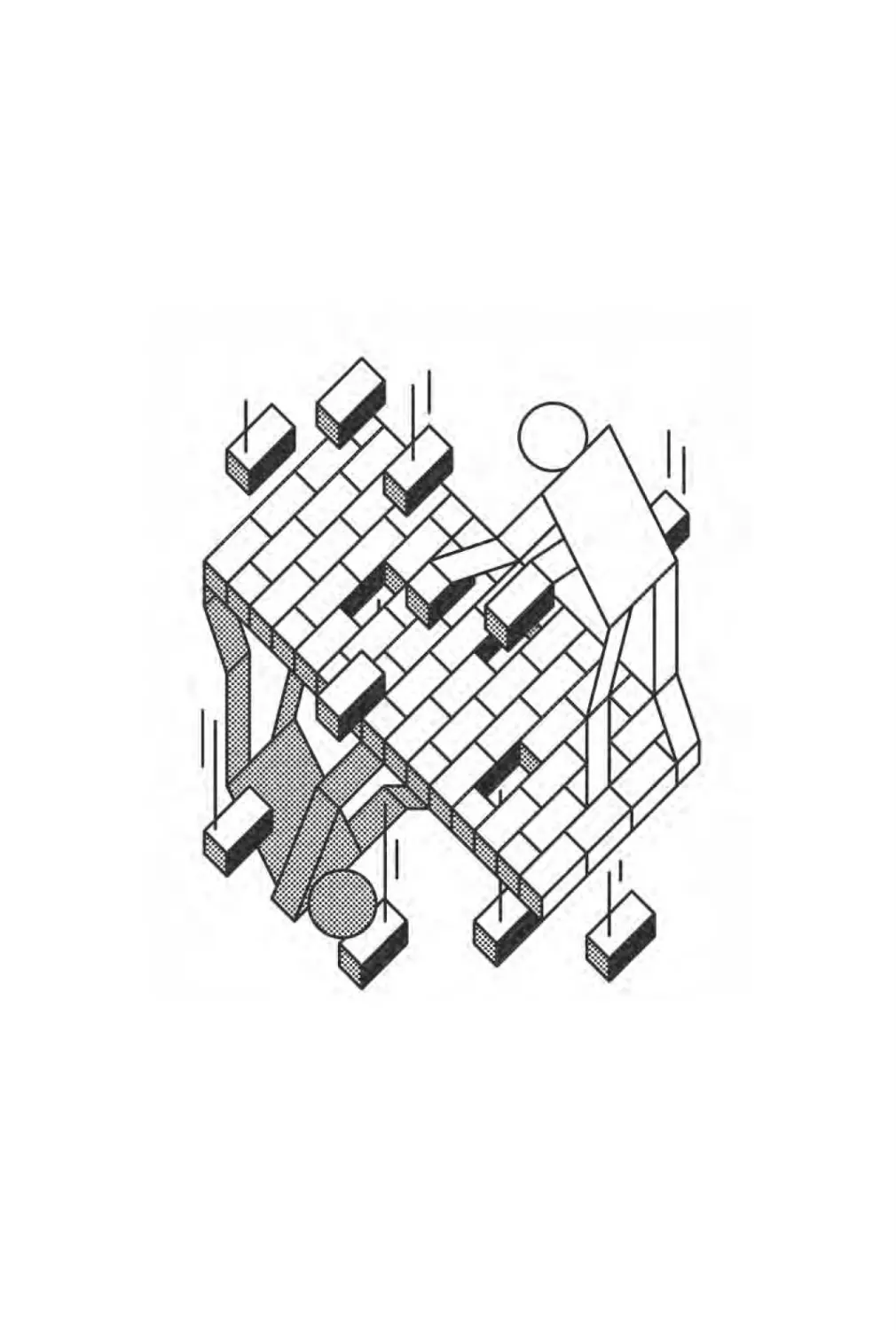
Illustrations by Andreas Töpfer
The Legacy
of Division
East and West
after 1989
Edited by Ferenc Laczó
and Luka Lisjak Gabrijelčič
Central European University Press
Budapest–New York
Copyright © by Eurozine 2020
Published in 2020 by
Central European University Press
Nádor utca 11, H-1051 Budapest, Hungary
Tel: +36-1-327-3138 or 327-3000
E-mail: ceupress@press.ceu.edu
Website: www.ceupress.com
224 West 57th Street, New York NY 10019, USA
All rights reserved. No part of this publication may be reproduced,
stored in a retrieval system, or transmitted, in any form or by any means,
without the permission of the Publisher.
ISBN 978-963-386-374-9
Library of Congress Control Number:
2020934752
Printed in Hungary by
Prime Rate Kft., Budapest
Contents
Acknowledgements
ix
Introduction
The legacy of division: East and West after 1989
Ferenc Laczó and Luka Lisjak Gabrijelčič
1
Staring through the mocking glass: Three misperceptions
of the East-West divide since 1989
Dorothee Bohle and Béla Greskovits
11
Back to Cold War and beyond
Richard Sakwa
20
The price of unity: The transformation of Germany and East
Central Europe after 1989
Philipp Ther
30
Thirty years on: Germany’s unfinished unity
Claus Leggewie
48
This mess of troubled times
Karl Schlögel
59
The mythology of the East-West divide
Jan Zielonka
70
Anxious Europe
Florian Bieber
76
‘But this is the world we live in’: Corruption, everyday
managing, and civic mobilization in post-socialist Romania
Jill Massino
84
VI
The Legacy of Division
The end of the liberal world as we know it? Two walls in 1989
James Wang
97
Wests, East-Wests, and divides
Niall Chithelen
104
The Great Substitution
Holly Case
111
The struggle over 1989: The rise and contestation of eastern
European populism
123
Bogdan Iacob, James Mark and Tobias Rupprecht
Beyond anti-democratic temptation
Marius Stan and Vladimir Tismaneanu
134
Dissidence – doubt – creativity: Revisiting 1983
Joachim von Puttkamer
144
Gendering dissent: Human rights, gender history and
the road to 1989
Robert Brier
154
Creating feminism in the shadow of male heroes:
That other story of 1989
Zsófia Lóránd
177
Legacies of 1989 for dissent today
Barbara J. Falk
187
Of hopes and ends: Czech transformations after 1989
Ondřej Slačálek
209
Just because the map says so, doesn’t mean it’s true:
Thirty years after 1989, from an island perspective
Owen Hatherley
The East in you never leaves
Julia Sonnevend
219
227
Contents
Freedom of movement: A European dialectic
Jannis Panagiotidis
‘The Romanians are coming’: Emerging divisions and
enduring misperceptions in contemporary Europe
Diana Georgescu
VII
232
241
The two faces of European disillusionment: An end to myths
254
about the West and the East
Jarosław Kuisz
Go East!
Aleida Assmann
264
‘The future was next to you’: An interview with Ivan Krastev
on ’89 and the end of liberal hegemony
275
‘The distorting mirror’: A conversation between
Igor Pomerantsev and Peter Pomerantsev
291
BIBLIOGRAPHY
LIST OF CONTRIBUTORS
INDEX
298
317
Acknowledgements
This volume would not have been possible without the continuous
support of the Eurozine team in Vienna, especially the generous
help we have received from editor-in-chief Réka Kinga Papp and
editors Simon Garnett, Max Feldman and Ben Tendler.
We would also like to thank the CEU Press team in Budapest
for their willingness to consider our project on a short notice and
the smooth cooperation ever since.
We are grateful to the journal L’Homme for giving us permission to reproduce Robert Brier’s article and to journals Merkur
and Focus on European Economic Integration for allowing us,
respectively, to translate to English Aleida Assmann’s and Philipp
Ther’s German-language articles.
All remaining shortcomings of the volume are solely our fault.
Ferenc Laczó and Luka Lisjak Gabrijelčič
Introduction
The legacy of division: East and West after 1989
Ferenc Laczó and Luka Lisjak Gabrijelčič
To counterbalance the clichés that overwhelm the celebration of
so many historical anniversaries, intellectuals tend to deconstruct
grand narratives, venturing into unexplored territory to extract
gems of insight from seemingly obscure details. Such exercises
may satisfy the erudite, but leave the broader public seeking clarification over more fundamental issues. On the 30th anniversary
of the collapse of communist regimes in eastern Europe, we have
organized a discussion among spectateurs engagés that addresses
precisely this demand. Our aim is to combine the scholarly knowledge accumulated over the past three decades with an essayistic
style. Contributions demonstrate a variety of approaches, perspectives, emphases and arguments in addressing a single underlying
question: how has Europe’s East-West division been overcome,
transformed or reproduced since 1989?
That 1989 is a key date in contemporary European history is
uncontested. The utterances and politics of key participants, the
resulting memorial practices and dominant historical interpretations have generally pointed to the same conclusion: the
achievement of the revolutions of ’89 was to have ended the division of Europe. The recovery of political freedoms has often been
treated as a mere corollary of this fundamental fact. Certainly,
the consequences of the upheavals were far from uniform or uniformly positive – after all, 1989 was also the year of Slobodan
Milošević’s infamous Gazimestan Speech in which he outlined
the programme of resurgent Serbian nationalism, and it was also
the year of the violent suppression of the Tiananmen democracy
movement. We should be wary of trying to integrate all the various developments originating in 1989 into a single narrative.
However, it is rare that a historical event of such diversity comes
to be defined by a single image as closely as does ’89 with the fall
of the Berlin Wall.
2
Ferenc Laczó and Luka Lisjak Gabrijelčič
It would be a mistake to see the narrative of European unification as a conscious and exclusive effort of canonization on the
part of western European elites. This is not to say that the project
of further integration was not catalysed by the downfall of communist regimes and the widely (and anachronistically) feared
‘reunification’ of Germany. But the power of the European narrative was more the result of convergent aspirations. When the Cold
War suddenly ended, both halves of the continent declared in
unison their intention to overcome the legacy of division.
Eastern Europeans were eager to condemn their recent past,
though not necessarily to examine it, and were especially keen
on asserting their ‘Europeanness’. Westerners, too, hoped to see
the former Eastern Bloc transformed and then absorbed into an
enlarged and ever closer Union. Mutual ignorance and deepseated misperceptions were believed to be no more than temporary obstacles along this path.
After 1989, a conviction took hold that the Cold War had been
an anomaly in European history. The Iron Curtain may have contributed to a perception of basic differences between the two halves
of the continent, and for more than a generation turned these differences into facts, but the East-West divide was said to have been
an artificial construct. In the optimistic mood of the times, it was
repeatedly asserted that the former boundary dividing Europe had
always been fluid, even at the height of the Cold War.
This was to ignore that, despite being restricted to one side of
the Iron Curtain, the supranational integration projects launched
from the early 1950s onwards increasingly claimed to represent
Europe as a whole. They drew on long-standing traditions in
western European thought that marginalized and even excluded
the experiences of the continent’s eastern half. In the euphoria
following 1989, it was also overlooked that structural differences
between the macro-regions of Europe had a history stretching
back much further than the postwar decades.
If European integration was to stand any chance of success
after the end of the Cold War, a more inclusive narrative of the
past was required. Not only was it necessary, as post-colonial
authors argued, to decolonize Eurocentric visions of the world;
as critical scholars from eastern Europe added, there also needed
to be a de-provincialization of western Europe in order to avoid
reproducing developmental-civilizational hierarchies and stigmatizations within the continent.
Introduction
3
Today, former hopes for a swift and successful merging of
Europe’s East and West seem unrealistic at best. The financial
and economic crisis of 2008 led to a crisis of the eurozone, which –
beyond reopening a North-South divide – halted the process of
economic convergence in the East, and may even have reversed
it. The worsening of relations between Russia and the West in
recent years has challenged Europeans’ confidence in a peaceful
future. Several eastern European states are associated with the
global revival of authoritarianism, while nationalistic forces and
xenophobic politicians enjoy growing support across the continent. The idea of a ‘social Europe’ – a constitutive part of the
ideals of 1989 – has largely been frustrated by the crises and
turmoil of the past decade.
Warning signs appeared as early as the mid-2000s, when the
liberal consensus of the previous decade first began to be challenged. In eastern Europe, grievances were directed against the
prevailing narratives of transition, which relegated the societies
that had been on the ‘wrong side’ of the Iron Curtain to the role
of imitating the West. A new political discourse gained hold that
incorporated the legacy of division into exploitable grievances. In
recent years, these controversial projects have come to be perceived as potential models by counterparts further west – an
unexpected reversal in the direction of transfer of political ideas
and styles. As a result, the possibility of convergence between
Europe’s two halves has been reconceived as a threat to the liberal
democratic order and the European project.
In western Europe, voices regretting the EU’s supposedly careless and premature expansion eastwards began to appear on both
sides of the left-right and liberal-conservative divides. In eastern
Europe, nationalist forces have continued to assert their ‘Europeanness’, however with ever clearer ethnic-racial undertones and
in opposition to a supposedly post-national and multicultural
western Europe. Europe, that fluid signifier that served as a centripetal ideal in 1989, has re-emerged as a contested notion.
Professional and personal contacts across the line that once
divided the continent are more frequent and intimate than ever.
However, these entanglements have also played a part in various
backlashes: today, there exists a curious mixture of greater mobility and sustained ignorance. Notions of ‘western decadence’, reminiscent not only of the propaganda of communist regimes but
also of far-right discourses from before 1945, have been revived
4
Ferenc Laczó and Luka Lisjak Gabrijelčič
across large swathes of eastern Europe. At the same time, potent
tropes with similar Cold War echoes have been used to warn
against authoritarian threats from ‘the East’. The presence of
eastern Europeans in British society played a major part in the
Brexit campaign, while the Union’s faith in the prospect of further
enlargement appears to have largely eroded.
Such complex, often paradoxical trends make it all the more
urgent to ask what has happened to Europe’s East-West division
since the end of the Cold War and the implosion of communist
regimes. How have the perceptions and misperceptions between
the two halves of the continent changed since 1989? Is there reason to talk of a new East-West divide? If so, what characterizes
it and why has it re-emerged? Conversely, how have hopes of
overcoming the divide been realized over the past three decades?
As guest editors of Eurozine, the online magazine and network
of European cultural journals, we posed these questions to authors
with an intimate and nuanced understanding of East-West relations and a reputation for original insights into contemporary
European and global history, politics and culture. This anthology
offers a selection of their responses, some of which have been
revised and updated for this publication. All the essays as well as
the two conversations were published between February and
December 2019 on the Eurozine website (www.eurozine.com).
The first four contributions probe the realities of East-West
differences after 1989 and the various misperceptions at their
root. Dorothee Bohle and Béla Greskovits inquire into the hopes
for the development of east central Europe after 1989 and local
misperceptions of the European project. They reflect on how misplaced expectations explain the fragility of the post-89 order in
eastern Europe and the emergence of a more contentious period
in East-West relations. Similarly, Richard Sakwa highlights the
role that incompatible agendas have played from the very beginning in a relationship that has gravely deteriorated in recent
years. His essay focuses on the tensions between continued
Western dominance of an expanding ‘historical West’ and Russia’s early post-Cold War preference for founding a ‘Greater West’.
Philipp Ther shows that German discussions have rarely
addressed the economic policies that the country’s eastern neighbours pursued after 1989. This is regrettable, since such a comparison would have demonstrated how shock therapy in eastern
Europe was not the cause of all subsequent economic successes.
Introduction
5
This absence of engagement is ironic, since the post-89 transformation did not actually stop at Europe’s former East-West divide:
the economic policies implemented in eastern Europe also had
repercussions in the West. Also focusing on Germany, Claus
Leggewie shows that, despite the hopes and ambitions of the
transformation period, the eastern Länder did not seamlessly
merge into a larger national society. Policies in post-unification
Germany have rather resulted in a new wave of ‘debourgeoisement’ in the former East and continue to hinder the activities of
civil society in these parts of Germany.
If these four essays show how East-West differences have been
reproduced after 1989, other authors challenge basic assumptions
and emphasize the new complexities. Karl Schlögel argues that
the post-Cold War decades have given rise to novel phenomena
in the East which Weberian ideal types could not capture. Schlögel’s essay, while historically contextualizing the limits of Western perception of and sensitivity towards the East, also expresses
more general scepticism whether intellectuals have been able to
interpret a world changing at an unprecedented rate. Contradicting the aforementioned authors, Jan Zielonka argues that the
East-West divide has lost its relevance; Europe today is instead a
complicated maze with many fault lines. The continued use of
such labels hinders our understanding of complex and everchanging realities. What is worse, emphasizing a divide nourishes biases and facilitates demagoguery. As Europe has become
more multi-directional, writes Florian Bieber, it has become a
more dangerous marketplace of ideas. The open-ended ‘transition’ in the western Balkans, Bieber argues, has created an elusive
present and a near permanent sense of anxiety that is deeply
harmful to liberal democratic consolidation. Similarly, Jill
Massino shows how institutional transparency, equality of opportunity and quality of life have remained elusive prospects for
many eastern Europeans, just as material security and what is
perceived as ‘normality’ have slipped away for many in other
parts of the continent. Europe’s East and West have thus converged in a negative as much as in a positive sense.
James Wang places the discussion in a global context, interpreting the Cold War as a confrontation that made it difficult, if
not impossible, to conceive of political alternatives beyond the
communist-liberal binary. The decades since 1989, he argues,
have shown that it is possible to separate capitalism from liber-
6
Ferenc Laczó and Luka Lisjak Gabrijelčič
alism and to embrace elements of the free market without political liberalization. Contrary to Francis Fukuyama’s famous predictions in 1989, the end of communist regimes has re-introduced
a world of alternatives. Continuing Wang’s reflections – and
engaging with Richard Sakwa – Niall Chithelen shows how overcoming the East-West divide was understood as the replacement
of one side by the other. If that failed, it is because the global
victory of the liberal democratic West was largely illusory. The
narrative of a global spread of illiberalism originating from the
East, however, merely reverses the direction of supposed replacement and can easily sound conspirational.
Also reflecting on illiberal nationalism, Holly Case argues that
analysing political strategies can be far more revealing than looking for common historical causes. She points out how in the past
decade, right-wing populist politicians in east central Europe have
substituted large parts of the ethno-nationalist agenda formerly
associated with their region by a more racialized and exclusionary
nationalism of western origins with its obsessive focus on the
‘threat of immigration’. At the same time, politicians like Jarosław
Kaczyński or Viktor Orbán, activating east European political legacies, might well be more aware than their right-wing counterparts
in the West that they do not need to command a majority, so long
as they are able to conflate their respective parties with the state.
The essay by Bogdan Iacob, James Mark and Tobias Rupprecht
largely complements Case’s analysis and adds several insights to
it. First, Iacob, Mark and Rupprecht show that the recent rejection
of western liberalism in eastern Europe can be viewed as the
latest manifestation of a longer history of shifting symbolic geographies and ideological frames. Contrary to popular perceptions,
they argue, the 1989 revolutions were not a resounding victory
for liberalism, but were in fact littered with authoritarian, populist and socialist visions. This is not to deny that ‘1989’ remains
a powerful mobilizing symbol for a new generation of East European activists committed to liberal democratic values. Marius
Stan and Vladimir Tismaneanu warn that, even though the East
is closer to the West than it was a few decades ago, collectivist
and egalitarian fantasies of salvation have re-emerged. And yet
there are also grounds for optimism: the comeback of ethnocentric populism could turn out to be a short-lived return of
repressed emotions and phobias, rather than the end of liberal
engagement. Invoking the spirit of the 1989 revolutions, Stan and
Introduction
7
Tismaneanu stress that political outcomes ultimately depend on
citizens’ choices.
The divide between Europe and Russia – conceived by Milan
Kundera in the 1980s as more fundamental than the Cold War
division of Europe – is far easier to recognize today than any kind
of divide between central Europe and the West, writes Joachim
von Puttkamer. Indeed, the very idea of controversy is essential
to the European political tradition and thinkers from Eastern
Europe have bestowed us with an intellectual tradition of dissent
that can help us rethink our common values today. Robert Brier’s
contribution critically re-examines some of the same traditions
of dissent to account for their gender-related biases and inequities. Exploring the vernacularization of human rights discourses
in eastern Europe and the resulting concurrence between communist regimes and their similarly male-dominated oppositions,
He develops an important corrective to celebratory narratives of
1989. Zsófia Lóránd in turn discusses the dissident tradition of
radical feminism and its connections to westernization and Europeanization before and after 1989. While gender mainstreaming
in post-89 Europe brought about many of the policies that feminists in eastern Europe had been demanding, the process ended
up undermining many of their efforts at substantial change, even
triggering an anti-feminist backlash, Lóránd argues.
Barbara J. Falk expands the scope of reflection by asking how
the agenda of east European dissent and the revolutions of 1989
have travelled to other regions of the world, and what their legacy
might bring when addressing democratic deficits and re-invigorating civil societies today. Falk suggests that the triumphalist narrative of 1989 with its misleading emphasis on spontaneity and
speed is partially to blame for the ruinous post-89 journey ‘from
Berlin to Baghdad’. She also shows how another reading of 1989
focused on participatory democratic processes grounded in social
trust could open up new possibilities. Focusing on the Czech tradition of dissent, Ondřej Slačálek shows that, despite their contradictions and illusions, the hopes of 1989 have remained influential.
He argues that younger generations would be well-advised to
approach the ideas of ’89 with critical distance, and develop new
and more existentially relevant stories for the twenty-first century.
‘Impossible encounters’ with eastern European intellectuals
feature in Owen Hatherley’s account of British images of eastern
Europe. The way in which central and eastern Europe is discussed
8
Ferenc Laczó and Luka Lisjak Gabrijelčič
in British intellectual life remains dubious at best and downright
racist at worst, he writes. This is all the more disappointing given
that there were massive similarities between the UK and eastern
Europe in the 2000s and early 2010s, especially regarding the
neoliberal degradation of public spaces. Also drawing on her personal biography, Julia Sonnevend offers insights into intergenerational communication across the former East-West divide.
While the East-West division in the Cold War sense is largely
incomprehensible to young people today, the prevalence of wall
building in the twenty-first century means that division and
forced separation have actually been defining experiences for
them – acute fears at borders have only become more widespread
since the fall of the Berlin Wall.
Rethinking the history of migration, Jannis Panagiotidis shows
that the Cold War constellation of closure in the East and openness
in the West – the self-declared ‘free world’ – constituted an exceptional moment. Historically speaking, eastern Europe has not been
associated with hostility to immigration: if anything, it was western
nations that repeatedly felt threatened by the immigration of culturally distant and supposedly inferior aliens. Today, free movement in the European Union may cause controversies, but migration contributes to the interweaving of European societies; indeed,
hostility towards immigrants from outside the EU could become
a ‘unifying’ factor between East and West. Diana Georgescu shows
that whereas the hard borders erected during the Cold War have
disappeared, poverty and xenophobia are frequently essentialized
as matters of culture and identity. In the UK, perceptions of Romanians are tied up with longstanding prejudices about eastern Europeans generally and Roma people in particular.
What is new, though, is that eastern Europeans have increasingly returned the gaze, contributing to a salutary demystification
of an imaginary West of democracy and plenitude. According to
Jarosław Kuisz, willing imitation of the West has largely given
way to defiance, yielding a whole new set of political challenges.
Persuasive though it may be, the ‘imitation’ thesis – most clearly
articulated by Ivan Krastev and Stephen Holmes1 – downplays
the ideological substance of the new authoritarianism, argues
1
Ivan Krastev and Stephen Holmes, ‘Explaining Eastern Europe: Imitation and Its Discontents’, Journal of Democracy 29, no. 3 (July 2018):
117–128.
Introduction
9
Aleida Assmann. The recollection of the semantic and ethical differences between liberal democracy and neoliberal economics,
as well as the contribution of eastern European dissidents to
Europe’s culture of human rights, may help Europe overcome
this fatalistic narrative, she argues.
The volume closes with two wide-ranging conversations that
reflect on several major themes of the previous essays. In the first
of them, Ivan Krastev offers insights into ‘imitation by invitation’
and its discontents in central and eastern Europe and, more generally, the post-89 moment of liberal hegemony and the confounding political reversals of more recent years. The final conversation
between Igor Pomerantsev and Peter Pomerantsev, father and son,
examines the troubled relationship between Russia and ‘everything west of it’ in the light of multiple – political, literary and
psychological – theories. They ponder how this mutually constitutive and disadvantageous relationship could be improved.
When we envisioned this enquête on the ‘legacy of division’ in
the cafeteria of the Central European University (CEU) in Budapest back in the summer of 2018, our intention was to initiate
a discussion on issues rooted in the decades of acute divergence
in European history. The setting for our conversation – an
American-Hungarian university under threat of expulsion from
Hungary, without effective support from European institutions –
offered a melancholy symbol of some of our larger concerns.
Given that cultural and intellectual exchanges across Europe have
greatly intensified in recent decades – to which Eurozine and the
Central European University have both made significant contributions of their own – we were confident that the responses
would add up to a meaningful corpus. At the same time, we are
fully aware that the volume might reflect the preoccupations of
intellectuals more than those of European societies at large.
Paul Veyne compared the moment of historical reflexivity to
travellers on winding road who, moved to pause at a bend, look
back upon the road with all its arbitrary meanderings, and provide an account of them. When the shape of the future appears
less clear than at any previous anniversary of 1989, such moments
of retrospection may help us find urgently needed orientation for
our continuing journey.
Staring through the mocking glass
Three misperceptions of the East-West divide since 1989
Dorothee Bohle and Béla Greskovits
When the Cold War ended, the direction of central and eastern
Europe’s transformation seemed to be clear: building capitalist
democracies in the framework of the region’s ‘return to Europe’.
The high point of return was achieved in the first decade of the
2000s, when eleven former socialist countries managed to adopt
key institutions of market economy and democracy and joined
the European Union. Yet, soon after the enlargement, old fault
lines have re-opened and new ones emerged. In some countries
that were, earlier, most eager to return to the West and embrace
its values, economic nationalism and political illiberalism have
taken hold. Hungary and Poland are the prime examples. Other
countries, which on the surface have retained the image of
poster-children of ‘Europeanness’, succeeded in this endeavour
against the background of unsavoury procedures and questionable democratic credentials. Corruption and oligarchic state capture in the Czech Republic and Latvia are cases in point. Finally,
some countries of the western Balkans have never quite entirely
broken with their authoritarian past, which facilitated their turn
to hybrid regimes without a detour to capitalist democracy.
Some of these symptoms are not unique to the East but crisscross the former Cold War borders. Still, we see the remaining
differences between the two halves of the continent significant
enough to ask: does the fragility of the new order also have to
do with inflated expectations and misperceptions concerning
the roads open to the region and the nature of the European
project? We think it does. We will highlight three such misperceptions – two related to the capitalist and one to the democratic
aspects of transformation – which have profoundly shaped the
choices of the 1990s and concealed existing conflicts and power
relations. As such, they have also contributed to the recent, more
contentious period in East-West relations.
12
Dorothee Bohle and Béla Greskovits
Western-style capitalism on the periphery
The first misconception was that the return to Europe would foster Western-style capitalism. This view was influential among
international advisors, local reform elites, and, at least initially,
also shared by significant groups of electorates in the region.
Accordingly, in the early 1990s, Harvard economist and economic
advisor Jeffrey Sachs asserted that to ‘clean up the shambles left
by communist mismanagement, Eastern Europe must [...] reject
any lingering ideas about a “third way” […] and go straight for a
western-style market economy.’ If, in turn, western Europe would
do its part in opening its markets and offering financial assistance, there was no reason to doubt that the region would thrive
economically and stabilize politically.1 Indeed, even those analysts
who were more sceptical about the outcome of transformation
saw the carrots and sticks of Western assistance as enabling factors. Why did then the promise of Western-style, that is, advanced
and wealthy, capitalism prove to be an illusion?
The possibility that due to the combination of domestic
reform efforts with multifaceted external assistance Europe’s
regained periphery would eventually join its developed core (or
make at least significant advances to that end) could not be
excluded. After all, in the past, accession to the EU had indeed
led to rapid convergence (for example in the Southern periphery
or Ireland). What advocates of encompassing reforms under the
tutelage of the EU have not appreciated enough is the concrete
nature of the European capitalism into which the newcomers’
economies were to be integrated. They overlooked that when the
Socialist system collapsed, Western capitalism was in the midst
of fundamental transformation itself. Nationally embedded and
regulated market economies were giving way to leaner and
meaner transnational capitalism. European integration has
played a major role in shaping this process through enforcing
radical liberalization, deregulation, and privatization.
All this has had profound consequences for the prospects of
transforming central and eastern European economies as well.
The demanded restructuring was much deeper and more
1
Jeffrey Sachs, ‘Eastern Europe’s Economies: What Is to Be Done?’,
Economist, 13 January 1990, 19. https://www.economist.com/europe/
1990/01/13/what-is-to-be-done.
Staring through the mocking glass
13
far-reaching than it would have been the case had the Socialist
system collapsed a decade or two earlier. The region’s firms were
exposed to the harsh competition of Western companies early on,
while its governments’ capacities or willingness to mitigate the
resulting dislocation were insufficient relative to the needs. As a
consequence, foreign rather than domestic companies were
quickly occupying the commanding heights in the new capitalist
system. Foreign penetration ran also deeper than in other regions
of the globe. While the region’s manufacturing production has
been revitalized through combining skilled but cheap Eastern
labour with Western technology and market access, transnational
corporations also took over the banking, energy, and retail sectors,
and even the media. All in all, what emerged in the East was
dependent capitalism that differed significantly from its Western
counterpart. To capture its specificity, scholars stressed the
unusual degree of one-sided reliance on external resources and
dependence on foreign control.2
The mixed blessing of the free movement of capital
and labour
But is strong dependence on the single market with the free
movement of capital and labour at its core necessarily an obstacle to, rather than an asset for, the latecomers’ efforts to leave the
periphery? While the impact of capital and labour mobility is
complex, controversial, and context-dependent, in our case the
dominant perception proved to be illusory in that it exaggerated
the blessings and downplayed the inherent risks of rapid integration between advanced and less-advanced economies primarily through free markets.
Accordingly, backers of the EU’s neoliberal restructuring
argued that the mobility of capital and labour brings benefits for
the economies and workers of the ‘old’ and ‘new’ member states
alike. They asserted that outsourcing production would help
labour by creating more employment and faster growth in the
2
Andreas Nölke and Arjan Vliegenthart, ‘Enlarging the Varieties of Capitalism: The Emergence of Dependent Market Economies in East Central Europe’, World Politics 61, no. 4 (October 2009): 670–702. Dorothee
Bohle and Béla Greskovits, Capitalist Diversity on Europe’s Periphery
(Ithaca: Cornell University Press, 2012).
14
Dorothee Bohle and Béla Greskovits
East, while it frees resources for new activities and improves the
standards of work and living in the West. Compared to this optimistic vision, the actual record of foreign-led capitalism in the
East has been mixed. On the one hand, there were impressive
accomplishments: external management, control, and finance
have served as substitutes for initially scarce local factors of modernization. On the other hand, over time these short-cuts might
have marginalized existing or stunted the emergence of new
domestic entrepreneurship, capital accumulation, and governance, and thus perpetuated one-sided dependence. As aptly
characterized by Vera Šćepanović, the resulting tension entails
that even if central and eastern Europe has been quite successful
in catching up, this has come at the expense of true convergence,
that is, the achievement of similar social and entrepreneurial
standards as seen in advanced capitalist countries.3
It is not surprising, then, that especially after 2008 pessimistic visions of the consequences of neoliberal EU capitalism have
come back with a vengeance. The most ardent critics claim that
both the West and the East tend to lose from capital mobility,
because the cut-throat competition for foreign direct investment
(FDI) brings about a ‘race to the bottom’ of wages, work conditions, and labour relations, and/or a ‘race to the top’ in the generosity of incentives offered to investors. Alternatively, reviving
the old concerns of dependency theory, nationalist politicians
and policy makers in the East fear that while outsourcing of production might be beneficial for the rich capital exporters, foreign
dominance keeps host countries trapped in an economy characterized by low technology, low skilled, and cheap labour. Finally,
similar conflicting views have been expressed concerning the
impact of free movement of labour, ranging from perceptions of
mutual benefits to Western accusations of social dumping and
welfare parasitism of migrant labour (the ‘Polish plumber’ discourse), and the Eastern concerns about brain drain and the consequences of population loss.
It is not that some of these perceptions are correct and others
are necessarily false. Our point rather is that each of the identified
problems did have a base in fact, and therefore could and did
3
Vera Šćepanović, ‘FDI as a Solution to the Challenges of Late Development: Catch-up without Convergence?’ (PhD diss., Central European
University, 2013).
Staring through the mocking glass
15
serve as real-world reference points for rival political projects.
The tension among the competing views came into the open with
remarkable intensity after the global financial crisis. The turbulences after 2008 exposed the drawbacks of dependency and
launched a new era of hierarchical economic surveillance in the
EU. It is against this background that some governments in the
East and beyond have started to revolt against economic and
political liberalism and embrace nationalism. In turn, their
enduring contention has raised serious doubts about the EU’s
reputation as a defender of last resort of the continent’s political
freedom.
The European rescue of the illiberal state4
The third misperception has been that the EU is a guarantor of
liberal democracy in the region, and as such is willing and able
to reign in political backsliding. Some observers see the EU as
a ‘normative power’.5 In this account, the EU is different from
other great powers in that it ‘has gone further towards making
its external relations informed by, and conditional on a catalogue of norms’ such as principles of human rights, democracy,
rule of law, and social solidarity. Scholars of Europeanization
have also argued along these lines. They see the EU’s mixture
of carrots and sticks it applied during the accession process as
stabilizing the new capitalist democracies and in some cases
tipping the balance in favour of pro-democratic forces.6 These
scholars did not find it entirely surprising that some East European countries started to backslide on their political and economic reforms after accession, as the stick of compliance cannot
any longer be sweetened by the carrot of membership. In this
4
5
6
This subtitle alludes to one of the most important contributions on the
origins of European integration by the late Alan S. Milward: Alan S.
Milward, The European Rescue of the Nation State (London: Routledge,
1992). We thank Waltraud Schelkle for inspiring our re-use of Milward.
Ian Manners, ‘Normative Power Europe: A Contradiction in Terms?’,
JCMS: Journal of Common Market Studies 40, no. 2 (June 2002): 240.
Milada Anna Vachudova, Europe Undivided: Democracy, Leverage,
and Integration after Communism (Oxford: Oxford University Press,
2005). Frank Schimmelfennig and Ulrich Sedelmeier (eds.), The
Europeanization of Central and Eastern Europe (Ithaca: Cornell University Press, 2005).
16
Dorothee Bohle and Béla Greskovits
view, tendencies towards political illiberalism and populism
are thus homegrown, located in Eastern Europe’s distant or
close past and its domestic politics, while the EU acts as a catalyst of change through deploying its normative power.
Today, it is easier to see that there are some flaws in this
benign view of the EU. While the EU did talk the talk of normative
power, it has walked a somewhat different walk. Indeed, there
are reasons to believe that, far from being the antithesis to illiberal politics, the EU proved to be an integral part of its reassertion.
We do not claim that this was a deliberate choice. Yet, with the
benefit of hindsight, it seems that, had keeping illiberal tendencies alive in Eastern Europe been one of the EU’s purposes, it
could hardly have done a better job.
The European rescue of the illiberal state has played out in a
variety of ways, starting with the accession process. Early on,
critics have questioned the democratic credentials of the EU’s
conditionality. Accession conditionality was tight and its scope
far larger than in earlier episodes of enlargement. Thus, the newcomers’ governments were left with very limited choices as to
policy substance. This ‘has preempted much of the public debate
over the nature of policy in the region. As a result, it has had not
only the benign effect of foreclosing the basic debates over desirable regime types (democracy and its alternatives), but it has
eradicated both detailed and ideological debates over many areas
of public policy.’7
The marriage between rapprochement to the EU and political
illiberalism is even more visible in the western Balkans, where
this process has been managed in the settings of competitive
authoritarian rather than weakly established democratic regimes.
While the opening of a ‘European perspective’ for the western
Balkans had initially been accompanied by political liberalization,
this trend has reversed over the past decade. This can be
accounted for with the fact that the EU and other Western actors
have prioritized stability over democracy by supporting governments that promised to secure Western geopolitical, economic,
7
Anna Grzymala-Busse and Abby Innes see in the suppression of substantive ideological debates one of the reasons for the rise of populist
and demagogic forces. Anna Grzymała-Busse and Abby Innes, ‘Great
Expectations: The EU and Domestic Political Competition in East Central Europe’, East European Politics and Societies 17, no. 1 (Winter 2003):
64–73.
Staring through the mocking glass
17
security, and energy interests. More often than not, the EU and
other Western actors have turned a blind eye on violations of
democratic norms and rule of law, preferring to interact with
strong leaders that could provide stability – hence the term
‘stabilitocracy’ for the political regimes that have emerged in the
western Balkans.8
The European rescue of the illiberal state is inextricably
linked to the European People’s Party (EPP), the political force
that has dominated the EU for the last two decades. Since the
1990s, facing the challenges of the EU’s possible eastern enlargement and the ascendance of centre-left forces, the EPP had been
on a ‘political mergers and acquisitions spree’, which made it
the biggest party in the European parliament, occupying most
of the strategic positions in the EU.9
The price EPP was willing to pay for ruling the EU in an
enlarged Europe was to be much less selective in respect to the
ideology or democratic credentials of their members. Italy’s Forza
Italia, Croatia’s HDZ (Croatian Democratic Union), and Hungary’s Fidesz were all admitted into the broad tent of the EPP. While
being members of the EPP, the leaders of these three – and many
other – parties were also busy with either dismantling democracy,
engaging in large-scale corruption, or both. Hungary’s Viktor
Orbán has arguably gone farthest in embracing an openly farright and anti-European agenda while staying under the protective umbrella of the EPP. EPP leaders have justified this by arguing that Orbán’s excesses are easier controlled inside rather than
outside of the party. Whether this is cheap, cynical talk, or genuine belief, EPP’s strategy has offered Orbán a highly visible stage
to spread his illiberal democracy.
8
9
Srđa Pavlovic, ‘West Is Best: How “Stabilitocracy” Undermines Democracy Building in the Balkans’, EUROPP(blog), 5 May 2017, https://blogs.
lse.ac.uk/europpblog/2017/05/05/west-is-best-how-stabilitocracy-undermines-democracy-building-in-the-balkans/. Florian Bieber, ‘The
Rise (and Fall) of Balkan Stabilitocracies’, CIRSD, accessed 24 June 2019,
http://www.cirsd.org/en/horizons/horizons-winter-2018-issue-no-10/
the-rise-and-fall-of-balkan-stabilitocracies.
Alex Barker, ‘European Elections: Is the Party over for the CentreRight?’, Financial Times, 15 May 2019. https://www.ft.com/content/
dbebc290-7589-11e9-be7d-6d846537acab. See also R. Daniel Kelemen,
‘Europe’s Other Democratic Deficit: National Authoritarianism in
Europe’s Democratic Union’, Government and Opposition 52, no. 2
(April 2017): 211–38.
18
Dorothee Bohle and Béla Greskovits
There are other ways in which the EU has come to support
political backsliding. Tight economic surveillance and moralizing
renationalization during the global financial crisis and the Eurozone crisis has opened an opportunity structure for illiberal governments to legitimate a nationalist and sovereigntist political
agenda. In contrast to its harsh economic surveillance, the European Commission lacks effective instruments and the fantasy of
how to use the few instruments it has in a more effective way
when it comes to political surveillance. Emigration, enabled by
the EU’s free movement, can act as stabilizer of illiberal regimes.
While the younger, more educated, and critical exit, the less
skilled, older, and less entrepreneurial, who are more easily
attracted by an illiberal political agenda, stay behind to express
their voice. Finally, political illiberalism is being subsidized by
the EU’s Structural Funds. None of this is easy to reconcile with
the view of the EU as a normative power.
Conclusion: from political construction to political
consequences
What have been the political consequences of the three popular
misperceptions that we identified in this brief essay? The power
of the idea that building Western-style capitalism had been a realistic option is best illustrated by its impact on public disaffection
with the transformation. Witnessing that the region’s dependent
poor capitalism is a far cry from the promised developed rich
variant, citizens often resolve the conflict by questioning altogether that the new system is capitalism worth the name. Hence
the popularity of blames on the ‘simulated’, ‘mimicry’ or ‘virtual’
nature of post-Socialist capitalism; the enduring faith in the superiority of the missed ‘real thing’ over the existing ‘Ersatz’; and
the boiling anger about the fake or stolen transformation and its
thieves – all of which is in line with a long historical tradition in
Eastern Europe.
A related example of one misperception breeding another is
found in the early loud politicization of subsidizing the nascent
national bourgeoisie as promotion of rent-seeking and corruption, in contrast to the almost unanimous approval of generous
subsidies to foreign investors – at least until the advent of economic nationalism. Why waste scarce public resources on pro-
Staring through the mocking glass
19
tecting non-competitive local firms when the free movement of
capital allows a superior short-cut: the entry of foreign firms
willing to share the benefits of their activity with their hosts?
Yet, even if a related question – are foreign investors competitive
because they are subsidized or vice versa – is put aside, the opponents of economic nationalism might be criticized for their own
misperception: the illusory model of a cohesive and stable society in which, however, all the important propertied positions
are held by foreigners.
Finally, the EU’s self-stylization as a normative power that
talks the talk and walks the walk has had an impact on political
actors in Eastern Europe. The ‘return to Europe’ has been hugely
important for the political transformation, but it has also been a
shortcut where neither governments nor the opposition needed
to invent their own political agenda. Also today, illiberal political
forces are mostly railing against the interference of Europe, while
one of the most striking features of the democratic opposition is
that ‘once again the rules and values of the European Union serve
as a focal point for cooperation among pro-democracy groups.’10
Rejecting these values unites illiberal forces; invoking them,
the democratic opposition. Both sides of the camp are however
united in their belief that the EU will come to the rescue of those
values. While the opposition hopes for EU support, illiberal leaders fear it, hence their adamant defence of national sovereignty.
A more realistic understanding of the EU would start by acknowledging that walking the walk is not high on the EU’s priority list.
This would force the opposition to invent its own agenda. At the
same time, the EU’s self-stylization as normative power also contributes to the re-enforcement of the East-West cleavage. The
West often indignantly points to the illiberal East that supposedly
bites the hands that fed it; thereby conveniently overlooking its
own responsibility in stabilizing autocratically-minded leaders.
10
Milada Anna Vachudova and Jan Rovny, ‘In Prague, Protesters Demand
the Resignation of Prime Minister Andrej Babiš’, Washington Post, 25
June 2019, https://www.washingtonpost.com/politics/2019/06/25/
prague-protesters-demand-resignation-prime-minister-andrej-babi/.
Back to Cold War and beyond
Richard Sakwa
The East-West divide is back. The happy hopes at the end of the
First Cold War in 1989 for the historic reconciliation of the continent came to naught. Worse still, an ‘Iron Curtain’ is once again
being built across the continent, no longer running from Stettin
on the Baltic to Trieste on the Adriatic (as Winston Churchill so
graphically described it), but from Narva in the north to Mariupol on the Sea of Azov. The physical frontier is reinforced by
militarization, as well as the psychological and political intensification of hostilities that in many ways surpasses that of the
original Cold War.
There has also been a major shift in perceptions. In the late
Soviet years the West came to be considered the home of development and ultimately the best model of modernity. The countries trapped in the Soviet bloc anticipated a ‘return to Europe’,
representing the political and ideological reunification of a continent that was perceived to have been artificially separated.
However, this model of the West as the only viable model of progress has given way to disillusionment. For Russia, Europe is no
longer considered a desirable model, although this does not mean
that there is a desire to break all ties. Equally, the belief that Russia after communism could join the Western fold has now given
way to disappointment. The country stubbornly, and for some
irrationally, seeks to maintain its independent status as a great
power and refuses to adapt to the exigencies of the Atlantic system as historically constituted in the postwar years.
This new East-West divide is increasingly taking on the characteristics of a Second Cold War. Just as the Second World War
differed in its geopolitical and ideological postulates from the
First, so the Second Cold War is not just the continuation of the
First. As with both twentieth-century world wars, the unresolved
problems at the end of the first gave rise to the second. In the
Back to Cold War and beyond
21
three decades since 1989, hopes of overcoming the East-West
divide have not been fulfilled, and in many ways the gulf today is
wider than it has ever been.1
1989 as a false dawn
Europe in 2014 once again entered a period of confrontation and
division. For some, this represents the onset of a new Cold War, a
period of entrenched confrontation accompanied by the rhetorical
condemnation of the opponent. Others are sceptical, arguing that
the appropriation of the term ‘cold war’ is an abuse of history that
misunderstands the realities of the present situation.2 There is no
longer the old ideological division between capitalism and communism characteristic of the First Cold War, and Russia is just a
shadow of the superpower that was once the former Soviet Union.
However, it is clear that elements of a cold war have returned to
Europe, although this does not mean the return of the Cold War.3
This is why the idea of a Second Cold War is useful, since it
both seeks to identify the elements of continuity while revealing
what is different. The continuities include the militarization of
the frontier between the North Atlantic Treaty Organisation
(NATO) and Russia in the Baltic, military exercises to prepare for
conflict between the two, a nuclear stand-off based on the classic
postulates of deterrence (above all mutually-assured destruction,
MAD), accompanied by intense propaganda designed to delegitimize and undermine the other. The entire arms control mechanism is being dismantled and replaced by the language of ultimatums. In many ways this renewed confrontation is more
dangerous than the original conflict.4
How did we manage to reproduce a conflict that so many
agreements had vowed to prevent? My basic argument is that the
1
2
3
4
See Richard Sakwa, Russia against the Rest: The Post-Cold War Crisis
of World Order (Cambridge University Press, 2017), from which this
article draws.
Andrew Monaghan, ‘A “New Cold War”? Abusing History, Misunderstanding Russia’, Chatham House Research Paper, May 2015. See also
Jonathan Marcus, ‘Russia v the West: Is this a new Cold War?’ BBC News,
1 April 2018, https://www.bbc.co.uk/news/world-europe-43581449.
Robert Legvold, Return to Cold War (Cambridge: Polity, 2016).
Stephen F. Cohen, War with Russia: From Putin and Ukraine to Trump
and Russiagate (New York: Hot Books, 2018).
22
Richard Sakwa
25 years of the cold peace between 1989 and 2014 failed to resolve
any of the fundamental problems of European security and political identity. For Russia, NATO enlargement represented not only
a betrayal of the verbal assurances apparently given at the time
of German unification in 1990 that the alliance would not move
‘one inch to the East’ of the former East German territory, but
above all represented a reckless provocation that only intensified
the security dilemma that it was intended to avert. From this
perspective, NATO’s existence is justified by the need to deal with
the consequences of its own existence.5
From the perspective of the Atlantic powers, the enlargement
of the zone of peace and security would ultimately work to Moscow’s benefit too, avoiding a return to the endless inter-war conflicts between small states and the tensions between the great
powers. By contrast, Russia remained loyal to a Yalta-type vision
of great power politics managed by the UN Security Council,
although this did not imply an attempt to reconstitute something
akin to the old Soviet bloc. It did mean, however, recognition of
Russia’s great power interests in the eastern part of Europe and
continued status as a great power in world affairs.
There have been three major periods of postwar European
history. The original Cold War lasted from the late 1940s to 1989;
followed by a quarter century of the cold peace, in which the European Union and NATO enlarged, but in which Russia became
increasingly disgruntled; and then after 2014 the full-scale onset
of a Second Cold War, in which we now find ourselves. This is an
era of renewed confrontation, marked by sanctions imposed on
Russia by the Western powers, while Russia seeks new alignments and partnerships in the East. The Ukraine crisis of 2014
was just the catalyst that brought out the underlying tensions.
Today the militant anti-Russian regime in Kyiv, embittered above
all by the loss of Crimea, acts as a powerful wedge driving Russia
and the West even further apart to exacerbate the East-West
divide. The combination of geopolitics and democratization since
Ukraine became independent in 1991 means that tensions were
there from the start, paving the way for the dominant model of
Ukrainian state building. This entails the fundamental rejection
5
Richard Sakwa, Frontline Ukraine: Crisis in the Borderlands (London
and New York: I. B. Tauris, 2016).
Back to Cold War and beyond
23
of partnership with Russia in favour of a putative ‘European
choice’.
The collapse of the state socialist model of modernity represented by the Soviet system did not mean Russia’s seamless
return to what Gorbachev-era intellectuals called ‘the main highway of history’. It turned out that history has many highways and
byways. At the end of the Cold War Russia aspired to join the
Historical West, but believed that its very act of joining would
change its character and that through a process of transformation
a Greater West would emerge.
Russia asserted that it was a senior constitutive member of
international society, a founding member of the UN and a permanent member of its Security Council, and sought to lever this
to transform the Historical West into a reconstituted order.
Moscow argued that it had done more than any other state to end
the futile Cold War, and therefore deserved some sort of special
status in a reconstituted Greater West. The self-willed disintegration of the Soviet bloc represented a pledge of Moscow’s bona
fides as a member of the expanded Western order.
This also applies to the regional context, where Mikhail Gorbachev’s idea of a ‘common European home’ (today called Greater
Europe) would have established a co-operative pan-European
community. Instead, Moscow was offered guest membership of
the existing enterprises – the Historical West and the smaller
Europe represented by the European Union. For historical, status,
geographical and security reasons, this type of membership was
not acceptable – Moscow was not ready to enter into some sort
of neo-colonial apprenticeship to ultimately join the Historical
West. From this foundational difference all the rest flows.
There was a fundamental incompatibility in perceptions.
Moscow claimed a reward for ending the Cold War, but that is not
how international politics works. From the Western perspective,
the Soviet Union and then Russia was a failing power. The country had exhausted itself in the arms race and its economic and
political order was dysfunctional. A victory discourse was at first
eschewed, but it soon made itself felt. More than that, the countries recently liberated from the Soviet yoke sought to hedge
against a revival of Russian imperial power, and hence clamoured
to join Western institutions. The West as a whole saw no reason
to make concessions to what appeared to be a spent power, and
24
Richard Sakwa
it made sense to secure its positions while the going was good.6
This did not mean that Russia was treated as a defeated power,
and numerous initiatives, ranging from the NATO-Russia Founding Act on Mutual Relations of 1997 to the establishment of the
NATO-Russia Council in 2002, sought to create a framework for
interaction. As far as Russia was concerned, these were palliatives,
intended to soften the failure to transform European inter
national relations after the Cold War, and to mitigate the consequences of what appeared to be the inexorable advance of the
Atlantic power system to Russia’s western borders.
There are understandable reasons why the Historical West
refused to transform itself through Russian membership. There
were fears about norm dilution, especially concerning human
rights; institutional incoherence if Russia joined or became affiliated with such bodies as NATO; and concern about the loss of US
leadership, especially in crisis situations (as in the various conflicts in the former Yugoslavia). At the theoretical level, the US-led
liberal international order effectively claimed to be synonymous
with international society. In this conception, world order emerges
not out of cooperative (solidarity-based) inter-state practices regulated by international society, but out of American leadership of
the liberal international order. The institutions of international
society and the liberal international order are effectively fused.
This does not mean that the US-led coalition gets its way all the
time – in fact, the UN, as a product of the Yalta order, remains a
recalcitrant body because of the veto powers wielded by Russia
and China, as well as their allies in the global South.
This is what gives rise to divergence between multilateral
processes and the western hegemonic formation. Relations
between the US and the UN have been far from easy, prompting
complaints by US legislators about the disproportionate burden
assumed by America. The US contributes 22 per cent of the
main UN budget and nearly 29 per cent of peacekeeping costs.
As a result, there have been various attempts to bypass the UN’s
authority through various ‘coalitions of the willing’, as in Iraq
in 2003. The establishment of the Community of Democracies
6
William C. Wohlforth and Vladislav Zubok, ‘An abiding antagonism:
Realism, idealism, and the mirage of Western-Russian Partnership
after the Cold War’, International Politics 54, no. 4 (July 2017): 405–19.
Back to Cold War and beyond
25
in 2000 was also intended to achieve a similar autonomy from
international society in the normative sphere.
From East-West to North-South
Elements of the Cold War have been restored, but that only
describes part of the current situation. The Second Cold War is
part of a broader shift of power in international politics away from
the Historical West, and is a symptom of that shift. The renewed
division of Europe is ultimately only a relatively minor, and
undoubtedly archaic, part of a global shift in the balance of power
and ideology. Although the Second Cold War dominates Europe,
something far bigger is taking place at the global level. There is a
shift towards what some call multipolarity but which in practice
is broader than that – the transition to a world of multiple spatial
and temporal orders (multi-orderness).7 Amitav Acharya calls this
a ‘multiplex world order’.8 Thus it is fair to talk of a new East-West
divide, but only if we confine ourselves to Europe.
Recent shifts in international politics reflect deeper changes
in global affairs. There is a slow but ineluctable structural shift
of economic power from the Atlantic to the Pacific basin. In particular, the return of China as one of the world’s top economic
powers cannot but change the structure of global power, reinforced by India rising up the index of economic powers. China
has now emerged as the only potential peer competitor to American hegemony, and for that reason John Mearsheimer predicts
that the two will inevitably come into conflict. The US will do
everything in its power to contain China’s rise, while China will
consistently push back against the US in the South China Sea and
elsewhere.9 The new final chapter describes the inevitable conflict.
If the focus is on brute military power, then those who dismiss
‘declinist’ interpretations of America’s status are undoubtedly
right. The US remains overwhelmingly the predominant global
Trine Flockhart, ‘The coming multi-order world’, Contemporary Security Policy 37, no. 1 (March 2016): 3–30.
8
Amitav Acharya, ‘After liberal hegemony: The advent of a multiplex
world order’, Ethics and International Affairs, 8 September 2017, https://
www.ethicsandinternationalaffairs.org/2017/multiplex-world-order/.
9
John Mearsheimer, The Tragedy of Great Power Politics (New York: W.
W. Norton, 2014). The book was originally published in 2001.
7
26
Richard Sakwa
power, and this is unlikely to change soon.10 However, we are now
witnessing an acceleration of the long-term decline of American
and Atlanticist ideational hegemony, within the West and beyond.
The emergence of social movements dissatisfied with the neoliberal hegemony established since the 1970s is reflected in the
ballot box, including the Brexit vote of 23 June 2016. Often
described as ‘populist’ challenges, Ernesto Laclau is right to note
(drawing in particular on Latin American experience) that in conditions of political closure, populism becomes the vernacular in
which new ideas are articulated to challenge the failings of the
ruling system.11 National populism represents a challenge from
both the left and the right to the economic and political relations
consolidated after the end of the Cold War.12
On a global scale the old East-West divide no longer makes
much sense, since there are major new players. The developed
North, as politically constituted in the form of the Historical West,
no longer enjoys its former primacy. If hopes of overcoming the
East-West divide have in part been fulfilled, then it is not in the
way envisaged by idealists at the end of the Cold War. Instead of
Europe overcoming the division by becoming whole, accompanied by a pan-continental vision of European unity and leadership in the world, the Historical West has expanded and radicalised its vision of itself; while in the East Russia is now at the heart
of the creation of an alternative world order. This is based not so
much on anti-Western positions as on the view that the hegemony
of any single order leads to distortions and ultimately hubris. The
demand is for pluralism in the international system, and on this
basis Russia and China have forged an anti-hegemonic alignment.
The unipolar moment is giving way to the clash of political
orders. This is why the Eastern pole in Europe is assuming a
Greater Eurasian dimension, and even more broadly, becoming
part of Greater Asia. The traditional East is becoming part of a
southern anti-hegemonic alignment. The outlines of such an
alternative order were apparent at the meeting of the RICs powers
(Russia, India and China) on the sidelines of the G20 summit in
10
11
12
Stephen G. Brooks and William C. Wohlforth, America Abroad: The
United States’ Global Role in the 21st Century (Oxford: Oxford University Press, 2016).
Ernesto Laclau, On Populist Reason (London: Verso, 2007).
Roger Eatwell and Matthew Goodwin, National Populism: The Revolt
against Liberal Democracy (London: Pelican, 2018).
Back to Cold War and beyond
27
Buenos Aires (30 November to 1 December 2018), the first such
trilateral meeting for twelve years.
Russia has advanced the principle of multipolarity since at
least the mid-1990s, and it was a central idea of Yevgeny Primakov
as foreign minister between January 1996 and September 1998,
and then when he was prime minister until May 1999.13 In fact,
the idea of a RIC alignment belongs to him, as part of his ‘competitive coexistence’ model of post-Cold War international relations (harking back to Nikita Khrushchev’s idea of ‘peaceful
coexistence’). It must be stressed that multipolarity and multiorderness are not the same. Multipolarity refers to multiple centres of power – poles – in the international system, all operating
according to the same model of politics. Typically, multipolarity
is examined through a realist, or even geopolitical, lens, with all
states seeking to maximise their relative position in the anarchical system. This can at times be achieved through some sort of
concert of powers as established after the Congress of Vienna, and
in a rather more attenuated form, at Yalta and Potsdam at the close
of the Second World War.
A multi-order system is one where there is a different dyna
mic to the international politics of the different orders. The different orders represent different paradigms of the international
system, with different views about the structure of the system
and the appropriate behaviour and logic of action. Today we have
the US-led liberal international order as well as a putative
anti-hegemonic alignment encompassing to varying degrees
Russia, China, India and others states in the Shanghai Cooperation Organisation (SCO) and the BRICS (Brazil, Russia, India,
China and South Africa) association, as well as the revived NonAligned Movement. Some may even add political Islam as a possible third order, with the attempts to recreate a Caliphate in the
form of an Islamic State as the most vivid manifestation of a
radical alternative order. A number of different ‘new world
orders’ represent different ideas about how political space should
be organised on a global scale.
The emerging anti-hegemonic alignment refuses to accept
the claim of the liberal international order that it is synonymous
13
For a discussion of Russian views, see Martin A. Smith, ‘Russia and
multipolarity since the end of the Cold War’, East European Politics 29,
no. 1 (March 2013): 36–51.
28
Richard Sakwa
with order itself. Instead, Moscow, Beijing and their allies in
what used to be called the ‘Third World’ (a putative world order
in itself) stress the autonomy of the institutions of international
society. Issues of human dignity, fairness in international trade
and finance, and indeed the survival of the planet itself belong
to all of humanity, and although the major multilateral institutions were shaped by the victorious allies at the end of the
Second World War, they represent a universalism that cannot
be the property of any one order.14 For the new global South (the
post-Western world), there can be order without hegemony.
Conclusion
The Russian leadership under Boris Yeltsin asserted that Russia
would transform itself into a liberal and market democracy, but
it would do so in its own way and at its own pace. Above all, it
argued that the transformation should be mutual, including a
transformation of the system of European international relations.
The West insisted that Russia had to transform itself; while Russia riposted that it would do so, but as part of a broader transformation. Russia hoped that its membership would transform the
Historical West (with the Atlantic powers and institutions at its
core) into a Greater West in which Russia would be a constituent
member and thus enjoy all the rights of a co-founder. The idea of
Greater Europe displaces the idea of the EU as the sole representative of Europe in favour of a more plural model, in which the
EU would be part of a broader pan-European community. Both
the Greater West and Greater Europe ideas are based on a dialogical approach to politics – the view that engagement transforms both subjects. Instead, the West tried to stay the same and
enlarge (a monological perspective); while Russia was to change
and assume a new power and normative identity.
The fundamental process at the end of the Cold War became
enlargement of the Atlantic community. By contrast, Gorbachev
and his successors in Russia sought transformation, a negotiated end to the institutional and ideational structures of the
14
These issues are explored in a historical context in Tim Dunne and
Christian Reut-Smith (eds.), The Globalization of International Society
(Oxford: Oxford University Press, 2017).
Back to Cold War and beyond
29
Cold War in which Russia would become a founder member of
a new political community. Instead, all that was on offer (and
as far as the Western powers were concerned, it was quite a lot)
was associate membership in an existing concern. No one really
believed that Russia could join NATO without changing the
character of the organization and of the whole Atlantic system.
There were understandable fears that Russia’s membership
would lead not to the positive transformation proclaimed by
Gorbachev but to a degradation of institutional coherence and
normative principle. Fully-fledged Russian membership would
have meant constituent authority and veto powers. In the postCold War era there were simply not enough western leaders, let
alone military planners, ready to take the risk and weaken
(from their perspective) a functioning enterprise in favour of
an uncertain and possibly dangerous alliance with Russia.
Hence there appeared to be ‘no place for Russia’ in the post-Cold
War order, giving rise to the cold peace.15
Once it became clear that there would be no transformational
politics at the end of the Cold War and that the logic of enlargement would prevail, Russia was faced with the choice of either
adapting to the Historical West and the smaller Europe as a subaltern, or of asserting its autonomous great power and normative
identity. Yeltsin and Vladimir Putin at first tried to finesse the
question by finding some sort of middle course, but in the end
Putin unequivocally advanced the view that Russia would be an
independent sovereign power in the international system. This
gave rise to a neo-revisionist foreign policy: one that remained
committed on the vertical axis to the institutions of international
law and governance, above all the UN; but in horizontal relations
with other states it challenges the hegemony of the US-led liberal
order. This inevitably brought Russia into confrontation with the
Atlantic system, but now balanced by the creation of an antihegemonic alignment with China and some other states. The
East-West divide is back, but it no longer determines international politics. East-West divisions are now only a relatively small
part of the global clash of world orders.
15
William H. Hill, No Place for Russia: European Security Institutions
since 1989 (New York: Columbia University Press, 2018).
The price of unity
The transformation of Germany and east central Europe
after 1989
Philipp Ther
Anniversaries of historic events make us look at history from a
perspective shaped all the more by the present. In 2009, and even
in 2014, reviews of the transformation and of the ‘shock therapies’
of the 1990s were still mostly or overwhelmingly positive. The
global crisis of 2008–2009 and recent electoral successes of rightwing populists and nationalists have, however, put into question
neoliberal narratives of economic success and even the – in Hannah Arendt’s words – liberal revolutions of 1989.1
In 2009, the German government organized a huge Festival
of Freedom in front of the Brandenburg Gate in Berlin to celebrate the 20th anniversary of the presumed annus mirabilis. On
this occasion, artists were invited to design plastic replicas of
pieces of the Berlin Wall, which were lined up and then made to
collapse, creating a staged domino effect that symbolized the end
of communism. What it rather looked like, however, was an involuntary reference to the global financial crisis. In the end, a domino effect of the bankruptcy of Lehman Brothers on other banks
has been prevented, as has the collapse of entire economies in
central, eastern and southeastern Europe after the end of communism.
Although a new depression like that of 1930s was averted, the
financial crisis and the subsequent Euro crisis delegitimized the
order created in 1989. Eastern and southern Europe were hit particularly hard, thereby calling into question European integration
– a project that may, in a way, be considered globalization on a
1
Of course, Arendt could not yet discuss the events of 1989 in her book
On Revolution, but they lie in her pattern of constitutional or liberal
revolutions. See Hannah Arendt, On Revolution (New York: Viking
Press, 1963). An earlier version of this article was published in Focus
on European Economic Integration, no. 3 (August 2019), which is published by the Austrian National Bank.
The price of unity
31
smaller scale. Against this background, the 2014 review of European transformation was – yet again – surprisingly positive.
Harvard economist Andrei Shleifer and Californian political scientist Daniel Treisman chose ‘Normal Countries’ as the title of
their 2014 review of the transformation process.2
Anyone who experienced the ‘normalization’ era in Czechoslovakia that followed the suppression of the Prague Spring would
have severe doubts about the term ‘normal’. What is considered
‘normal’ always depends on the prevailing social and political
order. Shleifer and Treisman referred to the synchronous development of former communist countries into free market economies and liberal democracies, confirming Francis Fukuyama’s
thesis of the ‘end of history’.3 Thanks to comprehensive modernization, the authors argued in the journal Foreign Affairs, the
post-communist countries ‘have become normal countries – and
in some ways better than normal.’ Shleifer and Treisman praised
radical reforms – and not gradual reforms – as the best variant
of transformation.
The present article discusses a case of post-communist transformation that was mostly omitted from the English-language
literature on eastern Europe but which, nonetheless, can be
regarded as another testing ground for shock therapies: the former German Democratic Republic (GDR). The example of the
GDR is particularly interesting because it shows that transformation did not stop at Europe’s former East-West divide but that
the underlying economic principles and the economic policies
they informed had strong repercussions on the West. In the following, we will refer to this type of feedback as ‘cotransformation’
– a phenomenon that had a particularly heavy impact on Germany
because of its reunification. In this sense, Germany is a special
case all the more deserving of closer examination.
Germany was rather swift in overcoming the global financial
crisis and its aftermath, and has since been internationally perceived as a model of economic success. A look back to the late
1990s, however, shows how quickly an upswing can turn into a
decline – and vice versa. In 1999, the Economist referred to Ger2
3
Andrei Shleifer and Daniel Treisman, ‘Normal Countries: The East 25
Years after Communism’, Foreign Affairs 93, no. 6 (November–December 2014): 92–103.
Shleifer and Treisman, ‘Normal Countries’. See also Francis Fukuyama,
‘The end of history?’, National Interest 16 (Summer 1989): 3–18.
32
Philipp Ther
many as ‘the sick man of the euro’.4 At that time, Germany seemed
to be caught in a vicious circle of low growth, rising unemployment and government debt.5
Germany’s crisis at the time was not least a result of economic
policy decisions taken in 1990. In the subsequent decade, the
bankrupt GDR and the Socialist Unity Party of Germany (SED)
were blamed all the time for the economic problems in eastern
Germany. What is often ignored, however, is that the main actors
of German transformation came from the West. This had to do
with the course of German reunification, which entailed an extensive exchange of elites in eastern Germany. The electoral success
of the Alternative for Germany (AfD) in eastern Germany and,
most recently, Bochum historian Marcus Böick’s 2018 history of
the East German privatization agency the Treuhandanstalt have
triggered a long overdue debate about the reform policies in the
early 1990s and, particularly, in privatization.
Historians should be wary about the wisdom of hindsight.
However, they also need to be very critical towards the Thatcherite slogan ‘there is no alternative’. As the comparison between
postcommunist countries shows, there were alternative reforms
courses, in general and in detail.
The economic reforms in the five neue Länder – this was the
slightly paternalistic term, to be repeated with the “new EU
members” after 2004 – aimed at a swift alignment with the
West. Not only the Federal Republic of Germany but the entire
western world saw the outcome of the Cold War as a confirmation of the superiority of their political and economic system.
‘Socialism has lost, capitalism has won’, is how economist Robert
Heilbroner put it in the New Yorker in early 1989.6 Not much
later, the International Monetary Fund (IMF), World Bank, and
the US Department of the Treasury adopted the ‘Washington
Consensus’.
This economic standard prescription for crisis countries,
arranged as a decalogue very much like the Ten Commandments,
was first intended for debt-ridden Latin American countries but
4
5
6
‘The sick man of the euro’, Economist, 3 June 1999. www.economist.
com/node/209559.
See Philipp Ther, Die neue Ordnung auf dem alten Kontinent: Eine
Geschichte des neoliberalen Europa (Berlin: Suhrkamp, 2016).
Robert Heilbroner, ‘The triumph of capitalism’, New Yorker, 23 January
1989, 98.
The price of unity
33
was then applied, above all, to post-communist Europe. It starts
out with the objective of macroeconomic stabilization – which
has, not necessarily in theory, but in fact, always meant austerity
programs – and leads on to the triad of liberalization, deregulation and privatization. By way of conclusion, the Washington
Consensus makes a case for foreign direct investment (FDI) and
global financial capitalism.7
The year 1989 from a global perspective
The Washington Consensus was part of the global transformation
that took place in 1989, as was the democratization of Chile. Chile
is important in this context because of the activity of advisors
associated with the Chicago School of Economics. International
observers therefore mostly attributed Chile’s long recovery after
the 1982 Latin American debt crisis to radical privatization, internal and external liberalization, and deregulation (only the profitable copper mines remained in state ownership). Chile marks
the beginning of the neoliberal ‘success stories’ that later had a
strong impact on post-communist Europe. On closer examination,
it is questionable whether Chile’s upswing, which lasted until the
Asian financial crisis of 1998, can be attributed to the neoliberal
economic policy stance under Pinochet or rather to the Christian
and social democrats’ economic policy after 1989, which strove
for ‘social equilibrium’8 by actively fighting poverty and increasing purchasing power.
For details on the Washington Consensus, see Philipp Ther, ‘Neoliberalismus, Version: 1.0.’, Docupedia-Zeitgeschichte, 05.07.2016, docupedia.de/zg/ther_neoliberalismus_v1_de_2016.
8
The phrase was coined by Alejandro Foxley, Chile’s first postdictatorial
finance minister, whose views were influenced by Catholic social teaching. For details on his reform concepts, see various documents that
can be found in the World Bank archive’s files on Chile; in this context,
see in particular an 11-page manifesto from 1988 and the records of
conversations on the occasion of Foxley’s visit at the World Bank in
1989 stored in the World Bank archive, World Bank File 16435 (Chile
– Lending, Economy and Program (LEAP) – General – Volume 2), the
annex to the World Bank report of 18 October 1988, and World Bank
File 16436 (Chile – Lending, Economy and Program – General – Volume 3), and the report of 30 October 1989 (all World Bank files quoted
here are without pagination). On Chile’s economic policy and the his-
7
34
Philipp Ther
The ideas of the Washington Consensus were taken up in
Europe faster than its authors could have anticipated. In June
1989, Solidarność won a landslide victory in the first free elections
in Poland, and the communists were happy to let the opposition
take over the government so it would be blamed for the economic
malaise (which is exactly what happened in the 1993 parliamentary elections).
In the summer and autumn of 1989, the country’s first postcommunist finance minister, Leszek Balcerowicz, developed a
reform plan which was soon to be named after him. What came
first in the Balcerowicz Plan was macroeconomic stabilization,
as Poland was suffering from high inflation that began to show
signs of expanding into hyperinflation, unsustainable external
debt (more than 70 per cent of GDP, with repayment being impossible given the country’s trade deficit alone), and other consequences of its dysfunctional planned economy.
The Polish version of perestroika, the Wilczek Reforms, failed.
Prominent experts had already turned toward radical reforms at
the end of 1988 as a result. As early as 1988, the weekly paper
Polityka reported on the growing influence of ‘Eastern Thatcherites’.9 Much like the Washington Consensus, the Balcerowicz Plan
aimed at comprehensive privatization and the swiftest possible
liberalization of the internal market, including opening it to the
world market. Though it was clear that the reforms would lead
to massive social cutbacks and dismissals, accompanied by a
wage limitation law, the majority of the left-wing of Solidarność,
and the followers of Catholic social teaching, approved. We can
thus speak of a ‘Warsaw Consensus’. This was, like its role model,
arranged as a decalogue.10
torical changes of 1989, see also Ricardo Ffrench-Davis, Economic
Reforms in Chile: From Dictatorship to Democracy (London: Palgrave
Macmillan, 2010).
9
See Marek Borkowski, ‘Sprzedać, oddać, wydzierżawić’, Polityka 32, no.
49 (December 1988): 1 and 4.
10
For details on the contemporary rationale behind the reforms, see
Leszek Balcerowicz and Jerzy Baczyński, 800 Dni Szok Kontrolowany
(Warsaw: Polska Oficyna Wydawnicza, 1992). In this book, Balcerowicz
uses the word ‘shock’, which he had prudently avoided in 1989. Leszek
Balcerowicz, ‘Albo szybko, albo wcałe’, Polityka 33, no. 48 (December
1989). For details on the American consultants’ view of the design of
these radical reforms, see Jeffrey Sachs and David Lipton, ‘Poland’s
economic reform’, Foreign Affairs 69, no. 3 (Summer 1990): 47–66.
The price of unity
35
The reforms had mixed effects. Inflation was brought under
control, but GDP decreased by a total of 18 per cent in 1990 and
1991. Industrial production declined by almost one-third, and
wage limitations dampened demand over a sustained period.
Another effect was a huge increase in unemployment. In 1992, 2.3
million people in Poland were unemployed – 13.5 per cent of the
labour force.11 Critics like Grzegorz Kołodko, later post-communist Minister of Finance, therefore spoke of a ‘shock without a
therapy’.12
While some international experts would have approved of an
even more radical course, Balcerowicz made certain concessions.
For instance, he reduced the speed at which large enterprises were
privatized. Ultimately, he acted rather pragmatically. In 1992, the
economy started to pick up again, and Poland was the first of the
former Eastern Bloc countries to recover from the deep recession
of 1989–91. Thus, the shock therapy was internationally perceived
to be a success.13 At the political level, it was not. The parties that
had evolved from Solidarność lost the 1993 elections against the
post-communists. These, however, did not take back the reforms
as previously promised but only mitigated them.
Turning to Germany, Theo Waigel, West German Minister of
Finance in 1989, and Wolfgang Schäuble, one of the main authors
of the Unification Treaty, were neither among the followers of
the neoliberal Chicago School of Economics, nor in favour of a
‘shock therapy’. Both ministers of the centre-right governments
were Christian Democrats and adherents of ordoliberalism and
the German model of the ‘social market economy’. But apart from
social cushioning, stronger government regulation, and a system
of collective wage agreements, the neoliberal and ordoliberal
reform concepts were largely congruent.
11
12
13
See the figures in Alexandra Bykova et al., wiiw Handbook of Statistics
2012: Central, East and Southeast Europe (Vienna: wiiw, 2012), table
II/1.7. In December 1989, Balcerowicz had expected a slight decrease
in demand and a limited rise in unemployment. See Balcerowicz, ‘Albo
szybko’, 1 and 5.
For details, see also Grzegorz Kołodko, From Shock to Therapy: The
Political Economy of Postsocialist Transformation (Oxford: Oxford University Press, 2000).
As mentioned, Balcerowicz initially did not label his radical reform
program as a shock therapy. The term probably goes back to an article
on Poland in the New Yorker.
36
Philipp Ther
In Czechoslovakia, the Chicago School had direct influence.
Nobel Memorial Prize winner Milton Friedman, for instance,
toured east central Europe in 1990 and found a particularly
enthusiastic supporter in Václav Klaus, then Czechoslovakian
Minister of Finance.14 The latter’s model of voucher privatization
was, in turn, taken up in Russia. It did not work there, however.
Rather, it led to the emergence of oligarchs, who bought up most
of the vouchers, distorted the privatization through insider
deals, and have dominated the Russian economy to this day.
The German shock therapy
Radical economic reforms can be pushed through most easily if
the economies concerned are on the brink of collapse. This was
the case, without doubt, in the last year of the GDR. The exchange
rate of the East German mark (DDM) to the Deutsche Mark (DEM)
declined to 7 to 1 in the autumn of 1989 and, at times, went even
lower the following winter. This meant that East Germany’s high
foreign debt could no longer be serviced.
The asymmetry of power between West and East was reflected,
inter alia, in the type of reunification that was chosen: German
reunification was executed as an ‘accession’ of the five ‘new
Länder’ pursuant to Article 23 of the Basic Law and not Article
146, which was actually intended for such a scenario. This means
that what we are dealing with here was in fact an enlargement of
West Germany and not a unification of two equal states.
The sharp fall of the East German mark mirrored the economic problems of the GDR and the gloomy expectations of its
future. However, depreciation had already started much earlier.
While, in the 1980s, the GDR insisted on the parity of the East
German mark – both officially and in the compulsory exchange
of currency for West Germans traveling to the GDR – the GDR’s
foreign trade bank halved the internal clearing rate to the Deut14
See also the television documentary called Free to Choose, which Friedman produced in 1990 for the Public Broadcasting Service (PBS), a U.S.
public television broadcaster. In episode 4 on ‘Freedom and Prosperity’, Friedman traveled to eastern Europe. The episode also features
Václav Klaus, who readily confirms Friedman’s teachings. The program
is accessible online at www.youtube.com/watch?v=l2h5OR1QX3Y
(accessed on 7 October 2019). Klaus appears as of minute 20.
The price of unity
37
sche Mark (like the other currencies of the communist countries,
the East German mark was not convertible). In 1988, the foreign
trade bank’s internal exchange rate, which was kept strictly secret,
came to no more than DDM 4.40 to DEM 1, because the GDR was
not able to sell its goods at a higher exchange rate.
Illegal moneychangers in the backyards of East Berlin or
Leipzig paid roughly the same rate; the black market thus
reflected the economic situation more accurately than official
exchange rates. When the East German mark depreciated after
the ‘fall of the Berlin Wall’, wages and salaries in the GDR, which
were low at any rate, depreciated even further. As in Poland or
Czechoslovakia, a tank of fuel or a broken washing machine
often were enough to strain a household’s budget. This economic
crash, together with the general uncertainty, explains why the
call Wir sind ein Volk (We are one people) grew louder and louder
in the fall and winter of 1989–90.
By the spring of 1990, a new slogan had taken hold: Kommt
die D-Mark, bleiben wir, kommt sie nicht, geh’n wir zu ihr! (If we
get the Deutsche Mark, we’ll stay; if we don’t, we’ll come get it).
The last part of the slogan referred to the threat of mass emigration from the GDR to escape economic misery. In the East German election campaigns of 1990, the Christian Democratic Union
(CDU) offered an obvious way forward: quick reunification and,
en route, economic and monetary union with West Germany. The
CDU kept this electoral promise. On 1 July 1990, the Deutsche
Mark – symbol of prosperity – became the official currency of
East Germany, prompting celebrations in Berlin, Leipzig, and
other cities. But how come a one to one exchange rate was applied,
given the rapid depreciation of the East German mark after the
fall of the Berlin Wall?
The Deutsche Bundesbank cautioned against the economic
risk of too strong appreciation, arguing the case for a two to one
exchange rate. Representatives of the State Bank of the GDR
even called for a seven to one exchange rate as this would have
corresponded to the country’s economic power and would thus
have enabled eastern German companies to compete with West
German industry.15
15
For details on the calculation of the exchange rate, see Gerlinde Sinn
and Hans-Werner Sinn, Kaltstart: Volkswirtschaftliche Aspekte der
deutschen Vereinigung (Tübingen: dtv, 1992). For details on the proposal
by the State Bank of the GDR, see the 28 February 2015 interview ‘Eine
38
Philipp Ther
In the end, however, the West German government under
Federal Chancellor Helmut Kohl took a political decision and
opted for the one to one exchange rate (the only exceptions being
large savings deposits and company debts, where a rate of one to
two or one to three applied). The threat of a mass migration from
East to West was a frequently used argument that indeed distinguished the situation in Germany from that of the other postcommunist countries.
The German Sonderweg
Given the focus on national unity and the traditional orientation
toward the West, the western German elites turned a blind eye
to what was happening in their immediate neighbourhood. In
Czechoslovakia, which was almost as wealthy as the GDR, the
koruna (CSK) also dropped dramatically in the winter of 1989–90.
Its exchange rate declined to the three-times lower black market
rate, i.e. to around CSK 15 to DEM 1. Unlike the German government, the Czechoslovak government accepted this depreciation.
Following the example of Poland and Hungary, Minister of
Finance Václav Klaus intended to keep the national currency
cheap in order to boost exports, save the large, formerly socialist
enterprises, and keep unemployment down. This strategy worked
well until the Czech banking crisis of 1997.
While the currency depreciation made Czechoslovak exports
cheaper by a factor of around three (that is, when taking the official exchange rate as a point of reference), the German monetary
union meant a fourfold price increase for East German exports
compared with the 1988 clearing rate. This automatically meant
that eastern German products – a Wartburg car, to name a typical example – would never be able to compete with a Škoda, or
any other Czech product, and that production shifts in industry
would most likely pass by eastern Germany. After the currency
union, very many east European customers cancelled their orders
from East German companies, because they had to pay in Western
currency, and on top of that the 1:1 exchange made the produce
einzige Schweinerei’ by Deutschlandfunk with the bank’s vice president Edgar Most, see www.deutschlandfunk.de/25-jahre-treuhandanstalt-eine-einzige-schweinerei.694.de.html?dram:article_id=312882.
Last accessed: 7 October 2019.
The price of unity
39
much more expensive in their currencies. It was not the breakdown of the Comecon and then of the Soviet Union which was
the most important factor leading to the rapid plunge of East
Germany’s eastern exports, but the homemade economic policy.
Monetary union was followed by a second shock to the eastern
German economy: the quick liberalization of foreign trade. When
East Germany joined the Federal Republic of Germany and, by
doing so, the European Community, all trade barriers fell – a step
that is laid down, in principle, in the Washington Consensus. The
eastern German economy was not able to cope with this competition. From this perspective, not joining the EU before 2004 was
an advantage for the other post-communist countries. But still,
the conditions for integration into the European single market
and the world market were a lot less protective than in the three
decades after 1945, when western Europe was reconstructed and
West Germany experienced its Wirtschaftswunder.
The third particularity of the German transformation was
radical privatization, which disregarded a basic market mechanism. There were times when Treuhandanstalt, the German government agency responsible for privatization, was in charge of
12,534 enterprises with more than four million employees. More
than 10,000 enterprises were sold by the end of 1992 alone, i.e. in
a period of only two years.16
If such huge numbers of enterprises are put on the market, it
is clear that their sales prices will drop dramatically. And indeed,
instead of the expected profit of around DEM 600 billion, the Treuhandanstalt recorded losses in the amount of DEM 270 billion, i.e.
more than DEM 15,000 per (former) GDR citizen. At the end of
1994, Germany’s federal government proudly announced the dissolution of Treuhandanstalt, stating that privatization had been
completed. But with most privatized enterprises, production was
simply discontinued. In the enterprises sold by Treuhandanstalt,
only every fourth job was preserved according to Böick’s calculations. To this day, many mostly medium-sized towns whose prosperity had depended on a small number of large factories have
not been able to cope with this structural break.
16
For details, also on data provided in the following, see Marcus Böick,
Die Treuhand: Idee – Praxis – Erfahrung 1990–1994 (Göttingen: Wallstein, 2018).
40
Philipp Ther
These critical remarks on Germany’s shock therapy – which,
unlike Poland’s, never became known by that name – lead to the
question of whether there would have been any alternatives. This
was, of course, denied in the early 1990s, when ‘there is no alternative’ was the prevailing attitude toward the reforms. Maintaining a realistic exchange rate during monetary union would have
disappointed many voters in the East and created an even wider
pay and pensions gap.
Would this have been enough for even more people to move
from eastern Germany to western Germany, as had been feared?
This question cannot be answered ex post. It is a fact, however, that
despite the cushioning of the reforms and despite high transfer
payments from western Germany to eastern Germany, 1.4 million
people moved from the eastern to the western Länder in only four
years.17 In this respect, the wider objective of monetary union,
namely to keep the people in eastern Germany, was not achieved.
When we look beyond Germany, we see that there were
indeed alternatives to privatization. In Poland, the Czech Republic, and especially Slovakia, for instance, large enterprises of
strategic importance were continued to be run under state management and sold only at the end of the 1990s. This did not mean
that these enterprises continued to make losses like they did
before 1989. They had to work for profit, at which some of them
actually succeeded.
A measure to which there most likely was ‘no alternative’ was
the liberalization of foreign trade and the opening of the eastern
German market. Slowing down these processes would probably
have been possible only within a special customs area, with different import restrictions or within a special economic zone. The
People’s Republic of China applied such measures in a number of
regions. In the EU, however, these would have been difficult to
enforce.
Moreover, a special economic zone in eastern Germany, or in
parts of the eastern Länder, would have entailed stronger economic competition for West German producers – in which neither politicians nor enterprises in western Germany had any
17
On East-West migration, see Bernd Martens, ’Zug nach Westen –
Anhaltende Abwanderung’, www.bpb.de, accessed 15 October 2019,
www.bpb.de/geschichte/deutsche-einheit/lange-wege-der-deutscheneinheit/47253/zug-nach-westen?p=all.
The price of unity
41
interest. Tough competition from the West also hit those former
GDR citizens who had started their own businesses. They fared
worse compared to other professional groups and new entrepreneurs in Poland and the Czech Republic. The self-employed often
experienced a social decline. In the worst cases, their businesses
went bankrupt.18
The professional group that suffered the least were civil servants – unless they lost their positions for having had secretly
collaborated with the State Security Service (Stasi) or having held
a prominent position in the SED. Through the monetary union,
and the expansion of collective wage agreements to include the
five new Länder, eastern German civil servants saw their salaries
climb substantially. This was all the truer for the many western
German civil servants that were sent to work in eastern Germany.
They even received special bonus payments, which were at the
time originally labelled as ‘jungle complementary’ (Dschungel
zulage). However, the German federal government lacked further
visions about which social classes and elites, apart from imported
civil servants, were to carry eastern Germany forward.
The price for this mixture of national self-centeredness, neoliberalism, and a lack of vision for society was an unprecedented
economic downturn. By the mid-1990s, industrial production in
eastern Germany had dropped to 27 per cent of its 1988 level. No
other post-communist country in Europe, not even war-torn Bosnia and Herzegovina, saw a comparably dramatic decline.19 As a
result, 1.4 million people from the new Länder left their homes
by 1994. This number corresponded almost exactly to that of
newly established businesses in Czechoslovakia – the CSSR had
almost as many inhabitants as the GDR, which allows for their
comparison. In Poland and Hungary, too, many people started
their own businesses. Altogether, around 4 million businesses
were established in the Visegrád countries in the first five years
after 1989.20 In the GDR, the number of newly founded businesses
was significantly lower.
18
19
20
See Martin Diewald, Anne Goedicke and Karl Ulrich Mayer (eds.), After
the Fall of the Wall: Life Courses in the Transformation of East Germany
(Stanford: Stanford University Press, 2006).
See Zenonas Norkus, On Baltic Slovenia and Adriatic Lithuania: A Qualitative Comparative Analysis of Patterns in Post-Communist Transformation (Budapest–New York: CEU Press, 2002), 80.
See the figures on enterprises provided in Iván T. Berend, From the
42
Philipp Ther
The collapse of the eastern German economy strained the
government budget and, in particular, social security funds which,
directly or indirectly, had to provide for the millions of unemployed. The government issued early retirement programs, the
cost of which was mostly imposed on pension funds, and health
insurance providers had to make high transfer payments as well.
But pacifying the eastern German ‘losers of transformation’ by
social benefits could not be financed in the long run.21 The continuous rise of social security contributions, taxes, and government debt continued in the 1990s at the expense of economic
growth throughout Germany. Reunited Germany had reached a
dead end. Federal Chancellor Helmut Kohl lost the elections and
Gerhard Schröder won the 1998 elections by promising reforms.
Second stage reforms and co-transformation
Schröder’s centre-left coalition government formed by the Social
Democratic Party of Germany (SPD) and Alliance ‘90/The Greens
then took a series of measures implemented in east central
Europe earlier on. These included the partial privatization of pension funds and labour market liberalization. For some time, Germany saw lively discussions about introducing a flat tax on wages
and income and an otherwise simplified tax system as well as
about collecting healthcare contributions instead of incomerelated health insurance contributions.22
Soviet Bloc to the European Union (Cambridge: Cambridge University
Press, 2009), 61. It should be added, though, that many of these newly
self-employed persons took this step because they had lost their jobs.
Many of these one-person businesses in trade and retail went out of
business, when western supermarkets began to spread.
21
For details on the crisis of the German welfare state, see Gerhard A.
Ritter, Der Preis der deutschen Einheit: Die Wiedervereinigung und die
Krise des Sozialstaates (Munich: C.H.Beck, 2006).
22
After the turn of the millennium, the flat tax was introduced in all
the other post-communist countries; however, in the aftermath of
the 2009 crisis, it was discontinued in many countries. See Hilary
Appel and Mitchell A. Orenstein, From Triumph to Crisis: Neoliberal
Economic Reform in Postcommunist Countries (Cambridge: Cambridge University Press, 2018), 90–116. On pension reforms at the
global level, see Mitchell A. Orenstein, Privatizing Pensions: The
Transnational Campaign for Social Security Reform (Princeton:
Princeton University Press, 2009).
The price of unity
43
With regard to post-communist Europe, we may speak of a
cotransformation that originated in the problems of running
eastern Germany which eventually impacted on the former West
of the country. Of course, reforms and policy models in the West
were also a point of reference, especially the social reforms
enacted by Tony Blair’s New Labour.
What was new about the red-green labour market and social
reforms was that they hit people in western Germany as hard as
in the east, though the latter were affected more by the cutbacks
because of the high level of long time unemployment. Moreover,
lower wage growth (in some years below the level of inflation)
caused ‘internal depreciation’.
This situation, however, had rather resulted from the negotiations between employers and trade unions under the Bündnis
für Arbeit (Alliance for Work), in place between 1998–2002, than
from the reforms. Even before then, compromises were frequently made at enterprise level in line with the slogan ‘keeping
jobs through pay restraints’. This was the contribution corporate
Germany, though much condemned at the time, made to ensure
that German industry could later regain its competitiveness.
Most mainstream economists have lauded the long term effect
of the Hartz reforms, but it had a negative effect on social and
regional disparities. Social inequality in Germany rose from its
original level, which almost matched those observed in Scandinavia, to levels comparable with those recorded in other postcommunist countries, such as Hungary or Poland. Germany’s
Gini coefficient (the international standard measure of income
inequality) went up from 0.25 in 1999 to 0.29 in the 2009 crisis
year.23
While these developments cannot be traced to one single factor
such as Hartz IV, it is indisputable that the social and labour market reforms increased fears of social decline. This was, in fact, the
intention. The threat of poverty was to motivate people to take on
poorly paid jobs for which they had to commute much further.
23
The data quoted here for Scandinavia and CESEE are accessible at www.
gini-research.org/articles/cr. Last accessed 15 October 2019. The respective country reports also provide information on the type of data collection. For details on the social impacts of the Hartz reforms, see i.a.
Klaus Dörre et al., Bewährungsproben für die Unterschicht? Soziale
Folgen aktivierender Arbeitsmarktpolitik (Frankfurt a.M.: Campus, 2013).
44
Philipp Ther
This negative mobilization, which took on an even greater
dimension in the poorer post-communist countries, may have
contributed to the subsequent ‘German job miracle’, but at the
same time, it caused uncertainty among broad segments of society. This is where we find the underlying reasons for the high
numbers of votes for the right-wing populist party Alternative
for Germany (AfD) in eastern Germany. In Saxony, the AfD even
came in strongest in the 2017 parliamentary elections, beating
the CDU by a narrow margin.
For Germany, this was a political shock which, however, comes
as less of a surprise when comparing the former GDR with
Poland, the Czech Republic, or Slovakia. Both here and there, it
was not only the ‘transformation losers’ who voted for populist
parties, but middle class voters who were better off than before
but remembered former unemployment and social decline and
were afraid – not least because of the so-called refugee crisis and
its instrumentalization by right-wing populists – that things
might change and they might have to face social cutbacks yet
again.24
The fundamental problem here, as with the EU as a whole, is
that the current economic order is particularly beneficial to those
countries, regions, and social groups that are already wellpositioned. Other parts of Europe and its societies are, by contrast,
falling behind and have poor economic prospects.
In some ways, Hartz IV meant a reversal of the 1990 strategy.
While monetary union aimed for a swift westernization, Hartz
IV and, above all, the newly introduced low-wage sector (e.g.
through the ‘Ein-Euro-Jobs’, which pertained to an hourly rate of
one Euro) led to an adjustment of labour costs to wages that were
common in Poland and the Czech Republic at the time. This is
yet another example of a cotransformation of the united Germany.
However, the very concept of a low-wage sector was developed
by Chicago School economists and tested in the 1980s in ‘Rust
Belt’ states of the US. Later, the experiment was discarded
because it did not bring the desired results.
The Hartz reforms, however, did little to ease the predicament
of the five new Länder. This was, among other things, due to the
24
For details, see one of the most perceptive books published recently
among the many contributions on populism: Philip Manow, Die
politische Ökonomie des Populismus (Berlin: Suhrkamp, 2018), 94.
The price of unity
45
fact that labour market activation – the unemployed were now
called ‘job seekers’ – did not help much in regions where there
were few jobs. The government had no option but to support the
unemployed, send them into early retirement, or occupy them
through job creation measures. This continued to be costly.
In total, net transfers payments from western to eastern Germany in the 25 years between 1989–2014 came to EUR 1.6 trillion.25 In record years, net transfer payments amounted to up to
EUR 100 billion, which were spent on modernizing infrastructure,
privatization and, above all, social benefits.
Despite these flows of funds, the new Länder only generated
roughly two-thirds of western German GDP per capita in 2015
(these figures are based on collated economic data for the five new
Länder).26 The Czech Republic, which had to cope without the
support of a ‘big brother’ in the West, reached almost the same
In this case, ‘net’ means that return flows from eastern to western
Germany and transfers to the federal budget, e.g. through taxes collected from eastern Germans, are taken into account). The figure of
EUR 1.6 trillion is quoted from Jürgen Kühl, ‘25 Jahre deutsche Einheit:
Annäherungen und verbliebene Unterschiede zwischen West und Ost’,
www.bpb.de, accessed 15 October 2019, www.bpb.de/politik/innenpolitik/arbeitsmarktpolitik/55390/25-jahre-deutsche-einheit?p=all.
The problem with these estimations is that the German federal government has not collected exact statistical data on transfer payments
since 1999. Transfer payments also comprise reconstruction aid
(which, in some cases, could also be applied for in western Germany)
and special benefits, e.g. special economic promotion programs. A
comprehensive calculation of all individual types of payments and
return flows can be found in Ulrich Blum et al., Regionalisierung öffentlicher Ausgaben und Einnahmen – Eine Untersuchung am Beispiel der
Neuen Länder (Halle: Halle Institute for Economic Research, 2009).
26
For details, see the extended new edition of Philipp Ther, Die neue
Ordnung. The calculations provided, in turn, are based on data on the
so-called NUTS2 regions, which are available from Eurostat at ec.
europa.eu/eurostat/tgm/table.do?tab=table&init=1&language=en&pcode=tgs00006&plugin=1. Last accessed 7 October 2019. Eurostat data
are updated regularly; the last census in Germany, for example,
entailed adjustments as population figures were corrected downward
and thus GDP per capita had to be corrected upward. Of course, there
are other economic data that are more comprehensive than GDP data,
e.g. the Human Development Index (HDI); but only GDP data have
been collected regularly also at the regional and local level (according
to NUTS3 regions, inter alia) since 1989; this is why my Die neue Ordnung auf dem alten Kontinent: Eine Geschichte des neoliberalen Europa
and this article refer mostly to GDP data.
25
46
Philipp Ther
GDP per capita (adjusted by purchasing power parity) – without
the transfer payments mentioned earlier.
Summary and conclusions
Germany’s history since the fall of the Berlin Wall gives rise to
critical questions on various topics – the neoliberal reform concepts of the early 1990s and early 2000s on the one hand, and the
effectiveness of government spending programs on the other.
Moreover, any critical examination should also deal with the longterm consequences of the massive uncertainty that was created
within society by mass unemployment, the high rates of EastWest migration and the way the German public has dealt with
these issues since 1990. This applies not only to the former GDR,
but to all new EU Member States where economic reforms – irrespective of their economic assessment – came at a price, both
politically and socially.
Obviously, not enough people have profited from the reforms.27
One consequence of these disparities has been a drastic increase
in labour migration from East to West.
It would be too simple, however, to trace any later successes
or problems to the ‘shock therapy’ Germany went through.
Moreover, countries that hesitated to implement reforms in the
early 1990s (like Romania, Bulgaria, or Ukraine) did not fare
any better. Still, the argument by Shleifer and Treisman that
there was a direct causal link between the radical reforms and
subsequent economic growth – in terms of cause and effect –
cannot be upheld.28 Other factors played a decisive role in economic transformation.
Timing is one example. The forerunners of reform had an
enormous initial advantage, as had those countries that had
already permitted private businesses to a greater extent in the
1980s. Another equally important factor was the geographical
proximity to western European markets. Production moved to
post-communist countries located closer to western Europe than
27
28
See Branko Milanovic, ‘Reform and inequality in the transition: An
analysis using panel household survey’, in Gérard Roland (ed.), Economies in Transition: The Long Run View (London: Palgrave Macmillan,
2013), 84–108.
Shleifer and Treisman, ‘Normal Countries’.
The price of unity
47
countries further away. Irrespective of these factors, educational
levels were comparably high across all post-communist countries
(a fact woefully ignored during the time of transformation);
experts were well-trained and wages low.
This is not to say that ‘good’ or ‘bad’ economic policies did not
play a role, but the argument that shock therapy was the root of
all subsequent economic success does not hold, as the examples
of eastern Germany and Poland show.
Moreover, if we only told a success story, we would disregard
the problems that occurred when building democracies, as exemplified in the populist revolt that took place in the 2001 and 2005
elections in Poland, or the protest votes for the post-communist
Party of Democratic Socialism (PDS) in eastern Germany. The
global financial crisis of 2008–2009 and the euro crisis of 2011
called into question the teloi of transformation: the pure doctrine
of market economy, liberal democracy, and the desired convergence with the West.
With the annus horribilis of 2016 (Brexit, Trump, defeat of the
reformatory left in the Italian constitutional referendum), we
have entered a new era. Since then, the West as a relatively homogeneous ‘community of values’, in place since the end of World
War II, has ceased to exist. In this respect, transformation –
which, after 1989, had been understood to be teleologically
designed – has come to an end. The core countries of liberal capitalism, the UK and USA – have become protectionist; parliamentary democracy and the rule of law have been weakened; European integration has almost come to a standstill or is being scaled
back; even the word ‘reform’ has widely fallen into disrepute. All
this is happening in a generally buoyant global economy.
We do not know what might happen politically if there were
a recession or a strong rise in interest rates. But, as we have seen
from the ‘1989 experience’, each transformation holds an opportunity.
Thirty years on:
Germany’s unfinished unity
Claus Leggewie
The Berlin Wall, and the Iron Curtain bisecting Germany were
the most striking and deadly aspects of the division of the European continent agreed by the Allies at Yalta. First and foremost,
Germany’s families, friendship groups and social relations were
rent apart. And although this dismemberment could be understood as a logical consequence of the crimes of the ‘Third Reich’,
it wasn’t seen that way in Eastern Europe. From Riga to Sofia,
one totalitarian foreign occupation had replaced another. Any
hint of dissent was brutally crushed or cynically normalized by
Soviet power and its satellites. There, the lack of state autonomy
gave new life to the concept of national sovereignty, whereas in
the west it was becoming easier to accept the passage of sovereignty over to a supranational European community.
And it was here that the ambiguous role of the German Democratic Republic acquired a particular significance. Although a
part of the Warsaw Pact and the most industrially and technically
advanced country in Comecon, the GDR was the object of suspicion amongst its peers both due to its particular loyalty to the
Communist Party of the Soviet Union, and on anti-fascist,
anti-German grounds. At the same time, the GDR had a love-hate
relationship with the Federal Republic of Germany: both radically
estranged from it as the ‘other Germany’, and longing to be
reunited with it, whether under the banner of socialism or not.
A (still largely implicit) GDR nationalism only arose in the 1970s:
otherwise, East Germans were silent partners in ‘Deutschmark
nationalism’ and the EU.
Ivan Krastev has advanced the theory that the Eastern Europeans who so enthusiastically joined the European Union for
reasons of economics and security policy at some point began to
regard it as a new ‘prison house of nations’, a kind of soft Soviet
Thirty years on
49
Union.1 While that was something of an exaggeration, it is a fact
that people in countries of the former Eastern Bloc have become
more estranged from the EU, and this sentiment exists in East
Germany too, more strongly than in the west of the country. In
the former GDR, too, the name ‘Brussels’ often inspires a postcolonial aversion, nostalgia for the Deutsche Mark, a yearning for
greater representation, a nationalistic reserve.
In autumn 2019, elections have taken place, and it came even
worse in parts of East Germany. While the European relevance
of these elections ought to be clear enough, the established parties,
including the post-communist Left, are fretfully watching Alternative für Deutschland draw level in the polls with the CDU, SPD
and die Linke, now and then looking like the party set to leave its
mark on the ‘new states’. People are rubbing their eyes in disbelief: how could the völkisch-authoritarian right be the successor
to the SED’s one-party state? For others it is no surprise, given
the racist pogroms of 1991 in Hoyerswerda and 1992 in Rostock-Lichtenhagen during the early phase of ‘transformation’.
Today, still the majority of acts of xenophobic hatred are committed in East Germany, which is also the home to the Pegida movement and an identitarian think-tank, the Institut für Staatspolitik.
But that shouldn’t be seen as the East’s shame: Turkish families
were murdered in West Germany, in Mölln in 1992 and in 1993
in Solingen; and the AfD originates from the western half of the
country and cashes in considerable electoral success even there.
And when one sees the far right, anti-Islam sentiment and
hatred against foreigners in the Ruhrgebiet, in the Swabian Alps
and on the North Sea coast too, then the New Right in the east
looks more like a warning about a failure of integration. Those
living in the east in 1990s, or those visitors who kept their eyes
and ears open, got a sense of the dissatisfaction that was welling
up; one could tell that protests were on their way, and there was
also a hint that a future people’s uprising wouldn’t be coming from
the left.2 Since the early 1990s, every-day racism has become
entrenched, and has become a part of the narrative that underpins
the identity of a part of East German society. As a significant chunk
of Party of Democratic Socialism (successor to the GDR’s ruling
1
2
Ivan Krastev, After Europe (Philadelphia: University of Pennsylvania
Press, 2017).
See Claus Leggewie, Druck von rechts: Where is the Federal Republic
going? (Munich: C.H. Beck, 1993).
50
Claus Leggewie
SED party) voters migrated over to AfD, xenophobia and racism
became the vectors of an anti-democratic societal critique.3
Failures of integration
In order to understand this rightward drift, we have to look back
into the immediate post-reunification period. Driven on by the
‘Chancellor of Unity’ Helmut Kohl, 1990 saw the ‘rapid absorption’
option win out as the GDR joined the FRG. The somewhat threatening slogan of the day was: Kommt die D-Mark, bleiben wir,
kommt sie nicht, geh’n wir zu ihr! (If we get the Deutsche Mark,
we’ll stay; if we don’t, we’ll come get it). The alternative to the
swift procedure provided for under the Federal Constitution’s
Article 23 would have been the expensive and time-consuming
convocation of a Constituent Assembly under Article 146. In such
an assembly, the East German citizens’ movement would have
been politically stronger and more numerous than under the
party system imported from the West, which imposed the phenomenon of ‘party blocs’.4 At the time, most considered a Constituent Assembly utopian and risky: but today we are counting
the cost of the failure to consider winding up the economically
bankrupt and morally decrepit GDR in a way that went easier on
its 16 million inhabitants. Kohl promised ‘blossoming landscapes’
meaning some renovated highways and stylish tourist hotspots,
but what happened first was a veritable bloodbath of deindustrialization, under the aegis of the Treuhandanstalt which
was so widely-detested by new Federal citizens. From a commercial point of view there was no choice but to wind these firms up;
but the process provoked an exodus, and feelings of impotent
rage amongst those who stayed behind.
As of this year, Germany has been united for a longer time
than the Wall and its barbed wire stood. And this is to be the
last year in which money from Solidarpakt II is spent in East
3
4
Jana Hensel und Wolfgang Engler, Wer wir sind: Die Erfahrung, ostdeutsch zu sein (Berlin: Aufbau, 2018).
See, based on the Arendtian notion of foundation (Gründung), Claus
Leggewie, ‘Der Mythos des Neuanfangs – Gründungsetappen der Bundesrepublik Deutschland: 1949–1968–1989’, in Helmut Berding (ed.),
Mythos und Nation: Studien zur Entwicklung des kollektiven Bewußtseins in der Neuzeit (Frankfurt a.M.: Suhrkamp, 1996), 275–302.
Thirty years on
51
German states. The end of an era? At first – and second – glance,
the balance-sheet seems straightforwardly positive: living conditions – meaning infrastructure, wealth and the welfare state –
have converged to a great extent. And what’s more, for many
years now Germany has been ruled by former GDR citizen
Angela Merkel, and in Joachim Gauck the country even had an
Eastern Federal President. The SED regime was wound up
swiftly; gaps and potholes found themselves filled. In many
places, memorials have been erected to the repression carried
out by the SED/Ministry of State Security and the history linking persecutors and victims whose paths now cross every day
is passed over in ‘communicative silence’ (to employ a bon mot
coined by philosopher Hermann Lübbe in reference to the Nazi
period). The generation born after 1980 live, work and study
either side of the old wall and no longer notice much of a difference. Fundamentally they grew up after the wall: they have
digested their parents’ and teachers’ adjustment problems, and
now regularly travel across Europe’s disappearing borders.
And while the GDR was mentally bound up with the West
before 1989, from 1990 onwards its westernization raced on apace.
The Bonn Republic’s institutional architecture was grafted wholesale onto the ‘new states’; only a few achievements of Actually
Existing Socialism remained, whether in full or in part, like the
amended abortion legislation. The initiatives of the East German
citizens’ movement in democratic politics were largely ignored;
the post-communist left struck anti-western postures and
preached a socialist tradition which had never been practised in
the GDR. The resulting weak party ties and distance from political, economic and intellectual elites paved the way to the expansion of the political system from three parties to six or more.5
Changes to the structure of society accompanied this easternization: the Berlin Republic became more Protestant and at the same
times more atheist; it took on more of a national and Eurosceptic
character; and in the east of the country a national-neutral outlook persisted, as did a Russophilia unruffled by Vladimir Putin’s
aggressive policies.
After 1990, thousands tumbled from the GDR’s ‘working society’ (Arbeitsgesellschaft), with its full employment and high pro5
Claus Leggewie, ‘Die Zukunft der Veröstlichung’, Blätter 61, no. 10
(October 2016): 1244–54.
52
Claus Leggewie
portion of women in work, into unfamiliar unemployment and
early retirement, or else fell back into the role of a housewife or
migrated west in great numbers. Since then, the labour market
has evened itself out, first and foremost thanks to a higher level
of women in employment. But at the same time, inequality has
increased, with a widening gap between the income and wealth
of the richest and that of the rest of society. Inequality was
expressed in subjective assessments of one’s own share in the
general wealth and comfort of society. For many of East Germany’s disproportionately numerous unemployed people, for ordinary workers and staff, and for specialists and bosses, it was
found that ‘[i]n general, East Germans of almost all strata were
much less likely than West Germans to consider their standard
of living as fair.’6
There hardened a feeling of not having made it in the new
Germany, of not being respected there. Integriert doch erst mal
uns! (First off, integrate us!) was the title of a 2018 polemic published by a politician who grew up in the GDR, and which spoke
to the hearts of many ‘Ossis’.7 The central contradiction of the
post-reunification experience of East Germans, according to
essayist Wolfgang Engler, was that ‘in the same moment that they
achieve the thing they were striving towards, that is, political and
civil rights, they suffer an untold loss of social security. That
means that one part of the dream comes true, but on a very fragile basis, one where the ground easily shifts under their feet: and
so the experience of democracy gives way to this other experience.’8 That creates a powerful cognitive dissonance: ‘now we have
made a revolution; now we have risen up; now we have done
something that has rarely been done on German soil, namely an
6
7
8
See Roland Habich and Mareike Bünning, ‘Soziale Lagen in Deutschland’ in Datenreport 2018, www.bpb.de/nachschlagen/datenreport2018/sozialstruktur-und-soziale-lagen/278297/soziale-lagen-indeutschland.
Petra Köpping, Integriert doch erst mal uns! Eine Streitschrift für den
Osten (Berlin: Ch. Links, 2018).
‘“Der Kollaps der ostdeutschen Gesellschaft war umfassend”: Jana
Hensel und Wolfgang Engler im Gespräch’, Deutschlandfunk Kultur,
accessed 15 September 2018, https://www.deutschlandfunkkultur.de/
jana-hensel-und-wolfgang-engler-im-gespraech-der-kollaps.1270.
de.html?dram:article_id=428203.
Thirty years on
53
uprising, and a successful one at that, with real achievements. Yet
at the same time, at the very same time, one’s life falls apart.’9
A shortage of opportunities
This is the fatal counterpart to the parallel progress made in
terms of both liberal democracy and the market in West Germany
after 1949. Awareness of the issue crystallised in the Federal Government’s annual reports on the situation in the new states,10 in
the creation of ‘Eastern Commissioners’ in governments and
parties, and in the continuation of the Soli (the solidarity tax) and
the Solidarpakt, through which the East was able to enjoy structural and regional assistance from the EU. The ideal of convergence is logical for a supra-national, extended welfare state,
which works towards equal conditions within an internal market
and progressive levelling-up of conditions of life.
The most recent report of 2018 underlined where this hadn’t
worked, and how a levelling-up could be achieved. The biggest
remaining differences fell under the heading of lower gross
domestic product per capita; few cities like Jena and Leipzig were
able to match the economic power of West German regions.
The compartmentalisation of the East German economy and a lack
of headquarters of large companies are major reasons for these differences. Not a single East German firm is registered on the DAX-30
index of leading companies. Almost no large company has its headquarters in East Germany. Many East German businesses belong to
West Germans or foreign firms. That doesn’t just reduce opportunities for development in the region. One impact of this structural
difference is a lower rate of research and innovation activity, as well
as less marked internationalisation. Lower productivity and a small
number of top earners are also in evidence.11
9
10
11
Ibid.
Der Beauftragte der Bundesregierung für die neuen Bundesländer
Wirtschaft (ed.), Jahresbericht zum Stand der deutschen Einheit 2018
(Berlin: Bundesministerium für Wirtschaft und Energie, 2018), 10 et
seq.
Ibid., 10.
54
Claus Leggewie
The core problem still is the internal migration, above all, of
young, well-qualified people from East to West Germany, which
led to a dramatic fall in numbers of children in the early 1990s.
Although the birth rate has risen again since, the population, and
especially the working population, is still falling in East German
Länder, and the average age is rising faster than in the West of
the Republic. On this trajectory, the ratio between age groups in
the east of Germany in the years to come will change to an even
greater degree than in the west; the proportion of working-age
people will drop markedly, while the proportion of those over 65
will rise considerably. For these reasons, East Germany is in the
grip of a serious labour shortage that cannot be compensated by
migrant labour because of latent or acute xenophobia.
In social terms, the adjustment was relatively successful. The
recently-concluded convergence of pension levels was symbolically significant, because it implied recognition of lifetime contributions made under the GDR. East German wage rates are
currently around 98 per cent of what they are in the west, despite
the fact that certain economists initially wanted to establish the
eastern part of Germany as a temporary low-wage zone (which
in many respects it did become). However: ‘The average level of
actually-paid wages, determined by the structure of the economy
as well as wage scales, and not determined by remuneration components read off from the scale, is 82 per cent of the western
level.’12 The legal and social-political adjustments have largely
come to an end, in particular concerning infrastructure, environmental quality, city and village landscapes, and healthcare. But
while cities like Berlin, Potsdam, Leipzig, Dresden, Rostock, Magdeburg and Erfurt are growing and developing research and further education infrastructures, cultural and leisure facilities and
tourist pulling-power, their hinterlands are often stagnating. And
it is precisely in those hinterlands that the AfD is profiling itself
as a home for the dissatisfied, and as the ‘party that cares’. It is
possible that East-West relations could even out as a knock-on
effect of the increasing cost of living in West German metropoles:
low rents, attractive landscapes, well-resourced childcare and a
good education system would draw West Germans. However, this
would call for more professionals in health care, nurseries and
12
Ibid., 10.
Thirty years on
55
schools in regions with weak infrastructure, and an expansion
of broadband provision.
‘Completing unification’ is a topic in every Sunday speech. But
structural inequalities are in some regards growing deeper, and,
above all, East Germans’ subjective perceptions of their situation
are growing worse, and their forecasts for the future are more
pessimistic than those made by westerners.13 Germany has made
extraordinary investments in infrastructure, and well-created
(blossoming) landscapes, but the people who live in them are
offered little hope. But it would be fatal for this to instil a victim
complex and establish ‘East German’ as a quasi-ethnic marker of
identity in people’s hearts and minds.
It would be no less fatal to conflate the East German experience with the phenomenon of Af D/Pegida. The distinction
between them can be seen in the fact that the slogan (stolen from
the GDR citizens’ movement) Wir sind das Volk (We are the people) is only being wielded by a vocal minority, which cannot speak
for the German people, and still remains a minority even in the
Pegida stronghold of Dresden. The rallying of the Wutbürger
(angry, reactionary citizens) draws its power first and foremost
from the passivity or indolence of the majority, and secondly
from secret sympathy for the xenophobic movement in bourgeois
circles.14 It is also fuelled by major political missteps on the part
of the Berlin government and the administrations of the five East
German Länder, all of which are made up of various coalitions of
mainstream centre-left (Thuringia, Brandenburg, MecklenburgWest Pomerania) and centre-right (Saxony, Saxony-Anhalt) parties, whose voter bases are dwindling and whose leaders rule out
grand coalitions. ‘Wagging the dog’ might be a fitting expression
when the weaker part of a society moves the stronger part.
The East may have shown the West its own future
In those parts of Germany where the fewest migrants and refugees
live, the mobilization was catalysed by exaggerated reports of a
13
14
This emotional attitude can be discerned in literature, in the works of
such varied authors as Ingo Schultze, Clemens Meyer, Anna Hüniker,
Jana Hensel, Lukas Rietzschel and Eugen Ruge.
An example of this is the Common Declaration of 2018, which was
brought to the Bundestag as a mass petition.
56
Claus Leggewie
‘refugee crisis’ resulting from the acceptance of several hundred
thousand refugees from Asia and Africa. The East German defensive reflex was similar to that seen in former Eastern Bloc states
like Hungary, Poland and the Czech Republic, where humanitarian aid was opposed with arguments about how Muslims would
not adapt to Christian culture – a cynical argument in light of the
de-Christianization of the whole region, for which Pegida is overcompensating with its politicised and affected ‘defence of the
Christian West’. But this refusal of European solidarity didn’t in
any way reduce anyone’s willingness to accept structural and
regional aid from the EU. In terms of GDP per capita, East Germany is miles ahead of most of the transition regions in central
and eastern Europe, and indeed many southern regions of the EU.
Because the EU’s economic power is surely set to fall after Brexit,
statistically, the EU will become poorer on average, and Germany
richer by comparison. That means that German regions will
receive less from European structural assistance funds than
before.
In summary: the distinct circumstances of the two German
states haven’t quite been done away with in the post-reunification
period. The six East German states (including Berlin) with around
16 million inhabitants did not seamlessly merge into a larger German society; the East-West difference remains marked and if
anything greater than that between North and South. In the
post-Soviet transformation process, the GDR was privileged
above other former Eastern Bloc states in that it was placed under
the social-economic guardianship of the West German elites, and
underwent an intensive economic transfer, which alas resulted
in substantial problems for East Germans’ collective self-image
and identity.
The opportunity to establish a new Germany in the fire of the
East German Bürgerrevolution will not come again. The status
quo is a widespread feeling of alienation, which has become all
the more entrenched in recent years in spite of advances in material wellbeing and social cohesion; and this feeling will be difficult
to address through social-political redistribution. While infrastructure in the East German states has improved greatly, a subjective feeling of second-class citizenship is rife, as some areas
really have been left behind in terms of healthcare, entertainment
facilities, digital connectivity and offline shopping opportunities.
This is the result of a major fall in population and increase in the
Thirty years on
57
average age, which could create a vicious circle. This cycle cannot
be broken through large-scale investment on a scattergun basis,
but only through surgical interventions targeted at particular
deprived spots. Such initiatives cannot be left to administrations
or parties alone: they require active and engaged citizens. And
therein may lie the seeds of a second vicious circle: the ‘debourgeoisement’ of the GDR and the maintenance of welfare-statecentred passivity dampen the life of civil society. But civil society
flourishes in many places15; fostering it further and initiating
democratic experimentalism is the most important political task
of all, and not only in East Germany.16
15
16
Thomas Olk and Thomas Gensicke, Bürgerschaftliches Engagement in
Ostdeutschland: Stand und Perspektiven (Wiesbaden: Springer, 2014);
Julia Simonson, Claudia Vogel, and Clemens Tesch-Römer (eds.), Freiwilliges Engagement in Deutschland: Der Deutsche Freiwilligensurvey
2014 (Wiesbaden: Springer, 2017).
Claus Leggewie and Patrizia Nanz, No Representation without Consultation: A Citizen’s Guide to Participatory Democracy, trans. Damian
Harrison and Stephen Roche (Toronto: Between the Lines, 2019).
This mess of troubled times
Karl Schlögel
Strolling Berlin on the thirtieth anniversary of the fall of the Wall,
one is reminded of what Guy Debord half a century ago called
‘the society of the spectacle’ – tourists in masses, son et lumière
at every turn. But we have gathered here today not to celebrate
1989, but because we are concerned about the here and now. This
is an opportunity to remember, to ask questions and to rethink
what has happened since that annus mirabilis, to use the ancient
European lingua franca.
I don’t intend to tell the story of 1989, of what it was supposed
to be or what has become of it, three decades later – others are
far better qualified to do that than I. Instead, my approach will
be personal and biased, full of distrust for generalizations and
the certainties that theoretical models and paradigms offer. I wish
to brainstorm or – to use one of Hannah Arendt’s favourite
terms – to ‘think without a bannister’.
I must confess that I feel deeply uneasy about trying to give
an outline of the last thirty years, even in the most general terms.
And yes, I even despair about what people like us – writers and
analysts, participants in the public debate – have to contribute
to an understanding of the societies that have emerged before
our eyes. I feel helpless in finding a language to describe a world
in the making – post-Cold War or pre-New-Cold-War, polycentric,
post-liberal, authoritarian post-postmodern… I prefer phenomenological analysis to working with systems or models, and am
well aware of the risks inherent in my approach and the disappointments it might cause.
60
Karl Schlögel
An ‘annus mirabilis’: In defence of kairos
Looking and listening around today, one sometimes gets the
impression that the ‘historical moment’ of 1989, with all its excitement and happiness, never occurred – that the event witnessed
by many of us has vanished under a mountain of interpretation
and reflection; that ‘in fact’ all that happened on the streets of
Berlin, Prague, Warsaw, Bucharest and elsewhere was mere
self-deception, an illusion, surreality. Despite all the documentaries, the newsreels and interviews, the experience of people
appears to have largely been forgotten – people who first crossed
the open border, striding enthusiastically or strolling, exploring
a world that had been closed to them their entire lives, the thrill
of liberty, of the freedom of movement, of reading newspapers
they never had access to before, of visiting relatives in the West.
This ‘historical moment’ had its illusions, but it was not illusory. It cannot be ‘deconstructed’ or undone. It was part of a great
movement of European liberation. Of course, ‘historical moments’
are prone to mythologization – and indeed, 1989 has since
become an icon, a caesura between yesterday and tomorrow, a
divide between past and future.
Everyone had his or her own experience of the ‘great break’
– experiences that do not necessarily coincide with a precise date
or place. In my memory, the ‘break’ did not coincide with the fall
of the Berlin Wall, although the house I was living in back in 1989
was surrounded by the Wall on three sides, and I could witness
the unfolding of events from my own window.
For me, the ‘break’ began several years earlier, in 1985 and
1986, when a previously unknown functionary of the Communist
Party of the USSR declared that Soviet society needed glasnost
and perestroika. Every evening, the news broadcasted things
unheard up to this moment. We had no words and no explanations for what was happening and were suspicious – a bit like
Helmut Kohl, who early on called Gorbachev ‘a new Goebbels’. We
were simply not prepared for this ‘hero of withdrawal’, as Hans
Magnus Enzensberger called him.
The new era dawned at a different moment for different
people. For some, the caesura was the Solidarity movement in
Poland in the 1980s; for others it was the outbreak of war in Yugoslavia in 1991. The ‘big bang enlargement’ of the EU in 2004 was
the watershed for many, for others it was 9/11 or the financial
This mess of troubled times
61
crash in 2008. There was a series of breaks; the focus on one
moment and one place ignores the interrelationship of temps
d’événements and the longue durée, the overlapping of different
layers of time.
I do not share the view that the western response to what was
happening in eastern Europe was enthusiastic or ‘triumphalist’.
On the contrary: there was surprise and relief that ‘Armageddon
had been averted’, as Stephen Kotkin put it.1 As usual, we claim
in retrospect to know better what really happened, but all historical moments have their own weight and importance, independent of post festum interpretations. To cite Leopold von Ranke,
they are ‘immediate to God’. They need to be told and retold.
Transformation, transition: Teleology in ‘troubled times’
The notions of transformation and transition only insufficiently
grasp the processes taking place towards the end of socialism and
after its collapse. The notions imply a hidden linearity. Transformation and transition were not only theories, but also an idiom.
The terminology dates back beyond Karl Polanyi’s famous book
The Great Transformation2 to the Soviet debate about ‘transition
from capitalism to socialism’ (Yevgeni Preobrazhensky, Nikolai
Bukharin and others). This was a highly ambitious theory and a
tool for replacing anarchic modes of capitalist production with
a planned economy.
But for transition in the opposite direction there was neither
theory nor experience. How, then, to think through and steer the
process? I do not believe that the concepts of any given thinker
or school – whether Jeffrey Sachs in Harvard or Milton Friedman
in Chicago – were responsible for the path taken in eastern
Europe. The spontaneous disintegration of the planned economy,
with its basis in collective property, was much more decisive.
Different theories and concepts were applied in Poland (Leszek
Balcerowicz), for example, than in Russia (Anatoly Chubais, Yegor
Gaidar). These differences were due much more to the specifics
of national economies than to lessons drawn from developments
1
2
Stephen Kotkin, Armageddon Averted: The Soviet Collapse, 1970–2000
(Oxford: Oxford University Press, 2001).
Karl Polanyi, The Great Transformation (New York: Farrar & Rinehart,
1944).
62
Karl Schlögel
abroad. Factors such as the Soviet Union’s imperial character,
countries’ varying size, or how long property had belonged to the
state, all mattered acutely. The inherent teleology behind the
notion of ‘transition’ was a barrier to finding more appropriate
categories and a new matrix of analysis. As always with the cage
of categories, it took time to escape the Weberian paradigm of
‘western capitalist society’, which did not correspond to the structures that emerged at the end of socialism, as analysed by Rudolf
Bahro and others.
The processes that took place after 1989–91 undermined, even
exploded the standard analytical frameworks of western academia and think tanks. The post-Soviet era was a time of ‘wild
thinking’ – fascinating, inspiring and frightening at the same
time. The simultaneity of non-simultaneity (Ernst Bloch), the
overlapping and interplay of different historical processes, created a degree of confusion that established disciplines could neither embrace nor integrate. The idea that there was a concept or
group of people capable of top-down ‘reform’, of guiding the
transformation, is naive. There were no masters able to ‘to ride
the tiger’. To use Marx’s terminology, history happened wildly
(naturwüchsig); it was elemental, out of control.
Just to name just some of these simultaneous and overlapping
processes: the decolonization of the Soviet empire, nation-building
and the reconstitution of sovereignty; the dismantling of state
bureaucracies and the rebuilding of civic life; the disintegration
of imperial, transnational infrastructures and the integration of
new national economies into the global system; freedom of movement and brain drain; or addressing the past amidst the problems of the present. There were unexpected combinations in a
huge and chaotic social fabric: former functionaries alongside
newcomers, all acting in a grey zone, under poorly defined rules,
in a capitalist game closer to Darwin’s survival of the fittest than
a regulated free market. Modernization merged with corruption
as a way of life; kleptocracy with professional expertise; religiosity with Hollywood-style aesthetics.
The 1990s were an ‘era of wild thinking’ liberating as it was
frightening. All ideas were reconsidered, values re-assessed – not
in philosophical seminars, but around kitchen tables, in public
spaces, where monuments were being taken down and streets
renamed, and in the media, both ‘old’ or ‘new’. Those who had
the capacity to analyse and conceptualize – those who prepared
This mess of troubled times
63
the end of Soviet-style ‘totalitarianism’ – lacked the time to do so
and were mostly outmanoeuvred. I think that we are still living
through those times of trouble, those years of wild thinking, and
I have no words to adequately describe them.
Spaces of experience and horizons of expectation:
The generational challenge
Since the populist and right-wing backlashes in Europe and elsewhere, it has become common to pore scorn on the illusions –
about East and West, about liberalism – cherished by the activists
of 1989. But to merely denounce illusions – to ridicule the prognoses of Francis Fukuyama – would be too simple. The question
is why people thought this way. These were not mere illusions,
but thoughts and projections emerging from what Reinhart
Koselleck called the spaces of experience and horizons of expectation of different generations living under different conditions
at different periods of time.
Today, we have the chance to reflect on the lasting impact of
these different spaces. We, that imagined community of postpostwar and post-Cold War Europeans, lived in different worlds
at the same time, and at different times in the same space. Having been born, raised and educated in the western hemisphere, I
can try to understand what happened ‘on the other side’, but it
was not my world, and vice versa. It would be arbitrary, not to
say artificial, to try to integrate or homogenize these different
experiences. All we can do is to tell our stories and listen to those
of others. This is Europe as a space of telling, remembering, commemorating and researching difficult stories.
Of course, there has always been a significant asymmetry.
People in the West are generally unfamiliar with the histories of
eastern Europeans. There has been some progress in the last
thirty years, but the general deficit – the overall lack of knowledge
and empathy – has largely remained. Every country, every society has its own rhythm of coming to terms with its past – there
is no golden path. Germans are nowadays regarded as ‘world
champions’ in ‘coming to terms with the past’, but they would be
well-advised to avoid trying to teach lessons to others. Anyone
involved in the politics of history in recent decades knows how
delicate and sensitive these matters are. It remains a great chal-
64
Karl Schlögel
lenge to tell the stories that at some time in the future might
compose a European collection – and that collection would still
be far from ‘the definitive history of Europe’.
Looking back at how Europe’s intelligentsia has addressed its
times can be instructive. We had the generation of 1945 – Hannah
Arendt, Franz Neumann, but also Viktor Kravchenko and the
authors of The God That Failed3 – people who summarized the
epoch of totalitarianism, the experience of war and revolution, of
mass destruction, genocide, and exile. And we had the generation
of postwar reconstruction, not only people like Max Horkheimer
and Theodor Adorno, who returned from exile and developed a
new language for a devastated continent, but also a younger generation – people like Hans Magnus Enzensberger and Jürgen
Habermas in the West, or Czesław Miłosz, Jerzy Giedroyc and
Leszek Kołakowski in the East (or in western exile).
Then we have the dissident generation, the rebels who undermined the Soviet Empire and the East–West divide: Aleksandr
Solzhenitsyn, Andrei Sakharov, György Konrád, Václav Havel,
Milan Kundera, Adam Michnik. They were the pioneers of ‘telling
the truth’, of understanding the historical epos, of connecting
dissidents on both sides of the Iron Curtain. The avant-garde of
’89, they developed the language and the tone for the new times.
What has the post-1989 generation offered in comparison to
these earlier generations? My generation – born shortly after the
war – was blessed: we could live without the menaces and risks
that our parents commonly experienced. Most of ‘us’ – again I
am talking of an imagined and maybe illusory generational community – lived in orderly conditions, far from war, violence,
atrocity, hardship, in a kind of comfort zone, in a world where
welfare, security and foreign travel were taken for granted, along
with the effective functioning of the state administration and
democratic institutions. The darker side of our lives in the comfort zone was lack of experience, our illusion that this was the
scale and way of life for everything and everybody. This partly
accounts for the limits of our perception and engagement – for
our insensitivity.
But it is not sufficient to say that after 1989 we misunderstood
liberalism, or failed to understand the ‘national question’, as some
3
Richard Crossman (ed.), The God That Failed (New York: Harper &
Brothers, 1949).
This mess of troubled times
65
now claim in retrospect. Instead, we need to analyse the intellectual environment in which these misunderstandings were generated. Today, ‘we’ are all the children of Schengen Europe, of the
bubble that we live in.
Europe beyond dreamland: Thinking without a banister
The sense that history has not met our expectations is far from
new. After the devastation of WWI and the collapse of empires,
people expected eternal peace. Ernst Troeltsch, one of the acutest
observers of post-WWI Germany, described the intellectual situation in the early 1920s as ‘dreamland’, where everything was
thought possible: a Europe that would recover from its wounds.
In ‘dreamland’ there was optimism about the future, projections,
grand designs, visions.
Generations that have experienced disasters often believe they
have become immune to xenophobia, hate, violence, aggression
and all the other sins of the past. Then they are forced to learn
that there are no clear recipes for solving the conflicts of the
present. In order to possess the virtues of decency, courage and
solidarity, every generation must learn continuously. And there
is no guarantee that ‘we’ will be able to defend these virtues. Only
the future will show how ‘our generation’ behaved in times of
chaos, during waves of discrimination, persecution and violence.
The contemporary world is sometimes harder to perceive and to
react to than the cruelties of the past; to fight the fights of the
present is sometimes harder than to resume or re-enact the fights
of the past. Ideologies, words, slogans all matter, but attitudes
and actual behaviour are much more decisive.
We, the late born, know about the ends of history without
having faced the dangers of being involved. We have the overview,
at least so we like to imagine. But resistance is something quite
different. The present is, in the words of Ernst Bloch, ‘the darkness of the lived moment’ (das Dunkel des gelebten Augenblicks).
Today, we live amidst this mess of troubled times.
The challenges we face are well-known: the rise of China as a
global player and the emergence of a multipolar world; the radical transformation of the economy under the impact of artificial
intelligence; impending climate catastrophe. Under these conditions everything is in flux. There is a Left that fights imperialism,
66
Karl Schlögel
aggression and war crimes, while remaining silent on Russian
aggression in Ukraine and Assad’s war crimes in Syria. A warmonger – Putin – is posing as a peace-broker, performing a
‘masterpiece of international diplomacy’. A US president betrays
his most active and effective allies in bringing down the Islamic
State. The European Union is unable to find a joint solution to
the rush of mass migration. The welfare state is undergoing crisis
and social inequality is increasing, without any sign of way to
reverse the trend or at least to cope with its effects. Authoritarian
strongmen across Europe are supported by a broad social stratum
reaching deep into the middle classes.
Part of the blame obviously lies with the strongmen themselves, who are unscrupulous and cunning. But blame also lies
with the ‘others’ – the opposition, the anti-authoritarians, the
anti-nationalists, the liberals – who gave the wrong answers and
may even not have listened to the questions. How to regain control over mass migration? How to integrate the hundreds of thousands of new arrivals? Rather than asking what citizenship in the
21st century should look like, they simply preferred to call the
insistence on national sovereignty ‘nationalism’.
In the 1990s, Ralf Dahrendorf wrote about the emergence of
‘parallel worlds’, of societies divided into ‘ordinary’ citizens and
globalized ‘cosmocrats’. We know the latter’s phenotype, since
we ourselves belong to them, residing in Berlin today, in Helsinki
or London tomorrow, commuting between conferences in L.A.,
Dubai and Paris, with children in international schools and
kindergartens. I was shocked on the campuses of the East and
the West Coasts of America to meet so many people who had been
practically been everywhere around the globe, but not in Gary,
Indiana or Akron, Ohio. The victory of Trump has to do with this
kind of absence, neglect and ignorance. The same goes for the
many German intellectuals who only discovered the East after
the AfD landslide. It may also apply to parts of the Warsaw intelligentsia, who are more familiar with the timetables of Brussels
Airport than with the train schedules in ‘Polska B’. Time to say
farewell to dreamland. Welcome on the ground!
This mess of troubled times
67
A new German Sonderweg and the return of Russia
There is – or was – a long discussion, especially among German
historians, about whether there was a German Sonderweg, or
‘special path’ of social and economic modernization. The discussion might be interesting, but history is made up entirely of ‘special paths’. Of course, some of the peculiarities of German history
returned to the surface during the process of reunification: different cultural legacies, different ways of addressing the Nazi
past, and so on. Dan Diner even wrote about the return of the
‘German question’, after the formation of an eighty-million strong
nation at the centre of Europe.
Now that Russia has re-entered the international stage, there
is discussion of the ‘comeback of the Russian Empire’. I do not
believe in an eternal recurrence of the same, but I am concerned
about the role that Germany might play in a European Union
likely to erode further, or even disintegrate, under the stresses
and strains of the new global situation. Germany is often taken
as a pillar of stability but, even without taking into account the
potential consequences of the looming recession, it might be
much more vulnerable than it superficially appears.
A majority of Germans want reconciliation with Russia after
the deterioration of relations in the aftermath of the Ukraine crisis.
The big companies want to return to ‘business as usual’ and
demand the lifting of sanctions. The mainstream wants good relations, in the ‘tradition of Bismarck’, as is often said. When it comes
to Russia, Germans feel guilty about the millions of victims of Nazi
German aggression, forgetting that Germany’s war of annihilation
affected all peoples and nationalities of the Soviet Union. Many
Germans feel strongly positive about Russia because of Gorbachev’s contribution to Germany’s peaceful reunification but
ignore the impact of the democratic movements in eastern central
Europe. Many associate with stereotypes about the ‘Russian soul’.
Pro-Russian forces cross party lines, from the AfD to Die Linke,
and have prominent proponents – among them the former chancellor Gerhard Schröder, Putin’s man in Germany. Not to forget
the large minority of Russian-speaking people in Germany whose
loyalties are split between their first and second homelands, rather
like the Turkish Germans who prefer Erdoğan over Merkel. There
is a growing Ukraine fatigue, with many in favour of pressuring
the Ukrainian government to make compromises with Russia.
68
Karl Schlögel
This would amount to a triumph of appeasement, paving the road
to the further destabilization of Europe. All this is in the context
of anti-Americanism, always present but now ubiquitous as a
result of Trump’s disastrous politics.
In the troubled times ahead, we will need to keep an eye on
the vulnerabilities of Europe, and especially of Germany.
Paradoxes of Europeanization
Wizzair, Easyjet, Ryanair have changed the mental maps of Europeans. These low budget airlines are symbols for the radical
changes of the past thirty years: the explosion of mobility across
borders, as millions of people learned by doing, exploring and
creating new networks of knowledge and experience, connecting
neighbours, accelerating time – which today is indeed money.
The rebirth of cities after decades of dilapidation and decay
means that the ‘places to be’ have also changed: Lviv, thirty years
ago the ‘metropolis of Europe’s province’ (the title of an essay I
wrote in the mid-’80s), is now a central European hub. New destinations are everywhere: Riga, the city of art nouveau; Warsaw,
with its downtown skyscrapers; the new Moscow with its five
international airports; Kyiv and Krakow, sites of the European
football championship in 2012; Saint Petersburg’s European University and (until recently) Budapest’s CEU as centres of allEuropean academic excellence.
Of course, this radical change has brought ‘collateral damage’:
mass emigration of the workforce to the West and a brain drain
of the best qualified, leaving behind empty landscapes and
orphans of globalization; rust belts everywhere, ruins next to
supermalls. The massive outflow of knowledge and expertise has
resulted in a loss of manpower and civic engagement. Not to forget the wars: the destruction of Yugoslavia, with its tens of thousands of victims and hundreds of thousands of refugees and
displaced persons; the ongoing war in Ukraine, with more than
13,000 dead and two million displaced, the devastation of an
industrial region, new nationalistic myths after a period of discovery and painful search for identity.
Is this the ‘new normal’ in Europe after half a century of stability in division? The West is certainly part of the same process
of ‘normalization’, even though it has ceased to exist as a homog-
This mess of troubled times
69
enous entity. Instead, we might say that the ‘former West’ has
embarked on a search for a new equilibrium. There are fusions
between East and West that we could never have expected back
in 1989. Deutsche Bank and Skanska acting as money-laundering
machines for trillions of dollars channelled out of Russia, London
and Miami as the best places for oligarchic kleptocrats to invest
in real estate. ‘Eastern corruption’ has moved westward, fusing
with homemade corruption in harbours like New York – the ‘City
of the yellow devil’, as Maxim Gorky called it a hundred years ago.
As we know, investigating the traces of this transnational
corruption brings deadly risks. To recall just a few who risked
and lost their lives in the struggle for truth and justice: Anna
Politkovskaya, Natalya Estemirova, Ján Kuciak, Daphne Caruana
Galizia. They are the heroes of our times.
Starting from scratch, again and again
We must leave our comfort zones – physical and intellectual –
and explore what is happening on the ground. We must be aware
of the intellectual challenges in dealing with an entirely new situation and try – in all modesty – to do what others before us have
managed to do. We need to heed Marx’s famous words, only in
reverse: ‘Philosophers have only interpreted the world in various
ways; the point however is to change it.’ Now the point is to interpret a world that is changing all too fast.
The pre-1989 years were a time of exploring, describing and
analysing – the Polish school of reportage was just one example.
A key slogan of the era was Alexander Solzhenitsyn’s and Václav
Havel’s ‘Tell the Truth’. This message is not outdated. But to insist
on ‘the truth’ is to face many risks. To investigate, explore and
redraw the mental map of Europeans beyond the old-new fault
lines is a very difficult job. In order to succeed, it will be necessary
to develop a consciousness of history not as a lesson to be drawn
or sermon to be preached, but as a way to face the challenges –
now and in the future.
The mythology of the East-West divide
Jan Zielonka
I was born in Silesia, which has changed affiliations several times
throughout its history. Silesia was part of Greater Moravia, Bohemia, Piast Duchy, the Holy Roman Empire, the Habsburg Monarchy, and Prussia. In Prussia, Silesia represented the eastern
flank, but in Bohemia, the Holy Roman Empire, and the Habsburg
Monarchy, it represented the north-western flank. At the Potsdam
Conference in 1945, Silesia was given to Poland by Attlee, Truman
and Stalin. From then on it was the western flank of the Soviet
Empire, and seen from Madrid and Paris it belonged to the other,
eastern part of Europe, guarded by Soviet tanks. The Cold War
border between the eastern and the western camp was artificial,
but it was firm and clear. The eastern camp was ruled by communists, and the western part was ruled by liberals from either
centre-left or centre-right parties.
With the fall of the Berlin Wall, the unification of Germany,
and the EU’s successive waves of enlargement, the East-West
divide has lost its meaning. However, one should never underestimate the ignorance and arrogance of some journalists and
politicians in attaching simple labels to places and people.
A collection of these codes, brands and labels describe a world
which is no longer there. They hinder our understanding of the
complex and ever-changing reality, nourish unfounded biases,
and facilitate political demagoguery.
Preordained community
Despite the fall of the Wall, eastern Europe continues to be part
of a common narrative even though it is unclear where eastern
Europe begins and where it ends. Nor is it clear whether citizens,
cities and states identified as Eastern European have more in com-
The mythology of the East-West divide
71
mon than a short history of Soviet rule. The nature and duration
of this Soviet legacy is also mysterious. Why are post-communists
more neoliberal than the citizens and politicians in the western
part of Europe? Is post-communism something worse than
post-fascism? (Consider the Francoist legacy within the People’s
Party in Spain.) When does one cease to be post-communist?
I never was a member of the communist party, yet I am destined to die as a post-communist according to the East-West narrative. I have several Italian colleagues who were members of
Partito Comunista, but they would not see themselves or their
country as carrying the stigma of post-communism, which is
attached to the eastern part of Europe.
Post-communism often implies economic backwardness, inefficient governance and lazy workers. While it is true that eastern
Europe represents the economic periphery of countries such as
Germany, it is worth noting that over the past decade Poland’s
economy has grown twice as quickly as Germany’s. The comparison between Poland and Greece is even more striking. While the
economy of the latter contracted more than 20 per cent over the
past decade, the former grew more than 20 per cent in the same
period. This comparison also suggests that inefficient governance
is a relative concept. Post-communist countries have been more
vigilant in keeping their accounts in order than many of their
western European partners. They have also used European funds
more efficiently than some of the older EU member states. If
post-communist workers are indeed so lousy and lazy, why are
they in such demand across the western part of the continent?
Newspapers often use the term ‘Eastern Bloc’ even though
most countries allegedly belonging to this Bloc are at odds with
each other over history, commerce, borders and political aims.
How Hungary can belong to the same bloc as Romania and Slovakia is a mystery to me. What does Bulgaria have in common
with Latvia in terms of economic and political culture? So-called
Eastern European countries do not even share the same eating
and drinking habits, although pizza has recently emerged as the
most popular dish in most of them.
Europe has always been a diversified polity. Some states were
large, while others were small; some were rich and some poor;
some were imperial and some peripheral. Each of these states
had a period of glory and a period of disarray. Political alliances
changed with different rulers and with different geopolitics and
72
Jan Zielonka
geo-economics. Experiences of war and foreign occupation have
also been different. One of the longest and most bloody wars in
Europe was between Catholics and Protestants. We still have
Catholics and Protestants in Europe, but it is hard to imagine
them going to war with each other again because of different
religious views.
In the field of family politics, Poland has more in common
with Italy or Spain than with post-communist Czech Republic.
This is because the Czech Republic is the least Catholic country
in Europe, while Italy, Poland and Spain are still relatively
Catholic. (Only 21 per cent of Czechs now declare themselves to
be Catholics, compared with 44 per cent in 1991.)
Nor is it easy to find common ground in Eastern Europe when
it comes to respective foreign policies. Estonia, Latvia, Lithuania,
Romania and Poland together with the United Kingdom and Germany belong to an anti-Putin ‘camp’, but important Hungarian,
Austrian, Czech or Italian politicians declare themselves to be
admirers of Putin.
In short, Europe is a complicated maze with many fault lines,
not one single fault line, between the East and the West.
Addictive populists
Eastern Europe is often seen as the birthplace of populism. Viktor
Orbán was the first to publicly declare his support for the notion
of illiberal democracy in Europe, and Jarosław Kaczyński coined
the term ‘counter-revolution’ to describe his efforts to get rid of
the liberal legacy in post-communist Poland. These two politicians were also the first to challenge Angela Merkel’s generous
policy towards refugees in 2015. This does not mean, however,
that either Orbán or Kaczyński invented populism or pioneered
the politics of hate towards migrants. Jean-Marie Le Pen was
elected to the French Parliament in 1956 and to the European
Parliament in 1984. Jörg Haider’s Freedom Party of Austria (FPÖ)
entered a coalition government led by Wolfgang Schüssel in 2000,
to the amazement and irritation of other European leaders. Pim
Fortuyn List joined the Dutch coalition government after the 2002
elections, even though its anti-Muslim and anti-liberal leader had
been assassinated during the electoral campaign.
The mythology of the East-West divide
73
It is also true that by the end of 2018 politicians widely labeled
as populist controlled governments in only one western European
state (Italy) and in seven states of central and eastern Europe
(Hungary, Poland, the Czech Republic, Slovakia, Romania, Croatia and Bulgaria). This does not mean that the illiberal counterrevolution is a post-communist phenomenon. In Austria, the
Netherlands, Denmark, Sweden and Finland anti-immigrant
right-wing parties are very strong, and influence government
policies in many formal and informal ways. (The FPÖ was recently back in the Austrian coalition government, for instance.)
In France, the ‘populist’ candidate came second in the last presidential elections, defeating the leaders of all other established
parties. In Great Britain, ‘populists’ were able to carry the day in
the Brexit referendum and gained ground in both leading parties,
Tories and Labour. Even in the prosperous and stable Germany
the right-wing nationalist Alternative for Germany (AfD) entered
the Bundestag in the 2017 elections with nearly a hundred seats.
Populism is a common feature throughout Europe, with local
variations, of course. This is partly because of distinct if not
bizarre political cultures across Europe: Viktor Orbán does not
need to be as funny as Beppe Grillo in order to win votes. This is
also because migration has not been spread evenly across the
continent. This is also because the burdens of the last financial
crisis have affected individual countries differently. Some of them
even made money out of the crisis.
This last observation leads to the most significant fault lines
in today’s Europe. One fault line is between states exposed to
refugee flows, chiefly because of their geographic location, and
those with no similar pressures. Another fault line is between
creditor states and debtor states in Europe. Yet another fault line
exists between states governed by illiberal parties, and states
where populists are still kept at bay. None of these fault lines have
anything to do with the East-West divide. In 2015 Hungary was
exposed to refugee flows, while Poland was not. The debtorcreditor drama is chiefly confined to members of the eurozone,
and far from all states from the ‘Eastern Bloc’ adopted the single
European currency. While populist politicians are doing well in
national elections in various post-communist countries, the three
Baltic states belonging to the ‘Eastern Bloc’ are strangely immune
to the charm of populism.
74
Jan Zielonka
President Macron has become the favourite western European
leader after he vowed to challenge the bad guys in Eastern Europe.
Given the mounting populist pressure in his own backyard this
is rather puzzling, not to mention Macron’s own populist tendencies.
Timeless stereotypes
Stereotypes are part of the symbolic politics of differentiating
between friends and foes, good guys and bad guys, aristocrats
and barbarians. There is always some truth to all stereotypes. In
1979, Walter Laqueur described France as a case of paranoia (complaints about oppression by the United States and Germany)
afflicted by occasional fits of megalomania, overaggression, and
defiant behaviour. Britain was for him a case of maladaptation
to its surroundings, combined with the relatively rare symptom
of claustrophobia, and the wish to insulate itself. Italy was a mixture of severe symptoms of various illnesses, including regression, restlessness, semi-purposive hyperactivity with handwringing, and an inability to sit or lie still, physical and emotional
depletion, and fatigue. Some of these comments sound familiar
four decades later, but they are too vague to be either correct or
false. In any case, it would be wrong to design policies towards
these countries based on these stereotypes.
The major problem with stereotypes is that they ignore historical change. Certain negative or positive characteristics come
and go; they are never timeless. Hungary is now being described
as a hotbed of xenophobia, but in the 1990s EU officials saw it as
the only post-communist country worthy of EU membership.
Poland is now being described as a hotbed of authoritarianism,
but in the 1980s it was the key eastern European country able and
willing to stand for liberty. Slovenia used to be part of the Balkan
‘hell’ of the 1990s and now it is seen as an oasis of stability in
Mediterranean Europe.
In the media-saturated world, stereotypes contribute to the
general confusion and represent a fertile ground for fake news
and post-truth. Politicians should be held to account for their
practical deeds, not for their alleged motivations. States are not
by virtue good or bad; either they observe international laws
or behave like predators. Democracy is not something that cer-
The mythology of the East-West divide
75
tain societies are suited to; democracy thrives when people
demand liberty and put in place constitutions that regulate
political bargaining. Even the most enlightened political leaders can turn autocratic if citizens care little about institutional
checks and balances. All this applies equally to various corners
of Europe – eastern and western, northern and southern. The
Cold War wall no longer divides the continent. Let’s put the
ghosts of communism to rest and try to build a united Europe.
Anxious Europe
Florian Bieber
In the midst of the euphoria of the 1990s, the countries that
emerged from the breakup of Yugoslavia seemed to be spoiling
the party. While Europe was ready to celebrate unification, people
were killing each other in the Balkans. It was a tempting moment
at which to dismiss this part of the world as an alien region, simply not part of the same club. When the European Union opened
its doors to the countries of central Europe, albeit with little initial enthusiasm, no such offer was on the table for post-Yugoslav
countries.
The end of communism was also different in Yugoslavia.
There was no popular uprising and there were no mass protests
for democracy. The soft authoritarianism and pluralist competition in the state meant that democracy was not a prime demand.
When protests did take place, they were more about national selfrule than self-rule by citizens. But how exceptional, in actual fact,
was the Yugoslav exception?
In the early 1990s, the Bosnian comedians known as the Nadrealisti (the ‘surrealists’) had a different take. Famous for their
black humour and anticipating the path their country would take,
they had a skit in which a European observer peeks over a wall
and observes the end of a century of Yugoslav wars. The last surviving Yugoslav is invited in to join ‘our small friendly community’. But during a celebratory feast, the Europeans gradually
descend into disagreement. As the ensuing argument heats up,
the last Yugoslav flees, stuffed with the sumptuous food on offer.
In the final scene, an observer from Yugoslavia looks over a wall
onto United Europe to monitor the war being waged there. As a
precautionary measure, he removes the ladder before going for
a beer, just in case ‘one of those fools comes here’.
For the Nadrealisti, and many others in Yugoslavia, the
prospect of war seemed just as absurd in 1990 as it would to
Anxious Europe
77
most Europeans today. While war still remains unimaginable
in Europe, the fracturing of Europe shares some similarities
with the fate of Yugoslavia. Slovene economist Jože Mencinger
has compared the European Union to Yugoslavia, arguing that
both constellations failed to overcome differences among their
members. Yet the differences between the European and the
Yugoslav stories remain striking. Any country can leave the
EU – though of course Brexit illustrates the great difficulty of
doing so – whereas there was no clear legal way out for the
Yugoslavian republics. The EU is a democratic union that,
despite its contentious standing in some quarters, has agreed
upon democratically legitimate decision-making mechanisms.
Yugoslavia never managed to do this.
But apart from these institutional differences, both projects
faced a similarly broad challenge in dealing with social and political divergence and convergence. Both were founded to promote
prosperity and make war impossible among their constituent
parts, while advancing the idea of shared values and promising
the more impoverished regions that they would be able to ‘catch
up’. This project failed in Yugoslavia, as the more affluent republics grew richer and the most underdeveloped regions fell further
behind. In the EU, convergence still works for the countries of
central Europe. Every single country except Slovenia has moved
closer to the EU’s average GDP per capita, though none has actually reached it; the Czech Republic is the closest, at 89 per cent.
Major divergence has come in Europe’s south, where Portugal,
Spain, Italy, Cyprus and especially Greece have fallen further
behind. In 2006, Greece’s per capita GDP was close to the EU
average (96 per cent); by 2017 it was only two-thirds of the average,
at the same level as Latvia.1 Thus the idea of North-South convergence has been shattered. It is not just the economic crisis, but
also the increasing gap between north-western Europe and southern Europe that has facilitated the rise of left-wing populist parties such as Syriza, and of right-wing parties like the Lega in Italy.
There is, however, more to convergence than just economic
approximation. During the early years of transformation, many
expected central Europe to pursue western models. Nowhere was
1
Eurostat, ‘GDP per capita in PPS’, accessed 15 October 2019 https://
ec.europa.eu/eurostat/tgm/table.do?tab=table&init=1&language=
en&pcode=tec00114.
78
Florian Bieber
the import from the West of everything from managers and university professors to companies, media and political parties more
visible than in the former East Germany, where the state itself
was also imported from the West and little remained at all of previous structures. Elsewhere, the state itself survived, but laws,
parties, institutions and the economy were still based on external
models.
This led to the sovereignty paradox. Most of the democracy
movements of 1989–91 focused on regaining sovereignty from the
Soviet Union and from small unrepresentative ruling elites. However, once this was accomplished, the multiple challenges of transition seemed to require, the uncritical importing of models from
the West. Europeanization also meant that laws and institutions
had to be adopted to fulfil EU requirements, without taking the
time to figure out how suitable or appropriate they were. Sovereignty was therefore limited, but the only way to restore independence still was as a member of the EU, as the restrictions imposed
by the conditionality of accession would then be lifted. This might
seem somewhat topsy-turvy to a Brexit supporter, but from the
perspective of a citizen in central Europe sovereignty could only
be protected from within the EU. Thus, even Eurosceptic populists
and nationalists like Orbán or Kaczyński do not seek to leave the
union. There are of course economic reasons for this too, but the
underlying fear of loss of sovereignty persists, as does the risk of
being put under pressure by larger powers outside the EU.
The second paradox is that of political import. The import of
institutions and laws was an easy way to quickly establish democratic structures and provided a well-tested template. However,
it also avoided deliberation and experimentation, resulting in
democratic mimicry. The import of institutions has been successful in countries where informal and irregular practices did
not subvert them and undermine their independence, as they did
in southeastern Europe. But even there, islands of institutional
autonomy existed to enforce the rule of law. Here the Romanian
anti-corruption agency DNA or its Croatian counterpart USKOK
have in some respects been particularly successful.
Democratic mimicry has mostly taken place within political
parties. After 1991, a plethora of political parties emerged across
central, eastern and southeastern Europe that looked largely like
their western counterparts, with some calling themselves liberal,
others social democrat and others again conservative. These par-
Anxious Europe
79
ties found support in the foundations of German political parties
and joined transnational European alliances. Once the respective
countries joined the EU, the parties became part of large factions
in the European Parliament; at first glance, they ‘became European’.
However, this merely disguised the fact that most of the parties actually functioned very differently to their western counterparts. There was often little variation in their programmes, which
offered ‘reform’, ‘Europe’ and other similarly vague goals. The
main difference was the ideological divisions that stemmed from
the legacy of the communist past and, at times, differing social
values. Structurally, these parties were driven by elites, as mass
politics had a whiff of the communist era about it. Besides, party
membership and party-based political activism was declining in
the West too. Thus, few parties were able to articulate and aggregate citizens’ views. This was not so visible or important in a time
of ‘Europeanization’, where most institutions, laws, and policies
came from abroad anyway. Nonetheless, these parties and their
elites offered little competence when it came to governing their
countries after having achieved EU membership. In some cases,
parties in the region were mere employment agencies, especially
in southeastern Europe, where joining the ruling party is the way
to get a job in public administration. This still remains the most
desirable employment option for many citizens in a region where
up to ten per cent of the population are members of a political
party.
In other cases, these parties are one-man or, more rarely, onewoman shows, driven by the popularity of a single figure and
often by his or her resources. The European party families have
incorporated all of them regardless and have yet expelled none.
Fidesz in Hungary has remained part of the European People’s
Party, despite rejecting liberal democracy, eroding democratic
checks and balances, manipulating the media and running
anti-migrant and anti-Semitic campaigns. Similarly, the Party of
European Socialists still includes the Social Democratic Party
(PSD) in Romania, which over the years has established a kleptocratic control over state resources. And the liberal ALDE group
still includes ANO 2011 in the Czech Republic, a party run by the
country’s second richest man, Andrej Babiš, who controls the two
largest Czech newspapers and has been investigated for corruption by the EU anti-fraud unit OLAF. These parties did not
become more accountable or democratic via their membership
80
Florian Bieber
of the European party families. On the contrary, their membership enabled them to protect their positions. Of course, this syndrome is not unique to central and southeastern Europe, as Berlusconi’s stranglehold over the centre-right in Italy during the
1990s and the 2000s highlights. Another case in point when it
comes to personality politics is the right-wing populist Geert
Wilders, who heads the Dutch Party for Freedom, that has only
one member, Wilders himself. However, these are anomalies, and
not what typically defines political parties.
Igor Štiks, a prominent writer and academic from the postYugoslav space, recently asked whether Europe has Balkanized
itself while attempting to Europeanize the Balkans.2 However, the
idea that Europeanization can transfer western institutions,
values and ways of doing politics to central, eastern, and southeastern Europe has to be challenged. As highlighted by the paradoxes surrounding sovereignty and the import of systems, transformation in these countries did not merely create copies of
western models but transformed these very models themselves.
Clearly, when such transfers do not work out or are far from
being a seamless affair, then a more complex process of negotiation, adaptation, and re-moulding of ideas, laws and norms
takes place. But what of the ‘Balkanization of Europe’? We have
to be careful about framing things in this way, or in the way that
the Bosnian surrealists framed things two decades ago, in terms
of observers peering over walls and the subtle contagion of ideas.
There is a risk of reducing the Balkans to a stereotypical region
that is misperceived as threatening to infect the rest of Europe
with intolerance and hatred. Such ‘Balkanism’ tends to project,
as the influential writer Robert Kaplan in his Balkan Ghosts, all
of Europe’s negative features onto its eastern or southeastern
regions. But it is not that the Balkans or central Europe threaten
to infect the rest of Europe with the bugs of illiberalism and intolerance; rather, both regions have experienced some of the structural causes of such trends earlier and more intensively than the
rest of Europe.
Central Europe is post-communist, the western Balkans are
post-Yugoslav, post-war, post-socialist; but there is no word to
2
Igor Štiks, ‘While “Europeanising” the Balkans, the EU ‘Balkanised’
itself’, Al Jazeera, 13 August 2018, https://www.aljazeera.com/indepth/
opinion/europeanising-balkans-eu-balkanised-181113090929281.html.
Anxious Europe
81
describe what they currently are, as if the present remained permanently elusive. The defining feature of these central, eastern
and southeastern parts of Europe is that they are in a place where
there is no name for the present. In the western Balkans, the only
term to describe the present is ‘crisis’, with minor exceptions.
There was the post-Tito Yugoslav crisis, the crises of the wars, of
authoritarianism and economic collapse, and finally, the new polycrisis resulting from the global financial collapses, the migration
crisis and the EU crises. The only brief period of non-crisis might
be during the early 2000s, between the end of the wars and the
onset of the global economic crisis. It is no surprise that such a
state of permanent crisis makes many people long for a past when
the current crisis was yet to arrive, or could be imagined away,
whether by retreating to some ‘golden national past’ that needs to
be restored, or to the ‘golden era of Yugoslavia’. Thus, nostalgia is
an essential feature of everyday life.
Though the countries of central Europe avoided war and the
violent collapse of their states, recent decades have been characterized by transition, transformation, and change, resulting
in what has been termed ‘delayed transformational fatigue’.3
The term reflects the disappointment in a seemingly perpetual
process. It is disillusionment that has driven both the illiberal
politics promising an end to never-ending transition, as in the
cases of Fidesz in Hungary and PiS in Poland, as well as a general withdrawal from politics. Consider that, in 2016, less than
40 per cent of Romanians participated in national elections, and
only 13 per cent of Slovaks voted in European Parliament elections in 2014. One final option is to make an exit, as millions of
citizens who have left for Germany, Austria and Ireland have
done. More than ten per cent of the population of most EU member states in the region live outside their home country – around
double the average for western European countries.
Nostalgia remains a potent force even though the former
socialist regimes offer little to be nostalgic about, unlike the much
more liberal and open Yugoslavia. In a 2014 survey, Romanian
citizens fell into two groups: those who consider the communist
period to have been good and those who consider it to have been
3
See the project description of ‘FATIGUE: Delayed Transformational
Fatigue in Central and Eastern Europe: Responding to the Rise of Illiberalism/Populism’ at https://www.ucl.ac.uk/ssees/research/fundedresearch-projects/fatigue/about-fatigue.
82
Florian Bieber
bad for the country. A majority of respondents considered Nicolae Ceaușescu to have played a positive role.4 This longing for the
past, as Svetlana Boym has argued, reflects less about history and
more about the present.5 Stark inequalities and poverty partly
explain why nostalgia is so strong, but it is the uncertainties of
never-ending transformation and crisis that are the driving
forces of nostalgia and of disillusionment with the present.
Continuous crisis and open-ended transition have created a
permanent sense of anxiety which is profoundly destructive for
liberal democratic politics. This anxiety has caught on in southern
Europe, fuelled by its divergence from the EU’s average GDP per
capita mentioned earlier. The rise of populism in western Europe
is also deeply embedded in the politics of anxiety, including in
the context of the Brexit referendum and in the form of far-right
parties like Alternative for Germany (AfD) and the Austrian Freedom Party. Meanwhile, post-socialist elites have failed to build
parties and countries that put an end to all that is ‘post’, and to
bring about a society based on something more solid than an
endless process of leaving something behind without ever arriving at an intended destination. This should be seen by European
elites as a warning signal.
Crises, uncertainty, and the threat of never-ending change are
destructive forces. In this sense, East and West are not divided,
nor has the East or the Southeast ‘infected’ the West. What has
become more visible in recent years is that there is not one model
for Europe. Rather, societies and governments are constantly
learning from each other across the continent. But this also
means that populists from all over Europe are bound to take a
look at the current success of Orbán’s populist regime based on
ethnic nationalism. At the same time as becoming more multidirectional, Europe has also become a more dangerous marketplace of ideas.
The division between East and West is just one of many fissures in Europe’s diverse structural setup. However, the existence
of multiple and divergent lines of fragmentation do not rule out
coalition building and transnational solidarity. The risks attached
4
5
Raluca Besliu, ‘Communist nostalgia in Romania’, Open Democracy, 13
April 2014, https://www.opendemocracy.net/can-europe-make-it/
raluca-besliu/communist-nostalgia-in-romania.
Svetlana Boym, The Future of Nostalgia (New York: Basic Books, 2001).
Anxious Europe
83
only become more acute when these various lines of division
become mutually reinforcing, separating centre from periphery,
poor from rich, East from West. Rather than focusing on differences, however, I would argue that the greatest threat to Europe
is the spread of angst-ridden politics. Societies in permanent
states of crisis and transition are bound to struggle. This is the
biggest lesson of the past 30 years.
‘But this is the world we live in’
Corruption, everyday managing, and civic mobilization
in post-socialist Romania
Jill Massino
In the Romanian film Graduation (Bacalaureat) the main character, a doctor, explains to his teenage daughter why ‘going
against the rules’ (i.e. cheating) is justified in some cases. In the
ensuing exchange, he urges her to place an identifying mark on
her baccalaureate exam so it can be favourably graded, ensuring
her matriculation at the University of Cambridge, where she has
received a scholarship.
The doctor rationalizes such duplicity on the basis of his
daughter’s unfitness to sit for the exam as a result of a recent
sexual assault. He also emphasizes the sacrifices he has made,
including paying for years of private tutoring. Finally, he references the culture of corruption in Romania, where success
requires not just merit, but connections, favours, or engaging in
ethically questionable behaviour, noting, ‘Sometimes in life it’s
the results that count. Don’t get me wrong. We raised you to
always be honest. But this is the world we live in, and sometimes
we have to fight with their weapons. So, this is a precaution that
gets you where you want to go and where you deserve. From then
on you can do what you think is best.’1 Accordingly, this ‘ends
justify the means’ approach is a response to a system that is not
only, or not even necessarily, based on merit, but on who you
know or how much you are able to pay. It also reflects a common
practice in Romania, a form of ‘managing’ that is often essential
for success and, in some cases, survival.
Scholars have offered various explanations for eastern
Europe’s circuitous and often halting journey to pluralism. While
some have emphasized local idealization of liberal democracy,
marketization, and western values, others point to an embrace
of nationalism, conservatism, and illiberal politics. Some also
1
Graduation, directed by Cristian Mungiu (Romania, 2016).
‘But this is the world we live in’
85
stress economic factors, including the adoption of neoliberal and
austerity measures, often initiated at the behest of international
bodies, as a condition of EU membership or as a consequence of
the global financial crisis. Moreover, they highlight local elites’
efforts to secure privileges and consolidate power through deals
with foreign investors or in adopting populist strategies, from
claiming to defend the ‘true Europe’ by condemning immigration
and ‘EU imperialism’ to addressing inequality by enhancing
social entitlements.2
Just as elites adopt strategies for managing change, so do ordinary individuals, though often to receive fair treatment or to
ensure material security rather than for personal enrichment.
These strategies include bribery and favouritism and are
responses to the destabilizing effects of neoliberalism and the
global economic crisis. They are also responses to institutional
dysfunction and corruption, both of which characterized the periods before and after 1989.
Democracy, neoliberalism, and choice
Increased opportunity for exercising agency in the spheres of
politics, economics, and culture are undoubtedly important gains
for east Europeans whose civil rights were restricted under
socialism, even though they did enjoy certain economic and social
rights. With respect to employment in particular, work is no longer a state-mandated duty, but an individual pursuit. At the same
time, work is no longer a right guaranteed by the state. Thus, the
onus is on the individual to find their place and succeed in the
new economic environment. Consequently, for some the shift to
a market economy has been empowering and even liberating,
while for others it has produced uncertainty and frustration, as
choice is not synonymous with boundless opportunities but is
rather a function of market forces and public policy.
Moreover, corruption has been a central feature of economic
transformation, underscoring the role of elites in limiting or
undermining choice. Yet, because capitalism has been presented as the only viable economic system, there is no bogeyman (i.e. the state) that can be targeted for social inequality.
2
Holly Case, ‘The Great Substitution’ (in this volume).
86
Jill Massino
Individuals must sink or swim, adopting strategies for navigating the choppy waters of late (or ‘wild’) capitalism, or
descend deeper into poverty. According to this logic, material
uncertainty is not the product of a flawed system but of having
made poor choices. Choice and agency thus mask constraints
embedded in the neoliberal system, the reality that industries
collapsed overnight – and with them vital relationships and
networks – and that local elites and external bodies dominated
economic and institutional change.
In Romania, as elsewhere in eastern Europe, individuals
employ various strategies to negotiate the capitalist economy,
including cobbling together numerous jobs, both formal and
informal, and emigrating for work. They also rely on favouritism
or bribes in return for a job, promotion, or to secure an offspring’s
place at university. These are not novel practices as under socialism people also commuted for work, albeit within the confines
of their country’s borders, and worked in the underground economy to supplement low wages and as barter for essential goods
and, sometimes, luxury items.
In socialist Romania, reliance on informal networks and
bribes was a means of ‘solving problems’ and considered a rational response to a system that promised a ‘golden age’ but, by the
1980s, delivered empty store shelves and dark streets. Pluralism,
in the form of liberal democracy and marketization, by contrast,
promised a transparent and ideologically sound system wherein
diligence and merit would ensure at least a decent standard of
living. This, however, has not been the reality for many. Indeed,
understanding, let alone negotiating, the market economy has
been a frustrating and fraught process. So too has expressing
dismay with said system because, at least until the global financial
crisis, identifying drawbacks of capitalism was regarded as part
of a ‘backward mentality’, reflective of nostalgia or even preference for the socialist system.
How then does the post-socialist economy differ from the
socialist command economy that guaranteed work and promised
an ever-increasing standard of living, but failed to deliver? Do
capitalism and liberal democracy collectively constitute another
utopia that has failed to make good on the promise of a better life?
More importantly, how has the shift to a market economy and
ongoing corruption affected individuals’ civic identities, everyday
practices, and their perceptions of the state and the EU?
‘But this is the world we live in’
87
A vicious cycle: corruption and getting
by under post-Socialism
Corruption has been a central feature of Romania’s transition to
pluralism. While this entailed adopting (and adapting to) a new
economic and political order, it did not necessarily include new
actors as former second-tier communists and members of the
nomenklatura and Securitate (the communist secret police) translated their political capital into economic capital. Accordingly,
some Romanians have highlighted continuities between the two
systems. As one woman remarked in 2003: ‘The government is
not interested. Look at them, the thieves, the corruption, all the
villas they built … more and more money in foreign banks and
villas on the French Riviera and other places like that. The colour
of the party doesn’t matter. There was the PCR [Romanian Communist Party] under communism, at least I knew there was only
one. Now, who knows how many PCRs there are? It’s just old wine
in new bottles.’3
Numerous elites profited handsomely from privatization. In
certain cases, managers purposely drove communist-era factories into bankruptcy, only to purchase them for a pittance and
resell them at considerably higher prices, often to foreign investors. Such pilfering of public property, also known as ‘the great
post-communist theft’, deviated sharply from the path experts
envisaged post-socialist economies would follow, not to mention
the one ordinary Romanians hoped their society would follow.4
This practice continued during pre- and post-EU accession periods as ‘local barons’ amassed millions from EU-funded projects,
while policymakers justified neoliberal measures with respect to
the need to ‘return to Europe’ by integrating into the EU.
Yet, corruption is by no means the preserve of privileged elites.
Use of bribery and connections is an everyday practice, visible
on multiple levels. It has been sustained by poorly paid doctors,
some of whom require money in exchange for services, even
though healthcare is nominally a universal, state-subsidized entitlement. As one person noted: ‘I’ve paid a lot of money – the
equivalent of 5,000 Euros – in the hospital from the doorman to
3
4
Ecaterina, interview with author, Brașov, 17 June 2003.
Emanuel Copilaș (ed.), Marele jaf postcomunist: spectacolul mărfii și
revanșa capitalismului (Iași: Editura Adenium, 2017).
88
Jill Massino
nurses, assistants, residents, doctors and for medicine for my
husband, who had no hope of staying alive. Generally, you have
to give bribes to get anything done. That’s how it was in the
Ceaușescu times, and that’s how it has remained until today.’5
Bribery is also sustained by the patient or the patient’s family.
Indeed, refusal by medical staff to accept bribes or ‘gifts’ has even
caused altercations between staff and patients as the latter believe
they are essential for receiving high-quality care. While against
the Hippocratic Oath, the practice of accepting money for services
is a strategy, a form of managing a system that does not – or, until
the considerable rise in doctors’ and nurses’ salaries in 2018, did
not – adequately remunerate overworked professionals who perform vital services. It is also a continuation of communist-era
practices, when it was customary to remunerate doctors for their
services. Finally, such ‘gifts’ are part of the moral economy, a
form of gratitude for services rendered.
Degrees of immorality
The education system is also rife with corruption, particularly at
the secondary and university level. As one university professor
noted in 2017: ‘I have been put under pressure to promote students who never attended class. I have been offered bribes for
this and I have been sanctioned because of my integrity […] My
colleagues took huge amounts of money from selling graduation
papers and grades, also taking homemade products from the
‘candidates’, like cheese, alcoholic beverages, even eggs!’6 Rigging
exams or grading them favourably is not uncommon. As in the
case of doctors, numerous teachers and professors rely on bribery to supplement low salaries.
Corruption is deeply entrenched in the business world as well,
and even entrepreneurs who seek to act ethically cannot wholly
avoid it. For instance, a bribe is often required to ensure that the
paperwork needed for registering a business is processed in a
timely fashion or does not ‘get lost’.7
5
6
7
‘In Romania Corruption’s Tentacles Grip Daily Life’, New York Times,
9 February 2017, https://www.nytimes.com/2017/02/09/world/europe/
romania-corruption-coruptie-guvern-justitie.html.
Ibid.
Tim Vorley and Nick Williams, ‘Between petty corruption and criminal
‘But this is the world we live in’
89
Just as the nature of the bribe or favour varies so does the
impetus behind it. While some rely on bribery and favouritism
for personal enrichment or to enjoy certain advantages, others
do so to secure goods and services to which they are entitled (e.g.
proper treatment in hospital; timely filing of paperwork), or to
level the playing field. Indeed, these practices are often considered essential for dealing with everyday uncertainty as well as
state institutions, which are underfunded, under-resourced and,
to varying degrees, dysfunctional. Thus, ‘gift giving’ ensures a
modicum of predictability in a context characterized by institutional dysfunction and precarity.8 Moreover, because merit is
often insufficient – and in some cases not even necessary – for
securing a place at university or a promotion, bribery is viewed
by some as essential for advancement.
Thus, while people complain about such practices, they
regard them as necessary evils. Or they rationalize them as
exceptional—desperate measures born out of circumstance. As
the teacher in Graduation, who agrees to favourably mark the
protagonist’s daughter’s exam, asserts: ‘But I don’t do such
things. This house and everything you see here was earned
honestly’, inferring that while he will ‘help’ a friend of a friend
in this one, isolated instance, it is not reflective of his overall
character. Regardless of the impetus or justification, these
forms of managing sustain the very system that necessitates
them, undermining equal access to services, resources, and
opportunities.
That said, some refuse to rely on such forms of managing, one
reason why many Romanians, especially young and middle-aged
individuals, have chosen to leave the country altogether. Indeed,
corruption, alongside lack of opportunity and low wages, has
compelled some 3.4 million Romanians to emigrate since EU
accession. Currently, Romania ranks just behind war-torn Syria
in terms of emigration growth rate.9
8
9
extortion: How entrepreneurs in Bulgaria and Romania operate within
a devil’s circle’, International Small Business Journal 34, no. 6 (2015):
797–817.
Cătălin Augustin Stoica, România continuă: Schimbare și adaptare în
comunism și postcomunism (Bucharest: Humanitas, 2018), 167.
Craig Turp, ‘New Statistics Confirm Romania’s Demographic Catastrophe’, Emerging Europe, 2 March 2018, https://emerging-europe.com/
news/new-statistics-confirm-romanias-demographic-catastrophe/.
90
Jill Massino
Challenging corruption
Corruption not only poses threats to promoting an ethical and
meritorious society but can prove deadly, as has been the case
of those who cannot afford to pay for surgeries and other vital
treatments. Corruption was also responsible for the death of
sixty-four people after a fire broke out at the Colectiv club in
Bucharest in 2015. In this case, the club had been granted an
operating license despite lacking the required safety permit. The
calamity also exposed corporate corruption as it was discovered
that hospitals were stocked with diluted disinfectants, supplied
by the Romanian company Hexi Pharma, which contributed to
a rise in infections, some of them deadly.
The public outcry following the Colectiv club fire proved that
tragedy can bring about change. In its wake, Prime Minister Victor Ponta resigned and the Corupția Ucide (Corruption Kills) campaign emerged, building on prior anti-corruption protests: in
2012 against the partial privatization of the healthcare system,
and in 2013 against a proposed mining project in Roșia Montană.
These culminated in the massive #rezist protests of winter 2017 –
the largest protests in Romania since 1989 – in response to an
emergency ordinance passed by the ruling Social Democratic
Party (PSD) that decriminalized low-level corruption offenses
among public officials. Although utilizing new forms of media,
protesters also drew on older symbols – such as the communist
flag with a hole in it – underscoring the salience of 1989 as a
rallying cry for transparent, lawful, and accountable governance.
At the same time, they emphasized the threat posed by corruption
to personal health and safety.10
Protests continued into the next year, with August 2018 witnessing civic mobilization in response to the PSD’s firing of Laura
Codruţa Kövesi from her post as Prosecutor General of the
National Anti-Corruption Directorate (Direcţia Naţională Anticorupţie, DNA) and efforts to weaken the judiciary and hinder
anti-corruption initiatives. These protests, for which thousands
from the Romanian diaspora returned, were peaceful with the
exception of those in Bucharest, where they were violently
10
Marius Stan and Vladimir Tismăneanu, ‘Democracy under Siege in
Romania’, Politico, 13 August 2018, https://www.politico.eu/article/protest-piata-victoriei-bucharest-democracy-under-siege-in-romania/.
‘But this is the world we live in’
91
repressed by police, causing 452 injuries and eliciting national
and international outrage. This extreme response dealt a serious
blow to the PSD’s legitimacy, evident in their poor performance
in the 2019 EU elections and in the widespread support for
pro-EU parties and a referendum against the PSD’s efforts to
reverse anti-corruption measures and alter judicial legislation.
Institutional efforts to curb high and mid-level corruption in
Romania have also been impressive, especially under the National
Anti-Corruption Directorate. Established in 2002 as a condition
of EU membership, the DNA handed down 4,720 final corruption
sentences between 2010 and 2017, including the arrest of local
and high-ranking politicians, among them ministers, members
of Parliament, generals, and former Prime Minister Adrian
Năstase.11 The DNA also built the case against then-PSD chief
Liviu Dragnea for abuse of office, for which he was convicted by
the Romanian Supreme Court and is currently serving a threeand-a-half-year prison sentence.
Although the DNA has been criticized as a political tool, especially by PSD supporters who claim PSD officials have been
unjustly targeted, its efforts in combatting corruption have
restored at least a modicum of faith in the power of some institutions’ capacity to enforce the law. According to a November
2018 INSCOP survey, 39.7 per cent of respondents expressed high
or very high confidence in the agency, while these figures for the
Parliament and government were 9.8 and 12.8 per cent respectively.12 The DNA’s efforts have been bolstered by the EU-imposed
Cooperation and Verification Mechanism (CVM), which monitors
and produces public reports on Romania’s application of EU laws
and its fight against corruption, organized crime, and judicial
reform.13 Moreover, the European Commission has put pressure
See Alina Mungiu-Pippidi, ‘Romania’s Italian-Style Anticorruption
Populism’, Journal of Democracy 29, no. 3 (July 2018): 104–16. The figures cited appear on p. 106.
12
‘Sondaj INSCOP: Armata și Biserica, în topul încrederii în instituții:
Pe ce loc este Jandarmaria’. HotNews.ro, 14 February 2019, https://www.
hotnews.ro/stiri-esential-22973551-sondaj-inscop-armata-bisericatopul-increderii-institutii-loc-este-jandarmeria.htm. Inscop Research,
‘Barometrul: Adevărul despre România’, March 2016, http://www.
inscop.ro/wp-content/uploads/2016/04/INSCOP-raport-martie2016-INCREDERE-INSTITUTII.pdf.
13
Vlad Perju, ‘Cazul UE împotriva României: Ce urmează după Raportul
MCV’, Contributors.ro, 16 November 2018, www.contributors.ro/edi11
92
Jill Massino
on Romania, recently threatening the country with sanctions,
travel prohibitions, cuts to EU-funding, and the activation of Article 7 procedures after the PSD’s efforts to weaken the judiciary.
Yet what of everyday corruption? Rooting out this type of corruption requires monitoring institutional practices to ensure that
universal entitlements are available to all and that educational
and professional advancement is based on merit. The General
Directorate of Anti-Corruption (Direcţia Generală Anticorupţie,
DGA, within the Ministry of the Interior) deals with petty corruption and organizes awareness-raising campaigns and educational
programs on corruption. It also runs a toll-free hotline for anonymous reporting of corruption offenses. In addition, Funky Citizens, an NGO designed by young adults, promotes public reform
by collecting data on government spending and institutional corruption. Their website also lists the ‘cost’ (the bribe required) for
accessing various public services, simultaneously advertising the
‘best deal’ for said services and exposing public graft.
Divergence, convergence, and the quest for normality
As Stephen Holmes and Ivan Krastev assert: ‘In 1989, central and
eastern Europeans were not dreaming of some perfect world that
had never existed. They were longing for a “normal life” in a “normal country”.’14 This aspiration has changed little in the last 30
years, indicating that Romania still has a long way to go. But what
does a ‘normal life’ look like to Romanians? Individuals that I
interviewed between 2003 and 2012 emphasized, above all, curtailment of corruption, institutional transparency, equality of
opportunity, and the prospect of living decently and in dignity.
While normality appears elusive for many in the former Eastern
Bloc, this sentiment is not unique to people in the Eastern part of
the continent. Normality, or what is perceived as such, has slipped
away for people across Europe as a result of the global financial
crisis and austerity policies. In some cases, material insecurity
and rising inequality have led to a de-coupling of democracy and
14
torial/cazul-ue-impotriva-romaniei-%E2%80%93-ce-urmeaza-duparaportul-mcv.
Ivan Krastev and Stephen Holmes, ‘Explaining Eastern Europe: Imitation and Its Discontents’, Journal of Democracy 29, no. 3 (July 2018):
117–128.
‘But this is the world we live in’
93
prosperity, increasing the appeal of ‘populist solutions’. Consequently, East and West have converged as a result of both positive
and negative developments: EU expansion and the increased flow
of goods and peoples, but also social dislocation, populist and isolationist politics, and Euroscepticism. The question might then
be: what are the prospects for normality in an era of austerity and
uncertainty and in societies characterized by corruption and dysfunctional institutions.
Civic mobilization is certainly part of the answer. The election
of Zuzana Čaputová as president of Slovakia and the mass protests against Prime Minister Andrej Babiš in the Czech Republic
(the largest since 1989) illustrate that many people in the region
may recognize that this is the world they live in, however, they
refuse to accept it. The same applies to the hundreds of thousands
of Romanians who have protested against corruption and austerity over the last decade and continue to do so today.
Indeed, anger over corruption and institutional dysfunction
once again reached a boiling point in late July 2019, when it was
revealed that the Romanian police took nearly a day to enter the
house where a 15-year-old girl had been raped and murdered,
even though she had phoned the European emergency number
three times after she was kidnapped.15 The incident sparked public outcry and a number of high-level resignations. Revelations
about police and senior politicians’ links to organized crime and
human-trafficking networks followed, further exposing institutional corruption and eliciting mass outrage. This time, high
school students also took to the streets.16 Additionally, feminist
groups protested in front of the Ministry of the Interior, and men
organized a Facebook campaign in which they posted photos of
themselves alongside the statement Nu violenței impotriva
femeilor și copiilor! (Say no to violence against women and chil-
15
16
‘Suspect confesses to killing Romanian teenagers as anger grows at
police’, Guardian, 28 July 2019, https://www.theguardian.com/
world/2019/jul/28/thousands-protest-romania-police-child-kidnapping-murder.
‘Imagini impresionante de la Caracal: Colegii Alexandrei protestează
în fața Poliției cerând explicații’, Digi 24, 29 July 2019, https://www.
digi24.ro/stiri/actualitate/imagini-impresionante-de-la-caracal-colegii-alexandrei-protesteaza-in-fata-politiei-caracal-cerand-explicatii-1166444.
94
Jill Massino
dren!), a hopeful sign given the patriarchal character of Romanian
society.
In light of the appeal of populism and nationalism in a number of European countries, such mobilization is promising.
Indeed, in Romania disenchantment with corruption and austerity has not translated into mass apathy or widespread support
for populist or nationalist politics. Nor has it undermined Romanians’ opinion of the EU as the Autumn 2018 Eurobarometer
survey found that 52 per cent of respondents had a positive view
of the EU compared to the European average of 43 per cent.17 This
is not only because the EU has contributed to economic development – the mismanagement of EU funds by local actors notwithstanding – but also because the EU embodies the principles and
norms for which Romanians fought in 1989.
This is not to claim populism has no resonance in Romania.
Support for the PSD, which blends redistributive social policies
with nationalism and traditional values, has been strong among
individuals from various socioeconomic profiles, including pensioners, state employees, the poorly educated, and the unemployed, largely in response to austerity measures initiated under
president Traian Băsescu.18 These measures burdened the population with the costs of the financial crisis, while government
officials engaged in corruption. Ultimately, however, populism’s
appeal was undermined by the PSD’s efforts to tamper with the
judiciary.
Romania, among other countries in Europe, has a way to go
with respect to institutional transparency and trust. Nonetheless,
civic mobilization against corruption or, more aptly, against the
twin processes of austerity and corruption is a hopeful sign – one
of positive convergence. So too is Kövesi’s recent appointment as
European Chief Prosecutor.19 This decision, along with continued
17
18
19
‘Eurobarometru de toamnă 2018: 52% dintre români au o imagine
pozitivă despre UE, față de 43% media europeană’, Eurobarometer, 21
December 2018, https://ec.europa.eu/romania/news/20181221-eurobarometru-toamna-romania_ro?fbclid=IwAR0CQHHSxMEtQqj4hpeQk1RScvNOn7st6EE63q5pYPGkQXhHzmo_U6Dh-SM.
See Roland Clark, ‘Marching for Liberal Democracy: The Phenomenon
of Street Protests in Romania’, Eurozine, 29 August 2018, https://www.
eurozine.com/marching-liberal-democracy-phenomenon-street-protests-romania.
European Parliament Press Releases, ‘Laura Kövesi confirmed as European Chief Prosecutor’, 17 October 2019, https://www.europarl.europa.
‘But this is the world we live in’
95
popular mobilization in defence of civil and human rights, can
thus be seen as bridging divisions that the continent still experiences. For Romania in particular, reallocation of public expenditures in favour of ordinary individuals (increased salaries and
pensions) and social entitlements (healthcare and education), over
state security services and the construction of new churches, can
help bridge this gap, as well as improve the overall standard of
living. It can also promote institutional trust and undermine the
culture of corruption. For instance, the increase in doctors’ and
nurses’ salaries has contributed to a decline in bribe taking, and
doctors have publicly decried the practice of accepting ‘gifts’ as
immoral. Indeed, everyday corruption has even been featured on
television programs, with ordinary individuals sharing their stories of corrupt practices.
These are notable steps toward combatting the culture of corruption, which has a long history that predates socialism and is
by no means the preserve of Romanians – or east Europeans for
that matter. Nonetheless, changing social norms and practices
will be a slow process, as will be fostering institutional trust and
forging a more meritorious society. With respect to convergence,
then, perhaps it is more productive to think not simply in terms
of East and West and of institutional functionality, but also in
terms of local perceptions and aspirations; namely, recognizing
Romanians’ desire for a convergence between their perception of
‘normal European living standards’ and their enjoyment of them.
Many thanks to Dalia Báthory, Bogdan Iacob, Adrian Sorescu,
Jeffrey Isaac, and Mia Jinga for their suggestions on this piece.
eu/news/en/press-room/20191016IPR64417/laura-kovesi-confirmedas-european-chief-prosecutor.
The end of the liberal world as we know it?
Two walls in 1989
James Wang
Walls are perhaps the most iconic and enduring images from
1989. The political imaginary of Americans and Europeans alike
centres on one iconic photo: that of exuberant East and West
Germans breaking down the Berlin Wall on the night of 9 November that year. The wall was the physical embodiment of Cold War
division and authoritarian rule; its destruction reflected liberal
aspirations for a world soon to be remade in the image of America and western Europe. Yet, for those of us who care to remember, in China we start with images of another wall. This one culminates not in a story of liberation, however, but in the violent
drama at Tiananmen Square on 4 June 1989.
This story begins ten years earlier, in 1979, off the Xidan Road,
today less than a block from the busy Xicheng subway station,
when students and journalists put up critical posters of Mao, his
ideological successors (the so-called Gang of Four), and the
excesses of the Cultural Revolution more generally. Since these
early posters were generally directed against Deng Xiaoping’s
political and ideological enemies, while favouring his proposed
economic reforms, authorities tolerated this so-called ‘democracy
wall’ or ‘Xidan wall’. As China jumped headlong into economic
reform under Deng’s leadership, the demands and aspirations
articulated by these anonymous postings on the wall changed too.
By the mid-1980s, this short block off Xidan Road had become
a busy hub for amateur journalists and student publications,
which had begun to distribute privately published issues of magazines and newspapers. These publications often included explicit
calls for both an end to one-party rule and political liberalization
along western lines. The fact that authorities tacitly tolerated this
so-called ‘underground press’ highlights the extent to which the
Chinese Communist Party itself was divided on the issue of the
98
James Wang
country’s political future at the time.1 In the lead-up to the 1989
student demonstrations in Beijing, the ‘democracy wall’ became
a site of activist mobilization. There, the leaders of student organizations mingled with factory bosses and (party-authorized)
union heads, exchanged viewpoints, shouting out manifestos,
pamphlets, and editorials via loudspeaker to audiences of thousands. All of this is to say that, in many regards, China’s lead-up
to the ‘1989 moment’ mirrored that of Eastern Bloc Europe.
Chinese demands for liberalization did not, however, end like
post-Solidarity Poland. Whereas the wave of popular protest
swept away the Soviet satellite governments of east central
Europe, 1989 in China ended with the violent removal of student
demonstrators from Tiananmen Square by gunpoint.
Prophecies of imminent collapse notwithstanding, since 1989,
China has emerged as the most significant challenge to the narrative of liberal universalism. Throughout the 1990s, liberal establishments in Europe and America seemed content to integrate
nominally communist China into the economic institutions of
the world market.2 China’s December 2001 entry into the World
Trade Organization reflected a decade-long notion in the west
that opening up the Chinese economy, and the rise of a wealthy,
educated middle class would necessarily lead to greater demands
for political freedoms.
In short, Western narratives about China throughout the
1990s hinged on the logic that capitalist development must end
with liberal democracy. In hindsight, however, precisely the opposite seems to have occurred in the People’s Republic. Rather than
being a political albatross on the Party’s neck, the legacy of Tiananmen, the chaotic aftermath of Soviet collapse, and the difficulties in bridging East-West divisions in Europe, has paradoxically
bolstered the Party’s legitimacy in China. Indeed, public opinion
surveys in recent years have consistently found that a majority
of Chinese citizens are not only content with the Party’s leadership but broadly more optimistic about their personal future and
that of their country relative to those polled in the West. The same
surveys also found that Chinese people tend to be unsympathetic
to proposals for major shifts in China’s current political frame1
2
Zhao Ziyang, Prisoner of the State: The Secret Journal of Premier Zhao
Ziyang, trans. by Bao Pu (London: Simon and Schuster, 2009).
Nicholas Lardy, Integrating China into the Global Economy (Washington, DC: Brookings Institution, 2001).
The end of the liberal world as we know it?
99
work.3 Moreover, positive opinions regarding one-party rule in
China seem to have consistently grown in the last two decades.4
In the Party’s own triumphalist narrative, 1991 and 1999 stand
out as two watershed moments. From Beijing’s perspective, the
anarchy of the collapse of the Soviet Union, and Yeltsin’s cynical
crushing of parliamentary opposition, furnished a perfect
counter-narrative to 4 June 1989. As Russia, China’s former Cold
War arch-rival, sank into economic freefall, rampant corruption,
and a period of geopolitical irrelevancy, China’s communist party
leadership was able to guarantee political stability and engineered
three decades of uninterrupted economic growth.
As one scholar of modern China has stressed, in the aftermath
of Tiananmen, and the end of the Soviet Union, the Chinese Communist Party extended to the country’s nascent middle class a
kind of Faustian pact. In return for unquestioned political control,
the party-state promised to deliver stability, unrestricted economic freedoms, and continued economic growth.5 More recently,
this story about China avoiding the ‘chaos trap’ of liberal democracy has received something of a second wind with the election
of Donald Trump in the United States and the post-Brexit fallout
in the UK. As Chinese state media never tires of pointing out, the
divisiveness and unpredictability of western populist politics
could never happen under one-party rule. In a recent forum on
comparative economics at Beijing University, a Chinese professor
of history tellingly cited the 12th century conservative Chinese
historian and philosopher Sima Guang at an American counterpoint who raised the prickly issue of political reform in the PRC,
‘A century of tyranny should always be preferred to a single day
of anarchy.’6
A future historian recalling Chinese nationalism since the
founding of the People’s Republic might look at 1999 as the year
3
4
5
6
See, for example, ‘China’s Optimism’, Pew Research Center, 16 November 2005, https://www.pewresearch.org/global/2005/11/16/chinas-optimism/.
See, for instance, Dave Lawler, ‘China leads the world in optimism’,
Axios, 6 August 2017, https://www.axios.com/china-leads-the-worldin-optimism-1513304665-e04fa0d2-8837-4604-957d-aeb6d779458d.
html.
Elizabeth Economy, The Third Revolution: Xi Jinping and the New Chinese State (Oxford: Oxford University Press, 2018).
Kevin Carrico, The Great Han: Race, Nationalism, and Tradition in
China Today (Berkeley: University of California Press, 2017).
100
James Wang
in which the emerging Chinese middle class became disillusioned with liberal universalism. On the night of 7 May 1999,
American planes intervening in Serbia, as part of a wider NATO
operation to halt Serbian offensives in Kosovo, bombed the Chinese embassy in Belgrade. In the political drama that followed,
the US and China clashed over official narratives of the sequence
of events, with the Chinese maintaining that the bombing was
deliberate. Overnight, the largest mass protests in China since
1989 erupted across the country targeting American-owned
businesses and official consulates alike. The bombing and subsequent nationalist uproar should be seen as a continuation of
a broader disenchantment with western liberalism emerging
since the collapse of the Soviet Union. As at least one Chinese
dissident-turned-nationalist has argued, the political enfeeblement of Russia after 1991, coupled with America’s perceived
arrogance in the handling of the embassy bombing served as
something of a political re-awakening.7
In the aftermath of 1999, many of the dissidents who remained
in China after the Tiananmen Square crackdown came round to
the Chinese government’s point of view that liberal universalism
was, in fact, a thin guise for the preservation of American geopolitical power.
From the end of walls towards a world of alternatives
Ivan Krastev has stressed that the ‘politics of imitation’ which
Eastern Europe pursued vis-à-vis the West after 1989 was predicated on the idea that western Europe possessed the viable path
towards economic prosperity and lasting political stability.8 The
western counterpart to this triumphalist narrative of liberal universalism hinges on America and western Europe continuing to
see themselves as representing the ‘normative path’ of politicaleconomic development. The very promise of 1989 – that the division between east and west could be eradicated altogether –was
thus predicated on two interdependent conceptions of the European future. Firstly, the peoples of former socialist states had to
7
8
Li Xiaping, ‘重新定义近代中国的民族主义’, 人民日报, 03/2018. (Editorial in
the Chinese People’s Daily, March 2018.)
Ivan Krastev, After Europe (Philadelphia: University of Pennsylvania
Press, 2017).
The end of the liberal world as we know it?
101
believe that the path of liberal democracy and the free market
was desirable (or even the only viable alternative). Secondly, the
west must continue to see itself in normative terms as the logical
endpoint of political-economic development. In other words, the
political project of bridging eastern and western Europe inaugurated in 1989 could only ever have been the voluntary absorption
of the east by the west.
In this regard, German reunification is a telling microcosm
for the disillusionment of both sides with the narrative of western
‘normativity’ and eastern ‘deviance’. Indeed, the emergence of the
nationalist Alternative für Deutschland (AfD) and PEGIDA in eastern Germany raises the spectre that German reunification has
already ended in failure. As Claus Leggewie has noted, the populist ire directed by many in former East Germany against ‘Brussels’ and the EU has elements of ‘post-colonial aversion’.9 While
scholars have for some time emphasized the absence of any
meaningful confrontation with the Nazi past under the German
Democratic Republic as a cultural explanation for the intensity
of right-extremism in former East Germany, we should also bear
in mind the economic fallout from the unification of East and
West Germany.
This so-called Kränkungsthese in German sociological literature stresses the destructive and quasi-colonial takeover of former East German state industries by West Germany after 1990.
The Treuhandanstalt founded after reunification effectively
assumed control of the most significant segments of the former
East German economy, notably mining, steel, and key manufacturing sectors with the proclaimed goal of ‘promoting competitiveness’.10 By the late 1990s, however, such ‘trustee economics’
in East Germany had effectively liquidated mining and steel (previously among two of the largest employment sectors in the GDR)
and privatized the largest remaining manufacturing firms, often
subsuming them under their more competitive West German
counterparts.11
It is difficult to overstate the human impact of this merger
process. In ways that mirrored the de-industrialization of north9
10
11
See Claus Leggewie’s essay in this volume.
Michael Juergs, Die Treuhänder (Munich: Pantheon Verlag, 1997).
Wolfgang Seibel, Verwaltete Illusionen: Die Privatisierung der DDR
Wirtschaft durch die Treuhandanstalt und ihre Nachfolger (Frankfurt
a.M.: Campus Verlag, 2005).
102
James Wang
ern England under Thatcher, virtually an entire generation of
East Germans found themselves excluded from a new world of
market capitalism in which their professional skills were rendered obsolete by economic reunification. The subsequent internal migration of hundreds of thousands of predominantly young
and/or educated East Germans westwards further exacerbated
such anxieties that 1989 had, in fact, ushered in a new age which
rendered a significant proportion of the former GDR’s population
economically superfluous.
From East Germany, parallels can be drawn across Europe
and America, with automation and outsourcing displacing comparable demographic groups in Italy, France, the UK, and America. The political articulations of such pervasive economic anxieties over human obsolescence may occur under the rubric of
Brexit, the gilets jaunes in France, Five Star Movement and Lega
in Italy, AfD in Germany, or Trump’s vision of ‘America First’ and
the proposed border wall with Mexico. In this regard, it is intriguing to consider that, in the three decades since 1989, the West was
not only unable to fully integrate eastern Europe, but rather eastern anxieties about economic obsolescence have actually been
subsumed by the west. These anxieties have, in turn, been rearticulated via the political vocabulary of Islamophobia or ‘nativism’
into a new pattern of grassroots political mobilization directed
against notions of western liberalism. Indeed, while popular
imaginaries of revolutionary moments (of which 1989 is a recent
example) cast them as clear points of rupture – event horizons
of political, social and cultural tumult from which societies
emerge radically transformed – we should also keep in mind that
the aspirations and optimism unleashed in moments of political
transformation rarely persist beyond the initial revolutionary
moment.
After nearly a decade of financial austerity in Europe, China
has now emerged as something of an economic alternative for
the ‘middling’ states of east central Europe. Breaking ranks with
its Franco-German counterparts, Italy has already signalled its
willingness to sign onto China’s multi-trillion dollar Belt and
Road Initiative, which aims to create a direct land route linking
markets in east Asia and western Europe. Similarly, Steve
Bannon’s efforts to engineer a pan-nationalist political movement
in Europe have seemingly also floundered in the Czech Republic
and Hungary. Both Viktor Orbán and Andrej Babiš have, it seems,
The end of the liberal world as we know it?
103
rebuffed Bannon in favour of future investments from Beijing.
Moreover, all of this is occurring amid a wider turn in east central
Europe towards illiberal and authoritarian governance that
increasingly resembles Putin’s Russia.
In this context, it may no longer be useful to think of the
world along a continuing east-west divide. Instead, the optimism and self-belief necessary to sustaining the image of a
universal western liberalism has largely been shattered. From
the singular imaginary of a world without walls that followed
the end of the Berlin Wall in 1989, the first decade of the 2000s
gave way to geopolitical frustrations and economic crises. In
the aftermath of the triumphant liberalism of the 1990s, we are
perhaps entering a renewed period of alternatives, albeit not in
the oppositional sense that characterized the Cold War. Instead,
the political promise of liberalism as the eventual nomos of the
world has largely given way to a universal acceptance of what
we might call ‘capitalism with caveats’.
Understood this way, the Chinese alternative promises something of an ersatz populism whereby capitalist logics of GDP
growth replaces mass political pressure from below as a means
of legitimating authoritarian rule. In a similar vein, the ‘oligarchic
clientelism’ of Putin’s Russia is seamlessly adopted by aspiring
authoritarians the world over, which constitutes a political alternative, one which avoids the potentially de-stabilizing effects of
the free market.
The Cold War made it difficult (if not impossible) to conceive
of genuine political alternatives detached from the communist-capitalist binary. The decades that followed 1989 showed that
it was in fact possible to separate liberalism from capitalism, and
to embrace certain elements of the free market without having
to accept liberal democracy. Much of the present perception
regarding a ‘crisis of liberalism’ may stem then from our (re)entry
into this world of alternatives.
Wests, East-Wests, and divides
Niall Chithelen
If we try to map out an East-West divide for the global political
developments of the last decade or so, we might end up with this:
the East-West divide is not exactly what it was during the Cold
War. It is now a divide between liberal and ‘illiberal’ democracies,
and the ideas and undemocratic impulses that have recently come
to represent the East have also more recently become ascendant
in parts of the West – and also parts of the South – under governments that are further right-wing or left-wing than the norm.1
This has fomented a new sort of East-West divide that exists in
and threatens the East and West (and South), exacerbates divides
between Left and Right (not to mention class and race), and
terrifies most those in the centre. This description might make
intuitive sense if you read certain commentaries, but very little
sense if you think only about what it actually says.
Part of the issue here is that, in Europe and the US, both sides
of the supposed East-West divide envision themselves as the West.
One self-definition is mostly political, with the West being a collection of liberal democracies, members of the so-called ‘liberal
international order’. The other self-definition rejects this political
West, instead propounding a vision based on nominal Christianity and ethno-nationalism. Viktor Orbán rails against western
Europe but presents Hungary as ‘the last country in Latin –
or Western – Christianity’.2 Proponents of this second West revel
1
2
This is just one way of describing the divide, and I do not mean to imply
that the thoughts that follow should apply to all understandings of the
divide, especially not cultural ones that are particular to Europe and
its Cold War experience.
‘Viktor Orbán’s “State of the Nation” Address’, Website of the Hungarian Government, 19 February 2018, http://www.kormany.hu/en/theprime-minister/the-prime-minister-s-speeches/viktor-orban-s-stateof-the-nation-address, emphasis mine; Holly Case, ‘The Great Substi-
Wests, East-Wests, and divides
105
in divides – they encourage racial, tout cultural, and fetishize
physical divides, and many observers present their true grievances as stemming from class divides. Notably, these visions of
the West are not mutually exclusive, and they cannot quite constitute a ‘West-West’ divide, as Christian ethno-nationalism long
thrived in liberal democracies. The question, then, is why the
rejection of one West has coincided with the illiberal rise of the
other.
The rejection of the political West is not limited, however, to
the far-right. Using the term ‘neoliberalism’ rather than the West,
both leftist and rightist groups oppose a political order which saw
itself as triumphant and even infallible in the post-1989 moment
and then displayed its failings in the past three decades: the Iraq
War, global financial crisis, and the failure to hold those most
responsible for these events to account, and encouraging the
inequalities and instabilities concomitant to globalization and
financialization.3 If not an East-West divide, or a West-West
divide, can we then proclaim a divide between neoliberals and
‘anti-neoliberals’?
On divides
Settling on ‘neoliberalism’ for this divide is not trivial. We are
acknowledging either that neoliberalism is responsible for animating both the far left and far right, or that these groups have
shaped the conversation successfully enough that it does not
matter what neoliberals actually did. As historian Holly Case
recently pointed out, it seems some of these groups have indeed
3
tution’ (in this volume); Ivan Krastev and Stephen Holmes, ‘Explaining
Eastern Europe: Imitation and Its Discontents’, Journal of Democracy
29, no. 3 (July 2018): 117–128.
Krastev and Holmes, ‘Explaining Eastern Europe’; Mark Mazower,
‘The Great Reckoning’, New Statesman, April 2013, https://www.
mazower.com/articles/great_reckoning_NS.pdf; Dani Rodrik, ‘Populism and the Economics of Globalization’, Journal of International
Business Policy 1, nos. 1–2 (2018): 12–33; Martin Jacques, ‘Neoliberalism Has Had Its Day: So What Happens Next?’, Guardian, 21 August
2016, https://www.theguardian.com/commentisfree/2016/aug/21/
death-of-neoliberalism-crisis-in-western-politics; Perry Anderson,
‘Why the System Will Still Win’, Le Monde Diplomatique, 1 March 2017,
https://mondediplo.com/2017/03/02brexit.
106
Niall Chithelen
shifted the terms to focus on neoliberalism rather than West or
East.4 A divide centred on neoliberalism flattens, however, the
differences between far right and far left and hides the importance
of that ethno-nationalist West to the far right. There is no single
divide that can encapsulate these trends and tensions, and the
prospect of analysing the interaction of multiple divides is
dizzying. Why this focus, then, on identifying the correct divides?
What exactly are we doing when we announce a divide?
By identifying a ‘divide’ at all, we identify a problem, often on
someone else’s terms. Different divides, moreover, can speak to
essentially different problems, and we do not know just from the
use of the word ‘divide’ what type of problem we are dealing with
or what the solution might be (if one exists).
Divides between political parties, for example, are not necessarily undesirable. At least some amount of political division is
to be expected, if not required, among the parties of a functioning
democracy. Such a divide becomes problematic not because of
the division itself but the severity of it, the concern that the divide
has become unbridgeable and it is no longer possible to walk over
to the other side, if just to take a look around. No one calls for the
permanent fusion of all parties into one, but coalition-building
and cross-party voting, and even just moments of bipartisan
understanding, are models of democratic success.
Not all divides are like this. Racial and class divides, and the
like, refer to groups that are not just separate but structurally
unequal. Depending on one’s perspective, these divides can be
permanent and immutable – as the far right often believes with
race – or, for many others, they are constructed and would
ideally not exist at all. If a white person can walk over to the
‘other side’ of the racial divide, look around and return, that
might be a productive moment of empathy, but as long as the
‘sides’ remain, so does the problem. We might also think here of
the North-South divide in global politics; this divide exists rhetorically to highlight an imbalance in power. Truly addressing
this divide does not mean allowing members of the South to join
the North and vice versa. It means making the distinction
between the two meaningless in the first place.
The East-West divide, whether in its original Cold War form
or its present more nebulous one, is a third sort of divide. It is, at
4
See Holly Case, ‘The Great Substitution’ (in this volume).
Wests, East-Wests, and divides
107
base, a divide between two ideologies that need to displace one
another, not to coexist peaceably. Ending the East-West divide
means having one type of politics reign supreme. If 1989 was the
end of the East-West divide, it was because 1989 brought the triumph of West over East, the final ascendance of liberal democracy. If 1989 was not the end of the East-West divide, however, it
is because that triumph was illusory and illiberalism never quite
went away. A bridge for the East-West divide, then, facilitates not
dialogue or reconciliation but infiltration and victory, the successful replacement of one side with the other.
For those who invoke it, today’s East-West divide is so worrying because it seems the bridges still exist. The divide itself is
concerning, but it is the bridges that allow, as historian Timothy
Snyder writes, ‘influence [to flow] from East to West’.5 In this view,
the ideas and changes that concern the West are flooding in, proponents of illiberalism are getting elected, and they are taking
over, for taking over is all that either side can do to the other. But,
as noted above, the East-West divide cannot explain as much as
it is being asked to explain here; a picture of global illiberalism
that originates in Russia or Hungary can easily seem anachronistic or conspiratorial.6
For the West’s sake, a new divide
While this European East-West divide is being phased out,
another might take its place. Indeed, if there is a divide emerging
5
6
Timothy Snyder, ‘Vladimir Putin’s Politics of Eternity’, Guardian, 16
March 2018, https://www.theguardian.com/news/2018/mar/16/vladimir-putin-russia-politics-of-eternity-timothy-snyder.
Snyder’s work has been criticized for overstating the influence of the
East, namely Russia, on the rest of Europe and the United States. Mark
Edele, ‘The Road to Unfreedom Review: Timothy Snyder Puts the
Blame on Vladimir Putin’, Sydney Morning Herald, 29 July 2018, https://
www.smh.com.au/entertainment/books/the-road-to-unfreedom-review-timothy-snyder-puts-the-blame-on-vladimir-putin-20180724h132ck.html; Sophie Pinkham, ‘Timothy Snyder’s Bleak Vision’, Nation,
3 May 2018, https://www.thenation.com/article/timothy-snyder-zombie-history/; Richard J. Evans, ‘Fascism and The Road to Unfreedom
Review – the Warning from the 1930s’, Guardian, 19 July 2018, https://
www.theguardian.com/books/2018/jul/19/fascism-a-warning-madeleine-albright-the-road-to-unfreedom-timothy-snyder-book-review.
108
Niall Chithelen
today, it is between the United States and China. Interestingly,
though, not all those who encourage a rivalry between the US and
China are also interested in proclaiming a divide.
There is little question that a geopolitical rivalry exists
between the US and China. In order to evaluate the existence of
a divide, however, in the sense of the East-West divide, we need
to know whether China seeks to create bridges. This is an active
question. In Europe, scholars and journalists are trying to discern
whether China is merely encouraging eastern Europe to distance
itself from the EU and align itself more with Chinese interests,
or if China aims to shape western European governments such
that they look like those in eastern Europe and shape eastern
European governments so they look more like the one in China.7
In the former case, China can be successful without changing
more than the balance of power in Europe, thus serving as a more
traditional rival. In the latter case, we could say there is a divide,
as Chinese geopolitical aims require – or necessarily entail –
political change in its rivals.
The current American administration, despite its confrontational stance toward China, seems relatively unconcerned with
Chinese bridges. The US-China rivalry, as presented by President
Trump and his administration, involves two sides who principally
threaten one another’s interests, and less their identities. In this
view, China menaces the American economy, military supremacy,
and technological superiority, but less so the American political
ethos.8
7
8
Thorsten Benner et al., ‘Authoritarian Advance: Responding to China’s
Growing Political Influence in Europe’ (GPPi and MERICS Report, February 2018), http://www.gppi.net/fileadmin/user_upload/media/
pub/2018/Benner_MERICS_2018_Authoritarian_Advance.pdf; John
S. Van Oudenaren, ‘Why China Is Wooing Eastern and Central Europe’,
National Interest, 4 September 2018, https://nationalinterest.org/feature/why-china-wooing-eastern-and-central-europe-30492; James
Kynge and Michael Peel, ‘Brussels Rattled as China Reaches out to
Eastern Europe’, Financial Times, 27 November 2017, https://www.
ft.com/content/16abbf2a-cf9b-11e7-9dbb-291a884dd8c6; Małgorzata
Jakimów, ‘China’s Grand Geopolitical Project Threatens a New EastWest Divide in Europe’, Conversation, 30 June 2017, http://theconversation.com/chinas-grand-geopolitical-project-threatens-a-new-eastwest-divide-in-europe-79477.
Caitlin Oprysko, Nancy Cook, and Adam Behsudi, ‘Trump Hits China
with New Tariffs in Trade War Escalation’, Politico, 24 August 2019,
https://politi.co/2PkSiDM; Mike Pence, ‘Remarks by Vice President
Wests, East-Wests, and divides
109
Adherents of that political West, the faction championing the
liberal international order, however, have been more inclined
to make the rivalry into a divide. Two former Obama administration officials wrote in 2018 that the Trump Administration
had taken ‘a step forward’ with regard to China but needed to
widen its focus beyond these more immediate issues and take
a less excessively confrontational approach. In January 2019,
one of these officials, Ely Ratner, testified before the Senate
Armed Services Committee that the US needs to prepare for
‘long-term competition with China’, the US is ‘currently losing
this competition’, and if it continues to do so, it risks allowing
‘the emergence of a China-led order that is deeply antithetical to
U.S. values and interests.’9 This view does not approach Cold
War severity, but Ratner is clear that American ideology is at
stake. China’s ascendance would come with the rise of an ‘illiberal sphere’ and a global decline in ‘democracy and individual
freedoms’.10
Why do these figures emphasize a potential divide when the
erratic administration does not? Whether the liberal international order has ever existed as such or not, commentators like
those former Obama administration officials invoke it as reason
to take a hard, but prudent, line against China.11 The current
Pence on the Administration’s Policy Toward China’, White House, 4
October 2018, https://www.whitehouse.gov/briefings-statements/
remarks-vice-president-pence-administrations-policy-toward-china/;
‘Pence: It’s up to China to Avoid a Cold War’, Washington Post, 13
November 2018, https://www.washingtonpost.com/news/josh-rogin/
wp/2018/11/13/pence-its-up-to-china-to-avoid-a-cold-war/.
9
Kurt M. Campbell and Ely Ratner, ‘The China Reckoning: How Beijing
Defied American Expectations’, Foreign Affairs 97, no. 2 (March–April
2018): 60–70; Hearing to Receive Testimony on China and Russia, before
the Committee on Armed Services, 116th Congress (2019) (Statement of
Ely Ratner, Executive Vice President and Director of Studies, Center
for A New American Security), https://www.armed-services.senate.
gov/imo/media/doc/Ratner_01-29-19.pdf.
10
Ratner, Testimony. Some other examples of similar thinking include:
Aaron Friedberg, ‘China’s Understanding of Global Order Shouldn’t
Be Ours’, Foreign Policy (blog), 24 January 2018, https://foreignpolicy.
com/2018/01/24/niall-ferguson-isnt-a-contrarian-hes-a-china-apologist/; Bonnie S. Glaser, ‘Is China Proselytising Its Path to Success?’,
East Asia Forum (blog), 10 January 2018, http://www.eastasiaforum.
org/2018/01/11/is-china-proselytising-its-path-to-success/.
11
Friedberg, ‘China’s Understanding of Global Order Shouldn’t Be Ours’;
110
Niall Chithelen
administration in the United States, however, seems aligned
more with the ethnonationalist West than the political one, and
is thus less concerned with ideological bridges. How could the
Trump Administration fear that China threatens the basic values
of the American political system when this administration lacks
any positive vision of what the US should be? China’s ruling system can pose no threat to Trump’s America because President
Trump admires leaders like Xi Jinping and evinces no interest in
how the American political system works, either in reality or as
an ideal.12
Facing this vacuous illiberalism with its ethnonationalistic
West, those who project a divide between the US and China are
also asserting a vision of the US and its allies. We do not understand well how China’s rise has affected the domestic politics in
these countries, whether there are connections to be made
between China and illiberalism globally. But, lacking such an
understanding, observers are free to present visions of the West
as a righteous democratic order that is not sliding toward illiberalism and dissolution for its own faults, but to which illiberalism remains an extrinsic threat, a divide away, an ideological
enemy of the West construed such that the ideology of the West
itself matters as it once did.
12
Richard N. Haass, ‘The Crisis in U.S.-China Relations’, Wall Street
Journal, 19 October 2018, https://www.wsj.com/articles/the-crisis-inu-s-china-relations-1539963174.
Jane Perlez, ‘“President for Life”? Trump’s Remarks About Xi Find
Fans in China’, New York Times, 15 October 2018, https://www.nytimes.
com/2018/03/04/world/asia/donald-trump-xi-jinping-term-limits.
html; ‘Trump Heaps Praise on “very Special” Xi in China Visit’, Reuters,
9 November 2017, https://www.reuters.com/article/us-trump-asiachina-bromance-idUSKBN1D91C8.
The Great Substitution
Holly Case
The same year (1877) Dostoyevsky wrote his famous short story,
‘The Dream of a Ridiculous Man’, in which the title character has
to leave the planet and actively participate in the Fall from Grace
in order to renew his faith in humanity, the Russian writer was
also preoccupied with a problem of a different sort. Why was it,
he wondered, that ‘all the most important questions of Europe
and humanity generally in our age are always raised simultaneously. […] [T]his very simultaneity is striking.’1
Observers of our time are struck by another puzzling case of
simultaneity. Across apparently vastly different contexts, a new
ideology has emerged: ‘illiberalism’ coupled with what Timothy
Snyder has termed ‘the politics of eternity’, and what a number
of other commentators are describing as populism.2 ‘New authoritarians’ dot the political landscape and seem to well up on the
horizon. Whereas once nearly every state – from the US to China
to East Germany to Spain – claimed to be a ‘democracy’, regardless of how many elections were held or how those elections were
conducted, all of a sudden even its defenders are wondering
whether democracy ever had a fighting chance.3 Just as the wel1
2
3
Fyodor Dostoyevsky, A Writer’s Diary: 1877–1881, Vol. 2, trans. K. A.
Lantz (Evanston, Ill: Northwestern University Press, 2000), 997.
Timothy Snyder, ‘Vladimir Putin’s Politics of Eternity’, Guardian, 16
March 2018, https://www.theguardian.com/news/2018/mar/16/vladimir-putin-russia-politics-of-eternity-timothy-snyder; Jan-Werner
Müller, ‘Capitalism in One Family’, London Review of Books, 1 December 2016, https://www.lrb.co.uk/v38/n23/jan-werner-muller/capitalism-in-one-family.
See, for example, Thomas Meaney and Yascha Mounk, ‘What Was
Democracy?’, The Nation, 14 May 2014, https://www.thenation.com/
article/what-was-democracy/; Yuval Noah Harari, ‘Why Technology
Favors Tyranny’, Atlantic, October 2018, https://www.theatlantic.com/
magazine/archive/2018/10/yuval-noah-harari-technology-tyranny/
112
Holly Case
fare state and decades of postwar economic prosperity are now
frequently cast as anomalous blips on the vast timeline of human
history and exceptions proving the general rule of crisis, democracy too is being retrospectively shrunk to a few patches of earth
in exceptional times, seen as forever embattled, insecure, and
tenuous. In the rear-view mirror, democracy may be much closer
than it appears, yet we seem nonetheless transfixed by the world
of appearances.
And so we seek to identify the common causes – the original
sins – that gave rise to this convergence. If we could only discover
what must be corrected and atoned for, then the work of salvation
should be easy enough. Yet the most common explanations are
too enormous to have real explanatory power: capitalism, globalization, neoliberalism, modernity. They are at once deeply within
and far beyond us, and furthermore fail to answer the question:
why now?4 And who can atone or correct for ‘globalization’ or
‘capitalism’? The horror we see seems coterminous with the very
world we inhabit.
It may be that our search for an ‘original sin’ or a common
explanatory history is misguided, that we have committed a mistake we were warned against already in the first half of the nineteenth century, when Marx and Engels noted that
although every shopkeeper can tell the difference between what
someone says they are and what they really are, our historiography
has not yet come to this trivial realization. It takes every epoch for
its word, what it says about itself and imagines of itself.5
This warning has implications for whether we see the likes of
Hungarian Prime Minister Viktor Orbán and Polish Law and Justice Party (PiS) chief Jarosław Kaczyński as typically and exclusively east central European, or as harbingers of a future that lies
4
5
568330/; Anne Applebaum, ‘A Warning From Europe: The Worst Is Yet
to Come’, Atlantic, October 2018, https://www.theatlantic.com/magazine/archive/2018/10/poland-polarization/568324/.
See Mark Mazower, ‘Has the Modern Nation State Failed?’, Financial
Times, 14 November 2018, https://www.ft.com/content/a2a167ec-e0f611e8-a8a0-99b2e340ffeb.
Karl Marx and Friedrich Engels, ‘Ruling Class and Ruling Ideas’, in
The German Ideology, https://www.marxists.org/archive/marx/
works/1845/german-ideology/ch01b.htm#b3.
The Great Substitution
113
in store for the West.6 ‘In the 1990s and in the 2000s’, writes the
historian and influencer Timothy Snyder, ‘influence flowed from
west to east. […] in the 2010s influence flowed from east to
west.’7 The statement is glib to be sure; but is it true?
Much depends on how we answer the question of causality;
does the rise of neo-authoritarianism in these countries have a
specific, east central European root? Indeed, the search for a common historical or structural cause regularly ends in frustration.
While one might convincingly trace Hungary’s current state to
the particular manifestation of the economic crisis of 2008, to
the particular legacy of communism, to never-fully-relinquished
relics of a caste-based society held over from the nineteenth century, these explanations ring hollow for a country like Poland, not
to mention all the other countries within and beyond the region
(Turkey, the US, Great Britain, Brazil…) where illiberal populism
and neo-authoritarianism have come to power or gained a foothold. Historical trajectories and material conditions in all these
countries are too distinct, such that a common historical first
cause remains elusive. Discussion then devolves into a more or
less rigorous description of symptoms (globalization, neoliberalism, capitalism, inequality, automation, the internet…), or contents itself to limit the scope of the inquiry to a single country or
region, leaving the question of causes as indeed of the timing of
the convergence for another day.
But what if the rise of figures like Orbán and Kaczyński cannot
be traced to a common historical cause, but rather suggest a common political strategy? I propose a thought exercise whereby we
6
7
See Applebaum, ‘A Warning From Europe’; David Leonhart, ‘What We
Have to Fear’, New York Times, 4 November 2018, https://www.nytimes.
com/2018/11/04/opinion/hungary-orban-republican-party-trump.
html; Paul Krugman, ‘Why it can Happen Here’, New York Times, 27
August 2018, https://www.nytimes.com/2018/08/27/opinion/trumprepublican-party-authoritarianism.html; Aleksandar Hemon, ‘On the
Urge to Violence in a Time of Trump’, Literary Hub, 21 February 2017,
https://lithub.com/aleksandar-hemon-on-the-urge-to-violence-in-atime-of-trump/; Pankaj Mishra, ‘Václav Havel’s Lessons on How to
Create a “Parallel Polis”‘, New Yorker, 8 February 2017, https://www.
newyorker.com/books/page-turner/vaclav-havels-lessons-on-howto-create-a-parallel-polis.
Timothy Snyder, ‘Vladimir Putin’s Politics of Eternity’, Guardian, 16
March 2018, https://www.theguardian.com/news/2018/mar/16/vla
dimir-putin-russia-politics-of-eternity-timothy-snyder.
114
Holly Case
relinquish the search for common causes and focus our attention
instead on the political strategies wielded by these figures, and
how those strategies serve their interests.
Substitution #1: Shift year zero from 1989 to 2008
When explaining what he means by ‘illiberal democracy’, Orbán
has argued that, ‘Illiberal democracy is when the liberals don’t
win.’8 In his year-end speech for 2016, he noted with relish that
all those who thought that ‘the liberal world order was unchangeable’, that ‘nations are doomed and can go along with their devotees to the museum’, had been proven wrong. History did not
end in 1989, he concluded, ‘It took a sharp turn, broke through,
and broke down the carefully constructed barriers, and stepped
out of the bed designated for it.’9 1989 could only work as a year
zero for liberalism, the series of events that gave rise to Francis
Fukuyama’s ‘end of history’. If Orbán hoped to undermine liberalism, 1989 had to go.
Ditching 1989 was a bold political strategy, not least of all
because it was what made Orbán’s political career in the first
place. As a fresh-faced twenty-six-year-old back then, Orbán
delivered a famous speech, the theme of which was ‘Russians, go
home!’ ‘If we believe in our own strength, then we are capable of
bringing an end to the communist dictatorship’, he told the crowd.
The matter of Orbán’s ideological resemblance to interwar fascists is debatable. But in terms of his political strategy, he does
seem to have torn a page from Mein Kampf:
[I]t is hard to determine when the negative aim of the destruction of
a hostile doctrine may be regarded as achieved and assured. For this
reason alone, the philosophy’s offensive will be more systematic and
also more powerful than the defensive against a philosophy, since
8
9
‘Orbán Viktor viszonválasza az Európai Parlament plenáris ülésén’,
Magyarország kormánya, 27 April 2017, http://www.kormany.hu/
hu/a-miniszterelnok/beszedek-publikaciok-interjuk/orban-viktorviszonvalasza-az-europai-parlament-plenaris-ulesen.
‘Orbán Viktor 19. évértékelő beszéde’, Magyarország kormánya, 10 February 2017, http://www.kormany.hu/hu/a-miniszterelnok/beszedek-publikaciok-interjuk/orban-viktor-19-evertekelo-beszede.
The Great Substitution
115
here, too, as always, the attack and not the defence makes the decision.10
It was not enough, in other words, to obliterate 1989 as a point of
origin since 1989 pointed to a liberal future. Replacing it with
another date would not simply negate the ‘end of history’, but also
point to a different future. Orbán showed his political acumen
when he declared that the truly significant shift of recent history
was not the ‘regime change’ marked by the collapse of state
socialism in 1989, but the financial crisis of 2008.11
György Schöpflin, a politician in Orbán’s Fidesz – Hungarian
Civic Alliance, said in an interview that Orbán’s vision of the ‘illiberal nation state’ must be viewed primarily in economic terms.
In other words, Orbán’s ‘illiberalism’ was a foil for ‘neoliberalism’.12 This was an inspired rhetorical shift, one that served two
simultaneous aims: to hit liberalism in a spot – the harms of
neoliberalism – where liberal guilt and self-criticism was already
very much in evidence, and to conceal aspects of the ‘illiberal’
strategy that went far beyond the economic realm, resulting in
changes to the constitution, the structure of the judiciary, and
curtailing the independence of the media.
Moving year zero had other effects, as well. Orbán’s political
debut in 1989 was marked by the utterance of a resonant slogan:
‘Russians, go home!’ More recently, an article in his party’s
mouthpiece Figyelő praised Orbán as the figure who, ‘in 1989,
openly stood up and demanded the withdrawal of Soviet troops,
and stood up to the Brussels conviction that migration could not
be stopped.’13 Note how the original target (Russia) has shifted to
a new one (Brussels).
Kaczyński has similarly made his political career on theorizing that the Russians were behind a 2010 plane crash in Smolensk
10
11
12
13
Adolf Hitler, ‘Chapter V: The World War’, Mein Kampf, http://www.
hitler.org/writings/Mein_Kampf/mkv1ch05.html.
See Csaba Tóth, ‘Full text of Viktor Orbán’s speech at Băile Tuşnad
(Tusnádfürdő) of 26 July 2014’, Budapest Beacon, 29 July 2014, http://
budapestbeacon.com/public-policy/full-text-of-viktor-orbans-speechat-baile-tusnad-tusnadfurdo-of-26-july-2014/10592.
Holly Case, ‘Perspective: Shape-Shifting Illiberalism in East-Central
Europe’, Current History 116, no. 788 (March 2017), http://www.currenthistory.com/Article.php?ID=1396.
Anon., ‘A mi bátraink’, Figyelő, 28 May 2018, http://figyelo.hu/szoveg/
v/a-mi-batraink/.
116
Holly Case
in which his brother Lech and scores of others were killed, connecting it to a WWII-era Soviet conspiracy to cover up the mass
killing of Polish army officers and intellectuals. Yet more than the
Russians, Kaczyński blames the liberals – and in particular
Donald Tusk, current president of the European Council and former prime minister of Poland – for covering up the truth behind
the crash, and often seems to have forgotten the other essential
element of the theory: Vladimir Putin.
The primary targets of illiberals’ ire are the European Union
and the domestic liberal opposition. In 2014, Orbán declared that
Hungary would join China, India, Turkey and Russia in the ‘race
to invent a state that is most capable of making a nation successful’, and in the fall of 2016 he said ‘freedom-loving people’ needed
to guard against the ‘Sovietization’ drive within the EU.14 Where
once he used ‘Russian’ as stand-in for ‘Soviet’, now Orbán uses
‘Soviet’ as a stand-in for ‘EU’, another clever substitution along
the lines of the year zero shift from 1989 to 2008. Meanwhile, his
government has negotiated a secretive nuclear energy deal with
Moscow that effectively turns the keys of much of Hungary’s
energy sector over to a Russian company.
Substitution #2: From liberal politics to neoliberal statecraft
On the surface, today’s illiberals are harsh critics of neoliberalism
and have undertaken concrete measures to ameliorate the effects
of market exposure for some citizens, specifically those with large
families and current or aspiring homeowners. Orbán’s Fidesz
helped Hungarians dig out of underwater mortgages following
the 2008 financial crisis, and the government gives extra money
and tax breaks to families with three or more children. The director of the Institute for Advanced Study in Warsaw, Sławomir
Sierakowski, has noted how, during its earlier period in power
(2005–2007), Kaczyński’s PiS implemented neoliberal policies,
but this time around they have distributed benefits for multi-child
14
Anon., ‘Freiheitsliebende müssen Brüssel vor Sowjetisierung retten’,
Welt, 23 October 2016, https://www.welt.de/politik/ausland/article
158991620/Freiheitsliebende-muessen-Bruessel-vor-Sowjetisierungretten.html.
The Great Substitution
117
families, free medication for seniors over 75, and a reduction in
the retirement age.15
Yet even as they cast themselves as the vanguard of the fight
against neoliberalism, both Orbán and Kaczyński are willing to
use the market when it serves to eliminate or sap the power of
their critics, especially the media. Wielding the ‘compete-tosurvive’ rhetoric of business to undermine the mouthpieces of
opposition, the governing parties in both Hungary and Poland
have gone after leading opposition newspapers (Népszabadság
and Magyar Nemzet in Hungary and Gazeta Wyborcza in Poland),
not by censorship or detention of journalists, but by severely
limiting their access to advertising revenue and subscriptions,
and making it very difficult or impossible for them to compete
economically.16 Meanwhile, government-friendly papers are
supported with advertising by state-owned corporations and
subscriptions from government offices.
As such the new authoritarians have not abandoned neoliberalism, but rather moved it squarely into the political realm.
‘Some of us, in Europe and North America, have settled on the
idea that various forms of democratic and economic competition
are the fairest alternative to inherited or ordained power. But
[…] sooner or later, the losers of the competition were always
going to challenge the value of the competition itself’, writes
Anne Applebaum in a recent piece on the fate of liberal democracy in Poland, Hungary, and beyond.17
Applebaum believes that competition produces a meritocracy,
which is why illiberal neo-authoritarians hate it. But she neglects
Sławomir Sierakowski, ‘The Five Lessons of Populist Rule’, Project
Syndicate, 2 January 2017, https://www.project-syndicate.org/commentary/lesson-of-populist-rule-in-poland-by-slawomir-sierakowski-2017-01.
16
See, for example, ‘Hungary’s Magyar Nemzet newspaper to shut down
and Heti Válasz weekly in crisis’, Hungarian Free Press, 10 April 2018,
http://hungarianfreepress.com/2018/04/10/hungarys-magyarnemzet-newspaper-to-shut-down-and-heti-valasz-weekly-in-crisis/;
‘Hungary’s largest paper Nepszabadsag shuts, alleging pressure’, BBC
News, 11 October 2016, http://www.bbc.com/news/world-europe37596805; Paul Flückiger, ‘Verhasste Tageszeitung: Kampf gegen
“Gazeta Wyborcza”’, Die Presse, 1 January 2017, http://diepresse.com/
home/kultur/medien/5144821/Verhasste-Tageszeitung_Kampf-gegenGazeta-Wyborcza.
17
Anne Applebaum, ‘A Warning From Europe’.
15
118
Holly Case
the obvious fact that most successful competitors, given the
chance, will use their dominant status to try to prevent others
from entering into competition with them; favouring those who
make deals that benefit them and driving out of business those
who try to hold their own: viz. Amazon and Walmart. In raising
the lessons of mega-corporations to the level of the state, the
neo-authoritarians are neoliberals par excellence.
Substitution #3: Shift the content of nationalism from
a ‘Yugoslav’ to a ‘Western’ type
The Yugoslav wars of the 1990s raised fears that inter-ethnic conflict and territorial revisionism were going to plague the region’s
politics following the collapse of state socialism. Yet so far the
illiberal nationalist leaders have steered clear of interethnic
antagonism.
A particular irony of recent developments is the extent to
which illiberal semi-authoritarian states are marked not so much
by tensions around endogenous minorities, hostile neighbours,
or oppressed ethnic kin in the ‘near abroad’, as they are by tensions within the national polity. Hungarians hate each other, now
arguably more than ever before, which is quite an achievement
in a polity that has long nursed deep divisions (just google ‘kuruc’
and ‘labanc’). More strikingly, Poles hate each other, too, a
remarkable reversal from the mass character of Solidarity of the
late 1980s and early 1990s.
Furthermore, although nationalists in both Poland and Hungary have a history of hostility towards their neighbours – especially Ukrainians and Romanians respectively – both states are
largely playing well with those neighbours now.
Territorial revisionism, or the desire to ‘rectify’ the ‘unjust’
boundaries of bygone peace treaties, was long a political obsession
for Hungary in particular. The spirit of revisionism still exists and
remains politically potent, but is now geopolitically inert. Many
Hungarian cars sport stickers with maps of Greater Hungary
(reflecting the pre-1920 borders of the country), and the symbolism of revisionism (the brain-shaped Kingdom of Hungary) is
everywhere. Orbán even gave his famous speech on how Hungary
could be an ‘illiberal nation state’ in the formerly Hungarian territory of Transylvania that is now part of Romania. Yet the gov-
The Great Substitution
119
ernment is on good terms with its neighbours, no longer agitates
incessantly on behalf of the Hungarian minority, and has declared
that the European Union means that all Hungarians are already
united in a single state.18 Finally, nothing says ‘these borders are
fixed’ quite like a big, long fence that cuts across ‘historic Hungary’.
The erection of the super-secure, many-layered border fence along
the southern border with Serbia seems to testify to the fact that
Hungary has truly relinquished its revisionist ambitions.
Whereas suspicion of Hungarian and Austrian revisionist
aspirations once drove a wedge between states in the region, the
outlines of a Visegrád cosy of anti-immigrant Euro-racism underpins many of the arguments behind the resurgence of east central
Europe.19 The designation ‘new Europe’ used to signal Western
condescension towards a region that readily joined George W.
Bush’s ‘coalition of the willing’ in Iraq,20 but Orbán recently
retooled the old designation when he characterized the V4 as the
energized ‘new Europe’ in contrast to the stagnating Western one,
thereby casting the region as the harbinger of an illiberal
future.21 Yet another clever substitution.
Conclusion
Taken together, these strategies suggest that the answer to the
riddle of simultaneity is rooted in a strategic effort on the part of
18
19
20
21
Holly Case, Between States: The Transylvanian Question and the European Idea during World War II (Stanford, CA: Stanford University Press,
2009), 208–9.
See, for example, ‘Far right wants Austria to join group of anti-immigrant states’, Reuters, 9 October 2017, https://www.reuters.com/article/
us-austria-election/far-right-wants-austria-to-join-group-of-anti-immigrant-states-idUSKBN1CE2E4.
Jürgen Habermas and Jacques Derrida, ‘February 15, or What Binds
Europeans Together: Plea for a Common Foreign Policy, Beginning in
Core Europe’; and Péter Esterházy, ‘How Big is the European Dwarf?’
in Daniel Levy, Max Pensky, and John Torpey (eds.), Old Europe, New
Europe, Core Europe: Transatlantic Relations After the Iraq War (London and New York: Verso, 2005), 3 and 74–78.
‘Orbán Viktor tusnádfürdői beszéde (2016. 07. 23)’, https://www.youtube.com/watch?v=OU0R1khpY5Y; ‘Viktor Orbán endorses Donald
Trump at Băile Tușnad’, Budapest Beacon, 25 July 2016, http://budapestbeacon.com/featured-articles/viktor-orban-endorses-donaldtrump-at-baile-tusnad/36683.
120
Holly Case
political forces in the region – and in Hungary in particular – to
recast the timeline and trajectory of these countries and orient
them towards a shared ‘illiberal’ future. This strategic shifting
and agglomeration was undertaken with the aim of suggesting a
more global historical decadence to liberalism and greater vitality to the illiberal drive. Karl Marx famously opened the Communist Manifesto (1848) with ‘A spectre is haunting Europe; the
spectre of communism’, when in fact very few people in Europe
had any concept of ‘communism’, much less viewed it with the
implied agitation. The ‘illiberals’ of our time have deployed a similar rhetorical coup by connecting otherwise distinct strands of
vague unease into an implied grouping with a clear and pervasive
global enemy (liberalism).
In light of these developments, one recent attempt to identify
the forces at work behind the ‘illiberal turn’ warrants special
attention. Ivan Krastev and Stephen Holmes’s article in the Journal of Democracy subtitled ‘Imitation and Its Discontents’ sets
out to explain the phenomenon for east central Europe. Their
argument runs that countries like Hungary and Poland, fed up
with always being imitators and followers of a big-brother
western Europe, are now undermining liberal democracy by
implementing a clever policy of piecemeal imitation, adapting
liberal courts and constitutions to illiberal ends, endeavouring to
transform the European Union in their own image, which is itself
an antagonistic mirror image of the liberal order.22 ‘We are the
real Europeans, Orbán and Kaczyński claim, and if the West
wants to save itself, it will have to imitate the East’, they write.23
Their argument is all the more compelling in that it operates
both in the realm of psychology and in the realm of demography,
portraying anxiety about immigration as a psychological response
to a more fundamental anxiety about emigration rooted in
concrete demographic changes (they note that some countries
have lost more than 20 per cent of their populations to outmigration). ‘About 3.4 million people left Romania in the decade after
22
23
Ágnes Gagyi, ‘Social Movement Studies for East Central Europe? The
Challenge of a Time-Space Bias on Postwar Western Societies’, Intersections, East European Journal of Society and Politics 1, no. 3 (September 2015): 16–36.
Ivan Krastev and Stephen Holmes, ‘Explaining Eastern Europe:
Imitation and Its Discontents’, Journal of Democracy 29, no. 3 (July
2018): 127.
The Great Substitution
121
2007 – numbers usually associated with a war or some other
catastrophe.’24
But there is something their analysis misses, and that is the
extent to which these leaders have undertaken a different sort of
imitation: instead of imitating and perverse-mirroring the post1989 liberal order, they have substituted many of the ethnonationalist features associated with east central Europe with
a particular variety of more racialized and immigrant-focused
western European nationalism. The reason it is not recognizable
as ‘Western’ is because, in the West, this brand of right-wing
nationalism had hitherto remained on the fringe and never
managed to run a government. In east central Europe, views that
were once espoused by parties in Switzerland, the Netherlands,
and France, are now running states. They appear distinct because
they are in power. But examine their programs closely and there
is nothing at all specifically east central European about their
message: anti-Muslim, anti-migrant, critical of liberalism and
the EU, Christianity without kindness, emphasis on race and
willingness to form partnerships with fellow white Europeans;25
nihil novi.
In 1922, Arnold Toynbee published his classic history, The
Western Question in Greece and Turkey: A Study in the Contact of
Civilizations. He opened the book with an evocative image: the
shadow that so frightened western Europeans in the East was
their own.
[W]e civilised people of the West glance with pity or contempt at our
non-Western contemporaries lying under the shadow of some stronger power, which seems to paralyse their energies by depriving them
of light. Generally we are too deeply engrossed in our own business
24
25
Krastev and Holmes, ‘Explaining Eastern Europe’, 126.
Damir Skenderovic, ‘Immigration and the radical right in Switzerland:
Ideology, discourse and opportunities’, Patterns of Prejudice 41, no. 2
(2007): 155–76; Cas Mudde, ‘Populist radical right democracy’, in Populist Radical Right Parties in Europe (Cambridge: Cambridge University
Press, 2007), 138–39; Carol Schaeffer, ‘How Hungary Became a Haven
for the Alt-Right’, Atlantic, 28 May 2017, https://www.theatlantic.com/
international/archive/2017/05/how-hungary-became-a-haven-for-thealt-right/527178/; ‘Orban: Hungary Will Welcome ‘European Refugees’
Fleeing Multicultural West’, Breitbart, 11 February 2017, https://www.
breitbart.com/europe/2017/02/11/hungary-will-welcome-true-refugees-germans-french-others-seeking-europe-lost-homelands/.
122
Holly Case
to look closer, and we pass by on the other side — conjecturing (if
our curiosity is sufficiently aroused to demand an explanation) that
the shadow which oppresses these sickly forms is the ghost of their
own past. Yet if we paused to examine that dim gigantic overshadowing figure standing, apparently unconscious, with its back to its
victims, we should be startled to find that its features are ours.26
Toynbee’s assessment is at least partially accurate for our time.
Nonetheless, ‘the ghost of their own past’ is no less present in the
‘illiberal’ strategy of the east central European neo-authoritarians.
In the parliamentary elections of April 2018, Fidesz and its Christian democratic partner won 133 of the 199 seats in parliament,
yielding an electoral map of Hungary that is almost entirely
orange (the colour of Fidesz).27 OSCE observers of the election
noted that in the months prior, public funds were funnelled into
‘government information campaigns’, betraying ‘a pervasive overlap between state and ruling party resources.’ In other words,
Orbán meant for his party to be conflated with the state
itself.28 The similarities this party-state strategy bears to that of
the communist government of János Kádár (party chief and de
facto head of the Hungarian state from 1956 to 1988) have not
been lost on contemporary observers. Above all, having learnt
from state socialism, Orbán and Kaczyński are more aware than
their Western right-wing counterparts that you do not actually
need a majority to rule. You simply have to be able to conflate your
party with the state.
26
27
28
Arnold J. Toynbee, The Western Question in Greece and Turkey: A Study
in the Contact of Civilizations (New York: Howard Fertig, 1970), 1–4.
‘Results for the single-member constituencies in the 2018 Hungarian
general election’, Wikipedia, accessed 14 October 2019, https://en.wikipedia.org/wiki/2018_Hungarian_parliamentary_election#/media/
File:Hungary_2018_election_SMC_results.svg
Shaun Walker and Daniel Boffey, ‘Hungary election: OSCE monitors
deliver damning verdict’, Guardian, 9 April 2018, https://www.
theguardian.com/world/2018/apr/09/hungary-election-osce-monitors-deliver-damning-verdict.
The struggle over 1989
The rise and contestation of eastern European populism
Bogdan C. Iacob, James Mark and Tobias Rupprecht
The spread of populist governments in eastern Europe over the
last decade, and their nationalist challenging of core tenets of
western liberalism, has given currency to talk about a ‘new EastWest divide’. A notion has taken hold that draws on a longer history of western views of eastern backwardness: a specifically
eastern illiberal ‘infection’ is allegedly threatening the stability
of the entire European project. In this vein, former US Secretary
of State Hillary Clinton called upon ‘the EU and the people of
Europe to resist the backsliding we are seeing in the east.’1 Yet
the parallel ascent of populist parties in much of the West, and a
wave of anti-populist mass protests in the east, suggest the divide
is not defined by geography alone.
As we argue in 1989: A Global History of Eastern Europe,2 the
current wave of east European populism, while rooted in local
nationalist traditions, is best understood by also considering its
global ideological bedfellows. Nativists in eastern Europe, and
those who embrace similar forms of ethnonationalist cultural
traditionalism elsewhere, have mutually reinforced each other.
Radical right-wing figures in western Europe have developed
strong bonds with eastern European populists in a common push
to ‘re-found’ Europe on an explicitly anti-liberal basis. Beyond
Europe, leaders with an authoritarian bent, from the right-wing
of the Republican Party in the United States, to Vladimir Putin
in Russia, Recep Tayyip Erdoğan in Turkey, and Xi Jinping in
1
2
Haroon Siddique, ‘Hillary Clinton criticises Tory MEPs over failure to
censure Hungary’, Guardian, 9 October 2018, https://www.theguardian.
com/us-news/2018/oct/09/hillary-clinton-criticises-tory-meps-overfailure-to-censure-hungary.
James Mark, Bogdan C. Iacob, Tobias Rupprecht, and Ljubica Spas
kovska, 1989: A Global History of Eastern Europe (Cambridge: Cambridge University Press, 2019).
124
Bogdan C. Iacob, James Mark and Tobias Rupprecht
China, have contributed to eastern European populists’ repositioning against the West. Through these relationships, leading figures of such nationalist parties as PiS in Poland and Fidesz
in Hungary, as well as their intellectual supporters, re-imagined
their place in a broader world beyond the liberal rule of law and
what they consider the neo-colonial interference of the EU in
their countries’ domestic affairs. Together, they clamour for the
defence of their societies’ ‘Europeanness’, allegedly threatened
by Western multiculturalism, cosmopolitanism, and ‘political
correctness’.
The EU may be a frequent target of the anger of east European
populists, but dismissing them as ‘anti-European’ misses the point.
They rather see themselves as the defenders of the ‘true’ – white,
Christian, heterosexual – Europe supposedly abandoned in the
West. The combination of their own citizens’ migration westwards,
and the seeming imposition by the German chancellor Angela
Merkel of a ‘welcome culture’ and refugee quotas for Muslim migrants from North Africa and the Middle East, further entrenched
a fear of demographic decline. Eastern Europe had, indeed, been
the only world region to experience population loss in the twenty-first century. In more recent years, populists garnered support
through a political rhetoric that accommodated such fears
and defended national strength that was, they alleged, about to be
undermined through mass immigration and the westernsupported erosion of traditional family values and gender roles.
This self-definition as the valiant trailblazers of the struggle
against threats from western decadence developed in interaction
with the wider world, occasionally stoked by right-wingers from
the West who legitimized their own projects as part of new alliances to defend ‘true Europe’. As early as 2003, commenting on
eastern European states’ support for the Iraq War, the Republican
US Defence Secretary Donald Rumsfeld distinguished between
a feminized ‘old’ Europe and a virile ‘new’ Europe whose suffering under communism enabled it to fully comprehend the struggle to protect Western civilization. Through the 2000s, Republican
Party advisor Arthur J. Finkelstein consulted governments across
eastern Europe. It was he who suggested the campaigns against
the US finance billionaire and philanthropist George Soros as a
political strategy for Viktor Orbán’s self-professed ‘illiberal
democracy’ in the 2010s. US President Donald Trump also reinforced this view of east European populism during a state visit
The struggle over 1989
125
to Warsaw in July 2017, insisting that Poland (‘the soul of Europe’)
was an example for the will to defend this civilization from the
enemies coming ‘from inside or out, from the south or the east,
that threaten to […] erase the bonds of culture, faith and tradition
that make us who we are.’3
In the reunited Germany of the 1990s, western right-wing
groups and figures sought contact with like-minded fellow Germans in the former Democratic Republic. Björn Höcke, today a
leading figure of the radical, völkisch wing of the AfD in Thurin
gia, had moved from West Germany to become a teacher and
political activist in a part of the country he saw as less tainted
by immigration, Americanization, and multiculturalism. Like
Höcke in the former GDR, the rising western European populistand far-right, from Matteo Salvini to Marine Le Pen, encouraged eastern Europeans to see themselves as the last true
defenders of Europe – from a region whose long history as bulwark against a ‘Muslim threat’ could be remobilized in the present. It was partly due to them that leaders such as, most notably,
Hungary’s Viktor Orbán came to see themselves as not only the
keepers of the ‘pure’ East, but also the vanguard of a pan-European struggle against multiculturalism and Islam.
Eastern Europe and histories of in-betweenness
Eastern Europe is clearly part of a global populist wave and now
functions as a foundational site in the imagination of many western right-wing populists where the values of an ethnonationally
defined Europe can be preserved. But there are specific regional
factors which explain both this populist upsurge and the power
and radicalism of nativist nationalism in former socialist countries.
We need to view communism and its collapse in different ways to
make sense of this latest geopolitical transformation of the region.
Eastern Europe is constituted by an ‘in-betweenness’. Sometimes it looked west, but often located itself between east, west,
and south. We may see the recent turn away from western liberalism as merely the latest manifestation of a much longer-term
3
‘Read President Trump’s Remarks on ‘Defending Civilization’ in
Poland’, Time, 6 July 2017, https://time.com/4846924/read-presidenttrumps-remarks-on-defending-civilization-in-poland/.
126
Bogdan C. Iacob, James Mark and Tobias Rupprecht
history of shifting regional symbolic geographies and ideological
frames. Indeed, since the nineteenth century, the question of
escaping peripheralization and backwardness on the European
continent had been key for east European elites. Communism
itself was, in its early years, underpinned by the assumption that
the nations in this region had to be wary of the West, and that only
through autarkic development, and the cultivation of alternative
global relationships, could they catch up and escape their historic
role as western Europe’s economic and cultural hinterland.
This sense of difference in eastern Europe was reinforced
by outsiders as China’s rhetoric of a ‘common ground’ with the
region based on past exploitation by the West fell on fertile
ground. The Czech president Miloš Zeman, during his 2015 visit
to Beijing, explained that the two states were brought together
by similar experiences of ‘one hundred years of humiliation’, as
the Czech Republic had been caught between Russia and Germany with post-1989 governments were ‘very submissive to the
pressure from the US and from the EU.’4
If populist leaders now promise economic development and
the reassertion of national dignity through a certain distancing
from Brussels, Paris, or Berlin, it is only the next episode in a
longer-term history of reimagining their place in the world.
A key reason behind this latest change of orientation of the region
away from the West was the economic and financial crisis after
2008 – less due to its direct economic effects in the region (which
were, if severe in some countries, still less grave than in the South
of the continent) but because the crisis chipped away at the image
of western Europe as role model for domestic reform.
Another reason for the impressive current popularity of such
political figures as Orbán or Kaczyński can be found in the communist period itself. Contrary to the view that the recent populist turn is a marker of a ‘new’ continental divide, the political
shift in eastern Europe in the 2010s was long in the making.
Populist governments, their fervent anti-communist rhetoric
notwithstanding, actually stand in continuity to some of the
populist anti-Western traditions of pre-1989 state socialism.
4
Bartosz Kowalski, ‘China’s Foreign Policy towards Central and Eastern
Europe: The 16 +1 Format in the South–South Cooperation Perspective;
Cases of the Czech Republic and Hungary’, Cambridge Journal of Eurasian Studies 8, no. 1 (January 2017): 7.
The struggle over 1989
127
Stereotypes of a both weak and morally dissolute West unprepared to stand up for white, Christian, European civilization
can draw on tropes about the ‘decadent’ and ‘imperialist’ West
dating from the post-1945 decades. Sloganeering about internationalism, the nation, and nationalism had, after all, been used
and instrumentalised by rulers in all communist countries.
They presented the world abroad, and especially the liberal West,
as dangerous and used ‘cosmopolitan’ as a derogatory term for
those they condemned as decadent globalist capitalists. The
‘national’ and ‘the people’, by contrast, were typically embraced
in communist political rhetoric and state-sponsored culture.
Populists recently picked up this strategy of positioning the
national homeland, and the state with its generous welfare programmes for families, as protectors from the hardships of
globalization. Communists as much as populists used antiglobalist, and sometimes antisemitic, rhetoric to promote themselves against internationally-connected representatives of
finance capitalism, ‘neoliberal globalizers’, and ‘neocolonial
bureaucrats’ that sought, in their view, to undermine the sovereignty of the nation.
Other ‘1989s’ and the origins of the populist turn
To understand the rise of populism, we need to rethink the 1989
revolutions. They amounted not only to the victory of westernizing liberalism, but were also littered with authoritarian, populist,
and socialist visions. Most of these may have been ‘disciplined
out’ by the idea of transition, but reemerged in the late 2000s.
East European liberal elites shared with many westerners a
notion of 1989 as a democratic breakthrough. They saw the
extraordinary convergence of marketization, democratization,
self-determination, and westernization as a historically necessary
‘catching up revolution’ to overcome authoritarianism and backwardness. While western and east European liberals promoted
this teleological story as a staging post on the road to the east’s
inevitable integration into western politics and culture, many
east Europeans never identified with what they perceived as a
forced and alien reading of their nations’ histories.
Liberalism in eastern Europe was thus largely a creation of
1989, not its cause. The predominant form of exit from commu-
128
Bogdan C. Iacob, James Mark and Tobias Rupprecht
nism, i.e. the one negotiated by liberally-inclined dissidents and
reform communists, fuelled a sense of estrangement amongst
those in eastern Europe who felt excluded from this ‘pact of the
elites’. Contemporary illiberalism ties visions and ideas of the
transition period and draws on the discontents to post-1989 transformations. It points at the fact that some former representatives
of the communist party-states had remained in dominant economic positions after 1989 and present this as the original sin of
the new eastern Europe. Such rhetoric is most successful in those
parts of formerly state socialist Europe where people feel they did
not profit, or profited less than others, from the changes of 1989.
Radical critiques of post-1989 establishments and their
pro-Western consensus has exploited real imbalances in the
post-EU enlargement development of the region. Discontent with
the structural dislocation caused by the disappearance of entire
sectors of local economies, along with the social networks that
had sustained them, fuelled broader critiques of the entire transformation. One of the striking elements of some eastern Europe
societies indeed remains the rather low support for liberal
democracy. A 2017 Pew Centre study showed that support for
democracy was at a mere 47 per cent in Poland, 48 per cent in
Hungary, 39 per cent in Bulgaria, 34 per cent in Latvia, and only
25 per cent in Serbia. Yet such ambivalence was not absent from
the 1989 revolutions; it was the dark side of the annus mirabilis
with its often overlooked legacies of violence, ethnic strife, and
new geopolitical segregation between East and West as well as
North and South.
Moreover, before the late 1980s, only a minority among the
oppositions to state socialism had been supporters of what, in
the 1990s, emerged as a liberal elite consensus on political-civic
rights, multiparty systems, free elections, and the free market.
On the one hand, ideas of a democratic socialism survived to
varying degrees while some conservative, nationalist dissenters
rejected liberalism altogether. For example, Solidarność, the
largest opposition movement of the communist period, was wedded to incremental reform and the protection of workers’ rights,
while Catholicism played a crucial role in the self-identification
of its rank and file.
On the other hand, enthusiasm for authoritarian capitalist
modernization was already present. In the 1980s, party experts
in Hungary, Poland, and Czechoslovakia argued for the necessity
The struggle over 1989
129
of deregulation, privatization, and opening up to world markets
to create modern and efficient economies. This could, they said,
be effectively undertaken by nominally communist one-party
dictatorships following the road of Franco’s Spain, Pinochet’s
Chile, or the east Asian ‘Tigers’. This vision may have been
defeated in 1989 but, in the 2010s, leaders like Orbán revived
comparable agendas, imagining the region could benefit from
copying elements of the economically dynamic illiberalism of
Singapore or even China.
Another temporarily marginalized strand of ‘1989’ was the fear
that ‘the return to Europe’ would trigger a westernization of local
cultures and societies, undermining their alleged authenticity,
already weakened by foreign-imposed communist rule. In the
1990s Christian, conservative, and nationalist groups expressed
anxieties about how a new European cosmopolitanism could break
the bonds of the ‘cultural nation’. This is an important thread upon
which populists have woven their critiques of what they see as the
unfulfilled recognition of the East as equal to the West. They
exploited the – rather implicit but sometimes explicit – civilizational hierarchies inherent to European integration, presenting
themselves as advocates of national liberation against post-1989
subordination to the West. Along the way, their cultural and moral
critique of the EU strikingly resembles the anti-colonial narratives
initially employed in former socialist states by oppositionists
against the Soviet Union during the Cold War.5
For almost two decades, populist politicians and pundits
rejected ‘1989’ as the symbol of convergence with a liberal West
by ideologically weaponizing the alternatives present during
socialism’s collapse and in the early years of its aftermath. The
illiberal discourses on national sovereignty, peddled by east
European populists in concert with their counterparts in the
West, as well as regimes such as those in Russia or China, have
altered the civilizational script for east European development,
namely that liberal democracy was the sole model for former
socialist societies.
5
Paul Betts, ‘1989 at Thirty: A Recast Legacy’, Past and Present 244, no. 1
(August 2019): 271–305.
130
Bogdan C. Iacob, James Mark and Tobias Rupprecht
The resurgence of 1989
In recent years, however, ‘1989’ as a usable symbol has returned
across the political spectrum. On one side, it remains a powerful
mobilizing symbol for politicians and a new generation of civic
activists committed to defending and developing liberal institutions, the rule of law, and democratic values, and demanding
greater state accountability and transparency. As much as the
current populist wave draws upon illiberal historical traditions
with deep roots in the region, there are forms of resistance
against it that build on local and transnational traditions of dissent and often invoke ‘1989’ to claim their own progressive interpretation of the recent transformations. In Poland, a movement
has coalesced around the magazine Krytyka Polityczna (Political
Critique). It aims to recuperate the sense of experimentation and
participatory politics that had been popular around 1989, invoking concepts of direct democracy and self-organization that had
been expounded by pre-Martial Law Solidarność or by dissidents
such as Václav Havel or Jacek Kuroń. In Prague, during the twentieth anniversary of the ‘Velvet Revolution’, students lambasted
Czech politics and politicians by redeploying the moral critique
articulated by dissidents against the decaying socialist regime.
Over the last decade, a veritable wave of anti-regime demonstrations has challenged populist and authoritarian regimes
across eastern Europe. These drew on the liberal narrative of
‘1989’ as a symbol of Western-facing resistance against new populisms and of the unfulfilled hopes of substantial democratic
transformation across the region. Bulgarian demonstrators chose
10 November, the day of the toppling of the communist leader
Todor Zhivkov in 1989, for their 2013 ‘March of Justice’ protest
that called for governmental accountability and the defence of
pluralism. Memories of the 1989 era and the possibilities of western integration were also enthusiastically reignited in 2013 by the
Maidan protests in Ukraine. In Bucharest, protesters against local
social democrats’ attempts to dismantle the rule of law and institutionalize corruption identified with the civil disobedience and
revolt that had been the basis for the revolution against Nicolae
Ceaușescu. In Slovakia, where the outrage over the assassination
of a journalist drew massive crowds into the streets in March
2018 to denounce the corruption sponsored by the ruling party
Smer, symbols of the Velvet Revolution have been re-employed,
The struggle over 1989
131
and representatives of Verejnosť proti násiliu (Public Against Violence), the leading opposition movement in the country in 1989,
have revived their political activism. In Serbia, tens of thousands
of demonstrators opposed to the autocratic rule of President
Aleksandar Vučić have invoked the legacy of the ‘Bulldozer Revolution’ fought against Slobodan Milošević. Russian journalists
who recently protested against the treatment of their colleague
Ivan Golunov chose to do so on 12 June, the national holiday that
commemorates Russia’s declaration of state sovereignty in 1990.
Last but not least, in the Czech Republic, where a large protest
movement has emerged against the populist regime’s power
abuse and embezzlement, plans are currently being developed
for a mass demonstration on 16 November – the 30th anniversary
of the beginning of the Velvet Revolution.
Moreover, the recuperation of ‘1989’ as symbol of antiauthoritarian resistance took a global dimension in 2019. Major
protests in Hong Kong organized against the attempt of China to
establish its right to extradite criminals – seen as a major legal
incursion of Beijing – draw on the repertoires of protest from
1980s eastern Europe. Human chain ‘The Hong Kong Way’, 23
August 2019, was inspired by the similar initiative organized by
Baltic peoples on the same day in 1989 during their push for independence from the Soviet Union. So-called ‘Lennon Walls’ in
subway stations filled with post-it notes demonstrating ordinary
citizens’ solidarity with the protestors consciously draw on its
original manifestation in Prague in 1988, where Czechoslovak
citizens could express their disenchantment with the communist
regimes. Such walls then proliferated across major world cities
in order to express international solidarity with the Hong Kong
protests.
On the other hand, following thirty years of decrying the revolutions of 1989 as a ‘betrayal’, right-wing populists began to
embrace the power of the memory of that year at its thirtieth
anniversary. Recognising that the power of the 1989 story had not
receded internationally, and having marginalized liberal opponents at home, such figures gained the political self-confidence
to embrace and rewrite the story of these years. They continue
to reject the idea of the end of communism as a liberal breakthrough. Rather, they promote 1989 as the beginning of a long
journey towards the recovery of a Christian anti-communist
Europe. In this re-reading, later populist Prime Ministers – most
132
Bogdan C. Iacob, James Mark and Tobias Rupprecht
notably Jarosław Kaczyński and Viktor Orbán – became the
heroes of the show. The former, who played a minor role at the
Round Table talks, became eulogized before its more august participants. PiS representatives pressurized memorial institutions
to pay greater attention in their exhibits to PiS leader Lech
Kaczyński (who died in a plane crash in 2010) and less to Lech
Wałęsa, Solidarity’s founder and former President of Poland. At
the ‘Freedom Concert’ at Heroes Square in Budapest on 16 June
2019 – on the 30th anniversary and exact site of the 1989 reburial
of Imre Nagy, the reform communist leader who was executed
in 1958 – the promotional video which looped between performances not only showed the reburial without naming the person
reburied, but also focussed almost exclusively on Orbán’s 1989
speech demanding the withdrawal of Soviet troops, relayed
against the soundtrack of Scorpions’ song ‘Wind of Change’.6 The
right-wing leader of Fidesz had displaced the leftist figurehead
who had symbolized change in that year – and the monument to
whom outside the Hungarian Parliament was removed some five
days before the anniversary year began. At the 1989 exhibition at
Budapest’s House of Terror, Orbán and the ‘Hungarian people’
replace important figures such as the reform communist Gyula
Horn or the various left, liberal, and conservative groups and
movements that had fought against the system for much longer.7
The right was no longer attempting to contain the power of 1989,
but rather to harness it for the conservative counterrevolution.
The eastern European struggle over ‘1989’ has thus reached a
pinnacle during its 30th anniversary. The right-wing attacks
against ‘1989’ as a symbol of a liberal transition, which long
reflected the cultural, social, and economic anxieties reactivated
by the steady delegitimization of post-communist establishments
and a lingering sense of ‘peripheralization’ in Europe, are now
complemented by a historical revisionism in which the revolu6
7
Gergő Plankó, ‘Az igazi szabadság az, amikor az állampárt vezetőjét
végtelenítve adják egy fesztivál nagyszínpadán’, 444.hu, 27 June 2019,
https://444.hu/2019/06/27/az-igazi-szabadsag-az-amikor-az-allampart-vezetojet-vegtelenitve-adjak-egy-fesztival-nagyszinpadan.
László Szily, ‘Kicsinyes történelemhamisítás, de legalább viccesen
önleleplező Schmidt Máriáék utcai rendszerváltás-kiállítása’, 444.hu,
17 June 2019, https://444.hu/2019/06/17/kicsinyes-tortenelemhami
sitas-de-legalabb-viccesen-onleleplezo-schmidt-mariaek-utcairendszervaltas-kiallitasa.
The struggle over 1989
133
tions are reimagined as ‘year zero’ for a conservative counterrevolution. At the same time, the liberal script of ‘1989’, though
no longer central in east European politics today, holds significant
value among newly mobilized progressive civic groups. As liberalism is increasingly contested in western Europe, the idea of
convergence with the liberal democratic West embodied by ‘1989’
has been transformed, by significant minorities in most eastern
European countries, into a powerful symbol of resistance against
newly hegemonic populisms, ethnocentrisms, and supposed
cultural differences from Western values.
Beyond anti-democratic temptation
Marius Stan and Vladimir Tismaneanu
In the winter of 1990, Daedalus, the Journal of the American Academy of Arts and Sciences, published a special issue entitled ‘Eastern Europe… Central Europe… Europe’.1 Among the contributors
to this historical publication were Timothy Garton Ash, Ivo Banac,
Ernest Gellner, Bronisław Geremek, Tony Judt, János Mátyás
Kovács, Jacques Rupnik and George Schöpflin. In the meantime,
Ernest Gellner, Bronisław Geremek and Tony Judt have passed
away. On 25 October 2018, the Central European University in
Budapest announced the transfer of its teaching headquarters
from Budapest to Vienna. George Schöpflin is a member of the
European Parliament for Fidesz, Viktor Orbán’s party, which is
directly responsible for the expulsion of this great intellectual
hub and the demonization of its founder, George Soros.
The old East-West divide, which the resurgence of Central
Europe was supposed to overcome ever since Henry Kissinger
famously equated it with Eastern Europe during his 1990 trip to
Warsaw,2 has turned out to be more obstinate than many liberal
thinkers of those years expected. Instead of the Westernization
of the Balkans, we have seen the weaponization of eastern European fantasies of salvation by political actors in the West, the US
included. Steve Bannon, former top ideological advisor to Donald
Trump, travels around Europe in order to promote paleo- and
neo-Fascist ideas, proclaiming that Viktor Orbán is his favourite
politician. At the same time, Orbán’s right-wing media are buying
outlets in Macedonia and openly interfering with local elections.
1
2
‘Eastern Europe... Central Europe... Europe’, ed. Stephen R. Graubard,
Daedalus 119, no. 1 (Winter 1990).
Timothy Garton Ash, ‘The puzzle of Central Europe’, New York Review
of Books, 18 March 1999.
Beyond anti-democratic temptation
135
Where does this predicament come from? In our view, the
origins of the situation should be sought in the moral, political
and cultural tensions of the post-communist condition.
The pessimists were right, but were they truly pessimists?
With hindsight, the author of a monumental history of postwar
Europe, Tony Judt, was prescient.3 We pay tribute to the civil society paradigm, perhaps to a gullible ethical universalism, and
therefore lose sight of the many vestigial symbols that stubbornly
defy contemporary political and cultural allegiances and loyalties.
More clearly, the post-communist transitions have been plagued
by what we call the Fascist and Leninist debris. The first painful
major sign came from former Yugoslavia when some members
of the Marxist humanist Praxis school of philosophy turned into
ideologues of Slobodan Milošević’s regime. It was Judt who wrote
one of the most challenging texts on the global historical significance of the revolutions of 1989. We cannot help but notice his
prescient conclusions, uttered as early as 1993–94:
Who in Europe today has the authority (moral, intellectual, political)
to teach, much less enforce, codes of collective behavior? Who, in
short, has power, and to what ends and with what limits? […] In the
absence of any clear answer to this question, it seems only a little
melodramatic to conclude that in a variety of ways Europe is about
to enter an era of turmoil, a time of troubles. This is nothing new for
the old continent, of course, but for most people alive today it will
come as a novel and unpleasant experience.4
The New York University history professor was not alone in his
quest for meaning. Writing in 1992, the Polish philosopher Leszek
Kołakowski saw the post-communist landscape of central and
eastern Europe as being plagued by enduring Leninist legacies.
Institutionally, Kołakowski argued, communism had died. Morally,
its pathologies continued to haunt the post-communist world. He
cautioned against inordinate triumphalism and wisely took stock:
3
4
Tony Judt, Postwar: A History of Europe since 1945 (New York: Penguin
Books, 2005).
Tony Judt, ‘Nineteen eighty-nine: The end of which European era?’,
Daedalus 123, no. 3 (Summer 1994): 17–18.
136
Marius Stan and Vladimir Tismaneanu
‘Euphoria is always brief, whatever causes it. The “post-communist” euphoria is over and the premonitions of imminent dangers
are mounting. The monster is dying in its own monstrous way.’5
Almost thirty years later, a widening gap between expectations and achievements is fuelling general discontent and even
street demonstrations across central and eastern Europe. The
Romanian ‘cell-phone revolution’, which started in January 2017,
is just one such example of major societal change. There is a
growing sentiment that all politicians cheat and the political
class has betrayed the people. In such a climate, former dissidents are often lambasted as naive and quixotic. Before Václav
Havel’s death in December 2011, when he was suddenly lionized,
many in the Czech Republic (including his arch-nemesis Václav
Klaus) criticized him as an incorrigible idealist. Demoralized
and disgruntled, most former dissidents have withdrawn from
politics. The critically-minded intellectuals who have been the
most consistent advocates of liberal values have come under
attack from both the far left and the far right. Many younger
intellectuals in central and eastern Europe seem more interested in postmodern anti-capitalist sloganeering than in promoting the values and institutions of civic liberalism.
Kołakowski and Judt were not alone in highlighting these dangers. Both promising and disquieting, the post-communist condition has turned out to be socially unstable and psychologically
discombobulating. Writing in the immediate aftermath of the
annus mirabilis 1989, sociologist Ralf Dahrendorf feared that the
rise of clericalist and militarist movements might be in the offing.
Noting that disenchantment in the wake of a revolution is almost
unavoidable, he added: ‘Such disenchantment does not create a
very favourable climate for the establishment of lasting democratic institutions. It is even likely to encourage radical minorities
and individuals to seek power in the name of objectives and with
methods which are anything but democratic.’6
5
6
Leszek Kołakowski, ‘Amidst moving ruins’, in Vladimir Tismaneanu
(ed.), The Revolutions of 1989 (London: Routledge, 1999), 51. First published in the spring 1991 issue of Daedalus.
Ralf Dahrendorf, After 1989: Morals, Revolution, and Civil Society (New
York: St. Martin’s, 1997), 12. See also Ralf Dahrendorf, Reflections on
the Revolution in Europe (New York: Times Books, 1990).
Beyond anti-democratic temptation
137
Fantasies of salvation redux
Contrary to early optimistic expectations (except for a select
group of prophetic intellectuals like the one mentioned), a new
authoritarian wave has gathered momentum in central and eastern Europe in the past years. The same can be said of western
Europe.7 In contrast to the widespread euphoria of the 1990s (if
we forget the Yugoslav debacle for a moment), contemporary
Europe is experiencing the rise of populist authoritarianism
rooted in an ethnocratic vision of politics which exalts organic
communities while practicing exclusion. To the shock of many
observers, a quarter of a century after the fall of the Berlin Wall,
Hungary’s Viktor Orbán decided to erect a 175km wall intended
to reject the refugee wave coming from Serbia. Orbán’s rhetoric
is not merely conservative as some of his apologists have suggested,8 but rather a new form of xenophobic radicalism that
Peter Viereck diagnosed as early as 1941 as meta-politics.9
The new authoritarianism is an expression of political anger,
moral outrage, and apocalyptical expectations for an immediate
break with the status quo.10 The PiS government formed in Poland
in 2015 has merged traditional aspirations and goals of Endecja
(the integral interwar nationalist party founded by Roman
Dmowski at the turn of the century) with an emphasis on deepseated, traditionalist Catholic values, often reflecting the Weltanschauung promoted prior to the Second Vatican Council.11 Both
Orbán and Jarosław Kaczyński resent what they perceive as the
dangerous de-Christianization of Europe.12 Together with other
factors, this resentment explains their attraction to majoritarian
7
8
9
10
11
12
Michael Ignatieff, ‘Are the authoritarians winning?’, New York Review
of Books, 10 July 2014.
See Tibor Fischer, ‘Viktor Orbán is no fascist: He’s David Cameron’s
best chance at EU reform’, Telegraph, 7 January 2016.
Peter Viereck, Meta-politics: The Roots of the Nazi Mind (New York:
Capricorn, 1965). Originally published in 1941.
For movements of rage, see Ken Jowitt, New World Disorder: The Leninist Extinction (Berkeley: University of California Press, 1992), 306–31.
David Ost, ‘Regime change in Poland, carried out from within’, Nation,
8 January 2016.
R. Daniel Kelemen and Mitchell A. Orenstein, ‘Europe’s autocracy
problem: Polish democracy final days?’, Foreign Affairs (Snapshots), 7
January 2016, https://www.foreignaffairs.com/articles/poland/2016-0107/europes-autocracy-problem.
138
Marius Stan and Vladimir Tismaneanu
politics and to strongmen, including, in Orbán’s case, the rapprochement with Vladimir Putin. To understand this turn, it may
be useful to revisit the classic book by Jacob L. Talmon, The Origins of Totalitarian Democracy, and his heuristically poignant
concept of ‘totalitarian Messianic democracy’.13
In other words, liberal institutions and values, ostensibly consolidated in post-communist central and eastern Europe during
almost three decades of democratic transitions, are now disputed,
contested, and subverted. Some political scientists and commentators speak about regime change in Hungary, Poland, and more
recently in the United States or Romania. Attacks on the independence of the judiciary have occurred in all of these cases.
When confronted with strong criticism from European Union
institutions, the leaders of what Orbán has proudly called ‘illiberal democracies’ retort defiantly that Europe itself is to blame,
lofty ideals are invoked on behalf of national salvation, and the
enemies that prevent its achievement are singled out: materialism, foreigners, moral decadence, intellectual corruption, social
anomie, etc. Dutch cultural historian Rob Riemen writes about
an eternal return of Fascism.14 Not the Fascism of the 1930s, to
be sure, but an updated one, combining residual Leninism with
racism, clericalism (if needed), panic-mongering, and the cult of
ancestors.
Part of this neo-authoritarianism is linked to or can be
explained through the deep discontent with perceived rampant
corruption among ruling elites.15 Part is a result of failed expectations regarding the benefits from EU and NATO membership.
Enthusiasm for the European Union and what it stands for has
been in sharp decline in recent years in most post-communist
countries, maybe with the notable exception of Romania (see the
recent failed two-day same-sex marriage referendum, 6–7 October 2018). Add to this the impact of Russia’s slide into what the
late Karen Dawisha called an authoritarian kleptocracy, especially
13
14
15
J. L. Talmon, The Origins of Totalitarian Democracy (New York: Praeger,
1960).
Rob Riemen, To Fight against This Age: On Fascism and Humanism
(New York: W.W. Norton & Company, 2018).
For authoritarian backsliding in Romania, see Marius Stan, and Vla
dimir Tismaneanu, ‘Democracy under Siege in Romania’, Politico
Europe, 13 August 2018.
Beyond anti-democratic temptation
139
after 200016 and, under these conditions, what we regard as fantasies of salvation have become increasingly appealing to large
social strata (or groups).17
Besides, it is no secret that political and economic power
structures rooted in the old communist regime managed to survive post-communist transition and still exist today as a new
avatar that is fully anchored in the economy and polity of the
enlarged European Union. The Romanian political predicament,
a case we have been following closely, suggests that the EU may
have gotten more out of Romania’s accession than it bargained
for. The terms ‘oligarchy’ and ‘oligarchic regimes’ were revamped
by journalists and political scientists, particularly in Europe and
the United States, to explain the transition of many formerly communist countries, where the old regime’s refurbished networks
of power merged with new economic ones to create an informal
parallel governance system. In present-day Romania, these terms
may be used to highlight a disturbing dynamic located not in the
distant ex-Soviet space, but within the boundaries of the EU.
Old struggles, new struggles:
The post-communist nightmare
In the aftermath of the 1989 revolution, the American political
scientist Ken Jowitt saw central and eastern Europe as isolated
and derelict, beset by memories that were still too raw and
domestic bickering that seemed to have no end. In this sense,
Sylvie Kaufmann, former editor-in-chief of Le Monde, was right
to remind us recently of Romanian-born French political scientist
Pierre Hassner’s use of the concept of ‘collective neurosis’, which
he borrowed from the book The Misery of the Small Eastern European States, written by the Hungarian thinker István Bibó in 1946
– time and again, the existential angst of central and eastern
Europe has led to political hysteria.18
16
17
18
Karen Dawisha, Putin’s Kleptocracy: Who Owns Russia? (New York:
Simon & Schuster, 2014).
Vladimir Tismaneanu, Fantasies of Salvation: Democracy, Nationalism,
and Myth in Post-Communist Europe (Princeton: Princeton University
Press, 1998).
Sylvie Kaufmann, ‘Europe’s illiberal democracies’, The New York Times,
9 March 2016.
140
Marius Stan and Vladimir Tismaneanu
However, 30 years ago, no one in the West could have been
expected to see the countries of central and eastern Europe as
legitimate candidates for membership in the exclusive club of the
European Community. Such previsions were challenged by the
years of bloody fighting in the former Yugoslavia. The wars of the
Yugoslav succession, complete with genocidal massacres, consumed the 1990s and forced western Europeans to realize that
leaving their eastern neighbors to confront the challenges of
post-communism alone would mean risking a worsening of the
chauvinistic and atavistic tendencies that had put the Western
Balkans to the torch.
Acknowledging the watershed significance of central and
eastern Europe’s integration into the European Union, Ken Jowitt
altered his earlier pessimistic stance. His modified assessment
is worth quoting:
I pointedly asked whether in the light of the cumulative Leninist
legacies […] there was any […] point of leverage, critical mass of civic
effort – political, cultural, and economic – that can add its weight to
civic forces in Eastern Europe and check the increasing frustration,
desperation, fragmentation and anger that will lead to country and
region wide violence? My answer was yes, Western Europe! If Western Europe were to ‘adopt’ Eastern Europe, the negative outcome I
foresaw could be avoided. And that is precisely what happened. The
EU ‘adopted’ Eastern Europe.19
What in the early 1990s appeared as a daydream turned into reality not so many years later: In 2004, the Baltic states, the Czech
Republic, Hungary, Poland, Slovakia, and Slovenia joined the EU.
Three years later, Romania and Bulgaria followed. Lest we forget,
the revolutions of 1989 had taken place in the name of a ‘return
to Europe’, and that indeed is what eventually occurred.
Let there be no mistake: the EU’s role in fostering civic, democratic, and liberal values among the new members has been key.
The events of 2012 in Hungary and Romania, for example – the
onset of an autocratic, crypto-dictatorial regime in the former,
19
Ken Jowitt, ‘Stalinist revolutionary breakthroughs in eastern Europe’,
in Vladimir Tismaneanu (ed.), Stalinism Revisited: The Establishment
of Communist Regimes in East-Central Europe (Budapest–New York:
CEU Press, 2009), 23.
Beyond anti-democratic temptation
141
and a failed parliamentary putsch meant to stop the rule of law
from consolidating in the latter – would have been much worse
had the EU not intervened with explicit injunctions and criticism.
The onslaught on liberal values and institutions continued incessantly way into 2017, 2018 and 2019 in Romania and elsewhere.
The EU also has had a big hand in stymieing more or less camouflaged attempts at reversing democratization.
Despite all the EU’s laudable particular efforts and its general
value as a ‘firewall’ against full-scale authoritarian regressions,
however, EU influence alone cannot be expected to bear the burden of forestalling every malign trend or blunting every antidemocratic temptation. For post-communist citizens who cherish
liberal democracy, there remains much work to do.
In lieu of conclusions
The revolutions of 1989–91 began with an exhilarating sense of
recovered liberty and a widespread belief that authoritarianism
had been irreversibly defeated. Sociologist S. N. Eisenstadt accurately described those revolutions as non-utopian, non-teleological, non-ideological, and non-eschatological.20 As a rule, they
were non-violent eruptions of civic discontent against the
supremacy of lies and the rampant cynicism of the communist
bureaucracies. The thrust of the mass protests favoured the dissident philosophy of freedom, civility, and dignity. Expectations
ran high, and few were able to foresee the advent of ugly forms
of populism, exclusiveness, and intolerance that Havel diagnosed
as the nightmares threatening the post-communist future.
In central and eastern Europe over the past three decades,
communism’s collectivist and egalitarian promises have risen
again in the form of new salvation fantasies that attempt to synthesize far-left and far-right radical visions. Frustrations and
malaise are rampant, and demagogues, as ever, ready to exploit
them for their own cynical purposes. Some of these exploiters
have ties to the old regimes. People who had been informers or
propagandists for the communist dictatorships reinvented them20
S. N. Eisenstadt, ‘The Breakdown of Communist Regimes’, in Vladimir
Tismaneanu (ed.), Revolutions of 1989 (London: Routledge, 1999),
89–107.
142
Marius Stan and Vladimir Tismaneanu
selves as apostles of anti-western, anti-liberal ideologies, preaching a return to interwar fantasies of racial purity.
No doubt, the impact of Francis Fukuyama’s famous text on
the end of history stemmed less from its novelty and originality
than from its ability to sum up the mood of the times. The end of
bipolar antagonism was not meant to be a simple accommodation
between the two systems, but the unconditional surrender of
Bolshevism. The discussion was therefore about the sincerity of
transformation at the top while not enough people questioned
the democratic sincerity of the people in central and eastern
Europe at the bottom. At the same time, the end of the Cold War
dismantled even the last barriers to fully-fledged globalization.
Economic globalization, it was believed, would trigger corresponding political transformations, and basically a greater cultural homogenization.
Things did not happen this way, as we now know, and, having
witnessed the end of a historical cycle rooted in World War I, we
keep running through the lessons of 1989. The fact that these
revolutions had been plagued by ethnic rivalries, by obnoxious
political scandals or endemic corruption, by the emergence of
anti-democratic parties and movements or the outbreak of
authoritarian and collectivistic ideas, does not diminish at all the
generosity of the initial message and its colossal impact at the
time. Let us remember here that overcoming state socialism had
been more difficult, and in the long run much more questionable,
in precisely those countries of absent revolutions (the former
Yugoslavia) or hijacked revolutions (Romania). We need to permanently emphasize such facts when it comes to discourses questioning the success of the 1989 revolutions. The East is definitely
closer to the West than it was three or even two decades ago.
NATO and the EU are robust institutions and their rules matter
immensely in the central and eastern European political context.
Nothing in history should be taken for granted. Yet, at this
moment, the Orbáns, Kaczyńskis and Dragneas of this world
notwithstanding, the disquieting comeback of ethnocentric populism could turn out to be a short-lived return of repressed emotions and phobias, rather than the end of liberal engagement
inaugurated by the revolutions of 1989.
Dissidence – doubt – creativity
Revisiting 1983
Joachim von Puttkamer
In November 1983, Milan Kundera published his famous essay
on ‘The tragedy of Central Europe’. He spoke of Hungary, Czechoslovakia and Poland as the West’s forgotten eastern border, ‘un
occident kidnappé’, as in the original French headline.1 Today the
essay reads like the faint echo of a distant time, when Soviet
power seemed firmly entrenched along the shores of the Vistula,
Elbe and Danube rivers, and the West had long since resigned
itself to the Iron Curtain that had by then divided Europe for
almost four decades. Kundera discerned various divisions of
Europe, between Catholicism and Orthodoxy, between individualism and creativity in the West, and its radical negation in Russia’s totalitarian civilization in the East. If there was a division
between Western and Central Europe, it lay in the fact that
Europe itself was about to forget its cultural identity and therefore perceived Central Europe only as a political regime. ‘In other
words’, wrote Kundera, Europe ‘sees in Central Europe only Eastern Europe.’ Kundera’s essay is deeply melancholic. Some lines
sound uncannily familiar. He found it deplorable that ‘Europe no
longer perceives its unity as a cultural unity’, as a ‘realm of
supreme values’ based on the ‘authority of the thinking, doubting
individual, and on an artistic creation that expressed its uniqueness.’ According to Kundera, only Central Europe was still struggling to defend this ‘past of culture, the past of the modern era’.
1983 was the year that martial law was lifted in Poland. In the
Kremlin, ailing general secretary Yuri Andropov began to lose his
grip on power, while in Bonn chancellor Helmut Kohl managed
to stabilize the new coalition government, seeing it through early
federal elections. The West German peace movement reached its
1
Milan Kundera, ‘The tragedy of Central Europe’, New York Review of
Books, 26 April 1984, 33–38.
Dissidence – doubt – creativity
145
peak and Ronald Reagan vilified the Soviet Union as an ‘evil
empire’, a hesitant Soviet lieutenant colonel averted nuclear retaliation against what his computers mistook for an American missile strike. The TV film The Day After showed what the results of
a real global nuclear war might look like. One week after this
apocalyptic vision was first broadcast, Kundera’s essay came out.
It sparked a vivid pan-European debate on Central Europe’s identity and on how to overcome bloc confrontation. It widened the
cracks in the Iron Curtain and, for a brief moment in history,
restored the very realm of culture – that of the thinking, doubting
individual – whose demise it had powerfully condemned. At the
climax of the Cold War, it marked the beginning of the Cold War’s
end. As it turned out, Kundera’s laments concerning the abandonment of the Enlightenment had been somewhat premature.
Since then, Europe’s divides have taken a different shape. But
the notion of Europe’s image of its ideal self, as it took shape in
the thought of the Enlightenment, and that of ‘the East’ as
Europe’s other, lesser self might still be of some relevance.
So where do we stand today?
Economies: East-West and North-South
Last summer I spent a week in the Southern Carpathians, on the
idyllic shores of Lake Brădişor. That it is now possible to conduct
an international summer school right in the middle of what once
was Ceauşescu’s Romania seems to offer perfect proof that the
old divisions of the Cold War have long since been happily overcome. The nearby city of Sibiu has been beautifully renovated and
bristles with tourists who marvel at the city’s medieval architecture and its multi-ethnic heritage. Its bookstores offer a broad
range of Romanian, Transylvanian and international literature.
Kundera’s novels might not be in stock but can be procured
within a day or two. In Sibiu, his realm of culture is alive and well.
And yet easy accessibility has a flipside. Outside Sibiu, prospects are gloomy. The rapidly ageing population keeps its villages
neat and tidy but young people seek their fortune elsewhere.
Romania loses 0.5 per cent of its population year on year to net
emigration. Only Bulgaria, Croatia and Lithuania fare worse in
this regard. Statistical estimates predict population losses of
146
Joachim von Puttkamer
more than 15 per cent over the next two decades.2 The effects are
dramatic and visible even to an incidental tourist, since cooks
and waiters are lacking. They leave for better paid jobs in the
Swiss or Bavarian Alps.
These population losses are an effect of the persistent economic divide which still runs right through Europe and will continue to do so for decades to come. Suffice it to say that in 2017,
despite substantial improvements compared to previous years,
per capita expenditure in Germany still exceeded that of neighbouring Poland by 77 per cent.3 No wonder western Europe exerts
an enormous pull on Central Europe’s wage earners. Polish nurses
and Romanian doctors keep Germany’s healthcare system and its
capacity to care for the elderly from collapse, while Central European countries rely on staff from poorer countries further to the
East. Market reforms might have brought prosperity to some shining cities and EU subventions substantially improved regional
infrastructure in the remotest corners of member states. But they
have not been able to bridge Europe’s economic divide. Central
Europe appears to be locked into something of a peripheral situation. There is little consolation in the fact that during recent years,
another equally strong economic divide between North and South
has become prominent. Slovakia, the Czech Republic and the Baltic States allied with Germany attempt to impose austerity on
Greece, Italy and Spain. Few western observers seem to notice.
The impact on Europe’s mental map has also remained marginal.
Once upon a time, socialism had promised to break away
from market constraints, not just in order to confront the industrial societies of the West on an equal footing, but to offer an
alternative vision of society. This is a tale from times gone by.
But at the time it instilled believers with pride. Such pride had
already been deeply injured before communism fell in 1989.
Kundera’s decision to overlook the deplorable state of the economy in Hungary and Poland, and to emphasize culture instead,
2
3
Eurostat, ‘Population change – crude rates of total change, natural
change and net migration plus adjustment’, https://ec.europa.eu/
eurostat/web/products-datasets/-/tps00019; Eurostat, ‘Population on
1st January by age, sex and type of projection’, https://appsso.eurostat.
ec.europa.eu/nui/show.do?dataset=proj_18np&lang=en.
Eurostat, ‘Purchasing power parities (PPPs), price level indices and
real expenditures for ESA 2010 aggregates’, https://appsso.eurostat.
ec.europa.eu/nui/show.do?dataset=prc_ppp_ind&lang=en.
Dissidence – doubt – creativity
147
bears the mark of such injured self-esteem. Historian Iván T.
Berend, once a believer himself, bluntly described socialism’s
outcome as a ‘detour from the periphery to the periphery’. 4
Against this background, the cash-flow in subsidies from Brussels is perceived as just barely righting a wrong inflicted by
history.
For many, these subsidies provide a response to a sense of
moral entitlement without imposing any political obligations.
When in May 2018 the European Commission proposed lower
subsidies for Central European countries in favour of the more
needy South, it was well advised to justify doing so on the basis
of Poland’s and Hungary’s recent economic successes rather than
linking the measure to the migration issue.5 Linking subsidies to
political compliance is certainly not a good strategy to overcome
European divisions. But the fundamental problem remains: the
longer Central Europe lags behind the West, the more this imbalance fosters deeply ingrained notions of moral superiority in the
West and of inferiority in the East. Adding North and South to
the equation does not alter the outcome substantially. An old
divide has become more visible and more painful. Economy
almost inevitably translates into psychology.
Protest and political cleavages
December 2018 saw remarkable street demonstrations in Budapest. Answering calls both by the liberal opposition and the radical Right, participants assembled to give voice to two apparently
unrelated issues. On the social side, they protested against new
legislation allowing employers to push for additional overtime
which the public labelled a ‘slave law’. On the political side, demonstrators challenged the introduction of new administrative
courts. They feared that establishing a separate judiciary with
newly appointed judges for charges of electoral fraud and corruption would further undermine the fragile independence of the
judiciary in Hungary and move the country further in the direc4
5
Iván T. Berend, Central and Eastern Europe 1944–1993: Detour from
the Periphery to the Periphery (Cambridge: Cambridge University Press,
1996).
Alex Barker, ‘EU plans €30bn funding shift from central and eastern
Europe’, Financial Times, 29 May 2018.
148
Joachim von Puttkamer
tion of authoritarian rule.6 Riot police used tear gas to disperse
the crowd. The TV coverage was reminiscent of the violent clashes
between yellow vests and the police that had rocked France the
previous week and caused property damage estimated to cost
several million euros.
The demonstrations in both Paris and Hungary share aspects
of social protest against government legislation that is perceived
to sacrifice social security on the altars of global capitalism. There
is also a common and deep mistrust of political elites which are
perceived to be detached from ‘the people’, though the protests
differed in their stance towards democratic institutions. Demonstrators in Budapest sought to preserve the remnants of liberal
democracy and the rule of law. Demonstrators in Paris, on the
contrary, turned their back on these out of a sense of disappointment that has grown over an extended period.
During recent years Central Europe has seen a series of mass
demonstrations against the manipulation of superficially democratic institutions by corrupt elites. In June 2013, thousands were
out on the streets of Sofia to protest the hasty appointment of a
media tycoon with suspected mafia connections as new head of
the National Security Agency. During the ‘Bosnian Spring’ of 2014,
a desperate protest against ethnocracy and the institutional and
economic constraints of the Dayton agreement turned violent.
Demonstrators set fire to the presidential building in Sarajevo
and involuntarily destroyed large parts of the State Archives
located in the same building. Beginning in 2015, Poles protested
against their newly elected government when it set out on its
crusade against the independence of the judiciary. In Bratislava,
protests in response to the murder of investigative journalist Ján
Kuciak swept away the entire government in March 2018. Romania has seen a whole series of protests against government corruption, starting with public demonstrations after a disastrous
nightclub fire in late 2015 and peaking with a police crackdown
on mass demonstrations on Bucharest’s university square last
August. The most recent mass protest against the corruption of
outwardly democratic institutions could be observed in Belgrade.
6
Marton Dunai, ‘Hungarian protests intensify as Orbán heads to Brussels’, Reuters, 13 December 2018, https://www.reuters.com/article/
us-hungary-protest/hungarian-protests-intensify-as-orban-headsto-brussels-idUSKBN1OC2OM.
Dissidence – doubt – creativity
149
These protests testify to deep political cleavages throughout
Central Europe. The cleavages tend to overlap with a rural-urban
divide which runs across the entire continent. Populists on the
Left and Right has scored electoral victories in Hungary, Poland,
the Czech Republic and Romania of a similar magnitude to those
in Italy, Austria and the Brexit referendum. Michel Houellebecq’s
recent praise for Donald Trump from a French perspective resonates to some extent with recurrent explanations of the political
situation in Poland or Hungary.7 But it is only in Central Europe
that a strong urban minority is repeatedly out on the streets in
defence of liberal democracy and its institutions. Demonstrators
in Warsaw regularly carry EU flags, which they associate with
the rule of law. It is hard to imagine such demonstrations, say, in
Germany or in Greece. Maybe this is because Central Europeans
have experienced communism. They well remember the struggle
against communist rule, and they know what is at stake. Some of
the protests show generational traits. The erstwhile students of
1989 are now out on the streets again to defend what they achieved
three decades ago.
There are several ways of reading the current political situation in Central Europe and beyond. It may be that we are currently witnessing just another round in an old struggle that is
neither for or against Europe but between two different interpretations of Europe: the vision of ‘creating an ever closer union of
the peoples of Europe’, as codified in the Maastricht Treaty of
1992, and a Europe of nation states.8 Could it be that only a united
Europe is able to weather the storms of globalization and defend
national sovereignty; or does Europe itself undermine these noble
goals? Should migrants and refugees be fended off at national
borders; or at the borders of the Schengen area? These are just a
couple of the most controversial issues raised.
Another way to read the current political situation would be
to refer back to Milan Kundera’s essay: now, as in 1983, Central
Europe’s rulers might be seen as turning politically once again
to the East. Strongmen such as Viktor Orbán and Jarosław
7
8
Michel Houellebecq, ‘Donald Trump is a good president’, Harper’s
Magazine, January 2019; Anne Applebaum, ‘A Warning From Europe:
The Worst Is Yet to Come’, Atlantic, October 2018.
‘Consolidated versions of the Treaty on European Union and the Treaty
on the functioning of the European Union’, Official Journal, C 326, 26
October 2012, 1–390.
150
Joachim von Puttkamer
Kaczyński find much to admire in an illiberal, guided democracy based on the Russian model, and Orbán openly courts
Vladimir Putin. However, this is now a matter of choice and not
of coercion. And these strongmen now draw upon support from
France’s Marine Le Pen, Italy’s Matteo Salvini and, at least up
until recently, Austria’s Heinz-Christian Strache. Thus Europe
could be seen as once more forgetting its supreme values and
cultural essence. Kundera’s gloomy diagnosis that Europe, i.e.
the West, had lost confidence in itself does now indeed seem to
have come true. As if history were to repeat itself, a handful of
unwavering defenders in Central Europe are standing up for
what they claim to be Europe’s true essence.
Memory politics
Milan Kundera defines Central Europe as ‘an uncertain zone of
small nations between Russia and Germany […] But what is a
small nation? The small nation is one whose very existence may
be put in question at any moment; a small nation can disappear
and it knows it.’ Historical memory plays a crucial role in Kundera’s thinking, though this quote is his only, albeit indirect, mention of the Second World War. It also incorporates the argument
of the Jewish nation as the paradigmatic small nation. For Kundera, Jews had been ‘the intellectual cement’ of Central Europe,
‘a condensed version of its spirit, creators of its spiritual unity’.
He wrote these sentences in the past tense. He knew that this
essence had been irretrievably lost. Did Central Europe not ‘lose
its soul after Auschwitz, which swept the Jewish nation off its
map? And after having been torn away from Europe in 1945, does
Central Europe still exist?’ And yet, according to this line of argument, it was the Russians who had launched the attack on Central
Europe’s civilization, not Nazi Germany.
Nowadays, few would subscribe to this reading of history,
either in central or in western Europe. Meanwhile, the Second
World War has returned to the centre of Central European memory. With it came the challenge of addressing the Holocaust. The
most ambitious and far-reaching response opened in early 2017
in the form of the Museum of the Second World War in Gdańsk.
It offered a perspective on the war which has the capacity to bring
together diverse national experiences into a common European
Dissidence – doubt – creativity
151
narrative. The museum achieved this by shifting away from military theatres to the civilian experience, and highlighting terror
and resistance as the distinguishing features of the Second World
War. The founding director Paweł Machcewicz and his team
scored a great success in opening the museum in the face of the
government’s persistent attempts to thwart their efforts.9
Public interest surpassed all expectations – within 20 months
of opening, the museum had welcomed one million visitors.10 In
the interim, Poland’s current minister of culture and national
heritage Piotr Gliński has left a lasting mark on the debate too,
thus overshadowing the fresh interpretation of the war with a
struggle over the extent to which national government can
enforce its view of the nation’s history.11
Memory politics divide Europe to an extent which Kundera
could have barely imagined. At the time, the Soviet claim to have
liberated Central Europe from Nazi occupation was not subject
to intense debate since it was recognized as being instrumental
to upholding the empire and communist rule. But once communism had fallen, societies in Central Europe were far from adopting Western perspectives on the war and conveying a narrative
to which the Holocaust was central as both an unparalleled crime
and Europe’s negative foundational experience, the memorialization of which was and remains a universal moral obligation.12
Once liberated from Soviet rule, Central Europeans instead called
on the West to acknowledge their own experience of dual totalitarian occupation and dual victimhood. The European Parliament
has answered this call and made 23 August, the date on which
the Molotov-Ribbentrop pact was concluded, European Day of
Remembrance for Victims of Stalinism and Nazism. But attempts
9
10
11
12
Patrick Steel, ‘Polish government sacks Museum of Second World War
director’, Museums Association, 12 April 2017, https://www.museumsassociation.org/museums-journal/news/12042017-polish-government-sacks-museum-of-second-world-war-director.
Museum of the Second World War in Gdansk, ‘Milionowy Gość
Muzeum II Wojny Światowej w Gdańsku – wideorelacja’, 28 November
2018, https://muzeum1939.pl/milionowy-gosc.html.
Cf. Claus Leggewie, ‘Post-local, de-local, re-local: Transformation and
revision in European politics of history’, Eurozine, 11 April 2019,
https://www.eurozine.com/post-local-de-local-re-local/.
Claus Leggewie, Der Kampf um die europäische Erinnerung: Ein
Schlachtfeld wird besichtigt (Munich: C.H. Beck, 2011); Robert Menasse,
The Capital, trans. Jamie Bulloch (London: MacLehose, 2019).
152
Joachim von Puttkamer
to equate the memory of communist oppression with the Holocaust, as seen in Sighet, Vilnius, Riga or Budapest, have been met
with severe criticism.
Even more divisive is the issue of complicity in the Holocaust,
particularly in Poland and Hungary. Since the current Polish
government came to power in December 2015, it has repeatedly
called into question the findings that local Poles had murdered
Jews in Jedwabne, northeast Poland, on their own initiative. As
a counter-narrative to Jedwabne, the Museum of the Ulma Family in Markowa at the other end of the country has given disproportionate attention to commemorating a Polish family who
tried to save its Jewish neighbours and paid with their lives for
the attempt. When Poland passed a law early in 2018 that was
understood to criminalize independent research on such matters, it prompted international protest on a par with that seen
in response to the constraints placed on the independence of
the judiciary. Hungarian memory politics are equally rooted in
the urge to deny any complicity in the deportation of Jews. Such
debates also run high in Lithuania.
The memory of the Second World War divides Central Europe
and the West to the same degree as it divides them from Russia.
Russian celebrations of Victory Day have repeatedly alienated
political leaders in the West and particularly in the Baltic states.
Conflicting narratives of the Second World War inform Russian
propaganda in the war currently being waged against Ukraine.
And there is strong reason to believe that Russia’s geopolitical
stance is shaped as much by the fear of being encircled by NATO,
as it is by injured imperial pride and the feeling that, in a moment
of weakness, the country was denied the fruits of its hard win in
a war aimed at its annihilation.
Challenging Europe to rethink its values
As we reach the end of the current decade, the divide between
Europe and Russia, or more precisely Vladimir Putin’s Russia, is
arguably the deepest political and cultural divide on the continent,
despite the illiberal inclinations among some European politicians. This divide is clear-cut and far easier to recognize than old
and new divides between Central Europe and the West. It is even
more deeply rooted in diverging memories of the Second World
Dissidence – doubt – creativity
153
War and also far more threatening in geopolitical terms. It is the
divide which Kundera had wanted to draw attention to as the
most fundamental and inalterable.
Revisiting the divides of 1983, just as much as reflecting on
current ones in the light of Kundera’s observations, challenges
Europe to address and rethink its values. These, of course, are
as controversial as the idea of Europe itself and far from being
exclusively European. Their essence lies in the very idea of controversy. Central Europe has bestowed upon us an intellectual
legacy of dissidence, which reaches far beyond its origins in the
struggle against communist dictatorship. When we face the
challenges of climate change, global migration and digitalization, there is not much to rely on which would be more appealing than the ‘authority of the thinking, doubting individual, and
[…] an artistic creation that expressed its uniqueness.’
Gendering dissent
Human rights, gender history and the road to 1989
Robert Brier
The collapse of Soviet-style communism in central and eastern
Europe has widely been interpreted as a major step towards the
rise of human rights as a global language of morality and protest.
Hardly anyone saw it as a success for the rights of women. For
British peace activist Mary Kaldor, ‘[o]ne of the most remarkable
characteristics of the post-Cold War world’ was ‘its maleness.
Turning on the television screen, I am continually struck by the
serried ranks of men – male defence experts, male politicians,
male soldiers, male hardliners in the Communist Party of the
Soviet Union. Even the representatives of the new democracies
in Central Europe are all men.’1
When the number of women in central and east European
governments and parliaments dropped sharply after 1989, access
to abortion was restricted and childcare facilities were slashed,
‘many feminist scholars and activists’, Małgorzata Fidelis notes,
‘decried the post-communist system as being particularly discriminatory towards women.’2
Some authors believe that there was a causal relationship
between the prominence of human rights in the revolutions of
1
2
Mary Kaldor, ‘After the Cold War’, Feminist Review 39 (Autumn 1991):
109–14, 110f.
Małgorzata Fidelis, ‘Quelques réflexions sur la recherche à propos des
femmes et du communisme en Europe de l’Est’, Vingtième Siècle 126,
no. 2 (April–June 2015): 15–31, 17. For contemporaneous examples of
this view cf. the special issues on women and gender relations in Russia and Eastern Europe of Feministische Studien 17, no. 1 (1999); and
Signs 29, no. 3 (2004). For a recent, similarly critical, view cf. Gesine
Fuchs and Eva Maria Hinterhuber, ‘Komplexe Wechselbeziehungen:
Geschlechterpolitik in Osteuropa’, Femina Politica 24, no. 2 (2015):
9–28; Valentine M. Moghadam, ‘Gender and Revolutionary Transformation: Iran 1979 and East Central Europe 1989’, Gender and Society 9,
no. 3 (1995): 328–58.
Gendering dissent
155
1989 and the lack of a struggle for the rights of women. Writing
about human rights more broadly, Carola Sachse argued that
human rights language put activists for the rights of women at
a systemic disadvantage. On the one hand, activists for women’s
rights had to adopt a human rights language that is focused on
the universal equality of individual human beings irrespective
of their gender, race or class; on the other hand, these same
activists had to insist on gender-specific differences of women
as a group to make the forms of repression they suffer – sexual
abuse, sex trafficking, discrimination – visible as a violation of
human rights.3
In line with this view, Shana Penn writes that among the dissident movements ‘a thinking was widespread that was focused
on human rights and generally did not differentiate according to
gender, ethnic background and class’ and that women were therefore unable to express their concerns.4 Discussing Czech women’s
literature, Madelaine Hron even writes that under communism,
women’s ‘gendered, individual concerns were erased by the language of the universal human rights.’5
This paradox of human rights is at the centre of the following
essay. It focuses on central protagonists both of the revolutions
of 1989 and the rise of human rights in the late twentieth century – the ‘dissidents’. While women were very active in dissident
movements, they frequently assumed an auxiliary, heavily gendered, and subordinate position to the men who dominated these
movements. Human rights language was partly responsible for
sustaining or at least concealing these gender hierarchies, but
there was nothing inherent in it that prevented it from being used
for the cause of particular groups. If human rights language was
not used for women’s rights, this had more to do with how it was
3
4
5
Cf. Carola Sachse, ‘Leerstelle: Geschlecht: Zur Kritik der neueren zeithistorischen Menschenrechtsforschung’, L’Homme: Europäische Zeitschrift für Feministische Geschichtswissenschaft 25, no. 1 (2014): 103–22,
114f.
Shana Penn, ‘Analiza porównawcza działalności kobiet w czecho
słowackich i polskich ruchach opozycji antykomunistycznej w latach
1968–1989’, in Płeć buntu: Kobiety w oporze społecznym i opozycji w
Polsce w latach 1944–1989 na tle porównawczym, eds. Natalia Jarska
and Jan Olaszek (Warszawa: IPN, 2014), 355–70, 358, note 8.
Madelaine Hron, ‘“Word Made Flesh”: Czech Women’s Writing From
Communism to Post-Communism’, Journal of International Women’s
Studies 4, no. 3 (2003): 81–98, 81.
156
Robert Brier
‘vernacularised’ during the 1970s and 1980s by both the dissidents
and their international supporters. But while the transnational
and regional vernacularization of human rights helps understand
why human rights were not used to attack gender hierarchies,
the existence of these hierarchies resulted from factors specific
to the Soviet bloc – an unspoken consensus among dissidents
and their rulers on gender roles.
Both the gender history of communism and the history of
human rights have become a growth industry of sorts in recent
years. But whereas the former has largely focused on the 1950s,
the latter has overwhelmingly ignored gender issues.6 And while
a differentiated social and cultural history of dissent is slowly
emerging, it too has largely ignored the gender of dissent.7 This
article thus ventures into territory unchartered by historians. Its
main aim is thus to present hypotheses that might stimulate
further research, not to provide ironclad conclusions.
6
7
For recent brilliant examples of a gendered history of east central European communism cf. Małgorzata Fidelis, Women, Communism, and
Industrialization in Postwar Poland (Cambridge: Cambridge University
Press, 2010); Katherine Lebow, Unfinished Utopia: Nowa Huta, Stalinism, and Polish Society, 1949–56 (Ithaca, NY: Cornell University Press,
2013), 97–123. For the lack of a gender perspective in human rights
history cf. Sachse, ‘Leerstelle: Geschlecht’. For first attempts to combine the two fields which, however, focus largely on the 1950s and
1960s, cf. Celia Donert, ‘Women’s Rights in Cold War Europe: Disentangling Feminist Histories’, Past & Present 218, suppl. 8 (2013): 180–
202; Celia Donert, ‘From Communist Internationalism to Human
Rights: Gender, Violence and International Law in the Women’s International Democratic Federation Mission to North Korea, 1951’, Contemporary European History 25, no. 2 (2016): 313–33.
For an exception cf. the contributions to Jarska and Olaszek, Płeć buntu,
see note 4; Agnes Arndt, Rote Bürger. Eine Milieu- und Beziehungsgeschichte linker Dissidenz in Polen (1956–1976) (Göttingen: Vandenhoeck
& Ruprecht, 2013); Jonathan Bolton, Worlds of Dissent: Charter 77, the
Plastic People of the Universe, and Czech Culture under Communism
(Cambridge, MA: Harvard University Press, 2012); for reviews of the
literature cf. Robert Brier, ‘Gab es ostmitteleuropäische Dissidenz?
Neuere Arbeiten zur Ideengeschichte und Lebenswelt unabhängiger
Intellektueller in der Tschechoslowakei und Polen 1956–1981’, Zeitschrift für Ostmitteleuropaforschung 64, no. 3 (2015): 402–10; Barbara
J. Falk, ‘Resistance and Dissent in Central and Eastern Europe: An
Emerging Historiography’, East European Politics & Societies 25, no. 2
(2011): 318–60.
Gendering dissent
157
The gender history of dissent
The terms ‘dissent’ and ‘dissidence’ are somewhat controversial
among historians of central and eastern Europe.8 For one, they
were Western labels, which many independent intellectuals in
the region disliked. Moreover, they implied a dichotomous view
of state socialist societies in which only the representatives of the
all-powerful system and the courageous few who resisted it were
relevant. The experience of society at large was reduced to compliance and apathy. Extensive historical research, however, has
shown that society shaped the history of the communist systems
more than the small group of dissidents ever did. Yet precisely by
highlighting how social life within the structures of the communist party state was radically more complex and dynamic than
the theory of totalitarianism suggests, this research has confirmed the usefulness of the term ‘dissent’. The party states of
eastern Europe and the Soviet Union could accommodate complex social dynamics but they could not tolerate the public and
deliberate manifestation of political disagreement, that is, of
dissent or dissidence.9 Whatever simplifications came to be
associated with the term ‘dissent’, it is a very appropriate term
for the political practices that are the subject of this article.
Following Detlef Pollack and Jan Wielgohs, ‘dissent’ or ‘dissidence’
are thus defined as ‘all discourses and activities that were critical
of the regime and that constituted, or wished to constitute, an
autonomous sphere of public, political and cultural communication outside of the official institutions of the party state and which
in so doing openly denied the claim of the regime to full control
of public life.’10
With the exception of the Soviet dissident movement and the
later period of Solidarity in Poland, we lack fine-grained gender
histories of dissent. What we do know about this aspect, however,
suggests that, by the standards of the time (about which more
8
9
10
Cf. Bolton, Worlds, see note 7.
Cf. the definition of ‘dissent’ and ‘dissidence’ in the online edition of
Merriam-Webster: www.merriam-webster.com/dictionary/dissent
and www.merriam-webster.com/dictionary/dissidence. Last accessed:
Ocotber 7, 2019.
Detlef Pollack and Jan Wielgohs, ‘Introduction’, in Detlef Pollack and
Jan Wielgohs (eds.), Dissent and Opposition in Communist Eastern
Europe (Aldershot: Ashgate, 2004), ix–xvii, xiii.
158
Robert Brier
below) the dissident movements were comparatively diverse in
gender terms. Men were significantly overrepresented in them
and they dominated their leadership. Women did, however, participate broadly and made crucial contributions. They were particularly active in the Soviet dissident movement.11 In January
1968, the Moscow dissidents Lariza Bogoraz and Pavel Litvinov
pioneered what would become a central political practice of the
dissident movement in the entire Soviet bloc – an appeal to world
public opinion to intervene against a political trial.12 Later that
year, Natalya Gorbanevskaya became the unofficial editor of the
newly-founded Chronicle of Current Events, a template for human
rights publications elsewhere in the Soviet bloc.13 In May 1969,
Gorbanevskaya and Tatyana Velikanova were among the founding
members of the Soviet bloc’s first non-official human rights
group – the Initiative Group for the Defence of Human Rights in
the USSR.14 After 1974, Velikanova became a central activist of a
revival of the Soviet dissident and human rights movement after
11
12
13
14
On female Soviet dissidents cf. the pioneering work of Anke Stephan,
Von der Küche auf den Roten Platz: Lebenswege sowjetischer Dissidentinnen (Zürich: Pano, 2005). On the Soviet dissident movement more
broadly cf. Dietrich Beyrau, Intelligenz und Dissens: Die russischen
Bildungsschichten in der Sowjetunion 1917–1985 (Göttingen: Vandenhoeck & Ruprecht, 1993); Robert Horvath, The Legacy of Soviet Dissent:
Dissidents, Democratisation and Radical Nationalism in Russia (London: Routledge, 2005); Benjamin Nathans, ‘The Disenchantment of
Socialism: Soviet Dissidents, Human Rights, and the New Global
Morality’, in Jan Eckel and Samuel Moyn (eds.), The Breakthrough:
Human Rights in the 1970s (Philadelphia: University of Philadelphia
Press, 2013), 33–48; Viktor Voronkov and Jan Wielgohs, ‘Soviet Russia’,
in Pollack and Wielgohs, Dissent, 95–118.
For the appeal and its significance cf. Yasuhiro Matsui, ‘“Obshchestvennost” Across Borders: Soviet Dissidents as a Hub of Transnational
Agency’, in Yasuhiro Matsui (ed.), Obshchestvennost’ and Civic Agency
in Late Imperial and Soviet Russia: Interface between State and Society
(London: Palgrave, 2015), 198–218, 198; for a contemporaneous English
translation of the appeal cf. ‘Text of Appeal Denouncing Trial of Four
Russians’, New York Times, 13 January 1968; for analyses of this kind
of activism cf. Friederike Kind-Kovács, Written Here, Published There:
How Underground Literature Crossed the Iron Curtain (Budapest–New
York: CEU Press, 2014).
Stephan, Küche, 329–35; for the chronicle’s impact cf. Jacek Kuroń,
Kuroń: Autobiografia (Warszawa: Krytyka Polityczna, 2011), 409.
Cf. Robert Horvath, ‘Breaking the Totalitarian Ice: The Initiative Group
for the Defense of Human Rights in the USSR’, Human Rights Quarterly 36, 1 (2014): 147–175, 157.
Gendering dissent
159
it had been badly hit by a KGB crackdown. Her energetic leadership made sure that the Chronicle of Current Events was published unintermittingly until the Soviet authorities moved to
repress dissidence in the early 1980s.15 Beyond these betterknown figures, numerous women supported political prisoners,
helped produce samizdat, and informed western correspondents
on political trials or prison conditions.16
Women also played a certain role in Charter 77, an informal
initiative of Czechoslovak citizens to monitor their government’s
compliance with the UN human rights treaties and the Helsinki
Final Act. Among the Charter’s rotating group of three spokespersons there was almost always at least one woman, and Dana
Němcová is widely considered as the ‘mother of the Charter’, as
Shana Penn observes.17
In Poland, the situation looked somewhat different. Female
membership in the human rights organizations of the second
half of the 1970s was very small and despite her central role for
the creation of Solidarity, the worker-activist Anna Walentynowicz was an exception among Solidarity’s almost all-male leadership.18 As was the case in the USSR and Czechoslovakia, however, women played a central role behind the scenes, doing work
for political prisoners, sustaining informal networks, and most
of all producing samizdat. Moreover, the mostly female textile
workers of Łódź repeatedly staged successful strikes and protest
marches.19 With the imposition of martial law in December 1981
and the arrest of thousands of activists, women came to assume
a central role in Poland’s underground society. An important part
of Solidarity’s underground networks was run by women as was
Tygodnik Mazowsze, the longest running samizdat newspaper of
Poland and the most professional one in the Soviet Bloc.20
15
16
17
18
19
20
Cf. Stephan, Küche, 341–57.
Cf. Stephan, Küche, 402–8.
Penn, ‘Analiza’, 355f. On Czechoslovakia cf. also Megan Martin, ‘The
Growth of Czech Feminism: Analyzing Resistance Activities through
a Gendered Lens, 1968 to 1993’, Gender/rovné příležitosti/výzkum 10,
no. 1 (2009): 37–44.
Cf. Karol Sauerland, ‘Zur Rolle der Frauen der Solidarność-Bewegung
vor und nach 1989’, L’Homme: Europäische Zeitschrift für feministische
Geschichtswissenschaft 28, no. 1 (2017): 89–106.
Cf. Padraic Kenney, ‘The Gender of Resistance in Communist Poland’,
The American Historical Review 104, no. 2 (1999): 399–425, 410–20.
Cf. Shana Penn, Solidarity’s Secret: The Women Who Defeated Commu-
160
Robert Brier
Despite this broad female participation, however, relations
between the genders seem to have been structured with clear
hierarchies. Women were expected to contribute what men considered to be ‘typically female’ tasks and to juggle these with what
men considered to be ‘female responsibilities’ – childcare and
household work. Moscow’s circles of independent intellectuals –
the seedbed for the latter dissident movement – featured quite a
number of women. But when these groups met in private flats,
women were usually expected to play the hosts, preparing and
serving drinks and food while the men discussed. A woman who
wanted to participate in these circles thus faced the daunting
triple burden of having to work full time, take care of the children
and household, and do the reading that formed the basis of the
discussions during the meetings of the circles.21
Paths into oppositional activity were also often structured by
gender hierarchies: Bogoraz became a dissident because she
chose to stand by her arrested husband, the writer Julij Daniel.
Despite the fact that she had already decided to divorce the notoriously unfaithful Daniel, the reasoning behind her support
amounted to ‘a political prisoner needs his wife’.22 A large chunk
of female work in the Soviet dissident movement consisted in
support for arrested husbands – informing sympathetic Soviet
citizens and western correspondents about the prisoners’ plight
and providing for their welfare. As the dissident movement and
thus the number of political prisoners grew, entire networks of
support for incarcerated activists emerged. In the early 1970s,
they received major financial support when Aleksandr Solzhenitsyn donated the Nobel Prize money for a fund for political prisoners.23 These networks were overwhelmingly run by women.
‘Rusk, cookies, funds’ were thus central activities of female oppositionists in the Soviet Union.24 Gender roles not only assigned
specific activities but could even bar women from becoming dis-
21
22
23
24
nism in Poland (Ann Arbor: University of Michigan Press, 2005); Jan
Olaszek, ‘Tygodnik Mazowsze’– głos podziemnej Solidarności 1982–
1989’, Wolność i Solidarność 3 (2012): 65–85.
Cf. Stephan, Küche, 256–61.
Stephan, Küche, 266.
Cf. Barbara Walker, ‘Pollution and Purification in the Moscow Human
Rights Networks of the 1960s and 1970s’, Slavic Review 68, no. 2 (2009):
376–95.
Stephan, Küche, 337.
Gendering dissent
161
sidents in the first place. An imprisoned man was seen as a martyr for a noble cause; a woman, a bad mother who abandoned her
children. Such perceptions were reinforced by a state that was
less willing to crack down on women than on men. In the imagery
of the dissident movement, men were thus often compared to
soldiers at the front and women to their wives waiting for them
and supporting them from home.25
A similar situation seems to have prevailed in Poland. In 1970s
Warsaw, for instance, Jacek Kuroń’s wife Gaja faced the same triple burden the wives of Soviet dissidents had to bear, with the
difference that her salary was also the family’s sole income.26 The
couple Zofia and Zbigniew Romaszewski were among the most
active in Poland’s dissident and opposition movement. Among
others, they founded the Polish Helsinki Committee and drafted
an extensive report on human rights violations for the Madrid
follow-up meeting of the Conference on Security and Cooperation
in Europe. But, while they shared the workload, Zbigniew became
the Committee’s chairman and was later elected into Solidarity’s
board. Echoing the sentiments of Soviet female dissidents, moreover, Zofia Romaszewski retrospectively said she would not have
become an opposition activist if she’d had a young child at the
time. No similar thought seems to have crossed Zbigniew’s mind.27
These gender hierarchies were often backed-up by deeply
internalized stereotypes and a profound disdain for feminism.
When Kuroń tried to calm a group of striking, largely female,
workers in August 1981, he found himself frustrated by what he
believed was the women’s inability and unwillingness to listen to
rational arguments.28 In April 1986, he met two female activists
of West Germany’s Green Party. According to the latter’s report,
they spent an entire night in a lively and overall very friendly
debate with Kuroń despite the fact that he repeatedly attacked the
Western women’s movement, arguing it threatened to destroy true
love.29 Kuroń was, notably, a secular left-wing intellectual who,
25
26
27
28
29
Cf. Stephan, Küche, 335, 403.
Cf. Andrzej Friszke, Czas KOR-u: Jacek Kuroń a geneza Solidarności
(Kraków: Znak, 2011), 77.
Cf. Zbigniew Romaszewski et al., Autobiografia (Warszawa: Trzecia
Strona, 2014), 138.
Cf. Kenney, ‘Gender’, 420.
Cf. ‘Bericht für den AFI über eine Reise nach Polen im April 1986’, dated
3 May 1986, on p. 5, Archiv Grünes Gedächtnis, B.II.1, Mappe 58.
162
Robert Brier
despite his rants against feminism, left the West German women
deeply impressed. The majority of Solidarity’s members were
devout Catholics who had grown up in Poland’s still very traditional countryside. Unsurprisingly, then, women in the Polish
opposition overwhelmingly worked either on auxiliary tasks such
as typing or editing samizdat or in support of imprisoned husbands. A mere eight per cent of Solidarity’s leadership was female,
even though women made up around half of Solidarity’s membership.30 Notably, the women who ran Tygodnik Mazowsze did
not consider their newspaper as their own project but merely as
a mouthpiece for Solidarity’s all-male underground leadership.31 On the few occasions when women did protest as women,
they did so in ascribed gender roles. In July 1981, workers in Łódź
protested against nationwide supply shortages. The most potent
part of these protests was a demonstration of several thousand
women pushing strollers and carrying children. As the traditional
caretakers of Polish homes, they could most credibly represent
the plight caused by the material shortages.32
We lack similar accounts of Charter 77. But, while work by
Penn suggests that the situation there was slightly more representative of actual gender ratios, it appears that there too women
largely served in auxiliary roles.33 Moreover, the clearest criticism
of feminism came from within Charter 77. In 1985, Václav Havel
published ‘Anatomy of a Reticence’, a long essay in which he
explained to the western Left why many dissidents and ordinary
citizens of the Soviet Bloc were so unwilling to engage in peace
activism. Among others, he recounted how ‘two appealing young
Italian women’ came to Prague to collect signatures from women
in the East and West under a petition demanding disarmament
and human rights. Havel did little to hide his attitude towards
this project. He described the Italian peace activists as ‘touching:
they could easily have been cruising the Mediterranean on yachts
with wealthy husbands (they could surely have found some) – yet
30
31
32
33
Cf. Jarska and Olaszek, Płeć buntu.
Cf. Olaszek, Mazowsze, 68. The shared gender-bias of government and
opposition may have worked in Solidarity’s favour. The women in the
underground networks, Penn suggests, deliberately stayed in the background because they thus remained under the radar of a Polish security service fixated on male activists. Penn, Solidarity’s Secret, 180.
Cf. Kenney, ‘Gender’, 418f.
Cf. Penn, ‘Analiza’; Martin, ‘Growth’.
Gendering dissent
163
here they were, rattling around Europe, trying to make the world
better.’ He later wrote that he did not want to ‘ridicule feminism’
and was ‘prepared to believe that it is far from being the invention
of a few hysterical women, bored housewives, or cast-off
mistresses.’ But despite the situation of women being worse in
Czechoslovakia than in the West, in Central Europe ‘feminism
seems simply “dada”.’34
Another way in which the reality of state socialism may have
reinforced unfavourable attitudes towards feminism was the
reality of a life spent in what Havel called ‘a neurotic world of
constant fear of the doorbell’.35 Anke Stephan documents how the
constant threat of repression put the dissidents under enormous,
at times unbearable, stress. Socially ostracised and in constant
anxiety, the dissidents came to see family ties and marital bonds
as a necessary safe haven, leading many of them to abandon their
erstwhile support for free love.36 But even if the dissidents’ disdain for feminism may have been the result of repression and
the ideologization of public life, the gender history of state socialism suggests that anti-feminism may have evolved as much out
of the system as it was formulated against it.
In sum, Mary Kaldor was certainly not too far off the mark
writing that ‘antipolitics in Eastern Europe was predominantly
male.’37 Dissidence would have been unthinkable without the
substantial contribution of women, but gender relations were
governed by clear hierarchies and the movements’ leaderships
were dominated by men. Leading dissidents, moreover, seem to
have considered the struggle for women’s rights as a dangerous
and even laughable social experiment.
Human rights and the rights of women
Given the clear gender hierarchies before and after 1989, many
western analysts were puzzled by the fact that very few women
came to understand their social position in gendered terms. An
often-heard explanation for this state of affairs is that human
34
35
36
37
Václav Havel, ‘Anatomy of a Reticence’, in Open Letters: Selected Prose,
1965–1990 (London/Boston: Faber and Faber, 1991), 291–322, 307f.
Havel, ‘Anatomy’, 297.
Cf. Stephan, Küche, 339.
Kaldor, ‘Cold War’, 113.
164
Robert Brier
rights, with its focus on equality, somehow discouraged the struggle for the rights of women as a particular group. These arguments
are only superficially convincing. In our own time, after all,
women as well as homosexuals have very successfully used human
rights language to campaign for their concerns. The core idea of
human rights is simply that there are some goods to which all
people are entitled by the sheer fact that they are human beings.
What these goods are – political or social rights or both – and how
they can be claimed depended fundamentally on how human
rights language was ‘vernacularised’ by historical actors.38
Human rights movements, moreover, emerged only when the
specific rights of a significantly large group of people were violated – political prisoners, victims of torture, intellectuals whose
freedom to express their views was curtailed. The growth of
Amnesty International, Jan Eckel demonstrates, was based on the
perception of torture as a worldwide epidemic. Much as individual cases of torture helped to emotionalize Amnesty’s campaign,
its underlying logic was that there is a growing group of people
who were subject to torture.39 In addition to Chile, the most iconic
human rights cause of the late twentieth century was without a
doubt the struggle of black South Africans against Apartheid.40
Dissident activism also focused on how the human rights of
particular groups were violated. The Charter 77 spoke of ‘tens of
thousands of citizens’ who became ‘victims of Apartheid’ because
their convictions differed from those of the state. It also mentioned one of the most important issues around which the dissidents’ human rights struggle crystallized – religious freedom.41 In
fact, the first group in the Soviet Bloc that understood the
potential of human rights arguments was the Catholic Church in
Poland. In the early 1960s, the Polish Church invoked its members’
individual rights to religious freedom to demand that it be
38
39
40
41
Mark Philip Bradley, ‘American Vernaculars: The United States and
the Global Human Rights Imaginatio’, Diplomatic History, 38, no. 1
(2014): 1–21.
Cf. Jan Eckel, Die Ambivalenz des Guten: Menschenrechte in der internationalen Politik seit den 1940ern (Göttingen: Vandenhoeck & Ruprecht, 2014), 35, 379.
Cf. Eckel, Ambivalenz, 693–97.
Charter 77 Initiative, ‘Charter 77’ in Jan Bažant, Nina Bažantová, and
Frances Starn (eds.), The Czech Reader: History, Culture, Politics
(Durham, NC: Duke University Press, 2010), 429–33, 429f.
Gendering dissent
165
allowed to conduct religious instruction in state schools.42 The
formation of the first human rights groups in the Soviet Union
triggered the creation of additional committees including an
Initiative to Defend the Rights of Disabled People, a trade union,
and a Christian Committee to Defend the Rights of Believers,
while ethnic groups like Lithuanians and Crimean Tartars began
adopting human rights language. Spin-offs from the Chronicle of
Current Events included bulletins by religious groups and Soviet
nationalities, and any given issue of the Chronicle itself would
document a number of cases in which people were persecuted
because they had demanded the rights of religious or ethnic
groups. One of the most salient human rights disputes in EastWest relations concerned the emigration of Soviet Jews.43
There is, then, nothing inherent in human rights that precludes them from being used to advance the rights of specific
groups. In fact, the only time human rights triggered an actual
social movement in eastern Europe – in Poland in 1980 – was
when they were used to reformulate the grievances of a particular social group: the country’s industrial working class. The Polish
case also draws into question another explanation for the lack of
women’s rights activism in the Soviet bloc: claiming to have
implemented women’s rights, the regimes of the Soviet Bloc, this
explanation suggests, had discredited the struggle for these rights.
This argument ignores that dissidents’ relative success consisted
in their strategy of what Ben Nathans has called ‘radical civil
disobedience’, of showing how the communist regimes violated
their own norms.44 That was why the creation of an independent
trade union in Poland was so powerful and damning for Soviet-style communism – it struck at the very heart of the regime’s
Cf. Konferencja Episkopatu Polski, ‘Biskupi polscy do braci kapłanów’
in Listy pasterskie episkopatu Polski 1945–1974 (Paris: Éditions du Dialogue, 1975), 296–313, 310f.; cf. also ‘Orędzie o prawie do nauczania
religii’ in Listy, 317–320, 317f.
43
Cf. Stephan, Küche, 346–50; on Jewish emigration cf. Thomas J. W.
Probert, ‘The Innovation of the Jackson–Vanik Amendment’, in Brendan Simms and D. J. B. Trim (eds.), Humanitarian Intervention: A History (Cambridge: Cambridge University Press, 2011), 323–42. The
Russian original and English translations of the Chronicle are available
at https://chronicleofcurrentevents.net/. Last accessed: 7 October 2019.
44
Benjamin Nathans, ‘The Dictatorship of Reason: Aleksandr Vol’pin and
the Idea of Rights under “Developed Socialism”’, Slavic Review, 66, no.
4 (2007): 630–63.
42
166
Robert Brier
claim to legitimacy. In the late 1980s, a group of younger activists
staged a very successful campaign by exposing the hollowness of
the authorities’ claim to work towards peace.45
In sum, if we want to understand why gender hierarchies went
unchallenged in the dissident movements, the answer does not
lie in human rights themselves but in how they were vernacularised in the 1970s and 1980s by the dissidents and their international supporters. The following two sections discuss this process.
Feminism in the dissident vernacular
Leszek Kołakowski, Aleksandr Solzhenitsyn, Adam Michnik, and
Václav Havel all shared the belief that the power of the totalitarian
system in its 1970s form rested on its ability to saturate public
life with ritualised ideological lies, a point made famously in
Havel’s meditation on ‘The Power of the Powerless’.46 Dissent was
thus characterised by a complete rejection of all things utopian.
Any social blueprint or political programme that would restrict
individual liberty for the sake of a radiant future or some collective ideals was discarded. Yet this rejection of ideologies, of what
we would now call ‘metanarratives’, did not turn the dissidents
into postmodernists avant la lettre. Their quest for individual
autonomy and liberty was not a quest to live any kind of life but
a life in truth.47
Given the dissidents’ rejection of ideology and their commitment to an objective truth, their writings often had strongly religious connotations. This is most obvious in the case of Sol
zhenitsyn or Catholic activists like Tadeusz Mazowiecki in Poland
and Václav Benda in Czechoslovakia. But even an intellectual like
Kuroń, a former communist and lifelong non-believer, discovered
religion as a conceptual grounding in a social world characterized
45
46
47
Cf. Kacper Szulecki, ‘Hijacked Ideas: Human Rights, Peace, and Environmentalism in Czechoslovak and Polish Dissident Discourses’, East
European Politics & Societies 25, no. 2 (2011): 272–95.
Václav Havel, ‘The Power of the Powerless’, International Journal of
Politics 15, nos. 3–4 (1985): 23–96; for very similar ideas cf. Leszek Kołakowski, ‘Sprawa polska’, Kultura 307 (April 1973): 3–13; Alexander Solzhenitsyn, ‘Live not by Lies’, Washington Post, 18 February 1974; Adam
Michnik, Kościół, lewica, dialog (Paris: Instytut Literacki, 1977), 88.
Cf. Havel, ‘Power’, see note 46, 39.
Gendering dissent
167
by state arbitrariness and the pressure to publicly conform to
obvious nonsense.48
Havel, too, never considered himself a Christian and only very
reluctantly, if at all, used the word ‘God’ in his philosophical
essays.49 But his writings have clear religious references nonetheless. In ‘Politics and Conscience’ (1984), he compared totalitarianism to a smokestack he had seen as a boy. This ‘soiling of
the heavens’ had offended him because it seemed to ‘arbitrarily
disrupt […] the natural order of things’.50 He felt his revulsion so
deeply because, as a boy, he was still deeply rooted in ‘the natural
world’, or Lebenswelt,51 that is, the world of one’s ‘direct personal
experience’, a world that ‘functions and is generally possible at
all only because there is something beyond its horizon, something
beyond or above it that might escape our understanding and our
grasp but, for just that reason, firmly grounds this world, bestows
upon it its order and measure, and is the hidden source of all the
rules, customs, commandments, prohibitions, and norms that
hold within it.’52 For Havel, the crime of totalitarianism was that
it denied this wider horizon in the name of a pseudo-scientific
ideology and therefore colonised the ‘natural world’ submitting
it to ‘the irrational momentum of anonymous, impersonal, and
inhuman power – the power of ideologies, systems, apparatus,
bureaucracy, artificial languages, and political slogans.’ Resistance to totalitarianism thus meant to ‘honour with the humility
of the wise the limits of that natural world and the mystery which
lies beyond them, admitting that there is something in the order
of being which evidently exceeds all our competence.’53
Havel returned to this theme in ‘Anatomy of a Reticence’
where he again warned of the danger of utopian projects, fanatics
despairing before the ‘spectacle of life’s outrageous chaos and
mysterious fecundity’, people who ‘could no longer perceive the
48
49
50
51
52
53
Cf. Dariusz Gawin, Wielki zwrot: Ewolucja lewicy i odrodzenia idei
społeczeństwa obywatelskiego (Kraków: Znak, 2013), 218–23.
Cf. Markus Hipp, ‘Identität und Verantwortung im Denken Václav
Havels’, Bohemia 36, no. 2 (1995): 298–329, 323–25.
Havel, ‘Politics and Conscience’, in Open Letters, 249–71, 250.
Havel adopted this term from his mentor Jan Patočka but used it in a
different way: Edward F. Findlay, ‘Classical Ethics and Postmodern
Critique: Political Philosophy in Václav Havel and Jan Patočka’, The
Review of Politics 61, no. 3 (1999): 403–38, 420f.
Havel, ‘Politics and Conscience’, 251.
Havel, ‘Politics and Conscience’, 267.
168
Robert Brier
integrity of all that exists, and can see only [their] own dream of
what should be.’54 The rationalist models of these utopian fanatics,
Havel went on, often combined with an ‘emotional enthusiasm’
and an exaggerated sense of the importance of one’s cause.55 He
went on to contrast this utopianism with what he saw as a
profound central European scepticism towards all kinds of
utopian projects and a sense of self-irony and the ability to not
take one’s aims too seriously, including even a project like the
Charter 77, which contrasted sharply with the radicals’ sense of
self-righteousness. The example Havel chose to illustrate his
point was the aforementioned unsuccessful attempt of ‘two
appealing young Italian women’ to collect signatures from women
in East and West for a petition demanding disarmament and
human rights. The stark and open rejection of Prague’s female
dissidents to sign the petition, Havel believed, evolved out of their
central European scepticism and sense of self-irony. They feared,
Havel wrote, looking ridiculous.56
Feminism, Havel thus suggested, was a prime example of the
potentially totalitarian and – in its exaggerated sense of dignity –
ridiculous attempt to control the necessary chaos of life. Its proponents were people who could not see the ‘integrity of existence’
anymore. It contradicted the ‘authentic life’, the ‘natural world’
Havel wanted to reclaim against the lies of the post-totalitarian
system. But why did the dissidents see gender roles as part of the
‘natural world’ they wanted to defend against the totalitarian system? Why did they see feminism as a threat to an authentic
human life or, in Kuroń’s words, to ‘true love’? In Havel’s mind,
this attitude was a response to the omnipresence of ideology in
people’s everyday lives and to the way it had emptied the struggle
for equality of all meanings.57 In this sense, then, anti-feminism
was a response to the communist system.
54
55
56
57
Havel, ‘Anatomy’, 300f.
Havel, ‘Anatomy’, 309.
Cf. Havel, ‘Anatomy’, 307.
Cf. Havel, ‘Anatomy’, 308.
Gendering dissent
169
Gender and the transnational vernacularization of
human rights
Human rights was (and remains) an international language. It
presupposes the existence of a ‘court of world opinion’ with a
shared set of norms before which victims of repression can bring
their plight and demand redress. The dissidents, with their
appeals to UN documents and the Helsinki Accords, had a major
impact on the emergence of this imagery of a universal court. The
former Czech dissident Jiřina Šiklová thus said that Charter 77
was no social movement but more like a Greek ‘chorus’ performing before a public consisting of other opposition figures but
crucially also of western human rights groups.58
Dissident activism was thus unthinkable without the support
of western correspondents and international human rights
groups both of which amplified the dissidents’ appeals internationally as well as western governments who would use mechanisms like the Helsinki process to pressure communist governments to respect the dissidents’ rights.59
The international interlocutors of the dissidents came almost
exclusively from western Europe and the United States, that is,
from societies which at the time were not necessarily more
gender-inclusive than the Soviet Bloc. The percentage of women
in the West’s workforce was lower than in the East, women in
leading positions were just as rare, and only in Sweden and Fin58
59
Cf. Penn, ‘Analiza’, 360.
On journalists cf. Julia Metger, ‘Writing the Papers: How Western Correspondents Reported the First Dissident Trials in Moscow, 1965–1972’,
in Robert Brier (ed.), Entangled Protest: Transnational Perspectives on
the History of Dissent in Eastern Europe and the Soviet Union (Osnabrück: fibre, 2013), 87–108; Barbara Walker, ‘Moscow Human Rights
Defenders Look West: Attitudes toward U.S. Journalists in the 1960s
and 1970s’, in György Péteri (ed.), Imagining the West in Eastern Europe
and the Soviet Union (Pittsburgh, PA: University of Pittsburgh Press,
2010), 237–57. For human rights activists and governments cf. Sarah B.
Snyder, Human Rights Activism and the End of the Cold War: A Transnational History of the Helsinki Network (Cambridge: Cambridge University Press, 2011); Anja Mihr, Amnesty International in der DDR: Der
Einsatz für Menschenrechte im Visier der Stasi (Berlin: Ch. Links, 2002).
Cf. also the other contributions to Brier (ed.), Entangled Protest; and
Friederike Kind-Kovács and Jessie Labov (eds.), Samizdat, Tamizdat,
and Beyond: Transnational Media during and after Socialism (New York:
Berghahn, 2013).
170
Robert Brier
land did women constitute more than 20 per cent of the members
of the respective national parliaments; in the UK and France the
number was seven and six per cent respectively.60
It may thus not be very surprising that the dominant human
rights organization of the 1970s, Amnesty International, seems
to have been characterized by the same gender hierarchies as the
dissident movements. Women were hugely important both for
the organizations of central institutions and its local groups, but
Amnesty’s leading positions were overwhelmingly, if not exclusively, staffed by men. It took Amnesty until the late 1980s, moreover, to start paying more attention to women’s rights and, in
another striking parallel to dissent, a woman working for
Amnesty in the early 2000s reported having encountered ‘some
of the most anti-feminist women’ she had ever worked with in
the organization’s International Secretariat.61
The issues around which Amnesty created its human rights
culture – political incarceration and torture – were also not very
conducive to raising gender-related questions. If practices in the
Soviet Union and Poland can be extrapolated to other world
regions, repressive regimes seem to have been much more reluctant to incarcerate women than men. Gender hierarchies, moreover, barred women from exposing themselves to the risk of being
arrested, as noted above. There thus were way fewer women than
men among the political prisoners. Amnesty’s second major concern of the time, torture, may have led to a similar gender imbalance. States may have been less willing to torture women, and
men who had been tortured would again be seen as martyrs,
whereas the kind of abuse many women prisoners suffered –
rape – left them too ashamed to speak about their plight.
But it may not only have been the reality of repression that
systematically excluded gender-related issues from Amnesty’s
sight. Its initial activism was part of a re-envisioning of political
incarceration that had much more to do with the desires and
60
61
Cf. Tony Judt, Postwar: A History of Europe since 1945 (New York: Penguin, 2005), 490.
Cf. Tom Buchanan, ‘“The Truth Will Set You Free”: The Making of
Amnesty International’, Journal of Contemporary History 37, no. 4
(2002): 575–97, 590; Stephen Hopgood, Keepers of the Flame: Understanding Amnesty International (Ithaca, NY: Cornell University Press,
2006), 67f., 147–61. Eckel’s research suggests that this may have
changed in the US section during the 1970s. Cf. Eckel, Ambivalenz, 395.
Gendering dissent
171
values of the organization’s members than the actual situation of
victims of repression. Amnesty’s work was deliberately non- or
even anti-political; it did not support political prisoners, but prisoners of conscience, people who had been jailed solely because
they had manifested a worldview dissenting from the state’s
ideology. In theory at least, Amnesty’s work was not driven by
political solidarity but by empathy, pity even, with a fellow human
being.62 This shift from solidarity to empathy had not been triggered by changed practices of repression around the world but
by how the collapse of ideological projects of revolutionary change
had left many western activists disillusioned and yearning for
sources of idealism that were uncontroversial.63 Second-wave
feminism, with its focus on overthrowing patriarchal structures,
may thus have seemed too indebted to the revolutionary activism
Amnesty sought to leave behind.
If Amnesty International provided no incentives for the dissidents to raise gender-related human rights questions, neither
did western governments. A major reason why human rights
gained such prominence in East-West relations was, as Barbara
Keys writes, the desire of some US politicians to ‘reclaim American virtue’, to rebuild an image of America’s essential ‘goodness’
in its struggle with communist tyranny. Bringing up the equality
of women – an issue where the US situation was not significantly
better than the one in the Soviet Bloc – was hardly a promising
strategy to achieve this aim.64
When it comes to western correspondents, it is at least doubtful whether feminist activists would have found an audience
among the correspondents that was sympathetic to gender-
For an excellent analysis of Amnesty’s history and culture cf. Hopgood,
Keepers, see note 61; cf. also Buchanan, ‘Truth’, see note 61; Jan Eckel,
‘The International League for the Rights of Man, Amnesty International,
and the Changing Fate of Human Rights Activism from the 1940s
through the 1970s’, Humanity 4, no. 2 (2013): 183–214; for the evolution
of AI’s central concept of ‘prisoner of conscience’, cf. Edy Kaufman,
‘Prisoners of Conscience: The Shaping of a New Human Rights Concept’,
Human Rights Quarterly 13, no. 3 (1991): 339–67.
63
Cf. Kaufman, ‘Prisoners’, 342; Eckel, Ambivalenz, 394–411; Samuel
Moyn, The Last Utopia: Human Rights in History (Cambridge, MA:
Harvard University Press, 2010).
64
Cf. Barbara Keys, Reclaiming American Virtue: The Human Rights Revolution of the 1970s (Cambridge, MA: Harvard University Press, 2014).
62
172
Robert Brier
related issues given what has been said so far about gender-related issues in western politics and human rights activism.
Trying to comprehend the absence of gender-related issues
in the activism of the dissidents, in sum, it is important to understand that they interacted with western societies that were not
necessarily more inclusive than those the dissidents lived in.
Moreover, the dissidents participated in a global human rights
discourse which, because of the desires of western human rights
activists and the exigencies of the Cold War, systematically
excluded the discussion of the rights of women.
An unspoken consensus
Given the predominance of men in the dissident movements it
may not come as much of a surprise that, among the 26 people
which the Polish opposition sent to the famous roundtable talks
in early 1989, there was only one woman. It is important to note,
however, that among the 29 members of the government delegation there was also only one woman. Much as the dissidents
themselves may have seen their anti-feminism as a response to
the ubiquity of ideology in state socialism, then, the roundtable
talk suggests that government and opposition agreed on one
thing: the status of women.
Authors who see 1989 as a setback for women’s rights seem to
focus primarily on the disappearance of social and legal institutions such as abortion rights or childcare facilities. What they miss
is the reality of gender-relations in state socialist societies. In
Russia, the Bolsheviks had come to power promising full female
equality. They implemented a number of political and social measures to grant women equal rights, foster their independence, and
increase their full employment. Many of these measures were
exported to central and southeastern Europe after 1945. These
measures were motivated both ideologically and by the need to deal
with labour shortages and were implemented in an overall very
repressive regime. But when women coming from the often utterly
impoverished, war-torn, and fiercely traditional countryside took
over typically male jobs in heavy industry, many of them did seem
to have experienced a clear sense of upward social mobility.65
65
For fascinating studies of female workers in Stalinist Poland cf. Fidelis,
Gendering dissent
173
Yet even though women were much more highly represented
in the workforce of the Soviet Bloc than in the West, they were
still disadvantaged. Men earned significantly more, women rarely,
if ever, held leading positions in factories and workplaces, and
underlying gender roles hardly changed. Even under Stalinism,
official ideology continued to underline female roles as caretakers
and housewives. Many husbands, moreover, cared little about the
fact that their wives were working as much as they did and contributed little to family life. With childcare facilities chronically
underfunded, women were forced to work full-time jobs at home
and in their place of work. If anything, these trends intensified
in the late socialist period. ‘Consumer socialism’ was based on a
social contract between rulers and ruled – if the latter remained
acquiescent the former would satisfy their consumer needs and
not intrude in citizens’ private lives. The family, with the mother
as its main caretaker, thus emerged as a sanctuary against government intrusion, a trend reinforced when the authorities scaled
back programmes of female employment and criticized them as
Stalinist aberrations. In private and public discourse, the traditional family emerged as the antithesis of Stalinist terror.66
Women, Communism, and Industrialization, see note 6; Lebow, Unfinished Utopia, see note 6, 97–123; for female employment in European
comparison cf. Francisca de Haan, ‘Women as the “Motor of Modern
Life”: Women’s Work in Europe West and East since 1945’, in Joanna
Regulska and Bonnie G. Smith (eds.), Women and Gender in Postwar
Europe: From Cold War to European Union (London: Routledge, 2012).
A striking example comes from Anna Walentynowicz who would play a
central role in the creation of the Polish Solidarity movement. Sławomir
Cenckiewicz, ‘“Anna Solidarność”: Anna Walentynowicz (1929–2010)’,
Biuletyn Instytutu Pamięci Narodowej, nos. 9–10 (2010): 185–207, 186.
66
Cf. Barbara Evans Clements, ‘Continuities Amid Change: Gender
Ideas and Arrangements in Twentieth Century Russia and Eastern
Europe’, in Teresa Meade and Merry E. Wiesner (eds.), A Companion
to Gender History (Oxford: Wiley-Blackwell, 2004), 555–67, 562f.;
Joanna Goven, ‘The Gendered Foundations of Hungarian Socialism:
State, Society, and the Anti-Politics of Anti-Feminism, 1948–1990’ (PhD
diss., University of California, Berkeley, 1993); Paulina Bren, The
Greengrocer and his TV: The Culture of Communism after the 1968
Prague Spring (Ithaca, NY: Cornell University Press, 2010), 164–69;
Anna Schor-Tschudnowskaja, ‘Das Ideal der Frau: Eine qualitative
Inhaltsanalyse sowjetischer “Benimmbücher”’, in Martina Ritter
(ed.), Zivilgesellschaft und Gender-Politik in Russland (Frankfurt a.
M.: Campus Verlag, 2001), 67–96. On the gendered nature of communist ideology and social imaginary cf. also Kenney, ‘Gender’, 403–6.
174
Robert Brier
Politically, women were largely marginalized in the Soviet Bloc.
In the Soviet Union of the late socialist period, they were relatively
well represented in the largely powerless local soviets, but never
made up more than 29.3 per cent of the membership of the Communist Party of the Soviet Union (CPSU) and only around three
per cent of the Central Committee. Between 1945 and Gorbachev’s
rise to power in 1985, only one woman became a voting member
of the Soviet politburo.67
None of this is to say that women had no impact on the history
of the Soviet Union and the east European People’s Republics.
The work of Małgorzata Fidelis, Katherine Lebow, Celia Donert,
and others has shown that, much like society as a whole, women
could undermine the state’s aims to control their lives, use the
organizations, subjectivities, and niches of the system for their
own ends, or at the very least engage in Eigensinn thus shaping
the history of state socialism.68 But as with society as a whole, this
influence was exerted indirectly and underneath or against the
ruling system rather than from within it.
In contrast to the dissidents’ own rhetoric, then, they did not
attack the seeming feminism of official ideology; the gender hierarchies among dissident activists, rather, faithfully reflected
hierarchies shaped by the socialist system. More than that, there
even seems to have existed something of an unspoken consensus
among the dissidents and their governments regarding gender
roles. When the east and central European communist parties
scaled back the ideological fervour of the Stalinist period, measures that focused on gender equality were among the first to be
slashed. The clearest way in which the Kádár regime in Hungary
tried to set itself off from the Stalinist period was by granting
families greater autonomy. A revival of the family, complete with
traditional gender roles, was at the centre of the shift towards
consumer socialism, Joanna Goven suggests. This policy had
Cf. Carol Nechemias, ‘Women’s Participation: From Lenin to Gorbachev’
and Joel C. Moses, ‘The Communist Era and Women: Image and Reality’, in Wilma Rule and Norma C. Noonan (eds.), Russian Women in
Politics and Society (Westport, CT/London: Greenwood Press, 1996),
15–30, 31–39, quoted numbers on p. 23f.; Evan Mawdsley and Stephen
White, The Soviet Elite from Lenin to Gorbachev: The Central Committee
and its Members 1917–1991 (Oxford: Oxford University Press, 2000), 252.
68
Cf. Fidelis, Women, Communism, and Industrialization; Lebow, Unfinished Utopia; Donert, ‘Women’s Rights’.
67
Gendering dissent
175
important economic reasons, but it also had a crucial ideological
dimension – interfering with family life and its gender divisions
was too radical even by the standards of a communist state.69
Padraic Kenney’s analysis of the gender of factory work in
Poland and Paulina Bren’s analysis of the gender roles constructed in 1970s Czechoslovak television series suggest that a
similar message was conveyed in these countries, too.70 The
main protagonist of a highly popular Czechoslovak show of the
1970s was not a heroic shock worker, but a women who ‘heroically’ juggled her responsibilities as a single mother and leading employee of a supermarket, becoming a mother-like figure
for the supermarket’s staff in the process. This characterization,
Bren argues, reflects how women in late socialism came to be
associated almost exclusively with their role as caretakers of
socialist families.71
The dissidents, to be sure, did not make much of a difference
between Stalinism and the later evolution of state socialism.
Where the Soviet and east European regimes tried to characterise experimentation with the family and gender roles as an excess
of Stalinism, many dissidents came to associate it with socialism
as a whole. The unspoken consensus, however, seems to have
been that the family should be off limits for ideological experiments. The gender hierarchies characterising dissidence, in other
words, were shaped by the very system it rebelled against.
Conclusion
Whatever else ‘1989’ was, it was no great leap forward for the
rights of women. Democratization may have established the legal
and political institutions for a more efficient campaign for these
rights, but it took place within economic conditions making gender equality more difficult and among an – at times fervently –
anti-feminist culture. Some authors believe that this state of
affairs was the result of a predominantly male dissident movement whose recourse to universal human rights put the struggle
for the particular rights of women at a systematic disadvantage.
69
70
71
Cf. Goven, ‘Gendered Foundations’.
Cf. Kenney, ‘Gender’, 404–6.
Cf. Bren, Greengrocer, 159–76.
176
Robert Brier
There certainly is something to this argument. The issues around
which the transnational discourses of the 1970s and 1980s
revolved – torture and political incarceration – systematically
excluded specifically gender-related forms of repression. The
Cold War, the main context for East-West human rights debates,
was also no conducive environment for women’s rights. The
dissidents came to understand human rights activism as the
recovery of a ‘natural world’ soiled and suppressed by false ideological projects, and they came to see feminism as one such project. But even if dissidence did nothing to change gender hierarchies, these hierarchies themselves seem to have been created by
socialist systems which also, in Stalinist times, promoted traditional female gender roles and towards their end even came to
associate women exclusively with these roles.
In trying to understand the endurance of traditional gender
roles among Soviet Bloc dissidents, then, we should be wary of
taking the self-description of either the regimes or the dissidents
at face value. The regimes of the Soviet Bloc were nowhere near
as gender-inclusive as the degree of female employment, the existence of childcare facilities or liberal abortion laws might have
us believe. And the dissidents’ disdain for the ‘utopianism’ of
feminism was nowhere near as clear a break with the regime as
they believed. In fact, there seems to have been an unspoken consensus between dissidents and regime about the ‘naturalness’ of
received gender roles. This consensus seems to have been largely
responsible for why human rights language was used to defend
workers as well as religious and ethnic groups but not women.
Creating feminism in the shadow of male heroes
That other story of 1989
Zsófia Lóránd
The memory of feminism in east central Europe after 1989 is
blurred by the widespread fear to use the term radical feminism –
which refers to demands of a deep-rooted social transformation
to eliminate the oppression of women in every sphere of life and
on every level of society. Gender mainstreaming and postfeminism have largely taken the place of a fight for women’s rights
and the talk about women as such – a process that has unfolded
in both East and West, but which, curiously, is often seen as an
‘eastern’ problem in the West and a ‘western’ one in the East. When
it comes to the interpretation of 1989, a generational clash among
feminists complicates not only the process of remembrance but
also the future of a feminist movement – beyond boundaries.
The encounters between women from East and West in the
Northern hemisphere after 1989 have been full of negotiations,
productive exchanges and at times, misunderstandings. They have
been the subject of much scrutiny too, scholarly, personal and
political alike. For some, these encounters meant the ‘arrival of
feminism’ to eastern Europe. For others, what took place in the
East was rather a return to the interwar traditions of feminism
silenced by the establishment of the state socialist regimes. For
others, the same processes appear as a happy reunion between
East and West. There are also those who think the state socialist
period represented a specific form of feminism and therefore
question the importance of the post-1989 encounters or view them
as little more than the colonialization of the East by the West.
The Yugoslav feminist prehistory
In order to understand what 1989 meant for feminism in eastern
and east central Europe, and to place it between East and West,
178
Zsófia Lóránd
we need to turn to Yugoslavia. Here, we find an early case of EastWest encounter, something that we may even want to a call a
prehistory to what follows after 1989. Just like women in the rest
of east central Europe, feminists in the second Yugoslavia were
inspired by the ‘Western second wave’. It was a small but prolific,
creative and brave feminist group that in the 1970s offered a possible reinterpretation and articulated a harsh but constructive
critique of state socialist women’s emancipation. These women
wanted to live in a state that finally took women’s equality seriously. This rare case of feminist dissent under state socialism
grew out of a creative encounter of ideas, discourses and people
between East and West. The Yugoslav feminists saw the potential
in the knowledge production of Western feminists and thought
that while Yugoslav socialism held the chance to liberate women,
it was severely lagging behind its promise.1 They created an original version of feminism in Yugoslavia during the 1970s and 1980s,
building on contemporaneous intellectual discourses, such as the
Marxist revisionism of Praxis, the Frankfurt and the Lukács
Schools, while realizing the insufficiencies of these, just like of
the official Yugoslav discourses and politics.
Yugoslav feminists were not trying to catch up with the West.
What they understood from their readings was that the West was
far from great for women, and feminism was needed to make life
better for them in East and West.
In the meantime, while the dialogue between East and West
was a highly productive one, the other opposition groups in Yugoslavia were mainly blind and often hostile to feminism – rather
similarly to the post-1989 situation.
The feminist struggle for the elimination of violence against
women provides a fascinating case study of East-West relations,
geopolitical hierarchies and post-1989 continuity. Although it is a
widespread phenomenon, it was radical feminism in the 1970s
that brought attention to the systemic violence against women
stemming from patriarchy. The women in Yugoslavia learned
about the ideas and methods of tackling this through travels, study
abroad programmes, and then through exchanges between
women in Belgrade, Ljubljana, Zagreb and beyond. They were
predisposed towards these ideas due to their familiarity with other
1
See Hilda Scott, Does Socialism Liberate Women? Experiences from
Eastern Europe (Boston: Beacon Press, 1974).
Creating feminism in the shadow of male heroes
179
radical critiques of oppression, such as democratic psychology
and anti-psychiatry. Whereas the initial methodology came from
the West, it was their understanding of local realities that made
the work of women from Yugoslavia truly relevant. It was a country where the East-West interactions among feminists were most
fruitful already before 1989, and yet the country soon plunged into
disaster. Moreover, this disaster confirmed many of the feminist
theses about patriarchy, suddenly making their theoretical framework and their anti-violence activism extremely relevant. When
in the rest of eastern Europe feminists were trying to find their
path amidst a transition discussed and decided upon by men, their
sisters in arms in the successor states of Yugoslavia had to find a
way to stand up against new oppressive regimes entering wars.
So it would seem that there was a deep divergence, yet we can
notice many similarities. Moreover, feminists in the countries of
east central Europe now entered a similar type of negotiation with
the West, encountering uncannily similar issues to those the Yugoslav feminists met with before them.
Post-1989 East-West encounters
While Yugoslavia was an exception in eastern Europe with its
coherent and early feminist activities, the history of feminism
elsewhere in the region is much more closely tied to 1989. Hungarian feminism is but one illustrative example of the processes
in east central Europe (and one with which I have more first-hand
experience). As in Yugoslavia, the first feminist discussions
occurred before the transition. In the late 1980s, the circulation
of feminist ideas in the English and American Studies departments at various universities, especially in Szeged, Budapest and
Debrecen, led to the emergence of informal feminist groups. The
rapid dismantling of borders, the circulation of various publications, and new possibilities for civil society after 1989 facilitated
an outburst of interest in feminism among the middle class intelligentsia, including readings, discussions, and the creation of
explicitly feminist organizations. The establishment of the first
feminist network (the Feminista Hálózat) was followed by the
creation of the SOS helpline run by NANE (Women Against Violence), operating continuously since 1992. Women from the
pre-existing Yugoslav helplines travelled to Budapest to offer their
180
Zsófia Lóránd
knowledge and provide the first trainings. The connection was
established to a great extent thanks to the mediation of Antonia
Burrows, who travelled across the region both to share her
insights and to learn about local feminist initiatives. She was
certainly not alone: many women, mostly radical feminists from
various countries wanted to learn and share their knowledge after
the lifting of the Iron Curtain.
Many women at the (kitchen)tables in Hungary, Czechoslovakia, Poland and elsewhere were confronted with feminist, especially radical feminist ideas for the first time. These encounters
did not always prove easy. It was not just the Iron Curtain that
had separated them for decades that the participants in these
exchanges had to overcome: there was also a cultural and economic gap dividing them. It was the putative victors of the Cold
War and the putative defeated side sitting down to a shared
(kitchen)table to exchange ideas and experiences. As a recent book
on GDR scholarship after reunification shows, intellectuals in
east central Europe had to realize that after 45 years of – even if
not hermetic but still heavy – intellectual isolation, Western academics viewed the knowledge they had produced as outdated or
even dusty.2 Their English was supposedly not good enough either
(recall Mladen Stilnović’s famed work, An Artist Who Cannot
Speak English Is No Artist), their theoretical framework not up-todate. And they were not even heroic dissidents struggling against
an oppressive regime any more.
These shocks were topped by the claims of radical feminism
that patriarchy harms women (and men too, even if to a much
lesser extent) in every single sphere of their lives. That patriarchy
kills women. That as a woman it is nearly impossible to ‘have it
all’, and that women end up as victims of patriarchal dynamics.
The women hearing these claims on the eastern side of the table,
some of whom would then found anti-violence groups while others would soon become the first professors of gender-focused
scholarship, were forced to rethink their entire lives, re-evaluate
relationships, friendships, and life choices. Moreover, they were
not protected by the pride that the Yugoslav feminists possessed
in the 1970s, living in a self-managing socialist regime that still
2
Axel Fair-Schulz and Mario Keßler (eds.), East German Historians Since
Reunification: A Discipline Transformed (New York: The State University of New York Press, 2017).
Creating feminism in the shadow of male heroes
181
held high promise for them as an exceptional and supposedly
successful alternative to the Soviet model as well as to the capitalist West. It can be extremely challenging to face the fact that
one remains oppressed when people thought that their oppression had just ended, only to be told by others, perceived as the
winners in the Cold War, that their oppression is to continue.
A hard and complex process of understanding, invention and
implementation followed these difficult encounters.
And yet, these exchanges were not just alienating, they were
also inspiring and liberating. What actually happened contradicts
a set of interlocking stereotypes that ‘eastern’ women were simply not ready for feminism; that as a consequence, western feminists and their NGOs started to dictate what feminism in eastern
Europe should be; or that the result was a liberal version of feminism which essentially functioned as a handmaiden of neoliberal
capitalism. This is an inaccurate generalization of the experiences
of many women and the actual diversity of feminism in post-1989
east central Europe, let alone in Yugoslavia and its successor
states.
Several trends are discernible within the significant diversity
of countries, organizations, individuals, and generations.3 The
1989 generation’s feminism, with the anti-violence groups, academics and intellectuals, has indeed heavily impacted the feminist agenda in the region, even if theirs was not a particularly
well-defined agenda. The feminists of the 1989 generation were
largely well-educated, economically independent, and could be
critical of both old regimes and new ideas. In academia and activism alike, feminists in eastern Europe were encountering a multitude of ideas, mostly coming from the western ‘second wave’
and its aftermath. However, this was far from following some
kind of ‘western orders’ alien to the local context. As Judit Wirth,
one of the most unique creators of Hungarian feminism over the
past two decades recently said in one of her 2019 lectures: ‘we
chose to work on violence against women, because we thought it
was important.’4
3
4
See the reflections of Elżbieta Korolczuk, L’ubica Kobová and Alexandra Ostertagová in the volume Eszter Kovács (ed.), Solidarity in Struggle: Feminist Perspectives on Neoliberalism in East-Central Europe
(Budapest: Friedrich Ebert Stiftung, 2016).
Judit Wirth, ‘History of the Contemporary Women’s Movement in
Hungary’ (lecture at Corvinus University, Budapest), 27 February 2019.
182
Zsófia Lóránd
The prevailing liberal ideological framework in east central
Europe after 1989 both opened up some possibilities and foreclosed others. For feminism, 1989 meant a transition from a state
socialist-Marxian universalism to the universalism of liberal
democracies and of liberal human rights discourse. Moving away
from the idea of general human emancipation that was at the
core of the state socialist idea of a good society, the new liberal
democracies imagined a just society as a community of (legally)
equal citizens. This insistence on nominal equality, rather than
difference, paradoxically made a lot of the feminist claims (often
premised on a critique of systematic, unequal treatment), invisible, marginal or mainstreamed into insignificance, despite the
efforts, wishes, and intentions of many feminist activists and
intellectuals. The feminists of 1989 even deemed the concept of
oppression difficult to use as the shadow of crypto-communism
was hanging over the word and anyone who dared use it.
The political and discursive context didn’t leave much space
for a coherent critique of global capitalism either. In post-89 eastern Europe, ‘global’ meant having a passport and access to the
rest of the world, and capitalism could be just about anything as
long as it was not state socialism. Apart from the former Yugoslavia, leftist philosophical languages enabling the critique of the
freshly introduced capitalist system were practically absent in
the region. However, the anti-violence organizations always
emphasized the role of economic violence against women as a
constitutive part of the broader regime of violence, as well as the
overall systemic patriarchal oppression of women. This started
to change when a new feminist generation started to realize that
the vocabulary of Marxian and, more generally, leftist social theories is essential to critically and constructively discuss the deep
economic and social crisis brought along by post-1989 capitalism.
Gender mainstreaming and backlash
In the meantime, another, actually much more important process
was underway. Civil organising was complemented, for better or
worse, by EU directives and policies aiming at gender equality of
what came to be called gender mainstreaming. For many countries, joining the EU or hoping for membership meant having to
introduce such policies. While gender mainstreaming held the
Creating feminism in the shadow of male heroes
183
promise of finally bringing about many of the policies feminists
in eastern Europe had been demanding, it ended up undermining
many of their efforts, and moreover, it triggered an anti-feminist
backlash. The policies were rarely accompanied by substantial
changes in public discourse or the political process. Local feminists did not become more visible, neither did demands and ideas
receive much more attention.
The shift from feminist movements to gender mainstreaming
is far from an innocent one. The accent tends to be more on
mainstreaming than on gender, though both concepts in themselves water down the demands of the feminist movement – and
not just from the 1970s onwards but all the way from the 19th
century. The eastern European feminist generation of 1989, while
clearly marginalised by the intellectual and political elites, experienced a brief period of hope around the EU accession, and they
used the legal harmonization in a desperate attempt to give more
weight to their demands. Despite these hopes and the potential
usefulness of European directives, the feminist generation of 1989
very soon had to realize that this kind of mainstreaming takes
away from the innovative spirit of feminism. Talking about gender in a mainstream fashion instead of straightforwardly
addressing feminism, women, power, oppression, exploitation
and violence may make ideas of gender equality more palatable,
but the rapidly emerging anti-gender movements on the misogynic and homophobic right are perfectly capable of identifying
the original ideas tamed into gender mainstreaming. With the
fading of the original vocabulary of feminism centred round the
aforementioned concepts, we are now left with gender, a concept
that is even easier to demonize.
This takes us back to the question of East and West. The
anti-gender movements are a new, albeit not necessarily very original form of anti-feminism. Anti-gender ideas were reinvented in
tandem with racist, anti-poor and anti-LGBT ideas in the 2010s,
when east central European politics shifted toward authoritarian
populism and large segments of European societies, in East and
West alike, are becoming increasingly prone not only to tolerate,
but to actually vote for extreme right parties. Anti-feminism is
just as old, if not actually older than feminism, and anti-feminists
in East and West have often maintained that feminism is alien to
their country. The anti-feminism of fin-de-siècle England is not
substantially different from that of late 19th century Hungary, the
184
Zsófia Lóránd
1950s United States, or state socialist Yugoslavia of the 1970s.
However, anti-feminism in the ‘East’ feeds into the idea of the
Eastern parts of Europe being more savage and barbaric. We may
indeed sense a certain voyeuristic pleasure in journalists’ reports,
Facebook posts, questions and comments at conferences about
the anti-gender movements in Hungary and Poland – while even
beyond the most obvious case of Trump, there is the forced liberation of women from being able to choose their clothes in France,
or the constant attacks on women’s reproductive rights and their
right to live a life without violence all over Europe and North
America. In this sense, feminisms East and West share a lot and
have as much to discuss as back around 1989.5
Generational clashes, historical forgetting and
the need for sisterhood
The new generation of feminists have brought a crucial turn in
language and politics that has made feminist thought and activism stronger and much more ready to face the challenges of
today’s capitalism in eastern Europe. Yet, their members often
enter into generational clashes and at times even display matricidal tendencies. This phenomenon may be nothing new – American historian Christine Stansell has described the entire history
of US feminism as a series of generational conflicts, and such an
analysis would unfortunately prove useful in many other contexts
too.6 Consciously neglecting or forgetting the ideas and achievements of earlier generations weakens the movement.
In the case of east central European feminism, post-1989 feminism is heavily criticized for its strong emphasis on the private
and the personal, and its lack of focus on (global) economic
inequality and class. But this critique overlooks the defining context. As Lepa Mlađenović, one of the feminist activists and intellectuals in the forefront of Yugoslav feminism since the 1980s,
put it: ‘At the beginning, we had to work on ourselves first, to then
be able to focus on others and work to end oppression of women
5
6
Mary Nolan, ‘Gender and Utopian Visions in a Post-Utopian Era: Americanism, Human Rights, Market Fundamentalism’, Central European
History 44, no. 1 (March 2011): 13–36.
Christine Stansell, The Feminist Promise: 1792 to the Present (New York:
The Modern Library, 2011).
Creating feminism in the shadow of male heroes
185
that was maintained by male violence against women.’7 Beyond
that, the anti-violence activism of the 1990s, precisely because of
its radical feminist roots, has been deeply vested in the scrutiny
of the social and economic structures that make violence against
women possible and even support it. Notwithstanding the aforementioned tendencies, many feminists of the younger generation
constructively integrate the past knowledge into a new agenda
and look ready to face current challenges.
Connecting the heritage of 1989 with the current situation as
well as with its pre-history, the latest research of scholars such
as Agnieszka Mrozik point to a different kind of generational forgetting: that of post-1989 feminists who completely forgot about
their ‘foremothers’, especially those from the interwar activist
women’s generation who became prominent communist politicians promoting women’s emancipation during state socialism.
While Mrozik is correct about the need to research and reconstruct this past (and has also completed impressive work to do
so), understanding the more immediate inheritance of feminists
after 1989 requires studying the decades between the immediate
post-WWII politics of state socialist women’s emancipation and
1989. The radical social transformation brought along by state
socialist women’s emancipation politics in the Stalinist period
was followed by waves of backlash throughout state socialism,
from abortion bans to several measures pushing women out of
the workplace as well as the political class – with few possibilities
to speak up and organize. Eastern European women after 1989
remembered very little about the heroic achievements of their
predecessors in the interwar and immediate post-WWII period
while what they had to confront was a rigid patriarchal system
using state socialist women’s emancipation as a justification of
misogyny and anti-feminism.
The dynamics of forgetting and rewriting the past are tied to
terminological misunderstandings, too. The label ‘liberal feminism’ is often used for phenomena which have radical feminist
roots and then get mainstreamed into post-feminism. Gender
mainstreaming may be present in East and West, but is especially
noticeable in recent scholarship about post-1989 feminism in east
7
Lepa Mlađenović made this comment at the book launch of Zsófia
Lóránd, The Feminist Challenge to the Socialist State of Yugoslavia, held
at the Institute of Philosophy and Social Theory of the University of
Belgrade on 11 March 2019.
186
Zsófia Lóránd
central Europe. However, early post-1989 feminism’s focus on
violence, sexism and the representation of women was much
rather a cavalcade of feminist ideas than parts of a straightforward liberal agenda.
The other phenomenon mistakenly assumed to belong to post1989 liberal feminism is the ‘feminism’ on the pages of glossy
magazines, which is in fact the post-feminist branding of empowerment, with its latest manifestation in the commercialized,
absurdly sexualized version of the #metoo campaign. I would be
hesitant to call this phenomenon the fault of any form of feminism; such expressions of post-feminism are simply yet another
product of global capitalism.
Global capitalism pushes to conflate radical feminism with
liberal feminism, and the forces a merger of both into postfeminism and gender mainstreaming, which constitutes shared
challenges for feminists East and West of the former Iron Curtain.
Women from the two sides of this historical divide have invested
a lot into understanding themselves and each other better, into
drafting agendas that would improve the lives of all women, and
ideally help overthrow patriarchy.
Remembering the efforts of the 1989 generation and the
achievements of the Yugoslav feminists of the 1970s, sympathetically looking back at these struggles and learning from the fruitful dialogues between East and West is crucial not only in order
to avoid the erasure of the struggles of yet another feminist
generation. The past thirty years help us not only by providing
inspiration, they also teach us to be aware of seemingly attractive
solutions, such as gender mainstreaming, which tame crucial
feminist demands into empty solutions. There is a need shared
by generations of feminists East and West to fight yet again to
regain feminism for a political purpose, to go beyond the popularization of feminism even, and especially in the face of extreme
right-wing nationalism and populism. This should not be that
difficult if we were ready to embrace our history, because actually:
feminism was never meant to be fun.
Legacies of 1989 for dissent today
Barbara J. Falk
‘1989’ can be understood as shorthand for both an agenda for
ongoing research into how and why that year’s events happened
in the manner they did, as well as a set of historical lessons and
legacies for the organization of social movements and activism,
particularly in opposition to authoritarian regimes.1
When we say that dissent has an ‘agenda’ and a ‘legacy’, we
mean two distinct things. ‘Agenda’ suggests applicability going
forward, whereas ‘legacy’ suggests a revisiting of the past – not
only looking at the past as past (how we viewed it then) but, just
as importantly, how we have changed our narratives of the past
through the lens of the present. Some of the themes presented
here suggest relevance and applicability not only to eastern
Europe but invite us all to think about the ‘gift’ of democratic
dissent for global civil society as well as other transnational contexts.
The legacies of 1989 are manifold, and have been much discussed, often in journals and books published on anniversary
years. These legacies include the very idea of revolutionary yet
non-violent change – what Adam Michnik called ‘new evolutionism’ and János Kis termed ‘radical reformism’. The very production of samizdat or unofficial publishing, private theatrical performances, underground university courses, legal defence efforts,
and many other activities large and small, made possible the
self-organization of society as described in Poland by Jacek Kuroń
or the ‘parallel polis’ as dubbed by Václav Benda in Czechoslovakia. Activism was undergirded by theorization about non-violence
1
This article is adapted from a keynote address given to the workshop,
‘East European Dissent Between Agenda and Legacy’ held in Brussels,
3–4 October 2019. The author wishes to thank the organizers, and in
particular Ferenc Laczó for his encouragement and indefatigable
efforts and editorial assistance.
188
Barbara J. Falk
and the creation and reinvigoration of an independent, selforganized civil society. Dissident writing and reflection at the
time indicated regime change was not uppermost in mind: few
sensed that, by engaging in the production of samizdat, or becoming involved in the democratic opposition in Hungary, Charter
77 in Czechoslovakia, or Solidarność in Poland, their actions
would somehow lead to the scope and speed of change in 1989 –
hence the annus mirabilus triumphalist end of the Cold War narrative.
This piece examines three examples or vignettes which suggest both agendas for further research and potential for activism,
but crucially also considers the legacies of 1989 and their ongoing
relevance in other contexts. First, the legacies of 1989 are relevant
to the region from which they originally arose, that is, east central
and eastern Europe. Research on ‘dissidence’ writ large, including but not limited to civil society activism and resistance to
authoritarianism, allows for further interrogation and analysis
of the decades before and leading up to 1989. 1989 also provides
a lens through which to view contemporary regional responses
to the increasingly authoritarian and illiberal tendencies in
Poland and Hungary, the 2019 summer of protest in the Czech
Republic, as well as Slovakia, where there has been, arguably, a
reversal of real and potential illiberalism and corruption, popularly signified by the election of Zuzana Čaputová as president.
Second, 1989 as a set of legacies allows us to ‘travel’ to other
contexts where 1989 has been a precursor, a model, or an alternative example, and here I will analyse how 1989 reverberated in
Egypt (or did not) in 2011 during the ‘Arab Spring’ and the ‘Velvet
Revolution Redux’ in Armenia in 2018.
Third, and finally, 1989 provides a set of legacies relevant to
addressing democratic deficits and reinvigorating civil societies
across the West. This is particularly the case now, when all manner of ‘hybrid threats’, both from skilled adversaries externally,
and divisive illiberals and populists internally, continue to assault
democracies from without and within.
Before further analysis, however, a brief elaboration on the
meaning of dissent is in order. Resistance as a broader continuum can be understood in an ecumenical sense, to include a ‘grey
zone’ between outright regime support and direct opposition.
Dissent is a more distinct subcategory of resistance, and is both
political (or ‘anti-political’ to use 1980s parlance) and, at least to
Legacies of 1989 for dissent today
189
some degree, public.2 Importantly, resistance and dissent are part
of a continuum that is fluid and flexible, not static. Looking at the
global relevance of 1989 implies we need dissent today, so that is
both a premise and an assumption. Dissent requires either operating within or creating space for civil society. Because there are
risks involved, it means developing shared norms, what Charles
Taylor calls ‘strong evaluations’ based on shared moral ideas or
principles.3 The incubation of social trust is necessary, perhaps
through friendship and discussion, and the building of mutuallyheld confidence that cannot be reduced to economic or social
media transactionalism.
Context/legacy #1: East central Europe today
It is perhaps glaringly obvious to suggest the liberal – meaning politically liberal – and teleological narrative of 1989 has not
turned out as planned. Viktor Orbán, Jarosław Kaczyński, Andrej
Babiš – these are the political leaders and progenitors of ‘illiberal
democracy’, and they have many counterparts elsewhere, not the
least of whom are Vladimir Putin and Donald Trump. Moreover,
efforts to disrupt or depose illiberal populism have not been going
well, and one reason may be because we are reading from the
‘wrong script’ of 1989.
Orbán remains firmly entrenched in power in Hungary; to
some degree the EU was focused to a much greater degree on the
Euro crisis and Greek political and economic instability from
2009, while much of his personal power, and that of the governing party Fidesz, was concentrated via media regulation and
curbing the independence of the judiciary. The sizeable protests
and international response against ‘Lex CEU’ have failed, with
the only practical response being the relocation of Central European University to Vienna.
If you Google ‘protests in Poland’ you get several Wikipedia
pages, cross-referencing other pages on ‘riots and civil disorder’
and ‘rebellions in Poland’ – the upshot being that most of what
2
3
For greater theorization and explanation, see Barbara J. Falk, ‘Resistance and Dissent in Central and Eastern Europe: An Emerging Historiography’, East European Politics and Societies 25, no. 2 (2011): 318–60.
Charles Taylor, Sources of the Self: The Making of Modern Identity (Cambridge, MA: Harvard University Press, 1989).
190
Barbara J. Falk
is discussed happens between the late 1790s and 1989. That is a
trite measure, but much of the social mobilization in a country
famous for it is acting in rearguard fashion against extremism
that has been breathing new oxygen in recent years given illiberal
space and social license – actions that are homophobic, xenophobic, antisemitic, and anti-EU.
‘A Million Moments for Democracy’ in the Czech Republic had
a very successful summer in 2019, organizing large and weekly
demonstrations. Yet, within Czechia, Babiš is unindicted for corruption, yet one hopes his government is slightly more wary of
the Hungarian-Polish path of illiberality. If one is committed to
some form of liberal democratic politics, the happiest news in
the region comes from Slovakia, where the waves of protest following the murder of journalist Ján Kuciak also brought to power
Zuzana Čaputová as president, on a progressive, pro-environment, pro-European, anti-corruption platform.
This vignette is very tricky, as it suggests a particular kind of
legacy of 1989 – that of its ending via a ‘Velvet’ or peaceful and
non-violent revolution. The velvety nature of the narrative has
an almost fairy-tale-like quality: the people gather by the hundreds of thousands in city squares, chant some variation of ‘the
Emperor has no clothes!’, engage in symbolically powerful and
telegenic actions, and authoritarian rulers are forced to step aside
in favour of people power. But we know that 1989 has also been
reimagined in both positive and negative ways, often misconstrued and misunderstood. Originally, much of what happened
in 1989 was what we wanted to see as liberal and progressive, a
return to Europe, where mass mobilization reminded us of the
value (and at least in Czechoslovakia, the memory) of democracy.
Thus democratization, liberalization, marketization, and Europeanization were seen as the historically inevitable result of the
fall of communism.4 Much of the writing on 1989 privileged liberal interpretations – the revolutions as intrinsically liberal
efforts with nothing new to add, procedurally or theoretically, to
the canon of liberalism – or as tinged with optimism and Cold
War triumphalism.5
4
5
See for example, Marc F. Plattner, ‘The Democratic Moment’, in The
Global Resurgence of Democracy (Baltimore: Johns Hopkins University
Press, 1992).
Arguing against this point see Barbara J. Falk, The Dilemmas of Dissidence in East-Central Europe: Citizen Intellectuals and Philosopher
Legacies of 1989 for dissent today
191
‘1989’ is now up for debate again, given the thirtieth anniversary of the annus mirabilis. But memory politics have engaged
in some clever recasting, with ‘late communism’ as ‘totalitarianism’, ‘post-communism’ as the return to the nation, and independence and reclaimed sovereignty as a virulent rejection of the
Other as dangerous and predatory (hence reactions to the ongoing migration crisis). Even the Holocaust has been appropriated
to service the political needs of the present.
Understandably, there has been a populist backlash to the
neoliberal reform programs of privatization and marketization
that were accompanied with no small amount of corruption and
enrichment on the part of the previous nomenklatura and the
creation of a class of crass nouveaux riches – in societies attuned
to both egalitarian values (four decades of communist ideology
had some effect) and social apathy.
Aside from the teleology and blinkered optimism of the liberal
reading, there have been two other kinds of misreading, especially
regarding assumptions about both spontaneity and speed, and
liberalism as a narrow form of economic neoliberalism. Reducing
‘1989’ to mass mobilization in the late autumn ignores both specificity and context: decades-long processes of resistance and dissent, initial failures in social movements’ strategies and tactics,
and regime-level reform failures and regime-level negotiation,
often a sense of helplessness, and eventually learned lessons.
Failure and theorization (often in the ‘educational’ setting of a
prison) yielded better tactics but no small amount of good timing,
including the ‘Gorbachev Factor’ and the Soviet willingness to
retreat, made what occurred viable from the outset.
In reality, nothing happened quickly, and nothing was truly
spontaneous. One important reason for this misunderstanding
is that it was reinforced by one of the most well-known popular
(and liberal) accounts of 1989, written by Timothy Garton Ash
and published a year later.
In We the People, he reports telling Havel ‘in the back-room
of his favourite pub’ that ‘In Poland it took ten years, in Hungary
Kings (Budapest–New York: CEU Press, 2003). For an earlier, nuanced
assessment see Jeffrey C. Isaac, ‘The Meanings of 1989’, Social Research
63, no. 2 (summer 1996): 291–344. As to how this narrative fits into
Sovietology as an American political project, see David C. Engermann,
Know Your Enemy: The Rise and Fall of America’s Soviet Experts (Oxford
and New York: Oxford University Press, 2009).
192
Barbara J. Falk
ten months, in East Germany ten weeks: perhaps in Czechoslovakia it will take ten days!’6 He added nuance at the end of his
account, but the ‘magic’ and speed of Czechoslovakia’s Velvet
Revolution in particular, and 1989 in general, was baked into the
narrative:
And if one asks, ‘Why did the revolution go so fast in Czechoslovakia’
then the simple answer is ‘because Czechs came last’. East Germany
was the final straw: seen, remember, not just on television but also
in Prague itself, as the East German escapees flooded into the West
German embassy. National pride was aroused. Rapid change was
clearly possible and allowed, even encouraged, by Gorbachev. Everyone was ready. From the audience in the Realistic Theatre on the
first Saturday who immediately leapt to their feet in a standing ovation at the actors’ demand for a general strike, to the crowds on
Wenceslas Square chanting ‘Now’s the time’, from the journalists
who at once started reporting truthfully to the workers who never
hesitated about going on strike: everyone was ready. Everyone knew,
from their neighbours’ experience, that it could be done.7
As Padraic Kenney stated in his account of the ‘carnivalesque’
aspects of 1989, Garton Ash’s whimsical quip about ten days
caught on like wildfire.8 But writing just over a decade afterward,
Kenney also noted that Garton Ash’s oft-quoted remark conflated
‘revolution in the sense of civic mobilization, which had been
going on in Czechoslovakia for over two years, and revolution as
political settlement.’9 Kenney’s transnational research on the
broader category of the ‘fourth wave’ of democratizing revolutions in the 1980s-90s tell us that such events were ‘deliberate
and explicable’, far more planned than magical.10 1989 needs to
be situated within this context, and not seen as either regional
6
7
8
9
10
See Timothy Garton Ash, We the People: The Revolution of 1989 Witnessed in Warsaw, Budapest, Berlin and Prague (London: Granta, 1990),
78. Civic mobilization had been occurring for years, as Padraic Kenney
points out.
Ibid., 127.
Padraic Kenney, A Carnival of Revolution: Central Europe 1989 (Prince
ton and Oxford: Princeton University Press, 2002), 296.
Ibid., 296.
Padraic Kenney, 1989: Democratic Revolutions at the Cold War’s End:
A Brief History with Documents (Boston and New York: Bedford/St.
Martin’s, 2010), 10.
Legacies of 1989 for dissent today
193
exceptionalism or the inevitable and teleological result of Cold
War triumphalism and the successful march of liberalism.
Finally, political liberalism has been too often conflated with
economic neoliberalism, and post-communist trajectories gave
a bad name to the former while allowing relative free rein to the
latter. Austerity programmes and privatization schemes that benefited powerful oligarchies, such as the ‘loans for shares’ scheme
in Russia, generated new forms of social destabilization and
inequality. Governments themselves have been marketized, but
in the absence of the rule of law and, most concretely, enforceable
conflict-of-interest legislation, post-communism generated a
series of pathologies resulting in the ‘rough justice’ described by
Aviezer Tucker.11
Unfortunately, the global moment in which 1989 happened
coincided with the ascendancy of the ‘Washington consensus’ and
elite support for neoliberal dictates. Yet the scope of what Claus
Offe called the ‘triple transition’ – simultaneous systemic change
in political and economic institutions as well as national and societal cultures – meant dramatic change would result.12
There were going to be winners and losers regardless, and the
rapidity of developments after (and not before or during) 1989
heightened opportunity and incentive structures for corruption,
asset-stripping, the concentration of capital or its export abroad.
Reading 1989 as only ushering in neoliberalism does a disservice
to the liberal project as a whole and ignores the importance of
liberalism to democratic process.
Context/legacy #2: Traveling from 1989 to Egypt
in 2011 and to Armenia in 2018
In April 2012 in Cairo, Czech Ambassador Pavel Kafka and the
Czech-Egyptian Friendship Association sponsored a reception
launching three Czech texts translated into Arabic, one of which
was Václav Havel’s ‘The Power of the Powerless’. Foreign Minister
Karel Schwarzenberg stated: ‘We thought the main work was
11
12
Aviezer Tucker, The Legacies of Totalitarianism: A Theoretical Framework (Cambridge: Cambridge University Press, 2015).
Claus Offe, Varieties of Transition: The East European and East German
Expeience (Cambridge: M.I.T. Press, 1997).
194
Barbara J. Falk
done when the revolution was complete, but we have actually only
just started’ – prescient given the installation of military rule in
Egypt in 2014. He later compared the Arab Spring in Egypt to the
Prague’s Velvet Revolution, as ‘both were’, he said, ‘fighting for
freedom and for the rule of law – against oppression, and therefore lessons should be learned.’13
Before Paul Wilson’s last conversation with Havel before he
died, in March 2011, he asked Havel permission to arrange for an
Arabic translation of ‘The Power of the Powerless’ – which was
granted. Wilson himself was en-route to Cairo to witness the
potential echoes of 1989 in the Arab Spring. In an Al Jazeera interview, Wilson recalled that Havel asked him if the Egyptians were
ready for democracy. Wilson retorted, ‘Were you ready in 1989?’14
Khalid Biltagi, the translator, thought the essay might be influential, hopeful that a similar peaceful revolution might occur in
Egypt.15
As events unfolded in the winter and spring of 2011, political
pundits and commentators discussed the Velvet Revolution, but
even within this very different geopolitical context, Western intellectuals tended to see what they wanted to see in the Arab Spring.
Alain Badiou noted the ‘fighting, barricading, debating, camping,
and cooking, and caring for the wounded constituted the “communism of movement”.’ Slavoj Žižek said the lack of hegemony,
leadership, or apparatuses constituted the ‘miracle of Tahrir’.16
Finally, Michael Hardt and Antonio Negri, suggested there was,
13
14
15
16
See Mary Mourad’s account of Schwarzenberg’s remarks at ahramonline, Mary Mourad, ‘Velvet Revolution remembered in Egypt’, ahramonline, accessed 20 October 2019, http://english.ahram.org.eg/NewsContent/18/0/38442/Books/Velvet-Revolution-remembered-in- Egypt.aspx.
‘Paul Wilson speaks about Vaclav Havel’, Al Jazeera, accessed 19 October 2019, https://www.youtube.com/watch?v=Wsu6DTvf648. Wilson
is asked directly about Egyptian interest in Havel and discusses his
meeting with Khalid Biltagi. Al Jazeera drew a number of parallels in
its 2011 reporting between 1989 and 2011. See also ‘Seeds of Revolution:
The Arab Awakening’, Al Jazeera, accessed 19 October 2019. https://
www.youtube.com/watch?v=BSZ7Ln5KzRU. The show was originally
broadcast on 30 April 2011.
Jiří Suk and Kristina Andělová, ‘The Power of the Powerless and Further Havelian Paradoxes in the Stream of Time’, East European Politics
and Societies and Cultures 32, no. 2 (Summer 2018): 223.
Asef Bayat, Revolution without Revolutionaries: Making Sense of the
Arab Spring (Stanford: Stanford University Press, 2017), 153.
Legacies of 1989 for dissent today
195
along with the Occupy protests later the same year, a longing for
‘real democracy’.17
Was the Velvet Revolution or 1989 actually referenced during
the Arab Spring? Not according to Asef Bayat, with whom I had
an email exchange on this very point. It was, of course, referenced – by us.18
There were, however, meetings with Otpor and the 6 April
Movement in Egypt, prior to the outbreak of 2011.19 However, in
the handbook and training approach adopted first by Otpor and
later by the Center for Applied Non-Violent Movements (CANVAS),
the consultancy created by two of Otpor’s founders, the resonances of 1989 persist, albeit in distilled form.
Moreover, Bayat’s discussion of spontaneous social mobilization and Durkheimian collective effervescence in Egypt echoes
James Krapfl’s account of the Velvet Revolution in Czechoslovakia,
and his description of the ‘carnival of conviviality’ is reminiscent
of Padraic Kenney’s analysis, drawing from Bakhtin.20
But there are many obvious differences, such as the constellation of state-society relations, the degree of relative poverty in
Egypt, a large youth bulge, and fractious minorities and religious
groups (some charged, rightly and wrongly, with violent extremism). Egypt has long been ‘conditioned’ by neoliberalism and has
historically been a prime recipient of US military aid. Unfortunately, in Tahrir there was a paucity of credible leaders, no lasting
or pre-existing umbrella-type organization or coalition of social
Ibid., 153.
Ibid., as well as ‘Seeds of Revolution: The Arab Awakening’, Al Jazeera,
accessed 19 October 2019. https://www.youtube.com/watch?v=BSZ7Ln5KzRU.
19
This is confirmed by Peter Pomerantsev, This Is Not Propaganda:
Adventures in the War Against Reality (New York: Public Affairs, 2019),
44. Pomerantsev interviews Srdja Popovic in Belgrade, who discusses
how Otpor founders Srjda Popovic and Slobo Djinovic founded the
Center for Applied Non-Violent Movements (CANVAS) and trained
activists in Georgia, Ukraine and Iran (involved in the ‘Rose’, ‘Orange’
and ‘Green’ Revolutions) as well as leaders in Egypt, Tunisia, and Syria.
The Egyptian meeting with the 6 April Movement is portrayed in Al
Jazeera’s aforementioned Seeds of Revolution documentary.
20
James Krapfl, Revolution with a Human Face: Politics, Culture, and
Community in Czechoslovakia 1989–1992 (Ithaca and London: Cornell University Press, 2013) and Padraic Kenney, A Carnival of Revolution: Central Europe 1989 (Princeton and Oxford: Princeton University Press, 2002).
17
18
196
Barbara J. Falk
movements. As to whether or not the new normal is much like
the old normal, Bayat states:
things will often appear to have gone back to normal as people carry
on with their mundane routines – working, shopping, visiting
friends, or going on vacations. Those who expect rupture and resistance would no doubt be dispirited by such brutal inertia of the everyday. But one should not be deceived or disheartened by the seeming
normalcy, for in substance it may not necessarily be a measure of
popular consent or compliance. Rather, it could be driven by the
inner force of life itself, expressed in an urge for self-regulation; it
could further serve as a technique of survival in rough times, the
old-fashioned art of creating one’s own reality in the shadow of
authoritarian rule, as if the populace is in compliance and the regime
is in control.21
Bayat’s description is eerily reminiscent of Havel’s writing in the
1970s, or Milan Šimečka’s critique of normalization-era Czechoslovakia. In many respects 2011 is the reverse of 1989; the former
digital, the latter analogue. 2011 was the beginning of a process
of change, 1989 the culmination of a process of change. But, as
we move forward from and look backward to both 1989 and 2011,
we will be re-reading and re-narrating those pasts in the light of
dissimilar presents. What looked like a moment of shining similarity, comparing Wenceslas Square to Tahrir Square, may be
little more than a distortion when we refocus on differences in
light of subsequent political and social trajectories.
One of the most astute observers of recent digitally-networked
protests and social movements, from Zucotti Park to Tahrir
Square, Zeynep Tufekci, describes the ‘affordances’ or structural
advantages of a digitally-networked public sphere for social
movements.22 Organizing via social media allows the bridging of
weak social ties, speed and reactive capacity, and rapid responses
to logistical and marketing challenges.23
21
22
23
Asef Bayat, Revolution without Revolutionaries, 222.
Zeynep Tufekci, Twitter and Tear Gas: The Power and Fragility of Networked Protest (New Haven and London: Yale University Press, 2017).
Social media connections are examples of ‘weak’ social ties because
those who we ‘friend’ and ‘follow’ are usually acquaintances or live
outside our immediate orbit of close friends and family. However,
given the webs of interconnections, many people with hundreds or
Legacies of 1989 for dissent today
197
However, rapidly organized protest via social media contains
many shortcomings, too. Speed and connectivity mean missing
out on ‘network internalities’ – what Tufekci calls ‘resilience’,
decision-making, a movement’s capacity building, long-term
organization, negotiation of tactics and strategy, and the development of lasting structures. The resulting ‘adhocracy’ means
protests happen before movement building. The combination of
leaderlessness, speed, and adhocracy contribute to ‘tactical
freeze’: the inability to adapt to new or changing conditions, or
to act as effective interlocutors with the regime. Moreover, as
Tufekci points out, having no legitimate leaders, or even eschewing traditional hierarchies, does not mean true leaderlessness, as
Jo Freeman wrote in ‘The Tyranny of Structurelessness’.24
Without obvious interlocutors, an authoritarian regime can
more easily construct ‘protesters’ as an undisciplined and amorphous mob. On social media, disagreements are preserved and
extended for all to see. There is no backroom negotiation. There
is no possibility of a Marian Čalfa-Vacláv Havel side deal or a
Polish or Hungarian roundtable negotiation process, which has
other downstream disadvantages, notably conspiracy theory
about the ‘fixed’ nature of the change. Her critique of Egypt in
2011 also applies to the Occupy movement, Gezi Park in Turkey,
and the ‘Umbrella Revolution’ in Hong Kong.
If I am sceptical of Egypt as an example of the legacies of 1989
meaningfully traveling, I am more hopeful about Armenia.
Indeed, I would argue that in Armenia you have something not
akin to the recipe-based ‘colour revolutions’ so influenced by
Otpor and more limited in aims and focus, and in that respect
more like 1989 as it unfolded, and not via the triumphalist lens
through which we tended to view it later.25
24
25
thousands of weak social ties can get messages out quickly, making
networked protest possible.
Jo Freeman, ‘The Tyranny of Stucturelessness’, Berkeley Journal of
Sociology 17 (1972–73): 151–64. Freeman’s article, written in the context
of second-wave feminist organizing, challenges the possibility of ‘leaderlessness’ since informal and seemingly horizontal organizations can
still lead to the tyranny of a few. Moreover, such ‘leaders’ (not styled
as leaders per se) escape accountability. Both Tufekci and Bayat cite
Freeman’s article in their critiques of the networked protest in general
and the Arab Spring in particular.
By ‘colour revolutions’ I refer to the series of ‘revolutions’ beginning with
Serbia’s ‘Black’ revolution (2000), Georgia’s Kmara, or ‘Rose’, revolution
198
Barbara J. Falk
Under the leadership of Nikol Pashinyan, what started as a
march throughout Armenia to demand the resignation (rather
than the extension of the rule) of Prime Minister Serzh Sargsyan
became, over a course of forty days, a self-branded ‘Velvet Revolution’. The protests were largely led by the ‘Independence Generation’ in Armenia – those born after 1991, and particularly those
employed in the country’s relatively oligarch-free technology
sector.26 Pashinyan was already a leader, a member of the Armenian Parliament and head of a political party, who had gone
‘mainstream’ after the failure of protests following a presidential
election resulted in violence in 2008.27
The 2018 protests began with general and specific grievances,
including high unemployment, endemic poverty, emigration, and
the embezzlement of military funds (important given the ineffective and nepotistic rule of Sargsyan’s Republican Party). Unlike
in Egypt, there was no ‘tactical freeze’. There was significant
in-group social trust, knowledge, and previous experience in the
inner circle around Pashinyan, who had sorted out the network
internality challenges highlighted by Tufekci. They were also connected via the ‘strong moral evaluations’ described by Charles
Taylor, not the weak social ties offered by online platforms.
During the protests, Pashinyan was also an unwavering and effective leader with a strategic, well-defined vision.
(2003), Ukraine’s Pora or ‘Orange’ revolution (2004), Kyrgyzstan’s KelKel
or ‘Pink’ or ‘Tulip’ revolution (2005), Belarus’s Zubr or ‘Jeans’ revolution
(2006), and Iran’s ‘Green’ revolution (2009), following that year’s ‘stolen’
elections. The extent to which these are either successful protest or
regime change actions, let alone revolutions is, of course, debatable.
26
As has been the case elsewhere among former Soviet Republics, Armenia has experienced a ‘brain drain’ whereby approximately 370,000
have emigrated in the last decade. The 2011 census indicated a population of 2.8 million, with 45 per cent under 30. See Neil MacFarquhar,
‘He Was a Protestor a Month Ago. Now Nikol Pashinyan Leads Armenia’,
New York Times, 8 May 2018, https://www.nytimes.com/2018/05/
08/world/europe/armenia-nikol-pashinyan-prime-minister.html,
accessed 20 October 2019.
27
Eight protestors were killed, along with one police officer and one member of the military. Over one hundred were arrested, including Pashinyan. He surrendered to police after being in hiding and following a
2010 political trial was sentenced to seven years. After his release from
prison, he was elected to parliament under the banner of the Armenian
National Congress. He had been a journalist and regime antagonist for
many years, and had both name recognition and leadership ability.
Legacies of 1989 for dissent today
199
As smaller protests swelled to more than 500,000 demonstrators occupying much of central Yerevan, demands focused
more concretely on the immediate resignation of Sargsyan and
ending corruption in domestic politics, including electoral
vote-rigging. The revolution was not about a ‘return to Europe’,
joining NATO, or anything at all do with the West, and was
neither a direct nor indirect challenge to Putin or Russian
regional hegemony, which may provide insight into why it did
not invite Russian ire or intervention.28 This effort was about
Armenians improving governance for Armenians. As with east
central Europe in the 1970s and 1980s, there was a sense of
learning from previous mistakes – not only from 2008, but also
the 1990s and the Karabakh movement of the 1980s.29
As with 1989, there were many carnivalesque moments and
happenings, and shared cultural touchstones formed a bedrock.
Both Pashinyan and Garin Hovannisian, who made a documentary as events were unfolding, emphasize the poem, later a song,
that became the movement’s anthem. Pashinyan and his small
cadre of co-organizers were tactically smart, highly improvisational, and changed when circumstances demanded. For example,
they went from centralized protests (the occupation of Republic
Square) to decentralized and disaggregated events (stopping traffic and public transit throughout Yerevan).
Literally, a reserve army of women stepped up when men were
arrested (using the regime’s gendering to their advantage), initiating protest in private spaces that had very public repercussions. By
disobeying a noise ban with pots and ladles, home-based protestors
erased the public-private divide and delegitimized the authorities
by showing the depth of support for Pashinyan. We have seen this
before: under authoritarian communism (and other forms of
authoritarianism), there is a prescribed but ersatz public sphere,
alongside which grows a more authentic one, often cultivated in
and protected by private spaces (a ‘parallel polis’, as Benda put it).
28
29
Lucan Way, ‘Why Putin Didn’t Interfere in Armenia’s Velvet Revolution?’, Foreign Affairs Online, accessed 20 October 2019, https://www.
foreignaffairs.com/articles/armenia/2018-05-17/why-didnt-putin-interfere-armenias-velvet-revolution.
Much of this is evident in Garin Hovannisian’s new documentary, I
Am Not Alone (2019), which premiered at the Toronto International
Film Festival. The documentary is itself an artifact, because most of
the filming occurred as events were unfolding.
200
Barbara J. Falk
Finally, in Armenia there was a willingness to bend among
authoritarians, and a Prime Minister who was ready to resign
when the pressure mounted. This is critical: the regime was not
just prepared to negotiate, they did not respond to mass protest
with arrests, detentions, and violence.
Authoritarian ‘learning’ often goes in either direction. In
China, the lesson of Tiananmen was that violence worked, though,
in the succeeding years, this depended on an implicit social contract where political quiescence was exchanged for economic
upward mobility. This was also the case in Iran in 2009. In Egypt
and, earlier, in Algeria, the justification for authoritarianism had
been that popular mobilization leads to a dangerous politicization
of religion. The lesson of Tunisia, and perhaps more recent Algerian developments, is that religious parties can be incorporated
into mainstream politics, but only with a strong civil society
determined to prevent rollback.
However, in Armenia, the moment Sargsyan invoked past
violence on television in conversation with Pashinyan, implicitly
threatening another 1 March 2008, he heightened his illegitimacy
and emboldened the movement. Pashinyan sensed this and did
not yield. The movement had ballooned, attracting students and
close supporters of Pashinyan at first, but later also professionals,
workers across many sectors of the economy, and then, crucially,
the clergy and members of the military.
Reminiscent of the work of Guillermo O’Donnell and Philippe
Schmitter on earlier transitions from authoritarian rule, there
were both dictaduras (authoritarians intolerant of pluralism)
and dictablandas (authoritarians wanting to preserve and not
erode civil liberties) in Armenia, and it was critical to know with
whom negotiation was possible, not just at the government level
but in terms of police and security forces.30
Pashinyan offered the Chief of Police his job again after taking
power, but only on the condition that he could do his job ‘without
getting rich’ – that is, by not tolerating or accepting a culture of
bribery or corruption. He agreed. Such regime defectors are
important. There is even a certain heroism in retreat or in serv-
30
Guillermo O’Donnell and Phillippe Schmitter, Transitions from Authoritarian Rule: Tentative Conclusions about Uncertain Democracies (Baltimore: Johns Hopkins University Press, 1989).
Legacies of 1989 for dissent today
201
ing newer, legitimate political masters and agreeing to be bound
by the rule of law. This is also a lesson of 1989.
Still, Armenia also reminds us that, despite the urge to compare, draw lessons, and make recommendations, each case is
also sui generis, specific, and contingent upon local facts and consequences. In Armenia, timing turned out to be critical, because
demands for Sargsyan’s resignation and the regime’s implied
threat of violence happened literally the day before the anniversary of the Armenian genocide. The idea of an Armenian leader
potentially responding to a largely peaceful gathering of Armenians on 24 April with violence was anathema to all elements of
society. Thus, Sargsyan resigned on 23 April. The struggle for
genocide recognition, the constant and transnational battle
against genocide denialism, unites all Armenians. This is not a
situation that could be replicated anywhere else, providing a further caution against appropriating 1989 as a recipe-based
approach to regime change from below.
Context/legacy #3: Western ‘consolidated’ democracies
I will, finally, suggest that legacies of dissent and 1989 are relevant
to contemporary discussions of ‘hybrid warfare’ and the ‘grey
zone’ disruption strategies of our antidemocratic and illiberal
adversaries.
Inconveniently, a great deal of what has happened globally
since 1989 has disrupted the triumphalist 1989 narrative. There
has been a surge in neoliberal corporate globalization, aided by
domestic deregulation, the development of global supply chains
in the production of goods and services, and an increased delinking of capital from state boundaries. At the same time, relative
global inequality has risen even while absolute poverty has
decreased. 9/11 ushered in a series of overseas operations, a ‘forever’ war styled as the global ‘war on terror’, more concretely
targeting various violent states (Afghanistan, Iraq, Libya) and
sub-state violent actors (Al Qaeda, ISIS). Other ongoing intractable conflicts, from Central America to Congo, have Cold War
antecedents, while the climate crisis looms as a game-changer in
terms of global and domestic politics and economics.
Mixed flow migration has increased due to all of the above as
well as the ‘oldest’ reason for migration: seeking a better life for
202
Barbara J. Falk
one’s family and children. Following the impact of the twentyfour hour news cycle in the 1990s, we are subject to the simultaneous fragmentation and concentration of the media, the rapid
impact of new communications technologies, and algorithms that
generate echo chambers and social polarization. The structural
barriers to global interpersonal communication have both
decreased and increased, eroding our sense of shared reality,
facts, or truth. One result has been the ‘politics of fear’ and the
manipulation of anxiety, anger, and insecurity, all used to justify
extra-constitutional or extra-judicial measures – the ‘states of
exception’ described by Giorgio Agamben – and the need for
‘third-party enforcers’. That is, not just the ‘old’ enforcers, such
as the police and military bounded by law, in short supply, and
subject to democratic control and caveat, but private security,
whether in gated communities, prisons, or operating as proxies
for states, non-state actors, or in accordance with their own logics of profit, market-share, adrenalin, and status.31 This is the
situation Zygmunt Bauman called ‘liquid modernity’, what Karl
Marx presciently, if prematurely pronounced as one where ‘all
that is solid melts into air’, a society that Hannah Arendt described
as one where ‘everything was possible, and nothing is true’.32
Cynicism, cleverness, the casual cruelty of social media, militarized masculinities, and the brutality of war and the traumas
inherited by both individual soldiers and societies at large – all
this provides fertile ground for the normalization of social license
granted to online and real world varieties of racism, sexism,
homo- and transphobia, xenophobia, and identitarian toxicity.
What one might call ‘postmodern populism’ becomes a set of
tactics, empty of coherent ideology, functioning as a flexible container to be channelled by a charismatic leader. But what do the
legacies of 1989 have to do with any of this? Narrow and triumphalist 1989 narratives are implicated, but perhaps alternative
readings of 1989 open up other possibilities.
One triumphalist reading of 1989 blithely equated political
freedom with free markets, providing ideological gloss and
31
32
Giorgio Agamben, State of Exception, trans. Kevin Attell, (University
of Chicago Press, 2005).
See Karl Marx, ‘The Communist Manifesto’ in Karl Marx: Selected Writings (Oxford: Oxford University Press, 1978); Zygmunt Bauman, Liquid
Modernity (Cambridge: Polity, 2000); Hannah Arendt, The Origins of
Totalitarianism (San Diego, New York and London: Harcourt, 1968).
Legacies of 1989 for dissent today
203
respectability to neoliberalism. A free-market ethos without constraint was the approved game of the 1990s, but has yielded governments in eastern Europe that, while definitely profit-driven
and market-oriented, popular with their citizens, and easily electable through mass market disinformation and functional control
over key media, are increasingly without the institutional, legislative, and constitutional constraints that keep democracies politically liberal in form and substance. Russia and Hungary are but
two examples; Poland is perhaps more populist than illiberal and
has a deeper tradition of civil society pushback.
Another reading of 1989, based on the idea of speed and simultaneity as a regime-change cocktail recipe, brought us from Berlin to Baghdad.33 ‘Old school’ dissidence, an elastic, contestable
term with multiple meanings that need to be acknowledged if we
are not to reify it, yielded a simplified version via Gene Sharp,
Otpor, the idea of ‘manufacturing’ or replicating colour revolutions, and a simplistic and ahistorical ‘transitology’ in academia.
Some of this worked, for a time: Slobodan Milošević was overthrown, as was Hosni Mubarak in Egypt.
One major problem is that the tactics have bitten back, because
authoritarian leaders have been learning these simplistic lessons
of 1989 too. Srdja Popovic of Otpor fame wrote manuals later read
by Russian, Belarusian, and Iranian security ministries. Authoritarian regimes with money and serious technology (China, for
example) can build their own platforms of social connectivity
which also offer opportunities for immense state surveillance.
Less wealthy but innovative and illiberal authoritarian states
(Russia, for example) have developed state-sponsored disinformation efforts involving layers of state involvement or plausible
deniability: state-sponsored or state-directed trolling, franchised
information war through ‘civil society’ groups (such as Nashi),
and state-coordinated and state-incited campaigns. Lesser
authoritarians of the developing world (say, Duterte of the Philippines) rely on what already exists and adapt the logic of free
speech to undermine both political opponents and human rights
through overabundance of information.
33
On this point, see Barbara J. Falk, ‘From Berlin to Baghdad: learning
the ‘wrong’ lessons from the collapse of communism’, in George Lawson, Chris Armbruster, and Michael Cox (eds.), The Global 1989: Continuity and Change in World Politics (Cambridge: Cambridge University
Press, 2010).
204
Barbara J. Falk
Old style censorship is quaint; samizdat is as old-fashioned as
cursive writing. The brilliance of all of this is that authoritarians
are learning the lessons of the Cold War, especially the thin
triumphalist version of its ending, and going one better, producing
the ‘2.0 version’. Then they sow a great deal of red herring moral
equivalence into the mix as well. For every potential accusation of
foul play by the West, there is a counternarrative in the name of
‘balance’ or simply contrariness. One is reminded of the tag line
of Russia Today, Russia’s state-sponsored international and foreign language television network: ‘Question More’.
If there are accusations about election meddling through sowing disinformation and troll farms to polarize online discussion,
then one could also assert that election meddling is a long-time
American preoccupation, going back to the Italian elections of
1948. One might complain about the antisemitic accusations
hurled against George Soros and ‘his’ Open Society or university
in Hungary, but counter with American money funnelled to Solidarity in the 1980s, or earlier CIA funding to Radio Liberty and
Radio Free Europe. At the United Nations, why support the
US-backed resolutions to end the violence in Syria when we know
intelligence was politically manipulated to support military intervention and regime change in Iraq, or how ‘mission creep’ in
Libya yielded not an effort focused solely on the protection of
civilians but more muscular regime change? The rooting out and
killing of a dictator led to another descent into civil war.
This is how half-truths are baked into broader conspiracy theories, which Peter Pomerantsev suggests is the contemporary
replacement for ideology, with a mix of ‘self-pity, paranoia,
self-importance and entertainment’.34 This is fuel for illiberals
and authoritarians alike: in place of coherent policies there is, on
the one hand, depoliticization and cynicism, and, on the other,
elite manipulation of generalized fear and insecurity, unmoored
from facts and evidence, promoting ‘strong’ leadership.
When in a situation of factual fluidity, the rejection of all
authority, competing truth claims, and asymmetric, grey zone
information operations combined with kinetic effects, you are in
a new form of conflict: hybrid warfare.35 Hybrid warfare involves
34
35
Peter Pomerantsev, This Is Not Propaganda, 48.
For analyses of the hybrid security environment and countering hybrid
threats, see the publications of Hybrid COE: The European Centre of Excel-
Legacies of 1989 for dissent today
205
the weaponization of a very crude form of postmodernism, and
speed, simultaneity, and social media are not the answer.
Countering these destabilized realities, I want to think about
a different set of legacies of 1989 and their relevance for democracies the world over, as well as for non-democratic or illiberally
democratic contexts. By legacies I refer not so much to the actual
politics or programmes of dissent or the short-term tactics of
social mobilization, but rather to longer social processes. Because,
as Tufekci’s work comparing the Arab Spring and Occupy movements with the American civil rights movement illustrates, when
protests and politics happen before movement building, the result
is horizontalism, leaderlessness, tactical freeze, no strategic
vision and a resulting distrust of conventional politics and elites.
Jeffrey C. Isaac has focused on other meanings of 1989:
anti-political politics built in genuinely independent spaces of
civil society, and the promise of participatory democracy. He
suggests that the ‘repertoires of collective action enacted by
anti-communist dissidents were of continuing relevance even
under a liberal democratic regime’.36 Isaac reminds us that ‘the
meaning of 1989 remains inherently plural, and contestable, and
revisable in light of experience, and even from the vantage point
of a liberal democratic appreciation for the accomplishments of
1989, it is both possible and necessary to rethink this appreciation.’37 Isaac was also careful to caution against all-encompassing
narratives about celebration, triumph, oppression, or liberation.
To be sure, 1989 contains legitimate multiple meanings, not
easily reducible to either facts or interpretations, because of the
normative character of those narratives. Indeed, the normativity
of those narratives and the lived experience of the participants
are emphasized by James Krapfl’s work on Czechoslovakia. Krapfl
36
37
lence on Countering Hybrid Threats, accessed 21 October 2019, https://
www.hybridcoe.fi/publication-tags/strategic-analysis/. An excellent introductory source is Peter W. Singer and Emerson T. Brooking, LikeWar: The
Weaponization of Social Media (Boston and New York: Houghton Mifflin,
2018). On Russia in particular, see Bettina Renz and Hanna Smith, Russia
and Hybrid Warfare—Going Beyond the Label (Helsinki: Kikimora Publications and the Aleksanteri Institute, University of Helsinki, 2016).
Jeffrey C. Isaac, ‘Shades of Grey: Revisiting the Meanings of 1989’, in
Vladimir Tismaneanu and Bogdan C. Iacob (eds.), The End and the
Beginning: The Revolutions of 1989 and the Resurgence of History (Budapest–New York: CEU Press, 2012), 561.
Ibid., 564.
206
Barbara J. Falk
distilled the ‘ideals of November’ in his cultural history, including
and perhaps most importantly non-violence.38 There was a shared
commitment to non-violence in East Germany, Poland, Hungary,
and Czechoslovakia, and this had been much discussed, especially
the oft-repeated exhortation of Adam Michnik that those who
storm Bastilles end up building new ones.39 Having experienced
more than a century of failed rebellions against Russian and
Soviet rule, including a massacre of workers in Gdańsk in 1970,
arrests and imprisonments following the riots of 1976 and the
imposition of martial law in 1981, non-violence was clearly the
strategic choice in Poland. Given Krapfl’s research on the Velvet
Revolution, and the centrality of non-violence as one of the
preeminent ‘ideals of November’ it makes sense to think of nonviolence as both a strategic and a moral choice in the Czechoslovak case.40 Krapfl explains that non-violence was deliberate, difficult to maintain, and that the revolution itself ‘was against not
just physical violence but violence of all kinds, including psychological, social, economic, and ecological.’41
One point requires reiteration: the glue that holds together
civil society and social movement organization together is trust.
Social media powerfully assist in moments of mass mobilization
38
39
40
41
James Krapfl distills five core and widely shared ideals of the revolution,
including non-violence, self-organization, democracy, fairness, and
humanness, and argues they were ‘combined and refined in fresh and
creative ways, forming a system of values that was both experientially
and positively new.’ Krapfl, Revolution with a Human Face, 217–18.
Michnik’s actual quote is: ‘In our reasoning, pragmatism is inseparably intertwined with idealism. Taught by history, we suspect that by
using force to storm the existing Bastilles we shall unwittingly build
new ones. It is true that social change is almost always accompanied
by force. But it is not true that social change is merely the result of the
violent collision of various forces. Above all, social changes follow from
a confrontation of different moralities and visions of social order.
Before the violence of rulers clashes with the violence of their subjects,
values and systems of ethics clash inside human minds.’ Adam Michnik, ‘Letters from the Gdańsk Prison, 1985’ in Letters From Prison and
Other Essays, trans. Maya Latynski (Berkeley and Los Angeles: University of California Press, 1987), 86. Later in the essay, Michnik discusses the ‘ethics of Solidarity’ and its ‘consistent rejection of the use
of force’ of having more in common with the non-violence of Gandhi
and Martin Luther King Jr but not pacifist movements, again a point
which reinforces non-violence as a strategic choice.
James Krapfl, Revolution with a Human Face, 82.
Ibid., 83.
Legacies of 1989 for dissent today
207
but can be turned on and against you. Adam Seligman defines
trust as a ‘discrete form of human interaction and an ideal model
of communal life.’42 Civil society, the space where we ‘dissent
together’ depends on social trust. This includes Durkheimian
solidarity, but also basic confidence in one another to keep our
word and responsibly follow through on our commitments.
Seligman suggests trust is a cognate of confidence, faith, and
familiarity, and a very modern ‘emergent property of human
interaction, tied to a very specific form of social organization.’43
Trust cannot be reduced to either rational choice or expanded in
a generic way to some irreducible aspect of human morality or
well-functioning collective conscience. He wrote presciently that
the dissolution of trust leads to the risk that we lose the strong
shared evaluations of each other and society – our very ability to
communicate with similar meanings, reference points, base
knowledge, and civility (the deliberative aspect of democracy so
prized by Michael Sandel) – and that risk can be ‘transformed
into problems of danger’.44
For Seligman, trust is institutionalized in liberal societies
through constitutional democracy via a necessary basket of civil
rights to guarantee individual and political freedom, meaningful
representation and participation in the public and political sphere,
and finally minimum standards of social and economic welfare.
Once one of them is unravelled, so are all of them; social trust is
unmoored until it disintegrates into fear and the impossibility of
social and political negotiation. We no longer inhabit the shared
space that makes that possible. We rather exist in increasingly
separate and hostile universes where our basest fears and insecurities are stoked and rewarded. Shared social identities come
apart, replaced by primordial attachments to nation, hatred, or
fear of the Other, protectionism, and clinging to a view of political,
social, and economic life as an extreme zero-sum game. In short,
the dangers identified by Seligman are the razor’s edge on which
so many societies and states are currently teetering.
Seligman’s work on trust also demonstrate the relevance of
societal resilience, within and through civil society, and may be
one of the ways of dealing with illiberalism, creeping authoritar42
43
44
Adam B. Seligman, The Problem of Trust (Princeton: Princeton University Press, 1997), 7.
Ibid., 8.
Ibid., 9.
208
Barbara J. Falk
ianism at home, and hybrid threats from our adversaries. If the
parallel polis meant anything, it was a place to cultivate trust.
Adam Gopnik, in his recent defence of liberalism, A Thousand
Small Sanities, discusses how, in the eighteenth century, trust
grew in and along with the public sphere, as in coffee houses,
where you could try out and explore new ideas and identities.45
At least some of the time, trust was built across earlier social
cleavages of class, race, ethnicity, nation, and gender. The fact
that you did so in person was, however, critical.
We need to look back and deeper into the interpersonal legacy
of 1989’s anti-political politics: true, participatory democratic
processes, engaged and activist civil society, small measures, creative repertoires of collective action, developed through time, trial
and error, through friendship and trust. Of course, that cannot
be replicated in a 2.0 manner, nor should it. While capitalism
asset strips one kind of belonging (reducing stakeholders or citizens to shareholders or consumers), nationalist politicians promote a pastiche of nostalgia, conspiracy theories, and responses
to fluctuating grievances and truths based on misreadings of
histories that never really existed.
Today it is difficult to recover, paraphrasing Hannah Arendt,
the ‘lost treasure’ of 1989 because we know so much about what
came later: privatization that benefited the former nomenklatura,
inegalitarian immiseration resulting from neoliberal marketization, the initial price paid for European Union membership
including the 30,000 plus pages of the acquis communautaire, the
ongoing challenges for women and labour (two groups at least
ideologically privileged under the old system), and more recently
toxic partisanship, Euroscepticism, xenophobia, and Islamophobia. Yet it is exactly this ‘lost treasure’ that one associates with a
positive, ongoing, and ‘actionable’ set of legacies from 1989. We
need to recapture this Arendtian lost treasure in our scholarship
and publicly combat misappropriations of 1989. The risks of not
doing so are simply too high.
45
Adam Gopnik, A Thousand Small Sanities: The Moral Adventure of Liberalism (New York: Basic Books, 2019).
Of hopes and ends
Czech transformations after 1989
Ondřej Slačálek
It is the end. The end of the 1980s. Two young men, born in the
1960s, have lived out their youth in Prague. Tomáš, son of a dissident, is disillusioned by a nation in which it seems nothing can
awaken, and by its oppressive regime, which looks as if it would
never end. In June 1989 he emigrates, leaving behind a society
incapable of revolution or any real change. Martin, a young student, remains. He encounters both the official and underground
Catholic Church and has his first erotic experiences with both
men and women. Ten years later, he describes his feelings after
his baptism and first sexual encounters in his novel: ‘OK, so
is this all IT is?’
Both young men were desperately looking for something new.
A few months later, something came along that they both –
together with the whole of society – had to consider a turning
point in their lives. Tomáš was in Paris by then and could not
believe that what he had wanted so much had really happened.
Martin was a leading revolutionary student at the same time, participating in the reconstruction of the Catholic Church in the
belief that the experience of repression could make the church
wise, open, and self-reflective.
A story of hope
There are numerous stories of the Velvet Revolution. Many are
based on overcoming illusions with a view to analysing the actual
results. There is probably nothing simpler. The revolutions of
1989, lived and staged as a miracle and kitsch, invite demystification. But the mood of that moment, even if it can rightly be
called an illusion, is also a fact. To tell the full story of the last
thirty years, we have to tell this story of hope.
210
Ondřej Slačálek
Of course, it is hard to reconstruct the content of this hope.
Maybe there was in fact no precise or concrete content, and
Jürgen Habermas (and all those who repeated what he wrote
afterwards) was right to describe it as a revolution without new
or future-oriented ideas.1 Still, we may question whether there
was, in fact, a discursive space to say something new and, if so,
whether anybody was prepared to hear what was said and recognize it as new, especially among academics in the West.
Habermas was probably right, but it is equally probable that
many of his readers could not absolve themselves of a sense of
intellectual arrogance. In the end, just as some doctors say that
a healthy patient is merely a patient who has not been sufficiently
examined, any new idea can be recognized by a historian of ideas
as nothing but a variation of an older one. From the point of view
of the people living the revolution in the streets and squares, what
they were doing was new enough: performing democracy in a
self-organized citizens’ movement. The course of history seemed
to be changing around them.
It was a moment of unity. It looked as if almost the whole of
society was rising up, and almost everyone could be included. For
the time being, even communists were accepted, if they were
sorry and willing to agree to change. Czech Roma, the targets of
virulent racism before and after (shortly after!) also participated.
One of them, who emigrated less than ten years later, recalled
feeling that this was the first time they had been together with
white people in the public space. As he added in retrospect: he
did not know then that it would also be the last time.
This unity was a democratic unity, one that adopted the old
word forum from Latin to describe what the participants claimed
to be: a meeting of free citizens, whose discourse and collective
action was intended to become the basis of politics, rather than
an ‘infallible’ central committee. To be sure, this idea was not
particularly new or original. But let us remember Friedrich
Engels – Feuerbach may have been a rather poor and narrowminded thinker, especially in comparison to the richness of
Hegel’s philosophy, but coming after Hegel made him revolution-
1
Jürgen Habermas, ‘What Does Socialism Mean Today? The Rectifying
Revolution and the Need for New Thinking on the Left’, New Left
Review 183 (September–October 1990): 3–21.
Of hopes and ends
211
ary. Maybe these revolutionaries did not bring anything new, but
their timing made them novel, at least in their part of the world.
It was an identity-forming moment. Everybody was a ‘somebody’ now, at least in potentia. Under the homogenizing concrete
of state socialist unification lay a beach of various possibilities
and identifications... Members of the older generation, until then
socialized in a fairly homogenous way, had to choose the role in
which they would participate in the new system. This identity
moment was not very aggressive; it had a strong pluralist ethos,
but not everybody was accepted even from the beginning.
Anti-communism could be used against almost all forms of the
left, even against former left-wing dissidents who had been
imprisoned under the previous regime, or against a moderate
liberal post-dissident party.
Martin elaborated on liberal Catholic identity. For him, ‘postmodernism’ meant talking openly about traditions in nonoppressive ways: to play with them without their old unbearable
power over us.
What remained of the revolution? An image of societal unity
in the face of abuses of power, which still took place sometimes
when neoliberal party technocrats tried to maximize their power.
A hope that, together with the banal and ugly politics of the parties
of ‘crony capitalism’ (a term popularized in the Czech context by
Václav Havel), it is also possible to have a better, more hopeful
politics of civil society.
And, also, a counter-feeling: that the revolution of hope was
stolen. Almost from the beginning, there were conspiracy theories that it was all a fraud. These did not become mainstream, but
disillusion came anyway. News of corruption and organized
crime prompted the majority of the population to draw a simple
conclusion: the revolution and hope were stolen by the politicians
who assumed power.
A story of class
When Tomáš started living in France in 1989, he was shocked. Even
twenty years after, there was an intensity about his voice when he
recollected his feelings. ‘I saw there that all the rubbish about the
class society that we had been fed by the communists throughout
my childhood and youth was in fact completely true in the West.’
212
Ondřej Slačálek
Tomáš was not stupid. Of course, he knew that social inequalities existed in the West. However, what he could not imagine,
until he actually experienced it, was the degree to which social
inequalities change all aspects of social life, determining all
human beings, including those who wanted to ignore the power
of money.
When he came back to Prague a few years later, he started to
vote for the communists. He remained a non-conformist and an
outsider because he understood that the relatively consensual
goal of the new post-revolutionary society was the opposite of his
own. The new society wanted and needed to create inequalities alongside plurality. Without inequalities, there could be no
reconstructed capitalist ‘normality’, no transformation from the
‘artificial’ and ineffective socialist economy to the ‘natural’ efficiency of the market. The ‘natural order’ adored by some dissidents found its complement in the ‘naturalness’ of the market.2
However, there was no clear concept of what inequality would
really mean, or on what basis it should be created. After forty
years of a so-called ‘classless’ society, the only capital was in large
part illegitimate (based, for example, on shadowy business dealings involving the illegal exchange of currencies).
There were three possible ways of creating private capitalist
social relations: by returning property to the owners who had
been expropriated 40 years earlier (or, more often than not, to
their offspring); through the attraction of foreign capital; and
through the provision of space for a new strata of domestic capitalists (with all the bad characteristics of nouveaux riches and
sometimes with mafia connections and background). The Czech
Republic followed all three roads. The restitution of property
expropriated by the communists is, in the case of the bountiful
compensation of the Catholic Church, still a hot topic of debate.
Many men of the new era, including Václav Havel and Karel
Schwarzenberg, inherited large amounts of property from the
pre-communist aristocracy or bourgeoisie.
At the same time, privatization created a new wealthy Czech
elite, including oligarchs. The wealthiest Czech, Petr Kellner, is the
73rd richest man in the world according to Forbes. By comparison,
2
Cf. Gil Eyal, ‘Anti-Politics and the Spirit of Capitalism: Dissidents, Monetarists, and the Czech Transition to Capitalism’, Theory and Society
29, no. 1 (February 2000): 49–92.
Of hopes and ends
213
the richest Pole, Michal Solowow, come in at number 691, the richest Slovak is number 1425, and the richest Hungarian 1941. Kellner
is an important entrepreneur not only in the Czech Republic, but
also in Russia and China. Both the two previous Czech presidents,
as well as several prime ministers, helped him pursue his interests.3
The second richest Czech, agrochemical mogul Andrej Babiš (number 617 in Forbes), has won elections with his technocratic populist
movement ANO and is currently prime minister.
But the country was also opened up to foreign corporations,
such that the outflow of profits has become a serious problem.
According to Thomas Piketty,
Between 2010 and 2016, the annual outflow of profits and incomes
from property (net of the corresponding inflows) thus represented
on average 4.7% of the gross domestic product in Poland, 7.2% in
Hungary, 7.6% in the Czech Republic and 4.2% in Slovakia, reducing
commensurately the national income of these countries […] over the
same period […] the difference between the totality of expenditure
received and the contributions paid to the EU budget were appreciably lower: 2.7% of the GDP in Poland, 4.0% in Hungary, 1.9% in the
Czech Republic and 2.2% in Slovakia (as a reminder, France, Germany and the United Kingdom are net contributors to the EU budget
of an amount equivalent to 0.3–0.4% of their GDP).4
For a long time, there was no language to capture or criticize the
injustices caused by the new inequality. To criticize them could
mean that you were siding with the criminal communist ancien
régime. It could also mean that you were prone to bad feelings,
like envy.
Throughout the ‘free and wild 1990s’, this freedom meant that
some in society’s upper echelons did not pay their debts. As of
3
4
‘Billionaires: The Richest People in the World’ Forbes, 5 March 2019
https://www.forbes.com/billionaires/#2aa1b333251c. Václav Drozd,
‘Veřejný nepřítel Petr Kellner’, A2larm, 17 January 2019, https://a2larm.
cz/2019/01/verejny-nepritel-petr-kellner/.
Thomas Piketty, ‘2018, the year of Europe’, Le Blog de Thomas Piketty,
16 January 2018, http://piketty.blog.lemonde.fr/2018/01/16/2018-theyear-of-europe/. Cf. Ilona Švihlíková, Jak jsme se stali kolonií (Praha:
Rybka 2015) and Ágnes Gagyi, ‘“Coloniality of power” in East Central
Europe: external penetration as internal force in post-socialist Hungarian politics’, Journal of World-Systems Research 22, no. 2 (2016):
349–72.
214
Ondřej Slačálek
2002, the problem was solved by giving extreme power to private
entrepreneurs in the debt enforcement field, who also received
some public power. Overall, this power came to take a heavy toll
not only on bankrupt entrepreneurs, but also on many poor or
middle-class people with debts that had originally been small, but
then spiralled as a result of additional costs. Many Czechs (according to some statistics, almost a million, one tenth of the population) ended up in debt traps.5
If you were young in the early days of Czech capitalism, you
had significant opportunities. In some areas, such as the media,
young people became editors-in-chief at a very early age and
enjoyed a legitimacy that their elders lacked after being contaminated by the former regime. As the younger generations started
to grow up, they realized that posts were often occupied by incompetent or even fraudulent people who had been young at the right
time and now had ‘experience’ and ‘contacts’. At the same time,
they ceased to understand the founding myth of their fathers and
mothers: the downfall of the great communist evil was not so
much a watershed in their lives as the origin of the world that
they inhabited. They became tired when its failures continued to
be defended using permanent comparisons with the ancien
régime. Maybe they wanted their own hope, their own new beginning, but it was nowhere to be found.
A story of being western
To be normal, of course, meant to be western. The ‘return to
Europe’ meant a return to something that was seen as civilizational normality. It was viewed as a miracle, but a miracle that
could happen in reality, sooner or later. The Czech Koruna achieving parity with the Deutsche Mark was one of several revolutionary fantasies. Was it original enough? At least it was futureoriented.
Nobody said back then that there is no such thing as ‘the West’,
the area that occupied such a dominant place in the mental maps
of citizens in the new societies. It was a hyperbolized and con5
Robert Tait, ‘Czech democracy “under threat” from rising debt crisis’,
The Guardian, 6 January 2019, https://www.theguardian.com/
world/2019/jan/06/czech-democracy-threat-debt-crisis.
Of hopes and ends
215
densed image of elements of various western societies, especially
the few that formed the West’s highly developed core. We can
imagine ‘the West’ as a monster with the head of the US, the
hands of Germany, the legs of the UK and various bodily organs
randomly taken from these countries as well as (to a much lesser
extent) Switzerland, the Netherlands, Austria, and Scandinavia,
but almost nothing from southern Europe.
The Czech Republic integrated into the EU, but Czech elites
probably considered the English-speaking world, especially the
United States, to be the ‘real’ West. It was here that neoliberals
found ideological and material inspiration, and thought their market utopia had been realized to some extent. But even reluctant
critics of market fundamentalism, such as Václav Havel, were
much more attracted to the activist and ‘idealist’ New World than
to cynical and moderate Europe, not only after the experience of
the Cold War but also given the moral scandal of war in the former
Yugoslavia. Havel then even embraced George W. Bush as an idealist and counterweight to European pragmatists or pacifists.
However, the Czech Republic did not have a choice between
joining the European Union and becoming the 51st state of the
USA. Before long, it became a full member of the EU. But, even
after the end of various transitional periods, it was clear that
membership did not mean equality with the core EU member
states. For the post-communist countries, the EU meant being
an ‘outsider’ for a long time and having to ‘implement’ many
norms without any real democratic process: there was merely
the necessity of ‘Europeanization’ and ‘harmonization’. At the
same time, they integrated in a semi-peripheral position, knowing that many of their institutions and even some of their food
would be of lower quality. For the same work they would receive
half the wages or even less compared to core EU member states.
A large part of society started to say, as Martin had done in
another context, ‘OK, is this all IT is?’
Of course, the EU compensated for this situation by transferring large sums of money. But this money, together with the significant bureaucratic barriers that were meant to prevent it from
being stolen (although it was sometimes stolen anyway, in some
cases by the big players), was somehow seen as alien. Nobody knew
what exactly it meant. Was it development aid? Paradoxically, it
would make the relatively rich central European countries the
biggest receivers of development aid in the world. Was it compen-
216
Ondřej Slačálek
sation for the outflow of profit? If so, it was insufficient, and why
were western taxpayers paying to compensate for the profits of
corporations anyway? When the western European governments
understandably declared, during the refugee crisis, that they
would punish central European societies for their unwillingness
to accept refugees by cutting these funds, those societies reacted
as follows: OK, so the money is compensation for conformity?
Czech oligarch and prime minister Andrej Babiš has run into
serious trouble for the misuse of European subsidies. But, for a
very long time, a large part of Czech society reacted differently
to how they would have if he had stolen state or private money.
Money coming from ‘somewhere’ and connected with so many
complicated rules seems to have a different status. Czech citizens
are in the position of Borges’s God judging a heretic and an
inquisitor, unable to find any difference between them. They are
unable to discern a difference between the misuse of European
money and its correct use, while the EU hardly ever said anything
about the conspicuous misuse of its subsidies.
Even now, when the silent European Union has finally said
something (in a confidential report, but we are talking about the
Czech Republic where the paper was immediately leaked) and
confirmed that Babiš lied and stole, society remains divided. The
EU report helped spur the largest demonstration since 1989, but
Babiš has lost only a few per cent in the opinion polls and he is
still the leader of the most popular political party, with almost 30
per cent support in the polls. His voters are still in the position
of Borges´s God who cannot decide. Demonstrations which try
to imitate the Velvet Revolution are not able to reconstruct the
feeling of national unity against those in power. Instead, they
provide one half of society with a feeling of moral superiority and
historical continuity, standing against the other half.
The period between the Soviet occupation of 1968 and the
Velvet Revolution lasted two decades, and it was too long. When
the end came, almost everybody was tired of the old faces and
phrases. The period after 1989 has lasted for three decades, so
that for many the end is taking even longer to come. Many are
hoping for something new. Many others see this new thing as a
monster and feel melancholy or anger towards it.
Tomáš welcomed the coming of populism with some left-wing
arguments and even more resentments. Finally, he says, we can
talk about inequalities and the liberals are being punished for
Of hopes and ends
217
their triumphalism. In fierce arguments with pro-migrant leftists
during the refugee crisis, he used left-wing arguments to criticize
migration. For him, it is moving people about according to the
needs and wishes of capital at the expense of local populations.
According to him, the cultural differences embraced by his
younger left-wing friends only heighten social inequalities.
Martin defends liberal democracy and tolerance as the legacy
of the Velvet Revolution. He left the Catholic Church and started
to warn against its authoritarian tendencies. One of the men
against whom he warns is the ultraconservative disseminator of
conspiracy theories Josef, also previously a leader of the student
protests in the late 1980s. Unlike him, Martin meets the young
generation of the tiny Czech New Left at demonstrations. But he
is only partially able to find a common language with them. He
is annoyed by how they see the root of all evil in capitalism – it
reminds him too much of the phrases which he had to listen to
for the first two decades of his life. And he provokes them by
seeing the root of too much evil as lying in Russia and by making
reference to the old dissident movement and Václav Havel. For
these are so distant from their experience, and have so often been
abused in political rhetoric over the past thirty years.
The populist turn in central and eastern Europe has many
causes, the most important of which probably extend beyond
the region itself. But we cannot understand the region’s dynamics if we are not willing to remember the story of hope. It was
hope composed of many contradictory ideas and, perhaps, illusions, and was partially lost, forgotten, realized, and ridiculed;
it is still here to some extent, preventing both older and younger
generations from bringing new timeframes into play and telling
new stories of hope. Maybe hope does not only need to be preserved, but sometimes also cared for with a certain amount of
self-reflective distance. Maybe, to save the important elements
of hope, we all need to tell ourselves at some point: OK, so this is
all IT is.
Just because the map says so, doesn’t mean it’s true
Thirty years after 1989, from an island perspective
Owen Hatherley
I can remember three particular moments of realising there was
a distinct thing called ‘Eastern Europe’ which was different from
‘Western Europe’, and both of them date me as being just about
old enough to remember the Soviet Union. One is at Christmas
1989, in my grandmother’s flat on the Isle of Wight, an appropriately plush location to watch, on BBC News, the uprising in Romania and the subsequent televised execution of Nicolae and Elena
Ceauşescu, and learn several new words, like ‘dictator’ and ‘firing
squad’. Also often said was the word ‘communism’, but my
Trotskyist parents referred to themselves as ‘socialists’ rather
than communists, so that wasn’t concerning. What was, was looking in the Children’s Atlas that my mother bought for me in the
late 1980s and finding the existence of a very, very large country
called the ‘Union of Soviet Socialist Republics’. Being that sort of
obnoxiously inquisitive child, I asked her ‘but we’re socialists,
aren’t we? Isn’t this our country?’ ‘They’re not socialists. It’s very
complicated’, she replied and refused to explain further. The next
memory comes a few years later and concerns a Lufthansa map
that my dad had brought back from work, where that space had
suddenly been filled with over a dozen new countries, all with
incredibly evocative names. Belarus! Azerbaijan! Kyrgyzstan!
There were pictures of eastern Europeans everywhere in our
house. The odd Lenin here and there (somehow I missed the significance of all the images of Lenin being toppled everywhere),
but mostly images of Leon Trotsky, who is, according to a recent
clickbait map, still the most famous person to have been born in
what is now the independent state of Ukraine, something that is
seldom discussed and certainly not celebrated therein. There was
a large poster of Trotsky just by the doorway of our terraced
house, late in life, wearing glasses and reading The Militant, and
looking a little confusingly like Colonel Sanders. Many years later,
220
Owen Hatherley
after I set foot on the hallowed soil of Petrograd for the first time,
my mother – who, like everyone in her political ‘tendency’,
regarded everything that happened between 1924 and 1991 as
‘Stalinism’, and worthy only of contempt – said that she had
always wanted to go there, because, ‘despite everything that happened after, they did it, didn’t they? They made the break.’ If
you’ve lived most of your life imagining that one day a cataclysmic
event will take place, when the masses will arise, there’s an almost
religious awe at the place where it really happened. Trotskyists
are the Anglicans of communism – no wonder then that Britain
was one of the few places Trotskyism became, by the 1980s, larger
than the official Party.
What I should now write is a handwringing piece about how
we didn’t really understand eastern Europe, and how this world
of ‘Dead Russians’ (dead Ukrainian Jews, in this instance) was a
lachrymose cult that bore no relation whatsoever to the actual
realities that the people who had to live in the states these people
built had to put up with, and which they were then eagerly
exchanging for the joys of the capitalism we opposed and fought
against at every point. I won’t, I’m afraid. I find it fairly offensively ahistorical to imply that people like my parents, the metalworkers, miners and mass unemployed who made up the bulk
of the active members of western left-wing parties were in some
way responsible. Perhaps this explains why western communism
is discussed in central and eastern Europe as if it was led by JeanPaul Sartre and boasting its big battalions in the Sorbonne rather
than in the car factories.
Of course, I find the cult of Trotsky creepy and a little dishonest about his major role in setting up the repressive apparatus
soon turned against him by Stalin. I don’t find most Trotskyist
analyses of the Soviet Union and the system it imposed on central
and eastern Europe particularly useful, but I also find it noteworthy that the ‘Western Left’ that is ritually denounced in accounts
of ‘real socialism’ was absolutely right about what would come
next. As the 1990s Russian joke went, ‘the communists lied to us
about communism, but they told the truth about capitalism.’
That’s a reminder that the misunderstandings went both ways;
knowledge of western capitalism was almost as poor to the east
as knowledge of how ‘real socialism’ worked was to the west.
I find it extremely telling that a Polish socialist intellectual forcibly exiled in 1968 who took up a post in Leeds would remain a
Just because the map says so, doesn’t mean it’s true
221
socialist, while a Polish socialist intellectual exiled in 1968 who
took up a post in Oxford became a liberal – they had only to look
out of the window. For that, it is undeniable that for most of the
Western Left this part of Europe just disappeared off the map
after 1989, an area without political interest or hope, a sort of
dystopia, never discussed or analysed, occasionally lamented.
‘Where have all these eastern Europeans come from?’
My own interest in central and eastern Europe still centres, I’m
afraid, on what happened to it when it ‘made the break’ – partly
because it offers dozens of lessons in how not to make the break,
but also because of the culture that existed there during that
period, and the ways in which the history of these places hints –
frequently little more than hints – of what a non-capitalist life, a
non-capitalist art, a non-capitalist city might be. My main interest is in what it stopped being thirty years ago. I’m fully aware
that this can be profoundly irritating for many people in central
and eastern Europe, not least among them central and eastern
European intellectuals, for whom the most important thing is to
somehow become ‘normal’, where normality is essentially West
Germany on the left and the United States on the right, something
that would puzzle people in most of the rest of the world. I’m also
fully aware that, especially in the 1930s, 1940s and 1950s, people
calling themselves socialists and communists perpetrated horrors upon these countries to an extent rivalled only by the absolute lowest depths of imperialism and exceeded only by fascism.
Nonetheless, I come to this area as a socialist, and the books
I have written about central and eastern Europe in the 21st century – the historical Landscapes of Communism and the polemical The Adventures of Owen Hatherley in the Post-Soviet Space
and Trans-Europe Express – are shaped by being a socialist
interpretation of deeds that were done in the name of socialism.
But when asked about 1989, I can’t only write as a Western
Leftist but also as a citizen of the island at the north-western
corner of Europe, which has never shared a border with a ‘socialist’ country. It is hard to express quite what degree of ignorance
there is in Britain about Europe in general, but that ignorance
becomes especially profound with respect to its East. All the governments in exile in West London haven’t stopped the place being
222
Owen Hatherley
seen almost entirely in Cold War terms. ‘Have you ever been to
Poznań?’ one spy asks in the TV adaptation of John Le Carré’s
Tinker Tailor Soldier Spy, as if Poznań was the worst place in the
world, rather than, as it is, a rather pleasant city. There was even,
as Agata Pyzik describes at length in Poor But Sexy – Culture
Clashes in Europe East and West, a minor cult of evoking ‘eastern
European’ bleakness in the post-punk culture of the late 1970s
and early 1980s, sparked by David Bowie’s windswept ‘Warszawa’.
The first mass engagements of British people with ‘eastern
Europe’ – as, of course, we all call it – came with cheap travel to
cheap cities, which turned out to be staggeringly beautiful, with
their historic townscapes far better preserved than in almost any
big city in Britain. First Prague, Budapest and Krakow (where, in
2013, I once saw a sign in the window of a bar reading ‘No British
Tourists Please’), then later, Riga, Vilnius and Tallinn; Lviv was
clearly about to be next, had it not been for a war several hundred
miles away. This tourism was based on a particularly kitsch notion
of beauty, which usually combines architectural heritage, cheap
and potent alcohol and the sex industry. Following it came the
mass migration, largely from Poland, Lithuania and Latvia, and
to a lesser extent Slovakia, Bulgaria and Romania, elicited by Britain (along with Ireland and Sweden) opening up its labour market
to ‘eastern Europeans’ before most of the European Union.
The racism that came with this really cannot be understated;
in public forums, it is often more violent even than the traditional
racism aimed towards those ‘Commonwealth’, i.e. until recently
colonial migrants and their descendants. A right-wing paper like
the Daily Mail can lament the ‘Windrush generation’ being
deported due to the vicious ‘Hostile Environment’ set up by
Theresa May when she was home secretary, while running
near-constant scare stories on ‘eastern Europeans’ (Romanians
seem to inspire particular terror). Analyses of the Brexit vote have
argued that many of the largest votes to leave the European Union
have come from smaller towns and cities which previously had
low levels of immigration but faced small but significant ‘eastern
European’ settlements after 2004. ‘Where have all these eastern
Europeans come from?’, as the notorious question went from
Gillian Duffy, the ‘bigoted woman’ Gordon Brown had an accidental debate with in 2010. Ironically, she was from Rochdale,
one of several industrial towns in the north-west to have taken
in many stateless Poles and Balts after 1945.
Just because the map says so, doesn’t mean it’s true
223
Brave New Worlds
A more recent memory comes from nearly ten years ago – December 2009, to be precise. The second night I spent in Warsaw, a city
that I would live in, on and off, from 2010 to 2015, was spent in
the company of some representatives of the intelligentsia, in a
luxury high-rise flat, all shiny cladding, capacious balconies and
polished marble floors, in the inner suburbs. I was, I confess,
quite excited to find that ‘the intelligentsia’ still actually existed,
something that I wasn’t prepared for by the Western Left idea of
this part of the world as being evacuated of everything except
money, porn and stucco. I was there because of what was then
and is now a friendship, but which for several years became a
relationship, with a music and poetry critic who lived in another
high-rise, over the road. The flat was owned by the editor of an
anti-clerical journal, a man just a few years older than me, who
referred to himself as ‘a simple communist’. What I most remember was an argument he had on this subject with a much older
liberal intellectual, who will also remain nameless, who had been
deeply involved in Solidarity movement in the 1980s, was jailed
during Martial Law, and wrote one of the first critiques of it after
it came to power. Much vodka was drunk, and then the older
liberal told the ‘communist’ that he had been born in Vorkuta;
even then I knew there was only one way a Pole would be born in
Vorkuta in the 1950s. After this revelation, the two sang revolutionary songs together, in Russian and Polish.
This was the first of what would be many surprises. The intelligentsia still existed; some of them were on the left; and memories of the recent past were still exceptionally vivid. There was
also a lot of very good graphic design around. But the next really
big surprise was a place that I noticed people just referred to as
‘the Commies’ – Brave New World, a space on the main leisure
and tourist street of the city, Nowy Świat, which otherwise had
almost entirely become a parade of luxury eateries, apart from
one milk bar and one drinking bar. Here, the magazine publisher
and left intellectual powerhouse Krytyka Polityczna had a ‘space’,
where there would be dancing, booze, and heavyweight political
and historical debates; what they usually hosted was much the
same thing as what I’d seen by accident in that luxury high-rise,
a younger socialist arguing with an older liberal. This was extraor-
224
Owen Hatherley
dinary to me – as if Verso had a ‘space’ on Regent Street, as if
Jacobin hosted reading groups in its own cafe-bar on Broadway.
Because of the time I spent here, I would come to write several
books either directly about this region or treating it as an integral
part of Europe, rather than an appendage. In these, I had several
scores to settle. For instance, while the Trotskyist position is
essentially that everything was fine in the garden until the death
of Lenin at the earliest and the expulsion of Trotsky at the latest,
my own idea of the system was much more complicated – confused, I suspect they would say. Becoming more aware of the
sheer brutality of the Civil War made the idealization of the early
years absurd. Equally, so was the writing off of everything after
their boy got exiled. I was and am in awe at the sheer intensity
and sophistication of postwar intellectual life in Poland (and
Yugoslavia, and Hungary, and even, in the early sixties and late
eighties, the Soviet Union). Moreover, learning about the social
contract in these countries made it clear that the differences
between the welfare state in the west and ‘developed socialism’
in the east were largely of degree rather than of kind; each side
of this contract, in housing, health and education, was closer to
each other then than either is close to the current settlement in
these countries now. Put simply, the housing systems in Poland
or Britain in 1975 shared more similarities to each other than
either of them to the housing systems of Poland or Britain in 2019.
It was also amusing to realize, while working on urbanism in the
former Warsaw Pact, that the preservation (or often, reconstruction) of those historic cityscapes was not a side-effect of ‘the system’, but a deliberate policy.
Ten years later, central and eastern Europe are much more
discussed in British (and American) intellectual life, but I find
most of the frames in which this is done dubious at best, racist
at worst. The notion of the New Cold War, that Russia, with its
flat taxes, outrageous inequalities and pleasant, hipster-filled
urban spaces is some sort of despotic, quasi-socialist wasteland,
with Donald Trump of all people enlisted as some sort of Commie
Dupe, is utterly absurd. The popular use of fake Cyrillic in the
imagery of this ‘resistance’ tells its own story about how little
people know or care about the places they’re talking about.
Similarly, the notion that there is something especially eastern
European about the ‘illiberal democracies’ that are sweeping the
European Union is dubious in the extreme. Viktor Orbán is influ-
Just because the map says so, doesn’t mean it’s true
225
ential, to be sure, but before him was Silvio Berlusconi (and
before Berlusconi, Margaret Thatcher). The far-right is a hugely
significant force in France, and is in government or in coalition
in Italy, Denmark and Austria as well as in Poland, Hungary and
Latvia. To consider nativism, media manipulation and violence
as especially ‘Eastern’ is hard to credit if you saw the Leave campaign’s posters or read any newspapers during the EU referendum in Britain in 2016. Even one of the most apparently distinctive features of the shift rightwards in the ‘East’, the quasi-official
rehabilitation of native fascists and wartime collaborators, has
its correspondents in Italy, France and Belgium.
But what I came to realize most of all was that outside of intellectual life – where there were and are important differences,
with Poland still having a state-subsidized intellectual community
way beyond that of Britain, albeit within a very circumscribed
spectrum of acceptable political debate – there were huge similarities between the Island and the ‘East’ in the 2000s and early
2010s. Endless privatization, poor quality public space, the dominance of the private car, ignorance about climate change, the
destruction of urban planning at any level other than that of conservation, eager junior participation in whatever bombing campaign the United States was insisting on at any given time, and
a willingness to inflict economic warfare on feckless southern
Europeans (North-South is a much more important political
divide in Europe now than East-West) – these policies unite London with Warsaw, Budapest, Bratislava, Bucharest, Riga and Kyiv.
We can see the consequences of this evisceration of the public
sphere in the murderous fires in nightclubs in Bucharest and
high-rises in London. ‘We’ in Britain have more in common with
‘you’ than we do with Sweden or Germany.
Yet the resurgence of an organized socialist left – something
different to liberal NGOs or the empty social democratic parties
of CEE – has bypassed formerly socialist Europe. Opposition to
neoliberalism is still conflated with nationalism, a trap that most
central and eastern European liberals gleefully throw themselves
into. The shifts leftwards that have happened in France, Spain,
Portugal, Greece, and now Britain, have only one correspondent,
in the success of the Left in Slovenia (for obvious reasons, the
rejection of socialism has never run as deep in what was Yugoslavia as it has elsewhere). The notion, amusingly reminiscent of
the apologetics for the old system, that what the formerly socialist
226
Owen Hatherley
Europe lacks is ‘real capitalism’ is still popular among the young.
If I see hope here, it’s in cross-border efforts in the intellectual
world. In the Romanian group Criticatac hosting the transnational LeftEast portal. In the Bucharest-based journal Kajet,
committed to an ‘eastern futurism’ and a look again at utopia. In
the work of Russian and Ukrainian leftist poets, artists and writers, opposing the nationalism of both countries, as heard in the
unembarrassedly socialist voice of Kirill Medvedev. Closer to (my)
home, it’s in the fact that some of the most prominent people
within the British Labour Party to campaign for freedom of movement have been Poles and Bulgarians. The more ‘normal’ things
get, and the bleaker that normality becomes, the more we’ll all
come to want something more, wherever we were in 1989.
The East in you never leaves
Julia Sonnevend
After twelve years living in the United States, I have recently
applied for American citizenship. It was a decision about belonging. I will keep my Hungarian citizenship, but after becoming a
professor and getting married here, not to speak of giving birth
to a US citizen, I finally decided that this ‘American connection’
needed to become official. (Yes, I was also tired of being the only
one in the family with a Hungarian passport in the endless immigration lines at US airports.)
As part of the application, I had to participate in a ‘biometrics
exam’ in New York. They take your fingerprints and capture a
minimally attractive photograph of you, that’s about it. The building, despite being an extensive bureaucratic complex, was actually
filled with extremely friendly staff. Everybody was there to help
and make me feel welcome. I had to endure an oversized image
of President Trump and Vice President Pence and a huge banner
announcing that we are securing our borders, but that was about
all that signalled policy changes. Officers smiled, shook hands,
wanted to chat. Still, I was filled with fear. My regular relative
confidence was gone, I was unable to smile, my movements were
strangely wooden. I feared every interaction, was overly eager to
follow all rules, and could not wait to have this otherwise banal
process behind me. My anxiety must have become visible, as the
officers began to ask whether I was feeling well. They offered help,
joked, handed over water. The photographer said it’s okay to smile.
I tried.
I was at a loss why I was behaving that way. Unlike many, I
have not had bad experiences with US law enforcement. Being
white, I have not suffered systematic exclusion. I ‘only’ observed
it. In fact, I was every Republican’s dream of an immigrant, selfmade in my academic career, coming from a post-communist
country, have never received any state support and was not plan-
228
Julia Sonnevend
ning to bring any family members with me either. So why am I
so scared in the middle of New York in an environment where
everybody has made an extra effort to make me feel welcome?
The East in you never leaves, I thought, after leaving the immigration bureau. Thirty years after the fall of the Berlin Wall, here
I was in Manhattan, and felt deeply and fully ‘eastern’. What does
that mean for somebody who was only ten years old in 1989,
whose memories of communism mostly relate to a monument
she loved to climb on Gellért Square in Budapest? Simply put, it
means a bodily sensation of inexplicable fear at the border. My
deep-rooted anxiety about border guards and law enforcement
was back, even in the country where I have chosen to live; where,
despite all the problems the United States now faces, I feel deeply
at home. In that sense, your ‘eastern’ identity never leaves you, I
thought, not even after three decades.
When entering the US immigration centre, I was transported
back to the little Trabant of my parents, along with my two brothers, as we were crossing the border from ‘eastern’ Hungary to
‘western’ Austria in the 1980s. Squeezed into the back seat with
my much older brothers (how did we even fit in?), my stomach
was in knots. My father stopped the car a few minutes before the
border and explained the rules. The main rule concerned ‘silence’.
You do not chat with the border guard. You do not share this or
that detail, no matter how friendly they look. And on the way back,
you do not on any account mention the Walkman and other ‘western treasures’ you were bringing home. I was thinking whether
I could brag about the chewing gum I collected from those beloved
machines on every Austrian street corner. You turn a metal handle, and there it is, a ball-shaped piece of chewing gum; or, if you
have a bit more money, a plastic globe with some little toy in. But
I did not ask. Let’s be silent and keep the gum! My parents were
very cautious, but I do not actually remember any incident with
the border guards. Maybe there was, but I have no memories of
it. We self-censored. We followed the rules. We complied.
Decades later, in the United States, I observed that when older
Hungarians visited me in Manhattan, they were afraid of the
doormen. Older Hungarian intellectuals were concerned the
doormen might stop them or cause some other form of public
embarrassment. Even if I explained that I had shared the visitors’
names with the doormen, doormen are there to open doors,
deliver packages and greet you with a big smile, my visitors
The East in you never leaves
229
remained deeply sceptical. These Hungarian friends preferred
me to come down and pick them up, just in case. They visibly
sighed with relief once we entered the elevator. I sometimes
laughed at their requests, thinking of our sweetheart Puerto
Rican doorman, but deep inside I thought: well, there just seem
to be levels of eastern-ness. They simply had a much stronger
sense of the ‘East’ in their bodies than I do.
Thirty years after 1989, the traditional East-West divide of my
childhood has in many ways disappeared. In a book entitled Stories
Without Borders that I recently published about the fall of the
Berlin Wall, I started a chapter stating that ‘East Germany and the
Soviet Union have disappeared from the world map, contemporary societies are grappling with new global conflicts, and the
Berlin Wall exists only in our memories.’1 The chapter deals with
memorials of the fall of the Berlin Wall and how the custodians of
memory are desperately trying to keep this event in the global
imagination through performances, exhibitions, protests and
commemorations. I described their passionate fight against the
powerful forces of social forgetting, both dangerous and beneficial.
Events need substantial narrative effort in order to remain
alive. Most simply sink into the sea of forgetting. But even if the
memory of 1989 has largely faded, the feeling of being ‘eastern’
has stayed with many of us. It’s there in our thoughts, movements,
fears and desires. It’s there in our choice of partners, in the songs
we sing to our children and our behaviour in our workplaces. It’s
part of our flesh and bones. Some of these experiences are inexplicable to new generations, because they are connected to particular sites, a communist memorial or the personality of a certain school director.
But much of being ‘eastern’ is quite easily translatable across
generations – or at least that is my experience from teaching.
When I mention the Berlin Wall to my undergraduate students
at the New School for Social Research in New York, or at the
University of Michigan in Ann Arbor, there is first silence and
confusion. Some of them heard of it, but have no idea which countries it divided. Others do not have the faintest idea that it has
ever existed. Some well-travelled, affluent students beam with
pride that they happened to see it on a recent trip. But all of them
1
See Julia Sonnevend, Stories Without Borders: The Berlin Wall and the
Making of a Global Iconic Event (Oxford: Oxford University Press, 2016).
230
Julia Sonnevend
have a truly hard time connecting to it. They simply do not know
where to place it; it is part of some vague imagination they have
of the Cold War, a confusing, old and largely meaningless history
they have to learn about, but do not feel in their bones. Until I
start to speak about walls and barriers internationally. Or the
power of division that comes to shape the lives of generations.
When I speak about physical or virtual separation and the lasting
pain it causes, my students are ‘right there’ with me.
What does this all tell us about East and West after 1989? It
tells us something about the power of generations. The iconic
event of one generation may be no more than a dusty object for
another. The East-West divide of one generation is an incomprehensible division to another. East and West, in the Cold War sense
of the terms, mean nothing to my students. But if you use these
terms in a broader, more metaphorical sense, my students’ lives
are all about divisions. They graduate with massive student debt
and have to succeed in a very competitive global work environment. These students understand the symbolic power of walls
perhaps more than any generation beforehand. They witnessed
the 2016 campaign, when building a border wall was the popular
slogan of the successful presidential candidate, not something to
be ashamed of. They live in a world that has more separation
barriers than there were in 1989, and have experienced two waves
of frantic, international wall-building; after the 11 September
attacks and since the 2015 refugee crisis.2 They know everything
one can know about ‘being’ and ‘feeling’ eastern. Some of them
even have similar reactions to borders as I have. We may not
connect through the historical story of the Berlin Wall, but we do
connect through a powerful understanding of division, separation,
and inequality.
When I came to the United States, I truly and fully wanted to
leave my ‘eastern-ness’ behind. For a long time, I was annoyed
by my Hungarian accent. I regarded it as a life-long stigma, a
permanent mark of being ‘alien’. (The US immigration rules of
calling me first a ‘nonresident alien’, then a ‘resident alien’ were
quite accurate, I thought.) I did not write my first book on a Hungarian topic, and was quite offended when mentors raised the
2
For more on this, see Julia Sonnevend, ‘Our New Walls: The Rise of
Separation Barriers in the Age of Globalization’, E-International Relations, 25 May 2017, https://www.e-ir.info/2017/05/25/our-new-wallsthe-rise-of-separation-barriers-in-the-age-of-globalization/.
The East in you never leaves
231
possibility that perhaps I should write more about my ‘home
country’. I wanted to compete on equal grounds, not as an ‘international student’ writing about ‘her country of origin’. It has only
been in recent years, from the relative safety of a tenure-track
academic job, that I started to relax about being eastern. I occasionally even write about this division, and about Hungary,
although it took me some time to decide whether I really want to
rethink East and West thirty years after 1989. It seemed like an
awfully hard therapy session, soul-searching on steroids. But it’s
impossible to avoid this process of soul-searching, no matter how
hard you try.
More than anything else, having a baby son makes me think
hard and deep every single day about what it means to be ‘eastern’
or ‘western’. What does it mean to raise a bilingual, HungarianAmerican child in New York in the twenty-first century? Will he
have something ‘eastern’ in him as he carries his American and
Hungarian passports around the world? Going to school in the
United States, I have no doubt that he will be predominantly
American, deeply western according to my old conceptions (even
though I work hard to teach him Hungarian language and culture). But will he be able to understand Mommy’s weird, confusing eastern past? While walking on the streets of Budapest, will
he ever think of ‘East and West’? Will he ever worry when he
crosses a European border? I do not know. And in some ways,
I perhaps do not even care – as long as he remains happy.
Freedom of movement
A European dialectic
Jannis Panagiotidis
Ever since the ‘refugee crisis’ in Europe in 2015, the common
wisdom has been that attitudes towards migration are split down
the old East-West divide. The Visegrád states – Czech Republic,
Hungary, Poland and Slovakia – in particular are accused of preventing an equitable distribution of refugees who entered Europe
during and after the 2015 ‘crisis’. All four countries have resisted
compulsory quotas for the distribution of refugees within Europe.
Viktor Orbán’s government in Hungary has been most stridently
hostile to immigration, erecting a fence at the Serbian border in
2015 to close the ‘Balkan route’ and clamping down on NGOs
dealing with refugees. Opinion polls in all these countries have
shown majorities opposed to the reception of refugees.1 All of this
has been identified as part of a broader trend towards ‘illiberalism’ in central and eastern Europe, a political force that some
fear might spread to other European societies ‘with much deeper
democratic roots’.2
There is indeed a history of European division on migration.
However, it is a history that long predates both the 2015 migration
crisis and the Cold War division. In it, it is not eastern Europe
that stands out as being xenophobic. Traditionally, it has been
the western countries that have felt threatened by the immigra1
2
Aneta Zachová, Edit Zgut, Karolina Zbytniewska, Michał Strałkowski
and Zuzana Garizova, ‘Visegrád nations united against mandatory
relocation quotas’, Euractiv, 23 July 2018, https://www.euractiv.com/
section/justice-home-affairs/news/Visegrád-nations-united-againstmandatory-relocation-quotas/.
Arch Puddington, ‘Breaking Down Democracy: Goals, Strategies, and
Methods of Modern Authoritarians’, Freedom House, June 2017, https://
freedomhouse.org/sites/default/files/June2017_FH_Report_Breaking_Down_Democracy.pdf. See also Anon., ‘Big, bad Visegrad’, Economist, 28 January 2016, https://www.economist.com/europe/2016/
01/28/big-bad-Visegrád.
Freedom of movement
233
tion of culturally distant and supposedly inferior aliens. In the
western imaginary, people who came from ‘the East’ brought
poverty and disease.
Fear of immigration from eastern Europe was one of the driving forces behind the development of migration restrictions in
Europe and the North Atlantic in the late nineteenth and early
twentieth centuries. Germany’s restrictive turn in immigration
and citizenship policy since the late nineteenth century had a lot
to do with perceived threats posed by Polish and Jewish immigrants from the Russian and Austrian Empires.3 Since the early
1890s, the (often Jewish) transit migrants from the Russian and
Habsburg Empires to North America were subject to strict medical supervision.4 ‘Liberal’ Great Britain passed the restrictive
Aliens Act of 1905 with a view to fending off eastern European
and especially Jewish immigrants.5 In the 1920s, the spectre of
eastern European refugees drove the United States to change its
traditionally liberal attitude towards European immigrants, with
catastrophic consequences for the Jewish refugees trying to flee
Nazism after 1933.6 In the 1930s, it was central and eastern
Europe that provided refuge to racial and political refugees.7 In
many cases, western states would not have them.
3
4
5
6
7
Dieter Gosewinkel, Einbürgern und Ausschließen: Die Nationalisierung
der Staatsbürgerschaft vom Deutschen Bund bis zur Bundesrepublik
Deutschland (Göttingen: Vandenhoeck & Ruprecht, 2001), 263–77. More
broadly on Germany’s relationship to its eastern border, see Annemarie Sammartino, The Impossible Border: Germany and the East, 1914–
1922 (Ithaca, NY: Cornell University Press, 2010).
Barbara Lüthi, ‘Germs of Anarchy, Crime, Diseases, and Degeneracy:
Jewish Migration to the United States and the Medicalization of European Borders around 1900’, in Tobias Brinkmann (ed.), Points of Passage: Jewish Transmigrants from Eastern Europe in Scandinavia, Germany, and Britain 1880–1914 (New York: Berghahn Books, 2013), 27–44.
On the evolution of British policies of migration control between 1880
and 1914 in comparison to Germany, see Christiane Reinecke, Grenzen
der Freizügigkeit: Migrationskontrolle in Großbritannien und Deutschland, 1880–1930 (Munich: Oldenbourg, 2010).
On the longer tradition of selective US immigration policies, see Aristide Zolberg, A Nation by Design: Immigration Policy in the Fashioning
of America (New York: Russell Sage Foundation, 2006).
See the ERC-funded project ‘Unlikely Refuge? Refugees and Citizens
in East-Central Europe in the 20th Century’ at the Masaryk Institute
and Archives of the Czech Academy of Sciences, https://www.unlikelyrefuge.eu/.
234
Jannis Panagiotidis
Seen from this perspective, Cold War division and the Iron
Curtain did a lot to help westerners – both Europeans and North
Americans – forget their fear of eastern ‘invasions’. After 1948–49,
immigration from the East was exceptional; whoever made it out
of the Soviet bloc was embraced as a political refugee, or as a
persecuted co-ethnic deserving of solidarity.8 The closure of borders in the East enabled the conception of the West as the ‘free
world’.9
Eastern European societies under state socialism were seen
as being closed largely because of the restrictions imposed on
citizens’ mobility. Some socialist states were more flexible with
migration than others: non-aligned Yugoslavia, with its massive
guest worker emigration to western Europe since the 1960s, was
the liberal extreme. After 1961, the GDR with its highly restrictive
and often deadly emigration regime was at the opposite end of
the spectrum. In-between stood a country like Poland, which
enabled the emigration of ethnic minorities and from the 1970s
increasingly tolerated cross-border mobility.10
Recent literature has pointed to the importance of the West’s
insistence on making human rights, including the right to emigration, part of the 1975 CSCE Final Act. This provided argumentative ammunition to activists in eastern European countries and
increased the pressure on socialist regimes to let more of their
citizens go. The ‘Helsinki effect’ supposedly undermined the emigration restrictions in Eastern Bloc states and ultimately the
regimes themselves.11 With the downfall of Soviet communism,
freedom of emigration became the rule.
However, following a typical pattern of international migration, the same western states that had previously criticized
communist regimes for refusing to let their citizens leave
reacted to the exit liberalizations with immigration restrictions.
8
9
10
11
Jannis Panagiotidis, The Unchosen Ones: Diaspora, Nation, and Migration in Israel and Germany (Bloomington: Indiana University Press,
2019).
See Tara Zahra, The Great Departure: Mass Migration from Eastern
Europe and the Making of the Free World (New York: W.W. Norton 2016).
Dariusz Stola, ‘Opening a Non-exit State: The Passport Policy of Communist Poland, 1949–1980’, East European Politics and Societies and
Cultures 29, no. 1 (February 2015): 96–119.
Daniel C. Thomas, The Helsinki Effect: International Norms, Human
Rights, and the Demise of Communism (Princeton, NJ: Princeton University Press, 2001).
Freedom of movement
235
Once again, fears of an ‘invasion’ from the East loomed large,
this time of newly liberated eastern Europeans thirsting for
freedom, consumer goods, and a share of capitalist wealth.12
East-West migration after 2004
The polemics surrounding the extension of intra-European freedom of movement to the citizens of the post-2004 accession states
amply illustrate the comeback of western fears of eastern immigrants after 1989. Many of these fears were connected to predictions of wage-dumping in the West. To accommodate what were
essentially protectionist considerations into the ‘eastern enlargement process’, EU member states were allowed to opt out of freedom of movement for workers from the new member states for
up to seven years. Germany made use of this option, postponing
the labour immigration of Poles, Hungarians, Czechs, Slovaks,
Slovenes, Estonians, Latvians, and Lithuanians until 2011. This
was despite, or perhaps because of the fact that since 1970 the
country had already received more than a million immigrants
from Poland alone, most of them on an ethnic German ticket,
others as labour migrants and seasonal workers. In France,
amidst fears about the ‘Polish plumber’, freedom of immigration
for eastern Europeans was postponed until 2008.13 Tellingly, these
restrictions did not affect citizens of Cyprus and Malta, which
joined the EU at the same time as the Visegrád states, the Baltic
states and Slovenia.
Of all the ‘old’ EU states, only Ireland, the UK, and Sweden
fully embraced the principle of freedom of movement in 2004.
Among these three countries, Sweden was the only one to extend
the same treatment to Romania and Bulgaria in 2007. However,
the substantial immigration from eastern Europe, which was
particularly prominent in the UK and Ireland, has not remained
without political consequences: free movement from Europe
famously loomed large during the Brexit campaign. Research has
12
13
See Dietrich Thränhardt, ‘European Migrations from East to West:
Present Patterns and Future Directions’, Journal of Ethnic and Migration Studies 22, no. 2 (1996): 227–42.
For a concise discussion of these ‘birth pangs of united Europe’, see
Philipp Ther, Europe since 1989: A History (Princeton: Princeton University Press, 2016), 306–14.
236
Jannis Panagiotidis
shown that support for ‘Leave’ was particularly strong in communities that had experienced a sharp increase of EU immigration in recent years. Anti-immigration and anti-EU sentiment
merged in the minds of many voters, fuelling the rise of the
anti-immigration and anti-EU party UKIP.14 ‘Taking back control’
to a large extent meant preventing an unrestricted influx of eastern European immigrants.
Before 2015, eastern European states were therefore hardly
the ones opposed to migration. On the contrary, when it came to
intra-European movement, western European states were generally sceptical (to say the least) of the benefits of east-west migration, while eastern European countries for obvious reasons
favoured it. Even now, there are significant divisions between
eastern and western states on freedom of movement, for example
concerning ‘posted workers’. Eastern European states lobby for
deregulation in order to gain their competitive advantage on
labour markets, while western European states support stricter
regulation for the same reason.15
Some statistics may help to understand why intra-European
freedom of movement has become so important. Since the end of
communism, and in particular since EU enlargement, millions of
citizens of eastern and southeastern European member states
have moved to live and work in the countries of the ‘old EU’. Of
the ten EU countries with the highest mobility rate of citizens,
seven (Romania, Lithuania, Latvia, Croatia, Bulgaria, Poland and
Estonia) are eastern European.16 Romanians offer an impressive
example: in 2017, more than 1.1 million Romanian citizens lived
in Italy, 680,000 in Spain, 530,000 in Germany, and 380,000 in the
Matthew Goodwin and Caitlin Milazzo, ‘Taking Back Control? Investigating the role of immigration in the 2016 vote for Brexit’, The British
Journal of Politics and International Relations 19, no. 3 (August 2017):
450–64.
15
See Ines Wagner, ‘Why freedom of movement is causing divisions –
across Europe’, The Guardian, 16 January 2019, https://www.theguardian.com/commentisfree/2019/jan/16/freedom-movement-euroepforeign-posted-workers-eu. See also Ines Wagner, Workers without
Borders: Posted Work and Precarity in the EU (Ithaca, NY: Cornell University Press, 2018).
16
Marianne Haase, ‘Binnenmigration in der Europäischen Union’, www.
bpb.de, 14 May 2018, http://www.bpb.de/gesellschaft/migration/dossier-migration/247576/eu-binnenmigration.
14
Freedom of movement
237
UK (Romania has a total population of some 19.5 million).17 That
same year, 994,000 Polish citizens lived in the UK, 783,000 in Germany, 122,000 in Ireland, 121,000 in the Netherlands, 113,000 in
France, and 102,000 in Norway (out of a total population of around
38 million).18 In 2017, 196,000 Lithuanian citizens lived in the UK,
46,000 in Germany, 42,000 in Norway, and 36,000 in Ireland –
figures which may seem less impressive in absolute terms, but
more so considering Lithuania’s total population of only 2.8 million.19 Bulgarian migration, too, has increased significantly in
recent years, especially to Germany (where 263,000 Bulgarian
citizens lived in 2017, more than twice as many as in 2013), the UK
(109,000, as opposed to 45,000 in 2014), and Spain (126,000 –
though here, the numbers have actually been decreasing).20
In the receiving countries of the ‘old’ EU, eastern European
immigrants make up an important part of total immigrant populations. In 2017, 51 per cent of EU-born immigrants in the UK
(approx. 1.9 million individuals) were from the new member
states, with Poland and Romania at the top of the list of countries
of origin.21 In Germany, too, eastern Europeans form a large contingent of EU immigrants: 3.4 of 5.1 million (66 per cent) – in this
case both foreign citizens and naturalized Germans – are from
the newer member states, despite Germany having delayed the
free movement of citizens of these countries by seven years. In
fact, many of them immigrated long before 2011 in connection
with earlier streams of East-West migration. Between 1970 and
1995, Germany received one million Polish and 400,000 Romanian citizens, who entered on an ‘ethnic ticket’ as German Aussiedler.22 The same status applied to some 2.4 million immigrants
from the former Soviet Union, who make up the largest single
17
18
19
20
21
22
OECD, ‘International Migration Database’, https://stats.oecd.org/
viewhtml.aspx?datasetcode=MIG&lang=en#.
Ibid. The number for Ireland refers to 2016.
Ibid.
Ibid.
‘EU Migration to and from the UK’, 1 December 2018, https://migrationobservatory.ox.ac.uk/resources/briefings/eu-migration-to-andfrom-the-uk/.
Susanne Worbs et al., (Spät-)Aussiedler in Deutschland: Eine Analyse
aktueller Daten und Forschungsergebnisse (Nürnberg: Bundesamt für
Migration und Flüchtlinge, 2013), 31–32. See https://www.bamf.de/
SharedDocs/Anlagen/DE/Publikationen/Forschungsberichte/fb20spaetaussiedler.pdf?__blob=publicationFile.
238
Jannis Panagiotidis
contingent of first generation immigrants in Germany, followed
by those from Poland.23
In southern Europe, too, eastern Europeans have a major
presence. In Italy, the more than a million Romanians represent
the largest immigrant group. Citizens of European non-EU states
are also significant in number, in particular the 430,000 Albanians, the 235,000 Ukrainians (mainly female) and the 127,000
Moldovans (also mainly female).24 In Spain, the 680,000 Romanians top the list alongside a similar number of Moroccans.25
These substantial migratory movements have led to concerns
about their detrimental effects on the economies and societies of
the countries of origin.26 In November 2018, the Romanian
finance minister Eugen Teodorovici made the headlines with a
call to curb freedom of movement for Romanians in order to
counter labour shortages and brain drain.27 Like western European fears about the impact of immigration, eastern European
worries about excessive emigration are a resurrection of past
discourses: in central and eastern European nationalisms there
is a tradition of hostility to emigration. From the nineteenth century onwards, fears loomed large that emigration would weaken
the ranks of the nation.28 These fears long predated the Iron Curtain and remain alive today – though it is hardly a majority opinion for now, as the negative reaction to Teodorovici’s comments
has shown.
23
24
25
26
27
28
Statistisches Bundesamt, ‘Bevölkerung und Erwerbstätigkeit. Bevölkerung mit Migrationshintergrund – Ergebnisse des Mikrozensus
2017’, https://www.destatis.de/DE/Publikationen/Thematisch/Bevoelkerung/MigrationIntegration/Migrationshintergrund2010
220167004.pdf?blob=publicationFile.
Instituto Nazionale di Statistica, ‘Cittadini non comunitari: presenza,
nuovi ingressi e acquisizioni di cittadinanza’, https://www.istat.it/it/
archivio/223598.
Statista, ‘Población extranjera de España en 2019, por nacionalidad’,
https://es.statista.com/estadisticas/472512/poblacion-extranjerade-espana-por-nacionalidad/.
Norbert Mappes-Niediek, ‘My Europe: Eastern brain drain threatens
all of EU’, www.dw.com, 15 December 2018, https://www.dw.com/en/
my-europe-eastern-brain-drain-threatens-all-of-eu/a-46755913.
Monika Pronczuk and Valerie Hopkins, ‘Romania minister calls for
curbs on EU free movement’, Financial Times, 28 November 2018,
https://www.ft.com/content/35a31080-f322-11e8-ae55-df4bf40f9d0d.
Zahra, The Great Departure, 2016.
Freedom of movement
239
Prospects
Is migration dividing Europe? On the face of it, it may seem so.
Immigration from outside Europe in 2015 strained intraEuropean solidarity and the principle of burden-sharing to the
point that the Visegrád states opted out. At the same time,
intra-European freedom of movement has resurrected deep fears
in western societies about immigration from the East and has
started to cause concern in the countries of origin too.
Yet, amidst all the controversy, it is easy to lose sight of the
dialectics of this process: the presence of millions of eastern and
southeastern Europeans in the West causes conflicts, but also
contributes to the interconnection of European societies and
economies across the East-West divide. After all, an important
part of the reality of pre-1989 division was the paucity of contact
between the two halves of the continent, which led to detachment
both in human and economic terms. Now, it is common for eastern Europeans to live and work in the West, while visiting, working or even living in eastern European countries has become
normal for westerners.
This is not to endorse a romanticized vision of a borderless
Europe – after all, there is little romance to be found in a slaughterhouse, on an asparagus field or in elderly care. Moreover, citizens of eastern European countries outside the EU cannot easily
partake in this process of (re)unification, leaving some of them
(citizens of the former Yugoslavia, in particular) worse off than
before and causing new divisions (for instance at the PolishBelarusian and Polish-Ukrainian borders).
Yet, all things considered, the current situation of intraEuropean mobility is surely preferable to the restrictive pre-1989
reality. This is something that opponents of free movement in
the West would be well-advised to remember – just as the advocates of fortified borders on both sides of the former Iron Curtain
ought to remind themselves that 1989 was about tearing down
walls, not building new ones. Commemorations of the ‘fall of the
wall’ in 1989 will ring increasingly hollow if they take place in a
Europe surrounded and divided by fences.
In another, more cynical turn of the dialectic, eastern Europeans may in the long run ‘benefit’ from the controversies surrounding the increased influx of non-European aliens, though
not in a ‘pretty’ way. Just as the ‘guest workers’ from the Euro-
240
Jannis Panagiotidis
pean Mediterranean ascended the ethnic hierarchies of their host
countries as a result of the increased presence of extra-European
immigrants, so the eastern European migrants of today may find
that their status increases with time. With Islam now the predominant marker of difference, western European societies may
increasingly perceive eastern European immigrants as fellow
Christians – with the notable exception of southeastern European
Roma. The latter continue to be the object of intense stereotyping,
as exemplified by German initiatives to declare states of the western Balkans ‘safe countries of origin’ – a barely concealed attempt
to curb Roma immigration. Animosity towards Romanian and
Bulgarian migrants can be interpreted in a similar way.
The development of a European identity might therefore mean
the construction of the non-European alien (who, as with the
Roma, might be from inside Europe). As history has repeatedly
proven, the inclusion of one’s ‘own’ comes with the exclusion and
persecution of ‘others’. Anti-immigrant mobilization could turn
out to be a ‘unifying’ issue – and not just for the European right.
Whether this is the kind of European identity we should aspire
to is a wholly different question.
Thanks to Janine Schmittgen for her assistance with researching
this article.
‘The Romanians are coming’
Emerging divisions and enduring misperceptions
in contemporary Europe
Diana Georgescu
In 2015, I took up a position at UCL’s School of Slavonic and East
European Studies in London. Shortly before my arrival, The
Romanians are Coming, a three-part documentary series featuring Romanians on a quest for a better life in the United Kingdom,
had just been televised and was being hotly debated in the British
and Romanian press as well as on social media.
Having spent the previous decade in postgraduate degrees in
the United States, where outside of Slavic and Eastern European
Studies programs, few can place Romania on any physical or
mental map, I experienced The Romanians are Coming as a rude
reminder of my country’s visibility in Europe and Romanians’
unenviable status as ‘significant others’ in relation to a perceived
‘European’ core of values and economic prosperity. With visibility,
however, also comes the burden of (self)-identification.
Shown in response to the United Kingdom’s lifting of work
restrictions for Romanians and Bulgarians in 2014, The Romanians are Coming (Channel 4) was advertised as ‘seeking the truth
behind the headlines about immigration’. These headlines
included Nigel Farage’s apocalyptic scenarios of a Romanian
invasion likely to increase criminality, steal ‘British jobs’, and put
unbearable pressure on the UK’s welfare system.
Stoking anti-immigrant sentiments, Farage’s hard Eurosceptic and far-right UK Independence Party (UKIP) had comfortably
won the EU Parliamentary elections in 2014. Immigration continued to be a top issue in the 2015 general elections in the UK as
a result. Immigration and its alleged pressures on the welfare
system, at a time of increased austerity measures, would eventually end up tilting the balance in favour of the Leave vote in the
2016 EU Referendum.
To get to the core of this hot topic, The Romanians Are Coming promised to give British viewers an inside look into this pre-
242
Diana Georgescu
sumably still little-known, but increasingly important, breed: the
Romanians. A sign of their marginality, the Romanians seem to
have remained virtually unknown to the British public until then.
This is despite the fact that Romania was symbolically reunited
with its ‘more civilised’ western European relatives after the violent collapse of Nicolae Ceaușescu’s regime in 1989, later making
the union official by joining NATO in 2004 and the EU in 2007.
In a move that angered many in the Romanian community,
the documentary chose to focus on the outcasts of Romanian
society: the poor, the uneducated, and the sick. Some of the participants also belonged to an internal ‘Other’, the Roma, an ethnic
minority heavily discriminated across much of eastern Europe.
The Romanians are Coming thus followed the protagonists as
they made their way from Romania’s slums to central London
and across the United Kingdom in the hope of saving their families from poverty. The show presented the protagonists using,
or even abusing, the British National Health Service (NHS) and
taxpayers’ money as they tried to access health and welfare
opportunities unavailable in Romania. The second episode, however, promised to address ‘middle-class immigration’. In doing
so, it introduced viewers to a nurse from Constanta, who ended
up working in a care home for the elderly in Sheffield. Despite
this, the focus throughout remains on the unskilled, often unemployable, easily exploited labour force, who sleep rough in the
streets and overcrowded flats.1
In a bid for authenticity, which convinced many British journalists that the story is told ‘completely from the point of view
of the immigrants themselves’,2 the documentary is narrated
in broken English by Alex, one of the Roma protagonists. Alex
1
2
Qualifying a care home worker as ‘middle-class’ is itself problematic,
especially since many aspects of the protagonist’s story indicate the
precarious nature of her work in the United Kingdom, including
changes to the destination town seemingly made by the hiring agency
without notice.
Ellen Jones, ‘The Romanians Are Coming, Channel 4 – TV review:
Playing the system? English-speaking Alex is cleaning our streets while
sleeping rough’, Independent, 18 February 2015, https://www.independent.co.uk/arts-entertainment/tv/reviews/the-romanians-are-coming-channel-4-tv-review-playing-the-system-english-speaking-alexis-cleaning-10052280.html Last accessed 31/05/2019. See also Sam
Wallaston, ‘The Romanians are Coming: funny, balanced, and tinged
with tragedy’, Guardian, 18 February 2015.
‘The Romanians are coming’
243
was chosen not least because, in his voice, the narrative often
seems to challenge fearmongering politicians like Farage. Alex
urges viewers not to let politicians ‘pull the wool over your eyes
so that they can get some extra votes’ and provides statistics on
the number of Romanians who work, pay taxes, and contribute
to the British economy. The extent to which Alex ventriloquises
the voices and views of the producers has, however, not been
examined. The pretention of allowing Romanian immigrants,
and the dilapidated slums of Romania, to ‘speak for themselves’
thus enables the producers to eschew questions of responsibility over how Romanian immigration is framed. This is an inescapable act of mediating the ‘truth behind the headlines’.
In its focus on migration, the documentary captures an
emerging European division between the ‘old’ and ‘new’ Europe,
post-1989. This separates the rule-making countries at the core
of the EU and the rule-takers in its formerly socialist, eastern
European and/or Balkan periphery. With statistics registering
the rate of (mostly) young Romanians fleeing the country since
it joined the EU at 3.6 million, or 17 per cent of the total population, second only to war-torn Syria, the trend is real and
worrying.3
The trend has already led to significant workforce shortages,
a loss of 0.6–0.9 per cent from annual GDP growth between 1999–
2014, and growing concerns over public finances for pensions,
given Romania’s increasingly aging population.4
While some see this East-West division as an inevitable legacy
of state socialism, or as a failure of post-socialist governments to
promote liberalism and free markets, other commentators point
convincingly to the ways in which EU institutions and policies
perpetuate inequalities between its core and its southern and
eastern peripheries.5
3
4
5
See the United Nations’ 2015 International Migration Report: https://
www.un.org/en/development/desa/population/migration/publications/migrationreport/docs/MigrationReport2015_Highlights.pdf.
‘Eastern Europe’s workers are emigrating, but its pensioners are staying’, Economist, 19 January 2017, https://www.economist.com/europe/
2017/01/19/eastern-europes-workers-are-emigrating-but-itspensioners-are-staying/.
Thomas Piketty, ‘2018, the year of Europe’, Le Blog de Thomas Piketty,
16 January 2018, http://piketty.blog.lemonade.fr/2018/01/16/2018-theyear-of-Europe.
244
Diana Georgescu
High among these is the manner in which local politicians
conspire with foreign investors to keep wages rock-bottom and
weaken workers’ rights. This explains how Romania became
‘an economist’s dream and a worker’s nightmare’, leading to an
exodus of labourers. Thus, although the UK is not Romanians’
preferred destination in the EU, the 400,000-plus Romanians
who were working and living in the UK by 2018 acquired visibility because they became the second-largest group of non-UK
nationals after Poles.
The Romanians are Coming, however, never tries to seriously
address the structural inequalities that fuel what appears in the
media as ‘Romanian mass immigration’. They are occasionally
echoed by the protagonists, who comment on the division of
labour between migrant and domestic work: ‘In a sense, we are
taking jobs from British people, but shit jobs’, says Alex as he
sweeps the Central London streets he will later sleep on. Separated from his young wife and son to pursue the dream of western abundance, the Roma narrator concludes the series by questioning the policy of free movement in the EU: ‘Since the start of
2014, I have been free to work anywhere in the EU. But where is
freedom if I have to leave home because I am too poor?’
These poignant queries remain purely rhetorical questions,
overshadowed in the documentary by the raw human emotions
of immigration and poverty: alienation, indignity, exploitation,
and family separation. Inviting emotions, but conveniently ignoring the larger structural forces propelling eastern European
immigrants to richer EU countries, the show naturalizes their
plight, implying it is somehow inherent to the people it afflicts.
By shocking and entertaining audiences with extremes of economic and cultural backwardness, the documentary presents
Romanian immigrants and the Romania they flee as apparently
lacking essential ‘European’ characteristics.
The Romanian Roma protagonists featured in the show live
next to the dumping ground in the slums of Baia Mare, riding
horses and surviving on scrapping metal. Their presence on the
screen is meant to indicate the extent to which anti-Roma discrimination is institutionalized in Romania. This community was
moved there at the behest of the town hall to make room for a
theological institution. Other protagonists are ‘dirt-poor Romanians’ who cannot afford to fix their teeth or get their children
much-needed surgery at home.
‘The Romanians are coming’
245
While these people deserve our pity, they are not entirely sympathetic characters, provoking as much sympathy as they do fear
and ‘disgust’, as one British interviewee puts it. Some protagonists seem to abuse the NHS and benefits system, showing little
care or even understanding of the burden this puts on the UK
taxpayer.
Another factor to consider is how Romanian immigration is
represented as ‘male’. The show features only one woman and,
as a result, could reinforce the element of ‘threat’ found in
UKIP’s propagandistic warnings about an ‘invasion’ of Romanian criminal gangs.6
Finally, the show emphasizes the immigrants’ own cultural
‘backwardness’, particularly their sexism and superstitious religiosity. When asked what they think of British women, three men,
UK-bound on a crowded bus mutter ‘we’ll nail them’ through
toothless grins. The implied threat is defused only by their unconvincing performances of masculinity. The viewer will later see
the same men cry and cross themselves assiduously when they
fail to get jobs and have to face their families as losers rather than
heroic breadwinners.
Fitting well into the pattern of ‘poverty porn’ so common on
recent British television, this series came in a long line of shows
that commercialise the plight of immigrants and the British poor.
The show’s ambivalent messages both confirm and debunk stereotypes about Romanian immigrants. This gives it a broad
appeal, offering Romanian immigrants as scapegoats for how the
UK welfare system appears to have failed the struggling white
British working-classes. At the same time, it presents them as
objects of pity, charity, or high-minded tolerance to the British
middle classes.7
6
7
The associations between masculinity and criminality are more likely
in the broader context of the recent public rhetoric around Syrian
immigration, divided between anti-immigrant factions that use the
imagery of seemingly single men forcing the gates and fences of
Europe, while pro-immigrant groups (NGOs, journalists) resort to
images of women and children or families to defuse the implications
of unwanted invasion. See Elissa Helms, ‘Men at the borders: Gender,
victimhood, and war in Europe’s refugee crisis’, focaalblog, 22 December 2015, http://focaalblog.com/2015/12/22/elissa-helms-men-at-theborders-gender-victimhood-and-war-in-europes-refugee-crisis.
To mention just a few recent shows in this genre: On Benefits and
Proud (Channel 5), Gypsies on Benefits and Proud (Channel 5), The
246
Diana Georgescu
Many British journalists, who arguably fall into this latter category, ranging from those writing for the Guardian to those publishing in the widely-read tabloid the Metro, lauded the show,
encouraging viewers to watch it because ‘It’ll give you all the
emotions’ and ‘You’ll realise how fortunate you are.’8 The plight
of Romanian immigrants might, indeed, have given a self-esteem
boost to the many Brits suffering the effects of Tory austerity
policies.
The latter were (briefly) featured in the show. When asked
about Romanian immigrants, working class British interviewees
characterized them as ‘thieves’ and ‘disgusting people’ diluting
their towns’ good old ‘British stock’. While the show seems to
confirm their views, and thus validate them as audiences, it subverts them on another level. Poor Brits are, here, exposed for their
racism and political naivety, having fallen under the spell of politicians like Farage, i.e. for matching Romanian immigrants in
their economic and cultural backwardness. Defining themselves
in opposition to such blunt expressions of narrow-mindedness,
the more liberally inclined audiences could experience a different
set of emotions, including a moral sense of righteousness at
debunking racist stereotypes about immigrants.
Some commentators asked important questions, however. If,
they said, poverty, lack of opportunity, and Roma discrimination
are genuine Romanian realities (and they certainly are), how can
we fault the show’s producers for merely putting them on screen?
This suggests that it is not the revelation of significant ethnic and
social problems in Romania that is the problem. At issue is, rather,
the ways in which these problems are dehistoricized and essentialized as inherent ‘Eastern’ characteristics that serve to strengthen
Great Britain’s sense of its own civilizational superiority.
8
Scheme (BBC), Saints and Scroungers (BBC), The Tricks of the Dole
Cheats (Channel 5), Benefits Britain: Life on the Dole (Channel 5), Benefits Street (Channel 4), Immigration Street (Channel 4), Illegal Immigrants and Proud (Channel 5), Benefits: Too Fat to Work (Channel 5),
Immigration Nation (Channel 4), Nick & Margaret: We Pay Your Benefits & Too Many Immigrants (BBC1), Skint (Channel 4), Benefits Brits
by the Sea (Channel 5).
Katie Baillie, ‘6 Reasons why The Romanians are Coming is definitely
worth a watch’, Metro, 17 February 2015, https://metro.co.uk/2015/02/
17/6-reasons-why-the-romanians-are-coming-is-definitely-worth-awatch-5066453.
‘The Romanians are coming’
247
In light of recent United Nations reports on the impact of Tory
austerity policies, one could make other, more reasonable, UK-Romania comparisons. One could juxtapose destitution in, for example, towns like Oldham, once known for its cotton spinning and
coal mining industries, against luxury lifestyles in downtown
Bucharest. Perhaps this would lead us to arrive at comparable
experiences of poverty and reactionary attitudes in contemporary
England. Likened in UN reports to the creation of 19th century
workhouses, austerity policies have led to the ‘systematic immiseration of a significant part of the British population’,9 whose lives
have been reduced to something, in Thomas Hobbes’s famous
formulation, ‘solitary, poor, nasty, brutish, and short’.
Yet, while poverty and xenophobia are essentialized as matters
of culture and identity in Europe’s eastern peripheries, they are
properly contextualized and explained in terms of specific political and economic factors in the UK.
Although they address new manifestations of the East-West
divide in immigration trends, shows like The Romanians Are Coming represent that divide by drawing on an enduring discourse
with roots in the writings of 18th-century French philosophes as
well as the 18th–19th century British and French travel writings,
which envisioned European peripheries like Russia or the Balkans
as the constitutive ‘Other’ of the civilized European world.10
Not unlike contemporary British journalists, who are discovering ‘how fortunate they are’ during their incursions into the
‘new’ Europe, nineteenth-century travellers, who were steeped in
Enlightenment values of modernity, progress, rationality and
secularity bemoaned what they perceived as the primitiveness,
brutishness, poverty, superstitions, violence and unsuitability for
self-rule in the Ottoman Empire’s Christian lands. Similarly, British accounts at the time represented the presumably violent and
primitive nature of Balkan populations by analogy with that of
the British working classes, which evoked a comparable prospect
9
10
See United Nations Human Rights Council, ‘Report of the Special Rapporteur on extreme poverty and human rights on his visit to the United
Kingdom of Great Britain and Northern Ireland’, 23 April 2019, https://
undocs.org/A/HRC/41/39/Add.1.
Maria Todorova, Imagining the Balkans (Oxford: Oxford University
Press, 1997); Larry Wolff, Inventing Eastern Europe: The Map of Civilization on the Mind of the Enlightenment (Stanford, CA: Stanford University Press, 1994).
248
Diana Georgescu
of social and political anarchy for their upper-class audiences
back home.11 To evoke eastern ‘backwardness’, nineteenth-century travellers also represented eastern European or Balkan populations in terms typically reserved for colonial subjects. Anticipating contemporary observers, British travellers through
nineteenth-century Bulgaria, for example, compared the habits
of local peasants with ‘the North American tribes of Flat-head
Indians’ or noted that ‘the Rayah (Christian Ottoman subjects),
like the negro, diffuses around him a peculiar aromatic odour by
no means Sabean.’12
These perceptions have persisted in contemporary history: if
the association of the region with chaos and violence was revived
during the Yugoslav wars in the 1990s, the post-Cold War tendency to equate ‘modernity’ with triumphant liberal capitalism
has also lent new credibility to the notion that Europe’s eastern
peripheries are economically ‘backward’. This association, built
on a Western Cold War logic, which characterized state socialism
in terms of political ‘neo-absolutism’, economic mismanagement,
and privation, defining it as essentially ‘unmodern’.13
Some scholars have gone further, arguing convincingly that
the processes of NATO and EU expansion in the post-socialist
period have triggered a ‘downgrading’ rather than an ‘upgrading’
of eastern Europe in the scale of economic and cultural development. As Merje Kuus puts it, eastern Europe is ‘No longer treated
as a second world – antagonistic but capable of industrial innovation – but as a variant of Third World – and hence a space
under Western tutelage.’14 Eastern Europe has essentially been
‘Third-Worldized’.
The Roma narrator in The Romanians are Coming gestures to
the Third-Worldization of eastern Europe when discussing the
11
12
13
14
Andrew Hammond, ‘The Uses of Balkanism: Representation and
Power in British Travel Writing, 1850–1914’, Slavonic and Eastern European Review 82, no. 3 (July 2004): 601–24.
S.G.B. St. Clair and Charles A. Brophy, A Resident in Bulgaria (London:
John Murray, 1869), 7 and 17.
Paul Betts and Katherine Pence (eds.), Socialist Modern: East German
Everyday Culture and Politics (Ann Arbor: University of Michigan Press,
2008).
Merje Kuus, ‘Europe’s Eastern Expansion and the Reinscription of
Otherness in East-Central Europe’, Progress in Human Geography 28,
no. 4 (August 2004): 472–89.
‘The Romanians are coming’
249
British reaction to Romanian immigration: ‘You Brits went crazy,
like we are the Taliban or something.’
Most importantly for post-1989 dynamics, the entire process
of EU accession was framed in patronising terms, whereby
‘young’ and ‘inexperienced’ applicants were meant to learn how
to be ‘European’ from the Union’s old and uncontested democracies. Historically envisioned as the bridge between East and
West, barbarity and civilization, eastern European candidates
have been eager to overcome the legacies of socialist backwardness and prove themselves worthy of their new European family.
Exploring similar dynamics of ‘Europeanization’ in 19th-century
Bulgaria, Aleksander Kiossev coined the term ‘self-colonization’
to capture the processes whereby eastern European elites internalized, legitimized, and measured themselves against emerging
European standards of national and European identity.15
The diverse Romanian responses to the Channel 4 documentary, which say as much about how Romanians perceive themselves as how others perceive them, can give us insights into the
dynamics of ‘self-colonization’ in the 21st century. This process
has, it should be noted, been largely democratized so that political and intellectual elites are not the only ones measuring themselves against internalized standards of ‘Europeanness’.
Probably the most vocal and immediate Romanian response
to the show was outrage at the perceived misrepresentation of
their community. This reaction was, undoubtedly, heightened by
the anti-immigrant rhetoric in the UK. Romanian politicians took
issue with the ‘prejudiced’ portrayal and ‘humiliation’ of Romanians. Some UK Romanians, meanwhile, organized a ‘silent protest’ at the headquarters of Channel 4, asking participants to dress
in business suits. Others initiated petitions demanding that the
show be cancelled, or created Facebook groups to present – usually
middle-class and non-Roma – ‘success stories’ of Romanian
immigration.16
15
16
Alexander Kiossev, ‘Notes on the Self-Colonizing Cultures’, in Bonjana
Pejić and David Elliott (eds.), After the Wall: Art and Culture in
Post-Communist Europe (Stockholm: Moderna Museet, 1999).
On the protest and petitions, see Anamaria Șandra, ‘Channel 4’s New
Show Seems to Have Offended the Whole of Romania’, Vice, 25 February 2015, https://www.vice.com/en_uk/article/yvqy5j/the-romanians-are-coming-documentary-channel-4-protest-876.
250
Diana Georgescu
While these responses made legitimate criticisms of the documentary’s unrepresentative focus on benefits immigration, many
commentators shared with the documentary producers an exclusionary notion of European identity. This was often expressed in
now-politically-incorrect classist – and even racialized – terms.
The latter is evident in responses on social media featuring photos
of Indians with the caption ‘The British are coming’, responses
meant to both question the Europeanness of the British and
emphasise the racial Europeanness or ‘whiteness’ of Romanians.
The corollary of such claims is that, by virtue of their whiteness,
Romanians are more easily culturally assimilable in the UK.
This is also why many documentary viewers felt particularly
offended by the conflation of Romanians with the (Romanian)
Roma. Because Romanians associate the Roma with racial inferiority and economic underdevelopment, some commentators
thought the documentary was a case of the British denial of
Romanians’ European identity. This goes for both the show’s producers and its participants. As a socially constructed category,
the Roma blends class and racial elements, which explains why
poor non-Roma immigrants were unquestioningly assimilated
to this category by many Romanian commentators. In other
words, it is precisely their embrace of an exclusionary European
discourse of identity (and concurrent projection of underdevelopment on a symbolic ‘inner East’) that drives some Romanians
to dissociate themselves from their Roma compatriots.17
Aided by the haphazard name similarity, the Roma-Romanian
conflation and the angered objections it triggered were not new,
having informed previous diplomatic scandals in Italy and France.
By comparison, Romanian responses to the Channel 4 documentary were more nuanced, with some online commentators criticising their compatriots’ ‘facile outrage’ at a foreign exposé, arguing instead for accepting and working towards a solution to
Romania’s ethnic and social problems.18 Similarly, Romanian
17
18
This process was described by Milica Bakić-Hayden as ‘nesting orientalism’ in relation to former Yugoslavia, but it is applicable throughout
eastern Europe. See Milica Bakić-Hayden, ‘Nesting Orientalisms: The
Case of Former Yugoslavia’, The Slavic Review 54, no. 4 (Winter 1995):
917–31.
‘Ne ofensăm prea uşor, ne civilizăm prea greu’, www.petreanu.ro, 19
February 2015, https://petreanu.ro/ne-ofensam-prea-usor-ne-civilizam-prea-greu/.
‘The Romanians are coming’
251
academics have written a number of critical English-language
analyses of the documentary, the reactions it triggered, and the
phenomenon of immigration behind it.19
There were also more light-hearted responses that resorted
to irony. If you Google the documentary title these days, you’ll
likely come across festivals of stand-up comedy featuring
Romanian comedians in London. This evokes earlier, ingenious
responses to the UK’s negative ad campaign meant to dissuade
would-be Romanian and Bulgarian immigrants to come to the
UK. In response to self-deprecating posters created by Brits in
a campaign run by the Guardian, Romanians and Bulgarians
initiated their counter-campaigns. Under the heading ‘Why
Don’t You Come Over? We may not like Britain, but you will love
Romania’, the Romanian campaign was run by the online newspaper, Gândul, and masterminded by the creative director of
the Romanian advertising agency GMP.20
The campaign featured posters reading ‘We speak better
English than anywhere you’ve been in France’, ‘Our draft beer is
less expensive than your bottled water’, ‘We sell more food groups
than pie, sausage, fish and chips’ and ‘Charles bought a house here
in 2005. And Harry has never been photographed naked once.’
The diversity of Romanian responses suggests a more secure
sense of European identity. This evokes the realities of freedom
of movement and increased opportunity EU integration has
made possible for younger, middle-class, college-educated
Romanians, usually conversant in both foreign languages and
dominant European values.
From student exchange programmes like Erasmus to increased
work mobility and the democratization of travel, Romania’s EU
integration has significantly contributed to the blurring of the
hard borders erected during the Cold War. Citizens of everywhere,
Romanians in these generational and class categories go on holiday across the continent, study alongside age peers from around
the world in academic centres, belong to transnational networks
of European activism, and make strategic deployments of Euro-
19
20
See Florentina C. Andreescu, ‘The Romanians are Coming 2015: Immigrant bodies through the British gaze’, European Journal of Cultural
Studies 22, nos. 5–6 (2019): 885–907.
See http://whydontyoucomeover.gandul.info/.
252
Diana Georgescu
pean values in struggles against political corruption and other
causes, from LGBT and women’s rights to the environment.
The post-socialist transformations in eastern Europe, culminating with the region’s integration in the EU, set in motion
a number of socio-economic and cultural processes that have
brought the ‘new’ and ‘old’ Europe closer together than ever
before in contemporary history. Fuelled in part by socio-economic divisions between the European core and its peripheries,
increased cross-border movements such as travel and labour
migration have allowed for cultural encounters that have both
enhanced and challenged the promise of an integrated and inclusive European identity. Focusing on the production and reception
of TV shows like The Romanians Are Coming, this piece explored
the representations and effects of these encounters.
In their depictions of eastern European immigrants in the
United Kingdom, British media producers not only drew on
familiar TV genres like ‘poverty porn’, but also revived an older
discourse that has, since the eighteenth century, constructed
the European continent’s eastern and southern margins as the
constitutive ‘Other’ of civilised Europe. Echoing 19th-century
depictions of southeast Europeans by analogy with Europe’s
colonial subjects or lower classes, contemporary British representations were also enabled by the broader language of tutelage
characterizing the process of EU accession.
Not least because of their growing mobility, eastern Europeans have increasingly returned the gaze as the Romanian reactions to British shows and ad campaigns indicate. While many
eastern Europeans have spoken back in the shared civilizational
discourse of an exclusionary European identity, their responses,
whether angry or ironic, also indicate that the imaginary West
of democratic and material plenitude conjured during the Cold
War has been progressively demystified. Finally, the cultural
production and consumption of a show like The Romanians Are
Coming indicates that the historical East-West division of the
continent is crisscrossed by important, if often obscured, distinctions of class, generation and education that can weigh
heavier than culture or nationality in enabling border crossing.
The two faces of European disillusionment
An end to myths about the West and the East
Jarosław Kuisz
In 2011, the feature-film All That I Love1 was selected as the Polish
entry in the Best Foreign Language Film category at the Academy
Awards. It failed to win an Oscar, but the story – about love and
rock music in 1980s communist Poland – had considerable audience appeal. Even before its nomination, the film had been widely
screened in western Europe. However, at one of its earliest showings, viewers repeatedly asked the director, Jacek Borcuch, rather
bizarre questions. Finally, it dawned on him that, though otherwise favourably disposed, the audience had mistakenly assumed
that the action of the film takes place in contemporary Poland.
Borcuch was shocked. Recreating life in the communist Polish
People’s Republic thirty years before, on screen, had proved a
considerable logistical challenge. Finding the right locations, interiors and props hadn’t been easy. Yet, as the director later recalled,
at least part of the audience – those from the West – had been
labouring under the impression that his film about communist
Poland was a depiction of life in 2011. Following the incident,
Borcuch inserted a freeze frame displaying the year ‘1981’ at the
start of the film.
This anecdote dates back several years, but it remains interesting because audiences that come to view foreign art films tend
to be quite demanding and well-informed. It is hard not to feel
that his experience revealed something important about Europe.
The way in which east and central Europe is imagined in the West
has changed little – despite regime change and the passage of the
years. Experts in international relations or intellectuals with
global reputations may disagree here, but my concern lies with
the way in which the two halves of Europe imagine one another
1
Wszystko, co kocham, directed by Jacek Borcuch (Poland, 2010).
The two faces of European disillusionment
255
on a daily basis. Because these perceptions must, in the final
analysis, impinge on politics.
A new Iron Curtain?
Roughly a year after Borcuch’s film had been shown in the European Union, the migration crisis of 2015 struck. The Visegrád
countries showed strong resistance to the very notion of relocating people, which provoked a combination of confusion and shock
in the West. Commentators wrote about a ‘new Iron Curtain’ and
it was said that ‘Europe’s pupil was showing signs of resistance’.
Many of the political tensions felt in Europe came to be explained
through the prism of a conceptual model dating back to the last
years of communism and the beginnings of the transition.
Some people took offence at central European countries taking
a political position that was in any way different. Others were
taken aback by the language politicians were using in response to
the migration crisis – a language which did indeed often fall short
of diplomatic standards. Yet others were astonished by the deep
gulf that had opened up and torn through European solidarity. It
was soon being widely said that modernization in post-communist
countries had been superficial, and that people were slipping back
into their ‘old ways’ – a term that remained ill-defined.
This is not a view that I share. It seems to me that many of the
disagreements we are seeing in Europe today emerge from misleading descriptions of the present situation. Essentially, people
have failed to notice that, for some years now, something ‘completely new’ has been appearing on the horizon. In the thirty
years of post-communism, the citizens of the Visegrád countries
have never been closer or more similar to western Europeans, in
terms of their material status or the functioning of state institutions, than they are today. Yet there can be no doubt that something significant has changed in recent years.
This is simply that in the Visegrád countries, the postcommunist myth about the West has lost the power to convince.
Consequently, insofar as we function within the European
Union, we have found ourselves facing entirely new political
challenges.
256
Jarosław Kuisz
What myth?
Since the 1989 revolutions, in eastern Europe there has been a
dominant, naive and uncritical admiration for countries west of
the Elbe and for the US. Poland serves as an excellent illustration
of this mindset. The first post-communist prime minister of the
Third Polish Republic, Tadeusz Mazowiecki, said in the lower
house of parliament in August 1989:
I am certain that Poland can play an important part in the political,
economic and cultural life of Europe. However, the unusually difficult economic situation in the country does not encourage optimism.
The same is true in the field of international relations. The civilizational gap between Poland and the societies of developed countries
is growing.2
Consequently, the official task of those who were building the
Third Republic became to ‘catch up’ with the West. It was widely
believed that the gap between Poland and the West had been the
result of the misfortunes that befell the country as a result of the
unprovoked German-Soviet attack on the Second Republic in
September 1939. Subsequently, following the disaster that the
Second World War proved to be for Poland, and against the will
of most citizens, the Polish People’s Republic was established. The
referendum on this and the following elections were rigged.
It was a state dependent on the USSR with Soviet troops on its
territory. For the next fifty years, the inhabitants of eastern
Europe were separated from the West by an Iron Curtain, censorship and propaganda. Milan Kundera expressed it vividly in
the New York Review of Books by referring to a ‘kidnapped West’.3
The events that followed, which brought an end to the Soviet
regime, are well known.
As the Old World shook off the Soviet yoke, the international
interest was obvious. In the early 1990s, Paul Berman, a New York
liberal intellectual, travelled through the former Eastern Bloc and
made what seemed an astonishing discovery. During the course
of the anti-communist revolutions, the citizens of east central
2
3
Tadeusz Mazowiecki, Rok 1989 i lata następne (Warsaw: Prószyński i
S-ka, 2012), 40.
Milan Kundera, ‘The tragedy of Central Europe’, New York Review of
Books, 26 April 1984, 33–38.
The two faces of European disillusionment
257
Europe had developed an undiscriminating passion for American
thought and culture, in all its diversity. From Berman’s perspective, this appeared to be a baffling intermingling of the order of
things. Nothing matched. Lowbrow pop-culture had merged with
heavyweight philosophical ideas about the nature of democracy.
It seemed an astonishing combination – not an image of the West
as it really was, but a kind of myth.
Observing from Warsaw or Prague, on the other hand, the
different elements matched perfectly. Enforced Sovietization had
failed. People imagined that if they wished for it hard enough,
they could instantly become the West. If not all together then, at
the very least, one at a time. You just had to want it very badly and
work hard. In other words, the idea that becoming someone
entirely different could be fast-tracked, to good effect, served as
a powerful impetus for change.
A passion for catching up
A cultural example might serve to illustrate this. In Poland the
passion for ‘catching up where we had fallen behind’ was so
intense that, in 1990, cinemas devoted entire weeks to screening
nothing but American films. The very existence of Polish cinema
was being called into question4 – even though, not long before,
people had taken great pride in the successes of Polish cinema in
the 1970s and 1980s.
Today, the transition is often remembered only in terms of
the economic decisions taken at the time. It is true that postcommunist countries made a decision to shake off poverty and
drag themselves out of the consequences of central planning
using western economic tools. But it is also worth emphasising
that Europeans living behind the Iron Curtain were not motivated
exclusively by material concerns. On the contrary, Berman was
genuinely surprised that for eastern Europeans, western countries also reflected a better world from the ‘moral’ perspective.
Anyone who fails to take account of this may likewise fail to
understand what lay behind the beginnings of the Third Polish
Republic and of other states in east central Europe.
4
Tadeusz Lubelski, Historia kina polskiego: Twórcy, filmy, konteksty
(Chorzów: Videograf II, 2008), 501.
258
Jarosław Kuisz
The post-communist myth about the West motivated the citizens of east central Europe to introduce significant economic,
legal and social reforms. It united people almost instinctively, as
they had shared the experience of poverty, depression and lack
of freedom. There was hardly any need for discussion. It was
enough to see any household object or car produced in the United
States or western Europe, to feel instantly moved to imitate this
other, better world, without any sense of irony.
It’s easy to forget that this uncritical attitude to the West is
neither a well-established tradition, nor some kind of ancient
cultural norm. On the contrary: in Poland, for example, the tendency to take inspiration from ‘imported’ ideas or solutions has
long competed with an urge to close all doors and function in an
exclusively Polish cultural context. This has been true since the
days of the First Republic. In the eighteenth century, the modernization that came with the Enlightenment clashed with Sarmatism, the traditional ideology of the Polish nobility. In the
nineteenth century many Polish Romantics who contributed to
the redefinition of national identity through literature, music or
art were highly critical of certain aspects of western civilization.5
Poland was partitioned between Russia, Prussia and Austria at
the time, and until 1918 two of these powers (Prussia and Austria)
regarded themselves as western. Lastly, the twentieth century
brought a series of disappointments for Poland, in particular the
fact that, in 1939, France and the United Kingdom failed to keep
any of their obligations as Poland’s military allies, and that the
agreements made between Churchill, Roosevelt and Stalin in 1945
effectively handed eastern Europe to the USSR.
It may come as a surprise to people brought up at the end of
the Cold War and after that the history of Poland can also be seen
in terms of resistance to the West. The words of the Polish poet
Cyprian Norwid might serve as a motto for this particular narrative: ‘Europe is an aging madwoman and a drunkard, who commits massacres and murders every few years, to no civilizational
or moral end. She is incapable of constructing anything – thick
as a brick, conceited, haughty and light-minded.’6
5
6
Jerzy Krasuski, Obraz Zachodu w twórczości romantyków polskich
(Poznań: Wydawnictwo Poznańskie, 1980).
See Ibid., 272.
The two faces of European disillusionment
259
According to this view of history, the consequences of the perfidy inflicted on Poland by the West were felt right up to 1989. Yet,
after the fall of communism, mistrust of western countries was
relegated to the margins of public life for years.7
In the early 1990s, the historian and politician Bronisław
Geremek expressed disappointment at the bureaucratic obstructions created by European institutions. Geremek was one of the
most pragmatic voices to be heard at the time.8 Nonetheless,
most people tended to share the impression Donald Tusk took
away after travelling to the West for the first time. ‘It was sheer
delight’, he said. No surprise, then, that he sought to remember
it for the rest of his life.9
Until very recently, many of today’s east central European
Eurosceptics believed uncritically in the myth of the West. Among
the most ardent believers were Viktor Orbán and Jarosław
Kaczyński. As a young liberal, Orbán had called for Hungary to
be included in the institutional structures of the West. Kaczyński
took a similar position and was quite capable of using this to
launch attacks on his political adversaries. In 1993 he argued that
if his opponents were to pursue more decisive policies ‘we could
be a lot further along the road to joining NATO and the EEC.’10 In
2003, like other mainstream political parties in Poland, Kaczyński’s Law and Justice Party supported the country’s accession to
the European Union. For years, Law and Justice politicians argued
that although the EU might not be perfect, it offered an antidote
to globalization. While making the case that democracy can function only within a framework of nation states, Kaczyński nevertheless chose to make reference to the German-British liberal
academic Ralf Dahrendorf.11 Law and Justice worked out a polit7
8
9
10
11
It should be emphasized that, after the fall of communism, liberal
democratic political trends competed with nationalist populism in
countries throughout the region. Jacques Rupnik, L’autre Europe: Crise
et fin de communisme (Paris: Odile Jacob, 1993), 410.
Jacek Żakowski, Rok 1989: Geremek odpowiada, Żakowski pyta (Warsaw: Wydawnictwo Plejada, 1990), 344.
See Donald Tusk in Janina Paradowska and Jerzy Baczyński (eds.),
Teczki liberałów (Poznań: Wyd. Obserwator, 1993), 60.
Jarosław Kaczyński, Czas na zmiany (Warsaw: Editions Spotkania,
1993), 89.
Piotr Zaremba and Michał Karnowski, Alfabet braci Kaczyńskich:
Rozmawiali Michał Karnowski i Piotr Zaremba (Kraków: Wydawnictwo
M, 2010), 290.
260
Jarosław Kuisz
ical position which Kaczyński reiterated in his pre-election
speech in 2015: we must be active participants in the European
Union, so that we might be one of the six most important states
within it. Many more examples could be cited.
For almost as long as the Third Republic has existed, the ‘better world’ that the West represents to Poles has been largely imagined rather than examined. In a sense, Francis Fukuyama’s celebrated book The End of History and the Last Man – so widely
criticized in the West – gave almost perfect expression to the state
of mind then experienced by the citizens of eastern Europe.
People were not particularly concerned about the strength of
Fukuyama’s theoretical framework or its endurance. In the early
1990s, many intellectuals in Warsaw, Prague or Budapest (who
may be Eurosceptics today) simply wanted the American author
to be right.
Under communism, Juliusz Mieroszewski, a distinguished
Polish political analyst living in exile, reminded us that Poland
belongs neither to the East nor to the West. But in the wake of
what happened in 1989, this was hardly at the forefront of our
minds. Instead, we were thinking about how to ‘escape the East’
as quickly as we could, at any cost. The rest – political agendas,
economic decisions, military alliances – were simply means to
this end. But things move on. New generations have grown up
and uncritical delight in all things western has been relegated to
history. At a more profound level, some of our compatriots have
remembered the obvious: how the West perceived east central
Europe in the past, how culturally different it is, and so forth.
Invoking the West to embarrass
For years it had been easy to shame an adversary by saying: ‘What
would the West think of that!’ Anyone capable of creating a new
perception of the West in Poland could, in theory, win over hearts
and minds. It would need to be a vision that was neither postcommunist nor mythical, but pragmatic: an image of the West as
a natural place for Poland to be. But this does not change the fact
that, today, EU supporters in Poland are faced with a task harder
than any in the history of the Third Republic so far. Debates on
the rule of law in Poland and Hungary abound. Yet for some years
now attitudes to the West have been challenged by economists
The two faces of European disillusionment
261
who suggest abandoning imitative innovation in favour of a
national model of modernization. Today, thinking tends to be
considerably more pragmatic than it used to be. To that extent,
the countries of east central Europe are already in the West –
because such an approach is most common among western members of the European Union.
But this has occurred only to a limited degree. Nearly three
decades have passed since the fall of the Soviet Empire, yet
despite the EU flags fluttering from Lisbon to Tallinn, the two
halves of Europe have failed to meet in many respects, especially
on issues of collective memory and the way society is imagined.
In 2003, for example, nearly 80 per cent of Polish voters expressed
their support for joining the EU in a nationwide referendum. Not
long afterwards, in 2005, two referenda in the Netherlands and
France rejected the proposal for a European constitution. The
Netherlands voted 61 per cent and France 55 per cent against. In
eastern Europe, the simultaneity of these two events was noted
with surprise rather than understanding.
The split into a ‘two-speed Europe’ need not necessarily have
been a cause for anxiety. On the contrary, some emphasized that
as the memory of the Second World War fades and no longer
serves as a strong integrating factor, eastern Europe could contribute a new impetus to European integration.12 It had, after
all, only relatively recently emerged from the trauma of communism. Today, we can see that the predictions of that time had
little bearing on actual developments.
A pragmatic West
The decline of the western myth was inevitable. Today, the criticism of Brussels by zealous Eurosceptics can be heard with particular clarity, yet many east central Europeans will remember
the naivety of the post-communist years with real nostalgia. This
isn’t a longing for a lost youth, or an enthusiasm of ‘those who got
lucky’, nor fantasy or delusion. It is simply that the 15 years
between 1989 and the accession of east central European countries
12
Timothy Garton Ash, ‘The Crisis of Europe: How the Union Came
Together and Why It’s Falling Apart’, Foreign Affairs, 91, no. 5 (2012):
2–15.
262
Jarosław Kuisz
into the European Union were, in spite of everything, an exceptional time for their political culture. In conditions of peace, with
no direct threat to life and health, with no fear of intervention by
foreign armies, there was virtually universal agreement on one
question: that Poland should join NATO and the European Union.
Why the post-communist myth about the West lost its power
has not been adequately examined. Those who designed the Third
Polish Republic wanted us to become westerners. That is all.
Accelerated Europeanization apart, they had no plan for preparing the community from within. The process seemed to suggest
an escape from the national community instead. Yet it is worth
considering that there has been a broad consensus on political
ends and that, despite disagreement on certain issues, it has
proven possible to cooperate. The myth of the West may have
exhausted itself, but the memory of the myth remains, eclipsing
Polish stereotypes of rebellion, internecine war and the like.
The end of the myth of the East
Post-communist myths have declined on both sides of the former
‘Iron Curtain’. For some years now, we have heard statements
from the West implying that peoples of the Visegrád countries
are ‘different from us’. Political lessons have been drawn. They
include proposals for a ‘two-speed Europe’, ideas for creating a
closed eurozone, and even the notion of a ‘smaller’ Europe.
One could therefore raise questions about the disappearance
of the other half of the post-communist myth: the myth of the
East. Not only the West, but also east central Europe was mythologized, as was the entire Eastern Bloc. As the minds of eastern
Europeans were overflowing with pop cultural references that
helped shape the myth of the West, western Europeans and Americans had created a comparable fantasy. Since I started my argument with a film, let me conclude with another.
The Russia House was made in 1990. Based on a novel by John
Le Carré, it depicted ordinary people, ‘good’ people, finding common ground while working ‘alongside’ evil politicians and insidious representatives of the secret services. The heroes, played by
Sean Connery and Michelle Pfeiffer, fall in love. Post-Cold War
rapprochement is depicted as a ‘hot peace’.
The two faces of European disillusionment
263
The film is full of clichés, but it made a serious point. During
the Cold War and the 1989 revolutions, a widespread perception
suggested that ‘the people’ were ‘good’ and ‘the regime’ was ‘bad’.
This popularized version of Rousseau’s worldview allowed for a
simplistic separation of victims from their persecutors. It
encouraged solidarity with the downtrodden that transcended
borders and regimes. And it enabled people to entertain the hope
that, at some unspecified time in the future, once the corrupt
communist system had fallen, the volonté générale would prevail.
And this, by definition, would be good. The historical injustices
of the twentieth century would be rectified. The post-communist
expansion of the European Union was based not solely on striving for economic growth. It was also rooted in myths like this.
Despite platitudes about the triumph of liberalism in 1989,
this narrative did not offer a particularly liberal way of seeing
things. It focussed attention on large collectivities such as nations
or peoples, instead of individuals and their achievements. In the
West, simplification, ignorance and political sentimentalism gave
way to an increased awareness of the corruption in communist
societies. Eastern Europeans found themselves facing rejection
instead of the acknowledgement that post-communist societies
are as complex as any other human community.
The wane of the West’s fascination with the return to the fold
of ‘the other Europe’ was followed by new political proposals.
Intellectuals once delighted by the fall of communism are now
proposing that the European Union be reduced. They suggest, for
example, that a new union of 10 to 12 countries be formed, and
that it could rival China or the US. Unfortunately, this kind of
argumentation is most prone to feed the populist agenda in the
first instance, and may prepare the ground for further divisions,
if not disintegration of the EU.
Myths are what they are, and time will tell if they are important. Whether old stories shall be replaced by new myths about
some kind of essential difference between the two Europes
remains an open question. Alternatively, we may continue to
build a European Union founded on shared solidarity and greater
self-knowledge, even as we face challenges that are bound to be
very different from those a quarter of a century ago. If the populists of the Old World can be said to have achieved anything at all,
it is that they have forced everyone to open a genuine, panEuropean debate on this issue.
Go East!
Aleida Assmann
Over the last few years, the political scientist Ivan Krastev has
made a big impact with his brilliant interpretation of the
migration crisis in Europe. Krastev has observed and analysed
Europe’s split into East and West like no other commentator.
A Bulgarian, he speaks from an eastern European perspective,
which is what makes his voice and diagnosis so important. His
commentary is interesting for its succinct and paradoxical
argumentation, and for its focus on collective psychology,
rather than political strategy. However, as far as I am aware,
there has been little critique of his ideas.
Krastev has repeatedly described the mass migration movement of 2015/2016 as ‘Europe’s 9/11’.1 He argues that this was
not just a major caesura in the history of the European Union,
but also a trauma of historical dimensions. This is a problematic
description, first because it tacitly transfers the category of
trauma from the refugees to the host society, and secondly
because it equates refugees with terrorists. The refugees were
reacting to danger and existential emergency: the fact that there
might have been ‘sleepers’ or ‘time bombs’ among them does not
justify the simplistic analogy. That leads to another reason why
the description is troubling: it supports a radical right-wing discourse that literally equates refugees with terrorists and casts
host societies as victims.
1
Ivan Krastev, After Europe (Philadelphia: University of Pennsylvania
Press, 2017).
Go East!
265
Go West!
Krastev revisited his theory of the imitation imperative in a 2018
essay co-authored with the legal scholar Stephen Holmes.2 The
two start from the assumption that the current rejection of liberal
democracy in numerous EU countries has less to do with ideology
than collective psychology. The East-West opposition is no longer
explained in terms of differing political doctrines, but of the
dynamics of emotion, with national pride taking centre stage.
Pride is the basis of national self-esteem; any violation of this
pride is experienced as a form of humiliation.
In the early 1990s, the philosopher Avishai Margalit defined
the ‘decent society’ as one whose institutions did not humiliate
individuals and whose citizens did not humiliate one another.
Now, it is a question of the humiliation of groups, of entire societies and nations. This collective humiliation is caused not by
physical constraint, public exposure, scorn or other forms of
denigration, but by more subtle processes such as paternalism,
the pressure to normalize and – crucially – an ‘imitation imperative’. The western way of life that in Poland and Hungary was
until recently seen as a vision of a better future, now meets resistance, defiance and open hostility. Krastev and Holmes even talk
of the populists’ ‘ultimate revenge’ against western liberalism.
In order to explain the abrupt transformation of the East from
eager Europhiles to militant Eurosceptics, Krastev and Holmes
shift their analysis to the unspoken, focusing on elementary feelings such as aversion, animosity and resentment. The postsocialist nations, they remind us, suffer from an acute lack of
recognition. Having been denied any national pride during the
Soviet era, they were still not free after 1989, but were instead
expected to become like the liberal West. Under this moral and
political paternalism, one particular desire became increasingly
urgent: to be what you are but have never been allowed to be,
namely a homogenous nation state and an illiberal society in a
closed territory. Holmes and Krastev do not believe this to be the
best form of statehood for the post-communist countries. They
2
Ivan Krastev and Stephen Holmes, ‘Explaining Eastern Europe: Imitation and Its Discontents’, Journal of Democracy, 29, no. 3 (July 2018):
117–28.
266
Aleida Assmann
do, however, construct a narrative of Europe in which this was
the only course available after 1989.
I argue that this construction of history is fatalistic. We do not
have to tell the story of the European Union in the way they do;
we can also tell a different story, in which this negative teleology
intersects with alternative possibilities and perspectives. Only
then can we extricate ourselves from the favourite mindset of
many male intellectuals: one of gloomy prognosis, twilight,
decline, and apocalypse.
Copy the West! If this edict really has caused so much resentment and humiliation, then it needs to be examined more closely.
To start with, it is surprising that Krastev and Holmes place so
much emphasis on the concept of the West. The West had its
heyday as a normative rallying cry during the Cold War, when it
was held up in opposition to the East. Like NATO, the West was
defined in transatlantic terms and included the United States.
Although NATO still exists, the ‘West’ rapidly lost its meaning
after the USA lost political interest in Europe.
The American historian Michael Kimmage has looked closely
at the dissolution of the concept of ‘the West’ after the USA’s
decoupling from Europe. In his article, The Decline of the West,
he demonstrates that ‘the West’ was a polemic term that condensed many things: the mobilising political rhetoric of the Cold
War era; the transatlantic alliance; a Eurocentric concept of
history and the Enlightenment; and cultural institutions at
American universities such as the ‘great books’ courses that
cultivated a western intellectual heritage.3 According to Kimmage, the renunciation of the concept of the West began with
Obama and the political elite that advised him. This was a generation that in the 1980s attended universities that had banished
the West from their curricula. Western culture and enlightenment values were replaced by a focus on multiculturalism and
a commitment to human rights that no longer required a detour
via Europe. Kimmage observes that, ‘current U.S. and European
foreign policy is shapeless or rudderless because the narrative
of Western liberty has been removed from it and no comparable
narrative found to take its place.’4 The European states, which
3
4
Michael Kimmage, ‘The Decline of the West: An American Story’, The
German Marshall Fund of the United States, 4 June 2013, http://www.
gmfus.org/publications/decline-west-american-story.
Ibid., 16.
Go East!
267
no longer see themselves as US satellites, have also abandoned
the old rallying cry of the West, and have long been setting their
own agenda in Europe.
The idea of the compact West, celebrated during the heyday
of modernization theory, no longer holds sway on either side of
the Atlantic. So why now declare it to be a norm? Could it be that
the concept of the ‘West’ has re-emerged only because it has the
power to mobilize aversion? Reading Krastev’s and Holmes’s
essay, I am unsure whether their intention is to analyse resentment or incite it. This ambiguity might of course be deliberate.
In any event, the resuscitation of the concept is destructive,
because it obscures something that we urgently need today: a
more precise memory of European history, as a way of dealing
with the current crisis.
The pathos of freedom
If we free ourselves from old polemics and look more closely at the
postwar history of Europe, we see not only a steadily deepening
rift between East and West, but also an astonishing set of interconnections. Holmes and Krastev make no mention of human
rights as a key driving force in the history of the European Union,
for example. They are completely on-trend here. Human rights are
not considered sexy. However, the argument about the imitation
imperative appears in a very different light if we recall an episode
from EU history that Krastev and Holmes completely ignore.
Human rights do not have an uninterrupted history. Although
they have existed since the American Declaration of Independence,
the French Revolution and the Haitian Revolution, in 1948 they
were declared anew by veterans of the First World War and members of the French Resistance such as René Cassin. Anything but
a historical constant, human rights have consistently had to be
rediscovered and re-contested under new political circumstances.
Cassin was awarded the Nobel Peace Prize in 1968. Few people
noticed this in Germany, because human rights had again slipped
off the agenda. The student movement had other concerns,
including the global class struggle against capitalism and imperialism. But things were very different in the Warsaw Pact countries. In March 1968, Polish intellectuals around Adam Michnik
organised student protests and until 1986 regularly spent time
268
Aleida Assmann
in prison. In Prague in January 1969, Jan Palach immolated himself in protest at the Soviet occupation of his country.
In August 1975, the Conference on Security and Co-operation
in Europe in Helsinki signed a Final Act guaranteeing the Eastern
Bloc countries new forms of cooperation, including recognition
of frontiers and mutual non-intervention. In return, the Eastern
Bloc countries undertook to uphold human rights. The living conditions in the Soviet dictatorships had brought freedom of thought,
conscience, religion and belief to the fore. The seventh chapter of
the Final Act had consequences that the governments of Warsaw
Pact countries did not foresee. In many countries, ‘Helsinki
Groups’ of dissidents emerged that took the Universal Declaration
of Human Rights as a key point of reference.
One of them was Charter 77 in Czechoslovakia, a civil rights
movement which included Václav Havel, the future president.
Charter 77 campaigned for the rights of artists and others subject to political persecution. Another example was the strike by
workers at the Lenin Shipyard in Gdańsk, who founded the first
trade union in the Eastern Bloc under the name of Solidarity.
The citizens’ movements in the GDR, and their peaceful protest
against the repressive structures of the state, are part of this
same struggle for human and civil rights.
The funeral of George H. W. Bush at the end of 2018 served as
an occasion for the media to recall the former president’s famous
statement in 1989, ‘We have won the Cold War!’ Bush meant not
only that the Americans had won, but something much broader:
that capitalism had defeated communism. This is the history
written by the winners today. But it is superficial and tells only
half the story. I would argue that the fall of the Iron Curtain and
the enlargement of EU were underpinned by the power of human
rights, which by then were no longer merely being paid lip service
by politicians, but also increasingly being claimed from below by
citizens’ movements across the world.
The Helsinki Declaration marked the beginning of a détente
between the East and the West that paved the way for the subsequent unification of Europe. This was the exact moment when
human rights were reactivated and rediscovered as the collective foundation of a new and broader Europe. In other words,
the Cold War was won not only by the Americans, but also by
the European politicians that signed the Helsinki Final Act in
1975; and it was not only capitalism, but also eastern European
Go East!
269
dissent that ushered in the end of the conflict between East and
West. The dissident intellectual Gáspár Miklós Tamás, who
lived under the Ceauşescu regime in Romania, has emphasized
this: ‘Many political scientists today talk about how the system
was changed from outside and from above. Nonsense. It might
not have been the whole population that changed the system,
but there were two, three million of us back then, there were
clubs, debates, meetings, demonstrations, society was in unbelievable ferment. The irrepressible desire for freedom in 1989,
this pathos of freedom, that was a moment of great beauty. That
remains.’5
In the narrative of the imitation imperative, however, nothing
remains. The Eastern Bloc states were not, as the winners would
have it, ‘gifted’ with western democracy, let alone colonialized,
overrun and overpowered. On the contrary, they fought for democracy themselves, and in doing so brought their own utopia into the
European Union. This is why the human rights struggle up to and
including 1989 is such an important chapter in the EU’s history.
Liberal – illiberal – neoliberal
If the real roots of resentment and humiliation in eastern Europe
are to be uncovered, then this history must be recalled. Because
there is no doubt that these feelings exist. However, I would argue
that they result less from the imitation imperative than from the
slipperiness of the term ‘liberal’. Krastev and Holmes characterise the illiberal transformation of eastern European democracies
into authoritarian systems as a ‘counterrevolution against liberalism’. But setting up the ‘liberal versus illiberal’ opposition is not
enough. To complete the picture, and to get a better handle on the
collective psychology referenced by the authors, we need to add
the term ‘neoliberal’.
What central and eastern European dissidents hoped and
fought for was liberal democracy; but what they got was a neoliberal economic order that opened up new opportunities for the
globalization of capital. This was the other side of the 1989 coin.
The process began in the 1970s in parallel to the Helsinki Final
5
Keno Verseck, ‘Ein falsches Wort zu viel’, Amnesty Journal, no. 12 (2018):
66–67.
270
Aleida Assmann
Act. The starting gun was fired by Ronald Reagan and Margaret
Thatcher, who laid the foundations of unchecked neoliberalism.
In this sense, capitalism was indeed victorious. Ever since, there
has been no overarching strategy for closing the gap between
increasing wealth and increasing poverty. In the process, German
reunification erased many traces of the history of the East and
the biographies of its citizens. Criticism of the repressive and
doctrinaire GDR regime, justified as it was, tended to overlook
this. Moreover, we should not forget that, for all its problems,
state socialism also guaranteed rights to housing, healthcare and
education. Though standards were often low, and higher education was withheld from bourgeois and dissident students, these
rights were as self-evident in the East as free speech was in the
West. With neoliberalism, all that ended.6
A rift is opening up between ‘liberal’ in the sense of democratic,
and ‘neoliberal’ in the sense of the ‘politically uncontrollable functional imperatives of a global capitalism that is being driven by
unregulated financial markets.’7 Instead of speaking of an ‘imitation imperative’, which only amplifies polarization between
East and West, we should be discussing the possibility of a ‘solidarity imperative’ based on EU integration as a means of support
and protection against global turbo-capitalism.
The political changes of 1989 appear in such a negative light
in Holmes’s and Krastev’s narrative because the two authors
frame the relationship between liberalism and nationalism as
one of irreconcilable opposites. Indeed, members of the younger
generation in what was West Germany did and still do consider
themselves Europeans first and Germans second. In Austria, too,
many liberal left intellectuals also struggle with the concept of
the nation which they automatically associate with illiberal
nationalism or national socialism. This is a historical problem
specific to these countries, but the emphasis on anti-national
cosmopolitanism is by no means the official doctrine of an EU
controlled by Berlin, as Krastev and Holmes suggest.
Every EU nation links liberalism as a matter of course with
its own cultural identity and autonomy. It is these nations, with
their languages, cultures, landscapes and histories, that light up
the stars of Europe. Today no one seriously believes, as in the
6
7
I am indebted to Susan Neiman for this point.
Jürgen Habermas, ‘Sind wir noch gute Europäer?’, Die Zeit, 5 July 2018.
Go East!
271
heyday of modernity, that progress is endless, or that globalization will sooner or later dissolve nations and religions into an
abstract, cosmopolitan, world society. On the contrary, normality
in the EU is not the normative pressure of indiscriminate westernization and individualization, but the importance, the recognition, the appreciation and the preservation of the cultural diversity of nations. One only needs to consider how much European
funding has gone into stabilizing the cultural heritage of so many
different cities and regions.
There are now important reasons to abandon this identification of liberalism with antinationalism, which Krastev and
Holmes present as the EU’s default position and norm. Nations
only exist as states, which provide them with their form and
scope. The EU project has been created for liberal democratic
nations. In his recent book Identity, Francis Fukuyama argues
that aggressive identity politics now threaten to fragment the
liberal democratic nation.8 Yet one searches his book in vain for
any differentiation between ‘liberal’ and ‘neoliberal’.
The differences between ‘liberal democracy’ and ‘neoliberal
economy’ are not only semantic, but also ethical. The writer Ingo
Schulze has articulated this in clear and cogent terms. In a liberal
democracy, he writes
we must choose representatives who will safeguard the interests of
society and protect it from being looted. We need representatives
who can and want to prevent a market-compatible democracy and to
create a democracy-compatible market. We need representatives who
believe that freedom and social justice are inseparable – and not only
at a national level. And there must be a majority that wants and
demands this.9
The sociologist Wolfgang Streeck makes a similar point. Capitalism and democracy, he argues, coexisted peacefully in the postwar era for as long as the welfare state ensured ongoing and sus8
9
Francis Fukuyama, Identity: The Demand for Dignity and the Politics
of Resentment (New York: Farrar, Straus and Giroux, 2018). See also:
Fukuyama, ‘The new identity politics: Rightwing populism and the
demand for dignity’, Eurozine, 18 April 2019, https://www.eurozine.
com/new-identity-politics/.
Ingo Schulze, Unsere schönen neuen Kleider: Gegen eine marktkonforme
Demokratie – für demokratiekonforme Märkte (Berlin: Hanser, 2012).
272
Aleida Assmann
tainable downward redistribution of wealth. At the end of the
1970s a new phase of deregulation began, involving a liberalization of markets and a roll-back of the state. This led states to stop
placing legal or de facto limits on the mobility of capital. Streeck
does not refer to a ‘counterrevolution against liberalism’, as
Krastev and Holmes do, but to a ‘neoliberal counterrevolution’,
in which capital breaks free of the shackles of postwar social
regulation.10
It was under these circumstances that capitalism began to
decouple from democracy, a process manifested as a decoupling
of citizens from their role as consumers. But when everyone is
competing unchecked for the same resources in a globalized
world, might automatically makes right. Streeck therefore critiques the ‘disempowerment of the democratic nation state as
a social site of market-corrective policy in the process of
so-called “globalization”’, and demands that markets be integrated into states rather than vice versa.11
‘Liberal’ means ‘free’. But it makes a difference whether it is
people that are being freed or capital, since the liberation of capital leads to increasingly inequitable forms of existence and
opportunities in life. It is not only the liberal nation state that can
counter this process. It can also be achieved by an association of
states such as the European Union. The German constitutional
lawyer Gertrude Lübbe-Wolff has argued that the central problem
with globalization is its combination of unlimited markets and
lack of national regulatory bodies. The role of the latter ‘would
not only be to facilitate market forces, but also to delimit them in
the interests of the common good.’12 The EU, she argues, is poorly
equipped to handle globalization because of its ‘transnationalization of markets with little or no democratically controlled regulatory powers.’13 Not only are people today divided by ideology;
capital also deepens the rift between the rich and poor.
10
11
12
13
Wolfgang Streeck, Buying Time: The Delayed Crisis of Democratic Capitalism (London and New York: Verso, 2014).
Wolfgang Streeck, ‘Ziemlich beste Feinde: Das spannungsreiche Verhältnis von Demokratie und Kapitalismus’ (lecture at the Schader-Stiftung Symposium in Darmstadt, Germany), 23 June 2016.
Gertrude Lübbe-Wolff, ‘Ein Narrativ für die Europäische Union?’,
Frankfurter Allgemeine Zeitung, 6 January 2018.
Ibid.
Go East!
273
A new imitation imperative?
Thirty years after 1989, the ‘pathos of freedom’ which Gáspár
Miklós Tamás spoke of has, in many eastern European countries,
been replaced by a pathos of authoritarianism. Freedom failed to
pay off in the long term because too many people exercised their
right to freedom of movement. Let’s go West! was the slogan for
a brand of West German cigarettes in the 1980s, and even now
the message has a utopian pull. With the collapse of communism,
an imaginary longing suddenly became a real possibility. People
voted with their feet and moved to western countries, where they
could earn more. Holmes and Krastev see the history of emigration as the psychological reason for the current doctrine of
anti-immigrant isolationism. Borders, they argue, are being ideologically reinforced not only to keep out foreigners, but also to
keep in those who have stayed. Open society becomes the enemy;
closed society and support for a homogenous nation disengage
people from Europe and divide the EU through ‘walls of loyalty’.
Holmes and Krastev downplay the authoritarian core of this
offensive against the European Union. No, they say, there is no
ideology behind it, just the defiant habitus of nations that, after
a long history of humiliation, now insist on their own strength.
I regard this interpretation as recklessly simplistic, because it
ignores the doctrinal core of the current upheaval. Expressions
of authoritarian chauvinism paired with xenophobia are today
ubiquitous. Putin set the political agenda for this in a speech
back to 2001.14 In it he claimed that the task of government was
to prescribe a view of history founded on pride and honour, and
to instil patriotism among citizens. Collective unity could only
be guaranteed by a combination of national hero-worship and
a cult of war. Art and science were to be censored as dangerous
sources of dissent, while non-conformists were to be persecuted
as foreign agents or simply for failing to be patriots. In Putin’s
speech, nationalism replaced communism as the new authoritarian mindset. If anything, it is from Russia that an imitation
imperative now emanates.
14
Jutta Scherrer, ‘Zurück zu Gott und Vaterland: Putin verordnet die
patriotische Wiederaufrüstung – per Dekret soll Russland eine verlässliche Staatsmoral erhalten’, Die Zeit, 26 July 2001.
274
Aleida Assmann
The times are again a-changing. The slogan is now Go East!
This, at least, is the logical consequence of Krastev’s and Holmes’s
theory. Orbán and Kaczyński are cynically portrayed as the ‘true
Europeans’, while the West now imitates the East. The narrative
of the imperial and colonial West is certainly compelling. Criticism of the arrogance and hubris of the European Union currently goes down well with intellectuals. Personally, however, I
find this clever and eloquent self-critique-cum-self-regard exasperating. It constructs a narrative that parenthesizes and ignores
everything potentially able to mediate between East and West.
Not everyone in eastern Europe thinks like the ideologues currently in power.15 It would be much less brilliant, but perhaps
more constructive, to strengthen basic liberal attitudes, and in
doing so to recall the enormous investment made by eastern
Europe in the shared European project, rather than ignoring it
and thus eradicating it completely.
Translated from the German original
by Sarah Rimmington
15
Paweł Adamowicz, Mayor of Gdańsk, was assassinated on stage at a
public charity event on 17 January 2019. Gdansk is a city that has many
historical layers in Europe: the nearby Westerplatte peninsula was the
first goal of Hitler’s invasion of Poland on 1 September 1939; the shipyard workers of Solidarity were at the forefront of the European
democracy movement in the 1980s; and it was this same Mayor who
made the land available to build a genuinely European Museum of the
Second World War, which opened in 2017 and was then immediately
dismantled and repurposed.
‘The future was next to you’
An interview with Ivan Krastev on ’89 and
the end of liberal hegemony
Simon Garnett: In The Light that Failed, your new book coauthored with the political scientist Stephen Holmes, you provide
a compelling interpretation of political developments since 1989,
specifically the rise of illiberalism – in central eastern Europe
and Russia, but also the US and China. There is a passage in the
introduction that neatly summarizes your argument. You write
that, ‘After initially high hopes of exporting the West’s political
and economic model began to fade, however, revulsion at the
politics of imitation gradually spread. An anti-liberal backlash
was arguably an inevitable response to a world that had been
characterized by a lack of political and ideological alternatives.
This absence of alternatives, we submit, even more than the gravitational pull of an authoritarian past or historically ingrained
hostility to liberalism, best explains the anti-Western ethos dominating post-communist societies today.’1 Can you elaborate, particularly on what you mean by the ‘politics of imitation’?
Ivan Krastev: I was very struck by something that Ben Rhodes,
Barack Obama’s close friend and advisor, wrote in his account of
the Obama presidency. On the day Obama left the White House
and Trump was entering, the question he asked was, ‘What if we
were wrong?’2 Not, ‘What went wrong?’ Not, ‘What did we do
wrong?’ This was a self-critique by people at the centre of the
paradigm we are looking at in the book, whose illusions we also
shared. For us, the question was, ‘What if we had got the nature
of the post-Cold War period wrong?’ And, if we had, ‘To what
extent did we get wrong the sources of support for Trump?’
1
2
Ivan Krastev and Stephen Holmes, The Light that Failed: A Reckoning
(London: Allen Lane, 2019), 5.
Ben Rhodes, The World as it Is: A Memoir of the Obama White House
(New York: Random House, 2018).
276
Ivan Krastev
Stephen Holmes and I argue that there was something very
specific about the post-1989 period. Francis Fukuyama’s The End
of History has been ridiculed, particularly recently, but he captured something very important in the air at the time.3 Contrary
to how it has been portrayed, this was not a triumphalist book.
Triumphalism emerged in the late 1990s, but it was not the atmosphere of the early 1990s. Quite the opposite. Reading the titles of
major books and articles published in the West between 1989 and
1993, you see nervousness. The classic example was Zbigniew
Brzezinski’s Out of Control.4 People were both excited and very
scared.
The Cold War period was defined by a clash of two universalist ideologies – western liberalism and Soviet communism – both
born out of the tradition of the European Enlightenment. The
post-Cold War period, in contrast, was defined by a lack of ideological alternatives. This is our first major argument. Part of the
success of Fukuyama’s book, particularly in the East and among
post-communist elites, was that it touched on something running
very deep in people’s Marxist-Hegelian upbringing. For many
former communist thinkers and politicians, it was much easier
to accept that capitalism and democracy were the end of history,
than that history had no end at all. The idea of historical-teleological development, of progress, of moving in a certain direction,
was very strong. Out of this came the sense that there were no
alternatives. Our second major argument is that the division
between democracy and communism, between freedom and
totalitarianism, typical for the Cold War, was replaced by the division between societies that were already liberal democracies and
those that wanted to become ones. This is the distinction between
the original and the copy.
Fukuyama was not enamoured with the idea of the end of
history. On the contrary, he believed that the post-89 era would
be boring, that it would lack heroism and be predominantly consumerist. He also didn’t believe that every country would become
a liberal democracy in the next ten to twenty years. But he did
say that those that didn’t would have to fake being liberal democ3
4
Francis Fukuyama, The End of History and the Last Man (New York:
Free Press, 1992). See also: Francis Fukuyama, ‘The end of history?’,
The National Interest 16 (Summer 1989): 3–18.
Zbigniew Brzezinski, Out of Control: Global Turmoil on the Eve of the
21st Century (New York: Charles Scribners, Sons, 1993).
‘The future was next to you’
277
racies in order to survive. This was the key thing about the end
of history: there were still going to be non-democracies, but they
were no longer the model. Cuba and North Korea can survive, but
who wants to be like that? In the book, we argue that this period
is now ending.
When we talk about the age of imitation, we don’t think that
something was imposed on post-communist societies. Imitation
is not imposition, it is not colonization. It was our choice, which
is partly why the story is so painful. The West didn’t come and
command us to do it. We wanted to do it. The keyword of 1989
was ‘normality’. It wasn’t about a projected future. We wanted a
normal society, meaning one like the West, or at least the way we
imagined the West. But still, imitating the West was our choice.
Being an imitator in a world that has fallen in love with originality was a humiliating experience. Political parties and leaders
have been able to exploit resentment towards the imperative to
imitate. But they base their politics not on actual alternatives but
on plain resistance. The idea that we don’t have to copy, that we
have our own ways, is crucial to the political language of Viktor
Orbán and Jarosław Kaczyński.
SG: You contrast the ‘intolerant communitarianism’ that is the
response to the imitation imperative in central eastern Europe
with the ‘imitation democracy’ in Russia in the 1990s, and Russia’s ‘mirroring’ of the West from the beginning of this decade.
Can you explain how the Russian reaction to the fall of communism differed to that in central eastern Europe?
IK: It was particularly painful for Russians to be unable to quite
understand how or why the Soviet Union collapsed. The USSR
was a nuclear power, there was no foreign invasion and yet, suddenly, it collapsed. This humiliating and incomprehensible defeat
gave rise to conspiracy theories about the elite betraying the
country. By 1989–92, communism had exhausted its power to
mobilize. The majority of the Russian population wanted it over
with, without having a clear idea of what they wanted instead. But
for Russians, the Soviet Union and communism were not the
same thing. The Soviet Union was their country and they didn’t
understand why it should collapse along with a tired ideology.
While this may have seemed obvious to outsiders, it didn’t for
Russians.
278
Ivan Krastev
After 1989, the western approach was that ‘we are all winners’,
that the Americans, Russians and eastern Europeans had triumphed together. However, after Russia lost a third of its economy in the 1993 depression, it wasn’t easy to convince Russians
to see themselves as winners. For eastern Europeans, this was
different for many reasons. First of all, communism was framed
as a foreign occupation. Second, there was the prospect of joining
the European Union. Third, they were free to travel. And fourth,
after the first transition period, there was positive economic
change, at least for certain parts of the population.
Many in Russia were very interested in democratizing their
country, but they knew it was going to be a painful process,
because of the extent of the changes and the consequences of
disintegration. For them, imitating the West was a way to survive.
The mirroring strategy that began with Putin’s second term
marked the end of this imitation model. From now on it was
about proving to America that Russia was its equal. The point of
Russia’s interference in the 2016 American elections was not to
have a president that they could control, but to show America that
Russia could do to it what it had been doing to them.
SG: The last chapter of the book deals with the illiberal turn in the
United States and particularly its connection to the rise of a China
ready to contest US hegemony. You argue that this development
‘signals the end of the Age of Imitation as we understand it’.
IK: We go beyond central and eastern Europe because the legacy
of 1989 is not limited to this region. 1989 transformed the West no
less than it did the East, and this tends to get lost in the debate.
Western discourse focuses on what is happening in the East, an
obsession that is rooted in the fear of facing the problems of western democracies. The most important question is how far liberal
democracies were preconditioned by the existence of the Cold War.
We examine how the United States has been affected by end of the
age of imitation. How did the imitated model start to see itself as
the victim of the world it had created? Trump tells Americans that
they are not the leaders of the world but a hostage to it – because
of all the wars they think they are supposed to be fighting; because
of their trade policy, which is restrictive in light of the Chinese
economy. For Trump, the only response can be for the US to focus
on its own interests. This is the end of American exceptionalism.
‘The future was next to you’
279
Trump’s radical message was that America is not better than others, but simply stronger than, and if need be as nasty.
These changes are crucial to our understanding of not only
why the post-89 period ended, but why it is disintegrating in the
way it is. It may be easy to tell the story of the crisis of liberal
democracy in simply economic terms, but that won’t explain the
political path of Poland, for example. And it is easy to say that
everything is the result of Russian interference, which provenly
takes place. But we should not fall into the trap that Russians have
been caught in for the last three decades, framing everything that
happened to Russia as a western conspiracy. Russia’s ability to
mobilize their own constituents against constituencies is based
on certain flaws in our own democracies. The problem is internal,
though it may be tactical to externalize it.
Stephen Holmes and I don’t believe that we are back in the
Cold War. The China–US confrontation will shape our world in
the future, but we don’t believe there will be a clash of two ideological projects. One of our major arguments is that China is not
dreaming of being imitated by the rest of the world. China does
not believe it can be imitated. This is not only because of its belief
in the superiority of Chinese culture, but also because its model
of having and projecting power is not based on the creation of
copies. China lacks the universalist aspiration that was integral
to western politics after the end of the Cold War.
You often hear the crisis of liberal hegemony being described
as a crisis of liberalism, but I don’t buy this. Liberal hegemony was
an exceptional moment, born out of an exceptional development.
The fact that not all countries in the world have become liberal
democracies does not mean that human rights are no longer seen
as relevant, or that authoritarianism is going to prevail everywhere.
On the contrary, populist movements talk about rights all the time.
The problem is, whose rights? The rights being advocated by populists are those of majorities, of the nation. The anti-colonial movement has become the model of the western European far-right. In
this appropriation of the language of rights, the West is now the
colonized, the anti-colonial.5 Trump is the best example of this.
This inversion of the most vulnerable and disadvantaged with the
5
On the appropriation of the language of rights by the populist right,
see Francis Fukuyama, ‘The new identity politics: Rightwing populism
and the demand for dignity’, Eurozine, 18 April 2019, https://www.
eurozine.com/new-identity-politics/.
280
Ivan Krastev
most powerful and privileged is a perversity of the political imagination that I find typical of the contemporary moment.
Réka Kinga Papp: You warn against reading history backwards
from a certain turn of events. The liberal triumphalism of the
1990s was a product of this teleological thinking. But are you yourselves not also re-reading the past thirty years, if not the last
seven decades before 1989, back from the present situation? How
does one avoid teleology when talking about ’89 today?
IK: In teleological stories, one knows what’s going to happen, and
one thinks in terms of progress and regress. We view history
much more openly. We didn’t want to tell the story of the decades
since 1989 in terms of why things went wrong and what could
have been done differently. They probably could have been different, but we don’t know. Our major argument is that there was
a trade-off between hegemony and pluralism. We lost hegemony
but gained the chance to reinvent pluralism.
We are not fatalistic. 1989 was not about the end of history; it
was about the future opening up. Suddenly, people could imagine
themselves in different worlds, could reinvent themselves. This
may often have been illusory, but it was also empowering. It felt
as if you could decide anything. 1989 was a unifying moment of
hope – or rather hopes. Some people hoped for better living standards, some for freedom, some for national glory – although they
did not share an ideology, they were sharing a moment.
1989 shaped people, regardless of their politics. Freedom
wasn’t just a political term. People’s mindsets changed overnight.
Let’s say you were a middle-aged clerk somewhere in Bulgaria:
suddenly you could imagine you were going to be a great businessman. You would probably never try, and the chances of success were minimal anyway, but the point is that you started to
entertain dreams that you never had before. These hopes also
played a part in the frustrations that followed, undermining the
legitimacy of what happened in ’89.
Most revolutions are legitimized not by the fulfilment of their
promises, but by the sense of revenge they give. But the liberal
revolutions of ’89 were led by people traumatized by the experience of communism. They didn’t want to start a revolution that
devoured its own children. The nomenclature of the ancien régime
were therefore able to integrate into the new world. This became
‘The future was next to you’
281
a vulnerability: the idea of the revolution being betrayed by keeping the same people in power. The revolution of ’89 didn’t promise that the last would be first: it promised that everybody could
be first.
SG: ‘Demographic panic’ is central to your explanation for the
emergence of illiberalism in central eastern Europe – the idea
that ethno-nationalism is a displaced expression of the fear of
national disappearance.
IK: Normally, revolutionaries want to live in the future. Trotsky
believed he was at the centre of the world, that he was the future.
After revolutions, there is usually an exodus, but mostly of the
defeated party. After ’89, however, it was the winners who left. You
can’t imagine Trotsky taking a fellowship in Oxford after the Russian revolution, which is what Orbán and others did around ’89.
The world opened up and the future was next to you, in the form
of your immediate neighbour to the west. Many of those who
invested in the democratic turn were the first ones to leave after
it took place. The impact of this exodus of capable people from
central and eastern Europe is underestimated, not in economic
terms, but as a political factor.
The majority of central and eastern Europeans say that the
best thing that happened to them after 1989 was the freedom to
travel and work abroad. At the same time, around half of all Hungarians and Poles would support government actions to limit
people’s ability to work abroad for longer periods of time. The
best and the worst are the same: the best being that I can get out,
the worst being that too many people are doing precisely that.
This has become part of the nationalistic rhetoric of Orbán and
Kaczyński. It is not so much about immigrants, who don’t come
anyway, but about trying to stop one’s own people from leaving.
Eastern Europe is facing the same problem that the GDR
faced in 1961: the working-age population are leaving the country – either for political or economic reasons. People simply don’t
want to stay in a country that tells you how to live and how to
breathe. Labour shortages scare away investors, which collapses
the economy even further. All the money invested in people’s
education is leaving with them, and you end up with an aging
population. This leads to what demographers call a high dependency ratio, where a very small number of working-age people
282
Ivan Krastev
have to sustain a large number of old people. At the heart of
populist support is not fear of a borderless world, but the fear of
doctorless towns. Ten thousand doctors have left Bulgaria in the
past two years. Then the same governments who caused the
problems pose as the benevolent patriarch, claiming to be the
only one to care for you.
SG: By arguing that illiberalism is a rational response to a real
demographic crisis, are you somehow legitimizing it? This, at
least, is what Aleida Assmann has claimed in response to an earlier article of yours and Stephen Holmes, in which you outline
your theory of the ‘imitation imperative’.6 What is your response
to Assmann’s charge that you fail to sufficiently condemn the
ideological substance of illiberal ethno-nationalism?
IK: I am very grateful to Professor Assmann for her response to
our imitation hypothesis. Her arguments are well taken and her
article is beautifully written. But, of course, we have our disagreements. I have always disagreed with the idea that ‘to understand
is to justify’. Analysis of populism cannot be reduced to moral
rejection. One needs to be careful about labelling all one’s opponents as irrational. Of course, all populists instrumentalize people’s fears. But can all those people in the Hungarian countryside
who have voted for Orbán all these years be deemed entirely irrational? Can we reduce everything to power mechanisms? It is
one thing to do so with Hungary, but how about Poland, where
the media is fairly pluralistic? Of course, the Polish government
controls the state media, but you can’t say that Poles don’t have
access to other points of view.
Arguing that you are in some way helping populist leaders
by telling people that their fears are legitimate is to go in a direction that both Stephen Holmes and I find very risky. If we start
saying the truth, or what we believe to be the truth, only when
it works for us, then at a certain point we’re not going to be much
different than some of those people whom we strongly dislike.
This is a moral dilemma and one that we are increasingly seeing
in everyday political life. Are we legitimizing the other side sim6
Ivan Krastev and Stephen Holmes, ‘Explaining Eastern Europe: Imitation and Its Discontents’, Journal of Democracy 29, no. 3 (July 2018):
117–28. In response: Aleida Assmann, ‘Go East’ (in this volume).
‘The future was next to you’
283
ply by sharing a podium with them? Are we going to take part
in a discussion with Steve Bannon or Mária Schmidt? Under
what conditions should we do that or not? I think this is a very
important question.
RKP: In central and eastern Europe, demography has been a
central question throughout the formulation of nationhood.
Romantic nationalist literature revolves around this problem.
Hungarians have spent two centuries terrified by Herder’s
prophecy that they would sink in the flood of Slavic speakers.
Later, Nicolae Ceaușescu said straight up that the Carpathian
Basin would belong to those who birth it full. This is a central
element of biopolitics.
IK: What the populists don’t have is a model society with universal appeal. This makes authoritarian nationalism very different
from communism, which – whether you agree with it or not –
was a universal worldview. I don’t believe that Orbán’s model can
travel in the way he would like. It is much too preconditioned by
a political tradition and too rooted in particular circumstances.
Central eastern Europe is extremely ethnically homogenous, as
a result of World War II and developments afterwards – ethnic
cleansing, destruction and so on. Hungary is basically a monoethnic state, and this creates a fear of ethnic diversity and national
disappearance. You can’t even move the Orbán model to Austria.
We are talking about two very different social realities.
The relation between nationalism and democracy in central
eastern Europe after 1989 is very different from what happened
in western Europe after WWII. After 1945, nationalism was the
evil. But in central and eastern Europe, internationalism was the
language of the communists. Nationalism was always part of the
anti-communist coalition, and it was particularly strong in
Poland. Liberals and the nationalists formed a coalition to overthrow communism and in 1989, unlike in 1945, many nationalists
felt they were the winners. In the first few years this was quite
apparent. If you look at some of the post-communist leaders in
1990, their main way of claiming legitimacy was through nationalist rhetoric. But then came the Yugoslav wars. What happened
in the Balkans massively shaped the post-Cold War period. First
because of the fears that the wars raised. But secondly, because
nationalism was now very much associated with former commu-
284
Ivan Krastev
nists – Milošević was the model nationalist. Orbán was much
more opportunistic, but Kaczyński remained consistent in his
worldview: he could not speak the language of nationalism
because he could not identify with Milošević. Doing so would have
invalidated his entire biography.
It took 9/11 and the rise of Islamophobia for these people to
go back and couple the idea of democracy with national sovereignty. What makes these leaders very different from classic
authoritarians is that you cannot imagine any of them without
elections. And here we come back to the demography question.
You’ll remember that in 1953, after the anti-communist uprising
in East Berlin, Bertolt Brecht asked whether it would not ‘be
simpler for the government to dissolve the people and elect
another?’ Paradoxically, the freedom of movement now made
this possible. By playing different games with institutions,
governments in many eastern European countries were able to
elect ‘another’ people.
If you’re a Hungarian living in Transylvania, voting in Hungarian elections is easy. If you’re one of the many Hungarians living
in London, on the other hand, there is only one voting station. This
is a major change in the way democracies function. In a polarized
society with information gaps, it’s not about changing people’s
minds, but about mobilizing your own side and demobilizing the
other. You can do this through institutional decisions. If you’re
going to disempower a large diaspora living in western Europe,
and at the same time empower a diaspora living in a neighbouring
country, then in a sense you are electing your own people.
Many of the things we see on our side we also see on the western side – not only in the US but also in Europe. Of course, ethnic
homogeneity in central and eastern Europe makes it much easier
to mobilize. According to polls, more Hungarians claim to have
seen a UFO than to have personally met or encountered a refugee.
In central and eastern Europe, the Other is totally imaginary,
abstract. Populists are exploiting the idea of something that is
already there.
SG: Germany comes off badly in the book. You have a section on
the ‘new German ideology’, which you describe as de-historicized post-nationalism and culturally bland constitutional patriotism. But the European Union was never a post-national project,
‘The future was next to you’
285
on the contrary.7 This is something rarely admitted in liberal
discourse in Germany. The other aspect of your criticism of Germany concerns the attempt at the wholesale replacement of communist elites after ’89, in view of the reintegration of former
Nazis in the 1950s.
IK: We are critical of Germany because we genuinely admire and
sympathize with it. But nobody can understand central and eastern Europe without understanding the central role that German
policies and the German model played in the post-communist
transition. A major question for me was why German reunification failed to become a model for central and eastern Europe. It
is very difficult to universalize the German experience. First, Germany’s view of nationalism was deeply coloured by the Nazi
period. It was impossible to expect the Poles, who had fought the
Soviets and Germans at the same time, to view their nationalism
in the same terms. The total illegitimacy of nationalism, which
was absolutely understandable in the case of Germany, could not
be transferred to the East. I’m not criticizing Germans for what
they did, but I do believe that they overlooked the exceptional
context in which this happened.
The second thing is that after 1989, Germany tried to teach
eastern Europe not how it did things after 1945, but how it should
have done things. For twenty years, there was an amnesia about
people’s behaviour during the Nazi period. I’m not saying that it
was wrong; to be absolutely honest, I don’t believe there was a
choice. Whether or not this was part of West Germany’s success,
it certainly wasn’t something Germany was prepared to export
after ’89. This created resentment, and it partly explains the problems that east Germany is now facing. Germany is the only place
where de-communization took place. But because it took place
asymmetrically, you end up with one of the most extreme versions of right-wing populism. The crisis of the German model
was all the more severe because Germany was the perfect copy.
In a certain sense it was better than the original. But the moment
it became a model for everybody else, it backfired.
7
See Alan S. Milward, The European Rescue of the Nation-State (London:
Routledge, 1992).
286
Ivan Krastev
RKP: After World War II, the legitimacy of regimes in both the
East and the West rested upon Germany’s confession of its exclusive and incomparable guilt. This sanctioned a taboo on complicity with the crimes of the Nazis. This is true in Austria as much
as in Hungary, Poland and elsewhere. Refusing to admit this
today is a typical feature of the populist right.
IK: This is why Germany will be critical for the future of the European Union. After World War II there were two countries that did
not have the luxury to talk about themselves as victims. One was
the US, because it was so powerful, and the other was Germany.
Now, under Trump, the US portrays itself as the ultimate victim of
the post-Cold War world. In Germany too, certain political forces
have increasingly begun to say that Germany is the major victim of
European integration – that everybody wants to spend their money,
that they are blamed for everything. Some of this is valid. But the
moment the most powerful becomes the greatest victim, the legitimacy of the whole project is lost. This is one of the darkest sides of
the imaginations of those in power today: they want to be viewed as
victims but be allowed to act as villains. This is what scares me most.
SG: A major part of Aleida Assman’s critique concerns the role of
eastern European dissidents. There are two aspects to this: first,
that you don’t consider the transnational processes involved in
the human rights movement from the mid-70s, a process that
predates 1989. By failing to account for this East-West history of
human rights and the contribution of the dissidents – and this
is the second aspect – you are endorsing the narrative of western
‘cultural imperialism’ and, indirectly, the illiberal narrative.
Instead, so Assmann’s argument goes, your duty as a European
intellectual should have been to provide an integrative, therapeutic type of narrative. The history of dissidence and human rights,
she argues, provides an ideal vehicle for this.
IK: Aleida Assmann argues that, in order to save liberalism, we
need to restore the centrality of human rights as a founding idea
in our understanding of 1989. On the other hand, she says that we
need to distinguish between liberalism and neoliberalism, however one defines it. This was the predominant reform agenda after
1989. But it is easier said than done. She is absolutely right to say
that there was a strong anti-capitalist trend in the dissident move-
‘The future was next to you’
287
ment. This was certainly the case with people like Václav Havel,
Jacek Kuroń and a part of the Solidarity movement. But in 1989,
some of the key dissidents decided that one of the top issues on
their countries’ political agenda was to become more like western
societies, which they regarded as ‘normality’. Kuroń was great on
this: he said that we should first try building capitalism, and after
that fight it. The dissidents decided that their former anti-capitalism was dangerous and that they didn’t want it to be instrumentalized. So, they decided to be politically effective instead.
Shock therapy was strongly supported by Adam Michnik,
Kuroń, Bronisław Geremek – some of the key names of the dissident tradition. This was a political decision. It was also a moral
dilemma. For example, Michnik didn’t accept shares in Gazeta
Wyborcza when it became a commercial enterprise. He was supporting capitalism but didn’t want to be a capitalist. One of our
major arguments is that westernization was by invitation. Nobody
was enforcing anything on anyone, we had been pushing for most
of the things that came.
There was an interesting controversy around a book by Stephen
Kotkin and Jan Gross called Uncivil Society.8 Their major argument
was, let’s stop fooling ourselves: Poland is not the model for central
and eastern Europe. Poland is where there was a mass anticommunist movement, with 10 million members of Solidarity, but
it was highly exceptional. There were hundreds, probably thousands of dissidents in Czechoslovakia and Hungary, but it was the
attraction of western consumerism more than that of western liberalism that decided the outcome of the Cold War. Human rights
were certainly present in ’89, and very important for legitimizing
it. But there were also less high-minded motivations behind the
will of eastern European societies to become like the West.
Part of the legitimacy possessed by the human rights campaigners of the ’70s and ’80s was therefore used to justify the
same policies that Aleida Assmann believes delegitimized the
transition. We should recall that for many people in central and
eastern Europe, particularly the older generation, capitalism was
a great deal more legitimate than democracy. For them, democracy meant voting differently but getting the same.
8
Stephen Kotkin with a contribution by Jan T. Gross, Uncivil Society:
1989 and the Implosion of the Communist Establishment (New York:
Modern Library, 2009).
288
Ivan Krastev
RKP: Part of the dissident legacy are Orbán and Kaczyński themselves, who both grew out of 1989 and cannot be simply dismissed
as anomalies. Another huge part of this heritage is made up by
people like Ferenc Kőszeg – the founder of the Hungarian Helsinki Committee, and others who today are central figures in
organizations that are blacklisted by the Orbán government. Or
Paweł Adamowicz, the late mayor of Gdańsk, a dissident student
leader in the ’80s, who was targetted by smear campaigns in PiSfriendly media for years before being murdered in January 2019.
The human rights legacy and civic self-organizing are Fidesz’s
and PiS’s designated enemy.
IK: The dissident legacy is much more diverse than it looks. Part
of the anti-communist resistance were people like József Antall,
a traditional conservative – compared to what you see today, he
was a full-blown liberal! He came from a tradition that was about
family and nation, based on natural rights. Of course, there is
also a much more liberal and cosmopolitan tradition of dissidence. Aleida Assmann is absolutely right to insist that this is
shared between East and West. I would even argue that East was
intellectually more influential in the West in 1970s and ’80s than
in the 1990s. What is interesting is that, in the early 1990s, there
were many leftists in the West who believed that the end of communism would reinvent democracy and liberalism. One example
was Bruce Ackerman, in his book The Future of The Liberal Revolution.9 There was a big debate about whether we were going to
build something new, or whether the East was going to be assimilated. There were far more people in the West interested in getting something out of the eastern European experience.
This is important, because the dissident legacy was to a
great extent transformed by the fact that many dissidents had
been in a position of power, if only for a short period of time.
You can’t simply blame neoliberalism for what happened, as if
it had nothing to do with the dissidents, because the fact is that
the dissidents decided to use their political capital in support
of neoliberalism. And I’m not saying they were wrong. It’s very
easy to blame them for what they did, but what should they
have done? None of these people had an economic education,
9
Bruce Ackerman, The Future of Liberal Revolution (New Haven: Yale
University Press, 1992).
‘The future was next to you’
289
none of them were interested in going into government. János
Kis is an example.
RKP: The charisma of people like Michnik or Kis evaporated very
suddenly after ’89 – not overnight, but in a very short period of
time. Others’ influence gradually inflated: Václav Havel, Gáspár
Miklós Tamás or Ágnes Heller, for instance.
IK: We intellectuals are mesmerized by intellectuals, but politically
that’s not always the way it works. In the first partially free elections in Poland in 1989, the Solidarity campaign was very simple:
all the candidates were photographed next to Lech Wałęsa. The
charismatic leader of the Polish revolution was not a dissident
with a particularly sophisticated view of capitalism and democracy: he was a worker, an electrician. In the 1980s, Adam Michnik
was not so much a liberal intellectual as the Pole who stood against
Soviet power. What you cannot take away from Michnik, even if
you hate him as much as the far-right does, is his prison years. He
was in prison and he behaved incredibly. Even his most radical
critics cannot deny this. At the same time, in a current environment defined by severe polarization, we are seeing that the dissidents’ heroic biographies are ceasing to matter.
It should also be recalled that dissident intellectuals easily found
a common language with the West. Those who, during communism, had been reading in English, French and German had always
felt part of this European conversation. It was a totally different
experience for ordinary people. Look at the Hungarian opinion
polls. The Orbán government uses massive anti-communist rhetoric, but at the same time is very positive about János Kádár. What
you hate about communism are the post-communists. In a sense,
anti-communism was the form of attack after ’89 and not before.
SG: There has been a similar discussion between historians in
Germany about the role of the dissidents in Leipzig and elsewhere in ’89. It has been argued, controversially, that their political impact was minor compared to that of the mass of citizens
who had been watching from the sidelines, and who in a more
opportunistic fashion then took advantage of the collapse of
communist rule.10
10
See Detlef Pollack, ‘Es war ein Aufstand der Normalbürger’, Frank-
290
Ivan Krastev
IK: Every revolution is, at least in the first ten years, the story of
active minority groups. Think about the Bolsheviks, or the French
Revolution. But when you focus only on these groups, you stop
being able to understand certain things, for example sudden
shifts in voting behaviour. But often it wasn’t that people changed
their minds, but that many people who voted a certain way left
the country. Second, there are new generations emerging for
whom all this is ancient history. Young people are very mobile,
but they are a very small cohort. In central and eastern Europe
today, you can win elections without getting a single vote from
anyone under 25. This is why young people should be on the
street – because if they’re not, nobody is going to see them.
Going beyond eastern Europe, you’ll see that the future is back,
not as a project, but as a nightmare. There are two types of apocalyptic scenario. One comes from the right, which says that the
future is going to destroy our way of life. The world is going to be
full of foreigners, transsexuals, robots and so on. On the other
hand, you have the new political generation, which says: it’s not
about destroying our way of life, it’s about destroying life.
People forget the strong psychological impact of the atomic
bomb on European societies, particularly in America and western
Europe. But if you compare the anti-nuclear movement to the
environmentalist movement today, there are two important differences. First, in the 1970s, it was enough to simply demand that
the government not to use the bomb. Now, governments are being
attacked not for what they’re doing, but what they’re not doing.
So, protesters on the streets must also know what they want the
governments to do. Second, in a nuclear war, we would all die
together. In a climate catastrophe, those of us in middle age are
still going to enjoy our lives. But we cannot be so sure about our
children and grandchildren. So, the idea of political community
is changing. On the one hand, we have people like Orbán, who
argue that we want to be the way we were eleven centuries ago.
On the other hand, we have young people who want to include
the unborn in the political community. This is a very interesting
change. It is now about on whose behalf we talk, how we describe
the political community.
furter Allegemeine Zeitung, 12 July 2019; in response, Ilko-Sascha
Kowalczuk, ‘Eine Minderheit bahnte den Weg’, Frankfurter Allegemeine
Zeitung, 15 July 2019.
‘The distorting mirror’
A conversation between Igor Pomerantsev and
Peter Pomerantsev
Peter Pomerantsev: We are recording this conversation in
Prague, where you live and where I am attending a conference
organized to celebrate the thirtieth anniversary of 1989, asking
whether the ideals of 1989 continue to matter. We are going to
discuss East and West and what has changed since ’89. Prague is
a good way to start thinking about this question. Let me ask you
first how long you have been here?
Igor Pomerantsev: I have been in Prague for some 26 years. Initially I worked for Radio Free Europe/Radio Liberty. I started my
radio career in London in 1980 at BBC’s Russian Service, before
moving to Radio Liberty, whose London bureau got closed and
whose Munich bureau then closed too. We settled in Prague upon
the invitation of President Havel. I first experienced Prague and
the Czech Republic as a kind of socialist ruin. When I arrived here
in the 1990s, there was a mood of decadence. The people here,
especially those of my age, closely resembled the homo sovieticus
familiar to me from the Soviet Union.
PP: But you wouldn’t really classify Prague as eastern Europe,
would you? Even in the 1990s I remember the Czechs insisting
that they belonged to central Europe and getting very offended if
you called them eastern Europeans. Nowadays most people would
think of Prague as part of ‘regular Europe’. That begs the question
of where the East is now, of where the East starts.
IP: The answer to that question has always depended on one’s
perspective. People from the Soviet Union seldom visited socialist Czechoslovakia but tended to feel that the Czechoslovaks were
privileged. For them, Czechoslovakia was in many ways the
embodiment of the West. In central Europe, there was a strong
292
Igor Pomerantsev and Peter Pomerantsev
argument that the region did not belong to the Russian cultural
sphere but had been ‘kidnapped’ by the Soviet Union. In his
polemical exchange with Joseph Brodsky, Milan Kundera insisted
on the western origin of central Europe, which he contrasted to
Russia. Since both were writers, their arguments were literary
ones – they debated whether Tolstoy or Dostoyevsky could be
qualified as western. The argument got quite heated, especially
on Brodsky’s part. He claimed that Russian literature was the
basis of European literature as a whole and asked what the ‘central Europeans’ had to show for themselves. So the two sides had
a very acute sense of belonging to Europe at the beginning of the
1980s, but were also mutually condescending.1 The relationship
has radically changed since.
PP: Radical changes also seem to be underway at the moment. In
the UK – where I live most of the time – some people on the right
are saying that Britain’s natural allies are going to be Hungary
and Poland, despite their ‘slightly authoritarian’ governments
they are confronting Brussels. Some elements are also calling for
the UK to become more closely allied with Russia. So the future
of Britain outside the EU could be in a new alliance with Russia,
Hungary and Poland. Politically, Britain would thus become part
of the ‘New East’. I don’t know whether this would ever come to
pass, but it is interesting that such arguments are now part of
the conversation in the UK.
The massive arrival of immigrants from eastern Europe poses
one of the biggest challenges in Britain of the past twenty years.
In previous decades, immigrants from the former British colonies reminded the English that they used to have an empire.
Despite the social tension, the difference of the Indians and the
Pakistanis, and their peculiar relationship to the English, made
the English feel exceptional. But when all the Poles and Latvians
turned up, they did not really care about trying to suck up to the
English. Even more, there was a shock that eastern Europeans
are actually quite similar: that they are football-loving, hard
drinking, quite secular people. The English had a kind of nervous
breakdown: they realized that they weren’t exceptional, that they
1
See esp. Milan Kundera, ‘An introduction to a variation’, New York
Times Book Review, 6 January 1985. Joseph Brodsky, ‘Why Milan Kundera Is Wrong About Dostoyevsky’, New York Times Book Review, 17
February 1985.
‘The distorting mirror’
293
weren’t all that different from eastern Europeans. Observed in
this light, Brexit was a way of reacting to this horror of recognition, a way expressing that ‘no, we are different’.
IP: Moscow is now full of immigrants from Central Asia. The
Tajiks or the Uzbeks are not particularly close to the Russians
culturally and they tend to irritate the Moscovites, but they also
confirm to them that Moscow is an imperial capital. Nowadays,
Ukraine is the most hated country in Russia, largely because
Ukrainian independence has profoundly challenged the Russian
concept of empire.
PP: Yes, although Russia is often viewed as the East, certainly
here in Prague, Russians think of Central Asia as the East. Russia
can be then presented as an interesting mixed state. I was recently
informed by some Ukrainian nationalist intellectuals – nationalist in the pejorative sense of the word, in this case – that historically, Ukraine was Russia’s connection to European culture
and Christianity, and that now Ukraine has moved away, all that
remains of Russia is a Mongolian type of regime and growing
Islam. This is an intriguing theory, since it neglects all of Russia’s
other connections to the West. Do you think that is indeed what
we are likely to see: a Russia without Ukraine drifting further and
further away from Europe?
IP: You might call it a paradox that nowadays, Kyiv is the capital
of the idea that central Europe belongs to the West and that Russia is practically Mongolian. This notion seems to have shifted
eastwards since the end of the Cold War.
PP: As you mentioned, Brodsky challenged Kundera and asserted
that Russian culture was a part of European culture. I hear the
same idea from Russian liberals today. But what do Russian intellectuals and artists more generally believe? Are they still saying
what Brodsky said?
IP: Yes, but Russia is a highly differentiated society. Russian culture was in fact founded by Europeans from further west, mostly
by Germans – even the Romanovs were German by origin. Germans were invited to give Russia a political structure and to
develop its education system. The upper echelon of Russian soci-
294
Igor Pomerantsev and Peter Pomerantsev
ety was German, partly French and in a way English too, while
its inner feelings and complexes were often deeply different from
those of western Europeans. Russia imported western rationalism – but it also Russianized and, to an extent, perverted it.
Marxism, for which there was a large market in Russia, was also
taken from the West. There was an instinctive sense of connection to Marxism in Russia, despite what Marx thought about the
country.
PP: Boris Groys and other Russian intellectuals have argued that
Russia acts as a kind of subconscious for the West: as the place
where western fears and fantasies play out, but which also functions as a distorting mirror that consciously takes on the role of
the unconscious, so to speak. This idea is quite prevalent today:
Russia as the edge of the West, where western ideas are played
back in grotesque form. So are our ideas of ‘East and West’ just
a diplomatic way of referring to the mutually reinforcing relationship between Russia and everything that is west of it?
IP: I will speak as a writer. I believe we should be speaking not so
much about East and West as about deep psychological phenomena like life and death drives. There are cultures where the death
drive is stronger: just think of the Aztecs. Of course, such cultures
can possess great aesthetic value and may have their heroic
aspects. But the history of the twentieth century provides very
strong evidence that this instinct is dominant in Russia as in few
other countries. Russians have killed themselves, each other and
other people millions of times over. Alexander Solzhenitsyn, in
his classic novel Cancer Ward,2 found here a formula that is much
stronger and more devastating than Reagan’s ‘evil empire’ – an
expression that I believe Reagan took from C.S. Lewis. What is
the meaning of Cancer Ward? Cancer exists at the expense of life
textures and expands to the west but also to the east and the south.
If we took this metaphor seriously, we could think of Ukraine as
a country with an instinct for life: Ukrainians today do not want
to be part of the cancer ward – most of them instinctively reject
the idea of dying.
2
Alexander Solzhenitsyn, Cancer Ward, trans. Rebecca Frank, New York:
Dial Press 1968.
‘The distorting mirror’
295
PP: I am aware of the idea of Russia as a suicidal culture. Other
cultures have perpetrated genocides too, but self-destruction
seems to be dominant in Russian society and culture in a rather
special way. But let me get back to my previous point: is the
duality of East and West just a way of talking about Russia’s
cultural relationship with everything that is west of it? I must
admit I don’t agree with all the articles that have come out in
recent years arguing that western attitudes towards Russia are
Orientalist. Orientalism presupposes a colonial relationship,
whereas Russia is a partner in this relationship, and quite happily takes on the role of ‘the Other’. It articulates and exploits
that position – it is far from a passive recipient of external narratives. Russia, especially Russian political elites, even delight
in being the other.
It is very interesting to observe how Donald Trump gets associated with Russia. I am not talking about the Russian operations
to support his election campaign but about the cultural discourse
around the Trump phenomenon. The words ‘Trump’ and ‘Russia’
are joined in many people’s imagination and that is often how he
gets contextualized in the media. Trump is, of course, a creature
straight out of the cultural unconscious – in his use of language,
in his sexual desires, in his breaking of all kinds of norms, rules
and the symbolic order. In his reality shows, he acted out the
fantasy that anybody can become rich. The fact that he immediately becomes associated with Russia seems to be a way for western societies to make sense of the place he comes from within
western society.
There is a very good novel by the Russian writer Zinovy Zinik
called Sounds Familiar or: The Beast of Artek, about how, during the
Cold War, Russia was a luminous and perverse ideal for a certain
type of leftist.3 Zinik tracks these leftists during the 1990s, when
Russia became their nightmare. They develop the idea that Russia
is where hell comes from. We see this attitude in parts of the western left today, which has gone from an absurd adulation of the
Soviet Union to connecting Russia with everything that is malign.
IP: What is shocking is that during the past hundred years, Russia
has twice become the leader of destructive forces. You can go even
3
Zinovy Zinik, Sounds Familiar: Or the Beast of Artek (London: Divus,
2016).
296
Igor Pomerantsev and Peter Pomerantsev
further back. In the nineteenth century, Russia was the ideological
leader and most powerful member of the anti-liberal Grand
Alliance. Russia may have changed ideologically, and may even
have forgotten ideology, but it once again wages hybrid wars – only
now in a cynical way, aiming to morally undermine the West. Such
projects always have their allies in the West – whether in the US
or in Europe. The Czech president Miloš Zeman even speaks about
Russia as if he were its foreign agent. The regime in Hungary also
has instinctive affinities with Russia. In Austria, right-wing parties found a mutual language, not to mention common financial
interests with the Russian regime. The US President is evidently
a sympathizer, even a fan of the Kremlin. Russia plays a colossal
destructive role, not by opposing communism to capitalism, but
by propagating a cynical attitude towards politics, in an attempt
to undermine democratic institutions and structures.
PP: There is also a self-destructive impulse behind Donald
Trump and all the obsessive focus on him. The same goes for
Brexit. Take the catchphrase ‘take back control’, the slogan of
the leave campaign. Any psychoanalyst will tell you that it is a
classic phrase used in self-harm: anorexics who cut themselves
and people who attempt suicide always talk about having lost
control; self-harm or even self-destruction is the way they can
restore this. There is clearly too much anarchic, self-destructive
energy in politics at the moment. With self-destruction being
ascendant, does this favour Russia? Is this truly the only way
Russia can define its role in its relationship with the West? Is
there any way the relationship could become healthier and more
productive?
IP: I believe the balance between constructiveness and destructiveness has remained fairly stable across the centuries. Confrontation goes on. It may be impossible to provide an exact balance
sheet between the two. For me, the idea of literature and art is
that divine destiny pauses death: art continues to flourish after
the physical life of the artist. This is my duty as a writer, and it
is the duty of all those who prefer creativity and constructive
activity. You could say that writing poetry is my personal position
regarding death.
Bibliography
Note on bibliography: The bibliography contains only book publications, unpublished dissertations, and articles in scholarly and
non-scholarly journals. It excludes all newspaper articles, news
items, lectures, speeches, blogposts and statistics that have been
referenced in the footnotes above.
Acharya, Amitav. ‘After Liberal Hegemony: The Advent of a Multiplex
World Order.’ Ethics and International Affairs 31, no. 3 (Fall 2017):
271–85.
Ackerman, Bruce. The Future of Liberal Revolution. New Haven: Yale
University Press, 1992.
Agamben, Giorgio. State of Exception. Translated by Kevin Attell. Chicago
and London: University of Chicago Press, 2005.
Anderson, Perry. ‘Why the System Will Still Win.’ Le Monde Diplomatique,
1 March 2017. https://mondediplo.com/2017/03/02brexit.
Andreescu, Florentina C. ‘The Romanians are Coming 2015: Immigrant
bodies through the British gaze.’ European Journal of Cultural Studies 22, nos. 5–6 (2019): 885–907.
Anon. ‘A mi bátraink.’ Figyelő, 28 May 2018. http://figyelo.hu/szoveg/v/ami-batraink/.
Anon. ‘Billionaires. The Richest People in the World.’ Forbes, 5 March
2019. https://www.forbes.com/billionaires/#2aa1b333251c.
Anon. ‘The sick man of the euro.’ Economist, 3 June 1999. www.economist.
com/node/209559.
Appel, Hilary, and Mitchell A. Orenstein. From Triumph to Crisis: Neoliberal Economic Reform in Postcommunist Countries. Cambridge:
Cambridge University Press, 2018.
Applebaum, Anne. ‘A Warning From Europe: The Worst Is Yet to Come.’
Atlantic, October 2018. https://www.theatlantic.com/magazine/archive/2018/10/poland-polarization/568324/.
Arendt, Hannah. On Revolution. New York: Viking Press, 1963.
Arendt, Hannah. The Origins of Totalitarianism. San Diego, New York
and London: Harcourt, 1968.
Bibliography
299
Arndt, Agnes. Rote Bürger: Eine Milieu- und Beziehungsgeschichte linker
Dissidenz in Polen (1956–1976). Göttingen: Vandenhoeck & Ruprecht,
2013.
Bakić-Hayden, Milica. ‘Nesting Orientalisms: The Case of Former Yugoslavia.’ The Slavic Review 54, no. 4 (Winter 1995): 917–31.
Balcerowicz, Leszek. ‘Albo szybko, albo wcałe.’ Polityka, 48 (1989).
Balcerowicz, Leszek, and Jerzy Baczyński. 800 Dni Szok Kontrolowany.
Warsaw: Polska Oficyna Wydawnicza, 1992.
Bauman, Zygmunt. Liquid Modernity. Cambridge: Polity, 2000.
Bayat, Asef. Revolution without Revolutionaries: Making Sense of the Arab
Spring. Stanford: Stanford University Press, 2017.
Beckwith, Ryan Teague. ‘Read President Trump’s Remarks on ‘Defending
Civilization’ in Poland.’ Time, 6 July 2017. https://time.com/4846924/
read-president-trumps-remarks-on-defending-civilization-in-poland/.
Berend, Iván T. Central and Eastern Europe 1944–1993: Detour from the
Periphery to the Periphery. Cambridge: Cambridge University Press,
1996.
Berend, Iván T. From the Soviet Bloc to the European Union. Cambridge:
Cambridge University Press, 2009.
Betts, Paul. ‘1989 at Thirty: A Recast Legacy.’ Past and Present 244, no. 1
(August 2019): 271–305.
Betts, Paul, and Katherine Pence (eds.), Socialist Modern: East German
Everyday Culture and Politics. Ann Arbor: University of Michigan
Press, 2008.
Beyrau, Dietrich. Intelligenz und Dissens: Die russischen Bildungsschichten in der Sowjetunion 1917–1985. Göttingen: Vandenhoeck & Ruprecht, 1993.
‘Big, bad Visegrad.’ Economist, 28 January 2016. https://www.economist.
com/europe/2016/01/28/big-bad-Visegrád.
Blum, Ulrich et al. Regionalisierung öffentlicher Ausgaben und Einnahmen
– Eine Untersuchung am Beispiel der Neuen Länder. Halle: Halle Institute for Economic Research, 2009.
Bohle, Dorothee, and Béla Greskovits. Capitalist Diversity on Europe’s
Periphery. Ithaca: Cornell University Press, 2012.
Böick, Marcus. Die Treuhand: Idee – Praxis – Erfahrung 1990–1994. Göttingen: Wallstein, 2018.
Bolton, Jonathan. Worlds of Dissent: Charter 77, the Plastic People of the
Universe, and Czech Culture under Communism. Cambridge, MA:
Harvard University Press, 2012.
Borkowski, Marek. ‘Sprzedać, oddać, wydzierżawić.’ Polityka, 49 (1988).
Boym, Svetlana. The Future of Nostalgia. New York: Basic Books, 2001.
Bradley, Mark Philip. ‘American Vernaculars: The United States and the
Global Human Rights Imaginatio.’ Diplomatic History 38, no. 1 (2014):
1–21.
300
Bibliography
Bren, Paulina. The Greengrocer and his TV: The Culture of Communism
after the 1968 Prague Spring. Ithaca, NY: Cornell University Press,
2010.
Brier, Robert. ‘Gab es ostmitteleuropäische Dissidenz? Neuere Arbeiten
zur Ideengeschichte und Lebenswelt unabhängiger Intellektueller in
der Tschechoslowakei und Polen 1956–1981.’ Zeitschrift für Ostmitteleuropaforschung 64, no. 3 (2015): 402–10.
Brodsky, Joseph. ‘Why Milan Kundera Is Wrong About Dostoyevsky.’ New
York Times Book Review, 17 February 1985.
Brooks, Stephen G. and William C. Wohlforth. America Abroad: The
United States’ Global Role in the 21st Century. New York: Oxford University Press, 2016.
Brzezinski, Zbigniew. Out of Control: Global Turmoil on the Eve of the
21st Century. New York: Charles Scribners, Sons, 1993.
Buchanan, Tom. ‘“The Truth Will Set You Free”: The Making of Amnesty
International.’ Journal of Contemporary History 37, no. 4 (2002):
575–97.
Bykova, Alexandra, Beate Muck, Renate Prasch, Monika Schwarzhappel,
and Galina Vasaros. wiiw Handbook of Statistics 2012: Central, East
and Southeast Europe. Vienna: wiiw, 2012.
Campbell, Kurt M., and Ely Ratner. ‘The China Reckoning: How Beijing
Defied American Expectations.’ Foreign Affairs 97, no. 2 (March–April
2018): 60–70.
Carrico, Kevin. The Great Han: Race, Nationalism, and Tradition in China
Today. Berkeley: University of California Press, 2017.
Case, Holly. Between States: The Transylvanian Question and the European Idea during World War II. Stanford, Calif.: Stanford University
Press, 2009.
Cenckiewicz, Sławomir. ‘“Anna Solidarność”: Anna Walentynowicz
(1929–2010).’ Biuletyn Instytutu Pamięci Narodowej, no. 9–10 (2010):
185–207.
Charter 77 Initiative. ‘Charter 77.’ In Jan Bažant, Nina Bažantová and
Frances Starn (eds.), The Czech Reader: History, Culture, Politics,
429–33. Durham, NC: Duke University Press, 2010.
Clark, Roland. ‘Marching for Liberal Democracy: The Phenomenon of
Street Protests in Romania.’ Eurozine, 29 August 2018. https://www.
eurozine.com/marching-liberal-democracy-phenomenon-streetprotests-romania.
Clements, Barbara Evans. ‘Continuities amid Change: Gender Ideas and
Arrangements in Twentieth Century Russia and Eastern Europe.’ In
Teresa Meade and Merry E. Wiesner (eds.), A Companion to Gender
History, 555–67. Oxford: Wiley-Blackwell, 2004.
Cohen, Stephen F. War with Russia: From Putin and Ukraine to Trump
and Russiagate. New York: Hot Books, 2018.
Bibliography
301
Copilaș, Emanuel (ed.), Marele jaf postcomunist: spectacolul mărfii și revansa capitalismului. Iași: Editura Adenium, 2017.
Crossman, Richard (ed.), The God That Failed. New York: Harper &
Brothers, 1949.
Dahrendorf, Ralf. After 1989: Morals, Revolution, and Civil Society. New
York: St. Martin’s, 1997.
Dahrendorf, Ralf. Reflections on the Revolution in Europe. New York:
Times Books, 1990.
Dawisha, Karen. Putin’s Kleptocracy: Who Owns Russia? New York:
Simon & Schuster, 2014.
Der Beauftragte der Bundesregierung für die neuen Bundesländer Wirtschaft (ed.), Jahresbericht zum Stand der deutschen Einheit 2018. Berlin: Bundesministerium für Wirtschaft und Energie, 2018.
Diewald, Martin, Anne Goedicke, and Karl Ulrich Mayer (eds.), After the
Fall of the Wall: Life Courses in the Transformation of East Germany.
Stanford: Stanford University Press, 2006.
Donert, Celia. ‘From Communist Internationalism to Human Rights:
Gender, Violence and International Law in the Women’s International Democratic Federation Mission to North Korea, 1951.’ Contemporary European History 25, no. 2 (2016): 313–33.
Donert, Celia. ‘Women’s Rights in Cold War Europe: Disentangling Feminist Histories.’ Past & Present 218, suppl. 8 (2013): 180–202.
Dörre, Klaus, Karin Scherschel, Melanie Booth, Tine Haubner, Kai Marquardsen and Karen Schierhorn. Bewährungsproben für die Unterschicht? Soziale Folgen aktivierender Arbeitsmarktpolitik. Frankfurt
a.M.: Campus, 2013.
Dostoyevsky, Fyodor. A Writer’s Diary: 1877–1881, Vol. 2. Translated by
K. A. Lantz. Evanston, Ill: Northwestern University Press, 2000.
Dunne, Tim, and Christian Reut-Smith (eds.), The Globalization of International Society. Oxford: Oxford University Press, 2017.
‘Eastern Europe’s workers are emigrating, but its pensioners are staying.’
Economist, 19 January 2017. https://www.economist.com/europe/
2017/01/19/eastern-europes-workers-are-emigrating-but-its-pensioners-are-staying/.
Eatwell, Roger and Matthew Goodwin. National Populism: The Revolt
against Liberal Democracy. London: Pelican, 2018.
Eckel, Jan. ‘The International League for the Rights of Man, Amnesty
International, and the Changing Fate of Human Rights Activism from
the 1940s through the 1970s.’ Humanity 4, no. 2 (2013): 183–214.
Eckel, Jan. Die Ambivalenz des Guten: Menschenrechte in der internationalen Politik seit den 1940ern. Göttingen: Vandenhoeck & Ruprecht,
2014.
Economy, Elizabeth. The Third Revolution: Xi Jinping and the New Chinese State. Oxford: Oxford University Press, 2018.
302
Bibliography
Eisenstadt, S. N. ‘The Breakdown of Communist Regimes.’ In Vladimir
Tismaneanu (ed.), Revolutions of 1989, 89–107. London: Routledge, 1999.
Engermann, David C. Know Your Enemy: The Rise and Fall of America’s
Soviet Experts. Oxford and New York: Oxford University Press, 2009.
Esterházy, Péter. ‘How Big is the European Dwarf?’ In Daniel Levy, Max
Pensky, and John Torpey (eds.), Old Europe, New Europe, Core Europe:
Transatlantic Relations After the Iraq War, 74–79. London and New
York: Verso, 2005.
Eyal, Gil. ‘Anti-Politics and the Spirit of Capitalism: Dissidents, Monetarists, and the Czech Transition to Capitalism.’ Theory and Society
29, no. 1 (February 2000): 49–92.
Fair-Schulz, Axel, and Mario Keßler (eds.), East German Historians Since
Reunification: A Discipline Transformed. New York: The State University of New York Press, 2017.
Falk, Barbara J. ‘From Berlin to Baghdad: learning the ‘wrong’ lessons
from the collapse of communism.’ In George Lawson, Chris Armbruster and Michael Cox (eds.), The Global 1989: Continuity and
Change in World Politics, 243–70. Cambridge: Cambridge University
Press, 2010.
Falk, Barbara J. ‘Resistance and Dissent in Central and Eastern Europe:
An Emerging Historiography.’ East European Politics & Societies 25,
no. 2 (2011): 318–60.
Falk, Barbara J. The Dilemmas of Dissidence in East-Central Europe: Citizen Intellectuals and Philosopher Kings. Budapest–New York: Central
European University Press, 2003.
Ffrench-Davis, Ricardo. Economic Reforms in Chile: From Dictatorship
to Democracy. London: Palgrave Macmillan, 2010.
Fidelis, Małgorzata. ‘Quelques réflexions sur la recherche à propos des
femmes et du communisme en Europe de l’Est.’ Vingtième Siècle 126,
no. 2 (April–June 2015): 15–31.
Fidelis, Małgorzata. Women, Communism, and Industrialization in Postwar Poland. Cambridge: Cambridge University Press, 2010.
Findlay, Edward F. ‘Classical Ethics and Postmodern Critique: Political
Philosophy in Václav Havel and Jan Patočka.’ The Review of Politics 61,
no. 3 (1999): 403–38.
Flockhart, Trine. ‘The coming multi-order world.’ Contemporary Security
Policy 37, no. 1 (March 2016): 3–30.
Freeman, Jo. ‘The Tyranny of Stucturelessness.’ Berkeley Journal of Sociology 17 (1972–73): 151–64.
Friszke, Andrzej. Czas KOR-u: Jacek Kuroń a geneza Solidarności.
Kraków: Znak, 2011.
Fuchs, Gesine, and Eva Maria Hinterhuber. ‘Komplexe Wechselbeziehungen: Geschlechterpolitik in Osteuropa.’ Femina Politica 24, no. 2
(2015): 9–28.
Bibliography
303
Fukuyama, Francis. ‘The end of history?’ National Interest, Summer
1989.
Fukuyama, Francis. ‘The new identity politics: Rightwing populism and
the demand for dignity.’ Eurozine, 18 April 2019. https://www.eurozine.com/new-identity-politics/.
Fukuyama, Francis. Identity: The Demand for Dignity and the Politics of
Resentment. New York: Farrar, Straus and Giroux, 2018.
Fukuyama, Francis. The End of History and the Last Man. New York: Free
Press, 1992.
Gagyi, Ágnes. ‘“Coloniality of power” in East Central Europe: external
penetration as internal force in post-socialist Hungarian politics.’
Journal of World-Systems Research 22, no. 2 (2016): 349–72.
Gagyi, Ágnes. ‘Social Movement Studies for East Central Europe? The
Challenge of a Time-Space Bias on Postwar Western Societies.’ Intersections, East European Journal of Society and Politics 1, no. 3 (September 2015): 16–36.
Garton Ash, Timothy. ‘The Crisis of Europe. How the Union Came Together and Why It’s Falling Apart.’ Foreign Affairs 91, no. 5 (2012): 2–15.
Garton Ash, Timothy. We the People: The Revolution of 1989 Witnessed
in Warsaw, Budapest, Berlin and Prague. London: Granta, 1990.
Gawin, Dariusz. Wielki zwrot: Ewolucja lewicy i odrodzenia idei społeczeństwa obywatelskiego. Kraków: Znak, 2013.
Goodwin, Matthew, and Caitlin Milazzo. ‘Taking Back Control? Investigating the role of immigration in the 2016 vote for Brexit.’ The British
Journal of Politics and International Relations 19, no. 3 (August 2017):
450–64.
Gopnik, Adam. A Thousand Small Sanities: The Moral Adventure of Liberalism. New York: Basic Books, 2019.
Gosewinkel, Dieter. Einbürgern und Ausschließen: Die Nationalisierung
der Staatsbürgerschaft vom Deutschen Bund bis zur Bundesrepublik
Deutschland. Göttingen: Vandenhoeck & Ruprecht, 2001.
Goven, Joanna. ‘The Gendered Foundations of Hungarian Socialism: State,
Society, and the Anti-Politics of Anti-Feminism, 1948–1990.’ PhD diss.,
University of California, Berkeley, 1993.
Grzymała-Busse, Anna, and Abby Innes. ‘Great Expectations: The EU
and Domestic Political Competition in East Central Europe.’ East
European Politics and Societies 17, no. 1 (Winter 2003): 64–73.
Haan, Francisca de. ‘Women as the “Motor of Modern Life”: Women’s
Work in Europe West and East since 1945.’ In Joanna Regulska and
Bonnie G. Smith (eds.), Women and Gender in Postwar Europe: From
Cold War to European Union, 87–103. London: Routledge, 2012.
Habermas, Jürgen. ‘Sind wir noch gute Europäer?’ Die Zeit, 5 July 2018.
Habermas, Jürgen, and Jacques Derrida. ‘February 15, or What Binds
Europeans Together: Plea for a Common Foreign Policy, Beginning
304
Bibliography
in Core Europe.’ In Daniel Levy, Max Pensky, and John Torpey (eds.),
Old Europe, New Europe, Core Europe: Transatlantic Relations After
the Iraq War, 3–13. London and New York: Verso, 2005.
Habich, Roland, and Mareike Bünning. ‘Sozialstruktur und soziale Lagen
in Deutschland.’ In Marlene Nowack et al. (eds.), Datenreport 2018,
254–89. Berlin: Statistisches Bundesamt and Wissenschaftszentrum
Berlin für Sozialforschung, 2019.
Hammond, Andrew. ‘The Uses of Balkanism: Representation and Power
in British Travel Writing, 1850–1914.’ Slavonic and Eastern European
Review 82, no. 3 (July 2004): 601–24.
Harari, Yuval Noah. ‘Why Technology Favors Tyranny.’ Atlantic, October,
2018. https://www.theatlantic.com/magazine/archive/2018/10/
yuval-noah-harari-technology-tyranny/568330/.
Hartmann, Christian, Thomas Vordermayer, Othmar Plöckinger, and
Roman Töppel (eds.), Hitler, Mein Kampf: Eine kritische Edition. Munich/Berlin: Instituts für Zeitgeschichte München – Berlin, 2016.
Havel, Václav. ‘The Power of the Powerless.’ International Journal of
Politics 15, nos. 3–4 (1985): 23–96.
Havel, Václav. Open Letters: Selected Prose, 1965–1990. London/Boston:
Faber and Faber, 1991.
Heilbroner, Robert. ‘The triumph of capitalism.’ New Yorker, 23 January
1989.
Hensel, Jana, and Wolfgang Engler. Wer wir sind: Die Erfahrung, ostdeutsch zu sein. Berlin: Aufbau, 2018.
Hill, William H. No Place for Russia: European Security Institutions since
1989. New York: Columbia University Press, 2018.
Hipp, Markus. ‘Identität und Verantwortung im Denken Václav Havels.’
Bohemia 36, no. 2 (1995): 298–329.
Hopgood, Stephen. Keepers of the Flame: Understanding Amnesty International. Ithaca, NY: Cornell University Press, 2006.
Horvath, Robert. ‘Breaking the Totalitarian Ice: The Initiative Group for
the Defense of Human Rights in the USSR.’ Human Rights Quarterly
36, no. 1 (2014): 147–175.
Horvath, Robert. The Legacy of Soviet Dissent: Dissidents, Democratisation and Radical Nationalism in Russia. London: Routledge, 2005.
Houellebecq, Michel. ‘Donald Trump is a good president.’ Harper’s
Magazine, January 2019.
Hron, Madelaine. ‘“Word Made Flesh”: Czech Women’s Writing from
Communism to Post-Communism.’ Journal of International Women’s
Studies 4, no. 3 (2003): 81–98.
Isaac, Jeffrey C. ‘Shades of Grey: Revisiting the Meanings of 1989.’ In Vladimir Tismaneanu and Bogdan C. Iacob (eds.), The End and the Beginning: The Revolutions of 1989 and the Resurgence of History, 559–78.
Budapest–New York: Central European University Press, 2012.
Bibliography
305
Isaac, Jeffrey C. ‘The Meanings of 1989.’ Social Research 63, no. 2 (summer
1996): 291–344.
Jowitt, Ken. ‘Stalinist Revolutionary Breakthroughs in Eastern Europe.’
In Vladimir Tismaneanu (ed.), Stalinism Revisited: The Establishment
of Communist Regimes in East-Central Europe, 17–24. Budapest–New
York: Central European University Press, 2009.
Jowitt, Ken. New World Disorder: The Leninist Extinction. Berkeley: University of California Press, 1992.
Judt, Tony. ‘Nineteen eighty-nine: The end of which European era?’
Daedalus 123, no. 3 (Summer 1994): 1–19.
Judt, Tony. Postwar: A History of Europe since 1945. New York: Penguin,
2005.
Juergs, Michael. Die Treuhänder. Munich: Pantheon Verlag, 1997.
Kaczyński, Jarosław. Czas na zmiany. Warsaw: Editions Spotkania, 1993.
Kaldor, Mary. ‘After the Cold War.’ Feminist Review 39 (Autumn 1991):
109–14.
Kaufman, Edy. ‘Prisoners of Conscience: The Shaping of a New Human
Rights Concept.’ Human Rights Quarterly 13, no. 3 (1991): 339–67.
Kelemen, R. Daniel. ‘Europe’s Other Democratic Deficit: National
Authoritarianism in Europe’s Democratic Union.’ Government and
Opposition 52, no. 2 (April 2017): 211–38.
Kelemen, R. Daniel, and Mitchell A. Orenstein. ‘Europe’s autocracy problem: Polish democracy final days?’ Foreign Affairs (Snapshots), 7
January 2016.
Kenney, Padraic. ‘The Gender of Resistance in Communist Poland.’ The
American Historical Review 104, no. 2 (1999): 399–425.
Kenney, Padraic. 1989: Democratic Revolutions at the Cold War’s End:
A Brief History with Documents. Boston and New York: Bedford/
St. Martin’s, 2010.
Kenney, Padraic. A Carnival of Revolution: Central Europe 1989. Princeton and Oxford: Princeton University Press, 2002.
Keys, Barbara. Reclaiming American Virtue: The Human Rights Revolution of the 1970s. Cambridge, MA: Harvard University Press, 2014.
Kimmage, Michael. ‘The Decline of the West: An American Story.’ The
German Marshall Fund of the United States, 2012–2013 Paper Series,
no. 4 (2013): 1–17.
Kind-Kovács, Friederike. Written Here, Published There: How Underground Literature Crossed the Iron Curtain. Budapest–New York: CEU
Press, 2014.
Kind-Kovács, Friederike, and Jessie Labov (eds.), Samizdat, Tamizdat,
and Beyond: Transnational Media during and after Socialism. New
York: Berghahn, 2013.
306
Bibliography
Kiossev, Alexander. ‘Notes on the Self-Colonizing Cultures.’ In Bonjana
Pejić and David Elliott (eds.), After the Wall: Art and Culture in
Post-Communist Europe, 114–18. Stockholm: Moderna Museet, 1999.
Kołakowski, Leszek. ‘Amidst moving ruins.’ In Vladimir Tismaneanu
(ed.), The Revolutions of 1989, 51–62. London: Routledge, 1999.
Kołodko, Grzegorz. From Shock to Therapy: The Political Economy of
Postsocialist Transformation. Oxford: Oxford University Press, 2000.
Konferencja Episkopatu Polski. ‘Biskupi polscy do braci kapłanów.’
In Listy pasterskie episkopatu Polski 1945–1974, 296–313. Paris: Éditions du Dialogue, 1975.
Köpping, Petra. Integriert doch erst mal uns! Eine Streitschrift für den
Osten. Berlin: Ch. Links, 2018.
Kotkin, Stephen. Armageddon Averted: The Soviet Collapse, 1970–2000.
Oxford: Oxford University Press, 2001.
Kotkin, Stephen, with a contribution by Jan T. Gross. Uncivil Society:
1989 and the Implosion of the Communist Establishment. New York:
Modern Library, 2009.
Kovács, Eszter (ed.), Solidarity in Struggle: Feminist Perspectives on Neoliberalism in East-Central Europe. Budapest: Friedrich Ebert Stiftung,
2016.
Kowalski, Bartosz. ‘China’s Foreign Policy towards Central and Eastern
Europe: The 16+1 Format in the South–South Cooperation Perspective: Cases of the Czech Republic and Hungary.’ Cambridge Journal
of Eurasian Studies 1, no. 1 (January 2017): 1–16.
Krapfl, James. Revolution with a Human Face: Politics, Culture, and Community in Czechoslovakia 1989–1992. Ithaca and London: Cornell
University Press, 2013.
Krastev, Ivan. After Europe. Philadelphia: University of Pennsylvania
Press, 2017.
Krastev, Ivan, and Stephen Holmes. ‘Explaining Eastern Europe: Imitation and Its Discontents.’ Journal of Democracy 29, no. 3 (July 2018):
117–128.
Krastev, Ivan, and Stephen Holmes. The Light that Failed: A Reckoning.
London: Allen Lane, 2019.
Krasuski, Jerzy. Obraz Zachodu w twórczości romantyków polskich.
Poznań: Wydawnictwo Poznańskie, 1980.
Kundera, Milan. ‘An introduction to a variation.’ New York Times Book Review,
6 January 1985.
Kundera, Milan. ‘The tragedy of Central Europe.’ New York Review of
Books, 26 April 1984.
Kuroń, Jacek. Kuroń: Autobiografia. Warsaw: Krytyka Polityczna, 2011.
Kuus, Merje. ‘Europe’s Eastern Expansion and the Reinscription of Otherness in East-Central Europe.’ Progress in Human Geography 28, no.
4 (August 2004): 472–89.
Bibliography
307
Laclau, Ernesto. On Populist Reason. London: Verso, 2007.
Lardy, Nicholas. Integrating China into the Global Economy. Washington,
DC: Brookings Institution, 2001.
Lebow, Katherine. Unfinished Utopia: Nowa Huta, Stalinism, and Polish
Society, 1949–56. Ithaca, NY: Cornell University Press, 2013.
Leggewie, Claus. ‘Der Mythos des Neuanfangs – Gründungsetappen der
Bundesrepublik Deutschland: 1949–1968–1989.’ In Helmut Berding
(ed.), Mythos und Nation: Studien zur Entwicklung des kollektiven
Bewußtseins in der Neuzeit, 275–302. Frankfurt a.M.: Suhrkamp, 1996.
Leggewie, Claus. ‘Die Zukunft der Veröstlichung.’ Blätter 61, no. 10 (October 2016).
Leggewie, Claus. ‘Post-local, de-local, re-local: Transformation and revision in European politics of history.’ Eurozine, 11 April 2019, https://
www.eurozine.com/post-local-de-local-re-local/.
Leggewie, Claus. Der Kampf um die europäische Erinnerung: Ein Schlachtfeld wird besichtigt. Munich: C.H. Beck, 2011.
Leggewie, Claus. Druck von rechts: Where is the Federal Republic going?
Munich: C.H. Beck, 1993.
Leggewie, Claus, and Patrizia Nanz. No Representation without Consultation: A Citizen’s Guide to Participatory Democracy. Translated by
Damian Harrison and Stephen Roche. Toronto: Between the Lines,
2019.
Legvold, Robert. Return to Cold War. Cambridge: Polity, 2016.
Lubelski, Tadeusz. Historia kina polskiego: Twórcy, filmy, konteksty.
Chorzów: Videograf II, 2008.
Lüthi, Barbara. ‘Germs of Anarchy, Crime, Diseases, and Degeneracy:
Jewish Migration to the United States and the Medicalization of European Borders around 1900.’ In Tobias Brinkmann (ed.), Points of
Passage: Jewish Transmigrants from Eastern Europe in Scandinavia,
Germany, and Britain 1880–1914, 27–44. New York: Berghahn Books,
2013.
Manners, Ian. ‘Normative Power Europe: A Contradiction in Terms?’
JCMS: Journal of Common Market Studies 40, no. 2 (June 2002): 235–
58.
Manow, Philip. Die politische Ökonomie des Populismus. Berlin: Suhr
kamp, 2018.
Mark, James, Bogdan C. Iacob, Tobias Rupprecht, and Ljubica Spaskovska. 1989: A Global History of Eastern Europe. Cambridge: Cambridge University Press, 2019.
Martin, Megan. ‘The Growth of Czech Feminism: Analyzing Resistance
Activities through a Gendered Lens, 1968 to 1993.’ Gender/rovné
příležitosti/výzkum 10, no. 1 (2009): 37–44.
Marx, Karl. Karl Marx: Selected Writings. Oxford: Oxford University
Press, 1978.
308
Bibliography
Marx, Karl, and Friedrich Engels. The German Ideology. London: Lawrence & Wishart, 1965.
Matsui, Yasuhiro. ‘“Obshchestvennost” Across Borders: Soviet Dissidents
as a Hub of Transnational Agency.’ In Yasuhiro Matsui (ed.), Obshchestvennost’ and Civic Agency in Late Imperial and Soviet Russia:
Interface between State and Society, 198–218. London: Palgrave, 2015.
Mawdsley, Evan, and Stephen White. The Soviet Elite from Lenin to Gorbachev: The Central Committee and its Members 1917–1991. Oxford:
Oxford University Press, 2000.
Mazower, Mark. ‘The Great Reckoning.’ New Statesman, April 2013.
https://www.mazower.com/articles/great_reckoning_NS.pdf.
Mazowiecki, Tadeusz. Rok 1989 i lata następne. Warsaw: Prószyński i
S-ka, 2012.
Meaney, Thomas, and Yascha Mounk. ‘What Was Democracy?’ The Nation, 14 May 2014. https://www.thenation.com/article/what-was-democracy/.
Mearsheimer, John. The Tragedy of Great Power Politics. New York: W.
W. Norton, 2014.
Menasse, Robert. The Capital. Translated by Jamie Bulloch. London: MacLehose, 2019.
Metger, Julia. ‘Writing the Papers: How Western Correspondents Reported the First Dissident Trials in Moscow, 1965–1972.’ In Robert
Brier (ed.), Entangled Protest: Transnational Perspectives on the History of Dissent in Eastern Europe and the Soviet Union, 87–108. Osnabrück: fibre, 2013.
Michnik, Adam. Kościół, lewica, dialog. Paris: Instytut Literacki, 1977.
Michnik, Adam. Letters from Prison and Other Essays. Translated by
Maya Latynski. Berkeley and Los Angeles: University of California
Press, 1987.
Mihr, Anja. Amnesty International in der DDR: Der Einsatz für Menschenrechte im Visier der Stasi. Berlin: Ch. Links, 2002.
Milanovic, Branko. ‘Reform and inequality in the transition: An analysis
using panel household survey.’ In Gérard Roland (ed.), Economies in
Transition: The Long Run View, 84–108. London: Palgrave Macmillan,
2013.
Milward, Alan S. The European Rescue of the Nation State. London: Routledge, 1992.
Mishra, Pankaj. ‘Václav Havel’s Lessons on How to Create a “Parallel
Polis”.’ New Yorker, 8 February 2017. https://www.newyorker.com/
books/page-turner/vaclav-havels-lessons-on-how-to-create-a-parallel-polis.
Moghadam, Valentine M. ‘Gender and Revolutionary Transformation:
Iran 1979 and East Central Europe 1989.’ Gender and Society 9, no. 3
(1995): 328–58.
Bibliography
309
Monaghan, Andrew. ‘A ‘New Cold War’? Abusing History, Misunderstanding Russia.’ Chatham House Research Paper (May 2015): 1–16.
Moses, Joel C. ‘The Communist Era and Women: Image and Reality.’ In
Wilma Rule and Norma C. Noonan (eds.), Russian Women in Politics
and Society, 31–39. Westport, CT/London: Greenwood Press, 1996.
Moyn, Samuel. The Last Utopia: Human Rights in History. Cambridge,
MA: Harvard University Press, 2010.
Mudde, Cas. Populist Radical Right Parties in Europe. Cambridge: Cambridge University Press, 2007.
Müller, Jan-Werner. ‘Capitalism in One Family.’ London Review of Books,
1 December 2016. https://www.lrb.co.uk/v38/n23/jan-werner-muller/
capitalism-in-one-family.
Mungiu-Pippidi, Alina. ‘Romania’s Italian-Style Anticorruption Populism.’ Journal of Democracy 29, no. 3 (July 2018): 104–16.
Nathans, Benjamin. ‘The Dictatorship of Reason: Aleksandr Vol’pin and
the Idea of Rights under “Developed Socialism”.’ Slavic Review 66, no.
4 (2007): 630–63.
Nathans, Benjamin. ‘The Disenchantment of Socialism: Soviet Dissidents, Human Rights, and the New Global Morality.’ In Jan Eckel and
Samuel Moyn (eds.), The Breakthrough: Human Rights in the 1970s,
33–48. Philadelphia: University of Philadelphia Press, 2013.
Nechemias, Carol. ‘Women’s Participation: From Lenin to Gorbachev.’ In
Wilma Rule and Norma C. Noonan (eds.), Russian Women in Politics
and Society, 15–30. Westport, CT/London: Greenwood Press, 1996.
Nolan, Mary. ‘Gender and Utopian Visions in a Post-Utopian Era: Americanism, Human Rights, Market Fundamentalism.’ Central European
History 44, no. 1 (March 2011): 13–36.
Nölke, Andreas, and Arjan Vliegenthart. ‘Enlarging the Varieties of Capitalism: The Emergence of Dependent Market Economies in East
Central Europe.’ World Politics 61, no. 4 (October 2009): 670–702.
Norkus, Zenonas. On Baltic Slovenia and Adriatic Lithuania: A Qualitative Comparative Analysis of Patterns in Post-Communist Transformation. Budapest–New York: CEU Press, 2002.
O’Donnell, Guillermo, and Phillippe Schmitter. Transitions from Authoritarian Rule: Tentative Conclusions about Uncertain Democracies.
Baltimore: Johns Hopkins University Press, 1989.
Offe, Claus. Varieties of Transition: The East European and East German
Expeience. Cambridge: M.I.T. Press, 1997.
Olaszek, Jan. ‘Tygodnik Mazowsze’– głos podziemnej Solidarności 1982–
1989.’ Wolność i Solidarność 3 (2012): 65–85.
Olk, Thomas, and Thomas Gensicke. Bürgerschaftliches Engagement in
Ostdeutschland: Stand und Perspektiven. Wiesbaden: Springer, 2014.
Orenstein, Mitchell A. Privatizing Pensions: The Transnational Campaign
for Social Security Reform. Princeton: Princeton University Press, 2009.
310
Bibliography
Ost, David. ‘Regime change in Poland, carried out from within.’ The Nation, 8 January 2016.
Panagiotidis, Jannis. The Unchosen Ones: Diaspora, Nation, and Migration in Israel and Germany. Bloomington: Indiana University Press,
2019.
Paradowska, Janina, and Jerzy Baczyński (eds.), Teczki liberałów. Poznań:
Wyd. Obserwator, 1993.
Penn, Shana. ‘Analiza porównawcza działalności kobiet w czechosłowackich i polskich ruchach opozycji antykomunistycznej w latach 1968–
1989.’ In Natalia Jarska and Jan Olaszek (eds.), Płeć buntu: Kobiety w
oporze społecznym i opozycji w Polsce w latach 1944–1989 na tle
porównawczym, 355–70. Warszawa: IPN, 2014.
Penn, Shana. Solidarity’s Secret: The Women Who Defeated Communism
in Poland. Ann Arbor: University of Michigan Press, 2005.
Pinkham, Sophie. ‘Timothy Snyder’s Bleak Vision.’ The Nation, May 28,
2018.
Plattner, Marc F. The Global Resurgence of Democracy. Baltimore: Johns
Hopkins University Press, 1992.
Polanyi, Karl. The Great Transformation. New York: Farrar & Rinehart,
1944.
Pollack, Detlef, and Jan Wielgohs. ‘Introduction.’ In Detlef Pollack and
Jan Wielgohs (eds.), Dissent and Opposition in Communist Eastern
Europe, ix–xvii. Aldershot: Ashgate, 2004.
Pomerantsev, Peter. This Is Not Propaganda: Adventures in the War
Against Reality. New York: Public Affairs, 2019.
Probert, Thomas J. W. ‘The Innovation of the Jackson–Vanik Amendment.’ In Brendan Simms and D. J. B. Trim (eds.), Humanitarian
Intervention: A History, 323–42. Cambridge: Cambridge University
Press, 2011.
Puddington, Arch. ‘Breaking Down Democracy: Goals, Strategies, and
Methods of Modern Authoritarians.’ Freedom House, June 2017.
https://freedomhouse.org/sites/default/files/June2017_FH_Report_
Breaking_Down_Democracy.pdf.
Reinecke, Christiane. Grenzen der Freizügigkeit: Migrationskontrolle in
Großbritannien und Deutschland, 1880–1930. Munich: Oldenbourg,
2010.
Renz, Bettina, and Hanna Smith. Russia and Hybrid Warfare—Going
Beyond the Label. Helsinki: Kikimora Publications and the Aleksanteri Institute, University of Helsinki, 2016.
Rhodes, Ben. The World as it Is: A Memoir of the Obama White House.
New York: Random House, 2018.
Riemen, Rob. To Fight against This Age: On Fascism and Humanism. New
York: W.W. Norton, 2018.
Bibliography
311
Ritter, Gerhard A. Der Preis der deutschen Einheit: Die Wiedervereinigung
und die Krise des Sozialstaates. Munich: C.H. Beck, 2006.
Rodrik, Dani. ‘Populism and the Economics of Globalization.’ Journal of
International Business Policy 1, nos. 1–2 (2018): 12–33.
Romaszewski, Zbigniew, Piotr Skwieciński, Zofia Romaszewska, and Agnieszka Romaszewska-Guzy. Autobiografia. Warszawa: Trzecia
Strona, 2014.
Rupnik, Jacques. L’autre Europe: Crise et fin de communisme. Paris: Odile
Jacob, 1993.
Sachs, Jeffrey, and David Lipton. ‘Poland’s economic reform.’ Foreign
Affairs 69, no. 3 (Summer 1990): 47–66.
Sachs, Jeffrey. ‘Eastern Europe’s Economies: What Is to Be Done?’ Economist, 13 January 1990. https://www.economist.com/europe/1990/
01/13/what-is-to-be-done.
Sachse, Carola. ‘Leerstelle: Geschlecht. Zur Kritik der neueren zeithistorischen Menschenrechtsforschung.’ L’Homme: Europäische
Zeitschrift für Feministische Geschichtswissenschaft 25, no. 1 (2014):
103–22.
Sakwa, Richard. Frontline Ukraine: Crisis in the Borderlands. London
and New York: I. B. Tauris, 2016.
Sakwa, Richard. Russia against the Rest: The Post-Cold War Crisis of
World Order. Cambridge University Press, 2017.
Sammartino, Annemarie. The Impossible Border: Germany and the East,
1914–1922. Ithaca, NY: Cornell University Press, 2010.
Sauerland, Karol. ‘Zur Rolle der Frauen der Solidarność-Bewegung vor
und nach 1989.’ L’Homme: Europäische Zeitschrift für feministische
Geschichtswissenschaft 28, no. 1 (2017): 89–106.
Šćepanović, Vera. ‘FDI as a Solution to the Challenges of Late Development: Catch-up without Convergence?’ PhD diss., Central European
University, 2013.
Schaeffer, Carol. ‘How Hungary Became a Haven for the Alt-Right.’
Atlantic, 28 May 2017. https://www.theatlantic.com/international/
archive/2017/05/how-hungary-became-a-haven-for-the-alt-right/
527178/.
Scherrer, Jutta. ‘Zurück zu Gott und Vaterland: Putin verordnet die patriotische Wiederaufrüstung – per Dekret soll Russland eine verlässliche Staatsmoral erhalten.’ Die Zeit, 26 July 2001.
Schimmelfennig, Frank and Ulrich Sedelmeier (eds.), The Europeanization of Central and Eastern Europe. Ithaca: Cornell University Press,
2005.
Schor-Tschudnowskaja, Anna. ‘Das Ideal der Frau: Eine qualitative Inhaltsanalyse sowjetischer “Benimmbücher”.’ In Martina Ritter (ed.),
Zivilgesellschaft und Gender-Politik in Russland, 67–96. Frankfurt a.
M.: Campus Verlag, 2001.
312
Bibliography
Schulze, Ingo. Unsere schönen neuen Kleider: Gegen eine marktkonforme
Demokratie – für demokratiekonforme Märkte. Berlin: Hanser, 2012.
Scott, Hilda. Does Socialism Liberate Women? Experiences from Eastern
Europe. Boston: Beacon Press, 1974.
Seibel, Wolfgang. Verwaltete Illusionen: Die Privatisierung der DDR Wirtschaft durch die Treuhandanstalt und ihre Nachfolger. Frankfurt a.M.:
Campus Verlag, 2005.
Seligman, Adam B. The Problem of Trust. Princeton: Princeton University
Press, 1997.
Shleifer, Andrei, and Daniel Treisman. ‘Normal Countries: The East 25
Years after Communism.’ Foreign Affairs 93, no. 6 (November–December 2014): 92–103.
Simonson, Julia, Claudia Vogel, and Clemens Tesch-Römer (eds.), Freiwilliges Engagement in Deutschland: Der Deutsche Freiwilligensurvey
2014. Wiesbaden: Springer, 2017.
Singer, Peter W., and Emerson T. Brooking. LikeWar: The Weaponization
of Social Media. Boston and New York: Houghton Mifflin, 2018.
Sinn, Gerlinde, and Hans-Werner Sinn. Kaltstart: Volkswirtschaftliche
Aspekte der deutschen Vereinigung. Tübingen: dtv, 1992.
Skenderovic, Damir. ‘Immigration and the radical right in Switzerland:
Ideology, discourse and opportunities.’ Patterns of Prejudice 41, no.
2 (2007): 155–76.
Smith, Martin A. ‘Russia and multipolarity since the end of the Cold War.’
East European Politics 29, no. 1 (March 2013): 36–51.
Snyder, Sarah B. Human Rights Activism and the End of the Cold War:
A Transnational History of the Helsinki Network. Cambridge: Cambridge University Press, 2011.
Solzhenitsyn, Alexander. Cancer Ward. Translated by Rebecca Frank.
New York: Dial Press, 1968.
Sonnevend, Julia. Stories Without Borders: The Berlin Wall and the Making of a Global Iconic Event. Oxford: Oxford University Press, 2016.
St. Clair, S.G.B., and Charles A. Brophy. A Resident in Bulgaria. London:
John Murray, 1869.
Stansell, Christine. The Feminist Promise: 1792 to the Present. New York:
The Modern Library, 2011.
Stephan, Anke. Von der Küche auf den Roten Platz: Lebenswege sowjetischer Dissidentinnen. Zürich: Pano, 2005.
Stoica, Cătălin Augustin. România continuă: Schimbare și adaptare în
comunism și postcomunism. Bucharest: Humanitas, 2018.
Stola, Dariusz. ‘Opening a Non-exit State: The Passport Policy of Communist Poland, 1949–1980.’ East European Politics and Societies and
Cultures 29, no. 1 (February 2015): 96–119.
Streeck, Wolfgang. Buying Time: The Delayed Crisis of Democratic Capitalism. London/New York: Verso, 2014.
Bibliography
313
Suk, Jiří, and Kristina Andělová. ‘The Power of the Powerless and Further
Havelian Paradoxes in the Stream of Time.’ East European Politics
and Societies and Cultures 32, no. 2 (Summer 2018): 214–31.
Švihlíková, Ilona. Jak jsme se stali kolonií. Praha: Rybka 2015.
Szulecki, Kacper. ‘Hijacked Ideas: Human Rights, Peace, and Environmentalism in Czechoslovak and Polish Dissident Discourses.’ East
European Politics & Societies 25, no. 2 (2011): 272–95.
Talmon, J. L. The Origins of Totalitarian Democracy. New York: Praeger,
1960.
Taylor, Charles. Sources of the Self: The Making of Modern Identity. Cambridge, MA: Harvard University Press, 1989.
Ther, Philipp. Die neue Ordnung auf dem alten Kontinent: Eine Geschichte
des neoliberalen Europa. Berlin: Suhrkamp, 2016.
Ther, Philipp. Europe since 1989: A History. Translated by Charlotte
Hughes-Kreutzmueller. Princeton: Princeton University Press, 2016.
Thomas, Daniel C. The Helsinki Effect: International Norms, Human
Rights, and the Demise of Communism. Princeton, NJ: Princeton University Press, 2001.
Thränhardt, Dietrich. ‘European Migrations from East to West: Present
Patterns and Future Directions.’ Journal of Ethnic and Migration
Studies 22, no. 2 (1996): 227–242.
Tismaneanu, Vladimir. Fantasies of Salvation: Democracy, Nationalism,
and Myth in Post-Communist Europe. Princeton: Princeton University
Press, 1998.
Todorova, Maria. Imagining the Balkans. Oxford: Oxford University Press,
1997.
Toynbee, Arnold J. The Western Question in Greece and Turkey: A Study
in the Contact of Civilizations. New York: Howard Fertig, 1970.
Tucker, Aviezer. The Legacies of Totalitarianism: A Theoretical Framework. Cambridge: Cambridge University Press, 2015.
Tufekci, Zeynep. Twitter and Tear Gas: The Power and Fragility of Networked Protest. New Haven and London: Yale University Press, 2017.
Vachudova, Milada Anna. Europe Undivided: Democracy, Leverage, and
Integration after Communism. Oxford: Oxford University Press, 2005.
Van Oudenaren, John S. ‘Why China Is Wooing Eastern and Central Europe.’ National Interest, 4 September 2018. https://nationalinterest.
org/feature/why-china-wooing-eastern-and-central-europe-30492
Verseck, Keno. ‘Ein falsches Wort zu viel.’ Amnesty Journal, no. 12 (2018):
66–67. https://www.amnesty.de/informieren/amnesty-journal/
ungarn-ein-falsches-wort-zu-viel
Viereck, Peter. Meta-politics: The Roots of the Nazi Mind. New York: Capricorn, 1965.
Vorley, Tim, and Nick William. ‘Between petty corruption and criminal
extortion: How entrepreneurs in Bulgaria and Romania operate
314
Bibliography
within a devil’s circle.’ International Small Business Journal, 34, no.
6 (2015): 797–817.
Voronkov, Viktor, and Jan Wielgohs. ‘Soviet Russia.’ In Detlef Pollack and
Jan Wielgohs (eds.), Dissent and Opposition in Communist Eastern
Europe, 95–118. Aldershot: Ashgate, 2004.
Wagner, Ines. Workers without Borders: Posted Work and Precarity in the
EU. Ithaca, NY: Cornell University Press, 2018.
Walker, Barbara. ‘Moscow Human Rights Defenders Look West: Attitudes
toward U.S. Journalists in the 1960s and 1970s.’ In György Péteri (ed.),
Imagining the West in Eastern Europe and the Soviet Union, 237–57.
Pittsburgh, PA: University of Pittsburgh Press, 2010.
Walker, Barbara. ‘Pollution and Purification in the Moscow Human
Rights Networks of the 1960s and 1970s.’ Slavic Review 68, no. 2
(2009): 376–95.
Wohlforth, William C., and Vladislav Zubok. ‘An abiding antagonism:
Realism, idealism, and the mirage of Western-Russian Partnership
after the Cold War.’ International Politics 54, no. 4 (July 2017): 405–19.
Wolff, Larry. Inventing Eastern Europe: The Map of Civilization on the
Mind of the Enlightenment. Stanford: Stanford University Press, 1994.
Worbs, Susanne, Eva Bund, Martin Kohls, Christian Babka von Gostomski. (Spät-)Aussiedler in Deutschland: Eine Analyse aktueller
Daten und Forschungsergebnisse. Nürnberg: Bundesamt für Migration und Flüchtlinge, 2013.
Zahra, Tara. The Great Departure: Mass Migration from Eastern Europe
and the Making of the Free World. New York: W.W. Norton, 2016.
Żakowski, Jacek. Rok 1989: Geremek odpowiada, Żakowski pyta. Warsaw:
Wydawnictwo Plejada, 1990.
Zaremba, Piotr, and Michał Karnowski. Alfabet braci Kaczyńskich:
Rozmawiali Michał Karnowski i Piotr Zaremba. Kraków: Wydawnictwo M, 2010.
Zinik, Zinovy. Sounds Familiar: Or the Beast of Artek. London: Divus,
2016.
Ziyang, Zhao. Prisoner of the State: The Secret Journal of Premier Zhao
Ziyang. Translated by Bao Pu. London: Simon and Schuster, 2009.
Zolberg, Aristide. A Nation by Design: Immigration Policy in the Fashioning of America. New York: Russell Sage Foundation, 2006.
List of Contributors
Aleida Assmann is Professor Emerita of English and Literary
Studies at the University of Konstanz, Germany. Since the 1990s,
her specific interests have centred around the history of German
memory since 1945, the role of generations in literature and society, and theories of memory. Assmann is a member of the Academies of Science in Brandenburg, Göttingen and Austria. She was
the 2018 recipient, with Jan Assmann, of the Peace Prize of the
German Book Trade.
Florian Bieber is a political scientist and historian focusing on
Southeastern Europe, nationalism and European Integration. He
is a Professor of Southeast European History and Politics and
Director of the Centre for Southeast European Studies at the
University of Graz, Austria. He holds a Jean Monnet Chair in the
Europeanization of Southeastern Europe and is coordinator of
the Balkans in Europe Policy Advisory Group (BiEPAG) and has
been providing policy advice to international organisations,
foreign ministries, donors and private investors. He is also a Visiting Professor at the Nationalism Studies Program at CEU, has
been a Visiting Fellow at the LSE and New York University, and
held the Luigi Einaudi Chair at Cornell University. His most
recent books include The Rise of Authoritarianism in the Western
Balkans (2019); and Debating Nationalism. The Global Spread of
Nations (2020).
Dorothee Bohle is Professor of Political Science and Dean of Postdoctoral Studies at the European University Institute in Florence.
Her research is located at the intersection of comparative and
international political economy, with a special focus on East Central Europe. Her articles appeared in Studies in Comparative and
International Development, Capital and Class, West European
List of Contributors
317
Politics, Competition and Change, Journal of Democracy, European
Journal of Sociology, Comparative Politics, New Political Economy,
Socio-Economic Review. Her book Capitalist Diversity on Europe’s
Periphery, written together with Béla Greskovits, was awarded
the 2013 Stein Rokkan Prize for Comparative Social Science
Research. She was winner of the 2014 CEU Award for Outstanding Research (with Béla Greskovits).
Robert Brier is a historian whose research focuses on the intersection between international politics, intellectual history, and
transnational relations in contemporary European history, with
a particular focus on the history of human rights, the Cold War,
and Central Europe.
Holly Case is a historian of modern Europe whose work focuses
on the relationship between foreign policy, social policy, science,
and literature in the European state system of the nineteenth and
twentieth centuries. Her first book was Between States: The Transylvanian Question and the European Idea during WWII (2009).
She recently completed The Age of Questions: Or, A First Attempt
at an Aggregate History of the Eastern, Social, Woman, American,
Jewish, Polish, Bullion, Tuberculosis, and Many Other Questions
over the Nineteenth Century, and Beyond (2018). Case has written
on European history, literature, politics and ideas for various
magazines and newspapers, including the Guardian, the Chronicle Review, Aeon, the Nation, Dissent, the Times Literary Supplement, Eurozine, and Boston Review, and is a regular columnist
for 3 Quarks Daily.
Niall Chithelen is a PhD student at the University of California,
San Diego, where he studies violence and politics in modern Chinese history. He is one of the editors of Taxis magazine and is a
columnist for 3 Quarks Daily. Previously, he taught at China Foreign Affairs University as a Princeton in Asia fellow. He holds a
degree in China and Asia-Pacific Studies and History from Cornell University, where he also served as the editor-in-chief of the
Cornell International Affairs Review.
Barbara J. Falk is an associate professor in the Department of
Defence Studies at the Canadian Forces College/Royal Military
College of Canada, and author of The Dilemmas of Dissidence:
318
List of Contributors
Citizen Intellectuals and Philosopher Kings (2003) and Political
Trials: Causes and Categories (2008). Her primary research interest is political trials, particularly in the persecution and prosecution of domestic dissent. She is currently writing a book on comparative political trials across the East-West divide during the
early Cold War. Prior to her academic career, she worked in both
the private and public sectors in human resources, labour relations and women’s issues. For more information, see: http://www.
cfc.forces.gc.ca/136/277-eng.html.
Simon Garnett is senior editor at Eurozine.
Diana Georgescu is an assistant professor of Southeast European
studies at the School of Slavonic and East European Studies at
University College London. Her research focuses on the socialist
and post-socialist periods, spanning interdisciplinary domains
such as the transnational history of childhood and youth, memory studies and oral history, travel and consumption, gender
history, and comparative nationalism. Tentatively entitled
Ceaușescu’s Children: The Making and Unmaking of Romania’s
Last Socialist Generation (1965–2010), her current book project
integrates a cultural and social history of socialist childhood and
citizenship in Ceaușescu’s Romania with an ethnography of the
generational dynamics of post-socialist memory. Her research
has also found expression in a series of scholarly articles and
book chapters on post-socialist memory regimes, gendered representations of national and European identity, post-communist
film, national identity and travel writing, and the teaching of
regional history in post-socialist Eastern Europe. She has held
fellowships at the European University Institute in Florence, the
Woodrow Wilson International Center for Scholars in DC and
the New Europe College in Bucharest. Her research has been
funded by the Fulbright U.S. Scholar Award, the Social Science
Research Council in New York and the Council for European
Studies at Columbia University.
Béla Greskovits is University Professor at the Department of
International Relations, and Department of Political Science,
at Central European University. His research interests are the
political economy of east central European capitalism, social
movements, and democratization. His articles appeared in
List of Contributors
319
Studies in Comparative and International Development, Labor
History, Orbis, West European Politics, Competition and Change,
Journal of Democracy, European Journal of Sociology, Global
Policy, and Transfer: European Review of Labour and Research.
He was winner of the 2014 István Bibó Prize of the Hungarian
Political Science Association, and the 2018 laureate of the Danubius Award of the Institute for the Danube Region and the
Austrian Federal Ministry of Education, Science and Research.
Owen Hatherley received a PhD in 2011 from Birkbeck College,
London, for a thesis published in 2016 as The Chaplin Machine –
Slapstick, Fordism and the Communist Avant-Garde. He has had
scholarly articles published in The RIBA Journal of Architecture,
the Journal of the Society of Architectural Historians and the
International Journal of Urban and Regional Research, among
others, and has published chapters in many academic books.
He works as a journalist and critic for Architects Journal, Architectural Review, Dezeen, the Guardian, the London Review of
Books, New Humanist and Prospect. He is the author of several
books: Militant Modernism (2009); A Guide to the New Ruins of
Great Britain (2010); Uncommon – An Essay on Pulp (2011);
Across the Plaza (2012); A New Kind of Bleak – Journeys through
Urban Britain (2012), which was set to music by the group Golau
Glau; Landscapes of Communism (2015); The Ministry of Nostalgia (2016); Trans-Europe Express (2018) and The Adventures
of Owen Hatherley in the Post-Soviet Space (2018). He also edited
and introduced an updated edition of Ian Nairn’s Nairn’s Towns
(2013), and wrote texts for the exhibition Brutalust: Celebrating
Post-War Southampton, at the K6 Gallery. He is the culture
editor of Tribune.
Bogdan C. Iacob is a researcher at the Institute of History of the
Romanian Academy and a fellow at the Aarhus Institute of
Advanced Studies. He was a member of the international projects
‘1989 after 1989: Rethinking the Fall of State Socialism in Global
Perspective’ and ‘Socialism Goes Global: Connections between
the “Second” and the “Third” Worlds.’ He was principal investigator of the project ‘Socialist Experts during the Cold War’. He is
co-author with James Mark, Ljubica Spaskovska, and Tobias Rupprecht of 1989. A Global History of Eastern Europe (2019) and editor of the special issue ‘Socialist Experts in Transnational Per-
320
List of Contributors
spective. East European Circulation of Knowledge during the Cold
War’ of the journal East Central Europe (2018). Among his other
recent publications are ‘Balkan Counter-circulation: Internationalizing Area Studies from the Periphery during the Cold War’ in
Matthias Middell (ed.), Handbook of Transregional Studies (2018)
and ‘Southeast by Global South: Balkans, UNESCO and the Cold
War’ in Artemy Kalinovsky, James Mark, and Steffi Marung (eds.),
Alternative Globalizations: Eastern Europe and the Global South
1945–1991 (forthcoming in 2020).
Ivan Krastev is chairman of the Centre for Liberal Strategies,
Sofia, Permanent Fellow at the Institute for Human Sciences
(IWM) in Vienna, and a New York Times contributing writer. He
is a founding board member of the European Council on Foreign
Relations and a member of the Board of Trustees of The International Crisis Group. His most recent book is, together with
Stephen Holmes, The Light that Failed: How the West Won the
Cold War and Lost the Peace (Allen Lane, 2019). He is the author
of After Europe (2017); Democracy Disrupted: The Global Politics
on Protest (2014); and In Mistrust We Trust: Can Democracy
Survive When We Don’t Trust Our Leaders? (2013).
Jarosław Kuisz (Ph.D.), editor-in-chief of the Polish political and
cultural weekly Kultura Liberalna, senior lecturer at the Faculty
of Law and Administration, University of Warsaw and chercheur
étranger associé at the Institut d’histoire du temps present at
CNRS in Paris. Kuisz was a Marie Skłodowska-Curie Fellow at
the University of Copenhagen (2016–18) and co-director of the
Knowledge Bridges Poland-Britain-Europe Project at St Antony’s
College, University of Oxford (2016–18). He is a former visiting
scholar at the University of Oxford, University of Chicago Law
School and Columbia Law School. He recently published the book
Koniec pokoleń podległości (The end of occupation mentality
generations, 2018).
Ferenc Laczó is an assistant professor in European History at
Maastricht University. A political and intellectual historian, Laczó
holds a PhD from the Central European University and is the
author of three books in twentieth-century Hungarian, Jewish
and German history. He is the editor, most recently, of Confronting Devastation: Memoirs of Holocaust Survivors from Hungary
List of Contributors
321
(2019) and co-editor of Intellectual Horizons: Central and Eastern
Europe in the Twentieth Century (forthcoming in 2020).
Claus Leggewie Ludwig Boerne Chair at Giessen University, until
2017 director of the Kulturwissenschaftliches Institut (KWI),
Institute for Advanced Study in the Humanities in Essen (Germany). Leggewie studied sociology and history in Cologne and
Paris, served as professor of political science at the universities
of Göttingen and Giessen (1996–2017) and as fellow at the Institute of Human Sciences (IWM) Vienna (1994 and 2006), Max
Weber Chair at New York University (1995–97), Remarque Institute New York (1997–98), Wissenschaftskolleg Berlin (1999–
2000). Main research topics: participatory and digital democracy,
right-wing extremism and neo-conservatism in comparative
perspective, Memory Studies, climate and cultures.
Luka Lisjak Gabrijelčič is a Slovenian historian, political analyst
and translator. He is the editor of the cultural magazine Razpotja, and op-ed writer for the daily newspaper Delo. He has
edited a volume in Slovene on the contemporary legacy of
humanist thought, and is the co-author of the volume A History
of Modern Political Thought in East Central Europe: Negotiating
Modernity in the ‘Short Twentieth Century’ and Beyond, 1918–
2018 (2018). His research interests include intellectual history,
history of political thought, history of historiography and cultural aspects of nationalist movements, with a focus on east
central Europe. He has published on identity disputes on the
Slovenian-Italian borderlands, Catholic political thought and
comparative analyses of processes of national identity formation in Central Europe and Spain. He is currently finishing his
PhD at the CEU in Budapest, and teaching a course on intellectual history of nationalism at the CEU campus in Vienna. He
has translated works of Hannah Arendt, and several Spanish,
Catalan and Italian authors to Slovene, as well as Slovene
authors to Catalan.
Zsófia Lóránd is an intellectual historian of feminism in postWWII state-socialist Eastern Europe. Currently she is a Marie
Curie Fellow at the Faculty of History, University of Cambridge.
Her book, The Feminist Challenge to the Socialist State in Yugoslavia was published in the Palgrave Macmillan series ‘Genders
322
List of Contributors
and Sexualities in History’ in 2018. She got her PhD at the Central European University in Budapest and has held positions at
the European University Institute in Florence and the Lichtenberg-Kolleg in Göttingen. Her further publications include
articles about the history of feminist political thought in Croatia and Serbia after 1991, the problems of a missing women’s
perspective in the nationalist commemorations of Hungarian
history, the concept of sexual revolution in Yugoslavia. For eight
years, she worked as an SOS helpline volunteer and trainer in
the field of domestic violence.
James Mark is Professor of History at the University of Exeter.
He is the author of The Unfinished Revolution: Making Sense of
the Communist Past in Central-Eastern Europe (2010), which was
nominated for the Longman History Today Book Prize 2011 and
selected as one of the best books of 2011 by Foreign Affairs. He is
co-author of Europe’s 1968: Voices of Revolt (2013) and 1989:
A Global History of Eastern Europe (2019), and co-editor of Secret
Agents and the Memory of Everyday Collaboration in Communist
Eastern Europe (2017) and Alternative Encounters: Eastern Europe
and the Postcolonial World (forthcoming in 2020).
Jill Massino is associate professor of history at UNC Charlotte,
where she teaches courses on modern European and comparative history. Her research examines gender, citizenship, and
everyday life in socialist and postsocialist Romania. She has
published numerous articles and books, including Gender Politics and Everyday Life in State Socialist Eastern and Central
Europe (co-edited with Shana Penn; 2009) and Ambiguous Transitions: Gender, the State, and Everyday Life in Socialist and
Postsocialist Romania (2019). Her current project, ‘Cold War
Collaborations’, explores Romania’s relationship with several
countries in the Global South.
Jannis Panagiotidis is Junior Professor of History and Migration
Studies at the University of Osnabrück Institute for Migration
Research and Intercultural Studies (IMIS). He received a PhD
from the European University Institute in Florence in 2012. His
research focuses on the history of co-ethnic migration, East-West
migrations past and present, and on the history of free movement.
His publications include the monograph The Unchosen Ones:
List of Contributors
323
Diaspora, Nation, and Migration in Israel and Germany (2019),
and the edited volume (with Victor Dönninghaus and Hans-Christian Petersen) Jenseits der ‘Volksgruppe’: Neue Perspektiven auf
die Russlanddeutschen zwischen Russland, Deutschland und
Amerika (2018). His second monograph, entitled Postsowjetische
Migration in Deutschland: eine Einführung is under contract with
Beltz Juventa publishers.
Réka Kinga Papp is editor-in chief at Eurozine since November
2018. Papp is a journalist specializing in environmental, social
and human rights issues, anchoring a Hungarian speaking social
science infotainment radio programme titled Professzor Paprika
and author of a book on sex work and prostitution in Hungary,
Aki kurvának áll: szexmunka sztorik (Once You Enrol As a Whore:
Sex Work Stories, 2017).
Igor Pomerantsev is a poet, critic, playwright and broadcaster.
He broadcast with the Russian Service of the BBC and has worked
with Radio Liberty in London, Munich, and Prague as editor and
presenter. He is also the author of radio plays and several books
of prose, poetry and essays, including Radio ‘C.’ The Book of Radio
Stories (2002).
Peter Pomerantsev is a Visiting Senior Fellow at the Institute of
Global Affairs at the London School of Economics, an author and
TV producer. He studies propaganda and media development,
and has testified on the challenges of information war to the US
House Foreign Affairs Committee, US Senate Foreign Relations
Committee and the UK Parliament Defence Select Committee.
He writes for publications including Granta, The Atlantic, Financial Times, London Review of Books, Politico and many others. His
first book, Nothing is True and Everything is Possible, won the
2016 Royal Society of Literature Ondaatje Prize, and was nominated for the Samuel Johnson, Guardian First Book, Pushkin
House and Gordon Burns Prizes. It is translated into over a dozen
languages. His second book has just been released under the title
This Is Not Propaganda: Adventures in the War Against Reality.
Joachim von Puttkamer studied modern and East European history in Freiburg and London. He received his PhD in Freiburg in
1994, where he also submitted his habilitation thesis in 2000. He
324
List of Contributors
is currently professor of East European history at Friedrich-Schiller-Universität Jena and one of the directors of the Imre Kertész
Kolleg. His research interests include the history of state-building
and nationalism, political violence during socialist rule, and
museums and exhibitions in Central and Eastern Europe. More
recent publications include Ostmitteleuropa im 19. und 20. Jahr
hundert (2010), Catastrophe and Utopia: Jewish Intellectuals in
Central and Eastern Europe in the 1930s and 1940s, edited by
Ferenc Laczó and Joachim von Puttkamer (2017), and From Revolution to Uncertainty: The Year 1990 in Central and Eastern
Europe, edited by Wlodzimierz Borodziej, Stanislav Holubec and
Joachim von Puttkamer (2019).
Tobias Rupprecht is a Lecturer in Latin American and Caribbean
History at the University of Exeter. He has held research and
teaching positions at the EUI in Florence, FU Berlin, Aarhus Universitet, the Catholic University in Santiago de Chile, Fudan University in Shanghai, and the German Historical Institute in
Moscow. His research mostly addresses contacts between the
Second and Third Worlds during the Cold War and its aftermath,
the role of culture and religion in international relations, and the
position of both Latin America and Russia in the global history
of the late 20th century. His monograph Soviet Internationalism
after Stalin. Interaction and Exchange between the USSR and Latin
America during the Cold War (2015) explored Latin American
encounters with the Soviet Union and the ways in which arts and
culture shaped how people made sense of the Global Cold War.
He is the co-author of 1989. A Global History of Eastern Europe
(2019, together with Bogdan Iacob, James Mark, and Ljubica
Spaskovska). He is currently studying the role of liberal economists in late state socialism and the ‘transition period’.
Richard Sakwa is Professor of Russian and European Politics at the
University of Kent and an Associate Fellow of Chatham House. He
is a graduate of the London School of Economics (BA Hons) and
the University of Birmingham (PhD). He held lectureships at the
Universities of Essex and California, Santa Cruz, before joining the
University of Kent in 1987. He has published widely on Soviet, Russian and European affairs. Books include Communism in Russia:
An Interpretative Essay (2010); The Crisis of Russian Democracy:
The Dual State, Factionalism and the Medvedev Succession (2011);
List of Contributors
325
Putin and the Oligarch: The Khodorkovsky-Yukos Affair (2014);
Putin Redux: Power and Contradiction in Contemporary Russia
(2014); and Frontline Ukraine: Crisis in the Borderlands (2016). His
latest books are Russia against the Rest: The Post-Cold War Crisis
of World Order (2017) and Russia’s Futures (2018).
Karl Schlögel is Professor Emeritus of Eastern European History
at the European University Viadrina in Frankfurt an der Oder.
He specialises in modern Russia, the history of Stalinism, the
Russian diaspora and dissident movements, Eastern European
cultural history and theoretical problems of historical narration.
His most important works include Das Russische Berlin (2019);
In Space We Read Time: On the History of Civilization and Geopolitics (2016); Moscow 1937 (2012); and The Soviet Century: Archeology of a Vanished World (forthcoming in 2020). He has been
awarded the Leipzig Book Prize for European Understanding in
2009, the Deutscher Historikerpreis in 2016 as well as the award
for the best non-fiction book of the year at the Leipzig Book Fair
in 2018.
Ondřej Slačálek is Assistant Professor at the Department of Political Science, Faculty of Arts, Charles University, Prague. He has
published various scholarly articles on the history of radicalism,
musical subcultures, national identity and nationalism in journals such as Patterns of Prejudice, Czech Sociological Review, Socio.
hu, and Mezinárodní vztahy, among others. He has published the
books Anarchism. Freedom against Power (2006, together with
Václav Tomek, in Czech) and Prophets of Post-Utopian Radicalism:
Aleksander Dugin and Hakim Bey (2018, with Olga Pavlova and
Adam Borzič, in Czech). From 2006–2007 and 2008–2016 he was
an editor at the streetpaper Nový Prostor, and he also publishes
essays in Právo – Salon, A2 and A2larm.
Julia Sonnevend is Assistant Professor of Sociology and Communications at the New School for Social Research in New York. She
has held fellowships at the Truman Institute for the Advancement
of Peace at Hebrew University in Jerusalem, the Centre for Contemporary History in Potsdam, and the Yale Center for Cultural
Sociology in New Haven. Her scholarship lies at the intersection
of media studies, cultural sociology and international relations,
and aims to show that we are far less rational in our political,
326
List of Contributors
social and mediated lives than we imagine ourselves to be. Her
first book, Stories Without Borders: The Berlin Wall and the
Making of a Global Iconic Event (2016), asks: how do particular
news events become lasting global myths, while others fade into
oblivion? Focusing on journalists covering the fall of the Berlin
Wall and on subsequent retellings of the event (from Legoland
reenactments to the installation of segments of the Berlin Wall
in shopping malls), Sonnevend discusses how storytellers build
up certain events so that people remember them for long periods
of time. She also shows that the powerful myth of the fall of the
Berlin Wall still shapes our debates about separation walls and
fences, borders and refugees globally. While her first book
focused on magical events in our international imagination, her
next book considers a magical quality in human relations: it will
analyse the importance of ‘charm’ in foreign affairs, business
and everyday social life.
Marius Stan is a Romanian political scientist who holds a PhD
in Political Science from the University of Bucharest. He served
as editor of the journal History of Communism in Europe. He is
the author of books published in several languages and of
numerous articles in international scholarly journals. Most
recently, he has co-authored (with Vladimir Tismaneanu) A Stalin Dossier: The Genialissimo Generalissimo (2014) and A Lenin
Dossier: The Magic of Nihilism (2016). His research and teaching
interests include twentieth-century European Communism and
fascism, revolutionary political ideologies and movements, transitional justice, and the main intellectual biographies and
debates during the Cold War.
Philipp Ther is professor of Central European History at the University of Vienna, where he also guides the Research Cluster for
the History of Transformations (RECET). Previously he was
professor of comparative European history at the EUI in Florence. His book Die neue Ordnung auf dem alten Kontinent: Eine
Geschichte des neoliberalen Europa (2014) was awarded the
non-fiction book prize of the Leipzig Bookfare in 2015. An English
version titled Europe since 1989: A History was published by
Princeton University Press (six more translations have been
published or will be published in 2019). He previously published
The Dark Side of Nation States: Ethnic Cleansing in Modern
List of Contributors
327
Europe (2014; German original: German 2011; Polish 2012; Czech
2017) and Center Stage: Operatic Culture and Nation Building in
19th Century Central Europe (2014; Czech 2008). He has co-edited
twelve other books and published numerous articles in fourteen
European languages. His most recent book is The Outsiders: Refugees in Europe since 1492 (2019).
Vladimir Tismaneanu is professor of comparative politics and
director of the Center for the Study of Post-Communist Societies
at the University of Maryland, College Park. In 2006, he chaired
the Presidential Commission for the Analysis of the Communist
Dictatorship in Romania. In 2008–2009, he was a fellow at the
Woodrow Wilson International Center for Scholars. His research
areas include comparative politics, political ideologies, revolutions, as well as the contemporary politics of Central and Eastern
Europe. His books include Romania Confronts Its Communist
Past: Democracy, Memory, and Moral Justice, co-authored with
Marius Stan (2018); The Devil in History: Communism, Fascism,
and Some Lessons of the Twentieth Century (2012); Stalinism for
All Seasons: A Political History of Romanian Communism (2003);
Fantasies of Salvation: Democracy, Nationalism and Myth in
Post-Communist Europe (1998); and Reinventing Politics: Eastern
Europe from Stalin to Havel (1993). Tismaneanu is a member of
the editorial board of the Journal of Democracy and the Journal
of Cold War Studies.
James Wang is completing his PhD in Modern European History
at Brown University with a focus on German occupation politics
during the First World War. He received his BA from Cornell
University in 2012 and an MA in European Studies from Yale in
2014. His research interests include the history of nationalism
and state-building in Central and Eastern Europe, the politics of
European integration from the First World War to the present,
and more broadly, nationalism in a comparative and trans
national context.
Jan Zielonka is Professor of European Politics at the University of
Oxford and Ralf Dahrendorf Professorial Fellow at St Antony’s
College. His previous appointments included posts at the University of Warsaw, Leiden University and the European University
Institute in Florence. His work oscillates between the field of inter-
328
List of Contributors
national relations, comparative politics and political theory.
Zielonka has produced eighteen books including Counter-revolution: Liberal Europe in Retreat (2018); Politics and the Media in New
Democracies: Europe in a Comparative Perspective (2015); Is the
EU doomed? (2014), and Europe as Empire: The Nature of the
Enlarged European Union (2006). Zielonka frequently contributes
articles for various European newspapers and online journals.
Index
Acharya, Amitav, 25
Ackerman, Bruce, 288
Adamowicz, Paweł, 274n, 288
Adorno, Theodor, 64
Africa, 56, 124
Algeria, 200
Alliance of Liberals and Democrats
for Europe (ALDE), 79
Alternative for Germany (AfD), 32,
44, 49–50, 54, 55, 66, 67, 73, 82,
101, 102, 185
Americanization, 125
Amnesty International, 164, 170–71
Andropov, Yuri, 144
ANO, 79, 213
Antall, József, 288
anti-communism, 126, 131, 205, 211,
256, 283, 284, 287–89
anti-fascism, 48
anti-liberalism. See illiberalism.
antipolitics, 163
antisemitism, 79, 127, 190, 204
Apartheid, 164
Applebaum, Anne, 117
Arendt, Hannah, 30, 59, 64, 202, 208
Ash, Timothy Garton, 134, 191–92
Asia, 26, 33, 56, 102, 129. See also Central Asia
Assad, Bashar al, 66
Assmann, Aleida, 9, 264, 282, 286–88
Attlee, Clement, 70
Austria, 72, 73, 81, 82, 119, 149, 150,
215, 225, 228, 270, 283, 286, 296
Austrian Empire. See Habsburg Monarchy
authoritarianism, 49, 66, 74, 103, 111,
127–28, 137–38, 141–42, 148, 183,
187–88, 196–200, 269, 273, 284,
292; neo-authoritarianism, 113,
117, 122, 138; semi- or soft
authoritarianism, 76, 118; and
communism, 283; and religion,
217; and technology, 203–4;
competitive, 16
Babiš, Andrej, 19n, 79, 93, 102, 189,
190, 213, 216
backwardness, 71, 86, 123, 126, 127,
244–46, 248, 248
Balcerowicz, Leszek, 34–35, 61
Balkans, 74, 76, 80, 134, 232, 240, 243,
247–48, 283; western, 5, 11,
16–17, 80–81, 140
Balkanization, 80
Baltic Sea, 20
Baltic states, 21, 73, 131, 140, 146, 152,
235
Banac, Ivo, 134
Bannon, Steve 102–3, 134, 283
Băsescu, Traian, 94
Benda, Václav, 166, 187, 199
Berend, Iván T., 147
Berlin Wall, 30, 48, 229–30; fall of, 1,
8, 37, 46, 60, 70, 97, 103, 137, 228,
228, 229
Berlusconi, Silvio, 80, 225
Berman, Paul 256–57
Bibó, István, 139
biopolitics, 283
Blair, Tony, 43
Bogoraz, Lariza, 158, 160
Böick, Marcus, 32, 39
Borcuch, Jacek, 254–55
Bosnia and Herzegovina, 41, 76, 80
Bosnian Spring, 148
Boym, Svetlana, 82
Brecht, Bertolt, 284
Bren, Paulina, 175
Brexit, 4, 26, 47, 56, 73, 77, 78, 82, 99,
102, 149, 222, 235, 293, 296
BRICS, 27
Britain, Great. See United Kingdom
Brodsky, Joseph, 292, 293
Brzezinski, Zbigniew, 276
Bukharin, Nikolai, 61
330
Bulgaria, 46, 71, 73, 128, 130, 140, 145,
222, 226, 235, 236, 237, 240, 241,
248, 249, 251, 264, 280, 282
bureaucracy, 62, 127, 141, 167, 215,
227, 259
Bush, George H. W., 268
Bush, George W. 119, 215
capitalism 21, 32, 61, 85–86, 102–3,
112, 181–82, 186, 208, 214, 217,
220, 226, 268; anti-capitalism,
148, 267, 287; crony, 211; and
democracy, 11, 15, 28, 33, 85–86,
92–93, 101, 103, 109, 270–72, 276,
287, 289, 296; financial, 33, 127;
in the peripheries 12–14, 248
Čaputová, Zuzana, 93, 188, 190
Cassin, René, 267
Catholicism, 33n, 34, 72, 128, 132, 144,
162, 164, 166, 209, 211, 212, 217
CDU (Christian Democratic Union,
Germany), 37, 44, 49
Ceaușescu, Nicolae, 82, 88, 130 145,
219, 242, 269, 282
Central Asia, 293
Central Europe. See under Europe
Central European University (CEU),
9, 68, 134, 189
Charter 77, 159, 162, 164, 168, 169, 188,
268
Chicago School, 33, 35–36, 44, 61
Chile, 33, 129, 164
China, 24–25, 27,29, 40, 65, 97–100,
102–3, 108–10, 111, 116, 124, 126,
128, 131, 200, 203, 213, 263, 275,
278, 279
Chinese Communist Party, 97–99
Christian democracy, 33, 35, 37, 122
Christianity, 56, 104, 105, 121, 124,
127, 129, 131, 165, 167, 240, 247,
293; see also de-Christianization
Churchill, Winston, 20, 258
civil disobedience, 130, 165, 189
civil rights, 52, 85, 205, 207, 268. See
also human rights
civil society, 5, 7, 57, 135, 179, 187,
188–89, 200, 203, 205–8, 211. See
also uncivil society
civilization; European, 127, 150, 247,
252; Western, 124–25, 214, 258;
Index
civilizational divide, 144, 249;
civilizational hierarchies, 2, 129,
246, 256
Clinton, Hillary, 123
Cold War, 2, 5, 21–23, 103, 129, 172,
176, 276, 278; imagery of, 4, 222,
230, 248, 266, 252, 263; triumphalism, 32, 180–81, 188, 190,
193, 204, 248, 268; end of, 2, 11,
20, 23, 26, 28, 29, 142, 188, 190,
287; divide, 7–8, 20, 70, 75, 97,
104, 106, 145, 230, 232, 234, 251;
second, 20–22, 25, 59, 145, 224,
279
colonialism, 62, 167, 177, 222, 248,
252, 269, 274, 277, 292, 295;
anti-colonial, 129, 279; neo-colonial, 23, 124, 127; post-colonial,
2, 49, 101; self-colonization, 249
Comecon, 38, 48
communism, communist parties, 31,
34, 49, 60, 79, 81–82, 87, 97–99,
113, 121, 124–31, 139, 141, 149,
151–53, 199, 210–14, 219–21, 223,
228–29, 234, 254–55, 260–61,
263, 268, 273, 276–79, 289, 296;
reform communism, 132; and
gender, 154–76, 182, 185, 190–91;
and nationalism, 283–84;
Communist Manifesto, 120
Communist Party of the Soviet Union
(CPSU), 48, 154, 174
conservatism, 3, 78, 84, 128, 129, 132–
33, 137, 287
corruption, 11, 17–18, 62, 69, 78–79,
99, 130, 138, 142, 147, 191, 193,
211, 263; anti-corruption movements, 84–95, 148, 188, 190,
199–200, 252
cosmopolitanism, 124, 127, 129, 270,
271, 288
Crimea, 22
Crimean Tartars, 165
Croatia, 17, 73, 78, 145, 236
Croatian Democratic Union (HDZ),
17
Cuba, 277
Cultural Revolution, 97
Cyprus, 77, 235
Index
Czech Republic, 11, 40, 41, 44, 45, 56,
72–73, 77, 79, 93, 102, 126, 131,
136, 140, 146, 149, 188, 190, 212,
213, 215, 216, 232, 291
Czechoslovakia, 31, 36, 37, 38, 41, 128,
131, 144, 159, 163, 166, 175, 180,
187, 188, 190, 192, 195, 196, 205–
6, 268, 287, 291
Dahrendorf, Ralf, 66, 136, 259
Daniel, Julij, 160
Dawisha, Karen, 138
Dayton Agreements, 148
Debord, Guy, 59
de-Christianization, 56, 137
de-industrialization, 50, 101
democracy, democratization, 22, 52,
74–75, 76–79, 106, 111–12, 127,
136, 138, 148, 175, 188, 249, 257,
259, 272, 276, 281, 287, 296;
direct, 130, 208, 210; and the EU,
15–16, 19, 269; and nationalism,
283–84; democratic movements,
190–209
demography, 120, 281, 283, 284
demographic panic, 124, 281, 282
Deng Xiaoping, 97
Denmark, 79, 225
Deregulation, 12, 33, 129, 201, 236,
272
Diner, Dan, 67
discrimination, 65, 154, 155, 242, 244,
246
dissidents, dissent, 7, 9, 48, 64, 100,
128, 130, 136, 141, 144, 153, 155–
76, 180, 188, 203, 205, 209, 211,
212, 217, 268, 269, 270, 286–89
Dmowski, Roman, 137
Donert, Celia, 174
Dostoyevsky, Fyodor, 111, 292
Dragnea, Liviu, 91, 142
East Germany. See German Democratic Republic
Eastern Bloc, 2, 20, 22, 23, 35, 49, 56,
71, 73, 92, 98, 156, 158–59, 162,
164, 165, 169, 171, 173, 174, 176,
234, 256, 262, 268–89. See also
Wasaw Pact
economy, 3–5, 11–15, 18–19, 25–26,
31–47, 53–54, 56, 61–62, 71–72,
331
77–78, 85–88, 97–99, 101–3, 115,
126, 128–29, 139, 145–47, 175, 193,
201, 238, 257–58, 278–79, 281
Eisenstadt, S. N., 141
emigration. See migration
Engels, Friedrich, 112, 210
England, 102, 183, 247. See also United
Kingdom
Engler, Wolfgang, 52
Enlightenment, 145, 247, 258, 266, 276
Enzensberger, Hans Magnus, 60, 64
Erdoğan, Recep Tayyip, 67, 123
Estemirova, Natalya, 69
Estonia, 72, 235, 236
ethno-nationalism, ethnocracy, 82,
104–6, 110, 118, 121, 123, 125, 133,
137, 142, 148, 281–83
Europe; central, 7, 11, 30, 68, 76, 77, 78,
80, 81, 92, 134, 144–53, 154, 163,
168, 174, 215, 216, 254, 255, 291–
93; central and eastern, 7, 14, 56,
72, 135, 136–42, 154, 157, 217, 220,
221, 224, 225, 232, 254, 275, 277,
278, 281, 283, 285, 287, 288; east
central, 4, 6, 36, 42, 67, 98, 102,
103, 112, 113, 119, 120, 121–22,
156n, 177–86, 189, 199, 257–62;
eastern, 1–9, 11, 12, 16, 18 19, 30,
31, 48, 61, 63, 70–72, 74, 84, 86,
92, 100, 102, 108, 123–33, 134,
140, 144, 158, 163, 165, 177, 179,
181–85, 187, 188, 203, 219, 220,
221, 222, 224, 232–40, 241, 248–
49, 252, 254, 256, 257, 258, 260–
63, 264, 266, 269, 273, 274, 278,
281, 284, 285–87, 290, 291–93;
north-western, 77, 221; southern,
30, 56, 75, 77, 82, 126, 145–47, 215,
225, 238, 252; southeastern, 30,
78–81, 172, 236, 239, 240; western, 2–3, 12, 39, 46, 71, 74, 81, 82,
97, 100–101, 104, 121, 123, 125,
126, 133, 137, 140, 169, 216, 219,
234, 236, 238, 240, 242, 254, 258,
262, 279, 283, 284, 290, 294
European civilization. See under civilization
European Parliament, 17, 72, 79, 81,
134, 151
332
European People’s Party (EPP), 17, 79
European Union (EU); accession to,
11–12, 15–16, 32, 39, 46, 74, 78,
79, 85, 87, 139–40, 183, 215, 242,
248–49, 252, 259, 262–63;
expansion of, 3, 60, 70, 93, 128,
263, 140; secession from, 77, 225
(see also Brexit); funds, 53, 56, 71,
87, 92, 94, 146, 213, 215–16; public support for, 91, 94, 138, 260–
61; and migration, 8, 18, 264,
222, 235–37, 243–44, 251; and
national sovereignty, 48, 270–71,
284; and human rights, 267–69;
as a normative power promoting
liberal democracy, 15–16, 19, 94,
140–42, 149, 182, 271–72; and
neoliberalism, 13–14; and illiberalism, 16–18, 81, 116, 120, 138,
224, 265, 273; anti-EU sentiments, 49, 101, 116, 121, 124, 126,
129, 190, 236, 241
Europeanization, 7, 15, 68, 78–80, 190,
215, 249, 262
Europeanness, 2–3, 11, 124, 249–50
Euroscepticism, 51, 78, 93, 208, 241,
259–61, 265
eurozone, 3, 18, 73, 262
Farage, Nigel, 241, 243, 246
Fascism, 138, 22; post-fasiscm, 71
feminism 93, 154, 161–63, 166–68,
171, 174, 176, 177–86
Fidelis, Małgorzata, 154, 174
Fidesz—Hungarian Civic Alliance, 7,
79, 81, 115, 116, 122, 124, 132, 134,
189, 288
Finland, 73
Five Star Movement, 102
Fortuyn, Pim, 72
Forza Italia, 17
France, 72, 73, 74, 87, 102, 121, 148,
149, 150, 170, 184, 211, 213, 225,
235, 237, 247, 250, 251, 258, 261,
289, 294
Franco, Francisco, 71, 129
Frankfurt School, 178
Freedom Party (FPÖ, Austria), 72–73,
82
French Revolution, 267, 290
Index
Friedman, Milton, 36, 61
Fukuyama, Francis, 6, 31, 63, 114, 142,
260, 271, 276
Galizia, Daphne Caruana, 69
Gauck, Joachim, 51
Gazeta Wyborcza, 117, 287
Gellner, Ernest, 134
gender issues, 7, 124, 155–68, 169–76,
177, 180–86, 199, 208
Geremek, Bronisław, 134, 259, 287
German Democratic Republic (GDR),
22, 31–32, 36–39, 48–52, 54–57,
78, 101, 111, 125, 180 192, 206,
229, 234, 268, 270, 281
Germany, 4–5, 30–32, 35, 38–47,
48–57, 63, 65, 68, 71, 72, 73, 74,
79, 81, 97, 101–2, 125, 126, 144,
146, 149, 161–62, 213, 215, 221,
233, 235, 236–38, 240, 267, 270,
284–86, 289, 293–94; Nazi, 48,
67, 150, 285; unification of, 2, 22,
31–32, 35, 36–39, 50–56, 67, 70,
101–2, 180, 270, 285
Giedroyc, Jerzy, 64
gilets jaunes, 102
Gliński, Piotr, 151
globalization, 30, 66, 68, 105, 112–13,
127, 142, 149, 259, 269, 271–72
Golunov, Ivan, 131
Gorbachev, Mikhail, 23, 28–29, 60, 67,
174, 191–92
Gorbanevskaya, Natalya, 158
Gorky, Maxim, 69
Goven, Joanna, 175
Greece, 71, 77, 121, 146, 149, 189, 225
Greens, the (Germany), 42–43, 161
Grillo, Beppe, 73
Gross, Jan, 287
Groys, Boris, 294
Habermas, Jürgen, 64, 210
Habsburg Monarchy, 70, 233, 258
Haider, Jörg, 72
Hartz reforms, 43–44
Havel, Václav, 64, 69, 130, 136, 141,
162–63, 166–68, 191, 193–94,
196–97, 211, 212, 215, 217, 268,
287, 289, 291
Hegel, Georg W. F., 210, 276
Heller, Ágnes, 289
Index
Helsinki Accords, 159, 169, 234, 268,
269
Helsinki Committees, 161, 268, 288
Herder, Johann Gottfried, 283
Hassner, Pierre, 139
Hobbes, Thomas, 247
Höcke, Björn, 125
Holmes, Stephen, 8, 92, 120, 265–67,
269–74, 275, 276, 279, 282
Holocaust, 150–52, 191
homo sovieticus, 291
homophobia, 183, 190
homosexuality. See LGBT
Hong Kong, 131, 197
Horkheimer, Max, 64
Horn, Gyula, 132
Houellebecq, Michel, 149
House of Terror, 132
Hron, Madelaine, 155
human rights, 95, 154–76, 182, 234,
269, 286–87; and foreign policy,
266–67; opposition to 203, 279,
288. See also civil rights
Hungary, 9, 11, 17, 38, 41, 43, 56, 71, 73,
74, 79, 81, 102, 104, 107, 112–13,
115–122, 124–25, 128, 132, 137,
138, 140, 144, 146, 147–48, 149,
152, 174, 179–80, 181, 183–84,
188, 189, 191, 197, 203, 204, 206,
213, 224, 225, 227–31, 232, 235,
259, 260, 265, 281, 282–84, 286,
287, 288, 289, 292, 296
identitarianism, 49, 202
identity politics, 271
illiberalism, 11, 15–18, 72–84, 105–10,
114–18, 120–33, 138, 142, 188–91,
201–5, 207–8, 225, 265, 269–70,
275, 278, 281–82, 296
immigration. See migration
imperialism, 65, 85, 127, 221, 267, 274,
286
India, 25, 26, 27, 116, 250, 292
individualism, 144
individualization, 271
inequality, 105, 113, 212–13, 216, 224,
230, 243; global, 184, 201; social,
43, 52, 66, 82, 92, 193, 212, 217;
structural, 55, 244
Iraq, 24, 119, 201, 204; war in, 105, 124
333
Ireland, 12, 81, 222, 235, 237
Iron Curtain, 2, 3, 20, 48, 64, 144, 145,
180, 186, 234, 238, 239, 255, 256,
257, 262, 268
Islam, 27, 49, 125, 240, 293; Muslims,
56, 72, 121, 124, 125
Islamic State, 27, 66, 201
Islamophobia, 102, 208, 284
Italy, 17, 47, 71, 72, 73, 74, 77, 80, 102,
146, 149, 150, 162, 168, 204, 225,
236, 238, 250
Jedwabne massacre, 152
Jews, 150, 152, 165, 220, 233
Jowitt, Ken, 139–40
Judt, Tony, 134–36
Kaczyński, Jarosław, 6, 72, 78, 112,
113, 115–17, 120, 122, 126, 132,
137, 142, 150, 189, 259–60, 274,
277, 281, 284, 288
Kaczyński, Lech, 116, 132
Kádár, János, 122, 174, 289
Kaldor, Mary, 154, 163
Kaplan, Robert, 80
Kaufmann, Sylvie, 139
Kellner, Petr, 212–13
Kenney, Padraic, 175, 192, 195
Keys, Barbara, 171
Khrushchev, Nikita, 72
Kimmage, Michael, 266
Kiossev, Alexander, 249
Kis, János, 187, 289
Kissinger, Henry, 134
Klaus, Václav, 36, 38, 136
Kleptocracy, 62, 69, 79, 138
Kohl, Helmut, 38, 42, 50, 60, 144
Kołakowski, Leszek, 64, 135–36, 166
Kołodko, Grzegorz, 35
Kosovo, 100
Kőszeg, Ferenc, 288
Kotkin, Stephen, 61, 287
Kovács, János Mátyás, 134
Kövesi, Laura Codruţa, 90, 94
Krastev, Ivan, 8–9, 48, 92, 100, 120,
264–67, 269–274, 275–90
Kravchenko, Viktor, 64
Krytyka Polityczna, 130, 223
Kuciak, Ján, 69, 148, 190
Kundera, Milan, 7, 64, 144–46, 149–
51, 153, 256, 292–93
334
Kuroń, Gaja, 161
Kuroń, Jacek, 130, 161, 166, 168, 187,
287
Kuus, Merye, 248
labour relations, labour market,
13–15, 35, 42–46, 52, 54, 172, 222,
244, 281
Labour Party (UK), 43, 73, 226
Laclau, Ernesto, 26
Laqueur, Walter, 74
Latin America, 26, 32, 33
Latvia, 11, 71, 72, 77, 128, 222, 225, 235,
236, 292
Le Carré, John, 222, 262
Le Pen, Jean-Marie, 72
Le Pen, Marine, 125, 150
Lebow, Katherine, 174
LeftEast, 226
Lega (Italy), 77, 102
Leggewie, Claus, 5, 48, 101
Lenin Shipyard (Gdańsk), 268
Lenin, Vladimir Ulyanov, 219, 224,
268; Leninism, 135, 138, 140
Lennon Walls, 131
LGBT, 164, 183, 252
liberalism, 103, 114–15, 120, 127, 133,
190, 193, 208, 263, 265, 272, 279,
286, 288; civic, 136, 140, 192; and
dissidence, 63–64, 127–28; and
nationalism, 15, 66, 270–71;
ordoliberalism, 35. See also neoliberalism
liberal democracy, 3, 5–6, 8, 15, 31, 47,
53, 79, 82, 84, 86, 98, 99, 101,
103–5, 107, 117, 120, 128–29, 133,
141, 148–49, 182, 190, 205, 217,
265, 269, 271, 276, 278–79
Linke, die, 49, 67
Lithuania, 72, 145, 152, 165, 222, 235,
236, 237
Litvinov, Pavel, 158
Lübbe, Hermann, 51
Lübbe-Wolff, Gertrude, 272
Lukács School, 178
Macedonia (North), 134
Machcewicz, Paweł, 151
Macron, Emmanuel, 74
Magyar Nemzet, 117
Maidan protests, 130
Index
Malta, 235
Mao Zedong, 97
March of Justice, 130
Margalit, Avishai, 265
markets, market economy. See capitalism
Martial Law (Poland), 130, 144, 159,
206, 223
Marx, Karl, 62, 69, 112, 120, 202, 294
Marxism, 135, 178, 182, 276, 294
May, Theresa, 222
Mazowiecki, Tadeusz, 166, 256
Mearsheimer, John, 25
Medvedev, Kirill, 226
memory politics, 150–52, 191
Mencinger, Jože, 77
Merkel, Angela, 51, 67, 72,124
messianism, 138
Mexico, 102
Michnik, Adam, 64, 166, 187, 206, 267,
287, 289
Middle East, 124
Mieroszewski, Juliusz, 260
migration, 55, 66, 81, 85, 89, 102, 124,
147, 149, 153, 201–2, 232–40, 255,
265, 273; East European to West,
14, 18, 37-38, 46, 54, 120–21, 145,
209–10, 222, 227–28, 235–38,
241–52, 292–93; of Jews from
the Soviet Union, 165; anti-migrant discourse, 6, 11, 72–73, 79,
115, 119, 191, 217, 281
militarization, 20–21, 202
Milošević, Slobodan, 1, 131, 135, 203,
284
Miłosz, Czesław, 64
Milward, Alan, 15n
Mlađenović, Lepa, 184–85
Modernization, 14, 31, 45, 62, 67, 128,
255, 258, 261, 267
Molotov-Ribbentrop pact, 151
Mrozik, Agnieszka, 185
multiculturalism, 3, 124, 125, 266
multipolarity, 25, 27
Mungiu, Cristian, 84n
Museum of the Second World War
(Gdańsk), 150–51, 274n
Museum of the Ulma Family, 152
Nadrealisti (The Surrealists), 76
Index
Nagy, Imre, 132
Năstase, Adrian, 91
Nathans, Benjamin, 165
nationalism 14–15, 48, 68, 94, 99–102,
118–19, 121, 123–25, 127, 137,
208, 225, 238, 270, 273, 281, 285,
293; economic, 11, 18–19; leftwing, 73; Romantic, 283
nativism, 102, 123, 125, 225
NATO, 142, 266; accession to, 138,
199, 242, 259, 262; enlargement
of, 22, 248; operations in Serbia,
100; and Russia, 21–22, 24, 29,
152, 199
Nazism, 51, 67, 101, 150, 151, 233,
285–86. See also under Germany
Němcová, Dana, 159
neoliberalism, 84–87, 105–6, 115,
116–18, 191, 193, 225, 270, 286,
288. See also liberalism
Népszabadság, 117
Netherlands, 72, 73, 80, 121, 215, 237,
261
Neumann, Franz, 64
Non-Aligned Movement, 27
North Korea, 277
Norway, 237
Norwid, Cyprian, 258
Obama, Barack, 109, 266, 275
Orbán, Viktor, 6, 17, 72–73, 78, 82,
102, 104, 112–20, 122, 124–26,
129, 132, 134, 137–38, 142, 149–
50, 189, 224, 232, 259, 274, 277,
281–284, 288–290
orientalism, 250n, 295
Orthodoxy, 144
OSCE, 122
Palach, Jan, 268
Party for Freedom (Netherlands), 80
Pegida, 49, 55–56, 101
Penn, Shana, 155, 159, 162
People’s Party (Partido Popular,
Spain), 71
periphery, 12–13, 71, 83, 146–47, 215,
243, 247–48, 252
peripherization, 126, 132
Piketty, Thomas, 213
Pinochet, Augusto, 33, 129
335
PiS (Law and Justice), 81, 112, 116, 124,
132, 137, 259, 288
pluralism, 26, 76, 84, 86, 87, 130, 200,
211, 280, 282
Poland, 11, 34–35, 37, 38, 40, 41, 43, 44,
56, 60, 61, 70–74, 81, 98, 112–113,
116–18, 120, 124–25, 128, 130,
132, 137–38, 140, 144, 146–47,
149, 151–52, 157, 159, 161–62,
164–66, 170, 175, 180, 184, 187–
91, 203, 206, 213, 223, 235–39,
254, 256–62, 265, 267, 274n, 279,
282, 283, 286, 287, 289, 292
Polanyi, Karl, 61
political correctness, 124
Politkovskaya, Anna, 69
Pollack, Detlef, 157
Ponta, Victor, 90
populism 26, 72–74, 82, 94, 111, 123–
33, 202, 216–17, 282, 285
post-socialism, 18, 80, 82, 86, 87, 243,
248, 252
Potsdam agreement, 27, 70
Prague Spring, 31
Praxis school, 135, 178
Preobrazhensky, Yevgeni, 61
Primakov, Yevgeny, 27
Protestantism, 51, 72
Prussia, 70, 258
Public Against Violence (Verejnosť
proti násiliu), 131
Putin, Vladimir, 29, 51, 66–67, 72, 103,
116, 123, 138, 150, 152, 189, 199,
273, 278
Pyzik, Agata, 222
racism, 3, 6, 49, 50, 105, 119, 121, 138,
142, 202, 210, 222, 246, 250
Radio Free Europe, 204, 291
Radio Liberty. See Radio Free Europe
Ranke, Leopold von, 61
Reagan, Ronald, 145, 270, 294
religion, 62, 72, 164–67, 176, 195, 200,
220, 245, 268, 271
Republican Party (USA), 123, 124, 227
Rhodes, Ben, 275
Riemen, Rob, 138
Roma people, 8, 210, 240, 242, 244,
246, 248, 250
336
Romania, 46, 71, 72, 73, 78, 81, 84,
86–95, 118, 120, 136, 138–141,
142, 145, 148–49, 219, 222, 226,
235, 236–38, 240, 241–52, 269
Romanian Social Democratic Party
(PSD), 79, 90–92, 94
Romanticism, 258, 283
Romaszewski, Zbigniew, 161
Romaszewski, Zofia, 161
Roosevelt, Franklin D., 258
Roșia Montană mine, 90
rule of law, 15, 17, 47, 78, 124, 130, 141,
148–49, 193–94, 201, 260
Rumsfeld, Donald, 124
Rupnik, Jacques, 134
Russia 3, 7, 9, 20–24, 26–29, 36, 61, 66,
67, 69, 70, 99, 100, 103, 107, 115–
16, 126, 129, 131, 138–39, 144, 150,
152, 158, 172, 193, 199, 203–4,
206, 213, 217, 224, 233, 247, 258,
273, 275, 277–79, 291–96
Sachs, Jeffrey, 12, 61
Sachse, Carola, 155
Sakharov, Andrej, 64
Salvini, Matteo, 125, 150
Sarmatism, 258
Scandinavia, 43, 215
Šćepanović, Vera, 14
Schäuble, Wolfgang, 35
Schengen area, 65, 149
Schmidt, Mária, 283
Schöpflin, George (György), 115, 134
Schröder, Gerhard, 42, 67
Schulze, Ingo, 271
Schüssel, Wolfgang, 72
Schwarzenberg, Karel, 193, 212
Securitate, 87
Serbia, 1, 100, 119, 128, 131, 137, 232
sexism, 186, 202, 245
sexual abuse, 186, 155, 282
Shanghai Cooperation Organization
(SCO), 27
Shleifer, Andrei, 31, 46
shock therapy, 4, 30–31, 35–36,
39–40, 46–47, 287
Sierakowski, Sławomir, 116,
Sighet Museum, 152
Šiklová, Jiřina, 169
Silesia, 70
Index
Sima Guang, 99
Singapore, 129
Slovakia, 40, 44, 71, 73, 81, 93, 130, 140,
146, 188, 190, 213, 222, 232, 235
Slovenia, 74, 77, 140, 225, 235
Smer, 130
Smolensk accident, 115, 132
Snyder, Timothy, 107, 111, 113
socialism, 86, 115, 118, 122, 128, 142,
146–47, 163, 172–75, 178, 182, 185,
220, 224–25, 234, 243, 248, 270
Social Democratic Party of Germany
(SPD), 42, 49
Solidarity (Solidarność, Poland),
34–35, 60, 98, 118, 128, 130, 132,
157, 159, 161–62, 172n, 188, 204,
206n, 223, 268, 298, 274n, 287,
289
Solzhenitsyn, Aleksandr, 64, 69, 160,
166, 294
Sonderweg, 38, 67
Soros, George, 124, 134, 204
South Africa, 27, 164
sovereignism, 18, 19, 48, 66, 78, 127,
129, 191, 284
Soviet Bloc. See Eastern Bloc; see also
Warsaw Pact
Soviet system, 23, 48, 63, 98, 114, 116,
154, 165, 175, 181, 206, 234, 265,
268, 276, 289
Soviet Union, 21, 23, 39, 60, 62, 64, 67,
70–71, 78, 98, 99–100, 129, 131,
145, 151, 154, 157–61, 165, 170,
174, 191, 216, 219–20, 224, 229,
237, 256, 258, 261, 277, 285, 291–
92, 295
Sovietization, 116, 257
Spain, 71, 72, 77, 111, 129, 146, 225,
236, 237, 238
Stalin, Josif Jughashvili, 70, 220, 258;
Stalinism, 151, 173–75, 176, 185,
220
Stansell, Christine, 184
Stephan, Anke, 163
stereotype, 67, 74, 80, 127, 161, 181,
240, 245, 246, 262
Štiks, Igor, 80
Stilnović, Mladen, 180
Strache, Heinz-Christian, 150,
Index
Streeck, Wolfgang, 271–72
Sweden, 73, 169, 222, 225, 235
Switzerland, 121, 146, 215
Syria, 66, 89, 195n, 204, 243, 245n
Syriza, 77
Talmon, Jacob L., 138
Tamás, Gáspár Miklós, 269, 273, 289
Teodorovici, Eugen, 238
Thatcher, Margaret, 102, 225, 270;
Thatcherism, 32, 34
Tiananmen Square, 1, 97–100, 200
Tolstoy, Leon, 292
Tory Party, 246, 247
totalitarianism, 63, 64, 138, 144, 157,
166–68, 191, 276
Toynbee, Arnold, 121–22
transition 25, 56, 61–63, 78–83, 127–
29, 135–36, 139–41, 179–80, 193,
257, 278, 285, 287; from authoritarian rule, 200
Transylvania, 118, 145, 248
Treisman, Daniel, 31, 46
Troeltsch, Ernst, 65
Trotsky, Leon, 219–20, 224, 281;
Trotskyism, 219–20, 224
Truman, Harry S., 70
Trump, Donald, 47, 66, 68, 99, 102,
108–10, 124, 134, 149, 184, 189,
224, 227, 275, 278–79, 286, 295–
96
Turkey, 113, 116, 123, 197
Tusk, Donald, 116, 259
Tygodnik Mazowsze, 159, 162
UKIP, 236, 241, 245
Ukraine, 22, 46, 66, 67, 68, 118, 130,
152, 198n, 219, 238, 239, 293–94
uncivil society, 287
United Kingdom, 8, 47, 72, 73, 74, 102,
113, 170, 213, 215, 220, 221, 222,
224, 225, 233, 235, 237, 241–42,
244–47, 249, 250, 251, 252, 258,
292
United Nations, 22–24, 29, 159, 169,
204, 247
United States of America (USA),
24–26, 29, 32, 44, 66, 68, 74,
97–98, 100, 102, 104, 108–110,
337
114, 123, 126, 134, 138, 139, 169,
171, 184, 195, 204–5, 215, 221, 225,
227–31, 233, 234, 257, 262, 266–
68, 275, 278–79, 284, 286, 296
Velikanova, Tatyana, 158
Velvet Revolution, 130–31, 188, 192,
194–95, 198, 206, 209, 216–17
Viereck, Peter, 137
Visegrád states, 41, 119, 232, 235, 239,
255, 262
völkisch, 49, 125
Vučić, Aleksandar, 131
Waigel, Theo, 35
Walentynowicz, Anna, 159, 173n65
Wałęsa, Lech, 132, 289
Warsaw Pact, 48, 224, 267, 268
Washington Consensus, 32–34, 39
welfare state, 42, 51, 53, 57, 66, 224,
271
West Germany. See Germany
westernization, 7, 44, 51, 127, 129, 134,
271, 287
Wielgohs, Jan, 157
Wilczek reforms, 34
Wilders, Geert, 80
Women Against Violence (NANE), 179
women’s movements, women’s
rights, 155, 161, 163, 165, 170, 172,
176, 177–78, 174–85, 252. See also
feminism
World War I, 142, 267
World War II, 22, 27, 28, 47, 150–52,
256, 261, 283, 286
xenophobia, 3, 8, 49, 50, 54, 55, 65, 74,
137, 190, 202, 208, 232, 247, 273
Xi Jinping, 110, 123
Xidan Wall, 97
Yalta, treaty of, 22, 24, 27, 48
Yeltsin, Boris, 28–29, 99
Yugoslav wars, 24, 60, 68, 76, 81, 118,
137, 140, 215, 248, 283
Yugoslavia, 76–77, 81, 135, 142, 178–
79, 180, 181, 182, 184, 186, 224,
225, 234, 239
Zeman, Miloš, 126, 296
Zhivkov, Todor, 130
Zinik, Zinovy, 295