/
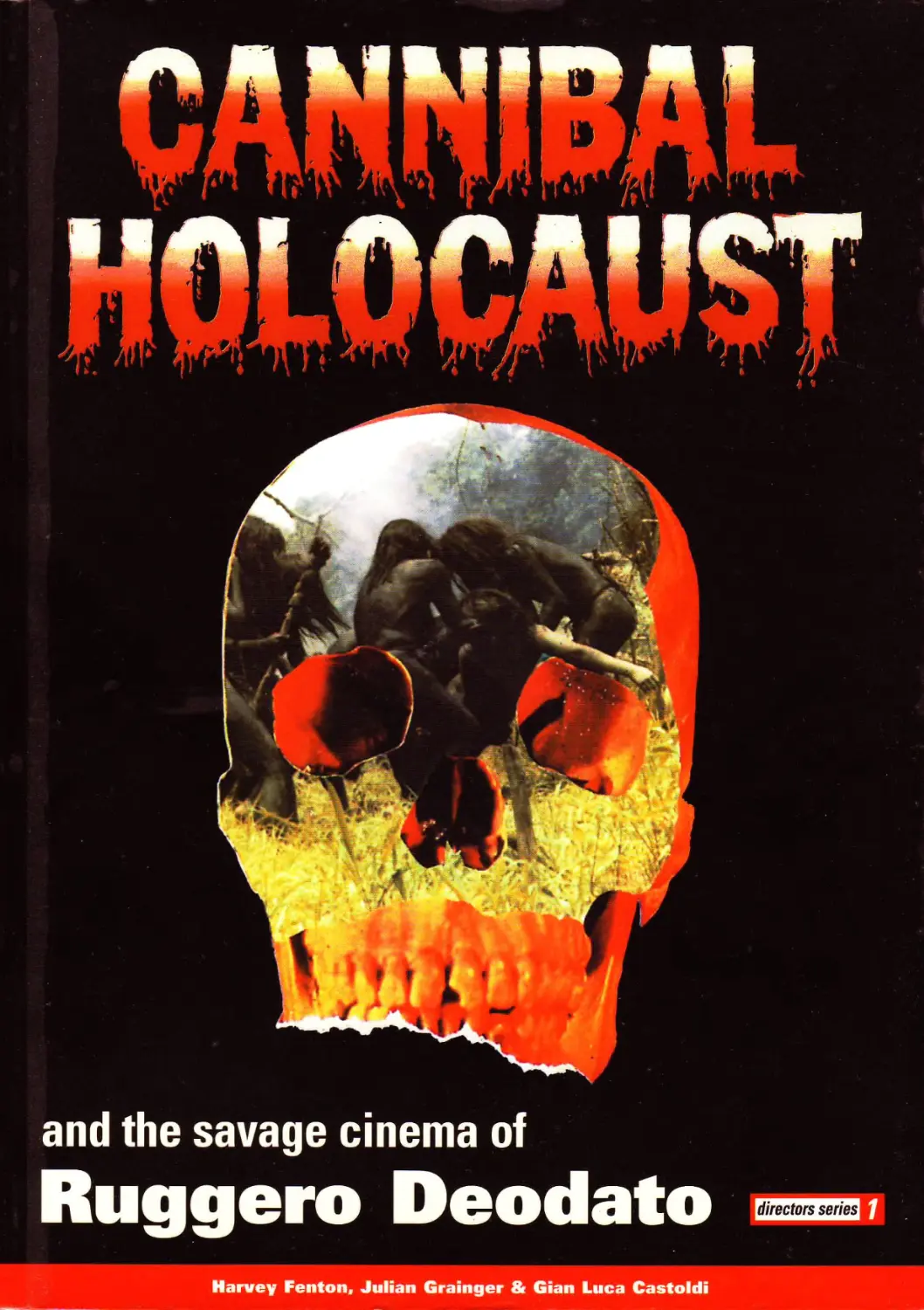


Author: Fenton Harvey Grainger Julian Castoldi Gian Luca
Tags: cinema horror directors reference
ISBN: 0952926040
Year: 1999


Text
                    and the savage cinema of
Ruggero Deodato


CANNIBAL HOLOCAUST
AND THE SAVAGE CINEMA OF RUGGERO DEODATO
First published March 1999
by FAB Press
FAB Press
PO Box 178
Guildford
Surrey
GU32YU
England, U.K.
www.fabpress.demon.co.uk
text by
Harvey Fenton
Julian Grainger
Gian Luca Castoldi
The moral rights of the authors have been asserted
This Volume copyright ©
FAB Press 1999
World Rights Reserved
No part of this book may be reproduced or transmitted in any form or by any means,
electronic or mechanical, including photocopying, recording, or by any information
storage and retrieval system, without the prior written permission of the Publisher.
A CIP catalogue record for this book is available from the British Library.
ISBN 0 952926 04 0
CANNIBAL HOLOCAUST
and the
savage cinema of
Ruggero Deodato
Harvey Fenton
Julian Grainger
Gian Luca Castoldi
FAB
CANNIBAL HOLOCAUST
and the
savage
cinema
of
Ruggero
Deodato
FAB
PRESS
PUBLICATION
illustrations:
front cover,
frontispiece &
title page:
Cannibal Holocaust
right:
A bizarre form of
ritual execution:
Last Cannibal
World
bottom right:
Cut and Run
back cover top:
Cannibal Holocaust
edited and designed by
Harvey Fenton
Special Thanks to Deborah Bacci for translating Gian Luca's texts
from Italian into English, and to CoCo for help with image scanning.
above:
The Yamamomo
shrine, constructed
from the remains of
the Yates team:
Cannibal Holocaust
back cover middle:
Massimo Foschi
finds redemption in
cannibalism:
Last Cannibal
World
back cover bottom:
A Yacumo warrior
engages in
cannibalism in an
attempt to drive
white men spirits
from the jungle:
Cannibal Holocaust
All illustrations
printed in these
pages are copyright
their respective
owners and are
reproduced here in
the spirit of
publicity.
interview
Gian Luca Castoldi
reviews
Harvey Fenton
Julian Grainger
Gian Luca Castoldi
filmography
Julian Grainger
Thanks to the following for essential research assistance:
Nathan Bradbury, Francis Brewster, Kenneth Eriksen,
Kris Gavin, Manlio Gomarasca, Craig Ledbetter,
Marc Morris, Adrian Luther-Smith
Illustrations are from the collections of:
Bill Bennett, Gian Luca Castoldi, Martin Coxhead
(Flashbacks), Mitch Davis, Ruggero Deodato, Harvey Fenton,
Adrian Luther-Smith (Delirium Collection), Marc Morris,
Ezio Palaggi (Videotel Service, Homa)
CONTENTS
7
10
31
39
40
42
43
43
44
44
47
47
48
49
50
53
59
60
62
78
85
87
92
93
94
96
98
100
100
101
102
103
104
106
107
108
109
111
Introduction
Interview
Locandina Gallery
Hercules - Prisoner of Evil
Phenomenal and the Treasure of Tutankamen
Gungala, la pantera nuda
Man Only Cries for Love
Vacanze sulla Costa Smeralda
I quattro del Pater Noster
Zenabel
II triangolo rosso
All’ultimo minuto
II segreto di Cristina
Waves of Lust
Live Like a Cop, Die Like a Man
Last Cannibal World
Last Feelings
Concorde Affair
Cannibal Holocaust
House on the Edge of the Park
The Atlantis Interceptors
Cut and Run
BodyCount
The Lone Runner
The Barbarians
Phantom of Death
Dial: Help
II ricatto
Ocean
I ragazzi del muretto 2
Mom I Can Do It
The Washing Machine
We Are Angels
Pensando all’Africa
Other Work
Rumour Control: Cannibal Holocaust 2
Index
Bibliography
MASSIMO FOSCHI*ME-ME LAY у lacolaboracidn de IVAN RASSIMOV
UN FILM DE RUGGERO DEODATO
Una historia VERDADERA filmada en la tribu de antropofagos
donde VERDADERAMENTE Sliced»...!!!
!!! INCREIBLEMENTE SALVAJE!!!
Spanish theatrical poster for Last Cannibal World'
INTRODUCTION
7
RUGGERO
DEODATO
Ruggero Deodato has the dubious
honour of being the man who created
one of the most infamous horror
movies ever made. Cannibal Holocaust is
Deodato’s most celebrated movie, and he is
fully aware of this fact; during the course of
the interview featured in this book, he says,
“The best one for me is Cannibal Holocaust.
It is impossible to equal that film... ” Deodato
will never live down the legacy of this
stunning film, and one gets the impression
that he is content with this state of affairs,
hence this book rightfully devotes a large
proportion of its pages to documenting every
aspect of Deodato’s brutal, distressing master-
piece. However we are also here to
thoroughly document the entire career of one
of the busiest men in the film-making
industry. He has survived in this most turbu-
lent of environments for over forty years by
being ever-adaptable, willing to try his hand
at any genre: along with two further jungle-
adventures - Last Cannibal World and Cut
and Run - his filmography includes cop
thriller Live Like a Cop, Die Like a Man,
claustrophobic slasher House on the Edge of
the Park, apocalyptic adventure movie The
Atlantis Interceptors, costume fantasy film
The Barbarians, plus an impressive array of
comedies, erotic thrillers and prime-time
Italian TV serials.
This book is the most comprehensive
analysis of Deodato’s work ever published. It
is our intention that the career-spanning inter-
view and detailed filmography printed in
these pages will serve as a valuable, lasting
source of reference for everyone who takes an
interest in this increasingly important figure in
the world of cinema.
above: Ruggero Deodato in 1991, at home in Rome.
right: Deodato in 1998, operating a camera in Zimbabwe
during the making of the tv series Pensando all'Africa
8
THE SAVAGE CINEMA OF RUGGERO DEODATO
above from the top: Deodato somewhere in
South America ; With a lion whilst making
Pensando all'Africa ; With Mario Adorf
during the making of Ocean.
top right: Deodato photographed in 1988,
during the making of Un delitto poco
commune (aka Phantom of Death).
below: Deodato operates an elephant-trunk
'hand puppet' during the filming of
Pensando all'Africa.
Ruggero Deodato was born on 7 May
1939 in Potenza, Italy. He grew up in the
Parioli region of Rome, which happened to be
home to many of the prime movers in the
vibrant 1950’s Italian movie industry. Due to
this cultural background, Deodato was
naturally drawn to the world of cinema,
becoming good friends with the son of the
great neo-realist director Roberto Rossellini at
an early age. This friendship opened the door
to Deodato’s film-making career when, in
1958, Rossellini asked him to undertake third
assistant director work on the French / Italian
co-production II generale della rovere
(released 1959). Deodato’s work on this film
was uncredited, but he very quickly became
one of the most sought-after assistant direc-
tors in Italy, amassing an impressive total of
more than forty credits in the eight year
period up to 1967.
In addition to working on half a dozen
Rossellini movies, he collaborated with many
more top directors of the time including the
likes of Renato Castellani, Sergio Corbucci,
INTRODUCTION
9
left: Deodato directing Ocean,
below: Relaxing in Paris with Michela Rocco,
bottom: Filming The Atlantis Interceptors.
Carlo Ludovico Bragaglia, Mauro Bolognini,
Antonio Margheriti, Riccardo Freda, Carlo
Lizzani and Joseph Losey.
Deodato’s breakthrough came in 1964
when, two weeks into the shoot, he took over
from Antonio Margheriti as director of Ursus
il terrore dei Kirghisi. Upon completion of
the film, also known as Hercules Prisoner of
Evil, direction was credited to Margheriti.
Deodato had to wait until 1968 for his full
directorial debut, Phenomenal and the
Treasure of Thtankamen, which he uncus-
tomarily decided to sign with the pseudonym
‘Roger Rockfeller’. From this point on there
was no stopping the talented young director,
who tried his hand at a wide variety of genres.
Deodato’s key works for the cinema
have often been termed ‘misanthropic’, and
this angry strand first really emerged during
his 1975 erotic thriller Waves of Lust, which
amongst the softcore sex scenes deals with
violent psychological warfare leading to a
double murder. The following two years saw
the stakes raised further, the intense cop-
thriller Live Like a Cop, Die Like a Man
asking us to side with a couple of cops who
are basically criminals operating on the ‘right’
side of the law, and the lyrical back-to-nature
survivalist fable Last Cannibal World being
the first Deodato movie to confront the viewer
with images of actual animal butchery. These
images provoke many complicated debates,
some aspects of which are considered in these
pages. This hard edge continued - legendarily
- into Cannibal Holocaust and House on the
Edge of the Park, but Deodato’s angry late-
Seventies stance was interrupted by the senti-
mental 1978 ‘weepie’ L’ultimo sapore
dell’Aria (aka Last Feelings), a film for
which - unlike the majority of his fan base -
Deodato has a great deal of fondness.
In recent years Deodato’s work has
lost the primal edge of screaming, fearful
barbarism, but if anything it is more techni-
cally accomplished than ever, case in point
being the daft В-movie exploitation of Dial:
Help, in which the ever so decorative
Charlotte Lewis is implausibly menaced by a
homicidal, love-sick telephone amongst some
of the most bafflingly atmospheric lighting
and set-designs ever seen in Deodato’s
movies. Sure, it makes no sense, but
it doesn’t half look good...
One last thing. Deodato
pops up on-screen in most of
his films. Some of his
cameos are even speaking
roles. We have listed as
many of these cameos as
possible in the credits accom-
panying each film review, so
you know where to look out for
him next time you watch one of his
films. Try to spot him in Live Like a
Cop, Die Like a Man, Concorde
Affair, Cannibal Holocaust,
Phantom of Death, Atlantis
Interceptors, Dial: Help and The
Washing Machine, but for the most
fiendishly clever, downright audacious
cameo of all, just check out Cut and
Run. Deodato’s movies are full such of
moments, which reward careful viewing,
but his cameos are merely a playful diver-
sion; he is at his most impressive when deadly
serious. For the alert viewer who is prepared
to be mentally challenged and emotionally
assaulted, his best films can prove to be both
cathartic and inspirational. The unprepared
invariably feel insulted, cheated and confused.
By making films with such resonance and
power, yet still managing to survive in an
arena so profoundly undermined by lowest-
common-denominator compromise, Ruggero
Deodato has earned my utmost respect.
(HF)
10
THE SAVAGE CINEMA OF RUGGERO DEODATO
INTERVIEW
Ruggero
Deodato
You first came into contact with
the world of cinema during the
nineteen fifties, as Roberto
Rossellini 's assistant director.
How was it that you had this opportunity?
interviewed by
Gian Luca
Castoldi
I have been a friend of the great director’s
son ever since childhood. Despite being
bom in Potenza, I have always lived in
Parioli (area of Rome) and many of the
people who worked in cinema lived in my
area. From an early age I gravitated towards
the world of cinema; I very soon found
myself with some small jobs at the studios,
and being a very good friend of Lorenzo
(Rossellini), I was often at his house in
Santa Marinella. One day out of the blue his
father said to me “Ruggerino, why don’t you
come with me to be my assistant”. I would
never have imagined this request, but I went
and made my first film as third assistant
director, then soon I was second assistant
and so on, each time I went up in the
heirarchy. Rossellini was a genius and his
children also had great qualities. Lorenzo
could have done much more but his father
never helped him very much so it was me
who became his first assistant director. I
worked on six films shot by Rosselini: Il
generale della rovere, Ere notte a Roma,
Viva 1’Italia!, Vanina Vanini, Anima nera,
and the episode Illibatezza (his contribution
to RO.GO.PA.G).
In that period did you work exclusively with
Rossellini?
No, I had a bout of good fortune. For a time
I found it impossible to detach myself from
Rossellini’s team; Rossellini was a genius
but he was surrounded by mediocre people,
and there weren’t any great opportunities to
emerge from this situation. However, the
director Carlo Ludovico Bragaglia asked me
to work with him and I had to work very
hard to detach myself from the group. That
was my good fortune; with Rossellini you
could not learn, he was an artist who worked
from impulse. There was no need for
cinematographic technique. The first friction
between Rossellini and myself was when I
had to film a race and I tried to portray the
event in the most spectacular way possible.
When he saw what I had filmed he elimi-
nated everything and said that I had not
understood anything about cinema and that
my approach was just a “mannerism”. After
this disagreement we parted and I went to
shoot films with Freda, another master. The
first of these films was Romeo e Giulietta.
top: Deodato with Gian Luca Castoldi at the
time of this interview.
above: in 1969, during the making of
II triangolo rosso.
right: in 1990, filming Ocean.
INTERVIEW
11
What do you remember about Freda?
He was a real genius. His genius is not
actually seen in the films, which are not all
that innovative anyway; it was in his style of
filming. He had a sense of the shot and the
editing that were incredible. He is extremely
cultured; a man of great refinement.
You have worked with some great masters.
Before shooting a film of my own I had
worked with Rossellini, Bragaglia and
Freda, and we must not forget that I also
made a great many films with Corbucci; the
first film with him was II figlio di
Spartacus. But at the same time I was also
working with Mauro Bolognini, Renato
Castellani, Antonio Margheriti... I made very
many films but all of them concentrated in
the space of maybe six or seven years, this
period starting from my first experience with
Rossellini, when I was 19 years old.
One of the films in which you collaborated
with Margheriti as assistant director is
Danza macabra.
A delicious film. I have made many films
with Antonio but that one is certainly the
best.
I have read an interview with Margheriti, in
which he said that it was thanks to you that
he was able to have Barbara Steele for that
film.
I used to flirt with Barbara Steele quite a bit.
At that time I was about twenty four years
old and she, after having made lots of horror
films with Bava and Freda, had just shot
Fellini’s 8 1/2 and wanted to escape from
the horror star cliche. Sergio Corbucci, who
was the original choice as director of that
film, knew of my relationship with Barbara,
and therefore asked me to talk her into
shooting Danza macabra.
Yes, there is a legend which says that she,
after having worked with Fellini, became
big-headed and no longer wanted to do
horror films.
It is true. It was me who convinced her to do
another terror film.
What sort of person was Barbara Steele?
A wonderful woman, exceptional. Although
I was flirting with her, it was absolutely
platonic. She was not a cold woman; it
seemed as if she were from the South. She
loved cats and she lived in a splendid house
full of them.
Whilst working on Margheriti’s fantasy films
you worked with many young novice Italian
actors: Franco Nero, Lisa Gastoni...
Franco Nero was a great friend of mine, we
were inseperable to the point that it was
actually me who convinced Sergio Corbucci
to call in Franco for Django. He had already
chosen another actor, Mark Damon, for that
part but I was telling him to choose Franco.
I didn’t manage to convince him until I
managed to show him to Nori, Sergio’s wife,
who then imposed him on her husband.
Where was Django filmed, Madrid or
Almeria?
In Madrid. Franco and I spent several weeks
working together in Spain. Now he has
forgotten about me. He even pretends not to
know me.
What memories do you have of the science-
fictionfilms of Margheriti?
They were well-made. Margheriti used to
personally work on the special effects,
together with [Cataldo] Galliano. They did a
good job, and they certainly did not need to
envy American films.
Your first job as director came to you when
you took over from Margheriti in the direc-
tion of Ursus il terrore dei Kirghisi.
He filmed for the first two weeks and I
filmed for the last two. The film featured
Reg Park, Ettore Manni - who was also the
producer - and Mirielle Granelli, who was
his wife.
Do you like the peplum genre?
I had already worked on Ursus nella valle
dei leone by Bragaglia, but no, the peplum
was not my genre. I have never even seen
Ursus il terrore dei Kirghisi. I left it at the
editing stage and Colangeli finished it.
I don’t even remember how it was signed.
I was a young lad and I don’t think of it as
one of my films.
We can therefore consider your first film to
be Donne... botte e bersaglieri.
My first film was Gungala, la pantera
nuda, the sequel to another film (Gungala
la virgine della giungla by Romano
Ferrara). We filmed it in Kenya, and part of
it in Italy in the De Paolis style (incredibly
famous theatre of Roman mime). After
having looked at the scenes shot in Italy we
decided to go to Kenya for three weeks to
finish the film. After this I filmed
Fenomenal e il tesoro di Tutankamen with
Lucretia Love, who was amongst other
things the wife of the producer and actor
Mauro Parenti. Do not ask me the story
because I don’t remember it. There is a
curious anecdote attached to the making of
that film. Whilst we were shooting a scene
in Paris, on the Champs Elysees, whilst
panning the camera I framed Rex Harrison
шпкнншаш
пивпиишвтт
пвинлилипп
STARRING	X
BARBARA STEELE GEORGE RIVIERE
BAN7A
MACABRA
BARBARA STEELE - 6E0RGE RIVIERE
MARGARET ROESHAM
•w АИПИГ W4VA	—« hir,
top: Deodato worked with Antonio
Margheriti during 1964 on the gothic horror
film Danza macabra. The film was released
in the USA under the title Castle of Blood,
middle: Deodato suggested that Barbara
Steele should be given the role of Elizabeth,
bottom: Italian "locandina" poster design.
12
THE SAVAGE CINEMA OF RUGGERO DEODATO
Promotional designs for two of Deodato's
collaborations with Antonio Margheriti:
Danza macabra & The Virgin of Nuremberg.
Deodato also collaborated with Sergio
Corbucci during the making of Django,
filming exteriors in Madrid for two weeks.
BARBARA STEELE GEORGE RIVIERE
ROSSANA PODESTA • GEORGE RIVIERE • нм ж»
.KAU r. IIMI • МТШС1 WAIFON  CRISTOPHER LEE
.<e.. ANTHONY DAWSON
ATLANTIC A CINEMATOGR. PROD, FILMS
- IaSTmaNCOLOR - ULTRAPANORAMIC
who was passing there by chance. After
finishing the shot, I immediately asked him,
disconcerted, if I could use that footage for
my film. He gave me his approval and so in
my film I also have Harrison (laughter).
After Gungala I started work on a
film which I never made. A producer sent
me to Ethiopia for three months with two
fantastic scriptwriters. One was Franco
Solinas, the other Giorgio Allorio. We never
wrote that script but we enjoyed ourselves
like maniacs. I could tell you so many of
those adventures... betrayals, escapes, jokes,
risks of every type.
Straight after that Sergio Corbucci
called me from Spain where he was filming,
because he had an assistant director who
was not working properly, and I worked for
two weeks with him. It was whilst I was in
Spain, I think, that I was called by
(Edmondo) Amati to shoot those two films
for him. They are the two musicals, Donne...
botte e bersaglieri and Vacanze sulla
Costa Smeralda. Back then, one did not
think very much about genre. Bollognini had
just made Guardia, guardia scelta,
brigadiere e maresciallo. At that time the
specialisation one sees today did not exist.
In fact, I have always tried to change genre,
as I do not wish to become typecast as a
director specialising in a particular form.
If you were to make films purely with regard
to your personal taste, which direction
would it take you?
The cinema of adventure. I like costume
films; the details. But then I also like
dramatic films. There is not a particular
genre; I have made a sentimental film and I
liked it.
What do you enjoy reading?
I read everything. I like historical books, the
biographies of Paolo Gransotto; I have read
INTERVIEW
13
Julio Cesare and Anibile. I love history, the
customs of societies, the historical detail.
Making those two comedy films was not the
pinnacle of my aspirations, nevertheless I
enjoyed them because I have a great
humorous vein in me. In any case it is not
easy to make a comedy, a director by trade
cannot make a comedy, it doesn’t come out
well, it doesn’t come out naturally. The
camera must be organised, the lighting must
be correct, and whilst organising these
details one can lose the spontaneity of the
comic performance, which is what makes
the film. I believe that the comic director
does not exist, it is the actor who makes the
comedy film.
Yet you have helped launched the careers of
a lot of comic actors. For example Enrico
Montesano.
Yes, and Villaggio, Lionello, Toffolo. They
were all in I quattro del Pater Noster.
Montesano had a very small part in Donne...
botte e bersaglieri, it was his first film. He
did the rounds of the production houses in
search of small roles. He was a very likeable
type. Villaggio though had already done
some cabaret. Many people involved in I
quattro del Pater Noster have become
important names in Italian cinema; the film
had a screenplay written by Maurizio
Costanzo, the music was by Luis Enriquez
Bacalov, who has since gone on to win an
Oscar for his musical score to II postino.
The actors included Montesano and
Villaggio. To make it now it would cost five
billion just for the music (laughter).
Zenabel is a romantic adventure film with
Lucretia Love and John Ireland...
It’s a very enjoyable film which unfortu-
nately was plagued by bad luck. For
example, the premiere screening of the film
coincided with the bomb at the Banca
deH’Agricoltura di Milano in 1969. So
nobody went to the cinema. A crazy situa-
tion. The film did not make a lira. It was at
this time that I left Rome, even though I had
been asked to make a film, and went to
Milan to make advertisements. It was the
only thing that I could do. My wife (Silvia
Dionisio) had become a star - the producers
would only invite me to the social events if
she was there. I had to change everything to
prove that I was worth something. In that
period I made a great many advertisements.
I made six spots for Amaro Cora (a brand of
liqueur) which were incredibly successful;
the actors were Silvia and Jean Sorel and
they were like small films. I had to stop
doing them when Ondata di piacere came
out because Umberto Cora was shocked by
the film; there was a shot of Dionisio next to
a bottle of liqueur and this sent him into a
towering rage. Also from that period is the
series All’ultimo minuto, one of the best
things ever filmed for Italian television.
It had an American rhythm and dynamism.
Those tele-films have disappeared from
circulation and I do not own a copy of even
one of them because the producer Yacopo
Rizza died. He was a famous journalist, he
was the first to interview the bandit
Giuliano. Yacopo was an adorable person as
well as the husband of Gisella Sofio.
Perhaps we should ask her. I worked with
some excellent actors on that series: Adriana
Asti, Andrea Cecchi, Maurizio Merli...
Waves of Lust was the export title for
Ondata di piacere, Deodato's successful
contribution to the erotic thriller genre
which was very popular in Europe during
the early Seventies.
14
THE SAVAGE CINEMA OF RUGGERO DEODATO
top and below: Ondata di piacere (aka Waves
of Lust) starred Silvia Dionisio, who was
Deodato’s wife at the time of filming.
above: Marc Porel (left) and Ray Lovelock
(right) in the violent, cynical cop thriller
Uomini si nasce, poliziotti si muore (aka
Live Like a Cop, Die Like a Man).
In the same period you also filmed
Il triangolo rosso for television.
It was the Italian tele-film which inaugu-
rated the series dedicated to the traffic
police, Il marescialo rocca (very famous
Italian television series starring Luigi
Proietti). The main stars were Jacques
Sernas, Riccardo Garroni, Elio Pandolfi.
Amongst the special guests I had Ottavia
Piccolo, Alessio Orano... The first series was
incredibly successful and was also sold to
Germany. I filmed many of the episodes for
that series. Then I made the pilot episode for
a proposed series 11 segreto di Cristina,
which unfortunately didn’t eventually lead
to a series.
After all this television work you returned to
cinema with Ondata di piacere.
opposite page, top left: Deodato shifted genre
yet again with his next film, Ultimo mondo
cannibale (aka Last Cannibal World), which
starred Massimo Foschi and Me Me Lai.
The producers Marras and Salviani, offered
me the chance to make an erotic film; this
style of movie was in fashion at the time.
Muti, Giorgi and Agostina Belli were the
pioneers and then everyone started doing it.
I had planned to shoot that film with another
actress, who at the last minute refused to be
filmed naked. So I put forward my wife’s
name to the producers; at that time she was
a star and had never got undressed before
the cameras. She accepted the part only
because all her peers were doing this sort of
film at that time.
Where was the footage on the yacht filmed?
At Cefalu. Amongst the actors was Al Cliver
(Pier Luigi Conti) who was a very distinc-
tive character. He was not a real actor, he
had another career; furniture restoration or
carpentry. The film was very successful.
Next you made a splendid cop film, Uomini
si nasce, poliziotti si muore, about a very
effective police partnership.
Ray Lovelock and Marc Porel were truly a
winning couple. There was a symbiosis
between the two of them which worked
perfectly, the hard man and the more
humane one. The whole thing had an ironic
touch, which set it aside from the other
productions of that genre. And it was
extremely violent, so much so that it had
problems with the censors and was cut. We
had also planned a sequel for that film, but
during that same period Monnezza [a comic,
anarchic cop played by Tomas Milian in a
series of films] had turned up, so the spell
was broken. They were two completely
different types of characters.
INTERVIEW
15
How did you become the director of Ultimo
mondo cannibale? Did you get in on
someone else 's project or did the producer
come directly to you?
There was already an outline written by
Renzo Genta, then Gianfranco Clerici
contributed to it as well, as did a couple of
actors. The producer of Ultimo mondo
cannibale had II paese del sesso selvaggio
(Umberto Lenzj’s 1972 cannibal adventure
film Deep River Savages) in distribution
together with my Uomini si nasce,
poliziotti si muore, which was much more
successful, therefore he thought he would let
me shoot the cannibal film.
It was my idea to use Massimo
Foschi because I wanted a great actor with
an ordinary face, but also a very energetic,
physical actor. Someone wrote that he was
too theatrical, but I think he was very good
for that role, he gave much more truth to the
character. In Massimo’s absence Ivan
Rassimov would have had the role of the
protagonist.
MHWSA DiSTSIBUZlONE
IVAN RASSIMOV - ME ME LAV
—... RiCCAPDO PAUOTTtNi	DANlfU PATUCCHI
UMBERTO LENZI
-..ли t ЦЯЧТ5 f як С 5ЙЯ	TCMtraa. «ладоя
RUGGERO DEODATO
|и u wish 'SeKhs
- MENSENETRt*
•LA SCARNIFICAZIONE
DEL BRACCIO
•LO SQUARTANIENTO
DEL COCCODRILLO
•IL CANNIBALISMO
NEI SUOI OETTAGLI
PIUORRIPILANTI
•LUCCISI0NE
DELLE FIGLIE FEMMINE
•IL PITONE
CHE DIVORA L IGUANA
•LAMORE SELVAGGIO
UNA SlunlA VtnA
GIRATATRA LE TRIBU DOVE
E VERAMENTE ACCADUTA!
ULTtfrlQ 8®NQ0САШН8А1Е -..• MASSJMO FOSCHI МЕ-МЕUW s	• ... IWN RASSIMOV •	.
Distiiti tittone INTERFILM- TECHNICOLOR
ЙШ
ИПЙИШЖ
CAN THIS MODERN MAN SURVIVE
IN A STONE AGE WORLD?
Robert Harper planewrecked in an unexplored jungle hell,
captured by a lost tribe, cruel and primitive beyond belief,
escaped and fought his way back to civilization.
top: Locandina for the first Italian cannibal
adventure film, Umberto Lenzi's II paese del
sesso selvaggio. Deodato's Ultimo mondo
cannibale followed four years later, and
was a success all over the world. Posters
on this page are from Italy (left), USA (above)
and France (below).

16
THE SAVAGE CINEMA OF RUGGERO DEODATO
natural fact, and now it has become a taboo.
top left and middle: Ultimo mondo cannibale
features many acts of animal butchery, a
staple ingredient of all the Third World
cannibal movies.
Did you have any problems shooting those
scenes of full-frontal nudity?
above: The film also featured a great deal of
frank male and female nudity.
top right & inset: Deodato takes a dip during
the making of the film. In the foreground is
script continuity assistant Lamberto Bava.
We spoke about it in advance and I
explained that they were fundamental for the
film. As I have already said, Massimo is a
great actor and he understood perfectly.
The film was originally intended for Lenzi,
why then did you shoot it?
As I said, the producer wanted me, and
perhaps at that time Lenzi looked down on
that sort of film.
There have been many criticisms regarding
the animal killings in your cannibal films.
All the animals which were killed were then
eaten by the natives. For example, they were
greedy for crocodile meat, and when we
killed one they always went for the paws,
which were the first parts to disappear. It
leaves a much greater impression on me
when, for example during a race, an injured
horse must be killed. A horse, like all
domestic animals, leaves an impression. Not
a crocodile. It is also important to consider
the fact that the natives ate these animals
because that is their food. The animals we
killed in the various films were rodents, wild
boars, perhaps we over-did it a bit with the
turtle, however that also was eaten. Then
there were the little monkeys, which made
an impression on me because when one of
them was killed the others died of heartache.
Nowadays I wouldn’t do it anymore, times
have changed. When I was a child I lived in
the country and it was normal to see a
chicken, a rabbit or a pig being killed. Today
my daughter sees it and she becomes
distressed. Even when there was a dead
person in the family, in previous times all
the family used to watch over the corpse,
today when somebody dies their body is
hidden straight away. Before, death was a
Have the films of Jacopetti inspired you?
Jacopetti managed to intuitively know,
twenty years in advance, everything which
is happening now. His films were truly
beautiful.
INTERVIEW
17
After Ultimo mondo cannibale you shot
L’ultimo sapore dell’aria, a completely
different type of film.
That film was commissioned from abroad.
At that time Italian directors had a good
reputation and we were hired unseen.
Nowadays nobody wants us anymore, our
market has thrown us completely to the
ground. Some of my films have never been
released in Italy, but I receive video
cassettes from all over the world.
Sometimes you hear these critics who
come out of the cinema after having seen a
film by one of today’s directors, one of the
so-called minimalists, who comment
amongst themselves, “it is well filmed.” But
I say, what does it mean, “well filmed”?
They should be more concerned about the
non-existent story. The films of today are
very poor as regards screenplays; to shoot
the films which we used to make one needed
physical strength and not jokes. When I was
shooting my films about the cannibals
everything was problematical; there were
problems of communication, of location, of
hygiene, of health. Every day was a new
adventure. In the film which I have just
finished shooting with Bud Spencer, in
Costa Rica, we were once again breathing
that same air. Unusual situations; one had to
deal with it.
Didn't you work with a screenplay?
Yes, there was always a screenplay, but there
is something which I have learned right
from my very first film. Supposing I have to
shoot a scene in Piazza di Spagna and
another one under the Viminale. I prepare all
the story boards for the scenes which I have
to shoot and then I start filming. Then, what
often happened was that I was sent away
from there and made to go somewhere else.
What do you do in that case? You have to
organise things all the same. We could not
wait, we had to shoot in another area and
perhaps pretend to be in Piazza di Spagna.
That is the difference between us and the
directors of today. We used to know how to
improvise if we needed to.
Let's go back to L’ultimo sapore dell’aria.
I had a very good budget at my disposal
provided by the Japanese producers, and I
had a cast of unknown youngsters. All the
means were at my disposal. That was a very
beautiful picture. We filmed in Holland, at
Asti, Rome, and Varazze. I didn’t have any
problems making that film.
top left: Carlo Lupo and Vittoria Galeazzi in
L'ultimo sapore dell'aria (aka Last Feelings),
Deodato’s sentimental love story,
above from the top: Deodato relaxes in the
jungle; At the Brussels Horror Festival with
British director Clive Donner (Thief of
Baghdad, The Caretaker); With Carlo
Ludovico Bragaglia during the director's
102nd birthday celebrations,
below: Behind the scenes with Miles
O'Keeffe in 1986 during the making of
The Lone Runner.
So in your case one cannot speak of finan-
cial problems when shooting a film?
Look, I don’t think I have ever had any
economic problems. Little films, so to
speak, perhaps I have shot one or two of
them. For example the one which I made in
Morocco, Lone Runner. I don’t think it was
ever released in Italy.
18
THE SAVAGE CINEMA OF RUGGERO DEODATO
CONCORDE 820
FORSVINDER
DANSKE UNDERTEKSTER
above: Danish video cover for Concorde
Affair, above right: Deodato in Rome outside
the Adriano cinema, which hosted the
premiere screening of Concorde Affair,
bottom: Outrageous posterior Cannibal
Holocaust on public display in 1980 outside
a cinema in Cartagena, Colombia.
below & opposite page Cannibal Holocaust.
Concorde Affair '79 had an excellent cast
and seems to have been shot with adequate
means.
If I had had a hundred million lire more, it
would have been a masterpiece. It was more
successful than the film about Concorde
starring Alain Delon, which came out at the
same time as mine (Airport '79: The
Concorde). Universal, who distributed the
Delon film, took legal action against us and
lost. British Airways had given us permis-
sion to use Concorde while Air France had
given permission to the other film, which
was flop. If the producer, Giorgio Carlo
Rossi, had given me a little bit more money
it would have been comparable with the
American films of that era.
Any problems in having to work together
with all these big names?
No, there was only James Franciscus, who
was convinced that he could play predator
with Mimsy Farmer, but she was very
European and very high-brow, so she
scorned him straight away.
Was Cannibal Holocaust made in response
to the success of Ultimo mondo cannibale ?
INTERVIEW
19
At that time all the German distributors were
buying our films unseen. Some Germans
arrived with 90,000 Marks to help finance
the shooting of a film. Then there were
Japanese investors, who paid a great deal.
For my own part I searched for other
producers to complete the budget. We shot
in Leticia, on the border between Colombia
and Peru.
At that time on the television we
were always seeing death scenes, they were
the years of terrorism and my film was also
a condemnation of a certain type of
journalism. The technique and the basic
themes of the film have since been appropri-
ated and adapted by many others, the most
recent example being Oliver Stone, who
certainly has seen the film, and it’s obvious.
(I think that Deodato is referring to Natural
Born Killers). The resulting reaction for him
was the same; partly it was our own fault
because we went too far in expressing a
moral standpoint. For example the final
punchline “who are the real cannibals?”
leaves the door open to doubt. We should
have left no room for doubt in the minds of
the spectators about the moral stance of the
film. They make me laugh, some of the
critiques against me, when they speak of the
“gratuitous pleasure” of certain scenes, the
turtle... then they even said that I had really
impaled a woman to shoot the scene of the
executed native. In Colombia they spread
the word that Deodato is mad, that I did
incredible things. The truth is that the guide
whom we had at that time organised safaris
in the South American style for German
tourists. The Peruvian Indios got killed,
thrown in the Amazon river, and after a
hundred metres they didn’t exist any more,
nobody would ever find them; that river is
full of piranha, crocodiles... When I found
out about it, I denounced him and in fact he
was arrested. From then on the guide, who
now is out of prison, has promised that if I
return to Colombia, he will kill me.
20
THE SAVAGE CINEMA OF RUGGERO DEODATO
Were the tribes with which you worked
really cannibals?
How were the
conditions while
you were shooting ?
Is what is seen in the film true, about the
peaceful tribes and the cannibal tribes?
all images this page: Cannibal Holocaust.
Faye Daniels (Francesca Ciardi) was the
only female member of the doomed
documentary team led by Alan Yates
(Gabriel Yorke). She is seen here disturbed
by the sight of the impaled native woman
(above) and terrified when, earlier during the
expedition, she discovers a huge spider
crawling on her shoulder (centre). Despite
being the only member of the team to show
any sign of restraint or humanity at all, her
fate at the hands of the vengeful Yamamomo
is particularly protracted and brutal.
Leticia is an
incredible place.
It’s in Colombia
but it’s a hundred
metres away from
Brazil, and the
equivalent distance
from Peru. The difference is in the Indios:
the Brazilian ones are very intelligent, the
Colombian ones stupid, and the Peruvian
ones even worse. The Alcuma tribe, who are
based only a hundred metres from the town,
live as if they were thousands of kilometres
away from civilisation. All the drugs in the
world pass through Leticia, but we never
had any problems with the traffickers.
Completely. The names of the tribes, and
their peculiarities as shown in the film are
all real. The incredible thing is that each
tribe speaks its own language. The Tibuna
do not understand the Anamaru, who live
very near by, yet they do understand the
lanuguage spoken by another group of
Tibuna thousands of kilometres away. They
are nomads who, from one stock, have
moved around the whole of Amazonia.
Yes, they were cannibals and they devoured
the killed enemy, often due to hunger. The
only cannibals who undertook ritual canni-
balism, for religious reasons, were the ones
from Belize. The Amazonian cannibals
practically devoured people raw. In Asia, by
contrast, they cooked them with glowing hot
stones, they stuffed them with banana leaves
and then they ate them from the inside,
never from the outside.
INTERVIEW
21
How did you make the decision to use those
unknown actors?
The youngsters were all found at the Actor’s
Studio in New York. I needed somebody
with an Italian background, so I took on
Luca Barbareschi who was studying there
and spoke English perfectly. Francesca
Ciardi was a girl from Rome, and she also
spoke English perfectly. The film was shot
in English. The very controversial role of the
impaled native was actually played by our
Colombian costume-maker.
How did you manage to contact Robert
Kerman?
He had played a small part in Concorde
Affair ’79; he was a flight controller in the
scenes shot at the airport in London. He was
a good actor. I only recently found out that
he was a pom actor, and I was very
surprised because I saw him naked and he
had a tiny thing... They probably only used
his face in the pom films and the body of
somebody else. It is strange because he
wasn’t even a bad actor. He was perfect for
his role in Cannibal Holocaust, he repre-
sented an ordinary man, the university
professor, the studious one, thrown into that
incredible adventure.
What are your thoughts on this ever so
controversial film?
The film has brought me good luck and bad
luck. I adore it and I like the way it has been
made. Even watching it today it is a master-
piece. It is a film that never gets boring. But
it has given me lots of problems, proceed-
ings, sequestrations, reportings, censorship,
and persecutions. In Italy it was released to
massive financial success but after a few
days it was confiscated. It was re-released
years later, but by then it no longer had the
impact it had when it first came out.
The film did very well abroad.
It has made two hundred million dollars. In
Tokyo alone it made seven million dollars,
second only to E.T. The Extra-Terrestrial.
I believe it has been the greatest ever Italian
success abroad. It is possible that maybe the
films of Bud Spencer and Terence Hill have
made more money, but I am not sure.
It is interesting that in Italy the film was
originally released in its entirety, but was
cut in the version that was released theatri-
cally after its confiscation, whereas on video
the film is more or less complete.
Well, I have a French video cassette which I
think is complete.
all illustrations this page: Cannibal Holocaust,
top: At home with the feared Yamamomo,
also known as “The Tree People",
middle: Professor Monroe's guide Chaco
(Ricardo Fuentes) discovers the partially-
decomposed remains of Felipe, the Yates
team's unlucky guide,
bottom: Retribution. The Yamamomo hack
Jack Anders' decapitated torso to pieces.
22
THE SAVAGE CINEMA OF RUGGERO DEODATO
There is a story that you can no longer visit
Colombia. Is this true ?
No, it’s not true.
After working on Cannibal Holocaust, you
made La casa sperduta nel parco.
The film was shot in three weeks. It’s a
claustrophobic movie: everything takes
place in one night inside a villa. We shot in
New York and Rome. It’s completely
different to Cannibal Holocaust.
The principal actor was David Hess. What
type of person is he?
David is a great actor but as a man he is not
very pleasant. He is a blackmailer. I asked
him to appear in the film which I shot
recently with Bud Spencer (Noi siamo
angeli), and the day that we were due to
shoot he came to me to tell me that he
wanted more money. I told him literally
where to go. However, when we are filming
he has a great presence, he is an excellent
actor for just one particular type of role.
INTERVIEW
23
opposite page: All illustrations are from
La casa sperduta nel parco
(aka House on the Edge of the Park),
top left: American video cover
top right: Ricky (Giovanni Lombardo Radice)
gets his way with Gloria (Lorraine De Selle),
centre: Promotional artwork for the film's
Spanish release features typical censorship
of nipples, whilst deeming the razor-slashing
of faces and breasts to be acceptable!
bottom left: Alex (David Hess) beats up
Howard (Gabriele Di Giulio).
this page, left: David Hess and Annie Belle in
the 'prick tease’ shower scene from
House on the Edge of the Park,
below: British video cover for The Atlantis
Interceptors, aka I predatore di Atlantide.
bottom: Roaming bike gang terrorises the
inhabitants of small-town America in
The Atlantis Interceptors.
Your next film was I predatori di Atlantide.
I chose Christopher Connelly, who had done
Martin Eden with Giacomo Battiato for
television. It wasn’t one of my most
successful movies because there wasn’t
much money, however it was pleasant to
make. I remember it with great fondness as I
enjoyed making it so much. We filmed it in
the Philippines; it was co-produced by the
local government, and Imelda Marcos
provided us with everything that we wanted.
24
THE SAVAGE CINEMA OF RUGGERO DEODATO
Л 4F Wl IЛ

above: Belgian poster for Inferno in diretta
under both it's French language title,
Amazonia, La Jungle blanche, and its
English language title, Cut and Run.
One of your best action films is Inferno in
diretta. The film has an excellent cast:
Richard Lynch, Leonard Mann, Gabrielle
Tinti, John Steiner, Karen Black, etc...
That film, unfortunately bears the traces of a
great deal of disagreement between myself
and the producer Alessandro Fracassi - an
excellent person who I like very much -
INTERVIEW
25
ALESSANDRO FRACASSI present LISA BLOUNT • LEONARD MANN • WILLIE AAMES m
RUGGERO DEODATO
RICHARD LYNCH
RICHARD BRIGHT
MICHAEL BERRVMAN
ERIO LASALLE • GABRIELE TWTl
VALENTINA FORTE
con la partecipazione JOHN STEINER
con la panecipaz one a KAREN BLACK
soggeltc e scenoggtdb'a
CESARE FRUGONI e OARDANO SACCKTT1
musiche d. CLAUDIO S1MONETT.
еолоп BIXIO C.E M SA sc-
moniaggio <1 MARIO MORHA j
d-rettore rWia lotogmt a ALBERTO SPAGNOU
derettore di p'oouaof« MAURIZIO ANTJCOCI
prodotto oa
ALESSANDRO FRACASSI
per n RACING PICTURES srl
RUGGERO DEODATO
COLORE DELLA ТЕ1ЕСО1ОЯ
however, he and all the production team
wanted to make a new Cannibal Holocaust,
whereas I refused, so inevitably this conflict
had repercussions on the film. It’s a hybrid,
but seeing it again now I can say that I made
it very well and I like it better now than I
used to. In the past I undervalued it, whereas
now I consider it one of my better films. The
best one for me is Cannibal Holocaust. It is
impossible to equal that film, then Inferno
in diretta, then Ultimo mondo cannibale,
Concorde affair and The Barbarians...
Inferno in diretta started life as a project by
Wes Craven, originally called Marimba.
At what stage did you become involved?
all illustrations this page: Inferw ia Area*
top: Italian fotobusta. above: Carnage drag
the film's violent opening segeeace.
left: Deodato or he—ea
26
THE SAVAGE CINEMA OF RUGGERO DEODATO
Inferno in diretta:
Michael Berryman leaps into action (right).
Torture at Colonel Horne's base camp
(below). Italian video cover (bottom left).
bottom right: Michael Berryman as he
appears in The Barbarians.
opposite page, top: Deodato with some of the
cast and crew of The Barbarians.
middle: Camping del terrore was retitled
BodyCount in English-language territories,
bottom: Deodato outside a cinema in Madrid
which was showing Un delitto poco
commune (aka Phantom of Death) in 1988.
The film should have been shot by Wes
Craven. The producer had contracted him to
do it and the film was due to be shot in
Colombia. Before production commenced
there were some problems, and they called
me in as Craven’s replacement. I took the
screenplay which Craven and a collaborator
had produced, and which was at that stage
called Marimba, and I changed it
completely, working on it together with
Cesare Frugoni and Dardano Sacchetti. We
decided to shoot it in Venezuela. Wes
Craven did not shoot any scenes in that film.
The cast features both Richard Lynch and
Michael Berryman.
Berryman is a little lamb who would not
hurt a fly. He was born prematurely so has
that ‘incomplete’ aspect, he is very thin-
skinned but he is a wonderful person. The
only one with whom I did not get on was
Leonard Mann. In the role played by Lisa
INTERVIEW
27
Blount I should have had Linda Fiorentino,
but at that time Lisa had recently appeared
in An Officer and a Gentleman with
Richard Gere, and I chose her on the
strength of that. The problem was that there
were too many stars, one didn’t want to do
one thing, one was always drunk, and I (who
neither drink nor smoke) had to battle
against everybody.
The Barbarians was shot on a low budget.
Cannon had hired a director for the produc-
tion, with whom they were having great
problems. They called me in and I changed
everything. The director who had started the
shoot had planned it in a classical way. I
decided instead to do a work of fantasy,
something almost surreal. It turned out to be
a film which was more ironic than dramatic.
The lead actors certainly haven’t gone on to
great things...
They were two big American brothers,
completely mad and full of steroids.
Camping del terrore was a move towards
the American-style slasher movie.
That type of film was forced on me by the
producer, who wanted to do something for
the foreign market. The setting is beautiful,
we filmed it in Abruzzo. The scriptwriter
Alessandro Capone makes me laugh; he tells
people that he wrote that film. “But what do
you take pride in it for?” I say to him, “there
was no story in that film!” The best part is
the music by Claudio Simonetti.
Even for this one, the cast was rich: Mimsy
Farmer, David Hess, Charles Napier...
I took him (Napier) on because he had done
Rambo and this made it possible for us to
export the film.
Lone Runner?
We shot in Morocco intending to release the
film in 70mm but it never was released in
Italy. There was such a fragile story,
invented on the spur of the moment, that I
don’t even remember what it was about.
Your next film is one of the most interesting
that you made in the Eighties; Un delitto
poco comune.
The story is very beautiful, written by
Gianfranco Clerici and Vincenzo Mannino,
but when Fenech enters onto the scene... the
problem is not her as such, because she is
good there’s no doubt, but the audience is
not used to seeing a film like that one which
features Fenech in the cast. (Although
Fenech is well-known amongst horror and
giallo fans for her work in these genres
during the Seventies, at the time of Un
delitto poco comune she was mostly familiar
to contemporary Italian audiences for her
comedy roles.) I would have wanted to do a
well-made film in every sense. There’s the
scene with the child on the swing which is
really beautiful, there’s this atmosphere... I
had Pleasence who is an exceptional actor,
then when Fenech arrives it’s as if I had
introduced Lino Banff! She is good but she
has nothing to do with that film.
28
THE SAVAGE CINEMA OF RUGGERO DEODATO
above: Un delitto poco commune (aka
Phantom of Death) featured some strong
scenes of violence which were cut for its
UK video release.
top right: Charlotte Lewis is hypnotised by
the love-struck homicidal telephone in
Minaccia d'amore (aka Dial: Help).
below: Sales brochure for Dial: Help.
bottom right: Deodato sets up a shot with
Marisa Berenson whilst making Ocean,
opposite top: Deodato sets up a tracking shot
on the epic Ocean shoot.
opposite right: Back to exploitation cinema
with The Washing Machine.
Were you obliged to take on Fenech for that
role?
Kelly Le Brock should have had her part.
But I do not want to be misunderstood,
Fenech is an excellent professional, it is
simply that she was not right for that partic-
ular role. One must consider that the public
often goes to see a film basically because
there is a star who attracts them to it; it can
be Fenech, Vitali, Buzzanca, Banfi...
CHARLOTTE LEWIS

You returned to horror in 1989 with
Minaccia d’amore (aka Dial: Help).
It was given a theatrical release in Italy and
it was bought by Berlusconi for Mediaset.
It’s a delicious film. It’s a fantasy film and
this is the reason that I like it. The story
concerns a telephone which falls in love
with a girl who is trying to make a call to
her friend, and which kills all the people
who hang around the girl. This is the type of
fantasy film which I like. Zombie films
don’t interest me, a telephone which falls in
love, yes. Hard horror is not my genre, I far
prefer fantasy.
Another of the television productions you
have directed is Oceano.
?	YOU’LL NEVER
FORGET
It’s a splendid story, beautiful, that will
unfortunately never be released. I wrote it
with Alberto Vazquez Figueroa, and it has an
awesome cast: Mario Adorf, Irene Papas,
Ernest Borgnine, Martin Balsam, Senta
Berger, Marisa Berenson... The film was
bought by Fininvest. Every television
company in Italy must have a wealth of
programmes, films etc. which they must
hold unused. Amongst this wealth is this
series which, being set in the sixties, does
not age. We shot it in Venezuela and in the
island of Lanzarote in the Canaries. It’s the
story of a family of fishermen during the
reign of Franco. The beautiful daughter gets
raped by the son of the boss of the island,
the brother of the girl takes revenge and kills
him, and to escape the wrath of the boss he
Oxtcted By
RUGGERO DEODATO
INTERVIEW
29
has to escape to Venezuela, retracing the
route taken by Columbus. It tells of all the
adventures during the crossing of the ocean
and of his arrival in Venezuela. It’s a
beautiful film.
After working on Oceano you stayed in
television with I ragazzi del muretto, which
was very successful. Did you expect such an
outcome?
I made it with mad love. I came to it after
the first series, which was good for nothing.
I made a much richer, more beautiful series
of programmes. The critics have taken it to
the stars. Even the third series, which I
didn’t make, reached that level.
After that series?
I made a very beautiful film called Mamma
ci penso io, shot in Venezuela, which won
the second prize at the 1991 Berlin festival,
in the films for children section. It also went
to the Giffoni Film Festival. It’s a delightful
film which was developed from an old
project of mine and re-adapted as a comedy.
Next you made The Washing Machine, your
most recent horror film.
The film was developed from a theatrical
piece and was shot in Budapest. I wasn’t
very happy with The Washing Machine
because I was never convinced that the
casting was correct, and the film was made
too quickly.
30
THE SAVAGE CINEMA OF RUGGERO DEODATO
right: Deodato in Madagascar "working on
ideas for a new film"...
below: During the making of the children's
film Mamma ci penso io, which was
adapted from a more hard-edged script
entitled Los gamines.
below from the top: Bud Spencer (left) in Noi
siamo angeli; Deodato in India with
Michela Rocco; Deodato with Michela
Rocco during a break in the filming of
Pensando all'Africa
After The Washing Machine you made a
film in South America with Bud Spencer.
It’s a television series which I made for
transmission on RaiUno, it’s called Noi
siamo angeli, and it stars Philip Michael
Thomas, Bud Spencer, Erik Estrada. Very
nice. It’s the story of two escaped prisoners
who dress up as friars and end up in a
mission. The little friars help solve a whole
series of situations and adventures. The
screenplay was written by Moretti in collab-
oration with Capone and two others.
You have often worked with Rai.
Yes, they call on me despite the fact that I
do not have great political merits in their
eyes. But it’s not specifically RAI, it’s the
producers. I have never been out of work
thanks to the support of television.
Tell me about the latest television production
which you shot in Zimbabwe: Pensando
all’Africa.
It consists of twelve self-contained episodes
of about ninety minutes each, interlinked by
the story of a doctor who travels to
Zimbabwe in Africa, to manage a hospital.
The protagonist is Carol Alt, while the chief
nurse, who is also her best friend, is played
by Michela Rocco. In each episode there is a
different guest star: Tomas Arana, Bert
Young, Daniela Poggi, Marco Leomardi and
others.
What are these episodes about?
They are stories of adventure and of love,
but there is also one which is a thriller in
which a patient in the hospital, who is termi-
nally ill, hires someone to kill her. Later on
however she changes her mind, but by now
it is too late and the man is already hot on
her heels. There is a fabulous epilogue
inside the hospital in which he takes some
people as hostages.
Ruggero Deodato was interviewed by Gian Luca Castoldi.
The text was translated from Italian by Deborah Bacci.
LA CASA
SPKOUTA
NEL ₽MtCO
con CHRISTIAN BORROMEO
e con la partecipazione di LORRAINE DE SELLE
musica composta e diretta da RIZ ORTOLANI
regia di RUGGERO DEODATO
colore lu LUCIANO VITTORI
distribuzione ADIGE FILM 76
L’ OCEANO SI SQUARCld E TUONARONO...
I PREDATORI DI ATLANTIDE

CHRISTOPHER CONNELLY
GIOIA MARIA SCOLA • IVAN RASSIMOV • MIKE MILLER  TONY KING
....GEORGE HILTON  ruggerodeodato
Mirara GUIDO.MAURIZIO DE ANGELIS • Prodmioda MAURIZIO ..SANDRO AMATI • uniiimREGENCYPRODICTlONSMi.iton»
COLORE DELLA TELECDLOR
ALESSANDRO FRACASSI presents
LISA BLOUNT  LEONARD MANN • WILLIE AAMES in
un film di RUGGERO DEODATO
RICHARD LYNCH • RICHARD BRIGHT • michael berryman • eriq lasalle • gabriele tinti
con VALENTINA FORTE nel ruolo di -ANA- con la partedpazione di JOHN STEINER con la partecipaztone di KAREN BLACK
soggetto e sceneggiatura di CESARE FRUGONI e DARDANO SACCHETTI musiche di CLAUDIO SIMONETTI edizioni BIXIO C.E.M.S.A. SpA
montaggio di MARIO MORRA (A.M.C.) direttore della fotografia ALBERTO SPAGNOLI (Ai.c.) direttore di produzione MAURIZIO ANTICOLI
prodotto da ALESSANDRO FRACASSI per la RACING PICTURES s.r.l.
regia di RUGGERO DEODATO	•
COLORE DELLA TELECOLOR
PIETRO INNOCENZI - TANDEM CINEMATOCRAFICA s.r.i - D.M.V. DISTRIBUZIONE s.r.i. E RETEITALIA s.p.A. presentano
MICHAEL YORK EDWICE FENECH
DONALD PLEASENCE
UN DELITTO
POCO COMUNE
UNA PRODUZIONE GLOBE FILMS s.r.i.  TANDEM CINEMATOGRAFICA s.r.i.
D.M.V. DISTRIBUZIONE s.r.i. . REALIZZATA DA PIETRO INNOCENZI
UN FILM DI
RUGGERO DEODATO
Distribuzione
MUSICA DI PINO DONAGGIO DIRETTORE DELLA FOTOGRAFIA GIORGIO DI BATTISTA
EDIZIONI MUSICALI GIPSY MONTATORE DANIELE ALABISO
DDl°5^S^EOj COLORE -LV* LUCIANO VITTORI S.p.A.

NESSUNO TORNA VIVO DAL
CAMPING
DEL TERRORE
ALESSANDRO FRACASSI PRESENTA
BRUCE PENHALL-MIMSY FARMER DAVID HESS
in “CAMPING DEL TERRORE"
un ад a RUGGERO DEODATO
LUISA MANERI-ANDREW LEDERER-NICOLA FARRON
STEFANO MADIA-JOHN STEINER
NANCY BRILLI-CYNTHIA THOMPSON-VALENTINA FORTE
IVAN RASSIMOV-ELENA POMPEI
ECON; CHARLES NARERnel RUOLO DELLO SCERIFFO
CREATURE IDEATE E REALIZZATE DA FRANCESCO E GAETANO PAOLOCCl
PRODOTTO DA ALESSANDRO FRACASSI per la RACING PICTURES S.r.l.
regia a RUGGERO DEODATO
CHARLOTTE LEWIS
I4INACCIA
DAMORE
UN ALM D! RUGGERO DEODATO
con MARCELLO MODUGNO - MATTIA SBRAGIA
CAROLA STAGNARO - VICTOR CAVALLO ran CARLO MONNI
e ran WILLIAM BERGER
prodotto da METROFILM s.r.l SAN FRANCISCO s.r.l. in collaborazione con RETEITALIA s p a.
musiche di CLAUDIO SIMONETTI regia di RUGGERO DEODATO europal
colore della TELECOLOR s p a	" Iv-F
&Со.
CANNON INTERNATIONAL PRESENTA
THE BARBARIAN BROTHERS • RICHARD LYNCH ih ин him oi ROGGERO DEODATO ’’THE BARBARIANS A CO.”
сон EVA LA RUE • VIRGINIA BRYANT • SHEEBA ALAHANIt MICHAEL BERRYMAN » mo del signore oeua июне
musiche oi PINO DONAGGIO ь wsa JAMES R. SILKE PROOOTTO DA JOHN THOMPSON ожЕтто oa RUGGERO DEODATO
& CANNON	cMCMUUQM CANNON HLMS. INC ANO CANNON INTWNAIKM	uarm к ИНО- 11ЛМА

INTERFILM
PQLiZiQTTi
Si ftWQRE
ADOLFO CELI • FRANCO CITTI * SILVIA DIONISIOs
MARINO MASE’.RENATO SALVATORI
SCfMMUTVU u FERNANDO Bl LEB • .«шмЛВАЮО CDNTINIELIB ф	НПППГЙП ПРПЛАТП
C8L0H ОША пиит • IО' 1IC»I MKKMI Ш1Ш1ШЙ1Сresuoi IIUUULIIU ULUUHIU
пдтотит C.F.6. CITTA’ Bl MIIAN8 - Т.1.1. CINEMATKUFIU
» AIBERTO MARRAS, VINCENZO SAlVIANi	„„„..INTERFILM
FILMOGRAPHY AS DIRECTOR
39
FILMOGRAPHY
as director
HERCULES
PRISONER OF EVIL
1964
Italian theatrical title: Ursus il terrore dei Kirghisi
US theatrical title: Hercules Prisoner of Evil
French theatrical title: La terreur des Kirghiz
Italy
director: Anthony M. Dawson [Antonio Margheriti]
actual director [uncredited as such]: Ruggero Deodato
produced [uncredited] by Ettore Manni for Adelphia
Compagnia Cinematografica/S.A.C. - Society
Ambrosiana Cinematografica.
registration number: 3.276. visa number: 43366
(14/7/64). Italian takings: L114,761,000
colour by Eastmancolor, in Totalscope
cast: Reg Park (Ursus). Ettore Manni (Ido). Mireille
Granelli (Aniko). Furio Meniconi (Zereteli). Maria Teresa
Orsini (Katia). Lily Mantovani (slave). Serafino ‘Nino’
Fuscagni (Mico). Ugo Carboni. Giulio Maculani. Piero
Pastore (Amko). Claudio Scarchilli. Gaetano Quartararo.
NOTE: Character names are sometimes changed when a
film is dubbed into English. In this case Ursus became
the better known Hercules and Zereteli became Zara.
story by Marcello Sartarelli. director of photography:
Gabor Pogany. music: Franco Trinacria. editor: Otello
Colangeli. art director & set dresser: Dick [Riccardo]
Domenici. production supervisor: Natalino Vicario,
production manager: Luciano Cattania. 1st assistant
director: Ruggero Deodato. 2nd assistant director: Nino
Fruscella. continuity: Eva Koltay. cameramen: Claudio
Ragona & Mario Capriotti. make-up: Maurizio Giustini.
hairdresser: Jolanda Conti, assistant editor: Maria
Napoleone. sound technicians: Giulio Tagliacozzo &
Mario Morigi. English language version by Robert
Spafford. weapons: Rancati. costume house: Antonelli,
wigs: Maggi.
Italian theatrical distributor: Titanus Distribuzione (1st
public showing on 31 July 1964). running time: 90
minutes, length: 2,750 metres.
French theatrical distributor: S.N.A. (released on 21 April
1965). running time: 100 minutes.
The film’s scenario unfolds against the
backdrop of guerilla warfare between the
‘Circassi’, led by Ursus (Reg Park), and the
‘Kirghisi’ of the reigning prince Zereteli (Furio
Meniconi). The conflict has continued for many
years, following the death of the old Khan.
These turbulent lands are tormented by
the bloody raids of a monstrous being called The
Vulture, who assaults peaceful caravans of
passers-by, spreading panic and death. The
scheming daughter of the murdered Khan, Aniko
(Mireille Granelli), is making her claim to the
throne. The death of Ursus would serve this
purpose, so she sends a hired assassin to kill the
hero, but Ursus escapes the attack.
The arrival of the shrewd Ido (Ettore
Manni), brother of Ursus, provokes a battle
between the two communities. One night when
Ursus is absent because he has kept an appoint-
ment with Aniko, Ido is resting in Ursus’ tent,
when he is attacked by The Vulture, only just
managing to save himself. Later, Aniko tells Ido
of her relationship with Ursus and about their
future marriage, which will be a prelude to their
crowning at Sura, the capital of the Kingdom.
During a bout of hunting Ursus is
attacked and wounded by The Vulture. Meanwhile
the Kirghisi, taking advantage of the fact that all
the town’s warriors are away, attack Meliva (the
Circassi village) killing the remaining inhabitants.
The Vulture is accused of this massacre, while
Zereteli and his men drag Ido to Sura, and
imprison Aniko in a cave where the monster
dwells. While he is in prison, Ido discovers every-
thing about Zereteli’s schemes and, after escaping,
he warns the Circassi, who attack Sura to avenge
the massacre of Meliva. After having captured
Zereteli, they force a confession from him in
which he reveals that Aniko is not the heir to the
throne, a right which is due to the real daughter of
the Khan, Katia (Maria Teresa Orsini), now
Ursus’ servant, who had lost her memory after the
death of her father. It turns out that Aniko is a
cruel witch who controls a potion which causes
her victims to transform into the monster; The
Vulture was in fact Ursus, or whomever drunk the
potion. The perfidious woman thus spreads panic
in the region, destabilising the power of Zereteli
and provoking the clash between the Circassi and
the Kirghisi. Exposed by the astute Ido, Aniko
takes her own life, throwing herself into the void.
Deodato’s debut as director happened in
unexpected circumstances. For this film he collab-
orated with Antonio Margheriti. The respected
director’s numerous commitments meant that he
had to limit his presence on the set. Responsibility
for day-to-day shooting therefore passed over to
Ruggero. During the day he shot the scenes and in
the evening he watched the rushes together with
Antonio, who also occupied himself with working
on the special effects. (The most striking moment
in a film which is particularly sparing of tricks is
a fire which appears in the foreground while we
witness a flood in the background. Unfortunately
the two images blend very badly, and the make-up
is not convincing.) These are the final scenes
which were filmed by Margheriti, who for
contractual reasons signed the film whereas
Deodato is credited as the first assistant director.
The film is pleasing despite not being a
masterpiece. The many ethnic influences place it
geographically in the region of Russia at the
border between Europe and Asia - notable
instances of local colour include Cossack dances
and the parties at the palace of the Khan. Reg
Park, with the physique of a modem body-builder
is an Ursus who does not have the charisma of
Ettore Manni, far more effective as Ido, the
brother of Ursus. The suggestion of class-based
elitism on the part of Ursus - who does not so
much as look at Katia, until he realises that she
does not belong to the ‘common people’ of his
community - is a fairly standard trait to find in a
‘peplum’ movie.
Following his work on Hercules Prisoner
of Evil it was almost four years before Deodato
would claim the full directing credit for a film.
(GLC)
Films are presented in the order in
which they were released.
They are listed under their most
commonly-used English language
titles, except for those films
which have never been released
in an English language variant, in
which case the film is listed
under its most commonly-used
Italian language title.
Alternative titles, including
foreign language variants,
production and publicity titles
(where different to the final
release title) and video release
titles, are also listed.
The distribution company which
handled the original Italian
theatrical release is listed along
with the date of the first public
theatrical exhibition, if known.
Running times indicated refer to
the original theatrical release
print, unless otherwise noted.
Theatrical prints are assumed to
be projected at the rate of
24 frames per second.
Technical production credits are
in all cases as complete as
possible, as are the cast listings.
We have endeavoured to indicate
the appropriate character names
in the cast listings wherever such
identification is possible.
Deodato has made uncredited
appearances in a large number of
his own films. All confirmed
cameo roles have been included
as the last entry of the relevant
cast listings.
40
THE SAVAGE CINEMA OF RUGGERO DEODATO
above: Rampant nudity in a scene from
Phenomenal and the Treasure of
Tutankamen.
PHENOMENAL AND
THE TREASURE OF
TUTANKAMEN
1968
Italian theatrical title: Fenomenal e il tesoro di
Tutankamen, US video title: Phenomenal and the
Treasure of TYitankamen, French video title:
Phenomenal et le tresor de Toutankhamon
Italy
director: Roger Rockfeller [Ruggero Deodato]
produced by Nicola Mauro Parenti for I.C.A.R. - Italiana
Cinematografica Artisti Riuniti. ©I.C.A.R. s.r.i..
registration number: 4.389. visa number: 50924
(20/2/68). Italian takings: L34,000,000
colour by Eastmancolor, laboratory: Telecolor.
filmed on location in Paris (France) & Tunisia with
interiors filmed at Dear Studios (Rome)
cast: Nicola Mauro Parenti (Count Guy Norton,
‘Phenomenal’). Lucretia Love (Mike Shevlove). Gordon
Mitchell (Gregory Falkoff). John Karlsen (Professor
Micklewitz). Carla Romanelli (Anna Giomet). Cyrus
Elias. Charles Miller. Mario Cecchi. Agostino De
Simone. Teresa Petrangeli. Spartaco Battisti. Bernardo
Bruno. Mario De Rosa. Pieraldo Ferrante. Enrico
Marciani. Sergio Mariotti. Maurizio Merli. Enrico
Pagano. Gianni Pulone. Giuseppe Terranova (Alfred).
screenplay: Ruggero Deodato & Aldo Iginio Capone;
from an idea by Aldo Iginio Capone, director of photog-
raphy: Roberto Reale, music: Bruno Nicolai; published
by Nazionalmusic (Milan), editor: Luciano Cavalieri. art
director & costume designer: Giacomo Albano, assistant
art director: Pino Aldovrandi. production manager:
Armando Novelli. unit manager: Claudio Sinibaldi. assis-
tant director: Paolo Poeti. continuity: Marina Chierici.
cameraman: Luigi Catalini. production secretary: Attilio
Viti. special effects: Dino Galliano, make up: Amedeo
Alessi. Miss Lucretia Love’s hairstyles by Tony Varani.
Miss Lucretia Love’s wardrobe by Albano (Rome).
Nicola Mauro Parenti’s wardrobe by Nino Peter Master,
seamstress: Wanda Caprioli. still photographer: Mauro
Paravane, assistant editor: Anna Belli, costumes: Tigano
& Lo Faro, set dressing: Set - Cinears - Alfredo
D’Angelo, sound: Goffredo Salvatori. sound effects:
Marinelli. Italian version: Renato Caldonazzo. synchro-
nization by C.D.S.. recording: C.D.C.. Westrex
Recording System.
right: Lucretia Love plays an insurance
investigator called in to help solve the
mystery surrounding the theft of the Mask of
Tutankamen and its apparent return by the
mysterious gentleman thief 'Phenomenal',
below: The man himself.
FILMOGRAPHY AS DIRECTOR
41
Iffl
Director ROGER ROCKFELLER
Starring MAURO NICOLA PARENT)
LUCRETIA LOVE
НКввЖСЖэ-С, e»lz0t
-O-Morefc.
«Str	3 У.1/ЬП •
77’>CttXA^X0-ffC.
Italian theatrical distributor: ICAR - Italiana
Cinematografica Artisti Riuniti (1st public showing on 4
March 1968). running time: 95 minutes, length: 2,644
metres.
Although Deodato has spoken in interviews of having
shot footage of both President De Gaulle (in a cavalcade)
and Rex Harrison (as a passer-by on the Champs
Elysees), it is unlikely either is visible in release prints.
The mask of Tutankamen is stolen from
the Louvre museum. The perpetrator of the crime
is Falkoff, head of a criminal gang specialising in
sensational thefts. A mysterious man, disguised
with a black stocking, successfully retrieves the
mask and returns it to the director of the museum,
Auguste Dorian. The name of the perpetrator of
the crime swiftly passes from mouth to mouth: it
is Phenomenal, the gentleman thief who, animated
by a great sense of justice, intervenes to resolve
the abuse of power. However, in reality the mask
handed over to the museum is a forgery, and the
true identity of Phenomenal is that of the director
of the museum. Insurance investigator Mike
Shevlove is called in, and eventually succeeds in
solving the case, but without finding out who the
mysterious Phenomenal is.
Phenomenal and the Treasure of
Tutankamen is the first feature film that Deodato
signed as a director and, taking into account his
previous work, disappointed many who were
waiting to see him prove himself in this role.
Deodato approached the world of dark comic art,
drawing forth a superhero who is almost a parody;
dressed with a black stocking without even holes
for eyes’ Another point of reference is the James
Bond (007) series, partly for the abundance of
technological gadgets and partly for the exotic
settings (the film begins in Paris then moves to
Tunisia).
Unfortunately Deodato chose to portray
the events from an ironic and almost distanced
viewpoint, a strategy which is not taken to its
conclusion. The film is occasionally rather boring
and in general extremely muddled. What’s more,
it completely lacks any degree of morbidity or
pulpiness; essential components for this genre.
left: Japanese video cover for Phenomenal
and the Treasure of Tutankamen.
below: Phenomenal at work,
above: Who is the mysterious masked man?
Could it be...
42
THE SAVAGE CINEMA OF RUGGERO DEODATO
GUNGALA, LA
PANTERA NUDA
1968
Italian theatrical title: Gungala, la pantera nuda
French theatrical title: Gungala, la Panthere nue
(translation: Gungala, the Naked Pantheress)
Italy
director: Roger Rockfeller [Ruggero Deodato]
produced [uncredited] by Franco Marras for Summa
Cinematografica.
registration number: 4.213. visa number: 51696
(29/5/68). takings: L301,000,000
colour by Telecolor (Rome), negative: Kodakolor
filmed on location in Kenya with interiors at De Paolis
studios (Rome)
cast: Kitty Swan [Kersten Svanhold] (Gungala). Micaela
Cendali Pignatelli (Julie). Angelo Infanti (Morton).
Tiffany Anderson (black servant) <with the participation
of> Jeff Tangen <as> (Chandler). Alberto Terrani (the
Arab) <also appearing> Giancarlo Sisti. M. Piero Buzzi.
Luigi Scavrani. Luigi Bracale. Consalvo Dell’Arti (Sir
Frederick). Fernando Piazza.
story & screenplay: Romano Ferrara, dialogue: Guido
Leoni, director of photography: Claudio Raguna.
incidental music: Sandro Brugnolini & Luigi Malatesta.
music publisher: Bixio-Sam (Milan), editor: Adriana
Novelli. art director & costume designer: Oscar Capponi.
1st assistant director: Salvatore Basile. 2nd assistant
director: Oddo Bracci. continuity: Patrizia Zulini.
cameraman: Giovanni Ciarlo. production manager:
Luciano Cattania. 1st unit manager: Alessandro Gori. 2nd
unit manager: Nino La Grassa. production secretary:
Felice Santosuosso. assistant cameraman: Giuliano
Grasselli. set decorator: Massimo Galloppi. stunt co-
ordinator: Giulio Maculani. make-up: Cesare Cambi. 2nd
make-up: Alfio Meniconi. hair stylist: Marcella De
Marzi. assistant editors: Carla Zamponi & Marisa Letti.
sound: Enzo Silvestri, boom operator: Giulio Viggiani.
dubbing by S.A.S. (Rome), sound recording: Fono Roma,
properties: Rancati. plants & flowers: Ceccotti. the song
“Gungala” sung by Pat Starke; available on Cinevox-
Record Milano S p A.
The film was inspired by adult-oriented comics
and the action is presented in a context which,
though possibly not intentionally, reminds one of
the Pink Panther movies.
Phenomenal... was a colossal flop and it
made very little money, recovering only part of its
investment in the international market.
If he had not provided most of the capital
for the film, it is doubtful whether Parenti would
have landed the title role. Interestingly the cast of
Phenomenal... also featured Lucretia Love, who
enjoyed a degree of importance in the world of
Italian genre cinema (Blindman, The Killer
Reserved Nine Seats, The Arena etc.); she had
been Parenti’s official fiancee for many years...
(GLC)
Italian theatrical distributor: Medusa Distribuzione (1st
public showing on 31 May 1968). running time: 88
minutes, length: 2,417 metres.
French theatrical distributor: S.N.A..
Gungala, la pantera nuda begins with
some documentary-style imagery accompanied by
a spoken commentary in the spirit of a ‘mondo’
movie.
An insurance company, alerted by a rich
English family, organises an expedition to find the
heir to an industrial empire who was given up for
lost in Africa (following an aeroplane disaster in
which her parents were killed). The Europeans
find Gungala and one of the explorers falls in love
with her.
Gungala... is a feminine version of a
Tarzan film, with all the familiar trappings, such
as black extras who speak endlessly with a typical
slave’s accent... Gungala, ridiculously nicknamed
"the daughter of the bird of fire”, encompasses all
the stereotypes of the Tarzan theme: she speaks
with the animals, has a great sense of justice,
punishes the abusers of power and is in effect the
sheriff of the jungle.
The initial scenes - with Gungala running
naked in the jungle or swimming in the sea - are
very effective. Very soon however we are assailed
by white Europeans painted in black to represent
the native people, exteriors clearly reconstructed
in the studio, and Arabs who want to create a “Big
Africa” and who are “fanatics by nature”.
This is a sequel to Gungala la vergine
della giungla, directed by Romano Ferrara in the
same year. Both films star the beautiful Kitty
Swan, short-lived genre film star, who ostenta-
tiously shows off her hairy armpits. Deodato’s
FILMOGRAPHY AS DIRECTOR
43
film had more success than its predecessor. The
director was initially supposed to have been
Ferrara again, but the production team, unhappy
with what had been shot, called in Deodato and
entrusted him with the film. It was then decided to
temporarily transfer to Africa for two weeks,
where scenes were added and the roles of the two
male protagonists were exchanged; the “baddie”
became Jeff Tangen who left the role of the hero
to Angelo Inf anti.
(GLC)
MAN ONLY CRIES FOR
LOVE
1968
Italian theatrical title: Donne... botte e bersaglieri,
export title: Man Only Cries for Love, Italian pre-
release title: Un uomo piange solo per amore, (transla-
tion: Women... Bottles & Sharpshooters)
Italy
director: Ruggero Deodato
produced by Edmondo Amati for Fida Cinematografica.
visa number: 51857 (25/6/68). Italian takings:
L207,000,000
colour by Eastmancolor
filmed on location in Sardinia
cast: Little Tony (Tony). Ferruccio Amendola (Fabrizio).
Ira Hagen (Marina). Marisa Merlini (Mrs Joie). Renzo
Montagnani (Luigi). Fiorenzo Fiorentini (porter). Ugo
Fangareggi (Ottavio). Pinuccio Ardia (Alfredo, a soldier).
Carla Romanelli (Carla). Janet Agren (Rika). Mirella
Panfili [Mirella Panphili] (Bruna). Ettore Geri (Teodoro).
Alberto Sorrentino (hairdresser’s assistant). Barbara Nelli
(Silvana). Enrico Montesano (Pecorelli). Franco
Giacobini (marshal). Carlo Pisacane (old solider).
Beatrice Bensi [Fiammetta Baralla] (Angela). Cesare
Gelli (Ambrogio). Luigi Leoni (the director). Enrico
Marciani. Luigi Minopoli. Ivan Scratuglia <and with>
Bobby Solo (himself).
story & screenplay: Mario Amendola & Bruno Corbucci.
director of phography: Riccardo Pallottini. music: Willy
Brezza. editor: Vincenzo Tomassi. art director: Giorgio
Giovannini. production manager: Tommaso Sagone.
assistant director: Giuseppe PoIIini. unit manager: Mario
Caporali. production secretary: Marcello Buonomore.
continuity: Renato Rizzuto. cameramen: Sergio
Martinelli & Remo Grisanti. assistant cameraman: Carlo
Tafani. sound: Fiorenzo Magli. hairdresser: Lucia La
Porta, assistant editor: Rita Antonelli.
songs “With Those Eyes of an Angel” by D. Powell & A.
Ciacci; “I Wanna Leave” by J.D. Loudermilk; “I Love
Mary” by J.T. Kongas; “Un uomo piange solo per
amore”, “Gimme Little Sing”, “I’m Coming Home”,
“Mille come me”, ‘Tante prossime volte” & “Col cuore
in gola” by anonymous, “A Whiter Shade of Pale” by
Keith Reid & Gary Brooker - all songs performed by
Little Tony.
Italian theatrical distributor: Fida Cinematografica (1st
public showing on 27 July 1968). running time: 98
minutes, length: 2,865 metres.
Man Only Cries for Love is a late
example of that typically Italian genre known as
“Cantarello”. This is the Latin equivalent of the
"Beach Movie” popularised by Frankie Avalon
and Annette Funicello, which were in fashion
between the end of the Fifties and the first half of
the Sixties. In Italy, the films of this genre
revolved around a famous singer of the period,
often accompanied by some of his colleagues.
Here the protagonist is the famous Little Tony (a
winner of the San Remo song contest) who, reluc-
tantly carrying out his military service, tries to
gain the right to a leave of absence, performing
with his band during a party organised in the
barracks. The concert ends in a fight, with all the
guys competing for permission to leave.
In addition to Little Tony, the film
features some other excellent character actors who
went on to become important figures in Italian
cinema in the coming years; from the brilliant
comic Enrico Montesano to that great professional
of low-brow comedy, Renzo Montagnani. It is
also worth pointing out one of the first notable
roles for Janet Agren (later to appear in City of
the Living Dead, Panic, Eaten Alive etc.). Man
Only Cries for Love is the first of the two
musicals which Deodato made with producer
Edmondo Amati. It was remarkably successful.
Deodato brought some visual flourishes to the
film, which is at times reminiscent of Richard
Lester’s Beatles films A Hard Day’s Night and
Help! The movie’s star, Little Tony (famous at the
time as an Elvis Presley clone), demonstrates his
talents by performing a cover version of the
Procol Harem standard A Whiter Shade of Pale.
(GLC)
VACANZE SULLA
COSTA SMERALDA
1968
Italian theatrical title: Vacanze sulla Costa Smeralda,
(translation: Holidays on the Costa Smeralda)
Italy
director: Ruggero Deodato
produced by Edmondo Amati for Fida Cinematografica.
registration number: 4.384. visa number: 52813
(28/11/68). Italian takings: LI76,800,000
colour by Eastmancolor, negative: Kodak.
filmed on location on the Costa Smeralda (Italy)
cast: Little Tony (Tony Martin). Silvia Dionisio (Gianna,
Grassu’s daughter). Ferruccio Amendola (Nando
Nardini). Francesco Mule (Antonio Grassu). Aldo Puglisi
(Tiberio, Gianna’s fiance). Lucio Flauto (Pippo Sabaudo).
Tamara Baroni (Barbara). Dana Ghia (Pippo’s wife).
Carole Lebel (Grassu’s secretary). Giacomo Furia (the
accountant). Giuseppe Terranova (Eolo). Alberto
Sorrentino (a waiter). Mirella Panphili. Angelo Pagano
<and with> Femi Benussi (Marisa). Toni Ucci
(Schiavone)
story & screenplay: Bruno Corbucci & Mario Amendola,
director of photography: Riccardo Pallottini. music: Willy
Brezza; music published by Prima. editor: Vincenzo
Tomassi. art director & set dresser: Giorgio Postiglione.
costume designer Giovanna Deodato. assistant set
dresser: Vittorio Troiani, production manager: Maurizio
Amati. assistant director: Renato Rizzuto. unit manager:
Salvatore Scarfone. production secretary: Armando
Pierini. continuity: Paolo Poeti. cameraman: Sergio
Martinelli, assistant cameraman: Gianni Bonivento.
special effects: Ascani, make-up: Franco Di Girolamo,
assistant make-up: Maria Grazia Nardi. hairdresser: Anna
Cristofani. still photography: Lucio D’Aloisiopro. assis-
tant editor: Rita Antonelli, sound: Fiorenzo Magli. boom
operator: Edwyn Forest, synchronization: Elettronica
Calpini. dubbing: S.A.S..
songs “Era un giomo qualunque”, “Prega, prega”, “Cuore
matto”, “Gentle on My Mind” & “In 30 secondi” all
performed by Little Tony.
Italian theatrical distributor: Fida Cinematografica (1st
public showing on 6 December 1968). running time: 90
minutes, length: 2,651 metres.
In Costa Smeralda, Sardinia, two hotel
owners are in fierce competition. One of the two
decides to commit suicide and throws himself into
the sea. As he reaches the bottom he finds some
treasure, and his life is turned upside down.
Deodato’s second film with Amati is
clearly inferior to the first one, perhaps due to the
fact that during shooting the screenplay was re-
written because it was thought inadequate, and
also because the setting in Sardinia was chosen
mainly for funding reasons. Deodato met his
future wife on the set - the cult actress Silvia
Dionisio, here making her film debut.
(GLC)
above: Cover of the soundtrack LP for
Gungala, la pantera nuda.
opposite: All stills are from Phenomenal and
the Treasure of Tutankamen.
44
THE SAVAGE CINEMA OF RUGGERO DEODATO
below: Mariangela Giordano with Lino
Toffolo and Paolo Villaggio in I quattro del
Pater Noster.
bottom: Fotobusta for Zenabel.
I QUATTRO DEL
PATER NOSTER
1969
Italian theatrical title: I quattro del Pater Noster
Italy
director: Ruggero Deodato
produced by Franco Cittadini & Stenio Fiorentini for
S.P.E.D. Film.
registration number: 4.451. visa number: 53592 (3/4/69)
prints & processing: Istituto Luce, negative:
Eastmancolor.
cast: Paolo Villaggio (Eddy). Lino Toffolo (Paul). Enrico
Montesano (Lazzaro) <and with> Oreste Lionello
(Mambo) <with> Rosemarie Dexter. Mariangelo
Giordano. Silvia Donati. Enzo Fiermonte. Salvatore
Borgese. Gaetano Scala. Paolo Magalotti. Fortunato
Arena. Imbro’ Gaetano [Gaetano Imbro],
story: Augusto Finocchi & Luciano Ferri, screenplay:
Augusto Finocchi, Luciano Ferri & Maurizio Costanzo,
director of photography: Riccardo Pallottini. incidental
music composed & conducted by Luis Enriquez Bacalov.
music recording & publisher: General Music, editor:
Albert Gallitti. set designer: Cesare Monello. production
supervisor: Livio Maffei, production manager: Angelo
Cittadini. unit managers: Enzo Mazzucchi, Alberto
Fiorentino & Albino Morandin. stunt co-ordinator:
Salvatore Borgese. costumes: Silvano Giusti, set
decorator: Giuseppe Aldrovandi. make-up: Eligio Trani,
hair stylist: Stefano Trani, production accountant: Guido
Cittadini. assistant director: Paolo Poeti. continuity:
Patrizia Zulini. cameraman: Sergio Martinelli, assistant
cameraman: Carlo Tafani. special effects: Vitantonio
Ricci, assistant editor: Paola Carlozzi. sound: Fiorenzo
Magli. boom operator: Edwj Forrest, costume house:
Anna Mode, dubbing: C.I.D.. synchronization: C.D.S..
set furnishings: S.E.T. - Mancini, unit publicity:
Lucherini - Rossetti - Spinola.
Italian theatrical distributor: S.P.E.D. Film (1st public
showing on 3 April 1969). running time: 98 minutes,
length: 2,680 metres.
Three eccentric adventurers come into
possession of an outlaw gang’s loot. They are
accused of carrying out the raid and are impris-
oned for the crime. Helped by a fourth individual
they escape but they are soon tracked-down by the
outlaws, who want to reclaim the loot. The climax
takes place in a gambling house where a furious
brawl breaks out, precipitated by the four friends,
who have tampered with the roulette wheel.
I quattro del Pater Noster was made in
the wake of the successful 1968 release of
Giuseppe Colizzi’s western I quattro dell’Ave
Maria, Deodato choosing to turn the genre into a
parody with this film, which even in its title takes
up the religious / comical theme. In the place of
Terence Hill, Bud Spencer, Eli Wallach and Brock
Peters, Deodato used four comedians from the
trans-national cabaret: Paolo Villaggio from
Genova, Lino Toffolo from Venice and the two
Romans Oreste Lionello and Enrico Montesano.
At that time they were not very well known, but
all were destined to eventually become famous to
some degree, both in television and cinema. The
film, which was initially to have been directed by
Mariano Laurenti, is a broad, simplistic comedy
very much in the style of Hollywood’s golden age
(particularly the Marx Brothers’ Go West). It is
far removed from the style of the Trinity comic
westerns, which were shortly to invade Italian
screens.
In addition to the principal actors, the film
features an early appearance by Mariangela
Giordano, later to be the sexy star of numerous
horror movies and the “Decamerotici” films.
Another noteworthy cast member is the versatile
Rosemarie [aka Rosemary] Dexter.
(GLC)
ZENABEL
1969
Italian theatrical title: Zenabel, Italian theatrical poster
title: Zenabel Davanti a lei tremano tutti gli uomini,
French theatrical title: Faut pas jouer avec les vierges,
French theatrical re-release title: La Furie du desir
Italy, France & the United States
director: Ruggero Deodato
executive producer: Andrea Fantasia, produced by Nicola
Parenti for I.C.A.R. (Rome)/Pierson Productions
(Paris)/Gemini Pictures International (USA).
visa number: 55095 (4/12/69). Italian takings:
LI 24,000,000
colour by Eastmancolor
filmed on location in Bracciano (Italy)
cast: Lucretia Love (Zenabel). John Ireland (don Alonso
Imolne). Lionel Stander (Pancrazio). [Nicola] Mauro
Parenti (Gennaro). Fiorenzo Fiorentini (Cecco). Elisa
Mainardi (Zenabel’s friend). Luigi Leoni (Baldassarre).
Ignazio Leone (one of the three watchers). Nassir
Cortbawi. Christine [Cristina] Davray. Agostino De
Simone. Beatrice Bensi [Fiammetta Baralla] (another of
Zenabel’s friends). Carlo Pisacane. Andrea Scotti (Don
Carlos). Dominique Badeau. Vera Drudy. [Giovanni]
Nello Pazzafini (captain of the guards). Adriana Alben.
Vincenzo Monteduro. Elide Fabiani. Mario Cecchi. Fabio
Yepes de Acevedo. Dada Gallotti. Genevieve Audrey.
Margherita Simoni. Anna Recchimuzzi. Alessandro
Perrella. Giovanni De Grazia. Franca Licastro. Italo
Guitto. Antonella Ippoliti. Liliana Fioramonti. Antonella
De Paolis.
story: Antonio Racioppi & Gino [Aldo Iginio] Capone,
screenplay: Antonio Racioppi, Gino Capone, Marc
Marais & Ruggero Deodato. director of photography:
Roberto Reale [colour by Eastmancolor], music
composer & director: Bruno Nicolai, editor: Antonietta
Zita, art director: Elena Ricci, costume designer: Angela
Passalacqua, production manager: Ennio De Meo. unit
production manager: Armando Novelli. production
inspector: Claudio Sinibaldi. unit manager: Attilio Viti.
assistant director: Paolo Poeti. script girl: Marisa
Agostini, continuity: Marina Chierici. cameraman:
Roberto Girometti. special effects: Gino Vagniluca.
make-up: Franco Di Girolamo & Sergio Angeloni.
hairdresser: Emesta Cesetti. assistant editor: Marisa
Manfredi, titles: Salvador!, stills photographer: Reporters
Foto. unit publicist (Italy): Rosanna Marani; (interna-
tional): Jack Lauder, synchronization: Fono Roma,
dubbing: C.D.C..
Italian theatrical distributor: S.P.E.D. Film (1st public
showing on 12 December 1969). rated: 14. running time:
99 minutes, length: 2,600 metres.
French theatrical distributor [as Faut pas jouer avec les
vierges]: Moliere Films (released in Paris on 12 June
1974). rated: 18. running time: “90 minutes.”
French theatrical distributor [as La Furie du desir]:
FILMOGRAPHY AS DIRECTOR
45
France-Continental (released in Paris on 3 November
1976). rated: 18. running time: “90 minutes.”
Greek video distributor: Video Films A.E.. running time:
84 minutes 24 seconds, catalogue no. F39
The version of this re-released in France as Faut pas
jouer avec les vierges/La Furie du desir contained
additional porno scenes credited to Claude Pierson
[Andree Marchand] made with his then girlfriend
Cristina Davray.
Zenabel (Lucretia Love), a girl from a
humble background, discovers that she is actually
the daughter of a Spanish nobleman who was
killed by don Alonso (John Ireland). It transpires
that Alonso usurped her title and lands, so
Zenabel assembles a motley group of misfits and
manages to re-claim her title. She is helped in this
campaign by a young Neopolitan bandit named
Gennaro (Nicola Mauro Parenti). She eventually
renounces everything in order to marry him.
It seems that Zenabel was released in two
versions, as in France it appears that the film
contained many erotic scenes, whereas the Italian
version is competely lacking in eroticism.
Zenabel was shot at Bracciano, in a very evoca-
tive location in the heart of the Italian country-
side. The young hero is played by producer
Parenti who - as he had in the earlier Phenomenal
- gave himself another ego-massaging role. By
this time, leading lady Lucretia Love had become
his wife...
During the the course of the production
Deodato experienced difficulties with John Ireland
because the latter always expected to discuss his
scenes at great length. Particularly memorable
was an occasion on which Lucretia Love was
made to wait for hours - tied to a stake - while the
whole crew waited for Ireland to arrive and
conclude the scene. Once the American actor had
presented himself he expected to embellish this
sequence, which should have been very straight-
forward. The film’s cast of extras included a
dwarf, and, exasperated, Deodato picked up the
dwarf and put him into Ireland’s arms. Ireland
interpreted this gesture of anger in goodness
all stills this page: Zenabel.
Deodato made excellent use of the
stunning locations at Bracciano
in the Italian countryside.
46
THE SAVAGE CINEMA OF RUGGERO DEODATO
FILMOGRAPHY AS DIRECTOR
47
knows what way, in that from this moment on he
accepted the remainder of the shoot without
complaint. In contrast to Ireland’s peculiar behav-
iour, Deodato has fond memories of his collabora-
tion with Lionel Slander who, despite being
tormented by the scorching heat of the summer,
willingly complied with Deodato’s wishes as he
was often surrounded by half-undressed girls.
(GLC)
IL TRIANGOLO ROSSO
1969 (TV)
Italy
director: Ruggero Deodato
series 2
1st episode transmitted @21.00 on Seconda Programma
on 14 August 1969
regular cast: Jacques Sernas. Riccardo Garrone. Elio
Pandolfi.
episode: Il segreto del Iago; screenplay: Nino Marino,
guest cast: Mario Colli. Marco Guglielmi. Mario
Righetti.
episode: La fuga; screenplay: Mario Maffei, guest cast:
Olga Gherardi. Armando Furlai. Giotto Tempestini.
episode: Gli amici; screenplay: Mario Guerra. Vittorio
Vighi. guest cast: Ottavia Piccolo. Glauco Onorato. Silvia
Dionisio. Roberto Chevalier.
episode: La chiave; screenplay: Roberto Sgroj. guest
cast: Lino Banfi. Mario Feliciani. Laura Gianoli. Renzo
Giovampietro. Valeria Sabel. Loredana Savelli. Nietta
Zocchi.
episode: La tromba d’oro; screenplay: Italo Fasan. guest
cast: Gisella Sofio. Andera Lala. Antonio La Rajna.
Fausto Tozzi. Stefano Varriale.
episode: L’orologio si e fermato; screenplay: Italo
Fasan. guest cast: Filippo De Gara. Augusto Mastrantoni.
Gigi Reder. Piero Gerlini. Sandro Dori. Bruno Cattaneo.
Television series inspired by dramatic
moments in the working lives of the traffic police.
The episodes, each self-contained, were all based
on true stories. Many famous faces from the
w orld of Italian cinema appeared as guest stars in
the various episodes.
Il triangolo rosso was remarkably
successful, and led to Deodato being offered work
for the Ministero dei Trasporti (Ministry of
Transport), supervising a series of publicity spots
starring Ubaldo Lai.
(GLC)
ALL'ULTIMO MINUTO
1971 (TV)
Italy
director: Ruggero Deodato
series 1
1st episode transmitted @ 22.30 on Programma
Nazionale on 30 October 1971
episode: Allarme a bordo. cast: Eros Pagni. Franco
Aloisi. Marisa Bartoli. Andrea Lala.
episode: il buio. cast: Martine Brochard. Luciano
Spinelli. Giancarlo Bonuglia.
episode: L’ascensore. cast: Mario Siletti. Laura Gianoli.
Gigi Reder. Bruno Cattaneo.
episode: La scelta. cast: Franco Vblpi. Tano Cimarosa.
episode: La prigioniera. cast: Anna Miserocchi. Mico
Cundari. Antonio La Rajna. Giovanna Mainardi.
story & screenplay: Augusto Caminito, Ruggero
Deodato, Francesco Scardamaglia, Mario Guerra, Vittorio
Vighi & Paolo Poeti.
all stills above and opposite: Zenabel
48
THE SAVAGE CINEMA OF RUGGERO DEODATO
all illustrations below and opposite:
Waves of Lust. Most of the images here are
taken from the British front-of-house stills
set, which concentrated on the visual
appeal of Silvia Dionisio to tempt punters
into the cinema. Note the painted-on 'bikini
tops' used to censor the top image on the
opposite page. She is seen in this still with
her female co-star Elizabeth Turner. A much
more subtle form of nipple censorship can
be seen in the main image on this page!
The middle picture below shows the film's
two male stars, Pier Luigi Conti, aka Al
Cliver (left), and John Steiner (wearing the
wet-suit).
ALL'ULTIMO MINUTO
1972 (TV)
Italy
director: Ruggero Deodato
series 2
1st episode transmitted @ 22.30 on Secondo Programma
on 28 September 1972
episode: Acua alia gola. cast: Antonio Casagrande. Gino
Pemice. Nietta Zocchi. Carlo Alighiero.
episode: П borsaiolo. cast: Andrea Cecchi. Vittorio
Anselmi. Anna Maria Dionisio.
episode: Il rapido delle 13.30. cast: Fausto Tozzi. Ileana
Rigano. Tino Bianchi. Gianni Guerrieri.
episode: Dramma in alto mare, cast: Silvia Dionisio.
Sofia Dionisio. Emilio Marchesini. Nino Fuscagni.
Maurizio Merli.
story & screenplay: Italo Fasan & Nino Marino
ALL'ULTIMO MINUTO
1973 (TV)
Italy
director: Ruggero Deodato
series 3
1st episode transmitted @ 22.30 on Secondo Programma
on 18 January 1973
episode: Il bambino scomparso. cast: Adrianio Asti.
Mario Valdemagna. Andrea Bosic. Claudia Caminito.
episode: L’ultima cifra. cast: Laura Carli. Corrado
Gaipa. Gisella Sofio. Massimo Daporto.
episode: Scala reale. cast: Alessio Orano. Annabella
Incontrera. Massimo Serato.
With a few obvious incidental differences,
AH’ultimo minuto is basically an Italian version
of The Twilight Zone; each episode in the series
is a fast-paced thirty minute tele-film with a twist
ending.
The title sequence was filmed with a fixed
camera which framed a road filled with a flood of
people walking hurriedly whilst a voice-over
explained that the life of every person can
suddenly and unexpectedly change because of an
unforseen event.
The visual style of the series was in
general more cinematographic than televisual and
Deodato stands out for his innovative work over
the course of three consecutive series. All’ultimo
minuto was consistently popular throughout its
run, and was well appreciated by the Italian
television viewing public.
(GLC)
IL SEGRETO
DI CRISTINA
1974 (TV)
Italy
director: Ruggero Deodato
cast: Monica Fiorentini. Andrea Checci
script: Tina Lagostena Bassi.
Il Segreto di Cristina was the pilot
episode for a television series which was never
made. The work was offered to Deodato following
the great success enjoyed by All’ultimo minuto.
The story deals with relationships
between parents and their children, and their
mutual lack of understanding.
FILMOGRAPHY AS DIRECTOR
49
WAVES OF LUST
1975
Italian theatrical title: Ondata di piacere
(translation: Waves of Pleasure)
UK theatrical/UK video title: Waves of Lust
Italy
directed by Ruggero Deodato
an Alberto Marras & Vincenzo Salviani production for
T.D.L. Cinematografica S.r.i..
registration number: 6.045. visa number: 66947
[31/7/75].
colour by Telecolor S.p.A. (Rome).
interiors/exteriors filmed at Cefalu with studio interiors at
Safa-Palatino (Rome)
story: Gianlorenzo Battaglia & Lamberto Bava. screen-
play: Franco Bottari & Fabio Pittorru. dialogue: Fabio
Pittorru. photography: Mario Capriotti. music: Marcello
Giombini; published by Nazionalmusic (Milan), editor:
Mario Gargiulo. production designer: Franco Bottari.
production manager: Alberto Marras, the underwater
scenes were shot with the assistance of Enzo Bottesini.
underwater cameraman: Dante Di Palma, wardrobe:
Giovanna Deodato. production secretary: Nicola
Princigalli. assistant director: Vito Bruschini. cameraman:
Gianlorenzo Battaglia, assistant cameraman: Guido Tosi.
make-up: Massimo Giustini. hairstylist: Vittoria Silvi,
assistant set designer: Mauro Passi. assistant editor: Carlo
Broglio. sound: Luigi Salvatori. boom operator: Salvatore
Grift, costumes by Cinecostumi S.r.i.. wigs: Carboni -
Rocchetti. photographic lab: Leo Massa, sound recording
[English language version]: Doppiaggio Intemazionale.
The interiors and exteriors were filmed at Cefalh with the
help and assistance of the ‘Azienda Autonoma di
Soggiomo e Turismo’
The S.C.U.B.A. equipment was graciously provided by
Technisub S.p.A. (Genoa). “We thank Aer-Sarda of
Cagliari for having graciously allowed us to use the boat,
Mai 5 for the shooting of this film”
cast: Al Cliver [Pier Luigi Conti] (Irem). Silvia Dionisio
(Barbara). John Steiner (Giorgio). Elizabeth Turner
(Silvia). Saverio Deodato (child on beach).
Italian theatrical distributor: Overseas Film Company
(1st public showing on 4 August 1976).
running time: 88 minutes, length: 2,422 metres.
UK theatrical distributor: IFD - Intercontinental Film
Distributors Ltd. (released in January 1977). rated: X.
running time: 92 minutes 56 seconds, length: 8,274 feet.
Italian video distributor: Domovideo (letterboxed).
running time: 84 minutes 5 seconds. USA video distrib-
utor: Lauren Home Video. UK video distributors: Mark
Video (slightly letterboxed), Sheptonhurst (i.e. Private),
18 Platinum, Tower, Global, rated: 18. running time: 85
minutes 45 seconds. [BBFC cuts of 1 minute 4 seconds].
Also released in UK as number three in the “Private
shorts” collection, running 15 minutes 47 seconds!
Waves of Lust is based in Sicily, at
Cefalu, where Aleister Crowley founded his
Satanist church and lived for years.
The story concerns a Satanic character by
the name of Giorgio, a ruthless and cynical indus-
trialist, married to Silvia, his obliging victim, who
accepts the betrayals, violence and abuse of her
husband with a sense of masochistic resignation.
This couple meet Barbara and Irem, two carefree
youngsters, who they invite onto their boat. There
arises between the two couples a degree of erotic
tension. Giorgio’s unpleasant personality rapidly
becomes evident, as he never misses an opportu-
nity to humilate Silvia and always emphasises his
social superiority with regard to his guests.
Barbara rises to the challenge of Giorgio’s erotic
games and she rapidly exasperates him by
skilfully turning his own weapons against him.
Giorgio courts Barbara, but in doing so is forced
to put up with the fact that this gives Silvia the
right to seduce Irem. Silvia grows dissatisfied
with her husband, the dissatisfaction soon warping
into hatred. Before long Giorgio realises that a
sexual triangle has developed between his wife
and the young couple, and that the three have
50
THE SAVAGE CINEMA OF RUGGERO DEODATO
top: Fotobusta for Waves of Lust.
above: Typically misleading British video
cover, packaged to make the film look like
porno filth. This version of the film is cut.,
below: Wife-swapping frolics start a chain-
reaction of violence in Waves of Lust
bottom right & opposite: Sex and violence are
linked again in Live Like a Cop, Die Like a
Man, when Fred (Marc Porel) seduces
crime boss Pasquini's niece Lena (Flavia
Fabiani) after first knocking her about.
formed an alliance against him. Giorgio becomes
paranoid. He attacks Silvia, then throws her into
the water, where helpless due to her wounds she
drowns. Barbara and Irem later take advantage of
Giorgio’s umpteenth bout of drunkenness to throw
him into the water wearing his wet-suit and
oxygen cylinder, in order to simulate his death
due to a diving accident. Now alone on the yacht
they are free to travel anywhere they wish.
This film marked Deodato’s return to the
cinema after a long period spent working in
television. During that period he was married to
Silvia Dionisio, a true ‘star’ of the Italian cinema
scene. The producers’ idea was to make Silvia
undress in one of her husband’s films. In fact the
film is extremely lavish in terms of the amount of
nudity, with both Dionisio and the other female
protagonist, Elizabeth Turner, having many nude
scenes, some of which are full-frontal. Deodato
has never really incorporated a great deal of eroti-
cism into his films, but Waves of Lust is a perfect
example of Seventies Italian erotic cinema; well
shot, and graced with a scenario constructed with
remarkable assurance. The film benefits from
good characterisations and Deodato is extremely
capable when it comes to directing the erotic
scenes, where he demonstrates an uncommon
mastery of the very mechanism of erotic cinema.
He skilfully builds towards the climax, increasing
the tension so as to provide the maximum degree
of excitement for the attentive spectator.
(GLC)
LIVE LIKE A COP,
DIE LIKE A MAN
1976
Italian theatrical title: Uomini si nasce, poliziotti si
muore. UK theatrical title: Live Like a Cop, Die Like a
Man, West German theatrical title: Eiskalte Typen auf
heiBen Ofen, UK video title: The Terminators,
Spanish title: Hombre se пасе, policia se muere
Dutch video title: Het recht in eigenhand
Italy
directed by Ruggero Deodato
produced by Alberto Marras & Vincenzo Salviani for
C.P.C. [Centro Produzioni Cinematografichel Citta di
Milano S.r.l./T.D.L. Cinematografica S.r.l..
registration number: 6.610. visa number: 68033
[10/3/76].
filmed on location in Rome with interiors filmed at
Rizzoli Palatino Studios.
colour by Telecolor, in Eastmancolor.
cast: Marc Porel (Fred). Ray Lovelock (Tony). Adolfo
Celi (the captain). Franco Citti ([Italian language
version]: Ruggero Ruggerini; [English language version]:
Rudy Ruginski). Silvia Dionisio (Norma). Marino Mase
(Rick Conti). Renato Salvatori (Roberto Pasquini, ‘Bibi’).
Sergio Ammirata (the sergeant). Bruno Corazzari
(Morandi, the informer). Daniele Dulbino (corrupt police
inspector). Flavia Fabiani [Sofia Dionisio] (Lina
Pasquini). Tom [Tommaso] Felleghy (the major).
Margarita Horowitz (Mona, a hostage woman). Gina
Mascetti (Maricca). Marcello Monti (third kidnapper).
Claudio Nicastro (the commissioner). Gino Pagani
[Pagnani] (Paul, dog trainer). Enzo Pulcrano (Mario,
Pasquini’s henchman). Alvaro Vitali (concierge,
Pasquini’s building). Gilberto Galimberti (2nd thug
tortured on boat). Benito Pacifico (1st gunman).
Ruggero Deodato (man walking out of bank).
story by Fernando Di Leo, Alberto Marras & Vincenzo
Salviani. screenplay by Fernando Di Leo. director of
photography: Guglielmo Mancori. music by Ubaldo
Continiello; published by Nazionalmusic (Milan), film
editor: Gianfranco Simoncelli. art director: Franco
Bottari. photographer: Gianni Caramanico. assistant
director: Roberto Pariante. continuity: Laura Frigo.
wardrobe: Liliana Galli, cameraman: Mario Sbrenna.
assistant cameramen: Aldo Bergamini & Renato Palmieri,
make-up: Alma Santoli. hair styles: Vittoria Silvi, produc-
tion secretary: Peppino Salviani. sound: Antonio Forrest,
boom operator: Renato Alfonsi. decor assistant: Mauro
Passi. tailoring: Cinecostume. cars: A.N.G.E. equipment:
C.I.A.C.. fabrics: D’Angelo, special effects: CI.PA..
acrobatic sequences directed by O.A.C.. sound effects:
Marinelli, sound recording by Doppiaggio Intemazionale.
The production wishes to thank Euro Sport Auto for their kind co-operation and
Suzuki for kindly providing the motorcycles needed in the making of this film,
songs “Maggie” by Ray Lovelock & “Won’t Take Too Long”
by Fraser & Ruggero Deodato, both sung by Ray Lovelock.
Italian theatrical distributor: Interfilm (1st public showing
on 11 March 1976). running time: 100 minutes, length:
2,649 metres.
Italian video distributor: Domovideo. rated: 18. running
time: 94 minutes.
UK theatrical distributor: Variety Film Distributors Ltd.
(released on 30 January 1977). rated: X. running time: 95
minutes 53 seconds, length: 8,539 feet
UK video distributor: ViP - Videofilm Promotions
(released in July 1983). rating: none, running time: 92
minutes 36 seconds, catalogue no. VFP005 / VW23.P.22.
West German theatrical distributor: Constantin (released
on 3 September 1976). rated: 18. running time: 89
minutes, length: 2,442 metres.
FILMOGRAPHY AS DIRECTOR
51
H®t recht
in eigen hand
Live Like a Cop, Die Like a Man sees
Deodato (working with a script from the notorious
Fernando Di Leo (Naked Violence, The Boss,
Calibre Nine, To Be Twenty]) dipping his toe
into the murky waters of the cop thriller - popular
in Italy in the mid-70s - and coming up with an
extraordinary if not entirely successful genre
entry. This is not to say the film is bad, however it
is not a film that offers its pleasures up easily to
the casual viewer. As is so often the case with
Deodato, it is not easy to divine his moral stand-
point, which often makes an audience uneasy and
is a rare find in such a reactionary genre.
Much of what Deodato seems to be
getting at in the film is contained in the bravura
ten-minute opening sequence. The rest of the film
really only plays variations on these riffs and
themes before fizzling out rather unsatisfactorily
some 80 minutes later.
The film opens with shots of two
handsome young men riding a motorcycle through
the streets of a pre-Christmas Rome; Marc Porel
is at the helm and Ray Lovelock is riding pillion.
In case we have missed the point that this is
supposed to be the time of “good will to all men”,
there is a shot of a man dressed as Santa Claus
strolling along the street. On the soundtrack is
Lovelock's song “Maggie” which is an easy-
going, slightly Dylanesque number which
reinforces this light, carefree tone.
Deodato cuts to a third man walking
along the street putting on his motorcycle helmet.
He joins his friend and the two ride off. Now we
have two pairs of riders and Deodato uses cross-
cutting explicitly to link them together. The
second pair attempt to rob a woman of her
handbag but she refuses to let go. They drag her
along the street before ramming her headfirst into
a lamppost. She dies instantly. Still unable to
MARCPOREL RAYLUVELOCK
starring MARC POREL and RAY LOVELOCK
also starring ADOLFO CELI
work the handbag free the second biker dismounts
and lays into the body, delivering a series of
vicious kicks to the body and stamping on the
face and head. There is no reason or point to this;
it is pure, blind hatred and the violence is
this page: Various examples of promotional
artwork for Live Like a Cop, Die Like a Man:
top left: Dutch video cover, autographed by
Deodato; top right: British quad poster,
above: British video cover.

52
THE SAVAGE CINEMA OF RUGGERO DEODATO
above: Sales brochure for the English-
language version of Live Like a Cop.
Die Like a Man.
centre and below: Live Like a Cop, Die Like a
Man stars Ray Lovelock, seen here in action
as amoral 'special squad' cop Tony.
profoundly shocking. Porel and Lovelock arrive to
see the assailants fleeing. Porel heads off after
them while Lovelock swiftly checks the body - his
face showing no emotion whatsoever - then steals
a bike and follows his friend. What follows is a
stunning chase through Rome, doing
for motorcycles what William
Friedkin did for car chases in
The French Connection.
It is clear that much of
the action was filmed
guerilla-style
without permits or
even forewarning
the hapless
shoppers. The
chase is fast and
dangerous,
making for an
exhilarating
viewing experience
and proving that
Deodato was one of
the most technically
proficient directors working
in Italy at the time. In case
Deodato fears that this chase will
have distracted us from its primary
purpose - that of apprehending criminal scum - he
gives us a reminder: the purse-snatchers kill the
dog of a blind man crossing the road. The street is
long and straight, to avoid the man and his dog is
easy but they kill the dog anyway. It is gratuitous
and unpleasant and Deodato can't resist showing
us the dog's bloodied corpse. The man says plain-
tively “Without my dog Гт helpless". Clearly
these are bastards of the highest order, picking on
society’s weaker members and more important
than any money it might make them is the thrill of
it.
But if what the villains get up to is
shocking, what their two pursuers indulge in is
rather strange. Porel skids into a cafe and wrecks
the place; apparently stymied by traffic Lovelock
rides OVER several cars to get past. They actually
seem to be enjoying the chase, in spite of its
apparent danger and the fact that they are causing
so much damage. Deodato reinforces this impres-
sion by re-playing Lovelock’s cheerful song from
the opening credits.
After a game of chicken, Lovelock and
Porel succeed in herding their quarry at speed into
the back of a removal man: the first rider is
gruesomely impaled in the crash, the second is
propelled through the cab and out into the street,
injured but alive. Porel approaches the man,
wakes him up and then breaks his neck. There is
no arrest or trial. No recrimination or censure -
this is an execution. As the police arrive we get
another shock; Lovelock and Porel turn out not
only to be policemen but part of a privileged
“special squad”.
As the film progresses our two heroes are
basically portrayed as delinquents, not above
torching all of the cars parked outside an illicit
gambling joint purely for revenge rather than
because it will do any good. In fact Deodato
presents everyone as at least a little off-kilter: the
captain of this special squad (played by a bored-
looking Adolfo Celi) knows full well the excesses
of his team and while he plays lip-service to
hauling them over the coals every once in a while
he couldn’t really care less; and the first high-
ranking policeman we meet (Daniele Dublino)
turns out to be on the take. The final scene in
which Celi unexpectedly turns up to save
Lovelock and Porel by executing the key villain
and his thugs is typical: in spite of having spent
all his scenes pretending to harangue the boys for
leaving piles of corpses behind them, he is really
just the same.
The end titles play over a still frame of
the villain’s boat exploding: the boys blew it up
simply because it was there and was
wired to explosives, not because
it would achieve anything.
What Deodato seems to
be suggesting is that
violence and corrup-
tion just breed more
of the same and
can infect those
who position
themselves as
society’s moral
arbiters just as
easily as it can
infect the poor and
disaffected. From
his nihilistic point of
view, society is caught
in an ever-escalating
spiral of violence,
depravity and death in which
no-one is any better than anyone
else. If many of the Seventies cop
thrillers started from the position that the best way
to fight crime in an increasingly violent society is
FILMOGRAPHY AS DIRECTOR
53
for the police (and/or its citizens) to adopt increas-
ingly violent tactics, Deodato presents us with a
pretty stark picture of where this will take us.
The film’s sexual politics also seem to
support this argument: several writers have
commented on the fact that these two handsome
men share an apartment. When their maid arrives
to clean up the place, Porel says to Lovelock
"Let's put on the act” and they proceed to taunt
the poor woman by suggesting they have both
slept with her daughter. However it seems
unlikely that Deodato intends us to see the two
young men as gay, rather Deodato seems to be
suggesting that sex to them isn’t any more enjoy-
able or important than bike chases or torturing
suspects. Later on in the film they worm their way
into the apartment of crime boss Pasquini’s niece
Lena (Flavia Fabiani). Porel makes a half-hearted
attempt to question the woman but can’t resist
hitting her in the face. This appears to arouse her
and seconds later the two are screwing. After a
little while Lovelock comes in to take Porel’s
place. But there is no desire; the boys are simply
taking revenge on Pasquini - sex is just another
option in their attempts to enjoy fighting crime.
Similarly there is the attractive special squad
secretary Norma (played by Deodato’s wife Silvia
Dionisio) whom the boys like to try to chat up.
When Porel suggests that he should make love to
her, she replies that she would prefer a threesome
(with Lovelock) because even between them they
would manage too few orgasms! "We girls have
to work hard for the inadequate performance we
get” she says and comments that they live in a
“male phallocracy”. She is at least as crude as
they are and for her too sex is no more important
than cheap banter. Live Like a Cop, Die Like a
Man can be taken as either a liberal or a
reactionary film - depending on your point of
view - but either way it’s a cautionary tale of
considerable power.
(JG)
LAST CANNIBAL
WORLD
1976
Italian theatrical title: Ultimo mondo cannibale,
UK theatrical/UK video title: Cannibal, alternative UK
theatrical title: Last Cannibal World, US theatrical
title: The Last Survivor, West German theatrical title:
Mondo cannibale 2. Teil - der vogehnesch. French
theatrical title: Le Dernier monde cannibale, US video
title: Jungle Holocaust, Spanish title: ;Mundo Canibal!
;Mundo Salvaje!, Portugese video title: О Ultimo
Mundo Canibal, Greek video title: The Cannibals,
Italy
director: Ruggero Deodato
produced [uncredited] by Giorgio Carlo Rossi, an Eire
Cinematografica production. Ruggero Deodato’s film,
registration number: 6.276. visa number: 69724 [3/2/77].
Italian takings LI04,000,000
colour by Technicolor, negative: Kodak, in Techniscope.
Filmed for three months during 1976, on location in
Malaysia & Qualatanan.
cast: Massimo Foschi (Robert Harper). Me Me Lai
(Pulan, native woman) <and> Ivan Rassimov (Ralph)
<with> Sheik Razak Shikur (Charlie, the pilot). Judy
Rosly (Swan). Suleiman. Shamsi.
screenplay: Tito Carpi, Gianfranco Clerici & Renzo
Genta; from a treatment by Renzo Genta & G.C. [Gian
Carlo] Rossi. Italian version dialogue adaptation: Attilio
Tellini. lighting cameraman: Marcello Masciocchi. music
by Ubaldo Continiello; published by Leonard! (Milan),
film editor: Daniele Alabiso. production designer: Walter
Patriarca. production manager: Giovanni Masini. assis-
tant director: Stefano Rolla, script continuity: Lamberto
Bava. make-up: Marcello Di Paolo, production
accountant: Ernesto Poli, camera operator: Giovanni
Ciarlo. assistant cameraman: Mauro Masciocchi. special
effects: Paolo Ricci, gaffer: Tullio Marini, key grip:
Alberto Emidi, props: Carlo Cascioli. 1st assistant editor:
Ivana Boggian. [Italian language edition] synchroniza-
tion: C.D.S. dubbing at C.V.D.. [English language
edition] recorded at C.D.S. (Rome), dubbing editor: Nick
Alexander.
Italian theatrical distributor: Interfilm (1st public showing
on 8 February 1977). rated 18. running time: 90 minutes,
length: 2,529 metres.
Italian video distributor: Mitel/Capitol International
Video, rated: 18. running time: 96 minutes.
UK theatrical distributor: Miracle Films Ltd. (released in
March 1979). rated: X. running time: 88 minutes 34
seconds, length: 7,881 feet
US theatrical distributor: American International Pictures
(released in March 1978). rated: R. running time: 83
minutes.
French theatrical distributor: Audifilm (released in Paris
on 1 November 1978). rated: 18. running time: 90
minutes.
Spanish theatrical distributor: Pelimex SA-
UK video distributor: Derann Film Services Ltd.
(released in 1981). rating: none, running time: 88
minutes, catalogue no. DV 133 [letterboxed].
US video distributor: Video City, running time: [24 fps]
91 minutes 24 seconds [letterboxed].
Dutch video distributor: Empire, running time: 87
minutes 56.
Greek video distributor: VCI. running time: 87 minutes
56 seconds [letterboxed].
Un film diverse, nuovo. terrificante
_______per un pubblico forte___________
ULTIMO
MONDO CANNIBALE
UNO SPETTACOLO INDIMENTICABILE
| OGGI | MISSORI | OGGI
ECCEZIONALE “PRIMA”
top: Massimo Foschi, Me Me Lai and Ivan
Rassimov use their makeshift raft to head
downstream in Last Cannibal World,
above: Original Italian press ad for the film,
below: Leeches and snakes; more jungle
hazards to contend with.

FILMOGRAPHY AS DIRECTOR
55
The Italian ‘Third World cannibal movies’
form a peculiar strain of horror cinema which has
as its roots the culturally-significant ‘mondo’
genre, precipitated by the 1962 film from which
the movement derives its name, Mondo cane.
Revelling in the West’s fascination with ‘barbaric’
‘primitive’ (i.e. non-white, non-Westem) cultures,
the early Italian mondo movies presented an
unashamedly racist view of life in the jungles,
deserts and savannahs of the world, the whole
lurid stew spiced-up by endless sequences of
animal slaughter. For food or for sport, the
spectacle of predator catching prey was presented
to viewers under the guise of documentary film-
making. The early mondo movies were accompa-
nied by sensationalistic, deliberately misleading
opposite: Deodato and his crew filmed for
three months on location in Qualatanan &
Malaysia, in the process capturing a
startling vision of the stone-age lifestyle,
above: Ralph (Ivan Rassimov) and Harper
(Massimo Foschi) shake off the veneer of
Western civilisation and 'go native' in order
to survive their jungle ordeal,
left: Hunting for humans,
below: Harper is allowed to escape after he
eats the flesh of a cannibal he has killed.
narrations, with Mondo cane famously informing
the viewer that, in New Guinea, the “barbarians...
have eaten human flesh”. The stock ingredients of
Italian mondo movies: the cultural clash between
‘savage natives’ and ‘civilised whites’, the
dangers of wildlife, and of course plenty of gratu-
itous animal slaughter, were soon incorporated
into a work of narrative fiction.
The cannibal cycle’s first, almost unwit-
ting, full-blooded entry, Umberto Lenzi’s II paese
del sesso selvaggio, aka Deep River Savages,
was released in 1972. Ivan Rassimov stars as a
white man who is captured by an isolated tribe in
the Thailand/Burma border region. He gradually
learns the ways of the jungle and becomes
completely assimilated into the tribe. The film
owes much of its inspiration to the Richard Harris
vehicle A Man Called Horse (1970), but is
notable in the context of the cannibal cycle for
several reasons. Most importantly, it features the
screen’s first sickeningly gore-drenched scene of
graphic cannibalism; though there is only one
such sequence in the whole film, it set the
standard for all that followed.
Deep River Savages also introduced the
most controversial convention of the cannibal film
genre; the genuine death and
mutilation of animals
on screen in the
context of a
work of
narrative
fiction.
56
THE SAVAGE CINEMA OF RUGGERO DEODATO
above: Life in the Stone Age.
Deodato’s crew captured some beautiful
images in the caves of South East Asia.
Lenzi, obviously ‘inspired’ by the degree of
verisimilitude which such footage lends to an
otherwise unremarkable, pedestrian rip-off of a
superior film, incorporated many such scenes:
there is a staged cobra vs. mongoose fight (both
lha hhteria VEROAOERA №ada en la tnb« dt antaptf agos
MASSIMO FOSCHI -ME-ME LAY у 1всо1вЬогаск5п de IVAN RASSIMOV	dontte VERDADERAMENTE МЙвЛ
un film OE RUGGERO DEODATO	||| INCREIBLEMENTE SALVAJE !!!
animals are held on leashes), a monkey has its
head sliced in two, there is a cock-fighting scene,
a small crocodile is killed and butchered, and a
goat has its throat cut. However distressing such
imagery may be to sanitised Western eyes, it is
actually fair to say that all these scenes are justi-
fied within the context of the South East Asian
rural lifestyle. Whether it is morally correct to
introduce such imagery into a fictional movie is
debatable; though the mondo movies had already
shown sequences of staggering cruelty, these were
in the context of a documentary - the reporting of
life in the ‘real world’. Hence, however tenuous
the ‘reality’ presented may have been, they were
presented primarily in the context of information.
Filming such scenes with the intention of
including them in a film produced primarily for
entertainment clearly takes the process into a new
arena of social responsibility. Whatever the ethical
arguments, Deodato was clearly of the same
opinion as Lenzi when he made Last Cannibal
World four years later, and by following Lenzi’s
lead he helped to solidify the convention of
animal slaughter within the cannibal genre.
Lenzi’s massively influential role in the
development of the cannibal genre is cemented by
the third convention adopted by Deodato: a title
card which attempts to convince the audience that
the film which follows can legitimately claim a
degree of authenticity. Lenzi’s title card proclaims
“...though some of the rites and ceremonies shown
are perhaps gruesome and repugnant they are
portayed as they are actually carried out. Only the
story is imaginary”. Deodato adopted the conven-
tion, but not the sentiment, going one step further
with Last Cannibal World by claiming a factual
basis for the story itself: “This is the true account
of the series of events that led to the discovery of a
stone age tribe on the island of Mindanao. The
ceremonies and rituals portayed were all experienced
or witnessed by the central character Robert Harper.”
Deodato cast experienced stage actor
Massimo Foschi in the role of Harper. He was
ably assisted in the supporting roles by Deep
River Savages stars Ivan Rassimov and Me Me
FILMOGRAPHY AS DIRECTOR
57
Ц DERNIER MONDE
CRNNIBREE
Kara .............   .	i -  ...........  liiiaiaaa
Lai, here reprising her role of sympathetic native
woman who aids the white protagonist.
A light aircraft is flying over spectacular
jungle terrain. Aboard the plane are oil prospector
Robert Harper, his partner Ralph (Rassimov),
Charlie the pilot and a young lady called Swan.
There is much talk during the flight about how
inhospitable and harsh the jungle is...
They are on their way to visit an oil
prospecting party which has set up camp there,
but upon landing they find the area abandoned.
They soon discover a native weapon covered with
blood. Ralph is concerned, exclaiming that the
weapon indicates the people who raided the camp
were “worse than natives; judging from the way
this was made, they’re still living in the stone
age”. Harper wanders off into the jungle in a daze
- cue the first totally gratuitous mondo-style scene
as a huge snake kills and devours a lizard. Ralph
follows Harper and they both get lost. They
eventually make their way back to the plane, en
route discovering a partially-decomposed corpse.
The seriousness of their predicament becomes
apparent, but thanks to their impromptu wander in
the bush, it is by now too dark to take-off. They
decide to sit out the night in the plane. Later,
Swan unwisely decides to leave the plane in order
to relieve herself, and is captured by the natives.
The men are all too scared to help even though
they hear her screams, convincing themselves that
they should stay put for the night and look for her
the next day, when it is light.
Within moments of starting their search,
Charlie springs a native trap and is horribly
impaled. Momentarily losing his mind at the sight
of his dead friend, Harper runs blindly into the
jungle, pursued by Ralph. This time they really do
get hopelessly lost. After witnessing a group of
natives feasting on the remains of Swan, the two
men find a river and decide that if they build a
raft and float downstream, they will be carried
towards the airstrip. Their raft overturns on some
rapids and Harper is left alone in the jungle as
Ralph is swept away by the current. Desperately
seeking sustenance in the alien environment,
Harper unwisely gorges himself on mushrooms,
starts to hallucinate and soon passes out. He is
awakened by a group of natives, who take him
back to their huge cave dwelling-place.
In the film’s most powerful sequences,
Harper is stripped and humiliated by the chanting
natives, then strung up in a harness and hoisted
into the heights of the misty cavern. Having seen
him arrive by aeroplane, the natives believe that
he has the power of flight, so they let him freefall
twenty metres or so before his descent is abruptly
halted by the harness and rope device to which he
is attached. His painful ordeal continues until he
passes out; meanwhile the natives wave their arms
as if they were wings, and hoot hellishly. These
scenes are brilliantly choreographed, lit and
photographed, attaining an otherworldly aura
which the remainder of the film fails to match.
The rest of the film details Harper’s
continuing ordeal at the hands of the natives who,
it is soon clear, are preparing to use him as bait to
catch a very large meal... He befriends a native
woman called Pulan (Me Me Lai), seizes a chance
to escape, and heads off into the jungle once
more, taking Pulan as a hostage I guide. When she
tries to escape, Harper cements their bond by
raping her; in the dubious social politics of the
Last Cannibal World Pulan becomes, from this
moment on, his companion and servant. Harper is
reunited with Ralph (whose mobility is impaired
by a festering leg wound) whilst sheltering from a
storm, and the men force Pulan to lead them back
to the airstrip by guiding them through cannibal
country. The film becomes bogged-down for a
while here with a lot of rambling jungle-survival
incidentals, though at one point, Ralph ensnares a
cobra, milks its venom and applies the deadly
liquid to the end of Harper’s makeshift lance...
Pulan’s hesitation about travelling through
cannibal country is soon justified as the small
party becomes surrounded by natives. Ralph is hit
by a spear but escapes, whilst Pulan falls prey to
the cannibals and is quickly killed. Whilst the two
men continue to flee, Pulan is beheaded, sliced
open and gutted. Hot coals are placed into her
gaping chest cavity and the film’s most gruelling
sequence ends with her flesh being devoured. By
the time the cannibals catch up with the two men,
Ralph is weakening fast from his fresh wound and
can no longer defend himself, so Harper is forced
opposite middle & bottom right: More nipple
censorship in Spanish publicity material,
opposite bottom left: Harper catches Pulan
and rapes her after she attempts to escape.
top left: French theatrical poster,
above: Human meat, fresh off the bone,
below from the top: Cobra venom turns
Harper's stake into a deadly weapon;
Me Me Lai plays the sympathetic cannibal
woman Pulan, who forms an intimate bond
with Harper whilst he is held captive by her
tribe, and later becomes his companion ;
This alligator is about to become dinner in
one of the film's graphic and very real
scenes of animal butchery.
58
THE SAVAGE CINEMA OF RUGGERO DEODATO
/мш «йж //bwirn мжвзв/
Una historia VERDADERA filmada en la tribu de antropof agos
MASSIMO FOSCHI -ME-ME LAY у la colaboracid n de IVAN RASSIMOV	dondeVERDADERAMENTEsucedio...!!!
UN pilm de RUGGERO DEODATO	in INCREIBLEMENTE SALVAJE !!!
Um Filme de RUGGERO DEODATO
о Ultimo
шо CAAMAL

to fight. He kills his opponent with the poisoned
lance. His assimilation into the savage ways of the
jungle is then completed in devastating fashion, as
he disembowels his foe, pulls out an internal
organ, and dementedly eats it in front of the intim-
idated cannibals. Following this show of strength,
Harper is allowed to continue, carrying his barely
conscious friend, as the cannibals look on from a
respectful distance. Harper finds the plane and
manages to escape his ordeal, but Ralph keels
over and dies soon after take-off.
Last Cannibal World is slightly over-
long, and hampered by Ubaldo Continiello’s
dreary score. However, Deodato coaxed fine
performances from the leading men, the transfor-
mation of Foschi’s character from civilised man to
savage being particularly commendable. More
than twenty years later, Deodato’s involving tale
of survival against the odds still packs a punch,
and although it is now considered to be a minor
genre landmark, the film was to be forever
eclipsed barely three years later. Deodato applied
all the lessons he had learned from this experience
and honed them to razor-sharp intensity, pulling
the rug from under his audience and asking
questions of himself which yielded no easy
answers in the form of his fiercely intelligent and
dangerously enigmatic classic of confrontational
exploitation cinema, Cannibal Holocaust...
(HF)
FILMOGRAPHY AS DIRECTOR
59
LAST FEELINGS
1977
Italian theatrical title: L’ultimo sapore dell’aria
UK theatrical/UK video title: Last Feelings
French title: Le Dernier Souffle
Italy
directed by Ruggero Deodato
Giorgo Carlo Rossi presents a Tritone Cinematografica
production, registration number: 6.485. visa number:
71522 [4/2/78]. Italian takings: L26,500,000
Eastmancolor, processing laboratory: Technicolor S.p.A..
negative: Kodak, in Cinescope.
filmed on location in Amsterdam (Holland) and Asti,
Rome & Varazze (Italy) with interiors at Dear
International Studios (Rome, Italy)
cast: Carlo Lupo (Diego Micheli). Vittoria Galeazzi
(Claudia). Luigi Diberti (Marco). Jacques Sernas
(sporting director) <and with> Angela Goodwin (Maria
Micheli, Diego’s mother) <and> Fiorenzo Fiorentini
(Anselmo). Alfio Androver (Giovanni). Emilio Delle
Piane (sports doctor). Luigi Pagnani Fusconi. Richard
Raynsford. Anna Maria [Deddi] Savagnone (school
teacher). Gianni Solaro (hospital doctor). Maurizio Rossi
(Lori).
screenplay by Roberto Gandus & Tito Carpi; based on an
original story by Ruggero Deodato & Roberto Gandus.
director of photography: Claudio Cirillo, music: Ubaldo
Continiello; published by Leonard! (Milan), film editor:
Daniele Alabiso. production designer: Carmelo Patrono.
production manager: Giovanni Masini. technical
consultant: Prof. Roberto Pangaro. production co-
ordinator: Libero Balduini. assistant director: Lamberto
Bava. script continuity: Rosanna Rocchi. make-up artist:
Goffredo Calisse. assistant to the editor: Ivana Boggian.
1st assistant editor: Rosanna Landi. 2nd assistant editor:
Alfredo Menchini. unit manager: Vito Di Bari, produc-
tion secretaries: Angelo Scacco & Franco Rossi, produc-
tion accountant: Ernesto Poli, camera operator: Oddone
Bernardini, assistant cameraman: Maurizio Zampagni.
action stills: Paolo Maria Cavicchioli & Alessandro
Carlotto, gaffer: Bruno Angeletti. key grip: Luigi letto.
cinematographic equipment: Cinenoleggio S.p.A.; Elma
s.r.l.. set furnishings: Cinearredamenti Mobilificio Umbro
(Rome), drapes: Alfredo D’Angelo, sound recordist:
Davide Magara. boom operator: Gianni Ruggiero. [Italian
language version] synchronization: N.C.. dubbing: C.D..
[English language version] recorded at N.C. Studios for
Cinitalia (Rome), dubbing editor: Nick Alexander,
song “Feelings” composed & performed by Morris
Alpert.
Italian theatrical distributor: Cidif (1st public showing on
24 February 1978). running time: 105 minutes, length:
2,647 metres.
UK theatrical distributor: G.T.O. Films (released in 28
September 1980). rated: A. running time: 98 minutes 41
seconds
UK video distributor: VideoSpace - Arcade Video
(released in May 1982). rating: none, running time: 92
minutes 59 seconds.
UK video distributor [sell-thru]: Video Gems, rated: PG.
running time: 92 minutes 55 seconds [BBFC cuts of 4
seconds].
Diego Michele (Carlo Lupo) is a lad with
big problems both at home, where he lives with
his mother and stepfather, and at school, where
some of his classmates are pressurising him to
become involved in criminal activities. Seeing as
even his mother does not understand him, Diego
decides to run away from home and to make ends
meet he takes on work with mechanic Anselmo
(Fiorenzo Fiorentini). After only a few days he
accidentally causes some damage to a car which is
in for repair, and he runs away from Anselmo’s.
He meets Marco (Luigi Diberti), the coach of a
swimming team, who takes him on as an assistant
warden at the local pool. Diego’s passion for
swimming pushes him to train at night, when the
swimming pool is closed. It is during one of these
night-time sessions that Marco sees him and
recognises the boy’s exceptional potential. The
president of the sports club (Jacques Sernas) hears
about Diego’s swimming prowess, and allows him
to join the team where he soon becomes the
leader, provoking the envy of the other athletes.
The boy takes part in the Italian junior champi-
onships and wins, but immediately afterwards he
falls ill. Tests diagnose a terminal illness. From
this point on the film concentrates on Diego’s
battle to conquer his illness, alternating between
scenes in the hospital showing his treatment at
critical moments, and plenty of shots of Diego
training in the style of Rocky when he reacts
positively to the treatment. However, the boy
inevitably finds that as time goes by he has gradu-
ally less energy, and he becomes aware of his
inevitable death. The doctors advise Diego against
continuing his competitive activity, but the boy
nevertheless insists, and obtains permission from
Marco to participate in the last grand event in his
life, the European Championships in Amsterdam.
In preparation for this, Marco takes Diego to his
house in the country where he puts him through a
rigorous training program. Whilst there Diego is
re-united with Marco’s sister Claudia (Vittoria
Galeazzi) and the two fall in love. Diego travels
to Amsterdam confident in his ability to take on
the challenge of the great race. He begins in
spectacular fashion, in the first few lengths wiping
the floor with the opposition, but gradually his
illness makes itself felt and slows down his
swimming. The crowd, aware of his health
problems, begins to cheer the boy on whilst his
swimming becomes ever more laboured. One by
one the other competitors overtake him but Diego
does not give up - he continues to swim, floun-
dering until he completes the race in last place to
an ovation from the spectators. He is embraced by
Claudia, and collapses exhausted.
Deodato is proud of this film, which was
a terrible commercial failure in Italy (in terms of
Italian television screenings on the other hand, it
has enjoyed a modest degree of success), whilst it
went down very well abroad, particularly in Japan
which was the nation which commissioned him to
make the film after having seen Last Cannibal
World.
Shot with impressive attention to detail,
Last Feelings is a hybrid of the Italian ‘tear-
jerker’ genre, ushered in by Raimondo Del
Balzo’s L’ultima neve di primavera, and Rocky
by John Avildsen.
all illustrations above: Last Feelings,
top: Diego, champion swimmer,
middle: Diego and Claudia enjoy some
quality time together,
bottom: When illness strikes down Diego,
Claudia does everything in her power to
help him make a full recovery.
all illustrations on the opposite page
Last Cannibal World
top: Spanish lobby card
bottom left: A variety of video covers from:
USA (as Jungle Holocaust):
UK (as Cannibal);
Portugal (as 0 Ultimo Mundo Canibal);
Australia (as Cannibals):
Greece (as The Cannibals)
bottom middle: A montage image of cannibals
in action, taken from the extensive Spanish
publicity materials for the film,
bottom right: Charlie the pilot is killed by a
vicious cannibal trap.
60
THE SAVAGE CINEMA OF RUGGERO DEODATO
below: British video cover for Last Feelings,
all other illustrations this page & opposite:
Concorde Affair. The film was released by
Dutch video company EVC in both Holland
(above) and the UK (opposite).
Deodato’s film simply and effectively
combines the central theme of each of its precur-
sors: firstly, the concept of the adolescent (or
child) who has been through a difficult and
tormented upbringing, and who is tragically
diagnosed as having a terminal illness at the
precise point when he has regained the joy of
living; secondly, social and personal redemption
by means of sport and its rites (in this case the
furious training sessions emphasised by an
overwhelming musical score).
The character of the trainer Marco is
curious, clearly homosexual, though one finds
little or no enlightenment in the discovery of this
fact. Strange then that Deodato should leave a
trail of clues throughout the film regarding this
aspect of his personality. Marco’s tragic family
situation is skimmed over too much; it is a precar-
iously closed unit which does not concede
anything to the boy.
Deodato shot some beautiful footage
during the swimming races, with a singular
realism which refers directly back to actual televi-
sion coverage of swimming events.
(GLC)
CONCORDE AFFAIR
1979
Italian theatrical/Italian video title: Concorde Affair ’79
French theatrical & UK video title: SOS Concorde
West German theatrical title: Das Concorde-Inferno
alternative UK video title: Concorde Affair
Polish theatrical title: Afera “Concorde”
Danish video title: Concorde 820 forsvinder
Italy
director: Roger Deodato [Ruggero Deodato]
produced by Mino Loy & Luciano Martino for Dania
Film/National Cinematografica.
registration number: 6.624. visa number: 73237
[16/3/79]. Italian takings: L309,000,000
colour by L.V. - Luciano Vittori. in Eastmancolor, scope,
filmed on location on the island of Martinique, Newark
(New Jersey, USA), London, Rome and Paris with
interiors filmed at De Paolis INCIR Studios (Rome)
cast: James Franciscus (Moses Brody). Mimsy Farmer
(Jean Beneyton) <with> Venantino Venantini (Forsythe).
Mag Fleming (Nicole Brody). Edmund Purdom (Danker).
“Francisco” Charles (George). Francesco Camelutti (co-
pilot, 2nd Concorde). Ottaviano Dell’Acqua (John,
Forsythe’s henchman). Aldo Barberito (priest, 2nd
Concorde). Roberto Santi (navigator, 2nd Concorde).
Maria D’Incoronato (woman who looks at sunset). Renzo
Marignano (Martin, Milland’s advisor). Renato Cortesi.
Giovanni Battista Felici. Maria D' Alessandro. Cosimo
Milone. Alessandra Stordy (stewardess, 2nd Concorde).
Enrico Papa (Charlie, man who panics). Walter Toschi.
Monica Scattini (woman in Moses’ office). Renata
Zamengo (woman with little girl) <and with> Mario
Maranzana (‘Papa’, man who suffers heart attack) <and
with> Van Johnson (Captain Scott, 2nd Concorde) <and
with> Joseph Cotten (Milland, president of multi-
national). Robert Kerman (Kelman, Chief Operator at
London Control). Goffredo Unger (Bill, radio operator at
London Control). Ruggero Deodato (man in restaurant).
story: Alberto Fioretti. adaptation: Renzo Genta. screen-
play: Ernesto Gastaldi & Renzo Genta. director of
photography: Federico Zanni. underwater photography:
Lorenzo Battaglia, music by Stelvio Cipriani, music
©N.C. - Flipper, film editor: Eugenio Alabiso. production
design: Mimmo [Bartolomeo] Scavia. costumes: Adriana
Spadaro. production manager: Giovanni Masini. assistant
director: Goffredo Unger, unit manager: Marcello
Tagliaferri. assistant camera: Mario Pastorini. continuity:
Maria Luisa Rosen, make-up: Stefano Trani, sound
engineers: Roberto Petrozzi & Remo Ugolinelli. boom
operator: Giulio Viggiani. stills: Carlo Alberto Cocchi &
Garibaldi Giorgio Schwartze. 2nd unit director of photog-
raphy: Claudio Cirillo. 2nd unit camera: Oddone
Bamardini. special effects: Angelo Fattoracci & Fabio
Traversari. assistant editor: Teresa Negozio. chief grips:
Alberto Emidi & Quinto Proietti. chief electrician:
Roberto Belli, props: Rodolfo Ruzza. wardrobe: Mario
Russo Tailors; GP 11 Tailors, footwear: L.C.P.. sound
recording & post-synchronization: N.C. Studios, sound
mixer: Bruno Moreal. sound effects: A. Ciorba & Co..
the production wishes to thank for their kind cooperation:
Newark Flight Region Control, (Newark, New Jersey,
USA); the authorities and populace of the island of
Martinique (France); the Historical Museum of Military
Aeronautics (Vigna Di Valle, Italy); Technisub s.p.a. for
diving equipment, song “Nydia” by Charles Denis
Frantz, arrangement by Marius Cultier.
Italian theatrical distributor: Medusa Distribuzione (1st
public showing on 23 March 1979). running time: 100
minutes, length: 2,620 metres.
FILMOGRAPHY AS DIRECTOR
61
French theatrical distributor: UGC/CFDC (released in
Paris on 9 May 1979). running time: 95 minutes.
West German theatrical distributor: Avis-Film & Ascot
Filmverleih (released on 26 April 1979). rated: 12.
running time: 94 minutes, length: 2,583 metres.
Italian video distributor: General Video, running time: 92
minutes. Danish video distributor: Hemvideo Film I
Dansk Video Film, running time: 89 minutes 58 seconds.
UK video distributor [as “Concorde Affair”]: EVC.
rating: none, running time: 91 minutes 32 seconds,
catalogue no. 467. UK video distributor [as “SOS
Concorde”]: Conquest Home Video [distributed thru
Video Programme Distributors], rated: 15. running time:
92 minutes 12 seconds.
Following on from Last Feelings,
Concorde Affair is another curious attempt by
Deodato to establish his mainstream credentials.
Though superior to the instantly forgettable,
American-made Concorde disaster movie of the
same year (Airport ’79: The Concorde), there
was only so much that Deodato could achieve
here, the project being hamstrung from conception
by a lacklustre and uninvolving scenario.
Deodato complained that with extra funds
he could have made Concorde Affair into
something really special, but it is difficult to
sympathise with this viewpoint, if only because
the timing of this film was all wrong. At the end
of the Seventies, the passenger-plane-disaster-
movie was a dying breed which was flinging itself
headlong into the netherworld of farce; the
overblown 1970 progenitor Airport spawned a
brace of sequels, but is perhaps most noteworthy
in retrospect for being responsible for the two
Airplane! spoofs, the first of which was released
in 1980, to huge financial success. Clearly the
early Seventies audience for air-bound drama had
gained a sense of humour, and let’s face it,
Deodato only really knows how to play it straight.
Concorde Affair is in fact suffocatingly
serious-minded in intent, despite having nothing
of interest to say. The plot concerns a reporter,
played by James Franciscus, who is thrust into the
middle of a complex web of intrigue involving a
big business conglomerate who are terrified that
this new-fangled Concorde thing is going to
disrupt their extremely profitable South American
passenger airline business. In order to deter public
62
THE SAVAGE CINEMA OF RUGGERO DEODATO
Sensacyjny film produkcji wloskiej
Rezyseria: RUGGERO DEODATO1
Wykonawcy: James Franciscus, Mimsy Farmer, Venantino Venantini
Prod: Dania Film ~ National Cinematografica, 1978
top left: Striking monochrome Polish
theatrical poster for Concorde Affair,
above: Pitifully inadequate model-work
betrays the tight budget restrictions under
which the film was made.
top right: Japanese LaserDisc cover for
Cannibal Holocaust; Deodato's horrifying
epic is one of the most commercially
successful films ever released in Japan,
opposite top: Jack Anders intrudes on the
final moments of a mortally-burned Yacumo
woman's life.
opposite middle: Lurid, misleading German
theatrical poster, under the title Nackt und
zerfleischt: Cannibal Massaker.
opposite bottom: Jack Anders (left), Alan
Yates (centre) and Faye Daniels (right) are
interviewed shortly before they set off on
their ill-fated mission to shoot sensational
footage of life and death in 'The Green
Inferno'. The cocky film-makers declare "for
us the difficult doesn't exist and the impos-
sible takes just a little more time."
interest in Concorde, they arrange for the plane to
have a series of ‘accidents’. After a test flight
crashes into the ocean as planned, they attempt to
complete their coup by downing a fully-
subscribed passenger flight. Franciscus saves the
day by enlisting the help of test-flight survivor
Mimsy Farmer, who explains the sequence of
events leading up to the crash, thus enabling a
last-minute rescue plan to be hatched. In charge of
the team at air traffic control is a man whose face
who was soon to become familiar to Deodato-
watchers as he went on to play a pivotal role in
Cannibal Holocaust... American Robert Kerman,
at the time better known as prolific East-coast
porno star Robert Bolla, impresses in his few
minutes of screen time. Kerman is one of the few
noteworthy points of interest in a generally
workmanlike production, which is further
hindered by some laughable model effects, the
worst of which are all saved for the underwater
scenes. These super-cheap compromises are
especially glaring when contrasted with the
competent lensing, exotic locations and a solid
cast full of seasoned Italian B-movie pros.
Lessons learned, Deodato honed his
ambitions and mere months later the restrictions
of a minimal budget were turned to his advantage
in the jungles of South America where he forged
the movie which would forevermore define his
position in the world of film-making...
(HF)
CANNIBAL
HOLOCAUST
1980
Italian/French theatrical & UK/US video title: Cannibal
Holocaust, Spanish theatrical title: Holocausto Canibal,
German theatrical title: Nackt und zerfleischt Cannibal
Massaker, Danish video title: Kannibal Massakren.
Italy
director: Ruggero Deodato
Franco Palaggi & Franco Di Nunzio present a Ruggero
Deodato film, an F.D. Cinematografica production,
registration number: 6.719. visa number: 74702 [6/2/80].
Italian takings: L360,000,000
colour by LV - Luciano Vittori. in Eastmancolor.
filmed in June/July 1979 on location in Leticia
(Colombia) and New York with interiors filmed at De
Paolis - INCIR studios (Rome)
cast: Robert Kerman (Professor Harold Monroe, NYU
anthropologist). Francesca Ciardi (Faye Daniels). Perry
Pirkanen (Jack Anders, blond cameraman). Luca Giorgio
Barbareschi (Mark Tomaso, 2nd cameraman). Salvatore
Basile. Ricardo Fuentes (Chaco). Gabriel Yorke (Alan
Yates, the director). Paolo Paoloni. Pio Di Savoia.
Luigina Rocchi. Lucia Costantini (woman stoned for
adultery by the river). Ruggero Deodato (man sitting on
lawn outside New York State University).
story & screenplay: Gianfranco Clerici. director of
photography: Sergio D’Offizi. music composed &
conducted by Riz Ortolani; recorded at RCA studios;
music ©United Artists (Italy) Edizioni Musicali s.r.l..
film editor: Vincenzo Tomassi. production designer:
Massimo Antonello Geleng. in charge of production:
Giovanni Masini. assistant directors: Salvatore Basile &
Lamberto Bava. continuity: Rosanna Rocchi. cameraman:
Roberto Forges Davanzati. assistant cameraman: Enrico
Maggi. make-up: Massimo Giustini. assistant make-up:
Nicola Catalani. props: Rodolfo Ruzza. wardrobe: Lucia
Costantini. production secretary: Vito Di Bari, key grip:
Ennio Brizzolari. chief electrician: Luigi Pasqualini.
stills: Paolo Maria Cavicchioli. assistant editor: Rita
Antonelli, editing room assistant: Armando Pace, sound
engineer: Raul Montesanti. boom operator: Umberto
Montesanti. sound studios: Cinefonico Palatino. mixage:
Bruno Longobardo. sound effects: Aldo Gasparri.
Italian theatrical distributor: PIC Distribuzione (first
public showing on 7 February 1980). rated: 18. running
time: 95 minutes, length: 2,588 metres.
Italian video distributor: Panarecord. rated: 18.
West German theatrical distributor: Jugendfilm (released
on 16 January 1981). rated: 18. running time: 92 minutes,
length: 2,522 metres.
French theatrical distributor: Eurogroup Film & Femina
Distribution (released in Paris on 22 April 1981). rated:
18. running lime: 86 minutes.
Spanish theatrical distributor: ACE - Alianza
Cinematografica Espanola, rated: S.
UK video distributor: Go Video, rating: none, running
time: 85 minutes 14 seconds [letterboxed]. banned.
Dutch video distributor: Cult Video, running time: 92
minutes (uncut in PAL format) [letterboxed]. Japanese
video distributor: CBS/Fox; Benelux video distributor:
TVC; Danish video distributor: Royal Video (91m.28s.)
Although credited for quota reasons, Lamberto Bava did
not work on this film.
FILMOGRAPHY AS DIRECTOR
63
The defining moment in Ruggero
Deodato’s film-making career came on 7 February
1980, when Cannibal Holocaust received its
world premiere screening in Italy. The public
reaction to this perplexing and genuinely trans-
gressive movie set a pattern which persists to this
day. While some see a powerful visionary work
which critiques the role of journalists and
documentary film-makers whose work brings
them into contact with non-Western cultures,
others see only cruel exploitation, Cannibal
Holocaust being the barbarous product of film-
makers who had lost all sense of reason in their
quest to make a film designed to “shock,
scandalize the spectator and upset his stomach”.
(Marc Toulec, Mad Movies). To its supporters, the
movie is the very pinnacle of Italian horror film
making, a technical tour deforce, frequently
hailed as “a masterpiece of cinematographic
realism”. To its detractors, Deodato’s cynical
meditation on man’s capacity for evil remains,
quite simply, the very definition of obscenity.
Regardless of opinion, Deodato hit pay-dirt big
time with Cannibal Holocaust; the film went on
to become one of the most profitable Italian
movies of the Eighties, securing unprecedented
box-office action wherever it was screened. But
Deodato was made to pay for his success...
Within weeks of its release, the film had
been withdrawn from circulation in Italy, banned
from further screenings in Deodato’s home
country after court officials had cited an ancient
law, originally drafted in order to outlaw the
‘sport’ of bull-fighting, which prohibited the
torture and killing of animals for the purpose of
entertainment. Prints were destroyed, and Deodato
was forced to defend himself in court. The legal
injunction remained in place for three years,
during which time Deodato did not make any
more movies (he had completed the filming of
House on the Edge of the Park before Cannibal
Holocaust had been screened to the public).
For a while Deodato’s film-making career was in
the balance, but following several trials he finally
cleared his name and the film, in a slightly
truncated version, was allowed to be screened
again in Italy.
Despite being under no illusions about the
power of the film he had made, Deodato can be
forgiven for not forseeing the violent protestations
of his detractors. After all, if the incidents
portrayed are considered individually, Cannibal
Holocaust shows nothing that had not been seen
before in Italian movie theatres. As discussed
earlier, in the review of Last Cannibal World,
animal mutilation had by this time - unfortunately
- become common place in Italian exploitation
movies due to the perennial success of the mondo
genre, and Deodato’s incorporation of this element
into a work of narrative fiction had caused him no
legal problems with his first excursion into
cannibal country. What's more, Umberto Lenzi’s
64
THE SAVAGE CINEMA OF RUGGERO DEODATO
opposite: Shortly after being gang-raped by
the white men, this native woman is found
ritually impaled. Alan Yates (Gabriel Yorke)
patronisingly agonises over what could have
driven the Yamamomo to do such a thing as
Mark Tomaso (Luca Giorgio Barbareschi)
captures yet more sensational footage on
his trusty Bolex. This grotesque image was
used in publicity materials all over the
world. Shown opposite are the Danish video
cover and the Japanese theatrical poster,
below: Faye Daniels (Francesca Ciardi) is
stripped and raped before being killed and
eaten by the Yamamomo.
right: This is the only surviving colour still of
the piranha bait sequence, which Deodato
left out of the film's final edit.
below: Professor Monroe (Robert Kerman)
gains the trust of these Yamamomo women
by stripping and bathing with them. They
soon lead him to a clearing where the Yates
team’s remains have been arranged to form
a bizarre totemic shrine.
positively demented Cannibal Ferox (1981) was
in free circulation even as Deodato’s superior film
languished in legal limbo, this despite the fact that
Ferox easily surpasses Holocaust in terms of the
sheer number of violent acts shown (at some point
or another during this film, pretty much every part
of the human anatomy is either hacked-off,
impaled, sliced open or yanked-out. In close-up.
Slowly.), and is also arguably the more morally
reprehensible of the two due to its unapologeti-
cally gleeful, misanthropic attitude. Ultimately the
only realistic explanations for this conundrum
questions about the methods which were used to
obtain the footage. Were the film-makers really
just innocent spectators, recording incidents in the
revolve around the context in which individual
transgressions are presented, and the effectiveness
of the presentation...
Cannibal Holocaust is the bastard son of
the mondo genre. It seeks to critique the form and
lambast the methods of its proponents. It
questions the integrity of all involved in an
industry which sells images of genuine pain,
humiliation, torture and death, packaged for the
consumer under the guise of ‘public interest’
programming. Ultimately, a documentary must
turn a neat profit, and nothing sells better than
rampant sensationalism. The mondo film-makers
knew this, and as the films became ever more
excessive, concerned parties began to ask
FILMOGRAPHY AS DIRECTOR
65
real world as and when they happened? Or were
they perhaps partly responsible for what they
filmed, catalysts who precipitated events so that
their camera lenses could capture sacred moments
of life and death simply to fulfil the voracious
demands of the commercial media machine?
These ideas were nothing new. In 1965,
Paolo Cavara (who in 1962 had co-directed
Mondo cane), put himself and his contemporaries
under the microscope in L’occhio selvaggio (aka
The Wild Eye), but Deodato set about tackling
these issues with a degree of veracity which threw
the subject back in his face; the most pertinent
argument pitched against Cannibal Holocaust is
that it is guilty of the transgressions which it seeks
to condemn.
66
THE SAVAGE CINEMA OF RUGGERO DEODATO
top: Cover of the Dutch 'Cult Epics' release
of Cannibal Holocaust, the ultimate version
of the film available on VHS: a pristine print,
uncut, letterboxed at 1.85:1 and in stereo,
middle: The Yacumo chief shows Professor
Monroe's party evidence of the damage
inflicted by the Yates team.
bottom: A young Yacumo man carries out the
"ritual punishment for adultery".
This is the film’s greatest weakness and also the
reason why it will always retain its power to
disturb and stimulate; it is a paradox.
Establishing its familiarity with the
language of the mondo genre from the very start,
Cannibal Holocaust opens with aerial shots of
the South American jungle, accompanied by Riz
Ortolani’s beautiful orchestral theme; the parallels
with the opening moments of the Castiglioni
brothers’ Magia nuda (aka Mondo Magic)
(1975) are instantly apparent. The title sequence is
terminated by the appearance of an on-screen
warning: “For the sake of authenticity some
sequences have been retained in their entirety”.
Clearly, after only a couple of entries, the cannibal
genre had already developed conventions of its
own, but as we shall see later this warning was
taken to heart by many viewers, leading to allega-
tions of ‘Snuff’ from the gullible (and those who
want to believe...), which persist to this very day.
Following the title sequence, we are
instantly transported to the USA, where a TV
news reporter recounts the known details
surrounding the mysterious disappearance of a
documentary film crew which has gone missing in
South America. Instead of seeing an airborne vista
of lush jungle vegetation, we are looking down at
the ‘concrete jungle’ of Manhattan from the top of
a skyscraper, establishing the theme of the clash
between Western and Third World cultures.
The missing film-makers are introduced. “Alan
Yates, the director famous for his documentaries
on Vietnam and Africa” (Gabriel Yorke, in his
only film role), “Faye Daniels, his girlfriend and
script-girl” (Francesca Ciardi, later seen in Mauro
Bolognini’s Mosca addio (1987) and Roger
Vadim’s Safari (1991)), “and inseperable friends
Jack Anders and Mark Tomaso ” (the latter played
by Luca Barbareschi, still active in the Italian film
industry, most recently writing, directing and
starring in the acclaimed Ardena (1997)).
Two months have passed since contact
was last made with the conceited, over-confident
crew. ‘NYU’s noted anthropologist’ Professor
Monroe is assigned the task of leading an expedi-
tion to establish their fate. Monroe is played by
prolific Seventies pom star ‘Robert Bolla’,
appearing here under his real name of Kerman. In
a bizarre career decision he briefly escaped the
pom ghetto, only to appear in three cannibal
movies - he can also be seen in Cannibal Ferox
and Mangiati vivi! (aka Eaten Alive) (1980).
Establishing scenes in Colombia show
Portugese-speaking soldiers hunting some natives
who are indulging in a spot of cannibalism. They
capture one of the men in anticipation of
Monroe’s arrival, reasoning that “A Yacumo
prisoner is like a ticket into the Green Inferno ”.
The man was in possession of a lighter which
Monroe confirms belonged to Faye Daniels.
Monroe’s guide Chaco explains that a tattoo borne
by the prisoner indicates that he is the son of a
shaman, and that the Yacumo are not really canni-
bals. The conclusion is that they were probably
indulging in a religious ceremony meant to chase
evil spirits out of the jungle. “White men spirits. ”
The search party heads into the jungle, en
route witnessing a savage, ritualistic punishment
for adultery. Out of context this scene appears to
be insanely gratuitous, but it serves to introduce a
continuing theme in the movie - that in the Green
Inferno, sexual transgressions are punishable by
death. They soon reach the Yacumo village, where
they are greeted with fear and suspicion. After
demonstrating their good intentions however, they
are guided on the next stage of their journey,
deeper still into the jungle, towards the ultimate
goal of the Yates party - a meeting with the feared
Yamamomo, also known as the Tree People.
The Yamamomo are perpetually at war with the
Shamatari, and when Monroe’s team stumble
across a skirmish between the two tribes, they
intervene, establishing relations with the Yama-
momo by shooting several Shamatari warriors.
This unethical action is the first flaw in the film’s
tenuous attempt to present itself as a savage
morality play, though in the daze induced by the
film’s latter half, it is easily forgotten. Regardless,
Monroe gains the trust of the Yamamomo and is
eventually led to a clearing where the skeletal
remains of the Yates party have been arranged in a
fetishistic totem. Through further psychological
manipulation, he secures the still-sealed cans of
film shot by the renegade film-makers and heads
back to the USA, hoping that the cans will hold
the key to the mystery of the team’s demise.
The remainder of Cannibal Holocaust
basically consists of the Yates footage, shown
reel-by-reel, interrupted only by brief asides as
Monroe realises with growing horror exactly what
went on in the jungle a few months before. This
film-within-a-film approach is the movie’s trump-
card; it lends the powerful second half an
unprecedented aura of cinema-verite (Deodato’s
work with Rossellini paying dividends here). It is
also the movie’s stumbling block; in order to
show the fictional film-makers committing unfor-
givable atrocities against indigenous wildlife,
Deodato’s cast and crew actually carried out the
actions which the narrative condemns.
- presentano
un film di RUGGERO DEODATO
UAI ППЛНСТ
1	Ж WWW F
£ 9
Musica composta e diretta da RIZ ORTOLANI
T United Arhats Europa inc.
A Traneamerica Company
cannibal holocaust gallery
above: Perry Pirkanen, who plays Yates' trusty cameraman Jack Anders, in a rare behind-the-scenes photograph taken whilst Deodato’s crew was filming the scene in which
the Yacumo village is burned to the ground.
below: Anders hacks off Felipe's leg in a vain bid to save their guide after a snake has bitten his foot.
FRANCO PALAGGI
e
FRANCO DI NUNZIO
presentano
un film di
RUGGERO DEODATO
CANNIBAL H0iQCAl,cT
Musica composta e diretta da RIZ ORTOLANI	£3
above: The Yamamomo strip Jack Anders' lifeless body before hacking him to pieces and devouring him. This rare out-take shot shows the elaborate special make-up effects
appliances - the eyeball resting on Perkanen's cheek and the prosthetic penis necessary to simulate his castration. In the film's final edit these details are barely noticeable,
below: A Shamatari warrior. Also known as 'the swamp people', this tribe is perpetually at war with the Yamamomo.
1ЛЛ1 ЛА
Musica composta e diretta da RIZ ORTOLANI
FRANCO PALAGGI
e
FRANCO DI NUNZIO
presentano
un film di
RUGGERO DEODATO
above: The Yates team's two photographers, Jack Anders and Mark Tomaso, rape a terrified Yamamomo woman in the mud. Alan Yates commits the atrocity to film, then hands
the camera to Tomaso and rapes the woman himself while Anders holds his violently protesting girlfriend Faye Daniels at bay.
below: A Yaciimo man stands over his bound wife, making peace with the Gods by holding his sacrificial dildo aloft before commencing the ritualistic punishment for adultery.
OANNIDA! UAI ЛЛЛПСТ
iufJnklHI >1 IbWnLSw Л wrJktwF1
£3
Musica composta e diretta da RIZ ORTOLANI

FRANCO PALAGGI
ПЛ Ы MID Al
UAI ЛЛЛНСТ
Musica composta e diretta da RIZ ORTOLANI
above: The dubious fictional patriarchal politics of the Yacumo are used as a justification for the film’s first scene of gratuitous misogynist violence. As Professor Monroe's team
look on from a safe vantage point, the adulterous Yacumo woman is violated by her husband who, we are told, has been forced by tribal lore into committing this act.
below: The unfortunate woman's ordeal is finally brought to an end as she is bludgeoned to death.
un film di
RUGGERO DEODATO
FRANCO DI NUNZIO
presentano
above: At home with the Yamamomo, also known as the Tree People. The body of a criminal, executed for a crime unknown to Monroe and Chaco, is lowered from the trees
before being butchered and cooked.
below: Jack Anders' head is held aloft. The Yamamomo's revenge is swift, brutal and deadly.
above: Professor Monroe (Robert Kerman), seen seated in the foreground next to his guide Chaco (Ricardo Fuentes), undertakes the ritualistic exchange necessary in order to
secure the undeveloped cans of film shot by the Yates crew. The Yamamomo chief accepts their gift of a cassette recorder. But first they must partake in a cannibal feast.
They are offered the freshly-removed internal organs of the Yamamomo criminal who had been executed in front of their eyes upon their arrival at the village.
below: The aftermath of the Yamamomo's human hunt.
FRANCO PALAGGI
e
FRANCO DI NUNZIO
presentano
un film di
RUGGERO DEODATO
ПЛЫМ1ПЛ1 UniAPHIICT
Musica composta e diretta da RIZ ORTOLANI	E3

FILMOGRAPHY AS DIRECTOR
75
regie . RUGGERO DEODATO musique-. RIZ ORTOLANI	ESTKSJKflSfiJ
opposite: Spanish poster.
left: Original French press ad, based upon a
flash-frame image of the Yamamomo moving
in for the kill at the film's climax (above).
below from the top:
The Yacumo run from a burning hut.
They are terrorised by the Yates team, who
intend to use this footage in their finished
film to represent a raid by the Yamamomo;
Yates filming the mayhem; More natives
flee the inferno; Yates, aroused by his
monstrous actions, fucks Faye in full view
of the frightened, bewildered villagers
Monroe is shown the Yates footage at the
offices of the TV company which financed the
expedition. They plan to broadcast the film under
the title of “The Green Inferno”, excitedly antici-
pating massive ratings. Before seeing the unedited
footage though, a female TV executive introduces
Monroe to Yates’ ‘style’ by showing him extracts
from a film he made for them a year before,
entitled “The Last Road to Hell”. Appropriating
genuine archival film of firing-squad executions,
Deodato slyly ups the ante considerably at this
point; if genuine animal mutilation footage helps
lend the stench of authenticity to the cleverly
staged, though faked, scenes of human carnage
soon to erupt across the screen, the incorporation
of actual human death scenes, in a tangentially
contextualised scenario such as this, serves to
confuse the issue even more. Driving the point
home, Deodato concludes this aside by having the
TV executive comment, “Just to give you an idea
how Alan and the others worked, everything you
just saw was a put-on. Alan paid the soldiers to
do a bit of acting”. Precisely the allegations
which were levelled against Gualtiero Jacopetti
and Franco Prosper! when Africa addio was
released in 1966. Subtlety is not Cannibal
Holocaust’s strong point, in fact it wallows in
rhetoric, but the positioning of this segment
immediately before the infamous turtle disembow-
elment scene is unfortunate to say the least...
A detailed recounting of the events which
lead to the film crew being hunted down, tortured,
mutilated and eaten by the Yamamomo is super-
fluous, because from this point on the film’s
narrative degenerates into a remorseless proces-
sion of ever-more barbaric actions by the film-
makers. It is sufficient to know that they humiliate
the Yacumo, kill their livestock, burn their village
to the ground and callously intrude firstly upon
the death agonies of a seriously burned villager,
then (in Cannibal Holocaust’s most gratuitous
scene - in that it serves no perceivable purpose
within the structure of the film whatsoever) they
film a ritualistic forced abortion and the clubbing
to death of the former mother-to-be.
Before heading into Yamamomo territory,
“The Green Inferno” is interrupted on a couple of
occasions by asides featuring Monroe engaged in
earnest, moralistic soul-searching as he attempts
to pursuade the executives to abandon their plans
to screen the film. Monroe counters arguments
that the footage is “exceptional... Let’s be
realistic. Who knows anything about the Yacumo?
Today people want sensationalism. The more you
rape their senses, the happier they are!”, by
asking the executives to imagine that the Yacumo
had invaded their homes and destroyed their
belongings. This has no effect. One reel later, his
anxiety has mutated into anger. “This so-called
documentary footage is offensive, it is dishonest,
and above all it is inhuman”. The lady executive
still doesn’t get it. “But it’s just a rough cut... this
is the most sensational documentary to come
along in years! ” (Deodato continually reminds the
viewer that what they are seeing is amazing...)
Yates speaks directly to the camera. He
explains that they are pushing on, trying to make
contact with the Yamamomo. Or Yanomamo, as
he calls them. I’d like to think we should trust
Professor Monroe’s pronuciation, he being a noted
NYU anthropologist, and I’d also like to think
that Yates’ mis-pronunciation of the word was in
the script, a way of showing that he did not even
know the basic facts about the people he was
exploiting so violently. But it’s probably just an
error on the part of one of the actors. Anyway,
I’ve stuck with Monroe’s favoured version...
The film stops, and starts again. The
vegetation is notably different. Several days have
passed, and they have still seen no sign of the
Yamamomo. Suddenly they capture a native girl.
A Yamamomo girl. Triumphantly, inexplicably,
the men attack her, taking it in turns, rolling
around in the mud as one holds the girl down,
another rapes her, the third filming the action.
76
THE SAVAGE CINEMA OF RUGGERO DEODATO
right: Carefree Yamamomo women run to the
river in order to bathe.
below: The Yacumo are initially anxious
when they see Professor Monroe's other
guide, Miguel, holding a gun. Memories of
the Yates team come flooding back to them
as they huddle together in fear.
centre: A young native woman has her
unborn child forcibly aborted in Cannibal
Holocaust's most outlandishly gratuitous
moment of unpleasantness.
The central actress in this scene was
actually pregnant, and a doll was used to
simulate the aborted foetus.
bottom: A very special dinner is prepared by
the Yacumo women.
Faye objects strongly, displaying a callous breed
of concern as she screams into the camera, “What
do you want to use it for?! a porno film?!” (thinks:
you’re wasting our precious film...), and attempts to physi-
cally prevent Yates - her boyfriend - from raping
the girl (don’t you dare fuck another woman...) Barely
noticed, a Yamamomo warrior watches the rape,
crouched in the long grass, only metres away.
We cut directly to a riverside clearing,
where a young Yamamomo woman is vertically
impaled, suspended several feet from the ground.
The ten-foot pole exits via her mouth. Yates is
oveijoyed and must be told to look concerned for
the camera. He talks about “the almost profound
respect these primitives have for virginity...” It is
not clear whether Yates is correct, and this scene
FILMOGRAPHY AS DIRECTOR
77
is meant to represent swift ‘punishment’ handed
out by the Yamamomo. The implication of this
being that, according to Yamamomo lore, rape
victims deserve to be executed. As she was one of
their own, the inevitable conclusion is that the
perpetrators of the crime will soon meet the same
fate. The alternative explanation is that the
woman was impaled by the Yates team themselves
and that it is simply the most blatantly calculated
piece of ‘rigging’ they have so far conceived in
order to achieve ‘spectacular’ footage. Either way,
they deserve to die, and Deodato wastes no more
time with the trivialities of narrative, settling in
for ten solid minutes of apocalyptic violence.
Yates’ head hits the ground, facing into
the lens of the still-running camera. His eyes
close, the film stops, and in the screening room
everyone agrees with Monroe’s assessment at last.
The projectionist is ordered to destroy the film,
and in a final, unwise touch we are reminded of
the film’s message once again as Monroe leaves
the building pondering “/ wonder who the real
cannibals are?” Monroe crosses the busy road
and the camera pans up for a final shot of
towering skyscrapers...
Much has been made of the technical
accomplishments of the “Green Inferno” segment
of Cannibal Holocaust. By using techniques such
as shaky hand-held camerawork, deliberately
scratched and fogged frames, crash zooms and
incorrectly-exposed sequences, Deodato plays the
second-half of the film for maximum visceral
effect but in the process the movie as a whole
loses narrative cohesion. Ironically, it degenerates
into little more than a relentless barrage of horrific
set-pieces; in fact by the end Cannibal Holocaust
structurally imitates the form which it seeks to
critique - the mondo movie.
above: Warriors of the Shamatari tribe, also
known as "The Swamp People", carry away
a fallen Yamamomo following a deadly
skirmish with their sworn enemies,
below: Cover of the famously-banned UK
video release of Cannibal Holocaust: one of
the first, and still one of the most infamous
of the 'video nasties'. The print which 'GO
Video' used was cut by more than 6 minutes,
bottom left: In one of the film's controversial
scenes of animal butchery, Anders and
Felipe catch a turtle and haul it ashore
where (bottom right) they hack off its
head and limbs before devouring it.
78
THE SAVAGE CINEMA OF RUGGERO DEODATO
below from the top:
Preparing to burn the Yacumo village to the
ground. Yates operates the camera whilst
Anders (backed up by Tomaso) wields a gun
in order to control the terrified natives.
Only a few days later they are dead:
Anders is stripped and hacked to pieces
(middle). Yates unwisely decides to stay in
the vicinity of the massacre, filming the
hideous deaths of Anders and Daniels. It is
not long before he pays for his indiscretion
with his own life. When he is attacked, his
camera keeps running as he falls to the
ground, in the process capturing his own
horrifying death in close-up. (bottom) In a
fitting touch of irony, the last thing which his
dying eyes see is the same camera lens
which he and his crew have used to capture
the images of death and destruction for
which they were all responsible.
In order to study the ethics of the mondo
movie, Deodato himself trod the fine line between
recording events, inciting them and actually
staging them for the benefit of the camera. While
he might defend the animal butchery on show by
saying the animals were eaten anyway, this
ignores the fact that arguably the most shocking
scene of all occurs as the Yates crew prepare to
stage the burning of the Yacumo village: Deodato
filmed Mark (i.e. Luca Barbareschi) shooting a
piglet which was tied to a post, as Yates screams
excitedly "In the jungle it’s the daily violence of
the strong over-coming the weak!” The piglet
squeals, mortally-wounded, lying on its side in the
mud. Soon the village is on fire. The smiling,
adrenalised film-crew obsessively films the
carnage, Ortolani’s haunting score dramatises the
imagery. Someone screams "It’s beautiful!”. The
piglet is forgotten. Until we cut back to the safety
of a New York park and Monroe says to the lady
TV executive. "You know that pig that was killed?
That was food for those people... ” This comment
catapults the veracity of this segment to another
level. It is just one example of the tangled mess of
accusation and integrity which binds the structure
of the film to the fabric of the world in which it
resides, revered and reviled in equal measure.
Cannibal Holocaust is a challenging,
marginal film. It is difficult to watch it without
‘taking sides’ in a battle in which it demands that
the viewer must become engaged. It is also very
easy to attack the film on the grounds that it is
nothing more than a mutilation extravanganza; a
relentless procession of extreme imagery which
serves no purpose, but this (gut) reaction is
simplistic, as careful consideration of its themes
can yield valuable insights. Personally, I am left in
an impossibly ambivalent state when considering
the moral questions which it raises; I no more
want to ‘defend’ it than I wish to ‘attack’ it for the
embarrassed ethical comer into which it paints
itself. It’s Deodato’s film. His best. It’s also his
responsibility, and his alone.
(HF)
HOUSE ON THE EDGE
OF THE PARK
1980
Italian theatrical title: La casa sperduta nel parco.
US theatrical & UK/US video title: House on the Edge
of the Park. German theatrical title: Der Schlitzer,
French video title: La Maison au fond du pare,
Spanish title: Trampa para un violador, Italian
shooting title: La casa ai confini del parco, alternative
title: The Ripper on the Edge, Dutch video cover title:
The House at the Edge of the Park, Danish video
titles: Farlig indbydelse.
Italy
director: Ruggero Deodato
Franco Palaggi and Franco Di Nunzio present an F.D.
Cinematografica production.
registration number: 6.857. visa number: 74874 [2/4/80].
filmed in September 1979 (19 days) on location in Rome
and New York (USA) with interiors at De Paolis - INCIR
studios (Rome), colour by LV - Luciano Vittori.
cast: David A. Hess (Alex). Annie Belle [Annie Brilland]
(Lisa). Cristian Borromeo (Tom). Giovanni Lombardo
Radice (Ricky). Marie Claude Joseph (Glenda [also
referred to as ‘Roots’ - a term of racial abuse]). Gabriele
Di Giulio (Howard). Brigitte Petronio (Cindy). Karoline
Mardeck (Tom’s sister) <and with a special apprearance
by> Lorraine De Selle (Gloria).
story & screenplay: Gianfranco Clerici & Vincenzo
Mannino, directors of photography: Sergio D’Offizi.
music composed & directed by Riz Ortolani, ©CAM
Edizioni Musicali Roma, film editor: Vincenzo Tomassi.
production design & costumes: Massimo Antonello
Geleng. in charge of production: Giovanni Masini. unit
manager: Vito Di Bari, continuity: Claudia Florio,
cameraman: Enrico Lucidi. assistant cameraman: Enrico
Maggi. key grip: Sergio Profili. chief electrician: Enrico
D’Offizi. wardrobe mistress: Lucia Costantini. make-up:
Raoul Ranieri, hairstyles: Nerea Rosmenit. props:
Rodolfo Ruzza. stills: Paolo Maria Cavicchioli. assistant
editor: Rita Antonelli, cutting room assistant: Armando
Pace, sound engineer: Alfonso Montesanti. sound studios:
Cinefonico Palatine, mixage: Bruno Longobardo.
songs “Sweetly” by Benjamin & Riz Ortolani, sung by
Diana Corsini; “Much More” by Benjamin & Riz
Ortolani, sung by Charlie Cannon, Rosamaria D’Andrea
& Patrizia Neri - all recorded on CAM Records.
FILMOGRAPHY AS DIRECTOR
79
Italian theatrical distributor: Adige Film 76 (1st public
showing on 6 November 1980). rated: 18. running time:
94 minutes, length: 2,482 metres.
Italian video distributor: Panarecord. rated: 18. running
time: 88 minutes.
US theatrical distributor: Bedford Entertainment/Trio
Entertainment (released in February 1985). rating: none,
running time: 91 minutes.
West German theatrical distributor: United Artists
(released on 17 April 1981). rated: 18. running time: 88
minutes, length: 2,410 metres.
UK video distributor: VideoForm [thru Skyline], rating:
none, running time: 87 minutes 48 seconds, catalogue no.
CL003 [letterboxed]. US video distributor: Vestron
Video, rating: none, running time: 91 minutes. Dutch
video distributor: Sunrise Video, running time: 88
minutes, [letterboxed]. Danish video distributor: Plaza
Video (87 minutes 45 seconds) [letterboxed]. French
video distributor: Delta Video (released in 1986).
Submitted to the British Board of Film Classification in
April 1981 by Target International Films Ltd., with a
running 89 minutes 55 seconds, (length: 8,002 feet).
The film was rejected outright.
During the late 1970’s and early 1980’s,
the Italian film industry was churning out some of
the most controversial movies ever made. Packed
full of violence, humiliation, mutilation, sexual
abuse, torture... You name it, you can bet that it
was being presented to willing audiences, and all
with un-precedented glee and unflinching explicit-
ness. This was truly Italian exploitation cinema’s
golden age, a period when any director who was
willing to push the envelope of acceptability was
guaranteed a seemingly-endless succession of
jobs.
Amazingly released barely two months
after Cannibal Holocaust’s scandalous, headline-
grabbing Italian theatrical debut, House on the
Edge of the Park stands as another defining
product of these crazy times. Amoral to a fault, it
sees the psycho-terrorising-hostages theme pushed
to the very limits - indeed, beyond the limits as
far as the beloved British censor was concerned -
when Target International submitted Deodato’s
urban hate flick to the BBFC, the Soho Square
dictators responded by slapping a total UK ban on
the film! And truth be told, this is indeed a hateful
movie. In common with Cannibal Holocaust,
this film is defined by its overwhelming aura of
misanthropy; House on the Edge of the Park is
just as challenging as Cannibal Holocaust, its
deeply pessimistic view of the human condition
being truly shocking and deeply disturbing. Sadly,
in this case the familiar accusations of gratuitous,
vacuous exploitation are difficult to deny.
Before I go any further, it is helpful at this
point to clarify some aspects of film criticism
which continue to cause concern. Most impor-
tantly, although the auteur theory is very much the
accepted basis for a great deal of modem film
commentary, it ignores the fact that most movies
are not actually scripted by the director. Sure, the
script is interpreted by the director (and of course,
to a large extent by the actors too), but I think that
in a case like this it is essential to carefully
consider the input of the scriptwriter. Or in this
case, scriptwriters - this film resulted from a
collaborative effort by Gianfranco Clerici and
Vincenzo Mannino, stalwarts of the Italian film
above: David A. Hess is the focal point of
House on the Edge of the Park.
His terrifying performance in the role of Alex
is a potent reminder of his similarly powerful
screen presence in Wes Craven's notorious
1972 rape/revenge grindhouse classic
Last House on the Left.
top: Giovanni Lombardo Radice was also a
familiar face in exploitation movies. Most of
his roles were of Italian origin and filmed in
a flurry of activity in the early 1980s.
Here he stars as Alex's impressionable
sidekick Ricky, initially oblivious to the fact
that his hosts [clockwise from left: Gloria
(Lorraine De Selle), Glenda (Marie Claude
Joseph), Tom (Cristian Borromeo) & Howard
(Gabriele Di Giulio)] are humiliating him.
opposite bottom right: Glenda and Lisa (Annie
Belle) are forced by Alex to kiss each other.
80
THE SAVAGE CINEMA OF RUGGERO DEODATO
Cutting-edge artwork from Germany (right),
UK (top) and Denmark (below).
industry, who also collaborated on Lucio Fulci’s
The New York Ripper, which gives the reader a
good indication of exactly where they were
coming from at this time!... So, much of what
happens during the course of the movie - particu-
larly the ridiculously patronising conclusion -
must be put down to them.
It is notable that when Gian Luca Castoldi
asked Deodato about House on the Edge of the
Park, he did not seem to be interested in
discussing the film at any great length and what’s
more, when interviewed by Martin Coxhead in
1991, he went so far as to say, *7 forgot that film;
it was shot just after Cannibal Holocaust. I don’t
like the movie. ” One gets the distinct impression
that House on the Edge of the Park should not
be considered as being in any way a ‘personal’
project of Deodato’s; that he treated this film
simply as a job, and that job was to make the sort
of film which the market wanted at the time. And
as I have already noted, during the early eighties,
the demands of the Italian market were very
simple - go as far over the top as possible.
No holds barred.
Despite these reservations, House on the
Edge of the Park provides an abrasive challenge
for audiences, testing as it does the limits of what
is perceived to be “acceptable” or “excusable”
FILMOGRAPHY AS DIRECTOR
81
UN FAROUE EN LAS AFUERAS DE NUEVA YORK.
UNA MUJER...
ANNIE BELLE
en
.. UNA CASA SOUTARIA... JOVENES QUE SE DIVIERTEN
...UN SADICO Y BRUTAL ASALTO...
CLASIFICADA
con
DAVID HESS
RUGGERO DEODATO
RIZ ORTOLANI
ELIGIO HERRERO S.A.
behaviour within the framework of modem man’s
complex code of ethics. Deodato chose to inter-
pret Clerici and Mannino’s themes using the
confrontational “in your face” style familiar from
earlier landmarks such as Live Like a Cop, Die
Like a Man, Last Cannibal World and -
inevitably - Cannibal Holocaust. Indeed, what
makes it so interesting textually is that, in
common with Cannibal Holocaust, the confused
moral code under which this film is constructed
opposite: Lisa flirts with danger by provoking
the violence-prone Alex in the kitchen at the
House on the Edge of the Park,
above: Annie Belle features prominently in
the Spanish poster for the film.
82
THE SAVAGE CINEMA OF RUGGERO DEODATO
DAVID HESS star of
LAST HOUSE ON THE LEFT is loose again...
DON’T GO IN THE PARK!
above: Last House on the Left was such a
huge success that its influence was still
being felt when House on the Edge of the
Park was made in 1980. The presence of
Hess in the cast inevitably led to Deodato’s
film being promoted by association with its
eight-years-old precursor.
The Variety/Cannes advertising even used a
graphic of Hess wielding a knife which was
lifted directly from one of the most infamous
scenes in Last House on the Left!
sees it slipping into the trap of pretty much
condoning the very transgressions which it seeks
to so brutally condemn... (Films which dance on
the thin political ice inextricably associated with
the themes of rape, home-invasion and vigilante /
revenge violence invariably cause problems on
this level; similar accusations have been levelled -
unjustifiably - at Meir Zarchi’s underrated and
invariably misinterpreted I Spit on your Grave
(1978) as well as Wes Craven’s similarly vilified
Last House on the Left (1972).)
House on the Edge of the Park starts as
it means to go on - with a scene of shockingly
gratuitous violence. Barely one minute into the
film, our defences are still down due to the lullaby
effect induced by Riz Ortolani’s sickly title music
(“Sweetly, oh sweetly, sweeter than a rose-bud...
Happy and carefree, waiting just for you... ”), as
an accompaniment to mundane shots of cars
driving around Manhattan late at night. Then...
without warning.... Rape-Strangulation! How do
you like THAT thrill seekers?!! I suppose, given
Deodato’s past record of collaboration with
Ortolani, that the theme tune should have served
as a warning; his magnificent score for Cannibal
Holocaust was also distinguished by a decep-
tively “sweet” title tune. However, House on the
Edge of the Park usurps the inherent dread of the
Cannibal Holocaust title sequence (bolstered by
the title card waming/threatening of the film’s
‘authenticity’), taking the opening moments into
the realms of terror, by actually delivering a
distressing visual accompaniment to the light-
weight musical score, rather than simply
promising what is to come...
Last House on the Left psycho-rapist
David A. Hess was cleverly cast here as Alex, a...
psycho-rapist. Top-billed Hess has a truly scary
demeanour and he is extremely believable in the
role, doing much to bolster the film’s repulsive
aura. He was also the logical choice, as Deodato’s
House is, like Craven’s incomparably superior
House, a rape/revenge tale in which revenge is
taken by relatives of the rape victim. Instant
audience identification is therefore established;
the chances are that most people who take the
time to watch this film will already be familiar
with its 1972 precursor, and it is difficult to forget
David Hess’s astonishing performance as Krug!
He turns on that mean style again here; as Alex he
is once again terrifyingly convincing.
The casting of Alex’s impressionable and
slightly retarded sidekick Ricky was also a fine
choice; Giovanni Lombardo Radice (anglicised
pseudonym John Morghen), was riding high on
the splatter boom at the time, popping up in some
of the most memorable scenes to crawl out of the
De Paolis studio complex. City of the Living
Dead (1980) saw a drill bit enter one side of his
head and exit the other; Cannibal Apocalypse
(1981) saw a shotgun blast leave a gaping hole in
his midriff; Cannibal Ferox saw him lose his
hand, his penis and ultimately his brains. He puts
in a sturdy professional performance, as ever, in
House on the Edge of the Park, and for once his
character ends the film with all his faculties intact,
though he is a little worse for wear admittedly,
having been on the receiving end of a slashing
from Alex. (Ricky’s friend turns on him when he
dares to suggest, after helping to dish out an
hour’s worth of unrelenting torture, that things
may be getting a little bit out of hand...) If truth
be told Radice is, in comparison to Hess, a bit of a
ham actor but his enthusiastic over-acting
provides the perfect foil to Hess’s accomplished
study in icy terror.
The events which comprise the ninety-odd
minutes of House on the Edge of the Park can
be summarised thus:
Working lads Alex and Ricky help a rich
couple, Tom and Lisa, to get their car running
smoothly again after it breaks down whilst they
are driving to a friend’s house for an intimate
party. Alex invites himself and Ricky along to the
party, pausing on his way out to surreptitiously
pick up his straight razor.... Within minutes of
arriving at the plush house (on the edge of the
park, naturally), there are signs of tension as it
becomes obvious that the rich people are bored
and looking for kicks, as are Alex and Ricky. The
rich thrill-seekers wind-up their working class
guests in a variety of ways: Lisa plays prick-teaser
with Alex in the shower; Ricky is encouraged to
make a fool of himself by performing a striptease,
and is then ripped off during a rigged poker game.
And when Hess turns to one of the hosts, and
shouts “you heard me, TWAT!”, we know that it
won’t be long before that razor comes out...
Instantly a fight breaks out between Alex and
Howard “the only one with any balls!”, who
before long is tied securely beneath a heavy
dining table, having endured a vicious beating
during the course of which he is thrown into the
outdoor swimming pool and urinated upon by the
laughing Alex. Back inside the now locked house,
Alex raises the stakes still further, chillingly
announcing to Ricky, “Now we’re going to have
some fun with these cunts. ”
At this point the film descends into an un-
relenting catalogue of abuse which features two
particularly troubling moments which are worth
considering briefly. Notable moment number one
comes when Alex decides that it’s time to rape
FILMOGRAPHY AS DIRECTOR
83
Up close and personal... House on the Edge
of the Park features a relentless parade of
personal abuse, (left): Ricky gropes Gloria,
(below): Alex attacks Cindy and (bottom right)
he eventually even turns on Ricky,
bottom left: The Dutch video cover features
one of the many moments during which
Alex threatens his captives with a straight
razor. In this particular case the unlucky
recipient of his attentions is Gloria.
Ms. Prick-tease. It is at this moment that the
viewer is presented with a scene of the sort which
the censor likes to dub “porno-rape”; half-way
through her ordeal, the victim’s (admittedly very
weak) struggles decline and she starts to respond
positively to Alex’s advances. Scenes where rape
victims start to enjoy the experience are actually
very rare indeed, even in Italian exploitation
movies. The conventional objection to this sort of
scene is on the grounds that it undermines the
perception of rape as an act of violence, of viola-
tion. As soon as the victim shows signs of enjoy-
ment it becomes a sexual act...
84
THE SAVAGE CINEMA OF RUGGERO DEODATO
top: Alex uses his razor to threaten and
(above) to torture his captors. In the film's
most appalling scene, innocent interloper
Cindy's naked body is gently caressed by
the razor before Alex proceeds to repeat-
edly slash her breasts. But don't you just
love those prudish Spanish censor stars...
above right: Alex ties-up Howard (“the only
one with any balls!") whilst Ricky offers his
excited encouragement.
Notable moment number two is even
more galling, and it comes when the woman who
has become the object of Ricky’s ‘affections’ -
Gloria (played by Radice’s Cannibal Ferox co-
star Lorraine De Selle) - manages to briefly
escape from the confines of the house only to be
caught by Ricky, armed with a broken bottle, at
the perimeter of the grounds. Appealing to the
woman’s sensitive nature, Ricky shows that he
means her no harm by un-handing her and
throwing away the bottle. He then proceeds to
confirm his non-malevolent status by saying, *7
don’t want to harm you ” whilst putting on his best
soppy expression. So how does the woman react
to his spontaneous outburst of kindness from the
man who has helped to torment her for the past
hour? SHE STRIPS OFF AND SEDUCES HIM!
Quite incredible, and so gob-smackingly offensive
that it is easy in hindsight to forget that this scene
is inter-cut with the build-up to the now infamous
razor-slashing of the unfortunate barbie-doll like
virgin victim Cindy, Hess grinning maniacally as
his razor caresses her naked form; "They say you
always remember the first time, and you will
remember Alex, won’t you ?! ”
It is at this point that Ricky makes the
astonishing observation that maybe things might
be getting a little out of hand! Upset at being
“betrayed” by Ricky, Alex turns his razor on his
friend, and then breaks down when he sees what a
mess he has made of him. Taking advantage of the
distraction, Tom grabs a gun and suddenly the
tables are turned. Alex’s fate is sealed with a
bullet to the groin (a horribly juicy effect here,
splatter fans!), which sends him into the
swimming pool, accompanied by the most
prolonged scream in cinema history. The other
guests take turns to each fire a round into the
dying man as he thrashes about weakly in the
water.
It rapidly becomes apparent that the
whole thing was a set-up; Tom wanted to take
revenge for the death of his sister at Alex’s hands
(the events of the opening pre-credits sequence),
so he and his friends invited him into the house in
the knowledge that he would start to terrorise
them all. Therefore they could justify killing him
as an act of self defence... So, it’s a rape/revenge
film - the victims are in reality the aggressors and
their motive is worthy and their actions brave...
This pitifully lame denouement is rightfully
condemned by everyone who views the movie; it
does not take a genius to work out that the
rape/revenge aspect of the film is actually only a
framing device / get out clause - the film’s raison
d’etre is simply the presentation of prolonged
scenes of hostages being terrorised by thugs.
(It is worth noting that this theme was a staple of
Italian exploitation, notable examples being The
Lonely Violent Beach [which actually predates
Last House on the Left by a year], Day of
Violence, The Last House on the Beach, Aldo
Lado’s Last House rip-off Late Night Trains and
Ferdinando Baldi’s astonishingly inept Terror
Express.) Fine. I can accept that. No problem.
What does really get on my nerves though is the
concoction of this pathetic “justification” for the
preceding 80 minutes of degradation. It’s just so
flimsy, and it suggests that the script-writers
lacked the courage of their convictions. It is
blatant hypocrisy.
House on the Edge of the Park has been
the subject of several serious-minded attempts to
uncover meaningful subtext, particularly with
regard to the perceived “class war” angle. Some
have even gone so far as to find reason to
comment upon the homo-erotic aspect of the
relationship between Ricky and Alex (just before
Alex slashes Ricky, the two have what can best be
described as a lover’s tiff when Ricky finds it
impossible to rape Gloria in front of everyone, in
his frustration telling Alex to shut up), but
ultimately both observations are irrelevant and
meaningless unless, for example, you subscribe to
peculiar notions that the working classes indulge
in a different “type” of violence than their rich
FILMOGRAPHY AS DIRECTOR
85
cousins... Ultimately it is difficult to honestly say
that this film goes beyond the level of “We are all
capable of carrying out acts of violence - some of
us need a catalyst, others are innately violent.”
Hardly revelatory or original. It would be nice to
think that all films have some sort of “worthy”
motivation behind them, and much time has been
wasted by otherwise intelligent people trying
desperately to find some “meaning” in the most
worthless dreck imaginable. I have no intention to
dig around in an attempt to unearth the subcon-
scious motivation at work here - as with the vast
majority of late 70’s/early 80’s Italian low budget
movies, this is a pure exploitation film, produced
solely for the purpose of generating cash-flow.
House on the Edge of the Park is perfect
entertainment for those who enjoy watching
prolonged scenes of humiliation, rape, mutilation
and murder. Taken on these terms it is a huge
success. If truth be told it is actually a very well
made film despite being lumbered with a pitifully
shallow narrative - nowhere near developed
enough to carry a whole movie - so it is a twisted
credit to Deodato’s sheer professionalism that the
result is such a disturbing work. Morally repre-
hensible, technically superior, intellectually redun-
dant; House on the Edge of the Park is a
challenging film which is guaranteed to elicit an
emotional response from the viewer.
(HF)
THE ATLANTIS
INTERCEPTORS
1983
Italian theatricalfftalian video title: I predatori di
Atlantide. German theatrical title: Atlantis Inferno,
French theatrical title: Atlantis Interceptors, UK video
title: The Atlantis Interceptors, US video title: Raiders
of Atlantis
Italy
directed by Roger Franklin [Ruggero Deodato]
a Regency Cinematografica production, a Regency
Productions presentation
registration number: 7.205. visa number: 79327
[10/11/83].
colour by Telecolor.
filmed in April & May 1983 on location in the
Philippines and in Florida (U.S.A.) with interiors at RPA
Elios studios (Rome)
cast: Christopher Connelly (Mike Ross). Marie Fields
[Gioia Maria Scola] (Dr. Cathy Rollins). Tony King
(Washington, ‘Mohammad’). Mike Miller (Nemnez, ex-
con). Ivan Rassimov (Bill Cook). John Blade [Giancarlo
Prati] (Frank, a technician). Bruce Baron (Crystal Skull)
<and with> George Hilton (Professor Peter Saunders).
Mike Monti [Mike Monty] (George). Michael [Michele]
Soavi (James, a technician). Audrey Perkins. Morris Fard
[Maurizio Fardi] (Larry Stoddard). Benny Lewis [Lewis
Eduardo Ciannelli] (The Commander). John Vasallo.
James Demby. Gudrun Schemissner. Ruggero Deodato
(helicopter pad technician).
associate producer: Alex Tiu. original story & screenplay:
Vincent [Vmcenzo] Mannino & Robert Gold [Dardano
Sacchetti]. director of photography: Robert D’Ettorre
Piazzoli. music composed & conducted by Oliver Onions
[Guido & Maurizio DeAngelis]; published by Cabum
Publishers, film editor: Vincent Thomas [Vincenzo
Tomassi]. art director: Benny Amalfitano. costume
designer: Judy Serano. stunt co-ordinator: Rock Stuntman
Team, assistant director: Mary Anthony, script continuity:
Georgia Sullivan, unit manager: Ted Dobson, assistant
unit manager: Tom Ward, camera operator: Robert Forges
[Davanzati]. assistant cameramen: Fred Vicar, Vince
Aronica. action stills: Frank Vitali, special effects: Gene
Reds [Gianetto De Rossi], set dresser: Joe Peters, gaffer:
Lewis Patters, key grip: Alfred Donovan, props: Sandy
Brown, wardrobe: Lucille Bennett, wardrobe assistant:
Cindy Martins. 1st production assistant: Geraldine Picar.
2nd production assistant: Pat Gauvan Dizon, make-up
artist: Maurizio Trani, hair stylist: Mary Morris. 1st assis-
tant editor: Peter Thomas, camera & lighting equipment:
Arco 2. costume house: Art and Fashion Costumes, wigs:
Rocchetti & Carboni. footwear: Arditi Footwear, set
furnishings: Sorman Bros, sound effects by Cineaudio
Effects, foley: Al [Alvaro] Gramigna, transportation:
Cinema Service, special optical effects: V.G. miniatures:
Al Passeri. sound supervisor: Dean Peterson, boom man:
Janet Bock, sound mixer: Benny [Bruno] Moreal.
top: Crystal Skull (Bruce Baron), leader of
the renegade biker gang in The Atlantis
Interceptors, flanked by two of his cronies,
above: There is a lot of fighting in this film,
below: Mike Ross (Christopher Connelly) and
Nemnez (Mike Miller), armed and ready.
Connelly was a big star in Italy at the time
due to his leading role in the hugely
successful television series Martin Eden.
86
THE SAVAGE CINEMA OF RUGGERO DEODATO
[English language version] dialogue editor: Michael
Billingsley, post-synchronization director: Nick
Alexander.
The Production thanks AGIP SpA and Philippine Airlines
for their co-operation.
song “Black Inferno” performed by The Inferno Group.
Italian theatrical distributor: Regencyregional independ-
ents (1st public showing on 25 November 1983). running
time: 92 minutes, length: 2,524 metres.
Italian video distributor: Mitel/Deltavideo. running time:
90 minutes.
West German theatrical distributor: Jugendfilm (released
on 25 November 1983). running time: 92 minutes,
length: 2,516 metres.
French theatrical distributor: Visa Film Distribution
(released in Paris on 15 October 1986). running time: 92
minutes.
UK video distributor: Medusa Communications Ltd.,
rated: 18. running time: 87 minutes 50 seconds [BBFC
cuts of 8 seconds], catalogue no. MC015
US video distributor: Prism Video.
Finnish video distributor: Transworld Video, running
time: 89 minutes.
The early eighties witnessed an explosion
of Italian-made adventure movies designed to
capitalise on the worldwide success of Mad Max
(1979) and especially its riotous sequel The Road
Warrior (aka Mad Max 2) (1981). Deodato
made The Atlantis Interceptors in 1983, the
peak year for such productions. He was in good
company, joining the likes of Sergio Martino
(2019: After the Fall of New York), Aristide
Massaccesi (Endgame) and Lucio Fulci (Rome
2033: The Fighter Centurions). The stock ingre-
dients for such films were some sort of Post-
Apocalypse scenario and colourful gangs of
violent renegades riding custom motorbikes.
When a secret Atlantic mission to re-float
a stricken nuclear submarine is inexplicably
disrupted by blackened skies and towering waves,
the domed island of Atlantis rises from beneath
the waves, and a motorcycle gang called ‘The
Interceptors’ lays waste to an American coastal
town. The Interceptors, led by the ruthless
‘Crystal Skull’, are opposed by a motley crew of
survivors from the wrecked military recovery
vessel. Amongst them is Dr. Cathy Rollins, an
expert in pre-Colombian dialects, who has
managed to decipher the symbols on recently-
recovered Atlantean artefacts. The Interceptors
kidnap Cathy and take her back to Atlantis, where
their leaders hope to use her to re-discover the lost
secrets of their world, thus enabling them to
dominate the Earth once again. Cathy’s friends,
led by Mike (Christopher Connelly) and his
sidekick Washington (Tony King) commandeer a
helicopter and fly to Atlantis to save her...
After the action-packed, scene-setting first
half, shot mainly in urban Florida, the rest of the
film takes place in the exotic environment of the
Philippines, chosen to represent the luxurious
perfection of the mythical Atlantis. The change of
scenery is merely cosmetic however, as the film
doggedly continues to follow its established
routine of minimal dialogue and maximum action
right up until the utterly silly final scenes, which
see Mike and Washington saving the day and
escaping just in the nick of time by flying their
FILMOGRAPHY AS DIRECTOR
87
helicopter through the rapidly diminishing gap in
Atlantis’s closing dome, before the mighty island
sinks below the waves once more.
The Atlantis Interceptors is a fast-paced,
lightweight action movie, made by a professional
cast and crew, only slightly hampered by less than
adequate resources. Misfires include all the water-
bound effects work - real toy-boat-in-a-bath-tub
stuff. Highlights include some very dangerous-
looking stunts involving moving vehicles, most
hazardous of all being several cross-over incidents
(chopper to bus and vice versa). Michele Soavi
has a decent supporting role as a radar operator
who is kidnapped by the Interceptors, then turns
up later on Atlantis, presumably brainwashed, and
proceeds to shoot his former allies with a rifle.
Look out also for a couple of Deodato’s favourite
gags - e.g. a spiked booby-trap (see Last
Cannibal World), and a hanged corpse whose
freely-swinging legs knock against a playing
jukebox, causing the record to skip. This gag was
re-used several years later in Dial: Help.
(HF)
Michael Billingsley, mixage: Danilo Morono. synch lab:
C.D.S. S.r.L.. titles & special effects: Penta Studio S.r.L..
sound effects: Gjst Movie S.N.C..
Italian theatrical distributor: C.D.E. - Compagnia Distrib-
uzione Europea (1st public showing on 8 August 1985).
rated: 14. running time: 90 minutes, length: 2,476 metres.
US theatrical distributor: New World Pictures (released in
May 1986). rated: R. running time: 87 minutes.
French theatrical distributor: Eurogroup (released in Paris
on 21 August 1985). rated: 13. running time: 90 minutes.
Italian video distributor: Image/Panarecord. rated: 18.
running time: 86 minutes 12 seconds.
UK video distributor: Medusa Communications Ltd.,
rated: 18. running time: 83 minutes 48 seconds, catalogue
no. M0076. cut before submission to BBFC.
Dutch video distributor: Video Screen, running time: 84
minutes 43 seconds. West German video distributor:
Vestron (released in June 1987). running time: 85
minutes. Belgian video distributor: VDS. running time:
86 minutes 7 seconds [letterboxed]. Danish video
distributor: ABCollection (no.6510). 85 minutes 34 secs.
Due to film as Marimba in August 1980 under the direc-
tion of Wes Craven and starring Tim McIntyre, Dirk
Benedict and Chris Mitchum.
opposite: The Atlantis Interceptors
top: Deodato with some of the colourful
members of the evil 'Interceptors' gang,
middle: Norwegian video cover,
bottom: Deodato directs a scene featuring
Crystal Skull and members of his gang,
this page: Cut and Run.
below: Quecho (Michael Berryman).
bottom right: American video cover,
bottom left: Quecho's final surprise visit.
CUT AND RUN
1985
Italian theatricaVItalian video title: Inferno in diretta,
US theatrical/UK video title: Cut and Run, French
theatrical title: Amazonia La Jungle blanche, shooting
title: Hell, Live, pre-shooting title: Marimba
Italy
director: Ruggero Deodato
produced by Alessandro Fracassi for Racing Pictures,
S.r.L.. a film by Ruggero Deodato.
registration number: 7.337. visa number: 80582
[24/4/85].
colour by Telecolor S.P.A..
shooting from 25 June 1984 in Venezuela and Miami &
Dade County (Florida, USA).
cast: Lisa Blount (Frances Hudson). Leonard Mann
[Leonardo Manzella] (Mark Ludman). Willie Aames
(Tommy Allo). Richard Lynch (Colonel Brian Home, ‘El
Fantasma’). Richard Bright (Bob Allo). Michael
Berryman (Quecho). Eriq Lasalle (Fargas, informant).
Gabriele Tinti (Manuel) <with> Valentina Forte <in the
role of> (Ana) <with the participation of> John Steiner
(Vlado) <special appearance by> Karen Black (Karin,
network supervisor) <with> Barbara Magnolfi (Rita,
drugs courier). Luca Barbareschi (Bud, Bob’s contact in
Rio Negro). Penny Brown (Lucy, Karin’s assistant).
Carlos De Carvalho (Tony Martina, pilot). Edward
Farrelly. Ottaviano Dell’ Acqua (Bob’s helicopter pilot).
Roffredo Gaetani. Ruggero Deodato (other guy in tv
footage of Colonel Home at Jonestown).
story & script by Cesare Frugoni & Dardano Sacchetti.
director of photography: Alberto Spagnoli. music
composed by Claudio Simonetti, music publisher
(copyright): Bixio C.E.M.S.A. S.p.A.. film editor: Mario
Morra. production manager: Maurizio Anticoli. art
director: Claudio Cinini. costumes: Francesca Panicali.
continuity: Rita Agostini, assistant director: Marina
Mattoli. cameraman: Emilio Loffredo. assistant
cameraman: Sergio Melaranci. make-up: Maurizio Trani
& Alberto Blasi, assistant editors: Massimo Quaglia.
other editing assistants: Nadia Boggian & Mario
D’Ambrosio, chief electrician: Fernando Massaccesi.
chief grip: Franco Micheli, equipment: Carlo Cascioli.
spcial effects grip: Paolo Ricci, dialogue coach: Frank
Von Kuegelgen. sound: Piero Fondi. sound editor:
ALESSANDRO FRACASSI"PRESENTS A FILM BY RUGGERO DEODATO
LISA BLOUNT LEONARD MANN WILLIE AAMES IN CUT AND RUN
STARRING RICHARD LYNCH RICHARD BRIGHT MICHAEL BERRYMAN VALENTINA FORTE
WITH THE PARTICIPATION OF JOHN STEINER SPECIAL APPEARANCE BY KAREN BLACK
88
THE SAVAGE CINEMA OF RUGGERO DEODATO
Cut and Run was released in 1985
following a long and turbulent production. Plans
for the film were laid as early as 1980, when
Racing Pictures optioned a script by Wes Craven
entitled Marimba. Filming commenced over four
years later, on 25 June T984, by which time the
shooting title hadbeen changed to Inferno in
diretta (whidyfranslates literally as Hell, Live),
and Deodato had been called in as Craven’s
replacement following a disagreement between
the producers and the American, at this time on
the cusp of massive international acclaim with his
seminal horror movie A Nightmare on Elm
Street. Deodato claims to have been involved in a
comprehensive re-working of Craven’s script prior
to the commencement of shooting, so the extent to
which Craven’s vision remains intact in the finish-
ed film is debatable. Regardless of these murky
background details, Cut and Run is a fine action
movie which marked a definite return to form for
Deodato. Several lean years had followed the
potentially career-wrecking apocalyptic 1980
double-whammy of Cannibal Holocaust and
House on the Edge of the Park, but the success
of Cut and Run made Deodato ‘respectable’
again in the eyes of the movie business.
FILMOGRAPHY AS DIRECTOR
89
Somewhere in South America, a riverside
drugs-producing operation is attacked by a group
of merciless Indios under the command of mute
assassin Quecho (Michael Berryman). Armed with
blow-pipes and machetes, the Indios ruthlessly
kill everyone in sight, saving the worst treatment
for two women, who are raped after having their
spread-eagled legs pinned to the floorboards by
long, thin daggers which are driven through their
knees. The operation is watched from a safe
distance by a white man, Colonel Home (Richard
Lynch), who with a barely perceptible nod gives
Quecho the signal to finish off the women. The
killer decapitates them with single blows from his
machete. Deodato gives notice of his intentions
with this show-stopping pre-credits sequence; Cut
and Run is a brutal, action-packed journey into
the hell of the South American drugs barons.
The title sequence follows the progress of
a Colombian woman through Miami International
Airport. She clears customs with ease, apparently
carrying a baby in her arms. A car is waiting for
her outside the terminal, and it quickly becomes
apparent that the ‘baby’ was actually a doll
packed with high-grade cocaine. The woman is
driven back to the drug-runners’ low-rent accomo-
dation in the city, at which point we meet reporter
Frances Hudson (Lisa Blount) and cameraman
Mark Ludman (Leonardo Manzella), who are
staking-out the smugglers’ apartment, hoping to
be able to film their arrest by the DEA (the action
to be broadcast live on cable news). Entering the
apartment, they find a bloodbath. The woman’s
spread-eagled kgs are pinned to the floor by long,
thin daggers... Later, Fran speaks to her informant,
who hints at connections to the Jim Jones sect...
Following her informant’s lead, Fran
studies old footage of Jim Jones and his sect,
filmed by a news team during the run-up to the
infamous Jonestown massacre. In a minor
opposite top left: Italian fotobuste showing
(top): Ana (Valentina Forte) and Frances
Hudson (Lisa Blount) menanced by snakes,
and (below): a female member of the drug-
producing operation is raped by Indios in
the film's pre-credits sequence,
opposite top right: The Indios use traditional
weapons to overwhelm the drug-producers,
opposite middle: Ana suffers sexual abuse at
the hands of Vlado's men.
opposite bottom: More action from the film's
explosive opening sequence.
this page top: Frances makes a surprise
discovery, many weeks later, at the scene of
the film's opening massacre,
above: Cover of the Hong Kong VCD release.
left: The pilot, Tony Martina (Carlos De
Carvalho) is killed by Quecho’s raiding party
upon landing at Vlado's encampment,
below: Cut and Run developed from a script
called Marimba, announced at Cannes 1980.
Wes Craven was slated to direct.
90
THE SAVAGE CINEMA OF RUGGERO DEODATO
right: During the film's brutal pre-credits
sequence, Quecho finishes off the two
brutalised women by decapitating them with
his machete.
below: Ana discovers evidence of Quecho's
handiwork whilst making her escape from
the raid on Vlado's camp.
below: French poster.
bottom right: The film's most gruesome
sequence. Vlado (John Steiner) begs Tommy
Allo (Willie Aames) to shoot him before he is
torn apart by a nightmarish Indio death trap.
cinematic coup, Deodato seamlessly integrates a
shot of Richard Lynch into genuine Jonestown
newsreel footage, taking the inspired idea into the
realm of sheer audacity by featuring himself in the
same scene, seated just behind Colonel Home!
Fran decides to head into the jungle, intending to
interview the supposedly dead Home, his place in
ЛМ8ТЛМ.Я
LA JUNGLE BLANCHE
le nouveau film de RUGGERO DEODATO
the drugs conspiracy confirmed by his appearance
in a photograph which Fran took from the female
smuggler’s handbag. She persuades her employers
at Cable Video News to fund her excursion after
showing them the photograph, which just happens
to feature Tommy Allo, long-lost son of Cable
Video News boss, Bob Allo (Richard Bright).
Desperate to be reunited with his son, Allo equips
Fran and Mark with live broadcast equipment so
he can keep track of their progress.
The two reporters arrive at their destina-
tion, Vlado’s camp, just as Home’s hit-squad, led
once more by the ruthless Quecho, are carrying
out their most devastating raid yet. By a miracle
they survive, and the next day they are literally
beaming back pictures from Hell, Live... (Hence
the film’s Italian title.) The only other person still
alive at the camp is Ana (Valentina Forte), who
they soon discover is more than willing to help
them in any way she can, having suffered sexual
abuse at the hands of Vlado and his men. She
informs them that Tommy Allo also escaped the
camage and agrees to guide them towards Home’s
encampment, where the mystery of the violent
drugs-feud is revealed to be a result of Horne’s
determination to carry on in the footsteps of his
mentor Jim Jones. He wants to control the world’s
cocaine market, claiming that he plans to destroy
the weak by helping to corrupt them with cocaine,
in the process freeing humanity of its self-indul-
gence, purifying it once and for all...
Thanks to Fran’s infrequent but informa-
tive live broadcasts, Bob Allo helps to co-ordinate
an operation by the South American authorities to
destroy Home’s operation and in the process is at
last reunited with his son.
FILMOGRAPHY AS DIRECTOR
91
But the final word must be reserved for
top left: Ana (Valentina Forte), Frances
Hudson (Lisa Blount) and Mark Ludman
genre veteran John Steiner, who effortlessly
(Leonardo Manzella) head into the jungle.
The sappy, happy ending aside, Cut and
Run is a highly enjoyable, low-budget action
movie; the definitive latter-day highlight of
Deodato’s turbulent directing career. The film
benefits enormously from yet another infectious
score by the prolific ex-Goblin Claudio Simonetti,
and some absolutely stunning South American
locations (Deodato insisted on shooting in
Venezuela rather than the original intended
location of Colombia).
The performances are mostly of the
‘solidly professional’ (i.e. adequate) variety, with
a welcome sprinkling of hysteria being added to
the mix by over-enthusiastic native South
American extras, but Lynch and Steiner are
outstanding as Home and Vlado respectively.
Lynch momentarily strives for greatness
in his Kurtz-like monologue, delivered to a bewil-
dered Fran, who is unaware that he has been
wounded, possibly mortally, and has already
decided to order his own execution. “There are no
answers. Only actions. For by our actions we are
judged pure or unholy”, he says, serene in the
knowledge that his destiny is in his own hands...
brings the role of Vlado to snarling, spitting life.
Vlado is the single most dislikeable character in
the whole film, Steiner relishing drop-dead lines
such as “You can thank God you’re white!” (to
Tommy Allo, after the no-judge-no-jury execution
of his fellow escapee), and “Fuck her! Fuck her
till she screams!” (referring to Ana, offered to a
visitor as a ‘recreational gift’.) Fittingly, in a film
chock-full of ‘natural justice’ platitudes, Vlado
dies ensnared in the finest gore effect to feature in
a Deodato film since Cannibal Holocaust; his
tree-bound bisection is so horrible that the viewer
almost feels pity for him. Bravo Ruggero!
(HF)
top right Quecho kills one of the guards at
Vlado's encampment,
above: Fran and Mark enter the drug-
runners' apartment to find a bloodbath.
In common with many of the film's strongest
scenes, Deodato filmed two versions.
The main image shows the damage as seen
in the version of the film intended for the
USA and Britain, with nudity covered-up and
the blood-letting relatively restrained.
The inset image shows the lady's corpse as
seen in the film's full-blooded cut, intended
for countries such as Italy and France.
The British video release should be avoided
if possible; despite being the 'soft' version,
the distributors cut it by 1 min 43 secs!
92
THE SAVAGE CINEMA OF RUGGERO DEODATO
Images from BodyCount.
right: Carol (Luisa Maneri) recoils upon
finding the bodies of Tony (Stefano Madia)
and Tracy (Nancy Brilli).
below: Sharon (Elena Pompei).
bottom right: Danish video cover for
BodyCount under the title Shaman.
below: More images from BodyCount.
from the top: Tracy's dead, and Tony's going
to die soon; Cissy (Cynthia Thompson) -
soon to be another victim; Charlie the
Sheriff (Charles Napier); Tony is killed.
BODYCOUNT
1986
Italian theatrical title: Camping del terrorc, Italian
shooting title: Camping delle morte, UK video title:
BodyCount, Danish video title: Shaman.
Italy
director: Ruggero Deodato
produced by Alessandro Fracassi for Racing Pictures, a
film by Ruggero Deodato.
visa number: 82421 [20/3/87].
colour by L.V. Luciano Vittori S.p.A.. in Panavision.
filmed in October/November 1985 in Abruzzo (Italy).
cast: Bruce Penhall (Dave Calloway). Mimsy Farmer
(Julia Ritchie). David Hess (Robert Ritchie) <with>
Luisa Maneri (Carol). Nicola Farron (Ben Ritchie).
Andrew [J.] Lederer (Sidney). Stefano Madia (Tony).
John Steiner (Doctor Olsen). Nancy Brilli (Tracy).
Cynthia Thompson (Cissy). Valentina Forte (Pamela
Hicks). Ivan Rassimov (Deputy Sheriff Ted). Elena
Pompei (Sharon) <and with> Charles Napier <as>
(Charlie, the Sheriff) <with> Sven Kruger (Scott).
Lorenzo Grabau. Stefano Galantucci. Clelia Fradella
(Rose Olsen). Fabio Vox.
story: Alex Capone [Alessandro Capone], script by Alex
Capone, David Parker, Jr. [Dardano Sacchetti], Sheila
Goldberg & Luca D’Alisera. director of photography:
Emilio Loffredo. music by Claudio Simonetti. film
editor: Eugenio Alabiso. assistant director: Alberto
Acciarito. continuity: Ludmila Blat. location manager:
Mario Olivieri, cameraman: Sandro Rubeo. assistant
cameraman: Andrea Fastella. gaffer: Marcello Ciferri.
key grip: Rocco Fernando Fusco, make-up: Mario Di
Salvio. 1st assistant make-up: Cinzia Di Salvio. special
effects: Roberto Pace, props: Claudio Villa. 1st assistant
editor: Nadia Boggian. 2nd assistant editor: Erminia
Marani. titles & special effects: Penta Studio S.r.l. sound
effects: Gjst Movie Snc. lens & camera: Panaflex-
Panavision, supplied by Arco 2 S.r.l. sound: Raffaele De
Luca, boom man: Giuliano Piermarioli. mixage: Danilo
Moroni, sound editor: Raphael Guzman, synch lab:
C.D.S. S.r.l. score engineered by Jeff Neiman & Jerry
Riopelle.
songs “She Can Steal Your Heart Away” written &
performed by Randy Nicholas; “Holding On” written &
performed by Jerry Riopelle; “Push and Shove” written
by Joel Goldsmith, Jerry Riopelle & Lauren Daniel,
performed by Lauren Daniel; “Make Me Crazy” written
by Jeff Mandel & Joel Goldsmith, performed by Doug
Senecal. all songs published by Jacaranda Music Inc.
Italian theatrical distributor: Titanus Distribuzione (1st
public showing on 14 May 1987). running time: 87
minutes, length: 2,362 metres.
Italian video distributor: Image/Panarecord. running time:
82 minutes.
UK video distributor: Braveworld Ltd. [thru IVS Video
UK], rated: 18. running time: 82 minutes 47 seconds
[BBFC cuts of 14 seconds]. Australian video distributor:
Palace Video, running time: 82 minutes 58 seconds.
Danish video distributor: ABCollection (no. 8733).
running time: 83 minutes.
This late entry in the Friday the 13th-
inspired teenagers-get-slashed-in-the-woods genre
is really very poor. Deodato directs on auto-pilot,
and obviously does not care for the subject matter
or the daft, insulting script.
BodyCount’s only real point of interest is
the fine, typically bombastic score by frequent
Argento-collaborator Claudio Simonetti.
A solid cast of exploitation movie
veterans are pitifully wasted as this boring,
nonsensical tale of a vengeful Shaman spirit
wreaking havoc in a run-down mountainside
holiday resort staggers ineptly from one
telegraphed death scene to the next. The trouble
with teen-slashers is that all the best parts go to...
teenagers. Hence, BodyCount underuses the
mighty talents of actors like Charles Napier,
Italian sleaze veterans John Steiner and Ivan
Rassimov, and a grizzled-looking David Hess,
who is reduced to mumbling lines like “the old
Indian Shaman is out there somewhere! ” whilst
shuffling, wild-eyed around the woods. Mimsy
Farmer bravely attempts to inject some pathos
into her role, but it’s all for naught as the constant
onslaught of talentless, stupid American teenagers
spouting idiotic dialogue condemns the film to
failure from the start.
The obnoxiousness level reaches
staggering heights early on as we are assailed by
Skrigene gjorde skovene leyende..!
I indianemes
iegender
blev han kaldt
№f>j halvt menneske, halvt dyr.J lhq
""	j	।
FILMOGRAPHY AS DIRECTOR
93
the sight of typical mid-80s fashion-victim bimbo
‘Tracy’ energetically doing her ‘exercises’ before
inevitably running to the showers... in one of the
film’s few enjoyable moments, the wretched girl
is promptly despatched with a knife through the
back of her head, the blade emerging Fulci-style
through her mouth.
And so it goes... another victim, another
gore effect, another moment of vicarious physical
trauma to entertain the massed ranks of slasher
fanatics. It’s a sad form, the slasher movie. The
ultimate example of the filmic repeat-offender,
doomed never to learn its lesson. Luckily for us
however, Deodato never went back for more...
(HF)
THE LONE RUNNER
1986
US theatrical & Italian/UK/US video title: The Lone
Runner, Dutch video title: FlashFighter. shooting title:
Un pugno di diamanti [A Fistful of Diamonds], alterna-
tive title: Lo scrigno dei mille diamanti [The Casket of
a Thousand Diamonds]
Italian title: no theatrical release
Italy
director: Roger Deodato [Ruggero Deodato]
an Ovidio G. Assonitis production
©1986. Brouwersgracht Investments B.V.
colour: Technicolor, filmed in Fujicolor. in Dolby stereo,
filmed in April/Мау 1986 [five weeks] on location in
Morocco
cast: Miles O’Keeffe (Garrett, the Lone Runner). Savina
Gersak (Analisa Summerking). Donal Hodson (Mr
Summerking). Ronald Lacey (Misha). John Steiner
(Skorm). Michael J. Aronin (Emerick). Al [Haruhiko]
Yamanouchi (Nimbus, Skorm’s henchman). Richard
Raymond (Emerick’s assistant).
producer: Ovidio G. Assonitis. associated producer: Peter
Graf, written by Chris Trainor & Steven Luotto. director
of photography: Robert Bennet, music composed &
conducted by Charles Cooper; music published by Triple
Time Music, editor: Eugene Miller, art director: Bob
Glaser, script continuity: Amelia Scott, special effects
supervisor: Burt Spiegel, production secretary: Colin
Diamond. 1st assistant: Jerry Vaughan. 2nd assistant:
Andrew Miller, camera operators: Jan Amler & Philip
Berk, focus puller: Paul Brodie, gaffer: Luis Peters, best
boy: Bob Barry, creative make-up: Howard Lating.
creative hair dresser: Michael White, wardrobe super-
visor: Gwen Carlisle, wardrobe assistant: Francis Gibson,
set dressing: Garry Marlow, property master: Al Simon,
swordmaster: Steve Massey, still photography: John
Currie, assistant film editor: Donna Tracy, titles &
opticals: Video Gamma, sound mixer: Carl Schaefer, post
synchronisation director: Leslie J. Lane, re-recording
mixer: Eddie Paskin. sound editor: Robert Madsen.
Dolby stereo consultant: Federico Savina.
US theatrical distributor: TransWorld Entertainment
(released in January 1988). rated: PG. running time: 89
minutes. Italian video distributor: Skorpion Video.
UK video distributor: Entertainment in Video Ltd. rated:
15. running time: 83 minutes 17 seconds [BBFC cuts of
29 seconds]. US video distributor: Media Home
Entertainment, rated: PG. running time: “90 minutes”.
Dutch video distributor: Lumina Film, running time: 84
minutes.
The producer, Assonitis, told Deodato that this film was
being made for television. He was surprised to see
cinema posters on a subsequent visit to Los Angeles.
The Lone Runner is a rambling and repetitive
wasteland adventure fable set in an unspecified
desert region in which most of the people are
English-speaking Caucasians. This is a lawless
land, patrolled by a multitude of tribes, some of
whom are good and some of whom are bad, we’re
informed. The Malacoots, led by Skorm and his
henchman Nimbus are really bad, and their arch-
enemy is Garrett, aka the Lone Runner who, as
played by Miles O’Keeffe, is a variant on the
“man with no name” character (except that he’s
got a name of course... never mind.)
We are introduced to Garrett during the
title sequence, in which he saves a girl called
Analisa from the unwelcome attentions of the
Malacoots. Flash forward ten years and Analisa,
now a fully-grown woman, is in trouble again -
kidnapped and held hostage by a petty crook
named Masud. When a nasty piece of work called
Emerlich becomes involved, the stakes are raised
considerably, the greedy lone shark intending
ultimately to get his hands on a fortune in
diamonds (hence the alternative title, The Casket
of a Thousand Diamonds). To help him realise
this ambition he enlists the help of the Malacoots.
From this point on the film rapidly
descends into a sorry parade of mind-numbingly
pointless kung-fu action set-pieces which can
basically be summed up thus: Analisa escapes,
Analisa is re-captured, Analisa is rescued by
Garrett, Analisa is re-captured, Garrett tries to
save Analisa but fails, then he tries again and
succeeds, but she is recaptured again. No, really....
top left: a shot from BodyCount.
main picture this page: Miles O'Keeffe in a
publicity still for The Lone Runner.
O'Keeffe also made the dreadful Iron
Warrior for the same producer (Ovidio G.
Assonitis). O'Keeffe's other past roles
included playing Tarzan opposite Bo Derek's
Jane in Tarzan, the Apeman (1981), and he
featured as the titular character in
Aristide Massaccesi's 'Ator' movies
Ator, the Fighting Eagle (1982) and
Ator the Invincible (1983).
below: Skorm (John Steiner) threatens
Analisa (Savina Gersak) in The Lone Runner.
94
THE SAVAGE CINEMA OF RUGGERO DEODATO
above from the top: Danish video cover for
The Lone Runner; Promotional artwork;
Skorm calls the shots.
top right: The Barbarian Brothers are forced
to enter into gladiatorial combat against one
another in The Barbarians.
and this just goes on and on and on, each escape
and capture punctuated by a similarly relentless
comic-relief running-gag about an unfortunate
trader who always comes off worse whenever he
tries to make a deal. It’s amazing the way that
Garrett and the trader keep on bumping into each
other in the apparently vast, inhospitable
outback... We are first introduced to the rogue
trader in perhaps the film’s most insane moment,
during which we see Garrett perform a miracle as
he uses one of his trademark explosive arrows to
blow a hole in the desert floor at a dried-out oasis.
The explosion causes a water fountain to spring
up from the sand!
Former Tarzan O’Keeffe, so wooden as
the muscle-bound hero of the Ator movies, is
actually fairly well-suited to this role; his lack of
thespian skills is no handicap when playing such a
one-dimensional character, but really everyone
here is simply going through the motions. The
comic relief is painfully misjudged (it’s not
funny...) and Charles Cooper’s music is the final
insult; a really bad, up-beat synth pastiche of a
spaghetti western score. The Lone Runner is one
of Deodato’s poorest films and is best forgotten.
(HF)
THE BARBARIANS
1987
US theatrical & UK/US video title: The Barbarians,
Italian theatrical title: The Barbarians & Co., West
German theatrical title: Die Barbaren, French theatrical
title: Les Barbarians, Danish video title: Barbarene,
shooting title: I barbari
the United States & Italy
director: Ruggero Deodato
visa number: 82545 [23/4/87].
The Cannon Group Inc. presents a Golan-Globus produc-
tion. A Cannon film, [uncredited production company]
Cannon Italia
©1987. Cannon Films, Inc. and Cannon International,
colour by Telecolor S.p.A.. in Dolby stereo.
shooting from 4 August 1986 on location in Abruzzo
with interiors filmed at Incir De Paolis Studios in Rome
(Italy)
cast: The Barbarian Brothers: Peter Paul (Kutchek) &
David Paul (Gore). Richard Lynch (Kadar). Eva La Rue
(Ismene). Virginia Bryant (Canary). Sheeba Alahani
(China). Michael Berryman (The Dirtmaster). Franco
Pistoni (Ibar). Raffaella Baracchi (Allura). Pasquale
Bellazecca (Kutchek as a young boy). Luigi Bellazecca
(Gore as a young boy). Wilma Marzilli (fat woman).
Paolo Risi (Clown). Giovanni Cianfriglia (Ghedo, the
strongman). Angelo Ragusa (Dead Bone, one of Kadar’s
men). Nanni Bernini (Sligot, one of Kadar’s men). Lucio
Rosato (One Ear, one of Kadar’s men). George Eastman
[Luigi Montefiore] (Jacko). Franco Daddi (Bluto). Benito
Stefanelli (Greyshaft). Tiziana Di Gennaro (Kara). Renzo
Pevarello (Bones). L. Caroli (Nose). Paolo Risi (Pin, the
dwarf).
screenplay: James R. Silke, director of photography:
Lorenzo Battaglia, music: Pino Donaggio, conducted by
Natale Massaro; recorded at Trafalgar Recording Studios,
film editor: Eugenio Alabiso. executive producer: John
Thompson, producers: Menahem Golan & Yoram
Globus, production supervisor: Claudio Grassetti.
production manager: Luciano Balducci. production
design: Giuseppe Mangano. unit manager: Carlo
Carpentieri. 1st assistant director: Roberto Palmerini.
continuity: Fabrizia lacona. dialogue coach: Ricky Sacco,
stunt coordinator: Benito Stefanelli. choreographer: Pino
Pennese. accountants: Alfonso Farano & Silvia Caperna.
production assistants: Massimo lacobis, Bruno
Mancinelli & Paola Fogagnolo. cameraman: Guido Tosi.
focus puller: Stefano Falivene. clapper loader: Federico
Martucci. set dresser: Giancarlo Capuani. assistant
production designer: Atos Mastrogirolami. assistant set
dresser: Pasquale Avvisato. prop master: Sebastiano De
Caro, head painter: Giancarlo Sensidoni. construction
chief: Romano Chessari. make-up & visual effects:
Francesco & Gaetano Paolocci. costumes: Francesca
Panicali. costumes for the Barbarian Brothers: Michela
Gisotti. assistant costume designer: Stefania Del Guerra,
seamstresses: Anna Rasetti & Giacoma Manes, chief
make-up artist: Rosario Prestopino. assistant make-up
artists: Franco Casagni & Amedeo Alessi. chief
hairdresser: Vitaliana Patacca. assistant hairdressers:
Gerardo Lepre & Marcello Longhi, gaffer: Domenico
Caiuli. electricians: Lorenzo Broglio, Enrico Morgia &
Massimo Montarsi, generator operator: Giovanni Favella.
key grip: Franco Micheli, grips: Bruno letto, Pietro
Tiberti & Vittorio D’Ammassa. still photographer: Sergio
Colombari. post production facilities: C.D.S. unit publi-
cist: Eugene Rizzo, titles: Studio 4 (Rome), cameras:
Cineroma. transportation: Romana Trasporti
Cinematografici. assistant editor: Nadia Boggian. 2nd
assistant editor: Silvana Di Legge, sound mixer: Massimo
FILMOGRAPHY AS DIRECTOR
95

Loffredi. boom operator: Ettore Mancini, sound editor:
Cesare D’Amico, assistant sound editor: Liberata Zocchi,
sound effects editor: Roberto Arcangeli. looping super-
visor: Nick Alexander, sound engineer: Gaetano Ria. re-
recording mixer: Danilo Moroni.
Italian theatrical distributor: Warner Bros. (1st public
showing on 24 April 1987). running time: 89 minutes,
length: 2,586 metres.
US theatrical distributor: Cannon Releasing Corporation
(released in May 1987). rated R. running time: 88
minutes.
French theatrical distributor: Cannon France (released in
Paris on 8 July 1987). running time: 95 minutes.
UK video distributor: Warner Home Video Ltd., rated:
18. running time: 83 minutes 42 seconds. Danish video
distributor: ABCollection. running time: 83 minutes 26
seconds. US video distributor: Media Home
Entertainment, rated: R. running time: 88 minutes.
Deodato started work on his biggest-
budgeted film to date after being called in to
replace US-based director Slobodan Sijan after
one month of pre-production on the $4 million
Golan-Globus project. Deodato was the sole
director of the finished film, which went on to be
a minor hit in many territories around the world.
The Barbarians is built entirely around
the physical presence of the astonishingly over-
developed “Barbarian Brothers”, identical twins
Peter Paul and David Paul. Perhaps the greatest
surprise in store for first-time viewers of the film
is that these professional body-builders actually
acquit themselves fairly well in their (admittedly
unchallenging) roles. They seem to be fully aware
of their self-imposed status as faintly ridiculous
freaks, and play up to this fact by bringing a
healthy dose of self-effacing irony and subtle
physical humour to the film.
CANNON INTERNATIONAL THE BARBARIAN BROTHERS
RICHARD LYNCH- RUGGERO DEODATO THE BARBARIANS
EVA LA RUE • VIRGINIA BRYANT • SHEEBA ALAHANI
MICHAEL BERRYMAN	PINO DONAGGIO	JAMES R. SILKE
JOHN THOMPSON RUGGERO DEODATO
--------------СЕШИЭ-----------------------
this page: The Barbarians
top left: Canary (Virginia Bryant) is captured
by one of Kadar's henchmen,
above from the top: Danish video cover;
The sorceress hunts for the magical ruby;
Deodato directs a scene on location,
left: Deodato with The Barbarian Brothers.
96
THE SAVAGE CINEMA OF RUGGERO DEODATO
above: Scenes from The Barbarians,
main image: Canary (Virginia Bryant) is
whipped by The Dirtmaster (Michael
Berryman).
side-bar images from the top:
Kutchek, Gore and Kara, protected by
sacred arms and armour, prepare to face
the dragon which guards the magical ruby
in the otherworldy realm which is found
behind a secret waterfall...;
Peter Paul and David Paul as the Barbarian
Brothers, described by Deodato as being
"completely mad and full of steroids";
Michael Berryman mugs for the camera.
The Barbarians is a fantasy adventure
film set in an unspecified time and place (“Once
Upon a Time... a time of Demons, Darkness and
Sorcery”, the credits-sequence voice-over
helpfully informs us...), in which only one tribe is
guaranteed safe passage through the massive
stretches of hostile no-man’s land. The Ragniks
are joyfully welcomed anywhere, as they possess
a magical Ruby which gives the bearers the gifts
of music, art and entertainment. The ruby had
been traded for a mountain of gold, the wise
leaders of the tribe knowing that its gifts were
worth far more than material possessions.
One day, as the tribe’s caravan of horse-
drawn covered waggons is travelling between
settlements, they are attacked by the evil Kadar (a
sinister turn from Deodato regular Richard Lynch)
and his men. Canary (Virginia Bryant, looking
particularly vibrant here), the sacred guardian of
the Ruby’s magic, quickly realises that they are in
serious trouble, so before they are overwhelmed
she passes the stone to another member of the
tribe and tells him to hide it well. Canary is taken
prisoner, along with two small boys, Kutchek and
Gore. Back at Kadar’s city, the court witch does
not take kindly to the petulant twins and has them
sent to “the pit”, where they are enslaved to a life
of hard labour... Ten Years Later, the boys are
transformed into The Barbarian Brothers, and
whilst being forced to battle against one another
in gladiatorial combat they contrive to escape
their captors. Teaming up with the insanely
beautiful Kara (Tiziana Di Gennaro... those
eyes...), they eventually fulfil their destiny by
returning the magical Ruby to their tribe.
Ultimately this is a very, very silly movie
which looks fabulous thanks to sterling work by
the costume department, and an oustanding cast
who all appear to have been chosen for their
various physical attributes - the women are all
stunning, and the men are either physically
remarkable (the Barbarian Brothers, Michael
Berryman, several dwarfs) or memorably
domineering characters (Lynch, and look out for
man-mountain Luigi Montefiore, aka George
Eastman, in an arm-wrestling cameo!). Clearly
much of the healthy budget must have been spent
on the impressive sets, but the film is lumbered
with a terribly inappropriate score by the usually
reliable Pino Donaggio.
The Barbarians is like a comic-book
come to life. Its hard-nosed approach to violence
is typical Deodato, but for once humour is
successfully incorporated into the mix.
(HF)
PHANTOM OF DEATH
1988
Italian theatrical title: Un delitto poco comune, US
theatrical title & UK/US video title: Phantom of Death,
French theatrical title: Le Tueur de la pleine lune,
German I alternative UK video title: Off Balance,
Spanish title: Bestia asesina, production titles:
Squilibrio / The House on Percival Rubens Street /
An Unusual Murder
Italy
director: Ruggero Deodato
registration number: 7.783. visa number: 83223 [13/1/881
Pietro Innocenzi/Tandem Cinematografica S.r.l./D.M.V.
Distribuzione S.r.l. present a film of Ruggero Deodato
[sic], produced by Pietro Innocenzi for Globe Films
S.r.l./Tandem Cinematografica S.r.l./D.M.V.
Distribuzione S.r.l. in association with Reteitalia S.p.a..
developing/printing: Luciano Vittori, S.p.a.. negative:
Kodak, in Panavision. in Dolby stereo.
shooting from 10 August 1987 in Rome & Venice with
interiors at Empire Studios (Rome)
cast: Michael York (Robert Dominici). Edwige Fenech
(Нё1ёпе Martell). Donald Pleasence (Inspector Datti
Downey) <with> Mapi Galan (Susanna). Fabio Sartor
(David). Renato Cortesi (Mikey, Datti’s assistant).
Antonella Ponziani (Gloria, Dattis’ daughter). Carola
Stagnaro (Dr Carla Pesenti, 1st victim). Daniele Brado
(Doctor Vani, pathologist) <and with> Caterina Boratto
(Robert’s mother). Lewis Eduardo Ciannelli (examining
doctor). Renata Dal Pozzo (Corsi, Gatti’s assistant).
Giovanni Lombardo Radice (Giuliano, a priest). Gianni
Franco. Marino Mase (expert on ageing). Achille
Brugnini. Giovanni Tamberi (Andrea, Helene’s friend).
Loris Loddi (Danzil, a cop). Hal Yamanouchy [Haruhiko
Yamanouchi] (Kendo instructor). Diego Verdegiglio.
Raffaella Baracchi (Venice prostitute). Emi Valentino
[Emy Valentino]. Ruggero Deodato (man who gets on
moped at station).
story by Gianfranco Clerici & Vincenzo Mannino,
screenplay by Gianfranco Clerici, Vincenzo Mannino &
Gigliola Battaglini. director of photography: Giorgio Di
Battista, music by Pino Donaggio, conducted by Natale
Massara; published by Gipsy, film editor: Daniele
Alabiso. wardrobe: Giovanna Deodato. scenic designer:
Paolo Innocenzi, associate producers: Gianfranco Clerici
& Vincenzo Mannino, production manager: Giuliano
Piermarioli. assistant director: Roberto Tatti. 1st
cameraman: Gianni Maddaleni. 2nd cameraman: Fabrizio
Lucci. dialogue director: Lewis Eduardo Ciannelli. script
girl: Susanna Pellegrini, unit manager: Fabrizio De
Martino, production assistant: Alberto Paluzzi. business
manager: Massimo Esposti. accountant: Maria Pia
Mancini, make-up (Michael York): Fabrizio Sforza,
(Edwige Fenech): Franco Schioppa. make-up artist:
Antonio Maltempo. hair stylist: Carla Indoni. assistant
scenic designer: Alessandro Laurenti. assistant wardrobe
mistress: Franca Vigano. head grip: Martino Valente,
gaffer: Gaetano Coniglio. prop man: Antonio Murer,
seamstress: Clary Mirolo. scenic [special] effects:
Cataldo Galiano. transport: Cinetecnica, Sandro Loreti.
cameras: Panavison; Arco 2. titles & optical effects:
VideoGamma, electrical equipment: M.G.M.. upholstery:
Sanchini. furnishings: Rancati; Dedalo; L’lmmaginoteca.
costumes: Ferroni (Rome); ‘П Baule’ (Venice), wigs:
Rocchetti - Carboni. the clothes worn by Mr Michael
York and Miss Edwige Fenech are by ‘Gianni Versace’of
Milan, assistant film editors: Rita Triunveri & Enrico
Crescenzi. sound: Tommaso Quattrini, boom operator:
Ettore Mancini, re-recording & synchronization: N.C.
Studios (Rome), mixing: International Recording
(Rome), sound mixer: Renato Giannelli. sound effects:
Studio Sound.
the producers wish to thank the following: Grundig
S.p.A.; Sansonite S.p.A.; San Pellegrino S.p.A.; ‘Della
Valle’ Footwear; ‘Livien by Finesi’ furs; Hotel ‘Emma’
(Merano); ‘Centro Euclide’; Lingerie ‘La Perla’
(Bologna); ‘Ballon’ (Rome); ‘L’Amore Miei’ of
Bologona for clothing furnished; ‘Carla Dacia’ of Como
for clothing furnished; Centro Carta ‘Vertecchi’ S.p.A..
Italian theatrical distributor: DMV Distribuzione (1st
public showing on 11 March 1988). running time: 92
minutes, length: 2,580 metres.
US theatrical distributor: Vidmark (released in December
1988). rating: none, running time: 91 minutes.
FILMOGRAPHY AS DIRECTOR
97
left: Robert Dominici (Michael York)
develops murderous tendencies after
contracting a mysterious, incurable wasting
disease in Phantom of Death
below: The devastating effects of the
disease rapidly become apparent
Italian video distributor: AVO Film, running time: 90
minutes.
French theatrical distributor: Films Jacques Leitienne
(released in Paris on 24 May 1989). rated: 13. running
time: 100 minutes.
UK video distributor: Trans Global Pictures UK. rated:
18. running time: 87 minutes 29 seconds [BBFC cuts of
18 seconds].
US video distributor: Trimark Home Video, rated: R.
running time: 95 minutes.
West German video distributor: Polyband (released in
October 1989). running time: 89 minutes.
Not long before the start of a concert by
famous pianist Robert Dominici (Michael York), a
doctor is barbarically killed in her office. At the
end of the concert, Robert and his fiancee
Susanna (Mapi Galan), have a discussion which
develops into an argument and ends with them
splitting-up. The woman takes refuge in the arms
of an occasional lover (who practises Kendo with
Robert). Eventually Susanna decides to return to
her man in Perugia, and after having telephoned
Robert, she sets off towards her house. Before she
can reach her destination she is killed by a myste-
rious assassin.
Inspector Datti (Donald Pleasence) is
investigating the case but knows no more than
that the culprit is a young man of about thirty
years of age. Robert is distraught when he hears
the news of Susanna’s death, and he decides to
break up with Helene Martell, with whom he has
been having an affair. He travels to his mother’s
place in Venice, where he conducts a series of
clinical tests to try to understand the nature of the
illness which is wearing him out. It becomes
apparent that he is affected by Progenia, an
extremely rare illness which, in a short time,
causes premature and devastating physical ageing.
The illness does not only change him physically,
but also distorts his mind. As the condition
progresses his hatred of the human race also
grows stronger. He commits a series of brutal
homicides. Robert however stays in contact with
Helene who, madly in love with him, announces
to him by telephone that she is expecting his
child. Robert is further devastated by this new
revelation and tries to murder Hdlene. Only the
intervention of Inspector Datti can put an end to
this vicious spiral of death.
The welcome return of Deodato to the
thriller format is embellished by the director with
elements of horror thanks to the horrible transfor-
mation of York who, from the film’s half way
point to the end, is basically a monstrous entity in
decomposition. Deodato worked with a varied and
talented cast whose members included the diva of
Italian thrillers (Fenech), the charismatic horror
film icon Pleasence, and Michael York, well-
below: The Phantom of Death slashes
another victim's throat.
98
THE SAVAGE CINEMA OF RUGGERO DEODATO
above: Poster for the French theatrical
release of Phantom of Death.
below: Donald Pleasence as Inspector Datti
in Phantom of Death.
known through his many appearances in American
mega-productions, and was enhanced by excellent
character actors such as Hal Yamanouchi, Marino
Mase, Fabio Sartor and Giovanni Lombardo
Radice.
The film is in essence, for the first half an
hour, a thriller about an unknown killer on the
loose. Then the culprit is unveiled, and from this
point onwards the director concentrates more on
the psychological aspects of the protagonist and
his nemesis Inspector Datti. The homicides are
very heavy on the splatter, in accordance with the
extreme reputation of Deodato’s films. The
director is not very fond of this film,
having claimed that the sympathy we
feel for York due to the onslaught of
this horrific disease serves to soften
the dynamics of a thriller which
requires the audience to loathe its
killer. Cronenberg’s The Fly
(1986) seems to be the main
reference here since it too had
considerable sympathy for its
doomed, decaying protago-
nist Seth Brundle (Jeff
Goldblum). Despite
Deodato’s doubts,
Fenech (dubbing
aside) seems to
really have got
into her role.
(GLC)
DIAL: HELP
1988
Italian theatrical title: Minaccia d’amore, UK / US /
German video title: Dial: Help, French video title: Un
coup de fil peut vous couter la vie, French television
title: Angoisse sur la ligne, Danish video title: Drej
0.0.0, Italian shooting title: Ragno gellido
Italy
director: Ruggero Deodato
Giovanni Bertolucci & Galliano Juso present a film by
Ruggero Deodato. a Metro Film S.r.l./San Francisco Film
S.r.l. production with the collaboration of Reteitalia S.p.A.
visa number: 84091 [24/10/88]
processing laboratory: Telecolor S.p.A.. film: Kodak Sp.A.
shooting from 29 April 1988 on location in Rome with
interiors filmed at Incir de Paolis S.r.l.. (Rome)
cast: Charlotte Lewis (Jenny Cooper). Marcello Modugno
(Riccardo, Jenny’s neighbour). Mattia Sbragia (Mole,
keyboardist). Carola Stagnaro (Carmen, Jenny’s friend).
Victor Cavallo <with> Carlo Monni (the fireman) <and
with> William Berger (Professor Irving Klein) <with>
Giorgio Tirabassi. Joie Silvani (cleaning woman). Cesare
Di Vito. Antonietta Di Vizia. Emanuela Fuin. Cyrus Elias
(bar owner). Fausto Lombardi (cafe bartender). Monica
Dorigatti (one of Caps’ women). Anne Maj Montonen.
Alessandra Izzo (hat check woman at nightclub).
Ruggero Deodato (man in telephone booth).
story by Franco Ferrini. screenplay: Joseph Caravan,
Mary Caravan & Ruggero Deodato. director of photog-
raphy: Renato Tafuri. film editor: Sergio Montanari.
music by Claudio Simonetti; published by BMG Ariola
S.p.A., DRUMS Edizione Musicali s.n.c.. art director:
Antonello Geleng. set dresser: Giacomo Calo Carducci.
costumes by Giovanna Deodato. US casting: Jeff
Gerrard, production manager: Tullio Gentili. production
accountant: Maurizio Spinelli, administration: Anna Rita
Della Rocca, script continuity: Gaia Gorrini. assistant to
the director: Carlo Corbucci. unit manager: Alessio Juso.
production secretaries: Claudio Lo Cascio & Vito Morea.
camera operator: Enrico Maggi. hair stylist: Ferdinando
Merolla. make-up: Rosario Prestopino & Luigi Ciminelli.
fencing coach: Goffredo Unger, chief electrician:
Francesco Di Bartolomeo, special effects: Germano
Natali, property men: Antonio Murer & Sebastiano De
Caro, action stills: Roberto Bicioccchi. titles & opticals:
Penta Studio, shoes: L.C.P. S.r.l.. set design:
LTmmaginoteca; G.R.P. Postiglione; Votre Maison et
Jardin; Dedalo; Internes; Art’e; Euromobilia, equipment:
Arco Due. transport: R & P. S.A.S.. sound: Massimo
Loffredi. boom man: Giulio Viggiani. post synchroniza-
tion: C.D.S.. mixer: Franco Bassi. We wish to thank:
Cinefotottica, Vittoria Colonna; Bijou Philippe, S.lle
Molajani; Ballon; Brick Di R.R.; Albanese, S.lle Mascetti
S.r.l.; Cadetti for their kind collaboration.
Italian theatrical distributor: Europa Cine TV (1st public
showing on 10 November 1988). running time: 97
minutes, length: 2,730 metres.
UK video distributor: Castle Pictures (released in 1989).
rated: 18. running time: 93 minutes 29 seconds, catalogue
no. CAV 3026. ; US video distributor: Prism Entertain-
ment. rated: R. running time: 94 minutes.; Dutch video
distributor: Video Screen, running time: 93 minutes. ;
West German video distributor: UFA (released in
September 1990). running time: 94 minutes. Danish
video distributor: ABCollection (no.7506). 93m.30s.
For some strange reason, Deodato
expresses particular fondness for Dial: Help, a
sentiment which is not shared by most of his fans.
I suspect that he may be particularly proud of the
‘look’ of the film, which is a high-gloss exercise
in superior internal lighting schemes, fluid camera
movement and precise rhythmic editing. Add a
typically efficient Claudio Simonetti score (forget-
ting the bad heavy metal title ditty...) and the
undeniably pleasing appeal of lead actress
Charlotte Lewis, and the surface attraction of the
movie is immediately apparent. Stylistically, Dial:
Help has much in common with the dynamics of
a late 80s music video, thematically it is quite
simply on its own planet... It is impossible to take
FILMOGRAPHY AS DIRECTOR
99
above left: A hypnotised Jenny (Charlotte
Lewis) takes a near-fatal bath wearing her
best undies in Dial: Help
above from the top: Japanese video cover;
Jenny is rescued by Riccardo; In the film's
funniest scene, Jenny loses control when
she is sexually-aroused by the fatal phone.
Spot the differences between the Dutch
video release (left) Danish video (below).
the film seriously as the storyline is completely
and utterly demented, but a great deal of fun can
be had if it is approached in the right spirit.
Charlotte Lewis plays Jenny, an English
model living in Italy who is having problems
communicating with her increasingly estranged
boyfriend. One night, frustrated by her inability to
get past his secretaries when calling him, she
accidentally dials a wrong number. Cut to an
abandoned old office - now home to a moody
flock of atmospherically cooing doves - where a
solitary phone rings... A cleaning lady hears the
phone and shuffles towards the office, unlocking
the door as she says “It’s been twenty years or
more since anyone called this office... ”. She
reaches for the phone, at which point the handset
leaps towards her and she is strangled by the cord
as a bank of reel-to-reel tapedecks spring into life,
playing back a bedlam of distressed voices. At the
other end of the line, a bemused Jenny gives up
trying to communicate and puts down the phone...
From this moment on, Jenny is haunted
by the spirit of the line she has called. She is soon
receiving weird calls, and it is not long before she
must contend with a series of bizarre telephone-
precipitated ‘accidents’ in which: mirrors explode
in nightclubs; her fish are sonically massacred
(their tank is right next to the phone); someone is
pelted to death by a hail of coins which are
violently ejected from a pay-phone; her friends
LEWIE
ЖШЕН
шишш

100
THE SAVAGE CINEMA OF RUGGERO DEODATO
above: Charlotte Lewis in a publicity still for
Dial: Help.
below: Deodato with Barbara Nascimbene
and Massimo Ranieri in 1989, during the
making of II ricatto.
bottom: Filming II ricatto.
top right: A classical portrait of Italian
womanhood in Ocean.
bottom right: Ernest Borgnine adopts a
typically expressive pose in Ocean,
opposite top: Deodato with Michael
Berryman during the making of Ocean,
opposite middle: Deodato directing a scene in
which Marisa Berenson is raped in Ocean.
opposite bottom: Deodato, seated next to
Michela Rocco, with cast and crew on the
set of I ragazzi del muretto 2.
and even casual acquaintances are being hypno-
tised into killing themselves, or simply strangled
by angry phone cords; and, best of all, a tone
emanating from an airport courtesy phone causes
a man’s heart pace-maker to explode! This is
laugh-a-minute stuff. At one point we even get to
see a classic slasher-movie-style point of view
shot... of a phone stalking its intended victim by
climbing a spiral staircase (?!) The film’s two
stand-out moments of hysteria though, are saved
for Ms. Lewis, who is hypnotised and seduced by
the phone, writhing in erotic ecstacy, first in her
bathrobe and secondly in a full black lingerie
outfit, which she keeps on in the bath!...
The mystery is solved when it becomes
apparent that the wrong number she dialed at the
beginning of the film belonged to a long-disused
Samaritans office. As Jenny was the first to call
this angst-ridden telephone for twenty years, it
formed a psychotic attachment to her. She calls
the number again and says, “I love you all. I want
you to be free!” The doves fly out of the office
window and everything is alright again...
Deodato includes some misjudged comic-
relief interludes, presumably not realising exactly
how funny the film is anyway. Ultimately Dial:
Help is such a wonderfully wrong-headed movie
that trash fans will find it difficult to dislike.
(HF)
IL RICATTO
1989 (TV)
Italy
directors: Tonino Valerii & Ruggero Deodato
produced by Sergio Giussani for RA.MA. 2000 &
Reteltalia S.p.A.
Mini-series first transmitted in five episodes.
1st episode transmitted @ 20.30 on Canale 5 (Italy) on
23 April 1988
cast: Massimo Ranieri (Fedeli). Barbara Nascimbene.
Luca De Filippo. Luigi De Filippo. Jacques Perrin.
Barbara Ricci. P. Pepe. Leo Gullotta. Kim Rossi Stuart.
Fernando Rey. Maurizio Berti. Jean Christophe
Bretigniere. Kara Donati. Orazio Orlando.
story: Ennio De Concini & Massimo Ranieri, screenplay:
Ennio De Concini & Luca Rossi, director of photog-
raphy: Pasquale Rachini. music: Riz Ortolani, editor:
Antonio Siciliano, art director: Lorenzo Baraldi, set
dresser: Walter Caprara. costume designer: Bona Nasalli
Rocca, production manager: Roberto Romoli.
Deodato took over from Valerii 40 weeks into the 50-
week schedule.
A second series П ricatto 2 (bambini nell’ombra) began
in 1991 without RD’s involvement.
OCEAN
1990 (TV)
Italian (production) title: Oceano
Italy, Spain & Germany
director: Ruggero Deodato
executive producer: Mario Sampaolo. produced by
Giovanni Bertolucci for San Francisco Film
S.r.L/Cristaldi Film S.r.l./Cinecitta
S.p.A./Socaem/Gobiemo De Canarias. Presented by
Franco Cristaldi.
filmed on location in Venezuela & Lanzarote
(Canary Island)
in colour
cast: Irene Papas. Mario Adorf. Tom Patti. Gregg
Thomsen. Ana Dieghez. Anna Kanakis. Andy J. Forest.
William Berger. David Hess. Ron Массопе. Senta
Berger. Martin Balsam. Lou Castel. Marisa Berenson
(Muneca). Ernest Borgnine (Pedro El Triste). Alan Arkin
Jr. Michael Berryman. Claudia Muzii.
story: Alberto Vazquez Figueroa; based on his trilogy,
screenplay: Alberto Vazquez Figueroa & Ruggero
Deodato. director of photography: Luigi Verga, music:
Pino Donaggio. editor: Eugenio Alabiso. art director:
Claudio Cinini. costumes: Millina Deodato. assistant
director: Marina Mattoli.
Television mini-series advertised for sale in 10 x 52-
minute episodes or 6 x 85-minute episodes
Ocean is unreleased and is the property of Silvio
Berlusconi’s company Mediaset. It seems that it serves as
a guarantee, together with other films for the schedules.
FILMOGRAPHY AS DIRECTOR
101
I RAGAZZI DEL
MURETTO 2
1991 (TV)
Italy
directors: Ruggero Deodato [8 episodes]
Ludovico Gasparri [6 episodes]
produced by Alessandro Canzio for Rai
Due/Europool/ESSE. CI. Cinematografica
series 2
episode: Fuga d’amore
episode: Si e svitato papa
episode: П mestiere piu antico del mondo
episode: Scelte difficili
episode: Chi ha paura del lupo cattivo?
episode: Una vita a meta
episode: Fuori dalla regola
episode: Ragazze in crisi
cast: Michela Rocco [Di Torrepadula] (Elena). Claudio
Lorimer. Barbara Ricci. Lorenzo Amato. Eleodi Treccani.
Cecilia Dazzi. Massimo Di Cataldo. Alberto Rossi.
Vincenzo Diglio. Francesca Antonelli. Paolo Pei
Andreoli. Amedeo Letizia. Alberto Rossi. Elodie
Treccani. Riccardo Salerno. Chris Childs. Aldo Barone.
Mariangelo Giordano. Paolo Graziosi. Marisa Bartoli.
Achille Millo. Fabio Traversa. Isabella Guidotti. Luciano
Turi. Patrizia De Clara. Enrico Papa. Franco Oppini.
Luisa De Santis. Ilaria Troncone. Orso Maria Guerrini.
Delia Boccardo. Laura Troschel. Fiorenza Marchegiani.
Sergio Fiorentini. Dagmar Lassander. Sergio Di Giulio.
Fabrizia Castagnoli. Antonio Casagrande. Ruggero
Deodato (photographer).
story: Patrizio Fassio, Marina Garroni & Domenico
Matteucci. screenplay: Giovanni Lombardo Radice &
Anna Stoppoloni. series creator: Enzo Tarquini, directors
of photography: Sergio D’Offizi & Carlo Taffani. music:
Stadio. editor: Gianfranco Amicucci. assistant director:
Roberto Palmerini. script editor: Massimo De Rita.
distributor: SACIS
Television series aimed at an adolescent audience, which
was very successful in Italy.
Below is the Ocean synopsis, reproduced direct from the
(very plush) foreign sales brochure, printed by Filmexport
Group:
"In the village of Playa Blanca, on the volcanic island
of lanzarote m the Canaries, lives a beautiful 16 year old girl
Yaiza Perdomo. She has inherited the gift of taming animals,
curing the sick and communicating with the dead.
The son of the richest land owner of the island. Don
Matjas Quintero, and two of his friends, have heard people
talk about Yaiza. They want to meet the girl and travel to
Playa Blanca, mainly with the intention of having a good lime
with her. When one of the boys tries to rape the girl, her
brother Asdrubale rushes to her side to defend her from the
aggressor. During the fight, unintentionally, he kills the son of
Don Matjas with his dagger,
Aurelia. Asdrubale’s mother knows Don Matjas to be
a very violent man and she urges her sen to go into hiding
until everything has calmed down and justice can take its
course.
Don Matjas’ only wish is to see his son's murderer
dead. The local police are unable fo find Asdrubale as he has
hidden himself on an island where there are more than 400
volcanoes.
Don Matjas therefore sends somebody off to get one
of his exsubordinates, Damian Centeno of the Foreign
Legion who. with seven hoodlums starts terrorizing the small
village of Playa Blanca to find out where Asdrubale is hiding.
The village’s whole population and an old shepherd. Pedro
El Trist. who all want to help Asdrubale. succeed in protecting
him from his persecutors. It is then that Don Matjjas instructs
Damian Centeno to kill both the girl and her other brother
Sebastian
The only way for Yaiza's family to save themselves is
to flee from the island in a fishing boat. They hope to reach
America but the crossing of the ocean is a real Odyssey
during which Yaiza's father dies. Finally, Aurelia. Yaiza.
Asdrubale and Sebastian land on the Venezuelan coast
where they lead a miserable life of utter poverty.
Although near death, Don Matjas has not forgotten his
revenge. He promises Damian Centeno to leave him all his
fortune if Damian will give him his word to kill the Perdomo
family.
The ex soldier of the Foreign Legion accepts Don
Matjas conditions. During the crossing to Venezuela he
meets a beautiful prostitute. Muneca Chavez on the ship.
Once arrived in Caracas he marries her immediately though
he has not given up his aim to kill the Perdomo familiy.
They are mercilessly hunted down by Damian Centeno.
The Perdomos flee into the interior of the country and are
very lucky to be received and protected by Celeste, the
owner of a big farm.
One day. Goyo Santana, a strange character arrives
at the farm and tells the Perdomos he feels he is being
followed by somebody. This somebody can only be Damian
Centeno. The Perdomos decide to escape in Goyo’s big boat
in the direction of the Onnico forests. They have heard that
new diamond mines have been discovered. Although their
mother is very much against their plans, the two brothers
decide to join a group of adventurers and "desperados" in the
hope of finally being able to solve all their problems and get
rich.
Not far from the diamond mines a group of criminals
have escaped from the prison "Eldorado": they terrorize the
whole area by killing and raping whomever they find on their
way on their desperate flight to Brazil. The grouo of jailbirds
run into Damian and Muneca. They rape and kill Muneca in
front of the powerless Damian.
Damian buries Muneca whom he has deeply loved and
for the first time in his life he himself feels the horrible pain
he has always inflicted on so many others.
In the meantime Yaiza lives in the miners' village with
her family; here she meets an old Indian who tells her that
the only way to get rid of her "gift" which has caused so many
problems for her. is to climb the sacred mountain of the
“Waicas" from which descends the world’s biggest waterfall
called the "Saldo Angel".
In spite of the opposition of her mother and her
brothers. Yaiza starts the climb of the mountain to meet her
destiny. On the top of the mountain she is greeted by a
second, more mature Yaiza.
This Yaiza tells her that the girl she has been, now will
always remain on the sacred mountain and the one who will
leave the mountain will be a woman who has lost her magic
gifts.
The miners' village is besieged by the criminals who
try everything they can do to take possession of all the
diamonds so far extracted. The miners and the Perdomos
are about to be overcome when Damian Centeno, in a
towering rage, bursts into the place and kills, one after the
other, the murderers of Muneca Chavez. After having finally
taken revenge he finds himseif in front of the terrified
Perdomos. Without
uttering a sound he
puts away his arms
and departs definitely
thereby renouncing
the persecution of the
Perdomo family, the
persecution which
was the origin of all
his troubles.
Yaiza descends
from the sacred
mountain and to
her amazement
she is holding in
her hand a huge
diamond given to
her by the 'other
Yaiza'.’’
102
THE SAVAGE CINEMA OF RUGGERO DEODATO
all illustrations this page: Mom I Can Do It.
right: Deodato with young cast members and
associate producer Andre Koob (on the left),
below: Original promo artwork, original title,
bottom right: Deodato in Caracas.
The original idea was to make a nasty realistic film about
a group of adolescents who are violent drug-pushers. For
reasons of distribution the film was watered-down, mixing
in comedy themes against the cruel and violent backdrop.
This is the Mom I Can Do It synopsis, reproduced direct
from the Mifed sales flyer (promoted under the title Los
gamines):
“Before he left Abilene on his summer vacation, Mark
Stewart was a typical blond. all-American ten-year-old from
the kind of family pollsters love - a businessman father, a
stylish bridge-club mother and a romantic, much-admired
big sister of 17. Kate. A nice middle-class kid whose life
stopped being so average after Colombia. After living with
the street kids of Bogota - the vicious, feared mob of child
delinquents aged three to fifteen called “los gamines" - to
get his sister out of a drug rap that could have meant a
thirty-year prison term in one of the country's hospitable
jails.
Mark's adventure began in Cartagena, when the
family rules loosened up in the hot. sultry atmosphere of
the exotic tropical city brimming with curious little beggars
who live in packs and have the run of the city, living off
charity and thefts. And it was in Cartagena that Kate met
Mike, the foot-loose young American traveler with a guitar
and soft eyes.
In Bogota things began going wrong from the start.
Mrs. Stewart's purse was snatched right in front of the
Hilton by some lightning quick gamines. And Mr. Stewart
learned, much to his displeasure, that Kate's unkempt
admirer had followed them and was seeing her on the sly.
It looked like the trip was going to end early. Then in the
airport the customs people took a look inside Kate’s teddy
bear (a gift from Mike) and found enough cocaine to jail her
on the spot. While his father and mother started phoning
lawyers, Mark realized their only chance was to find Mike
again and make him confess - but how?
The street. Instinctively Mark took to the street, to
the territory of los gamines, his only hope of saving Kate.
And the ragged, starving, ruthless little gangsters put him
to the test. Cuchillito, the twelve-year-old leader of the
band, had the fair-skinned “gringo" stripped of his football
jacket and money, but let him sleep in a corner of the
courtyard that served as their evening refuge. Only to try to
rape him during the night. But he defended himself.
Cuchillito admiringly gave in. and Mark's initiation into the
band was celebrated with a round of gasoline sniffing -
stolen gasoline, of course.
The next days were filled with eye-opening experi-
ences for the sheltered, over-privileged boy from Texas. He
learned to eat scraps thrown out the back door of restau-
rants at meal times: he was shown the scars and deformi-
ties inflicted on the gamines by their parents before they
ran away from home. Slowly Mark became an accepted
member of the group. He was taught to steal hub caps and
windshield wipers and escape from the police. There were
territorial battles with other gangs, merciless violence,
cruelty and sadism. Though part of the band. Mark found
an unbndgeable gap between himself and the others, and
not only because of the violence. It was as though he
belonged at the same time to the world that victimized
these lost children, that made them live the way they did.
At last Mike was located in a camp of gringos outside
the city and - thanks to Cuchillito and his band - forced to
turn himself over to the police and clear Kate. Or else! Los
gamines didn’t joke around. And the Stewart family was
finally able to depart, after an ill-advised party to thank the
"nice children" who helped Mark (and who systematically
slashed their rented house to pieces in return). But the
expression on Mark's face showed it had been more than
just an adventurous vacation. He had grown up as fast as
los gamines."
MOM I CAN DO IT
1992
Italian title: Mamma ci penso io, export title: Mom I
Can Do It, French title: Les Petites Canailles, original
title: Los gamines, shooting title: I’ll Do It Mom
Italy & Colombia
director: Ruggero Deodato
Giovanni Bertolucci and Andre Koob present a film by
Ruggero Deodato. produced by Giovanni Bertolucci for
San Francisco Film s.r.i.
©1992. San Francisco Film s.r.i.
negatives: Eastman Cinema e Televisione. laboratory:
Cinecitta.
filmed on location in Venezuela
cast: Chris Masterson (Daniel Morris). Elizabeth Kemp
(Jane Morris). John Rothman (US consul). Dolly Carroll.
Carolina Brea. Aleksi Hecht. Yves Arispe. Giovanni
Rodriguez. Verones Caicedo. Francisco Rodriguez. Gy
Mirano. Ruggero Deodato (street photographer in yellow
hat)
story by Ruggero Deodato. screenplay by Oddone
Cappellino, Andrea Manni & Ruggero Deodato. director
of photography: Roberto Forges Davanzati. music: Mario
Raja; music publishers: Bixio C.A. BMG Ariola, editor:
Gianfranco Amicucci. casting: Louis DiGiaimo. art
director: Milton Crespo, costumes: Millina Deodato.
associate producer: Andre Koob. production manager:
Mario Sampaolo. production supervisor: Filippo
Deodato. production secretary: Anna Maria Severini.
assistant director: Ottaviano DeH’Acqua. script girl: Egle
Guarino, assistant cameraman: Dante Della Torre, assis-
tant editors: Nadia Boggian & Massimo Cataldo, colour
technician: Stefano Giovannini. technical supplies: Arco
Due/MGM. insurance: Assitalia. Venezuelan production
facilities: Vamos al Cine C.A.. sound mixer: Marco Di
Biase. sound editors: Michael Billinglsley & Alessandra
Perpignani. sound effects: Cineaudio Effects & Union
Sound, mixing engineer: Angelo Raguseo. music mixer:
Goffredo Gibellini. sound studios, titles & opticals:
Cinecitta.
the animated cartoon “I Soninghi” ™ © by DI.GI.
International s.r.i. Cartoon Film through kind permission
of the editor, Sabina Di Girolamo.
songs “Merengue del того” & “Penelope” by A. Minotti
& Mario Raja; “Furia” by A. Minotti, Mario Raja &
Ruben Vilora, soloists: Ruben Vilora & Alvaro
Atehortua; “Mariposa” by A. Minotti, Mario Raja &
Ruben Vilora, soloist: Liliana Gimenez; “Danny’s
Menaito” by Mario Raja & Ruggero Deodato, sung by
Chris Masterson; “Pepito Bananas” by Mario Raja &
Ruggero Deodato. songs recorded & mixed by Enrico
Chiaroni. music published by BMG Ariola and Bixio.
Italian theatrical release: none, running time: 98 minutes
11 seconds.
Export video running time: 94 minutes 15 seconds.
Mom I Can Do It is one of Deodato’s more fasci-
nating curios and the only film he directed for
theatres that has seen virtually no release. Filmed
entirely on location in Caracas in Venezuela, the
story centres on 11 year old Danny Morris who is
forced to join forces with a troop of children
living rough on the streets in an attempt to clear
his (single) mother of a smuggling charge. Danny
and his sister Pearl are left in the care of the US
Consul’s girlfriend Rebecca but the boy escapes
and has a variety of adventures before he is able
to catch the real culprit and set his mother free.
The film was originally called Los
gamines (‘The Street Urchins’) and an early plot
synopsis reveals it to have been a far harder, much
nastier piece of work than the one Deodato finally
made. The synopsis lists the plot components as
merciless violence, cruelty and sadism but
Deodato’s film is altogether different. It falls
fatally between drama and children’s fantasy and
any political message it might have had (the boy
belongs to the world that has victimised these
children) is lost in lame attempts to be cute and
humorous. The lightly ethnic soundtrack is obnox-
ious, all of the characters are broad stereotypes
(especially the ‘man in black’, played with all the
subtlety of a pantomime villain) and the thin
narrative - consisting of a series of ridiculous
contrivances - frequently just stops; in one case
for Danny to sing a children’s rap number when
his pals are feeling down!
Technically the film is well made and
some of the street sequences must have been
extraordinarily difficult to capture. The acting by
Americans Elizabeth Kemp (from Armand Mastr-
oianni’s two early eighties horror films He Knows
You’re Alone and The Killing Hour) and Chris
Masterson (who appeared in Renny Harlin’s
Cutthroat Island (1995)) is fine and the (uniden-
tified) actor who plays the children’s leader
Miguel is a natural. Shame about the story....
(JG)
FILMOGRAPHY AS DIRECTOR
103
all images this page: The Washing Machine,
bottom left: Ludmilla seduces Alex in his own
home, later leaving her red panties in his
washing machine, where they are almost
discovered by his girlfriend Irina,
above: Irina (Claudia Pozzi), Alex’s girlfriend
discovers red water leaking from their
washing machine following Ludmilla's visit.
Alex is quick to hide the evidence,
left: Publicity still showing some of the film's
principal cast members: Kashia Figura (Vida
Kolba) (front left), Barbara Ricci (Ludmilla
Kolba) (right), llaria Borrelli (Maria 'Sissy'
Kolba) (seated on the washing machine), Yorgo
Voyagis (Yuri Petkov) (standing).
The blonde lady on the far left stars in the
part of Maria's (unnamed) blind girlfriend,
below: The Washing Machine.
THE WASHING
MACHINE
1993
Italian title: Vortice mortale, Dutch video title: The
Washing Machine, French shooting title: La lavatrice
Italy, France & Hungary
director: Ruggero Deodato
Eurogroup Films I Corrado & Alessandro Canzio I Andre
Koob present a film by Ruggero Deodato. produced by
ESSE. CI. Cinematografica (Rome)ZEurogroup Film
(Paris)ZFocus Film (Budapest).
©1993. ESSE. CI. Cinematografica Sri Roma.
colour by Telecolor, negatives: Kodak.
filmed in November/December 1992 on location in
Budapest (Hungary)
cast: Philippe Caroit (Inspector Alexander Stacev). llaria
Borrelli (Maria ‘Sissy’ Kolba). Kashia Figura (Vida
Kolba). Barbara Ricci (Ludmilla Kolba). Laurence
Bruffaerts (Nikolai, Stacev’s assistant). Laszlo Porb^ly
(music teacher). Claudia Pozzi (Irina, Stacev’s girlfriend).
Yorgo Voyagis (Yuri Petkov). Vilmos Kolba. Karoly
Medriczry. Sandor Boros. Tamas Pinter. Agi Ddvid.
Ruggero Deodato (nosy neighbour).
story & screenplay by Luigi Spagnol. director of photog-
raphy: Sergio D’Offizi. music by Claudio Simonetti;
music published by Acquario Sri., film editor: Gianfranco
Amicucci. costume designer: Adriana Spadaro. art direc-
104
THE SAVAGE CINEMA OF RUGGERO DEODATO
Italian theatrical release: none, running time: 89 minutes,
(original version 104 minutes). Dutch video distributor:
Domestic Film Corporation, rated: 16. running time: 85
minutes 46 seconds [letterboxed]. catalogue no. 1263
The Washing Machine is a sick and
twisted minor gem. Despite Deodato’s protests
that this erotic thriller falls short of its potential
due to a rushed production schedule and what he
considers to be a less than ideal cast, it stands out
from his other 90s films by virtue of its sexually-
charged atmosphere and perverse scenario.
The opening scene sets the tone nicely.
A fiery lady (Vida) with a fme eye for ‘figure
enhanching’ basques fucks a guy (Yuri) in a
kitchen fridge (!) The act is observed by another
woman (Ludmilla) who sits on the nearby stair-
case with her legs apart, gently striking a triangle.
The clever combination of the open voyeurism
(the two women make and hold eye contact) and
the pure ringing tone of the percussion instrument
has an immediately unsettling effect. Vida argues
with Yuri over a bracelet engraved with the name
‘Sissy’ which he is carrying, and she kicks him
out of the house which, it later transpires, she
shares with her sisters, Maria (aka Sissy) and
Ludmilla. Later that night Yuri’s body is found by
Ludmilla, dismembered in the washing machine at
the house. The police are called, but find nothing
and dismiss Ludmilla’s story when it transpires
she was drunk that night. However, one of the
policemen (Alex) remains intrigued and is gradu-
ally drawn into a web of deceit which sees him
become sexually involved with all three sisters,
and which eventually costs him his life...
At the heart of it all is a suitcase full of
cash and jewels. So once more, money is the root
of all evil, but what makes these wicked sisters so
special is their collective deranged glee as they go
about their dastardly business.
The plot is fairly convoluted and, due in
part to the fact that we are witness to several
dreams and hallucinations, the narrative is at
times confusing and apparently directionless, but
the downbeat finale ties everything together in a
most satisfying manner. (Note that release prints
were cut down from the original 104 minutes,
presumably to aid pacing.) The film’s main
handicap must be its title, but take a chance and
check it out; you should be pleasantly surprised.
(HF)
tors: Francesca Pintus & Csaba Stork, executive
producer: Andre Koob. producers: Corrado Canzio &
Alessandro Canzio. associate producers: Aron Sipos &
Denes Szekeres. production manager: Maria Ungor.
assistant directors: Alberto Mangiante & [uncredited]
Laszld Porbely. script clerk: Egle Guarino, cameraman:
Maria Elisa Bascom, production supervisor: Corrado
Trionfera & Karoly Rozsnny. production assistant:
Stefano Canzio. dialogue coach: Janine Koob. key grips:
Gianni Gentili & Tibor Nyers. titles by Penta Studio,
assistant editors: Maria Nadia Boggian & Giuliana
Scalmani. custom jewelry: Airoldi. Cashmere knitwear:
Malo, underwear & lingerie: Imec. shoes: Magli.
sunglasses: Safilo. footwear: Veclamar; Flexability;
Cristian Dior Men; Cori-Coriland; Chiara Boni, sound
engineer: Elisabetta Trautteur. sound effects: Coop.
Studio Sound; Renato Narinelli. sound studio: Fono Rete.
mixing engineer: Franco Bassi.
above: Sleazy Dutch video cover.
right: The three wicked sisters kick Yuri out
of the house during the opening scene of
The Washing Machine.
WE ARE ANGELS
1995 (TV)
Italian television title: Noi siamo angeli
German television title: Zwei Engel mit vier Fausten
export title: We Are Angels
Italy, Germany, France & Costa Rica
director: Ruggero Deodato
produced by Giuseppe Pedersoli for Smile Productions in
association with RAI - RadioTelevisione Italiana/RTL
(Germany)/M6 (France), executive producer: Pre-produc-
ciones Castin S.A. (Costa Rica).
prints & processing: Fotocinema spa. stock: Kodak spa
(Rome), filmed on location in Costa Rica
A series of six circa 90-minute comedy television films.
Transmitted in Italy @ 20.50 on RaiUno from 16
February to 23 March 1997.
First episode transmitted in Germany on RTL, rated 14,
on 6 July 1997.
episode: Facce da galera I Schwere jungs
episode: Il mistero delle cinque chiese / Das Geheimnis
der fiinf Kirchen
episode: La fortuna viene dal cielo / Alles Gute kommt
von oben
episode: Dollari I Falsche Dollars
episode: Polvere / Die Abrechnung
episode: Finalmente si vola / Auf und davon
FILMOGRAPHY AS DIRECTOR
105
cast: Bud Spencer [Carlo Pedersoli] (Father Orso). Philip
Michael Thomas (Father Zaccaria) <with> Kabir Bedi
<as> (Napoleon). Philip [Philippe] Leroy (Duval).
Richard Lynch (don Alfonso Santillana). Erik Estrada
(Graziani). Renato Scarpa (Father Campana). Antonio
Marsina (Rupert). Michael Berryman (Quesada). Andrew
Taft (Wolfgang Galveston Ш). Carlo Reali (President
Aneto). Marc Macaulay (Don Medina). Syd Brisbane
(Father Celestino). Ту Hardin (the blind exorcist). Max
Herbrechter (Caleste). Mike Kirton (Father Torment).
Cesar Melendez (Father Rafael). David Hess (prison
captain). Ellen Jacoby. Jeff Moldovan. Alfie Wise
(McQuade). Michael Adenauer. Ronald Alfaro. Ivania
Alpizar. Marlene Amador. Oscar Amador. Jean Paul
Andrade. Mamma Jhonpaul Andrade. Vica Andrade.
Laura Angulo. Dennis Atkinson. Joseph Azzara. Billy
Bates. Nikhila Bedi. Ron Boston. Hellen Brenes.
Giovanni Bulgarelli. Rita Campos. Pierluigi Camiscioni.
Narda Campbell. Lance Carlson. Antonio Cardona.
Antonio Casas Figueroa. Francisco Cordero. Wilbur
Cruz. Thelma Darkings. Sacha Dark [Sasha D’ArcJ.
Andres De La Ossa. Guillermo Dufour. Rodrigo Fallas.
Daniela Gallegos. Andres Garcia. Bernal Garcia. David
Gatto. Sabryn Genet. Ramon Grado. Hernan Hidalgo.
Jeff Horsfield. Anna Iztaru. Marcello Johnson. Joaquin &
Luis. Rick Lane. Federico Lang. Roberto Leiva. Erwing
Lewis. Richard Liberty. Roberto Lizano. Marco Martin.
Max Maxwell. Mauricio McPhail. Tibor Mezsaros.
Stephany Montero. Mariana Mora. Piero Musiani. Wesh
Nash. Cesar Nieto. William Pena. Carlos Perez. Patricio
Primus. Giancarlo Pucci. Javier Quesada. Ruben Rabasa.
Gloriana Ramirez. Andrea Regass. Alicia Repeto. Eddy
Rodriguez. Rodrigo Rojas. Ronald Russel. Freddy
Salazar. Jose Antonio Sarol. Eduardo Silva. Mario Soto.
Chuck Sweet. Claudio Taylor. Jim Theologos. Jose Pablo
Torre. Enrique Torrent. Duenne Weshchuck. Edward
White. Carlos White. Trevor Winacott. Luis A Zapparolli.
Ruggero Deodato (man talking with Padre Zaccaria).
Giuseppe Pedersoli (man talking with Padre Orso).
Sergio Fiorentini (voice of Padre Orso). Michele
Gammino (voice of Padre Zaccaria).
Jeff Moldovan, Carlos Perez, Billy Bates, Dennis
Devaugh, Ronald Russo & Joe Hess (stunts), stand-ins:
Pier Luigi Camiscioni & William Watson.
story & screenplay by Alessandro Moretti, Lorenzo De
Luca, Alessandro Capone, Laura Curelli, Rosario Galli &
Ruggero Deodato; based on an idea by Alessandro
Moretti & Giuseppe Pedersoli. director of photography:
Sergio D’Offizi. music: Enrico Riccardi; Peer Edizioni
Musicali & Warner Chappell Music Italiana (Milan),
editor: Rinaldo Marsili. art direction & set dressing:
Osvaldo Desideri & Eva Dejna. costume designers: Vera
Marzot & Lesley Herman, production supervisor:
Luciano Balducci. assistant directors: Gabriele Polverosi
& Elisabetta Trautteur. production manager: Victor
Barriga, unit managers: Simona Scianniamanico &
Filippo Deodato. production secretaries: Federico Foti &
Rodrigo Rojas Aguilar, assistant production secretary:
Bernal Delgado, secretary: Carolyn Markland Francis,
administration: Maurizio Grazilsi. casting (Costa Rica):
Pre-producciones Castin SA, (Germany): Risa Kess,
(USA): Ellen Jacoby Casting International, continuity:
Laura Curreli & Gaia Gorrini. dialogue coach: Ricky
Sacco, stunt co-ordinator: Mike Kirton. special effects:
Paolo Ricci, art director: Paolo Del Bravo, cameraman:
Federico Del Zoppo. 1st assistant cameraman: Silvia
Giulietti. 2nd assistant cameraman: Fernando Montero,
still photography: Ezequiel Bezerra. set dresser: Eva
Dejna. 1st assistant art directors: Gabrio Zappelli &
Louis Valerio. 2nd assistant art director: Roberto Solano,
property master: Carlos Urena, assistant costumes:
Ernesto Rohrmoser. wardrobe: Elieth Navarro.
costumers: Cecilia Quesada, Cecilia Fernandez & Gretel
Cedeno, chief make-up: Stefania Sapori. make-up:
Lorena Mora, hairstylists: Alfredo Montoya & Flory
Mora, assistant hairstylist: Jeannie Del Rio. gaffer:
Mauricio Trujillo, electricians: Julio Jimenez, Marcos
Robles & Freddy Martin, key grip: Elio Bosi. grips:
Gilber Valerio, Esteban Campos, Javier Serrano &
Manuel Torres, generator operator: Jean Paul Andrade,
drivers: Guillermo Costaneda, Guillermo Cano & Wilbur
Cruz, sound re-recording: Danilo Moroni, dubbing
recordist: Alberto Severini. music recording engineer:
Charles Burgi. dialogue adaptation & dubbing director:
Michele Gamino, dubbing assistant: Sabina
Montanarella. dubbing recorded by C.D.C.. colour timer:
Ernesto Volpi. digital editing: Movie Republic s.r.l..
recording equipment: R.E.C.. technical equipment:
Panalight; Image Devices, titles & animation: Medianet
srl & Idee a Colori.
transport: Mudanzas Mondiales, catering: Bilbao, insur-
ance: Cinesicurta. costumes provided by Franco Carretti
for ABC Costume Shop, production vehicles: Economy
Rent a Car. transport: technical equipment aggiunti:
Unique, travel agents: Rossini Travel, sound: Massimo
Loffredi. boom operator: Carlos Mora, synchronization &
re-recording: SEFIT. special sound effects: Consorzio
Studio 16.
songs [opening credits] “Guardian Angels” composed by
Enrico Riccordi & Paula Parfitt, sung by Bud Spencer &
Philip Michael Thomas; [closing credits] “Love at the
Mission” composed by Enrico Riccordi & Paula Parfitt,
sung by Paula Parfitt; “Amen Blues” composed by
Enrico Riccordi & Philip Michael Thomas, sung by
Philip Michael Thomas; “Cachamba” composed by
Ramirez Jose Del Carmen, sung by Kinito Mendez;
“Brighter Day” by Cyrus & Koglin, sung by Kelly
Lorena; “Everybody’s Free (to Feel Good)” & “Faith (In
the Power of Love)” by Swanston & Cox, sung by
Rozalia; “The Key, the Secret” composed by Heath,
Moratto, Persi & Rizzatti, sung by Urban Cookie
Collective.
The Ruggero Deodato who directed six
ninety-odd minute episodes of We Are Angels
would seem to bear little resemblance to the man
who made Cannibal Holocaust; however before
we let natural prejudice take hold, it’s worth
considering that this was one of RadioTelevisione
Italiana’s most expensive-ever projects and was
shown on the prime Sunday mid-evening slot in
Italy. On TV at least, Deodato has hit the big time.
above: Deodato at the Taormina film festival,
photographed together with Kabir Bedi,
most famous as the star of Sergio Sollima's
two-part tv show Sandokan (1975). Bedi
appears in Deodato’s We Are Angels.
106
THE SAVAGE CINEMA OF RUGGERO DEODATO
above: Deodato with Philip Michael Thomas
(left rear) and Bud Spencer (right) during the
making of We Are Angels.
Two title cards come up as the
programme begins: RAI presents with the partici-
pation of... and the second card has the logo
“Toys’R’Us”. This gives us some sort of a clue
about what we are about to see: light entertain-
ment with lots of comedy, some action (but little
violence) and a degree of sentimentality - and all
in an exotic setting. With this in mind it should be
said that We Are Angels is hugely entertaining.
The set-up consists of two escaped prisoners who
pose as two rather unlikely monks (Bud Spencer
and Miami Vice’s Philip Michael Thomas - previ-
ously teamed in Enzo G. Castellari’s Extralarge
cop series) who live in the jungle at the beautiful
San Rolando Mission along with several other
(equally odd) brothers as well as a number of
colourful locals. The enormous Bud Spencer plays
Father Orso, a man over-fond of getting out of
scrapes by thumping anything in sight. Thomas
takes the Terence Hill part as Father ‘Zac’
Zaccaria, a man who has trouble maintaining his
vow of chastity when there are so many beautiful,
half-naked women around.
Polvere (which literally means ‘dust’ but
here ‘gold dust’) is a typical episode: the mission
at San Rolando comes under threat when gold is
discovered in the local river and crooked busine-
ssman Richard Lynch (Cut and Run’s Colonel
Home) succeeds in conning the land rights from
the local Monsignor. To complicate matters,
Lynch’s maid Maria was once Spencer’s
girlfriend. Everything is sorted out in the end after
Spencer has bashed Lynch into submission.
In a nice touch, Deodato peppers each
episode with a cast of exploitation regulars that
can mean little to the larger viewing audience in
Italy but will delight fans of his theatrical films.
Apart from the aforementioned Richard Lynch, a
moustached David Hess (from House on the
Edge of the Park) gets a good-sized role as a
dastardly kidnapper, Michael Berryman (also
from Cut and Run) shows up in a featured
appearance and you can also find Erik Estrada
(from CHiPs), Kabir Bedi (who played
‘Sandokan’ in Sergio Sollima’s hugely popular
TV series of the same name), the American Ту
Hardin (who made several Spaghetti Westerns)
and Philippe Leroy (in Cavani’s The Night
Porter and many others).
Deodato uses the Puerto Rican locations
to startlingly beautiful effect - it looks like
paradise - and Enrico Riccardi’s music often
underscores the visuals most effectively. Subtlety
may be nowhere in sight - especially with regard
to the acting - but there is a lot worse to be seen
on TV than just good, simple fun.
(JG)
PENSANDO
ALL'AFRICA
1998 (TV)
shooting title: Thinking About Africa
Italy
director: Ruggero Deodato
produced by Luciano Balducci for TPI Film/Mediaset.
filmed from spring 1997 for ten months on location in
Zimbabwe.
12 x 90-minute series to be presented on channels owned
by Mediaset during 1999.
cast: Carol Alt (Carla Marini). Rudiger Joswig. Michela
Rocco di Torrepadula. Tomas Arana. Burt Young.
Daniela Poggi. Marco Leonardi. Richard Lynch. Ruggero
Deodato (man with dog).
screenplay: Luca Manfredi, Claudia Rittore, Alberto
Simone & Massimo Torre, director of photography:
Sergio D’Offizi. music: Guido & Maurizio De Angelis,
editor: Gianfranco Amicucci. Zimbabwe line producers:
Framework International Film and Television Production.
below and right: Behind the scenes during
the making of Pensando all'Africa
in Zimbabwe.
OTHER WORK
107
CAROSELLI
A list of ‘Caroselli’ which Deodato directed for
Italian television. Caroselli are advertising
spots, often in the form of short stories, which
were popular in Italy during the Sixties and
Seventies. The brand advertised has been noted.
Some featured well-known actors, the more
notable of whom have been listed.
1967
1970-75
1970
1971
1971
1971
1971
1971
1971
1971-74
1972
1972
1972
1972
1973
1973
1974
1974
1974
1974-76
1975
1975
1975
1975-76
1976
1976
Aperol (star: Nino Fuscagni)
Philips
Polenghi Lombardo (star: Alberto
Lionello)
Venus (star: Kaye Sanderson)
Fomet (star: Ferruccio Amendola)
Formaggino mio
Ciao Piaggio (star: Micaela Esdra)
Polenghi Lombardo (stars: Aroldo
Tieri & Giuliana Lojodice)
Personal G.B. (star: Arnoldo Foa’)
Kraft (star: Nino Ferrer; assistant
director: Lamberto Bava)
Birra Wuhrer (Isabella Biagini)
Olio Topazio (Renzo Arbore)
Esso (star: Gianni Magni; assistant
director: Lamberto Bava)
Brillantina Linetti (star: Nino
Fuscagni)
Amaro Cora (stars: Silvia Dionisio
& Jean Sorel)
Invernizzina
Vecchia Romagna
Pemigotti
Philips (star: Teo Teocoli)
Crodino
Fanta (stars: Ilona Staller
[Cicciolina] & Oriella Dorella)
Abiti Monti (stars: Marino Mase’ &
Ivo Garrani)
Cera Solex
Sperlari (star: Gianrico Tedeschi)
Cerotto Band Aid, Johnson &
Johnson
Bio Presto (stars: Franco Cerri &
Jacques Stany)
OTHER WORK
Along with Hercules Prisoner of Evil [listed
in main filmography], Deodato made substantial
contributions above and beyond the role of
assistant director, to two further films:
1965
Django
Italy/Spain
director: Sergio Corbucci
Deodato noted that he was sole director on two
weeks of exterior shooting on location in
Madrid (Spain); for example the celebrated
sequences in which Franco Nero drags his
coffin through the mud.
1967
Pronto... c’e una certa
Giuliana per te
Italy
director: Massimo Franciosa
When the original material proved impossible to
edit, Deodato was contacted by production
manager Luciano Cattania and hired to film
substantial new scenes and re-shoots to allow
the completion of the movie.
CREDITS AS
ASSISTANT
DIRECTOR
1958 Nella citta I’inferno (IT/FR) FR: L’enfer
dans la ville <Renato Castellani>
1959 II Generale Della Rovere (IT/FR) FR: Le
General Della Rovere <Roberto Rosselini>
1960 Era notte a Roma (IT/FR) FR: Les
Evades de la nuit <Roberto Rossellini>
1960 Quelle joie de vivre (FR/ГТ) IT Che gioia
vivere (“collaboration”) <Rene Clement>
1960 Viva Fltalia! (IT/FR) <Roberto
Rossellini>
1961 Vanina Vanini (IT/FR) <Roberto
Rossellini>
1961 Pastasciutta nel deserto (IT) <Carlo
Ludovico Bragaglia>
1961 Ursus nella valle dei leoni (ГГ) UK:
Ursus in the Valley of the Lions <Carlo
Ludovico Bragaglia>
1962 Anima пега (ГГ/FR) <Roberto
Rossellini>
1962 Lo smemorati di Collegno (IT) <Sergio
Corbucci>
1962 II giorno piii corto (ГГ) US tv: The
Shortest Day <Sergio Corbucci>
1962 II figlio di Spartacus (IT) UK: Son of
Spartacus <Sergio Corbucci>
1963 RO.GO.PA.G / Laviamoci il cervello!
(IT/FR) episode title: Illibatezza/Purete
<Roberto Rossellini> [other directors: Jean-Luc
Godard, Pier Paolo Passolini & Ugo Gregoretti]
1963 Gli onorevoli (IT) <Sergio Corbucci>
1963 II monaco di Monza (IT) <Sergio
Corbucci>
1963 Toto sexy (IT) <Mario Amendola>
1963 La vergine di Norimberga (IT) US:
Horror Castle UK: The Castle of Terror
<Anthony M. Dawson [Antonio Margheriti]>
1963 Danza macabra Terrore (IT/FR) FR: La
danse macabre UK/US: Edgar Allan Poe’s
Castle of Blood <Anthony Dawson [Antonio
Margheriti] & [uncredited] Sergio Corbucci>
1964 Anthar 1’invincibile II mercante di
schiave (ГГ/FR/SP) FR: Marchands d’esclaves
SP: Soraya Reina del desierto UK: The Slave
Merchants <Anthony Dawson [Antonio
Margheriti]>
1964 L’idea fissa (IT) US: Love and Marriage
<Gianni Puccini & Mino Guerrini>
1964 La vendetta dei gladiatori (IT) <Luigi
Capuano>
1964 Romeo e Giulietta (ГГ/SP) SP: Los
amantes de Verona SP shooting title: Julieta у
Romeo US: Romeo and Juliet <Riccardo
Freda>
1965 Su e giii (IT) <Mino Guerrini>
1965 L’eta del ferro (IT) (tv documentary)
<Renzo Rossellini Jr.; supervised by Roberto
Rossellini>
1965 Madamigella di Maupin (IT/FR/SP) FR:
Le Chevalier de Maupin SP: Mademoiselle de
Maupin <Mauro Bolognini>
1965 Johnny Oro (IT) shooting title: Ringo
cavalca ancora US: Ringo and His Golden
Pistol <Sergio Corbucci>
1965 Le Lit a deux places (FR/IT) IT:
Racconti a due piazze US: The Double Bed
episode title: Mourir pour vivre/Morire per
vivere <Gianni Puccini> [other directors: Jean
Delannoy, Al World [Alvaro Mancori] &
Francois Dupont Midy]
1965 I criminali della Galassia (IT) US: Wild,
Wild Planet <Anthony Dawson [Antonio
Margheriti] >
1965 I diafanoidi vengono da Marte (IT) US:
War of the Planets <Anthony Dawson [Antonio
Margheriti]>
1965 П pianeta errante (IT) alternative IT title:
Missione pianeta errante UK: War Between the
Planets <Anthony Dawson [Antonio
Margheriti]>
1965 Morte viene dal pianeta Ay tin (IT) US:
The Snow Devils <Anthony M. Dawson
[Antonio Margheriti] >
1965 Navajo Joe (IT/SP/FR) SP: Joe el
Implacable US: Nevada Joe shooting titles: Un
dollaro a testa/A Dollar a Head <Sergio
Corbucci>
1966 II terzo occhio (ГГ) shooting title: Bacio
freddo della morte alternative title: The Third
Eye (credited as ‘Roger Drake’) <James Warren
[Mino Guerrini]>
1966 I crudeli (IT/SP) SP: Los despiados US:
The Hellbenders <Sergio Corbucci>
1966 Wanted (IT) cCalvin Jackson Padget
[Giorgio Ferroni]>
1966 Un flume di dollari (IT) US: The Hills
Run Ted <Lee W. Beaver [Carlo Lizzani]>
1967 Ridera (Cuore matto) (IT) <Bruno
Corbucci>
1967 Le plus vieux metier du monde
(FR/GER/IT) GER: Das alteste Gewerbe der
Welt IT: L’amore attraverso i secoli UK/US:
The Oldest Profession episode title: Nuits
romaines/Notti romane <Mauro Bologini>
[other directors: Franco Indovina, Philippe de
Broca, Michael Pfleghar, Claude Autant-Lara &
Jean-Luc Godard]
1967 Marinai in coperta (IT) <Bruno
Corbucci>
1967 Peggio per me... meglio per te (IT)
<Bruno Corbucci>
1968 Secret Ceremony (UK) <Joseph Losey>
PROJECTS
The 1970 teen musical Terzo Canale
Avventura a Montecarlo appears in some lists
of Deodato’s work. He was offered the film by
producer / distributor Fulvio Frizzi (the father
of musician Fabio Frizzi) but declined and the
film was eventually made by Giulio Paradisi.
In 1983 there were reports that Deodato was to
direct a sequel to Cannibal Holocaust entitled
Cannibal Fury, once again for Alessandro
Fracasso’s Racing Pictures.
In 1988 Luciano Martino offered Deodato his
Dania Film-produced war film Casablanca
Express to direct, however Deodato declined
and the film was made the following year under
the direction of Sergio Martino (Luciano’s
brother). Preliminary publicity material exists
bearing Deodato’s name.
In 1993 Deodato was touted as director for
I Leoni del Sole I Lions of the Sun for Cine
Vision TV. To star Franco Nero, Omar Sharif
and Donald Pleasence this action/adventure
story was also promoted with Enzo G.
Castellari attached as director. Not made.
INCIDENTALLY
Brazilian musician/composer Eumir Deodato is
Ruggero’s cousin. He wrote the score for Lewis
Gilbert’s 1970 film The Adventurers and
Harold Becker’s 1979 film The Onion Field.
Lately he has worked as the orchestral arranger
I conductor for Icelandic musician Bjork.
108
RUMOUR CONTROL
CANNIBAL HOLOCAUST 2
Two films have been released as Cannibal Holocaust 2 in selected territories. Neither has anything to do with Deodato’s film.
The poster below
(note the spelling
of the title: “Cannibal
Hallocaust IT”)
actually refers to the
film also known as
The Green Inferno
and Natura contro. It
was released in Italy in
May 1988 as Paradiso
infernale (Yellow
Dream). The director
was Antonio Climati,
who started out in the
film business as a
cameraman, most
notoriously filming
much of the footage
seen in Jacopetti and
Prosperi’s Africa
addio (1966). He went
on to become a director
in his own right during
the Seventies, when he
collaborated with Cut
and Run editor Mario Morra to create a trio of Third World mondos:
Savage Man... Savage Beast, (1975), This Violent World (1978) and
Sweet and Savage (1983), all of which are packed with scenes of
animal slaughter. Natura contro is also filled with wildlife footage,
but the tone is much less abrasive; in fact this slick jungle adventure
film is obtrusively glossy, hampered by slow-mo action scenes and tv-
drama muzak. Despite being fobbed off as a sequel to Cannibal
Holocaust, Natura contro is similar only by virtue of its South
American setting. Climati’s film is actually more of a traditional jungle
adventure, ironically reminiscent of Cut and Run at times!
The advertising
above actually
refers to the film also
known variously as
Schiave bianche -
violenza profonda.
Amazonia (The
Catherine Miles
Story). Schiave
bianche - violenza
in Amazzonia, and
The Forest Slave.
It was directed by
Mario Gariazzo, who
used the pseudonym
‘Roy Garret’ for this
project. It was first
released in August
1985 in Italy.
Deodato’s Cut and
Run was released
the same year, and
was also known in
some territories as
Amazonia, which
often leads to the
two films being
confused for one another. A white woman is kidnapped by Indios.
Exploitable elements include mucho animal mutilation and a head-
hunting theme gives Gariazzo an excuse to show several graphic
beheadings. Competently made. Not bad of its type.
INDEX
109
INDEX
2019: After the Fall of New York 86
A Hard Day's Night 43
A Man Called Horse 55
A Nightmare on Elm Street 88
Aames, Willie 90
Adorf, Mario 8, 28
Adventurers, The 107
Africa addio 75, 108
Agren, Janet 43
Airplane! 61
Airport 61
Airport ‘79: The Concorde 18, 61
AlTultimo minuto 13, 47-48
Allorio, Giorgio 12
Alt, Carol 30
Amati, Edmondo 12,43
Amazonia, La Jungle blanche see Cut and Run 7,
9, 24-27,53, 87-91, 106
Amazonia (The Catherine Miles Story) see The
Forest Slave 108
An Officer and a Gentleman 27
Anibile 13
Anima пега 10
Arana, Tomas 30
Ardena 66
Arena, The 42
Assonitis, Ovidio G. 93
Asti, Adriana 13
Atlantis Interceptors, The 7, 9, 23, 32, 85-87
Ator, the Fighting Eagle 93, 94
Ator the Invincible 93, 94
Avalon, Frankie 43
Avildsen, John 59
Bacalov, Luis Enriquez 13
Baldi, Ferdinando 84
Balsam, Martin 28
Banfi, Lino 27, 28
Barbareschi, Luca Giorgio 21, 65, 66, 68, 70, 75,
78
Barbarians, The 7, 25, 26, 27, 37, 94-96
Barbarians & Co., The see The Barbarians
Baron, Bruce 85
Battiato, Giacomo 23
Bava, Lamberto 16
Bava, Mario 11
Becker, Harold 107
Bedi, Kabir 105, 106
Belle, Annie 23, 79, 80, 81
Belli, Agostina 14
Berenson, Marisa 28,101
Berger, Senta 28
Berlusconi, Silvio 28
Berryman, Michael 26, 87, 89, 96, 101, 106
Bjork 107
Black, Karen 24
Blindman 42
Blount, Lisa 26-27, 88, 89, 91
BodyCount 27,35, 92-93
Bolognini, Mauro 9, 11, 12, 66
Bolla, Robert see Robert Kerman
Borgnine, Ernest 28,100
Borrelli, llaria 103
Borromeo, Cristian 79
Boss, The 51
Bragaglia, Carlo Ludovico 9, 10, 11, 77
Bright, Richard 90
Brilli, Nancy 92
Bryant, Virginia 95, 96
Buzzanca, Lando 28
Calibre Nine 51
Camping del terrore see BodyCount 27, 35, 92-
93
Cannibal Apocalypse 82
Cannibal Ferox 64, 66, 82, 84
Cannibal Fury 107
Cannibal Hallocaust II see Natura Contro 108
Cannibal Holocaust 7, 9, 18-22, 25, 62-78, 79, 80,
81, 82, 88, 91, 105, 107, 108
Capone, Alessandro 27, 30
casa sperduta nel parco, La see House on the
Edge of the Park 7, 9, 22, 23, 31, 63, 78-85, 88,
106
Casablanca Express 107
Castellani, Renato 8, 11
Castellari, Enzo G. 106, 107
Castiglioni, Alfredo & Angelo 66
Castle of Blood see Danza macabra 11, 12
Castoldi, Gian Luca 10, 80
Cattania, Luciano 107
Cavani, Liliana 106
Cavara, Paolo 65
Cecchi, Andrea 13
Celi, Adolfo 52
CHiPs 106
Ciardi, Francesca 20, 21, 64, 66, 75
City of the Living Dead 43, 82
Clerici, Gianfranco 15, 27, 79, 81
Climati, Antonio 108
Cliver, Al see Conti, Pier Luigi
Colangeli, Otello 11
Colizzi, Giuseppe 44
Concorde Affair 9, 18, 21, 25, 60-62
Concorde Affair ‘79 see Concorde Affair
Connelly, Christopher 23, 85, 86
Conti, Pier Luigi 14, 48, 49
Continiello, Ubaldo 58
Cooper, Charles 94
Cora, Umberto 13
Corbucci, Nori 11
Corbucci, Sergio 8, 11, 12, 107
Costanzo, Maurizio 13
Coxhead, Martin 80
Craven, Wes 25-26, 82, 88
Cronenberg, David 98
Cut and Run 7, 9, 24-27, 33, 87-91, 106, 108
Cutthroat Island 102
Damon, Mark 11
Danza macabra 11, 12
Day of Violence 84
De Carvalho, Carlos 89
De Selle, Lorraine 22, 79, 83, 84
Deep River Savages 15, 55, 56
Del Balzo, Raimondo 59
Deodato, Eumir 107
Derek, Bo 93
Dexter, Rosemarie [aka Rosemary] 44
Di Gennaro, Tiziana 96
Di Giulio, Gabriele 22, 79
Di Leo, Fernando 51
Dial: Help 9, 28, 36, 87, 98-100
Diberti, Luigi 59
Dionisio, Silvia 13,14, 43,48, 49, 50, 53
Dionisio, Sofia 50, 51, 53
Django 11,72, 107
Donaggio, Pino 96
Donne... botte e bersaglieri see Man Only Cries
for Love 11,12, 13,43
Donner, Clive 17
Dublino, Daniele 52
E.T. The Extra-Terrestrial 21
Eastman, George see Montefiore, Luigi 96
Eaten Alive 43, 66
Endgame 86
Ere notte a Roma 10
Estrada, Erik 30, 106
Extralarge 106
Fabiani, Flavia see Dionisio, Sofia 50,51, 53
Farmer, Mimsy 18, 27, 62, 92
Fellini, Federico 11
Fellini’s 81/2 11
Fenech, Edwige 27-28, 97, 98
Fenomenal e il tesoro do Tutankamen see
Phenomenal and the Treasure of Tutankamen 9,
11,40-42, 45
Ferrara, Romano 11,42,43
figlio di Spartacus, Il 11
Figueroa, Alberto Vazquez 28
Figura, Kashia 103
Fiorentini, Fiorenzo 59
Fiorentino, Linda 27
Fly, The 98
Forest Slave, The 108
Forte, Valentina 88, 90, 91
Foschi, Massimo 15, 16, 53, 55, 56
Fracassi, Alessandro 24
Fracasso, Alessandro 107
Franciosa, Massimo 107
Franciscus, James 18,61
Freda, Riccardo 9, 10, 11
French Connection, The 52
Friday the 13th 92
Friedkin, William 52
Frizzi, Fabio 107
Frizzi, Fulvio 107
Frugoni, Cesare 26
Fuentes, Ricardo 27, 73
Fulci, Lucio 80, 86, 93
Funicello, Annette 43
Galeazzi, Vittoria 17, 59
Galan, Mapi 97
Galliano, Cataldo 11
gamines, Los see Mom I Can Do It 29, 30, 102
Gariazzo, Mario 108
Garret, Roy see Gariazzo, Mario
Garroni, Riccardo 14
Gastoni, Lisa 11
generale della rovere, Il 8, 10
Genta, Renzo 15
Gere, Richard 27
Gersak, Savina 93
Gilbert, Lewis 107
Giordano, Mariangela 44
Giorgi, Eleonora 14
Giuliano 13
Go West 44
Goldblum, Jeff 98
Granelli, Mirielle 11,39
Gransotto, Paolo 12
Green Inferno, The see Natura Contro 108
Guardia, guardia scelta, brigadiere e maresciallo
12
Gungala, la pantera nuda 11, 12, 42-43
Gungala, la virgine della giungla 11, 42
Hardin, Ту 106
Harlin, Renny 102
Harris, Richard 55
Harrison, Rex 11, 12
He Knows You ’re Alone 102
Help! 43
Hercules Prisoner of Evil 9, 11, 39
Hess, David 22, 23, 27, 79, 80, 82, 83, 84, 92, 106
Hill, Terence 21,44
House on the Edge of the Park 7, 9, 22, 23, 37,
63, 78-85, 88, 106
7 Spit on your Grave 82
Illibatezza 10
Infanti, Angelo 43
Inferno in diretta see Cut and Run 7, 9, 24-27,
33, 87-91, 106
Ireland, John 13,45,47
Iron Warrior 93
Jacopetti, Gualtiero 16, 75, 108
Joseph, Marie Claude 78, 79
Julio Cesare 13
Kemp, Elizabeth 102
Kerman, Robert 21, 62, 64, 66, 73
Killer Reserved Nine Seats, The 42
Killing Hour, The 102
King, Tony 86
Koob, Andre 102
Lado, Aldo 84
Lai, Me Me 75, 53, 56-57
Lai, Ubaldo 47
Last Cannibal World 7, 9, 14, 15-16, 17, 18, 25
53-58, 59, 63, 81,87, 777
Last Feelings 9, 17, 59-60, 61
Last House on the Beach 84
Last House on the Left 82, 84
110
INDEX
Late Night Trains 84
Laurenti, Mariano 44
Le Brock, Kelly 28
Lenzi, Umberto 15, 16, 55, 56, 63
Leonardi, Marco 30
Leoni del Sole, I see Lions of the Sun 107
Leroy, Philippe 106
Lester, Richard 43
Lewis, Charlotte 9, 98, 99, 100
Lionello, Oreste 13, 44
Lions of the Sun 107
Little Tony 43
Live Like a Cop, Die Like a Man 7, 9, 14, 15, 38,
50-53, 81
Lizzani, Carlo 9
Lone Runner, The 17, 27, 93-94
Lonely Violent Beach, The 84
Losey, Joseph 9
Love, Lucretia 11, 13, 40, 42, 45, 47
Lovelock, Ray 14, 51, 52
Lupo, Carlo 17, 59
Lynch, Richard 24, 26, 89, 90, 91, 96, 106
Mad Max 86
Mad Max 2 see The Road Warrior 86
Madia, Stefano 92
Magia nuda see Mondo Magic 66
Mamma ci penso io see Mom I Can Do It 29, 30,
102
Man Only Cries for Love 11, 12, 13, 43
Maneri, Luisa 92
Mangiati vivi! see Eaten Alive 43, 66
Mann, Leonard 24, 26
Manni, Ettore 11, 39
Mannino, Vincenzo 27, 79, 81
Manzella, Leonardo 89, 91
Marcos, Imelda 23
marescialo rocca, Il 14
Margheriti, Antonio 9, 11, 39
Marimba 25-26, 88, 89
Marras, Alberto 14
Martin Eden 23, 85
Martino, Luciano 107
Martino, Sergio 86, 107
Marx Brothers 44
Masd, Marino 98
Massaccesi, Aristide 86, 93
Masterson, Chris 102
Mastroianni, Armand 102
Meniconi, Furio 39
Merli, Maurizio 13
Milian, Tomas 14
Miller, Mike 85
Minaccia d’amore see Dial: Help 9, 28, 36, 87,
98-100
Mom I Can Do It 29, 30, 102
Mondo cane 55, 65
Mondo Magic 66
Montagnani, Renzo 43
Montefiore, Luigi 96
Montesano, Enrico 13, 43, 44
Monnezza 14
Moretti 30
Morghen, John see Radice, Giovanni Lombardo
Morra, Mario 108
Mo sea addio 66
Muti, Omella 14
Naked Violence 51
Napier, Charles 27, 92
Nascimbene, Barbara JOO
Natura Contro 108
Natural Bom Killers 19
Nero, Franco 11,107
New York Ripper, The 80
Night Porter, The 106
Noi siamo angeli see We Are Angels 22, 30, 104-
106
occhio selvaggio, L’ see The Wild Eye 65
Ocean 8, 9,10, 28-29, 100-101
Oceano see Ocean
O’Keeffe, Miles 77, 93, 94
Ondata di piacere see Waves of Lust 9, 13, 14,
48, 49-50
Onion Field, The 107
Orano, Alessio 14
Orsini, Maria Teresa 39
Ortolani, Riz 66, 78, 82
paese del sesso selvaggio, Il see Deep River
Savages 15, 55, 56
Pandolfi, Elio 14
Panic 43
Papas, Irene 28
Paradisi, Giulio 107
Paradiso Infemale (Yellow Dream) see Natura
Contro 108
Parenti, Nicola Mauro 11, 42, 45
Park, Reg 11,39
Paul, David 94, 95, 96
Paul, Peter 94, 95, 96
Pensando all’Africa 8, 30, 106
Peters, Brock 44
Petronio, Brigitte 83, 84
Phantom of Death 8, 9, 27, 34, 96-98
Phenomenal and the Treasure ofTutankamen 9,
11, 40-42, 45
Piccolo, Ottavia 14
Pink Panther, The 42
Pirkanen, Perry 68, 69, 70, 75
Pleasence, Donald 27, 97, 98, 107
Poggi, Daniela 30
Polvere 106
Pompei, Elena 92
Porel, Marc 14, 50, 51, 52
postino, Il see The Postman 13
Postman, The 13
Pozzi, Claudia 104
predatori di Atlantide, I see The Atlantis
Interceptors 7, 9, 23, 32, 85-87
Presley, Elvis 43
Proietti, Luigi 14
Pronto... с’ё una certa Giuliana per te 107
Prosperi, Franco 75, 108
Psychic Killer 111
quattro del Pater Noster, I 13, 44
quattro dell’Ave Maria, I 44
Radice, Giovanni Lombardo 22, 79, 82, 83, 84, 98
ragazzi del muretto 2, 7 29, 101
Rambo 27
Ranieri, Massimo 100
Rassimov, Ivan 15, 53, 55, 56, 57, 92
ricatto, Il 100
Riccardi, Enrico 106
Ricci, Barbara 103
Rizza, Yacopo 13
RO.GO.PA.G. 10
Road Warrior, The 86
Rocco, Michela 9, 30,101
Rocky 59
Rome 2033: The Fighter Centurions 86
Romeo e Giulietta 10
Rossellini, Lorenzo 10
Rossellini, Roberto 8, 9, 10, 11, 66
Rossi, Giorgio Carlo 18
Sacchetti, Dardano 26
Safari 66
Salviani, Vincenzo 14
Sandokan 105, 106
Sartor, Fabio 98
Savage Man... Savage Beast 108
Schiave bianche - violenza in Amazzonia see The
Forest Slave 108
Schiave bianche - violenza profonda see The
Forest Slave 108
segreto di Cristina, Il 14, 48
Sernas, Jacques 14, 59
Sharif, Omar 107
Sijan, Slobodan 95
Simonetti, Claudio 27, 91, 92, 98
Soavi, Michele 87
Sofio, Gisella 13
Solina, Franco 12
Sollima, Sergio 106
Sorel, Jean 13
Spencer, Bud 17, 21, 22, 30, 44, 106
Stander, Lionel 47
Steele, Barbara 11
Steiner, John 24, 48, 90, 91, 92, 93
Stone, Oliver 19
Swan, Kitty 42
Sweet and Savage 108
Tangen, Jeff 43
Tarzan, the Apeman 93
Terror Express 84
Terzo Canale Avventura a Montecarlo 107
This Violent World 108
Thompson, Cynthia 92
Thomas, Philip Michael 30, 106
Tinti, Gabrielle 24
To Be Twenty 51
Toffolo, Lino 13,44
triangolo rosso, Il 10, 14, 47
Trinity 44
Turner, Elizabeth 48,49, 50
Twilight Zone, The 48
ultima neve di primavera, L’ 59
Ultimo mondo cannibale see Last Cannibal World
7, 9, 14, 15-16, 17, 18, 25, 53-58, 59, 63, 81, 87,
777
ultimo sapore dell'Aria, L’ see Last Feelings 9, 17,
59-60, 61
Un delitto poco commune see Phantom of Death
8, 9, 27, 34, 96-98
Uomini si nasce, poliziotti si muore see Live Like
a Cop, Die Like a Man 7, 9,14, 15, 38, 50-53, 81
Ursus il terrore dei Kirghisi see Hercules
Prisoner of Evil 9,11, 39
Ursus nella valle dei leone 11
Vacanze sulla Costa Smeralda 12, 43
Vadim, Roger 66
Vanina Vanini 10
Vergine di Noremberga, La see The Virgin of
Nuremberg 72
Villaggio, Paolo 13, 44
Virgin of Nuremberg, The 12
Vitali, Alvaro 28
Viva Г Italia! 10
Vbyagis, Yorgo 103
Wallach, Eli 44
Washing Machine, The 9, 29, 30, 103-104
Waves of Lust 9, 13, 14, 48, 49-50
We Are Angels 22, 30, 104-106
Wild Eye, The 65
Yamanouchi, Hal 98
York, Michael 97
Yorke, Gabriel 20, 65, 66, 75
Young, Bert 30
Zarchi, Meir 82
Zenabel 13,44-47
THE SAVAGE CINEMA OF RUGGERO DEODATO
111
BIBLIOGRAPHY
Aramu, Daniele - ‘L’Ultimo Cannibale: Intervista esclusiva con Massimo Foschi’, Nocturno Book, 1997, pp 50-52
Balun, Chas. - ‘The Last Cannibal Film You’ll Ever Need To See’, Deep Red, 4, 1987, pp 12-17
Balun, Chas. - ‘The Strange Case of Ruggero Deodato: From Cannibals to Compromise in 10 Easy Years’,
Deep Red Special Edition, 1991, pp 43-50
Bisette, Stephen R. - ‘The Third World Cannibal Films’, Deep Red Horror Handbook, 1989, pp 82-110
Bisette, Stephen R. - ‘Animal Mutilation: Geek Show Gore’, Deep Red Horror Handbook, 1991, pp 111-116
Bisette, Stephen R. - ‘The Cutting Room Floor: Videos Restored and Compared: Cut And Run / Inferno in diretta’,
Video Watchdog, 1, 1990, pp 42-47
Brottman, Mikita (1997) - Offensive Films: Toward an Anthropology of Cinema Vomitif, London,
Greenwood Press.
Bruschini, Antonio & Tentori, Antonio (1994) - Mondi Incredibili: il cinema fantastico-awenturoso italiano,
Bologna, Granata Press
Coxhead, Martin - ‘So Gory it’s a Crime’, Gorezone, 17, 1991, pp 8-11
Gomarasca, Manlio & Aramu, Daniele - ‘Il Ragazzo dei Parioli: Intervista a Ruggero Deodato’, Nocturno, 1, 1996,
pp 16-27
Jouis, Pierre (1990) - Fantasy Film Memory Shockers: Ruggero Deodato’s Cannibal Holocaust, Paris,
the FFM association.
Kerekes, David & Slater, David (1994) - Killing For Culture: An Illustrated History of Death Film from Mondo to
Snuff, London, Creation Books.
Laborie, Guillaume - ‘The Washing Machine’, Giallo Pages, 4, 1994, pp 37
Palmerini, Luca M. & Mistretta, Gaetano (1996) - Spaghetti Nightmares, Florida, Fantasma Books.
below: UK quad poster for Last Cannibal
World, which toured Britain’s fleapits in the
late Seventies under the title of Cannibal on
a double-bill with American obscurity
Psychic Killer. Those were the days...
is widely acclaimed as being one of the
greatest horror movies of all time; indeed this
hugely influential film is so devastatingly
effective that it is often wrongly accused of
being a 'Snuff' movie.
This book is the fully authorised guide to the
amazing films of Ruggero Deodato, whose
notorious masterpiece CANNIBAL HOLOCAUST
is analysed in depth along with all his other
movies, which include WAVES OF LUST,
CUT AND RUN, LAST CANNIBAL WORLD,
PHANTOM OF DEATH, THE BARBARIANS,
BODYCOUNT, DIAL: HELP, HOUSE ON THE EDGE
OF THE PARK, THE ATLANTIS INTERCEPTORS
and LIVE LIKE A COP, DIE LIKE A MAN.
With a career-spanning interview, a detailed
filmography, reviews of all his movies and a
stunning selection of stills, ad-mats, rare poster
artwork and never-previously-published behind
the scenes photographs selected from Ruggero
Deodato's personal collection, this book is the
definitive reference work on one of Italy's most
accomplished horror film directors.
FAB
PUBLICATION
For further information about the complete range of
FAB Press cinema books please write to:
PO Box 178, Guildford, Surrey, GU3 2YU, England
CINEMA
£13.99
WARNING: CONTAINS ADULT MATERIAL