/


Author: Pimenov M.G. Vlasova N.V. Zuev V.V. Peschkova G.A. Baikov K.S. Lyakh E.M.
Tags: flora of siberia
ISBN: 1-57808-071-1
Year: 1996



Text
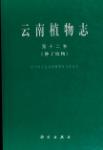
                    Floristic Regions of Siberia
Flora of Siberia
Volume 10
Geraniaceae—Cornaceae
Principal Editor
Dr. G.A. Peschkova
Science Publishers
Enfield (NH) Jersey Plymouth
SCIENCE PUBLISHERS
An Imprint of Edenbridge Ltd., British Isles.
Post Office Box 699
Enfield, New Hampshire 03748
United States of America
Website: http://www.scipub.net
sales@scipub.net (marketing department)
editor@scipub.net (editorial department)
info@scipub.net (for all other enquiries)
ISBN 1-57808-071-1 (Set)
ISBN 1-57808-109-2 (Volume 10)
© 2006 Copyright reserved
Libraray of Congress Cataloging-in-Publication Data
Flora Sibiri. English
Flora of Fiberia/sorios editor L.I. Malyschev;
[translator, P.M. Rao'l . p. cm.
Contents: v. 10. Her.uiiaccue-Cornaceae
ISBN 1-57808-109-2
1. Botany-Russia ( Fedi'i'a I ion )-Siberia
2. Phytogeography-Runsin (Fede rut ion)-Siberia-
Maps. I. M.G. Pimenov, N.V. Vlasova, V.V.
Zuev, G.A. Peschkova, K.S. Baikov, E.M.
Ly akh. II. T i tI о ,
Translation of: © Flora Sibiri, Gcraniaceac—Cornaceac [Volume 10],
Nauka Publishers, Siberian Publishing Co., 1996.
Compilers: M.G. Pimenov, N.V. Vlasova, V.V. Zuev,
G.A. Peschkova, K.S. Baikov and E.M. Lyakh
Editorial Board: I.M. Krasnoborov, L.I. Malyschev (Chief editor
of the series), G.A. Peschkova, A.V. Polozhii, A.K. Skvortzov
and B.A. Yurtsev
Translator: P.M. Rao
Technical Editor: Dr. Gurcharan Singh
General Editor: Margaret Majithia
Published by Science Publishers, Enfield, NH, USA
Printed in India
PREFACE
This volume contains data on morphology, ecology, and chorology
of feral species and subspecies of 31 families of flowering plants.
The families have been arranged essentially according to the
Engler system. Conforming to the latest views (Takhtadzhyan,
Sistema magnoliofitov [System of Magnoliophyta] 1987), some
families have, however, been subdivided into some smaller
families. Thus, family Biebersteiniaceae has been separated from
family Geraniaceae; family Zygophyllaceae s.l. is represented in
Siberia by 4 smaller (in volume) families: Zygophyllaceae s.
str., Rutaceae, Nitrariaceae, and Peganaceae.
Much of the work has been carried out by the colleagues at
the laboratory of taxonomy of higher plants and florogenetics of
the Central Siberian Botanical Garden, Siberian Division, Russian
Academy of Sciences, during 1991-1995, but the largest family
Apiaceae or Umbelliferae (92 species and subspecies of 50 genera)
has been prepared by M.G. Pimenov of the Botanical Garden of
M.V. Lomonosov Moscow State University, who is highly
knowledgeable about this family.
As a result, this critical study has provided the specific
characteristics of taxonomy and chorology of 299 species and
subspecies belonging to 101 genera including 6 taxa that are
new for science and their diagnosis in Latin.
Apart from the Novosibirsk collection of M.G. Popov
Herbarium and the General Herbarium of the Central Siberian
Botanical Garden, Siberian Division, Russian Academy of
Sciences, the collections of the following leading botanical
organizations of Russia have been studied to arrive at a more
complete picture of the distribution of species and subspecies:
Herbarium of V.L. Komarov Botanical Institute, Russian Academy
of Sciences (curator: D.V. Gel’tman), P.N. Krylov Herbarium of
Tomsk State University (curator: A.V. Polozhii), and D.P.
Syreishchikov Herbarium of M.V. Lomonosov Moscow State
University (curator: LA. Gubanov).
VI
The drawings given in this volume are original and have been
prepared for the Monograph of Siberian Species of Genus
Euphorbia by K.S. Baikov. Unfortunately, financial restraints
did not permit increasing the number of illustrations. L.Z.
Lukmanova rendered much assistance in the preparation of the
manuscript.
The compilers of the volume express sincere gratitude to all
the above colleagues.
The study was supported by the financial assistance of the
Russian Fund for Basic Research (grant 93-04-08000).
G.A. Peschkova
* * *
6 The following abbreviations have been used in describing the
diagnostic features of plants:
auct. non...—auctores, non...(authors, not...)
class, hab.—classic habitat
comb, nova—combinatio nova (new combination)
diam.—diameter
f.—forma (form)
p.p.—pro parte (partly)
s.l.—sensu lato (in a broad sense)
sp.—species
s. str.—sensu stricto (in a narrow sense)
subsp.—subspecies
syn.—synonym
var.—varietas (variety)
The distribution range of plants has been described by listing
in a coded form the nominal floristic regions or the administrative
divisions of Siberia (see Fig. 1) in the following sequence:
West. Sib.: TYU—Yam, Khm, Tb, KU, OM, TO, NO, KE,
AL—Ba, Go. Cen. Sib.: KR—Ta, Pu, Tn, Kha, Ve, TU. East.
Sib.: IR—An, Pr, BU—Se, Yuzh, Chi—Ka, Shi, YAK—Ar, 01,
Vi, Al, Yan, Ko, where
West. Sib.—Western Siberia
TYU—Tyumensk Province
Yam—Yamal-Nenets Autonomous District
vii
Fig. 1 Map showing the nominal floristic regions of Siberia.
Khm—Khanty-Mansi Autonomous District
Tb—Tobol Floristic Region
KU—Kurgan Province
OM—Omsk Province
TO—Tomsk Province
NO—Novosibirsk Province
KE—Kemerovo Province
AL—Altay Territory
Ba—Barnaul Floristic Region
Go—Gorno-Altay Republic
Cen. Sib.—Central Siberia
KR—Krasnoyarsk Territory
Ta—Taimyr Floristic Region
Pu—Putoran Floristic Region
Tn—Tunguska Floristic Region
Kha—Khakass Republic
Ve—Verkhneenisei (Upper Yenisey) Floristic Region
TU—Tuva Republic
viii
East. Sib.—Eastern Siberia
7	IR—Irkutsk Province
An—Angara-Sayan Floristic Region
Pr—Prilensk (Fore Lena)-Katanga Floristic Region
BU—Buryat Republic
Se—Severo-Buryat (Northern Buryat) Floristic Region
Yuzh—Yuzhno-Buryat (Southern Buryat) Floristic Region
Chi—Chitin Province
Ka—Kalar Floristic Region
Shi—Shilko-Argun Floristic Region (Dauria)
YAK—Sakha Republic (Yakutia)
Ar—Arctic Floristic Region
01—Olenek-Nizhnelensk (Lower Lena) Floristic Region
Vi—Vilyui-Verkhnelensk (Upper Lena) Floristic Region
Al—Aldan Floristic Region
Yan—Yano-Indigirka Floristic Region
Ko—Kolyma Floristic Region
CONTENTS
PREFACE	-G.A. Peschkova	V
Family Geraniaceae	-G.A. Peschkova	1
Family Biebersteiniaceae	-G.A. Peschkova	21
Family Oxalidaceae	-G.A. Peschkova	22
Family Linaceae	-G.A. Peschkova	23
Family Rutaceae	-G.A. Peschkova	31
Family Zygophyllaceae	—G.A. Peschkova	33
Family Nitrariaceae	-G.A. Peschkova	37
Family Peganaceae	-G.A. Peschkova	38
Family Polygalaceae	-G.A. Peschkova	39
Family Euphorbiaceae	-K.S. Baikov	42
Family Callitrichaceae	-K.S. Baikov	71
Family Empetraceae	-K.S. Baikov	73
Family Celastraceae	-K.S. Baikov	74
Family Balsaminiaceae	-K.S. Baikov	76
Family Rhamnaceae	-K.S. Baikov	77
Family Tiliaceae	-N.V. Vlasova	80
Family Malvaceae	-N.V. Vlasova	82
Family Hypericaceae	-N.V. Vlasova	89
Family Elatinaceae	-N.V. Vlasova	94
Family Frankeniaceae	-N.V. Vlasova	97
Family Tamaricaceae	-N.V. Vlasova	98
(Key to Genera, Genera Reamuria L., Tamarix L.),
E.M. Lyakh (Genus Myricaria Desv.)
Family Violaceae	-V.V. Zuev	104
Family Thymelaeaceae	-V.V. Zuev	130
Family Elaeagnaceae	-V.V. Zuev	132
Family Lythraceae	-V.V. Zuev	134
Family Onagraceae	-N.V. Vlasova	137
Family Trapaceae or Hydrocaryaceae	-N. V. Vlasova	155
Family Haloragaceae	-N.V Vlasova	156
Family Hippuridaceae	-N.V. Vlasova	159
Family Apiaceae or Umbelliferae	-M.G. Pimenov	160
Family Cornaceae	-N.V. Vlasova	256
MAPS OF PLANT DISTRIBUTION		259
INDEX OF LATIN NAMES OF PLANTS		305
8
Family GERANIACEAE
1. Appendages of carpel glumes bending arcuately upward
on maturity. Flowers 1-2 (3) each at tip of peduncles.
Leaves palmatisected or palmatipartite..... 1. Geranium.
+ Appendages of carpel glumes helically curled upward
on maturity. Flowers aggregated into an umbel at tip of
peduncles. Leaves pinnately compound.......2. Erodium.
1.	Geranium L.
1.	Pedicels 2 (3) on common peduncle.................2.
+ Pedicels singly on common peduncle, rarely 2. Peduncles
emerging from axils of many cauline leaves ............
.....................................17. G. sibiricum.
2.	Leaf blades incised more or less deeply, but not up to
base, into (3) 5-7 (9) lobes. Sepals more or less declinate
at anthesis. Petals with short, indistinct claw......3.
+ Leaf blades divided into 3-5 lobes up to base, midlobe
on petiolule; all lobes deeply pinnatifid. Sepals erect at
anthesis, proximated. Petals with narrow long claw almost
equalling limb.................... 16.	G. robertianum.
3.	Perennial plants mostly with upright stems. Petals (6)
10-15 (20) mm long, 1.5-2 times longer than sepals ...
.....................................................4.
+ Annual plants with ascending slender stems. Petals about
3.5 mm long, equalling or scarcely surpassing sepals
.......................................15. G. pusilium.
4.	Flowers opening little, campanulate. Petals emarginated
at tip...............................................5.
+ Flowers more or less opening wide. Petals rounded or
with scarcely noticeable notch at tip.............6.
5.	Pedicels pubescent with simple appressed hairs.......
.....................................2. G. albiflorum.
+ Pedicels, apart from simple hairs, more or less compactly
covered with glandular (fine, distant, with dark-colored
glandules at tip) hairs ............... 8.	G. krylovii.
6. Pedicels or only sepals glandular-haired............7.
2
+ Pedicels and sepals covered with simple hairs; glandular
hairs absent in pubescence........................... 16.
7.	Anther filaments abruptly enlarged in lower 1/4, with
cluster of short stiff hairs at base on either side, set on
circular flat outgrowths of receptacle. Pedicels declinate
in fruits............................................. 8.
9	+ Anther filaments gradually enlarging from center to base,
without cluster of short stiff hairs on outgrowths of
receptacle. Pedicels erect in fruits................12.
8.	Flowers lilac-blue or lilac-violet, extremely rarely white
(albinos). Petals 15-22 (25) mm long, broad-obovate..9.
+ Flowers white, very rarely with faint lilac-shade. Petals
11-15 mm long, narrow-obovate. Stems short appressed-
pilose....................................... 1.	G. affine.
9.	Pubescence of stems consisting of appressed or distant
very short hairs, quite often with significant admixture
of long distant glandular hairs or pubescence consisting
of a mixture of distant long simple and glandular hairs
..................................................... 10.
+ Pubescence of sterns consisting of simple long distant
or slightly deflexed hairs; with more or less significant
admixture of long glandular hairs only in inflorescence,
mainly on pedicels. Glandular pubescence present
sometimes only on sepals........... 12. G. pratense s. str.
10.	Stems covered with very short simple distant (velutinous
pubescence) or downward hairs, sometimes with
significant admixture of glandular hairs, 2-3 times longer
than simple hairs..................................... 11.
+ Stems covered with distant long simple and glandular,
nearly equally long hairs, almost right from base.........
.................. 13. G. pratense subsp. sergievskajae.
11.	Stems covered in lower half with very short simple distant
(velutinous pubescence) or downward appressed hairs
............................. 19. G. transbaicalicum s. str.
+ Stems covered with long glandular hairs 2-3 times longer
than simple hairs, apart from short simple hairs, right
from base or above first internode.......................
...........20.	G. transbaicalicum subsp. turczaninovii.
3
12(7). All anther filaments or alternate filaments on back with
stiff, 1.5-2.5 mm long cilia............................ 13.
+ Anther filaments with short, less than 0.5 mm long, cilia
along margin........................................ 14.
13.	Stems covered with short appressed downward hairs. Leaf
blades divided into 5-7 narrow-rhombic lobes up to
3/4-5/6 of their length..................6. G. erianthum.
+ Stems covered with long distant hairs. Leaf blades divided
into 3-5 broad-rhombic lobes up to 1/2 of their length
or slightly deeper.....................7. G. eriostemon.
14.	Stems .quite compactly covered with short appressed
downward hairs. Leaf blades divided into 5-7 lobes
almost up to base; lobes narrow-rhombic, deeply
pinnatifid into oblong-lanceolate lobules/Flowers bright
violet......................................9. G. laetum.
+ Stems with rather sparse long distant hairs, sometimes
subglabrous in lower portion. Leaf blades divided into
(3) 5-7 broad-rhombic lobes up to 3/4 of their length;
lobes in turn pinnatifid or large-toothed rather shallowly
................................................... 15.
15.	Pubescence of lower portion of stems and petioles of
radical leaves faint, consisting of simple deflexed hairs.
Flowers violet—raspberry-red or purple-pink...............
..................................... 18. G. sylvaticum.
10	+ Stems in lower portion and petioles of radical leaves
more or less compactly covered with fairly long,
horizontally distant multicellular and glandular hairs.
Flowers white or light pink, with dark-colored nerves ...
......................................2	1. G. uralense.
16(6). Stems covered with more or less long distant or deflexed,
sometimes appressed hairs. Petals hairy inside at base
........................................................ 17.
+ Stems covered with short, compactly appressed, downward
hairs. Petals more or less hairy or glabrous outside at
base.............................................. 19.
17.	Leaves greyish beneath. Filaments of anthers or only
sepals hispid along margin and back	 18.
+ Leaves green on both surfaces. Anther filaments short-
ciliate. Sepals with short appressed hairs along nerves
......................................... 11. G. palustre.
4
18.	Pedicels covered with short hairs bent at tip. Sepals
covered with long bristly distant hairs. Pubescence of
stems consisting of rather sparse, setaceous, more or
less long distant or replicated hairs
................................ 10.	G. maximoviczii.
+ Pedicels covered with erect distant short hairs. Sepals
covered with short and long semiappressed hairs.
Pubescence of stems consisting of very short distant hairs
...................................22.	G. wlassovianum.
19.	Anther filaments gradually enlarged from center to base.
Stems erect, branched in upper half. Leaf blades divided
almost right up to base	20.
+ Anther filaments abruptly enlarged in lower 1/4. Stems
usually ascending, quite weak, branched right from base.
Leaf blades divided up to 2/3-3/4 of their length......
.......................................4. G. collinum.
20.	Rhizome with cluster of funiform roots. Flowers blue-
violet or white, on short erect stalks, aggregated into
many-flowered corymbose-paniculate inflorescences at
tip of stems and branches	21.
+ Rhizome with cluster of spindle-shaped thickened roots.
Flowers pink or pale lilac, on long recurved stalks, rather
few, not forming corymbose-paniculate inflorescence ....
..................................... 15.	G. dahuricum.
21.	Flowers white, with dark nerves. Awns of sepals usually
not longer than 1 mm	3. G. bifolium.
+ Flowers pale blue, up to lilac. Awns of sepals 1.2-2 mm
long......................... 14.	G. pseudosibiricum.
1.	G. affine Ledeb. 1831, Fl. All. 3: 229.
Stems 25-45 cm tall, covered in lower portion with short
compactly appressed glandular hairs in inflorescence. Leaf blades
suborbicular in profile, 3-9 cm long, 7-10 cm broad, rather
sparsely covered with appressed hairs (only along veins beneath),
palmatisected into 7 lobes deeply, almost right up to base; lobes
once or twice pinnatifid into oblong-lanceolate lobules. Flowers
in corymbose inflorescence, on 10-15 (20) mm long stems, nutant
before anthesis, erect at anthesis, steeply recurved sideways
thereafter. Bracts 7-10 (12) mm long, shorter than, rarely equalling
pedicels. Sepals with relatively short (1-2 mm long) awn,
5
glandular-haired. Petals 12-15 mm long, white, narrow obovate,
undivided at tip, rounded, with more or less compact long hairs
at base. Anther filaments abruptly enlarged toward base, with
11 short less perceptible hairs along margin in enlarged lower portion,
with clusters of compact stiff hairs at base.
In thinned out larch forests, borders, meadowy glades,
steppified southern slopes, in fine-rubble steppes. West. Sib.:
AL-Ba, Go.—Kazakh, and Mongol. Altay. Described from
meadows along the upper course of Irtysh river in Nor.-East.
Kazakhstan.
Evidently, common in Kazakhstan and Mongol. Altay; nor. boundary of
distribution range runs in the territory of Altay mountain range. References to
the growth of this species in Krasnoyarsk region, in all probability, pertain to
white-flowered races of G. pratense since the pubescence of stems in them is
distant, not appressed, as in type in specimens.
2.	G. albiflorum Ledeb. 1829, Ic. Pl. Fl. Ross. 1: 6, Table
18.
Stems (20) 30-60 cm tall, solitary, erect, subglabrous in lower
portion, increasingly compact-pubescent toward tip with fine
appressed downward hairs. Radical leaves long-petiolate, blades
of radical and lower cauline leaves 7-15 cm broad, up to 12 cm
long, orbicular-reniform, more or less deeply (up to 3/4 of radius)
palmatisected into 7 lobes; lobes rhombic or obovate, acute,
rather shallowly incised. Pedicels pubescent with distant simple
hairs, arcuate at tip, nutant before anthesis, erect thereafter. Sepals
elliptical, sometimes reddish, with scarious light or reddish margin,
with obtuse, rather thick awn at tip, pubescent with simple distant
hairs. Petals white, sometimes lilac or with lilac shade, 8-12
mm long, obovate, emarginated at tip, pilose at base along margin
and inside, upward (flowers campanulate). Stamens in largest
flowers (usually bisexual) only slightly shorter than petals, with
normal anthers, their filaments gradually enlarging toward base,
ciliate; in other relatively small flowers (female), stamens 1/2
of calyx, with underdeveloped anthers, their filaments flat-
enlarged.
In subalpine meadows and black forests. West. Sib.: KE (basins
of Mras-Su and Kondom rivers), AL—Go (predominantly in
southern and south-western parts).—Mid. Asia, Mong. Altay.
Described from Kazakh section of Altay (vicinity of Ridder
town—modern Leninogorsk).
6
3.	G. bifolium Patrin 1824 in DC., Prodr. 1: 642—G. asiaticum
Serg.-G. pseudosibiricum auct., non J. Mayer p. p.
Stems 20-65 (82) cm tall, covered all along their length
together with peduncles with simple compact appressed downward
hairs. Leaves long-petiolate, their blades 2-6 cm long, 2-11 cm
broad, orbicular in profile, covered on both surfaces with fairly
compact semidistant hairs, deeply (almost up to base) divided
into 5-7 lobes; lobes long-rhombic, deeply pinnatisected into
lanceolate entire or unevenly dentate lobules. Pedicels 1-3 cm
long, covered with simple hairs curved at tip, erect. Sepals ovate,
with short, less than 1 mm long awn; outer sepals erinite, inner
subglabrous. Petals 7-12 mm long, white or slightly lilac with
dark nerves, oblong-obovate, orbicular at tip, rather sparsely
erinite at base along margin and inside. Anther filaments gradually
enlarging toward base, with short poorly visible hairs along margin
and outer surface in lower half.
12 In dry valley and forest meadows, meadowy slopes, in birch
forest stands, pine, and aspen forests. West Sib.: TYU-Tb, KU
(Utganskoe village in Petukhovsk region), OM (vicinity of Omsk,
Krasnoyarsk village on Irtysh), TO, NO, KE, AL-Ba (vicinity of
Barnaul—class, hab. and others), Go (northern part). Cen. Sib.:
KR-Tn (Baikit settlement on Podkamennaya Tunguska river),
Kha, Ve.—Endemic. Map I.
4.	G. collinum Stephan ex Wilkl, 1800, Sp. Pl. 3: 705.
Stems 15-40 cm tall, rather few, weak, ascending or erect,
diffuse-branched, thickly covered like the plant as a whole with
compactly appressed fine hairs. Leaves rather stiff, greyish green,
long-petiolate, their blades 3-6 cm in diam., orbicular-reniform
in profile, deeply (for more than 3/4) palmatisected into (3) 5-7
lobes; lobes subrhombic, pinnatifid into lanceolate or ovate-
lanceolate lobules or teeth. Pedicels declinate in fruits, covered
with compactly appressed replicated hairs. Sepals up to 8 mm
long, oblong-ovate, covered with fine appressed hairs, with
3-5 nerves and short awn. Petals 12-15 mm long, 6-7 mm broad,
pale, pink-lilac, obovate, undivided at tip, barbate-pilose at base,
abruptly narrowing into short claw. Anther filaments alternating,
opposite petals, abruptly enlarged at base, suborbicular, opposite
sepals, gradually enlarging from center to base, ciliate along
margin, with clusters of unequal hairs at base on outgrowths of
receptacle.
7
In wet saline and arid solonetzic meadows. West. Sib.: KU
(Ushakovsk village, Kislyanka settlement), AL—Ba, Go (Kurai
village).—Europe (south), Caucasus, Mid. Asia, West. Asia (Iran),
West. China. Described from Altay. Map 2.
Plants with pedicels devoid of glandular pubescence are distributed in the
plains of Altay Siberia. These should probably be treated as G. londesii Fischer.
Plants with glandular-haired pedicels are quite common in Gorn. Altay and
Kazakhstan as well as in Mid. Asia.
5.	G. dahuricum DC. 1824, Prodr. 1: 642.
Stems usually few, 20-60 cm tall, erect, angular, rather sparsely
covered with appressed replicated short simple hairs (sometimes
glabrous in lower portion). Radical leaves long-petiolate, perishing
by anthesis, with short appressed pubescence. Leaf blade profile
reniform-orbicular, deeply (almost up to base) divided into 5-7
obovate-cuneate lobes, in turn incised into lanceolate-linear
cuspidate, 2-5 mm broad lobules. Pedicels slender, horizontally
declinate after anthesis, ascending at tip. Sepals ovate, with
thickened spinule at tip, appressed-puberulent, with stray longer
hairs on back and margin. Petals 10-13 mm long, pale lilac or
pink, with dark-colored nerves, ciliate at base, orbicular at tip.
Anther filaments with linear-lanceolate base, short-ciliate along
margin.
In steppified, more often in river birch forests, scrubs, on
borders. East. Sib.: Chi—Shi (eastern half).—Far East, East
Mongolia, Nor.-East. China (Manchuria). Described from Dauria.
Map 3.
6.	G. erianthum DC. 1824, Prodr. 1: 641.
Stems solitary, 25-70 cm tall, covered with short appressed
downward hairs, branched in inflorescence. Radical leaves long-
petiolate, more or less compactly covered with short appressed
hairs, pubescence on underside more sparse and long. Leaf blade
13 profile orbicular, 6-10 cm in diam., deeply divided into 5-7
ovate-lanceolate large-toothed or more or less deeply incised
lobes; terminal lobules or teeth usually cuspidate. Flowers
aggregated into compact umbellate inflorescence. Pedicels short,
usually covered with compact short distant hairs, with insignificant
admixture of long distant glandular hairs, erect in fruits. Sepals
lanceolate-oval, with thick obtuse spinule at tip, pubescent with
compact short and diffuse long hairs. Additionally, pubescence
usually with long multicellular glandular hairs, sometimes
abundantly. Petals 15-18 mm long, narrow- to broad-ovate, light
8
or dark violet (sometimes white), orbicular at tip, long-ciliate
along margin below center, with compact barb of long hairs on
both surfaces right at base. Anther filaments highly enlarged
toward base, with very long rather sparse cilia on outer surface.
In arid forests, scrubs, borders and meadows. East. Sib.: Chl-
Shi, YAK-Vi, Al, Yan (Nel’kan settlement).—Far East, Nor.
America. Described from Kamchatka. Map 12.
7.	G. eriostemon Fischer ex DC. 1824, Prodr. 1: 641.
Stems (5) 20-70 (85) cm tall, erect, branched in upper portion,
covered with long distant hairs, very rarely glabrous; pubescence
in inflorescence consisting of compact glandular capitate distant
hairs. Radical leaves on long distant-haired petioles, their blades
bristly-haired beneath and along veins, pentagonal-rounded in
profile, 3-15 cm in diam., incised up to half or slilghtly deeper
into 3-5 ovate or subrhomboid cuspidate unevenly large-toothed
lobes. Flowers on short erect stems. Sepals 8-10 mm long, ovate,
with very short (up to 1 mm long) awn, compact-ciliate along
margin, distant-haired on back, admixed with glandular hairs.
Petals broad-ovate, 10-15 (17) mm long, horizontally declinate,
reddish or bluish violet, rounded at tip, with a hairy brush at
base along margin, erinite outside. Anther filaments covered in
lower half along margin and outer surface with rather sparse and
very long (up to 3 mm) rather stiff distant hairs. In East. Sayan
(Sagan-Shuluta river on Tunkinsk mountain range), 2n = 28.
In birch, larch, pine, and mixed forests, scrubs, borders, and
forest glades. East. Sib.: IR-An, BU—Se, Yuzh, Chi—Ka (Kyker
settlement, Itakenda river estuary), Shi.—Far East, East. Asia.
Described from Dauria. Map 5.
8.	G. krylovii Tzvelev 1993 in Novosti sist. vyssh. rast.
[Developments in the Taxonomy of Higher Plants] 29: 95—G.
sylvaticum var. albiflorum Krylov 1881 in Tr. O-va estestvoisp.
Kazan, un-ta, 9, 6:59—G. albiflorum auct,, non Ledeb. p. max.
P-
Stems (10) 15-80 cm tall, erect, covered with very short
appressed replicated hairs, quite often subglabrous in lower
portion. Radical leaves long-petiolate, their blades orbicular
reniform in profile, 3-15 cm broad, 2-12 cm long, divided up
to 2/3-7/8 of their length into 5-7 (upper into 3) broad-rhombic
or oblong-ovate lobes, in turn rather shallowly pinnatifid or large-
toothed, appressed-pilose on upper surface; pubescence very
9
14 sparse beneath, mainly along veins. Peduncles with (1) 2-3 each
somewhat open (campanulate) flowers on erect glandular-pilose
stems. Sepals elliptical or lanceolate, with short (up to 1.5 mm)
awn. Petals (7) 10-15 (17) mm long, oblong-obovate to broad-
ovate, erinite, white, pale lilac or pale violet, sometimes lilac,
with dark-colored nerves along margin and inside. Anther
filaments in bisexual flowers gradually enlarged toward base,
puberulent in lower portion along margin and their outer surface,
slightly shorter than petals; anther filaments in small (female)
flowers 1/2 of sepals, with underdeveloped anthers. On Putoran
plateau (Talnakh lake), 2n = 26; in West. Sayan (upper course
of Kashkaret river), East. Sayan (Tunkinsk mountain range), Fore-
baikal (Turkulik river, upper courses of Shumilikha river), and
Stanovoi upland (Severo-Muisk mountain range) 28.
In larch, mixed, and pine forests, forest borders, glades, along
valley meadows, scrubs; ascends into high mountains, being
common in alpine and subalpine meadows, in sparse forests,
dwarf birch thickets, and grassy tundras at foot of bald peaks.
West. Sib.: TYU—Yam, KE, AL—Go. Cen. Sib.: KR—Ta, Pu,
Tn, Kha, Ve, TU. East. Sib.: IR—An, Pr, BU—Se, Yuzh, Chi—
Ka, Shi (Maloe Sokhondo bald peak), YAK—Vi, Al.—Arctic
Europe, Polar Ural, Mid. Asia, West. China, Nor. Mongolia.
Described from Perm province territory (on brook at Martaisk
Kamen’).
Highly variable species. Size and color of flowers, degree and type of
laciniation of leaf blades vary. In southern Mongolian parts of Tuva and Altay,
plants have stems with quite compact pubescence of short replicate hairs all
along their length. In dark coniferous forests of Kuznetsk Ala Tau, geranium
is prominent with large sizes of stems and leaves; further, leaves are rather
shallowly divided, with almost overlapping lobes. In alpine regions of Sayan,
specially in East. Sayan and on Baikal coast, plants with very large, lilac or
lilac-tinted flowers are common. Leaves divided very deeply, quite often up to
7/8 of their radius. On Putoran plateau, Stanovoi upland, and in mountains of
Yakutia, plants are small-sized because of severe climatic conditions; leaf blades
deeply divided into oblong-ovate,, distinctly separated lobes (somewhat resembling
leaves of open anemones); flowers are perceptibly larger (petals 14-17 mm
long) and almost invariably with faint lilac or violet shade; inflorescence
impoverished. In low-mountain regions of Siberia, plants almost invariably
with many white, small flowers, leaves deeply divided with contiguous rhombic
or broad-ovate cuspidate lobes and stems subglabrous in lower portion, and
glandular-pilose in inflorescence.
10
9.	G. laetum Ledeb. 1830, Ic. Pl. Fl. Ross. 2, 16 Table 148—
G. pseudosibiricum var. laetum (Ledeb.) Trautv.
Stems (15) 20-65 (85) cm tall, erect, more or less compactly
covered with appressed downward hairs. Radical leaves long-
petiolate, cauline leaves short-petiolate or subsessile, concentrated
in upper half of stem, appressed-pilose on both surfaces, greyish
beneath. Leaf blades divided into 5-7 lobes almost up to base;
lobes in turn pinnatifid into oblong-lanceolate lobules. Peduncles
many-branched, forming luxurious, flaccid, corymbose-paniculate
inflorescence. Pedicels covered with short simple bent or
appressed hairs with fairly significant admixture of distant
glandular hairs with dark heads. Sepals ovate, with 1-2 mm
long cusp at tip; outer sepals along margin and sometimes even
outside, with long tangled, more or less distant hairs; inner sepals
with rather few short, appressed hairs. Petals (7) 10-15 mm
long, obovate, orbicular or with faint notch above, bright violet,
with very dark nerves, with rather sparse long hairs at base
along margin and inside. Anther filaments gradually enlarging
toward base, shbrt-ciliale.
Along borders, meadows, and meadowy slopes and forest yards
15 in mountain-forest belt. West. Sib.: AL—Ba, Go, KE (Nabykhtash
ulus—nomad village of tents in Mongolia—on Mras-Su river).
Cen. Sib.: KR—Ve (along valley of Chazyryk and Mai. Anzas
rivers in West. Sayan), TU (Shui river, tributary of Barlyk on
Tsagan-Shibetu mountain range).—Kazakhstan portion of Altay.
Described from Altay. Map 4.
See also note under G. pseudosibiricum.
10.	G. maximoviczii Regel et Maack 1861 in Regel, Tent. Fl.
Ussur.: 38, Table 3, fig. 4-6.
Stems 10-60 cm tall, weak, erect or ascending, branched;
together with leaf petioles, rather sparsely covered with more or
less long bristly distant replicate hairs. Leaf blades orbicular
reniform, deeply but not up to base (up to 3/4-4/5 of radius)
divided into 3-5 lobes; lobes elongated-rhombic, with large
incised teeth in upper half, diffusely covered on both surfaces
with appressed hairs. Flowers on 2-3 cm long stems, covered
with short appressed, rarely distant hairs slightly curved at tip;
in fruits, hairs horizontally declinate and ascending at tip. Sepals
11
with 3-5 nerves, with about 2-3 mm long cusp, covered with
rare long bristly hairs. Petals 12-15 mm long, blue-violet, twice
longer than sepals, orbicular at tip, cuneate toward base, erinite
along margin and inside. Anther filaments gradually enlarged
toward base and ciliate there along margin.
In humid forests, scrubs, moist meadows, foot of mountain
slopes, sometimes in clearances. East. Sib.: IR—Pr, BU—Se
(Toksimo settlement in Muisk valley), Chi—Ka (Srednii Kalar
settlement), Shi, YAK—Vi (Peledui settlement in Olekminsk
region, Chapaevo settlement in Lensk region, Kytyl-Dyura
settlement in Ordzhonikidzevsk region).—Far East, Nor.-East.
China (Manchuria), Korean peninsula. Described from southern
part of lower Amur. Map 6.
11.	G. palustre L. 1756, Cent. Pl. 2: 25.
Stems 20-70 cm tall, rather few, weak, erect or ascending,
with many dichotomous branches, covered like the plant as a
whole with distant replicate simple hairs. Leaves long-petiolate,
leaf blades 4-8 cm long, 6-12 cm broad, deeply (up to 4/5)
palmatisected into 5-7 subrhomboid/dentate-incised lobes.
Inflorescence as a whole few-flowered, diffuse; pedicels usually
deflexed, compact-pubescent. Sepals 10-12 mm long, aristate
(awns about 2 mm long), glabrous, with short appressed hairs
only along nerves. Petals 12-18 mm long, purple or lilac, obovate,
orbicular or slightly emarginated at tip, covered at base on upper
(inner) surface with long distant hairs. Anther filaments gradually
enlarging toward base, ciliate below center.
In moist meadows, borders, and marshy willow groves, very
rare. West. Sib.: KU (Obutki village in Makushinsk region,
Kostygin Log village).—Europe, Caucasus. Described from
European part of Russia.
12.	G. pratense L. s str. 1753, Sp. Pl. 1: 681.
Stems (15) 30-80 cm tall, more or less compactly covered
with long, uneven, horizontally distant or deflexed simple hairs
16 (sometimes admixed in upper portion with short and compact
hairs), glandular in inflorescence or in pedicels (rarely only on
sepals). Radical and lower cauline leaves on long distant-haired
petioles; leaf blades 4-10 cm long, 6-16 cm broad, appressed-
pilose on both surfaces, subcircular in profile, deeply (but not
up to base) divided into 5-7 lobes; lobes broad-rhombic, deeply
pinnatifid in upper half into lanceolate subacute lobules. Pedicels
12
as a rule glandular-pilose, rarely compactly covered with simple
appressed hairs, drooping before anthesis, erect at anthesis,
deflexed in fruits. Sepals with 3-6 mm long awn, glandular-
pilose, sometimes appressed-pilose, with stray glandular hairs at
base. Petals 15-22 mm long, 10-17 mm broad, lilac-blue, broad-
obovate, orbicular at tip, with compact ciliate hairs along margin
at base. Anther filaments in lower third abruptly enlarged, and
with unequal hairs there along margin, with cluster of stiff cilia
on both surfaces at base. In Altay and Buryatia (Davsha bay),
2n = 28, 28 + n.
In floodplain and dry valley meadows, meadowy slopes, forest
glades, borders, sometimes in forests, scrubs, and on fallow lands.
West. Sib.: TYU—Yam, Khm, Tb, KU, OM, TO, NO, KE, AL—
Ba, Go. Cen. Sib.: KR—Pu, Tn, Kha, TU (foothill regions of
West. Sayan). East. Sib.: IR—An, Pr, BU—Se (Nor. Baikal),
Yuzh, YAK—Vi, Yan.—Europe, Caucasus, Mid. Asia, Far East,
West. China, Nor. Mongolia. Described from Nor. Europe.
13.	G. pratense subsp. sergievskajae Peschkova, status et
nomen nova—G. pratense var. typicum f. molle Serg. 1934 in
Sist. zam. Gerb. Tomsk, un-ta [Notes on Taxonomy at the
Herbarium of Tomsk State University] 1: 3—G. pratense var.
dissectum Serg. p. p.
Stems covered with distant long glandular hairs all along their
extent or at least above first internode. Pubescence of simple
hairs also present, it consisting of hairs of different lengths,
along with long distant hairs, as long as or longer than glandular
hairs; short bent or appressed hairs also present quite often,
sometimes they forming quite compact longitudinal bands
alternating with sections devoid of short pubescence. Leaves
quite often divided into segments and lobes narrower than in
type subspecies.
In forest glades, borders, floodplain meadows, river uremas
(bottomland deciduous forests), pebble beds on river beds, in
larch and birch forests, predominantly in mountain habitats under
conditions of high soil and atmospheric humidity. West. Sib.:
TO (vicinity of Tomsk), KE (Osinovaya Griva village in Topkinsk
region, Chuvashka village in Novokuznetsk region), AL—Go.
Cen. Sib.: KR—Tn (valleys of Angara and Nizh. Tunguska rivers),
Kha, Ve, TU (north-eastern part). East. Sib.: IR—An, Pr, BU—
Se (coastal regions of Baikal), Yuzh, YAK—Vi, Al, Yan, Kq,.—
Endemic.
13
14.	G. pseudosibiricum J. Mayer 1786 in Abh. Bohm. Ges.
Wiss. 1: 238—G. coeruleum Patrin—G. bifolium auct., non Patrin.
Stems (12) 20-60 (90) cm tall, erect, highly branched in upper
portion, covered all along their length with appressed short
downward hairs. Radical leaves long-petiolate, all of them greyish
beneath due to more or less appressed pubescence. Blades of
radical and lower cauline leaves deeply partite into 5-7 (9) lobes;
lobes narrow- or oblong-rhombic, in turn pinnatifid into linear
or lanceolate lobules smooth-edged or with few teeth. Pedicels
erect, compactly covered with appressed simple hairs. Sepals
oblong, aristate, with 3 nerves, scarious along margin, more or
17 less pilose on back. Petals (6) 10-17 mm long (up to 20 mm
long in var. uschkanense (M. Popov) Peschkova comb, nova—
G. coeruleum var. uschkanense M. Popov, 1996 in Popov and
Busik, Konsp. fl. pober. oz. Baikal [Conspectus of Flora on
Baikal Lake Coast] 213, pale lilac, up to deep lilac, orbicular at
tip, pilose at base. Anther filaments in bisexual flowers usually
longer than calyx, gradually enlarging from center to base and
ciliate; shortened, almost half of calyx in female flowers, enlarged
up to 3/4 of its length, with tiny underdeveloped anthers. In
Altay, East. Sayan (Tunkinsk mountain range) and Baikal (Davshe
bay), 2n = 28.
In forest and forest-steppe belts of mountains, steppified forbs
forests, scrubs, forest glades, borders, meadowy and steppe slopes,
clearings, occasionally ascending along mountain river valleys
into high mountains. West. Sib.: TYU-Tb, OM (Omsk vicinity,
Yur’eva village), TO, NO (Barabinsk vicinity, Berezovo village
in Maslyaninsk region), AL—Go. Cen. Sib.: KR—Tn, Kha, Ve,
TU. East. Sib.: IR—An, Pr, BU—Yuzh, Chi—Shi (Arei lake in
Uletovsk regions), YAK—Vi.—Urals and Fore Urals (except
northern part), Mid. Asia (north), Mongolia. Described from
steppes between Tomsk and Krasnoyarsk.
In Fl. Rossica (1841, 1), while characterizing G. pseudosibiricum described
by J. Mayer in 1786, K.F. Ledebur cites G. bifolium and G. coeruleum announced
later by E. Patrin (Prodr. 1824, 1) and also his own species G. laetum published
in 1830 as synonyms. Later, L.P. Sergievskaya (Sist. zam. Tomsk, un-ta [Notes
on Taxonomy at Tomsk State University] 1934, 1) recognizes one more species
G. asiaticum in the lowlands of Western Siberia. Investigations of E.G. Bobrov
(Fl. SSSR, 1949, 14) established that the species identified by L.P. Sergievskaya
14
is identical to Patrin’s G. bifolium. In our opinion, Ledebur’s announcement
was without adequate basis and his species G. laetum was a product of
hybridization of alpine G. krylovii and predominantly low-mountain G.
pseudosibiricum. Only in Altay, where the distribution range of G. laetum is
essentially concentrated and alpine open associations are in contact with meadow-
steppe and steppe associations, conditions exist for the hybridization of parent
species G. krylovii and G. pseudosibiricum and for the formation of an ecological
niche for the resultant daughter species G. laetum. Elsewhere in Siberia, alpine
meadowy associations are separated from meadows and steppes of forest-steppe
and lower forest belts by a more or less broad taiga strip (thus excluding
contact of the ranges of the above-mentioned parent species) and G. laetum is
not found there. Only in Baikal (where G. albiflorum sometimes descends up
to the coast because of the cooling effect of the lake), specimens of G.
pseudosibiricum are occasionally found, their pedicels bearing rather few
glandular hairs but such plants are very rare and grow together with G.
pseudosibiricum', these can be treated as G. pseudosibiricum var. subuschkanense
(M. Popov) Peschkova, comb, nova = G. coeruleum var. subuschkanense M.
Popov (in Popov and Busik, Konsp. fl. pober oz. Baikal [Conspectus of Flora
on Baikal Lake Coast] 1966, 213). These cannot be treated as G. laetum (in
which flowers are bright violet, awn of sepals is longer, not only pedicels but
quite often even peduncles have glandular hairs), although there is close
resemblance between the 2 in the presence of glandular pubescence on pedicels.
In G. coeruleum Patrin, as emerging from the protologue, stamens are half of
calyx. Plants characterized by these features are quite common in Siberian
territory, specially in Eastern Siberia. Evidently, this provided justification to
M. Popov to regard that G. coeruleum grew in Central Siberia (according to
him, this region includes Buryatia, Irkutsk, and Chitin provinces). As a matter
of fact, as pointed out by D.A. Webb and I.K. Ferguson (Fl. Europ., 1968, 2),
plants exclusively with female flowers are quite often found among G.
pseudosibiricum. Stamens in them are shortened, half of calyx, their filaments
enlarged for almost 3/4 of their length, anthers small, underdeveloped. Petals
6-7 mm long, slightly longer than calyx. Evidently, it was such plants that
were described as G. coeruleum Patrin. L.P. Sergievskaya (1934, op. cit.) treated
them as G. pseudosibiricum var. parviflorum Serg. They grow quite often together
with plants of G. pseudosibiricum and bear completely normal bisexual flowers.
Bisexual as well as only female flowers can often be found on the same plant.
There is therefore no justification to separate G. coeruleum and it should be
15
left with the priority name G. pseudosibiricum. Thus, K. Ledebur combined 3
undoubtedly very close but totally independent races under G. pseudosibiricum
J. Mayer: G. bifolium common in the plains of southern West. Siberia and
Krasnoyarsk region, G. laetum characteristic of Gorn. Altay and contiguous
sections, and G. pseudosibiricum extensively distributed in the southern forest-
steppe and forest-covered foothills of Siberia, from Urals in the west to
Yablonovyi mountain range in the east.
18	15. G. pusilium L. 1759, Syst. Nat. ed. 10, 2: 1144.
Annual or biennial, 10-30 (50) cm tall plants, pubescent with
short distant hairs, admixed in upper portion with even shorter
glandular hairs. Radical and lower cauline leaves on up to 10
cm long petioles, covered on both surfaces with semiappressed
fairly long hairs; their blades orbicular in profile, up to 5 cm in
diam., divided up to 3/4 into 5-7 cuneate lobes, incised along
upper margin into crenate teeth or obtuse lobes; upper leaves
much smaller, more deeply divided, and subsessile. Fruit stems
pubescent with short simple and glandular hairs, deflexed, fruits
upright. Sepals about 3 mm long, ovate-lanceolate, without awn,
covered with long ciliate hairs and more compact and very short
simple and glandular hairs. Petals barely surpassing sepals, about
3.5 mm long, oblong-obcordate, pale-lilac or pink. Anther
filaments somewhat enlarged toward base, with very short hairs
along margin below center, some filaments usually without anthers.
As weed in kitchen gardens, along roadsides, on fences. West.
Sib.: KU (cited by K.P. Fedotova, Konsp. fl. Kurg. obi.
[Conspectus of Flora of Kurg. Province] 1988).—Europe,
Caucasus, Mediterranean, Fore Asia, and Asia Minor. Described
from England.
16.	G. robertianum L. 1753, Sp. Pl.: 681.
Annual or biennial plants with unpleasant odor, rather sparsely
covered with distant simple and glandular hairs. Stems 15-60
(75) cm tall, solitary, erect or ascending, dichotomously branched
in upper half. Lower cauline leaves long-petiolate, their blades
pentagonal in profile, palmatipartite; lobes almost bipinnate,
16
deeply pinnatifid into undivided or incised-dentate lobules.
Pubescence of leaves consisting of flattened long hairs, usually
appressed, rarely distant. Pedicels in fruits transversely declinate
and upright, covered with distant glandular hairs. Sepals ovate-
lanceolate, gradually narrowing into fairly long, acute, erect,
closed, with long, multicellular glandular hairs along margin and
back. Petals 10-13 (15) mm long, pink, orbicular at tip, with
long claw, glabrous at base as well as anther filaments. Fruit
valves plicate-rugose, glabrous together with thyrse.
In black (cedar-fir and aspen-fir) forests, quite often with
linden, as well as in linden groves. West. Sib.: KE, AL—Go.—
Europe, Caucasus, Mid. and West. Asia, Mediterranean, Nor.
America (introduced). Described from Nor. Europe. Map 7.
17.	G. sibiricum L. 1753, Sp. Pl. 1: 683.
Biennial or perennial plants, covered with appressed or
semidistant simple hairs, completely (even on sepals) devoid of
glandular pubescence. Stems (5-10) 20-60 cm tall, weak, many-
branched almost from base or above. Leaves rather small
(1.5-5 cm in diam.), on slender greyish petioles; their blades
tri-pentagonal, divided into 3-5 lobes; lobes rhombic, irregularly
pinnatifid acutely or subobtusely in upper half. Peduncles
emerging singly from axils of cauline leaves, one-flowered (very
rarely with 2 flowers). Pedicels slender, deflexed at anthesis,
ascending at tip. Sepals 5-6 mm long, short-awned, rather sparsely
covered along nerves with hairs of uneven length, usually scabrous
between nerves. Petals up to 7 mm long, pale lilac or whitish,
obovate, almost equalling or slightly longer than sepals, orbicular
or faintly emarginated at tip, with rather few short and fine hairs
or glabrous at base. Anther filaments oblong-ovately enlarged
toward base, with very short and uneven hairs along margin,
very rarely glabrous.
In floodplain and arid valley meadows, river bed sand and
pebble beds, scrubs and floodplain forests, rarely in steppes, on
rocky exposed slopes, as weed along roadsides, around houses,
on railroad embankments, fallow and cultivated lands. West.
Sib.: KU, OM, TO, NO, KE, AL—Ba, Go. Cen. Sib.: KR—Tn,
19 Kha, Ve, TU. East Sib.: IR—An, Pr, BU—Se, Yuzh, YAK—Vi,
Al.—Europe, Caucasus, Mid. Asia, Far East, West. China,
Mongolia, East. Asia, Nor. America (introduced). Described from
Siberia.
17
18.	G. sylvaticum L. 1753, Sp. Pl.: 681.
Stems 25-60 (80) cm tall, erect, strong, with rather sparse-
distant hairs, sometimes subglabrous, branched in upper half,
usually with pubescence of long simple and glandular distant
hairs, with admixture of short and soft crispate hairs in
inflorescence. Leaves on more or less long distant-haired petioles,
their blades 4-12 cm long, 6-17 cm broad, appressed-pilose in
upper half, with hairs below only along veins, deeply divided
into 5-7 lobes, uppermost leaves into 3 lobes; lobes broad-
rhombic, rather shallowly pinnatifid or large-toothed. Flowers
on erect stems before and after anthesis. Sepals oblong-ovate,
with short (about 3 mm long) awn, covered with distant hairs.
Petals obovate, 13-15 mm long, violet—raspberry-red or purple-
pink; dried petals blue-violet, orbicular at tip, with fairly long
and compact hairs at base along margin and on inner surface.
Anther filaments gradually enlarged toward base, covered with
short uneven cilia below center along margin and outer surface.
In aspen-birch, aspen, and mixed dark-coniferous-aspen forests,
meadowy glades, borders, clearances, occasionally in scrubs and
along valley meadows. West. Sib.: TYU-Khm, Tb, KU, OM,
TO, NO, KE, AL—Ba, Go. Cen. Sib.: KR—Tn, Kha (Priiskovyi
settlement on Sarala river), Ve. East Sib.: IR—An (only in far
west—in Taishetsk and Alzamaisk regions).—Europe, Caucasus,
Fore Asia and Asia Minor. Described from Nor. Europe. Map 8.
19.	G. transbaicalicum Serg. s. str. 1934 in Sist. zam. Gerb.
Tomsk, un-ta [Notes on Taxonomy at the Herbarium of Tomsk
State University] 1: 4.
Stems (10) 20-50 cm tall, strong, erect, compactly covered
with very short, distant (velutinous pubescence) hairs of nearly
equal length or compactly appressed, downward hairs. Leaves
on long, increasingly contracted petioles above along stem, their
blades orbicular-reniform or suborbicular, 4-7 cm long, 7-12
cm broad, deeply, almost up to base, palmatisected into 7-9
lobes; lobes narrow (up to 3-4 mm broad at base), ovate-rhombic,
deeply pinnatisected into lanceolate lobules, in turn incised into
narrow linear teeth. Pedicels on short stems, 2-7 mm long, erect
at anthesis, nutant before and after anthesis. Sepals oblong-ovate,
with (2) 3-4 mm long awn. Petals 16-22 mm long, 10-15 mm
broad, broad-obovate, lilac-blue, orbicular at tip, with compact
long hairs at base. Anther filaments abruptly enlarged in lower
18
20 portion, covered with short cilia along margin and with 2 clusters
of stiff hairs at base. In Buryatia (Sagan-Shuluta river on Tunkinsk
mountain range), In = 28.
In steppe meadows, meadowy slopes, river valleys, along banks
of lakes, in forests. West. Sib.: AL—Go (Kosh-Agachsk region;
Kokorya settlement; Baizyn’ river, Dzhilkytal area). Cen. Sib.:
TU (southern steppe regions). East. Sib.: BU—Se (Eravinsk and
Kizhinginsk regions), Yuzh, Chl-Shi (Klichka settlement—class,
hab. and others, mostly in southern steppe portion), YAK—Al
(Amga river, Lyagus village: estuary of Munduruchchu river).—
Nor.-East. Mongolia, Nor.-East. China (Manchuria).
Specimens from West, and Cent. Siberian regions are distinguished by
perceptibly lesser laciniation of leaf blades and much longer pedicels, considerably
surpassing bracts.
20.	G. transbaicalicum subsp. turczaninovii (Serg.) Peschkova
status novus — G. transbaicalicum var. turczaninovii Serg. 1934
in Sist. zam. Gerb. Tpmsk. un-ta [Notes of Taxonomy at the
Herbarium of Tomsk State University] 1: 4.
Differs from type subspecies in the presence of glandular
pubescence almost all along stem length, the density of glandular
hairs increasing upward all along stem. Simple hairs usually
equally long, very short, distant or appressed, glandular, invariably
horizontally distant, and 2-3 times longer than simple hairs.
In steppe meadows in river valleys and meadowy exposed
slopes. Cen. Sib.: KRJ—Kha (Kyzlas settlement in Askizsk region
and Ust’-Kondyrla village in Beisk region), TU (predominantly
southern regions). East. Sib.: BU—Yuzh, Chi—Shi (Khila village
in Aginsk region—class, hab. and others). Endemic.
Poorly differentiated ecological-geographic race related to G. pratense subsp.
sergievskajae through intermediates, more common in the northern forest-steppe
regions of Chitinsk province and Buryatia. In Tuva, found in the same regions
as the type subspecies but the characteristics of subspecies are not always
distinctly manifest (in particular, leaf lobes and lobules are broader and less
laciniated, pedicels usually longer than bracts).
21.	G. uralense Kuvajev 1990 in Novosti sist. vyssh. rast.
[Developments in the Taxonomy of Higher Plants] 27: 102—G.
albiflorum auct., non Ledeb., p. p.
19
Stems (35) 40-70 cm tall, covered together with petioles of
radical leaves with fairly long, horizontally distant simple
multicellular and glandular hairs; pubescence more compact in
upper portion. Leaf blades 4-13.5 cm broad, heptagonal in profile,
their lobes broad, serrate. Flowers 2-3 cm in diam., or erect,
upright glandular-haired stems, wide-open, rarely somewhat
campanulate. Sepals 7-8 mm long, glandular-pubescent, oblong-
ovate, scarious along margin, terminating in 1-2.2 mm long awn.
Petals 14-15 mm long, obovate, slightly emarginated at tip, usually
white or pink, with very dark-colored nerves. Anther filaments
gradually enlarged toward base and short-ciliate in enlarged
portion along margin.
Near upper forest boundary on borders of birch stands and
valley meadows. West. Sib.: TYU—Khm (head of Nanksory-Ya
river—class, hab., basin of Sev. Sos’va river: upper courses of
Yatrin river and estuary of Nyays’-Man’ya river).—Nor. Urals.
22.	G. wlassovianum Fischer ex Link 1822, Enum. Hort. Berol.
Alt. 2: 197.
Stems 20-65 cm tall, branched, rather sparsely distant-haired,
subglabrous downward. Leaves on long distant-haired petioles,
shortening with height of their joining with stem but distinctly
21 perceptible even higher. Leaf blades 3-7 cm in diam., reniform-
orbicular, short appressed-pilose on both surfaces, pale-colored
beneath, lower leaves divided into 5-7 and upper into 3 lobes;
lobes broad-oblong, subrhomboid, trifid or incised-dentate in
upper half. Pedicels up to 5-7 cm long, compactly covered with
more or less short simple (not glandular) distant hairs, horizontally
declinate after anthesis, ascending upward together with carpel.
Sepals oblong, with 3-5 nerves, and short cusp, covered with
short appressed hairs, sometimes admixed with long bristly hairs.
Petals (12) 15-20 mm long, pale lilac, with dark nerves, orbicular
at tip, cuneately narrowing toward base, there with long ciliate
hairs along margin and inside (sometimes even outside). Anther
filaments gradually enlarged toward base, with long cilia in lower
half along margin, filaments of inner circle with ciliate hairs on
outer surface, occasionally ciliate hairs present on surface of
anther filaments of outer circle.
In forests, scrubs, humid and moist meadows, along swamps,
banks of rivulets and brooks. East. Sib.: IR—An, Pr, BU—Se,
Yuzh, Chi—Shi (Doroninsk settlement on Ingode river—class.
20
hab. and others).—Far East, Mongolia, Nor.-East. China
(Manchuria). Map. 9.
2. Erodium L’Her.
1. Plants with developed leafy stmes, without remnants of
dead leaves at base. Flowers comparatively small, petals
4-8 mm long ..................................... 2.
+ Plants acauline, with dense rosette of radical leaves and
leafless peduncles; root neck covered with fibrous
remnants of dead leaves. Flowers larger, petals 8-16
mm long ............................. 3. E. tataricum.
2. Leaf blades elongated, 2-3 times longer than breadth,
almost bipinnate, with 5-7 pairs of lobes. Pubescence
of plants consisting of flat hairs and fine glandules. Sepals
with short (up to 0.5 mm long) awn... 1. E. cicutarium.
+ Leaf blades ovate, not longer than 1.5 times their breadth,
pinnatisected, with 2 or 3 pairs of lobes. Pubescence of
plants consisting of simple long hairs. Sepals with much
longer (1.5-3 mm) awn .......... 2. E. stephanianum.
1.	E. cicutarium (L.) L’Her. 1789 in Aiton, Hort. Kew, 2:
4—Geranium cicutarium L. 1753, Sp. PL: 680.
Annual plants usually with rather few procumbent or ascending,
10-50 cm tall stems, covered with flat eglandular and tiny
glandular hairs. Leaves petiolate, almost bipinnate; leaf blades
oblong in profile, 4-15 cm long, 1.5-5 cm broad, with 5-7
pairs of lobes; lower lobes highly separated, upper lobes almost
contiguous, all of them deeply pinnatisected into narrow-incised-
dentate lobules. Umbels of 5-7 flowers, their stems in fruits
declinate, ascending at tip. Sepals 4-5 mm long, in fruits up to
7 mm long, short-aristate (awn up to 0.5 mm long). Petals of
unequal length (5-8 mm), obovate, pale purple. Carpels with
marginate pit at tip and rather short (2.5-4.5 cm) beak.
22 Weed on roadsides, on fallow land, in plantations, along fences,
sometimes in irrigated meadows and in steppes. West. Sib.:
TYU—Khm, Tb, KU, OM, TO, NO, KE, AL—Ba, Go. Cen.
Sib.: KR—Ta (Dudinka settlement), Kha, Ve, TU (Bor-Taiga
village in Dzun-Khemchiksk region). East. Sib.: IR—An, Pr,
BU—Yuzh, Chi—Shi, YAK—Vi, Al, Yan.—Europe, Caucasus,
Mediterranean, Asia; introduced in America and Australia.
Described from Europe.
21
2.	E. stephanianum Willd. 1800, Sp. Pl.: 625.
Biennial, rarely perennial plants with ascending or procumbent,
up to 60 cm tall stems, pubescent with short appressed hairs,
quite often admixed, specially on sepals, with long simple hairs.
Leaves petiolate, bipinnate, their blades broad-ovate in profile,
3-8 cm long, 2.5-6.5 cm broad, with 2 or 3 pairs of lobes
decurrent on rachis; lobes in turn more or less deeply divided
into unequal lanceolate undivided or dentate lobules. Umbels of
2-4 flowers, their stems declinate in fruits, ascending at tip.
Sepals 6-8 mm long, 8-10 mm long in fruits, with 1.5-3.5 mm
long cusp. Petals of equal length, nearly equalling sepals, obovate,
lilac-blue. Carpels with immarginate pit at tip and fairly long
(4-8 cm) beak.
In sandy and rocky steppes, on southern steppe slopes, along
dried up beds of brooks, in poplar groves along river valleys,
quite often as weed on roadsides and on fallow land. West.
Sib.: AL—Go. Cen. Sib.: KR—Kha, Ve, TU. East. Sib.: IR—
An, BU—Yuzh (Chikoi river—class, hab. and others), Chi—Shi,
YAK—Vi (vicinity of Olekminsk), Al (Chagda settlement).—
Mid. Asia, Tibet, Mongolia, East. Asia.
3.	E. tataricum Willd. 1800, Sp. PL: 625.
Monoecious stemless perennial plants. Root rachiform,
comparatively stout. Root neck covered with fibrous remnants
of dead leaves. All leaves radical, long-petiolate, diffusely
pubescent with simple hairs, glabrescent with age, green. Their
blades oblong-lanceolate in profile, bipinnately divided into linear
subobtuse lobules or lobules with 1 or 2 teeth. Peduncles 5-20
cm tall, compactly covered with fine simple hairs admixed,
specially on pedicels and calyx, with compact fine glandular
and diffuse long simple hairs, with umbel of 2-6 flowers at tip.
Sepals 6-7 mm long, up to 9 mm long in fruits, with short,
about 1 mm long cusp. Petals somewhat unequal, 8-16 mm long,
obovate, violet-purple. Carpels with immarginate pit and up to
3-4 cm long beak.
In rocky and rubbly steppes. Cen. Sib.: KR—Kha.—Endemic.
Described from Tatarii i Sibiri [Tataria and Siberia]. Map 10.
Family BIEBERSTEINIACEAE
1. Biebersteinia Stephan
1. B. odora Stephan 1806 in Mem. Soc. Nat. Moscou, 1: 126,
Table 9.
22
Plants compactly covered with fine simple and capitate
glandular hairs on short stout stems, fresh ones smelling strongly.
Much of the lower portion of stems (up to 20 cm) becoming
woody, compactly covered with lingnescent remnants of year-
23 old leaf petioles, with leaf clusters at tip; current shoots 10-15
(30) cm tall, with 1 or 2 cauline leaves. Radical leaves short-
petiolate, their blades linear-lanceolate in profile, 6-10 (13) cm
long, 1-2 (2.5) cm broad, imparipinnate, lobes many, compact,
broad-ovate, deeply pinnatifid on oblong obtuse lobules. Flowers
at tip of stems in compact few-flowered, initially nutant racemes.
Pedicels covered with compact long fine hairs. Bracts broad-
elliptical or obovate, obtuse; moreover, 2 lanceolate bracteoles
present on stems of lower flowers near center. Petals yellow,
broad-obovate, narrowing into short claw, sometimes serrate at
tip, 1.5 times longer than elliptical obtuse sepals. Anther filaments
erinite.
On rock talus, moraine, rocks, and rocky slopes in high-
mountain belt. West. Sib.: AL—Go (Chuya river—class, hab.
and others). Cen. Sib.: TU (only in far south—west-in Mongun-
Taiginsk region).—Mid. Asia (Saur mountain range), West. China
(Junggar Ala Tau). Map 11.
Family OXALIDACEAE
1. Oxalis L.
1. O. acetosella L. 1753, Sp. Pl. 1: 433.
Creeping, rather loosely pubescent, 5-10 cm tall perennial
plants. Rhizome slender, tender, with isolated accumulations of
toothlike remnants of leaf bases, leaf clusters of current year at
tip on long slender petioles, jointed near base; their blades ternate.
Leaflets 1-2.7 cm long, 1.5-3 cm broad, broad-obovate,
emarginated, tender leaflets longitudinally folded. Peduncles 1-
flowered, emerging from leaf axils, equalling or slightly longer
than peduncles, with 2 tiny oblong bracts above center. Sepals
lanceolate, about 4 mm long. Petals of spring flowers 12-15 mm
long, obovate, white, with pink or lilac nerves, very rarely lilac-
pink; about 6 mm long tiny cleistogamous budlike flowers with
greenish petalsjforming later. Capsule about 8 mm long, angular-
ovate, glabrous. Seeds light brown, oblong-ribbed.
23
In humid shady, predominantly dark-coniferous forests, forming
loose beds. West. Sib.: TYU—Tb, TO, NO, KE, AL—Go. Cen.
Sib.: KR—Tn, Kha, Ve, TU (Systyg-Khem river in West. Sayan).
East. Sib.: IR—An, Pr, BU—Se (Fore Baikal mountain ranges),
Yuzh (south-eastern coast of Baikal), YAK—Al.—Europe,
Caucasus, East. Asia, Nor. America. Described from Europe.
Family LINACEAE
1.	Linum L.
1.	Sepals without glandular cilia along margin. Perennial
plants................................................2.
24	+ Sepals with black glandules along margin. Annual Plants
.....................................7. L. stelleroides.
2.	Flowers homostylic (styles of all flowers at anthesis
equalling or longer than stamens by not more than anther
length)...............................................3.
+ Flowers heterostylic (styles at anthesis in flowers of some
specimens perceptibly longer while in flowers of others
considerably shorter than stamens). Fruit stems upright
......................................................5.
3.	Fruit stems declinate laterally or nutant..........4.
+ Fruit stems suberect..................4. L. pallescens.
4.	Flowers blue-violet. Sepals 4-5 mm long, with (1)3
nerves at base; outer sepals ovate-lanceolate, long-
cuspidate, inner sepals, slightly shorter and broader than
outer. Leaves linear or linear-lanceolate, as a rule, acute;
tender leaves long-cuspidate, bright green. Pedicels
slender, recurved and highly (subhorizontally) declinate
laterally even at anthesis...............9. L. violascens.
+ Flowers blue, quite often with violet shade. Sepals 2.5-
3.5 (4) mm long, with (3) 5 (7) nerves at base; outer
sepals ovate, short-cuspidate at tip, inner sepals broad-
ovate, subobtuse, with short cusp. Leaves linear or
lanceolate, subacute or subobtuse, with short cusp at
tip, more often glaucescent green, sometimes green.
Pedicels more or less thick, faintly curved in fruits, but
distinctly declinate laterally. After dehiscence of capsules,
horizontally recurved....................6. L. sibiricum.
24
5.	Sepals (3.5) 5-7.5 mm long; outer sepals acute or
cuspidate, inner sepals quite often obtuse.............. 6.
+ Sepals 2.5-3 (4) mm long; outer sepals cuspidate or
subobtuse, inner sepals suborbicular, with short cusp at
tip..........................................5.	L. perenne.
6.	Leaves subobtuse or short-cuspidate. Inflorescence
impoverished, with 1-3 (5) flowers at tip of flowering
shoots...................................................7.
+ Leaves usually long, sometimes short-cuspidate.
Inflorescence more or less many-flowered, consisting of
5-10 or more flowers at tip of flowering shoots .......8.
7.	Leaves oblanceolate or linear, broadest near center, more
often distant. All sepals more or less identical, with 1
(3) nerves...................................2. L. boreale.
+ Leaves narrow-linear or linear-lanceolate, broadest in
lower portion at base, usually appressed or transversely
upright, short-cuspidate. Inner sepals considerably broader
and slightly longer than outer; all sepals with 3 (5) nerves
..........................................8.	L. taymirense.
8.	Leaves short-cuspidate, broadest in lower portion. Flowers
3-3.5 cm in diam., blue-violet, quite often fading on
drying. Plants of alpine South. Siberia......1. L. altaicum.
+ Leaves usually long-cuspidate, specially tender leaves
in upper portion of stem, broadest in midportion. Flowers
3.5-5 cm in diam., blue-light blue. Plants of north-eastern
part of Siberia...........................3.	L. komarovii.
1.	L. altaicum Ledeb. ex Juz. 1949 in Fl. SSSR 14: 717,
113—-L. sibiricum auct., non DC., p.p.—L. perenne auct., non
L., p.p.
Root short, strong, highly branched, lignescent. Stems more
25 or less several, forming mats together with year-old shoots.
Flowering shoots 15-20 cm tall, erect from ascending base,
branched in upper third, covered in lower portion with tiny
subobtuse colorless, subimbricate caducous leaves; rest of leaves
0.5-3 cm long, 1-5 mm broad, linear-lanceolate, yellow-green
or bright green, asymmetric, broadest in lower portion, with 1-3
nerves, short-cuspidate at tip, horizontal or transversely upright.
Inflorescence impoverished. Flowers quite large, 3-3.5 cm in
diam., on upright, up to 2 cm long stems. Sepals 4.5-7 mm
25
long, with 3-5 nerves at base; outer sepals ovate-lanceolate,
with narrow white scarious margin; inner sepals broader and
longer, orbicular or elliptical, with broad white margin, short
cusp at tip. Petals 1.4-2.2 cm long, about 4 times longer than
sepals, lilac-blue. Short stamens and styles 4.5-6 mm long, usually
not longer than calyx; stamens 7-8 mm long. Capsules 7-8 mm
long, broad-ovate or subspherical, straw yellow or brownish.
In alpine and forest meadows, rocks, small rock streams, along
banks of brooks, in high mountains and in mountain tundras.
West. Sib.: AL—Go.—Mid. Asia, Mong. Altay, and West. China.
Described from Kazakh part of Altay (vicinity of Ridder town—
presently Leninogorsk). Map 15.
2.	L. boreale Juz. 1949 in Fl. SSSR, 14: 718, 111.—L. perenne
var. boreale (Juz.) Serg.—L. sibiricum var. alpinum auct., non
Krylov, p.p.
Perennial plants with stout, highly branched woody root. Stems
10-30 (35) cm tall, usually few, more or less forming mats, few-
branched, more often simple, compact-leafy in lower portion
with tiny elliptical or spatulate leaves preserving for long; rest
of cauline leaves 0.4-1.5 (2) cm long, 0.5-3 mm broad, broad-
or oblanceolate, broadest near center or above it; lower leaves
obtuse or subobtuse at tip, upper leaves subacute or short-
cuspidate. Flowers single or more, on 0.7-1.5 cm long (up to
2 cm long in fruits) erect slender stems. Sepals 4-6 mm long,
ovate or narrow-ovate, dark- or blackish green, with 3-5 nerves
(only central one of them most prominent, lateral nerves weakly
exserted); outer sepals oval, cuspidate, without margin or with
very narrow white-scarious margin, inner sepals ovate, obtuse,
narrow—white-scarious. Petals 1-1.8 cm long, lilac-blue. Long
stamens and styles 6-8 mm long, short stamens and styles 4-5
mm long, nearly equalling sepals. Capsules 6-8 mm long, ovate,
narrowing toward tip.
On sandy and pebble bed banks of rivers, on forbs short-
grass meadows on slopes toward valleys, sometimes on rubbly
mountain slopes and rock exposures in mountains and tundras of
high latitudes. West. Sib.: TYU—Yam.—Urals (Nor. and Polar).
Described from Urals (Konzhakovsk Kamen’).
3.	L. komarovii Juz. 1949 in Fl. SSSR, 14: 719, 112—L.
perenne auct., non L., p.p.—L. sibiricum auct., non DC., p. p.
26
Perennial plants with relatively thick, more or less flexuose
woody root. Stems (15) 20-60 (80) cm tall, usually few, erect,
strong, corymbose-branched in upper third or fourth; short sterile
shoots present at base and under inflorescence, compactly covered
with somewhat short distant leaves. Leaves in lower portion of
flowering shoots tiny, ovate-lanceolate or lanceolate, subobtuse,
26 readily falling, colorless; rest of leaves 0.8-3 cm long, 0.8-3
mm broad, lanceolate or linear-lanceolate, long and fine-cuspidate
at tip, with (1) 3-5 veins, intensely green, distant or transversely
upright, not compact. Flowers more often many, rarely few, large,
3-4, up to 5 cm in diam., on slender erect 1.3-2 cm long stems,
up to 3 cm long in fruits. Sepals 5-7.5 mm long, acute or
subobtuse, green, with 3-5 somewhat thick pale nerves. Petals
1.5-2 cm long, blue. Short stamens and styles 5-6 mm long,
usually equalling sepals or barely longer; long stamens and styles
1.5 times longer (8-10 mm long). Capsules 6-8 mm long and as
broad, broad-ovate, straw yellow.
On river bed sand and pebbles, valley meadows, rocky steppe
slopes, sometimes in forests and along their fringes, rarely on
roadsides and in waste lands. Cen. Sib.: KR—Tn, Ve (Kezhma
settlement on Angara river). East. Sib.: IR—Pr, BU—Se, YAK—
01 (estuary of Menkere and Belyanka rivers), Vi (Namsk ulus—
nomad village of tents in Mongolia—near Yakutsk—class, hab.
and others), Al—Endemic. Map 14.
4.	L. pallescens Bunge 1829 in Ledeb., Fl. Alt. 1: 438.
Biennial or perennial glaucescent plants with rather thick
yellow-white root. Stems usually few, rarely solitary, (12) 20-
40 (60) cm tall, erect from ascending base, branched from center
and slightly higher; stems strong, rather thick, with transversely
upright branches; sometimes, stems and branches slender and
long. Vegetative shoots with rather few compactly arranged leaves,
quite often absent. Leaves 3-30 mm long, 0.5-3.5 mm broad,
stems aggregated at base, declinate, linear, obtuse, glaucous,
rather thick, much longer in upper portion, narrow-linear, more
or less distant, short-cuspidate. Inflorescence more often few-
flowered, loose, corymbose, after anthesis with highly distant
flowers on fairly long (6-25 mm) erect stems, elongating up to
3.5 cm in fruits. Sepals 3-4.5 mm long; outer sepals oblong,
acute, with 3 nerves and narrow scarious margin, inner sepals
broader, obtuse, with 5 nerves and broad white scarious margin,
27
sometimes with short cusp at tip. Petals 7-12 mm long, narrow-
obovate, pale-blue or white. Stamens more or less equalling styles,
scarcely longer than or equalling calyx. Capsules about 5-6 mm
long, ovate-globose, almost twice longer than sepals.
In desert, solonetzic as well as sandy steppes, chee grass
thickets, near fields, fallow lands. West. Sib.: AL—Go (Chuya
river-class, hab. and others). Cen. Sib.: TU.—Mid. Asia, West.
China, Mongolia. Described from Irtysh and Chuya rivers.
Map. 16.
5.	L. perenne L. 1753, Sp. Pl. 1: 277—L. brevisepalum Juz.—
L. sibiricum auct., non DC., p.p.
Root more or less stout, highly branched, vertical or transverse.
Stems 20-80 cm tall, one or more, erect or ascenditig at base,
rigid, simple or branched in upper half or quarter, sterile
compactly leafy shoots rather few or altogether absent. Leaves
0.4-5 cm long, 0.5-3 mm broad, distant or transversely upright,
linear or linear-lanceolate; lower leaves short, upper leaves long-
cuspidate, glaucescent or green, with 1 (3) faintly projecting
nerves. Inflorescence many-flowered with short, sparse, broad-
lanceolate leaves. Flowers 2-3 cm in diam., on erect, relatively
short stems, elongating in fruits up to 1.5-2.5 cm. Sepals 3.5-
27 4.5 (5) mm long; outer sepals ovate, subobtuse or cuspidate,
with narrow white scarious margin or without it; inner sepals
broad-ovate or with broad white scarious margin, short cusp at
tip. Petals 1-2 cm long, 0.8-1.5 cm broad, light blue, sometimes
white. Short stamens and styles 4-6 mm long, somewhat longer
than calyx; longer stamens and styles 6.5-9 mm long. Capsules
3-7 mm long, 4-6 mm broad, broad-ovate, almost twice longer
than calyx.
In arid and meadowy steppes, on rocky southern slopes,
steppified meadows, river bed sand, occasionally in poplar forests
in valleys, steppified pine forests, and fallow lands. West. Sib.:
AL—Ba. Cen. Sib.: KR—Kha, Ve, TU. East. Sib.: IR—An, Pr,
BU—Yuzh (Tunkinsk region).—Europe, Kazakhstan, Asia Minor.
Described from Siberia. Map 19.
L. brevisepalum Juz. described from the vicinity of Shira lake area of
Minusinsk region of Khakass evidently represents only a variety of L. perenne
L. confined to most arid habitats on sandy soil.
28
6.	L. sibiricum DC. 1824, Prodr. 1: 427—L. baicalense Juz.—
L. perenne auct., non L., p.p.
Perennial plants with lignescent whitish tap root. Stems single
or 1 or 2 (rarely more), rather thick, strong, cylindrical, erect
from ascending base, branched more often in upper fourth, sterile
shoots absent or solitary. Leaves 0.4-2.5 (3) cm long, 0.3-2 mm
broad, lowermost leaves scalelike, small, caducous; rest of leaves
linear or lanceolate, cuspidate, distant, with 1 nerve. Inflorescence
with 6-30 flowers, leafy; more or less laterally recurved, 1.5-
2.5 cm long pedicels emerging from leaf axils. Sepals 2.5-4 mm
long; outer sepals ovate, cuspidate, inner sepals broad-ovate,
subobtuse, with short cusp; all sepals with 3-5 projecting nerves
in lower part, blackish dark green, with glaucous bloom, with
narrow white scarious margin. Petals 8-14 mm long, 5-9 mm
broad, 2-3 times longer than calyx, dark blue. Styles as long as
or slightly longer than stamens (usually by not more than anther
length). Capsules 5-7 mm long, 4-6 mm in diam., 2-3 times
longer than calyx, broad-ovate, yellow or brown.
In steppes, along southern mountain slopes, steppified pine
groves and in solonetzic arid meadows. Cen. Sib.: TU (eastern
half). East. Sib.: IR—An, Pr, BU—Se, Yuzh, Chi—Shi.—East.
Mongolia, Nor.-East. China (Manchuria). Described from Siberia.
Map 17.
A study of the phototype of L. sibiricum DC. preserved in the
Herbarium of the Institute of Biology, Russian Academy of
Sciences (BIN, RAN) (St.-Petersburg) showed that plants along
with homostylic flowers bear highly characteristic, slightly curved
pedicels, declinate laterally, opposite to the side on which they
emerge. L. baicalense Juz. described later exhibits very similar
characteristics.
7.	L. stelleroides Planchon 1848 in London Journ. Bot. 7:
178.
Annuals with rather short (12-20 cm) slender rodlike stems,
branched in upper portion. Leaves 5-13 mm long, 0.5-1.5 mm
broad, narrow-linear or linear-lanceolate, short-cuspidate,
glaucescent, with 1-3 nerves, transversely upright. Inflorescence
paniculate, few-flowered, rachilla of different length, erect,
rodlike, with tiny leaves, forming characteristic clusters at tip of
stem. Flowers not more than 1 cm in diam., on slender stems 3-
4 times longer than calyx. Sepals 3-4 mm long, orbicular-ovate,
29
green, with very narrow margin, with short stiff cusp at tip;
28 outer sepals with rather few black glandules along margin; inner
sepals with solitary glandule at tip. Petals 8-10 mm long, pale
violet, obovate, caducous. Stamens as long as styles. Capsule
about 5 mm long, ovate, up to twice longer than calyx, their
valves terminating in well-developed cusp.
In solonetzic steppe meadows. East. Sib.: Chi—Shi (Aginsk
region: Suduntui creek valley near Nozhii lake).—East. Asia.
Described from China.
8.	L. taymirense Peschkova sp. nova—L. perenne var. boreale
(Juz.) Serg., p.p.
Radix sat crassa, flexuosa plus minusve ramosa, lignescens.
Caules (12) 15-30 (30) cm alti, tenues plerumque ascendentes,
numerosi vel per aliquot in caespitulum congesti, basi ramis
vegetativis bene evolutis praediti, inferne foliis elongato-ellipticis
vel oblongis, apice acutiusculis plus minusve dense obsiti, folia
superius sita sparsiora anguste linearia vel lineari-lanceolata,
0.5-1.5 cm longa, 0.5-1 (2) mm lata, breviter acutata, margine
valde revoluta, viridia, oblique ascendentia, rarius
subhorizontaliter reflexa, dimidio inferiore vel basi latissima.
Flores inflorescentias corymbosas paucifloras (1-5 floras) apice
caulis et ramorum lateralium superiorum formantes, pedicellati,
pedicellis tenuibus subfiliformibus 1-1.5 (2) cm longis. Sepala
(4) 5-7 mm longa, exteriora oblongo-ovata, breviter acuminata,
margine membranaceo angustissimo vel nullo circumcincta,
interiora late ovata, exterioribus subduplo latiora, margine
paleaceo lateribus lato ad apicem angustiore cincta, omnia 3-5
nervia. Petala 14-18 mm longa, exsiccata alba vel sordide
caerulea, in alabastris pallide cyanea. Stamina brevia et styli 5-
6 mm longi, stamina longa 7-8 (9) mm longa. Capsulae 7-8 mm
longae, late ovoideae stramineae vel pallide fuscae, sepalis sesqui
longiores.
Typus. Prov. Krasnojarsk, autonomus Taimyr, distr. Dudin-
kensis, pag. Potapovo, declive arenosum siccum, ad ripam dextram
fl. Enissej, No. 88, 24 VI 1985, S. Bubnova (NSK).
Affinitas. Species Lino boreali Juz. affinis, a quo foliis
caulinis mediis anguste linearibus vel linaeri-lanceolatis dimidio
inferiore vel prope basin latissimis (nec oblanceolatis vel
linearibus, prope medium latissimis) necnon sepalis interioribus
30
exterioribus conspicue lateoribus et sublongioribus, omnibus 3
(5) nerviis (nec omnibus plus minusve aequimagnis 1 (3) nerviis)
differt.
Root quite stout, flexuose, more or less branched, lignescent.
Stems (12) 15-30 (40) cm tall, quite slender, usually ascending,
many or few aggregated into mat, with developed vegetative
shoots at base, more or less compactly covered in lower portion
with elongated-elliptical or oblong cuspidate leaves; leaves less
compact above, narrow-linear or linear-lanceolate, 0.5-1.5 cm
long, 0.5-1 (2) mm broad, short-cuspidate, highly convoluted
downward, green, transversely upright, rarely subhorizontally
declinate, broadest in lower half or at base. Flowers in loose,
few-flowered (1-5) corymbose inflorescences at tip of stem and
upper lateral branches, on slender, subfiliform, 1-1.5 (2) cm
long stems. Sepals (4) 5-7 mm long; outer sepals oblong-ovate,
short-cuspidate, with very narrow membranous margin or without
it; inner sepals broad-ovate, almost twice broader than outer,
with broad scarious margin on sides, narrowing toward tip; all
sepals with 3-5 nerves. Petals 14-18 mm long, exsiccated, white
29 or dirty blue, light blue in flower buds. Short stamens and styles
5-6 mm long, long stamens 7-8 (9) mm long. Capsules 7-8 mm
long, broad-ovate, straw-yellow or light brown, 1.5 times longer
than sepals.
In tundra and forest-tundra zones of Arctic in arid sandy
sections along river valleys and their steep turf-covered slopes.
Cen. Sib.: KR—Ta (Potapovo settlement—class, hab. and others),
Pu, Tn (Tura settlement on Nizh. Tunguska river). East. Sib.:
YAK—Ar, Yan.—Endemic. Map 18.
9.	L. violascens Bunge 1829 in Ledeb. Fl. Alt. 1: 439.
Perennial plants with rather thick dirty white lignescent tap
root. Stems 35-65 cm tall, erect, strong, many or few, branching
in upper portion. Leaves 1-2.5 (4) cm long, 0.5-2 mm broad,
narrow-linear or linear-lanceolate, acute, with 1 vein, green,
separated or transversely upright; lower leaves much shorter and
subobtuse. Inflorescence more or less many-flowered, loose;
flowers on slender elongated stems, declinate or laterally curved
in fruits, emerging from axils of upper cauline leaves. Sepals
3.5-4.5 mm long, dark-, almost black-green, all sepals long-
cuspidate, with 1-3 nerves; outer sepals ovate-lanceolate, scarcely
membranous along margin; inner sepals slightly shorter, but much
broader and with broad membranous margin. Petals 1-1.5 cm
31
long, thrice longer than sepals, violet-blue or violet. Stamens
more or less equalling styles, about 5 mm long, slightly longer
than calyx. Capsules ovate, subacute; ripe capsules somewhat or
up to 1.5 times longer than calyx, light yellow, up to brown.
On steppe slopes, in steppe scrubs and poplar groves in valleys.
West. Sib.: AL—Go (Katun’ and Chuya rivers—class, hab. and
others). Cen. Sib.: TU (Bazhyn-Alaak and Chyraa-Bazhi villages
in Dzun-Khemchinsk region).—Kazakh section of Altay. Map
20.
Family RUTACEAE
1.	Low plants with undivided oblong-lanceolate leaves and
yellow flowers ................... 1.	Haplophyllum.
+ Large plants with imparipinnate leaves and lilac-pink
flowers ..............................2. Dictamnus.
1. Haplophyllum A. Juss.
1. H. dauricum (L.) A. Juss. in Mem. Mus. Hist. Nat. Paris,
12 : 464—Peganum dauricum L. 1753, Sp. PL: 445—Ruta
daurica (L.) DC.
Root sucker plants with relatively slender root and multicipital
caudex. Stems (8) 10-25 (30) cm tall, many, slender, strong,
rodlike, compact-leafy, subglabrous or diffuse-puberulent, simple.
Leaves 1-2.5 cm long, 1-3 mm broad, sessile, linear-lanceolate
or inversely oblong, narrowing toward base, covered on both
surfaces with pitted glandules. Inflorescence terminal, corymbose.
Flowers slightly more than 1 cm in diam., on stems, pubescent
with very short bent hairs. Bracts small, linear. Calyx very small,
with 5, about 1 mm long ciliate teeth. Petals yellow, elongated-
30 elliptical or oblong-lanceolate, 5-8 mm long, abruptly narrowing
into short claw. Anther filaments in lower enlarged portion ciliate.
Capsules 3-5 mm in diam., with 3-4 lobes, slightly flattened on
top, with fine punctate glandules, on short stout stem.
In feather grass and tansy steppes on plains, rarely on rocky
steppe slopes and on top of conical hills. East. Sib.: BU—Yuzh,
Chi—Shi.—Mongolia, Nor.-East. China (Manchuria). Described
from Siberia. Map 26.
Cited before for Altay based on P. Pallas’ collections, evidently erroneously.
Not reported there subsequently.
32
2. Dictamnus L.
1. Rachis, even under terminal imparipinnate leaflet almost
wingless or vaguely narrow-winged. Style glabrous.
Cornicles on outer lobes of capsule 7-12 mm long, erect
or bent.............................. 1. D. angustifolius.
+ Rachis, specially under terminal imparipinnate leaflet
distinctly winged. Style distant-pilose, sometimes only
in lower portion. Cornicles on outer lobes of capsule 4-
7 mm long, erect or bent.............2. D. dasycarpus.
1. D. angustifolius G. Don ex Sweet 1831, Brit. Fl. Gard. 7,
Table 93—D. albus subsp. turkestanicus Winter.
Large (up to 120 cm tall) perennial plant. Stems strong, erect,
glabrous in lower portion, puberulent above; further, in
inflorescence, more or less compactly covered with dark fine
verrucose glandules with short cusp at tip. Leaves large, stiff,
imparipinnate. Leaflets 5-7 pairs, 5-11 cm long, 2-4 cm broad,
oblong-ovate, quite short-cuspidate at tip, denticulate along
margin, with short pubescent and diffuse fine-pitted glandules
beneath. Rachis vaguely winged. Inflorescence terminal, racemose,
loose, 15-30 cm long, its branches compact-puberulent and,
moreover, covered with fine verrucose glandules on rather slender
stems or sessile, specially abundant on pedicels and fruitlets.
Flowers about 3-4 cm long, slightly irregular. Sepals 7-9 mm
long, lanceolate-linear, puberulent. Petals 3-3.5 cm long, lilac,
lanceolate, tapered into more or less long and narrow claw. Anther
filaments in lower portion short, and fine-pubescent, glabrous
above, covered near tip with fine sessile verrucose glandules.
Capsules on thick stem, 1-3 mm long, with 4 or 5 lobes. Lobes
with long erect or curved (5) 7-12 mm long cornicles at tip on
outer surface; cornicles short and erect on inner surface.
On steppe slopes and in scrubs. West. Sib.: AL—Go (near
Kolyvansk Plant, Tigereksk and Beloretskii settlements).—Mid.
Asia, West. China. Described from specimens grown from seeds
of Altay plants.
2. D. dasycarpus Turcz. 1842 in Bull. Soc. Nat. Moscou, 15:
637.
Large perennial upright, 80 cm or more tall plant. Stems
subglabrous or glabrous in lower portion, diffusely distant-haired
above; moreoverTln inflorescence, covered with dark varrucose
33
31 glandules with short cusp at tip. Leaves large, imparipinnate.
Leaflets 3-5 pairs, 2-8 cm long, 1-4 cm broad, oblong, tapered-
cuspidate, serrulate along margin, more or less pilose, rarely
glabrous beneath. Rachis distinctly winged. Inflorescence terminal,
racemose or paniculate-racemose, up to 35 cm long, its branches
compactly covered all along their length with distant simple hairs
and, additionally, with verrucose glandules, sessile on short stout
stems, specially abundant in upper portion of inflorescence.
Flowers up to 4 cm long, somewhat irregular. Sepals 5-6 mm
long, lanceolate, puberulent. Petals 2-3.5 cm long, lilac,
lanceolate, tapered into more or less long, narrow claw. Anther
filaments about 3 cm long, distant-haired from base to center or
slightly above, glabrous at tip, covered with thick verrucose
glandules. Style distant-haired. Capsules on thick, 1-4 cm long
stem, with 4 or 5 lobes. Lobes with erect or curved, 4-7 mm
long cornicles at tip on outer surface; cornicles on inner surface
very short, erect.
In meadows, along floors of creek valleys and ravines,
sometimes in meadowy steppes and river birch forests. East.
Sib.: Chi—Shi (south-eastern part: Byankino village—class, hab.
and others).—Far East, East. Asia. Map 29.
Family ZYGOPHYLLACEAE
1. Perennial low erect plants. Fruit, a tri-pentahedral capsule
.....................................1. Zygophyllum.
+ Annual plant with procumbent stems. Fruit dividing into
5 fruitlets bearing spines and spinules outside......
.......................................2. Tribulus.
1.	Zygophyllum L.
1.	Capsule winged.................................2.
+ Capsule not winged, oval, berrylike. Plants scabrous due
to elongated papilliform subobtuse spinules ......
................................... 1. Z. melongena.
2.	Capsule oval-globose or subglobose, with broad (5-12
mm) wings.........................................3.
+ Capsules oblong-oval, with narrow (up to 3 mm) wings
................................................4.
34
3.	Stems and leaf petioles or only pedicels distinctly
scabrous due to short obtuse spinules. Petals shorter than,
equalling or slightly longer than sepals. Leaflets distinctly
inequilateral.....................2.	Z. pinnatum s. str.
+ Stems and leaf petioles subglabrous, only pedicels
somewhat scabrous. Petals almost 1.5 times longer than
sepals. Leaflets nearly equilateral...................
................3.	Z. pinnatum subsp. chakassicum.
4.	Leaves with (1) 2 (3) pairs of linear-oblong leaflets;
leaf petioles with small, somewhat thick, distinctly visible,
retrocurved, green or whitish shoot at tip............
............................4. Z. pterocarpum s. str.
+	Leaves with (2) 3 pairs of oblong-linear leaflets; petioles
of leaves with poorly visible whitish, erect or slightly
curved soft spiniform shoot at tip....................
.................5.	Z. pterocarpum subsp. tuvinicum.
32	1. Z. melongena Bunge 1830 in Ledeb., FL Alt. 2: 104.
Soboliferous small plant with lignescent multicipital caudex,
scabrous due to elongated papilliform subobtuse spinules, piliform
in upper part. Stems 3-10 cm tall, diffuse-branched, readily
breaking along joints. Leaves on winged short (3-7 mm) petioles,
paripinnate, with tiny subulate shoot at tip. Stipules about 2 mm
long, broad-ovate white-scarious, serrate along margin. Leaflets
usually 2 pairs (lower leaves sometimes with 1 pair, very rarely
with 3 leaflets, 4th reduced), 6-10 mm long, 2.5-5 mm broad,
obovate or broad-oval rounded at tip, inequilateral at base.
Pedicels 3-5 (8) mm long, axillary, nutant. Sepals 4-6 mm long,
about 3 mm broad, elliptical, obtuse, broad white-scarious along
margin. Petals almost equalling sepals, oblong-obovate, mostly
orange-colored (like anther filaments), whitish at tip. Capsules
10-12 mm long, 4-5 mm broad, pentagonal-terete, oval, berrylike,
succulent, wingless, with 5 barely projecting bands at site of
wings.
In solonchaks. West. Sib.: AL—Go (Chuisk steppe—class,
hab., 20 km from Kosh-Agach settlement, Aktal village).—
Mongolia.
2.	Z. pinnatum Cham. s. str. 1830 in Cham, et Schlect. in
Linnaea, 5, 1: 148—Z. macropterum C.A. Meyer.
Soboliferous plant with strong multicipital lignescent caudex.
Stems usually few, spreading or erect, 5-15 (20) cm tall; like
35
leaf petioles and pedicels, scabrous due to very short subobtuse
spinules. Leaves on 1-2 cm long petioles, with tiny, white-
scarious, ovate, cuspidate stipules fimbriate along margin,
paripinnate. Leaflets 3-4 pairs, elliptical or obovate, 5-12 mm
long, 3-6 mm broad, rather thick, glabrous on both surfaces,
inequilateral at base, sometimes scabrous along margin. Pedicels
2-7 mm long, erect in flowers, recurved in fruits. Sepals 5-6
mm long, 2-3 mm broad, narrow-elliptical, obtuse at tip. Petals
somewhat oblong or obovate, equalling or scarcely longer than
calyx, orange-colored in lower portion, white at tip. Capsule
1.5-2.5 (3) cm in diam., oval-globose or subglobose, with broad
(5-12 mm) wings, yellow or reddish in ripening capsule.
On solonetzic clayey slopes and in solonchaks. West. Sib.:
AL—Go (Chagan-Uzun village, vicinity of Loktevsk, Kyzyl-Tash
village).—East Europe (lower courses of Volga), Mid. Asia, Iran.
Described with no reference to the site of find.
3.	Z. pinnatum subsp. chakassicum Peschkova, subsp. nova.
Caules et petioli subleves, pedicelli parum scabriusculi. Folia
imparipinnata, foliolis plus minusve aequilateralibus. Petala
calycem fere sesquilongior.
Typus. Chakasia, distr. Ust-Abakanicus, im viciniis st.
Kapczaly, lacus Uluch-Kol, steppa lapidosa lasiagrostidoso-
variiherbosa, 1 VIII 1967, G. Zvereva, G. Vlassova (NS).
Stems and leaf petioles subglabrous, only pedicels somewhat
scabrous. Leaflets of imparipinnate leaves more or less equilateral.
Petals nearly 1.5 times longer than calyx.
33 In solonetzic meadows and solonchaks. Cen. Sib.: KR—Kha
(Ulukh-КоГ lake; vicinity of Kapchala station in Ust’-Abakansk
region—class, hab. and others).—Endemic. Map 22.
4.	Z. pterocarpum Bunge s. str. 1830 in Ledeb., Fl. Alt. 2:
103.
Soboliferous perennial plant with thick multicipital caudex
and many low, diffuse-branched, glabrous, (8) 10-25 cm tall
stems. Leaves on short (2-7 mm) narrow-winged petioles, with
rather thick small but well-visible retrocurved, usually green,
rarely pale, shoot at tip of petiole; sometimes, unpaired leaflet
growing together with shoot. Leaflets (1) 2 (3) pairs, linear-
oblong, 5-20 mm long, 1.5-4 mm broad, glaucescent, glabrous.
Stipules 1-1.5 mm long, grassy or white-membranous; lower
stipules ovate, upper lanceolate, deciduous by autumn. Flowers
36
axillary, on 5-10 mm long stems. Sepals 5-7 mm long, elliptical,
narrow-scarious along margin. Petals 7-10 mm long, oblong-
obovate or oval, narrowing into long cuneate claw, orange-colored
at base, white in upper portion. Capsules 16-24 mm long, 6-10
(12) mm broad, oblong-oval or oval, pentagonal; wings 2-3 mm
broad.
In solonchaks and solonetzic steppes, sometimes on rocky
steppe slopes. West. Sib.: AL—Go (Chuya river valley: facing
Chegan river estuary—class, hab. and others in Chuya steppe).—
Mid. Asia, West. China, Mongolia. Map 21.
5.	Z. pterocarpum subsp. tuvinicum Peschkova, subsp. nova.
A subspecie typica foliis plerumque trijugis (rarius bijugis),
foliolis oblongo-linearibus, petiolis apice processu aculeoli-formi
molli subindistincto albido recto vel subincurvato distinguitur.
Typus. Tuva, dist. Tes-Chemensis, declive australe jugi Tannu-
Ola Orientalis, 1200 m.s.m., vallis Fl. Irbitei, silva salicoso-
populosa variiherbosa, 3 VIII 1972, V. Chanminczun, L. Kupalova,
L. Eremenko (NS, isotypus LE).
Unlike type subspecies, leaves usually with 3 (rarely 2) pairs
of oblong-lanceolate leaflets. Leaf petioles with faint whitish,
erect or slightly curved soft spiniform shoot at tip.
In arid solonetzic meadows, river valleys, nannophyte solonchak
semideserts. Cen. Sib.: TU (Irbitei river valley in Tes-Khemsk
region—class, hab.—Ak-Chyra settlement, bank of Amdaigyn-
Khol’ lake).—Endemic.
2. Tribulus L.
1. T. terrestris L. 1753, Sp. PL: 387.
Annual with slender weak root and (3)10-60 cm tall stems
diffuse along ground and branched right from base; together
with leaf petioles and pedicels, covered with long distant and
short semiappressed hairs bent at tip. Leaves (1) 2-6 cm long,
(0.5) 1-3 cm broad, more often opposite, paripinnate, with small
lanceolate-deltoid stipules; leaflets 4-7 pairs, 3-13 mm long,
34 1-5 mm broad, oblong or oblong-elliptical, asymmetric, obtuse,
on very short petiolules, more or less compactly (specially young)
covered beneath with long slender appressed hairs, glabrescent
with age, subglabrous on upper surface. Flowers single, axillary,
on short (4-10 mm) stems. Sepals 3-5 mm long, lanceolate,
hairy outside. Petals narrow-obovate, about 10 mm long,
37
yellowish; dry petals whitish. Fruits about 1 cm in diam.,
consisting of 5 rigid stellately arranged fruitlets with 2-4 strong
and acute, 3-5 mm long spines at tip and below on outside, with
obtuse tubercles and setae on outer surface; ripened fruitlets
falling like spiny nuts.
In arid sandy and rocky steppes, on coastal sand, along river
valleys in poplar groves, on debris cones at foot of slopes,
sometimes as weed on roadsides and around houses. West. Sib.:
AL—Go (Ust’-Inya, Yaloman, and Kerkechu settlements, and
between Inya and lodro villages in Ongudaisk region). Cen. Sib.:
TU. East. Sib.: BU—Yuzh (along valleys of Selenga and Khilok
rivers south of Novoselenginsk).—Europe, Caucasus,
Mediterranean, Asia; as weed in Africa and America. Described
from South. Europe. Map 23.
Family NITRARIACEAE
1. Nitraria L.
1. Shrubs usually more than 1 m tall. Drupes with reddish
juice, ovate. Stones 6-7 mm long, ovate, cuspidate.
....................................1. N. schoberi.
2. Shrubs 30-80 (100) cm tall. Drupes with dark blue juice,
subglobose or broad-ovate. Stones about 5 mm long,
ovate, obtuse.........................2. N. sibirica.
1. N. schoberi L. 1759, Syst. Nat. ed. 10, 2: 1044.
Diffuse-branched shrubs with greyish white bark. Young
branchlets on 1 side of old branches (3) 4-7 cm apart, becoming
spiny with age. Leaves aggregated in bunches of 2-4 each, oblong-
spatulate or obovate, 12-25 mm long, 3-7 mm broad, obtuse at
tip, gradually narrowing toward base. Flowers in corymbose
dichasia at tip of annual, puberulent beranchlets. Calyx 1-2 mm
long, incised up to half, its lobes ovate. Petals 4-5 mm long,
oblong, contracted like a tiny hood at tip, dirty white. Drupes
with reddish juice, ovate. Stones 6-7 mm long, ovate, cuspidate.
In solonetzes in steppes on plains. West. Sib.: NO (Karachi
lake, Palitsa village, Kursk settlement, Troitskoe village), AL-
Ba (in south-western border region).—Europe (Lower Volga
region), Caucasus, Mid. Asia, Iran, West. China. Described from
Lower Volga. Map 24.
38
2. N. sibirica Pallas 1784, Fl. Ross.: 1: 80—N. schoberi auct.
non L.; p. max. p.
Relatively rather short, 30-80 (100) cm tall shrubs with diffuse,
sometimes spreading branches, with greyish white bark. Young
branchlets on 1 side of old branches 1.5-3 (4) cm apart. Leaves
in bunches of 2-4 each, spatulate-lanceolate or oblong-obovate,
7-13 mm long, 1.5-2.5 (4) mm broad. Flowers tiny, white,
aggregated in corymbose dichasia at tip of annual puberulent
35 branchlets. Calyx incised up to half, its lobes about 1 mm long,
ovate, subobtuse. Petals 3-4 mm long, oblong, contracted like
a tiny hood at tip. Drupes with dark blue juice, black, subglobose
or broad-ovate. Stones about 5 mm long, ovate, subobtuse.
In solonetzes, solonchaks in intermontane troughs, in chee
grass and wild rye steppes. West. Sib.: AL—Go (Kosh-Agach
settlement, head of Chuya river). Cen. Sib.: KR—Kha, Ve
(vicinity of Minusinsk), TU. East. Sib.: IR—An, BU—Se (lower
courses of Barguzin river—class, hab. and others), Yuzh (Sul’fat
station in Selenginsk region), Chi—Shi (Borzinsk region).—Mid.
Asia, West. China, Mongolia. Map 25.
Both species differ only in quantitative characteristics and, in West. Siberia,
where the 2 grow, it is difficult to differentiate between them from herbal
material. Their differences are perhaps more perceptible in the field.
Family PEGANACEAE
1. Peganum L.
1. Glabrous plants. Leaves split into 3 lobes, in turn
dichotomously divided into linear lobules. Lobes of calyx
undivided or ternate.................... 1. P. harmala.
+ Plants scabrous due to compact and short stiff bristles.
Leaves split into 2 or 3 linear lobes. Lobes of calyx
incised into 5-7 linear lobes.......2. P. nigellastrum.
1. P. harmala L. 1753, Sp. PL: 444.
Stems few at tip of multicipital caudex, erect, highly branched,
spreading, 10-60 cm tall, faintly sulcate, glabrous. Leaves 3-6
cm long, nearly as broad, broad-ovate, laciniated up to base into
3 narrow lobes, in turn dichotomously divided into long linear,
1.5-3 cm long, 1.5-3 mm broad lobules short-cuspidate at tip.
Flowers at tip of shoots on glabrous, 1-2 cm long stems, thickened
39
in upper portion. Calyx divided almost up to base into 5 linear
1.5-2 cm long lobes, sometimes faintly incised or ternate. Petals
1.5-2 cm long, elliptical or oblong-elliptical, subobtuse, white
or pale yellow. Capsules subglobose, slightly depressed above,
about 8 mm in diam., distinctly 3-valved, with many dark brown
seeds.
On rocky slopes in steppes. Cen. Sib.: TU (Kyzyl-Mazhalyk
village in Barun-Khemchiksk region).—South. East. Europe,
Caucasus, Mid. Asia, Mediterranean, West. Asia, West. China,
West. Mongolia. Described from Mediterranean region.
2. P. nigellastrum Bunge 1835 in Mem. Sci. Acad. Petersb.
(Sci. Phys. Math.), 2: 87.
Perennial plants with long vertical caudex, bearing at tip few
(sometimes many) (roughly sulcate few-branched, (7)10-30 cm
tall stems, scabrous due to short compact stiff bristles. Leaves
compactly arranged on stalks, alternate, sessile, with rather small
(1.2-1.8 cm in diam.) orbicular blade, split into 3 segments,
each of them pinnatisected into subulate-linear, acute, rigid,
projecting spiny lobules, covered with short diffuse bristles.
36 Flowers single, in axils of upper leaves, on short setaceous stems.
Sepals about 1.5 cm long, lanceolate, pinnatifid into 5-7 linear
lobes. Petals 10-15 mm long, equalling sepals, oblong-obovate,
orbicular at tip. Capsules globose, depressed above, 3-locular,
with many black tuberculate seeds.
In wormwood steppes. East. Sib.: BU—Yuzh (Ust’-Kyakhta
settlement in Kyakhtinsk region).—Mongolia. Described from
Mongolia.
Family POLYGALACEAE
1. Poly gala L.
1. Flower racemes axillary and partly terminal, rather sparse
and 1-sided. Inner sepals (wings) inequilateral. Anthers
on stems not always equally long, anther filaments connate
to different levels.................................2.
+ Flower racemes only terminal, compact, terete. Inner
sepals equilateral. Anthers sessile, anther filaments
connate all along their length........... 1. P. hybrida.
2. Pedicels, sepals, and keel hairy on back. Filaments
connate up to center or slightly higher, anthers on stems
40
of equal length. Fruitlet wings ciliate. Leaves oval-
lanceolate, 3-10 mm broad...................2. P. sibirica.
+ Pedicels, sepals, and keel glabrous. Anther filaments
connate in lower portion, divided above into 2 clusters,
each with 3 stamens more or less highly connate, 1 free;
rarely, all stamens free or 2 each connate. Fruitlet wings
glabrous. Leaves narrow-linear, 1-2 (2.5) mm broad..........
.........................................3.	P. tenuifolia.
1.	P. hybrida DC. 1824, Prodr. 1: 325—P. comosa auct., non
Schkuhr—P. comosa var. altaica Chodat.
Perennial plant with relatively slender root and many (2-10)
somewhat pubescent or subglabrous, 15-30 (50) cm tall stems.
Leaves compact, 1.5-4 (5.5) cm long, 2-4 mm broad, linear or
lanceolate-linear, acute; lower leaves shorter, oblong-elliptical
or ovate, subobtuse. Flowers light blue, lilac, pink, rarely white,
in compact, 3-10 cm long terminal racemes, usually with short
cluster of scarious bracts at tip, racemes elongating and bracts
falling after anthesis. Pedicels short, 1.5-3 mm long, declinate
or nutant. Three outer sepals lanceolate, 3-4 mm long; 2 inner
sepals (wings) ovate or elliptical, 6-9 mm long, up to 6 mm
broad, with 3 anastomosing nerves, obtuse or obtuse-cuspidate.
Keel at tip with fimbriate appendage, lateral petals longer than
appendage and almost equalling wings. Stamens with sessile
anthers, their filaments connate all along their length. Capsules
obcordate, glabrous, on up to 0.75 mm long stem. Seeds terete-
elliptical, hairy.
In meadows, meadowy slopes, forest glades, along borders,
and usually in mixed or deciduous forests. West. Sib.: TYU—
Tb, KU, OM, TO, NO, KE, TO, AL—Ba, Go. Cen. Sib.: KR—
Ta, Pu, Tn, Kha, Ve, TU. East. Sib.: IR—An, Pr, BU—Se, Yuzh,
Chi—Shi (Karymsk station, Makaveevo village), YAK—Al, Vi.—
37 South-east. European section of Russia. Described from “Ural
deserts”. Map 34.
Very close to P. comosa Schkuhr, the difference being that capsules in P.
hybrida are short-stemmed (sessile in P. comosa).
2.	P. sibirica L. 1753, Sp. Pl. 1: 702.
Perennial plants with woody root branched in upper portion.
Stems usually many, 10-35 cm tall, with short crispate pubescence,
upright, compact-leafy, with axillary flowering shoots. Leaves
1-3 (3.8) cm long, (1.5) 2-8 (10) mm broad, lower leaves
41
elliptical, short-cuspidate or obtuse, rest oval- or narrow-
lanceolate. Flowers pale violet or bluish, in rather sparse 1-
sided racemes. Pedicels 3-6 mm long, transverse-upright,
puberulent, nutant in fruits, bracts small, caducous. Three outer
sepals small, up to 2-3 mm long, lanceolate, 2 inner sepals
(wings) 6-7.5 mm long, about 3 mm broad, inequilateral,
transverse-ovate and somewhat curved, narrowing at base into
short claw, greenish, with broad, whitish margin. Keel with fine,
long-fimbriate appendage at tip. Anther filaments connate up to
half of their length. Capsules orbicular-obcordate, about 5 mm
in diam., with small notch at tip and short-ciliate narrow-winged
margins.
On limestones, along exposed rocky southern slopes, in rocky-
rubbly bush-covered meadowy steppes, arid pine forests, rarely
in thinned out birch groves, along pebble beds, and on fallow
land. West. Sib.: TO (vicinity of Tomsk), NO (vicinity of
Novosibirsk), KE (vicinity of Gur’evsk), AL—Ba, Go. Cen. Sib.:
KR—Kha, Ve, TU. East. Sib.: IR—An, Pr, BU—Se, Yuzh, Chi—
Shi, YAK—Vi, Al.—Europe, Caucasus, Far East, Himalayas,
Mongolia, East. Asia. Described from Siberia. Map 27.
3.	P. tenuifolia Willd. 1800, Sp. Pl. 3: 879—P. sibirica var.
angustifolia Ledeb.
Perennial plants with fairly thick lignescent root branched in
upper portion. Stems many, slender, with rather sparse and short
crispate hairs or subglabrous, erect, leafy, with axillary flowering
shoots. Leaves 1-3 (4.5) cm long, 0.5-1.5 (2) mm broad, from
filiform to narrow-linear, transverse-upright or more or less
appressed to stem. Flowers pale violet or bluish, in rather sparse
1-sided racemes. Pedicels 3-6 (7) mm long, glabrous, nutant in
fruits; bracts small, caducous. Outer sepals small, linear-
lanceolate; inner sepals (wings) about 5 mm long, 2 mm broad,
inequilateral, transverse-ovate, greenish, with broad pinkish
margin. Keel with fine-, long-fimbriate appendage at tip. Three
anther filaments on each side usually more or less long, sometimes
connate almost up to tip, 1 ftee (rarely 2 anther filaments or all
of them free). Capsule 4-5 mm in diam., orbicular-obcordate,
with broad notch and narrow-winged glabrous margin at tip.
In arid, sometimes desertified rocky-rubbly steppes, quite often
on exposed limestone slopes, carbonate rocks and talus, in pea
shrub steppes, on sand and in pine groves. West. Sib.: AL—Go.
Cen. Sib.: KR—Kha, Ve, TU. East. Sib.: IR—An, BU—Se
42
(Eravninsk region), Yuzh, Chi—Shi.—Far East, Mongolia, Nor.-
East. China (Manchuria), Korean peninsula. Described from
Siberia. Map 28.
38	Family EUPHORBIACEAE
1.	Herbs with milky juice. Staminate flowers reduced to 1
stamen, aggregated in clusters and enclosed in common
involucre forming, together with pistillate flower at center,
typical inflorescences (cyathia), usually forming a
compound inflorescence. Nectar glands between lobes
of involucre on outer side. One ovule in each locule of
ovary....................................1. Euphorbia.
+ Shrubs and trees without milky juice. Staminate flowers
with 5-partite calyx, 5 stamens and nectar glands at their
base. Two ovules in each locule or ovary .............
......................................2. Securinega.
1.	Euphorbia L.
1.	Annual herbs. Shoots procumbent, with solitary cyathium
(typical inflorescence) in leaf axils. Leaves opposite.
Stipules small, filiform ........... 10.	E. humifusa.
+ Perennial herbs (except E. helioscopia). Shoots more or
less vertical, with umbellate, corymbose or umbellate-
paniculate inflorescence above. Leaves alternate,
uppermost leaves usually proximated under umbel in a
false whorl. Stipules absent.......................2.
2.	Annual herbs. Leaves distinctly dentate above along
margin. Seed surface large-foveo—reticulate........i...
....................................9.	E. helioscopia.
+ Perennial herbs. Leaves smooth-edged or serrulate above
along margin. Seeds smooth, sometimes slightly sculptured
...................................................3.
3.	Terminal rays of inflorescence of varying length during
anthesis, forming corymbose inflorescence with elongated
main axis. Uppermost leaves not proximated in a false
whorl..............................................4.
+ Terminal rays of inflorescence roughly of equal length,
aggregated in a false umbel and supported by a whorl of
leaves.............................................6.
43
4.	Leaves large (5-12 cm long), serrulate above along
margin. Lower bracts (raylet leaves) 3 each
......................................... 17. E. lutescens.
+ Leaves up to 4 cm long, smooth-edged, rarely somewhat
serrulate along margin. Lower bracts 2 each............. 5.
5.	Stems (26) 30-60 (70) cm tall, pubescent with more or
less bent, 0.5-0.9 mm long hairs. Leaves 2-3 (4) cm
long, 2-3 (4) times longer than breadth, sometimes less
but then their breadth more than 1 cm. Fruit pedicels
short.................................. 11.	E. jenisseiensis.
+ Stems 10-25 (30) cm tall, glabrous or pubescent with
erect, 0.2-0.4 mm long hairs. Leaves 1-1.5 (2) cm long,
1.5-2 times longer than their breadth, sometimes more
but then their breadth not more than 1 cm. Fruits on
pedicel perceptibly projecting from involucre of cyathium
..............................................1. E. alpina.
6.	Leaves serrulate above along margin. Stigma perceptibly
enlarged................................................7.
+ Leaves smooth-edged. Stigma not enlarged or slightly
enlarged................................................8.
7.	Stems simple, pubescent above with very fine crispate
hairs. Fruits (regma) covered with cylindrical outgrowths
....................................... 19.	E. macrorhiza.
+ Stems branched from base, more or less pubescent with
long erect hairs. Ripe regma subglabrous...................
......................................24.	E. semivillosa.
39	8. Lower bracts 3 or 4, leaflike, longer than broad....9.
+ Lower bracts 2, broader than their length, sometimes
equalling length...................................... 10.
9.	Leaves 4.5-7 cm long, brownish green, not glaucous.
Regma 8-11 mm in diam., sinuous-rugose.....................
.......................................8.	E. fischeriana.
+ Leaves 2.5-4.5 cm long, dull green, glaucous. Regma
6-7 mm in diam., glabrous or tuberculate...................
......................................21.	E. mongolica.
10.	Nectar glands reniform or transverse-elliptical, hornless
......................................................... 11.
+ Nectar glands bicornute ........................... 13.
44
11.	Leaves with palmate venation, 3-veined, broadest around
centre, cuspidate or acute above. Seeds finely sculptured,
whitish grey..............................24.	E. seguieriana.
+ Leaves with pinnate venation, 1-veined, broadest in upper
portion, with obtuse tip. Seeds glabrous, usually brown
........................................................12.
12.	Leaves 1-3 cm long, 5-9 mm broad. Bracts yellowish
green, slender at anthesis. Nectar cavities light-colored,
yellowish.......................................2. E. altaica.
+ Leaves 4-5.5 cm long, 1-2 cm broad. Bracts purple-
green, compact. Nectar cavities purple-black................
.........................................23. E. rupestris.
13.	Nectar glands purple-black.......................... 14.
+ Nectar glands yellowish or brown..................... 16.
14.	Plants glabrous. Bracts broadest below center........ 15.
+ Plants pubescent with short distant hairs. Bracts broadest
in upper portion...............................12. E. karoi.
15.	Leaves 1.5-2 times longer than their breadth. Bracts
reniform. Regma about 4.5 mm long, 5 mm in diam.
Styles 2-2.5 mm long, connate below for more than 1/3
of length...................................22. E. potaninii.
+ Leaves 5 or more times longer than their breadth. Bracts
deltoid-ovate. Regma 3.5-4 mm long, 4-4.5 mm in diam.
Styles about 1 mm long, almost free.........................
..................................... 13.	E. kirimzjulica.
16.	Leaves lustrous on upper surface, large (5-9 cm long),
with cordate base. Cornicles of nectar glands subulate,
joined to lower surface of elliptical nectar glands .........
........................................... 16. E. lucida.
+ Leaves matte on upper surface, not cordate at base (if
cordate, their length less than 5 cm). Cornicles attached
to outer fringe of nectar glands .................... 17.
17.	Leaves of main shoot 2-4 (5) times longer than their
breadth................................................... 18.
+ Leaves of main shoot 5-10 times or more longer than
their breadth.........................................20.
18.	Plants 50-100 cm tall. Leaves 1.2-2 cm broad, slender,
yellowing (more narrow on vegetative branches). Lower
bracts large (12-15 mm long, 20-25 mm broad).................
......................................... 14. E. latifolia.
45
+ Plants up to 40 cm tall. Leaves up to 1 cm broad, more
or less compact, not yellowing. Lower bracts 4-11 mm
long, 8-15 mm broad.................................. 19.
19.	Leaves more or less enlarged toward base or rounded,
distant, usually without glaucous pruina (if leaves
proximated, enlarged at base). Seeds 2.5-3 mm long,
greyish brown............................26. E. subcordata.
+ Leaves slightly narrowing toward base, proximated, with
intense glaucous pruina. Seeds 2-2.5 mm long, whitish
grey...................................27. E. tshuiensis.
20.	Base of leaves suborbicular or broad-cuneate. Midvein
projecting at tip of leaf like short spinule (if not
projecting, bracts, though few, longer than their breadth)
.......................................................21.
+ Base of leaves attenuating or narrow-cuneate. Midvein
not projecting at tip of leaf like short spinule......23.
40	21. Plants up to 45 cm tall, glaucous. Stems about 1.5 mm
in diam. Bracts deltoid-ovate and ovate-rhomboid; lower
bracts quite often longer than their breadth (although
only some), without cusp above. Cornicles of nectar
glands conical, not enlarged at tip.......3. E. caesia.
+ Plants 50-90 cm tall, without intense glaucous pruina.
Stems 2-4 mm in diam., quite often reddish at base.
Bracts broad-cordate or irregular-rhomboid, shorter than
their breadth, cuspidate above. Cornicles of nectar glands
more or less compacted and enlarged at tip ...........22.
22.	Lateral branches long, quite often flowering. Leaves on
them 1-1.5 mm broad. Styles 1-1.5 mm long..................
......................................28. E. uralensis.
+ Lateral branches short, not flowering. Leaves on them
2-3 mm broad. Styles 1.8-2.5 mm long......................
.........................................29.	E. virgata.
23.	Rays of inflorescence (2) 3-4 times branched. Lower
bracts large (12-23 mm long, 20-30 mm broad)...............
........................................ 15.	E. lenensis.
+ Rays of inflorescence 1-2 times branched. Lower bracts
up to 12 mm long, up to 18 mm broad...................24.
46
24.	Leaves narrow, their breadth usually 1-2 (3) mm. Regma
small (2.5-3 mm in diam.) Styles 1-1.4 mm long...............
....................................................25.
+ Leaves usually more than 3 mm broad. Regma more than
3 mm in diam. Styles more than 1.5 mm long.............26.
25.	Rays of umbel 4-6 (8). Leaves (1.5) 2-3.5 cm long,
perceptibly attenuated toward base. Nectar glands dark
brown....................................20.	E. microcarpa.
+ Rays of umbel (7) 10-18. Leaves up to 2 cm long, roughly
equally broad all along length. Nectar glands light brown
.........................................4. E. cyparissias.
26.	Leaves proximated, with intense glaucous pruina.........
......................................27. E. tshuiensis.
+ Leaves more or less distant, without intense glaucous
pruina...............................................27.
27.	Bracts irregular-rhomboid, not concealed by bases. Leaves
6-8 times longer than their breadth. Rays of umbel (6)
8-13.....................................................28.
+ Bracts reniform or semicircular, usually concealed by
bases and forming a circlet. Leaves 5-6 times longer
than their breadth. Rays of umbel 4-6 (8)............29.
28.	Leaves with more or less parallel edges, suborbicular at
base, oblong-linear .................... 26.	E. subcordata.
+ Leaves usually enlarged at center and above, lanceolate,
linear-lanceolate, attenuated toward base..................
.........................................7.	E. esula s. 1.
29.	Stems strong, (2) 3-5 mm in diam. Regma 4-4.5 mm in
diam. Styles about 3 mm long, connate below up to 1/3 of
length.......................................5.	E. dahurica.
+ Stems more slender. Regma up to 4 mm in diam. Styles
up to 2 mm long, connate below for less than 1/4 of
length.................................................30.
30.	Leaves of false whorl identical. Rays of umbel erect.
Bracts smooth-edged......................6.	E. discolor.
+ Leaves of false whorl of different forms, short,
subcircular. Rays of umbel curved. Bracts with 3 broad
crenations, rarely smooth-edged............ 18. E. maackii.
1.	E. alpina C.A. Meyer 1830 in Ledeb., Icon. PL 2: 26,
Table 188.
47
Perennial herbs, 10-25 (30) cm tall, glabrous or pubescent
with erect, 0.2-0.4 mm long hairs. Stems many, simple. Leaves
1-2 (2.5) cm long, broad-elliptical, up to subovate, usually
broadest below center, obtuse above, truncated or orbicular,
subcordate at base. Inflorescence corymbose-paniculate; rays
42 simple, terminal rays 2 or 3, imperceptible, lateral rays many.
Bracts 5-8 mm long, broad-ovate, broad-elliptical or orbicular.
Regma 3.5 mm long, truncated-globose, almost ungrooved,
covered with short-conical, about 1 mm long outgrowths. Styles
0.8-1.1 mm long, connate below for roughly 1/3, bipartite above
for 1/3. Stigma terminal, usually not thickened, light-colored.
Seeds about 2 mm long, ovate, brown, with sessile discoid
caruncle. Plate I (1).
On rocky slopes and rocks, in alpine tundras. West. Sib.:
Al—Ba, Go.—East Kazakhstan, Mongolia. Described from East.
Kazakhstan. Map 30.
2.	E. altaica C.A. Meyer 1830 in Ledeb., Icon. Pl. 2: 26,
Table 191.—E. ambukensis Stepanov.
Perennial herbs, 10-25 (35) cm tall glabrous. Roots thickened,
black, with horizontally emerging, creeping shoots above. Stems
many, simple, regenerative and vegetative. Leaves 1-3 cm long,
oblong-obovate or obovate, slender. Inflorescence umbellate: rays
of umbel 5, rarely 4 or 6, lateral rays absent (sometimes I or 2).
Bracts up to 12 mm long, ovate-deltoid, obtuse at tip. Regma
about 3 mm long, flattened-globose, deeply trisulcate, with
pectinate flattened outgrowths on back of lobes. Styles 0.9-1.1
mm long, almost free below, bipartite above roughly for 1/4 of
length. Stigma terminal, conical, dark-colored. Seeds 1.8-2.5
mm long, broad-ovate, brown, with yellowish caruncle. In West.
Sayan, 2n = 18. Plate I (2).
In subalpine meadows, forest grasslands, rocky slopes, along
banks of mountain brooks and lakes. West. Sib.: AL—Ba (Sibir-
yachika village on Anui river, Altaiskoe village on Kamenka
river), Go (Charysh river—class, hab. and others). Cen. Sib.:
KR—Kha, Ve, TU.—Endemic. Map 31.
Var. sajanensis Boiss. with very tall stems (20-25 (30) cm) and leaves more
attenuate, almost petiolate, at base. E. ambukensis described recently from
West., Sayan (Stepanov, Florogen, analis, 1994) belongs to this variety.
Unfortunately, the type of E. ambukensis preserved in the Herbarium of Central
Siberian Botanical Garden, does not show the regenerative structure (cyathium
48
Plate I. 1—Euphorbia alpina', 2—£. altaica', 3—£. microcarpa', 4—E.
lenensis; 5—£. caesia', 6—E. cyparissias-, 7—£. dahurica; 8—E. discolor', a—
leaf, b—bract, c—fruig, d—style.
49
absent), and hence it is impossible to evaluate the characteristics of cyathium
and fruits. Such specimens with undeveloped regenerative structures are found
among other species too. Further, their morphology may differ considerably
from that of normally grown plants. The doubt arises if regma of E. ambukensis
is fine-tuberculate (shown in protologue) since, in E. altaica, it is covered by
distinctly visible pectinate outgrowths. An analysis of intraspecific variability
of E. altaica did not permit distinct separation of Sayan from Altay plants and
establish their independent form. Features characteristic of E. altaica var.
sajanensis are sometimes found even in Altay plants and subjected to ecological
modification.
3.	E, caesia Kar. et Kir. 1841, Enum. Pl. Fl. Alt.: 743—E.
subcordata C.A. Meyer emend Prokh., p. min. p.
Perennial, 20-45 cm tall herbs, glabrous, more or less lustrous.
Stems rather few, simple or sometimes with slender vegetative
branches under inflorescence. Leaves 3-5 cm long, narrow-
lanceolate, smooth-edged, somewhat enlarged at base, gradually
narrowing upward, blunt or acute; uppermost leaves broader and
shorter; leaves on branches more narrow, sublinear. Bracts 6-12
mm long, deltoid-ovate or subdeltoid, acute, roughly of equal
length and breadth. Inflorescence umbellate: rays of umbel 5-8,
under umbel 1-5, bipartite. Nectar glands brown, with 2 broad
cornicles. Regma 3.5-4 mm long, glabrous, punctate-tuberculate
on back of lobes. Styles 1.5-2.2 mm long, connate at base for
1/6-1/3, bipartite above for 1/3. Seeds about 2.5 mm long, ovate,
glabrous, with sessile caruncle. Plate I (5).
43 In steppes, pine strip forests. West. Sib.: AL—Ba (Lokot’
and Malinovoe Ozero villages). Cen. Sib.: KR—Kha (Bei-Bulak
village, Shira lake), TU.—Mid. Asia. Described from Mid. Asia.
Ya. I. Prokhanov treated this species as a synonym of E. subcordata C.A.
Meyer. However, it differs distinctly from the latter in the form of bracts and
leaves and absence of pubescence on tender regmas. We, therefore, restore here
this forgotten species described in 1841 by G. Kardin and I. Kirillov.
4.	E. cyparissias L. 1753, Sp. PL: 461.
Perennial, 15-25 cm tall herbs, glabrous or slightly pubescent,
dull green. Stems compactly leafy, with many vegetative branches.
Leaves 1.3-2 cm long, 1-2 mm broad (more narrow on branches),
narrow-linear, slender, obtuse upward. Leaves in false whorl
50
somewhat enlarged at base. Inflorescence umbellate-paniculate;
rays of umbel many, bipartite. Bracts about 5 mm long, 7.5-9
mm broad, semicircular, blunt. Length of cornicles of nectar
glands half as broad as nectar gland. Regma fine-tuberculate on
back of lobes. Styles 1-1.4 mm long, connate below for 1/3,
bipartite above roughly for 1/6. Plate I (6).
In pine forests. West. Sib.: KU (Ukrainets village—far eastern
point in the range).—Europe, Nor. America (introduced).
Described from Europe.
5.	E. dahurica Peschkova 1979 in Novosti sist. vyssh. rast.
[Developments in the Taxonomy of Higher Plants] 15: 238.
Perennial, 30-70 cm tall herbs, glabrous. Stems single or 2-
5, strong, 3-5 mm in diam., with rather few vegetative branches
in upper part. Leaves 1.5-3 (4.5) cm long, 5-12 mm broad,
lanceolate and linear-lanceolate, cuneately narrowing at base,
subobtuse upward. Inflorescence umbellate-paniculate; rays of
umbel 5-10, distinctly separated from lateral rays. Bracts 6-9
mm long, 9-13 mm broad, broad-cordate or reniform, cuspidate
or circular above. Regma 3-3.5 mm long, 4-4.5 mm in diam.,
flattened-globose, deep-trisulcate, distinctly punctate-tuberculate
on back of lobes. Styles about 3 mm long, connate below for up
to 1/3, deeply, up to 1/2 of length, split upward. Plate I (7).
In meadows, scrubs along river valleys. East. Sib.: Chi—Shi
(Argun’ river—class, hab. and others).—Russian Far East (on
Amur river).
Similar in morphological characteristics of fruits to E. mandshurica Maxim,
distributed in Nor.-East. China and E. lucida Waldst. et Kit.
6.	E. discolor Ledeb. 1850, Fl. Ross. 3: 577—E. esula auct.,
non L., p. p.—E. discolor subsp. discolor, p. p.
Perennial, 15-40 cm tall herbs, glabrous, often with glaucous
bloom. Stems single, slender, simple or with 1-3 vegetative
contracted branches in upper portion. Leaves 1.5-3 cm long,
narrow-obovate, dark green above, light-colored beneath (whence
the name “discolor”). Inflorescence umbellate: rays of umbel
4-6 (8), simple or bipartite, lateral rays rather few. Bracts reniform
or semicircular, usually covered by bases and form circlets. Nectar
glands bicornuate, with short cornicles. Regma 2.5-3 mm long,
3-3.6 mm in diam., flattened-globose, deep-trilobate, somewhat
scabrous on back of lobes. Styles 1.5-2 mm long, connate at
51
44 base roughly for 1/6, split above up to 2/3 of length. Seeds
1.6-1.8 mm long, ovate, brown, with obtuse-conical caruncle.
In East. Sayan (Tunkinsk mountain range), 2n = 70. Plate I (8).
In forbs meadows, rather sparse birch, larch, and pine forests,
along rocky slopes of mountains, pebbly and sandy banks of
rivers and brooks. West Sib.: TYU—Tb, KU, TO, NO, KE,
AL—Ba (vicinity of Barnaul), Go. Cen. Sib.: KR—Tn, Kha,
Ve, TU. East. Sib.: IR—An (vicinity of Irkutsk—class hab. and
others), Pr, BU—Se, Yuzh, Chi—Shi, YAK—Ar (lower courses
of Lena and Indigirka), 01 (on Olenek river), Vi, Al, Yan.—
Mongolia, China. Map 35.
Originally, this species was described by K. Ledebur based on the unique
collection of R. Kruze from the vicinity of Irkutsk. A distinctive feature of E.
discolor as cited by Ledebur is the double color of leaves. Later, the authors
of Siberian flora began treating this species in a very broad sense, mainly as
a result of the views of Ya.I. Prokhanov and placed in it most Siberian plants
identified before as E. esula. A. precise description of the morphological
boundaries of E. esula is impeded by the wide variability of many characteristics
of this assorted species (in a broad sense) as well as by the absence of strict
application of this name to the type since it has been applied to 3 different
herbarium specimens of the collection of Linnaean types.
7.	E. esula L. s. 1. 1753, Sp. PL: 461—E. discolor auct., non
Ledeb.—E. gmelinii Steudel—E. maackii auct., non Meinsh.
Perennial, 30-90 cm tall herbs, glabrous or sometimes
pubescent. Stems ascending or erect, few, simple or with single
branch near base, these usually being vegetative branches. Leaves
3-6.5 cm long, 6-8 times longer than their breadth, lanceolate
or linear-lanceolate, sometimes narrow-obovate, and then
attenuated downward into a short petiole. Inflorescence umbellate-
paniculate: rays 1-3 times branched, rays of umbel (6) 8-13,
1-6 under umbel. Bracts irregular-rhomboid, up to semicircular,
their bases usually not overlying each other. Nectar glands short-
bicornuate, greenish brown. Regma 2.5-3 mm long, truncated-
globose, deeply trisulcate, scabrous on back of lobes. Styles
1.2-1.8 mm long, connate below roughly for 1/6 of length, split
upward for 1/3. Seeds 2-2.3 mm long, ovate, brown or silver-
grey, up to whitish, with distinctly visible depressed caruncle.
Plate II (2).
52
In meadows, sparse forests, pebbly and sandy banks of rivers,
roadsides and in plantations. West. Sib.: TYU—Khm, Tb, KU,
OM, TO, NO, AL—Ba, Go. Cen. Sib.: KR—Ta (lower courses
of Yenisey and Khatanga), Tn, Kha, Ve, Tu. East. Sib.: IR—An,
Pr, BU—Se, Yuzh, Chi—Ka, Shi, YAK—Ar, 01, Vi, Al, Yan,
Ko.—Eurasia, Nor. America (adventive).
The present treatment has clearly established the boundaries of E. discolor
and, as a result, many Siberian plants were distinguished from E. esula. In
Siberia, E. esula is represented by several varieties differing in the breadth of
leaves and height of plants. In Yakutia, var. latifolia Ledeb. with leaves up to
12 mm broad is most common while xeromorphic var. cyparissioides Boiss.
with much lower, profusely branched stems and narrow, sublinear leaves is
widespread in southern Chitin province and Buryatia.
8.	E. fischeriana Steudel 1840 (1841), Nom. Bot. 1: 611—
E. verticillata Fischer 1812 in Mem. Soc. Nat. Moscou, 3: 81,
nom. praeoccup. (Desf. 1804)—E. pallasii Turcz. ex Ledeb.
Perennial, 20-50 cm tall herbs, pubescent, rarely glabrous.
Roots greatly thickened, succulent, yellowish brown. Stems
regenerative and vegetative, simple. Lower leaves up to 1 cm
long, scale-like, brown. Leaves 4-7 cm long, 2-3.5 cm broad,
usually proximated above in 2 or 3 false whorls, narrow-ovate
or oblong, smooth-edged, brownish green, compact. Inflorescence
46 umbellate: rays of umbel 5, rarely 4 or 6, tri-, later bipartite,
rays under umbel absent. Bracts leaflike, 2-3 cm long, ovate-
deltoid, lower bracts 3 each, upper 2 each. Nectar glands reniform,
often pubescent above and below. Regma 7-8.5 mm long, 8-11
mm in diam., flattened-ovate, more or less pubescent, tender
regma subglabrous, mature regma deeply flexuose-rugose, with
thickened exocarp. Styles 3-3.8 mm long, connate below for
more than 1/3 of length, bifid above for roughly 1/8 of length.
Stigma conical, dark. Seeds 4-5 mm long, 3.5-4 mm broad,
ovate, brown, with discoid caruncle. Plate II (1).
On rocky and rubbly southern steppe slopes, rarely in steppes
on plains. East. Sib.: Chi—Shi (Dauria—class, hab. and others).—
Mongolia, Manchuria. Map 32.
F. Fischer described this species for the first time in 1812 under the name
E. verticillata which name has already been used up. N.S. Turczaninov (Catalogus
plantarum in regionibus baica lensibus et in Dahuria sponte crescentium, 1838)
53
Plate И. 1—Euphorbia fischeriana', 2—E. esula', 3—E. karoi, 4—E.
helioscopia', 5—E. humifusa', 6—E. jenisseiensis: a—leaf, b—bract, c—fruit,
d—style.
54
therefore proposed a new name for it without diagnosis (E. pallasii) but
perpetuated an error by referring to the first description and crediting authorship
of the species to P. Pallas instead of to F. Fischer. Later, Turczaninov gave the
diagnosis of E. pallasii in Flora Baicalensi-Dahurica but after the announcement
of this species under the name E. fischeriana Steudel with a reference to E.
verticillata Fisch. Turtsch. (non alior.). In the Far East, this species is succeeded
by related E. komaroviana Prokh.
9.	E. helioscopia L. 1753, Sp. Pl.: 459.
Annual, 10-35 cm tall herbs, glabrous or rather sparsely
pubescent in upper portion with fine distant hairs. Stems erect,
simple. Leaves 1-2.5 cm long, obovate or oblong-obovate,
distinctly dentate on upper surface along margin. Inflorescence
umbellate: lateral rays absent, terminal rays 5, tri-, later bipartite.
Lower bracts 3 each, leaflike, upper 2 each, elliptical or orbicular.
Nectar glands 4, transverse-elliptical, greenish yellow. Regma
2.5-3 mm long, 3.5-4 mm in diam., flattened-ovate, deeply
trisulcate, glabrous. Styles 0.8-1 mm long, connate below roughly
for 1/6 of length, divided above for almost 2/5. Stigma light-
colored, not thickened. Seeds 1.5-2 mm long, ovate, light brown,
foveoreticulate (cells separated by acute fine diaphragms), with
discoid sessile caruncle. Plate II (4).
In ploughed fields and kitchen gardens, as weed. West. Sib.:
TYU—Tb, KU (Kurgan, Shadrinsk, Temlyakovo village), NO
(Berezovo, Dubnechnyansk, and Ulybino villages).—Eurasia,
North America (introduced). Described from Europe.
10.	E. humifusa Willd. 1814 (1813), Enum. Pl. Hort. Berol.
SuppL: 27—E. chamaesyce auct., non L.—E. pseudochamaesyce
C.A. Meyer.
Annual herbs with stems procumbent along ground, glabrous
or pubescent with diffuse hairs. Stems 3-20 cm long, highly
branched, with solitary cyathia in leaf axils. Leaves 5-10 mm
long, 2-6 mm broad, with fine filiform stipules, opposite, on
prominent petioles; leaf blades inequilateral at base, obtuse above,
denticulate along margin. Nectar glands 4, transverse-elliptical,
with white petaloid appendage on outer margin. Regma 1.5-2
mm long and in diam., truncated-ovate, with blunt-keeled lobes
on back, somewhat trisulcate, glabrous. Styles about 0.5 mm
long, almost free below, divided above up to 2/5 of length. Stigma
55
terminal, small, light-colored. Seeds 1-1.2 mm long, obtuse-
tetragonal, highly fine-tuberculate, grey, without caruncle. Plate
II (5).
On rocky slopes and pebble beds, talus and sand in river
valleys, sometimes on steppe slopes, on fallow land, ploughed
fields, and in plantations. West. Sib.: OM (vicinity of Omsk),
47 AL—Ba (vicinity of Zmeinogorsk, Ekaterininskoe village), Go
(estuary of Chuya river, valley of Chulyshman river). Cen. Sib.:
KR—Kha, Ve, Tu. East. Sib.: IR—An (Zolotaya Pad’village),
BU—Yuzh, Chi—Shi, YAK—Vi (30 km above on Lena river
from Lensk town).—Europe (introduced), Caucasus (introduced),
Mid. Asia, Far East, Mongolia, China, Korean peninsula, Japan,
Near East, Iranian upland. Described from feral specimens in
Berlin Botanical Garden. Map 33.
11.	E. jenisseiensis Baikov, sp. nova—E. alpina C.A. Meyer
var. pilosa Ledeb., p.p.—E. alpina C.A. Meyer var. baicalensis
Boiss.
Herbae perennes, 25-40 (70) cm alt., pilis albis curvulatis
0.5-0.9 mm 1g. plus minusve vestitae. Caules erecti, singuli vel
pauci, simplices. Folia 2-5 (6) cm 1g., 6-12 (18) mm It.,
subsessilia, elliptica vel oblonga, ad basin plus minusve rotundata
vel subcordata, imprimis supra medium dilatata, apice obtusa,
truncata vel rotundata. Inflorescentiae corymboso-paniculifirmes:
radii subterminales inconspicui simplices, radii laterales numerosi,
bifidivel simplices. Bracteae 8-15 mm 1g., late ellipticae vel
rotundatae, obtusae. Cyathiorum involucra 1.5-2 mm diam., glabra
cum lobis fimbriatis. Nectaria numero 5, transverse elliptica.
Regmae 3-3.5 mm 1g. et diam., subglobosae, subsulcatae, verrucis
breviter conicis ad 1 mm 1g. obsitae. Styli 0.8-1.1 mm 1g., basi
circa tertia parte connati, apice ad 1/3 bifidi. Stigmata terminalia,
non incrassata, pallida. Semina 2-2.2 mm 1g., ovatae, levia, opaca,
fusca, carunculata. Carunculae 0.5 mm diam., sessiles, disciformes.
Tabl. II (6).
Typus. Prov. Krasnojarsk, distr. Minusinsk, prope pag.
Znamenka, silva betulina, 22 VI 1964, G. Zvereva, N. Drobyschev-
skaja (NS).
Affinitas. Ab E. alpina caulibus procirioribus, indumentum
caulis longioribus, folia majoribus in parte superiore saepe
dilatatis, capsularum pedunculis brevioribus differt.
56
Perennial, 25-40 (70) cm tall herbs, more or less pubescent
with somewhat bent, 0.5-0.9 mm long white hairs. Stems erect,
single or more, simple. Leaves 2-5 (6) cm long, 6-12 (18) mm
broad, subsessile, elliptical or oblong, more or less orbicular or
semi-cordate at base, enlarged predominantly above center, obtuse
on upper surface, truncated or orbicular. Inflorescence corymbose-
paniculate: terminal rays imperceptible, simple, lateral rays many,
bipartite or simple. Bracts 8-15 mm long, broad-elliptical or
orbicular, obtuse. Involucre of cyathium 1.5-2 mm in diam.,
glabrous, with lobes fimbriate along margin. Nectar glands 5,
transverse-elliptical. Regma 3-3.5 mm long and in diam.,
truncated-globose, subsulcate, covered with short conical, about
1 mm long outgrowths. Styles 0.8-1.1 mm long, connate below
roughly for 1/3, bipartite above up to 1/3. Stigma terminal, not
thickened, pallid. Seeds 2-2.2 mm long, ovate, brown, with
caruncle. Caruncles about 0.5 mm in diam., sessile, discoid.
Plate II (6).
In birch, larch, and pine forests, forest, rarely steppified
meadows. West. Sib.: KE (Karakanskoe village), AL—Go. Cen.
Sib.: KR—Kha, Ve (Znamenka village—class, hab. and others),
TU. East. Sib.: IR—An, Pr, BU—Yuzh (Burgui village on Dzhida
river, Bayan village on Kamennaya river).—Endemic. Map. 36.
12.	E. karoi Freyn 1896 in Osterr. Bot. Zeitschr. 46: 58.
Perennial, 10-17 cm tall herbs, with short velutinous
pubescence, greyish-glaucous. Underground shoots light brown,
branched. Stems flowering or otherwise, upright, slender, simple
or branched. Leaves 2.5-3 cm long, 1.5-2 mm broad, linear, up
to narrow-obcuneate, more narrow and long on vegetative shoots
and branches. Inflorescence umbellate: rays simple, rarely
bipartite, 4 or 5 in umbel, 1-3 under umbel. Bracts paired, 7-11
mm long, 10-14 mm broad, deltoid or almost obdeltoid, broadest
in upper portion. Nectar glands 4 (5), falcate, with cornicles
bent greatly opposite each other, purple-black. Styles 1.6-1.8
48 mm long, connate below roughly for 1/3, deeply (up to 1/3 or
more) bipartite above, somewhat purple. Immature regma greenish
brown, glabrous, on pinkish stalk, emerging from involucre of
cyathium. Plate II (3).
Rock placers and rocks. East. Sib.: Chi—Shi (Nercha river,
vicinity of Nerchinsk—class, hab.).—Endemic.
57
After the first description of this species, nothing more has been reported.
Plants of similar morphology (but without vegetative branches) were collected
in the vicinity of Chita (Titovsk conical hillock).
13.	E. kirimzjulica Stepanov 1994, Florogen, analis: 84, fig. 2,
11.
Perennial, 18-30 cm tall herbs, glabrous. Stems single,
ascending, simple, without vegetative branches. Leaves 2-3.5
cm long, 4-6 mm broad, elongated-lanceolate or lanceolate,
cuspidate above, cuneate at base, smooth-edged, uppermost leaves
(in false whorl) very short, obtuse, more narrow on vegetative
shoots. Inflorescence umbellate: rays of umbel 5-8, 1-3 rays
under umbel. Bracts deltoid-ovate, 6-20 mm long, 8-15 mm
broad, cordate at base, overlapping. Involucre of cyathium
turbinate, 1.5-2 mm in diam., dark-colored outside, glabrous.
Nectar glands 4 or 5, black, with long (2-3 times longer than
breadth of nectar cavity) compact cornicles. Regma 3.5-4 mm
long, 4-4.5 mm broad, subglobose, deeply trisulcate, fine-
tuberculate or subglabrous. Styles about 1 mm long, slender,
almost free at base, rather shallowly bifid above. Seeds about
1.7 mm long, ellipsoid, silver-brown, sometimes with small brown
patches, with sessile yellowish discoid caruncle above.
On rocks. Cen. Sib.: KR—Ve (Ermakovsk region, 25 km south
of Tanzybei settlement, Kirimzyul’ river: left tributary of Bol.
Kebezh river 8 km from estuary—class, hab.).—Endemic.
Externally similar to xeromorphic specimens of E. esula but differs in very
long cornicles of nectar cavities, short, rather shallowly incised above by styles
and subdeltoid bracts.
14.	E. latifolia C.A. Meyer 1830 in Ledeb., Icon. Pl. 2: 25,
Table 185.
Perennial, (30) 50-100 cm tall herbs, glabrous, light green,
later flavescent. Stems many, erect, sulcate, with vegetative
branches in upper portion, rarely simple. Leaves 2.5-5.5 cm
long, 1.2-2.2 cm broad, ovate or oblong-ovate, broadest at center
and below, obtuse upward; leaves on vegetative branches more
narrow, attenuated at base. Inflorescence umbellate-paniculate:
rays of umbel 8-17, many under umbel; rays erect, 1-2 times
bipartite. Bracts paired; large, up to 15 mm long, 25 mm broad,
58
1.5-1	.7 times broader than their length, reniform, short-cuspidate.
Nectar glands yellow, almost without or with short cornicles,
1/5—1/3 shorter than breadth of nectar cavities. Regma 2.5-3
mm long, 3-3.5 mm in diam., flattened-globose, deeply trisulcate,
glabrous, fine-tuberculate only on back of lobes. Styles 1.2-1.6
mm long, connate below roughly for 1/5 of length, divided upward
for 1/5—1/4 of length. Seeds 1.6-2 mm long, ellipsoidal, greyish
50 brown, glabrous, with tiny flat sessile caruncle. Plate III (1).
In scrubs, on rubbly slopes, rocks, sometimes on roadsides.
West. Sib.: KE (Kuzedeevo village), AL—Ba, Go (Ust’-Koksa
settlement, Katanda village, estuary of Bol. H’gumen’ river).—
Mid. Asia. Described from Mid. Asia. Map 37.
Plant extremely rare in Siberia, distributed predominantly in north-western
Altay plain. Plants from Kemerovo province (Kuzdeevo village) identified
formerly as E. latifolia are E. esula var. latifolia Ledeb. E. borodinii Sambuk
closely related to E. latifolia in morphology is distributed in north-eastern
European Russia.
15.	E. lenensis Baikov, sp. nova.
Herbae perennes. Radices verticales, induratae, crassae. Caules
25-50 cm alt., erecti, singuli vel 2-3, in parte superiore radiis
lateralibus multis et interdum ramulis sterilibus paucis preaditi.
Folia 2-4 cm 1g., 4-7 mm It., lineari-lanceolata et lanceolata,
ad basin sensim angustata, apice acuta vel mucronulata,
subcoriacea. Inflorescentiae umbellato-paniculiformes. Radii
terminales numero 7-10, firmuli, ter-quater dichasialiter ramosi,
ad 20 cm 1g. Bracteae inferiores et intermediae ad 20-23 mm 1g.
et 25-30 mm It., reniformes vel fere rotundatae, obtusae. Bracteae
superiores ad 9 mm 1g., 12 mm It., mucronulatae. Cyathiorum
involucra 1.5-2 mm diam., glabra cum lobis fimbriatis. Nectaria
numero 4, bicornuta vel fere truncata, cornibus brevibus
subrotundis. Regma 2.8-3 mm 1g., 3.3-3.5 mm diam., profunde
trisulcata, ad loborum dorsis orbicularibus aperte muriculata.
Styli 1.4-1.8 mm 1g., basi pro tertia parte connati, apice quadrante
bifidi, cum stigmum lobis incrassatulis obscuris. Semina elliptica,
levia, opaca, canescenti-fusca, circa 2 mm 1g., 1-1.2 mm It.,
carunculata. Carunculae 0.5 mm diam., sessiles, disciformes,
helvae. Table I (4).
59
Plate III. 1—Euphorbia latifolia', 2—E. tshuiensis-, 3—E. lucida-, 4—E.
macrorhiza-, 5—E. subcordata\ 6—E. lutescens', 7—E. maackii: a—leaf,
b—bract, c—fruit, d—style.
60
Typus. Regio Ircutensis, distr. Mamasko-Tshuiensis, ad ripam
fluminis Lena sinistram, 3 km infra pagum Ust-Tshuia, 185 m.s.m.,
in glareoso, 1/IX 1977, M. Ivanova et A. Solovjev, No. 2350
(LE, isotypus-NSK).
Affinitas. Ab E. discolor Ledeb., E. esula L. et E. maakii
Meinsh. radicibus crassis verticalibus, radiis ad 20 cm lg., firmulis,
ter-quater dichasialiter ramosis, bracteis inferioribus magnis,
regmibus ad loborum dorsis aperte muriculatis, stylis brevioribus,
basi pro tertia parte connatis differt. Ab E. dahurica Peschkova
radicibus crassis, radiis ter-quater ramosis, brasteis inferioribus
magnis, regmibus minoribus, stylis brevibus, apice quadrante
bifidis differt.
Perennial, 25-50 cm tall herbs. Stems upright, single or 2 or
3, simple or with rather few vegetative branches. Leaves 2-4 cm
long, 4-7 mm broad, linear-lanceolate or lanceolate, gradually
narrowing toward base, acute or short-cuspidate upward, compact.
Inflorescence umbellate-paniculate: rays of umbel 7-10, strong,
3-4 times dichasially branched,, up to 20 cm long, lateral rays
many. Bracts up to 20-23 mm long, 25-30 mm broad, reniform,
lower bracts obtuse, upper short-cuspidate. Nectar glands 4,
bicornuate, with short orbicular cornicles. Regma 2.8-3 mm long,
3.3-3.5 mm in diam., deeply trisulcate; distinctly fine-tuberculate
on orbicular back of lobes. Styles 1.4-1.8 mm long, connate for
1/3 at base, bipartite above for 1/4 of length, with slightly
thickened dark-colored stigma lobes. Seeds about 2 mm long,
1-1.2 mm broad, ellipsoidal, glabrous, matte, dull-brown, with
amber-yellow discoid sessile caruncle. Plate I (4).
51 On coastal pebble beds and sand. East. Sib.: IR—Pr (Ust’-
Chuya settlement—class, hab.), YAK—Vi (between Olekminskoe
village and Kyatchi; Lensk region, 5 km beyond Priluchnoe island;
50 km down of Vilyui river estuary, right bank of Lena).—
Endemic.
16.	E. lucida Waldst. et Kit. 1801 (1802), Decsr. Icon. Pl.
Hung. 1: 54, Table 54.
Perennial, 40-100 cm tall herbs, glabrous. Stems solitary,
upright, strong, up to 10 mm in diam., sulcate, compactly leafy,
quite often with vegetative branches. Leaves large (5-9 cm long,
1.5-2.5 cm broad), compact, lustrous on upper surface, oblong-
elliptical or lanceolate, broadest below center, cordate or truncate
61
at base. Inflorescence umbellate-paniculate: rays usually
dichasially branched, 6-10 rays in umbel, 2-6 rays under umbel.
Bracts reniform or broad-ovate, cuspidate or subobtuse, yellowish
green. Nectar cavities transverse-elliptical, brownish yellow, with
2 long subulate cornicles emerging from lower surface of nectar
cavity. Regma 3.5-4.2 mm long, 4.5-5 mm in diam., flattened-
globose, tuberculate-plicate on back of lobes. Styles 3-3.8 mm
long, connate below roughly for 1/3 of length, bipartite above
for 1/4 of length. Seeds 2.2-2.5 mm long, broad-ovate, yellowish
brown, glabrous, with conical sessile caruncle. Plate III (3).
On marshy meadows, along banks of rivers and meanders among
scrubs. West. Sib.: TYU—Tb.—Europe, Caucasus. Described
from Europe. Map 38.
The significant separation of Siberian populations from the main distribution
range is of interest.
17.	E. lutescens C.A. Meyer 1829 in Ledeb., Icon. Pl. 1: 5,
Table 12—E. pilosa L., quoad syn. Gmelini, non diagn.—E. pilosa
auct., non L.—E. pilosa L. subsp. ojensis Stepanov.
Perennial, up to 100 cm tall herbs, pubescent with white distant
hairs. Stems simple, without vegetative branches, compactly
pubescent in upper portion. Leaves (3) 5-12 cm long, 1-3 cm
broad, oblong-obovate, broadest above center, obtuse above,
serrulate along margin, more or less pubescent or glabrous.
Inflorescence corymbose-paniculate, without distinct umbel: rays
tri-, later bipartite. Bracts obovate and elliptical, lower bracts 3
each, upper 2 each, yellow at anthesis. Nectar glands reniform
or transverse-elliptical, golden yellow. Regma 3-4 mm in diam.,
globose, without grooves, covered with long (up to 1 mm) conical
outgrowths, glabrous. Styles 1-1.3 mm long, connate below
roughly for 1/3 of length, divided above for 1/4—1/3 of length.
Stigma terminal, thickened, enlarged disc-like. Seeds about 2.5
mm long, ovate, brown. In West. Sayan (upper course of Olen’ei
Rechka) and in Khakasia (Balyksu village), 2n = 18. Plate III
(6).
In sparse forests, subalpine and alpine meadows. West. Sib.:
TO, KE, AL—Ba, Go. Cen. Sib.: KR—Kha, Ve, TU. East. Sib.:
IR—An (East. Sayan: Bol. Kishta river)—Kazakhstan (east).
Described from Altay. Map 39.
62
Plant with terminal umbellate inflorescence and lateral vegetative branches
(specimen 630.59 of the Herbarium of Linnaean Types) should be regarded as
type of E. pilosa L. These characteristics are absent in the Siberian plants
identified as E. pilosa L.: these are characterized by corymbose inflorescence
(upper leaves not aggregated into false whorl which feature is particularly well
perceived in the period of fruiting) and simple (without lateral branches) stems.
The description of Siberian plants was given by C. Linnaeus (Sp. Pl. 1753)
under the diagnosis of the species as a synonym. These plants were later described
52 as E. lutescens. The recently described subsp. ojensis from the subalpine meadows
of Kulumyssk mountain range (West. Sayan) (Stepanov, Florogen. Analiz, 1994)
does not have an exclusive distribution range and represents an ecological
form of E. lutescens, and is related to it through a continuous series of
intermediates.
18.	E. maackii Meinsh. 1871, Beitr. Kenntn. Russ. Reiches,
26: 204, non alior. auct.
Perennial, 15-25 cm tall herbs, glaucescent, glabrous. Stems
solitary, simple or with rather few vegetative branches. Leaves
oblong-linear or lanceolate, almost attenuated at base, smooth-
edged, with revolute margins, 1 flower above and below.
Inflorescence umbellate-paniculate: rays of umbel 4 or 5, declinate
downward, dichasially branched, 1-4 rays under umbel. Leaves
of different shapes in whorl, short, suborbicular, sometimes
curved. Lower bracts reniform, distinctly tricrenate along margin,
rarely smooth-edged; upper bracts semiorbicular. Nectar glands
bicornuate. Regma (immature) subspherical, glabrous, pendant.
Plate III (7).
Along sandy banks of rivers. East. Sib.: YAK—Vi (lower
courses of Vilyui river—class, hab., vicinity of Olekminsk).—
Endemic.
G.A. Peshkova (Fl. Tsentr. Sib. 1979, 2) adopted extensive morphological
boundaries for this species as shown in the protologue. As a result, plants
included here represent E. esula var. cyparissioides Boiss. (differs from E.
cyparissias L. in glaucescent bloom, much broader leaves, and few rays in
inflorescence. D.D. Bassargin (Bot. zhurn. 1981, 66, 3) described E. discolor
subsp. karoi (Freyn) Bassargin as subspecies.
19.	E. macrorhiza C.A. Meyer 1830 in Ledeb., Icon. Pl. 2:
26, Table 192.
63
Perennial, 20-40 cm tall herbs, pubescent with very small
appressed crispate hairs. Roots large, thickened, succulent. Stems
many, upright, simple or branched. Leaves 2-4 cm long, 5-10
mm broad, oblong-elliptical or lanceolate, broadest at center,
cuspidate or mucronate above with running midnerve, serrulate
along margin in upper part. Inflorescence umbellate-paniculate:
rays simple, 3-5 rays in umbel, many under umbel. Bracts 3 or
4, whorled, elliptical or obovate, yellowish at anthesis. Nectar
glands 4 (5), reniform, yellow. Regma 4-5.5 mm in diam. (without
outgrowths), globose or truncated-globose, without grooves, with
flat terminal pole, bearing conical, 1-2 mm long outgrowths.
Styles 1-1.3 mm long, connate below roughly for 1/3, incised
above for 1/4-1/3 of length. Stigma terminal, thickened, enlarged
disc-like. Seeds 3-3.5 mm long, ellipsoidal, brown. Plate III
(4).
On rocky and rubbly southern slopes in steppes. West. Sib.:
AL—Go (estuary of Zaichikha river, Ognevka village, Sarchmen’
river).—East. Kazakhstan. Described from East. Kazakhstan.
References to the distribution of the species in Krasnoyarsk region (Cherepnin,
Fl. yuzh. chasti Krasnoyarsk, kr. 1963, 4) and in southern Tyumensk province
(Kharitontsev, Opr. rast. yuga Tyumensk. obi. [Key to Plants of Southern
Tyumensk Province] 1994) need to be verified.
20.	E. microcarpa Prokh. 1933, Consp. Tithym. As. Med.:
171, Table 58—E. leptocaula auct., non Boiss.
Perennial, 15-50 cm tall herbs, glaucous, glabrous or faintly
53 pubescent. Stems one or more, erect, simple. Leaves (1.5) 2-3.5
cm long, 1-4 mm broad, linear-lanceolate or linear, narrow-
cuneate at base, blunt or scarcely cuspidate above. Inflorescence
umbellate: rays simple or dichasially branched, 4-6 rays in umbel,
sometimes more, few or absent under umbel. Bracts orbicular-
or irregularly rhomboid, broadest at center and below, with more
or less cuneate base. Nectar glands bicornuate, dark brown. Regma
2-2.5 mm long, 2.5-3 mm broad, flattened-globose, deeply
trisulcate, scabrous on back of lobes. Styles 1-1.3 mm long,
connate at base roughly for 1/4 of length, divided above for
1/5 of length. Seeds 1.5-2 mm long, ellipsoidal, glabrous, greyish
brown, with depressed sessile caruncle. Plate I (3).
In forbs meadows, sparse birch and pine forests. West. Sib.:
TYU—Tb (Soloboevo village on Iset’ river), KU, OM (Izylbash
village), NO, AL—Ba, Go.—Mid. Asia. Described from
Kazakhstan. Map 40.
64
21.	E. mongolica Prokh. 1930 in Bull. Jard. Botabl. Princip.
URSS 29, 5-6: 558, Table 1.
Perennial, 10-45 cm tall herbs, glaucous, glabrous, rarely
pubescent with short simple white hairs. Roots thick, succulent,
yellowish brown. Stems many, flowering and otherwise, simple.
Lower leaves about 1 cm long, scalelike, reddish brown, caducous.
Central leaves 2.5-4.5 cm long, 1-2 cm broad, smooth-edged,
broad-cuneate at base, blunt upward, dull green, glaucous.
Inflorescence umbellate: rays tri- or bipartite, later sometimes
predominantly bipartite. Bracts leaflike, ovate-deltoid, lower
bracts 2 or 3 each, upper 2 each. Nectar glands reniform, light
brown, glabrous above, pubescent below. Regma 5.5-6 mm long,
6-7 mm in diam., globose-ovate, usually more or less pubescent,
tender regma subglabrous, ripe regma generally tuberculate. Styles
2.2-2.5 mm long, connate below roughly for 1/4 of length, bifid
above for 1/10 of length, more or less pubescent. Stigma terminal-
lateral, not thickened, dark-colored. Seeds 4-5 mm long, brown,
ovate, with small discoid caruncle. Plate IV (1).
On rocky steppe slopes, rocks and talus. Cen. Sib.: TU.—
Mongolia. Described from Mongolia. Map 41.
Forms several vicarious species together with E. rupestris
(Gornyi Altay), E. fischeriana (Transbaikal), and E. komaroviana
Prokh. (Far. East). Morphologically closest to E. fischeriana
while E. rupestris reveals greater similarity to E. komaroviana
in the absence of pubescence of regma, length of styles, shape
of leaves, and color of seeds.
22.	E. potaninii Prokh. 1927 in Bull. Acad. Sci. URSS 3-4:
210.
Perennial, 15-30 cm tall herbs, glabrous. Stems many, upright
or ascending, sulcate, usually branched. Leaves 0.5-2 cm long,
3-12 mm broad, ovate, elliptical or oblong-elliptical, smooth-
edged, more or less orbicular at base, short-petiolate, blunt above,
more narrow on vegatative branches. Inflorescence umbellate-
paniculate: rays simple, rarely dichasially branched, 5-8 rays in
umbel, 2-6 rays under umbel. Bracts up to 10 mm long, up to
18 mm broad, paired, reniform. Nectar glands dark puple, blackish,
bicornuate, cornicles longer than breadth of nectar cavities. Regma
about 4.5 mm long, 5 mm in diam., truncated-globose, with rather
shallow, smoothed grooves, glabrous or with rare somewhat
bulging orbicular tubercles along orbicular backs of lobes. Styles
65
Plate IV. 1—Euphorbia mongolica; 2—E. potaninii- 3—E. rupestris-, 4—E.
uralensis; 5—E. virgata-, 6—E. semivillosa: a—leaf, b—bract, c—fruit, d—style.
66
2-2.5 mm long, connate below for more than 1/3 of length,
incised upward roughly for 1/10 of length. Stigma terminal-lateral,
55 not thickened, with oblong groove, dark-colored, blackish. Seeds
2.5-3 mm long, ovate, glabrous, whitish grey, with blunt-conical
sessile caruncle. Plate IV (2).
On rubbly and rocky slopes, talus, rock exposures, in rocky
grass-forbs steppes. Cen. Sib.: TU.—Mongolia. Described from
Mongolia. Map 42.
23.	E. rupestris C.A. Meyer 1830 in Ledeb., Icon. Pl. 2: 26,
Table 190.
Perennial, 10-20 cm tall herbs, glabrous. Stems simple. Leaves
3-4 cm long, 1-1.5 cm broad, broadest at center and above,
smooth-edged, attenuated at base, rounded above. Inflorescence
umbellate: rays simple, rarely bipartite, 4 or 5 rays in umbel,
rays absent under umbel. Bracts paired, 1-1.5 cm long and broad,
orbicular-deltoid. Nectar glands dark purple. Regma 5.5-6 mm
long, about 5 mm in diam., broad-ellipsoidal or subovoid, glabrous
tender regma glabrous, mature regma with network of fine nerves.
Styles 2.1-2.5 mm long, connate below for 2/5 of length, incised
above for 1/10-1/8 of length. Stigma terminal-lateral, not
thickened, tiny, dark-colored. Seeds 4-5 mm long, about 2 mm
in diam., ellipsoidal, with large caruncle. Plate IV (3).
On rocks, rocky steppe slopes, along banks of mountain rivers.
West. Sib.: AL—Go.—Endemic. Map 43.
24.	E. seguieriana Necker 1770 in Acta Acad. Theod.-Pal. 2:
493.
Perennial, 10-50 cm tall herbs, glaucous, glabrous. Stems
many, upright or ascending, rodlike, compactly leafy, simple,
without vegetative branches. Leaves 1-2.5 cm long, 2-6 mm
broad, coriaceous, lanceolate, up to linear-lanceolate, smooth-
edged, with 3 indistinct subparallel veins, cuspidate at tip.
Inflorescence umbellate-paniculate: rays 1-3 times dichasially
branched, 5-12 rays in umbel, 1-11 under umbel. Lower bracts
deltoid-ovate or reniform; upper bracts orbicular-rhomboid, tiny,
cuspidate above. Nectar glands transverse-elliptical or truncated
bluntly, hornless. Regma 3-4 mm long, 2.5-3.5 mm broad, broad-
elliptical or ovate, shallow-trisulcate, suborbicular in section,
glabrous, sometimes with poorly visible tubercles. Styles 1.5-2
mm long, connate below roughly for 1/3 of length, entire above.
67
Seeds ovate, cinnamonic brown, often with white bloom, glabrous
or scarcely foveate, with sessile conical caruncle.
On sandy and rocky slopes in steppes. West. Sib.: KU
(Proryvnoe village; between Ozerninskoe village and Iskra
settlement). East. Sib.: IR—An (vicinity of Irkutsk, introduced).-
Europe, Caucasus, Mid. Asia, Near East. Described from Europe.
25.	E. semivillosa Prokh. 1933, Consp. Tithym. As. Med.:
112.
Perennial, up to 150 cm tall, more or less pubescent herbs.
Stems upright, branched from base, with many branches, reaching
inflorescence. Leaves 3-8 cm long, lanceolate, broadest at center,
with distinct light-colored midvein, serrulate along margin,
rounded at base, acute above, pubescent with appressed erect
hairs usually above and invariably below at base, inflorescence
umbellate-paniculate: rays with 2-4 secondary rays above, simple
or dichasially branched; rays 3-8 in umbel, 3-5 rays under umbel.
Lower bracts 3 or 4, upper bracts 2 each, elliptical, yellowish.
56 Nectar glands 4, transverse-elliptical, truncated bluntly, yellowish
cinnamonic. Styles up to 1.5 mm long, connate below for 1/3 of
length, divided above for 2/5 or deeper. Stigma terminal,
thickened, enlarged disclike. Regma 3-4 mm long, 3.5-4.5 mm
broad, flattened-globose, shallow-trisulcate, with folds in grooves,
glabrous on rounded backs of lobes, with projecting midnerve,
glabrous. Seeds about 2.5 mm long, ovate, light cinnamonic.
Plate IV (6).
In scrubs along banks of rivers and brooks, sparse forests,
sometimes in ravines, on fallow land, flooded and solonetzic
meadows. West. Sib.: TYU—Tb (Voronina, Lugovaya, and
Trufanova villages in the vicinity of Tyumen’), KU.—Kazakhstan.
Described from Kazakhstan. Map 44.
26.	E. subcordata C.A. Meyer 1830 in Ledeb., Icon. PL 2:
25, Table 186, emend. Prokh. 1933, Consp. Tithym. As. Med.:
178—E. eriophylla Kar. et Kir.
Perennial, 10-25 (45) cm tall herbs, glaucescent green, glabrous
or more or less pubescent. Stems many, flowering and otherwise,
upright or ascending, simple, rarely with short vegetative branches.
Leaves 1.2-2.5 (4.5) cm long, 2-8 mm broad, lanceolate-deltoid,
oblong or sublinear, broadest in lower portion, compact, smooth-
edged, somewhat cordate or rounded at base, obtuse, or cuspidate
above. Inflorescence umbellate-paniculate: rays 1-2 times
68
dichasially branched, 5-10 rays in umbel, 2-8 rays under umbel.
Bracts paired, 7-10 mm long, 8-12 mm broad, broad-cordate or
irregular-rhomboid, cuspidate above, rarely blunt. Nectar glands
cinnamonic yellow, with 2 cornicles, longer than breadth of nectar
cavity. Regma flattened-ovate, 3-4 mm long and in diam., deeply
trisulcate, tuberculate-plicate on back of lobes; tender regma
sometimes pubescent, mature regma glabrous. Styles 1.5-2.5 mm
long, connate below for more than 1/3 of length, incised above
roughly for 1/5. Seeds 2.5-3 mm long, ellipsoidal, greyish brown,
with small discoid caruncle. Plate III (5).
On rocky and rubbly slopes, talus in steppes. West. Sib.:
TYU—Tb (valley of Ishim river, Serebryanka village), KU, OM,
NO, AL—Ba. Cen. Sib.: KR—Kha, Ve.—Mid. Asia, China (north-
west), Mongolia. Described from East. Kazakhstan. Map 45.
Here, the species has been treated in a broad context after Ya.I. Prokhanov
(Sist. obzor molochaev Sr. Azii [Taxonomic Review of Euphorbia in Mid. Asia]
1933). Only E. caesia has been deleted from Prokhanov’s grouping. E. subcordata
var. glabra Krylov devoid of pubescence is represented in West. Siberia by 2
morphological forms: 1—f. typica Krylov with lanceolate, cuspidate leaves
above and f. obtusifolia Krylov with oblong obtuse leaves.
27.	E. tshuiensis (Prokh.) Serg. 1935 in Krylov, Fl. Zap. Sib.
8: 1880—Tithymalus tshuiensis Prokh. 1933 in Sist. zam. Gerb.
Tomsk, un-ta [Taxonomic Notes of the Herbarium of Tomsk State
University] 3-4: 1—E. esula var. caesia C.A. Meyer.
Perennial, 7-20 (30) cm tall, bluish grey, glabrous herbs. Stems
many, upright and ascending, branched and simple. Leaves 0.6-
2 (4) cm long, 2-6 mm broad (1-2 mm broad on branches),
oblong-ovate, narrow-ovate or linear-oblong, compact, dense,
with glaucous bloom, smooth-edged, obtuse above. Inflorescence
umbellate-paniculate; rays simple or 1-2 times dichasially
branched, 5-12 rays in umbel, 5-10 rays under umbel. Bracts
3-10 mm long, 4-13 mm broad, deltoid-ovate up to irregular-
rhomboid, blunt or short-cuspidate. Nectar glands with 2 short
57 obtuse cornicles. Regma 3-3.5 mm long, 3.5-4 mm in diam.,
flattened-globose, deeply trisulcate, tuberculate or tuberculate-
plicate on back of lobes. Styles 1-1.8 mm long, connate below
for 1/3, incised above for 1/5 of length. Seeds 2-2.5 mm long,
69
ellipsoidal, glabrous, whitish grey, with obtuse-conical sessile
caruncle. In Tuva (Don-Terezin village), 2n = 20, 20-24. Plate
III (2).
On rubbly-clayey and rocky slopes in steppes, in desert steppes.
West. Sib.: AL—Go (Chuya river—class, hab. and others). Cen.
Sib.: TU.—Mongolia. Map 46.
Long-leaf form with long stems, quite frequently found in Tuva, in its
morphology, approaches E. subcordata distributed in Khakass and Altay plains.
28.	E. uralensis Fischer ex Link 1822, Enum. Hort. Berol.
Alt. 2: 14—E. virgata var. uralensis C.A. Meyer.
Perennial, (30) 50-90 cm tall, dark green, glabrous herbs.
Stems few, upright, rodlike, sulcate, with reddish shade, compactly
leafy, highly branched from base and above; branches flowering,
usually with multiradiate umbels above. Leaves 2-8 cm long,
2-3 (4) mm broad (1-1.5 mm broad on branches), rigid, upright,
linear, smooth-edged, scarcely attenuated at base, gradually
cuspidate above, with spinule. Leaves in whorl under umbel more
broad and short. Inflorescence umbellate-paniculate: rays 1-3
times dichasially branched, 5-9 rays in umbel, few under umbel.
Bracts deltoid-ovate and irregular-rhomboid, tiny, short-cuspidate.
Nectar glands with 2 long cornicles; cornicles flattened and
enlarged (sometimes with 2 or 3 blunt denticles) at ends,
1.5-2 times longer than breadth of nectar cavity. Regma about
3.5 mm long and broad, broad-ovate or flattened-globose, deeply
trisulcate, subglabrous on back of lobes. Styles 1-1.5 mm long,
connate below for 1/3 of length, divided above for 1/4-173 of
length. Seeds 2.2-2.8 mm long, ellipsoidal, brown, glabrous,
with rather small discoid caruncle. Plate IV (4).
In moist, often marshy meadows, on banks of rivers and
meanders among shrubs, on pebble beds, rarely on steppified
meadows, fallow land in plantations. West. Sib.: TYU—Tb (Borki
village, Krasnogorka, valley of Ishim river—Klepikovo and
Larikhinskoe villages), KU, OM, NO, AL—Ba, Go (vicinity of
Gorno-Altay).—Europe (south-east.), Kazakhstan. Described from
Urals. Map 47.
29.	E. virgata Waldst. et Kit. 1803-1804 (1805), Descr. Icon.
Pl. Hung. 2: 176, Table 162, non Desf. 1804—E. waldsteinii
(Sojak) Czer.
70
Perennial, (30) 50-80 cm tall, glabrous herbs. Stems many,
upright, rodlike, fine-sulcate, usually branched above; branches
vegetative, slender. Leaves 2-8 cm long, 2-10 mm broad, rigid,
upright, linear-lanceolate or linear-oblong, smooth-edged,
somewhat attenuated or rounded at base, blunt above, with spinule.
Leaves in whorl under umbel more broad and short, subovate.
Inflorescence umbellate-paniculate. Bracts paired, broad-ovate
and broad-cordate, short-cuspidate. Nectar glands 4, with 2 long
cornicles; cornicles enlarged at ends (sometimes with 2 or 3
blunt denticles), longer than breadth of nectar cavity. Regma
about 3.5 mm long, 4 mm in diam., broad-ovate, deeply trisulcate,
suberect-punctate, distinctly tuberculate or tuberculate-plicate on
back of lobes. Styles 1.8-2 (2.5) mm long, connate below for
more than 1/3 of length, divided above for roughly 1/3 of length.
Seeds 1.8-2 mm long, broad-ovate, glabrous, brown, with small
58 sessile caruncle. Plate IV (5).
In moist meadows, scrubs along banks of rivers, in forbs
steppes, forest borders, often among weeds on roadsides, fallow
lands, in plantations. West. Sib.: TYU—Tb, KU, OM, NO, KE,
AL—Ba, Go (Chemal village, Tete river, Tyuguryuk village).
Cen. Sib.: KR—Kha, Ve, TU (Bel’bei village). East. Sib.: IR—
An, Pr (Atsikyak village), BU—Yuzh.—Europe, Caucasus,
Mediterranean, Asia Minor, Kazakhstan, Far East (introduced).
Described from Europe. Map 48.
2. Securinega Comm, ex Juss.
1. S. suffruticosa (Pallas) Rehder 1932 in Journ. Arm. Arbor.
13: 338—Pharnaceum suffruticosum Pallas 1776, Reise 3 (2):
716, Table E, fig. 2.
Shrubs up to 1.5 m tall, dioecious. Shoots (2nd order branches)
many, compactly leafy, tetragonous in upper portion, not spiny
at tip, glabrous, pale yellow. Stipules caducous, purple black.
Leaves on 2-4 (6) mm long petioles, their blades 2.5-4.5 cm
long, usually 8-12 (25) mm broad, cuspidate-elliptical or ovate,
glabrous, more pale beneath, often crispate along margin, dentate
at first sight but, on the whole, invariably smooth-edged. Flowers
unisexual. Pistillate flowers solitary, staminate flowers aggregated
in clusters. Stems of staminate flowers, over time, 2-3 times
longer than petioles; stems of pistillate flowers up to 1-1.5 cm
71
long, somewhat declinate or recurved, gradually thickened toward
calyx. Calyces of staminate flowers up to 1.7 mm long, ragged-
dentate along margin. Nectar cavities of staminate disc free,
round-dentate. Rudiment of ovary usually bipartite. Styles
somewhat enlarged upward, short-bilobate.
On rocky slopes, rocks in steppes, in scrubs along banks of
rivers. East. Sib.: Chi—Shi (valley of Argun’ river).—Mongolia,
Far East, China. Described from Dauria. Map. 49.
Family CALLITRICHACEAE
1.	Callitriche L.
1.	Plants amphibious or semisubmerged in water. Leaves
spatulate, narrowing toward base, light green or green,
nontransparent, with well-devloped stomata; 2 lateral
veins apart from main vein. Flowers with 2 falcate bracts.
Fruits narrow winged, winged only in upper part or
wingless...........................................2.
+ Plants invariably submerged in water. Leaves linear,
slightly enlarged toward base, dark green, transparent,
almost without stomata, with 1 vein. Fruits usually broad-
winged, at least above......... 1. C. hermaphroditica.
2.	Fruits winged, at least above, 0.8-1.2 mm long ....
.....................................2. C. palustris.
59	+ Fruits altogether wingless, almost obovate, tiny,
0.7-0.8 mm long. Plants slender and delicate........
....................................3.	C. subanceps.
1.	C. hermaphroditica L. II. 1755, Cent. Pl. 1: 31—C.
authumnalis L. X. 1755, Fl. Suec., ed. 2, 2: 4.
Stems submerged in water, slender, curved, branched, 5-40
cm long, 0.5-1 mm in diam. All leaves submerged, proximated
at tip of stem but not forming rosette, semitransparent, dark
green, roughly identical in form, narrow-ovate or almost linear-
oblong, broadest below center, gradually narrowing upward, 7-14
mm long, 1.2-2 mm broad, with orbicular, emarginated or
somewhat cordate base, with emarginated or almost truncated
bidentate tip. Stylodia open or recurved, deciduous. Fruits sessile
or subsessile, globose, with cordate base, impressed or with
somewhat bilobate tip, 1-2 mm long and broad. Mericarp usually
with broad margin, sometimes only above.
72
On lakes, rivers, and canals. West. Sib.: TYU—Tb (Kopotilova
and Bekereva villages, Abatskii settlement), KU (Tobol river),
NO (Chulym river, Kargapolovo village), KE. Cen. Sib.: KR—
Ta (Yenisey lower courses), Pu (vicinity of Dudinki), Kha (Belyi
Yus river, Efremkino village, estuary of Bol. Syya river), Ve
(Aginskoe village in Rybinsk region, Kavkazskoe village in
Minusinsk region), TU. East. Sib.: IR—An, BU—Se (Verkh.
Angara river delta, Kholoi river), Yuzh, Chl-Shi (Arakhlei lake,
Mulino village in Byrkinsk region, Talachi river), YAK—Ar
(Chersk settlement), Vi (Boruok river—right tributary of Nyuya
river), Al (Verkh. Amga settlement), Ko.—Europe, Mid. Asia,
Mongolia, Far East, Nor. and South America. Described from
Europe. Map 53.
2.	C. palustris L. 1753, Sp. Pl.: 969—C. verna L.—C. vernalis
Koch.
Plants amphibious or semisubmerged in water. Leaves
submerged in water narrow-linear, floating rosettes with elliptical
or suborbicular leaves. Leaves of land form tiny, elliptical. Disc
of cauline hairs orbicular, with 12-15 cells. Usually 1 each
staminate and pistillate flowers in a leaf axil. Fruits obovate or
elliptical, blackish, 1-1.5 mm long. Mericarp bordered only above.
Stylodium erect, caducous. In land forms, staminate flowers and
stylodia reduced or absent. In East. Sayan (Tunkinsk mountain
range), 2n - 20.
On water and moist banks of stagnant and poorly flowing
water bodies. West. Sib.: TYU—Yam, Khm (Mai. Sos’va river),
Tb, KU, TO, NO, KE, AL—Ba, Go. Cen. Sib.: KR—Pu (Verkh.
Tembenchi lake, vicinity of Igarka), Tn (Kuz’movka village in
Baikitsk region, Uchami settlement in Ilimpiisk region), Kha,
Ve, TU. East. Sib.: IR—An, Pr, BU—Se, Yuzh, Chi—Shi, YAK—
Vi (Peledui settlement in Lena region, Chapaevo in Olekminsk
region, Pokrovsk), Al (Nagornyi settlement in Neryungrinsk
region, Krestyakh river—right tributary of Olekma river), Yan
(Ust’-Nera settlement), Ko (Kolyma river 50 km below
Srednekolymsk).—Eurasia, Japan, Nor. America. Described from
Europe. Map 54.
3.	C. subanceps V. Petrov 1928 in Izv. Glavn. bot. sada, 27
(3): 359.
Plants slender and delicate, 10-20 cm long, usually submerged
in water; sometimes on land, then stems contracted. Leaves linear
or linear-lanceolate, lanceolate in floating rosettes. Fruits on
73
short stem, broad-obovate, 0.7-0.8 mm long, with orbicular base,
60 emarginated or bilobate tip. Mericarp without border. Stylodia
erect, caducous.
On moist banks, bog pools, in water of shallow reservoirs.
East. Sib.: Chi—Shi (Borzya village), YAK—Ko (Lobui
settlement in Srendnekolymsk region).—Nor. Asia. Described
from Kamchatka.
Family EMPETRACEAE
1. Empetrum L.
1.	E. nigrum L. 1753, Sp. Pl.: 1022—E. hermaphroditum
(Lange) Hagerup—E. sibiricum V. Vassil.—E. androgynum V.
Vassil.—E. subholarcticum V. Vassil.
Shriiblets 20-50 cm long, creeping, strong-branched from base,
evergreen, with reddish brown bark. Young shoots covered with
sessile glandules and short crispate hairs (or without them). Leaves
4-7 mm long, alternate, without stipules, compact, sometimes
proximated in a false whorl, rigid, rather thick, oblong, up to
oblong-linear, flat on upper surface, with deep midgroove beneath.
Flowers tiny, solitary (rarely 2 or 3) in leaf axils at tip of branches,
trimerous, staminate, pistillate, and bisexual. Stipules 3 each,
connate at base, about 1 mm long, coriaceous, surrounded by
imbricately arranged bracts. Petals 3 each, about 2 mm long,
pink or purple. Drupes about 5 mm in diam., globose, black,
with 6-9 seeds.
In humid forests, scrubs, swamps; along sparse larch groves,
dwarf cedar thickets, rubbly tundras, talus in high mountains.
West. Sib.: TYU—Yam, Khm, OM (Tenis lake), TO, NO (Inder’
lake), KE, AL—Go. Cen. Sib.: KR—Ta, Pu, Tn, Ve, TU. East.
Sib.: IR—An, Pr, BU—Yuzh, Se, Chi—Ka, Shi, YAK—Ar, 01,
Vi, Al, Yan, Ko.—Eurasia (north), Nor. America. Described from
Europe.
This polymorphous species is represented in Siberia by 5 morphological
forms (including E. nigrum s. str.) which are often treated as independent
species. According to N.N. Tzvelev (Arct. fl. SSSR, 1980, 8), they are
distinguished by combinations of 2 basic features: flowers bisexual or unisexual,
74
young shoots covered with glandular hairs and woolly pubescence of very long
flexuose hairs or pubescence with only glandular hairs. The leaf shape, extent
of leaf deflection from stem, and color of shoots serve as additional diagnostic
characteristics. The distribution of these forms in Siberia was analyzed for
purposes of demarcating the ranges of each of them. Only the form corresponding
to E. hermaphroditum is more or less confined to the north of Tyumen province
but forms corresponding to E. subholarcticum and E. nigrum s. str. are also
found there. Rest of forms are found in the different regions of Siberia without
any strict pattern. N.N. Tzvelev (1980, l.c.) distinctly differentiated E. sibiricum
from the other species on the basis of the presence of woolly pubescence on
young shoots. However, in this monograph “Rod Empertum” [Genus Empertum],
V.N. Vasil’ev (1961) pointed out that such pubescence is found only sometimes
in this species (in Irkutsk province, Buryatia, and Chitin provinces, from with
woolly pubescence on young shoots predominates, but plants without such
pubescence are also found sometimes in the same locality). The lone more or
less distinctive difference of the form corresponding to E. sibiricum is the
perceptibly deflexed leaf. However, this characteristic is associated through
intermediates with E. subholarcticum which is also distributed in that area.
According to V.N. Vasil’ev, the most significant difference of E. subholarcticum
from E. sibiricum is the enlargement of leaf toward lower part and a more
distinct isolation of petiole (not pubescence of young shoots or bisexualism of
flowers as assumed by N.N. Tzvelev). Transitions between these “species” with
61 respect to this feature also do exist. The difference of E. subholarcticum from
E. nigrum s. str. and E. hermaphroditum, according to V.N. Vasil’ev, lies in
more narrow leaves and long anther filaments. It is quite difficult (often
impossible) to measure the length of anther filaments relative to petals and
thus this characteristics requires to be studied carefully. E. subholarcticum in
Siberian territory does not differ reliably from E. nigrum s. str. and E.
hermaphroditum with respect to the breadth of leaf. This suggests the presence
of a continuous series of variations of a single polymorphous species E. nigrum
L. in Siberian territory.
Family CELASTRACEAE
1. Euonymus L.
1. Branches more or less terete, without oblong wing-shaped
cork-like outgrowths. Leaves glabrous, serrulate along
margin. Capsule obcordate, emarginated above roughly
for 1/3 of length, with 4 obtuse-keeled lobes.........
......................................1. E. maackii.
75
+ Branches keeled-tetrahedral, with oblong wing-shaped
corklike outgrowths, leaves villous along veins beneath,
uneven-dentate along margin, fimbriate-serrate. Capsules
partite up to base, with 1 or 2 ellipsoidal lobules......
.....................................2.	E. sacrosancta.
1. E. maackii Rupr. 1857 in Bull. Phys.-Math. Acad. Sci.
(Petersb.) 15: 358.
Shrubs 1-3 m tall, glabrous. Branches with ash-grey bark.
Leaves opposite, 2-9 cm long, 1-3.5 cm broad, their blades
lanceolate or cuspidate-elliptical; acutiserrulate along margin;
petioles 7-15 mm long. Flowers aggregated in few-flowered
cymes, 4-merous, 10-12 mm in diam. Petals obovate, yellowish
white. Stamens with dark purple anthers, anther filaments more
than 2 mm long, capsule 5-8 mm long. Seeds black, covered
with orange-red coat.
On steep southern rocky slopes. East. Sib.: Chi—Shi
(Nerchinsk Plant, Gorbunovka village on Argun’ river, Gornyi
mine).—Far East. Described from Amur river valley.
2. E. sacrosancta Koidz. 1925 in Bot. Mag. Tokyo, 39: 12—
E. alata var. pubescens Maxim.
Shrubs 1-2 m tall. Branches keeled-tetragonal, with 4 oblong
winglike slender brittle corklike outgrowths, greyish olive bark.
Leaves opposite, 3-8 cm long, 1.5-4 cm broad, their blades
cuspidate-elliptical or cuspidate—broad-elliptical, uneven-dentate
along margin, fimbriate-serrate, with villous pubescence beneath
along veins. Flowers aggregated in short tripartite cymes (usually
only central flower developed), 4-merous, 6-8 mm in diam. Petals
2-2.5 mm long, orbicular, greenish white, ciliate along margin.
Capsule divided almost up to base, usually with 1 or 2 ellipsoidal
mature lobules, originally comprising 4 locules of ovary. Seeds
brown, covered with bright red fleshy coat.
In sparse forests along rocky banks of river. East. Sib.: IR—
An (Irkut river), BU—Yuzh (Margasan river), Chi—Shi
(Nerchinsk Zavod village).—Far East, Sakhalin, Japan. Described
from Japan.
76
62	Family BALSAMINACEAE
1. Impatiens L.
1. Upper leaves smaller than lower leaves, usually with 16
or less teeth on each side of leaf blade. Flowers large,
20-35 mm long together with spur. Sac of outer sepal
longer than its breadth. Spur 6-12 mm long, bent
hooklike. Peduncles pendant, set under leaves.........
.................................. 1.	I. noli-tangere.
+ Uppermost leaves usually largest, with 20 or more teeth
on each side of leaf blade. Flowers not more than 18
mm long together with spur. Sac of outer sepal broader
than its length. Spur up to 7 mm long, erect. Peduncles
upright................................2. I. parviflora.
1. I. noli-tangere L. 1753, Sp. Pl.: 938.
Annual, 20-180 cm tall glabrous plants. Stems simple or
branched. Leaves 1.5-10 cm long, 1-5 cm broad, alternate, their
blades elliptical, ovate-lanceolate or oblong, with cuneate, up to
cordate, base, obtuse or cuspidate tip, dentate along margin, up
to crenate, often glandular near base; teeth 7-16 (20) on each
side, usually cuspidate. Flowers (2) 3-6 each in axillary racemes,
first of flowers often cleistogamous, rest (15) 20-35 mm long,
yellow, with fine cinnamon spots. Sac of sepals (8) 10-20 mm
long, 7-13 mm broad, gradually narrowing into spur. Spurs 6-
12 mm long, curved, sometimes declinate at 90° or more. Capsule
about 15 mm long, linear-oblong, glabrous.
In forests, along banks of rivers and brooks, occasionally in
swamps. West. Sib.: TYU—Tb, KU, TO, NO, KE, AL—Ba, Go.
Cen. Sib.: KR—Pu (Igarka), Tn, Ve, TU (Arzak river). East.
Sib.: IR—An, Pr, BU—Se, Yuzh, Chi—Shi, YAK—Vi, AL—
Europe, Caucasus, Fore and Mid. Asia, Mongolia, Far East, Japan,
Nor. America (west). Described from Europe.
2. I. parviflora DC. 1824, Prodr. 1: 687.
Annual glabrous, 10-100 cm tall plant. Stems simple or
sometimes branched. Leaves 4-20 cm long, 2-9 cm broad,
uppermost leaves usually also largest, alternate, their blades
elliptical or ovate-elliptical, cuneate at base, cuspidate above,
dentate along margin; teeth 13-35 on each side, cuspidate. Flowers
3-10 each in axillary racemes, first of flowers often cleistogamous,
rest 6-18 mm long, pale yellow, with pink specks on throat. Sac
77
of sepals 3-5 mm long, 4-6 mm broad, broader than its length,
gradually narrowing into spur. Spur 1-7 mm long, erect or slightly
curved. Capsule 10-25 mm long, clavate, or linear-oblong, upright,
glabrous.
In spruce forests, introduced in gardens and kitchen gardens,
in houses. West. Sib.: AL—Ba (vicinity of Barnaul), Go (Ongudai
settlement).—Europe, Central Asia, China (north-west),
Himalayas, Russian Far East (introduced). Described from upper
courses of Irtysh.
In the vicinity of Belokurikh resort in Altay, a solitary plant of I. gtandulifera
Royle has been found (evidently introduced). Sometimes cultivated as an
ornamental plant.
63	Family RHAMNACEAE
1. Buds glabrous, without cover scales. Leaf blade with
suberect parallel veins. Flowers 5-merous, bisexual. Styles
3 or 4. Seeds without grooves............. 1. Frangula.
+ Buds with cover scales. Leaf blade with arcuate veins.
Flowers 4-merous, unisexual. Style 1. Seeds with 1 groove
..........................................2. Rhamnus.
1.	Frangula Miller
1.	F. alnus Miller 1768, Gard. Diet. ed. 8, No. 1—Rhamnus
frangula L.
Shrubs or small, 4-7 m tall trees, with glabrous black (reddish
cinnamonic on annual shoots) bark. Buds cinnamonic, pubescence
silky. Leaves 3-8 cm long, 1.5-4 cm broad, their blades elliptical
or subobovate, short-cuspidate or blunt above, smooth-edged,
with 7-10 pairs of somewhat curved veins, dark green, compact,
glabrous or pubescent, with brown hairs along veins beneath.
Flowers on about 10 mm long petioles, 2-7 each aggregated in
axillary clusters or solitary, about 3 mm long, campanulate, yellow.
Calyx glabrous. Ripe fruits globose, up to 8 mm in diam., violet-
black, 3-seeded, with sharp beaklike rostrum.
In thin forests, scrubs along banks of rivers and lakes, moist
meadows, rarely on steppe slopes of hills and hillocks. West.
Sib.: TYU—Khm, Tb, KU, OM (vicinity of Tara), TO, NO, KE
(Bol. Antibes village, Mras-Su river), AL—Ba. Cen. Sib.: KR—
78
Ve, TU (estuary of Systyg-Khem river).—Europe, Caucasus, Fore
and Mid. Asia. Described from Europe. Map 50.
2.	Rhamnus L.
1.	Leaf blades large, broad-elliptical to elliptical and
obovate, more than 10 mm broad, with 2-6 pairs of
lateral veins. Seeds with lateral or dorsal unbifurcated
groove, without appendage...........................2.
+ Leaf blades narrow, linear-lanceolate or oblanceolate,
2-9 mm broad, invariably with 4 pairs of lateral veins.
Seeds with dorsal groove bifurcate above, with appendage
....................................3. R. erythroxylon.
2.	Leaf blades more or less slender, large, 3-12 cm long.
Seeds with immarginate slitlike lateral groove in thin
indehiscent endocarp................................3.
+ Leaf blades compact, 1-3 cm long. Seeds with marginate
dorsal groove in strong chondroid endocarp, opening
broadly in ripe fruits..................4.	R. parvifolia.
3.	Leaf blades with 3 pairs of lateral veins. Fruits with 3
or 4 seeds. Seed section suborbicular, with acute
chondroid beak......................... 1.	R. cathartica.
+ Leaf blades with 4, rarely 5 pairs of lateral veins. Fruits
usually with 2 seeds. Seed section planoconvex, obtuse
above...................................2.	R. dahurica.
64	1. R. cathartica L. 1753, Sp. PL: 193.
Strong-branched shrubs or small, up to 8 m tall trees, with
blackish scabrous dehiscent bark. Branches spiny, with reddish
cinnamonic lustrous bark. Leaves opposite, proximated in clusters
on shortened shoots, glabrous or pubescent, 3-6 cm long, 1.5-
3 (4) cm broad; their blades elliptical, up to suborbicular, obtuse
or short-cuspidate above, with broad-cuneate or subcordate base,
crenate-serrate along margin, with 3 pairs of well visible lateral
veins. Flowers 10-15 each in a cluster, on 5-8 mm long stems.
Ripe fruits globose, black, lustrous, 6-8 mm in diam. Seeds up
to 5 mm long, ovate, with narrow slitlike lateral groove, in thin
compact indehiscent endocarp.
In scrubs, sparse forests, pebble beds on banks of rivers and
brooks, rubbly and rocky slopes of mountains. West. Sib.: TYU—
79
Tb (Tobol and Iset’ rivers), KU, OM (vicinity of Omsk,
Zakhlaminskoe village), NO (Yudino village, Chana lake), AL—
Ba.—Europe, Mediterranean, Caucasus, Mid. Asia. Described
from Europe. Map 51.
2.	R. dahurica Pallas 1776, Reise 3: 721.
Trees 5-10 m tall, with cinnamonic grey bark. Branches
terminating in large ovate-lanceolate buds, sometimes with short
spine. Leaves opposite, aggregated in clusters on shortened shoots,
dark green, matte on upper surface, lighter-colored beneath,
glabrous or pilose along veins, 3-9 cm long, 3-7 cm broad;
their blades elliptical, with orbicular or broad-cuneate base, short-
cuspidate above, with fine blunt teeth along margin, with 4 or 5
pairs of arcuate veins. Flowers 2-5 each in axillary clusters on
stems up to 10 mm long, 10-20 each aggregated on shortened
shoots. Fruits greenish black, globose, 5-7 mm in diam., with 2
stones. Seeds elliptical, flattened, with erect lateral slit, in thin
scarious indehiscent endocarp.
Along banks of rivers and brooks in scrubs. East. Sib.: BU—
Yuzh (Sharagol in Kyakhtinsk region, Verkh, Oston mountain),
Chi—Shi.—Mongolia, Far East. Described from Dauria. Map
52.
3.	R. erythroxylon Pallas 1776, Reise 3: 722, Table 1, Fig. 1.
Strong-branched spiny, up to 2 m tall shrubs. Bark dark grey,
dark cherry-colored, lustrous on tender shoots. Shortened shoots
terminating in sharp spinules. Leaf blade narrow, linear-lanceolate
or oblanceolate, 2.5-7.5 cm long, 2-9 mm broad, cuspidate above,
attenuated toward base, with fine sharp teeth on margin, well
visible midvein, and 4 pairs of faint lateral veins, on 5-15 mm
long petioles. Flowers 10-20 each in clusters on short stems,
broad-campanulate, yellow. Ripe fruits globose, black, lustrous,
usually with 3 seeds. Seeds with broad groove, sometimes divided
inside by a longitudinal diaphragm, in thin, white chondroid
poorly dehiscent endocarp.
On rubbly and rocky mountain slopes, rocks. East. Sib.: BU—
Yuzh, Chi—Shi (Alentui settlement in Petrovsko-Zabaikal’sk
region).—Mongolia. Described from Dauria. Map 55.
4.	R. parvifolia Bunge 1831, Enum. Pl. Chin. Bor.: 14—R.
polymorphus Turcz.
Fine spiny warped shrubs with silver-grey bark; bark on tender
shoots reddish cinnamonic. Leaves opposite, short-petiolate,
80
proximated in clusters on shortened shoots, 15-25 mm long,
65 8-15 mm broad, compact, dark green, matte above, lighter-colored
beneath: their blades broad-elliptical or obovate, with 3 pairs of
crenate lateral veins, with orbicular blunt tip and broad-cuneate
base, serrulate along margin. Flowers on slender, up to 6 mm
long stems, 1-3 each in axils, campanulate, glabrous or
puberulent. Ripe fruits 3-4 mm in diam., globose or obovate,
black, rarely greenish. Seeds cinnamonic, 2.5-3 mm long, ovate,
with deep chondroid marginate groove, in broad-opening endocarp.
On rocky and stony slopes of hillocks and hills. East. Sib.:
BU—Se (Oron lake), Chi—Shi.—Mongolia, Nor. China.
Described from China. Map 56.
Sometimes forms hybrids with R. dahurica (vicinity of Sretensk).
Family TILIACEAE
1.	Tilia L.
1.	Leaf blades with more dr less deeply emarginated base,
usually glaucous beneath. Pubescence of ovary loose,
comprising long compact hairs............ 1.	T. cordata.
+ Leaf blades on flowering shoots with erect or long-cuneate
base, not glaucescent beneath. Pubescence of ovary
compact...................................2.	T. sibirica.
1.	T. cordata Miller 1768, Gard. Diet. ed. 8, No. 1—T.
septentrionalis Rupr.
Trees up to 30 m tall, sometimes bushy. Leaves 3-9 cm long,
6-7.5 cm broad, orbicular-cordate, short-cuspidate, serratodentate
along margin, dark green on upper surface, usually glaucous
beneath, with tufts of long reddish hairs in vein corners; leaf
base deeply cordate or subcordate; petioles shorter or as long as
blade. Inflorescence consisting of semiumbels of 2-4 flowers
each; flowers yellowish white. Bracts oblong, obtuse or rounded
at tip, inequilateral, connate with common peduncle for 1/4 of
its length or slightly more, usually joined at base of peduncle.
Sepals oblong, narrowing above, petals yellowish white,
lanceolate, somewhat longer than sepals. Stamens somewhat longer
than petals, ovary with lax white tomentum; style 3-3.5 mm
long. Nuts 1- or 2-seeded, subpyriform, with 5 indistinct ribs,
abruptly narrowing into short beak at tip.
81
On gently inclined slopes, low mountains, in undergrowth of
dark- and light-coniferous, and small-leaved forests, sometimes
forming exclusive thickets, in clearances. West. Sib.: TYU—
Khm (Kondinsk region, “Tumany” lake system), Tb, KU
(Medvezh’e lake in Petukhovsk region), OM.—Europe, Caucasus,
Kazakhstan, Ural. Described from England.
2.	T. sibirica Fischer ex Bayer 1862 in Verh. Zool.-Bot. Ges.
Wien 12: 23 — T. cordata auct., non Miller, p.p.
Trees up to 27 m tall, with erect trunk and high crown. Tender
shoots glabrous, annual shoots dark reddish brown. Buds
66 orbicular-oval. Leaves of upper regenerative branches orbicular-
reniform, blades 4-5.5 cm long, 4.5-6 cm broad, leaf base
somewhat cuneate, sometimes almost flat, leaves of vegetative
shoots larger, deeply cordate at base, somewhat inequilateral,
dark green on upper surface, pale but not glaucescent beneath,
glabrous, with tufts of long reddish hairs only in corners between
veins, short-cuspidate at tip, serratodentate along margin, with
rather small denticles set forward, stray hairs between denticles.
Flowers in semiumbels of 5-8 flowers, bracts oblong, rounded
or blunt at tip, attached at considerable distant (1-2 cm) from
base of peduncle. Sepals rather oblong, 6-6.5 mm long, 2-2.5
mm broad. Petals greenish white, lanceolate, subobtuse, slightly
longer than sepals. Stamens longer than petals, pistil with ovary
covered with compact greyish white tomentum. Nuts 1- or 2-
seeded, pyriform, narrowing abruptly at tip into short beak, 5-
ribbed, puberulent. In Kemerovo province, 2n = 82.
Among fir, aspen, aspen-birch, pine-larch forests, in clearances.
West. Sib.: OM, TO, NO, KE, AL—Ba, Go. Cen. Sib.: KR—
Ve (vicinity of Krasnoyarsk).—Endemic. Described from
Kemerovo province (former Tomsk province).
Linden found in the vicinity of Krasnoyarsk has been treated by T.N. Butorina
(Tr. Gos. zapovednika “Stolby”, 1958, 2) as a special subspecies T. sibirica
subsp. jenisseensis Butor., notn. nud. Later, N.V. Stepanov (Bot. zhurn. 1993,
78, 3) assigned the rank of species to it—T. nasczokinii—and gave its diagnosis,
according to which this species differs from T. sibirica and T. cordata in few-
flowered inflorescences, asymmetrical transversely cordate or transversely
truncated leaves and lanceolate lobes of stellate stigma. Leaf blade, bark, form
of crown, etc. have been traditionally used for diagnosis of wooded plants.
Stigma characteristics have practically not been used in view of their high
82
variability in the vegetative season; the same applies to the pubescence of
ovary and, to some extent, of fruits. Differences are noticed between species
of linden in the nature of venation and pubescence of underside of leaf blade.
Thus, leaf form and size vary in T. amurensis Rupr. with pubescence only at
the base of blade and in T. cordata and T. sibirica with pubescence in vein
corners. However, leaf form and size are subject to individual variation and
require to be tested on large scale. All of this applies to linden from the
vicinity of Krasnoyarsk as well: systematic collection and analysis of all
characteristics are required for understanding the taxonomic rank. The name T.
nasczokinii cannot be applied on the basis of formal characteristics: the name
of nominal type (T. krasnojarica Stepanov, LE) does not agree with the published
name (see Section 7 of International Codex of Botanical Nomenclature... 1980).
However, considering the incorrectness of this name, the author of the species
(Stepanov, Florogen, analiz, 1994) does not recognize it and has at present
assigned the name T. cordata Miller.
67
Family MALVACEAE
1.	Schizocarp comprising many 1-seeded fruitlets, aggregated
in a circle. Corolla white, yellow, pink or violet. Calyx
with poorly visible nerves.......................2.
+ Fruit, many-seeded black hairy capsule with 3-5 locules.
Corolla pale yellow, with purple spot on throat. Calyx
with many purple nerves.................5. Hibiscus.
2.	Calycle symphyllous. Blades of upper leaves incised into
3 or 5 obtuse lobes almost up to half........... 3.
+ Calycle comprising 3 individual leaflets. Blades of upper
leaves incised rather shallowly into 5-7 rounded lobes.
Fruits separating at maturity............. 1. Maiva.
3.	Calycle with 6-9 narrow lobes................4.
+ Calycle with 3 broad compactly pubescent lobes. Fruits
not separating at maturity..............2. Lavatera.
4.	Flowers large, petals 4-5 cm long, sulphur yellow, turning
green on drying, androphore 5-hedral, glabrous. Calycle
incised into 6 deltoid lobes. Fruitlets sulcate on back,
pubescent...................................3.	Alcea.
83
+ Flowers not large, petals 1.5-2 cm long, pink, androphore
terete, pubescent. Calycle incised into 8 or 9 narrow
lobes. Fruitlet without wings, rugose on back, compactly
covered with stellate hairs.....................4. Althaea.
1.	Malva L.
1.	Flowers on short (1-10 mm) stems or sessile. Leaflets
of calycle linear or linear-lanceolate. Corolla as long as
or 1.5-2 times longer than calyx. Petals 5-8 mm long,
emarginated. Androphore glabrous or with simple hairs
.........................................................2.
+ Flowers on long (1-3 cm), more or less equal stems.
Leaflets of calycle oblong-oval. Corolla 4 or 5 times
longer than calyx. Petals 15-30 mm long, emarginated.
Androphore covered with stellate hairs ....................
......................................2.	M. mauritiana.
2.	Leaves with long (2-30 cm) petioles, a few times longer
than blade. Corolla white or purple (violet when dry)
.........................................................3.
+ Leaves with short petioles as long as or scarcely longer
than blade. Corolla reddish..............5.	M. verticillata.
3.	Leaves flat along margin, crenate-dentate............4.
+ Leaves plicate-undulate along margin, crispate, sharp-
toothed ..................................... 1.	M. crispa.
4.	Leaf blades 3-7 cm long, 4-12 cm broad, reniform,
deeply cordate at base, 5-7-lobate, lobes broad-deltoid.
Androphore with downward hairs. Fruitlets rugose,
glabrous on back.......................3.	M. mohileviensis.
+ Leaf blades 2-6 cm long, 3.5-8 cm broad, orbicular,
deeply cordate at base, with purple spot, 5-7-lobate,
lobes orbicular. Androphore glabrous. Fruitlets reticulate-
rugose, pubescent on back...................4. M. pusilia.
1.	M. crispa (L.) L. 1759, Syst. Nat., ed. 10, 2: 1147—M.
verticillata P crispa L. 1753, Sp. PL: 689.
Annual, 40-200 cm tall plants, stems erect, simple, glabrous
or diffuse-pilose in upper part. Leaves with long (2-30 cm)
petioles, their blades 4-16 cm long, 5-7-lobate, diffuse-pilose,
plicate-undulate, crispate, acute-denticulate along margin. Flowers
84
subsessile or on short (0.5-5 mm long) stems in compact
glomerules in leaf axils, leaflets off calycle linear, cuspidate,
calyx divided into ovate-deltoid sharp lobes, hairy along margin.
Corolla 1.5-2 times longer than calyx, pale purple, usually pale
violet or yellowish when dry, petals 5-6 mm long, 3.5-4.5 mm
broad, obovate, broad-emarginated at tip. Androphore pilose
above. Fruitlets 10 or 11, aggregated in a circle of 7 mm in
68 diam., glabrous, with thin transverse-rugose walls on back.
In kitchen gardens and waste lands, weed. West. Sib.: TYU—
Tb (vicinity of Tyumen’), OM (vicinity of Omsk), NO, KE (Sary-
Chumysh village). East. Sib.: Chi—Shi (vicinity of Nerchinsk),
YAK—Vi (vicinity of Yakutsk).—Europe^ West. Asia. Described
from Syria as a cultivated plant.
2.	M. mauritiana L. 1753, Sp. Pl.: 689—M. sylvestris auct.,
non L.
Plants up to 250 cm tall, stems erect, simple or branched,
glabrous or covered with long simple or double-ended hairs.
Leaves with long (5-10 cm) compactly haired sulcate petioles
above; leaf blades 2-7 cm long, 3-8 cm broad, orbicular, (3)
5-7-lobate, with large crenate teeth along margin, glabrous or
with simple or double-ended hairs along veins, rarely diffuse-
pilose, admixed with stellate hairs; stipules lanceolate or ovate,
long-ciliate along margin. Flowers on long (1-3 cm), more or
less equal, glabrous or hairy stems, 6-9 each aggregated in leaf
axils. Leaflets of calycle oblong-oval or ovate, pilose along
margin; calyx divided into 5 broad lobes, usually covered along
margin with simple, double-ended or stellate hairs. Corolla 4-5
times longer than calyx, purple, violet when dry; petals 15-30
mm long, 8-12 (20) mm broad, emarginated at tip, abruptly
narrowing into claw, with clusters of erect hairs at base.
Androphore covered with stellate hairs. Fruitlets 10-14,
aggregated in a circle of 8-10 mm in diam., glabrous, with slender
rugose walls on back.
On roadsides, around houses, in kitchen gardens, waste lands,
weed. West. Sib.: AL-Ba (vicinity of Barnaul), Go (Bol. Eloman
village). East. Sib.: IR-An (Bazheevskoe village, Tutura, Inga),
Chl-Shi (Nerchinsk Plant village, Novo-Tsurukhaitui).—Europe,
Mid. Asia, Far East, Mediterranean, West. Asia, Mongolia.
Described from West. Europe.
3.	M. mohileviensis Downar 1861 in Bull. Soc. Nat. Moscou
34, 1: 177—M. verticillata auct., non L.
85
Annual, 35-150 cm tall plants, stems one or more, erect or
ascending, usually branched, rarely simple, green or purple at
base, glabrous or pubescent in upper portion. Leaves long-
petiolate, petioles 2-5 times longer than blade, pilose, curved in
lower leaves; blades 3-7-cm long, 4-12 cm broad, reniform,
deeply cordate at base, 5-7 lobate, lobes broad-deltoid, crenate-
dentate along margin, glabrous or diffuse-pilose on upper surface;
usually pilose beneath along veins, rarely glabrous or with rare
simple, double-ended or stellate hairs. Flowers many, subsessile,
gathered in glomerules in leaf axils. Leaflets of calycle lanceolate-
linear, cuspidate, pilose along margin; calyx divided into 5 ovate-
deltoid cuspidate lobes, covered with long simple and short stellate
hairs. Corolla 1.5-2 times longer than calyx, purple, violet when
dry; petals 6-7 (8) mm long, obovate, emarginated, fimbriate at
base. Androphore with downward hairs. Fruitlets 10 or 11,
aggregated in a circle of 7-10 mm in diam., with glabrous walls
rugose on back.
In kitchen gardens, on roadsides, waste lands, weed. West.
Sib.: OM (Omsk vicinity), TO (vicinity of Tomsk), AL—Ba
(vicinity of Barnaul), Go (Bol. Eloman village, estuary of
Bashkauc river). Cen. Sib.: KR—Ve. East. Sib.: IR—An, BU—
69 Se (Kumora village), Yuzh (Ust’-Kyakhta village), Chi—Shi,
YAK—Vi (vicinity of Yakutsk).—Europe, Mid. Asia, Mongolia,
Far East. Described from the vicinity of Mogilev.
4.	M. pusilia Smith 1795 in Sowerby, Engl. Bot. 4: Table
241—M. rotundifolia auct.
Annual or biennial, 15-50 cm tall plant; stems few, erect,
ascending or decumbent, usually branched, purple at base, pilose
or glabrous. Leaves long-petiolate; petioles hairy, 5-6 times longer
than blade; blades 2-6 cm long, 3.5-8 cm broad, orbicular, deeply
cordate at base, with purple spot, 5-7-lobate, lobes orbicular,
crenate-dentate along margin, diffuse-pilose. Flowers many on
short (5-25 mm long) hairy, unequal stems. Leaflets of calycle
linear-lanceolate, cuspidate, with simple multicellular hairs along
margin; calyx divided for 2/3 into ovate-deltoid lobes, pilose
along margin, tomentose-pubescent inside. Corolla scarcely longer
than calyx, white, bluish when dry; petals 5-7 mm long,
emarginated, glabrous or with rare hairs at base. Androphore
glabrous. Fruitlets 10 or 11, gathered in a circle of 6-7 (8) mm
in diam., rugose, pubescent on back.
86
On roadsides, sandy shoals, waste and fallow lands, floodplain
meadows, around houses. West. Sib.: TYU—Tb, KU, OM
(vicinity of Omsk), TO, NO, KE, AL—Ba, Go. Cen. Sib.: KR—
Kha, Ve, TU. East. Sib.: IR—An, Pr.—Europe, Caucasus, Mid.
Asia, Mediterranean, West. Asia, Himalayas, Far East, Nor.
America. Described from England.
5.	M. verticillata L. 1753, Sp. Pl.: 689—M. meluca Graebner
ex P. Medw.
Annual, 20-100 cm tall plants, stems erect, simple or branched,
glabrous or pilose, green or purple. Leaves short-petiolate, petioles
shorter than, equalling or scarcely longer than blade; blades
orbicular, 6-10 cm long, 7-12 cm broad, incised for 1/4 into
broad deltoid lobes with crenate-dentate margin, glabrous or
pilose, with cordate base. Flowers many, on short (5-10 mm
long) stems or subsessile in compact clusters. Leaflets of calycle
linear, cuspidate, 3-5 mm long, pilose. Calyx pilose, with
projecting grid of nerves. Corolla 1.5 times longer than calyx,
reddish, petals 6-8 mm long, 3-5 mm broad, emarginated.
Androphore pilose in upper part. Fruitlets 10-12, aggregated in
a circle of 7-8 mm in diam., transverse-rugose on back.
In kitchen gardens, gardens, around fields. East. Sib.: YAK—
Vi (vicinity of Yakutsk).—Europe, East. Asia. Described from
China.
Close to M. mohileviensis.
2.	Lavatera L.
1.	L. thuringiaca L. 1753, Sp. PL: 691.
Perennial, 25-200 cm tall plants, compactly covered with short
stellate hairs. Stems erect, branched. Leaves on 3-7 cm long
petioles, blades blunt-toothed along margin, somewhat cordate
or scarcely emarginated at base; lower leaves 5-lobate, 8-10 cm
long, 5-9 cm broad, upper leaves much smaller, divided almost
up to half into 3 ovate obtuse lobes; stipules lanceolate, cuspidate.
Inflorescence in the form of loose elongated raceme. Calycle
70 divided for 1/3 or deeper into 3 orbicular leaflets cuspidate at
tip, compactly covered with stellate hairs. Calyx broad, somewhat
longer than calycle, divided deeply for more than half into deltoid,
long-cuspidate, pubescent lobes. Flowers large, on 2-8 cm long
stems, wide open; petals pink, 4-5 cm long, deeply emarginated,
87
abruptly narrowing toward base and there with compact distant
hairs along margin. Androphore somewhat longer than calyx,
with long compact hairs. Fruit comprising 20-23 fruitlets, arranged
around a cupola-shaped carpophore; fruitlets glabrous, with
projecting longitudinal nerve on back.
In meadow steppes, scrubs, arid meadows, on talus, along
fringes of birch stands, on roadsides. West. Sib.: TYU—Tb
(vicinity of Tobol’sk, Tyumen’, Yalutorovsk), OM (vicinity of
Omsk), NO, KE, AL—Ba, Go. Cen. Sib.: KR—Ve (vicinity of
Minusinsk).—Europe, Caucasus, Mid. Asia, Junggar, West. Asia.
Described from Pannonia, Tyuringia, Tataria.
3.	Alcea L.
1.	A. froloviana (Litv.) Iljin 1949 in Fl. SSSR 15: 111 —
Althaea nudiflora Lindley var. froloviana Litv. 1924 in Zhurn.
Russk. bot. o-va, 7: 114.
Perennial, 80-160 cm tall plants. Stems simple, terete, glabrous
or with bipartite rigid erect, usually downward, hairs in upper
part. Leaves on hairy long (5-17 cm) petioles; leaf blades
10-18 cm long, 8-14 cm broad, 7-lobate in lower leaves, upper
leaves incised almost up to half into 5 ovate, obtuse lobes of
which midlobe almost twice longer than others, dentate along
margin, covered with stellate hairs. Flowers on short (0.5-2 cm)
stems in loose, spaced racemes. Calycle divided deeper than
middle into 6 deltoid cuspidate lobes. Calyx 15-20 mm long,
divided into oblong cuspidate lobes, compactly covered with
short stiff stellate hairs. Petals 4-5 cm long, 3.5-4.5 cm broad,
ovate, emarginated at tip, sulphur yellow, viridescent when dry.
Fruit comprising 28-30 fruitlets, fruitlets orbicular, laterally
compressed, sulcate on back and pubescent there.
In steppe meadows and gently inclined slopes, on roadsides.
West. Sib.: AL—Ba.—Mid. Asia. Described from plants raised
from Altay seeds.
4.	Althaea L.
1.	A. officinalis L. 1753, Sp. PL: 686.
Perennial, 60-150 cm tall plants, covered with slender soft
hairs; as a result upper portion, specially leaves, appearing
88
velutinous. Rhizome branched, with long rather thick roots. Stems
erect, simple or poorly branched. Leaves on 2-3 cm long petioles;
blades 6-14 cm long, 3-11 cm broad, ovate, cuspidate, blunt-
toothed along margin, faintly 3-5-lobate, cordate at base, upper
leaves more narrow, cuneate at base. Flowers on short (2-8 mm)
stems, gathered in small numbers in axils of upper and middle
leaves. Calycle hairy, divided almost up to base into 8 or 9
narrow linear, 3-4 mm long leaflets. Calyx twice longer than
calycle, 6-10 mm long, incised for 2/3 into ovate, cuspidate
lobes. Corolla pink, petals (8) 10-20 mm long, with gently
71 inclined notch above, pilose-ciliate laterally at base. Androphore
covered with light-colored short, rather thick hairs. Fruits about
10 mm in diam., comprising 15-25 fruitlets; fruitlets 3-3.5 mm
long, compactly covered with stellate hairs all over back.
In solonchak meadows, floodplains of rivers, marshy meadows.
West. Sib.: TYU—Tb, KU, OM, TO, NO, AL—Ba. Cen. Sib.:
KR—Ve.—Europe, Mid. Asia, Mediterranean, West. Asia, Nor.
America (introduced). Described from Europe.
5.	Hibiscus L.
1.	H. trionum L. 1753, Sp. PL: 697.
Annual, 5-75 cm tall plants. Stems branched, lower branches
ascending or decumbent, covered with diffuse rigid 2-3-ended
hairs and 2 bands of soft hairs. Leaves on petioles as long as or
much shorter than blades; petioles compactly pilose, blades of
lower leaves entire or lobate; blades of upper leaves divided up
to base into 3 oblong pinnatipartite lobes, glabrous or with rare
bristles on upper surface, with stellate hairs and bristles beneath.
Flowers single, pedicels longer than petioles, compactly hispid.
Calycle comprising 10-13 linear leaflets. Calyx 10-15 mm long,
with 20 oblong dark purple nerves, accrescent, pilose in fruits.
Corolla 17-33 mm long, 1.5-2 times longer than calyx, pale
yellow, with purple spot on throat, petals rounded above,
narrowing toward base and with rare hairs or glabrous along
margin. Androphore short, glabrous. Capsule black, glabrous,
covered with long bristlelike hairs.
In weedy sites. East. Sib.: Chi—Shi (Matsievskaya station).—
Europe, Caucasus, Mid. Asia, Far East, Mediterranean, Mongolia,
America, Africa, Australia. Described from Italy and Africa.
89
Family HYPERICACEAE
1. Hypericum L.
1. Styles, stamen clusters, locules in ovary and capsule 5
each. Flowers in inflorescence not many, 1-3 (5) each,
large, petals (1.5) 2-4 cm long......................2.
+ Styles, stamen clusters, locules in ovary and capsule 3
each. Flowers in inflorescence many, rather small, petals
9-15 mm long.........................................3.
2. Flowers 4-8 cm in diam. Sepals ovate or orbicular-ovate,
sub-obtuse. Styles connate at base, 1/3—1/2 of ovary.
Capsule conical. Stems 50-100 cm tall, tetrahedral,
usually without axillary shoots........... 1. H. ascyron.
+ Flowers 3-4 cm in diam. Sepals lanceolate, cuspidate.
Styles free at base, half of ovary. Capsule ovate. Stems
50-60 cm tall, tetrahedral, branched, with axillary shoots
..........................................4. H. gebleri.
72	3. Sepals dentate along margin, with black capitate glandules
at tip of teeth. Stems terete, without longitudinal ribs
..................................................4.
+ Sepals entire along margin, with black punctate glandules.
Stems with 2 or 4 longitudinal ribs .................5.
4. Stems and leaves covered with compact, distant hairs.
Leaves short-petiolate, oblong, 1.5-5 cm long. Petals
golden yellow without spots, sometimes with black
capitate glandule at tip. Seeds villous..5. H. hirsutum.
+ Stems and leaves glabrous. Leaves somewhat cordate at
base, amplexicaul, 1.5-2 cm long. Petals bright yellow,
with black punctate glandules along margin. Seeds cellular
..........................................3. H. elegans.
5(3). Stems with 2 longitudinal ribs. Leaves somewhat oblong.
Sepals ovate or lanceolate, cuspidate...................6.
+ Stems with 4 longitudinal ribs. Leaves broad-oval or
ovate, with solitary fine translucent glandules. Sepals
oval, rounded at tip...................6.	H. maculatum.
6. Sepals ovate, smooth-edged, cuspidate in transparent
spinule. Stems reddish brown, with profuse black punctate
glandules. Leaves glaucous green, with diffuse fine
translucent glandules and stray black punctate glandules.
90
Capsule cinnamonic, with longitudinal grooves.......
...................................2. H. attenuatum.
+ Sepals lanceolate, entire along margin, cuspidate at tip,
with rare uneven denticles, with stray black dots. Stems
greenish cinnamonic, usually without black punctate
glandules. Leaves green, with abundant Irage traslucent
glandules and rare black punctate glandules. Capsule
cinnamonic, with glandular yellow bands along sutures
.....................................7. H. perforatum.
1.	H. ascyron L. 1753, Sp. PL: 783.
Rhizome 5-7 mm thick. Stems single or 2 or 3, 50-100 cm
tall, erect, tetrahedral, glabrous, sometimes branched in upper
portion, usually without axillary shoots. Leaves 3-8 (10) cm
long, 5-20 mm broad, oblong-ovate, amplexicaul, narrowing
toward tip, lustrous on upper surface, with transparent oblong
glandules. Flowers 1-3 each at tip of stems and branches, large,
up to 8 cm in diam. Calyx campanulate, sepals 10-15 mm long,
6-10 mm broad, orbicular-ovate, smooth-edged. Petals 3-4 cm
long, 1.5-2 cm broad, obovate, yellow, with rare transparent
oblong glandules. Stamens many, in 5 clusters, anthers purple,
styles 5, connate at base, shorter than ovary. Capsule 15-22 mm
long, 8-10 mm broad, conical, cinnamonic; achenes 1 mm long,
cinnamonic, faveolate, with very narrow wing. In East. Sayan
(Tunkinsk mountain range), 2n - 16.
In birch, birch-aspen, and pine-birch forests, clearances, scrubs,
coastal pebble beds, forest meadows. West. Sib.: TO, NO, KE,
AL—Ba. Cen. Sib.: KR—Kha, Ve, TU. East. Sib.: IR—An, Pr,
BU—Yuzh, Chi—Shi, YAK—Al.—Kazakhstan, Far East,
Mongolia, Nor. America. Described from Siberia.
Altay plants with long sepals, sometimes longer than petals, belong to variety
macrosepalum Ledeb.
2.	H. attenuatum Choisy 1821, Prodr. Monogr. Hyper.: 47.
Rhizome 2-3 mm thick, with many slender roots. Stems 30-70
cm tall, (1) 2 mm thick, usually many, with 2 ribs and rare black
73 dots, reddish-cinnamonic. Leaves 2-3.5 cm long, 0.5-1 cm broad,
broad-lanceolate, narrowing toward base, sessile, opposite,
glaucescent green, with diffuse fine translucent and black punctate
glandules on surface. Flowers in few loose racemose or corymbose
inflorescence. Calyx broad-campanulate, sepals 4-5 mm long,
91
1-2 mm broad, ovate, cuspidate in transparent spinule, smooth-
edged, with black glandules on surface. Petals 1-1.3 cm long,
oblong, with rare black glandules along margin and upper surface.
Stamen clusters and styles 3 each, styles more or less equalling
or somewhat longer than ovary. Capsule 1 cm long, conical,
purple; achenes 1 mm long, cinnamonic, foveolate.
In tansy, wild rye, peony, meadow steppes, forest and forbs
meadows, along borders of birch and pine forests, rocky slopes
and talus, on conical hillocks. Cen. Sib.: KR—Kha, Ve. East
Sib.: IR—An, Pr, BU—Se, Yuzh, Chi—Shi, YAK—Vi, AL—Far
East (south), Mongolia, Nor.-East. China, Korean peninsula.
Described from Dauria.
This species is occasionally found in Yakutia along Lena river, in lower
course of Olekma river, and along Amga river, on slopes and pebble beds
consisting of carbonate rocks. Such an affinity has not been detected in the
main section of the distribution range (Dauria-Manchuria). It is possible that
the northern section of the range (Yakutia) is presently in a relict state.
3.	H. elegans Stephan ex Willd. 1802, Sp. Pl. 3, 2: 1469.
Rhizome creeping, up to 2 mm thick. Stems 20-50 cm tall,
single or more, terete, with 2 longitudinal ribs, glabrous like
leaves, with short opposite branches, emerging from leaf axils,
with black punctate glandules above. Leaves 1.5-2 cm long,
3-10 mm broad, lanceolate, short-cuspidate, amplexicaul at base,
transparent-punctate, with punctate black glandules along margin,
quite often convoluted. Inflorescence corymbose or pyramidal
panicle consisting of (1) 5-12 flowers. Calyx campanulate, sepals
4-5 (6) mm long, 1-2 mm broad, lanceolate, cuspidate, with
fine long teeth along margin, black glandules at ends of denticles,
with punctate and banded transparent yellow glandules all over
surface. Petals 1-1.2 cm long, yellow, with yellowish punctate
transparent glandules all over surface and black capitate glandules
along margin. Stamen clusters and styles 3 each, styles twice
longer than ovary, anthers with black punctate glandule. Capsule
6-8 mm long, conical, sulcate; achenes 1 mm long, brownish,
cellular.
In meadowy, sheep’s fescue-wormwood steppes, steppe
meadows, on southern slopes, rubbly conical hillocks. West. Sib.:
TO, NO, KE, AL—Ba, Go. Cen. Sib.: KR—Kha, Ve.—Europe,
Mediterranean. Described from Siberia.
92
4.	H. gebleri Ledeb. 1831, Fl. Alt. 3: 364.
Rhizome up to 8 mm thick. Stems 50-60 cm tall, single or 2
or 3, erect, tetrahedral, branched in upper portion, reddish
cinnamonic, glabrous, usually with axillary shoots. Leaves 3-6
cm long, 5-15 mm broad, narrow-oblong, sessile, narrowing
toward base, with oblong, transparent glandules. Flowers 1-3
each at ends of branches, 4-5 cm in diam. Calyx campanulate;
sepals 6-12 mm long, 2-3 mm broad, lanceolate, cuspidate,
smooth-edged, glabrous. Petals 1.5-2 cm long, bright yellow,
with transparent yellow glandules. Stamens many, in 5 clusters;
anthers violet, styles 5, free, shorter than ovary, 1/6—1/5 of
capsule. Capsule 1-1.7 cm long, ovate; achenes 1.5 mm long,
74 oval, foveolate, with narrow scarious wing.
In moist, forbs, cereal grass-sedge, marshy meadows, pebble
beds, roadsides, alder thickets, along banks of brooks, turf-covered
slopes, on sand, along forest borders. West. Sib.: AL—Go. Cen.
Sib.: KR—Ve (Kurtushibinsk mountain range: Teplaya river),
TU (Bel’bei village). East. Sib.: IR—An, Pr, BU—Se, Yuzh,
Chi—Shi, Yak—Al.—Kazakhstan, Far East, Mongolia. Described
from Kazakhstan (mountains near Bukhtarma river).
5.	H. hirsutum L. 1753, Sp. Pl.: 786.
Rhizome creeping, up to 4 mm thick. Stems 0.5-1 m tall,
rounded, without longitudinal ribs, pubescent with long soft distant
reddish hairs, sometimes subglabrous, pubescent only above.
Leaves 1.5-5 (6) cm long, 1-2 cm broad, oblong, obtuse at tip,
cuneately narrowing at base, short-petiolate, glaucescent green,
covered with whitish simple hairs, leafy bracts with punctate
translucent glandules. Flowers in oblong loose, 8-25 cm long,
4-6 cm broad panicle. Calyx narrow-campanulate, sepals 3-4
(5) mm long, 1-1.5 mm broad, oblong to linear, dentate along
margin, with large capitate black glandules. Petals 1-1.2 cm
long, 5 mm broad, pale yellow, elliptical, not punctate, with
black capitate glandules at tip. Stamen clusters, styles, and locules
of ovary 3 each, anthers with yellow glandule at base. Capsule
6 mm long, ovate, light cinnamonic, seeds 1 mm long, terete,
villous.
In forest, valley, and steppified meadows, along borders of
fir, pine, birch, and aspen forests, scrubs, along banks of rivers.
West. Sib.: TO, NO, KE, AL—Ba. Cen. Sib.: KR—Ve (Tabat
river).—Europe, Caucasus, Mid. Asia. Described from Europe.
93
6.	H. maculatum Crantz. 1763, Stirp. Austr. 2: 64—H.
quadrangulum auct., non L.—H. tetrapterum auct., non Fries.
Rhizome up to 5 mm thick, creeping. Stems 30-60 cm tall,
reddish brown, without glandules, with 4 longitudinal ribs,
branched in upper portion, distinctly tetrahedral. Leaves (0.5)
1-4 cm long, 0.7-2 cm broad, sessile, broad-oval or ovate, obtuse,
with rare fine translucent dots, with black punctate glandules
along margin. Flowers 10-20 in rare paniculate inflorescence.
Calyx deeply divided, about 5 mm long, sepals 4-5 mm long,
2.5-3 mm broad, oval, smooth-edged, rounded or somewhat
serrate at tip, with rare black punctate glandules. Petals oblong,
with many black dots and dashes. Stamen clusters and styles 3
each, free; anthers yellow, with black glandule. Capsule 7-8
mm long, ovate, cinnamonic; seeds about 0.5 mm long, terete,
foveolate.
In arid valley, floodplain, forbs-cereal grass, tall grass
meadows, along borders of spruce, birch, and mixed forests,
banks of rivers and lakes, roadsides, abandoned farms. West.
Sib.: TYU—Khm (Nyais river), Tb. Cen. Sib.: KR—Ve. East.
Sib.: BU—Yuzh (southern bank of Baikal: Tankhoi station,
Mishikha river region, along Osinovka river).—Europe. Described
from Europe.
H. tetrapterum has winged ribs on stem and lanceolate acute sepals, while
in H. maculatum, ribs are without wings, sepals oval, rounded or somewhat
serrate at tip. Judging from the description (Kashina, Opr. rast. Krasnoyarsk,
kr. [Key to Plants of Krasnoyarsk Region] 1979), only H. maculatum is found
in Krasnoyarsk region. According to the data of L.M. Cherepnin (Fl. yuzh.
chasti Krasnoyarsk. Kr. [Flora of Southern Krasnoyarsk Region] 1963, 4), the
isolated eastern section of the range of this species falls in Krasnoyarsk region
75 while much of the range lies in Europe, with the eastern boundary passing
through the vicinity of Tobol’sk (Krylov, Fl. Zap. Sib. [Flora of Western Siberia]
1935, 8). This is clearly an introduced species in Baikal since it has been
reported on railroad embankments and in tall grass in the lower course of
Osinovka river where too a road runs through.
7.	H. perforatum L. 1753, Sp. Pl.: 785.
Stems 30-70 (100) cm tall, terete, with 2 longitudinal edges,
glabrous, branched, compact-leafy, lignescent at base. Leaves
94
0.7-3 cm long, 5-15 mm broad, elliptical, ovate or linear-oblong,
sessile, subobtuse, flat or convoluted along margin, with many
large translucent and rare black punctate glandules. Flowers many
(10-100) in broad-paniculate or corymbose inflorescence. Calyx
deeply divided, 1/3—1/2 of corolla; sepals 4-5 mm long, 1 mm
broad, lanceolate or linear, smooth-edged, with rare short denticles
at tip, long-cuspidate, with oblong transparent and solitary black
glandules on surface. Petals 12-15 mm long, bright yellow, with
many black and yellow glandules in the form of spots and bands
along margin and in upper portion. Stamen clusters and styles 3
each, anthers yellow, with black glandule. Capsule up to 6 mm
long, ovate, cinnamonic, with large yellow glandular bands along
sutures. Seeds about 1 mm long, oval, cinnamonic, cellular. In
the vicinity of Novosibirsk (Akademgorodok), 2n = 32.
On rocky slopes, rocks, steppified, forest, forbs meadows, in
steppes, birch and pine forests, willow thickets, fallow land,
along farm fringes and roadsides. West. Sib.: TYU-Tb, KU,
OM, TO, NO, KE, AL—Ba, Go. Cen. Sib.: KR—Ve. East. Sib.:
IR—An (Vydrino settlement), BU—Yuzh (between Tankhoi and
Vydrino).—Europe, Caucasus, Mid. Asia, Far East (introduced),
Mediterranean, Asia Minor, Mongolia, Nor. America, Australia.
Described from Europe.
Family ELATINACEAE
1.	Elatine L.
1.	Leaves opposite. Stem creeping or ascending, branched
.................................................2.
+ Leaves whorled. Stems erect or ascending, branched only
at base............................ 1. E. alsinastrum.
2.	Flowers 3-merous: sepals, petals, and locules of capsule
3 each, stamens 3. Leaves narrowing into short petiole,
1/3 shorter than leaf blade or subsessile....... 3.
+ Flowers 4-merous: sepals and petals 4 each, stamens 8.
Leaves (apart from uppermost) narrowing into long
petiole, longer than half of or almost equalling leaf blade
.................................................4.
3.	Flowers on short (2-2.5 mm long) stems, deflexed in
fruits. Petals pink, 2-3 times longer than calyx....
....................................2. E. ambigua.
95
+ Flowers sessile. Petals pink or white, slightly longer than
calyx....................................5. E. triandra.
4.	Seeds horseshoe- or crescent-shaped, capsule 4-locular.
Leaf blades oblong-oval or spatulate...................
....................................3.	E. hydropiper.
76	+ Seeds suberect or more or less curved, capsule 3-locular.
Leaf blades lanceolate or more or less spatulate....
....................................4.	E. spathulata.
1.	E. alsinastrum L. 1753, Sp. PL: 368.
Annual or perennial plants. Stems 2-80 cm tall, erect or
ascending, hollow, orbicular, simple or branched at base. Leaves
4-15 (25) mm long, (0.5) 1-6 mm broad, gathered in whorls,
sessile, smooth-edged, submerged leaves narrow-linear, 8-12 each
in a whorl, 1-veined; surface leaves oblong-ovate, 3-5 each in a
whorl, 3-7 veined. Flowers sessile, in leaf axils. Calyx 4-lobed,
sepals broad-lanceolate, petals 4, white, elliptical, scarcely longer
than calyx, about 1.5 mm long. Stamens 8, shorter than petals,
styles 4. Capsules flattened-globose, 4-locular, 4-valved, 3-4
mm in diam. Seeds oblong, somewhat arcuate, with foveolate
surface, about 1 mm long.
In swamps, flooded meadows, along banks of lakes, in
floodplain lowlands, meandering rivers. West. Sib.: TYU—Tb
(Korovyaki village in Kamyshlovsk region, Uvatskoe village,
Anisimovka village in the vicinity of Tobol’sk), KU (Zyryanka
village), OM (vicinity of Omsk: near Krutyi Log, Cherlak village),
AL—Ba.—Europe, Caucasus, Mid. Asia, Mediterranean, Japan.
Described from Europe.
2.	E. ambigua Wight 1830 in Hooker, Bot. Misc. 2: 103.
Tiny annual plants. Stems 1.5-3 cm long, strong-branched,
rooting in nodes. Leaves 2-4 mm long, 0.7 mm broad, opposite,
leaf blades spatulate, oblong or elliptical, smooth-edged, obtuse
at tip, gradually narrowing into short (1 mm long) petiole or
sub-sessile. Stipules scarious, dentate, 0.5-1 mm long. Flowers
single, axillary, on short (2-2.5 mm long) pedicels, deflexed in
fruits. Sepals 3, petals 3, pink, twice longer than calyx, stamens
and styles 3 each. Capsule globose, somewhat depressed above,
3-locular, 3-valved. Seeds suberect or somewhat bent, with cellular
surface.
In lakes, rather shallow water reservoirs. West. Sib.: AL—Ba
(vicinity of Ozerka village: Rogul’kino lake).—Europe, (East.
Carpathians), Himalayas, East. Asia. Described from India.
96
3.	E. hydropiper L. 1753, Sp. Pl.: 369.
Small annual aquatic plant. Stems 2-4 cm long, strong-
branched, creeping, and rooting in nodes. Leaves 5-12 mm long,
opposite, narrowing into petiole; petiole nearly as long as blade;
leaf blades oblong-oval or spatulate, somewhat emarginated at
tip. Stipules 0.3-0.5 mm long, scarious, dentate. Flowers single,
axillary, sessile or on short (0.3 mm long) pedicels. Calyx 4-
partite, with broad-lanceolate lobes rounded at tip, sometimes
with lateral denticle. Petals 4, pink or white; elliptical, somewhat
longer and broader than lobes of calyx. Stamens 8, shorter than
petals, styles 4. Capsule globose, about 1.5 mm in diam., depressed
above, 4-locular, 4-valved. Seeds horseshoe- or crescent-shaped,
brownish, transverse-rugose, about 0.5 mm long.
In stagnant water and on wet banks, in shallow water. West.
Sib.: TYU—Khm, Tb, KU (Lopatinsk region: Mai. Yaroslavchik
and Lopatinskoe villages), TO (Koplashevo settlement, KE (Bol.
Berchikul’ lake), AL—Ba, Cen. Sib.: KR—Kha (Bozh’e lake),
Ve (Yenisey river: Vorogova village). East. Sib.: IR—Pr (Mamsko-
Chuisk region: dead lake in Chuya river estuary), BU—Se
77 (Verkhneangarsk valley: Sikili lake, lake along midcourse of
Barguzin river), Yuzh (Selenga river delta), Chi—Shi (Arakhleisk
lake: Undugun and Shaksha lakes).—Europe, Caucasus,
Mediterranean. Described from Europe.
4.	E. spathulata Gorski 1830 in Eichw., Naturhist. Skizze:
173—E. orthosperma Dueben.
Small annual plants. Stems 7-10 cm long, creeping and rooting
in nodes, usually branched. Leaves 3-7 mm long, 1-1.5 mm
broad, opposite, more or less spatulate or lanceolate, scarcely
emarginated at tip, with petioles longer than half of or almost
equalling leaf blade. Stipules about 1 mm long, scarious, dentate.
Flowers solitary, axillary, sessile or on short, 0.3-0.5 mm long
pedicels, petals 4, more or less pinkish. Sepals 4, rounded,
laterally with denticles. Stamens 8. Capsule globose, depressed
above, 3-locular. Seeds 0.6-0.7 mm long, erect or somewhat
bent, brownish, with cellular surface.
In shallow water on silt banks. East. Sib.: IR—Pr (Mamsk-
Chuisk region: Vitim river; Kazachinsk-Lensk region: Kunerma
lake), BU—Yuzh (Selenga river delta).—Europe, Far East.
Described from Belarus.
97
5.	E. triandra Schkuhr 1791, Bot. Handb. 1: 345—E.
callitrichoides (W. Nyl.) Kauffm.—E. oryzetorum Kom.
Small annual plant. Stems (2) 8-18 cm long, creeping, usually
branched, rooting in nodes. Leaves 5-15 mm long, 1-2 mm broad,
opposite, blades oblong or broad-linear smooth-edged, obtuse at
tip, dark green, gradually narrowing into very short (1-3 mm
long) petiole. Stipules scarious, dentate, 0.5-1 mm long. Flowers
solitary, axillary, sessile. Sepals 3, petals 3, whitish or pinkish;
stamens 3, styles 3. Capsule globose, flattened above, 3-locular,
3-valved. Seeds 0.5 mm long, somewhat curved, brownish, with
cellular surface.
On floor of rather shallow water reservoirs, moist coastal sand.
West. Sib.: KE (Krapivinsk region: midcourse of Tom’ river,
Lachinovsk kurya-long narrow oxbow, detached from river at
upper end). East. Sib.: BU—Se (North Baikal region: Kichera
river estuary).—Europe, Mediterranean, Mid. Asia, Far East, Nor.
and South America. Described from Germany.
Family FRANKENIACEAE
1.	Frankenia L.
1.	Creeping pubescent subshrub with oblong or linear leaves.
Petals 1/3 longer than calyx.........................2.
+ Annual plant with puberulent stem. Leaves obovate,
obtuse or somewhat emarginated at tip, farinaceous-
pubescent beneath. Petals almost equalling calyx.......
...................................2.	F. pulverulenta.
2.	Leaves linear-lanceolate, pubescent beneath. Calyx
covered with white short hairs or glabrous on upper
surface...................................1. F. hirsuta.
+ Leaves oblong-elliptical, glabrous. Calyx glabrous....
........................................3. F. tuvinica.
78	1. F. hirsuta L. 1753, Sp. Pl.: 331.
Branched greyish subshrubs, with ascending or flattened,
7-30 cm long shoots, pubescent with stiff distant hairs. Leaves
2.5-3 mm long, 1-1.5 mm broad, linear-lanceolate, with involuted
edges, with short white hairs beneath, narrowing at base into
tiny ciliate petiole. Flowers in axillary corymbs at tip of branches.
Calyx 4.5-5 mm long, terete, with 4 or 5 projecting ribs and 5
teeth, covered with white short hairs or glabrous in upper portion.
98
Petals 6-7 mm long, purple-pink, obovate, denticulate along
margin. Stamens 6. Capsule oval, 2.5-3 mm long, 4.5 mm broad,
3-valved, seeds small (0.3-0.5 mm long), oblong, light
cinnamonic.
In coastal solonetzes and solonchaks, puffed, moist solonchaks,
in solonchak desert and rocky steppes. West. Sib.: KU, OM,
NO, AL—Ba.—Europe, Caucasus, Mid. Asia, Mediterranean,
Africa. Described from Europe.
2.	F. pulverulenta L. 1753, Sp. Pl.: 332.
Annual plants with branched, flattened, puberulent, 8-15 cm
long stems. Leaves 2.5-3 mm long, 1.5-2 mm broad, obovate,
obtuse or somewhat emarginated, usually 4 each in a whorl,
farinaceous-pubescent beneath, narrowing at base into shortened
ciliate petiole. Flowers single, axillary and terminal. Calyx 3
mm long, glabrous, 5-ribbed, with 5 subulate denticles. Petals
3-4 mm long, pink, almost as long as calyx, obovate, dentate at
tip, narrowing into short claw toward base. Capsule oblong-oval,
3-valved, about 2 mm long.
In moist solonchaks, solonetzes. West. Sib.: OM, AL—Ba.—
Europe, Caucasus, Mid. Asia, Mediterranean, Africa. Described
from Europe.
3.	F. tuvinica Lomonosova 1984 in Bot. zhurn. 69, 4: 548—
F. bucharica subsp. tuvinica (Lomonosova) Jager 1992 in Flora,
186: 182.
Branched, 10-20 cm tall subshrubs. Stems procumbent, rather
sparsely pubescent with long setaceous and short hairs or glabrous.
Leaves 4-5 mm long, 1.5-2 mm broad, elliptical or oblong-
elliptical, obtuse at tip, with involuted edges, glabrous on both
surfaces, narrowing at base into tiny petiole. Flowers in axillary
corymbs and at tip of branches. Calyx terete, 5 mm long, with
4 or 5 projecting ribs, 5 teeth, glabrous. Petals 6-7 mm long,
purple-pink, denticulate along margin.
In solonchaks, solonetzes, marshy banks of lakes, puffed
solonchaks. Cen. Sib.: TU (Yenisey river above Bayan-Kol river
estuary—class, hab. and others).—Endemic.
Family TAMARICACEAE
1.	Shrubs 1-3 m tall. Flowers in long racemes. Petals without
appendages. Stamens 4-10, free or connate with filaments.
99
Seeds glabrous, with long awn, covered with hair.2.
+ Dwarfish, 10-25 cm tall shrubs. Flowers solitary or in
spicate leafy inflorescences. Petals with 2 oblong adherent
appendages. Stamens 7-12, free. Seeds oblong, 3-4 mm
79	long, without awn at tip, pilose all over surface....
...................................... 1. Reaumuria.
2.	Stamens usually 4 or 5, as many as petals, with free
filaments, with enlarged base, adherent to hypogynous
glandular disc. Seeds 0.5-0.7 mm long, more or less
compressed, obovate, with awn, covered with long hairs
all along length. Leaves 1-4 mm long, elongated-ovate,
semiamplexicaul, proximated imbricately...............
........................................2. Tamarix.
+ Stamens 10, their filaments connate into a tube in lower
part. Seeds about 1 mm long, oblong, with long awn,
covered in upper half with patent hairs. Leaves 2-20
mm long, oblong, sessile, distant.......3. Myricaria.
1.	Reaumuria L.
1.	R. songarica (Pallas) Maxim. 1889, Fl. Tangut. 1: 97—
Tamarix soongorica Pallas 1797 in Nova Acta Acad. Sci. Petropol.
10: 374—Hololachne soongorica (Pallas) Ehrenb.
Small, 10-25 cm tall shrubs, with pale yellow bark, flattened
woody stem, branched terminally, with many compact-leafy shoots.
Leaves 1-6 mm long, 0.5 mm broad, sessile, short-terete or
linear, fleshy, obtuse, attenuated at base into a small outgrowth
adhering to stem, glaucescent, with punctated glandules, without
stipules. Flowers tiny, axillary, sessile, with 3 lanceolate bracts
at base, single or forming small spicate leafy inflorescences.
Calyx 1.5-2.5 mm long, 1.5-2 times shorter than corolla; sepals
deltoid, cuspidate, punctate-glandular, with white scarious margin.
Petals 5, white or pinkish, 3-4.5 mm long, about 2 mm broad,
oblong-ovate, recurved, obtuse, cuneately narrowing at base, with
2 oblong membranous adhering appendages, fimbriate at tip, half
of petals. Stamens 7-12, free, filaments enlarged at base. Styles
3 (rarely 2 or 4), ovary oval, with oblong blades, dividing ovary
into 3 incomplete locules. Capsule about 5 mm long, trihedral-
oblong oval, 2-3 times longer than calyx, dehiscent usually with
100
3 valves. Seeds 3-4 mm long, oblong, without awn at tip, hairy
all over surface.
In solonchaks, desertified solonchak steppes, rocky and fine-
rubbly subdeserts. West. Sib.: AL—Go. Cen. Sib.: TU.—Mid.
Asia, West. China, Mongolia. Described from solonetzes near
Nor-Zaisan lake.
2.	Tamarix L.
1.	Flowers 5-merous: calyx 5-partite; petals 5, stamens 5.
Bracts from lanceolate to subulate, usually shorter than
or as long as pedicels. Capsule 4 times longer than calyx
............................................ 1.	T. gracilis.
+ Flowers usually 4-merous: calyx 4-partite; petals 4 (5),
stamens 4 (5-6). Bracts oblong, obtuse, 1/3-1/2 of
pedicels. Capsule 5-7 times longer than calyx............
.............................................2. T. laxa.
80	1. T. gracilis Willd. 1816 in Abh. Akad. Wiss. Berlin: 81 —
T. cupressiformis Ledeb.—T. affinis Bunge.
Shrubs 1-3 m tall, with brownish-chestnut bark. Leaves covered
with glandules, glaucous-green, on very thick, 3.5-4 mm long
shoots, 1.5-2 mm broad, sessile, long-cuspidate, broad-ovate at
base, keeled on back, leaves on slender shoots smaller (about 1
mm long), ovate-lanceolate. Flowers in rather short (1.5-2 cm)
lateral or terminal racemes. Bracts lanceolate to subulate,
cuspidate, with swelling at base, usually shorter than or as long
as pedicels. Pedicels 1-2 mm long, longer than calyx. Calyx 5-
partite, its lobes about 1 mm long, obtuse, broad-scarious along
margin. Petals 5, pink, obovate, 2-3 times longer than calyx.
Stamens 5, almost equalling petals, with pink-violet anthers,
filaments enlarged at base and joined to disc corners. Styles 3
(4), shorter than ovary. Capsules 4-6 (8) mm long.
In solonchaks, solonetzic banks of lakes. West. Sib.: AL—
Ba (Krasnoyarskoe village).—Europe (east.), Caucasus,
Kazakhstan, Mongolia. Described from banks of Irtysh river.
2.	T. laxa Willd. 1816 in Abh. Akad. Wiss. Berlin: 82.
Shrubs up to 2-3 m tall, with greyish or reddish brown bark,
young shoots and leaves glaucous green. Leaves covered with
glandules, on thick, 2-4 mm long, 1-1.5 mm broad shoots, long-
101
cuspidate, oblong, with ovate base, semiamplexicaul, decurrent,
leaves smaller, cuspidate, proximated on slender shoots. Flowers
in short (3-5 cm), broad (1-1.5 cm) loose racemes, racemes
usually lateral, rarely terminal, solitary, rarely more. Bracts
oblong, obtuse, scarious along margin, chondroid in upper portion,
1/3-1/2 of pedicels. Pedicels longer than calyx. Calyx 4 (5)-
incised, sepals about 1 mm long, broad-rhombic, keeled; unevenly
dentate along margin. Petals 1.7-2 (3) mm long, white or pink,
broad-elliptical, sometimes serrate at tip. Stamens 4 (5), as long
as or somewhat longer than corolla, anthers violet-red, with short
cusps filaments slightly enlarged toward base, joined to 4 (6)-
cornered disc. Pistil with very short style and 3, rarely 4 broad
stigmas. Capsule 5-7 mm long, conical, 3- or 4-valved, 5-7
times longer than calyx. Achenes about 0.5 mm long, obovate,
erect, covered in upper portion and all over awn with long erect
light-colored hairs.
On sand, in sandy steppes, along banks of rivers and lakes.
West. Sib.: AL—Ba.—Europe (east), Caucasus, Mid. Asia, Iran,
Mongolia. Described from the region between Krasnoarmeisk
(Sarepta) and Caspian Sea.
Other species of genus Tamarix—T. leptostachys Bunge, T. ramosissima
Ledeb. (= T. pentandra Pallas, p.p. nom. illegit.), T. elongata Ledeb., cited in
Flora Zapadnoi Sibiri [Flora of West. Siberia] 1935, 8, are distributed in
Kazakhstan territory. Their find in Altay region is quite possible.
3.	Myricaria Desv.
1.	Leaves linear-oblong, obtuse, somewhat enlarged toward
base, 2-5 mm long, 0.5-1 mm broad. Bracts 5-13 mm
long, broad-rhombic, almost entirely scarious, usually
81	erose-dentate along margin, with long recurved cusp.
Flower racemes 5-20 cm long, lateral or terminal, simple
...................................... 1. M. bracteata.
+ Leaves linear-lanceolate, acute, narrowing toward base,
5-10 mm long, 1-3 mm broad. Bracts 5-8 mm long,
broad-ovate, broad-scarious, smooth-edged, with small
cusp. Flower racemes up to 10 cm long, lateral or
terminal, simple or compound.............2.	M. longifolia.
102
1. M. bracteata Royle 1839, Ill. Bot. Himal.: 214, Table 44,
Fig. 2—M. alopecuroides Schrenk—M. germanica var. bracteata
(Royle) Franchet.
Shrubs up to 2 m tall, with brownish grey bark on old shoots
and yellowish green on young, year-old shoots bearing rather
short and slender, compactly leafy, 2nd and 3rd order shoots.
Leaves glaucescent green, sessile; ovate-lanceolate on 1st order
shoots; linear-oblong or linear, 2-5 mm long, 0.5-1 mm broad
on 2nd order shoots; covered with punctate glandules exuding
calcium carbonate. Flower racemes lateral on year-old shoots
and (or) terminal on shoots of current year—simple, 5-20 cm
long, elongating at anthesis. Bracts 5-13 mm long, broad-rhombic,
usually with broad scarious erose-dentate margin and long
recurved cusp. Calyx 4 mm long, lobes of calyx oblong, scarious
along margin, rounded at tip; corolla pink, petals oblong-oval,
5-7 mm long, 2.5-3.5 mm broad. Stamens connate up to 3/4 of
length. Fruits narrow capsules, dehiscent with 3 valves. Seeds
fine (1.2-1.5 mm long), with long awn, glabrous up to half,
patent-erinite above.
In valleys of mountain rivers, pebbly or sandy detrital deposits.
West. Sib.: AL—Ba, Go. Cen. Sib.: KR—Kha (Bol. Anzas river,
tributary of Ona river; Ona river near estuary of Bol. Ona river).—
East. Europe, Mid. Asia, Pamir, East. Kazakhstan, Himalayas,
Mongolia. Described from West. Himalayas. Map 57.
A single habitat has been cited for Krasnoyarsk region: in the valley of Bol.
Anzas river. One more habitat has been detected in the valley of Ona river.
S.G. Gorshkova in Flora SSSR, 1949, 15, cites yet one more species for Siberia:
M. squamosa Desv. The distinctive feature adopted—flower racemes terminal
(M. bracteata) or lateral (M. squamosa)—cannot serve as a diagnostic
characteristic since plants exclusively with lateral or terminal racemes as well
as with both simultaneously have been found in nature. Some investigators
(M.G. Popov, M.E. Kirpichnikov, and V.I. Kurbatskii) dispute the find of this
species in Siberia. E.G. Bobrov (Bot. zhurn. 1967, 52, 71) cites eastern regions
of Mid. Asia as habitat of M. squamosa.
2. M. longifolia (Willd.) Ehrenb. 1827 in Linnaea 2: 279—
Tamarix longifolia Willd. 1816 in Abh. Akad. Wiss.—Berlin:
85—M. dahurica (Willd.) Ehrenb.
103
Shrubs up to 2 m tall, with cinnamonic grey bark on old
shoots and yellowish green bark on young, year-olds. Leaves
glaucescent green, rather uncommon on primary branchlets,
sessile, oblong-ovate; linear-lanceolate, 5-10 mm long, 1-3 mm
broad, covered with punctate glandules on secondary branchlets.
Flower racemes lateral (on year-old shoots) as well as terminal
(on year-old and current shoots), simple or compound, up to
10 cm long, elongating at anthesis. Bracts 5-8 mm long, broad-
ovate, broad-scarious, smooth-edged, with small cusp. Calyx
3-4 mm long, somewhat shorter than petals, lobes of calyx
82 lanceolate, enlarged toward base, acute, scarious along margin;
petals pink, oblong-oval, 5-6 mm long, 2-2.5 mm broad. Ovary
elongated-ovate, with capitate stigma; stamens connate for 2/3
of length. Fruit narrow capsule, dehiscent with 3 valves. Seeds
small (1.2 mm long), with awn, covered from center with long
white hairs.
On pebbly and rocky banks of mountain rivers, ascending up
to upper forest boundary. West. Sib.: AL—Go. Cen. Sib.: KR—
Kha, Ve, TU. East. Sib.: IR—An, BU—Se, Yuzh (Baikal lake-
class. hab.), Chi—Shi.—Mongolia. Map 58.
The authors describing species M. dahurica and M. longifolia cited the
following features for diagnosis: arrangement of flower racemes (lateral or
terminal) and shape and size of bracts and leaves. A study of these species in
the field showed that the characteristic lateral raceme or terminal raceme cannot
serve as a diagnostic feature since plants exclusively with lateral or terminal
raceme as well as with both simultaneously are found. The other features cited
above are subject to high polymorphism and cannot serve as a basis for
establishing the specific independence of M. dahurica and M. longifolia on the
basis of descriptions given by Willdenov and Ehrenberg. M.G. Popov, I. Yu.
Koropachinsk, and V.I. Kurbatskii also consider that these species cannot be
treated as independent since they are indistinguishable based on their overall
morphological features, have a common distribution range, and do not reveal
differences in ecological characteristics. All these observations prompt us to
treat them as synonyms.
104
Family VIOLACEAE
1.	Viola L.
1.	Flowers conical: midline of lateral petals forming acute
angle with midline of lower petal. Style clavately
thickened at tip, changing into beak, with stigma opening
at tip. Subgenus Nomimium.............................2.
+ Flowers wide open: midline of lateral petals forming
obtuse angle with midline of lower petal. Head of style
without beak.......................................32.
2.	Stemless plants with rosettes of radical leaves, with
peduncles emerging from their axils ..................3.
+ Plants forming stems, sometimes stemless only in early
ontogenesis........................................22.
3.	Capsule spherical, 7-10 mm in diam., decumbent only
at end of fruiting, seeds large (about 3 mm long). Section
Viola...............................................  4.
+ Capsule oblong or elliptical, 5-20 mm long, pedicels
directed upward, seeds about 2 mm long..............5.
4.	Leaf blade broad-cordate, its length almost equalling
breadth, flowers fragrant...................1. V. collina.
+ Leaf blades narrow-cordate, 1.7-2 times longer than
breadth, flowers odorless.....................2.	V. hirta.
5.	Rhizome long, creeping, whitish, in nodes with rosettes
of orbicular, reniform, orbicular-cordate leaves. Section
Plagiostigma..........................................6.
+ Rhizome short, vertical or transverse. Section Violidium
..................................................  8.
6.	Leaf blades cordate-orbicular, rarely reniform, obtuse-
angled or cuspidate at tip, glabrous or pilose beneath;
spur 2-3 times longer than appendages of sepals.......7.
83	+ Leaf blades reniform, rounded at tip, altogether glabrous
on both surfaces; spur nearly as long as appendages of
sepals.................................14.	V. palustris.
7.	Leaf blades pubescent beneath, large, up to 10 cm broad
in fruits................................ 12.	V. epipsila.
+ Leaf blades glabrous, tiny, up to 6 cm broad in fruits ....
....................................13.	V. epipsiloides.
105
8.	Leaves pinnati- or palmatifid, palmatipartite.......9.
+ Leaves simple..................................... 11.
9. Leaf blades rather shallowly pinnatifid, oval in profile
..............................................21.	V. incisa.
+ Leaf blades deeply pinnati- or palmatipartite or divided
into 5-9 lobes, orbicular in profile................. 10.
10.	Leaf blades palmatipartite into 5 short-petiolate entire
lobes dentate along margin................ 18.	V. dactyloides.
+ Leaf blades deeply palmati- or pinnatisected into 8 or 9
entire or incised linear or oblong lobes .................
....................................... 19.	V. dissecta.
11.	Sepals with distinctly manifest, 2.5-5 mm long dentate
appendages........................................... 12.
+ Sepals with few perceptible appendages in the form of
tubercles, less than 2 mm long...................... 16.
12.	Leaf blades gradually narrowing into very short petiole
.....................................20. V. gmeliniana.
+ Leaf blades cordate or emarginated at base, long-petiolate
.................................................... 13.
13.	Leaf petioles not winged, rhizome changing into slender
tap root; leaf blades cordate...............27.	V. selkirkii.
+ Leaf petioles winged, rhizome changing into rather thick
branched root; leaf blades of different form........ 14.
14.	Leaf blades oblong or oblong-oval.....................
............................... 15.	V. alexandrowiana.
+ Leaf blades cordate-deltoid in profile............. 15.
15.	Leaf blades broad-cordate—deltoid, 1.2-3.2 cm broad,
2.2-4.7 cm long; capsule 5-7 mm long.......................
.....................................24. V. jeniseensis.
+ Leaf blades narrow-cordate—deltoid, 0.7-2.5 cm broad,
1.5-6 cm long; capsule 7-10 mm long...........23. V. irinae.
16.	Leaf blades deltoid in profile; petioles broad-winged.
........................................26.	V. patrinii.
+ Leaf blades oval or cordate; petioles faintly winged or
without wings.................................. 17.
17.	Spurs very short (1-1.5 mm).......16. V. brachyceras.
+ Spurs 3-7 mm long.............................. 18.
106
18.	Leaf blades orbicular, obtuse at tip, crenate along margin
...................................................... 19.
+ Leaf blades cuspidate at tip, cordate at base, serrate-
crenate along margin................... 17. V. czemalensis.
19.	Stipules broad, scarious, connate for 2/3, compactly
covering tip of rhizome................................20.
+ Stipules narrow, connate for 1/3—1/2, poorly perceptible
.....................................................21.
20.	Stipules 3-5 mm long, leaf blades 1-1.5 mm long at
anthesis...................................22.	V. ircutiana.
84	+ Stipules 5-12 mm long, leaf blades 2-3.5 cm long at
anthesis............................25.	V. macroceras.
21.	Sepals bristly-ciliate along margin, leaf blades uniformly
colored on upper surface................28.	V. trichosepala.
+ Sepals glabrous along margin, leaf blades dark green on
upper surface, pale-colored along veins...................
.....................................  29.	V. variegata.
22(2). Plants with radical leaf rosettes...................23.
+ Plants without radical rosettes. Section Arosulatae.....
.......................................................29.
23. Flowers forming in axils of radical and cauline leaves
.......................................................24.
+ Flowers forming only in axils of cauline leaves. Section
Rosulantes...........................................27.
24.	Stipules glandular-fimbriate, stems weak, flagelliform.
.................................................  25.
+ Stipules smooth-edged or, dentate, large, brown, stems
not flagelliform. Section Mirabiles..................26.
25.	Leaf blades oval, with cordate base, with attenuated
subobtuse tip, crenate along margin, corolla light violet.
Section Arction.....................30.	V. langsdorffii.
+ Leaf blades orbicular, almost smooth-edged along margin,
corolla light yellow. Section Bilobatae...................
........................................31. V. amurica.
26.	Leaf petioles and stems pubescent with long distant hairs
on one side...........................3.	V. mirabilis s. str.
+ Leaf petioles and stem glabrous ........................
......................4.	V. mirabilis subsp. subglabra.
107
27.	Appendages of sepals about 1 mm long, capsule 4-7
mm long.................................................28.
+ Appendages of sepals 1.5-3 mm long, capsule about 10
mm long..............................7. V. sacchalinensis.
28.	Leaf blades deeply cordate at base, orbicular at tip,
slender, diffuse-pilose or glabrous; stipules smooth-edged
or with rather few teeth......................6.	V. mauritii.
+ Leaf blades somewhat emarginated, obtuse at tip, rather
thick, more or less compactly pubescent, rarely glabrous
(petioles then pubescent); stipules dentate or fimbriate
............................................5.	V. arenaria.
29.	Stipules entire or dentate.........................30.
+ Stipules deeply pinnatifid.............8.	V. acuminata.
30.	Stipules 1-1.5 cm long, more or less equal, leaf blades
oval, cordate at base......................... 10. V. canina.
.+ Stipules 1-3 cm long, .unequal; lower stipules tiny, upper
larger, quite often as long as leaves; leaf blades gradually
narrowing into petiole or truncated at base ..........31.
31.	Plants with rather few stems, puberulent, dark green,
with thick ribbed stems ........................9. V. elatior.
+ Plants with strong branches from base, glabrous, rarely
stipules and leaf petioles poorly pubescent, light green;
stems reddish at base, slender............. И.	V. stagnina.
32(1). Leaf blades rounded, reniform, cordate; stipules tiny,
oval, differing from leaves................................33.
+ Leaf blades lanceolate, oblong; stipules large, leaflike,
dentate or pinnatifid. Subgenus Melanium............36.
33.	Flowers 0.5-1 cm long. Leaf blades orbicular or reniform,
slender. Style thickened in the form of a tiny bottle,
bilobate at tip. Subgenus Dischidium..........32. V. biflora.
+ Flowers 10-20 mm long, leaf blades broad-reniform. Style
capitate-enlarged above, without beak, pubescent on both
surfaces. Subgenus Chamaemelanium...................34.
85	34. Leaf blades with large incised teeth along margin, pilose
on both surfaces....................................35.
+ Leaf blades rather shallow-crenate along margin, glabrous
on both surfaces...........................33.	V. fischeri.
35.	Rhizome short, with compact cluster of rather thick yellow
secondary roots ..................... 34. V. uniflora s. str.
108
+ Rhizome long, with rather sparse greyish secondary roots
........................35. V. uniflora subsp. lasczynskii.
36.	Plants with elongated stems, without rosettes of radical
leaves. Section Novercula..............................37.
+ Plants with shortened stems and rosettes of radical leaves
and more or less long creeping shoots. Section Caudicales
............................................40.	V. altaica.
37.	Perennial rhizomatous plants......................38.
+ Annual or biennial plants with tap root........... 39.
38.	Calyx 13-19 mm long, corolla blue-violet all over......
...................................... 38.	V. disjuncta.
+ Calyx 8-13 mm long, upper petals of corolla dark violet,
rest dark yellow......................37. V. atroviolacea.
39.	Corolla yellow. Plants puberulent......36. V. arvensis.
+ Upper petals of corolla dark violet, lateral petals light-
colored or of same color; lower petal yellow. Plants
pubescent with short rather thick deflexed hairs..........
..........................................39.	V. tricolor.
Subgenus Nomimium Ging. 1823
in Mem. sur la fam. Viol.: 11
Midline of lateral petals forming acute angle with midline of
lower petal. Styles clavately thickened at tip, changing into beak,
with stigma opening at its tip.
Section Viola
Stemless plants with rosettes of leaves and flowers forming
in their axils. Styles laterally flattened at tip and attenuated into
hook-shaped or horizontal beak, its length nearly equalling
maximum style diameter. Capsule globose, usually pubescent,
appressed to ground. Seeds with very large elaiosomes, strictly
myrmeco-chorous.
1.	V. collina Besser 1816, Cat. Pl. Horto Cremen.: 151.
Stemless plants with short branched rhizome, rosettes of leaves
emerging from it. Leaves on 3-14 cm long petioles, short patent-
haired. Leaf blades 1.5-6 cm long and of same breadth, cordate,
deeply emarginated at base, somewhat attenuated at tip, crenate-
109
dentate along margin; pale green and more densely pubescent
beneath. Flowers growing in leaf axils, on stems longer than
leaves (4-6 cm), upright during anthesis, procumbent on ground
after anthesis. Flowers fragrant. Corolla light violet, whitish on
throat, with whitish short erect spur bent above. Petals narrow-
oval, lateral petals barbate. Calyx with oblong ciliate teeth.
Capsules globose, compactly pubescent. Seeds light yellow,
pyriform, with large caruncles.
In birch, rarely pine grassy forests, scrubs, forest borders,
meadows. West. Sib.: TYU—Tb (Ishimsk region, Bol. Sorokino
86 village), KU (Temlyakovo village), OM (Omsk province), TO
(Chaya river), KE (Kondoma river: Katunsk mountain), AL—
Ba. East. Sib.: IR—An, BU—Se (Bol’shaya brook, Ezovka river),
Yuzh (Kyngarga river, Ulyabor settlement), Chi—Shi (vicinity
of Nerchinsk, Verkh. Klyuchi village).—Europe, Mid. Asia, Far
East. Described from Krements (Ukraine).
2.	V. hirta L. 1753, Sp. Pl.: 934.
Stemless plants with short thick warped rhizome and rosettes
of leaves emerging from it. Leaves on 3-7 cm long petioles,
blades oval, rather shallow-emarginated at base, crenulate-serrulate
along margin, more or less dense-haired, 1-2.5 cm broad. Flowers
in leaf axils, on stems nearly as long as leaves, with 2 lanceolate
bracts above center. Flowers odorless. Corolla bluish lilac, petals
somewhat emerginated at tip, 10-12 mm long, spur subacute,
somewhat curved above. Calyx with oblong ciliate teeth. Capsules
globose, usually pubescent.
In mixed forests, clearances, rock exposures. West. Sib.:
TYU—Tb, OM (vicinity of Omsk, Cherlakovskaya station), TO,
NO, AL—Ba (vicinity of Barnaul, Kolyvansk Plant, Belokurikha
settlement), Go. Cen. Sib.: KR—Kha (Bol. Seya village), Ve.—
Europe, Caucasus, Mid. Asia. Described from Europe.
Section Mirabiles (Nyman) Zuev stat. nov.
Subsect. Mirabiles Nyman 1854-1855, Syll.: 226
Plants initially stemless, forming rosettes of radical leaves on
long petioles with large brown stipules and fragrant flowers
growing in their axils. Stems with flowers in leaf axils, usually
cleistogamous, forming later. Styles with glabrous head, without
appendages, with small convexity and short tiny beak.
но
3.	V. mirabilis L. s. str. 1753, Sp. Pl.: 936.
Perennial plants initially stemless, leafy stems forming later.
Two live forms are known: epTgeogenetic—short-rhizomatous and
rhizomatous-soboliferous. Rhizome usually multicipital, covered
with remnants of brown stipules. In the lower part of stem, stipules
narrow-lanceolate, brown, green above, transverse-oval, large
(up to 2-3 cm long). Radical leaves long-petiolate, quite often
as long as stems, cauline leaves on petioles reducing upward,
and uppermost leaves subsessile. Petioles of leaves and stems
pubescent with long distant hairs on one side. Leaf blades cordate,
reniform, crenate and diffuse-puberulent along margin. Chasmoga-
mous flowers 1.3-2 cm long growing in axils of radical leaves,
some petals of these flowers oval, light violet, whitish at base;
spur greenish, somewhat cuspidate. Sepals lanceolate, large, ciliate
along margin and sometimes along midnerve. Cleistogamous,
rarely chasmogamous flowers growing in axils of cauline leaves.
Capsule oblong, on stem, dehiscent with 3 valves. Seeds pyriform,
light cinnamonic, with large appendage.
In birch, aspen-birch, pine forests, and sparse forests, rarely
in scrubs. West. Sib.: TYU—Tb, TO, NO, KE (Kuznetsk Ala
Tau), AL—Go (Baidon lake, Artybash village). Cen. Sib.: KR—
Ve (Uyar settlement), East. Sib.: IR—An (Irkutsk town).—Europe,
Caucasus, Mid. Asia. Described from Germany and Sweden. Map
59.
87	4. V. mirabilis subsp. subglabra (Ledeb.) Zuev comb. nov.—
V. mirabilis var. subglabra Ledeb. 1841, Fl. Ross. 1: 250—V.
brachysepala Maxim.
Perennial, 10-30 cm tall grasses, with short thick black-brown
multicipital rhizome. Stipules in lower part of stem oval, cuspidate,
with cusp at tip, brown, green above, rarely brown, tiny (about
5 mm long), oval-lanceolate. Radical leaves on petioles shorter
or as long as stem, petioles and stems glabrous. Leaf blades
broad-ovate or reniform, attenuated at tip into short cusp, deeply
emarginated at base, uneven-crenate, diffuse-puberulent along
margin. Flowers large (up to 2.5 cm long), sepals oblong-
lanceolate, ciliate along margin, lateral petals barbate, lower
petal 2-4 cm long, with large obtuse spur. Capsule narrow-oblong,
on stem. Seeds pyriform, light cinnamonic.
In birch, rarely in sparse coniferous and mixed forests,
meadows, steppe slopes, steppes, scrubs. West. Sib.: TYU—Tb,
Ill
KU (Temlyakovo village), TO, NO, KE, AL—Ba. Cen. Sib.:
KR—Kha, Ve. East. Sib.: IR—An, Pr (Biryul’ka village), Chi—
Shi.—Far East, Japan, China. Described from Baikal region of
Siberia and Dauria. Map 60.
We did not favour the name V. brachysepala Maxim, since the characteristics
cited for this species as diagnostic features are inconstant and do not conform
to any geographic pattern. The characteristics of live forms also are not specific
(Smirnova, Kagarlitskaya, Bot. zhurn. 1972, 57, 5). Ciliation of sepals and
their length vary in the distribution range of V. brachysepala as well as of V
mirabilis. The sole feature-pubescence of petioles and stems—based on which
the western race V. mirabilis s. str. can be distinguished from the eastern V
mirabilis subsp. subglabra, has been established by K. Ledebour.
Section Rosulantes (Borbas) Zuev stat. nov.
Subsect. Rosulantes Borbas 1890 in Koch.
Synops Deutsch. Fl. 3, 1: 161, 163, 196
Plants with rosettes of radical leaves and flower-bearing leafy
stems. Styles with rather few elongated papillae on head and
short (half of style diameter) beak.
5. V. arenaria DC. 1805, Fl. Fr. 4: 806—V. rupestris auct.,
non Schmidt.
Perennial dwarfish, 3-10, rarely up to 15 cm tall plants, strongly
branched from base, with short greyish pubescence of entire
plant or only petioles and stems. Leaf blades mostly cordate,
with rather shallow notch at base, subobtuse or (usually radical)
reniform at tip, crenulate along margin. Stipules oblong or oval,
dentate, obtuse at tip. Flowers 12-17 mm long, usually many,
without odor. Calyx 3-5 mm long, sepals lanceolate, with small
(about 1 mm long) appendages. Corolla violet-lilac, spur whitish,
lobes oval. Capsule 4-6 mm long. Seeds brownish, with small
caruncles. In Tuva (Kara-Khol’ lake), 2n = 18.
On arid rocky and steppe slopes, in sparse birch and pine
steppified forests, meadows. West. Sib.: TYU—Tb, KU, OM,
TO, NO, AL—Ba, Go. Cen. Sib.: KR—Kha, Ve, TU. East. Sib.:
IR—An, Pr, BU-Se, Yuzh, YAK—Vi, Al (Tatta river, Dzhabylo
settlement).—Europe, Mid. Asia, Far East. Described from
Europe.
112
88	6. V. mauritii Tepl. 1883 in Zap. Ural’sk. o-va lyubit.
estestvozn. 7: 37.
Perennial, 6-15 cm tall plants, with rosettes of radical leaves
and leafy flower-bearing stems. Rhizome slender, whitish, with
dark brown fine glumes. Leaf blades reniform or cordate, crenulate
along margin, slender, glabrous or diffuse-puberulent on upper
surface. Stipules of cauline leaves oblong or lanceolate, entire
along margin, sometimes dentate or fimbriate. Flowers 10-13
mm long, on nutant stems. Sepals lanceolate, with poorly
developed appendages, short (about 3-5 mm long). Petals pale
violet, oblong or oval, lateral petals barbate; spur 1.5-4 mm
long, erect or somewhat bent. Capsule 5-7 mm long, oblong.
Seeds small (about 2 mm long), oval, light yellow. In Tuva
(Bel’bei village), 2n - 12.
In coniferous, rarely mixed and birch forests, in moist meadows,
damp rocks, along mossy and sandy shrubby banks of rivers.
West. Sib.: TYU—Khm (Sos’va river, Nyakhsimbal’ village,
Samarovo village on Ob’ river), NO (Maslyaninsk region;
Pereleshino village), AL—Go (Ust’-Koksinsk region; Tyungur
village, Kucherlinskoe lake). Cen. Sib.: KR—Kha (Abaza
settlement), Ve, TU. East. Sib.: IR—An, Pr, BU—Se, Yuzh,
YAK—Vi, Al (Aldan river, Eche village). —Europe, Mongolia,
Far East. Described from Il’inskii village in Perm province.
7. V. sacchalinensis Boiss. 1910 in Bull. Soc. Bot. Fr. 57:
188.
Perennial, 10-30 cm tall, glabrous plants, rarely somewhat
pubescent in upper portion. Rhizome slender, densely covered
with dark brown glumes. Stems usually 1-3, rarely many more.
Stipules large, oval to lanceolate, fimbriate, rarely dentate along
margin, long-cuspidate at tip. Leaf blade reniform to cordate,
emarginated at base, crenate along margin; radical leaves on
more or less long petioles, shorter than stem. Flowers 17-20
mm long, 1 each in axils of upper (rarely lower) leaves. Corolla
violet, with oblong or oval lobes. Calyx 7-10 mm long, with
lanceolate teeth and large (1.5-3 mm) dentate appendages. Capsule
about 10 mm long, seeds ovate, small (about 2 mm long), with
rather small caruncles. On Baikal lake (Ushkan’i island), 2n =
20.
In forests, scrubs, on banks of rivers, sand and pebble beds,
in moist sites. West. Sib.: AL—Go. Cen. Sib.: KR—Kha (Abaza
113
settlement), Ve (Baikitsk region, Us river), TU. East. Sib.: IR—
An, Pr, BU—Se, Yuzh, Chi—Shi, YAK—Vi (Bestyakh and
Kachikattsy settlements), Al (Verkh. Amga and Tompton
settlements).—Mongolia, China, Japan, Far East. Described from
Sakhalin island.
The type form of V. sacchalinensis is totally glabrous. Specimens are found
(mainly on banks of Baikal lake) with slightly pubescent pedicels. M.M. Ivanova
(Fl. Tsentr. Sib., 1979, 2) treated them as V. arenaria var. glabrescens Neum.
However, based on their habit and morphological features of leaves, stipules,
flowers, and capsule, we have treated them as V. sacchalinensis.
Section Arosulatae (Borbas) Zuev,
stat. nov.-Subsect. Arosulatae Borbas 1892
in Beih. Bot. Centralbl. 34, 2: 391
Plants without rosettes of radical leaves, growing leafy flower-
bearing stems. Styles similar in form to styles of the species of
preceding section.
89	8. V. acuminata Ledeb. 1842, Fl. Ross. 1: 252.
Rhizome short, with many slender secondary rootlets. Stems
usually few, rather thick, somewhat geniculately curved in nodes,
up to 40 cm tall. Leaves in lower part of stem long-petiolate;
leaf blades broad-cordate or reniform, small; upper leaves short-
petiolate, larger, cordate, with long-attenuated tip, crenate or
crenate-dentate along margin. Stipules lanceolate or oval-
lanceolate, pinnatipartite into narrow, long, acute lobes, rarely
large-toothed. Flowers about 12 mm long, on long stems in axils
of upper leaves. Stipules linear-subulate, 6-7 mm long. Corolla
pale violet, with dark-colored nerves; petals oblong; lateral petals
long-barbate; spur short (2-3 mm long). Capsule elliptical.
In coastal scrubs, forests, meadows. East. Sib.: IR—An
(vicinity of Slyudyanka), Chi—Shi.—Far East, Japan, China.
Described from Baikal region and Dauria. Map 62.
9.	V. elatior Fries 1828, Nov. Fl. Suec. ed. 2: 277.
Perennial, 14-50 cm tall plants, puberulent. Rhizome branched,
with remnants of year-old shoots at tip. Stems few, rarely single,
ribbed. Leaf blades dark green, oval or oval-lanceolate, subcordate
at base, rarely cuneate, crenate-serrate along margin, more or
less long-petiolate in lower part of stem, subsessile in upper
portion. Stipules large, dentate in lower part of stem, as long as
114
leaf blade; smooth-edged, small in upper part. Flowers on more
or less long stems, in axils of upper leaves. Calyx 5-12 mm
long, with lanceolate teeth and large appendages, sparsely
pubescent with hairs. Corolla 15-20 mm long, light blue, petals
oval; spur short (about 5 mm). Capsule oblong, 7-10 mm long,
glabrous or with rare hairs.
On grassy slopes, thin forests, on rocks, fallow land. West.
Sib.: KE (Sary-Chumysh village in Kuzedeevsk region), AL—
Ba (vicinity of Barnaul, Kolyvansk Plant), Go.—Europe,
Caucasus, Mid. Asia. Described from Sweden.
10.	V. canina L. 1753, Sp. Pl.: 935—V. montana auct., non
L.
Rhizome slender, branched, with remnants of year-old shoots
at tip. Stems one or more, 5-20 (up to 30 at fruiting) cm tall,
without rosettes of radical leaves. Cauline leaves long-petiolate;
leaf blades oval, cordate at base, crenate along margin, greyish
beneath. Stipules lanceolate, shorter than or half of leaf blade,
dentate along margin. Flowers axillary, on long (12-15 mm)
stems. Sepals linear, with about 2 mm long appendages. Corolla
blue, white on throat, petals oval; lower petal shorter than lateral.
Spur rather thick, somewhat bent at tip. Capsules oblong, about
10 mm long, glabrous. On Baikal lake (nor.-east. bank), 2n =
40.
On sandy and pebble bed banks of rivers, small-leaved and
mixed forests, borders, scrubs. West. Sib.: KU, KE. Cen. Sib.:
KR—Tn. East. Sib.: IR—An, Pr, BU—Se (Chivyrkuisk bay,
estuary of Dzelinda river), Yuzh, Chi—Shi (Verkhneangarsk basin,
vicinity of Arbakalir lake), YAK—Vi (Peledui settlement).
—Europe, Caucasus. Described from Europe.
11.	V. stagnina Kit. 1814 in Schultes, Osterreichs Fl. ed. 2,
1: 422—V persicifolia auct., non Schreber—V. pumila auct.,
non Chaix.
90 Rhizome brown, long, usually strong-branched in upper portion,
issuing many stems reddish grey at base, 6-20 (30) cm tall. All
leaves cauline; leaf blades lanceolate to oval, cuneate at base,
very rarely somewhat cordate, crenate or serrate-crenate along
margin, glabrous, sometimes with rare hairs, 2-4 cm long, 1-1.5
mm broad on average, changing into winged petiole. Stipules
lanceolate, smooth-edged or dentate, usually shorter than, rarely
equalling petioles, glabrous or with rare hairs along nerves and
115
margin. Peduncles 2-8 cm long, with 2 tiny bracts above. Calyx
7-10 mm long, with lanceolate teeth and 1-2 mm long appendages.
Corolla 12-15 mm long, white, spur about 3 mm long. Capsule
7-12 mm long, oblong, seeds straw yellow, small. In Irkutsk
province (Erbogachen and Nakanno settlements), 2n = 40.
On pebble beds, rubble banks, moist meadows, rocky and
steppe slopes, rarely in steppes. West. Sib.: TYU—Tb, KU,
OM, TO, NO (Karachi settlement, Bish-Buga and Chaus villages),
AL—Ba, Go (Charysh village), Cen. Sib.: KR—Tn (Baikitsk
region, Kuz’-movka village), Ve (Balakhta village), Kha
(Shushensk region, Central Farmstead of V.I. Lenin Collective
Farm). East. Sib.: IR—An (Osinsk region: Osa and Ulan-Obusa
villages; Aginskoe village), Pr, YAK—Al (Tommotsk region,
Aldan river; Mrai river—right tributary of Olekma river).—
Europe. Described from Europe. Map 61.
Many investigators cite V. pumila auct. as an independent species for Siberia
but these plants represent extreme forms in the series of clinal variability of V
stagnina and are not the same as European V. pumila Chaix.
Section Plagiostigma Gordon,
1757, Fl. Lorr. 1: 90
Stemless plants with long slender, jointed rhizome. Style
clavate, glabrous at tip and elongated forward into a short beak.
12.	V. epipsila Ledeb. 1820 in Index Sem. Horti Dorpat.: 5.
Rhizome long, creeping, pubescent, rarely glabrous with
remnants of dark brown stipules in nodes. Leaf blades cordate,
sometimes subreniform, rounded or somewhat cuspidate at tip,
2-5 cm long, more or less pilose beneath, rather shallow-crenate
along margin. Flowers 1 each, emerging from leaf axils on long
peduncles, equalling or slightly longer than leaves. Sepals about
6 mm long, oblong, with small (0.5-1 mm long) appendages.
Corolla violet, 1.4-2 cm long; spur rather thick, 2-4 mm long.
Capsules narrow-elliptical, about 7 mm long.
Peat bogs, moist and marshy meadows, humid forests. West.
Sib.: TO, AL—Go (Dzhulukul’ lake). Cen. Sib.: KR—Ve.—
Europe, East. Kazakhstan. Described from Tartu.
13.	V. epipsiloides A. et D. Love 1975, Bot. Not. (Lund)
128, 4: 516—V. repens Turcz. ex Trautv. et Meyer, non Schwein
1822.
116
Rhizome long, slender, creeping, whitish, with remnants of
dark brown stipules in nodes. Secondary roots slender, filiform,
usually many. Stipules of current year light cinnamonic, oval,
leaves emerging from axils on slender long (4-11 cm) petioles.
Leaf blades cordate, rarely reniform, unevenly crenate-dentate
along margin, subobtuse and somewhat refracted at tip, with
91 deep notch at base. Flowers odorless, 1 each emerging from leaf
axils, on peduncles longer than or equalling leaves. Sepals about
4 mm long, oval-lanceolate, with small (0.5-1 mm long)
appendages. Corolla violet, 12-17 mm long. Petals oblong-oval,
lateral petals barbate. Spur short, thick, obtuse. Capsule oblong,
7-9 mm long. In Tuva (West. Tannu-01 mountain range), on
Putoran plateau, and lake Baikal, 2n = 24.
In coniferous and mixed forests, coastal scrubs, marshy
meadows, swamps, along banks of rivers and brooks. West. Sib.:
KE (Kuznetsk Ala Tau: Akchelbaksk swamp). Cen. Sib.: KR—
Pu, Ta, Tn, Kha, Ve, TU. East. Sib.: IR—An, Pr, BU—Se, Yuzh,
Chi—Shi (Udokan mountain range), YAK—Ar, 01, Yan, Vi, Al.—
Far East, Japan, China (Nanchuria), Nor. America. Described
from Transbaikal.
14.	V. palustris L. 1753, Sp. Pl.: 934.
Rhizome long, slender, creeping, with remnants of small dark
brown stipules. Leaves in rosettes of 2-5 each; leaf blades
orbicular-reniform, 1-5 cm long, 1.2-6 cm broad, flat-crenate
along margin, glabrous on both surfaces, yellowish green.
Peduncles 2-15 cm long, with bracts at center. Flowers 0.7-1.5
cm long, sepals oval, subobtuse, with short (0.5-1 mm)
appendages. Corolla light violet, spur short, not more than 2
mm long. Capsules oblong-oval, glabrous.
In peat and sedge swamps, marshy meadows, humid forests,
along banks of rivers. West. Sib.: TYU—Yam (Polar Urals, Pai-
Pudyna river, Bol. Pai-Pudynsk mountain range).—Europe.
Described from Europe.
Section Violidium (C. Koch) Juz.
Stemless plants with rosettes of leaves, flowers growing in
their axils. Styles depressed dishlike at tip, marginated laterally,
attenuated in front into a short beak. Capsule oblong, glabrous.
Seeds small, with small elaiosomes.
117
15.	V. alexandrowiana (W. Becker) Juz. 1949 in Fl. SSSR,
15: 412—V. phalacrocarpa subsp. alexandrowiana W. Becker
1915 in Fedtsch., Fl. Az. Ross. 8: 72.
Rhizome short, brown, with many slender secondary rootlets,
with remnants of year-old dead shoots in upper portion. Leaves
usually many, on petioles with stronger wings above than
underneath, erinite. Leaf blades oval or oblong, cuspidate at tip
or subobtuse (rounded or reniform in the very first of leaves),
crenate-dentate along margin, diffusely pubescent or subglabrous.
Peduncles shorter than leaves, upright, with 2 bracts above center.
Flowers 12-15 mm long. Calyx about 6 mm long, with narrow-
deltoid sepals; appendages about 1 mm long, dentate, pilose,
rarely glabrous. Corolla light violet, petals oval; lateral petals
barbate; spur about 5 mm long, slender, somewhat bent. Capsule
oblong (4-5 mm long), glabrous. In specimens raised in Central
Siberian Botanical Garden, 2n - 48.
On wet rocks, pebble beds, in grassy sparse forests. East.
Sib.: IR—An, Pr (Tutura village—class, hab.), BU—Yuzh.
V. phalacrocarpa Maxim., cited by M.M. Ivanova for Dauria (Fl. Tsentr.
Sib. [Flora of Central Siberia] 1979, 2), represents a rather more densely
pubescent form of V. alexandrowiana.
92	16. V. brachyceras Turcz. 1842 in Bull. Soc. Nat. Moscou,
15, 2: 301.
Rhizome short, branched in upper portion, covered with dark
brown glumes and remnants of year-old shoots. All leaves radical,
on long (4-10 cm) petioles; leaf blades broad-cordate, with deep
notch at base, obtuse and insignificantly elongated at tip, crenate
along margin. Flowers on long peduncles, emerging from leaf
axils, with 2 lanceolate bracts below center. Calyx 4-4.5 mm
long, with oval-lanceolate sepals and small, 0.5-1 mm long
appendages. Corolla whitish, with oblong or oval petals; lateral
petals barbate. Capsules oblong, with black surface spots. In
Irkutsk province (Erbogachen and Nakanno settlements), 2n =
20.
In coniferous, mixed, rarely small-leaved forests, sometimes
on rocks, banks of rivers. East. Sib.: IR—An (Krugloe village—
class, hab. and others), Pr, BU—Se, Yuzh, Chi—Shi, YAK—Vi,
Al (Verkh. Amga settlement).—Far East. Map 63.
17.	V. czemalensis Zuev 1993 in Byul. Mosk. o-va isp. prir.
Otd. biol. 4: 103.
118
Stemless, 6-12 cm tall plants. Rhizome short, changing into
branched tap root. Radical leaves on petioles longer than
peduncles. Stipules lanceolate, connate for 1/3-1/2. Leaf blades
oval, cordate at base, their breadth equalling or 1.7 times shorter
than length, crenate-serrate along margin, glabrous or with very
rare hairs. Peduncles glabrous, with 2 narrow bracts above center.
Calyx 3-5 mm long, with tiny, poorly visible appendages; sepals
lanceolate, scarious along margin. Capsules oblong (6-8 mm),
glabrous. Seeds small, lustrous, dark red.
On rocks, rocky slopes, talus. West. Sib.: AL—Go (Chemal
village—class, hab.—Katun’ river; between estuaries of Beidy-
Kem and Bel’tyrtuyuk rivers).—Endemic.
18.	V. dactyloides Schultes 1819 in Roemer et Schultes, Syst.
Veg. 5: 351.
Rhizome short, thickened, 0.5-2.5 cm long, 0.3-0.8 cm broad,
generally with many funiform secondary roots. Radical leaves
up to 35 cm long, on long petioles, reaching maximum length
during fruiting. Stipules poorly visible, scarious, lanceolate,
connate with petiole up to half or more. Leaf blades palmatisected
into 5 lobes; lobes vary from oval-lanceolate to broad-oval, entire
or incised-dentate, large-toothed along margin, pubescence diffuse
above, quite compact beneath. Peduncles shorter than leaves,
with 2 bracts below center. Flowers 1.5-2 cm long, up to 2.5 cm
broad. Calyx with oblong-deltoid sepals and short (up to 1 mm)
appendages. Corolla violet, petals oval, lateral petals long-barbate.
Spur curved at tip, 5-6 mm long, 2-2.5 mm thick. Capsules
oblong, glabrous. In Krasnoyarsk region (Tanzybei settlement),
Yakutia (Verkh. Amga settlement), 2и = 24.
In sparse coniferous, small-leaved, and mixed forests, on
meadowy slopes. East. Sib.: IR—An, BU—Yuzh (Turan village),
Chi—Ka (Chara village, Kodar mountain range), Shi, YAK—Vi
(Chapaevo settlement), Al (Verkh. Amga settlement).—Far East,
Japan, Nor.-East. China (Manchuria). Described from Siberia.
Map 64.
93	19. V. dissecta Ledeb. 1829, Fl. Alt. 1: 255.
Stemless, 5-25 cm tall plants. Rhizome short, with thick
secondary roots. Radical leaves on long (2-18 cm) petioles; leaf
blades oval, orbicular or orbicular-reniform in profile, deeply
pinnati- or almost palmatisected into 8 or 9 oblong or linear,
entire, incised or dissected lobes, with diffuse short hispid
119
pubescence or glabrous. Flowers on 15-20 cm long peduncles.
Calyx 3.5-6 mm long, sepals oblong-lanceolate, with short (about
1 mm) appendages. Corolla light violet, spur 5-7 mm long,
somewhat bent. Capsule oblong, subglabrous, 8-10 mm long. In
Tuva (Bel’bei village), 2n = 24.
In meadowy and regular steppes, rocky steppe slopes, talus,
rocks, in forests, along forest borders. West. Sib.: NO (Chaus
village), AL—Ba (vicinity of Barnaul), Go. Cen. Sib.: KR—
Kha, Ve, TU. East. Sib.: IR—An, Pr (Tutura village), BU—Se,
Yuzh, Chi—Shi, YAK—Al (estuary of Aldan river, Pokrovka
settlement on Amga river). —Mid. Asia, China. Mongolia, Far
East. Described from Altai village. Map 65.
20.	V. gmeliniana Roemer et Schultes 1819, Syst. Veg.: 354.
Rhizome short, with remnants of year-old shoots, changing
into short vertical, less-branched, dark brown root. Radical leaves
on short, more or less winged petioles. Leaf blades oval-elliptical
to elliptical form, flat-crenate, nearly smooth-edged along margin,
1.5-11 cm long, 0.5-2 cm broad together with petioles, glabrous
or rough-haired. Stipules adherent for 1/2-3/4 to petiole,
lanceolate, acute, spaced dentate-ciliate. Peduncles nearly as long
as leaves, with 2 bracts at center. Flowers 0.8-1.5 cm long.
Calyx with deltoid teeth and short obtuse ciliate appendages
along margin. Corolla violet, petals oblong, lateral petals barbate,
lower petals with thick, 1.5-4 mm long spur, slightly bent at tip.
Capsule glabrous, orbicular-oblong.
In arid pine, larch, rarely mixed forests, on sand and pebble
beds, steppified meadows. East. Sib.: IR—An, Pr, BU—
Se, Yuzh, Chi—Ka (Chara village, Kalar river), Shi, YAK—Vi
(vicinity of Yakutsk, Chapaevo settlement), Al (El’dikan
settlement), Yan (Khonuu village).—Far East, Mongolia.
Described from Siberia. Map 66.
21.	V. incisa Turcz. 1842 in Bull. Soc. Nat. Moscou, 15, 2:
302.
Stemless plants, 2-6 cm tall. Rhizome short, not branched,
changing into whitish tap root. Leaves on short-petioles, as long
as blades or shorter; blades oblong or oval in profile, 0.8-2.6
cm long, 0.6-1.5 cm broad, pinnatifid, with 5-7 oblong lobes
on each side or incised-dentate. Stipules broad-lanceolate,
scarious, adherent for 1-2 cm to petiole, fully covering upper
part of rhizome. Peduncles longer than leaves, with narrow-
120
lanceolate bracts. Sepals oval or elliptical, 3-5 mm long, obtuse,
with tiny rounded appendages. Corolla violet, spur 3-5 mm long,
somewhat bent. Capsules oval, up to 10 mm long.
On sandy banks of rivers and lakes, rocky slopes, solonchak
meadows, borders of pine forests. West. Sib.: AL—Go (vicinity
of Gorno-Altaysk, Belokurikha mountain). Cen. Sib.: KR—Ve
(IngoP lake, Esaulovo village), TU (vicinity of Kyzyl). East.
94 Sib.: IR-An (Goloustnoe village—class, hab. —Krestovka river,
Ordynskoe lake), BU—Se (north-western coast of Baikal lake,
Molokan river).—Endemic.
22.	V. ircutiana Turcz. 1842 in Bull. Soc. Nat. Mose. 15, 2:
298.
Rhizome short, issuing some more or less thickened fibrils.
Small, greyish green, 2-6 cm tall plants. Blades of radical leaves
orbicular to oblong-oval, on more or less long petioles, crenate
along margin, glabrous, or diffusely pilose. Peduncles with 2
bracts at center as long as or somewhat longer than leaves. Flowers
10-17 mm long. Sepals oblong-deltoid, with tiny dentate
appendages, glabrous or ciliate along margin. Corolla reddish
violet, spur light-colored, 5-7 mm long, rather thick or slender,
slightly bent, rounded at tip.
In steppified meadows. East. Sib.: IR—An (Bazheevskoe
village, vicinity of Irkutsk—class, hab.), BU—Yuzh (Khura-
Khobok river).—Endemic.
23.	V. irinae N. Zolot. 1984 in Novosti sist. vyssh. rast.
[Developments in the Taxonomy of Higher Plants] 21: 230.
Stemless, 2.5-10 cm tall plants. Rhizome short, issuing rather
thick funiform roots. Stipules lanceolate, fimbriate, connate for
1/2-2/3. Leaf blades narrow cordate-deltoid, 0.7-2.5 cm broad,
1.5-6.0 cm long, crenate-serrate along margin, glabrous or
pubescent. Peduncles with 2 linear bracts longer than leaves,
glabrous or pubescent. Sepals broad-lanceolate, acute, narrow-
scarious along margin, with dentate, about 1.5 mm long
appendages. Corolla purple-violet, 16-22 mm long, petals oval,
lateral petals somewhat barbate; spur thick, 6-10 mm long,
somewhat bent. Capsules glabrous, 7-10 mm long. Seeds light
cinnamonic, 1.3 mm long.
In meadows, pebble beds, riverine forests and scrubs. West.
Sib.: AL—Ba (Srostki village), Go (Teletskoe lake: near Bele
cordon—class, hab. and others), NO (Kolyvan’ village).—
Endemic.
121
Specimens from Novosibirsk province differ in the pubescence of leaves,
peduncles, and calyx.
95	24. V. jeniseensis Zuev 1993 in Byul. Mosk. o-va isp. prir.
Otd. biol. 4: 104.
Stemless, 4-12 cm tall plants. Rhizome short, with many
secondary rootlets changing into slender, short unbranched tap
root. Radical leaves on petioles as long as or slightly longer
than peduncles. Stipules narrow-linear, connate for half. Leaf
blades cordate-deltoid, 1.2-3.2 cm broad, 2.2-4.7 cm long,
glabrous, crenate-serrate along margin. Peduncles emerging from
axils of radical leaves, glabrous, with 2 narrow-lanceolate bracts
near center. Calyx 5-7 mm long, with large, 2-3 mm long dentate
appendages at tip. Sepals lanceolate, narrowing upward, somewhat
scarious along margin. Corolla 8-12 mm long, with large, 4-8
mm long thickened spur at tip. Capsule 5-7 mm long, oblong,
seeds small, light cinnamonic.
In scrubs, willow-poplar forests on banks of rivers. Cen. Sib.:
KR—Ve (Shushensk region: vicinity of former V.I. Lenin
Collective Farm—class, hab.).—Endemic.
25.	V. macroceras Bunge 1729 in Ledeb., FI. Alt. 1: 257.
Stemless, 3-13 cm tall plants. Rhizome short, thick, sometimes
branching at tip, changing into tap root. Radical leaves with
broad scarious stipules connate for 2/3, covering lower part of
plant. Leaf blades oval, cordate at base, 1.2-2.7 cm broad, 1.3-
3.7 cm broad, glabrous or with very rare hairs, serrate-crenate
along margin. Peduncles longer than or as long as leaves, glabrous,
with 2 lanceolate bracts near center. Calyx 5-7 mm long, sepals
lanceolate, obtuse, with small tuberculate appendages. Corolla
12-17 mm long, petals oval; spur 5-7 mm long, somewhat bent
at tip.
On rocks, rocky slopes, in scrubs, along banks of brooks.
West. Sib.: AL—Ba (Bobrovskoe and Kolyvanskii Plant
villages).—Mid. Asia, China. Described from East. Kazakhstan
(Bukhtarminsk).
26.	V. patrinii Ging. 1824 in DC., Prodr. 1: 293.
Rhizome short, with slender dark brown secondary roots.
Radical leaves on long winged petioles, up to 30 cm long together
with blade. Leaf blades changing in the course of year from
oblong with somewhat cordate base in flowering specimens to
deltoid or oval-deltoid with sagittate base in fruiting plants,
122
unevenly crenate-dentate along margin. Peduncles as long as or
slightly longer than leaves, with 2 narrow-deltoid or narrow-
linear bracts at center. Flowers 0.8-1.6 cm long, calyx with
narrow-deltoid teeth and about 1 mm long appendages. Corolla
white, with oval or oblong petals, lateral petals barbate. Capsule
glabrous, narrow-oblong. In Tuva (Systyg-Khem village), 2n -
24.
In meadows, willow thickets, and poplar forests along banks
of rivers, on borders. Cen. Sib.: KR—Ve (Novoselovsk region,
Barait village), TU (Systyg-Khem village). East. Sib.: IR—An,
BU—Yuzh, Chi—Shi.—Far East, Manchuria, Japan. Described
from East. Siberia. Map 67.
27.	V. selkirkii Pursh ex Goldie 1822 in Edinb. Philos. Journ.
6: 324.
Rhizome short, whitish, with many secondary roots and
remnants of year-old shoots. Radical leaves 3.5-20 cm long,
long-petiolate, their blades 0.8-7.5 cm long, cordate, cuspidate
and somewhat attenuated at tip, crenate-dentate along margin,
diffuse-pilose on both surfaces. Stipules broad-lanceolate, light-
colored, scarious, with rare fimbrils along margin. Peduncles
more or less as long as leaves at anthesis, 1/3-1/2 of leaves
after anthesis. Flowers 1-2 cm long, sepals narrow-deltoid, with
orbicular dentate, 1-2 mm long appendages, glabrous or with
rare cilia along margin. Corolla pale pink, petals oblong-oval,
somewhat emarginated at tip, lateral petals without barbs. Spur
thick, thickening toward tip, 5-7 mm long. Capsule oblong,
glabrous. Seeds oval, light cinnamonic. In Tuva (Kopto mine),
2n = 24.
In moist coniferous, mixed, birch forests, alder thickets, along
brooks, on rocky placers. West. Sib.: NO, KE, AL—Go. Cen.
Sib.: KR—Pu, Ve. East. Sib.: IR—An, BU—Se, Yuzh, Chi—
Shi.—Far East, Nor. Europe, Nor. America, Mongolia, Japan.
Described from Nor. America.
96	28. V. trichosepala (W. Becker) Juz. 1949 in Fl. SSSR, 15:
416—V. tenuicornis subsp. trichosepala W. Becker 1917 in Beih.
Bot. Centralbl. 34, 2: 249.
Rhizome short, with rather few whitish secondary roots. Radical
leaves 7-21 cm long, long-petiolate; leaf blades 2.5-6 cm long,
oval or subcordate, with rather shallow notch at base, flat crenate-
dentate along margin. Peduncles at anthesis nearly equalling
123
leaves, leaves elongating after anthesis. Flowers 1.7-2 cm long,
corolla violet; petals oblong or oval-oblong, lateral petals without
barbs, spur 5-7 mm long. Sepals deltoid, ciliate along margin,
with short (0.7-1 mm) appendages. Capsule narrow oblong-
trihedral, glabrous.
On rocks and rocky slopes. East. Sib.: BU—Yuzh (Kharatsai
village).—Far East. Described from the vicinity of Blagovesh
chensk.
29. V. variegata Fischer ex Link 1821, Enum. Hort. Berol.
Alt. 1: 2—40.
Rhizome short, with rather few, more or less thickened fibrils.
Radical leaves petiolate; leaf blades reniform to cordate, crenate
along margin, varicolored, usually violet beneath, dark green on
upper surface, pale along veins. Peduncles equalling or longer
than leaves, with 2 bracts below center. Flowers 12-22 mm long,
sepals oblong-deltoid, with small orbicular appendages, glabrous
or somewhat pubescent with papilliform hairs. Corolla reddish
violet, with light-colored spur, petals oval, lateral petals barbate,
spur 5-10 mm long, slightly bent, rounded at tip. Capsule
glabrous, orbicular-oblong. Seeds light cinnamonic, oval, small.
In steppified meadows, petrophyte steppes, scrubs, mountain
peaks and slopes. East. Sib.: Chi—Shi.—Far East, Japan, China.
Described from Transbaikal.
Section Arction Juz. ex Zuev—sect.
Arction Juz. 1949 in Fl. SSSR,
15: 437 (descr. ross.)
Plantae cum rosulis foliis radicalibus et caulibus debilibus.
Stipulae glandulosae. Stylus apice depressus, postice ab utroque
latere marginatus, antice rostro est.
Plants with rosettes of radical leaves and weak stems. Stipules
glandular. Style depressed at tip, marginated on both sides at
the rear, with beak in front.
30. V. langsdorffii Fischer ex Ging. 1924 in DC., Prodr. 1:
296.
Rhizome warped, covered with cinnamonic glumes, thick
(2-5 mm), subvertical. Radical leaves long-petiolate, leaf blades
oval to reniform. Stems weak, flagelliform, 5-18 cm tall. Cauline
leaves petiolate, leaf blades oval, with cordate base and attenuated
124
subobtuse tip, crenate along margin, glabrous. Chasmogamous
flowers on peduncles emerging from axils of radical leaves, with
2 bracts at center; cleistogamous flowers growing in axils of
upper cauline leaves. Calyx with narrow-deltoid, scarious teeth
along margin, appendages 1.5-2 mm long, dentate. Corolla
10-12 mm long, with thick spur. Capsule 7-10 mm long, narrow-
oblong. Seeds oval, cuspidate at tip, pale greenish.
97 In larch forests on limestones, along banks of rivers. East.
Sib.: YAK—Vi (Lena river), Al (Tommot settlement).—Far East,
Nor. America. Described from Unalashka island.
Section Bilobatae W. Becker
1917 in Beih. Bot. Centralbl. 34, 2: 226
Plants with radical rosettes and weak flagelliform stems. Style
geniculately curved at base, claviform, lobately marginated on
both sides, with lobes at center and base, with beak.
31.	V. amurica W. Becker 1915 in Fedtsch., Fl. Az. Ross. 8:
62.
Plants stemless at first, forming later weak flagelliform stems.
Rhizome short, densely covered with dark brown remnants of
year-old shoots. Radical leaves on long slender petioles, leaf
blades cordate-orbicular, 1-3 cm long and broad, elongating up
to 7 cm at fruiting, glabrous or diffuse-pilose, flat-crenate along
margin, often violet beneath. Stipules oval, short glandular-
fimbriate. Blades of cauline leaves cordate-orbicular, somewhat
cuspidate, short-petiolate, their stipules large (up to 1 cm long),
oval, almost smooth-edged. Flowers on long peduncles in axils
of radical leaves. Calyx 4-6 mm long, with lanceolate, gradually
cuspidate teeth and small (less than 2 mm) appendages. Corolla
light yellow or whitish, lower petal longer than lateral petals,
with rather thick short, about 2 mm long spur. Capsules oblong,
glabrous.
In light and dark coniferous forests. East. Sib.: YAK—Al
(Kudulakh and Yamalaakh rivers).—Far East. Described from
Bureinsk mountain range.
Siberian specimens differ from Far Eastern specimens in completely glabrous
leaf blade.
125
Subgenus Dischidium Ging.
1823 in Mem. sur la fam. Viol. 1
Midline of lateral petals forming obtuse angle with midline
of lower petal. Lateral petals without barbs. Styles thickened
above like a little bottle, bilobate at tip; stigma opening between
lobes ventrally. Stipules small, oval.
32.	V. biflora L. 1753, Sp. Pl. ed. 1: 936.
Plants up to 20 cm tall, forming rosettes of radical leaves and
flower-bearing stems. Rhizome short, vertical or transverse,
whitish, with many secondary rootlets. Leaf blades reniform,
with rounded tip, rarely with insignificantly attenuated tip or
subcordate, crenate along margin, slender, diffuse-pilose or
glabrous. Flowers 10-15 mm long, usually single at tip of stem,
rarely 2. Sepals linear-lanceolate, acute, with poorly developed
appendages, glabrous or with rare cilia along margin. Corolla
yellow, petals with dark-colored nerves; spur very short, obtuse.
Capsule 4-7 mm long, oblong-oval, glabrous. On Stanovoi upland,
Baikal lake, Putoran plateau, Taimyr peninsula, East. Sayan, and
Yakutia, 2n = 12.
In alpine and subalpine meadows, tundras, coniferous, rarely
small-leaved forests, on rocks, along banks of brooks. West.
Sib.: TYU—Yam, NO (Toguchinsk region: Kotorovo settlement),
KE, AL—Go. Cen. Sib.: KR—Ta (Oldanon lake, Igarka town,
98 Fomich river), Pu, Tn, Kha, Ve, TU. East. Sib.: IR—An, Pr,
BU—Se, Yuzh, Chi—Ka, Shi, YAK—Ar (Chekurovka settlement),
01 (Arga-Salaa river), Vi, Al.—Europe, Mid. Asia, Mongolia,
Japan, China, India, Nor. America. Described from Europe.
Subgenus Chamaemelanium Ging.
1823 in Mem. sur la fam. Viol. 1
Midline of lateral petals forming obtuse angle with midline
of lower petal. Lateral petals barbate. Styles capitate above,
without beak, pubescent on both sides, stigma opening in front
on semiglobose projection.
33.	V. fischeri W. Becker 1917 in Beih. Bot. Centralbl. 34,
2: 264.
Rhizome transverse, with long slender brown rootlets. Radical
leaves 1 or 2, on long glabrous or sparse-haired petioles; leaf
126
blades reniform, cordate at base, 2.5-3 cm long, 1-1.8 cm broad,
rounded at tip, cristate-denticulate, glabrous along margin. Stems
single or more, 8-12 cm tall, covered with sparse distant hairs
or glabrous. Cauline leaves on pubescent or glabrous petioles,
leaf blades oval-deltoid, cristate-dentate along margin, 1-2 cm
long. Flowers single at tip of stem. Sepals oval-lanceolate, 4-8
mm long, with small appendages. Corolla yellow, with dark-
colored nerves, 8-15 mm long, with very short, obtuse spur.
In alpine belt. West. Sib.: AL—Go (Sinyukha mountain—
class, hab., Korgonsk mountain range).—Endemic.
34.	V. uniflora L. 1753, Sp. Pl.: 936, s. str.
Rhizome short, vertical or ascending, warped, densely covered
with yellowish, rather thick secondary roots with rather few slender
rootlets. Radical leaf single, its blade broad-reniform, large
deltoid-dentate along margin, very poorly pubescent. Stems up
to 30 cm tall, rarely, sometimes very densely distant pilose.
Cauline leaves 3, petiolate, aggregated in upper part of stem;
leaf blades oval or cordate, with elongated tip, large-toothed
along margin. Flowers single, rarely 2, 1.5-3 cm long. Sepals
transverse-oval or oblong, 5-7 mm long. Corolla yellow, with
dark-colored nerves and very short, about 2 mm long spur. Capsule
oblong, 12-17 mm long. On Putoran plateau (Talnakh settlement),
2n = 12; in East. Sayan (Tunkinsk mountain range), 2n = 24.
In mixed grassy, grassy-mossy forests, thin forests, tundras,
along banks of brooks, rarely in meadows, meadowy slopes. West.
Sib.: AL—Go (Ust’-Kansk region). Cen. Sib.: KR—Ta (vicinity
of Igarka), Pu, Tn, Kha, Ve, TU. East. Sib.: IR—An, Pr, BU—
Se, Yuzh, Chi—Ka, Shi, YAK—Vi (Peledui settlement), Al
(Tomponsk region: Teplyi Klyuch and Khandyga settlements;
Ust’-Maisk region: Ynykchan settlement). —Mongolia, Far East.
Described from Siberia.
35.	V. uniflora subsp. lasczinskyi Zuev subsp. nova.
Rhizoma longum repens cum internodiis plus minusve elongatis,
radices adventicias paucas crassiusculas griseolas vel flaventes
cum radiculis tenuis numerosis emittit. Folia radicalia ad normam
solitaria, rarius numero 2-3, late reniformia vel cordata disperse
pilosa raro subglabra margine grosse triangularidentata. Caulis
ad 25 cm alt., pilis remotis sparse vel minusve dense pubescens.
Folia caulina petiolo fulta numero 3 in parte superiore aggregata,
cum apice protracto, grandi dentata. Flos solitarius magnus
127
99 2-2.5 cm 1g., sepala oblique ovata vel oblongata 6-8 mm 1g.,
corolla flava cum nervis obscuris cum calcari breve circa
(3 mm 1g). Capsula oblongata 10-15 mm 1g.
Typus. Regio Novosibirsk, districtus Toguczinskij, adjacentia
pagi Kotorovo, silva magniherbosa. 17.05.1987. N.N. Lasczinskyi
(NSK).
Rhizome long, creeping, with more or less elongated internodes,
issuing rather few, somewhat thick greyish or yellowish secondary
roots with many slender rootlets. Radical leaves usually single,
rarely 2 or 3; leaf blades broad-reniform or broad-cordate, diffuse-
pilose, sometimes subglabrous, with large deltoid teeth along
margin. Stems up to 25 cm tall, diffusely or more or less densely
pubescent with distant hairs, rarely subglabrous. Cauline leaves
3, petiolate, aggregated in upper part of stem; leaf blades oval
or cordate with elongated tip, large-toothed. Flowers single, large
(2-2.5 cm long); sepals transverse-oval or oblong, 6-8 mm long,
corolla yellow, with dark-colored nerves and short, about 3 mm
long spur. Capsules oblong, 10-15 mm long.
In black, dark coniferous and aspen forests, rarely in light
coniferous forests. West. Sib.: NO (Toguchinsk region: vicinity
of Kotorovo settlement—class, hab. and others), KE, AL—Go
(Cherga settlement, Choisk region on border with Turochaksk
village).—Endemic.
Subgenus Melanium Kupffer
1909 in Mat. Fl. Kavk. 3, 9: 221
Midline of lateral petals forming obtuse angle with midline
of lower petal. Style globosely thickened above, without beak.
Stigma opening ventral. Lower part of style elongated forward
like a lip.
Section Novercula Kupffer
1909 in Mat. Fl. Kavk. 3, 9: 225
Perennial or annual or biennial plant without rosettes of radical
leaves. Stipules pinnati- or palmatipartite. Corolla usually with
varicolored petals.
36.	V. arvensis Murray 1770, Prodr. Stirp. Gotting.: 173.
128
Annual or biennial, 5-50 cm tall plants, with slender tap root.
Stems branched from base or simple, erect or ascending, diffuse-
puberulent. Leaves petiolate, blades of lower leaves oval, of
upper leaves oblong, crenate along margin, puberulent
predominantly along margin and beneath along veins. Stipules
2-40 mm long, pinnatipartite, with large terminal lobe. Flowers
on long (6-16 mm) stalks, in axils of upper leaves. Sepals oblong-
lanceolate, 5-16 mm long, appendages 1-4 mm long, with unequal
teeth. Corolla 6-14 mm long, light yellow, spur 1-4 mm long.
Capsule oblong, 6-10 mm long.
In fallow land, plantations, roadsides, rarely in pine forests
and their fringes, clearances, sandy banks of rivers. West. Sib.:
TYU—Tb, KU (Tobol’sk region, Glyadyanskoe village), OM
(vicinity of Omsk), TO, NO, KE (Izhmorsk region: Ostrovka
and Koi’gon villages), AL—Ba (vicinity of Barnaul, Zudilova
village). Cen. Sib.: KR—Ve (Ilansk and Bol’shemurtinsk regions).
East. Sib.: IR—An.—Europe. Described from Germany.
100	37. V. atroviolacea W. Becker 1921 in Fedde Repert. 17: 75.
Rhizome long, creeping, issuing weak ascending, 15-50 cm
tall stems. Entire plant puberulent. Leaves petiolate, blades of
lower leaves oval, of upper leaves oblong or oblong-lanceolate,
transverse-crenate along margin. Stipules 5-25 mm long, pinnati-
partite, with large leaflike terminal lobe. Flowers on long stems
in axils of upper leaves, large (20-35 mm in diam.). Sepals
lanceolate, 9-12 mm long, with 2.5-4 mm long appendages.
Corolla bright-colored, upper petals dark violet, lower petal and
lateral petals yellow, violet along margin; spur 3-6 mm long,
recurved above at tip. Capsule oblong, 8-10 mm long.
In coniferous and sparse forests, subalpine and alpine meadows.
West. Sib.: AL—Go (Terektinsk mountain range-class, hab.).-
Endemic.
38.	V. disjuncta W. Becker 1906 in Beih. Bot. Centralbl. 20,
11: 126.
Rhizome long, creeping, issuing weak ascending, 40-100 cm
tall stems, diffuse-puberulent below, subglabrous above. Lower
leaves on more or less distinctly manifest petioles; leaf blades
oval, upper leaves short-petiolate or sessile, blades from oblong
to lanceolate, shallow-crenate along margin. Stipules 8-48 mm
long, pinnatipartite, with large leaflike terminal lobe. Flowers
20-30 mm in diam., on long stalks in axils of upper leaves.
129
Sepals lanceolate, 13-19 mm long, with inequally dentate, 4-6 mm
long appendage. Corolla blue-violet, lower petals rarely yellowish
at base; spur 4-7 mm long, slender, bent downward. Capsules
oblong-oval, 8-11 mm long. In West. Sayan, 2n - 26.
In subalpine tail-grass meadows, larch and mixed forests. West.
Sib.: AL—Go (north-western part, mainly Shebalinsk and Ust’-
Kansk regions). Cen. Sib.: KR—Kha (Ona river basin).—Mid.
Asia, Kazakhstan. Described from Altay. Map 68.
39.	V. tricolor L. 1753, Sp. Pl. ed. 1: 935.
Annual or biennial, 8-46 cm tall plants. Stems ascending,
puberulent with thick deflexed hairs. Leaves on more or less
distinct petioles; leaf blades oblong or lanceolate, crenate-dentate
along margin. Stipules large (up to 30 mm long), pinnatipartite,
with leaflike terminal lobe. Flowers 18-27 mm in diam., on
long stalks in axils of upper leaves. Calyx 7-11 mm long, sepals
lanceolate, ciliate along margin, with 1.5-4 mm long appendages.
Corolla varicolored: upper petals blue-violet, lateral petals lighter-
colored, lower petals yellow at base, violet along margin, spur
3-4 mm long, erect or somewhat curved. Capsule oblong-oval,
7-10 mm long.
In arid meadows, borders and clearances in mixed and
coniferous forests, rarely as weed in fields. West. Sib.: TYU—
Tb. Cen. Sib.: KR—Ve (Ilansk region: Glushkovka village).—
Europe. Described from Sweden.
Section Caudicales (Kupffer) Klokov
1949 in Fl. SSSR, 15: 476
Perennial plants with long creeping rhizome and rosette of
radical leaves. Stipules pinnatipartite or incised, rarely entire.
Corolla large, more or less monochromatic.
101	40. V. altaica Ker-Gawler in Edward’s Bot. Reg.: 54—V
monochroa Klokov.
Rhizome long, creeping, issuing rosettes of leaves and
contracted flower-bearing shoots. Leaf blades petiolate, orbicular-
or oblong-oval, crenate along margin, glabrous, rarely ciliate
along margin and along veins. Stipules 6-26 mm long, dentate
along margin or entire, rarely pinnatifid. Flowers large (28-45
mm in diam.), on long peduncles. Calyx 8-14 mm long, calyx
teeth lanceolate, subobtuse; appendages 2-3 mm long, cristate-
130
dentate. Corolla bright violet, rarely yellow or white, spur 3-7
mm long. Capsule oblong-oval, 8-11 mm long. In West. Sayan,
2n = 40-42, 52; in Krasnoyarsk region (Olen’ya Rechka station),
2n = 48.
In alpine and subalpine meadows, mountain tundras, rocky
slopes. West. Sib.: AL—Go. Cen. Sib.: KR—Kha, Ve, TU. East.
Sib.: IR—An, Pr, BU—Se, Yuzh.—Mid. Asia, Altay. Described
from Altay.
Family THYMELAEACEAE
1.	Shrubs, subshrubs or perennial herbaceous plants with
thick root ..................................... 2.
+ Annual herbaceous plants with small greenish yellow
flowers .............................. 2. Diarthron.
2.	Fruit, nutlet with persistent (sometimes half) dry perianth
................................................ 3.
+ Fruit, succulent or somewhat dry drupe, perianth
dehiscent, bright-colored .............. 1.	Daphne.
3.	Inflorescence capitate, perianth 5-lobate.3. Stellera.
+ Inflorescence elongated, sometimes subcapitate at early
anthesis, perianth 4-lobate .......... 4. Stelleropsis.
1. Daphne L.
1. Drupe dark red, nearly black, flowers appearing after
leafing .............................. 1. D. altaica.
+ Drupe red, flowers appearing before leafing .....
................................. 2.	D. mezereum.
1.	D. altaica Pallas 1784, Fl. Ross. 1: 53.
Shrubs, 40-80 cm tall, with many branches. Bark кора, dark
grey in lower portion, young branches dense-pubescent, old
branches glabrous. Leaf blades lanceolate, elliptical or oval,
2.5-6 cm long, 0.7-1.5 cm broad, short-cuspidate or subobtuse
at tip, narrowing into short petiole, green on upper surface,
glaucescent beneath, glabrous or somewhat pubescent at base.
Flowers sessile, 3-7 each at ends of branches, fragrant. Perianth
white, clavate with diffuse appressed-hairy, 10 mm long tube;
lobes elliptical, 1/2-2/3 of tube. Ovary glabrous, drupe black,
stone pyriform.
131
On shrubby slopes, in shrubby steppes. West. Sib.: AL—Go.—
Mid. Asia. Described from Altay.
102	2. D. mezereum L. 1753, Sp. Pl.: 356.
Shrubs 0.5-1.5 m tall. Bark on shoots yellowish grey, with
longitudinal creases, tender shoots with short appressed
pubescence. Leaves appearing at end of anthesis, compactly
forming in shoots of current year, their blades oblong-lanceolate,
3-8 cm long, 1.5-2 cm broad, glabrous, glaucous beneath. Flowers
3-5 each sessile in axils of year-old leaves, anthesis before leaf
emergence, pink, fragrant; perianth clavate, with appressed-pilose,
6-8 mm long tube and oblong-oval lobes, 1/3 of tube. Ovary
glabrous, stigma capitate, subsessile. Drupes bright red with oval
stone.
In moist, shady coniferous, deciduous, and mixed forests,
scrubs. West. Sib.: NO, KE, AL—Go (Teletskoe lake). Cen.
Sib.: KR—Kha (Balyksu station), Ve. East. Sib.: IR—An, BU—
Yuzh (south-eastern bank of Baikal lake).—Europe, Caucasus.
Described from Europe.
2.	Diarthron Turcz.
1.	D. linifolium Turcz. 1832 in Bull. Soc. Nat. Moscou 5:
204.
Annual plants. Stems 8-22 cm tall, slender, purple-violet in
lower part, branched above. Leaf blades linear-lanceolate, 5-16
mm long, 1-2 mm broad, on very short petioles, with rare cilia
along margin. Flowers on short pedicels, gathered in spicate
racemes at tips of stems and branches. Perianth 4-lobate, diffuse-
pilose or subglabrous, with lobes projecting upward, contracted
above ovary, jointed. Lower member 3-4 mm long, greenish,
persistent in fruits; upper member dark red, dehiscent after
anthesis. Nuts oval, black, glossy, about 2 mm long, 1 mm broad,
covered with membranous portion of perianth.
On steppe, rocky southern slopes, in steppes. East. Sib.: IR—
An (Ust’-Osinskaya village), Chi—Shi (Aginsk region: Budulan
village; vicinity of Nerchinsk, Verkh. Klyuchi village).—Mongolia,
China, Far East, Japan. Described from Nor. Mongolia.
3.	Stellera L.
1.	S. chamaejasme L. 1753, Sp. PL: 559.
132
Plants with strong multicipital caudex and stout branched root.
Stems 20-40 cm tall, many, violet-colored in lower portion. Lower
leaves scalelike, changing into true leaves compactly enclosing
stem, with linear, lanceolate or oblong-lanceolate, 17-30 mm
long blades. Inflorescence capitate at tip of stems, with 20-25
flowers. Flowers clavate, on short (about 1 mm) thick pedicels,
jointed with perianth. Tube of corolla 8-12 mm long, narrow at
center, jointed at anthesis, glabrous, reddish, with 10 nerves;
lower member oval, persistent in fruits; upper member terete,
dehiscent. Lobes of corolla unequal, elliptical, 3-4 mm long,
reddish outside, white inside. Ovary oval, soft and white-haired
at tip. Nuts pyriform, brown.
103 In steppes, scrubs, meadows, forest borders. East. Sib.: BU—
Yuzh, Chi—Shi.—Mongolia, China, Japan. Described from
Siberia. Map 69.
4.	Stelleropsis Pobed.
1.	S. altaica (Thieb.) Pobed/ 1949 in Fl. SSSR, 15: 504—
Stellera altaica Thieb. 1805 in Pers. Syn. 1: 436.
Plants forming caudex with stout tap root, issuing many,
20-40 cm tall regenerative shoots, lignifying at base. Leaves
many, on very short petioles, glabrous, their blades elliptical,
cuspidate at tip. Flowers gathered at tips of stems in capitate
inflorescences, elongating at anthesis. Perianth clavate, 4-lobate,
with reddish, 8-10 mm long tube, lobes oval, white inside. Nuts
pyriform, enclosed in lower member of dry perianth.
On southern rocky slopes, in true petrophyte, shrub-covered
steppes, forbs meadows. West. Sib.: AL—Go.—Mid. Asia.
Described from Altay.
Family ELAEAGNACEAE
1.	Plants dioecious, with unisexual flowers. Perianth
bipartite. Stones with longitudinal groove on 1 side.
...................................... 1. Hippophab.
+ Flowers bisexual. Perianth 4-lobate. Stones with 8 fine
longitudinal grooves....................2. Elaeagnus.
133
1. Hippophae L.
1. H. rhamnoides L. 1753, Sp. Pl.: 1023.
Shrubs or small trees, 1.5-5 m tall, with yellowish grey, yellow-
brown or black bark; young shoots terminating in spines. Leaf
blades linear or linear-lanceolate, 2-8 cm long, 0.2-0.8 cm broad,
obtuse at tip, narrowing toward base, with somewhat convoluted
margin; greyish green on upper surface, silvery beneath, covered
with white or brown stellate glumes. Staminate flowers sessile,
gathered in short spicate inflorescences, growing in lower part
of shoots of current year, their perianth bipartite, 3-4 mm long,
compactly covered outside with brown and rare white stellate
glumes. Pistillate flowers 2-5 each in axils of tender shoots on
short (0.5 mm) pedicels; their perianth tubular, 2.5-4 mm long,
covered with compact brown and rare white glumes. Mature drupes
succulent, of different shades of orange, oblong or sub-spherical,
0.8-1 cm long.
On sandy and pebbly banks of rivers, in willow thickets, poplar
forests up to upper forest limit. West. Sib.: AL—Ba, Go. Cen.
Sib.: TU (Khemchik river). East. Sib.: IR—An (Kitoi river),
BU—Yuzh.—Europe, Caucasus, Mid. Asia, Iran, China, India,
Mongolia. Described from Europe.
104	2. Elaeagnus L.
1. Leaf blades lanceolate, oblong-linear or oblong-oval,
silvery on both surfaces, covered with white glumes ....
.................................... 1.	E. angustifolia.
+ Leaf blades oval or oval-lanceolate, silvery, covered on
upper surface with white glumes, reddish beneath, covered
with white and reddish brown glumes.....2. E. argentea.
1. E. angustifolia L. 1753, Sp. Pl.: 121.
Shrubs or trees, 3-7 m tall. Year-old shoots with red brown
bark, with or without acute, 0.7-3 cm long spines; tender shoots
and leaves silvery white, compactly covered with stellate glumes.
Leaf blades linear to oblong, 0.4-1.5 cm broad, 2.5-7 cm long;
leaf petioles 0.5-1 cm long. Flowers 1-3 each in axils of leaves
on short (about 2 mm) pedicels. Perianth campanulate, silvery
white outside, compactly covered with white glumes and fine
yellowish rare glandules; perianth tube 5-6 mm long, lobes
134
somewhat shorter, narrow-deltoid, yellow inside, covered with
rare brownish fine glandules. Drupes orbicular-oval or orbicular,
up to 1.5 cm long; immature drupes silvery, mature drupes
yellowish brown, with rare brownish glumes.
Along river banks. West. Sib.: KU (Glyadyanskoe village),
AL—Ba (Klyuchi village).—Europe, Caucasus, Mid. Asia, Iran,
Mongolia, China, Japan, India. Described from Europe.
2. E. argentea Pursch 1814, Fl. Amer. Sept. 1: 114.
Shrubs or small, 1-3 m tall trees. Bark dark grey or dark
brown; tender shoots reddish brown, compactly covered with
reddish brown stellate glumes. Leaf blades oval or oval-lanceolate,
uniformly narrowing toward both ends, sometimes orbicular at
base or at tip, densely covered with white stellate glumes; covered
with reddish brown glumes beneath, specially along veins. Flowers
in leaf axils, usually singly, on short (2-3 mm) pedicels. Perianth
tubular-campanulate, about 10 mm long, silvery white outside,
yellow inside, lobes oval, half of tube. Drupes subspherical,
about 10 mm long; immature drupes silvery; stones ellipsoidal,
8 mm long, cuspidate at tip.
Cultivated in gardens and parks. Herbarium specimens without
reference to site of find are available. Possibly naturalized. West.
Sib.: OM (Bogolyubovka village).—Europe, America. Described
from Nor. America.
Family LYTHRACEAE
1.	Capsule splitting irregularly................1. Peplis.
+ Capsule dehiscing with 2 valves or 4 teeth at tip...2.
2.	Capsule dehiscing with 4 teeth at tip.................
.....................................2. Middendorfia.
+ Capsule dehiscing with 2 valves............3.	Lythrum.
105
1.	Peplis L.
1.	P. alternifolia Bieb. 1819, Fl. Taur.-Cauc. 3: 277.
Annual, 4-10 cm tall plants. Stems procumbent or branching,
ascending, glabrous. Leaf blades linear, cuspidate at tip, 3-12
mm long, 0.7-1.5 mm broad, gradually narrowing into petiole
toward base. Flowers 1 each in leaf axils, on very short (0.5-
1 mm) pedicels. Calyx broad-campanulate, 1-1.5 mm long, with
135
deltoid teeth, terminating in reddish glandules; appendages
subulate, shorter than or equalling teeth. Petals absent. Stamens
2, attached to base of calyx. Capsule spherical, scarious, raspberry-
red.
In floodplain meadows. West. Sib.: NO (Meret’ village).—
Europe, Caucasus, Mid. Asia. Described from specimens grown
in Gorenkakh Botanical Garden.
2.	Middendorfia Trautv.
1.	M. borysthenica (Bieb. ex Schrank) Trautv. 1845 in Mem.
Acad. Sci. Petersb. 4: 489—Peplis borysthenica Bieb. ex Schrank
1822 in Flora (Regensb.) 5: 643.
Annual, yellowish green, 6-15 cm tall plants, covered with
rare setaceous short hairs. Stems branched, ascending or
procumbent, ribbed. Leaf blades 5-12 mm long, 3-5 mm broad,
oval, narrowing toward base, rounded at tip, sessile. Flowers 1
each in leaf axils on very short pedicels. Calyx broad-campanulate,
globose in fruits, with short (0.5 mm) teeth. Corolla purple,
with rounded petals, often absent. Capsule rounded, 1.5-2.5 mm
long, many-seeded, seeds angular-oval, 0.3-0.4 mm long.
In flooded meadows. West. Sib.: NO (Meret’ village).—Europe.
Described from southern European part of Russia.
3.	Lythrum L.
1.	Outer teeth of calyx nearly equalling inner teeth, leaves
cuneate at base.........................3.	L. virgatum.
+ Outer teeth of calyx narrower and a few times longer
than inner teeth; leaves rounded or cordate at base...
.................................................2.
2.	Entire plant glabrous, sometimes bracts and calyx with
rare hairs.......................... 1.	L. intermedium.
+ Entire plant or at least only bracts and calyx compactly
pubescent...............................2.	L. salicaria.
1.	L. intermedium Ledeb. ex Colla 1834, Herb. Pedem. 2:
399.
Rhizome short, nodose, with many secondary roots changing
into stout tap root. Stems single or more, up to 100 cm tall, 4-
136
hedral, with winglike outgrowths along ribs, more or less
perceptible in lower part, with short rare hairs. Leaf blades narrow-
106 to oblong-lanceolate, sessile, cordate at base, glabrous, ciliate
along margin. Flowers on short (1-2 mm) pedicels, gathered in
dense clusters in axils of leafy bracts. Calyx 3-5 cm long, glabrous
or with stray rare hairs. Petals 6-8 mm long, oblong, with cuneate
base, pink-purple. Capsules oblong, about 3 mm long.
In floodplain terraces of rivers, around thermal springs. West.
Sib.: AL—Ba. East. Sib.: BU—Se (Irkana lake, Kumora
settlement), Chi—Shi (Pokrovka station, Bura and Chalbuchi-
Kima villages).—Europe, Caucasus, Mid. Asia, Iran, China, Far
East, Mongolia, Japan. Described from Dauria.
2.	L. salicaria L. 1753, Sp. PL: 446.
Root stout, woody, branched. Stems usually single, 30-100
(up to 200) cm tall, branched in upper part of simple, ribbed,
with more or less perceptible outgrowths along ribs, more
compactly pubescent in upper portion. Leaves sessile, cordate
or orbicular, oblong-lanceolate, smooth-edged at base, cuspidate
at tip, pubescent on both surfaces or beneath. Flowers gathered
in compact racemose inflorescences at branch tips. Leafy bracts
gradually reducing upward. Branchlets of inflorescences, pedicels,
leafy bracts pubescent, usually quite compact. Calyx 6-10 mm
long, conical, pubescent; outer teeth of calyx 3-4 mm long,
inner about 1 mm long. Petals oblong, pink-purple. Capsules
oblong-oval, 3-4 mm long, 2-locular.
In wet and marshy meadows, swamps, in aspen-birch stands,
coastal scrubs. West. Sib.: TYU (Sos’va river, Berezovo village),
OM (Nazyvaevsk region), TO (Chainsk region; Kuzurovo village),
NO, KE (Antibes and Berezovo villages), AL—Ba (Mai. Rechka,
Obskoe, and Shelabolikha villages), Go (Maima settlement).—
Europe, Caucasus, Far East, Iran, China, Mongolia, Japan,
Tasmania, Algeria, Nor. America. Described from Europe.
3.	L. virgatum L. 1753, Sp. PL: 447.
Rhizome short, nodose, changing into branched root. Stems
30-80 (100) cm tall, single or more, 4-hedral, with faint out-
growths along ribs, glabrous. Leaves sessile, elliptical to narrow-
lanceolate, cuneate at base, denticulate along margin. Inflorescence
racemose or broad-paniculate; flowers 1-3 each on pedicels in
axils of leafy bracts. Calyx 4-6 mm long, narrow-conical, with
short (about 1 mm) teeth. Corolla pink-purple, with oblong,
137
7-9 mm long petals. Capsule narrow-oval. In Tuva (Ulug-Khem
river), 2n = 40.
In floodplain and marshy meadows, swamps, along banks of
reservoirs, on pebble beds. West. Sib.: TYU —Tb, OM (vicinity
of Isil’kul’), TO, NO, KE (Kuzedeevo and Kondoma villages),
AL—Ba, Go. Cen. Sib.: KR—Kha, Ve, TU (vicinity of
Shagonar).—Europe, Caucasus, Mid. Asia, Mongolia. Described
from Europe.
Family ONAGRACEAE
1.	Flowers 4-merous: sepals and petals 4 (rarely 5) each,
107	stamens 8. Fruit, elongated capsule .............2.
+ Flowers 2-merous: sepals, petals, and stamens 2 each.
Fruit, giobase or pyriform, 1- or 2-seeded, covered with
uncinate bristles, indehiscent............4. Circaea.
2.	Seeds with small tuft, ovate or fusiform. Capsule on
stems, 4-valved. Petals up to 25 mm long, lilac-purple,
pink or white.......................................3.
+ Seeds without tuft, inequilateral, with coriaceous margin.
Capsule sessile in leaf axils, dehiscing with cracks, from
tip. Petals 20-40 mm long, 20-25 mm broad, yellow ....
.......................................3.	Oenothera.
3.	Flowers actinomorphous, campanulate, 5-25 mm in diam.,
petals 3-18 mm long, bilobate at tip. Calyx with short
tube at base. Stamens in 2 rows, upright, style erect ....
...................................... 1.	Epilobium.
+ Flowers somewhat zygomorphous, wide open, 30-40 mm
in diam., petals 10-25 mm long, smooth-edged or
somewhat emarginated at tip. Calyx without tube, incised
up to base. Stamens in 1 row, deflexed, style bent.....
.......................................2.	Chamerion.
1.	Epilobium L.
1.	Stigma 4-partite, with oblong-linear, divergent lobes.
.....;............................................2.
+ Stigma entire, capitate or clavate................4.
2.	Stem covered with appressed falcate hairs or glabrous.
Leaves ovate, with short (1-2 or 3-4 mm long) petioles,
138
dentate and puberulent along margin. Corolla pink, up
to 10 mm long.......................................3.
+ Stem villous due to long soft distant simple hairs and
short glandular hairs. Leaves broad-linear, long-cuspidate,
amplexicaul, serratodentate, patent-haired along margin.
Corolla lilac-purple, funnel-shaped, up to 25 mm in diam.
..........................................6. E. hirsutum.
3.	Leaves large (3-10 cm long, 1.5-5 cm broad), uneven-
serrato-dentate along margin, rounded or cordate at base,
glabrous or pubescent only on veins and along margin;
lower leaves short-petiolate, upper leaves sessile. Calyx
with patent rare glandular and simple hairs. Petals 7-10
mm long, pink, with oblong longitudinal nerves. Capsule
with sparse pubescence....................8. E. montanum.
+ Leaves much smaller (1-2 cm long, 0.5-1.5 cm broad),
grey-green, sparse-dentate along margin, with cordate
or more or less cuneate base; lower leaves on 3-4 mm
long petioles, upper leaves with much shorter petioles,
ovate. Calyx with dense pubescence of glandular and
simple appressed hairs. Petals 4-6 mm long pink-red.
Capsule with tomentose pubescence.........3. E. collinum.
4(1). Seeds obovate, with orbicular tip, compactly covered
with acute fine papillae, without caruncles. Petals 5-8
mm long................................................... 5.
+ Seeds fusiform, narrowing toward both ends, covered
with fine papillae or glabrous, with transparent caruncle
at tip under tuft or without it. Petals 4-5(9) mm long ....
...........,...........................................8.
5.	Stem with 2-4 projecting leaf lines, puberulent. Leaves
3-8 cm long, 1-1.5 cm broad, elliptical or ovate-
108	lanceolate, uneven-serratodentate, petiolate, usually
glabrous, hairly only along margin and veins. Capsule
5-7 cm long, greyish due to compact appressed simple
hairs and distant glandular hairs...................6.
+ Stem 4-hedral, with projecting longitudinal leaf lines
running from adherent leaf margin, glabrous, pubescent
only above. Leaves 2-8 cm long, 0.5-2 cm broad, linear-
lanceolate, gradually narrowing toward tip, sessile,
serrulate along margin, usually glabrous. Capsule 5-8
139
cm long, covered with erect appressed hairs, without
admixture of glandular hairs......... 12. E. tetragonum.
6.	Leaf petioles 8-12 mm long, leaves cuneately narrowing
at base. Stigma capitate-clavate, somewhat 4-partite.
Calyx covered compactly with appressed falcate hairs;
upper part of stem, ovary, and capsule with compact
yellowish glandular pubescence............. 11. E. roseum.
+ Calyx of lower leaves 1-3 mm long, middle leaves sessile,
orbicular or broad-cuneate at base. Stigma entire. Calyx
with appressed simple hairs and stray distant glandular
hairs at base..........................................7.
7.	Petals 5-6 mm long, slightly surpassing calyx, light pink
or light violet. Lobes of calyx usually glabrous. Leaves
oblong-ovate, pilose along margin. Stems 15-45 cm tall
...........................................9. E. nervosum.
+ Petals 7-8(10) mm long, 1.5 times longer than calyx,
pink-purple, pink or white. Lobes of calyx pubescent.
Leaves broad-lanceolate, lower and middle leaves
deflexed, sparse-haired along veins and margin. Stems
35-70 cm tall.......................13.	E. tianschanicum.
8.	Petals 1/3 or more longer than, or nearly as long as
calyx. Calyx with erect or falcate hairs. Seeds with fine
papillae or glabrous, without longitudinal crests.......9.
+ Petals barely surpassing calyx. Calyx with simple flexuose
and erect patent glandular hairs at base. Seeds with
longtudinal whitish crests.............1. E. adenocaulon.
9.	Long procumbent leafy or leafless creeping shoots
emerging from lower part of stem. Cauline leaves broad-
lanceolate, oblong or linear-lanceolate, smooth-edged or
with distant, scarcely perceptible teeth. Calyx glabrous
or with mixed pubescence of simple and glandular hairs,
rarely with glandular hairs alone.................... 10.
+ Rosette of green oblong-elliptical wintering leaves
forming laterally at base of stem in autumn. Cauline
leaves linear, 2-5 cm long, 2-4 mm broad, with rare
short denticles along margin, usually glabrous. Calyx at
base with only glandular hairs.........4. E. davuricum.
10.	Stems 3-16 cm tall, with nutant tip at anthesis, with
vegetative surface shoots at base. Middle cauline leaves
140
109
oblong or ovate, broad-globose at tip. Seeds glabrous ...
................................................... 11.
+ Stems 10-80 cm tall, erect, with filiform stolons at base
bearing globose resting buds at tip. Middle cauline leaves
broad- or linear-lanceolate, cuspidate at tip. Seeds with
short obtuse papillae all over surface............. 12.
11.	Leaves 0.7-2 cm long, 4-7 mm broad, oblong, uppermost
leaves with stray faint teeth. Calyx campanulate, 2.5-
3.5 mm long, purple-colored. Apart from glandular hairs,
simple falcate hairs seen on pedicels. Petals almost twice
longer than calyx, pink. Capsule pendant at maturity,
cinnamonic violet, faintly pilose, subglabrous, 2-3.5 cm
long...................................... 2.	E. alpinum.
+ Leaves 2-3(5) cm long, 5-10 mm broad, ovate-oblong,
uppermost leaves with distinct fine teeth. Calyx
campanulate, 3-4 mm long. Pedicels with rare, exclusively
glandular pubescence. Petals nearly equalling calyx, white
or pale pink. Capsule pale green, mature capsule glabrous,
4-6 cm long...........................  7.	E. lactiflorum.
12.	Leaves broad-lanceolate, usually longer than internodes,
with short petiole at base, smooth-edged, pubescent with
fine semiappressed hairs all over upper surface or only
along veins. Stolons and resting buds underground, not
colored. Seeds without transparent caruncle...............
............................5. E. fastigiato-ramosum.
+ Leaves narrow-lanceolate to linear, gradually narrowing
toward base, sessile, with broad spaced obtuse teeth along
margin, usually glabrous on upper surface or pubescent
only along veins. Stolons and resting buds above ground,
greenish or purple. Seeds with caruncle.................
...................................... 10.	E. palustre.
1.	E. adenocaulon Hausskn. 1879 in Osterr. Bot. Zeitschr.
29: 119.
Stems 20-60 cm tall, simple or branched, with more or less
projecting pubescent leaf lines, glabrous at base, pubescent in
upper part, small (17-10 mm tall) sessile rosettes of green leaves
forming at base of stem at anthesis. Leaves 3-7 cm long, 0.5-
2 (3) cm broad, broad-lanceolate, cuspidate, with 1-5 mm long
petioles, unevenly denticulate, along margin, glabrous on upper
surface, pilose beneath along veins and margin. Flowers small
141
(5-5.5 mm long), buds ovate, short-cuspidate, covered with simple
flexuose hairs. Sepals 4 mm long, with flexuose simple and erect
glandular hairs at base; petals 5 mm long, barely surpassing
calyx, reddish violet; stigma narrow-clavate. Capsules 6-8 cm
long, compactly covered with simple and glandular hairs. Seeds
0.9-1.1 mm long, narrow-fusiform, with longitudinal whitish
crests, with distinct semitransparent caruncle. In Krasnoyarsk
region, 2n = 36.
On river banks, along paths and forest roads, in swamps,
meadows in aspen-fir forests. West. Sib.: TYU—Tb, OM (Irtysh
river), TO, NO, KE, AL—Go. Cen. Sib.: KR—Ve. East. Sib.:
IR—An, BU—Yuzh (Baikal lake, Pereemnaya river).—Europe,
Nor. America. Described from Nor. America.
2.	E. alpinum L. 1753, Sp. Pl.: 348—E. anagallidifolium
Lam.
Rhizome filiform, creeping, branched. Stems 3-15 cm tall,
many, not branched, rising from base, nutant before anthesis,
glabrous, with only 2 (4) somewhat projecting longitudinal leaf
lines with short pubescence of falcate hairs. Leaves 7-20 mm
long, 4-7 mm broad, opposite, glabrous, oblong or broad-
lanceolate, obtuse, smooth-edged, uppermost leaves with stray
obtuse poorly manifest denticles, cuneately narrowing toward
base, with short (1-2 mm) petioles. Flowers small, nutant before
anthesis, buds oval, glabrous. Apart from transparent glandular
110 hairs, light-colored falcate simple (non-glandular) hairs present
on pedicels and sometimes in lower part of ovary. Calyx
campanulate, incised almost up to base, glabrous, with rare
glandular hairs only at base, its lobes 2-2.5 mm long, oblong-
ovate, obtuse, glabrous, purple-colored, specially along margin
and nerve. Petals almost twice longer than calyx, 4-5 mm long,
bilobate, pink, violet when dry. Stigma of style narrow-clavate.
Capsule 1.5-3.5 cm long, pendant at maturity, cinnamonic violet,
faintly pilose, subglabrous. Seeds 0.9-1.1 mm long, fusiform,
light cinnamonic, glabrous (without sharp papillae), with
transparent caruncle above. On Barguzinsk mountain range, 2n
= 36.
In alpine and arctic latitudes, in grasslands, neve basins, ice
crusts, floors of cirques, along moss-covered, rubbly and sandy
banks of brooks, small marshes around springs, marshy dwarf
birch thickets, moist mossy sedge and Sibbaldia grasslands. West.
142
Sib.: TYU—Yam, Khm (Lyapin river basin, Sev. Sos’va river),
KE, AL—Go. Cen. Sib.: KR—Kha, Ve, TU. East. Sib.: IR—
An, Pr, BU—Se, Yuzh, YAK—Ko (Momsk mountain range,
Zyryanka settlement).—Mountains of Europe, Arctic, Urals,
Caucasus, Mid. Asia, Far East (north), Japan, Nor. America.
Described from Switzerland and Lapland. Map 75.
Following other investigators (Popov, Fl. Sr. Sib. 1955, 1; Skvortzov, Arkt.
Fl. SSSR, 1980, 8), the Linnaean name adopted in Flora SSSR (1949, 15) has
been retained for this species.
3.	E. collinum C.C. Gmelin 1826, FL Bad. 4: 265.
Stems 20-40 (50) cm tall, branched, compactly leafy, fully
covered with falcate appressed hairs, with nutant shoot tips at
anthesis. Leaves 1-2 cm long, 5-15 mm broad, grey-green, rather
thick, ovate, with cordate or cuneate base, lower leaves with
3-4 mm long petioles, upper leaves subsessile, sparse-dentate
along margin, teeth somewhat thickened, puberulent along veins
and margin. Flower buds orbicular-ovate, nutant. Flowers 4-6
mm long, calyx covered with appressed simple flexuose hairs
and distant glandular hairs; petals longer than calyx, pink-red,
stigma 4-partite. Capsule 4-5 cm long, with compact tomentose
pubsecence. Seeds obovate, orbicular upward, cuspidate below,
densely covered with short papillae.
Along arid sand mounds, or borders, in pine forests. West.
Sib.: TYU—Tb (Iskinsk siding in Tyumen’ vicinity), OM
(Tevrizsk region: Ekaterininsk settlement; Tyukalinsk region:
Matarova village), AL—Go (valley of Chulyshman river, Kairy
river).—Europe, Mediterranean, West. Asia. Described from
vicinity of Baden.
4.	E. davuricum Fischer ex Hornem. 1819, Hort. Hafn. Suppl.:
44—E. arcticum Sam.
Rhizome short, with solitary stem, rosette of green oblong
smooth-edged leaves forming in autumn laterally at base of stem.
Stems 10-30 cm tall, erect, simple or somewhat branched, in
lower part with leaf lines and glabrous or with falcate hairs
along lines; in upper part, terete, with simple falcate and short
glandular hairs. Leaves 2-5 cm long, 2-4 mm broad, sessile,
glabrous, narrow, linear, with flat margin, gradually narrow-
attenuated toward base, obtuse at tip, lower leaves opposite,
111 upper leaves alternate, with rare short denticles along margin or
almost smooth-edged, glabrous or faintly pilose along margin.
143
Flowers tiny, in axils of upper leaves, buds globose, glabrous,
obtuse. Base of calyx only with glandular hairs, 3-4 mm long,
with linear-lanceolate lobes; petals white or pink, emarginated
at tip, 1/3 longer than calyx, stigma clavate. Ovary with rare
pubescence of glandular hairs or glabrous. Capsule 3-4 cm long,
immature capsules with appressed pubescence, later glabrous.
Seeds 1.2-1.8 mm long, fusiform, with transparent caruncle,
covered with tiny rare papillae, subglabrous.
In high mountains in moss-covered swamps, moss-sedge, sedge-
dryad, lichen-subshrub tundras, along sandy floodplains, silt-
covered swamp holes, clayey banks, sparse larch forests, dwarf
birch groves; in tundra zone on moist rocks, swamps around
springs, in patchy tundras. West. Sib.: TYU—Yam, AL—Go
(Nor. Chuya mountain range, valley of Mena river). Cen. Sib.:
KR—Ta, Pu, Tn, Ve (Tukshinsk chalk hills), TU. East. Sib.:
IR—An, Pr (Kachugsk region: valley of Lena river), BU—Se
(Severo-Muisk mountain range; Sramnaya river, Ikatsk mountain
range; Vitimkn river, Muya river), Yuzh, Chi—Ka (Kondar
mountain range, Syul’-ban river, Vitim river), Shi, YAK—Ar,
Ol, Vi, Al, Yan, Ko.—Europe (north), Far East (north), Mongolia.
Described from Dauria.
5.	E. fastigiato-ramosum Nakai 1919 in Bot. Mag. Tokyo,
33: 9—E. palustre var. mandjuricum Hausskn.—E.baicalense M.
Popov.
Stems 30-60 cm tall, simple or branched, rounded in lower
part (sometimes with 2 longitudinal lines), pubescent with falcate
hairs, glandular hairs too present in upper part; filiform stolons
emerging from underground part of stem, with globose, resting
buds 3-5 mm in diam. forming at ends of stolon. Leaves 2-6
cm long, 5-15 (20) mm broad, lower leaves broad-lanceolate,
upper narrow-lanceolate or elliptical, cuneately narrowing toward
base, with distinct, short petiole with involuted, generally entire
margin; pubescent above all over surface or only along veins
with fine semiappressed hairs. Flowers small (3-5.5 mm long),
flower buds ovate. Calyx 2.5-4 mm long, divided almost up to
base, covered all over surface with simple and glandular hairs.
Petals light pink, 1/3 longer than calyx. Stigma short-clavate.
Capsules 4-6 cm long, with compact pubescence of simple and
glandular hairs. Seeds 0.9-1.4 mm long, lanceolate, without
caruncle, dark cinnamonic, with tiny sharp papillae.
144
In moist solonetzes, humid solonetzic, bent grass, cereal grass
meadows, along banks of lakes, in pebble beds, sedge swamps,
poplar-larch valley forests. Cen. Sib.: KR-Kha, Ve, TU. East.
Sib.: IR—An, BU—Se, Yuzh, Chi—Shi.—Mongolia, Far East.
Described from Korean peninsula.
6.	E. hirsutum L. 1753, Sp. Pl.: 347.
Rhizome stout, issuing long fleshy shoots, covered in light-
colored scaly leaves. Stems 50-120 cm tall, erect, branched,
villous due to long and slender, soft distant simple hairs and
short glandular hairs. Leaves 5-12 cm long, 1-3 cm broad,
opposite, sessile, broad-linear, long-cuspidate; along margin,
patent-haired, serratodentate, teeth declinate. Flowers single in
axils of upper leaves, calyx campanulate, deeply incised, sepals
8-10 mm long 2-3, mm broad, lanceolate, dense-haired. Petals
15-18 mm long, lilac-purple, with dark-colored nerves, bilobate
at tip. Style erect, longer than stamens, stigma 4-partite, with
112 long divergent lobes. Capsule 5-9 cm long, dense-haired. Seeds
brown, 1.5 mm long, orbicular at tip, without caruncle, covered
with papillae, with canescent tuft.
Along moist banks of rivers, lakes, ponds, in grassy swamps.
West. Sib.: TYU—Tb (Ozhogino village, vicinity of Tyumen’),
TO, NO (Mirnyi settlement in Toguchinsk region), KE, AL—
Ba, Go (Veselaya Seika village in Choisk region, Cherga and
Maima settlements).—Europe, Caucasus, Mid. Asia, Tibet,
Himalayas, Mongolia. Described from West. Europe. Map 71.
7.	E. lactiflorum Hausskn. 1879 in Osterr. Bot. Zeitschr. 29:
89.
Stems 6-16 cm tall, glabrous in lower part, with poorly visible
leaf lines, with more distinct compact pubescence in upper part;
tip nutant at anthesis. Leaves 2-3 (5) cm long, 5-10 mm broad,
glabrous, oblong, petiolate, with cuneate base, tip broadly
orbicular; lower leaves smooth-edged, middle leaves cordate-
oblong, with rare faint denticles, upper leaves with distinct teeth.
Flower buds orbicular-ovate, subobtuse, subglabrous. Flowers
1-5 each in axils of upper leaves, small (3-5 mm long), petals
milk white or pale pink, almost equalling calyx. Sepals 3-4 mm
long, glabrous, stigma narrow-clavate. Ovary with faint glandular
hairs, capsule 4-6 cm long, mature capsules glabrous. Seeds
1.25-1.3 mm long, fusiform, with transparent caruncle at tip,
tuft white.
145
Along banks of brooks, on wet pebble beds, around springs.
West. Sib.: TYU—Yam (head of Kharbei river in Polar Urals).—
Greenland, Iceland, Scandinavian peninsula, Kola peninsula, Polar
Urals, Nor. America. Described from Scandinavia.
8.	E. montanum L. 1753, Sp. Pl.: 348.
Stems 20-60 cm tall, single, rarely more; simple or branched,
terete, pubescent with falcate hairs all along length. Leaves
3-10 cm long, 1.5-5 cm broad, opposite, with short (1-2 mm)
petioles, ovate, serratodentate, rounded at base, long-cuspidate
at tip, glabrous, puberulent only along veins and margin. Flowers
at tip of stem, in axils of upper leaves. Calyx campanulate,
pubescent at base with short patent erect glandular and simple
hairs; sepals lanceolate, 5-6 mm long, 1-1.5 mm broad, thrice
longer than tube. Petals pinks, bilobate at tip, 7-10 mm long.
Style erect, barely shorter than stamens, stigma 4-partite, with
divergent oblong-linear lobes. Capsule 5-7 cm long, pubescent
with short erect distant or semiappressed simple and glandular
hairs. Seeds 1 mm long, grey or brown, rounded at tip, without
caruncle, densely covered with oblong papillae.
In mountain-forest belt and foothills, in fir, spruce-fir-cedar,
fir-aspen, fir-poplar, linden, birch forests, forest meadows and
clearances, in tail-grass, coastal shrubs, along banks of brooks
and lakes. West. Sib.: TYU—Tb (vicinity of Tobol’sk; Kashtak
and Vinokurovo villages, vicinity of Tyumen’), KU, TO, NO
(Mirnyi and Kotorovo villages in Tuguchinsk region, Petushka
village in Maslyaninsk region), KE, AL—Ba, Go. Cen. Sib.:
KR—Kha, Ve, TU (Systyg-Khem river). East. Sib.: IR—An,
BU—Yuzh.—Europe, Caucasus, Far East. Described from West.
Europe. Map 70.
113	9. E. nervosum Boiss. et Buhse 1860 in Nouv. Mem. Soc.
Nat. Moscou 12: 88—E. roseum subsp. subsessile (Boiss.) Raven.
Stems 15-45 cm tall, simple or branched; in lower part
glabrous, with 2 longitudinal lines, in upper part with 4 appressed-
pilose lines. Inflorescence with appressed simple hairs, large
resting buds forming at base of stem in autumn. Leaves 5-6 cm
long, 2.5-3 cm broad, with sharply projecting veins and stray
hairs along nerves, flat along margin, diffuse-pilose, rarely
denticulate; lower leaves oblong-ovate, with 1-3 mm long
petioles, middle leaves ovate-lanceolate, sessile. Flowers tiny,
flower buds ovate, cuspidate. Calyx about 5 mm long, with
146
appressed simple hairs and stray glandular hairs at base. Petals
somewhat longer than calyx, obtusely emarginated, pale pink;
stigma capitate-clavate. Capsule 4-5 cm long, covered with
appressed simple hairs. Seeds obovate, orbicular at upper end,
obtuse at lower end, without caruncle, compactly covered with
papillae.
Along banks of rivers, in dry-valley meadows. West. Sib.:
TYU—Tb (vicinity of Tobol’sk), AL—Ba (Berezovka village in
Charyshsk region), Go (Uvazhan village, Ust’-Koksa village, Anos
river). Cen. Sib.: KR—Ve (left bank of Taseeva river: 20 km
below Burnogo settlement, Ambarchiksettlement on Kungus
river).—Europe, Caucasus, Mid. Asia, Mediterranean, West. Asia.
Described from Iran.
Probably introduced in Krasnoyarsk region. Eastern boundary of distribution
range of the species runs into Altay. E. obscurum Schreber has been cited for
Туurnensk province and Krasnoyarsk region erroneously. Its distinctive features
are creeping shoots and leaves with pubescence along main vein. So far, this
species has not been reported in the Siberian territory and we have not included
it among the flora of Siberia.
10.	E. palustre L. 1753, Sp. Pl.: 348—E. tundrarum Sam.
Rhizome short. Stems 12-70 cm tall, single, terete, without
longitudinal lines, simple or branched, puberulent uniformly all
over surface. Slender filiform, 2-10 cm long stolons emerging
from axils of lower leaves at base of stem by autumn bearing
tiny leaflets and resting buds in the form of fleshy bulblets.
Leaves 2-9 cm long, 3-15 mm broad, lanceolate or linear-
lanceolate, cuneately narrowing toward base, smooth-edged,
usually with margin convoluted on underside, pubescent, specially
along margin and with falcate hairs along nerves, sessile, opposite,
sometimes upper leaves alternate. Flowers tiny, upper part of
stem, pedicels and ovary compactly pubescent with appressed
falcate hairs admixed with rare distant glandular hairs. Calyx
narrow-campanulate, its lobes 3-4 mm long, lanceolate, sharp,
puberulent. Petals 5-7 mm long, bilobate at tip, pale pink or
whitish, stigma clavate. Capsule 4-8 cm long, pubescent. Seeds
fusiform, with caruncle, covered all over surface with fine blunt
papillae, subglabrous. On Putoran plateau and in Yakutia, 2n =
36.
147
In high mountains and forest belt in lichen, moss, moss-sedge,
dwarf birch tundras, in mossy, sedge swamps, along banks of
trough lakes, meanders, in floodplains of streams, brooks, moist
short-grass meadows, turf-sedge, hummocky sedge, reed grass-
sedge, willow-sedge meadows, moss-covered lowlands, borders
of larch, spruce-larch, larch-birch forests, whortleberry-cedar,
swampy larch, mossy spruce forests, on silt banks, rock talus,
clay patches, forest tundra. West. Sib.: TYU—Khm, Tb, KU,
OM, TO, NO, KE, AL—Ba, Go. Cen. Sib.: KR—Ta, Pu, Tn,
114 Kha, Ve, TU. East. Sib.: IR—An, Pr, BU—Se, Yuzh, Chi—Ka,
Shi, YAK—Ar, 01, Vi, Al, Yan, Ko.—Europe, Urals, Caucasus,
Mid. Asia, Far East, Himalayas, Mongolia, East. Asia, Nor.
America. Described from Europe.
11.	E. roseum Schreber 1771, Spicil. Fl. Lips.: 147, 155.
Stems 20-70 cm tall, single, rarely 2 or 3, branched,
puberulent, with distant glandular pubescence in upper part and
2-4 exserted leaf lines, rosettes of rather small (1-1.5 cm long)
leaves growing at base toward autumn. Leaves 3-8 cm long,
1-2.5 cm broad, opposite, elliptical or ovate-lanceolate, with
sharply projecting veins bearing involuted compact-haired margin,
uneven-serratodentate, cuneately narrowing toward base, short-
cuspidate or obtuse at tip, with 8-12 mm long petioles, usually
glabrous, pilose only along veins. Flowers in axils of upper leaves
on stem and branches. Flower buds orbicular, cuspidate. Calyx
campanulate, deeply incised, sepals ovate-lanceolate, long-
cuspidate, 4-5 mm long, 1-2 mm broad, compactly covered
with appressed falcate hairs. Petals 5-7 mm long, whitish or
pinkish, projecting for 1/3 from calyx, stigma of style capitate-
clavate, somewhat 4-partite, style longer than stamens. Capsule
5-7 cm long, greyish due to compact appressed hairs and distant
glandular hairs. Seeds 1-1.1 mm long, obovate, without caruncle,
covered with papillae.
Along banks of brooks, meanders, streams, swampy banks.
West. Sib.: KE, AL—Ba, Go. Cen. Sib.: KR—Kha (Nizh.
Kurlugash village in Tashtypsk region), Ve (vicinity of
Krasnoyarsk).—Europe, Mediterranean, Kazakhstan. Described
from Europe. Map 72.
12.	E. tetragonum L. 1753, Sp. PL: 348—E. adnatum Griseb.
Stems 30-70 cm tall, erect, branched, with 4 projecting
longitudinal leaf lines running from adherent margins of leaves,
glabrous, pubescent only above. Leaves 2-8 cm long, 0.5-2 cm
148
broad, linear-lanceolate, narrowing gradually toward tip, sessile,
serrulate along margin, usually glabrous, young leaves pilose.
Flowers tiny, buds elliptical, not nutant. Calyx campanulate,
incised for 3/4, sepals 3-4 mm long, lanceolate, compactly
covered with erect appressed hairs; petals 4-5 (6) mm long,
pale pink, somewhat longer than calyx. Style as long as stamens,
stigma narrow-clavate. Capsule 5-8 cm long, about 1 mm broad,
covered with erect short appressed hairs, without admixture of
glandular hairs. Achene 1 mm long, obovate, cinnamonic, covered
with sharp papillae, with reddish tuft.
In floodplains of rivers, along banks, swampy lowlands. West.
Sib.: TYU—Tb (vicinity of Tobol’sk, Abatsk settlement on Ishim
river), KU (Mokrousovsk region, Gor’koe lake in Zverinogolovsk
region), OM (vicinity of Omsk), TO (Nizh. Sokoly village in
Asinovsk region, Berezovka village in Tomsk region), NO
(Beloyarka, Dovol’noe, and Ozerki villages), KE (vicinity of
Novokuznetsk), AL—Ba, Go (Aleksandrovka village on Maime
river). Cen. Sib.: KR—Ve (Mokrusha village in Kansk region).—
Europe, Caucasus, Mid. Asia, Mediterranean. Described from
Europe. Map 77.
13.	E. tianschanicum Pavlov 1934 in Uchen. zap. Mosk. Gos.
univ. 2: 327.
Stems 35-70 cm tall, 2-4 mm broad, simple or with arcuate
shoots above, with faint glabrous or pubescent leaf lines in lower
part, orbicular in upper part, pubescent with crispate hairs, with
115 resting buds at base. Leaves 1-3 cm long, 0.5-1.2 cm broad,
oblong-ovate to broad-lanceolate, orbicular or broad-cuneate at
base, short cuspidate at tip, with short rare denticles turned upward
along margin, diffuse-pilose on both surfaces, pilose along nerves
and margin. Flowers 5-7 mm long, petals 1.5 times longer than
calyx, pink-purple, pink or white. Calyx narrow-campanulate,
compactly appressed-pubescent all along length, sepals 4-5 mm
long, lanceolate. Stigma capitate-clavate. Capsule 5-8 cm long,
appressed-pubescent with crispate hairs. Seeds 1-1.5 mm long,
obovate, obtusely rounded at tip, without caruncles, narrowing
toward base, covered with fine papillae.
In moist alpine meadows, along banks of rivers, brooks, springs,
in moist rock fissures. West. Sib.: AL—Go (Altaisk sanctuary:
Yailyu settlement, Kyga river, Barchik river, Teletskoe lake:
Kokaikha region).—Mid. Asia. Described from Talassk Ala Tau.
149
2.	Chamerion (Rafin.) Rafin.
1.	Flowers in compact elongated racemes, emerging from
axils of linear bracts. Style pilose at base, nearly as
long as stamens. Leaves bright green on upper surface,
pale beneath, with many sharply projecting lateral veins,
smooth-edged or with rare teeth, linear or narrow-
lanceolate ....................... 1. C. angustifolium.
+ Flowers in short, sometimes corymbose racemes, emerging
from axils of leaves, somewhat smaller than stems. Style
glabrous half of stamens. Leaves glaucescent on both
surfaces, with rather few slender lateral, not projecting
veins, smooth-edged or with stray teeth, lanceolate or
narrow rhombic-lanceolate.............2.	C. latifolium.
1.	C. angustifolium (L.) Holub 1972 in Folia Geobot. Phyto-
tax. (Praha) 7, 1: 86—Epilobium angustifolium L. 1753, Sp. PL:
347, pro max. p.—Chamaenerion angustifolium (L.) Scop.
Soboliferous plants with creeping stout rhizome. Stems 50-
150 cm tall, glabrous, terete, simple or branched in upper part,
compactly leafy. Leaves 5—12 cm long, 7-20 mm broad, linear
or narrow-lanceolate, cuspidate in a chondroid spine, smooth-
edged or with rare teeth along margin, glabrous, bright green on
upper surface, pale or glaucescent beneath, with sharp projecting
veins, more or less involuted margin. Flowers in long (10-40
cm) racemes, pedicels 5-15 mm long, with tiny linear bracts.
Calyx colored, divided up to base into linear, horizontaly
declinate, 9-12 mm long lobes, pilose outside.. Corolla purple-
pink, caerulescent, light pink or white when dry. Petals 13-16
mm long, 6-8 mm broad, entire, rounded or obtusely incised at
tip, narrowing at base into short claw. Stamens spreading, style
arcuate, pilose at base. Stigma 4-partite, lobes up to 2.5 mm
long, linear, divergent. Capsule 4-6 cm long, with compact fine
appressed hairs. In East. Sayan (Tunkinsk mountain range), on
Baikal lake, in Tuva and Yakutia, 2n - 36.
116 In dark coniferous, mixed, pine, larch, birch forests, burned-
out forests, clearances, forest and steppe meadows, along pebble
bed banks of rivers, on rock talus. West. Sib.: TYU—Yam, Khm,
Tb, KU, OM, TO, NO, KE, AL—Ba, Go. Cen. Sib.: KR—Ta,
Pu, Tn, Kha, Ve, TU. East. Sib.: IR—An, Pr, BU—Se, Yuzh,
Chi—Ka, Shi, YAK—Ar, 01, Vi, Al, Yan, Ko.—Europe, Caucasus,
150
Mid. Asia, Far East, West. Asia, Himalayas, Mongolia, Nor.
America. Described from Nor. Europe.
2.	C. latifolium (L.) Holub 1972 in Folia Geobot. Phytotax.
(Praha) 7, 1: 86—Epilobium latifolium L. 1753, Sp. Pl.: 347—
Chamaenerion latifolium (L.) Th. Fries et Lange.
Rhizome stout, lignifying. Stems 10-50 cm tall, single or more,
erect or ascending, generally branched, glabrous or with tiny
appressed hairs. Leaves 2-5 cm long, 5-15 mm broad, oblong-
lanceolate, puberulent or glabrous, glaucescent, subobtuse at tip,
smooth-edged or with indistinct teeth, with flat margin and poorly
visible lateral veins. Flowers in rather sparse short, sometimes
corymbose racemes emerging from leaf axils, somewhat smaller
than cauline leaves. Calyces colored, partite up to base, without
tubes, with lanceolate, 13-15 mm long lobes, covered with short
hairs, Corolla lilac-purple 3.5-5 cm in diam. Petals 18-25 mm
long, 10-15 mm broad, obovate, entire, sometimes denticulate
along margin. Style glabrous, almost half of stamens. Stigma
3-lobate, with oblong divergent lobes. Capsule 3-8 cm long,
2-3 mm broad, pubescent. On Baikal lake, Stanovoi upland
(Yuzhno-Muisk mountain range), 2n = 36; on Putoran plateau
and East. Sayan (Tunkinsk mountain range) 72.
In alpine and tundra zone along moist pebble beds, moist
rubble talus, banks of brooks and rivers, glacial moraine,
descending along valley rivers into upper part of forest belt.
West. Sib.: TYU—Yam, Khm (Sev. Sos’va river basin), KE,
AL—Go. Cen. Sib.: KR—Ta, Pu, Tn, Kha, Ve, TU. East. Sib.:
IR—An, Pr, BU—Se, Yuzh, Chi—Ka, Shi (Sokhondo mountain,
Khentei-Chikoisk upland: Mai. Ashinga river), YAK—Ar, 01,
Vi, Al, Yan, Ko.—Bol’she-zemel’sk tundra, Ural, Mid. Asia, Far
East, Himalayas, Mongolia, Nor. America. Described from Siberia.
3.	Oenothera L.
1.	Leaves green, with loose pubescence of short simple hairs
or subglabrous. Ovary with dense glandular pubescence
(distant obtuse, 0.2-0.5 mm long hairs) and rare long
bristly simple hairs. Sepals and petals 15-30 (35) mm
long, tips of sepals in buds generally divergent or flexuose
............................................... 2.
151
+ Leaves greyish, compactly pubescent with bristly hairs.
Ovary compactly pubescent with erect bristly and flexuose
appressed simple hairs, glandular pubescence absent or
glandular hairs single. Sepals and petals 12-20 mm long,
tips of sepals in buds joined.............3. O. villosa.
2.	Tips of stems green, red dots absent on stem and ovaries;
red diffuse pigmentation sometimes seen on leaves......
....................................... 1.0.	biennis.
117	+ Tips of stems red; fine red dots and tubercles scattered
on stem and ovaries, distant bent rigid hairs emerging
from tubercles......................2.	O. rubricaulis.
1.	O. biennis L. 1753, Sp. PL: 346—Onagra biennis (L.)
Scop.
Biennial plants, rosette of radical leaves forming in first year,
leafy stem up to 120 cm tall in 2nd year, green or reddish,
pubescent. Leaves lanceolate, with rare teeth along margin,
sometimes almost entire, sparsely pubescent with distant hairs,
middle cauline leaves short-petiolate, upper leaves sessile.
Inflorescence a long raceme with flowers arranged in axils of
tiny leafy bracts, bracts usually smooth-edged. Rachilla usually
without red dots, glandularly pubescent like hypanthium. Sepals
lanceolate, long-cuspidate, tips of sepals in buds diverging
completely, with patent pubescence and many glandular hairs.
Petals 4, yellow, 15-30 mm long, stigma 4-partite. Ovary
compactly pubescent with distant short glandular hairs and long
simple hairs, without dark red dots. Capsule up to 3.5 cm long,
with glandular pubescence and rare bristles. Seeds polyhedral,
with coriaceous margin, without tuft.
Along borders of birch stands, roadsides, around cultivated
fields, fallow land, waste land, along railroad embankments. West.
Sib.: TYU—Tb (vicinity of Tobol’sk; vicinity of Yalutorovsk),
KU (Nagorskoe village), OM (vicinity of Omsk, Sherbakul’sk
region: Kochkovatoe lake), KE (Listvyagi settlement), AL—Ba
(vicinity of Barnaul, Troitskoe and Malakhovo villages). Cen.
Sib.: KR—Ve (Karatuzsk region: Nikolaevka and Elovka
villages).—Europe, Caucasus, Mid. Asia, Far East (south), Nor.
America. Described from Nor. America.
2.	O. rubricaulis Klebahn 1914 in Jahrb. Hamb. Wiss. Anst.
31 (Beih. 3): 23.
152
Biennial, up to 2 m tall plants. Stem erect, branched, sparsely
pubescent with glandular hairs in lower part, rachilla with profuse
dark red dots and tubercles, long bent stiff hairs emerging from
them. Leaves alternate, 6-8 (10) cm long, 1-3 cm broad,
emarginated-dentate along margin, with distant teeth, falcate hairs,
sparsely pubescent on both surfaces, narrowing toward base.
Inflorescence, a long sparse raceme with flowers or contracted
shoots in axils of narrow bracts. Ovary 1/4—1/3 of bracts,
pubescent with distant glandular hairs and rare long bent hairs
emerging from dark red tubercles. Tube of hypanthium and lobes
of calyx diffusely pubescent with similar glandular and eglandular
hairs, tubercles not invariably manifest. Petals 15-30 cm long,
yellow, turning reddish when dry, sometimes hairy outside, tips
of sepals in buds divergent, compactly pubescent, reddish. Stigma
4-partite. Capsule 2-2.5 cm long, pubescent with glandular hairs.
Seeds polyhedral nutlets.
Introduced, on railroad embankments, tracks, in subalpine tall
grass. West. Sib.: TYU—Tb (vicinity of Tyumen’)- Cen. Sib.:
KR—Ve (Sosnovka village in Karatuzsk region). East. Sib.: IR—
An (Baikal lake: Vydrino settlement), BU—Yuzh (valley of
Osinovka river east of Snezhnoi river, southern bank of Baikal
lake: Tolbazikha station).—Europe, Far East (rare), Nor. America.
Described from Nor. Germany.
Species close to O. biennis.
118	3. O. villosa Thunb. 1794, Prodr. Cap.: 75—O. depressa
Greene—O. strigosa (Rydb.) Mackenzie et Bush—O. renneri H.
Scholz.
Biennial greyish pubescent plant, rosette of radical leaves
forming in 1st year, leafy stem up to 1 m tall in 2nd year, greenish
or reddish, few-branched, with appressed pubescence of fine bent
hairs. Leaves alternate, narrow-lanceolate, with distinct, spaced
teeth along margin, compactly pubescent with semi-appressed
simple hairs on both surfaces, middle cauline leaves short-
petiolate, upper leaves sessile. Inflorescence, compact dense long
raceme, flowers in axils of lanceolate leaves, denticulate along
margin. Rachilla pubescent with simple hairs, stray glandular
hairs and sometimes reddish dots seen. Sepals narrow-lanceolate,
appressed pilose, tips of sepals in buds closed or divergent for
1/4, buds acquiring a silvery shade due to profuse long simple
hairs. Petals 4, yellow, 12-18 mm long, stigma 4-partite. Ovary
compactly pubescent with appressed bent and erect simple hairs,
153
usually without glandular hairs. Capsule about 3 cm long,
pubescent like ovary. Seeds polyhedral, with coriaceous margin,
without tuft.
Introduced, along roadsides, railroad embankments, disturbed
land. West. Sib.: AL—Ba (Petrovskoe lake in Pankrushikhinsk
region, Belokurikha village). East. Sib.: IR—An (Baikal lake:
Vydrino settlement).—Europe, South. Fore Urals, Nor. Kazakh-
stan, southern Primor’e, Nor. America, southern Africa. Described
from South. Africa.
4.	Circaea L.
1.	Small (4-25 cm tall) plant. Leaves with cordate base,
short-cuspidate, blades 1-4 cm long, equalling or slightly
longer than petiole, with falcate hairs along margin. Petals
up to 1 mm long, shorter than sepals. Fruit 1-locular, 1-
seeded, 2 mm long nutlet, covered with fine uncinate
hairs................................................2.
+ Large (20-70 cm tall) plant. Leaves orbicular or more
or less cordate at base, long-cuspidate; leaf blades 3-10
cm long, considerably longer than petiole, with compact
erect hairs along margin. Petals pink or white, 2.5-3
mm long, equalling sepals. Fruit 1-locular, 2-seeded nutlet,
covered with compact uncinate hairs......3. C. lutetiana.
2.	Stem without falcate hairs, rachilla with glandular
pubescence. Leaves glabrous on upper surface, with
falcate hairs on petioles only at base and along margin
of blade. Bracts 1-2 mm long, subulate. Petals white,
rarely pink................................ 1. C. alpina.
+ Stem under inflorescence with falcate hairs, rachilla
without pubescence. Leaves usually pilose on upper
surface. Bracts 0.1-0.3 mm long or absent. Petals reddish
........................................2.	C. caulescens.
1.	C. alpina L. 1753, Sp. PL: 9.
Rhizome slender, filiform, with slender stolons and oblong
light-colored tubercles. Stems 4-25 cm tall, simple or branched,
glabrous and smooth, with diffuse glandular pubescence only in'
inflorescence. Leaves long-petiolate, petioles hairy, flat, narrow-
winged, leaf blades 1.5-4 cm long, 1-3 cm broad, slender,
119 semitransparent, cordate, short-cuspidate, distant-toothed along
154
margin, with rare falcate hairs. Flowers at tip of stem in simple
or branched racemes, with tiny subulate bracts; pedicels 1.5-3
mm long, declinate in fruits. Calyx with short terete tube and
oblong-ovate obtuse, 1.5-2 mm long, 1 mm broad lobes; petals
white or pink, shorter than calyx, obovate, bilobate. Stigma
capitate, emarginated at tip. Fruits 1-locular, pyriform, indehiscent,
pubescent with light-colored uncinate hairs. In Tuva, 2n = 22.
In dark coniferous, blueberry forests, along moss-covered
slopes, in rock crevices. West. Sib.: TYU—Khm, Tb, KU, OM,
TO, NO, KE, AL—Ba, Go. Cen. Sib.: KR—Tn, Kha, Ve, TU.
East. Sib.: IR—An, Pr, BU—Se, Yuzh, Chi—Ka (Charsk valley),
Shi, YAK—Vi, Al.—Europe, Caucasus, Far East, Nor. America.
Described from Sweden and Switzerland.
2.	C. caulescens (Kom.) Hara 1934 in Jap. Journ. Bot. 10:
588—C. alpina auct., non L., p.p.
Rhizome slender, filiform with underground stolons and oblong
light-colored or pinkish tubercles. Stems 5-30 cm tall, simple
or branched, reddish, usually with simple falcate hairs under
inflorescence, rachilla without pubescence. Leaves long-petiolate,
petioles pilose, flat, narrow-winged, leaf blade 2-5 cm long,
1.5-3.5 cm broad, usually covered above with falcate hairs, broad-
ovate or cordate, short-cuspidate, dark, compact, diffusely
emarginated-dentate along margin, pilose. Flowers at tip of stem
in simple or branched racemes, bracts rudimentary or absent,
pedicels 1-4 mm long, declinate in fruits. Sepals ovate, pinkish,
petals usually pink, rarely white, 1.2-2.2 mm long, bilobate with
cuneate base. Stigma emarginated at tip. Fruits 1-locular, pyriform,
indehiscent, compactly covered with uncinate hairs.
In well-exposed sites: rocks, talus, granite outcrops, clearances.
West. Sib.: KE, AL—Ba (Belokurikha village), Go. Cen. Sib.:
KR—Ve (Kulumys mountain range: upper course of Pervoi Beloi
river). East. Sib.: IR—An (East. Sayan: Urik river in Alarsk
vicinity, lower course of Irkut river: Stolbak area; southern bank
of Baikal lake: Slyudyanka settlement), BU—Yuzh (Tunkinsk
valley: Nilova Pustyn’ settlement, Arshan resort, Khalagun
river).—Caucasus, Far East, East. Asia. Described from Korean
peninsula. Map 73.
3.	C. lutetiana L. 1753, Sp. PL: 9.
Rhizome creeping, funiform. Stems 20-50 cm tall, erect or
somewhat branched above, glabrous at base, hairy above,
sometimes subglabrous. Leaves long-petiolate, petioles grooved
155
above, 1-5 cm long, hairy, leaf blade 3-10 cm long, 1.5-5 cm
broad, hairy above along veins, ovate or ovate-lanceolate, long
and narrow-cuspidate, orbicular or broad-cuneate at base, spaced-
denticulate along margin, ciliate. Flowers at tip of stem in simple
or branched racemes, on declinate, 2-7 mm long, pedicels; bracts
reduced,, rachilla with compact glandular pubescence. Sepals
ovate, cuspidate, concave, hairy outside, greenish purple, petals
pink or white, deeply bipartite, cuneately narrowing toward base.
Stigma capitate, rather shallowly bilobate, ovary glandular-pilose.
Fruits pyriform, with sharp crests and grooves, 2-seeded,
compactly covered with distant uncinate hairs.
120 In blueberry, spruce-birch, mixed forests, floodplain poplar
forests, alder and birdcherry thickets, along river banks. West.
Sib.: TO, KE, AL—Ba, Go. Cen. Sib.: KR—Kha, Ve. East.
Sib.: IR—An (along Biryusa river: Berezovaya Gavan’ settlement,
Shelekhovo settlement, near Gogolevoi village), Chi—Shi (Argun’
river, Ishaga settlement).—Europe, Caucasus, Far East. Described
from West. Europe. Map 74.
Family TRAPACEAE or HYDROCARYACEAE
1. Trapa L.
1. T. natans L. s. 1. 1753, Sp. Pl.: 120.
Annual plants with rosette of floating leaves, slender branched
stem 1-2 mm in diam. Year-old fruits usually persistent at lower
end. Aquatic leaves opposite, linear, caducous; pinnatisected
secondary roots present at their base. Floating leaves broad-
rhombic, smooth-edged in lower half, with uneven large teeth
along margin in upper half, pubescent along veins beneath, leaf
blades 3-4 cm long, 3-4.5 cm broad, petioles 3-10 cm long,
terete or with oblong-elliptical protuberance near leaf blade.
Flowers tiny, white, in axils of floating leaves, 4-merous. Calyx
campanulate, with 4 teeth, petals obovate, emarginated or entire,
about 10 mm long, 5 mm broad, stamens 4. Fruits about 3 cm
long, 3.5-5 cm broad, nutlike, with conical base, with paired
opposite stout outgrowths: a pair of lower more or less recurved
and a pair of upper erect, ascending outgrowths, with collar.
In stagnant or poorly flowing water bodies with silty soils—
meanders, backwaters, lakes, streams. West. Sib.: TO (vicinity
of Tomsk, Chaya river, Chulym river), AL—Ba, Go (along Katun’
river; Manzherok lake, Doingol lake, Chemal settlement). Cen.
156
Sib.: KR—Ve (Mozharsk lake; Kuraginsk region: Kazyr river:
Bol. Ubinskoe lake; lake in Kansk region). East. Sib.: IR—An
(Shelaevo village in Taishetsk region: Solonetsk lake), BU—Se
(Muisk basin: Gusevsk lake near Dogopchan village, lake 6 km
south of Taksimo settlement), Chi—Ka (Kuandirsk basin: Nalegar
lake), Shi (Nercha river; Pokrovka village, near confluence of
Argun’ and Shilka rivers).—Eurasia, Africa. Described from
Europe.
Plants found in Siberia require thorough investigation. The indentification
of microspecies is difficult due to limited herbarium material. It is quite likely
that hybridization proceeded between them (Tzvqlev in Novosti sist. vyssh.
rast. [Developments in the Taxonomy of Higher Plants] 1993, 29) or there was
polymorphism, caused by the aquatic medium of habitation. Plants with more
or less large nuts with “tiny harpoons” on outgrowths, crowns without septa,
with large broad-deltoid reddish leaves and dense hair along veins beneath,
usually belong to T. sibirica Flerov (= T. amurensis Flerov, T. spryginii V.
Vassil. s. str., T. saissanica (Flerov) V. Vassil., T. uralensis V. Vassil., T.
kazakorum V. Vassil., T. fastigiata V. Vassil., T. sajanensis V. Vassil.) and
occasionally found in Siberia. T. pectinata V. Vassil. (= T. altaica (Flerov) V.
Vassil., T. sibirica var. altaica Flerov, T longicornis V. Vassil.) differs in
much larger fruits with distinctly manifest septum, dentate crown, leaves dense-
pilose along veins, and crispate-haired petioles of tender leaves are found in
Altay and West. Sayan. T. natans s. str. differing in tiny nuts, crown without
teeth, horizontally declinate outgrowths, filamentous, attenuated into cusp, is
found is Tomsk province.
121	Family HALORAGACEAE
1. Myriophyllum L.
1. Leaves usually 4 each in a whorl. Bracts 3 each in a
flower, midbract of pistillate (female) flowers large-
toothed or pinnatifid, 1-2 mm long, equalling or scarcely
longer than flower, rest small, entire; all bracts in
staminate (male) flowers entire, shorter than flowers.
Petals reddish......................................2.
+ Leaves usually 5 each in whorl, considerably longer than
internodes. Bracts 1 each in a flower, cristate-pinnatifid
or large-toothed (6-8 mm long) like leaves, longer than
flowers. Petals greenish, rarely white or pink ........
................................ 3.	M. verticillatum.
157
2. Leaves with 4-11 pairs of filiform lobes, declinate at
45-90°, bases of lobes 1.3-2 mm apart. Stem whitish.
Midbract of pistillate flowers pinnatifid, 1/4-1/2 of fruits
......................................... 1. M. sibiricum.
+ Leaves with 11-20 pairs of filiform lobes, declinate at
about 45°, bases of lobes 0.8-1.3 mm apart. Stems with
a dark pink shade. Midbract of pistillate flowers large-
toothed along margin, 1/2-2/3 of fruits..................
.......................................2. M. spicatum.
1.	M. sibiricum Kom. 1914 in Feddes Repert. 13: 168—M.
exalbescens Fern.—M. spicatum subsp. exalbescens (Fern.)
Hulten—M. spicatum auct., non L., p.p.
Rhizome creeping, with slender rootlets. Stems 30-100 cm
tall, whitish, branched, erect, aquatic. Leaves 4 each in a whorl,
1-2 (3) cm long, (0.5) 1-1.5 (2) cm broad, usually longer than
internodes, pinnate; with 4-11 (14) pairs of filiform lobes
declinate at 45-90°, bases of lobes 1.3-2 mm apart, lower leaves
smaller than upper. Flowers small, in whorls, gathered in long
(3-10 cm) interrupted spikes, rising from water. Bracts 3 each
in a flower, orbicular-ovate, long-cuspidate, midbract twice larger
than lateral; in pistillate (female) flowers, rather shallow
pinnatifid, rarely large-toothed along margin; in staminate (male)
flowers, entire along margin, 1/3—1/2 of flower; lateral bracts
small, smooth-edged. Calyx of pistillate flowers incised up to
half into deltoid lobes. Petals 5, falling rapidly, reddish in buds,
elliptical, obtuse; calyx of pistillate flowers tubular, almost without
lobes, petals 5, small. Stigma of pistil with pinnate lobes. Fruit
comprising 4 oblong drupes highly tuberculate on back.
In lakes, ponds, meanders, in stagnant and slow-flowing water.
West. Sib.: TYU—Yam (lower course of Ob’ river), Khm, Tb,
KU, OM, TO, NO, KE, AL—Ba, Go. Cen. Sib.: KR—Ta, Pu
(Neralakh and Essei lakes, vicinity of Igarka), Tn, Kha, Ve, TU.
East. Sib.: IR—An, Pr, BU—Se, Yuzh, Chi—Ka, Shi, YAK—Ar
(lower course of Kolyma river), Vi, Al, Yan, Ko.—Europe,
Caucasus, Mid. Asia, Far East, Nor. America. Described from
Kamchatka.
2.	M. spicatum L. 1753, Sp. PL: 992.
Rhizome creeping, with slender rootlets. Stems 30-150 cm
tall, branched, erect, aquatic, with a dark pink shade. Leaves 4
each in a whorl, pinnate, with 11-20 pairs of filiform lobes,
declinate at about 45°, bases of lobes 0.8-1.3 mm apart, lower
158
122 leaves smaller than upper, quite often shorter than internodes.
Flowers small, in whorls, gathered in long (3-8 cm) interrupted
spikes, rising from water. Bracts 3 each in a flower, orbicular-
ovate, cuspidate, midbract twice larger than lateral; in pistillate
(female) flowers, large-toothed along margin; in staminate (male)
flowers, entire along margin, 1/2-2/3 of flower; lateral bracts
small, smooth-edged. Calyx of staminate flowers incised into
deltoid lobes, petals 5, falling rapidly, reddish in buds, elliptical,
obtuse; in pistillate flowers, calyx tubular, with short lobes. Petals
5, small, oblong. Stigma of pistil with pinnate lobes. Fruit
comprising 4 oblong drupes faintly tuberculate on back.
In somewhat brackish reservoirs, ponds, lakes, bays, meanders.
West. Sib.: OM, TO (Tom’ river), NO (Dovolensk region: Travnoe
lake), KE (Kondoma river basin), AL—Go. Cen. Sib.: KR—
Kha (Kamyshevoe lake), Ve (Mozharka river), TU (Erzin river).
East. Sib.: IR—An, Pr, YAK—Vi (Peledui river).—Europe (except
northern regions), Mid. Asia, Russian Far East, West. Asia,
Mongolia (nor.), China. Described from Europe.
3.	M. verticillatum L. 1753, Sp. Pl.: 992.
Rhizome creeping, with slender rootlets. Stems 50-150 cm
tall, branched or simple, erect, aquatic. Leaves (4) 5 or 6 each
in a whorl, 3-5 cm long, 2-2.5 cm broad, considerably longer
than internodes, pinnate, with filiform opposite lobes. Flowers
small, in whorls gathered in long (5-11 cm) interrupted spikes,
rising from water. Bracts 1 each in a flower, oblong, usually
cristate-pinnatifid, rarely large-toothed, flat, usually 2-3 times
longer than flowers, rarely only slightly longer or equalling flower.
Calyx of staminate (male) flowers campanulate, incised for 1/3
into broad-deltoid lobes, denticulate along margin or more or
less entire. Petals 5, obovate, greenish, rarely white or pink,
caducous; calyx in pistillate (female) flowers tubular, incised
for 1/4 into deltoid lobes, petals 5, obovate, obtuse, small. Stigma
of pistil with ovate pinnate lobes. Fruit comprising 4 drupes.
In shallow water, silty and sandy banks of rivers, lakes, ponds,
in stagnant and slow-flowing water. West. Sib.: TYU—Yam (lower
course of Taz river), Tb, KU, OM, TO, NO, KE, AL—Ba, Go
(Chuya river—vicinity of Kosh-Agach village). Cen. Sib.: KR—
Ta, Pu (vicinity of Noril’sk, basin of Kotui river), Tn, Kha, Ve,
TU. East. Sib.: IR—An, Pr, BU—Se, Yuzh, Chi—Shi, YAK—
Vi, Al, Yan, Ko.—Europe, Caucasus, Mid. Asia, Far East,
Mongolia, Nor. America. Described from Europe. Map 76.
159
Family HIPPURIDACEAE
1. Hippuris L.
1. Leaves oblong or oblong-lanceolate, obtuse, 0.5-1 cm
long, 4-6 in a whorl................. 1.	H. tetraphylla.
+ Leaves linear or linear-lanceolate, cuspidate, 1-4 cm long,
(6) 8-12 in a whorl.....................2. H. vulgaris.
1. H. tetraphylla L. f. 1781, SuppL: 81—H. vulgaris var.
maritima Wahlenb.
Aquatic herbaceous plants, lower part submerged in water,
with creeping rooting rhizome. Stems 10-15 (20) cm tall, erect,
123 terete, hollow inside, jointed, simple. Leaves 4-6 each in spaced
whorls, 0.5-1(1.2) cm long, (1) 3-4 mm broad, oblong or oblong-
lanceolate, smooth-edged, obtuse at tip, shorter than internodes,
aquatic, more or less deflexed, smaller. Flowers single, axillary,
sessile, bi- or unisexual: lower flowers pistillate, upper flowers
staminate. Calyx faintly bilobate, connate with ovary, 0.7-1 mm
long, corolla absent. Stamen 1, with pink anther, attached to
fringe of calyx, pistil 1, with filiform, 0.5-0.7 cm long style.
Fruit, drupe with truncated tip and rest of stamen and style, with
cinnamonic pericarp and 1-seeded stone.
On sea coasts, in shallow water, silt shoals in river estuaries,
in meanders, lagoons, puddles with brackish water. West. Sib.:
TYU—Yam. Cen. Sib.: KR—Ta (Yenisey bay, estuary of Pyasina
river, Syndasko river). East. Sib.: YAK—Ar. Europe (north),
Far East (north), Nor. America. Described from Sweden.
2. H. vulgaris L. Sp. PL: 4.
Aquatic herbaceous plants with lower part submerged in water,
glabrous, with creeping rooting rhizome. Stems 10-50 (90) cm
tall, erect, terete, hollow inside, jointed, simple. Leaves (6) 8-
12 each in proximated whorls, 1-4 cm long, 1-3 mm broad,
smooth-edged, linear, or linear-lanceolate, short-cuspidate,
horizontally apart, aquatic leaves bent downward, translucent,
sometimes highly elongated and slender. Flowers single, sessile,
axillary, tiny, bi- or unisexual: lower flowers pistillate, upper
flowers staminate. Calyx connate with ovary, faintly bilobate,
corolla absent. Stamen 1, attached laterally to tip of ovary, under
lobe of calyx, pistil 1, with filiform style. Fruit, drupe with
truncated tip and rest of stamen and style, with dark cinnamonic
pericarp and 1-seeded stone. In Putoran, In = 32.
160
In small reservoirs, rivers, brooks, on sandy and silty shoals,
overgrowing lakes, meanders, marshy floodplains of rivers,
swamps. West. Sib.: TYU—Yam, Khm Tb, KU, OM, TO, NO,
KE, AL—Ba, Go. Cen. Sib.: KR—Ta, Pu, Tn, Kha, Ve, TU.
East. Sib.: IR—An, Pr, BU—Se, Yuzh, Chi—Ka, Shi, YAK—
Ar, 01, Vi, Al, Yan, Ko.—Europe, Caucasus, Mediterranean, Mid.
Asia, West. Asia, West. China, Tibet, Mongolia, Far East, Nor.
America, Australia. Described from Europe.
Specimens intermediate in their characteristics to H. tetraphylla belong to
a special species—H. x lanceolata Retz. Botanists hold opposite views regarding
the status of the latter species: some regard it as a synonym for H. tetraphylla
and others for H. vulgaris; some others (Tzvelev in Arkt. fl. SSSR, 1980, 8)
as an independent hybrid species. Considering the high polymorphism of H.
vulgaris, it is quite possible that some of the extreme forms of this species are
identified as H. lanceolata. The question of the status of the latter species has
so far not been studied and we refrain from including it among the flora of
Siberia.
Family APIACEAE or UMBELLIFERAE*
1. Flowers gathered in simple umbels or capitate
inflorescences (subfamily Saniculoideae) ...........2.
+ Flowers gathered in compound umbels (subfamily
Apioideae)..........................................3.
124	2. Plants, with tap root not thickened. Leaf blades entire,
stiff, with spiny teeth along margin. Involucre comprising
blue spiny leaflets. Petals emarginated at tip, with lobes
deflected inward. Stylodia upright. Fruits covered with
flat cuspidate scales...................2. Eryngium.
+ Plants with short rhizome and secondary roots. Leaf
blades palmatipartite, soft, herbaceous, dentate along
margin. Involucre comprising soft herbaceous leaflets.
Petals entire, incurvate at tip. Fruits covered with
glochidia (transparent anchorlike hooks)... 1. Sanicula.
*Keys and descriptions have been compiled using DELTA system (Dallwitz
et Paine 1986). This study was carried out under partial financial support of
the Russian Fund for Basic Research, ISF, and programme “Biological Diversity”.
161
3.	Annual or biennial plant................................4.
+ Perennial monocarpic (fruiting once, perishing thereafter)
and polycarpic (fruiting many times in its lifetime) plants
....................................................... 15.
4.	Leaf blades entire.... 15. Bupleurum (B. rotundifolium).
+ Leaf blades divided..............................5.
5.	Mericarp (fruit) not compressed on back........ 6.
+ Mericarp compressed on back.................... 12.
6.	Stems, leaf blades, and mericarp glabrous. Secondary
ribs absent in mericarp.............................7.
+ Stems pubescent in lower part or all along their length.
Leaf blades pubescent on both surfaces. Mericarp with
primary and secondary ribs, covered with hard spines ...
...................................................11.
7.	Leaf blades ternate or pinnate..................24.	Apium.
+ Leaf blades bi- or trisected...............................8.
8.	Stems fine-grooved. Fruits disintegrating into 2 mericarps,
with bipartite carpophore (column with fruitlets
suspended). Commissure (joint) narrow. Mesocarp
(intermediate tissue of pericarp) comprising thin-walled
non-lignified cells.....................................9.
+ Stems ribbed. Fruits not disintegrating into mericarps,
without carpophore. Commissure broad. Mesocarp
aerenchymatic (with abundant intercellular space)..........
.............................27.	Oenanthe (O. aquatied).
9.	Stems covered with red-brown spots. Petioles without
adaxial (toward axis of shoot) notches. In mature
mericarps, secretory channels absent. Endosperm with
narrow slitlike notch ventrally................ 13. Conium.
+ Stems without red-brown spots. Petioles with adaxial
notch. Secretory channels present in mericarp. Endosperm
flat or with broad notch ventrally ................... 10.
10.	Stems and leaves glabrous. Umbels few on flower-bearing
shoot, corymbose. Phyllary leaflets, if present, glabrous.
Umbellules without involucel. Teeth of calyx not manifest.
All petals identical. Stylopodium planoconical. Secretory
channels in grooves of mericarp singly. Endosperm flat
ventrally....................................... 17. Carum.
162
+ Stems pubescent with slender white distant hairs. Leaf
blades pubescent beneath. Sheath of cauline leaves ciliate
along margin, white-scarious. Phyllary leaflets, if present,
ciliate along margin. Umbellules with involucels, their
leaflets white-scarious, ciliate along margin. Calyx teeth
subulate. Petals of marginal flowers in umbels somewhat
enlarged. Stylopodium flat. Secretory channels in
mericarps tiny, cyclic. Endosperm with broad notch
ventrally............................8. Sphallerocarpus.
125	11(6). Leaf blades 2-3-pinnate. Stems hollow, ribbed. Umbels
without involucre. Commissure broad................. 10. Caucalis.
+ Leaf blades pinnate. Stems compact, fine-grooved.
Phyllary leaflets oblong-ovate, pubescent. Commissure
narrow..................................... 9.	Turgenia.
12(5). Petals bipartite at tip, emarginated, with lobes deflexed
inward........................................... 13.
+ Petals entire at tip, incurvate..........49. Pastinaca.
13.	Phyllary leaflets pinnatisected........... 11. Daucus.
+ Phyllary leaflets entire or absent................ 14.
14.	Cauline leaves, apart from uppermost, 2-3-sected, their
sheaths not swollen, glabrous. Teeth of calyx not manifest.
Petals white. Commissure narrow. Marginal ribs only
slightly broader than dorsal ribs, all ribs narrow-winglike
............................................32. Cnidium.
+ Cauline leaves, apart from uppermost, ternate, their
sheaths swollen, pubescent. Teeth of calyx short, deltoid,
cuspidate at tip. Petals yellowish. Commissure broad.
Marginal ribs considerably broader than dorsal ribs,
winglike; dorsal ribs filiform.............................
...........................50.	Heracleum (H. sibiricum).
15(3). Petals at tip bipartite, emarginated, with lobes bent inward
........................................................... 16.
+ Petals at tip entire.................................68.
16.	Mericarps not compressed or	slightly compressed laterally
................................................. 17.
+ Mericarps compressed dorsally.....................38.
17.	Umbels without involucre........................ 18.
+ Umbels with involucre.............................30.
163
18.	Plants with long horizontal rhizomes or stolons and
secondary roots....................................... 19.
+ Long horizontal rhizome or stolons absent..........20.
19.	Plants with long rhizome and fine-grooved stems. Petioles
with adaxial notch. Umbellules without involucel.
Commissure narrow. Secretory channels absent in mature
fruits.....................................20.	Aegopodium.
+ Plants with surface stolons and ribbed stems. Petioles
without adaxial notch. Umbellules with involucels.
Commissure broad. Grooved secretory channels in
mericarps singly..............27.	Oenanthe (O. javanica).
20.	Phyllary leaflets connate up to half..................
...............................25. Seseli (S. ledebouri).
+ Phyllary leaflets free or absent...................21.
21.	Plants with tuberculately thickened roots or hypocotyl
.......................................................22.
+ Plant with short rhizome or unthickened tap root.......
...................................................23.
22.	Base of stem thickened turniplike. Stems compact,
glabrous. Terminal lobules of leaves filiform or linear.
Stylodia bent toward mericarp dorsally. Commissure
narrow.......................................... 16. Trinia.
+ Bulb spherical, under soil surface. Stems hollow,
pubescent in lower part with setaceous deflexed hairs.
Stylodia upright. Commissure broad.......................
....................................7.	Chaerophyllum.
23.	Plant with unthickened tap root...................24.
+ Plant with short rhizome and secondary roots. Tap root
not formed.........................................27.
126	24. Leaf blades pinnate, their terminal lobes subobtuse.
Grooved secretory channels in mericarps 2-4 each.......
.......................................21.	Pimpinella.
+ Leaf blades 2-3-sected, their terminal lobules cuspidate.
Grooved secretory channels single..................25.
25.	Stems glabrous, fine-grooved. Sheath and leaf blades
glabrous. Fruits oval in profile, without beak, glabrous,
without corona of hairs at base, with developed ribs.......
26.
164
+ Stems pubescent in lower part or all along their length,
ribbed. Leaf blades pubescent along veins beneath. Sheath
of cauline leaves pubescent. Fruits linear-oblong in
profile, with beak, covered with bristles, sessile on
supports, with corona of hairs at base. Ribs of mericarp
imperceptible...............................6.	Anthriscus.
26.	Leaf blades lanceolate in profile, their primary lobes
sessile. Teeth of calyx not manifest. Dorsal ribs of
mericarp filiform. Commissure narrow............ 17. Carum.
+ Leaf blades deltoid, ovate or cordate in profile, their
primary lobes with petiolules. Dorsal ribs of mericarps
keeled. Commissure broad...........25. Seseli (S. strictum).
27.	Teeth of calyx not manifest. Petals dark red or soot-
colored .................................... 19.	Vicatia.
+ Teeth of calyx developed. Petals white..............28.
28.	Umbels spherical. Stylopodium flat. Rhizome short,
vertical, divided into chambers by transverse septa.......
.......................................... 14. Cicuta.
+ Umbels corymbose. Stylopodium conical or planoconical.
Rhizome compact, without transverse septa ......... 29.
29.	Aquatic plants. Stems ribbed. Petioles without adaxial
notch. Rachis (axis of compound leaf) refracted
geniculately. Leaf form diverse: submerged leaves with
filiform lobes; aerial leaves with oblong or linear lobes.
Primary lobes of leaves on petiolules. Umbels opposite
leaves or in their axils, their rays glabrous, nearly equal.
Fruits not dividing into mericarps, without carpophore.
All of their ribs equal. Grooved channels single .........
..........................27. Oenanthe (O. aquatied).
+ Land (mountain) plant. Stems fine-grooved. Petioles with
adaxial notch. Rachis of leaf not refracted. All leaves
more or less identical, their primary lobes sessile. Umbel
at tips of branches, their rays scabrous, perceptibly
unequal. Fruits dividing into 2 mericarps, with bipartite
carpophore. Marginal ribs somewhat broader than dorsal
ribs. Grooved secretory channels in mericarps 2-4 each
.............................................31. Tilingia.
30(17). Mericarp glabrous................................31.
+ Mericarp covered with appressed bristles, upright.....
........................................5.	Osmorhiza.
165
31.	Stems compact.................................32.
+ Stems hollow .................................33.
32.	Teeth of calyx distinctly visible. Umbels with 5-10 rays
in diffuse inflorescence, forming “baby’s breath”. Leaf
blades pinnate or bipinnate, their primary lobes on winged
petiolules, terminal lobules acutiserrate along margin,
subobtuse, more than 0.5 mm broad. Phyllary leaflets
lanceolate, white-scarious along margin. Mericarp
elongated in profile.......................... 18. Falcaria.
127	+ Teeth of calyx not manifest. Umbels with 10-18 rays, a
few on flower-bearing shoot. Leaf blades 3-sected, their
primary lobes sessile, terminal lobules smooth-edged or
dentate, up to 0.5 mm broad, cuspidate. Phyllary leaflets
filiform or linear. Mericarp oval in profile ..........
..........................  17.	Carum (C. buriaticum).
33.	Phyllary leaflets and involucel pinnatisected. Stylodia
upright.......................................29. Schulzia.
+ Phyllary leaflets and involucel entire or incised at tip.
Stylodia bent toward mericarp dorsally..............34.
34.	Leaf blades pinnate..........................22.	Sium.
+ Leaf blades 2-3-sected..............................35.
35.	Aquatic plants. Umbels in leaf axils or opposite them.
Fruits not dividing into mericarps, without carpophore
..............................................27. Oenanthe.
+ Land plant. Umbels at ends of branches. Fruits dividing
into 2 mericarps, with bipartite carpophore........ 36.
36.	Plants monocarpic, with vertical unthickened roots. Stems
pubescent in upper part. Umbels with 15-60 rays, 8-22
cm in diam. Marginal ribs equalling dorsal ribs. Grooved
secretory channels single. Exocarp comprising large cells
with thickened outer shell. Endosperm with broad notch
ventrally..............................................37.
+ Plants polycarpic with short rhizome and secondary roots.
Stems glabrous. Umbels with 4-12 rays, 2-6 cm in diam.
Marginal ribs broader than dorsal ribs, winglike. Grooved
secretory channels 2-4 each. Exocarp comprising tiny
cells. Endosperm flat ventrally.............31. Tilingia.
37.	Stems with winged ribs. Petioles hollow. Lobes of leaves
pubescent beneath along veins and margin. Mericarp 6-
166
9 mm long, 3.5-6 mm broad, with brown conical
stylopodia. Ribbed channels large....................
.................................3. Pleurospermum.
+ Stems with ribs without wings. Petioles compact. Leaf
lobes glabrous. Mericarp 3.5-4.5 mm long, 2-3 mm
broad, with emerald-green planoconical stylopodia.
Ribbed channels absent..............4. Aulacospermum.
38(16). Stems hollow....................................39.
+ Stems compact....................................54.
39.	Umbels without involucre........................40.
+ Umbels with involucre............................45.
40.	Terminal lobules of leaves filiform, linear or lanceolate
	41.
+ Terminal lobules of leaves oval, broad-lanceolate Or
obovate...........................................42.
41.	Mericarp more than 3 mm long, 2 mm broad, their
marginal ribs winglike, considerably broader than dorsal
ribs. Cauline leaves with swollen sheaths................
........................................39. Angelica.
+ Mericarp up to 3 mm long, up to 2 mm broad, their
marginal ribs only slightly broader than dorsal ribs. Sheath
of cauline leaves not swollen.............33. Kadenia.
42.	Secretory channels of mericarp cyclic, comparatively
large, paraendocarpous. Umbels globose...................
...........................39.	Angelica (A. decurrens).
+ Secretory channels in grooves of mericarp single or 2-
4. Umbels corymbose................................43.
43.	Leaf blades ternate or pinnate. Petals of marginal flowers
enlarged. Secretory channels in grooves not reaching up
128	to base of mericarp, more or less clavately thickened at
end...................................50.	Heracleum.
+ Leaf blades 2-3-sected. Petals of marginal flowers similar
to rest of petals. Secretory channels reaching up to base
of mericarp, without clavate thickening............44.
44.	Grooved secretory channels single. Marginal ribs of
mericarp considerably broader than dorsal ribs, broad-
winglike while dorsal ribs are filiform or keeled.
Endosperm flat ventrally....................39. Angelica.
167
+ Grooved secretory channels 2-4 each. Marginal ribs of
mericarp equalling dorsal ribs, all ribs narrow-winglike.
Endosperm with broad notch ventrally.......28. Hanzenia.
45.	Plants with long horizontal rhizome and secondary roots.
Terminal lobules of leaves filiform.........................
............................39. Angelica (A. tenuifolia).
+ Plants with tap root, with branched caudex or short
rhizome.............................................46.
46.	Petioles	with adaxial notch........................47.
+ Petioles	without adaxial notch.....................53.
47.	Plants with branched caudex and some compact stems ...
.................................40. Phlojodicarpus.
+ Plants with unthickened tap root or short rhizome with
secondary roots. Stems hollow, usually single.....48.
48.	Leaf blades ternate or pinnate. Petals of marginal flowers
enlarged. Secretory channels in grooves not reaching up
to base of mericarp, more or less clavately thickened at
end........................................50. Heracleum.
+ Leaf blades 2-3-sected. Petals of marginal flowers similar
to rest of petals. Secretory channels reaching up to base
of mericarp, without	clavate thickening.........49.
49.	Petioles hollow..................................50.
+ Petioles compact..................................53.
50.	Plants with short rhizome and secondary roots. Tap root
not manifest...........................38.	Conioselinum.
+ Plants with unthickened tap root..................51.
51.	Primary lobes of leaf blades petiolulate, terminal lobules
smooth-edged, up to 15 mm long, 1-3 mm broad. Sheath
of cauline leaves not swollen. Teeth of calyx short,
deltoid, cuspidate. Dorsal ribs of mericarp thickened....
.......................................44. Thyselium.
+ Primary lobes of leaf blades sessile, terminal lobules
dentate along margin, more than 25 mm long, 10-40
mm broad. Sheath of cauline leaves swollen. Teeth of
calyx imperceptible. Dorsal ribs of mericarp filiform..
.......................................39. Angelica.
52.	Leaves with geniculately refracted rachis. Petioles deltoid
in cross-section, with sharp ribs. Exocarp of large cells
168
129
with thickened outer shells. Parenchyma of mesocarp
partly disintegrating in mature fruits..39. Angelica.
+ Rachis of leaves not refracted. Petioles troughlike in
cross-section, without sharp ribs. Exocarp comprising
tiny cells. Parenchyma of mesocarp intact in mature fruits
..........................................32. Cnidium.
53.	Sheath of cauline leaves with velutinous pubescence.
Plants 90-150 cm tall. Stems branched only in upper
portion. Petioles pubescent, with central conducting
bundles. Primary lobes of leaf blades sessile, sometimes
decurrent, terminal lobules 30-40 mm long, 10-20 mm
broad, cuspidate. Rays of umbel pubescent. Petals white.
Marginal ribs of mericarp considerably broader than
dorsal ribs, winglike; dorsal ribs filiform...............
...........................39. Angelica (A. anomala).
+ Sheath of cauline leaves glabrous. Plants 20-70 cm tall.
Stems branched from base. Petioles glabrous, with only
peripheral conducting bundles. Primary lobes of leaf
blades on petiolules; terminal lobules 2-20 mm long,
5-10 mm broad, obtuse. Rays of umbel glabrous. Petals
greenish or reddish brown. Dorsal and marginal ribs of
mericarp nearly equal...............34. Lithosciadium.
54(38).	Mericarp glabrous...............................55.
+	Mericarp pubescent..............................63.
55.	Petals yellow or light yellow ...45. Xanthoselinum.
+	Petals white....................................56.
56.	Plants with unthickened tap	root................57.
+ Plants with short rhizome or with branched caudex....
.................................................61.
57.	Stylodium bent toward mericarp dorsally ........58.
+ Stylodium upright.....46. Peucedanum (P puberulum).
58.	Grooved secretory channels singly...............59.
+ Grooved secretory channels 2-4 each..................
....................................46.	Peucedanum.
59.	Teeth of calyx imperceptible. Dorsal and marginal ribs
of mericarp nearly equally broad, narrow-winglike.
Commissure narrow....................................60.
169
130
+ Teeth of calyx deltoid, cuspidate at tip. Marginal ribs
winglike, dorsal ribs filiform. Commissure broad.......
......................................43.	Kitagawia.
60.	Stems with narrow-winglike ribs. Petioles with only
peripheral conducting bundles. Umbel without involucre.
Phyllary leaflets filiform, herbaceous.....35. Selinum.
+ Stems fine-grooved. Petioles with central and peripheral
conducting bundles. Umbels with subulate cuspidate
phyllary leaflets. Phyllary leaflets lanceolate, oval or
ovate, broad-scarious along margin ......32. Cnidium.
61.	Plants with branched caudex. Rachis of leaves not
refracted. Mesocarp persistent in mature fruits ... 62.
+ Plants with short rhizome and secondary roots, tap root
not manifest. Rachis of leaves geniculately refracted.
Mesocarp partly disintegrating in mature fruits .......
..................................37.	Cenolophium.
62.	Grooved secretory channels singly. Dorsal ribs of mericarp
only slightly smaller than dorsal ribs; all of them
somewhat inflated, keeled. Stems covered at base with
soft fibrous petiole remnants of year-old leaves. Leaf
blades deltoid, ovate or cordate in profile, glaucescent
......................................40.	Phlojodicarpus.
+	Grooved secretory channels 2-4 each. Dorsal ribs of
mericarp filiform; marginal ribs winglike. Stems covered
at base with stiff erect remnants of petioles. Leaf blades
lanceolate in profile, dark green.......41. Ferulopsis.
63(54). Umbels without involucre...................25.	Seseli.
+	Umbels with involucre	of	entire	leaflets . 64.
64.	Leaf blades glabrous..............................65.
+ Leaf blades pubescent, at least along veins beneath...
..................................................67.
65.	Petioles hollow. Secretory	channels	in	mericarps cyclic,
small, in outer or central layer of mesocarp. Stylopodium
flat..............................30.	Pachypleurum.
+ Petioles compact. Secretory channels in mericarps
grooved, singly. Stylopodium planoconical..........66.
66.	Plants with unthickened tap root. Lobes of leaves dentate.
Teeth of calyx not manifest. Commissure narrow. Ribbed
170
secretory channels absent in mature fruits ............
.........................................32. Cnidium.
+ Plants with branched caudex. Lobes of leaves smooth-
edged. Teeth of calyx short, deltoid, cuspidate at tip.
Ribbed secretory channels in mature fruits tiny .........
..................................40. Phlojodicarpus.
67.	Teeth of calyx imperceptible. Mericarp covered with
papilliform outgrowths ....................................
.........................32.	Cnidium (C. cnidiifolium).
+ Teeth of calyx perceptible. Pubescence of mericarps
comprising hairs or stiff glumes.....................68.
68.	Plant 20-150 cm tall. Stems ribbed, glabrous or fine-
pubescent. Umbles few, all of them nearly equal. Mericarp
with erect ribs, covered with short upright hairs, dorsal
ribs of mericarp filiform or keeled..............25.	Seseli.
+ Plants 2-15 cm tall. Stems fine-grooved or glabrous,
with bristly pubescence. Umbel often single; if more,
central umbel considerably larger than lateral umbels.
Mericarp with crispate ribs, covered at base with bristly
glumes (admixed with stiff hairs). Dorsal ribs thickened,
blunt...............................26.	Stenocoelium.
69(15). Petals yellow....................................70.
+ Petals white or pale violet.....................  74.
70. Leaf blades entire................... 15.	Bupleurum.
+ Leaf blades divided...............................71.
71. Umbels without involucre.......................  72.
+ Umbels with involucre.............................73.
72.	Dorsal ribs of mericarp nearly equalling marginal ribs.
Commissure narrow. Secretory channels absent in ripe
mericarps. Inner layer of mesocarp similar to rest of its
layers, comprising cells with slitlike porous shells .
.......................................36. Silaum.
+ Dorsal ribs of mericarp filiform faintly manifest,
marginal ribs winglike. Grooved secretory channels in
mature mericarps single, large, ribbed channels forming
in marginal ribs. Inner layer of mesocarp comprising
prosenchymatous cells with lignified shells........
.......................................48. Ferula.
171
131
73.	Plants with stout, branched caudex. Stems glabrous.
Umbels a few on flower-bearing shoot. Mericarp highly
compressed dorsally, with narrow-winglike marginal and
filiform dorsal ribs. Stylodium bent toward mericarp
dorsally....................46.	Peucedanum (P. morisonii).
+ Plants with unthickened tap root. Stems fine-pubescent.
Umbels many, aggregated in inflorescence of “baby’s
breath” type. Mericarp not dorsally compressed, without
ribs, with pericarp thickened spongelike. Stylodium
upright, short............................ 12.	Prangos.
74.	Mericarp pubescent. Umbels single or more on upright
banchlets.............................................75.
+ Mericarp glabrous. Shoots of inflorescence divaricate,
umbels many.........................................76.
75.	Monocarpic plants with unthickened tap root and solitary
stems. Sheath of cauline leaves enlarged, white-
membranous, with violet nerves. Phyllary leaflets
resembling sheaths of upper leaves, surrounding umbels.
Umbels compact. Petals pale violet. Stylodium upright.
Carpophore absent. Mericarp with 7 ribs, with peeling
exocarp......................................23.	Sajanella.
+ Polycarpic plants with branched caudex or short horizontal
rhizome. Stems often few. Sheath of cauline leaves narrow,
herbaceous. Phyllary leaflets linear or lanceolate,
caducous, herbaceous. Umbels comparatively lax. Petals
white. Stylodium bent toward mericarp dorsally.
Carpophore bipartite. Mericarp with 5 ribs. Exocarp not
peeling......................25. Seseli (S. condensatum).
76.	Stems hollow, ribbed, covered at base with fibrous petiole
remnants of year-old leaves. Petioles without adaxial
notch. Leaves glaucescent, their primary lobes on
petiolules; terminal lobules broad-lanceolate, cuneate at
base, 10-15 mm long, 1.5-4 mm broad, with 1 or 2
pairs of long, transversely upright teeth along margin.
Umbels without involucre. Grooved secretory channels
single, ribbed channels large..........42. Saposhnikovia.
+ Stems compact, fine-grooved, without fibrous remnants
of petioles at base. Petioles with adaxial notch. Leaves
green, their primary lobes sessile, terminal lobules
filiform, 2-4 mm long, 0.3-0.5 mm broad. Umbels with
172
involucre. Grooved secretory channels 3-5 each; ribbed
channels tiny and not in all ribs.......47. Palimbia.
1. Sanicula L.
1. Cauline leaves proximated 2 or 3 together, small, simple
or ternate, up to 1 cm long, 0.2 cm broad; radical leaves
4-12, with compact coriaceous dark green blades with
subobtuse lobes.......................... 1.	S. europaea.
+ Cauline leaves proximated 2 or 3 together, much larger,
invariably ternate, 3-5 cm long, 1-1.6 cm broad; radical
leaves 2-5, with slender, light green blades with cuspidate
lobes.....................................2.	S. giraldii.
1. S, europaea L. 1753, Sp. Pl.: 235.
Perennial polycarpic, 30-70 cm tall plant, with short rhizome
and secondary roots. Stems branched in upper part, compact,
fine-grooved, glabrous. Petioles of radical leaves compact, with
notch adaxially and only peripheral conducting bundles. Leaf
blades cordate in profile, palmatipartite, glabrous, dark green,
4-8 cm long, 5-13 cm broad. Leaf lobes deeply dentate, terminal
lobes obovate or rhombic, 3-6 cm long, 2-3.5 cm broad, obtuse.
Cauline leaves a few, sessile in nodes of branches, simple or
ternate, their midlobe up to 1 cm long. Umbels a few on flower-
bearing shoot, only simple, in corymbose inflorescence, 2-5 cm
in diam., with 3 or 4 glabrous noticeably unequal rays, longer
132 than phyllary leaflets. Phyllary leaflets entire, glabrous,
herbaceous, sharp rhombic. Flowers partly bisexual, partly
staminate. Teeth of calyx subulate. Petals white or pinkish,
glabrous, entire at tip, incurvate, cuspidate. Stylopodium flat.
Stylodium bent toward mericarp dorsally. Fruits not dividing
into 2 mericarps, 2-3 cm long, 1.5-2.5 cm broad, without
carpophore, not compressed, orbicular-oval, covered with reddish
glochidia. Ribbed secretory channels tiny, 1 each above conducting
bundles and 2 or 3 each under them. Exocarp comprising tiny
cells with thickened outer shells. Commissure broad. Inner layer
of mesocarp comprising lignified tiny isodiametric cells.
Endosperm flat ventrally.
In spruce-fir, mixed, and linden forests. West. Sib.: KE (upper
Kondomy and Mras-Su), AL—Ba (Kholzun mountain range).—
Europe, Caucasus, South-West. Asia. Described from Europe.
Map 78.
173
2. S. giraldii H. Wolff 1913 in Engler, Pflanzenreich, 61 (IV,
228): 60.
Perennial polycarpic, 40-80 cm tall plant, with short rhizome
and secondary roots. Stems branched in upper part, compact,
fine-grooved, glabrous. Petioles of radical leaves compact, with
adaxial notch and peripheral conducting bundles. Leaf blades
cordate in profile, palmatipartite, glabrous, light green, 4-8 cm
long, 5-13 cm broad. Lobes of leaves deeply dentate, their
terminal lobules obovate or rhombic, 6-9 cm long, 1.5-2 cm
broad, cuspidate. Cauline leaves a few in nodes of branches,
ternate (midlobe 3-5 cm long), sessile. Umbels a few on flower-
bearing shoot, only simple (in corymbose inflorescence), 2-5
cm in diam., with 3 or 4 glabrous, perceptibly unequal rays,
with nearly equal phyllary leaflets. Leaflets of phyllary entire,
few, dentate at tip, glabrous, herbaceous, sharp, oval or rhombic.
Flowers partly bisexual, partly staminate. Teeth of calyx subulate.
Petals white, glabrous, entire at tip, incurvate, cuspidate.
Stylopodium flat. Stylodium bent toward mericarp dorsally. Fruits
not dividing into 2 mericarps, 2-3 mm long, 1.5-2 mm broad,
without carpophore, not compressed, oval, covered with whitish
glochidia. Ribbed secretory channels tiny, 1 each above conducting
bundles and 2 or 3 under them. Exocarp comprising tiny cells,
with thickened outer shells. Commissure broad. Inner layer of
mesocarp comprising lignified tiny isodiametric cells. Endosperm
flat ventrally. In Altay, 2n = 16.
In black fir and fir-aspen forests, pine grass forests. West.
Sib.: KE, AL—Go.—Fore Urals, China. Described from China.
Map 79.
The identity of Siberian material with 5. giraldii described from Nor. China
(Shenxi province) is not entirely reliable since the type material of S. giraldii
(Giraldi, No. 5838) has evidently been lost and the characteristics stated in the
protologue do not correspond to the features of plants from Kuznetsk Ala Tau
and Altay (“prophylla primaria 2-5 f(oliis) basal (ibus) aequimagna vel majora
et eis subconformia”). H. Wolff considered this feature as important, having
regarded it as the basis of identification of specimens of section Neosanicula
H. Wolff. The specimen has been attached to the description of N.N. Lashchinsky
jr. under the same Sanicula altaica.
174
2.	Eryngium L.
1.	E. planum L. 1753, Sp. Pl.: 233.
Perennial polycarpic, 30-100 cm tall plant, with unthickened
tap root. Stems branched in upper part, compact, glabrous, smooth.
133 Petioles of radical leaves compact, with adaxial notch and
peripheral conducting bundles. Leaf blades deltoid or ovate, rarely
lanceolate, entire, stiff, glabrous, 4-13 cm long, 2-7 cm broad,
spiny-toothed. Cauline leaves simple, without petioles. Umbels
1-2 cm long, 0.8-1.5 cm broad, capitate, simple, a few on flower-
bearing shoot. Phyllary leaflets entire, glabrous, subulately
cuspidate, linear. Bracts entire, cuspidate. Teeth of calyx distinctly
visible, blunt, membranous, longer than petals. Petals white or
more often bluish, glabrous, emarginated at tip, with lobes bent
inward. Stylopodium dish-shaped, stylodium erect. Fruits 3-6
mm long, 2-4 mm broad, without carpophore, not compressed,
oblong-oval, covered with flat glumes. Cyclic secretory channels
in inner layer of mesocarp, tiny, distintegrated almost completely
at maturity; grooved channels absent; ribbed channels in mature
fruits large. Commissure broad. Mesocarp comprising thin-walled
non-lignified cells with calcium oxalate crystals. Endosperm flat
ventrally. In Novosibirsk and Tomsk provinces and in Altay, 2n
= 16.
In forbs, feather grass, and rocky steppes, steppified meadows.
West. Sib.: TYU—Tb, KU, OM, TO, NO, KE, AL—Ba.—Europe,
Caucasus, Kazakhstan, West. China. Indiacted for Mongolia.
Described from Europe. Map 80.
3.	Pleurospermum Hoffm.
1.	P. uralense Hoffm. 1814, Gen. Umb. : IX.
Perennial polycarpic, 70-200 cm tall plant, with tap root.
Stems with opposite or false-whorled branches in upper part,
hollow, with winged ribs, short-scabrous only under umbels.
Petioles of radical leaves hollow, with adaxial notch and central
conducting bundles. Leaf blades deltoid or ovate in profile, pinnate
or rarely palmatipartite, pubescent along margin and veins beneath,
15-50 cm long, 10-25 cm broad, their primary lobes long-
petiolulate. Lobes of leaves dentate; terminate lobes lanceolate,
broad-lanceolate or ovate, 30-120 mm long, 10-60 mm broad,
175
cuspidate. Cauline leaves 2-3-sected, petiolate, with glabrous
unswollen sheaths. Umbels a few on flower-bearing shoot,
corymbose, central umbel considerably larger than lateral umbels,
8-22 cm in diam., with 15-60 scabrous rays. Phyllary leaflets
entire or divided, sharp, glabrous, ciliate only along margin,
linear or lanceolate, deflexed. Phyllary leaflets glabrous, entire,
linear or lanceolate, narrow-scarious along margin. Teeth of calyx
short, deltoid, cuspidate at tip, sometimes almost imperceptible.
Petals white, glabrous, emarginated at tip, with lobes bent inward.
Stylopodium conical. Stylodium bent toward mericarp dorsally.
Fruits 6-9 mm long, 3.5-6 mm broad. Carpophore bipartite.
Mericarp not compressed, ovate, glabrous. Ribs of mericarp erect,
denticulate, all ribs nearly equal, winglike, swollen at base.
Grooved secretory channels single; ribbed channels in mature
fruits large (1 or 2 each). Exocarp in mature fruit peeling,
comprising large cells. Commissure narrow. Mesocarp comprising
134 thin-walled non-lignified cells. Endosperm with broad notch
ventrally. In Novosibirsk province, Altay, and Tuva, 2n = 18; in
Buryatia 18 and 22 (latter value probably incorrect).
In mixed, deciduous, and coniferous forests, scrubs, along
borders, hilly meadows, along brooks. West. Sib.: TYU—Yam,
Khm, Tb, KU, OM, TO, NO, KE, AL—Ba, Go. Cen. Sib.: KR—
Pu, Tn, Kha, Ve, TU. East. Sib.: IR—An, Pr, BU—Se, Yuzh,
Chi—Ka, Shi, YAK—Vi, Al.—Nor.-East. European Russia, Urals,
Kazakhstan (north-east), Mongolia, China, Russian Far East,
Korean peninsula, Japan. Described from Urals. Map 82.
4.	Aulacospermum Ledeb.
1.	A. anomalum (Ledeb.) Ledeb. 1833, Fl. Alt. 4: 335 —
Cnidium anomalum Ledeb. 1829, Fl. Alt. 1: 330.
Perennial monocarpic, 10-80 cm tall plant, with tap root.
Stems branched in upper part, rarely from base, hollow, ribbed,
pubescent in upper portion. Petioles of radical leaves long,
compact, with notch adaxially and peripheral conducting bundles.
Leaf blades deltoid or ovate in profile, 2-ternate, glabrous, 3-9 cm
long, 1.5-6 cm broad, their initial lobes usually sessile. Leaf
lobes dentate; terminal lobes lanceolate or lanceolate-linear,
5-7 mm long, 1-2 mm broad, cuspidate. Cauline leaves pinnate
or 2-sected, petiolate, with glabrous unswollen sheaths. Umbels
176
a few on flower-bearing shoot, corymbose, 8-15 cm in diam.,
with 15-26 rays scabrous in upper part. Phyllary leaflets 6-10,
entire, sometimes incised or pinnatisected, glabrous, sharp, linear
or lanceolate. Phyllary leaflets glabrous, entire, linear. Teeth of
calyx short, deltoid, cuspidate at tip. Petals white, glabrous,
emarginated at tip, with lobes bent inward. Stylopodium
planoconical. Stylodium bent toward mericarp dorsally. Fruits
3.5-4.5 mm long, 2-3 mm broad. Carpophore bipartite. Mericarps
not compressed, oval or ovate, glabrous, their ribs erect; marginal
ribs equalling dorsal ribs, winglike. Grooved channels single.
Exocarp comprising large cells with thickened shells. Commissure
narrow. Endosperm with narrow slitlike notch ventrally. In Altay
and Khakass 2n = 18; it was determined at 16 (possibly
incorrectly) from West. Sayan and Krasnoyarsk region.
In meadowy mountain steppes, steppified borders of pine and
larch forests, on rocky slopes. West. Sib.: KE, Al—Ba, Go.
Cen. Sib.: KR—Kha, Ve, TU.—Kazakhstan (east), Mongolia,
China. Described from Altay. Map. 81.
5.	Osmorhiza Rafin.
1.	O. aristata (Thunb.) Rydb. 1894, Bot. Surv. Nebr. 3: 37—
Chaerophyllum aristatum Thunb.—0. amurensis Schmidt Fr. ex
Maxim.
Perennial polycarpic, 40-80 cm tall plant, with short rhizome
and secondary roots. Stems with rather few long branches in
upper part, hollow, fine-grooved, glabrous. Petioles of radical
leaves up to 20 cm long, compact, with notch adaxially and
peripheral conducting bundles. Leaf blades deltoid in profile, 2-
ternate, pubescent on both surfaces with rare hairs, 10-30 cm
long, 7-20 cm broad, their initial lobes petiolulate. Leaf lobes
135 large or deeply pinnatifid; terminal lobes oval or broad-lanceolate,
15-100 mm long, 10-70 mm broad, obtuse or cuspidate. Cauline
leaves ternate or 2-3-sected, without petioles, with glabrous
unswollen sheaths. Umbels single or more on flower-bearing shoot,
12-25 cm in diam., corymbose, on long stems, with 2-9 glabrous,
noticeably unequal rays (most often 5). Involucre absent or
comprising 1-5 caducous leaflets. Phyllary leaflets ciliate, entire,
lanceolate. Teeth of calyx not manifest. Petals white, glabrous,
emarginated at tip, with lobes bent inward. Stylopodium conical.
177
Stylodium upright. Fruits 10-25 mm long, 2-2.5 mm broad.
Carpophore bipartite up to half. Mericarp not compressed, linear-
lanceolate, covered with appressed upright bristles. Ribs of
mericarp erect; marginal ribs equalling dorsal ribs, all ribs broad,
vallate. Grooved secretory channels single. Exocarp comprising
tiny cells. Commissure narrow. Endosperm with broad notch
ventrally. In Altay, 2n = 22.
In black spruce-fir forests. West. Sib.: KE, AL—Go.—
Caucasus, Kazakhstan (Altay), Primor’e, Sakhalin, Kuril islands,
China, Korean peninsula, Japan. Described from Japan. Map 85.
6.	Anthriscus Pers.
1.	A. sylvestris (L.) Hoffm. 1814, Gen. Umb.: 40—
Chaerophyllum sylvestre L.—A. sylvestris (L.) Hoffm. var.
nemorosa (Bieb.) Trautv.—A. aemula (Woron.) Schischkin.
Perennial monocarpic or polycarpic, 60-150 cm tall plant,
with unthickened tap root. Stems branched in upper part, hollow,
ribbed, with bristly puebescence. Petioles of radical leaves
compact, with adaxial notch and peripheral conducting bundles.
Leaf blades broad-deltoid in profile, 3-pinnate, pubescent along
veins beneath, 15-30 cm long, 5-20 cm broad, their primary
lobes sessile. Leaf lobes dentate, terminal lobes usually oval pr
broad-lanceolate, 20-50 mm long, 5-10 mm broad, cuspidate.
Cauline leaves 2-3-sected, without petioles, with pubescent
unswollen sheaths. Umbels a few or more on flower-bearing shoot,
corymbose, 3-9 cm in diam., without involucre, with 4-15
glabrous rays. Phyllary leaflets ciliate along margin, entire,
deflexed, lanceolate, oval or ovate. Teeth of calyx not manifest.
Petals white, glabrous or pubescent on back, emarginated at tip,
with lobes slightly bent inward, enlarged in marginal flowers.
Stylopodium conical. Stylodium bent toward mericarp dorsally.
Fruits 5-9 mm long, 2-3 mm broad, with corona of hairs at
base. Carpophore bipartite at tip. Mericarp not compressed, linear-
lanceolate, with beak, glabrous or covered with glochidia with
podetia. Grooved channels single. Exocarp comprising tiny cells.
Commissure narrow. Endosperm with narrow slitlike notch
ventrally. In Novosibirsk, Tomsk province, Altay, West. Sayan,
and Buryatia, 2n = 16.
178
In deciduous and mixed forests, in forest and floodplain
meadows, scrubs, borders, right up to upper forest limit, sometimes
in weedy sites. West. Sib.: TYU, KU, OM, TO, NO, KE, AL—
Ba, Go. Cen. Sib.: KR, TU, East. Sib.: IR—An, Pr, BU—Se,
Yuzh, YAK—Vi—Europe, South-West. Asia, Caucasus,
136 Kazakhstan, Mid. Asia, Mongolia, China, Koren peninsula, Japan.
Described from Europe. Map 83.
We did not consider it possible to distinguish species like A. aemula and
A. nemorosa (Bieb.) Spreng, from A. sylvestris since the diagnostic features of
the former species (extent and nature of pubescence of mericarps, degree of
development of bristly crown under fruits, and nature pf arrangement of branches
in upper part of stem) vary very widely without any distinct geographic affinity
of variable features.
7.	Chaerophyllum L.
1.	C. prescottii DC. 1830, Prodr. 4: 225.
Perennial polycarpic, 40-150 cm tall plant, with roots thickened
clublike. Stems branched in upper part, hollow, fine-grooved or
glabrous, with bristly pubescence, specially below, with long,
somewhat deflexed hairs. Petioles of radical leaves long, hollow
(cavity tiny), with adaxial notch and central conducting bundles.
Leaf blades deltoid in profile, 3-pinnate, pubescent beneath along
veins and between veins, 10-25 cm long, 10-20 cm broad, their
primary lobes petiolulate. Lobes of leaves deeply pinnatisected,
terminal lobes oval or broad-lanceolate, 8-20 mm long, 5-8 mm
broad, obtuse or cuspidate. Cauline leaves pinnate or 2-3-sected,
with more narrow linear terminal lobules, without petioles, with
pubescent unswollen sheaths. Umbels a few on flower-bearing
shoot, corymbose, 3-8 cm in diam., without involucre, with
10-20 glabrous rays. Umbels with involucels comprising 7-10
rarely pubescent, entire, lanceolate leaflets. Teeth of calyx not
manifest. Petals white, glabrous, emarginated at tip, with incurvate
lobes, sometimes enlarged in marginal flowers. Stylopodium
conical. Stylodia upright, somewhat divergent. Fruits 6.5-8 mm
long, 1.5-2 mm broad. Carpophore bipartite. Mericarps almost
uncompressed, linear-lanceolate, glabrous, without ribs. Grooved
secretory channels single, ribbed channels in mature fruits small,
single. Exocarp comprising tiny cells with thickened shells.
179
Commissure broad. Inner layer of mesocarp comprising lignified
prosenchymatous cells on commissural side. Endosperm with
broad notch ventrally. In Altay and in Khakass, 2n = 22; the
report of 2n = 24 requires to be verified.
In meadows, borders of steppe groves, sometimes as weed
along borders and fringes of farms. West. Sib.: TYU— Khm,
Tb, KU, OM, TO, NO, KE, AL—Ba, Go. Cen. Sib.: KR—Kha,
Ve. East. Sib.: IR—An.—East. Europe, Kazakhstan, China (west).
Described from Altay. Map 84.
8.	Sphallerocarpus Besser.
1.	S. gracilis (Besser ex Trev.) Koso-Pol. 1916 in Bull. Soc.
Nat. Moscou 29: 202—Chaerophyllum gracile Besser ex Trev.
1826 in Acta Acad. Carol. Nat. Cur. 13, 1: 172.
Biennial, 40-130 cm tall plant, with tap root. Stems branched
from base or only in upper part, hollow, fine-grooved, pubescent
in lower part with fine distant white hairs. Radical leaves withering
early, their petioles compact, with adaxial notch and peripheral
conducting bundles. Leaf blades ovate in profile, 2-3-ternate,
137 pubescent along veins beneath, 8-15 cm long, 6-12 cm broad,
their primary lobes sessile, deeply divided; terminal lobes
lanceolate, 3-5 mm long, 1-2.5 mm broad, cuspidate. Cauline
leaves 2-3-sected, with or without petioles, amplexicaul or not
amplexicaul, with sheaths not swollen and ciliate along margin.
Umbels many,, hemispherical, 3-7 cm in diam., with 6-10
glabrous, perceptibly unequal rays. Involucre absent or comprising
1-3 caducous, entire leaflets ciliate along margin, blunt, ovate
or broad-oval. Umbellules with involucels of 5 entire lanceolate
oval or ovate white scarious leaflets ciliate along margin. Teeth
of calyx subulate. Petals white, glabrous, emarginated at tip,
with incurvate lobes, enlarged in marginal flowers. Stylopodium
flat. Stylodium bent toward mericarp dorsally. Fruits 5-7 mm
long, 2-3 mm broad. Carpophore bipartite. Mericarp somewhat
compressed on back, oval or ovate, glabrous. Ribs of mericarp
slightly crispate, marginal ribs equalling dorsal ribs; all ribs
keeled. Cyclic secretory channels tiny, in outer or midlayer of
mesocarp. Exocarp comprising tiny cells with thickened outer
shells. Commissure narrow. Mesocarp comprising thin-walled non-
lignified cells. Endosperm with broad notch ventrally. In Khakass,
Tuva, Buryatia, and Chitin province, 2n = 20.
180
In weedy sites, along roadsides, in inhabited areas around
structures, along fences, on wasteland, plantations. West. Sib.:
OM, NO, AL—Ba, Go. Cen. Sib.: KR—Kha, Ve, TU. East.
Sib.: IR—An, Pr, BU—Se, Yuzh, Chi—Ka, Shi, YAK—Vi, Al,
Yan, Ko.—Russian Far East, Mongolia, China, Korean peninsula.
Described from cultivated plants of unknown origin. Map 89.
9.	Turgenia Hoffm.
1.	T. latifolia (L.) Hoffm. 1816, Pl. Gen. Umb.: 59—Tordylium
latifolium L. 1753, Sp. Pl.: 240—Caucalis latifolia L. 1753,
Syst. Nat. 7: 205.
Annual, 20-60 cm tall plants, with slender tap root. Stem
branched from base or only in upper part, compact, fine-grooved,
pubescent all along length: compactly covered with soft short
hairs in lower part; with predominantly stiff patent hairs above
center. Petioles of radical leaves compact, with notch adaxially
and peripheral, and sometimes with central conducting bundles.
Leaf blades ovate in profile, pinnate, pubescent on both surfaces,
3-10 cm long, 3-7 cm broad, their lobes sessile, dentate,
lanceolate, 20-50 mm long, 6-15 mm broad. Cauline leaves
pinnate, without petioles. Umbels a few on flower-bearing shoot,
corymbose, 3-12 cm in diam., with 2-5 thickened, pubescent
rays. Phyllary leaflets entire, pubescent beneath on back and
along margin, membranous, cuspidate, lanceolate. Phyllary leaflets
glabrous, entire, oval or ovate. Flowers partly bisexual, partly
staminate. Teeth of calyx ovate, herbaceous. Petals white or pink,
pubescent on back, emarginated at tip, with incurvate lobes,
enlarged in marginal flowers. Stylopodium conical. Stylodium
upright, stout, hook-shaped. Fruits 10-12 mm long, 3-4 mm
138 broad. Carpophore bipartite. Mericarp not compressed, ovate,
covered with strong dentate spines. Ribs of mericarp primary
and secondary, marginal ribs slender and less noticeable, dorsal
ribs broad. Grooved secretory channels single. Exocarp comprising
tiny cells. Commissure narrow. Mesocarp comprising thin-walled
non-lignified cells, but multilayered theca under exocarp
comprising tiny cells with very hard thickened shells. Endosperm
with narrow slitlike notch ventrally, with involuted margin.
On railroad embankments. East. Sib.: IR—An, BU—Yuzh
(introduced on southern bank of Baikal).—Europe, Nor. Africa,
181
Caucasus, South-West, and Mid. Asia: in some other regions—
introduced. Described from Europe.
10.	Caucalis L.
1.	C. platycarpos L. 1753, Sp. Pl.: 241 — C. lappula (Weber)
Grande.
Annual, 20-40 cm tall plant, with slender tap root. Stems
branched from base, hollow, somewhat ribbed, pubescent with
bristly declinate hairs. Petioles of radical leaves compact, with
notch adaxially and peripheral conducting bundles. Leaf blades
ovate in profile, bipinnate, with bristly pubescence on both
surfaces, 2-7 cm long, 1-5.5 cm broad, their initial lobes
petiolulate, terminal lobes linear or lanceolate, 2-4 mm long,
0.5-1 mm broad, cuspidate. Cauline leaves 2-3-sected, with
unswollen sheaths compactly ciliate along margin. Umbels a few
on flower-bearing shoot, opposite leaves, corymbose, up to 5
cm in diam. (in fruits), without involucre, with 2 or 3 nearly
equal rays. Phyllary leaflets glabrous, entire, herbaceous, linear
or lanceolate. Teeth of calyx short, deltoid, cuspidate at tip.
Petals white, sometimes reddish, glabrous, emarginated at tip,
with incurvate lobes; lobes enlarged in marginal fruits.
Stylopodium conical. Stylodium upright. Fruits not dividing into
2 mericarps, 7-15 mm long, 3-5 mm broad, without carpophore,
not compressed, covered with glochidia. Primary ribs with short
deltoid spines, secondary ribs wtih 2 rows of strong spines deltoid
at base with hooked barb at tip, erect; marginal ribs equalling
dorsal ribs; all ribs filiform or dorsal ribs somewhat thickened.
Grooved secretory channels single (1 channel and section of
sclerenchymatous tissue in primary ribs toward inside of
conducting bundles, collenchyma sections in secondary ribs).
Exocarp comprising tiny cells. Commissure broad. Mesocarp
comprising thin-walled non-lignified cells and hypodermal cells
without slitlike pores. Endosperm with narrow slitlike notch and
incurvate margin ventrally.
Weed in plantations. West. Sib.: KU—Yuzh. Europe, Nor.
Africa, South-West. Asia, Caucasus, Turkmenia, Iran, Afghanistan.
Described from South. Europe. Map 86.
182
11.	Daucus L.
1.	D. carota L. 1753, Sp. Pl.: 242.
Biennial, 50-150 cm tall plant, with fusiform tap root. Stems
compact, fine-grooved, branched, and with spiny pubescence in
139 upper portion. Petioles compact, with adaxial notch and central
conducting bundles. Leaf blades lanceolate in profile, 2-3-pinnate,
pubescent beneath along veins, 10-20 cm long, 3-7 cm broad,
their initial lobes petiolulate. Lobes of leaves dentate, terminal
lobes lanceolate, oval or broad-lanceolate, 5-15 mm long, 2-5
mm broad, cuspidate. Cauline leaves 2-3-sected, petiolate, with
pubescent unswollen sheaths. Umbels a few on flower-bearing
shoot, corymbose, 10-15 cm in diam., with 30-60 rays, glabrous
or scabrous, perceptibly unequal, nearly equalling phyllary leaflets,
proximated at fruiting. Phyllary leaflets divided, with linear or
filiform sharp lobes ciliate along margin. Phyllary leaflets ciliate,
entire or divided along margin. Flowers partly bisexual, partly
staminate. Teeth of calyx short, deltoid, cuspidate at tip. Petals
white, reddish brown or cream-colored, in central umbel often
with 1 or 2 flowers with dark red petals, glabrous, emarginated
at tip, with lobes bent inward, enlarged in marginal flowers.
Stylopodium planoconical. Stylodium bent toward mericarp
dorsally. Fruits 2-5 mm long, 1.5-2 mm broad. Carpophore entire,
Mericarp compressed dorsally, oval or ovate, covered with stiff
hairs. Primary ribs filiform, with short hairs, secondary ribs short-
winglike, covered with a row of long bristles; marginal ribs
equalling dorsal ribs. Grooved secretory channels single under
secondary ribs. Exocarp comprising tiny cells. Commissure
narrow. Endosperm flat ventrally.
Weed. West. Sib.: NO (Maslyaninsk region, Egor’evsk
settlement).—Europe, Nor. Africa, South-West., South., and Mid.
Asia, China. Described from Europe.
12.	Prangos Lindley
1.	P. odontalgica (Pallas) Herrnst. et Heyn 1977 in Boissiera
26: 66—Cachrys odontalgica Pallas 1776, Reise Russ. Reich.:
720.
Perennial monocarpic, 25-35 cm tall plant with unthickened
tap root. Stems branched in upper part, forming “baby’s breath”,
183
compact, fine-grooved or glabrous, with soft pubescence in lower
and middle parts, covered at base with fibrous petiole remnants
of radical leaves. Radical leaves compact, without notch adaxially,
with central conducting bundles. Leaf blades oblong-ovate in
profile, 3-4-pinnate or ternate, pubescent on both surfaces, 4-8 cm
long, 2-4 cm broad, their primary lobes petiolulate. Terminal
lobules of leaves linear-oblong, 2-3 mm long, 1 mm broad,
subobtuse. Cauline leaves reduced to pubescent unswollen sheaths.
Umbels many, corymbose, 2-4 cm in diam., with 3-7 glabrous
rays. Phyllary leaflets entire, caducous, pubescent, sharp, linear
or lanceolate. Phyllary leaflets scabrous, entire, caducous, linear
or lanceolate. Teeth of calyx not manifest. Petals yellow, glabrous,
entire at tip, incurvate. Stylopodium flat. Stylodium short,
transversely upright. Fruits 6-10 mm long, 5-7 mm broad.
Carpophore bipartite. Mericarp not compressed, ovate or obovate,
glabrous, without ribs. Cyclic secretory channels large,
paraendocarpic, with tiny short theca in outer or central layer.
Exocarp comprising tiny cells. Commissure broad. Mesocarp
140 comprising aerenchyma forming 5 longitudinal colonies. Inner
layer of mesocarp often disintegrating at maturity. Endosperm
with deep notch ventrally, with incurvate margin.
In steppes on plains, quite often on sandy soil. West. Sib.:
Al—Ba (Korostelevsk steppe).—South-East. Europe, Fore
Caucasus, Kazakhstan. Described from southern European Russia.
13.	Conium L.
1.	C. maculatum L. 1753, Sp. Pl.: 243.
Biennial, 50-150 (up to 250) cm tall plant, with tap root not
thickened. Stems branched in upper part, hollow, fine-grooved,
glabrous, covered with red-brown spots. Petioles of radical leaves
hollow, without notch adaxially, with peripheral conducting
bundles. Leaf blades deltoid in profile, 3-4-pinnate, glabrous,
10-30, sometimes up to 70 cm long, 20-40 cm broad, their
primary lobes petiolulate. Lobes of leaves dentate, terminal lobes
lanceolate, 5-10 mm long, 2-4 mm broad, with whitish cusp.
Cauline leaves 2-3-sected, petiolate, with glabrous unswollen
sheaths. Umbels a few on flower-bearing shoot, corymbose,
3-12 cm in diam., with 10-20 scabrous rays longer than leaflets
of phyllary. Phyllary leaflets entire, few, glabrous, herbaceous,
184
sharp, narrow-linear. Involucel 1-sided, comprising glabrous entire
lanceolate oval or ovate leaflets connate at base. Teeth of calyx
not manifest. Petals white, glabrous, emarginated at tip, with
lobes bent inward. Stylopodium planoconical. Stylodium bent
toward mericarp dorsally. Fruits 2.5-3.5 mm long, 1.8-3 mm
broad. Carpophore bipartite. Mericarp not compressed, oval or
ovate, glabrous or slightly tuberculate, with broad rugose grooves.
Ribs of mericarp crispate or serrate, marginal ribs equalling dorsal
ribs; all ribs narrow-winglike. Secretory channels absent in mature
fruits. Exocarp comprising tiny cells. Commissure narrow.
Endosperm with narrow slitlike notch ventrally. In Novosibirsk
province and in Altay, 2n = 22.
Weed around residences, on dumps, along roadsides, in kitchen
gardens. West. Sib.: TYU—Tb, KU, OM, TO, NO, KE, AL—
Ba.—Europe, Caucasus, South-West, and Mid. Asia, Mongolia,
China (west). Described from Europe. Map 87.
14.	Cicuta L.
1.	C. virosa L. 1753, Sp. Pl.: 255.
Perennial polycarpic, 50-120 (rarely up to 160) cm tall plant,
with short vertical rhizome, with septa and funiform secondary
roots. Stems branched in upper part, hollow, fine-grooved,
glabrous. Radical leaves on long hollow petioles, without adaxial
notch, with peripheral conducting bundles. Leaf blades deltoid
or ovate-lanceolate in profile, bipinnate or biternate, glabrous,
10-35 cm long, 10-30 cm broad, their primary lobes on long
petiolules. Terminal lobules of leaves linear or lanceolate,
acutiserrate or incised along margin, 30-80 cm long, 5-20 mm
broad, cuspidate. Cauline leaves 2-3-sected, petiolate, with
141 glabrous unswollen sheaths. Umbels a few on flower-bearing
shoot, globose, 5-12 cm in diam., usually without involucre,
with 8-20 glabrous rays. Involucel comprising 6-12 herbaceous
glabrous entire linear or lanceolate leaflets. Teeth of calyx short,
cuspidate at tip, leaflike. Petals white, glabrous, emarginated at
tip, with lobes bent inward. Stylopodium flat. Stylodium bent
toward mericarp dorsally. Fruits globose, with firmly adhering
mericarps, 1.5-2.5 mm long, 1.5-3 mm broad. Carpophore usually
absent. Mericarp not compressed, oval, orbicular-oval or
hemispherical, glabrous. Ribs of mericarp erect, broad, ribbonlike,
185
faintly projecting, marginal ribs equalling dorsal ribs. Grooved
secretory channels single. Exocarp comprising tiny cells.
Commissure narrow. Mesocarp with aerenchyma at distal ends
of ribs. Endosperm flat ventrally. In Novosibirsk province, in
Altay, in Krasnoyarsk region, Tuva, and Yakutia, 2n = 22.
In peat and sedge swamps, marshy banks of rivers, lakes, and
meanders. In all regions of Siberia.—Europe, Caucasus, South-
West. Asia, Kazakhstan, Kirghiz, Mongolia, China, Korean
peninsula, Japan, Russian Far East. Described from Europe. Map
90.
15.	Bupleurum L.
1.	Annual plants. Umbels without involucre. Mericarp
covered with extremely fine tubercles. Secretory channels
absent in mature fruits ........... 7. B. rotundifolium.
+ Perennial plant. Umbels with involucre. Mericarp
glabrous. Grooved or subcyclic secretory channels present
in mature fruits...................................2.
2.	Leaves linear or lanceolate, 0.1-2 cm broad....... 3.
+ Leaves ovate or oblong-ovate, more than 2 cm broad
...................................................9.
3.	Leaflets of involucel ovate or oval, blunt ..... 4.
+ Leaflets of involucel linear or lanceolate, cuspidate..6.
4.	Umbels with 2-5 (usually 3) rays. Involucre nearly
equalling rays of umbel. Stylodium upright. Plants
10-25 cm tall. Radical leaves petiolate ................
................................. 10. B. triradiatum.
+ Umbels with 5-20 rays. Involucre shorter than rays of
umbel. Stylodium bent toward mericarp dorsally. Plants
30-60 cm tall. Blades of radical leaves gradually
narrowing at base....................................5.
5.	Stems covered at base with fibrous remnants of year-old
leaves. Rays of umbel glabrous. Stylopodium flat. Dorsal
ribs of mericarp filiform. Grooved secretory channels
single.................................6. B. multinerve.
+ Stems without fibrous remnants of year-old leaves at
base. Rays of umbel scabrous. Stylopodium short-conical.
Dorsal ribs of mericarp narrow-winglike. Grooved
secretory channels 2-4 each............9. B. sibiricum.
186
6.	Monocarpic plant with tap root. Stems branched from
base, fine-grooved. Central umbel considerably larger
than lateral umbel (7-10 cm in diam.), with 16-23 rays.
Leaflets of involucel filiform or linear. Ribs of mericarp
narrow-winglike........................5. B. martjanovii.
142	+ Polycarpic plant with more or less developed caudex.
Stems branched only in upper part, glabrous. All umbels
subidentical, 2-6.5 cm in diam., with 5-16 rays. Leaflets
of involucel lanceolate or oval. Ribs of mericarp filiform
or keeled..........................................7.
7.	Stems hollow. Stylodium upright. Grooved channels single
...................................2.	B. krylovianum.
+ Stems compact. Stylodium declinate toward mericarp
dorsally. Grooved channels 2-4 each................. 8.
8.	Stems usually few, at base with fibrous remnants of year-
old leaves. Caudex branched. Roots brown.................
...........................................LB.	bicaule.
+ Stems usually single, without remnants of year-old leaves
at base. Caudex almost unbranched. Root orange-colored
..................................8.	B. scorzonerifolium.
9.	Phyllary leaflets linear or lanceolate, sharp. Fruits 3-4
mm long. Dorsal ribs of mericarp filiform................
...................................3.	B. longiradiatum.
+ Phyllary leaflets ovate or oval, blunt. Fruits 4-6 mm
long. Dorsal ribs of mericarp keeled.....................
......................4.	B. longifolium subsp. aureum.
1.	B. bicaule Helm 1809 in Mem. Soc. Nat. Moscou 2: 108 —
B. pusilium Krylov.
Perennial polycarpic, 15-35 cm tall plant, with branched
caudex. Stems branched in upper part, compact, glabrous, smooth.
Radical leaves without distinct petioles, their blades linear, entire,
with 3-5 veins, glabrous, 5-12 cm long, 0.1-0.2 cm broad.
Cauline leaves simple, without petioles, semiamplexicaul. Umbels
a few on flower-bearing shoot, corymbose, 3-5 cm in diam.,
with 5-7 (sometimes up to 13) glabrous rays. Phyllary leaflets
1-7, entire, glabrous, unequal, sharp, lanceolate. Involucel leaf-
lets 5-7 (rarely up to 9), glabrous, entire, lanceolate, oval or
ovate. Teeth of calyx not manifest. Petals yellow, glabrous, entire
at tip, incurvate. Stylopodium planoconical. Stylodium bent toward
187
mericarp dorsally, short. Fruits 3-3.5 mm long, 1.5-2 mm broad.
Carpophore bipartite up to base. Mericarp somewhat compressed
laterally, oval, glabrous, with erect filiform dorsal and marginal
ribs. Grooved secretory channels 2-4. Exocarp comprising tiny
cells. Commissure narrow. Endosperm flat ventrally. In Altay,
2n = 12, 22, 36; in Tuva, 12, 22, 28, 36; in Khakass, 28, 36; B-
chromosomes are sometimes detected in caryotypes.
In mountain rocky steppes, rocky and rubbly slopes, rarely on
rocks. West. Sib.: OM, NO, AL—Ba, Go. Cen. Sib.: KR—Ve
(vicnity of Krasnoyarsk—class, hab. and others), Kha, TU. East.
Sib.: IR—An, Pr, BU—Se, Yuzh, Chi—Shi, YAK—Vi.—
Kazakhstan (South. Altay), Mongolia, China. Map 91.
2.	B. krylovianum Schischkin in Krylov 1935, Fl. Zap. Sib.
8: 2010—B. falcatum L. var. oblongifolium Trautv. 1866 in Bull.
Soc. Nat. Moscou 39: 319.
Perennial polycarpic, 30-80 cm tall plant, with branched
caudex. Stems branched in upper part, hollow, glabrous, smooth.
Radical leaves gradually narrowing toward base, their blades
lanceolate, entire, with 5-7 longitudinal veins, glabrous, 8-15
cm long, 1-2 cm broad. Cauline leaves simple, without petioles,
amplexicaul, with glabrous unswollen seaths. Umbels a few on
flower-bearing shoot, corymbose, 2.5-6.5 cm in diam., with
10-15 rays. Rays glabrous, quite unequal, longer than phyllary
143 leaflets. Phyllary leaflets entire, 4-6, glabrous, unequal,
herbaceous, sharp, lanceolate, 5-15 mm long, 1-2.5 mm broad.
Involucel comprising 5-7 (rarely up to 9) glabrous entire
lanceolate, oval or ovately bent leaflets. Calyx teeth not manifest.
Petals light yellow, glabrous, entire at tip incurvate. Stylopodium
flat. Stylodium upright, short; stigma subsessile. Fruits 2.5-3.5
mm long, 1-1.5 mm broad. Carpophore bipartite up to base.
Mericarp not compressed or scarcely compressed laterally, oblong-
oval, glabrous. Ribs of mericarp erect, marginal ribs equalling
dorsal ribs; all ribs filiform or keeled. Grooved secretory channels
single (rarely 2 together). Exocarp comprising tiny cells,
commissure narrow. Endosperm flat ventrally.
In low-mountain steppified meadows, steppe scrubs. West.
Sib.: AL—Ba, Go (only in Ust’-Koksinsk region).—Kazakhstan,
Kirghiz, Mongolia, China (Sinkiang). Described from East.
Kazakhstan (Tarbagatai mountain range). Map 88.
188
3.	В. longifolium L. subsp. aureum (Fischer ex Hoffm.) Soo
1966 in Acta Bot. Acad. Sci. Hung. 12: 116—B. aureum Fischer
ex Hoffm. 1814, Gen. Umb.: 115.
Perennial polycarpic, 25-150 cm tall plant, with less-branched
caudex. Stems branched in upper portion, hollow, glabrous,
smooth. Radical leaves gradually narrowing into petiole. Leaf
blades oblong-obovate, entire, glabrous, 10-15 cm long, 3-6
cm broad. Cauline leaves simple, without petioles, amplexicaul,
cordate at base. Umbels a few on flower-bearing shoot, corymbose,
5-10 (rarely up to 20) cm in diam., with 5-10 (rarely up to 20)
glabrous rays, sometimes perceptibly unequal, surpassing phyllary
leaflets. Phyllary leaflets entire, 3-5, glabrous, herbaceous, obtuse,
ovate or oval, 1-3.5 cm long. Umbels with 5 (rarely up to 8)
involucels; their leaflets glabrous, entire, oval or ovate, short-
cuspidate at tip. Teeth of calyx not manifest. Petals yellow,
glabrous, entire at tip, incurvate. Stylopodium flat. Stylodium
bent toward mericarp dorsally, short. Fruits 4-6 mm long, 1.5-
3 mm broad. Carpophore bipartite up to base. Mericarp not
compressed, oblong-oval, glabrous. Ribs of mericarp erect;
marginal ribs equalling dorsal ribs; all ribs keeled. Grooved
secretory channels 2-4. Exocarp comprising tiny cells.
Commissure narrow. Mesocarp comprising thin-walled non-
lignified cells. Endosperm flat ventrally. In Tomsk, Novosibirsk,
Kemerovo, provinces, in Altay, Krasnoyarsk region, Khakass,
and Tuva, 2n = 16.
In subalpine meadows, tail-grass glades among mixed,
coniferous, and deciduous forests, rarely in floodplain meadows.
West. Sib.: KU, TO, NO, KE, AL—Ba, Go. Cen Sib.: KR—Tn,
Kha, Ve, TU. East. Sib.: IR—An, BU—Se, Yuzh (only north-
eastern coast of Baikal).—East. Europe, Urals, Kazakhstan,
Kirghiz, Mongolia, China. Described from plants cultivated around
Moscow, probably of Siberian origin. Map 92.
4.	B. longiradiatum Turcz. 1844 in Bull. Soc. Nat. Moscou
17, 4: 719.
Perennial polycarpic, 100-180 cm tall plant, with less-branched
caudex. Stems branched in upper portion, hollow, fine-grooved,
glabrous. Radical leaves petiolate, their blades ovate-oblong,
entire, with 7-11 arcuate veins, glabrous, 8-13 cm long, 4-6 cm
144 broad. Cauline leaves simple, without petioles, amplexicaul, with
glabrous unswollen sheaths. Umbels a few or more on flower-
189
bearing shoot, corymbose, 5-9 cm in diam., with 7-12 rays;
rays glabrous, perceptibly unequal, slightly curved, longer than
phyllary leaflets. Involucre comprising 1-5 entire glabrous unequal
herbaceous sharp linear or lanceolate leaflets. Umbels with 5-7
glabrous entire lanceolate oval or ovate leaflets cuspidate at tip.
Teeth of calyx not manifest. Petals yellow or light yellow,
glabrous, entire at tip, incurvate, stylopodium flat. Stylodium
bent toward mericarp dorsally, short. Fruits 3-4 mm long, 2-2.5
mm broad. Carpophore bipartite. Mericarp not compressed,
oblong-oval, glabrous. Ribs of mericarp erect, marginal ribs
equalling dorsal ribs; all ribs filiform. Grooved secretory channels
2-4 (rarely up to 5) together. Exocarp comprising tiny cells.
Commissure narrow. Endosperm flat or even barely convex
ventrally.
In birch and river birch forests, scrubs, sometimes in meadows.
East. Sib.: Chi—Shi (along Shilka and Argun’ rivers—class,
hab. and others).—Priamur’e, Primor’e, Sakhalin, Kuril islands,
Korean peninsula, China, Japan. Map 93.
5.	B. martjanovii Krylov 1903 in Acta Horti Petropol. 21:
17.
Perennial polycarpic, 20-70 cm tall plant, with unthickened
tap root. Stems branched almost from base, erect, hollow,
thickened, fine-grooved, glabrous. Radical leaves without distinct
petioles, gradually, narrowing toward base, their blades lanceolate
or oblong, entire, with 7-9 veins, glabrous, 4-15 cm long, 0.7-1.5
cm broad, obtuse. Cauline leaves simple, without petioles, not
amplexicaul, with glabrous unswollen sheaths. Umbels a few on
flower-bearing shoot, corymbose; central umbel perceptibly larger
than lateral umbels, 7-10 cm in diam., with 16-23 rays; rays
glabrous, nearly equal, arcuate, longer than phyllary leaflets.
Phyllary leaflets entire, 1-6, glabrous, unequal, herbaceous, sharp,
filiform or linear, falling easily. Umbellules with involucels of
5-8 glabrous entire linear or lanceolate leaflets. Teeth of calyx
not manifest. Petals light yellow, glabrous, entire at tip, incurvate.
Stylopodium flat. Stylodium bent toward mericarp dorsally, short.
Fruits 3-4 mm long, 1-2 mm broad. Carpophore bipartite.
Mericarp not compressed, oval or ovate, glabrous, with
glaucescent bloom. Ribs of mericarp erect, marginal ribs equalling
dorsal ribs; all ribs narrow-winglike. Grooved secretory channels
2-4 (usually up to 3) together. Exocarp comprising tiny cells.
190
Commissure narrow. Endosperm flat ventrally. In Krasnoyarsk
region (West. Sayan), 2n - 14; in Khakass, n = 8.
On rocky slopes, large-lumpy and shaly talus and rocks near
upper forest boundary, larch sparse forests. West. Sib.: AL—
Go. Cen. Sib.: KR—Ve (Borus mountain range and Bol. Kyzas
river in West. Sayan—class, hab. and others), Kha, TU.—Endemic.
Described from West. Sayan. Map 94.
6.	B. multinerve DC. 1826 in Mem. Soc. Phys. Geneve, 4:
505—B. longiinvolucratum Krylov.
Perennial polycarpic (sometimes apparently monocarpic),
30-80 (rarely up to 100) cm tall plant, with branched caudex.
Stems branched in upper part or not branched, hollow or compact,
smooth, glabrous. Radical leaves gradually narrowing into petiole.
145 Leaf blades lanceolate, rarely oblong, entire, glabrous, 3-15 cm
long, 0.5-1.5 cm broad. Cauline leaves simple, without petioles,
amplexicaul, ovately enlarged at base. Umbels a few on flower-
bearing shoot, corymbose, 4-8 cm in diam., with 5-15 glabrous
rays, longer than phyllary leaflets. Phyllary leaflets 2-4, entire,
glabrous, unequal, herbaceous, obtuse, ovate or oval, 2-3 cm
long. Involucels comprising 5 glabrous entire oval or ovate leaflets
short-cuspidate at tip. Teeth of calyx not manifest. Petals yellow,
glabrous, entire at tip, incurvate. Stylopodium flat. Stylodium
bent toward mericarp dorsally. Fruits short, 3-4 mm long,
1-2 mm broad. Carpophore bipartite. Mericarp not compressed,
elliptical, glabrous. Ribs of mericarp poorly developed, erect,
marginal ribs equalling dorsal ribs; all ribs filiform, subobtuse.
Grooved secretory channels single. Exocarp comprising tiny cells.
Commissure narrow. Endosperm flat ventrally. In Tomsk,
Novosibirsk, and Kemerovo provinces, in Altay, Krasnoyarsk
region, Khakass, and Tuva, 2n - 16; in Tomsk province, 16 and
28.
In subalpine meadows, tall grass glades among mixed,
coniferous, and deciduous forests, rarely in floodplain meadows.
West, Sib.: KU, TO, NO, KE, AL—Ba, Go. Cen. Sib.: KR—
Tn, Kha, Ve, TU. East. Sib.: IR—An, BU—Se, Yuzh (only north-
eastern coast of Baikal).—East. Europe, Urals, Kazakhstan,
Kirghiz, Mongolia, China. Described from plants cultivated around
Moscow, possibly of Siberian origin Map 95.
7.	B. rotundifolium L. 1753, Sp. PL: 236.
191
Annual, 25-75 cm tall plant, with tap root. Stems branched
in upper part, hollow, glabrous, smooth. Radical leaves without
distinct petioles, withering early. Cauline leaves simple, without
petioles, perfoliate, ovate, orbicular or elliptical, flat or dish-
shaped, 2-7 cm long, 1.5-4 cm broad. Umbels a few on flower-
bearing shoot, corymbose, 2.5-3 cm in diam., without involucre,
with 3-12 rays; rays glabrous, short, thick, perceptibly unequal.
Umbellules with involucels of 5 unequal glabrous entire oval or
ovate leaflets cuspidate at tip; leaflets 7-10 mm long, 4-7 mm
broad. Teeth of calyx not manifest. Petals yellow or greenish
yellow, glabrous, entire at tip, incurvate. Stylopodium flat.
Stylodium upright, very short, stigma subsessile. Fruits 2.5-4
mm long, 1.5-2.5 mm broad. Carpophore bipartite up to base.
Mericarp not compressed, oblong-ovate, black or dark brown,
covered with extremely fine tubercles. Ribs of mericarp erect,
marginal ribs equalling dorsal ribs; all ribs filiform. Grooved
secretory channels single or absent (in mature fruits). Exocarp
comprising tiny cells. Commissure narrow. Endosperm with broad
and fairly deep notch ventrally.
Weed around fields, roadsides, on waste land. West. Sib.:
NO (Kolyvan’ settlement), AL—Ba (Kulundinsk steppe; Rodina
village).—Europe, Caucasus, South-West. Asia, Russian Far East
(introduced), Nor. America (introduced). Described from Europe.
8.	B. scorzonerifolium Willd. 1809, Enum. Pl. Horti Berol.:
300.
Perennial polycarpic, 30-70 cm tall plant, with unthickened,
orange-colored tap root; caudex almost not branched. Stems
branched in upper part, compact, glabrous, smooth. Radical leaves
146 gradually changing into petiole, their blades linear or lanceolate,
entire, with 5-7 veins, glabrous, 5-20 cm long, 2-2.5 cm broad.
Cauline leaves simple, without petioles, not amplexicaul. Umbels
a few on flower-bearing shoot, corymbose, 2-4 cm in diam.,
without involucre or with involucres of 1-3 entire glabrous
unequal sharp linear or lanceolate leaflets. Umbels with 6-16
rays, rays glabrous, sometimes perceptibly unequal, longer than
phyllary leaflets. Involucels comprising 4-6 glabrous entire linear
lanceolate oval or ovate leaflets connate at base. Teeth of calyx
not manifest. Petals yellow, glabrous, entire at tip, incurvate.
Stylopodium planoconical. Stylodium bent toward mericarp
dorsally, short. Fruits 2-3 mm long, 1-1.5 mm broad. Carpophore
192
bipartite up to base. Mericarp not compressed, oval or ovate,
glabrous. Ribs of mericarp erect, marginal ribs equalling dorsal
ribs; all ribs filiform. Grooved secretory channels 2-4 each (rarely
5). Exocarp comprising tiny cells. Commissure narrow. Endosperm
flat ventrally. In Tuva, Khakass, Buryatia, and Chitin provinces,
2n = 12.
In rocky mountain steppes, steppified meadows, borders of
deciduous and pine forests; less petrophilous species than B.
bicaule although sometimes both species grow alongside. Cen.
Sib.: KR—Kha, Ve, TU. East. Sib.: IR—An, Pr, BU—Se, Yuzh,
Chi—Shi,YAK—Al (stray collections).—Mongolia, China, Korean
Peninsula, Japan, Russian Far East. Described from cultivated
specimens raised from seeds of Siberian origin. Map 96.
9.	B. sibiricum Vest 1820 in Roemer et Schultes, Syst. Veg.
6: 368.
Perennial polycarpic, 30-60 cm tall plant, with less-branched
caudex. Stems branched in upper part, compact, glabrous, smooth.
Radical leaves gradually narrowing into petiole, their blades linear
or lanceolate, entire, glabrous, 12-15 cm long, 0.7-2 cm broad,
cuspidate. Cauline leaves simple, lower leaves petiolate, upper
without petioles, semiamplexicaul. Umbels a few on flower-
bearing shoot, corymbose, 2-6 cm in diam. Involucre comprising
1 or 2 (rarely up to 4) entire glabrous unequal, often caducous
herbaceous blunt lanceolate or oval, 0.8-2 cm long leaflets.
Umbels with 10-20 rays; rays scabrous, nearly equal, longer
than phyllary leaflets. Involucels comprising 7-12 glabrous entire
broad lanceolate oval or ovate leaflets cuspidate at tip. Teeth of
calyx not manifest. Petals yellow or light yellow, glabrous, entire
at tip, incurvate. Stylopodium planoconical. Stylodium bent toward
mericarp dorsally, short. Fruits 3-4 mm long, 1.5-2 mm broad.
Carpophore bipartite. Mericarp not compressed, elliptical,
glabrous. Ribs of mericarp poorly developed, erect, marginal
ribs equalling dorsal ribs, narrow-winglike. Grooved secretory
channels 2-4 (usually 3) each. Exocarp comprising tiny cells.
Commissure narrow. Endosperm flat ventrally.
In meadowy mountain steppes, among steppe shrubs, borders
of larch and pine forests, rarely on rocky slopes. East. Sib.:
IR—An, Pr, BU—Se, Yuzh, Chi—Ka, Shi, YAK—Vi, Al, Yan.—
Pri-amur’e, Mongolia, China. Described from plants cultivated
in Berlin, probably of Transbaikal origin. Map 99.
193
10.	В. triradiatum Adam ex Hoffm. 1814, Gen. Umb.: 115.
Perennial polycarpic, 10-25 (rarely up to 35) cm tall plant,
with less-branched caudex. Stems branched in upper part or
147 unbranched, hollow, smooth, glabrous. Radical leaves gradually
narrowing toward base. Leaf blades lanceolate, rarely linear or
oblong, entire, with 5-7 veins, glabrous, 2-10 cm long, 0.4-1.5
cm broad, cuspidate. Cauline leaves simple, without petioles,
amplexicaul, cordate at base. Umbels single or more on flower-
bearing shoot, corymbose, 2-8 cm in diam., with 2-5 (often 3)
rays; rays glabrous, sometimes perceptibly unequal, nearly
equalling phyllary leaflets. Phyllary leaflets entire, few (2-4,
often 3), glabrous, unequal, herbaceous, blunt, yellow, golden
yellow or reddish, ovate or oval, 0.5-2 cm long. Involucels
comprising 5-8 glabrous entire oval or ovate blunt leaflets. Teeth
of calyx not manifest. Petals yellow, outer petals reddish brown,
glabrous, entire at tip, incurvate. Stylopodium planoconical.
Stylodium upright, short. Fruits 2-4 mm long, 1-2.5 mm broad.
Carpophore bipartite. Mericarp not compressed, oblong-elliptical,
glabrous. Ribs of mericarp poorly developed, erect, marginal
ribs equalling dorsal ribs, narrow-winglike. Grooved secretory
channels 2-4 (usually 3) each, sometimes subcyclic; ribbed
channels tiny in mature fruits, single. Exocarp comprising tiny
cells. Commissure narrow. Endosperm flat ventrally. In Buryatia,
Tuva, and West. Sayan, 2n = 16.
In alpine meadows, mountain tundras, rocky slopes in high
mountains. West. Sib.: KE (rarely in Kuznetsk Ala Tau), AL—
Go. Cen. Sib.: KR—Kha, Ve, TU. East. Sib.: IR—An, Pr, BU—
Se, Yuzh, Chi—Ka, YAK—Al, Yan, Ko.—Russian Far East.
Mongolia (?), Japan (Hokkaido). Described from Transbaikal.
Map 100.
Species highly variable throughout the extent of its extensive distribution
range; nature of growth, form and size of leaflets of phyllary and involucels are
particularly variable. Attempts were made time and again to separate from B.
triradiatum minor species-segregates or at least intraspecific taxa within its
range. Recently, I.M. Krasnoborov made a comparative study of B. triradiatum
s. 1. and B. americanum Coult. et Rose (Abstracts of XV Int. Bot. Cong. Tokyo,
1993: 255). He distinguishes B. arcticum (Regel) Krasnob. (from Stanovoy
plateau to Sakhalin, Chukchi, and Alaska), B. ajanense (Regel) Krasnob.
(from Priamur’e to Alaska), and B. triradiatum proper (alpine Siberia,
194
Sakhalin, and Kamchatka) without unfortunately citing their differences. Since
these taxa in several regions are sympatric and the distribution of chromosome
races with 2n = 12 and 2n = 16 does not correlate with their distribution
ranges, for the time being, we have treated this species in the broad conventional
sense.
16.	Trinia Hoffm.
1.	T. ramosissima Ledeb. 1829, Fl. Alt. 1: 357—T. lessingii
Reichenb;—T. polyclada Schischkin.
Monoecious or dioecious perennial monocarpic, 15-40 cm
tall plant, with underground portion thickened turniplike. Stems
branched from base, compact, fine-grooved, glabrous. Petioles
of radical leaves compact or with tiny cavity, with adaxial notch
and peripheral conducting bundles. Leaf blades lanceolate in
profile, deltoid or ovate, 2-3-pinnate, glabrous, 8-12 cm long,
3-5 cm broad, their primary lobes petiolulate. Terminal leaf
lobules filiform or linear, 20-30 mm long, 0.3-0.5 mm broad,
cuspidate. Cauline leaves 2-3-sected, petiolate, with glabrous
unswollen sheaths. Umbels a few on flower-bearing shoot,
corymbose, 2-4 cm in diam., with 3-9 glabrous perceptibly
unequal rays. Involucre absent or rarely comprising 1 or 2 leaflets.
148 Involucel leaflets glabrous, entire, almost wholly scarious,
lanceolate. Teeth of calyx not manifest. Petals white, glabrous,
emarginated at tip, with lobes bent inward. Stylopodium
planoconical. Stylodium bent toward mericarp dorsally. Fruits
2-2.5 mm long, 1-1.2 mm broad. Carpophore bipartite. Mericarp
not compressed, oval, orbicular-oval or ovate, glabrous. Ribs of
mericarp erect, marginal ribs equalling dorsal ribs, thickened,
blunt, somewhat projecting. Grooved secretory channels single,
tiny, ribbed channels large in mature fruits. Exocarp comprising
tiny cells. Commissure narrow. Endosperm flat ventrally.
In forbs meadowy steppes, on rocky steppe slopes. West. Sib.:
NO, KE, AL—Ba.—Europe (east.—Foreurals), Kazakhstan.
Described from Nor.—East. Kazakhstan (Bukhtarma basin). Map
97.
17.	Carum L.
1.	Perennial (rarely biennial) plant with short caudex
and vertical roots. Stems compact, covered at base
195
with fibrous petiole remnants. Terminal lobules of
leaves linear. Umbels with involucres comprising a
few linear leaflets. Fruits with somewhat projecting
ribs............................. 1. C. buriaticum.
+ Biennial plant with fusiform roots. Stems hollow,
without fibrous petiole remnants of year-old leaves
at base. Terminal lobules of leaves lanceolate. Umbels
without involucre. Fruits with sharply projecting ribs
.........................................2.	C. carvi.
1.	C. buriaticum Turcz. 1844 in Bull. Soc. Nat. Moscou 17:
713.
Biennial or more often perennial polycarpic, 30-110 cm tall
plant, with less-branched caudex. Stems branched in upper part,
compact, fine-grooved, glabrous, covered at base with fibrous
petiole remnants of radical leaves. Petioles of radical leaves
hollow or compact, with adaxial notch and peripheral conducting
bundles. Leaf blades lanceolate in profile, 3-pinnate, glabrous,
5-12 cm long, 2.5-7 cm broad, their primary lobes sessile.
Terminal lobules of leaves linear or lanceolate, 1.5-3.5 mm long,
0.3-0.5 mm broad, cuspidate. Cauline leaves 2-3-sected, petiolate,
with glabrous unswollen sheaths. Umbels a few on flower-bearing
shoot, corymbose, 4-10 cm in diam., with 10-18 glabrous rays.
Involucre comprising 1-3 entire glabrous herbaceous sharp
leaflets. Leaflets of involucels many, glabrous, entire, lanceolate,
white-scarious along margin. Teeth of calyx not manifest. Petals
white, glabrous, emarginated at tip, with lobes bent inward.
Stylopodium planoconical. Stylodium bent toward mericarp
dorsally. Fruits 2-3 mm long, 1-1.5 mm broad. Carpophore
bipartite. Mericarp not compressed, orbicular-oval or ovate,
glabrous. Ribs of mericarp erect, marginal ribs equalling dorsal
ribs, filiform, somewhat projecting. Grooved secretory channels
single, ribbed channels tiny in mature fruits, single. Exocarp
comprising tiny cells. Commissure narrow. Endosperm flat
ventrally. In Altay and Chitin provinces, In = 22.
149 In arid-valley and floodplain meadows, rocky slopes in steppes,
quite often as weed in plantations. West. Sib.: AL—Go. Cen.
Sib.: KR—Kha, Ve, TU. East. Sib.: IR—An, BU—Se, Yuzh,
Chi—Shi, YAK—Vi, Al.—Mongolia, China. Described from
Transbaikal. Map 101.
2.	C. carvi L. 1753, Sp. PL: 263.
196
Biennial, 30-90 cm tall plant, with unthickened fusiform tap
root. Stems branched from base or in upper part, hollow, fine-
grooved, glabrous. Petioles of radical leaves short, hollow or
compact, with adaxial notch and peripheral conducting bundles.
Leaf blades lanceolate or oblong in profile, 2-3-pinnate, glabrous,
10-15 cm long, 3-4 cm broad, their primary lobes sessile.
Terminal lobules of leaves lanceolate or oblong, 2-5 mm long,
0.4-1 mm broad, cuspidate. Cauline leaves pinnate or 2-3-sected,
petiolate, with glabrous unswollen sheaths. Umbels a few on
flower-bearing shoot, corymbose, 3-6 cm in diam., usually without
involucre, with 5-11 rays; rays in fruits closed, glabrous,
perceptibly unequal. Umbels without involucels. Teeth of calyx
not manifest. Petals white, sometimes pink, glabrous, emarginated
at tip, with lobes bent inward. Stylopodium planoconical.
Stylodium bent toward mericarp dorsally. Fruits 3-5 mm long,
1-2.5 mm broad. Carpophore bipartite. Mericarp not compressed,
elongated, oblong-oval, orbicular-oval or ovate, glabrous. Ribs
of mericarp erect, marginal ribs equalling dorsal ribs; all ribs
filiform, projecting. Grooved secretory channels single, ribbed
channels in mature fruits tiny. Exocarp comprising tiny cells.
Commissure narrow. Endosperm flat ventrally. In Novosibirsk
province, Khakass, West. Sayan, East. Sib., 2n = 20; in Altay
and Tuva, 20 and 22.
In arid-valley, floodplain, and mountain meadows, sparse
forests, quite often as weed. West. Sib.: TYU—Khm, Tb, KU,
OM, TO, NO, KE, AL—Ba, Go. Cen. Sib.: KR—Tn, Kha, Ve,
TU. East. Sib.: IR—An, Pr, BU—Se, Yuzh, Chi—Ka, Shi, YAK—
Vi, Al.—Europe, Asia, Africa, as weed in other continents.
Described from Europe. Map 102.
18.	Falcaria Fabr.
1.	F. vulgaris Bernh. 1800, Syst. Verz. Erfurt: 176—F. sioides
(Wibel) Ascherson.
Perennial polycarpic, 30-80 cm tall plant, with unthickened
tap root capable of producing root suckers. Stems branched almost
from base forming compact hemispherical inflorescence of the
type of “baby’s breath” without central umbel; compact, fine-
grooved, glabrous or soft-pubescent in lower part. Petioles of
radical leaves compact (sometimes with tiny cavities), with adaxial
notch and peripheral conducting bundles. Leaf blades deltoid or
197
ovate in profile, pinnate or 2-pinnate, glabrous, 10-25 cm long,
6-15 cm broad, their primary lobes with winged petioles. Leaf
lobes rigid, sharp chondroid-serrate along margin, terminal lobes
linear or lanceolate, 3-12 mm long, 0.5-2 mm broad, blunt.
Cauline leaves pinnate or 2-3-sected, with glabrous unswollen
sheaths. Umbels many, corymbose, 4-5 cm in diam., with 5-10
glabrous rays. Phyllary leaflets entire, rather few, glabrous,
150 herbaceous, sharp, filiform or linear. Involucel leaflets glabrous,
entire, filiform or linear. Flowers partly bisexual, partly staminate.
Teeth of calyx distinctly perceptible, membranous, lanceolate,
sharp, not identical. Petals white, glabrous, emarginated at tip,
with lobes bent inward. Stylopodium conical. Stylodium bent
toward mericarp dorsally. Fruits 2.5-4.2 mm long, 0.8-1.3 mm
broad. Carpophore bipartite. Mericarp not compressed, linear-
lanceolate, glabrous. Ribs of mericarp vallate, broad, poorly
projecting, erect; marginal ribs equalling dorsal ribs. Grooved
secretory channels single. Exocarp comprising tiny cells.
Commissure narrow. Sclerenchymatous tissue present at base of
ribs in mesocarp. Endosperm flat ventrally.
In meadow steppes, borders of and glades in pine forests,
slopes of ravines, quite often around and in field fences. West.
Sib.: KU. Cen. Sib.: KR—Ve (Kortuz village in Krasnoturansk
region), Europe, Nor.-West. Africa, Caucasus, South-West, and
Mid.. Asia. Described from Europe. Map 98.
19.	Vicatia DC.
1.	V. atrosanguinea (Kar. et Kir.) P.K. Mukh. et Pimenov
1991 in Feddes Repert. 102: 377—Carum atrosanguineum Kar.
et Kir. 1842 in Bull. Soc. Nat. Moscou 15: 359.
Perennial polycarpic, 8-40 cm tall plant, with short rhizome
and secondary roots. Stems branched in upper part, hollow fine-
grooved, glabrous. Petioles of radical leaves hollow, with adaxial
notch and peripheral conducting bundles. Leaf baldes lanceolate,
deltoid or ovate in profile, 3-pinnate, glabrous, 8-15 cm long,
2.5-5 cm broad, their primary lobes short-petiolulate. Terminal
lobules of leaves linear or lanceolate, 3-7 mm long, 0.5-1.5
mm broad, cuspidate. Cauline leaves 2-3-sected, petiolate, with
glabrous, unswollen sheaths. Umbels a few on flower-bearing
shoot, corymbose, 3-6 cm in diam., without involucre, with 3-
10 glabrous, perceptibly unequal rays. Umbels with involucels
198
of glabrous entire linear leaflets. Calyx teeth not manifest. Petals
white, greenish or reddish brown, glabrous, emarginated at tip,
with lobes bent inward. Stylopodium planoconical. Stylodium
bent toward mericarp dorsally. Fruits 2.5-4 mm long, 0.8-2 mm
broad. Carpophore bipartite up to half. Mericarp not compressed,
oval, orbicular-oval or ovate, glabrous. Ribs of mericarp erect,
marginal ribs equalling dorsal ribs, short-winglike. Grooved
secretory channels 2-4 each, ribbed channels tiny in mature fruits
(not on each rib). Exocarp comprising tiny cells. Commissure
narrow. Endosperm with broad notch ventrally.
Along banks of brooks and on meadowy slopes near upper
forest boundary. West. Sib.: KE, AL—Go. Cen. Sib.: KR—
Ve.—Kazakhstan, Mid. Asia, China (west), Himalayas. Described
from Kazakhstan (Junggar Ala Tau). Map 103.
20.	Aegopodium L.
1.	Leaf blades 10-20 cm long, 10-25 cm broad, their
terminal lobules more than 4 cm long, pubescent beneath
along veins. Rhizome light-colored, comparatively stout
(3-5 mm in diam.)......................3. A. podagraria.
151	+ Leaf blades 2-10 cm long, 3.5-10 (rarely up to 12) cm
broad, their terminal lobules up to 4 cm long, glabrous
on both surfaces. Rhizome dark-brown, filiform (up to 2
mm in diam.) ..................................... 2.
2.	Leaf blades usually 3-ternate, their terminal lobules up
to 20 mm broad, usually deeply incised...................
......................................... LA.	alpestre.
+ Leaf blades ternate or 2-ternate, their terminal lobules
more than 20 mm long, with rare large teeth along margin
.......................................2. A. latifolium.
1.	A. alpestre Ledeb. 1829, Fl. Alt. 1: 354.
Perennial polycarpic, 20-80 cm tall plant, with long, slender
horizontal rhizome and secondary roots. Stems branched in upper
part, hollow, fine-grooved, glabrous. Petioles of radical leaves
hollow, with adaxial notch and peripheral conducting bundles.
Leaf blades deltoid in profile, 3-, rarely 2-ternate, glabrous,
3-10 cm long, 3.5-12 cm broad, their primary lobes short-
petiolulate or sessile. Leaf lobes dentate, terminal lobes lanceolate,
oval or broad-lanceolate, 10-35 mm long, 3-20 mm broad,
199
cuspidate. Cauline leaves 2-3-sected, petiolate, with glabrous
unswollen sheaths. Umbels a few on flower-bearing shoot,
corymbose, 3-6 cm in diam., without involucre, with 6-18
glabrous rays. Umbellules without involucels. Calyx teeth not
manifest. Petals white, glabrous, emarginated at tip, with lobes
bent inward. Stylopodium planoconical. Stylodium bent toward
mericarp dorsally. Fruits 3-3.5 mm long, 1-1.5 mm broad.
Carpophore bipartite. Mericarp not compressed, oval, orbicular-
oval, or ovate, glabrous. All ribs of mericarp identical, erect,
filiform. Cyclic secretory channels tiny, almost completely
disintegrating at maturity; grooved and ribbed channels absent.
Exocarp comprising tiny cells. Commissure narrow. Endosperm
flat ventrally. In Altay, 2n = 88; in other parts of Siberia, 66.
In coniferous and mixed forests up to upper forest boundary,
in mountain meadows, scrubs. West. Sib.: AL—Ba, Go. Cen.
Sib.: KR—Tn, Kha, Ve, TU. East. Sib.: IR—An, Pr, BU—Se,
Yuzh, Chi—Ka, Shi, YAK—Ar, 01, Vi, Al.—Kazakhstan (north-
east), China, Mongolia, Priamur’e, Primor’e, Sakhalin, Kuril
islands, Japan, Korean peninsula. Described from Kazakh Altay
(vicinity of Ridder). Map 105.
The formation of polyploid races with distinct distribution ranges, without
persistent morphological differences between them, is characteristic of A. alpestre
cycle.
2.	A. latifolium Turcz. 1844 in Bull. Soc. Nat. Moscou 17:
719.
Perennial polycarpic, 40-70 cm tall plant, with long slender
horizontal rhizome and secondary roots. Stems branched in upper
part, hollow, fine-grooved, glabrous. Petioles of radical leaves
hollow, with adaxial notch and peripheral conducting bundles.
Leaf blades deltoid or cordate in profile, ternate or 2-ternate,
glabrous, 8-10 cm long, 7-9 cm broad, their primary lobes
petiolulate. Lobes of leaves dentate, terminal lobes orbicular,
ovate or obovate, 20-40 mm long, 20-35 mm broad, blunt or
with cusp. Cauline leaves usually ternate, petiolate, with glabrous
unswollen sheaths. Umbels a few on flower-bearing shoot,
corymbose, 4-6 cm in diam., without involucre, with 11-15
152 scabrous rays. Umbellules without involucels. Calyx teeth not
manifest. Petals white, glabrous, emarginated at tip, with lobes
bent inward. Stylopodium planoconical or conical. Stylodium
bent toward mericarp dorsally. Fruits 3-3.5 mm long, 2-2.5 mm
200
broad. Carpophore bipartite. Mericarp not compressed, oval,
orbicular-oval or ovate, glabrous. Ribs of mericarp equal, filiform.
Cyclic secretory channels tiny, almost completely disintegrating
at maturity; grooved and ribbed channels absent in mature fruits.
Exocarp comprising tiny cells. Commissure narrow. Endosperm
flat ventrally. In Fore Baikal (Utulik), 2n = 88.
In shaded floodplain forests and their borders, terraces of
Baikal and in lower stream of river entering it. East. Sib.: IR—
An, BU—Yuzh (estuary of Khara-Murin river—class, hab. and
others). Endemic. Map 104.
3.	A. podagraria L. 1753, Sp. Pl.: 265.
Perennial polycarpic, 50-110 cm tall plant, with long, fairly
thick horizontal rhizome and secondary roots. Stems branched
in upper part, hollow, fine-grooved, glabrous. Petioles of radical
leaves hollow, with adaxial notch and peripheral conducting
bundles. Leaf blades deltoid in profile, 2-ternate, pubescent
beneath along nerves, 10-20 cm long, 10-25 cm broad, their
primary lobes petiolulate. Lobes of leaves dentate, terminal lobes
oval, broad-lanceolate, orbicular or ovate, inequilateral, 40-120
mm long, 15-70 mm broad, cuspidate. Cauline leaves ternate,
petiolate, with glabrous unswollen sheaths. Umbels a few on
flower-bearing shoot, corymbose, 7-9 cm in diam., without
involucre, with 20-25 scabrous rays. Umbellules without
involucels. Teeth of calyx not manifest. Petals white, glabrous,
emarginated at tip, with lobes bent inward. Stylopodium conical..
Stylodium bent toward mericarp dorsally. Fruits 3-4 mm long,
3 mm broad. Carpophore bipartite. Mericarp not compressed,
orbicular-oval or ovate, glabrous. Ribs of mericarp equal, filiform.
Cyclic secretory channels tiny, almost completely disintegrating
at maturity; grooved and ribbed channels absent in mature fruits.
Exocarp comprising tiny cells. Commissure narrow. Endosperm
flat ventrally. In Tomsk province, 2n = 42; in Novosibirsk
province, 42 and 44; in Krasnoyarsk region, 22, 38, 39, and 42.
In birch, mixed, and coniferous forests, their borders, in ravines,
in forest meadows. West. Sib.: TYU—Tb, KU, OM, TO, NO,
KE, AL—Ba, Go. Cen. Sib.: KR—Kha, Ve.—Europe, Turkey,
Caucasus. Described from Europe. Map 107.
201
21. Pimpinella L.
1. Stems glabrous or with short tuft. Radical and lower
cauline leaves with glabrous petioles, pinnate, with
orbicular or ovate lobes, middle cauline leaves differing
intensely from them, with very narrow and dissected lobes
cuneate at base; upper leaves reduced to sheaths. Petals
pubescent on back with bristly hairs...... 1. P. saxifraga.
+ Stems with short hairs bent downward. All leaves
identically divided, usually pinnate, with deeply divided
153	or deeply serrate oval or lanceolate lobes or 2-sected.
Petioles pubescent. Petals glabrous ...................
................................... 2. P. thellungiana.
1. P. saxifraga L. 1753, Sp. Pl.: 263.
Perennial polycarpic, 15-80 cm tall plant, with tap root not
thickened. Stems branched in upper part, compact, ribbed,
puberulent all along length or rarely glabrous. Petioles or radical
leaves compact, with adaxial notch and peripheral conducting
bundles. Leaf blades lanceolate in profile, pinnate, pubescent on
both surfaces, 5-15 cm long, 2.5-7 cm broad, their primary
lobes petiolulate or sometimes sessile. Lobes of leaves dentate,
orbicular or ovate, 15-35 mm long, 10-35 mm broad, blunt.
Cauline leaves pinnate or 2-sected, petiolate, with pubescent
unswollen sheaths and very narrow lobes. Umbels a few on flower-
bearing shoot, corymbose, 5-8 cm in diam., without involucre,
with 6-12 glabrous rays. Umbellules without involucels. Teeth
of calyx not manifest. Petals white, rarely pinkish, pubescent on
back, emarginated at tip, with lobes bent inward. Stylopodium
planoconical. Stylodium bent toward mericarp dorsally. Fruits
2-2.5 mm long, 1-1.5 mm broad. Carpophore bipartite. Mericarp
not compressed, oval, orbicular-oval or ovate, glabrous. Ribs of
mericarp erect, marginal ribs equalling dorsal ribs; all ribs filiform.
Grooved secretory channels 2-4 each, ribbed channels tiny in
mature fruits. Exocarp comprising tiny cells. Commissure broad.
Endosperm flat ventrally. In Kurgan, Novosibirsk province, and
in Altay, 2n = 40; in Krasnoyarsk region, 36.
In meadows, meadowy steppes, among shrubs, on borders,
sparse deciduous and pine forests, precipices, roadsides and fields.
West. Sib.: TYU—Khm, Tb, KU, OM, TO, NO, KE, AL—Ba,
Go. Cen. Sib.: KR—Kha, Ve. East. Sib.: IR—An, Pr, BU—
202
Yuzh (introduced).—Europe, Caucasus, South-West. Asia,
Kazakhstan, Russian Far East (Introduced). Described from
Europe. Map 108.
2. P. thellungiana H. Wolff 1927 in Engler, Pflanzenreich 90
(IV, 228): 304.
Perennial polycarpic, 20-120 cm tall plant, with tap root not
thickened. Stems branched in upper part, compact, ribbed,
pubescent all along length with bristly downward hairs. Petioles
of radical leaves pubescent, compact, without adaxial notch, with
peripheral conducting bundles. Leaf blades lanceolate in profile,
deltoid or ovate, pinnate, pubescent on both surfaces, 6-12 cm
long, 4-8 cm broad, their primary lobes petiolulate, deeply serrate,
lanceolate, oval or broadly lanceolate, 20-60 mm long, 10-25
mm broad, blunt. Cauline leaves resembling radical leaves,
petiolate, with pubescent unswollen sheaths. Umbels a few on
flower-bearing shoot, corymbose, 3-6.5 cm in diam., without
involucre, with 8-20 glabrous rays. Umbellules without involucles.
Teeth of calyx not manifest. Petals white, glabrous, emarginated
at tip, with lobes bent inward. Stylopodium planoconical.
Stylodium bent toward mericarp dorsally. Fruits 2-3.5 mm long,
1-2 mm broad. Carpophore bipartite. Mericarp not compressed,
somewhat elongated, oval, orbicular-oval or ovate, glabrous. Ribs
154 of mericarp equal, filiform. Grooved secretory channels 2-4,
ribbed channels tiny in mature fruits. Exocarp comprising tiny
cells. Commissure broad. Endosperm flat ventrally.
In valley steppes, steppified meadows, fallow land, rarely in
arid pine groves. East. Sib.: Chi—Shi.—Mongolia, Priamur’e,
Primor’e, China, Japan. Described from China. Map 109.
The citation of this species for South. Fore Baikal has not been confirmed.
All specimens found on railroad embankments from Kultuk to Posol’sk are of
P. saxifraga. They form a common hyper-population with a high level of
variability of the division of leaf blades.
22. Slum L.
1. Petioles hollow, with transverse septa. Roots not
thickened. Stems ribbed. Fruits without carpophore, not
dividing into 2 mericarps, with thickened ribs.......2.
+ Petioles compact, without transverse septa. Roots
somewhat thickened. Stems fine-grooved. Fruits with
203
bipartite carpophore, dividing into 2 mericarps, with
filiform or vallate ribs.............2.	S. sisaroideum.
2. Stems with winged ribs. Submerged leaves sharply
differing from aerial leaves, divided into fine lobes. Lobes
of aerial leaves broad-lanceolate, 10-25 mm broad. Teeth
of calyx ovate. Grooved secretory channels usually 3
together................................. 1.	S. latifolium.
+ Stems ribbed but ribs not winged. Metamorphosed
submerged leaves absent. Lobes of leaves linear or
lanceolate. Teeth of calyx imperceptible. Grooved
secretory channels singly....................3.	S. suave.
1.	S. latifolium L. 1753, Sp. Pl.: 254.
Perennial polycarpic, 70-120 cm tall plant, with short rhizome
and secondary roots. Stems branched in upper part, hollow, with
winged ribs, glabrous. Petioles hollow, with septa, without adaxial
notch, with peripheral conducting bundles. Leaf blades lanceolate
or oblong in profile, pinnate, glabrous, 15-30 cm long, 7-12 cm
broad, their lobes sessile, serrate, broad-lanceolate, inequilateral
at base, 50-100 mm long, 10-25 mm broad, cuspidate. Submerged
leaves with filiform lobes. Cauline leaves similar to radical leaves.
Umbels a few on flower-bearing shoot, corymbose, 6-12 cm in
diam., with 10-14 glabrous rays. Phyllary leaflets entire, few,
bent downward, glabrous, herbaceous, sharp, lanceolate. Phyllary
leaflets glabrous, entire, filiform or linear. Calyx teeth ovate,
herbaceous. Petals white, glabrous, emarginated at tip, with lobes
bent inward. Stylopodium planoconical. Stylodium bent toward
mericarp dorsally. Fruits not dividing into mericarps, 3-4 mm
long, 2.5-3 mm broad, usually without carpophore, not
compressed, oval, orbicular-oval or ovate, glabrous. Ribs of fruits
erect, equal, keeled-winglike, thickened. Grooved secretory
channels usually 3 together, ribbed channels tiny in mature fruits.
Exocarp comprising tiny cells. Commissure narrow. Mesocarp
comprising aerenchyma (in ribs) and thin-walled non-lignified
cells. Endosperm flat ventrally. In Kurgansk province and in
Altay, 2n - 12.
155 In lakes, meanders, slow-flowing rivers, along low-land
marshes. West. Sib.: TYU—, KU, OM, TO, NO, KE, AL—Ba.
Cen. Sib.: KR—Kha, Ve. East. Sib.: IR—An, Pr, BU—Europe,
Caucasus, Kazakhstan. Described from Europe. Map 106.
204
2.	S. sisaroideum DC. 1830, Prodr. 4: 124—Sisarum
sisaroideum (DC.) Schischkin.
Perennial polycarpic, 50-150 cm tall plant, with short rhizome
and secondary funiform, slightly thickened roots. Stems branched
in upper part, hollow, fine-grooved, glabrous. Radical leaves
petiolate. Petioles compact (aerenchyma at petiole center), without
adaxial notch, with peripheral conducting bundles. Leaf blades
oblong or ovate in profile, pinnate, glabrous, 5-10 cm long,
2.5-6 cm broad, lobes of leaves sessile, serrate, lanceolate, oval
or broad-lanceolate, 25-30 mm long, 8-18 mm broad, cuspidate.
Cauline leaves similar to radical leaves. Umbels a few on flower-
bearing shoot, corymbose, 3-6 cm in diam., with 10-20 glabrous
rays. Phyllary leaflets entire, few, glabrous, herbaceous, sharp,
narrow-scarious along margin, linear or lanceolate. Involucel
leaflets glabrous, entire, linear or lanceolate. Teeth of calyx not
manifest. Petals white, glabrous, emarginated at tip, with lobes
bent inward. Stylopodium planoconical. Stylodium bent toward
mericarp dorsally. Fruits dividing into 2 mericarps, 3-3.5 mm
long, 1.5-2.5 mm broad. Carpophore bipartite. Mericarp not
compressed, oval, orbicular-oval or ovate, glabrous. Ribs of
mericarp erect, marginal ribs equalling dorsal ribs; all ribs filiform
or vallate. Cyclic secretory channels tiny, in outer or middle
layer, 4 or 5 each in grooves and 8-10 on commissural side.
Exocarp comprising tiny cells, multilayered. Commissure narrow.
Endosperm flat ventrally.
In meadows, borders of sparse forests, slightly damp sink-
holes. West. Sib.: KU, AL—Ba.—Europe, South-West, and Mid.
Asia, Caucasus, Kazakhstan, China, India. Described from Trans-
caucasus (Azerbaijan). Map 110.
3.	S. suave Walter 1788, Fl. Carol.: 115.
Perennial polycarpic, 50-180 cm tall plant, with short rhizome
and secondary roots. Stems branched in upper part, hollow, with
ribs without wings, glabrous. Petioles hollow, with septa, without
adaxial notch, with peripheral conducting bundles. Leaf blades
oblong or ovate in profile, pinnate, glabrous, 6-30 cm long,
5-15 cm broad, lobes of leaves sessile, acutiserrate, linear or
lanceolate, 30-100 mm long, 5-10 mm broad, cuspidate.
Metamorphosed submerged leaves absent. Cauline leaves similar
to radical leaves. Umbels a few on flower-bearing shoot,
corymbose, 3-10 cm in diam., with 5-20 glabrous rays. Phyllary
205
leaflets entire, many, glabrous, herbaceous, sharp, linear or
lanceolate. Involucel leaflets glabrous, entire, linear or lanceolate.
 Teeth of calyx not manifest. Petals white, glabrous, emarginated
at tip, with lobes bent inward. Stylopodium planoconical.
Stylodium bent toward mericarp dorsally. Fruits not dividing
into 2 mericarps, 2-4 mm long, 2-3 mm broad, without
carpophore, not compressed, oval, orbicular-oval or globose,
glabrous. Ribs of fruits erect, equal, keeled-winglike, thickened.
Grooved secretory channels single. Exocarp comprising tiny cells.
Commissure narrow. Mesocarp comprising aerenchyma (in ribs)
and thin-walled non-lignified cells. Endosperm flat ventrally.
156 In lakes, meanders, marshy banks. Cen. Sib.: KR—Kha, Ve,
TU. East. Sib.: IR—An, Pr, BU—Se, Yuzh, Chi—Shi, YAK—
Vi, Al.—Mongolia, China, Russian Far East, Korean peninsula,
Japan, Nor. America. Described from Nor. America (Carolina).
Map 111.
The 2 species S. latifolium and S. suave falling in the same section are
evidently found in the broad strip of contact of their distribution ranges from
Khakass to Buryatia.
23. Sajanella Sojak.
1. S. monstrosa (Willd. ex Sprengel) Sojak 1980 (1979), Cas.
Nar. Mus. Prague, 148, 3-4: 209—Athamanta monstrosa Willd.
ex Sprengel 1820 in Syst. Veg. 6: 495—Libanotis monstrosa
(Willd. ex Sprengel) DC.—Sajania monstrosa (Willd. ex Sprengel)
Pimenov.
Perennial monocarpic, 20-50 cm tall plant, with tap root not
thickened. Stems not branched, hollow, fine-grooved, glabrous.
Petioles of radical leaves hollow, with narrow notch adaxially
and peripheral conducting bundles. Leaf blades lanceolate in
profile, pinnate, glabrous, 4-15 cm long, 4-8 cm broad, their
lobes sessile, dentate, orbicular or ovate, 13-30 mm long, 8-20
mm broad, blunt or cuspidate. Cauline leaves ternate or pinnate,
with or without petioles, amplexicaul, with unswollen thin-
membranous patent-haired sheaths with dark-colored veins.
Umbels single, corymbose or almost hemispherical, highly
compact, 4-6 cm in diam., with 20-35 rays; all rays nearly
equal and as long as phyllary leaflets, hollow, covered with slender
hairs. Phyllary leaflets entire, resembling sheaths of upper leaves,
206
pubescent, membranous, not cuspidate, ovate or oval. Involucel
leaflets pubescent, entire, lanceolate, oval or ovate. Calyx teeth
short, deltoid, cuspidate at tip, ciliate along margin. Petals pale
violet, glabrous, entire at tip, not incurvate. Stylopodium
planoconical. Stylodium upright. Fruits 4-6 mm long, 0.8-1.5
mm broad. Carpophore absent. Mericarp not compressed or
slightly compressed dorsally, turbinate, covered with soft
pubescence. Ribs of mericarp 7, erect; marginal ribs equalling
dorsal ribs; all ribs filiform. Grooved secretory channels singly.
Exocarp peeling in mature fruits. Commissure quite broad.
Endosperm with broad notch ventrally. In Altay, West. Sayan,
and Tuva, 2n = 22.
In alpine and subalpine meadows, moss-lichen tundras, among
creeping willow and dwarf birch groves. West. Sib.: KE (Kuznetsk
Ala Tau, very rare), Al—Ba, Go. Cen. Sib.: KR—Kha, Ve, TU.
East. Sib.: Bu—Yuzh, Chi—Shi).—Kazakhstan (Altay), Mongolia
(north). Described from Siberia. Map 112.
24. Apium L.
1. A. graveolens L. 1753, Sp. Pl.: 264.
Biennial, 50-80 cm tall plant, with unthickened palmately
branched tap root and fusiform or funiform lateral roots. Stems
branched from base or in upper part, hollow, ribbed, glabrous.
Petioles of radical leaves long, compact, with adaxial notch and
157 peripheral conducting bundles. Leaf blades ovate-lanceolate in
profile, ternate or simple-pinnate, glabrous, 5-15 cm long,
2.5-7.5 cm broad. Primary lobes of leaves petiolulate. Lobes of
leaves dentate, terminal lobes orbicular, ovate or obovate, 2-5
cm long, 1-2.5 cm broad, cuspidate. Cauline leaves ternate or
pinnate, petiolate; uppermost leaves subsessile, with somewhat
swollen glabrous sheaths. Umbels many, opposite leaves,
corymbose, 1.5-2.5 cm in diam., without involucre, with 4-14
glabrous perceptibly unequal rays. Umbellules without involucels.
Teeth of calyx not manifest. Petals white, glabrous, emarginated
at tip, with lobes bent inward, enlarged in marginal flowers.
Stylopodium planoconical. Stylodium bent toward maricarp
dorsally. Fruits 1.2-2 mm long, 1-1.8 mm broad. Carpophore
entire. Mericarp not compressed, oval or ovate, glabrous. Ribs
of mericarp erect, marginal ribs equalling dorsal ribs, short-
207
winglike. Grooved secretory channels 1-3 together. Exocarp
comprising tiny cells. Commissure narrow. Endosperm flat
ventrally.
Introduced on railroad embankments. East. Sib.: BU—Yuzh
(Klyuevka station on Baikal).—Europe, Asia, Africa, Nor. and
Cent. America. Cultivated as a vegetable plant, often running
wild. Described from Europe.
I	25. Seseli L.
11. Leaf blades 3-sected, their terminal lobules linear or
filiform. Rays of umbels and involucels glabrous......................2.
+ Leaf blades pinnate or 2-sected, their terminal lobules
lanceolate, oval or ovate. Rays of umbel and involucels
scabrous or pubescent..............................3.
2.	Biennial or perennial monocarpic plant with slender tap
root. Stems single, without fibrous petiole remnants at
base. Involucel leaflets filiform, not connate at base.
Calyx teeth short, deltoid. Petals emarginated at tip.
Mericarp glabrous......................6. S. strictum.
+ Perennial polycarpic plant with branched caudex. Stems
many, covered with fibrous petiole remnants at base.
Involucel leaflets broad-lanceolate, connate up to half.
Calyx teeth imperceptible. Petals entire at tip. Mericarp
pubescent..............................3. S. ledebouri.
3.	Polycarpic plant with short rhizome. Stems usually many,
hollow like petioles. Petals without notch at tip. Stylodium
upright. Marginal ribs of mericarp broader than dorsal
ribs................................2.	S. condensatum.
+ Monocarpic plant with vertical tap root. Stems single,
compact. Petioles compact. Petals at tip with notch and
incurvate lobes. Stylodium bent toward mericarp dorsally.
Breadth of marginal and dorsal ribs of mericarp nearly
equal..............................................4.
4.	Stems somewhat sharply ribbed. Leaf blades glabrous,
coriaceous, lustrous, their terminal lobes orbicular or
ovate. Mericarp covered with bushy hairs, their ribbed
channels quite large............... 1.	S. buchtormense.
208
158	+ Stems with blunt ribs. Leaf blades pubescent, opaque,
their terminal lobules lanceolate or broad-lanceolate.
Mericarp covered with simple hairs, there ribbed channels
tiny or absent........................................5.
5.	Primary lobes of leaves sessile, terminal lobules 15—30
mm long, 6-15 mm broad. Involucel leaflets lanceolate.
Calyx teeth ovate..........................4. S. libanotis.
+ Primary lobes of leaves petiolulate, terminal lobules
4-12 mm long, 1-4 mm broad. Involucel leaflets
lanceolate. Calyx teeth short, deltoid.....5. S. seseloides.
1.	S. buchtormense (Fischer ex Sprengel) W. Koch 1824 in
Nova Acta Acad. Leop.—Car. 12, 1: 111—Bubon buchtormensis
Fischer ex Sprengel 1815, Pugillus 2: 55—Libanotis
buchtormensis (Fischer ex Sprengel) DC.
Perennial monocarpic, 20-80 cm tall plant, with tap root not
thickened. Stems branched from base or in upper part, compact,
sharply ribbed, glabrous, short-scabrous only under umbel.
Petioles of radical leaves short, compact, with adaxial notch
peripheral conducting bundles. Leaf blades lanceolate, deltoid
or ovate in profile, pinnate or 2-pinnate, glabrous, 5-12 cm
long, 2.5-7 cm broad, their primary lobes sessile or sometimes
short-petiolulate. Lobes of leaves dentate, terminal lobes orbicular
or ovate, 5-20 mm long, 3-15 mm broad, cuspidate. Cauline
leaves pinnate or 2-sected, without petioles, with glabrous
unswollen sheaths. Umbels a few on flower-bearing shoot,
hemispherical, 7-12 cm in diam., usually without involucre, with
30-50 scabrous rays. Phyllary leaflets pubescent, entire, linear
or lanceolate. Calyx teeth herbaceous, lanceolate, pubescent.
Petals white, pubescent on back, emarginated at tip, with lobes
bent inward. Stylopodium planoconical. Stylodium bent toward
mericarp dorsally. Fruits 2-4.5 mm long, 1.5-2.5 mm broad.
Carpophore bipartite. Mericarp not compressed, orbicular-oval
or ovate, compactly covered, specially along ribs, with bundle-
shaped patent hairs. Ribs of mericarp erect, marginal ribs equalling
dorsal ribs; all ribs short-keeled. Grooved secretory channels
singly, ribbed channels in mature fruits large, inside conducting
bundles. Exocarp comprising tiny cells, interrupted in basal
portion of marginal ribs. Commissure broad. Mesocarp comprising
thin-walled non-lignified cells; cells with slitlike porosity only
in distal part of ribs. Endosperm flat ventrally. In Altay, 2n =
22.
209
In rock crevices, rocky slopes. West. Sib.: KE, AL—Ba, Go.
Cen. Sib.: KR—Kha, Ve, TU.—Kazakhstan, Kirghiz, Mongolia,
China, West Himalayas. Described from South. Altay (Bukhtarma
river). Map 113.
2.	S. condensatum (L.) Reichenb. fil. 1867, Icon. Fl. Germ.
21: 37—Athamanta condensata L. 1753, Sp. Pl.: 224—Libanotis
condensata (L.) Crantz.
Perennial polycarpic, 40-70 (rarely up to 100) cm tall plant,
with short rhizome and secondary roots. Stems branched in upper
part or not branched, hollow, fine-grooved, glabrous or with
soft pubescence in upper part. Petioles of radical leaves hollow,
with diffuse pubescence, with adaxial notch and peripheral
conducting bundles. Leaf blades lanceolate or ovate in profile,
159 pinnate or 2-pinnate, pubescent beneath along veins, 6-30 cm
long, 2-10 cm broad, their primary lobes sessile, dentate, terminal
lobes oblong-lanceolate, 5-13 mm long, 2-4 mm broad, cuspidate.
Cauline leaves pinnate, without petioles, not amplexicaul with
unswollen lanceolate, glabrous sheaths membranous along margin.
Umbels single or few on flower-bearing shoot, corymbose, 3-7
cm in diam., with 20-40 pubescent rays. Involucre comprising
4-8 caducous entire pubescent herbaceous sharp, linear or
lanceolate leaflets white membranous along margin. Involucel
leaflets puebscent, entire, lanceolate, white-membranous along
margin. Calyx teeth narrow-deltoid, cuspidate at tip, pubescent.
Petals white, glabrous or somewhat pubescent beneath on back,
entire at tip, with sharp incurvate tip. Stylopodium planoconical.
Stylodium transversely upright. Fruits dividing into 2 mericarps,
3-4 mm long, 1.5-3 mm broad. Carpophore bipartite up to base.
Mericarp slightly compressed on back, orbicular-oval, covered
with soft rare pubescence. Ribs of mericarp erect, marginal ribs
broader than dorsal ribs, narrow-winglike; dorsal ribs keeled.
Grooved secretory channels 2-4 together, ribbed channels in
mature fruits tiny, single. Exocarp comprising tiny cells,
commissure broad. Mesocarp with parenchymatous cells having
shells with slitlike porosity. Endosperm flat ventrally. In Altay
and Tuva, 2n = 22.
In damp mountain meadows, scrubs, upper forest boundary,
moist rocky slopes, around cold streams. West. Sib.: TYU—
Yam, AL—Ba, Go. Cen. Sib.: KR—Pu, Tn, Kha, Ve, TU. East.
Sib.: IR—An, Pr, BU—Se, Yuzh, Chi—Ka, Shi, YAK—Ar, 01,
Vi, Al, Yan.—Europe (north-east), Kazakhstan, Mongolia, China,
210
Russian Far East (northern part). Described from plants grown
from seeds of Siberian origin. Map 114.
3.	S. ledebouri G. Don fil. 1834, Gen. Syst. 3: 308.
Perennial polycarpic, 20-60 cm tall plant, with branched
caudex. Stems branched in upper part, compact, fine-grooved,
glabrous. Petioles of radical leaves compact, with adaxial notch
and peripheral conducting bundles. Leaf blades oblong-ovate in
profile, 3-pinnate, glabrous, 5-15 cm long, 2-7 cm broad, their
primary lobes petiolulate. Terminal lobes of leaves linear, 5-12
mm long, 1-2 mm broad, cuspidate. Cauline leaves pinnate or
2-3-sected, petiolate or without petioles, not amplexicaul, with
glabrous unswollen sheaths. Umbels a few on flower-bearing
shoot, corymbose, 2-3 cm in diam., without involucre, with
10-20 glabrous rays. Involucel leaflets glabrous, entire,
interconnate at base almost up to half, lanceolate. Calyx teeth
not manifest. Petals white, glabrous, entire at tip, incurvate.
Stylopodium conical. Stylodium bent toward mericarp dorsally.
Fruits 2.5-3 mm long, 1.5-2 mm broad. Carpophore bipartite.
Mericarp not compressed, oval or ovate, compactly pubescent
with short stiff hairs. Ribs of mericarp poorly developed, marginal
ribs equalling dorsal ribs; all ribs keeled. Grooved secretory
channels singly. Exocarp comprising tiny cells. Commissure broad.
Mersocarp with parenchymatous cells having shells with slitlike
porosity. Endosperm flat ventrally. In Altay, 2n = 40.
In forbs-feather grass and sheep’s fescue steppes, quite often
in moderately brackish sections. West. Sib.: KU, OM, NO, KE,
AL—Ba, Go. Cen. sib.: KR—Kha, Ve.—South-eastern European
160 part of Russia, Kazakhstan. Described from Altay. Map 117.
4.	S. libanotis (L.) W. Koch 1825 in Nova Acta Acad. Leop.—
Car. 12: 111—Athamanta libanotis L. 1753, Sp. PL: 244—
Libanotis sibirica auct.—L. intermedia Rupr.—Seseli intermedium
(Rupr.) Vodop.
Perennial monocarpic, 40-150 cm tall plant, with tap root
not thickened. Stems branched in upper part, compact, with ribs
without wings, glabrous or with soft pubescence in upper part.
Petioles of radical leaves compact, with adaxial notch and
peripheral conducting bundles. Leaf blades deltoid or oblong-
ovate, pinnate or 2-pinnate, pubescent beneath along veins, 20-
30 cm long, 5-15 cm broad, their primary lobes petiolulate.
Lobes of leaves dentate, terminal lobes lanceolate, oval or broad-
211
lanceolate, 15-30 mm long, 6-15 mm broad, cuspidate. Cauline
leaves pinnate, petiolate, with glabrous unswollen sheaths. Umbels
a few on flower-bearing shoot, corymbose, 5-12 cm in diam.,
with 20-40 pubescent rays. Phyllary leaflets absent or 10-15,
entire, somewhat pubescent, sharp, narrow-lanceolate. Involucel
leaflets scabrous, entire, linear. Calyx teeth ovate, herbaceous,
pubescent. Petals white, pubescent on back, emarginated at tip,
with lobes bent inward. Stylopodium conical. Stylodium bent
toward mericarp dorsally. Fruits 3-4.5 mm long, 1-2 mm broad.
Carpophore bipartite. Mericarp somewhat compressed dorsally,
oval or ovate, covered with soft pubescence. Ribs of mericarp
erect, marginal ribs equalling dorsal or barely broader; dorsal
ribs keeled. Grooved secretory channels usually singly (sometimes
1-3 additional channels present), ribbed channels in mature fruits
tiny, single. Exocarp comprising tiny cells. Commissure quite
broad. Mesocarp with parenchymatous cells having shells with
slitlike porosity. Endosperm flat ventrally. In Novosibirsk
province. Altay, Krasno-yarsk region, and Khakass, 2n = 22.
In arid meadows, meadowy steppes, borders and under gentle
cover of sparse forests, among shrubs, mountain meadows, quite
often on fallow land. West. Sib.: TYU—Tb, KU, OM, TO, NO,
KE, AL—Ba, Go. Cen. Sib.: KR—Kha, Ve. East. Sib.: IR—
An.—Europe, Nor. Africa, South-West. Asia, Caucasus,
Kazakhstan, West. China. Described from Europe. Map 116.
5.	S. seseloides (Turcz.) Hiroe 1958, Umb. Asia 1: 135—
Libanotis seseloids Turcz. 1844, Fl. Baic.-Dahur. 1: 484.
Perennial monocarpic, 70-120 cm tall plant, with tap root
not thickened. Stems branched in upper and middle parts, compact
with ribs without wings, glabrous, covered at base with fibrous
petiole remnants of radical leaves. Petioles of radical leaves
compact, with adaxial notch and peripheral conducting bundles.
Leaf blades deltoid or ovate in profile, 2-pinnate, pubescent
beneath along veins and margin, 5-30 cm long, 3-20 cm broad,
their primary lobes short-petiolulate. Lobes of leaves dentate,
terminal lobes lanceolate, 4-12 mm long, 1-4 mm broad,
cuspidate. Cauline leaves pinnate, with or without petioles, not
amplexicaul, with glabrous unswollen sheaths. Umbels a few on
flower-bearing shoot, corymbose, 3.5-10 cm in diam., with
10-50 scabrous rays, without involucre or phyllary leaflets entire,
few, pubescent, herbaceous, sharp, lanceolate, narrow white-
212
scarious along margin. Involucel leaflets with short pubescence,
161 entire, lanceolate. Calyx teeth short, deltoid, cuspidate at tip,
pubescent. Petals white, pubescent on back, entire at tip, incurvate.
Stylopodium conical. Stylodium bent toward mericarp dorsally.
Fruits 2-3.5 mm long, 1-2 mm broad. Carpophore bipartite.
Mericarp somewhat compressed dorsally, oval or ovate, covered
with soft rare pubescence. Ribs of mericarp erect, marginal ribs
equalling dorsal ribs; dorsal ribs keeled. Grooved secretory
channels usually single, ribbed channels tiny in mature fruits,
single. Exocarp comprising tiny cells. Commissure quite narrow.
Mesocarp with parenchymatous cells having shells with slitlike
porosity. Endosperm flat ventrally. In East. Siberia (evidently in
Chitin province), 2n = 22.
In arid-valley and valley forests, scrubs, along borders of
birch and pine forests in forest-steppes, sometimes on fallow
land. East. Sib.: BU—Yuzh, Chi—Shi.—Mongolia, China,
Priamur’e, Primor’e, Korean peninsula. Described from Dauria
bordering China Map 118.
6.	S. strictum Ledeb. 1829, Fl. Alt. 1: 338.
Biennial or perennial monocarpic, 30-70 cm tall plant, with
slender tap root. Stems branched in upper part, compact, fine-
grooved, glabrous. Petioles of radical leaves long, compact, with
adaxial notch and peripheral conducting bundles. Leaf blades
deltoid or ovate in profile, 3-pinnate, glabrous, 8-15 cm long,
4-7 cm broad, their primary lobes petiolulate. Terminal lobules
of leaves filiform or narrow-linear, 20-50 mm long, 0.5-2 mm
broad, cuspidate. Cauline leaves 2-3-sected, almost appressed
to stem, petiolate or uppermost leaves without petioles, not
amplexicaul, with glabrous unswollen sheaths. Umbels a few on
flower-bearing shoot, corymbose, 5-9 cm in diam., without
involucre, with 15-35 glabrous rays. Involucel leaflets glabrous,
entire, not connate, filiform or linear. Calyx teeth short, deltoid,
cuspidate at tip. Petals white, glabrous, emarginated at tip, with
lobes bent inward. Stylopodium conical. Stylodium bent toward
mericarp dorsally. Fruits 3-4 mm long, 1-1.5 mm broad.
Carpophore bipartite. Mericarp not compressed, oval, or ovate,
glabrous. Ribs of mericarp erect, marginal ribs equalling dorsal
ribs; all ribs keeled. Grooved secretory channels singly. Exocarp
comprising tiny cells. Commissure broad. Endosperm flat
ventrally. In Kurgansk province, 2n - 18.
213
In steppe meadows, usually in highly moist sites, sometimes
in solonetzes. West. Sib.: KU, OM, NO, KE, AL—Ba (near
Sorga village, Loktevsk—class, hab. and others).—South-east.
European Russia, Kazakhstan, West. China. Map 119.
26.	Stenocoelium Ledeb.
1.	S. athamantoides (Bieb.) Ledeb. 1829, Fl. Alt. 1: 298—
Cachrys athamantoides Bieb. 1819, Fl. Taur.-Cauc. 3: 217.
Perennial monocarpic, 2-15 cm tall plant, with tap root not
thickened. Stems branched from base, compact, fine-grooved or
glabrous, with bristly pubescence. Petioles of radical leaves
compact, with adaxial notch and peripheral conducting bundles.
162 Leaf blades oblong in profile, 2-pinnate, pubescent on both
surfaces, 3-7 cm long, 1-3 cm broad, their primary lobes sessile.
Lobes of leaves dentate, terminal lobes orbicular or ovate, 2-7
mm long, 0.7-1.5 mm broad, cuspidate. Cauline leaves 1 or 2 or
absent, pinnate, without petioles, not amplexicaul, with pubescent
unswollen sheaths. Umbels singly, terminal umbels large (8-15
cm in diam.), lateral umbels could be much smaller, corymbose,
with 9-12 rays; rays scabrous, perceptibly unequal, longer than
phyllary leaflets. Phyllary leaflets entire, puberulent, membranous,
cuspidate, almost entirely scarious, linear. Leaflets of involucel
with fine pubescence, entire, linear or lanceolate, membranous
along margin. Teeth of calyx short, deltoid, cuspidate at tip.
Petals white or pale violet, pubescent dorsally, emarginated at
tip, with lobes bent inward. Stylopodium, planoconical. Stylodium
bent toward mericarp dorsally. Fruits 4-5 mm long, 2-3 mm
broad. Carpophore bipartite. Mericarp compressed dorsally, oval,
covered with short hispid hairs or hard glumes. Ribs of mericarp
erect or somewhat crispate, marginal ribs nearly equalling dorsal
ribs; dorsal ribs stout, obtuse. Grooved secretory channels singly,
ribbed channels in mature fruits tiny, singly. Exocarp comprising
tiny cells with thickened outer shells. Commissure quite broad.
Mesocarp with parenchymatous cells having shells with slitlike
porosity. Endosperm flat ventrally. In Altay, 2n - 20 or 40.
On talus, rocky slopes, and on rocks above upper forest
boundary. West. Sib.: AL—Go (on Chuya river opposite Chegan
river estuary—class, hab. and others). Cen. Sib.: KR—Kha, Ve,
TU (western part).—Kazakhstan, Mongolia, Nor.-West. China.
Described from Altay. Map 120.
214
27.	Oenanthe L.
1.	Biennial plant without stolons, with short rhizome.
Petioles hollow. Rachis of leaf geniculately refracted.
Terminal lobules of aerial leaves 1.5-3 mm broad. Teeth
of calyx membranous, blunt. Petals of ray flowers
enlarged. Stylodium bent toward mericarp dorsally....
..................................... 1.0. aquatica.
+ Perennial polycarpic plant forming long stolons. Petioles
compact. Rachis of leaf not refracted. Submerged leaves
absent. Terminal lobules of aerial leaves 5-18 mm broad.
Teeth of calyx short, deltoid. All petals identical.
Stylodium upright......................2.	O. javanica.
1.	O. aquatica (L.) Poiret 1796 in Lam., Encycl. Meth. Bot.
4: 530—Phellandrium aquaticum L. 1753, Sp. PL: 254.
Biennial, 40-150 cm tall plant, with short rhizome and
secondary roots. Stems branched from base, hollow, ribbed,
glabrous. Petioles hollow, without adaxial notch, with peripheral
conducting bundles. Rachis of leaf geniculately refracted. Leaf
blades deltoid or ovate in profile, dissected (lobes of submerged
leaves filiform, of aerial leaves oblong or linear), 2- or 3- pinnate,
glabrous, 5-15 cm long, 5-14 cm broad, their preliminary lobes
petiolulate. Terminal lobules of leaves linear or lanceolate,
2-8 mm long, 1.5-3 mm broad, cuspidate. Cauline leaves 2- or
3-sected, petiolate, with glabrous unswollen sheaths. Umbels many,
opposite leaves or axillary, corymbose, 6-10 cm in diam., with
8-15 glabrous rays, without involucre or with involucres
comprising 1-3 entire glabrous leaflets. Leaflets of involucels
glabrous, entire, linear or lanceolate. Teeth of calyx distinctly
visible, blunt, membranous, linear, unequal. Petals white, glabrous,
emarginated at tip, with lobes bent inward, slightly enlarged in
marginal flowers. Stylopodium conical. Stylodium bent toward
mericarp dorsally. Fruits not disintegrating into 2 mericarps,
2-5 mm long, 1-2.5 mm broad, without carpophore, not
compressed, oval or ovate, glabrous; ribs with broad equal
grooves, marginal ribs equalling dorsal ribs. Grooved channels
singly, ribbed channels tiny in mature fruits. Exocarp comprising
tiny cells. Commissure broad. Mesocarp comprising aerenchyma
in ribs and with sclerenchymatous theca near conducting bundles.
Endosperm flat ventrally.
215
In lakes, meanders, floodplain swamps. West. Sib.: TYU—
Khm, Tb, KU, OM, TO, NO, KE, AL—Ba. Cen. Sib.: KR—
Kha, Ve.—Europe, Caucasus, Kazakhstan, Mongolia. Described
from Europe. Map 115.
2.	O. javanica (Blume) DC. 1830, Prodr. 4: 138—Sium
javanicum Blume 1826, Bijdr. Fl. Ned. Ind. 15: 881—O.
decumbens Koso-Pol.
Perennial polycarpic, 50-90 cm tall plant, with long horizontal
stolons and secondary roots. Stems branched from base, hollow,
ribbed, glabrous. Petioles compact, without adaxial notch, with
peripheral conducting bundles. Leaf blades deltoid or ovate in
profile, 2- or 3-pinnate, glabrous, 3-15 cm long, 3-17 cm broad,
their primary lobes with petiolules. Lobes of leaves dentate or
serrate, terminal lobes lanceolate, orbicular or ovate, 7-50 mm
long, 5-18 mm broad, cuspidate. Cauline leaves pinnate or 2- or
3-sected, with glabrous swollen sheaths. Umbels a few together
on flower-bearing shoot, corymbose, 4-9 cm in diam., without
involucre or with involucres comprising 1-3 entire glabrous,
leaflets. Umbels with 5-10 glabrous rays. Involucel leaflets
glabrous, entire, filiform or linear. Calyx teeth short, deltoid,
cuspidate at tip, lanceolate, deciduous. Petals white, glabrous,
emarginated at tip, with lobes bent inward. Stylopodium conical.
Stylodium upright. Fruits not disintegrating into 2 mericarps, 2-
3.5 mm long, 1.5-2 mm broad, without carpophore, not
compressed, oval or ovate, glabrous, without ribs. Grooved
channels singly, ribbed channels in mature fruits tiny. Exocarp
comprising tiny cells. Commissure broad. Mesocarp in ribs with
aerenchyma and strands of sclerenchyma. Inner layer of mesocarp
comprising 2 or 3 layers of lignified parenchymatous cells.
Endosperm flat ventrally.
In swamps. East. Sib.: Chi—Shi (vicinity of Petrovsk Plant).—
Russian Far East, China, Mongolia, Korean peninsula, Japan,
Philippines, Indo-China, Indonesia, New Guinea, Australia, India.
Described from Java island.
28.	Hanzenia Turcz.
1.	H. mongholica Turcz. 1844 in Bull. Soc. Nat. Moscou 17:
754—Ligusticum mongholicum (Turcz.) Krylov.
Perennial polycarpic, 40-100 cm tall plant, with tap root.
Stems branched in upper portion, hollow, fine-grooved, glabrous.
216
164 Petioles of radical leaves long, hollow, without adaxial notch,
with peripheral conducting bundles. Leaf blades ovate in profile,
2-, rarely 3-ternate, glabrous, 12-20 cm long, 15-25 cm broad,
their primary lobes petiolulate. Lobes of leaves orbicular-dentate,
terminal lobes oval or broad-lanceolate, 15-30 mm long, 4-15
mm broad, cuspidate. Cauline leaves 2- or 3-sected, without
petioles, amplexicaul, with glabrous, somewhat swollen sheaths.
Umbels a few on flower-bearing shoot, corymbose, 5-11 cm in
diam., without involucre, with 11-20 glabrous rays. Involucel
leaflets glabrous, entire, filiform or linear. Calyx teeth ovate,
herbaceous. Petals white or greenish, glabrous, emarginated at
tip, with lobes bent inward. Stylopodium planoconical. Stylodium
bent toward mericarp dorsally. Fruits 4-6 mm long, 3-5 mm
broad. Carpophore bipartite. Mericarp somewhat compressed
dorsally, oval, ovate or subglobose, glabrous. Ribs of mericarp
erect, winglike. Grooved secretory channels 2-4. Exocarp
comprising tiny cells. Commissure narrow. Mesocarp with
parenchymatous cells having shells with slitlike porosity; a layer
of metamorphosed cells with dark-colored content present.
Endosperm with broad notch ventrally. In Tuva, West. Sayan,
and Buryatia, 2n - 22.
In mossy dark-coniferous forests near their upper boundary,
tail-grass meadows, on wet slopes near streams. West. Sib.: AL—
Go. Cen. Sib.: KR—Kha, Ve, TU. East. Sib.: IR—An, BU—
Yuzh (Nukhu-Daban area in East. Sayan—class, hab. and others),
Se, Chi—Shi.—Mongolia. Described from East. Sayan (Nukhu-
Daban). Map 121.
29.	Schulzia Sprengel
L S. crinita (Pallas) Sprengel 1813, Pl. Umb. Prodr.: 30—
Sison crinitum Pallas 1779 in Acta Acad. Sci. Petropol. 2: 250,
Table 7.
Perennial monocarpic, 15-45 cm tall plant, with slender tap
root. Stems branched from base or not branched, hollow, fine-
grooved, glabrous. Petioles of radical leaves compact, with adaxial
notch and peripheral conducting bundles. Leaf blades lanceolate
in profile, 2- or 3- pinnate, glabrous, 3-6 cm long, 0.5-2 cm
broad, their primary lobes sessile. Terminal lobules of leaves
linear or lanceolate, 1.5-2 mm long, 0.3-0.6 mm broad, cuspidate.
Cauline leaves with sheaths not swollen. Umbels a few together
217
on flower-bearing shoot, corymbose, 3-10 cm in diam., with
12-30 glabrous rays. Phyllary leaflets 2-pinnatisected, glabrous,
their lobes sharp. Involucel leaflets glabrous, entire or dissected,
their lobes filiform. Calyx teeth not manifest. Petals white,
glabrous, emarginated at tip, with lobes bent inward. Stylopodium
planoconical. Stylodium upright. Fruits 2.7-3.5 mm long, 1.3-
2.5 mm broad. Carpophore absent. Mericarp not compressed,
linear-lanceolate, or oval, glabrous. Ribs of mericarp erect,
filiform, marginal ribs equalling dorsal. Grooved channels 2-4,
ribbed channels in mature fruits tiny. Exocarp comprising tiny
165 cells. Commissure narrow. Endosperm with narrow slitlike notch
ventrally. In Altay, Tuva, and Buryatia, 2n = 22; in Altay, earliear
determined at n = 10.
In moss-lichen tundras, subalpine and alpine meadows, rarely
on rocks in high mountains. West. Sib.: KE, AL—Ba, Go. Cen.
Sib.: KR—Kha, Ve, TU. East. Sib.: IR—An, Pr, BU—Se, Yuzh,
Chi.—Kazakhstan, Mongolia, China (west). Described from Altay.
Map 122.
30.	Pachypleurum Ledeb.
1.	P. alpinum Ledeb. 1829, Fl. Alt. 1: 297—Ligusticum
alpinum (Ledeb.) F. Kurtz—P. schischkinii Serg.
Perennial monocarpic or polycarpic, 10-40 cm tall plant, with
slender tap root. Stems not branched, compact, fine-grooved,
glabrous or with soft pubescence in upper part. Petioles of radical
leaves hollow, with adaxial notch and peripheral conducting
bundles, pubescent with long hairs. Leaf blades oblong-ovate in
profile, 3-pinnate, glabrous, 2-8 cm long, 1-5 cm broad, their
primary lobes sessile. Terminal lobules of leaves linear or
lanceolate, 2-10 mm long, 0.7-1 mm broad, cuspidate. Cauline
leaves usually single (or absent), without petiole, not amplexicaul,
with lanceolate glabrous unswollen sheath, white-membranous
along margin. Umbels single, corymbose, 2-4 cm in diam., with
10-20 pubescent rays. Phyllary leaflets 4-8, entire, glabrous,
sharp, linear or lanceolate, quite often dentate at tip. Involucel
leaflets glabrous, entire, lanceolate. Calyx teeth short, deltoid,
cuspidate at tip. Petals white, glabrous, emarginated at tip, with
lobes bent inward. Stylopodium bent toward mericarp dorsally,
long. Fruits 3.5-4.5 mm long, 3-3.5 mm broad. Carpophore
bipartite. Mericarp somewhat compressed dorsally, oval or ovate,
218
covered with sparse soft pubescence. Ribs of mericarp erect,
marginal ribs as broad or broader than dorsal ribs; all ribs narrow-
winglike. Cyclic secretory channels tiny, in outer and middle
layers of mesocarp. Exocarp comprising tiny cells. Commissure
narrow. Mesocarp with parenchymatous cells having shells with
slitlike porosity. Endosperm flat ventrally. In Altay, 2n = 22 or
44; in Buryatia, approximately 54.
In moss-lichen tundras, rocky slopes, talus, rocks. West. Sib.:
TYU—Yam, Khm (Nor. Urals), KE, AL—Ba, Go. Cen. Sib.:
KR—Ta, Pu, Kha, Ve. East. Sib.: IR—An, Pr, BU—Se, Yuzh,
Chi—Ka, Shi, YAK—Ar, 01, Al, Yan, Ko.—Europe (north-east),
Kazakhstan (east.), Mongolia, China (west.), Russian Far East
(north). Described from Kazakh Altay (vicinity of Ridder). Map
131.
31.	Tilingia Regel
1.	T. ajanensis Regel et Til. 1858, In Nouv. Mem. Soc. Nat.
Moscou 11: 97—Cnidium ajanense (Regel et Til.) Drude.
Perennial polycarpic, 15-60 cm tall plant, with short rhizome
and secondary roots. Stems branched in upper portion, hollow,
fine-grooved, glabrous. Petioles of radical leaves hollow, with
166 adaxial notch and peripheral conducting bundles. Leaf blades
deltoid or ovate in profile, 2- or 3-ternate, glabrous, 3-12 cm
long, 3-8 cm broad, their primary lobes sessile. Lobes of leaves
dentate, terminal lobes lanceolate to ovate, 10-30 mm long,
5-10 mm broad, cuspidate or sharp-tipped. Cauline leaves pinnate,
without petioles, not amplexicaul, with glabrous unswollen sheaths
or sheaths absent. Umbels singly or rarely more on flower-bearing
shoot, corymbose, 2-6 cm in diam., with 4-12 scabrous,
perceptibly unequal rays, nearly equalling phyllary leaflets,
without involucre or phyllary leaflets entire, glabrous, herbaceous,
sharp, scarious along margin, linear or lanceolate. Involucel
leaflets glabrous, entire linear or lanceolate, calyx teeth ovate,
herbaceous, short. Petals white or pink, glabrous, emarginated
at tip, with lobes bent inward. Stylopodium planoconical.
Stylodium bent toward mericarp dorsally. Fruits 2-5 mm long,
1.5-2.5 mm broad. Carpophore bipartite up to base. Mericarp
not compressed, oval or ovate, glabrous. Ribs of mericarp erect,
marginal ribs broader than dorsal ribs, winglike; dorsal ribs keeled.
Grooved secretory channels 2-5 together, ribbed channels tiny
219
in mature fruits, singly. Exocarp comprising tiny cells. Commissure
narrow. Mesocarp with parenchymatous cells having shells with
slitlike porosity and with a layer of specialized compressed cells
with dark-colored content. Endosperm flat ventrally.
In mountain tundras, short-grass meadows, rubbly slopes,
pebble beds, scrubs, dwarf cedar and willow grooves. East. Sib.:
IR-Pr (Bodaibinsk region), Chi—Ka, YAK—Vi, Al, Yan, Ko.—
Russian Far East, Japan. Described from Khabarovsk region.
Map 13.
32.	Cnidium Cusson ex Juss.
1.	Annual, rarely biennial plant. Stems under inflorescence
with white pubescence. Petioles with central conducting
bundles. Leaves pubescent beneath along veins. Terminal
lobules of leaves lanceolate, 2-15 mm long, with cusp.
Phyllary leaflets ciliate along margin. Involucel leaflets
linear. Marginal ribs of mericarp equalling dorsal ribs
...........................................3. C. monnieri
+ Perennial plant. Stems under inflorescence glabrous or
scabrous. Petioles without central conducting bundles.
Leaves glabrous, their terminal lobules oval, orbicular
or ovate, 15-70 mm long, without cusp. Phyllary leaflets
glabrous. Involucel leaflets lanceolate, oval or ovate.
Marginal ribs of mericarp broader than dorsal ribs........
.....................................................2.
2.	Polycarpic plant. Stems ribbed. Terminal lobules of leaves
30-70 mm long, 10-30 mm broad. Rays of umbel
glabrous. Mericarp covered with papilliform excrescences
...................................... 1.	C. cnidiifolium.
+ Monocarpic plant. Stems fine-grooved. Terminal lobules
of leaves 15-20 mm long, 7-10 mm broad. Rays of
umbel scabrous. Mericarp glabrous.......2. C. davuricum.
1.	C. cnidiifolium (Turcz.) Schischkin 1950 in Fl. SSSR 16:
552—Selinum cnidiifolium Turcz. 1840 in Bull. Soc. Nat. Moscou
13: 72.
Perennial polycarpic, 40-80 cm tall plant, with tap root not
thickened. Caudex short, not branched. Stems singly, branched
167 in upper part, hollow, ribbed, glabrous. Petioles of radical leaves
compact, with narrow adaxial notch and central conducting
bundles. Leaf blades deltoid in profile, 2- or 3-pinnate, glabrous,
220
10-25 cm long, 5-25 cm broad, their primary lobes sessile.
Lobes of leaves dentate, terminal lobes broad-lanceolate or ovate,
30-70 mm long, 10-30 mm broad, cuspidate. Cauline leaves 2-
or 3-sected, petiolate or without petioles, semiamplexicaul, with
membranous broad-deltoid glabrous sheaths. Umbels a few on
flower-bearing shoot, semiglobose, 4-12 cm in diam., with 9-
18 glabrous rays. Phyllary leaflets 5, entire, glabrous, herbaceous,
sharp, broad-scarious along margin, lanceolate. Umbellules
subglobose. Involucel leaflets glabrous, entire, lanceolate, broad-
scarious along margin. Calyx teeth not manifest. Petals white,
glabrous, emarginated at tip, with lobes bent inward. Stylopodium
planoconical. Stylodium bent toward mericarp dorsally. Fruits
4-5 mm long, 3-4 mm broad. Carpophore bipartite. Mericarp
somewhat compressed dorsally, oval or broad-ovate, covered with
papilliform excrescences. Ribs of mericarp erect, marginal ribs
slightly broader than dorsal ribs; all ribs winglike. Grooved
secretory channels singly. Exocarp comprising tiny cells.
Commissure narrow. Mesocarp with parenchymatous cells having
shells with slitlike porosity but most cells thin-walled. Endosperm
flat ventrally.
On riverine sand and pebble beds, arid southern slopes,
floodplain forests and scrubs, rarely on rocks, sometimes as weed
around houses. Cen. Sib.: KR—Ta. East. Sib.: YAK—Ar, Ol,
Yan, Ko.—Russian Far East (northern part), Alaska, Canada
(Arctic part). Described from Yakutia. Map 123.
2.	C. davuricum (Jacq.) Turcz. ex Fischer et C.A. Meyer
1835, Index Sem. Hort. Bot. Petropol. 2: 33—Laserpitium
davuricum Jacq. 1776, Hort. Vindob. 3: 22—Selinum davuricum
(Jacq.) Leute.
Perennial monocarpic, 80-200 cm tall plant, with tap root
not thickened. Caudex short, not branched. Stems singly, branched
in upper part, hollow or compact, fine-grooved, glabrous; scabrous
only under inflorescence. Petioles of radical leaves long, compact,
with adaxial notch and central conducting bundles. Leaf blades
deltoid or ovate in profile, 2- or 3-pinnate, glabrous, 20-25 cm
long, 10-25 cm broad, their primary lobes sessile. Lobes of
leaves large-toothed, terminal lobules oribicular or oblong-ovate,
15-20 mm long, 7-10 mm broad, cuspidate. Cauline leaves 2-
or 3-sected, without petioles, not amplexicaul, with membranous
elongated glabrous sheaths. Umbels a few on flower-bearing shoot,
corymbose, 4-12 cm in diam., with 14-30 scabrous, perceptibly
221
unequal rays. Phyllary leaflets 7-13, entire, glabrous, sharp,
broad-scarious along margin, lanceolate or narrow-ovate. Involucel
leaflets glabrous, entire, broad-lanceolate or ovate, broad-scarious
along margin. Calyx teeth not manifest. Petals white, glabrous,
emarginated at tip, with lobes bent inward. Stylopodium
planoconical. Stylodium bent toward mericarp dorsally. Fruits
3-5 mm long, 2.5-3.5 mm broad. Carpophore bipartite. Mericarp
somewhat compressed dorsally, oval or broad-ovate, glabrous.
168 Ribs of mericarp erect, marginal ribs slightly broader than dorsal
ribs; all ribs narrow-winglike. Grooved secretory channels singly,
quite large. Exocarp comprising tiny cells. Commissure narrow.
Mesocarp with parenchymatous cells having shells with slitlike
porosity but most cells thin-walled. Endosperm flat ventrally. In
Tuva, 2n = 22.
On forest borders, scrubs, mountain meadows, rarely on rocky
slopes, sometimes as weed around houses. West. Sib.: AL—Ba,
Go. Cen. Sib.: KR—Kha, Ve. East. Sib.: IR—An, Pr, BU—Se,
Yuzh, Chi—Ka, Shi, YAK—Vi, Al.—Russian Far East, Mongolia,
China, Korean peninsula. Described from cultivated plants
originating in Transbaikal. Map 124.
3.	C. monnieri (L.) Cusson ex Juss. 1787, Mem. Soc. Nat.
Med. Paris: 280—Selinum monnieri L. 1755, Amoen. Acad. 4:
269.
Annual, rarey biennial, 30-100 cm tall plant, with tap root
not thickened. Stems branched in upper portion, hollow, ribbed,
with scabrous pubescence all along length, compact white-
pubescence under inflorescence. Radical leaves petiolate,
withering early. Petioles compact, with broad adaxial notch and
peripheral conducting bundles. Leaf blades deltoid in profile, 2-
or 3-pinnate, pubescent on upper surface along veins, 3-12 cm
long, 1.5-11 cm broad, their primary lobes sessile. Lobes of
leaves dentate, terminal lobes narrow-lanceolate or rhombic,
2-15 mm long, 1-3 mm broad, with cusp. Cauline leaves 2- or
3-sected, petiolate or without petioles, not amplexicaul, with
narrow-lanceolate glabrous sheaths scabrous along margin. Umbels
a few on flower-bearing shoot, corymbose, 2-5 cm in diam.,
with 10-40 short-scabrous rays. Phyllary leaflets 4-10, entire,
sharp, ciliolate, white-membranous along margin, linear-subulate.
Involucel leaflets ciliate along margin, entire, filiform or linear.
Calyx teeth not manifest. Petals white, glabrous, emarginated at
tip, with lobes bent inward. Stylopodium planoconical. Stylodium
222
bent toward mericarp dorsally. Fruits 2.5-3 mm long, 1.2-1.5
mm broad. Carpophore bipartite. Mericarp somewhat compressed
dorsally, oval or broad-ovate, glabrous. Ribs of mericarp erect,
marginal ribs equalling dorsal ribs; all ribs winglike. Grooved
secretory channels singly. Exocarp comprising tiny cells.
Commissure narrow. Mesocarp with parenchymatous cells having
shells with slitlike porosity but most cells thin-walled. Endosperm
flat ventrally.
In meadows, more often as weed in fields, railroad
embankments and around houses. Cen. Sib.: KR—Ve (Irba river).
East. Sib.: IR—An (Kultuk station), BU—Se, Yuzh, Chi—Shi,
YAK—Vi, Al.—Russian Far East, Mongolia, China, Korean
Peninsula, South. Europe (introduced). Described from France.
Map 128.
33.	Kadenia Lavrova et V.N. Tichom.
1.	Plant with tap root not thickened. Rays of umbel 20-35
......................................... 1.	K. dubia.
+ Plant with short rhizome and secondary roots. Tap root
not manifest. Rays of umbel 6-15 .........2.	K. salina.
169	1. K. dubia (Schkuhr) Lavrova et V.N. Tikhom. 1986 in Byul.
Mosk. o-va ispyt. prir. Otd. biol. 91, 2: 93—Seseli dubium
Schkuhur 1791, Handb. 1: 217—Cnidium dubium (Schkuhr)
Thell.—Selinum dubium (Schkuhr) Leute.
Perennial polycarpic, 30-80 cm tall plant, with tap root not
thickened. Stems branched in upper part, hollow, fine-grooved,
glabrous. Petioles of radical leaves hollow (cavity variable), with
adaxial notch and peripheral conducting bundles. Leaf blades
deltoid or oblong-ovate in profile, 2- or 3-pinnate, glabrous,
5-15 cm long, 3-6 cm broad, their primary lobes sessile. Lobes
of leaves denticulate, terminal lobes linear or lanceolate, 10-20
mm long, 1-3 mm broad, cuspidate. Cauline leaves 2- or 3-
sected, without petioles, with glabrous unswollen sheaths. Umbels
a few on flower-bearing shoot, corymbose, 5-7 cm in diam.,
with 20-35 scabrous rays. Involucre absent or comprising 1-4
subulate leaflets. Involucel leaflets glabrous, entire, subulate.
Calyx teeth almost imperceptible or short, deltoid, cuspidate at
tip. Petals white, glabrous, emarginated at tip, with lobes bent
inward. Stylopodium planoconical. Stylodium bent toward
223
mericarp dorsally, long. Fruits 2-2.5 mm long, 1.5-2 mm broad.
Carpophore bipartite. Mericarp somewhat compressed dorsally,
oval or ovate, glabrous. Ribs of mericarp erect, marginal ribs
slightly broader than dorsal ribs, winglike; dorsal ribs keeled.
Grooved secretory channels singly. Exocarp comprising tiny cells.
Commissure moderately broad. Mesocarp with parenchymatous
cells having shells with slitlike porosity. Endosperms flat ventrally.
In Tyumensk province and in Altay, 2n - 22.
In arid-valley and floodplain meadows, sometimes slightly
brackish, on borders of and under cover of birch stands, in steppe
pine forests, scrubs. West. Sib.: TYU—Khm, Tb, KU, OM, TO,
NO, AL—Ba, Go. Cen Sib.: KR—Kha, Ve. East. Sib.: IR—
An.—Europe, Kazakhstan. Described from Europe. Map 125.
2.	K. salina (Turcz.) Lavrova et V.N. Tikhom. 1986 in Byul.
Mosk. o-va ispyt. prir. Otd. biol. 91, 2: 93—Cnidium salinum
Turcz. 1844 in Bull. Soc. Nat. Moscou 17: 733—Selinum dubium
subsp. salinum (Turcz.) Leute—S. salinum (Turcz.) Vodop.
Perennial polycarpic, 25-60 cm tall plant with short rhizome
and secondary roots. Stems branched in upper portion, hollow,
fine-grooved, glabrous. Petioles of radical leaves hollow, with
adaxial notch and peripheral conducting bundles. Leaf blades
deltoid or ovate in profile, 2- or 3-pinnate, glabrous, 3-15 cm
long, 3-10 cm broad, their primary lobes sessile. Terminal lobules
of leaves linear, 5-20 mm long, 1.5-3 mm broad, cuspidate.
Cauline leaves 2- or 3-sected, without petioles, with glabrous
unswollen sheaths. Umbels a few on flower-bearing shoot,
corymbose, 3-6 cm in diam., with 6-12 scabrous rays. Involucre
absent or comprising 1-4 subulate leaflets. Involucel leaflets 1-
4, glabrous, entire, subulate. Calyx teeth not manifest. Petals
white, glabrous, emarginated at tip, with lobes bent inward.
Stylopodium planoconical. Stylodium bent toward mericarp
dorsally, short. Fruits 2.5-3 mm long, 1.5 mm broad. Carpophore
bipartite. Mericarp slightly compressed dorsally, oval or ovate,
glabrous. Ribs of mericarp erect, marginal ribs somewhat broader
170 than dorsal ribs, winglike; dorsal ribs keeled. Grooved secretory
channels singly. Exocarp comprising tiny cells. Commissure
moderately broad. Mesocarp with parenchymatous cells having
shells with slitlike porosity. Endosperm flat ventrally.
Along banks of salt lakes, brackish meadows. Cen. Sib.: KR—
Kha, Ve, TU. East. Sib.: IR—An, BU—Yuzh, Chi—Shi.—
Mongolia. Described from East. Transbaikal. Map 126.
224
34.	Lithosciadium Turcz.
1.	L. multicaule Turcz. 1844 in Bull. Soc. Nat. Moscou 17:
730—Cnidium multicaule (Turcz.) Ledeb.—Selinum multicaule
(Turcz.) Leute.
Perennial monocarpic, 20-70 cm tall plant, with tap root not
thickened. Caudex short, not branched. Stems branched from
base, hollow, fine-grooved, glabrous. Petioles of radical leaves
long, compact, without adaxial notch, with peripheral conducting
bundles. Leaf blades deltoid in profile, 2- or 3-ternate, glabrous,
8-12 cm long, 3-4 cm broad, their primary lobes with petiolules.
Lobes of leaves incised-dentate, terminal lobes orbicular or ovate,
7-20 mm long, 5-10 mm broad, obtuse. Cauline leaves ternate,
pinnate or 2- or 3-sected, petiolate, with glabrous unswollen
sheaths. Umbels a few on flower-bearing shoot, corymbose,
4-12 cm in diam., with 7-18 glabrous rays. Phyllary leaflets
entire, glabrous, herbaceous, sharp, scarious along margin,
sometimes with blade resembling terminal lobules of leaves, linear
or lanceolate. Involucel leaflets glabrous, entire, linear, scarious
along margin. Calyx teeth not manifest. Petals greenish or reddish
brown, glabrous, emarginated at tip, with lobes bent inward.
Stylopodium flat. Stylodium bent toward mericarp dorsally. Fruits
5-6 mm long, 2.5-3.5 mm broad. Carpophore bipartite. Mericarp
somewhat compressed dorsally, orbicular-oval or ovate, glabrous.
Ribs of mericarp erect, marginal ribs equalling dorsal ribs; all
ribs keeled. Grooved secretory channels singly. Exocarp
comprising tiny cells. Commissure narrow. Mesocarp with
parenchymatous cells having shells with slitlike porosity but most
cells thin-walled. Endosperm flat ventrally. In Buryatia, 2n =
22.
On bouldery talus, usually around springs above and at upper
forest boundary, in forest belt along pebble beds. Cen. Sib.:
KR—Ve, TU, East. Sib.: IR—An, BU—Yuzh (Nukhu-Daban
area—class, hab. and others), Se, Chi—Ka.—Mongolia. Described
from East. Sayan. Map 127.
35.	Selinum L.
1.	S. carvifolia (L.) L. 1762, Sp. PL: 350—Seseli carvifolia
L. 1753, Sp. Pl.: 260.
225
Perennial polycarpic, 30-90 cm tall plant, with tap root not
thickened. Stems branched in upper part, compact, with narrow
winged ribs, glabrous. Petioles of radical leaves long, compact,
with adaxial notch and peripheral conducting bundles. Leaf blades
171 ovate in profile, 3- or 4-pinnate, glabrous, 10-15 cm long, 5-10
cm broad, their primary lobes sessile. Lobes of leaves dentate,
terminal lobes orbicular or ovate, deeply pinnatisected, 3-6 mm
long, 1.5-2.5 mm broad, cuspidate. Cauline leaves 2- or 3-sected,
petiolate, with glabrous unswollen sheaths. Umbels a few on
flower-bearing shoot, corymbose, 5-7 cm in diam., with 15-20
scabrous rays, without inovolucre or with involucres comprising
1 or 2 caducous leaflets. Involucel leaflets many, glabrous, entire,
linear. Calyx teeth not manifest. Petals white or pinkish, glabrous,
emarginated at tip, with lobes bent inward. Stylopodium
planoconical. Stylodium bent toward mericarp dorsally. Fruits
2.5-4 mm long, 2-3.5 mm broad. Carpophore bipartite. Mericarp
somewhat compressed dorsally, oval, orbicular-oval or ovate.
Ribs of mericarp erect, marginal ribs twice broader than dorsal
ribs; all ribs winglike. Grooved secretory channels singly or 2-4
together. Exocarp comprising tiny cells. Commissure narrow.
Mesocarp with parenchymatous cells having shells with slitlike
porosity or comprising thin-walled non-lignified cells. Endosperm
flat ventrally.
In arid-valley meadows, scrubs, along borders, under cover
of rather sparse birch forests and grassy pine forests. West. Sib.:
TYU—Tb, KU.—Europe, Kazakhstan. Described from Europe.
Map 129.
36.	Silaum Miller
1.	S. silaus (L.) Schinz et Thell. 1915 in Viert. Naturf. Ges.
Zurich 60: 359—Peucedanum silaus L. 1753, Sp. Pl.: 246—
Silaum alpestre (L.) Thell.
Perennial polycarpic, 50-120 cm tall plant, with branched
caudex. Stems branched in upper and middle parts, compact,
fine-grooved, glabrous. Petioles of radical leaves long, compact,
without adaxial notch, with central conducting bundles. Leaf
blades deltoid or ovate in profile, 3-pinnate or 3-ternate, glabrous,
15-25 cm long, 12-20 cm broad, their primary lobes petiolulate.
Terminal lobules of leaves linear or lanceolate, 10-30 mm long,
226
1-3 mm broad, cuspidate. Cauline leaves 2- or 3-sected, petiolate,
with glabrous unswollen sheaths. Umbels a few on flower-bearing
shoot, corymbose, 2.5-4 cm in diam., without involucre, with
10-25 glabrous or scabrous rays. Involucel leaflets glabrous,
entire, linear or lanceolate. Calyx teeth not manifest. Petals yellow,
glabrous, entire at tip, incurvate. Stylopodium planoconical.
Stylodium bent toward mericarp dorsally. Fruits 4-5 mm long,
2-2.5 mm broad. Carpophore bipartite. Mericarp somewhat
compressed dorsally, oval or ovate, glabgrous. Ribs of mericarp
erect, marginal ribs equalling dorsal ribs; all ribs keeled. Secretory
channels absent in mature fruits. Exocarp comprising tiny cells.
Commissure narrow. Mesocarp with parenchymatous cells having
shells with slitlike porosity, only in ribs and on commissural
side. Inner layer of mesocarp comprising lignified prosenchyma
cells. Endosperm flat ventrally. In Kurgansk province, 2n = 22.
In meadowy steppes, scrubs, borders of steppe groves. West.
Sib.: TYU—Tb, KU, OM, NO, AL—Ba.—Europe, Caucasus,
Kazakhstan. Described from Europe. Map 134.
172	37. Cenolophium W. Koch
1. C. denudatum (Hornem.) Tutin 1967 in Feddes Repert.
74, 1-2: 31—Athamanta denudata Hornem. 1819, Suppl. Hort.
Bot. Hafn.: 32—C. fischeri (Sprengel) W. Koch.
Perennial polycarpic, 50-120 cm tall plant, with short rhizome
and secondary roots. Stems branched in upper part, compact,
fine-grooved, glabrous. Petioles of radical leaves long, compact,
without adaxial notch, with central conducting bundles. Rachis
of leaf geniculately refracted. Leaf blades deltoid or broad-ovate
in profile, 3-pinnate, glabrous, 10-20 cm long, 8-15 cm broad,
their primary lobes with long petiolules declinate from rachis
plane. Terminal lobules of leaves linear or lanceolate-linear,
15-60 mm long, 1-5 mm broad, cuspidate. Cauline leaves 2- or
3-sected, with short, enlarged petioles and glabrous unswollen
sheaths. Umbels a few on flower-bearing shoot, corymbose,
5-10 cm in diam., without involucre (rarely involucres comprising
1 or 2 caducous leaflets), with 15-25 scabrous rays. Leaflets of
involucel glabrous, entire, linear. Calyx teeth not manifest or
short, deltoid, cuspidate at tip. Petals white, glabrous, emarginated
at tip, with lobes bent inward. Stylopodium planoconical.
227
Stylodium bent toward mericarp dorsally. Fruits 3.5-5 mm long,
1.5-2 mm broad. Carpophore bipartite. Mericarp somewhat
compressed dorsally, oval or ovate, glabrous. Ribs of mericarp
erect, marginal ribs equalling dorsal ribs or slightly broader; all
ribs keeled. Grooved secretory channels singly. Exocarp
comprising tiny cells. Commissure narrow. Mesocarp with
parenchymatous cells having shells with slitlike porosity, partly
disintegrating at fruit maturity, in ribs as well as above channels.
Inner layer of mesocarp comprising lignified prosenchyma cells.
Endosperm flat ventrally. In Krasnoyarsk region, 2n = 22.
In floodplain, sometimes somewhat brackish meadows, in
scrubs, along borders of deciduous forests. West. Sib.: TYU—
Tb, KU, OM, TO, NO, KE, AL—Ba, Go. Cen. Sib.: KR—Kha
Ve, TU, East. Sib.: IR—An, Pr, BU—Se, Yuzh, YAK—Vi
(Suntarsk region, Mel’gekhe).—Central and East. Europe,
Kazakhstan, Mongolia, China (west). Described from plants grown
around Moscow from seeds of indefinite origin. Map 130.
38.	Conioselinum Hoffm.
1.	Terminal lobules of leaves narrow-lanceolate or linear,
smooth-edged or with rather few denticles, 20-50 mm
long, 1-3 mm broad.................... 1. C. longifolium.
+ Terminal lobules of leaves lanceolate or oblong-ovate,
10-25 mm long, 3-6 mm broad, dentate..................
...................................2. C. tataricum.
1.	C. longifolium Turcz. 1844 in Bull. Soc. Nat. Moscou 17:
736—C. cenolophioid.es Turcz.
Perennial polycarpic, 25-70 cm tall plant, with short rhizome
and secondary roots. Stems branched in upper part, hollow, fine-
grooved, glabrous. Petioles of radical leaves long, hollow, with
173 rather shallow adaxial notch and peripheral conducting bundles.
Leaf blades deltoid in profile, 3-ternate, glabrous, 10-20 cm
long, 8-20 cm broad, their primary lobes petiolulate. Lobes of
leaves smooth-edged, rarely with rather few teeth, terminal lobes
linear, 20-50 mm long, 1-3 mm broad, cuspidate. Cauline leaves
2- or 3-sected, petiolate, with glabrous unswollen sheaths. Umbels
a few on flower-bearing shoot, corymbose, 3-7 cm in diam.,
with 7-15 scabrous rays. Phyllary leaflets 1-5, entire, glabrous,
herbaceous, sharp, linear. Involucel leaflets glabrous, entire,
filiform. Calyx teeth short, deltoid, cuspidate at tip. Petals white
228
or pinkish, glabrous, emarginated at tip, with lobes bent inward.
Stylopodium planoconical. Stylodium bent toward mericarp
dorsally. Fruits 4-5 mm long, 2.5-3.5 mm broad. Carpophore
bipartite. Mericarp compressed dorsally, oval or ovate oblong,
glabrous. Ribs of mericarp erect, marginal ribs narrow-winglike,
broader than dorsal ribs. Grooved secretory channels singly or
2-4 together, 2-4 on commissure; ribbed channels in mature
fruits tiny. Exocarp comprising tiny cells. Commissure broad.
Mesocarp with parenchymatous cells having shells with slitlike
porosity. Endosperm flat ventrally. In Irkutsk province and
Buryatia, 2n - 22.
In dark coniferous and mixed forests in mountains, rocky slopes
and talus, along canals and pebble beds at upper forest boundary.
Cen. Sib.: KR—Kha, Ve, TU. East. Sib.: IR—An, Pr, BU—
Yuzh (estuary of Irkut river in East. Sayan—class, hab. and
others), Se, Chi—Ka, Shi, YAK—Vi (Suntarsk region, Bes-
Yuryakh river), Al.—Mongolia. Map 133.
Differs from the next species only in the form of terminal lobes of leaves.
The distribution range of C. longifolium is entirely covered in the extensive
range of C. tataricum’, the two species quite often grow in the same region.
Close to the locus classicus (East. Sayan), they are somewhat distinctly
differentiated and intermediate forms are not reported. On the southern bank
of Baikal can, however, be found forms of C. tataricum with lobules much
longer than usual and approximating C. longifolium. It is quite possible that a
more thorough field investigation would reveal C. longifolium as an intraspecific
taxon of C. tataricum. Many collections of C. longifolium from Yakutia have
been re-identified by us as Tilingia ajanensis.
2.	C. tataricum Hoffm. 1816, Gen. Umb.: 185—C. vaginatum
(Sprengel) Thell.—C. univittatum Turcz. ex Kar. et Kir.
Perennial polycarpic, 50-200 cm tall plant, with short rhizome
and secondary roots. Stems branched in upper part, hollow, fine-
grooved, glabrous. Petioles of radical leaves long, hollow, with
rather shallow adaxial notch and peripheral conducting bundles.
Leaf blades deltoid in profile, 3-ternate, glabrous, 15-35 cm
long, 10-30 cm broad, their primary lobes petiolulate. Lobes of
leaves dentate, terminal lobes lanceolate or oblong-ovate, 10-25
mm long, 3-6 mm broad, cuspidate. Cauline leaves 2- or 3-
229
sected petiolate, with glabrous unswollen sheaths. Umbels a few
on flower-bearing shoot, corymbose, 3-10 cm in diam., with 8-
30 glabrous rays. Phyllary leaflets entire, glabrous, sharp, linear,
sometimes absent. Involucel leaflets glabrous, entire, filiform.
Teeth of calyx not manifest. Petals white or greenish, glabrous,
emarginated at tip, with lobes bent inward. Stylopodium
planoconical. Stylodium bent toward mericarp dorsally. Fruits
4-7 mm long, 3-4 mm broad. Carpophore bipartite. Mericarps
compressed dorsally, oval or ovate-oblong, glabrous. Ribs of
174 mericarp erect, marginal ribs narrow-winglike, broader than dorsal
ribs. Grooved secretory channels 1-4 together, 2-8 on
commissure; ribbed channels tiny in mature fruits. Exocarp
comprising tiny cells. Commissure broad. Mesocarp with
parenchymatous cells having shells with slitlike porosity.
Endosperm flat ventrally. In Novosibirsk province, Altay,
Krasnoyarsk region, Khakass, and Tuva, 2n = 22.
In dark coniferous, mixed, and deciduous forests, scrubs,
meadows, along banks of rivers and brooks. West. Sib.: TYU,
KU, TO, NO, KE, AL—Ba, Go. Cen. Sib.: KR, TU. East. Sib.:
IR—An, Pr, BU—Se, Yuzh, Chi—Ka, Shi, YAK—Ar, 01, Vi,
Al, Yan.—Cen. and East. Europe, mountainous Mid. Asia,
Kazakhstan, Mongolia, China. Described from West. Siberia. Map
132.
The number of secretory channels in mericarp grooves of this species varis
from 1 to 3. There is therefore no justification-to classify C. univittatum as a
separate species.
39.	Angelica L.
1.	Leaves with geniculately refracted rachis. Exocarp
comprising large cells with highly thickened outer shells,
mesocarp partly disintegrating at maturity of fruits.........
.....................................................  2.
+ Rachis of leaf not refracted. Exocarp comprising tiny
cells.................................................... 4.
2.	Polycarpic plant with slender filiform,rhizome. Terminal
lobes of leaf blade linear................ 8. A. tenuifolia.
+ Monocarpic plant with unbranched caudex and tap root.
Terminal lobules of leaves ovate or suborbicular..........3.
3.	Petals white. Fruits 4-5 mm long, 2.5-3 mm broad. Dorsal
ribs of mericarp filiform....................5. A. palustris.
230
+ Petals greenish. Fruits 5-7 mm long, 3-4.5 mm broad.
Dorsal ribs of mericarp obtuse-keeled.....................
.......................................9.	A. viridiflora.
4.	Petioles without adaxial notch. Ribs of mericarp thickened
spongelike; marginal ribs only slightly broader than dorsal
ribs...................................................5.
+ Petioles with adaxial notch. Marginal ribs winglike,
considerably broader than dorsal ribs ................ 6.
5.	Secretory channels in mericarps many, arranged in inner
layer of mesocarp. Lobes of leaves oval or broad-
lanceolate, decurrent on petiole. Umbels globose, 12-
20 cm in diam. Petals greenish............4. A. decurrens.
+ Secretory channels in grooves 1 (rarely 2) each. Lobes
of leaves orbicular or ovate, not decurrent on petioles.
Umbels corymbose, 4.5-12 cm in diam. Petals white ....
.........................................6. A. saxatilis.
6.	Sheath of cauline leaves not swollen, with velutinous
pubescence................................. LA. anomala.
+ Sheath of cauline leaves inflated, glabrous...........7.
7.	Leaf blades more than 30 cm long and broad. Calyx
teeth imperceptible. Fruits 5-7 mm long, 3.5-6 mm broad,
secretory channels in grooves of mericarp singly. Marginal
ribs broad-winglike................................... 8.
+ Leaf blades 7-30 cm long, up to 25 cm broad. Calyx
teeth short, deltoid. Fruits 3-5 mm long, 2-3 mm broad,
with narrow-winglike marginal ribs. Secretory channels
in grooves 3 or 4 together...............2.	A. czernaevia.
175	8. Petioles compact, with central conducting bundles. Root
yellowish on surface. Fruits light yellow, dorsal ribs of
mericarp thickened somewhat spongelike..................
.......................................3. A. dahurica.
+ Petrioles hollow, without central conducting bundles. Root
dark-brown on surface. Fruits brown, dorsal ribs of
mericarp keeled, rarely enlarged winglike.................
.......................................7. A. sylvestris.
1.	A. anomala Lallem. 1842 in Fischer et C.A. Meyer in
Index Sem. Hort. Bot. Petropol. 9: 57.
Perennial monocarpic, 90-150 cm tall plant, with tap root.
Stems branched in upper part, hollow, fine-grooved, glabrous or
231
with soft pubescence in lower part. Petioles of radical leaves
compact, pubescent, without adaxial notch, orbicular, with central
conducting bundles. Leaf blades deltoid or ovate in profile, 2-
ternate, glabrous or pubescent beneath along veins, 20-40 cm
long, 20-30 broad, their primary lobes sessile, sometimes
decurrent. Lobes of leaves dentate, terminal lobes oval or broad-
lanceolate, 30-40 mm long, 10-20 mm broad, cuspidate. Cauline
leaves ternate or 2- or 3-sected, without petioles, with pubescent
unswollen sheaths. Umbels a few on flower-bearing shoot,
corymbose, 8-12 cm in diam., with 15-30 pubescent rays.
Involucre absent or comprising a few entire glabrous sharp linear
or lanceolate leaflets. Involucel leaflets glabrous, entire, linear.
Calyx teeth not manifest. Petals white, glabrous, emarginated at
tip, with lobes bent inward. Stylopodium planoconical. Stylodium
bent toward mericarp dorsally. Fruits 4-7 mm long, 3-5 mm
broad. Carpophore bipartite. Mericarp compressed dorsally,
orbicular-oval or ovate, glabrous or rarely soft-pubescent. Ribs
of mericarp erect, marginal ribs broader than dorsal ribs, winglike;
dorsal ribs filiform. Grooved secretory channels singly, ribbed
channels absent or tiny in mature fruits. Exocarp comprising
tiny cells. Commissure narrow. Mesocarp with parenchymatous
cells having shells with slitlike porosity. Endosperm flat ventrally.
In floodplain forests, on pebble beds. East. Sib.: Chi—Shi
(along Argun’ river—class, hab. and others).—Primor’e,
Priamur’e, China (north-east), Korean peninsula (north). Map
135.
2.	A. czernaevia (Fischer et C.A. Meyer) Kitag. 1935, Jour.
Jap. Bot. 12: 241—Conioselinum czernaevia Fischer et C.A.
Meyer 1835 in Index Sem. Hort. Bot. Petropol. 2: 33—Czernaevia
laevigata Turcz. 1844 in Bull. Soc. Nat. Moscou 17, 4: 739.
Perennial monocarpic, 70-150 cm tall plant, with tap root not
thickened. Stems branched in upper part, hollow, fine-grooved,
glabrous. Petioles of radical leaves with 2 cavities, adaxial notch,
and central conducting bundles. Leaf blades deltoid or ovate in
profile, 2- or 3-pinnate or ternate, glabrous or pubescent beneath
along veins, 15-30 cm long, 7-25 cm broad, their primary lobes
sessile, sometimes decurrent. Lobes of leaves acutiserrate, terminal
lobes lanceolate, 20-70 mm long, 7-30 mm broad, cuspidate.
Cauline leaves ternate or 2- or 3-sected, with shortened petioles
or without petioles, with glabrous nearly unswollen sheaths.
176 Umbels a few on flower-bearing shoot, corymbose, 4-12 cm in
232
diam., without involucre, with 15-40 scabrous rays. Involucel
leaflets glabrous, entire, filiform or linear. Calyx teeth short,
deltoid, cuspidate at tip. Petals white, glabrous, emarginated at
tip, with lobes bent inward. Stylopodium planoconcial. Stylodium
bent toward mericarp dorsally. Fruits 3-5 mm long, 2-3 mm
broad. Carpophore bipartite. Mericarp somewhat dorsally
compressed, oval or oblong, glabrous. Ribs of mericarp erect,
marginal ribs broader than dorsal ribs, narrow-winglike; dorsal
ribs keeled. Grooved secretory channels 2-4 (up to 5) together.
Exocarp comprising tiny cells. Commissure narrow. Mesocarp
with parenchymatous cells having shell with slitlike porosity.
Endosperm flat ventrally.
In scrubs, along borders of birch forests, arid meadows. East.
Sib.: Chi—Shi.—Priamur’e, Primor’e, Mongolia, China, Korean
peninsula. Described from Transbaikal. Map 136.
3.	A. dahurica (Fischer) Bentham et Hooker fil. ex Franchet
et Savat. 1875, Enum. Pl. Jap. 1: 187—Callisace dahurica Fischer
1816 in Hoffm. Gen. Umb.: 170.
Perennial monocarpic, 120-300 cm tall plant, with yellowish
tap root. Stems branched in upper part, hollow, fine-grooved,
glabrous. Radical leaves petiolate. Petioles compact, without
adaxial notch, orbicular, with central conducting bundles. Leaf
blades deltoid or ovate in profile, 3-pinnate, glabrous, 40-90
cm long, 30-60 cm broad, their primary lobes decurrent. Lobes
of leaves unevenly serrate, terminal lobes lanceolate, oval or
broad-lanceolate, 25-70 mm long, 10-30 mm broad, cuspidate.
Cauline leaves 2- or 3-sected, with shortened petioles or without
petioles, with glabrous inflated sheaths. Umbels a few, or many,
on flower-bearing shoot, corymbose, 10-25 cm in diam., without
involucre, with 20-50 glabrous or scabrous rays. Involucel leaflets
8-16, glabrous, entire, lanceolate. Teeth of calyx not manifest.
Petals white, glabrous, emarginated at tip, with lobes bent inward.
Stylopodium planoconical. Stylodium bent toward mericarp
dorsally. Fruits light yellow, 5-7 mm long, 4-6 mm broad.
Carpophore bipartite. Mericarp compressed dorsally, orbicular-
oval or ovate, glabrous. Ribs of mericarp erect, marginal ribs
broader than dorsal ribs, broad-winglike; dorsal ribs obtuse-keeled,
somewhat thickened spongelike. Grooved secretory channels
singly, ribbed channels tiny in mature fruits. Exocarp comprising
tiny cells. Commissure narrow. Mesocarp with parenchymatous
233
cells having shells with slitlike porosity, partly disintegrating.
Endosperm flat ventrally.
In floodplain forests and scrubs, pebble beds. East. Sib.: IR—
Pr, BU—Se, Chi—Ka, Shi, YAK—Al.—Primor’e, Priamur’e,
Mongolia, China, Korean peninsula. Japan. Described from
Transbaikal. Map 137.
4.	A. decurrens (Ledeb.) B. Fedtsch. 1909 in O. et B. Fedtsch.
Consp. Fl. Turk. 3: 99—Archangelica decurrens Ledeb. 1829,
Fl. Alt. 1: 316.
Perennial monocarpic, 150-300 cm tall plant, with tap root.
Stems branched in upper part, hollow, fine-grooved, glabrous.
Petioles of radical leaves hollow, without adaxial notch, orbicular,
177 with peripheral conducting bundles. Leaf blades deltoid or broad-
ovate in profile, 2- or 3-ternate, glabrous, 40-150 cm long,
30-100 cm broad, their primary lobes decurrent. Lobes of leaves
dentate, terminal lobes oval or broad-lanceolate, 60-120 mm
long, 25-60 mm broad, cuspidate. Cauline leaves, 2- or 3-sected,
petiolate, with glabrous inflated sheaths. Umbels a few on flower-
bearing shoot, globose, 12-20 cm in diam., without involucre,
with 20-60 scabrous rays. Involucel leaflets 8-10, puberulent,
entire, lanceolate, cuspidate. Calyx teeth not manifest. Petals
greenish, glabrous, emarginated at tip, with lobes bent inward.
Stylopodium dish-shaped. Stylodium bent toward mericarp
dorsally. Fruits 5-6 mm long, 3.5-4 mm broad. Carpophore
bipartite. Mericarp somewhat compressed dorsally, orbicular-oval
or ovate, glabrous. Ribs of mericarp erect, marginal ribs broader
than dorsal ribs, slightly thickened; dorsal ribs keeled. Cyclic
secretory channels large, paraendocarpic; ribbed channels in
mature fruits tiny. Exocarp comprising tiny cells. Commissure
narrow. Mesocarp with parenchymatous cells having shells with
slitlike porosity. Endosperm flat ventrally. In Novosibirsk
province, Krasnoyarsk region, Khakass, Tuva, and Yakutia, 2n
= 22.
Along banks of rivers and brooks, in floodplain and rather
damp forests, tail-grass meadows. West. Sib.: TYU—TO, NO,
AL—Ba, Go. Cen. Sib.: KR, TU. East. Sib.: IR—An, Pr, BU—
Se, Yuzh, YAK-—Ar, Ol, Vi, Al, Yan.—Kazakhstan, Kirghizia,
China (west), Mongolia. Described from Altay. Map 138.
5.	A. palustris (Besser) Hoffm. 1814, Gen. Umb.: 162—
Imperatoria palustris Besser 1809, Prim. Fl. Galic.: 214—
Ostericum palustre (Besser) Besser.
234
Perennial monocarpic, 40-120 cm tall plant, with tap root not
thickened. Stems branched in upper portion, hollow, with ribs
without wings, glabrous. Petioles of radical leaves compact, with
adaxial notch and rather few central conducting bundles. Rachis
of leaf geniculately refracted. Leaf blades deltoid in profile,
2-ternate, pubescent beneath along veins, 10-20 cm long, 10-20
cm broad, their primary lobes petiolulate. Lobes of leaves dentate,
terminal lobes orbicular or ovate, 20-60 mm long, 10-40 mm
broad, cuspidate. Cauline leaves ternate, with contracted petioles,
with glabrous somewhat inflated sheaths. Umbels a few on flower-
bearing shoot, corymbose, 5-7 cm in diam., with 8-30 scabrous
rays, without involucre or with involucres comprising some entire
glabrous sharp linear leaflets. Involucel leaflets glabrous, entire,
linear or lanceolate. Calyx teeth ovate, herbaceous. Petals white,
glabrous emarginated at tip, with lobes bent inward. Stylopodium
planoconical. Stylodium bent toward mericarp dorsally. Fruits
4-5 mm long, 2.5-3 mm broad. Carpophore bipartite. Mericarp
compressed dorsally, oval, orbicular-oval or ovate, glabrous. Ribs
of mericarp erect, marginal ribs broader than dorsal ribs, winglike;
dorsal ribs filiform. Grooved secretory channels singly. Exocarp
comprising large cells with thickened shells. Commissure narrow.
Mesocarp comprising thin-walled non-lignified cells, partly
disintegrating at maturity. Endosperm flat ventrally. In Kurgan
province (Ust’-Uiskoe village), 2n = 22.
In damp, sometimes slightly brackish meadows, scrubs, along
banks of lakes. West. Sib.: TYU—Tb, KU, OM, TO, NO, KE,
AL—Ba, Go. Cen. Sib.: KR—Kha, Ve.—Europe, Nor. Caucasus,
Kazakhstan. Described from West. Ukraine. Map 140.
178	6. A. saxatilis Turcz. ex Ledeb. 1844, FL Ross. 2: 296—
Coelopleurum gmelinii auct., non Ledeb.
Perennial monocarpic, 70-150 cm tall plant, with tap root not
thickened. Stems branched in upper part, hollow, fine-grooved,
glabrous. Petioles of radical leaves hollow, without adaxial notch,
orbicular, with peripheral conducting bundles. Leaf blades deltoid
or ovate in profile, 2-, rarely 3-ternate, glabrous, 25-50 cm
long, 15-40 cm broad, their primary lobes petiolulate or sessile.
Lobes of leaves dentate or serrate, terminal lobes orbicular or
ovate, 50-90 mm long, 20-70 mm broad, cuspidate. Cauline
leaves ternate or 2- or 3-sected, without petioles, with glabrous
235
inflated sheaths. Umbels a few on flower-bearing shoot,
corymbose, 4.5-12 cm in diam., without involucre, with 20-40
scabrous rays. Involucel leaflets 9-20, puberulent, entire, narrow-
lanceolate. Teeth of calyx not manifest, petals white, glabrous,
emarginated at tip, with lobes bent inward. Stylopodium
planoconical. Stylodium bent toward mericarp dorsally. Fruits
4.5-7 mm long, 3.5-5.5 mm broad. Carpophore bipartite. Mericarp
somewhat compressed dorsally, orbicular-oval or ovate, glabrous.
Ribs of mericarp erect, marginal ribs narrow-winglike, broader
than dorsal ribs; dorsal ribs sharp-keeled. Grooved secretory
channels singly, rarely in 2’s; ribbed channels in mature fruits
tiny, singly. Exocarp comprising tiny cells. Commissure narrow.
Mesocarp with parenchymatous cells having shells with slitlike
porosity. Endosperm flat ventrally.
In sparse forests and tail-grass glades among them, near upper
forest boundary. East. Sib.: BU—Yuzh (between Barguzin and
Angara rivers—class, hab. and others), Se, Chi—Ka, YAK—
Al.—China (north-east), Korean peninsula (north). Map 141.
7.	A. sylvestris L. 1753, Sp. PL: 251.
Perennial monocarpic, 75-200 cm tall plant, with tap root not
thickened. Stems branched in upper part, hollow, fine-grooved,
glabrous. Petioles of radical leaves hollow, with adaxial notch,
ribbed, with central conducting bundles. Leaf blades deltoid or
ovate in profile, 2- or 3-pinnate, glabrous, 30-60 cm long, 30-60
cm broad, their primary lobes sessile. Lobes of leaves serrate,
terminal lobes lanceolate, oval or broad-lanceolate, 25-90 mm
long, 10-40 mm broad, somewhat cuspidate. Cauline leaves 2-
or 3-sected, with contracted petioles, with glabrous inflated
sheaths. Umbels a few on flower-bearing shoot, corymbose, 7-15
cm in diam., usually without involucre, with 15-30 scabrous
rays. Involucel leaflets glabrous, entire, linear. Calyx teeth not
manifest. Petals white, glabrous, emarginated at tip, with lobes
bent inward. Stylopodium planoconical. Stylodium bent toward
mericarp dorsally. Fruits 5-6 mm long, 3.5-5 mm broad.
Carpophore bipartite. Mericarp compressed dorsally, oval,
orbicular-oval or ovate, glabrous. Ribs of mericarp erect, marginal
ribs broader than dorsal ribs, broad-winglike; dorsal ribs keeled
or narrow-winglike. Grooved secretory channels singly, ribbed
channels in mature fruits tiny or absent. Exocarp comprising
tiny cells. Commissure narrow. Mesocarp with parenchymatous
236
179 cells having shells with slitlike porosity. Endosperm flat ventrally.
In Novosibirsk province, Altay region, Krasnoyarsk region, and
in Tuva, 2и = 22.
In dark coniferous, pine, deciduous, and mixed forests, damp
meadows, along rivers and brooks, tail-grass thickets. West. Sib.:
TYU, KU, OM, TO, NO, KE, AL—Ba, Go. Cen. Sib.: KR—Pu,
Tn, Kha, Ve, TU. East. Sib.: IR—An, Pr, BU—Yuzh, YAK—Vi
(valley of upper Lena).—Europe, Nor. Africa, South-West. Asia,
Kazakhstan, West. China. Described from Europe, Map 139.
8.	A. tenuifolia (Pallas ex Sprengel) Pimenov 1985 in Bot.
zhurn. 70, 11: 1494—Athamanta tenuifolia Pallas ex Sprengel
1820 in Roemer et Schultes, Syst. Veg. 6: 495—Peucedanum
salinum Pallas ex Sprengel.
Perennial monocarpic, 20-90 cm tall plant, with long horizontal
rhizome and secondary roots. Stems branched in upper part or
not branched, hollow, with ribs without wings, glabrous, violet-
colored in upper part. Petioles of radical leaves compact, with
adaxial notch and peripheral conducting bundles. Rachis of leaf
geniculately refracted. Leaf blades broad-deltoid in profile, 2-
or 3-ternate, glabrous, 4-15 cm long, 4-15 cm broad, their primary
lobes petiolulate. Terminal lobules of leaves filiform or linear,
10-40 mm long, 0.5-1 mm broad, blunt or cuspidate. Cauline
leaves 2- or 3-sected, petiolate or without petioles, with unswollen,
violet-colored glabrous sheaths. Umbels singly or a few on flower-
bearing shoot, corymbose, 3-8 cm in diam., with 5-10 scabrous
rays, without involucre or with involucres comprising 1 or 2
entire glabrous sharp linear leaflets. Involucel leaflets glabrous,
entire, linear. Calyx teeth short, deltoid, cuspidate at tip. Petals
white or slightly violet-colored, glabrous, emarginated at tip,
with lobes bent inward or entire at tip, incurvate. Stylopodium
planoconical. Stylodium bent toward mericarp dorsally. Fruits
3.5-5 mm long, 2-3 mm broad. Carpophore bipartite up to base.
Mericarp compressed dorsally, orbicular-oval or ovate, glabrous.
Ribs of mericarp erect, marginal ribs broader than dorsal ribs,
broad-winglike; dorsal ribs filiform or narrow-keeled. Grooved
secretory channels singly. Exocarp comprising large cells with
thickened shells. Commissure narrow. Mesocarp comprising thin-
walled non-lignified cells, partly disintegrating at maturity.
Endosperm flat ventrally. In Buryatia, Tuva, Krasnoyarsk region,
and Altay, 2n = 22.
237
Hummocky forests swamps, rarely on peat swamps and marshy
meadows, larch groves, willow forests, along banks of lakes.
West. Sib.: TYU—Yam, Khm, Tb, OM, TO, NO, KE, AL—Go.
Cen. Sib.: KR—Pu, Tn, Kha, Ve, TU. East. Sib.: IR—An, Pr,
BU—Se, Yuzh, Chi—Ka, Shi, YAK—Ar, Ol, Vi, Al, Yan, Ko.—
Mongolia, China (north-east), Kazakhstan (north-east). Described
from the vicinity of Okhotsk. Map 144.
Closely related species A. maximowiczii (Fr. Schmidt) Bentham ex Maxim.
9.	A. viridiflora (Turcz.) Bentham ex Maxim. 1874 in Bull.
Acad. Sci. Petersb. 19: 274—Gomphopetalum viridiflorum Turcz.
1841 in Bull. Soc. Nat. Moscou 14: 537.
Perennial monocarpic, 40-150 cm tall plant with tap root not
thickened. Stems branched in upper part, hollow, with ribs without
180 wings, angular, glabrous. Petioles of radical leaves compact,
trigonous, with adaxial notch, only with peripheral conducting
bundles. Rachis of leaf geniculately refracted. Leaf blades deltoid
or ovate in profile, 2-ternate, pubescent beneath along veins,
10-30 cm long, 8-25 cm broad, their primary lobes petiolulate
or sessile. Lobes of leaves dentate, terminal lobes orbicular or
ovate, 30-80 mm long, 10-50 mm broad, cuspidate. Cauline
leaves ternate, without petioles, not amplexicaul, with somewhat
inflated oblong glabrous sheaths. Umbels a few on flower-bearing
shoot, corymbose, 4-10 cm in diam., with 10-18 scabrous rays.
Involucres absent or comprising a few entire glabrous sharp linear
or lanceolate leaflets scarious along margin. Involucel leaflets
glabrous, entire, linear or lanceolate. Calyx teeth ovate,
herbaceous. Petals greenish, glabrous, emarginated at tip, with
lobes bent inward. Stylopodium planoconical. Stylodium bent
toward mericarp dorsally. Fruits 5-7 mm long, 3-4.5 mm broad.
Carpophore bipartite. Mericarp compressed dorsally, orbicular-
oval or ovate, glabrous. Ribs of mericarp erect, marginal ribs
broader than dorsal ribs, winglike; dorsal ribs obtuse-keeled.
Grooved secretory channels singly. Exocarp comprising large
cells with thickened shells. Commissure narrow. Mesocarp
comprising thin-walled non-lignified cells, partly disintegrating
at maturity, Endosperm flat ventrally,
In damp valley meadows, scrubs. East. Sib.: Chi—Shi (between
Chindant, Nerchinsk and Nerchinsk Plant—class, hab. and
others).—Primor’e, Priamur’e, China. Map 142.
238
Very closely related to A. palustris, succeeding it in East. Transbaikal and
Far East after considerable disjunction from Yenisey to Yablonovyi mountain
range.
40.	Phlojodicarpus Turcz.
1.	Fruits glabrous or with sparse hair in mericarp grooves.
Phyllary and involucel leaflets, and teeth of calyx
glabrous. Rays of umbels and umbellules scabrous or
with sparse hairs. Stems compact ......... 1.	P. sibiricus.
+ Fruits compactly pubescent with soft hairs. Leaflets of
phyllary and involucel, rays of umbel and umbellules,
and teeth of calyx pubescent. Stems hollow ..............
....................................... 2.	P. villosus.
1.	P. sibiricus (Fischer ex Sprengel) Koso-Pol. 1922, Sched.
Herb. Fl. Ross. 8: 113 — Cachrys sibirica Fischer ex Sprengel
1825, Syst. Veg. 1: 892—P. baicalensis Popov—P. eudahuricus
Popov—P. popovii Sipl.
Perennial polycarpic, 20-50 cm tall plant, with branched
caudex. Stems branched in upper part or not branched, compact,
fine-grooved, glabrous. Petioles of radical leaves compact, with
adaxial notch and peripheral conducting bundles. Leaf blades
oblong-ovate in profile, 3-pinnate, glabrous, 4-20 cm long,
2-6 cm broad, their primary lobes with petiolules. Terminal
lobules of leaves linear or lanceolate, 2-20 mm long, 0.5-15
mm broad, cuspidate. Cauline leaves 1 or 2, pinnate or 2- or
181 3-sected, with contracted petioles or without petioles, not
amplexicaul, with lanceolate glabrous unswollen sheaths. Umbels
singly or a few on flower-bearing shoot, corymbose, 2-7 cm in
diam., with 8-23 scabrous rays. Phyllary leaflets 5-7, entire,
glabrous, herbaceous, sharp, white-membranous along margin,
usually deflexed, linear or lanceolate. Involucel leaflets 8-15,
glabrous, entire, linear or lanceolate. Calyx teeth short, deltoid,
cuspidate at tip. Petals white, glabrous, emarginated at tip, with
lobes bent inward. Stylopodium planoconical. Stylodium bent
toward mericarp dorsally. Fruits 5-8 mm long, 2-4 mm broad.
Carpophore bipartite. Mericarp slightly compressed dorsally,
broad-ovate, glabrous, sometimes with rare hairs in grooves. Ribs
of mericarp erect, marginal ribs somewhat broader than dorsal
ribs, narrow-wringlike; dorsal ribs keeled or thickened. Grooved
secretory channels singly; ribbed channels in mature fruits tiny.
239
Exocarp comprising tiny cells. Commissure broad. Mesocarp with
parenchymatous cells having shells with slitlike porosity.
Endosperm flat ventrally. In Khakass, 2n = 60.
In rocky, specially filiform-leaved steppes, often around top
of bald peaks, borders of steppe forests and scrubs, rubble slopes,
rarely on sand. Cen. Sib.: KR—Kha, Ve. East. Sib.: IR—An,
Pr, BU—Se, Yuzh, Chi—Shi, YAK-Vi, Al.—Mongolia Priamur’e.
Described from cultivated plants of Siberian origin. Map 143.
We treat this species exhibiting considerable variation of morphological,
caryological, and chemical characteristics in a broad sense, conforming to the
Flora of USSR. Certain taxonomic problems arise in the interpretation of Baikal
populations of the species found on rocky slopes as well as on lake sand. In
this region, pubescence of fruits varies greatly. In the classic site for P. baicalensis
(Bol. Koty settlement), fruits are moderately pubescent while fruits of typical
P. sibiricus are regarded as glabrous. However, mildly pubescent fruits may be
found along with glabrous fruits all over the distribution range of P. sibiricus
s.l. (Popov, Spisok rast. Gerb. Fl. SSSR [Catalogue of Plants at the Herbarium
of the Flora of USSR] 1955, 13; Siplivinskii, Novosti sist. vyssh. rast.
[Developments in the Taxonomy of Higher Plants] 1970, 7). The difference of
leaf shape pointed out by Siplivinskii between P. popovii (= P. baicalensis)
and P. sibiricus s. str. simply does not exist: the latter species has the very
same highly branched caudex as P. baicalensis. The number of chromosomes
cited here is either erroneous or atypical for the species. The investigations
carried out at the Moscow State University describe P. sibiricus as a highly
polyploid species with the number that is maximum possible in the entire
subfamily Apioideae. This number has not been established accurately so far.
2.	P. villosus (Turcz. ex Fischer et C.A. Meyer) Ledeb. 1844,
Fl. Ross. 2: 331—Libanotis villosa Turcz. ex Fischer et C.A.
Meyer 1835 in Index Sem. Hort. Bot. Petropol. 1: 31 —
Stenocoelium villosum (Turcz. ex Fischer et C.A. Meyer) Koso-
Pol.
Perennial polycarpic, 15-40 cm tall plant, with branched
caudex. Stems branched in upper part or not branched, hollow,
fine-grooved, glabrous. Petioles of radical leaves compact, with
adaxial notch and peripheral conducting bundles. Leaf blades
oblong-ovate in profile, 3-pinnate, glabrous, 4-20 cm long,
1-6 cm broad, their primary lobes sessile. Terminal lobules of
leaves lanceolate or broad-lanceolate, 2-5 mm long, 0.5-1.5
mm broad, cuspidate. Cauline leaf usually single, pinnate, with
240
or without petioles, with glabrous somewhat inflated sheath.
Umbels singly or a few on flower-bearing shoot, corymbose,
3-8 cm in diam., with 8-30 rays, pubescent with white crispate
hairs. Phyllary leaflets 4-11, entire, pubescent, herbaceous, long-
cuspidate, white-membranous along margin, linear or lanceolate.
Involucels comprising 5-11 pubescent, entire, narrow-lanceolate
leaflets. Calyx teeth short, deltoid, cuspidate at tip, quite long,
pubescent. Petals white, glabrous, emarginated at tip, with lobes
bent inward. Stylopodium planoconical. Stylodium bent toward
mericarp dorsally. Fruits 4-9 mm long, 3-5 mm broad. Carpophore
182 bipartite. Mericarp compressed dorsally, oval, covered compactly
with soft pubescence. Ribs of mericarp erect, marginal ribs broader
than dorsal ribs, narrow-winglike; dorsal ribs thickened
spongelike. Grooved secretory channels singly, ribbed channels
in mature fruits tiny. Exocarp comprising tiny cells. Commissure
broad. Mesocarp with parenchymatous cells having shells with
slitlike porosity. Endosperm flat ventrally. In Krasnoyarsk region
and Tuva, 2n = 22; in Buryatia, 44.
On rocky slopes in local and mountain tundras, among rock
placers. West. Sib.: TYU—Khm (Nor. Urals), Al—Go. Cen.
Sib.: KR—Ta, Pu, Kha, Ve, TU. East. Sib.: IR—An, Pr, BU—
Se, Yuzh, Chi—Ka, Shi, YAK—Ar, 01, Al, Yan, Ko.—Nor. Urals,
Kazakhstan (Altay), Mongolia, Russian Far East (northern
portion). Described from Baikal lake. Map 145.
41.	Ferulopsis Kitag.
1.	F. hystrix (Bunge) Pimenov 1991 in Bot. zhurn. 76, 10:
1391—Peucedanum hystrix Bunge 1835 in Ledeb., Fl. Alt. Suppl.:
16—Phlojodicarpus turczaninovii Sipl.
Perennial polycarpic, 10-35 cm tall plant, with branched
caudex. Stems not branched, compact, fine-grooved, glabrous,
covered at base with stiff upright petiole remnants of radical
leaves. Petioles of radical leaves compact, with adaxial notch
and peripheral conducting bundles. Leaf blades oblong-lanceolate
in profile, bipinnate, glabrous or short-scabrous, 5-12 cm long,
1.5-4 cm broad, their primary lobes sessile. Terminal lobules of
241
leaves lanceolate, 7-12 mm long, 0.3-1.5 mm broad, cuspidate.
Cauline leaves pinnate only in lower part of stem, without petioles,
amplexicaul, with glabrous unswollen sheaths. Umbels singly,
corymbose, 2-4 cm in diam., with 12-20 rays, sharp-scabrous
inside. Phyllary leaflets 5-7, glabrous, herbaceous, sharp, scarious
along margin. Involucels comprising 5-7 slender entire linear or
lanceolate leaflets scarious along margin. Calyx teeth short,
deltoid, narrow-cuspidate at tip. Petals white, glabrous,
emarginated at tip, with lobes bent inward. Stylopodium
planoconical. Stylodium bent toward mericarp dorsally, short.
Fruits 4-5 mm long, 3.5-4.5 mm broad. Carpophore bipartite.
Mericarp compressed dorsally, orbicular-oval or ovate, glabrous.
Ribs of mericarp erect, marginal ribs considerably broader than
dorsal ribs, winglike; dorsal ribs keeled. Grooved secretory
channels 2-4, usually 3 together; 2-6 together on commissural
side; ribbed channels in mature fruits tiny and not in all ribs.
Exocarp comprising tiny cells. Commissure broad. Mesocarp with
parenchymatous cells having shells with slitlike porosity.
Endosperm flat ventrally. In Tuva, 2n = 20.
183 On rubble slopes and talus in steppe belt and above forest
limit. West. Sib.: AL—Go (Chui steppe—class, hab. and others).
Cen. Sib.: TU. East. Sib.: IR—An (Fore Baikal), BU—Yuzh,
Chi—Shi, YAK—Vi.—Mongolia. Map 146.
Closely related to and possibly even identical to the type species of the
genus F. mongolica Kitag.
42.	Saposhnikovia Schischkin
1.	S. divaricata (Turcz.) Schischkin 1951 in Fl. SSSR 17:
54—Stenocoelium divaricatum Turcz. 1844 in Bull. Soc. Nat.
Moscou 17, 4: 734—Ledebouriella divaricata (Turcz.) Hiroe.
Perennial monocarpic, 40-80 cm tall plant, with tap root not
thickened. Stems branched from base forming “baby’s breath”,
hollow, with ribs without wings, glabrous. Petioles of radical
leaves compact, without adaxial notch, with peripheral conducting
bundles. Leaf blades ovate in profile, bipinnate, glabrous, 6-20
cm long, 2-14 cm broad, their primary lobes petiolulate. Lobes
of leaves dentate, with 1 or 2 pairs of long, cuspidate, transversely
erect teeth, terminal lobes cuneate at base, oval, broad-lanceolate
or obovate, 8-15 mm long, 1.5-4 mm broad, cuspidate. Cauline
leaves pinnate, without petioles, not amplexicaul, with glabrous
unswollen sheaths. Umbels many, corymbose, 2-6 cm in diam.,
242
usually without involucre, with 5-8 glabrous ribbed rays. Involucel
leaflets glabrous, entire, linear or lanceolate. Calyx teeth short,
deltoid, cuspidate at tip. Petals white, glabrous, entire at tip,
incurvate. Stylopodium conical. Stylodium bent toward mericarp
dorsally. Fruits 5-7 mm long, 3-3.5 mm broad. Carpophore
bipartite. Mericarp somewhat compressed dorsally, oval, orbicular-
oval or ovate, glabrous. Ribs of mericarp erect, marginal ribs
nearly equalling dorsal ribs, all ribs keeled. Grooved secretory
channels singly, ribbed channels in mature fruits large. Exocarp
comprising tiny cells. Commissure broad. Mesocarp with
parenchymatous cells having shells with slitlike porosity.
Endosperm flat ventrally. In Chitin province, 2и = 16.
On slopes and trails of conical hillocks, terraces in meadowy
rocky steppes, steppe scrubs, borders of wooded forest steppes,
sometimes on fallow land. East. Sib.: BU—Yuzh, Chi—Shi.—
Priamur’e, Primor’e, Mongolia, China, Korean peninsula.
Described from Transbaikal. Map 147.
43.	Kitagawia Pimenov
1.	Leaf blades elliptical or oblong in profile, 3-ternate, their
terminal lobules linear or lanceolate, 1-2 mm broad,
smooth-edged, with cusp. Involucres comprising 3-5
leaflets .......................... 1.	K. baicalensis.
+ Leaf blades broad deltoid or ovate in profile, biternate,
their terminal lobules 7-20 mm broad, dentate, without
cusp. Involucre absent or comprising 1-3 leaflets ...
.............................. 2.	K. terebinthacea.
184	1. K. baicalensis (Redow. ex Willd.) Pimenov 1986 in Bot.
zhurn. 71, 7: 944—Selinum baicalense Redow. ex Willd. 1809,
Enum. Pl. Horti Berol.: 306—Peucedanum baicalense (Redow.
ex Willd.) W. Koch.
Perennial monocarpic, 20-90 cm tall plant, with tap root not
thickened. Stems branched from base or in upper part, compact,
ribbed or fine-grooved, glabrous. Petioles of radical leaves
compact, with adaxial notch and peripheral conducting bundles.
Leaf blades elleptical or oblong in profile, 3-ternate, glabrous,
3-10 cm long, 2-5 cm broad, their primary lobes sessile. Terminal
lobules of leaves linear or lanceolate, 2-10 mm long, 1-2 mm
broad, with cusp. Cauline leaves 2- or 3- sected, with or without
243
petioles, not amplexicaul, with glabrous unswollen sheaths.
Umbels a few on flower-bearing shoot or many, corymbose,
3-9 cm in diam., with 10-26 puberulent rays. Involucre
comprising 2-5 caducous, puberulent, herbaceous, sharp, linear
or lanceolate leaflets. Involucel leaflets many, entire, ciliate and
membranous along margin, lanceolate. Calyx teeth short, deltoid,
cuspidate at tip. Petals white, glabrous, emarginated at tip, with
lobes bent inward. Stylopodium flat. Stylodium bent toward
mericarp dorsally. Fruits 4-5 mm long, 3.5-4 mm broad, without
hairy corona at base. Carpophore bipartite. Mericarp dorsally
compressed, oval or ovate, glabrous. Ribs of mericarp erect,
marginal ribs broader than dorsal ribs, narrow-winglike, dorsal
ribs filiform. Grooved secretory channels single, ribbed channels
in mature fruits tiny, singly. Exocarp comprising tiny cells.
Commissure broad. Mesocarp with parenchymatous cells having
shells with slitlike porosity. Endosperm flat ventrally. In Tomsk
province, Altay, Khakass, Tuva, and Buryatia, 2n = 22.
On rocky steppe slopes, talus, arid pine groves on sand. West.
Sib.: TO (introduced ?), NO, AL—Ba, Go. Cen. Sib.: KR—Tn,
Kha, Ve, TU. East. Sib.: IR—An, Pr, BU—Se, Yuzh, Chi—Shi,
YAK—Vi, Al.—Mongolia. Described from Fore Baikal. Map 151.
2.	K. terebinthacea (Fischer ex Sprengel) Pimenov 1986 in
Bot. zhurn. 71, 7: 944—Selinum terebinthaceum Fischer ex
Sprengel 1825, Syst. Veg. 1: 909—Peucedanum terebinthaceum
(Fischer ex Sprengel) Ledeb.
Perennial monocarpic, 50-100 cm tall plant, with tap root not
thickened. Stems branched in upper part, compact, fine-grooved,
glabrous. Petioles of radical leaves up to 20 cm long, compact,
with adaxial notch and peripheral conducting bundles. Leaf blades
broad-deltoid or ovate in profile, bipinnate or biternate, glabrous,
sometimes somewhat scabrous along midvein, 5-20 cm long,
5-10 cm broad, their primary lobes. sessible. Lobes of leave
dentate, terminal lobes lanceolate, oval or broad-lanceolate,
10-50 mm long, 7-20 mm broad, cuspidate. Cauline leaves
bisected, petiolate, with glabrous unswollen sheaths. Umbels a
few on flower-bearing shoot, corymbose, 7-14 cm in diam., with
8-40 rays scabrous inside, without involucre or with involucres
comprising 1-3 caducous leaflets. Involucel leaflets 4-12,
glabrous or puberulent, entire, linear. Calyx teeth short, lanceolate,
cuspidate at tip. Petals white, glabrous, emarginated at tip, with
244
185 lobes bent inward. Stylopodium planoconical. Stylodium bent
toward mericarp dorsally. Fruits 3-5 mm long, 2-4 mm broad.
Carpophore bipartite up to base. Mericarp compressed dorsally,
oval, orbicular-oval or ovate, glabrous. Ribs of mericarp erect,
marginal ribs broader than dorsal ribs, narrow-winglike; dorsal
ribs filiform. Grooved secretory channels singly, ribbed channels
tiny, singly in mature fruits. Exocarp comprising tiny cells.
Commissure broad. Mesocarp with parenchymatous cells having
shells with slitlike porosity. Endosperm flat ventrally.
On rocky steppe slopes, in arid pine forests and along their
borders. East. Sib.: BU (upper course of Vitim), Chi—Ka, Shi.—
Russian Far East, Mongolia, China, Korean peninsula, Japan.
Described from cultivated plants of Transbaikal origin. Map 148.
44.	Thyselium Rafin.
1.	T. palustre (L.) Rafin. 1840, Good Book Amenit. Nat.
Philad.: 52—Selinum palustre L. 1753, Sp. PL: 244—Peucedanum
palustre (L.) Moench—Calestania palustris (L.) Koso-Pol.
Perennial polycarpic, 50-120 cm tall plant, with tap root not
thickened. Stems branched in upper part, hollow, fine-grooved,
glabrous. Petioles of radical leaves hollow, with adaxial notch
and peripheral conducting bundles. Leaf blades ovate in profile,
2- or 3-pinnate, glabrous, 7-40 cm long, 3-40 cm broad, their
primary lobes petiolulate. Terminal lobules of leaves linear or
lanceolate, 8-15 mm long, 1-3 mm broad, cuspidate. Cauline
leaves 2- or 3-sected, petiolate, with glabrous unswollen sheaths.
Umbels a few on flower-bearing shoot, corymbose, 5-10 cm in
diam., with 15-30 scabrous rays. Phyllary leaflets entire, many,
deflexed, glabrous, sharp, lanceolate or oval. Involucel leaflets
glabrous, entire, linear. Calyx teeth short, deltoid, cuspidate at
tip. Petals white, glabrous, emarginated at tip, with lobes bent
inward. Stylopodium planoconical. Stylodium bent toward
mericarp dorsally. Fruits 4-6 mm long, 2.5-3.5 mm broad.
Carpophore bipartite. Mericarp dorsally compressed, oval or ovate,
glabrous. Ribs of mericarp developed, erect, marginal ribs broader
than dorsal ribs, dorsal ribs keeled. Grooved secretory channels
singly. Exocarp comprising tiny cells with highly thickened outer
walls. Commissure broad. Mesocarp comprising aerenchyma;
parenchymatous cells only in grooves. Endosperm flat ventrally.
In Krasnoyarsk region, 2n = 22.
245
In swamps and marshy forests. West. Sib.: TYU, KU, OM,
TO, NO, KE, AL—Ba. Cen. Sib.: KR—Ve.—Europe. Described
from Europe. Map 152.
45.	Xanthoselinum Schur
1.	X. alsaticum (L.) Schur 1866, Enum. Pl. Transsilv.: 264—
Peucedanum alsaticum L. 1762, Sp. Pl.: 354—P. lubimenkoanum
Kot.
Perennial monocarpic, 50-120 cm tall plant, with tap root not
thickened. Stems branched in upper and middle parts, compact,
186 thickened in lower part, fine-grooved, glabrous. Petioles of radical
leaves compact, with adaxial notch and peripheral conducting
bundles. Leaf blades deltoid in profile, 3-ternate, glabrous or
scabrous beneath along veins, 15-25 cm long, 10-20 cm broad,
their primary lobes petiolulate. Terminal lobules of leaves linear
or lanceolate, 3-10 mm long, 1.5-3 mm broad, short-cuspidate.
Cauline leaves 2- or 3-sected, petiolate, with glabrous unswollen
sheaths. Umbels many, corymbose, 3-6 cm in diam., with 12-20
glabrous, perceptibly unequal rays. Phyllary leaflets entire, many,
glabrous, sharp, white-membranous along margin, linear or
lanceolate. Involucel leaflets glabrous, entire, linear. Calyx teeth
short, deltoid, cuspidate at tip. Petals pale yellow, glabrous,
emarginated at tip, with lobes bent inward. Stylopodium
planoconical. Stylodium bent toward mericarp dorsally. Fruits
4-5.5 mm long, 2.5-3.5 mm broad. Carpophore bipartite. Mericarp
compressed dorsally, oval, glabrous. Ribs of mericarp erect,
marginal ribs broader than dorsal ribs, winglike; dorsal ribs
filiform. Grooved secretory channels singly, ribbed channels in
mature fruits large. Exocarp comprising tiny cells. Commissure
broad. Mesocarp comprising thin-walled non-lignified cells.
Endosperm flat ventrally.
In forbs and forbs-feather grass steppes, steppe scrubs, borders
of steppe groves. West. Sib.: KU, OM, NO.—Europe, Caucasus
(north), South-West. Asia, Kazakhstan. Described from Europe.
Map 149.
It must be pointed out that, with regard to nomenclature, the genus name
Xanthoselinum is far from indisputable (Pimenov, Leonov, The Genera of the
Umbelliferae, 1993).
246
46.	Peucedanum L.
1.	Polycarpic plant with branched caudex and stout vertical
roots. Petioles with central and peripheral conducting
bundles. Leaf blades 15-25 cm broad. Petals yellow,
entire at tip, incurvate. Stylopodium conical. Inner layer
of mesocarp comprising prosenchymatous lignified cells
.........................................2. P. morisonii.
+ Monocarpic plant with slender vertical roots. Petioles
only with peripheral conducting bundles. Petals white,
emarginated at tip, with lobes bent inward. Stylopodium
planoconical. Inner layer of mesocarp comprising cells
resembling rest of mesocarp cells .................. 2.
2.	Petioles with adaxial notch. Leaf blades lanceolate in
profile, their terminal lobules 3-10 mm long, 0.5 mm
broad, cuspidate. Cauline leaves 2- or 3-sected. Calyx
teeth imperceptible. Mericarp 2-5 mm long, 1.5-3.5 mm
broad................................................3.
+ Petioles without adaxial notch. Leaf blades ovate in
profile, their terminal lobules 10-30 mm long, 1-6 mm
broad, somewhat blunt. Cauline leaves ternate. Calyx
teeth broad-deltoid. Mericarp 5-7 mm long, 4-5 mm
broad.................................... 1. P. falcaria.
3.	Stems pubescent. Leaf blades 3-sected, finely pubescent
beneath, their primary lobes petiolulate; terminal lobules
filiform. Cauline leaves with short petioles and pubescent
187	unswollen sheaths. Umbels with 15-25 scabrous rays.
Stylodium upright. Grooved secretory channels of
mericarp singly.....................3.	P. puberulum.
+ Stems glabrous. Leaf blades bisected, glabrous, with
sessile primary lobes, terminal lobules linear. Cauline
leaves without petioles, with blades sessile on enlarged,
often violet-colored glabrous sheaths membranous along
margin. Umbels with 5-15 glabrous rays. Stylodium
declinate toward mericarp dorsally. Grooved secretory
channels of mericarp 3 or 4 together...4. P. vaginatum.
1.	P. falcaria Turcz. 1832 in Bull. Soc. Nat. Moscou 5: 192.
Perennial monocarpic, 20-60 cm tall plant, with tap root not
thickened. Stems unbranched or branched in upper part, compact,
fine-grooved, glabrous. Petioles of radical leaves compact, without
247
adaxial notch, with peripheral conducting bundles. Leaf blades
elliptical in profile, bipinnate, glabrous, 5-12 cm long, 3-5 cm
broad, their primary lobes petiolulate or sessile. Terminal lobules
of leaves linear or lanceolate, 10-30 mm long, 1-6 mm broad,
cuspidate. Cauline leaves pinnate, without petioles, amplexicaul,
with narrow terete glabrous sheaths white-membranous along
margin. Umbels a few on flower-bearing shoot, corymbose, 3-6 cm
in diam., with 7-20 glabrous perceptibly unequal rays. Involucre
absent or comprising 1-3 caducous leaflets. Involucel leaflets
10-13, glabrous, entire, membranous along margin, linear or
lanceolate. Flowers partly bisexual, partly staminate. Calyx teeth
herbaceous, broad-deltoid. Petals white, glabrous, emarginated
at tip, with lobes bent inward. Stylopodium nearly flat, dark
violet-colored. Stylodium bent toward mericarp dorsally. Fruits
5-7 mm long, 4-5 mm broad. Carpophore bipartite. Mericarp
compressed dorsally, orbicular-oval or ovate, glabrous. Ribs of
mericarp erect, marginal ribs broader than dorsal ribs, broad-
winglike; dorsal ribs filiform. Grooved secretory channels 2-4
together, not all of them reaching up to base of mericarp. Exocarp
comprising tiny cells. Commissure broad. Mesocarp with
parenchymatous cells having shells with slitlike porosity.
Endosperm flat ventrally. Seeds only in upper part of mericarp.
In Altay, 2n = 22.
In solonchaks, brackish meadows, among reed thickets. West.
Sib.: AL—Go (Chuisk steppe). Cen. Sib.: TU.—Kazakhstan
(north-east), Mongolia, West. China. Described from Mongolia.
Map 150.
2.	P. morisonii Besser ex Sprengel 1820 in Roemer et Schultes,
Syst. Veg. 6: 76, in obs.—P. ruthenicum auct., non Bieb.
Perennial polycarpic, 60-120 (up to 200 cm) tall plant, with
branched caudex and stout vertical roots. Stems branched in
upper part, compact, fine-grooved, glabrous. Petioles of radical
leaves compact, without adaxial notch, with central conducting
bundles. Leaf blades deltoid or ovate in profile, 3- or 4-ternate,
glabrous, 15-30 cm long, 15-25 cm broad^ their primary lobes
petiolulate. Terminal lobules of leaves linear, 20-90 mm long,
1-4 mm broad, cuspidate. Cauline leaves rather few, 2- or
3-sected, petiolate, with glabrous unswollen sheaths. Umbels a
188 few on flower-bearing shoot, corymbose, 8-17 cm in diam., with
20-45 glabrous rays. Phyllary leaflets entire, rather few, caducous,
248
glabrous, sharp, linear. Involucel leaflets 5-13, glabrous, entire,
linear. Flowers partly bisexual, partly staminate. Calyx teeth
subulate. Petals yellow, glabrous, entire at tip, incurvate.
Stylopodium conical. Stylodium bent toward mericarp dorsally.
Fruits 8-9 mm long, 4-5 mm broad. Carpophore bipartite up to
base. Mericarp compressed dorsally, oval or ovate, glabrous.
Ribs of mericarp erect, marginal ribs broader than dorsal ribs,
narrow-winglike; dorsal ribs filiform. Grooved secretory channels
singly. Ribbed channels tiny in mature fruits. Exocarp comprising
tiny cells. Commissure broad. Mesocarp with parenchymatous
cells having shells with slitlike porosity, its inner layer comprising
lignified prosenchyma cells (2 or 3 layers). Endosperm flat
ventrally. In Novosibirsk province and in Altay, 2n = 66.
In sheep’s fescue and forbs-feather grass steppes, steppified
meadows, borders of and glades around groves and steppified
pine forests, up to midmountain belt. West. Sib.: KU, OM, TO
(south), NO, KE, AL—Ba, Go. Cen. Sib.: KR—Ve.—Kazakhstan,
West. China. Described from Siberia. Map 153.
Genus Peucedanum does not represent a natural taxon even within the limited
range covered in this treatment. Evidently, after a thorough revision, it will be
assigned to the type section represented only by this species in Siberia. P.
morisonii is highly proximate, however paradoxically, not to P. ruthenicum
Bieb. which is geographically close (they differ quite positively in the length
of umbel rays) but to European P. officinale L.—type genus.
3.	P. puberulum Turcz. ex Schischkin 1951 in Fl. SSSR 17:
186—P. vaginatum Ledeb. var. puberulum Turcz. 1844 in Bull.
Soc. Nat. Moscou 17, 2: 504.
Perennial monocarpic, 30-80 cm tall plant, with slender tap
root. Stems branched in upper part, compact, fine-grooved, with
fine, compact pubescence of soft hairs all long length. Petioles
of radical leaves short, compact, with adaxial notch and peripheral
conducting bundles. Leaf blades oblong in profile, 3-pinnate,
finely pubescent beneath along veins, 8-15 cm long, 2-5 cm
broad, their primary lobes petiolulate. Terminal lobules of leaves
filiform, 3-8 mm long, 0.5 mm broad, blunt. Cauline leaves 2-
or 3-sected, petiolate, with pubescent unswollen sheaths. Umbels
a few on flower-bearing shoot, corymbose, 4-6 cm in diam.,
with 15—25 scabrous rays. Phyllary absent or comprising 1-4
caducous leaflets. Involucel leaflets 5-9, glabrous, entire, scarious
249
along margin, subulate. Calyx teeth not manifest. Petals white,
glabrous, emarginated at tip, with lobes bent inward. Stylopodium
planoconical. Stylodium transversely upright. Fruits 2-3 mm long,
1.5-2.5 mm broad. Carpophore bipartite. Mericarp dorsally
compressed, oval, glabrous. Ribs of mericarp erect, marginal
ribs broader than dorsal ribs, narrow-winglike; dorsal ribs filiform.
Grooved secretory channels singly. Exocarp comprising tiny cells.
Commissure moderate. Mesocarp with parenchymatous cells
having shells with slitlike porosity. Endosperm flat ventrally.
In steppified, sometimes somewhat brackish meadows, scrubs.
Cen. Sib.: TU. East. Sib.: IR (western bank of Baikal), BU—
Se, Yuzh, Chi—Shi, YAK—Vi.—Mongolia. Described from
Dauria. Map 154.
4.	P. vaginatum Ledeb. 1829, Fl. Alt. 1: 312.
Bi- or perennial monocarpic, 10-40 cm, sometimes only
3-10 cm tall plant, with tap root not thickened. Stems branched
in upper part or not branched, compact, fine-grooved, glabrous.
Petioles of radical leaves compact, with adaxial notch and only
peripheral conducting bundles. Leaf blades oblong-elliptical in
profile, bipinnate, glabrous, 3-12 cm long, 1-4 cm broad, their
primary lobes sessile. Terminal lobules of leaves linear, 3-10
mm long, 0.5 mm broad. Cauline leaves absent or 2- or 3-sected,
without petioles, with inflated, often violet-colored glabrous
sheaths membranous along margin. Umbels single or a few on
flower-bearing shoot, 2-6 cm in diam., with 5-15 glabrous rays,
without involucre. Involucels comprising a few glabrous entire
corymbose subulate leaflets. Calyx teeth very short, almost
imperceptible. Petals white, glabrous, emarginated at tip, with
lobes bent inward. Stylopodium planoconical, dark violet-colored.
Stylodium bent toward mericarp dorsally, quite short. Fruits
4-5 mm long, 2.5-3.5 mm broad. Carpophore bipartite. Mericarp
compressed dorsally, oval, glabrous. Ribs of mericarp erect,
marginal ribs broader than dorsal ribs, winglike; dorsal ribs
filiform. Grooved secretory channels 3 or 4, ribbed channels in
mature fruits tiny, singly. Exocarp comprising tiny cells.
Commissure broad. Mesocarp with parenchymatous cells having
shells with slitlike porosity. Endosperm flat ventrally. In Altay,
2n =18, 36; in Khakass and Tuva, 36.
In rocky steppes, steppified meadows, along borders of
deciduous and larch forests, sparse scrubs. West. Sib.: NO (far
250
east), KE, AL—Ba, Go. Cen. Sib.: KR—Kha, Ve, TU. East.
Sib.: IR—An, BU—Se, Yuzh, Chi—Shi. —Kazakhstan (north-
east), Mongolia. Described from Kazakhstan. Map 155.
47.	Palimbia Besser ex DC.
1.	P. salsa (L. fil.) Besser ex DC. 1830, Prodr. 4: 175—Sison
salsum L. fil. 1781, Suppl. PL: 181—Ferula rediviva (Pallas)
Schischkin.
Perennial polycarpic, 30-70 cm tall plant, with somewhat
thickened tap root. Stems branched in upper part (twigs of
inflorescence divaricate), compact, fine-grooved, glabrous.
Petioles of radical leaves compact, with adaxial notch and
peripheral conducting bundles. Leaf blades oblong in profile, 3-
pinnate, glabrous, sometimes scarcely scabrous, 6—15 cm long,
3-8 cm broad, their primary lobes sessile. Terminal lobules of
leaves linear, 2-4 mm long, 0.3-0.5 mm broad, cuspidate. Cauline
leaves reduced to glabrous unswollen sheaths. Umbels many,
corymbose, 3-5 cm in diam., with 3-6 glabrous rays. Phyllary
leaflets entire, glabrous, sharp, linear. Involucel leaflets glabrous,
entire, linear. Flowers partly bisexual, partly staminate. Calyx
teeth short, deltoid, cuspidate at tip. Petals white or pale dun-
colored, glabrous, entire at tip, incurvate. Stylopodium conical.
Stylodium bent toward mericarp dorsally. Fruits 6-7 mm long,
2-3 mm broad. Carpophore bipartite. Mericarp compressed
dorsally, oval or orbicular-oval, glabrous. Ribs of mericarp erect,
190 marginal ribs broader than dorsal ribs, narrow-winglike, dorsal
ribs keeled. Grooved secretory channels 3-5 together, ribbed
channels in mature fruits, tiny, singly. Exocarp comprising tiny
cells. Commissure broad. Mesocarp comprising thin-walled non-
lignified cells. Endosperm flat ventrally.
In solonetzes. West. Sib.: KU (Lopatinskoe village).—Southern
part of East. Europe, Kazakhstan, Nor.-West. China. Described
from south-eastern European part of Russia.
This species has been cited on the basis of P.N. Krylov’s data (Fl. Zap. Sib.
1935, 8). Unfortunately, we could not locate the corresponding herbarium
material. At the same time, in the adjoining part of Kazakhstan, 2 proximate
but independent species of Palimbia are distributed. Quite possibly, P. turgaica
Lipsky ex Woronow is found in Kurgan province.
251
48.	Ferula L.
1.	Polycarpic plant. Leaves glabrous, their terminal lobules
1-3 mm broad. Sheath of cauline leaves glabrous, inflated.
Simple umbels aggregated into ordinary compoud type.
Stylopodium short-conical.............................2.
+ Monocarpic plant. Leaf blades pubescent on both surfaces,
their terminal lobules 3-6 mm broad. Sheath of cauline
leaves not swollen, pubescent, soft, wilting. Simple
umbels aggregated in whorls in small numbers or 2 or 3
or alternate. Stylopodium flat............. 1. F. caspica.
2.	Plants 100-170 cm tall, with developed caudex. Stems
quite often few. Terminal lobules of leaves 5-20 mm
long. Umbels 5-10 cm in diam., with 10-20 rays. Calyx
teeth short, ovate......................2. F. soongarica.
+ Plants 30-70 cm tall, with unbranched caudex and stray
stems. Terminal lobules of leaves 30-70 mm long. Umbels
2-4 cm in diam., with 4-8 rays. Calyx teeth imperceptible
...........................................3. F. tatarica
1.	F. caspica Bieb. 1808, Fl. Taur.-Cauc. 1: 220—F. gracilis
(Ledeb.) Ledeb.
Perennial monocarpic, 25-45 cm tall plant, with thickened
tap root. Stems branched in upper part, compact, glabrous, smooth.
Petioles of radical leaves compact, without adaxial notch, with
central conducting bundles. Leaf blades broad-rhombic in profile,
3-ternate, pubescent on both surfaces, 8-15 cm long, 8-15 cm
broad, their primary lobes petiolulate. Lobes of leaves dentate,
terminal lobes lanceolate, oval or broad-lanceolate, 5-10 mm
long, 3-6 mm broad, cuspidate. Cauline leaves 2- or 3-sected,
without petioles, amplexicaul, with pubescent unswollen soft
wilting sheaths. Umbels a few on flower-bearing shoot, compound,
with whorled or alternate simple umbels, 2-5 cm in diam., without
involucre, with 3-6 (up to 8) glabrous rays. Involucel leaflets 1
or 2, glabrous, entire, oval or ovate, or altogether absent. Flowers
partly bisexual, partly staminate. Calyx teeth not manifest. Petals
yellow, glabrous, entire at tip, incurvate, cuspidate. Stylopodium
flat. Stylodium bent toward mericarp dorsally, short. Fruits
191 4-6.6 mm long, 3.5-5 mm broad. Carpophore bipartite. Mericarp
highly compressed dorsally, oval, glabrous. Ribs of mericarp
erect, marginal ribs broader than dorsal ribs, narrow-winglike;
252
dorsal ribs filiform, almost imperceptible. Grooved secretory
channels singly. Exocarp comprising tiny cells. Commissure broad.
Mesocarp comprising thin-walled non-lignified cells (outer layer).
Inner layer of mesocarp comprising lignified prosenchyma cells.
Endosperm ventrally flat.
In solonetzic wormwood-forbs steppes, sparse steppe scrubs,
rubble steppe slopes in mountains. West. Sib.: NO, AL—Ba,
Go.—South East. Europe, Fore Caucasus, Kazakhstan, China
(west.). Described from southern part of European Russia. Map
158.
2.	F. soongarica Pallas ex Sprengel 1820 in Roemer et
Schultes, Syst. Veg. 6: 598.
Perennial polycarpic, 100-170 cm tall plant, with branched
caudex. Stems branched in upper part, compact, fine-grooved or
smooth, glabrous. Petioles of radical leaves compact, without
adaxial notch, with central conducting bundles. Leaf blades broad-
deltoid in profile, 3- or 4-ternate, glabrous, 30-45 cm long,
20-35 cm broad, their primary lobes petiolulate. Lobes of leaves
smooth-edged or large-toothed, terminal lobes linear or lanceolate,
5-20 mm long, 1-3 mm broad, cuspidate. Cauline leaves 2- or
3-sected, petiolate or without petioles, amplexicaul, with glabrous
inflated sheaths. Umbels a few on flower-bearing shoot or many,
corymbose, 5-10 cm in diam., without involucre, with 10-20
glabrous rays. Involucel leaflets 5-7, glabrous, entire, oval or
oblong, somewhat blunt at tip. Flowers partly bisexual, partly
staminate. Calyx teeth ovate, herbaceous, short. Petals yellow,
glabrous, entire at tip, incurvate. Stylopodium planoconical.
Stylodium bent toward mericarp dorsally, short. Fruits 6-10 mm
long, 3.5-5 mm broad. Carpophore bipartite. Mericarp highly
compressed dorsally, elliptical, glabrous. Ribs of mericarp erect,
marginal ribs broader than dorsal ribs, narrow-winglike; dorsal
ribs filiform. Grooved secretory channels singly. Exocarp
comprising tiny cells. Commissure broad. Mesocarp comprising
thin-walled non-lignified cells (outer layer). Inner layer of
mesocarp comprising lignified prosenchyma cells, thick.
Endosperm flat ventrally. In Altay, 2n = 22, 22 + 2B.
On rocky steppe slopes, forbs-feather grass steppes, steppe
scrubs. West. Sib.: NO, AL—Ba, Go.—Kazakhstan, West. China,
Mongolia. Described from “Siberia”. Map 159.
3.	F. tatarica Fischer ex Sprengel 1813, Pugillus: 27.
253
Perennial polycarpic, 30-70 cm tall plant, with tap root not
thickened. Stems branched in upper part, compact, fine-grooved,
glabrous. Petioles of radical leaves compact, without adaxial
notch, with central conducting bundles. Leaf blades broad-deltoid
in profile, 3-ternate, glabrous, 12-15 cm long, 10-15 cm broad,
their primary lobes petiolulate. Terminal lobules of leaves linear,
25-50 mm long, 1-2 mm broad, cuspidate. Cauline leaves 2- or
3-sected, petiolate or without petioles, uppermost leaves without
blade, amplexicaul, with glabrous inflated sheaths. Umbels a
few on flower-bearing shoot, corymbose, 2-4 cm in diam., without
192 involucre, with 4-8 glabrous rays. Involucel absent. Calyx teeth
not manifest. Petals yellow, glabrous, entire at tip, incurvate,
narrowing. Stylopodium planoconical. Stylodium bent toward
mericarp dorsally. Fruits 5-7 mm long, 3-4 mm broad. Carpophore
bipartite. Mericarp highly compressed dorsally, oval, glabrous.
Ribs of mericarp erect, marginal ribs broader than dorsal ribs,
narrow-winglike; dorsal ribs filiform or keeled. Grooved secretory
channels singly. Exocarp comprising tiny cells. Commissure broad.
Mesocarp comprising thin-walled non-lignified cells (outer layer).
Inner layer of mesocarp comprising somewhat lignified
prosenchyma cells. Endosperm flat ventrally.
In meadow steppes, along borders in river valleys. West. Sib.:
KU (Ust ‘-Uiskoe village).—South East. Europe, Fore Caucasus,
Kazakhstan. Described from “Siberia” (most probably from
Transvolga or Kazakhstan).
49.	Pastinaca L.
1.	P. sylvestris Miller 1768, Gard. Diet. ed. 8: No. 1.
Biennial, 80-150 cm tall plant, with tap root not thickened.
Stems branched in upper part, hollow, angularly ribbed, with
soft pubescence all along length. Petioles of radical leaves
compact, with adaxial notch and central conducting bundles. Leaf
blades oblong in profile, pinnate, glabrous or pubescent beneath
along veins, 5-20 cm long, 3-10 cm broad, their primary lobes
sessile, blunt-toothed, oblong-ovate (upper lobes trilobate),
50-200 mm long, 30-100 mm broad, blunt. Cauline leaves ternate,
without petioles, not amplexicaul, with glabrous or puberulent
unswollen sheaths. Umbels a few on flower-bearing shoot,
corymbose, 4-8 cm in diam., without involucre, with 8-15 fine-
254
haired rays. Involucel absent. Calyx teeth not manifest. Petals
yellow, glabrous, entire at tip, incurvate. Stylopodium flat.
Stylodium bent toward mericarp dorsally. Fruits 5-7 mm long,
4-6 mm broad. Carpophore bipartite. Mericarp compressed
dorsally, oval, orbicular-oval or ovate, glabrous. Ribs of mericarp
erect, marginal ribs broader than dorsal ribs, narrow-winglike,
scarcely thickened; dorsal ribs filiform. Grooved secretory
channels singly. Exocarp comprising tiny cells. Commissure broad.
Mesocarp comprising thin-walled non-lignified (outer layer) and
lignified prosenchyma cells (inner layer). Endosperm flat ventrally.
Along roadsides, embankments, weedy sites in inhabited areas,
rarely along field borders, forest strips. West. Sib.: TYU—Tb,
KU, OM, TO, NO, KE, AL—Ba, Go. Cen. Sib.: KR—Ve. East.
Sib.: IR—An, BU—Yuzh (its range in Siberia is evidently
spreading).—Europe, Caucasus, South-West. Asia, Kazakhstan.
Described from Europe.
50.	Heracleum L.
1.	Petals white, outer petals of ray flowers highly enlarged,
deeply bilobate at tip................ 1. H. dissectum.
+ Petals greenish-yellow, all petals nearly identical, almost
without notch at tip...................2.	H. sibiricum.
193	1. H. dissectum Ledeb. 1829, Fl. Alt. 1: 301.
Perennial, rarely biennial polycarpic, 80-160 cm tall plant,
with tap root. Stems branched in upper part, hollow, ribbed,
pubescent with divaricate hairs all along length. Petioles of radical
leaves hollow or compact, with adaxial notch and central
conducting bundles. Leaf blades deltoid or ovate in profile,
ternate, puberulent on upper surface with compact, patent
pubescence beneath, 15-50 cm long, 15-35 cm broad, their
primary lobes petiolulate or sessile. Lobes of leaves deeply
palmate-lobate, orbicular or ovate, 60-150 mm long, 40-80 mm
broad, cuspidate. Cauline leaves ternate, with pubescent inflated
sheaths. Umbels a few on flower-bearing shoot, corymbose,
9-25 cm in diam., usually without involucre, with 20-40 pubescent
rays. Umbellules with or without involucel. Involucel leaflets
pubescent, entire, filiform or linear. Calyx teeth short, deltoid,
cuspidate at tip, rather thick. Petals white, glabrous, emarginated
at tip, with lobes bent inward, highly enlarged in ray flowers.
255
Stylopodium planoconical. Stylodium bent toward mericarp
dorsally. Fruits 6-16 mm long, 4-8 mm broad. Carpophore
bipartite. Mericarp compressed dorsally, orbicular-oval or ovate,
glabrous or hispid. Ribs of mericarp erect, marginal ribs broader
than dorsal ribs, broad-winglike; dorsal ribs filiform. Grooved
secretory channels singly, enlarged in lower part, reaching up to
mericarp center, short on commissural side; ribbed channels in
mature fruits tiny, singly. Exocarp comprising tiny cells.
Commissure broad. Mesocarp with parenchymatous cells having
shells with slitlike porosity. Inner layer of mesocarp comprising
lignified prosenchyma cells. Endosperm flat ventrally. In
Novosibirsk province, Altay, Khakass, West. Sayan, Tuva, and
Buryatia, 2n = 22.
In forests, scrubs, borders, and tail-grass meadows. West. Sib.:
TYU—Yam (Taz river), Khm (Vakh river), OM, TO, NO, KE,
AL—Ba (Chechulina village—class, hab. and others), Go. Cen.
Sib.: KR—Ta, Pu, Tn, Kha, Ve, TU. East. Sib.: IR—An, Pr,
BU—Se, Yuzh, Chi—Ka, Shi, YAK—Vi, Al.—Kirghiz,
Kazakhstan, Mongolia, China, Russian Far East, Korean peninsula,
Japan. Map 156.
Many collections from Transurals arouse some doubt about their affinity to
H. sibiricum. It is quite possible that both the Siberian species of the genus are
distributed in this region.
2.	H. sibiricum L. 1753, Sp. Pl.: 249.
Perennial polycarpic, rarely biennial or perennial monocarpic,
70-150 cm tall plant, with tap root. Stems branched in upper
part, hollow, ribbed, pubescent all along length with short stiff
hairs. Petioles of radical leaves compact, with adaxial notch and
central conducting bundles. Leaf blade deltoid or ovate in profile,
ternate or pinnate, pubescent beneath along veins and between
veins, subglabrous on upper surface, 25-50 cm long, 20-40 cm
broad, their primary lobes short-petiolulate, dentate or crenate,
orbicular or ovate, sometimes incised into narrow lobes, 60-110
mm long, 30-70 mm broad, obtuse or cuspidate. Cauline leaves
ternate, with or without petioles, amplexicaul, with narrow-terete,
pubescent sheaths. Umbels a few on flower-bearing shoot,
194 corymbose, 8-15 cm in diam. Involucre absent or deciduous.
Umbels with 15-30 scabrous or pubescent rays. Involucel leaflets
4-12, rarely pubescent, entire, linear. Calyx teeth short, deltoid,
cuspidate at tip. Petals greenish yellow, glabrous, scarcely
emarginated at tip, with lobes bent inward, nearly equalling rest
256
of petals in ray flowers. Stylopodium planoconical. Stylodium
bent toward mericarp dorsally. Fruits 5-10 mm long, 4-7 mm
broad. Carpophore bipartite. Mericarp compressed dorsally, oval,
or obovate, glabrous. Ribs of mericarp erect, marginal ribs broader
than dorsal ribs, winglike; dorsal ribs filiform. Grooved secretory
channels singly, almost unenlarged in lower part, reaching up to
2/3 of mericarp, up to half on commissural side; ribbed channels
in mature fruits tiny, singly. Exocarp comprising tiny cells.
Commissure broad. Mesocarp with parenchymatous cells having
shells with slitlike porosity. Inner layer of mesocarp comprising
lignified prosenchyma cells. Endosperm flat ventrally.
In deciduous and pine forests, scrubs, on borders, in floodplain
meadows, along rivers. West. Sib.: TYU—Yam, Khm, KU, OM,
NO, AL—Ba. East. Sib.: IR—An, BU—Yuzh (introduced on
railroad embankments on southern bank of Baikal). —Mid. and
East. Europe, Kazakhstan. Described from “Siberia”. Map 157.
Family CORNACEAE
1. Low (up to 40 cm tall) plant, with vertical leafy shoots,
lignifying underground and herbaceous on surface. Leaves
sessile. Inflorescence umbellate, orbicular involucre
comprising 4-6 white petaloid, 5-15 mm long leaflets.
Petals dark purple..........1. Chamaepericlymenum.
+ Shrubs (up to 3 m tall) with dark red leafy branches.
Leaves short-petiolate. Inflorescence usually corymbose,
without involucre. Petals yellowish white.2. Swida.
1. Chamaepericlymenum Hill
1. C. suecicum (L.) Ascherson et Graebner 1899, Fl. Nordost-
deutsch. Flachl.: 539—Cornus suecica L. 1753, Sp. PL: 118.
Subshrubs up to 40 cm tall, with underground woody creeping
rhizome. Stems erect, simple, tetragonal, glabrous or with sparse
appressed hairs. Leaves 3-5 cm long, 1-2.5 cm broad, opposite,
3-6 pairs, sessile, elliptical or ovate, cuspidate at tip, With 2 or
3 pairs of lateral veins, appressed puberulent on upper surface,
glabrous beneath, glaucescent. Inflorescence terminal, with
(8) 10-20 flowers, umbellate, comprising 4 cymose inflorescences,
involucre comprising 4-6 elliptical cuspidate white leaflets.
257
Flowers on 1-2 mm long pedicels, sepals deltoid, 4 mm long,
petals 2 mm long, dark purple, stamens with pinkish anthers,
ovary ovate, compactly covered with white bristles at base, style
195 terete. Fruit succulent, with slender exocarp, globose, reddish,
up to 1 cm in diam., glabrous, stone about 4 mm in diam., globose,
somewhat depressed.
In mossy and grassy-mossy dwarf birch, birch thickets, scrubs
in river valleys, in mossy dwarf birch thickets. West. Sib.: TYU—
Yam (Yamal peninsula: estuary of Yuribei river, 20 km from
Yuribei river; on Yurito lake).—Europe (north), Urals, Far East,
Japan, Nor. America. Described from Sweden.
2. Swida Opiz
1. S. alba (L.) Opiz 1838 in Berchtold, Oekon.-Techn. Fl.
Bohm. 2, 1: 175—Cornus alba L. 1767, Mantissa: 40, p.p.—C.
tatarica Miller—C. sibirica Lodd.—Thelycrania alba (L.) Pojark.
Branched, 1.5-3 m tall shrub, with bright red glabrous branches.
Leaves opposite, 2-10 cm long, 1-7 cm broad, on short (0.5-
1.5 cm) petioles, broad-elliptical, smooth-edged, cuspidate, with
3-5 arcuate veins, rather sparsely covered on both surfaces with
fine appressed or more or less distant hairs. Flowers at ends of
branches in small compact corymbs of 3-5 cm in diam.;
inflorescence branches compactly covered with appressed light-
colored hairs admixed with reddish long hairs or villous-haired;
pedicels longer than ovary. Ovary grey due to compact appressed
pubescence. Calyx teeth broad-deltoid, sharp, short. Corolla
4-petaled, white, petals oval-lanceolate, 4-5 mm long. Stamens
4, longer than petals. Fruit a succulent drupe, bluish at first,
ripe drupe bluish white, up to white, usually rather oblong (about
8 mm), stone 5-6 mm long, flattened.
Along river banks, on islands, floodplain meadows, scrubs,
spruce-larch forests, dwarf birch thickets. West. Sib.: TYU—
Khm, Tb, KU, OM, TO, NO, KE, AL—Ba, Go. Cen. Sib.: KR—
Tn, Kha, Ve, TU. East. Sib.: IR—An, Pr, BU—Se, Yuzh, Chi—
Ka (Chara settlement), Shi, YAK—01 (Zhigansk settlement), Vi,
Al, Yan (Tomponsk region: Teplyi Klyuch settlement), Ko
(Zyryanka settlement).—Europe, Urals, Far East, Mongolia
(north), Japan, Korean peninsula, Nor.-East. China. Described
from Siberia.
Maps of Plant Distribution

261
1. Geranium bifolium.
2. Geranium collinum.
3. Geranium dahuricum.
4. Geranium laetum.
5. Geranium eriostemon.
262
6. Geranium maximoviczii.
7. Geranium robertianum.
8. Geranium sylvaticum.
9. Geranium wlassovianum.
10. Erodium tataricm.
11. Biebersteinia odora.
263
12. Geranium erianthum.	13. Tilingia ajanensis.
14. Linum komarovii.
264
15. Linum altaicum.	16. Linumpallescens.
17. Linum sibiricum.
18. Linum taymirense.
265
19. Linum perenne.
20. Linum violascens.
21. Zygophyllum pterocarpum.
22. Zygophyllum pinnatum subsp.
chakassicum.
23. Tribulus terrestris.
24. Nitraria schoberi.
266
27. Polygala sibirica.
28. Polygala tenuifolia.
267
29. Dictamnus dasycarpus.	30. Euphorbia alpina.
31. Euphorbia altaica.
32. Euphorbia fischeriana.
33. Euphorbia humifusa.
268
34. Polygala hybrida.
35. Euphorbia discolor.
269
36. Euphorbia jenisseiensis.
37. Euphorbia latifolia.
38. Euphorbia lucida.
39. Euphorbia lutescens.
40. Euphorbia microcarpa.
41. Euphorbia mongolica.
270
42. Euphorbia potaninii.
43. Euphorbia rupestris.
44. Euphorbia semivillosa.
45. Euphorbia subcordata.
46. Euphorbia tshuiensis.
4-7. Euphorbia uralensis.
271
48. Euphorbia virgata.
49. Securinega suffruticosa.
50. Frangula alnus.
51. Rhamnus cathartica.
52. Rhamnus dahurica.
272
53. Callitriche hermaphroditica.
54. Callitriche palustris.
273
55. Rhamnus erythroxylon.	56. Rhamnusparvifolia.
59. Viola mirabilis s. str.
274
60. Viola mirabilis subsp. subglabra.
61. Viola stagnina.
62. Viola acuminata.
63. Viola brachyceras.
275
64. Viola dactyloides.
65. Viola dissecta.
66. Viola gmeliniana.
276
67. Viola patrinii.
68. Viola disjuncta.
69. Stellera chamaejasme.
70. Epilobium montanum.
277
71. Epilobium hirsutum.
72. Epilobium roseum.
73. Circaea caulescens.
74. Circaea lutetiana.
278
75. Epilobium alpinum.
76. Myriophyllum verticillatum.
279
77. Epilobium tetragonum.
78. Sanicula europaea.
79. Sanicula giraldii.
80. Eryngium planum.
81. Aulacospermum anomalum.
280
82. Pleurospermum uralense.
83. Anthriscus sylvestris.
281
84. Chaerophyllum prescottii.
87. Conium maculatum.
88. Bupleurum krylovianwn.
282
89. Sphallerocarpus gracilis.
90. Cicuta virosa.
283
91. Bupleurum bicaule.
92. Bupleurum longifolium subsp. aureum.
93. Bupleurum longiradiatum.
94. Bupleurum martjanovii.
284
95. Bupleurum multinerve.
96. Bupleurum scorzonerifolium.
97. Trinia ramosissima.
98. Falcaria vulgaris.
285
99. Bupleurum sibiricum.
100. Bupleurum triradiatum.
286
101. Carum buriaticum.
102. Carum carvi.
103. Vicatia atrosanguinea.
104. Aegopodium latifolium.
287
105. Aegopodium alpestre.
106. Sium latifolium.
288
107. Aegopodium podagraria.
108. Pimpinella saxifraga.
109. Pimpinella thellungiana.
110. Slum sisaroideum.
289
/	\Lk_ A.	y\—п\Г' "  /	\ VI*	о	\ 1Яо^**~я^о* • i чЯ0^9^ Jr	f\ _ yLy^^yx Г^\	/0 ?ЖжЛ J) LStz w^\\^5C
111. Sium suave.
112. Sajanella monstrosa.
113. Seseli buchtormense.
290
114, Seseli condensatum.
115. Oenanthe aquatica.
291
116. Seseli libanotis.
117. Seseli ledebouri.
118. Seseli seseloides.
119. Seseli strictum.
120. Stenocoelium athamantoides.
292
121. Hanzenia mongholica.
122. Schulzia crinita.
123. Cnidium cnidiifolium.
293
124. Cnidium davuricum.
125. Kadenia dubia.
126. Kadenia salina.
294
127. Lithosciadium multicaule.
128. Cnidium monnieri.
129. Selinum carvifolia.
130. Cenolophium denudatum.
295
131. Pachypleurum alpinum.
132. Conioselinum tataricum.
296
133. Conioselinum longifolium.
134. Silaum silaus.
135. Angelica anomala.
136. Angelica czernaevia.
137. Angelica dahurica.
297
138. Angelica decurrens.
139. Angelica sylvestris.
298
140. Angelica palustris.
141. Angelica saxatilis.
142. Angelica viridiflora.
143. Phlojodicarpus sibiricus.
299
144. Angelica tenuifolia.
145. Phlojodicarpus villosus.
300
146. Ferulopsis hystrix.
147. Saposhnikovia divaricata.
148. Kitagawia terebinthacea.
149. Xanthoselinum alsaticum.
150. Peucedanum falcaria.
301
151. Kitagawia baicalensis.
152. Thyselium palustre.
302
153. Peucedanum morisonii.
154. Peucedanum puberulum.
155. Peucedanum vaginatum.
303
156. Heracleum dissection.
t
157. Heracleum sibiricum.
304
158. Ferula caspica.
159. Ferula soongarica.
INDEX OF LATIN NAMES OF PLANTS
Aegopodium L. 163, 198
— alpestrc Ledeb, 198. 199, 287
— latifolium Turcz. 198, 199, 286
— podagraria L. 198, 200, 288
Alcea L. 82, 87
— froloviana (Litv.) II,jin 87
Althaea L. 83, 87
— audiflora Lindley var. I'roloviana
Litv. 87
— officinalis L. 87
Angelica L. 166, 167, 229
— anomala Lallem. 230, 296
— czernaevia (Fischer et C.A. Meyer)
Kitag. 230, 231, 296
— dahurica (Fischer) Bentham et
Hooker fil. ex Franchet et Savttl,
230, 232, 296
— decurrens (Ledeb.) B. Fedtsch. 230,
233, 297
— maximowiczii (Fr. Schmidt)
Bentham ex Maxim. 237
— palustris (Besser) Hoffm. 229, 233,
238, 298
— saxatilis Turcz. ex Ledeb. 230, 234,
298
— sylvestris L. 230, 235, 297
— tenuifolia (Pallas ex Sprengel)
Pimenov 229, 236, 299
— viridiflora (Turcz.) Bentham ex
Maxim. 230, 237, 298
Anthriscus Pers. 164, 177
— aemula (Woron.) Schischkin 177,
178
— nemorosa (Bieb.) Spreng. 178
— sylvestris (L.) Hoffm. 177, 178, 280
— var. nemorosa (Bieb.) Trautv. 177
Apiaceae 160
Apium L. 161, 206
—	graveolens L. 206
Archangelica decurrens Ledeb. 233
Athamanta condensata L. 209
—	denudata Hornem. 226
—	libanotis L. 210
—	monstrosa Willd. ex Sprengel 205
—	tenuifolia Pallas ex Sprengel 236
Aulacospermum Ledeb. 166, 175
— anomalum (Ledeb.) Ledeb. 175, 279
Balsaminaceae 76
Biebersteinia Stephan 21
—	odora Stephan 21, 262
Biebersteiniaceae 21
Bubon buchtormensis Fischer ex
Sprengel 208
Bupleurum L. 161, 170 185
—	ajanense (Regel) Krasnob. 193
—	americanum Coult. et Rose 193
—	arcticum (Regel) Krasnob. 193
— aureum Fischer ex Hoffm. 188
— bieaule Helm 186, 283
— falcatum L. 142
---var. oblongifolium Trautv. 187
— krylovianum Schischkin 186, 187,
281
— longifolium L. subsp. aureum
(Fischer ex Hoffm.) Soo 186,
188, 283
— longiinvolucratum Krylov 190
— longiradiatum Turcz. 186, 188, 283
— martjanovii Krylov 186, 189, 283
— multinerve DC. 185, 190, 284
— pusilium Krylov 186
— rotundifolium L. 185, 190
— scorzonerifolium Willd. 186, 191,
284
— sibiricum Vest 185, 192, 285
306
— triradiatum Adam ex Hoffm. 185,
193, 285
Cachrys athamantoides Bieb. 213
—	odontalgica Pallas 182
—	sibirica Fischer ex Sprengel 238
Calestania palustris (L.) Koso-Pol. 244
Callisace dahurica Fischer 232
Callitrichaceae 71
Callitriche L. 71
—	authumnalis L. 71
—	hermaphroditica L. 71, 272
— palustris L.. 71, 72, 272
—	subanceps V. Petrov 71, 72
—	verna L. 72
—	vernalis Koch 72
Carum L. 161, 164, 165, 194
— atrosanguineum Kar. et Kir. 197
— buriaticum Turcz. 195, 286
— carvi L. 195, 286
Caucalis L. 162, 181
— lappula (Weber) Grande 181
— latifolia L. 180
— platycarpos L. 181, 281
Celastraceae 74
Cenolophium W. Koch 169, 226
— denudatum (Hornem.) Tutin 226,
294
—	fischeri (Sprengel) W. Koch 226
Chaerophyllum L. 163, 178
—	aristatum Thunb. 176
—	gracile Besser ex Trev. 179
—	prescottii DC. 178, 281
—	sylvestre L. 177
Chamaenerion angustifolium (L.)
Scop. 149
—	latifolium (L.) Th. Fries et Lange
150
Chamaepericlymenum Hill 256
—	suecicum (L.) Ascherson et
Graebner 256
Chamerion (Rafin.) Rafin. 137, 149
—	angustifolium (L.) Holub 149
—	latifolium (L.) Holub 150
Cicuta L. 164, 184
—	virosa L. 184, 282
Circaea L. 137, 153
— alpina auct., non L., p.p. 154
— alpina L. 153
— caulescens (Kom.) Hara 153, 154,
277
— lutetiana, L. 153, 154, 277
Cnidium Cusson ex Juss. 162, 168,
169, 219
— ajanense (Regel et Til.) Drude 218
— anomalum Ledeb. 175
— cnidiifolium (Turcz.) Schischkin
219, 292
— davuricum (Jacq.) Turcz. ex Fischer
et C.A. Meyer 219, 220, 293
—	dubium (Schkuhr) Thell. 222
—	monnieri (L.) Cusson ex Juss. 219,
221, 294
—	multicaule (Turcz.) Ledeb. 224
—	salinum Turcz. 223
Coelopleurum gmelinii auct., non
Ledeb. 234
Conioselinum Hoffm. 167, 227
— cenolophioides Turcz. 227
— czernaevia Fischer et C.A. Meyer
231
— longifolium Turcz. 227, 228, 296
— tataricum Hoffm. 227, 228, 295
— univittatum Turcz. ex Kar. et Kir.
228, 229
—	vaginatum (Sprengel) Thell. 228
Conium L. 161, 183
—	maculatum L. 183, 281
Cornaceae 256
Cornus L.
—	alba L. 257
—	sibirica Lodd. 257
—	suecica L. 256
—	tatarica Miller 257
Czernaevia laevigata Turcz. 231
Daphne L. 130
—	altaica Pall. 130
—	mezereum L. 130, 131
Daucus L. 162, 182
—	carota L. 182
Diarthron Turcz. 130, 131
307
—	2	linifolium Turcz. 131
Dictamnus L. 31, 32
—	albus subsp. Ittrke.sianicus Winter
32 '
—	angustifolius G. Don ex Sweet 32
—	dasycarpus Turcz. 32, 267
Elaeagnaceac 132
Elaeagnus L, 132, 133
—	angustifolia I,. 133
—	argcntca I’tirsch, 133, 134
Elatinaceae 94
Elatine L. 94
—	alsinastrum L. 94, 95
—	ambigua Wight 94, 95
—	callitricholde.s (W. Nyl.) Kauffm.
. 97
—	hydropiper L. 95, 96
—	orthosperma Dueben 9ft
—	oryzetorum Korn. 97
—	spathulata Gorski 95, 96
—	triandra Schkuhr 95, 97
Empetraceae 73
Empetrum L. 73
—	androgynum V. Vassil. 73
—	hermaphroditum (Lange) Hllgorup
73, 74
—	nigrum L. 73
—	nigrum s. str. 73, 74
—	sibiricum V. Vassil. 73, 74
—	subholarcticum V. Vassil, 73, 74
Epilobium L. 137
—	adenocaulon Hausskn, 139, 140
—	adnatum Griscb. 147
— alpinum L. 140, 141, 278
—	anagallidifollum Lam, 141
—	angustifolium L. 149
—	arcticum Sam. 142
— baicalen.se M. Popov 143
— collinum C.C. Gmelin 138, 142
— davuricum Fischer ex Hornem. 139,
142
— fastigiato-ramosum Nakai 140, 143
— hirsutum L. 138, 144, 277
— lactiflorum Hausskn. 140, 144
— latifolium L. 150
— montanum L. 138, 145, 276
— nervosum Boiss. et Buhse 139, 145
— obscurum Schreber 113
— palustre L. 140, 146
— palustre var. mandjuricum Hausskn.
143
— roseum Schreber 139, 147, 277
— roseum subsp. subsessite (Boiss.)
Raven 145
— tetragonum L. 139, 147, 279
— tianschanicum Pavlov 139, 148
— tundrarum Sam. 146
Erodium L’Her. 1, 20
— cicutarium (L.) L’Her. 20
— stephanianum Willd. 20, 21
— tataricum Willd. 20, 21, 262
Eryngium L. 160, 174
— planum L. 174, 279
Euonymus L. 74
—	alata var. pubescens Maxim. 75
—	maackii Rupr. 75
— sacrosancta Koidz. 75 . ,
Euphorbia L. 42
— alpina C.A. Meyer 43, 46, 48, 267
----var. baicalensis Boiss. 55
----var. pilosa Ledeb. 55
— altaica C.A. Meyer 44, 47, 48, 267
----var. sajanensis Boiss. 47, 49
—	ambukensis Stepanov 47
—	borodinii Sambuk 58
—	caesia Kar. et Kir, 45, 48, 49
— chamaesyce auct., non L. 54
— cyparissias L. 46, 48, 49
— dahurica Peschkova 46, 48, 50
— discolor auct., non Ledeb. 51, 52,
60
— discolor Ledeb. 46, 48, 50, 268
----subsp. discolor 50
----subsp. karoi (Freyn) Bassargin
62
— eriophylla Kar. et Kir. 67
— esula auct., non L. p.p. 50, 51, 52,
57, 60
— esula L. s. 1. 46, 51, 53
----var. caesia C.A. Meyer 68
308
-----var. cyparisioides Boiss. 52, 62
-----var. latifolia Ledeb. 52, 58
— fischeriana Steudel 43, 52, 53, 267
— gmelinii Steudel 51
— helioscopia L. 42, 53, 54
— humifusa Willd. 42, 53, 54, 267
— jenisseiensis Baikov 43, 53, 55, 269
— karoi Freyn 44, 53, 56
— kirimzjulica Stepanov 44, 57
— komaroviana Prokh. 54, 64
— latifolia C.A. Meyer 44, 57, 59, 269
— lenensis Baikov 45, 48, 58
— leptocaula auct., non Boiss. 63
— lucida Waldst. et Kit. 44, 59, 60,
269
— lutescens C.A. Meyer 43, 59, 61,
52, 269
— maackii auct., non Meinsh. 51, 60
— maackii Meinsh. 46, 59, 62
— macrorhiza C.A. Meyer 43, 59, 62
— mandshurica Maxim. 50
— microcarpa Prokh. 46, 48, 63, 269
— mongolica Prokh. 43, 64, 65, 269
— pallasii Turcz. ex Ledeb. 52, 54
— pilosa auct. non L. 61
— pilosa L. 61, 62
-----subsp. ojensis Stepanov 61, 62
— potaninii Prokh. 44, 64, 65, 270
— pseudochamaesyce C.A. Meyer 54
— rupestris C.A. Meyer 44, 65, 66,
270
— seguieriana Necker 44, 66
— semivillosa Prokh. 43, 65, 67, 270
— subcordata C.A. Meyer emend.
Prokh. 45, 46, 59, 67, 270
-----var. glabra Krylov 68
---------f. obtusifolia Krylov 68
---------f. typica Krylov 68
— tshuiensis (Prokh.) Serg. 45, 46, 59,
68, 270
— uralensis Fischer ex Link 45, 65,
69, 270
—	verticillata Fischer 52
—	virgata Waldst. et Kit. 45, 65, 69,
271
----var. uralensis C.A. Meyer 69
— waldsteinii (Sojak) Czer. 69
Euphorbiaceae 42
Falcaria Fabr. 165, 196
— sioides (Wibel) Ascherson 196
— vulgaris Bernh. 196, 284
Ferula L. 170, 251
— caspica Bieb. 251, 304
— gracilis (Ledeb.) Ledeb. 251
— rediviva (Pallas) Schischkin 250
— soongarica Pallas ex Sprengel 251,
252, 304
— tatarica Fischer ex Sprengel 251,
252
Ferulopsis Kitag. 169, 240
— hystrix (Bunge) Pimenov 240, 300
— mongolica Kitag. 241
Frangula Miller 77
— alnus Miller 77, 271
Frankenia L. 97
—	bucharica subsp. tuvinica
(Lomonosova) Jager 98
—	hirsuta L. 97
—	pulverulenta L. 97, 98
—	tuvinica Lomonosova 97, 98
Frankeniaceae 97
Geraniaceae 1
Geranium L. 1
—	affine Ledeb. 2, 4
—	albiflorum auct., non Ledeb. 8, 14,
18
—	albiflorum Ledeb. 1, 5
—	asiaticum Serg. 6, 13
—	bifolium auct., non Patrin 13, 14.
15
— bifolium Patrin 4, 6, 261
— cicutarium (L.) L’Her. 20
— coeruleum Patrin 13, 14, 15
----var. subuschkanense M. Popov
14
----var. uschkanense M. Popov 17
— collinum Stephan ex Willd. 4, 6,
261
— dahuricum DC. 4, 7, 261
— erianthum DC. 3, 7, 263
309
—	eriostemon Fischer ex DC. 3, 8, 261
—	krylovii Tzvelev 1, 8
—	laetum Ledeb. 3. 1(1, 261
—	londesii Fischer 7
—	maximoviezii Regel et Maack 4, 10,
262
—	palustre L. 3, 11
—	pratense L. s. str, 2, 5, 11
— — subsp. scrglcvsknjiic Peschkova
2, 12
----vttr. dlssectum Serg. 12
----var. typleitm I’, molle Serg. 12
— pseudosibiricum auct., non J.
Mayer, p.p. 14, 15
— pseudosibiricum .1. Mayer 4, 6, 10,
13
----var. laetum (Ledeb.) Trttulv, 10
----var. parvlj'lorum Serg, 15
----var. subusclikuiicnse (M, Popov)
Peschkova 14
— —var. uschkanense (M. Popov)
Peschkova 17
—	pusilium L. 1, 15
—	robertianum L. I, 15, 262
—	sibiricum L. I, 16
—	sylvaticum L. .3, 17. 262
----var. albiflorum Krylov 8
—	transbaicalicum Serg. s. str. 2, 17
----subsp. turczaninovll (Serg.)
Peschkova 2, 18
----var. turczaninovll Serg. IВ
—	uralense Kuvajcv 3, 18
—	wlassovianum Fischer ex Link 4,
19, 262
Gomphopetalum viriiiiflorum Turcz.
237
Haloragaceae 156
Hanzenia Turcz. 167, 215
— mongholica Turcz. 215, 292
Haplophyllum A. Juss. 31
— dauricum (L.) A. Juss. 31, 266
HeracJeum L. 162, 166, 167, 254
— dissectum Ledeb. 254, 303
— sibiricum L. 254, 255, 303
Hibiscus L. 82, 88
—	trionum L. 88
Hippophae L. 132, 133
—	rhamnoides L. 133
Hippuridaceae 159
Hippuris L. 159
—	lanceolata Retz. 160
—	tetraphylla L. f. 159
—	vulgaris L. 159
---var. maritima Wahlenb. 159
Hololachne soongorica (Pallas)
Ehrenb. 99
Hydrocaryaceae 155
Hypericaceae 89
Hypericum L. 89
—	ascyron L. 89, 90
---var. macrosepalum Ledeb. 90
—	attenuatum Choisy 90
—	elegans Stephan ex Willd. 89, 91
—	gebleri Ledeb. 89, 92
—	hirsutum L. 89, 92
—	maculatum Crantz. 89, 93
—	perforatum L. 90, 93
—	quadrangulum auct., non L. 93
—	tetrapterum auct., non Fries 93
Impatiens L. 76
—	glandulifera Royle 77
—	noli-tangere L. 76
—	parviflora DC. 76
Imperatoria palustris Besser 233
Kadenia Lavrova et V.N. Tichom. 166,
222
—	dubia (Schkuhr) Lavrova et V.N.
Tikhom. 222, 293
—	salina (Turcz.) Lavrova et V.N.
Tikhom. 222, 223, 293
Kitagawia Pimenov 169, 242
—	baicalensis (Redow. ex Willd.)
Pimenov 242, 301
—	terebinthacea (Fischer ex Sprengel)
Pimenov 242, 243, 300
Laserpitium davuricum Jacq. 220
Lavatera L. 82, 86
—	thuringiaca L. 86
Ledebouriella divaricata (Turcz.)
Hiroe 241
Libanotis buchtormensis (Fischer ex
Sprengel) DC. 208
310
—	condensata (L.) Crantz 209
—	intermedia Rupr. 210
—	monstrosa (Willd. ex Sprengel) DC.
205
—	seseloides Turcz. 211
—	sibirica auct. 210
—	villosa Turcz. ex Fischer et C.A.
Meyer 239
Ligusticum alpinum (Ledeb.) F. Kurtz
217
—	mongholicum (Turcz.) Krylov 215
Linaceae 23
Linurn L. 23
—	altaicum Ledeb. ex Juz. 24, 264
—	baicalense Juz. 28
—	boreale Juz. 25
—	brevisepalum Juz. 27
—	komarovii Juz. 25, 263
—	pallescens Bunge 23, 26, 264
—	perenne auct., non L. p.p. 24, 25,
27, 28
---var. boreale (Juz.) Serg., p.p.
25, 29
—	perenne L. 27, 265
—	sibiricum DC. 23, 28, 264
— sibiricum auct., non DC., p.p. 24,
25, 27, 28
---var. alpinum auct., non
Krylov, p.p. 25
— stelleroides Planchon 23, 28
— taymirense Peschkova 24, 29, 264
— violascens Bunge 23, 30, 265
Lithosciadium Turcz. 168, 224
— multicaule Turcz. 224, 294
Lythraceae 134
Lythrum L. 104, 134, 135
— intermedium Ledeb. ex Colla 105,
135
— salicaria L. 135, 136
— virgatum L. 135, 136
Malva L. 82, 83
—	crispa (L.) L. 83
—	mauritiana L. 83, 84
—	meluca Graebner ex. P. Medw. 86
— mohileviensis Downar 83, 84, 86
—	pusilia Smith 83, 85
—	rotundifolia auct. 85
—	sylvestris auct., non L. 84
—	verticillata auct., non L. 84
—	verticillata p crispa L. 83
—	verticillata L. 83, 86
Malvaceae 82
Middendorfia Trautv. 134, 135
—	borysthenica (Bieb. ex Schrank)
Trautv. 135
Myricaria Desv. 99, 101
— alopecuroides Schrenk 102
— bracteata Royle 101, 102, 273
— dahurica (Willd.) Ehrenb. 102, 103
— germanica var. bracteata (Royle)
Franchet 102
— longifolia (Willd.) Ehrenb. 101,
102, 273
—	squamosa Desv. 102
Myriophyllum L. 156
—	exalbescens Fern. 157
—	sibiricum Kom. 157
—	spicatum auct., non L., p.p. 157
— spicatum L. 157
---subsp. exalbescens (Fern.)
Hulten 157
— verticillatum L. 156, 158, 278
Neosanicula Sec. H. Wolff 173
Nitraria L. 37
— schoberi auct., non L. p. max. p.
38
— schoberi L. 37, 265
— sibirica Pallas 37, 38, 266
Nitrariaceae 37
Nomimium Ging., subgen. 85
Oenanthe L. 161, 163, 164, 165, 214
— aquatica (L.) Poiret 214, 290
— decumbens Koso-Pol. 215
— javanica (Blume) DC. 214, 215
Oenothera L. 137, 150
—	biennis L. 151
—	depressa Greene 152
—	renneri H. Scholz 152
—	rubricaulis Klebahn 151
311
— strigosa (Rydb.) Mackenzie et Bush
152
— villosa Thunb. 116, 151, 152
Onagra biennes (L.) Scop. 151, 152
Onagraceae 137
Osmorhiza Rafin. 164, 176
— amurensis Schmidt Fr. ex Maxim.
176
— aristata (Thunb.) Rydb. 176, 281
Ostericum palustre (Besser) Besser 233
Oxalidaceae 22
Oxalis L. 22
—	acetosclla L. 22
Pachypleurum Ledeb. 169, 217
—	alpinum Ledeb. 217, 295
—	schischkinii Scrg. 217
Palimbia Besser ex DC. 189
—	salsa (L.l'il.) Besser ex DC. 250
—	turgaica Lipsky ex Woronov 250
Pastinaca L. 162, 253
—	sylvestris Miller 253
Peganaccae 38
Peganum L, 38
—	dauricinn L. 31
—	harmala L. 38
—	nigcllaslrum Bunge 38, 39
Peplis L. 134
—	altcrnil'olia Bieb. 134
—	horysthenlea Bieb. ex Schrank 135
Peuccdanum L. 168, 171, 246, 248
— alsalicum L. 245
— btiiealeiisc (Redow. ex Willd.) W.
Koch 242
— falcaria Turcz. 246, 300
—	hystrix Bunge 240
—	lubimenkoanum Kot. 245
—	morisonii Besser ex Sprengel 246,
247, 248, 302
—	officinale L. 248
—	palustre (L.) Moench 244
—	puberulum Turcz. ex Schischkin
246, 248, 302
—	ruthenicum auct., non Bieb. 247,
248
—	salinum Pallas ex Sprengel 236
— silatts L. 225
— lerebinlhaceuni (Fischer ex
Sprengel) Ledeb. 243
— vaginatum Ledeb. 246, 249, 302
— — var. piiberuliini Turcz. 248
Pharnaceum su/fruticosum Pallas 70
Phellandriiim <u/it <i I i с и in L. 214
Phlojodicarpus Turcz. 167, 169, 238
— baiealensis Popov 238, 239
— eudahuriciis Popov 238
— popovii Sipl. 238, 2.39
— sibiricus (Fischer ex Sprengel)
Koso-Pol. 238, 239, 298
— turczaniiiovli Sipl. 240
— villosus (Turcz, ex Fischer cl C.A.
Meyer) Ledeb. 238, 239, 299
Pimpinella L. 163, 201
— saxifraga L. 201, 202, 288
— thellungiana II. Wolff 201, 202, 288
Pleurospermum Hoffm. 166, 174
— uralense Hoffm, 174, 280
Polygala L. 39
— hybrida DC. 39, 40, 268
comosa aucl., non Schkuhr 40
— comosa Schkuhr 40
----var. altaica Chodal 40
— sibirica L. 40, 266
----var. angiistlfolia Ledeb. 41
— tenuifolia Willd, 40, 41, 266
Polygalaceae 39
Prangos Lindley 171, 182
— odontalgica (Pallas) Herrnst. et
Heyn 182
Reaumuria L. 99
— songarica (Pallas) Maxim. 99
Rhamnaceac 77
Rhamnus L. 77, 78
— cathartica L. 78, 271
— dahurica Pallas 78, 79, 80, 271
— erythroxylon Pallas 78, 79, 273
—	frangula L. 77
—	parvifolia Bunge 78, 79, 273
—	polymorphus Turcz. 79
Ruta dahurica (L.) DC. 31
Rutaceae 31
312
Sanicula L. 160, 172
— altaica 173
— europaea L. 172, 279
— giraldii H. Wolff 172, 173, 279
Sajanella Sojak 171, 205
— monstrosa (Willd. ex Sprengel)
Sojak 205, 289
Sajania monstrosa (Willd. ex Sprengel)
Pimenov 205
Saposhnikovia Schischkin 171, 241
— divaricata (Turcz.) Schischkin 241,
300
Schulzia Sprengel 165, 216
— crinita (Pallas) Sprengel 216, 292
Securinega Comm, ex Juss. 42, 70
— suffruticosa (Pallas) Rehder 70, 271
Selinum L. 169, 224
— baicalense Redow. ex Willd. 242
— carvifolia (L.) L. 224, 294
— cnidiifolium Turcz. 219
—	davuricum (Jacq.) Leute 220
—	dubium (Schkuhr) Leute 222
— — subsp. salinum (Turcz.) Leute
223
—	monnieri L. 221
—	multicaule (Turcz.) Leute 224
—	palustre L. 244
— salinum (Turcz.) Vodop. 223
— terebinthaceum Fischer ex Sprengel
243
Seseli L. 163, 164, 169, 207
— buchtormense (Fischer ex Sprengel)
W. Koch 207, 209, 289
— carvifolia L. 224
—	condensatum (L.) Reichenb.fil. 207,
209, 290
—	dubium Schkuhr 222
— intermedium (Rupr.) Vodop. 210
— ledebouri G.Don fil. 207, 210, 291
— libanotis (L.) W. Koch 208, 210,
291
— seseloides (Turcz.) Hiroe 208, 211,
291
— strictum Ledeb. 207, 212, 291
Silaum Miller 170, 225
— alpestre (L.) Thell. 225
— silaus (L.) Schinz et Thell. 225, 296
Sisarum sisaroideum (DC.)
Schischkin 204
Sison crinitum Pallas 216
— salsum L.fil. 250
Sium L. 165, 202
— javanicum Blume 215
— latifolium L. 203, 205, 287
— sisaroideum DC. 203, 204, 288
— suave Walter 203, 204, 205, 289
Sphallerocarpus Besser 162, 179
— gracilis (Besser ex Trev.) Koso-Pol.
179, 282
Stellera L. 130, 131
— chamaejasme L. 131, 276
Stelleropsis Pobed. 130, 132
— altaica (Thieb.) Pobed. 132
Stenocoelium Ledeb. 170, 213
—	althamantoides (Bieb.) Ledeb. 213,
291
—	divaricatum Turcz. 241
—	villosum (Turcz. ex Fischer et C.A.
Meyer) Koso-Pol. 239
Swida Opiz 256, 257
—	alba (L.) Qpiz 257
Tamaricaceae 98
Tamarix L. 99, 100
—	affinis Bunge 100
—	cupressiformis Ledeb. 100
—	elongata Ledeb. 101
—	gracilis Willd. 100
— laxa Willd. 100
—	leptostachys Bunge 101
—	longifolia Willd. 102
—	pentandra Pallas 101
—	ramosissima Ledeb. 101
—	soongorica Pallas 99
Thelycrania alba (L.) Pojark. 257
Thymelaeaceae 130
Thyselium Rafin. 167, 244
—	palustre (L.) Rafin. 244, 301
Tilia L. 80
— amurensis Rupr. 82
313
— cordata auct., non Miller 81, 82
— cordata Miller 80, 81
— krasnojarica Stepanov 82
— nasczokinii Stepanov 81, 82
— septentrioiialix Rupr, 80
— sibirica Fischer ex Buyer 80, 81
------subsp. jeni.vxecnx/.v Hlllor, 81
Tiliaceae 80
Tilingia Regel IG-I. Igs. 218
— ajnnensis Regel cl Til, 218, 228,
263
Tithyiiialiis tshuleiixls Prokh, 68
Tordyliuni lallj'nlliiiii I., 180
Trnpii l„ Ill
- altaica (Fh'iuv) V, ViinhII. 156
— tininri'iisls Flerov 156
— Jhslighilii V. Vnshll I 56
— katakarши V, Vituhll, 156
— loiifilcnriilx V. ViihhII, 156
— natans I.. и, I. 155
— natans s, Nit, 156
— pectinalii V. ViimOI, 156
— saissanha (I'h'inv) V, ViinnII, 156
— sajanenxlx V. ViimhII. 156
— sibirica Fh'itiv 116
— sibirica vin. iillulcil Flerov 156
— sprygiiiii V. ViinhIF 1.16
— uralensis V, Viixhll. 1.16
Trapaceac 1,51
Tribulus I,, .11, 16
— terrestris I.. 36, ,’.65
Trinia HolTtn, 16 I, 104
— /es.sing/i Rvlvlienh, I‘>4
— polyclada SclllnehkIn 194
— ramosissliini Ledeb, 194, 284
Turgenitt HolTtn, 162, 180
— latil'olia (I..| HolTtn. 180
Umhelli I’crnc 160
Vicadn !><’, 164, 197
— tdrosnngnlncii (Kar. et Kir.) P.K.
Mnkli. et Pimenov 197, 286
Violti I,. KM
- subgenus Chnmiiemelanium Ging
107. 125
— subgenus Dischidium Ging 107,
125
— subgenus Melanium Kupffer 107.
127
— subgenus Nomimium Ging 104, 108
— sectio Arction Juz. ex. Zuev 106,
123
— sectio Arosulatae (Borbas) Zuev
106, 113
— sectio Bilobatae W. Becker 106,
124
— sectio Caudicales (Kupffer) Klok.
108, 129
— sectio Mirabiles (Nyman.) Zuev
106, 109
— sectio Novercula Kupffer 108, 127
— sectio Plagiostigma Godron 104,
115
— sectio Rosulantes (Borbas) Zuev
106, 111
— sectio Viola 104, 108
— sectio Violidium (C. Koch) Juz.
104, 116
— subsectio Arosulatae Borbas 113
— subsectio Mirabiles Nyman 109
— subsectio Rosulantes Borbas 111
— acuminata Ledeb. 107, 113, 274
— alexandrowiana (W. Becker) Juz.
105, 117
— altaica Ker-Grawl. 108, 129
— amurica W. Becker 106, 124
— arenaria DC. 107, 111
-----var. glabrescens Neum. 113
— arvensis Murray 108, 127
— atroviolacea W. Becker 108, 128
— biflora L. 107, 125
— brachyceras Turcz. 105, 117, 274
— brachysepala Maxim. 110, 111
— canina L. 107, 114
— collina Besser 104, 108
— czemalensis Zuev 106, 117
— dactyloides Schultes 105, 118, 275
— disjuncta W. Becker 108, 128, 276
— dissecta Ledeb. 105, 118, 275
— elatior Fries 107, 113
314
— epipsila Ledeb. 104, 115
— epipsiloides A. et D. Love 104, 115
— fischeri W. Becker 107, 125
— gmeliniana Roemer et Schultes 105,
119, 275
— hirta L. 104, 109
— incisa Turcz. 105, 119
— ircutiana Turcz. 106, 120
— irinae N. Zolot. 105, 120
— jeniseensis Zuev 105, 121
— langsdorffii Fischer ex Ging 106,
123
— macroceras Bunge 106, 121
— mauritii Tepl. 107, 112
— mirabilis L. s. str. 106, 110, 273
------subsp. subglabra (Ledeb.) Zuev
106, 110, III, 274
------var. subglabra Ledeb. 110
— montana auct., non L. 114
— palustris L. 104, 116
— patrinii Ging 105, 121, 276
— persicifolia auct., non Schreber 114
— phalacrocarpa Maxim. 117
— — subsp. alexandrowiana W.
Becker 117
— pumila auct., non Chaix 114, 115
— repens Turcz. ex Trautv. et Meyer,
non Schvein 115
— rupestris auct., non Schmidt. Ill
— sacchalinensis Boiss. 107, 112
— selkirkii Pursh ex Goldie 105, 122
— stagnina Kit. 107, 114, 274
— tenuicornis subsp. trichosepala
W. Becker 122
— trichosepala (W. Becker) Juz. 106,
122
— tricolor L. 108, 129
— uniflora L. 107, 126
-----subsp. lasczinskyi Zuev 108,
126
— variegata Fischer ex Link 106, 123
Violaceae 104
Xanthoselinum Schur 168, 245
— alsaticum (L.) Schur 245, 300
Zygophyllaceae 33
Zygophyllum L. 33
— macropterum C.A. Meyer 34
— melongena Bunge 33, 34
— pinnatum Cham. s. str. 34
— — subsp. chakassicum Peschkova
34, 35, 265
— petrocarpum Bunge s. str. 34, 35,
265
-----subsp. tuvinicum Peschkova 34,
36