/
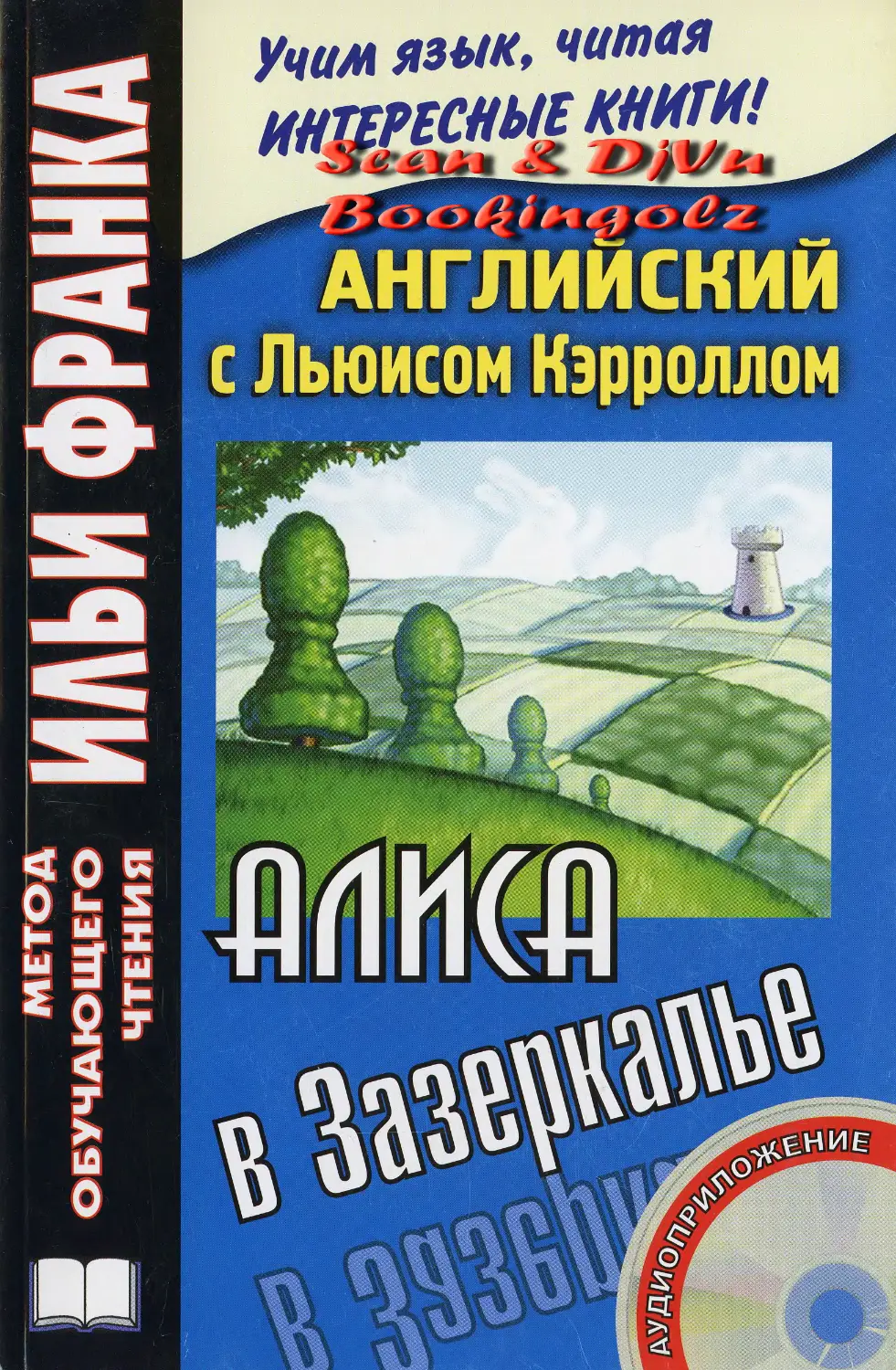


Author: Кэрролл Льюис
Tags: английский язык языки мира лингвистика
ISBN: 978-5-7873-0467-1
Year: 2009



Text
                    МЕТОД
ОБУЧАЮЩЕГО
ЧТЕНИЯ
Учим язык, читая
АНГЛИЙСКИМ
с Льюисом Кэрроллом
УДК 811.111(076.6)
ББК 81.2 Англ-93
А64
Редактор Юлия Чорногор
А64 Английский с Льюисом Кэрроллом. Алиса в Зазеркалье =
Lewis Carroll. Through the Looking-Glass I пособие подгот. Ольга
Ламонова. — М.: Школа иностранных языков Ильи Франка,
Восточная книга, 2009.— 384 с.— (Метод обучающего чтения
Ильи Франка®).
ISBN 978-5-7873-0467-1
В книге предлагается сказочная повесть английского писателя и мате-
матика Льюиса Кэрролла (настоящее имя Чарльз Лютвидж Доджсон,
1832-1898), полная забавных приключений и изящного юмора, адаптиро-
ванная (без упрощения текста оригинала) по методу обучающего чтения
Ильи Франка®. Уникальность метода заключается в том, что запоминание
слов и выражений происходит за счет их повторяемости, без заучивания и
необходимости использовать словарь.
Пособие способствует эффективному освоению языка, может служить
дополнением к учебной программе. Предназначено для широкого круга
лиц, изучающих английский язык (под руководством преподавателя или
самостоятельно) и интересующихся культурой англоязычных стран.
УДК 811.111(076.6)
ББК 81.2Англ-93
© И. Франк, 2009
© ООО «Восточная книга», 2009
Содержание
Как читать эту книгу..................................3
CHAPTER I	(Глава I). Looking-Glass house
(Зазеркальный дом)....................................9
CHAPTER II	(Глава II). The Garden of Live Flowers
(Сад живых цветов)...................................51
CHAPTER III	(Глава III). Looking-Glass Insects
(Зазеркальные Насекомые).............................86
CHAPTER IV	(Глава IV). Tweedledum and Tweedledee
(Твидлдам и Твидлди).................................119
CHAPTER V	(Глава V). Wool and Water
(Шерсть и Вода)......................................161
CHAPTER VI	(Глава VI). Humpty Dumpty
(Шалтай-Болтай)......................................198
CHAPTER VII	(Глава VII). The Lion and the Unicorn
(Лев и Единорог).....................................238
CHAPTER VIII	(Глава VIII). “It’s my own Invention”
(Это мое собственное изобретение)....................270
CHAPTER IX	(Глава IX). Queen Alice
(Королева Алиса).....................................318
CHAPTER X	(Глава X). Shaking
(Встряска)...........................................366
CHAPTER XI	(Глава XI). Waking
(Пробуждение)........................................367
CHAPTER XII	(Глава XII). Which Dreamed it?
(Кому это приснилось?)...............................368
Как читать эту книгу
Уважаемые читатели!
Перед вами — НЕ очередное учебное пособие на основе
исковерканного (сокращенного, упрощенного и т. п.) авторского
текста.
Перед вами прежде всего — ИНТЕРЕСНАЯ КНИГА НА
ИНОСТРАННОМ ЯЗЫКЕ, причем настоящем, «живом» языке,
в оригинальном, авторском варианте.
От вас вовсе не требуется «сесть за стол и приступить к заня-
тиям». Эту книгу можно читать где угодно, например, в метро или
лежа на диване, отдыхая после работы. Потому что уникальность
метода как раз и заключается в том, что запоминание иностранных
слов и выражений происходит ПОДСПУДНО, ЗА СЧЕТ ИХ
ПОВТОРЯЕМОСТИ, БЕЗ СПЕЦИАЛЬНОГО ЗАУЧИВАНИЯ И
НЕОБХОДИМОСТИ ИСПОЛЬЗОВАТЬ СЛОВАРЬ.
Существует множество предрассудков на тему изучения ино-
странных языков. Что их могут учить только люди с опре-
деленным складом ума (особенно второй, третий язык и т. д.), что
делать это нужно чуть ли не с пеленок и, самое главное, что в
целом это сложное и довольно-таки нудное занятие.
Но ведь это не так! И успешное применение Метода чтения
Ильи Франка в течение многих лет доказывает: НАЧАТЬ ЧИТАТЬ
ИНТЕРЕСНЫЕ КНИГИ НА ИНОСТРАННОМ ЯЗЫКЕ МОЖЕТ
КАЖДЫЙ!
Причем
НА ЛЮБОМ ЯЗЫКЕ,
В ЛЮБОМ ВОЗРАСТЕ,
а также С ЛЮБЫМ УРОВНЕМ ПОДГОТОВКИ (начиная
с «нулевого»)!
4
Английский язык с Льюисом Кэрроллом
Сегодня наш Метод обучающего чтения — это более двухсот
книг на пятидесяти языках мира. И сотни тысяч читателей, пове-
ривших в свои силы!
Итак, «как это работает»?
Откройте, пожалуйста, любую страницу этой книги. Вы ви-
дите, что текст разбит на отрывки. Сначала идет адаптированный
отрывок — текст с вкрапленным в него дословным русским пе-
реводом и небольшим лексико-грамматическим комментарием.
Затем следует тот же текст, но уже неадаптированный, без под-
сказок.
Если вы только начали осваивать английский язык, то вам
сначала нужно читать текст с подсказками, затем — тот же
текст без подсказок. Если при этом вы забыли значение како-
го-либо слова, но в целом все понятно, то не обязательно искать
это слово в отрывке с подсказками. Оно вам еще встретится.
Смысл неадаптированного текста как раз в том, что какое-то
время — пусть короткое — вы «плывете без доски». После того
как вы прочитаете неадаптированный текст, нужно читать
следующий, адаптированный. И так далее. Возвращаться
назад — с целью повторения — НЕ НУЖНО! Просто
продолжайте читать ДАЛЬШЕ.
Сначала на вас хлынет поток неизвестных слов и форм. Не
бойтесь: вас же никто- по ним не экзаменует! По мере чтения
(пусть это произойдет хоть в середине или даже в конце книги) все
«утрясется», и вы будете, пожалуй, удивляться: «Ну зачем опять
дается перевод, зачем опять приводится исходная форма слова,
все ведь и так понятно!» Когда наступает такой момент, «когда и
так понятно», вы можете поступить наоборот: сначала читать
неадаптированную часть, а потом заглядывать в адаптиро-
ванную. Этот же способ чтения можно рекомендовать и тем, кто
осваивает язык не «с нуля».
Язык по своей природе — средство, а не цель, поэтому он
лучше всего усваивается не тогда, когда его специально учат, а
когда им естественно пользуются — либо в живом общении, либо
Как читать эту книгу
5
погрузившись в занимательное чтение. Тогда он учится сам собой,
подспудно.
Для запоминания нужны не сонная, механическая зубрежка
или вырабатывание каких-то навыков, а новизна впечатлений.
Чем несколько раз повторять слово, лучше повстречать его
в разных сочетаниях и в разных смысловых контекстах.
Основная масса общеупотребительной лексики при том чтении,
которое вам предлагается, запоминается без зубрежки, естест-
венно — за счет повторяемости слов. Поэтому, прочитав текст, не
нужно стараться заучить слова из него. «Пока не усвою, не
пойду дальше» — этот принцип здесь не подходит. Чем ин-
тенсивнее вы будете читать, чем быстрее бежать вперед, тем
лучше для вас. В данном случае, как ни странно, чем поверхно-
стнее, чем расслабленнее, тем лучше. И тогда объем материала
сделает свое дело, количество перейдет в качество. Таким обра-
зом, все, что требуется от вас, — это просто почитывать, думая не
об иностранном языке, который по каким-либо причинам прихо-
дится учить, а о содержании книги!
Главная беда всех изучающих долгие годы один какой-либо
язык в том, что они занимаются им понемножку, а не погружаются
с головой. Язык — не математика, его надо не учить, к нему надо
привыкать. Здесь дело не в логике и не в памяти, а в навыке. Он
скорее похож в этом смысле на спорт, которым нужно заниматься
в определенном режиме, так как в противном случае не будет ре-
зультата. Если сразу и много читать, то свободное чтение
по-английски — вопрос трех-четырех месяцев (начиная «с нуля»).
А если учить помаленьку, то это только себя мучить и буксовать
на месте. Язык в этом смысле похож на ледяную горку — на нее
надо быстро взбежать! Пока не взбежите — будете скатываться.
Если вы достигли такого момента, когда свободно читаете, то вы
уже не потеряете этот навык и не забудете лексику, даже если
возобновите чтение на этом языке лишь через несколько лет.
А если не доучили — тогда все выветрится.
А что делать с грамматикой? Собственно, для понимания тек-
ста, снабженного такими подсказками, знание грамматики уже не
нужно — и так все будет понятно. А затем происходит при-
6
Английский язык с Льюисом Кэрроллом
выкание к определенным формам — и грамматика усваивается
тоже подспудно. Ведь осваивают же язык люди, которые никогда
не учили его грамматику, а просто попали в соответствующую
языковую среду. Это говорится не к тому, чтобы вы держались
подальше от грамматики (грамматика — очень интересная вещь,
занимайтесь ею тоже), а к тому, что приступать к чтению данной
книги можно и без грамматических познаний.
Эта книга поможет вам преодолеть важный барьер: вы
наберете лексику и привыкнете к логике языка, сэкономив
много времени и сил. Но, прочитав ее, не нужно останавливаться,
продолжайте читать на иностранном языке (теперь уже дейст-
вительно просто поглядывая в словарь)!
Отзывы и замечания присылайте, пожалуйста,
по электронному адресу frank@franklang.ru
Lewis Carroll
Through
the Looking-Glass
(Сквозь Зеркало)
CHAPTER 1
(Глава 1)
LOOKING-GLASS HOUSE
(Зазеркальями дом;
looking-glass — зеркало)
One thing was certain (одно было очевидно; certain — точ-
ный, определенный; верный, бесспорный; thing — вещь, предмет;
факт, ситуация), that the WHITE kitten had had nothing to do
with it (белый котенок был тут совершенно ни при чем; nothing —
ничего; to have nothing to do with — не иметь никакого отноше-
ния к; ничего общего с): — it was the black kitten’s fault entirely
(во всем был виноват черный котенок: «это была полностью вина
черного котенка»; fault — недостаток, дефект; вина). For the
white kitten had been having its face washed by the old cat for the
last quarter of an hour (так как белому котенку старая кошка =
мама-кошка умывала мордочку последние четверть часа; face —
лицо; морда/животного/) (and bearing it pretty well, considering
(и сносил /он/ это довольно терпеливо, участливо; to bear —
нести, носить; выносить, выдерживать /испытания, боль и
т. nJ; pretty well — очень; to consider — рассматривать, обсу-
ждать; считаться с кем-л., проявлять уважение к кому-л.))', so
you see that it COULDN’T have had any hand in the mischief (так
что вы видите = понятно, что он не мог приложить лапу к этой
шалости; you see — видите ли, знаете ли, понимаете ли; hand —
рука; лапа; роль, участие; to have a hand in smth. —участвовать
в чем-л., приложить руку к чему-л.; mischief— вред; шалости,
проделки).
10
Английский язык с Льюисом Кэрроллом
certain ['s3:tn], entirely [m'taiali],
quarter ['kwo:ta], ischief ['mistjif]
One thing was certain, that the WHITE kitten had had
nothing to do with it: — it was the black kitten’s fault entirely. For
the white kitten had been having its face washed by the old cat
for the last quarter of an hour (and bearing it pretty well, con-
sidering); so you see that it COULDN’T have had any hand in the
mischief.
The way Dinah washed her children’s faces was this (способ,
которым Дина умывала мордочки своих деток, был таким; way —
путь, дорога; способ, метод)', first she held the poor thing down
by its ear with one paw (сперва она прижимала бедняжку к полу за
ухо одной лапой; poor — бедный, неимущий; бедный, несчастный;
thing — вещь, предмет; существо, создание), and then with the
other paw she rubbed its face all over, the wrong way, beginning at
the nose (а затем, другой лапой она терла всю ее мордочку против
шерсти, начиная от носа; all over — всюду, везде; полностью, це-
ликом; wrong — неправильный; way — путь, дорога; направление;
ср.: to stroke the cat the wrong way — гладить кошку против
шерсти)’, and just now, as I said, she was hard at work on the
white kitten (и именно сейчас, как я уже сказал, она усердно тру-
дилась, /умывая/ белую кошечку; hard — интенсивно, сильно;
усердно), which was lying quite still and trying to purr (которая
лежала совершенно спокойно и пыталась мурлыкать) — no doubt
feeling that it was all meant for its good (несомненно понимая, что
все это было для ее же пользы; to feel — трогать, щупать; чув-
ствовать, понимать; good — добро, благо; польза).
Dinah ['dams], paw [рэ:],
purr [рз:], doubt [davt]
Глава I. Зазеркальный дом
11
The way Dinah washed her children’s faces was this: first she
held the poor thing down by its ear with one paw, and then with the
other paw she rubbed its face all over, the wrong way, beginning at
the nose: and just now, as I said, she was hard at work on the white
kitten, which was lying quite still and trying to purr — no doubt
feeling that it was all meant for its good.
But the black kitten had been finished with earlier in the after-
noon (но черный котенок был вымыт раньше тем же днем; to fin-
ish — кончать, завершать; заканчивать, доводить до конца что-л.
начатое), and so, while Alice was sitting curled up in a corner of the
great arm-chair (и поэтому, в то время пока Алиса сидела, свер-
нувшись калачиком в углу большого кресла), half talking to herself
and half asleep (что-то бормоча про себя в полудреме: «отчасти
разговаривая сама с собой и отчасти /будучи/ сонной»; half— на-
половину, не полностью; asleep — спящий), the kitten had been
having a grand game of romps with the ball of worsted Alice had
been trying to wind up (котенок устроил шумную возню с клубком
шерстяных ниток, которые Алиса пыталась смотать; romp — со-
рванец /особ, о девочке!; тж. a game of romps — возня, шумная
игра; to have a romp — поднять возню; ball — шар; клубок; wor-
sted— ткань из гребенной шерсти; пряжа для ручного вязания и
вышивания; to wind—виться, извиваться; наматывать, мотать),
and had been rolling it up and down till it had all come undone
again (и катал его взад и вперед до тех пор, пока он совсем не раз-
мотался снова; up and down — вверх и вниз; взад и вперед, туда и
сюда; to соте — приходить, идти; становиться; to come undone —
расстегнуться, развязаться и т. п.; to undo — развязывать, рас-
стегивать; уничтожать сделанное)’, and there it was, spread over
the hearth-rug, all knots and tangles (и вот они /нитки/ лежали,
разбросанные по коврику перед камином — одни узелки да спу-
танные /концы/; hearth — домашний очаг; камин; rug — коврик,
ковер; all — весь; tangle — переплетение; спутанный клубок; пута-
ница), with the kitten running after its own tail in the middle (а ко-
тенок бегал за своим собственным хвостом в самой /их/ середине).
12
Английский язык с Льюисом Кэрроллом
worsted ['wustid], wind up ['wamd'Ap],
hearth-rug ['ha:0rAg], knot [not]
But the black kitten had been finished with earlier in the after-
noon, and so, while Alice was sitting curled up in a corner of the
great arm-chair, half talking to herself and half asleep, the kitten had
been having a grand game of romps with the ball of worsted Alice
had been trying to wind up, and had been rolling it up and down till it
had all come undone again; and there it was, spread over the
hearth-rug, all knots and tangles, with the kitten running after its own
tail in the middle.
“Oh, you wicked little thing (ax ты маленькая проказница;
•wicked — злой; озорной, шаловливый; little thing — малютка,
крошка)1.” cried Alice, catching up the kitten, and giving it a little
kiss (воскликнула Алиса, подхватив кошечку и легонько поцело-
вав ее; little —маленький, небольшой /оразмере/; незначительный,
несущественный; kiss — поцелуй; to give a kiss — поцеловать) to
make it understand that it was in disgrace (чтобы дать ей понять,
что она впала в немилость; to make smb. do smth. — заставлять,
побуждать кого-л. делать что-л.; disgrace — позор, бесчестье;
немилость, опала; to be in disgrace — быть в немилости, в опале).
“Really, Dinah ought to have taught you better manners (no
правде говоря, Дине бы следовало обучить тебя лучшим манерам;
really — действительно, на самом деле; /как вводное слово/ право,
по правде говоря; manner — способ, метод; хорошие манеры,
воспитанность, умение себя вести)1. You OUGHT, Dinah, you
know you ought (тебе следовало бы, Дина, ты же знаешь, тебе
следовало бы)!” she added, looking reproachfully at the old cat
(добавила она, глядя укоризненно на взрослую кошку = на ма-
му-кошку; reproach — упрек, укор), and speaking in as cross a
voice as she could manage (и говоря таким сердитым голосом,
какой она только смогла изобразить; to manage — руководить,
Глава I. Зазеркальями дом
13
управлять; суметь сделать, справиться, ухитриться) — and
then she scrambled back into the arm-chair (и затем она снова
вскарабкалась в кресло), taking the kitten and the worsted with
her, and began winding up the ball again (захватив с собой котенка
и шерсть, и снова начала сматывать клубок).
wicked ['wikid], ought [o:t], taught [tod],
reproachfully [rfprautjfuli]	|
“Oh, you wicked little thing!” cried Alice, catching up the kitten,
and giving it a little kiss to make it understand that it was in disgrace.
“Really, Dinah ought to have taught you better manners! You
OUGHT, Dinah, you know you ought!” she added, looking re-
proachfully at the old cat, and speaking in as cross a voice as she
could manage — and then she scrambled back into the arm-chair,
taking the kitten and the worsted with her, and began winding up the
ball again.
But she didn’t get on very fast, as she was talking all the time
(но дела у нее продвигались не очень быстро, потому что она
разговаривала все время; to get on — делать успехи, преуспевать),
sometimes to the kitten, and sometimes to herself (иногда
/обращаясь/ к котенку, а иногда — к себе самой). Kitty sat very
demurely on her knee, pretending to watch the progress of the
winding (Китти сидела с преувеличенной скромностью у нее на
колене, притворяясь, что она наблюдает за процессом мотания;
very — очень, весьма; demure — скромный, спокойный; притворно
застенчивый; progress — прогресс, развитие; ход, течение, про-
текание), and now and then putting out one paw and gently
touching the ball (и время от времени: «теперь и тогда» протяги-
вала одну лапку и осторожно касалась клубка; gently — мягко,
тихо, спокойно; легко, осторожно), as if it would be glad to help,
if it might (словно она была бы рада помочь, если бы могла).
14
Английский язык с Льюисом Кэрроллом
demurely ['di'mjvali], knee [ni:], progress ['pravgres]
But she didn’t get on very fast, as she was talking all the time,
sometimes to the kitten, and sometimes to herself. Kitty sat very
demurely on her knee, pretending to watch the progress of the
winding, and now and then putting out one paw and gently touching
the ball, as if it would be glad to help, if it might.
“Do you know what tomorrow is, Kitty (ты знаешь, что завтра
за день, Китти)?” Alice began (начала Алиса). “You’d have
guessed if you’d been up in the window with me (ты бы догадалась,
если бы ты /сидела/ на окне со мной) — only Dinah was making
you tidy, so you couldn’t (только Дина приводила тебя в по-
рядок— поэтому ты не могла /быть там/; tidy — опрятный,
аккуратный). I was watching the boys getting in sticks for the
bonfire (я наблюдала за тем, как мальчишки собирали хворост для
костра; stick—палка, прут; /pl. / хворост) — and it wants plenty of
sticks, Kitty (а для него требуется много хвороста, Китти; to
want — хотеть, желать; быть нужным, требоваться)'. Only it
got so cold, and it snowed so, they had to leave off (только стало так
холодно, и шел такой снег, что им пришлось уйти). Never mind,
Kitty, we’ll go and see the bonfire tomorrow* (не волнуйся, Китти,
мы пойдем смотреть на костер завтра; never mind — ничего,
неважно, не беспокойтесь)”
I guess [ges], bonfire ['bonfaio], plenty ['plenti]
1 Предположительно действие происходит 4 ноября, в канун Дня Гая Фокса (от-
мечается 5 ноября), так называемого дня раскрытия Порохового заговора
1605 года, когда католики пытались взорвать здание Парламента. Заговорщики
были казнены. По традиции этот день отмечается кострами, на которых сжига-
ется чучело Гая Фокса— именно ему было поручено зажечь фитиль, ведущий
к наполненному порохом помещению под палатой лордов в Лондоне.
Глава I. Зазеркальный дом
15
“Do you know what tomorrow is, Kitty?” Alice began. “You’d
have guessed if you’d been up in the window with me — only Dinah
was making you tidy, so you couldn’t. I was watching the boys get-
ting in sticks for the bonfire — and it wants plenty of sticks, Kitty!
Only it got so cold, and it snowed so, they had to leave off. Never
mind, Kitty, we’ll go and see the bonfire tomorrow.”
Here Alice wound two or three turns of the worsted round the
kitten’s neck (в этот момент Алиса обернула два или три раза
шерсть вокруг шеи кошечки; here — здесь, тут; в этот момент;
turn — оборот; виток), just to see how it would look (просто чтобы
взглянуть, как она будет выглядеть): this led to a scramble, in
which the ball rolled down upon the floor (что привело к схватке =
кошечка стала вырываться, в /результате/ чего клубок скатился
на пол; to lead— вести, показывать путь; приводить /к чему-л./,
быть причиной 1чего-л.1; scramble — карабканье; схватка, свалка,
борьба /за обладание чем-л./), and yards and yards of it got un-
wound again (и, ярд за ярдом, /шерсть/ снова размоталась; yard—
ярд, мера длины, равная 3 футам или 914,4 мм).
wound [wavnd], scramble ['skraembl],
floor [fb:]
Here Alice wound two or three turns of the worsted round the
kitten’s neck, just to see how it would look: this led to a scramble, in
which the ball rolled down upon the floor, and yards and yards of it
got unwound again.
“Do you know, I was so angry, Kitty (знаешь ли ты, что я была
так рассержена, Китти),” Alice went on as soon as they were com-
fortably settled again (продолжила Алиса, как только они снова
уютно устроились /в кресле/; to settle — поселиться, обосно-
16
Английский язык с Льюисом Кэрроллом
ваться; усаживаться, устраиваться), “when I saw all the mis-
chief you had been doing (когда я увидела все те шалости, которые
ты творила), I was very nearly opening the window, and putting
you out into the snow (что я чуть не открыла окно и не посадила
тебя в снег)! And you’d have deserved it, you little mischievous
darling (и поделом бы тебе: «ты это заслужила», ты, маленькая
озорница; to deserve — заслуживать; darling — любимый, люби-
мая; баловень, любимец)'. What have you got to say for yourself
(что ты можешь сказать в свое оправдание; to say for oneself—
говорить в свое оправдание, объяснять свое поведение)? Now
don’t interrupt me (а теперь, не перебивай меня; to interrupt —
обрывать, прерывать; перебивать, прерывать /говорящего/)'.”
she went on, holding up one finger (продолжила она, /предостере-
гающе/ подняв палец).
comfortably ['kaemfatabh],
mischievous ['mistfivas], interrupt [jnta'rApt]

“Do you know, I was so angry, Kitty,” Alice went on as soon as
they were comfortably settled again, “when I saw all the mischief
you had been doing, I was very nearly opening the window, and
putting you out into the snow! And you’d have deserved it, you little
mischievous darling! What have you got to say for yourself? Now
don’t interrupt me!” she went on, holding up one finger.
“I’m going to tell you all your faults (я собираюсь рассказать
тебе обо всех твоих проступках; fault — недостаток, дефект;
проступок, провинность, нарушение закона). Number one: you
squeaked twice while Dinah was washing your face this morning
(во-первых: «номер один»: ты пискнула дважды, когда Дина
умывала твою мордочку сегодня утром). Now you can’t deny it,
Kitty (ну же, ты не можешь отрицать этого, Китти): I heard you
(я слышала тебя)! What that you say (что ты там говоришь)?”
Глава I. Зазеркальный дом
17
(pretending that the kitten was speaking (делая вид, что котенок
что-то говорит).) “Her paw went into your eye (ее лапка заехала
тебе в глаз)? Well, that’s YOUR fault, for keeping your eyes open
(что ж, это твоя вина = ты сама виновата, что ты держала свои
глаза открытыми) — if you’d shut them tight up, it wouldn’t have
happened (если бы ты их крепко закрыла, то этого бы не случи-
лось). Now don’t make any more excuses, but listen (ну-ка, не ищи
больше отговорок, а слушай; excuse — извинение; отговорка, оп-
равдание, предлог; to make excuses — оправдываться, находить
отговорки)'.
squeak [skwi:k], deny [di'nai], tight [tart],
excuse 1сущ.1 [ik'skju:s]
“I’m going to tell you all your faults. Number one: you squeaked
twice while Dinah was washing your face this morning. Now you
can't deny it, Kitty: I heard you! What that you say?” (pretending that
the kitten was speaking.) “Her paw went into your eye? Well, that’s
YOUR fault, for keeping your eyes open — if you’d shut them tight
up, it wouldn’t have happened. Now don’t make any more excuses,
but listen!
Number two: you pulled Snowdrop away by the tail
(во-вторых: «номер два»: ты оттащила Подснежник за хвост) just
as I had put down the saucer of milk before her (как раз когда я
поставила блюдце молока перед ней)! What, you were thirsty,
were you (что, ты хотела пить, не так ли; thirst—жажда; thirsty—
испытывающий жажду)?
How do you know she wasn’t thirsty too (откуда ты знаешь, что
она тоже не хотела пить)? Now for number three: you unwound
every bit of the worsted while I wasn’t looking (а теперь,
/перейдем/ к номеру три: ты размотала каждый клочок шерсти,
пока я не глядела!!
g |	Г Jj \/ £ J j 1 j j J J
18
Английский язык с Льюисом Кэрроллом
snowdrop ['snaudrop], saucer ['so:sa],
thirsty ['03:sti]
Number two: you pulled Snowdrop away by the tail just as I had put
down the saucer of milk before her! What, you were thirsty, were you?
How do you know she wasn’t thirsty too? Now for number three:
you unwound every bit of the worsted while I wasn’t looking!
“That’s three faults, Kitty, and you’ve not been punished for
any of them yet (это три проступка, Китти, а ты еще не была на-
казана ни за один из них). You know I’m saving up all your
punishments for Wednesday week (ты же знаешь, что я коплю все
твои наказания к среде /через/ неделю; to save— спасать,
уберегать; копить, откладывать) — Suppose they had saved up
all MY punishments (а что, если бы копили все мои наказания; to
suppose— полагать, думать; предполагать, допускать; sup-
pose — если бы, предположим, что)'.” she went on, talking more to
herself than the kitten (продолжала она, обращаясь больше к себе
самой, чем к котенку; to talk—разговаривать, беседовать).
।.------------------------
punishment ['pAniJmant], Wednesday [ wenzdi],
suppose[sa'pauz]
“That’s three faults, Kitty, and you’ve not been punished for any
of them yet You know I’m saving up all your punishments for
Wednesday week — Suppose they had saved up all MY punish-
ments!” she went on, talking more to herself than the kitten.
“What WOULD they do at the end of a year (что бы они сде-
лали в конце года)? I should be sent to prison, I suppose, when the
Глава I. Зазеркальями дом
19
day came (меня отправили бы в тюрьму, полагаю, когда бы этот
день пришел = наступил). Or — let me see — suppose each pun-
ishment was to be going without a dinner (или — дайте-ка мне
подумать — предположим, что каждое наказание заключалось бы
в том, /что меня/ оставляли бы без обеда; to go without smth. —
обходиться без чего-л.)'. then, when the miserable day came,
I should have to go without fifty dinners at once (значит, когда этот
печальный день наступил бы, мне пришлось бы обойтись без пя-
тидесяти обедов зараз; miserable — жалкий, несчастный; пе-
чальный /о новостях, событиях/; at once — сразу же, тотчас же;
одновременно, за один раз)'. Well, I shouldn’t mind THAT much
(ну, я бы не очень об этом беспокоилась; to mind — возражать,
иметь что-л. против; волноваться, беспокоиться, трево-
житься)'. I’d far rather go without them than eat them (я гораздо
охотнее обошлась бы без них, чем съела их)!
prison ['prizn], miserable ['mizsrabl],
without [wi'Saut]
“What WOULD they do at the end of a year? I should be sent to
prison, I suppose, when the day came. Or — let me see — suppose
each punishment was to be going without a dinner: then, when the
miserable day came, I should have to go without fifty dinners at
once! Well, I shouldn’t mind THAT much! I’d far rather go without
them than eat them!
“Do you hear the snow against the window-panes, Kitty (ты
слышишь, как снег /летит/ в оконное стекло, Китти; against —
против; по, о, к /указывает на соприкосновение или столкнове-
ние с чем-л./)? How nice and soft it sounds (как приятно и нежно
он звучит; soft — мягкий; нежный, тонкий, легкий)'. Just as if
some one was kissing the window all over outside (как будто
кто-то целует все окно снаружи). I wonder if the snow LOVES
20
Английский язык с Льюисом Кэрроллом
the trees and Helds, that it kisses them so gently (интересно, лю-
бит ли снег деревья и поля, раз он целует их так нежно; to won-
der — интересоваться, желать знать)! And then it covers them
up snug, you know, with a white quilt (и, к тому же, он уютно
укрывает их, знаешь ли, белым лоскутным одеялом; then — то-
гда; кроме того, к тому же); and perhaps it says, ‘Go to sleep,
darlings, till the summer comes again (и возможно, он говорит:
«Засыпайте, дорогие, /и спите/ до тех пор, пока снова не придет
лето»).’
window-pane ['wmdsupein], quilt [kwilt],
perhaps [pa'haeps]
“Do you hear the snow against the window-panes, Kitty? How
nice and soft it sounds! Just as if some one was kissing the window
all over outside. I wonder if the snow LOVES the trees and fields,
that it kisses them so gently? And then it covers them up snug, you
know, with a white quilt; and perhaps it says, ‘Go to sleep, darlings,
till the summer comes again.’
And when they wake up in the summer, Kitty, they dress
themselves all in green (а когда они просыпаются летом, Китти,
они принаряжаются во все зеленое), and dance about — whenever
the wind blows — oh, that’s very pretty (и танцуют повсюду —
куда бы ни подул ветер — о, это так прекрасно)!” cried Alice,
dropping the ball of worsted to clap her hands (воскликнула
Алиса, выронив клубок шерсти, чтобы захлопать в ладоши; to
drop — капать, стекать каплями; ронять, выпускать). “And I do
so WISH it was true (и как бы мне хотелось, чтобы это было
правдой)! I’m sure the woods look sleepy in the autumn, when the
leaves are getting brown (я уверена, /что/ лес выглядит сонным по
осени, когда листья становятся бурыми; to look — смотреть,
глядеть; выглядеть, иметь вид).
Глава I. Зазеркальный дом
21
whenever [we'neva], true [tru:], autumn ['э:1эт]
And when they wake up in the summer, Kitty, they dress
themselves all in green, and dance about — whenever the wind
blows — oh, that’s very pretty!” cried Alice, dropping the ball of
worsted to clap her hands. “And I do so WISH it was true! I’m sure
the woods look sleepy in the autumn, when the leaves are getting
brown.
“Kitty, can you play chess (Китти, ты умеешь играть в шах-
маты)? Now, don’t smile, my dear, I’m asking it seriously (ну, не
улыбайся, моя дорогая, я спрашиваю об этом серьезно). Because,
when we were playing just now, you watched just as if you under-
stood it (потому что, когда мы играли только что, ты смотрела так,
словно ты понимала /эту игру/): and when I said ‘Check!’ you
purred (и когда я сказала «Шах!», ты замурлыкала; check — за-
держка, остановка; 1шахм.1 шах)\ Well, it WAS a nice check,
Kitty, and really I might have won (так вот, это был прекрасный
шах, Китти, и вот уж действительно я могла бы выиграть), if it
hadn’t been for that nasty Knight, that came wiggling down among
my pieces (если бы не тот отвратительный конь, который про-
брался между моими фигурами; knight — рыцарь; 1шахм.1 конь; to
wiggle — покачивать, крутить; пробираться, протискиваться;
piece — кусок, часть; /гиахм.1 фигура). Kitty, dear, let’s pretend
(Китти, дорогая, давай поиграем в; to pretend — притворяться, де-
лать вид; играть, делать понарошку /в детских играх и пг. nJ) — п
seriously ['siariasli], knight [nait], wiggling ['wiglnj]
“Kitty, can you play chess? Now, don’t smile, my dear, I’m
asking it seriously. Because, when we were playing just now, you
22
Английский язык с Льюисом Кэрроллом
watched just as if you understood it: and when I said ‘Check!’ you
purred! Well, it WAS a nice check, Kitty, and really I might have won,
if it hadn’t been for that nasty Knight, that came wiggling down
among my pieces. Kitty, dear, let’s pretend — ”
And here I wish I could tell you half the things Alice used to say
(и тут мне жаль, что я не могу рассказать вам и половину тех вещей,
которые обычно говорила Алиса; I wish I could — как бы мне хо-
телось, чтобы я мог = жаль, что я не могу; used to do smth. —
иметь в прошлом обыкновение делать что-л.), beginning with her
favourite phrase “Let’s pretend” (начиная /их/ своей излюбленной
фразой: «Давай играть в.,,»). She had had quite a long argument
with her sister only the day before (у нее случился довольно дли-
тельный спор со своей сестрой всего лишь накануне; long —
длинный; долгий, продолжительный; argument — довод, доказа-
тельство; спор, дискуссия) — all because Alice had begun with
“Let’s pretend we’re kings and queens” (и все из-за того, что Алиса
начала с /фразы/: «Давай играть, как будто мы короли и королевы»);
and her sister, who liked being very exact, had argued that they
couldn’t (а ее сестра, которой нравилось быть очень точной, стала
спорить, что они не могли /играть/), because there were only two of
them (потому что их было только двое), and Alice had been reduced
at last to say (и Алиса была вынуждена, наконец, сказать; to
reduce — снижать, сокращать; заставлять, вынуждать), “Well,
YOU can be one of them then, and I’LL be all the rest (что ж, ты
можешь быть одной из них в таком случае, а я буду всеми осталь-
ными).” And once she had really frightened her old nurse by shouting
suddenly in her ear (а однажды она действительно испугала свою
старую няню, прокричав неожиданно ей в ухо), “Nurse (няня)! Do
let’s pretend that I’m a hungry hyaena, and you’re a bone (давай же
играть, как будто я — голодная гиена, а ты — кость).”
favourite ['feivorit], argument [za:gjumsnt],
frightened ['fraitnd], hyaena [hai'imo]
Глава I. Зазеркальный дом
23
And here I wish I could tell you half the things Alice used to say,
beginning with her favourite phrase “Let’s pretend.” She had had
quite a long argument with her sister only the day before — all be-
cause Alice had begun with “Let’s pretend we’re kings and queens;”
and her sister, who liked being very exact, had argued that they
couldn’t, because there were only two of them, and Alice had been
reduced at last to say, “Well, YOU can be one of them then, and I’LL
be all the rest.” And once she had really frightened her old nurse by
shouting suddenly in her ear, “Nurse! Do let’s pretend that I’m a
hungry hyaena, and you’re a bone.”
But this is taking us away from Alice’s speech to the kitten (но
это уводит нас прочь = отвлекает нас от речи Алисы, /обра-
щенной/ к котенку). “Let’s pretend that you’re the Red Queen,
Kitty (давай играть, как будто ты Черная Королева, Китти; red —
красный)'. Do you know, I think if you sat up and folded your arms,
you’d look exactly like her (знаешь ли, мне кажется, что если бы ты
села /на задние лапки/ и сложила свои /передние/ лапки, то ты бы
выглядела в точности как она; to sit up — приподняться из лежа-
чего положения, сесть). Now do try, there’s a dear (ну-ка, по-
пробуй же, вот душка; dear — дорогой, милый; разг, прелесть,
душка)'." And Alice got the Red Queen off the table (и Алиса сняла
Черную Королеву со стола), and set it up before the kitten as a
model for it to imitate (и поставила ее перед котенком в качестве
образца для подражания; model — модель, макет; модель, обра-
зец; to imitate — подражать, копировать)', however, the thing
didn’t succeed, principally, Alice said (однако, из этого ничего не
вышло, главным образом потому, сказала Алиса; thing — вещь,
предмет; дело, событие; to succeed — достигнуть цели, до-
биться), because the kitten wouldn’t fold its arms properly (что
котенок не хотел складывать свои лапки должным образом).
model ['modi], imitate ['imiteit],
succeed [sok'si:d], principally ['prmsipli]
24
Английский язык с Льюисом Кэрроллом
But this is taking us away from Alice’s speech to the kitten. “Let’s
pretend that you’re the Red Queen, Kitty! Do you know, I think if you
sat up and folded your arms, you’d look exactly like her. Now do try,
there’s a dear!” And Alice got the Red Queen off the table, and set it
up before the kitten as a model for it to imitate: however, the thing
didn’t succeed, principally, Alice said, because the kitten wouldn’t
fold its arms properly.
So, to punish it, she held it up to the Looking-glass (тогда,
чтобы наказать ее = кошечку, она поднесла ее к Зеркалу), that it
might see how sulky it was (чтобы она могла увидеть, какой уг-
рюмый /у нее вид/; sulky — надутый, угрюмый, мрачный; to be
sulky — дуться, быть угрюмым, мрачным)— “and if you’re not
good directly (и если ты не будешь вести себя прилично сию же
минуту; good—хороший; воспитанный, послушный; ср. be good! —
веди себя прилично; directly — прямо; сразу, немедленно),” she
added, “I’ll put you through into Looking-glass House (я посажу
тебя туда, в Зазеркальный дом; through— через, сквозь). How
would you like THAT (как тебе это понравится)?”
looking-glass ['lvkirjgla:s], sulky ['sAlki],
directly [di'rekth]
So, to punish it, she held it up to the Looking-glass, that it might
see how sulky it was — “and if you’re not good directly,” she added,
“I’ll put you through into Looking-glass House. How would you like
THAT?”
“Now, if you’ll only attend, Kitty, and not talk so much (а те-
перь, если только ты будешь внимательной, Китти, и не будешь
так много болтать; to attend — посещать, присутствовать; уде-
лять внимание, быть внимательным), I’ll tell you all my ideas
Глава I. Зазеркальный дом
25
about Looking-glass House (я расскажу тебе все, что я думаю: «все
свои мысли» о Зазеркальном доме). First, there’s the room you can
see through the glass (во-первых, в нем есть комната, которую
можно увидеть в зеркале) — that’s just the same as our draw-
ing-room, only the things go the other way (она совершенно такая
же, как наша гостиная, только предметы в ней расположены на-
оборот: «в другом направлении»). I can see all of it when I get upon
a chair (я могу видеть ее всю, когда я забираюсь на стул) — all but
the bit behind the fireplace (всю, за исключением одного кусочка
за камином). Oh! I do so wish I could see THAT bit (как бы мне
хотелось увидеть /именно/ тот кусочек)!
attend [э'tend], drawing-room ['dro:njru:m],
fireplace ['faiopleis]
“Now, if you’ll only attend, Kitty, and not talk so much, I’ll tell you
all my ideas about Looking-glass House. First, there’s the room you
can see through the glass — that’s just the same as our draw-
ing-room, only the things go the other way. I can see all of it when I
get upon a chair — all but the bit behind the fireplace. Oh! I do so
wish I could see THAT bit!
I want so much to know whether they’ve a fire in the winter
(мне так сильно хочется узнать, разводят ли они огонь зимой): you
never CAN tell, you know, unless our fire smokes (никогда не-
возможно сказать, знаешь ли, пока наш камин не задымит), and
then smoke comes up in that room too (и тогда дымок поднимается
и в той комнате тоже) — but that may be only pretence, just to
make it look as if they had a fire (но ведь это же может быть только
видимость, чтобы только заставить выглядеть так, как если бы у
них был огонь /в камине/; pretence — притворство, обман). Well
then, the books are something like our books, only the words go the
wrong way (ну так вот, книги вполне похожи на наши книги,
26
Английский язык с Льюисом Кэрроллом
только слова в них идут в другую сторону; wrong—неправильный,
ошибочный; не тот /который нужен/, несоответствующий;
way — путь, дорога; сторона, направление)', I know that, because
I’ve held up one of our books to the glass (я знаю об этом, потому
что я поднесла одну из наших книг к зеркалу; glass— стекло;
зеркало), and then they hold up one in the other room (и тогда они
поднесли /свою книгу/ в той, другой, комнате).
pretence [рп'tens], word [W3:d],
wrong [roij]
I want so much to know whether they’ve a fire in the winter: you
never CAN tell, you know, unless our fire smokes, and then smoke
comes up in that room too — but that may be only pretence, just to
make it look as if they had a fire. Well then, the books are something
like our books, only the words go the wrong way; I know that, be-
cause I’ve held up one of our books to the glass, and then they hold
up one in the other room.
“How would you like to live in Looking-glass House, Kitty (как
бы тебе понравилось жить в Зазеркальном доме, Китти)? I wonder
if they’d give you milk in there (интересно, давали бы тебе молоко
там)? Perhaps Looking-glass milk isn’t good to drink (возможно,
Зазеркальное молоко вредно пить; good — хороший; полезный) —
But oh, Kitty! now we come to the passage (но вот, Китти, теперь
мы переходим к коридору; passage — прохождение, переход; ко-
ридор, передняя). You can just see a little PEEP of the passage in
Looking-glass House (можно увидеть только маленький кусочек
коридора в Зазеркальном доме; peep — быстрый взгляд украдкой;
первое появление, проблеск), if you leave the door of our draw-
ing-room wide open (если оставить дверь нашей гостиной широко
открытой): and it’s very like our passage as far as you can see (и он
очень похож на наш коридор, пока хватает взгляда: «так далеко,
Глава I. Зазеркальный дом
27
как ты можешь увидеть»), only you know it may be quite different
on beyond (только, ты же знаешь, что дальше он может быть со-
вершенно другим /за пределами видимости/). Oh, Kitty! how nice
it would be if we could only get through into Looking-glass House
(как здорово было бы, если бы мы только смогли проникнуть
внутрь, в Зазеркальный дом)! I’m sure it’s got, oh! such beautiful
things in it (я уверена, в нем, о! такие прекрасные вещи)!
wonder ['wAnds], passage ['paesid3],
beyond [bi'jond]
“How would you like to live in Looking-glass House, Kitty? I
wonder if they’d give you milk in there? Perhaps Looking-glass milk
isn’t good to drink — But oh, Kitty! now we come to the passage.
You can just see a little PEEP of the passage in Looking-glass
House, if you leave the door of our drawing-room wide open: and it’s
very like our passage as far as you can see, only you know it may be
quite different on beyond. Oh, Kitty! how nice it would be if we could
only get through into Looking-glass House! I’m sure it’s got, oh! such
beautiful things in it!
Let’s pretend there’s a way of getting through into it, somehow,
Kitty (давай играть, будто есть какой-то способ пробраться сквозь
/зеркало/ в него, Китти; somehow — тем или иным образом, так
или иначе). Let’s pretend the glass has got all soft like gauze (давай
играть, как будто стекло стало совсем мягким, как дымка; gauze —
марля; дымка /в воздухе/), so that we can get through (так что мы
можем попасть внутрь). Why, it’s turning into a sort of mist now, I
declare (ой, да оно теперь превращается во что-то вроде тумана,
вот те на; to turn — поворачивать; to turn into smth. — превра-
щаться во что-л., становиться чем-л.; a sort of — нечто вроде,
почти; to declare — заявлять, объявлять; I declare — вот те на!
вот так так! ну и ну!)1. It’ll be easy enough to get through (будет
28
Английский язык с Льюисом Кэрроллом
довольно легко попасть внутрь) —” She was up on the chim-
ney-piece while she said this (она оказалась на каминной полке,
когда она говорила это), though she hardly knew how she had got
there (хотя она и не знала, как она забралась туда; hardly — едва,
еле; едва ли, вряд ли, почти не). And certainly the glass WAS be-
ginning to melt away (и действительно, стекло начало таять; cer-
tainly — конечно, естественно, несомненно), just like a bright
silvery mist (совсем как яркий серебристый туман).
gauze [go:z], declare [di'klea],
chimney-piece ['tjrmnipi:s]
Let’s pretend there’s a way of getting through into it, somehow,
Kitty. Let’s pretend the glass has got all soft like gauze, so that we
can get through. Why, it’s turning into a sort of mist now, I declare!
It’ll be easy enough to get through — ” She was up on the chim-
ney-piece while she said this, though she hardly knew how she had
got there. And certainly the glass WAS beginning to melt away, just
like a bright silvery mist.
In another moment Alice was through the glass (в следующий
миг Алиса прошла через зеркало), and had jumped lightly down
into the Looking-glass room (и легко спрыгнула /с каминной
полки/ на пол в Зазеркальной комнате). The very first thing she did
was to look whether there was a fire in the fireplace (самое первое,
что она сделала, так это посмотрела, есть = горит ли огонь в ка-
мине), and she was quite pleased to find that there was a real one
(и она очень обрадовалась, обнаружив, что там — настоящий
огонь; pleased — довольный), blazing away as brightly as the one
she had left behind (/который/ горел так же ярко, как и тот,
/который/ она оставила позади). “So I shall be as warm here as I
was in the old room (значит, мне будет здесь так же тепло, как /мне
было/ в старой комнате),” thought Alice: “warmer, in fact, because
Глава I. Зазеркальный дом
29
there’ll be no one here to scold me away from the fire (теплее, на
самом деле, потому что здесь не будет никого, /кто бы/, ругаясь,
/прогонял/ меня прочь от огня; fact — факт, событие; реаль-
ность, действительность; in fact— на самом деле, в действи-
тельности). Oh, what fun it’ll be (о, как же весело будет; fun —
веселье, забава), when they see me through the glass in here, and
can’t get at me (когда они увидят меня здесь, за зеркалом, и не
смогут отругать меня; to get at — добраться, достигнуть; ругать,
приставать с просьбами, надоедать)'.”
through [Oru:], brightly ['braitli], scold [skavld]
In another moment Alice was through the glass, and had jumped
lightly down into the Looking-glass room. The very first thing she did
was to look whether there was a fire in the fireplace, and she was
quite pleased to find that there was a real one, blazing away as
brightly as the one she had left behind. “So I shall be as warm here
as I was in the old room,” thought Alice: “warmer, in fact, because
there’ll be no one here to scold me away from the fire. Oh, what fun
it’ll be, when they see me through the glass in here, and can’t get at
me!”
Then she began looking about (затем она начала оглядываться
по сторонам), and noticed that what could be seen from the old
room was quite common and uninteresting (и увидела, что /все/,
что можно было увидеть из старой комнаты было совершенно
обычным и неинтересным; to notice — замечать, обращать вни-
мание; common — общий, всеобщий; обыкновенный, обычный), but
that all the rest was as different as possible (но что все остальное
было совершенно другим: «таким другим, как только возможно»).
For instance, the pictures on the wall next the fire seemed to be all
alive (например, картины на стене рядом с камином, казалось,
были живыми), and the very clock on the chimney-piece (и даже
30
Английский язык с Льюисом Кэрроллом
у часов на каминной полке) (you know you can only see the back of
it in the Looking-glass (вы же знаете, что вы можете видеть только
тыльную сторону /часов/ в зеркале; back—спина; задняя, тыльная
часть /чего-л./)) had got the face of a little old man, and grinned at
her (было лицо маленького старичка, и /они = часы/ улыбнулись
ей; face — лицо; циферблат; to grin — ухмыляться, широко улы-
баться).
notice ['nautis], instance ['mstans], alive [a'laiv]
Then she began looking about, and noticed that what could be
seen from the old room was quite common and uninteresting, but
that all the rest was as different as possible. For instance, the pic-
tures on the wall next the fire seemed to be all alive, and the very
clock on the chimney-piece (you know you can only see the back of
it in the Looking-glass) had got the face of a little old man, and
grinned at her.
“They don’t keep this room so tidy as the other (в этой комнате
не поддерживают такой же порядок, как в другой = нашей; tidy —
опрятный, аккуратный; to keep a house/a room tidy — поддержи-
вать в доме, комнате /идеальный/ порядок)” Alice thought to
herself, as she noticed several of the chessmen down in the hearth
among the cinders (подумала Алиса про себя, когда заметила не-
сколько шахматных фигур внизу перед камином среди золы;
chess— шахматы; chessman — шахматная фигура; cinder —
тлеющие угли; зола, пепел)', but in another moment, with a little
“Oh!” of surprise (но уже в следующее мгновение с легким /вскри-
ком/ удивления: О!), she was down on her hands and knees
watching them (она опустилась на четвереньки: «на руки и коле-
ни» /и стала/ смотреть на них). The chessmen were walking about,
two and two (шахматные фигуры расхаживали взад и вперед, па-
рами; two — двойка, цифра два; два предмета или человека, пара)'.
Глава I. Зазеркальный дом
31
hearth [ha:0], cinder ['sinda],
surprise [sa'praiz]
“They don’t keep this room so tidy as the other,” Alice thought to
herself, as she noticed several of the chessmen down in the hearth
among the cinders: but in another moment, with a little “Oh!” of
surprise, she was down on her hands and knees watching them.
The chessmen were walking about, two and two!
“Here are the Red King and the Red Queen (вот Черный Ко-
роль и Черная Королева),” Alice said (in a whisper, for fear of
frightening them) (сказала Алиса (шепотом, боясь испугать их)),
“and there are the White King and the White Queen sitting on the
edge of the shovel (а вот и Белый Король и Белая Королева, сидят
на краю совка /для углей/) — and here are two castles walking arm
in arm (а вот и две ладьи идут рука об руку; castle — замок, дво-
рец; 1шахм.1 ладья) — I don’t think they can hear me (не думаю,
/что/ они могут меня слышать = слышат меня),” she went on, as
she put her head closer down (продолжила говорить она, опустив
свою голову пониже: «поближе вниз /к золе/»; close — близко),
“and I’m nearly sure they can’t see me (и я почти уверена, /что/
они не видят меня). I feel somehow as if I were invisible (почему-то
мне кажется, словно я невидимая) — ”
shovel ['JavI], castle [zka:sl],
invisible [m'vrzabl]
“Here are the Red King and the Red Queen,” Alice said (in a
whisper, for fear of frightening them), “and there are the White King
and the White Queen sitting on the edge of the shovel — and here
are two castles walking arm in arm — I don’t think they can hear
32
Английский язык с Льюисом Кэрроллом
me,” she went on, as she put her head closer down, “and I’m nearly
sure they can’t see me. I feel somehow as if I were invisible — ”
Here something began squeaking on the table behind Alice
(в этот момент что-то начало пищать на столе позади Алисы), and
made her turn her head just in time to see one of the White Pawns
roll over and begin kicking (что заставило ее повернуть голову, /и/
как раз вовремя, чтобы увидеть, что одна из Белых Пешек опро-
кинулась = упала на спину и начала бить ногами; to roll over —
перекатывать; опрокидывать)' she watched it with great curios-
ity to see what would happen next (она смотрела на нее с великим
любопытством, /желая/ увидеть, что же произойдет дальше).
“It is the voice of my child (это голос моего ребенка)!” the
White Queen cried out as she rushed past the King (закричала
Белая Королева, кинувшись мимо Короля), so violently that she
knocked him over among the cinders (да так сильно, что она уро-
нила его в золу: «среди золы»; violent— неистовый, яростный;
сильный, резкий; to knock over — свалить). “Му precious Lily (моя
дорогая Лили; precious — драгоценный; дорогой, любимый)'. Му
imperial kitten (мой королевский котенок; imperial — имперский,
относящийся к империи; императорский)'.1” and she began
scrambling wildly up the side of the fender (и она начала неистово
взбираться по каминной решетке; wild — дикий, дикорастущий;
неистовый, безудержный; side — стенка, стена; поверхность,
сторона).
................
pawn [po:n], curiosity [,kjvanzDSiti],
precious ['prejss], imperial [im'pianal]
Here something began squeaking on the table behind Alice, and
made her turn her head just in time to see one of the White Pawns
roll over and begin kicking: she watched it with great curiosity to see
what would happen next.
Глава I. Зазеркальный дом
33
“It is the voice of my child!” the White Queen cried out as she
rushed past the King, so violently that she knocked him over among
the cinders. “My precious Lily! My imperial kitten!” and she began,
scrambling wildly up the side of the fender.
“Imperial fiddlestick (королевский вздор; fiddle — скрипка;
вздох, чепуха; stick — палка; 1муз.1 смычок; fiddlestick — смычок;
1шутл.1 вздор, ерунда, чепуха)!” said the King, rubbing his nose,
which had been hurt by the fall (сказал Король, потирая свой нос,
который был ушиблен при падении; hurt — беда, несчастье; те-
лесное повреждение, ушиб, рана; to hurt — причинить боль; ра-
нить, ушибить). Не had a right to be a LITTLE annoyed with the
Queen (он был вправе немного сердиться на Королеву; right —
правота, правильность; право, справедливое требование; to have
a right — иметь право; to annoy — досаждать, надоедать, раз-
дражать; to be annoyed with smb. — быть недовольным кем-л.),
for he was covered with ashes from head to foot (ведь он оказался
покрыт золой с головы до ног).
Alice was very anxious to be of use (Алисе очень хотелось быть
полезной = помочь; use — употребление, использование; польза,
толк, выгода; to be of use — быть полезным), and, as the poor little
Lily was nearly screaming herself into a fit (и, так как бедняжечка
Лили отчаянно вопила; nearly—почти, чуть не; to scream — прон-
зительно кричать, вопить; fit — припадок, приступ; to scream
oneself into fits — отчаянно вопить), she hastily picked up the
Queen and set her on the table by the side of her noisy little
daughter (она поспешно подхватила Королеву и опустила ее на
стол, рядом с ее плачущей маленькой дочкой; side — стенка,
стена; место рядом; noise — шум, гам, галдеж; noisy — шумный,
шумливый, галдящий).
fiddlestick ['fidl,stik], annoyed [a'noid],
anxious ['aerjkjas]
34
Английский язык с Льюисом Кэрроллом
“Imperial fiddlestick!” said the King, rubbing his nose, which had
been hurt by the fall. He had a right to be a LITTLE annoyed with the
Queen, for he was covered with ashes from head to foot.
Alice was very anxious to be of use, and, as the poor little Lily
was nearly screaming herself into a fit, she hastily picked up the
Queen and set her on the table by the side of her noisy little
daughter.
The Queen gasped, and sat down (Королева тяжело задышала
и села; to gasp — дышать с трудом, задыхаться): the rapid
journey through the air had quite taken away her breath (от
стремительного путешествия по воздуху у нее совершенно пе-
рехватило дух; breath — дыхание; to take smb. ’s breath away —
удивить, поразить кого-л.; Iбукв. I забрать чье-л. дыхание) and
for a minute or two she could do nothing but hug the little Lily in
silence (и минуту или две она не могла ничего делать, кроме как
молча сжимать в объятиях маленькую Лили; silence — тишина;
молчание, безмолвие). As soon as she had recovered her breath a
little (как только она чуть отдышалась: «восстановила свое ды-
хание»; to recover — вновь обретать, возвращать; to recover
one’s breath — отдышаться, перевести дух), she called out to the
White King, who was sitting sulkily among the ashes (она крик-
нула Белому Королю, который сидел с мрачным видом в золе),
“Mind the volcano (берегись вулкана; to mind — возражать,
иметь что-л. против; остерегаться, беречься, обращать вни-
мание)'.”
gasp [ga:sp], journey ['дзз:ш],
breath [breO], volcano [vol'kemav]
The Queen gasped, and sat down: the rapid journey through the
air had quite taken away her breath and for a minute or two she
could do nothing but hug the little Lily in silence. As soon as she had
Глава I. Зазеркальный дом
35
recovered her breath a little, she called out to the White King, who
was sitting sulkily among the ashes, “Mind the volcano!”
“What volcano (какого вулкана)?” said the King, looking up
anxiously into the fire (спросил Король, тревожно подняв взгляд
на огонь), as if he thought that was the most likely place to find one
(словно считал, что это было самое подходящее место, где /можно
было бы/ обнаружить /вулкан/; to think— думать; полагать,
считать; likely — вероятный, возможный; подходящий, удобный
для чего-л.).
“Blew — me — up (/который/ поднял меня наверх; to blow —
дуть, веять /о ветре/; гнать ветром)” panted the Queen, who
was still a little out of breath (ловя воздух, сказала Королева, ко-
торая по-прежнему немного задыхалась; to pant — часто и тя-
жело дышать, задыхаться; to be out of breath — запыхаться,
задохнуться). “Mind you come up — the regular way — don’t get
blown up (смотри, поднимайся обычным путем, не окажись под-
нятым в воздух; regular — правильный, размеренный; обычный,
привычный)'.”
blew [blu:], mind [mamd], regular ['regjvla]
“What volcano?” said the King, looking up anxiously into the fire,
as if he thought that was the most likely place to find one.
“Blew — me — up,” panted the Queen, who was still a little out of
breath. “Mind you come up — the regular way — don’t get blown
up!”
Alice watched the White King as he slowly struggled up from
bar to bar (Алиса наблюдала за Белым Королем, пока он медленно
и с трудом поднимался по прутьям решетки: «с одного прутка
решетки на другой»; to struggle— бороться; делать усилия,
36
Английский язык с Льюисом Кэрроллом
стараться изо всех сил), till at last she said (пока, наконец, она не
сказала), “Why, you’ll be hours and hours getting to the table, at
that rate (ну, у тебя уйдут часы и часы чтобы забраться на стол, с
такой-то скоростью; rate — норма, размер; скорость, темп). I’d
far better help you, hadn’t I (будет гораздо лучше, если я помогу
тебе, не так ли)?” But the King took no notice of the question (но
Король не обратил никакого внимания на этот вопрос; notice —
извещение, уведомление; внимание; to take notice — обращать
внимание, замечать)', it was quite clear that he could neither hear
her nor see her (было совершенно ясно, что он не мог ни слышать
ее, ни видеть).
quite [kwait], clear [klia], neither ['naiSs]
Alice watched the White King as he slowly struggled up from bar
to bar, till at last she said, “Why, you’ll be hours and hours getting to
the table, at that rate. I’d far better help you, hadn’t I?” But the King
took no notice of the question: it was quite clear that he could neither
hear her nor see her.
So Alice picked him up very gently (тогда Алиса взяла его
очень осторожно), and lifted him across more slowly than she had
lifted the Queen (и стала поднимать его по /воздуху/ медленнее,
чем она подняла Королеву), that she mightn’t take his breath away
(так, чтобы у него не перехватило дыхание: «она не могла бы пе-
рехватить его дыхание»): but, before she put him on the table (но,
прежде чем она опустила его на стол), she thought she might as
well dust him a little (она подумала, что она могла бы отряхнуть
его немного; dust — пыль; to dust — стирать, смахивать пыль), he
was so covered with ashes (он был так /обильно/ покрыт золой).
She said afterwards that she had never seen in all her life such a
face as the King made (она говорила впоследствии, что она нико-
гда за всю свою жизнь не видела такого выражения лица, которое
Глава I. Зазеркальями дом
37
скорчил Король;/асе —лицо; выражение лица, гримаса; to таке а
face — сделать гримасу, скорчить физиономию), when he found
himself held in the air by an invisible hand, and being dusted (ко-
гда он оказался удерживаемым в воздухе какой-то невидимой
рукой, и /при этом/ с него смахивали пыль; to find — находить,
отыскивать; to find oneself somewhere — оказаться, очутиться
где-л.): he was far too much astonished to cry out (он был слишком
уж сильно удивлен, чтобы закричать), but his eyes and his mouth
went on getting larger and larger, and rounder and rounder (но
его глаза и рот продолжали становиться все больше и больше, все
круглее и круглее), till her hand shook so with laughing that she
nearly let him drop upon the floor (до тех пор, пока ее рука так
затряслась от смеха, что она чуть не уронила его на пол; to drop —
капать, стекать каплями; ронять, выпускать; to let drop smth. —
выпустить, выронить, уронить; to shake).
afterwards ['cuftawadz], air [ea],
astonish [a'stonij]
So Alice picked him up very gently, and lifted him across more
slowly than she had lifted the Queen, that she mightn’t take his
breath away: but, before she put him on the table, she thought she
might as well dust him a little, he was so covered with ashes.
She said afterwards that she had never seen in all her life such a
face as the King made, when he found himself held in the air by an
invisible hand, and being dusted: he was far too much astonished to
cry out, but his eyes and his mouth went on getting larger and larger,
and rounder and rounder, till her hand shook so with laughing that
she nearly let him drop upon the floor.
“Oh! PLEASE don’t make such faces, my dear (о, пожалуйста,
не корчи такие рожи, мой дорогой)!” she cried out, quite forgetting
that the King couldn’t hear her (закричала она, совершенно за-
38
Английский язык с Льюисом Кэрроллом
бывая, что Король не может ее услышать). “You make me laugh so
that I can hardly hold you (ты меня заставляешь смеяться так, что
я едва могу тебя держать)! And don’t keep your mouth so wide
open (и не держи свой рот так широко открытым)! All the ashes
will get into it (вся зола попадет в него) — there, now I think
you’re tidy enough (ну вот, теперь мне кажется, ты вполне чис-
тый)!” she added, as she smoothed his hair (добавила она, при-
гладив ему волосы), and set him upon the table near the Queen (и
поставила его на стол рядом с Королевой).
laugh [la:f], mouth [mav0], smooth [smu:8]
“Oh! PLEASE don’t make such faces, my dear!” she cried out,
quite forgetting that the King couldn’t hear her. “You make me laugh
so that I can hardly hold you! And don’t keep your mouth so wide
open! All the ashes will get into it — there, now I think you’re tidy
enough!” she added, as she smoothed his hair, and set him upon
the table near the Queen.
The King immediately fell flat on his back, and lay perfectly
still (Король немедленно упал плашмя на спину и лежал совер-
шенно неподвижно; to fall; flat — плоско, ровно; плашмя; to Не):
and Alice was a little alarmed at what she had done (а Алиса была
немного встревожена тем, что же она сделала; alarm — тревога,
сигнал опасности; смятение, страх, тревога; to alarm — поднять
тревогу; встревожить, взволновать, напугать), and went round
the room to see if she could find any water to throw over him (и
пошла по комнате, чтобы поглядеть, не сможет ли она найти не-
много воды, чтобы вылить на него; to throw — бросать, кидать;
лить, поливать). However, she could find nothing but a bottle of
ink (как бы то ни было, она не смогла найти ничего, кроме пу-
зырька чернил; bottle — бутылка; флакон, пузырек), and when she
got back with it she found he had recovered (и когда она вернулась
Глава I. Зазеркальный дом
39
назад с ним, она обнаружила, что он уже пришел в себя; to re-
cover— получать обратно, возвращать себе; оправляться /от
чего-л.1, приходить в себя), and he and the Queen were talking
together in a frightened whisper (он и Королева переговаривались
испуганным шепотом) — so low, that Alice could hardly hear what
they said (так тихо, что Алиса едва смогла расслышать, что они
говорят; low — низкий, невысокий; тихий, негромкий).
immediately [i'mi:diatli], perfectly [zp3:fiktli],
alarmed [o'lcr.md], ink [ujk]
The King immediately fell flat on his back, and lay perfectly still:
and Alice was a little alarmed at what she had done, and went round
the room to see if she could find any water to throw over him.
However, she could find nothing but a bottle of ink, and when she
got back with it she found he had recovered, and he and the Queen
were talking together in a frightened whisper — so low, that Alice
could hardly hear what they said.
The King was saying (Король говорил), “I assure you, my dear,
I turned cold to the very ends of my whiskers (я уверяю тебя, моя
дорогая, я похолодел до самых кончиков бакенбард; to turn —
поворачивать; становиться, делаться)'.”
То which the Queen replied (на что Королева ответила), “You
haven’t got any whiskers (у тебя нет никаких бакенбард).”
“The horror of that moment (ужас того момента),” the King
went on, “I shall never, NEVER forget (я никогда, никогда не за-
буду)!”
“You will, though (ты /забудешь/, все же),” the Queen said,
“if you don’t make a memorandum of it (если ты не запишешь
об этом на память; memorandum — меморандум, памятная за-
писка; to make a memorandum of smth. — записать что-л. на
память)”
40
Английский язык с Льюисом Кэрроллом
Alice looked on with great interest (Алиса наблюдала с боль-
шим интересом) as the King took an enormous memoran-
dum-book out of his pocket, and began writing (как Король достал
огромную записную книжку из кармана и начал писать). A sudden
thought struck her (неожиданная мысль пришла ей в голову; to
strike —ударять, бить; приходить в голову), and she took hold of
the end of the pencil, which came some way over his shoulder (и
она взялась за кончик карандаша, который немного выступал над
его плечом; hold — удерживание, захват; to take hold of smth. —
браться, хвататься за что-л.), and began writing for him (и на-
чала писать за него).
—
assure [э']иэ], memorandum [zmemo'raendam],
enormous [i'no:mos]
The King was saying, “I assure you, my dear, I turned cold to the
very ends of my whiskers!”
To which the Queen replied, “You haven’t got any whiskers.”
“The horror of that moment,” the King went on, “I shall never,
NEVER forget!”
“You will, though,” the Queen said, “if you don’t make a
memorandum of it.”
Alice looked on with great interest as the King took an enormous
memorandum-book out of his pocket, and began writing. A sudden
thought struck her, and she took hold of the end of the pencil, which
came some way over his shoulder, and began writing for him.
The poor King looked puzzled and unhappy (бедный Король
выглядел озадаченным и несчастным; puzzle — трудный вопрос;
замешательство, смущение, недоумение), and struggled with the
pencil for some time without saying anything (и сражался с ка-
рандашом некоторое время, ничего не говоря); but Alice was too
strong for him, and at last he panted out (но Алиса была слишком
Глава I. Зазеркальный дом
41
уж сильной для него, и, наконец, он произнес, задыхаясь), “Му
dear (моя дорогая)! I really MUST get a thinner pencil (я дейст-
вительно должен достать карандаш потоньше). I can’t manage this
one a bit (я никак не могу справиться с этим; to manage — руко-
водить, управлять; справляться; a bit — немного, чуть-чуть)', it
writes all manner of things that I don’t intend (он пишет всякие
такие вещи, которые я не собираюсь /писать/; manner — метод,
способ; сорт, род; all manner of things — всевозможные вещи) — ”
“What manner of things (какие такие вещи)?” said the Queen,
looking over the book (сказала Королева, заглядывая в /записную/
книжку) (in which Alice had put (в которой Алиса записала; to
put — класть, положить; излагать, выражать /мысли, замечания
и т. п./) “THE WHITE KNIGHT IS SLIDING DOWN THE
POKER (белый конь скользит вниз по кочерге). НЕ BALANCES
VERY BADLY (он сохраняет равновесие очень плохо)”) “That’s
not a memorandum of YOUR feelings (это не запись твоих пере-
живаний;/ее/ш£ — ощущение, чувство; чувства, переживания)',”
poor [рэ], puzzled ['pAzld],
knight [nait], balance ['hastens]
The poor King looked puzzled and unhappy, and struggled with
the pencil for some time without saying anything; but Alice was too
strong for him, and at last he panted out, “My dear! I really MUST get
a thinner pencil. I can’t manage this one a bit; it writes all manner of
things that I don’t intend — ”
“What manner of things?” said the Queen, looking over the book
(in which Alice had put “THE WHITE KNIGHT IS SLIDING DOWN
THE POKER. HE BALANCES VERY BADLY”) “That’s not a
memorandum of YOUR feelings!”
There was a book lying near Alice on the table (какая-то книга
лежала рядом с Алисой на столе), and while she sat watching the
42
Английский язык с Льюисом Кэрроллом
White King (и пока она сидела, наблюдая за Белым Королем) (for
she was still a little anxious about him (потому что она
по-прежнему немного волновалась за него), and had the ink all
ready to throw over him, in case he fainted again (и держала чер-
нила наготове, чтобы вылить их на него, в том случае, если он
снова упадет в обморок; faint — обморок; to faint — ослабевать
/от усталости, голода и т. nJ; падать в обморок, терять соз-
нание)), she turned over the leaves, to find some part that she could
read (она переворачивала страницы, чтобы найти какую-нибудь
часть, которую она могла бы прочесть), “ — for it’s all in some
language I don’t know (потому что все /написано/ на каком-то
языке, который я не знаю),” she said to herself (сказала она себе).
It was like this (выглядело это вот так).
YKCOWREBBAJ
sevot yhtils eht dna ,gillirb sawT”
ebaw eht ni elbmig dna eryg diD
,sevogorob eht erew ysmim 11A
.ebargtuo shtar emom eht dnA
lying ['laiirj], faint [feint], language ['lasijgwidj]
There was a book lying near Alice on the table, and while she sat
watching the White King (for she was still a little anxious about him,
and had the ink all ready to throw over him, in case he fainted again),
she turned over the leaves, to find some part that she could read,
“— for it’s all in some language I don’t know,” she said to herself.
It was like this.
YKCOWREBBAJ
sevot yhtils eht dna .gillirb sawT”
,ebaw eht ni elbmig dna eryg diD
Глава I. Зазеркальный дом
43
.sevogorob eht erew ysmim IIA
ebargtuo shtar emom eht dnA
She puzzled over this for some time (она ломала голову над
этим некоторое время; to puzzle — озадачивать, приводить в
замешательство; ломать голову /над чем-л./), but at last a bright
thought struck her (но, наконец, блестящая мысль пришла ей в
голову; bright — яркий, блестящий; блестящий, великолепный; to
strike). “Why, it’s a Looking-glass book, of course (как же, это
Зазеркальная книга, конечно же)! And if I hold it up to a glass (и
если я поднесу ее к зеркалу), the words will all go the right way
again (слова снова встанут на место; right — правый, спра-
ведливый; надлежащий, верный)."
This was the poem that Alice read (вот стихотворение, которое
прочитала Алиса).
JABBERWOCKY' (Джабберуок1 2)
“Twas brillig, and the slithy toves (Жаркалось, и склибкие
штопобяры)
Did gyre and gimble in the wabe (Врачесались и бурав-
чились в дале);
All mimsy were the borogoves (Совсем хружалкими были
живеники),
And the mome raths outgrabe (И мычихстели заблудов-
шие зелебаны).
1 В этом забавно-абсурдном стихотворении встречаются слова, которые были
придуманы самим Кэрроллом. Значения некоторых слов объясняются
дальше (в главе VI) Шалтаем-Болтаем, другие же никогда так и не были
объяснены даже самим автором, который заявлял, что не знает, что они оз-
начают. Само же слово jabberwocky иногда употребляется для обозначения
забавного, но абсурдного высказывания. Ср.: jabber — болтовня; тарабар-
щина, вздор.
2 Бармаглот в переводе Дины Орловской
44
Английский язык с Льюисом Кэрроллом
bright [brait], thought [0o:t], poem ['pavim]
She puzzled over this for some time, but at last a bright thought
struck her. “Why, it’s a Looking-glass book, of course! And if I hold it
up to a glass, the words will all go the right way again.”
This was the poem that Alice read.
JABBERWOCKY
“Twas brillig, and the slithy toves
Did gyre and gimble in the wabe;
All mimsy were the borogoves,
And the mome raths outgrabe.
“Beware the Jabberwock, my son (берегись Джабберуока,
мой сын)!
The jaws that bite, the claws that catch (челюстей, кото-
рые кусают, когтей, которые хватают)!
Beware the Jubjub bird, and shun (берегись птицы
Джубджуб и остерегайся; Jubjub — ужасная птица,
которая живет в постоянном гневе)
The frumious Bandersnatch (расвзбеярого Бандерхвата;
fuming + furious - frumious; fuming — дымящийся; рас-
серженный, разозленный; furious — взбешенный, неис-
товый, яростный; Bandersnatch — очень подвижное
существо с лязгающими челюстями, которое умеет
вытягивать шею; snatch — хватание, схватывание)'.”
Не took his vorpal* sword in hand (он взял свой смерто-
носный меч в руку):
1 Значение этого слова так и не было объяснено самим Кэрроллом. Обычно
считается, что оно означает «смертоносный» или «острый».
Глава I. Зазеркальный дом
45
Long time the manxome foe he sought (и долго: «про-
должительное время» стражуткого врага он искал;
manxome = fearsome — грозный, страшный; ужасный,
жуткий) —
So rested he by the Tumtum tree (поэтому он отдохнуть
/решил/ у дерева Тумтум),
And stood awhile in thought (и стоял некоторое время в
мысли /погружен/).
beware [bi'wea], jaw [dso:], sword [so:d],
foe [fau], sought [so:t]
“Beware the Jabberwock, my son!
The jaws that bite, the claws that catch!
Beware the Jubjub bird, and shun
The frumious Bandersnatch!”
He took his vorpal sword in hand:
Long time the manxome foe he sought —
So rested he by the Tumtum tree,
And stood awhile in thought.
And as in uffish thought he stood (и пока в хрип-
ло-грубо-вздорно мысли стоял он /погружен/; uffish —
состояние души, при котором голос хрипловат, пове-
дение грубовато, а настроение — вздорно-нагловатое),
The Jabberwock, with eyes of flame (Джабберуок, с горя-
щими глазами; flame — пламя),
Came whiffling through the tulgey wood (явился co сви-
стом из трущобного леса; to 'whiffle — дуть слабыми
порывами; посвистывать, свистеть; tulgey — густой,
частый, темный),
46
Английский язык с Льюисом Кэрроллом
And burbled as it came (болтая по дороге: «пока он по-
являлся»)!
One, two (раз-два)! One, two! And through and through
(насквозь и сквозь)
The vorpal blade went snicker-snack (кинжалил острый
меч; blade — лезвие, клинок; snicker — большой нож,
кинжалу.
Не left it dead, and with its head (он оставил его мертвым,
и с его головой)
Не went galumphing back (назад он зашагал неровным
шагом; to galumph — идти неровным прерывистым
шагом).
burble ['Ьз:Ь1], dead [ded], head [hed],
galumph [gs'lAmf]
And as in uffish thought he stood,
The Jabberwock, with eyes of flame,
Came whiffling through the tulgey wood,
And burbled as it came!
One, two! One, two! And through and through
The vorpal blade went snicker-snack!
He left it dead, and with its head
He went galumphing back.
“And has thou slain the Jabberwock (так ты убил Джаб-
беруока)?
Come to my arms, my beamish boy (приди в мои объятия,
сияющий мой сын; arm — рука; beam —луч; beamish —
сияющий, довольный)'.
Глава I. Зазеркальный дом
47
О frabjous day (о замечательный день; frabjous' — fair
{ясный и солнечный), fabulous {потрясающий), and
joyous {радостный))'. Callooh (ура)! Callay (ура)!”
Не chortled in his joy (он ликовал от радости; to chortle —
сдавленно смеяться, пофыркивать; говорить или петь
ликуя, торжествуя).
“Twas briliig, and the slithy toves (Жаркалось, и склибкие
штопобяры)
Did gyre and gimble in the wabe (Врачевались и бурав-
чились в дале);
All mimsy were the borogoves (Совсем хружалкими были
живеники),
And the mome raths outgrabe (И мычихстели заблудов-
шие зелебаны).
slain [slem], beamish ['birmij'], chortle ['tjo:tl]
“And has thou slain the Jabberwock?
Come to my arms, my beamish boy!
О frabjous day! Callooh! Callay!”
He chortled in his joy.
“Twas briliig, and the slithy toves
Did gyre and gimble in the wabe;
All mimsy were the borogoves,
And the mome raths outgrabe.
“It seems very pretty (оно = это стихотворение кажется очень
милым),” she said when she had finished it (сказала она, когда
1 Слово frabjous — замечательный, чудный — было придумано Кэрроллом для
этого стихотворения и вошло в словарь английского языка.
48
Английский язык с Льюисом Кэрроллом
прочитала его; to finish — кончать, завершать; доводить до
конца, завершать что-л. начатое), “but it’s RATHER hard to
understand (но его довольно-таки сложно понять; hard — жест-
кий, твердый; трудный, тяжелый, требующий усилий, напря-
жения)4.” (You see she didn’t like to confess, even to herself, that
she couldn’t make it out at all (видите ли, ей не хотелось при-
знаться, даже самой себе, что она вовсе не смогла его понять; to
make out — составлять, выписывать; понять, разобраться)}
“Somehow it seems to fill my head with ideas (так или иначе, оно,
кажется, наполняет мою голову мыслями) — only I don’t exactly
know what they are (только я не вполне понимаю, какими;
exactly — точно; совсем, полностью; to know — знать; осозна-
вать, понимать)4. However, SOMEBODY killed SOMETHING:
that’s clear, at any rate (однако, кто-то убил кого-то — это ясно,
во всяком случае) — ”
pretty ['pnti], rather ['ra:8a],
confess [kan'fes]
“It seems very pretty,” she said when she had finished it, “but it’s
RATHER hard to understand!” (You see she didn’t like to confess,
even to herself, that she couldn’t make it out at all.) “Somehow it
seems to fill my head with ideas — only I don’t exactly know what
they are! However, SOMEBODY killed SOMETHING: that’s clear, at
any rate — ”
“But oh (ax)!” thought Alice, suddenly jumping up (подумала
Алиса, внезапно вскакивая на ноги; to jump — прыгать, скакать;
вскакивать), “if I don’t make haste (если я не потороплюсь;
haste — поспешность, торопливость, спешка) I shall have to go
back through the Looking-glass (то мне придется возвращаться
сквозь Зеркало), before I’ve seen what the rest of the house is like
(прежде, чем я увижу, на что похож = как выглядит остальной
Глава I. Зазеркальный дом
49
дом)! Let’s have a look at the garden first (давай взглянем сперва
на сад)!”
She was out of the room in a moment, and ran down stairs
(через мгновение она бросилась из комнаты и побежала вниз по
лестнице; out — /зд./ указывает на движение наружу; stair —
ступень, ступенька; Ipl.l ступеньки, лестница) — or, at least, it
wasn’t exactly running (или, во всяком случае, это был не совсем
бег), but a new invention of hers for getting down stairs quickly
and easily (а новое ее изобретение для того, чтобы спуститься по
лестнице быстро и легко), as Alice said to herself (как сказала себе
Алиса).
haste [heist], stair [stea], invention [m'venjh],
easily ['i:zili]
“But oh!” thought Alice, suddenly jumping up, “if I don’t make
haste I shall have to go back through the Looking-glass, before I’ve
seen what the rest of the house is like! Let’s have a look at the
garden first!”
She was out of the room in a moment, and ran down stairs — or,
at least, it wasn’t exactly running, but a new invention of hers for
getting down stairs quickly and easily, as Alice said to herself.
She just kept the tips of her fingers on the hand-rail (она про-
сто держала кончики пальцев на перилах), and floated gently down
without even touching the stairs with her feet (и легко плыла вниз,
даже не касаясь ступенек ногами; to float — плавать, держаться
на поверхности воды /или другой жидкости/; плыть, парить по
воздуху)', then she floated on through the hall (после чего она по-
плыла дальше, через холл; hall — зал, большое помещение; холл,
вестибюль), and would have gone straight out at the door in the
same way (и выплыла бы прямо из двери таким же способом), if
she hadn’t caught hold of the door-post (если бы она не ухватилась
50
Английский язык с Льюисом Кэрроллом
за дверной косяк; door — дверь; post — столб; стойка). She was
getting a little giddy with so much floating in the air (она начинала
испытывать легкое головокружение от такого количества полетов
в воздухе; to get— доставать; становиться; giddy — испыты-
вающий головокружение, страдающий головокружениями), and
was rather glad to find herself walking again in the natural way (и
была отчасти рада, обнаружив, что она снова идет обычным об-
разом; glad — довольный; to find oneself doing smth. — сделать
что-л. неожиданно для себя; natural — естественный, природ-
ный; обычный, нормальный).
hand-rail ['hasndreil], straight [streit],
giddy ['gidi], natural ['nastjral]
She just kept the tips of her fingers on the hand-rail, and floated
gently down without even touching the stairs with her feet; then she
floated on through the hall, and would have gone straight out at the
door in the same way, if she hadn’t caught hold of the door-post.
She was getting a little giddy with so much floating in the air, and
was rather glad to find herself walking again in the natural way.
CHAPTER II
(Глава II)
THE GARDEN OF LIVE FLOWERS
(Сад живых = говорящих цветов)
“I should see the garden far better (я смогла бы рассмотреть
сад гораздо лучше),” said Alice to herself (сказала Алиса про себя),
“if I could get to the top of that hill (если бы я смогла забраться на
вершину вон того холма; to get to a place — прибывать куда-л.,
добираться до какого-л. места): and here’s a path that leads
straight to it (а вот и тропинка, которая ведет прямо к нему; to
lead—вести, показывать путь; вести, приводить) — at least, no,
it doesn’t do that (во всяком случае, нет, не ведет: «она этого не
делает») — ” (after going a few yards along the path, and turning
several sharp corners (/сказала она/ после того, как прошла не-
сколько ярдов по тропинке и повернула на нескольких крутых
поворотах; sharp — острый, отточенный; крутой, резкий; cor-
ner—угол; поворот)), “but I suppose it will at last (но я полагаю,
что она /приведет/ в конце концов). But how curiously it twists (но
как же причудливо она петляет; curious — любознательный,
пытливый; чудной; to twist — крутить, скручивать; виться, из-
виваться)! It’s more like a corkscrew than a path (она больше
похожа на штопор, чем на тропинку; cork — кора пробкового де-
рева; пробка; screw — винт, шуруп; поворот винта; corkscrew —
штопор; крутая спирать)! Well, THIS turn goes to the hill, I
suppose — no, it doesn’t (ну уж, этот поворот ведет к холму, я
полагаю — нет, не ведет; turn — оборот; поворот)! This goes
straight back to the house (он ведет прямиком назад к дому)! Well
52
Английский язык с Льюисом Кэрроллом
then, I’ll try it the other way (что ж, тогда я попробую по-дру-
гому).”
path [ра:9], curiously ['kjvanosli],
corkscrew ['ko:kskru:]
“I should see the garden far better,” said Alice to herself, “if I
could get to the top of that hill: and here’s a path that leads straight
to it — at least, no, it doesn’t do that — ” (after going a few yards
along the path, and turning several sharp corners), “but I suppose it
will at last. But how curiously it twists! It’s more like a corkscrew than
a path! Well, THIS turn goes to the hill, I suppose — no, it doesn’t!
This goes straight back to the house! Well then, I’ll try it the other
way.”
And so she did (и так она и сделала): wandering up and down
(неторопливо двигаясь туда и сюда; to wander — бродить,
странствовать; up and down — вверх и вниз; взад и вперед, туда и
сюда), and trying turn after turn (и следуя то одному повороту, то
другому; to try — пытаться, стараться; пробовать, пытаться
применить), but always coming back to the house, do what she
would (но всегда возвращалась назад к дому, что бы она ни де-
лала). Indeed, once, when she turned a corner rather more quickly
than usual (в самом деле, один раз, когда она завернула за угол
гораздо быстрее, чем обычно), she ran against it before she could
stop herself (она столкнулась с ним = домом /нос к носу/ прежде,
чем она смогла остановиться; against — против; на, с /указывает
на столкновение с чем-л./).
wandering ['wondarir)], comer ['кэ:пэ],
usual [ juijuol]
Глава II. Сад живых цветов
53
And so she did: wandering up and down, and trying turn after
turn, but always coming back to the house, do what she would.
Indeed, once, when she turned a corner rather more quickly than
usual, she ran against it before she could stop herself.
“It’s no use talking about it (бесполезно говорить об этом;
use—употребление, использование; польза, толк, выгода)” Alice
said, looking up at the house and pretending it was arguing with
her (сказала Алиса, поднимая взгляд на дом и делая вид, что он
спорил с ней). “I’m NOT going in again yet (я еще не собираюсь
опять входить внутрь). I know I should have to get through the
Looking-glass again (я знаю, что мне придется снова пройти
сквозь Зеркало) — back into the old room (назад, в старую ком-
нату) — and there’d be an end of all my adventures (и это будет
концом всех моих приключений)!”
use /сущ./ [ju:s], arguing ['a:gju:ir)],
adventure [ad'vent Jo]
“It’s no use talking about it,” Alice said, looking up at the house
and pretending it was arguing with her. “I’m NOT going in again yet.
I know I should have to get through the Looking-glass again — back
into the old room — and there’d be an end of all my adventures!”
So, resolutely turning her back upon the house (итак, реши-
тельно повернувшись спиной к дому), she set out once more down
the path (она принялась снова: «еще раз» шагать по тропинке; to
set out — помещать, ставить; отправляться /в путешествие/,
выходить, выезжать), determined to keep straight on till she got
to the hill (с твердым намерением продолжать идти вперед до тех
пор, пока она не придет к холму; to determine — определять, ус-
танавливать; принимать решение, делать выбор; to keep on —
54
Английский язык с Льюисом Кэрроллом
продолжать делать что-л.). For a few minutes all went on well,
and she was just saying (несколько минут все продолжалось хо-
рошо, и она как раз говорила), “I really SHALL do it this time (я
уж точно сделаю это на этот раз; time — время; раз) — ” when the
path gave a sudden twist and shook itself (когда тропинка сделала
резкий поворот и содрогнулась; sudden — внезапный, неожи-
данный; to shake — трястись, сотрясаться) (as she described it
afterwards (как она описала это впоследствии)), and the next
moment she found herself actually walking in at the door (и в
следующий момент она обнаружила, что на самом деле шагает к
дому /и уже/ у двери: «входит в дверь»; to walk in — входить).
resolutely ['rezslu:tli], determined [di't3:mind],
actually ['asktjvali]
So, resolutely turning her back upon the house, she set out once
more down the path, determined to keep straight on till she got to
the hill. For a few minutes all went on well, and she was just saying,
“I really SHALL do it this time — ” when the path gave a sudden twist
and shook itself (as she described it afterwards), and the next
moment she found herself actually walking in at the door.
“Oh, it’s too bad (ox, как жаль: «это слишком плохо»)!” she
cried (воскликнула она). “I never saw such a house for getting in
the way (я никогда не видала такого дома, /который бы так/ заго-
раживал дорогу; to get in the way — препятствовать движению,
стоять на пути, загораживать дорогу, мешать)'. Never (ни-
когда)!”
However, there was the hill full in sight (как бы то ни было,
холм был очень хорошо виден: «был как раз в поле зрения»;/и// —
прямо, точно, как раз; sight — зрение; поле зрения, предел види-
мости), so there was nothing to be done but start again (так что
делать было нечего, как снова отправиться в путь; so — так; по-
Глава И. Сад живых цветов
55
этому, таким образом, так что; to start — начинать, браться /за
что-л./; отправляться в путь). This time she came upon a large
flowerbed (на этот раз она подошла к большой клумбе; flower —
цветок; bed — кровать, ложе; клумба, грядка; flowerbed —
клумба), with a border of daisies (с бордюром из маргариток;
border — граница; окаймляющий газон, бордюр клумбы), and а
willow-tree growing in the middle (в середине которой росла ива:
«и с ивовым деревом, которое росло в середине»).
however [hau'eva], flowerbed ['flauabed],
daisies ['deiziz]
“Oh, it’s too bad!” she cried. “I never saw such a house for
getting in the way! Never!”
However, there was the hill full in sight, so there was nothing to
be done but start again. This time she came upon a large flowerbed,
with a border of daisies, and a willow-tree growing in the middle.
“O Tiger-lily (о, Тигровая Лилия),” said Alice, addressing
herself to one that was waving gracefully about in the wind (ска-
зала Алиса, обращаясь к одному /цветку/, который элегантно
раскачивался на ветру; to address — адресовать, направлять;
обрагцатъся /к кому-л./; to wave — развеваться Io флаге/; ка-
чаться /о ветке/), “I WISH you could talk (как бы мне хотелось,
чтобы вы могли разговаривать = жаль, что вы не умеете разгова-
ривать)!”
“We CAN talk (мы умеем разговаривать),” said the Tiger-lily:
“when there’s anybody worth talking to (когда есть кто-нибудь,
заслуживающий /того, чтобы/ с ним поговорить; worth — стоя-
щий, имеющий стоимость; стоящий, имеющий значение)”
Alice was so astonished that she could not speak for a minute
(Алиса была так удивлена, что она не могла говорить с минуту): it
quite seemed to take her breath away (от этого, казалось, у нее
56
Английский язык с Льюисом Кэрроллом
совершенно перехватило дух). At length, as the Tiger-lily only
went on waving about (наконец, так как Тигровая Лилия продол-
жала только раскачиваться /из стороны в сторону/; length — длина;
протяженность во времени, продолжительность; at length —
детально, подробно; наконец, в конце концов), she spoke again, in
a timid voice — almost in a whisper (она заговорила снова, не-
уверенным голосом — почти что шепотом). “And can ALL the
flowers talk (а ВСЕ цветы умеют разговаривать)?”
I	gracefully ['greisfali], worth [w3:0],
length [ler)0]
=«==^=:^===========>=_=_____—__=======-====
“O Tiger-lily,” said Alice, addressing herself to one that was
waving gracefully about in the wind, “I WISH you could talk!”
“We CAN talk,” said the Tiger-lily: “when there’s anybody worth
talking to.”
Alice was so astonished that she could not speak for a minute: it
quite seemed to take her breath away. At length, as the Tiger-lily
only went on waving about, she spoke again, in a timid voice —
almost in a whisper. “And can ALL the flowers talk?”
“As well as YOU can (так же хорошо, как ты),” said the Ti-
ger-lily. “And a great deal louder (и гораздо громче; deal — не-
которое количество, часть; большое количество, масса)”
“It isn’t manners for us to begin, you know (нам не подобает
начинать /разговор/ первыми, знаешь ли; manner — метод, спо-
соб; Ipl.l воспитанность, хорошие манеры)” said the Rose, “and I
really was wondering when you’d speak (и я, в самом деле, раз-
думывала, когда же ты заговоришь)! Said I to myself (я про себя
сказала), ‘Her face has got SOME sense in it (у нее на лице есть
хоть какое-то осмысленное /выражение/; sense — чувство; разум,
здравый смысл), though it’s not a clever one (хотя оно и не ум-
ное)!’ Still, you’re the right colour, and that goes a long way (все
Глава II. Сад живых цветов
57
же, у тебя подходящий цвет, а это очень важно; to go a long way —
иметь вес или значение; играть важную роль)”
“I don’t care about the colour (меня цвет не волнует; to саге —
заботиться о ком-л., ухаживать; беспокоиться, тревожиться)”
the Tiger-lily remarked (заметила Тигровая Лилия; to remark —
замечать, наблюдать; делать замечание, высказываться /о
чем-л./). “If only her petals curled up a little more, she’d be all
right (если бы только ее лепестки завивались побольше, она была
бы миленькой; to curl — завиваться, виться; all right — честный,
порядочный; превосходный, отличный)”
louder ['lauds], colour ['кл!э], petal ['petl]
“As well as YOU can,” said the Tiger-lily. “And a great deal
louder.”
“It isn’t manners for us to begin, you know,” said the Rose, “and I
really was wondering when you’d speak! Said I to myself, ‘Her face
has got SOME sense in it, though it’s not a clever one!’ Still, you’re
the right colour, and that goes a long way.”
“I don’t care about the colour,” the Tiger-lily remarked. “If only
her petals curled up a little more, she’d be all right.”
Alice didn’t like being criticized, so she began asking questions
(Алисе не нравилось, /что ее/ критиковали, поэтому она начала
задавать вопросы; so — так; поэтому, так что). “Aren’t you
sometimes frightened at being planted out here (а вам иногда не
становится страшно от /того, что вы/ посажены здесь), with no-
body to take care of you (и нет никого, /кто бы/ ухаживал за ва-
ми)?”
“There’s the tree in the middle (в середине /клумбы/ есть де-
рево),” said the Rose: “what else is it good for (для чего же оно
еще: «на что же еще оно годится»; good — хороший; полезный,
подходящий)!”
58
Английский язык с Льюисом Кэрроллом
“But what could it do, if any danger came (но что же оно могло
бы сделать, если бы возникла опасность; to соте — приходить;
случаться)"!” Alice asked.
“It says ‘Bough-wough (оно говорит: «гав-гав»; ср.: bough
[bav] — сук; wough [wav] — стенка или [wvf] — гав-гав; bow-wow
[,bav'wav] — гавканье, собачий лай)'.’ cried a Daisy (воскликнула
одна Маргаритка): “that’s why its branches are called boughs (вот
почему его ветки называются сучьями; to call — кричать, закри-
чать; называть, звать)'.”
criticized ['kntisaizd], danger ['deindja],
bough [bau], wough [wav], branch [bra:ntj]
Alice didn’t like being criticized, so she began asking questions.
“Aren’t you sometimes frightened at being planted out here, with
nobody to take care of you?”
“There’s the tree in the middle,” said the Rose: “what else is it
good for?”
“But what could it do, if any danger came?” Alice asked.
“It says ‘Bough-wough!’ cried a Daisy: “that’s why its branches
are called boughs!”
“Didn’t you know THAT (разве ты этого не знала)?” cried
another Daisy (воскликнула другая Маргаритка), and here they all
began shouting together (и в этот момент они начали кричать все
вместе), till the air seemed quite full of little shrill voices (пока
воздух, казалось, не оказался наполненным визгливыми голо-
сками; full — полный, до краев; изобилующий, богатый). “Silence,
every one of you (тише, а ну вы все; silence — тишина)'.” cried the
Tiger-lily, waving itself passionately from side to side, and trem-
bling with excitement (воскликнула Тигровая Лилия, с горячно-
стью раскачиваясь из стороны в сторону и дрожа от возбуждения;
passion — страсть; пыл, страстность; passionate — страстный,
Глава II. Сад живых цветов
59
пылкий). “They know I can’t get at them (они знают, что я не могу
до них добраться)!” it panted, bending its quivering head towards
Alice (задыхаясь сказала она, склоняя свою трепещущую головку
к Алисе), “or they wouldn’t dare to do it (а то они не посмели бы
поступать так: «делать это»)!”
“Never mind (не переживайте)!” Alice said in a soothing tone
(сказала Алиса успокаивающим тоном), and stooping down to the
daisies, who were just beginning again, she whispered (и, скло-
нившись к маргариткам, которые как раз начинали снова/галдеть/,
она прошептала; to stoop — сутулиться; наклоняться, нагибать-
ся), “If you don’t hold your tongues, I’ll pick you (если вы не по-
придержите свои языки, я вас сорву; to hold one’s tongue — дер-
жать язык за зубами, молчать; to pick — выбирать, отбирать;
собирать, снимать)'.” .
passionately ['pasjamtli], excitement [ik'saitmant],
quivering ['kwivarirj], tongue [Urj]
“Didn’t you know THAT?” cried another Daisy, and here they all
began shouting together, till the air seemed quite full of little shrill
voices. “Silence, every one of you!” cried the Tiger-lily, waving itself
passionately from side to side, and trembling with excitement. “They
know I can’t get at them!” it panted, bending its quivering head to-
wards Alice, “or they wouldn’t dare to do it!”
“Never mind!” Alice said in a soothing tone, and stooping down
to the daisies, who were just beginning again, she whispered, “If you
don’t hold your tongues, I’ll pick you!”
There was silence in a moment (наступила тишина в /то же/
мгновение), and several of the pink daisies turned white (и не-
сколько розовых маргариток побледнели; white — белый; бледный).
“That’s right (это верно)!” said the Tiger-lily. “The daisies are
worst of all (маргаритки хуже всех). When one speaks, they all
60
Английский язык с Льюисом Кэрроллом
begin together (когда кто-нибудь говорит, они начинают /галдеть/
все вместе), and it’s enough to make one wither to hear the way
they go on (и этого достаточно, чтобы заставить тебя засохнуть,
слушая то, как они продолжают; to wither — вянуть, сохнуть)'.”
“How is it you can all talk so nicely (как же случилось, что вы
можете говорить так хорошо)?” Alice said, hoping to get it into a
better temper by a compliment (спросила Алиса, надеясь ком-
плиментом привести ее в лучшее настроение; temper — нрав,
характер; настроение). “I’ve been in many gardens before, but
none of the flowers could talk (прежде я была во многих садах, но
никакие цветы не умели разговаривать).”
worst [w3:st], enough [I'nAf],
compliment ['komplimant]
There was silence in a moment, and several of the pink daisies
turned white.
“That’s right!” said the Tiger-lily. “The daisies are worst of all.
When one speaks, they all begin together, and it’s enough to make
one wither to hear the way they go on!”
“How is it you can all talk so nicely?” Alice said, hoping to get it
into a better temper by a compliment. Tve been in many gardens
before, but none of the flowers could talk.”
“Put your hand down, and feel the ground (опусти руку и по-
трогай землю),” said the Tiger-lily. “Then you’ll know why (тогда
ты поймешь, почему).”
Alice did so (Алиса так и сделала). “It’s very hard (она очень
твердая),” she said, “but I don’t see what that has to do with it (но я
не понимаю, какое это имеет значение; to see— видеть; пони-
мать; to have to do with smth. — иметь отношение к чему-л.).”
“In most gardens (в большинстве садов),” the Tiger-lily said,
“they make the beds too soft (клумбы делают слишком мяг-
Глава И. Сад живых цветов
61
кими) — so that the flowers are always asleep (так что цветы /там/
всегда спят).”
This sounded a very good reason (это звучало очень разумно:
«это звучало, /как/ очень хорошее объяснение»; to sound — зву-
чать, издавать звук; звучать, создавать впечатление, казаться;
reason — причина, основание), and Alice was quite pleased to know
it (и Алиса была вполне довольна, что узнала это: «его»). “I never
thought of that before (я никогда не думала об этом прежде)!” she
said.
ground [gravnd], asleep [a'sli:p],
reason [ri:zn]
“Put your hand down, and feel the ground,” said the Tiger-lily.
“Then you’ll know why.”
Alice did so. “It’s very hard,” she said, “but I don’t see what that
has to do with it."
“In most gardens,” the Tiger-lily said, “they make the beds too
soft — so that the flowers are always asleep.”
This sounded a very good reason, and Alice was quite pleased
to know it. “I never thought of that before!” she said.
“It’s MY opinion that you never think AT ALL (по моему
мнению, ты никогда не думаешь вообще),” the Rose said in a
rather severe tone (сказала Роза довольно суровым тоном).
“I never saw anybody that looked stupider (я никогда не ви-
дала никого, кто бы выглядел глупее),” a Violet1 said, so suddenly,
that Alice quite jumped (сказала Фиалка, да так неожиданно, что
Алиса аж подскочила); for it hadn’t spoken before (потому что
прежде та не говорила).
1 У Алисы Лидделл было четыре сестры: Лорина (Попугайчик Лори), Эдит
(Орленок Эд), а кроме того, Роза (Rose) и Вайолет (Violet).
62
Английский язык с Льюисом Кэрроллом
“Hold YOUR tongue (придержи свой язык)!” cried the Tiger-lily.
“As if YOU ever saw anybody (как будто ты когда-нибудь ко-
го-нибудь видела)! You keep your head under the leaves, and snore
away there (ты прячешь головку под листьями и просыпаешь там
/все время/; to snore — храпеть; прохрапеть, проспать /какой-то
промежуток времени/), till you know no more what’s going on in the
world, than if you were a bud (так что ты знаешь не больше о том, что
происходит в мире, чем если бы ты была бутоном)!”
opinion [a'pmjan], severe [sf via],
stupider ['stju:pida], snore [sno:]
“It’s MY opinion that you never think AT ALL,” the Rose said in a
rather severe tone.
“I never saw anybody that looked stupider,” a Violet said, so
suddenly, that Alice quite jumped; for it hadn’t spoken before.
“Hold YOUR tongue!" cried the Tiger-lily. “As if YOU ever saw
anybody! You keep your head under the leaves, and snore away
there, till you know no more what’s going on in the world, than if you
were a bud!”
“Are there any more people in the garden besides me (а есть
еще люди в этом саду, кроме меня)?” Alice said, not choosing to
notice the Rose’s last remark (спросила Алиса, не желая обращать
внимание на последнее замечание Розы; to choose — выбирать;
/разг./ хотеть, желать).
“There’s one other flower in the garden that can move about
like you (есть еще один цветок в саду, который может двигаться,
как ты),” said the Rose. “I wonder how you do it (интересно, как ты
это делаешь) — ” (“You’re always wondering (тебе всегда инте-
ресно),” said the Tiger-lily), “but she’s more bushy than you are
(но она покустистее, чем ты; bush — куст, кустарник; bushy —
покрытый, заросший кустарником; кустистый).”
Глава II. Сад живых цветов
63
besides [bi'saidz], remark [n'ma:k],
bushy ['buji]
“Are there any more people in the garden besides me?” Alice
said, not choosing to notice the Rose’s last remark.
“There’s one other flower in the garden that can move about
like you,” said the Rose. “I wonder how you do it — ” (“You’re al-
ways wondering,” said the Tiger-lily), “but she’s more bushy than
you are.”
“Is she like me (/а/ она похожа на меня)?” Alice asked eagerly,
for the thought crossed her mind (с горячностью спросила Алиса,
так как /вот какая/ мысль мелькнула у нее в голове; to cross —
пересекать, переходить; mind—ум, разум), “There’s another lit-
tle girl in the garden, somewhere (другая маленькая девочка где-то
/гуляет/ в этом саду)!”
“Well, she has the same awkward shape as you (ну, у нее такая
же нескладная фигура, как у тебя; shape — форма, очертание;
фигура /особ, женская/)," the Rose said, “but she’s redder — and
her petals are shorter, I think (но она потемнее: «покраснее», и ее
лепестки короче, мне кажется; red — красный; но так как здесь
речь идет о Черной Королеве, то и значение будет: «черная» —
почернее, потемнее)"
“Her petals are done up close, almost like a dahlia (ее лепе-
стки плотно уложены, почти как у георгины; to do up — чинить,
ремонтировать; приводить в порядок, подправлять и т. п.; to
do up one’s hair — поправить волосы; сделать пучок, высоко
уложить волосы; close — близко; коротко)" the Tiger-lily in-
terrupted (перебила ее Тигровая Лилия): “not tumbled about
anyhow, like yours (а не торчат во все стороны, как у тебя; to
tumble —упасть, свалиться; приводить в беспорядок; to tumble
about — кувыркаться; /разг./ быть разбросанным, лежать в
беспорядке)"
64
Английский язык с Льюисом Кэрроллом
eagerly ['i:goli], awkward [zo:kwad],
dahlia ['deiljo], tumbled ['tAmbld]
“Is she like me?” Alice asked eagerly, for the thought crossed
her mind, “There’s another little girl in the garden, somewhere!"
“Well, she has the same awkward shape as you,” the Rose said,
“but she’s redder — and her petals are shorter, I think.”
“Her petals are done up close, almost like a dahlia,” the Tiger-lily
interrupted: “not tumbled about anyhow, like yours.”
“But that’s not YOUR fault (но ты в этом не виновата; fault —
недостаток, дефект; вина)” the Rose added kindly (добродушно
добавила Роза): “you’re beginning to fade, you know (ты начи-
наешь увядать, знаешь ли) — and then one can’t help one’s petals
getting a little untidy (а в таком случае ничего невозможно поде-
лать, — лепестки становятся немного растрепанными; cannot help
smth. — быть не в состоянии воспрепятствовать, помешать
чему-л.; tidy — опрятный, аккуратный; untidy — неопрятный,
неряшливый)”
Alice didn’t like this idea at all (Алисе совсем не понравилась
эта мысль): so, to change the subject, she asked, “Does she ever
come out here (поэтому, чтобы сменить тему разговора, она
спросила: «А она когда-нибудь приходит сюда»)?”
“I dare say you’ll see her soon (полагаю, ты вскоре ее увидишь;
to dare — сметь, отважиться; I dare say — полагаю, думаю, мне
кажется)” said the Rose. “She’s one of the thorny kind (она из
семейства колючих; thorn — колючка, шип; thorny — колючий;
kind — сорт, класс;разновидность, вид)”
“Where does she wear the thorns (а где у нее колючки: «где
она носит колючки»; to wear — быть одетым во что-л., носить
/одежду и т. п./)2” Alice asked with some curiosity (спросила
Алиса с некоторым любопытством).
“Why all round her head, of course (как, по всей голове, ко-
нечно же),” the Rose replied. “I was wondering YOU hadn’t got
Глава II. Сад живых цветов
65
some too (я еще все думала, почему у тебя /их/ тоже нет). I thought
it was the regular rule (я думала, что это у вас так принято: «что
это обычное правило»; regular — правильный, размеренный;
обычный, привычный; rule — правило, норма; привычка, обычай)”
idea [afdia], subject ['sAbdjikt], regular ['regjvla]
“But that’s not YOUR fault,” the Rose added kindly: “you’re
beginning to fade, you know — and then one can’t help one’s petals
getting a little untidy.”
Alice didn’t like this idea at all: so, to change the subject, she
asked, “Does she ever come out here?"
“I dare say you’ll see her soon," said the Rose. “She’s one of the
thorny kind.”
“Where does she wear the thorns?” Alice asked with some cu-
riosity.
“Why all round her head, of course,” the Rose replied. “I was
wondering YOU hadn’t got some too. I thought it was the regular
rule.”
“She’s coming (она идет)!” cried the Larkspur (воскликнул
Шпорник). “I hear her footstep, thump, thump, thump, along the
gravel-walk (я слышу ее шаги — топ, топ, топ — по посыпанной
гравием дорожке; thump — тяжелый удар /кулаком, дубиной!;
глухой шум; to thump — наносить тяжелый удар; тяжело, с шу-
мом двигаться; gravel — гравий, крупный песок; walk — ходьба;
тропинка, /мощеная! дорожка)1.”
Alice looked round eagerly, and found that it was the Red
Queen (Алиса поспешно оглянулась, и увидела, что это Черная
Королева; to find — находить, отыскивать; обнаруживать).
“She’s grown a good deal (она очень выросла)!” was her first
remark (было ее первым замечанием). She had indeed (она
действительно /выросла/): when Alice first found her in the
66
Английский язык с Льюисом Кэрроллом
ashes, she had been only three inches high (когда Алиса впервые
обнаружила ее в золе, та была всего в три дюйма ростом; inch —
дюйм /мера длины/ = 2,54 см; high — высокий; имеющий опре-
деленную высоту, рост) — and here she was, half a head taller
than Alice herself (и вот она здесь, на полголовы выше, чем сама
Алиса)!
“It’s the fresh air that does it (это от свежего воздуха: «это
свежий воздух делает это»),” said the Rose: “wonderfully fine
air it is, out here (удивительно прекрасный воздух здесь
/у нас/).”
“I think I’ll go and meet her (я думаю, я пойду ей навстречу),”
said Alice, for, though the flowers were interesting enough (сказала
Алиса, потому что, хотя цветы и были довольно интересными),
she felt that it would be far grander to have a talk with a real
Queen (она чувствовала, что будет гораздо восхитительней пого-
ворить с настоящей Королевой; to feel — трогать; чувствовать;
grand — грандиозный, величественный; восхитительный, пре-
красный).
larkspur ['larkspa:], gravel-walk [,graevl'wo:k],
grown [graun], grander ['grasnda]
“She’s coming!” cried the Larkspur. “I hear her footstep, thump,
thump, thump, along the gravel-walk!”
Alice looked round eagerly, and found that it was the Red
Queen. “She’s grown a good deal!” was her first remark. She had
indeed: when Alice first found her in the ashes, she had been only
three inches high — and here she was, half a head taller than Alice
herself!
“It’s the fresh air that does it,” said the Rose: “wonderfully fine air
it is, out here.”
“I think I’ll go and meet her,” said Alice, for, though the flowers
were interesting enough, she felt that it would be far grander to have
a talk with a real Queen.
Глава II. Сад живых цветов
67
“You can’t possibly do that (ты никогда не сможешь сделать
этого; possibly — возможно, вероятно; /усил.1 в любом случае, лю-
бым путем),” said the Rose: “I should advise you to walk the other
way (я бы посоветовала тебе идти в обратном направлении).”
This sounded nonsense to Alice, so she said nothing (это звучало
/полнейшей/ чепухой для Алисы, поэтому она ничего не сказала),
but set off at once towards the Red Queen (а тут же отправилась
навстречу Черной Королеве). То her surprise, she lost sight of her in
a moment (к своему удивлению, она в тот же миг потеряла ее из
виду; to lose), and found herself walking in at the front-door again
(и оказалась снова у порога: «передней двери» /дома/).
A little provoked, she drew back (испытывая легкое раздра-
жение, она отступила назад; to provoke — вызывать, возбуждать;
сердить, раздражать; to draw back— отодвигать, отводить
назад; отступать, подаваться назад), and after looking every-
where for the queen (и, после того, как она везде поискала коро-
леву взглядом) (whom she spied out at last, a long way off (кото-
рую она наконец разглядела очень далеко; spy — шпион, развед-
чик; to spy— заниматься шпионажем; высматривать, высле-
живать; a long way — далеко)), she thought she would try the
plan, this time, of walking in the opposite direction (она подумала,
что попытается /привести в действие/ этот план и на этот раз
пойдет в обратном направлении).
towards [tazwo:dz], provoked [pra'vsukt],
direction [d(a)i'rekf(a)n]
“You can’t possibly do that," said the Rose: “I should advise you
to walk the other way.”
This sounded nonsense to Alice, so she said nothing, but set off
at once towards the Red Queen. To her surprise, she lost sight of her
in a moment, and found herself walking in at the front-door again.
A little provoked, she drew back, and after looking everywhere
for the queen (whom she spied out at last, a long way off), she
68
Английский язык с Льюисом Кэрроллом
thought she would try the plan, this time, of walking in the opposite
direction.
It succeeded beautifully (он удался чудесным образом; to suc-
ceed — следовать за чем-л., кем-л.; достигать цели, иметь успех;
beautiful — прекрасный, красивый; превосходный, великолепный).
She had not been walking a minute before she found herself face to
face with the Red Queen (она прошагала меньше минуты, как об-
наружила себя лицом к лицу с Черной Королевой), and full in sight
of the hill she had been so long aiming at (и прямо перед холмом, /к
которому/ она так долго стремилась; aim — цель, намерение;
стремление; to aim — стремиться /к чему-л.Г).
“Where do you come from (откуда ты пришла)?” said the Red
Queen. “And where are you going (и куда ты направляешься)?
Look up, speak nicely, and don’t twiddle your fingers all the time
(подними глаза, разговаривай вежливо и не верти пальцами все
время; nicely—хорошо; мило, любезно)”
Alice attended to all these directions (Алиса послушно вы-
полнила все эти указания; to attend — посещать, присутство-
вать; выполнять приказания, желания; direction — направление;
указание, распоряжение), and explained, as well as she could, that
she had lost her way (и объяснила, так хорошо, как только могла,
что она сбилась со своего пути; to lose — терять; затерять, не
находить; to lose one’s way — заблудиться).
beautifully ['bju:tifli], attend [o'tend], explain [ik'splem]
It succeeded beautifully. She had not been walking a minute
before she found herself face to face with the Red Queen, and full in
sight of the hill she had been so long aiming at.
“Where do you come from?” said the Red Queen. “And where
are you going? Look up, speak nicely, and don’t twiddle your fingers
all the time.”
Глава II. Сад живых цветов
69
Alice attended to all these directions, and explained, as well as
she could, that she had lost her way.
“I don’t know what you mean by YOUR way (я не понимаю,
что ты имеешь в виду, /говоря о/ своем пути),” said the Queen: “all
the ways about here belong to ME (все пути в округе принадлежат
мне) — but why did you come out here at all (но зачем ты вообще
сюда пришла; to come out — появляться; приходить)?” she added
in a kinder tone (добавила она более дружелюбным тоном).
“Curtsey while you’re thinking what to say, it saves time (делай
реверанс, пока думаешь что сказать, это экономит время; to save —
спасать,уберегать; беречь, экономить)”
Alice wondered a little at this (Алиса немного удивилась это-
му), but she was too much in awe of the Queen to disbelieve it (но
она испытывала слишком сильный трепет перед Королевой, чтобы
не поверить этому; awe — благоговейный страх, трепет; to be in
awe of smb. — трепетать перед кем-л.).
“I’ll try it when I go home (я попытаюсь использовать это,
когда вернусь домой),” she thought to herself (подумала она про
себя), “the next time I’m a little late for dinner (в следующий раз,
когда буду немного опаздывать к обеду).”
“It’s time for you to answer now (теперь пришло время тебе
отвечать),” the Queen said, looking at her watch (сказала Коро-
лева, глядя на свои часы): “open your mouth a LITTLE wider
when you speak (открывай свой рот немного пошире, когда го-
воришь), and always say ‘your Majesty’ (и всегда говори: «ваше
Величество»).”
curtsey ['k3:tsi], awe [о:], majesty ['maedsisti]
“I don’t know what you mean by YOUR way,” said the Queen:
“all the ways about here belong to ME — but why did you come out
70
Английский язык с Льюисом Кэрроллом
here at all?” she added in a kinder tone. “Curtsey while you’re
thinking what to say, it saves time.”
Alice wondered a little at this, but she was too much in awe of
the Queen to disbelieve it.
“I’ll try it when I go home,” she thought to herself, “the next time
I’m a little late for dinner.”
“It’s time for you to answer now,” the Queen said, looking at her
watch: “open your mouth a LITTLE wider when you speak, and
always say ‘your Majesty.’ ”
“I only wanted to see what the garden was like, your Majesty
(мне всего лишь хотелось посмотреть, как выглядит сад, Ваше
Величество) — ”
“That’s right (все верно),” said the Queen, patting her on the
head (сказала Королева и погладила ее по голове), which Alice
didn’t like at all (что Алисе совсем не понравилось), “though,
when you say ‘garden (однако, когда ты говоришь «сад»),’ — I’VE
seen gardens, compared with which this would be a wilderness (я
видела /такие/ сады, по сравнению с которыми этот был бы за-
пущенным пустырем; to compare — сравнивать, сличать; wilder-
ness — пустыня, дикая местность; запущенная часть сада;
wild — дикий; невозделанный).’’'’
Alice didn’t dare to argue the point, but went on (Алиса не
осмелилась на это возразить и продолжила; point — точка; мысль,
точка зрения)’. “ — and I thought I’d try and find my way to the
top of that hill (и я подумала, что попытаюсь отыскать путь к
вершине того холма) — ”
though [дэи], compared [kam'pead],
wilderness ['wildanis], argue ['a:gju:]
“I only wanted to see what the garden was like, your Maj-
esty — ”
Глава II. Сад живых цветов
71
“That’s right,” said the Queen, patting her on the head, which
Alice didn’t like at all, “though, when you say ‘garden,’ — I’VE seen
gardens, compared with which this would be a wilderness.”
Alice didn’t dare to argue the point, but went on: “ — and I
thought I’d try and find my way to the top of that hill — ”
“When you say ‘ЬЦ1’ (когда ты говоришь «холм»),” the Queen
interrupted (перебила /ее/ Королева), “I could show you hills, in
comparison with which you’d call that a valley (я могла бы пока-
зать тебе /такие/ холмы, по сравнению с которыми ты бы назвала
этот долиной).”
“No, I shouldn’t (нет, не /назвала бы/),” said Alice, surprised
into contradicting her at last (сказала Алиса, /которая/, наконец, от
удивления, возразила ей; to contradict — противоречить; возра-
жать)'. “a hill CAN’T be a valley, you know (холм /просто/ не
может быть долиной, вы же знаете). That would be nonsense (это
было бы чепухой) — ”
The Red Queen shook her head (Черная Королева покачала
головой; to shake — трясти, встряхивать; качать), “You may
call it ‘nonsense’ if you like (ты можешь называть это «чепухой»,
если хочешь; to like — любить что-л.; хотеть, желать),” she
said, “but I’VE heard nonsense, compared with which that would
be as sensible as a dictionary (но я слыхала /такую/ чепуху, по
сравнению с которой эта была бы такой же разумной, как
словарь)!”
comparison [kam'pasnsn], valley ['vaeli],
contradict [,kontra'dikt]
“When you say ‘hill,’ ” the Queen interrupted, “I could show you
hills, in comparison with which you’d call that a valley.”
“No, I shouldn’t,” said Alice, surprised into contradicting her at last:
“a hill CAN’T be a valley, you know. That would be nonsense — ”
12
Английский язык с Льюисом Кэрроллом
The Red Queen shook her head, “You may call it ‘nonsense’ if
you like,” she said, “but I’VE heard nonsense, compared with which
that would be as sensible as a dictionary!”
Alice curtseyed again (Алиса снова сделала реверанс), as she
was afraid from the Queen’s tone that she was a LITTLE offended
(потому что испугалась /того, что/, судя по тону Королевы, та
была немного обижена): and they walked on in silence till they got
to the top of the little hill (и они молча пошли дальше до тех пор,
пока не дошли до вершины небольшого холма).
For some minutes Alice stood without speaking, looking out in
all directions over the country (несколько минут Алиса стояла
молча: «ничего не говоря», глядя во все стороны на /раски-
нувшуюся перед ней/ страну) — and a most curious country it was
(и это была чрезвычайно удивительная страна). There were а
number of tiny little brooks running straight across it from side to
side (ряд крошечных мелких ручейков бежал прямо через нее от
одного края до другого; number — число, количество; некоторое
количество, ряд; tiny little — очень маленький, крошечный; to
run — бежать, бегать; протекать, течь; side — стена; сторо-
на), and the ground between was divided up into squares by a
number of little green hedges (а земля между ними была разделена
на квадраты рядами небольших зеленых изгородей), that reached
from brook to brook (которые тянулись от ручья к ручью; to
reach— протягивать, вытягивать /особ, руку!; простираться,
доходить /до какого-л. места/).
afraid [a'freid], offended [a'fendid],
square [skwea]
Alice curtseyed again, as she was afraid from the Queen’s tone
that she was a LITTLE offended: and they walked on in silence till
they got to the top of the little hill.
Глава II. Сад живых цветов
73
For some minutes Alice stood without speaking, looking out in all
directions over the country — and a most curious country it was.
There were a number of tiny little brooks running straight across it
from side to side, and the ground between was divided up into
squares by a number of little green hedges, that reached from brook
to brook.
“I declare it’s marked out just like a large chessboard (мне
кажется: «я заявляю», что она размечена, совсем как большая
шахматная доска; declare — объявлять; заявлять, провозгла-
шать)'” Alice said at last (сказала Алиса наконец). “There ought
to be some men moving about somewhere — and so there are
(где-то должны быть фигуры, которые должны по ней двигать-
ся — а вот и они; chessman — шахматная фигура)'.” She added in
a tone of delight (добавила она восторженным голосом; tone —
тон, звук; эмоциональный оттенок, окраска голоса; delight —
восторг, восхищение, удовольствие), and her heart began to beat
quick with excitement as she went on (и ее сердце начало быстро =
учащенно биться от волнения, когда она продолжила /говорить/).
“It’s a great huge game of chess that’s being played (это огром-
ная-преогромная партия в шахматы и ее играют прямо сейчас;
game — игра; партия) — all over the world — if this IS the world
at all, you know (по всему миру — если это вообще мир, знаете
ли). Oh, what fun it is (о, как же интересно; fun — веселье, забава;
интерес, что-л. интересное)'. How I WISH I was one of them (как
бы мне хотелось быть одной из них)! I wouldn’t mind being а
Pawn, if only I might join (я бы даже не возражала быть Пешкой,
если бы только я могла вступить /в игру/; to join — соединять,
связывать; присоединяться, входить в компанию и т. п.) —
though of course I should LIKE to be a Queen, best (хотя, конечно
же, больше всего, мне бы хотелось быть Королевой).”
chessboard ['tjesbo:d], delight [di'lait],
join [бзэт]
74
Английский язык с Льюисом Кэрроллом
“I declare it’s marked out just like a large chessboard!” Alice said
at last. “There ought to be some men moving about somewhere —
and so there are!” She added in a tone of delight, and her heart
began to beat quick with excitement as she went on. “It’s a great
huge game of chess that’s being played — all over the world — if
this IS the world at all, you know. Oh, what fun it is! How I WISH I
was one of them! I wouldn’t mind being a Pawn, if only I might join —
though of course I should LIKE to be a Queen, best.”
She glanced rather shyly at the real Queen as she said this (она
довольно робко взглянула на настоящую Королеву, когда она это
сказала), but her companion only smiled pleasantly, and said (но ее
спутница только мило улыбнулась и сказала; companion — то-
варищ; спутник, попутчик; собеседник /ср.: компаньон/), “That’s
easily managed (это легко устроить; to manage — руководить,
управлять; суметь сделать, справиться). You can be the White
Queen’s Pawn, if you like, as Lily’s too young to play (ты можешь
быть Пешкой Белой Королевы, если хочешь, потому что Лили еще
слишком мала, чтобы играть;young—молодой, юный); and you’re
in the Second Square to begin with (и ты сейчас на второй клетке,
/как раз/ чтобы начать игру с /нее/; square — квадрат; /шахм./
клетка, поле)', when you get to the Eighth Square you’ll be a Queen
(когда ты доберешься до восьмой клетки, ты станешь Коро-
левой) — ” Just at this moment, somehow or other, they began to
run (как раз в этот момент они отчего-то побежали = так или иначе
они начали бежать).
shyly ['J’aili], companion [кэт'разшэп],
pleasantly ['plezntli], easily ['irzill]
She glanced rather shyly at the real Queen as she said this, but
her companion only smiled pleasantly, and said, “That’s easily
managed. You can be the White Queen’s Pawn, if you like, as Lily’s
Глава II. Сад живых цветов
75
too young to play; and you’re in the Second Square to begin with:
when you get to the Eighth Square you’ll be a Queen — ” Just at this
moment, somehow or other, they began to run.
Alice never could quite make out, in thinking it over after-
wards, how it was that they began (Алиса никогда не могла вполне
разобраться, обдумывая это впоследствии, как вышло так, что они
начали /бежать/): all she remembers is, that they were running
hand in hand (все, что она помнит — так это то, что они бежали,
взявшись за руки: «рука в руке»), and the Queen went so fast that it
was all she could do to keep up with her (и что Королева бежала
так быстро, что только так она = Алиса могла не отстать от нее; to
keep up — держаться на прежнем уровне, не меняться; не от-
ставать)'. and still the Queen kept crying “Faster! Faster!” (a
Королева все еще продолжала кричать: «Быстрее! Быстрее!») but
Alice felt she COULD NOT go faster, though she had not breath
left to say so (но Алиса чувствовала, что она не может бежать
быстрее, хотя она совсем запыхалась: «у нее и не осталось дыха-
ния», чтобы сказать об этом).
------------------------------------------------------
afterwards ['a:ftowadz], crying ['kranrj], faster ['fa:sta]
Alice never could quite make out, in thinking it over afterwards,
how it was that they began: all she remembers is, that they were
running hand in hand, and the Queen went so fast that it was all she
could do to keep up with her: and still the Queen kept crying “Faster!
Faster!” but Alice felt she COULD NOT go faster, though she had
not breath left to say so.
The most curious part of the thing was (самая удивительная
сторона этого дела заключалось в том; part — часть, доля; аспект,
сторона; thing — вещь, предмет; событие, дело), that the trees
76
Английский язык с Льюисом Кэрроллом
and the other things round them never changed their places at all
(что деревья и другие предметы, которые окружали их, нисколько
не изменили своего места): however fast they went, they never
seemed to pass anything (как бы быстро они ни бежали, они ни
разу, казалось, не пробежали мимо чего-нибудь). “I wonder if all
the things move along with us (интересно, а что если все предметы
двигаются вместе с нами)?” thought poor puzzled Alice (подумала
бедная озадаченная Алиса). And the Queen seemed to guess her
thoughts (а Королева, казалось, угадала ее мысли), for she cried,
“Faster! Don’t try to talk (потому что она крикнула: «Быстрее! Не
пытайся разговаривать»)!”
curious ['kjvanos], round [ravnd], along (a'lor)]
The most curious part of the thing was, that the trees and the
other things round them never changed their places at all: however
fast they went, they never seemed to pass anything. “I wonder if all
the things move along with us?” thought poor puzzled Alice. And the
Queen seemed to guess her thoughts, for she cried, “Faster! Don’t
try to talk!”
Not that Alice had any idea of doing THAT (не то чтобы у
Алисы были мысли разговаривать: «делать это»). She felt as if she
would never be able to talk again (она чувствовала себя так, словно
она никогда не сможет снова разговаривать), she was getting so
much out of breath (так у нее перехватывало дыхание; to get out of
breath — запыхаться, задохнуться): and still the Queen cried
“Faster! Faster!” and dragged her along (а Королева по-прежнему
кричала: «Быстрее! Быстрее!» и тащила ее за собой). “Are we
nearly there (мы уже почти там)?” Alice managed to pant out at
last (наконец Алисе удалось проговорить, задыхаясь).
“Nearly there (почти там)!” the Queen repeated (повторила
Королева). “Why, we passed it ten minutes ago (как, да мы про-
Глава II. Сад живых цветов
77
бежали мимо почти десять минут назад)! Faster (Быстрее)!” And
they ran on for a time in silence (и они продолжали бежать неко-
торое время молча), with the wind whistling in Alice’s ears (ветер
свистел в ушах Алисы), and almost blowing her hair off her head,
she fancied (и почти что сдувал волосы с ее головы, /как/ ей ка-
залось; to fancy — воображать, представлять себе; предпола-
гать).
dragged [drsegd], whistling ['wislit)],
fancied ['faensid]
Not that Alice had any idea of doing THAT. She felt as if she
would never be able to talk again, she was getting so much out of
breath: and still the Queen cried “Faster! Faster!” and dragged her
along. “Are we nearly there?” Alice managed to pant out at last.
“Nearly there!” the Queen repeated. “Why, we passed it ten
minutes ago! Faster!” And they ran on for a time in silence, with the
wind whistling in Alice’s ears, and almost blowing her hair off her
head, she fancied.
“Now (ну же)! Now!” cried the Queen. “Faster! Faster!” And
they went so fast that at last they seemed to skim through the air (и
они бежали так быстро, что, наконец они, казалось, заскользили по
воздуху), hardly touching the ground with their feet (едва касаясь
земли ногами), till suddenly, just as Alice was getting quite ex-
hausted, they stopped (как внезапно, как раз когда Алиса уже со-
всем выбилась из сил, они остановились; to exhaust — истощать,
исчерпывать; изнурять, выматывать силы), and she found her-
self sitting on the ground, breathless and giddy (она снова ощути-
ла, что сидит на земле, тяжело дышит и испытывает головокру-
жение; breath — дыхание; breathless — запыхавшийся, задыхаю-
щийся; giddy — испытывающий головокружение; страдающий
головокружениями).
78
Английский язык с Льюисом Кэрроллом
hardly [zha:dli], exhausted [ig'zo:stid],
breathless ['breQlis]
“Now! Now!” cried the Queen. “Faster! Faster!” And they went so
fast that at last they seemed to skim through the air, hardly touching
the ground with their feet, till suddenly, just as Alice was getting
quite exhausted, they stopped, and she found herself sitting on the
ground, breathless and giddy.
The Queen propped her up against a tree, and said kindly
(Королева прислонила ее к дереву и сказала дружелюбно; to
prop— подпирать, поддерживать; прислонить к чему-л.), “You
may rest a little now (теперь ты можешь немного отдохнуть).”
Alice looked round her in great surprise (Алиса огляделась,
/испытывая/ сильное удивление; great — великий; сильный, ин-
тенсивный). “Why, I do believe we’ve been under this tree the
whole time (как же так, мне кажется, что мы и были под этим де-
ревом все это время; to believe — верить; думать, полагать,
считать)1. Everything’s just as it was (все совершенно такое же,
как и раньше)!”
“Of course it is (конечно, такое же),” said the Queen, “what
would you have it (а ты что ожидала)?”
| propped [propt], kindly ['kamdli], whole [haul]
The Queen propped her up against a tree, and said kindly, “You
may rest a little now."
Alice looked round her in great surprise. “Why, I do believe
we’ve been under this tree the whole time! Everything’s just as it
was!”
“Of course it is,” said the Queen, “what would you have it?”
Глава И. Сад живых цветов
79
“Well, in OUR country (ну, в нашей стране),” said Alice, still
panting a little (сказала Алиса, все еще немного задыхаясь),
“you’d generally get to somewhere else (ты бы обычно оказался
где-нибудь еще: «добрался бы до какого-нибудь места») — if you
ran very fast for a long time, as we’ve been doing (если бы бежал
очень быстро продолжительное время, как мы).”
“A slow sort of country (какая медленная страна)!” said the
Queen. “Now, HERE, you see, it takes all the running YOU can do,
to keep in the same place (так вот, здесь, видишь ли, требуется
бежать изо всех сил: «требуется весь бег, который ты можешь
выполнить», чтобы остаться на том же самом месте; to take —
брать, хватать; требовать, отнимать). If you want to get
somewhere else, you must run at least twice as fast as that (если ты
хочешь оказаться где-нибудь еще, ты должна бежать по меньшей
мере в два раза быстрее)!”
“I’d rather not try, please (пожалуйста, я предпочла бы не
пробовать /этого/; rather — лучше, скорее, охотнее)1.” said Alice.
“I’m quite content to stay here (я вполне согласна остаться здесь;
content — довольный, удовлетворенный; согласный) — only I AM
so hot and thirsty (только мне так жарко и пить хочется; thirst —
жажда; thirsty — испытывающий жажду, томимый жаждой)1.”
generally ['ёзепэгай], content [ksn'tent],
thirsty ['03:sti]
“Well, in OUR country,” said Alice, still panting a little, “you’d
generally get to somewhere else — if you ran very fast for a long
time, as we’ve been doing.”
“A slow sort of country!” said the Queen. “Now, HERE, you see,
it takes all the running YOU can do, to keep in the same place. If you
want to get somewhere else, you must run at least twice as fast as
that!”
“I’d rather not try, please!” said Alice. "I’m quite content to stay
here — only I AM so hot and thirsty!”
80
Английский язык с Льюисом Кэрроллом
“I know what YOU’D like (я знаю, что тебе понравится)!” the
Queen said good-naturedly, taking a little box out of her pocket
(добродушно сказала Королева, доставая небольшую коробочку
из своего кармана; nature — природа, мир; натура, характер,
нрав; -natured — /в сложных словах/ имеющий такой-то харак-
тер). “Have a biscuit (хочешь сухое печенье; to have — иметь;
принимать пищу, есть, пить)"!”
Alice thought it would not be civil to say “No” (Алиса поду-
мала, что было бы невежливо отказаться: «сказать нет»; civil —
гражданский; вежливый, корректный), though it wasn’t at all
what she wanted (хотя это было совсем не то, чего бы ей хотелось).
So she took it, and ate it as well as she could (поэтому она взяла его
и ела, как только могла = с большим трудом; to take; to eat)', and it
was VERY dry (а оно было очень сухим); and she thought she had
never been so nearly choked in all her life (и она подумала, что она
никогда в жизни не была так близка к тому, чтобы подавиться =
так что она едва не подавилась; to think; to choke — душить; да-
виться /от кашля и т. nJ, подавиться, поперхнуться).
good-naturedly [,gvd'neit(9dli], biscuit ['biskit],
civil ['sivsl], choked [tjavkt]
“I know what YOU’D like!” the Queen said good-naturedly,
taking a little box out of her pocket. “Have a biscuit?”
Alice thought it would not be civil to say “No,” though it wasn’t at
all what she wanted. So she took it, and ate it as well as she could:
and it was VERY dry; and she thought she had never been so nearly
choked in all her life.
“While you’re refreshing yourself (пока ты утоляешь жажду; to
refresh — освежаться, подкрепляться)” said the Queen, “I’ll just
take the measurements (я как раз сделаю замеры).” And she took a
ribbon out of her pocket, marked in inches (и она достала из кар-
Глава II. Сад живых цветов
81
мана ленту, размеченную в дюймах; mark — знак; отметка,
черта; to mark — ставить знак, метку; размечать), and began
measuring the ground, and sticking little pegs in here and there (и
начала измерять землю, вбивая маленькие колышки то тут, то там;
to stick — втыкать, вонзать).
“At the end of two yards (на краю двух ярдов = когда закон-
чатся два ярда; end — конец, окончание; конец, край; yard — ярд,
мера длины, равная 3 футам, ок. 91,44 см)” she said, putting in a
peg to mark the distance (сказала она, вбивая колышек, чтобы
разметить расстояние), “I shall give you your directions (я дам тебе
указания) — have another biscuit (хочешь еще сухого печенья)?”
“No, thank you (нет, спасибо),” said Alice, “one’s QUITE
enough (одного вполне достаточно)!”
“Thirst quenched, I hope (утолила жажду: «жажда утолена», я
надеюсь; to quench — гасить, тушить; удовлетворять /желание,
потребность/)"!” said the Queen.
refreshing [n'frefirj], measurement ['mejamant],
quench [kwentj]
“While you’re refreshing yourself,” said the Queen, ‘TH just take
the measurements.” And she took a ribbon out of her pocket,
marked in inches, and began measuring the ground, and sticking
little pegs in here and there.
“At the end of two yards,” she said, putting in a peg to mark the
distance, “I shall give you your directions — have another biscuit?”
“No, thank you,” said Alice, “one’s QUITE enough!”
“Thirst quenched, I hope?” said the Queen.
Alice did not know what to say to this (Алиса не знала, что на
это сказать), but luckily the Queen did not wait for an answer, but
went on (но, к счастью, Королева не стала дожидаться ответа, а
продолжила). “At the end of THREE yards I shall repeat them (на
82
Английский язык с Льюисом Кэрроллом
краю трех ярдов = как закончатся три ярда, я повторю их) — for
fear of your forgetting them (опасаясь: «из страха», что ты их по-
забудешь). At the end of FOUR, I shall say good-bye (на краю
четвертого — я попрощаюсь: «скажу до свидания»). And at the
end of FIVE, I shall go (и на краю пятого — я должна уйти)!”
She had got all the pegs put in by this time (она вбила все ко-
лышки к этому времени), and Alice looked on with great interest as
she returned to the tree (а Алиса с большим интересом наблюдала,
как она вернулась к дереву), and then began slowly walking down
the row (после чего начала медленно удаляться вдоль ряда
/колышков/).
luckily ['kkili], answer [za:nsa], repeat [n'pi;t]
Alice did not know what to say to this, but luckily the Queen did
not wait for an answer, but went on. “At the end of THREE yards I
shall repeat them — for fear of your forgetting them. At the end of
FOUR, I shall say good-bye. And at the end of FIVE, I shall go!”
She had got all the pegs put in by this time, and Alice looked on
with great interest as she returned to the tree, and then began
slowly walking down the row.
At the two-yard peg she faced round, and said (у колышка,
стоявшего на отметке в два ярда, она остановилась и сказала), “А
pawn goes two squares in its first move, you know (пешка про-
ходит две клетки своим первым ходом, как известно: «ты зна-
ешь»). So you’ll go VERY quickly through the Third Square
(поэтому ты пройдешь очень быстро через третью клетку) — by
railway, I should think (на поезде: «по железной дороге», я ду-
маю) — and you’ll find yourself in the Fourth Square in no time
(и ты очутишься на четвертой клетке очень скоро; in по time —
очень быстро, сразу). Well, THAT square belongs to Tweedle-
dum and Tweedledee (так, эта клетка принадлежит Твидлдаму и
Глава II. Сад живых цветов
83
Твидлди)— the Fifth is mostly water (пятая по большей части
/состоит из/ воды) — the Sixth belongs to Humpty Dumpty
(шестая принадлежит Шалтаю-Болтаю) — But you make no re-
mark (но ты ничего не говоришь: «не делаешь никакого заме-
чания»)?”
move [mu:v], railway ['reilwei], mostly ['moustli]
At the two-yard peg she faced round, and said, “A pawn goes
two squares in its first move, you know. So you’ll go VERY quickly
through the Third Square — by railway, I should think — and you’ll
find yourself in the Fourth Square in no time. Well, THAT square
belongs to Tweedledum and Tweedledee — the Fifth is mostly
water — the Sixth belongs to Humpty Dumpty — But you make no
remark?”
“I — I didn’t know I had to make one — just then (я — я не
знала, что должна что-то сказать: «сделать /замечание/» именно
сейчас),” Alice faltered out (запинаясь, ответила Алиса; to falter —
спотыкаться, двигаться пошатываясь; запинаться, говорить
неуверенно, заикаясь).
“You SHOULD have said (тебе бы следовало сказать), ‘It’s
extremely kind of you to tell me all this (чрезвычайно любезно с
вашей стороны рассказать мне обо всем этом)’ — however, we’ll
suppose it said (как бы то ни было, мы предположим, что это было
сказано) — the Seventh Square is all forest (седьмая клетка вся
/покрыта/ лесом) — however, one of the Knights will show you the
way (тем не менее, один из Рыцарей /на Коне/ покажет тебе до-
рогу; knight — рыцарь; 1шахм.1 конь) — and in the Eighth Square
we shall be Queens together (а на восьмой клетке мы вместе будем
Королевами), and it’s all feasting and fun (а это значит пир и ве-
селье)!” Alice got up and curtseyed, and sat down again (Алиса
поднялась, сделала реверанс и снова села на землю).
84
Английский язык с Льюисом Кэрроллом
falter ['fodts], extremely [ik'stri:mli],
feasting ['fi:stir)]
“I — I didn't know I had to make one — just then,” Alice faltered
out.
“You SHOULD have said, ‘It’s extremely kind of you to tell me all
this’ — however, we’ll suppose it said — the Seventh Square is all
forest — however, one of the Knights will show you the way — and
in the Eighth Square we shall be Queens together, and it’s all
feasting and fun!” Alice got up and curtseyed, and sat down again.
At the next peg the Queen turned again, and this time she said
(у следующего колышка Королева снова повернулась и на этот раз
она сказала), “Speak in French when you can’t think of the English
for a thing (говори по-французски, когда ты не знаешь, как назвать
что-то по-английски) — turn out your toes as you walk (вывора-
чивай носки = ставь носки врозь, когда идешь; to turn out — вы-
ворачивать /карманы и т. п./; выворачивать наружу) — and re-
member who you are (и помни, кто ты такая)!” She did not wait for
Alice to curtsey this time (она не стала ждать, пока Алиса сделает
реверанс на этот раз), but walked on quickly to the next peg (a
быстро двинулась к следующему колышку), where she turned for
a moment to say “good-bye,” and then hurried on to the last (где =
у которого она на мгновение обернулась, чтобы сказать «прощай»
и затем поспешила к последнему /колышку/).
toe [too], hurried ['Ьлпб], walked [wo:kt]
At the next peg the Queen turned again, and this time she said,
“Speak in French when you can’t think of the English for a thing —
turn out your toes as you walk — and remember who you are!” She
Глава II. Сад живых цветов
85
did not wait for Alice to curtsey this time, but walked on quickly to the
next peg, where she turned for a moment to say “good-bye,” and
then hurried on to the last.
How it happened, Alice never knew (как это произошло, Алиса
так никогда и не узнала), but exactly as she came to the last peg,
she was gone (но именно в тот момент, когда она = Королева по-
дошла к последнему колышку, она исчезла; to come; to go).
Whether she vanished into the air (растаяла ли она в воздухе; to
vanish — скрываться из виду, исчезать, пропадать), or whether
she ran quickly into the wood (или же она быстро убежала в лес; to
run) (“and she CAN run very fast!” thought Alice («а она может
бегать очень быстро!», подумала Алиса; to think)), there was no
way of guessing (догадаться было невозможно: «не было воз-
можности догадаться»; way — путь, дорога; возможность,
средство), but she was gone (но она исчезла), and Alice began to
remember that she was a Pawn, and that it would soon be time for
her to move (а Алиса начала припоминать, что она была Пешкой, и
что скоро настанет время ей делать ход; move — движение, пере-
мена места; ход /в игре/; to move — двигать, передвигать; делать
ход, ходить !в игре!).
happened ['haspsnd], gone [gon],
whether ['weds], vanished ['vasnift]
How it happened, Alice never knew, but exactly as she came to
the last peg, she was gone. Whether she vanished into the air, or
whether she ran quickly into the wood (“and she CAN run very fast!”
thought Alice), there was no way of guessing, but she was gone,
and Alice began to remember that she was a Pawn, and that it
would soon be time for her to move.
CHAPTER III
(Глава III)
LOOKING-GLASS INSECTS
(Зазеркальные Насекомые)
Of course the first thing to do was to make a grand survey of
the country (конечно же, первым делом, которое /необходимо
было/ выполнить, было тщательно осмотреть ту страну; survey —
обозрение, осмотр) she was going to travel through (по которой
она собиралась путешествовать).
“It’s something very like learning geography (это очень похо-
же на изучение географии),” thought Alice, as she stood on tiptoe
in hopes of being able to see a little further (подумала Алиса, стоя
на цыпочках, в надежде суметь заглянуть немного подальше; tip-
toe — цыпочки).
survey ['s3:vei], geography [dsi'ografi],
tiptoe ['tiptav], further [zf3:Sa]
Of course the first thing to do was to make a grand survey of the
country she was going to travel through.
“It’s something very like learning geography,” thought Alice, as
she stood on tiptoe in hopes of being able to see a little further.
“Principal rivers — there ARE none (главные реки — ника-
ких). Principal mountains (главные горы) — I’m on the only one,
Глава III. Зазеркальные Насекомые
87
but I don’t think it’s got any name (я стою на единственной, но не
думаю, что у нее есть хоть какое-то название; пате — имя, фа-
милия; название, наименование). Principal towns (главные горо-
да) — why, what ARE those creatures, making honey down there
(ой, а что это за существа, которые делают мед там внизу)? They
can’t be bees (это не могут быть пчелы) — nobody ever saw bees a
mile off, you know (никто и никогда не видел пчел за милю: «пчел,
находящихся на расстоянии в милю»; to see) — ” and for some
time she stood silent (и некоторое время она стояла молча; to
stand), watching one of them that was bustling about among the
flowers (наблюдая за одним из них /существ/, которое суетливо
порхало: «суетилось» среди цветов), poking its proboscis into
them (опуская в них свой хоботок; to роке — тыкать, толкать;
совать, всовывать; proboscis — хобот; хоботок /насекомого/),
“just as if it was a regular bee (совсем как настоящая пчела; regu-
lar— правильный, размеренный; настоящий),” thought Alice
(подумала Алиса; to think).
none [плп], creature ['krktjo], honey ['Ьлш],
bustling ['bAslirj], proboscis [pra'bosis]
“Principal rivers — there ARE none. Principal mountains — I’m
on the only one, but I don’t think it’s got any name. Principal
towns— why, what ARE those creatures, making honey down
there? They can’t be bees — nobody ever saw bees a mile off, you
know — ” and for some time she stood silent, watching one of them
that was bustling about among the flowers, poking its proboscis into
them, “just as if it was a regular bee,” thought Alice.
However, this was anything but a regular bee (тем не менее, это
было все, что угодно, но не обычная пчела): in fact it was an ele-
phant (на самом деле это был слон) — as Alice soon found out,
though the idea quite took her breath away at first (как вскоре вы-
88
Английский язык с Льюисом Кэрроллом
яснила Алиса, хотя от этой мысли у нее поначалу перехватило ды-
хание; to find out; to take). “And what enormous flowers they must
be (а какими же огромными должны быть цветы)!” was her next
idea (была ее следующая мысль). “Something like cottages with the
roofs taken off, and stalks put to them (что-то вроде домов,
у которых сняли крыши и приделали к ним стебли; cottage —
коттедж, небольшой дом) — and what quantities of honey they
must make (и какие количества меда они должны вырабатывать)! I
think I’ll go down and — no, I won’t JUST yet (я думаю, что я спу-
щусь вниз и — нет, пока не /спущусь/),” she went on, checking her-
self just as she was beginning to run down the hill (продолжила она,
одергивая себя, когда она уже начала сбегать вниз по холму; to
check— останавливать/ся/, сдерживать), and trying to find some
excuse for turning shy so suddenly (и пытаясь отыскать хоть какое-то
оправдание тому, что /она/ так внезапно оробела; excuse — извине-
ние; оправдание, отговорка, предлог; to turn — поворачивать; ста-
новиться, делаться; shy — застенчивый, стыдливый, робкий).
enormous [i'no:mas],
cottage ['kotids], quantities ['kwontitiz],
excuse /сущ./ [ik'skju:s]
However, this was anything but a regular bee: in fact it was an
elephant — as Alice soon found out, though the idea quite took her
breath away at first. “And what enormous flowers they must be!”
was her next idea. “Something like cottages with the roofs taken off,
and stalks put to them — and what quantities of honey they must
make! I think I’ll go down and — no, I won’t JUST yet,” she went on,
checking herself just as she was beginning to run down the hill, and
trying to find some excuse for turning shy so suddenly.
“It’ll never do to g6 down among them (это уж никуда не го-
дится — спуститься вниз и /оказаться/ среди них) without a good
Глава III. Зазеркальные Насекомые
89
long branch to brush them away (не имея хорошей длинной ветки,
чтобы отгонять их; brush — щетка; to brush — чистить щеткой;
удалять, счищать /что-л.!) — and what fun it’ll be when they ask
me how I like my walk (и как будет интересно, когда они спросят у
меня, как мне нравится прогулка; walk — ходьба; прогулка пеш-
ком). I shall say (я скажу) — ‘Oh, I like it well enough (о, мне она
вполне нравится) — ’ ” (here came the favourite little toss of the
head (в этом месте следовало ее излюбленное встряхивание го-
ловой = и она по привычке тряхнула головой; toss — метание,
бросание; вскидывание /головы!)), “ ‘only it was so dusty and hot,
and the elephants did tease so (только было очень пыльно и жарко,
и слоны так докучали; to tease — дразнить, поддразнивать; на-
доедать, приставать)'.’’ ”
“I think I’ll go down the other way (я думаю, что я спущусь
вниз по другой дороге),” she said after a pause (сказала она, по-
молчав: «после паузы»; pause — пауза, перерыв, передышка)', “and
perhaps I may visit the elephants later on (и, возможно, я смогу
навестить слонов попозже). Besides, I do so want to get into the
Third Square (кроме того, мне так хочется попасть на третью
клетку)!”
So with this excuse she ran down the hill and jumped over the
first of the six little brooks (тогда, /следуя/ этому оправданию, она
сбежала вниз по холму и перепрыгнула через первый из шести
маленьких ручейков).
к к Л к к Л Л
к к к к к к
к к к к к к к
branch [brarntj'], enough [i'nAf], favourite ['feivant]
“It’ll never do to go down among them without a good long
branch to brush them away — and what fun it’ll be when they ask
me how I like my walk. I shall say — ‘Oh, I like it well enough — ’ ”
90
Английский язык с Льюисом Кэрроллом
(here came the favourite little toss of the head), “ ‘only it was so
dusty and hot, and the elephants did tease sol’ ”
“I think I’ll go down the other way,” she said after a pause: “and
perhaps I may visit the elephants later on. Besides, I do so want to
get into the Third Square!”
So with this excuse she ran down the hill and jumped over the
first of the six little brooks.
& & л л А к Л
Л ife * Л Л *
& & к к Л
“Tickets, please (пожалуйста, /предъявите/ билеты)!” said the
Guard, putting his head in at the window (сказал Кондуктор,
просовывая голову в окно; guard — охрана, стража; ж.-д.
кондуктор). In a moment everybody was holding out a ticket (в то
же мгновение все протянули /свои/ билеты: «каждый протянул по
билету»): they were about the same size as the people (они были
примерно такого же размера, как и сами люди = пассажиры), and
quite seemed to fill the carriage (и, казалось, совершенно запол-
нили /собою/ вагон).
“Now then (ну-ка)! Show your ticket, child (покажи свой билет,
девочка; child — ребенок, дитя; ребенок, мальчик, девочка)'.” the
Guard went on, looking angrily at Alice (продолжил Кондуктор,
сердито глядя на Алису). And a great many voices all said together
(и множество голосов сказали хором: «вместе») (“like the chorus of
a song (как припев песни; chorus — хор; припев)” thought Alice),
“Don’t keep him waiting, child (не задерживай его: «не заставляй
его ждать», девочка; to keep smb. doing smth. — заставлять кого-л.
продолжать делать что-л.)'. Why, his time is worth a thousand
pounds a minute (ведь его время стоит тысячу футов за минуту)!”
guard [ga:d], carriage ['kaends],
chorus ['ko:ras], worth [w3:9]
___:;______________________
Глава III. Зазеркальные Насекомые
91
“Tickets, please!” said the Guard, putting his head in at the window.
In a moment everybody was holding out a ticket: they were about the
same size as the people, and quite seemed to fill the carriage.
“Now then! Show your ticket, child!” the Guard went on, looking
angrily at Alice. And a great many voices all said together (“like the
chorus of a song,” thought Alice), “Don’t keep him waiting, child!
Why, his time is worth a thousand pounds a minute!”
“I’m afraid I haven’t got one (боюсь, что у меня нет /билета/),”
Alice said in a frightened tone (сказала Алиса испуганным тоном):
“there wasn’t a ticket-office where I came from (там, откуда я
пришла, не было кассы; ticket — билет; office — служба, долж-
ность; контора, офис)." And again the chorus of voices went on (и
снова хор голосов продолжил). “There wasn’t room for one where
she came from (там, откуда она пришла, не было места для
/кассы/). The land there is worth a thousand pounds an inch (земля
там стоит тысячу фунтов за дюйм)!”
“Don’t make excuses (не оправдывайся),” said the Guard: “you
should have bought one from the engine-driver (тебе бы следовало
купить /билет/ у машиниста; engine — машина, двигатель; локо-
мотив, паровоз; driver — водитель, шофер; машинист)" And
once more the chorus of voices went on with (и снова: «еще раз»
хор голосов продолжил) “The man that drives the engine (у че-
ловека, который ведет паровоз). Why, the smoke alone is worth a
thousand pounds a puff (как же, один дым /от паровоза/ стоит
тысячу фунтов за один клуб; smoke — дым, дымок; puff— дуно-
вение ветра; дымок, клуб /дыма, пара и т. п.!)\"
frightened ['fraitnd], bought [bo:t],
engine-driver ['end3in,draiva]
‘Tm afraid I haven’t got one,” Alice said in a frightened tone:
“there wasn’t a ticket-office where I came from.” And again the
92
Английский язык с Льюисом Кэрроллом
chorus of voices went on. “There wasn’t room for one where she
came from. The land there is worth a thousand pounds an inch!”
“Don’t make excuses,” said the Guard: “you should have bought
one from the engine-driver.” And once more the chorus of voices
went on with “The man that drives the engine. Why, the smoke
alone is worth a thousand pounds a puff!”
Alice thought to herself (Алиса подумала про себя), “Then
there’s no use in speaking (в таком случае бесполезно говорить).”
The voices didn’t join in this time, as she hadn’t spoken (голоса не
вступили на этот раз, потому что она ничего не сказала), but to her
great surprise, they all THOUGHT in chorus (но, к ее величай-
шему удивлению, они все подумали хором) (I hope you under-
stand what THINKING IN CHORUS means (я надеюсь, что вы
понимаете, что значит «думать хором») — for I must confess that I
don’t (потому что я, должен признаться, не /понимаю/)), “Better
say nothing at all (лучше вовсе ничего не говори). Language is
worth a thousand pounds a word (разговор стоит по тысяче фун-
тов за слово; language — язык; речь)!”
“I shall dream about a thousand pounds tonight, I know I shall
(мне приснится тысяча фунтов сегодня ночью, точно, приснится:
«я знаю, я буду /видеть сон/»; dream — сон, сновидение; to
dream — видеть сон)\” thought Alice.
thought [0o:t], confess [kon'fes],
language ['lasrjgwids], tonight [to'nait]
Alice thought to herself, “Then there’s no use in speaking.” The
voices didn’t join in this time, as she hadn’t spoken, but to her great
surprise, they all THOUGHT in chorus (I hope you understand what
THINKING IN CHORUS means — for I must confess that I don’t),
“Better say nothing at all. Language is worth a thousand pounds a
word!"
Глава III. Зазеркальные Насекомые
93
“I shall dream about a thousand pounds tonight, I know I shall!”
thought Alice.
All this time the Guard was looking at her (все это время
Кондуктор смотрел на нее), first through a telescope (сперва в
телескоп), then through a microscope (после чего в микроскоп),
and then through an opera-glass (а затем и в театральный бинокль;
opera — опера; оперный театр; glass — стекло; бинокль). At last
he said (наконец он сказал), “You’re travelling the wrong way (ты
едешь не в ту сторону; wrong — неправильный, неверный; не тот,
который нужен; way — путь, дорога; направление)” and shut up
the window and went away (и, захлопнув окно, ушел).
“So young a child (такая маленькая девочка),” said the gen-
tleman sitting opposite to her (сказал господин, сидевший напро-
тив нее) (he was dressed in white paper (он был одет в белую бу-
магу)), “ought to know which way she’s going (должна бы знать, в
какую сторону она едет), even if she doesn’t know her own name
(даже если она не знает, как ее зовут: «свое собственное имя»)!”
telescope ['teliskavp], microscope ['maikraskoup],
opera-glass ['Dpora,gla:s]
All this time the Guard was looking at her, first through a tele-
scope, then through a microscope, and then through an op-
era-glass. At last he said, “You’re travelling the wrong way,” and
shut up the window and went away.
“So young a child,” said the gentleman sitting opposite to her (he
was dressed in white paper), “ought to know which way she’s going,
even if she doesn’t know her own name!”
A Goat, that was sitting next to the gentleman in white, shut his
eyes and said in a loud voice (Козел, сидевший рядом с господином
94
Английский язык с Льюисом Кэрроллом
в белом, закрыл глаза и сказал громким голосом), “She ought to
know her way to the ticket-office (ей бы следовало знать, как
пройти в кассу), even if she doesn’t know her alphabet (даже если
она не знает алфавит)!”
There was a Beetle sitting next to the Goat (какой-то Жук
сидел рядом с Козлом) (it was a very queer carriage — full of
passengers altogether (это был очень странный вагон — пере-
полненный пассажирами; carriage — экипаж, карета; пасса-
жирский вагон)), and, as the rule seemed to be that they should all
speak in turn (и, так как правило, похоже, заключалось в том, что
они все должны говорить по очереди; turn — оборот; очередь),
НЕ went on with “She’ll have to go back from here as luggage!
(он продолжил, /сказав/: «Ей придется возвращаться отсюда в
качестве багажа»)!”
=s======;====:===============^^
alphabet ['aelfabet], passenger ['passmdsa],
altogether [grits'дебэ], luggage [ЧлдпЗз]
A Goat, that was sitting next to the gentleman in white, shut his
eyes and said in a loud voice, “She ought to know her way to the
ticket-office, even if she doesn’t know her alphabet!”
There was a Beetle sitting next to the Goat (it was a very queer
carriage — full of passengers altogether), and, as the rule seemed
to be that they should all speak in turn, HE went on with “She’ll have
to go back from here as luggage!”
Alice couldn’t see who was sitting beyond the Beetle (Алиса не
видела, кто сидел за Жуком), but a hoarse voice spoke next (но
следующим заговорил какой-то хриплый голос). “Change engines
(пересядь на другой паровоз; to change — менять, изменять; де-
лать пересадку, пересаживаться) — ” it said, and was obliged to
leave off (произнес он и был вынужден замолчать; to leave off—
переставать делать 1что-л.1; кончать, останавливаться).
Глава Ш. Зазеркальные Насекомые
95
“It sounds like a horse (похоже на лошадь: «он звучит как
/голос/ лошади»),” Alice thought to herself (подумала про себя
Алиса). And an extremely small voice, close to her ear, said (и ка-
кой-то чрезвычайно тоненький голос, где-то рядом с ее ухом,
сказал; small — маленький, небольшой; тихий, негромкий /о звуке,
голосе!), “You might make a joke on that (ты могла бы пошутить
на эту тему; joke — шутка) — something about ‘horse’ and
‘hoarse,’ you know (что-нибудь о «хрипящей» и «лошади», знаешь
ли; horse [ho:s] —лошадь; hoarse [ho:s] —хриплый, сиплый)"
Then a very gentle voice in the distance said (после чего очень
тихий голос где-то вдалеке сказал; gentle — мягкий, добрый; лег-
кий, слабый; distance — расстояние, дистанция; большое рас-
стояние, даль), “She must be labelled ‘Lass, with care,’ you know
(на нее надо повесить ярлык: «Девочка, обращаться бережно»,
знаете ли) — ”
obliged [s'blaidsd], extremely [ik'stri:mli],
labelled ['leibld]
Alice couldn’t see who was sitting beyond the Beetle, but a
hoarse voice spoke next. “Change engines — ” it said, and was
obliged to leave off.
“It sounds like a horse,” Alice thought to herself. And an ex-
tremely small voice, close to her ear, said, “You might make a joke
on that — something about ‘horse’ and ‘hoarse,’ you know.”
Then a very gentle voice in the distance said, “She must be
labelled ‘Lass, with care,’ you know — ”
And after that other voices went on (и вслед за этим подхва-
тили и другие голоса) (What a number of people there are in the
carriage (какое же количество народа в этом вагоне)!” thought
Alice (подумала Алиса; to think)), saying (говоря), “She must go by
post, as she’s got a head on her (ее надо отправить почтой, раз у
96
Английский язык с Льюисом Кэрроллом
нее голова на...; to go by — проходить мимо чего-л.; передви-
гаться с помощью чего-л.) — ” “She must be sent as a message by
the telegraph (ее необходимо отправить сообщением по телегра-
фу) — ” “She must draw the train herself the rest of the way (она
должна тащить поезд сама остаток пути) — ” and so on (и тому
подобное).
But the gentleman dressed in white paper leaned forwards and
whispered in her ear (а господин, одетый в белую бумагу, накло-
нился вперед и зашептал ей в ухо), “Never mind what they all say,
my dear (не обращай внимание на то, что они говорят, моя доро-
гая), but take a return-ticket every time the train stops (а покупай
обратный билет каждый раз, как поезд остановится).”
—
message ['mesids], telegraph ['teligra:f],
whispered ['wispad]
And after that other voices went on (What a number of people
there are in the carriage!” thought Alice), saying, “She must go by
post, as she’s got a head on her — ” “She must be sent as a mes-
sage by the telegraph — ” “She must draw the train herself the rest
of the way — ” and so on.
But the gentleman dressed in white paper leaned forwards and
whispered in her ear, “Never mind what they all say, my dear, but
take a return-ticket every time the train stops."
“Indeed I shan’t (вот уж не буду)!” Alice said rather impa-
tiently (сказала Алиса довольно нетерпеливо). “I don’t belong to
this railway journey at all (я вовсе не участвую в этом путешест-
вии по железной дороге; to belong — принадлежать; подходить,
соответствовать; to belong to — быть собственностью кого-л.;
быть связанным с чем-л.) — I was in a wood just now (я только что
была в лесу) — and I wish I could get back there (и мне бы хоте-
лось, что бы я могла вернуться туда).”
Глава III. Зазеркальные Насекомые
97
“You might make a joke on THAT (ты могла бы пошутить на
эту тему),” said the little voice close to her ear (сказал /тот же/
голосок рядом с ее ухом): “something about ‘you WOULD if you
could,’ you know (что-нибудь о том, что «ты бы сделала, если бы
смогла», знаешь ли; слова ‘wood' и ‘would’ произносятся одина-
ково [wvd]).”
shan’t [Ja:nt], impatiently [im'peijntli],
journey ['d33:ni]
“Indeed I shan’t!” Alice said rather impatiently. “I don’t belong to
this railway journey at all — I was in a wood just now — and I wish I
could get back there.”
“You might make a joke on THAT,” said the little voice close to
her ear: “something about ‘you WOULD if you could,’ you know.”
“Don’t tease so (не приставайте так),” said Alice, looking about
in vain to see where the voice came from (сказала Алиса, огляды-
ваясь в тщетных /попытках/ увидеть, откуда же раздавался голос);
“if you’re so anxious to have a joke made (если вам так хочется
пошутить; anxious— озабоченный, беспокоящийся; сильно же-
лающий), why don’t you make one yourself (почему же вы не
шутите сами)?”
The little voice sighed deeply (голосок глубоко вздохнул): it
was VERY unhappy, evidently (очевидно, что он был очень не-
счастен), and Alice would have said something pitying to comfort it
(и Алиса сказала бы что-нибудь утешительное, чтобы поддержать
его; pity — жалость, сожаление, сострадание; pitying — выра-
жающий, испытывающий жалость, сожаление), “If it would only
sigh like other people (если бы он только вздыхал, как другие
люди)!” she thought (подумала она). But this was such a wonder-
fully small sigh (но это был настолько удивительно тихий вздох),
that she wouldn’t have heard it at all (что она бы и вовсе не ус-
98
Английский язык с Льюисом Кэрроллом
лишала его), if it hadn’t come QUITE close to her ear (если бы он
не раздавался очень близко с ее ухом). The consequence of this was
that it tickled her ear very much (в результате чего он очень
сильно щекотал ее ухо), and quite took off her thoughts from the
unhappiness of the poor little creature (и совершенно увел ее
мысли = отвлек ее от несчастья этого бедного маленького суще-
ства; happiness — счастье, удача; unhappiness — несчастье).
anxious ['aerjkj'ss], sighed [said],
comfort ['kAmfst], consequence ['konsikwans]
“Don’t tease so,” said Alice, looking about in vain to see where
the voice came from; “if you’re so anxious to have a joke made, why
don’t you make one yourself?”
The little voice sighed deeply: it was VERY unhappy, evidently,
and Alice would have said something pitying to comfort it, “If it would
only sigh like other people!” she thought. But this was such a
wonderfully small sigh, that she wouldn’t have heard it at all, if it
hadn’t come QUITE close to her ear. The consequence of this was
that it tickled her ear very much, and quite took off her thoughts from
the unhappiness of the poor little creature.
“I know you are a friend, the little voice went on (я знаю, что
ты друг, продолжил голосок); “a dear friend, and an old friend
(дорогой друг, старый друг). And you won’t hurt me, though I
AM an insect (и ты не причинишь мне вреда, хотя я и насе-
комое).”
“What kind of insect (какое насекомое)?” Alice inquired a little
anxiously (спросила Алиса, немного тревожась). What she really
wanted to know was, whether it could sting or not (что ей дейст-
вительно хотелось узнать, так это то, может ли оно жалить или
нет; sting — жало; to sting — жалить, кусаться), but she thought
this wouldn’t be quite a civil question to ask (но она подумала, что
Глава III. Зазеркальные Насекомые
99
задавать такой вопрос было бы невежливо: «это был бы не очень
вежливый вопрос, чтобы задавать его»).
“What, then you don’t (как, значит ты не...) — ” the little voice
began, when it was drowned by a shrill scream from the engine
(начал голосок, когда он потонул в пронзительном гудке паровоза;
to drown — тонуть; заглушать; scream — пронзительный крик,
вопль; резкий, пронзительный звук), and everybody jumped up in
alarm, Alice among the rest (и все вскочили на ноги в тревоге и
Алиса среди них: «остальных»).
insect ['insekt], inquired [in'kwaiad],
drowned [dravnd], alarm [a'lcnm]
“I know you are a friend, the little voice went on; “a dear friend,
and an old friend. And you won’t hurt me, though I AM an insect.”
“What kind of insect?” Alice inquired a little anxiously. What she
really wanted to know was, whether it could sting or not, but she
thought this wouldn’t be quite a civil question to ask.
“What, then you don’t — ” the little voice began, when it was
drowned by a shrill scream from the engine, and everybody jumped
up in alarm, Alice among the rest.
The Horse, who had put his head out of the window, quietly
drew it in and said (Лошадь, которая высовывала голову в окно,
спокойно втянула ее обратно и сказала; to draw), “It’s only a brook
we have to jump over (это всего лишь ручей, который мы должны
перепрыгнуть).” Everybody seemed satisfied with this (каждый,
казалось, был удовлетворен этим), though Alice felt a little nervous
at the idea of trains jumping at all (хотя Алиса чувствовала себя
немного нервно вообще при одной мысли о прыжках поездов).
“However, it’ll take us into the Fourth Square, that’s some comfort
(как бы то ни было, он перенесет нас на четвертую клетку, хоть
какое-то утешение; to take — брать; доставлять, отвозить
100
Английский язык с Льюисом Кэрроллом
/кого-л. куда-л./у.” she said to herself (сказала она себе). In another
moment she felt the carriage rise straight up into the air (в сле-
дующий момент она почувствовала, как вагон поднялся прямо в
воздух; to feel), and in her fright she caught at the thing nearest to
her hand (и в испуге она ухватилась за первое, что попалось ей под
руку: «за вещь, которая оказалась ближе всего к ее руке»; to catch)
which happened to be the Goat’s beard (что оказалось козлиной
бородой; to happen — случаться, происходить; оказываться
1случайно1).
h i h И h h
h it it h h it
it it it it it it it
quietly ['kwaiatli], satisfied ['saetisfaid],
nervous [zn3:v9s], beard [bisd]
_______________________________
The Horse, who had put his head out of the window, quietly drew
it in and said, “It’s only a brook we have to jump over.” Everybody
seemed satisfied with this, though Alice felt a little nervous at the
idea of trains jumping at all. “However, it’ll take us into the Fourth
Square, that’s some comfort!” she said to herself. In another mo-
ment she felt the carriage rise straight up into the air, and in her
fright she caught at the thing nearest to her hand which happened to
be the Goat’s beard.
it	it	it	it	it	it	it
it it it it it it
it	it	it	it	it	it	it
But the beard seemed to melt away as she touched it (но боро-
да, казалось, растаяла /в тот же миг/, как она коснулась ее), and she
found herself sitting quietly under a tree (и она обнаружила, что
Глава III. Зазеркальные Насекомые
101
сидит спокойно под деревом; to find oneself) — while the Gnat (for
that was the insect she had been talking to) was balancing itself on
a twig just over her head (а Комар (потому что это было именно
это насекомое, /с которым/ она разговаривала) качался на веточке
как раз над ее головой; to balance — балансировать, сохранять
равновесие), and fanning her with its wings (и обмахивал ее
своими крылышками; fan — веер, опахало; to fan — обмахивать).
It certainly was a VERY large Gnat (это действительно был
очень большой Комар): “about the size of a chicken (размером c
курицу),” Alice thought. Still, she couldn’t feel nervous with it (все
же, она не боялась его: «она не могла чувствовать себя боязливо с
ним»; nervous — нервный; боязливый, робкий), after they had been
talking together so long (после того, как они проговорили друг с
другом так долго).
touched [ШJt], gnat [naet], wing [wirj]
But the beard seemed to melt away as she touched it, and she
found herself sitting quietly under a tree — while the Gnat (for that
was the insect she had been talking to) was balancing itself on a
twig just over her head, and fanning her with its wings.
It certainly was a VERY large Gnat: “about the size of a chicken,”
Alice thought. Still, she couldn’t feel nervous with it, after they had
been talking together so long.
“ — then you don’t like all insects (значит, тебе не нравятся все
насекомые)?” the Gnat went on, as quietly as if nothing had hap-
pened (продолжил Комар, так спокойно, словно ничего и не про-
изошло; to go on).
“I like them when they can talk (мне они нравятся, когда они
могут разговаривать),” Alice said. “None of them ever talk, where I
come from (ни одно /насекомое/ никогда не разговаривает там,
откуда я пришла).”
102
Английский язык с Льюисом Кэрроллом
“What sort of insects do you rejoice in, where YOU come from
(а каким насекомым у вас радуются там, откуда ты пришла)?” the
Gnat inquired (спросил Комар).
“I don’t REJOICE in insects at all (я вообще не радуюсь на-
секомым),” Alice explained (объяснила Алиса), “because I’m
rather afraid of them (потому что я очень их боюсь) — at least the
large kinds (во всяком случае, крупных видов). But I can tell you
the names of some of them (но я могу вам сказать, как зовут не-
которых из них: «имена некоторых из них»).”
“Of course they answer to their names (они, конечно же, от-
кликаются на свои имена; to answer — отвечать; откликаться,
реагировать)’!” the Gnat remarked carelessly (небрежно заметил
Комар; саге — забота).
“I never knew them do it (никогда не знала = не замечала, что
они делают это).”
talk [to:k], rejoice [n'djois], carelessly ['keolisli]
“— then you don’t like all insects?” the Gnat went on, as quietly
as if nothing had happened.
“I like them when they can talk,” Alice said. “None of them ever
talk, where I come from.”
“What sort of insects do you rejoice in, where YOU come from?”
the Gnat inquired.
“I don’t REJOICE in insects at all,” Alice explained, “because I’m
rather afraid of them — at least the large kinds. But I can tell you the
names of some of them.”
“Of course they answer to their names?” the Gnat remarked
carelessly.
“I never knew them do it.”
“What’s the use of their having names (какая польза от того,
что у них есть имена),” the Gnat said, “if they won’t answer to
them (если они не отзываются на них)?”
Глава III. Зазеркальные Насекомые
103
“No use to THEM (для них — никакой пользы),” said Alice;
“but it’s useful to the people who name them, I suppose (но это
полезно людям, которые их называют, я полагаю). If not, why do
things have names at all (если это не так, зачем вообще у предме-
тов есть имена)?”
“I can’t say (не могу сказать),” the Gnat replied (ответил Ко-
мар). “Further on, in the wood down there, they’ve got no names
(вон там, дальше, в лесу, у них никаких имен нет) — however, go
on with your list of insects: you’re wasting time (однако, продол-
жай свой список насекомых, ты теряешь время зря).”
useful [zju:sfvl], further ['Гз:Ээ],
wasting [' weistirj]
“What’s the use of their having names the Gnat said, “if they
won’t answer to them?”
“No use to THEM,” said Alice; “but it’s useful to the people who
name them, I suppose. If not, why do things have names at all?”
“I can’t say,” the Gnat replied. “Further on, in the wood down
there, they’ve got no names — however, go on with your list of in-
sects: you’re wasting time.”
“Well, there’s the Horse-fly (ну, есть слепни; horse — лошадь,
конь; fly — муха; двукрылое или летающее насекомое')” Alice
began, counting off the names on her fingers (начала Алиса, под-
считывая имена на пальцах = и загнула один палец).
“All right,” said the Gnat (хорошо, сказал Комар; to say)', “half
way up that bush, you’ll see a Rocking-horse-fly, if you look (на
полпути к тому кусту ты увидишь Слепня-качалку; rocking-horse —
конь-качалка /игрушка/; to rock — качаться, колебаться). It’s made
entirely of wood (он целиком сделан из дерева), and gets about by
swinging itself from branch to branch (и передвигается по округе,
104
Английский язык с Льюисом Кэрроллом
раскачиваясь и перебрасываясь с ветки на ветку; to swing— ка-
чаться, раскачиваться; забрасывать, закидывать)”
“What does it live on (а чем он питается; to live — жить, су-
ществовать; to live on smth. — жить за счет чего-л., питаться
чем-л., находить достаточно пищи!дохода в чем-л.)?” Alice
asked, with great curiosity (спросила Алиса с огромным любо-
пытством).
“Sap and sawdust (соком растений и древесными опилками;
saw — пила; dust — пыль)” said the Gnat. “Go on with the list
(продолжай список).”
horsefly ['ho:sflai], half [ha:f],
entirely [m'taiah], sawdust [zso:dASt]
“Well, there’s the Horse-fly,” Alice began, counting off the names
on her fingers.
“All right,” said the Gnat: “half way up that bush, you’ll see a
Rocking-horse-fly, if you look. It’s made entirely of wood, and gets
about by swinging itself from branch to branch.”
“What does it live on?” Alice asked, with great curiosity.
“Sap and sawdust,” said the Gnat. “Go on with the list.”
Alice looked up at the Rocking-horse-fly with great interest
(Алиса взглянула на Слепня-качалку с большим интересом), and
made up her mind that it must have been just repainted (и решила
про себя, что его, должно быть, только что подкрасили; to make up
one’s mind — решить, принять решение), it looked so bright and
sticky (таким блестящим и липким он выглядел; to look — смот-
реть, глядеть; иметь вид, выглядеть; stick — клейкость, лип-
кость; sticky—липкий, клейкий)’, and then she went on (после чего
она продолжила).
“And there’s the Dragon-fly (и есть еще Стрекоза; dragon —
дракон)”
Глава III. Зазеркальные Насекомые
105
“Look on the branch above your head (взгляни на ветку у тебя
над головой),” said the Gnat, “and there you’ll find a
snap-dragon-fly (и там ты обнаружишь летучий львиный зев;
snapdragon — львиный зев). Its body is made of plum-pudding
(туловище у него сделано из рождественского пудинга; plum —
слива; изюм; plum-pudding — рождественский пудинг; пудинг с
изюмом), its wings of holly-leaves (его крылья из листьев остро-
листа), and its head is a raisin burning in brandy (а его голова —
это горящая в бренди изюмина).”
“And what does it live on (а он чем питается)?”
“Frumenty and mince pie (сладкой пшеничной кашей на мо-
локе с корицей и пирогами с начинкой из изюма и миндаля; to
mince — крошить, рубить)” the Gnat replied (ответил Комар);
“and it makes its nest in a Christmas box (а гнездо он вьет в ко-
робке из-под рождественского подарка).”
dragon-fly ['drasganflai], pudding ['pvdirj],
frumenty ['fruimanti], Christmas ['knsmas]
Alice looked up at the Rocking-horse-fly with great interest, and
made up her mind that it must have been just repainted, it looked so
bright and sticky; and then she went on.
“And there’s the Dragon-fly.”
“Look on the branch above your head,” said the Gnat, “and there
you’ll find a snap-dragon-fly. Its body is made of plum-pudding, its
wings of holly-leaves, and its head is a raisin burning in brandy.”
“And what does it live on?”
“Frumenty and mince pie,” the Gnat replied; “and it makes its
nest in a Christmas box.”
“And then there’s the Butterfly (а потом еще есть Бабочка;
butter — масло)” Alice went on, after she had taken a good look at
the insect with its head on fire (продолжила Алиса после того, как
106
Английский язык с Льюисом Кэрроллом
она хорошенько рассмотрела насекомое с горящей головой:
«с головой в огне»; look — взгляд; to take a good look at smth. —
внимательно посмотреть на чпю-л.), and had thought to herself
(и подумала про себя; to think), “I wonder if that’s the reason in-
sects are so fond of flying into candles (интересно, в этом ли при-
чина того, что насекомые так любят лететь на /пламя/ свечей) —
because they want to turn into Snap-dragon-flies (потому что они
хотят превратиться в летучий львиный зев)!”
“Crawling at your feet (у твоих ног ползет),” said the Gnat
(Alice drew her feet back in some alarm (Алиса с некоторой тре-
вогой отодвинула ноги)), “you may observe a Bread-and-Butterfly
(Бутербабочка, /которую/ ты можешь видеть; to observe — на-
блюдать, следить за чем-л.). Its wings are thin slices of
Bread-and-butter (ее крылья — это тонкие ломтики хлеба с мас-
лом), its body is a crust (тело — корка хлеба), and its head is a
lump of sugar (а голова — кусочек сахара).”
“And what does IT live on (а чем же она питается)?”
“Weak tea with cream in it (некрепким чаем co сливками;
weak — слабый /физически!; водянистый, некрепкий)”
butterfly ['bAtoflai], crawling ['kro:lir)],
observe [sb'z3:v]
“And then there’s the Butterfly,” Alice went on, after she had
taken a good look at the insect with its head on fire, and had
thought to herself, “I wonder if that’s the reason insects are so fond
of flying into candles — because they want to turn into
Snap-dragon-flies!”
“Crawling at your feet,” said the Gnat (Alice drew her feet back in
some alarm), “you may observe a Bread-and-Butterfly. Its wings are
thin slices of Bread-and-butter, its body is a crust, and its head is a
lump of sugar.”
“And what does IT live on?”
“Weak tea with cream in it.”
Глава III. Зазеркальные Насекомые
107
A new difficulty came into Alice’s head (новая трудность пришла
Алисе в голову). “Supposing it couldn’t find any (а что, если она не
сможет его найти)?” she suggested (предположила она; to suggest —
предлагать, советовать; подсказывать /мысль/, намекать).
“Then it would die, of course (тогда она умрет, конечно же).”
“But that must happen very often (но это, должно быть, про-
исходит очень часто),” Alice remarked thoughtfully (задумчиво
заметила Алиса; thought — мысль, размышление).
“It always happens (это случается всегда),” said the Gnat.
After this, Alice was silent for a minute or two, pondering
(после этого Алиса молчала минуту или две, размышляя; to pon-
der — обдумывать; размышлять, раздумывать). The Gnat
amused itself meanwhile by humming round and round her head
(Комар развлекался тем, что все это время жужжал вокруг ее го-
ловы): at last it settled again and remarked (наконец, он снова
уселся и заметил), “I suppose you don’t want to lose your name
(я полагаю, ты не хочешь потерять свое имя)?”
thoughtfully ['0o:tfoli], meanwhile ['mi:nwail],
lose [lu:z]
A new difficulty came into Alice’s head. “Supposing it couldn’t
find any?” she suggested.
“Then it would die, of course.”
“But that must happen very often,” Alice remarked thoughtfully.
“It always happens,” said the Gnat.
After this, Alice was silent for a minute or two, pondering. The
Gnat amused itself meanwhile by humming round and round her
head: at last it settled again and remarked, “I suppose you don’t
want to lose your name?”
“No, indeed (конечно же, нет),” Alice said, a little anxiously
(сказала Алиса с легкой тревогой).
108
Английский язык с Льюисом Кэрроллом
“And yet I don’t know (и все же, я не понимаю: «не знаю»),”
the Gnat went on in a careless tone (продолжил Комар небрежным
тоном): “only think how convenient it would be if you could man-
age to go home without it (только подумай, как удобно было бы,
если бы тебе удалось вернуться домой без него)! For instance, if
the governess wanted to call you to your lessons (например, если
гувернантке захотелось бы позвать тебя к урокам), she would call
out ‘come here —,’ and there she would have to leave off (она бы
крикнула: «пойди сюда, ...» и на этом месте ей пришлось бы за-
молчать: «остановиться»; to leave— покидать; to leave off— пе-
реставать делать 1что-л.1, бросать привычку; останавливаться),
because there wouldn’t be any name for her to call (потому что не
было бы никакого имени, /которое/ она /могла бы/ назвать), and of
course you wouldn’t have to go, you know (и, конечно же, тебе бы
не нужно было идти, ты же знаешь).”
convenient [kan'vi:niant], instance ['mstsns],
governess ['gAvanis]
“No, indeed,” Alice said, a little anxiously.
“And yet I don’t know,” the Gnat went on in a careless tone: “only
think how convenient it would be if you could manage to go home
without it! For instance, if the governess wanted to call you to your
lessons, she would call out ‘come here —and there she would
have to leave off, because there wouldn’t be any name for her to
call, and of course you wouldn’t have to go, you know.”
“That would never do, I’m sure (это никуда не годится = этот
номер не пройдет, я уверена; to do — делать, производить дей-
ствие; годиться, быть достаточным)” said Alice: “the govern-
ess would never think of excusing me lessons for that (гувернантка
никогда и не подумает освободить меня от уроков из-за этого; to
excuse — извинить, прощать; освобождать /от обязанностей,
Глава III. Зазеркальные Насекомые
109
работы/). If she couldn’t remember my name (если бы она не
смогла вспомнить мое имя), she’d call me ‘Miss!’ as the servants
do (она бы позвала меня: «Мисс!», как это делают слуги).”
“Well, if she said ‘Miss,’ and didn’t say anything more (ну,
если бы она сказала: «мисс», и не сказала бы больше ничего;
miss —мисс; тж. девочка, особ, школьница)” the Gnat remarked,
“of course you’d miss your lessons (конечно же, ты бы пропустила
свои уроки; to miss — промахнуться, промазать; пропустить, не
явиться). That’s a joke (это шутка). I wish YOU had made it
(жаль, что не ты ее сказала; to make a joke — пошутить)”
“Why do you wish I had made it (почему вам жаль, что не я так
пошутила)?” Alice asked. “It’s a very bad one (это очень плохая
/шутка/).”
But the Gnat only sighed deeply (но Комар только глубоко
вздохнул), while two large tears came rolling down its cheeks (a
две большие слезы скатились по его щекам).
“You shouldn’t make jokes (вы не должны шутить),” Alice
said, “if it makes you so unhappy (если это делает вас таким не-
счастным).”
servant ['s3:vant], tear 1сущ.1 [tia], sure [Jva]
“That would never do, I’m sure,” said Alice: “the governess
would never think of excusing me lessons for that. If she couldn’t
remember my name, she’d call me ‘Miss!’ as the servants do.”
“Well, if she said ‘Miss,’ and didn’t say anything more,” the Gnat
remarked, “of course you’d miss your lessons. That’s a joke. I wish
YOU had made it.”
“Why do you wish I had made it?” Alice asked. “It’s a very bad
one.
But the Gnat only sighed deeply, while two large tears came
rolling down its cheeks.
“You shouldn’t make jokes," Alice said, “if it makes you so un-
happy.”
по
Английский язык с Льюисом Кэрроллом
Then came another of those melancholy little sighs (после чего
раздался еще один из этих печальных маленьких вздохов = еще
один печальный вздох; melancholy — унылый, подавленный; гру-
стный, печальный, меланхоличный), and this time the poor Gnat
really seemed to have sighed itself away (и на этот раз бедный
Комар действительно, казалось, совсем выдохся), for, when Alice
looked up, there was nothing whatever to be seen on the twig (по-
тому что, когда Алиса подняла глаза, совсем ничего не было видно
на ветке = на ветке никого не было), and, as she was getting quite
chilly with sitting still so long (и, так как она уже совсем замерзала
от сидения неподвижно так долго), she got up and walked on (она
поднялась на ноги и пошла дальше).
She very soon came to an open field (очень скоро она пришла к
открытому полю), with a wood on the other side of it (на одном
краю которого стоял лес): it looked much darker than the last
wood (выглядел он гораздо мрачнее, чем последний лес = лес,
через который она только что шла; dark — темный, черный;
мрачный, угрюмый), and Alice felt a LITTLE timid about going
into it (и Алиса слегка робела заходить в него). However, on sec-
ond thoughts, she made up her mind to go on (тем не менее, по-
думав еще раз: «после вторых мыслей», она решила идти дальше):
“for I certainly won’t go BACK (ведь я точно не вернусь: «не
пойду назад»),” she thought to herself, and this was the only way to
the Eighth Square (подумала она про себя, а это единственный
путь к восьмой клетке).
melancholy [zmelarjkoli], chilly [ tjili],
certainly ['s3:tnli]
Then came another of those melancholy little sighs, and this
time the poor Gnat really seemed to have sighed itself away, for,
when Alice looked up, there was nothing whatever to be seen on the
twig, and, as she was getting quite chilly with sitting still so long, she
got up and walked on.
Глава III. Зазеркальные Насекомые
111
She very soon came to an open field, with a wood on the other
side of it: it looked much darker than the last wood, and Alice felt a
LITTLE timid about going into it. However, on second thoughts, she
made up her mind to go on: “for I certainly won’t go BACK,” she
thought to herself, and this was the only way to the Eighth Square.
“This must be the wood (это, должно быть, тот самый лес), she
said thoughtfully to herself (сказала она задумчиво про себя), “where
things have no names (где у вещей нет названий). I wonder what’ll
become of MY name when I go in (интересно, что станет с моим
именем, когда я в него войду)? I shouldn’t like to lose it at all (мне бы
отнюдь не хотелось потерять его) — because they’d have to give me
another (потому что им пришлось бы дать мне другое), and it would
be almost certain to be an ugly one (а оно, почти наверняка было бы
ужасным). But then the fun would be trying to find the creature that
had got my old name (но тогда, как интересно было бы попытаться
найти создание, которое получило бы мое старое имя)! That’s just
like the advertisements, you know, when people lose dogs (это как
объявления, понимаете, когда люди теряют собак; to advertise —
помещать объявление; advertisement— объявление, реклама) —
“ANSWERS ТО THE NAME OF ‘DASH:’ HAD ON A BRASS
COLLAR (отзывается на имя «Дэш», на /шее/ медный ошейник; to
have on — быть одетым во что-л.)” — just fancy calling everything
you met ‘Alice’ till one of them answered (только представьте, назы-
вать каждого, кого встречаешь Алисой, пока наконец кто-то: «один
из них» не отзовется)! Only they wouldn’t answer at all, if they were
wise (только они бы вовсе не стали отвечать, если они были бы бла-
горазумны; wise—мудрый; благоразумный, здравомыслящий)”
ugly ['Agll], advertisement [od'v3:tismont], brass [bra:s]
“This must be the wood, she said thoughtfully to herself, “where
things have no names. I wonder what’ll become of MY name when I
112
Английский язык с Льюисом Кэрроллом
go in? I shouldn’t like to lose it at all — because they’d have to give
me another, and it would be almost certain to be an ugly one. But
then the fun would be trying to find the creature that had got my old
name! That’s just like the advertisements, you know, when people
lose dogs — “ANSWERS TO THE NAME OF ‘DASH:’ HAD ON A
BRASS COLLAR”—just fancy calling everything you met ‘Alice,’ till
one of them answered! Only they wouldn’t answer at all, if they were
wise."
She was rambling on in this way when she reached the wood
(таким образом она продолжала болтать, когда подошла к лесу; to
ramble — гулять, бродить /без определенной цели!; болтать о
пустяках, молоть вздор; way — путь, дорога; способ, манера,
образ действия): it looked very cool and shady (он выглядел очень
прохладным и тенистым; shade — тень). “Well, at any rate it’s a
great comfort (ну, во всяком случае, это большое облегчение:
«утешение»),” she said as she stepped under the trees (сказала она,
ступив под /сень/ деревьев), “after being so hot, to get into the —
into WHAT (после /того, как мне/ было так жарко, зайти в... во
что)?” she went on, rather surprised at not being able to think of
the word (продолжила она, довольно изумленная тем, что она не
могла вспомнить это слово: «подумать об этом слове»). “I mean to
get under the — under the — under THIS, you know (я хотела
сказать, зайти под — под — под это)!” putting her hand on the trunk
of the tree (положив свою руку на ствол дерева). “What DOES it call
itself, I wonder (как оно само себя называет, хотелось бы мне знать)?
I do believe it’s got no name (я уверена, что у него нет имени)—why,
to be sure it hasn’t (ну конечно же, у него его нет)!”
rambling ['rsemblirj], trunk [trArjk], itself [it'self]
She was rambling on in this way when she reached the wood: it
looked very cool and shady. “Well, at any rate it’s a great comfort,”
Глава III. Зазеркальные Насекомые
113
she said as she stepped under the trees, “after being so hot, to get
into the — into WHAT?” she went on, rather surprised at not being
able to think of the word. “I mean to get under the — under the —
under THIS, you know!” putting her hand bn the trunk of the tree.
“What DOES it call itself, I wonder? I do believe it’s got no name —
why, to be sure it hasn’t!”
She stood silent for a minute, thinking (она стояла молча с
минуту, раздумывая): then she suddenly began again (затем она
внезапно начала снова). “Then it really HAS happened, after all
(значит, это действительно случилось, в конце концов)! And now,
who am I (итак, кто же я)? I WILL remember, if I can (я вспомню,
если смогу)! I’m determined to do it (я полна решимости сделать
это)!” But being determined didn’t help much (но пребывание
решительной =решимость не очень-то помогла), and all she could
say, after a great deal of puzzling, was (и все, что она смогла ска-
зать, после продолжительного ломания головы было; puzzle —
загадка, головоломка), “L, I KNOW it begins with L (Л, я знаю,
что оно начинается с Л)!”
Just then a Fawn came wandering by (как раз в этот момент
неторопливо появился Молодой Олень): it looked at Alice with its
large gentle eyes (он смотрел на Алису большими кроткими гла-
зами), but didn’t seem at all frightened (но, казалось, вовсе не был
напуган). “Here then (сюда)! Here then!” Alice said, as she held
out her hand and tried to stroke it (сказала Алиса, протянув руку и
попытавшись погладить его); but it only started back a little, and
then stood looking at her again (но он только немного отпрянул и
затем снова остановился и посмотрел на нее; to start back — от-
скочить назад, отпрянуть; to stand — стоять; остановиться).
determined [di't3:mmd], great [greit],
deal [di:l], fawn [fo:n],
wandering ['wondornj]
114
Английский язык с Льюисом Кэрроллом
She stood silent for a minute, thinking: then she suddenly began
again. “Then it really HAS happened, after all! And now, who am I? I
WILL remember, if I can! I’m determined to do it!” But being deter-
mined didn’t help much, and all she could say, after a great deal of
puzzling, was, “L, I KNOW it begins with L!”
Just then a Fawn came wandering by: it looked at Alice with its
large gentle eyes, but didn’t seem at all frightened. “Here then! Here
then!” Alice said, as she held out her hand and tried to stroke it; but it
only started back a little, and then stood looking at her again.
“What do you call yourself (как ты себя называешь)?” the
Fawn said at last (сказал Молодой Олень наконец). Such a soft
sweet voice it had (какой нежный мелодичный голос у него был;
soft — мягкий; нежный; sweet — сладкий; мелодичный, благо-
звучный)'.
“I wish I knew (хотелось бы мне знать)!” thought poor Alice
(подумала бедная Алиса). She answered, rather sadly, “Nothing,
just now (она ответила, довольно печально: «Сейчас никак»).”
“Think again (подумай снова),” it said: “that won’t do (это
/имя/ не подойдет).”
Alice thought, but nothing came of it (Алиса подумала, но ни-
чего из этого не вышло). “Please, would you tell me what YOU call
yourself (пожалуйста, не скажете ли вы мне, как вы сами себя
называете)?” she said timidly (робко спросила она). “I think that
might help a little (я думаю, это могло бы немного помочь).”
“I’ll tell you, if you’ll move a little further on (я скажу тебе,
если ты продвинешься немного дальше),” the Fawn said. “I can’t
remember here (здесь я не могу вспомнить).”
such [sAtJ], sweet [swi:t], won’t [wavnt]
“What do you call yourself?” the Fawn said at last. Such a soft
sweet voice it had!
Глава III. Зазеркальные Насекомые
115
“I wish I knew!” thought poor Alice. She answered, rather sadly,
“Nothing, just now.”
“Think again,” it said: “that won’t do.”
Alice thought, but nothing came of it. “Please, would you tell me
what YOU call yourself?” she said timidly. “I think that might help a little.”
‘TH tell you, if you’ll move a little further on,” the Fawn said.
“I can’t remember here.”
So they walked on together through the wood (так они пошли
дальше вместе по лесу), Alice with her arms clasped lovingly round
the soft neck of the Fawn (Алиса ласково обнимала руками нежную
шею Молодого Оленя; to clasp — застегивать /на пряжку и т. nJ;
пожимать, обнимать; to clasp round — обвивать), till they came
out into another open field (пока они не вышли на другое открытое
поле), and here the Fawn gave a sudden bound into the air (и в этот
момент Молодой Олень внезапно подпрыгнул в воздух), and shook
itself free from Alice’s arms (и освободился из рук Алисы; to
shake — трясти, встряхивать; free — свободный, вольный). “Гт а
Fawn (я — Олень)!” it cried out in a voice of delight (воскликнул он
восторженным голосом), “and, dear me! you’re a human child (o,
Боже мой, ты же человеческий ребенок)!” A sudden look of alarm
came into its beautiful brown eyes (внезапно тревожное выражение
появилось в его прекрасных карих глазах; look — взгляд; выраже-
ние; brown — коричневый, бурый; карий /о глазах/), and in another
moment it had darted away at full speed (и в следующий момент он
бросился прочь со всех ног; dart — рывок, бросок; to dart — пом-
чаться стрелой, ринуться, метнуться; speed — скорость, быст-
рота; at full speed—полным ходом, на полной скорости).
clasp [kla:sp], lovingly [TAVirjh], human ['hju:mon]
So they walked on together through the wood, Alice with her
arms clasped lovingly round the soft neck of the Fawn, till they came
116
Английский язык с Льюисом Кэрроллом
out into another open field, and here the Fawn gave a sudden bound
into the air, and shook itself free from Alice’s arms. ‘Tm a Fawn!” it
cried out in a voice of delight, “and, dear me! you’re a human child!”
A sudden look of alarm came into its beautiful brown eyes, and in
another moment it had darted away at full speed.
Alice stood looking after it (Алиса стояла и смотрела ему
вслед), almost ready to cry with vexation at having lost her dear
little fellow-traveller so suddenly (почти что готовая расплакаться
от досады из-за того, что она потеряла своего дорогого попутчика
так неожиданно). “However, I know my name now (однако, теперь
я знаю свое имя),” she said, “that’s SOME comfort (это хоть ка-
кое-то утешение). Alice — Alice — I won’t forget it again
(Алиса — я больше не забуду его). And now, which of these fin-
ger-posts ought I to follow, I wonder (а теперь, по какому же ука-
зателю мне теперь пойти, хотела бы я знать; — палец; post—
столб; finger-post — указательный столб на развилке дороги
/часто в виде пальца/)!"
It was not a very difficult question to answer (ответить на этот
вопрос было не очень трудно), as there was only one road through
the wood (так как там была только одна дорога через лес), and the
two finger-posts both pointed along it (и два указателя оба указы-
вали в одном направлении: «вдоль дороги»). “I’ll settle it (я приму
решение),” Alice said to herself, “when the road divides and they
point different ways (когда дорога будет разветвляться: «делить-
ся», и они будут показывать в разные стороны).”
vexation [vek'seijh], fingerpost ['firjgapavst],
divide [di'vaid]
Alice stood looking after it, almost ready to cry with vexation at
having lost her dear little fellow-traveller so suddenly. “However, I
know my name now,” she said, “that’s SOME comfort. Alice —
Глава III. Зазеркальные Насекомые
117
Alice — I won’t forget it again. And now, which of these finger-posts
ought I to follow, I wonder?”
It was not a very difficult question to answer, as there was only
one road through the wood, and the two finger-posts both pointed
along it. “I’ll settle it,” Alice said to herself, “when the road divides
and they point different ways.”
But this did not seem likely to happen (но это, казалось, вряд ли
случится; likely — вероятный, возможный). She went on and on, a
long way (она продолжала идти, все дальше и дальше, довольно
долго), but wherever the road divided there were sure to be two
finger-posts pointing the same way (но, каждый раз, когда дорога
делала развилку, там обязательно стояли два указателя, указы-
вающие в одну и ту же сторону; sure —уверенный; обязательный,
непременный), one marked “ТО TWEEDLEDUM’S HOUSE” and
the other “TO THE HOUSE OF TWEEDLEDEE” (на одном
значилось: «К дому Твидлдама» а на другом: «К дому Твидлди»).
“I do believe (я /совершенно/ уверена),” said Alice at last (ска-
зала Алиса наконец), “that they live in the same house (что они
живут в одном и том же доме)! I wonder I never thought of that
before (интересно, почему я ни разу не подумала об этом рань-
ше)— But I can’t stay there long (но я не смогу остаться там
надолго). I’ll just call and say ‘how d’you do?’ (я только загляну и
скажу: «здравствуйте») and ask them the way out of the wood (и
спрошу у них, как выйти из этого леса: «спрошу у них дорогу из
этого леса»). If I could only get to the Eighth Square before it gets
dark (если бы я только смогла добраться до восьмой клетки прежде,
чем стемнеет)!”
I—....	,,	1	;    ,	1	=ss=sssasssssasssasb/л'.^г я ....	.1
likely ['laikh], believe [bi'li:v], how d’you do [zhavdjv'du:] I
But this did not seem likely to happen. She went on and on, a
long way, but wherever the road divided there were sure to be two
118
Английский язык с Льюисом Кэрроллом
finger-posts pointing the same way, one marked “TO TWEEDLE-
DUM’S HOUSE” and the other “TO THE HOUSE OF TWEED-
LEDEE.”
“I do believe," said Alice at last, “that they live in the same house!
I wonder I never thought of that before — But I can’t stay there long.
I’ll just call and say ‘how d’you do?’ and ask them the way out of the
wood. If I could only get to the Eighth Square before it gets dark!”
So she wandered on, talking to herself as she went (так что она
пошла дальше, разговаривая с собой по дороге: «пока она шла»),
till, on turning a sharp corner, she came upon two fat little men (/и
шагала до тех пор/, пока, свернув на крутом повороте, она не на-
толкнулась на двух приземистых толстячков: «на двух толстых
коротышек»; little — маленький, небольшой !о размере!; невысо-
кий, небольшого роста}, so suddenly that she could not help
starting back (да так неожиданно, что она не смогла удержаться и
не отшатнуться; cannot help doing smth. — быть не в состоянии
удержаться от чего-л.}, but in another moment she recovered
herself (но в следующий момент она пришла в себя; to recover —
получать обратно, возвращать себе; оправлять /от чего-л.!,
приходить в себя}, feeling sure that they must be (чувствуя уве-
ренность, что это, должно быть, были)
suddenly ['sAdnli], moment ['mavmont], recover [п'кдуэ]
So she wandered on, talking to herself as she went, till, on
turning a sharp corner, she came upon two fat little men, so sud-
denly that she could not help starting back, but in another moment
she recovered herself, feeling sure that they must be
CHAPTER IV
(Глава IV)
TWEEDLEDUM AND TWEEDLEDEE
(Твидлдам и Твид л ди)
They were standing under a tree (они стояли под деревом),
each with an arm round the other’s neck (каждый обнимал дру-
гого за шею: «и у каждого была рука на шее другого»), and Alice
knew which was which in a moment (и Алиса узнала, кто из них
был кем в одно мгновение), because one of them had “DUM”
embroidered on his collar, and the other “DEE” (потому что у
одного из них на воротнике было вышито «ДАМ», а у другого —
«ДИ»). “I suppose they’ve each got ‘TWEEDLE’ round at the back
of the collar (думаю, что у каждого из них /вышито/ «ТВИДЛ»
сзади на воротнике: «на задней стороне воротника»),” she said to
herself (подумала: «сказала» она про себя).
embroidered [im'broidad], collar ['kola],
other’s ['aSsz]
They were standing under a tree, each with an arm round the
other’s neck, and Alice knew which was which in a moment, be-
cause one of them had “DUM” embroidered on his collar, and the
other “DEE.” “I suppose they’ve each got ‘TWEEDLE’ round at the
back of the collar,” she said to herself.
120
Английский язык с Льюисом Кэрроллом
They stood so still that she quite forgot they were alive (они
стояли так неподвижно, что она совсем забыла, что они живые),
and she was just looking round to see if the word “TWEEDLE”
was written at the back of each collar (и она как раз собиралась
заглянуть им за спины, чтобы узнать, написано ли слово «ТВИДЛ»
сзади /на/ каждом воротнике; to look round — оглядываться кру-
гом), when she was startled by a voice coming from the one marked
“DUM” (когда она была испугана голосом, который исходил
от того /человечка, который/ был помечен /вышивкой/ «ДАМ»).
“If you think we’re waxworks (если ты думаешь, что мы вос-
ковые фигуры; wax — воск; waxwork — лепка из воска; восковая
фигура)” he said, “you ought to pay, you know (тебе следовало бы
заплатить, знаешь ли). Waxworks weren’t made to be looked at for
nothing, nohow (восковые фигуры не для того изготавливали,
чтобы на них задаром глазели, нет, ни в коем случае;/ог nothing —
зря, без пользы; даром)4”
alive [a'laiv], written [ ntn],
waxwork [zwaeksw3:k], nohow ['navhav]
They stood so still that she quite forgot they were alive, and she
was just looking round to see if the word “TWEEDLE” was written at
the back of each collar, when she was startled by a voice coming
from the one marked “DUM.”
“If you think we’re waxworks,” he said, “you ought to pay, you
know. Waxworks weren’t made to be looked at for nothing, nohow!”
“Contrariwise (/совсем/ наоборот),” added the one marked
“DEE” (добавил тот, который был помечен «ДИ»), “if you think
we’re alive, you ought to speak (если ты думаешь, что мы живые,
тебе бы следовало заговорить).”
“I’m sure I’m very sorry (поверьте: «я уверена», мне очень
жаль),” was all Alice could say (вот все, что смогла сказать Алиса);
Глава IV. Твидлдам и Твидлди
121
for the words of the old song kept ringing through her head like the
ticking of a clock (потому что слова старой песни продолжали
звучать у нее в голове, подобно тиканью часов; to ring — звенеть,
звучать; раздаваться), and she could hardly help saying them out
loud (и она едва могла сдержаться, чтобы не произнести их вслух): —
contrariwise ['kontronwaiz],
ought [o:t], ticking ['tikirj]
“Contrariwise,” added the one marked “DEE,” “if you think we’re
alive, you ought to speak.”
‘Tm sure I’m very sorry,” was all Alice could say; for the words of
the old song kept ringing through her head like the ticking of a clock,
and she could hardly help saying them out loud; —
“Tweedledum and Tweedledee (Твидлдам и Твидлди)
Agreed to have a battle (договорились устроить поеди-
нок; to agree — соглашаться; договариваться; battle —
битва, сражение; поединок, схватка /между двумя
участниками/);
For Tweedledum said Tweedledee (потому что Твидлдам,
как заявил Твидлди)
Had spoiled his nice new rattle (испортил его хорошую
новую погремушку; rattle — треск, грохот; погре-
мушка /детская/).
Just then flew down a monstrous crow (как раз в этот
момент громадный ворон слетел /на них/; monstrous —
чудовищный, безобразный; гигантский, исполинский),
As black as a tar-barrel (такой же черный, как смоль:
«как бочка с дегтем»);
Which frightened both the heroes so (который так напугал
обоих героев),
122
Английский язык с Льюисом Кэрроллом
They quite forgot their quarrel (что они совершенно за-
были о своей ссоре).”
monstrous ['monstras], crow [кгэи],
heroes ['hiaravz], quarrel ['kworal]
“Tweedledum and Tweedledee
Agreed to have a battle;
For Tweedledum said Tweedledee
Had spoiled his nice new rattle.
Just then flew down a monstrous crow,
As black as a tar-barrel;
Which frightened both the heroes so,
They quite forgot their quarrel.”
“I know what you’re thinking about (я знаю, о чем ты дума-
ешь),” said Tweedledum: “but it isn’t so, nohow (но это не так, ни
коим образом).”
“Contrariwise (/совсем/ наоборот),” continued Tweedledee
(продолжил Твидлди), “if it was so, it might be (если это было так,
то это могло бы быть); and if it were so, it would be (и если бы это
было так, то оно было бы); but as it isn’t, it ain’t (но, так как это не
так, это не так). That’s logic (это логика).”
“I was thinking (я думала),” Alice said very politely (сказала
Алиса очень вежливо), “which is the best way out of this wood: it’s
getting so dark (какой самый лучший путь, /который ведет/ из
этого леса: становится так темно). Would you tell me, please (не
скажете ли вы мне, пожалуйста)?”
continued [kan'tmju.'d], logic ['lodsik],
politely [ps'laitli]
Глава IV. Твидлдам и Твидлди
123
“I know what you’re thinking about,” said Tweedledum: “but it
isn’t so, nohow.”
“Contrariwise,” continued Tweedledee, “if it was so, it might be;
and if it were so, it would be; but as it isn’t, it ain’t. That’s logic.”
“I was thinking,” Alice said very politely, “which is the best way
out of this wood: it’s getting so dark. Would you tell me, please?”
But the little men only looked at each other and grinned (но
невысокие мужчины = коротышки только переглянулись: «взгля-
нули друг на друга» и ухмыльнулись).
They looked so exactly like a couple of great schoolboys (они
были так сильно похожи на пару великовозрастных школьников;
great — великий; большой, огромный), that Alice couldn’t help
pointing her finger at Tweedledum, and saying “First Boy!” (что
Алиса не смогла удержаться от того, чтобы не ткнуть пальцем в
Твидлдам и сказать: «Первый /мальчик/!»).
“Nohow (ни коим образом)!” Tweedledum cried out briskly
(живо выкрикнул Твидлдам), and shut his mouth up again with a
snap (и снова закрыл рот, аж зубы щелкнули: «с щелчком»; snap —
треск, щелканье, щелчок).
“Next Boy (второй: «следующий мальчик»)!” said Alice, pass-
ing on to Tweedledee (сказала Алиса, переходя к Твидлди), though
she felt quite certain he would only shout out “Contrariwise!” and
so he did (хотя она была совершенно уверена, что он только
выкрикнет: «Совсем наоборот!», что он и сделал: «так он и сде-
лал»).
—
exactly [ig'zaektli], schoolboy [zsku:lboi], briskly ['briskli]
But the little men only looked at each other and grinned.
They looked so exactly like a couple of great schoolboys, that
Alice couldn’t help pointing her finger at Tweedledum, and saying
“First Boy!”
124
Английский язык с Льюисом Кэрроллом
“Nohow!” Tweedledum cried out briskly, and shut his mouth up
again with a snap.
“Next Boy!” said Alice, passing on to Tweedledee, though she felt
quite certain he would only shout out “Contrariwise!” and so he did.
“You’ve been wrong (ты ошиблась: «ты была неправа»)!” cried
Tweedledum. “The first thing in a visit is to say ‘How d’ye do?’ and
shake hands (первое, /что надо сделать, нанося/ визит, так это ска-
зать «здравствуйте» и пожать руки; visit — визит, посещение,
пребывание в гостях; to shake — трясти, встряхивать; пожимать
1руку1)\” And here the two brothers gave each other a hug (и в этот
момент двое братьев крепко обнялись; hug — крепкое объятие; to
give smb. a hug — заключить кого-л. в объятия), and then they held
out the two hands that were free, to shake hands with her (и затем
они протянули две руки, которые были незаняты, чтобы пожать ей
руку;Tree — свободный, независимый; незанятый, свободный).
Alice did not like shaking hands with either of them first
(Алисе не хотелось пожать руку одному из них первому; to like —
любить, нравиться; хотеть, желать), for fear of hurting the
other one’s feelings (опасаясь задеть чувства другого; to hurt —
причинять боль; задевать, обижать); so, as the best way out of
the difficulty, she took hold of both hands at once (поэтому, в ка-
честве наилучшего выхода из положения, она взяла обе руки од-
новременно; way — путь, дорога; положение, состояние; way
out— выход из положения)', the next moment they were dancing
round in a ring (в следующее мгновение все они танцевали, дви-
гаясь по кругу; ring — кольцо; круг).
wrong (rot)], visit ['vizit], either ['aids],
difficulty ['difikolti]
“You’ve been wrong!” cried Tweedledum. “The first thing in a
visit is to say ‘How d’ye do?’ and shake hands!” And here the two
Глава IV. Твидлдам и Твидлди
125
brothers gave each other a hug, and then they held out the two
hands that were free, to shake hands with her.
Alice did not like shaking hands with either of them first, for fear
of hurting the other one’s feelings; so, as the best way out of the
difficulty, she took hold of both hands at once: the next moment they
were dancing round in a ring.
This seemed quite natural (she remembered afterwards) (это
казалось совершенно естественным (как она впоследствии вспо-
минала)), and she was not even surprised to hear music playing (и
она даже не удивилась, услышав, что играет музыка): it seemed to
come from the tree under which they were dancing (она, казалось,
исходила от дерева, под которым они танцевали), and it was done
(as well as she could make it out) by the branches rubbing one
across the other (и создавалась она (насколько она смогла разо-
брать) ветвями, которые терлись одна о другую), like fiddles and
fiddle-sticks (словно скрипки и смычки).
natural ['naetfral], quite [kwait],
afterwards ['cuftswodz]
This seemed quite natural (she remembered afterwards), and
she was not even surprised to hear music playing: it seemed to
come from the tree under which they were dancing, and it was done
(as well as she could make it out) by the branches rubbing one
across the other, like fiddles and fiddle-sticks.
“But it certainly WAS funny (но определенно, это было /очень/
забавно),” (Alice said afterwards, when she was telling her sister
the history of all this (говорила Алиса впоследствии, когда рас-
сказывала своей сестре историю обо всем этом),) “to find myself
singing ‘HERE WE GO ROUND THE MULBERRY BUSH’
126
Английский язык с Льюисом Кэрроллом
(обнаружить, что я пою /песенку/: «Вот мы идем вокруг тутового
дерева»; bush — куст). I don’t know when I began it (я не знаю,
когда я начала /петь/ ее), but somehow I felt as if I’d been singing it
a long long time (но, так или иначе, я чувствовала, что я пела ее
очень-очень долго; long — длинный; долгий, продолжительный)?’
The other two dancers were fat, and very soon out of breath
(двое других танцоров были толстыми и /поэтому/ очень скоро
запыхались; breath — дыхание).
“Four times round is enough for one dance (четыре раза в хо-
роводе — этого достаточно для одного танца),” Tweedledum panted
out (сказал Твидлдам, задыхаясь), and they left off dancing as sud-
denly as they had begun (и они перестали танцевать так же неожи-
данно, как и начали; to leave off; to begin)', the music stopped at the
same moment (музыка смолкла в тот же момент; to stop — останав-
ливать, задерживать; прекращаться, кончаться, замолкать).
enough [I'nAf], mulberry ['тлПээп], dancer ['da:nsa]
“But it certainly WAS funny,” (Alice said afterwards, when she
was telling her sister the history of all this,) “to find myself singing
‘HERE WE GO ROUND THE MULBERRY BUSH.’ I don’t know
when I began it, but somehow I felt as if I’d been singing it a long
long time!”
The other two dancers were fat, and very soon out of breath.
“Four times round is enough for one dance,” Tweedledum panted
out, and they left off dancing as suddenly as they had begun: the
music stopped at the same moment.
Then they let go of Alice’s hands, and stood looking at her for a
minute (после этого они отпустили руки Алисы и стояли, смотря
на нее целую минуту; to let go — выпустить, отпустить)', there
was a rather awkward pause (последовала: «была» довольно не-
ловкая пауза; awkward — неуклюжий, неловкий; неловкий,
Глава IV. Твидлдам и Твидлди
127
затруднительный), as Alice didn’t know how to begin a conversa-
tion with people she had just been dancing with (потому что Алиса
не знала, как начать разговор с людьми, с которыми она только что
танцевала). “It would never do to say ‘How d’ye do?’ NOW (вот
уж никуда не годится сказать «здравствуйте» сейчас),” she said to
herself (подумала она: «сказала она про себя»): “we seem to have
got beyond that, somehow (кажется, что мы преодолели этот
/этап/, так или иначе; to get beyond — находиться за чем-л. или вне
пределов чего-л.; выходить за рамки, пределы чего-л.)\”
“I hope you’re not much tired (я надеюсь, /что/ вы не слишком
устали; to tire — утомляться, уставать; tired — усталый, ус-
тавший)?” she said at last (сказала она, наконец).
“Nohow (ни в коем случае). And thank you VERY much for
asking (и спасибо тебе большое, что спросила),” said Tweedledum.
“So much obliged (премного благодарен; obliged— обязанный,
вынужденный; быть благодарным)'.” added Tweedledee (добавил
Твидлди). “You like poetry (тебе нравится поэзия)?”
“Ye-es, pretty well — SOME poetry (да, вполне — некоторая
поэзия),” Alice said doubtfully (сказала Алиса с сомнением в го-
лосе; doubt — сомнение, колебание; to doubt — сомневаться, ис-
пытывать сомнения). “Would you tell me which road leads out of
the wood (не скажете ли вы мне, какая дорога ведет из леса)?”
awkward ['o:kwad], conversation [^konva'seijn],
doubtfully ['dautfvli]
Then they let go of Alice’s hands, and stood looking at her for a
minute: there was a rather awkward pause, as Alice didn’t know how
to begin a conversation with people she had just been dancing with.
“It would never do to say ‘How d’ye do?’ NOW,” she said to herself:
“we seem to have got beyond that, somehow!”
“I hope you’re not much tired?” she said at last.
“Nohow. And thank you VERY much for asking," said Tweedle-
dum.
128
Английский язык с Льюисом Кэрроллом
“So much obliged!” added Tweedledee. “You like poetry?”
“Ye-es, pretty well — SOME poetry,” Alice said doubtfully.
“Would you tell me which road leads out of the wood?”
“What shall I repeat to her (что мне ей прочитать; to repeat —
повторять; говорить наизусть; to repeat а роет — читать сти-
хотворение)?” said Tweedledee, looking round at Tweedledum
with great solemn eyes (спросил Твидлди, оборачиваясь к Твид-
лдаму /и глядя на него/ большими серьезными глазами), and not
noticing Alice’s question (и не замечая вопроса Алисы).
“ ‘THE WALRUS AND THE CARPENTER’ is the longest
(«Морж и Плотник» самое длинное /стихотворение/),” Tweedle-
dum replied, giving his brother an affectionate hug (ответил
Твидлдам, нежно обнимая брата; affection — привязанность, лю-
бовь; affectionate — любящий, нежный).
Tweedledee began instantly (Твидлди тут же начал):
“The sun was shining (солнце светило) — ”
solemn ['sobm], walrus [zwo:lros],
affectionate [s'fekfnit]
“What shall I repeat to her?” said Tweedledee, looking round at
Tweedledum with great solemn eyes, and not noticing Alice’s
question.
‘“THE WALRUS AND THE CARPENTER’ is the longest,”
Tweedledum replied, giving his brother an affectionate hug.
Tweedledee began instantly:
“The sun was shining — ”
Here Alice ventured to interrupt him (на этом месте Алиса
решилась прервать его; to venture — рисковать, ставить на кар-
ту; отважиться, рискнуть; to interrupt — прерывать,
приостанавливать /ход, течение чего-л./; перебивать, прерывать
Глава IV. Твидлдам и Твидлди
129
навливатъ /ход, течение чего-л./; перебивать, прерывать /говоря-
щего/). “If it’s VERY long (если оно очень длинное),” she said, as
politely as she could (сказала она так вежливо, как только могла),
“would you please tell me first which road (пожалуйста, не скажете
ли вы мне сперва, какая дорога) — ”
Tweedledee smiled gently, and began again (Твидлди нежно
улыбнулся и снова начал):
venture ['ventjo], interrupt [xmta'rApt],
politely [pa'laith]
Here Alice ventured to interrupt him. “If it’s VERY long,” she
said, as politely as she could, “would you please tell me first which
road — ”
Tweedledee smiled gently, and began again:
“The sun was shining on the sea (солнце светило на море),
Shining with all his might (блистая во всю свою мощь; to
shine — светить, сиять; блестеть, сверкать)'.
Не did his very best to make (оно старалось изо всех сил,
чтобы сделать; to do one’s best — сделать все от себя
зависящее)
The billows smooth and bright (большие волны гладкими
и яркими)-----
And this was odd, because it was (и это было странно,
потому что была; odd — нечетный; странный,
необычный)
The middle of the night (полночь: «середина ночи»).
shining [' Jamirj], might [mait],
smooth [smu:d]
130
Английский язык с Льюисом Кэрроллом
“The sun was shining on the sea,
Shining with all his might:
He did his very best to make
The billows smooth and bright —
And this was odd, because it was
The middle of the night.
The moon was shining sulkily (луна сияла мрачно;
sulk — плохое настроение, хандра; to sulk — дуться,
быть сердитым, мрачным; sulky — угрюмый, мрач-
ный),
Because she thought the sun (потому что она считала, что
солнцу)
Had got no business to be there (нечего было делать там;
business — дело, специальность; круг обязанностей; to
have по business to do smth. — не иметь права/ос-
нования делать что-л.)
After the day was done (после того, как день закончился) —
“It’s very rude of him (это очень грубо с его стороны),”
she said,
“То come and spoil the fun (явиться и испортить /все/
веселье)!”
sulkily [sAlkili], business ['biznis],
done [блп], rude [ru:d]
The moon was shining sulkily,
Because she thought the sun
Had got no business to be there
After the day was done —
“It’s very rude of him,” she said,
“To come and spoil the fun!"
Глава IV. Твидлдам и Твидлди
131
The sea was wet as wet could be (море было /таким/ мок-
рым, каким только могло быть),
The sands were dry as dry (и песчаный пляж таким су-
хим: «сухим как сухим»; sand — песок, гравий; пес-
чаный берег, пляж).
You could not see a cloud, because (не было видно ни
единого облака, потому что)
No cloud was in the sky (не было ни облака в небе):
No birds were flying over head (никакие птицы не про-
летали над головой) —
There were no birds to fly (не было никаких птиц, кото-
рые бы летали).
dry [drai], cloud [klaud], bird [ba:d]
The sea was wet as wet could be,
The sands were dry as dry.
You could not see a cloud, because
No cloud was in the sky:
No birds were flying over head —
There were no birds to fly.
The Walrus and the Carpenter (Морж и Плотник)
Were walking close at hand (шагали неподалеку: «близко
под рукой»);
They wept like anything to see (и плакали изо всех сил,
увидев; like anything — сильно, стремительно, изо всех
сил)
Such quantities of sand (такое количество песка):
“If this were only cleared away-(если бы только он был
убран; to clear away—убирать, очищать),”
They said, “it WOULD be grand (говорили они, это было
бы великолепно)!”
132
Английский язык с Льюисом Кэрроллом
quantities ['kwontitiz], carpenter ['ka:pmta],
clear away ['kliara'wei]
The Walrus and the Carpenter
Were walking close at hand;
They wept like anything to see
Such quantities of sand:
“If this were only cleared away,”
They said, “it WOULD be grand!”
“If seven maids with seven mops (если бы семь служанок
с семью швабрами)
Swept it for half a year (мели бы его полгода),
Do you suppose (как вы думаете),” the Walrus said (ска-
зал Морж),
“That they could get it clear (смогли бы они сделать его
чистым)?”
“I doubt it,” said the Carpenter («Я сомневаюсь
в этом» — сказал Плотник),
And shed a bitter tear (и пролил горькую слезу; bitter —
горький; горький, мучительный; to shed).
maid [meid], suppose [sa'psvz],
bitter ['bits]
“If seven maids with seven mops
Swept it for half a year,
Do you suppose,” the Walrus said,
“That they could get it clear?”
“I doubt it,” said the Carpenter,
And shed a bitter tear.
Глава IV. Твидлдам и Твидлди
133
“О Oysters, come and walk with us (о, устрицы, пойдемте
погулять с нами)!”
The Walrus did beseech (Морж умолял).
“A pleasant walk, a pleasant talk (приятная прогулка,
приятная беседа),
Along the briny beach (вдоль морского берега; briny —
1разг.1 море):
We cannot do with more than four (мы не сможем при-
гласить больше четырех; to do with smb., smth. — иметь
дело с кем-л.; находить применение чему-л.),
То give a hand to each (чтобы дать каждой по руке).”
oyster ['oista], beseech [bi'si:tj], pleasant ['pleznt]
“O Oysters, come and walk with us!”
The Walrus did beseech.
“A pleasant walk, a pleasant talk,
Along the briny beach:
We cannot do with more than four,
To give a hand to each.”
The eldest Oyster looked at him (самая старшая устрица
взглянула на него).
But never a word he said (но не сказала ни слова):
The eldest Oyster winked his eye (самая старшая устрица
заморгала: «заморгала своим глазом»),
And shook his heavy head (и тряхнула своей тяжелой
головой)—
Meaning to say he did not choose (намереваясь сказать,
что она не желает; to choose — выбирать; хотеть,
желать)
То leave the oyster-bed (покидать устричную отмель;
bed — кровать, постель; дно /моря, реки/).
134
Английский язык с Льюисом Кэрроллом
eldest ['eldist], wink [wirjk], heavy ['hevi]
____________________________________________________
The eldest Oyster looked at him.
But never a word he said:
The eldest Oyster winked his eye,
And shook his heavy head —
Meaning to say he did not choose
To leave the oyster-bed.
But four young oysters hurried up (а четыре молодые
устрицы поспешили наверх),
All eager for the treat (жаждущие удовольствий; eager—
страстно стремящийся к чему-л., жаждущий чего-л.):
Their coats were brushed, their faces washed (их рако-
вины были начищены, их лица умыты; coat — пиджак,
жакет; оболочка; brush — щетка; to brush — чистить
щеткой),
Their shoes were clean and neat (их туфли были чисты и
опрятны) —
And this was odd, because, you know (и это было странно,
потому что, как известно),
They hadn’t any feet (у них нет ног).
|---------------------------"-------------------------
young О’ЛГ)], eager ['i:ga], treat [tri:t]
But four young oysters hurried up,
All eager for the treat:
Their coats were brushed, their faces washed,
Their shoes were clean and neat —
And this was odd, because, you know,
They hadn’t any feet.
Глава IV. Твидлдам и Твидлди
135
Four other Oysters followed them (четыре другие уст-
рицы последовали за ними),
And yet another four (и вот еще четыре);
And thick and fast they came at last (в большом количе-
стве, быстро они пришли, наконец; thick— густо,
толстым слоем; обильно, в большом количестве),
And more, and more, and more (и /еще/ больше, и боль-
ше, и больше) —
All hopping through the frothy waves (все /они/ пере-
прыгивали через пенные волны;Уго/7г — пена),
And scrambling to the shore (и выбирались на берег; to
scramble — карабкаться, взбираться).
follow ['foist)], frothy ['froGi], shore [Jo:]
Four other Oysters followed them,
And yet another four;
And thick and fast they came at last,
And more, and more, and more —
All hopping through the frothy waves,
And scrambling to the shore.
The Walrus and the Carpenter (Морж и Плотник)
Walked on a mile or so (продолжали идти с милю или
около того),
And then they rested on a rock (и после чего они
/прилегли/ отдохнуть на скале; rest — покой, отдых,
сон; to rest — отдыхать, лежать)
Conveniently low (достаточно низко; conveniently —
удобно)’.
And all the little Oysters stood (а все юные устрицы
стояли)
And waited in a row (и ждали, /выстроившись/ в ряд).
136
Английский язык с Льюисом Кэрроллом
conveniently [kan'vi:nisntli], low [lav], row [rav]
The Walrus and the Carpenter
Walked on a mile or so,
And then they rested on a rock
Conveniently low:
And all the little Oysters stood
And waited in a row.
“The time has come,” the Walrus said («время пришло»,
сказал Морж),
“То talk of many things (поговорить о множестве вещей):
Of shoes — and ships — and sealing-wax (о башмаках —
о кораблях — о сургуче; seal — печать, клеймо; wax —
воск; сургуч) —
Of cabbages — and kings (о капусте и королях) —
And why the sea is boiling hot (и почему море бурлит;
boil — кипение; to boil — кипятить, варить; кипеть,
бурлить; hot — горячо, жарко) —
And whether pigs have wings (и есть ли у свиней
крылья).”
shoes [Ju:z], sealing-wax ['sHnjwaeks],
cabbages ['kasbidjiz]
“The time has come,” the Walrus said,
“To talk of many things:
Of shoes — and ships — and sealing-wax —
Of cabbages — and kings —
And why the sea is boiling hot —
And whether pigs have wings.”
Глава IV. Твидлдам и Твидлди
137
“But wait a bit,” the Oysters cried («эй, подождите ми-
нутку», закричали устрицы; bit — кусок, кусочек;
a bit — немного, чуть-чуть},
“Before we have our chat (прежде, чем мы поболтаем;
chat — непринужденный разговор, беседа; to have а
chat — побеседовать, поговорить}’,
For some of us are out of breath (потому что некоторые из
нас запыхались),
And all of us are fat (и все мы: «все из нас» — жир-
ные)!”
“No hurry!” said the Carpenter («не к спеху!» сказал
Плотник; hurry — спешка, торопливость}.
They thanked him much for that (они его очень: «много»
благодарили за это).
wait [weit], chat [tjast], hurry ['Ьлп]
“But wait a bit,” the Oysters cried,
“Before we have our chat;
For some of us are out of breath,
And all of us are fat!”
“No hurry!” said the Carpenter.
They thanked him much for that.
“A loaf of bread,” the Walrus said («батон хлеба», сказал
Морж),
“Is what we chiefly need (вот, что нам особенно нужно):
Pepper and vinegar besides (перец и уксус, кроме того)
Are very good indeed (очень хороши, в самом деле) —
Now if you’re ready Oysters dear (а теперь, если вы го-
товы, дорогие устрицы),
We can begin to feed (мы можем начать есть; to feed —
кормить, давать пищу 1кому-л.1; 1шутл.1 есть, под-
138
Английский язык с Льюисом Кэрроллом
крепляться /о людях!; to feed on smth. — кормиться,
питаться чем-л.).”
chiefly vinegar ['vmigo],
besides [bi'saidz]
“A loaf of bread,” the Walrus said,
“Is what we chiefly need:
Pepper and vinegar besides
Are very good indeed —
Now if you’re ready Oysters dear,
We can begin to feed.”
“But not on us (но не нас)!” the Oysters cried (закричали
устрицы),
Turning a little blue (немного испугавшись; to turn —
поворачиваться; становиться, делаться; blue — си-
ний, голубой; испуганный, унылый, подавленный),
“After such kindness, that would be (после такой
любезности, это было бы)
A dismal thing to do (зловещим поступком: «вещью» —
совершить такое; dismal — мрачный, унылый; злове-
щий)1”
“The night is fine (ночь ясна;У?ие — тонкий, утонченный;
ясный, сухой /о погоде!),” the Walrus said (сказал
Морж)
“Do you admire the view (нравится ли вам /этот/ пейзаж;
to admire — восхищаться, любоваться)?
dismal ['dizmol], admire [ad'maio],
view [vju:]
Глава IV. Твидлдам и Твидлди
139
“But not on us!” the Oysters cried,
Turning a little blue,
“After such kindness, that would be
A dismal thing to do!”
“The night is fine,” the Walrus said
“Do you admire the view?
“It was so kind of you to come (так любезно было с вашей
стороны прийти; kind — добрый, сердечный; любезный,
внимательный)* 1.
And you are very nice (вы так милы)!”
The Carpenter said nothing but (Плотник не сказал ни-
чего, кроме)
“Cut us another slice (отрежь нам еще кусок; slice — ло-
моть, ломтик):
I wish you were not quite so deaf (как бы мне хотелось,
чтобы ты не был так глух) —
I’ve had to ask you twice (а то мне приходится просить
тебя дважды; to ask — спрашивать; просить)1.”
another [э'плбэ], deaf [def],
twice [twais]
“It was so kind of you to come!
And you are very nice!”
The Carpenter said nothing but
“Cut us another slice:
I wish you were not quite so deaf —
I’ve had to ask you twice!”
“It seems a shame (это, кажется, так стыдно; shame —
стыд, позор)” the Walrus said,
140
Английский язык с Льюисом Кэрроллом
“То play them such a trick (играть с ними такую шутку;
trick — хитрость, обман; to play smb. a trick — обма-
нуть, надуть кого-л., сыграть с кем-л. шутку),
After we’ve brought them out so far (после того, как мы
вытащили их так далеко),
And made them trot so quick (и заставили их так быстро
семенить; to trot — идти рысью; идти быстрыми и
мелкими шагами, торопиться)!”
The Carpenter said nothing but (Плотник не сказал ни-
чего, кроме)
“The butter’s spread too thick (масло намазано слишком
толстым слоем; to spread — распространять /по по-
верхности/, расстилать; мазать, намазывать)!”
trick [tnk], brought [bro:t],
quick [kwik]
“It seems a shame,” the Walrus said,
“To play them such a trick,
After we’ve brought them out so far,
And made them trot so quick!”
The Carpenter said nothing but
“The butter’s spread too thick!”
“I weep for you (я плачу из-за вас),” the Walrus said.
“I deeply sympathize (я очень /вам/ сочувствую; deeply —
глубоко; крайне, очень)”
With sobs and tears he sorted out (с всхлипываниями и
слезами он отобрал)
Those of the largest size (/устриц/ самого большого раз-
мера).
Holding his pocket handkerchief (держа свой карманный
носовой платок)
Глава IV. Твидлдам и Твидлди
141
Before his streaming eyes (у глаз, /из которых/ ручьями
текли слезы: «перед его мокрыми/ слезящимися гла-
зами»; stream — речка, ручей; поток, струя; to
stream — течь, вытекать; литься, струиться).
sympathize ['simpaGaiz],
handkerchief [' haerjkstjif],
streaming ['striimir)]
“I weep for you,” the Walrus said.
“I deeply sympathize.”
With sobs and tears he sorted out
Those of the largest size.
Holding his pocket handkerchief
Before his streaming eyes.
“O Oysters,” said the Carpenter («о, устрицы», — сказал
Плотник).
“You’ve had a pleasant run (вы совершили приятную
прогулку; run — бег, пробег; короткая прогулка
/пешком, на лошади и т. п./, пробежка)1.
Shall we be trotting home again (ну что, посеменили
снова домой)?’
But answer came there none (но никакого ответа не по-
следовало) —
And that was scarcely odd, because (и это было вряд ли
странно, потому)
They’d eaten every one (что они съели /всех устриц/).”
trotting [' trotirj], scarcely ['skeasli],
eaten [' i:tn]
142
Английский язык с Льюисом Кэрроллом
“О Oysters,” said the Carpenter.
“You’ve had a pleasant run!
Shall we be trotting home again?”
But answer came there none —
And that was scarcely odd, because
They’d eaten every one.”
“I like the Walrus best (мне больше понравился Морж),” said
Alice: “because you see he was a LITTLE sorry for the poor oys-
ters (потому что, /как/ вы видите, ему было немного жаль бедных
устриц).”
“Не ate more than the Carpenter, though (он съел больше, чем
Плотник, тем не менее),” said Tweedledee. “You see he held his
handkerchief in front (видишь ли, он держал свой носовой платок
перед собой), so that the Carpenter couldn’t count how many he
took: contrariwise (так, чтобы Плотник не смог посчитать, как
много /устриц/ он съел, совсем наоборот).”
“That was mean (это было подло; mean — посредственный,
плохой; низкий, подлый)?’ Alice said indignantly (сказала Алиса с
негодованием). “Then I like the Carpenter best (в таком случае
мне больше понравился Плотник) — if he didn’t eat so many as the
Walrus (раз он не съел так много /устриц/, как Морж).”
“But he ate as many as he could get (но он съел так много, как
смог),” said Tweedledum.
poor [рэ], handkerchief ['hasrjkotjif],
indignantly [in'dignontli]
“I like the Walrus best,” said Alice: “because you see he was a
LITTLE sorry for the poor oysters.”
“He ate more than the Carpenter, though,” said Tweedledee.
“You see he held his handkerchief in front, so that the Carpenter
couldn’t count how many he took: contrariwise.”
Глава IV. Твидлдам и Твидлди
143
“That was mean!” Alice said indignantly. “Then I like the Car-
penter best — if he didn’t eat so many as the Walrus.”
“But he ate as many as he could get,” said Tweedledum.
This was a puzzler (это была трудная задача). After a pause,
Alice began (после паузы Алиса начала; to begin), “Well! They
were BOTH very unpleasant characters (ну, они оба были очень
неприятными персонажами; character — характер, нрав; герой,
персонаж, фигура, личность) — ” Here she checked herself in
some alarm (на этом месте она замолчала, в некоторой тревоге;
to check — сдерживать, обуздывать; to check oneself — оста-
новиться, сдержаться), at hearing something that sounded to
her like the puffing of a large steam-engine in the wood near
them (услышав нечто, что показалось ей пыхтением большого
паровоза в лесу рядом с ними; to sound — звучать, издавать
звук; звучать, создавать впечатление, казаться; puff— дуно-
вение ветра; пыхтение; to puff — дуть порывами; пыхтеть,
тяжело дышать), though she feared it was more likely to be a
wild beast (хотя она боялась, что, скорее всего, это дикий зверь).
“Are there any lions or tigers about here (обитают ли здесь в
округе львы или тигры)?” she asked timidly (спросила она
робко).
“It’s only the Red King snoring (это всего лишь храп Черного
Короля; snore — храпение, храп; to snore — храпеть)," said
Tweedledee.
character ['kaerakta], puffing ['рлйр],
steam-engine ['sti:m,end3in]
This was a puzzler. After a pause, Alice began, “Well! They were
BOTH very unpleasant characters — ” Here she checked herself in
some alarm, at hearing something that sounded to her like the
puffing of a large steam-engine in the wood near them, though she
144
Английский язык с Льюисом Кэрроллом
feared it was more likely to be a wild beast. “Are there any lions or
tigers about here?” she asked timidly.
“It’s only the Red King snoring,” said Tweedledee.
“Come and look at him (иди и взгляни на него)!” the brothers
cried, and they each took one of Alice’s hands (закричали братья, и
они взяли Алису за руки: «и каждый из них взял одну из рук
Алисы»; to take), and led her up to where the King was sleeping (и
подвели ее к тому месту, где спал Король; to lead).
“Isn’t he a LOVELY sight (разве он не представляет собой
прекрасное зрелище; sight — зрение; красивый вид, прекрасное
зрелище)"!” said Tweedledum.
Alice couldn’t say honestly that he was (Алиса не могла сказать
честно, что это было так: «что он был /им/»). Не had a tall red
night-cap on, with a tassel (на нем был высокий ночной колпак с
кисточкой; to have smth. on — быть одетым во что-л.), and he was
lying crumpled up into a sort of untidy heap, and snoring loud (и
он лежал, свернувшись наподобие какой-то неопрятной кучи, и
громко храпел; to crumple — мять/ся/, комкать, съеживаться;
сгибать, закручивать) — “fit to snore his head off (/и был/ готов
храпеть до потери головы; fit — годный, подходящий; готовый,
способный)!” as Tweedledum remarked (как заметил Твидлдам).
honestly ['onistli], tassel ['taesl],
crumpled ['krAmpld]
“Come and look at him!” the brothers cried, and they each took
one of Alice’s hands, and led her up to where the King was sleeping.
“Isn’t he a LOVELY sight?” said Tweedledum.
Alice couldn’t say honestly that he was. He had a tall red
night-cap on, with a tassel, and he was lying crumpled up into a sort
of untidy heap, and snoring loud — “fit to snore his head off!” as
Tweedledum remarked.
Глава IV. Твидлдам и Твидлди
145
“I’m afraid he’ll catch cold with lying on the damp grass
(я боюсь, что он подхватит простуду, лежа на влажной траве; to
catch — поймать, схватить; заболеть, подхватить /болезнь/;
cold — холод, стужа; простуда, насморк; to catch a cold —
простудиться)" said Alice, who was a very thoughtful little
girl (сказала Алиса, которая была очень заботливой маленькой
девочкой; thoughtful — задумчивый; внимательный, забот-
ливый).
“He’s dreaming now (ему сейчас снится сон),” said Tweedle-
dee: “and what do you think he’s dreaming about (и, как ты ду-
маешь, что ему сейчас снится)?”
Alice said, “Nobody can guess that (никто не может догадаться
об этом).”
“Why, about YOU (почему же, ты)!” Tweedledee exclaimed,
clapping his hands triumphantly (воскликнул Твидлди, торжест-
вующе хлопая в ладоши). “And if he left off dreaming about you (и
если бы он перестал видеть сон о тебе), where do you suppose
you’d be (где бы, как ты полагаешь, ты бы была)?”
“Where I am now, of course (там, где я сейчас нахожусь, ко-
нечно же),” said Alice.
guess [ges], exclaim [ik'skleim],
triumphantly [trai'Amfontli]
“I’m afraid he’ll catch cold with lying on the damp grass,” said
Alice, who was a very thoughtful little girl.
“He’s dreaming now,” said Tweedledee: “and what do you think
he’s dreaming about?”
Alice said, “Nobody can guess that.”
“Why, about YOU!” Tweedledee exclaimed, clapping his hands
triumphantly. “And if he left off dreaming about you, where do you
suppose you’d be?”
“Where I am now, of course,” said Alice.
146
Английский язык с Льюисом Кэрроллом
“Not you (нет: «не ты»)!” Tweedledee retorted contemptuously
(возразил презрительно Твидлди). “You’d be nowhere (тебя бы
нигде не было). Why, you’re only a sort of thing in his dream (как
же, ты же всего лишь что-то вроде образа из его снов: «существа в
его сне»; thing — вещь, предмет; существо, создание)'.”
“If that there King was to wake (если бы Король проснулся),”
added Tweedledum (добавил Твидлдам), “you’d go out —
bang! — just like a candle (ты бы погасла = исчезла — бац! —
совсем как свечка; bang— сильный удар; звукоподр. бах! бац!)\”
“I shouldn’t (ничего подобного: «я бы не /исчезла/»)!” Alice
exclaimed indignantly (негодующие воскликнула Алиса). “Be-
sides, if I’M only a sort of thing in his dream (кроме того, если я
всего лишь что-то вроде существа в его сне = образа из его сна),
what are YOU, I should like to know (кто вы такие, хотелось бы
мне знать)?”
“Ditto (то же самое),” said Tweedledum.
“Ditto, ditto,” cried Tweedledee.
retorted [n'to:tid], contemptuously [kan'temptjvash],
indignantly [m'dignantli]
“Not you!” Tweedledee retorted contemptuously. “You’d be
nowhere. Why, you’re only a sort of thing in his dream!”
“If that there King was to wake,” added Tweedledum, “you’d go
out — bang! —just like a candle!”
“I shouldn’t!” Alice exclaimed indignantly. “Besides, if I’M only a
sort of thing in his dream, what are YOU, I should like to know?”
“Ditto,” said Tweedledum.
“Ditto, ditto,” cried Tweedledee.
He shouted this so loud that Alice couldn’t help saying (он
прокричал это так громко, что Алиса не могла не сказать), “Hush!
You’ll be waking him, I’m afraid, if you make so much noise
Глава IV. Твидлдам и Твидлди
147
(тише! вы его разбудите, боюсь, если будете так шуметь: «про-
изводить так много шума»).”
“Well, it’s no use YOUR talking about waking him (ну, тебе
бесполезно говорить о /том, чтобы/ разбудить его; use — упот-
ребление, использование; польза, толк)” said Tweedledum, “when
you’re only one of the things in his dream (раз уж ты всего лишь
одно из существ из его сна). You know very well you’re not real
(ты очень хорошо знаешь, что ты не настоящая).”
“I AM real (я настоящая)!” said Alice and began to cry (сказала
Алиса и начала плакать).
“You won’t make yourself a bit realler by crying (ты не сде-
лаешь себя и на капельку настоящее своим плачем; realler = тоге
real)” Tweedledee remarked: “there’s nothing to cry about (не о
чем плакать).”
hush [hAf], dream [dri:m], real [rial]
He shouted this so loud that Alice couldn’t help saying, “Hush!
You’ll be waking him, I’m afraid, if you make so much noise.”
“Well, it’s no use YOUR talking about waking him,” said
Tweedledum, “when you’re only one of the things in his dream. You
know very well you’re not real.”
“I AM real!” said Alice and began to cry.
“You won’t make yourself a bit realler by crying," Tweedledee
remarked: “there’s nothing to cry about.”
“If I wasn’t real (если бы я не была настоящей),” Alice said —
half-laughing through her tears, it all seemed so ridiculous (почти
что смеясь сквозь слезы — настолько все это казалось смешным;
half— наполовину, полу; почти) — “I shouldn’t be able to cry (я не
смогла бы плакать).”
“I hope you don’t suppose those are real tears (я надеюсь, ты не
думаешь, что эти слезы настоящие)?” Tweedledum interrupted in
148
Английский язык с Льюисом Кэрроллом
a tone of great contempt (перебил /ее/ Твидлдам тоном величай-
шего презрения).
“I know they’re talking nonsense (я знаю, что они говорят че-
пуху),” Alice thought to herself (подумала Алиса про себя): “and
it’s foolish to cry about it (и глупо об этом плакать).” So she
brushed away her tears, and went on as cheerfully as she could
(поэтому она смахнула слезы и продолжила говорить так бодро,
как /только/ могла; to brush away—смахивать; cheerful — бодрый,
неунывающий, веселый). “At any rate I’d better be getting out of
the wood (в любом случае, мне бы лучше выбираться из этого
леса), for really it’s coming on very dark (потому что действи-
тельно, становится очень темно; to come on — наступать, надви-
гаться). Do you think it’s going to rain (как вы думаете, пойдет ли
дождь: «собирается ли пойти дождь»)?”
—
ridiculous [n'dikjulas], nonsense ('nons(a)ns],
cheerfully ['tjiafvh]
“If I wasn’t real,” Alice said — half-laughing through her tears, it
all seemed so ridiculous — “I shouldn’t be able to cry.”
“I hope you don’t suppose those are real tears?” Tweedledum
interrupted in a tone of great contempt.
“I know they’re talking nonsense,” Alice thought to herself: “and
it’s foolish to cry about it.” So she brushed away her tears, and went
on as cheerfully as she could. “At any rate I’d better be getting out of
the wood, for really it’s coming on very dark. Do you think it’s going
to rain?”
Tweedledum spread a large umbrella over himself and his
brother, and looked up into it (Твидлдам раскрыл большой зонт
над собой и своим братом и взглянул на него, подняв глаза: «по-
смотрел наверх в него»). “No, I don’t think it is (нет, я не думаю,
что /он пойдет/),” he said: “at least — not under HERE (во
Глава IV. Твидлдам и Твидлди
149
(во всяком случае — не здесь, под /зонтом/). Nohow (ни в коем
случае).”
“But it may rain OUTSIDE (но дождь может пойти снару-
жи)?”
“It may — if it chooses (сможет — если пожелает),” said
Tweedledee: “we’ve no objection (мы не возражаем; to object —
возражать, противиться; objection — возражение, несогласие).
Contrariwise (совсем наоборот).”
“Selfish things (эгоистичные создания)!” thought Alice, and
she was just going to say “Good-night” and leave them (подумала
Алиса и она как раз собиралась попрощаться: «сказать «доброй
ночи» и покинуть их), when Tweedledum sprang out from under
the umbrella and seized her by the wrist (когда Твидлдам вы-
прыгнул из-под зонта и схватил ее за запястье).
umbrella [Am'brela], outside [avt' said],
seize [si:z], wrist [nst]
Tweedledum spread a large umbrella over himself and his
brother, and looked up into it. “No, I don’t think it is,” he said: “at
least — not under HERE. Nohow.”
“But it may rain OUTSIDE?"
“It may — if it chooses,” said Tweedledee: “we’ve no objection.
Contrariwise.”
“Selfish things!” thought Alice, and she was just going to say
“Good-night” and leave them, when Tweedledum sprang out from
under the umbrella and seized her by the wrist.
“Do you see THAT (ты видишь это)?” he said, in a voice
choking with passion (сказал он, задыхающимся от гнева голосом;
passion — страсть; приступ гнева), and his eyes grew large and
yellow all in a moment (и его глаза увеличились и пожелтели в
один миг), as he pointed with a trembling finger at a small white
150
Английский язык с Льюисом Кэрроллом
thing lying under the tree (когда он указал дрожащим пальцем на
маленький белый предмет, лежащий под деревом).
“It’s only a rattle (это всего лишь погремушка),” Alice said,
after a careful examination of the little white thing (сказала Алиса,
тщательно осмотрев небольшой белый предмет). “Not a rattle-
SNAKE, you know (не гремучая змея, знаете ли),” she added
hastily, thinking that he was frightened (добавила она поспешно,
думая, что он напуган): only an old rattle — quite old and broken
(всего лишь старая погремушка — совсем старая и сломанная).”
passion ['paejh], rattlesnake ['raetisneik],
hastily ['heistili]
“Do you see THAT?” he said, in a voice choking with passion,
and his eyes grew large and yellow all in a moment, as he pointed
with a trembling finger at a small white thing lying under the tree.
“It’s only a rattle,” Alice said, after a careful examination of the
little white thing. “Not a rattleSNAKE, you know,” she added hastily,
thinking that he was frightened: only an old rattle — quite old and
broken.”
“I knew it was (я /так и/ знал, что это она)!” cried Tweedledum,
beginning to stamp about wildly and tear his hair (сказал Твид-
лдам, начиная неистово топать ногами и рвать на себе волосы;
wild— дикий; неистовый, безудержный). “It’s spoilt, of course
(она испорчена, конечно; to spoil)'” Here he looked at Tweedledee,
who immediately sat down on the ground (в этот момент он
взглянул на Твидлди, который немедленно уселся на землю; to sit),
and tried to hide himself under the umbrella (и попытался спря-
таться под зонтом).
Alice laid her hand upon his arm, and said in a soothing tone
(Алиса дотронулась до его руки: «положила свою ладонь на его
руку» и сказала утешающим голосом), “You needn’t be so angry
Глава IV. Твидлдам и Твидлди
151
about an old rattle (не надо так сердиться из-за старой погре-
мушки).”
wildly ['waildli], tear !гл.! [tea], soothing ['su:Sir>]
“I knew it was!” cried Tweedledum, beginning to stamp about
wildly and tear his hair. “It’s spoilt, of course!” Here he looked at
Tweedledee, who immediately sat down on the ground, and tried to
hide himself under the umbrella.
Alice laid her hand upon his arm, and said in a soothing tone,
“You needn’t be so angry about an old rattle.”
“But it isn’t old (но она не старая)!” Tweedledum cried, in a
greater fury than ever (закричал Твидлдам, /пребывая/ еще в
большей ярости, чем когда-либо прежде). “It’s new, I tell you (она
новая, говорю тебе) — I bought it yesterday (я купил ее вчера) —
my nice New RATTLE (моя прекрасная новая погремушка)!” and
his voice rose to a perfect scream (и его голос сорвался на на-
стоящий крик; to rise — восходить; возрастать, увеличиваться,
усиливаться; perfect— совершенный; /эмоц.-усил./ абсолютный,
настоящий).
АП this time Tweedledee was trying his best to fold up the
umbrella, with himself in it (все это время Твидлди пытался изо
всех сил закрыть зонт с собой внутри; to fold up — складывать,
свертывать)', which was such an extraordinary thing to do (что
было таким необычным занятием), that it quite took off Alice’s
attention from the angry brother (что оно совершенно отвлекло
внимание Алисы от рассерженного брата; to take off—убирать,
уносить; отвлекать). But he couldn’t quite succeed (но он не смог
полностью совладать /с зонтом/; to succeed — следовать за чем-л.,
кем-л.; достигнуть цели, преуспеть), and it ended in his rolling
over, bundled up in the umbrella, with only his head out (и все
закончилось тем, что он опрокинулся, укутался в зонт /так, что/
152
Английский язык с Льюисом Кэрроллом
снаружи была только его голова; to bundle up — заворачивать,
связывать /пакет и т. nJ; укутываться): and there he lay, open-
ing and shutting his mouth and his large eyes (и так: «там» он ле-
жал, открывая и закрывая рот и большие глаза; to lie) — “looking
more like a fish than anything else (будучи похож скорее: «боль-
ше» на рыбу, чем на что-либо еще),” Alice thought
fury ['fjvari], perfect [zp3:fikt],
extraordinary [ik'stro:dnn], succeed [sok'si:d]
“But it isn’t old!” Tweedledum cried, in a greater fury than ever.
“It’s new, I tell you — I bought it yesterday — my nice New
RATTLE!” and his voice rose to a perfect scream.
All this time Tweedledee was trying his best to fold up the um-
brella, with himself in it: which was such an extraordinary thing to do,
that it quite took off Alice’s attention from the angry brother. But he
couldn’t quite succeed, and it ended in his rolling over, bundled up in
the umbrella, with only his head out: and there he lay, opening and
shutting his mouth and his large eyes — “looking more like a fish
than anything else,” Alice thought.
“Of course you agree to have a battle (конечно же, ты согла-
шаешься на поединок)?” Tweedledum said in a calmer tone (ска-
зал Твидлдам более спокойным тоном).
“I suppose so (думаю, да),” the other sulkily replied, as he
crawled out of the umbrella (угрюмо ответил второй /брат/, вы-
лезая из зонта): “only SHE must help us to dress up, you know
(только она должна помочь нам одеться, знаешь ли).”
So the two brothers went off hand-in-hand into the wood (тогда
двое братьев ушли, взявшись за руки: «рука в руке», в лес), and
returned in a minute with their arms full of things (и вернулись
через минуту, и их руки были полны вещей) — such as bolsters
(таких как: валики), blankets (шерстяные одеяла), hearth-rugs
Глава IV. Твидлдам и Твидлди
153
(прикаминные коврики), table-cloths (скатерти), dish-covers
(крышки для посуды) and coal-scuttles (и ведерки для угля;
coal-scuttle — емкость/хранилище для угля /обыкновенно возле
камина/). “I hope you’re a good hand at pinning and tying strings
(я надеюсь, ты мастер по части скалывания булавками и завязы-
вания веревками; hand — рука; мастер своего дела, умелец, чело-
век, имеющий большой опыт /в чем-л./; pin — булавка; to pin —
прикалывать, скалывать, скреплятъ)‘!п Tweedledum remarked.
“Every one of these things has got to go on, somehow or other (ка-
ждый из этих предметов необходимо использовать, так или иначе;
to go on — продолжать /путь, делать что-л./; одеваться /о пред-
метах одежды/)"
—
bolster ['bovlsta], blanket ['blasrjkit],
dish-cover ['dif,kAva], tying ['tanrj]
I________________________________________________________________________
“Of course you agree to have a battle?” Tweedledum said in a
calmer tone.
“I suppose so,” the other sulkily replied, as he crawled out of the
umbrella: “only SHE must help us to dress up, you know.”
So the two brothers went off hand-in-hand into the wood, and
returned in a minute with their arms full of things — such as bolsters,
blankets, hearth-rugs, table-cloths, dish-covers and coal-scuttles. “I
hope you’re a good hand at pinning and tying strings?” Tweedledum
remarked. “Every one of these things has got to go on, somehow or
other.”
Alice said afterwards she had never seen such a fuss made
about anything in all her life (Алиса говорила впоследствии, что
она никогда за всю свою жизнь не видала такой суеты, поднятой
из-за чего-либо; fuss — нервное, возбужденное состояние; суета,
суматоха по пустякам; to make a fuss of smth. — поднимать шум
вокруг чего-л., привлекать к чему-л. внимание) — the way those
154
Английский язык с Льюисом Кэрроллом
two bustled about (как эти двое суетились) — and the quantity of
things they put on (и какое количество вещей = сколько же всего
они понадевали) — and the trouble they gave her in tying strings
and fastening buttons (и /какое же/ беспокойство они ей доста-
вили, /заставив/ завязывать веревки и застегивать пуговицы; to
fasten — связывать, скреплять; застегивать) — “Really they’ll be
more like bundles of old clothes than anything else (вот уж дейст-
вительно, они будут больше всего похожи на узлы старой одежды,
чем на что-либо другое), by the time they’re ready (к тому мо-
менту, когда они будут готовы)!” she said to herself, as she ar-
ranged a bolster round the neck of Tweedledee (подумала: «ска-
зала» она про себя, прилаживая валик вокруг шеи Твидлди; to
arrange — приводить в порядок; закреплять), “to keep his head
from being cut off (что бы защитить его голову от того, чтобы она
была срублена),” as he said (как он сказал).
“You know (знаешь ли),” he added very gravely (добавил он
очень серьезно), “it’s one of the most serious things that can pos-
sibly happen to one in a battle (это одна из самых опасных си-
туаций, которая может случиться во время поединка; serious —
серьезный; опасный) — to get one’s head cut off (дать отрубить
себе голову).”
quantity ['kwontiti], trouble [ЧгдЫ],
fastening ['fa:snirj], clothes [klavSz],
serious ['sianas]
Alice said afterwards she had never seen such a fuss made
about anything in all her life — the way those two bustled about —
and the quantity of things they put on — and the trouble they gave
her in tying strings and fastening buttons — “Really they’ll be more
like bundles of old clothes than anything else, by the time they’re
ready!” she said to herself, as she arranged a bolster round the
neck of Tweedledee, “to keep his head from being cut off,” as he
said.
Глава IV. Твидлдам и Твидлди
155
“You know,” he added very gravely, “it’s one of the most serious
things that can possibly happen to one in a battle — to get one’s
head cut off.”
Alice laughed aloud (Алиса громко рассмеялась): but she
managed to turn it into a cough, for fear of hurting his feelings (но
ей удалось превратить /смех/ в кашель из опасения задеть его
чувства).
“Do I look very pale (я выгляжу очень бледным)?” said
Tweedledum, coming up to have his helmet tied on (спросил Твид-
лдам, подходя, чтобы /Алиса/ повязала ему шлем). (Не CALLED
it a helmet (он называл это шлемом), though it certainly looked
much more like a saucepan (хотя он определенно больше походил
на кастрюлю).)
“Well — yes — a LITTLE (ну да, немного),” Alice replied
gently (осторожно согласилась Алиса).
laugh [la:f], cough [kof], saucepan ['so:spasn]
Alice laughed aloud: but she managed to turn it into a cough, for
fear of hurting his feelings.
“Do I look very pale?” said Tweedledum, coming up to have his
helmet tied on. (He CALLED it a helmet, though it certainly looked
much more like a saucepan.)
“Well — yes — a LITTLE,” Alice replied gently.
“I’m very brave generally (обычно, я очень смелый),” he went
on in a low voice (продолжил он тихим голосом; low — низкий,
невысокий; тихий, негромкий /о голосеГр “only today I happen to
have a headache (только вот сегодня у меня случилась головная
боль).”
156
Английский язык с Льюисом Кэрроллом
“And I’VE got a toothache (а у меня зубная боль)!” said
Tweedledee, who had overheard the remark (который подслушал
это замечание). “I’m far worse off than you (и мне гораздо хуже,
чем тебе; to be worse off — оказаться в более затруднительном
положении)}”
“Then you’d better not fight today (тогда вам бы лучше не
драться сегодня),” said Alice, thinking it a good opportunity to
make peace (сказала Алиса, думая, что это хорошая возможность
помириться; peace — мир).
“We MUST have a bit of a fight (мы должны чуточку под-
раться), but I don’t care about going on long (но мне не хотелось
бы продолжать долго; to саге — заботиться; иметь желание)”
said Tweedledum. “What’s the time now (сколько сейчас вре-
мени)?”
Tweedledee looked at his watch, and said “Half-past four
(Твидлди взглянул на свои часы и затем сказал: «Половина пято-
го»: «половина после четырех»).”
“Let’s fight till six, and then have dinner (давай подеремся до
шести, а потом пообедаем),” said Tweedledum.
headache ['hedeik],
toothache ['tu:0eik], overheard [,avva'h3:d],
opportunity [,Dps'tju:niti]
__
‘Tm very brave generally,” he went on in a low voice: “only today
I happen to have a headache.”
“And I’VE got a toothache!” said Tweedledee, who had over-
heard the remark. ‘Tm far worse off than you!”
“Then you’d better not fight today,” said Alice, thinking it a good
opportunity to make peace.
“We MUST have a bit of a fight, but I don’t care about going on
long,” said Tweedledum. “What’s the time now?”
Tweedledee looked at his watch, and said “Half-past four.”
“Let’s fight till six, and then have dinner,” said Tweedledum.
Глава IV. Твидлдам и Твидлди
157
“Very well (очень хорошо),” the other said, rather sadly (ска-
зал второй, довольно печально): “and SHE can watch us (а она
может понаблюдать за нами) — only you’d better not come VERY
close (только тебе бы лучше не подходить очень близко),” he
added (добавил он): “I generally hit everything I can see (обычно я
наношу удары по всему, что вижу; hit — удар, толчок; to hit —
ударять) — when I get really excited (когда я действительно за-
вожусь; to excite — возбуждать, волновать)”
“And I hit everything within reach (а я наношу удары по всему, до
чего моту дотянуться: «в пределах досягаемости»; reach — протяги-
вание /особ, руки/; досягаемость)” cried Tweedledum, “whether I
can see it or not (/и не важно/, могу ли я это видеть, или нет)!”
Alice laughed (Алиса рассмеялась). “You must hit the TREES
pretty often, I should think (вы, должно быть, лупите по деревьям
очень часто, мне кажется),” she said.
Tweedledum looked round him with a satisfied smile (Твид-
лдам оглянулся вокруг себя с довольной улыбкой). “I don’t sup-
pose (не думаю),” he said, “there’ll be a tree left standing, for ever
so far round (что останется стоять по меньшей мере хоть одно
дерево в округе), by the time we’ve finished (к тому моменту, когда
мы закончим)!”
close Inpwi.l [klavs], excited [ik'saitid]; within [wi'dm]
“Very well,” the other said, rather sadly: “and SHE can watch
us — only you’d better not come VERY close,” he added: “I gener-
ally hit everything I can see — when I get really excited.”
“And I hit everything within reach,” cried Tweedledum, “whether I
can see it or not!”
Alice laughed. “You must hit the TREES pretty often, I should
think,” she said.
Tweedledum looked round him with a satisfied smile. “I don’t
suppose,” he said, “there’ll be a tree left standing, for ever so far
round, by the time we’ve finished!”
158
Английский язык с Льюисом Кэрроллом
“And all about a rattle (и все из-за погремушки)!” said Alice,
still hoping to make them a LITTLE ashamed of fighting for such a
trifle (сказала Алиса, все еще надеясь заставить их /почувствовать
себя/ немного пристыженными = надеясь слегка пристыдить их
по поводу драки из-за такого пустяка).
“I shouldn’t have minded it so much (я бы не переживал так
сильно; to mind — помнить; иметь /что-л./против, возражать)”
said Tweedledum, “if it hadn’t been a new one (если бы она не
была новой: «если бы это не была новая /погремушка/).”
“I wish the monstrous crow would come (как бы мне хотелось,
чтобы появился чудовищный ворон)!” thought Alice.
ashamed [s'Jeimd], trifle ['traifl],
monstrous ['monstras]
“And all about a rattle!” said Alice, still hoping to make them a
LITTLE ashamed of fighting for such a trifle.
“I shouldn’t have minded it so much,” said Tweedledum, “if it
hadn’t been a new one.”
“I wish the monstrous crow would come!” thought Alice.
“There’s only one sword, you know (есть только один меч,
знаешь ли),” Tweedledum said to his brother (сказал Твидлдам
своему брату): “but you can have the umbrella — it’s quite as
sharp (но ты можешь взять зонт — он такой же острый). Only we
must begin quick (только мы должны скорей начать). It’s getting
as dark as it can (становится так темно, как только возможно).”
“And darker (и еще темнее),” said Tweedledee.
It was getting dark so suddenly that Alice thought there must
be a thunderstorm coming on (стало темнеть так неожиданно, что
Алиса подумала, что, должно быть, приближается гроза). “What
a thick black cloud that is (какое же это густое черное облако;
thick— толстый; густой)!” she said. “And how fast it comes
Глава IV. Твидлдам и Твидлди
159
(и как быстро оно приближается)! Why, I do believe it’s got wings
(эй, я уверена, что у него есть крылья; to believe — верить; ду-
мать, полагать, считать)!”
only ['svnli], sword [so:d],
thunderstorm ['0And9Sto:m]
“There’s only one sword, you know,” Tweedledum said to his
brother: “but you can have the umbrella — it’s quite as sharp. Only
we must begin quick. It’s getting as dark as it can.”
“And darker,” said Tweedledee.
It was getting dark so suddenly that Alice thought there must be
a thunderstorm coming on. “What a thick black cloud that is!” she
said. “And how fast it comes! Why, I do believe it’s got wings!”
“It’s the crow (это ворон)!” Tweedledum cried out in a shrill
voice of alarm (закричал Твидлдам пронзительным встревожен-
ным голосом; alarm — тревога, сигнал опасности; смятение,
страх, тревога)', and the two brothers took to their heels and were
out of sight in a moment (и двое братьев бросились бежать со всех
ног и исчезли из виду через мгновение; heel — пятка; to take to
one’s heels —удирать, пуститься наутек).
Alice ran a little way into the wood, and stopped under a large
tree (Алиса забежала недалеко в лес и остановилась под большим
деревом). “It can never get at me HERE (он никогда не сможет
добраться до меня здесь),” she thought: “it’s far too large to
squeeze itself in among the trees (он слишком большой, чтобы
протиснуться между деревьями; to squeeze — сжимать, сдавли-
вать; втискиваться, протискиваться). But I wish it wouldn’t flap
its wings so (но как бы мне хотелось, чтобы он не хлопал так
своими крыльями) — it makes quite a hurricane in the wood (он
поднимает целый ураган в лесу) — here’s somebody’s shawl being
blown away (вот уже и чью-то шаль унесло)!”
160
Английский язык с Льюисом Кэрроллом
squeeze [skwi:z], among (э'гплг)],
hurricane ['Ьлпкэп], shawl [Jo:l]
“It’s the crow!” Tweedledum cried out in a shrill voice of alarm:
and the two brothers took to their heels and were out of sight in a
moment.
Alice ran a little way into the wood, and stopped under a large
tree. “It can never get at me HERE,” she thought: “it’s far too large to
squeeze itself in among the trees. But I wish it wouldn’t flap its wings
so — it makes quite a hurricane in the wood — here’s somebody’s
shawl being blown away!”
CHAPTER V
(Глава V)
WOOL AND WATER
(Шерсть и Вода)
She caught the shawl as she spoke, and looked about for the
owner (она подхватила шаль, пока говорила, и стала оглядываться,
/чтобы увидеть/ владелицу /шали/): in another moment the White
Queen came running wildly through the wood (в следующее
мгновение появилась Белая Королева, которая стремительно бе-
жала по лесу), with both arms stretched out wide, as if she were
flying (обе ее руки были широко раскинуты, словно она летела),
and Alice very civilly went to meet her with the shawl (и Алиса
очень вежливо пошла ей навстречу с шалью /в руках/; civil —
гражданский; вежливый, воспитанный).
“I’m very glad I happened to be in the way (я очень рада, что я
случайно оказалась на /ее/ пути),” Alice said, as she helped her to
put on her shawl again (сказала Алиса, помогая ей = Королеве
снова накинуть шаль).
caught [ko:t], owner ['эипэ], flying ['flanrj]
She caught the shawl as she spoke, and looked about for the
owner: in another moment the White Queen came running wildly
through the wood, with both arms stretched out wide, as if she were
flying, and Alice very civilly went to meet her with the shawl.
162
Английский язык с Льюисом Кэрроллом
“I’m very glad I happened to be in the way,” Alice said, as she
helped her to put on her shawl again.
The White Queen only looked at her in a helpless frightened
sort of way (Белая Королева лишь взглянула на нее как-то беспо-
мощно и испуганно; help — помощь), and kept repeating some-
thing in a whisper to herself that sounded like “bread-and-butter,
bread-and-butter (и продолжала повторять что-то шепотом себе
/под нос/, что звучало, как «хлеб и масло» = и все шептала себе под
нос что-то, похожее на «бутерброд, бутерброд»),” and Alice felt
that if there was to be any conversation at all, she must manage it
herself (и Алиса почувствовала, что если разговору и суждено
было состояться, то она должна вести его сама; to manage — ру-
ководить, управлять; справляться, обходиться). So she began
rather timidly (итак, она начала довольно робко): “Am I ad-
dressing the White Queen (я обращаюсь к Белой Королеве; Коро-
лева услышала эту фразу по-своему: «я, э-э, одеваю Белую Коро-
леву?»; to address — адресовать, направлять; обращаться к ко-
му-л.; to dress — одевать, наряжать)?”
frightened [fraitnd], conversation [zkonvo'seijn],
manage ['maenidsj
The White Queen only looked at her in a helpless frightened sort
of way, and kept repeating something in a whisper to herself that
sounded like “bread-and-butter, bread-and-butter,” and Alice felt
that if there was to be any conversation at all, she must manage it
herself. So she began rather timidly: “Am I addressing the White
Queen?”
“Well, yes, if you call that а-dressing (да, если ты называешь
это э-одеванием),” the Queen said. “It isn’t MY notion of the thing,
Глава V. Шерсть и Вода
163
at all (я себе это представляю по-другому, совсем по-другому:
«это не мое представление об этом, вовсе нет»; notion — понятие,
представление)”
Alice thought it would never do to have an argument at the
very beginning of their conversation (Алиса подумала, что никуда
не годится затевать спор в самом начале их разговора; to argue —
спорить; argument — довод, доказательство; спор, дискуссия), so
she smiled and said (поэтому она улыбнулась и сказала), “If your
Majesty will only tell me the right way to begin (если Ваше Вели-
чество только скажет мне правильный способ, как начать), I’ll do
it as well as I can (я постараюсь выполнить его как можно лучше:
«так хорошо, как я смогу»).”
“But I don’t want it done at all (но я вовсе не хочу, чтобы /ты/
это делала)!” groaned the poor Queen (простонала бедная Коро-
лева). “I’ve been а-dressing myself for the last two hours (я сама
одевалась последние два часа).”
notion [пэи/п], argument ['cugjvmant], groan [graun]
“Well, yes, if you call that а-dressing,” The Queen said. “It isn’t
MY notion of the thing, at all.”
Alice thought it would never do to have an argument at the very
beginning of their conversation, so she smiled and said, “If your
Majesty will only tell me the right way to begin, I’ll do it as well as I
can.
“But I don’t want it done at all!” groaned the poor Queen. Tve
been а-dressing myself for the last two hours.”
It would have been all the better, as it seemed to Alice (было бы
определенно лучше, как показалось Алисе), if she had got some
one else to dress her (если бы у нее был кто-то, кто бы одевал ее),
she was so dreadfully untidy (такой ужасно неопрятной она была).
“Every single thing’s crooked (каждый предмет /одежды одет/
164
Английский язык с Льюисом Кэрроллом
криво),” Alice thought to herself (подумала Алиса про себя), “and
she’s all over pins (и она повсюду /усыпана/ булавками)! — may I
put your shawl straight for you (могу ли я поправить вашу шаль:
«положить вашу шаль прямо для вас»; to put— класть, поло-
жить; приводить /в определенное положение, состояние и
т. n.lf!” she added aloud (добавила она вслух).
“I don’t know what’s the matter with it (я не знаю, что с ней
такое; matter — вещество, материал; неприятность, труд-
ность)'.” the Queen said, in a melancholy voice (сказала Королева
печальным голосом). “It’s out of temper, I think (она сердится, я
думаю; temper — нрав, характер; сдержанность, самообладание;
to be out of temper — сердиться, быть не в духе). I’ve pinned it
here, and I’ve pinned it there, but there’s no pleasing it (я прико-
лола ее здесь, я приколола ее там, но ничем ей не угодишь; to
please — желать, хотеть; угождать, доставлять удовольствие;
pleasing—угождение, умение нравиться)'.”
-------------------.----------------------------------
dreadfully ['dredfvli], crooked ['krvkid],
straight [streit]
It would have been all the better, as it seemed to Alice, if she had
got some one else to dress her, she was so dreadfully untidy. “Every
single thing’s crooked,” Alice thought to herself, “and she’s all over
pins! — may I put your shawl straight for you?” she added aloud.
“L don’t know what’s the matter with it!” the Queen said, in a
melancholy voice. “It’s out of temper, I think. I’ve pinned it here, and
I’ve pinned it there, but there’s no pleasing it!”
“It CAN’T go straight, you know, if you pin it all on one side
(она не может /сидеть/ прямо, как известно, если приколоть ее на
одну сторону),” Alice said, as she gently put it right for her (ска-
зала Алиса, осторожно поправив на ней /шаль/; to put right — ис-
править, починить)', “and, dear me, what a state your hair is in
Глава V. Шерсть и Вода
165
(и, Боже мой, в каком виде ваши волосы; state — состояние, по-
ложение)'.”
“The brush has got entangled in it (щетка в них запуталась)!”
the Queen said with a sigh (сказала Королева co вздохом). “And I
lost the comb yesterday (и я потеряла расческу вчера; to lose)”
Alice carefully released the brush (Алиса осторожно вытащила
щетку; to release — освобождать, высвобождать), and did her
best to get the hair into order (и сделала все возможное, чтобы
привести ее волосы в порядок). “Come, you look rather better now
(ну, теперь вы выглядите гораздо лучше)!” she said, after altering
most of the pins (сказала она, переколов большинство булавок; to
alter — изменять, переделывать). “But really you should have a
lady’s maid (но, конечно, вам следовало бы иметь служанку)!”
entangled [m'taerjgld], comb [кэиш],
released [ri'li:st], altering ['odtonr)]
“It CAN’T go straight, you know, if you pin it all on one side,”
Alice said, as she gently put it right for her; “and, dear me, what a
state your hair is in!”
“The brush has got entangled in it!” the Queen said with a sigh.
“And I lost the comb yesterday.”
Alice carefully released the brush, and did her best to get the
hair into order. “Come, you look rather better now!” she said, after
altering most of the pins. “But really you should have a lady’s maid!”
“I’m sure I’ll take you with pleasure (я уверена, что тебя бы я
взяла с удовольствием)!” the Queen said. “Twopence a week, and
jam every other day (два пенса в неделю и варенье/джем через
день: «каждый другой день»; other — еще один, другой; every other
day — через день)”
Alice couldn’t help laughing, as she said (Алиса не смогла не
засмеяться, когда она сказала), “I don’t want you to hire ME (я не
166
Английский язык с Льюисом Кэрроллом
хочу, чтобы вы нанимали меня) — and I don’t care for jam (и я не
люблю варенье; to саге — заботиться /о ком-л./; любить, питать
интерес /к чему-л.Г)”
“It’s very good jam (это очень хорошее варенье),” said the
Queen.
“Well, I don’t want any TODAY, at any rate (ну, я не хочу
варенья сегодня, во всяком случае).”
“You couldn’t have it if you DID want it (ты бы не смогла его
получить, даже если бы и хотела),” the Queen said. “The rule is,
jam tomorrow and jam yesterday (правило такое — варенье на
завтра и варенье вчера) — but never jam today (но никакого ва-
ренья сегодня).”
“It MUST come sometimes to ‘jam today’ (должно же иногда
доходить и до «варенье сегодня»),” Alice objected (возразила
Алиса).
“No, it can’t (нет, не может),” said the Queen. “It’s jam every
OTHER day (варенье — через день: «каждый другой день»): to-
day isn’t any OTHER day, you know (сегодня — это никакой не
другой день).”
pleasure ['р1езэ], twopence ['tApans],
object/гл./ [ab'dsekt], other ['лба]
“I’m sure I’ll take you with pleasure!” the Queen said. “Twopence
a week, and jam every other day.”
Alice couldn’t help laughing, as she said, “I don’t want you to hire
ME — and I don’t care for jam.”
“It’s very good jam,” said the Queen.
“Well, I don’t want any TODAY, at any rate.”
“You couldn’t have it if you DID want it," the Queen said. “The
rule is, jam tomorrow and jam yesterday — but never jam today.”
“It MUST come sometimes to ‘jam today,’ ” Alice objected.
“No, it can’t,” said the Queen. “It’s jam every OTHER day: today
isn’t any OTHER day, you know.”
Глава V. Шерсть и Вода
167
“I don’t understand you (я вас не понимаю),” said Alice. “It’s
dreadfully confusing (это ужасно сбивает с толку; to confuse —
смущать, приводить в замешательство; запутывать, услож-
нять')'”
“That’s the effect of living backwards (это результат жизни в
обратную сторону),” the Queen said kindly (дружелюбно сказала
Королева): “it always makes one a little giddy at first (от нее всегда
немного кружится голова поначалу) — ”
“Living backwards (жизнь в обратную сторону)!” Alice’ re-
peated in great astonishment (повторила Алиса, сильно удивляясь:
«в сильном удивлении»). “I never heard of such a thing (я никогда
не слыхала ни о чем подобном)!”
confusing [kan'fju:zii)], backwards ['bsekwadz],
astonishment [g'stonijrnant]
“I don’t understand you,” said Alice. “It’s dreadfully confus-
ing!”
“That’s the effect of living backwards,” the Queen said kindly: “it
always makes one a little giddy at first — ”
“Living backwards!” Alice repeated in great astonishment. “I
never heard of such a thing!”
“— but there’s one great advantage in it (но в ней есть одно
огромное преимущество), that one’s memory works both ways (и
это то, что память работает в обе стороны).”
“I’m sure MINE only works one way (я уверена, что моя ра-
ботает только в одном направлении),” Alice remarked (заметила
Алиса). “I can’t remember things before they happen (я не могу
помнить события до того, как они случились).”
“It’s a poor sort of memory that only works backwards (это
плохая память, которая работает только назад; poor— бедный,
неимущий; плохой, низкого качества)” the Queen remarked.
168
Английский язык с Льюисом Кэрроллом
—
advantage [ad'vcuntids],
memory ['тетэп], both [bavO]
“— but there’s one great advantage in it, that one’s memory
works both ways.”
“I’m sure MINE only works one way,” Alice remarked. “I can’t
remember things before they happen.”
“It’s a poor sort of memory that only works backwards,” the
Queen remarked.
“What sort of things do YOU remember best (а какие события
вы помните лучше всего)?” Alice ventured to ask (осмелилась
спросить Алиса).
“Oh, things that happened the week after next (о, события,
которые случились через две недели: «на неделе после следующей
недели»),” the Queen replied in a careless tone (ответила Королева
небрежным тоном). “For instance, now (вот, например),” she went
on, sticking a large piece of plaster [band-aid] on her finger as she
spoke (продолжила она, приклеивая большой кусок лейкопла-
стыря на палец, пока говорила), “there’s the King’s Messenger
(Королевский Гонец). He’s in prison now, being punished (он
сейчас в тюрьме, отбывает наказание; to punish — наказывать,
карать; punishment — наказание, взыскание): and the trial doesn’t
even begin till next Wednesday (а суд даже и не начнется до сле-
дующей среды): and of course the crime comes last of all (и, ко-
нечно же, преступление последует самым последним из всего).”
venture ['ventja], plaster [zpla:sta],
messenger ['mesmdja], prison ['pnzn], trial ['traial]
“What sort of things do YOU remember best?” Alice ventured to
ask.
Глава V. Шерсть и Вода
169
“Oh, things that happened the week after next,” the Queen re-
plied in a careless tone. “For instance, now,” she went on, sticking a
large piece of plaster [band-aid] on her finger as she spoke, “there’s
the King’s Messenger. He’s in prison now, being punished: and the
trial doesn’t even begin till next Wednesday: and of course the crime
comes last of all.”
“Suppose he never commits the crime (а что, если он никогда не
совершит преступления; to suppose — полагать, думать; предпола-
гать, допускать; suppose — если бы, предположим, что)?” said Alice.
“That would be all the better, wouldn’t it (так будет даже
лучше, не так ли)?” the Queen said, as she bound the plaster round
her finger with a bit of ribbon (сказала Королева, привязывая
лейкопластырь вокруг пальца отрезком ленты; to bind).
Alice felt there was no denying THAT (Алиса подумала, что от-
рицать это невозможно; to feel — чувствовать; полагать, считать).
“Of course it would be all the better (конечно, это было бы к луч-
шему),” she said: “but it wouldn’t be all the better his being punished
(но было бы вовсе не к лучшему для него отбывать наказание).”
suppose [sa'pouz], commit [ka'mit], denying [dfnaiir)] |
“Suppose he never commits the crime?” said Alice.
“That would be all the better, wouldn’t it?” the Queen said, as
she bound the plaster round her finger with a bit of ribbon.
Alice felt there was no denying THAT. “Of course it would be all
the better,” she said: “but it wouldn’t be all the better his being
punished.”
“You’re wrong THERE, at any rate (в этом ты ошибаешься, во
всяком случае),” said the Queen: “were YOU ever punished (тебя
когда-нибудь наказывали)?”
170
Английский язык с Льюисом Кэрроллом
“Only for faults (только за проступки; fault — недостаток,
дефект; проступок, провинность, нарушение закона),” said Alice.
“And you were all the better for it, I know (и ты стала гораздо
лучше благодаря этому, я уверена: «я знаю»)!” the Queen said
triumphantly (торжествующе сказала Королева).
“Yes, but then I HAD done the things I was punished for (да, но
я же совершила те проступки, за которые была наказана),” said
Alice: “that makes all the difference (вот в чем вся разница).”
fault [fo:lt], triumphantly [trai'Amfantli],
difference ['difrans]
“You’re wrong THERE, at any rate,” said the Queen: “were YOU
ever punished?”
“Only for faults,” said Alice.
“And you were all the better for it, I know!” the Queen said tri-
umphantly.
“Yes, but then I HAD done the things I was punished for,” said
Alice: “that makes all the difference.”
“But if you HADN’T done them (но, если бы ты их не совер-
шила),” the Queen said, “that would have been better still; better,
and better, and better (это было бы еще лучше, лучше и лучше)!”
Her voice went higher with each “better” (ее голос повышался с
каждым «лучше»), till it got quite to a squeak at last (пока, нако-
нец, не сорвался на визг).
Alice was just beginning to say “There’s a mistake somewhere
(Алиса как раз начала говорить: «Где-то здесь ошибка...») — ,”
when the Queen began screaming so loud that she had to leave the
sentence unfinished (когда Королева начала кричать так громко,
что ей пришлось оставить предложение неоконченным). “Oh, oh,
oh!” shouted the Queen, shaking her hand about (кричала Коро-
лева, так размахивая рукой) as if she wanted to shake it off (словно
Глава V. Шерсть и Вода
171
хотела стряхнуть ее). “Му finger’s bleeding (из моего пальца идет
кровь; blood— кровь; to bleed—кровоточить, истекать кровью)1.
Oh, oh, oh, oh!”
higher ['haia], squeak [skwi:k], somewhere ['sAmwes]
“But if you HADN’T done them,” the Queen said, “that would
have been better still; better, and better, and better!” Her voice went
higher with each “better,” till it got quite to a squeak at last.
Alice was just beginning to say “There’s a mistake some-
where —,” when the Queen began screaming so loud that she had
to leave the sentence unfinished. “Oh, oh, oh!” shouted the Queen,
shaking her hand about as if she wanted to shake it off. “My finger’s
bleeding! Oh, oh, oh, oh!”
Her screams were so exactly like the whistle of a steam-engine
(ее крики так точно напоминали свисток паровоза), that Alice had
to hold both her hands over her ears (что Алиса была вынуждена
закрыть уши руками: «держать обе ее руки поверх ушей»).
“What IS the matter (в чем дело)?” she said, as soon as there
was a chance of making herself heard (сказала она, как только у
нее появилась возможность произнести хоть что-то: «сделать себя
услышанной»). “Have you pricked your finger (вы укололи
палец)?”
whistle ['wisl], engine ['endsm], chance [tfa:ns]
Her screams were so exactly like the whistle of a steam-engine,
that Alice had to hold both her hands over her ears.
“What IS the matter?” she said, as soon as there was a chance
of making herself heard. “Have you pricked your finger?”
172
Английский язык с Льюисом Кэрроллом
“I haven’t pricked it YET (я еще не уколола его),” the Queen
said, “but I soon shall — oh, oh, oh (но скоро уколю, o-o-o)!”
“When do you expect to do it (а когда вы собираетесь сделать
это; to expect — ждать, ожидать; надеяться, предполагать)"!”
Alice asked, feeling very much inclined to laugh (спросила Алиса,
чувствуя неудержимое желание рассмеяться; to incline — накло-
няться, склоняться; inclined — расположенный, предрасполо-
женный, склонный).
“When I fasten my shawl again (когда я снова буду закалывать
шаль),” the poor Queen groaned out (простонала бедная Короле-
ва): “the brooch will come undone directly (брошь отколется
прямо сейчас; undone — несделанный, несовершенный; развязан-
ный, расстегнутый; to come undone — расстегнуться; directly —
прямо, в прямом направлении; немедленно, тотчас же). Oh, oh!”
As she said the words the brooch flew open (пока она произносила
эти слова, брошка отстегнулась; to fly open — неожиданно от-
крываться, распахиваться), and the Queen clutched wildly at it,
and tried to clasp it again (и Королева яростно схватила ее и по-
пыталась снова застегнуть ее).
inclined [m'klamd], fasten ['fa:sn],
brooch [brovtj], clutched [klAtft]
“I haven’t pricked it YET,” the Queen said, “but I soon shall —
oh, oh, oh!”
“When do you expect to do it?” Alice asked, feeling very much
inclined to laugh.
“When I fasten my shawl again,” the poor Queen groaned out:
“the brooch will come undone directly. Oh, oh!” As she said the
words the brooch flew open, and the Queen clutched wildly at it, and
tried to clasp it again.
“Take care (осторожно)!” cried Alice. “You’re holding it all
crooked (вы держите ее совсем неправильно; crooked— изогну-
Глава V. Шерсть и Вода
173
тый, кривой; неправильный, искаженный)?’ And she caught at the
brooch (и она схватилась за брошь); but it was too late (но было
слишком поздно): the pin had slipped, and the Queen had pricked
her finger (булавка соскользнула, и Королева уколола свой палец;
to slip — скользить, плавно передвигаться; выскальзывать, со-
скальзывать).
“That accounts for the bleeding, you see (это объясняет, по-
чему шла кровь, видишь ли; to account — считать, рассматри-
вать; объяснять),” she said to Alice with a smile (сказала она
Алисе с улыбкой). “Now you understand the way things happen
here (теперь ты понимаешь, как здесь все происходит: «способ,
которым события происходят здесь»).”
“But why don’t you scream now (почему же вы теперь не кри-
чите)?” Alice asked, holding her hands ready to put over her ears
again (спросила Алиса, держа руки наготове, чтобы снова
прикрыть ими уши).
“Why, I’ve done all the screaming already (как, я же уже на-
кричалась),” said the Queen. “What would be the good of having it
all over again (какая же польза будет от того, что я снова /начну
кричать/; all over again — все сначала)?”
crooked ['krukid], account [a'kavnt],
already [od'redi]
“Take care!” cried Alice. “You’re holding it all crooked!” And she
caught at the brooch; but it was too late: the pin had slipped, and the
Queen had pricked her finger.
“That accounts for the bleeding, you see,” she said to Alice
with a smile. “Now you understand the way things happen
here.”
“But why don’t you scream now?” Alice asked, holding her
hands ready to put over her ears again.
“Why, I’ve done all the screaming already,” said the Queen.
“What would be the good of having it all over again?”
174
Английский язык с Льюисом Кэрроллом
By this time it was getting light (к этому времени начало свет-
леть). “The crow must have flown away, I think (ворон, должно
быть, улетел прочь; to fly),” said Alice: “I’m so glad it’s gone (я так
рада, что он улетел). I thought it was the night coming on (я ду-
мала, что наступает ночь; to think)”
“I wish I could manage to be glad (как бы мне хотелось, чтобы
я могла быть рада)!” the Queen said. “Only I never can remember
the rule (только я никак не могу запомнить правило). You must be
very happy (ты, должно быть, очень счастлива), living in this
wood, and being glad whenever you like (живя в этом лесу и ра-
дуясь, когда пожелаешь)!”
“Only it is so VERY lonely here (только здесь очень одиноко)!”
Alice said in a melancholy voice (сказала Алиса печальным голо-
сом); and at the thought of her loneliness two large tears came
rolling down her cheeks (и при мысли о ее одиночестве, две
большие слезы скатились по ее щекам).
crow [кгэи], whenever [we'neva], loneliness ['lovnlmis]
By this time it was getting light. “The crow must have flown
away, I think,” said Alice: ‘Tm so glad it’s gone. I thought it was the
night coming on.”
“I wish I could manage to be glad!” the Queen said. “Only I never
can remember the rule. You must be very happy, living in this wood,
and being glad whenever you like!”
“Only it is so VERY lonely here!” Alice said in a melancholy
voice; and at the thought of her loneliness two large tears came
rolling down her cheeks.
“Oh, don’t go on like that (о, не продолжай = прекрати это; like
that — таким образом)'.” cried the poor Queen, wringing her
hands in despair (вскричала несчастная Королева, ломая руки
в отчаянии; to wring — крутить, скручивать, выламывать; to
Глава V. Шерсть и Вода
175
wring one’s hands — ломать руки Io жесте, выражающем от-
чаяние/). “Consider what a great girl you are (подумай, какая ты
большая девочка). Consider what a long way you’ve come today
(подумай, какой долгий путь ты сегодня прошла). Consider what
o’clock it is (подумай, сколько сейчас времени). Consider any-
thing, only don’t cry (подумай о чем-нибудь, только не плачь)!”
wringing ['nrjirj], despair, [dis'peo],
consider [ksn'sida]
“Oh, don’t go on like that!” cried the poor Queen, wringing her
hands in despair. “Consider what a great girl you are. Consider what
a long way you’ve come today. Consider what o’clock it is. Consider
anything, only don’t cry!”
Alice could not help laughing at this, even in the midst of her
tears (Алиса не могла не рассмеяться, /услышав/ это, даже сквозь
слезы; midst — середина; in the midst of— среди). “Can YOU keep
from crying by considering things (вы можете удержаться от того,
чтобы не плакать, думая о разных вещах)?” she asked.
“That’s the way it’s done (так оно и происходит: «это и есть
способ, которым это делается»),” the Queen said with great deci-
sion (сказала Королева очень решительно; decision — решение
сделать что-л.; решимость, решительность)', “nobody can do
two things at once, you know (никто не может делать две вещи
одновременно, как известно). Let’s consider your age to begin
with— how old are you (давай подумаем о твоем возрасте для
начала — сколько тебе лет)?”
“I’m seven and a half exactly (мне ровно семь с половиной;
exactly — в точности, точно; ровно).”
decision [dfsijn], once [wahs], exactly [ig' zaektli]
176
Английский язык с Льюисом Кэрроллом
Alice could not help laughing at this, even in the midst of her
tears. “Can YOU keep from crying by considering things?” she asked.
“That’s the way it’s done,” the Queen said with great decision:
“nobody can do two things at once, you know. Let’s consider your
age to begin with — how old are you?”
“I’m seven and a half exactly.”
“You needn’t say ‘exactually’ (тебе не обязательно говорить «как
это ни странно»; exactually — фактически, на самом деле; как ни
странно, как ни удивительно)” the Queen remarked: “I can believe
it without that (я могу поверить этому и без этого). Now I’ll give YOU
something to believe (а теперь я скажу тебе кое-что, во что /ты могла
бы/ поверить). I’m just one hundred and one, five months and a day
(мне ровно сто один год, пять месяцев и один день).”
“I can’t believe THAT (я не могу в это поверить)!” said Alice.
“Can’t you (не можешь)?” the Queen said in a pitying tone
(сказала Королева сочувствующим тоном; pity — жалость, со-
жаление; to pity — жалеть, соболезновать). “Try again: draw a
long breath, and shut your eyes (попробуй снова: глубоко вдохни и
закрой глаза; to draw — тащить, тянуть; втягивать, вбирать;
long — длинный; длительный, затяжной; breath — дыхание,
вздох; to draw a breath — вдохнуть)”
Alice laughed (Алиса рассмеялась). “There’s no use trying
(бесполезно пытаться),” she said: “one CAN’T believe impossible
things (просто невозможно поверить в невероятное).”
believe [bi'li:v], pitying ['pitnrj],
impossible [im'posabl]
“You needn’t say ‘exactually,’ ” the Queen remarked: “I can
believe it without that. Now I’ll give YOU something to believe. I’m
just one hundred and one, five months and a day.”
“I can’t believe THAT!” said Alice.
Глава V. Шерсть и Вода
177
“Can’t you?” the Queen said in a pitying tone. “Try again: draw a
long breath, and shut your eyes.”
Alice laughed. “There’s no use trying,” she said: “one CAN’T
believe impossible things.”
“I daresay you haven’t had much practice (осмелюсь сказать,
что ты не много практиковалась; practice — практика, примене-
ние; тренировка, упражнение; to have much practice — много уп-
ражняться, тренироваться)” said the Queen. “When I was your
age (/когда я была/ в твоем возрасте), I always did it for
half-an-hour a day (я всегда занималась этим с полчаса в день).
Why, sometimes I’ve believed as many as six impossible things
before breakfast (ну, иногда я /успевала/ поверить аж в шесть не-
вероятных вещей еще до завтрака). There goes the shawl again
(вот и шаль снова полетела)!”
The brooch had come undone as she spoke (брошь расстег-
нулась, пока она говорила), and a sudden gust of wind blew the
Queen’s shawl across a little brook (и внезапный порыв ветра
сдул шаль Королевы /и унес ее/ за ручеек). The Queen spread out
her arms again, and went flying after it (Королева снова рас-
простерла свои руки и полетела вслед за ней), and this time she
succeeded in catching it for herself (и на этот раз ей удалось
схватить ее самой).
“I’ve got it (я ее схватила)!” she cried in a triumphant tone (про-
кричала она торжествующим тоном). “Now you shall see me pin it on
again, all by myself (а теперь ты увидишь, как я снова заколю ее сама,
без посторонней помощи: «вполне самостоятельно»)!”
“Then I hope your finger is better now (значит, я /могу/ наде-
яться, что палец теперь не болит: «лучше»)?” Alice said very po-
litely, as she crossed the little brook after the Queen (сказала Алиса
очень вежливо, переходя через ручеек вслед за Королевой).
Л Л Л к к к
к к к к к к
к к к к к к к
178
Английский язык с Льюисом Кэрроллом
daresay ['des'sei], practice ['praektis],
gust [gAst]
“I daresay you haven’t had much practice," said the Queen.
“When I was your age, I always did it for half-an-hour a day. Why,
sometimes I’ve believed as many as six impossible things before
breakfast. There goes the shawl again!”
The brooch had come undone as she spoke, and a sudden gust
of wind blew the Queen’s shawl across a little brook. The Queen
spread out her arms again, and went flying after it, and this time she
succeeded in catching it for herself.
“I’ve got it!” she cried in a triumphant tone. “Now you shall see
me pin it on again, all by myself!”
“Then I hope your finger is better now?” Alice said very politely,
as she crossed the little brook after the Queen.
it	it	tit	tit	tit	Л	tit
it it it it it it
tit	tit	it	&	tit	it	it
“Oh, much better (о, не болит: «гораздо лучше»)!” cried the
Queen, her voice rising to a squeak as she went on (крикнула Ко-
ролева, и ее голос сорвался на визг, пока она продолжала гово-
рить). “Much be-etter (гораздо лучше)! Be-etter! Be-e-e-etter!
Be-e-ehh (бее)!” The last word ended in a long bleat (последнее
слово закончилось продолжительным блеянием), so like a sheep
that Alice quite started (таким похожим на /блеяние/ овцы, что
Алиса аж вздрогнула; to start — отправляться, пускаться в путь;
вздрагивать, пугаться).
bleat [bli:t], sheep [Ji:p],
quite [kwait]
Глава V. Шерсть и Вода
179
“Oh, much better!” cried the Queen, her voice rising to a squeak
as she went on. “Much be-etter! Be-etter! Be-e-e-etter! Be-e-ehh!”
The last word ended in a long bleat, so like a sheep that Alice quite
started.
She looked at the Queen (она взглянула на Королеву), who
seemed to have suddenly wrapped herself up in wool (которая,
казалось, неожиданно укуталась в шерсть). Alice rubbed her eyes,
and looked again (Алиса потерла глаза и снова взглянула). She
couldn’t make out what had happened at all (она не могла разо-
брать, что же вообще произошло). Was she in a shop (она что,
была в магазине)? And was that really (и что, это на самом деле) —
was it really a SHEEP that was sitting on the other side of the
counter (это на самом деле Овца сидит по другую сторону при-
лавка)? Rub as she could, she could make nothing more of it (как
бы она ни терла /свои глаза/, она ничего не могла понять): she was
in a little dark shop (она находилась в небольшом темном мага-
зине), leaning with her elbows on the counter (и опиралась лок-
тями о прилавок; to lean — наклоняться, нагибаться; опираться),
and opposite to her was an old Sheep, sitting in an arm-chair knit-
ting (а напротив нее была старая Овца, которая сидела в кресле и
вязала), and every now and then leaving off to look at her through
a great pair of spectacles (и время от времени она переставала
/вязать/, чтобы взглянуть на нее сквозь большие очки; pair — пара,
парные предметы).

wrapped [raept], knitting ['nitirj],
pair [реэ], spectacles ['spektaklz]
She looked at the Queen, who seemed to have suddenly
wrapped herself up in wool. Alice rubbed her eyes, and looked
again. She couldn’t make out what had happened at all. Was she in
a shop? And was that really — was it really a SHEEP that was sitting
180
Английский язык с Льюисом Кэрроллом
on the other side of the counter? Rub as she could, she could make
nothing more of it: she was in a little dark shop, leaning with her
elbows on the counter, and opposite to her was an old Sheep, sitting
in an arm-chair knitting, and every now and then leaving off to look
at her through a great pair of spectacles.
“What is it you want to buy (что ты хочешь купить)?” the
Sheep said at last, looking up for a moment from her knitting
(сказала наконец Овца, поднимая взгляд = оторвавшись на мгно-
вение от своего вязания).
“I don’t QUITE know yet (я пока не вполне уверена),” Alice
said, very gently (сказала Алиса очень тихо). “I should like to look
all round me first, if I might (я хотела бы осмотреться вокруг
сперва, если можно).”
“You may look in front of you, and on both sides, if you like (ты
можешь смотреть перед собой и по обеим сторонам, если
хочешь),” said the Sheep: “but you can’t look ALL round you (но
ты не можешь смотреть вокруг себя) — unless you’ve got eyes at
the back of your head (если только у тебя есть глаза на затылке;
back — спина; задняя, тыльная часть; back of head—затылок).”
But these, as it happened, Alice had NOT got (но глаз /на за-
тылке/, как нарочно, у Алисы не было; to happen — случаться,
происходить; оказываться /случайно!; as it happens — оказыва-
ется, как нарочно, как раз)', so she contented herself with turning
round, looking at the shelves as she came to them (так что она
удовольствовалась тем, что повернулась и, глядя на полки, по-
дошла к ним).
buy [bar], gently ['d3entli],
unless [лп'les], shelves [Jelvz]
“What is it you want to buy?” the Sheep said at last, looking up
for a moment from her knitting.
Глава V. Шерсть и Вода
181
“I don’t QUITE know yet,” Alice said, very gently. “I should like to
look all round me first, if I might.”
“You may look in front of you, and on both sides, if you like,” said
the Sheep: “but you can’t look ALL round you — unless you’ve got
eyes at the back of your head.”
But these, as it happened, Alice had NOT got: so she contented
herself with turning round, looking at the shelves as she came to
them.
The shop seemed to be full of all manner of curious things
(магазин, казалось, был переполнен всякого рода любопытными
вещицами; full — полный, наполненный до краев; изобилующий,
богатый) — but the oddest part of it all was (но самым странным
во всем этом было /то/; part — часть, доля; сторона, аспект), that
whenever she looked hard at any shelf (что каждый раз, когда она
пристально смотрела на какую-нибудь полку; hard — сильно, ин-
тенсивно; настойчиво, упорно; to look hard — уставиться, не
сводить глаз), to make out exactly what it had on it (чтобы
разглядеть, что именно на ней находится), that particular shelf
was always quite empty (именно эта полка всегда оказывалась
совершенно пустой; particular — особый, особенный)', though the
others round it were crowded as full as they could hold (хотя
другие /полки/ вокруг нее были так забиты товарами, как только
они могли вместить; to crowd — толпиться, тесниться;
скапливать, нагромождать; to hold — держать; вмещать,
содержать в себе).
curious ['kjvarios], particular [рэ'tikjvla],
crowded ['kravdid]
The shop seemed to be full of all manner of curious things — but
the oddest part of it all was, that whenever she looked hard at any
shelf, to make out exactly what it had on it, that particular shelf was
182
Английский язык с Льюисом Кэрроллом
always quite empty: though the others round it were crowded as full
as they could hold.
“Things flow about so here (вещи здесь так непрерывно пере-
мещаются; to flow — течь, литься; непрерывно двигаться)!” she
said at last in a plaintive tone (сказала она, наконец, жалобным
тоном), after she had spent a minute or so in vainly pursuing a
large bright thing (после того, как она провела минуту или около
того в тщетных попытках догнать большой яркий предмет; to
spend; to pursue — преследовать кого-л., гнаться), that looked
sometimes like a doll and sometimes like a work-box (который
иногда выглядел как кукла, а иногда — как шкатулка для руко-
делия; work—работа, труд; рукоделие; box — коробка), and was
always in the shelf next above the one she was looking at (и кото-
рый всегда находился на полке, /расположенной/ над той, на
/которую/ она смотрела; next— следующий; ближайший, сосед-
ний). “And this one is the most provoking of all (а этот предмет
самый раздражающий из всех) — but I’ll tell you what (но вот что
я тебе скажу) — ” she added, as a sudden thought struck her (до-
бавила она, когда неожиданная мысль пришла ей в голову; to
strike), “I’ll follow it up to the very top shelf of all (я последую за
ним наверх, до самой верхней полки /из всех/). It’ll puzzle it to go
through the ceiling, I expect (ему придется потрудиться, чтобы
пролезть сквозь потолок, я думаю; puzzle — трудный вопрос, за-
дача; to puzzle — озадачивать, приводить в замешательство; to
expect — ожидать, ждать; полагать, думать)!”
But even this plan failed (но даже и этот план не удался): the
“thing” went through the ceiling as quietly as possible («предмет»
прошел сквозь потолок совершенно спокойно: «так спокойно, как
только возможно»), as if it were quite used to it (словно он был вполне
привыкшим к этому - словно это было для него обычным делом).
plaintive ['plemtiv], pursuing [pa'sju:ir)],
ceiling ['si:lirj]
Глава V. Шерсть и Вода
183
“Things flow about so here!” she said at last in a plaintive tone,
after she had spent a minute or so in vainly pursuing a large bright
thing, that looked sometimes like a doll and sometimes like a
work-box, and was always in the shelf next above the one she was
looking at. “And this one is the most provoking of all — but I’ll tell you
what — ’’ she added, as a sudden thought struck her, “I’ll follow it up
to the very top shelf of all. It’ll puzzle it to go through the ceiling, I
expect!”
But even this plan failed: the “thing” went through the ceiling as
quietly as possible, as if it were quite used to it.
“Are you a child or a teetotum (ты ребенок или вертушка)?”
the Sheep said, as she took up another pair of needles (спросила
Овца, взяв следующую пару спиц). “You’ll make me giddy soon, if
you go on turning round like that (у меня вскоре голова закру-
жится, если ты будешь продолжать вращаться подобным
образом).” She was now working with fourteen pairs at once (те-
перь она уже вязала: «работала» четырнадцатью парами спиц
одновременно), and Alice couldn’t help looking at her in great
astonishment (и Алиса смотрела: «не могла не смотреть» на нее с
величайшим удивлением).
“How CAN she knit with so many (как она может вязать таким
большим количеством /спиц/)?” the puzzled child thought to her-
self (подумала про себя озадаченная девочка). “She gets more and
more like a porcupine every minute (она все больше и больше
становится похожей на дикобраза с каждой минутой)!”
teetotum [,ti:'tavtam], needles ['ni:dlz],
porcupine ['po:kjvpam]
“Are you a child or a teetotum?” the Sheep said, as she took
up another pair of needles. “You’ll make me giddy soon, if you go
on turning round like that.” She was now working with fourteen
184
Английский язык с Льюисом Кэрроллом
pairs at once, and Alice couldn’t help looking at her in great as-
tonishment.
“How CAN she knit with so many?” the puzzled child thought to
herself. “She gets more and more like a porcupine every minute!”
“Can you row (ты грести умеешь)?” the Sheep asked, handing
her a pair of knitting needles as she spoke (спросила Овца, вручая
ей пару вязальных спиц, пока она говорила).
“Yes, a little — but not on land — and not with needles (да,
немного, но не на земле, и не спицами) — ” Alice was beginning to
say (начала говорить Алиса), when suddenly the needles turned
into oars in her hands (когда внезапно спицы превратились в весла
в ее руках), and she found they were in a little boat, gliding along
between banks (и она обнаружила, что они находятся в маленькой
лодочке, которая скользит меж берегов): so there was nothing for
it but to do her best (и ей ничего не оставалось, как начать грести
изо всех сил; to do one’s best—сделать все возможное, не щадить
усилий).
“Feather (полегче; feather — перо /птичье/; разворачивание
весла плашмя; to feather — оперять, украшать перьями; выносить
весло плашмя; to feather the oars — грести «ласточкой»)!” cried
the Sheep, as she took up another pair of needles (крикнула Овца,
взяв следующую пару спиц).
row [гэи], knitting ['nitirj],
oar [о:], feather ['feda]
“Can you row?” the Sheep asked, handing her a pair of knitting
needles as she spoke.
“Yes, a little — but not on land — and not with needles — ” Alice
was beginning to say, when suddenly the needles turned into oars in
her hands, and she found they were in a little boat, gliding along
between banks: so there was nothing for it but to do her best.
Глава V. Шерсть и Вода
185
“Feather!” cried the Sheep, as she took up another pair of nee-
dles.
This didn’t sound like a remark that needed any answer (ка-
залось, что это замечание не требовало ответа), so Alice said
nothing, but pulled away (поэтому Алиса ничего не сказала, а
продолжила грести; to pull — тянуть, тащить; грести, идти на
веслах). There was something very queer about the water, she
thought (было что-то странное в этой воде = вода была какая-то
странная, подумала она), as every now and then the oars got fast
in it, and would hardly come out again (потому что, время от
времени, весла застревали в ней и с трудом снова выходили на
поверхность; fast — прочный, крепкий; прочно закрепленный; to
come out — появляться; выходить).
“Feather (полегче)! Feather!” the Sheep cried again, taking
more needles (снова закричала Овца, взяв еще больше спиц).
“You’ll be catching a crab directly (так вскоре весла завязнут: «ты
поймаешь краба вскоре»; crab — краб; to catch a crab — «завя-
зить» весло, «поймать леща»).”
“A dear little crab (о, милый маленький крабик)!” thought
Alice. “I should like that (мне бы он понравился).”
answer ['a:nsa], queer [kwia],
crab [krasb]
This didn’t sound like a remark that needed any answer, so Alice
said nothing, but pulled away. There was something very queer
about the water, she thought, as every now and then the oars got
fast in it, and would hardly come out again.
“Feather! Feather!” the Sheep cried again, taking more needles.
“You’ll be catching a crab directly.”
“A dear little crab!” thought Alice. “I should like that.”
186
Английский язык с Льюисом Кэрроллом
“Didn’t you hear me say ‘Feather’ (ты что, не слышала, что я
сказала тебе «полегче»)?” the Sheep cried angrily, taking up quite
a bunch of needles (сердито закричала Овца, взяв целую связку
спиц).
“Indeed I did (конечно, я слышала),” said Alice: “you’ve said it
very often — and very loud (вы говорили это очень часто и очень
громко). Please, where ARE the crabs (пожалуйста, /скажите мне/,
а где крабы)?”
“In the water, of course (в воде, конечно же)!” said the Sheep,
sticking some of the needles into her hair (сказала Овца, воткнув
несколько спиц себе в волосы; hair — волосы; шерсть /живот-
ного/), as her hands were full (потому что руки у нее уже были
полны /спиц/). “Feather, I say (полегче, говорю я)!”
angrily ['aerjgnli], bunch [bAntf],
often ['ofn]
“Didn’t you hear me say ‘Feather’?” the Sheep cried angrily,
taking up quite a bunch of needles.
“Indeed I did,” said Alice: “you’ve said it very often — and very
loud. Please, where ARE the crabs?”
“In the water, of course!” said the Sheep, sticking some of the
needles into her hair, as her hands were full. “Feather, I say!”
“WHY do you say ‘feather’ so often (почему вы говорите «по-
легче» так часто)?” Alice asked at last, rather vexed (спросила
Алиса, наконец, довольно раздраженно; to vex— досаждать,
раздражать, сердить). “I’m not a bird (я же не птица)!”
“You аге (птица и есть: «ты /птица/»),” said the Sheep: “you’re
a little goose (ты маленькая гусыня; goose — гусь, гусыня; дурочка,
простушка)”
This offended Alice a little (это немного обидело Алису), so
there was no more conversation for a minute or two (поэтому раз-
Глава V. Шерсть и Вода
187
разговора минуту или две не было), while the boat glided gently on
(в to время как лодочка продолжала медленно скользить), some-
times among beds of weeds (иногда среди зарослей водорослей;
bed—постель, ложе) (which made the oars stick fast in the water,
worse than ever (отчего весла застревали накрепко в воде, хуже
прежнего: «хуже, чем когда-либо прежде»)), and sometimes under
trees (и иногда под деревьями), but always with the same tall
river-banks frowning over their heads (но всегда = по-прежнему
меж тех же самых высоких речных берегов, которые нависали над
их головами; to frown — хмурить брови, насупиться; смотреть
неодобрительно).
vexed [vekst], goose [gu:s],
offended [s'fendid], frowning ['fravnnj]
“WHY do you say ‘feather* so often?” Alice asked at last, rather
vexed. ‘Tm not a bird!”
“You are,” said the Sheep: “you’re a little goose.”
This offended Alice a little, so there was no more conversation
for a minute or two, while the boat glided gently on, sometimes
among beds of weeds (which made the oars stick fast in the water,
worse than ever), and sometimes under trees, but always with the
same tall river-banks frowning over their heads.
“Oh, please (о, пожалуйста)! There are some scented rushes
(вот /растут/ душистые камыши; scent — запах, аромат, благо-
ухание; scented — надушенный; ароматный)!” Alice cried in а
sudden transport of delight (воскликнула Алиса восхищенно: «в
неожиданном порыве восхищения»; transport — транспорт;
сильная эмоция, порыв). “There really are — and SUCH beauties
(на самом деле растут — и какие красивые; beauty — красота,
прекрасное; красавица)!”
188
Английский язык с Льюисом Кэрроллом
“You needn’t say ‘please’ to ME about ’em (не нужно говорить
мне «пожалуйста», говоря о «них»; ’em = them),” the Sheep said,
without looking up from her knitting (сказала Овца, не поднимая
взгляда от своего вязания): “I didn’t put ’em there, and I’m not
going to take ’em away (не я посадила их там, и я не собираюсь
срывать их; to put — класть, положить; засеивать, засаживать;
to take away—убирать, уносить)”
“No, but I meant — please, may we wait and pick some (нет, я
хотела сказать — пожалуйста, можем мы остановиться и сорвать
несколько; to wait — ждать; остановиться, чтобы подождать
кого-л.)?” Alice pleaded (взмолилась Алиса). “If you don’t mind
stopping the boat for a minute (если вы не против /того, чтобы/
остановить лодку на минутку).”
“How am I to stop it (как я /могу/ остановить ее)?” said the
Sheep. “If you leave off rowing, it’ll stop of itself (если ты пере-
станешь грести, она сама остановится).”
scented ['sentid], transport ['transport],
beauties ['bjurtiz], pleaded [zpli:did]
“Oh, please! There are some scented rushes!” Alice cried in a
sudden transport of delight. “There really are — and SUCH beau-
ties!”
“You needn’t say ‘please’ to ME about ’em,” the Sheep said,
without looking up from her knitting: “I didn’t put ’em there, and I’m
not going to take ’em away.”
“No, but I meant — please, may we wait and pick some?” Alice
pleaded. “If you don’t mind stopping the boat for a minute.”
“How am I to stop it?” said the Sheep. “If you leave off rowing, it’ll
stop of itself.”
So the boat was left to drift down the stream as it would (тогда
лодке позволили плыть по течению; to leave —уходить, уезжать;
Глава V. Шерсть и Вода
189
to leave to do smth. — позволять, разрешать делать что-л.; to
drift— относить ветром, течением; сноситься по ветру, дрей-
фовать), till it glided gently in among the waving rushes (и она: «до
тех пор, пока она не» заскользила тихо между качающихся камы-
шей). And then the little sleeves were carefully rolled up (а затем
маленькие рукава были тщательно закатаны), and the little arms
were plunged in elbow-deep (и маленькие ручки погрузились в
/воду/ по локоть; deep — глубь, глубина; deep — глубокий; погру-
женный на определенную глубину) to get the rushes a good long way
down before breaking them off (чтобы дотянуться до камышей
глубоко: «на большом расстоянии» под водой прежде, чем отло-
мать их) — and for a while Alice forgot all about the Sheep and the
knitting (и на какое-то время Алиса совсем позабыла об Овце и
вязании), as she bent over the side of the boat (когда она склонялась
над бортом лодки; side — стенка, стена; борт /корабля, лодки/; to
bend), with just the ends of her tangled hair dipping into the water
(и самые кончики ее спутавшихся волос погрузились в воду) —
while with bright eager eyes she caught at one bunch after an-
other of the darling scented rushes (пока, с яркими горящими
глазами, она хватала одну охапку прелестных душистых камы-
шей за другой; eager — страстно стремящийся /к чему-л./,
жаждущий; to catch).
among (э'тлг)], plunge [р1лп<1з], tangled ['taerjgld]
__________________________________________________________
So the boat was left to drift down the stream as it would, till it
glided gently in among the waving rushes. And then the little
sleeves were carefully rolled up, and the little arms were plunged in
elbow-deep to get the rushes a good long way down before
breaking them off — and for a while Alice forgot all about the
Sheep and the knitting, as she bent over the side of the boat, with
just the ends of her tangled hair dipping into the water — while with
bright eager eyes she caught at one bunch after another of the
darling scented rushes.
190
Английский язык с Льюисом Кэрроллом
“I only hope the boat won’t tipple over (я лишь надеюсь, что
лодка не перевернется)!” she said to herself (говорила она себе).
“Oh, WHAT a lovely one (о, какой прелестный /камыш/)! Only I
couldn’t quite reach it (только я не могу до него дотянуться; to
reach — протягивать, вытягивать /особ, руку!; дотягиваться).”
And it certainly DID seem a little provoking (и это определенно
было: «казалось» немного досадно) (“almost as if it happened on
purpose (почти так, словно это случилось нарочно; purpose —
цель, намерение; on purpose — нарочно, с целью)” she thought
(думала она)) that, though she managed to pick plenty of beau-
tiful rushes as the boat glided by (что, хотя ей удалось нарвать
много прекрасных камышей, пока лодка скользила мимо), there
was always a more lovely one that she couldn’t reach (всегда
находился более красивый /камыш/, до которого она не могла
дотянуться).
“The prettiest are always further (самые красивые всегда
дальше)!” she said at last, with a sigh at the obstinacy of the rushes
in growing so far off (сказала она, наконец, co вздохом, от того
упорства камышей, с которым они росли так далеко), as, with
flushed cheeks and dripping hair and hands, she scrambled back
into her place (когда с раскрасневшимися щечками и мокрыми
волосами и руками, с которых капала вода, она вскарабкалась
назад на свое место; to flush — вспыхнуть, покраснеть; to drip —
капать, стекать), and began to arrange her new-found treasures
(и стала раскладывать свои только что обретенные сокровища;
to find).
purpose ['рз:рэ$], obstinacy ['obstmssi],
arrange [s'remds], treasure ['tress]
“I only hope the boat won’t tipple over!” she said to herself. “Oh,
WHAT a lovely one! Only I couldn’t quite reach it.” And it certainly
DID seem a little provoking (“almost as if it happened on purpose,”
she thought) that, though she managed to pick plenty of beautiful
Глава V. Шерсть и Вода
191
rushes as the boat glided by, there was always a more lovely one
that she couldn’t reach.
“The prettiest are always further!” she said at last, with a sigh
at the obstinacy of the rushes in growing so far off, as, with
flushed cheeks and dripping hair and hands, she scrambled back
into her place, and began to arrange her new-found treasures.
What mattered it to her just then that the rushes had begun to
fade (что значило для нее = что ей было до того в тот момент, что
камыши начали увядать), and to lose all their scent and beauty (и
терять весь свой аромат и красоту), from the very moment that she
picked them (с того самого момента, когда она сорвала их)? Even
real scented rushes, you know, last only a very little while (даже
настоящие ароматные камыши, как известно, живут очень не-
долго; to last — продолжаться, длиться; выдерживать, оста-
ваться в живых; while — время, промежуток времени) — and
these, being dream-rushes, melted away almost like snow (а эти,
камыши-грезы: «будучи камышами из сна», таяли, почти как
снег), as they lay in heaps at her feet (пока они лежали кучей у ее
ног; to lie) — but Alice hardly noticed this (но Алиса едва ли об-
ращала на это внимание), there were so many other curious things
to think about (было так много других любопытных вещей, о ко-
торых /можно было/ думать).
lose [lu:z], scent [sent], real [rial]
_____________________________L___________________________J
What mattered it to her just then that the rushes had begun to
fade, and to lose all their scent and beauty, from the very moment
that she picked them? Even real scented rushes, you know, last
only a very little while — and these, being dream-rushes, melted
away almost like snow, as they lay in heaps at her feet — but Alice
hardly noticed this, there were so many other curious things to think
about.
192
Английский язык с Льюисом Кэрроллом
They hadn’t gone much farther (они не очень далеко уплыли)
before the blade of one of the oars got fast in the water and
WOULDN’T come out again (прежде чем лопасть одного из ве-
сел застряла в воде и больше не желала выходить /на поверх-
ность/; blade—лезвие; лопасть) (so Alice explained it afterwards
(так Алиса объяснила это позже)), and the consequence was that
the handle of it caught her under the chin (и последствия были
таковы, что рукоятка /весла/ ударила ее под подбородок;
to catch — поймать, схватить; попасть, ударить), and, in spite
of a series of little shrieks of “Oh, oh, oh!” from poor Alice (и,
несмотря на крики бедной Алисы: О, о, о!; series — ряд; серия,
группа), it swept her straight off the seat, and down among the
heap of rushes (/рукоятка/ свалила ее прямо с места, и /Алиса
упала/ на кучу камышей; to sweep — мести, подметать; сме-
тать, сносить).
consequence ['konsikwans],
series ['siorirz], shriek [Jn:k]
They hadn’t gone much farther before the blade of one of the
oars got fast in the water and WOULDN’T come out again (so Alice
explained it afterwards), and the consequence was that the handle
of it caught her under the chin, and, in spite of a series of little
shrieks of “Oh, oh, oh!” from poor Alice, it swept her straight off the
seat, and down among the heap of rushes.
However, she wasn’t hurt, and was soon up again (как бы то ни
было, она не ушиблась и вскоре снова поднялась): the Sheep went
on with her knitting all the while (Овца продолжала вязать все это
время), just as if nothing had happened (как будто ничего не про-
изошло). “That was a nice crab you caught (хорошенько ты за-
вязла веслом: «это был хороший краб, которого ты поймала»)!”
she remarked, as Alice got back into her place (заметила она, когда
Глава V. Шерсть и Вода
193
Алиса вернулась на свое место), very much relieved to find herself
still in the boat (и испытала огромное облегчение оттого, что
по-прежнему находится в лодке; to relieve — облегчать, ослаб-
лять; успокаивать, утешать).
“Was it (да: «а это был /краб/»)? I didn’t see it (я не увидела
его),” said Alice, peeping cautiously over the side of the boat into
the dark water (сказала Алиса, заглядывая осторожно через борт
лодки в темную воду; to peep — заглядывать, смотреть прищу-
рясь; caution — осторожность, осмотрительность; cautious —
осторожный, осмотрительный). “I wish it hadn’t let go (жаль,
что он уплыл) — I should so like to see a little crab to take home
with me (мне бы очень хотелось увидеть маленького крабика,
/которого я могла бы/ взять домой с собой)!” But the Sheep only
laughed scornfully, and went on with her knitting (но Овца только
рассмеялась презрительно и продолжила свое вязание).
relieved [n'li:vd], cautiously ['kojbsli],
scornfully ['skomfoh]
However, she wasn’t hurt, and was soon up again: the Sheep
went on with her knitting all the while, just as if nothing had happened.
“That was a nice crab you caught!” she remarked, as Alice got back
into her place, very much relieved to find herself still in the boat.
“Was it? I didn’t see it,” said Alice, peeping cautiously over the
side of the boat into the dark water. “I wish it hadn’t let go — I should
so like to see a little crab to take home with me!” But the Sheep only
laughed scornfully, and went on with her knitting.
“Are there many crabs here (а здесь много крабов)?” said Alice.
“Crabs, and all sorts of things (крабов и всякой всячины: «и
вещей разного сорта»),” said the Sheep: “plenty of choice, only
make up your mind (обширный выбор, только прими решение;
plenty — изобилие, достаток; множество, избыток; choice —
194
Английский язык с Льюисом Кэрроллом
выбор, отбор; выбор, ассортимент). Now, what DO you want to
buy (ну, что ты хочешь купить)?”
“То buy (купить)!” Alice echoed in a tone that was half aston-
ished and half frightened (эхом отозвалась Алиса, тоном, который
был наполовину удивленным и отчасти испуганным) — for the
oars, and the boat, and the river, had vanished all in a moment
(потому что весла, лодка и река — все в одно мгновение исчезли),
and she was back again in the little dark shop (и она снова оказа-
лась в маленьком темном магазине).
choice [tjbis], echo ['екэи], vanished ['vaeni/t]
“Are there many crabs here?” said Alice.
“Crabs, and all sorts of things,” said the Sheep: “plenty of choice,
only make up your mind. Now, what DO you want to buy?”
“To buy!” Alice echoed in a tone that was half astonished and half
frightened — for the oars, and the boat, and the river, had vanished
all in a moment, and she was back again in the little dark shop.
“I should like to buy an egg, please (я хотела бы купить яйцо,
пожалуйста),” she said timidly (сказала она робко). “How do you
sell them (как = no какой цене вы их продаете)?”
“Fivepence farthing for one (пять пенсов и фартинг за одно;
farthing — фартинг, % пенса; грош) — twopence for two (два
пенса за два),” the Sheep replied (ответила Овца).
“Then two are cheaper than one (значит, два яйца дешевле,
чем одно)?” Alice said in a surprised tone, taking out her purse
(сказала Алиса удивленным тоном, доставая свой кошелек).
“Only you MUST eat them both, if you buy two (только ты
должна съесть оба, если ты покупаешь два),” said the Sheep.
“Then I’ll have ONE, please (тогда я куплю одно, пожалуйста),”
said Alice, as she put the money down on the counter (сказала Али-
са, положив деньги на прилавок). For she thought to herself (потому
Глава V. Шерсть и Вода
195
что она подумала про себя), “They mightn’t be at all nice, you know
(они, может быть, вовсе не вкусные, знаете ли; nice — хороший,
приятный; вкусный, аппетитный)”
farthing ['fa:dii)], twopence [ztApans], mightn’t [maitnt]
“I should like to buy an egg, please,” she said timidly. “How do
you sell them?”
“Fivepence farthing for one — twopence for two,” the Sheep
replied.
“Then two are cheaper than one?” Alice said in a surprised tone,
taking out her purse.
“Only you MUST eat them both, if you buy two,” said the
Sheep.
“Then I’ll have ONE, please,” said Alice, as she put the money
down on the counter. For she thought to herself, “They mightn’t be
at all nice, you know.”
The Sheep took the money, and put it away in a box (Овца
взяла деньги и убрала их в ящик): then she said (затем она сказа-
ла), “I never put things into people’s hands (я никогда не кладу
товар людям в руки) — that would never do (это никуда не го-
дится) — you must get it for yourself (ты должна взять его сама).”
And so saying, she went off to the other end of the shop (и, сказав
это, она ушла в другой конец магазина), and set the egg upright on
a shelf (и поставила яйцо стоймя на полку).
away [a'wei], upright [zAprait], shelf [Jelf]
The Sheep took the money, and put it away in a box: then she
said, “I never put things into people’s hands — that would never
196
Английский язык с Льюисом Кэрроллом
do — you must get it for yourself.” And so saying, she went off to the
other end of the shop, and set the egg upright on a shelf.
“I wonder WHY it wouldn’t do (интересно, почему это никуда
не годится)?” thought Alice, as she groped her way among the tables
and chairs (подумала Алиса, ощупью двигаясь среди столов и
стульев; to grope — ощупывать, идти ощупью), for the shop was
very dark towards the end (потому что в дальнем конце: «ближе к
концу» магазина было очень темно). “The egg seems to get further
away the more I walk towards it (яйцо, кажется, отодвигается все
дальше, чем больше я иду = чем ближе я подхожу к нему). Let me
see, is this a chair (дайте-ка взглянуть, это что, стул)? Why, it’s got
branches, I declare (ой, у него ветви, скажу я /вам/; to declare —
объявлять; заявлять, провозглашать)! How very odd to find trees
growing here (очень странно — обнаружить, что здесь растут де-
ревья)! And actually here’s a little brook (и, как ни странно, здесь
есть и маленький ручеек; actually — фактически, на самом деле; как
ни странно, даже)! Well, this is the very queerest shop I ever saw (ну,
это самый странный магазин, который я когда-либо видела)!”
*******
So she went on, wondering more and more at every step (так она
пошла дальше, удивляясь все больше и больше с каждым шагом), as
everything turned into a tree the moment she came up to it (потому
что каждый предмет превращался в дерево в тот самый момент,
когда она подходила к нему), and she quite expected the egg to do
the same (и она вполне ожидала, что и яйцо сделает то же самое).
wonder ['wAnda], towards [ta'wo:dz],
actually ['asktjuali]
Глава V. Шерсть и Вода
197
“I wonder WHY it wouldn’t do?” thought Alice, as she groped her
way among the tables and chairs, for the shop was very dark to-
wards the end. “The egg seems to get further away the more I walk
towards it. Let me see, is this a chair? Why, it’s got branches, I de-
clare! How very odd to find trees growing here! And actually here’s a
little brook! Well, this is the very queerest shop I ever saw!”
&&&&&&&
it it it А Л
it it it it it it it
So she went on, wondering more and more at every step, as
everything turned into a tree the moment she came up to it, and she
quite expected the egg to do the same.
CHAPTER VI
(Глава VI)
HUMPTY DUMPTY
(Шалтай-Болтай)
However, the egg only got larger and larger, and more and
more human (как бы то ни было, но яйцо становилось все больше
и больше, и все более и более /становилось похожим/ на человека;
human — человеческий, человечий)’, when she had come within a
few yards of it (когда она подошла на расстояние: «в пределах»
нескольких ярдов от него), she saw that it had eyes and a nose and
mouth (она увидела, что у него есть глаза, нос и рот); and when
she had come close to it (и когда она подошла к нему /совсем/
близко), she saw clearly that it was HUMPTY DUMPTY himself
(она отчетливо увидела, что это сам Шалтай-Болтай). “It can’t be
anybody else (это не может быть никто иной)!” she said to herself
(подумала: «сказала» она про себя). “I’m as certain of it, as if his
name were written all over his face (я так же в этом уверена, как
если бы его имя было написано по всему его лицу = у него на лбу).”
however [hav'eva], clearly ['khali],
humpty-dumpty [,hAmpti'dAmpti]
However, the egg only got larger and larger, and more and more
human: when she had come within a few yards of it, she saw that it
Глава VI. Шалтай-Болтай
199
had eyes and a nose and mouth; and when she had come close to
it, she saw clearly that it was HUMPTY DUMPTY himself. “It can’t be
anybody else!” she said to herself. ‘Tm as certain of it, as if his name
were written all over his face.”
It might have been written a hundred times, easily, on that
enormous face (его можно было бы написать сотню раз, /и очень/
легко, на том огромном лице). Humpty Dumpty was sitting with
his legs crossed, like a Turk, on the top of a high wall (Шал-
тай-Болтай сидел, скрестив ноги, словно турок, на вершине вы-
сокой стены; to cross — пересекать, переправляться; скрещи-
вать)— such a narrow one that Alice quite wondered how he
could keep his balance (да такой узкой, что Алиса очень удиви-
лась, подумав, как же ему удается удерживать равновесие; bal-
ance — весы; равновесие) — and, as his eyes were steadily fixed in
the opposite direction (и, так как его глаза пристально глядели в
противоположном направлении; steady — прочный, твердый; ус-
тойчивый, постоянный; to fix — укреплять, прикреплять; неот-
рывно смотреть, устремить взгляд), and he didn’t take the least
notice of her (и он не обращал ни малейшего внимания на нее), she
thought he must be a stuffed figure after all (она подумала, что он,
возможно, чучело, в конце концов; to stuff — набивать, напихи-
вать; набивать чучело животного или птицы; stuffed — наби-
тый; figure — фигура, телосложение; статуя /особ, человеческой
фигуры!).
balance ['baelans], fixed [fikst],
stuffed figure [,stAft'figa], direction [d(a)i'rekfan]
It might have been written a hundred times, easily, on that
enormous face. Humpty Dumpty was sitting with his legs crossed,
like a Turk, on the top of a high wall — such a narrow one that Alice
quite wondered how he could keep his balance — and, as his eyes
200
Английский язык с Льюисом Кэрроллом
were steadily fixed in the opposite direction, and he didn’t take the
least notice of her, she thought he must be a stuffed figure after all.
“And how exactly like an egg he is (и как же он похож на яйцо:
«и как же в точности похож на яйцо он»)!” she said aloud, standing
with her hands ready to catch him (сказала она вслух, вытянув
руки: «стоя с /вытянутыми/ руками», готовая поймать его), for she
was every moment expecting him to fall (потому что она каждую
минуту ожидала, что он свалится).
“It’s VERY provoking (это очень раздражает),” Humpty
Dumpty said after a long silence (сказал Шалтай-Болтай после
продолжительного молчания), looking away from Alice as he
spoke (глядя в другую сторону от Алисы, пока он говорил), “to be
called an egg — VERY (когда тебя называют яйцом — очень
/раздражает/)!”
“I said you LOOKED like an egg, Sir (я сказала, что вы похожи
на яйцо, сэр),” Alice gently explained (учтиво: «мягко» объяснила
Алиса). “And some eggs are very pretty, you know (а некоторые
яйца очень симпатичные),” she added, hoping to turn her remark
into a sort of a compliment (добавила она, надеясь превратить свое
замечание в нечто вроде комплимента).
aloud [a'lavd], provoking [pra'vaukirj],
silence ['sailans], compliment ['komplimant]
“And how exactly like an egg he is!” she said aloud, standing
with her hands ready to catch him, for she was every moment ex-
pecting him to fall.
“It’s VERY provoking,” Humpty Dumpty said after a long silence,
looking away from Alice as he spoke, “to be called an egg — VERY!”
“I said you LOOKED like an egg, Sir,” Alice gently explained.
“And some eggs are very pretty, you know,” she added, hoping to
turn her remark into a sort of a compliment.
Глава VI. Шалтай-Болтай
201
“Some people (/у/ некоторых людей),” said Humpty Dumpty,
looking away from her as usual (сказал Шалтай-Болтай, не глядя
на нее, как обычно), “have no more sense than a baby (здравого
смысла не больше, чем у младенца; sense — чувство; здравый
смысл)\”
Alice didn’t know what to say to this (Алиса не знала, что
сказать на это): it wasn’t at all like conversation, she thought, as he
never said anything to HER (это вовсе не было похоже на разго-
вор, подумала она, потому что он ни разу не сказал ничего,
/обращаясь именно/ к ней); in fact, his last remark was evidently
addressed to a tree (на самом деле, его последнее замечание явно
было адресовано дереву) — so she stood and softly repeated to
herself (поэтому она встала и тихо стала читать про себя): —
usual ['ju:3vol], evidently ['evidantli],
softly [softli]
“Some people,” said Humpty Dumpty, looking away from her as
usual, “have no more sense than a baby!”
Alice didn’t know what to say to this: it wasn’t at all like con-
versation, she thought, as he never said anything to HER; in fact, his
last remark was evidently addressed to a tree — so she stood and
softly repeated to herself: —
“Humpty Dumpty sat on a wall (Шалтай-Болтай сидел на
стене):
Humpty Dumpty had a great fall (Шалтай-Болтай упал
/с высоты/;/?//—падение; great—большой, огромный;
сильный, интенсивный; to have a fall — падать).
All the King’s horses and all the King’s men (вся коро-
левская конница и все королевские солдаты; horse —
лошадь, конь; кавалерия, конница; man — человек,
мужчина; рядовой состав, солдаты)
202
Английский язык с Льюисом Кэрроллом
Couldn’t put Humpty Dumpty in his place again (не
смогли посадить Шалтая-Болтая обратно на его мес-
то).”
“That last line is much too long for the poetry (эта последняя
строка слишком уж длинная для стихов; poetry — поэзия; поэти-
ческие произведения, стихи)” she added, almost out loud, forget-
ting that Humpty Dumpty would hear her (добавила она, почти
что во весь голос, забыв, что Шатай-Болтай услышит ее).
wall [wo:l], fall [fo:l], poetry ['pouitri]
“Humpty Dumpty sat on a wall:
Humpty Dumpty had a great fall.
All the King’s horses and all the King’s men
Couldn’t put Humpty Dumpty in his place again.”
“That last line is much too long for the poetry,” she added, al-
most out loud, forgetting that Humpty Dumpty would hear her.
“Don’t stand there chattering to yourself like that (не стой
там, разговаривая сама с собой подобным образом),” Humpty
Dumpty said, looking at her for the first time (сказал Шал-
тай-Болтай, взглянув на нее в первый раз), “but tell me your name
and your business (назови мне твое имя и /скажи, какое у/ тебя
дело).”
“Му NAME is Alice, but (меня зовут Алиса, но) — ”
“It’s a stupid enough name (это довольно глупое имя)!”
Humpty Dumpty interrupted impatiently (нетерпеливо перебил ее
Шалтай-Болтай). “What does it mean (что оно означает)?”
“MUST a name mean something (/а что/, имя должно что-то
значить)?” Alice asked doubtfully (спросила Алиса с сом-
нением).
Глава VI. Шалтай-Болтай
203
interrupted [jnta'rAptid], impatiently [im'peijantli],
doubtfully ['davtfvli]
“Don’t stand there chattering to yourself like that,” Humpty
Dumpty said, looking at her for the first time, “but tell me your name
and your business.”
“My NAME is Alice, but — ”
“It’s a stupid enough name!” Humpty Dumpty interrupted impa-
tiently. “What does it mean?”
“MUST a name mean something?” Alice asked doubtfully.
“Of course it must (конечно, должно),” Humpty Dumpty said
with a short laugh (сказал Шалтай-Болтай с коротким смешком):
“MY name means the shape I am (мое имя означает мою
форму) — and a good handsome shape it is, too (и, к тому же, хо-
рошую красивую форму). With a name like yours, you might be
any shape, almost (с именем, похожим на твое, ты можешь быть
почти что любой формы).”
“Why do you sit out here all alone (а почему вы сидите здесь
совсем один)?” said Alice, not wishing to begin an argument
(сказала Алиса, не желая начинать спор).
“Why, because there’s nobody with me (как же, потому что
здесь со мной никого нет)!” cried Humpty Dumpty. “Did you think
I didn’t know the answer to THAT (ты что, думала, я не знаю ответа
на этот /вопрос/)? Ask another (спроси что-нибудь другое).”
laugh [la:f], handsome ['haensam], alone [a'lavn]
“Of course it must,” Humpty Dumpty said with a short laugh: “MY
name means the shape I am — and a good handsome shape it is,
too. With a name like yours, you might be any shape, almost.”
204
Английский язык с Льюисом Кэрроллом
“Why do you sit out here all alone?” said Alice, not wishing to
begin an argument.
“Why, because there’s nobody with me!” cried Humpty Dumpty.
“Did you think I didn’t know the answer to THAT? Ask another.”
“Don’t you think you’d be safer down on the ground (а вам не
кажется, что вы были бы в большей безопасности: «вам бы было
безопаснее» на земле)?” Alice went on, not with any idea of mak-
ing another riddle (продолжила говорить Алиса, без какого-либо
намерения загадать еще одну загадку; idea — идея, мысль; наме-
рение, замысел), but simply in her good-natured anxiety for the
queer creature (а просто из ее доброжелательной тревоги за это
странное существо). “That wall is so VERY narrow (эта стена та-
кая очень = такая узкая)!”
“What tremendously easy riddles you ask (какие чрезвычайно
легкие загадки ты задаешь: «спрашиваешь»)!” Humpty Dumpty
growled out (проворчал Шалтай-Болтай; to growl — рычать;
ворчать, жаловаться). “Of course I don’t think so (конечно же, я
так не думаю)! Why, if ever I DID fall off (как же, если я ко-
гда-нибудь и упал бы) — which there’s no chance of (на что нет
ни малейшего шанса) — but IF I did (но если бы) — ” Here he
pursed his lips and looked so solemn and grand (тут он поджал
губы и принял такой торжественный и величественный вид; to
purse — морщить, собирать в складку; to purse one’s lips —
поджать губы) that Alice could hardly help laughing (что Алиса
едва сдержалась, чтобы не рассмеяться; to help— помогать;
/с мод. гл. can, could! избежать, удержаться). “IF I did fall (если
бы я действительно упал),” he went on (продолжил он), “THE
KING HAS PROMISED ME (король пообещал мне) — WITH
HIS VERY OWN MOUTH (своими собственными устами) —
to — to — ”
anxiety [aerfzaioti], tremendously [tn'mendasli],
growl [gravl], solemn ['solam]
Глава VI. Шалтай-Болтай
205
“Don’t you think you’d be safer down on the ground?” Alice went on,
not with any idea of making another riddle, but simply in her
good-natured anxiety for the queer creature. ‘That wall is so VERY
narrow!”
“What tremendously easy riddles you ask!” Humpty Dumpty
growled out. “Of course I don’t think so! Why, if ever I DID fall off —
which there’s no chance of— but IF I did — ” Here he pursed his
lips and looked so solemn and grand that Alice could hardly help
laughing. “IF I did fall,” he went on, “THE KING HAS PROMISED
ME — WITH HIS VERY OWN MOUTH — to — to — ”
“To send all his horses and all his men (послать всю свою
конницу и всех своих солдат),” Alice interrupted, rather unwisely
(перебила его Алиса, довольно неблагоразумно).
“Now I declare that’s too bad (ну, скажу я вам, это уж слиш-
ком)!” Humpty Dumpty cried, breaking into a sudden passion
(воскликнул Шалтай-Болтай, внезапно рассердившись; to break
into — вламываться; внезапно начинать что-л.). “You’ve been
listening at doors (ты подслушивала у дверей) — and behind trees
(и за деревьями) — and down chimneys (и у дымоходов) — or you
couldn’t have known it (или ты бы не могла знать об этом)!”
“I haven’t, indeed (конечно же, я не /делала ничего подобно-
го/)!” Alice said very gently (сказала Алиса очень кротко). “It’s in
a book (так написано в книге: «это есть в одной книге»).”
horse [ho:s], unwisely [An'waizli], chimney ['tjimni]
“To send all his horses and all his men,” Alice interrupted, rather
unwisely.
“Now I declare that’s too bad!” Humpty Dumpty cried, breaking
into a sudden passion. “You’ve been listening at doors — and be-
hind trees — and down chimneys — or you couldn’t have known it!”
“I haven’t, indeed!” Alice said very gently. “It’s in a book.”
206
Английский язык с Льюисом Кэрроллом
“Ah, well (ах так)! They may write such things in a BOOK (o
таких событиях могут написать в книге),” Humpty Dumpty said in
a calmer tone (сказал Шалтай-Болтай более спокойным тоном).
“That’s what you call a History of England, that is (это то, что
называют историей Англии, это так). Now, take a good look at me
(а теперь, хорошенько взгляни на меня)! I’m one that has spoken
to a King, I am (я тот, кто разговаривал с королем, да): mayhap
you’ll never see such another (возможно, ты никогда больше не
увидишь другого такого): and to show you I’m not proud, you may
shake hands with me (и, чтобы показать тебе, что я не гордый, ты
можешь пожать мне руку)!” And he grinned almost from ear to
ear (и он улыбнулся почти от уха до уха), as he leant forwards
(and as nearly as possible fell of the wall in doing so) and offered
Alice his hand (наклонившись вперед (и чуть не свалился со стены,
пока он делал это) и протянул: «предложил» Алисе свою руку; to
lean; to fall).
-----------------------------------------------------
England ['irjgbnd], proud [praud],
forwards ['fo:wadz]
“Ah, well! They may write such things in a BOOK,” Humpty
Dumpty said in a calmer tone. “That’s what you call a History of
England, that is. Now, take a good look at me! I’m one that has
spoken to a King, I am: mayhap you’ll never see such another: and
to show you I’m not proud, you may shake hands with me!” And he
grinned almost from ear to ear, as he leant forwards (and as nearly
as possible fell of the wall in doing so) and offered Alice his hand.
She watched him a little anxiously as she took it (она наблю-
дала за ним с некоторым беспокойством, когда она пожала: «взя-
ла» ее; to take). “If he smiled much more, the ends of his mouth
might meet behind (если бы он улыбнулся еще больше = шире,
уголки рта могли бы сойтись на затылке; end — конец, окончание;
Глава VI. Шалтай-Болтай
207
конец, край; to meet — встречать; сходиться, соприкасаться)”
she thought: “and then I don’t know what would happen to his
head (и тогда, я даже и не знаю, что случилось бы с его головой)!
I’m afraid it would come off (я боюсь, что она отвалилась бы; to
come off — покидать, уходить; отрываться, отваливаться от
чего-л.)\”
“Yes, all his horses, and all his men (да, всю свою конницу и
всех своих солдат),” Humpty Dumpty went on. “They’d pick me
up again in a minute, THEY would (они бы подняли меня наверх в
одну минуту, непременно: «они бы /подняли/»)! However, this
conversation is going on a little too fast (однако наш разговор
продолжается слишком быстро): let’s go back to the last remark
but one (давай вернемся к предпоследнему замечанию).”
anxiously ['asrjkjasli], behind [bi'hamd],
remark [n'ma:k]
She watched him a little anxiously as she took it. “If he smiled
much more, the ends of his mouth might meet behind,” she thought:
“and then I don’t know what would happen to his head! I’m afraid it
would come off!”
“Yes, all his horses and all his men,” Humpty Dumpty went on.
“They’d pick me up again in a minute, THEY would! However, this
conversation is going on a little too fast: let’s go back to the last
remark but one.”
“I’m afraid I can’t quite remember it (боюсь, что я не совсем
могу его вспомнить),” Alice said very politely (сказала Алиса
очень вежливо).
“In that case we start fresh (в таком случае, мы начнем
заново),” said Humpty Dumpty, “and it’s my turn to choose a
subject (и теперь моя очередь выбирать тему для разговора) — ”
(“Не talks about it just as if it was a game (он говорит об этом так,
208
Английский язык с Льюисом Кэрроллом
словно это игра)!” thought Alice.) “So here’s a question for you
(итак, вот вопрос для тебя). How old did you say you were
(сколько, ты сказала, тебе лет)?”
Alice made a short calculation, and said, “Seven years and six
months (Алиса быстро посчитала и сказала: «семь лет и шесть
месяцев»; short — короткий; краткий, недолгий; to calculate — вы-
числять, высчитывать; calculation — вычисление, исчисление)”
quite [kwait], subject ['sAbdsikt],
calculation [zkaelkjv'leijn]
‘Tm afraid I can’t quite remember it,” Alice said very politely.
“In that case we start fresh,” said Humpty Dumpty, “and it’s my
turn to choose a subject — ” (“He talks about it just as if it was a
game!" thought Alice.) “So here’s a question for you. How old did
you say you were?”
Alice made a short calculation, and said, “Seven years and six
months.”
“Wrong (неправильно)!” Humpty Dumpty exclaimed trium-
phantly (торжествующе воскликнул Шалтай-Болтай). “You never
said a word like it (ты ни разу не упоминала об этом: «не говорила
/ни/ слова, похожего на это»)!”
“I though you meant ‘How old ARE you (я подумала, /что/ вы
имели в виду, сколько тебе лет)?’ ” Alice explained (объяснила
Алиса).
“If I’d meant that, I’d have said it (если бы я это имел в виду, я
бы так и сказал),” said Humpty Dumpty.
Alice didn’t want to begin another argument, so she said
nothing (Алисе не хотелось начинать следующий спор, поэтому
она ничего не сказала).
“Seven years and six months (семь лет и шесть месяцев)!”
Humpty Dumpty repeated thoughtfully (задумчиво повторил
Глава VI. Шалтай-Болтай
209
Шалтай-Болтай). “An uncomfortable sort of age (неудобный воз-
раст). Now if you’d asked MY advice (так вот, если бы ты спросила
моего совета), I’d have said ‘Leave off at seven’ — but it’s too late
now (я бы сказал: «Остановись на семи», — но теперь уже слиш-
ком поздно).”
—------------------------------------------
exclaim [iks'kleim], argument ['a:gjvmont],
uncomfortable [дп'клтйэЫ]
“Wrong!” Humpty Dumpty exclaimed triumphantly. “You never
said a word like it!”
“I though you meant ‘How old ARE you?’ ” Alice explained.
“If I’d meant that, I’d have said it,” said Humpty Dumpty.
Alice didn’t want to begin another argument, so she said noth-
ing.
“Seven years and six months!” Humpty Dumpty repeated
thoughtfully. “An uncomfortable sort of age. Now if you’d asked
MY advice, I’d have said ‘Leave off at seven’ — but it’s too late
now.”
“I never ask advice about growing (я никогда не спрашиваю
советов о взрослении),” Alice said indignantly (сказала Алиса не-
годующе).
“Too proud (слишком гордая)?” the other inquired (спросил
Шалтай-Болтай; other — иной, другой; the other — второй, другой
/из двух или трех[).
Alice felt even more indignant at this suggestion (Алиса по-
чувствовала еще большее возмущение от этого предположения).
“I mean (я хочу сказать),” she said, “that one can’t help growing
older (никто не может не взрослеть; cannot help doing smth. —
быть не в состоянии удержаться от чего-л.).”
“ONE can’t, perhaps (возможно, один и не может),” said
Humpty Dumpty, “but TWO can (а двое могут). With proper
210
Английский язык с Льюисом Кэрроллом
assistance, you might have left off at seven (с должной помощью
ты могла бы остановиться на семи).”
indignantly [m'dignantll], inquire [m'kwais],
suggestion [sa'dsestjn], assistance [a'sistans]
“I never ask advice about growing,” Alice said indignantly.
“Too proud?” the other inquired.
Alice felt even more indignant at this suggestion. “I mean,” she
said, “that one can’t help growing older.”
“ONE can’t, perhaps,” said Humpty Dumpty, “but TWO can. With
proper assistance, you might have left off at seven.”
“What a beautiful belt you’ve got on (какой красивый пояс на
вас)!” Alice suddenly remarked (вдруг заметила Алиса).
(They had had quite enough of the subject of age, she thought
(они вполне достаточно /поговорили/ на тему возраста, подумала
она; enough — достаточное количество; to have enough of smth. —
иметь в достаточном количестве; устать от чего-л.): and if they
really were to take turns in choosing subjects, it was her turn now
(и, если они действительно собирались по очереди выбирать темы
для разговора, /то/ теперь была ее очередь; to be — быть, суще-
ствовать; с послед, инфинитивом означает долженствование,
возможность, намерение; turn — поворот, оборот; очередь; to
take turns — делать что-л. по очереди, чередоваться).) “At least
(во всяком случае),” she corrected herself on second thoughts
(поправила она себя после раздумья: «после вторых мыслей»), “а
beautiful cravat, I should have said (прекрасный галстук, я хотела
сказать) — no, a belt, I mean (нет, ремень, я хочу сказать) — I beg
your pardon (прошу прощения)!” she added in dismay (добавила
она в смятении), for Humpty Dumpty looked thoroughly offended
(потому что Шалтай-Болтай выглядел чрезвычайно обиженным),
and she began to wish she hadn’t chosen that subject (и она начала
Глава VI. Шалтай-Болтай
211
жалеть, что она выбрала: «желать, /чтобы/ она не выбирала» эту
тему для разговора). “If I only knew (если бы я только знала),” she
thought to herself (подумала она про себя), ‘which was neck and
which was waist (где шея, а где талия: «что было шеей и что было
талией»)!”
correct [кэ' rekt], cravat [krs'vast], pardon ['pa:dn],
dismay [dis'mei], waist [weist]
“What a beautiful belt you’ve got on!” Alice suddenly remarked.
(They had had quite enough of the subject of age, she thought:
and if they really were to take turns in choosing subjects, it was her
turn now.) “At least,” she corrected herself on second thoughts, “a
beautiful cravat, I should have said — no, a belt, I mean — I beg
your pardon!” she added in dismay, for Humpty Dumpty looked
thoroughly offended, and she began to wish she hadn’t chosen that
subject. “If I only knew,” she thought to herself, ‘which was neck and
which was waist!”
Evidently Humpty Dumpty was very angry (очевидно, Шал-
тай-Болтай был очень сердит), though he said nothing for a minute
or two (хотя он ничего не говорил минуту или две). When he DID
speak again, it was in a deep growl (когда он заговорил снова, он
издал глухое ворчание: «это было глухое ворчание»; deep — глу-
бокий; низкий, полный, грудного тембра; growl — рычание; вор-
чание).
“It is а — MOST — PROVOKING — thing (это чрезвычайно
раздражает),” he said at last (сказал он наконец), “when a person
doesn’t know a cravat from a belt (когда человек не может отли-
чить галстук от ремня)!”
“I know it’s very ignorant of me (я знаю, что это очень неве-
жественно с моей стороны),” Alice said, in so humble a tone that
Humpty Dumpty relented (сказала Алиса таким смиренным то-
212
Английский язык с Льюисом Кэрроллом
ном, что Шалтай-Болтай смилостивился; humble — скромный;
покорный, смиренный; to relent — смягчиться, стать менее су-
ровым; смилостивиться).
evidently ['evidontli], humble ['ЬдтЫ],
relent [n'lent]
Evidently Humpty Dumpty was very angry, though he said
nothing for a minute or two. When he DID speak again, it was in a
deep growl.
“It is a — MOST — PROVOKING — thing," he said at last,
“when a person doesn’t know a cravat from a belt!"
“I know it’s very ignorant of me,” Alice said, in so humble a tone
that Humpty Dumpty relented.
“It’s a cravat, child, and a beautiful one, as you say (это гал-
стук, девочка, и прекрасный галстук, как ты говоришь). It’s а
present from the White King and Queen (это подарок от Белого
Короля и Королевы). There now (вот видишь)!”
“Is it really (правда)?” said Alice, quite pleased to find that she
HAD chosen a good subject, after all (сказала Алиса, /которая
была/ очень: «вполне» рада обнаружить, что она выбрала хоро-
шую тему, в конце концов = все-таки).
“They gave it me (они подарили его мне),” Humpty Dumpty
continued thoughtfully (продолжил задумчиво Шалтай-Болтай), as
he crossed one knee over the other and clasped his hands round it
(закинув одну ногу на другую: «одно колено на другое» и обхва-
тив /колено/ руками; to clasp — застегивать !на пряжку/; обви-
вать), “they gave it me — for an un-birthday present (они подари
его мне в качестве подарке не ко дню рождения).”
“I beg your pardon (прошу прощения)?” Alice said with a
puzzled air (сказала Алиса с озадаченным видом; air — воздух,
атмосфера; вид, выражение лица).
Глава VI. Шалтай-Болтай
213
Е present /сущ./ ['preznt], continued [kan'tmju:d],
knee [ni:], air [еэ]
“It’s a cravat, child, and a beautiful one, as you say. It’s a present
from the White King and Queen. There now!”
“Is it really?” said Alice, quite pleased to find that she HAD
chosen a good subject, after all.
“They gave it me,” Humpty Dumpty continued thoughtfully, as he
crossed one knee over the other and clasped his hands round it,
“they gave it me — for an un-birthday present.”
“I beg your pardon?” Alice said with a puzzled air.
“I’m not offended (я не обиделся),” said Humpty Dumpty.
“I mean, what IS an un-birthday present (я хочу сказать, что
такое подарок не ко дню рождения)?”
“A present given when it isn’t your birthday, of course (пода-
рок, который подарили тогда, когда это не твой день рождения,
конечно же).”
Alice considered a little (Алиса ненадолго задумалась). “I like
birthday presents best (мне больше нравятся подарки на день
рождения),” she said at last (сказала она наконец).
“You don’t know what you’re talking about (ты не знаешь, о
чем говоришь)!” cried Humpty Dumpty. “How many days are
there in a year (сколько дней в году)?”
of course [av'ko:s], considered [kan'sidad],
talking [' to:kirj], year [jia]
‘Tm not offended,” said Humpty Dumpty.
“I mean, what IS an un-birthday present?”
“A present given when it isn’t your birthday, of course.”
214
Английский язык с Льюисом Кэрроллом
Alice considered a little. “I like birthday presents best,” she said
at last.
“You don’t know what you’re talking about!” cried Humpty
Dumpty. “How many days are there in a year?”
“Three hundred and sixty-five (триста шестьдесят пять),” said
Alice.
“And how many birthdays have you (а сколько у тебя дней
рождения)?”
“One (один).”
“And if you take one from three hundred and sixty-five, what
remains (и если ты отнимешь один из трехсот шестидесяти пяти,
сколько: «что» останется; to take /from smth.1 — взять; вычитать
/из какого-л. числаГ)Ч”
“Three hundred and sixty-four, of course (триста шестьдесят
четыре, конечно же).”
Humpty Dumpty looked doubtful (Шалтай-Болтай сомневался:
«выглядел сомневающимся»). “I’d rather see that done on paper
(я бы предпочел увидеть эту задачку решенной на бумаге),” he
said.
hundred ['hAndrad], remain [rf mem],
paper ['peipa]
“Three hundred and sixty-five,” said Alice.
“And how many birthdays have you?”
“One.”
“And if you take one from three hundred and sixty-five, what
remains?”
“Three hundred and sixty-four, of course.”
Humpty Dumpty looked doubtful. ‘Td rather see that done on
paper,” he said.
Глава VI. Шалтай-Болтай
215
Alice couldn’t help smiling as she took out her memorandum-
book (Алиса не смогла не улыбнуться, когда она достала свою
записную книжку), and worked the sum for him (и вывела для
него этот результат; sum — сумма, количество, итог; арифмети-
ческая задача, пример; to work — работать, заниматься; вычис-
лять, решать)'.
_ 365
1
364
Humpty Dumpty took the book, and looked at it carefully
(Шалтай-Болтай взял книжку и внимательно посмотрел на нее).
“That seems to be done right (кажется, что она решена правиль-
но) — ” he began (начал он).
“You’re holding it upside down (вы держите ее вверх
ногами)!” Alice interrupted (перебила /его/ Алиса).
memorandum [zmem9'raendom],
carefully ['keafli], upside ['Apsaid]
Alice couldn’t help smiling as she took out her memorandum-
book, and worked the sum for him:
365
-	1
364
Humpty Dumpty took the book, and looked at it carefully. “That
seems to be done right — ” he began.
“You’re holding it upside down!” Alice interrupted.
“To be sure I was (конечно, я /держу ее вверх ногами/)!”
Humpty Dumpty said gaily, as she turned it round for him (весело
сказал Шалтай-Болтай, когда она повернула /книжку/ для него).
216
Английский язык с Льюисом Кэрроллом
“I thought it looked a little queer (мне показалось, что она вы-
глядит немного странно). As I was saying, that SEEMS to be done
right (как я и говорил, кажется, что она решена правильно) —
though I haven’t time to look it over thoroughly just now (хотя у
меня и нет времени тщательно просмотреть ее прямо сейчас) —
and that shows that there are three hundred and sixty-four days (и
это показывает, что есть триста шестьдесят четыре дня) when you
might get un-birthday presents (когда ты могла бы получить по-
дарки не ко дню рождения) — ”
“Certainly (конечно),” said Alice.
“And only ONE for birthday presents, you know (и только
один день для подарков ко дню рождения, знаешь ли). There’s
glory for you (вот тебе и слава)!”
sure [Jua], thoroughly ['ОлгэИ],
glory ['gb:n]
“To be sure I was!” Humpty Dumpty said gaily, as she turned it
round for him. “I thought it looked a little queer. As I was saying, that
SEEMS to be done right — though I haven’t time to look it over
thoroughly just now — and that shows that there are three hundred
and sixty-four days when you might get un-birthday presents — ”
“Certainly,” said Alice.
“And only ONE for birthday presents, you know. There’s glory for
you!”
“I don’t know what you mean by ‘glory’ (я не знаю, что вы
имеете в виду под «славой»),” Alice said.
Humpty Dumpty smiled contemptuously (Шалтай-Болтай
презрительно улыбнулся). “Of course you don’t — till I tell you
(конечно, ты не знаешь — пока я тебе не скажу). I meant ‘there’s а
nice knock-down argument for you (Я имел в виду: «вот тебе и
отличный неопровержимый довод»; knock-down — сокруши-
Глава VI. Шалтай-Болтай
217
тельный удар; knock-down — сокрушительный /об ударе/, сног-
сшибательный)'.'’ ”
“But ‘glory’ doesn’t mean ‘a nice knock-down argument’ (но
«слава» не означает «отличный неопровержимый довод»),” Alice
objected (возразила Алиса).
“When I use a word (когда я употребляю какое-нибудь
слово),” Humpty Dumpty said in rather a scornful tone (сказал
Шалтай-Болтай довольно презрительным тоном), “it means just
what I choose it to mean (оно означает именно то, что я хочу,
чтобы оно означало; to choose — выбирать; хотеть, желать) —
neither more nor less (не больше и не меньше).”
contemptuously [кэп' temptJvosli],
knock-down ['nokdavn], objected [ob'djektid]
“I don’t know what you mean by ‘glory,’ ” Alice said.
Humpty Dumpty smiled contemptuously. “Of course you don’t—
till I tell you. I meant ‘there’s a nice knock-down argument for you!’ ”
“But ‘glory’ doesn’t mean ‘a nice knock-down argument,’ ” Alice
objected.
“When I use a word,” Humpty Dumpty said in rather a scornful
tone, “it means just what I choose it to mean — neither more nor
less.”
“The question is (вопрос в том),” said Alice, “whether you
CAN make words mean so many different things (можете ли вы
сделать так, чтобы слова означали такое большое число различных
вещей).”
“The question is (вопрос в том),” said Humpty Dumpty,
“which is to be master — that’s all (кто здесь хозяин — вот и все).”
Alice was too much puzzled to say anything (Алиса была
слишком озадачена, чтобы сказать что-нибудь), so after a minute
Humpty Dumpty began again (поэтому, спустя минуту, Шал-
218
Английский язык с Льюисом Кэрроллом
тай-Болтай начал = заговорил снова). “They’ve a temper, some of
them (у них крутой нрав, у некоторых из них; temper — нрав, ха-
рактер; вспыльчивый характер, крутой нрав)— particularly
verbs, they’re the proudest (особенно у глаголов, они самые гор-
дые) — adjectives you can do anything with, but not verbs (c
прилагательными можно делать все, что угодно, но не с глагола-
ми) — however, I can manage the whole lot of them (как бы то ни
было, я могу управляться с ними всеми; lot — жребий; все)'. Im-
penetrability (непроницаемость)! That’s what I say (вот что я го-
ворю)!”
particularly [ps'tikjulsli], adjective ['aed3iktivj,
impenetrability [im,pemtra'biliti]
“The question is,” said Alice, “whether you CAN make words
mean so many different things.”
“The question is,” said Humpty Dumpty, “which is to be mas-
ter— that’s all.”
Alice was too much puzzled to say anything, so after a minute
Humpty Dumpty began again. “They’ve a temper, some of them —
particularly verbs, they’re the proudest — adjectives you can do
anything with, but not verbs — however, I can manage the whole lot
of them! Impenetrability! That’s what I say!”
“Would you tell me, please (/не/ скажите ли вы мне, пожалуйс-
та),” said Alice “what that means (что это означает)?”
“Now you talk like a reasonable child (теперь ты разговари-
ваешь, как рассудительная девочка),” said Humpty Dumpty,
looking very much pleased (сказал Шалтай-Болтай, /который/
выглядел очень довольным; to look — смотреть, глядеть; вы-
глядеть, казаться). “I meant by ‘impenetrability’ that we’ve had
enough of that subject (под «непроницаемостью» я имел в виду,
что мы достаточно поговорили на эту тему), and it would be just as
Глава VI. Шалтай-Болтай
219
well if you’d mention what you mean to do next (и было бы гораздо
лучше, если бы ты упомянула, что ты собираешься делать даль-
ше), as I suppose you don’t mean to stop here all the rest of your
life (так как я предполагаю, что ты не намереваешься оставаться
здесь всю свою оставшуюся жизнь; to stop — останавливать, за-
держивать; оставаться; rest — остаток, остальное)”
reasonable ['ri:znabl], pleased [pli:zd],
mention ['menjh]
“Would you tell me, please,” said Alice “what that means?”
“Now you talk like a reasonable child," said Humpty Dumpty,
looking very much pleased. “I meant by ‘impenetrability’ that we’ve
had enough of that subject, and it would be just as well if you’d
mention what you mean to do next, as I suppose you don’t mean to
stop here all the rest of your life.”	,
“That’s a great deal to make one word mean (это уж очень
много для одного слова; to make smb. do smth. — заставлять, по-
буждать кого-л. делать что-л.),” Alice said in a thoughtful tone
(сказала Алиса задумчивым голосом).
“When I make a word do a lot of work like that (когда я за-
ставляю слово выполнять так много работы, как в этом случае),”
said Humpty Dumpty, “I always pay it extra (я всегда плачу ему
сверхурочные; extra — доплата, наценка, что-л. дополнительное,
сверх программы)”
“Oh!” said Alice. She was too much puzzled to make any other
remark (она была слишком озадачена, чтобы сказать что-нибудь
еще: «сделать следующее замечание»).
“Ah, you should see ’em come round me of a Saturday night
(о, тебе следовало бы посмотреть = видела бы ты, как они соби-
раются вокруг меня в субботу вечером),” Humpty Dumpty went
on, wagging his head gravely from side to side (продолжил Шал-
220
Английский язык с Льюисом Кэрроллом
тай-Болтай, печально раскачивая головой из стороны в сторону):
“for to get their wages, you know (чтобы получить свою зарплату,
знаешь ли).”
(Alice didn’t venture to ask what he paid them with (Алиса
не осмелилась спросить, чем он им платил); and so you see I
can’t tell YOU (и поэтому, понимаете, я не могу сказать /об
этом/ вам).)
wagging ['wasgirj], wages ['weic^iz],
venture ['ventjb]
“That’s a great deal to make one word mean,” Alice said in a
thoughtful tone.
“When I make a word do a lot of work like that,” said Humpty
Dumpty, “I always pay it extra.”
“Oh!” said Alice. She was too much puzzled to make any other
remark.
“Ah, you should see ’em come round me of a Saturday night,”
Humpty Dumpty went on, wagging his head gravely from side to
side: “for to get their wages, you know.”
(Alice didn’t venture to ask what he paid them with; and so you
see I can’t tell YOU.)
“You seem very clever at explaining words, Sir (вы, по-ви-
димому, очень умело объясняете слова, сэр; clever—умный; clever
at smth. —хорошо, умело делающий что-л.),” said Alice. “Would
you kindly tell me the meaning of the poem called ‘Jabberwocky’
(не будете ли вы так любезны и не объясните ли вы мне значение
стихотворения под названием «Джабберуок»)?”
“Let’s hear it (давай послушаем его),” said Humpty Dumpty.
“I can explain all the poems that were ever invented (я могу объ-
яснить все стихотворения, которые были когда-либо сочинены; to
invent — изобретать, создавать; придумывать, сочинять) — and
Глава VI. Шалтай-Болтай
221
a good many that haven’t been invented just yet (и значительное
количество /из тех/, которые еще не были сочинены).”
This sounded very hopeful, so Alice repeated the first verse
(это звучало очень обнадеживающе, поэтому Алиса продекла-
мировала первую строчку; to repeat — повторять; говорить
наизусть):
Jabberwocky ['dsasbaQwoki],
invent [m'vent], verse [v3:s]
“You seem very clever at explaining words, Sir,” said Alice.
“Would you kindly tell me the meaning of the poem called ‘Jab-
berwocky’?”
“Let’s hear it,” said Humpty Dumpty. “I can explain all the poems
that were ever invented — and a good many that haven’t been in-
vented just yet.”
This sounded very hopeful, so Alice repeated the first verse:
“Twas brillig, and the slithy toves (Жаркалось, и склибкие
штопобяры)
Did gyre and gimble in the wabe (Врачесались и бу-
равчились в дале);
All mimsy were the borogoves (Совсем хружалкими были
живеники),
And the mome raths outgrabe (И мычихстели заблудов-
шие зедебаны).
“That’s enough to begin with (этого достаточно для начала),”
Humpty Dumpty interrupted (перебил ее Шалтай-Болтай): “there
are plenty of hard words there (здесь куча сложных слов; hard —
твердый; трудный, тяжелый /для понимания/). ‘BRILLIG’
means four o’clock in the afternoon («жаркалось» означает четыре
часа пополудни) — the time when you begin BROILING things
222
Английский язык с Льюисом Кэрроллом
for dinner (то время, когда ты начинаешь поджаривать блюда к
обеду; thing — вещь, предмет; еда, питье)”
interrupted [jnto'rAptid], afternoon [,a:fta'nu:n],
broiling ['broilit)]
“Twas brillig, and the slithy toves
Did gyre and gimble in the wabe;
All mimsy were the borogoves,
And the mome raths outgrabe.
“That’s enough to begin with,” Humpty Dumpty interrupted:
“there are plenty of hard words there. ‘BRILLIG’ means four o’clock
in the afternoon — the time when you begin BROILING things for
dinner.”
“That’ll do very well (это очень хорошо подходит; to do —
делать; годиться, подходить)” said Alice: and ‘SLITHY’ (a
«склибкие»)?”
“Well, ‘SLITHY’ means ‘lithe and slimy’ (ну, «склибкие» оз-
начает «гибкие и липкие»; slimy + lithe = slithy; slimy — вязкий,
липкий; слизистый, скользкий; lithe — гибкий, податливый).
‘Lithe’ is the same as ‘active’ («гибкий» это то же самое что и
«активный»). You see it’s like a portmanteau (понимаешь, это как
складной чемодан; portmanteau — чемодан, складная дорожная
сумка; слово-гибрид) — there are two meanings packed up into
one word (два значения упакованы в одно слово).”
“I see it now (теперь я понимаю),” Alice remarked thoughtfully
(заметила Алиса задумчиво): “and what are ‘TOVES’ (а кто такие
«штопобяры»)?”
“Well, ‘TOVES’ are something like badgers (ну, «штопобяры»
это что-то вроде барсуков) — they’re something like lizards
(что-то вроде ящериц) — and they’re something like corkscrews
Глава VI. Шалтай-Болтай
223
(и что-то вроде штопоров; cork — пробка; to screw — привинчи-
вать; крутить!ся/, вертеть!ся!).”
lithe [laid], portmanteau [port'masntav],
lizard ['hzod], corkscrew ['ko:kskru:]
“That’ll do very well,” said Alice: and ‘SLITHY’?"
“Well, ‘SLITHY’ means ‘lithe and slimy.’ ‘Lithe’ is the same as
‘active.’ You see it’s like a portmanteau — there are two meanings
packed up into one word.”
“I see it now,” Alice remarked thoughtfully: “and what are
‘TOVES’?”
‘Well, ‘TOVES’ are something like badgers — they’re something
like lizards — and they’re something like corkscrews.”
“They must be very curious looking creatures (у них, должно
быть, очень странный вид: «они, должно быть, очень странно
выглядящие существа»).”
“They are that (так и есть: «они такие»),” said Humpty
Dumpty: “also they make their nests under sun-dials (к тому же,
они устраивают свои гнезда под солнечными часами) — also they
live on cheese (к тому же, они питаются сыром; to live — жить,
существовать; to live on smth. — жить за счет чего-л., питаться
чем-л., находить достаточно пищи!дохода в чем-л.)”
“And what’s to ‘GYRE’ and to ‘GIMBLE’ (а что такое «вра-
чесались» и «буравчились»)?”
“То ‘GYRE’ is to go round and round like a gyroscope («вра-
чесаться» — это значит крутиться и вертеться, словно гироскоп; to
gyre — вращаться, как гироскоп; однако Кэрролл также писал,
что это слово означает «чесаться, как собака»). То ‘GIMBLE’ is
to make holes like a gimlet («буравчиться» означает делать от-
верстия, как буравчик; to gimble — делать отверстия буравчиком;
hole — дыра, отверстие)”
224
Английский язык с Льюисом Кэрроллом
sun-dial fsAndaisl], gyroscope ['dsaiarsskavp],
gimlet ['gimlit]
“They must be very curious looking creatures.”
“They are that,” said Humpty Dumpty: “also they make their
nests under sun-dials — also they live on cheese.”
“Andy what’s to ‘GYRE’ and to ‘GIMBLE’?”
“To ‘GYRE’ is to go round and round like a gyroscope. To
‘GIMBLE’ is to make holes like a gimlet.”
“And ‘THE WABE’ is the grass-plot round a sun-dial, I sup-
pose (а «дала» это лужайка вокруг солнечных часов, я полагаю)?”
said Alice, surprised at her own ingenuity (сказала Алиса, удив-
ленная своей собственной находчивостью).
“Of course it is (конечно, это она). It’s called ‘WABE1,’ you
know, because it goes a long way before it (ее называют «далой»,
понимаешь ли, потому что она тянется далеко перед ними), and а
long way behind it (и далеко позади них) — ”
“And a long way beyond it on each side (далеко в каждую сто-
рону от них),” Alice added.
“Exactly so (именно так). Well, then, ‘MIMSY’ is ‘flimsy and
miserable’ (так, дальше, «хружалкий» означает «хрупкий и жал-
кий»; miserable+flimsy = mimsy; miserable —жалкий, несчастный;
flimsy — хрупкий, непрочный) (there’s another portmanteau for
you (вот тебе еще один складной чемодан)). And a ‘BOROGOVE’
is a thin shabby-looking bird (а «живеник» — это тощая, потре-
панного вида птица) with its feathers sticking out all round (у ко-
торой перья торчат во все стороны; to stick — втыкать;
торчать) — something like a live mop (немного похожа на живую
швабру).”
1 Wabe — обратите внимание на первые буквы в словосочетаниях: a long way
before — далеко перед часами; a long way behind — далеко позади часов;
a long way beyond on each side — далеко в каждую сторону от часов.
Глава VI. Шалтай-Болтай
225
ingenuity [,md3i'nju:iti],
miserable ['miz(9)rab(a)l], live Inpwi.l [laiv]
“And ‘THE WABE’ is the grass-plot round a sun-dial, I suppose?”
said Alice, surprised at her own ingenuity.
“Of course it is. It’s called ‘WABE,’ you know, because it goes a
long way before it, and a long way behind it — ”
“And a long way beyond it on each side,” Alice added.
“Exactly so. Well, then, ‘MIMSY’ is ‘flimsy and miserable’ (there’s
another portmanteau for you). And a ‘BOROGOVE’ is a thin
shabby-looking bird with its feathers sticking out all round-something
like a live mop.”
“And then ‘MOME RATHS’ (в вот еще «заблудовшие зеле-
баны»)?” said Alice. “I’m afraid I’m giving you a great deal of
trouble (боюсь, что я причиняю вам огромные неудобства; trou-
ble — беспокойство, волнение; заботы, хлопоты).”
“Well, a ‘RATH’ is a sort of green pig (ну, «зелебан» — это
что-то вроде зеленой свиньи; pig—свинья, кабан)', but ‘MOME’ I’m
not certain about (а вот в «заблудовший» я и сам не уверен). I think
it’s short for ‘from home’ (я думаю, что это сокращенное от «далеко
от дома») — meaning that they’d lost their way, you know (означает,
что они заблудились, понимаешь; to lose — терять; не находить; to
lose one’s way—заблудиться; Iбукв./ потерять дорогу)”
“And what does ‘OUTGRABE’ mean (а что «мычихстели»
означает)?”
great [greit], deal [di:l], trouble [ТглЫ]
“And then ‘MOME RATHS’?” said Alice. ‘Tm afraid I’m giving
you a great deal of trouble.”
226
Английский язык с Льюисом Кэрроллом
“Well, a ‘RATH’ is a sort of green pig: but ‘MOME’ I’m not certain
about. I think it’s short for ‘from home’ — meaning that they’d lost
their way, you know.”
“And what does ‘OUTGRABE’ mean?”
“Well, ‘OUTGRABING’ is something between bellowing
and whistling (ну, «мычихстели» это что-то среднее между
мычанием и насвистыванием), with a kind of sneeze in the
middle (ну и что-то вроде чихания посередине): however, you’ll
hear it done, maybe (как бы то ни было, ты услышишь его: «как
это делается», возможно) — down in the wood yonder (там, в
лесу) — and when you’ve once heard it you’ll be QUITE content
(и когда ты услышишь его однажды, ты будешь вполне доволь-
на). Who’s been repeating all that hard stuff to you (кто читал
тебе это трудное стихотворение; stuff — материал, вещество;
вещь, штука)?”
“I read it in a book (я прочитала его в книге),” said Alice.
“But I had some poetry repeated to me (но мне прочитали еще
стихи), much easier than that, by — Tweedledee, I think it was
(гораздо более легкие, чем эти, и это был Твидлди, мне кА-
жется).”
bellowing ['belovir)], sneeze [sni:z],
yonder ['jonda]
‘Well, ‘OUTGRABING’ is something between bellowing and
whistling, with a kind of sneeze in the middle: however, you’ll hear it
done, maybe — down in the wood yonder — and when you’ve once
heard it you’ll be QUITE content. Who’s been repeating all that hard
stuff to you?”
“I read it in a book,” said Alice. “But I had some poetry re-
peated to me, much easier than that, by — Tweedledee, I think it
was."
Глава VI. Шалтай-Болтай
227
“As to poetry, you know (что касается стихов, знаешь ли),”
said Humpty Dumpty, stretching out one of his great hands (сказал
Шалтай-Болтай, протягивая одну из своих больших рук), “I сап
repeat poetry as well as other folk, if it comes to that (я могу читать
стихи так же хорошо, как и другие = не хуже других, если на то
пошло) — ”
“Oh, it needn’t come to that (о, необязательно до этого дохо-
дить)!” Alice hastily said, hoping to keep him from beginning (по-
спешно сказала Алиса, надеясь удержать его от декламации: «от
начала»).
“The piece I’m going to repeat (стихотворение, которое я со-
бираюсь прочитать; piece — кусок, часть; короткое литератур-
ное произведение; piece of poetry — стихотворение), ” he went on
without noticing her remark (продолжил он, не обращая внимания
на ее замечание),” was written entirely for your amusement (было
написано исключительно, чтобы развлечь тебя: «для твоего раз-
влечения»; entirely — всецело, вполне; исключительно, единст-
венно; to amuse — забавлять, развлекать)”
folk [fauk], entirely [m'taiali],
amusement [a'mju:zmant]
“As to poetry, you know,” said Humpty Dumpty, stretching out
one of his great hands, “I can repeat poetry as well as other folk, if it
comes to that — ”
“Oh, it needn’t come to that!” Alice hastily said, hoping to keep
him from beginning.
“The piece I’m going to repeat,” he went on without noticing her
remark,” was written entirely for your amusement.”
Alice felt that in that case she really OUGHT to listen to it
(Алиса подумала, что в таком случае ей действительно следует
выслушать его), so she sat down, and said “Thank you” rather
228
Английский язык с Льюисом Кэрроллом
sadly (поэтому она присела и сказала «благодарю вас» довольно
печально).
“In winter, when the fields are white (зимой, когда поля
белы),
I sing this song for your delight (я пою эту песню, чтоб
усладить тебя: «для твоего удовольствия»; delight —
восторг, восхищение; удовольствие, услада) —
only I don’t sing it (только я не пою ее),” he added, as an explana-
tion (добавил он в качестве объяснения).
“I see you don’t (я вижу, что не /поете/),” said Alice.
ought [o:t], delight [di'lait], explanation [^ekspla'neifn]
Alice felt that in that case she really OUGHT to listen to it, so she
sat down, and said “Thank you” rather sadly.
“In winter, when the fields are white,
I sing this song for your delight —
only I don’t sing it,” he added, as an explanation.
“I see you don’t,” said Alice.
“If you can SEE whether I’m singing or not (если ты можешь
видеть, пою я или нет), you’ve sharper eyes than most (значит у
тебя глаза более зоркие, чем у большинства; sharp — острый;
тонкий, острый /о слухе, зрении и т. п.Г)” Humpty Dumpty re-
marked severely (строго заметил Шалтай-Болтай). Alice was silent
(Алиса промолчала; silent — молчаливый, бессловесный).
“In spring, when woods are getting green (весной, когда
леса зеленеют: «становятся зелеными»),
Глава VI. Шалтай-БоЛтай
229
I’ll try and tell you what I mean (я попытаюсь рассказать,
что я имею в виду).”
“Thank you very much (спасибо большое),” said Alice.
------
whether ['weSs], severely [si'viali],
silent ['saibnt]
“If you can SEE whether I’m singing or not, you’ve sharper
eyes than most,” Humpty Dumpty remarked severely. Alice was
silent
“In spring, when woods are getting green,
I’ll try and tell you what I mean.”
“Thank you very much,” said Alice.
“In summer, when the days are long (летом, когда дни
долгие),
Perhaps you’ll understand the song (возможно, ты пой-
мешь эту песню):
In autumn, when the leaves are brown (осенью, когда
листья бурые),
Take pen and ink, and write it down (возьми перо и чер-
нила и запиши ее).”
“I will, if I can remember it so long (я /так и сделаю/, если я
смогу запомнить ее так надолго),” said Alice.
perhaps [pa'hasps], autumn ['o:tam],
remember [ri'memba]
230
Английский язык с Льюисом Кэрроллом
“In summer, when the days are long,
Perhaps you’ll understand the song:
In autumn, when the leaves are brown,
Take pen and ink, and write it down.”
“I will, if I can remember it so long,” said Alice.
“You needn’t go on making remarks like that (тебе не надо
продолжать делать подобные замечания),” Humpty Dumpty said:
“they’re not sensible, and they put me out (они глупые и сбивают
меня; sensible — разумный, здравомыслящий; to put out — вытя-
гивать; расстраивать, выбивать из колеи)”
“I sent a message to the fish (я отправил послание рыбам):
I told them ‘This is what I wish (я сказал им: «Вот чего я
желаю»).’
The little fishes of the sea (маленькие рыбешки морские),
They sent an answer back to me (прислали мне ответ
/назад ко мне/).
The little fishes’ answer was (ответ маленьких рыбешек
был таков)
‘We cannot do it, Sir, because (мы не можем выполнить
это, сэр, потому что) — ’ ”
sensible ['sensabl], message [zmesid3], sir [S3:]
“You needn’t go on making remarks like that,” Humpty Dumpty
said: “they’re not sensible, and they put me out.”
“I sent a message to the fish:
I told them ‘This is what I wish.
The little fishes of the sea,
They sent an answer back to me.
Глава VL Шалтай-Болтай
231
The little fishes’ answer was
‘We cannot do it, Sir, because — ’ ”
“I’m afraid I don’t quite understand (боюсь, что я не вполне
понимаю),” said Alice.
“It gets easier further on (дальше будет полегче: «оно стано-
вится легче дальше»),” Humpty Dumpty replied (ответил Шал-
тай-Болтай).
“I sent to them again to say (я отправил им снова
/послание/, чтобы сказать)
‘It will be better to obey (было бы лучше подчиниться).’
The fishes answered with a grin (рыбы ответили с ух-
мылкой),
‘Why, what a temper you are in (ух, в каком вы распо-
ложении духа)!’
easier ['i:zio], obey [o'bei],
temper ['tempo]
‘Tm afraid I don’t quite understand,” said Alice.
“It gets easier further on,” Humpty Dumpty replied.
“I sent to them again to say
‘It will be better to obey.’
The fishes answered with a grin,
‘Why, what a temper you are ini’
I told them once, I told them twice (я сказал им один раз, я
сказал им два раза):
They would not listen to advice (они не стали слушать
совета).
232
Английский язык с Льюисом Кэрроллом
I took a kettle large and new (я взял котелок большой и
новый; kettle — чайник /для кипячения воды/; коте-
лок),
Fit for the deed I had to do (пригодный для дела, которое
я должен был выполнить).
Му heart went hop (мое сердце подпрыгивало), my heart
went thump (мое сердце тяжело стучало);
I filled the kettle at the pump (я наполнил котелок у ко-
лонки; pump — насос, помпа).
once [wAns], twice [twais], heart [ha:t],
thump [Олтр]
I told them once, I told them twice:
They would not listen to advice.
I took a kettle large and new,
Fit for the deed I had to do.
My heart went hop, my heart went thump;
I filled the kettle at the pump.
Then someone came to me and said (потом кто-то пришел
ко мне и сказал),
‘The little fishes are in bed (маленькие рыбки спят: «в
постели»).’
I said to him, I said it plain (я сказал ему прямо; plain —
ясный, отчетливый; простой, понятный),
‘Then you must wake them up again (тогда ты должен
снова разбудить их).’
I said it very loud and clear (я сказал это очень громко и
отчетливо; clear — ясный, светлый; отчетливый,
внятный, четкий)',
I went and shouted in his ear (я пошел и прокричал ему в
ухо).”
Глава VI. Шалтай-Болтай
233
said [sed], plain [plem], shouted ['Javtid]
Then someone came to me and said,
‘The little fishes are in bed.’
I said to him, I said it plain,
‘Then you must wake them up again.’
I said it very loud and clear;
I went and shouted in his ear.”
Humpty Dumpty raised his voice almost to a scream as he re-
peated this verse (голос у Шалтая-Болтая почти сорвался на крик:
«Шалтай-Болтай повысил голос почти до крика», когда он читал
эту строчку; to raise — поднимать; повышать), and Alice thought
with a shudder (а Алиса подумала с содроганием), “I wouldn’t
have been the messenger for ANYTHING (я бы ни за что не стала
этим посыльным)!”
“But he was very stiff and proud (но он был очень чопорен
и горд; stiff — жесткий, крепкий; холодный, чопорный)',
Не said ‘You needn’t shout so loud (он сказал: «Вам не
следует так громко кричать»)!’
And he was very proud and stiff (и он был очень горд и
чопорен);
Не said ‘I’d go and wake them, if (он сказал: «Я пойду и
разбужу их, если...») — ’
shudder ['/Ada], messenger ['mesmdsa],
anything ['eniOirj]
Humpty Dumpty raised his voice almost to a scream as he
repeated this verse, and Alice thought with a shudder, “I wouldn’t
have been the messenger for ANYTHING!”
234
Английский язык с Льюисом Кэрроллом
“But he was very stiff and proud;
He said ‘You needn’t shout so loud!’
And he was very proud and stiff;
He said ‘I’d go and wake them, if— ’
I took a corkscrew from the shelf (я взял штопор с полки):
I went to wake them up myself (и сам пошел будить их).
And when I found the door was locked (а когда я обна-
ружил, что дверь заперта),
I pulled and pushed and kicked and knocked (я стал тя-
нуть и толкать, пинать ногами и стучать).
And when I found the door was shut (и когда я обнару-
жил, что дверь закрыта),
I tried to turn the handle, but (я попытался повернуть
ручку, но)----”
locked [lokt], pulled [pvld],
pushed [pvjt], knocked [nokt]
I took a corkscrew from the shelf:
I went to wake them up myself.
And when I found the door was locked,
I pulled and pushed and kicked and knocked.
And when I found the door was shut,
I tried to turn the handle, but — ”
There was a long pause (наступила долгая пауза).
“Is that all (это все)?” Alice timidly asked (робко спросила Алиса).
“That’s all (это все),” said Humpty Dumpty. “Good-bye (До
свидания).”
This was rather sudden, Alice thought (это было довольно
неожиданно, подумала Алиса): but, after such a VERY strong hint
Глава VI. Шалтай-Болтай
235
that she ought to be going (но после такого очень прямого намека,
что ей следует уйти; strong — сильный; ясный, определенный), she
felt that it would hardly be civil to stay (она поняла, что вряд ли
было бы вежливым остаться). So she got up, and held out her hand
(поэтому она встала и протянула руку). “Good-bye, till we meet
again (до свидания, до встречи: «до /следующего раза, когда/ мы
встретимся снова»)!” she said as cheerfully as she could (сказала
она так бодро, как только могла).
pause [po:z], civil [ sivil], cheerfully ['tjiaf(a)li]
There was a long pause.
“Is that all?” Alice timidly asked.
“That’s all,” said Humpty Dumpty. “Good-bye.”
This was rather sudden, Alice thought: but, after such a VERY
strong hint that she ought to be going, she felt that it would hardly be
civil to stay. So she got up, and held out her hand. “Good-bye, till we
meet again!" she said as cheerfully as she could.
“I shouldn’t know you again if we DID meet (я не узнал бы тебя
снова, если бы мы действительно встретились),” Humpty Dumpty
replied in a discontented tone, giving her one of his fingers to shake
(ответил Шалтай-Болтай недовольным тоном, протягивая ей для
пожатия один палец); “you’re so exactly like other people (ты так
сильно похожа на других людей).”
“The face is what one goes by, generally (лицо это то, по чему
обычно и различают /людей/; to go by — судить по чему-л. )” Alice
remarked in a thoughtful tone (заметила Алиса задумчивым то-
ном).
shouldn’t [Judnt], discontented [^diskon'tentid],
generally ['d3en(a)roli]
236
Английский язык с Льюисом Кэрроллом
“I shouldn’t know you again if we DID meet,” Humpty Dumpty
replied in a discontented tone, giving her one of his fingers to shake;
“you’re so exactly like other people.”
“The face is what one goes by, generally,” Alice remarked in a
thoughtful tone.
“That’s just what I complain of (вот как раз на это я и жалу-
юсь),” said Humpty Dumpty. “Your face is the same as everybody
has (твое лицо совершенно такое же, как и у всех) — the two eyes,
so (два глаза, так вот) — ” (marking their places in the air with this
thumb (и он отметил их место в воздухе большим пальцем)) “nose
in the middle, mouth under (нос посредине, рот под /ним/). It’s
always the same (всегда одно и то же). Now if you had the two eyes
on the same side of the nose, for instance (вот если бы у тебя было
два глаза с одной стороны от носа, например) — or the mouth at
the top (или рот на лбу; top — верхушка, макушка; верхняя часть,
верхний конец) — that would be SOME help (/то от/ этого была бы
/хоть/ какая-то польза: «помощь»).”
“It wouldn’t look nice (это бы выглядело некрасиво),” Alice
objected (возразила Алиса). But Humpty Dumpty only shut his
eyes and said, “Wait till you’ve tried (а Шалтай-Болтай только
закрыл глаза и сказал: «Подожди, пока не попробуешь» = попро-
буй — узнаешь).”
complain [kam'plem], thumb [Олт], tried [traid]
“Thafs just what I complain of,” said Humpty Dumpty. “Your face is
the same as everybody has—the two eyes, so — ” (marking their places
in the air with this thumb) “nose in the middle, mouth under. It’s always
the same. Now if you had the two eyes on the same side of the nose,
for instance — or the mouth at the top — that would be SOME help.”
“It wouldn’t look nice,” Alice objected. But Humpty Dumpty only
shut his eyes and said, “Wait till you’ve tried.”
Глава VI. Шалтай-Болтай
237
Alice waited a minute to see if he would speak again (Алиса
подождала с минуту, чтобы посмотреть, не заговорит ли он снова),
but as he never opened his eyes or took any further notice of her
(но, так как он больше не открывал глаза и не обращал никакого
внимания на нее), she said “Good-bye!” once more, and, getting no
answer to this, she quietly walked away (она сказала: «До свида-
ния!» еще раз и, не получив на это никакого ответа, она спокойно
зашагала прочь): but she couldn’t help saying to herself as she
went (она не могла удержаться, чтобы не говорить себе, пока она
шла), “Of all the unsatisfactory (из всех неприятнейших: «не-
удовлетворительных») — ” (she repeated this aloud, as it was a
great comfort to have such a long word to say (она повторяла это
вслух, словно большим утешением для нее было произносить та-
кое длинное слово)) “of all the unsatisfactory people I EVER met
(из всех неприятнейших людей, которых я когда-либо встреча-
ла)— ” She never finished the sentence (она так никогда и не
закончила это предложение), for at this moment a heavy crash
shook the forest from end to end (потому что в этот момент
сильный грохот сотряс лес от одного края до другого; heavy —
тяжелый; сильный, интенсивный; to shake).
—
quietly ['kwaiotli], unsatisfactory [/Ans®tis'fekt(a)n],
comfort ['kAmfat]
Alice waited a minute to see if he would speak again, but as he
never opened his eyes or took any further notice of her, she said
“Good-bye!” once more, and, getting no answer to this, she quietly
walked away: but she couldn’t help saying to herself as she went,
“Of all the unsatisfactory — ” (she repeated this aloud, as it was a
great comfort to have such a long word to say) “of all the unsatis-
factory people I EVER met — ” She never finished the sentence, for
at this moment a heavy crash shook the forest from end to end.
CHAPTER VII
(Глава VII)
THE LION AND THE UNICORN
(Лев и Единорог1)
The next moment soldiers came running through the wood (и
тут: «в следующий момент» через лес ринулись: «побежали»
солдаты), at first in twos and threes, then ten or twenty together
(поначалу по двое и по трое, затем по десять и двадцать сразу), and
at last in such crowds that they seemed to fill the whole forest (и,
наконец, такими большими отрядами, что они, казалось, запол-
нили весь лес; crowd — толпа; компания, группа людей). Alice got
behind a tree, for fear of being run over, and watched them go by
(Алиса спряталась за дерево, опасаясь, что ее собьют, и наблю-
дала, как они пробегают мимо; to get — получать; прибыть, до-
браться, попасть 1куда-л.1; to run over — переливаться через
край; переехать, задавить кого-л.). ,
soldier ['savldsa], crowd [kraud],
whole [haul], fear [fia]
The next moment soldiers came running through the wood, at
first in twos and threes, then ten or twenty together, and at last in
1 На королевском гербе Великобритании — официальном гербе британского
монарха — изображены единорог (соответствует Шотландии) и лев (соот-
ветствует Англии).
Глава VII. Лев и Единорог
239
such crowds that they seemed to fill the whole forest. Alice got be-
hind a tree, for fear of being run over, and watched them go by.
She thought that in all her life she had never seen soldiers so
uncertain on their feet (она подумала, что никогда за всю свою
жизнь она не видела солдат, /которые/ так неуверенно /держатся/
на ногах; uncertain — сомнительный, неясный; колеблющийся,
нерешительный; certain — определенный; уверенный)’, they were
always tripping over something or other (они постоянно: «всегда»
спотыкались то об одно, то о другое; to trip — идти легко и бы-
стро; спотыкаться, падать /споткнувшись о что-л.Г), and
whenever one went down, several more always fell over him (и
каждый раз, когда падал один, несколько других всегда падали на
него), so that the ground was soon covered with little heaps of men
(так что вскоре земля была покрыта небольшими кучками людей).
-----------------------.----------------------------------
uncertain [An's3:tn], several ['sevral],
ground [gravnd]
She thought that in all her life she had never seen soldiers so
uncertain on their feet: they were always tripping over something or
other, and whenever one went down, several more always fell over
him, so that the ground was soon covered with little heaps of men.
Then came the horses (затем появилась конница). Having four
feet, these managed rather better than the foot-soldiers (так как у
/коней/ было по четыре ноги, /всадники/ справлялись гораздо
лучше, чем пешие солдаты): but even THEY stumbled now and
then (но даже и они спотыкались время от времени); and it seemed
to be a regular rule that (и, казалось, что обычным правилом было
то, что), whenever a horse stumbled the rider fell off instantly
(каждый раз, когда конь спотыкался, всадник в тот же миг падал
240
Английский язык с Льюисом Кэрроллом
/на землю/). The confusion got worse every moment (неразбериха
усиливалась: «становилась все хуже» с каждой минутой), and Al-
ice was very glad to get out of the wood into an open place (и Алиса
была очень рада выбраться из леса на открытое место), where she
found the White King seated on the ground (где она обнаружила
Белого Короля, /который/ сидел на земле), busily writing in his
memorandum-book (/и что-то/ усердно писал в своей записной
книжке).
foot-soldier ['fvt,savld3a], regular ['regjub],
instantly ['mstantli], confusion [kan'fju^n]
Then came the horses. Having four feet, these managed rather
better than the foot-soldiers: but even THEY stumbled now and
then; and it seemed to be a regular rule that, whenever a horse
stumbled the rider fell off instantly. The confusion got worse every
moment, and Alice was very glad to get out of the wood into an open
place, where she found the White King seated on the ground, busily
writing in his memorandum-book.
“I’ve sent them all (я отправил их всех)!” the King cried in a
tone of delight, on seeing Alice (воскликнул король восхищенным
тоном, увидев Алису). “Did you happen to meet any soldiers, my
dear (ты случайно не встретила каких-нибудь солдат, моя ми-
лочка), as you came through the wood (пока шла по лесу)?”
“Yes, I did (да, /встретила/),” said Alice: “several thousand, I
should think (несколько тысяч, мне кажется).”
“Four thousand two hundred and seven, that’s the exact
number (четыре тысячи двести семь, вот точное количество),” the
King said, referring to his book (сказал Король, сверяясь co своей
книжкой; to refer — направлять, отсылать /за какой-л. инфор-
мацией, к какому-л. факту, событию и т. nJ; справляться, по-
глядывать /в шпаргалку, словарь и т. nJ). “I couldn’t send all the
Глава VII. Лев и Единорог
241
horses, you know (я не мог отправить всю конницу, понимаешь),
because two of them are wanted in the game (потому что два коня:
«двое из них» требуются для игры; to want — хотеть, желать;
быть, нужным, требоваться). And I haven’t sent the two Messen-
gers, either (и я так же не отправил и двух Гонцов). They’re both
gone to the town (они оба ушли в город). Just look along the road
(взгляни-ка на дорогу: «вдоль дороги»), and tell me if you can see
either of them (и скажи мне, не видишь ли ты кого-нибудь из них).”
thousand ['Gavznd], exact [ig'zaekt],
referring [n'f3:nrj], either ['ai8a]
Tve sent them all!” the King cried in a tone of delight, on seeing
Alice. “Did you happen to meet any soldiers, my dear, as you came
through the wood?”
“Yes, I did," said Alice: “several thousand, I should think.”
“Four thousand two hundred and seven, that’s the exact num-
ber,” the King said, referring to his book. “I couldn’t send all the
horses, you know, because two of them are wanted in the game.
And I haven’t sent the two Messengers, either. They’re both gone to
the town. Just look along the road, and tell me if you can see either
of them.”
“I see nobody on the road (я никого не вижу на дороге),” said
Alice.
“I only wish I had such eyes (я только мечтаю о том: «как бы
мне хотелось», чтобы у меня были такие глаза),” the King re-
marked in a fretful tone (заметил Король капризным тоном). “То
be able to see Nobody (суметь увидеть Никого)! And at that dis-
tance, too (и с такого расстояния, к тому же)! Why, it’s as much as
I can do to see real people, by this light (как же, самое большее, что
я могу сделать — так это увидеть живых: «настоящих/реальных»
людей при таком-то свете)!”
242
Английский язык с Льюисом Кэрроллом
All this was lost on Alice (всего этого Алиса не поняла; to
lose — терять; to be lost on smb. — пропасть даром для кого-л., не
достигнуть цели), who was still looking intently along the road,
shading her eyes with one hand (она по-прежнему всматривалась
пристально на дорогу, заслоняя глаза одной рукой; shade — тень,
полумрак; экран, щит; to shade — затенять, защищать, засло-
нять /от солнца, света/).
fretful ['fretful], distance ('dist(a)ns],
intently [in'tenth]
“I see nobody on the road,” said Alice.
“I only wish I had such eyes,” the King remarked in a fretful tone.
“To be able to see Nobody! And at that distance, too! Why, it’s as
much as I can do to see real people, by this light!”
All this was lost on Alice, who was still looking intently along the
road, shading her eyes with one hand.
“I see somebody now (теперь я кого-то вижу)!” she exclaimed
at last (воскликнула она наконец). “But he’s coming very slowly
(но он идет очень медленно) — and what curious attitudes he goes
into (и в каких странных позах он двигается; attitude — позиция,
отношение; положение, поза)'.” (For the messenger kept skipping
up and down (потому что гонец шел, подпрыгивая /вверх и вниз/),
and wriggling like an eel, as he came along (и извиваясь, словно
угорь, пока он шел по дороге), with his great hands spread out like
fans on each side (а его огромные руки были вытянуты, словно
крылья, с обеих сторон: «с каждого бока»; fan — веер, опахало;
крыло).)
“Not at all (вовсе нет),” said the King. “He’s an Anglo-Saxon
Messenger — and those are Anglo-Saxon attitudes (это англосак-
сонский Гонец — а это англосаксонские позы). Не only does them
when he’s happy (он их принимает только тогда, когда он счаст-
Глава VII. Лев и Единорог
243
лив). His name is Haigha (его имя Хеэ = его зовут Зайац; ср. hare —
заяц)” (Не pronounced it so as to rhyme with “mayor” (он про-
изнес его так, словно /собирался/ срифмовать со словом «мэр»;
ср.: mayor — [теэ] и hare [hea]).)
attitude ['aetitju:d], wriggling ['riglirj],
pronounce [pra'navns], rhyme [raim]
“I see somebody now!” she exclaimed at last. “But he’s coming
very slowly — and what curious attitudes he goes into!” (For the
messenger kept skipping up and down, and wriggling like an eel, as
he came along, with his great hands spread out like fans on each
side.)
“Not at all,” said the King. “He’s an Anglo-Saxon Messenger —
and those are Anglo-Saxon attitudes. He only does them when he’s
happy. His name is Haigha.” (He pronounced it so as to rhyme with
mayor.)
“I love my love with an H1 (я люблю своего возлюбленного на
букву 3; love — любовь; предмет любви, возлюбленный, возлюб-
ленная)” Alice couldn’t help beginning (не могла удержаться и
начала /говорить/ Алиса), “because he is Happy (потому что он
счастлив). I hate him with an H, because he is Hideous (я ненавижу
его на букву У, потому что он ужасный). I fed him with — with —
with Ham-sandwiches and Hay (я кормлю его ... сэндвичами
1 Это популярная игра викторианской эпохи. Первый игрок произносит сле-
дующие строчки: «Мою любовь зовут на А...; Я его люблю, потому что он...;
Я его боюсь, потому что он ...; Он живет в...; Я его кормлю ...; И живет он
в ...», используя слова, начинающиеся на А. Следующий игрок говорил слова,
начинающиеся на Б, и так далее по алфавиту. Кто не мог подобрать нужное
слово — выбывал из игры. Здесь Алиса подбирала слова на Н — Hare, Happy,
Hideous, Ham-sandwich, Hay, Hill.
244
Английский язык с Льюисом Кэрроллом
с ветчиной и сеном). His name is Haigha, and he lives (его зовут
Зайац и он живет) — ”
“Не lives on the Hill (он живет на Холме),” the King remarked
simply (просто заметил Король), without the least idea that he was
joining in the game (не имея ни малейшего представления, что он
вступал в игру; to join — соединять, связывать; присоединяться),
while Alice was still hesitating for the name of a town beginning
with H (в to время как Алиса по-прежнему мешкала, думая о на-
звании города, которое начиналось бы на 3). “The other Messen-
ger’s called Hatta (второго Гонца зовут Шляп Ник; hatter
[ haeta] — шляпный мастер). I must have TWO, you know
(я должен иметь двоих Гонцов, ты же понимаешь) — to come and
go (чтобы приходить и уходить). One to come, and one to go
(один — чтобы приходил, и один — чтобы уходил).”
“I beg your pardon (прошу прощения)?” said Alice.
hideous ['hidids], sandwich ['saenwidj],
hesitating ['heziteitirj], pardon ['pa:dn]
“I love my love with an H,” Alice couldn’t help beginning, “be-
cause he is Happy. I hate him with an H, because he is Hideous. I
fed him with — with — with Ham-sandwiches and Hay. His name is
Haigha, and he lives — ”
“He lives on the Hill,” the King remarked simply, without the least
idea that he was joining in the game, while Alice was still hesitating
for the name of a town beginning with H. “The other Messenger’s
called Hatta. I must have TWO, you know — to come and go. One to
come, and one to go.”
“I beg your pardon?” said Alice.
“It isn’t respectable to beg (просить неприлично; respectable —
почтенный, представительный; приличный; to beg— просить; умо-
лять, молить; нищенствовать, просить подаяния)” said the King.
Глава VII. Лев и Единорог
245
“I only meant that I didn’t understand (я только хотела ска-
зать, что я не поняла),” said Alice. “Why one to come and one to go
(зачем, чтобы один приходил, а второй, чтобы уходил)?”
“Didn’t I tell you (разве я не сказал тебе)?” the King repeated
impatiently (нетерпеливо повторил Король). “I must have Two —
to fetch and carry (я должен иметь двоих— чтобы приносил и
уносил). One to fetch, and one to carry (один — чтобы приносил, и
один — чтобы уносил).”
respectable [n'spektsbl],
impatiently [im'peijntli], carry ['kaeri]
“It isn’t respectable to beg,” said the King.
“I only meant that I didn’t understand,” said Alice. “Why one to
come and one to go?”
“Didn’t I tell you?” the King repeated impatiently. “I must have
Two — to fetch and carry. One to fetch, and one to carry.”
At this moment the Messenger arrived (в этот момент прибыл
Гонец): he was far too much out of breath to say a word (он
слишком запыхался, чтобы произнести хоть слово), and could only
wave his hands about (он мог только размахивать руками), and
make the most fearful faces at the poor King (и строить страшные
рожи бедному Королю; face — лицо; гримаса; to make faces —
корчить рожи, гримасничать).
“This young lady loves you with an H (эта юная леди любит
тебя на букву 3),” the King said, introducing Alice (сказал Король,
представляя Алису) in the hope of turning off the Messenger’s at-
tention from himself (в надежде отвлечь внимание Гонца от
себя) — but it was no use (но это было бесполезно) — the An-
glo-Saxon attitudes only got more extraordinary every moment
(англосаксонские позы становились только все более необычай-
ными; ordinary—обыкновенный, ординарный; extra- /приставка/ —
246
Английский язык с Льюисом Кэрроллом
сверх-, особо-, вне-, экстра-; extraordinary — необычайный, неза-
урядный; экстраординарный), while the great eyes rolled wildly
from side to side (в то время как его огромные глаза дико враща-
лись из стороны в сторону).
breath [ЬгеО], introducing [,intra'dju:sir)],
extraordinary [ik'stro:danan]
At this moment the Messenger arrived: he was far too much out
of breath to say a word, and could only wave his hands about, and
make the most fearful faces at the poor King.
“This young lady loves you with an H,” the King said, introducing
Alice in the hope of turning off the Messenger’s attention from
himself — but it was no use — the Anglo-Saxon attitudes only got
more extraordinary every moment, while the great eyes rolled wildly
from side to side.
“You alarm me (ты меня пугаешь; to alarm — поднять тре-
вогу; взволновать, встревожить)?’’ said the King. “I feel faint (я
близок к обмороку; faint — слабый, вялый; обморочный, близкий к
обмороку) — Give me a ham sandwich (дай мне сэндвич с ветчи-
ной)!”
On which the Messenger, to Alice’s great amusement (на что
Гонец, к величайшему удивлению Алисы), opened a bag that hung
round his neck, and handed a sandwich to the King (открыл сумку,
которая висела у него на шее и вручил сэндвич Королю), who
devoured it greedily (который с жадностью проглотил его; to de-
vour — пожирать, есть жадно, поглощать; greed — жадность,
алчность).
“Another sandwich (еще сэндвич)!” said the King.
“There’s nothing but hay left now (/больше/ ничего не оста-
лось, кроме сена),” the Messenger said, peeping into the bag (ска-
зал Гонец, заглядывая в сумку).
Глава VII. Лев и Единорог
247
“Hay, then (тогда сена),” the King murmured in a faint whis-
per (пробормотал Король слабым шепотом).
amusement [a'mju:zmant], devour [di'vauo],
murmur ['тз:тэ]
“You alarm me!” said the King. “I feel faint — Give me a ham
sandwich!”
On which the Messenger, to Alice’s great amusement, opened a
bag that hung round his neck, and handed a sandwich to the King,
who devoured it greedily.
“Another sandwich!” said the King.
“There’s nothing but hay left now,” the Messenger said, peeping
into the bag.
“Hay, then,” the King murmured in a faint whisper.
Alice was glad to see that it revived him a good deal (Алиса
обрадовалась, увидев, что это придало ему сил; to revive —
возрождаться, воскресать; приводить в себя, в сознание).
“There’s nothing like eating hay when you’re faint (нет ничего
похожего на то, как съесть сена, когда ты близок к обмороку),” he
remarked to her, as he munched away (заметил он, обращаясь к
ней, когда с трудом сгрыз его; to munch — жевать /беззубым
ртом/, чавкать; грызть с трудом).
“I should think throwing cold water over you would be better (я
думаю, что плеснуть на вас холодной воды было бы /еще/ лучше),”
Alice suggested (предложила Алиса): “or some sal-volatile (или
/понюхать/ какой-нибудь нюхательной соли).”
“I didn’t say there was nothing BETTER (я не сказал, что
нет ничего лучше),” the King replied. “I said there was nothing
LIKE it (я сказал, что нет ничего похожего на это).” Which
Alice did not venture to deny (что Алиса не осмелилась отри-
цать).
248
Английский язык с Льюисом Кэрроллом
revive [n'vaiv], munch [mAntJ],
sal-volatile [,saelva’laetili]
Alice was glad to see that it revived him a good deal. “There’s
nothing like eating hay when you’re faint,” he remarked to her, as he
munched away.
“I should think throwing cold water over you would be better,”
Alice suggested: “or some sal-volatile.”
“I didn’t say there was nothing BETTER,” the King replied. “I
said there was nothing LIKE it.” Which Alice did not venture to
deny.
“Who did you pass on the road (мимо кого ты прошагал по
дороге)?” the King went on, holding out his hand to the Messenger
for some more hay (продолжил Король, протянув руку к Гонцу за
сеном).
“Nobody (никого),” said the Messenger.
“Quite right (совершенно верно),” said the King: “this young
lady saw him too (эта молодая леди тоже его видела). So of course
Nobody walks slower than you (конечно же, Никто ходит мед-
леннее, чем ты).”
“I do my best (я стараюсь изо всех сил),” the Messenger said in
a sulky tone (сказал Гонец мрачным тоном). “I’m sure nobody
walks much faster than I do (я уверен, что никто не шагает быст-
рее, чем я)!”
“Не can’t do that (он не может сделать это),” said the King, “or
else he’d have been here first (или он был бы здесь первым).
However, now you’ve got your breath (однако теперь, когда ты
отдышался), you may tell us what’s happened in the town (ты
можешь рассказать нам, что случилось в городе).”
pass [pcx:s], young [)’лг)], sulky [zSAlki]
Глава VII. Лев и Единорог
249
“Who did you pass on the road?” the King went on, holding out
his hand to the Messenger for some more hay.
“Nobody,” said the Messenger.
“Quite right,” said the King: “this young lady saw him too. So of
course Nobody walks slower than you.”
“I do my best,” the Messenger said in a sulky tone. ‘Tm sure
nobody walks much faster than I do!”
“He can’t do that,” said the King, “or else he’d have been here
first. However, now you’ve got your breath, you may tell us what’s
happened in the town.”
“I’ll whisper it (я прошепчу об этом),” said the Messenger,
putting his hands to his mouth in the shape of a trumpet (сказал
Гонец, приложив свои руки ко рту в форме рупора; trumpet —
труба; рупор), and stooping so as to get close to the King’s ear (и
наклонившись так, чтобы приблизиться к уху Короля). Alice was
sorry for this, as she wanted to hear the news too (Алисе было
очень жаль, потому что она тоже хотела услышать новости).
However, instead of whispering (однако вместо шепота), he simply
shouted at the top of his voice (он просто прокричал во весь голос;
top — верхушка, макушка; высшая степень) “They’re at it again
(они снова принялись за /свое/; to be at smth. — намереваться
сделать что-л.; нападать, набрасываться; шалить, проказни-
чать)'.”
Til whisper it,” said the Messenger, putting his hands to his
mouth in the shape of a trumpet, and stooping so as to get close to
the King’s ear. Alice was sorry for this, as she wanted to hear the
news too. However, instead of whispering, he simply shouted at the
top of his voice “They’re at it again!”
250
Английский язык с Льюисом Кэрроллом
“Do you call THAT a whisper (и ты называешь это шепотом)?”
cried the poor King, jumping up and shaking himself (воскликнул
бедный Король, подпрыгивая и содрогаясь). “If you do such a
thing again, I’ll have you buttered (если ты сделаешь это снова, я
прикажу намазать тебя маслом)! It went through and through my
head like an earthquake (все грохотало у меня в голове снова и
снова, словно землетрясение; to go through — проходить сквозь
что-л.; испытывать, подвергаться 1чему-л.Г)\”
“It would have to be a very tiny earthquake (это, должно быть,
было очень крошечное землетрясение)!” thought Alice. “Who are
at it again (кто принялся за это снова)?” she ventured to ask
(осмелилась спросить она).
“Why the Lion and the Unicorn, of course (как, Лев и Едино-
рог, конечно же),” said the King.
“Fighting for the crown (сражаются за корону)?”
through [0ru:], earthquake [z3:0kweik],
lion ['laion], unicorn [zju:niko:n]
“Do you call THAT a whisper?” cried the poor King, jumping up
and shaking himself. “If you do such a thing again, I’ll have you
buttered! It went through and through my head like an earthquake!”
“It would have to be a very tiny earthquake!” thought Alice. “Who
are at it again?” she ventured to ask.
“Why the Lion and the Unicorn, of course,” said the King.
“Fighting for the crown?”
“Yes, to be sure (да, конечно же),” said the King: “and the best
of the joke is, that it’s MY crown all the while (и самое смешное:
«лучшее в этой шутке то», что это моя корона; while — время,
промежуток времени; all the while — все время)! Let’s run and see
them (давай побежим и посмотрим на них).” And they trotted off
(и они засеменили прочь), Alice repeating to herself, as she ran, the
Глава VII. Лев и Единорог
251
words of the old song (а Алиса повторяла про себя, пока бежала =
на бегу, слова старой песенки): —
“The Lion and the Unicorn were fighting for the crown
(Лев и Единорог сражались за корону):
The Lion beat the Unicorn all round the town (Лев бил
Единорога и гонял его по всему городу).
Some gave them white bread, some gave them brown
(кто-то дал им белого хлеба, кто-то дал им черного;
white — белый; white bread — пшеничный хлеб;
brown— коричневый; brown bread — серый хлеб из
непросеянной муки)',
Some gave them plum-cake and drummed them out of
town (кто-то дал им пудинга с изюмом и изгнал их из
города; drum — барабан; to drum — бить в барабан,
барабанить; изгонять, разжаловать).'1'1
joke [dssvk], crown [kravn], bread [bred],
plum-cake ['plAmkeik]
“Yes, to be sure,” said the King: “and the best of the joke is, that
it’s MY crown all the while! Let’s run and see them.” And they trotted
off, Alice repeating to herself, as she ran, the words of the old song: —
“The Lion and the Unicorn were fighting for the crown:
The Lion beat the Unicorn all round the town.
Some gave them white bread, some gave them brown;
Some gave them plum-cake and drummed them
out of town.”
“Does — the one — that wins — get the crown (а тот, кто по-
бедит, получит корону)?” she asked, as well as she could (спросила
она, так хорошо, как только могла = из последних сил), for the run
252
Английский язык с Льюисом Кэрроллом
was putting her quite out of breath (потому что /от этого/ бега она
совершенно запыхалась).
“Dear me, по (Боже мой, нет)!” said the King. “What an idea
(что за идея)!”
“Would you — be good enough (не будете ли вы столь добры:
«достаточно добры»),” Alice panted out, after running a little
further (задыхаясь произнесла Алиса, после /того, как/ пробежала
немного дальше), “to stop a minute — just to get — one’s breath
again (остановиться на минуту, чтобы просто отдышаться: «по-
лучить свое дыхание снова»)?”
“I’m GOOD enough (я столь добр: «достаточно добр»),” the
King said, “only I’m not strong enough (только я ye достаточно
силен). You see, a minute goes by so fearfully quick (видишь ли,
каждая минута пробегает ужасно быстро). You might as well try to
stop a Bandersnatch (ты могла бы с таким же успехом попытаться
остановить /чудовище/ Бандерхвата; as well—также, с таким же
успехом)'”
idea [ai'dia], enough [i'nAf],
fearfully ['fiafuli]
“Does — the one — that wins — get the crown?” she asked, as
well as she could, for the run was putting her quite out of breath.
“Dear me, no!” said the King. “What an idea!”
“Would you — be good enough," Alice panted out, after run-
ning a little further, “to stop a minute —just to get — one’s breath
again?”
‘Tm GOOD enough,” the King said, “only I’m not strong enough.
You see, a minute goes by so fearfully quick. You might as well try to
stop a Bandersnatch!”
Alice had no more breath for talking (у Алисы не осталось
больше дыхания, чтобы разговаривать), so they trotted on in si-
Глава VII. Лев и Единорог
253
lence (поэтому они засеменили дальше молча), till they came in
sight of a great crowd (/и бежали до тех пор/, пока не увидели
огромную толпу; sight — зрение; поле зрения, предел видимости),
in the middle of which the Lion and Unicorn were fighting (по-
среди которой сражались Лев и Единорог). They were in such a
cloud of dust (они находились в таком облаке пыли), that at first
Alice could not make out which was which (что сначала Алиса не
могла разобрать, кто из них кто): but she soon managed to dis-
tinguish the Unicorn by his horn (но ей вскоре удалось распознать
Единорога по его рогу; to distinguish — различить, разглядеть;
распознать).
cloud [klavd], dust [dASt], distinguish [dis'tirjgwif]
Alice had no more breath for talking, so they trotted on in
silence, till they came in sight of a great crowd, in the middle of
which the Lion and Unicom were fighting. They were in such a cloud
of dust, that at first Alice could not make out which was which: but
she soon managed to distinguish the Unicorn by his horn.
They placed themselves close to where Hatta, the other mes-
senger, was standing watching the fight (они разместились рядом с
Шляп Ником, вторым Гонцом, который стоял и наблюдал за
схваткой), with a cup of tea in one hand and a piece of
bread-and-butter in the other (с чашкой чая в одной руке и куском
хлеба с маслом в другой).
“He’s only just out of prison (он только что из тюрьмы), and he
hadn’t finished his tea when he was sent in (и он не закончил пить
свой чай, когда за ним послали),” Haigha whispered to Alice (про-
шептал Зайац Алисе): “and they only give them oyster-shells in there
(им там дают только устричные раковины) — so you see he’s very
hungry and thirsty (поэтому, видишь ли, он очень голоден и хочет
пить). How are you, dear child (как у тебя дела, дорогое дитя)?” he
254
Английский язык с Льюисом Кэрроллом
went on, putting his arm affectionately round Hatta’s neck (про-
должил он, нежно положив свою руку на шею Шляп Ника).
hungry ['Ьдддп], thirsty ['03:sti],
affectionately [9' fekjanitli]
They placed themselves close to where Hatta, the other mes-
senger, was standing watching the fight, with a cup of tea in one
hand and a piece of bread-and-butter in the other.
“He’s only just out of prison, and he hadn’t finished his tea when
he was sent in,” Haigha whispered to Alice: “and they only give them
oyster-shells in there — so you see he’s very hungry and thirsty.
How are you, dear child?” he went on, putting his arm affectionately
round Hatta’s neck.
Hatta looked round and nodded, and went on with his bread
and butter (Шляп Ник оглянулся, кивнул головой и продолжил
есть свой хлеб с маслом).
“Were you happy in prison, dear child (ты был счастлив в
тюрьме, дорогое дитя)?” said Haigha.
Hatta looked round once more (Шляп Ник снова оглянулся),
and this time a tear or two trickled down his cheek (и на этот раз
одна или две слезинки скатились по его щеке): but not a word
would he say (но он не сказал ни слова).
nodded ['undid], tear/сущ./ [tia],
trickle ['tnkl],
Hatta looked round and nodded, and went on with his bread and
butter.
“Were you happy in prison, dear child?” said Haigha.
Глава VII. Лев и Единорог
255
Hatta looked round once more, and this time a tear or two
trickled down his cheek: but not a word would he say.
“Speak, can’t you (говори, не молчи: «неужели ты не можешь
/говорить/»)!” Haigha cried impatiently (нетерпеливо воскликнул
Зайац). But Hatta only munched away, and drank some more tea
(но Шляп Ник только продолжил жевать и выпил еще немного
чая).
“Speak, won’t you (говори, ну же: «разве ты не скажешь»)!”
cried the King. “How are they getting on with the fight (как они
там продвигаются со схваткой)?”
Hatta made a desperate effort (Шляп Ник сделал отчаянное
усилие), and swallowed a large piece of bread-and-butter
(и проглотил большой кусок хлеба с маслом). “They’re getting on
very well (они очень хорошо продвигаются),” he said in a choking
voice (сказал он задыхающимся голосом): “each of them has been
down about eighty-seven times (каждый из них падал уже по
восемьдесят семь раз).”
desperate ('desp(a)nt], swallow ['swolsv],
choking ['tjavkir)]
“Speak, can’t you!” Haigha cried impatiently. But Hatta only
munched away, and drank some more tea.
“Speak, won’t you!” cried the King. “How are they getting on with
the fight?”
Hatta made a desperate effort, and swallowed a large piece of
bread-and-butter. “They’re getting on very well,” he said in a choking
voice: “each of them has been down about eighty-seven times.”
“Then I suppose they’ll soon bring the white bread and the
brown (значит, я полагаю, скоро принесут белый хлеб и черный)?”
256
Английский язык с Льюисом Кэрроллом
Alice ventured to remark (осмелилась сказать: «сделать замеча-
ние» Алиса).
“It’s waiting for ’em now (их сейчас ожидают),” said Hatta:
“this is a bit of it as I’m eating (/именно/ такой кусочек я /сейчас/
ем).”
There was a pause in the fight just then (как раз в этот момент в
поединке наступила пауза), and the Lion and the Unicorn sat
down, panting (и Лев с Единорогом уселись на землю, задыхаясь),
while the King called out “Ten minutes allowed for refreshments (a
Король выкрикнул: «Десять минут на отдых»)!” Haigha and Hatta
set to work at once, carrying rough trays of white and brown bread
(Зайац и Шляп Ник немедленно принялись за работу и стали но-
сить подносы из нестроганых досок с белым и черным хлебом;
rough — неровный, шероховатый; нестроганый /о доскахГ). Alice
took a piece to taste, but it was VERY dry (Алиса взяла кусочек,
чтобы попробовать, но он был очень сухим).
allowed [a'laud], refreshment [n'frejmant],
rough [tAf]
“Then I suppose they’ll soon bring the white bread and the
brown?” Alice ventured to remark.
“It’s waiting for ’em now,” said Hatta: “this is a bit of it as I’m
eating.”
There was a pause in the fight just then, and the Lion and the
Unicorn sat down, panting, while the King called out “Ten minutes
allowed for refreshments!” Haigha and Hatta set to work at once,
carrying rough trays of white and brown bread. Alice took a piece to
taste, but it was VERY dry.
“I don’t think they’ll fight any more today (не думаю, что они
снова будут драться сегодня),” the King said to Hatta: “go and
order the drums to begin (пойди и прикажи, чтобы начинали бить
Глава VII. Лев и Единорог
257
в барабаны).” And Hatta went bounding away like a grasshopper
(и Шляп Ник ушел, подпрыгивая по дороге, словно кузнечик).
For a minute or two Alice stood silent, watching him (минуту
или две Алиса стояла молча, наблюдая за ним). Suddenly she
brightened up (внезапно она оживилась; to brighten — прояс-
няться; наполнять радостью, радовать; bright — яркий, бле-
стящий, светлый; веселый). “Look, look (смотрите)!” she cried,
pointing eagerly (закричала она, энергично показывая пальцем).
“There’s the White Queen running across the country (вот Белая
Королева бежит по полю; country — страна; местность, терри-
тория)'. She came flying out of the wood over yonder (она вылетела
из леса, вон там) — How fast those Queens CAN run (как же бы-
стро могут бегать эти Королевы)!”
order [' o:da], grasshopper ['gra:s,hopa],
eagerly ['i:goli]
“I don’t think they’ll fight any more today,” the King said to Hatta:
“go and order the drums to begin.” And Hatta went bounding away
like a grasshopper.
For a minute or two Alice stood silent, watching him. Suddenly
she brightened up. “Look, look!” she cried, pointing eagerly. “There’s
the White Queen running across the country! She came flying out of
the wood over yonder — How fast those Queens CAN run!”
“There’s some enemy after her, no doubt (какой-нибудь враг
/гонится/ за ней, без сомнения),” the King said, without even
looking round (сказал Король, даже не оборачиваясь). “That
wood’s full of them (тот лес кишит ими).”
“But aren’t you going to run and help her (но разве вы не
собираетесь побежать ей на помощь)?” Alice asked, very much
surprised at his taking it so quietly (спросила Алиса, очень сильно
удивленная тем, что он воспринял все так спокойно).
258
Английский язык с Льюисом Кэрроллом
“No use (бесполезно), no use!” said the King. “She runs so
fearfully quick (она бегает так ужасно быстро). You might as well
try to catch a Bandersnatch (ты могла бы с тем же успехом по-
пробовать поймать /чудовище/ Бандерхвата)! But I’ll make а
memorandum about her, if you like (но я сделаю о ней запись в
записной книжке, если ты хочешь) — She’s a dear good creature
(она милое и хорошее создание),” he repeated softly to himself, as
he opened his memorandum-book (нежно повторял = бормотал он
себе /под нос/, когда он открыл = открывая свою записную
книжку; soft — мягкий; нежный, ласковый). “Do you spell ‘crea-
ture’ with a double ‘e’ (как пишется слово «создание» — с двумя
«е»)?”
enemy fensmi], doubt [davt],
double ['длЫ]
“There’s some enemy after her, no doubt,” the King said, without
even looking round. “That wood’s full of them.”
“But aren’t you going to run and help her?” Alice asked, very
much surprised at his taking it so quietly.
“No use, no use!” said the King. “She runs so fearfully quick. You
might as well try to catch a Bandersnatch! But I’ll make a memo-
randum about her, if you like — She’s a dear good creature,” he
repeated softly to himself, as he opened his memorandum-book.
“Do you spell ‘creature’ with a double ‘e’?”
At this moment the Unicorn sauntered by them, with his hands
in his pockets (в этот момент мимо них неторопливо прошел
Единорог, держа руки в карманах). “I had the best of it this time
(я выиграл на этот раз; to have the best of smth. — извлечь наи-
большую выгоду из чего-л., выиграть)У> he said to the King, just
glancing at him as he passed (сказал он Королю, едва взглянув на
него мимоходом).
Глава VII. Лев и Единорог
259
“A little — a little (немного),” the King replied, rather nerv-
ously (ответил Король, довольно нервно). “You shouldn’t have
run him through with your horn, you know (тебе не следовало бы
протыкать его своим рогом, знаешь ли; to run through — прока-
лывать, проткнуть)”
saunter ['so:nts], glancing ['gkunsir)],
nervously ['n3:vasli]
At this moment the Unicorn sauntered by them, with his hands in
his pockets. “I had the best of it this time?” he said to the King, just
glancing at him as he passed.
“A little — a little,” the King replied, rather nervously. “You
shouldn’t have run him through with your horn, you know.”
“It didn’t hurt him (я его не ранил),” the Unicorn said care-
lessly (беспечно сказал Единорог), and he was going on, when his
eye happened to fall upon Alice (и он уже было прошел дальше,
когда его взгляд случайно упал на Алису): he turned round rather
instantly (он обернулся почти в тот же миг), and stood for some
time looking at her with an air of the deepest disgust (и стоял не-
которое время, глядя на нее с выражением глубочайшего отвра-
щения).
“What — is — this (что это)?” he said at last (спросил он на-
конец).
“This is a child (это дитя)!” Haigha replied eagerly, coming in
front of Alice to introduce her (живо ответил Зайац, выходя перед
Алисой, чтобы представить ее), and spreading out both his hands
towards her in an Anglo-Saxon attitude (и протягивая к ней обе
руки в англосаксонской манере). “We only found it today (мы
обнаружили ее только сегодня). It’s as large as life, and twice as
natural (оно = дитя в натуральную величину и в два раза живее
/обычного/; as large as life — в натуральную величину; собствен-
260
Английский язык с Льюисом Кэрроллом
ной персоной; natural — естественный, природный; настоящий,
натуральны й)\”
hurt [ha:t], disgust [dis'gASt], natural ['nsetjrsl]
“It didn’t hurt him,” the Unicorn said carelessly, and he was going
on, when his eye happened to fall upon Alice: he turned round rather
instantly, and stood for some time looking at her with an air of the
deepest disgust.
“What — is — this?” he said at last.
“This is a child!” Haigha replied eagerly, coming in front of Alice
to introduce her, and spreading out both his hands towards her in an
Anglo-Saxon attitude. “We only found it today. It’s as large as life,
and twice as natural!”
“I always thought they were fabulous monsters (я всегда счи-
тал, что они чудовища из легенд; fable — басня; легенда, предание;
fabulous — легендарный, сказочный, из сказок, легенд)'.” said the
Unicorn. “Is it alive (оно живое)?”
“It can talk (оно умеет говорить),” said Haigha, solemnly
(торжественно сказал Зайац).
The Unicorn looked dreamily at Alice, and said, “Talk, child
(Единорог поглядел мечтательно на Алису и сказал: «Говори,
дитя»).”
Alice could not help her lips curling up into a smile as she began
(Алиса не смогла сдержаться, и ее губы скривились в улыбке, когда
она заговорила; to curl—завивать, закручивать; to curl one’s lips —
презрительно кривить губы)'. “Do you know, I always thought
Unicorns were fabulous monsters, too (знаете ли, я всегда думала,
что Единороги тоже чудовища из сказок)! I never saw one alive
before (я никогда прежде не видела ни одного живого единорога)!”
“Well, now that we HAVE seen each other (ну, теперь, когда
мы увидели друг друга),” said the Unicorn, “if you’ll believe in me,
Глава VII. Лев и Единорог
261
I’ll believe in you (если ты поверишь в меня, я поверю в тебя). Is
that a bargain (договорились; bargain — торговая сделкау!”
“Yes, if you like (да, если вы хотите),” said Alice.
fabulous ['febjvlas], solemnly ['solsmli],
bargain ['ba:gm]
“I always thought they were fabulous monsters!” said the Uni-
corn. “Is it alive?”
“It can talk,” said Haigha, solemnly.
The Unicorn looked dreamily at Alice, and said, “Talk, child.”
Alice could not help her lips curling up into a smile as she began:
“Do you know, I always thought Unicorns were fabulous monsters,
too! I never saw one alive before!”
“Well, now that we HAVE seen each other,” said the Unicorn, “if
you’ll believe in me, I’ll believe in you. Is that a bargain?”
“Yes, if you like,” said Alice.
“Come, fetch out the plum cake, old man (иди, принеси пирог с
изюмом, старина; plum cake — кекс с изюмом, цукатами)'.” the
Unicorn went on, turning from her to the King (продолжил Еди-
норог, отворачиваясь от нее = поворачиваясь к Королю). “None of
your brown bread for me (мне: «для меня» никакого черного
хлеба)!”
“Certainly (конечно) — certainly!” the King muttered, and
beckoned to Haigha (пробормотал Король и кивнул Зайацу).
“Open the bag (открой сумку)!” he whispered (прошептал он).
“Quick (быстрей)! Not that one — that’s full of hay (нет, не эту —
она полна сена)!”
Haigha took a large cake out of the bag (Зайац достал большой
пирог из сумки), and gave it to Alice to hold (и дал его подержать
Алисе), while he got out a dish and carving-knife (пока он доставал
блюдо и разделочный нож; to carve — вырезать, резать /по де-
262
Английский язык с Льюисом Кэрроллом
реву, кости/; нарезать, разделывать /ростбиф, дичь и т. «./).
How they all came out of it Alice couldn’t guess (как все это поя-
вилось из /сумки/, Алиса не могла догадаться). It was just like a
conjuring-trick, she thought (это было похоже на фокус, подумала
она; to conjure — показывать фокусы; trick — хитрость, обман;
фокус, трюк).
попе [плп], carving-knife [zka:vii),narf],
conjuring-trick [z клпбзэпг)' trik]
“Come, fetch out the plum cake, old man!” the Unicorn went
on, turning from her to the King. “None of your brown bread for
me!”
“Certainly — certainly!” the King muttered, and beckoned to
Haigha. “Open the bag!” he whispered. “Quick! Not that one —
that’s full of hay!”
Haigha took a large cake out of the bag, and gave it to Alice to
hold, while he got out a dish and carving-knife. How they all came
out of it Alice couldn’t guess. It was just like a conjuring-trick, she
thought.
The Lion had joined them while this was going on (Лев при-
соединился к ним, пока все это происходило): he looked very tired
and sleepy, and his eyes were half shut (он выглядел очень уста-
лым и сонным, и глаза его были наполовину прикрыты). “What’s
this (что это)!” he said, blinking lazily at Alice (сказал он, лениво
моргая /и глядя/ на Алису), and speaking in a deep hollow tone that
sounded like the tolling of a great bell (и говоря глубоким глухим
тоном, который звучал как звон огромного колокола; hollow —
пустой, полый; глухой /о звуке/).
“Ah, what IS it, now (ax, что же это такое, a)?” the Unicorn
cried eagerly (нетерпеливо воскликнул Единорог). “You’ll never
guess (ни за что не догадаешься)! I couldn’t (я не смог).”
Глава VII. Лев и Единорог
263
The Lion looked at Alice wearily (Лев устало взглянул на
Алису). “Are you animal (ты животное) — vegetable (овощ) — or
mineral (или минерал)?” he said, yawning at every other word
(спросил он, зевая через слово).
—
wearily ['wisrili], vegetable ['vedjitsbl],
yawning ['jo:nirj]
The Lion had joined them while this was going on: he looked
very tired and sleepy, and his eyes were half shut. “What’s this!” he
said, blinking lazily at Alice, and speaking in a deep hollow tone that
sounded like the tolling of a great bell.
“Ah, what IS it, now?” the Unicorn cried eagerly. “You’ll never
guess! I couldn’t.”
The Lion looked at Alice wearily. “Are you animal — vegeta-
ble — or mineral?” he said, yawning at every other word.
“It’s a fabulous monster (это сказочное чудовище)!” the Uni-
corn cried out, before Alice could reply (выкрикнул Единорог,
прежде чем Алиса смогла ответить).
“Then hand round the plum cake, Monster (тогда раздавай
пирог, Чудовище; to hand round — раздавать /всем присутст-
вующим/),” the Lion said, lying down and putting his chin on this
paws (сказал Лев, улегшись на землю и положив подбородок на
лапы). “And sit down, both of you (и сядьте, вы оба),” (to the King
and the Unicorn (/сказал Лев, обращаясь/ к Королю и Единорогу)):
“fair play with the cake, you know (пирог /раздавай/ по-честному,
знаешь ли; fair — честный, справедливый; fair play — игра по
правилам; честность, справедливость)1.”
The King was evidently very uncomfortable at having to sit
down between the two great creatures (Королю было, очевидно,
очень неуютно от того, что ему пришлось сесть между двумя ог-
ромными созданиями; comfortable —удобный, комфортабельный,
264
Английский язык с Льюисом Кэрроллом
уютный; comfort — утешение; комфорт)', but there was no other
place for him (но другого места для него не было).
reply [n'plai], lying ['lang],
uncomfortable [An'kAmfotabl]
“It’s a fabulous monster!” the Unicorn cried out, before Alice
could reply.
“Then hand round the plum cake, Monster,” the Lion said, lying
down and putting his chin on this paws. “And sit down, both of you,”
(to the King and the Unicorn): “fair play with the cake, you know!”
The King was evidently very uncomfortable at having to sit down
between the two great creatures; but there was no other place for
him.
“What a fight we might have for the crown, NOW (какой по-
единок мы могли бы устроить за корону прямо сейчас)!” the
Unicorn said, looking slyly up at the crown (сказал Единорог,
хитро поглядывая вверх, на корону), which the poor King was
nearly shaking off his head, he trembled so much (которую не-
счастный Король чуть не уронил: «стряхнул» с головы, так сильно
он дрожал).
“I should win easy (я легко бы победил),” said the Lion.
“I’m not so sure of that (я в этом не уверен),” said the Unicorn.
“Why, I beat you all round the town, you chicken (ага, я же
гонял: «бил» тебя по всему городу, ты трус; chicken — цыпленок,
курица; трус, трусишка)!” the Lion replied angrily, half getting
up as he spoke (сердито ответил Лев, приподнимаясь, когда го-
ворил /это/).
slyly ['slaili], nearly ['niali],
angrily ['aerjgrili]
Глава VII. Лев и Единорог
265
“What a fight we might have for the crown, NOW!” the Unicorn
said, looking slyly up at the crown, which the poor King was nearly
shaking off his head, he trembled so much.
“I should win easy,” said the Lion.
“I’m not so sure of that,” said the Unicorn.
“Why, I beat you all round the town, you chicken!” the Lion re-
plied angrily, half getting up as he spoke.
Here the King interrupted, to prevent the quarrel going on (на
этом Король перебил их, чтобы предотвратить продолжение
ссоры): he was very nervous, and his voice quite quivered (он
очень нервничал, и его голос довольно /сильно/ дрожал). “АП
round the town (по всему городу)?” he said. “That’s a good long
way (это очень-очень далеко). Did you go by the old bridge, or the
market-place (вы шли через старый мост или через рынок)? You
get the best view by the old bridge (лучший вид открывается co
старого моста).”
“I’m sure I don’t know (уверен, что не знаю /где мы шли/),”
the Lion growled out as he lay down again (прорычал Лев, когда он
снова прилег). “There was too much dust to see anything (там
было слишком много пыли, чтобы увидеть /хоть/ что-нибудь).
What a time the Monster is, cutting up that cake (как же долго:
«/сколько/ времени» Чудовище нарезает пирог)!”
prevent [pn'vent], quiver ['kwiva],
market-place [zma:kitpleis]
Here the King interrupted, to prevent the quarrel going on: he
was very nervous, and his voice quite quivered. “All round the
town?” he said. “That’s a good long way. Did you go by the old
bridge, or the market-place? You get the best view by the old
bridge.”
266
Английский язык с Льюисом Кэрроллом
“I’m sure I don’t know,” the Lion growled out as he lay down
again. “There was too much dust to see anything. What a time the
Monster is, cutting up that cake!”
Alice had seated herself on the bank of a little brook (Алиса
уселась на берегу маленького ручейка), with the great dish on her
knees (/поставив/ огромное блюдо себе на колени), and was sawing
away diligently with the knife (и усердно пилила /пирог/ ножом).
“It’s very provoking (очень раздражает)!” she said, in reply to the
Lion (сказала она в ответ Льву) (she was getting quite used to being
called “the Monster” (она уже вполне привыкала к тому, что ее
называют «Чудовищем»)). “I’ve cut several slices already, but they
always join on again (я уже отрезала несколько кусков, но они
всегда снова объединяются)!”
“You don’t know how to manage Looking-glass cakes (ты не
знаешь, как обходиться с зазеркальными пирогами),” the Unicorn
remarked. “Hand it round first, and cut it afterwards (сначала
раздай его, а разрежь его потом).”
------------------------------------------------------
sawing ['so:irj], diligently ['dilidgontli],
looking-glass ['lukirjglars]
Alice had seated herself on the bank of a little brook, with the
great dish on her knees, and was sawing away diligently with the
knife. “It’s very provoking!” she said, in reply to the Lion (she was
getting quite used to being called “the Monster’). “I’ve cut several
slices already, but they always join on again!”
“You don’t know how to manage Looking-glass cakes,” the
Unicorn remarked. “Hand it round first, and cut it afterwards.”
This sounded nonsense (это звучало чепухой), but Alice very
obediently got up, and carried the dish round (но Алиса очень
Глава VII. Лев и Единорог
267
послушно поднялась и понесла блюдо по кругу), and the cake di-
vided itself into three pieces as she did so (и пирог разделил себя на
три куска, когда она делала это). “NOW cut it up (а теперь разрежь
его),” said the Lion, as she returned to her place with the empty
dish (сказал Лев, когда она вернулась на свое место с пустым
блюдом).
“I say, this isn’t fair (ну, это нечестно; Isay — послушайте, эй!
ну и ну! вот так так!)\” cried the Unicorn, as Alice sat with the
knife in her hand (воскликнул Единорог, когда Алиса уселась с
ножом в руке), very much puzzled how to begin (очень сильно
озадаченная тем, как же ей начать). “The Monster has given the
Lion twice as much as me (Чудовище дало Льву в два раза больше,
чем мне)!”
nonsense ['nonsans], obediently [a'bkdiantli],
returned [n't3:nd], fair [fea]
This sounded nonsense, but Alice very obediently got up, and
carried the dish round, and the cake divided itself into three pieces
as she did so. “NOW cut it up,” said the Lion, as she returned to her
place with the empty dish.
“I say, this isn’t fair!” cried the Unicorn, as Alice sat with the knife
in her hand, very much puzzled how to begin. “The Monster has
given the Lion twice as much as me!”
“She’s kept none for herself, anyhow (она ничего не оставила
себе, во всяком случае),” said the Lion. “Do you like plum cake,
Monster (тебе нравится = ты любишь пирог с изюмом, Чудови-
ще)?”
But before Alice could answer him, the drums began (но,
прежде чем Алиса смогла ответить ему, зазвучали барабаны).
Where the noise came from, she couldn’t make out (откуда
раздавался шум, она не могла разобрать): the air seemed full of it
268
Английский язык с Льюисом Кэрроллом
(воздух, казалось, был наполнен им), and it rang through and
through her head till she felt quite deafened (и он звучал и звучал в
ее голове, пока она чуть: «совершенно» не оглохла). She started to
her feet and sprang across the little brook in her terror (она
вскочила на ноги и прыгнула через маленький ручеек в ужасе),
&&£&&&&
*&&&&&
#&&&&&&
anyhow ['enihav], noise [noiz],
deafen ['defn], terror [Чего]
“She’s kept none for herself, anyhow,” said the Lion. “Do you like
plum cake, Monster?”
But before Alice could answer him, the drums began.
Where the noise came from, she couldn’t make out: the air
seemed full of it, and it rang through and through her head till she
felt quite deafened. She started to her feet and sprang across the
little brook in her terror,
Л Л	Л	Л	Л	Л
sk zk zfe zfe
tfe	zlr zk	zfc	zk	zb	zfc
and had just time to see the Lion and the Unicorn rise to their feet
(и у нее как раз было время /на то/, чтобы увидеть, как Лев и
Единорог поднялись на ноги), with angry looks at being inter-
rupted in their feast (с сердитым видом, оттого что их прервали во
время пира; look — взгляд; выражение лица, вид), before she
dropped to her knees (прежде чем она упала на колени; to drop —
капать, стекать каплями; падать), and put her hands over her
ears (и приложила руки к ушам = закрыла уши руками), vainly
Глава VII. Лев и Единорог
269
trying to shut out the dreadful uproar (тщетно пытаясь загоро-
диться от этого ужасного шума; to shut out — не допускать, не
впускать 1кого-л.1; загораживать, закрывать).
“If THAT doesn’t ‘drum them out of town’ (если это не «вы-
гонит их из города»),” she thought to herself (подумала она про
себя), “nothing ever will (то ничего*и никогда не /сделает этого/)!”
rise [raiz], uproar ['дргэ:], thought [0o:t]
and had just time to see the Lion and the Unicorn rise to their feet,
with angry looks at being interrupted in their feast, before she
dropped to her knees, and put her hands over her ears, vainly trying
to shut out the dreadful uproar.
“If THAT doesn't ‘drum them out of town,’ ” she thought to her-
self, “nothing ever will!”
CHAPTER VIII
(Глава VIII)
“IT’S MY OWN INVENTION”
(Это мое собственное изобретение)
After a while the noise seemed gradually to die away (спустя
некоторое время шум, казалось, постепенно затих), till all was
dead silence (пока повсюду не наступила мертвая тишина; dead—
мертвый; /эмоц.-усил./ полный, совершенный), and Alice lifted up
her head in some alarm (и Алиса подняла голову с некоторой
тревогой). There was no one to be seen (никого не было видно),
and her first thought was that she must have been dreaming about
the Lion and the Unicorn and those queer Anglo-Saxon Mes-
sengers (поначалу она подумала: «ее первой мыслью было», что
она, должно быть, видела сон о Льве и Единороге и тех странных
англосаксонских гонцах). However, there was the great dish still
lying at her feet, on which she had tried to cut the plum cake (од-
нако у ее ног все еще лежало большое блюдо, на котором она
пыталась разрезать пирог с изюмом), “So I wasn’t dreaming, after
all (значит, я все-таки не спала),” she said to herself (сказала она
себе), “unless — unless we’re all part of the same dream (если —
если только мы все не являемся частью одного и того же сна).
Only I do hope it’s MY dream, and not the Red King’s (только я
очень надеюсь, что это мой сон, а не сон Черного Короля)! I don’t
like belonging to another person’s dream (мне бы не хотелось
принадлежать чужому сну: «сну другого человека»),” she went on
in a rather complaining tone (и она продолжила довольно жалоб-
ным тоном; to complain — жаловаться, выражать недовольство)'.
Глава VIII. Это мое собственное изобретение
271
“I’ve a great mind to go and wake him, and see what happens
(очень мне бы хотелось пойти и разбудить его и посмотреть, что
произойдет; mind—ум, разум; намерение, желание; to have a great
mind to do smth. — очень хотеть что-л. сделать)?'
gradually ['grasctjuali], belonging [bi'lorjnj],
person [zp3:sn], complaining [ksm'plemir)]
After a while the noise seemed gradually to die away, till all was
dead silence, and Alice lifted up her head in some alarm. There was
no one to be seen, and her first thought was that she must have
been dreaming about the Lion and the Unicorn and those queer
Anglo-Saxon Messengers. However, there was the great dish still
lying at her feet, on which she had tried to cut the plum cake, “So I
wasn’t dreaming, after all,” she said to herself, “unless — unless
we’re all part of the same dream. Only I do hope it’s MY dream, and
not the Red King’s! I don’t like belonging to another person’s
dream,” she went on in a rather complaining tone: ‘Tve a great mind
to go and wake him, and see what happens!”
At this moment her thoughts were interrupted by a loud
shouting of “Ahoy! Ahoy! Check (в этот момент ее мысли были
прерваны громкими криками: «Эй! Эй! Шах!»; ahoy — на палубе!
на корабле! /оклик/)?' and a Knight dressed in crimson armour
came galloping down upon her, brandishing a great club (и зако-
ванный в черные: «темно- красные» доспехи Рыцарь подскакал к
ней галопом, угрожающе размахивая огромной дубинкой; to
dress — одевать, наряжать; crimson — малиновый, темно-крас-
ный цвет; to brandish —угрожающе размахивать мечом и т. п.).
Just as he reached her, the horse stopped suddenly (как раз, когда
он доскакал до нее, его конь внезапно остановился; to reach —
протягивать, вытягивать /особ, руку/; достигать /места назна-
чения/; доезжать, добираться)'. “You’re my prisoner (ты моя
272
Английский язык с Льюисом Кэрроллом
пленница)!” the Knight cried, as he tumbled off his horse (крикнул
Рыцарь, свалившись с коня).
ahoy [s'hoi], knight [nait], crimson ['krimzn],
galloping ['gasbpirj]
At this moment her thoughts were interrupted by a loud shouting
of “Ahoy! Ahoy! Check!” and a Knight dressed in crimson armour
came galloping down upon her, brandishing a great club. Just as he
reached her, the horse stopped suddenly: “You’re my prisoner!” the
Knight cried, as he tumbled off his horse.
Startled as she was (/хотя/ она и была испугана), Alice was
more frightened for him than for herself at the moment (Алиса
была более напугана за него, чем за себя в этот момент), and
watched him with some anxiety as he mounted again (и наблюдала
за ним с некоторой боязнью, пока он вновь не взобрался /на коня/;
to mount—взбираться, восходить; садиться /на лошадь, в седло и
т. п.Г). As soon as he was comfortably in the saddle, he began once
more (как только он удобно /уселся/ в седле, он снова заговорил)
“You’re my (ты моя) — ” but here another voice broke in “Ahoy!
Ahoy! Check (но в этот момент /его/ перебил другой голос: «Эй!
Эй! Шах!»; to break in — вламываться; вмешиваться /вразговор и
т. nJ, прерывать)!” and Alice looked round in some surprise for
the new enemy (и Алиса оглянулась, в некотором удивлении,
/чтобы посмотреть/ на этого нового врага).
This time it was a White Knight (на этот раз это был Белый Ры-
царь). Не drew up at Alice’s side (он подъехал к Алисе; to draw —
тащить, тянуть; to draw up — составлять /документ/; останав-
ливаться; side—стенка; место рядом; at smb. ’s side — место рядом
с кем-л.), and tumbled off his horse just as the Red Knight had done
(и свалился co своего коня, точно так же, как и Черный Рыцарь до
него): then he got on again (затем он снова поднялся), and the two
Глава VIII. Это мое собственное изобретение
273
Knights sat and looked at each other for some time without speaking
(и двое Рыцарей смотрели друг на друга некоторое время, ничего не
говоря). Alice looked from one to the other in some bewilderment
(Алиса глядела то на одного, то на другого в некотором смущении).
I anxiety [asrfzaioti], surprise [so'praiz],
bewilderment [bi'wildamant]
==^=======^=^====_===
Startled as she was, Alice was more frightened for him than for
herself at the moment, and watched him with some anxiety as he
mounted again. As soon as he was comfortably in the saddle, he
began once more “You’re my — ” but here another voice broke in
“Ahoy! Ahoy! Check!” and Alice looked round in some surprise for
the new enemy.
This time it was a White Knight. He drew up at Alice’s side, and
tumbled off his horse just as the Red Knight had done: then he got
on again, and the two Knights sat and looked at each other for some
time without speaking. Alice looked from one to the other in some
bewilderment.
“She’s MY prisoner, you know (она моя пленница, ты же
знаешь)!” the Red Knight said at last (сказал, наконец, Черный
Рыцарь).
“Yes, but then I came and rescued her (да, но потом явился я и
спас ее)!” the White Knight replied (ответил Белый Рыцарь).
“Well, we must fight for her, then (что ж, тогда мы должны
драться за нее),” said the Red Knight, as he took up his helmet
(сказал Черный Рыцарь, взял: «поднял» свой шлем) (which hung
from the saddle, and was something the shape of a horse’s head
(который висел на седле и по форме напоминал голову лошади)),
and put it on (и надел его).
“You will observe the Rules of Battle, of course (ты будешь
соблюдать правила поединка, конечно же; to observe— наблю-
тм
Английский язык с Льюисом Кэрроллом
дать, следить /за чем-л./; соблюдать, следовать /чему-л./)2” the
White Knight remarked, putting on his helmet too (сказал Белый
Рыцарь, также надевая свой шлем).
rescue ['reskju:], helmet ['helmit], observe [ob'z3:v]
“She’s MY prisoner, you know!” the Red Knight said at last.
“Yes, but then I came and rescued her!” the White Knight re-
plied.
“Well, we must fight for her, then,” said the Red Knight, as he
took up his helmet (which hung from the saddle, and was something
the shape of a horse’s head), and put it on.
“You will observe the Rules of Battle, of course?” the White
Knight remarked, putting on his helmet too.
“I always do (я всегда /их соблюдаю/),” said the Red Knight,
and they began banging away at each other with such fury (сказал
Черный Рыцарь, и они начали ударять друг друга с такой яростью)
that Alice got behind a tree to be out of the way of the blows (что
Алиса спряталась за дерево, чтобы не попасть под удары: «чтобы
быть в стороне от ударов»; way — путь, дорога; сторона, на-
правление).
“I wonder, now, what the Rules of Battle are (интересно, a
какие же правила поединка),” she said to herself, as she watched
the fight, timidly peeping out from her hiding-place (сказала она
себе, пока наблюдала за схваткой, робко выглядывая из своего
убежища; to hide — прятать; прятаться, скрываться; hid-
ing-place — тайник; убежище, укрытие)', “one Rule seems to be,
that if one Knight hits the other, he knocks him off his horse (одно
правило, кажется, заключается /в том/, что если один Рыцарь уда-
ряет другого, он сбивает его с лошади), and if he misses, he tum-
bles off himself (а если он не попадает в него, тот сам сваливается;
to miss — промахнуться, промазать, не попасть в цель) — and
Глава VIII. Это мое собственное изобретение
275
another Rule seems to be that they hold their clubs with their arms
(и еще одно правило, кажется, заключается в том, что они держат
свои дубинки /двумя/ руками), as if they were Punch and Judy
(словно они Панч и Джуди1) — What a noise they make when they
tumble (какой же шум они производят, когда падают)! Just like а
whole set of fire-irons falling into the fender (словно целый набор
каминных приборов падает на решетку; fire — огонь, пламя;
топка, камин; iron — железо; железное изделие; fire-irons — ка-
минный прибор /кочерга, каминные щипцы, совок/)1. And how quiet
the horses are (а какие лошади-то спокойные)! They let them get
on and off them just as if they were tables (они позволяют им
взбираться на себя и сваливаться с себя, как если бы они были
столами)!”
□fury ['fjuan], Punch [pAntJ], Judy ['d3u:di],
fire-irons ['farar'aianz]
“I always do," said the Red Knight, and they began banging
away at each other with such fury that Alice got behind a tree to be
out of the way of the blows.
“I wonder, now, what the Rules of Battle are,” she said to herself,
as she watched the fight, timidly peeping out from her hiding-place:
“one Rule seems to be, that if one Knight hits the other, he knocks
him off his horse, and if he misses, he tumbles off himself — and
another Rule seems to be that they hold their clubs with their arms,
as if they were Punch and Judy — What a noise they make when
they tumble! Just like a whole set of fire-irons falling into the fender!
And how quiet the horses are! They let them get on and off them just
as if they were tables!”
1 Панч и Джуди — персонажи английского народного театра кукол. Панч — это
горбун с острым крючковатым носом, в остроконечном колпаке. Он гуляка,
плут, весельчак и драчун.
276
Английский язык с Льюисом Кэрроллом
Another Rule of Battle, that Alice had not noticed (еще одно
правило поединка, которое Алиса не заметила), seemed to be that
they always fell on their heads (казалось, заключалось в том, что
они всегда падали на голову; to fall), and the battle ended with
their both falling off in this way, side by side (и схватка закончи-
лась тем, что они оба свалились /с коней/ таким вот образом, ря-
дом друг с другом; side by side — рядом, бок о бок)', when they got
up again, they shook hands (когда они снова поднялись, они по-
жали друг другу руки; to get up; to shake), and then the Red Knight
mounted and galloped off (и затем Черный Рыцарь вскочил на коня
и умчался прочь).
“It was a glorious victory, wasn’t it (это была славная победа,
не так ли)?” said the White Knight, as he came up panting (сказал
Белый Рыцарь, задыхаясь, когда он подошел /к Алисе/).
“I don’t know (я не знаю),” Alice said doubtfully (сказала
Алиса с сомнением /в голосе/). “I don’t want to be anybody’s
prisoner (я не хочу быть чьей-либо пленницей). I want to be а
Queen (я хочу быть Королевой).”
falling ['fo:lir)], mounted ['mauntid],
glorious ['gbcriss]
Another Rule of Battle, that Alice had not noticed, seemed to be
that they always fell on their heads, and the battle ended with their
both falling off in this way, side by side: when they got up again, they
shook hands, and then the Red Knight mounted and galloped off.
“It was a glorious victory, wasn’t it?” said the White Knight, as he
came up panting.
“I don’t know,” Alice said doubtfully. “I don’t want to be anybody’s
prisoner. I want to be a Queen.”
“So you will, when you’ve crossed the next brook (так ты и
будешь, когда перейдешь следующий ручеек),” said the White
Глава VIII. Это мое собственное изобретение
277
Knight. “I’ll see you safe to the end of the wood (я провожу тебя до
самой опушки леса; to see — видеть; to see smb. to some place —
провожать, сопровождать кого-л. куда-л.; safe — безопасный,
благополучный; end— конец, окончание; конец, край) — and then I
must go back, you know (и затем я должен вернуться назад, знаешь
ли). That’s the end of my move (это окончание моего хода).”
“Thank you very much (спасибо вам большое),” said Alice.
“May I help you off with your helmet (могу я вам помочь с вашим
шлемом)?” It was evidently more than he could manage by himself
(было очевидно, что самому ему было это не под силу: «было
больше, чем то, с чем он мог бы справиться сам»); however, she
managed to shake him out of it at last (как бы то ни было, ей уда-
лось вытряхнуть его из /шлема/ наконец).
“Now one can breathe more easily (теперь можно вздохнуть
свободнее: «легче»),” said the Knight, putting back his shaggy
hair with both hands (сказал Рыцарь, пригладив свои лохматые
волосы обеими руками), and turning his gentle face and large mild
eyes to Alice (и повернув свое доброе лицо с большими кроткими
глазами к Алисе; mild— мягкий, умеренный; мягкий, кроткий,
тихий). She thought she had never seen such a strange-Iooking
soldier in all her life (она подумала, что она никогда в своей жизни
не видала такого странного воина; -looking — !в сложных словах!
имеющий определенный вид).
move [mu:v], breathe [bri:S], shaggy ['Jaegi], hair [hea]
“So you will, when you’ve crossed the next brook,” said the
White Knight. ‘TH see you safe to the end of the wood — and then I
must go back, you know. That’s the end of my move.”
“Thank you very much,” said Alice. “May I help you off with your
helmet?” It was evidently more than he could manage by himself;
however, she managed to shake him out of it at last.
“Now one can breathe more easily,” said the Knight, putting
back his shaggy hair with both hands, and turning his gentle face
278
Английский язык с Льюисом Кэрроллом
and large mild eyes to Alice. She thought she had never seen such
a strange-looking soldier in all her life.
He was dressed in tin armour (он был закован в жестяные дос-
пехи), which seemed to fit him very badly (которые, казалось,
очень плохо на нем сидели; to fit — соответствовать, годиться;
подходить, быть впору), and he had a queer-shaped little deal box
(и у него был небольшой деревянный ящик странной формы) fas-
tened across his shoulder, upside-down, and with the lid hanging
open (который висел у него через плечо вверх дном, и крышка у
которого была открыта; to fasten — связывать, скреплять; при-
креплять, привязывать). Alice looked at it with great curiosity
(Алиса взглянула на него с огромным любопытством).
“I see you’re admiring my little box (я вижу, что ты восхи-
щаешься моим ящичком),” the Knight said in a friendly tone
(сказал Рыцарь дружелюбным тоном). “It’s my own invention (это
мое собственное изобретение) — to keep clothes and sandwiches
in (я храню в нем одежду и сэндвичи). You see I carry it up-
side-down, so that the rain can’t get in (ты видишь, что я ношу его
вверх дном, чтобы в него дождь не попадал).”
“But the things can get OUT (но вещи же могут выпасть),”
Alice gently remarked (осторожно заметила Алиса). “Do you know
the lid’s open (вы знаете, что крышка открыта)?”
upside-down [zApsaid'davn],
admiring [ad'maioriij], invention [m'venjh]
He was dressed in tin armour, which seemed to fit him very
badly, and he had a queer-shaped little deal box fastened across his
shoulder, upside-down, and with the lid hanging open. Alice looked
at it with great curiosity.
“I see you’re admiring my little box,” the Knight said in a
friendly tone. “It’s my own invention — to keep clothes and
Глава VIII. Это мое собственное изобретение
279
sandwiches in. You see I carry it upside-down, so that the rain
can’t get in.”
“But the things can get OUT,” Alice gently remarked. “Do you
know the lid’s open?”
“I didn’t know it (я не знал этого),” the Knight said, a shade of
vexation passing over his face (и тень досады промелькнула у него
на лице; to pass — идти, проходить; промелькнуть, появиться).
“Then all the things must have fallen out (значит, все вещи,
должно быть, выпали)! And the box is no use without them
(и ящичек бесполезен без них).” Не unfastened it as he spoke (он
отстегнул его = ящичек, пока говорил), and was just going to throw
it into the bushes (и уже собирался забросить его в кусты), when а
sudden thought seemed to strike him (когда неожиданная идея,
казалось, пришла ему в голову; to strike — ударять, бить; при-
ходить в голову), and he hung it carefully on a tree (и он осто-
рожно повесил его на дерево; to hang).
“Can you guess why I did that (можешь ли ты догадаться, по-
чему я сделал это)?” he said to Alice (сказал он, обращаясь к
Алисе).
Alice shook her head (Алиса покачала головой).
“In hopes some bees may make a nest in it (в надеждах, что
какие-нибудь пчелы могут сделать в нем улей; nest — гнездо) —
then I should get the honey (тогда у меня будет мед).”
vexation [vek'seijn], unfastened ['An'fa:snd],
honey ['Ьлш]
“I didn’t know it,” the Knight said, a shade of vexation passing
over his face. “Then all the things must have fallen out! And the box
is no use without them.” He unfastened it as he spoke, and was just
going to throw it into the bushes, when a sudden thought seemed to
strike him, and he hung it carefully on a tree.
280
Английский язык с Льюисом Кэрроллом
“Can you guess why I did that?" he said to Alice.
Alice shook her head.
“In hopes some bees may make a nest in it — then I should get
the honey.”
“But you’ve got a beehive (но у вас же есть улей; bee — пчела;
hive —улей) — or something like one (или что-то, похожее на не-
го) — fastened to the saddle (/он/ прикреплен к седлу),” said Alice.
“Yes, it’s a very good beehive (да, это очень хороший улей),”
the Knight said in a discontented tone (сказал Рыцарь недоволь-
ным тоном), “one of the best kind (самый лучший). But not a single
bee has come near it yet (но ни одна пчела еще не подлетела к
нему; to come near — приближаться, подходить ближе). And the
other thing is a mouse-trap (а другой предмет — это мышеловка;
mouse —мышь; trap — капкан, ловушка). I suppose the mice keep
the bees out (я думаю, что мыши распугивают пчел; to keep out —
не допускать, не впускать) — or the bees keep the mice out, I
don’t know which (или пчелы отпугивают мышей, я не знаю, что
/именно/).”
“I was wondering what the mouse-trap was for (а я-то думала,
для чего мышеловка),” said Alice. “It isn’t very likely there would
be any mice on the horse’s back (маловероятно, что на спине ло-
шади будут мыши).”
“Not very likely, perhaps (маловероятно, возможно),” said the
Knight: “but if they DO come (но если они уж появятся), I don’t
choose to have them running all about (мне бы не хотелось, чтобы
они бегали тут повсюду).”
beehive ['bi:haiv], mouse-trap ['mavstraep],
likely [' laikli]
“But you’ve got a beehive — or something like one — fastened
to the saddle,” said Alice.
Глава VIII. Это мое собственное изобретение
281
“Yes, it’s a very good beehive,” the Knight said in a discontented
tone, “one of the best kind. But not a single bee has come near it yet.
And the other thing is a mouse-trap. I suppose the mice keep the
bees out — or the bees keep the mice out, I don’t know which.”
“I was wondering what the mouse-trap was for,” said Alice. “It
isn’t very likely there would be any mice on the horse’s back.”
“Not very likely, perhaps,” said the Knight “but if they DO come,
I don’t choose to have them running all about.”
“You see (видишь ли),” he went on after a pause (продолжил
он после молчания: «после паузы»), “it’s as well to be provided for
EVERYTHING (хорошо быть готовым ко всему; to provide —
снабжать, обеспечивать; приготовиться, предусмотреть). That’s
the reason the horse has all those anklets round his feet (вот по-
чему: «вот причина, по которой» у моего коня на ногах все эти
/ножные/ браслеты; ankle—лодыжка; anklet — ножной браслет)”
“But what are they for (а для чего они)?” Alice asked in a tone
of great curiosity (спросила Алиса тоном глубокого любопытства).
“То guard against the bites of sharks (чтобы защититься от уку-
сов акул),” the Knight replied. “It’s an invention of my own (это мое
собственное изобретение). And now help me on (а теперь помоги мне
взобраться). I’ll go with you to the end of the wood (я поеду с тобой
до опушки леса) — What’s the dish for (а для чего блюдо)?”
“It’s meant for plum cake (оно предназначено для пирога с
изюмом),” said Alice.
...................—........... ....... ... .......
provided [pro'vaidid], anklet ['aerjklit],
guard [ga:d], shark [Ja:k]
“You see,” he went on after a pause, “it’s as well to be provided
for EVERYTHING. That’s the reason the horse has all those anklets
round his feet.”
“But what are they for?” Alice asked in a tone of great curiosity.
282
Английский язык с Льюисом Кэрроллом
“То guard against the bites of sharks,” the Knight replied. “It’s an
invention of my own. And now help me on. I’ll go with you to the end
of the wood — What’s the dish for?”
“It’s meant for plum cake,” said Alice.
“We’d better take it with us (нам бы лучше взять его с собой:
«с нами»),” the Knight said. “It’ll come in handy if we find any
plum cake (оно придется очень кстати, если мы найдем пирог с
изюмом; handy — ловкий, умелый; под рукой, близкий; to come in
handy — прийтись кстати, удачно подвернуться). Help me to get
it into this bag (помоги мне положить его в сумку).”
This took a very long time to manage (ушло очень много вре-
мени, чтобы справиться с этим), though Alice held the bag open
very carefully (хотя Алиса и держала открытую сумку очень ос-
торожно), because the Knight was so VERY awkward in putting in
the dish (потому что Рыцарь был очень неуклюж, пытаясь поло-
жить блюдо в /сумку/): the first two or three times that he tried he
fell in himself instead (первые два или три раза, когда он попы-
тался это сделать, он сам падал в сумку вместо /блюда/). “It’s
rather a tight fit, you see (оно очень туго /входит/; tightfit—тугая,
плотная посадка)” he said, as they got it in at last (сказал он, когда
они, наконец, засунули его); “There are so many candlesticks in
the bag (слишком много подсвечников в сумке).” And he hung it
to the saddle (и он привесил ее к седлу), which was already loaded
with bunches of carrots (которое уже и так было нагружено пуч-
ками моркови), and fire-irons (каминным набором), and many
other things (и множеством других вещей).
awkward ['o:kwad], candlestick ['kaendl,stik],
loaded ['loudid]
_______________________________________________________
“We’d better take it with us,” the Knight said. “It’ll come in handy
if we find any plum cake. Help me to get it into this bag.”
Глава VIII. Это мое собственное изобретение
283
This took a very long time to manage, though Alice held the bag
open very carefully, because the Knight was so VERY awkward in
putting in the dish: the first two or three times that he tried he fell in
himself instead. “It’s rather a tight fit, you see,” he said, as they got it
in at last; “There are so many candlesticks in the bag.” And he hung
it to the saddle, which was already loaded with bunches of carrots,
and fire-irons, and many other things.
“I hope you’ve got your hair well fastened on (я надеюсь, что
волосы у тебя хорошо прикреплены)?” he continued, as they set off
(продолжил он, когда они двинулись в путь).
“Only in the usual way (всего лишь, как обычно),” Alice said,
smiling (сказала Алиса, улыбаясь).
“That’s hardly enough (вряд ли этого достаточно),” he said,
anxiously (тревожно сказал он). “You see the wind is so VERY
strong here (видишь ли, ветер здесь очень сильный). It’s as strong
as soup (он такой же, как сильно /острый/ суп; strong — сильный;
острый, едкий)”
“Have you invented a plan for keeping the hair from being
blown off (а вы уже придумали план, как уберечь волосы от того,
чтобы их не сдуло; to blow)?” Alice enquired (поинтересовалась
Алиса).
“Not yet (нет еще),” said the Knight. “But I’ve got a plan for
keeping it from FALLING off (но у меня есть план, как уберечь их
от выпадения).”
“I should like to hear it, very much (мне бы хотелось услышать
его, очень).”
—
anxiously ['aerjkfash], soup [su:p],
enquire [m'kwaia]
“I hope you’ve got your hair well fastened on?” he continued, as
they set off.
284
Английский язык с Льюисом Кэрроллом
“Only in the usual way,” Alice said, smiling.
“That’s hardly enough,” he said, anxiously. “You see the wind is
so VERY strong here. It’s as strong as soup.”
“Have you invented a plan for keeping the hair from being blown
off?” Alice enquired.
“Not yet,” said the Knight. “But I’ve got a plan for keeping it from
FALLING off.”
“I should like to hear it, very much.”
“First you take an upright stick (сперва берешь прямую палку;
upright — вертикальный, прямой),” said the Knight. “Then you
make your hair creep up it, like a fruit-tree (а затем делаешь /так,
чтобы/ твои волосы ползли по ней вверх, как плодовое дерево).
Now the reason hair falls off is because it hangs DOWN (дело в
том, что причина, /по которой/ волосы выпадают, /заключается в
том, что/ они висят вниз) — things never fall UPWARDS, you
know (предметы никогда не падают наверх, как известно). It’s а
plan of my own invention (это план моего собственного изобре-
тения). You may try it if you like (ты можешь попробовать его,
если хочешь).”
It didn’t sound a comfortable plan, Alice thought (не очень-то
удачным: «удобным» кажется этот план, подумала Алиса), and for
a few minutes she walked on in silence, puzzling over the idea (и
несколько минут она шла молча, ломая голову над этой идеей),
and every now and then stopping to help the poor Knight (и время
от времени останавливаясь, чтобы помочь бедному Рыцарю), who
certainly was NOT a good rider (который определенно не был
хорошим всадником).
upright ['дргаП], upwards ['Apwadz], rider ['raids]
“First you take an upright stick,” said the Knight. “Then you make
your hair creep up it, like a fruit-tree. Now the reason hair falls off is
Глава VIII. Это мое собственное изобретение
285
because it hangs DOWN — things never fall UPWARDS, you know.
It’s a plan of my own invention. You may try it if you like.”
It didn’t sound a comfortable plan, Alice thought, and for a few
minutes she walked on in silence, puzzling over the idea, and every
now and then stopping to help the poor Knight, who certainly was
NOT a good rider.
Whenever the horse stopped (which it did very often), he fell off
in front (каждый раз, когда лошадь останавливалась (а что слу-
чалось очень часто) он падал вперед); and whenever it went on
again (which it generally did rather suddenly), he fell off behind (и,
каждый раз, когда она снова трогалась в путь (что обычно случа-
лось довольно неожиданно), он падал назад). Otherwise he kept on
pretty well (в остальном он держался довольно хорошо; other-
wise— иначе, по-другому; в других отношениях), except that he
had a habit of now and then falling off sideways (кроме того, что у
него была привычка время от времени падать с лошади набок: «в
сторону»); and as he generally did this on the side on which Alice
was walking (и, так как обычно он делал это в ту сторону, с ко-
торой шла Алиса), she soon found that it was the best plan not to
walk QUITE close to the horse (она вскоре поняла, что лучшим
планом было не идти слишком близко к лошади).
front [frAnt], otherwise ['aSowhiz],
sideways ['saidweiz], close lnpwi.l [klavs]
Whenever the horse stopped (which it did very often), he fell off
in front; and whenever it went on again (which it generally did rather
suddenly), he fell off behind. Otherwise he kept on pretty well, ex-
cept that he had a habit of now and then falling off sideways; and as
he generally did this on the side on which Alice was walking, she
soon found that it was the best plan not to walk QUITE close to the
horse.
286
Английский язык с Льюисом Кэрроллом
“I’m afraid you’ve not had much practice in riding (боюсь, что
вы не очень-то практиковались в верховой езде),” she ventured to
say (отважилась сказать она), as she was helping him up from his
fifth tumble (когда она помогала ему подняться после пятого па-
дения).
The Knight looked very much surprised, and a little offended
at the remark (Рыцарь выглядел очень удивленным и немного
обиженным этим замечанием).
“What makes you say that (почему ты так говоришь: «что за-
ставляет тебя говорить так»)?” he asked, as he scrambled back into
the saddle (спросил он, взбираясь обратно в седло), keeping hold
of Alice’s hair with one hand (держась за волосы Алисы одной
рукой), to save himself from falling over on the other side (чтобы
уберечься от падения на другую сторону).
“Because people don’t fall off quite so often (потому что люди
не сваливаются с лошади так часто), when they’ve had much
practice (когда они много практикуются).”
“I’ve had plenty of practice (я много практикуюсь),” the
Knight said very gravely (сказал Рыцарь очень серьезно): “plenty
of practice!”
practice [' prasktis], because
‘Tm afraid you’ve not had much practice in riding,” she ventured
to say, as she was helping him up from his fifth tumble.
The Knight looked very much surprised, and a little offended at
the remark.
“What makes you say that?” he asked, as he scrambled back
into the saddle, keeping hold of Alice’s hair with one hand, to save
himself from falling over on the other side.
“Because people don’t fall off quite so often, when they’ve had
much practice.”
“I’ve had plenty of practice,” the Knight said very gravely: “plenty
of practice!"
Глава VIII. Это мое собственное изобретение
287
Alice could think of nothing better to say than “Indeed?”
(Алиса не смогла придумать ничего лучше, чем сказать: «В самом
деле?») but she said it as heartily as she could (но она сказала это
так сердечно, как только могла). They went on a little way in si-
lence after this (они прошли немного в молчании после этого), the
Knight with his eyes shut, muttering to himself (Рыцарь ехал с
закрытыми глазами, бормоча что-то про себя), and Alice watching
anxiously for the next tumble (а Алиса с тревогой наблюдала /и
ждала/, когда случится следующее падение).
“The great art of riding (великое искусство верховой езды),”
the Knight suddenly began in a loud voice (неожиданно заговорил
Рыцарь громким голосом), waving his right arm as he spoke
(размахивая правой рукой, пока он говорил), “is to keep (заклю-
чается в том, чтобы удерживать) — ” Here the sentence ended as
suddenly as it had begun (на этом месте предложение закончилось
так же неожиданно, как и началось), as the Knight fell heavily on
the top of his head exactly in the path where Alice was walking
(потому что Рыцарь тяжело = с грохотом упал на макушку: «на
вершину/макушку его головы» прямо на тропинку, где шла Али-
са). She was quite frightened this time (она была очень испугана на
этот раз), and said in an anxious tone, as she picked him up (и
сказала встревоженным голосом, поднимая его), “I hope no bones
are broken (надеюсь, никакие кости не сломаны)?”
indeed [m'di:d], heartily ['ha:tili],
broken ['brsukn]
Alice could think of nothing better to say than “Indeed?” but she
said it as heartily as she could. They went on a little way in silence
after this, the Knight with his eyes shut, muttering to himself, and
Alice watching anxiously for the next tumble.
“The great art of riding,” the Knight suddenly began in a loud
voice, waving his right arm as he spoke, “is to keep — ” Here the
sentence ended as suddenly as it had begun, as the Knight fell
288
Английский язык с Льюисом Кэрроллом
heavily on the top of his head exactly in the path where Alice was
walking. She was quite frightened this time, and said in an anxious
tone, as she picked him up, “I hope no bones are broken?”
“None to speak of (ничего особенного: «ничего, о чем /стоило
бы/ говорить»),” the Knight said, as if he didn’t mind breaking two
or three of them (сказал Рыцарь так, словно он был не против
сломать две или три из них). “The great art of riding, as I was
saying, is (великое искусство езды верхом, как я говорил, заклю-
чается в том) — to keep your balance properly (чтобы надлежа-
щим образом удерживать равновесие). Like this, you know (вот
так, понимаешь ли) — ”
Не let go the bridle (он выпустил уздечку), and stretched out
both his arms to show Alice what he meant (и вытянул обе руки,
чтобы показать Алисе, что он имеет в виду), and this time he fell
flat on his back (и на этот раз он упал плашмя на спину), right
under the horse’s feet (как раз под копыта лошади).
“Plenty of practice (много практикуюсь)!” he went on repeat-
ing (продолжал повторять он) all the time that Alice was getting
him on his feet again (все время, пока Алиса снова поднимала его
на ноги). “Plenty of practice!”
balance ['baelans], properly ['propali],
bridle f'braidl]
“None to speak of,” the Knight said, as if he didn’t mind breaking
two or three of them. “The great art of riding, as I was saying, is — to
keep your balance properly. Like this, you know — ”
He let go the bridle, and stretched out both his arms to show
Alice what he meant, and this time he fell flat on his back, right under
the horse’s feet.
“Plenty of practice!” he went on repeating all the time that Alice
was getting him on his feet again. “Plenty of practice!”
Глава VIII. Это мое собственное изобретение
289
“It’s too ridiculous (это уж слишком смешно)!” cried Alice,
losing all her patience this time (воскликнула Алиса, потеряв все
свое терпение на этот раз). “You ought to have a wooden horse on
wheels, that you ought (да вам бы следовало иметь деревянного
коня на колесиках, вот что)!”
“Does that kind go smoothly (а что, эта порода: «этот сорт»
скачет гладко)?” the Knight asked in a tone of great interest
(спросил Рыцарь тоном глубокого интереса), clasping his arms
round the horse’s neck as he spoke (обхватив руками шею лошади,
пока он говорил это), just in time to save himself from tumbling off
again (и как раз вовремя, чтобы уберечься от /того, чтобы/ снова
свалиться).
“Much more smoothly than a live horse (гораздо ровнее, чем
живая лошадь),” Alice said, with a little scream of laughter (ска-
зала Алиса с небольшим смешком: «с маленьким взрывом смеха»;
scream—пронзительный крик, вопль), in spite of all she could do to
prevent it (несмотря на все усилия: «все то, что она могла сделать,
чтобы» предотвратить его).
“I’ll get one (я куплю себе одного; to get — доставать, добы-
вать; покупать, приобретать)” the Knight said thoughtfully to
himself (сказал Рыцарь задумчиво сам себе). “One or two — sev-
eral (одного или двух — несколько).”
.........—"•...... —.........................
ridiculous [ri'dikjvlas], patience ['peijans],
wheel [wi:l], smoothly ['smu:dli]
“It’s too ridiculous!” cried Alice, losing all her patience this
time. “You ought to have a wooden horse on wheels, that you
ought!”
“Does that kind go smoothly?” the Knight asked in a tone of
great interest, clasping his arms round the horse’s neck as he
spoke, just in time to save himself from tumbling off again.
“Much more smoothly than a live horse,” Alice said, with a little
scream of laughter, in spite of all she could do to prevent it.
290
Английский язык с Льюисом Кэрроллом
“I’ll get one,” the Knight said thoughtfully to himself. “One or
two — several.”
There was a short silence after this (наступила непродолжи-
тельная: «короткая» тишина после этого), and then the Knight
went on again (и затем Рыцарь снова продолжил).
“I’m a great hand at inventing things (я большой специалист
по изобретению вещей; hand — рука, кисть руки; мастер своего
дела, искусник}. Now, I daresay you noticed, that last time you
picked me up (а теперь, позволь сказать, ты заметила, что в по-
следний раз, /когда/ ты поднимала меня), that I was looking rather
thoughtful (я выглядел довольно задумчивым)?”
“You WERE a little grave (вы были довольно: «немного»
серьезны),” said Alice.
“Well, just then I was inventing a new way of getting over a
gate (ну, как раз тогда я изобретал новый способ преодоления
ворот) — would you like to hear it (хотела бы ты услышать
его)?”
“Very much indeed (очень хотела бы),” Alice said politely
(вежливо сказала Алиса).
looking ['lukirj], thoughtful ['0o:tfvl],
politely [ps'laitli]
There was a short silence after this, and then the Knight went on
again.
“I’m a great hand at inventing things. Now, I daresay you no-
ticed, that last time you picked me up, that I was looking rather
thoughtful?”
“You WERE a little grave,” said Alice.
“Well, just then I was inventing a new way of getting over a
gate — would you like to hear it?”
“Very much indeed,” Alice said politely.
Глава VIII. Это мое собственное изобретение
291
“I’ll tell you how I came to think of it (я расскажу тебе, как я
задумался об этом; to come to do smth. — начинать делать
что-л.),” said the Knight. “You see, I said to myself (видишь ли, я
сказал себе), ‘The only difficulty is with the feet (единственная
сложность заключается в ногах): the HEAD is high enough already
(голова и так уже довольно высоко).’ Now, first I put my head on
the top of the gate (так вот, сперва я помещаю свою голову на
самую высокую точку ворот) — then I stand on my head (после
чего я становлюсь на голову) — then the feet are high enough, you
see (после чего ноги оказываются достаточно высоко, понимаешь
ли; to see — видеть, смотреть; понимать, знать, сознавать) —
then I’m over, you see (после чего я перелезаю /над воротами/,
понимаешь; over — /зд./указывает на движение через что-л.)”
“Yes, I suppose you’d be over when that was done (да, я пола-
гаю, вы перелезете, когда такое проделаете: «это будет продела-
но»),” Alice said thoughtfully (задумчиво сказала Алиса): “but
don’t you think it would be rather hard (но не кажется ли вам, что
это будет достаточно сложно)?”
“I haven’t tried it yet (я еще не пытался),” the Knight said,
gravely (с серьезным /видом/ сказал Рыцарь): “so I can’t tell for
certain (поэтому я не могу сказать с уверенностью) — but I’m
afraid it WOULD be a little hard (но я боюсь, что это будет не-
много сложно).”
difficulty ['difik(a)lti], suppose [so'pavz],
tried [traid]
“I’ll tell you how I came to think of it,” said the Knight “You see, I
said to myself, ‘The only difficulty is with the feet: the HEAD is high
enough already.’ Now, first I put my head on the top of the gate —
then I stand on my head — then the feet are high enough, you
see — then I’m over, you see.”
“Yes, I suppose you’d be over when that was done,” Alice said
thoughtfully: “but don’t you think it would be rather hard?”
292
Английский язык с Льюисом Кэрроллом
“I haven’t tried it yet,” the Knight said, gravely: “so I can’t tell for
certain — but I’m afraid it WOULD be a little hard.”
He looked so vexed at the idea (он выглядел таким раздосадо-
ванным этой идеей), that Alice changed the subject hastily (что
Алиса поспешно сменила тему разговора).
“What a curious helmet you’ve got (какой у вас любопытный
шлем)!” she said cheerfully (бодро сказала она). “Is that your
invention too (это тоже ваше изобретение)?”
The Knight looked down proudly at his helmet (Рыцарь гордо
взглянул на свой шлем), which hung from the saddle (который
висел на его седле).
“Yes,” he said, “but I’ve invented a better one than that — like a
sugar loaf (но я изобрел шлем получше этого — в виде конуса;
sugar loaf — головка сахару; шляпа с конусообразной тульей).
When I used to wear it (когда я раньше носил его), if I fell off the
horse (если я сваливался с коня), it always touched the ground di-
rectly (он тут же упирался в землю: «всегда касался земли»). So I
had a VERY little way to fall, you see (так что мне приходилось
падать очень недалеко, видишь ли) — But there WAS the danger of
falling INTO it, to be sure (но существовала опасность упасть в сам
шлем: «в него», конечно же). That happened to me once (это слу-
чилось co мной однажды) — and the worst of it was (и самое худ-
шее в этом /было то, что/), before I could get out again, the other
White Knight came and put it on (прежде чем я смог снова вы-
браться, другой Белый Рыцарь подскакал и надел его). Не thought it
was his own helmet (он подумал, что это его собственный шлем).”
sugar loaf ['Jvgalavf], wear [wea],
touched [tAtJt], danger ['demdga]
He looked so vexed at the idea, that Alice changed the subject
hastily.
Глава VIII. Это мое собственное изобретение
293
“What a curious helmet you’ve got!” she said cheerfully. “Is that
your invention too?”
The Knight looked down proudly at his helmet, which hung from
the saddle.
“Yes,” he said, “but I’ve invented a better one than that — like a
sugar loaf. When I used to wear it, if I fell off the horse, it always
touched the ground directly. So I had a VERY little way to fall, you
see — But there WAS the danger of falling INTO it, to be sure. That
happened to me once — and the worst of it was, before I could get
out again, the other White Knight came and put it on. He thought it
was his own helmet."
The Knight looked so solemn about it (Рыцарь выглядел таким
важным из-за этого; solemn — торжественный; важный, серь-
езный) that Alice did not dare to laugh (что Алиса не посмела рас-
смеяться). “I’m afraid you must have hurt him (боюсь, что вы,
должно быть, причинили ему боль),” she said in a trembling voice
(сказала она дрожащим голосом), “being on the top of his head
(/оказавшись/ на его макушке).”
“I had to kick him, of course (мне пришлось лягнуть его, ко-
нечно же),” the Knight said, very seriously (сказал Рыцарь очень
серьезно). “And then he took the helmet off again (и после этого он
снова снял шлем) — but it took hours and hours to get me out (но
ушло несколько часов: «но на это потребовались часы и часы»,
чтобы вытащить меня наружу). I was as fast as — as lightning, you
know (я был так стремителен, как — как молния, знаешь ли).”
“But that’s a different kind of fastness (но это совсем другая
быстрота),” Alice objected (возразила Алиса).
solemn ['solam], trembling ['tremblirj], lightning ['laitnir)]
The Knight looked so solemn about it that Alice did not dare to
laugh. ‘Tm afraid you must have hurt him,” she said in a trembling
voice, “being on the top of his head.”
294
Английский язык с Льюисом Кэрроллом
“I had to kick him, of course,” the Knight said, very seriously.
“And then he took the helmet off again — but it took hours and hours
to get me out. I was as fast as — as lightning, you know.”
“But that’s a different kind of fastness,” Alice objected.
The Knight shook his head (Рыцарь покачал головой). “It was
all kinds of fastness with me, I can assure you (у меня с собой были
все виды быстроты, могу тебя уверить)!” he said. Не raised his
hands in some excitement as he said this (от волнения он поднял
свои руки = всплеснул руками, когда говорил это), and instantly
rolled out of the saddle, and fell headlong into a deep ditch (и в тот
же миг вывалился из седла и упал головой вперед в глубокую ка-
наву).
assure [э'/иэ], excitement [ik'saitmant],
headlong ['hedlorj]
The Knight shook his head. “It was all kinds of fastness with me,
I can assure you!” he said. He raised his hands in some excitement
as he said this, and instantly rolled out of the saddle, and fell
headlong into a deep ditch.
Alice ran to the side of the ditch to look for him (Алиса под-
бежала к краю канавы, чтобы найти его; to run). She was rather
startled by the fall (она была довольна напугана этим падением),
as for some time he had kept on very well (потому что некоторое
время он держался очень хорошо), and she was afraid that he
really WAS hurt this time (и она испугалась, что он на самом деле
ушибся на этот раз; hurt — вред, ущерб; повреждение, травма; to
hurt — причинять боль; ранить, ушибить, ударить). However,
though she could see nothing but the soles of his feet (как бы то ни
было, хотя она и могла видеть только подошвы его ног), she was
Глава VIII. Это мое собственное изобретение
295
much relieved to hear that he was talking on in his usual tone (она
испытала сильное облегчение, услышав, как он говорит своим
обычным тоном). “All kinds of fastness (всякого рода быстрота),”
he repeated (повторял он): “but it was careless of him to put an-
other man’s helmet on (но с его стороны это было беспечно —
надеть шлем другого человека) — with the man in it, too (и с са-
мим человеком в нем, к тому же).”
rather ['га:да], sole [saul], another [э'плЗэ]
Alice ran to the side of the ditch to look for him. She was rather
startled by the fall, as for some time he had kept on very well, and
she was afraid that he really WAS hurt this time. However, though
she could see nothing but the soles of his feet, she was much re-
lieved to hear that he was talking on in his usual tone. “All kinds of
fastness,” he repeated: “but it was careless of him to put another
man’s helmet on — with the man in it, too.”
“How CAN you go on talking so quietly, head downwards (как
вы можете продолжать говорить так спокойно, /находясь/ головой
вниз)?” Alice asked, as she dragged him out by the feet (спросила
Алиса, пока она вытаскивала его из /канавы/ за ноги), and laid him
in a heap on the bank (и положила его: «уложила его кучей» на
берегу). The Knight looked surprised at the question (Рыцарь
удивился этому вопросу: «выглядел удивленным этим вопро-
сом»).
“What does it matter where my body happens to be (а какое
имеет значение, где находится мое тело)?” he said. “Му mind goes
on working all the same (мой разум продолжает работать все
равно; all the same — все-таки; тем не менее; все равно, безраз-
лично). In fact, the more head downwards I am (на самом-то деле,
чем ниже у меня голова), the more I keep inventing new things
(тем больше я изобретаю новые вещи).”
296
Английский язык с Льюисом Кэрроллом
quietly ['kwaiatli], dragged [draegd],
matter ['masts], mind [mamd]
“How CAN you go on talking so quietly, head downwards?” Alice
asked, as she dragged him out by the feet, and laid him in a heap on
the bank.
The Knight looked surprised at the question. “What does it
matter where my body happens to be?” he said. “My mind goes on
working all the same. In fact, the more head downwards I am, the
more I keep inventing new things.”
“Now the cleverest thing of the sort that I ever did (так вот,
самое удачное подобное изобретение, которое я когда либо сде-
лал),” he went on after a pause (продолжил он после паузы), “was
inventing a new pudding during the meatcourse (было изобрете-
ние нового пудинга во время мясного блюда = пока я ел второе;
course — курс, направление; блюдо, смена блюд во время тра-
пезы)”
“In time to have it cooked for the next course (как раз вовремя,
чтобы его успели приготовить на десерт: «к следующему
блюду»)?” said Alice. “Well, not the NEXT course (ну, не к сле-
дующему блюду = не к десерту),” the Knight said in a slow
thoughtful tone (сказал Рыцарь медленным задумчивым тоном):
“no, certainly not the next COURSE (нет, конечно же не к десерту:
«не к следующему блюду»).”
“Then it would have to be the next day (значит, на следующий
день). I suppose you wouldn’t have two pudding-courses in one
dinner (полагаю, что вы не захотели бы съесть два пудинга за один
обед)?”
pudding ['pudiq], during ['djvorir)],
course [ko:s]
Глава VIII. Это мое собственное изобретение
297
“Now the cleverest thing of the sort that I ever did,” he went on
after a pause, “was inventing a new pudding during the meat
course.”
“In time to have it cooked for the next course?” said Alice. “Well,
not the NEXT course,” the Knight said in a slow thoughtful tone: “no,
certainly not the next COURSE.”
“Then it would have to be the next day. I suppose you wouldn’t
have two pudding-courses in one dinner?”
“Well, not the NEXT day (ну, и не на следующий день),” the
Knight repeated as before (повторил Рыцарь, как и прежде): “not
the next DAY (не на следующий день). In fact (на самом деле),” he
went on, holding his head down, and his voice getting lower and
lower (продолжил он, опустив голову, /отчего/ его голос зазвучал
все тише и тише), “I don’t believe that pudding ever WAS cooked
(я не уверен, что пудинг вообще был когда-либо приготовлен)! In
fact, I don’t believe that pudding ever WILL be cooked (на самом
деле, я не уверен, что пудинг вообще когда-либо будет приготов-
лен)! And yet it was a very clever pudding to invent (и все же, было
очень остроумно — изобрести его: «это был очень умный пудинг,
чтобы его изобрести»).”
“What did you mean it to be made of (а из чего вы предпола-
гали его готовить)?” Alice asked, hoping to cheer him up (спро-
сила Алиса, надеясь подбодрить его), for the poor Knight seemed
quite low-spirited about it (потому что несчастный Рыцарь, каза-
лось, был очень из-за него подавлен; low — низкий, невысокий;
слабый, подавленный; spirit — душа, дух; настроение, душевное
состояние; low-spirited — подавленный, унылый).
“It began with blotting paper (он начинался с промокательной
бумаги; blot — пятно; клякса; to blot — делать кляксы, пачкать;
промакивать /промокательной бумагой/),” the Knight answered
with a groan (ответил Рыцарь co стоном).
“That wouldn’t be very nice, I’m afraid (он не был бы очень
вкусным, боюсь; nice — хороший, приятный; вкусный, аппе-
титный) — ”
298
Английский язык с Льюисом Кэрроллом
cheer [tjia], low-spirited [Jau'spintld],
groan [дгэип]
“Well, not the NEXT day,” the Knight repeated as before: “not
the next DAY. In fact,” he went on, holding his head down, and his
voice getting lower and lower, “I don’t believe that pudding ever
WAS cooked! In fact, I don’t believe that pudding ever WILL be
cooked! And yet it was a very clever pudding to invent.”
“What did you mean it to be made of?” Alice asked, hoping to
cheer him up, for the poor Knight seemed quite low-spirited about it.
“It began with blotting paper,” the Knight answered with
a groan.
“That wouldn’t be very nice, I’m afraid — ”
“Not very nice ALONE (не очень вкусен из одной /про-
мокательной бумаги/),” he interrupted, quite eagerly (прервал он
довольно нетерпеливо): “but you’ve no idea what a difference it
makes mixing it with other things (но ты и понятия не имеешь,
какая будет разница, если смешать ее с другими ингредиента-
ми) — such as gunpowder and sealing-wax (такими как порох и
сургуч; gun — орудие, пушка; огнестрельное оружие; powder —
порошок; порох). And here I must leave you (и на этом месте я
должен покинуть тебя).” They had just come to the end of the
wood (они как раз подошли к опушке леса).
Alice could only look puzzled (Алиса выглядела: «могла только
выглядеть» очень озадаченной): she was thinking of the pudding
(она думала о пудинге).
“You are sad (ты печальна),” the Knight said in an anxious
tone (сказал Рыцарь встревоженным тоном): “let me sing you a
song to comfort you (позволь мне спеть тебе песню, чтобы уте-
шить тебя).”
“Is it very long (она очень длинная)?” Alice asked, for she had
heard a good deal of poetry that day (спросила Алиса, потому что
она уже услышала очень много стихов в тот день).
Глава VIII. Это мое собственное изобретение
299
alone [э'1эип], gunpowder ['длп,рагх1э],
sealing-wax ['si:lirjwaeks]
“Not very nice ALONE,” he interrupted, quite eagerly: “but
you’ve no idea what a difference it makes mixing it with other
things — such as gunpowder and sealing-wax. And here I must
leave you.” They had just come to the end of the wood.
Alice could only look puzzled: she was thinking of the pud-
ding.
“You are sad," the Knight said in an anxious tone: “let me sing
you a song to comfort you.”
“Is it very long?” Alice asked, for she had heard a good deal of
poetry that day.
“It’s long (она длинная),” said the Knight, “but very, VERY
beautiful (но очень, очень красивая). Everybody that hears me sing
it (у каждого, кто слышит, как я ее пою) — either it brings the
TEARS into their eyes, or else (наворачиваются слезы на глазах,
или; to bring — приносить; вызывать, влечь за собой) — ”
“Or else what (или что)?” said Alice, for the Knight had made
a sudden pause (спросила Алиса, потому что Рыцарь внезапно
замолчал: «сделал внезапную паузу»).
“Or else it doesn’t, you know (или не /наворачиваются/, знаешь
ли). The name of the song is called ‘HADDOCKS’ EYES’ (на-
именование это песни называется «Глаза пикши»).”
“Oh, that’s the name of the song, is it (о, это название песни, не
так ли)?” Alice said, trying to feel interested (спросила Алиса, ста-
раясь заинтересоваться /песней/).
“No, you don’t understand (нет, ты не понимаешь),” the
Knight said, looking a little vexed (сказал Рыцарь, /который/ вы-
глядел немного раздосадованным). “That’s what the name is
CALLED (это так наименование называется). The name really IS
‘THE AGED AGED MAN’ (название на самом-то деле «Старый
старый старичок»).”
300
Английский язык с Льюисом Кэрроллом
haddock ['haedak], interested ['mtnstld],
aged ['erdgid]
“It’s long,” said the Knight, “but very, VERY beautiful. Everybody
that hears me sing it — either it brings the TEARS into their eyes, or
else — ”
“Or else what?” said Alice, for the Knight had made a sudden
pause.
“Or else it doesn’t, you know. The name of the song is called
‘HADDOCKS’ EYES.’ ”
“Oh, that’s the name of the song, is it?” Alice said, trying to feel
interested.
“No, you don’t understand,” the Knight said, looking a little
vexed. “That’s what the name is CALLED. The name really IS ‘THE
AGED AGED MAN.’ ”
“Then I ought to have said ‘That’s what the SONG is called’
(в таком случае мне следовало бы спросить «так называется пес-
ня?»)?” Alice corrected herself (поправилась Алиса).
“No, you oughtn’t (нет, тебе не следовало бы): that’s quite
another thing (это совершенно другое дело)! The SONG is called
‘WAYS AND MEANS’ (песня называется «Пути и средства»;
way— путь, дрога; возможность, путь, средство; means —
средство, способ): but that’s only what it’s CALLED, you know
(но это она только так называется, знаешь ли)!”
“Well, what IS the song, then (ну, а что же это за песня, в таком
случае)?” said Alice, who was by this time completely bewildered
(сказала Алиса, которая была к этому времени совсем сбита с
толку).
“I was coming to that (я как раз к этому подходил),” the Knight
said. “The song really IS ‘A-SITTING ON A GATE’ (песня на
самом деле — «Сидящий на воротах»): and the tune’s my own
invention (а мелодия — это мое собственное изобретение).”
Глава VIII. Это мое собственное изобретение
301
completely [kom'pli:tli],
bewildered [bi'wildad], own [sun]
“Then I ought to have said ‘That’s what the SONG is called’?’’
Alice corrected herself.
“No, you oughtn’t: that’s quite another thing! The SONG is called
‘WAYS AND MEANS’: but that’s only what it’s CALLED, you know!”
“Well, what IS the song, then?" said Alice, who was by this time
completely bewildered.
“I was coming to that,” the Knight said. “The song really IS
‘A-SITTING ON A GATE’: and the tune’s my own invention.”
So saying, he stopped his horse and let the reins fall on its neck
(сказав это, он остановил своего коня и уронил поводья ему на
шею; to letfall—выпустить, выронить)’, then, slowly beating time
with one hand (после чего, медленно отбивая ритм одной рукой;
time — время; темп, такт, ритм), and with a faint smile lighting
up his gentle foolish face (co слабой улыбкой, осветившей его
доброе глупое лицо; faint — слабый, ослабевший; слабый, туск-
лый; to light — зажигать; освещать, озарять), as if he enjoyed the
music, of his song, he began (словно ему очень нравилась музыка
его песни, он запел; to enjoy — любить 1что-л.1, получать
/удовольствие от чего-л./).
reins [remz], faint [feint],
enjoyed [in'dsoid]
So saying, he stopped his horse and let the reins fall on its neck:
then, slowly beating time with one hand, and with a faint smile
lighting up his gentle foolish face, as if he enjoyed the music of his
song, he began.
302
Английский язык с Льюисом Кэрроллом
Of all the strange things that Alice saw in her journey Through
The Looking-Glass (из всех странных событий, которые Алиса
увидела во время своего путешествия в Зазеркалье: «Сквозь Зер-
кало»), this was the one that she always remembered most clearly
(это было единственное событие, которое она всегда вспоминала
отчетливее всего). Years afterwards she could bring the whole
scene back again (годы спустя она могла вспомнить всю эту сцену;
to bring back — приносить обратно; воскрешать в памяти,
вспоминать), as if it had been only yesterday (как если бы она
произошла только вчера) — the mild blue eyes and kindly smile of
the Knight (кроткие голубые глаза и добрую улыбку Рыцаря) —
the setting sun gleaming through his hair (/лучи/ заходящего
солнца, мерцающие на его волосах; to set — ставить, помещать;
садиться, заходить /о небесных светилах/; to gleam — светиться,
мерцать; отражать свет), and shining on his armour in a blaze
of light that quite dazzled her (и блеск сверкающего на его дос-
пехах света, который совершенно ослеплял ее; blaze — пламя,
яркий огонь; яркий свет) — the horse quietly moving about (и то,
как конь медленно переступал /по земле/; to move about — пере-
ходить, переступать с места на место), with the reins hanging
loose on his neck, cropping the grass at her feet (а поводья сво-
бодно свисали с его шеи, и он пощипывал траву у ее ног) — and
the black shadows of the forest behind (и черные тени леса
позади) — all this she took in like a picture (все это она увидела,
как картину; to take in — принимать гостей; смотреть, видеть),
as, with one hand shading her eyes, she leant against a tree (когда,
одной рукой прикрывая глаза от /слепящего блеска/, она присло-
нилась к дереву; to lean — наклоняться, нагибаться; присло-
няться), watching the strange pair, and listening, in a half dream,
to the melancholy music of the song (и наблюдала за этой странной
парой и слушала в полусне печальную мелодию песни; music —
музыка).
journey [zdj3:ni], scene [si:n],
mild [maild], loose [lu:s], leant [lent]
Глава VIII. Это мое собственное изобретение
303
Of all the strange things that Alice saw in her journey Through
The Looking-Glass, this was the one that she always remembered
most clearly. Years afterwards she could bring the whole scene
back again, as if it had been only yesterday — the mild blue eyes
and kindly smile of the Knight — the setting sun gleaming through
his hair, and shining on his armour in a blaze of light that quite
dazzled her — the horse quietly moving about, with the reins
hanging loose on his neck, cropping the grass at her feet — and the
black shadows of the forest behind — all this she took in like a
picture, as, with one hand shading her eyes, she leant against a
tree, watching the strange pair, and listening, in a half dream, to the
melancholy music of the song.
“But the tune ISN’T his own invention (но эта мелодия вовсе
не его собственное изобретение),” she said to herself (сказала она
себе): “it’s ‘I GIVE THEE ALL, I CAN NO MORE’ (это /мелодия
песни/: «Я дарю тебе все, все, что я могу: “я больше не могу”»).”
She stood and listened very attentively (она стояла и слушала
очень внимательно), but no tears came into her eyes (но слезы не
навернулись на ее глазах).
“I’ll tell thee everything I can (я расскажу тебе все, что я
могу);
There’s little to relate (рассказывать немного).
I saw an aged aged man (я видел старого старичка),
А-sitting on a gate (сидевшего на воротах).
thee [3i:], attentively [a'tentivh],
relate [n'leit]
“But the tune ISN’T his own invention,” she said to herself: “it’s ‘I
GIVE THEE ALL, I CAN NO MORE.’ ” She stood and listened very
attentively, but no tears came into her eyes.
304
Английский язык с Льюисом Кэрроллом
“ГН tell thee everything I can;
There’s little to relate.
I saw an aged aged man,
А-sitting on a gate.
‘Who are you, aged man (кто ты, старик)?’
I said (спросил я), ‘and how is it you live (и как ты жи-
вешь)?’
And his answer trickled through my head (и его ответ
потек через = проник в мою голову; to trickle — течь
тонкой струйкой, капать; просачиваться, прони-
кать)
Like water through a sieve (как вода через сито).
who [hu:], how [hau], sieve [siv]
‘Who are you, aged man?’ I said,
‘and how is it you live?’
And his answer trickled through my head
Like water through a sieve.
He said ‘I look for butterflies (он сказал: «Я выискиваю
бабочек»)
That sleep among the wheat (которые спят в пшенице):
I make them into mutton-pies (я делаю из них пироги
с бараниной),
And sell them in the street (и продаю их на улице).
I sell them unto men (и продаю их людям),’ he said,
‘Who sail on stormy seas (которые плавают по бурным
морям);
And that’s the way I get my bread (вот и способ, которым
я зарабатываю себе на хлеб) —
Глава VIII. Это мое собственное изобретение
305
A trifle, if you please (мелочь, если позволите; if you
please — пожалуйста, будьте так добры; с вашего
позволения, если вы позволите).'’
butterflies ['bAtaflaiz], wheat [wi:t],
mutton-pie [,mAtn'pai], stormy [zsto:mi]
He said ‘I look for butterflies
That sleep among the wheat:
I make them into mutton-pies,
And sell them in the street.
I sell them unto men,’ he said,
‘Who sail on stormy seas;
And that’s the way I get my bread —
A trifle, if you please.’
But I was thinking of a plan (но я подумывал о плане)
То dye one’s whiskers green (чтобы выкрасить бакен-
барды в зеленый цвет),
And always use so large a fan (и всегда пользоваться та-
ким большим веером)
That they could not be seen (чтобы их не было видно).
So, having no reply to give (поэтому, не имея ответа,
/который я мог бы/ дать)
То what the old man said (на то, что сказал старик),
I cried (я вскричал), ‘Come, tell те how you live (ну, рас-
скажи мне, как ты живешь)!’
And thumped him on the head (и тяжело ударил его по
голове).
dye [dai], whisker ['wiska], reply [ri'plai]
306
Английский язык с Льюисом Кэрроллом
But I was thinking of a plan
To dye one’s whiskers green,
And always use so large a fan
That they could not be seen.
So, having no reply to give
To what the old man said, I cried,
‘Come, tell me how you live!’
And thumped him on the head.
His accents mild took up the tale (его тихие слова продолжили
рассказ; accent — ударение; речь, слова; to take up — обсуждать
/план и т. nJ; продолжать /начатое/)'.
Не said ‘I go my ways (я хожу своими тропами),
And when I find a mountain-rill (и когда я обнаруживаю
горный ручей),
I set it in a blaze (я поджигаю его; blaze — пламя, яркий
огонь; to set smth. in a blaze — зажечь, воспламенить
/mno-nJ)',
And thence they make a stuff they call (и таким образом
изготавливаю эликсир, который называют; stuff —
материал, вещество)
Roland’s Macassar Oil (макассаровым маслом для /волос/
Роланда) —
Yet twopence-halfpenny is all (всего два пенса с по-
ловиной — вот и все; twopence — два пенса; halfpenny —
полпенса, полпенни)
They give me for my toil (что мне дают за мой тяжелый
труд).’
accent [zaeks(a)nt], macassar oil [ma'kass9(r)zoil],
halfpenny ['heipni]
Глава VIII. Это мое собственное изобретение
307
His accents mild took up the tale:
He said ‘I go my ways,
And when I find a mountain-rill,
I set it in a blaze;
And thence they make a stuff they call
Roland’s Macassar Oil —
Yet twopence-halfpenny is all
They give me for my toil.’
But I was thinking of a way (но я думал о способе)
То feed oneself on batter (чтобы кормить себя бездрож-
жевым тестом),
And so go on from day to day (и таким образом продол-
жать день ото дня)
Getting a little fatter (становиться немного жирнее).
I shook him well from side to side (я хорошенько тряхнул
его из стороны в сторону),
Until his face was blue (пока его лицо не посинело):
‘Come, tell те how you live (ну же, скажи мне, как ты
живешь),’
I cried (вскричал я), ‘And what it is you do (и что же
именно ты делаешь)!’
batter ['basts], fatter ['fasts],
blue [blu:]
_________________________________________________________________
But I was thinking of a way
To feed oneself on batter,
And so go on from day to day
Getting a little fatter.
I shook him well from side to side,
Until his face was blue:
308
Английский язык с Льюисом Кэрроллом
‘Come, tell те how you live,’ I cried,
‘And what it is you do!’
He said ‘I hunt for haddocks’ eyes (я охочусь за глазами
пикши; to hunt — охотиться, ловить; разыскивать)
Among the heather bright (среди яркого вереска),
And work them into waistcoat-buttons (и делаю из них
пуговицы для жилетов)
In the silent night (тихими ночами).
And these I do not sell for gold (и их я не продаю за зо-
лото)
Or coin of silvery shine (или монеты с серебряным бле-
ском)
But for a copper halfpenny (а /продаю/ за медную по-
лушку),
And that will purchase nine (и на нее /можно/ купить де-
вять /пуговиц/).
heather ['heSa], waistcoat ['weiskavt],
button ['bAtn], purchase ['p3:tjis]
He said ‘I hunt for haddocks’ eyes
Among the heather bright,
And work them into waistcoat-buttons
In the silent night
And these I do not sell for gold
Or coin of silvery shine
But for a copper halfpenny,
And that will purchase nine.
‘I sometimes dig for buttered rolls (я иногда ищу
намазанные маслом булочки; to dig — копать, рыть;
Глава VIII. Это мое собственное изобретение
309
to dig for — искать; butter — масло; to butter — нама-
зывать маслом; roll—свиток, рулон; булочка, рогалик,
рулет),
Or set limed twigs for crabs (или ставлю липовые пру-
тики на крабов);
I sometimes search the grassy knolls (я иногда обыскиваю
заросшие холмики; to search — искать, отыскивать;
обыскивать, обшаривать)
For wheels of Hansom-cabs (/чтобы отыскать/ колеса от
экипажей; hansom cab — двухколесный экипаж /с ме-
стом для кучера сзади/).
And that’s the way (и вот он способ) (he gave a wink (он
подмигнул; wink — моргание, мигание; подмигива-
ние))
‘By which I get my wealth (которым я приобретаю свое
богатство)—
And very gladly will I drink (и с большой радостью я
выпью)
Your Honour’s noble health (за ваше отменное здоровье,
ваша честь; honour — честь, честность; честь /ти-
тул!; noble — благородный; прекрасный, превосход-
ный).'’
grassy ['gra:si], knoll [navi],
noble ['navbl]
‘I sometimes dig for buttered rolls,
Or set limed twigs for crabs;
I sometimes search the grassy knolls
For wheels of Hansom-cabs.
And that’s the way’ (he gave a wink)
‘By which I get my wealth —
And very gladly will I drink
Your Honour’s noble health.’
310
Английский язык с Льюисом Кэрроллом
I heard him then, for I had just (я услышал его в этот раз,
потому что как раз тогда я)
Completed my design (завершил свой замысел)
То keep the Menai bridge from rust (чтобы сберечь мост
Менаи* от ржавчины)
By boiling it in wine (сварив его в вине).
I thanked much for telling me (я много благодарил /его/,
за то, что /он/ сказал мне)
The way he got his wealth (способ, которым он заполучил
свое богатство),
But chiefly for his wish that he (но главным образом за его
желание, что он)
Might drink my noble health (мог бы выпить за мое пре-
восходное здоровье).
design [di'zam], chiefly [' tfi:fli],
wealth [wel9], health [helO]
I heard him then, for I had just
Completed my design
To keep the Menai bridge from rust
By boiling it in wine.
I thanked much for telling me
The way he got his wealth,
But chiefly for his wish that he
Might drink my noble health.
And now, if e’er by chance I put (и вот теперь, если я
когда-нибудь случайно опускаю)
1 Подвесной мост Менаи — мост в Уэльсе, соединяющий остров Энглси (Ап-
glesey) и Уэльс. Мост является одним из первых в мире современных под-
весных мостов.
Глава VIII. Это мое собственное изобретение
311
Му fingers into glue (свои пальцы в клей)
Or madly squeeze a right-hand foot (или исступленно
втискиваю правую ногу)
Into a left-hand shoe (в левый ботинок),
Or if I drop upon my toe (или если я роняю себе на палец)
A very heavy weight (очень тяжелый груз),
I weep, for it reminds me so (я рыдаю, потому что это так
/сильно/ напоминает мне),
Of that old man I used to know (о том старике, /которого/
я когда-то знал) —
glue [glu:], squeeze [skwi:z], weight [weit]
And now, if e’er by chance I put
My fingers into glue
Or madly squeeze a right-hand foot
Into a left-hand shoe,
Or if I drop upon my toe
A very heavy weight,
I weep, for it reminds me so,
Of that old man I used to know —
Whose look was mild, whose speech was slow (чей взгляд
был кроток, чья речь была медленна),
Whose hair was whiter than the snow (чьи волосы были
белее снега),
Whose face was very like a crow (чье лицо было очень
похоже на воронье),
With eyes, like cinders, all aglow (чьи глаза, как тлеющие
угольки, всегда пылали),
Who seemed distracted with his woe (который, казалось,
обезумел от своего горя; to distract — отвлекать;
смущать, расстраивать; distracted — обезумевший),
312
Английский язык с Льюисом Кэрроллом
Who rocked his body to and fro (который раскачивал свое
тело взад и вперед),
And muttered mumblingly and low (и бормотал невнятно
и тихо; to mumble — бормотать),
As if his mouth were full of dough (словно его рот был
полон теста),
Who snorted like a buffalo (который храпел, как буй-
вол)—
That summer evening, long ago (тем летним вечером,
давным-давно),
А-sitting on a gate (сидя на воротах).”
.....-.....—......................................."..—...—
aglow [э'д!эи], woe [wav],
to and fro [,tvan(d)'frav], mumblingly ['mAmblirjIi]
dough [dav], buffalo ['bAfalav],
Whose look was mild, whose speech was slow,
Whose hair was whiter than the snow,
Whose face was very like a crow,
With eyes, like cinders, all aglow,
Who seemed distracted with his woe,
Who rocked his body to and fro,
And muttered mumblingly and low,
As if his mouth were full of dough,
Who snorted like a buffalo —
That summer evening, long ago,
А-sitting on a gate.”
As the Knight sang the last words of the ballad, he gathered up
the reins (когда Рыцарь пропел последние слова баллады, он взял:
«собрал» поводья), and turned his horse’s head along the road by
which they had come (и повернул /голову/ своего коня вдоль той
дороги, по которой они только что приехали). “You’ve only a few
Глава VIII. Это мое собственное изобретение
313
yards to go (тебе /остается/ пройти только несколько ярдов),” he
said, “down the hill and over that little brook (вниз по холму и
через тот маленький ручеек), and then you’ll be a Queen (и тогда
ты станешь Королевой) — But you’ll stay and see me off first (но
ты же останешься, и сначала проводишь меня; to see — видеть,
смотреть, наблюдать; to see off — провожать /уезжающих/у!”
he added as Alice turned with an eager look in the direction to
which he pointed (добавил он, когда Алиса повернулась с нетер-
пеливым видом в направлении, в котором = куда он указал). “I
shan’t be long (я не долго). You’ll wait and wave your handker-
chief (ты подождешь и будешь махать своим носовым платком)
when I get to that turn in the road (когда я доеду до того поворота
на дороге)? I think it’ll encourage me, you see (мне кажется, это
меня подбодрит, понимаешь).”
I
gather ['даебэ], handkerchief ['haeijkatjif],	I
encourage [in'kAndj]	I
As the Knight sang the last words of the ballad, he gathered up
the reins, and turned his horse’s head along the road by which they
had come. “You’ve only a few yards to go," he said, “down the hill
and over that little brook, and then you’ll be a Queen — But you’ll
stay and see me off first?” he added as Alice turned with an eager
look in the direction to which he pointed. “I shan’t be long. You’ll wait
and wave your handkerchief when I get to that turn in the road? I
think it’ll encourage me, you see.”
“Of course I’ll wait (конечно же, я подожду),” said Alice: “and
thank you very much for coming so far (и спасибо вам большое,
что вы проехали так далеко) — and for the song (и за песню) — I
liked it very much (она мне очень понравилась).”
“I hope so (я надеюсь, /что это/ так),” the Knight said doubt-
fully (сказал Рыцарь с сомнением): “but you didn’t cry so much as
314
Английский язык с Льюисом Кэрроллом
I thought you would (но ты не плакала так сильно, как я думал, что
ты будешь /плакать/).”
So they shook hands (они пожали руки; to shake — трясти!сь!,
встряхивать), and then the Knight rode slowly away into the for-
est (и затем Рыцарь медленно поехал в лес). “It won’t take long to
see him OFF, I expect (немного времени уйдет на то, чтобы про-
водить его, я думаю),” Alice said to herself, as she stood watching
him (сказала Алиса себе, пока стояла, наблюдая за ним).
wait [weit], doubtfully ['davtfvli],
herself [ho'self]
____________________________________________________
“Of course I’ll wait," said Alice: “and thank you very much for
coming so far — and for the song — I liked it very much.”
“I hope so,” the Knight said doubtfully: “but you didn’t cry so
much as I thought you would."
So they shook hands, and then the Knight rode slowly away into
the forest. “It won’t take long to see him OFF, I expect,” Alice said to
herself, as she stood watching him.
“There he goes (вот опять)! Right on his head as usual (прямо
на голову, как обычно)! However, he gets on again pretty easily
(как бы то ни было, он снова взбирается довольно легко) — that
comes of having so many things hung round the horse (это из-за
того, что так много вещей навешано на коня; to hang) — ” So she
went on talking to herself (так она продолжала разговаривать сама
с собой), as she watched the horse walking leisurely along the road
(пока наблюдала, как конь неторопливо шагал по дороге; leisure —
досуг, свободное время; leisurely — досужий, свободный; мед-
ленный, неторопливый), and the Knight tumbling off, first on one
side and then on the other (а Рыцарь сваливался с /него/, сперва на
одну сторону, а затем на другую). After the fourth or fifth tumble
he reached the turn (после четвертого или пятого падения он до-
Глава VIII. Это мое собственное изобретение
315
брался до поворота), and then she waved her handkerchief to him
(и тогда она замахала ему своим носовым платком), and waited till
he was out of sight (и подождала, пока он не исчез из виду).
leisurely ['lejoli], along [a'lor)],
after ['a:fta]
“There he goes! Right on his head as usual! However, he gets
on again pretty easily — that comes of having so many things hung
round the horse —” So she went on talking to herself, as she
watched the horse walking leisurely along the road, and the Knight
tumbling off, first on one side and then on the other. After the fourth
or fifth tumble he reached the turn, and then she waved her hand-
kerchief to him, and waited till he was out of sight.
“I hope it encouraged him (я надеюсь, это подбодрило его),”
she said, as she turned to run down the hill (сказала она, когда
повернулась, чтобы побежать вниз по холму): “and now for the
last brook, and to be a Queen (а теперь — к последнему ручейку, и
стать Королевой)! How grand it sounds (как грандиозно это зву-
чит)!” A very few steps brought her to the edge of the brook (со-
всем немного = несколько шагов привели ее на бережок ручья; to
bring; edge — острие, лезвие; край). “The Eighth Square at last
(наконец-то Восьмая Клетка)!” she cried as she bounded across
(воскликнула она, когда перепрыгивала через /него/),
*******
******
*******
and threw herself down to rest on a lawn as soft as moss (и бро-
силась наземь, чтобы отдохнуть на лужайке, мягкой, как мох),
with little flower-beds dotted about it here and there (и усыпанной
316
Английский язык с Льюисом Кэрроллом
то там, то здесь маленькими клумбами; dot— точка; to dot —
ставить точки; усеивать, испещрять).
 1	11 я==^=  ,	=====			.	 ч —!
brought [bro:t], lawn [1э:п], dotted ['dotid]
“I hope it encouraged him,” she said, as she turned to run down
the hill: “and now for the last brook, and to be a Queen! How grand it
sounds!” A very few steps brought her to the edge of the brook. “The
Eighth Square at last!” she cried as she bounded across,
Л * st tfe & Л it
it it * st * *
tfe Л sk sk it it it
and threw herself down to rest on a lawn as soft as moss, with little
flower-beds dotted about it here and there.
“Oh, how glad I am to get here (о, как же я рада быть здесь)!
And what IS this on my head (а что это такое у меня на голове)?”
she exclaimed in a tone of dismay (воскликнула она тревожным
тоном), as she put her hands up to something very heavy (потому
что она положила свои руки на что-то очень тяжелое), and fitted
tight all round her head (/что/ плотно облегало ее голову; tight —
тесно; крепко, плотно, туго; all round — кругом, везде вокруг).
“But how CAN it have got there without my knowing it (но как
же это могло попасть туда без моего ведома /об/ этом)?” she said
to herself, as she lifted it off (сказала она себе, когда она подняла
это прочь = снимая этот /предмет с головы/; to lift — поднимать
/ср.: лифт!), and set it on her lap to make out what it could possibly
be (чтобы положить себе на колени и выяснить, что же это могло
быть).
It was a golden crown (это была золотая корона; golden — зо-
лотистый; золотой).
Глава VIII. Это мое собственное изобретение
317
dismay [dis'mei], possibly ['posabli],
golden ['gavldn]
“Oh, how glad I am to get here! And what IS this on my head?”
she exclaimed in a tone of dismay, as she put her hands up to
something very heavy, and fitted tight all round her head.
“But how CAN it have got there without my knowing it?” she said
to herself, as she lifted it off, and set it on her lap to make out what it
could possibly be.
It was a golden crown.
CHAPTER IX
(Глава IX)
QUEEN ALICE
(Королева Алиса)
“Well, this IS grand (ну, это великолепно)!” said Alice. “I
never expected I should be a Queen so soon (я никак не ожидала,
что буду Королевой так скоро) — and I’ll tell you what it is, your
majesty (и я скажу вам, что это такое, ваше Величество),” she went
on in a severe tone (продолжила она строгим тоном) (she was al-
ways rather fond of scolding herself (она всегда любила побранить
саму себя)), “it’ll never do for you to be lolling about on the grass
like that (вам никак не годится сидеть, развалившись на траве
таким вот образом)! Queens have to be dignified, you know (Ко-
ролевы должны /держаться/ с достоинством, как известно;
dignity — достоинство; dignified — обладающий чувством соб-
ственного достоинства, величественный, горделивый}'”
scolding ['skavldii)], lolling ['lolii)],
dignified ['dignifaid]
“Well, this IS grand!” said Alice. “I never expected I should be a
Queen so soon — and I’ll tell you what it is, your majesty,” she went
on in a severe tone (she was always rather fond of scolding herself),
“it’ll never do for you to be lolling about on the grass like that!
Queens have to be dignified, you know!”
Глава IX. Королева Алиса
319
So she got up and walked about (поэтому она поднялась и
пошла /дальше/) — rather stiffly just at first, as she was afraid that
the crown might come off (довольно скованно поначалу, потому
что она боялась, что корона может упасть; stiff — жесткий,
крепкий; напряженный, деревянный)', but she comforted herself
with the thought that there was nobody to see her (но она успо-
коила себя той мыслью, что не было никого, кто бы мог ее уви-
деть), “and if I really am a Queen (а если я действительно Коро-
лева),” she said as she sat down again (сказала она, снова присев
/на землю/), “I shall be able to manage it quite well in time (то я
вполне смогу справиться с этим со временем).”
---------------------------------------------------------------
stiffly [stifli], first [f3:st],
quite [kwait]
So she got up and walked about — rather stiffly just at first, as
she was afraid that the crown might come off: but she comforted
herself with the thought that there was nobody to see her, “and if I
really am a Queen,” she said as she sat down again, “I shall be able
to manage it quite well in time.”
Everything was happening so oddly (все происходило так
странно) that she didn’t feel a bit surprised at finding the Red
Queen and the White Queen sitting close to her (что она ничуть не
удивилась, обнаружив, что Черная Королева и Белая Королева
сидят радом с ней), one on each side (с двух сторон от нее: «по
одной с каждой стороны»): she would have liked very much to ask
them how they came there (ей очень бы хотелось спросить их, как
они сюда попали), but she feared it would not be quite civil (но она
боялась, что это было бы не очень вежливо; civil — гражданский;
вежливый, воспитанный). However, there would be no harm, she
thought, in asking if the game was over (однако не будет вреда,
подумала она, если я спрошу, закончилась ли игра).
320
Английский язык с Льюисом Кэрроллом
“Please, would you tell me (пожалуйста, не скажете ли вы
мне) — ” she began, looking timidly at the Red Queen (заговорила
она, робко глядя на Черную Королеву).
everything {'evriOirj], harm [ha:m], timidly £' timidli]
Everything was happening so oddly that she didn’t feel a bit
surprised at finding the Red Queen and the White Queen sitting
close to her, one on each side: she would have liked very much to
ask them how they came there, but she feared it would not be quite
civil. However, there would be no harm, she thought, in asking if the
game was over.
“Please, would you tell me — ” she began, looking timidly at the
Red Queen.
“Speak when you’re spoken to (говори /только тогда/, когда к
тебе обращаются)!” the Queen sharply interrupted her (резко пе-
ребила ее Королева; sharp — острый, остроконечный; колкий,
язвительный 1о замечании и т. п.Г).
“But if everybody obeyed that rule (но если бы каждый сле-
довал этому правилу; to obey — слушаться, повиноваться; руко-
водствоваться 1чем-л.1, следовать /чему-л.Г)” said Alice, who was
always ready for a little argument (сказала Алиса, которая всегда
была готова к небольшому спору), “and if you only spoke when
you were spoken to (и если бы вы говорили только тогда, когда к
вам обращаются), and the other person always waited for YOU to
begin (а другой человек всегда бы ждал, когда вы начнете = заго-
ворите), you see nobody would ever say anything, so that (вы ви-
дите, что никто ничего никогда бы не сказал, так что) — ”
sharply ['Ja:pli], interrupted [mta'rAptid],
obeyed [s'beid]
Глава IX. Королева Алиса
321
“Speak when you’re spoken to!” the Queen sharply interrupted
her.
“But if everybody obeyed that rule,” said Alice, who was always
ready for a little argument, “and if you only spoke when you were
spoken to, and the other person always waited for YOU to begin,
you see nobody would ever say anything, so that — ”
“Ridiculous (это смешно)!” cried the Queen. “Why, don’t you
see, child (как, неужели ты не понимаешь, дитя) —” here she
broke off with a frown (на этом она замолчала, нахмурившись; to
break off — отламывать; внезапно прервать /разговор, знаком-
ство и т. nJ; frown — сдвинутый, насупленные брови; хмурый,
недовольный вид), and, after thinking for a minute, suddenly
changed the subject of the conversation (и, подумав минуту, вне-
запно сменила тему разговора). “What do you mean by ‘If you
really are a Queen’ (что ты имеешь в виду, говоря: «Если ты
действительно Королева»)? What right have you to call yourself so
(какое право ты имеешь так называть себя)? You can’t be a Queen,
you know, till you’ve passed the proper examination (ты не мо-
жешь быть Королевой, как известно, пока ты не сдашь надлежа-
щий экзамен; to pass — идти, проходить; выдержать, сдать
/экзамен/). And the sooner we begin it, the better (и чем быстрее
мы его начнем, тем лучше).”
“I only said ‘if (я только сказала: «если»)!” poor Alice pleaded
in a piteous tone (взмолилась Алиса жалобным тоном).
frown [fravn], proper ['props],	I
piteous ['pitias]	I
___________________________________________________________  I
“Ridiculous!” cried the Queen. “Why, don’t you see, child — ”
here she broke off with a frown, and, after thinking for a minute,
suddenly changed the subject of the conversation. “What do you
mean by ‘If you really are a Queen’? What right have you to call
322
Английский язык с Льюисом Кэрроллом
yourself so? You can’t be a Queen, you know, till you’ve passed the
proper examination. And the sooner we begin it, the better.”
“I only said ‘if!” poor Alice pleaded in a piteous tone.
The two Queens looked at each other (две Королевы
переглянулись: «взглянули друг на друга»), and the Red Queen
remarked, with a little shudder (а Черная Королева заметила,
слегка вздрогнув; shudder — дрожь, содрогание'), “She SAYS she
only said ‘if (она говорит, что она только сказала «если») — ”
“But she said a great deal more than that (но она сказала го-
раздо больше этого)!” the White Queen moaned, wringing her
hands (простонала Белая Королева, заламывая руки). “Oh, ever so
much more than that (о, гораздо, гораздо больше этого)!”
“So you did, you know (ты так и сделала, знаешь ли),” the Red
Queen said to Alice. “Always speak the truth (всегда говори
правду) — think before you speak (думай, прежде чем
говоришь)— and write it down afterwards (и записывай после
этого).”
shudder ['/лёэ], moan [maun],
truth [tru:0]
======———=.===^^=^=====
The two Queens looked at each other, and the Red Queen
remarked, with a little shudder, “She SAYS she only said ‘if — ’’
“But she said a great deal more than that!” the White Queen
moaned, wringing her hands. “Oh, ever so much more than that!”
“So you did, you know,” the Red Queen said to Alice. “Always
speak the truth — think before you speak — and write it down af-
terwards.”
“I’m sure I didn’t mean (ну, я, конечно, не имела в виду) — ”
Alice was beginning, but the Red Queen interrupted her impa-
Глава IX. Королева Алиса
323
tiently (начала говорить Алиса, но Черная Королева нетерпеливо
прервала ее).
“That’s just what I complain of (это именно то, на что я жа-
луюсь)! You SHOULD have meant (тебе бы следовало иметь в
виду)! What do you suppose is the use of child without any mean-
ing (как полагаешь, какая польза от дитя без смысла)? Even a joke
should have some meaning (даже у шутки должен быть какой-то
смысл) — and a child’s more important than a joke, I hope (а дитя
более важно, чем шутка, я надеюсь). You couldn’t deny that, even
if you tried with both hands (ты не смогла бы отрицать этого, даже
если бы попыталась двумя руками).”
“I don’t deny things with my HANDS (я не отрицаю вещи
своими руками),” Alice objected (возразила Алиса).
complain [kam'plem], use 1сущ.1 [ju:s],
important [im'p3:tnt]
“I’m sure I didn’t mean — ” Alice was beginning, but the Red
Queen interrupted her impatiently.
“That’s just what I complain of! You SHOULD have meant! What
do you suppose is the use of child without any meaning? Even a joke
should have some meaning — and a child’s more important than a
joke, I hope. You couldn’t deny that, even if you tried with both hands.”
“I don’t deny things with my HANDS,” Alice objected.
“Nobody said you did (никто и не сказал, что ты /делаешь
это/),” said the Red Queen. “I said you couldn’t if you tried (я
сказала, что ты не смогла бы, если бы попыталась).”
“She’s in that state of mind (она в таком расположении духа:
«состоянии ума/души»; mind—ум, разум; душа)” said the White
Queen, “that she wants to deny SOMETHING (что ей хочется
что-то отрицать) — only she doesn’t know what to deny (только
она не знает, что отрицать)!”
324
Английский язык с Льюисом Кэрроллом
“A nasty, vicious temper (отвратительное дурное настроение;
temper — нрав, характер; настроение; vicious— порочный;
ужасный)” the Red Queen remarked (заметила Черная Коро-
лева); and then there was an uncomfortable silence for a minute or
two (и после этого повисло неловкое молчание на минуту или две).
The Red Queen broke the silence by saying to the White Queen
(Черная Королева нарушила тишину, сказав, /обращаясь/ к Белой
Королеве), “I invite you to Alice’s dinner-party this afternoon (я
приглашаю вас на званый ужин Алисы сегодня днем).”
The White Queen smiled feebly, and said (Белая Королева
слабо улыбнулась и сказала), “And I invite YOU (а я приглашаю
вас).”
deny [di'nai], vicious ['vijas], feebly [zfi:bli]
“Nobody said you did,” said the Red Queen. “I said you couldn’t
if you tried.”
“She’s in that state of mind,” said the White Queen, “that she
wants to deny SOMETHING — only she doesn’t know what to
deny!”
“A nasty, vicious temper,” the Red Queen remarked; and then
there was an uncomfortable silence for a minute or two.
The Red Queen broke the silence by saying to the White Queen,
“I invite you to Alice’s dinner-party this afternoon.”
The White Queen smiled feebly, and said, “And I invite YOU.”
“I didn’t know I was to have a party at all (я и не знала, что у
меня вообще будет званый ужин; party — отряд, команда; прием
гостей)” said Alice; “but if there is to be one (но, если и будет
таковой), I think I ought to invite the guests (я думаю, мне следо-
вало бы /самой/ приглашать гостей).”
“We gave you the opportunity of doing it (мы дали тебе воз-
можность сделать это),” the Red Queen remarked: “but I daresay
Глава IX. Королева Алиса
325
you’ve not had many lessons in manners yet (но, позволь сказать, у
тебя еще было мало уроков хороших манер)?”
“Manners are not taught in lessons (хорошим манерам не учат
на уроках),” said Alice. “Lessons teach you to do sums, and things
of that sort (уроки учат решать примеры и все такое).”
guest [gest], opportunity [,орэ'tju:niti], invite [m'vait]
“I didn’t know I was to have a party at all,” said Alice; “but if there
is to be one, I think I ought to invite the guests.”
“We gave you the opportunity of doing it,” the Red Queen re-
marked: “but I daresay you’ve not had many lessons in manners
yet?”
“Manners are not taught in lessons,” said Alice. “Lessons teach
you to do sums, and things of that sort.”
“And you do Addition (а ты /решаешь примеры на/ Сложение;
to add — прибавлять; складывать; addition — прибавление; сло-
жение)?”' the White Queen asked. “What’s one and one and one
and one and one and one and one and one and one and one
(сколько будет один плюс один плюс один плюс один плюс один
плюс один плюс один плюс один плюс один плюс один)?”
“I don’t know (я не знаю),” said Alice. “I lost count (я потеряла
счет; to lose).”
“She can’t do Addition (она не может /решать примеры на/
Сложение),” the Red Queen interrupted (перебила ее Черная Ко-
ролева). “Can you do Subtraction (можешь ты /решать примеры
на/ Вычитание)? Take nine from eight (отними девять от восьми).”
“Nine from eight I can’t, you know (я не могу /отнять/ девять
от восьми, вы же знаете),” Alice replied very readily (ответила
Алиса с готовностью): “but (но) — ”
“She can’t do Subtraction (она не может /решать примеры на/
Вычитание),” said the White Queen. “Can you do Division (mo-
326
Английский язык с Льюисом Кэрроллом
жешь ты решать примеры на Деление; to divide — делить, разде-
лять; делить, производить деление)! Divide a loaf by a knife
(раздели булку на нож) — what’s the answer to that (каков ответ
на это)?”
addition [o'dijh], subtraction [sab'traskjh],
readily ['redili], division [di'visn],
loaf [lovf]
“And you do Addition?” the White Queen asked. “What’s one
and one and one and one and one and one and one and one and
one and one?”
“I don’t know,” said Alice. “I lost count.”
“She can’t do Addition," the Red Queen interrupted. “Can you do
Subtraction? Take nine from eight.”
“Nine from eight I can’t, you know," Alice replied very readily:
“but — ”
“She can’t do Subtraction,” said the White Queen. “Can you do
Division? Divide a loaf by a knife — what’s the answer to that?”
“I suppose (я полагаю) — ” Alice was beginning, but the Red
Queen answered for her (начала отвечать Алиса, но Черная Ко-
ролева ответила за нее). “Bread-and-butter, of course (хлеб с
маслом, конечно же). Try another Subtraction sum (попробуй
другой пример на Вычитание). Take a bone from a dog: what re-
mains (отними кость у собаки — что остается)?”
Alice considered (Алиса задумалась; to consider — рассмат-
ривать, обсуждать; думать, полагать). “The bone wouldn’t
remain, of course, if I took it (кость не останется, конечно же, если
я ее заберу) — and the dog wouldn’t remain (и собака не оста-
нется); it would come to bite me (она побежит, чтобы укусить ме-
ня) — and I’m sure I shouldn’t remain (и я уверена, что меня бы не
осталось)!”
Глава IX. Королева Алиса
327
“Then you think nothing would remain (значит, ты думаешь,
что ничего не осталось бы)?” said the Red Queen.
“I think that’s the answer (я думаю, что это и есть ответ).”
“Wrong, as usual (неправильно, как обычно),” said the Red
Queen: “the dog’s temper would remain (останется самообладание
собаки).”
“But I don’t see how (но я не понимаю как) — ”
remains [n'memz], wouldn’t [wvdnt],
wrong [rorj]
“I suppose — ” Alice was beginning, but the Red Queen an-
swered for her. “Bread-and-butter, of course. Try another Subtrac-
tion sum. Take a bone from a dog: what remains?"
Alice considered. “The bone wouldn’t remain, of course, if I took
it — and the dog wouldn’t remain; it would come to bite me — and
I’m sure I shouldn’t remain!”
“Then you think nothing would remain?” said the Red Queen.
“I think that’s the answer.”
“Wrong, as usual,” said the Red Queen: “the dog’s temper would
remain.”
“But I don’t see how — ”
“Why, look here (как, смотри-ка)!” the Red Queen cried. “The
dog would lose its temper, wouldn’t it (собака же потеряет само-
обладание, не так ли; temper — нрав, характер; сдержанность,
самообладание; to lose one’s temper — потерять самообладание,
выйти из себя)?”
“Perhaps it would (возможно, она /потеряет/),” Alice replied
cautiously (осторожно ответила Алиса).
“Then if the dog went away, its temper would remain (значит,
если собака убежит, ее самообладание останется)!” the Queen ex-
claimed triumphantly (торжествующе воскликнула Королева).
328
Английский язык с Льюисом Кэрроллом
Alice said, as gravely as she could (сказала Алиса, так серьезно,
как только могла), “They might go different ways (они могли бы
пойти в разные стороны).” But she couldn’t help thinking to herself
(но она не могла не подумать про себя), “What dreadful nonsense
we ARE talking (какую ужасную чепуху мы несем: «говорим»)!”
“She can’t do sums a BIT (она вовсе не может решать при-
меры)!” the Queens said together, with great emphasis (сказали
обе Королевы вместе, с большой выразительностью).
cautiously [zko:Jasli], dreadful ['dredful],
emphasis ['emfasis]
“Why, look here!” the Red Queen cried. “The dog would lose its
temper, wouldn’t it?”
“Perhaps it would,” Alice replied cautiously.
“Then if the dog went away, its temper would remain!” the
Queen exclaimed triumphantly.
Alice said, as gravely as she could, “They might go different
ways.” But she couldn’t help thinking to herself, “What dreadful
nonsense we ARE talking!”
“She can’t do sums a BIT!” the Queens said together, with great
emphasis.
“Can YOU do sums (а вы можете решать примеры)?” Alice said,
turning suddenly on the White Queen (спросила Алиса, вдруг по-
вернувшись к Белой Королеве), for she didn’t like being found fault
with so much (потому что ей не понравилось, что к ней так много
придираются; уйм/Г — недостаток, дефект; ошибка, промах; to find
fault with smb. — придираться к кому-л., ворчать на кого-л.).
The Queen gasped and shut her eyes (у Королевы перехватило
дыхание, и она закрыла глаза). “I can do Addition (я могу решать
примеры на Сложение), if you give me time (если мне дадут время
/подумать/) — but I can do Subtraction, under ANY circumstances
Глава IX. Королева Алиса
329
(но я могу решать примеры на Вычитание при любых обстоя-
тельствах)!”
“Of course you know your ABC (ты, конечно же, знаешь ал-
фавит)?” said the Red Queen.
“To be sure I do (конечно же, я знаю),” said Alice.
“So do I (и я тоже),” the White Queen whispered (прошептала
Белая Королева): “we’ll often say it over together, dear (мы будем
часто повторять его вместе, душечка). And I’ll tell you a secret (и я
расскажу тебе один секрет) — I can read words of one letter
(я могу читать слова из одной буквы)! Isn’t THAT grand (разве
это не великолепно)! However, don’t be discouraged (как бы то ни
было, не унывай; courage — бесстрашие, мужество; to discour-
age — лишать мужества, силы духа, обескураживать; discour-
aged — унылый, обескураженный). You’ll come to it in time (ты
придешь к этому со временем).”
fault [fo:lt], circumstance ['s3:kamstaens],
discouraged [dis'kAndjd]
“Can YOU do sums?” Alice said, turning suddenly on the White
Queen, for she didn’t like being found fault with so much.
The Queen gasped and shut her eyes. “I can do Addition, if you
give me time — but I can do Subtraction, under ANY circum-
stances!”
“Of course you know your А В C?” said the Red Queen.
“To be sure I do.” said Alice.
“So do I,” the White Queen whispered: “we’ll often say it over
together, dear. And I’ll tell you a secret — I can read words of one
letter! Isn’t THAT grand! However, don’t be discouraged. You’ll
come to it in time.”
Here the Red Queen began again (на этом месте вновь начала -
заговорила Черная Королева). “Can you answer useful questions
330
Английский язык с Льюисом Кэрроллом
(ты умеешь отвечать на полезные вопросы)?” she said. “How is
bread made (как делается хлеб)?”
“I know THAT (это я знаю)!” Alice cried eagerly (с готовно-
стью воскликнула Алиса). “You take some flour (берется немного
муки) — ”
“Where do you pick the flower (а где ты срываешь муку; ср.:
flour ['flava] — пшеничная мука; flower ['flava] — цветок)!” the
White Queen asked. “In a garden, or in the hedges (в саду или из
живой изгороди)?”
“Well, it isn’t PICKED at all (ну, ее вовсе и не срывают),” Al-
ice explained (объяснила Алиса): “it’s GROUND (ее мелют; ср.: to
grind /ground! — молоть, размалывать; ground — земля; участок
земли) — ”
“How many acres of ground (сколько: «как много» акров
земли; acre — акр != 0,4 га/fl" said the White Queen. “You
mustn’t leave out so many things (ты не должна опускать: «ос-
тавлять вне» так много подробностей: «вещей»).”
“Fan her head (обмахивайте ей голову; fan — веер, опахало; to
fan — обмахивать)'.” the Red Queen anxiously interrupted (c
тревогой перебила /ее/ Черная Королева). “She’ll be feverish after
so much thinking (ее залихорадит от такого количества размыш-
лений; fever — жар, лихорадочное состояние; feverish — лихора-
дочный).” So they set to work and fanned her with bunches of
leaves (тогда они принялись за работу и стали обмахивать ее
пучками листьев), till she had to beg them to leave off (так что ей
пришлось умолять их перестать), it blew her hair about so (так
сильно они растрепали ей волосы; to blow about — разбрасывать,
развеивать /листья, бумагу!; растрепать).
useful ['ju:sfvl], acre ['eika], feverish ['А:у(э)п/]
Here the Red Queen began again. “Can you answer useful
questions?” she said. “How is bread made?”
“I know THAT!” Alice cried eagerly. “You take some flour — ”
Глава IX. Королева Алиса
331
“Where do you pick the flower?" the White Queen asked. “In a
garden, or in the hedges?”
“Well, it isn’t PICKED at all,” Alice explained: “it’s GROUND — ”
“How many acres of ground?” said the White Queen. “You
mustn’t leave out so many things.”
“Fan her head!” the Red Queen anxiously interrupted. “She’ll be
feverish after so much thinking.” So they set to work and fanned her
with bunches of leaves, till she had to beg them to leave off, it blew
her hair about so.
“She’s all right again now (теперь она снова в порядке),” said
the Red Queen. “Do you know Languages (ты знаешь языки)?
What’s the French for fiddle-de-dee (как будет по-французски
«ерунда»)?”
“Fiddle-de-dee’s not English («ерунда» — это не английское
слово),” Alice replied gravely (серьезно ответила Алиса).
“Who ever said it was (а кто сказал, что оно /английское/)?”
said the Red Queen.
Alice thought she saw a way out of the difficulty this time
(Алиса подумала, что она обнаружила выход из сложной ситуа-
ции: «из трудности» на этот раз). “If you’ll tell me what language
‘fiddle-de-dee’ is (если вы мне скажете, из какого языка слово
«ерунда»), I’ll tell you the French for it (я скажу вам, как оно
/будет звучать/ по-французски)!” she exclaimed triumphantly
(торжествующе воскликнула она).
But the Red Queen drew herself up rather stiffly, and said (но
Черная Королева довольно чопорно выпрямилась и сказала; to
draw up — пододвигать, придвигать; выпрямляться, вытяги-
ваться; stiff — жесткий, крепкий; холодный, чопорный), “Queens
never make bargains (Королевы никогда не торгуются; bargain —
торговая сделка; to make a bargain — договориться о чем-л., за-
ключить соглашение)”
“I wish Queens never asked questions (как бы мне хотелось,
чтобы Королевы никогда не задавали вопросов),” Alice thought to
herself (подумала Алиса про себя).
332
Английский язык с Льюисом Кэрроллом
language ['laerjgwids], fiddle-de-dee [,fidldi'di:],
triumphantly [trai'Amfantli]
“She’s all right again now,” said the Red Queen. “Do you know
Languages? What’s the French for fiddle-de-dee?”
“Fiddle-de-dee’s not English,” Alice replied gravely.
‘Who ever said it was?” said the Red Queen.
Alice thought she saw a way out of the difficulty this time. “If
you’ll tell me what language ‘fiddle-de-dee’ is, I’ll tell you the French
for itl” she exclaimed triumphantly.
But the Red Queen drew herself up rather stiffly, arid said,
“Queens never make bargains.”
“I wish Queens never asked questions,” Alice thought to herself.
“Don’t let us quarrel (давайте не будем спорить),” the White
Queen said in an anxious tone (сказала Белая Королева встрево-
женным тоном). “What is the cause of lightning (а что является
причиной молнии)?”
“The cause of lightning (причиной молнии),” Alice said very
decidedly, for she felt quite certain about this (сказала Алиса очень
решительно, потому что она была совершенно в этом уверена), “is
the thunder — no, no (является гром — нет, нет)!” she hastily
corrected herself (она поспешно поправилась). “I meant the other
way (я имела в виду наоборот).”
“It’s too late to correct it (слишком поздно поправляться),”
said the Red Queen: “when you’ve once said a thing, that fixes it
(когда ты что-то произнесла, ты это констатировала; to fix — ук-
реплять, закреплять; отмечать, фиксировать, констатиро-
вать), and you must take the consequences (и ты должна отвечать
за последствия).”
“Which reminds me (что напомнило мне) —” the White
Queen said, looking down and nervously clasping and unclasping
her hands (сказала Белая Королева, которая опустила глаза
Глава IX. Королева Алиса
333
и нервно сжимала и разжимала руки), “we had SUCH a thun-
derstorm last Tuesday (у нас была такая гроза в прошлый втор-
ник) — I mean one of the last set of Tuesdays, you know (я имею в
виду, в один из последних вторников, знаете ли; set — комплект,
набор)”
decidedly [di'saididh], thunder [z0Ando],
consequence ['konsikwans]
“Don’t let us quarrel,” the White Queen said in an anxious tone.
“What is the cause of lightning?”
“The cause of lightning,” Alice said very decidedly, for she felt
quite certain about this, “is the thunder — no, no!” she hastily cor-
rected herself. “I meant the other way.”
“It’s too late to correct it,” said the Red Queen: “when you’ve
once said a thing, that fixes it, and you must take the conse-
quences.”
“Which reminds me — ” the White Queen said, looking down
and nervously clasping and unclasping her hands, “we had SUCH a
thunderstorm last Tuesday — I mean one of the last set of Tues-
days, you know.”
Alice was puzzled (Алиса была озадачена). “In OUR country
(в нашей стране),” she remarked, “there’s only one day at a time
(/не бывает более/ одного дня недели сразу).”
The Red Queen said, “That’s a poor thin way of doing things
(это жалкий немощный способ решать дела; thin — тонкий; сла-
бый, неубедительный). Now HERE, we mostly have days and
nights two or three at a time (так вот, здесь у нас по большей части
дни и ночи случаются два или три раза сразу), and sometimes in
the winter we take as many as five nights together (а иногда зимой
у нас аж до пяти ночей одновременно) — for warmth, you know
(для тепла, знаешь ли).”
334
Английский язык с Льюисом Кэрроллом
“Are five nights warmer than one night, then (значит, пять
ночей теплее, чем одна ночь)?” Alice ventured to ask (осмелилась
спросить Алиса).
“Five times as warm, of course (в пять раз теплее, конечно же).”
“But they should be five times as COLD, by the same rule (но
они должны были бы быть в пять раз холоднее, следуя тому же
самому правилу) — ”
“Just so (именно так)!” cried the Red Queen. “Five times as
warm, AND five times as cold (в пять раз теплее и в пять раз хо-
лоднее) —just as I’m five times as rich as you are, AND five times
as clever (так же, как я в пять раз богаче тебя и в пять раз умнее)!”
country ['kAntn], mostly ['mavstli], warmth [wo:m0]
Alice was puzzled. “In OUR country,” she remarked, “there’s
only one day at a time.”
The Red Queen said, “That’s a poor thin way of doing things.
Now HERE, we mostly have days and nights two or three at a time,
and sometimes in the winter we take as many as five nights to-
gether— for warmth, you know.”
“Are five nights warmer than one night, then?” Alice ventured to ask.
“Five times as warm, of course.”
“But they should be five times as COLD, by the same rule — ”
“Just so!” cried the Red Queen. “Five times as warm, AND five
times as cold — just as I’m five times as rich as you are, AND five
times as clever!”
Alice sighed and gave it up (Алиса вздохнула и сдалась). “It’s
exactly like a riddle with no answer (это очень похоже на загадку
без ответа; exactly — точно; как раз, именно)}” she thought (по-
думала она).
“Humpty Dumpty saw it too (Шалтай-Болтай тоже видел это),”
the White Queen went on in a low voice, more as if she were talking to
Глава IX. Королева Алиса
335
herself (продолжила говорить Белая Королева тихим голосом, слов-
но она говорила сама с собой). “Не came to the door with a cork-
screw in his hand (он подошел к двери со штопором в руке) — ”
“What did he want (что он хотел)?” said the Red Queen.
“He said he WOULD come in (он сказал, что хотел бы войти),”
the White Queen went on, “because he was looking for a hippo-
potamus (потому что он искал гиппопотама). Now, as it happened,
there wasn’t such a thing in the house, that morning (и вот, как на
зло, такой штуковины в доме не было в то утро; as it happened —
оказывается, как раз, как нарочно)”
sighed [said], exactly [ig'zasktli],
hippopotamus [,hipa'pot9mas]
Alice sighed and gave it up. “It’s exactly like a riddle with no
answer!" she thought.
“Humpty Dumpty saw it too,” the White Queen went on in a low
voice, more as if she were talking to herself. “He came to the door
with a corkscrew in his hand — ”
“What did he want?” said the Red Queen.
“He said he WOULD come in,” the White Queen went on, “be-
cause he was looking for a hippopotamus. Now, as it happened,
there wasn’t such a thing in the house, that morning.”
“Is there generally (а обычно бывает)?” Alice asked in an
astonished tone (спросила Алиса удивленным тоном).
“Well, only on Thursdays (ну, только по четвергам),” said the
Queen.
“I know what he came for (я знаю, зачем он приходил),” said
Alice: “he wanted to punish the fish, because (он хотел наказать
рыбок, потому что)---”
Here the White Queen began again (тут снова заговорила:
«начала» Белая Королева). “It was SUCH a thunderstorm, you
336
Английский язык с Льюисом Кэрроллом
can’t think (это была такая гроза, ты и подумать = представить не
можешь)!” (She NEVER could, you know (она никогда не могла,
знаешь ли),” said the Red Queen.) “And part of the roof came off
(и часть крыши слетела), and ever so much thunder got in (и еще
больше грома попало внутрь) — and it went rolling round the
room in great lumps (и он продолжал грохотать по комнате ог-
ромными глыбами; to roll—катить; греметь, грохотать) — and
knocking over the tables and things (и переворачивал столы и
мебель; to knock — ударять1ся1, бить, стучать/ся!; to knock
over— сбивать /машиной!; переворачивать) — till I was so
frightened, I couldn’t remember my own name (пока я не испуга-
лась так, что не могла вспомнить, как меня зовут: «своего собст-
венного имени»)!”
generally ['дзеп(э)г91т], astonished [a'stonijt],
knocking ['nokir)]
“Is there generally?” Alice asked in an astonished tone.
“Well, only on Thursdays,” said the Queen.
“I know what he came for,” said Alice: “he wanted to punish the
fish, because —"
Here the White Queen began again. “It was SUCH a thunder-
storm, you can’t think!” (She NEVER could, you know,” said the Red
Queen.) “And part of the roof came off, and ever so much thunder
got in — and it went rolling round the room in great lumps — and
knocking over the tables and things — till I was so frightened, I
couldn’t remember my own name!”
Alice thought to herself (Алиса подумала про себя), “I never
should TRY to remember my name in the middle of an accident (я
бы никогда не стала пытаться вспомнить, как меня зовут: «свое
имя» в самом разгаре: «в середине» несчастного случая)! Where
would be the use of it (что за польза будет от этого)?” but she did
Глава IX. Королева Алиса
337
not say this aloud, for fear of hurting the poor Queen’s feeling (но
она не сказала это вслух, опасаясь задеть чувства бедной Коро-
левы).
“Your Majesty must excuse her (Ваше Величество должны
извинить ее),” the Red Queen said to Alice (сказала Черная Ко-
ролева Алисе), taking one of the White Queen’s hands in her own,
and gently stroking it (взяв руку Белой Королевы в свою и нежно
поглаживая ее): “she means well (у нее добрые намерения), but
she can’t help saying foolish things, as a general rule (но она не
может не говорить глупости, как правило: «по общему пра-
вилу»).”
—
accident ('aeksid(a)nt], aloud [э' laud],
excuse /гл.! [ik'skju:z]
Alice thought to herself, “I never should TRY to remember my
name in the middle of an accident! Where would be the use of it?”
but she did not say this aloud, for fear of hurting the poor Queen’s
feeling.
“Your Majesty must excuse her,” the Red Queen said to Alice,
taking one of the White Queen’s hands in her own, and gently
stroking it: “she means well, but she can’t help saying foolish things,
as a general rule.”
The White Queen looked timidly at Alice (Белая Королева
робко взглянула на Алису), who felt she OUGHT to say something
kind (которая почувствовала, что ей следовало бы сказать что-то
дружелюбное), but really couldn’t think of anything at the mo-
ment (но она в самом деле не могла подумать ни о чем = ничего
придумать в тот момент).
“She never was really well brought up (она /же/ никогда не
/получала/ по-настоящему хорошего воспитания: «не была дей-
ствительно хорошо воспитана»; to bring up),” the Red Queen went
338
Английский язык с Льюисом Кэрроллом
on (продолжала Черная Королева): “but it’s amazing how
good-tempered she is (но удивительно, какой же у нее веселый
нрав)! Pat her on the head, and see how pleased she’ll be (погладь
ее по голове, и /ты/ увидишь, какой довольной она будет)!” But
this was more than Alice had courage to do (но это было больше
/того, на что у/ Алисы хватило мужества).
amazing [s'meiznj], good-tempered [gvd'tempsd],
courage ['kAndj]
The White Queen looked timidly at Alice, who felt she OUGHT to
say something kind, but really couldn’t think of anything at the
moment.
“She never was really well brought up,” the Red Queen went on:
“but it’s amazing how good-tempered she is! Pat her on the head,
and see how pleased she’ll be!” But this was more than Alice had
courage to do.
“A little kindness (немного доброты) — and putting her hair in
papers (и накручивание волос на папильотки; paper— бумага;
папильотки) — would do wonders with her (сотворят с ней чуде-
са)—”
The White Queen gave a deep sigh, and laid her head on Alice’s
shoulder (Белая Королева глубоко вздохнула и положила свою
голову на плечо Алисы). “I AM so sleepy (я такая сонная)?” she
moaned (простонала она).
“She’s tired, poor thing (она устала, бедняжка)!” said the Red
Queen. “Smooth her hair (пригладь ей волосы) — lend her your
nightcap (одолжи ей свой ночной колпак) — and sing her a
soothing lullaby (и спой ей успокаивающую колыбельную).”
“I haven’t got a nightcap with me (у меня нет с собой ночного
колпака),” said Alice, as she tried to obey the first direction (ска-
зала Алиса, пытаясь последовать первому указанию): “and I don’t
Глава IX. Королева Алиса
339
know any soothing lullabies (и я не знаю никаких успокаивающих
колыбельных).”
kindness ['kamdnis], shoulder ['Jovlda], lullaby ['lAlabai]
“A little kindness — and putting her hair in papers — would do
wonders with her — ”
The White Queen gave a deep sigh, and laid her head on Alice’s
shoulder. “I AM so sleepy?” she moaned.
“She’s tired, poor thing!” said the Red Queen. “Smooth her
hair — lend her your nightcap — and sing her a soothing lullaby.”
“I haven’t got a nightcap with me,” said Alice, as she tried to
obey the first direction: “and I don’t know any soothing lullabies.”
“I must do it myself, then (значит, я должна это сделать сама),”
said the Red Queen, and she began (сказала Черная Королева и
начала = запела):
“Hush-a-by lady, in Alice’s lap (баю-баю, леди на коленях
у Алисы; lap — колени /сидящего человека/)!
Till the feast’s ready, we’ve time for a nap (до тех пор,
пока пир не готов, у нас есть время, чтобы вздремнуть;
пар — короткий сон днем)-.
When the feast’s over, we’ll go to the ball (когда пир за-
кончится, мы поедем на бал) —
Red Queen, and White Queen, and Alice, and all (Черная
Королева и Белая Королева, и Алиса, и все)!
“And now you know the words (теперь и ты знаешь слова),”
she added, as she put her head down on Alice’s other shoulder
(добавила она, положив свою голову на другое плечо Алисы),
“just sing it through to ME (просто пропой ее еще раз для меня).
I’m getting sleepy, too (я тоже засыпаю: «становлюсь сонной»).”
340
Английский язык с Льюисом Кэрроллом
In another moment both Queens were fast asleep, and snoring loud
(в следующее мгновение обе Королевы крепко спали и громко
храпели).
1	1	ж-,,,.г..	.
hushaby ['hAjabai], feast [fi:st],
ready [ redi], snoring ['sno:nr)]
___________________________________
“I must do it myself, then,” said the Red Queen, and she began:
“Hush-a-by lady, in Alice’s lap!
Till the feast’s ready, we’ve time for a nap:
When the feast’s over, we’ll go to the ball —
Red Queen, and White Queen, and Alice, and all!
“And now you know the words,” she added, as she put her head
down on Alice’s other shoulder, “just sing it through to ME. I’m get-
ting sleepy, too.” In another moment both Queens were fast asleep,
and snoring loud.
“What AM I to do (что же мне делать)?” exclaimed Alice,
looking about in great perplexity (воскликнула Алиса, оглядыва-
ясь по сторонам в растерянности), as first one round head, and
then the other, rolled down from her shoulder (потому что сперва
одна круглая голова, а затем и вторая, скатились с ее плеча), and
lay like a heavy lump in her lap (и легли, словно /два/ тяжелых
шара, ей на колени; lump — ком, глыба). “I don’t think it EVER
happened before (не думаю, что это случалось когда-либо
прежде), that anyone had to take care of two Queens asleep at once
(чтобы кому-нибудь приходилось заботиться о двух спящих
Королевах сразу)! No, not in all the History of England (нет, за всю
истории Англии) — it couldn’t, you know, because there never was
more than one Queen at a time (этого не могло случиться, как
известно, потому что никогда не было более одной Королевы
Глава IX. Королева Алиса
341
в одно и то же время). “Do wake up, you heavy things (просы-
пайтесь же, вот тяжелые какие)!” she went on in an impatient tone
(продолжила она нетерпеливым тоном); but there was no answer
but a gentle snoring (но в ответ последовало только тихое похра-
пывание: «но ответа не было, кроме тихого похрапывания»).
perplexity [pa'pleksiti], history [zhist(a)n],
gentle ['dsentl]
“What AM I to do?” exclaimed Alice, looking about in great
perplexity, as first one round head, and then the other, rolled down
from her shoulder, and lay like a heavy lump in her lap. “I don’t think
it EVER happened before, that anyone had to take care of two
Queens asleep at once! No, not in all the History of England — it
couldn’t, you know, because there never was more than one Queen
at a time. “Do wake up, you heavy things!” she went on in an impa-
tient tone; but there was no answer but a gentle snoring.
The snoring got more distinct every minute (похрапывание
становилось все более отчетливым с каждой минутой), and
sounded more like a tune (и звучало все более как мелодия): at last
she could even make out the words (наконец, она смогла даже ра-
зобрать слова), and she listened so eagerly (она прислушивалась
так внимательно) that, when the two great heads vanished from
her lap, she hardly missed them (что когда две большие головы
исчезли с ее колен, она едва заметила их отсутствие; to miss —
промахнуться, промазать; обнаружить отсутствие или про-
пажу).
She was standing before an arched doorway (она стояла перед
арочной дверью) over which were the words QUEEN ALICE in
large letters (над которой были /написаны/ большими буквами
слова «Королева Алиса»), and on each side of the arch there was a
bell-handle (и с каждой стороны от арки было по ручке звонка;
342
Английский язык с Льюисом Кэрроллом
bell — колокол; звонок); one was marked “Visitors’ Bell,” and the
other “Servants’ Bell (одна была помечена: «Звонок для Гостей»,
а другой — «Звонок для Слуг»).”
distinct [dis'tirjkt], vanished ['vaenift],
arched [a:tft], servant ['s3:vnt]
The snoring got more distinct every minute, and sounded more
like a tune: at last she could even make out the words, and she
listened so eagerly that, when the two great heads vanished from
her lap, she hardly missed them.
She was standing before an arched doorway over which were
the words QUEEN ALICE in large letters, and on each side of the
arch there was a bell-handle; one was marked “Visitors’ Bell,” and
the other “Servants’ Bell.”
“I’ll wait till the song’s over (я подожду, пока песня не закон-
чится),” thought Alice, “and then I’ll ring (и тогда я позвоню) —
the — WHICH bell must I ring (в какой же звонок я должна по-
звонить)?” she went on, very much puzzled by the names (про-
должила она, очень озадаченная названиями /звонков/). “I’m not а
visitor, and I’m not a servant (я не гость, и я не слуга). There
OUGHT to be one marked ‘Queen,’ you know (здесь должен был
быть еще один звонок, обозначенный «Для Королевы», знаете
ли) — ”
Just then the door opened a little way (как раз в этот момент
дверь немного приоткрылась), and a creature with a long beak put
its head out for a moment and said (и какое-то существо с длин-
ным клювом высунуло свою голову на мгновение и сказало), “No
admittance till the week after next (никаких приемов до послес-
ледующей недели; to admit — признавать, допускать; впускать,
допускать; admittance — доступ, вход, разрешение на вход)'.” and
shut the door again with a bang (и снова захлопнуло дверь; bang—
Глава IX. Королева Алиса
343
сильный удар; внезапный шум; to shut the door with a bang —
хлопнуть дверью).
Alice knocked and rang in vain for a long time (Алиса
тщетно стучала и звонила продолжительное время), but at last,
a very old Frog, who was sitting under a tree, got up and hobbled
slowly towards her (и наконец, очень старый Лягушонок, ко-
торый сидел под деревом, поднялся и медленно заковылял к
ней): he was dressed in bright yellow, and had enormous boots
on (он был одет в ярко-желтый /костюм/, и на нем были ог-
ромные башмаки).
admittance [od'mit(a)ns], hobbled ['hobld],
enormous [i'no:m9s]
“I’ll wait till the song’s over,” thought Alice, “and then I’ll ring —
the — WHICH bell must I ring?” she went on, very much puzzled by
the names. ‘Tm not a visitor, and I’m not a servant. There OUGHT to
be one marked ‘Queen,’ you know — ”
Just then the door opened a little way, and a creature with a long
beak put its head out for a moment and said, “No admittance till the
week after next!” and shut the door again with a bang.
.Alice knocked and rang in vain for a long time, but at last, a very
old Frog, who was sitting under a tree, got up and hobbled slowly
towards her: he was dressed in bright yellow, and had enormous
boots on.
“What is it, now (ну-ка, в чем дело: «что такое»)?” the Frog
said in a deep hoarse whisper (сказал Лягушонок низким хриплым
шепотом).
Alice turned round, ready to find fault with anybody (Алиса
повернулась, готовая придраться к кому угодно). “Where’s the
servant whose business it is to answer the door (где слуга, чья
обязанность отвечать на /стук/ в дверь; business — дело, специ-
344
Английский язык с Льюисом Кэрроллом
альность; круг обязанностей)"!” she began angrily (заговорила:
«начала» она сердито).
“Which door (в какую дверь)?” said the Frog.
Alice almost stamped with irritation at the slow drawl in which
he spoke (Алиса чуть не затопала ногой от раздражения, из-за
того, что он говорил медленно, растягивая слова; drawl — про-
тяжное произношение, манерная медлительность речи). “THIS
door, of course (в эту дверь, конечно же)!”
The Frog looked at the door with his large dull eyes for a min-
ute (Лягушонок смотрел на дверь своими большими слабовидя-
щими глазами с минуту; dull — тупой, глупый; неясный, слабый !о
зрении/)'. then he went nearer and rubbed it with his thumb (затем
он подошел поближе и потер ее своим большим пальцем), as if he
were trying whether the paint would come off (словно проверяя,
сойдет ли краска или нет; to try — пытаться, стараться; пробо-
вать, проверять)', then he looked at Alice (затем он взглянул на
Алису).
“То answer the door (отвечать /на стук/ в дверь)?” he said.
“What’s it been asking of (а о чем она спрашивала)?” Не was so
hoarse that Alice could scarcely hear him (его /голос/ был на-
столько хриплым, что Алиса едва могла его расслышать).
hoarse [ho:s], whisper ['wisps],
thumb [Олт], scarcely ['skeasli]
“What is it, now?” the Frog said in a deep hoarse whisper.
Alice turned round, ready to find fault with anybody. “Where’s
the servant whose business it is to answer the door?” she began
angrily.
“Which door?” said the Frog.
Alice almost stamped with irritation at the slow drawl in which he
spoke. “THIS door, of course!”
The Frog looked at the door with his large dull eyes for a
minute: then he went nearer and rubbed it with his thumb, as if he
Глава IX. Королева Алиса
345
were trying whether the paint would come off; then he looked at
Alice.
“To answer the door?” he said. “What’s it been asking of?” He
was so hoarse that Alice could scarcely hear him.
“I don’t know what you mean (я не понимаю, что вы имеете в
виду),” she said.
“I talks English, doesn’t I (я говорю по английски, не так ли)?”
the Frog went on. “Or are you deaf (или ты глухая)? What did it
ask you (о чем она у тебя спросила)?”
“Nothing (ни о чем)!” Alice said impatiently (нетерпеливо
сказала Алиса). “I’ve been knocking at it (я в нее стучалась)!”
“Shouldn’t do that (не стал бы этого делать) — shouldn’t do
that — ” the Frog muttered (пробормотал Лягушонок). “Vexes it,
you know (это раздражает ее, знаешь ли).” Then he went up and
gave the door a kick with one of his great feet (после чего он по-
дошел к двери и пнул ее одной из своих больших ног; kick—удар,
толчок /ногой/, пинок; to give a kick — пнуть). “You let IT alone
(ты оставь ее в покое),” he panted out (задыхаясь произнес он), as
he hobbled back to his tree (когда он заковылял назад к своему
дереву), “and it’ll let YOU alone, you know (и она оставит тебя в
покое, знаешь ли).”
deaf [def], mutter ['mAta], vexes ['veksiz]
“I don’t know what you mean,” she said.
“I talks English, doesn’t I?” the Frog went on. “Or are you deaf?
What did it ask you?”
“Nothing!” Alice said impatiently. “I’ve been knocking at it!”
“Shouldn’t do that — shouldn’t do that — ” the Frog muttered.
“Vexes it, you know.” Then he went up and gave the door a kick with
one of his great feet. “You let IT alone,” he panted out, as he hob-
bled back to his tree, “and it’ll let YOU alone, you know.”
346
Английский язык с Льюисом Кэрроллом
At this moment the door was flung open (в этот момент дверь
распахнулась: «была распахнута настежь»; to fling), and a shrill
voice was heard singing (и послышался пронзительный голос,
/который/ пел):
“То the Looking-Glass world it was Alice that said
(Зазеркальному миру Алиса сказала: «это была Алиса,
которая сказала»),
‘I’ve a sceptre in hand, I’ve a crown on my head (у меня
скипетр в руке, у меня корона на голове);
Let the Looking-Glass creatures, whatever they be (пусть
Зазеркальные создания, кем бы они ни были),
Come and dine with the Red Queen, the White Queen,
and me (придут отобедать с Черной Королевой, Белой
Королевой и мной).’ ”
—
flung [Aaij], sceptre ['septs], crown [kravn]
At this moment the door was flung open, and a shrill voice was
heard singing:
“To the Looking-Glass world it was Alice that said,
Tve a sceptre in hand, I’ve a crown on my head;
Let the Looking-Glass creatures, whatever they be,
Come and dine with the Red Queen, the White Queen,
and me.’ ”
And hundreds of voices joined in the chorus (и сотни голосов
подхватили хором; to join — соединять, объединять; присоеди-
няться /принять участие в чем-л./):
“Then fill up the glasses as quick as you can (тогда на-
полним бокалы так быстро, как только можем; glass —
стекло; стакан, бокал),
Глава IX. Королева Алиса
347
And sprinkle the table with buttons and bran (и забро-
саем стол пуговицами и отрубями; to sprinkle — брыз-
гать, кропить; разбрасывать, посыпать):
Put cats in the coffee, and mice in the tea (кладите котов в
кофе и мышей в чай) —
And welcome Queen Alice with thirty-times-three
(и приветствуйте Королеву Алису тридцать раз по
три)!”
joined [dsomd], chorus ['ko:ras],
glasses ['gla:siz], sprinkle ['spnrjkl]
And hundreds of voices joined in the chorus:
“Then fill up the glasses as quick as you can,
And sprinkle the table with buttons and bran:
Put cats in the coffee, and mice in the tea —
And welcome Queen Alice with thirty-times-three!”
Then followed a confused noise of cheering (затем последовал
смешанный шум приветствий), and Alice thought to herself (a
Алиса подумала про себя), “Thirty times three makes ninety
(тридцать раз по три это будет девяносто). I wonder if anyone’s
counting (интересно, кто-нибудь считает)?” In a minute there was
silence again, and the same shrill voice sang another verse (через
минуту снова наступила тишина, и тот же пронзительный голос
запел следующий куплет):
“ ‘О Looking-Glass creatures (о, Зазеркальные создания),’
quothe Alice (молвила Алиса), ‘draw near (подходите по-
ближе)!
“Tis an honour to see me, a favour to hear (это честь — видеть
меня, милость — слышать; favour — благосклонность, располо-
жение; одолжение, милость):
348
Английский язык с Льюисом Кэрроллом
“Tis a privilege high to have dinner and tea (это высокая при-
вилегия — отобедать и выпить чаю)
Along with the Red Queen, the White Queen, and me (вместе c
Черной Королевой, Белой Королевой и мной)!’ ”
confused [ksn'fjiKzd], quoth [kwsvO],
favour ['feivs], privilege ['pnvilidj]
Then followed a confused noise of cheering, and Alice thought
to herself, “Thirty times three makes ninety. I wonder if any one’s
counting?” In a minute there was silence again, and the same shrill
voice sang another verse:
“ ‘O Looking-Glass creatures,’ quothe Alice, ‘draw near!
“Tis an honour to see me, a favour to hear:
“Tis a privilege high to have dinner and tea
Along with the Red Queen, the White Queen, and me!’ ”
Then came the chorus again (затем снова раздался хор): —
“Then fill up the glasses with treacle and ink (тогда на-
полняйте бокалы патокой и чернилами),
Or anything else that is pleasant to drink (или чем-нибудь
еще, что приятно выпить):
Mix sand with the cider, and wool with the wine (сме-
шайте песок с сидром и шерсть с вином) —
And welcome Queen Alice with ninety-times-nine (и при-
ветствуйте Королеву Алису девяносто раз по девять)!”
“Ninety times nine (девяносто раз по девять)!” Alice repeated
in despair (повторила Алиса в отчаянии), “Oh, that’ll never be
done (о, это никогда не будет выполнено)! I’d better go in at once
(я уж лучше войду немедленно) — ” and there was a dead silence
Глава IX. Королева Алиса
349
the moment she appeared (и повисла мертвая тишина в тот мо-
мент, когда она появилась).
treacle ['tri:kl], cider ['saida],
despair [dis'pea], appear [a'pia]
-________________________________;_____________________
Then came the chorus again: —
“Then fill up the glasses with treacle and ink,
Or anything else that is pleasant to drink:
Mix sand with the cider, and wool with the wine —
And welcome Queen Alice with ninety-times-nine!”
“Ninety times nine!” Alice repeated in despair, “Oh, that’ll never
be done! I’d better go in at once — ” and there was a dead silence
the moment she appeared.
Alice glanced nervously along the table (Алиса нервно взгля-
нула на стол), as she walked up the large hall (когда она шла по
большому залу), and noticed that there were about fifty guests, of
all kinds (и обратила внимание, что там было около пятидесяти
гостей всякого вида): some were animals, some birds, and there
were even a few flowers among them (некоторые были животны-
ми, некоторые — птицами, и было даже несколько цветов среди
них). “I’m glad they’ve come without waiting to be asked (я рада,
что они пришли, не ожидая приглашения: «без ожидания, /когда
они/ будут приглашенными»),” she thought: “I should never have
known who were the right people to invite (я бы никогда не дога-
далась, кого именно необходимо пригласить: «кто были те пра-
вильные люди, которых необходимо было пригласить»)!”
| nervously [zn3:vasli], guest [gest], animal ['aenimal]
350
Английский язык с Льюисом Кэрроллом
Alice glanced nervously along the table, as she walked up the
large hall, and noticed that there were about fifty guests, of all kinds:
some were animals, some birds, and there were even a few flowers
among them. ‘Tm glad they’ve come without waiting to be asked,”
she thought: “I should never have known who were the right people
to invite!”
There were three chairs at the head of the table (три кресла
стояли во главе стола); the Red and White Queens had already
taken two of them (Черная и Белая Королевы уже заняли два из
них), but the middle one was empty (но /то, которое стояло/ посе-
редине, было свободно: «было пустым»). Alice sat down in it
(Алиса села в него), rather uncomfortable in the silence, and
longing for someone to speak (/ощущая себя/ довольно неуютно в
тишине, страстно желая, чтобы кто-нибудь заговорил).
At last the Red Queen began (наконец заговорила Черная Ко-
ролева). “You’ve missed the soup and fish (ты пропустила суп и
рыбу),” she said. “Put on the joint (подавайте окорок; joint —
место соединения, стык; часть разрубленной туши: окорок, нога,
лопатка и т. и.)!” And the waiters set a leg of mutton before Alice
(и официанты поставили баранью ногу перед Алисой), who looked
at it rather anxiously, as she had never had to carve a joint before
(которая посмотрела на нее довольно встревоженно, так как ей
никогда прежде не доводилось разделывать окорок; to carve —
вырезать, резать /по дереву, кости и т. nJ; резать на куски, на-
резать /ростбиф, дичь и т. nJ).
chair [tjea], already [od'redi], longing ['lor)ir)]
There were three chairs at the head of the table; the Red and
White Queens had already taken two of them, but the middle one
was empty. Alice sat down in it, rather uncomfortable in the silence,
and longing for someone to speak.
Глава IX. Королева Алиса
351
At last the Red Queen began. “You’ve missed the soup and
fish,” she said. “Put on the joint!” And the waiters set a leg of mutton
before Alice, who looked at it rather anxiously, as she had never had
to carve a joint before.
“You look a little shy (ты выглядишь немного робеющей); let
me introduce you to that leg of mutton (позволь мне представить
тебя этой бараньей ноге),” said the Red Queen. “Alice — Mutton
(Алиса — это Баранина); Mutton — Alice (Баранина — это Али-
са).” The leg of mutton got up in the dish and made a little bow to
Alice (баранья нога поднялась на блюде и слегка поклонилась
Алисе); and Alice returned the bow (и Алиса ответила на этот
поклон; to return — возвращаться, идти обратнр; отвечать тем
же), not knowing whether to be frightened or amused (не зная,
пугаться ли ей или удивляться; to amuse—забавлять, развлекать;
изумляться, удивляться).
“May I give you a slice (могу я предложить вам кусочек)?” she
said, taking up the knife and fork (сказала она, взяв нож и вилку),
and looking from one Queen to the other (и глядя то на одну Ко-
ролеву, то на другую).
“Certainly not (конечно же нет),” the Red Queen said, very
decidedly (сказала Черная Королева очень решительно): “it isn’t
etiquette to cut anyone you’ve been introduced to (это неучтиво —
резать кого-то, кому вас только что представили; etiquette —
этикет; корректность, хорошие манеры). Remove the joint
(унесите окорок; to remove — передвигать, перемещать; убирать,
уносить)'.” And the waiters carried it off (и официанты унесли
его), and brought a large plum pudding in its place (и принесли
большой пудинг с изюмом на его место).
bow [bav], amused [a'mju:zd], etiquette ['etiket]
“You look a little shy; let me introduce you to that leg of mutton,”
said the Red Queen. “Alice — Mutton; Mutton —Alice.” The leg of
352
Английский язык с Льюисом Кэрроллом
mutton got up in the dish and made a little bow to Alice; and Alice
returned the bow, not knowing whether to be frightened or
amused.
“May I give you a slice?” she said, taking up the knife and fork,
and looking from one Queen to the other.
“Certainly not,” the Red Queen said, very decidedly: “it isn’t
etiquette to cut anyone you’ve been introduced to. Remove the
joint!” And the waiters carried it off, and brought a large plum pud-
ding in its place.
“I won’t be introduced to the pudding, please (пожалуйста, я не
хочу быть представленной пудингу),” Alice said rather hastily
(довольно поспешно сказала Алиса), “or we shall get no dinner at
all (или нам вообще не достанется обеда). May I give you some
(могу я предложить вам немного)?”
But the Red Queen looked sulky, and growled (но Черная Ко-
ролева с мрачным видом прорычала) “Pudding — Alice (Пу-
динг— это Алиса); Alice — Pudding (Алиса — это Пудинг).
Remove the pudding (унесите пудинг)!” and the waiters took it
away so quickly that Alice couldn’t return its bow (и официанты
унесли его прочь так быстро, что Алиса не смогла = не успела
ответить на его поклон).
However, she didn’t see why the Red Queen should be the only
one to give orders (как бы то ни было, она не понимала, почему
Черная Королева была единственной, кто отдавал приказы), so, as
an experiment, she called out (поэтому, в качестве эксперимента,
она выкрикнула) “Waiter (официант)! Bring back the pudding
(принесите пудинг обратно)!” and there it was again in a moment
like a conjuring-trick (и он в одно мгновение снова оказался /на
столе/, словно по мановению волшебной палочки: «словно /это
был/ фокус»).
growled [gravid], experiment [ik'spenmant],
conjuring ['кдпдзэпг)]
Глава IX. Королева Алиса
353
“I won’t be introduced to the pudding, please,” Alice said rather
hastily, “or we shall get no dinner at all. May I give you some?”
But the Red Queen looked sulky, and growled “Pudding — Al-
ice; Alice — Pudding. Remove the pudding!” and the waiters took it
away so quickly that Alice couldn’t return its bow.
However, she didn’t see why the Red Queen should be the only
one to give orders, so, as an experiment, she called out “Waiter!
Bring back the pudding!” and there it was again in a moment like a
conjuring-trick.
It was so large that she couldn’t help feeling a LITTLE shy
with it (он был таким большим, что она не могла немного не
оробеть при /виде его/), as she had been with the mutton (так же,
как и с бараниной); however, she conquered her shyness by a great
effort and cut a slice and handed it to the Red Queen (однако она
поборола свою робость с большим усилием и отрезала кусок, и
вручила его Черной Королеве; to conquer — завоевывать, поко-
рять; преодолевать, превозмогать; shyness — застенчивость,
стеснительность).
“What impertinence (какое нахальство)!” said the Pudding. “I
wonder how you’d like it (интересно, как бы тебе это понрави-
лось), if I were to cut a slice out of YOU, you creature (если бы это
я отрезал кусочек от тебя, ты, существо)!”
It spoke in a thick, suety sort of voice (он говорил низким
густым голосом; thick — толстый; хриплый, низкий /о голосе/;
suet — околопочечный жир; suety — жировой; жирный, сальный),
and Alice hadn’t a word to say in reply (а у Алисы не было ни
слова в ответ): she could only sit and look at it and gasp (она
только и могла, что сидеть и смотреть на него, открыв рот от
изумления; to gasp — дышать с трудом, задыхаться; открывать
рот /от изумления/).
“Make a remark (скажи что-нибудь: «сделай замечание»),”
said the Red Queen: “it’s ridiculous to leave all the conversation to
the pudding (смешно оставлять весь разговор = предоставлять
вести разговор пудингу)!”
354
Английский язык с Льюисом Кэрроллом
conquer ['korjka], impertinence [im'p3:tmans],
suety [zs(j)u:iti], gasp [ga:sp]
It was so large that she couldn’t help feeling a LITTLE shy with it,
as she had been with the mutton; however, she conquered her
shyness by a great effort and cut a slice and handed it to the Red
Queen.
“What impertinence!” said the Pudding. “I wonder how you’d like
it, if I were to cut a slice out of YOU, you creature!”
It spoke in a thick, suety sort of voice, and Alice hadn’t a word to
say in reply: she could only sit and look at it and gasp.
“Make a remark,” said the Red Queen: “it’s ridiculous to leave all
the conversation to the pudding!”
“Do you know, I’ve had such a quantity of poetry repeated to me
today (вы знаете, мне такое количество стихов прочитали се-
годня),” Alice began, a little frightened at finding (начала Алиса,
немного испугавшись, обнаружив) that, the moment she opened her
lips, there was dead silence (что в тот момент, когда она открыла
рот: «свои уста», установилась мертвая тишина), and all eyes were
fixed upon her (и все глаза были устремлены на нее); “and it’s а
very curious thing, I think (и вот какая очень удивительная вещь,
как мне кажется) — every poem was about fishes in some way (ка-
ждое стихотворение было о различных рыбах, некоторым образом).
Do you know why they’re so fond of fishes, all about here (вы знаете,
почему здесь очень любят рыбу, все здесь)?”
quantity ['kwontiti], poetry ['psvitri],
dead [ded], curious ['kjvonos]
“Do you know, I’ve had such a quantity of poetry repeated to me
today,” Alice began, a little frightened at finding that, the moment
Глава IX. Королева Алиса
355
she opened her lips, there was dead silence, and all eyes were fixed
upon her; “and it’s a very curious thing, I think — every poem was
about fishes in some way. Do you know why they’re so fond of
fishes, all about here?”
She spoke to the Red Queen, whose answer was a little wide of
the mark (она обращалась к Черной Королеве, чей ответ оказался
совсем некстати; wide — широкий, от края до края; далекий /от
чего-л./, отклоняющийся; wide of the mark — мимо цели; не по
существу, неуместно, некстати). “As to fishes (что касается
рыб),” she said, very slowly and solemnly, putting her mouth close
to Alice’s ear (сказала она очень медленно и торжественно, при-
ложив свой рот близко к уху Алисы), “her White Majesty knows a
lovely riddle (ее Белое Величество знает прекрасную загадку) —
all in poetry (целиком в стихах) — all about fishes (целиком про
рыб). Shall she repeat it (прочитать ли ей ее)?”
“Her Red Majesty’s very kind to mention it (ее Черное
Величество очень добры, что упомянули об этом),” the White
Queen murmured into Alice’s other ear, in a voice like the cooing
of a pigeon (пробормотала Белая Королева в другое ухо Алисы,
голосом, похожим на воркование голубки). “It would be SUCH a
treat (это было бы такое удовольствие)! May I (можно)?”
“Please do (пожалуйста, прочитайте),” Alice said very politely
(сказала Алиса очень вежливо).
solemnly ['solamli], cooing [ku:ir)J,
pigeon ['pid3in]
She spoke to the Red Queen, whose answer was a little wide
of the mark. “As to fishes,” she said, very slowly and solemnly,
putting her mouth close to Alice’s ear, “her White Majesty knows
a lovely riddle — all in poetry — all about fishes. Shall she repeat
it?”
356
Английский язык с Льюисом Кэрроллом
“Her Red Majesty’s very kind to mention it,” the White Queen
murmured into Alice’s other ear, in a voice like the cooing of a pi-
geon. “It would be SUCH a treat! May I?”
“Please do,” Alice said very politely.
The White Queen laughed with delight, and stroked Alice’s
cheek (Белая Королева рассмеялась от удовольствия и погладила
Алису по щеке). Then she began (затем она начала):
“ ‘First, the fish must be caught (во-первых, рыбку надо
поймать).’
That is easy (это просто): a baby, I think, could have
caught it (даже ребенок, я думаю, мог бы поймать ее; to
catch).
‘Next, the fish must be bought (затем, рыбку надо купить;
to buy).'
That is easy (это просто): a penny, I think, would have
bought it (и за грош, я думаю, можно было бы купить ее).
‘Now cook me the fish (а теперь, приготовь мне рыбку)!’
That is easy (это просто), and will not take more than a
minute (и не займет больше минуты).
‘Let it lie in a dish (положите ее на блюдо)!’
That is easy (это просто), because it already is in it (по-
тому что она уже на нем).
‘Bring it here (принесите ее сюда)! Let me sup (дайте мне
попробовать; to sup —ужинать; вкусить, отведать)1.'
It is easy to set such a dish on the table (это просто —
поставить такое блюдо на стол).
caught [ko:t], bought [bo:t], lie [lai]
The White Queen laughed with delight, and stroked Alice’s
cheek. Then she began:
Глава IX. Королева Алиса
357
“ ‘First, the fish must be caught.’
That is easy: a baby, I think, could have caught it.
‘Next, the fish must be bought.’
That is easy: a penny, I think, would have bought it.
‘Now cook me the fish!’
That is easy, and will not take more than a minute.
‘Let it lie in a dish!’
That is easy, because it already is in it.
‘Bring it here! Let me sup!’
It is easy to set such a dish on the table.
‘Take the dish-cover up (снимите крышку с блюда)!’
Ah, THAT is so hard that I fear I’m unable (а, вот это так
сложно, что боюсь, что я не смогу сделать это)!
For it holds it like glue (потому что она держится, словно
на клее) —
Holds the lid to the dish (держит крышку на блюде), while
it lies in the middle (пока лежит посредине):
Which is easiest to do (что же легче сделать),
Un-dish-cover the fish, or discover the riddle1 (снять
крышку с рыбы или разрешить загадку; to discover —
открывать, делать открытие; раскрыть, обнару-
жить)?”
cover ['kxvo], unable [An'eibl],
glue [glu:]
‘Take the dish-cover up!’
Ah, THAT is so hard that I fear I’m unable!
For it holds it like glue —
Holds the lid to the dish, while it lies in the middle:
1 Ответ на эту стихотворную загадку: устрица.
358
Английский язык с Льюисом Кэрроллом
Which is easiest to do,
Un-dish-cover the fish, or discover the riddle?”
“Take a minute to think about it, and then guess (возьми ми-
нутку, чтобы подумать об этом = подумай минутку, а затем уга-
дай; to guess — догадываться, предполагать; угадывать, отга-
дывать),” said the Red Queen. “Meanwhile, we’ll drink your
health (а тем временем мы выпьем за твое здоровье) — Queen
Alice’s health (здоровье Королевы Алисы)!” she screamed at the
top of her voice (прокричала она во весь голос), and all the guests
began drinking it directly (и все гости немедленно начали пить),
and very queerly they managed it (и очень странно они делали
это): some of them put their glasses upon their heads like extin-
guishers (некоторые из них поставили свои стаканы себе на го-
ловы, словно огнетушители), and drank all that trickled down
their faces (и пили все, что стекало по их лицам) — others upset
the decanters (другие опрокинули графины), and drank the wine
as it ran off the edges of the table (и пили вино, которое перели-
валось через края стола) — and three of them (who looked like
kangaroos) scrambled into the dish of roast mutton (а трое из них
(которые выглядели как кенгуру) взобрались на блюдо с жареной
бараниной), and began eagerly lapping up the gravy (и начали
жадно пить подливу; to lap up — жадно пить, глотать; gravy —
сок, который выделяется из мяса при жарении; подливка,, соус),
“just like pigs in a trough (совсем как свиньи у корыта)!” thought
Alice.
extinguisher [ik'stirjgwija], decanter [di'kasnto],
trough [trof]
“Take a minute to think about it, and then guess,” said the Red
Queen. “Meanwhile, we’ll drink your health — Queen Alice’s health!”
she screamed at the top of her voice, and all the guests began
Глава IX. Королева Алиса
359
drinking it directly, and very queerly they managed it: some of them
put their glasses upon their heads like extinguishers, and drank all
that trickled down their faces — others upset the decanters, and
drank the wine as it ran off the edges of the table — and three of
them (who looked like kangaroos) scrambled into the dish of roast
mutton, and began eagerly lapping up the gravy, “just like pigs in a
trough!” thought Alice.
“You ought to return thanks in a neat speech (ты должна
произнести краткую благодарственную речь: «тебе бы следовало
ответить на благодарности в лаконичной /ответной/ речи»;
neat— чистый, аккуратный; лаконичный, отточенный Iо языке
и т. п.Г)” the Red Queen said, frowning at Alice as she spoke
(сказала Черная Королева, строго глядя на Алису, пока говорила
это).
“We must support you, you know (мы поддержим тебя, знаешь
ли),” the White Queen whispered (прошептала Белая Королева), as
Alice got up to do it, very obediently, but a little frightened (когда
Алиса поднялась, чтобы сделать это, очень послушно, но немного
испуганно).
“Thank you very much (спасибо вам большое),” she whispered
in reply (прошептала она в ответ), “but I can do quite well without
(но я вполне могу обойтись без /вашей помощи/).”
“That wouldn’t be at all the thing (это будет совсем не то;
thing— вещь, предмет; что-то очень нужное, подходящее и
т. п.)” the Red Queen said very decidedly (сказала Черная Коро-
лева очень решительно): so Alice tried to submit to it with a good
grace (поэтому Алиса постаралась /любезно/ подчиниться; grace —
грация, изящество; любезность; with a good grace — охотно,
любезно).
frowning ['fraunirj], support [s9zpo:t],
obediently [a'bi:di9ntli], submit [sab'mit]
360
Английский язык с Льюисом Кэрроллом
“You ought to return thanks in a neat speech,” the Red Queen
said, frowning at Alice as she spoke.
“We must support you, you know,” the White Queen whispered,
as Alice got up to do it, very obediently, but a little frightened.
“Thank you very much,” she whispered in reply, “but I can do
quite well without.”
“That wouldn’t be at all the thing,” the Red Queen said very de-
cidedly: so Alice tried to submit to it with a good grace.
(“And they DID push so (и они так толкались)!” she said after-
wards, when she was telling her sister the history of the feast (го-
ворила она впоследствии, когда рассказывала своей сестре исто-
рию этого пира). “You would have thought they wanted to squeeze
me flat (можно было бы подумать, что они хотели раздавить меня
в лепешку: «сжать меня до плоского состояния»)!”)
In fact it was rather difficult for her to keep in her place while
she made her speech (на самом деле ей было очень сложно удер-
жаться на месте, пока она произносила свою речь): the two Queens
pushed her so, one on each side (две Королевы так ее толкали,
каждая со своей стороны), that they nearly lifted her up into the air
(что они чуть не подняли ее в воздух): “I rise to return thanks
(я поднялась, чтобы поблагодарить вас в ответ) — ” Alice began:
and she really DID rise as she spoke, several inches (начала гово-
рить Алиса, и она действительно поднялась, пока говорила, на
несколько дюймов); but she got hold of the edge of the table, and
managed to pull herself down again (но она ухватилась за край
стола и ей удалось снова притянуть себя к земле).
squeeze [skwi:z], air [еэ], inches ['intjiz]
(“And they DID push so!" she said afterwards, when she was
telling her sister the history of the feast. “You would have thought
they wanted to squeeze me flat!”)
Глава IX. Королева Алиса
361
In fact it was rather difficult for her to keep in her place while she
made her speech: the two Queens pushed her so, one on each side,
that they nearly lifted her up into the air: “I rise to return thanks — ”
Alice began: and she really DID rise as she spoke, several inches;
but she got hold of the edge of the table, and managed to pull
herself down again.
“Take care of yourself (поберегись)!” screamed the White
Queen, seizing Alice’s hair with both her hands (закричала Белая
Королева, схватив Алису за волосы двумя руками). “Something’s
going to happen (что-то сейчас произойдет)!”
And then (as Alice afterwards described it) all sorts of thing
happened in a moment (и затем (как Алиса впоследствии описывала
это) через минуту произошли всевозможные вещи). The candles all
grew up to the ceiling (свечи выросли до потолка), looking some-
thing like a bed of rushes with fireworks at the top (и стали похожи
на клумбу из камышей с фейерверками наверху). As to the bottles,
they each took a pair of plates (что касается бутылок, то каждая из
них взяла по паре тарелок), which they hastily fitted on as wings
(которые они поспешно прикрепили в качестве крыльев), and so,
with forks for legs (и так, с вилками вместо: «в качестве» ног), went
fluttering about in all directions (запорхали, /разлетаясь/ во все
стороны; to flutter — трепетать, дрожать; бить, взмахивать
крыльями)', “and very like birds they look (очень похоже на птиц
они выглядят = и они очень похожи на птиц),” Alice thought to
herself (Алиса подумала про себя), as well as she could in the
dreadful confusion that was beginning (так хорошо, как только
могла = изо всех сил в том ужасном беспорядке, который начался).
seizing ['si:zirj], fluttering ['flAtanrj],	I
confusion [kon'fjursn]	|
“Take care of yourself!” screamed the White Queen, seizing
Alice’s hair with both her hands. “Something’s going to happen!”
362
Английский язык с Льюисом Кэрроллом
And then (as Alice afterwards described it) all sorts of thing
happened in a moment. The candles all grew up to the ceiling,
looking something like a bed of rushes with fireworks at the top. As
to the bottles, they each took a pair of plates, which they hastily
fitted on as wings, and so, with forks for legs, went fluttering about
in all directions: “and very like birds they look,” Alice thought to
herself, as well as she could in the dreadful confusion that was
beginning.
At this moment she heard a hoarse laugh at her side (в этот
момент она услышала хриплый смешок рядом с собой), and
turned to see what was the matter with the White Queen (и обер-
нулась, чтобы посмотреть, что случилось с Белой Королевой); but,
instead of the Queen, there was the leg of mutton sitting in the
chair (но вместо Королевы в кресле сидела баранья нога).
“Here I ат (я здесь)!” cried a voice from the soup tureen
(прокричал голос из супницы), and Alice turned again (и Алиса
снова обернулась), just in time to see the Queen’s broad
good-natured face grinning at her for a moment over the edge of
the tureen (как раз вовремя, чтобы увидеть, как широкое добро-
душное лицо Королевы улыбалось ей какое-то мгновение над
краем супницы), before she disappeared into the soup (прежде чем
она исчезла в супе).
—
hoarse [ho:s], instead [m'sted], tureen [tju'rim]
At this moment she heard a hoarse laugh at her side, and turned
to see what was the matter with the White Queen; but, instead of the
Queen, there was the leg of mutton sitting in the chair.
“Here I am!” cried a voice from the soup tureen, and Alice turned
again, just in time to see the Queen’s broad good-natured face
grinning at her for a moment over the edge of the tureen, before she
disappeared into the soup.
Глава IX. Королева Алиса
363
There was not a moment to be lost (нельзя было терять ни
минуты). Already several of the guests were lying down in the
dishes (уже несколько гостей лежали в блюдах), and the soup ladle
was walking up the table towards Alice’s chair (и суповой полов-
ник шел по столу к креслу Алисы), and beckoning to her impa-
tiently to get out of its way (и нетерпеливо показывал ей жестами,
чтобы она убралась с его пути).
“I can’t stand this any longer (больше не могу выносить
этого)!” she cried as she jumped up and seized the table-cloth with
both hands (закричала она, подпрыгнув и схватив скатерть обеими
руками): one good pull (один хороший рывок; pull — тяга, дер-
ганье), and plates (и тарелки), dishes (блюда), guests (гости), and
candles came crashing down together in a heap on the floor (и
свечи полетели с грохотом все вместе в кучу на пол; crash —
грохот, треск; to crash — падать, валиться с грохотом или
треском).
several fsevral], beckoning ['bekonirj],
ladle ['leidl]
There was not a moment to be lost. Already several of the
guests were lying down in the dishes, and the soup ladle was
walking up the table towards Alice’s chair, and beckoning to her
impatiently to get out of its way.
“I can’t stand this any longer!” she cried as she jumped up and
seized the table-cloth with both hands: one good pull, and plates,
dishes, guests, and candles came crashing down together in a heap
on the floor.
“And as for YOU (а что касается вас),” she went on, turning
fiercely upon the Red Queen (продолжила она, с горячностью
повернувшись к Черной Королеве; fierce — свирепый, лютый;
горячий, пылкий; fiercely — свирепо, люто; неудержимо, горячо),
364
Английский язык с Льюисом Кэрроллом
whom she considered as the cause of all the mischief (которую она
сочла причиной всего этого безобразия; mischief — вред; про-
казы, проделки) — but the Queen was no longer at her side (но
Королевы больше рядом с ней не было) — she had suddenly
dwindled down to the size of a little doll (она неожиданно
уменьшилась до размера маленькой куколки), and was now on
the table, merrily running round and round after her own shawl
(и теперь была на столе и радостно бегала кругами вслед за своей
шалью), which was trailing behind her (которая волочилась за
ней; to trail — идти по следу, выслеживать; тащиться, воло-
читься).
At any other time, Alice would have felt surprised at this
(в любое другое время Алиса удивилась бы этому), but she was far
too much excited to be surprised at anything NOW (но она была
слишком уж возбуждена, чтобы удивляться чему-либо сейчас).
“As for YOU (а что касается вас),” she repeated, catching hold of
the little creature (повторила она, схватив маленькое существо;
hold — удерживание, захват; to catch — поймать, схватить; to
catch hold of—хватать) in the very act of jumping over a bottle
which had just lighted upon the table (в тот самый момент, когда
/Черная Королева/ перепрыгивала через бутылку, которая только
что опустилась на стол; to light — неожиданно, случайно на-
толкнуться на что-л.; опускаться, падать), “I’ll shake you into а
kitten, that I will (я буду трясти вас и вы станете котенком = как
котенка, вот что я сделаю; into — /зд./ указывает на переход в
новую форму, иное качество или состояние)1.”
fiercely ['flash], mischief ['mistjif],
excited [ik'saitid]
“And as for YOU,” she went on, turning fiercely upon the Red
Queen, whom she considered as the cause of all the mischief— but
the Queen was no longer at her side — she had suddenly dwindled
down to the size of a little doll, and was now on the table, merrily
Глава IX. Королева Алиса
365
running round and round after her own shawl, which was trailing
behind her.
At any other time, Alice would have felt surprised at this, but she
was far too much excited to be surprised at anything NOW. “As for
YOU,” she repeated, catching hold of the little creature in the very
act of jumping over a bottle which had just lighted upon the table, “I’ll
shake you into a kitten, that I will!”
CHAPTER X
(Глава X)
SHAKING
(Встряска)
She took her off the table as she spoke (она схватила ее co
стола, пока говорила это), and shook her backwards and forwards
with all her might (и стала трясти ее взад и вперед что было сил:
«со всей своей силой»; might—могущество, мощь; энергия, сила).
The Red Queen made no resistance whatever (Черная Коро-
лева не оказала вообще никакого сопротивления); only her face
grew very small, and her eyes got large and green (только ее лицо
стало очень маленьким, а ее глаза стали большими и зелеными):
and still, as Alice went on shaking her, she kept on growing shorter
(и по-прежнему, пока Алиса продолжала трясти ее, она продол-
жала становиться меньше; short — короткий; низкий, невы-
сокий) — and fatter (и толще; fat — жир; жирный, толстый) —
and softer (и мягче) — and rounder (и круглее) — and (и) —
forwards ['fo:wodz], resistance [n'zistsns],
whatever [wo'tevo]
She took her off the table as she spoke, and shook her back-
wards and forwards with all her might.
The Red Queen made no resistance whatever; only her face
grew very small, and her eyes got large and green: and still, as Alice
went on shaking her, she kept on growing shorter— and fatter —
and softer — and rounder — and —
CHAPTER XI
(ГлаваХ!)
WAKING
(Пробуждение)
— and it really WAS a kitten, after all (на самом деле это ока-
зался котенок, в конце концов).
waking ['weikirj], really ['noli],
kitten ['kltn]
— and it really WAS a kitten, after ail.
CHAPTER XII
(Глава XII)
WHICH DREAMED IT?
(Кому это приснилось?)
“Your majesty shouldn’t purr so loud (Вашему Величеству не
следовало бы мурлыкать так громко),” Alice said, rubbing her
eyes, and addressing the kitten, respectfully (сказала Алиса,
протирая глаза и обращаясь к котенку уважительно; respect —
уважение; to respect — уважать, почитать), yet with some se-
verity (и все же с некоторой суровостью). “You woke me out of
oh! such a nice dream (вы пробудили меня от о! такого приятного
сна)! And you’ve been along with me, Kitty (и ты была co мной,
Китти) — all through the Looking-Glass world (повсюду в За-
зеркальном мире). Did you know it, dear (ты знала об этом,
дорогуша)?”

majesty ['masdjisti], purr [рз:],
severity [si'veriti]
“Your majesty shouldn’t purr so loud,” Alice said, rubbing her
eyes, and addressing the kitten, respectfully, yet with some severity.
“You woke me out of oh! such a nice dream! And you’ve been along
with me, Kitty — all through the Looking-Glass world. Did you know
it, dear?”
Глава XII. Кому это приснилось?
369
It is a very inconvenient habit of kittens (очень неудобная
привычка у котят) (Alice had once made the remark (однажды
заметила Алиса)) that, whatever you say to them, they ALWAYS
purr (что бы ты им не говорил, они всегда мурлыкают).
“If they would only purr for ‘yes’ and mew for ‘no,’ or any rule
of that sort (если бы они только мурлыкали, говоря «да», и мяу-
кали, говоря «нет», или /следовали бы/ какому-нибудь подобному
правилу),” she had said, “so that one could keep up a conversation
(так, чтобы можно было поддерживать разговор)! But how CAN
you talk with a person if they always say the same thing (но как же
можно разговаривать с кем-то, если они всегда говорят одно и то
же; person — человек, личность, особа)?”
On this occasion the kitten only purred (в этом случае котенок
только промурлыкал): and it was impossible to guess whether it
meant “yes” or “no (и невозможно было догадаться, означало ли
/мурлыканье/ «да» или «нет»).”
inconvenient [jnkon'vimisnt],
occasion [э'ке!з(э)п], meant [ment]
It is a very inconvenient habit of kittens (Alice had once
made the remark) that, whatever you say to them, they ALWAYS
purr.
“If they would only purr for ‘yes’ and mew for ‘no,’ or any rule of
that sort,” she had said, “so that one could keep up a conversation!
But how CAN you talk with a person if they always say the same
thing?”
On this occasion the kitten only purred: and it was impossible to
guess whether it meant “yes”or “no.”
So Alice hunted among the chessmen on the table till she had
found the Red Queen (поэтому Алиса стала осматривать Шах-
матные фигуры, /которые стояли/ на столе, пока не обнаружила
370
Английский язык с Льюисом Кэрроллом
Черную Королеву; to hunt — охотиться, ловить; разыскивать,
тщательно осматривать)', then she went down on her knees on
the hearth-rug (после чего она опустилась на колени на коврик
перед камином), and put the kitten and the Queen to look at each
other (и поставила котенка /рядом/ с Королевой, чтобы /они/
взглянули друг на друга).
“Now, Kitty (ну же, Китти)!” she cried, clapping her hands
triumphantly (воскликнула она, торжествующе хлопая в ладоши).
“Confess that was what you turned into (признайся, вот в кого ты
превращалась; to turn — поворачивать; to turn into smb., smth. —
превращаться в кого-л., во что-л.)1п
(“But it wouldn’t look at it (но она не хотела смотреть на нее),”
she said, when she was explaining the thing afterwards to her sister
(сказала она, когда впоследствии объясняла всю ситуацию своей
сестре; thing — вещь; случай): “it turned away its head, and pre-
tended not to see it (она отвернула голову и притворилась, что не
видит ее): but it looked a LITTLE ashamed of itself (но она вы-
глядела /так, словно ей было/ немного стыдно за себя), so I think it
MUST have been the Red Queen (поэтому я думаю, что она
должна была быть Черной Королевой).”)
confess [kan'fes], pretended [pn'tendid],
ashamed [a'Jeimd]
So Alice hunted among the chessmen on the table till she had
found the Red Queen: then she went down on her knees on the
hearth-rug, and put the kitten and the Queen to look at each
other.
“Now, Kitty!” she cried, clapping her hands triumphantly. “Con-
fess that was what you turned into!”
(“But it wouldn’t look at it,” she said, when she was explaining
the thing afterwards to her sister: “it turned away its head, and
pretended not to see it: but it looked a LITTLE ashamed of itself, so
I think it MUST have been the Red Queen.”)
Глава XII. Кому это приснилось?
371
“Sit up a little more stiffly, dear (сядь немного почопорнее,
дорогуша)!” Alice cried with a merry laugh (воскликнула Алиса с
веселым смешком). “And curtsey while you’re thinking what to —
what to purr (и приседай, пока думаешь что бы такое — что бы
такое промурлыкать). It saves time, remember (это экономит
время, помни)!” And she caught it up and gave it one little kiss
(и она схватила ее, подняла и легонько поцеловала), “just in
honour of having been a Red Queen (просто в честь того, что /ты/
была Черной Королевой).”
stiffly ['stifli], curtsey ['k3:tsi], honour ['опэ]
“Sit up a little more stiffly, dear!” Alice cried with a merry laugh.
“And curtsey while you’re thinking what to — what to purr. It saves
time, remember!” And she caught it up and gave it one little kiss,
“just in honour of having been a Red Queen.”
“Snowdrop, my pet (Подснежник, моя любимица)!” she went
on, looking over her shoulder at the White Kitten (продолжила
она, глядя через плечо на белого котенка), which was still patiently
undergoing its toilet (который по-прежнему терпеливо сносил
приведение себя в порядок; to undergo — испытывать, перено-
сить; подвергаться; toilet — туалет, одевание; to make one’s toi-
let— совершать туалет, приводить себя в порядок), “when
WILL Dinah have finished with your White Majesty, I wonder
(когда же Дина закончит /приводить в порядок/ Ваше Величество,
хотелось бы мне знать)? That must be the reason you were so un-
tidy in my dream (это, должно быть, причина того, что ты была
такой растрепанной в моем сне) — Dinah! do you know that
you’re scrubbing a White Queen (Дина! знаешь ли ты, что ты
умываешь Белую Королеву; to scrub — чистить, скрести /особ,
щеткой с мылом/; отмывать, мыть)? Really, it’s most disre-
spectful of you (право, это чрезвычайно непочтительно с твоей
372
Английский язык с Льюисом Кэрроллом
стороны; really — действительно, на самом деле; /как вводное
слово/ право, по правде говоря; disrespect — неуважение, непоч-
тительность; to disrespect — относиться без уважения, непоч-
тительно)}
snowdrop ['snowdrop], patiently ['peijhtli],
disrespectful [,disns'pektful]
“Snowdrop, my pet!” she went on, looking over her shoulder at
the White Kitten, which was still patiently undergoing its toilet, “when
WILL Dinah have finished with your White Majesty, I wonder? That
must be the reason you were so untidy in my dream — Dinah! do
you know that you’re scrubbing a White Queen? Really, it’s most
disrespectful of you!
“And what did DINAH turn to, I wonder (а в кого же превра-
тилась Дина, вот интересно)?” she prattled on, as she settled
comfortably down (продолжала болтать она, уютно устроившись
на полу; to prattle — лепетать; судачить, болтать), with one el-
bow in the rug, and her chin in her hand, to watch the kittens
(/положив/ локоть на коврик, а подбородок на руку, чтобы наблю-
дать за котятами).
“Tell me, Dinah, did you turn to Humpty Dumpty (скажи мне,
Дина, ты превращалась в Шалтая-Болтая)? I THINK you did (мне
кажется, что так и есть: «что ты /превращалась именно в него/») —
however, you’d better not mention it to your friends just yet, for
I’m not sure (как бы то ни было, тебе лучше не упоминать об этом
своим друзьям пока, потому что я не уверена).
Dinah ['damo], prattle ['prastl],
comfortably ['kasmfotobli]
Глава XII. Кому это приснилось?
373
“And what did DINAH turn to, I wonder?” she prattled on, as she
settled comfortably down, with one elbow in the rug, and her chin in
her hand, to watch the kittens.
“Tell me, Dinah, did you turn to Humpty Dumpty? I THINK you
did — however, you’d better not mention it to your friends just yet,
for I’m not sure.
“By the way, Kitty7, if only you’d been really with me in my dream
(между прочим, Китти, если бы только ты на самом деле была со мной
в моем сне), there was one thing you WOULD have enjoyed (была там
одна вещь, которая тебе действительно бы понравилась)—I had such
a quantity of poetry said to me, all about fishes (мне прочитали такое
количество стихов, и все о рыбках)! Tomorrow morning you shall
have a real treat (завтра утром тебя ждет настоящее удовольствие). АН
the time you’re eating your breakfast (все время, пока ты будешь зав-
тракать: «есть свой завтрак»), I’ll repeat ‘The Walrus and the Car-
penter’ to you (я буду читать тебе: «Моржа и Плотника»); and then
you can make believe it’s oysters, dear (и тогда ты сможешь притво-
риться, что это устрицы, дорогуша; to believe — верить; думать, по-
лагать; to make believe — притворяться, делать виду.
enjoyed [m'dsoid], quantity fkwontiti], walrus ['wo:Iras]
“By the way, Kitty, if only you’d been really with me in my dream,
there was one thing you WOULD have enjoyed — I had such a
quantity of poetry said to me, all about fishes! Tomorrow morning
you shall have a real treat. All the time you’re eating your breakfast,
I’ll repeat ‘The Walrus and the Carpenter1 to you; and then you can
make believe it’s oysters, dear!
“Now, Kitty, let’s consider who it was that dreamed it all
(а теперь, Китти, давай подумаем, кому же все это снилось). This
374
Английский язык с Льюисом Кэрроллом
is a serious question, my dear (это очень важный вопрос, моя до-
рогая; serious — серьезный; важный; question — вопрос; проблема,
дело), and you should NOT go on licking your paw like that (и тебе
не следовало бы продолжать лизать свою лапу подобным обра-
зом) — as if Dinah hadn’t washed you this morning (словно Дина и
не вымыла тебя сегодня утром)! You see, Kitty, it MUST have been
either me or the Red King (понимаешь ли, Китти, это, должно
быть были либо я, либо Черный Король). Не was part of my
dream, of course (он был в моем сне: «он был частью моего сна»,
конечно же) — but then I was part of his dream, too (но ведь я
/тоже/ была в его сне: «была частью его сна»; then — тогда;
употр. для усиления значения)! WAS it the Red King, Kitty (это
был Черный Король, Китти)? You were his wife, my dear, so you
ought to know (ты была его женой, дорогуша, поэтому тебе сле-
довало бы знать) — Oh, Kitty, DO help to settle it (о, Китти, ну
помоги же мне выяснить это; to settle — решать, принимать ре-
шение; выяснять, разрешать)! I’m sure your paw can wait
(я уверена, что твоя лапа может подождать)!” But the provoking
kitten only began on the other paw (но дерзкий котенок только
принялся за другую лапу; to provoke — вызывать, возбуждать;
сердить, раздражать; provoking — раздражающий, надоедли-
вый, неприятный), and pretended it hadn’t heard the question
(и притворился, что не слышал вопроса).
Which do YOU think it was (как вы думаете, кто /из них/ это
был = видел сон)?
serious ['sianas], provoking [pra'vavkip],
heard [h3:d]
“Now, Kitty, let’s consider who it was that dreamed it all. This is a
serious question, my dear, and you should NOT go on licking your
paw like that — as if Dinah hadn’t washed you this morning! You
see, Kitty, it MUST have been either me or the Red King. He was
part of my dream, of course — but then I was part of his dream, too!
Глава ХИ. Кому это приснилось?
375
WAS it the Red King, Kitty? You were his wife, my dear, so you
ought to know — Oh, Kitty, DO help to settle it! I’m sure your paw
can wait!” But the provoking kitten only began on the other paw, and
pretended it hadn’t heard the question.
Which do YOU think it was?
A boat beneath a sunny sky (лодка под солнечным не-
бом),
Lingering onward dreamily (медленно движется вперед,
словно во сне; to linger — задерживаться; медлить,
делать очень медленно)
In an evening of July (одним июльским вечером) —
Children three that nestle near (трое детей, что приль-
нули рядом; to nestle — примоститься, уютно уст-
роиться; прильнуть, прижаться),
Eager eye and willing ear (горящие глаза и ушки на ма-
кушке; eager — страстно стремящийся /к чему-л.1,
жаждущий /чего-л./; willing — готовый, склонный;
willing ear — благосклонное внимание, желание вы-
слушать),
beneath [bi'ni:G], lingering ['lir)g(a)nr)],
nestle ['nesl]
A boat beneath a sunny sky,
Lingering onward dreamily
In an evening of July —
Children three that nestle near,
Eager eye and willing ear,
1 Стихотворение написано в виде акростиха — первые буквы каждой строчки
образуют полное имя — Alice Pleasance Liddell.
376
Английский язык с Льюисом Кэрроллом
Pleased a simple tale to hear (желали услышать простой
рассказ) —
Long has paled that sunny sky (давно померкло солнеч-
ное небо; to pale — бледнеть; тускнеть /о цвете,
свете и т. п./):
Echoes fade and memories die (эхо затихло и воспоми-
нания умерли; to fade — вянуть; постепенно затихать
to звуке!; memory — память; воспоминание).
Autumn frosts have slain July (осенние морозы убили
июль; to slay).
Still she haunts me, phantomwise (по-прежнему она пре-
следует меня, подобно видению; to haunt — часто по-
сещать; преследовать, не давать покоя; phantom —
фантом, призрак, видение),
Alice moving under skies (Алиса, идущая под небесами;
to move — двигаться, передвигаться)
Never seen by waking eyes (никогда больше не увиденная
недремлющими очами).
Children yet, the tale to hear (пока еще дети, чтобы ус-
лышать рассказ),
Eager eye and willing ear (с горящими глазами и ушками
на макушке),
echoes ['ekavz], haunt [ho:nt],
phantomwise ['fsentomwaiz]
Pleased a simple tale to hear —
Long has paled that sunny sky:
Echoes fade and memories die.
Autumn frosts have slain July.
Still she haunts me, phantomwise,
Alice moving under skies
Never seen by waking eyes.
Children yet, the tale to hear,
Eager eye and willing ear,
Глава XII. Кому это приснилось?
377
Lovingly shall nestle near (нежно устроятся рядом).
In a Wonderland they lie (в Стране Чудес они находятся;
to lie —лежать; располагаться),
Dreaming as the days go by (грезя, пока дни проходят;
to go by — проходить мимо; проходить, протекать
to времени!),
Dreaming as the summers die (грезя, пока лето /за летом/,
уходит; to die —умирать; исчезать, пропадать)'.
Ever drifting down the stream (вечно плывя вниз по
течению) —
Lingering in the golden gleam (медленно двигаясь в зо*
лотистых лучах; to linger — засиживаться, задержи-
ваться; медлить, мешкать) —
Life, what is it but a dream (что такое жизнь — всего
лишь сон)?
lovingly f IaviijIi], wonderland ('wAndalasnd],
lingering [’lirjgong]
Lovingly shall nestle near.
In a Wonderland they lie,
Dreaming as the days go by,
Dreaming as Are summers die:
Ever drifting down the stream —
Lingering in the golden gleam —
Life, what is it but a dream?
THE END
(Конец)
Учебное издание
Метод обучающего чтения Ильи Франка®
Английский с Льюисом Кэрроллом
АЛИСА В ЗАЗЕРКАЛЬЕ
Пособие подготовила Ольга Ламонова
Редактор
Корректор
Верстка
Дизайн обложки
Ю. Ф. Чорногор
Н. А. Шлепанова
О. Б. Русакова
А. А. Конюхова
ООО «Восточная книга»
127273, Москва, Олонецкая ул., д. 23
(495) 545-07-69
E-mail: muravei@muravei.ru
Адрес для корреспонденции:
127106, Москва, а/я 12
Подписано в печать 24.09.2009.
Формат 60x84 У |6. Печать офсетная.
Усл. печ. л. 24,0. Тираж 1000 экз.
Заказ № 720
Отпечатано с готовых диапозитивов
в ООО ’’Типография Полимаг”
127242. Москва, Дмитровское шоссе. 107