/




Text
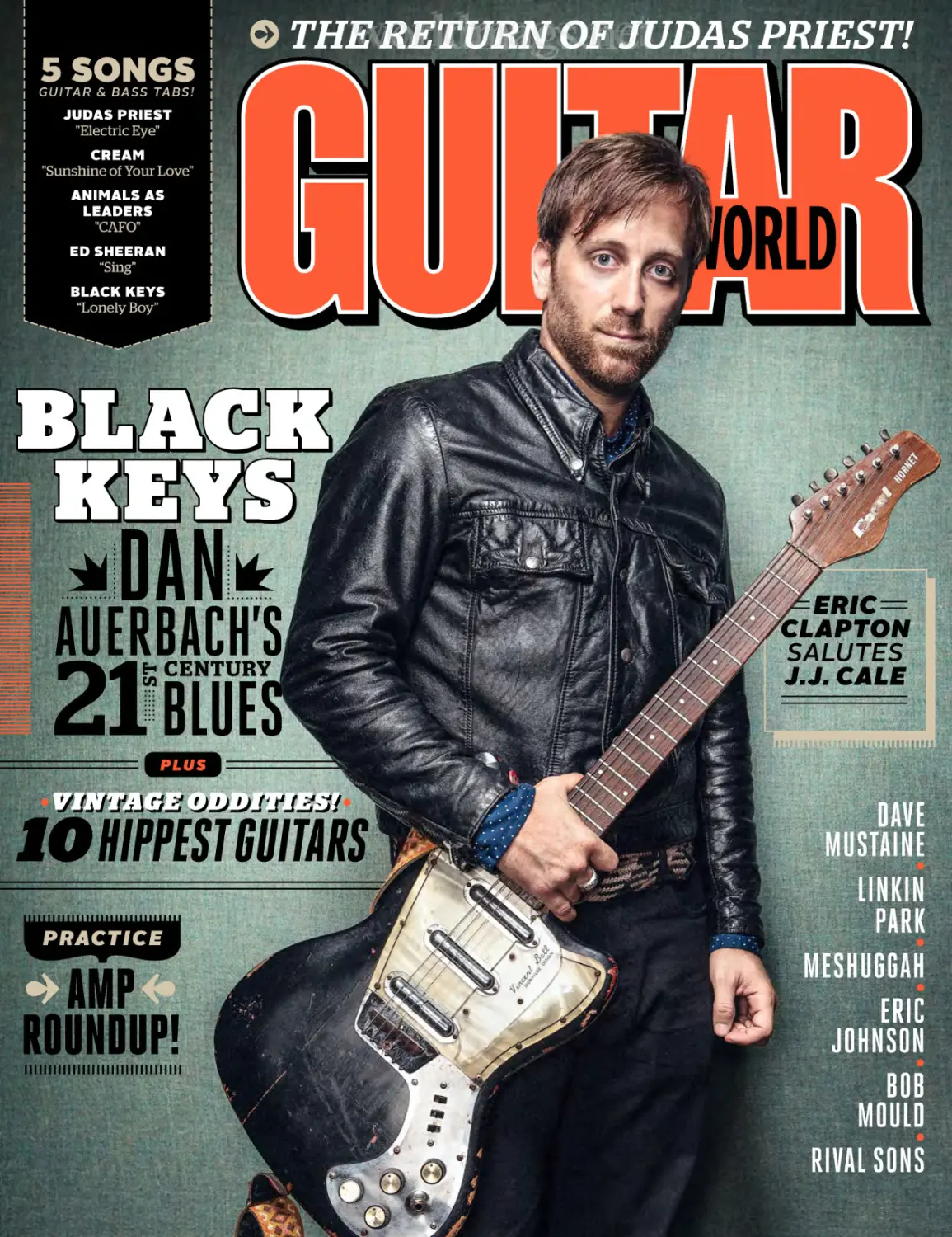
5 SONGS
worldmags.net
THE
RETURN
OFBUILD
JUDAS
PRIEST!
ESSENTIAL
worldmags.net
GUIDE: HOW TO
YOUR PEDAL
BOARD!
G U I TAR & BASS TABS!
JUDAS PRIEST
"Electric Eye"
CREAM
"Sunshine of Your Love"
ANIMALS AS
LEADERS
"CAFO"
ED SHEERAN
“Sing”
BLACK KEYS
“Lonely Boy”
BLACK
KEYS
ST
DAN
AUERBACH’S
21 BLUES
CENTURY
ERIC
CLAPTON
SALUTES
J.J. CALE
P LU S
V I N TAG E OD D I T I E S!
10 HIPPEST GUITARS
P RACT I C E
AMP
ROUNDUP!
DAVE
MUSTAINE
LINKIN
PARK
MESHUGGAH
ERIC
JOHNSON
BOB
MOULD
RIVAL SONS
worldmags.net
worldmags.net
We've expanded our
Our SE line of affordable, quality instruments has expanded to include
electrics, acoustics and now two basses: the SE Kestrel and the SE Kingfisher.
line
© 2014 PRS Guitars / Photos by Marc Quigley
worldmags.net
worldmags.net
worldmags.net
worldmags.net
©2014 TAYLOR GUITARS
B r e a k u p s o n g s f o r me n and t heir
inner demons.
There is no endorsement of Taylor Guitars by the Dept. of Defense, Dept. of the Navy or the U.S. Marine Corps.
worldmags.net
worldmags.netORIGINAL PHOTO BY LANCE CPL. AARON P. MANKIN
MIKE, A COMBAT-SEASONED MARINE, HAD ALWAYS BEEN BRAVE. BUT IT WASN’T UNTIL HE RETURNED
HOME FROM HIS TOUR IN IRAQ, THAT HE REVEALED JUST HOW FEARLESS HE REALLY WAS. BECAUSE
AS SOON AS MIKE STEPPED BACK ONTO U.S. SOIL, HE STEPPED OUT ONTO A HUGE LIMB BY WRITING
AND PERFORMING SONGS THAT UNEARTHED THE KIND OF SUBJECT MATTER MOST RETURNING
SERVICE MEN AND WOMEN NEVER WANT TO TALK ABOUT — REOPENING WOUNDS IN ORDER TO HEAL
THEM. AND THOUGH MIKE REALIZED HE WOULD STIR UP A LOT OF ANGER, DARKNESS AND PAIN, HE
ALSO KNEW HE COULD HELP HIS FELLOW SERVICE MEMBERS COPE WITH THEIR DEMONS IN A WAY
THAT WAS A LITTLE LESS DAUNTING. THROUGH MUSIC MIKE INSPIRES US, AND REMINDS US THAT
THE WORLD NEEDS MORE PEOPLE LIKE HIM. FOR MORE ABOUT MIKE AND OTHER STORIES OF PEOPLE
WITH THE COURAGE TO STEP FORWARD, visit taylorguitars.com
TM
worldmags.net
worldmags.net
“Fretlight is the fastest way to get better.”
Orianthi
ripping on the
E minor blues scale
worldmags.net
worldmags.net
Beat the Learning Curve.
We all get to that point in our playing where we
need to learn something new. Why struggle with
books, charts or YouTube™? See exactly where
the notes are for chords, scales, songs, riffs and
even tablature. You can slow down and loop
any part to really nail it. No matter what you
want to play, Fretlight will get you there faster.
www.fretlight.com
Orianthi is an official endorser of the Fretlight Learning System.
YouTube™ is a registered trademark of Google, Inc.
worldmags.net
worldmags.net
GOOD VIBES.
jimdunlop.com
worldmags.net
worldmags.net
When it comes to portable speakers,
POWERFUL STUDIO
QUALITY SOUND,
ANYWHERE
YOU GO.
there is only one that lets you take
the sound of the studio with you.
Enjoy full power, clear sound, deep
bass and accurate stereo imaging
with iLoud, the first Bluetooth speaker
designed for musicians.
i LO U D
Check your iLoud
nearest location for a
personal demo
40W RMS
2 WAY
BI-AMPED
SYSTEM
10 H O U R S
BAT TERY
POWER
WIRED OR
BLUETOOTH
I K M U LTI M E D I A .COM/I LO U D - GW
GUITAR/
MIC IN
worldmags.net
worldmags.net
The extended 27” scale DC7X is sure to satisfy even the most discriminating ERG
player. Features like its flatter 20” fingerboard radius, superior easy-to-play
neck profile and the deep arm-cut and belly-cut add to the comfort and playability. Active A70 pickups and electronics provide superior tone and definition as
compared to other popular active pickup systems. Available in 3 bridge choices
including Floyd Rose™ trem along with a vast choice of color,wood and other
options allows any ERG player to build a DC7X to your liking. Custom order at
the Carvin Custom Shop, carvin.com.
DC7X FEATURES:
• Maple neck through alder body with smooth neck to body heel
• 27” scale fingerboard with 24 Medium Jumbo frets
• Straight Body Edges on top
• Carvin premium 19:1 ratio locking tuners
• Hipshot hardtail bridge
• Active electronics with volume, tone, 3-way pickup selector
• A70N and A70B humbucking pickups
• Neck: 1.91” wide at nut, 2.62” wide 24th fret
10-day Free trial on custom shop instruments
DC7X
SHOWN WITH:
Deep Aquaburst on Flame Maple
Matching Flame Headstock
Black Ebony Fingerboard
Diamond Abalone Inlays
Black Hardware
Not all active electronics are created equal.
We design and build our own active guitar pickups and modules
in-house using our amp and pro sound engineers to our advantage offering guitar electronics with top-notch components.
This gives you a superior product with full-sized tone and lower
signal-to-noise ratio breaking the typical thin, over-compressed
sound generally associated with active pickup systems.
MADE IN
6 months NO interest
factory direct sales • carvin.com • 800-854-2235
USA
worldmags.net
worldmags.net
worldmags.net
worldmags.net
WHAT DO ALL OF THESE INCREDIBLE PLAYERS HAVE IN COMMON?
NE
FIRMWWARE
15
ALEX LIFESON
Rush
STEVE VAI
Solo Artist
JOHN PETRUCCI
Dream Theater
DWEEZIL ZAPPA
Zappa Plays Zappa
quali of all the
The quality
FX is superb... Great
depth and transparency. Take it for a
test drive, you won’t
be disappointed.
Das Awesome.
The introduction of
the Ultra was akin to
the invention of the
wheel... The Axe-Fx II
is like having four
wheels and racing
into the abyss.
The Axe-Fx
II has
A
become irreplaceable
on stage and in the
studio for me and is
truly a gift of
inspiration for the
modern guitar player.
The Axe-Fx II is all I
use for amp and cab
tones, both live and in
the studio. It is a
quantum leap—
a major milestone in
guitar technology.
STEVE STEVENS
Billy Idol
Atomic Playboys
GUTHRIE GOVAN
The Aristocrats, etc.
NEAL SCHON
Journey, Solo Artist
BRIAN NUTTER
Keith Urban
The sound and feel of
this magic box are so
“real” that witchcraft would appear to
be the only logical
explanation…
Most pleasing!
I've tried every
modeller on this
planet and Fractal is
miles ahead in every
area. It's also flawlessly dependable on
stage + in the studio.
A
The Axe-Fx
II is simply
the most useful and
flexible tone tool you
could ever have. It’s
like the thing is
custom made for
every guitar player.
STEF CARPENTER
Deftones
HERSHEL YATOVITZ
Chris Isaak
FREDRIK THORENDAL
Meshuggah
The Axe-Fx
A
II is a transcendental experience for those who
love developing
tones... We have
found a life partner in
this system.
Matches and even
beats old school. They
captured all the
nuance, mojo and
fideli
fidelity... It is soulful,
rich and alive. This is
the new real thing.
PETE THORN
Chris Cornell
Melissa Etheridge
MISHA MANSOOR
Periphery
A
The Axe-Fx
II is way
beyond just amp
modeling or effects
processing! This is is
the new standard for
guitarists… The new
“must have.”
Awesome! Really
impressed with the
dynamics of the new
update. Great work!
I’d be lost without it in
my studio.
A FX is a mainThe Axe
stay of my rig. No
matter how I use it live
or in the studio, it
always delivers
stunning results.
belie
I simply can’t believe
the Axe-Fx II sounds
as good as it does. I
can’t stop playing
once I start. (Check
out the new THORENDAL amp models!)
TOSIN ABASI
Animals As Leaders
DEVIN TOWNSEND
Devin Townsend Project
CHRIS BRODERICK
Megadeth
A Fx II inspires
The Axe
me to create sounds
that transcend the
conventional guitar
amp. I consider it another instrument,
and indispensable.
You've heard rumors
about this alien black
box? Believe them!
My recent records
and live sound are
direct Axe-Fx.
Future now.
Unbelie
Unbelievable on every
level! The flexibility is
so great that every
player on earth could
have one and I’d still
be able to have my
own unique tone.
REAL TUBE AMP SOUND AND FEEL ▪ 180+ BUILT-IN AMP MODELS ▪ NEW “ULTRA-RES”™ CABS
ONBOARD “TONE MATCHING” & “IR CAPTURE” TOOLS LET YOU CLONE/CREATE ANY TONE
260+ OF THE INDUSTRY’S BEST STOMP & STUDIO EFFECTS INCLUDING 28+ DRIVE PEDALS
QUICK & EASY TO DIAL IN ▪ PRO I/O & RELIABILITY ▪ MAC/PC EDITOR ▪ AND MORE!
www.fractalaudio.com
worldmags.net
worldmags.net
GUTHRIE GOVAN – THE ARISTOCRATS
IN STORES NOW!
GUTHRIE
GOVAN
After two years in meticulous development,
Charvel is pleased to introduce the ultimate
ultra–pro guitar—the Guthrie Govan
Signature model.
Hear Guthrie on
The Aristocrats’
latest release
Culture Clash.
Photo: Tara Stewart
ARTIST SIGNATURE
Series Guitars
charvel.com
© 2014 JCMI. Charvel® and the distinctive headstock designs commonly found on Charvel® guitars are registered
trademarks of Fender Musical Instruments Corporation and used herein under license to JCMI. All rights reserved.
worldmags.net
worldmags.net
CON T EN TS
vol. 35 |
no. 9 |
september 2014
FEATURES
40 judas priest
A few years ago, it looked as though
Judas Priest were finished. But with the
ferocious new album Redeemer of Souls,
the Metal Gods have regained their mojo.
48
The black keys
Dan Auerbach tells how the group made
its latest hit album, Turn Blue, in the midst
of personal hardship, using a handful of
guitars, amps and effects and a whole lotta
spontaneous inspiration.
53 dan auerbach’s gear
The guitarist reveals the guitars, amps and
effects behind his strange musical brew.
58 Weird guitars
They were mutant oddities from an
alternate universe. But in the hands of
Muddy Waters, Dan Auerbach and other
visionary players, these pawnshop rejects
became six-string superheroes.
66 eric clapton
The legend pays tribute to his friend and
inspiration J.J. Cale and talks about The
Breeze, his new star-studded tribute to the
late Oklahoma guitarist and songwriter.
74 neal schon
The long-running Journey guitarist
returns with So U, his new album of hard
rock and fusion.
80 17 best practice amps
Guitar World presents a selection of the
best new and current combos that can
make woodshedding a pure pleasure.
COVER photo BY Jason goodrich
14
gu i ta r wor l d • se p t e m be r 2014
worldmags.net
worldmags.net
io
from S
Patrick
C
m S av
her fro
hristop
a n n a h,
ux Fall
s, S D
GA
John Petrucci
Majesty
Blackjack SLS
Avenger FR-S
SG Futura
JPM7SS
BJSLSAFRAQ
SGFAU5RC-14
GUITAR GALLERY
55-POINT EVALUATION
Sweetwater’s online Guitar Gallery
lets you check out our world-class
inventory of guitars in beautiful
multiple-photo detail. Then, you can
pick the exact guitar you want by
serial number!
Visit Sweetwater.com/guitargallery.
Nearly every bass and guitar that we
stock receives a detailed 55-point
Evaluation by our experts before it’s
shipped. We make sure it looks, sounds,
and plays great right out of the box!
Visit Sweetwater.com/55-point.
SHOWS YOUR ACTUAL GUITAR
2-YEAR WARRANTY**
Total Confidence Coverage™ Warranty
PROVIDES EXCEPTIONAL
PLAYABILITY
FREE PRO ADVICE
We’re here to help! Call today!
(800) 222-4700
Sweetwater.com
FAST, FREE SHIPPING
On most orders, with no minimum purchase!
24 MONTHS SPECIAL FINANCING AVAILABLE
ON SELECT BRANDS, USING YOUR SWEETWATER MUSICIAN’S ALL ACCESS PLATINUM CARD, THROUGH AUGUST 31, 2014*
*Subject to credit approval. Minimum monthly payments required. Call your Sweetwater Sales Engineer for details or visit Sweetwater.com/financing.
**Please note: Apple products are excluded from this warranty, and other restrictions may apply. Please visit Sweetwater.com/warranty for complete details.
worldmags.net
worldmags.net
CON T EN TS
vol. 35 |
no. 9 |
september 2014
36
Meshuggah
DEPARTM ENT S
18 Woodshed
20 Sounding Board
Letters, reader art and Defenders of the Faith
23 Tune-Ups
Linkin Park, Bob Mould, My Playlist with
Goatwhore’s Sammy Duet, Dear Guitar Hero
with Bruce Kulick, Inquirer with Dave Mustaine,
Meshuggah’s Set List and much more.
89 Soundcheck
89. Epiphone Casino Coupe & Riviera
Custom P93
91. ESP E-11 ST-2
92. Visual Sound V3 Series H2O Liquid
Chorus & Echo pedal
94. Blackstar ID:Core Stereo 10 combo
96. G&L Tribute Series Fallout
98. Ibanez Tube Screamer TS808DX
98. Celestion A-Type 12-inch speaker
100 Columns
100. Full Shred
by Marty Friedman
102. Thrash Course
by Dave Davidson
104. String Theory
by Jimmy Brown
106. Metal for Life
by “Metal” Mike Chlasciak
108. Talkin’ Blues
by Keith Wyatt
110. Hole Notes
by Dale Turner
112. In Deep
by Andy Aledort
116. Making Tracks
by Tom Beaujour
162 It Might Get Weird
Shawn Bowen’s OmCaster guitar
TRANSCRIBED
“Electric Eye”
by Judas Priest
“Sunshine of Your
Love”
“CAFO”
“Lonely Boy”
“Sing”
by Animals as Leaders
by the Black Keys
by Ed Sheeran
page
118
16
page
128
gu i ta r wor l d • se p t e m be r 2014
page
134
page
144
page
148
t r av i s s h i n
by Cream
worldmags.net
worldmags.net
worldmags.net
worldmags.net
WOODSHED
vol. 35 |
no. 9 |
september 2014
Old, Weird and Awesome
I love my iPhone, Twitter, Facebook and all the
modern ways we exchange news and communicate, but
they can also be annoying as all hell. Not only do I feel
like I’m never really alone (my cellphone is blowing
up as I write this), but it also seems like information
is exchanged a little too fast. Nothing stays unique for
long, and even the most novel ideas seem to get used and
discarded before you can find the proper emoticon to
express your approval or disgust.
Maybe that’s why more and more musicians are
digging into the past for ideas, music and instruments so
deep and strange that they defy trendy analysis or ironic one-sentence captions.
Music critic Greil Marcus called this stuff “old, weird America,” a term coined
to describe the often eerie country, blues and folk music featured on the famed
and influential 1952 compilation Anthology of American Folk Music (Smithsonian
Folkways). While Greil used the term to reference a very specific moment in
music history, I’m beginning to think almost anything that was released before the
development of the World Wide Web qualifies.
Guitarist Dan Auerbach of the Black Keys is certainly no stranger to the allure
of this fascinating “old weird” aesthetic, and he has done a brilliant job of recasting
it for our current times. Dan’s respect for and mastery of the swampy folk and
blues of late bluesmen like Junior Kimbrough and Howlin’ Wolf is evident in every
guitar lick he plays, but his music might be just another corny museum piece if
he didn’t infuse it with just the right amount of modernity. In this month’s cover
story, Dan discusses his tasteful fusion of the mysterious old and the exhilarating
new, and explains how that fusion makes his band sound both timeless and timely.
In that same spirit, we decided to celebrate some of our favorite “old weird”
guitars in writer Chris Gill’s wonderful roundup of mutant six-string oddities,
which begins on page 58. During the early evolution of the electric guitar, a
number of companies produced instruments so quirky and strange that, through
modern eyes, they appear contemporary if not downright futuristic. And like the
Black Keys’ music, they remain so cool and interesting that not even the most
intense social networking will diminish their appeal.
Old and weird is now cool? Maybe there’s hope for the Guitar World staff yet!
—BRAD TOLINSKI
Editor-in-chief
EDITORIAL
EDITOR-IN-CHIEF Brad Tolinski
MANAGING EDITOR Jeff Kitts
EXECUTIVE EDITOR Christopher Scapelliti
Senior EDITOR Brad Angle
TECH EDITOR Paul Riario
associate EDITORS Andy Aledort, Richard Bienstock,
Alan di Perna, Chris Gill
CONTRIBUTING WRITERS Tom Beaujour, Sammi Chichester,
Mike Chlasciak, Dave Davidson, Ted Drozdowski, Dan Epstein,
Marty Friedman, Paul Hanson, Randy Har ward, Eric Kirkland,
Joe Matera, Dale Turner, Jon Wiederhorn, Keith Wyatt
Senior Video Producer Mark Nuñez
MUSIC
senior MUSIC EDITOR Jimmy Brown
MUSIC transcriptionist Jeff Perrin
MUSIC ENGRAVER Patricia Corcoran
ART
design director Stephen Goggi
Art director Patrick Crowley
GRAPHIC DESIGN Camille Bugden
Photography Director Jimmy Hubbard
digital imaging specialist Evan Trusewicz
DESIGN INTERN Natalie Skopelja
ONLINE
managing EDITOR Damian Fanelli
EDITORS Brad Angle, Jeff Kitts
PRODUCTION
PRODUCTION COORDINATOR Nicole Schilling
BUSINESS
Vice President, General Manager Bill Amstutz
bamstutz@nbmedia.com
Group Publisher Bob Ziltz
bziltz@nbmedia.com
ADVERTISING DIRECTOR Jason Perl
646-723-5419, jason@guitar world.com
ADVERTISING SALES Scott Sciacca
646-723-5478, scott@guitar world.com
advertising sales Anna Blumenthal
646-723-5404, anna@guitar world.com
Group Marketing Director Christopher Campana
646-723-5423, ccampana@nbmedia.com
Sr. Marketing Manager Stacy Thomas
646-723-5416, sthomas@nbmedia.com
CONSUMER MARKETING
Consumer Marketing Director Cr ystal Hudson
Audience Development Coordinator Kara Tzinivis
Fulfillment Coordinator Ulises Cabrera
Marketing Coordinator Dominique Rennell
NEWBAY MEDIA CORPORATE
PRESIDENT & CEO Steve Palm
CHIEF FINANCIAL OFFICER Paul Mastronardi
CONTROLLER Jack Liedke
VICE PRESIDENT OF PRODUCTION & MANUFACTURING Bill Amstutz
VICE PRESIDENT OF DIGITAL STRATEGY & OPERATIONS Robert Ames
VICE PRESIDENT OF AUDIENCE DEVELOPMENT Denise Robbins
VICE PRESIDENT OF CONTENT & MARKETING Anthony Savona
VICE PRESIDENT OF HUMAN RESOURCES Ray Vollmer
SUBSCRIBER CUSTOMER SERVICE: Guitar World Magazine
Customer Care, P.O. Box 469039, Escondido, CA 92046-9039
Online: w w w.guitar world.com/customerser vice
Phone: 1-800-456-6441
Email: guitar world@pcspublink.com
BACK ISSUES: Please visit our store, www.guitarworld.com/store,
or email onlinestore@nbmedia.com
LIST RENTAL: 914-925-2449, danny.grubert@lakegroupmedia.com
Reprints and permissions: For article reprints and or e-prints,
please contact our Reprint Coordinator at Wright’s Reprints, 877652-5295, or NewBay@wrightsmedia.com
GUITAR WORLD (ISSN 1045-6295) is published 13 times a year, monthly plus Holiday issue following December issue, by NewBay Media,
LLC, 28 East 28th Street, 12th Floor, New York, NY 10016. Phone: 212.378.0400. Fax: 917.281.4704. Web Site: www.nbmedia.com. Periodicals
postage paid at New York, NY, and additional mailing offices. Newsstand distribution is handled by Time Warner Retail. Subscriptions:
One-year basic rate (12 issues) US: $14.95. Canada: US$29.95. Foreign: US$49.95. Canadian and foreign orders must be prepaid. Canadian price includes postage and GST #R128220688. PMA #40612608. Subscriptions do not include newstand specials. POSTMASTER:
Send change of address to Guitar World, P.O. Box 469039, Escondido, CA 92046-9039. Ride-along enclosure in the following edition(s):
None. Standard enclosure: None. Returns: Pitney Bowes, P.O. Box 25542, London, ON N6C 6B2, Canada. Entire contents copyright 2012,
NewBay Media L.L.C. All rights reserved. Reproduction in whole or in part is prohibited. NewBay Media L.L.C. is not affiliated with the
companies or products covered in Guitar World. Reproduction on the Internet of the articles and pictures in this magazine is illegal
without the prior written consent of Guitar World. Products named in the pages of Guitar World are trademarks of their respective
companies. PRODUCED IN THE UNITED STATES OF AMERICA. SUBSCRIBER CUSTOMER SERVICE: Guitar World Magazine Customer Care,
P.O. Box 469039, Escondido, CA 92046-9039. Online: www.guitarworld.com/customerservice. Phone: 1-800-456-6441. Email guitarworld@
pcspublink.com. BACK ISSUES: www.guitarworld.com/store REPRINTS: NewBay Media, LLC, 28 East 28th Street, 12th Floor, New York, NY
10016. Phone: 212.378.0414
18
gu i ta r wor l d • SE P T E M BE R 2014
EDITORIAL AND ADVERTISING OFFICES
28 East 28th Street, 12th Floor, New York, NY 10016
(212) 768-2966; FA X: (212) 944-9279
NEWBAY MEDIA, LLC
28 East 28th Street, 12th Floor, New York, NY 10016
www.nbmedia.com
©2014 NewBay Media, LLC. All rights reser ved. No par t of
this magazine may be used or reproduced without the written
permission of NewBay Media, LLC.
worldmags.net
worldmags.net
HEAR MARK MORTON
ON LAMB OF GOD’S LATE ST
RELE ASE, RESOLUTION
jacksonguitars.com
Photo: Scott Uchida
©2014 JCMI. Jackson ® and Dominion™ are trademarks of Jackson/Charvel Manufacturing, Inc.
All rights reserved.
GRAB THE NEW MARK MORTON SIGN
ATURE MODELS
AT AN AUTHORIZED JACKSON RETAILE
R OR
CHE CK ’EM OUT ONL INE AT JACKSON
GUITARS.COM
PRO DOMINION, BLACK BEAUTY
PRO DOMINION, IVORY
DX2, TRANSPARENT BLACK
DX2, SATIN BLACK
Mark Morton, Lamb of God
worldmags.net
worldmags.net
SOUNDI NG BOARD
Got something you want to say? EMAIL US AT: Soundingboard@GuitarWorld.com
Aced Out
Flying High
Again
Thanks for the great July
issue, especially the interview
with Jimmy Page. He was the
inspiration for me picking up the
guitar and has given me a lifetime
of enjoyment.
—Mark Leander
Loved the details in the Jimmy
Page interview, especially as an
acoustic fingerstyle player of
many years. On page 158, there
is a perceptive question about
whether an unwound G string
was used on the acoustic guitars
played by Page. Page is a bit foggy
on the reply, but Led Zeppelin
III and Houses of the Holy use
extra-light unwound strings on
the G. “Over the Hills and Far
Away” is near-impossible to
“replicate” as smoothly with a
wound G—Page’s acoustic sound
on Roy Harper’s “Stormcock” is
similar. It is slinky and super fast,
allowing for swift, near-electric
hammering on phrasing and, to
coin a (bad) phrase, creates a kind
of “English folk rock” tone that,
in large measure, demonstrates
why Led Zeppelin is so much
more than merely a blues or metal
behemoth in musical history.
—David Podgurski
Congrats to Ace Frehley for
being “clean, sober, engaged to
a pretty blonde and enjoying
life” [July 2014]. I do have to
take issue with his statement
that Paul Stanley and Gene
Simmons were afraid of “history
repeating itself” (referring to the
1996 reunion tour) by refusing
to perform with Frehley and
Criss at the Rock and Roll Hall
of Fame Induction Ceremony.
While Frehley and Criss deserve
the credit for Kiss’ early success,
they can no longer claim credit
for the success that the current
lineup maintains. Eric Singer and
Tommy Thayer add a cohesive
element to Kiss that was sadly
lacking in the Seventies and
Eighties. Kiss continually sells
out concert arenas and their
annual Kiss Kruise. It’s common
to see multigenerational fans at
their concerts, and in my opinion,
the group is as popular, if not
more popular, than they were in
past decades—and that is due to
the current line-up.
—Frances Stevens
then scantly a week later (and
not that Pagey can’t be tasteful)
hearing Jeff Beck’s Truth album
and being blown away again by
his melodic approach and his
use of space. “Playing fast is only
cool when you can’t do it” is
something every aspiring musician should hear.
—Leo Muzzy
Ink Spot
Not Happy
I’ve been purchasing Guitar
World magazine for years and
love the stories, tabs, columns,
etc. I have to say, though, that a
drug test should be given to the
person who made the decision to
transcribe “Happy” by Pharrell
Williams in the issue to find out
what they’re on. Either that or a
psych test. You, sir, are an idiot!
—Sean Fontenot
Sixx Offender
Full
Agreement
Hats off to Marty Friedman on
the August edition of his Full
Shred column. I have no familiarity with Mr. Friedman’s work,
but his advice to young players
is a message that bears repeating. It has been said before in
many different ways and attributed to various stellar artists
(“technique is cheap,” “learn all
you can, then forget it and just
play”), but I think Marty presented the idea in a very humble
and honest way. I too can recall
being blown away by Jimmy
Page’s blazing velocity, and
readers the finger [Nikki Sixx].
The only thing I liked about this
issue was Ben Bauer’s “Death of
Decency” guitar on the last page.
How fitting!
—D. Swadley
I’m usually not a letter writer,
but I was very disappointed in
the June issue. When I got it, I
hoped in vain that there would be
something of interest for those
who like blues and classic rock,
but instead we got a photo on the
Contents page of a foul-mouthed,
tattooed moron giving all your
I had the idea to do a Jolly Roger
with a skull and guitars crossed
instead of bones. Eddie Van
Halen has always been one of
my favorite players, so his blackand-yellow Charvel was the first
choice. And there is something
about Jimi Hendrix’s white Strat
that’s always lured me. If you look
close, the Fender logo and printing
is backward, just like the Tribute
Strat, but since I used a mirror to
take the photo, it looks correct.
Also, the Eagles are my alltime favorite band, and I always
wanted the Hell Freezes Over devil
somewhere—he just seemed to fit
under the guitars. Ben Reiter at
Broken Clover Tattoo in Tucson
does all my work.
—Tad Porter
Got a tattoo of your
favorite band or guitarist you
want to share with us? Send a
photo of your ink to soundingboard@guitarworld.com and
maybe we’ll print it or post it on
our Facebook page!
Send letters to: The Sounding Board, Guitar World, 28 East 28th Street, 12th Floor, New York, NY 10016, or email us at Soundingboard@guitarworld.com.
All subscription queries must be emailed to guitarworld@pcspublink.com. Please do not email the Sounding Board with subscription matters.
20
gu i ta r wor l d • se p t e m be r 2014
worldmags.net
worldmags.net
Stay connected with Guitar World on
&
and get the latest guitar news, insider updates, staff reports and more!
Reader
ART
of the Month
If you created a
drawing, painting
or sketch of your
favorite guitarist
and would like
to see it in an
upcoming issue of
Guitar World, email
soundingboard@
guitarworld.com
with a scan of
the image!
m i cha el schenk er by brian bailey
DEFENDERS
ritc hie blac kmore by jeremy w ilson
of the Faith
Bob Lohr
David Philip
Andrew Caballero
AGE 33
HOMETOWN Largo, FL
GUITARS 2013 Gibson Les Paul Studio
Deluxe II, Fender Stratocaster HSS
SONGS I’VE BEEN PLAYING Jimi
Hendrix’s “Voodoo Child,” Van Halen’s
“Runnin’ with the Devil,” Jeff Beck’s
“Going Down”
GEAR I MOST WANT Gibson Joe
Bonamassa gold top, Music Man JP6,
Marshall stack
AGE 24
HOMETOWN Brooklyn, NY
GUITARS Ibanez S520EX and RG2EX2,
Davison seven-string, Sterling by Music
Man JP60
SONGS I’VE BEEN PLAYING Sikth’s “Peep
Show,” the Dillinger Escape Plan’s “Gold
Teeth on a Bum,” Periphery’s “Insomnia”
GEAR I MOST WANT Bare Knuckle Juggernaut pickups, Ibanez RG8 eight-string,
Boss ME-70
AGE 15
HOMETOWN Las Vegas, NV
GUITARS ESP LTD Viper, Schecter
Omen, B.C. Rich Virgin VG1
SONGS I’VE BEEN PLAYING Metallica’s
“The Four Horsemen,” Boston “Foreplay/Long Time” and anything by the
Fall of Troy
GEAR I MOST WANT Line 6 FM4,
carved top Autumn Burst Gibson SG
Are you a Defender of the Faith? Send a photo, along with your answers to the questions above,
to defendersofthefaith@guitarworld.com. And pray!
guitarworld.com
21
worldmags.net
worldmags.net
1624T DUAL-TONE
ABSARA AUDIO, NEW YORK
MADE IN THE USA
1x12 | 24WATTS | 6973 TUBES | 34LBS
SuproUSA.com facebook.com/SuproUSA
TUNE-UPS
worldmags.net
worldmags.net
N e ws
26
“I want to pump
new blood into
riff-based
rock and roll.”
p lay list
N ews
DGH
inquirer
setlist
28
30
32
36
38
Delson
Linkin
Park
Go for
the Kill
The alt-rockers get aggro
with The Hunting Party.
r i va l s o n s : j i m m y h u b b a r d ; B r u c e k u l l i c k : a n g e l a b o at w r i g h t
By Dan Epstein
Shultz (left)
and Parish
PHOTOs BY jermey danger
The phrase “our heaviest
album yet” has been uttered so
many times by so many bands that
it’s become a cliché. But in the case
of The Hunting Party, Linkin Park’s
sixth and latest full-length, there’s
some truth to the trope.
Recorded over an intense eight
months at Los Angeles’ Larrabee
Sound and EastWest Studios, The
Hunting Party is the band’s first selfproduced album and its most speaker
shredding. Linkin Park have jettisoned the experimental, electronicoriented approach of 2010’s Living
Things and 2012’s A Thousand Suns
and created 12 bracing tracks of
guitar-driven rock. The band’s trademark melodicism is still apparent on
tracks like “Wasteland,” “Mark the
Graves” and “A Line in the Sand,” but
this time it’s anchored to a six-string
aesthetic that’s genuinely fierce.
“Heavy is such a meaningless
term,” says Linkin Park guitarist
Brad Delson. “It’s too ambiguous,
and it also has too much baggage
associated with it. What I can say is
that this is an aggressive record, and
it has a definite take-no-prisoners
attitude about it.”
The Hunting Party also has more
guitar solos on it than all of Linkin
guitarworld.com
23
NEWS + NOTES
Park’s albums put together, a
fact that took even Delson by
surprise. “My rule as a guitar
player is always to do what’s
best for the song, whether it’s
being more laidback or, in the
case of this record, more wild
and in the foreground,” he says.
“I kind of realized toward the
end of the album that there’s
a solo on every song, and that
wasn’t even intentional. But
there were so many times where
I would hear the track and say,
‘Let me solo on it!’ Like the song
‘War’—it’s so fast and aggressive, it just made me want to
tear on that at, like, 100 miles an
hour. One thing that I’m proud
of, though, is that each solo is
really different from the next.”
Though Delson has remained
a Paul Reed Smith devotee
throughout his career, the bulk
of his guitar tracks on the album
were recorded using a 1962
Fender Custom Shop Stratocaster straight into an Orange
TH100 head. “I’m really specific
about guitar tones, because
I’ve been playing guitar and
worldmags.net
worldmags.net
“Heavy is such a meaningless term.”
listening to guitar-driven music
for most of my life,” Delson
explains. “For me, every guitar
tone has a connotation—you
associate a certain guitar tone
with a certain genre or certain
album. It was not a conventional choice to use the Strat
and the Orange for the heavier
parts, but we liked it because it
had a more punk, brash, defiant
kind of tone. If I played some
of these songs through a more
obvious setup, it would have
totally changed the feeling of
the songs.”
The Hunting Party is also
the first Linkin Park album to
feature outside guests. Rapper
Rakim makes an appearance, as
do guitarists that include Rage
Against the Machine’s Tom
Morello, System of a Down’s
Daron Malakian and Helmet’s
Paige Hamilton. “It wasn’t
like, ‘Oh, let’s get our friends,’”
Delson explains. “It was more
like, ‘This is an artist that we
deeply admire.’ We just reached
out and said, ‘Hey, we’re working on something and we’d love
your help with it. We’d love to
learn more about your process
and collaborate.’ Not only are
we really proud of the results
but it was fun hearing those
people describe their process. A
lot of times it’s radically different from the way we go about
constructing a song. We want
to learn and grow, and the only
way to do that is to surround
yourself with smart people.”
Ana Popovic Finds Her Groove
The blues-blazer brings the funk to her recent projects.
The blues is suffering from groove
anemia, says Stratocaster-slinger Ana
Popovic, fresh from the spring 2014 Experience Hendrix tour. “When you hear blues
today, what’s missing is the funk,” she
explains. “A good blues song should have a
rhythm section like James Brown’s.”
For proof, she points to Albert Collins
and Albert King, the two supremely funky
deities of the genre who helped inspire Can
You Stand the Heat, her ninth, and latest,
album. The disc features her own Memphisbased nine-piece ensemble, anchored by
co-producer and veteran drummer Tony
Coleman, who played with both Alberts
and has spent the past 20 years bringing the
booty shake to B.B. King’s big band. Fellow
producer Tommy Sims is the smooth yin to
Coleman’s greasy Stax-stoked yang. The cowriter of Eric Clapton’s Grammy-winning
24
gu i ta r wor l d • Se p t e m be r 2014
“Change the World,” Sims provides a hooksmart modern-pop framework for numbers
like “Mo’ Better Love.”
What Popovic brings is the heat in the
set’s title, whether she’s interpolating
chicken-scratch rhythms with bent-note
melodies in “Boys Night Out” or tearing
out the keening, wah-wah-attenuated lines
that scream through the Collins tribute,
“Ana’s Shuffle,” like a bottle rocket.
For Popovic, blending the old and new—
as well as mixing jazz-inspired melodies—is
a mission she began as a child in her native
Serbia when she got her first Strat at age
12 and fell under the spell of bluesman
Ronnie Earl. In her late teens, her passion
for the groove-propelled sounds of John
Scofield and Kevin Eubanks led her to study
jazz guitar in the Netherlands, where she
launched the Ana Popovic Band.
Since then, she’s pursued her love of the
blues across the world’s stages. Two years
ago, it led her to Memphis, where Popovic
relocated with her family and, more recently, to the Hendrix tribute tour, on which
she conjured Jimi’s spirit alongside Buddy
Guy, Dweezil Zappa, Jonny Lang and other
six-string heavies.
Popovic says,
“Playing Hendrix’s
music helps me
focus on what’s
really important
in my own music:
exploring jazz and
fusion to expand
the sound of the
blues and to grow
as a songwriter
and soloist.”
mark goodman
By Ted Drozdowski
200/331
EC-331 BLK
SERIES GUITARS
EC-331 SW
EC
EC-331 BLKS
EC-331FR SW
EC-331FR BLK
EC-331FR BLKS
worldmags.net
worldmags.net
EC-200 TSBS
EC-200 VWS
EC-200 BLKS
LTD EC-331FR
LTD EC-331
Starting at only $249, LTD’s new EC-200 and EC-331 Series
offer tremendous value in high-quality instruments. Choose
between the clear tones and classic styles of the EC-200
Series with passive pickups, or try out the edgy attack and
raw power of active pickups in our EC-331 guitars. Either way,
if you’ve searched for a guitar you love — and can actually
afford — the LTD EC-200 and EC-331 Series were made just for
LTD EC-200
you. Available today at your Authorized ESP Dealer or online
at espguitars.com/ECseries.
Learn more at:
espguitars.com
NEWS + NOTES
worldmags.net
worldmags.net
Rival Sons Fight to Save Rock
and Roll
The California group keeps garage rock alive on
Great Western Valkyrie. By Ted Drozdowski
Guitarist Scott Holiday of
California’s Rival Sons has a
mission. “I want to pump new blood into
riff-based rock and roll,” he declares. And
within the sonic hemoglobin he sheds all
over his band’s new album, which bears
the aptly dramatic title Great Western
Valkyrie, are roiling thunderclouds of
fuzztone, screaming and soaring slide
guitars, and enough passages of effectswoven psychedelic transcendence to dial
the Wayback Machine to 1967.
Holiday’s musical foundation includes
Page-Beck–era Yardbirds and bands like
the Seeds, the Blues Magoos, the Knickerbockers and other Sixties-era garage-rock
acts. But he brings a sleek modernity to
the game that balances textural command with pop-smart tune craft. “I like to
create songs that get played on the radio,”
Holiday says. “Not because I want Rival
Sons to be the biggest band in the world
but because you can play to more people.
And playing to a lot of people is fun.”
Onstage is also where the quartet’s
Mr. Hyde emerges. They bring anarchic
intensity to Great Western Valkyrie numbers, like “Secret,” where Holiday’s gritty
hook buoys singer Jay Buchanan’s dustdappled Robert Plant howl. They also
stretch the atmospheric “Destination on
Course” into an improvisational odyssey
that blends bawling slide with shimmering single-note melodies, sandpaper blues
licks and grenade-blasts of distortion.
The stage is also where Holiday opens
his sonic trick bag wide, using two sizeable pedal boards to recreate the cyclone
of guitar sounds that gusts across the
Rival Sons’ five releases. “I approach
effects the same way I play guitar,” he
says. “I don’t wank. I’d rather play two
notes that make people feel happy
or angry or sad, and I’ll use only
the effects on each song that I
need to take it to a place where
it comes alive.”
26
gu i ta r wor l d • Se p t e m be r 2014
AXOLOGY
• GUITARS Kauer Banshees
• AMPS Two Orange OR50s
• EFFECTS (partial list) Dunlop MC404 CAE wah,
Z.Vex Fuzz Probe, Basic Audio Gnarly Fuzz,
KR Megavibe, Way Huge Ring Modulator,
Keeley Electronics Time Machine Boost,
Analogman King of Tone, Strymon Flint
tremolo and reverb pedal, Demeter Tremulator,
Option 5 estination Rotation
• STRINGS, PICKS, SLIDES Dunlop .11–.56 gauge,
Dunlop heavy Tortex, brass and stainless
steel JetSlides
PHOTO BY JIMMY HUBBARD
worldmags.net
worldmags.net
Introducing D’Addario NYXL:
the next generation of electric strings.
Engineered with unprecedented
strength, these strings stay in tune
better, bend further, and sing louder
than anything you’ve ever played.
Get ready for an encore.
Your strings already are.
nyxlstory.com | #nyxl
NEWS + NOTES
What's on My iPod?
Playlist
worldmags.net
worldmags.net
Sammy Duet of Goatwhore
1
“Snowblind”
Black Sabbath
“This is the first song I learned
to play. I couldn’t nail the solo,
but I had 87 percent of the
riffs down. My childhood friend
and I had a contest to see who
could learn it better. He won.”
2
“Cause of Death”
Obituary
“When I heard this in 1990,
it changed everything. It was
like Celtic Frost taken to the
next level. Plus, the solo at the
opening of the song sounds
like a funeral procession. And
that, kiddies, is death metal.”
3
“The Usurper”
Celtic Frost
“This song freaked me out.
This was the first time I had
heard a death grunt, Oooh!
This song changed the way I
defined the word heavy.”
4
“Tight Black
Pants”
Plasmatics
“Been on a Wendy O. Williams
kick lately. This is badass punk
rock that makes you want to
break TVs and saw someone in
half. Plus, she’s singing about
having a threesome in an alley.”
5
“Die Anarchische
Befreiung der
Augenzeugenreligion”
Bethlehem
“The original and most underrated ‘suicidal black metal’
band of all time. The riffs on
the whole Dictius Te Necare
album still amaze me: bleak,
schizophrenic and evil. This
song is one of my favorites, and
the vocalist sounds like he is
literally being burned alive.”
Goatwhore’s latest album, Constricting Rage of the Merciless, is out now on Metal Blade Records.
28
gu i ta r wor l d • Se p t e m be r 2014
PHOTO BY PETER BESTE
worldmags.net
worldmags.net
Weapon of choice
Richard Fortus reloads with the V-Type
Performing on the front line with Guns N’ Roses requires legendary tone.
And when Richard Fortus needs extra firepower he calls on the V-Type,
a thrilling new 12" guitar speaker from Celestion, built on 90 years of
experience, know-how and passion for great sound.
Find out more
celestion.com
NEWS + NOTES
worldmags.net
worldmags.net
Eric Johnson
Releases Europe Live
The Austin guitarist road tests his new carefree
approach. By Brad Tolinski
“but I got too hung up on examining everything under a microscope. Now I’m in recovery,” he
says with a laugh. “I’m changing
my whole deal. I started listening to solos I spent an entire
week crafting and recording, and
comparing them to versions I had
done in one take. To my surprise, I
started liking the first takes better.
Then it dawned on me: they had
the joy of making music in them.”
Johnson then decided to set
aside the studio album he had
been laboring over and record a live album
that would put his freewheeling philosophy
to the test. While not a complete departure,
Europe Live is undeniably the most
exhilarating album of Johnson’s career. On
songs like “Sun Reprise” and the 11-minute
“Last House on the Block,” he soars like
never before, recalling the tight-but-loose
improvisations of Jimi Hendrix, John
McLaughlin or Cream-era Eric Clapton.
But will this new attitude last? To make
sure he doesn’t backslide, the Texas guitarist explains he’s currently working with
jazz guitar genius Mike Stern on a new
album filled with fresh, improvisational
fury. “Mike and I recorded a whole studio
album in three days, which was a totally
new experience for me,” he says. “But if
you want to build a new muscle, you gotta
work it.”
Bob Mould Gets Back to His Old Ways
The pop-punk pioneer returns to form with Beauty & Ruin. By Richard Bienstock
Beauty & Ruin, the new
album from legendary
singer and guitarist Bob Mould,
has been described as a “compact
epic,” and indeed, its 12 succinct
tracks run a gamut of moods and
emotions. The record, which
Mould began writing in October
2012, shortly after his father
passed away, “touches on a
handful of ideas,” he says. “The
first one is loss—death or illness
or any kind of upheaval. The
next phase is reflection, which
leads to the notion of acceptance.
And the last three songs deal
with the future—turning the
corner and getting back to your
previously scheduled life.”
Of course, he adds, “You
don’t have to listen to it that
30
gu i ta r wor l d • Se p t e m be r 2014
way. You can unpack the concept, or you can just enjoy the
energy and the emotion and the
crazy-ass guitar tones.”
It is Mould’s “crazy-ass
guitar tones” that have always
been his particular calling card.
“It’s a unique sound,” he says of
the droney, distorted attack. “A
lot of grit and a lot of uncontrollable harmonics. I like that
sound. That’s me.”
That sound, which Mould
shelved some years back in favor
of electronica and dance music,
is in full force again on Beauty
& Ruin. The songs— including
the brooding “Low Season,”
the jangly “I Don’t Know You
Anymore” and the self-deprecating “Hey Mr. Grey”—are
mostly set to the type of glinty,
noisy melodic pop-punk that he
pioneered with Hüsker Dü in the
Eighties and refined in the Nineties with Sugar.
Of the last song, Mould says,
“Obviously, I am Mr. Grey. I’m
quite aware of who I am. And
I’m able to laugh at it, that
whole ‘get off my yard’ kind of
thing. But there’s also a credo
at the end: ‘Find the life that’s
right for you now.’ ”
It’s a credo that also sums
up Beauty & Ruin. “The album,”
Mould says, “is like this cold,
slow, grey piece of work that,
through loss, reflection, acceptance and, finally, the future,
we end up with this sort of fast,
warm, sunny kind of outlook.”
E r i c j o h n s o n : M a x C r a c e ; b o b m o u l d : s a l ly g r ay m a h o n c o u r t e s y o f K E X P
When Eric Johnson returned to the
studio after the release of 2010’s Up
Close, he found himself in a hauntingly
familiar situation. As his own worse critic,
he found himself, once again, unhappy
with his sound and his progress as a
composer and improviser. He had been
down that road many times before. After
the success of his 1990 Grammy-winning
Ah Via Musicom album, featuring the
classic guitar instrumental “Cliffs of
Dover,” it took him six years to deliver the
follow up, Venus Isle, and then another nine
years to release 2005’s Bloom.
His discontent would be easier to understand if Johnson was a mediocre player,
but for the past three decades he has been
hailed by no less than Steve Vai, Brad
Paisley and Prince as one of the greats.
Ironically, the perfectionism that made him
a guitarist’s guitarist routinely crippled his
progress as an artist.
“My career has been about refining a
style and an approach,” Johnson explains,
worldmags.net
worldmags.net
UNLIMITED SONIC POSSIBILITIES
+ All-in-one unit with instant user-customizable
tunings, COSM instrument modeling, and flagship
quality multi-effects
+ Advanced USB audio/MIDI interfaces lets you
capture GP-10 tones directly to your DAW and
even play software synths from your guitar
+ Standard ¼-inch guitar input allows for use
of amps and effects
+ Get videos, artists tips, and free gig-ready patches
created by top pro guitarists at BossToneCentral.com
worldmags.net
worldmags.net
DEAR GUITAR HERO
32
gu i ta r wor l d • Se p t e m be r 2014
P H OTO s B Y a n g e l a b o at w r i g h t
worldmags.net
worldmags.net
bruce kulick
He’s a former Kiss guitarist from their makeup-free era in the late Eighties and early
Nineties. But what Guitar World readers really want to know is…
Interview by Brad Angle
What do you consider your
proudest guitar moment on
record? —Chris
With Kiss, I think the solo in “Tears Are Falling” [from Asylum, 1985],
which is melodic and tricky, and the acoustic solo on “Forever” [from
Hot in the Shade, 1989], which shows another side of my style. And
then something like “Unholy” [from Revenge, 1992], where I’m really
balls to the wall in your face, using a wah-wah and distortion. I really got
a chance to show the range of my playing during my Kiss years.
What is the story behind
your new Rock N’ Roll
Relics guitar?
—Michael Steadman
I was first introduced to Billy
Rowe, the owner of Rock N’ Roll
Relics, at the NAMM show, and
I saw that he was very talented
at taking vintage Gibson-style
guitars and reliquing them. And it
made me think immediately of my
Les Paul Junior from the [1992]
Revenge/Alive III tour. It was one
of the most beat-up Les Paul
Juniors ever. I got it at Guitars R
Us on Sunset Boulevard, and we
recorded with it a lot. Gene [Simmons] loved it. Kiss even rented
it for [1998’s] Psycho Circus, because they wanted that sound. It
had a humbucker in it—a Seymour
Duncan JB—but there was just
something about the mahogany
body. It had “that sound.” So Billy
from Rock N’ Roll Relics was the
perfect person to make a copy
of it. The new model has all the
elements: a mahogany flat body
and rosewood neck and a humbucker—an Antiquity JB, because
obviously a new JB wouldn’t look
really good in a reliqued guitar.
Because this is a small company,
we’re just doing this limited run of
25, and it’s available online [rocknrollrelics.net]. We’ve sold half of
them already.
present that argument to them,
which according to Paul was a
non-starter. I’m still extremely
flattered that I’m related to a
band that’s been inducted, and
I certainly don’t have any issue
with the fact that without the
original four there would be no
Kiss. But Kiss survived successfully for 40 years, and I know at
least seven million records were
sold with my name on them.
Do you think you,
Vinnie [Vincent],
Tommy [Thayer], Mark [St.
John], Eric [Carr] and Eric
[Singer] were cheated by not
being inducted into the Rock
and Roll Hall of Fame?
—SFC Damion Thompson,
U.S. Army
We deserved to be inducted,
and I know Gene [Simmons] and
Paul [Stanley]’s intention was to
I saw you were recently
married. Congratulations! I also saw that Gene and
Paul were at your wedding.
What do Gene Simmons and
Paul Stanley give as wedding
presents?
—Henry McGee
I didn’t get an envelope or any
gift from them that night, but
technically, you have up to a year
to give a gift. I kind of feel like
there is something coming up
that’s going to be a gift to me.
Lisa and I, we’ve talked about it a
few times, and them being there
was a huge gift to me, and she felt
the same way. Our history is very
unusual: We fell in love four and
a half years ago, but I did actually
meet her backstage in 1986. She
was there for a meet and greet,
to see Paul Stanley, you know? I
wasn’t involved with anybody, but
I wasn’t necessarily looking to hit
on any girl in a meet and greet
that day. I find it kind of ironic
that things have always centered
around this Kiss connection, even
with Lisa. So I’m just looking at
the big picture of things. Gene
and Paul’s gift is related to the
respect that they show me. You
can’t put a price tag on that.
I read that your brother
Bob tried out for Kiss
before Ace [Frehley] got the
gig. Did he help advise you on
your audition process?
—Chip Douglas
My brother’s acquaintance with
the guys was a good thing, but I
think it also took other people to
mention my name to Gene and
Paul. I actually wound up doing a
little ghost guitar work for Kiss
on Animalize, but I’m not credited.
At the time, Mark St. John was
playing lead. Paul asked me to
play a solo, and he happened to
say, “Don’t cut your hair.” I wasn’t
aware that Mark was not going
to be able to tour. [St. John was
guitarworld.com
33
worldmags.net
worldmags.net
DEAR GUITAR HERO
What
was it
like
getting
shot?
—Billy Sing
diagnosed with the arthritic condition Reiter’s Syndrome.] Then they
asked me to kind of fill in on the
tour, and that wound up becoming
a 12-year stint in the band. Those
people who go back and think,
“Well, the first time I saw Kiss was
in 1985”—if they’re not sure who
it was, now it’s a matter of record:
they saw me. Yay!
When did you become
aware that Ace and Peter
would be rejoining the band?
Were you nervous when they
guested on Unplugged?
—Lazlo Kovacs
I was happily ignorant to any talk
of a reunion. I certainly didn’t think
that Kiss Unplugged [1996] would
be the catalyst to make it happen.
We had recorded probably 75 to
80 percent of Carnival of Souls
[released in 1997], and that’s when
Gene and Paul had a meeting with
Eric and me explaining that it was
time for them to try this reunion
and that it would only be for a
year, but that they were going to
take care of us—which they did.
Kiss had to lose the makeup in
the Eighties, because it just didn’t
seem cool anymore. When they
brought it back in 1996, it was the
right time for it. But I didn’t really
think anything like that was brewing behind the scenes.
34
“Billy Rowe from Rock N’ Roll Relics
was the perfect person to make
a copy of my Les Paul Junior.”
Was the period after you
left Kiss difficult for you,
or were you ready to move on?
—Ian Taylor
It was difficult. To see the hoopla
surrounding them putting the
makeup on, and then hearing,
“First concert, sold out, stadium
in Detroit…” I was like, That’s it,
no more Kiss for me! That reality
was hard, and then it got even
worse. Because by the time
Carnival of Souls came out, it had
already been bootlegged, and
the copies were terrible. I was
doing a clinic tour in Europe, and
some friends of mine from the
Kiss world were like, “Check it
out, I got a bootleg of Carnival
of Souls”—which obviously
hurt. I had nine co-writes on it,
so I didn’t want to hear about
bootlegs. I think having Carnival
of Souls kind of raped was more
painful even than not being in
Kiss. But from tough things in life,
you hopefully really strap up your
boots tightly and get going. And
that’s what I did. I had my own
gu i ta r wor l d • Se p t e m be r 2014
band with John Corabi called
Union, and I just forged on and
never looked back really.
How did you get the gig
in Grand Funk? You’ve
been in the band for, like, 14
years now.
—Dennis Maloney
I met [Grand Funk drummer] Don
Brewer back in the days when
I worked with Michael Bolton.
Michael had just put out his first
solo record [1983’s self-titled
release], and we opened for Bob
Seger. [At the time, Brewer was
drumming for Seger’s Silver Bullet Band.] We got to party with
the Seger guys and hang out with
everybody. And I was always a
Grand Funk fan, so it was like, Oh,
my god, Don Brewer! So when
Grand Funk went through its
changes again after 1998, after
the last time [guitarist] Mark
Farner was involved, I was on the
short list. You never know who
you’re working with that even
20 years down the line could be
relevant to your career.
It was surreal. I was
leaving the Key Club on
Sunset Boulevard after
seeing my buddy Brent
Fitz, the drummer with
Slash, who is playing
with Vince Neil. It
was about 1:20 in the
morning. The shots
came from a block and
a half away, in front
of the Rainbow Club.
I couldn’t tell if it was
a car backfiring or a
gun shot. And then I
got hit in the leg. My
knee buckled, and
I went down. What
was weirder was
that a ricochet bullet
whizzed right by my
ear and actually grazed
my head. I heard the
whistle from it as it
went past. That was
even more bizarre than
having a bullet pass
through my leg.
But I was lucky.
The bullet could
have shattered my
kneecap; instead,
it went completely
through muscle. The
paramedics showed up
über fast, and the guy
asked me to move my
toes, which I did. And
he says to me, “You’re
going to be fine.”
worldmags.net
worldmags.net
Superheroes use capes.
Guitar heroes use Martin strings.
Seth Avett of The Avett Brothers | theavettbrothers.com
Learn more about the strings of guitar heroes at martinguitar.com/strings.
NEWS + NOTES
worldmags.net
worldmags.net
the fire. Yeah, Panic had a very
painful beginning; our other
guitar player also died in a car
crash. It was kind of a very
painful, dark period when I
started playing.
Ever had an embarrassing onstage moment or
disaster show?
I have a recurring nightmare
where I go onstage and pick
up my guitar and it’s strung
upside-down; I have to play
left-handed. Or—and this
is the big kahuna of bad
dreams—I dream that I’m
playing and the end of the
world happens right there.
As for anything that has actually happened, some people
were crushed to death at a
show at Castle Donington,
and some people died at a
show we did in Brazil. Obviously, those are much more
disastrous and sacred.
INQUIRER
Dave Mustaine
of Megadeth
What inspired you to pick
up a guitar?
My sister sucked at piano, so
I just did it to drown her out.
It’s the truth. My ex-brotherin-law had a guitar and loaned
it to me one day, and I knew
that’s what I wanted to do.
What was your first
guitar?
It was a very cheap SG copy
that I got for 80 dollars. The
next guitar I got through lessthan-desirable means. It was
a Gibson copy, so I bought a
Gibson sticker for five bucks
and stuck it on the guitar.
36
And I paid off my less-thandesirable debt with it.
What was the first song
you learned?
One of the first songs I
learned on electric guitar
was David Bowie’s “Panic in
Detroit.” Another was “All
the Young Dudes” by Mott the
Hoople. And of course “Stairway to Heaven.” After that,
it was the obligatory Kiss
songs, because they were so
huge at the time.
What do you recall about
your first gig?
gu i ta r wor l d • Se p t e m be r 2014
Well, there was a talent show
where they told us we were
too loud and kicked us out,
but my first gig was with
Panic at Huntington Beach.
Although the sex, the girls
and the drugs were rampant,
it was marred by the death of
two friends: the guy who did
our sound and our drummer
at the time. We were all partying, and I decided to spend
the night. I stayed behind and
these two guys went home.
They were driving down the
Pacific Coast Highway, south
of the pier, by the Jack in the
Box, and crashed. The driver
was able to get out of the
car, but he died because he’d
broken his neck. The drummer was asleep in the back,
and he, unfortunately, died in
What’s your favorite
guitar or piece of gear?
I love my guitar-and-amp
configuration and everything,
but probably one of the most
underrated products is the
guitar pick. I use Dunlop
.73mm Tortex picks. I used
to use hard-plastic jazz picks
and Fender picks and all kinds
of others, but Tortex really
opened my playing to a new
dimension. The material, the
rigidity, the really unique
texture. They’re almost absorbent. They just don’t slip.
Got any advice for
younger players?
Pick your influences well. If
you like bands like Avenged
Sevenfold or Trivium or bands
like that, instead of getting influenced by them, go to their
influences. They listened to
Metallica, Megadeth, Slayer,
Anthrax—the Big Four influenced a lot of these bands. If
you go farther back, you can
beat your influences at their
own game. There’s nothing
better than when the student
beats the master.
—Randy Harward
P H OTO s BY t r av i s s h i n n
worldmags.net
worldmags.net
NEWS + NOTES
worldmags.net
worldmags.net
Mårten Hagström of Meshuggah
Venue: The Wiltern Date: June 6, 2014 Location: Los Angeles, CA
Interview by Sammi Chichester
“Future Breed Machine”
“This song is from Destroy Erase Improve, from 1995,
which was around the time we started getting into
touring. So we really hit the road with that album on
our backs. We used to open with this all the time, so it
makes sense to do it as a retro move on this tour.”
“obZen”
“When we released
obZen [2008], we didn’t
actually play this song
at all on tour. When we
started to tour on Koloss
[2012], we realized that
we really wanted to play
‘obZen,’ so we started
doing it. It’s the second
song on the set list because it really keeps up
the tempo.”
“Bleed”
“ ‘Bleed’ is just mayhem going on
for seven and a half minutes. That’s
hard to play for sheer stamina.”
Catch Thirtythree
mash-up
“Closing with a 14-minute segment from Catch
[2005] represents what
we’ve been doing and
what we’re doing now.
It’s smack in the middle
of our career, and it’s a
pretty fun and quirky
way to go out, as well.”
Meshuggah 25th Anniversary “A lot of effort went
into choosing the songs, because when we looked at
the old stuff, whatever we chose to bring back changed
the set list’s dynamic. I think we managed to pick
songs that meant something to us back in the day and
contributed to making a great show.”
38
gu i ta r wor l d • Se p t e m be r 2014
After “Do Not Look Down”
“Most of the time when we play
live, we only use eight-string
guitars, but since we’re bringing
in these old tracks, we need to go
back to seven-strings for some
of them. So after we play ‘Do Not
Look Down,’ we stay on the sevenstrings for five songs.”
“Greed”
“Sometimes people
think that just because
we haven’t played a song
for 12 years, it’s never
going to be in the set list.
But just look at ‘Greed’—
we haven’t played that
since ’93! It’s nice to have
a vault to go back to.”
“Demiurge”
“It’s gratifying to play ‘Demiurge,’ because it’s a straightforward song with not so
much technical detail and
people get off on it—which is
nice when you play in a band
where people tend to focus
on technical detail.”
Numbers on the left and right
“Those are presets in case some of our
shit craps out. It’s just a sequence of
program changes so we can keep track of
when to change to the next part. It’s kind
of a code language.”
P H OTO s BY t r av i s s h i n n
worldmags.net
worldmags.net
Vintage Vibe. Classic Tone.
Jensentone.com
See the newly redesigned Jensen
website featuring sound samples,
wiring diagrams, speaker
comparisons, and more.
worldmags.net
worldmags.net
worldmags.net
worldmags.net
Act of
Redemption
t
s ago, i
r
a
e
y
A few
though
s
a
d
e
look
t were
s
e
i
r
P
Judas
ith the
w
t
u
B
d.
finishe
album
w
e
n
s
u
ferocio
Souls,
f
o
r
e
m
Redee
have
s
d
o
G
tal
the Me
mojo
r
i
e
h
t
ed
regain
oking
o
l
e
r
a
and
ture.
u
f
e
h
t
d to
forwar
by Jeff Kitts
photos by jimmy hubbard
worldmags.net
worldmags.net
into
d
e
v
l
o
as ev
h
d
n
’ve
a
e
b
e
W
.
h
g
t
n
inki
h
t
“I think
f
o
’re
y
e
a
w
w
d
t
n
n
e
ent, a
t
n
a differ
o
c
e
mor
n
e
e
b
r
n
ure.”
t
u
neve
f
Tipto
e
n
n
h
t
e
l
t
—G
abou
d
e
t
i
c
ex
W
hen Guitar World sat down
with Judas Priest guitarists Glenn Tipton and Richie
Faulkner and frontman Rob Halford in New
York City earlier this summer, there was
a palpable sense of excitement and confidence in the air as we talked about Priest’s
new return-to-form album, Redeemer of
Souls. It felt like a fresh beginning for a
group that, just a few years earlier, had
seemed on the verge of imploding.
In December 2010, more than 40 years
after the group’s formation in Birmingham,
England, Judas Priest had announced
that their Epitaph World Tour would be
a farewell jaunt. When, a few weeks later,
Rob Halford said in an interview, “I think
it’s time,” and asked fans to “not be sad”
and “celebrate and rejoice over all the
great things we’ve done,” the heavy-metal
community took it as a sign that the mighty
Judas Priest were finally hanging up their
studded leather belts.
With the internet abuzz over the uncertainty of their future, Judas Priest went into
damage control mode and quickly issued a
statement that read, in part, “This is by no
means the end of the band. In fact, we are
presently writing new material, but we do
intend this to be the last major world tour.”
For much of their career, the band
members’ comments about Judas Priest’s
future probably wouldn’t have caused
much of a stir. But in today’s 24/7 feeding
42
gu i ta r wor l d • SE P T E M BE R 2014
frenzy known as the internet, it’s a very
different story.
“It does make you choose your words
carefully,” Halford says. “With today’s
speed of communication, you’ve only got
to get one word wrong and the whole place
blows up. In retrospect, there probably
should have been a different way to project
the whole Epitaph experience.”
Some additional turbulence shook the
Judas Priest camp in April 2011 when longtime guitarist K.K. Downing announced
that he was leaving the group just two
months ahead of the Epitaph tour. The
band wasted no time announcing 31-yearold British guitarist Richie Faulkner as
Downing’s replacement. Faulkner’s debut
with the band took place on national television on May 25, 2011, when Judas Priest
performed live during the season finale of
American Idol.
After the completion of the 120-date
Epitaph tour in May 2012, Judas Priest took
some much needed time off to regroup and
begin work on a new album. They made a
few public appearances, and a couple of
best-of packages found their way into the
marketplace, but otherwise things were
fairly quiet on the Priest front.
Then, this past April, the band
announced a July 15 release date for
Redeemer of Souls, its first album of new
material since 2008’s poorly received
conceptual double album, Nostradamus.
Wisely, the group issued a free stream of
the title track alongside the announcement.
From its opening chugging riff to Halford’s
distinct voice intoning, “It’s time to settle
the score,” to Tipton and Faulkner’s searing
solo trade-offs, “Redeemer of Souls” makes
it clear that Priest has not only survived the
past few years’ unrest but also regained the
fire in their belly that had been missing for
quite some time.
Although they nearly called it a day and
lost a key band member along the way,
Judas Priest are once again in a very good
place. “It’s just a very solid, no-stress time
for us,” Halford says. “We’re doing great
shows, writing great music and generally
having a great time.”
worldmags.net
worldmags.net
Tipton
Back in 2010–2011, there was a lot of
speculation that Judas Priest were on the
verge of disbanding. But with Redeemer
of Souls and new tour dates on the
horizon, it seems as though the band has
a renewed sense of energy.
ROB HALFORD I think it’s very natural for a
band that’s had a long career in rock and roll
to become a little bit philosophical. That’s
just human nature, and we weren’t afraid to
talk about it. But I don’t think we ever said
specifically “This is the end.” It was probably the “Farewell Tour” that gave people
that impression. We probably should have
called that something different. We called
it that because it was our way of saying that
this is the end of the big, massive world
tours. We’re still going to go out and play,
but it’s not going to be these big two-year
schleps, which are grueling for any band.
But there’s definitely a change in tone
around the band these days, and a lot of that
is because of this guy right here [points to
Faulkner]. Richie has brought something to
this band that is very infectious and vibrant,
and I think you can sense all of that great
feeling coming through in these new songs.
Glenn, did you feel that there was a
negative vibe swirling around the band
during the Epitaph tour?
GLENN TIPTON I don’t know if it was a
negative vibe around us as much as it was a
little bit unsure of what the future held for
Judas Priest. For me, the Epitaph tour was
one of the most satisfying and gratifying
tours we had ever done. It was a grueling
task to go out and play for two and a
half hours every night, but to play a song
off every album brought out a lot of
sentimental feelings, and I think we all rose
to the occasion.
But you’re right in the sense that there
was a little bit of uncertainty around the
band—what we were going to do next, that
kind of thing. And it wasn’t until we started
writing the album and really getting into
the meat and potatoes of it that we realized,
Hold on, this is going to be more than just
another album—there’s something special
going on here. And that starts to breed
guitarworld.com
43
worldmags.net
worldmags.net
It’s the same with touring: you know that at
some point you’re going to want to go out
and do another tour. Even with this record,
we recorded 18 songs. I mean, where did
that come from? So there’s plenty left in
this band.
Richie, what was it like for you around
the time of the Epitaph tour? Was it
disappointing to join a legendary band
and suddenly have people speculating
about the group’s demise?
FAULKNER When I came onboard and was
welcomed into the family, I was very aware
of where the band were in their career. Not
that I wasn’t already aware of it, since I’m
a fan of the band, but it certainly wasn’t
something I was going to pass up just
because there’s a chance that the band was
coming to the end of its career. And if there
was any sense within the band of winding
down, maybe I’m the one who’s keeping
them going. And some people out there
might not like me for that, but what was I
going to do? Not join the band? Sometimes
you just have to take the bull by the horns.
And as a result, here we are with 18 new
studio tracks and a new Judas Priest album.
Were you involved in the songwriting for
Redeemer of Souls from the get-go?
FAULKNER From day one, it’s always been
Faulkner
enthusiasm. You look forward to the future.
You look forward to playing these songs
onstage. So I think the band has evolved
since the Epitaph era into a different way of
thinking. We’ve never been more content,
and we’re excited about the future.
HALFORD In light of the Epitaph
experience, if and when the final note is
played, we certainly won’t be announcing
it. I think it’s just going to happen one day,
and that’s probably the nicest way to do it.
You take very small steps back until you’re
done, and I think it’ll be that way for us. But
44
gu i ta r wor l d • SE P T E M BE R 2014
the fact that Priest’s music will live forever,
the way Beethoven and Bach’s music lives
forever, that really is the most incredible
accomplishment that you can dwell on and
feel proud of.
After the Epitaph tour, did you feel as
though there was unfinished business
within the band? Like there was more
to accomplish?
TIPTON I think we’ve always felt that
way. We’ve never been satisfied with one
record—we’ve always wanted to do another.
a family of creative people. It’s not one or
two people calling the shots and you just
show up, play a gig and go home. From the
rehearsals to picking the set list to the stage
production, it’s a very inclusive process, and
that transcends right into the songwriting
for the album.
Priest have always had the vocalist and
the two-guitar-player writing team, and it
was the same this time. I was taught to write
metal songs by these guys. When you’re
14 or 15 years old, you listen to Screaming
for Vengeance and use that as a model for
writing songs. So, for me, when you’re now
in the studio writing songs with these guys,
you don’t have to put on a different hat or
write songs you wouldn’t normally write;
it comes from your heart, because it’s what
you’ve been brought up with. So it was a
very organic and intuitive experience for
me to write songs with these guys.
Rob, did you work on material while home
in Arizona and then bring it to the rest of
the guys in the U.K., or was it all done in
the U.K.?
HALFORD Yes, all of it was done in the U.K.
The truth is, I generally can’t do anything
until I get close to everyone else. And all of
my lyrical ideas and vocal melodies come
from the guitars and the riffs that Glenn and
worldmags.net
worldmags.net
f,
l
e
s
y
m
o
t
e
u
r
“I’m t
d
n
a
b
e
h
t
o
t
e
u
.”
r
s
t
n
a
f
e
h
t
o
t
e
u
eR
aulkn
F
a nd t r
e
i
H
—Ric
Richie come up with. We all bring in little
nuggets of information—I’ve got an iPhone
full of hundreds and hundreds of song
titles—but nothing really happens until
we’re all together.
And I’ve tried working on records where
you email parts back and forth to each
other, but I just can’t do that. I’m old school,
I guess. I just love the purity of being
together with my fellow writers. There’s a
spark and a magic that only happens in that
type of environment.
horrible feeling. But I don’t think we ever
had that moment this time, did we Glenn?
TIPTON I think the key is to have more
material than you need. This way, you
don’t have to settle for a second-rate riff
or something like that. There really wasn’t
any moment of doubt with this record.
And the momentum kept increasing and
accelerating as we worked, especially with
Richie’s input.
Once you began working on Redeemer
of Souls, how long did it take before
you realized that the band was on the
right track?
The last time Judas Priest recorded
an album, the result was the sprawling
concept album Nostradamus, which
wasn’t particularly well received by
the group’s fans. How did you want
Redeemer of Souls to be different?
how we’d be working on a song and putting it together, then we’d get focused on
another song and put that together. And
once you had seven or eight songs, you’d
take a step back and go, Wait a minute, this
is really starting to take shape. It’s not the
kind of thing you notice when you’re working on one or two songs, but once we had
eight or 10 of them ready to go, you could
really tell that we were onto something.
HALFORD I don’t think there was any
moment where we were struggling with
this album. When you’re writing a record
sometimes you hit the wall, and it’s a
while we were working on the material was
“heavy metal, heavy metal, heavy metal.”
We kept that mantra going, and you really
hear that pure heavy metal vibe in the
material. We knew we had to make a strong,
powerful, energized, take-no-prisoners
type of record, and I think we got that done.
This is what Judas Priest is trying to say
in 2014. From beginning to end, it’s just
relentless.
You can really feel the love—and I use
that word sparingly—in this record and in
the musicianship. Everybody in the band is
trying their damndest to give you the best
FAULKNER What was interesting to me was
HALFORD The thing that we kept saying
worldmags.net
worldmags.net
is
al note
n
i
f
e
h
when t
n’t be
o
w
y
l
“If and
n
i
e certa
w
,
d
e
y
pla
ing it.” —Rob Halford
c
n
u
o
ann
Glenn, was it different for you this time
around, not having K.K. Downing as a
writing partner?
TIPTON No, because we wrote in the
same way that we always did. We just get
46
gu i ta r wor l d • SE P T E M BE R 2014
together, pool our ideas and start working,
and suddenly there’s a song there. And it
was no different this time around.
Richie, when you’re the new kid in this
situation, is it difficult to know when to
assert yourself and when to step back?
FAULKNER That’s a good question. I think
you judge it as you go along. Right from the
very beginning, I felt included. I felt like I
had an opinion. And because of that, you put
things forward, maybe not as vehemently
as you might in other situations, but I still
felt like I had a value. Everyone in the band
believes in this band, just as much as the
fans do, and there’s a duty to yourself and
the band and the fans to represent that. And
if there’s something that anyone doesn’t
feel comfortable with, they can put that
forward. And that includes me.
Doing the Epitaph tour must have
been beneficial in terms of making
Judas Priest a family again after K.K.’s
departure.
HALFORD It’s absolutely crucial to get that
marriage right. To us, a band isn’t made up
of one person leading the rest. Everyone in
the band is as important and as valuable as
everyone else. Whether you wrote the song
or not is irrelevant. The contribution that
{continued on page 158 }
you’re making is
T r av i s S h i n n
of their ability, and that’s because we’re
having the time of our lives.
FAULKNER There’s a lot of excitement
around the record. When you listen to the
album from start to finish, it really is a great
piece of work. But there’s great songs on
there that stand up on their own and tell
their own stories too. As an album, it has a
start, a middle and an end. It’s relentless, it’s
raw, and it’s classic Priest.
worldmags.net
worldmags.net
worldmags.net
worldmags.net
worldmags.net
worldmags.net
G U I TA R
49
wo r l d
Dan Aue rbach Tells how
Dan Aue rbach Tells how
the Black Keys made their latest
the Black Keys made their latest
hit album, Turn Blue , in the midst of
hit album, Turn Blue , in the midst of
personal hardship, using a handful
personal hardship, using a handful
of guitars, amps and effects and
of guitars, amps and effects and
a whole lotta spontaneous
a whole lotta spontaneous
inspiration.
inspiration.
by Alan di Perna
photos by
Jason Goodrich
7
worldmags.net
worldmags.net
lack KEYS guitarist
singer Dan Auerbach
is obsessed with arcane, el-cheapo mid–20th century guitars: Teiscos,
Nationals, Supros, Silvertones. But that fixation is rivaled only by his
passion for collecting vintage vinyl and under-the-radar new music.
“Yesterday, I was listening to some dub [reggae] that I have on vinyl,”
he says. “And this morning, I was listening to some South American
Sixties psych music.”
When it comes to current music, though,
Auerbach’s passion for contemporary hiphop is balanced by a fondness for less mainstream fare, like moody Canadian act Timber
Timbre and U.K. retro-pop unit Metronomy.
“I love their English Riviera album,” he raves.
“There’s some really amazing plectrum bass
playing on it. I just love the record’s experimentation and sonic limitlessness.”
In one way or another, these variegated
influences find their way into the Black
Keys’ music. Their new album, Turn Blue,
takes them further along the ambitious
sonic trajectory they’ve been following
ever since Auerbach and drummer Patrick
Carney teamed up with überproducer
Brian Burton, a.k.a. Danger Mouse (Gnarls
Barkley, Beck, Gorillaz, Norah Jones) for
the Keys’ 2008 album, Attack & Release.
Like all the Black Keys’ records, Turn
Blue’s sound is firmly based in the garagerock interplay between Auerbach’s bluesy
squawk-box aggression and Carney’s
flailing frenzy. But over this foundation,
the Keys have woven a mesmerizing web
of ghostly synths and eerie sonic textures.
Auerbach plays bass as well as guitar on the
album, and he splits keyboard duties with
Danger Mouse.
“Anybody can jump on any instrument at
any time,” Auerbach says. “There are really
no rules when we’re in the studio.”
With its stately tempo, lazily strummed
acoustic guitar and spectral synth line, the
album’s opening track, “Weight of Love,”
invites comparison with the classic-rock
50
gu i ta r wor l d • SE P T E M BE R 2014
majesty of Pink Floyd. “We love that kind
of music,” Auerbach admits, “so it’s in us to
be capable of doing that. It’s just something
that we’ve never tried to go for before. But
we had the time and that little spark of
creativity to start us in that direction, and
on a couple of songs we saw it through.”
“Weight of Love” also is the most guitarsolo-intensive Black Keys track to date.
Auerbach’s psychedelicized midsong magic
carpet ride is followed up by a soaring outro
excursion to the creative dark side that lurks
somewhere underneath his regular-guy,
flannel-and-denim Midwestern exterior.
“That was all spur of the moment,” he
says. “We’d just built that song up, and
the end has this massive crescendo where
everybody’s really going for it. It really
called for a guitar solo, and I just improvised something. Then I put a harmony guitar on top of it. Honestly, it was 20 minutes
and done, not something I really labored on
very long. Everything on this record happened very naturally.”
Auerbach seems to have little or no use
for premeditation. He appears to be proud of
the fact that he and Carney were completely
unprepared when they entered the studio
to make True Blue, the heavily anticipated
follow-up to 2011’s strong-selling, Grammywinning and critically lauded El Camino.
“We didn’t have any songs written,” he
says. “We had no sense of what we were
gonna do. We just went in blind. The blind
leading the blind. We didn’t have any real
goal other than to make an album. So we
wrote songs every day. We just improvised.
I guess the goal was to try to have a song
done every day, maybe every two days at the
most. And we did.”
Sessions for Turn Blue began at a studio
in Benton Harbor, Michigan, called the Key
Club, where Auerbach and Carney worked
on their own. Danger Mouse joined them
for subsequent sessions at Sunset Sound in
L.A. and Auerbach’s own Easy Eye studio
in Nashville. Auerbach also seems to take
pride in the fact that he came up with the
album’s infectious lead single, “Fever,”
during the early sessions in Michigan,
without assistance from Danger Mouse,
who has served as the band’s co-writer as
well as producer on the past few albums.
“Fever” exemplifies Auerbach’s strength
as a tunesmith—he can write catchy pop
hooks that go straight to your head like
a sugar rush. The song’s main synth line
wouldn’t be out of place in an early Eighties
hit by OMD or Depeche Mode. “Fever”
is also one of many seriously bass-driven
songs on Turn Blue. Throughout the
album sessions, Auerbach played a Fender
Mustang bass guitar through “a good, oldtime transformer D.I.,” he notes, usually
employing a pick. “I really like palm-muted
pick bass,” he says. “Especially if you’ve got
flatwound strings. It’s just classic—a really
nice bass sound that kind of sits well in a
mix and is really propulsive.”
Auerbach is something of a contrarian.
His embrace of Valcos, Supros, Kents and
other downmarket thrift-shop guitars was
worldmags.net
worldmags.net
♦
B L A C K
K E Y S ♦
guitarworld.com
51
♦
worldmags.net
worldmags.net
B L A C K
K E Y S ♦
initially, in part, a rebellion against
the hegemony of Strats, Teles and Les
Pauls. But now that every one expects
him to be Mr. Weird Guitar, he seems to
be moving in the opposite direction. His
sole axes for Turn Blue were a late-Sixties Fender Telecaster with a Bigsby tailpiece and a Fifties Fender Stratocaster, although he did play them
through an assortment of odd
vintage amps, including a Floto-Tone, Kalamazoo Model 1, a
solid-state Heathkit combo and,
more conventionally, a blackface
Fender Princeton Reverb. He isn’t
at all precious about equipment.
He didn’t even bring any of his
own guitars, amps or effects to the
L.A. sessions for Turn Blue.
“The more I do this, the more
I realize it has very little to do
with the guitar and the amp,” he says. “It’s
really all about the musician and the performance. I’m sure that Jimi Hendrix would
sound amazing on a Supro just like he did
on a Strat. So I really try not to obsess too
much about that kind of stuff anymore. If
I’m messing around with a pedal and I’m not
getting a sound I like pretty much immediately, I move on. Don’t want to waste my
time. If it’s not intuitive, I have no use for
it. Messing too much with any kind of gear
really detracts from a session. In the studio, it should be all about bringing in reliable
stuff that you’re comfortable with and then
just exploring the songs. And that’s why I’ve
We had no sense
We
had we
no sense
of what
were
of
what
we
were
gonna do. We just
gonna
We just
went do.
in blind.
went in blind.
52
gu i ta r wor l d • SE P T E M BE R 2014
always loved my Telecaster, because it never
lets me down. It does everything. I’ve always
played a Tele, ever since I started. My uncle
had a Telecaster and a Super Reverb amp
and it sounded awesome. So from when I
first started touring, that’s what I used: a
Telecaster and Super Reverb.”
Auerbach’s family history has a lot to do
with his deep musical grounding. Growing
up in Akron, Ohio, he delved into his freespirit, baby-boomer dad’s extensive record
collection. “It was all Motown and Beatles,
Kinks, Allman Brothers and Stax Records,”
Auerbach recalls. “That was my staple
diet growing up. I didn’t really have much
to rebel against. Nobody I know listens to
music louder than my dad does. The only
way I could really rebel would be to wear a
suit and tie every day and become a lawyer
or something.”
Even more music came through his
mother’s side of the family. “My mom’s
whole family played. I have three different
uncles—Uncle Jim, Uncle Jack and Uncle
Tim—and they all play music. Tim was
really into blues and hipped me to some
really great shit. When I was 15, he was
giving me mix tapes of Johnny ‘Guitar’
Watson and T-Bone Walker. He was the
first person that played me that kind of
stuff. He really loved [mid-Fifties blues
label] Excello Records. He really knew
that stuff inside and out. So as a 15-yearold, I could immediately identify, like, a
Lonesome Sundown song or a Slim Harpo
song from the first few bars, even before
they started singing.
“And my Uncle Jim was way more into
bluegrass, and he was an amazing singer.
I think I really learned how to sing from
D o n n a Wa r d/ G e t t y I m ag e s
worldmags.net
worldmags.net
him. At our family reunions, we’d play
blues, bluegrass and folk songs and sing
harmonies. And my Uncle Jack, he plays
guitar, mandolin, piano and organ really
well. He sings too. When I was 15, he
taught me how to play ‘Statesboro Blues’ on
guitar—like a real old folk blues version of it
that he learned when he was younger.”
Auerbach dove even deeper into the
blues when he discovered the primal
sounds of North Mississippi bluesmen like
Junior Kimbrough, R.L. Burnside, J.B.
Hutto and T-Model Ford, who recorded
for the Fat Possum label in the Nineties. “I
think I was, like, 17 years old and I bought
a Fat Possum CD sampler,” Auerbach
recollects. “And honestly, I didn’t quite
understand it. The person I came to
really love was Junior Kimbrough, and I
remember not really understanding his
music when I first heard it. It was just too
out there. Even too left-of-center to me.
But eventually I got it. I really like raw,
stripped-down blues, so much so that I
didn’t even really listen to Muddy Waters
or Howlin’ Wolf much—not the Chicago
recordings on Chess Records, because it
was almost too big of a band. I like that
Memphis stuff: Joe Hill Lewis and Willie
Johnson—really raw, simplified blues.”
In an interesting footnote to rock history,
Auerbach can be credited with introducing
the late, seminal punk-era guitarist Robert
Quine (Richard Hell, Lou Reed, Brian Eno,
Marianne Faithfull, Tom Waits) to the Fat
Possum sound. “He’s my second cousin
on my mother’s side,” Auerbach says of
Quine. “He was in my life briefly, right
before the Black Keys started happening.
He grew up one street away from me. My
mom basically forced me to hang out with
him one day. I was, like, 15 or something.
He probably just assumed that I was going
to come over listening to god knows what.
But I showed up with a couple of Teisco
Del Reys and some Fat Possum albums. I
turned him on to Junior Kimbrough, and he
really flipped his lid. He started playing me
some unreleased recordings that he did and
showing me guitar stuff. He told me, ‘Man,
it’s all just Chuck Berry.’ ”
Auerbach’s passion for the Fat Possum
blues sound really knows no bounds. While
still in his teens, inspired in particular by
T-Model Ford’s 1997 album, Pee-Wee Get
My Gun, Auerbach journeyed down to
Greenville, Mississippi, and located and
befriended Ford. “We hung out for a few
days,” Auerbach recounts, “and I spent a
night on the linoleum floor of his trailer
home, in a sleeping bag. And just playing
guitar with him. People would hire him to
play parties, and we played a juke joint at
Magic
Potion
Dan Auerbach reveals the guitars,
amps and effects behind his strange
musical brew.
W
hile Dan Auerbach stuck with a Strat and Tele on the
sessions for Turn Blue, he still employs a full range of off-thewall, pawnshop guitars in concert with the Black Keys. “The
guitars that go on the road tend to live on the road,” he says. “They’re
in their flight cases in storage spaces, or they’re in a trailer truck going
someplace while I’m in the studio working.”
Auerbach’s latest acquisition for live performance is a Custom Kraft
guitar. “It comes from the period in the mid Sixties when the Valco company in Chicago merged with Harmony,” says Dan Johnson, Auerbach’s
longtime guitar tech. “So this guitar basically has a Supro/National sort
of neck on it and a Harmony body. But it has the Valco single-coil pickups and a Jazzmaster-style tremolo. It’s a really cool guitar: lightningbolt f-holes and a green sunburst finish.”
Other stalwart Black Keys touring guitars include a mid-Sixties Harmony
H78 hollowbody with three D’Armond pickups and a Bigsby tailpiece, a 1964
Guild Thunderbird, a white Supro, a black National, a Harmony Stratotone
retrofitted with Lindy Fralin pickups and assorted Teisco Del Reys.
The guitars go through a quartet of amplifiers: a Marshall JTM-45, a
Seventies Fender Quad Reverb, a Danelectro Challenger and a Danelectro
Commando. A Fulltone Tube Tape Echo is dedicated to the Marshall, and an
elaborate MIDI switching system designed by Johnson—and based around
an RJM Effect Gizmo loop switcher and Radial JX-2 Switchbone amp selector/combiner—routes a bevy of vintage effects pedals to all three amps.
One of Auerbach’s main sources of fuzz is a Shin-ei Companion Fuzz
Wah coupled to an MXR 10-band EQ and an Electro-Harmonix Big Muff
π. Other pedals in the system include a Boss TR-2 Tremolo, a Boss
OC-2 Super Octave and a Boss PH-3 Phase Shifter. All these effects are
housed in a rack. The only pedals that Auerbach has on the floor are
a Boss PS-5 Super Shifter and a Mission Engineering EP-1 Expression
Pedal, which drives a Sound Sculpture Volcano for volume control.
—A l a n d i P e rn a
Auerbach with his green sunburst Custom Kraft
guitarworld.com
53
♦
B L A C K
K E Y S ♦
worldmags.net
worldmags.net
It was a pretty
It was a pretty
f*ckin’ hellacious
f*ckin’ hellacious
year, to put it
year, to put it
lightly.
lightly.
night. His son was playing drums, and he
and I would play guitars. T-Model was such
a character, such an inspiration for me to
be around. He kept me safe down there. I’m
sure it was a pretty dangerous part of town
we were in.”
By this point, Auerbach had also already
embarked on his journey into the land of
strange guitars. “Actually,” he says, “my
first guitar was a Stratocaster that my
mom bought me without asking me what
I wanted. And I immediately took it to a
guitar shop in Cleveland and traded it for a
Silvertone! The guy told me it was a great
deal and I said, ‘Okay, sure.’ He really ripped
me off. I got this Silvertone…it’s a Teisco
Del Rey, really, Japanese made by Teisco,
but it’s Silvertone branded. Green sunburst
body, four pickups with all the switches and
stuff. I was just a kid, 15 years old, obsessed
with Hound Dog Taylor. I did not want to
play a Strat. All the Fat Possum guys like
Hound Dog and J.B. Hutto were using weird
guitars. So that’s what I wanted.”
Auerbach was already a pretty seasoned
musician by his teen years. “My dad and
mom were both very supportive of me
dropping out of school and playing music,”
he says. “But they told me if I was gonna
do that, I had to go play places. They were
kind of gently nudging me into the clubs.
And I got to the point where I was playing
four and five nights a week around Akron.
I’d even go down and play on Main Street
for tips, during lunchtime. I was actually
making pretty good money! Basically, I was
doing three-hour sets in bars—all old covers,
old blues and stuff. Whatever the club
needed I would provide. If they just needed
a solo act, I would do that. If they wanted a
54
gu i ta r wor l d • SE P T E M BE R 2014
two-piece, I would do that. If they wanted
a full band, I had a couple of drummers I
could call. And honestly, nothing is better
practice than playing in front of people.”
It was around this time that Auerbach
connected with Pat Carney, with the
intention of recording demos down in
the drummer’s basement. The two had
known one another in high school but
only distantly, Auerbach being more of
a jock and Carney more a bespectacled
outsider. But they formed a musical bond
fraught with all the right kind of tension,
Auerbach’s recontextualized swamp blues
guitar meshing beautifully with Carney’s
wild but hard-hitting drum style. These raw
basement tapes would eventually become
the first Black Keys album, The Big Come
Up, in 2002.
“The early stuff was essentially our
demos,” Auerbach says. “We got a record
deal from our demos that we recorded
when we were 17.”
According to Auerbach, the garage-rock
component of the Black Keys’ sound came
into focus through early gigs. “We played
up in Cleveland at a place called the Beachland Ballroom and Tavern,” he recounts,
“and they started putting us on bills with
garage-rock bands like the Greenhornes.
worldmags.net
worldmags.net
THREE
GUITARS
IN ONE
NEW AMERICAN DELUXE
STRAT ® PLUS
Rewire Your Strat Plus Anywhere, Anytime.
No Tools. No Soldering. No Experience Needed.
The remarkable new American Deluxe Strat Plus is the
next step in the evolution of the great Strat tradition.
It’s like three guitars in one with an innovative design
featuring easily interchangeable “personality cards”,
each with its own distinctive pickup and circuitry
configurations. And it’s all analog for true Strat tone!
Concert Photo: Dave Jones (Empire West Live)
3
Quick-change
personality cards
are included
to “re-wire” your
Strat Plus instantly!
© 2014 Fender Musical Instruments Corporation. Fender®, Stratocaster®, Strat® and the distinctive
headstock designs commonly found on Fender guitars are registered trademarks of FMIC. All rights reserved.
fender.com/strat-plus
NEW AMERICAN DELUXE STRAT PLUS
THE EASIEST STRAT TO MODIFY, EVER!
♦
worldmags.net
worldmags.net
B L A C K
K E Y S ♦
So, you know, we were getting exposed to
different music and listening to the Sonics.
But then again, when we were making our
first and second records, I can remember
listening to Creedence Clearwater’s Bayou
Country a bunch. I didn’t really see a whole
lot of difference between these things, good
or not good. I didn’t really think about what
genre it was.”
The garage-blues approach, thrift-shop
guitars and two-piece guitar/drums lineup
led many to compare the Black Keys with
the White Stripes, dismissing the Keys
as a derivative rip-off of the Stripes. The
color-themed similarity between
the group’s two names certainly
didn’t help matters. But Auerbach
and Carney have always claimed
that they weren’t even aware
of the White Stripes when they
started out. And as Auerbach and
Jack White’s respective careers
have developed, it has become
clear that each has his own, very
distinct, sensibility.
Negative comparisons with the
White Stripes didn’t prevent the
Black Keys from getting signed to
Auerbach’s beloved Fat Possum
label and building a solid fan base,
along with critical acclaim, during
the early years of the 21st century.
And as the record business fell
apart during that decade, prominent placement of Black Keys
songs in ads, films and TV shows
also helped the group get by.
“We don’t really license that
much music these days,” Auerbach says.
“But when we were first starting, before
they were playing us on radio, we started
licensing songs, and it really helped us a
lot. I don’t know that we’d be here today
if we didn’t license some of our songs and
make some money. It really helped us
stay on the road and be more comfortable
with touring.”
Licensing their music for Sony, Nissan
and Victoria’s Secret ads may have cost
the Black Keys some indie cred, but
Auerbach isn’t unduly concerned. “Music
is one of the only art forms where that’s
really frowned upon,” he says. “Open
any magazine and there’s actors selling
watches, hair-loss creams or whatever. But
with musicians, for some reason, people
have a different view. I mean, we’ve never
written a song for anything other than
ourselves. And I really always get a kick out
of going to movies and hearing one of our
songs in this big fucking multimillion dollar
movie, knowing that we recorded the song
in our basement for, like, 20 dollars.”
By 2006, the Black Keys had acquired
sufficient buzz to get signed to a bigger
label, Nonesuch/Warner Bros., and by 2008
they were ready to move on from the selfproduced, lo-fi basement aesthetic of their
earlier work. They’d connected with Danger
Mouse when the producer asked them
to play on a project with R&B legend Ike
Turner that wound up never being released.
“But we kind of became friends with
Brian through working on that project,”
Auerbach says. “And when it came time for
us to make a new record, we were ready to
try some new things. It was our sixth album,
in 2010. They began bringing a variety of
bassists and keyboard players on the road
with them to help beef up the sound, a
practice that endures to this day.
“Having the ability to have musicians play
with us on tour now is nice,” Auerbach says,
“because we can play the songs the way we
recorded them. We never really thought of
ourselves strictly as a two-piece. Even on our
first record we had overdubbed guitars. I’m
playing bass on a bunch of songs and Moog
synthesizer, samples and stuff. We were a
two-piece more out of necessity. We couldn’t
find anybody else to play with us in the
beginning. We auditioned a few
people and it never worked.”
But touring and studio work
are two completely separate
entities for Auerbach. He uses
completely different gear
onstage than he does in the
studio [see sidebar, page 53].
And the touring musicians who
work with the Black Keys are
strictly for gigging; they aren’t
involved in studio recordings.
While there’s a certain freedom
in the way the band interprets
songs live, the auxiliary players
are mainly there to reproduce
parts that Auerbach played on
the records. Early on, he tried
working out arrangements
with the full band, but he
wasn’t always happy with the
compromises that go with that
kind of creative process. “It was
nice,” he says, “but it could be
frustrating sometimes because you’d have
to really oversimplify songs.”
Asked whether he’s more at home
onstage or in studio, Auerbach answers
without hesitation: “Oh, in the studio, for
sure.” In recent years he’s emerged as a
record producer in his own right, helming
projects by everyone from Grace Potter
& the Nocturnals to Nigerian guitarist
Bombino; from New Orleans great Dr.
John to Lana Del Rey, whose latest album,
Ultraviolence, he produced. Fittingly, he
showed up at the Del Rey sessions with his
green sunburst Teisco del Rey, the one he
traded his first Strat for all those years ago
in Cleveland. He even persuaded Nashville
session ace Kenny Vaughan to play it on the
album. “He played it most of the session,”
Auerbach recounts, “and it was essentially
the first guitar I ever bought.”
Auerbach’s ability to induce a real
musicians’ musician to play a pawnshop
guitar on a major album release is one of
the reasons you have to love him. But the
Black Keys’ ascent {continued on page 160 }
“ INobody I
Nobody I
know listens
know listens
to music
to music
louder than
louder than
my dad does.”
my dad does.
56
gu i ta r wor l d • SE P T E M BE R 2014
and we’d never recorded in a studio, and
we’d never had a producer or an engineer
before. So we tried all of those things. And
because we’d already worked with Brian
and really got along, we asked him if he’d
be interested. He said yes. So he flew out to
Ohio and worked with us a couple of weeks.”
But it wasn’t until the band’s 2010
Brothers album that they broke through in
a major way, propelled by their Grammywinning hit “Tighten Up.” Auerbach is
nonchalant about the song’s genesis.
“It was the first time we ever tried to
write a catchy song,” he says. “We’d never
written a hit at that point and we don’t
listen to the radio, so I don’t even know if
we were qualified to know what a hit is,
frankly, at that time. Six albums in and we’d
never once, ever, tried to write anything
catchy. We’d always just written for fun.
So that was our first attempt at writing that
way. And it actually worked.”
With the advent of big hits, Grammys
and a more sophisticated studio sound, the
Black Keys decided to stop touring as a duo
worldmags.net
worldmags.net
by CHRIS GILL
GW
worldmags.net
worldmags.net
illustration by danny hellman
58
They were mutant oddities from an alternate universe. But in the hands of Muddy Waters, Dan Auerbach
and other visionary players, these pawnshop rejects became six-string superheroes.
58
gu i ta r wor l d • SE P T E M BE R 2014
worldmags.net
worldmags.net
r o m t h e l a t e F i f t i e s through the early Seventies, broke-ass
musicians didn’t have to settle for boring guitars. In fact, many budgetguitar companies in the U.S., Asia and Europe came up with a plethora
of outrageously unique and inventive designs guaranteed to help players
stand out from the crowd. Most of these guitars were peddled in department stores and five-and-dimes, and what they lacked in quality materials and craftsmanship, they more than compensated for by providing
unmistakable character and style. With their weird wiring circuits, abundance of buttons and switches, and under- or overwound pickups that
emphasized unusual frequencies, these guitars had sounds—and looks—
all their own. ¶ Over the decades, idiosyncratic players like Jimmy Reed, Muddy Waters, Hound
Dog Taylor, David Lindley, Jon Spencer, Jack White and Dan Auerbach have favored these
mutants. Not surprisingly, prices of a few of the examples below have soared as players have discovered their previously hidden charms, but many can still be found at pawn shops and garage
sales for less than the cost of a boutique stomp box.
american pickers
• Coral Hornet
Like Silvertone, Coral was a secondary Danelectro
brand, but Coral guitars were introduced in 1967, after
Danelectro founder Nathan Daniel sold the company to
MCA. Vincent Bell, best known for designing the Coral
Sitar, also developed the Hornet and several other Coral
models. Like previous Danelectro guitars, it featured
lipstick-tube single-coil pickups (either two or three of
them) and a simple rosewood bridge. However, with
its tapered poplar body, chrome-plated control panel
boasting four knobs and four switches, dramatically
swirled “mother-of-toilet-seat” pearloid pickguard and
optional vibrato tailpiece, it was much more upscale than
previous Dan-o models. Pete Townshend briefly played a
Hornet during the late Sixties.
guitarworld.com
59
american pickers
worldmags.net
worldmags.net
• Ovation Breadwinner
With its built-in active FET preamp and band-rejection
(midrange-cut) filter switch, the Ovation Breadwinner
was much more sophisticated than the average bizarre
guitar. Intentionally designed to resemble a medieval
battle-ax, the guitar had a unique body shape that was
ergonomically designed for balance when standing and
comfort when sitting, and it provided unrestricted access
all the way to the 24th fret. The first version, produced
starting in 1972, featured a pair of single-coil pickups,
which were replaced by a pair of mini humbuckers from
1975 until Ovation discontinued the Breadwinner and
similar Deacon model in 1982.
• Guild S-200 Thunderbird
Although Guild made many high-quality electric
guitars, the company’s solidbodies were not particularly
successful. Apparently, Guild introduced the Thunderbird
in 1963 to compete with the Gibson Firebird as well as
Fender’s popular Jaguar and Jazzmaster models, but
players just didn’t take to its unorthodox body shape, which
resembled a quadruple amputee attempting to dance the
60
gu i ta r wor l d • SE P T E M BE R 2014
Frug. Its anemic, microphonic humbucking pickups didn’t
help matters either. The Thunderbird is probably most
famous for appearing in the hands of Muddy Waters on
the inside cover of his Electric Mud album. Prices shot up
when Dan Auerbach started playing one, but the more
conservatively shaped Jet Star S-100 (featuring a built-in
stand!) and S-50 models remain budget bargains.
worldmags.net
worldmags.net
€ euro trash
worldmags.net
worldmags.net
• Hagstrom III
Sweden’s Hagstrom company originally made accordions, which may
explain why its early electric guitar models had so many pushbuttons and
switches. The Hagstrom III, also known as the Futurama, F-300 and Kent III (a
Hagstrom export brand), was the Swede’s alternative to the Strat, featuring six
confusing tone and pickup selector switches, three impressively hot singlecoil pickups and one master volume control. Despite being a relatively cheap
model, the Hagstrom III/Futurama has been seen in the hands of David Bowie,
Andy Partridge of XTC and Neil Young.
• Eko Rokes VI
Whether this guitar resembles a rocket or a shovel is a matter of opinion,
but the Eko Rokes VI was certainly one of the most original space-age guitar
designs to come along, after the Flying V. The Italian Eko company designed the
model for an English band called the Rokes, who found success, oddly enough, as
an Italian pop group. A better-than-average instrument, the Rokes guitar featured
one DeArmond single-coil bridge pickup and a Bigsby-style vibrato.
• Wandré/Davoli BB
If Pablo Picasso made guitars, they might have
looked a lot like Wandré’s ultra-bizarro BB models,
which were also marketed under the Davoli brand
name. BB stands for “Brigitte Bardot,” although
with its chunky dimensions and droopy curves, this
guitar looks more like Bardot after a bender of
bonbons, baguettes and bourbon. The deep, hollow
plastic body features a single sound hole (some
early examples have two), and the floating Davoli
pickups produce boxy, midrange-heavy tone that’s
perfect for the blues. With its aluminum neck and
plastic body, the BB may be the sexiest (or weirdest) “sustainable material” guitar ever made.
62
gu i ta r wor l d • SE P T E M BE R 2014
worldmags.net
worldmags.net
n ASIAN EXOTICA
worldmags.net
worldmags.net
• Guyatone LG-160T Telstar
With a history reaching back to 1933, Matsuki Seisakujo was one of the first
Japanese guitar makers. In the early Fifties, the company started making instruments
with the Guyatone brand name. Introduced in 1966, the LG-160T Telstar proudly
displayed the Guyatone name, and rightfully so: it’s a striking-looking instrument,
with bold, assertive tone. Note the “monkey grip” cutout on the lower bout, which
predated a similar feature on Steve Vai’s Ibanez JEM model by a good two decades.
• Kawai S-180
Because he was a slide guitarist, Hound Dog Taylor wasn’t bothered by flaws
like incorrectly intonated fret placement and warped necks, which likely explains
why he played a gaggle of cheapo Japanese guitars during his lifetime. The guitar
most often seen in Hound Dog’s hands was a Kawai S-180 with four pickups
or similar late-Sixties models bearing the Kawai or Teisco brand name. Kawai
purchased Teisco in 1967, so a Teisco produced after then was actually a Kawai.
• FujiGen EJ-2-T
• Teisco Fire Bird
Teisco hollowbody guitar designs were relatively conservative prior to the
company’s purchase by Kawai, so it’s likely that the ultra-bizarro Fire Bird model
was conceived by one of Kawai’s craftsmen. The Fire Bird may look like a cross
between an ES-335, an SG and a Mosrite, conceived by an acid-casualty hippie
after viewing a Rodan movie, but its features are no-nonsense, consisting of two
single-coil pickups, master volume and tone controls, and a spring-loaded vibrato.
64
gu i ta r wor l d • SE P T E M BE R 2014
FujiGen Gakki is a Japanese musical instrument manufacturer that has produced guitars
for Epiphone, Fender Japan, Ibanez, Yamaha and
other companies. One of FujiGen’s earliest electric
solidbody models was the EJ-2-T, which was originally marketed under the St. George brand for the
St. George music stores in the United States. This
model was later sold under various other brand
names, including Teisco and Zim-Gar (like the EJ2-T played by Jon Spencer). Teisco offered several
ultra-cool variants, including the WG-4-L, which
featured four pickups, a striped brushed-aluminum
pickguard and an obscenely long whammy bar.
worldmags.net
worldmags.net
POWERING A PARADIGM SHIFT
In tribute to the
20th Anniversary of
Korn's groundbreaking
debut record, Ibanez
proudly unveils a
special collection
of limited editions.
Limited
Signatures:
(Left to Right)
Check out KORN’s
latest release
THE PARADIGM SHIFT
KOMRAD20
K5WHLTD
APEX20
APEX200
(Live shot)
For band info,
visit korn.com
See your authorized Ibanez dealer
Live photos: Sebastien Paquet
worldmags.net
worldmags.net
exclusive, e to
W
G
is
h
t
In
ut
n pays tribation
o
t
p
a
l
C
c
i
Er
,
and inspir
his friend lks about The Breeze
te
nd ta
J.J. Cale aw star-studded tribu
his ne late Oklahoma
to the
gwriter.
n
o
s
d
n
a
t
guitaris i a n F a n e l l i
am
By D
worldmags.net
worldmags.net
P.67
Robert Johnson
and J.J. Cale represent
the yin and yang of
Eric Clapton’s musical
influences. On one
side is Johnson, the
famously troubled Thirtiesera Mississippi bluesman who
moaned about hellhounds on
his trail, spooks around his bed
and those lowdown, shakin’
chills. On the other side is Cale,
the famously laidback singersongwriter from Tulsa who
penned laconic odes to singin’
whippoorwills, “chugalugging”
and shakin’ tambourines.
Clapton has covered the music
of both men on several occasions
throughout his career, taking
Johnson’s “Crossroads” to the
heights of blues-rock jam-outs
with Cream in 1968 and earning
massive commercial success as
a solo artist with his versions
of Cale’s insanely catchy “After
Midnight” in 1970 and breezy
“Cocaine” in 1977.
Yet, when looking back at
Clapton’s work as a whole, one
can’t help but notice that the
Cale-influenced side of the
equation takes up a much larger
chunk of the pie, which was
probably the result of the fact
that Clapton actually got to meet
and hang with Cale. Their bond
lasted from the Seventies until
Cale’s death in 2013 at age 74.
Clapton even had Cale’s phone
number, something he’s still
tickled about.
“Nobody had his phone
number. You had to be in the inner
circle to have that,” Clapton says
with a laugh. “I’d call him, and
sometimes I’d get his voice mail.
Other times, I’d get him on the line
and we’d talk for hours. I felt I had
some kind of inside track, and that
was a wonderful thing.”
That inside track led to The
Road to Escondido, the duo’s
Grammy-winning 2006 album,
appearances on each other’s most
recent solo albums (Cale’s Roll
On from 2009 and Clapton’s Old
Sock from 2013) and a joint performance at the first Crossroads
Guitar Festival, in 2004.
Over the years, Clapton
assimilated and mastered Cale’s
approach to songwriting (“Lay
Clapton with Cale; (right)
the cover of The Breeze,
An Appreciation of J.J. Cale
Down Sally,” “I Can’t Stand It”). His midSeventies and early Eighties albums, from
461 Ocean Boulevard (1974) to Money
and Cigarettes (1983), come off as loose
acknowledgements of Cale’s influence. On
July 29, however, Clapton will release a
bona-fide tribute to his friend and former
collaborator: Eric Clapton & Friends: The
Breeze, An Appreciation of J.J. Cale. The
album features 16 Cale songs—from “Call Me
the Breeze” and “Starbound” to “Magnolia”
“Songbird” and “Crying Eyes”—performed
by Clapton and a host of guests, including
Mark Knopfler, John Mayer, Willie Nelson,
Tom Petty and Don White. Other friends
include Albert Lee, Derek Trucks, David
Lindley, Doyle Bramhall II and Don Preston,
all of whom split up the six-string duties.
In the interview below, Clapton discusses
Cale and the new album—which happens to
be his only tribute album besides Me and Mr.
Johnson, his 2004 homage to Robert Johnson.
It’s 1969. You’ve left behind Cream’s heavy
blues-rock, freeform improvisation, high
intensity and volume. Then you discover
J.J. Cale’s music, courtesy of Delaney
Bramlett of Delaney & Bonnie. Before you
know it, you immerse yourself in Cale’s
“relaxed” Tulsa style, and the Clapton of
Cream becomes a thing of the past. Did
you see Cale’s music as the embodiment of
something you had been seeking? Or were
you not even looking for something new?
68
gu i ta r wor l d • SE P T E M BE R 2014
I think I was looking for someone to identify
with. A lot of my musical growth and education came from players who weren’t around
anymore. The Best of Muddy Waters [1958]
was one of my primary sources of education, as well as a lot of the country blues guys
who had been gone a long time. But even
the Muddy album, which was an electric
album—that band, by the time I got to hear
that album, was long gone.
What I’m trying to say is, if I was looking for something current, there it was. He
had the root and the understanding—the
knowledge about all the music I loved—in
the same way Delaney and Leon Russell did.
These guys understood the history of this
thing I was attracted to, so it was logical to
me that I should keep an eye on them and
follow what they were doing.
Sometimes you immerse yourself in your
influences to the point that you ignore
your own ego and delve into the artist’s
style, even including the way he sings and
plays. When that’s the case, do you consider it a learning experience or some
type of comfort zone?
A bit of both, I think. With J.J., for instance,
and trying to learn to play some of the Robert Johnson songs…when you put those two
things side by side, my intention is always to
try and leave my ego at the door and go in and
learn everything I can about how they did
it. That’s the starting point. That will be the
aspiration. And what happens inevitably is
that my ego gets back in and I adapt what I’m
learning to suit what I want to do. So my will
is always present.
Robert Johnson was the hardest thing
to tackle because, in order to play any of the
songs he put on tape exactly as he did it, that’s
a life’s work in itself. Any one of his songs,
they’re so strategically different in terms of
technique and how to sing and play those
things at the same time. It’s like master-class
stuff. My approach is to get as far as I can and
allow my will to come in and take over and
make it so that I can play it now and not in
five years’ time, because I’m too impatient to
have to follow that through to its logical conclusion. And with J.J., it’s the same thing. So
what I end up with, even if I’m trying to imitate and emulate, is a version, because my
will has twisted me to make it easier for me.
What was it about Cale’s music or
approach that appealed to you the most?
He had it all, and I mean everything. He was
the epitome of a rock writer. He could do the
whole thing. When I found out he produced
and mixed and made all these records himself, well, that’s as good as it gets.
He also employed what can be called a minimalist approach, something that’s long
been associated with the blues. Did you
see a connection between Cale and the
blues in terms of doing a lot with a little?
Yes, but I think that might have been an illusion. The more I delve into how he did what
he did, the more complex and sophisticated
it becomes. The initial impression of J.J.’s
music is that it’s simple, laidback and quite
plaintive in a way. But in truth, if you put a
microscope on it, it’s really quite ornate.
Also, J.J. would play solos in the back of
the track that were fuzzy and distorted. He
was happy to do all of that stuff—wah-wahs,
effects. He was Mr. Effect. He was in front
of the curve with all that stuff. He and Roger
Linn kind of invented the drum machine
[Linn was the first to use digital audio
samples in a drum machine, the LM-1 Drum
Computer]. I don’t think he gets enough
credit for being at the front end of all that
technological stuff.
P R E V I O U S PA G E : M I C H A E L P U T L A N D/ G E T T Y I M A G E S ( C A L E ) ; T erry O ’ N eill / G etty I mages ( C L A P TO N ) ; T H I S PA G E : B rian R ooney
worldmags.net
worldmags.net
worldmags.net
worldmags.net
eBook series
MASTER THE ART
OF HEAVY METAL
GUITAR WITH HELP
FROM THE TRUSTED
EDITORS OF
PURCHASE NOW AT YOUR PREFERRED ONLINE RETAILER
worldmags.net
worldmags.net
Cale and Clapton
onstage in San Diego,
March 15, 2007
How, when and where did The Breeze, An
Appreciation of J.J. Cale come together?
Right after his funeral service, I flew from
California back to Columbus, Ohio, where I
have a house, and my wife’s family is there.
At some point over the last couple of years,
I started putting in a primitive little studio,
and we started tracking there. I’d put rhythm
tracks together and then I’d overlay guitars,
and Walt Richmond came to play keyboards.
Then, when we’d built enough with the artificial sounds, we went to L.A. I asked [drummer] Jim Keltner and [bassist] Nathan East
to start putting down a proper rhythm section. Then we got some other players, including [drummers] Jamie Oldaker, David Teegarden, Jim Karstein and James Cruce. Then
came [guitarists] Don White, Don Preston,
David Lindley, Doyle Bramhall II.
Jamie Oldaker was in your Seventies band.
Is this the first time you’ve worked with
him in, I’m guessing, three decades plus?
In a long, long time, yeah. He was one of
the first people I met who truly understood
what J.J. was trying to do. Being another
Tulsa boy, he spoke the language.
What would you say is the commonality
between you, Mark Knopfler, John Mayer
and some of the other guest artists ?
Well, I don’t know about their taste, but I can
make an assumption that J.J. would be high
on their list of favorite people. I didn’t want
70
gu i ta r wor l d • SE P T E M BE R 2014
to get just famous people or people who are
commercially attractive or who were skillful or whatever. They had to be people who
had a certain affection for J.J. and vice versa,
and that J.J. would’ve approved of doing the
songs. There were some criteria there, but
the most important thing was that J.J. had
had an effect on them.
How did you choose which songs to cover
on the album?
When I got the news of [J.J.’s] passing, I
booked a flight to L.A. and they told me the
date of the service. I flew from London to
L.A., and during that flight everything happened. I listened to everything I had of his
on my phone. I had most of his catalog in a
playlist and thought this would be a good
opportunity to do some of his songs.
In terms of individual choices, “Cajun
Moon” was very daunting to me. I didn’t
think anyone could do that one, but I thought
I could give it a try. I made up a short list of
about 30 songs. Then I went back to Columbus and we just started putting down tracks.
Then I realized, having met Don White at the
funeral, that I needed to open this up to other
people. He was the first person I asked. Then
I asked John Mayer. Then I asked Tom Petty.
Then I asked Will [Nelson] and Mark [Knopfler]. And I left a little room for myself.
What amps and guitars did you use?
I used a Dumble Fender amp, which is
Eric Clapton and D’Angelico team up
for an archtop worthy of a god: the
USA Style B Master Builder Excel.
Eric Clapton knows what he likes
in a guitar. So when he was given
an opportunity to demo one of the
exquisitely designed Master Builder
Excel electric guitars from D’Angelico
Guitars, it didn’t take long before he
knew that he wanted to collaborate
with the famed New York guitar
maker on a new archtop that meets
his discerning specifications.
Behold the new USA Style B
Master Builder Excel in Vintage
Sunburst, a finely crafted instrument
produced through a joint effort
between the two guitar titans. The
Style B Master Builder Excel features
AAA European maple back and
sides, a European spruce top and a
single-piece European maple neck
with an ebony fingerboard. A floating
Lollar Johnny Smith neck pickup with
pickguard-mounted volume and tone
pots allows the Style B Master Builder
Excel to be used in any live situation,
from a duo to a full-size band.
In keeping with the D’Angelico
spirit, the guitar is adorned with
all the accoutrements of its iconic
predecessors, including the signature
stair-step pickguard and tail piece,
a distinctive headstock with motherof-pearl Excel inlay and mother-ofpearl square-block fret markers.
The two-tone Vintage Sunburst
finish and gold hardware give the
instrument its unique visual flair, and
a deluxe hardshell case is included.
For more information, visit
dangelicoguitars.com. —Jeff Kitts
worldmags.net
worldmags.net
StudioLive AI speakers are available in three full range sizes and a matching 18-inch subwoofer. ©2014, PreSonus Audio Electronics, All Rights Reserved. Sceptre, CoActual and StudioLive are trademarks of PreSonus Audio Electronics. Temporal EQ is a trademark of Fulcrum Acoustic.
Studio monitor
sound quality…
…only way
louder.
Y
ou’ve sweated every detail of
your tone. From premium
cables to those special batteries
in your stompboxes.
Why be forced to hear it
through a crappy PA?
Only StudioLive AI CoActual
speakers can resolve tonal
nuances as accurately as if you
were in front of a high-end studio
monitor. Not surprising since we
use the same boldly different,
3-way CoActual™ physical design,
and Fulcrum Acoustic™ Temporal
EQ™ DSP in our acclaimed,
Sceptre™ studio monitors.
All three StudioLive AI
CoActual full-range models pack
2000 watts per box — the
highest power in their price class.
Freaking hear StudioLive AI PA
at a PreSonus dealer and/or
when our traveling Thunder Road
Show comes to your town.
StudioLive™ AI CoActual™ from
www.presonus.com
worldmags.net
worldmags.net
Do you try to tweak your sound so that it’s
slightly different from project to project?
I don’t think I would do that deliberately. I
kind of do the opposite. My experience is,
no matter what you do to try and remain
consistent, it’ll always change. There’s
something in the air. Further on down the
road, there will be something different, and
my intention would be to pick up where we
left off. For that reason, I always try to work
with people I trust and love, like my partner [and album co-producer] Simon Climie,
and Aaron Douglas will be our engineer.
We know one another, and we try to get
some consistency from that point of view.
But you can’t account for everything. Even
the weather might have an effect on what
you’re trying to do. [laughs] So I go the other
way. I try to follow a thread.
Along the lines of learning, say, finger
vibrato from B.B. King, what was the main
thing you picked up from Cale as a guitarist, or even as a producer?
I think it’s a philosophy that becomes much
more of an overall way of approaching how
to play music, starting with a much lighter
touch and a more open ear, being much more
attentive to the peripheral sound of everything rather than just jumping onto a moving train, as it were, and playing away. J.J.’s
thing was creating a really interesting picture, whatever kind of track he was working on. That was attractive to me, and I tried
to learn about and embody that, even in stuff
that doesn’t particularly sound like that kind
of music. I could be working on something
else, but I’ll still apply that philosophy.
How would you describe your relationship with Cale?
We came into one another’s lives too late to
be close friends. We were good friends, but
his close friends are the guys who grew up
with him and knew him from the school yard.
You can’t be different if you’re playing what everyone else is. Visit reverendguitars.com to start your journey to becoming an individual.
a Fender Bandmaster that [custom amp
builder] Alexander Dumble had done some
work on. I also used a vintage Fender Vibrolux and a vintage Fender Champ. Then there
was my Martin signature guitar, a Sixties
Gibson ES-325 and a Signature Fender Strat.
I also have a beautiful Gibson L-5 that J.J.
gave me, which I used as a rhythm guitar.
When you recorded The Road to Escondido together, why did you want him to
write the bulk of the songs?
I was too intimidated to come up with any. I
couldn’t write. I was kind of nervous going
into that project, so I stalled, I froze with
the writing, and he sent me his songs that he
thought would be okay. I went to Escondido
[in southern California] to learn them. We
sat in his house and routined everything as
much as we could, so that we didn’t go into
the studio too raw. And it was great. We
watched TV, we hung, we ate together. I got
to know him then as well as I ever would.
You recently said you’d like people to tap
in to what Cale did. If readers are intrigued
by the new album and want to check out
Cale’s music, what gets your vote for the
best Cale album to start with?
Whoa, that’s a tough one. It’d be tempting to say the early stuff, like Naturally
[1971] or Okie [1974]. But then you can come
right up to date and get To Tulsa and Back
[2004] too. I don’t think it matters, because
it seems, in his middle period, anyway, that
the songs on his albums didn’t necessarily
come from the same time period. I knew he
had boxes of tapes, and when he wanted to
put an album out he’d pick them at random,
depending on what he wanted to get rid
of. [laughs] But I’d say Naturally, and then
whatever was close to the last. Guitar Man
[1996] is great too.
worldmags.net
worldmags.net
worldmags.net
worldmags.net
74
gu i ta r wor l d • SE P T E M BE R 2014
worldmags.net
worldmags.net
P A G E
G U I T A R
W O R L D
7 5
S E P T E M B E R
2 0 1 4
Neal Schon is exploring
different musical territories, both with
Journey and as a prolific solo artist.
The guitarist talks with GW about So U,
his new album of hard rock and fusion.
By Ted Drozdowski
worldmags.net
worldmags.net
76
gu i ta r wor l d • SE P T E M BE R 2014
he’s been working on recently as part of his
lifelong quest for Holy Grail tone.
“My tone keeps getting closer and closer
to what I want to hear,” he says. “What keeps
me fired up about the guitar is that it is such a
great form of expression. I love being able to
talk through it. I love the way it sounds—how
sounds can effect moods and create atmospheres. And the tone—your sound, your
touch, how you hit a note or back off from it…
that’s the most important thing.
“Music,” he adds, “is the language of the
world, and your tone is your voice.”
We started our conversation by asking
Schon how he keeps that voice, one of rock’s
most finely chiseled, in shape.
What is your practice regimen these days?
Some days I’ll play for hours; some days
I’ll play for an hour. I don’t practice
scales. I never have. I’ve got a couple
keyboards that have real drum sounds
that I loop. I will find something cool
and just jam on it for a half hour to an
hour, and I’m recording while I do. But
I don’t really practice any techniques in
particular. Sometimes I pick chords that
are a bit “outside,” like halftones mixed
up with whole tone chords, to improve
my dexterity in those intervals, so when I
come up with a song that’s a little bit “out,”
I know where I can go. I only play by ear.
I never studied theory. I just come from
P r e v i o u s Pa g e : J ay B l a k e s b e r g
Melody and ferocity have always
been the double-edged sword of Neal
Schon’s playing, starting with his first
appearances as a 15-year-old prodigy in the
band Santana. Over the past 41 years, he’s
continued to display those qualities in his
ongoing gig with Journey, who have sold
close to 50 million albums and helped define
the term arena rock.
Schon has made many pit stops along
the way, including seven solo albums,
appearances on discs by Paul Rodgers,
Sammy Hagar and his keyboard-playing
fusion idol Jan Hammer, and membership
in the bands Bad English and Hardline.
Through it all, he’s displayed a level of
virtuosity that’s drawn praise from such
intensive and diverse six-string wranglers
as Joe Satriani and Reeves Gabrels.
Schon’s new, eighth, solo album, So U,
maintains his booster-rocket momentum.
It’s evident in the spark-showers of notes
that spray from his strings in the swaggering
blues rocker “Take a Ride” and the
Mahavishnu Orchestra–inspired free-flight
“Exotica,” as well as in his productivity. The
disc—which features Journey drummer
Deen Castronovo and bass monster Marco
Mendoza, with lyrics from Jack Blades of
Night Ranger—was recorded during a hot
streak in 2012 that also yielded Schon’s
previous solo album, The Calling, and
Journey’s Eclipse—all cut at Fantasy Studios
in Berkeley, California, 20 minutes from
Schon’s Marin County home.
“That’s where Journey cut our biggest
records: Escape, Frontiers…” Schon says. “I
use that studio so much they’ve given me my
own locker for my equipment.” In fact, in the
interim he recorded another solo disc there,
now waiting in the wings as he gets ready
to return to Fantasy yet again to cut tracks
with Journey before their summer tour. That
next Schon album, tentatively called The
Neal Schon Vortex, a name suggested by his
buddy Carlos Santana, also captures Schon’s
first recorded finger picking, a technique
worldmags.net
worldmags.net
Your passion. Our commitment.
Helping Musicians for Over 30 Years
Over 85,000 Unique Products
45-Day, No-Hassle Returns
Lowest Price Commitment
855-272-1088
musiciansfriend.com
worldmags.net
worldmags.net
the heart. The only thing I can tell you is I
know when I hit a bad note. [laughs]
How did the So U album and trio come
together?
It was very impromptu. I had just finished
The Calling. Right before that, we’d
recorded Journey’s Eclipse. My gear was
still set up and I wanted to keep the music
rolling, so I called Deen and Marco. They
were both available, which was highly
unlikely, so we planned a starting date,
about a week later. I decided to get a
jumpstart. I went to Jack Blades’ house
and showed him some music I had, and we
started writing lyrics. Jack and I mapped
out, somewhat, what the vocals on the
record would sound like, with Jack singing
Marco’s parts. Marco has a funky, soulful
voice. Deen is great on the soaring, high
parts, and my voice is lower, so we have
natural harmony when you blend our
voices. Ultimately, I walked in with only
two songs. The rest of it was improvised
with the guys.
How do you approach writing
instrumentals versus vocal songs?
With instrumentals, the guitar becomes
the focal point. I like to have a good melody
to work off of. I come up with a theme and
improvise around it, and come back home in
the end. That’s what I learned from the great
guitarists, like Carlos and John McLaughlin.
The instrumental “Exotica,” for example,
started out with me playing keyboards to
a click track. I arranged chords in a way I
thought I’d like to solo over, and then Deen
and I started jamming live to the keyboards
and click. All three of us cut some songs
live, but the instrumentals were cut to my
keyboard parts and a click track.
With vocal tunes, I’m usually humming
while I’m playing the chord changes I’m
AXOLOGY
GUITARS Paul Reed Smith NS-13, NS-14
and NS-15 models, Fender Custom Shop
Stratocaster
AMPS Bogner Shiva head running a 2x12
cabinet with Celestion Vintage 30 speakers
EFFECTS Fractal Axe-Fx II in stereo,
direct and via the Bogner
STRINGS D’Addario EXL 120 Super
Light (.009–.042) and EXL 110 Regular
Light (.010–.046)
PICKS Dunlop medium gauge celluloid
78
gu i ta r wor l d • SE P T E M BE R 20 14
You need to let your creative
impulses lead you where you need to be.
writing. I’ve done that a lot in Journey. I
usually come up with chords and melodies.
I don’t write that many lyrics.
You’re still close friends with Carlos Santana?
Oh, yeah! We’re playing and hanging out
and working on stuff. When he and I get
in a room, sparks start flying. Carlos came
from a natural place with his band from the
beginning, and I was just an addition. I was
lucky enough as a kid to play with them and
experience what a great band they were and
still are. When Carlos and me play together
now, it’s an extension of where we left off.
Carlos turned me on to the Mahavishnu
Orchestra and John McLaughlin. That
band, along with Jan Hammer, who played
keys in Mahavishnu, really inspires me.
Mahavishnu were playing in San Francisco
at Winterland. I went with Carlos and we
stood onstage and watched the show from
right behind [drummer] Billy Cobham. I
was so mesmerized. I couldn’t believe the
energy. It was like reaching for the sky.
It was like there were gods in the house.
Carlos also turned me on to Tony Williams’
Lifetime and so much more great music.
He’s still that way.
You began as a blues-based player, mimicking the way blues and soul vocalists phrase.
What opened you up to other directions?
Fusion, especially Jan Hammer and John
McLaughlin. A lot of where I was coming
from when I started expanding my playing in
the early Seventies was also where Jeff Beck
was coming from. I think that’s because we
were both so into Jan—the dynamic of his
playing and the Eastern influences.
I still love playing blues. I toured with
Paul Rodgers for a couple years after
his [1993 album] Muddy Water Blues: A
Tribute to Muddy Waters came out. And
after blues and R&B, I listened to some
Wes Montgomery and some Joe Pass. Joe
used so many chords I couldn’t figure him
out. But as soon as I heard fusion, I loved
John and Jan, and Chick Corea’s Return to
Forever with Billy Connors. That inspired
me to pursue new things.
What does So U say about you as an
artist today?
That I’m more free and creative and
spontaneous than I’ve ever been. I find
that every time I play with somebody
different, something fresh comes out of me.
Sometimes something different happens
to them, too. On this record, Deen really
shines as a drummer in a different way than
people are used to hearing him in Journey.
When there are no reins on anybody, you
have to be open to possibilities.
With “Big Ocean,” I found a keyboard
patch that inspired the song. The feeling I
got reminded me of being out in the middle
of the ocean off Hawaii, where it’s endless.
I was going to put vocals on it. I was singing
the melody that I’m playing on slide guitar
in standard turning at the beginning, but it
sounded so Pink Floyd—so much like David
Gilmour, who I love—that I couldn’t bring
myself to do it. So that became an instrumental. The point is, you need to let your creative
impulses lead you where you need to be.
You used some of your Neal Schon PRS
signature NS-14 and NS-15 model guitars
on So U. What defines those guitars?
It’s an ongoing process—changing the guitar
little by little. I really love the new 15, which
is the one I play the most. It’s an archtop,
solid down the center—mahogany all the
way—and it’s got a curly-maple neck, curlymaple back and mahogany sides with a single
cutaway and two f-holes, and a spruce top.
We keep messing around with the weight.
There are a couple I’ve been playing that
are actually nine-and-a-half-pounders, and
they sound like giant frickin’ Les Pauls. I’ve
always loved the resonance and the top end
of an L-5. That comes from the spruce.
A lot of people are having trouble wrapping their heads around the fact that I’ve got
a Floyd Rose tailpiece on it. The deal is, I love
Floyds because they stay in tune. Also, these
guitars have some of the widest fingerboards
out there, almost like classical guitars.
I use the 14 and 15 models on the album,
and a few PRS 13s, including a 24-fret
model. I also used a Strat-style custom
Fender. It’s got a mahogany neck with
a neck joint like the one that was on my
original Les Paul. When you slide down,
you’ve got a nice chunk of wood to hold
onto. I have three of them—mahogany back,
no chambering and a black curly-maple top
with a Floyd and a ’58 figured headstock. It
sounds a little bit brighter than a Paul. That
guitar and the PRS’ mix together well.
worldmags.net
worldmags.net
worldmags.net
worldmags.net
Guitar World
P.80
Guitar World rounds up 17 amazing practice amps that will help you sound better,
woodshed longer and become the guitarist you’ve always wanted to be.
Playing live might be the best way
to hone your performance skills, but when
it comes to technique, you need practice,
practice, practice. If you play an electric
guitar, your woodshedding sessions demand
an amp that not only reveals the details
and nuance of your playing but also sounds
great—so great that it makes you want to
practice more and become the best guitarist
you can. Of course, it’s even better if it has
built-in effects and connectivity to the world
of digital apps, downloads and MP3 players.
With that in mind, we set out to find
the best-sounding and best-outfitted
practice amps on the market. Over the
next several pages, you’ll find combos and
heads that pull double-duty as studio and
rehearsal powerhouses and others that
offer computer, USB, Bluetooth, iOS and
Android connectivity. Whether you love an
all-tube rig, solid-state power, or featureladen digital/modeling amps, you’re sure to
find that one of these tone machines makes
practice perfect.
worldmags.net
worldmags.net
01
01
Hughes & Kettner
Tubemeister 5 Combo
Featuring one channel with clean and drive options,
the Hughes & Kettner Tubemeister 5 combo
delivers five watts of warm tube tone and offers
up a phenomenally dynamic range, from sparkling
cleans to harmonically rich distortion. The amp
features an eight-inch Celestion speaker housed in
a vented, dovetailed birch-ply enclosure tuned to
broadcast its big, bold voice. Other features include
an automatic/switchable power soak with silentrecording function and a balanced Red Box DI for
speaker emulation.
LIST PRICE $629, hughes-and-kettner.com
02
02
Epiphone
Limited-Edition 75th Anniversary
Inspired by the 1939 Century amp, this 18-watt
reissue of an art deco masterpiece from Epiphone’s
early days in New York City features redesigned
electronics, two 6V6 and two 12AX7 tubes, one 12inch speaker, a Boost mode, a master tone knob,
and bright, normal and dark inputs. Other features
include an extension speaker output, footswitch
jack and internal bias adjustment.
LIST PRICE $665, epiphone.com
03
03
MG10CF
Marshall’s MG10CF is one of the company’s
best-selling compact practice amps, and it can
be found backstage at countless concerts. This
sturdy 10-watt amp has one 6 1/2–inch speaker,
Clean and Overdrive channels, an MP3/line input
and a headphone jack for silent practice.
STREET PRICE $79.99, marshallamps.com
04
04
Marshall
Ibanez
TSA5TVR
The retro-looking TSA5TVR is an all-tube, Class
A five-watt combo with a genuine TS808 Tube
Screamer circuit, accessible by a control-panel
toggle switch or optional IFS1G footswitch. The
Tube Screamer mates perfectly with the amp’s
12AX7 preamp tube and 6V6GT power tube.
The TSA5TVR features an eight-inch Jensen
C8R speaker, selected for its excellent response
to overdrive distortion, and a smooth-sounding
Accutronics spring reverb as well as an external
speaker out, headphone out and a direct line out.
LIST PRICE $533.32, ibanez.com
guitarworld.com
81
worldmags.net
worldmags.net
05
Vox
Valvetronix VT20+
The Vox Valvetronix VT 20+ has 33 amp
models and 25 effects that can be quickly
edited and adjusted directly from the amplifier
panel. Each amp model features three variations, for a total of 99 ready-to-use presets.
The amp’s power level can be lowered to get
full, rich tone at modest listening volumes and
can be raised up to 30 watts. Other features
include a stereo MP3/CD line input and a headphone/lineout jack with Vox emulated speaker
response. The optional VFS5 footswitch allows
on/off control of effects and reverb plus control of tap-tempo timing.
LIST PRICE $245.99, voxamps.com
06
VHT
i-16
The VHT i-16 combines 16 watts of real tube amp tone with
VHT Tone-Link circuitry that provides access to iPhone, iPad
and iPod Touch modeling apps. The VHT i-16 features a 12AX7
preamp tube running at 300 volts for tube amp dynamics and
texture, and has controls for volume, tone and master. The
volume control has a footswitchable pull-boost feature, and
the i-16 also has jacks that provide easy access to PC-based
software and virtual instruments.
STREET PRICES $239.99; 1x8 combo, $269.99, vhtamp.com
82
gu i ta r wor l d • SE P T E M BE R 2014
07
Blackstar
ID:Core 40
The Blackstar ID:Core 40 is a 2x20-watt wide-stereo guitar
amplifier that lets you custom design your own tones using its
Voice control, which features six settings—Clean Warm, Clean
Bright, Crunch, Super Crunch, OD 1 and OD 2. Blackstar’s patented ISF control lets you dial a combination of American- or
British-style tones, and the amp’s effect section delivers studioquality modulation, delay and reverb effects simultaneously that
you can also store with your sound. Blackstar Insider software
allows deep editing and storing of patches. The amp features
an emulated output, an MP3/line input and a USB connector to
record from your amp directly to your computer.
LIST PRICE $280, blackstaramps.com
worldmags.net
worldmags.net
08
Orange Amplification
CRUSH PRO 60
The Crush Pro 60 is an analog, solid-state, two-channel, 60-watt
amplifier based on the Orange Rockerverb range. The Dirty channel
uses a circuit based on four stages of gain and a three-band EQ
that provides a wide pallet of overdriven and distorted sounds. The
Clean channel is based on a two-stage, two-band EQ design that
delivers a clear but warm sound that, when cranked, begins to break
up into overdrive. Other features include a transparent effect loop,
an Orange “Voice of the World” 12-inch speaker and digital reverb.
STREET PRICE $499, orangeamps.com
09
Fender
MUSTANG I (V.2)
The Fender Mustang I V.2 is
a 20-watt amp featuring one
eight-inch Fender Special
Design speaker and 18 amp
models, five of which are
new and include ’57 Twin
and Sixties Thrift. The amp
also includes new modulation, reverb and delay effects
and intelligent pitch shifting.
USB connectivity and Fender
FUSE software allow deep
editing of programs as well
as preset storage, patch
swapping and free artist
content. The amp has 24
onboard presets, and the
USB connection allows
unlimited preset storage via
your computer.
LIST PRICE $169.99
fender.com
worldmags.net
worldmags.net
10
10
Line 6
AMPLIFi 75
The Line 6 AMPLIFi 75 combines a high-performance guitar amplifier, a streaming Bluetooth
speaker system and a breakthrough iOS app in one
device. The amp’s full-range, five-speaker stereo
design delivers powerful, detailed tones, and Bluetooth connectivity lets you stream tracks from any
Bluetooth-enabled device directly to AMPLIFi 75,
which is perfect for jamming at full volume, playing
back songs at rehearsals and more. The AMPLIFi
Remote iOS app lets you control your rig wirelessly,
choose from more than 200 amps and effects, and
create, share, download and rate tones online.
STREET PRICE $399, line6.com
11
11
Peavey
Vypyr VIP 1
The VYPYR VIP 1 is a 20-watt amplifier that
features Peavey’s Variable Instrument Performance
technology, which contains bass guitar, acoustic
guitar and electric guitar amplifier models created
with Peavey’s patented Transtube analog circuitry.
The USB port provides an easy way to record,
connect to Peavey VYPYR software, store presets,
get lessons and practice to backing tracks while
connected to your computer. Other features
include a custom-voiced eight-inch speaker, 25
onboard effects and 36 amp models.
STREET PRICE $129.99, peavey.com
12
12
Randall Amplifiers
KH-15
The Randall Kirk Hammett KH-15 is a 15-watt
practice combo with 6 1/2–inch Randall speaker.
It features two channels—Clean and Hammett
Overdrive—and includes a boost, a three-band EQ
section, a headphone jack and a CD/tape input.
LIST PRICE $179.99, randallamplifiers.com
13
13
84
gu i ta r wor l d • SE P T E M BE R 2014
Carr Amplifiers
Raleigh
The Raleigh is a versatile practice/studio amp
that delivers pristine clean and heavily overdriven
tones at usable volumes. Its features include
three watts of output, an all-tube design (one
EL-84, two 12AX7), two voices (Sixties Clean and
Heavy Sustain), an OD channel master volume,
an extended-range tone control, a Hemp-cone
10-inch Lil Buddy Eminence American-voiced
speaker, point-to-point wiring, Solen Aerospace
Satellite power-supply capacitors and Custom
Carr power/output transformers.
STREET PRICE $1,350, carramps.com
worldmags.net
worldmags.net
worldmags.net
worldmags.net
14
14
Carvin
VT16 mini tube amp
Available as a VT16 micro head and as a 1x12 combo, Carvin’s Vintage 16 is a low-wattage, boutiquestyle recording/practice tube amp. The soak control
lets you create everything from stout clean tones
with rich midrange body to an upper-midrange
tweed-like snarl, and the amp’s all-tube design
incorporates one 12AX7 preamp and two EL84
output tubes, creating a crisp 16 watts in Pentode
mode and five watts in Triode mode. Other features
include bass, mid and treble controls, a long-tail
reverb and a Silent mode for line-out operation.
DIRECT PRICES VT16 head, $369;
Vintage 16 combo, $399, carvin.com
15
15
16
Mesa/Boogie
Transatlantic TA-15
The lunchbox-sized all-tube Mesa/Boogie
Transatlantic TA-15 has two footswitchable
preamp channels containing five modes and
three selectable power choices per channel. The
TA-15 also features multiwatt channel-assignable
power that offers three classic power choices
per channel: 25 watts of dyna-watt power for
maximum headroom, 15 watts of Class A power
or five watts of single-ended Class A output for
the ultimate vintage clip. The TA-15 comes with a
padded shoulder bag and footswitch.
LIST PRICE $899, mesaboogie.com
16
Roland
Cube-10GX
Roland’a Cube-10GX is a compact 10-watt guitar
amp with custom-designed eight-inch speaker. It
features three COSM amp types—Clean, Crunch
and Lead—as well as chorus, delay and reverb
(including plate and spring reverb types). Custom
COSM amps can be downloaded with the free
Cube Kit app for iOS and Android devices.
STREET PRICE $139, rolandus.com
17
17
Bugera
V5 Infinium
The Bugera V5 Infinium is a practice and recording
amp that serves up five watts of Class A output
through a custom-engineered Turbosound
eight-inch speaker. The V5 Infinium features
single 12AX7 and EL84 tubes, and it includes
Bugera’s revolutionary Infinium Tube Life Multiplier
Technology, which constantly monitors and tweaks
output performance and extends power tube
lifespan up to 20 times.
LIST PRICE $229.99, bugera-amps.com
86
gu i ta r wor l d • SE P T E M BE R 2014
worldmags.net
worldmags.net
Passive Cabinet Simulator – Speaker+Mic Alternative – Headphone Driver
“Mind blown! The CabClone sounds just like a mic’d up cabinet. If you need your sound to
be DI’d but retain all of the tone, warmth and character that made you go Boogie in the first
place, the CabClone is the perfect solution for a direct tone that sounds completely
real and satisfying. Plus, your tone is recallable, reliable and
rockin’ in any situation ... no question it’s 100% Boogie.”
Richard Chycki
MIXER | ENGINEER
(Rush, Dream Theater, Aerosmith)
“The CabClone is fantastic...brings more clarity than any
open microphone ever could on stage. Absolutely captures
the warmth and depth of standing in front of the guitar rig
right into your console. No need to combine a mic input at all
with it, the CabClone is all you need. Makes mic’ing superfluous.”
Tom Abraham
FRONT OF HOUSE ENGINEER
(Keith Urban)
More info at mesaboogie.com
The CABCLONE™ is a passive Cabinet Simulator/Speaker+Mic alternative
with a built-in Amp Load that allows a direct interface of your guitar amp’s
Speaker Output with a mixing console, mic pre, recorder (with or without a
speaker cabinet) or even your favorite headphones for private rehearsal.
worldmags.net
worldmags.net
worldmags.net
worldmags.net
worldmags.net
worldmags.net
SoundCheck
For video of this review, go to
GuitarWorld.com/Sept2014
* optimized for iPhone, iPad and Android!
Riviera Custom P93
cheat
sheet
FEATURES The Epiphone Casino Coupe is
essentially a Casino with the smaller body proportions of the ES-339 model. It retains the
same fully hollowbody design as the original
Casino and provides a full-size mahogany neck
with a 24 3/4–inch scale, 22 medium jumbo
frets, a rosewood fingerboard with a 12-inch
radius, parallelogram inlays and a Sixties-era
Slim-Taper C-shaped profile. Unlike classic
Casino models, where the neck meets the body
at the 16th fret, the Casino Coupe’s neck joins
the body at the 19th fret and provides better
access to the uppermost reaches. The body is
made from five-layer laminated maple.
Also true to the Casino’s classic design, the
guitar is equipped with a pair of P-90 singlecoil pickups with chrome-plated dog-ear covers
and nickel-plated hardware that includes a
LockTone Tune-o-matic bridge, floating trapeze
tailpiece and 14:1 tuners with metal buttons.
The control configuration consists of separate
volume and tone controls for each pickup and a
three-position pickup-selector switch.
If you need even more tonal versatility, look no
further than the Riviera Custom P93. This is a fullsize double-cutaway thinline electric with a semihollow laminated maple body that incorporates
a block of mahogany through the center, beneath
the pickups, bridge and tailpiece. Like the Casino,
it has a 24 3/4–inch-scale mahogany neck with 22
medium jumbo frets, a rosewood fingerboard, a
12-inch radius and parallelogram inlays. The SlimTaper neck has a D-shaped profile.
The Riviera Custom P93’s tonal versatility
comes courtesy of three P-90 single-coil pickups
with dog-ear covers, individual volume controls
for each pickup, a master tone control and a
three-position pickup-selector switch. The
hardware is gold plated and consists of a genuine
90
gu i ta r wor l d • SE P T E M BE R 2014
Bigsby B70 vibrato tailpiece, Wilkinson 14:1
tuners with small gold-plated buttons, and a
LockTone Tune-o-matic bridge. While the Casino
Coupe is available with three finish options (red,
natural and sunburst), the Riviera Custom P93 is
offered with a Wine Red finish only.
PERFORMANCE With its exceptionally light
weight and compact body size, the Casino Coupe is
very comfortable to play, especially when seated,
which is when a full-size thinline body can feel
a bit bulky. Thanks to its fully hollow design,
the guitar produces outstanding resonance and
sustain. The Coupe’s smaller body size provides
more focused midrange honk and bite, and it
makes the guitar more resistant to feedback than a
full-sized Casino. The pickups deliver the classic,
aggressive P-90 snarl that perfectly complements
the Casino’s midrange and acoustic resonance.
The Coupe’s focused and assertive voice makes it a
great thinline choice for lead guitarists.
With its semihollow design, the Riviera
Custom P93 leans closer to the tones and textures
of a solidbody guitar, but it still provides plenty of
body, resonance and sustain. The Riviera’s P-90
pickups have the same crisp, bold and dynamic
character as the Coupe’s P-90s, but having three
of them at your disposal provides an even wider
range of flavors and nuances to work with.
Both of my examples displayed impressive
attention to detail. When I looked up the street
prices for both, I was shocked to discover how
affordable they are—I was expecting each model to
sell for more than $1,000, just judging by the workmanship, playability and tonal performance. On
appearance alone, the Riviera Custom P93 far outclasses other contenders in its price range, and both
models were ready to gig right out the box, without
needing any hardware or electronics upgrades.
LIST PRICES Casino Coupe,
$748; Riviera Custom P93,
$832
MANUFACTURER Epiphone
Guitar Corp., epiphone.com
The Casino Coupe features
the same compact body size
as Epiphone’s ES-339 model
while retaining a fully hollowbody design.
The Casino Coupe’s two
P-90 single-coil pickups
deliver classic, assertive
Casino tones but with more
focused midrange and less
susceptibility to feedback.
The Riviera Custom P93 has
a semihollow design and
three P-90 single-coil pickups that provide a wide range
of tones and textures.
The Riviera’s gold-plated
Bigsby vibrato tailpiece,
LockTone Tune-o-matic
bridge and Wilkinson tuners
are pro quality.
THE BOTTOM LINE
If you’ve always wanted to
add a thinline electric to your
collection or you’re looking
for a versatile first ax, these
Epiphone models deliver outstanding performance for
outrageously low prices.
worldmags.net
worldmags.net
For video of this review, go to
GuitarWorld.com/Sept2014
* optimized for iPhone, iPad and Android!
Modern Refinement
guitar
world
gold
award
p
er
formanc
e
ESP E-II ST-2 Rosewood RDB By Eric Kirkla n d
Any guitar that features a flat top,
double cutaways, dual humbuckers and
a locking Floyd Rose is typically pigeonholed as a “shredder’s guitar,” suggesting
a predetermined limit of expression and
application. In fact, the platform was
originally conceived to correct performance-limiting design flaws and, consequently, addressed the requirements of
technically proficient virtuosos, helping
them to develop their talents fully.
A handful of modern luthiers have
refined the style over the past 30 years,
and ESP now joins this small club with
the new, Japanese-built E-II Series ST-2.
(The E-II guitars replace the company’s Standard Series.) It’s a true player’s
machine that rivals the finest contemporary guitars for playability, and at less
than half the typical price.
FEATURES ESP traditionally builds
guitar bodies from alder or ash, largely
because these are the tonewoods that look
best when stained. However, as a first for
the company, the ST-2 offers a basswood
foundation topped with flamed maple.
(Basswood is preferred by some players
for its ability to produce clear, balanced
tones through high levels of gain.) The
25 1/2–inch maple neck has a rosewood
fingerboard and is bolted into an ideally
leveled pocket, maximizing attack
characteristics and ensuring that the
string action is nearly identical across all
22 extra-jumbo frets. The neck’s U-shaped
profile is thin by any standard, but it’s
just chunky enough to provide stable
cheat
sheet
LIST PRICE $2,558
MANUFACTURER
The ESP Guitar
Company,
espguitars.com
A push/pull tone pot
taps the humbuckers
for single-coil operation,
offering more tonal cut
without altering volume.
resonance and completely formed tones—
you won’t find a weak note anywhere on
this neck. An original Floyd Rose doublelocking tremolo floats on the same angle as
the neck in a pull-up-friendly route.
DiMarzio’s Steve Blucher created the
direct-mounted, split-coil humbuckers
to specifically match the ST-2’s intended
versatility. The single-coil tap is activated
by pulling the tone pot, and the controls
are closely spaced below the bridge
pickup where the picking hand ends
its strumming arc, parallel to the freehanging whammy bar. The right-angled
output jack is another nice touch and is
ideally positioned so that the guitar’s cord
can be tucked behind your strap.
PERFORMANCE Plugged or unplugged,
the ST-2 is acoustically correct, presenting
tones that sound rich but are never out of
balance or lacking definition. Through
a clean amp, the guitar exhibits bass
attack that is pleasantly soft, with deep
and uncolored overall tonality. Singlecoil mode maintains the humbuckers’
volume and is expectedly more crisp but
without squawk or Texas spice. As more
gain is introduced to the humbuckers, the
bass becomes tighter and the DiMarzios’
complexity is more apparent. Clarity
isn’t diminished by higher gain. On the
contrary, the ST-2 seems to breathe
deeper and respond more dynamically
when handling a hot signal. For the most
part, the ST-2’s voice, attitude and nuance
are created by the player’s touch—it does
exactly what it’s told.
Low, buzz-free action
and consistent note
volume are evident
across all 22 extrajumbo frets, creating
a near-perfect playing
experience.
THE BOTTOM LINE
Whether you want a guitar
that can keep up with your fingers or one that delivers sonic
balance and uncompromised
performance, ESP’s E-II series
ST-2 is the valedictorian of
2014’s midpriced class.
guitarworld.com
91
worldmags.net
worldmags.net
SoundCheck
guitar
world
platinum
award
EX
CELLEN
CE
Double Vision
Visual Sound V3 Series H2O Liquid Chorus & Echo
By Ch ris G ill
Many so-called dual pedals are really just compromised
combinations of full-featured pedals. The Visual Sound V3
Series H2O Liquid Chorus & Echo is different. It provides the
full functionality of two separate pedals in a single box, and it
is one of the few dual pedals that delivers more than the sum of
its parts. The H2O has independent hybrid analog/digital echo
and analog chorus circuits, each of which sounds fantastic on its
own. But the pedal’s true magic is how it organically blends both
effects in a way that two separate stomp boxes rarely replicate.
FEATURES The V3 Series H2O pedal is
approximately the same size as two small
MXR Bud Box–style pedals placed side by
side, but it takes up less space on a pedal
board thanks to front-mounted input, output
and power jacks. The echo section has controls for delay, repeats and level, and there’s
a short/long switch that lets you choose
92
gu i ta r wor l d • SE P T E M BE R 2014
between two delay-time ranges: 10 to 225
milliseconds or 225 to 450 milliseconds. The
chorus section has full-size control knobs
for speed, width and depth, smaller knobs
for tone and chorus/vibrato, a three-position
intensity switch and a detune on/off switch.
Unlike many dual pedals, the V3 Series
H2O can operate as two separate pedals,
thanks to independent input and output jacks
for each effect. The echo section has mono
input and output jacks, while the chorus
section has a mono input and two outputs for
mono or stereo signals. For simplicity, you
can plug into the echo input and run a cable
from the chorus output; the echo and chorus
signals are combined internally, with the
echo first in order. If you prefer to place the
chorus before the echo, plug into the chorus
input, place an additional cable between the
chorus mono output and the echo input, and
run a cable from the echo output.
A pair of custom-designed clickless
Forever Footswitches are provided to
switch the chorus and echo effects on and off
separately, and a bright blue LED illuminates
when the effect is engaged. Internal switches
allow users to engage a buffer or true-bypass
operation for each footswitch individually.
The pedal operates with a nine-volt battery
or an optional center-negative adapter.
worldmags.net
worldmags.net
For video of this review, go to
GuitarWorld.com/Sept2014
for iPhone,
and Android!
*iPadoptimized
Cordoba
GK Pro Maple
PERFORMANCE It’s obvious that no
compromises were made when it comes to
sound quality and versatility. The H2O’s
chorus and echo effects are more versatile
than many standalone pedals that sell for
about the same street price. The Liquid
Chorus section is especially impressive,
providing a wide variety of lush chorus and
vibrato effects that include classic analog and
flanger-like chorus, Uni-Vibe-style chorus
and vibrato, Leslie-esque rotating speaker
simulations and seasick pitch-bending
vibrato wobble. The intensity switch and
chorus/vibrato blend control make it easy
to dial in almost any conceivable flavor of
chorus, vibe and vibrato. With the thick, rich
texture that only analog chorus can provide,
the H2O’s chorus section is sure to please the
most discriminating chorus connoisseur.
The echo section provides a good
selection of essential controls. Because the
circuit is hybrid analog/digital, the echo
repeats have exceptional clarity, and noise is
non-existent, providing performance similar
to a digital delay while retaining fat, analog
tone. I preferred the chorus-before-echo
signal path, especially when I used chorus
output two with a separate amp to create
huge, vast textures with excellent individual
note clarity. With a compressor in front of
the pedal, I was able to dial in classic Andy
Summers effects that took me back to 1979.
cheat
sheet
The GK Pro Maple is Cordoba’s first
cutaway guitar made with solid flamedmaple back and sides, paired with a solid
European spruce top. Like its sister GK
Pro models, it has a mahogany neck with
ebony fingerboard and a flatter neck
angle, allowing for low action and ease of
playability. The Fishman Prefix ProBlend
pickup makes it the ideal choice for
gigging musicians. The GK Pro Maple
features the Luthier Series’ signature
mother-of-pearl hand-inlaid rosette and
comes with a humidified hardshell case.
STREET PRICE $1,679.99
cordobaguitars.com
STREET PRICE $179
MANUFACTURER Visual
Sound, visualsound.net
The hybrid echo section
provides delay times from
10 to 450 milliseconds and
controls for delay time,
repeat and level.
The analog chorus section’s various controls
can dial in a wide range of
effects, including classic
chorus, vibrato and rotating speaker.
THE BOTTOM LINE
More than the sum of its
parts, the Visual Sound
V3 Series H2O provides
impressive analog chorus
and hybrid delay effects
that sound great separately and together.
DigiTech
Drop Pedal
The DigiTech Drop polyphonic droptune pedal lets guitarists and bassists
instantly lower their tuning from
one semitone to a full octave. The
Octave+Dry mode blends the original
signal with another note an octave down,
and the momentary/latching switch lets
players create hammer-on and pull-off
effects. The Drop incorporates the same
polyphonic pitch-shifting algorithms
as the Whammy DT to track notes and
chords with no glitching or lag. It has
true-bypass operation and runs via the
included power supply.
LIST PRICE $249.95
digitech.com
guitarworld.com
93
worldmags.net
worldmags.net
SoundCheck
For video of this review, go to
GuitarWorld.com/Sept2014
* optimized for iPhone, iPad and Android!
but an unlimited number of presets can
be stored on a computer and accessed via
Insider. The amp’s streamlined control
panel has six knobs and five switches that
make it easy to dial in sounds quickly.
Controls consist of the voice selector
(Clean Warm, Clean Bright, Crunch, Super
Crunch, OD1, OD2), gain, volume, ISF EQ,
effect type (1–4) and effect level. Switches
are provided for selecting Manual mode,
choosing modulation, delay or reverb effects,
and setting tap tempo. The amp also features
a built-in tuner and a jack for the optional
FS-11 footswitch, which can be used for
selecting patches or effects.
PERFORMANCE Programming sounds
guitar
world
Core Workout
gold
award
p
er
formanc
e
Blackstar ID:Core Stereo 10 combo By Ch ris G ill
Practice makes perfect, as the say-
sound and versatility.
ing goes, but having a practice amp that
always inspires you to play can be a makeor-break proposition for any guitarist’s
path to success. Blackstar’s new ID:Core
combos are based on the company’s awesome ID:Series stage amps and provide
incredible sonic power in a compact practice amp format. The ID:Core Stereo 10 is
the smallest ID:Core combo, but what it
lacks in size it more than makes up for in
FEATURES The ID:Core Stereo 10 is a
10-watt stereo combo with two three-inch
speakers, six specially voiced channels, 12
stereo effects, Blackstar’s patented ISF EQ,
an MP3/line input, a speaker-emulated
line out, and a USB jack for direct digital
recording or for programming sounds with
Blackstar’s free Insider software. Internally,
the amp has six user-programmable presets,
cheat
sheet
94
LIST PRICE $143
MANUFACTURER
Blackstar
Amplification,
blackstaramps.com
gu i ta r wor l d • SE P T E M BE R 2014
Six voice settings
provide instant access to
various clean, overdrive
and distortion tones,
which can be saved
along with custom effect
settings.
on the ID:Core Stereo 10 is easy. Just
select the voice setting that most closely
resembles the tone you have in mind,
adjust the gain and ISF EQ, then add in
the desired effect for sonic sweetening.
I was able to come pretty damn close to
most of the sounds I wanted in less than a
minute, but for further and more powerful
sonic shaping I found the Insider software
indispensable, as it provides even finer
detail and access to parameters that can’t
be controlled from the front panel.
Don’t be fooled by the ID:Core Stereo
10’s small size—it delivers impressive
volume output and sounds huge, especially
with Blackstar’s Super Wide Stereo
technology, which creates amazing threedimensional spatial effects. The wide
range of tones and effects it provides is also
stunning, particularly for the dynamic feel
and expressiveness they provide. Dollar
for dollar, guitarists would be hard pressed
to find another product that delivers as
much value in terms of both sound quality
and versatility, making it the perfect tool
for practice and recording.
Free Insider software
allows users to connect
the amp to a computer
and program custom
sounds in greater detail.
THE BOTTOM LINE
An incredible bargain, the
ID:Core Stereo 10 provides
an impressively wide variety
of awesome guitar tones
and effects that are sure to
inspire countless practice and
recording sessions.
worldmags.net
worldmags.net
worldmags.net
worldmags.net
SoundCheck
For video of this review, go to
GuitarWorld.com/Sept2014
* optimized for iPhone, iPad and Android!
Nuclear Family
guitar
world
gold
award
p
er
formanc
e
G&L Tribute Series Fallout By Ch ris G ill
In 2013, G&L debuted the Fallout model,
which was based on the company’s original
SC-2 guitar introduced 30 years before.
While the Fallout retained the SC-2’s slim
body shape and 25 1/2–inch-scale length,
it featured a different pickup configuration
that made it ideal for a wider range of players. This year G&L has expanded the Fallout
family with an affordable Tribute Series
version that offers nearly identical features
but sells for about a third of the price.
FEATURES Whereas the original SC-2
had two G&L-designed single-coil
pickups, the Fallout model received a
full-size humbucker at the bridge and a
P-90-style single-coil pickup at the neck,
a configuration that is also featured on
the Tribute Fallout. The two pickups are
exclusive G&L models designed by respected
electronics guru Paul Gagon, and the bridge
humbucker offers a coil-split function that
is activated by pulling up on the master tone
control, allowing it to provide tones similar
to those of the original SC-2. Other controls
include a master volume knob and a threeway pickup-selector switch.
The Tribute Fallout has a mahogany body
that’s light, comfortable and well balanced,
with a slim, contoured shape that resembles
a hybrid of a Musicmaster and a Telecaster.
The maple bolt-on neck has 22 medium-
cheat
sheet
96
LIST PRICE $572
MANUFACTURER
G&L Guitars,
glguitars.com
gu i ta r wor l d • SE P T E M BE R 2014
jumbo frets, a medium C-shaped profile and a
12-inch radius, and it’s available with either a
maple or rosewood fretboard. The high-quality hardware includes G&L’s own exclusive
Saddle Lock bridge design and 18:1 tuners.
PERFORMANCE The Tribute Fallout may
be an inexpensive import model, but it’s
built to high standards. The neck pocket is
impressively tight, and every part—including
the pickups, tuners, neck plate and even the
pickguard—is installed with precision and an
attention to detail that gives the guitar a very
solid feel and nearly immaculate appearance.
My test model arrived with action that was
impressively low and comfortable.
While many mahogany-bodied guitars
can sound dark, the Tribute Fallout’s
humbucker actually delivers surprisingly
bright, percussive and lively tones that are
more like the biggest single-coil pickup
you’ve ever heard. The neck P-90 pickup
is where this guitar’s warm, singing tones
lie, and players can easily dial in smooth
“woman” tones à la Clapton and Santana
by backing down the tone control. The
split single-coil humbucker bridge pickup
tones are sparkling and snappy enough for
genuine chicken-pickin’ country licks, but
at full humbucking mode and high gain
it produces snarling lead tones that slice
cleanly through a mix.
The humbucker bridge
and P-90–style neck
pickups were designed
exclusively for G&L by
Paul Gagon and deliver a
wide range of distinctive
tones.
Although the body
size is somewhat slim,
the neck has a full-size
25 1/2–inch scale, 22
medium jumbo frets
and a 12-inch radius.
THE BOTTOM LINE
With its slim body shape and
distinctive voice, the G&L
Tribute Fallout is a great choice
for guitarists looking for an
affordable player’s instrument
with tons of personality.
worldmags.net
worldmags.net
G7593T-BD Billy Duffy
Signature White Falcon
Serial No. JT13104892, 8.32 lbs.
E
very guitar is as unique as its owner. A carefully chosen combination of woodgrain,
weight, feel and tone, it tells a story unlike any other. With an in-depth report on the
guitars that suit you best, our Guitar Advisors will help you find more than the just best
of the bestbest. You’ll find the one guitar that truly tells your story.
Call a Guitar Advisor: 866-926-1923 Monday–Friday, 8 a.m.–5 p.m. CST
www.privatereserveguitars.com
worldmags.net
worldmags.net
SoundCheck
Buzz Bin
guitar
world
gold
award
p
er
formanc
Celestion A-Type
12-inch speaker
Scream Team
guitar
world
gold
award
p
er
forma
nc
Ibanez Tube Screamer TS808DX Overdrive Pro
e
By Eric Kirkla n d
Guitarists often prefer the
flexibility of having two overdrive pedals
in their signal chain: one dialed to increase
distortion/gain and another set up as a
volume/signal boost. In celebration of the
Tube Screamer’s 35th anniversary, Ibanez
engineered both features in one pedal and
used the reference-quality TS808 as its
platform. The 808 gained almost mythic
status when players learned that it was
Stevie Ray Vaughan’s go-to overdrive pedal.
The new Ibanez TS808DX Tube Screamer
Overdrive Pro offers the revered TS808
overdrive circuit, an independent clean
boost and a few long-awaited performanceenhancing features, taking the pedal’s
legendary organic tones to new heights.
FEATURES The TS808DX is really
two pedals in one box: the classic TS808
overdrive on one side (using the original’s
JRC4558D IC) and a clean booster on the
other. Standard controls are provided for
the overdrive, including overdrive, tone
and level. A single boost knob controls the
amount of signal increase, up to 26db, and the
post/pre switch places the boost effect after
or before the overdrive circuit. Overdrive
cheat
sheet
98
LIST PRICE $357.14
MANUFACTURER
Ibanez, ibanez.com
gu i ta r wor l d • SE P T E M BE R 2014
and boost can be used simultaneously or on
their own, and thanks to Ibanez’s new relaybased true-bypass switching, there’s no
“pop” when turning either effect on or off.
Ibanez gives users the option of switching
the TS808DX between nine or 18 volts, but it
still requires just a single battery or standard
nine-volt power adapter to power the unit.
PERFORMANCE The TS808DX has all of
the original 808’s tube-like warmth gain,
sweet overtones and glorious midrange,
and it adds a beautiful grind to clean
tones and drives high-gain channels into
effortless harmonics, singing sustain and
buttery highs. Bass frequencies are not
rolled off, as some users of the original
TS808 pedal claim; rather, the mids are
pushed higher in the mix.
The 18-volt power setting increases
headroom, note separation and low-end
definition for a more transparent sound.
The boost on its own maintains the tone of
your guitar and amp. Combining the boost
with overdrive in the “pre” Tube Screamer
position adds more compression, while the
“post” Tube Screamer boost preserves more
of the overdrive section’s natural dynamics.
THE BOTTOM LINE
Ibanez’s 35th anniversary TS808DX Tube
Screamer Overdrive Pro finally gives players all
of the legendary 808 tone, a separate boost,
silent switching and an 18-volt option in one
amazing, amp-kicking box.
Whenever guitarists use the
term British speaker, it’s fair to
assume that they’re referring to
Celestion. Even though Celestion
makes dozens of different models, like
Creambacks, Greenbacks, Vintage 30s,
Alnico Blues, and even signature
models for George Lynch and Eddie
Van Halen, many players feel that
there’s an inherent British quality to
the sound of the company’s speakers.
Celestion’s A-Type 12-inch speakers
offer a new option for guitarists
who prefer more of an American
sound. The A-Type provides even
frequency response across its entire
range instead of the lower-midrange
dip and defined midrange peak that
characterize the signature Celestion
sound. Available with either eight- or
16-ohm impedance, the A-Type speaker
features a ceramic magnet, round
copper coil and 50-watt power rating.
The A-Type delivers bigger, fuller
bass and more sparkling, complex
treble than most classic Celestion
speakers, but it maintains thick, rich
midrange as well. It’s a great match for
amps driven by KT88 power tubes as
it maintains tight, defined low end and
delivers satisfyingly articulated crunch
when pushed hard. From country
players who want lots of bark with bite
to progressive metal guitarists who
need clarity from the lowest lows to
the highest highs, Celestion’s A-Type
speakers offer a great alternative
choice. —Chris Gill
STREET PRICE $99
MANUFACTURER Celestion,
celestion.com
For videos of these reviews, go
to GuitarWorld.com/Sept2014
for iPhone,
and Android!
*iPadoptimized
e
worldmags.net
worldmags.net
For video of this lesson, go to
GuitarWorld.com/Sept2014
FULL SHRED
for iPhone,
iPad and Android!
* optimized
By Marty Friedman
COLUMNS
worldmags.net
worldmags.net
MELODIC
MOODS
Using various articulation
techniques to expressively
phrase a melody
An essential element of guitar
soloing, one that to me separates the grownups from the kids, is the player’s ability to
interpret single-note melodies in a musical
way, with emotion and expression. There
are countless ways in which one could play
a note or series of notes on the guitar, and
if you do not focus on being in control of
how each note sounds, you’re wasting an
opportunity for expression, via articulation
and phrasing, which are among the most
important tools available to you as a soloist.
The little details in the manner by which
you choose to play each note in a melody is
what will give you the opportunity to sound
different than any other guitar player and
develop a unique musical “voice.”
Using articulation as an expressive
element is the one thing I concentrate on
the most when playing live or recording,
simply because there are so many options.
The way in which you ultimately interpret
a melody is the way you reveal your musical
personality, which, to me, is the whole point
in making music in the first place!
As an example, I’ll use the melody to a
song of mine called “Devil Take Tomorrow.”
I’ll begin by playing the melody in a straightforward manner, and then I’ll demonstrate a
few different ways in which it could be varied by using different articulations.
FIGURE 1 illustrates an approach to
playing the melody that is similar to how
I play it on the studio recording of the
song. This vocal-like melody is comprised
mostly of half, quarter and eighth notes,
so there are plenty of notes that sustain,
leaving room for subtle variations in
phrasing as the melody progresses. The
song is played in the key of Fs major and
is based on the notes of the Fs major scale:
Fs Gs As B Cs Ds Es.
In this first performance of the melody, I
use subtle slides, bends, hammer-ons, pulloffs and vibratos to exude an expressive
feeling. In FIGURE 2, I offer very subtle
variations in phrasing and articulation,
specifically in the manner in which the
melody is performed over the Cdim7,
100
gu i ta r wor l d • SE P T E M BE R 2014
Fig. 11 “Devil Take Tomorrow” intro q = 124
FIGURE
6
4
8
8
9
3
4
7
6
6
4
6 6
F#/E
3
6
1
7
6
6
Fig. 33
FIGURE
1
1/2
6
D#m7
6
7
4
8
6
3
1 3
7
4
6
B/C#
6
6
8
8
9
3
1/2
6 6 6
6
1
6
6
4
B/C#
6
8 6
1/2
Dsm7 and B/Cs chords. In FIGURE 3, I
push things a little further by altering the
phrasing and articulation in just about every
bar, taking more liberties as I move along.
Now that you have the idea, try playing
3
6
F#
6
8
6
8
6
6
8
6
F#
8
6
4
9 11
8 6
3
1/2
4
3
F#/E
11
11
6 8
1/2
6
1/2
6
1/2
6
1/2
6
6
6
4
3
8 6
6 6 6 6 6 6 6
3
4
4
6
F#
3
6
3
6 7 6 7 6 7 6
6
Cdim7
1/2
6 6
6
1/2
6
6
D#m7
6 7 6
1/2
6
6
8
F#
7
1/2
8
4
6
8
6
F#
4
4
Cdim7
6
6
6
6 6
6
FIGURE
Fig. 22
1/2
3
B
1
1/2
6
8
1/2
6
8
4
6
6
8
4
6
1/2
B
6
G#m7
3
6
1/2
4
6
3
B
7
G#m7
4
8
11
3
B/C#
4
4
F#/E
F#
6
G#m7
8
8
6
Cdim7
5
F#
1
D#m7
1
6 6
4
4
6
3
F#
4
4
3
this melody in as many different ways as you
can think of, using various combinations of
the above techniques. Then try doing the
same thing with other melodies that you
know or, even better yet, with your own.
MARTY FRIEDMAN is a world-renowned American-born virtuoso
guitarist living in Japan. His latest album is Inferno.
worldmags.net
worldmags.net
LEGENDARY MUSIC STRINGS SINCE 1958
GUTHRIE GOVAN
ROTOSOUND PLAYER
NEW MOISTURE PROOF, PAPER
FREE FOIL POUCHES - KEEPING
OUR STRINGS FACTORY FRESH
WORLD FAMOUS MUSIC STRINGS
WWW.ROTOSOUND.COM
FACEBOOK.COM/ROTOSOUND • TWITTER.COM/ROTOSOUND_UK
PROUDLY MADE IN ENGLAND
THRASH CouRSE
For video of this lesson, go to
GuitarWorld.com/Sept2014
By Dave Davidson
of Revocation
for iPhone,
iPad and Android!
* optimized
COLUMNS
worldmags.net
worldmags.net
DARK SHADOWS
Using minor-seven flat-five
chords in metal, part 2
7-string gtr. arranged for 6-string gtr. Tune down one half step (low to high: Eb Ab Db Gb Bb Eb).
All music sounds one half step lower than written.
FIGURE
Fig. 11
FIGURE
Fig. 22
Cm7
Cm7¨5 (root position)
Last month I introduced the dark-
chord
tone: 1
b7
5
4
b3
3
3
4
b5
1
4
!
4
b7
b3
Fig. 33
FIGURE
Cm7¨5
root
position
first
inversion
second
inversion
5fr
1324
6
3
4
3
4
3
8
8fr
5
7
2314
2314
7
5
8
6
11
8
10
9
13
11
13
13
3
4
3
8 10 8
Cm7¨5
1
4
9
6
13 16 13
15
3 6
4
13 16 13
6
3 5 3
13 13
4
-1/2
6 3
13
3
9
3 6
4
11
10 13 10
8
11
3
3 5 3
13
second inversion
9 13
13
FIGURE
Fig. 66
6
1.
13 15
3
w/bar
9
4
6 3
6
third inversion
13 15
13
11
13
root position
6
7
let ring
throughout
Fig. 55 Cm7b5 arpeggios
FIGURE
3
3
first inversion
6 9
11fr
2413
Fig. 44
FIGURE
third
inversion
gu i ta r wor l d • SE P T E M BE R 20 14
3
5
3
1324
!
4
102
13121
sounding minor-seven flat-five (m7f5) chord
and demonstrated a few ways guitarists can
incorporate it into the writing of thrash-metal rhythm-guitar riffs and ideas. This month,
I’d like to continue with more examples of
how to use this unusual sound in a variety of
cool, effective ways within thrash metal.
To review, FIGURE 1 illustrates an arpeggiated Cm7 chord voicing, starting with
the root, C, then the fifth, G, the minor,
of “flat,” seventh, (f7), Bf, and the minor,
or “flat,” third (f3), Ef, on top. FIGURE 2
shows Cm7f5, for which the fifth, G, is lowered, or “flatted” one half step, to Gf. The
intervallic structure of this chord voicing is,
low to high: root (C), f5 (Gf), f7 (Bf), f3 (Ef).
The f5 creates a cool kind of “tension” that’s
fun to explore within metal music.
A great way to find alternate voicings for
a given chord up and down the fretboard
is to go through all of its inversions. This is
done by placing a different chord tone on
the bottom of a note stack, or “in the bass.”
When the root note, or tonic, is in the bass,
as it is with this first voicing of Cm7f5, the
voicing is known as root position. One can
easily find other voicings for Cm7f5 (or any
chord) by moving each note in the voicing
up to the next higher chord tone on the
same string, as illustrated in FIGURE 3. I
begin with the root-position Cm7f5, and
then move up the fretboard on the fifth
string in order to sound the next chord tone,
Ef, the minor third. A voicing that has the
third in the bass (minor or major) is called a
first-inversion voicing.
We can also place the fifth as the lowest
note, in this case the f5, Gf. This is known
as a second-inversion voicing. Lastly, we can
sound the seventh as the lowest note, in this
case, the f7, Bf, and this is known as a thirdinversion voicing.
FIGURE 4 presents some cool licks
derived from these voicings. I’m simply
arpeggiating each voicing, starting with the
third-inversion Cm7f5, and then moving
down through the lower inversions, using
my whammy bar to dip or shake the top
note of each voicing. Another approach is to
use the arpeggio as the jumping-off point for
fast, repeating licks, as shown in FIGURES
15
2.
13 15
13 16 13
6
5 and 6. I play the arpeggiated notes of the
chord in alternating ascending and descending manner using hammer-ons and pull-offs.
Once you become familiar with these
shapes, try doing the same thing on other
15
Cm7¨5
9 13
10 13 10
13
6
13 15 13 16 13 15 13
15
3
string groups and in other keys, and with
other chord types as well.
This is my final column for the time being. I hope the ideas I’ve shared have been
helpful and useful. See you out on the road.
DAVE DAVIDSON is the founding guitarist for technical death metallers
Revocation. Their latest, self-titled release is out on Relapse Records.
worldmags.net
worldmags.net
STRING THEORY
For video of this lesson, go to
GuitarWorld.com/Sept2014
for iPhone,
iPad and Android!
* optimized
By Jimmy Brown
COLUMNS
worldmags.net
worldmags.net
MY GENERATION,
PART 3
Some crafty, ambitious
improvising over “Song for
My Father”
As a final lesson on improvising over
the changes to Horace Silver’s “Song for
My Father,” this month I present a chorus
of original melody played over the tune’s
24-bar, AAB form that features musically
crafty contours with interesting twists
and turns (see FIGURE 1). Following last
month’s sparser, bluesy chorus, I now shift
into higher rhythmic and harmonic gear
and play double-time 16th-note bebop-style
lines over the tune’s laid-back bossa-nova
groove and loosely spaced chord changes,
which present an opportunity and challenge
to try and “get inside the changes” and say a
lot over each chord, while bringing the twochorus solo to an exciting climax.
I begin with a noodley Bach-style pedalpoint lick over Fm9 that incorporates
chromatic lower neighbor tones, specifically
on the fifth, C, with its lower neighbor, B.
There’s a wide fret-hand stretch required
here, so make sure you’re limbered up, and
start out slowly. At the beginning of the second A section, in bar 9, I use a variation on
this pedal-tone idea, again over Fm9, here
with a repeating, syncopated rhythmic motif—two 16th notes followed by a 16th rest—
that shifts to a different part of the beat on
each repetition. This is an example of a hip
melodic device known as rhythmic displacement. Notice how, across bars 9 and 10, the
ascending line outlines the underlying Fm9
chord (F Af C Ef G) via the use of the F minor hexatonic scale (F G Af Bf C Ef).
While we’re focusing on Fm9, check out
the descending sweeps in bars 15 and 16,
wherein I play an Afmaj7 arpeggio (Af C Ef
G) in two octaves to efficiently describe the
chord without playing its F root, which the
bass provides. I take more of a scalar approach in bars 19 and 20, with a gently rolling line based primarily on F Dorian (F G
Af Bf C D Ef) that also includes a few chromatic passing tones, used as “line shapers”
and melodic fill, as I strategically target
chord tones on the downbeats. Notice
again the use of rhythmic displacement,
across bar 19, where a melodic idea repeats
starting on a different part of the beat.
When playing over Ef13 (bars 3, 4, 11, 12,
104
gu i ta r wor l d • SE P T E M BE R 2014
Fig. 11
FIGURE
Moderately q = 124
Fm9
w/light P.M. on the lower strings throughout
1
323
3
323
5
1
323
5
323
1
3235
323
13 5
5
E¨13
6
35
653
65
6468
36
68986 58
C7#5
Fm9
6 4
967876
7 7 54
86
86
56
65
5 865
8 7 6 5
689
986 5
58
8
8 6 5 4
87
8
D¨13
4
6
4
8
11
(C7#5)
Fm9
5 6 5
5
8
6 5
3
3
5
3
6
3
3
4
5
5
G8
6
8
8 8
D¨13
let ring
14
14
11 11 11
14 13 12 11
15 15 11
13
13 12 12 8
10
11
3
14
13
14
13
10 11 13
10 12 13
11
3
11
12
12 10 12 13
11 12 13
12 15
10 13 12 11
14
14 13
16
15
14 13
1513
14 13
16
13
10
3
13
1114
10 13 12
10
10 1113
10 1112 13 12 13
12 11 10 12 13
15 15
10
12 11 10
E¨13
11 13
14 15 11
D¨13
12 11
13
13 11
15
3
17 and 18), I use either Ef Mixolydian (Ef F
G Af Bf C Df), which includes the perfect
fourth, or 11th, Af, or its wilder cousin,
Ef Lydian-dominant (Ef F G A Bf C Df),
which features the ear-tickling raised, or
“sharped,” fourth, or 11th, A, and again add
some chromatic notes to fill out the lines
while targeting chord tones on the beats. My
Fm9
Fm9
14
E¨13
C7#9
14
Fm9
3
11
20
22
3
6
8
9
11
13
15
13
15
13
15
13
13 13
6 8 8 10 10 11 11 13 13 14 14 16 16 14 14 16 16 14 14 16 16 14
12 12 12
12
6
12 13
18
7 6 4
E¨13
C7#5
14
8 6
6
12 13
11 12 14
13 10
11
12 11
11 10
13 12
(C7#5)
15 16
3
13 14 16
3
13 15
1214
13 14 16
3
12
15
Fm9
15
3
go-to scale for Df13 (bars 5, 13 and 21) is Df
Lydian-dominant (Df Ef F G Af Bf Cf), and,
for C7s5 (bars 6, 8, 14, 22 and 24), mostly C
super-Locrian, also known as C diminishedwhole-tone (C Df Ef E Gf Af Bf).
For more in-depth analysis of this solo
and helpful performance tips, check out the
accompanying video lesson.
Senior music editor Jimmy Brown has transcribed hundreds of
songs and authored instruction books and DVDs. His latest DVD,
Mastering Scales 2, is out now! Get yours at store.guitarworld.com.
worldmags.net
worldmags.net
„In sport we refer to the exceptional athletes
as games changers, someone who can take
their game to another level & raise the bar on
the competition. The GrandMeister 36 is the
game changer of amplifiers.“
* iPad is a trademark of Apple Inc.
Josh Rand
is an all analog tube amp as you
know it. We added effects, and simply replaced all the conventional
potentiometers with Smart Rotary Controls. For the first time, you can
remote control every single pot and switch on your amp in realtime!
Simply with a footswitch, expression pedal or even with your iPad*.
It is really that simple.
Watch and Touch your Tube Tone
... from a whole new perspective.
Hughes & Kettner is proudly distributed in the USA & Canada by Yorkville Sound.
facebook.com/hughesandkettner | www.hughesandkettner.com/TubeMeister
Everything you would expect from a Meister,
plus everything you wouldn’t!
For video of this lesson, go to
GuitarWorld.com/Sept2014
METAL FOR LIFE
for iPhone,
iPad and Android!
* optimized
by Metal Mike
COLUMNS
worldmags.net
worldmags.net
OPEN
THROTTLE
Powerful-sounding chord
voicings with open strings
Within heavy metal, the art of
rhythm guitar can sometimes seem a bit
predictable—either root-fifth (or rootfifth-root) chords shifted up and down the
fretboard on the same strings, or open lowstring pedal tones played against two-note
power chords, and little else. In this column,
I’ll demonstrate a few ways that metal
guitarists can open up their approach to
rhythm guitar by using less-common chord
voicings and those that include open strings.
FIGURE 1 is a driving, eighth-note
rhythm part that incorporates different
types of Fs and Cs chords. Instead of just
playing basic root-fifths for each chord, I
vary the voicing, creating more harmonic
depth and a more powerful sound.
The entire figure is played in a steady
eighth-note rhythm, with the same rhythmic syncopation applied to each two-bar
variation. I begin in bar 1 with a root-fifthroot Fs5 power chord fretted on the bottom
three strings, initially accented on beats one
and two and subsequently moved over one
eighth note and accented on the upbeats of
beats three and four, on the “and” counts.
On each eighth note between the chord accents, I play a palm-muted low Fs note on
the sixth string’s second fret. This concept
is then moved up a set of strings in bars 3
and 4, as I fret an Fs major triad on the A, D
and G strings and play a palm-muted low Cs
note on the A string between the accented
chord hits. In bar 4, I additionally include
the open B and high E strings above the fretted Fs triad, which yields a rich-sounding,
prog-style Fs7add4 voicing.
I move to the V (five) chord, Cs5, In bars
5 and 6, initially played in the same manner
as the Fs5 chord in bars 1 and 2. In bar 7,
I switch to Cssus2, while in bar 8, I sound
Csm7 by incorporating the open top two
strings. Bars 9 and 10 recap bars 1 and 2, and
in bars 11 and 12, I play an Fs octave on the
A and G strings with the major third, As,
sandwiched in between, on the D string. In
bar 12, I additionally incorporate the top
two open strings to sound a higher voicing
of Fs7add4. The part concludes in bars 13
and 14 with a recap of bars 5 and 6, followed by an alternate voicing of Cssus2 that
106
gu i ta r wor l d • SE P T E M BE R 2014
FIGURE
Fig. 11
F#5
1
5
P.M.
P.M.
P.M.
4 4
4 4
6 6
6 6
4 4 4 4 4
4 4 4 4 4
2
2 2 2
F#7add4
6 6 6 6 6
6 6 6 6 6
4 4 4 4 4 4
FIGURE
Fig. 22
4 4 4 4 4
4 4 4 4 4
2 2 2
6 6 6 6 6
6 6 6 6 6
4 4 4 4 4 4
P.M.
8
8
8
8
6
6
6
6
4 4 4 4 4 4 4 4
3
0
2
2
0
3
0
2
2
0 0 0 0
11
11
11
11
8
8
8
8
9 9 9 9 9 9 9 9
0
0
11
8
9
11 11
8 8
9 9 9
Em/G
0
0
4
5
0
0
0
0
0
3
3
3
2
0
X
2 2 2 2
0 0
3
3
0
5
5
0
0
0
11
8
9
F#5
2 2 2
5
5
0 0
includes the open B string. As you see, via
slight tweaks to each chord voicing, I end up
with a longer, more interesting and varied
rhythm part.
FIGURE 2 incorporates the use of
ascending voicings interspersed between
low E pedal tones played in an eighthnote triplet rhythm. I’m playing voicings
of Em7, D/Fs and G that share a common
tone as their highest note while the bass
5
5
0
3
3
0
P.M.
3
0
0
2
3 3 3 3
3 3 3
3
0
4
4
2
P.M.
3
0
0
2
3
D5
3
2
P.M.
0
3
3
0
0
0
3
3
3
P.M.
B¨/D
0
0
0
3
4
4
6
6
6
6
6
6
6
6
4 4 4 4 4
4
3
C/D
sim.
0
0
11
8
9
G
Fig. 33
FIGURE
2
2
0
0
0
3
4
4
C#5
0
0
11
8
9
P.M.
3
E5
0
0
4
5
3
B¨/D
P.M.
3
5
5
2
2
0
5 A
0
0
11
8
9
0
0
0
0
0
0
8
8
8
8
8
8
8
11 11
11 11 11 11 11
11
11 11 11 11 11 11
D/F#
3
2
0
X
2
0
0
3
4
4
4
4
4
4
4
4
4
4
2 2 2 2 2
2
C#7sus2/G#
8
8
8
11
11
11
11 11 11 11 11 11
0 0 0
3
A5
8 8
8 8 8 8 8
6 6
6 6 6 6 6
4 4 4 4 4 4 4 4
F#7add4
P.M.
0
0
3
4
4
F#5
F#
8
11
11 11
Em7
3
3
0
0
3 3
3
4 4
4
4 4 4 4
3
3
3
3
4
4
4
4
4 4 4 4 4 4 4 4
C#sus2/G#
6 6
6 6
7
2
F#
sim.
C#sus2
13
4
4 4
4 4
C#5
9
P.M.
4
4
4
4
4
4
4
4
2 2 2 2 2
2
6
6
6
6
6
6
6
6
4 4 4 4 4
4
1
3
0
3
2
0
P.M.
0
3
2
0
D5
3
3
0
notes ascend the low E string. FIGURE 3
has two-note chords on the G and B strings
alternating with an open D pedal tone,
outlining a neat-sounding progression in
D minor. Notice that some of the chords
consist of a major-third interval as opposed
to the more typical use of fourths and fifths.
Try creating metal rhythm parts of your
own that incorporate these kinds of cool and
unusual voicings.
METAL MIKE CHLASCIAK plays with Halford and with his own band.
His latest releases are The Metalworker and This Is War (metalmike.
net.). His DVD Metal for Life! is available at store.guitarworld.com
worldmags.net
worldmags.net
YOUR CAREER
IN AUDIO IS
ONLY 12
MONTHS AWAY!
Contact us to learn how you can quickly become skilled in
studio recording, live sound engineering, audio production/post
production for film and television, and video game sound.
Grab your seat before it’s too late.
Expanded
Curriculum
Learn More at CRAS.edu
Financial Aid and Veterans’ Benefits available for those who qualify.
1.888.604.4075 | CRAS.edu 2300 East Broadway Road, Tempe, Arizona 85282
Consumer information available at: www.audiorecordingschool.com/consumer.html
CONSERVATORY OF RECORDING ARTS & SCIENCE
GUITAR WORLD MAGAZINE - 1/3 PAGE AD (12 Months)
tmbpartners
FINALLY.
TM
7525 E Camelback, Suite 203, Scottsdale AZ 85251
480 947 1149 | tblanck@tmbpartners.com
ACCESSORIES
THAT HOLD
YOUR NECCESSORIES.
COMING THIS SUMMER!
KYSER® GUITAR STRAPS
www.kysermusical.com
CONNECT WITH US
MADE IN THE USA
For audio of this lesson, go to
GuitarWorld.com/Sept2014
Talkin’ Blues
for iPhone,
iPad and Android!
* optimized
by Keith Wyatt
COLUMNS
worldmags.net
worldmags.net
Rockabilly
Pioneer
A tribute to Cliff Gallup’s
legendary flash
Gene Vincent and the Blue Caps
epitomized rockabilly’s iconic image, with
their leather jackets, ducktail hairstyles and
kick-ass-and-take-names personae. The
band also introduced one of the most adept,
versatile and influential electric guitarists of
his generation: Cliff Gallup.
Born in 1930, Gallup was 26 when he
joined up with Vincent. In May 1956, as the
brief but volcanic rockabilly craze was peaking, Vincent was invited to record in Nashville under the guidance of veteran producer
Ken Nelson. Nelson had session pros standing by, in case the energetic but green Blue
Caps failed to deliver. But from the moment
Gallup launched into “Race with the Devil”
it was clear that he was an extraordinary
guitarist and unique stylist.
The Nashville sessions produced Vincent’s biggest hit, “Be-Bop-a-Lula,” and
in the process Gallup defined the classic
rockabilly guitar sound with his bright,
clean tone, augmented by a healthy dose of
slapback delay. His setup featured a Gretsch
Duo-Jet with DeArmond pickups, Bigsby
vibrato and heavy, flatwound strings, most
likely played through Martin’s Standel amp.
Gallup combined fast chromatic phrasing
reminiscent of Les Paul and a Chet Atkins–
inspired hybrid picking style (flatpick plus
metal fingerpicks on his second and third
fingers, with his fourth finger working the
Bigsby tremolo bar), but the spontaneous,
imaginative results were entirely his own.
FIGURE 1 compiles some Gallup-style
phrases similar to those in high-energy 12bar Vincent classics like “Cruisin’,” “Race
with the Devil” and “Blue Jean Bop.” Gallup
typically kicked off a solo with a catchy idea,
like the open-string triplet pull-offs in bars
1–3, and his phrasing generally emphasized
chord tones or incorporated the chords
themselves, as in bars 3–6. Like Les Paul,
Gallup had a quirky, humorous imagination
that he expressed with unusual textures,
like the dissonant clusters in bars 7 and 8
and the precisely timed, chromatically ascending octaves in bars 9 and 10.
In the second chorus, the ascending
arpeggio in bars 1 and 2 leads into a series
108
gu i ta r wor l d • SE P T E M BE R 2014
Fig. 11
FIGURE
1
Fast swing q = 220
1st Chorus
N.C.(G)
3 2 0
3 2 0
3
3
G
4
3
3
4
5
8
0
4
3
3
5
4
5
15
5
33
3
3
3
2
4
5
5
4
5
0
0
0
0
0
0
8 9
5
4
3
3
4
6
4
3
6
(G)
3
6
10 10
5 5
3
5
10
8 8
4
5
3
4
2
5
5
5
of syncopated arpeggios in bars 3–8 that
suggest Chet Atkins-style fingerpicking,
minus an underlying bass pattern. Bars
9–12 include typical Gallup-style singlenote runs. He never bent strings more
than a half step and favored the sweet
sound of the major sixth over the bluesier
6
5 3
4
5
4
5
3
3
4
5
3
10 10
8
(G)
3
8
3
(D7)
10
22
4
4
let ring
3 3
3 3
0
3
9 10
let ring
3
0
3
(C7)
5
3
6
8
4
5
let ring
6
3
(G)
7
5
3 2 0
N.C.(G)
0
6
4
5
3 2 0
0
3 6 3 5
3 3 3 3
3 3 3 3
2nd Chorus
(G)
0
3
5
3
3
7 8
3 2 0
3
6
6 7
3 2 0
3
5
5 6
3 2 0
3
5 3 6
3 3 3
3 3 3
3
3 2 0
3
C13
w/bar
3 2 0
3
C9
0
3 2
4 4 5
5
18
3
(D7)
12
5
3
3
4
5
3 2 0
3 2 0
G6 G
3
3
4
5
3
3 2 0
3
4
8
5
3
1/2
5
5 3
5 3
G 69
let ring
2
5
4
3
3
w/bar
15
15
14
14
minor seventh, including the trademark
6–9 chord that caps off the solo.
Gallup’s ability to handle fast tempos was
second to none, but Vincent also recorded
ballads that required Gallup to solo over
sophisticated changes. Next month:
rock and roll romance.
Keith Wyatt tours with American music legends the Blasters
and teaches blues guitar at Musicians Institute. His latest DVD,
Talkin’ Blues Part 2, is available at store.guitarworld.com.
worldmags.net
worldmags.net
Acoustic
Nation
For video of this lesson, go to
GuitarWorld.com/Sept2014
for iPhone,
iPad and Android!
* optimized
by Dale Turner
COLUMNS
worldmags.net
worldmags.net
WHITE NOISE
The rootsy, aggressive
acoustic style of “modernretro” genius Jack White
Since the late Nineties, Jack White
has been the torchbearer of all things rootsy,
retro and rocking. His unique blend of blues,
garage rock, punk and acoustic styles has informed the artistry of his groups the White
Stripes, the Raconteurs and Dead Weather
and played an evident role in his production, soundtrack and solo work. While blues
legends Son House and Blind Willie McTell
have been big influences on White, he has
seamlessly distilled a wide-range of inspirations, from experimentalists like Captain
Beefheart and fellow Michigan-based punkers Iggy and the Stooges to singer-songwriters like Bob Dylan, Johnny Cash and Loretta
Lynn. Toss in his Led Zeppelin fandom,
analog-only approach (to avoid digital signal
processing’s perfection and its lack of extraneous noise), fascination with vintage gear
(Gretsch Rancher Falcon, Gibson Hummingbird and 1915 Gibson L-1 acoustics) and
oddball stomp box effects, and you get the
basic elements of White’s unique sonic fingerprint. This month, let’s treat ourselves to
a grab bag of his acoustic guitar goodies.
White formed the influential rock duo
the White Stripes, with Meg White on
drums, in 1997. By the turn of the millennium, their ferocious garage rock not only
helped revive the genre but also yielded
smash hits like “Seven Nation Army,” “Icky
Thump” and “The Hardest Button to Button.” But the raucous act also had a softer
side, as seen via White’s acoustic fingerpicking in “We’re Going to Be Friends” (from
2001’s White Blood Cells). FIGURE 1 features
similar chords and uses White’s thumb-andindex-finger plucking pattern.
Five Jack White acoustic songs are
featured in the 2003 film Cold Mountain,
in which White also acts, sings and plays
mandolin. One of the songs, “Never Far
Away,” incorporates the use of sliding
sixths (two-note shapes, the notes being
six scale tones apart), thumbed low
E-string drones and other bluesy touches
like those in FIGURE 2.
On the White Stripes’ relatively mellow
Get Behind Me Satan (2005), White largely
focused on rhythmic piano and acoustic
guitar grooves, conjuring up cuts like “As
Ugly As I Seem,” which informs FIGURE 3.
110
gu i ta r wor l d • SE P T E M BE R 2014
pick-hand fingering: p = thumb i = index finger
= downstroke
= upstroke
Fig. 1 1
FIGURE
p
i
3
p
i
7
8
7
0
a
i
a
i
C
2
0
a
i
Dadd4 C
5
4
0
FIGURE
Fig. 55
0
2
i
p
p
2
m p
5
3 2
0
i m p m p p
G7#9
0
p
a
i
i
3
3
3 3
3 3
3
D
3
0
2
3
0
3
0
3
0
0
3
2
3
3
Cadd2
0
0
30
3
3
3
2
0
0
3
2
2
2
0
3
0
3
G
0
3
0
2
0
i
G/A A
3
2
0
0
0
00
32
0
0
a
Asus4 A
2.
2
2
2
2
0
0
0
0
p m p m p m p
i
i
i
i
3 5
0
5
30
5
0
0
0
5 31 X
3
D
3
0
p
0
p p p i p m p m
i
i
3 3
3 3
3
3
2
i
1
p
0 2
p
0
p
1.
30
3
i
0 0
3
2
p
0 1
0
A
0
i
2
0
0
2
a
i
Dsus4
3
p i m p i m p
let ring
i
G
3
a
i
4
4
0
p
3
0
3
p
7
let ring
i
0
p
0
3
p
7 7
0
p
let ring
3
8
2
0
E7
9
Fig. 44
FIGURE
i
D
0
3
p
let ring
9
1
3
a = ring finger
G
0
3
Fig. 33
FIGURE
C5
0
Fig. 22
FIGURE
G
let ring
m = middle finger
3
0
0
3
2
0
0
3
3
Be careful not to inadvertently drop a
beat in this fingerstyle riff’s opening bars,
where White employs a polyrhythm, in
this case a three-note pattern phrased in
a rhythm of “twos” (eighth notes), before
playing the song’s signature open A-chord
passage in bars 3 and 4.
In 2005, White formed the Raconteurs,
a musical partnership with Brendan Benson, Jack Lawrence and Patrick Keeler.
In 2008, this “supergroup” of sorts (each
member was also obligated to other established bands) issued its sophomore effort,
Consolers of the Lonely, a disc highlighted
by tunes that merge Led Zeppelin and the
Who, such as the groovy acoustic rocker
“Top Yourself,” hinted at in FIGURE 4.
Fret the G7s9 chord with all four fingers,
lifting the pinkie off the G string at various
points to play the melodic hook.
The title track to Blunderbuss, White’s
2012 solo debut, is peppered with
ornamented open D, C and G chords,
similar to those in FIGURE 5. These “chord
decorations” are the result of hammering
on from and/or pulling off to an open
string while keeping the remaining chord
tones fretted.
Dale Turner is a Musician’s Institute instructor. His CD Mannerisms Magnified is available at intimateaudio.com. His DVD Acoustic
Rock Guitar Part 2 can be purchased at store.guitarworld.com.
worldmags.net
worldmags.net
For video of this lesson, go to
GuitarWorld.com/Sept2014
IN DEEP
for iPhone,
iPad and Android!
* optimized
by Andy Aledort
COLUMNS
worldmags.net
worldmags.net
TRAIN OF
THOUGHT
Employing chromatic
passing tones to connect
phrases and fretboard
positions
One of the most commonly addressed
topics with my students is how one goes
about connecting scale positions while
playing an improvised solo. Many guitarists
learn licks that are played on certain strings
in specific areas of the fretboard. As great
as these licks may be, connecting them into
a unified solo statement remains, for many
players, a mystery, or at least a challenge.
In this lesson, I’ll demonstrate how to use
chromatic passing tones to connect scale positions up and down the fretboard and how
to introduce some unusual and unexpected
melodic twists and turns.
Last month, our focus was on how
to build rhythm patterns over a static,
unchanging harmonic environment, such
as Am or Am7. Using the A Dorian mode
(A B C D E Fs G) as our basis, we formed
chord voicings built from stacked fourths
and moved up and down the fretboard, all
the while remaining diatonic to (within
the scale structure of) A Dorian. FIGURE
1 illustrates a 10-bar rhythm part built
from shifting stacked-fourths voicings
derived from A Dorian. While playing
through this figure, notice how all the notes
in each voicing are fourths apart within
the structure of A Dorian, and be sure to
memorize each of these distinct chord
shapes, or “grips.” If you were to traverse
the entire fretboard with these types of
voicings, you’d discover that there are only
four different physical shapes used, and it is
helpful to bear this in mind.
A serious improviser needs to memorize
every scale and mode in every position and
key, which is a lot of work! Unfortunately,
there are no shortcuts to gaining a complete
understanding and mastery of this. But no
matter one’s familiarity with scales and
modes all over the fretboard, employing
chromatic passing tones is a concept that is
112
gu i ta r wor l d • SE P T E M BE R 2014
Fig. 11
FIGURE
* Am9-13
1
4
Rhy. Fig. 1
75 87
5
7
7
7
7
5
5
7
7
5
5
0
5
5
4
4
5
5
4
4
7
8
7 X 8
5 X 7
5 X 7
XX 75
7 7
7
5
X 5 5
5
5
4
4
0
5
5
4
4
7
7
5
5
*Chord name represents implied overall harmony.
7
7
5
5
7
9
8
8
8
7
7
0
7
7
5
5
0
8
8
7
7
7
7
5
5
7
7
5
5
8
8
7
7
4 5 7
7
7
5
5
5
5
4
4
7
7
5
5
5 7 8
3
3
2
2
7
7
5
5
7
7
5
5
3
3
2
2
7
7
5
5
0
7
7
5
5
5
5
5 7
7
7
5
5
87
5
5
4
4
5
5
4
4
8
7
0
5
5
4
4
0
5
5
4
4
7
7
5
5
8
87
7
7
5
5
8
7
5
5
4
4
0
10 10
7
7
5
5
7
7
5
5
5
5
4
4
5
5
4
4
10
10
9
9
8
8
7
7
10 10
10 10
9 9
9 9
8
8
7
7
3
3
2
2
3
3
2
2
4
5
7
FIGURE
Fig. 22 A Dorian mode
7
7
5
5
0
8 7 5
7
7
5
5
8
8
7
7
0
7
7
5
5
8 7 5
7
7
5
5
87 109 109
7
9 9
7 5
4
5
7 5 4
7
7 5
5
8
8 7
7
5
FIGURE
Fig. 33
1
Am9-13
w/Rhy. Fig. 1
7 875
8 7 6 5
5 4
7
4
7
4 7 5
6
4
5 7
4 5 754
3
3
4
2 5 3
4
2
4 5
2 3 5 6
4 5 7
4 7 4
5
5
4
7 6 7
5 5
7
5 4
7 5 4
5
!
Andy Aledort is a GW associate editor. His solo blues-rock album
Live at North Star 2009 is available on Steve Vai’s Digital Nations label.
worldmags.net
worldmags.net
IN DEEP by A n dy A l e d o r t
as easy to understand as it is to apply. It just
comes down to working these chromatic
movements into your muscle memory.
FIGURE 2 details the A Dorian mode
played in fourth-fifth position. Play this
pattern repeatedly in order to memorize it
and get it under your fingers. Also, be sure
to memorize the Dorian mode’s intervallic
structure, or formula, which is 1(root) 2 f3
4 5 6 f7.
Let’s look at an example of some soloing
over the rhythm part in FIGURE 1 that is
based A Dorian, with chromatic passing
tones added to facilitate moving from one
fretboard position of A Dorian to another.
FIGURE 3 illustrates a five-bar phrase that
begins in fifth position and then moves
down to fourth position, and then down
to second position before winding its way
back up to fourth and then fifth position.
Rhythmically, the line is built primarily
from straight 16th notes articulated with
hammer-ons, pull-offs and slides, combined
with some alternate picking, in a style
influenced by jazz guitarist Pat Martino.
Notice the occasional pair of 32nd notes,
added to give the phrases extra “bounce.”
The first six notes of FIGURE 3 all “live”
in A Dorian, but on the second 16th note of
beat two, I play an F note between Fs and E
in order to sound a chromatically descending
progression of 16th notes, moving from G
to Fs to F then E. The last note in bar 1, Gs,
is used to set up the subsequent G-to-A
movement on beat one of bar 2. Moving into
beat three, Gs is again used as a chromatic
passing tone, allowing me to pivot off of the
A root note in different directions.
The last note in bar 2, Cs, is employed as
a chromatic passing tone between D and C,
enabling me to shift down to third and then
second position. Notice also the low Gs note
played on beat one of bar 3, which I use to
provide a more varied harmonic environment. Moving into beat four, I slide from D
to Ef on the A string before crossing over to
the D string, a move that enables me to shift
up the fretboard to fourth position.
FIGURE 4 offers another five-bar solo. I
begin this example with a chromatic slide
up from the flatted fifth, Ef, to E, followed
by the superimposition of an Em7 arpeggio
(E G B D) over the Am tonality. In bar 2,
on the last 16th note of beat one, I use Gs
as a passing tone, and throughout this bar I
decided to replace the expected G note with
Gs and the Fs with F in order to tap into the
sound of the A harmonic minor scale (A B C
D E F Gs). Within A harmonic minor, I now
have some built-in chromatic movement—
between A and Gs and between F and E.
114
gu i ta r wor l d • SE P T E M BE R 2014
worldmags.net
worldmags.net
FIGURE
Fig. 44
FIGURE 4
1
Am9-13
w/Rhy. Fig. 1
9
9 10
8 9 8 Am9-13
w/Rhy. Fig. 1
FIGURE 4
1
7 10 8
7
7 8
Am9-13
8
9
9 10
w/Rhy.
Fig.
1
8 9 1 7 10 8 7
7 8
2
9
9 10
8 9 8
7
2 10 9 7 6 9 8 6 7 7 6 5 7 5 7 7 5 7 5 3 5 3 3
2
7
7 10 8
7
7
7
10 9 7 6 9 8 6 7
FIGURE 5
7 6
8 10 8 7
5
57
5
7
7
5
7 5 3 5 3
10 8 7
10 8 7
530 3 5
3
10 9
10 9
10 9
35
7
35
7
10 9
8
10 9
8
10 9
8
5 5
7
5 5
5 5
7Am9-13
5 530 3 5
1
w/Rhy.5Fig. 1 5
10 9 7 6 9 8 6 7
5 7 7 7 7 5 3 5 3 3
35
12 13 127 6 10
Fig. 55
FIGURE
7Am9-13
530 3 5
13 12 10 9 12 11 59 10
9 10 9
9 12
1 w/Rhy. Fig. 1
12 9 12
12 13 12
10
FIGURE 5
Am9-13
13 12 10 9 12 11 9 10
1 w/Rhy. Fig. 1
9 10 9
9 12
12 9 12
12 13 12
10
2
13 12 10 9 12 11 9 10
9 10 9
9 12
10
9
12 9 12
12
10 9
2
12 10 9 8 10 8 7
10 8 7 5 7 3
5 7 5 !
5
10
9
2
12
10 9
12 10 9 8 10 8 7
FIGURE 6
10 8 7 5 7 3
5 7 5 !
5
10
9 Am9-13
12
10
9
1 9 8 10 8 7
1 w/Rhy. Fig.
12 10
10 8 7 5 7 3
5 7 5 !
5
FIGURE 6
Am9-13
6 5 8 6 5
5 4 7 5 4
4 5 7 8
7 7
1 w/Rhy. Fig. 1
6 6 7
Fig. 66 5 6 4 3 6 4 5 3 5 6 3 4 6 7
FIGURE
Am9-13
6 5 8 6 5
1 w/Rhy. Fig. 1
5 4 7 5 4
4 5 7 8
7 7
4 3 6 4 3
3 4 6 7
6 6 7
3
5 6
5 5 6
6 5 8 6 5
9 8 11 9
8
8 9 11 12
8 710 8 7
7 810 11 5 4 7 510 410 11 4 5 7 8 10 107 7
6 6 7
5 6 8 9 4 3 6 4 8 38 9 3 4 6 7
5 5 6
8 5 6
3
9 8 11 9
8
8 9 11 12
8 710 8 7
7 810 11
10 10 11
10 10
568 9
8 89
3
8
9 8 11 9
8
8 9 11 12
8 710 8 7
7 810 11
10 10 11
10 10
568 9
8 89
8
7
At the end of bar 2, I use Ef as a chromatic
passing tone leading to D and then wind
my way down the D string using occasional
passing tones, such as Gs, Bf and Ef.
FIGURE 5 is based primarily on A
harmonic minor and starts higher up the
fretboard, in 10th position. On beat two of
bar 2, I add Bf as a passing tone between
B and A, using Gs as a “set-up” to get back
to A. This sequence of notes—B, Bf, Gs,
A—is an example of what’s often referred
to as a “surrounding-note figure,” in that
!
!
!
the A root note is the target note, and
the surrounding notes, Bf and Gs (also
referred to as upper and lower chromatic
neighbors), are played first in order to set
up the landing on the A root note squarely
on the downbeat of beat three.
FIGURE 6 is a four-bar line based on the
A symmetrical diminished scale (A Bf C Cs
Ds E Fs G). Notice how the notes move up
in chromatic pairs—A to Bf, C to Cs, D to Ds,
and so on—with whole steps used between
each chromatic pair.
worldmags.net
worldmags.net
To create a reverb as immersive as BigSky required tremendous
feats of sound engineering and artistic imagination. BigSky gives
you twelve studio-class reverb machines, with simple and powerful
controls. Hear the floating particles of the Cloud machine. Defy the
laws of physics with the Nonlinear reverbs. Unleash the multi-head
reverberations of the Magneto machine.
BigSky. Lift your sound into the stratosphere.
strymon.net/bigsky
The Allman Brothers Band:
THE 1971 FILLMORE EAST RECORDINGS
The five 1971 Fillmore East concerts compiled together
in Blu-Ray, CD and Vinyl formats.
37 tracks, 15 previously unreleased.
AVAILABLE ON 7/29
www.allmanbrothersband.com
Amazon, Amazon.com and the Amazon.com logo are registered trademarks of Amazon.com, Inc. or its affiliates.
Making
Tracks
By Tom Beaujour
COLUMNS
worldmags.net
worldmags.net
Vance Powell on
recording Jack White
and miking guitars
Grammy-winning engineer and
mixer Vance Powell split his time between
recording bands and doing live sound before
settling in Nashville at the turn of the millennium to become chief engineer at the legendarily well-equipped Blackbird Studios, a
facility that he also helped build and outfit.
Powell now operates from his own heavily
geared-up Sputnik Sound, also in Nashville,
and continues to build an impressive list of
credits with artists like Jars of Clay, Buddy
Guy and Kings of Leon. He has also engineered and mixed a large portion of Jack
White’s post–White Stripes work with the
Raconteurs and the Dead Weather, as well
his two solo albums, including Lazaretto, the
prolific guitarist’s most recent release.
an unnatural way. A ribbon mic hears like
our ears, so as the frequencies go higher
and higher, the ribbon kind of rounds off
the top end. But condensers don’t; they stay
flat out to 20kHz and sometimes beyond.
And that was great for recording on tape,
because now cymbals sounded like cymbals
instead of being kind of dull. And all those
growly overtones in the guitars made it to
the tape differently than if you were using
a ribbon. That up-close classic- rock guitar
sound was the sound of condenser mics
right up on the cabinet.
Speaking of classic rock, the acoustic guitar
on the title track of Jack White’s 2012
Blunderbuss sounds like it’s coming through
a time machine from 1964. How did you get
that sound?
That was my 1955 RCA 77 DX multipattern
ribbon mic into a Neve 1073 preamp.
Is that your go-to mic for acoustics?
Jack is the easiest guitar player to record
I’ve ever worked with, because everything
that comes out of his amp sounds exactly
like what you hear on record. It’s all in
his hands. It doesn’t matter what guitar
he plays or what amp he plays it through.
Most of the time when I’m recording Jack,
he is playing through his 1963 Vibroverb
or this really cool old Airline, and I use a
Neumann U67 and just move the mic to
whichever amp he picks for the song.
No, not normally. If I want the acoustic
guitars to sound like Exile on Main St., I’ll
pick a pencil condenser, like a Neumann
KM84, and put it up on the 12th fret,
down where the fretboard meets the hole
and back a couple of feet. And often I’ll
put a 67, or even a 77, back by the strumming hand, facing the guitar at 90 degrees.
You get a nice stereo thing, and when
you are summing it, it works really well
in mono as well. And I don’t have to use
EQ that way; if I want the guitar a little
brighter, I just turn up the KM84, or if I
want a little more body, I turn up the 67.
And if I want to do stereo, I pan them.
It seems like many of the classic electric guitar sounds we often use as reference points
were recorded with condenser mics rather
than with dynamics or ribbons.
You do a lot of mixing of projects that were
recorded by other engineers. Are there any
recurring things about the guitar tracks you
receive that you wish were different?
Jack White has a very particular guitar
sound. Did it take you a while to discover
how to best capture it?
They were. And the reason for it was that
the playback medium—24-, 16- or eighttrack tape—wasn’t a full-range medium.
Condenser mics did something useful for
the engineers working in those mediums,
because they extend the high frequency in
116
gu i ta r wor l d • SE P T E M BE R 2014
People send too many tracks. They’ll send
me one guitar part that has five mics and
a room mic. Don’t do that; just make a
fucking decision! Because what happens is
that, by the time it gets to me, I’m looking
at a session that has 45 tracks of guitars:
There’s an up-close 57, there’s a Royer
ribbon, and sometimes there’s even a mic
on the back of the cabinet. Then there’s a
close room and a far room. For five guitar
parts. That’s 25 tracks! To be honest with
you, I just turn almost all of them off. I
mean, if there’s 25 or 30 tracks of guitars,
all layered on top of each other—come on,
man, something’s got to go.
With the technology that we have at our
disposal today, we aren’t forced to make
decisions and make a record like we had to
when we were using 24 tracks. Back then,
you were using four or five tracks for drums,
maybe two for bass, and then four or five
guitar tracks. You’d have some vocals and
some background vocals and percussion—
and guess what—that’s 24 tracks. There’s
every classic record ever!
TOM BEAUJOUR runs Nuthouse Recording in Hoboken, New Jersey
(nuthouserecording.com). He has recorded, mixed and produced Guided
by Voices, Nada Surf, Phoenix and Scale the Summit, among others.
L a r ry B u s a c c a / W i r e I m a g e / GE T T Y IMAGES
Nashville Cat
worldmags.net
worldmags.net
NOW AVAILABLE ON THE
APPLE NEWSSTAND
DOWNLOAD
IT TODAY!
NOW INCLUDING
INSTRUCTIONAL AUDIO
& VIDEO EXAMPLES
F E AT U R I N G
•LED ZEPPELIN
•ACE FREHLEY
•DOWN
•THE STRYPES
•AND MORE!
AVAILABLE AT WWW.GUITARWORLD.COM/APPLESUB
worldmags.net
worldmags.net
TRANSCRIPTIONS
ELECTRIC EYE
Judas Priest
As heard on Screaming for Vengeance
Words and music by Glenn Tipton, Rob Halford and K.K. Downing • Transcribed by Jeff PERRIN
E5
A5
B5
D5
7fr
G5
D5
144
11
144
C5
144
G5
1
E5
B5
144
144
A
11
G
9
7
P.M.
9
7
Bm7
D5/A
5fr
144
C5/A
7fr
144
(C)
Gtr. 1 (elec. w/dist.)
1
111
1 12
5fr
33
11
Intro (0:00)
Fast q = 194
E5
N.C.(Em)
A
112
A5
7fr
Asus4
5fr
P.M. P.H. P.M. P.H.
2
4
0
0
5
0
pitch: C#
A5
3
P.M.
P.M. P.H. P.M. P.H.
2
3
N.C.(A)
4
0
D Bb
5
0
0
C#
D
4
5
P.M.
2
0
2
0
0
0
5
(B)
P.M.
2
0
B5
P.M.
slight P.H.
4
0
5
0
2
2
4
2
4
2
E5
slight P.H.
4
0
2
5
4
2
9
7
5
4
2
9
7
7
0
Gtr. 2 (elec. w/dist.)
Rhy. Fig. 1
Bass
Gtr. 1
5
9
7
9
7
Bass Fig. 1
0
0
2
4
3
2
3
N.C.(Em)
(C)
Gtr. 2 repeats Rhy. Fig. 1 (see bar 1)
P.M.
9
7
Bass
0
P.H.
P.M. P.H.
2
0
4
0
pitch: C#
118
5
0
5
B
3
3
5
3
gu i ta r wor l d • SE P T E M BE R 2014
4
5
P.M.
P.M.
2
0
0
P.M.
5
0
0
5
(B)
P.M.
4
4
(A)
0
P.M. P.H.
2
0
5
4
0
G
3
2
5
P.M.
2
C#
D
A
7
E5
P.H.
0
2
7
P.M.
4
0
P.M.
5
0
4
0
9
9
7
0
Electric Eye
Words and Music by Glenn Tipton, Rob Halford and K.K. Downing
© 1982 EMI APRIL MUSIC INC., CREWGLEN LTD., EBONYTREE LTD. and GEARGATE LTD.
All Rights Controlled and Administered by EMI APRIL MUSIC INC. • All Rights Reserved
International Copyright Secured • Used by Permission • Reprinted by Permission of Hal Leonard Corporation
worldmags.net
worldmags.net
“ ELECTRIC EYE”
1.
D5
Gtrs. 1 and 2
P.M.
9
9
9
7
P.M.
0
9
9
7
0
0
P.M.
0
9
9
7
0
0
E5
0
7
7
5
0
(B¨5)(A5)
P.M.
7
7
5
9
9
7
9
9
7
0
(G5) E5
P.M.
9
9
7
0
0
0
9
9
7
0
88
7
7
7
7
7
7
5
5
9
9
7
Bass
*
0
0
0
0
0
0
0
0
0
0
0
0
0
0
0
0
0
B
Verses (0:20, 1:00)
0
0
0
0
0
0
0
0
0
0
0
0
0
*Note tied first time only.
2.
1. Up
2. Always
(B¨5) (A5)
13
9
9
7
0
88
7
7
0
I’m
16
0
7
7
0
A5
7
7
0
0
0
0
0
0
0
0
0
2
2
0
0
2
2
0
0
0
0
0
0
0
0
0
0
0
2
2
0
0
0
0
2
2
0
0
0
0
0
0
0
0
0
0
0
0
0
0
0
0
0
0
0
2
2
2
2
0
0
0
0
A5
0
0
0
0
2
2
2
2
0
0
0
0
0
0
2
2
0
0
0
0
0
0
0
2
2
0
2
2
0
0
trace
P.M.
0
0
0
0
2
2
0
0
0
0
0
0
0
G5
P.M.
0
0
0
0
lasers
zoom into
do
there
P.M.
0
0
A5
0
0
P.M.
0
0
everything
you
you don’t know I’m
P.M.
0
0
My
I
G5
0
A5
0
0
0
but
0
0
0
2
2
G5
P.M.
0
P.M.
0
0
0
space
focus
P.M.
you
stare
G5
P.M.
2
2
0
2
2
0
P.M.
P.M.
you
19
0
looking
down on
Can you feel my
P.M.
2
2
0
here in
in
0
0
0
0
0
0
E5
0
0
0
0
0
0
0
9
9
7
0
guitarworld.com
119
worldmags.net
worldmags.net
TRANSCRIPTIONS
You
I
22
think
take
P.M.
9
9
7
0
0
you’ve
private
a
pride
P.M.
0
0
0
0
9
9
7
0
9
9
7
0
7
7
0
P.M.
0
0
0
0
0
0
9
9
7
0
0
0
0
0
0
0
(G5) E5
8
8
7
7
7
7
0
0
0
0
7
7
5
0
9
9
7
9
9
7
0
0
0
0
0
0
is
tearless
P.M.
5
5
Think
0
0
0
0
0
7
7
5
9
9
7
9
9
7
0
0
0
no
28
the
can
all
that
P.M.
9
9
7
0
0
0
0
P.M.
0
0
0
0
0
0
0
0
9
9
7
P.M.
2
0
0
0
0
0
0
9
9
7
0
P.M.
3
P.M.
0
0
0
0
0
2
0
5
0
0
0
0
circuits
3
3
!
3
3
4
5
0
0
0
0
0
0
0
0
I’m
takes
D5
0
0
0
0
0
0
7
7
5
0
E5
P.M.
0
0
7
7
5
9
9
7
0
0
Pre-chorus (0:40, 1:19, 2:50)
3
3
P.M.
0
0
!
0
0
metal
3
3
3
3
3
gleam
(A)
P.H.
0
0
(C)
P.M.
4
0
My
31
0
9
9
7
I’m made of
N.C.(Em)
0
0
P.M.
time
prove
P.M.
9
9
7
0
kind
moves
P.M.
true escape
retina
C
watching
pictures
the
P.M.
P.M.
9
9
7
of
secret
nothing
your
all
E5
P.M.
There
My
(B¨5) (A5)
25
lives
probing
D5
in
0
D5
P.M.
2
0
4
5
2
0
0
5
0
pitch: C#
3
120
3
3
3
3
3
3
gu i ta r wor l d • SE P T E M BE R 2014
0
0
0
0
0
0
0
0
0
0
worldmags.net
worldmags.net
I
am
perpetual
I
keep
N.C.
34
2
0
2
0
D
P.M.
4
5
0
5
5
5
5
5
5
5
5
5
country
7
12
11
0
5
5
5
5
5
4
2
7
7
0
12
11
0
4
2
3rd time, skip ahead to
H Outro Chorus (bar 94)
clean
B5
P.M.
0
the
“ ELECTRIC EYE”
0
7
7
7
7
7
7
!
7
Chorus (0:50, 1:29)
I’m
Asus4
elected
A
G
2
2
2
0
0
0
38
3
2
2
3
2
2
0
electric
D5
E5
9
9
7
9
9
7
Asus4
A
3
2
2
7
7
5
3
2
2
2
2
2
0
spy
G
let ring
0
0
0
0
(repeat prev. bar)
Bass Fig. 2
0
0
0
0
0
0
0
0
0
0
0
0
0
0
0
0
0
0
0
go back to
1.
I’m
Asus4
42
3
2
2
0
0
2.
0
0
3
2
2
0
protected
A
G
2
2
2
0
0
0
0
0
electric
D5
E5
9
9
7
0
0
0
9
9
7
7
7
5
0
0
0
Asus4
A
3
2
2
3
2
2
0
0
0
0
0
0
0
7
11 8
10
8 12 9
11
10
13 10
12
11 14 11
13
11 15 12
14
13 16
B
2nd Verse (bar 14)
eye
G
A5
0
0
0
0
0
0
E
eye
B5
Gtr. 3 (elec. w/dist.)
46
7 10 7
10
2
2
2
0
0
0
0
0
0
0
0
0
Guitar Solo (1:41)
E5
18
D5
18
18
1/2
18
0
2
2
18
E5
1
18
3
Gtrs. 1 and 2
0
4
4
2
0
7
!
7
!
4
4
2
Bass
P.M.
4
4
2
7
9
9
7
9
9
7
7
7
7
P.M.
9
9
7
9
9
7
9
9
7
7
7
5
7
7
7
5
0
guitarworld.com
9
9
7
7
121
worldmags.net
worldmags.net
TRANSCRIPTIONS
18
49
18
1½
18
D5
C5
15
G5
1
15
12
15 12
15 12
7
7
9
9
7
9
9
7
9
9
7
7
7
5
5
5
3
7
7
7
5
3
3
17 15 14 15 14
17
0
14 12
12
12
P.M.
5
5
3
3
!
3
7
7
9
9
7
9
9
7
7
7
5
7
7
7
5
55
12 9
12
9
3
10 9
12
12
12 15 12
15 12
15
12
0
122
0
9
9
7
7
7
7
2
2
0
0
!
0
9
9
7
2
2
0
9
9
7
15 12 15 12
14
12
15 14
3
0
0
0
0
2
2
0
9
9
7
9
9
7
0
7
7
14 11
12
11
3
9
9
7
9
9
7
7
7
5
5
5
3
E5
12 9 12 9
3
7
7
7
5
3
0
5
5
3
17
14
3
!
3
17
3
2
2
0
0
1
14 14 17 17 14 17
A5
17
gu i ta r wor l d • SE P T E M BE R 2014
9
9
7
9
9
7
7
7
5
7
7
7
5
5
G5
14
P.M.
P.M.
9
9
7
11 9
1
14 17
9
B5
14 17 17 14 14 14 17 14 14 17
12
3
5
5
3
1
7
7
G5
3
9
9
7
P.M.
9
9
7
0
C5
A5
17
let ring
1
0
2
2
0
B5
17
12
3
P.M.
9
9
7
12
3
0
2
2
0
3
D5
P.M.
9
9
7
14 12
let ring
E5
15
14 14 12
3
3
9
9
7
17
12 14 12
3
5
5
3
D5
52
1½
1
15 12
P.M.
9
9
7
E5
let ring
9
9
7
9
9
7
7
7
7
9
9
7
9
9
7
9
9
7
7
7
5
5
5
3
7
7
7
5
3
worldmags.net
worldmags.net
A5
B5
P.M.
58
14 15 17 16 17
5
5
3
3
3
17
14 15 17
14
15
17
14 15 16 14 16 16
7
7
5
7
7
5
9
9
7
0
3
5
5
7
7
A5
9
9
7
A5
B5
19 14 17 14 19 14 16 14 19 14 17 14 19 14 16 14
14 16
16
P.M.
5
5
3
61
14 15
7
7
7
G5
7
7
9
9
7
9
9
7
9
9
7
7
7
7
7
A5
22 14 17 14 22 14 17 22 17 19 17 22 17 19 17
“ ELECTRIC EYE”
19 22 19
9
9
7
9
9
7
9
9
7
7
7
5
7
7
7
5
B5
22 22 22 21 19
19
22 21 19
20
21 22 21
P.M.
1
1
19
22
22
9
9
7
X
X
7
22 22
C5
P.M.
9
9
7
7
64
7
9
7
8
9
9
7
9
9
7
9
9
7
7
7
5
5
5
3
5
5
3
7
7
7
5
3
3
10
3
8
3
7
A5
0
1
9
7
7
5
5
grad. release
9
3
0
0
5
5
3
3
7
7
5
3
8
8
!
5
5
3
3
5
5
3
3
3
3
3
3
3
3
3
3
3
3
0
0
2
2
0
0
3
0
0
0
9
9
7
0
5
7
7
9
9
7
9
9
7
7
7
7
9
!
9
!
9
7
2
2
0
0
0
0
0
0
0
0
16
0
0
0
0
3
C5
0
2
2
0
7
5
5
3
0
14
2
2
0
5
5
3
0
3
guitarworld.com
123
worldmags.net
worldmags.net
TRANSCRIPTIONS
68
9
7
8
10
8
3
8
8 5
7
0
F
3
3
3
3
3
3
3
3
3
4
0
5
5
3
3
3
3
3
D5
P.M.
4
3
5
5
3
3
B5
0
2 3 5
2 3 5
3
3
4
4
2
2
2
2
2
N.C.(Em)
P.M.
9
9
7
(C)
*Gtrs. 1 and 2
2
A5
2
4
0
P.M.
0
5
0
N.C.(Em)
9
7
Bass
0
5
5
5
9
9
7
5
0
3
P.M.
P.M.
2
3
P.M.
4
0
P.M.
5
0
0
2
0
2
0
P.M.
2
0
2
0
4
0
5
0
3
3
3
3
A5
P.M.
2
0
P.M.
4
0
5
0
2
0
2
0
4
0
X
5
5
5
D
4
2
4
2
B5
2
Gtr. 1
80
7
7
Gtr. 2
7
7
Bass
5
P.M.
0
P.M.
0
5
5
P.M.
0
D5/A
4
4
5
0
0
7
7
P.M.
0
5
5
0
C5/A
P.M.
0
0
P.M.
0
7
7
4
2
4
2
7
7
0
D5/A
0
0
0
4
0
5
2
(4th time) E
C5/A
0
7
7
5
5
5
4
2
0
0
19
D5/A
0
7
7
5
7
7
(play 4 times)
P.M.
P.M.
5
5
0
(play 4 times)
Bass Fig. 3
5
9
7
(play 4 times)
P.M.
5
5
4
2
B5
P.M.
5
5
N.C.
Bridge (2:21)
C5/A
5
P.M.
0
4
0
A
P.M.
0
E5
P.M.
N.C.(A)
P.M.
B5
C#
P.M.
N.C.
(C)
D5/A
124
5
10
7
7
5
B5
P.M.
Gtrs. 1 and 2
P.M.
76
8 10 12
0
N.C.(A)
*Gtr. 2 doubles Gtr. 1 simile
4
7
7
5
2
Bass plays Bass Fig. 1 (see bar 1)
4
3
7
7
5
0
2
2
3
0
4
4
2
1
2 4
(2:11)
Gtr. 3
72
12
G
2 3 4
E5
trem. pick
P.M.
5
5
5
gu i ta r wor l d • SE P T E M BE R 2014
5
5
5
5
5
5
5
5
5
5
5
worldmags.net
worldmags.net
(1.) lectric
(2.) Feel
my
D5/A
Gtrs. 1 and 2
P.M.
82
7
7
0
eye
stare
C5 B5 A5
in
always
C5/A
P.M.
0
5
5
0
4
4
2
2
sky
there
C5 B5 A5
the
D5/A
0
7
7
7
7
7
7
0
C5
P.M.
P.M.
5
5
0
“ ELECTRIC EYE”
0
P.M.
5
5
0
4
4
2
2
5
5
0
D5
7
7
C5
5
5
Bass plays Bass Fig. 3 four times (see bar 80)
B5
There’s nothing you can
do
about
Bm7
Gtrs. 1 and 2
let ring
86
2
2
4
4
2
4
2
I
2
2
2
2
Bass
2
4
4
2
2
feed upon
your
2
2
3
2
4
4
4
4
2
4
4
2
2
2
2
2
4
2
2
H
Outro Chorus (3:00)
2
2
2
I’m
I’m
I’m
Asus4
94
Gtrs. 1 and 2
3
2
2
3
2
2
0
Gtrs. 1 and 2
98
4
4
3
2
2
G
2
2
2
0
0
0
elected
A
2
2
2
0
0
0
0
Bass
0
0
2
2
2
0
0
0
3
2
2
2
4
4
2
2
4
4
4
9
9
7
electric
electric
electric
D5
,97
9
G
0
0
0
0
3
9
9
7
0
7
7
5
7
7
5
7
5
4
4
2
2
4
4
,
0
0
9
9
7
A
3
2
2
G5
7
7
5
7
5
5
5
3
3
0
2
2
2
2
2
2
2
2
2
go back to
P.M.
N.C.
P.M.
eye
E5
0
2
2
0
2
2
(B5)
P.M.
4
2
2
4
4
Pre-chorus (bar 30)
C
2
2
B5
2
2
5
2
2
2
2
2
3
3
spy
eye
spy
G
0
(play 3 times)
0
0
0
Asus4
7
7
5
0
2
2
protected
D5
9
9
7
A5
2
0
D5
3
2
2
0
2
2
Asus4
E5
0
4
4
4
4
E5
E5
0
0
0
4
4
and expose
A5
F#5
and so my power grows
A5
F#5
electric
detective
G
101
4
elected
proected
elected
A
3
2
2
2
2
B5
3
2
2
3
2
2
4
4
thought
Bm7
Bass plays Bass Fig. 2 three times (see bar 38)
I’m
Asus4
Develop
every
2
2
2
2
2
let ring
2
2
3
2
2
B5
90
it
B5
A
3
2
2
3
2
2
2
2
2
5
5
5
fdbk.
0
2
2
0
pitches: B
D#
0
!
guitarworld.com
125
worldmags.net
worldmags.net
Enter for a Chance to
Win an Autographed Copy of
The Doors: Guitar TAB Anthology !
BRAND
NEW!
This new songbook, now available worldwide from Alfred Music,
contains 20 of the band’s most classic songs, fully transcribed
for guitar in notation and TAB, and an in-depth foreword by
Jimmy Brown of Guitar World magazine.
Titles include “Light My Fire,” “People Are Strange,”
“Break on Through (To the Other Side),” “L.A. Woman,”
“Love Her Madly,” “Riders on the Storm,” and more!
Scan to enter or visit alfred.com/thedoors for
a chance to win a copy of The Doors: Guitar TAB
Anthology, signed by guitarist Robby Krieger and
drummer John Densmore!
www.thedoors.com
alfred.com/thedoors
“Summer 2014 The Doors Guitar TAB Anthology Sweepstakes” NO PURCHASE NECESSARY. Void where prohibited. Open to adults age 18 and over as of the date of entry who are legal residents of the
fifty (50) United States or the District of Columbia. Starts July 22, 2014 at 12:00am Pacific Daylight Time (“PDT”) and Ends August 29, 2014 11:59pm PDT. Odds depend on number of entries received.
See alfred.com/thedoors for Official Rules and how to play for free. Sponsored by Alfred Publishing Co., Inc. located at 16320 Roscoe Blvd. Suite 100, Van Nuys, CA 91602.
worldmags.net
worldmags.net
BUILD YOUR CHOPS!
GUITAR
AEROBICS
GUITAR WORLD
PRESENTS STEVE
VAI’S GUITAR
This book includes a
collection of 14 warm-up WORKOUT
PAT METHENY
GUITAR ETUDES
GUITAR
WORKOUT
CHOPS BUILDER
FOR GUITAR
by Troy Nelson
A 52-week,
one-lick-per-day
workout program
for developing, improving, and
maintaining your guitar technique!
exercises that Pat Metheny created
to help you limber up, improve
picking technique and build
finger independence�
Steve Vai reveals
his path to virtuoso
enlightenment with two
challenging guitar workouts�
00695946 Book/2-CD Pack ����$19�99
00696587 Book�������������������� $15�99
00119643 Book���������������������$14�99
by John Heussenstamm
Guitar Workout
is an intensive,
comprehensive
program that will increase your
speed, agility, and creativity�
by Chad Johnson
Technique exercises
for the intermediate to
advanced guitarist, with
topics including: alternate picking,
sweep picking, fingerstyle, classical,
legato, tapping and more�
00696223 Book/CD Pack�������$24�99
00697339 Book/CD Pack�������$14�95
FREE SHIPPING with any order of $25 or more!
Call 1-800-637-2852 or visit musicdispatch.com
Please mention ad code CHP13
4-5/8x4-7/8StutFdReduceStut
1/11/05
6:27 AM
Page 1
There are many proven,
effective ways to
reduce stuttering.
Doing nothing
is not one of them.
THE
STUTTERING
FOUNDATION
®
A Nonprofit Organization
Since 1947—Helping Those Who Stutter
1-800-992-9392
www.stutteringhelp.org
3100 Walnut Grove Road, Suite 603 • P.O. Box 11749 • Memphis, TN 38111-0749
worldmags.net
worldmags.net
TRANSCRIPTIONS
SUNSHINE OF YOUR LOVE
Cream
As heard on Disraeli Gears
Words and Music by Jack Bruce, Pete Brown and Eric Clapton • Transcribed by JEFF PERRIN
D7
C7
10fr
1312
A
G
F
8fr
10fr
1312
A
C
8fr
1444
1444
12
Bass
4
1444
134211
12
7
10
7
10
5
12
5
7
12
7
10
5
8
3
D7
11
10
12
10
10
6
10
11
11
10
12
10
8
10
5
5
C7
D7
9
8
10
8
11
10
12
10
10
3
5
10
12
5
7
12
10
12
1342
7
5
7
12
11
10
Bass Fig. 1
5
3
5
5
3
D7
C7 D7 N.C.
(repeat previous two bars)
5
*1/4
7
*
1/4
6
6
*1/4
5
(0:13, 1:07, 2:55)
D7
C7 D7 N.C.
Substitute Riff A third time
(see next page)
12
12
12
7
11
6
10
12
10
5
*1/2
3
5
1. It’s
2. I’m
gu i ta r wor l d • SE P T E M BE R 2014
N.C.
B
128
8fr
1342
*pull string in toward palm
7
C
Intro (0:00)
Gtr. 1 (elec. w/dist.)
D
10fr
134211
Moderately q = 114
N.C.(D7)
1
G
5fr
Sunshine of Your Love
Words and music by Eric Clapton, Jack Bruce and Peter Brown
© 1968 (renewed) E.C. MUSIC, LTD. and DRATLEAF MUSIC, LTD.
All rights reserved • Reprinted by Permission of Hal Leonard Corporation
worldmags.net
worldmags.net“SUNSHINE OF YOUR LOVE”
C
Verses (0:17, 1:11, 2:59)
near dawn
(1.) gettin’
(2., 3.) with you my love
when lights close their tired
eyes
the light’s shining
through on
you
D7 C7 D7 N.C.
C7 D7 N.C.
D7
Substitute Riff A on 2nd and 3rd Verses (see below)
Gtr. 1
11
11
10
12
10
15
11 9
10 8
12 12
10 8
11
10
12
10
12
soon be with you
my
with you my love
D7
C7 D7 N.C.
10
10
10
8
12
12
12
10
3
5
Bass
5
5
10
12 10
12
give you my dawn surprise
It’s the morning and just
we
D7
C7 D7 N.C.
soon
now
12
I’ll
I’ll
11
5
12
10
love
be with you darling
stay with you darling
G
F
G N.C.
Gtr. 1
Riff B
19
12 12
12 12
12 12
10 10
11
4
10
4
3
10
3
8
10
1
12
12
12
10
10
12
12
12
10
Gtr. 1
Rhy. Fig. 2
11
10
12
10
11 9 11
10 8 10
12 10 12
10 8 10
12
11
10
10
Riff A (1:11, 2:59)
Gtr. 1
D7
8
C
11
12
12
10 10
9
10
10
8
11
12
12
X 8
D
D
12
12
12
10
stars
seas
12
11
3
11
12
12
10
10
N.C.
start falling
are all dried up
10
10
8 8
8
10
10
12
11
10
12
10
10
11
3rd time, skip ahead to
G 3rd Chorus (bar 81)
C7 D7 N.C.
D7
C7 D7 N.C.
Substitute Riff C on 2nd and 3rd Verses (see below)
23
10
10
10
8
I’ll
I’ll
two
be with you when
the
stay with you ’til
my
G
F
G N.C.
I’ll
Yes I’m
11 9 11
10 8 10
12 10 12
10 8 10
10
12
11
10
10
12
10
0
12 10
12
12
10
Riff C (1:36, 3:24)
Gtr. 1
D
C D N.C.
10 10
9 11
10 12
10 12
8 10
11 11
12 12
12 12
12
11
10
12 10
12
10
10
D
C D N.C.
11 11
12 12
12 12
10 10
9 11
10 12
10 12
8 10
12
11
10
12 10
12
12
0
guitarworld.com
129
worldmags.net
worldmags.net
TRANSCRIPTIONS
D
1st and 2nd Choruses (0:50, 1:40)
I’ve been waiting
A
C
Gtr. 1
27
5
5
6
7
7
5
Bass
Riff D
5
5
6
7
7
5
5
5
6
7
7
5
Bass Fig. 2
5
A
Gtr. 1
31
5
5
6
7
7
5
5
5
5
6
7
7
5
5
5
6
7
7
5
your
E
5
5
5
5
6
7
7
5
be
where
I’m
5
5
6
7
7
5
5
5
6
7
7
5
5
5
6
7
7
5
5
5
6
7
7
5
going
G
C
5
5
6
7
7
5
5
5
6
7
7
5
5
5
6
7
7
5
5
5
6
7
7
5
5
5
6
7
7
5
5
5
6
7
7
5
5
5
6
7
7
5
5
5
6
7
7
5
end Riff D
10
5
5
6
7
7
5
5
5
6
7
7
5
(A)
3
3
5
5
5
5
3/4
5
5
5
5
5
5
12
end Bass Fig. 2
5
5
3
4
Guitar Solo (Verse) (2:01)
Gtr. 2
35
D
C D N.C.
Gtr. 1 plays Riff A four times (see previous page)
3/4
3/4
12
!
12
12
12
1
12
D
C D N.C.
39
7
!
10
!
Bass
5
5
3
5
7
9
7
7
10
7
6
9
9
9
C D
12
!
1
12
9
9
9
9
1/2
1
9
9
9
9
D
1/2
1
9
9
9
9
3
5
gu i ta r wor l d • SE P T E M BE R 2014
7
!
5
3
D
7
F
9
G
9
5
9
5
9
7
7
!
5
3
5
9
9
7
9
9
1
10
10
2
1¾
1¾
10 10
10
N.C.
7 9
7 9
9
1
3/4
5
9
N.C.
1
9
1/2
1
1/2
C
9
G
1
N.C.
3
1/2
1
G
F G N.C.
Gtr. 1 plays Riff B (see bar 19)
Gtr. 2 1
1
43
10
D
12
Bass plays Bass Fig. 1 four times (see bar 5)
130
love
A
3
3
4
5
5
3
5
3
G
5
5
5
3
to
A
3
3
4
5
5
3
of
Gtr. 2 (elec. w/dist.) (2nd time only)
Bass
3
in the sunshine
C
long
G
5
5
5
3
5
so
9 9
3
5
9
4
7 9 9
3
3
1½
9
1
3
9
7
9
3
3
1
3
4
worldmags.net
worldmags.net“SUNSHINE OF YOUR LOVE”
D
C D N.C.
Gtr. 1 plays Riff A twice (see second page)
Gtr. 2
47
7
9
7
!
13
14
D
11 12
10
C
D
N.C.
11
10
X
12
10
10
12
11
X
1/2
10
11
10
10
12
Bass plays Bass Fig. 1 twice (see bar 5)
F
Guitar Solo (Chorus) (2:34)
A
Gtr. 1 plays Riff D (see bar 27)
13
12
1
51
12
C
1
12
G
12
10
10
12
A
let ring
1
12
14
13
12
10
12
1/2
10
12 12 10
C
G
10
12 10 12
10
10 12
10
10
12
A
10
12
10
10
10
12
13
12 14
12
12
C
14 13
12 14
1/2
14
13 13 15 13
14
12
10
12 10
G
1/4
13
13 15 13
G
12 12
15
14
13
12 10
12
13 13 13 13
14 14 14 14 14 14 12 10
12 10
12
B
15
(bar 9)
Gtr. 1 plays Riff A (see second page)
10 12
10
Bass plays Bass Fig. 1 (see bar 5)
H
I’ve
I’ve
I’ve
to
in
Gtr. 1
61
5
5
6
7
7
5
1/4
3rd Chorus (3:32)
A
14 12 10
12
1
go back to
A
57
10
12
3
Bass plays Bass Fig. 2 simile (see bar 27)
54
1/2
10
5
5
6
7
7
5
Bass
5
5
5
6
7
7
5
5
5
been
been
been
be
the
waiting
waiting
waiting
where I’m
sunshine
C
5
5
5
3
3
so
so
so
going
of
G
your
love
A
(play repeats simile)
(play 5 times)
3
3
4
5
5
3
Outro (3:53)
long
long
long
5
5
6
7
7
5
5
5
5
6
7
7
5
5
5
6
7
7
5
5
5
6
7
7
5
5
5
6
7
7
5
(repeat and fade)
5
5
6
7
7
5
5
5
6
7
7
5
5
5
6
7
7
5
(play 5 times)
3
5
5
5
5
5
5
5
5
5
5
guitarworld.com
131
worldmags.net
worldmags.net
Don’t Waste Your
Toner on Bad Tab!
Why waste your printer ink on crappy tab from the internet when you could be buying these massive collections of
professional, high-quality transcriptions instead? The Guitar Tab White Pages each feature over 1000 pages with
hundreds of songs you want to play. Priced at about $30 each you’re paying only about 20 cents a song!
GUITAR TAB WHITE PAGES – VOLUME 1 (150 songs) 00690471 $29.99
GUITAR TAB WHITE PAGES – VOLUME 2 (150 songs) 00699557 $29.99
GUITAR TAB WHITE PAGES – VOLUME 3 (150 songs) 00690791 $29.99
GUITAR TAB WHITE PAGES – VOLUME 4 (150 songs) 00691165 $29.99
ACOUSTIC GUITAR TAB WHITE PAGES (150 songs) 00699590 $29.99
BLUES GUITAR TAB WHITE PAGES (150 songs) 00700131 $29.99
CHRISTIAN GUITAR TAB WHITE PAGES (128 songs) 00690847 $29.95
EASY GUITAR TAB WHITE PAGES (203 songs) 00702280 $29.99
BASS TAB WHITE PAGES (200 songs) 00690508 $29.99
GUITAR CHORD SONGBOOK WHITE PAGES
This 6”x9” format makes a perfect travel size!
00702609 (392 songs) $29.99
COMPLETE SONGLISTS ONLINE
Tab + Audio!
GUITAR TAB WHITE PAGES PLAY-ALONG
Includes USB Flash Drive
with 100 Select MP3 Backing Tracks
00121543 Book/USB Pack $49.99
GUITAR TAB WHITE PAGES PLAY-ALONG
00701764 Book/6-CD Pack $39.99
FREE SHIPPING
with any order of $25 or more! Call
REAL GUITARISTS PLAY REAL TAB.
1-800-637-2852
ORDER YOUR COPIES TODAY!
or visit musicdispatch.com
Please mention ad code GWP14.
worldmags.net
worldmags.net
Alfred’s
ULTIMATE EASY PLAY-ALONG SERIES
It Was 50 Years Ago Today...
The Early Beatles Songs That Started It All
Guitar TAB, Tracks, and Lesson Videos
Enter for the chance to
win all 5 books from
Alfred’s Ultimate Easy
Play-Along series!
LEARN AND PLAY YOUR FAVORITE
SONGS WITH:
• Complete guitar TAB.
• Sound-alike MP3s of every tune.
• A DVD that contains video lessons and
demonstrations for each song.
• Free TNT 2 Custom Mix software that
allows you to create your own mix, isolate
tracks for study, loop and slow down
sections or licks for practice, and change keys.
Also available in this series:
“Summer 2014 Ultimate Easy Play-Along Series Sweepstakes” NO PURCHASE NECESSARY. Void where prohibited.
Open to adults age 18 and over as of the date of entry who are legal residents of the fifty (50) United States or the
District of Columbia. Starts July 15, 2014 at 9:00 a.m. Pacific Daylight Time (“PDT”) and ends on August 15, 2014 at
11:59:59 p.m. PDT. Odds depend on number of entries received. See alfred.com/win-uepa for Official Rules and how
to play for free. Sponsor is Alfred Publishing Co., Inc. located at 16320 Roscoe Blvd. Suite 100, Van Nuys, CA 91406.
alfred.com/win-uepa
worldmags.net
worldmags.net
TRANSCRIPTIONS
CAFO
Animals as Leaders
As heard on ANIMALS AS LEADERS
Words and Music by Tosin Abasi and Misha Mansoor • Transcribed by jeff perrin
8-string guitars arranged for 7-string guitars in drop-D tuning (low to high, B D A D G B E).
Bass is a 5-string in drop-D tuning (low to high: B D A D G).
F#5
F#7sus4¨9
G5
4fr
5fr
11
11
Gsus2
D5
Bmaj7
A
B6
13
8fr
144
7fr
124
124
D#5
Bmaj7
4fr
3
F#m/A
7fr
11
7fr
113
F#/A#
7fr
111
5fr
F#sus2
A5
4fr
D5
4fr
444
113
134
Intro (0:00)
N.C.(F#m)
*Gtr. 1 (elec. w/dist.)
Riff A
1
P.M.
23
19
18
19
21
21
3
*doubled in repeats
2
19
19
23
19
23
3
21
21
23
19
3
21
23
3
18
21
19
3
19
3
19
21
3
21
18
23
3
21
18
21
23
3
19
23
3
21
19
21
23
21
3
23
19
3
23
18
21
3
3
(play 3 times)
end Riff A
19
23
21
19 19 19
3
3
P.M.
4
4
4
4
4
4
4
4
4
4
4
4
5-string Bass
4
4
4
4
4
4
3
F#5
Gtr. 1 plays Riff A (see bar 1)
Gtr. 2 (elec. w/dist.)
3
23
19
3
19
21
23
21
(play 4 times)
4
4
4
4
4
4
4
4
4
4
4
4
4
4
4
(play 4 times)
4
4
4
4
4
4
N.C.(F#m)
5
6
Gtrs. 1 and 2
23
19
21
19
18
21
3
19
3
134
23
19
23
3
21
19
3
21
19
3
18
21
19
23
21
3
gu i ta r wor l d • SE P T E M BE R 2014
19
23
21
19
21
3
21
3
18
23
21
3
18
23
3
19
23
21
3
21
19
23
3
23
19
23
3
21
21
23
19
3
19
18
21
3
21
23
3
19
23
21
19 19 19
3
3
worldmags.net
worldmags.net
B
7
(0:27)
Gtr. 2
“CAFO”
(0:34, 0:48)
Gtr. 1 plays Riff A (see bar 1)
P.M.
Gtr. 1 plays Riff A (see bar 1)
P.M.
P.M.
6
7
7 7
9
11
7 7 7
7 7
4
4 4 4
4
4
4
P.M.
7
P.M.
6
9
7
Bass
4 4 4
P.M.
9
7 7 7
7 7 7
7 7
4
4 4
4 4 4
7
6
4 4 4
P.M.
P.M.
7
8
7
4
4
P.M.
7 7
11
7 7 7
7 7
3
4 4 4
4 4 4
7
6
4
N.C.(B5)
Gtr. 1 plays Riff A twice (see bar 1)
Rhy. Fig. 1
10
P.M.
P.M.
8
7
11
7
P.M.
9
7 7 7
7
7 7
3
7 7
4
4 4
4 4 4
6
7
4
4 4
4 4
0
P.M.
P.M.
0 0 0
0 0 0
0
0
0
Bass Fig. 1
0
0 0 0
0 0 0
0
0
0
P.M.
P.M.
0 0 0
0 0 0
0 0 0
0 0 0
0
0
3
3
3
(1:02)
3
3
3
3
3
3
3
3
3
3
0 0
0 0 0
0 0
3
3
3
3
3
end Rhy. Fig. 1
3
3
3
3
3
3
3
3
3
3
3
3
3
3
end Bass Fig. 1
3
3
3
3
3
3
3
3
3
3
3
3
3
3
3
T
T
T
7
5
7
12 14
9
11 12 14 16
9
10 14 16
9
11
14 16
9
T
3
11 12 16 18
T
T
*T
12 14 15 17 19
12 14 15 21
*Perform tapped hammer-ons with pick-hand index and middle fingers.
Bass
C
0
0 0 0
(C#5)
Gtr. 1
15
0
0
P.M.
1st time, go back to bar 9
(D5)
13
0
P.M.
7
!
7
!
(1:05, 1:15, 1:35)
T
T
T
T
T
T
T
5
16
i
5
16
4
16
4
5
4
(repeat previous bar)
5
5
7
5
5
T
T
14
16
*m = pick-hand middle finger; i = pick-hand index finger
Bass Fig. 2
T
5
16
7
16
16
16
T
7
T
16
T
*m
5
T
16
16
4
16
16
4
5
Riff B
(1st time, play 4 times and go back to bar 17)
(2nd time, play 8 times and go back to bar 17)
(3rd time, play 8 times then continue)
(1st time, play 4 times)
(2nd and 3rd times, play 8 times)
(w/clean tone)
17
5
guitarworld.com
135
worldmags.net
worldmags.net
TRANSCRIPTIONS
(1:55)
G5 F#7sus4¨9 G5
A5 N.C.(E5) G5 F#5
Gtr. 1 plays Riff B (see bar 17)
Gtr. 2
P.M.
19
5
5
0
0
0
4
4
4
0
0
0
4
4
4
P.M.
5
5
5
5
7
7
5
5
5
5
G5
5
5
Bass plays Bass Fig. 2 (see bar 17)
D
G5 F#7sus4¨9 G5
5
5
7
7
5
5
0
0
0
4
4
4
5
5
0
0
0
4
4
4
A5
N.C.(E5)
P.M.
5
5
5
5
7
7
5
5
(2:16)
F#sus2
F#/A#
Gtr. 2
Rhy. Fig. 2
23
0
T
4
T
16
2
T
16
4
16
T
4
F#m/A
26
0
11
9
7
7
5
5
T
E
16
19
T
7
T
19
7
19
7
T
16
4
T
16
4
16
4
T
8
20
T
8
T
20
8
D5
5
17
7
0
0
5
0
7
0
0
T
T
4
Gsus2
7
11
9
8
11
11
7
Bass Fig. 3
0
0
11
11
7
Bass
T
3
3
T
15
3
3
15
3
8
end Rhy. Fig. 2
0
7
0
0
20
end Bass Fig. 3
T
3
T
15
3
T
3
15
3
T
T
T
3
15
3
(2:25)
Gtr. 1
F#sus2
Gtr. 2 plays Rhy. Fig. 2 (see bar 23)
Riff C
T
T
T
9 11
5 7 12 14
9 11 12 14 16
7 9 10 14 16
14 16
T
9 11 12 16 18
12 14 15 17 19
T
12 14 15 19
T
21
11
T
19
18
11 17
18
12 20
T
T
T
T
F#/A#
29
P.M.
(play 5 times)
4
4
A5 N.C.(E5) G5 F#5 G5 A5
21 0
14
9 11 12 16
Bass plays Bass Fig. 3 (see bar 23)
F#m/A
32
(2:33)
Bass
35
38
T
T
T
T
T
T
11 16
16 9
16
16 10
17
17 14
F#sus2
Gtr. 1 plays Riff C (see bar 29)
Gtr. 2 plays Rhy. Fig. 2 (see bar 23)
4
4
4
Gsus2
*
*Note sounds one octave lower
2nd and 4th times.
gu i ta r wor l d • SE P T E M BE R 2014
5
T
11 16
T
16 9
T
T
16
16 10
T
17
end Riff C
T
17
T
17 14
F#/A#
4
F#m/A
18
9 11 12 16
17
7
!
136
Gsus2 D5
T
18
T
*
4
4
D5
3
3
!
4
4
8
!
4
*Note sounds one octave lower
2nd and 4th times.
(play 4 times)
3
!
worldmags.net
worldmags.net
F
“CAFO”
(3:09, 3:23)
Badd9
1st time, Gtr. 1 plays Riff A four times (see bar 1)
2nd time, Gtr. 1 plays Rhy. Fig. 1 twice (see bar 11)
Gtr. 2
Rhy. Fig. 3
let ring
41
3
!
6
Bass
3
!
Substitute Bass Fig. 1 twice, 3rd time (see bar 11)
Bass Fig. 4
4
4
4
7
4
4
4
6
4
4
5
7
4
4
4
4
4
7
6
6
7
9
!
10
!
G
4
4
4
4
4
4
Badd 11
7
12
14
11
11
9
end Rhy. Fig. 3
F#add9
14
14
10
!
13
0
10
Bass plays Bass Fig. 4 three times simile (see bar 41)
46
4
4
F#m
43
7
(3rd time, let ring into next bar)
13
16
!
!
16
16
(3:51)
Bmaj7
Gtr. 4 plays Rhy. Fill 1 on repeats (see bar 51)
B6
Bmaj7
Gtr. 3 (elec. w/clean tone)
played fingerstyle
Rhy. Fig. 4
49
let ring throughout
0
3
1
2
1
4
2
4
4
4
0
2
6
4
4
0
Gtr. 1
0
!
0
!
Bass
0
!
1., 2.
Gtr. 3 repeats Rhy. Fig. 4 (see bar 49)
Gtr. 4 (elec. w/clean tone)(fade in, 1st time)
Rhy. Fill 1
51
12
13
0
!
12
13
15
12
13
15
12
13
15
13
13
15
0
13
15
0
13
15
0
13
15
0
13
15
12
13
(play repeats simile)
Bass
2
!
2
!
guitarworld.com
137
worldmags.net
worldmags.net
TRANSCRIPTIONS
H
3.
N.C.(B5)
Gtr. 3 plays first bar of
Rhy. Fill 1 simile (see bar 51)
Gtr. 1
53
6
6
8
8
!8
8
Rhy. Fig. 5
Gtr. 2
0
!
Bass
Guitar Solo (4:23)
P.M.
0
0
0
0
0
0
0
0
0
Bass Fig. 5
2
!
0
P.M.
0
0
0
0
0
0
0
0
0
0
P.M.
0
0
P.M.
0
0
0
0
0
0
1
8
P.M.
P.M.
0
0
0
0
0
0
0
!
11
11
6
6
6
!
0
0
0
0
0
0
6
0
0
0
0
0
0
0
(D#5)
56
58
P.M.
4
4
4
P.M.
4
4
4
4
4
4
4
4
4
4
4
4
4
4
4
4
P.M.
4
4
4
4
end Rhy. Fig. 5
P.M.
4
4
4
4
4
6
P.M.
4
4
P.M.
4
4
4
4
end Bass Fig. 5
4
4
4
4
4
4
11
9
4
4
4
4
4
4
4
4
(B5)
Gtr. 2 plays Rhy. Fig. 5 three times (see bar 54)
1
3
8
6
6
4
10
8
6
10
11
9
8
3 bar 54)
Bass plays Bass Fig. 5 three times (see
(D#5)
60
6
9
11
13 13 13 11 9
11 13
13 9
13 16 13 9
11
13
3
T
11
15
3
T
13
13 10 8 6
6
13
11
13
14
13
11
3
(B5)
16 16 16 15 13
14
16
12
16
14
13 15 16 15 13
14
16
5
63
12
16
15
5
138
13 14 13 11
15 13 16 15 16 13 16 15 15 15 16 13 15 14
(D#5)
13 14
13 13 15
16
5
16
16
16 15 13 16 16 15 13 11 13 15 16
6
gu i ta r wor l d • SE P T E M BE R 2014
3
13
3
3
3
worldmags.net
worldmags.net
65
let ring
11
11
12
12
15
15 11 10 10
1/2
12
10 10
(B5)
1/2
13
“CAFO”
13 13
13
11
13
15 15
13 13
16 16
16 16
16 16
14 14
16 16
3
67
(D#5)
14 14
18 18
16 16
19 19
18
19 19 16 16 18 18 14 14
16 16
16 16
16 16
16
13 13 15 15 13 13
14 14
15 15
D#5/B
69
I
(let ring into
next bar)
Gtr. 2
13 13
14 14
13 13 11 11
12 12
9
9
11
11
11
4
3
1
4
3
1
4
3
1
4
3
1
0
0
0
0
0
(4:53, 5:06)
Gtrs. 1 and 2
71
P.M.
4
3
1
4
3
1
4
3
1
0
P.M.
4
3
1
0
0
0
0
4
3
1
4
3
1
4
3
1
4
3
1
0
P.M.
4
3
1
0
0
0
0
0
0
0
0
0
Bass
74
77
1
0
1
0
1
0
0
0
4
3
1
4
3
1
0
12
0
1
0
0
0
15
0
13
1
0
0
0
0
0
12 14 16
12 14 16
12 14 15
13 14 16
13 14 16
13
13
15
15
0
let ring
12 14 15
0
15
16 16
15 15
16 16
15
16
16
14
0
14 14
14
D5
12
15
13
0
1
P.M.
P.M.
0
1
0
0
1
0
0
let ring
P.M.
4
3
1
0
1
12
15
13
12
15
13
12
15
13
0
0
12
15
13
12
15
13
0
0
0
0
0
0
13
13
13
13
11
11
11
11
0
0
0
0
guitarworld.com
139
worldmags.net
worldmags.net
TRANSCRIPTIONS
“CAFO”
N.C.
79
J
1
1
3
10
3
10
8
9
8
9
11
7
11
7
5
12
5
12
14
15
12
14
13
18
15
16
16
18
1st time, go back to
I
16
16
16
18
(bar 71)
18
17
15
12
4
4
4
4
4
4
4
4
4
3
3
3
3
3
3
(5:18, 5:32)
Badd9
Gtr. 1 plays first two bars of Rhy. Fig. 1 (see bar 11)
Gtr. 2 plays Rhy. Fig. 3 (see bar 41)
Bass substitutes Bass Fig. 1 on repeat (see bar 11)
Bass (1st time only)
81
Gtr. 1
83
0
!
0
!
0
Badd 11
7
F#m
P.M.
3
P.M.
3 3 3
3 3 3
3
3
3
P.M.
P.M.
3 3 3
3 3 3
3
3
3
P.M.
P.M.
3 3 3
3 3
(Bass cont. with Bass Fig. 1)
K
P.M.
P.M.
0 0 0
P.M.
0 0 0
0
0
0
P.M.
0 0 0
0 0
P.M.
P.M.
P.M.
6
7 7
9
11
7
0
P.M.
P.M.
0 0 0
0 0 0
0
0
0
7 7 7
7 7
P.M.
P.M.
7
7
P.M.
6
9
9
7 7 7
7 7 7
7 7
N.C.(F#m)
Gtrs. 1 and 2
P.M.
89
23
19
19
21
18
21
3
19
18
21
19
23
19
23
21
19
3
3
21
19
3
3
23
21
19
3
23
19
21
21
3
21
3
18
23
21
18
23
21
3
19
23
3
21
23
19
23
3
19
3
23
21
19
3
18
21
19
3
23
3
19
23
21
19 19 19
3
D5
4
4
4
4
4
4
4
4
4
4
4
4
4
4
4
4
4
4
Bass
23
21
3
(play 12 times and fade)
Outro (5:53)
F#5
Gtr. 1 plays Riff A (see bar 1)
Gtr. 2
P.M.
91
21
3
L
140
Bass plays Bass Fig. 4 simile (see bar 41)
(5:48)
90
Bass plays first two bars of Bass Fig. 1
(see bar 11)
F#add9
86
gu i ta r wor l d • SE P T E M BE R 2014
0
0
0
F#5
0
0
0
4
4
4
4
4
4
4
4
4
4
4
4
worldmags.net
worldmags.net
00696042
00695752
00696473
00695453
00696427
00695418
00696374
00695830
00695584
00695038
00695250
00695924
00696409
00695747
00695183
00695848
00696560
00695894
00695264
00696009
00695635
00695178
00695872
00695632
00696421
00695387
00696379
00695730
00695097
00109304
00695660
00695800
00695155
00695772
00695988
Duane Allman . . . . . . . . . . . . . . . . . . . . . . . . . . . . . . . . . . $22 .99
The Best of Chet Atkins . . . . . . . . . . . . . . . . . . . . . . . . . . $22 .95
Avenged Sevenfold . . . . . . . . . . . . . . . . . . . . . . . . . . . . . . $22 .99
Best of the Beatles . . . . . . . . . . . . . . . . . . . . . . . . . . . . . . $22 .95
Jeff Beck . . . . . . . . . . . . . . . . . . . . . . . . . . . . . . . . . . . . . . $22 .99
Best of George Benson . . . . . . . . . . . . . . . . . . . . . . . . . . . $22 .95
Blues Breakers with John Mayall & Eric Clapton . . . . . . $22 .99
Kenny Burrell . . . . . . . . . . . . . . . . . . . . . . . . . . . . . . . . . . . $22 .99
The Best of Charlie Christian . . . . . . . . . . . . . . . . . . . . . . $22 .95
The Best of Eric Clapton . . . . . . . . . . . . . . . . . . . . . . . . . . $24 .95
Eric Clapton – From the Album Unplugged . . . . . . . . . . . $24 .95
Creedence Clearwater Revival . . . . . . . . . . . . . . . . . . . . . $22 .95
Tommy Emmanuel . . . . . . . . . . . . . . . . . . . . . . . . . . . . . . $22 .99
Best of Grant Green . . . . . . . . . . . . . . . . . . . . . . . . . . . . . $22 .95
The Best of Guns . . . . . . . . . . . . . . . . . . . . . . . . . . . . . . . $24 .95
Jim Hall . . . . . . . . . . . . . . . . . . . . . . . . . . . . . . . . . . . . . . . $22 .99
Jimi Hendrix . . . . . . . . . . . . . . . . . . . . . . . . . . . . . . . . . . . $24 .95
John Lee Hooker . . . . . . . . . . . . . . . . . . . . . . . . . . . . . . . . $19 .99
Robert Johnson . . . . . . . . . . . . . . . . . . . . . . . . . . . . . . . . . $22 .95
Barney Kessel . . . . . . . . . . . . . . . . . . . . . . . . . . . . . . . . . . $22 .99
B.B. King – The Definitive Collection . . . . . . . . . . . . . . . . $22 .95
The Guitar Style of Mark Knopfler . . . . . . . . . . . . . . . . . . $22 .95
Lynyrd Skynyrd . . . . . . . . . . . . . . . . . . . . . . . . . . . . . . . . . $24 .95
The Best of Pat Martino . . . . . . . . . . . . . . . . . . . . . . . . . . $24 .99
Megadeth . . . . . . . . . . . . . . . . . . . . . . . . . . . . . . . . . . . . . $22 .99
Best of Wes Montgomery . . . . . . . . . . . . . . . . . . . . . . . . $24 .95
Brad Paisley . . . . . . . . . . . . . . . . . . . . . . . . . . . . . . . . . . . $22 .99
The Best of Joe Pass . . . . . . . . . . . . . . . . . . . . . . . . . . . . $22 .95
The Best of Queen . . . . . . . . . . . . . . . . . . . . . . . . . . . . . . $24 .95
Radiohead . . . . . . . . . . . . . . . . . . . . . . . . . . . . . . . . . . . . . $24 .99
The Best of Django Reinhardt . . . . . . . . . . . . . . . . . . . . . $24 .95
Mike Stern . . . . . . . . . . . . . . . . . . . . . . . . . . . . . . . . . . . . . $24 .99
The Guitar Style of Stevie Ray Vaughan . . . . . . . . . . . . . $24 .95
The Best of The Ventures . . . . . . . . . . . . . . . . . . . . . . . . . $19 .95
Neil Young – Greatest Hits . . . . . . . . . . . . . . . . . . . . . . . . $22 .99
worldmags.net
worldmags.net
worldmags.net
worldmags.net
worldmags.net
worldmags.net
TRANSCRIPTIONS
LONELY BOY
Black Keys
As heard on EL CAMINO
Words and Music by Dan Auerbach, Patrick Carney and Brian Burton • Transcribed by ANDY ALEDORT
E5
G
A
E5
5fr
T 3211
A
T 3211
Intro (0:00)
Moderately q = 168
N.C.(E5)
w/bar
(fade in)
1
0
!
-1/2
0
0
!
5fr
13
13
13
0
0
0
0
w/Whammy pedal
* -3½
3
0
0
0
0
0
0
0
0
*Pedal is set to detune down one octave;
different detuned pitches are sounded
each time the pedal is engaged, depending
on how far forward it is pushed.
(drums enter)
1/4
5
0
B
A5
(0:05)
Gtr. 1 (w/dist.)
G5
7fr
0
0
0
3
*
0
0
0
0
0
-3½
0
-6
0
0
(0:16)
(E5)
(A5)
Gtr. 1 (melody doubled an octave higher by keyboard until bar 19)
11
w/pick and finger; bass notes on bottom two strings palm muted
5
0
5
0
5
0
2
0
0
0
0
0
0
0
0
2
2
2
0
0
0
0
5
5
(E5)
14
2
144
2
0
Bass (w/pick)
Bass Fig. 1
0
3
0
0
0
5
2
0
0
5
gu i ta r wor l d • SE P T E M BE R 2014
2
0
5
5
5
3
0
0
0
0
0
0
0
0
0
0
0
0
2
0
2
Lonely Boy
Words and Music by Dan Auerbach, Patrick Carney and Brian Burton
© 2011 McMoore McLesst Publishing (BMI) and Sweet Science (ASCAP)
All Rights on behalf of McMoore McLesst Publishing in the world excluding
Australia and New Zealand Administered by Wixen Music Publishing, Inc.
All Rights on behalf of McMoore McLesst Publishing in Australia and New Zealand Administered by GaGa Music
All Rights Reserved • Used by Permission • Reprinted by Permission of Cherry Lane Music Company
worldmags.net
worldmags.net
“ LONELY BOY”
(0:27)
(A5)
E5
2
2
2
0
0
0
5
Gtr. 1
20
0
0
2
0
5
P.M.
P.M.
3
0
0
0
2
0
0
3
P.M.
end Bass Fig. 1
0
0
2
0
5
P.M.
0
0
0
0
0
C
w/pick
17
P.M.
0
0
0
0
(1st time only)
5
P.M.
0
0
0
0
(2nd time) 1. Well
P.M.
0
0
P.M.
0
0
0
P.M.
0
0
0
I’m
P.M.
0
0
0
0
0
3
Verses (0:39, 1:37)
(1.) so
(2.) mama
E5
Gtr. 1
P.M.
23
above
P.M.
0
0
0
0
0
P.M.
0
0
0
0
plain
daddy
G
And
it’s
But your
you
you
kept
0
0
0
0
0
0
P.M.
P.M.
0
P.M.
3
3
3
0
3
Th
Bass
But I
And I
you
A
3
3
4
0
0
see
left
to
6
7
6
7
5
5
5
5
6
5
5
6
5
5
6
6
7
0
0
5
Th
Bass Fig. 2
0
!
0
!
P.M.
0
0
0
0
love
done
to
came
should’ve
E5
Gtr. 1
P.M.
27
0
!
0
3
!
5
you
you
3
!
anyway
just the
5
!
P.M.
0
0
0
0
0
0
P.M.
P.M.
0
0
0
you
I
6
7
6
7
5
5
5
5
6
5
5
6
5
5
6
P.M.
6
7
5
0
0
3
5
3
3
3
Th
pulled
came
E5
A
30
3
3
4
3
Bass plays Bass Fig. 2 three times (see bar 23)
So
But
P.M.
0
0
0
0
same
G
P.M.
0
0
3
0
0
0
my
to
P.M.
0
heart
0
0
P.M.
0
love
0
0
out
And
Am
you
P.M.
0
0
0
P.M.
0
0
I
I
0
0
P.M.
0
0
0
Th
guitarworld.com
145
worldmags.net
worldmags.net
TRANSCRIPTIONS
don’t
goin’
G
mind
to
P.M.
33
3
3
4
bleeding
bleed
A
3
3
3
0
3
Th
36
me
6
7
6
7
5
5
0
0
0
P.M.
6
7
0
Chorus (1:02, 2:00, 2:46)
whoa
Oh
E5
you keep
you keep
P.M.
0
0
0
P.M.
0
0
0
0
waiting
A
3
3
3
0
3
Th
D
0
0
time
time
P.M.
5
5
6
5
3
3
4
0
0
0
5
5
6
waiting
G
P.M.
0
0
5
5
6
old
old
Th
waiting
P.M.
0
0
any
any
E5
oh
I got
G5
5
5
5
6
7
5
5
6
7
5
5
6
7
5
5
5
a
love that keeps me
A5
5
3
5
3
0
0
0
0
0
0
waiting
39
9
7
0
9
7
0
9
7
0
9
7
0
9
7
0
9
7
0
9
7
0
9
7
0
9
7
0
9
7
0
9
7
0
9
7
0
9
7
0
5
3
5
3
5
3
5
3
7
5
7
5
7
5
7
5
7
5
7
5
7
5
0
Bass plays Bass Fig. 2 four times (see bar 23)
oh
Oh
E5
43
9
7
0
9
7
0
9
7
0
I’m a
9
7
0
9
7
0
lonely
9
7
0
9
7
0
9
7
0
9
7
0
9
7
0
9
7
0
9
7
0
9
7
0
0
5
3
5
3
5
3
love that keeps
9
7
0
9
7
0
9
7
0
9
7
0
I’m a
9
7
0
9
7
0
whoa
Oh
E5
9
7
0
9
7
0
9
7
0
9
7
0
9
7
0
9
7
0
9
7
0
9
7
0
9
7
0
9
7
0
0
5
3
5
3
lonely
7
7
5
5
3
7
7
5
7
7
5
7
7
5
7
7
5
7
7
5
7
7
5
0
7
5
7
5
7
5
7
5
7
5
7
5
0
boy
5
3
5
3
5
3
5
3
5
3
5
3
7
5
got
I
G5
9
7
0
9
7
0
9
7
0
9
7
0
9
7
0
waiting
A5
oh
9
7
0
me
A5
G5
9
7
0
51
a
boy
E5
47
I got
G5
9
7
0
9
7
0
9
7
0
5
3
0
5
3
a
love
that
keeps
5
3
5
3
5
3
5
3
2nd time, skip ahead to E Breakdown (bar 63)
3rd time, skip ahead to F Ending (bar 71)
me
54
E5
0
0
7
5
146
waiting
A5
7
5
7
5
7
5
7
5
7
5
7
5
7
5
gu i ta r wor l d • SE P T E M BE R 2014
9
7
0
0
0
0
0
0
0
1/4
0
3
P.M.
0
0
0
P.M.
0
0
0
P.M.
0
worldmags.net
worldmags.net
58
1/4
P.M.
0
0
0
0
P.M.
0
0
0
2
3
0
P.M.
0
0
“ LONELY BOY”
P.M.
0
0
0
0
2
0
go back to
P.M.
61
P.M.
0
P.M.
0
0
0
0
Breakdown (2:23)
*
0
0
0
3
0
0
0
1/2
0
your
3
0
(1st time) Hey
N.C.(E5)
Gtr. 1
63
P.M.
0
0
0
2nd verse (bar 23)
C
2. Well
0
0
E
2
0
0
0
0
0
0
1/4
-3½
0
*
0
0
0
0
0
0
3
0
0
0
0
-6
0
0
0
0
*w/Whammy pedal
Bass
(2nd time)
0
(1st time)
2nd time, go back to
(E5)
Gtr. 1 (melody doubled an octave higher by keyboard)
67
5
5
5
3
0
D
Chorus (bar 39)
(A5)
0
0
0
0
2
0
0
0
2
0
2
2
2
0
0
0
2
0
0
0
0
2
0
0
2
0
Bass plays Bass Fig. 1 twice (see bar 11)
F
Ending (3:08)
N.C.(E5)
5
!
Gtr. 2 (Kybd. arr. for gtr.)
71
Gtr. 1
N.H.
0
!
Bass
0
!
guitarworld.com
147
worldmags.net
worldmags.net
TRANSCRIPTIONS
SING
Ed Sheeran
As heard on X
Words and Music by Ed Sheeran and Pharrell Williams • Transcribed by jeff perrin
A¨m
D¨m7
D¨m
4fr
134111
A
A¨m
4fr
4fr
13121
G¨
3421
11fr
342
* A¨m
D¨m
12fr
13fr
111
213
12fr
111
*rotate index finger so that
it is diagonal to the frets
Intro (0:00)
Moderately q = 120
1. It’s late in the eve -
A¨m
1
*Gtr. 1 (acous.)
4
4
4
6
6
4
*doubled throughout
B
4
4
4
6
6
4
(repeat previous two bars)
4
4
4
6
6
4
I
Gtr. 1
5
4
4
4
6
6
4
ning
X
X
X
X
X
X
4
4
4
6
6
4
4
4
4
6
6
4
4
4
4
6
6
4
*Gtr. 2 (elec. w/clean tone)
Rhy. Fig. 1
Verses (0:08, 1:28)
glass on
side
the
don’t
wanna
know
I saw flames
from the side of the stage and the fire brigade
(2.)
told her my name and said it’s nice to meet you then she handed
(1.)
4
4
4
6
4
4
4
6
6
4
4
4
4
6
4
4
4
6
X
6
4
X
X
4
4
4
6
X
X
X
4
4
4
6
6
4
X
X
X
I’ve
me
a
been sat
with
you
if
you’re gettin’ ahead
of the program
comes in a couple of days Until
bottle of water
with tequila
X
X
4
4
4
6
6
4
4
4
4
6
6
4
4
4
4
6
X
X
4
4
4
6
4
4
4
6
4
4
4
6
6
4
4
4
4
6
4
4
4
6
6
4
X
X
X
X
X
X
X
4
4
4
6
*doubled throughout
Gtr. 3 (acous.)
Rhy. Fig. 1a
6
4
7
6
4
4
X
4
Bass (1st Verse: plays on repeat only)
Bass Fig. 1
148
6
4
7
6
4
gu i ta r wor l d • SE P T E M BE R 2014
4
4
4
4
4
2
4
4
4
2
4
4
14
Sing
Words and Music by Ed Sheeran and Pharrell Williams
Copyright (c) 2014 Sony/ATV Songs LLC, EMI April Music
Inc. and More Water From Nazareth
All Rights Administered by Sony/ATV Music Publishing LLC, 8 Music Square
West, Nashville, TN 37203 International Copyright Secured All Rights Reserved
Reprinted by Permission of Hal
Leonard Corporation
worldmags.net
worldmags.net
for
most
of
I
want you to
then we got nothin’ to say
and nothin’ to
I
already know she’s a keeper
just
7
4
4
4
6
6
4
4
4
4
6
6
4
4
4
4
6
6
4
4
4
4
6
6
4
4
4
4
6
4
4
4
6
4
4
4
6
6
4
X
X
X
X
4
4
4
6
6
4
the night
be mine
know but
from this
X
X
4
4
4
6
6
4
4
4
4
6
4
4
4
6
X
X
X
X
X
X
6
6
4
4
7
6
7
6
4
everybody
here
hold
your
Let it go until our
deep If
anybody
9
D¨m7
*
4
5
4
6
4
X
X
X
4
5
4
6
4
X
X
X
D¨m
*
4
5
6
6
4
5
6
6
*omit chord first time on 2nd verse
4
6
7
4
*
4
6
7
4
*omit notes first time on 2nd verse
Ignoring
lady
To
somethin’ to drink and maybe somethin’ to smoke
one
small
act
in
of
kindness
I’m
4
X
4
4
4
4
6
6
4
4
4
4
6
4
X
X
X
4
4
4
6
4
4
4
6
4
4
4
6
6
4
4
4
4
6
6
4
X
X
X
X
X
X
X
4
4
4
6
4
4
2
4
4
4
4
2
4
We
wish
body
change
roads’ll
finds out
I
they would disappear
so
close
Take another
step
into
singin’ we
found
love in a local
rave
meant
to
drive home but I’ve drunk all of it now
4
5
4
6
4
4
5
4
6
4
X
X
X
4
5
4
6
4
4
5
4
6
4
4
5
6
6
4
5
6
6
X
X
X
4
5
6
6
4
5
6
6
4
4
4
4
X
4
4
4
5
4
6
4
4
5
4
6
4
4
5
6
6
4
5
6
6
4
5
4
6
4
4
5
6
6
4
4
4
5
4
6
4
X
X
X
4
4
4
2
4
2
4
maybe
the
no no
not
X
X
X
X
4
5
6
6
4
X
X
4
4
4
6
4
4
4
4
4
6
6
4
4
“SING”
11
guitarworld.com
149
worldmags.net
worldmags.net
TRANSCRIPTIONS
now
we
could get down
time
man’s
land
for the longest
but I can
I don’t really
know what I’m supposed to say
One thing
sobering up
We just sit on the couch
D¨m7
11
4
5
4
6
4
4
5
4
6
4
X
X
X
X
X
X
D¨m
4
5
6
6
4
5
6
6
4
5
4
6
4
4
5
4
6
4
4
5
6
6
4
5
6
6
6
4
C
6
7
4 4
4 4 X X
6 6 X X
6 X X
4 6
4
4
4
6
6
4 6
4
D
4
5
4
X
6 X X
4 X X
4
5
4
6
4
X
X
X
4
5
4
6
4
X
X
X
4
5
6
6
4
5
6
6
44
4
4
6
6
6
6
4
4 X X
6 X X
6 X X
X
4
4
4 6
4
4
4
5
4
6
4
5
4
4 6
4
4
5
4
6
4
4
5
6
6
4
5
6
6
44
4
4
6
6
6
6
4
5
4
6
4
4
4
X
X
X
4
5
6
6
4
4
4
5
6
6
2
4
X
X
end Rhy. Fig. 1
end Rhy. Fig. 1a
4
2
4
end Bass Fig. 1
feel you’re falling won’t you let me know
rushing through you from your head to toe
Oh
Oh
4
4 X X
6 X X
6 X X X
X
oh
oh
4
5
4
4
6 X X X X X 4
4 X X X X X
4
5
4
6
4
If
you
Feel it
4
4
6
6
4
5
4
6
4
I
ooh
ooh
Sing!
4
4
4
5
5
5
4 X
4
4
6 X X 6 X 6 X X X X X
4 X X 4 X 4 X X X X X X
(1:12, 2:32)
Oh
oh
oh
oh oh
oh oh
oh
oh
A¨m
Gtr. 2 plays Rhy. Fig. 1 (see bar 5)
Gtr. 3 plays Rhy. Fig. 1a (see bar 5)
21
4
4 4
4 4 X X
6 6 X X
6 X X
I
hope
and pray
kissing my mouth I
the tone
involved
set
get
4
4
D¨m7
4
5
4
6
4
Come on
Come on
ooh
ooh
17
4
4
Chorus (0:40, 2:06)
need
you darling
If
me
you love
A¨m
Gtr. 1
13
4
7
4
5
4
6
4
4
lady
it out and
now
she’s
just figure
led to another
4
4
4
6
6
4
X
X
X
X
4
4
4
6
6
4
4
4
4
6
6
4
4
4
4
6
6
4
4
4
4
6
6
4
X
X
4
4
4
6
6
4
oh
oh
oh oh
oh
4
4
4
6
6
4
4
4
4
6
6
4
4
4
4
6
6
4
4
4
4
6
6
4
4
4
4
6
6
4
X
X
X
oh
4
4
4
6
6
4
X
4
4
4
6
6
4
oh oh oh
4
4
4
6
6
4
4
4
4
6
6
4
oh
4
4
4
6
6
4
oh
4
4
4
6
6
4
oh
4
4
6
6
4
X
X
Bass plays Bass Fig. 1 (see bar 5)
oh
24
150
4
4
6
6
4
oh
oh
4
4
6
6
4
4
4
6
6
4
oh oh
4
4
6
6
4
Louder!
4
4
6
6
4
gu i ta r wor l d • SE P T E M BE R 2014
X
X
X
X
X
oh
X
X
X
X
D¨m7
4
5
4
6
4
oh
oh
X
X
4
5
4
6
4
oh oh
X
X
oh
X
X
oh
X
X
oh
X
X
X
4
5
4
6
4
worldmags.net
worldmags.net
oh
oh
oh oh oh
D¨m7
26
4
5
4
6
4
4
5
4
6
4
Sing!
4
5
4
6
4
4
5
4
6
4
4
5
4
6
4
even wanna dance
30
4
4
4
6
6
4
Oh oh oh oh oh oh oh oh
X
X
X
4
5
4
6
4
X X
X
X
Can you feel it
4
5
4
6
4
4
5
4
6
4
X
X
4
5
4
6
4
to
4
5
4
6
4
4 4
5 5
4 4
6 6
4 4
4
5
4
6
4
4
5
4
6
4
Ooh
Oh
A¨m D¨m A¨m D¨m
14
13
14
12
13
13
14
13
14
no
no
Outro (3:20)
you darling
come on
need
(Oh...)
you love
me come on
If
(Oh...)
A¨m
Gtr. 2 plays Rhy. Fig. 1 (see bar 5)
Gtr. 3 plays Rhy. Fig. 1a (see bar 5)
Gtr. 1
45
4
4 4 4 4
4
4 4 4 4
4
4
4
4 4 4 4
4
4
6 X X 6 6 6 6
6
6
6 X X 6 6 6 6
6 X 6
4 X X 4 4 4 4 X 4 X 4
49
12
13
13
14
13
14
the tone
get
involved
6
6
4
oh - oh
(Oh...)
oh - oh
(Oh...)
D¨m7
4
5
4 X
6 X
4 X
14
13
14
12
13
13
14 12
14
13 13 13 13
14 13
14
4
4
4
6
6
4
X
X
X
4
5
4
6
4
4
5
4
6
4
4
5
X 4
X 6
X 4
4
5
4
6
4
4
5
4
6
4
X
X
X
X X
X X
4
5
4
6
4
4
5
4
6
4
A¨m D¨m
12
13
13
14
13
14
4
4
4
6
6
4
4
4
4
6
6
4
4
4
4
6
6
4
4
4
4
6
6
4
4
4
4
6
6
4
11
11
11
X
X
X
X X
X X
4
5
4
6
4
X
X
X
4
5
4
6
4
4
4
4
6
X X 6
X X 4
11
13
it
A¨mD¨m A¨mD¨mA¨m D¨m A¨m D¨m
Gtr. 1 plays Rhy. Fig. 3 twice (see bar 33)
14 12 14 12 14 12
14
13 13 13 13 13 13 13 13
14 13 14 13 14 13
14
12
13
13
14
13
14
12
13
13
4
4
4
6
X 6
X 4
4
4
4
6
6
4
12 14
13 13
13 14
(Sing) I
A¨m D¨m A¨m D¨m
14
13
14
A¨m
12
11
11 13
12 11
12
13 11 11 13
13 11
13
14
13
14
X X X
X X
me know oh (Louder!)
to toe
oh (Louder!)
4
4
4
X 6
X 6
X 4
4
4
4
6
6
4
4
4
4
6
6
4
X
X
X
X X
X X
(Sing!)
(Oh...)
4
5
4
6
4
D¨m
4
4
4
6
6
4
oh
4
5
4
6
4
12
13
13
you feel you’re falling
won’t you let
(Oh...)
Feel it
rushing through you from your head
(Oh...)
oh
11
11
11
If
4
4
4
6
X X 6
X X 4
D¨m
Interlude (2:04)
12 11 12 11 12
14
13 11 13 11 13
13
13 11 13 11 13 X X X X 14
A¨mD¨m A¨mD¨mA¨m
set
44
11 12
11 13
11 13
4
4
4
6
6
4
G¨ A¨m G¨ A¨m G¨
A¨m
G¨
Gtr. 1 plays Rhy. Fig. 2 twice (see bar 29)
G¨ A¨mG¨ A¨m
no
14
13
X X X X X 14
G
Can you feel
12 11 12 11 12 11 12
13 11 13 11 13 11 11 13
13 11 13 11 13 11 13
it
12
13
13
13
G¨A¨mG¨A¨mG¨ A¨m G¨A¨m
12 11 12 11 12
12
13 11 13 11 13
13
13 11 13 11 13 X X X X X 13
12
13
13
A¨m
12 12 12 12 12 12 12
12
38
14
13
14
feel
oh
G¨ A¨mG¨ A¨m
42
Can you
Gtr. 1 repeats Rhy. Fig. 3 (see bar 33)
Gtr. 2
Found you hiding here so
4
5
4
6
4
before the beat kicks in again
4
4
4
6
6
4
A¨m
Rhy. Fig. 2
D¨m7
Rhy. Fig. 3
F
34
it All the guys in here don’t
X X
X X
won’t you take my hand darling
Bridge (2:48)
4
5
4
6
4
All that I can hear is music from the back Can you feel it
E
1st time, go back
2nd Verse (bar 5)
oh oh oh
2. This love is ablaze
(2nd time) Can you feel
oh oh
4
5
4
6
X 4
X
B
“SING”
4
5
4
6
4
X
X
X
4
5
4
6
4
4
5
4
6
4
4
5
X 4
X 6
X 4
4
5
4
6
4
4
5
4
6
4
4
5
4
6
4
4
5
4
6
4
4
5
4
6
4
(Sing!)
X
X
X
guitarworld.com
151
worldmags.net
worldmags.net
worldmags.net
worldmags.net
worldmags.net
worldmags.net
worldmags.net
worldmags.net
worldmags.net
worldmags.net
Product PRofile
Just Pick It! With a Wrist Pick!
Wrist Picks may look like just a “pick on a string” or a “pick-bracelet”, but
they are far more than that…they eliminate lost, dropped, or misplaced
picks! Being assured to outlive the life of most strings they will give you
comfort, reliability, and help you avoid losing your picks! Your Wrist Pick
can even increase your performance and ability to multi-task!
Prices range from $5.55 – $8.88
(shown: Type – B Wrist Picks for easy pick-switching capability)
www.wristpicks.com
www.facebook.com/wristpicks
LOVE YOUR BOSE® L1®?
DRESS IT UP & TAKE IT OUT.
We have several products that will make your BOSE more versatile and
enhance your BOSE experience. Shown above is our BCT1
which will mount the ToneMatch® audio engine on the
BOSE Compact. Check our website for some of the most
interesting gig enhancement equipment available.
Gig Ready, Gig Tested, Gig Proven.
info@markbheller.com
www.markbheller.com
Contemporary Guitar Improvisation
(Utilizing the Entire Fingerboard) Book & CD
Marc Silver
Since 1978, Contemporary Guitar Improvisation is THE
classic book for learning guitar improvisation. This innovative
system is based on five basic fingering patterns that form
the foundation for improvising over virtually any chords,
in any key, across the entire fingerboard. All patterns are
diagrammed, so note-reading ability is not necessary. Recommended by
guitar legend George Benson.
SRP: $42.00 USD (includes delivery in the U.S.)
MarcSilverGuitarImprov.com
Big Bends
Nut SauceTM
Big Bends LLC is proud to introduce the complete line of Nut SauceTM
tuning lubricant applicators: the 0.5cc Lil Luber–for the guitar hobbyist;
the 1.5cc Groove Luber–for the serious player; and the 6cc Bench Luber–
for the guitar tech or repair shop. Accept no imitation!
Lil Luber $12.45, Groove Luber $24.95, Bench Luber 59.95
bigbends.com
1(888)788-BEND
For more information on advertising in the Product Profile section, contact Anna Blumenthal at anna@guitarworld.com or (646) 723-5404!
156
gu i ta r wor l d • SE P T E M BE R 2014
worldmags.net
worldmags.net
Product PRofile
WD Music Products®
D’Addario | Planet Waves
Kluson® “F” Style Die Cast Tuners For Fender®
All-In-One Hand Fitness
Deal yourself an upper hand with the new Vari-Grip. This unique hand
fitness tool allows you to adjust individual finger tension, making it quick
and easy to dial in your desired resistance. Molded finger pads are super
comfortable and simulated strings build up and maintain your callouses.
One unit does it all!
www.planetwaves.com
BELLA
ACOUSTIC
19:1 Ratio Upgrade Tuners
Designed to directly retrofit the tuners that Fender® used from 1969-79 and
on current reissues. These state of the art Kluson® tuners use the offset 2
screw mount with push in bushings. Mounting hardware included. 19:1 Ratio.
SRP: $56.00 - $90.00
www.wdmusic.com
1-800-449-9348
SUPREME
MODELS
Decibel Eleven™ Loop Expander
Adds Programmable Guitar Effects Switching to Any MIDI
Controlled Setup
shredneck practice necks
Shredneck
Introduces two new models. The Bella Acoustic DN6 Model, with 6
frets and a larger picking route and the Electric Supreme models with
frets 12-24 with large picking area to practice shredding on the upper
notes (available in Red or Black).
SRP: Bella Acoustic $99.99
SRP: Supreme Models $119.99
Shredneck.com
A true bypass audio switcher that adds programmable effects loop
switching to any MIDI controlled setup. Add loop switching to
any existing system with a simple MIDI controller, or utilize it to expand
the number of true bypass loops with a DB-11 Pedal Palette™ or Switch
Dr. ™ The DB-11 Loop Expander works with MIDI Program Changes or
MIDI Control Changes. The compact size mounts conveniently underneath
pedals or on a rack shelf.
$189.00
www.decibel11.com
661-964-3675
For more information on advertising in the Product Profile section, contact Anna Blumenthal at anna@guitarworld.com or (646) 723-5404!
guitarworld.com
157
worldmags.net
worldmags.net
worldmags.net
worldmags.net
NAIL
HEADS
160
GU I TA R WOR L D
worldmags.net
worldmags.net
BLACK KEYS
continued from page 56
to the top of the pops hasn’t been without
a personal toll for both band members.
Carney went through a difficult divorce
in 2009, which led to a short period of
estrangement between him and Auerbach.
The guitarist’s own turn came in 2013 when
he divorced his wife, Stephanie Gonis. This
difficult transition is very much reflected
in Turn Blue’s dark lyrical content. It's an
album fraught with the chains and pains of
love. “It was a pretty fuckin’ hellacious year,
to put it lightly,” Auerbach admits. “So it
was hard to avoid that in the lyrics.”
The despair in the album’s lyrical content is beautifully echoed by the disc’s
haunted sonic ambiences—its ghostly keyboards and strangled, mangled guitar timbres. Danger Mouse’s ability to sculpt otherworldly soundscapes, à la Gnarls Barkley, finds a perfect foil in Auerbach’s lo-fi
minimalism and intuitive, almost slapdash
approach to the recording studio. With
some glee, Auerbach reveals the offhand
manner in which acoustic guitar on opening
track “Weight of Love” was recorded.
“It was just an old Gibson I have,” he
says, “absolutely nothing special. I was just
sitting in a chair in the control room playing it, and Pat is holding a Shure SM58 in
front of the acoustic. I just played it and
said, ‘Got it? Good. Okay, let’s move on.’
You can actually hear the scratch vocal
and stuff bleeding into the acoustic mic. So
once again, some kind of wrong way to do it
is the right way.”
Deploying off-the-wall vintage sounds in
new ways is the essence of the Black Keys
aesthetic, and a variety of effect pedals play
a key role in Auerbach’s edgy guitar tones.
He’s a connoisseur of cheesy vintage fuzz
devicesand owns a boatload of units [see
sidebar, page 53]. For the guitar solo in the
Turn Blue track “It’s Up to You Now,” he
played his Telecaster into a Ibanez Standard Fuzz, a Japanese made octave-fuzz
pedal, into his Flot-o-Tone amp.
But Auerbach, having once been a man
who never met a guitar pedal he didn’t want
to buy, seems to have hit a saturation point.
“I haven’t bought a pedal in years, I don’t
think,” he says. “I already got every flavor of
fuzz. I still have plenty of room to explore
on stuff I have.”
For Turn Blue, Auerbach rummaged
through a box full of pedals sent over by
EarthQuaker Devices, an Akron based company owned by a friend and former guitar
tech. Whenever possible, the Black Keys
like to take care of their homies. “I used a
bunch of the EarthQuaker pedals on this
album,” Auerbach says. “I think he had a
phaser and a simple two-knob fuzz in the
box. I used those.”
And just as Turn Blue’s opening track,
“Weight of Love,” carries echoes of Pink
Floyd classic rock pomp, the closing track,
“Gotta Get Away,” is a country rock stomper that wouldn’t have been out of place on
the Rolling Stones’ Sticky Fingers or Exile on
Main St. It’s another product of Auerbach’s
talent for instant inspiration.
“That was the fastest song that we’ve
ever come up with,” he says. “We were in
the studio in Michigan and I basically just
improvised that song from start to finish on
guitar. I was playing my Telecaster capoed
at the second fret, sitting in the room next
to the drum kit, and that just tumbled out. I
only had that little intro riff. I started playing
it, and I just went through the parts of the
song in my mind without ever having played
them before. Verse, pre-chorus, chorus,
second verse, bridge… It was like a first take
and it was done. The whole arrangement
was made up on the spot. I added a bass,
some keyboards and came up with the lyrics.
I was playing through a little Kalamazoo
amplifier at the time. That’s where I got the
lyric, ‘I went from San Berdoo to Kalamazoo
just to get away from you.’ And that was that.
“It felt very weird because it’s such
a traditional kind of Seventies rock and
roll song. We’ve never done anything so
straight-up retro. We always like to have
something in the song that makes it not just
retro. But there was something about the
way that song was created—how naturally
it evolved. It was almost like it was subconsciously happening from years of, you
know, growing up listening to rock radio
out of Cleveland, Ohio. Those classic songs
are lodged in your brain.”
In December 2012, the Black Keys
received what for any band must surely be
the ultimate classic rock validation: they
were invited to join the Rolling Stones
onstage in Newark, New Jersey, to jam with
them on Bo Diddley’s “Who Do You Love.”
“You know, they’re a real rock and roll
band,” Auerbach says of his encounter
with the Stones. “It was easy to play with
them but surreal at the same time. Standing onstage singing into a microphone that
Mick Jagger was just singing into. Playing a
guitar solo and looking over at Keith Richards and he’s nodding in approval. It was
pretty weird. But amazing. You know who
really impressed me was Charlie Watts. The
way that he doesn’t play the hi-hat when he
plays the snare is so fucking cool. It’s a real
quirky style and when you see it in person it
just sort of magnifies. Little things like that
make it all seem worthwhile.”
worldmags.net
worldmags.net
worldmags.net
worldmags.net
It Might Get Weird
inside the minds of some of the world’s most creative custom-guitar builders.
OM IS WHERE THE ART IS
Shawn Bowen’s OmCaster
T
he Om symbol means so
much to Shawn Bowen that he
has four tattooed on his body.
When he decided to design a custom
guitar to play with his bands Didges
Christ SuperDrum and Stones of Madness, it was pretty much predetermined that he would make it shaped
like the Om symbol as well.
“One day the idea just came to me,”
Bowen says. “I thought it would be
a cool guitar design, so I drew it on
paper. Even my crude pencil drawing
of it looked awesome.”
The finished guitar, which Bowen
calls the OmCaster, is a collective
effort between him, Bezl Labonte,
who carved the initial body shape and
assembled the guitar, and Lada Barta
of SPC Guitars, who did the decorative
carving, finishing and inlay work. “Bezl
made a few cool guitars, so I knew he
would do a good job,” Bowen says.
“And I was really impressed by Lada’s
custom finish work. He does amazing
distressed finishes.”
The OmCaster is a seven-string
guitar with a pecan wood body, a
maple neck with a bubinga center strip,
DiMarzio Blaze humbuckers and a kill
switch. Custom decorations include a
maze near the controls and a Sanskrit
inscription that reads Om Mani Padme
Hum (a Tibetan mantra), both of which
are inlaid in Luminlay material that
illuminates under a black light.
“My band Didges Christ SuperDrum
does a highly theatrical show with lots
of UV light and costumes,” Bowen says.
“With all the black lights we use, the
fret markers appear to be electric and
light up really good! All of the symbols
on the guitar as well as the Om shape of
the guitar serves to deepen my connection with the instrument.” —Chris Gill
For more information, visit facebook.com/didgeschristsuperdrum
Have you created a custom work of guitar art suitable for It Might Get Weird? Email us at soundingboard@guitarworld.com!
162
gu i ta r wor l d • SE P T E M BE R 2014
.
VS XO
Redesigned and better than ever!
worldmags.net
worldmags.net
TM
Unlimited possibilities for easily finding your perfect tone.
..
Extremely versatile analog Liquid Chorus
Stereo Chorus, Vibrato, or blend
Light, lush, Leslie, or pulsating
Liquid
out-of-this-world effects
™
Chorus & Echo
Warm, natural delay
Pure Tone buffer on/off and separate
Input and
each channel
TheOutput
VisualforSound
.
VS.XO
{eXperimental Overdrive}
Change order of effects, patch in a
loop,or use a switching system
F
E
A
T
U
R
E
S
TM
VISUAL SOUND
VISUAL SOUND
VISUALSOUND.NET
Reliable and silent True Bypass with the
custom designed Forever FootswitchTM
e a 10
l million
T o n e hits
f o r R e a l p e o p
ratedR for
visualsound.net
R e a l
l E ®
®
T o n e
f o r
R e a l
p e o p l E ®
worldmags.net
worldmags.net