/


Author: Wright A.
Tags: child development pedagogy children's books games for children
ISBN: 0-00-375001-9
Year: 1985

Text
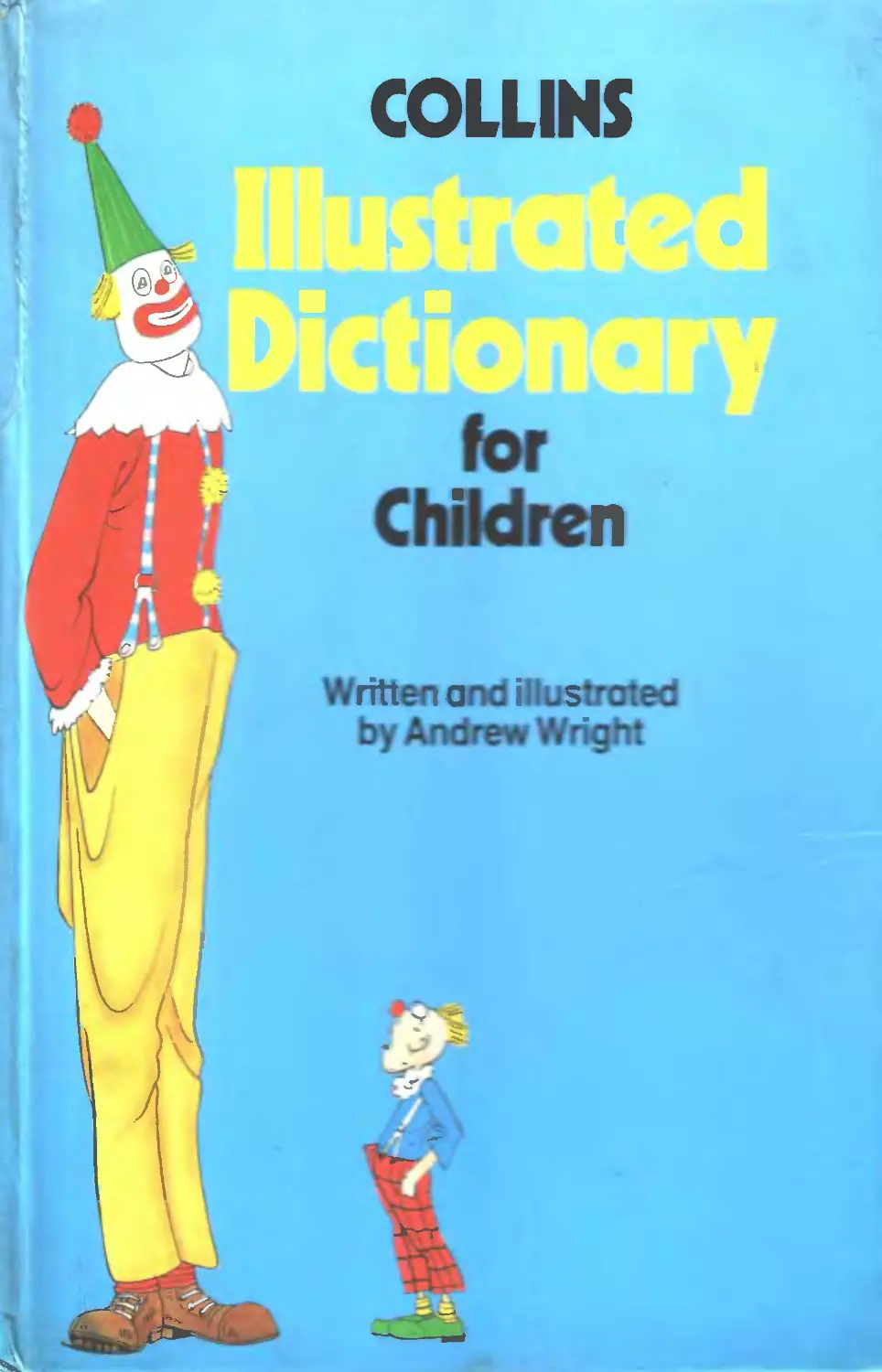
                    COLLINS
COLLINS
Illustrated
Dictionary
for
Children
Written and illustrated
by Andrew Wright
COLLINS
LONDON AND GLASGOW
Contents
page
My family	1	Places in the school	20-21
What are they like?	2-3	The park	22-23
My body	4	Country	24-25
Accidents and illnesses	5	Seaside	26-27
Jabs	6-7	Supermarket	28-29
Clothes	8-9	Meals	30-31
My home	10-11	Party	32-33
The kitchen	12-13	Hobbies and interests	34-35
Tom's room	14-15	Sport	36-37
Town	16-17	Classical music	38
Classroom	18-19	Pop music	39
Toys	40-41	Seasons	57
Stories	42-43	Colours and shapes	58
Festivals	44-45	Numbers	59
Television	46-47	Travelbyair	60-61
Radio, records and cassettes	48	Travelbyroad	62-63
Microcomputers	49	Where?	64-65
Space	50-51	Actions	66-71
Animals	52-53	Opposites	72-75
Animals in water	54	Games and activities	77-83
Pets	55	Word list	84-91
Weather
56
Good morning.
Good afternoon.
Good evening.
My family
1
Charles Diana
Wood Wood
uncle aunt
I____
Roy	Ann	Linda
Brown Brown	Wood
lei У
Herbert Kate
Wood Wood
father mother
Michael
cousin
uncle aunt
Ian Susan
cousin cousin
aunt
man woman young man young woman old man old woman
dark hair fair hair curly hair straight hair bald


butcher	carpenter	chemist	clerk
soldier	teacher	telephone operator	typist
7
vet
waiter waitress
writer


The kitchen
12

Tom’s room
14
ceiling

Where's the
cinewa 7
/1001
corner
market
postbox
traffic lights
telephone box
telephoning
shopping
running for a train
waiting for a bus


29
sausage


bicycle
birthday card
biscuit
cake
candle
rocket
sparkler
fizzy drink
firework
cassette
chocolate


watching birds	watching films	i watching television
Sport
36
swimming	water-skiing	windsurfing
skates


I

^•1
£
й
£
Easter egg	hot cross bun	chocolate bunny

westerns	science fiction
quiz shows	sport
football
cartoons
Radio, records and cassettes
48

Space
50


buffalo
camel
deer
crocodile
caw
hippopotamus
horse
insect
monkey
ouse
kangaroo
zebra
crab


Seasons
57
Coloursand shapes
58
triangle
twelve
eleven
elephants
trees
nine
nines
eight
eggs
seven
swans
. z sausages
f foxes
fish
three
toothbrushes
two
teddy bears
orange
100
one hundred
ООО
onethousand
control tower
departure lounge
customs
61
hang glider
Travel by road
62
iC «4-7655]
I-----------J
numberplate
car
bicycle
engine
petrol pump
no entry no stopping no cycling ahead
63


fight
fly
get
get dressed
67
getup
give
hide
Actions	68

Actions
70
skate
sing
ski
steep
71


0 high
75

About this book
This book is a dictionary and at the same time it is a book
which offers you and your child a source of games and
activities.
As a dictionary
Young children who are just beginning to read can learn
to match the words to the pictures. Older children can
extend their vocabulary and improve their spelling. The
older children can learn about the alphabetical
arrangement of the words and how to make use of the
index and they will, by using this dictionary, gain a
valuable introduction to the more general world of
reference books.
Some children may develop an interest in simple aspects
of grammar by observing, for example, that some words
describe objects, some describe actions and others,
qualities of objects and actions. However, such
realisations and observations should come from the child
rather than from the adult: they are useless to the child if
not 'discovered' more or less unaided by the adult.
As a source of games and activities
Children learn to make sense of their experience of the
world largely through language. Language enables the
child to organise and develop his or her thinking, feeling,
creating and communicating. You will find below some
games and activities which you and your child can play
and do together based on the pictures and the words in
the dictionary. Although the games and activities are very
simple to play, they all. in the r different ways, involve the
child (and you!) in thinking reasoning, imagining, creating
and communicating. And in the effort to achieve these
things, the child strives to improve his or her ability to
make use of language
You are so important! It is wei known that the adult who
spends time listening to the child and who responds and
gives encouragement, contnbutes enormously to the
child's development. Your role in these games is central
and vital. One tip. . don t give too many explanations and
'correct' ways of doing things - concentrate more on
listening to the child and encou'ag ng him or her to work
things out.
Games and activities
The games and activities are arranged according to the
sort of challenge they give to children, for example.
'Identifying Games', ‘Question and Answer Games. You
will usually begin by taking the initiative, but encourage
the child to take over as soon as possible... that is all a
part of learning.
Many of the games can be played with only minor
adaptations by children of many different ages and levels
of ability. Let the child determine the level of difficulty: if
children are confident in themselves they will naturally
want to explore and push forward to new experiences.
Most of the games can be played with one or with several
children.
Identifying games
1	Listen and point (most pages)
You can play this with a young child when you’ve already
spent some time looking at the pictures and asking each
other what you can see.
In this game you say a word and the child points to the
appropriate picture, orthe child says a word and you have
to point.
For older children who are reading, choose a topic and
write down each word on a separate, small piece of
paper. Put all the pieces of paper into a box. Then ask the
child to take one of the words and try to match it to the
word on the page as quickly as possible.
2	Invisible drawing (most pages)
Keep the book open at any page. Then draw the outline of
one of the objects with yourfinger on the table or on a
piece of paper. The child must try to guess what you have
drawn
You: "What's this"?
Child: 'lt’sa(n).
3	Miming (most pages)
Open the book at any page. Mime so that your child can
guess which action or object or person you are thinking
of. Let your child mime for you too!
4	What am I talking about? (most pages)
1)	You make a descriptive statement and the child must
decide what you are referring to. For example:
On pages 64 and 65, you might say, "The dog is
hid ng in the bushes." The child must point to the
appropriate part of the picture.
2)	You pretend you are a person or an object in the
picture. For example:
On page 54, “I'm very big and I can swim."
3)	You invent a conversation, tell it to the child and then
ask who is talking in the picture. For example:
On page 27: "The sea monster is coming!" “Stop it!
Stop it!"
4)	You tell the child what someone is thinking in the
picture and the child has to imagine who it might be
For example:
On page 24, “I hope I catch a big fish!”
With older children, you can then reverse roles.
77
5 Lists (most pages)
A simple version of this for a young child is to ask him or
her to try to remember as many words as possible from
one picture.
With an older child, you and s/he can make progressively
longer lists. For example, on page 28:
You: "I ate an orange.”
Child: "I ate an orange and a potato." (etc.)
On pages 16 and 17:' In the town I can see someone
shopping and someone playing." (etc.)
6 Bingo (most pages)
This popular game can also be educational! It is
particularly useful for children who have already begun to
read and write, giving them additional experience of word
recognition. There are many ways of playing Bingo; you
can design your own if you wish.
Ask your child to draw a diagram like this:
shirt	hat	blouse	dress
jacket	suit	pyjamas	helmet
jersey	anorak	cardigan	coat
The child then chooses a page from the dictionary and
writes one word in each box. (The example above is
based on page 8.) You must not see what s/he chooses.
Then you choose words from the same page and say
them When the child hears a word s/he has chosen, then
that word is crossed off! If only one child is playing it is a
gentle game against the clock Two children will probably
be competitive.
Note: You can play Bingo with numbers or with
sentences as well as single words.
The usual rule is that the child must answer yes or no.
When you play this with an older child you think of an
object and the child asks the questions
Note: You can just guess when playing this game or you
can ask constructive questions. In the latter case, begin
by asking general questions and only guess at particular
objects, actions etc. towards the end For example, on
pages 52 and 53
Child: "Can you fly?"
You: "No."
Child: "Do you eat meat?"
You: "No."
etc.
Guessing games
Guessing games are not the same as question and
answer games. Here the child simply guesses and does
not question you logically and constructively.
9 Close your eyes and point (most pages)
Look at a page carefully with a young child, discussing
what you can see. Now your child closes his or her eyes
points a finger onto the page and guesses what the object
might be.
Child: "It’sa...’
You: "Yes, it is.” or "No. it isn’t.’
Alternatively, s/he can guess by asking a question:
Child: “Is it a/an ..?"
10 Hiding in the picture (pictures with scenes)
The child imagines that s/he is hiding in the picture or that
s/he has hidden something You must find out where s he
is or where the object is hidden. For example
You: “Are you under/behind/in the .. ?’’
Child: “Yes, lam. or “No, Im not.”
Alternatively:
You: “Is it under/behind/in the...?"
Child: "Yes, it is.” or’ No, it’s not."
Question and answer games
7 Yes and No (most pages)
This game will encourage detailed observation. Ask a
young child questions which s/he can only answer by
studying the picture. Ask them so that the answer is yes
or no. For example, on pages 18 and 19:
You: "Is the teacher writing on the board?"
You: "Are the children hiding in the cupboard?"
Play this with older children too: here, they ask you the
questions.
8 Twenty questions (most pages)
One person thinks of something and the others must ask
questions to find out what that person is thinking about.
This game encourages careful thinking and a precise use
of language You can play it with a young child explain
that the child must think of the object or person in a
picture then you will ask the questions. For example on
pages 6 and 7:
You: “Are you wearing a hat?"
Child: “No.”
You: 1 Have you got black hair?"
Child: ‘ Yes."
etc.
Memory games
11 Can you remember? (most pages)
Your child tries to remember as many words as possible
from one page. A young child can look at the picture in the
middle of the page rather than at the words and pictures
around the edge Or with an older child you can close
the book and ask the child to write down the words s/he
remembers or say them to you. Instead of closing the
book, you and the child can cover part of the picture with
your hand or with a piece of paper.
Later try a more difficult version instead of trying to
remember the names of objects, here the child tries to
remember more information about them such as their
position or their appearance. For example, on pages 24
and 25:
Child: "It’s near the farm. It's white and it's chasing a
boy "
78
12 Pelmanism (any page)
Play this with children who are already reading.
Copy words and pictures onto separate pieces of paper.
For example, based on pages 40 and 41:
Matching games
14 Picture and word matching (any page)
This is a basic way of learning to recognise the written
form of words. Play this with a young child who is just
beginning to read and show an interest in the written
word.
Your child must have lots of small pieces of paper (about
10.5cm x 7.5cm - 8 pieces from an A4 sheet of paper).
On each one s/he must write down a word or draw a
picture. For example, s/he may write ten words and draw
ten pictures which match the words.
Mix them up on a table and ask your child to match them
up correctly together.
Mix them up and turn them upside down on the table. The
child must then try to guess what is on the other side of
each piece of paper and must say the word before turning
it over. If s/he is correct, the paper can be left turned over.
If the answer is incorrect, then it must be turned back
again. Eventually all the pieces of paper are turned over.
A more difficult version of this game: the child turns over
two pieces of paper each time. If they are the picture and
the matching word, then they can be left as they are. If not
they must both be turned back again... and so the game
becomes a memory game!
Vlelmet
skirt
True/false games
Children always enjoy these games. Play them with very
young children to encourage their language development.
13 No, it isn’t (most pages)
You make a statement about something on a page and
the child must decide whether it is true or false. The child
has to disagree if necessary and correct your statement.
For example, on pages 24 and 25. you might point at a
sheep and say, "This is a dog." The child will reply, "No, it
isn’t! It’s a sheep!"
You can move on to using slightly more complex
sentences: "Tom is wearing a red shirt".
You can also describe someth' ng inaccurately. For
example, on pages 12 and 13:
You: “Mrs Brown is doing the washing up.”
Child: “No, she isn't. Mr Brown is doing the washing up.
Mrs Brown is cooking.'
This will encourage your child to make comparisons and
use descriptive language.
Spelling games
These make spelling fun! Play them with an older child
who is already reading and writing, but needs practice
with his or her spelling.
15	The dash game (any page)
Choose a word. Draw a dash for each letter of the word. If
you choose 'farmer' you will draw six dashes.
The child then chooses a letter and asks you if it is in the
word. If it is, you write the letter on the appropriate dash:
_r__________V
If the letter is not in the word you begin to draw a...
79
There are ten marks for ten mistakes! The aim of the
game is to spell the word before the drawing is
completed!
An easier version of the game: you write down the first
and the last letters of a word. For example from page 49:
r
m
16	Alphabetical order (any page)
Ask the child to write out all the words from one topic on to
separate pieces of paper. Mix these up and then ask the
child to put them into alphabetical order as fast as s. he
can.
Alternatively, give the child five words and ask him or her
to put them into alphabetical order. The words should all
be found on one double-page spread of the dictionary.
17	Scrabble (any page or several pages together)
Here is a simple version of the game of scrabble which
even beginners can play. Draw a grid like this and ask
your child to write in it any word s/he chooses for
example:
Then you take it in turns to write in more words If a word
crosses another word it must use the same letter You
get a point for each letter of your word, including the letter
which is shared with an earlier word
You and your child take it in turns to give the other a word
to spell. The word must be written on a small piece of
paper which is a stepping stone. If the word is spelled
correctly it can be placed in the river. Do let your child win
if possible perhaps you should use more stepping
stones'
(I took this idea from WR Lee Language Teaching
Games and Contests, published by Oxford University
Press, 1979.)
19 I spy (any page)
Play this game with a young child to increase his or her
awareness of the initial sounds of words
You or your child look at a page and pick out an object.
For example on pages 14 and 15 you think of the bed.
Then you say, I spy with my little eye something
beginning with b’." Your child then studies the picture and
say. perhaps, “Is it the ball?" etc. until s/he gets the word
you are thinking of.
Note: This game works best on the pages where the
words are arranged away from the central picture.
20 Jumbled words (any page)
You or your child write down the letters of the name of an
object in a jumbled order. You have to find the word by
looking at the words on an agreed page in the dictionary
18 Stepping stones (any page or several pages
together)
Really, this is a spelling test!
Make a river on your table, perhaps with string to
represent the two banks. The river is full of crocodiles and
you and your child can only get across if you each have
ten stepping stones.
21 Crossword puzzles (any page or several pages
together)
You and your child work out a crossword puzzle. It is quite
easy if you do not try to fit the puzzle into a square or
make the words cross too much The mam work is in
writing the clues! Here is the start of an example:
80
Opinions, experiences, feelings
Language has many functions. It is our prime means of
communication, and is vital and central to the way in
which we live with each other and the way in which we
develop our ideas and relationships.
The games and activit es suggested above should
encourage certain aspects of a child's language
development.
However, they will probably not fully elicit personal
feelings and ideas Try therefore to encourage children to
respond to the pictures and to express their ideas and
feelings about them and, indeed, to show interest in your
ideas and feelings! Children can also be asked to use
their imagination, with the picture as a starting point.
24 Describing (most pages)
-An flflimd.lt has
-four leqs and a tail.
-Open meAnd go й.
-There flre flowers
and vegetables in
me.
It is satisfying to be able to describe what can be seen in
the picture. (This is particularly true with very full
pictures.) Whenever possible, develop from a description
to a more personal exchange of information. For
example:	c
Note: The names of the members of the family on page 1
of the dictionary have been chosen to represent many of
the sounds, and spellings for sounds, in English:
Wood	Herbert
Brown	Kate
Douglas	Michael
Elizabeth	Ian
Charles	Susan
Diana	Tom
Roy	Jean
Ann	Jane
Linda	George
Number games
22 How many? (most pages)
The child guesses how many objects people, animals
etc. there are in the picture. The child can either try to
guess the number with the book open or try to remember
them with the book closed.
You can play this gam with a very young child. After s. he
has guessed, count with your child to reach the correct
number.
23 Ages (any pages which show people)
The child guesses how old each person is in the picture
This s particularly relevant for the family. You should
guess at the same time and then you will both find t
interesting to compare your opinions.
You: "She's playing tennis.
You play tennis, don't you?"
Child: "Yes."
You:	"Is it your favourite game?"
Child: "No, it isn’t."
etc.
If your child is very young, ask him or her some of the
following questions, and then encourage the child to ask
them of you. This should help an exchange of views to
develop.
Do you like...?
What do you like?
Which. . do you like?
Have you got a. .?
What do you like doing...?
You can ask the child what S' he likes to do at the seaside
(pages 26 and 27); whether the meals are different at
home (page 30 and 31); what s/he got for his or her
birthday (pages 32 and 33): in which ways his or her
home is different to the Browns’ home | ages 10 to 15).
You can also ask the older child general knowledge
questions based on the pictures, for example: “What do
horses eat?" "How long does it take to fly to America?"
25 Imagining (most pages)
You can imagine what someone in one of the pictures
might be doing or going to do or what they might be
thinking. You can try to imagine what someone might be
carrying in their case or where they might be driving to.
You can imagine what someone's age, name, job,
interests, likes dis ikes, possessions might be. For
example, on page 70. the boy who is studying:
I think he’s thirteen years old; he’s called Steven; he goes
to school; he likes swimming; he doesn’t like vegetables
and he’s got a spaceship!
81
26 Acting (most pages)
You and your child might like to act out conversations
based on the pictures in the dictionary Conversations are
obviously possible where there are people in the pictures.
For example, on page 47 (science fiction picture):
You: "Oh! Look! There s the monster again."
Child: 'It isn’t a monster It's a robot!"
You- : Let's run away. It will kill us!"
Child: "Perhaps it is a nice robot'
etc.
Sometimes it is possible to invent conversations when
there are only objects in the picture. You might, for
example, wonder what to buy for Grandma's birthday
present. The child might use any page to answer your
question:
You: "What would you like to buy for Grandma for her
birthday?"
Child: "I'd like to buy a
27 Telling stories (any page)
Invent a story with your child. You might imagine a story
about a person in one of the pictures. Or you might
imagine a story based on perhaps two people and four
objects taken from different pages of the dictionary
You may think that you cannot invent a story. It is fairly
easy once you start! In any case your child will probably
be quite good at it Basically in s mple stories, someone
has a problem and tries to overcome it... and perhaps
someone else, or life itself tries to stop him or her Here is
the beginning of an example based on: an apple, a boat a
book a television and on Tom and his grandfather.
Tom and his fami ly and his grandfather and his
grandmother went to the seaside for a holiday. Every day
they went to the beach. The children played.
Grandmother watched them and Grandfather slept
Suddenly Grandfather woke up! He said, "Where is my
apple? Someone has taken my apple!"
Grandmother shouted to Tom Tom, come here quickly!
Someone has taken your Grandfather's apple! Please
help him.”
So
etc.
82

Word List
A
above. 64-65
accidents. 5
across. 64-65
acting, 34-35
actions, 66-71
actor, 6-7,46-47
actress, 6-7
aerial. 46-47,48
against, 64-65
ahead, 62-63
air hostess. 60-61
air pump. 62-63
alien(s), 50-51.59
alive, 74-75
along, 64-65
ambulance, 5
amplifier. 48
angry, 2-3
animals, 40-41,52-53
animals in water. 54
ankle, 4
anorak, 8-9
apple, 28-29
apron, 12-13
arcade game, 49
architect. 6 -7
arm, 4
around. 64-65
arrows. 40-41
artist, 6 7
astronaut. 50-51
aunt, 1
Autumn, 57
В
baby, 2-3
back(n.), 4
back (adj.), 72-73
badge. 8-9
bag, 18 19,28-29
baggage, 60-61
baker. 6-7
bald. 2-3
ball, 14-15,22-23,36 37,40-41
balloon, 32-33
banana, 28-29
bandage. 5
bank, 16-17
barge, 24-25
bam, 24-25
basket, 28-29
bass guitar, 39
bat, 36-37.40-41
bath. 10-11
bathroom. 10-11
battery, 40-41
beach, 26-27
beads, 40-41
bear, 52-53
beard. 4
beaver. 52-53
bed, 10-11,14-15
bedroom, 10-11
bee, 52-53
beer, 30-31
behind, 64-65
belt. 8-9
bend, 66-67
beneath. 64-65
beside, 64-65
between, 64-65
bicycle, 32-33. 40-41.62-63
big, 72-73
bikini, 8-9
binoculars, 26-27
bird, 24-25,52-53
birthday card, 32-33
biscuit(s). 28-29.30-31,32-33
black, 58
blackboard, 18-19
blind, 12 13
block of Hats. 10-11
blouse, 8-9
blue. 58
board game, 40-41
boat, 40-41
body. 4
boiled egg. 30-31
bones, 55
bonnet. 62-63
book(s). 10-11
bookcase. 10-11
boot. 8-9,62-63
bottle of lemonade. 28-29
bottom. 72 73
bow, 40-41
bowl, 12-13
box, 18 19,55
box of eggs. 28-29
box of matches, 12 13
boy. 2-3
bracelet 8 9
bread. 28-29.30 31
break, 66-67
breakfast. 30-31
brick(s), 14-15.40-41
bridge. 22-23.24-25
bring, 66-67
broken bone, 5
broomstick. 42-43
brother. 1
brown, 58
bruise, 5
brush(n.). 12-13 18-19
brush) v.j, 66-67
bucket, 24 25,26-27
buckle. 8 9
budgerigar. 55
buffalo, 52-53
build, 66-67
build sand castles 26-27
bulb. 12-13
bull. 24-25
bun. 12-13.28-29,32 33
bus. 62-63
bus stop. 16-17
bush.22-23
bi si tessman, 6-7
bi si esswoman 6-7
butcher. 6-7
butter. 30-31
butterfly, 52-53
button, 8-9
buy, 66-67
by, 64-65
C
cabbage, 28-29
cafe, 16-17
cafeteria, 20-21
cage, 55
cake, 28-29,30-31.32-33
calculator. 49
calendar, 18-19
call. 24-25
camel, 52-53
camera. 46-47
cameraman. 46-47
camping, 34-35
camping site. 24-25
canal. 24-25
candle. 32-33, 44-45
cap. 8-9
car. 40-41,62-63
car wash. 62-63
caravan, 24-25
card. 44-45
cardigan, 8-9
carnival, 44-45
carpenter. 6-7
carpet, 10 11
carrot(s), 28-29.55
carry, 66-67
cart 24-25
84
carton of rr «2:
carton ofyogr - . - ..
cartoons 46~i'
cashier. 28-29
cassettels' 32 33
cassette plave --
castle. 42-43
cat 55.64 65
catch. 66 6~
catching 22 2 -
cauliflower 23
cave, 26-27
celery. 28-29
ceiling 14 15
cello. 38
cereal(s) 30	55
chair, iO-11. "J ‘5
chalk, 18-19
cheap. 74-75
check-ln. 6O-61
checkout 28 29
cheese. 30-31
chemist 6-7 16-1 *
cherry 28 -29
chest 4
chick, 24 25 44 45
chicken 28-29. 30-31
child. 2 3
chin. 4
chip, 49
chips, 30 31
chocolate. 32-33
chocolate bunny. 44 45
choose, 66 67
chop. 28 29
Christmas. 44 45
Christmas cake. 44 45
Christmas card. 44 45
Christmas pudding. 44 45
chromakey, 46 47
church 16 17
cinema. 16 17
circle, 58
clap, 66 67
clarinet, 38
classical music. 38
classroom 18 19
clean(v), 66 67
cleanfad/.). 72 73
cleaning the car. 10 11
cleaning the window, 10 11
cleaning the windscreen 62 63
clerk, 6 7
cliff. 26 27
climb. 66 67
clock, 10 11,12 13
close. 66 67
closed. 72 73
clothes. 8 9,14 15
cloud, 26 27,56
clown. 6 7
coach, 42 43
coat 8 9
cock 24 25
coffee. 30-31
cold(n ) 5
cold adj ), 56
collecting coins, 34 35
collecting stamps. 34-35
colouring book. 40 41
colours. 58
comedy. 46 47
comic, 14-15
computer, 40-41
control desk 48
control room. 46 47
control tower, 60 61
cook n |. 6-7
cooktv i, 66 67
cookbook 12-13
cooker 12 13
cooking. 12 13,34-35
copy 66 67
corner, 16-17
costume. 40 41,44 45
countdown, 50 51
country, 24-25
cousin, 1
cow 24 25.52 53
cowboy, 42 43
cowboy hat. 40 41
crab 26-27.54 55
crash helmet. 62 63
craw 66 67
cream. 30 31
crocodile, 52-53
crossing. 16 17
crossing the road. 16-17
crossroads, 62 63
cry, 66-67
cucumber. 28 29
cup, 12 13
cupboard, 12 13
curly hair, 2 3
curtain 10 11
cushion 10-11,14-15
customs 60 61
cut(n.), 4
cut(V), 46 47.66-67
cycle. 66-67
cycling 36 37
D
dance, 66 67
dancer. 6 7
dancing. 34-35
dark. 58.72 73
dark hair. 2 3
dead 74-75
deckchair. 26-27
deer 52 53
dentist 5.6 7
departure lounge. 60 61
desk, 18 t9
diamond. 58
dice. 40 41
difficult. 74 75
digging the garden, 10 11
digital alarm. 14 15
digital watch. 49
diningroom 10 11
d nner. 30 31
director 46-47
dirty 72 73
disc jockey. 48
disk drive, 49
dive 66 67
diver, 54
diving, 36 37
doctor, 5.6 7
documentaries. 46 47
dog,22-23.24 25,56,64-65
doing maths. 18 18
doll 40 41
doll shouse 40 41
dolphin, 54
door. 12 13,14 15
down. 64 65
downstairs, 10-11
dragon 42 43
draw, 66-67
drawer, 10-11.12-13.14-15
drawing, 18 19
dream, 66 67
dress, 8-9
drink, 66 67
drive. 66 67
dnver, 6-7
driving 62 63
drop 66 67
drum(s), 39.40-41
dry 72 73
duck 10 11.22 23,24 25 54
duckling, 24 25
duster 12 13
duvet, 14-15
85
Е
ear, 4
Earth, 50-51
Easter, 44-45
Easter egg, 44-45
easy 74 75
eat, 66 67
egg(s), 12-13, 59
eight, 59
eighteen, 59
elbow, 4
elephant(s), 52 53 59
eleven, 59
elf. 42-43
empty. 74 75
engine, 60 61,62 63
eraser, 18 19
exercise book 18 19
expensive, 74 75
eye, 4
eyebrow, 4
F
face, 4
factory 16-17
factory worker. 6-7
fair hair, 2-3
fairy, 42 43.44-45
fall, 66 67
family, 1
fan, 39
farmer, 6 7.24-25
farmhouse. 24-25
fast. 72 73
fat. 2-3
father, 1
Father Chnstmas, 44 45
feeding the ducks, 22 23
fence 24 25
fencing, 36 37
festivals, 44-45
fetch, 66 67
few, 74 75
field, 24 25
fifteen, 59
fifth, 59
fight, 66-67
fighting 22 23
filling the tank. 62-63
finger 4
fire engine, 5
fireman, 6 7
firework, 32-33
first, 59
fish(n ), 26-27,28-29,30-31 54 55,59
fish(v,), 26-27
fish food, 55
fish tank 55
fisherman, 24 25
fishing, 22 23, 36-37
fishing boat, 26-27
fishing rod. 36 37.40-41
five, 59
fizzy dnnk 32-33
flag. 26 27,44 45
flat. 10-11
flippers, 26-27
float, 26 27
floor, 14 15
floppy disk, 49
flour. 12-13
flower, 22-23
flute, 38
fly 66 67
flying kites, 22-23
foal, 24 25
tog, 56
toot. 4
football, 40-41,
football game 46 47
football boots, 36-37
footballer, 6- 7
forest, 24-25
fork(s), 10-11.12-13.30-31 59
four 59
fourteen 59
fourth, 59
fox(es), 52-53,59
freezer, 12 13
Inedeggs, 59
frightened, 2 3
frightening, 2 3
frog, 54
front, 72-73
fruit 28 29.30 31
fruit juice, 30 31
frying pan, 12-13
full. 74-75
G
ga age, 62 63
garden. 10 11
gardening, 34 35
gate, 24 25
get. 66 67
get dressed. 66 67
get up, 66-67
ghost, 42 43,44-45
giant, 42-43
giraffe, 52-53
girl 2 3
give 66 67
glass 10-11.12-13.30 31
glasses, 8-9
glider. 60 61
glove(s), 36 37.62-63
gnome 42 43
goat 52-53
goggles, 26-27
going on picnics, 34 35
goose. 24-25.52-53,54
gorilla. 52-53
grandfather 1
grandmother. 1
grapefruit. 28-29,30-31
grapes. 28-29
grass, 22 23
green 58
greengrocer. 6-7
grey, 56
grocer, 6-7
group 39
guita 14 15 39
gym, 20 21
H
hair 4
haf 74-75
hall 20-21
Halloween. 44-45
ham, 28 29
hamburger. 32 33
hamburger and chips. 30-31
hamster 55
hand. 4
handbag.8-9,28-29
handkerchief, 8 9
hang glider. 60 61
hang g idmg. 36 37
hard, 74-75
harp, 38
hat. 8 9
hay 24 25
head 4
headache. 5
headphones. 48
heart.4.44 45
heavy. 72 73
hedge 24 25
hedgehog, 52-53
helicopter. 60-61
helmet, 8 9.50-51
hen 24-25.52 53
help 66 67
He s borrowing a book.. 20-21
He's chasing his friend . 20-21
He s combing his hair.. 20-21
He seating . 20-21
86
He's falling., 20-21
He s pouring the tea.. 20-21
He's queuing.. 20 21
He’s reading., 20-21
He's telephoning., 20-21
He’s typing., 20-21
He’s washing., 20 21
hide. 66-67
hiding. 22-23
high, 74-75
hiking, 36-37
hill. 24-25
hippopotamus. 52-53
histoneal films. 46-47
hit, 68-69
hobbies. 34-35
hold, 68-69
home, 10-11
honey, 30-31
hop, 68-69
hopping. 22-23
horror films, 46 47
horse, 24-25.44-45.52 53
hot, 56
hot cross bun, 44-45
hotdog, 32-33
hotel. 16-17
house. 10-11
hug, 68-69
hutch, 55
I
ice, 56
ice cream, 26-27,30-31.32-33
illnesses, 5
imagine, 68-69
in, 64-65
in front of, 64-65
Indian, 42-43
insect. 52-53
inside, 64-65
interests 34-35
into, 64-65
iron(n.), 12-13
ironjv.j, 68-69
ironing board, 12-13
island. 26 27
J
jacket, 8-9
jam, 30-31
jar of honey, 28-29
jeans, 8-9
jersey, 8-9
jet engine, 60-61
jigsaw puzzle. 40-41
jobs, 6-7
juggler. 44-45
juice, 30-31
jump, 68-69
Jupiter. 50-51
К
kangaroo, 52-53
keep, 68-69
kennel, 55
kettle, 12-13
key, 12-13,62-63
keyboard. 49
kick, 68-69
king. 42 43
kiss, 68-69
kitchen. 12-13
kite, 22-23,40-41
kitten, 55
knee,4
knickers, 8-9
knife, 10-11 12-13 30-3'
knight, 42-43
knock. 68-69
L
labourer. 6-7
lamb, 24-25
lamp, 14-15
landing, 60-61
laugh. 68-69
launch pad, 50-51
laying the table. 10-11
learn, 68-69
left, 74-75
leg, 4
lettuce, 28-29,55
library. 16-17,20-21
lifeboat. 5
light(s), 12-13.18-19,44-45.46-47,62-63
lightfad/'.), 72-73
lighthouse, 26-27
lightning. 56
like, 68-69
lion, 52-53
lip, 4
listen. 68-69
listening to music, 34-35
listening to records. 34-35
listening to the radio, 34-35
live, 68-69
living room, 10-11
loading baggage, 60-61
long, 72-73
look after, 68-69
look at, 68-69
look for, 68-69
looking. 22-23
looking after pets, 34-35
looking at things, 18 19
lorry, 62-63
loudspeaker 14-15.48
love, 68-69
low, 74-75
lunch, 30-31
M
make, 68-69
make-up, 44-45
making models, 18-19,34-35
making the bed, 10-11
man, 2-3
many, 74-75
map. 18-19
marbles, 40-41
margarine, 12-13,30-31
market, 16-17
marmalade. 30-31
Mars. 50-51
mashed potatoes, 30-31
mask, 14-15.44-45
mat, 14 15
match, 12-13
meals, 30-31
meat, 30-31
mechanic, 6-7
medicine, 5
melon, 28-29
mend. 68-69
mending a puncture, 62-63
mending the engine, 62-63
Mercury. 50-51
mermaid. 42-43
microcomputer(s). 49
microlite. 60-61
microphone. 39,46-47.48
milk, 30-31
milk shake, 32-33
Milky Way, 50-51
miner 6-7
mirror, 10-11
mix, 46-47,68-69
model. 18-19.32-33
money, 28-29
monitor, 49
monitor screens, 46-47
monkey, 52 53
monster. 42-43
Moon, 50-51
mop, 12-13
mother, 1
motorboat. 26-27
87
motorcycle 62 63
mountain 24-25
mouse, 52-53, 55
moustache, 4
mouth, 4
mouthorgan 39
move 68 69
Mr Wood is washing up 12 13
Mrs Wood is cooking .12 13
mushroom 28 29
musician, 6-7
N
narrow 73-74
nasty 2-3
neck. 4
necklace, 8 9
Neptune, 50-51
net. 26-27
new 74 75
newsagent 16-17
next to, 64 65
nightdress 8 9
nine(s). 59
nineteen, 59
no cycling, 62-63
no entry 62-63
no stopping, 62-63
noisy 74 75
nose.4
number plate. 62-63
numbers, 59
nurse. 5,6-7
oar 26-27
oboe,38
office, 20-21
oil. 62-63
old, 74 75
old man 2 3
old woman 2-3
on, 64 65
one, 59
one hundred, 59
one thousand, 59
onion 28 29
onto. 64 65
open(v.), 68 69
openjad/.), 72-73
opposites, 72 75
orange(n), 28 29.59
orange(ad/.), 58
orange juice 32-33
orbit 50 51
orchard 24-25
out of 64 65
over, 64-65
owl, 52-53
P
PA (Production Assistant) 46 47
pack of butter, 28 29
packet of cereal, 28-29
packet of spaghetti, 28 29
packet of sugar, 28 29
palace, 42-43
paint(n) 18 19,40-41
paint(v), 68-69
painting, 18 19
painting pictures. 34-35
pale, 58
pants, 8 9
paper hat 32 33
parachute, 60-61
park 22 23
parrot, 55,64 65
party, 32-33
passenger, 60 61
passport 60-61
past 64 65
patient, 5
pavement 16 17
pay 68 69
peach 28 29
pear, 28 29
peas, 28 29,30 31
pebbles, 26 27
pen 18 19
pencl 18 19
penguin, 52 53
penknife 32-33
pepper, 30-31
personal stereo. 48
petrol pump. 62 63
pets 55
photographer 6 7
pianist 6 7
piano 38 39
pick up. 68 69
picnicking, 22 23
picture, 10 11.18 19
pie 28 29.30 31
pie and potatoes 30 31
pig. 24 25.52-53
piglet, 24 25
pill. 5
pillow, 14 15
pilot. 6-7.60 61
pin 5 18 19
pineapple 28-29
pink, 58
pirate, 42 43
pirate ship. 42 43
pizza, 30 31
places, 20 21
pane 40 41,60-61
panels 50 51
plaster. 5
plate, 10 11,12-13,30-31
play. 68-69
playground, 20 21
playing, 16-17
playing baseball 36 37
playing basketball 36 37
playing cards. 34 35
playing catch, 22 23
playing chess. 34-35
playing computer games 34-35
playing football, 22 23,36 37
playing hide-and-seek 22 -23
playing table tennis 36 37
playing tennis, 36-37
playing the piano. 34-35
playing with my friends. 34 35
playing with puppets, 18 19
pleased 2 3
pug 12 13.18 19
plum 28 29
plumber, 6 7
Pluto, 50 51
pocket, 8 9
point 68 69
policeman, 6 7
po icewoman. 6-7
pond 24-25
pool. 26 27
pop music, 39
porter, 60 61
post office 16-17
postbox 16-17
poster 14-15
posting a letter. 16-17
postman 6-7
pot of tea, 30-31
potato 28-29
potato crisps. 32 33
present 32 33.44 45
priest 6 7
prince 42 43
princess. 42- 43
printer. 49
projector 18-19
propeller 60-61
pull 68 69
pullover 8 9
88
puppe’
puppy -=
purple 5ё
purse C-r
push 6S--t
pushen- LI ;
putawa. 58---
put on
putting »	- -•=
pyjamas 5-'
£2-63
Q
queen
quiet. 74-“
quizzsno»' -z
R
rabbi 55 z—zz
racket. 36-3*
radio. 1O-" -8
radio teesccoe
radio waves -z
rain, 56
raincoat 6 ?
raspberry 2i
read.68-69
readin l6-‘9
recordtsi - “
record pla,e - "8-5
reco r £ -
red, 58
refrigerator ’2
repair. 68-69
repeat. 68-69
restaura ’6
rice, 30-31
ride. 68-69
nding. 36 3*
riding a motorc ce '6
ridingonascooie- 22-23
right. 74-75
ring, 8-9
river. 24-25
road. 16-17
robot. 14-15 40-41
rocket. 32-33 50 51
rocks. 26-27
roll. 30-31
rollerskates 14-15 22-23 40-41
roller-skating. 22-23
room 14 15
round. 72-73
row. 26-27
rowing. 36-37
rowing boat 26-27
rubbish bin 24-25
ruler, 18-19
run 68 6S
running 36-37
running for a train 16-17
runway. 60-61
S
sack. 44-45
sail. 26-27
sailing, 36-37
sailing yachts 22-23
salad. 30-31
salt, 30-31
sand. 26-27
sandal. 8-9
sandpit, 22-23
sandwich. 30-31 32-33
satellite. 50 51
Saturn, 50-51
saucepan. 12-13
saucer. 12-13
sausage(s). 28-29 59
saxophone. 39
scales. 28 29
scarf. 8-9
school. 16-17
science fiction 46-П
scissors. 18-19
scooter. 22-23
score, 68-69
screen, 49
sea, 26-27
seagull. 26-27
seal, 54
seaman, 6-7
seaside, 26-27
seasons, 57
seat. 22-23
seat belt, 62-63
seaweed, 26-27
second, 59
secretary, 6-7
security control. 60-61
seed,55
seesaw,22-23
sell. 70-71
semi-detached house 10-11
seven. 59
seventeen, 59
sew, 70-71
sewing, 34-35
shake. 70-71
shake hands. 70-71
shapes. 58
share, 70-71
shark, 54
sheep, 24-25.52-53.59
shelf, 18-19
shell. 26-27
sheriff. 42-43
She’s climbing., 20 21
She’s drinking., 20-21
She’s going to the toilet., 20-21
She’sjumping.. 20-21
She’s marking the books.. 20-21
She’s speaking.. 20-21
She’s waiting., 20-21
She’s watching the girl., 20-21
shield 42-43
ship, 26-27
shirt, 8-9
shoe, 8-9
shop assistant. 6-7
shopping. 16 17
short. 2-3.72-73
shorts, 8-9
shout, 70-71
show,70-71
shower. 10-11
shut, 70 71
sing, 70 71
singer. 6-7
singing, 34-35
sink. 12-13
sister, 1
six, 59
sixteen, 59
sixth. 59
skate, 70-71
skates. 36-37
skating. 36-37
skis(n.). 36-37
ski( v.). 70-71
skiing, 36-37
skipping. 22-23
skipping rope. 22-23.40-41
skirt. 8-9
sledge, 36-37
sledging, 36-37
sleep, 70-71
sleeping, 22-23
slide 22-23
sliding. 22-23
slow. 72-73
small, 72-73
smile, 70 71
smiling. 18-19
snake, 52-53
snorkel. 26-27
snorkelling. 36-37
snow. 56
soap. 10-11
89
sock, 8-9
socket, 18-19
soft. 74-75
solar system, 50-51
soldier, 6-7’
sound engineer, 46-47,48
soup, 30-31
space, 50-51
space shuttle, 50-51
space station. 50-51
spacesuit, 50-51
spade, 26-27
spaghetti. 30-31
spanner, 62-63
sparkler, 32-33
splash, 26-27
spoon, 10-11,12-13,30-31
sport, 36-37,46-47
sprained ankle, 5
Spring, 57
square, 58, 72-73
St Valentine's Day, 44-45
stable, 24-25
stand, 70-71
star(s), 50-51,58, 59
station, 16-17
stay, 70-71
steering wheel. 62-63
stereo, 48
stilt walke 14-45
stocking. 8-9,44-45
stomach, 4
stool, 12-13
stop, 70-71
stories, 42-43
storm, 56
straight hair, 2-3
straw. 32-33
strawberry, 28-29
stream, 24-25
strong, 2-3
study, 70-71
sugar, 30-31
suit. 8-9
Summer, 57
sun, 26-27, 50-51
sunbathe, 26-27
suncream, 26-27
sunglasses. 26-27
sunshine, 56
supermarket, 16-17,28-29
surprised, 2-3
Susan's choosing a book., 20-21
swan(s), 22-23,54, 59
sweater, 8-9
sweep, 70-71
sweeping, 10-11
sweet, 32-33
swim,26-27, 70-71
swimming, 36-37
swimming costume, 8-9
swimsuit, 26-27
swing(n.), 22-23
swingjv.j, 70-71
swinging, 22-23
switch, 12-13
sword, 42-43
synthesizer, 39
T
table, 10-11,12-13
tail, 60-61
take, 70-71
take off, 70-71
taking off. 60-61
taking photographs, 34-35
talk, 70-71
talking, 18-19,34-35
tall, 2-3
tap, 10-11,12-13
tart. 28-29
taxi, 62 63
tea, 30-31
teach, 70-71
teacher, 6-7,18-19
teachers' room. 20-21
teaspoon, 12-13
technical manager. 46-47
teddy bear(s), 14-15,40-41,59
teenager, 2-3
teeth, 4
telephone^.), 10-11
telephone^.), 70-71
telephone box, 16-17
telephone operator, 6-7
telephoning, 16-17
television, 10-11,46-47
television studio. 46-47
temperature, 5
ten, 59
tent, 24-25
thermometers(s), 5,59
They're listening., 20-21
thick, 72-73
thigh, 4
thin, 2-3,72-73
think, 70-71
third, 59
thirteen, 59
three, 59
through. 64-65
throw, 70-71
throwing, 22-23
thumb, 4
thunder, 56
tidying the room, 10-11
tie(n.), 8-9
tie( v.). 70-71
tiger, 52-53
tights, 8-9
tin of soup. 28-29
toast, 30-31
toe, 4
toilet(s), 10-11.20-21,24-25
tomatoes(es), 28-29.59
tomato sauce, 30-31
tool set, 40-41
tooth, 4
toothache, 5
toothbrush(es), 10—11,59
toothpaste, 10-11
top, 72-73
tortoise, 55
touch, 70-71
touring, 34-35
towel, 10-11,26-27
town. 16-17
toys, 40-41
tracksuit, 8-9
tractor, 24-25
traffic lights, 16-17.62-63
train, 24-25
train set, 40 41
trainer(s). 8 9, 36-37
transmitter, 46-47
travel, 70-71
travel by air. 60-61
travel by road, 62-63
treasure. 42-43
tree(s), 22-23,59
triangle(s), 58,59
trolley. 28-29
trousers 8-9
trumpet, 38
T-shirt. 8-9
tunnel. 24-25
turn left, 62-63
turn off, 70-71
turnon. 70-71
turn right, 62-63
turnip lantern. 44-45
twelve, 59
twenty, 59
twins, 64-65
two, 59
type, 70-71
typist, 6-7
tyre, 62-63
90
и
umbrella. 8-9 26-2"
uncle, 1
under. 64-65
unhappy 2-3
unicydisl. 44-45
up, 64-65
upstairs 10-11
Uranus, 50-51
V
vacuum cleaner 12-13
vegetables. 28-29
Venus. 50-51
vest, 8-9
vet, 6-7
video tape, 46-47
video tape recorder 46-4"
village, 24-25
violin, 38
vision mixer, 46-47
visit, 70-71
W
wait, 70-71
waiter, 6-7
waiting for a bus. 16-17
waitress, 6-7
wakeup, 70-71
walk, 70-71
walkie-talkie, 40-41
wall, 14-15,24-25
wardrobe, 14-15
warm, 56
wash, 70-71
washbasin, 10-11
washing machine, 12-13
washing powder, 12-13
washroom, 20-21
wastepaper bin, 18-19
watch(n), 8-9,32-33
watchjv.), 70-71
watching birds, 34-35
watching films, 34-35
watching television, 34-35
water, 12-13
waterfall, 24-25
water-skier, 26-27
water-skiing, 36-37
wave(n.), 26-27
wave(v.), 70-71
weak, 2-3
weather, 56
Wellington, 8-9
westerns, 46-47
wet. 56,72-73
whale, 54
wheel, 62-63
where, 64 65
whistle, 40-41
white, 58
whole, 74-75
wide, 72-73
wind, 56
window, 12-13
windsurf, 26-27
windsurfing, 36-37
wine. 30-31
wing, 60-61
Winter, 57
wipe, 46-47'
witch, 42-43,44-45
wizard. 42-43, 44-45
wizard's hat. 44 45
woman, 2-3
wrist, 4
writer, 6-7
writing 18-19
wrong, 74-75
Y
yacht, 22-23,26-27
yellow, 58
young, 74-75
young man, 2-3
young woman, 2-3
Z
zebra, 52-53
zip, 8-9
91
Collins Publishers
8 Grafton Street
London W1X3LA
© Andrew Wright 1985
First published 1985
10 987654321
All rights reserved. No part of this book may be
reproduced, stored in a retrieval system, or transmitted
in any form or by any means, electronic, mechanical,
photocopying recording or otherwise without the prior
permission in writing of the Publisher
Printed in Italy by Tipolitografia G Canale &CS.p A Turin (KEL)
Illustrations by the author
Cover and text design by Snap Graphics
Handwriting by Gina Smart
ISBNs
Paperback 0 00 375010 8
Hardback 0 00 375001 9
Acknowledgements
Susan Jackson was co-author of the Games and
Activities section
The author and publisher would like to thank Jane
Gospel and Katy Wright for helping to colour some of
the illustrations

Collins Illustrated Dictionary
for Children
by Andrew Wright
Collins Illustrated Dictionary for Children will fascinate and
entertain young children everywhere. Strikingly illustrated in
full colour by the author, Collins Illustrated Dictionary is packed
with over 1000 words, arranged in topics which are appealing
and relevant to young children, including hobbies, animals
and new technology. The imaginative topics and exquisite,
often humorous illustrations, will give children hours of
pleasure and provide a real stimulus to learning.
A special games and activities section, based on the words
in the dictionary, enables parents and teachers to help
children learn the new words and ideas in an enjoyable and
stimulating way.
Hardback £5.95 net ISBN 0 00 375001 9
Paperback £3.95 net ISBN 000 3750108
Collins English for Children