/







































Author: Massoumi M.
Tags: religion christianity history of religion routledge publisher zionism religious fundamentalism
ISBN: 0-203-84459-9




Text
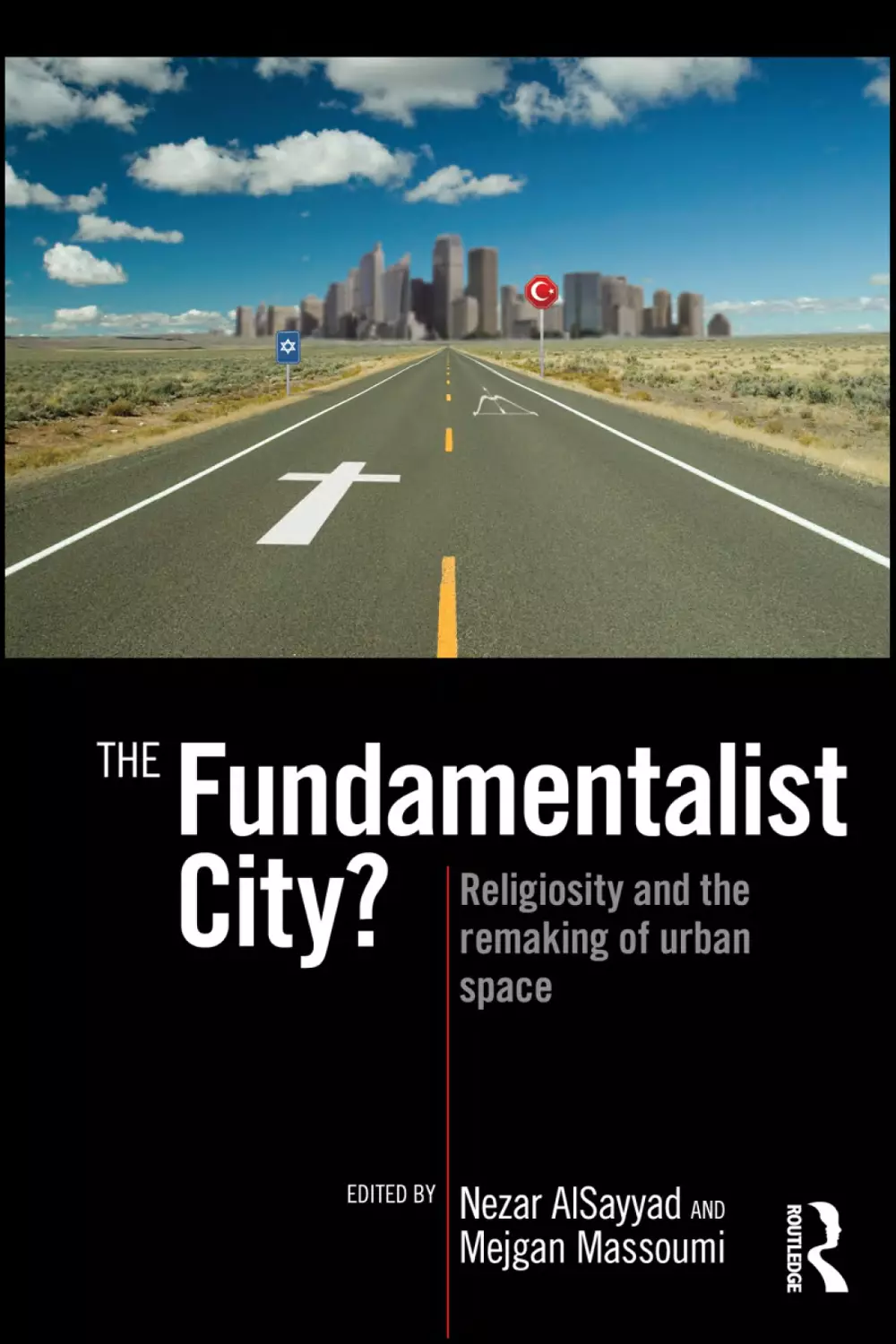
                    THE FUNDAMENTALIST CITY?
Religiosity and the remaking of urban space

The relationship between urbanism and fundamentalism is a very complex
one. This book explores how the dynamics of different forms of religious
fundamentalisms are produced, represented, and practiced in the city. It
attempts to establish a relationship between two important phenomena: the
historic transition of the majority of the world’s population from a rural to an
urban existence; and the robust resurgence of religion as a major force in the
shaping of contemporary life in many parts of the world.
Employing a transnational interrogation anchored in specific geographic
regions, the contributors to this volume explore the intellectual and practical
challenges posed by fundamentalist groups, movements, and organizations.
They focus on how certain ultra religious practices of Christianity, Hinduism,
Islam, and Judaism have contributed to the remaking of global urban space.
Their work suggests that it is a grave oversimplification to view religious
orthodoxies or doctrines as the main cause of urban terrorism or violence.
Instead they argue that such phenomena should be understood as a particular
manifestation of modernity’s struggles.
AlSayyad and Massoumi’s book provides fascinating reading for those
interested in religion and the city, with thought provoking pieces from experts
in anthropology, geography, sociology, religious studies, and urban studies.
Nezar AlSayyad is Professor of Architecture, Planning, and Urban History
and Chair of the Center for Middle Eastern Studies at the University of
California, Berkeley. He is also President of the International Association for
the Study of Traditional Environments. He has published fourteen books
including Muslim Europe or Euro-Islam (2002); Urban Informality (2004); The End
of Tradition? (2005); and Cinematic Urbanism (2006).
Mejgan Massoumi is an urban planner and manager at the Center for Middle
Eastern Studies at the University of California at Berkeley. She obtained her
degrees in Architecture and City Planning from the University of California,
Berkeley. She is co-editor of Urban Diversity. Space, Culture and Inclusive
Pluralism in Cities Worldwide (forthcoming).

THE FUNDAMENTALIST
CITY?
Religiosity and the remaking of
urban space
Edited by Nezar AlSayyad and
Mejgan Massoumi

First published 2011
by Routledge, 2 Park Square, Milton Park, Abingdon, Oxon, OX14 4RN
Simultaneously published in the USA and Canada
by Routledge, 270 Madison Avenue, New York, NY 10016
Routledge is an imprint of the Taylor & Francis Group, an informa business
This edition published in the Taylor & Francis e-Library, 2010.
To purchase your own copy of this or any of Taylor & Francis or Routledge’s
collection of thousands of eBooks please go to www.eBookstore.tandf.co.uk.
© 2011 selection and editorial material Nezar AlSayyad and Mejgan Massoumi; individual
chapters, the contributors
All rights reserved. No part of this book may be reprinted or reproduced or utilised in any
form or by any electronic, mechanical, or other means, now known or hereafter invented,
including photocopying and recording, or in any information storage or retrieval system,
without permission in writing from the publishers.
The publisher makes no representation, express or implied, with regard to the accuracy of the
information contained in this book and cannot accept any legal responsibility or liability for
any errors or omissions that may be made.
British Library Cataloguing in Publication Data
A catalogue record for this book is available from the British Library
Library of Congress Cataloging-in-Publication Data
AlSayyad, Nezar.
The fundamentalist city? : religiosity and the remaking of urban space / Nezar AlSayyad and
Mejgan Massoumi.
p. cm.
Includes bibliographical references and index.
1. Religion and geography. 2. Cities and towns--Religious aspects. 3. City planning--Religious
aspects. 4. Religion and sociology. I. Massoumi, Mejgan. II. Title.
BL65.G4A47 2011
201'.630776091724--dc22
2010007903
ISBN 0-203-84459-9 Master e-book ISBN

ISBN13: 978-0-415-77935-7 (hbk)
ISBN13: 978-0-415-77936-4 (pbk)
ISBN13: 978-0-203-84459-5 (ebk)

Contents
Preface

vii

The Contributors

xi

Part I: Fundamentalisms: Between City and Nation

1

1

The Fundamentalist City?
Nezar AlSayyad

3

2

Why in the City? Explaining Urban Fundamentalism
Inger Furseth

27

3

The Civility of Inegalitarian Citizenships
James Holston

51

Part II: Fundamentalisms and Urbanism

73

4

5

American National Identity, the Rise of the Modern City, and the
Birth of Protestant Fundamentalism
Rhys H. Williams

75

Producing and Contesting the ‘Communalized City’: Hindutva
Politics and Urban Space in Ahmedabad
Renu Desai

99

6

On Religiosity and Spatiality: Lessons from Hezbollah in Beirut
Mona Harb

7

Hamas in Gaza Refugee Camps: The Construction of Trapped
Spaces for the Survival of Fundamentalism
Francesca Giovannini

Part III: Identity, Tradition, and Fundamentalisms
8

Abraham’s Urban Footsteps: Political Geography and Religious
Radicalism in Israel/Palestine
Oren Yiftachel and Batya Roded

125

155

175
177

vi

9

•

CONTENTS

Fundamentalism at the Urban Frontier: the Taliban in Peshawar
Mejgan Massoumi

209

10 Taking the (Inner) City for God: Ambiguities of Urban Social
Engagement among Conservative White Evangelicals
Omri Elisha

235

11 Postsecular Urbanisms: Situating Delhi within the Rhetorical
Landscape of Hindutva
Mrinalini Rajagopalan

257

12 Excluding and Including the ‘Other’ in the Global City: Religious
Mission among Muslim and Catholic Migrants in London
283
John Eade
Index

303

Preface
The idea of a ‘fundamentalist city’ came to me some years ago while
walking in the streets of Cairo. I grew up in what can be described as secular
Cairo in the 1960s, and left Egypt by the end of the 1970s. However,
between the 1970s and the end of the century, the number of mosques in
the city almost quadrupled, while the population of the city only doubled.
Of course, many of the new mosques were not really mosques, but garages
and basements in apartment buildings which were converted into mosques.
A series of tax exemptions passed by the government and a rapid increase in
ritual practices may explain this change. As an urbanist who studies change
in cities, I celebrated such transformations and saw them as a fertile arena
for further interrogations of the nature and content of urbanism in the
Middle East.
Two years ago, I was in Cairo on a Friday during one of the regular Friday
prayers. I had some minor errands to run that morning in the neighbourhood
that had been my childhood home. And when I went out to do them, I found
that the city’s streets were full of worshippers, as these small mosques
expanded into the public space, literally taking over the city. Since, in Islam,
any space, including a room, an open courtyard, or a street, can serve as a
mosque, I realized that for an hour or so that morning the entire city had
become one. Preachers with loudspeakers, often preaching from below
ground level, were competing for attention with their sermons, while their
flocks, composed of neighbourhood residents, spilled out into the adjacent
streets, now covered with carpets and individual prayer rugs. Returning from
my morning errands, I eventually discovered that the street which led to my
family’s house was blocked by carpets being laid in preparation for the prayer.
The house could be accessed from another street, but when I circled around
to approach that way, I was surprised to find that it, too, was blocked by
people sitting on prayer rugs waiting for the sermon to end.
When a phenomenon is too powerful, one must surrender to it. When
my second attempt failed to get me to where I wanted and despite being a
non-religious and non-observant individual, I yielded. I took off my shoes
and sat with the crowd until the sermon was over and I could pick my shoes
up again and walk fast through the crowd before the actual prayer started.

viii

•

PREFACE

This experience made me realize that many people of other religious
orientations or beliefs, including Cairo’s large Christian minority, had an
increasingly diminishing right to the city. In recent decades subtle forms of
spatial restriction and exclusion had emerged and become normalized in
everyday life, so that they no longer warranted questioning by the very
people who were being excluded. I was reminded of Henri Lefebvre’s work
on ‘The Right to the City’, and of Don Mitchell’s application of it, arguing
for the right of the homeless to public space in American cities. Was the
analogy a useful one? It occurred to me then to raise the question of who
had the right to public space in the city, and at whose expense. Clearly, the
right to walk the city is a fundamental right of urban citizenship. To what
extent should the surrender of this right, even for a short time, not only by
minority believers but also by those who did not care to engage in the
religious ritual, be justified or tolerated? This was the genesis of the
question which led to this research project, and later to the book.
The idea behind this book goes back to a discussion I had with Mejgan
Massoumi, who was at the Woodrow Wilson International Center for
Scholars while the two of us were part of the ‘Inclusive Cities’ project. It
became clear to us that patterns of segregation and exclusion which emerge
in some cities are often based on specific practices of religiosity and religious
activism. We also realized that these have not received their fair share of
attention from scholars either of the city or of religion. Aware that the
Wilson Center has a tradition of assembling working groups of scholars –
think tanks of sorts – who work for a year on a given topic, and recognizing
the gap in the literature on the connection between religion and urbanism,
we decided to organize a working group and a conference entitled ‘Cities
and Fundamentalisms’, stressing the plural of both words. Funded by the
Wilson Center, the group was constituted of scholars who had done
interdisciplinary work but who were also firmly anchored in disciplines
such as anthropology, architectural history, cultural geography, planning,
political science, sociology, and urban history.
The group met for the first time in Washington DC, in the summer of
2007. Our intent was to facilitate an exchange between these scholars about
the challenges posed by fundamentalist movements and organizations (with
a special, but not exclusive, focus on religious ones) with the aim of
understanding how they are affected by the urban condition and how they
affect the urban landscape. The relationship between Fundamentalisms and
Cities is a very complex one, and our goal was to explore how the dynamics
of fundamentalism – in its urban, social, religious, and political forms – are
produced, represented, and practiced in the city. Working on the assumption

PREFACE

•

ix

that fundamentalism is not only an urban phenomenon, but that it also
operates within institutional structures in cities across the globe, we decided
to emphasize clearly and early on that we were not dealing with orthodox
practices of religion at the end of the spectrum or extremist ideologies used
to justify terrorism. In particular, our aim was to explore the following
question: When do certain religious rituals/customs turn into exclusionary
practices which ultimately lead to fundamentalist positions? We hope the
different contributions to this book will offer some insights into this.
There are several institutions and individuals we need to acknowledge.
First, we would like to thank the Woodrow Wilson International Center for
Scholars (WWICS) in Washington DC, for programmatic and financial
support, especially from its President, Lee Hamilton, and its Executive Vice
President, Michael Van Dusen. The entire Comparative Urban Studies
Project (CUSP) team provided major logistical support, specifically Blair
Ruble, the project’s Chair, whose early encouragement allowed the project to
happen. The support of Allison Garland and Lauren Herzer was also
invaluable. Co-sponsorship was also provided by Haleh Esfandiari and
Azucena Rodriguez of the Middle East Program at the WWICS. At Berkeley,
the International Association for the Study of Traditional Environments
(IASTE) served as the intellectual origin for articulating the project, while
the Center for Middle Eastern Studies (CMES) served as the base from
which it was run and this book was assembled. We would like to
acknowledge the support of Lily Cooc, Priscilla Minaise, Aashika Damodar,
and Joe Gouig, who helped with the logistics of meetings held in Berkeley.
Finally, a number of distinguished scholars have contributed papers or
commentaries to some of the group’s meetings. Among them have been
Peter van der Veer, Salwa Ismail, Emily Gottreich, Minoo Moallem, Raka
Ray, Arvind Rajagopal, Ananya Roy, John Voll, Haim Yacobi, Salwa Ismail,
and Nora Colton.
Let me conclude by stating clearly that this book is not a treatise along
the lines of the Cities of God paradigm; nor is it a detailed discussion of
fundamentalist urbanism. Instead, it is an interrogation of the relationship
between specific cities and certain practices of fundamentalisms. It simply
raises the question: Is a fundamentalist city possible?

Nezar AlSayyad
Berkeley

The Contributors
Renu Desai is a Postdoctoral Research Associate at the Department of
Geography, Durham University. Her research interests include urban
planning and governance, urban informality, housing struggles, and
questions around identity, violence and urban space.
John Eade is Professor of Sociology and Anthropology and Executive Director
of the Centre for Research on Nationalism, Ethnicity and Multiculturalism at
Roehampton University and the University of Surrey. His recent publications
include two co-edited books: Advancing Multiculturalism, Post 7/7 (2008); and
Transnational Ties: Cities, Migrations and Identities (2008).
Omri Elisha is Assistant Professor of Cultural Anthropology at Queens
College, City University of New York. He is currently finishing a book
based on ethnographic fieldwork among megachurches and faith-based
organizations in Tennessee.
Inger Furseth is Professor and Research Associate at KIFO Centre for Church
Research, Norway and Research Fellow at University of Southern
California. Among her books are A Comparative Study of Social and Religious
Movements in Norway 1780s–1905 (2002), and From Quest for Truth to Being
Oneself (2006).
Francesca Giovannini is a Lecturer in International and Area Studies Program
at the University of California, Berkeley. She has worked for the United
Nations Development Program in Beirut, Lebanon and in Gaza.
Mona Harb is Associate Professor of Urban Planning and Policy at the
American University of Beirut. She has contributed to many edited books
and has published several articles in Third World Quarterly, The Arab World
Geographer, Annales de la Recherche Urbaine and Genèses.
James Holston is Professor in the Department of Anthropology at the
University of California at Berkeley. His publications include Insurgent

xii

•

THE CONTRIBUTORS

Citizenship: Disjunctions of Democracy and Modernity in Brazil (2008); an edited
book entitled Cities and Citizenship (1999); and The Modernist City: An
Anthropological Critique of Brasilia (1989).
Mrinalini Rajagopalan is Assistant Professor at New York University where
she teaches in the John W. Draper Interdisciplinary Masters Program in
Humanities and Social Thought. She has contributed to the Encyclopedia of
Urban Studies (2009) and the Handbook of Architectural Theory (forthcoming).
Batya Roded is a Researcher in the Department of Geography at Ben Gurion
University of the Negev in Beer-Sheva, Israel. Her fields of research deal
mainly with the ethnic frontier and the processes and power relations which
mould this territory.
Rhys H. Williams is Professor in the Department of Sociology at the
University of Cincinnati. His recent publications include contributions to
Religion and Social Justice for Immigrants (2007) and Social Movement Studies
(2006).
Oren Yiftachel is Professor of Geography at Ben Gurion University of the
Negev in Beer-Sheva, Israel. His recent publications include Ethnocracy: The
Politics of Judaizing Israel/Palestine (2006) and Planning a Mixed Region in Israel:
The Political Geography of Arab-Jewish Relations in the Galilee (1992).

Part I: Fundamentalisms:
Between City and Nation

Chapter 1

The Fundamentalist City?
Nezar AlSayyad
Globalization and the compression of space and time have fundamentally
changed the standard relationships between peoples and places. Across the
world, despite these changes, national, communal, and religious allegiances
have often only become stronger. Some scholars argue that these strengthened
ties are an important means of resistance against the hegemonic forces of
globalization. Others interpret the rise of fundamentalist practices as
articulating alternative forms of non-Western modernity. Whatever the case,
the unanticipated resurgence of religious and ethnic loyalties has given new
meaning to religion in the public life of many communities. Christianity,
Hinduism, Judaism, and Islam have all experienced such surges in
commitment and practice. And in many instances radical groups espousing
essentialist religious positions have spawned new political movements. The
spread of global terrorism has often been explained in terms of the inability to
understand these groups. But such a connection is often unjustifiable, and it
would be a grave simplification to view all religious orthodoxy or
fundamentalist doctrine as a basis for terrorist violence.
Many observers believe that the most powerful cause of this religious
resurgence was the social, economic, and cultural modernization that swept
across the world in the second half of the twentieth century, challenging
deep-rooted understandings of modernity, tradition, and identity. In
particular, some scholars argue that at the national level, people who migrate
from the countryside to the city are often separated from older social
networks. As they battle for economic survival, they may become exposed to
new sets of relationships and experiences, and become caught up in the
trauma of modernization and the search for identity. Religion, be it
mainstream or not, may meet some of their needs. At the international level,
the same argument has been made to explain the status of people who
emigrated from former colonized regions (often including educated, middleclass individuals) to Europe and North America, and who achieved the status

4

•

THE FUNDAMENTALIST CITY?

of nationals, forming substantial ethnic minority communities in these
countries.
Religious groups, and more recently those affiliated with orthodox
ideologies, have also been increasingly called upon to provide social services
in these marginalized communities, as their needs have been left unattended
by state bureaucracies. These services may include medical and hospital
care, kindergartens and schools, programmes for the elderly, prompt relief
after natural and other catastrophes, and welfare and social support during
periods of economic deprivation (Appleby and Marty, 1993a). Indeed, the
breakdown of order and state power under the neoliberal economic
paradigm that swept the world in the late twentieth century has often
created a vacuum that can only filled by religious groups. And when
traditional religious ideas do not meet people’s needs, they frequently
turn to more radical and reactionary ones. Participants in new religious
movements usually come from all walks of life, but they have
overwhelmingly been residents of urban areas. The religious revival and the
subsequent radicalism that has grown from it may thus be seen as an urban
phenomenon. It appeals to people who are educated, oriented to the
modern world, and holders of successful careers in all job markets. Doctors,
lawyers, university professors, businessmen, and administrators are just a
few constituents in certain regions.
The ‘Cities and Fundamentalisms Project’ from which this book grew
had the aim of facilitating an interdisciplinary exchange between scholars
and practitioners in the social sciences, humanities, and professions at the
intersection of urban and identity studies. Each participant who contributed
to this book has attempted to explore some aspect of the complex of issues
discussed above. As a collaborative effort, the book thus aims to understand
the urban processes by which religious movements transform into
fundamentalist ones, possibly engaging in tactics of control that reshape the
life and form of cities. In particular, we have attempted to understand how
and where religious beliefs and the performance of religious rituals turn
into exclusionary spatial practices that ultimately become fundamentalist.
We never fully answered this question, but we hope we have identified and
explained some of its manifestations. Of course, this task has been
complicated by the current moment. Globalization, religious and ethnic
racism, and the ‘war on terror’ have all intensified interest in radical
religious groups – but frequently as a result of tainted assumptions, misconceptions, and one-dimensional views.
The relationship between fundamentalism as a concept and urbanism as
lived reality is very complex. A proper study of it requires understanding

THE FUNDAMENTALIST CITY?

•

5

each of these domains and their individual meanings. Embodying the form
and culture of urban societies, urbanism is an important arena in which to
observe how ethnic and religious subcultures mediate global forces and
international currents at the local or national levels. By contrast, few would
dispute the present negative connotation of fundamentalism, associated
mainly with militancy and regressive politics. However, the Oxford English
Dictionary simply defines fundamentalism as the ‘strict maintenance of
orthodox traditional beliefs or doctrines’; and the American Heritage
Dictionary defines it as strict adherence to any set of basic ideas or
principles.1 A quick search on the Web, however, makes clear that in
common usage fundamentalism is defined mainly in religious terms and is
often understood as embodying a pathological condition of violence. In this
regard, a Google-scholar search leads one to articles mainly from
psychology and psychiatry which equate fundamentalism with terrorist acts
committed by those who have been socialized into altered states of mind.
Interestingly enough, some of these websites also contain listings for
‘Capitalist or market fundamentalism’, which they describe as a form of
excess or deviation that results from political and economic hegemony.
Meanwhile, the supposedly unscholarly Wikipedia stresses the subjectivity
of the term. Such dictionary definitions never capture the complex nuances
of a concept, but they can serve as a starting frame of reference. Thus, what
we tend to classify today as fundamentalism is often construed as a form of
religiosity in direct engagement or conflict with secularism.
In reality, the concept of fundamentalism has a Christian origin. The first
use of the term in the manner we now use it came in relation to earlytwentieth-century evangelical Protestants who stressed the inerrancy of the
Bible and mandated its use as a binding historical document. The term
appears to have been used first in connection with the American Northern
Baptist Convention of 1920 to describe more conservative delegates, who
desired ‘to restate, reaffirm, and re-emphasize’ the fundamentals of the
New Testament.2 A Time magazine article from 1923 explained ‘Who is a
fundamentalist?’ and went on to detail their beliefs.
Whatever the origin of the term, however, the underlying phenomenon is
not new. According to Emerson and Hartman (2006, p. 139), ‘In the broad
sweep of history fundamentalists are normal. There is nothing unusual in
people taking religion very seriously. What we now regard as religious
‘extremism’ was commonplace 200 years ago in the Western world and is still
commonplace in most parts of the globe’. Hence, fundamentalism has not
always been viewed as an oppressive system of belief or a negative paradigm
for action. Indeed, both fundamentalists and fundamentalisms have been

6

•

THE FUNDAMENTALIST CITY?

with us since the beginnings of civilization. What has changed in modern life
is not fundamentalism as a way of being but the introduction of a new value
system offering a different vantage point from which to assess it.
This new viewpoint emerged as a result of the colonial project of the
eighteenth and nineteenth centuries, which spread the ideas of the
European Enlightenment, with its focus on the individual, to parts of
the world that for centuries had abided by totally different ideological
systems. These European ideas advocated a new, universal frame of
reference which assumed the adherence of all human beings to a common
system of values. And in the early twentieth century the peoples of many
colonized regions invoked this same value system to justify their rebellion
against their colonial masters, to engage in independence struggles, and to
establish themselves as new nation-states. Their various forms of resistance
ranged from appeals to the humanity of their oppressors, to invocations of
religious principles, to sometimes desperate extremist violence. But during
this early period no one described such movements as fundamentalist. And
after the dust from independence struggles settled, many of these new
nations adopted modernist governance structures. As such, however, they
soon found themselves having to battle some of the same groups which had
helped them achieve independence, but which were now rebelling against
the European-inspired universal value system. These groups usually
advocated a return to real or imagined former value systems and the revival
of mechanisms of decision-making from the past.
The rise of information technologies and globalization, coupled with
the re-emergence of religious activism, aggravated this situation. As Manuel
Castells argues in The Power of Identity (1997), the space of flows, which
replaced the space of places, facilitates the rise of such fundamentalist
movements not only in newly independent states but also in the lands of the
former colonizers. And, as Benjamin Barber points out in Jihad vs.
McWorld (1996), many nations in this new global order want it all. Despite
obvious contradictions, they want Coca Cola, McDonald’s, and the
Internet, while they insist on restricting freedom of speech, movement, and
communication. Timothy Mitchell (2002), on the other hand, argues that
jihad is not antithetical to the development of McWorld, and that McWorld
is really ‘McJihad’, a necessary combination of a variety of social logics and
forces. Indeed, he points out that jihad seems to have ridden on the back
of the information revolution, and has done extremely well by it.
Hence, developments in many cities and places that we refer to today as
tolerating fundamentalism are in fact a product of a specific moment in
time, facilitated by the space of flows. In one of the earliest works on

THE FUNDAMENTALIST CITY?

•

7

fundamentalism, Defenders of God: The Fundamentalist Revolt Against the
Modern Age (1989), Bruce Lawrence made some of these same connections.
According to Emerson and Hartman (2006, pp. 132–33), Lawrence argued
that ‘fundamentalism is an ideology rather than a theology and is formed in
conflict with modernism. His study set the groundwork for sociology
because … [it viewed] fundamentalism … as a transcultural phenomenon
located in a developmental historical framework’.
Martin Marty and Scott Appleby were among the first to recognize the
upsurge of fundamentalism in the early 1990s. In an initiative supported by
the American Academy of Arts and Sciences entitled ‘the Fundamentalism
Project’, which lasted from 1988 to 1993, they convened ten conferences
involving some one hundred experts, some of whom have also contributed
to this volume. On the basis of the five volumes of case studies and essays
that came out of these scholarly exchanges, Appleby and Marty (1993b,
p. 2) argued that there is ‘a family resemblance within Fundamentalism that,
to a greater or lesser degree, unites movements within the religious traditions
of Christianity, Islam, Judaism, Hinduism, Sikhism and Buddhism’. In their
definition, present-day fundamentalists may be against modernity, but they
are also modern, a condition supported by their ability to master technology
in a drive to attract adherents and maintain their power base. Marty and
Appleby also concluded that fundamentalist practices are not simply
conservative or regressive; on the contrary, they are mainly ‘reactive’, and
may be seen as the way some peoples and groups ‘fight back’ against
modernity, relativism, and pluralism.
Thus, the question arises: What makes a movement or a practice
‘fundamentalist’? To our way of thinking, fundamentalist movements may
first be viewed as a direct and self-conscious response to a particular form of
modernity. Thus, some scholars see the rise of fundamentalist movements as
embodying a bold disenchantment with specific Enlightenment ideas,
particularly those that dilute the role of religion as a public force. Others view
it as a rejection of specific colonial practices that attempted to contain
religious influences in the public sphere in much of the formerly colonized
world – specifically areas of the Muslim world. In general, fundamentalism is
often perceived in opposition to three basic tenets of the modern: the
preference for secular rationality; the privileging of individualism; and the
adoption of religious tolerance and relativism (Appleby and Marty, 1993b).
It would be naive to think that fundamentalism exists in complete
opposition to the modern world or its various manifestations. Indeed,
the category itself can be defined less by a rejection of modernity than by
social, ethnic, and nationalistic grievances. For example, many of those who

8

•

THE FUNDAMENTALIST CITY?

self-define or are viewed as fundamentalists actively employ such products
and processes of the modern as industrial technology, new information and
communication media, and scientific tools. One reading of this paradox
might be that the relation between modernity and fundamentalism is less
‘antagonistic’ than ‘transactional’. In this respect, fundamentalism may be
considered ‘thoroughly modern and change-oriented’ (Appleby and Marty,
1992, p. 34).
According to Bruce (2000, p. 117), ‘fundamentalism is the rational
response of traditionally religious peoples to social, political and economic
changes that downgrade and constrain the role of religion in the public
world…’. Thus, although they conceive their activism in the public sphere
or in civil society as part of a necessary mission, religiously orthodox
individuals who challenge the state, particularly if they form a shadow state,
are usually designated as fundamentalists. This case is best illustrated by the
challenge to the Israeli state by the Israeli settler movement in the occupied
West Bank – and, more recently, by the challenge to the Palestinian
Authority with the takeover of Gaza by Hamas. In some of these cases, the
conflict is between two, or more, usually antagonistic, understandings and
regimes of knowledge and statehood. But here we must recognize that such
conflicts are not just battles between fundamentalism and secularism; they
are often between two irreconcilable forms of fundamentalism.
But should fundamentalisms really be understood as a new type of
modern resistance? As has been discussed, while fundamentalists often
reject many of the values brought about by modernization and modernity,
they seldom reject modernity’s means – particularly technological ones. It is
true that most fundamentalist movements invoke an invented history to
justify their claims, but almost all nationalist movements have done the
same. The only difference may be that fundamentalists always invoke an
essentialist history based on belief in the inerrancy of a text or texts. Hence,
they justify a nation of God or a city of God by invoking scriptural truth,
while the nation-state invokes only the apparent truth of its own modernity.

Identifying and Critiquing Conceptions of
Fundamentalism
Before turning to a discussion of how religious activism affects urban form
and contributes to the making of fundamentalist space, it is necessary to
examine who the so-called ‘fundamentalists’ are and what common
attributes, if any, they may share. Emerson and Hartman (2006, p. 134) have
recently suggested that there are specific ideological and organizational

THE FUNDAMENTALIST CITY?

•

9

characteristics that fundamentalists of different orientations share. Among the
ideological characteristics are the following: reactivity to the marginalization
of religion; selectivity in defending certain religious traditions in a manner
that differs from mainstream religious practices; a dualistic view dividing the
world into good and evil, righteousness and unrighteousness; absolutism
based on the belief in an inerrant text; and millennialism or messianism in
expectation of a holy end to history. Among the organizational characteristics
of fundamentalist groups are the following: a view of themselves as called to a
mission; a tendency to create sharp boundaries requiring other groups to be
with them or against them; organization around charismatic authoritarian
leaders; and the enforcement of behavioural rules regarding speech, dress,
eating, entertainment, children, and family formation. It is interesting to note
that some of these characteristics apply equally to many nation-states, political
communities, and social groups.
Many are sceptical of this conception of fundamentalism, and, indeed,
researchers must address critiques of the concept as articulated by Emerson
and Hartman. Most importantly, those wishing to employ the concept must
demonstrate why its use will help advance knowledge of religion and
society. While the contributing authors to this volume have done so in
different ways, I will examine some of these critiques below. I do so not to
advocate the concept of fundamentalism but to set the stage for some of the
other articulations in this book.
The first charge against the concept of fundamentalism is that work on it
often conflates conservative religious movements with postcolonial national
religious movements. Some argue, for example, that significant differences
must be ‘brushed aside to view, for example, U.S. Protestant fundamentalists and Hindu national fundamentalists as the same conceptually’
(Emerson and Hartman, 2006, pp. 130–131). While this may be a valid
criticism, the contributors to this volume argue that such differences are not
irreconcilable, or of as great significance as they might initially appear.
A second critique (and one that has been levelled particularly at Marty
and Appleby’s approach) is that it is inappropriate to use the term
fundamentalism (which as noted above was originally a reference to a
movement in American Protestantism) to describe movements in other
religions, particularly non-Western ones. This practice has been denounced
as a kind of Eurocentric conceptual imperialism (an especially sensitive
charge in the Islamic world, where those designated as fundamentalists are
usually upset by Western political, economic, and cultural domination).
Again, while it is important to be sensitive to the use of terminology, this
critique is mainly based on linguistic literality, and not the importance of the

10

•

THE FUNDAMENTALIST CITY?

content it describes. In the end, fundamentalism, as it is addressed in this
book, is about the spatial practices declared and enforced by some, and
applied and accepted by others, to manage urban life.
A third critique is that the term fundamentalism has acquired such narrow
negative connotations – ones that have often aligned it unnecessarily with
terrorism – that it can no longer be used to explain more broad-based
religious activism. Indeed, significant negative connotations of the term –
usually including bigotry, zealotry, militancy, extremism, and fanaticism – do
raise questions about its suitability as a frame for scholarly analysis (Emerson
and Hartman, 2006). Furthermore, this type of labelling runs the risk of
singling out and negatively tainting certain racial, ethnic, or religious groups.
Again, there is considerable truth in this view, particularly in the Islamic
context because of its implied discriminatory stance. However, it is also
important to offer a more nuanced understanding of the communicability
of the concept. For example, no exact correlate for the term ‘fundamentalist’
existed in Arabic before the present discussions. When the concept had to
be translated from English by the Arabic press, a term had to be invented.
One of the earliest was mutatarefeen, which meant ‘marginal extremists’. But
non-militaristic religious activists who rejected this name came up with
their own, ussulleen, which literally meant ‘those who are returning to the
origins’. What is interesting is that both terms were a reaction to the English
term, and not terms that in and of themselves described an existing
conscious understanding of the transformation of religious activism into
religious extremism. Of course, this is a form of self-Orientalization that
cannot be seen independently of the larger legacy of colonialism.
With the passage of time, however, the name distinctions between types of
religious activists started to disappear, lumping the orthodox with the
extremist, but also absolving the former of the responsibility to stand up to
the hegemony and the violence often advocated by the latter. Hence, scholars
of Islam and the Middle East have backed away from using the term
‘fundamentalism’ and have instead introduced terms like ‘political Islam’,
and more recently, ‘Islamist politics’. But we have to recognize here that any
classification is based on the politics of the person making it; that no term is
ever innocent of implication; and that all terms at some level are laden with
unintended consequences. In one sense, then, these valiant attempts to be
more accurate in naming the phenomenon have avoided a serious confrontation with it. Similar problems existed when terms like ‘racism’ were first
introduced to scholarship to describe an exclusivist phenomenon in the
nineteenth century, before the term settled into a comfortable meaning.
Thus, in the end, this critique also remains of limited utility to those
interested in studying how space is shaped by extremist ideology.

THE FUNDAMENTALIST CITY?

•

11

Some scholars, like Iannaccone, for example, argue that we should study
sectarianism instead of fundamentalism. He writes that ‘Sectarian religion is
high-powered religion rooted in separation from and tension with the
broader society’. And he goes on to suggest that ‘studying sectarianism
avoids problems of trying to explain why fundamentalism seems only to
have appeared on a global scale since the 1970s, long after modernity had
appeared on the scene in some places, and only shortly after it had appeared
on the scene elsewhere’ (Iannaccone, 1997, p. 114). This may, indeed, be
true, but it may also be an escapist position, as there are few situations
around the globe where sectarian conflicts do not involve fundamental
positions and non-negotiable stances. And from a sociological perspective,
Riesebrodt (2000) has suggested that many of the resurgent conservative
religious movements share common features, and that despite the often
significant differences between them, knowledge about them can be
advanced by considering fundamentalism as a sociological category in need
of theoretical development and empirical study.
In the end, the scholars who participated in our project and the
contributing authors to this volume decided that having one single, generic
definition of fundamentalism may not be very useful, as the urban context
of each setting studied offers different, and possibly new, attributes to the
definition of fundamentalism. Hence, in this book, we speak of
fundamentalisms in the plural, with an ‘s’. Our use of the term is not an
endorsement of the concept, but a pragmatic acceptance of its currency. It
also embodies a recognition that our inability to agree on a single definition
of a specific phenomenon, or to invent a new term to describe it, should not
hinder our ability to discuss its implications for cities. Theoretically, a
fundamentalist, according to one group, may be hero or a leader, while to
another he or she may be a criminal. Indeed, some may consider the
motivation of fundamentalists to be moral activism and its manifestation in
the city to be religious urbanism.

The Territorial Character of Fundamentalism
Here one has to ask: If fundamentalism is a categorization based on
religion, then what does it have to do with cities? Riesebrodt (1993, p. 9)
defines fundamentalism as ‘an urban movement directed primarily against
dissolution of personalistic, patriarchal notions of order and social relations
and their replacement by depersonalized principles’. The city may be
important to the formation of fundamentalism as an ideological framework,
and urban space needs to be considered in our understanding of

12

•

THE FUNDAMENTALIST CITY?

fundamentalism. However, the purpose of this book is not to probe whether
fundamentalism is essentially an urban phenomenon, because, as the
contributors demonstrate, its practices change from place to place. Instead, the
book is an attempt to spatialize and territorialize the logic of various types of
fundamentalism and to cast the discourse in terms of cities and citizenships.
In a sense, our project is also about the intersection of the territorial
manifestation of various fundamentalisms with the exclusionary and often
hegemonic nature of the city. One might hypothesize that there are two
versions of the fundamentalist city: the parochial and the global. The
parochial fundamentalist city is one where mainly local forces have shaped
the fundamentalist, exclusionary nature of space (for example, the cases of
Peshawar and Hebron covered in this book). The global fundamentalist city
is one where networks of global interaction become the reason for
exclusionary practices (examples here include ethnic neighbourhoods both
in the cities of the Islamic global South as well as the cities of the global
North that have sizable minority populations).
Since the start of our project, our object of analysis has shifted from
fundamentalisms to the city. Because of that shift, we have become much
more interested in the territorial character of fundamentalisms and less in
whether they are urban or not. Scholars have debated this issue and have
come up with various viewpoints. Hence, as much as it is important to
examine the territorial character of various fundamentalisms, it is equally
important to interrogate the fundamentalist potential latent in the
contemporary city. In the case of Islam, Asaf Bayat has argued that, although
Islamist politics may be considered a social movement, it is a movement that
does not always express itself in the urban realm. ‘The identity of Islamism
does not derive from its particular concern for the urban disenfranchised. It
has never articulated a vision of an alternative urban order around which to
mobilize the community members, whom the Islamists see as deserving
welfare recipients, to be guided by leaders. These members are rarely
expected to participate actively in making their communities’ (Bayat, 2002,
p. 13). On the other hand, invoking her work on Cairo, Salwa Ismail has
suggested that the urban may indeed play a bigger role, and that militant
Islamism has developed as an appropriation of spaces that emerged through
the processes of urban growth and expansion. ‘There are indications that the
new landscape does not represent rupture with social traditions and popular
modes of life, but is, rather, a variation on the historically evolving urban
tapestry…’ (Ismail, 2000, p. 264).
The relationship between the city and its hinterland in the fundamentalist
equation is an important one, and one that is relatively unexplored by

THE FUNDAMENTALIST CITY?

•

13

scholars of either religious or urban studies. This core-periphery
relationship, which in certain cases describes the connections between city
and desert, and in others between town and village, may explain much
about the roots of various fundamentalisms. Two examples of the first type
are eighteenth-century Wahhabism in central Arabia – which was
reincarnated in the twentieth century during the events that accompanied
the siege of Mecca in 1979 (and which emerged again with 9/11), and the
cultish Jamaat al-Takfir wal-Hijra in Egypt – whose activities culminated in
the assassination of the Egyptian President Anwar Sadat in 1981. Both of
these movements played on a special and mutually reinforcing relationship
between the city and its desert hinterland, in which plans concocted in the
former, assumed to be a space of virtue and purity, were executed in the
latter, condemned as a place of vice and infidelity.
Wahhabism, as a sect, is attributed to Muhammad Abd-al-Wahhab, an
eighteenth-century figure from what is today Saudi Arabia. Wahhabi
theology treats the Quran and the Hadith as the only fundamental and
authoritative texts. Some thirty years ago, a group of Wahhabi militants laid
siege to Islam’s holiest mosque in Mecca. Led by a young man who believed
himself to be the promised Mehdi, they came to cleanse the earth of sin and
bring the Kingdom of God to man. In his book The Siege of Mecca, Yaroslav
Trofimov has described how this event, which occurred on 30 November
1979 – the first morning of a new Muslim century – launched the first
global jihad and later contributed to the founding of al-Qaeda. It also shows
the interesting connection between the city, in which the action occurred,
and the desert, which served as a training ground. The practices of
Wahhabism may explain why Saudi Arabia as a country is as orthodox as it is
today. They also may explain much of the discourse identified as
fundamentalist in the Muslim world today.
Jamaat Takfir wal-Hijra was originally founded in Egypt, emerging in the
1960s as an offshoot of the Muslim Brotherhood. Members of the group were
Islamists who claimed not to be bound by the usual religious constraints.
Although they were originally ambivalent about the city, and migrated to the
desert to perform Hijra in the tradition of Prophet Mohammad, they were
always interested in returning to the city. The opportunity came with the plot
to assassinate Anwar Sadat. They believed that ends could justify means, and
that killing other Muslims was acceptable to further their cause. They were
also willing to adopt non-Islamic appearances to blend into crowds and make
themselves hard to detect once they returned to the city.
Another example that demonstrates this relationship between the city and
the countryside may be the role of the village and the small town in the events

14

•

THE FUNDAMENTALIST CITY?

in India around the Godhra train burning which led to the Gujarat riots of
2002. The Gujarat riots and their repercussions, such as the communal riots in
Bombay, have been represented worldwide in media accounts as a clash
between Hindu and Muslim fundamentalists – a predictable outcome of
fundamentalist ethos, motivated by religious zeal. However, the question
remains: Why did events in the small and unimportant towns of Godhra and
Ayodhya find their most violent repercussions in some of the larger cities of
India? Ordinarily, the question of space (particularly urban space) has been
peripheral to the understanding of fundamentalism as a phenomenon. In fact,
when urban space is referred to, it is usually only as a tableau against which
fundamentalism is played out. Yet, in an essay reflecting on the rioting in
Bombay following the destruction of the Babri Masjid in 1992, Arjun
Appadurai (2002) claimed that the violence perpetrated against Muslims was
in fact motivated by the desire of Hindus to claim valuable urban resources
such as property and water, and that this could only be achieved through the
elimination of Muslim bodies. In other words, fundamentalism served as the
pretext for a larger campaign of land-grabbing, in which Muslims were seen as
undeserving of urban space or resources.
Much of the work on fundamentalism and space to date either abstracts
the urban as a micro-site of the nation or reduces it to a set of resources that
provides a subsidiary battleground for ideological conflict. Another way to
understand the fundamentalist city beyond the lens of religious activism,
however, is to interrogate it through practices of exclusion. In this regard,
one can use the frameworks of the apartheid city, the ghettoized city, or the
ethnically, racially, or religiously divided city to understand fundamentalist
urban practices. Oren Yiftachel (2006) articulates this point using the
concept of ethnocracy in his most recent book. There, he suggests that the
urbanization of Israel can be seen as a social, cultural, and political engine
through which the nation has been able to maintain its hegemonic control
over the Palestinian territories, and thus fulfil its mandate as a Jewish state.
In an earlier work (2003), he used the case of the city of Beer Sheva to argue
that Israel has employed planning as an instrument of control to establish an
ethno-nation. Urban informality was deliberately created in Beer Sheva to
exclude and impede the development of an entire ethnic population: the
city’s Arabs. Despite the fact that these Arabs hold Israeli citizenship, most
of them have lost their right to the land through a process of legalized
expropriation by the state.
Mike Davis (2007) has approached these issues from another direction in
his writings about the rise of Pentecostalism in squatter settlements in Latin
America and elsewhere. He has argued that this form of religious affiliation,

THE FUNDAMENTALIST CITY?

•

15

which many would actually consider fundamentalism, has been a powerful
negotiating tool for the marginal urban poor all over the world. Finally, Loic
Wacquant (2008) has argued that generic macroeconomic forces have
interacted with the particular race/class structures of cities and national-state
strategies to produce various modalities of advanced marginality in postindustrial societies. These studies provide valuable insight into the
discussion of space and fundamentalism and articulate how the urban often
becomes a micro-site of the nation and a site of religious contestation.

Defining the Fundamentalist City
The main question this book attempts to answer is this: What makes a city a
fundamentalist, and in whose eyes? From this, of course, follow a number of
ancillary questions, including: Is a city which deprives a particular gender of
access to its streets a fundamentalist city? Is a city which requires religious
minorities to observe and obey the practices and dress codes of its majority a
fundamentalist city? Is a city which bans smoking and renders smokers a
banished group a fundamentalist city? When is this line crossed?
These questions are not simply rhetorical, as these conditions exist in
many cities around the world – from Peshawar, Pakistan; to Cairo, Egypt; to
Berkeley, California. For example, the current Saudi government restricts
access to Mecca to Muslims. Some interpret the Quran as having specified
this prohibition, but does that make Mecca a fundamentalist city? What if
this same quality were applied to entire regions or nations? Would we then
consider them fundamentalist? Following the events of 9/11, the United
States adopted entry requirements of a similar nature. Does that make the
U.S. during that period, a fundamentalist nation? Who has the right to make
this designation, and to what end?
While cataloguing so-called fundamentalist cities may be a useful exercise
for agencies concerned with national security, who often confuse fundamentalism with terrorism, this is not the project of the contributors to this book.
Therefore, as a working hypothesis to flesh out the discourse, let me suggest
that the fundamentalist city has a few hypothetical attributes.
1. It is a city which categorically excludes by law, tradition, declared policy,
or latent practice individuals who are adherents of another religion or
who belong to a different ethnicity than those of the ruling power or
majority population. It is a city whose minority residents, belonging to
different ethnic or religious groups, are denied access to basic urban
services or specific public spaces.

16

•

THE FUNDAMENTALIST CITY?

2. It is a city whose religious majority mandates, or practically expects, that
its minority groups will conform to all the rituals of public behaviour
prescribed in the religious code of the majority.
3. It is a city that is so gender segregated, as mandated by a male-dominated
society, that women have little or severely restricted access to public space.
4. It is a city which normalizes most of the above-mentioned forms of
control or oppression in everyday life to the extent that the minority
ceases to question them.
Of course, all these are attributes of a theoretical, generic fundamentalist
city. And some of them may, in fact, describe one actual city or another.
However, it would be a grave error to use them as test criteria. Indeed, any
discussion of fundamentalism in a given place needs to take into account the
specificity of local culture and its location within a web of global
interconnectedness. Hence, a number of serious qualifications need to be
made.
The first is that we should not lose sight of the main goal, which is
exploring the specific urban conditions that contribute to the rise of religious
extremism, and, hence, fundamentalism. Many of the contributors to this
book have attempted to understand how cities might provide a particular
utility to the larger mission of religious fundamentalisms or political
extremisms and the various ways these have been manifested around the
world. This issue is also historical: it requires close examination of the
particular nature of the urban at this moment in time, as well as the
specificities of contemporary fundamentalisms and how they might be forged
as the result of a mutually constitutive dialogue.
The second qualification is that we believe that cities, as well as
fundamentalisms, are not monolithic, but range across a wide spectrum.
Quite simply, there are as many different types of fundamentalism as there
are categories of cities. As we accept this qualification, we will begin to
identify urban trends around fundamentalisms, and vice-versa. For example,
almost every type of religious fundamentalism has been associated with an
iconic city, based on historical, cultural, or religious importance. A closer
examination of these cities might help in identifying particular types of
urbanity – or at least the particular urban imaginaries that underpin each of
their respective fundamentalisms.
A third issue is that fundamentalism has always been linked to authority,
whether manifested in a single person (ayatollah, pope, etc.) or in a literary
manuscript (Quran, Veda, etc.). Often fundamentalist principles stress the
importance of such a text as an inerrant historical record. This is a crucial

THE FUNDAMENTALIST CITY?

•

17

qualification to the idea of space and the city. Often the imposition of
fundamentalism onto a given landscape requires a great deal of creativity,
because the literal texts remain ambiguous about cities as they exist in the
modern world.
A fourth qualification relates to the connections between modernity and
fundamentalism in cities where there is strict public adherence to religion
(and there are many such cities in the world today). For example, when the
practices of modernity are not the central concern or target of a
fundamentalist movement, other fundamentalisms may be invoked to play
that role. Indeed, one may argue that almost all fundamentalisms are
defined against one another, and often in response to one another. For
example, Hindu fundamentalists in India view their enemy as Muslim
fundamentalists, whether the threat of Muslim fundamentalism is serious
or not. Such fundamentalisms are conceived in response to a threat – real,
exaggerated, perceived, or imagined. A similar situation exists in terms of
the Muslim world and its postcolonial relationship with Europe; in this
case, a Crusader Christianity is perceived as being the prime motivator of
Western interventions in the Middle East.
A final issue relates to the supposed difference between ultratraditionalists and fundamentalists. Is there really a difference, as some have
claimed, or is the difference one of space and location? It has been
suggested, for example, that the Amish of Pennsylvania are ultratraditionalists, not fundamentalists like the Muslim Brotherhood of Egypt.
This is supposedly so because the former mind their own business, hope to
be left alone in their insular rural setting, do not proselytize, are not
antagonistic to the state, and do not seek to change the nation or enforce
their views on it. But some may argue that the real difference is that the
former is principally rural, while the latter is mainly urban.

Fundamentalisms and the Making of Urban Space
As I indicated earlier, the first section of this book deals with the larger
discourse on the city, citizenship, and fundamentalisms. In the next chapter,
Inger Furseth picks up this theme by reminding us that until the late 1970s
and 1980s, the operative assumption of many social scientists was that the
growing secularization of Europe during the twentieth century would
spread to the rest of the world and become the rule for public life,
particularly in urban areas. Since then, however, a great amount of research
has shown this has not been the case.

18

•

THE FUNDAMENTALIST CITY?

Furseth distinguishes two major approaches to the concept of
fundamentalism: demand-side approaches, such as crisis theory, examine
fundamentalism as a response to external cultural and socioeconomic
forces; supply-side approaches, such as resource-mobilization theory and
political-process theory, attempt to understand internal motivating factors
such as ideology, organization, pre-existing social networks, and gender.
Research also indicates how cities provide a wealth of resources that
fundamentalist groups may use to advance their purposes. The compact
quality of urban space is conducive to recruitment; there are advantages
gained from working in close proximity with other social groups; broad
ideological messages can be framed within the context of local grievances;
pre-existing social networks can be leveraged for new purposes; and gender
distinctions can be exploited. Furseth also illustrates how the modern city
has proved to be fertile ground for the spread of new religious movements,
the growth of Protestant evangelicalism, and the rise of political Islam.
Coming at the subject mainly from the point of view of fundamentalism
and citizenship, James Holston then examines the internal moral basis for
fundamentalist regimes of power. Civility is the ideological consensus that
underlies all regimes of citizenship, he argues; and since the Enlightenment,
Western social theories have tended to equate it with values such as
‘civilization, liberty, trust, generosity, inclusion, secularism, and democracy’.
But all citizenships are based on modes of exclusion. And Holston points out
that fundamentalist religious regimes are only an extreme example of the
ability to generate consensus on the basis of a denial of rights.
The chapter then examines the conditions that sustain regimes of national
citizenship whose very basis is the differential apportionment of rights and
privileges. Using the example of the genocide practiced against Native
Americans by fundamentalist Spanish colonial authorities, Holston suggests
that ‘citizenship remains overwhelmingly a means for distributing and
legitimating inequality, and therefore for creating both marginal (national)
citizens and stateless non-citizens’. However, what most distinguishes
fundamentalist regimes is their use of transcendental truth as a point of
reference to determine standards of conformity. They admit no rational
debate, assigning both the right and the duty of realization to the believer,
and render the views and interests of the non-believer irrelevant.
The second section of the book turns to the relation between forms of
fundamentalism and urbanism, using case studies that cover Christian,
Muslim, and Hindu practices. Rhys Williams’s chapter focuses on the birth
of Protestant fundamentalism in the United States – ‘a forceful reassertion
of theological orthodoxy that grew into a significant religious, and

THE FUNDAMENTALIST CITY?

•

19

eventually social, movement’. In particular, the chapter distinguishes
fundamentalism as it emerged in the early twentieth century from older
American religious practices of traditionalism and evangelicalism. In the
process, Williams shows how American fundamentalism shares traits and
attitudes with fundamentalist movements elsewhere.
This is a story, Williams writes, ‘with obvious implications for the
contemporary United States, particularly as American cities are again being
transformed by immigration and incorporation into global markets’. In the
United States, Protestant fundamentalism rose in response to modernity as a
doctrinal reaction both to secularism and to the attitudes and practices of
established churches that sought to accommodate themselves to it. As
Williams points out, it is sometimes thought of as antithetical to cities;
however, it is better thought of as a response to the changed urban context in
the U.S. at the beginning of the twentieth century, which was characterized
by an uncomfortable mixing of populations and religious ideas. The
association of fundamentalism with cities in America is therefore ‘both
foundational and deeply engrained’, Williams suggests.
Renu Desai then provides a view into the divisive and exclusionary
Hindutva movement, which has attempted to promote a view of India as an
exclusively Hindu nation. Her chapter uses the case of Ahmedabad, one of
India’s largest cities, to reveal how such fundamentalist movements rely on
the structuring capacity of urban areas to reinforce their ideological hold
over target populations. The chapter examines the practices through which
Ahmedabad has been reconfigured by Hindutva politics and the ways in
which the ideology has been embedded in the life of the city and its
residents. Desai interrogates what she refers to as the ‘communalized city’ as
an instrument of this ideological campaign. Ahmedabad has long been
characterized by patterns of residential segregation by caste and
socioeconomic status. But in recent decades the patterns of exclusion have
been deliberately altered through organized campaigns to create suspicion,
fear, and exclusion of an imagined Muslim Other among Hindus. One of
the purposes of this violence has been to fix separate and antagonistic
notions of identity in urban space, and create separate Muslim and Hindu
neighbourhoods. These new enclaves in turn emphasize a series of internal
urban ‘borders’, where ‘communal hostility is displayed to reinforce
separateness, antagonism and irreconcilability’.
As Desai writes, in the secular nation-state of India such a campaign also
‘embodies a militant rejection of secular modernity’. And these practices
have been both reinforced and undercut in recent years by the forces of
globalization. To participate in the global economy, the city has attempted to

20

•

THE FUNDAMENTALIST CITY?

shed its image as a site of destructive communal violence. But both government and business have reacted to recent outbreaks of rioting not by
addressing its dehumanizing aspects, but by seeking to normalize the new
patterns of urban exclusion, thus silently reproducing the ‘communalized
city’.
Mona Harb’s chapter then investigates the impact of the Iranian-backed
Hezbollah, or Party of God, on the structure of metropolitan Beirut.
Contemporary characterizations to the contrary, Hezbollah may best be
understood as a broad social movement representing the social, political,
and cultural aspirations of Lebanon’s Shi’a population in the face of
historically stronger powers in the region. Like many other organizations
that emerged from years of civil war in Lebanon, Hezbollah is
fundamentalist both in terms of ideology and organization. But Harb
describes how Hezbollah has benefited greatly from its ability to control and
structure a physical territory to reflect its values and socio-political
positions. In particular, it has embedded and inscribed itself into the social
and spatial setting of al-Dahiye, the southern suburb of Beirut which now
symbolizes its posture of defiance. Harb describes this suburb as a space of
religious ideology, an ‘Islamic milieu’, monitored and administered by a
series of Hezbollah-related NGOs that deliver social and economic services
to loyalists. In doing so, Hezbollah has also adopted a distinctly modern,
rational approach that highlights technical competence and accountability
based on modern systems of organization, monitoring, and control as well
as a centralized administrative structure.
Another component of Hezbollah’s spatial strategy has been the
inscription of religious symbols and the imposition of its own system of
territorial demarcations. Harb writes that ‘Al Dahiye has thus been
(re)produced by the combined actions of Hezbollah’s networks, private and
associative stakeholders, and ordinary residents. These actions have
produced a sense of territoriality which allows the Islamic milieu to be
embedded in the daily lives of al-Dahiye’s residents while simultaneously
providing them with a “stage” through which their socio-cultural identities
can be displayed, gazed at, expressed, and renegotiated’.
In her chapter, Francesca Giovannini turns to the triumph of Hamas
among Palestinians in the Gaza Strip. The success of Hamas in the 2006
elections marked a transition in the struggle for Palestinian statehood, as a
predominantly secular, political effort was seemingly transformed overnight
into a struggle over religious identity. Giovannini writes, however, that this
transition was a long time coming, and owed much to the tireless work of
Hamas among the residents of Gaza’s eight refugee camps. These camps

THE FUNDAMENTALIST CITY?

•

21

have now become ‘the bedrock of Hamas’s political and social support and a
privileged base for recruitment into its jihadist operations’. Giovannini
explains how the spatial isolation of the camps has been crucial to this
success. Separated from the rest of the urban environment, the camps have
provided an ideal place to consolidate and actualize Hamas’s message and
system of governance.
Hamas’s charter is fundamentalist in its core, as it claims the land of
Palestine as a religious endowment, obviating any possibility of negotiation.
Ironically, this position may be what Hamas shares most literally with its
arch enemy, the state of Israel. But, according to Giovannini, Hamas’s
strategy inside the camps has involved ‘the creation of Islamic spaces and
symbols, a skilful and methodical use of these religious spaces for
humanitarian purposes, and the manipulation of vulnerable groups such as
women and children’. Their effect has been to create ‘trapped spaces’ that
express the very ideological foundation of the organization. These operate
both at the physical and the symbolic levels, allowing Hamas to connect the
personal struggle of the refugees for daily sustenance and meaning to its
own Manichean efforts to assert an ultimate, divine truth.
The third part of the book contains five chapters that address the
intersection of issues of identity, tradition, and heritage as essential attributes
of the fundamentalist equation, particularly in relation to space. It begins
with Oren Yiftachel and Batya Roded’s chapter on the political geography of
‘religious radicalism’ in Israel. They prefer to use that term in the Israeli
context as an equivalent to fundamentalism, arguing that such radicalism is
closely related to ethno-national conflicts in general, and to the recent
development of urban colonialism in particular.
The chapter highlights two related phenomena: the typical transformation
of relations between ethnocratic and theocratic mobilizations from mutual
reinforcement to intensifying conflict; and the propensity of state-supported
urban colonialism to generate counter-religious mobilizations. It further
reminds us of the importance of bringing conditions of material life into
abstract discussions of religious fundamentalism, particularly in relation to
issues of access to and control of space. To illustrate the argument, Yiftachel
and Roded analyze the dynamics of ethno-religious relations in three sacred
cities that are sites of contestation between Jews and Muslims – Hebron,
Jerusalem, and Beer Sheva. They argue that the state’s ethnocratic geopolitical
policies remain the main (although not the sole) cause of religious radicalism.
They claim that religious radicalism often derives from the very identity
projects instigated by modern nation-states, and by the social and economic
conditions they create.

22

•

THE FUNDAMENTALIST CITY?

Mejgan Massoumi next examines the resurgence of the Taliban
movement in Pakistan, where cities near the Afghan border have been
transformed into sites of strategic importance both locally and globally.
Here, Islamic fundamentalism has been reinvented in its most insidious
form, and in ways that reveal its conflicted relation with modernity. But
Massoumi suggests that the rise of the Taliban can be viewed both as part of
a broader resurgence of religious fundamentalism since the 1970s and as the
expression of an ‘imagined’ form of Islam grounded in the culture of a
single ethno-linguistic group: the Pashtuns.
Over the course of three decades, as the Taliban have used Peshawar as a
base of operations, they have gradually enforced strict new codes of religious
expression in public life. The chapter identifies its specific forms of urban
exclusion and surveillance as ‘strategies of performance and practices of
oppression’. These include the deprivatization of religion in public space,
street spectacles, a campaign of urban violence, and the spatialization of
fundamentalist knowledge through various local religious institutions.
Together, these activities implant and enforce the Taliban’s values, norms,
belief system, and order on the city and its people. Massoumi also suggests
that Peshawar can be seen as a fragmented and unregulated informal city – a
city in which a de facto sovereign power has established both a distinct form
of governance based on an ‘imagined’ religious tradition and particular
forms of negotiated citizenship based on its own regime of rule.
In his chapter, Omri Elisha discusses the growing participation of
suburban evangelical mega-churches in philanthropic and civic enterprises
seeking to promote social and physical revitalization in inner-city
communities. He suggests that these new forms of evangelical engagement
represent a departure from Christian fundamentalism’s principled
withdrawal from matters of social and public policy. But such activities are
also consistent with longstanding missionary and revivalist sensibilities.
In Knoxville, a predominantly conservative Protestant community where
‘white flight’ has been especially detrimental to inner-city communities,
Elisha explains how such white evangelical practices are also filled with
cultural antagonisms, racial politics, and conceptual ambiguities. These
include a tendency by suburban churchgoers to imagine themselves,
according to biblical passages, as ‘exiles’ in their own world. Elisha analyzes
the conceptual dimensions of this ‘exilic frame’ in the context of evangelical
outreach and discusses the ways in which it reflects ideals rooted in
the millennialist paradigm of the ‘Kingdom of God on earth’. Thus, the
broader mission seems less concerned with repairing social injustices
than Christianizing regional cultures and establishing white evangelical

THE FUNDAMENTALIST CITY?

•

23

institutions as the dominant engines of public morality and civic life. As
socially engaged evangelicals become increasingly engaged with issues of
urban revitalization, gentrification, and neoliberalization, Elisha concludes
they may continue to be hampered by this older, antagonistic view of cities.
In her chapter, Mrinalini Rajagopalan questions the secular foundations
of the urban in the contemporary world and conventional readings of
religious fundamentalisms that are ‘aspatialized’, or vaguely defined, in
terms of urban geography. Her specific focus is India’s capital city, Delhi,
and its contemporary position in the rhetoric and ideology of Hindutva, the
resurgent religious and political movement discussed in Desai’s earlier
chapter. As Rajagopalan points out, the position of Delhi within the master
narrative of Hindutva is precarious since it has a long history as a centre of
Islamic power. The rich visual culture left behind by this history and its
subsequent absorption into the framing of India as a ‘secular’ nation has
proved a stumbling block to Hindutva’s chauvinistic aspirations. Indeed, the
city’s surplus of Islamic architecture and heritage stands in sharp contrast to
the conspicuous absence of any real ‘Hindu’ heritage.
The chapter further argues that attempts by agents of Hindutva to reclaim
Delhi are not simply aimed at a renegotiation and re-presentation of the
decades of Islamic culture. The project also attempts to recalibrate the
secular foundations of modern India. Rajagopalan suggests that while the
rubric of fundamentalism has rarely been used to describe the ideological
underpinnings of Hindutva, its use puts into context the movement’s
appropriation and recalibration of secularism. She ends by examining
various Hindutva interventions aimed literally at rewriting India’s past by
attempting to rewrite the history of its built environment.
In the final chapter of the book, John Eade examines the cross-cultural
conflicts generated by this sense of mission in two urban contexts: the effort
by the Muslim Tabligh Jamaat to build a congregational mosque at Abbey
Mills in London’s East End, and the effort by Polish Catholic leaders to
create their own churches apart from the acculturating influences of British
Catholicism. Eade describes the ways the Tabligh Jamaat and the Polish
Catholic Mission have attempted to use migrant communities to promote
their visions of resistance to Western secularism. But this effort has required
a physical presence, which has galvanized opposition from neighbourhood
activists, who have used the trope of fundamentalism and raised the spectre
of a global campaign against Western values.
The cases are clearly different, but Eade points out that in each instance
the ‘need for a territorial space’ has required negotiations with existing
religious and secular authorities and in the process opened both missions to

24

•

THE FUNDAMENTALIST CITY?

inclusivist forces. ‘The impulse towards a purificatory exclusivism was
countered, therefore, by the everyday force of cultural diversity and
engagement with mainstream society’, he writes. Thus, contrary to the
common view that physical structures serve as sites of fundamentalist
preaching and the spread of extremist ideas, he concludes they are also
sites of struggle between inclusivist and exclusivist forces, where ‘the
pressure toward inclusion … promises to overcome attempts to keep
migrants within the walls (physical and mental) of embattled religious
communities’.

The New Urban Frontier
All these examples lead to a basic position that the fundamentalist city is where
certain categories of people or the religious other are rendered ‘bare life’
(Agamben, 2005). Is the fundamentalist city an approximation of Agamben’s
camp? Or is it a post-city, offering neither citizens nor citizenship? The
fundamentalist city is a place where religious fundamentalisms do not see
the urban as evil, but actually claim it as a new domain beyond the idea of the
nation (in the case of Islam, the idea of the Umma). But we should also not
forget that fundamentalisms rely on an ideology of exception and a culture of
constant surveillance. Cities in the global era are turning into fragmented
landscapes made up of spaces of exception. Hence, the relation of both
fundamentalism and cities to issues of citizenship becomes very important.
Are we then returning to an era of medieval modernity? As I have argued
elsewhere, ‘If the “feudal” is a system of political, economic and social
relationships and if the “medieval” is a system of ordering space, then the
seemingly oxymoronic phrasing of “medieval modernity” indicates how the
medieval lurks at the heart of the modern, how the feudal exists within
capitalism’ (AlSayyad and Roy, 2006, p. 16). In the fundamentalist city, the
examples of citizenship indicate how the modern city functions through a
medieval ordering of space. The oxymoronic phrasing of ‘medieval
modernity’, used as an analytical concept not a historical period, thus reveals
the inherent paradoxes of the modern: fiefdoms of democracy, the materialist
immediacy of religious fundamentalism, and the simultaneity of war and
humanitarianism. Here, modernity must be recognized as ‘an inevitably
fractured, divided and contradicted project’ (Ibid., p. 17). It is clear that
modern forms of national citizenship might be giving way to ‘fractal and
splintered territorialisation of citizenship in medieval enclaves’ (Ibid.).
When the values of urban citizenship become irreconcilable with the intent
of various fundamentalisms, the city itself becomes a meaningless fiction. The

THE FUNDAMENTALIST CITY?

•

25

idea of the denial of existence altogether to groups of people, which often
leads to ethnic cleansing at the level of nations, is the ultimate form of
fundamentalism. The Nazi city was a product of the Nazi nation. Today we
live in an increasingly urban world, where more than half of all human beings
live in cities. It remains to be seen whether the so-called fundamentalist cities
of today will make the fundamentalist nations of tomorrow.

Notes
1 American Heritage Dictionary online at http://dictionary.reference.com/browse/
fundamentalism.
2 The Fundamentals: A Testimony to the Truth (1910–1915) was a series of twelve
pamphlets that attacked modernist theories of biblical criticism. Their central theme
was that the Bible is the inerrant word of God and should be taken literally. But, as a
writer in the 19 May 1923 issue of Time magazine discovered, there are earlier
sources for such viewpoints. For example, the Westminster Confession of 1643,
which provides the constitution of Presbyterianism, substituted the authority of the
Bible for the authority of the Roman Pope, and held the Bible to be ‘the only
infallible rule of faith and practice’.

References
Agamben, G. (2005) Homo Sacer: Sovereign Power and Bare Life (translated by
D. Heller-Roazen). Palo Alto, CA: Stanford University Press.
AlSayyad, N. and Roy, A. (2006) Medieval modernity: on citizenship and urbanism in a
global era. Space and Polity, 10(1), pp. 1–20.
Appadurai, A. (2002) Spectral housing and urban cleansing: notes on millennial Mumbai,
in Breckenridge, C.A. (ed.) Cosmopolitanism. Durham, NC: Duke University Press.
Appleby, S. and Marty, M. (1992) The Glory and the Power: The Fundamentalist
Challenge to the Modern World. Boston, MA: Beacon Press.
Appleby, S. and Marty, M. (eds.) (1993a) Fundamentalisms and Society. Chicago, IL:
University of Chicago Press.
Appleby, S. and Marty, M. (eds.) (1993b) Fundamentalisms and the State: Remaking
Polities, Economies, and Militance. Chicago, IL: University of Chicago Press.
Barber, B. (1996) Jihad vs. McWorld. New York: Ballantine Books.
Bayat, A. (2002) Activism and social development in the Middle East. International
Journal of Middle East Studies, 34(1), pp. 1–28.
Bruce, S. (2000) Fundamentalism. Malden, MA: Blackwell.
Castells, M. (1997) The Power of Identity. Malden, MA: Blackwell.
Davis, M. (2007) Planet of Slums. London: Verso.
Emerson, M.O. and Hartman, D. (2006) The rise of religious fundamentalism. Annual
Review of Sociology, 32, pp. 127–144.
Iannaccone, L.R. (1997) Toward an economic theory of ‘fundamentalism’. Journal of
Institutional and Theoretical Economics, 153, pp. 100–116.
Ismail, S. (2000) The popular movement dimensions of contemporary militant Islamism:
socio-spatial determinants in the Cairo urban setting. Comparative Studies in Society
and History, 42(2), pp. 263–293.

26

•

THE FUNDAMENTALIST CITY?

Lawrence, B. (1989) Defenders of God: The Fundamentalist Revolt Against the Modern
Age. San Francisco, CA: Harper & Row.
Mitchell, T. (2002) McJihad: Islam in the U.S. global order. Social Text 73, 20(4),
pp. 1–18.
Riesebrodt, M. (1993) Pious Passion: The Emergence of Modern Fundamentalism in the
United States and Iran (translated by D. Reneau). Berkeley, CA: University of California
Press.
Riesebrodt, M. (2000) Fundamentalism and the resurgence of religion. Numen, 47,
pp. 266–287.
Trofimov, Y. (2008) The Siege of Mecca: The Forgotten Uprising in Islam’s Holiest Shrine
and the Birth of al-Qaeda. New York: Knopf.
Wacquant, L. (2008) Urban Outcasts: A Comparative Sociology of Advanced Marginality.
Cambridge: Polity Press.
Yiftachel, O. (2003) Control, resistance and informality: Jews and Arabs in the
Beer-Sheva region, Israel, in AlSayyad, N. and Roy, A. (eds.) Urban Informality in the
Era of Liberalization: A Transnational Perspective. Boulder, CO: Lexington Books,
pp. 111–133.
Yiftachel, O. (2006) Ethnocracy: Land, and the Politics of Identity in Israel/Palestine.
Philadelphia, PA: Penn Press.

Chapter 2

Why in the City? Explaining
Urban Fundamentalism
Inger Furseth
The religious resurgence that began to appear in the late 1970s and the
early 1980s in several parts of the world took most social scientists by
surprise. They had anticipated that the secularization which had been
growing in Europe for decades would spread to the rest of the world. Even
more surprising was the fact that these ‘fundamentalist movements’, as
they were soon called, seemed to appear and grow in urban areas.
Sociologists of religion had long assumed that modernization with its
institutional differentiation and urbanization would lead to the decline of
religion and its disappearance into the private sphere. Instead, a growing
number of fundamentalist movements within all world religions made
claims on the public sphere. Some movements aimed at just being visible
in public, whereas others demanded to have a voice in political matters.
Again others attempted to overthrow the state and impose new regimes
based on religious doctrine. These movements varied from smaller groups
to large-scale global movements, and some were peaceful, whereas others
engaged in violence.
Scholars from various fields, the social sciences as well as the
humanities, have produced a great deal of research on fundamentalism.
This chapter explores and discusses some theories of social and religious
movements that may be useful in studies of urban fundamentalism. It
discusses the term ‘fundamentalism’ and distinguishes between so-called
demand-side and supply-side movement theories. The main argument
offered is that in order to understand fully and to explain the growth of
urban fundamentalist movements, attention must be given to both external
and internal factors. The discussion centres first on two external factors:
the urban condition, and the context of other movements. Four internal
factors are then analyzed: movement ideology, organization, pre-existing

28

•

THE FUNDAMENTALIST CITY?

social networks, and gender. In the discussion, examples will be taken from
fundamentalist movements within various world religions.

Fundamentalism
The term ‘fundamentalism’ originated in the United States, where it
appeared in the 1920s as a reference to Protestants who published a series on
‘The Fundamentals’ of the Christian faith. In the 1970s and 1980s, however,
it became a broad concept used to describe most groups that took religion
seriously, and especially those that made claims on public policy (Bruce,
2007, pp. 10–12). The term also often had negative connotations, implying
that fundamentalists were irrational and emotional extremists, and that their
religious interpretations and practices were backward.
Scholars have disagreed whether the term is useful: some have rejected it,
while others have found it useful. Martin E. Marty and R. Scott Appleby,
who led the Fundamentalism Project during the 1990s, argued that there
were enough common features among different fundamentalisms to
continue using the concept. Likewise, Steve Bruce (2007) outlined at least
five features that many scholars think various fundamentalisms share. One
is the claim that one or more sources of ideas, such as religious texts, are
complete and inerrant. Second, fundamentalism presents an ideal past that
demonstrates original religious conditions. Third, although fundamentalism
is based on the past, it is reworked for present purposes. The fourth feature
is that fundamentalism tends to find support in marginalized groups.
Finally, many fundamentalisms adopt and use modern technology. Other
scholars have stressed different aspects of fundamentalism – as, for example,
psychological traits of the participants such as seeking authority, causing
scandals, opposing ambiguity, creating divisions between ‘us’ and ‘them’,
and being potentially or actually aggressive (Marty, 1992). Again others have
stressed the mythical aspects of fundamentalist ideologies, such as the
expectation of a utopian golden age (Nielsen, 1993) or opposition to the
global institutional differentiation process (Shupe and Hadden, 1989).
A problem in using the strategy of outlining features in movements and
searching for empirical cases that fit these features is the tendency to explain
by ‘definition’, which means that concepts of fundamentalism contain
assumptions that determine that any hypothesis in which the concept is used
can only be confirmed. For example, fundamentalist movements can be
defined in such a way that they only include people who seek authority and
oppose ambiguity. These movements are often defined by labels, which
include implicit sets of assumptions about people’s motives for joining, their

WHY IN THE CITY? EXPLAINING URBAN FUNDAMENTALISM

•

29

normality, and why these movements develop. Rather than studying
empirically what types of motivations people have for joining, their
reflections about participation, and the ways they were recruited, these issues
are often left unexamined. For example, Bruce’s idea that fundamentalisms
mostly appeal to marginalized groups is not necessarily supported by
empirical research. Studies of political Islam in the Middle East, for example,
show that it has a relatively wide base. Hamas is supported both by the
‘disinherited youth as well as among the traders and middle class’ (Kepel,
2002, p. 324). The support for Islamist groups in this region has also changed
over time. In the 1970s, they mostly found support among the urban poor
and the devout bourgeoisie, whereas in the 1980s, the Islamist cause became
significantly more middle class (Ibid., pp. 67, 80).
Yet another shortcoming is that concepts of fundamentalisms fail to explain
why some movements are successful in mobilizing large groups of
participants. Therefore, they cannot be used in explanations of fundamentalist growth. Nevertheless, concepts of fundamentalism, like the one outlined
by Bruce, can still be fruitful as a sensitizing tool in distinguishing between
different types of religious movements. This is the way the concept is used
here.

Explaining Fundamentalist Movement Growth
If our aim is to explain fundamentalist movement growth, different
sociological theories are available. The main distinction lies between the socalled demand-side and supply-side approaches. The demand-side approach
emphasizes conditions external to the movements in question. It focuses on
how the urban condition creates a demand for, or produces, fundamentalist
movements. The supply-side approach stresses internal variables, analyzing
the dilemmas facing movements attempting to mobilize. This, in turn,
shifts attention to the allocation of resources and the different ways in
which movements organize in order to reach their goals.
One example of the demand-side approach is crisis theory, which is
frequently used implicitly in studies of fundamentalist growth (Furseth and
Repstad, 2006, pp. 159–160; Sahliyeh, 1990, pp. 3–16). The argument here
is that religious resurgence is a result of the modernization crisis. Different
aspects of modernization are stressed – for example, a decline in traditional
moral values, the loss of cultural identity, political oppression, and socioeconomic inequality. One example is a study of India, where economic
deprivation, social exclusion, and the political under-representation of Sikhs
were used to explain the formation of militant religious movements (Singh,

30

•

THE FUNDAMENTALIST CITY?

1990). Studies of Islamic fundamentalism also often stress leadership and
economic crises as explanatory factors. Thus, many Arab leaders during the
1960s and 1970s used socialist ideology to suppress opposition and maintain
control of the state. But their efforts at governing were confounded by
corruption, an inability to resolve issues of poverty, and the loss of the 1967
war against Israel (An-Na’im, 1999; Esposito, 2002; Kepel, 2002). Some
scholars also emphasize negative reactions to modernization. The growth of
the new Christian Right in the United States has often been interpreted
from this perspective. This movement is seen as a conservative response by
traditional Protestants, who oppose the decline in traditional values,
especially sexual permissiveness (Hertzke, 1990). According to crisis
theories, religion functions as a type of coping mechanism, helping people
deal with difficulties in life by offering them comfort, support, discipline,
and advice.
Nevertheless, crisis theories face several shortcomings in explaining the
emergence and growth of fundamentalist movements. These theories
assume uniformity among participants – for example, that they all have the
same reasons, such as protest or discontent, for joining. Instead, it is
reasonable to assume that participants in movements have different motives
for joining, and that not all participants agree with everything for which a
movement stands. Furthermore, crisis theories only invoke the conditions
that may or may not result in a person’s motivation to join. The emphasis is
on identifying conditions for the existence of the movement, with the
assumption that people act as they do because of external pressure. Yet, these
external factors cannot in and of themselves explain the recent growth of
religious movements.
During the 1960s resource-mobilization theory appeared, focused on
changes in political opportunities or in the resources available to dissatisfied
groups (Zald and Ash, 1966). Rather than asking ‘why’ people participate in
religious movements, this approach asks ‘how’ religious movements are able
to mobilize people into collective action. It also argues that participants in
religious movements are just as rational or irrational as other social actors.
Resource-mobilization theory emphasizes the supply side, i.e., the social
networks and resources available for movements to mobilize. By using
resource-mobilization theory, the analysis of fundamentalist movements
benefits in several ways. It allows discontent to become a variable of
investigation, and it enables analysis of how a movement organizes
internally and externally to aggregate resources to pursue its goals. It also
incorporates an interaction between the social movement and society at
large.

WHY IN THE CITY? EXPLAINING URBAN FUNDAMENTALISM

•

31

Some resource-mobilization theorists focus on the impact of religious
organizations upon the political system, as in the role of the AfricanAmerican churches in the Civil Rights Movement (Morris, 1984).
Nevertheless, the theory has been criticized for mainly addressing the
internal dynamics of social organizations. Political-process theorists argue
that social movements do not act as isolated units. Rather, they emerge in an
environment which either facilitates or hinders their growth, and they exist
within the context of other movements (Kitschelt 1986, p. 59; Tarrow 1988,
pp. 422, 431). Political process derives from and is linked to resourcemobilization theory, but it tends to focus on environmental constraints to
collective action, such as political opportunity structures, competing social
and religious movements, as well as cycles of protest and reform.
Resource-mobilization theory and political-process theory have been
used in several studies of social and religious movements (see Furseth, 1996,
2002). The theories argue that movements arise at a particular point in time
as a result of the changing availability of resources, organization, and
opportunities for collective action. Changing availability might include
political and institutional changes that make mobilization easier – for
example, legal changes that permit collective action. It could also mean that
leaders have the ability to redefine old grievances in new terms – for
example, that old claims of injustice might be redefined in new terms
drawing upon the religious tradition. Thus, these two forms of theory
combine both external and internal factors in order to explain movement
formation, growth, and outcome.
It is perspectives taken from resource-mobilization theory and politicalprocess theory that will be used in a discussion of urban fundamentalist
movement growth here. Every fundamentalist movement appears in an
environmental context that facilitates or hinders its growth. Which aspects
of the city are conducive to fundamentalist movements? How does the
existence of other movements affect the ability of any particular movement
to be heard? Movements also face several dilemmas when trying to
mobilize. What are their ideology and goals? How does the ideology, on the
one hand, mobilize participants, and on the other, create conflict with the
larger society? How do fundamentalist movements organize in order to
mobilize resources such as people, money, and communication networks?
What role do pre-existing social networks play in recruitment and
building commitment? Are fundamentalist movements gendered in the
sense that they primarily target a male audience, or do they include women?
What roles do women have? These are some of the questions discussed
here.

32

•

THE FUNDAMENTALIST CITY?

The Relationship between the Urban Condition and
Religion: Different Trends and Perspectives
Among sociologists and historians, there are three primary interpretations of
the relationship between the urban condition and religion: the orthodox,
the revisionist, and the conflictual (McLeod, 1995, p. 9). The orthodox line
of interpretation claims that cities are strongholds of irreligion. Inspired by
Max Weber’s view of modernization as a secularizing process and Karl
Marx’s emphasis on working-class consciousness and organization, many
scholars in the 1960s and 1970s assumed a strong link between urbanization
and secularization. Historians found evidence for this view in many
European and American cities in the late eighteenth century, where
industrialization, demographic upheaval, masses of mobile migrants, and a
new pluralism led to a ‘death of churches’ (Callahan, 1995; Singleton, 1979;
Wickham, 1957). Likewise, sociologists witnessed a decline in religious faith
and practice in urban areas in the 1950s and 1960s, and assumed that there
was an inevitable link between urbanization and secularization (Berger,
1967; Bruce, 1992; Wilson, 1966). The city as a whole was seen as a religious
desert, a view challenged only within theology (Cox, 1990).
During the 1970s, the secularization thesis came under attack from
sociologists who claimed there was a lack of empirical evidence to support it
(see Hammond 1985). The revisionist sociologists questioned the assumption
that urbanization automatically leads to the decline of religion. Some
historians also critiqued the simple dichotomy between the rural and the
urban which provided the basis for the orthodox view on religion in the city
(Brown, 1992, 1995). The orthodox view assumed that religion flourished in
the countryside, whereas the city was a hostile environment for it. However,
historical studies from Europe suggested that nineteenth-century church
leaders were quick to adapt and respond to social change. The results of these
efforts varied: some cities saw religious growth, whereas others experienced
decline in church attendance but stability with regard to rites of passage
(Strikwerda, 1995; Otte, 1995). There was also more continuity between
countryside and town than the orthodox view admitted, as migrants brought
their traditional religious culture, strong sense of neighbourhood and
community with them to the city. The social significance of religion was thus
sustained or even increased in many European cities – for example, in Great
Britain, during the transition from pre-industrial to industrial society (Gill,
2003; McLeod, 1995; Williams, 1995).
The change in perspective came with the transformation of American and
European cities as a result of the development of post-industrial societies.

WHY IN THE CITY? EXPLAINING URBAN FUNDAMENTALISM

•

33

The movement of industrial production out of the city, the growth of the
service sector, and the spread of the knowledge class have all had a profound
effect on cities (Bell, 1976). In many cities, the emptied industrial space has
been used for cultural goods and services. Since the 1980s and 1990s,
culture has also played an important part in urban economic growth, a trend
that is fuelled by tourism (DiMaria and Vergani, 2005). Indeed, the urban
planning technique of ‘cultural regeneration’ has been widely used in
Europe and the United States to promote urban development. Part of the
new emphasis on culture includes religion, as religious sites and symbols are
linked to local identity and included in the images of themselves that cities
present to the world. Yet, a lot has happened in cities, including European
and American ones, which is not good. Many have become sprawling
concentrations filled with pollution, poverty, crime, and violence, as well as
racial, class, and religious hostility. Millions of people in cities such as
Manila, Mexico City, Jakarta, and Rio de Janeiro have attempted to escape
misery in the countryside only to be locked into ghettos of poverty in the
city. Modern cities are complex environments with contradicting religious
trends. The city is a place for secularity and decline in traditional religion,
but studies also show that modern cities remain spaces for religious growth
(Hammond, 1985). Indeed, several examples of the emerging ‘sacred in a
secular age’ (to use Hammond’s title), such as new religious movements,
fundamentalist Islam, and evangelism in America, grew out of urban areas.
A common feature among the orthodox and revisionists is the focus on
secularization (see Bruce, 1992). Some historians and sociologists stress that
the most important feature of religious development in cities is perhaps
neither religious decline nor growth, but conflict. Historians claim that
nineteenth- and early-twentieth-century European cities were characterized
by polarization and antagonism between rival religious organizations,
and between believers and unbelievers. Nineteenth-century cities were
religiously heterogeneous, and urban religion had become a source of
division rather than a communal bond. Urban religion was still a collective
phenomenon, but it was tied to the identity of social classes and ethnic
groups rather than the community as such (McLeod, 1995, pp. 23–24).
The issue of religious conflict is also apparent in sociological analyses of
contemporary urban religion. Whereas sociologists previously tended to
view religion as a primary source of social cohesion, religion’s contribution
to social conflict has become a more common theme, especially in analyses
of religious fundamentalism (see Bruce, 2007; Marty and Appleby, 1991).
The conflictual aspect is evident in analyses of movements across the world
that use religion to promote political protest and challenge the secular state,

34

•

THE FUNDAMENTALIST CITY?

especially those that use violence ( Juergensmeyer, 2001, 2008). The new
emphasis on conflict can also be related to the development of modern
cities. This is especially evident in the West where there have been large
increases in immigrant populations in recent decades. The religious
heterogeneity in urban space is demonstrated in the building of new sites of
worship such as mosques and Hindu and Buddhist temples. Religious
conflict is now a common theme in studies of twentieth-century cities in
the West, in particular conflicts between Muslim minorities and the
Christian and secular majority populations (see Haddad and Smith, 2002;
Rath et al., 2001).
The orthodox interpretation has for long been out of date, and today the
relationship between religion and urban society is evaluated in completely
different terms. The view of a continuous decline of religion in modern
cities can hardly be sustained in view of empirical evidence showing
complex, and seemingly contradicting patterns of religious decline, growth,
and conflict. The relationship between the urban condition and religion will
vary according to the historical, social, political, and economic situation.
Rather than defining this relationship in a specific metahistorical way, it
must be evaluated within a specific context. With this in mind, it is
important to look more specifically at some urban conditions that may help
explain the rise of religious fundamentalism.

Why in the City? The Conduciveness of Urban Contexts
to Fundamentalist Movement Growth
The city is a space and a social context that seems to facilitate fundamentalist
movement growth. In fact, early North American Protestant fundamentalism
emerged in the urban centres of industrialized Canada and the United States
such as Toronto, Boston, New York, and Chicago (Ammerman, 1991, p. 17).
The resurgence of religious fundamentalist movements since the 1970s has
also tended to take place in urban areas. Likewise, the drastic growth in
immigrant religions in the West, of which not all are fundamentalist, has
primarily taken place in large cities, such as Los Angeles, Washington DC,
New York, Amsterdam, London, Paris, and Berlin. What is it about the city
that seems to provide opportunity structures to fundamentalist movement
formation and growth?
Several studies from different parts of the world stress that urbanization,
industrialization, and the migration of people into urban centres create a
fertile ground for fundamentalist movements (see Marty and Appleby,
1991). Fast-growing cities tend to act as magnets for migrants from rural

WHY IN THE CITY? EXPLAINING URBAN FUNDAMENTALISM

•

35

areas as well as immigrants from other parts of the world, who come from
very different religious and ethnic backgrounds. The result is a
heterogeneous population. The idea that the mixing of those from different
religious and ethnic backgrounds would create a melting pot, which was
prevalent in the United States during the first half of the twentieth century,
was far too optimistic (Glazer and Moynihan, 1963). Instead, there has been
an increasing religious heterogeneity in many cities, not only in the West,
but also in other parts of the world.
Processes of industrialization and migration to cities seem to challenge
traditional religion. In nineteenth-century European cities, these processes
resulted in movements out of the majority churches and a growing religious
diversity (McLeod 1995, pp. 25–27). In many instances, those who defected
joined various forms of religious dissent, such as Methodists and Baptists.
In other instances, people refrained from joining any religious association,
creating a growing group of professed unbelievers, especially among
middle-class men. At the same time, working-class and lower-middle-class
secularism experienced growth.
Urbanization and migration seem to continue to present challenges to
traditional religion. From 1950 to 1980, millions of peasants all over Latin
America moved from the rural areas to escape poverty, as well as guerrilla
and military violence, and seek a better future in the cities. The migration
changed the population balance from rural to urban, so that by 1980 about
60 per cent of the population in Latin America lived in urban areas. As the
migrants moved into the cities, which were characterized by poverty and
crime, an exchange of old religious values for new ones often occurred. In
particular, the urban poor became a target for Protestant proselytism.
Traditional Roman Catholicism, which was increasingly perceived as a
religion for the elite, failed to deal with the situation. The Roman Catholic
clergy had been oriented towards a rural ministry, and there were few clergy
trained to deal with the pastoral challenges in the city. These processes
created a favourable situation for Protestant fundamentalism (Deiros, 1991,
pp. 155–156).
Likewise, economic growth, industrialization, and urbanization in
Thailand during the 1980s displaced traditional village-based values and
presented a challenge to Thai culture. Among the disruptive new trends
were an increase in landless, wage-dependent peasants, an expansion of
higher education, and the development of a nouveau-riche commercial class
in the cities. Increasing urbanization and the push towards national
integration also undermined regional and local identities which were often
based on religious traditions. Tourism and prostitution presented yet other

36

•

THE FUNDAMENTALIST CITY?

profound challenges to Thai culture. These changes combined to erode the
traditional symbol of Thai identity, loyalty to Buddhism and the king, and
fundamentalist Buddhist movements, Dhammakaya and Santi Asoka, grew
to address the situation of religious decline (Swearer, 1991, pp. 655–656).
Urban religious diversity is almost a recipe for conflict. Whereas relatively
open and tolerant religious groups can live together in peace, more
exclusivist and fundamentalist forms of faith may find this difficult,
especially if they are seeking to achieve a dominant position. In addition,
new sources of religious division relating to social class and ethnic
differences may add to the intensity of a conflict. In nineteenth-century
Europe and America, religious denominations were often identified with
the values and interests of specific social classes (Niebuhr, 1975). In
contemporary cities in the West, many new immigrant religions are
profoundly tied to ethnic identity (Warner and Wittner, 1998). In some
instances, religious and ethnic identity may be so intertwined in these faith
communities that it can be difficult to separate them (Ebaugh and Chafetz,
2000, p. 94). When religious communities are closely identified with the
values and interests of specific ethnic groups, members of other ethnic
groups will often feel forced out. For example, in many European cities,
mosques are established along ethnic lines, so that there are different
mosques for Arabs, Pakistanis, Moroccans, and Turks. Such divisions may
lead to a sharpening of differences, conflict, and a struggle for power. In
contrast, many American cities, such as Los Angeles, are characterized by
the formation of multiethnic mosques, which more likely will lead to
cooperation among Muslims and less interethnic conflict.
Contemporary American and European cities contain a wide variety of
religions. In the eyes of the majority populations this religious diversity may
be a source of regret. Some look at the disintegration of old religious
cleavages which for the most part distinguished between believers and nonbelievers, as well as active church goers and passive church members.
Others long for a more homogeneous religious and secular culture that
refers to Christianity and secular humanism, not all the world religions in
one city. This may explain the conflict over issues relating to the role of
religion in the public sphere, as demonstrated in issues such as the Muslim
headscarf and the role of religion in public schools, which has caused debate
in many European cities. Even if the legal toleration of religious minorities
is protected, mental toleration is more limited. By not welcoming people of
immigrant descent into the work sphere, the political sphere, middle-class
neighbourhoods, and religious communities, many Western societies isolate
a growing part of their populations. At the same time, different urban

WHY IN THE CITY? EXPLAINING URBAN FUNDAMENTALISM

•

37

religions deal with diversity by building ghettos where their people are
protected from close contact with people of alien faiths. Modern cities may
combine a high degree of religious diversity with low levels of mutual
acceptance.
So far, the focus here has been on several aspects of the demand-side of the
urban condition. These conditions provide grounds for fundamentalist
movement growth by creating a pool of potential recruits. As people try to
adjust to the new urban conditions, fundamentalist movements offer
‘alternative philosophies, structures, and institutions that would retain certain
traditional values’ (Marty and Appleby, 1991, p. 823). Nevertheless, these
aspects of the city cannot in and of themselves explain fundamentalist
movement growth. Examination of the supply side is also needed, particularly
how movements capitalize on resources found in urban areas. Which aspects
of the urban condition are particularly useful for fundamentalist movements
as they attempt to mobilize a large following?
When a movement tries to recruit new people to join its ranks, it is
dependent upon accessing a pool of potential members. In condensed urban
space, fundamentalist movements have a larger chance of accessing such
a pool than in more scarcely populated space. In fact, rural areas pose a
particular set of challenges for movements to mobilize. For example, a
movement must come in contact with potential joiners, who also need to
receive information about it, in order for the movement’s mobilization
potential to be realized (Klandermans and Oegema, 1987, p. 520). This
poses a challenge in rural areas, just because people tend to live far away
from each other. In addition, some people are more available for movement
participation than others. In particular, people who are young, single, and in
a transitional role, such as students or the unemployed, are considered more
open to collective action, because they possess unscheduled time and face
minimal risks of sanctions (Snow et al., 1980).
Urban space itself is also conducive to the recruitment process.
Recruitment takes place in spatial settings of social life, in public and private
places. In general, movements use four outreach channels for recruitment
(Ibid., pp. 789–790). First, many movements recruit among strangers in
public places by face-to-face contact. This strategy is often used in larger
public places, such as crowded streets, squares, train stations, and airports. In
these social settings recruiters may contact strangers by giving them flyers,
inviting them to meetings, or initiating conversations. Second, movements
promote via the institutionalized mass media. Many movements attempt to
gain worldwide attention by making the news – some using spectacular
forms of violence. Such acts will normally be staged in a condensed urban

38

•

THE FUNDAMENTALIST CITY?

space, because it is here that a violent act will affect the largest group of
people (Juergensmeyer, 2001). Third, movements rely on recruitment
among strangers in private, such as through door-to-door visits. This strategy
can be efficient in urban settings, where people tend to live relatively close
together in condensed neighbourhoods. Finally, movements recruit through
the extra-movement networks of those who already participate. These preexisting networks often prove to be the richest source of recruits
(Klandermans and Oegema, 1987).
Cities provide a base of large numbers of organizations, local as well as
national, and the more a movement’s networks are woven into other
organizations, the more people are reached. Indeed, to organize unattached
individuals demands more resources and time than network recruitment.
Urban space may facilitate the emergence of fundamentalist movements.

The Context of Other Movements
The opportunities for a group to engage in successful collective action vary
over time. One important contextual factor is the structure of political
opportunities (McAdam, 1982, pp. 40–58). Is it legal for the movement in
question to mobilize, or do the participants face threats of persecution and
imprisonment? Does the movement receive support or opposition from the
political elites and other established organizations and movements? This
support or opposition is often related to the political situation ( Jenkins,
1983, p. 543). In his analysis of political Islam, Kepel (2002, p. 62) stresses
the political opportunities to act in different countries as one of several
important factors to explain its diffusion. The success or failure of a
fundamentalist movement may be connected to shifts in political
opportunity structures, which either facilitate the possibility for groups to
access the polity or to exclude them.
In fact fundamentalist movements usually function in a context of other
movements and, in some instances, draw on resources from them.
Participants in social and religious movements commonly learn civic skills,
such as giving speeches, raising money, disseminating the ideology,
organizing groups of people, and developing successful strategies. Many
movements draw lessons from other movements in their attempts at
mobilization and organization (Furseth, 2002). This is also the case for some
urban fundamentalist movements. The account of a former Islamist in
Great Britain reveals how the participants in Hisb ut-Tahrir in London
adopted successful strategies used by British radical socialists when it came
to disseminating their ideology and co-opting other Muslim organizations

WHY IN THE CITY? EXPLAINING URBAN FUNDAMENTALISM

•

39

into their fold (Husain, 2007). The context of other movements is a
resource for new movements.
In other instances, movements compete with each other. They appeal to
the same constituencies and thereby recruit from the same pool. They may
also compete for other resources, such as money, influence in extramovement organizations, or political representation. Competition may push
moderate groups to stretch their rhetoric to be heard, or it may push already
radical groups further to the edge to prove how committed they are to the
cause. It is reasonable to believe that the ‘theatre of horror’ some violent
fundamentalist movements perform ( Juergensmeyer, 2001) has to do with
competition for media coverage and worldwide attention. Competition with
other movements may lead some fundamentalist movements to go to
increasing extremes in order to be heard.

Movement Ideology
It has often been assumed that the goals of a particular movement more or
less automatically reflect the interests of its participants. If this were true,
adherents of political Islam would propose this solution because it would
benefit their religious, political, and economic interests. However, this is a
somewhat simplified view of movement ideology. Participants in social and
religious movements do not only act upon the world or segments of it; they
also frame or interpret the world in which they are acting (Snow et al., 1986,
p. 466). For example, movement leaders may interpret social and economic
grievances that people have within a religious framework, and many of their
speeches, public performances, symbols, and efforts to train participants are
aimed at framing individual interpretive orientations. Religious movement
leaders do not just express values, but form them. The process of ‘frame
alignment’ (Snow et al., 1986) can be seen in fundamentalist movements,
such as Hamas. By using the delayed results of the peace process and the
corruption of the leaders of the Palestinian Authority, they were able to
introduce the idea of jihad as an alternative interpretive orientation that
seemed to present a solution to the disempowerment of Palestinians in their
own territories (Kepel, 2002, pp. 324–325). Many of Hamas’s activities, such
as ideological training and use of symbolism, were aimed at framing the
thinking of Palestinians according to this idea.
Why, then, is movement ideology important in mobilization processes?
Potential joiners need to target the source of what they perceive to be their
grievances, interpret them, and find appropriate responses to them. Ideology
makes grievances meaningful. To be able to act collectively, participants need

40

•

THE FUNDAMENTALIST CITY?

to agree upon certain values, goals, and strategies (Heberle, 1951, p. 21).
Movement ideology can be defined as ‘a set of beliefs about the social world
and how it operates, containing statements about the rightness of certain
arrangements and what action would be undertaken in light of those
statements’ (Wilson, 1973, pp. 91–93). An ideology often consists of three
elements: a definition of the source of the current problem; a goal or
solution; and a motivation for joining and staying active in the movement.
Religion can provide these elements for a movement ideology. For
example, all world religions offer an analysis of the moral situation of the
world in terms of a divine rather than a secular standard. Religions tend to
offer total ‘packages’ of interpretations, where the social and moral ills of the
world are defined, and where the goals are clearly outlined. Furthermore,
religion can provide several rationales for movement participation (Snow,
1987). In particular, it will define the mission as ‘divinely’ ordained and
claim that it is the only ‘proven’ religion. Religion is also able to present
itself as a continuation or fulfilment of older traditions. Furthermore,
religion can offer greater rewards (for example, salvation) for those who
participate actively than for those who remain passive, and it can give the
active participant a special status, a sense of mission, and the sense of being
part of an elect group. Religion offers powerful inducements for joining a
movement and staying committed.
In fact, sociologist Mark Juergensmeyer (2001) shows the role that
ideology plays in fundamentalist, violent movements. Different violent
movements share some common, ideological features. One is the idea that
their particular movement or religious community is under attack and that
their actions are only responses to the violence that is inflicted upon them,
especially by the state. Another common feature is that they use images of
cosmic confrontation and warfare to interpret worldly conflicts and battles.
Movements also tend to engage in processes of satanization of the ‘others’.
They believe that their group must engage in symbolic empowerment,
which they do through violent acts. Juergensmeyer (2001, p. 10) claims that
religion is not always innocent when it comes to violence. The violence
associated with religion is not an aberration, but derives from the belief
system of all major religions. There are aspects of all world religions that
can be used to justify violence.
Nevertheless, a significant feature of movement ideology is that those
aspects of the ideology that are effective in mobilizing people are often the
same aspects that create conflict with the larger society. If the goal of a
movement is to change individuals by changing their hearts and minds –
which is often defined as the goals of religious movements (Zald and Ash,

WHY IN THE CITY? EXPLAINING URBAN FUNDAMENTALISM

•

41

1966, p. 329) – the reaction from society may be indifference. Yet, if the goal
is to change social institutions or structures, which is commonly the goal of
social movements, the opposition from the surrounding society, and
especially the state, may be more severe. Indeed, many fundamentalist
movements direct their efforts towards altering social structures, the legal
system, and in some instances, overthrowing the state. This is especially
true for political Islam, which is one reason why this movement has been
met by such severe opposition and oppression in most countries (Kepel,
2002). The goals and tactics of a movement are important in understanding
the mobilizing potential a movement has, the degree of threat it poses, and
thereby its acceptance or opposition.

Movement Organization
Earlier studies of social and religious movements tended to downplay the
importance of movement organizations, and assumed that organization
plays a role later in a movement’s history (Jenkins, 1983, p. 543). Resourcemobilization theory argues that organization is a fundamental factor in
movement development. In order to aggregate resources, such as money
and people, some form of organization is needed, and these resources must
be controlled or mobilized before protests, rallies, or other forms of
collective action can take place (McCarthy and Zald, 1977, pp. 1216, 1221).
For example, Islamic groups in the 1970s needed to organize in order to
access the wealth available to them as a windfall from the oil industry.
Indeed, it was a complex Islamic economic system that helped build the socalled ‘petro-Islam’ (Kepel, 2002, pp. 61–80). Emerging movements require
quite a bit of organization of practical matters before they can function.
Juergensmeyer’s (2001) analysis of fundamentalist movements that use
urban space to perform acts of terror shows the amount of organization
required to carry out these acts. These movements select safe, public places,
such as shopping malls and public transportation, and time their attacks so
that as many people as possible are present – for example, during the rush
hour. The explosives are also selected with a particular aim in mind, hurting
as many people as possible. Juergensmeyer interprets these acts as a ‘theatre
of horror’, where the purpose of violence is to make a symbolic statement.
To promote the image of the group and demonstrate its power, they select
symbolic days and choose acts that will draw the greatest possible media
attention.
Another important aspect of movement organization is the role that preexisting networks and organizations have in recruitment. Thus the violent

42

•

THE FUNDAMENTALIST CITY?

anti-abortion movement in the United States has drawn upon existing
institutions and organizational forms, namely Christian churches (Ginsberg,
1993). Indeed, some of its leaders have been ordained ministers. For
example, Reverend Michael Bray and two other defendants were found
guilty in 1985 of bombing seven abortion facilities. In 1994 Reverend Paul
Hill, Bray’s friend, killed Dr John Britton and his escort James Barrett as
they arrived at an abortion clinic ( Juergensmeyer, 2001, pp. 20–30). The
Christian Right also used congregations as its focal point in its early phase
before it developed more autonomous organizations (Williams, 2003,
p. 319). By drawing on these pre-existing organizations, these movements
were able to mobilize and grow.

The Role of Pre-existing Social Networks in Recruitment
and Building Commitment
The above discussion illustrates how urban space is conducive to
fundamentalist movement growth, because it facilitates the recruitment of
individuals as well as social networks and organizations. The role of preexisting formal and informal social networks for movement growth has
been emphasized in several studies (see Furseth, 2002). These networks can
range from structured organizations to informal associations or networks of
family, friends, and neighbours. Pre-existing networks are extremely
important in recruitment to all sorts of social and religious movements. In
fact, most studies show that people do not join because they are convinced
of an ideology, but because they have social networks, such as friends and
family, within the movements (McCarthy and Zald, 1977). Through
existing networks, potential joiners get to know about the movement and
receive motivations to join.
Formal organizations often have their headquarters and sub-organizations
located in cities, and it is within urban space that contact between rising
movements and these types of organizations take place. If a movement has
ties with other formal organizations, ‘en bloc recruitment’ may occur
(Oberschall, 1973). This means that the entire pre-existing organization and
its membership will join. In order to explain the growth of Islamist groups
in the 1970s, Kepel (2002) analyzed several factors, including the numerous
organizations that participated and the alliances they built. For example, one
factor that accounted for Khomeini’s success in Iran was his ability to
mobilize various pre-existing networks. During the 1960s, Islamism in Iran
found support in two groups in particular: young militants who
reinterpreted Shiite doctrine within a Marxist and Third World interpretive

WHY IN THE CITY? EXPLAINING URBAN FUNDAMENTALISM

•

43

scheme, and a section of the clergy who adopted an anti-modern ideology.
Khomeini managed to combine these two groups, and thereby gain support
from the educated urban middle class (Kepel, 2002, p. 37). Other types of
networks, such as Quranic schools and mosques, have been important in
the rise of Islamism in other parts of the world, as in Indonesia (Ibid., p. 57).
Movements must not only gain new participants, but must maintain their
commitment. Another important aspect of pre-existing networks is that
they tend to produce loyalty. Recruitment among other formal organizations
may have this effect, as these members are already committed to the cause.
Recruitment among informal networks in urban neighbourhoods and
among family and friends also creates a strong sense of solidarity among the
participants, because affective ties create commitment. This may be one
reason why many religious movements attempt to recruit entire families
into their fold. The familial focus has, for example, been a strong feature in
American Protestant fundamentalism, where the evangelical family has had
an elevated status (Bartkowski, 2001, pp. 17–38; Gallagher, 2003, pp. 39–62).
Likewise, the family is a central focus among many Arab Islamists, who
emphasize the ideal of the married couple (Roald, 2001, p. 123). The idea is
that every Muslim should be married if possible, and thus the family
becomes a basic unit within Islam. Just as interpersonal bonds are important
for recruitment, they are also central in preventing defection (Stark and
Bainbridge, 1980, pp. 1392–1393). Pre-existing social networks may play an
important role in the stability and outcome of fundamentalist movements.

Gender
When movements attempt to mobilize, they often define and target their
efforts at people they would like to join their movements. Is the movement for
women only, for men only, or for both? Whereas historic political movements
tended to be limited to men only, historic Christian movements tended to
recruit both women and men (Furseth, 2001). Contemporary fundamentalist
movements vary when it comes to recruitment according to gender, and also
in structure. Many movements include, for example, both women and men,
but they will separate the genders into different organizations.
Some fundamentalist movements emphasize gender equality. In the
fundamentalist Buddhist movement Santi Asoka in Thailand, attempts have
been made to eliminate social distinctions, including gender distinctions
between monks and laypersons. The ideal community for the People of
Asoka is a single moral community of male and female monks and laypersons
(Swearer, 1991, pp. 672–673).

44

•

THE FUNDAMENTALIST CITY?

Other fundamentalist movements emphasize gender difference.
Protestant fundamentalist movements are eager to recruit both women and
men, but they emphasize that the two genders have different roles. For
example, in the 1970s and 1980s it was common among gender essentialists
within this movement to view gender difference and hierarchy as divinely
ordained and biologically self-evident. However, these views were contested
within the movement, as biblical feminists claimed that hierarchy was a
result of the Fall, and that God’s intent was gender mutuality (Gallagher,
2003, p. 49). The gender hierarchy also implies that fundamentalist men
have more power than women in outlining goals and ideals, although
studies show that fundamentalist women have more power in the home and
in the congregations than previously assumed (Brasher, 1998). Indeed,
attempts have been made among Protestant fundamentalists to organize
movements that only include men, such as the Promise Keepers. One aim
of this movement was to develop a Godly masculinity among the
participants, even if there were various versions of this ideal (Bartkowski,
2004).
The emphasis on gender difference and gender separation is common
among Muslim fundamentalist movements. For example, the Dakwah
community in Malaysia strictly enforces gender separation. Dakwah women
are expected to perform domestic tasks and limit their activities to
household chores, children, and husband. They are in strict purdah
(isolation), so that only the males can do the shopping. The gender
separation is also practiced among Dakwah students, where the basic unit, a
cell-like body called the usrah is made up of students of the same sex (Nash,
1991, pp. 695–696, 709).
In spite of the idea of gender separation among Muslim fundamentalists,
many fundamentalist Muslim organizations have male and female
members. In the case where there are female and male organizations, they
frequently cooperate. This is not a new phenomenon. For example, when
Zaynab al-Ghazali was the head of the Muslim Women’s Association in
Egypt in the 1940s, she worked closely with the Muslim Brotherhood. And
after the Nasser regime began to suppress the Brotherhood in the 1950s, her
home became a study centre for its members. In the 1960s, the group
around Zaynab al-Ghazali was connected to several other groups which had
ties to the old Brotherhood organization (Voll, 1991, p. 373).
The most extreme form of gender separation among Muslim
fundamentalists, one which has also led to abuse of women, was found in
Afghanistan during the 1980s and 1990s. A feature of the Afghan mujahidin
which fought against Russian occupation forces was that it excluded

WHY IN THE CITY? EXPLAINING URBAN FUNDAMENTALISM

•

45

women. Women who became too visible or vocal were threatened or
sometimes killed (Moghadam, 1992). Later, during the Taliban regime,
women were not allowed to attend school or work. They were not
permitted in the public sphere unless accompanied by a man, and they were
forced to cover themselves. The violence against women extended to brutal
public beatings, and even murder (Benard, 2002).
Most fundamentalist movements target both women and men as their
potential recruits. Yet, in many ways, gender is a controversial issue in these
types of movements. Although it is tempting to draw the conclusion that
most fundamentalist movements emphasize gender difference, traditional
gender roles, and gender hierarchy, this is not always the case. Even in
movements that teach gender difference and traditional roles for women
and men, internal discourses often challenge these views, and gender
practices vary (Gallagher, 2003). Many movements do not practice what
they teach, even if there are fundamentalist movements that teach and
practice the subjugation and oppression of women.

Conclusion
This chapter has explored different theories of social and religious
movements that may be useful in studies of urban fundamentalism. I have
attempted to show that although the term ‘fundamentalism’ has its
limitations when it comes to explaining why fundamentalisms grow and
develop, it can still be fruitful as a sensitizing tool in distinguishing between
different forms of religious movement. Furthermore, the main argument of
crisis theory is that social problems are transformed into fundamentalist
movements. Because these movements are understood as effects of external
factors, crisis theory focuses on the preconditions for religious collective
action. These conditions cannot explain the process whereby people are
actually mobilized into fundamentalist movement activity. In contrast,
theorists who use resource-mobilization theory and political-process theory
direct their attention to the conditions under which movement activity takes
place and the opportunities for movements to act. These perspectives relate
the emergence of fundamentalist movements to the changing availability of
resources and opportunities for collective action. The combination of
perspectives taken from these theories emphasizes several external and
internal factors that affect mobilization to fundamentalist movements and
their outcome.
This chapter discusses what it is about the city which creates an
environment conducive to fundamentalist movement growth. In the 1950s

46

•

THE FUNDAMENTALIST CITY?

and 1960s, sociologists and historians assumed that the city was a space of
irreligion; however, the 1970s witnessed the rise of seemingly new religious
phenomena in urban space, such as new religious movements, the growth
in Protestant evangelicalism, and political Islam. Whereas urbanization and
migration to cities had previously been interpreted as factors that would
produce secularization, these factors were now interpreted as challenges for
traditional religion – but not for religion in general. In addition, profound
changes were taking place in the cities, especially in Europe and the United
States, including a new emphasis on knowledge and higher education,
production of new technology, and a much stronger emphasis on cultural
production and consumption. The immigration from non-Western
countries also led to religiously heterogeneous cities where there was
sometimes little mutual toleration and a high degree of isolation among
different ethnic and religious groups. For some urban dwellers, these trends
led to a secular outlook or to the adoption of more individualistic and
subjective forms of religion. For others, these transformations led them to
join fundamentalist movements that offered alternative ways of interpreting
society, traditional values, strict moral values, and more specific social class
and ethnic identities.
Although these aspects of the urban condition are important to
understanding how cities become fertile grounds for fundamentalist
movement growth, these factors cannot in themselves explain how
movements expand. Several additional aspects of the city are useful when
fundamentalist movements attempt to access a pool of potential joiners and
recruit them. Movements rely on recruiting strangers in urban public and
private space. They use the mass media as well as pre-existing networks
such as informal networks and formal organizations. Cities provide several
avenues for fundamentalist movements to mobilize and establish
themselves.
By discussing additional factors that are important in the mobilization
process, such as movement ideology, organization, pre-existing social
networks, and gender, it is possible to see that there are many ways
fundamentalist movements organize externally and internally, and many
relationships between these movements and other sections of society. The
growth in fundamentalist forms of faith means that urban religion can
become a source of division. As exclusivist religious groups live in close
proximity to one another, the level of mutual toleration is not always high.
Religious belonging connected to social class and ethnic identity may
increase the significance of these differences, which again may result in
religious conflict.

WHY IN THE CITY? EXPLAINING URBAN FUNDAMENTALISM

•

47

As scholars attempt to come to terms with recent growth in urban
fundamentalist movements across the world, what emerges most
prominently is the complexity of the phenomenon. Whereas social scientists
and historians previously assumed that modernization and urbanization
would eventually lead to irreligious cities, contemporary scholars realize
that urban space is a site of religious growth, decline, and conflict.

References
Ammerman, N. (1991) North American Protestant fundamentalism, in Marty, M.E. and
Appleby, R.S. (eds.) Fundamentalisms Observed. Chicago, IL: University of
Chicago Press.
An-Na’im, A.A. (1999) Political Islam in national politics and international relations, in
Berger, P.L. (ed.) The Desecularization of the World. Grand Rapids, MI: Wm. B.
Eerdmans.
Bartkowski, J.P. (2001) Remaking the Godly Marriage. New Brunswick, NJ: Rutgers
University Press.
Bartkowski, J.P. (2004) The Promise Keeper. New Brunswick, NJ: Rutgers University
Press.
Bell, D. (1976) The Coming of Post-Industrial Society. New York: Basic Books.
Benard, C. (2002) Veiled Courage. New York: Broadway Books.
Berger, P.L. (1967) The Sacred Canopy. Garden City, NJ: Doubleday.
Brasher, B. (1998) Godly Women: Fundamentalism and Female Power. New
Brunswick, NJ: Rutgers University Press.
Brown, C.G. (1992) A revisionist approach to religious change, in Bruce, S. (ed.)
Religion and Modernization. Oxford: Clarendon Press.
Brown, C.G. (1995) The mechanism of religious growth in urban societies, in McLeod,
H. (ed.) European Religion in the Age of Great Cities 1830–1930. London:
Routledge.
Bruce, S. (ed.) (1992) Religion and Modernization. Oxford: Clarendon Press.
Bruce, S. (2007) Fundamentalism. Cambridge: Polity Press.
Callahan, W.J. (1995) An organizational and pastoral failure: urbanization,
industrialization and religion in Spain, 1850–1930, in McLeod, H. (ed.) European
Religion in the Age of Great Cities 1830–1930. London: Routledge.
Cox, H. (1990) The Secular City (25th anniversary edition). New York: Collier Books.
Deiros, P.A. (1991) Protestant fundamentalism in Latin America, in Marty, M.E. and
Appleby, R.S. (eds.) Fundamentalisms Observed. Chicago, IL: University of
Chicago Press.
DiMaria, E. and Vergani, S. (2005) Culture: an engine for urban economic development,
in Robinson, J. (ed.) EUROCULT21. Helsinki: Lasipalatsi Media Centre.
Ebaugh, H.R. and Chafetz, J.S. (2000) Religion and the New Immigrants. Walnut
Creek, CA: AltaMira Press.
Esposito, J.L. (2002) Unholy War. Oxford: Oxford University Press.
Furseth, I. (1996) The impact and relevance of social movement theories in the
sociology of religion, in Repstad, P. (ed.) Religion and Modernity. Oslo:
Scandinavian University Press.
Furseth, I. (2001) Women’s role in historic religious and political movements. Sociology
of Religion, 62(1), pp. 105–129.

48

•

THE FUNDAMENTALIST CITY?

Furseth, I. (2002) A Comparative Study of Social and Religious Movements in Norway,
1780s–1905. New York: Edwin Mellen.
Furseth, I. and Repstad, P. (2006) An Introduction to the Sociology of Religion.
Aldershot: Ashgate.
Gallagher, S.K. (2003) Evangelical Identity and Gendered Family Life. New Brunswick,
NJ: Rutgers University Press.
Gill, R. (2003) The future of religious participation and belief in Britain and beyond, in
Fenn, R.K. (ed.) The Blackwell Companion to Sociology of Religion. Oxford: Blackwell.
Ginsberg, F. (1993) Saving America’s souls: operation rescue’s crusade against
abortion, in Marty, M.E. and Appleby, R.S. (eds.) Fundamentalisms and the State.
Chicago and London: University of Chicago Press.
Glazer, N. and Moynihan, D.P. (1963) Beyond the Melting Pot. Cambridge, MA: MIT
Press.
Haddad, Y.Y. and Smith, J.I. (2002) Muslim Minorities in the West. Walnut Creek, CA:
AltaMira Press.
Hammond, P.E. (ed.) (1985) The Sacred in a Secular Age. Berkeley, CA: University of
California Press.
Heberle, R. (1951) Social Movements. New York: Appleton-Century-Croft.
Hertzke, A.D. (1990) Christian fundamentalists and the imperatives of American
politics, in Sahliyeh, E. (ed.) Religious Resurgence and Politics in the Contemporary
World. Albany, NY: State University of New York Press.
Husain, E. (2007) The Islamist. London: Penguin.
Jenkins, J.C. (1983) Resource mobilization theory and the study of social movements.
Annual Review of Sociology, 9, pp. 527–553.
Juergensmeyer, M. (2001) Terror in the Mind of God. Berkeley, CA: University of
California Press.
Juergensmeyer, M. (2008) Global Rebellion. Berkeley, CA: University of California
Press.
Kepel, G. (2002) Jihad. Cambridge, MA: Harvard University Press.
Kitschelt, H.P. (1986) Political opportunity structures and political protest: anti-nuclear
movements in four democracies. British Journal of Political Science, 16, pp. 57–85.
Klandermans, B. and Oegema, D. (1987) Potentials, networks, motivations, and
barriers: steps towards participation in social movements. American Sociological
Review, 52, 519–531.
Marty, M.E. (1992) Fundamentals of fundamentalism, in Kaplan, L. (ed.) Fundamentalism
in Comparative Perspective. Amherst, MA: University of Massachusetts Press.
Marty, M.E. and Appleby, R.S. (1991) Conclusion: an interim report on a hypothetical
family, in Marty, M.E. and Appleby, R.S. (eds.) Fundamentalisms Observed.
Chicago, IL: University of Chicago Press.
McAdam, D. (1982) Political Process and the Development of Black Insurgency
1930–1970. Chicago, IL: University of Chicago Press.
McCarthy, J.D. and Zald, M.N. (1977) Resource mobilization and social movements: a
partial theory. American Journal of Sociology, 82(6), pp. 1200–1241.
McLeod, H. (ed.) (1995) European Religion in the Age of Great Cities 1830–1930.
London: Routledge.
Moghadam, V. (1992) Patriarchy and the politics of gender in modernizing societies:
Iran, Pakistan and Afghanistan. International Sociology, 71, pp. 35–54.
Morris, A. (1984) The Origins of the Civil Rights Movement. New York: The Free Press.
Nash, M. (1991) Islamic resurgence in Malaysia and Indonesia, in Marty, M.E. and
Appleby, R.S. (eds.) Fundamentalisms Observed. Chicago, IL: University of
Chicago Press.

WHY IN THE CITY? EXPLAINING URBAN FUNDAMENTALISM

•

49

Niebuhr, H.R. (1975) The Social Sources of Denominationalism. New York: Meridian.
Nielsen Jr., N.C. (1993) Fundamentalism, Mythos, and World Religion. Albany, NY:
State University of New York Press.
Oberschall, A. (1973) Social Conflict and Social Movements. Englewood Cliffs, NJ:
Prentice Hall.
Otte, H. (1995) ‘More churches – more churchgoers’: the Lutheran Church in Hanover
between 1850 and 1914, in McLeod (ed.) European Religion in the Age of Great
Cities 1830–1930. London: Routledge.
Rath, J., Penninx, R., Groenendijk, K., and Meyer, A. (2001) Western Europe and its
Islam. Leiden: Brill.
Roald, A.S. (2001) Women in Islam. London: Routledge.
Sahliyeh, E. (1990) Religious resurgence and political modernization, in Sahliyeh, E.
(ed.) Religious Resurgence and Politics in the Contemporary World. Albany, NY:
State University of New York Press.
Shupe, A. and Hadden, J.K. (1989) Is there such a thing as global fundamentalism? in
Hadden, J.K. and Shupe, A. (eds.) Secularization and Fundamentalism Reconsidered,
New York: Paragon House.
Singh, K. (1990) The politics of religious resurgence and religious terrorism: the case
of the Sikhs of India, in Sahliyeh (ed.) Religious Resurgence and Politics in the
Contemporary World. Albany, NY: State University of New York Press.
Singleton, G.H. (1979) Religion in the City of Angels: American Protestant Culture and
Urbanization, Los Angeles 1850–1930. Ann Arbor, MI: UMI Research Press.
Snow, D.A. (1987) Organization, ideology, and mobilization: the case of Nichiren
Shoshu of America, in Bromley, D.G. and Hammond, P.E. (eds.) The Future of New
Religious Movements. Macon, GA: Mercer.
Snow, D.A., Burke Rochford, E. Jr., Worden, S.K., and Benford, R.D. (1986) Frame
alignment processes, micromobilization, and movement participation. American
Sociological Review, 51, pp. 464–481.
Snow, D.A., Zurcher Jr., L.A., and Ekland-Olson, S. (1980) Social networks and
social movements: a microstructural approach to differential recruitment. American
Sociological Review, 45, pp. 787–801.
Stark, R. and Bainbridge, W.S. (1980) Networks of faith: interpersonal bonds and
recruitment to cults and sects. American Journal of Sociology, 85(6), pp. 1376–1395.
Strikwerda, C. (1995) A resurgent religion: the rise of Catholic social movements in
nineteenth-century Belgian cities, in McLeod, H. (ed.) European Religion in the Age
of Great Cities 1830–1930. London: Routledge.
Swearer, D.K. (1991) Fundamentalistic movements in Theravada Buddhism, in Marty,
M.E. and Appleby, R.S. (eds.) Fundamentalisms Observed. Chicago, IL: University
of Chicago Press.
Tarrow, S. (1988) National politics and collective action: recent theory and research in
Western Europe and the United States. Annual Review of Sociology, 14, pp. 421–440.
Voll, J.O. (1991) Fundamentalism in the Sunni Arab World: Egypt and the Sudan, in
Marty, M.E. and Appleby, R.S. (eds.) Fundamentalisms Observed. Chicago, IL:
University of Chicago Press.
Warner, R.S. and Wittner, J.G. (1998) Gatherings in Diaspora. Philadelphia, PA:
Temple University Press.
Wickham, E.R. (1957) Church and People in an Industrial City. London: Lutterworth
Press.
Williams, R.H. (2003) Religious social movements in the public sphere: organization,
ideology and activism, in Dillon, M. (ed.) The Handbook of the Sociology of Religion,
Cambridge: Cambridge University Press.

50

•

THE FUNDAMENTALIST CITY?

Williams, S. (1995) Urban popular religion and the rites of passage, in McLeod, H.
(ed.) European Religion in the Age of Great Cities 1830–1930. London: Routledge.
Wilson, B. (1966) Religion in Secular Society. London: C.A. Watts.
Wilson, J. (1973) Introduction to Social Movements. New York: Basic Books.
Zald, M.N. and Ash, R. (1966) Social movement organizations: growth, decay and
change. Social Forces, 44, pp. 327–340.

Chapter 3

The Civility of Inegalitarian
Citizenships
James Holston
If this book considers the relation between cities and fundamentalism from
a number of perspectives, my concern is that of citizenship. My interest is
with the civility of inegalitarian regimes of citizenship, of which fundamentalist regimes are an extreme. I begin from the premise that all
citizenships have their civility, including inegalitarian ones. Indeed, all
perduring citizenships must if they are to maintain themselves without a
continuous and costly application of violence against their own citizens.
From this point of view, I consider civility to mean conformity to standards
of citizen identity and behaviour deemed necessary to create a sense of
civic belonging, of commensurability among citizens for that purpose.
Thus, civility constitutes a consensus, and in that sense a ‘good’, that a
regime of citizenship must claim the right to enforce. It does so preferably
through social and cultural means of disciplining citizens, using nonviolent methods to develop their capacity to participate in civic life
according to its standards through education, institutional design,
politeness codes, body language, and so forth. However, ultimately, its
right to enforce civility is based on intolerance, exclusion, and violence.
One of my objectives is thus to erode the idealization of civility,
common in Western social theory, that associates its consensus with such
values as civilization, liberty, trust, generosity, inclusion, secularism, and
democracy; and opposes it to barbarism, dogma, fundamentalism,
exclusion, violence, and religion. I do so by examining the concept of
civility in light of various examples of urban civilities that generate
consensus on the basis of a denial of rights. If all citizenships have their
particular civilities, which share an underlying basis in exclusion, then I ask
what characterizes fundamentalist regimes of citizenship and the civility
that imposes their ‘good’? Some fundamentalist regimes, especially of

52

•

THE FUNDAMENTALIST CITY?

small scale, may be composed entirely of believers in a comprehensive
doctrine that supplies it with pervasive values. But contemporary
fundamentalist states typically include different kinds of people as citizens,
many of whom are not true believers. They may therefore be described as
extremes of the all-too-common type of inegalitarian national citizenship
that denies some of its own citizens full citizenship.
Thus, the question I ask is what conditions sustain regimes of national
citizenship that deny some of their own citizens an existence worthy of a
full citizen? They are the same conditions, I would add, that maintain the
nation-state as a convention of territorial borders and membership rules
within a system of states that renders many people stateless, relegates them
to the status of ‘persons without rights’, and therefore excludes them from
citizenship altogether. Thus, the internally excluded and the externally
excluded – the marginal national citizen and the stateless non-citizen – issue
from the same font of exclusionary citizenship. This common sort of
inegalitarian citizenship has the following characteristic: it incorporates vast
numbers of different kinds of people as citizens and uses differences among
them that are not the basis of national membership (differences, for
example, of race, religion, class, and gender) to distribute rights, powers,
and privileges differentially.
Such regimes of differentiated citizenships, as I call them, are thus
mechanisms to incorporate, distribute, and manage inequality among a
population. They legalize some attributes for special treatment – some
religious membership, racial trait, or principle of descent – and enforce
certain kinds of public practices that identify those attributes as markers of
categories of people that deserve a privileged distribution of rights and
powers. They are, both historically and currently, the most common type of
national citizenship. Fundamentalist citizenships are a subset of these
inegalitarian regimes. They give absolute value to certain differences in their
management of the public and its space, assuming both the right and the
duty to impose this good as the transcendental referent of civility for all
citizens. In what follows, I investigate the discriminations of citizen and
non-citizen that depend on these modes of incorporation and distribution
to enforce the consensus of civility.

Civility and Exclusion
Rules of incorporation create various kinds of non-citizens not only as the
outside limit that establishes the inside, but also as the included excluded,
that is, the excluded (e.g., ‘the barbarous’) which indicates to the included

THE CIVILITY OF INEGALITARIAN CITIZENSHIPS

•

53

(‘the civilized’) the qualities of inclusion (‘civilization’). In turn, rules of
distribution commonly create various kinds of internally marginalized
citizens on the basis of social differences that the citizenship regime deems
legitimate grounds for discrimination. On the basis of that legitimation,
some citizens deny other citizens rights: they feel justified in treating other
citizens as if they were not citizens because they are the wrong sort of
person or exhibit the wrong sort of behaviour or belief. Such judgments of
civility establish a consensus – even among the marginalized – about what is
morally good and socially correct and of sufficient worth to deserve the
full distribution of citizen rights. Thus, these regimes of differentiated
citizenships distribute inequality among citizens and non-citizens alike by
referencing assumptions about the fundamental worth of certain social
differences. They equate some differences for purposes of national inclusion, creating a national society of citizens who identify with the nation, and
they legalize other differences as the basis for different treatment and both
internal and external exclusion.
Such regimes of citizenship depend as much on institutions of government, law, and education as on violence and repression. Yet they also rely on
the cultural conventions, everyday performances, aesthetic codes, and
foundation narratives which are typically understood to constitute a citizenship’s civility. Admittedly a complex and ambiguous term, civility refers to
the standards of behaviour and common measure – to the ‘etiquettes,
manners, and virtues’ – that make public life coherent and hence possible
under a particular regime of citizenship. Thus, Western political theory
overwhelmingly presents civility as an essential good for political life and
incivility as a detriment, contrasting it both to violence and to religious
intransigence (the latter is often seen as inciting the former) and construing
it as a means of communication rather than coercion.
But what if the regime of citizenship is fundamentally inegalitarian,
foundationally intolerant of claims that would lead to redistributions of
citizen powers? In such regimes, as I show with a Brazilian example,
civility’s idioms of inclusion and consensus create habits of the public
which entrench citizenship’s inequalities. Moreover, from the perspective of
stateless non-citizens, all national civilities are exclusionary, if not intolerant
and violent. No one calls Brazilian citizenship fundamentalist, and yet its
intransigence is remarkable. Its regime of legalized privileges and legitimated inequalities has persisted for centuries under colonial, imperial, and
republican rule, thriving under monarchy, dictatorship, and democracy.
Indeed, its foundations have only begun to change in the last few decades.
Given such persistence, incivility may in fact be an effective strategy of

54

•

THE FUNDAMENTALIST CITY?

public interaction to puncture the civility that perpetuates the fundamentals
of discrimination.
The problem of the idealization of civility is compounded in the tradition
of civic humanism which inspires so much Western political theory. It is
descended from the Athenian formulation of citizenship and refracted in
laments for the lost civility of the polis, which has infused political theory
from Rousseau’s transformation of the sujet into citoyen to the current
communitarian assault on liberalism. In this paradigm, civility is conceived
and measured by the standard of the active participation of citizens in
making the (re)public. It is understood as the praxis of citizens ‘ruling and
being ruled’, as Aristotle defines the core characteristic of membership in
the polis. Moreover, this ideal of civility refers not only to the capacities of
citizens to be active participants in constructing the political community –
in administering justice and holding office, specifically – but also to their
capacities to find their honour, self-fulfilment, and mutual respect in the life
of participation. This commitment to the primacy of the public, connecting
active membership with personal virtue, is the conception of civility that the
Western canon of political theory lionizes.
` Never mind that this commitment requires specific social conditions:
structures of government, scales of urban life, regimes of labour, types of
families, conceptions of person, and so on. As Walzer (1989, p. 217)
perceptively diagnoses, political theory has for centuries, and in the most
diverse socio-historical contexts, consistently valorized this republican
paradigm of civility over others. For example, Walzer contrasts the participatory with a jural paradigm which developed to accommodate the mass
societies of empires and nation-states. The jural citizen is the recipient of
rights and entitlements merely for having the status of citizen, without any
need to participate directly in the business of rule. It is ‘a status, an
entitlement, a right or set of rights passively enjoyed’. In this paradigm,
‘private interests’ replace ‘public virtues’ as the primary focus of the citizens’
lives. Furthermore, protecting the liberties of those private affairs becomes
the primary objective of political citizenship itself. Thus, Marx (1967,
p. 227) observed that ‘the political liberators [in the French Revolution]
reduce citizenship, the political community, to a mere means for preserving
these so-called rights of man and the citizen is thus proclaimed to be the
servant of the egoistic man’. In the same vein, the current communitarian
critique claims that the welfare state and modern liberalism reduce the
civility of citizenship, if it may be called that at all, to empty politeness,
condemn private citizens to isolation and atomization, and doom their
public interactions to oscillations of passivity, egoism, and legalism.

THE CIVILITY OF INEGALITARIAN CITIZENSHIPS

•

55

The argument that some citizenships foster civility and some do not is
precarious. It can only be based on an idealized construction of citizen
behaviour that assumes what it wants to prove. To avoid the fallacy of this
petitio principii, it makes sense to argue instead that all regimes of citizenship
reproduce themselves through citizen performances fostering standards of
behaviour that confirm their specific modes of incorporation and distribution. In this sense, all regimes have their active practice, which includes a
vast range of possibilities of constituting public affairs. In this sense as well,
civility is not inherently incompatible with coercion, violence, or religious
intolerance. All citizenships of the most diverse political types, cultural
conditions, and religious persuasions construct and maintain public spheres.
The questions are what kind and how.
To investigate this constitution without idealization, I propose the
following conceptualization of civility, inspired by Bourdieu’s (1977) work
on symbolic capital and habitus. Civility is as a set of dispositions inscribed in
routines of bodily actions and verbal expressions – and therefore in routines
of perception, expectation, and thought – that permit citizens to produce the
practices that confirm the categories that govern the distribution of powers
consistent with a specific regime of citizenship. Such dispositions are
sometimes regulated by force, and often by institutions that sometimes
apply force (e.g., the police). Indeed, the threat of violence secures them.
Mostly, however, civility entails practices that are regulated without explicit
force. An enduring regime of citizenship must be able to produce
generations of citizens from all walks of life who exhibit a practical mastery
of the dispositions of civic interaction – ‘tact, dexterity, or savoir-faire –
presupposed by the most everyday games of sociability and accompanied by
the application of a spontaneous semiology, i.e., a mass of precepts,
formulae, and codified cues’ (Bourdieu, 1977, p. 10).
Certainly, not all everyday sociability involves issues of citizenship. But
everyday trafficking in and about public space – crossing a street, making a
left-hand turn, standing in line at the post office, as well as exercising one’s
profession and working with neighbours on a common residential problem
– is indeed the realm of modern society in which people most frequently
and predictably experience the state of their citizenship. The quality of
such mundane interactions may in fact be more significant to people’s sense
of themselves as citizens and non-citizens than the occasional heroic
experience of soldiering or demonstrating, or more ordinary ones like
voting or serving on a jury. Everyday citizenship entails the practical mastery
of performances that turn people, however else related, into fellow citizens
related by measures specific to citizenship. These may be empowering or

56

•

THE FUNDAMENTALIST CITY?

debilitating, equalizing or differentiating; but, in that manner, they become
evident.
For example, the same generalized expectation of impunity among
citizens in Brazil motivates an enormous range of probabilities: that
motorists will run a red light when in a hurry, and especially at night, and
will probably not stop after hitting a pedestrian; that a contractor will
substitute inferior materials for those required in building a public school;
that a rich landowner will order the killing of a labour organizer trying to
mobilize workers; that a logging company will cut down mahogany trees in
an ecological preserve to sell on the black market; that a private banker
will launder money for wealthy clients and supply under-the-table funds
to politicians; and that Congress will institute a special committee to
investigate the corruption of its own members composed in the majority of
allies of one or several of the accused. These examples come from one
week’s worth of newspapers and conversations in Brazil during August
2008. Brazilians will agree when asked directly that impunity is ‘bad’. But
they will also say that they cannot get anything done without ‘bending the
rules’, and that only ‘fools’ obey the letter of the law. As a result, their ‘acts
of exception’ have become the norm, perpetuating the expectation of
impunity as an essential disposition in the distributions of power that
constitute Brazilian citizenship.
Fundamentally, the disposition that relies on impunity denies other
citizens the fullness of their citizenship rights. Its success in structuring
behaviour depends not only on assessing the likelihood of ‘getting away
with it’, but also in knowing that those who demonstrate the capacity to
break the rules, or only use them when rewarded. Doing so proves that they
are ‘big men’, not bound by obligation to the rights of others. The civility of
power and status in Brazil requires this normalization of exception and
exclusion.
The Brazilian norm of impunity may appear to be a perverse case. But let
me give two other historic examples of highly touted urban civilities that
generate consensus on the basis of exclusion, intolerance, and special
treatment. One is from fifth-century BCE Athens, and the other sixteenthcentury Holland. These configurations of civility have been idealized as
exemplars in the cultivation of civic life, though of different types. I choose
them to reinforce the point that civility may well be based on treating some
citizens as if they were not citizens.
The citizens of Athens enacted a series of constitutional reforms under
the direction of Cleisthenes after their victory against a tyranny of
elites backed by Sparta (510–508 BCE). These reforms created the most

THE CIVILITY OF INEGALITARIAN CITIZENSHIPS

•

57

democratic polis in Greek history. One reform refashioned the ancient
institution of ostracism (Kagan, 1961; Ober, 1989, pp. 73–75). It gave the
citizens of Athens the right to decide each year to convene an assembly with
the power to banish fellow citizens. If a quorum of 6,000 voted to do so,
each citizen in the assembly would submit the name, scratched on a
potsherd, of another he wished to expel from the city. No justification
whatsoever needed to be given. The ballots were duly counted and the
‘winner’ was ostracized for ten years. The exiled were by no means
necessarily misfits, conspirators, and renegades. Ober (1989, p. 75) cites the
story of an ostracism, recounted in Plutarch, during which the famous
politician Aristides was ‘asked by an illiterate citizen to inscribe his own
name on a shard; when queried, the citizen stated he was tired of hearing
Aristides called “The Just” all the time’. Thus, the decision to ostracize
could be irrational, arbitrary, and unjust and nevertheless be reached in the
most democratic and ‘civilized’ manner.
The second example comes from the civic conduct book, Vita Politica
(translated as Civic Life), first published in 1590 by the Dutch engineer and
scientist Simon Stevin – a discussion of which may be found in Turner
(1992), with subsequent comments by Burchell (1995). Like other civility
books (manuals instructing citizens on the appropriate conduct of civic life)
of the era, Stevin explains that the primary objectives of civility are good
government, civil and religious peace, and the disciplined self-restraint of all
‘errant passions’ necessary to ensure both. With regard to dissent, both
political and religious, Stevin’s primer is clear. It is the duty of citizens to
obey the legitimate authorities of the city where they reside. If they consider
these authorities unjust, they have the right to rebel, but only after first
having left the city (Stevin, 1966, pp. 493–500). Similarly, he (Ibid., p. 477)
instructs that peace requires citizens to subordinate individual religious
conscience to the doctrines of the state religion established by the sovereign
and upheld by the civic and ecclesiastical authorities. Different religious
beliefs and practices cannot, therefore, be tolerated. Those who hold such
religious views are free to do so, but they must leave the city for another
where they are accepted.
These examples demonstrate that the oppositions often drawn between
practices of civility and those of exclusion, intolerance, and fundamentalism
are false. Both the ancient and the early modern practices of excluding
citizens from their city of residence served to enforce the binding nature of
proper behaviour on all citizens by compelling them individually to
conform to collective decisions. In these civic performances of exclusion
and intolerance, the generally implicit rules of civility – which in the

58

•

THE FUNDAMENTALIST CITY?

interactions of daily life are spontaneous performatives – are made palpable.
The Greek case is especially revealing because the Athenians explicitly
recognized that the decision to expel might be arbitrary and unjustified.
Yet the ostracized citizen was morally and legally bound to accept the
democratic will of the majority. He became the included excluded who
makes publicly explicit the usually implicit force securing the everyday
practices of civility that produce consensus. As Ober (1989, p. 75) suggests,
ostracism in democratic Athens indicated that no member of the elite was
above the law, or powerful enough to be immune to the rule of the masses.
The arbitrary expulsion of any citizen for standing out in any way also
demonstrated the sovereign power of the polis to impose conformity to
popular conceptions of proper citizen behaviour.
That this practice of expulsion was a pedagogic performance of
citizenship’s civility is, moreover, clear from its conclusion: after ten years in
exile, having obeyed the consensus of the Assembly, the ostracized citizen
had the right to return to Athens with his full citizenship, status, and
property intact. The collective judgment of ostracism had not turned him
into a non-citizen. Rather, it had made him into an excluded and, in some
sense, exemplary citizen, whose exclusion served as a disciplinary reminder
of the binding nature of civility in everyday life.

Civility and Violence
If the sanction of exclusion ultimately secures the obligations of civility, it
also raises the problem of the moral imperative it assumes: that the city (or
the state) has the right and the duty to impose the good on others in
managing its public. A host of questions immediately appear. What are the
limits of this imposition – the city, the nation, the world; citizens, all
residents, humankind? What are its means – legal due process, repression,
violence? What are its institutions – the courts, the police, the church,
vigilantes, the ‘moral majority’? What is ‘the good’ – a certain aesthetic code
for interpersonal relations, heterosexuality, a particular religious doctrine,
reason, democracy? Merely raising these questions begins to erode contrasts
typically drawn between civility and barbarism, citizenship and fundamentalism, and consensus and dogma, because it becomes clear that all of these
options have legitimated the imposition of civility. Let me discuss one to
investigate this legitimation: what is the foundation of right and duty in this
imperative? I do so by way of a debate about an extreme version: the
justification of waging war, in this case a ‘just war’ against the Indians of the
New World by a fundamentalist regime of empire.

THE CIVILITY OF INEGALITARIAN CITIZENSHIPS

•

59

The debate was engaged in 1550 at Valladolid before the Spanish court by
two exemplary opponents: Ginés de Sepúlveda, renowned Aristotelian
scholar and Renaissance courtier, and Bartolomé de Las Casas, the
Dominican bishop of Chiapas, Mexico. Before a jury of philosophers,
jurists, and theologians, Sepúlveda advanced the arguments of a treatise he
had written on the just causes of the Conquest, while Las Casas defended
the contrary position. The debate had the form of a legal conflict as much as
a theological one. After long presentations by each side (Las Casas’s is
reported to have lasted five days), the jurors retired to consider their verdict
but could not reach a final decision. The debate dragged on in various
incarnations for years without resolution, though it appears that the weight
of the court leaned to Las Casas, as Sepúlveda never received authorization
to publish his treatise. By then, however, the case was moot: more than 90
per cent of the Indians of Mexico had already been decimated.
Sepúlveda based his justification on two sorts of argument. He took the
first from Aristotle’s so-called natural theory of slavery, developed in the
Politics (which he had translated into Latin): some people are born masters
and others born slaves. ‘He is by nature slave who … shares in reason to the
extent of apprehending it without possessing it’ (Aristotle 1978, p. 1254b).
After setting out the logical extensions and implications of this natural
hierarchy of inequality (e.g., the subordination of women to men, body to
soul, emotion to reason, and evil to good), Sepúlveda marshalled a great deal
of what can only be called ethnographic evidence about Indian beliefs and
practices to prove that the Indians were inherently inferior to the Spanish.
He based this evidence on descriptive accounts of the Conquest written by
the scribes and priests who participated in it, which he took to be verified on
the basis of observation and experience. He focused in particular on Aztec
cannibalism, human sacrifice, and polytheism; and on the Indians’ apparent
lack of private property, clothing, writing, legal courts, and domesticated
animals.
However, at one point in his argumentation, he advanced a key premise
of a different sort – one that could not be subject to empirical verification.
This was to posit a transcendental truth, an absolute which admitted no
debate, but only acceptance or rejection. Sepúlveda cited an epistle of Saint
Augustine to argue that ‘the loss of a single soul dead without baptism
exceeds in gravity the death of countless victims, even were they innocent’
(cited in Todorov, 1984, p. 162). Here he shifted from Aristotle’s genetic
and analytic mode of reasoning to the authority of the Church to propose
that the supreme value of baptism as a means of salvation justified the
most extreme violence. His last clause suggested that although this kind of

60

•

THE FUNDAMENTALIST CITY?

premise is often considered an ‘article of faith’ and attributed to religious
fundamentalism, it can in fact supply the foundation of right for the
imposition of any ‘good’ because it does not depend on the condition
(belief, practice, life) of its object, its other. Like Aristides in Athens, the
other may be entirely innocent. Indeed, the other’s point of view is
irrelevant to the certitude of this projection of the value of the good. In this
case, the absolute value was the Christian religion, instituted in each
individual soul through the sacrament of baptism. By comparison, the value
of the biological life that temporarily bears this soul is of only incidental
worth. If it does not submit to baptism, even if unaware of its truth, it may
legitimately be sacrificed. This truth is so distant from the worth of an
individual life, that the salvation of one soul justifies the termination of
countless lives.
The core logic of this fundamentalist Christian civility is that the
consensus of accepting the transcendental truth of baptism self-constitutes
the right of imposition – that is, the right of those who accept its validity to
impose its truth on those who reject it. Thus, the right of Sepúlveda’s
imperative to proselytize was not constituted in a social relation with other
people who had a duty to it. It was irrelevant to the Spaniard whether or not
the Indians believed in the Christian god and baptism, or believed that they
had a duty to be baptized or to accept Spanish rule as inherently superior.
This kind of self-constituting right engenders no correlative duty or other
kind of social relation in the other. If it did, its legitimacy could be debated
from that point of view. Moreover, as duties themselves engender reciprocal
rights when constituted in social relations, the Indians would then have had
rights with regard to the Spanish. But no such reciprocity was entailed in
Sepúlveda’s premise. Rather, the only duty constituted in this claim of right
was upon the Spaniard himself, who already knew its transcendental worth
– namely, the duty to impose it. The value assigned the right and the duty to
the same person. Imposing it was therefore justified; not doing so was a
dereliction of duty. With regard to the Indians as living people, it may be
more accurate to say that Sepúlveda claimed to have neither rights nor
duties. Their fate was irrelevant to him – as it was to all the Spaniards who
applied this imperative.
This irrelevance may help us grasp, although with difficulty, the extraordinary nature of the violence that the Spanish inflicted upon the Indians.
The application of Sepúlveda’s imperative to compel the salvation of the
New World natives resulted, paradoxically, not merely in their death. It also
produced (or at least allowed to pass as ‘uncriminal’) an extreme cruelty
with which the Spanish marked their civility on the bodies of the ‘saved’.

THE CIVILITY OF INEGALITARIAN CITIZENSHIPS

•

61

Thus, among the many abuses against the natives which Todorov (1984,
pp. 137–142) describes, we learn that the Spanish tested the sharpness of
their swords by slicing off noses and breasts; roasted Indians alive; fed them
to ravenous dogs; and branded their faces so often with the initials of their
masters that they were turned into paper, yet paper so over-marked that it
was illegible for all signs other than cruelty itself. For whatever happened to
the lives of the Indians as a result of Sepúlveda’s civilizing imperative, he and
his company were immune from personal responsibility. Their responsibility
was to the glory (the truth) of the imperative.
It was precisely this premise that Las Casas rejected. In doing so, he
condemned its transcendental value. Yet he did not abandon religion. He
was, and remained, a Christian bishop throughout his long life. Rather, his
life among the Indians led him to shift the moral basis of the ecclesiastical
mission from the problem of the hierarchical inequalities of natural
superiority and inferiority to the acquisition of faith. Las Casas argued that
because all human beings can acquire faith, they share equally an inherent
capacity for being human. This premise of a universally inherent equality
led him to counter Sepúlveda with the assertion of the immanent value of
human life over transcendental absolutes of reason or nature: ‘It would be a
great disorder and a mortal sin’, he replied, ‘to toss a child into a well in
order to baptize it and save its soul, if thereby it died’ (cited in Todorov,
1984). Las Casas’s premise was not only that the death of thousands of
people was not justified by the salvation of one. It was more radical. The
death of just one child was not worth its salvation – which is to say that the
life of a single human being, however foreign, has greater worth than all
the doctrines of salvation. Las Casas appears at this moment in the debate to
have introduced a strikingly modern argument for the sanctity of individual
human rights; indeed, his premise was that there are no persons without
rights, even the most radically different.
Todorov (1984, pp. 162–167) develops an insightful assessment of this
argument. On the one hand, Las Casas seemed to posit a radical equality
among human beings, regardless of all other differences, not only for the
capacity to acquire faith but also to possess natural rights. Hence, he argued
that ‘the natural laws and rules and rights of men are common to all nations,
Christian and gentile, and whatever their sect, law, state, color and
condition, without any difference’ (cited in Todorov, 1984, p. 162). Las
Casas further emphasized this equality between self and other by switching
subject positions. He applied to the Indians the very same standards that he
held for himself: ‘All the Indians to be found here are to be held as free: for
in truth so they are, by the same right as I myself am free’ (Ibid.). Note his

62

•

THE FUNDAMENTALIST CITY?

use of ‘right’ as a universal human attribute exercised individually. Also note
that Las Casas’s premise about universal human rights is no more verifiable
than Sepúlveda’s imperative. They are both theoretical postulates, though
the application of Las Casas’s appears to have far more just and sane
consequences for the world of the living.
At the same time that Las Casas advanced this universalizing premise
about human rights, he also made a set of ‘ethnographic’ arguments about
the practices of the Indians based on his claim that they were ‘innocents’.
He did so to counter Sepúlveda’s assessment of these same practices as
barbarous, damned, and inferior. It is with these arguments that we
encounter a major problem. Las Casas always interpreted native practices in
terms of supposed psychologies and intentions that indicated the pre-Fall
state of innocence of the Indians, and therefore their original capacity to
acquire the true Christian faith. They were exemplary in being gentle, kind,
humble, obedient, frugal, and so forth; in fact, he implied that the Indians
exhibited the attributes (civilities) of ‘good Christians’ far more than the
rapacious Spaniards. The very traits Sepúlveda cited as evidence of their
inferiority, Las Casas consistently interpreted as evidence of their capacity to
become model Christians. Their lack of private property indicated, for
example, that they desired only what was necessary; their most shocking
practices – human sacrifice and cannibalism – indicated their extraordinary
capacity for love, for they gave what was most precious – life – to their gods.
Thus, in all examples, Las Casas never really saw the Indians as different
– that is, as having different cultural and social configurations that might
account for these features. Rather, he identified the Indians not only with
himself but also with his own ideal. He did not realize or accept that to be
equal, the Indians did not have to be identical to the Spanish. As Todorov
argues, he was in this way just like Sepúlveda. Neither accepted that the
Indians might be equal but different. They both observed differences but
prejudged them according to their own criteria as either barbarously evil
(Sepúlveda) or barbarously good (Las Casas). Neither view was one of the
equal coexistence of different worlds.
Las Casas’s originality in the debate over the imposition of the good
through just warfare was to advance an argument for immanent individual
worth and rights. However, he only disputed the means (coercion) but not
the end of the Conquest. This end was the assimilation of the Indians into
Christendom and with it their submission to the Spanish colonial order. As
assimilation is ultimately the elimination of difference, it surely constitutes a
kind of annihilation. Moreover, as Todorov (1984, p. 166) notes, Las Casas
did not hesitate to condemn ‘Turks and Moors, the veritable barbarian

THE CIVILITY OF INEGALITARIAN CITIZENSHIPS

•

63

outcasts of the nations’ because, obviously, he could not identify them as
proto-Christians. Thus it was not that Las Casas refused to denigrate others
just because they were different. He loved the Indians only because he
assimilated them to himself. Like Sepúlveda, he despised those whom
he perceived as truly different.
The world citizenship of natural and individual human rights that Las
Casas advocated and that seems initially generous and promising thus relies
on a civility not much different from those of more exclusive citizenships. It
prejudges members and non-members alike by its own standards, including
those it identifies as similar and excluding the rest. Its equality is one of
sameness, and its norm one of a certain kind of correct status and behaviour
to be acknowledged by those who define the regime of citizenship (the
Church). Therefore, although Las Casas maintained that human rights are
naturally immanent in each individual, the actual realization of these rights
depends on the identification of people with pre-approved categories.
In other words, incorporation into the world citizenship of Christendom
is universally inclusive – anyone can be a Christian – but distribution is
inegalitarian: Las Casas’s church differentially distributes its benefits to
presorted categories of people. In this differentiated citizenship, actual
access to rights is the privilege of those assimilated to these categories.
Thus, we have returned to the initial question with which we began:
what conditions sustain regimes of citizenship that deny some of their own
citizens an existence worthy of a citizen? If we are all citizens of world
Christendom, how can some of its citizens deny other citizens (‘Turks and
Moors’) rights?

Rights as Privilege
The conceptualization of rights as special treatment for certain kinds of
citizens grounds the civilities of all the systems of differentiated citizenship I
have examined thus far. Surely, some measures of special treatment are
necessary in every citizenship, including those that seek fairness. Hence,
exceptional rights for seniors, veterans, and the disabled are widely seen as
promoting fairness. In differentiated citizenships, however, such exceptions
become the norm. As long as special treatment prevails as the general
conception of rights, citizenship remains overwhelmingly a means for
distributing and legitimating inequality and therefore for creating both
marginal (national) citizens and (stateless) non-citizens. Let me return to
the case of the urban peripheries of contemporary Brazil to consider the
conditions of impunity that perpetuate special treatment citizenship.1 For it

64

•

THE FUNDAMENTALIST CITY?

is Sepúlveda’s sense of impunity in the absence of any reciprocity with the
Indians that secured his assumption of the right to impose a civilizing good.
In the peripheries of São Paulo where I have done fieldwork for many
years, a resident described to me the regime of citizenship against which he
has struggled his whole life:
In the time of my parents, a citizen was a guy loaded with money. It’s true. The
citizen was the chic, the rich, the owner of a business… The worker was not a
citizen, no. That didn’t exist. The worker was a peon (peão). Peon, peon, peon, his
whole life. My father came to São Paulo a simple share cropper and died a simple
construction worker. But he met all his obligations, all his duties. And when he went
somewhere and needed some right, no one treated him as a citizen. They made
him into a marginal, as if he were trash. I saw that, and I experienced that too. The
injustice made me furious.

The paradigm of citizenship this man describes produces the paradox he
denounces: Brazilians can consider some Brazilians as ‘citizens’ who have
rights, and other Brazilians as ‘marginals’ who lack rights. This distinction
only makes sense from within the system of differentiated citizenship that
treats some Brazilians as if they were not citizens because, for reasons that
have nothing to do with their national membership, they are denied rights.
In the urban peripheries where this man lives, residents use the word
‘right’ in three modalities.2 In the singular, it denotes a specific right (direito
de), usually a political or civil right, like the right to vote or strike. In the
plural, it means a condition of having rights (ter direitos). The scope of these
rights has expanded considerably over the last forty years with the successes
of urban citizenship movements. If the plural tended in the past to refer
only to labour and welfare rights, today it is just as likely to include political
and civil rights and a host of rights to the city all grounded in the 1988
Citizen Constitution. Much has changed in this regard. Nevertheless, in
both the singular and the plural, residents continue to think that having
rights depends on a third modality of right – namely, that of being right (ser
direito) or walking right (andar direito). This mode refers to a moral condition
of correctness. Having rights depends on being right and being right is a
matter of achieving certain statuses, basically those of ‘a good worker, family
provider, and honest person’, as residents say. Those who have citizen rights
deserve them because they are morally good and socially correct in these
publicly recognized terms. Similarly, those who fail to be morally right –
criminals, squatters, deviants … an expandable category – deserve to be
denied rights. By extension, the logic of this special-treatment citizenship

THE CIVILITY OF INEGALITARIAN CITIZENSHIPS

•

65

also produces the a priori judgment that those who lack rights – the poor, for
example – must be assumed – even by the poor themselves – to have failed
morally. Both negative judgments allow Brazilians to assume that other
Brazilians lack rights in relation to themselves, and therefore that they have
no duty to them if they consider them marginals in one way or another.3
Access to rights in this conceptualization of special treatment depends on
two conditions. On the one hand, people think they have rights because they
hold statuses recognized and legalized by the state. On the other, the state only
bestows these rights on the right people. Laws establish both conditions. For
example, the 1937 Constitution created a perduring construct of social
marginality and exclusion with regard to unemployment and informal work.
However, having or not having rights is not only a determination of law.
Rather, legal rights may be available to all citizens in theory (as populism
proposes), but they can only be acquired and realized by those who deserve
them in terms of specific personal attributes (e.g., whether they are good
workers or literate or registered in a profession). For most Brazilians,
therefore, the exclusions of differentiated citizenship often appear to result less
from legal and political causes than from personal failings. This depoliticization perpetuates the legitimacy of exclusionary citizenship rights by blaming
the excluded for not having them, and it establishes a consensus about who
has rights and according to what standards – a civility, in short.
It is significant to note that because these rights can only be acquired by
the right citizens, people who need to use them ‘have to chase after their
rights’. In the context of special-treatment citizenship, the ubiquitous phrase
‘look for your rights’ means not only knowing what rights adhere to a
particular status. Above all, it means having to prove to the proper authorities
that you possess the right status and deserve its rights. This proof is not only
a matter of having the right paperwork to show that the petitioner is an
‘honest person’ with a clean record, and not a marginal of any sort. To
be rewarded with a right, the correct status and behaviour of the petitioner
must be acknowledged by the provider, typically a bureaucrat, official, or
employer. This personal acknowledgment is required not only because
special-treatment rights always depend on the identification of subsets of
statuses within the general status of citizen. More significantly, it is necessary
because the application of law in Brazil is rarely routine or certain. Rather, it
must be made to apply through the personal intervention of someone in a
position to acknowledge the good standing and just deserve of the petitioner.
The need for such special pleading exacerbates the struggle of the poor to
run after their rights. It always puts them on the defensive, forces them to
find the right person to intercede on their behalf, renders uncertain their

66

•

THE FUNDAMENTALIST CITY?

dignity and respect, and makes them acknowledge their inferiority.
Consequently, proving one’s worth to find one’s rights is always frustrating
and often impossible. It is therefore not surprising that being ‘treated like
trash’ is a reason I frequently hear to explain why people desist from
pursuing their rights.
The personalization of rights means that their exercise depends on the
discretion, not the duty, of someone in a position of power to recognize the
personal merit of the petitioner and grant access to the right. This
discretionary power converts rights into privileges, in the sense that it
becomes a privilege to obtain what is by law a right. A right creates a duty
when it makes someone vulnerable to a claimant’s legal powers. In that
sense it empowers the claimant. When these relations depend on personal
intervention, discretion, and mediation, they become legally subverted. In
Hohfeldian terms, the acknowledger now has the power to decide when
rights apply, and yet no duty to make them available. He is not liable to the
claimant’s legal power and has thus gained an immunity. In turn, the
claimant is vulnerable to the exercise of that power, having no right to
determine its course. He therefore suffers a disability that can only be
overcome by personal intercession. When the latter occurs, the claimant
exercises his right only as the favour of the person who grants it. In a system
of citizenship rights thus based on the immunity/impunity of some and the
disability of others, rights become relations of privilege between some
who act with an absence of duty to others who, in turn, have no power to
enforce claims. The disprivileged lack rights and are vulnerable to the power
of others. The privileged experience citizenship as a power that frees them
from the claims of others, leaving them unconstrained by legal duty
and exempt from legal responsibility. These relations of privilege and
disprivilege are the central features of the civility that characterizes
citizenships in which special treatment dominates.
The ‘search for rights’ in such citizenships therefore engages the poor in a
perverse exercise which those with immunity and privilege bypass: it not
only perpetuates but also legitimates the distribution of inequality, because it
gets the disprivileged to seek and defend special treatment for themselves
and disqualification for others as the means to confirm their particular
worthiness and attain their hard-won recognition, respect, and recompense.
In this exchange, it induces them to accept the legitimacy of citizenship’s
distribution of unequal treatment as a just means to compensate for, if not
reward, pre-existing inequalities. In this way, the lived experience of
differentiated citizenship – its civility – gets the disprivileged to approve
compensating inequalities of privilege by legalizing more privilege.

THE CIVILITY OF INEGALITARIAN CITIZENSHIPS

•

67

Brazilian civility thus turns the poor into advocates of the maxim of
justice that the republican Rui Barbosa is credited with coining at the end of
the nineteenth century, and that has become a fixture of legal education in
Brazil ever since: ‘Justice consists in treating the equal equally and the
unequal unequally according to the measure of their inequality’. Barbosa
was in fact reiterating a view usually traced to Aristotle’s Nicomachean Ethics:
a just distribution, Aristotle argued, allocates the right share to the right
person, such that ‘the ratio between the shares will be the same as that
between the persons. If the persons are not equal, their just shares will not
be equal’ (1962, p. 118).
When I have asked residents of the peripheries to explain Barbosa’s
maximum, those who do not get twisted up in its play of words often give
the very same example that lawyers and judges I have asked also give: the
law permits women to retire five years earlier than men. This discrimination is just because over the course of a normal life, working women ‘have
more service’ than working men; in addition to work outside the home,
they have to do the housework and childcare in which they are little aided
by their husbands. ‘Thus’, one renowned law professor and scholar
concluded, ‘she has an overload of services that is just to compensate by
allowing her to retire with less time of service and less age’. This is the same
reasoning that a textile worker in the urban peripheries gave me:
I think it is just. Because if you think about it, a housewife who has a job outside
works double. When I arrive home from work, what do I do? I take a shower, watch
television, sit on the sofa doing whatever; or I go to the bar and have a beer. What
does the woman do? When she arrives from work, she makes dinner, takes care of
the children, cleans the house, arranges the kitchen, washes and irons clothes.
She works about double my work, if you analyze the question. Therefore, I think
that she should have even more time [than five years] to retire before a man,
because there still exists a lot of discrimination in the work of women.

In both explanations, the solution for the social facts of inequality – that
working women are unequal because they work more – is not to propose to
change the social relations of gender and work. Rather, it is to produce more
inequality, in the form of the compensatory legal privilege of earlier
retirement.
We have thus come full circle to find Aristotle in the urban peripheries of
Brazil. Most Brazilians, including the urban poor, understand this justice to
mean that unequal treatment is a just way to offset pre-existing inequalities,
especially among the poor. It may be a means, therefore, to compensate an

68

•

THE FUNDAMENTALIST CITY?

inequality of disprivilege by legalizing privilege. However, it may also
compensate an inequality of privilege by legalizing more privilege. In either
case, the civility of Brazilian citizenship lets few grasp that it reproduces
privilege – and therefore impunity – throughout the social and legal system.
It is, moreover, a static concept of justice. It does not contest inequality.
Rather, it accepts that social inequalities exist as prior conditions of either
disprivilege or privilege and treats them differently by distributing resources
accordingly. Thus the civility in which Barbosa’s maxim is a taken-forgranted standard produces consensus for a justice system that perpetuates
differentiated citizenship. Through countless dispositions of everyday social
relations, it maintains a society of social differences organized according to
legalized privileges, disprivileges, and impunities.

Conclusion
My arguments here have focused on the foundations of civility that
establish its conformity to standards of citizen behaviour. I have been
concerned to show that even inegalitarian citizenships have their civility, as a
means to erode its idealization. Hence, I analyzed examples in which civility
is based explicitly on exclusion, denial of rights, and impunity. If it is the
case, as I suggest, that all citizenships have their civility, that all claim the
right and the duty to impose their conceptions of the good on citizens, and
that they do so ultimately and often explicitly on the basis of exclusion, then
what distinguishes a fundamentalist civility from other kinds?
Civilities do not exist without a point of reference which establishes the
standards of conformity. This reference may be considered a good that
legitimates the consensus of conformity and justifies the sacrifices,
judgments, and exclusions required to achieve it. Such goods are of
different sorts – for example, a notion of honour or merit that infuses a
hierarchical structure of classes, of purity and pollution in a system of racial
categories, or of the immanent worth of an individual life. Citizenships use
such goods to justify their modes of incorporating members and
distributing rights among them. What distinguishes the civility of a
fundamentalist citizenship is that it is based on a comprehensive doctrine
rather than a political conception of the good. The former constitutes itself
as a transcendental truth whose validity admits of no rational debate and
whose value, as the case of Sepúlveda illustrates, assigns both the right and
the duty of realization to the believer regardless of the interests of nonbelievers. The latter are irrelevant to this right and have no recourse other
than capitulation or resistance to its exercise. A political conceptualization of

THE CIVILITY OF INEGALITARIAN CITIZENSHIPS

•

69

goods also legitimates imposition and, more often than not in the history of
citizenships, inegalitarian distributions of resources. But it can be
challenged, debated, undermined, overthrown, and displaced by political
contestation, however difficult that process turns out to be in particular
cases. Political contestation can dismantle privilege, establish responsibility,
and end impunity.
A judgment in favour of political over comprehensive and transcendental
conceptions of the goods that legitimate civility may seem obvious to many
readers – as easy as the condemnation of Sepúlveda for inciting crimes
against humanity. Yet a lauded book on civility by a prominent
contemporary American jurist and declared Christian suggests that
transcendental conceptions endure. Stephen L. Carter (1998, p. 23) defines
civility as ‘the set of sacrifices we make for the sake of our common journey
with others, and out of love and respect for the very idea that there are
others’. The apparent generosity of this conceptualization turns out to be
grounded in two religious precepts. Carter derives the sacrifices we have to
make to ensure civility from ‘the duty to love our neighbours’, even if we
despise them, which ‘is a precept of both the Christian and Jewish
traditions’ (Ibid., p. 23). He bases the commonality civility aims to create
and the respect for the other on which it is grounded on an ultimate
transcendent: faith in God, ‘for there is no truer and more profound vision
of equality than equality before God… In the absence of that language of
loving sacrifice, that connection to the transcendent, civility, like any other
moral principle, has no firm rock on which to stand’ (Ibid., 31).
Carter’s distrust of ‘the shifting sands of secular morality’ and ‘political
wind’ (Ibid., 31) to provide firm foundations for civility hinges on what he
means by firm. Surely religious conflicts are no less frequent or deadly than
secular ones. But the transcendental truths that collide in religious conflict
are to each side of believers as unimpeachable and immovable as secular
politics appears mutable. To be firm for Carter, therefore, the foundation of
civility must be transcendental. The problem of such an unimpeachable
basis is the one we encountered in Sepúlveda’s justification of a just war
against the Indians: it assumes a right of imposition that is self-constituting
and irrefutable (and always pre-empts any Las Casaian claim to ‘love the
other’). Hence, in a discussion of civility and religious proselytizing, Carter
argues:
But once you [who?] decide that it is time to get the message out … you must
preach to those you want to reach. The process is the same whether you are
electioneering, collecting for charity, or gathering signatures on a petition … or

70

•

THE FUNDAMENTALIST CITY?

trying to persuade others that you possess a religious truth that they lack… [For
those] who believe that the Gospel message is universal in the sense that nobody
who does not accept it will be saved, it would plainly be unloving – uncivil – not to
propagate it. Integrity would permit nothing less. (Ibid., pp. 255–257)

The problem with this argument is that it is a mistake to think that
gathering signatures on a petition and trying to convert others to a religious
truth they lack are ‘the same’. They are not. The civilities entailed are
entirely different. The one involves a political conception of goods that is
subject to debate and that focuses on a specific issue, about which
agreement or disagreement to lend support entails no other commitments
or at least none of a comprehensive and pervasive nature. The other
involves precisely that kind of comprehensive commitment beyond the
reach of reason. For believers, proselytizing entails nothing less than
salvation or damnation, a transcendental dilemma for fundamentalist civility
that can, as with Sepúlveda, be used to justify ‘the death of countless
victims, even were they innocent’. Political conceptions of the goods that
legitimate civility are also used to justify its imposition, often with the denial
of rights, the assumption of impunity, and the loss of life. However, the
political is both imposable and impeachable by rational means. Its values can
be defined and delimited by deliberation among citizens and between
citizens and non-citizens. These are, perhaps, small differences given the
barbarisms that have been committed in the name of civility, both secular
and religious. But for human life, they seem to me rather more than less
significant.

Notes
1 A full discussion of this case may be found in Holston, 2008.
2 In the late 1970s, Teresa Caldeira (1984, pp. 224–235) identified these modalities in
her study of one neighbourhood in these peripheries. My own fieldwork in the same
neighbourhood beginning a decade later confirmed that these modalities persisted,
albeit with additional meanings and different foundations.
3 The social and citizenship movements of the urban peripheries created two new
foundations for rights based on the condition of being a stake holder in the city
(derived from the autoconstruction of houses and neighbourhoods) and on the
1988 Citizen Constitution. I analyze the former as contributor rights, and the later as
text-based rights, in Holston, 2008. Nevertheless, the moral basis for having rights
continues to be prominent as well. Now, however, it is evoked with the other two,
often mixed in the same discussion, creating a hybrid and at times contradictory
foundation for rights.

THE CIVILITY OF INEGALITARIAN CITIZENSHIPS

•

71

References
Aristotle (1962) Nicomachean Ethics (translated by M. Ostwald). Indianapolis, IN:
Bobbs-Merrill.
Aristotle (1978) The Politics (translated by E. Barker). Oxford: Oxford University Press.
Bourdieu, P. (1977) The Outline of a Theory of Practice (translated by Richard Nice).
Cambridge: Cambridge University Press.
Burchell, D. (1995) The attributes of citizens: virtue, manners, and the activity of
citizenship. Economy and Society, 24(4), pp. 540–558.
Caldeira, T.P.R. (1984) A Política dos Outros: O Cotidiano dos Moradores da Periferia
e o que Pensam do Poder e dos Poderosos [The policy of the other: the daily life of
residents of the periphery and what they think of power and the powerful]. Sao
Paulo: Brasiliense.
Carter, S.L. (1998) Civility: Manners, Morals, and the Etiquette of Democracy. New
York: HarperPerennial.
Holston, J. (2008) Insurgent Citizenship: Disjunctions of Democracy and Modernity in
Brazil. Princeton, NJ: Princeton University Press.
Kagan, D. (1961) The origin and purposes of ostracism. Hesperia, 30, pp. 393–401.
Marx, K. (1967) On the Jewish question, in Easton, L.D. and Guddat, K.H. (eds.)
Writings of the Young Marx on Philosophy and Society. New York: Anchor Books.
Ober, J. (1989) Mass and Elite in Democratic Athens: Rhetoric, Ideology, and the
Power of the People. Princeton, NJ: Princeton University Press.
Roberts, J.T. (1982) Accountability in Athenian Government. Madison, WI: University of
Wisconsin Press.
Stevin, S. (1966) Civic Life (A. Romein-Verschoor edition). Amsterdam: CV Swets &
Zeitlinger (original edition, Vita Politica, 1590).
Todorov, T. (1984) The Conquest of America. New York: Harper & Row.
Turner, B. (1992) Outline of a theory of citizenship, in Mouffe, C. (ed.) Dimensions of
Radical Democracy: Pluralism, Citizenship, Community. London: Verso.
Walzer, M. (1989) Citizenship, in Ball, T., Farr, J. and Hanson, R.L. (eds.) Political
Innovation and Conceptual Change. Cambridge: Cambridge University Press.

Part II: Fundamentalisms
and Urbanism

Chapter 4

American National Identity,
the Rise of the Modern City,
and the Birth of Protestant
Fundamentalism
Rhys H. Williams
The early-twentieth-century birth of Protestant fundamentalism in the
United States, as a reaction to ‘modernism’ in religion and culture, is an
oft-told story, and more or less conventional academic wisdom. Modernist
developments in culture and religion, especially among Protestants,
spurred a forceful reassertion of theological orthodoxy that grew into a
significant religious, and eventually social, movement. Less appreciated are
other aspects of the societal milieu during the turn-of-the-century
formative period to which fundamentalism was also responding – the
transformation of American cities due to large-scale immigration, the
development of an urban, industrialized economy, and an attendant
increase in socio-geographic mobility. These developments can be termed
‘modernity’ – a set of social, structural, and socio-cultural changes that
began to define industrial society in the mid-nineteenth century. Because
fundamentalism was so self-consciously theological – that is, it was
originally an ‘intellectual movement’, even as it was rejecting much of the
intellectual world of its day – the standard focus is on its relationship to
modernism as a set of ideas. In this chapter I focus more on its reaction to
modernity as a set of social arrangements. And in turn, I argue that the
turn-of-the-century cultural and social milieu – the ascension of
modernism and modernity – shaped a crisis in popular conceptions of
American national identity.
These last factors were linked to the rise of Protestant fundamentalism
more significantly than is often recognized, in part, I argue, because

76

•

THE FUNDAMENTALIST CITY?

fundamentalism’s urban profile is underappreciated. After the trial of John
Scopes for teaching evolution in Tennessee in 1925, fundamentalist religion
became characterized – primarily by Northeast urban intellectuals – as the
desperate reaction of the uneducated, the rural, and those in the South
(where, indeed, levels of formal education were lower, and rates of poverty
and rural population were higher). This was partly a rhetorical victory for
fundamentalism’s modernist opponents (such as H.L. Mencken), eager to
portray it as backward and ignorant. Not coincidently, these opponents were
also committed to a new, more cosmopolitan definition of American
national identity. Further, the typification of fundamentalism as backward
also aligned with the reigning social-science theory of the day – a narrative
of ‘modernization’ that predicted that rationality, industry, and institutional
differentiation would secularize society in the name of science and social
progress.
These developments, whatever truth there is in them, should not obscure
either the founding impulses that produced fundamentalist religion or
fundamentalism’s significant urban presence in the early twentieth century
– at the exact time when immigration and industry were transforming
American cities. This period of social change produced a number of
innovations in American religion, and fundamentalism was but one such
product. Thus, fundamentalism’s relationship to urban society is both
foundational and deeply ingrained. It should not be ignored. While
fundamentalist Protestantism did diffuse throughout the rural South and
Midwest, it also maintained a significant urban presence.
I pursue this argument through a historically grounded analysis of
the socio-cultural setting in which fundamentalism arose, but one that also
has obvious implications for the contemporary United States, particularly
as American cities are again being transformed by immigration and
incorporation into global markets. The chapter proceeds as follows. First, I
consider ‘fundamentalism’ as a religious and historical concept, attempting
some analytic precision, or at the least consistency, in its use. Contemporary
usage of the concept is often quite expansive and ahistorical. At the same
time, the potential advantages of a comparative and diachronic perspective
should neither be dismissed nor accepted uncritically. Second, I chart the
transformation of urban America in the early twentieth century, with a
particular focus on immigration, and examine the religious responses to this
transformation. Third, I show how both of these developments –
fundamentalism and urban transformation – were connected, sometimes
explicitly and sometimes only implicitly, to contests over and a crisis in
American national identity.

AMERICAN NATIONAL IDENTITY

•

77

Fundamentalism as Religious Innovation
A basic hurdle in establishing this argument is recognizing that the concept
of fundamentalism is often treated too expansively in popular media and
everyday usage. Indeed, it is often conflated with any form of religious
traditionalism, or used as a pejorative attached to any belief system thought
to be inflexible and politically conservative. In the current U.S. scene,
fundamentalism is often used synonymously with the term ‘evangelicalism’.
Particularly since the publication of the five-volume ‘Fundamentalisms
Project’ (see Marty and Appleby, 1991, 1995) there has been considerable
scholarly debate about the usefulness of the term fundamentalism. There is
no disputing the origins of the religious movement in North American
Protestantism in the early twentieth century (Ammerman, 1991; Marsden,
1980). In that regard, many scholars have taken what is essentially a
historicist position, and believe that the term should remain dedicated to
that referent. They maintain that the theological characteristics that marked
Protestant fundamentalism as a religious movement are culturally and
religiously specific, and that stretching the term dilutes its accuracy. There is
concern that such dilution is a form of reductionism in that it dismisses
Protestant fundamentalism’s specific religious tenets and beliefs. The
original ‘fundamentals’ were a self-consciously theological reaction to
developments in Protestantism.1
Other scholars, of course, have argued that there is an analytic usefulness
in using the term to examine what seem to be similar religious movements
in other faith traditions. For example, if we foreground the importance
placed on particular scriptural interpretations by some conservative Jewish
and Islamic groups, ‘fundamentalism’ could be applied across the three
Abrahamic monotheisms. This is probably the most common use of the
term, and it focuses on fundamentalism as a religious orientation marked by
scriptural literalism or legalism in authority. On the other hand, if we
emphasize fundamentalism’s tendency to construct an idealized past and
then employ a totalizing religious worldview in an attempt to re-create that
past (a feature that figures in Marty and Appleby, 1991), we can see that
tendency among some Hindu and Buddhist religious movements. These
Eastern faiths have also had to respond to the modern industrial world and
its use of scientific rationality – both modernity and modernism – and thus
they share some characteristics with similarly situated religious movements
in other faiths.2
Marty and Appleby’s comparative fundamentalisms project was built on
the assumption of the analytic usefulness of comparisons across traditions,

78

•

THE FUNDAMENTALIST CITY?

and it focused on the encounter with the modern world within each faith.
They recognize the controversy in their usage, but defend it by noting that
there are commonalities across a ‘hypothetical family’, even as they
analytically preserve the religious character of the movements themselves:
‘… we have begun by emptying the term of its culture-specific and traditionspecific content and context before examining cases across the board to see if
there are in fact ‘family resemblances’ among movements commonly
perceived as “fundamentalist” ’ (Marty and Appleby, 1991, p. 816).
Significantly, Marty and Appleby point to the importance of the basic
conditions for fundamentalism’s emergence, what they call the ‘contemporaneity of their enterprise’ (Ibid., p. 814). They see it as a twentieth-century
phenomenon which draws on an idealized past for standards and values, but
is without direct ideological precedents.3 Thus, they argue, fundamentalism
shows a closer affinity to modernism – as an ideological project, as an
organized religious expression, and in using modernism as a self-conscious
foil – than it does to traditionalism. Fundamentalism was created in the
encounter with modernism and modernity, and shares some modernist
assumptions about the world. But it uses its modernist features to oppose
certain societal developments.
As one of the contributors to the Marty and Appleby project (Williams,
1994), and as a sociologist, I generally side with the comparative analytic
approach as opposed to the historicist critique. However, I am mindful of the
dangers of stretching the term too thinly; specifically within the American
case, I reject the conflation of ‘fundamentalism’ with ‘conservative
Protestantism’ or ‘evangelicalism’, as is too often done in popular media and
political writing. That approach violates the phenomenology of the religious
believers, as well as masking analytic differences in the beliefs and the social
consequences of these different forms of religious expression. Thus, for
the purposes of clarity regarding this project, I introduce some distinctions
here.
Fundamentalism is, sociologically, distinctly different from the religious
‘traditionalism’ which preceded it, even though that traditionalism may well
have objected to some of the same developments in religious and social
‘modernism’ that sparked fundamentalism. However, fundamentalism’s
self-consciousness about its opposition produced what could be considered
religious innovation. For example, the elevation of a particularly rigid
interpretive form of understanding Scripture – and the emphasis on that
textual authority in preference to other potential sources of authority (e.g.,
church doctrine, past practices, human reason) – is not entirely consistent
with ‘traditional’ practices.

AMERICAN NATIONAL IDENTITY

•

79

As sociologist Max Weber noted, ‘traditional authority’ – the justificatory
cultural apparatus that is used to legitimate traditional social arrangements –
is typified by the phrase ‘we have always done it this way’. In settings with
relatively slow paces of social change and population development (such as
rural areas), cultures often become highly internally integrated, with various
aspects of the culture reinforcing belief and practice in other dimensions.
Religious beliefs, practices, and the interpretation of Scripture may be quite
traditional, but they need not be theorized directly; nor need the Scripture
be necessarily seen as inerrant or to be interpreted literally, precisely because
other aspects of culture and social life are structured in ways that reinforce
traditional meanings and practices.
With the advent of modern urban society, life was so utterly transformed
that the integrated cultural forms of traditional society no longer fit
together so smoothly. Further, the spread of literacy and the availability of
Bibles meant that more people had access to sacred writing than ever
before. Traditional authority could not as easily guide religious and social
relationships. Some form of authority needed to be elevated and systematized
to replace the taken-for-grantedness of traditionalism, and for fundamentalist
religion it was the inerrantist and often literal interpretation of Scripture.
Thus, it is only with the development of the modern world and its
accompanying socio-cultural changes that a religious reaction can be termed
‘fundamentalism’. Fundamentalism is reactive to threats to what is
understood to be ‘traditional’ culture and its sets of meanings, and it often
claims to be restorative of this lost or threatened golden age. But
fundamentalism relies on a particular interpretive literalism in textual
analysis, and a rigid boundary-construction in creating cultural meanings,
because its other cultural underpinnings – homogeneous populations, slower
paces of social mobility and social change – are less reliable. Things that were
taken for granted must be justified directly. In Clifford Geertz’s (1973) terms,
‘culture’ – a set of meanings that hold people in place and reproduce the
existing social world – must give way to ‘ideology’ – a set of precepts or
meanings that must be decided upon and held fervently after taken-forgrantedness is no longer possible (see Williams, 1996).
Just as there is an important distinction between fundamentalism and
traditionalism there are important differences, particularly in contemporary
North America, between fundamentalism and ‘evangelicalism’, a term with
even more historical overlays in its definitions. Currently, what is called
evangelicalism is a Protestant religious orientation found among a quarter to
a third (depending upon how one measures) of the American people. But
what is currently called evangelicalism, while sharing some precepts with

80

•

THE FUNDAMENTALIST CITY?

fundamentalism, was also a mid-twentieth-century reformist reaction
among conservative Protestants against aspects of fundamentalism.
The two orientations share an emphasis on Scripture as the dominant –
even sole – source of religious authority. And they share a prescriptive desire
to convert others to their faith (i.e., to ‘evangelize’). However, historically,
evangelicalism has emphasized experiential approaches to faith, often
expressed emotionally. Evangelicalism spread through religious ‘revivals’,
which increased the emphasis on subjectively realized, emotionally driven
faith. Often the people involved were barely literate, making the reading
and comprehension of Scripture problematic, and occasionally leading
into individualistic interpretations (built on experience) while making a
conversion or ‘born again’ experience a premier qualifying mark of faithfulness. Carpenter distinguishes this from fundamentalism:
While these groups [Holiness and Pentecostal forms of evangelical Protestantism]
emphasized moral and experiential answers to modern secularity’s challenge,
fundamentalism favored the cognitive and ideological battleground. Although
fundamentalists shared the other two movements’ concerns for right living and the
power of the Holy Spirit, they cared more about fighting for right doctrine.
(Carpenter, 1997, p. 5)

Another important distinction between evangelism and fundamentalism is
the relative pre-eminence of religious ‘separatism’, in which believers are
called to separate themselves from ‘the world’ – including not just the secular
world but also those mainstream religious institutions which have made their
peace with modernity. Fundamentalism was as much a response to liberal,
accommodating religion as it was to secular society. Ammerman (1991,
pp. 7–8) takes this separatism seriously enough to make it a ‘central feature’ of
fundamentalism and part of her definition. Carpenter (1997, chapters 2–4)
makes it less definitional, but shows how theological, social, and institutional
separatism developed within North American fundamentalism, as individuals
and groups were urged to ‘come out’ of the fallen world. Carpenter (1997),
Marsden (1987), and Smith et al. (1998) credit this separatism with making
many conservative Protestants extremely uncomfortable by the midtwentieth century, leading to the founding of a religious movement that selfconsciously called itself ‘evangelicalism’, and that sought to maintain its faith
while engaging the world more fully.
For my own working definition of fundamentalism, I focus on what
might be called ‘structural’ features, rather than the specific content, of
fundamentalist doctrine. That is, I emphasize certain features of the

AMERICAN NATIONAL IDENTITY

•

81

fundamentalist worldview because of the ways they shape fundamentalism’s
stance towards social, cultural, and religious worlds. The specific content of
religious doctrine is less important in this case, as different beliefs could take
what I think of as the fundamentalist form. This approach keeps a focus on
the importance of ‘right belief ’ that so animates fundamentalism, but
also allows comparisons across religious traditions, and across historical
and social settings. Thus, while focusing this chapter on the birth of
Protestant fundamentalism in the U.S., I use a definition that does not limit
the term to this case. I draw attention to three features as emblematic of
fundamentalism.
First, fundamentalism is ‘restorationist’, in the sense that it draws upon an
idealized past for standards and values, with a call to return to that social
time and setting. As a practical matter, this often necessitates some historical
and theological reconstruction, but that is usually done within an
inerrantist, often literalist, interpretive framework. This idealized time, it is
important to note, is an image of the religious collective – a ‘public good’
and a societal order that fundamentalists are often committed to attaining
for the wider society.
Second, fundamentalisms produce totalizing, boundary-creating cultural
fields, which characteristically separate the world into binary sets of
categories. The differences demarcated by these boundaries are theologized
by fundamentalists, and divide the social world not just into separate
groups, but into the religious and the secular (or the fallen), the moral and
the immoral – or in stark terms, good and evil. A binary classification
scheme is not unique to fundamentalist thought, but it totalizes the world
and infuses it with religious significance (Marty and Appleby, 1991,
pp. 814–842). The boundaries creating these binary distinctions pull
together in powerful and easily comprehended terms a religio-moral world
which can be superimposed on the social world. They align moral identity
with hierarchy and legitimacy.
Third, and attendant to the concern with boundaries, has been the
‘separatism’ noted above in which believers are called to separate themselves
from ‘the world’ – including both the secular world and those religions that
have not policed their boundaries with significant rigor. It follows that if
boundaries become identified as ‘sacred’, their importance and need for
protection is that much greater. For religions that claim all divine truth for
themselves rival faiths can form as much a threat as the secular world.
Because most religions offer clear prescriptions for organizing human
relationships within society (as well as dictating how humans should relate
to the divine) sacralized boundaries often translate into a suspicion of

82

•

THE FUNDAMENTALIST CITY?

religious pluralism in society. Similarly, the secular world and its pleasures
represent a danger to religious purity. And yet, in modern societies,
fundamentalist religious people must live surrounded by other faiths and
those who are not religious. ‘Defensive’ fundamentalism (Williams, 1994)
becomes a religious impulse in which groups become primarily interested
in keeping the world out, and they maintain a view of themselves as a
faithful, holy remnant.
One element of fundamentalist separatism has been a decided tendency
towards the establishment of parallel institutions, such as schools (see
Peshkin, 1988), to keep the community of believers away from the
temptations and threats represented by those who do not share their
commitments. Fundamentalism’s separatist worldview maintains the purity
of its faith by refusing to ‘fellowship’ with non-believers or even other
conservative Christians who are not sufficiently fundamentalist (Carpenter,
1997, p. 7; Marsden, 1987, p. 5). When the separatist taboo becomes
paramount, there is a disengagement from the world. Fundamentalists first
expressed this separatism through denominational schisms and the
founding of ‘parachurch’ organizations. Separatism was then reinforced in
the U.S. by the South’s (and other rural areas) regional marginalization, its
agricultural economy, and the relative lack of immigration to and social
diversity in those regions through much of the twentieth century.
However, fundamentalism’s concerns with boundaries and separatism
have always existed in tension with the basic Protestant Christian charge to
spread religious truth through evangelism and conversion. Fundamentalists
see part of their religious mission as changing this world to better accord
with Divine Will; and to the extent that they have viewed themselves as
heirs of the quintessential American religion, they see themselves as needing
to restore their religion to its rightful public and institutional position. To
do that, however, they have had to interact with other religious groups or
the secular world. The tension has been consistent in fundamentalism – the
threat of boundary ‘violations’ to separatist purity has had to be balanced
with the capacity to allow the faithful to reach out and convert the world.
Thus, the boundaries separating fundamentalists from others are both
important, and potentially problematic. If one pursues an evangelical and
universalistic faith, one is committed to the idea that anyone can be,
potentially, a convert. Conversion and evangelism are key to, and
definitional of, fundamentalist identity. With the concomitant duty to help
create a godly society, or at least to attempt to do so, fundamentalists must
reach across boundaries even as they police them. All the while the godly
must be careful not to fall themselves.

AMERICAN NATIONAL IDENTITY

•

83

In sum, fundamentalism as a broad analytic category is best understood as a
religious innovation born of the encounter with a modernizing, secularizing,
and diversifying world, simultaneously dependent upon but in opposition to
key features of modern secular society. Fundamentalisms are marked by
particular doctrinal features (such as, for Christians, premillennial theology),
religious teachings that can be seen to exist across religious traditions (a
codification and literal interpretation of Scripture and scriptural authority), a
number of shared cultural practices (such as the development and policing of
bright moral boundaries to order the religious and secular world), and the
need to be simultaneously universalist and exclusionist. This constellation of
characteristics can make fundamentalist groups both defensive and proactive,
depending on context. Such groups have often also relied on a number of
modernist organizational and technological forms to achieve their ends, even
as their concerns with boundaries and religious purity lead them towards
separatist withdrawal. I explore these features for North American Protestant
fundamentalism through an examination of the social milieu of its origins.

The City in U.S. Religious History
Since the mid-nineteenth century, urban America has been the site of social,
religious, language, and cultural diversity, provided mainly by the arrival of
immigrants.4 Certainly, not all immigrants moved into cities – especially in
the nineteenth century, hundreds of thousands of European immigrants
merely passed through on their way west to exploit the opportunity offered
by new areas of cultivatable land that were being opened to settlement there.
But cities have been the places where the United States met the world.
Moreover, the city, as the site of religious diversity and innovation, went
hand-in-hand with the development of the city as the site for industrial
economic production and the accompanying social forms of ‘modernity’.
This transformation of the city, and its social organization, represented a
change in the organization of religion in the United States. Much of the
religious innovation and diversity in the colonial and early national periods
was not in cities so much as on the frontier. Established religious authorities
often controlled institutions and policed doctrinal orthodoxy in the
communities along the seaboard. This was especially true in colonial New
England, but the established Anglican churches in the southern colonies
were also stronger in the coastal areas. However, on the western frontier
population density lessened, clergy were harder to come by, stable
congregations were rarer, and various types of religious ‘entrepreneurs’
could try to sell their doctrinal wares without fear of establishment

84

•

THE FUNDAMENTALIST CITY?

persecution (Finke and Stark, 1992). Further, populations were often less
literate, less bound to particular places, and thus less bound by traditional
religious authority. As a result, many new religious movements in American
history began in less densely populated areas. What is often known as both
the First (roughly 1730–1770) and Second (about 1790–1840) ‘Great
Awakenings’ of evangelical religious fervour were primarily frontier
phenomena – from western New England, through up-state New York, to
Appalachia (see McLoughlin, 1978; Hatch, 1989).
This began to change in the mid-nineteenth century. Legal disestablishment of the federal government, and eventually of the state governments,
meant that former state religions (such as those in Massachusetts and
Connecticut) could no longer control public religious expressions. New
immigrant populations, and the beginnings of a serious factory system in
the Northeast, meant that cities began to grow. Irish Catholics began to
pour into New York, Boston, and Philadelphia. German Catholics and Jews,
increasingly common in the Ohio River Valley, began to swell the
populations of smaller cities such as Cincinnati, St. Louis, and Milwaukee.
After 1870, as the U.S. economy began to recover from the Civil War and
the industrial factory system took off in earnest, Southern and Eastern
European Catholics and Jews formed the large immigrant populations that
led to the opening of Ellis Island in 1892. Most emphatically perhaps, the
Statue of Liberty was erected in New York Harbor in 1886, and a plaque
with the sonnet by Emma Lazarus which bids welcome to ‘huddled masses
yearning to breathe free’ was attached to it in 1903. These icons mark the
fabled period of European immigration that is so idealized in contemporary
American culture. The city became the place where America met the world,
and urban America became a great source of religious and ethnic diversity
(Christiano, 1987). In contrast to the first two Great Awakenings,
McLoughlin (1978) portrays the innovations of the ‘Third Great
Awakening’ (1890–1920) as a primarily urban phenomenon.
Religious and ethnic ‘diversity’ did not automatically translate into
‘pluralism’ as a normative value. That is, the fact of social, economic, and
religious difference – which could not be avoided when one walked the
streets of Boston’s North End, New York’s Lower East Side, the South Side
of Philadelphia, or St. Louis’ Hill District – was not always celebrated as a
positive social development. Nativist reactions sometimes resulted in
violence, including street battles between native Protestant and immigrant
Catholic groups. Hosts of anti-immigrant organizations – from the
‘Know-Nothing’ political party, to the American Protective Association,
to the Ku Klux Klan – used political, legal, and sometimes violent measures

AMERICAN NATIONAL IDENTITY

•

85

to preserve native-born white Protestant domination. Discrimination,
segregation, and cultural suspicion kept new arrivals in subordinated social
and economic positions, legitimated religious prejudice, and made cities a
place of supposed danger and foreignness.
The emergence of urban industrial society thus saw a cultural
demonization of cities and a valorization of small-town, or rural, agricultural
life. Sometimes this was romantic nostalgia, but it also played a role in the
ethno-religious politics and the cultural construction of ‘American-ness’.
Working the land came to be seen as a more honest, more ‘authentic’ way to
make a living. Farms were thought to promote families, a myth that still fills
out the image of the ‘family farm’, and the Jeffersonian ‘yeoman farmer’ was
constructed as the lynchpin of American democracy. The Populist movement,
and political party, swept through the Midwest and South, often fired up by
anger at the ‘plutocrats’, bankers, and elites of the cities of the Northeast,
often using evangelical religious rhetoric (Williams and Alexander, 1994).
Thomas (1988) shows how revivalist religion was both part of and a reaction
to the expansion of a market economy and the incorporation of small towns
and rural areas into national markets. This change in the social landscape –
this ‘transformation of America’ as Daniel Walker Howe (2007) calls it – was a
time of territorial growth, religious revival, booming industrialization, a
recalibrating of American democracy, and the rise of nationalist sentiment.
In popular culture and media, in political rhetoric, and in national
mythology, the agrarian and the small-town were increasingly celebrated as
the basis for true American values, with a corresponding confluence of
national, racial, and religious identity (Williams, 2004). Historian Robert
Orsi notes a cultural template that emerged out of the ante-bellum period of
urbanization and immigration and the corresponding growth of cities:
… the city was cast as the necessary mirror of American civilization, and
fundamental categories of American reality – whiteness, heterosexuality, domestic
virtue, feminine purity, middle-class respectability – were constituted in opposition
to what was said to exist in cities. (Orsi, 1999, p. 5)

Orsi points out that the discourse about cities was at once titillating and
censorious. The city as a land of desire made it a bourgeois warning of
temptation and moral failing, even as it also made it alluring and a symbol of
unrestrained freedom. The industrial city seemed ‘out of control’ to most
Americans (Ibid., p. 16), and they have wondered ever since whether it
endangered the health – whether physically from disease or materially and
morally – of their families, or of the nation.

86

•

THE FUNDAMENTALIST CITY?

The beginning of urbanization in the United State coincided with and partially
occasioned a crisis of national identity, furthermore, and from this point on, what it
meant to be an American – morally, religiously, politically, even physically – was
defined in opposition to the cities, even as the nation became increasingly and
inexorably urban … cities became and have remained central locations on the map
of American paranoia. (Ibid., pp. 16–17)

While Orsi finds the roots of these cultural and social developments in
ante-bellum urbanization and immigration, the trends of industrial
expansion and urban growth accelerated in the late nineteenth century, as
immigration rates rose and cities expanded (see Cronon, 1991, pp. 357–359).
Even after the cessation of immigration in the 1920s in the wake of the
national quota system, the ‘Great Migration’ of thousands of African
Americans, moving from the Jim Crow South to northern factory jobs acted
as de facto immigrants, filling the bottom rungs of the economic and social
ladders as well as residential ghettos. This did not make cities any less foreign
or dangerous to white middle- and working-class America, particularly those
from rural areas and small towns.
However, there was also a significant internal migration of the native
white population during this time period. Along with the Great Migration
of African Americans, other Americans were finding the lure of city jobs
pulling them out of small towns and off farms. Social and geographical
mobility was relocating the white and black native-born population,
bringing them to new places, new jobs, and transfiguring the roles of
religion and family in their lives. Cities became places that seemed foreign,
not just in terms of who lived there (ethno-religious others), but also in
terms of how life, work, and family life were organized. Neighbourhoods
were less ‘neighbourly’; religious congregations organized less of a social life
and had to compete for members; and the visibility of many traditional
‘vices’ or social problems (such as the consumption of alcohol) was
enhanced. As Giggie and Winston (2002) argue, urban commercial culture
became an enormous force by the turn of the twentieth century. It
transformed life along every dimension, including the religious. It was a
different world for those moving into the industrial urban economy.
Life in urban settings necessarily involves encounter with other social
groups. The two defining characteristics of cities are population density and
heterogeneity. People who do not know each other interact directly; but
more importantly, they may not know how to place each other in a cultural
category. How to classify others? How to know who others are and what
they are like? And, perhaps most importantly, are they ‘like us’, or are they

AMERICAN NATIONAL IDENTITY

•

87

‘other’? The city has long been a place for such encounters, and cities have
often resulted in creative, innovative, and synthetic religious outcomes (see
Orsi, 1999; Williams, 2002). New religious visions, hybrid religious
practices, and shared symbolic worlds can often be found in what we might
call ‘urban religion’. New groups of believers observe and often borrow
elements from other groups, and at a certain level of diversity one is likely to
find some example of almost every type of religious expression (see, for
example, Warner and Wittner, 1998).
This syncretism is consistent with many theoretical expectations for what
happens in situations of contact between different social groups;
diversifying societies are often sites of assimilative and accommodating
social and cultural processes.5 From things as everyday as the street language
that incorporates words or phrases from a variety of different groups, to the
development of syncretic religious movements, urban settings promote
cultural change and innovation. Early-twentieth-century social theory
expected this cultural change to secularize society and make religion less
important. Both urbanization and secularization were thought to be a part
of modernization.
But it is important to note that encounters with social others sometimes
result in retreat, distrust, and higher social boundaries. In these cases the
results are polarizing, solidifying distinctions among people as they find a
more intense sense of internal community through focusing on differences
between themselves and others. In the immediacy of everyday contact on
urban streets, it often does not take much imagination to see religious, social,
and cultural differences; they easily take on the aura of being self-apparent. As
Lowell Livezey (2000) notes, diversity produces both ‘community’ and
‘enclaves’. These can be complements or antagonists of each other, depending
upon how community becomes defined by those monitoring its external
boundaries.
Emmanuel Sivan has thus written about fundamentalisms as ‘enclave
cultures’ that protect their boundaries with a ‘wall of virtue’:
The enclave is usually the response to a community’s problems with its boundary.
Its future seems to be at the mercy of members likely to slip away. For some
reason, usually the appeal of the neighboring central community, it cannot stop its
members from deserting. Devoid of coercive powers over the members, it cannot
punish them; lacking sufficient resources, it cannot reward them. The only control
to be deployed in order to shore up the boundary is moral persuasion. The
interpretation developed by this type of community thus stands in opposition to
outside society. (Sivan, 1995, p. 17)

88

•

THE FUNDAMENTALIST CITY?

When one considers the concern of Protestant fundamentalism at its
founding with the threat posed by liberal religion (even more than with
secular society), and the consistent tendency towards separatism and
boundary maintenance, the concept of the enclave culture seems quite
fitting.

Protestantism, the City, and the Origins of
Fundamentalism
It is not coincidental that the social, cultural, and religious milieu of the
early-twentieth-century American city was the site for the genesis of
Protestant fundamentalism. As clearly implied by the previous section, the
early-twentieth-century city was a site of significant religious innovation;
fundamentalism was not the only religious development of the period. The
type of religious expression that came to be known as ‘Pentecostalism’,
while not new to the U.S., became a full-blown religious movement after
the Azuza Street revivals in Los Angeles in 1906 (Wacker, 2001).
Pentecostalism was marked by ecstatic religious experiences and practices
revealing the ‘gifts of the spirit’, especially healing and speaking in tongues.
Also, progressive religious reformers such as Washington Gladden and
Walter Rauschenbusch developed what came to be known as the ‘Social
Gospel’ and worked to infuse Christianity with a worldly reformism, and
vice versa (Luker, 1998; McLoughlin, 1978). Social gospellers found the
new city emblematic of a society that had lost its moral moorings. But
rather than cajoling believers into renewed piety, they worked to apply
Christianity – combined with insights from the newly emerging social
sciences – to solve social problems. They emphasized the need for the
Gospel to be relevant, by shaping it to the issues of industrial urban society.
As another example, Winston (1999) documents how the Salvation Army,
which arrived in the U.S. in 1891, developed as a particular type of urban
religion. The Army brought conservative theology and a strict evangelical
doctrine into the ‘cathedral of the open air’, working the streets with
missionaries, brass bands, and altar calls. Their use of the techniques of
popular culture, such as music, publicity, and entertaining services, in order
to spread their message scandalized many established churchgoers. But the
Army was unapologetic, arguing that it needed a contemporary package for
its message to compete in the cultural marketplace that was the new
industrial city.
Nonetheless, a standard narrative of American Protestantism is that the
growth of the turn-of-the-century city was the beginning of the end of

AMERICAN NATIONAL IDENTITY

•

89

Protestantism’s dominance of American society. Not only were many more
non-Protestants coming to, and prospering in, the U.S., but the industrializing
and urbanizing economy was reshaping life away from the homogeneous
small towns and faithful culture that had become emblematically ‘American’.
Significant historical revisionism is now questioning that easy narrative
(e.g., Butler, 1997). Christiano (1987), using national quantitative data;
Lewis (1992), doing a single city history; and Winston (1999), examining the
Salvation Army, show that Protestantism was adapting both its messages and
its organizational forms to the new reality of urban life. While social and
religious change was a given, different forms of Protestantism were proving
to be ‘at home in the city’ (Lewis, 1992). While the large, downtown
Presbyterian, Episcopal, and Congregational churches that dominated so
many American towns were to eventually lose the culture-defining
influence they once had, Protestantism continued to change and adapt – a
trend that included the rise of fundamentalism.
Along with internal societal changes, the turn of the twentieth century also
saw the United States move into a position to compete for global economic
and political dominance. The country’s economic base was expanding; its
population was beginning to take control of a continent full of natural
resources; and it won a war against a fading European military power
(Spanish-American War, 1898), and thereby assumed control of colonies in
several parts of the world (e.g., the Philippines). The U.S. society of the
ante-bellum period was either destroyed or was being remade by the Gilded
Age (Menand, 2001). A distinctive national culture was beginning to emerge,
but it was not the culture that marked earlier periods. While Thomas (1988),
Howe (2007), and others rightly point to the importance of the ante-bellum
decades in shaping American life, the twentieth century presented new
challenges, new ideas, and new relationships with the rest of the world. By
the 1920 U.S. census, for the first time a majority of Americans lived in
urban settings.
Pertinent to the story here, the institutions of higher education in the
northeastern U.S. were beginning to struggle with identity – both in
national and intellectual terms. European intellectual, literary, and artistic
currents continued to make important impressions in the U.S., but there
were also urges – some nationalist and xenophobic, some organically home
grown in the U.S.’s particular social history – to develop distinctly
‘American’ schools of thought. The ‘German higher criticism’ in literary
theory and the spread of Darwinian-influenced thought in the natural and
social sciences were two European-inspired developments that brought
some of these tensions into open conflict. Ammerman (1991), in particular,

90

•

THE FUNDAMENTALIST CITY?

notes the extent to which German influences, in culture, in intellectual
ideas, and in politics, were beginning to worry many American nationalists.
Conflicts over the interpretation of literary texts were multifaceted, but
the German higher criticism basically applied rationalized literary theory to
all texts, including the Bible. The variations in the contexts of production,
the analysis of variations in interpretations, the sense that many scriptural
imperatives were historically specific rather than timeless – these views
threatened common-sense notions of what the Bible said and what it meant.
The implicit rationalism also threatened such traditional orthodox Christian
beliefs as the virgin birth and the physical resurrection. For many, this
seemed to shake the foundations of the faith.
As these theories and critical interpretive practices found their way into
Protestant seminaries, one reaction was what has come to be known as
fundamentalism – originally articulated in a series of twelve books,
published between 1910 and 1915, called The Fundamentals: A Testimony to
the Truth. The books were written by conservative clergy at Princeton
Theological Seminary (where this controversy resulted in an organizational
schism) and were intended for distribution to parish clergy, missionaries,
and interested laity as well as seminary professors. The volumes reasserted
Christian orthodoxy via a stance of ‘inerrancy’ towards Scripture. About
1920 the term ‘fundamentalism’ began to be used to describe the religious
impulse grounded in the beliefs expounded in these books. But soon the
term was also used to refer to a religious movement grounded in inter- and
intra-denominational organizations and networks, committed first to
reforming what they considered wayward Protestant churches and
denominations, and second to withdrawing into righteous communities if
such attempts at reform failed. Thus, from the beginning, fundamentalism
was a normatively loaded term, implying not just an analytic stance but also
attitudes towards a particular religious approach. Also present from the
beginning were the twin themes of reform and separatism – of convincing
others of a restorative truth and yet advocating withdrawal from contact
with the world in order to maintain doctrinal authority and purity.

The Social and Political Development of Fundamentalism
in the U.S.
The argument above credits the origins of Protestant fundamentalism in the
U.S. with the social changes accompanying urbanization and modernization.
And yet, of course, the conventional wisdom is that fundamentalism has been
the faith of rural and small-town America, particularly in the South and

AMERICAN NATIONAL IDENTITY

•

91

Midwest, with the urban Northeast as its symbolic ‘other’. These two
arguments need not contradict each other. As alluded to earlier, some of the
problem resides in confusing post-1920s fundamentalism with the context of
its founding. Reconciling these two perspectives requires some qualification.
First, after its emergence, fundamentalism went through a diffusion
process much like any cultural or religious innovation. Many intellectual or
religious movements originate in one place, among a particular group of
intellectual leaders, but then spread to other populations who find the
messages resonant. Thus it is not surprising that fundamentalism could
emerge in intellectual and social centres, which were in or near cities
undergoing significant change (such as Princeton, New Jersey – near New
York City), but then take off among people in another social location. As
cities increasingly became sites of social and cultural ‘foreignness’,
fundamentalist religion could present itself as a counter identity. At the same
time, communication and media technologies were increasingly nationalizing
the country into a single market, spreading awareness of the extent to which
urban culture challenged traditional Protestant values (e.g., through movies,
mass culture and entertainment, the spread of higher education, etc.). And
those living in small towns and the non-Northeast became aware of a sense of
cultural marginalization in ways which were new in American life. They had
once imagined themselves the centre of America, but that seemed to be
changing. That fundamentalism found receptive audiences in places other
than those of its founding is thus not unusual.
Second, fundamentalism did indeed take hold in America’s cities, even if
the proportions of followers there were not as predominant as in rural and
small-town populations. The history of revivalism in the United States began
on the frontier, but later moved into cities, and included numerous urban
campaigns. Fundamentalists did not originate the revival form, but they were
quick to adopt urban revivals as a way to reach large numbers of people and
get into local congregations (Ammerman, 1991, pp. 18–20). This was
particularly true in the late nineteenth and early twentieth centuries behind
such figures as Dwight Moody (whose Moody Bible Institute in Chicago is
still engaged with a mission to apply conservative Protestant theology to
urban realities) and Billy Sunday. While often successful, fundamentalism
was not a religious orientation that could dominate growing cities (no single
religious orientation could), and it often developed over time into doctrines
and practices distinct from their original forms. As Marsden notes (1987,
p. 10), the term fundamentalism was initially applied to a broad coalition of
anti-modernists; only with time were The Fundamentals used to codify the
movement and narrow the term. Nonetheless, it is an exaggeration to think

92

•

THE FUNDAMENTALIST CITY?

that fundamentalism was only rural, and simply not true that it did not find
some home in the city.
It is true that, in general terms, fundamentalism ‘withdrew from the
world’ following the Scopes trial in Tennessee in 1926. Fundamentalists did
not disappear, of course; but the trial and the public ridicule heaped on
religious conservatives by the Eastern media and cultural elites did convince
many fundamentalists to forego attempts at civic engagement and political
change and instead reinforce their boundaries. An ‘other-worldly’
orientation became paramount, in which fundamentalists paid particular
attention to their own salvation and to staying right with God, rather than
trying to reform the fallen world. Parallel social institutions such as schools
kept members of fundamentalist churches distinct from a modernizing
culture and provided a safe setting in which to rear children in the faith.
Fundamentalist Protestant Christianity began to emerge from a halfcentury of withdrawal in the mid to late 1970s. Beginning with a threat to the
tax-exempt status of Christian schools run by fundamentalist congregations
and denominations (usually over their racial exclusion or segregationist rules)
in the Carter administration, fundamentalist leaders began to organize to
defend their terrain. However, led by key organizers such as the Reverend
Jerry Falwell, and advised by conservative political consultants and activists,
several groups began to promote a political vision that went beyond a
defensive stance. By 1978 Falwell had organized a group he called the ‘Moral
Majority’, and by the 1980 presidential election season they, and similar
groups, became well known and somewhat influential, especially within the
Republican party.6 This period represents the re-emergence of the ‘reform’
impulse in fundamentalism. After a half-century of relative withdrawal from
politics and other worldly concerns, fundamentalists were again asserting
themselves in public life, and articulating a duty to impose the truth on that
public.7

Fundamentalism as a Response to the Crisis in
American National Identity
To this point, I have argued that Protestant fundamentalism was an
essentially religious reaction to a changing socio-cultural context within the
turn-of-the-century American city. While the secular character of much of
modern culture was a threat, what prompted the fundamentalist reaction
was the perception that secular modernity was moving into the churches –
that liberal churches were being tainted rather than maintaining a ‘wall of
virtue’.

AMERICAN NATIONAL IDENTITY

•

93

One other part of the cultural context is also worth considering – the
extent to which the changes described here were producing a crisis in
American national identity. While fundamentalists were not necessarily or
intentionally working to restore a particular but fading concept of American
national identity, the challenges to that identity in the early twentieth
century helped produce the sense that such a response was needed.
New England Calvinism and its progeny in many ways set out the cultural
terms in which the United States became a nation. While there was religious
diversity across the colonies, New Englanders first articulated a sense of
nationhood and how that nationhood could be connected to religious identity
(McKenna, 2007). These Calvinist orientations were marked by a cultural
tendency to divide the social and moral world into dualisms (see Williams,
1999) and to see the American nation as bound in a ‘covenanted’ relationship
to God. For Calvinists, the U.S. was God’s chosen nation, charged with
bringing God’s Kingdom to realization here on Earth, and blessed with a
certain prosperity as long as it remained faithful to that charge (Ibid.). There is
a clear ‘corporatist’ aspect here: the nation as a body politic is responsible for
this mission, and suffers as a whole for transgressions or wandering from the
way, just as Jews were covenanted with Yahweh after the Exodus. This notion
of corporate sin is not as widespread as it once was, but it has not disappeared.
It is still common for fundamentalists to argue that their nation’s collective
forsaking of the Christian path is the cause of many of its national social
problems. Further, many fundamentalists see themselves as uniquely
positioned to bring the nation back to the path of righteousness. They have a
duty to keep the United States as God’s chosen nation. Combining the
covenanted relationship with God to a cultural worldview of binary categories
of good and evil produced a thorough identification of Protestant religious
affiliation and American national identity. Their missions in the world are
aligned – America to fulfil God’s purpose, and fundamentalism to keep the
nation in pursuit of this destiny.
As noted, many things that had been taken for granted in the U.S. were
challenged by the arrival of large numbers of non-Protestant immigrants
beginning in the 1840s. A consistent basis for the demonization of
immigrants was the charge that they were not capable of assimilating
American national identity. Their differences were often articulated as
involving a lack of commitment to ‘democracy’. Catholics were charged with
having a first allegiance to a foreign ‘potentate’, the Pope, rather than to the
U.S., and to worshipping an ecclesiastical hierarchy rather than practicing a
congregational style of democracy. Further, they accepted many social
practices, such as alcoholic drink, that many Protestants abhorred.

94

•

THE FUNDAMENTALIST CITY?

Anti-Semitism joined anti-Catholicism for many Protestants when
significant numbers of Eastern European Jews immigrated to the U.S. in
the 1880s and 1990s. Anti-Jewish stories often paralleled anti-Catholic
narratives, such as their responsibility for sexually corrupting naïve
Protestant youth – especially those who migrated to the city. Importantly, in
the nineteenth and early twentieth centuries, much of the Protestant
criticism of Judaism, like nativist suspicions about Catholicism, concerned
the fact that it was part of, and was seen as essentially, an international
religion. It was a ‘foreign’ religion, and the integration of its adherents into
American culture seemed questionable.
R. Laurence Moore (1986, p. 208) notes that Protestants also considered a
series of religious ‘outsiders’ – such as Mormons, Christian Scientists, and
Adventists (along with Catholics and Jews) – to be both ‘aberrational or notyet-American’. Given the important role played by many Protestants in the
abolition, temperance, and other moral reform movements, evangelical
Protestants for a significant period of American history assumed themselves
to be the moral guardians of the nation (Marsden, 1980; Smith et al., 1998,
p. 4). Further, they assumed that the alignment of their religious
commitments with national identity was the clear cornerstone of American
democracy. Non-Protestant immigrants – and the ‘Old World’ cultures that
both European Catholics and Jews brought with them – highlighted and
potentially questioned these assumed connections. As Geertz (1973) or
McLoughlin (1978) might have argued, when received cultural meanings
seem inadequate for making sense of a new social situation, one response is
a forceful reassertion of social, cultural, or religious orthodoxy, with the goal
of re-establishing the previous associations. Fundamentalism offered that
reassertion in religious terms.
Thus, connections between conservative Protestantism and American
identity and loyalty became linked in many strands of American political
and religious thought. For example, Kenneth Jackson (1967) demonstrates
how these concerns came together in the twentieth-century re-emergence
of the Ku Klux Klan. Undermining the conventional view of the Klan as
Southern, small-town, and consumed with the racial domination of African
Americans, Jackson shows that urban centres in the Northeast and Midwest
had considerable Klan memberships. Moreover, Klan membership was
fuelled in these cities by anti-immigrant, anti-Catholic, anti-Jewish
nationalism. In the very places where more non-Protestant immigrants were
arriving, the Klan’s profession of a nativist, white Protestant, American
identity found adherents. As with fundamentalism, the Klan was more
visible in the South and in rural and small-town areas. But it was also an

AMERICAN NATIONAL IDENTITY

•

95

urban phenomenon – one that explicitly connected Protestant religious and
native-born American national identity.

Conclusion
Although it could be inferred from this historical narrative, it is incorrect to
think of Protestant fundamentalism as an overtly political response to
threats or perceived threats to American nationhood and well-being.
Fundamentalism was foremost a religious reaction to a sense that
Christianity had lost its way in dealing with the changes of the modern
industrial world. However, it is also true that several social developments at
the turn of the century cut the long-assumed knot that tied together
Protestant religious identity, Anglo-Saxon Western-European ethnic
identity, and American political identity. Protestant fundamentalism helped
retie those connections, implicitly and often explicitly. And fundamentalism
had within its cultural worldview the assumption that it had a duty to revive
an American public sphere that would have an orthodox Protestant religious
institution and doctrine at its core. The growth of the modern industrial city
was a challenge to the world American Protestantism had known, and
fundamentalism urged a restoration.
In sum, in many ‘modernization-theory’ paradigms, the changes that are
associated with urbanization are thought to entail enough education, worldly
experience, and social diversity so that the religious particularism known as
‘fundamentalism’ would be little more than a rear-guard action by a dying
subculture. In this chapter, I have argued the reverse. Without the
development of the modern city, and the density and diversity involved in
that development, fundamentalism would not have emerged as the religious
reaction it has. Further, the combination of the social contexts of its founding
– ‘in’ the emerging industrial city but not quite ‘of ’ it – and the inherent
tension between its impulse to withdraw into a religiously pure community
of the right-minded and attempts to reach out and shape the public sphere
give fundamentalism the particular urban presence and character it has today.

Notes
1 Both Ammerman (1991) and Carpenter (1997) agree on three basic theological
principles, often translated into religious practice, as the definitive core of North
American Protestant fundamentalism: (a) the requirement for active evangelism
of non-believers toward the goal of voluntary conversions; (b) a strict attitude
of inerrancy towards Scripture, arising from literalist interpretive approaches; and
(c) a set of premillennialist beliefs, i.e., the expectation of the immanent Second

96

2

3
4

5

6

7

•

THE FUNDAMENTALIST CITY?

Coming of Jesus, ushering in a thousand-year reign of the Kingdom of God and
separating the saved from the unregenerate. A definitional requirement for
premillennial theology makes fundamentalism specifically Christian, while the other
two factors could apply to other religions.
David Smith (2003) devotes a book to Hinduism and modernity, but does not
engage the fundamentalism debate. He analyzes ‘Hindu nationalism’ as a particular
religio-political hybrid that is one product of the encounter with modernity. However,
Smith does use in passing the phrase ‘Hindu fundamentalist’ (e.g., 2003, p. 185)
without definitional concern. Kurien (2007), while writing for a different purpose,
demonstrates that there are some specific ways in which Hindutva nationalists are
moving towards positions more typical of Abrahamic fundamentalists – e.g., as they
attempt to standardize Hindu practice and belief, they increasingly emphasize
particular Hindu sacred writings as a type of ‘scripture’ that has uniquely inspired
and divine status. One might infer that Hindutva activists are ‘becoming’ more
‘fundamentalist’ as they move toward a Scriptural inerrancy position regarding
religious texts (even, of course, as they work to distance themselves from Muslims
and Christians). Kurien notes that Hindu nationalists both valorize and question
Hinduism’s historic tolerance and pluralism – in part creating the totalizing
worldview usually seen as ‘fundamentalist’.
Marty and Appleby note that they share this feature with Lawrence (1989).
For most of the nation’s history, this applied to the cities of the Northeast and upper
Midwest. The cities in the American South were different – plantation agriculture
required fewer cities, and without the employment opportunities in industrial
production they attracted fewer immigrants. In turn, ethnic distinctions among
whites were masked by the enormity of the white-black racial divide. That has
changed in the post-World War II era, particularly with the population shift to the
‘sunbelt’ and the expansion of immigrant populations since the 1970s.
I note that the textbook definition of ‘assimilation’ is the lowering of boundaries
between different socio-cultural groups. This need not entail, at least by definition,
imbalance in the power and social status of the groups involved. But real life has
not worked that way: smaller, minority groups have usually assimilated towards the
dominant majority. Certainly in American history, assimilation has been used to
denote the ways in which immigrant groups were expected to engage in ‘Angloconformity’ – becoming more like the Anglo-Saxon cultural majority. But that is not
the only dynamic involved. Dominant groups often have accommodationist
processes of their own, and smaller social populations often have to adjust to each
other, not just to the societal majority.
Debates abound in the scholarly literature over how much so-called ‘Christian Right’
organizations, such as the Moral Majority, contributed to the election of Ronald
Reagan in 1980. Those groups were eager to take credit, and many in the media,
and some scholars, agree. Others, however, believe the main factors were the
economy and dissatisfaction with the Carter Administration and established
Washington. The Christian Right’s influence in subsequent elections, and particularly
in the administrations of George W. Bush, is more agreed upon. Nonetheless,
whether it was ‘values voters’ or ‘security moms’ that gave G.W. Bush his second
term in 2004 is still a matter of contention.
While some aspects of this political mobilization have been successful, many
fundamentalists fear that involvement in the ‘dirty’ world of politics will pollute
religious truth. Cal Thomas and Ed Dobson (2000), once Moral Majority insiders,
have written that it is time for fundamentalist Christians to move closer toward the
‘withdrawal’ mode.

AMERICAN NATIONAL IDENTITY

•

97

References
Ammerman, N.T. (1991) North American Protestant fundamentalism, in Marty, M.E.
and Appleby, R.S. (eds.) Fundamentalisms Observed. Chicago, IL: University of
Chicago Press.
Butler, J. (1997) Protestant success in the new American city, 1870–1920, in Stout, H.
and Hart, D.G. (eds.) New Directions in American Religious History. New York:
Oxford University Press.
Carpenter, J.A. (1997) Revive Us Again: The Reawakening of American Fundamentalism.
New York: Oxford University Press.
Christiano, K. (1987) Religious Diversity and Social Change: American Cities,
1890–1906. Cambridge: Cambridge University Press.
Cronon, W. (1991) Nature’s Metropolis: Chicago and the Great West. New York:
W.W. Norton.
Finke, R. and Stark, R. (1992) The Churching of America: Winners and Losers in the
American Religious Economy, 1776–1990. New Brunswick, NJ: Rutgers University
Press.
Geertz, C. (1973) The Interpretation of Culture. New York: Basic Books.
Giggie, J.M. and Winston, D. (eds.) (2002) Faith in the Market: Religion and the Rise of
Urban Commercial Culture. New Brunswick, NJ: Rutgers University Press.
Hatch, N.O. (1989) The Democratization of American Christianity. New Haven, CT:
Yale University Press.
Howe, D.W. (2007) What Hath God Wrought: The Transformation of America,
1815–1848. New York: Oxford University Press.
Jackson, K.T. (1967) Ku Klux Klan in the City, 1915–1930. New York: Oxford University
Press.
Kurien, P.A. (2007) A Place at the Multicultural Table: The Development of an
American Hinduism. New Brunswick, NJ: Rutgers University Press.
Lawrence, B.B. (1989) Defenders of God: The Fundamentalist Revolt Against the
Modern Age. San Francisco, CA: Harper and Row.
Lewis, J.W. (1992) The Protestant Experience in Gary, Indiana, 1906–1975: At Home in
the City. Knoxville, TN: University of Tennessee Press.
Livezey, L.W. (2000) Communities and enclaves: where Jews, Christians, Hindus and
Muslims share the neighborhood, in Lowell, L.W. (ed.) Public Religion and Urban
Transformation: Faith in the City. New York: New York University Press.
Luker, Ralph E. (1998) The Social Gospel in Black and White: American Racial
Reform, 1885–1912. Chapel Hill, NC: The University of North Carolina Press.
Marsden, G.M. (1980) Fundamentalism and American Culture: The Shaping of
Twentieth–Century Evangelicalism, 1870–1925. New York: Oxford University Press.
Marsden, G.M. (1987) Reforming Fundamentalism: Fuller Seminary and the New
Evangelicalism. Grand Rapids, MI: William B. Eerdmans Publishing.
Marty, M. and Appleby, R.S. (eds.) (1991) Fundamentalisms Observed. Chicago, IL:
University of Chicago Press.
Marty, M. and Appleby, R.S. (eds.) (1995) Fundamentalisms Comprehended.
Chicago, IL: University of Chicago Press.
McKenna, G. (2007) The Puritan Origins of American Patriotism. New Haven, CT: Yale
University Press.
McLoughlin, W.G. (1978) Revivals, Awakenings, and Reform: An Essay on Religion and
Social Change in America, 1607–1977. Chicago, IL: University of Chicago Press.
Menand, L. (2001) The Metaphysical Club: A Story of Ideas in America. New York:
Farrar, Straus and Giroux.

98

•

THE FUNDAMENTALIST CITY?

Moore, R.L. (1986) Religious Outsiders and the Making of Americans. New York:
Oxford University Press.
Orsi, R.A. (ed.) (1999) Gods of the City. Bloomington, IN: Indiana University Press.
Peshkin, A. (1988) God’s Choice: The Total World of a Fundamentalist School.
Chicago, IL: University of Chicago Press.
Sivan, E. (1995) The enclave culture, in Marty, M.E. and Appleby, R.S. (eds.)
Fundamentalisms Comprehended. Chicago, IL: University of Chicago Press.
Smith, C. (ed.) (2003) The Secular Revolution: Power, Interests, and Conflict in the
Secularization of American Public Life. Berkeley, IL: University of California Press.
Smith, C., with Emerson, M., Gallagher, S., Kennedy, P., Sikkink, D., (1998) American
Evangelicalism: Embattled and Thriving. Chicago, IL: University of Chicago Press.
Smith, D. (2003) Hinduism and Modernity. Oxford: Blackwell.
Thomas, C. and Dobson, E. (2000) Blinded by Might: Why the Religious Right Can’t
Save America. Grand Rapids, MI.: Zondervan Publishing Company.
Thomas, G.M. (1988) Revivalism and Cultural Change: Christianity, Nation-Building
and the Market in the 19th Century United States. Chicago, IL: University of Chicago
Press.
Wacker, G. (2001) Heaven Below: Early Pentecostals and American Culture.
Cambridge, MA: Harvard University Press.
Warner, R.S. and Wittner, J.C. (1998) Gatherings in Diaspora: Religious Communities
and the New Migration. Philadelphia, PA: Temple University Press.
Williams, R.H. (1994) Movement dynamics and social change: transforming
fundamentalist ideology and organizations, in Marty, M.E. and Appleby, R.S. (eds.)
Accounting for Fundamentalisms: The Dynamic Character of Movements. Chicago,
IL: University of Chicago Press.
Williams, R.H. (1996) Religion as political resource: culture or ideology? Journal for the
Scientific Study of Religion, 35, pp. 368–378.
Williams, R.H. (1999) Visions of the good society and the religious roots of American
political culture. Sociology of Religion, 60, pp. 1–34.
Williams, R.H. (2002) Review essay: religion, community, and place: locating the
transcendent. Religion and American Culture: A Journal of Interpretation, 12(2),
pp. 249–263.
Williams, R.H. (2004) Religion and place in the Midwest: urban, suburban, and rural
forms of religious expression, in Barlow, P. and Silk. M. (eds.) Religion and Public
Life in the Midwest: America’s Common Denominator? Walnut Creek, CA: Altamira
Press.
Williams, R.H. and Alexander, S.M. (1994) Religious rhetoric in American populism:
civil religion as movement ideology. Journal for the Scientific Study of Religion, 33,
pp. 1–15.
Winston, D. (1999) Red-Hot and Righteous: The Urban Religion of the Salvation Army.
Cambridge, MA: Harvard University Press.

Chapter 5

Producing and Contesting
the ‘Communalized City’:
Hindutva Politics and Urban
Space in Ahmedabad
Renu Desai
The rise of Hindutva politics in India over the recent decades has been one
of the most significant developments in India’s postcolonial history. A
coalition led by the Bharatiya Janata Party (BJP) – the political arm of the
Sangh Parivar, the family of right-wing Hindu organizations which
promotes the ideology of Hindutva (the vision of India as a Hindu nation)
– first came to power at the national level in the late 1990s. Although the
coalition was voted out of power in the 2004 national elections, and failed
to make a comeback in 2009, the divisive and exclusionary politics of
Hindutva remain a powerful force. Hindutva politics has had, and
continues to have, profound implications at the local level, and the
relationship between it and urban conditions is strong. This chapter
explores this relationship in the context of Ahmedabad, India’s seventh
largest city and the commercial capital of the western state of Gujarat. It
examines the practices through which Ahmedabad’s urban landscape has
been reconfigured by Hindutva politics and the ways in which the ideology
has been embedded in the city and in the lives of its residents.
The first section of the chapter draws on the extensive scholarship on the
Hindu Right to discuss Hindutva ideology and the reasons for the
emergence of Hindutva politics since the 1980s in India – and more
specifically, in Gujarat. It also considers the problematic use of the rubric of
religious fundamentalism to describe the ideology and politics of Hindutva.
The second section interrogates the production of the ‘communalized city’
by examining how the nature of urban segregation in Ahmedabad has been

100

•

THE FUNDAMENTALIST CITY?

transformed since the late 1960s by Hindu-Muslim violence – also called
‘communal violence’ in India – and other practices born out of fear,
suspicion, and exclusion of the Muslim Other. The notion of the
‘communalized city’ is then used to conceptualize the specific forms and
meanings of urban segregation that have emerged in Ahmedabad through
the politics of Hindutva, and to investigate their implications for the
entrenchment of the Hindutva ideology and the reproduction of power by
the Hindu Right. The third section examines how the contemporary
globalizing city reproduces the ‘communalized city’ as well as creates the
conditions for challenging and contesting it.

The Rise of Hindutva Politics
The Sangh Parivar’s Hindutva ideology has its roots in the early-twentiethcentury writings of D.V. Savarkar, who argued that the Aryans who settled
in India had formed a nation, and that this is today embodied in Hindu
culture. Savarkar coined the term Hindutva to describe their Hindu-ness,
which he conceived as resting on three pillars: geographical unity, racial
features, and a common culture (Jaffrelot, 1996, p. 26). Christophe Jaffrelot
explains that although the importance of religious criteria was minimized
by Savarkar in his conception of Hindu-ness, his notion of a common
Hindu culture included the idea that India was the fatherland of the Hindu
nation. India’s Christians and Muslims could not be part of this nation
because they did not look upon India as their holy land, thus making their
loyalty to it suspect (Ibid., pp. 28–31).1 Hindutva’s territorial imagining of
India as a Hindu nation is thus founded upon the exclusion and threat of
the religious Other – particularly Muslims, whose threat is magnified by
their construction of a precolonial Indian history that emphasizes the
Muslim (Mughal) invasion (Bhatt, 2001, pp. 92–93), as well as by the
postcolonial identification of Indian Muslims with Pakistan – and more
recently, with a militant transnational Islam.
The rise of the Hindutva movement in the 1980s can be seen as part of a
broader resurgence of religious movements across the world since the
1970s. Hindutva remained a marginal ideology throughout most of the
twentieth century. However, scholars see its recent rise as a reaction to
modernity, emerging from a search for meaning in a fast-changing world
and from a rejection of secularism. The Fundamentalism Project, sponsored
by the American Academy of Arts and Sciences in the early 1990s, studied
many of these religious movements, including Hindutva, under the larger
rubric of religious fundamentalism, and it identified various family

HINDUTVA POLITICS AND URBAN SPACE IN AHMEDABAD

•

101

resemblances and common ideological and organizational traits. Among
these were their reaction to the marginalization of religion in public life,
selectivity in reshaping religious traditions, adoption of a dualistic worldview, the belief in the inerrancy of religious texts, adoption of some form of
millennialism, and creation of sharp group boundaries (Almond et al., 1995).
Critics have pointed out, however, that while many of these characteristics
were shared across the movements studied, other characteristics were not
(Emerson and Hartman, 2006, p. 135).
Scholars have since continued to grapple with both the historical
specificity of the term ‘fundamentalism’ (first used to refer to a particular
conservative strain of Protestantism that developed in the United States) and
the immense differences in resurgent religious movements across the world.
Most relevant to the discussion of Hindutva, however, is the critique that
fundamentalism, as a concept, may conflate conservative religious movements with postcolonial national religious movements (Ibid., p. 130). In the
Indian context, therefore, some scholars reject the term because they see
Hindutva as a symptom of social, economic, and political factors rather than
being essentially about, or motivated by, religious concerns (Juergensmeyer,
1996, p. 130). Scholars studying the rise of the Hindu Right in India have
thus explained it in the context of colonial history and postcolonial
formations. And instead of using the term ‘fundamentalist’, they have
preferred the terms ‘Hindutva’, ‘Hindu nationalism’, or ‘communalism’ –
the last of which is a specifically Indian usage describing conflict and
dissension between religious communities, mainly Hindus and Muslims
(Needham and Rajan, 2007, p. 12).
Gyan Pandey (1990), for example, has situated the rise of communalism
in the context of British colonial rule, which employed a divide-and-rule
policy to create dissension and competition between Hindus and Muslims.
For Pandey, the rise of communalism took place in tandem with the rise of
modern nationalism. Nonetheless, after the partition of the subcontinent
into India and Pakistan on the eve of independence from Britain, India was
founded as a secular nation-state, in the sense of constitutionally
guaranteeing equality of all religions, promoting religious tolerance, and
preventing the state from favouring or discriminating against any religion.
Sumantra Bose (1997) has thus argued that the rise of the Hindu Right
from the early 1980s is an expression of the crisis of the Indian state, both in
secular and developmental terms.
The social, economic, and political factors that constitute this crisis have
been explained in a number of ways. Some attribute it to the failure of the
Indian state to address competing demands from different socioeconomic

102

•

THE FUNDAMENTALIST CITY?

groups, which has created various underlying class and caste tensions (Ibid.).
Others point to a crisis in the hegemony of the secular Congress Party (the
dominant political party in postcolonial India until the 1970s), which
contributed to a general erosion of secularism since the 1980s as the party
has sought to retain power by deploying religious and caste categories rather
than campaigning on substantive issues (Jaffrelot, 1996, pp. 330–337).
Others have cited anxieties among privileged socioeconomic groups and the
urban petty bourgeois (comprising mainly middle- and upper-caste Hindus)
over the political mobilization of lower-caste Hindus, and the subsequent
displacement of class-and-caste tensions into communal ones (Ibid.,
pp. 432–446). In this context, Hindutva, by arguing for an overarching
Hindu unity, has been interpreted as an attempt by the middle- and uppercastes to co-opt the lower castes. Crucial to the success of this effort has
been the growth of Sangh Parivar organizations. The VHP (Vishwa Hindu
Parishad or World Hindu Council), for instance, has more than ten
thousand branches in the state of Gujarat alone (Bunsha, 2006, p. 240).
Gujarat is, in fact, one of the regions where Hindutva has become most
deeply rooted. The BJP has been in power here since 1995, and after the
violence of 2002, the state even came to be known as the ‘laboratory of
Hindutva’. Scholars and other commentators have attempted to understand
Hindutva’s entrenchment in Gujarat by analyzing the region’s distinctive
political economy and socio-political formations. In this regard, many have
written about the formation of a winning electoral alliance (the KHAM
alliance), which brought together Muslims and certain lower-caste Hindu
groups (including Dalits – who are considered ‘untouchable’) under the
Congress Party in the early 1980s. This, in turn, led to a profound reaction
by Gujarat’s dominant castes, who managed to break this alliance by
mobilizing the lower castes around Hindutva (Shah, 1998; Shani, 2007;
Yagnik and Seth, 2005).
Among other commentators, Radhika Desai has argued that Gujarat
represents the ‘Hindutva of development’, as it is one of India’s most
prosperous states and a model of successful capitalism. Its economic and
political elite include both upper and middle castes, for whom Hindutva is
useful as a way to control labour and gain a sense of identity as a ruling class
(Desai, 2004, pp. 119–120). Dionne Bunsha has also referred to Gujarat’s
prosperity, observing that the state has a large middle class as well as a diaspora
of foreign workers who are largely conservative. She notes that the links
between commerce, religion and politics are more clearly etched in Gujarat
than in other regions. This, she argues, has provided fertile soil for cultivating
a militant Hindu identity and consciousness (Bunsha, 2006, pp. 238–242). Jan

HINDUTVA POLITICS AND URBAN SPACE IN AHMEDABAD

•

103

Breman (2002) has furthermore argued that Gujarat’s economic growth
pattern is one of ‘lumpen capitalism’, with the new liberalizing economy
creating large numbers of underemployed and unemployed people who have
been actively recruited by Sangh Parivar organizations.
Within Gujarat, Ahmedabad is one of the urban strongholds of the BJP.
The city has a reputation for violence based on a history of recurring
communal riots since the late 1960s. Ashutosh Varshney (2002) has argued
that local incidents have been able to trigger larger communal riots in
Ahmedabad because of a decline in the city’s civic institutions, including the
secular Congress Party and the Textile Labour Association. Breman (2002),
on the other hand, has argued that these riots must be seen in the context of
the changing political economy of the city; particularly important has been
the closure of the city’s textile mills, which resulted in the informalization
of labour, an increase in social and economic insecurity among marginalized
groups, and the demise of working-class solidarities. Darshini Mahadevia
(2002) has further argued that the exclusion which began in the employment sector has expanded and deepened under economic liberalization to
include overall development processes in the city. This situation has been
successfully exploited by the Hindu Right, which has incited anti-Muslim
sentiment among marginalized groups and orchestrated violence which
systematically targets Muslims.
As the above discussion shows, Hindutva needs to be understood in its
specific historical and geographical context. Though it might be framed
within the rubric of religious fundamentalism, the usefulness of the
fundamentalist concept in this case lies in its ability to provoke
consideration of the many ways in which a militant rejection of secularism
may be articulated. Secularism separates church and state, and according to
some understandings, relegates religion to the private sphere. According to
other understandings, it repositions religious organizations as simply one
voice among many in the public sphere, rather than as special keepers of the
truth. A militant rejection of secularism entails exclusions based on religion;
and while this rejection by Hindutva politics is profoundly linked to, and
even emerges from, various social, political, and economic historical
processes in which class, caste, and religious tensions are intertwined, it has
created in Ahmedabad an urban landscape that embodies these exclusions.

Producing the ‘Communalized City’
In recent years, scholars have begun to turn their attention to the spatialities
of Hindutva. Following Satish Deshpande (2000), Rupal Oza has examined

104

•

THE FUNDAMENTALIST CITY?

various ‘spatial strategies’ through which, she argues, public spaces have been
converted into Hindu spaces. This includes nationwide pilgrimages
organized by the Hindu Right since the 1980s which have attempted to
integrate Indian territory with Hindu nationalism (Oza, 2007, p. 160). It also
includes the movement spearheaded by the Hindu Right to build a Ram
temple on the disputed site of the Babri Mosque in Ayodhya, which was
forcefully occupied in 1992 and transformed into a ‘symbol for occupying
national space’ (Ibid., p. 161). Oza also describes the 2002 violence in Gujarat
as a spatial strategy through which Muslims were ‘permanently removed and
signs of their presence erased from the landscape’ (Ibid., p. 163).
A key spatial strategy in Ahmedabad has been the orchestration of
communal violence, which has fostered fear and suspicion between Hindus
and Muslims, and through which residential and commercial property
belonging to Muslims has been systematically destroyed in certain urban
localities. This has led to a profound transformation in the nature of urban
segregation in the city. Urban segregation by itself is not new in
Ahmedabad, and it is therefore important to bring a historical perspective to
the changes to its forms and meanings over recent decades. I thus begin
with a brief discussion of the patterns of urban segregation in the city
through the 1970s. Following this, I trace the geography of the communal
violence which occurred in the late 1960s, mid-1980s, early 1990s, and
in 2002; the consequent reconfigurations in the city’s housing landscape;
and the new forms and meanings of urban segregation that emerged. I
also examine other practices born out of the fear, suspicion, and exclusion of
the Muslim Other, which continue to reproduce this new urban
segregation.
To conceptualize the specific forms and meanings of urban segregation
produced in Ahmedabad through Hindutva politics, I propose the notion of
the ‘communalized city’. In doing so, I am choosing not to borrow the
concept of the divided city or the segregated city (Low, 1999). While urban
segregation and division are features of the communalized city, my attempt
is to situate them in the context of Hindutva politics, which constructs
Muslims as the religious Other according to a larger imaginary of India as a
Hindu nation.
As mentioned earlier, in its Indian usage, communalism refers to conflict
and dissension between religious communities, mainly Hindus and Muslims.
Rather than paying attention to the construction of and instability of religious
identities, some scholars have argued that the notion of communalism
presupposes that Hindu and Muslim are fixed identities (Shani, 2007, pp. 10,
136). My attempt here is to show how the very idea of the ‘communalized

HINDUTVA POLITICS AND URBAN SPACE IN AHMEDABAD

•

105

city’ is produced – that is, how Ahmedabad’s urban landscape is reshaped
through orchestrated violence and other practices in ways that seek to
construct and fix Hindu and Muslim identities – and, furthermore, to
construct them as antagonistic. The ‘communalized city’ also points to a
space where this separateness, and even the notion of antagonism, is
increasingly naturalized. It is in these ways that the production of the
‘communalized city’ is crucial to the entrenchment of the Hindutva ideology
and the reproduction of power for the Hindu Right.

Patterns of Urban Segregation in Ahmedabad
up to the 1970s
Ahmedabad was founded in 1411 by Sultan Ahmed Shah on the eastern
banks of the Sabarmati river. The city’s social organization was based on
strict caste, religious, and occupational groupings. The generic morphology
which made up the original city (the area known today as the Walled City –
see figure 5.1) was the pol, a house cluster organized along a narrow lane(s)
that was linked to a particular caste and religion. Wealthy members of a caste
lived among their poorer caste fellows in the pol and looked after them.
Under the sultans of Gujarat and then the Mughal viceroys, the city’s
administrative and bureaucratic apparatus was dominated by Muslims,
while the majority of the financiers and merchants were Hindus and Jains.
Although the city’s organization was thus rigid and hierarchical, Gillion
(1968, pp. 20–26) argues that it involved cooperation between different
classes and communities.
With the decline of the Mughal Empire, the city witnessed almost two
centuries of political instability and economic decline. Its re-emergence is
commonly attributed to the political stability brought by colonial rule,
which began in 1817. The city began to industrialize in the late nineteenth
century with the emergence of the cotton textile industry on the outskirts of
the Walled City (the area known today as eastern Ahmedabad).2 Large
numbers of people migrated from surrounding rural areas, and later from
other regions of India, to work in these mills. Work in the mills was
organized along caste and religious lines (Gillion, 1968; Breman, 2004).
Thus, Dalits were employed only in the spinning departments since they
were considered an ‘untouchable’ caste, while Muslims and higher-caste
Hindus worked in the weaving departments (Breman, 2004, p. 17). Casteand religion-based segregation was duplicated outside the mill walls in the
chawls, or working-class neighbourhoods. Dalits, due to their social
exclusion and stigma as ‘untouchables’, lived in separate neighbourhoods

106

•

THE FUNDAMENTALIST CITY?

Figure 5.1. Map of Ahmedabad. (Source: drawn by author based on Map 2.3 in
Ahmedabad Municipal Corporation, Ahmedabad City Development Plan 2006–2012,
Prepared for the Jawaharlal Nehru National Urban Renewal Mission, 2006: 12)

from middle- and upper-caste Hindus. And middle- and upper-caste
Hindus, especially from Gujarat, followed strict vegetarian diets due to their
religious practices, and thus rarely lived in the same neighbourhoods as
Muslims. But as Dalits did not follow vegetarian diets, Dalit and Muslim
neighbourhoods were often adjacent to each other, and the two
communities sometimes occupied the same neighbourhood (Ibid.,
pp. 35–36). Thus, the primary lines of residential segregation in the
industrial localities of eastern Ahmedabad were between middle- and
upper-caste Hindus, and Dalits and Muslims.
The early twentieth century saw the development of western Ahmedabad
(see figure 5.1). This began as affluent families from upper-caste backgrounds began to move out of the Walled City and build lavish bungalows

HINDUTVA POLITICS AND URBAN SPACE IN AHMEDABAD

•

107

in private compounds there. However, much of the later development in
western Ahmedabad which accommodated the upper-middle class (who
also began to move out of the Walled City), took the form of cooperative
housing societies. These were generally developed on a community basis
with a group of people from the same caste, geographical origin, or
occupational background coming together to form a cooperative (Mehta
and Mehta, 1989, p. 75). This pattern of de facto segregation was assisted by
existing landowners who were selective in selling their land only to
particular class- or caste-based cooperatives (Ibid., p. 44). Around the 1970s,
the middle classes, particularly Hindus, also began to move out of the
Walled City to western Ahmedabad in large numbers. And at the other end
of the economic spectrum, the 1970s saw the proliferation of slums,
particularly in eastern Ahmedabad and its periphery (Ibid., p. 184). Western
Ahmedabad thus developed as a predominantly upper-middle- and middleclass and upper- and middle-caste Hindu area with some upper-middleand middle-class Muslim neighbourhoods. Muslims were often able to
buy commercial properties in western Ahmedabad, and some uppermiddle-class Muslims even bought residential properties in Hindu
neighbourhoods.
Achyut Yagnik and Suchitra Seth thus note that by the late 1960s there
were three Ahmedabads. The first was the Walled City ‘where the upper
castes, Dalits and Muslims lived cheek by jowl, each community in its own
pol’. The second grew in the early twentieth century around the textile
mills, in which ‘Dalit and Muslim textile workers who together formed
two-thirds of the labouring population’ lived. The third was the new
Ahmedabad, which began to grow after Indian independence on the
western side of the river, and which was ‘an elite area of upper- and middlecaste Hindus, a few well-to-do Muslims and some Dalit slums’ (Yagnik and
Seth, 2005, pp. 230–231). With the development of Ahmedabad as a modern
city, class increasingly became a defining factor in its urban landscape. Caste
and religion did not, however, disappear as social criteria, and class, caste,
and religion overlapped to shape the urban landscape. The result, therefore,
was a complex pattern of urban segregation which featured three distinct
areas – the Walled City, industrial eastern Ahmedabad, and western
Ahmedabad – each with its own particular class, caste, and religious
composition, and within which Hindu and Muslim residential space
overlapped in different ways. However, important aspects of this urban
segregation would be transformed over the next four decades, as a result of
recurring episodes of communal violence in which Hindu right-wing
organizations played an increasingly central role.

108

•

THE FUNDAMENTALIST CITY?

Hindutva, Violence, and New Patterns of Urban
Segregation
In 1969 Ahmedabad witnessed large-scale communal riots for the first time
since India’s independence. Ironically, just the previous year an urban
history of Ahmedabad had been published, and its author, Kenneth Gillion,
had written that ‘the most tragic problem of modern Indian political history
– the communal problem – has fortunately played only a small role in the
history of Ahmedabad’ (Gillion, 1968, p. 171). During the 1969 riots,
Muslims were systematically targeted, and within a week, approximately six
hundred people had been killed; more than six thousand houses, huts, and
shops had been looted and destroyed; and many women were physically
abused and raped (Shah, 1970, p. 195; Shani, 2007, p. 162).
The riots began following an incident outside one of the city’s temples,
involving a clash between ascetics from the temple and a crowd of Muslims
who had gathered to celebrate the anniversary of the death of a Sufi saint.
Soon after the incident, a large meeting was organized by the Hindu Dharma
Suraksha Samiti (Committee to Defend Hindu Religion), which had been
formed some months earlier by religious leaders and leaders of the Jana Sangh
(the precursor to the BJP), during which anti-Muslim slogans were shouted
(Shah, 1970, p. 193). Accounts of the subsequent riots reveal that the violence
was planned. Handbills giving exaggerated and provocative news about the
incident were distributed; transport was arranged to take rioters from one
place to another; organized attacks were made against Muslims based on lists
of Muslim properties; and Muslim shops in Hindu-owned buildings were
merely looted, whereas Muslim shops in Muslim-owned buildings were set
on fire (Shah, 1970, pp. 193–199; Shani, 2007, p. 162). One scholar thus wrote
that prejudices against Muslims, which had been building among Hindus,
were ‘actively nursed and incited’ to transform the local incident
near the temple into large-scale and brutal violence (Shah, 1970, p. 193).3 A
government-appointed commission found that the state government had not
acted appropriately to contain the violence, and that in many cases the police
had been biased in their actions against Muslims – observations that were
made in later communal riots in the city as well. It concluded, however, that
‘Hindu communal elements were on the aggressive and the Muslim violence
was a reaction’ (Reddy Commission, quoted in Shani, 2007, p. 149–151).
The widespread violence originated in scattered parts of the Walled City
as a series of arson attacks, but soon spread to the industrial areas of eastern
Ahmedabad. In certain mixed localities, every house and shop belonging to
Muslims was gutted (Shah, 1970, p. 187). Western Ahmedabad also saw

HINDUTVA POLITICS AND URBAN SPACE IN AHMEDABAD

•

109

some violence, and a Muslim hostel for university students there (where
some Hindu students also lived) was completely destroyed (Ibid., p. 195).
More importantly, through spatialized violence which involved the
destruction of Muslim property in certain urban areas, the 1969 riots began
to create a new pattern of segregation linked to concerns for the safety of
both lives and property. It is difficult, however, to construct a more detailed
picture of the segregation emerging at that time.
The next round of large-scale rioting in Ahmedabad, which took place in
1985, disrupted life in the city for six months. These riots began as casterelated agitations, with the middle and upper castes targeting lower castes
who were beneficiaries of the Congress Party government’s reservation
policy (a form of positive discrimination policy towards Dalits and other
socially and economically backward castes). Scholarly research has since
revealed that the transformation of these caste-related agitations into
communal riots involved complex and multilayered events and a range of
actors, including bootleggers, local politicians, and the police (Shah, 1998;
Yagnik and Seth, 2005; Shani, 2007). More significantly perhaps, it has
pointed to the ways Hindutva politics and communal violence in Gujarat
have been tied to caste politics.
Based on an ethnography of people’s experiences of the 1985–1986
violence, Ornit Shani (2007, p. 132) argues that ‘the communal antagonism
that emerged in 1985 was related to Hindus’ changing experiences of caste
and the relations between caste and class in politics and in their social and
economic lives’. From a different perspective and referring to the KHAM
alliance mentioned earlier, Atul Kohli (1990, p. 239) suggests that this
violence sought to ‘undermine governmental legitimacy and destroy the
electoral alliance on which the Congress’ power rested’. Thus, ‘in spite of an
inter-Hindu caste reservation conflict and prevailing class tensions among
them, an all-Hindu consolidation against Muslims emerged’ (Shani, 2007,
p. 132). The Sangh Parivar organizations played a central role in creating
this all-Hindu consolidation through the distribution of provocative
pamphlets about the slaughtering of a cow belonging to a local temple.
These then urged Hindus to awaken and take revenge against Muslims by
‘beating them to death’; by locally organizing the violence against Muslims;
and by providing aid to Hindus and even Dalits during the riots, and thus
increasingly winning the sympathy of Dalits (Ibid., pp. 113–118).
The communal violence began in Dariapur, a mixed area in the Walled
City where upper-caste Hindus, Dalits, and Muslims lived in separate but
proximate neighbourhoods (Ibid., pp. 108–109). But it spread to many other
areas of the Walled City, particularly localities with mixed populations of

110

•

THE FUNDAMENTALIST CITY?

lower-middle-class and poor Hindus, Muslims, and Dalits (Engineer, 1985a,
p. 628). Shani reports that after the riots, many economically better-off,
upper-caste Hindu families moved from one of the Dariapur neighbourhoods
to the western side of the river, and some lower-caste families also moved
into this neighbourhood from Muslim-dominated areas (Shani, 2007,
pp. 121–122). The close proximity of Hindu and Muslim neighbourhoods in
many localities of the Walled City had thus become an opportunity for the
Hindu Right to incite communal violence more easily. For their inhabitants,
living in these localities created both heightened concerns about safety as well
as daily inconvenience during the riots. Communal riots were therefore one
of the factors that led to the movement of the Hindu middle classes out of the
Walled City, mostly to the western side of the river, which, as mentioned
earlier, had been developed as a predominantly Hindu area. Many well-off
Muslims also moved out to the western side of the river, but they came to be
increasingly confined to certain localities on its periphery, such as Juhapura,
which I shall discuss in further detail later.
In 1985 the violence spread beyond the Walled City when Hindus
attacked Garibnagar, a Muslim slum neighbourhood in Bapunagar, a locality
in eastern Ahmedabad. Narratives of this violence reveal that this attack
was planned in advance (Engineer, 1985b; Shani, 2007). The violence
subsequently spread to other industrial localities. In Shani’s (2007, p. 126)
interviews in the late 1990s, residents in Bapunagar argued that the main
problem in the locality in the mid-1980s had been growing interest in slum
dwellers’ lands, and that riots were a means of driving people off these
lands. Shani provides this glimpse of the population shifts that took place
after the 1985 riots, and that increased after the riots in the early 1990s:
After the 1985 riots the Bapunagar area was partitioned. The local residents call
one part ‘Pakistan’ and the other ‘Hindustan’ or ‘diamond-nagar’… By the end of
the 1990s only Muslims lived in Morarji Chowk, which until 1985 used to be a mixed
locality of both Hindus and Muslims. Small Indira Garibnagar became a lowercaste Hindu locality. All the Muslims who had lived there had moved, most of them
to Juni Chowl near General Hospital and Bapunagar Post Office. (Ibid., p. 127)

Since Garibnagar was reoccupied by lower-caste Hindus, it is unclear
whether the communal riots there, like the 1992 riots in Calcutta (Das,
2000), were originally fomented as a pretext for vacating and grabbing slum
lands for commercial purposes. But it is clear that this ‘eviction through
riots’ of Muslims from Garibnagar was an instance of what Kothari and
Contractor (1996) – in a study of the 1992–1993 communal riots and slum

HINDUTVA POLITICS AND URBAN SPACE IN AHMEDABAD

•

111

evictions in Mumbai – called ‘planned segregation’. Hindus also moved out
of neighbourhoods located near Muslim ones, though this was linked less to
evictions through riots than to a sense of fear and suspicion of the Muslim
Other increasingly fostered by the Hindu Right. An elderly Aslambhai who
lives in one of eastern Ahmedabad’s working-class neighbourhoods
explained to me:
My father had rented this house in 1930. Since then we have lived here. This has
always been a Muslim chali [neighbourhood]. There were never any Hindus living
here. But Parmanand Patel ni chali [the name of a nearby neighbourhood] was
entirely Hindu in 1930. After 1985–1986 things changed. Until 1986, we used to go
there, and they used to come here. But then most of them moved away out of fear,
and now almost all are Muslim households there. (Personal interview, 7 November
2005)

Many working-class neighbourhoods of eastern Ahmedabad had also
been mixed, and these too started to become mono-religious. The breaking
up of the Congress Party’s KHAM alliance was, in fact, poignantly reflected
in these reconfigurations of working-class localities and neighbourhoods
through communal violence that prised apart Dalits and Muslims.
In 1986 the Gujarat government passed the Disturbed Areas Act, a
legislation preventing a member of one religious community from selling his
property to a member of another religious community if that property lay
within what was considered a ‘disturbed area’ (one where violence would be
likely to take place during communal riots). The purpose of the law was to
prevent the transformation of mixed localities, particularly in the Walled City
and eastern Ahmedabad, into mono-religious localities. Not surprisingly, the
fear of violence, which came to be associated with close proximity to the
religious Other, prompted residents of such mixed localities to find other,
informal ways to sell their property to members of the other community
(Shani, 2007, pp. 127–128). And after 1986 the reconfigurations of the urban
landscape started to create a patchwork of Hindu and Muslim localities, with
the meeting points between these referred to as ‘borders’.
The demolition of the Babri Mosque in Ayodhya in northern India in
1992 was followed by large-scale riots in many parts of the country,
including Ahmedabad. This third round of rioting led to even further
segregation between the two communities in the city. This time, however,
the communal violence was not only restricted to the Walled City and
eastern Ahmedabad. Although western Ahmedabad, which had developed as
a predominantly Hindu area, had witnessed sporadic violence during earlier

112

•

THE FUNDAMENTALIST CITY?

outbreaks of rioting, this time the peripheral, rapidly growing areas of
Vejalpur and Juhapura (see figure 5.1) in southwestern Ahmedabad were
deeply affected. Vejalpur had developed as a predominantly Hindu locality,
while adjacent Juhapura had seen an influx of Muslims over time, many of
whom had moved there from the Walled City and eastern Ahmedabad after
the 1980s riots.
In 1990, after the first violent conflict in these two localities (incidentally,
between a Hindu and a Muslim group over some vacant land), a high wall
was erected between a Hindu and a Muslim neighbourhood by their more
peace-loving inhabitants as a means of preventing future clashes. This came
to be known as the ‘border’ between Vejalpur and Juhapura. However, there
were still some lower-caste Hindu families living in Juhapura, and some
Muslims living in Vejalpur. This changed after the 1992–1993 riots. During
the first round of disturbances, Hindus stormed the houses of their Muslim
neighbours and threatened to kill them if they did not leave immediately.
Some two hundred Muslim families fled to Sankalitnagar, a neighbourhood
in Juhapura, leaving all their possessions behind; these were then looted,
after which their houses were smashed and burned (Breman, 1999, p. 266).
The lower-caste Hindu families who lived in Sankalitanagar were also
threatened by Muslims, and they fled to Vejalpur, after which their houses,
too, were looted and destroyed. Several Hindus still remained in
Sankalitnagar with the help of their Muslim neighbours, but when the
second round of rioting started, they too left (Ibid., pp. 276–278).
Juhapura had already started to become a Muslim ghetto. But in the
years that followed Muslims found it nearly impossible to develop new
neighbourhoods or buy property elsewhere in western Ahmedabad. As a
result, by the mid-1990s, Juhapura was home to more than 200,000
Muslims. An investigative journalist noted that in Juhapura, ‘judges and
businessmen live alongside carpenters and hawkers. A common tag binds
them all – their religion. Well-off Muslims who would like to live in elite
areas of the city cannot. People will not sell or rent houses to them’
(Bunsha, 2006, p. 243). The area also came to be referred to as ‘miniPakistan’ by many Hindus.
The fourth outburst of rioting in Gujarat, in 2002, has come to be
referred to as the Gujarat carnage or Gujarat genocide. It led to the death of
more than two thousand Muslims, the rape of Muslim women, the damage
or complete destruction of more than 100,000 houses and 15,000 businesses
belonging largely to Muslims (Concerned Citizens Tribunal, 2002, p. 27;
Human Rights Watch, 2002, p. 4). The riots were triggered by the torching,
allegedly by a Muslim mob, of two train cars carrying right-wing Hindu

HINDUTVA POLITICS AND URBAN SPACE IN AHMEDABAD

•

113

activists returning from Ayodhya, where the VHP had sought to begin
construction of a Hindu temple on the disputed site of the Babri Mosque.
The train cars were torched in the town of Godhra, after which violence
broke out in different parts of Gujarat.4 In Ahmedabad, Muslim-owned
residential and commercial properties situated in the midst of predominantly Hindu areas were systematically targeted, and were looted, destroyed,
and often burned to the ground by mobs. Lists of Muslim-owned shops had
been prepared by the VHP, and voter lists were also reported to have been
used. In some Muslim neighbourhoods situated in Hindu localities, mobs
brandishing swords, daggers, axes, and iron rods massacred groups of
Muslims and committed the most horrifying acts of sexual violence against
Muslim women. Bodies were indiscriminately buried in mass graves in
various parts of the city. Many mosques were also destroyed, and makeshift
temples were erected on their ruins. At a few places, retaliatory attacks on
Hindus also took place.
The brutality and scale of the violence, as well as the BJP-led state’s
complicity in it, led to further segregation and ghettoization across the city.
Yet some mixed localities and neighbourhoods within the Walled City and
eastern Ahmedabad remained peaceful, and they remain mixed even today.
How they have remained so is an important research question. But the fact
is that these are exceptions to the rule.
While class, caste, and religious segregation existed in varying forms in
different areas of the city before the 1970s, communal violence and
concerns about safety and the fear of the religious Other that it has
produced, reconfigured this segregation. Spatial divides between the two
communities in the Walled City have sharpened, as the well-off have moved
to western Ahmedabad, and those who remained have moved across
localities. Where Muslims and Hindus still live in close proximity, walls
have often been erected between neighbourhoods. In eastern Ahmedabad,
communal violence has transformed most formerly mixed Dalit-Muslim
working-class neighbourhoods into mono-religious ones. In both the
Walled City and eastern Ahmedabad, the language of ‘borders’ defines the
new separation. Western Ahmedabad has become a rigidly Hindu space,
leaving only a few older Muslim neighbourhoods and a large and growing
Muslim ghetto there for Muslims to inhabit. This new segregation between
Hindus and Muslims is, furthermore, not only a matter of separation but
also antagonism, with Muslim spaces such as Juhapura discursively equated
with Pakistan, India’s ‘enemy’. In contrast, many urban localities are
declared as part of the ‘Hindu Rashtra’ (the ‘Hindu Nation’) on street
signboards (see figure 5.2).

114

•

THE FUNDAMENTALIST CITY?

Figure 5.2. The street signboard on the top says: ‘Welcome to the Hindu Rashtra’s
Naranpura [the name of a locality in Ahmedabad] prakhand [referring to a unit]’.
(Photo: Renu Desai, 2005)

For Satish Deshpande, who has written about the spatial strategies of
Hindutva, the significance of the locality lies not only in terms of what it is
able to achieve within its own spatial limits, but ‘rather in the possibilities it
creates for [insertion into] … the larger grid of ideological dissemination
and political action’ (Deshpande, 2000, p. 202). The socio-spatial language
of ‘borders’, ‘mini-Pakistan’, and ‘Hindu Rashtra’ within the city points to
how urban localities in Ahmedabad have been powerfully inserted into
Hindutva’s ideological grid. Traumatic experiences of communal violence,
but also the discursive and material reshaping of the city have begun to
recast the urban experience in communalized terms, and narrowed the
possibilities for quotidian interaction between Hindus and Muslims. Many
anecdotes now reveal how people experience the city in communalized
terms. Rickshaw drivers of different religious backgrounds often take
different routes through the city, avoiding localities and neighbourhoods
dominated by the religious Other. Common perceptions of Juhapura
include the idea that its Muslim residents burst firecrackers to celebrate
when Pakistan wins a cricket match against India. These perceptions and

HINDUTVA POLITICS AND URBAN SPACE IN AHMEDABAD

•

115

urban experiences have serious implications for the creation of a society
based on religious tolerance and mutual respect.
Rupal Oza (2007, p. 154) has argued that the 2002 Gujarat riots sought to
erase the landscape of Muslim presence altogether. However, as she goes on
to argue (Ibid., p. 164), this erasure is a frustrated and unrealized goal. I
would suggest that Hindutva, in fact, thrives through the presence of the
Muslim Other in spaces which are constructed as the Other, and where
separation is constructed through ‘borders’. Breman (1999, p. 281) notes that
during the 1992–1993 violence, stones and fireworks were let off over the
wall dividing Juhapura and Vejalpur. The border, then, not only separates but
also becomes a zone of engagement through violence, a zone where
communal hostility is displayed to reinforce separateness, antagonism, and
irreconcilability. All of these elements constitute the communalized city,
which is crucial to the entrenchment of Hindutva ideology.
Various practices reproduce this new segregation and the exclusion and
ghettoization of Muslims. Middle- and upper-caste Hindus from Gujarat,
who follow vegetarian diets linked to religious beliefs, have long preferred
to live in residential developments where non-vegetarianism is unwelcome.
However, there are many residential developments where these unwritten
rules are no longer followed, or which cater for those who follow nonvegetarian diets, including the many non-Gujaratis who live in Ahmedabad.
Muslims are, however, rigorously excluded from such developments.
Likewise, allowing a Muslim to buy a flat in a building is even perceived by
some Hindus as inviting the ‘capture’ of the entire building by Muslims
(Bunsha, 2006, p. 260). In one instance, the attempt by a Muslim to buy five
houses belonging to Hindus just beyond a ‘border’ was met with protest by
one thousand Hindu families living nearby, who argued that the sale would
lead to a drop in the value of their properties (Gujarat Samachar, 2006).
Since there is limited space for them, Muslims also have to contend with
paying higher real estate prices (Bunsha, 2006, p. 259). New developments
by and for Muslims in western Ahmedabad are confined to Juhapura and
parts of its adjoining areas. As a result, Juhapura is not only overcrowded,
but having been outside the city’s limits until recently, it lacks proper urban
services and amenities. Its residents also often face discrimination by banks
and insurance companies (Times News Network, 2004). Thus, access to
land, real estate, and urban services in the most spacious and well-serviced
areas of the city has increasingly become the exclusive right of Hindus.

116

•

THE FUNDAMENTALIST CITY?

Reproducing and Contesting the Communalized City in
the Globalizing City
Urban redevelopment projects shaped by imaginaries of globally successful
cities and the desire to attract investment further threaten to deepen the
divides produced in Ahmedabad by communal violence and the fear and
suspicion of the Other. One such project is the ambitious Sabarmati River
Front Development, which involves the resettlement of more than 14,000
families living in informal settlements (known as slums) on the Sabarmati
river, which runs through the centre of the city. Many of these slums are
mixed even today, with Hindus and Muslims living in adjacent neighbourhoods. In many cases, this condition is the result of a lack of alternative
affordable housing in the central areas. But, since 2002, many NGOs have
also organized programmes in some of these slums to rebuild trust between
the two communities.
Such programmes face an uphill battle, however. Although a comprehensive slum resettlement and rehabilitation policy has not been finalized
for the project, the Ahmedabad Municipal Corporation (AMC) has begun
to resettle groups of slum dwellers from the riverfront when they become
obstacles to ongoing construction. Such resettlement frequently brings fears
to the surface. In 2008, a group of approximately twenty lower-caste Hindu
families had agreed to be resettled from the riverfront to housing in eastern
Ahmedabad. They agreed to move to this site until they heard that it was a
‘Mohammedan area’ (referring to a Muslim locality), when the government
had to resettle them in a Hindu locality on the outskirts of western
Ahmedabad. Urban redevelopment in the globalizing city is thus likely to
reproduce the segregation created by Hindutva politics.
But the globalizing city is not just a site for such convergences; it has also
created frictions for Hindutva politics. Close on the heels of the 2002
Gujarat riots, concerns began to emerge that the violence had delivered a
severe blow to Gujarat’s economy and affected its image as an investorfriendly destination. The Gujarat Chamber of Commerce and Industry
(GCCI) also made a presentation to the Prime Minister of India requesting
help in restoring peace, on the grounds that it was crucial for Gujarat’s
economy. In its presentation, the GCCI stated that ‘International experience
shows that industrialists do not invest where the social fabric is weak or
reported instability risks are high. This is bound to hinder Gujarat’s march
towards globalisation and further affect economic growth’ (Gujarat
Chamber of Commerce and Industry, 2002). In a bid to promote normalcy
in the state, the GCCI also organized a peace march through the streets of

HINDUTVA POLITICS AND URBAN SPACE IN AHMEDABAD

•

117

Ahmedabad’s Walled City. According to the GCCI president, one reason for
the march was to ‘allay the growing concern of the international community
about the situation in the state’ (The Asian Age, 2002).
These anxieties around global investment, though centred on regional
investment in Gujarat, have been articulated by an urban business class
seeking to benefit from the global economy under liberalization. Their
anxieties reveal the frictions between communalized space and globalizing
space – particularly the possibility that the violent orchestrations of the
Hindu Right might affect Gujarat’s image, thus undermining the ability of
its urban business class to participate in the global economy. However, such
anxieties do not necessarily demonstrate concern about the human costs of
the riots or the state’s complicity in them. In fact, when the Confederation
of Indian Industry (CII) raised questions regarding the responsibility of the
Gujarat government, it not only chilled relations between CII and Narendra
Modi (the Chief Minister of Gujarat and a key figure of the Hindu Right),
but it also caused Gujarat’s business elite to meet under the banner of
the ‘Resurgent Group of Gujarat’ and throw its weight behind Modi
and criticize groups like the CII for embarrassing the state globally
(Express News Service, 2003). Thus, while there are frictions between
communalized space and globalizing space, this has not created a challenge
to communalized space; rather, these frictions have been managed by the
Gujarat government in ways which silently reproduce the communalized
city.
In 2003, instead of its earlier business summits, the Gujarat government
began to organize ‘Vibrant Gujarat’ events annually. These extravagant
government-sponsored cultural events and exhibitions that seek to portray
Gujarat as an economically and culturally dynamic region have attempted to
rehabilitate the image of the region and restore the confidence of investors.
Ahmedabad has been crucial to these image-building events, not only
serving as a venue several times, but also providing a public stage by means
of cultural events and exhibitions along its riverfront. Some of these urban
spectacles have been organized on land being reclaimed from the river
through the riverfront project. Indeed, by allowing visitors to walk along the
river for the first time, the project (still under construction) is explicitly
intended to be part of the spectacle (see figure 5.3). As David Harvey (1989,
p. 9) has observed, urban spectacle and display have become ‘symbols of a
dynamic community’. Here, the city, by showcasing both ‘culture’ and
‘development’, is crucial to the government’s attempts to rehabilitate
Gujarat’s image and manage the frictions between communalized and
globalizing space.

118

•

THE FUNDAMENTALIST CITY?

Figure 5.3. The Vibrant Gujarat exhibitions on the Sabarmati riverfront creating an
urban spectacle in the centre of the city. (Photo: Renu Desai, 2007)

But to what extent has this management of frictions actually challenged
communalized space by creating spaces of interaction between Hindus and
Muslims, and spaces of inclusion for the latter? At the 2004 Vibrant Gujarat
exhibitions, the Gujarat government invited three religious minority
communities – two Gujarati Muslim sects (the Khojas and the Bohras) and
the Parsis – to set up theme pavilions. Critics pointed out that while the
Gujarat government was attempting to woo religious minorities, it had
rolled out the red carpet only for moneyed minority communities, while
various other Gujarati Muslim sects were not invited to exhibit their culture
(Times of India, 2004).
At the 2006 event, Ahmedabad was likewise represented by a poster
which was a collage of pictures of the city and its people and words such as
‘vibrant’, ‘scintillating’, ‘multi-cultured’, and ‘historical’. This represented
Ahmedabad as a culturally thriving city and as conflict-free. On the other
hand, at the same event, a large display of sites of tourist interest in Gujarat
showcased mostly Hindu and Jain temples and places of pilgrimage. For a
region whose cultural heritage includes a vast array of architecture built
under the patronage of Muslim rulers and communities, the almost

HINDUTVA POLITICS AND URBAN SPACE IN AHMEDABAD

•

119

complete absence of such sites constituted a symbolic erasure of Islamic
history and culture.
The Vibrant Gujarat events of a globalizing Gujarat and a globalizing
Ahmedabad have thus not only denied the deep divides created by Hindutva
politics in the city and region, but also reproduced communalized
space through symbolic exclusion. The events, by making invisible the
communalization of space and society by Hindutva politics, and by
constructing legitimacy for the BJP and Modi in the eyes of an urban and
global elite on a developmental platform, have been crucial for the
reproduction of power for the BJP and Modi in Gujarat.
Meanwhile, this reproduction of power has made it possible for the BJP
and Modi to continue to produce the communalized city on other terrains.
A case in point is the municipal elections in Ahmedabad in 2005, during
which Modi campaigned in Ahmedabad’s streets using inflammatory antiMuslim slogans such as ‘Bring an end to Congress’s Mughal rule. Vote for
the BJP’, which attacked the Muslim woman who was mayor of the city
during 2003–2005. The BJP’s victory in Ahmedabad’s municipal elections
was largely attributed to Modi’s immense presence in the campaigns. It is
thus that globalizing space has served to reproduce communalized space
even though there have been frictions between them.
But if the globalizing city reproduces the communalized city, then it is
also important to note that the globalizing city has created the conditions for
building progressive grassroots alliances which contest it. The pursuit of
urban development projects in the globalizing city, which threaten to
displace the lower classes and urban poor regardless of their religious
backgrounds, also holds the potential to build solidarities based on shared
experiences of marginalization and struggle. Since 2004 a grassroots
movement known as the Sabarmati Nagrik Adhikar Manch (Sabarmati
Citizens’ Rights Forum, hereafter referred to as the Manch) has emerged in
response to the impending displacement and resettlement of riverfront slum
dwellers. Central to this housing-rights movement has been an emphasis on
Hindu-Muslim unity, or communal unity. This is most clearly seen in the
posters and banners of the Manch, which include the religious symbols of
Hindus, Muslims, and Christians (see figure 5.4). One of the riverfront
slums, Ram-Rahim Nagar, a mixed area, with 70 per cent Muslims and the
rest Dalits, has always been promoted in the Manch’s meetings as an
exemplary case of Hindu-Muslim unity and peaceful coexistence. In the
meetings the Manch organized to mobilize slum dwellers, community
leaders gave passionate and moving speeches on communal unity at the
same time as they argued for housing rights.

120

•

THE FUNDAMENTALIST CITY?

Figure 5.4. Banner of the Sabarmati Nagrik Adhikar Manch. (Photo: Renu Desai, 2005)

In a city where religious identities offer fertile ground for dividing the
poor and weakening organizations that seek to create class-based alliances,
this emphasis on communal unity not only served as a necessary strategy for
collective mobilization, but also sincerely constructed non-communal
collective identities. The construction of the identity of the residents as
‘slum dwellers’ or ‘jhupdawasio’ by community leaders challenged, or rather
attempted to supersede, other collective identities. In one of the Manch’s
meetings, a Muslim leader urged, ‘We have to forget that we are Hindus,
that we are Muslims. We must think of ourselves only as jhupdawasio [slum
dwellers]’.5 Other leaders evoked religious identities as non-antagonistic
identities, and they attempted to mobilize caste and religious identities to
emphasize the bonds of brotherhood between Dalits and Muslims, as they
both suffered marginalization. A grassroots housing-rights movement that
emerged in response to the exclusionary practices of urban development in
the globalizing city thus contests the communalized city.

HINDUTVA POLITICS AND URBAN SPACE IN AHMEDABAD

•

121

Conclusions
In this chapter, I have proposed the notion of the ‘communalized city’ to
interrogate the relationship of the city to the divisive politics of Hindutva,
which constructs Muslims as the religious Other as well as the primary
obstacle to its larger national imaginary of India as a Hindu nation.
Hindutva politics might have various spatial implications in Indian cities
(see, for example, the chapter by Rajagopalan in this collection), but one of
the crucial spatial implications of Hindutva politics in Ahmedabad has been
the production of a ‘communalized city’ – that is, a city which constructs
and fixes Hindu and Muslim identities and spaces as separate and
antagonistic. The ‘communalized city’ thus embodies a militant rejection of
secular modernity by the Hindu Right and substitutes a set of exclusions
based on religion as a focus of identity formation. As this chapter shows, it
has been produced first and foremost through communal violence
orchestrated by the Hindu Right, as well as through other practices which
might be seen as the long-term implications of this violence. This has
reconfigured the nature of urban segregation in Ahmedabad by reshaping
the urban landscape discursively and materially.
For Muslims, attacks on both their bodies and their property in mixed
neighbourhoods and in predominantly Hindu localities – which at times has
involved ‘evictions through riots’ – have forced them to search for housing
elsewhere, thus creating new patterns of segregation based on concerns for
the safety of both lives and property. Hindus, meanwhile, have moved out
of mixed neighbourhoods and localities largely because of fear and suspicion
of the Muslim Other created by sometimes real, but often imagined
communal violence in which Muslims are cast as perpetrators. At times they
have also moved to get away from the inconvenience of living in areas
which might become sites for the Hindu Right’s violent orchestrations.
This has increasingly led to the exclusion of Muslims from easy access to
housing, urban services, and amenities, forcing them to live in ghettos.
Furthermore, where Hindus and Muslims could not move entirely away
from each other, such as in the Walled City and eastern Ahmedabad, a
patchwork of Hindu and Muslim neighbourhoods has emerged. Along with
the language of walls and ‘borders’, this too constitutes a new urban
segregation. In some cases, Muslim urban space has been discursively
equated with that which is considered anti-Indian, while other urban spaces
in the city have been claimed as part of the Hindu nation. Here, to
paraphrase Satish Deshpande (2000, p. 17), concrete (physical) spaces such
as neighbourhoods, localities, and streets or walls have been linked in a

122

•

THE FUNDAMENTALIST CITY?

durable way to abstract (imagined) spaces such as the nation, the space of an
alleged national enemy, and national borders.
In Ahmedabad, fear of communal violence has created a variety of
instruments of social separation. In some cases, these are concrete walls
between neighbourhoods of different religious communities. But in others
they are existing streets and walls infused with the meaning of a border.
Through the inherent risk of crossing physical borders, language mapped
onto urban space thus becomes an instrument of social separation itself. A
discriminatory real estate market, which has been almost naturalized and
does not even seem to need justification, is also an instrument of social
separation in Ahmedabad.
The city, then, is not simply the container in which Hindutva politics has
played out. Rather, the discursive and material production of urban space is
crucial to it, because it recasts the urban experience in communalized terms.
Over time, as quotidian interactions decrease, the separateness produced
between the two communities will begin to be naturalized. It is in these
ways that the ‘communalized city’ is crucial for the perpetuation of the
politics of the Hindu Right, the entrenchment of the Hindutva ideology,
and the reproduction of the Hindu Right’s power.
This chapter has also briefly examined the ways in which the globalizing
city reproduces and becomes a site of contestation to the ‘communalized
city’. Satish Deshpande (2000, p. 211) has proposed that ‘globalisation and
Hindutva impact on each other in contradictory as well as complementary
ways (not to speak of the ways that may go beyond this dichotomy), making it
difficult to hold on to any unidimensional conception of their reciprocal
involvement’. This chapter, through an interrogation of the spatial
implications of Hindutva politics and globalization, shows how these
converge in complex ways, even though there are at times divergences and
frictions.
However, the reconfiguration of space in the globalizing city has also
created the conditions for evoking shared marginalization and struggles
among the urban poor from different religious backgrounds, especially
where they still live in close proximity. Through this, contestations have
emerged against not only the exclusions of the globalizing city but also the
communalized city. The ‘communalized city’, then, remains an incomplete
project, and one that can be, and is being, challenged even in Ahmedabad.
However, the relationship of Hindutva politics and urban space must be
taken seriously if it is to be challenged in more powerful ways.

HINDUTVA POLITICS AND URBAN SPACE IN AHMEDABAD

•

123

Notes
1 Since the sacred sites of Sikhs, Jains, and Buddhists lie within India, they are
considered to be part of the Hindu nation.
2 Notably, Ahmedabad’s transformation into a modern industrial city was largely
carried out through the initiative of indigenous and not British or European capital
and enterprise (Gillion, 1968).
3 Shah (1970) writes that prejudices against Muslims among Hindus had been building
in the mid to late 1960s due to various events. These included the India-Pakistan War
of 1965, large meetings organized in Ahmedabad by both orthodox Muslim and
Hindu organizations, and the formation of the Hindu Dharma Suraksha Samiti.
4 The media coverage of the violence was extensive, and here I rely on the reports of
the Concerned Citizens Tribunal (2002) and Human Rights Watch (2002).
5 Meeting organized by the Manch on 27 March 2005, at a community hall in the city.

References
Almond, G.A., Sivan, E., and Appleby, R.S. (1995) Fundamentalism: genus and
species, in Marty, M.E. and Appleby, R.S. (eds.) Fundamentalisms Comprehended.
Chicago, IL: University of Chicago Press.
Bhatt, C. (2001) Hindu Nationalism: Origins, Ideologies and Modern Myths. Oxford: Berg.
Bose, S. (1997) Hindu nationalism and the crisis of the Indian state: a theoretical
perspective, in Bose, S. and Jalal, A. (eds.) Nationalism, Democracy and
Development: State and Politics in India. New Delhi: Oxford University Press.
Breman, J. (1999) Ghettoization and communal politics: the dynamics of inclusion and
exclusion in the Hindutva landscape, in Parry, J. and Guha, R. (eds.) Institutions
and Inequalities: Essays in Honour of Andre Beteille. New Delhi: Oxford University
Press.
Breman, J. (2002) Communal upheaval as resurgence of social Darwinism. Economic
and Political Weekly, 20 April.
Breman, J. (2004) The Making and Unmaking of an Industrial Working Class: Sliding
Down the Labour Hierarchy in Ahmedabad, India. New Delhi: Oxford University
Press.
Bunsha, D. (2006) Scarred: Experiments with Violence in Gujarat. New Delhi: Penguin.
Concerned Citizens Tribunal (2002) Crime Against Humanity: An Inquiry into the
Carnage in Gujarat, Volume 3. Mumbai: Citizens for Justice and Peace.
Das, S. (2000) The 1992 Calcutta riot in historical continuum: a relapse into ‘communal
fury’? Modern Asian Studies, 34(2), pp. 281–306.
Desai, R. (2004) Slouching Towards Ayodhya: From Congress to Hindutva in Indian
Politics. New Delhi: Three Essays Collective.
Deshpande, S. (2000) Hegemonic spatial strategies: the nation-space and Hindu
communalism in twentieth-century India, in Chatterjee, P. and Jeganathan, P. (eds.)
Subaltern Studies XI: Community, Gender and Violence: Essays on the Subaltern
Condition. Delhi: Permanent Black and Ravi Dayal Publishers.
Emerson, M.O. and Hartman, D. (2006) The rise of religious fundamentalism. Annual
Review of Sociology, 32, pp. 127–144.
Engineer, A.A. (1985a) From caste to communal violence. Economic and Political
Weekly, 13 April, pp. 628–630.
Engineer, A.A. (1985b) Communal fire engulfs Ahmedabad once again. Economic and
Political Weekly, 6 July, pp. 1116–1120.

124

•

THE FUNDAMENTALIST CITY?

Express News Service (2003) Gujarat Inc throws weight behind Modi, takes on CII. 21
February.
Gillion, K.L. (1968) Ahmedabad: A Study in Indian Urban History. Berkeley, CA:
University of California Press.
Gujarat Chamber of Commerce and Industry (2002) Shri Kalyan J. Shah, President
Gujarat Chamber of Commerce & Industry Represented the Impact of the Godhra
Carnage on the Trade and Industry. Presentation made to the Prime Minister on 4 April
2002. Available online at http://www.gujaratchamber.org/memorandum-PM1.htm.
Accessed 12 March 2006)
Gujarat Samachar (2006) 1000 families oppose the sale of five bungalows in Paldi.
28 October.
Harvey, D. (1989) From managerialism to entrepreneurialism: the transformation in
urban governance in late capitalism. Geogratiska Annaler, 71(1), pp. 3–17.
Human Rights Watch (2002) We Have No Orders to Save You: State Participation and
Complicity in Communal Violence in Gujarat. A report of the Asia Division.
Jaffrelot, C. (1996) The Hindu Nationalist Movement in India. New York: Columbia
University Press.
Juergensmeyer, M. (1996) The debate over Hindutva. Religion, 26, pp. 129–136.
Kohli, A. (1990) Democracy and Discontent: India’s Growing Crisis of Governability.
Cambridge: Cambridge University Press.
Kothari, M. and Contractor, N. (1996) Planned Segregation: Riots, Evictions and
Dispossession in Jogeshwari East, Mumbai/Bombay, India. Mumbai: Youth for Unity
and Voluntary Action.
Low, S. (1999) Theorizing the City: The New Urban Anthropology Reader. New
Brunswick, NJ: Rutgers University Press.
Mahadevia, D. (2002) Communal space over life space: saga of increasing
vulnerability in Ahmedabad. Economic and Political Weekly, 30 November.
Mehta, M. and Mehta, D. (1989) Metropolitan Housing Market: A Study of Ahmedabad.
New Delhi: Sage Publications.
Needham, A.D. and Rajan, R.S. (eds.) (2007) The Crisis of Secularism in India.
Durham, NC: Duke University Press.
Oza, R. (2007) The geography of Hindu right-wing violence in India, in Gregory, D.
and Pred, A. (eds.) Violent Geographies: Fear, Terror and Political Violence.
London: Routledge.
Pandey, G. (1990) The Construction of Communalism in Colonial North India. Delhi:
Oxford University Press.
Shah, G. (1970) Communal riots in Gujarat: report of a preliminary investigation.
Economic and Political Weekly, No. 5, pp. 3–5.
Shah, G. (1998) The BJP’s riddle in Gujarat: caste, factionalism and Hindutva, in
Hansen, T.B. and Jaffrelot, C. (eds.) The BJP and the Compulsions of Politics in
India. New Delhi: Oxford University Press.
Shani, O. (2007) Communalism, Caste and Hindu Nationalism: The Violence in
Gujarat. Cambridge: Cambridge University Press.
The Asian Age (2002) GCCI to organize peace process. 26 April.
Times News Network (2004) Bankers say they can’t risk their lives, money in Juhapura.
Times of India, 11 January.
Times of India (2004) Modi rolls out red carpet for moneyed minorities. 9 January.
Varshney, A. (2002) Ethnic Conflict and Civic Life: Hindus and Muslims in India. New
Haven, CT: Yale University Press.
Yagnik, A. and Seth, S. (2005) The Shaping of Modern Gujarat: Plurality, Hindutva and
Beyond. New Delhi: Penguin.

Chapter 6

On Religiosity and Spatiality:
Lessons from Hezbollah in
Beirut
Mona Harb
Religious fundamentalism remains poorly positioned vis-à-vis
secularization theories and matters of modernity and, as a concept, it still
lacks rigorous definition and methodology (Emerson and Hartman, 2006).
Meanwhile, superficial and generalized references to fundamentalism by
political leaders, who use it to describe highly complex geopolitical
situations, have endowed the term with normative, reductionist
dimensions. Scholars have recently attempted to provide a framework
through which more rigorous academic investigation of the concept may
take place. Most importantly, in their seminal work, Marty and Appleby
(1993) presented specific characteristics by which to arrive at a more solid
understanding of religious fundamentalist groups across the world. Other
authors have examined the relationships of fundamentalism and social life,
looking at a variety of sociological aspects, such as family, gender, ethnicity,
and class (Emerson and Hartman, 2006).
In Lebanon, several groups could be categorized as fundamentalist –
perhaps the most notorious being Hezbollah, the Shi’i political party (also
known as the Party of God).1 This chapter will examine the case of
Hezbollah as a supposedly fundamentalist religious group and investigate
its impact on the city of Beirut, given its interventions in the built
environment there since its emergence in 1984, i.e., for more than twentyfive years.
My acceptance of Hezbollah as a fundamentalist organization follows
Marty and Appleby’s model, which specifies two sets of characteristics by
which to evaluate religious fundamentalism (as mentioned in Emerson and
Hartman, 2006, p. 134). First are its ideological attributes, which include

126

•

THE FUNDAMENTALIST CITY?

the following: (i) the Hezbollah ideology is reactive to the marginalization
of an ‘authentic’ application of religion and attributes this marginalization to
the negative effects of Western modernity and secularization; (ii) although
Hezbollah asserts and uses aspects of modernity (such as science and
technology), its ideology relates to a specific interpretation of Shi’i religious
power as developed by Imam Khomeini (wilayat al-faqih – the guidance of
the theologian-jurist);2 (iii) the worldview of the Party of God is dualistic,
opposing the forces of evil (U.S., Israel, Zionism) to the forces of good
(Islam); (iv) the sacred texts of reference are the Quran and the hadith (the
Prophet’s sayings);: and (v) the course of history is miraculous and holy,
predicated on the reappearance of the Hidden Imam (al-mahdi al-muntazar).
Second are organizational attributes, which include the following:
(i) members of Hezbollah are perceived as chosen, given their kinship ties
to the Prophet or their intensive religious training in prominent Shi’i sites
such as Najaf and Qom; (ii) the boundaries defining adherence to
Hezbollah’s political agenda are sharp, although some flexibility in moral
and socio-cultural practices is allowed based on an individual’s choice to
emulate a particular religious authority (marja’);3 (iii) the group’s
organizational structure is managed by charismatic leaders who mobilize
followers – its secretary general, Hassan Nasrallah, epitomizing this trait;
and (iv) behavioural requirements for Hezbollah’s members are holistic and
cater to a wide range of everyday concerns, as will be developed later on.
Fundamentalism can be a useful conceptual tool to compare political
groups who use religious ideology to define and mobilize society. It can also
be used to understand more accurately their decision-making processes,
strategies of action, and impacts on economic, social, cultural, and urban
transformations. However, to date, the analysis of religious fundamentalism
has been divorced from an exploration of the spatial dimension and its role
in shaping and furthering religious identities. If defined as an ideological
reaction against political and socioeconomic inequalities, and the resulting
‘cultural crisis’ provoked by globalization (as developed by Karner and
Aldridge, 2004), fundamentalism can provide a useful umbrella under
which to investigate how religious identities (re)shape and are (re)shaped by
urban conditions. It is based on this understanding that I seek here to
examine the spatial conditions or urban features under which a religiousfundamentalist movement like Hezbollah has successfully managed to
thrive and expand its power in the city of Beirut. But, given that the current
framework for understanding fundamentalism does not provide sufficient
tools to investigate the relation between spatiality and religiosity, I will rely
on other, more general analytical concepts to engage in this study.

ON RELIGIOSITY AND SPATIALITY: LESSONS FROM HEZBOLLAH IN BEIRUT

•

127

In her historical and sociological analysis of the relationship between
space and religion, Hervieu-Légier (2002) identifies three registers through
which this investigation can occur. The first is the ‘territorial modalities of
the communalization of religions’ – namely, ‘the study of the relations that
each religious community maintains with the space in which it has become
established’, which are determined by its legal and political contexts. The
second is the ‘geopolitics of the religious’, which allows the study of
relationships and interactions with other groups, the distribution of local
power, and the dynamics of ‘exile, emigration, refuge and dispersal into
diaspora’. The third register deals with ‘religious symbolizations of space’,
and evokes dimensions of memory and utopia in the production of space.
Evidently, these registers are interdependent, and need to be simultaneously
mobilized to understand how space and religion affect each other. In this
chapter I will use Hervieu-Légier’s framework alongside a number of sociospatial concepts related to the understanding of cities through the politics of
space, embodied spatiality, and systems of signs (Tonkiss, 2005), with the
goal of explaining the urban conditions under which Hezbollah has
consolidated its hegemony over Beirut’s southern suburbs.
The chapter will build on Hervieu-Léger’s three registers, as mentioned
above. The first section contextualizes the discussion and explains how the
southern suburbs of Beirut have come to be labelled ‘al-Dahiye’. This involves
understanding the role of Hezbollah’s holistic network of institutions in
organizing the delivery of social services, amidst both conflicting and
complementary relationships with the Lebanese political and legal systems. In
particular, I highlight two interrelated processes that explain the success and
durability of this network over the last quarter of the century: the building of
institutions; and the production of meanings related to Shi’i faith and politics
as embodied in the concept of al-hala al-islamiyya or the ‘Islamic milieu’.
In the second section, I discuss how Hezbollah’s religiosity varies
according to geopolitics. I show how the Party of God uses religiosity not
only to consolidate its strategic ties with its transnational Shi’i peers, but also
to forge professional ties with local, national, and international stakeholders
through its developmental and social work. These latter efforts deliberately
build on narratives of modernity and progress, justified by Islamic rhetoric,
to legitimize its policy interventions.
In the third section, I analyze the process of territorialization of the
southern suburbs, showing how Hezbollah has elaborated specific spatial
strategies with the aim of controlling, securing, and ordering public space
and livelihoods. To this end, Hezbollah has institutionalized its mechanisms
of religious symbolization in ways that appropriate and mark territories with

128

•

THE FUNDAMENTALIST CITY?

specific meanings – rewriting histories, memories, and imaginaries in a
process of spatial (re)production. I conclude with a discussion of the
dialectics linking religiosity and urban space, arguing that their interrelationship varies with spatial organization and urban governance, as well as
with geopolitics, and that the spatial tactics of fundamentalist groups do not
always generate additional religiosity and territoriality.

Hezbollah and the Making of al-Dahiye
Hezbollah has been largely described as a terrorist group without enough
attention being paid to the way it has inscribed itself into the social and
spatial settings in which it has developed over the past three decades. The
southern suburbs of Beirut are notoriously considered the fiefdom of the
fundamentalist Party of God. However, the area’s population of 500,000 is
not systematically affiliated with Hezbollah’s political and religious ideology.
Altogether, the agglomeration of metropolitan Beirut houses about 1.5
million inhabitants, of which only one-third live within the city’s official
municipal boundaries. The rest live in suburbs that stretch north, northeast,
and southwards, and provide a home for people with a strong relationship to
the city through work and leisure. Neighbourhoods are, however, wellmarked in terms of sectarian affiliation, as a consequence of the fifteen-yearlong Lebanese civil war (1975–1990) that displaced much of the population
and reconfigured the city into sectarian enclaves. This polarization is
regularly reawakened by violent local and regional conflicts, as occurred
following the assassination of Prime Minister Rafic Hariri in February 2005
and during the Israeli war on Lebanon in July 2006.

Labels, Identities and Space
Since the early 1980s, al-Dahiye – ‘the suburb’ in Arabic – has been the
charged term used to refer to a specific section of southern Beirut, evoking
specific connotations in the minds of Lebanese. Such connotations relate to
the social, cultural, economic, urban, and political characteristics of the
space: al-Dahiye is Shi’a, poor, backward, rural, peripheral, anarchic, illegal,
and Islamist. But the al-Dahiye label also has a complex history relating to
the social and political mobilization, as well as rapid urbanization, of Shi’a
groups in Beirut (Nasr, 1985; Norton, 1987, 1998).
During the 1960s, in line with modernist and hygienist urban analysis,
which sought to build well-organized spaces conducive to the emergence of
the ‘good’ city, geographers and sociologists pointed to a ‘misery belt’ around

ON RELIGIOSITY AND SPATIALITY: LESSONS FROM HEZBOLLAH IN BEIRUT

•

129

Figure 6.1. Al-Dahiye in Beirut: main neighbourhoods and selected landmarks.
(Source: Mona Harb, 2008)

Beirut, composed of its poor suburbs (dawahi), which they claimed were
the source of the capital’s urban problems (DGU, 1973). The term dawahi
thus entered the urban lexicon as a stigmatizing label, disseminated by the
print media as well as by planners, sociologists, government officials, and
political groups (Harb, 2003). Following the civil war, population
displacement, and the division of the city into homogeneous sectarian
enclaves, the plural dawahi was reformulated into two separate areas:
the Christian-dominated northeastern suburbs (al-dawahi al-shamaliyye
al-sharqiyye), and the Shi’a-dominated southern suburb (al-dahiye al-janubiyye).

130

•

THE FUNDAMENTALIST CITY?

The southern suburbs, which had formerly housed a significant minority of
Christian Maronites in the towns of Haret Hreik and Mrayjeh, were now
largely Shi’a.4 And, in time, the suffix janubiyye/southern was slowly
abandoned, to be replaced with ‘Dahiye’ or ‘al-Dahiye’, to signify a rebellious
section of the city whose residents defied state authority, contested existing
power structures, and claimed their own political and social rights.
After the Amal movement, the Shi’a militia that operated during the
Lebanese civil war, was defeated by Hezbollah in 1989. At a time when
today’s Shi’a brothers were fierce enemies, al-Dahiye became specifically
associated with Hezbollah. Even more so, it became associated with Iran’s
supreme leader – to the point where people referred to it as Dahiyet
Hezbollah or Dahiyet al-Khomeyni. Some of the ‘original’ inhabitants of
Dahiye rejected this designation and tried to reclaim the names of its
neighbourhoods and streets – linking the new labelling to the hegemony
that Hezbollah was now exercising over space. They formed an association
by the name of the ‘southern coast of Metn’ (sahel al-matn al-janubi) – the
legal name of Dahiye – to denounce the ‘ghetto’ (sic) that their space had
become. However, since the mid-1990s, the Lebanonization of Hezbollah
(Hamzeh, 1993) has helped normalize and regulate the use of the al-Dahiye
label in everyday life. People now use the term in a neutralized manner to

Figure 6.2. Al-Dahiye’s as administrative label, Airport Highway (right-hand panel
says: Banlieue in French, Dahiye in Arabic). (Photo: Mona Harb, 2005)

ON RELIGIOSITY AND SPATIALITY: LESSONS FROM HEZBOLLAH IN BEIRUT

•

131

Figure 6.3. Al-Dahiye as resistance label, Haret Hreik (banner says: ‘Al-Dahiye is a
Living Testimony of the New American Middle East’). (Photo: Mona Harb, 2006)

indicate their geographic destination to cab drivers, who recognize well its
boundaries. Public administration officials have also co-opted the term and
included it as a geographic destination on highway signs. And the five
municipalities of al-Dahiye are now grouped in a union of municipalities
officially registered with the Ministry of Interior as Dahiye Janubiyye.

132

•

THE FUNDAMENTALIST CITY?

Of course, the Dahiye label is still strongly associated with Hezbollah –
an association which gained international attention during the July 2006
Israeli war on Lebanon. Indeed, Hezbollah proudly proclaims the political
dimension of this linkage, and its leaders regularly describe Dahiye as the
capital of the Resistance – contesting the title which was once specific to
South Lebanon (cf. Bint Jbeil), and which might today be transferred to the
Bekaa (ICG, 2007). The Party of God is also constructing a historicized
legitimacy to the resistance dimension of al-Dahiye. Thus, its affiliated Arts
NGO produced a short documentary film in 2007 about the reconstruction
of Haret Hreik, whose story line was that ‘Dahiye was always a resistance
site in the modern history of Lebanon’. By claiming that area residents had
previously contested the authority of Ottoman and French rulers and sided
with pro-Arab nationalists and the Palestinian cause, the film ascribed an
invented history of political and national resistance to the southern suburbs.

Antagonistic Cooperation with the Lebanese ‘State’
Before going further and explaining how the Party of God in Dahiye has
organized its control over urban space, I will briefly describe the national
political context in which Hezbollah operates. The Lebanese political
system encourages its seventeen sectarian groups to manage and govern the
affairs of their own communities according to a rationale of self-protection
and identity preservation. Within this structure of communautaurisme politique,
or ‘sectarian politics’ (Picard, 1997), the political system cannot determine
the growth and reinforcement of sectarian (and religious) identities, and
their ensuing ‘assabiyyat.5 Thus, conceiving a Lebanese state that could
effectively rule over society and exercise its authority appears unrealistic.
Within this power-sharing formula, and specifically in urban contexts,
sectarian groups are the primary medium through which citizens access
services and jobs. However, they do so in exchange for their loyalty on
election day or when politics warrant a mobilization. This historic
clientelistic system has been analyzed by many authors (Denoeux, 1993;
Khalaf, 1968; Binder, 1966; Johnson, 1986), who have emphasized the roles
of the za’im (patron; pl. zu’ama) and its qabadayat (middle men).
To cut a long story further short, it is also important to understand that
Shi’i groups, through most of Lebanon’s modern history, have been the
country’s political underdogs. Persecuted by the Ottomans, marginalized by
the French, stigmatized by the Christians and Sunnis, their mobilization
and struggle to be recognized as a full political partner is still violently
underway. Predominantly located in the south of Lebanon, these Shi’i

ON RELIGIOSITY AND SPATIALITY: LESSONS FROM HEZBOLLAH IN BEIRUT

•

133

groups were once organized around zu’ama and other elites (wujaha)
(Mervin, 2000; Charara, 1996), in a context where resources were locally
produced and redistributed. But the rural-urban migration of Shi’a to
Beirut’s suburbs in the 1960s transformed the terms of the clientelistic
exchange, especially as it coincided with the loss of power of many landlords
due to regional economic changes. Local urban elites (such as Rachid
Beydoun, see Early, 1971) and religious leaders (such as Mohammad
Hussein Fadllallah) emerged to fill the leadership gap, attempting to address
the dire social and urban needs of these new migrants to the city.
Simultaneously, the attempts of President Fuad Shehab to build a welfare
society provided Shi’a with access to public services – especially education.
Authors have shown how mobility and rapid urbanization, together with
access to modern education and services, may lead to politicization,
mobilization, and radicalization of identities (Gole, 2000, pp. 93–95). In the
early 1970s, Shi’i groups started demanding public benefits through their
new sectarian leaders, as other communities had been doing for several
decades. In particular, the political mobilization led by Sayyed Moussa alSadr allowed them to acquire institutionalized access to sectarian
representation within the Lebanese political system (with the establishment
of the Supreme Shi’i Council in 1969), and thereafter improved social
services. The founding of the Movement of the Disinherited, followed
closely by its armed counterpart Afwaj al-Muqawama al-Lubnaniyya
(AMAL) in 1974, paved the way for a progressive transformation of these
arrangements during the years of the Lebanese civil war – and after the
disappearance of al-Sadr in 1978 – into a fully-fledged militia economy
(Picard, 1999).
Emerging in 1982, Hezbollah was initially more inclined to follow the
ideals of social work developed by al-Sadr, and it adopted a different strategy
to provide services to its constituency. Clientelistic strategies in Lebanon
vary between two extremes (Harb, forthcoming): in the first (direct
redistribution), sectarian leaders claim state resources and redistribute them
to their constituency; in the second (self-sufficiency or alternative systems),
sectarian leaders generate their own resources and distribute them to their
clients. Of course, many sectarian leaders combine the two strategies in
ways that depend on specific variables (time, space, nature of the stake, etc.).
But, in general, Amal is an example of the first system, while Hezbollah is
the success story of the second. Indeed, since its foundation Hezbollah has
established more than ten service-based institutions governed by a strict
executive hierarchy, servicing thousands of beneficiaries over the past
twenty-five years.

134

•

THE FUNDAMENTALIST CITY?

I will turn shortly to discussing this service network. But first it is
important to explain Hezbollah’s relationship to the Lebanese political
system. Hezbollah joined the ranks of organized political parties in 1992 by
participating in legislative elections. Since then, the Party of God/Hezbollah
has consistently elected a bloc of eight to ten parliamentary representatives
(out of 128). In 1998, the Party participated in municipal elections, where its
slates won a significant proportion of local councils; and by 2004, Hezbollah
controlled 120 municipalities out of about 900 (Harb, 2009). In 2005, it
joined the government through two ministries. Through these different
political forms of participation, Hezbollah now contributes to the powersharing game that is peculiar to the Lebanese system of governance. It also
negotiates with other sectarian groups – as well as with its Shi’a partner, the
Amal movement – for a share of public resources, according to a subtle
game of exchange which follows rules of antagonistic cooperation (Marin,
1990). Indeed, while the Party uses public governance structures to advance
the interests of its constituency as well as gain access to power, it also
presents itself as the sole legitimate representative of Shi’i rights and needs.
But it further uses the state’s weakness to justify its autonomy and
independent decision-making – especially in relation to military resistance
against Israel – thus challenging the state’s political and social legitimacy.
Hezbollah has maintained this ambiguous position over the past two
decades, adapting its strategies to different situations, times, and spaces in an
effort systematically to maximize its power and advance its interests (Harb,
forthcoming).

Building Institutions, Disseminating Meaning
Hezbollah’s institutions are nongovernmental organizations (NGOs),
registered with the Ministry of the Interior. Their administrative and
financial relationships to the Party vary: some are local branches of Iranian
organizations and do not report directly to the Party, while others have been
established by Hezbollah and report directly to its ruling bodies. Others are
managed by Party cadres but are financially and administratively
autonomous. Overall, these organizations fall into two main groups: those
providing services to people directly or indirectly involved in military
resistance; and those managing social, religious, financial, and urban services
oriented to a larger audience.
The first group includes the Martyr Organization (al-Chahid, established
in 1982) and the Wounded Organization (al-Jarih, established in 1990). The
former is the local arm of an Iranian organization of the same name; the

ON RELIGIOSITY AND SPATIALITY: LESSONS FROM HEZBOLLAH IN BEIRUT

•

135

latter was founded by Hezbollah. Within the second group, two
organizations, both founded by Hezbollah and dependent on its structure,
provide education and microcredit services. The Educational Institution (alMuassasa al-Tarbawiyya, founded in 1991) manages the education sector.
The Good Loan (al-Qard al-Hassan, established in 1984) is specialized in
microcredit following Islamic rules of borrowing. Four other satellite
organizations are administratively autonomous from Hezbollah, though
they are managed by Party cadres, and their employees are affiliated with it.
Three are local branches of Iranian institutions. The Support (al-Imdâd,
established in 1987) distributes social services to the needy and to the poor.
The Islamic Health Society (al-Hay’a al-Suhiyya, founded in 1984)
supervises forty-six health centres and a hospital. Jihad for Building (Jihad
al-Binaa’, founded in 1988) operates in the construction and agriculture
sectors, especially in the South Lebanon and the Bekaa. The fourth
organization, the Consultation Centre for Studies and Documentation
(CCSD, established in 1988), is a think tank that prepares policy reports and
studies.
Hezbollah’s institutions operate as a holistic network that provides a
comprehensive set of services to users, addressing diverse components of
their daily needs. Moreover, since Hezbollah was chosen by voters to take
charge of local governance in Dahiye in 1998, these institutions have been
partnering with its municipal councils, which significantly rely on
Hezbollah’s expertise for elaborating and implementing local development
strategies as well as social policies.
What are the organizational features behind the success and the durability
of these institutions? First, Hezbollah’s institutions are responsive and
accountable thanks to a decentralized system of operations. This system
maximizes the reach of Hezbollah’s networks; ensures their responsiveness
to local needs while disseminating participatory values; and guarantees
regular feedback to the service providers, enabling them to adapt their
services to local needs. Socio-spatial ‘embeddedness’ also helps to develop
trust between service users and Hezbollah’s institutions, enhancing their
accountability. Second, the Party’s institutions have a strong leadership
structure and maintain professional standards. Each institution’s leader is
typically a charismatic male who is a professional and/or is well educated,
who often has past experience in militant work, who is calm and composed,
and who can therefore act as a role model for his employees and project a
professional image for the institution. The institutions’ directors also rotate
on a regular basis, ensuring steady administrative turnover and building
individual managerial capacities across policy sectors. Third, Hezbollah’s

136

•

THE FUNDAMENTALIST CITY?

institutions perform well and are considered effective, especially in a context
known for corruption and bureaucratic laxity. The institutions are keen on
scientific knowledge, rational thinking, and technical expertise, as these are
believed to produce effective and ‘modern’ outputs. In addition, Hezbollah’s
institutions trust learning from experience: they evaluate their work
regularly, and revise their policy agendas accordingly (Harb, forthcoming).
Such organizational features are not the only explanation for Hezbollah’s
institutional success, however. On closer examination, these features are
systematically related to religious rhetoric which emphasizes social justice
(‘adala) and participation (ishrak), and which relates professionalism to
excellence (itqan), while grounding effectiveness in modern values (hadara).
Indeed, Hezbollah’s organizational structure incorporates a pious morality
that defines codes, norms, and values referred to by the terms of hala, bi’a, or
jaw (from which the adjective islamiyya is deleted, as it is internalized), and
which I translate as the ‘Islamic milieu’ or ‘sphere’. Sometimes this milieu is
also described as mujtamaa’ al-muqawama – the society of the Resistance.
The Islamic milieu aggregates different pious groups around Hezbollah’s
institutions, irrespective of the religious authority they emulate.6 It proposes
one common denominator for all such groups: obedience to ‘authentic’
piety (iltizam). Being a multazim ‘naturally’ means adhering to the Islamic
concept of jihad, materialized in the mission of resistance (muqawama),
which ultimately leads to martyrdom (shahada). In Hezbollah’s view,
resistance is not only military, but is foremost political, social, and cultural;
it is conceptually both a spiritual and a military jihad. Resistance is thus
promoted as a liberation journey, freeing the individual from a life of
oppression and humiliation equivalent to death. Failing to resist means
submission to injustice and inequality, which not only means disgrace in
this life but in the afterlife (Qassem, 2002, pp. 58–59; Saad-Ghorayeb, 2002,
p. 125). Consequently, resistance is perceived and experienced as a mission,
a duty, and a way of life. It goes beyond combat, and becomes an individual
process, carried out through daily practices related to body, sound, signs,
and space, transmitting ‘religious and community knowledge’ (Deeb, 2006).
Interestingly, over the last decade, narratives in the Islamic sphere have
increasingly borrowed national references and symbols from Lebanese
folklore (the cedar tree, the flag, tourist sites, etc.), proposing a hybrid type
of national discourse that mixes secularism with religiosity. This is
particularly evident in songs about the Resistance, which have evolved over
time to accommodate a youth audience attracted by popular tunes. Such
hybrid national narratives are also materialized physically in cultural arenas
such as museums, commemorative sites, and places of entertainment that

ON RELIGIOSITY AND SPATIALITY: LESSONS FROM HEZBOLLAH IN BEIRUT

•

137

are respectful of religious codes (cafés, restaurants, beaches, fitness clubs,
etc.) (Deeb and Harb, 2007).
This dual characteristic explains Hezbollah’s institutional success and
durability for a quarter of century, against many odds. Its holistic service
networks not only provide material resources to their beneficiaries, but they
also define a world of social and moral meanings. In what follows, I will
discuss how this duality is consolidated at different geopolitical scales, with
different sets of actors.

Hezbollah and the Geopolitics of Religiosity
Hezbollah’s holistic network of service delivery, as well as the sets of values
discussed above, operate within a diverse configuration of stakeholders at
the local, national and international level, through which its religiosity is
differentially expressed, depending on the nature of stakeholders as well as
the types of relationships that link them.
It is undoubtedly through its relationships with the Islamic Republic or
Iran that Hezbollah’s religiosity is most directly expressed – primarily via its
emulation of the Khomeini doctrine of wilayat al-faqih. This doctrine is
brought into the spaces where Hezbollah operates via the network of
institutions described above. These institutions are also partially supported
by Iranian funds, though it is difficult to estimate the amount of this
support, especially as it has been affected by changes in the governing
regime in Tehran.7 The Iranian government also provides military support
to Hezbollah’s resistance corps, which has had direct spatial impacts on the
natural landscape of South Lebanon and the Bekaa, as well as on the built
environment of villages and towns in these areas. However, it is important
to note that this relationship is not a one-way street, and that Hezbollah is
not a passive recipient of the Iranian model of religiosity and service
provision; rather, it modifies and adapts its piety and service-distribution
strategies to the local Shi’i Lebanese context and its socioeconomic
specificities (Fawaz, 2004). In the case of post-war reconstruction, it is
further noteworthy that Hezbollah has elaborated its policies independently
from Iran, as demonstrated by the Waa’d reconstruction project in al-Dahiye
(Harb and Fawaz, 2010).
However, Hezbollah’s governance in Shi’i regions also takes shape in
association with another set of actors with whom it has no religious ties.
These are the international donors with whom Hezbollah shares common
values and norms (modernity, professionalism, and progress). International
groups have been very active on the Lebanese development scene, especially

138

•

THE FUNDAMENTALIST CITY?

in rural and disenfranchised areas. And given that Islamic rhetoric also
stresses the importance of these activities, and that its leaders have
considerable experience in social mobilization and empowerment,
Hezbollah is ‘naturally’ drawn to these narratives of development aid, which
emphasize community and capacity building. In recent years, the association
between Hezbollah and international actors has been steadily increasing,
especially in the context of municipal governance.
Local councils in Lebanon legally benefit from large margins of
manoeuvre with respect to socioeconomic development, but they need
donors’ aid to access material resources and expertise. I have shown
elsewhere how Hezbollah’s mayors and municipal councils are highly
esteemed by donor agencies, who appreciate their yearning for
professionalism, progress, and learning, and who value their efficiency in
implementing development policies (Harb, 2009). Thus, Hezbollah’s
institutions – NGOs and municipalities – have partnered successfully with
donors such as UNDP, UNICEF, WHO, ILO, and the EU – as well as with
the World Bank and a plethora of international organizations headquartered
in Europe. This association strengthens the Party’s service institutions, but
it also contributes to its image as a professional and efficient development
partner – an image that consolidates its ‘non-military’ identity and helps it
further forge its socioeconomic legitimacy, especially at an international
level where it is predominantly viewed as a terrorist group (Harb and
Leenders, 2005). This ‘ideological’ rather than ‘religious’ association also
explains the partnerships between Hezbollah and a variety of public,
associative, and private institutions at national and local levels. Generally,
these partnerships are described in positive terms by Hezbollah’s
counterparts, who praise its professionalism and efficiency – though some
might mention its obsession with exclusive control of projects and with
restricting outside interference, especially when it comes to data collection
and access to the field (or simply when the stakes are politically too high).8
A more direct religious association links Hezbollah with significant
sections of the Lebanese Shi’i diaspora, as well as with returning Shi’i
emigrants.9 Indeed, Hezbollah’s publics include communities of Shi’a who
have emigrated to Europe, the Americas, and Africa in search of better
sources of livelihood. Most of these emigrants maintain strong ties with
their families in Lebanon, supporting them financially through regular
remittances, and often consolidating their social ties by choosing marriage
partners from their native towns or from kin networks. These ties are
furthered through regular communication which has been facilitated in the
last decade by new media technologies. Indeed, Shi’i diasporic communities

ON RELIGIOSITY AND SPATIALITY: LESSONS FROM HEZBOLLAH IN BEIRUT

•

139

are extremely well connected to the social, cultural and economic news of
their hometowns, and regularly follow up on the political dynamics of
Lebanon (Leichtman, 2007, p. 237). With the liberation of South Lebanon
from Israeli occupation in 2000, several Shi’i emigrant families returned and
established themselves in al-Dahiye. They invested their savings in real
estate development and business enterprises which contributed to the
economic growth of the area, as demonstrated by the multiplication of
high-end residential buildings in the upper-income neighbourhoods of
al-Dahiye, as well as by an increase in commercial and leisure services, such
as malls, shopping centres, amusement parks, cafes, and restaurants. This
middle class is as much characterized by its taste for consumerism as by its
commitment to Shi’i piety or to Hezbollah’s resistance cause. Nevertheless,
its proponents form a significant base for the Party, especially given their
contribution to the political economy of the Islamic milieu.
Thus, Hezbollah’s religiosity is varyingly supported by a wide range of
geopolitical networks which allows it to thrive locally, nationally, and
transnationally – albeit in very different ways. While the Party’s religiosity is
directly associated with the Islamic Republic of Iran and with the Shi’i
diaspora, it is also connected to secular and civic stakeholders and their
development agendas through religious values and norms that carry
universal meanings (i.e., modernity). Accordingly, through direct and
indirect ties to geopolitics, Hezbollah’s religiosity is able to acquire more
political and social legitimacy – hence, more power – which the Party
reinvests in its holistic policy networks.

Hezbollah’s Strategies of Spatial Production
The spatial production of Dahiye by Hezbollah follows several strategies
which have been adjusted over time as local stakes have varied. However, I
have identified three strategies in particular which physically materialize the
codes, values, and norms of the resistance society and the Islamic milieu
Hezbollah is keen on creating: (i) quadrillage and centralization; (ii) the use
of spatial planning tools; and (iii) religious symbolizations and territorial
markings.

Quadrillage and Centralization
The first strategy is basic and relies on spatial control, or quadrillage. In the
early 1980s, with Lebanon at war, space was organized according to a strict
military logic, and control operated along secret lines. Thus, villages and

140

•

THE FUNDAMENTALIST CITY?

neighbourhoods in the South, the Bekaa, and Beirut were divided into
sections and subsections supervised according to a vertical hierarchy that
enabled surveillance. This military organization is still valid and forms the
basis of Hezbollah’s social and spatial action. Within this system, al-Dahiye
forms one sector (qita’) organized in six quarters (murabba’at), subdivided
into a number of cells (khaliyyat). Each geographic unit is led by a chief who
regularly reports to his hierarchical superior. The cell, as the smallest
geographic unit, serves as the organization’s ‘eyes on the street’, and is
normally led by someone living within a neighbourhood who has intimate
knowledge of its social and urban fabric. The cell’s chief has a dual
responsibility – on the one hand to maintain security and report any
dubious actions, and on the other to identify potential beneficiaries of
Hezbollah’s services.
Al-Dahiye is the ‘capital city’ of Hezbollah, and all its institutions are
geographically concentrated within its limits. During the civil war, a
significant number of Hezbollah’s institutions came to be located in the
neighbourhoods of Haret Hreik and Bir al-Abed, while a few were
dispersed in other neighbourhoods. In the mid-1990s, all of Hezbollah’s key
institutions were regrouped within Haret Hreik, however. The creation of
such a centre of gravity was predominantly a strategic decision linked to
security concerns. But this ‘security quarter’ (al-murabba’ al-amni) was
subsequently razed to the ground by Israeli attacks during July 2006.
The necessity of centralization is counterbalanced by the need to
decentralize service institutions to gain access to a larger base of potential
clients. Hezbollah’s institutions have elaborated such modes of operation by
assigning volunteers – mostly female – to identify potential clients in varied
neighbourhoods. These ‘volunteer sisters’ (akhawat muttatawi’at) also assist
the cell’s chief by acting as informal liaisons between him, the institutions’
directors, and beneficiary families. Because they reside in the neighbourhood, these women are able to identify, through interpersonal contacts, the
families that need aid, and match them with the appropriate Hezbollah
organization. ‘Volunteer sisters’ have at least three functions: recruitment,
follow-up and evaluation of the service provided, and building durable ties
with beneficiaries and ensuring their piety and political commitment
(Fawaz, 2004, p. 14). Thus, they act as relays, informing families of available
services, maintaining a regular relationship with them (through visits,
correspondence, outings, etc.), making sure that services are provided to a
high standard, evaluating their impact, and reporting back to the
organization concerned. In addition to the role of female volunteers in the
daily lives of residents, local clerics also act as mobilizing agents (Charara,

ON RELIGIOSITY AND SPATIALITY: LESSONS FROM HEZBOLLAH IN BEIRUT

•

141

1996, p. 215), recruiting clients in mosques, husseyniyyat (public meeting
halls dedicated to the memory of Imam Hussein), and hawzat (religious
institutes).
The Waa’d reconstruction project illustrates well the use of the Party’s
quadrillage strategy and its centralization dynamics. In the hours that
followed the cease-fire in August 2006, hundreds of architects and engineers
were mobilized to assist Hezbollah in the process of reconstruction. The
Party directed them toward Jihad al-Binaa’, which organized a meeting in its
newly established headquarters (its old offices were destroyed) in the
classrooms of one of the Party’s schools. I attended that meeting, which
aimed to organize volunteers to rapidly collect data about the extent and
range of destruction in al-Dahiye and so provide an adequate basis for
reconstruction. In the meeting room, a series of maps were pinned up on
the walls, showing the footprint of all of Dahiye’s buildings, highlighted in
different colours: dark red for the ones razed to the ground, light red for
those heavily damaged and structurally unsound, and pink for those badly
damaged but in need of further assessment. The colours indicated the result
of a preliminary assessment conducted by Jihad al-Binaa’s engineers during
the July war; a more precise assessment was now needed, and a survey
questionnaire had been prepared which the volunteers were to administer as
rapidly and as accurately as possible.
A Jihad al-Binaa’ delegate described to the volunteers the questionnaire’s
structure and content. It included about forty questions, geared towards a
precise and detailed evaluation of damage to every apartment. He then
explained that the volunteers would be divided in teams of four to five
individuals, who would each be responsible for surveying a section of
Dahiye. He referred to one of the maps on the wall, which showed how the
area was subdivided into seventy-five subsections – probably a modified
version of the Party’s spatial grid adapted to the geographic distribution of
destruction. The teams were quickly formed and went off to work in the
subsections assigned to them by the delegate, who also nominated a team
leader with whom he kept in touch.
The survey was completed in ten days. It was then entered into a
computer database and served as the basis upon which the reconstruction
policy was developed into a two-tier scheme, involving a rehabilitation
project (tarmim) for the moderately damaged buildings in al-Dahiye, and a
full-fledged reconstruction project for Haret Hreik (the Waa’d project),
both centrally led by Jihad al-Binaa’.

142

•

THE FUNDAMENTALIST CITY?

Using Spatial Planning Tools
A second key strategy that helps the Party consolidate its spatial control over
the territory is the use of spatial planning tools – namely, quantitative
information about the spaces it controls and their inhabitants. The objective
here is to help the Party induce order and logic to its functional distribution.
In 1988, Hezbollah set up a small think tank – the Consultative Centre for
Studies and Documentation (CCSD) – whose job was to count the Shi’i
population in different Lebanese regions, survey available social services,
assess their quality, and identify precisely various social needs. On the basis
of this knowledge, which forms the scientific grounding of all ‘good’ socialwork strategies, Hezbollah was able to determine which social institutions
to establish, and when and where to do so. Since its establishment, the think
tank has grown to become a main player in knowledge production on the
national scene, organizing conferences, publishing policy reports and
studies, and advising Hezbollah’s leadership and institutions on key policy
sectors.
The production of information by Hezbollah with the aim of territorial
control is illustrated by several examples, including the post-war
reconstruction of al-Dahiye just mentioned above, where Jihad al-Binaa’
used quantitative data to elaborate and justify its policy choices. These data
were backed up by a working paper analyzing reconstruction options,
authored by the CCSD, in which a vision for reconstruction was proposed
and argued.10 This paper served as a basis for the justification rhetoric
supporting the reconstruction policy of Hezbollah.11
The Waa’d project for the reconstruction of Haret Hreik also relied on
extensive spatial imagery that highlighted how the outcome would be ‘more
beautiful’ than what was being replaced. This approach built on a speech by
Hezbollah’s secretary general, Sayyid Hassan Nasrallah, that specified how
the reconstruction would ameliorate the built environment. The threedimensional perspectives of the buildings to be rebuilt, produced by Waa’d,
were pinned on billboards on the empty building sites, and reproduced on
advertising billboards around al-Dahiye during the campaign to launch
Waa’d in spring 2007. They show the new buildings rendered in soft tones,
emphasizing ‘earthy’ colours that symbolize ‘classy’ taste, and that
demonstrate the reality of the reconstruction for those who are impatiently
waiting to occupy them.12 This reality is further materialized inside the
offices of Waa’d, where a model of the area to be rebuilt shows prospective
residents their forthcoming buildings – in addition to providing them with
complete sets of drawings (plans, elevations, sections), which they need to

ON RELIGIOSITY AND SPATIALITY: LESSONS FROM HEZBOLLAH IN BEIRUT

•

143

approve. Thus, the use of planning tools has been key in the Party’s
reconstruction policy in al-Dahiye. It has been a key instrument by which
Hezbollah has been able to demonstrate its ability to intervene efficiently
and professionally in dire times and circumstances. This effort has served to
legitimize and assert the Party’s power.
Since 1998, the job of rationalizing the use of space has been increasingly
taken over by Hezbollah’s local governments. In Dahiye, the municipality
of Ghobeyri, the largest and best-endowed financially, is currently
elaborating a development plan for its neighbourhoods, of which the mayor
is very proud. When he showed it to me, he proudly pinpointed the
different projects the municipality has undertaken over the past decade. The
plan allows him both to demonstrate the town’s achievements and to depict
them physically to an audience. He also uses it to prove that the projects
have been implemented according to an equitable spatial rationality, and that
municipal territory is ‘modern’ – up to par with the rest of Beirut in terms
of private investments, infrastructure, and equipment.13

Figure 6.4. Waa’d billboard, showing the reconstruction project. The caption reads
‘We will build it more beautiful than it was’. (Photo: Mona Harb)

144

•

THE FUNDAMENTALIST CITY?

The plan also serves to identify real estate values in the municipality and
form strategies to develop high-end neighbourhoods, from which the
municipality benefits directly in terms of tax returns. The plan thus also
contributes to the improvement of the municipality’s tax base and to better
organization of its fiscal policy. The experience of Ghobeyri, one of the most
dynamic among Hezbollah-led local governments, reveals how the production
of information by the Party’s local councils is associating territorial awareness
with the dynamics of economic growth and competitiveness. Hence, spatial
knowledge is being consolidated as an operational strategy – even if the effort
is still at an embryonic stage of quality and refinement.

Religious Symbolizations and Territorial Demarcations
Dahiye’s built environment is comparable physically to other lower-middleclass neighbourhoods in Beirut, such as Tariq al-Jadideh and Basta, in terms
of density and urban morphology (e.g., in terms of the width of streets, the
size of blocks, and the height and type of buildings). It is also similar in
terms of its socioeconomic practices, which rely on the appropriation of
public spaces and on symbolic markings. The built environment of Dahiye
has thus become physically differentiated from other Beiruti places by the
distinctive ways that Hezbollah’s institutions (and other institutions
belonging to the Islamic milieu) – as well as ordinary individuals – have
demarcated space and endowed it with specific meanings, codes, and values.
Obviously, religious institutions such as mosques, husseyniyyat, and hawzat
play a major role in marking places. Also, Hezbollah’s institutions
demarcate buildings and streets and endow them with a specific identity.
Just as Haret Hreik is known to house the Party’s main institutions and has
become identified as its strategic headquarters, streets like Bir al-Abed and
Hadi Nasrallah, on which the Party’s media centre and its microcredit
organization, al-Qard al-Hassan, are situated, have become associated with
it. In addition to these physical markers, characterized by their stable,
relatively permanent, spatial component, other markers introduced by
Hezbollah provide more temporary and contingent features.
Hezbollah has developed its territorial marking strategy over time through
its Information Unit, an institution that was reformed after the liberation of
South Lebanon in 2000 to become more independent and operate with a
larger budget. In addition to maintaining Hezbollah’s official image, the
Information Unit organizes the public meetings, commemorations, and
demonstrations of the Party. It is supported by another institution, established
in 2004, the Arts Organization, which is responsible for the graphic design of

ON RELIGIOSITY AND SPATIALITY: LESSONS FROM HEZBOLLAH IN BEIRUT

•

145

Party slogans during these public events, and for coordinating the Party’s
music orchestra and special projects relating to the memorialization of the
Resistance.14
Each year, the Information Unit defines its annual plan, at which time it
decides on a theme to illustrate through territorial markings, in close
coordination with Hezbollah’s leadership. The Unit then produces images
that are displayed on billboards along Dahiye’s main streets, and along the
main highways connecting Beirut’s neighbourhoods to Dahiye. These
images are also disseminated by al-Manar, the Party’s television station;
and Party slogans are broadcast on its radio, al-Nour. In addition to the
annual theme, the Information Unit commemorates a number of events
throughout the year – Achoura, Martyrs Day, Liberation Day, Victory Day,
Jerusalem Day, etc. – for which it produces specific images and slogans for
dispersal through the same media outlets. Often, accompanying songs
(anashid) are produced in video clips on Manar TV to reinforce the message
of the event.15 These are picked up by Hezbollah’s constituency, who listen
to them in their cars, on their portable music devices, and on their cellular
phones. The Information Unit is also responsible for organizing regular
exhibitions in al-Dahiye, in which Resistance accomplishments are
displayed, or, more simply, where books related to the Islamic milieu are
sold. Since Hezbollah took over the leadership of local governments in alDahiye in 1998, territorial markings have expanded to include the renaming
of streets and highways, as well as public squares and roundabouts, with
names such as ‘To the Glory of Hezbollah’s Martyr Leaders’, ‘Imam
Khomeini’, or ‘Palestine and the Resistance’.
This work contributes to transforming al-Dahiye into a territory marked
with a socio-political identity – that of the Islamic milieu and the Resistance
society. Indeed, all the iconography used by the Arts organization is directly
related to the vocabulary and imagery of Shi’ism and of Hezbollah.16 The
Information Unit director put it clearly: ‘Our aim is to produce a message
[rissâla] that transmits al-hâla [al-islamiyya] that exists in the streets, that says
what is this city and that reveals its characteristics and transmits the identity
[hawiyya] of this hâla’.17 The Information Unit thus contributes to the
production of a territory where Hezbollah’s norms and values are
materialized physically through iconography and imagery. These markings
consolidate certain norms and values in the everyday lives of Hezbollah’s
constituency, building up their imaginary, and they reassert the necessity of
social and political mobilization for the cause of the Resistance. They also
indicate to other publics – national and international – the power of the
Party of God. Indeed, it is noteworthy that in recent years, since the

146

•

THE FUNDAMENTALIST CITY?

Figure 6.5. Khomeyni Street, Ghobeyri. (Photo: Mona Harb, 2005)

liberation of South Lebanon in 2000, Hezbollah has transformed its visual
language, adopting a slick corporate style of graphic design, using the
Arabic, French, and English languages.
Authors have shown how the capacity of a group to materialize its ideology
is an essential power resource, ‘as it renders possible, via the production and
the transmission of ideas, of traditions and meanings, the establishment and
reinforcement of the legitimacy and rights of the group’(DeMarrais et al.,
1996, pp. 15–17). It is important to emphasize as well how these religious
symbolizations are rewriting Shi’i history and memory – highlighting,
inventing, and subduing elements (Deeb, 2008; Mervin, 2008).

ON RELIGIOSITY AND SPATIALITY: LESSONS FROM HEZBOLLAH IN BEIRUT

•

147

Figure 6.6. Martyrs’ images along Main Street, Ghobeyri. (Photo: Mona Harb, 2005)

Figure 6.7. Painted wall commemorating Ashura, Haret Hreik. (Photo: Mona Harb,
2005)

148

•

THE FUNDAMENTALIST CITY?

The three spatial strategies identified here physically communicate codes,
norms, and values to the various publics inhabiting the neighbourhoods of
al-Dahiye. Thus, they participate in the making of a ‘territoriality’, by
allowing space to be inscribed with meanings. According to the French
geographer Roncayolo (1990, p. 190), the concept of ‘territoriality’ includes
two different dimensions: ‘On one hand, an attachment to specific places,
which is often the result of a long material and mental investment that is
expressed through beliefs and grassroots religiosity; on the other hand,
principles of organization … that model the territory but can be transferred
to other places’. Hezbollah’s spatial strategies combine both these
dimensions. First, they produce attachment to al-Dahiye through the
material production and dissemination of Shi’i beliefs and religiosity,
embedded in the social and urban fabric of neighbourhoods through
everyday practice. Second, they rely on principles of organization that
model space – namely, the Party’s holistic policy networks which are
responsible for marking, ordering, and controlling space. In other words,
Hezbollah succeeds in combining two concepts of territory (Genieys et al.,
2000): one perceives the territory as a space of public intervention where
resources and collective services are strategically provided vis-à-vis other
stakeholders; the other interprets territory as a space of identity and a site of
belonging.
In addition to spatial appropriation, control, and organization, which are
produced by an institutional apparatus, territoriality is consolidated by the
inhabitants themselves and by a dynamic private sector. Spatial assertions of
self-identity occur on the balconies of houses or apartment blocks (covered
by curtains to hide women from eyesight). They occur in cabs, shops,
offices, and homes (through the display of memorabilia and various
religious commodities). They are inscribed on bodies (hidden by dark or
coloured veils and robes or covered with tie-less costumes). And they are
translated in sounds and language (via religious greetings and language and
through the broadcast of anashid).
Al-Dahiye has thus been (re)produced by the combined actions of
Hezbollah’s networks, private and associative stakeholders, and ordinary
residents. These actions have produced a sense of territoriality which allows
the Islamic milieu to be ‘embedded’ in the daily lives of al-Dahiye’s
residents, while simultaneously providing them with a ‘stage’ through which
their socio-cultural identities can be displayed, gazed at, expressed, and
renegotiated. Through this dialectic relation, Dahiye and the Islamic milieu
concomitantly operate as a cognitive framework nourishing a collective Shi’i
consciousness and generating a feeling of pride and self-worth. This is

ON RELIGIOSITY AND SPATIALITY: LESSONS FROM HEZBOLLAH IN BEIRUT

•

149

especially powerful in a context where Shi’i were once systematically
marginalized as poor and disenfranchised.

Conclusion: Hezbollah, Religiosity and Spatiality
I close this chapter by proposing that researchers rethink religious
fundamentalism in the city in relation to the dialectics linking religiosity to
spatiality – extracting lessons from Hezbollah’s experience in Beirut. I
believe there are at least two elements which need further research and
elaboration, and which can inform scholarship and practice.
First, Hezbollah’s action in the city reveals how the interrelationship
between spatiality and religiosity operates variably with spatial organization
and urban governance, as well as with geopolitics. At a neighbourhood
level, religiosity generates a physical materialization of pious identities and
meanings, producing stronger – albeit, differentiated – territorialities.
Although Hezbollah might appear in this chapter as a hegemonic player
dominating all venues of everyday life in al-Dahiye, it is essential to note –
though this cannot really be measured – that not all residents in al-Dahiye
are adepts of Hezbollah’s politics, and several organizations operating in alDahiye do not belong to Hezbollah’s network or to the Islamic milieu. This
variability is, hence, mirrored in urban spaces which present different levels
of territoriality and religiosity. Thus, some neighbourhoods in al-Dahiye
will be less marked than others, or marked differently.
At a national level, politics tend to diminish the embeddedness of
practices of religiosity in territory. At a transnational scale, depending on
how different strings of religious narratives link up with the geopolitics of
regional, international, and diasporic players, pious identities are more or
less expressed. In times of conflict – for instance, in Beirut during the
period from 2006 to 2008, when Hezbollah and the government were at
odds (in a polarized geopolitical context opposing Iran to the United
States) – religiosity becomes further galvanized and trickles down to the
national and local levels. Here it translates spatially into militarization,
sealed-off public spaces, and delineated boundaries, as well as increased
territoriality and entre-soi spatial practices. However, in times of relative
stability – since the Lebanese parliamentary elections in 2009, for example,
which led to a consensual government supported by a spectrum of
international powers – religiosity takes a subdued role in geopolitics. It
then translates nationally and locally into political pragmatism, allowing
spatial interactions and territorial appropriations across boundaries and
neighbourhoods.

150

•

THE FUNDAMENTALIST CITY?

Second, the interventions of Hezbollah in Beirut uncover how spatial
strategies of fundamentalist groups do not always yield added religiosity and
territoriality. In specific sections of al-Dahiye, the spatial strategies analyzed
above are not operative. For example, in the newly urbanized high-end
neighbourhoods, Hezbollah is not really keen on spatial quadrillage, or
providing a central core to neighbourhoods, planning for service delivery, or
making space with religious symbolizations. A possible hypothesis, which
needs further research, is that Hezbollah’s territoriality and religiosity vary
in relation to social class and urban density. The services provided to higherincome groups seem to require less religiosity and territoriality, and to rely
more on a neoliberal market logic, detached from the piety and the overt
inscription of socio-cultural norms. Indeed, in these neighbourhoods,
labelled ‘new Dahiye’, public and spatialized forms of religiosity seem to
become a subjective matter, lived individually in private spaces rather than
expressed publicly as a territorialized collective consciousness. The case is
drastically different in middle- to low-income areas, where urban density is
high. Here, religiosity and territoriality reinforce each other and create
relatively enclosed environments where the identification of self and
collective is more whole.
Thus, the analysis of Hezbollah’s religiosity, as inscribed spatially in Beirut,
not only reveals enduring territorialization effects for the religious, but also
the deterritorialization impacts engendered by modernity, mobility, and new
forms of communication. As Hervieu-Léger (2002, pp. 103–105) argues, it is
within this structural tension between territorialization and deterritorialization
– which physically materializes the tension ‘between the universal (religion
without borders) and the particular (local religion)’, and within ‘the formation
of individual and collective identities in modernity’ – that the relationship
between religion and space needs to be theorized. Indeed, as shown above,
Hezbollah’s territorialization strategies are accompanied by deterritorialization
mechanisms through which the religious becomes diluted by market logic, or
by sectarian politics, or by the dynamics of changing strategic geopolitical
alliances.

Notes
1 Other religious fundamentalist groups in Lebanon are active, but have less
influence relatively than Hezbollah. Labaki (2006, pp. 9–10) highlights Sunni
fundamentalism, which is active via al-Jama’a al-Islamiyya, the Lebanese Branch of
the Muslim Brotherhood; and Al-Ahbash, a group established by Sheikh al-Habashi,
an Ethiopian cleric living in Beirut. Both groups have parliament representatives.
He also mentions the rise of Christian fundamentalism – namely, Baptist and

ON RELIGIOSITY AND SPATIALITY: LESSONS FROM HEZBOLLAH IN BEIRUT

2

3

4

5

6

7
8

9

•

151

born-again groups in the Protestant sphere and Catholic groups supported by
Spain, Italy, and the countries of Latin America. The main Christian fundamentalist
group on today’s political scene, however, is the Lebanese Forces, although their
religious activities have been reduced greatly since the regime of Bachir Gemayel
(Hage, 1992).
The Shi’i duodecimal doctrine ‘admits a lineage of twelve imams, the last being
al-Mahdî, or the Hidden Imam, awaited for since 941’ (Mervin, 2007, p. 465).
According to Imam Khomeyni, ‘in the absence of the imam, the faqîh [the
theologian-jurist] has the legitimate power of deciding in his name, on religious and
spiritual issues as well as on political affairs’ (Mervin, 2008, p. 208). On the
paradoxes of this doctrine in Lebanon and on the doctrine that follows its
application in Iran following the death of Khomeyni, see Ibid., pp. 209–210.
The marja’ is ‘the reference to follow with respect to religious precepts and is then a
supreme religious authority. The marja’ has to be mujtahid and considered as more
knowledgeable by his peers so he can emerge as such and attract adepts that will
emulate his advice and pay him religious dues’ (Mervin, 2007, pp. 465–467).
General Michel Aoun, leader of the Free Patriotic Movement, is a native of Haret
Hreik. Following the civil war, Christians did not return to their neighbourhoods;
most sold their properties during the war and purchased new homes in the
northeastern suburbs, and their children also live elsewhere and have no desire to
return. However, some families still attend Sunday mass in the restored churches of
Haret Hreik and Mrayjeh and visit their dead in the cemeteries nearby. The
municipal councils of both neighbourhoods are also still led by Maronite mayors – a
fact Hezbollah often likes to highlight to demonstrate how it values tolerance and
coexistence.
The term ‘assabiyya comes from the writings of Ibn Khaldûn, and has been
translated by ‘group feeling’ or ‘esprit de corps’. I use it here with reference to its
territorial dimension, as best analyzed by Seurat (1985) in the case of Tripoli’s
neighbourhood of Bâb Tebbané.
Shi’i faith allows believers to select their religious reference (marja’ ). In Lebanon,
pious Shi’i choose to emulate either Sayyid Fadlallah, the Lebanese cleric based in
the southern suburbs; Sayyid Khamenei, the Iranian cleric whose local
representative is Sayyed Hassan Nasrallah; or Sayyed al-Sistani, the Iraqi cleric
who also has a local representative. No information is available about the size of
each group. It is commonly believed that Sayyid Fadlallah has the most followers,
as Shi’i appreciate the Lebanese dimension of his piety and relate more to his
progressive religious edicts. The Islamic sphere discussed here predominantly
groups Fadlallah’s and Nasrallah’s followers, who despite some noticeable religious
differences, are politically compatible. Other believers do not emulate particular
clerics, and follow the Quran directly to practice their faith.
During Rafsanjani’s rule in the early 1990s, restraints on financial support to
Hezbollah were reported by several authors. See Chehabi, 2006, pp. 228–230.
We have directly encountered this propensity in the case of the partnership we
attempted to build at the Reconstruction Unit of the American University of Beirut
with Hezbollah in the aftermath of the Israeli war on Lebanon in 2006. In the case of
the reconstruction of Haret Hreik, we clearly experienced the strict boundaries put
up by the Party’s leadership. When we reached a point they considered to be too
close for comfort they asked us politely to withdraw. On this experience, see Harb
and Fawaz, 2010.
This association is mostly based on anecdotal evidence gathered from our
continuous fieldwork in al-Dahiye over the past thirteen years.

152

•

THE FUNDAMENTALIST CITY?

10 This paper was presented during a discussion entitled ‘The Socio-Politics of
Reconstruction’, organized by the Sociology Café of the Department of Sociology,
American University of Beirut, 30 October 2006.
11 Interview, CCSD vice-president, 10 November 2006.
12 This choice was explained to us during several meetings with Waa’d representatives
during our visits to their offices in Fall 2007. It was also clearly noted in newspaper
articles published by one of the lead architects of the project, Rahif Fayyad.
13 Interview, Ghobeyri mayor, 6 May 2008. For him, urban modernity is about this
large-scale educational and recreational complex, which he calls ‘a small
UNESCO’, and about the beautification projects along new highways and streets.
But mostly it is about these foreign and local private investments that demonstrate
that Ghobeyri has the status of a market economy.
14 Interview, Information Unit director, 10 July 2004.
15 Anashid is the name given to songs which are deemed morally acceptable by
Hezbollah and more generally by the Islamic milieu. These songs can be
emotional, but need to reflect a certain morality and taste.
16 Most slogans are inspired by the Quran or the hadith, and/or make direct
reference to Shi’i religious history or to more recent political events involving the
Resistance’s achievements. Colours used reflect those of Hezbollah’s flag (yellow
and green) and of the Lebanese flag (red, green, white). Imagery refers to military
resistance and the protection of land/nation and its people.
17 Interview, Information Unit director, 10 July 2004.

References
Binder, L. (1966) Political change in Lebanon, in Binder, L. (ed.) Politics in Lebanon.
New York: John Wiley.
Charara, W. (1996) Al-oumma al-qaliqa. Al-‘âmiliyyoun wal ‘assabiyya al-‘âmiliyya ‘ala
‘atabat al-dawla al-Loubnâniyya [The unsettled nation: sectarianism and the
Lebanese state]. Beirut: Dar an-Nahar.
Chehabi, H.E. (2006) Iran and Lebanon after Khomeyni, in Chehabi, H.E. (ed.) Distant
Relations: Iran and Lebanon in the Last 500 Years. London: IB Tauris and Centre for
Lebanese Studies.
Deeb, L. (2006) An Enchanted Modern: Gender and Public Piety in Shi’i Lebanon.
Princeton, NJ: Princeton University Press.
Deeb, L. (2008) Exhibiting the ‘just-lived past’: Hizbullah’s nationalist narratives
in transnational political context. Comparative Culture, Society and History, 50(2),
pp. 369–399.
Deeb, L. and Harb, M. (2007) Sanctioned pleasures: youth, piety and leisure in Beirut.
Middle East Report, No. 245, pp. 12–19.
DeMarrais, E., Castillo, L.J. and Earle, T. (1996) Ideology, materialization, and power
strategies. Current Anthropology, 37(1), pp. 15–31.
Denoeux, G. (1993) Urban Unrest in the Middle East: A Comparative Study of Informal
Networks in Egypt, Iran and Lebanon. Albany, NY: State University of New York
Press.
DGU (Direction générale de l’urbanisme) (1973) Livre Blanc – Beyrouth 1985–2000.
Beirut: Lebanese Republic.
Early, E. (1971) The ‘Amliya Society of Beirut: A Case Study of an Emerging Urban
Za’îm. Unpublished Masters thesis in Middle-Eastern Studies, American University
of Beirut.

ON RELIGIOSITY AND SPATIALITY: LESSONS FROM HEZBOLLAH IN BEIRUT

•

153

Emerson, M. and Hartman, D. (2006) The rise of religious fundamentalism. Annual
Review of Sociology, 32, pp. 127–144.
Fawaz, M. (2004) Action et idéologie dans les services: ONG Islamiques dans la
banlieue sud de Beyrouth [Action and ideology in service provision: Islamic NGOs
in the suburbs of southern Beirut], in Ben Nefissa, S. et al. (eds.), ONG et
Gouvernance dans le Monde Arabe [NGOs and Governance in the Arab World].
Paris: Karthala and Cedej.
Genieys, W. et al. (2000) Le pouvoir local en débats. Pour une sociologie du rapport
entre leadership et territoire [Local power in debates: towards a sociology of the
relationship between leadership and territory]. Pôle Sud, 13(3), pp. 103–110.
Gole, N. (2000) Snapshots of Islamic modernities. Daedelus, 129, pp. 91–117.
Hage, G. (1992) Religious fundamentalism as a political strategy: the evolution of the
Lebanese forces’ religious discourse during the Lebanese Civil War. Critique of
Anthropology, 12(1), pp. 27–45.
Hamzeh, N. (1993) Lebanon’s Hizbullah: from Islamic revolution to parliamentary
accommodation. Third World Quarterly, 14(2), pp. 321–337.
Harb, M. (2003) ‘La Dâhiye de Beyrouth: parcours d’une stigmatisation urbaine,
consolidation d’un territoire politique [Dahiye of Beirut: the process of an urban
stigmatization, consolidation of a political territory]. Genèses, 51, pp. 70–91.
Harb, M. (2009) La gestion du local par les municipalités du Hezbollah
[Local development by the Hezbollah municipalities]. Critique Internationale, 42,
pp. 57–72.
Harb, M. (forthcoming) Hezbollah: de la banlieue à la ville [Hezbollah: from the
suburbs to the city]. Beirut-Paris: IFPO-Karthala.
Harb, M. and Fawaz, M. (2010) Influencing the politics of reconstruction of Haret
Hreik, in Al-Harithy, H. (ed.) Lessons in Post-War Reconstruction: Case Studies from
Lebanon in the Aftermath of the 2006 War. London: Routledge.
Harb, M. and Leenders, R. (2005) Know thou enemy: Hezbollah and the politics of
perception. Third World Quarterly, 25(5), pp. 173–198.
Hervieu-Léger, D. (2002) Space and religion: new approaches to religious spatiality
in modernity. International Journal of Urban and Regional Research, 26(1),
pp. 99–105.
ICG (International Crisis Group) (2007) Hezbollah and the Lebanese Crisis. MiddleEast Report No. 69.
Johnson, M. (1986) Class and Client in Beirut: the Sunnite Muslim Community and the
Lebanese State, 1840–1958. London: Ithaca Press.
Karner, C. and Aldrige, A. (2004) Theorizing religion in a globalizing world.
International Journal of Politics, Culture and Society, 18(1), pp. 5–32.
Khalaf, S. (1968) Primordial ties and politics in Lebanon. Middle East Studies, 4,
pp. 247–263.
Labaki, B. (2006) Consequences of the decline of Bandung dynamics: extension of
globalization and religious fundamentalism in the Middle East, the Arab World and
Lebanon. Available at www.bandungspirit.org/labaki2006.pdf. Accessed 19 July
2009.
Leichtman, M. (2007) Shiite Lebanese migrants and Senegalese converts in Dakar, in
Mervin, S. (ed.) Les mondes chiites et l’Iran [Shi’a Worlds and Iran]. Paris-Beirut:
Karthala-Ifpo.
Marin, B. (ed.) (1990) Generalized Political Exchange. Antagonistic Cooperation and
Integrated Policy Circuits. Frankfurt/Boulder, CO: Campus/Westview.
Marty, M.E. and Appleby, R.S. (1993) Fundamentalisms and Society. Chicago, IL:
University of Chicago Press.

154

•

THE FUNDAMENTALIST CITY?

Mervin, S. (2000) Un réformisme chiite. Ulémas et lettrés du Gabal ‘Amil (actuel Libansud) de la fin de l’Empire ottoman à l’indépendance du Liban [Shi’a Reformism.
Ulemas and the erudite from Gabal ‘Amil (the present South Lebanon) from the end
of the Ottoman Empire to the Independence of Lebanon]. Paris-Beirut-Damascus:
Karthala-Cermoc-Ifead.
Mervin, S. (ed.) (2007) Les mondes chiites et l’Iran [Shi’a Worlds and Iran]. ParisBeirut: Karthala-Ifpo.
Mervin, S. (2008) La guidance du théologien-juriste (wilayât al-faqîh): de la théorie à la
pratique, in Mervin, S. (ed.) Hezbollah: Etat des Lieux [The guidance of the
theologian-jurist (wilayât al-faqîh): from theory to practice]. Paris: Sindbad.
Nasr, S. (1985) La transition des chiites vers Beyrouth: mutations sociales et
mobilisation communautaire à la veille de 1975 [Shi’a transition towards Beirut:
social change and community mobilization on the eve of 1975], in Mouvements
communautaires et espaces urbains au Machreq [Community Movements and
Urban Spaces in Machreq]. Beirut: Cermoc.
Norton, A.R. (1987) Amal and the Shi’a; Struggle for the Soul of Lebanon. Austin, TX:
University of Texas Press.
Norton, A.R. (1998) Hezbollah: from radicalism to pragmatism? Middle-East Policy,
5(4), pp. 147–158.
Picard, E. (1997) Le communautarisme politique et la question de la démocratie au
Liban [Political communitarianism and the question of democracy in Lebanon].
Revue Internationale de Politique Comparée, 4(3), pp. 639–656.
Picard, E. (1999) The Demobilization of the Lebanese Militias. Oxford: Centre for
Lebanese Studies.
Qassem, N. (2002) Hezbollah: al-manhaj, al-tajriba, al-mustaqbal [Hezbollah: the path,
the experiment, and the future]. Beirut: Dar al-Hadi.
Roncayolo, M. (1990) La ville et ses territoires [The City and Its Territories]. Paris:
Gallimard.
Saad-Ghorayeb, A. (2002) Hizbu’llah: Politics and Religion. London: Pluto Press.
Seurat, M. (1985) Le quartier de Bâb Tebbâné à Tripoli (Liban): étude d’une ‘asabiyya
urbaine [The Bab Tebbane quarter in Tripoli (Lebanon): a study of urban social
cohesion], in Mouvements communautaires et espaces urbains au Machreq
[Community Movements and Urban Spaces in Machreq]. Beirut: Cermoc.
Tonkiss, F. (2005) Space, the City, and Social Theory. Cambridge: Polity Press.

Chapter 7

Hamas in Gaza Refugee
Camps: The Construction of
Trapped Spaces for the
Survival of Fundamentalism
Francesca Giovannini
The resounding victory of the Islamic Resistance Movement, Hamas, in
the Palestinian political elections of January 2006 was largely foreseeable.
Data collected by Palestinian and international think tanks had shown a
steady increase in support for its operations and leadership since the early
1990s. This had translated into political power in 2005 during the
municipal elections in Gaza, in which ‘Hamas candidates won 76 out of
118 seats up for election, nearly two thirds of the vote tally. In another
round of voting in May 2005 a poll secured Hamas 33% of the vote’
(Lybarger, 2007, p. 74).
Scholars and policy analysts have hinted that the political setbacks and
administrative failures of the Palestinian Liberation Organization (PLO)
were key to the success of Hamas and its rapid consolidation of power.
Certainly, both the willingness of the PLO’s leadership to accept a
compromise solution with Israel and its inability to respond to the
worsening economic and social conditions of the Palestinian population
created a public perception of political opportunism and incompetence
(Ayoob, 2008; Bowker, 2003; Levitt, 2006). But limiting analysis of Hamas’s
rise to the missteps of the PLO risks oversimplifying its historic
achievement, which is tied to the complexity of the Palestinian struggle, as it
is caught between secular-nationalist forces and Islamic-global aspirations.
Under Hamas’s leadership, the efforts to Islamize Palestinian society,
initiated in the 1960s by the local branch of the Egyptian Muslim
Brotherhood, have expanded into a far more explicit political agenda which

156

•

THE FUNDAMENTALIST CITY?

includes both secular demands for justice and freedom and Islamic goals
such as the establishment of Shari’a law and the liberation of Jerusalem
from the infidels. The accomplishment of Hamas, therefore, lies not only in
its political triumph, but also in its ability to transform a seemingly
nationalistic struggle for land and statehood into a conflict around religious
fundamentalism and Islamic identity (Levitt, 2006).1
How has a relatively new organization like Hamas been able to ‘blur the
boundaries between a narrow territorial state (dawla qutriyya) and a broad
Islamic nation (Umma)’? (Mishal and Sela, 2000, p. 32). Gellner argues that
‘Nationalism is not the awakening of nations to self-consciousness, it is
rather the invention of nations where they do not exist’ (cited in Marty and
Appleby, 1993, p. 622). According to this rationale, Hamas has been able to
win over the minds and hearts of Palestinians by re-imagining the identity
and the features of this yet-to-be Palestinian state. It has done so by situating
and historizing the Palestinian struggle in the universal search for a renewed
Islamic caliphate, and by providing for and empowering vulnerable social
groups like the refugees in the Gaza Strip, who had been previously
marginalized by the secular power system.
The spatial isolation typified by the refugee camps in Gaza captures
simultaneously a symbolic and social fracture within Palestinian society,
which has been largely ignored by secular parties like the PLO, but which has
been skilfully exploited by Islamic Hamas (Abu-Amr, 1994; Lybarger, 2007).
If the provision of humanitarian services to the refugees by Hamas has greatly
improved living conditions in the camps, it has also gained the group
preferential access to the refugees and their spaces. The camps, traditionally
inward-looking and difficult to penetrate, have now been Islamized; as such,
they have become the bedrock of Hamas’s political and social support and a
privileged base for recruitment into its jihadist operations. The indoctrination
of the refugees has been facilitated by the territorial, spatial, and social
features of the camps themselves. Separated from the rest of the urban
environment, they provide an ideal place to experiment with, consolidate,
actualize, and manifest Hamas’s fundamentalist message.
The connubial partnership between Hamas and the camps, however, is
more than simply functional; it has also become essential and existential for
the political and social assertiveness of the refugees. ‘From oppressed
wanderers to fighters for freedom and Islam’, Hamas’s strategy has
empowered and emboldened the refugees by providing new meaning and
political scope to spaces previously considered depoliticized, hopeless noman’s lands.2 In contrast to the PLO (and the Israelis), the Muslim
Brotherhood first, and even more so now, Hamas, have both acknowledged

CONSTRUCTION OF TRAPPED SPACES FOR THE SURVIVAL OF FUNDAMENTALISM

•

157

and embraced the refugees as proper ‘citizens’ of a will-be Palestinian state
on the basis of their political activism and social involvement in an Islamic
and national cause.
In this respect, the camps have become both the main conduit for the
dispersal of a fundamentalist Islamic message and the centre stage of
Hamas’s political agenda. As Michel Foucault claimed, ‘space is fundamental
in any exercise of power, and landscapes are reproduced as sites and
outcomes of social, political and economic struggle’ (quoted in Keith and
Pile, 1993, p. 24). Thus, Hamas has created a new functionality for the
camps within its Islamization project by attributing new ideological and
physical meaning to them.
This chapter has two main parts. First, it situates Hamas within the
fundamentalist discourse as outlined in the work of Marty and Appleby.
Second, it illustrates the spatial and symbolic strategies undertaken by Hamas
to propagate its fundamental ideology. The chapter will also discuss the
meaning of ‘being a refugee’ in the context of the Palestinian al-Nakba or
catastrophe, and explore the social and symbolic implications of being
confined to a ‘camp’. I will further claim that the identities of Hamas and the
refugees are now intertwined and have become dependent on one another.
A final note of caution is necessary. While this chapter aims to analyze the
surge to power of Hamas, it will not provide a comprehensive analysis of
the root causes of the Israeli-Palestinian conflict; nor has it been written to
assess the goodness or badness of Hamas’s fundamentalism as an agent of
the Palestinian quest for freedom and justice. For this reason, I will limit the
discussion to Hamas as a fundamentalist organization, without delving into
the complex debate around its potential terrorist nature.

Reinventing Palestine: Hamas in the Fundamentalist
Discourse over State, Nation, and Jihad
Humanity is standing today at the brink of an abyss, not because of the threat of
annihilation hanging over its head but because humanity is bankrupt in the realm of
‘values’, those values which foster true human progress and development. This is
abundantly clear to the western world for the west can no longer provide these
values necessary for the flourishing of humanity.
Sayyid Qu’tb (1988, 1964) Ma’alim fi al-Tariq [Signposts along the Road]

The current identification of fundamentalism and political Islam, as
suggested by the oversimplified hyper-media explanation of 9/11, is faulty.

158

•

THE FUNDAMENTALIST CITY?

As a phenomenon, fundamentalism is certainly not new, and the debate
around it should seek to reinstate its relevance and restore a sense of its
complexity. Yet it should also be noted from the onset that my approach to it
is largely based on what Euben calls ‘rationalist epistemology’, whereby a
rational, logical, and positivist framework is employed to shed light on
questions in an academic context. Approaching fundamentalism is
challenging, therefore, because this rationalist approach is self-limiting. It
favours a logical causal explanation for a phenomenon that is instead largely
‘guided by and defined in terms of belief in divine truth unknowable by
purely human means’ (Euben, 1999, p. 4).
The term itself was created at the beginning of the twentieth century to
capture the essence of a radical movement within American Protestantism
that opposed progressive change (Bruce, 2008). In that context,
fundamentalism was conceived as a way of encouraging a communal
rediscovery of the original tenets of faith and their concrete application to the
material world (Euben, 1999). According to Marty and Appleby (1993, p. 3),
the editors of the monumental Fundamentalism Project, religious
fundamentalism can be defined as ‘a tendency, a habit of mind, found within
religious communities which manifests itself as a strategy by which
beleaguered believers attempt to preserve their distinctive identity as a people
or as a group’. Thus, fundamentalism is an intellectual and emotional
framework through which human socialization is filtered and interpreted
(Antoun, 2001). Its ultimate goal is to halt the decline of religious values and
to challenge and undermine the secular structure by disseminating faithbased principles as an alternative to lay ones (Herriot, 2007).
Although cultural and geographical differences should be considered in
the analysis of individual fundamentalist movements, Marty and Appleby
contend that they commonly share four major characteristics. Fundamentalist
organizations tend to display a Manichean worldview, a zero-sum
understanding that favours a dichotomist approach to reality, where the right
and wrong sides to any issue are easily discernable. They also refer to
‘scriptural texts’ and adopt sacred books as superior sources of knowledge,
after which behaviour ought to be modelled and shaped. In this way, they
advocate that the source of rightness is located in the ancient past, and not yet
compromised by the advent of modernity. Thus, the fight that fundamentalists
wage against ‘modernity’ is seen in messianic terms, in the anticipation of
God’s rematerialization on earth (Herriot, 2007). Fundamentalist movements,
however, are also pragmatic. They do not reject modernity as a whole, but
rather choose to engage with and retain those parts of it that are useful to the
successful accomplishment of their purposes. In the words of Marty and

CONSTRUCTION OF TRAPPED SPACES FOR THE SURVIVAL OF FUNDAMENTALISM

•

159

Appleby (1995, p. 405), ‘Fundamentalism is reactive to and defensive towards
the processes and consequences of secularization and modernization’. But it is
also proactive, because it is ‘shaped both by the perceived threats to the
tradition and by the nature of opportunities to resist these threats’ (Bruce,
2008, p. 13). In this sense, fundamentalism sits ideologically at the juncture of
the present and the future, and it is both conservative and revolutionary
(Marty and Appleby, 1995).
When applied to the Islamic context, the debate around fundamentalism
appears even more complex. Across time and space, scholars have tended to
use the term in reference to so-called political Islam. As such, it describes
‘the growth of Islam as a religious force and a political ideology seeking to
reinstate the Islamic legal code’ (Milton-Edwards, 2005, p. 7). But the term
has also been used generally to portray a range of emotional anti-Western
feelings, and a vaguely defined Arab malaise.
Scholars have also argued that Islamic fundamentalism stands out among
fundamentalist movements because of its distinctive features. First among
these is that Islamist movements are not exclusively religious, but rather
encompass a ‘policy of believers’ (Weinberg and Pedahzur, 2004, p. 14).
Islamic fundamentalism proactively seeks to recentralize the role of religion
not only in the abstract but through a pragmatic political strategy that calls
for the rejection of ‘statehood’ and the reintroduction of the caliphate and
the community of believers (Umma). Al-Azmeh noted, for example, that
Islamists and nationalists share the desire for authenticity, defined as an
‘idiom by which the historical world is reduced to a particular order of
alternating periods of decadence and health. Thus, for authentic Islamic and
authentic secular nationalists, the cure for the current illness in the Arab
world is a return to the glorious days of the Islamic Empire’ (quoted in
Shehada, 2004, p. 5). Finally, Islamic fundamentalism asserts the need to
undertake this major political restructuring of society to restore the past
golden age of Islam by embarking on major revolutions against modernity
(through reform or revolution) within individual Islamic countries (Ayoob,
2008; Moussalli, 1999).
Hassan al-Banna, the founder of the Muslim Brotherhood in Egypt in
1928, contributed greatly to the advancement of the agenda of political
Islam, which he saw as an alternative to the self-destructive qualities of
Westernization and modernization. The return to the Islamic fundamentals
has to be sought, in al-Banna’s ideal, through an incremental strategy, by
instilling gradual changes within Muslim societies via individual personal
transformation. His successor, Sayyid Qu’tb, however, embraced a far
more revolutionary and radical agenda (Knudsen, 2005). This favoured a

160

•

THE FUNDAMENTALIST CITY?

cognitive model based on an absolute submission to God’s will in place of a
system of rationality and positivism (Moussalli, 1999). According to this
view, reason is imperfect, unreliable, and misleading. Only by recognizing
‘the limits of reason [are we] prepared to acknowledge God’s truths as selfevident’ (cited in Euben, 1999, p. 71).
For Qu’tb, as for other fundamentalist thinkers, the goal of society is to
ensure happiness based on the idea of unity with Allah, in harmony with
nature. The ‘oneness’ of the human life with the divine, captured by the
word tawhid, rests on the idea that reason (fitra) is achievable only through
total devotion to God’s will and ruling. But such divine governance
(hakimiyya), Qu’tb argued, could only be achieved through active social
involvement, or jihad. In the writings of Qu’tb, this comes like a ‘liberating
force that both sets humans free and enables them to help bring about the
kingdom of god on earth’ (cited in Euben, 1999, p. 71). Jihad, however,
requires social and intellectual maturity and a personal and collective
transformation of identity; it cannot be executed without appropriate
preparation both spiritually and practically. For this reason, Qu’tb suggests
hijra, or ‘separation’, from the materiality of the surrounding world. This
would allow believers to ‘purify the consciousness of foreign values and
then reengage society through missionary outreach, and when the moment
[is] right join in outright revolution’ (Lybarger, 2007, p. 77).
The Islamic Resistance Movement, Hamas, has been undeniably
influenced by the intellectual work of Qu’tb and the modus operandi of the
Muslim Brotherhood. A few scholars still question its fundamentalist
nature because of its pragmatism and its skilful use of contemporary
media and Western technology (Mishal and Sela, 2000).3 However, if, in the
words of Marty and Appleby (1995, p. 405), ‘to qualify as a genuine
fundamentalism, a movement must be concerned first with the erosion of
religion and its proper role in society’, there is no doubt that Hamas should
be studied as such.
Hamas was first established in 1987 by Sheikh Yassin, a refugee from
Gaza, widely known as a member of the Muslim Brotherhood and the
founder of the Islamic Center, the oldest Islamic organization in Gaza. In
the rhetoric of its leaders, Hamas’s creation was, per se, God’s will, because
‘when all doors are sealed, Allah opens a gate’ (Abu-Amr, 1994, p. 66). And
through its social activism, the organization has always explicitly pursued
the correct teaching of Islam, the transformation of Palestinian society from
secular (and corruptible) to Islamic, and the establishment of an Islamic
state on Palestinian land based on the supremacy of Shari’a law (Gunning,
2007).

CONSTRUCTION OF TRAPPED SPACES FOR THE SURVIVAL OF FUNDAMENTALISM

•

161

The charter of Hamas itself, released in 1998, clarifies the Islamicfundamentalist nature of the organization. And while the first article
grounds the work, strategy, and programme of the movement in Islam, the
second acknowledges the profound ties with the Organization of the
Muslim Brotherhood. The reference to the organization of al-Banna is
more than symbolic. The original goal of the Muslim Brotherhood in Gaza
was, in fact, religious, not political; its work was deemed necessary because
of the ‘ignorance and lack of commitment to Islam showed by the
Palestinians and considered (by the fundamentalists) the greatest challenge
to the survival of their community’ (Tamimi, 2007, p. 14).
The perception that Islam is under threat by secular forces and modernity
is also captured in article 9 of the Hamas charter, which states that ‘The
Islamic resistance movement found itself at a time when Islam has
disappeared from life. Thus when Islam is absent from the arena, everything
changes’. The article thus empowers Hamas to fight for the reestablishment
of an institutional order based on Islamic precepts. As such, it typifies the
Manichean worldview of Hamas, in which the world of peace is solely
achievable by the establishment of an Islamic state (Nyroos, 2001). Palestine
is portrayed in the charter as an Islamic waqf (endowment) ‘consecrated for
future Muslim generations until judgment day’. In Muslim practice, such
endowments are specific places devoted to religious activities, like mosques,
Quranic schools, or cultivated land to feed the poorest (Ibid.).4 Therefore,
the act of negotiating and compromising away part of the Palestinian land
would not only be a political failure but, even worse, a gross, intolerable
violation of its Islamic purpose.
By conferring Islamic meaning on Palestinian soil, Hamas has succeeded
in strengthening and unifying both elements of secularism (the right to a
proper state and the liberation of the usurped land) and Islamism (the spread
of Islamic tenets and the establishment of an Islam-based statehood) within a
nationalist framework. As noted by Marty and Appleby, fundamentalists
share with secular nationalists the need to define the nation, but they do so
by referring to an ancient past of religious purity and sanctity. In
fundamentalist discourse, ‘this land of purity may coincide with, exist within
or transcend existing national boundaries’ (Marty and Appleby, 1995, p. 622).
For Hamas, this entails three different levels of national self-awareness:
Palestinian, Arab, and Muslim (article 14). And although the charter
acknowledges that all three levels of struggle and resistance are pivotal in the
fight against the ‘Zionists’, there is minimal doubt that Hamas considers the
Islamic circle the most important. Given that Palestine contains one of
the most sacred Muslim shrines, the fight for its liberation is inevitably

162

•

THE FUNDAMENTALIST CITY?

‘religious’ (article 15) and a ‘universal responsibility for all Muslims around
the world’ (article 7). The reference to the responsibility of every Muslim in
every nation to fight for the freedom of Palestine is accompanied by the idea
of a total jihad (as in the writing of Qu’tb) which could awake the masses,
gather support (article 15), and finally defeat the infidels.

The Construction of Fundamentalist Spaces in the
Gaza Strip: Hamas’s Islamization Strategy in the
Refugee Camps
The most evident (and successful) attempts carried out by Hamas to
Islamize the Palestinian land have been conducted in the Gaza Strip,
particularly within its eight refugee camps.
It should be mentioned that even before the advent of a Hamas-led
government, both Palestinians and foreigners referred to Gaza as
‘conservative, traditional and religious’ (Lybarger, 2007, p. 179). Thus, the
massive presence of Islamic organizations is, per se, not a new phenomenon.5
But in recent years, a growing number of analysts have denounced openly
the systematic, massive, and explicit efforts at ‘Talibanization’ led by Hamas
in the Strip. Reports speak about forced Islamic conversions of intellectuals
and scholars.6 And they note the growing anxiety among Christians there of
possible violent discrimination and religious intolerance. In 2007, Israeli
television, in an attempt to draw an explicit comparison with Kabul under
the fearful Taliban regime, pointed out the increasing number of bearded
men in Gaza, and mentioned that the new moral code enforced by the
Islamic Movement in public places was a radical departure from the
libertarian management of the PLO. In a series of public events, PLO
President Abu-Mazen has also referred to Gaza as ‘an Islamic emirate’, and
pointed to the danger of melding religious zeal with government authority.7
After all, in the immediate aftermath of its historic victory, Hamas had itself
declared that ‘secularism is in fact over’ in Gaza.
The religious zeal displayed by Hamas in the course of its ascent to power
has found fertile soil in the confinement and relative isolation of the refugee
camps and in their patriarchal internal organization. As noted by Levitt
(2006, p. 107), ‘Palestinian refugees live in an environment that by its very
nature creates social preconditions that Hamas is able to use to its advantage
in the radicalization campaign’. Thus, while the creation of an Islamic state
will involve the entirety of the Palestinian society, the connection between
Hamas and the refugee camps has become pivotal in the recruitment of jihad
fighters and the broader Islamization efforts of the organization.

CONSTRUCTION OF TRAPPED SPACES FOR THE SURVIVAL OF FUNDAMENTALISM

•

163

The United Nations Agency for the Relief of the Palestinian Refugees
(UNRWA) estimates that 853,000 Palestinians, 78.4 per cent of the 1.2 million
people residing in Gaza, are refugees living in camps (Lindholm-Schulz, 2003,
p. 69).8 Originally built as temporary accommodation, these have now become
permanent ‘villages or slum-shanty growths of uncontrolled urban
settlements’ that still lack the facilities of proper cities (Rowley, 1977, p. 86).
Poverty is structural due to an absent job market and almost nonexistent access
to running water.9 Sporadic electricity provision has also turned these spaces
into alienating suburban environments, where violations of human rights are
the daily routine.
Scholars have often examined how the social services provided by Hamas
grant it a solid constituency within the refugee camps. In fact, the
ideological discourse of the Hamas charity network is based on the Islamic
principle of da’wa (‘a call to God’), which stipulates that the correct faith has
to be grounded on ‘outright proselytizing, charitable giving and social
welfare activities’ (Levitt, 2006, p. 16). A recent investigation by the U.S.
Treasury Department (2001, p. 5) also confirmed that, while ‘Hamas has
increased its influence in the refugee camps by first providing basic
necessities to needy families’, it has also carefully balanced and alternated
religious indoctrination with humanitarian assistance.
The ‘Islamization’ of the refugee camps revolves around three major
strategies: the creation of Islamic spaces and symbols; a skilful and
methodical use of these religious places for humanitarian purposes; and the
manipulation of vulnerable groups such as women and children as the main
conduit and primary recipients of religious indoctrination.
At the material level, the construction or enlargement of mosques is the
most visible sign of this fundamentalist project.10 Hakim (1986), for
example, noticed that Islamic symbolism and the presence of the mosque
should be read as the most important elements characterizing the ‘Islamic
city’. AlSayyad (1991) has pointed out that the symbolism of the mosque
has always been strategically used and manipulated by the political elite to
highlight or underplay the importance of religion at specific historical
junctures.11 The sanctity of the mosque and its social functionality has been
particularly relevant in the case of the Palestinian struggle for statehood.
Not only does the mosque, together with its related endowment, receive
money from charity collection (zakat), and is able to own land and property,
but, ‘differently from other institutions, it remains open all the time,
becoming a sanctuary that can be used as a place for political work and
organization away from the eyes and the interference of the Israeli
authority’ (Abu-Amr, 1994, p. 15). So the construction of mosques within

164

•

THE FUNDAMENTALIST CITY?

Palestinian refugee camps is meant both to promote the sacralization of the
human habitat and to continue resistance to the presence of the Israeli
occupation (Arkoun, 1982).
Moreover, through the skilful use of these religious spaces for
humanitarian purposes, Hamas has transformed the mosques into islands of
care and protection for the vulnerable. In this sense, Islam presents itself as
the solution to human grievances and the defender of human dignity against
the indifference of secularism. The organization of recreational activities in
the proximity of the mosques (such as tournaments, musical events, and
youth educational programmes) and the frequent provision of basic services
(like medicine, clothing, and food) in mosque courtyard projects and
amplifies the fundamentalist message that only through an Islamic order,
will peace (and justice) be attainable.
The third pillar of Hamas’s strategy lies in the extensive involvement of
vulnerable groups in its Islamization efforts. In Hamas’s rhetoric, these
groups are protected and empowered within Islam. The delivery of its
services, in accordance with Islamic tenets and driven by a religious agenda,
is thus directed particularly towards children, youth, and women (Levitt,
2006). Kindergartens, for example, one of the largest operations of Hamas,
are a primary vehicle for indoctrination and relief. Their curriculum is
certainly controversial; in terms of geography, history, and culture, children
study only material provided by the charity organizations, which is charged
with political and religious meaning.12 They also learn martyr’s songs,
which they have to perform during the final-year ceremonies together with
key verses from the Quran. And they are involved in theatrical plays which
usually depict the ultimate victory of Islam over evil, represented by the
Jewish state. The kindergartens, however, also provide food and health
services to the children and their families. The effective intermingling of
religious and political manipulation is also present in higher-education
curricula, and has already delivered remarkable results. According to Levitt
(2004), ‘A survey conducted by the Islamic University of Gaza reported that
while 49% of young people aged fourteen to sixteen residing in the camps
claimed to have participated in the intifada, 73% have claimed they hope to
become martyrs’.
The charter of Hamas also assigns a specific role to women and young
girls, and redefines gender empowerment and motherhood in terms of
Islamic jihad. Article 18 states, ‘The women in the houses and in the families
of the Jihad fighters, whether they are mothers or sisters, carry out the most
important duty of caring for the home and raising the children upon the
moral concepts and values which derive from Islam. Therefore we must pay

CONSTRUCTION OF TRAPPED SPACES FOR THE SURVIVAL OF FUNDAMENTALISM

•

165

attention to the schools and curricula upon which Muslims girls are
educated’ (cited in Israeli, 2004, p. 82). Great attention has, indeed, been
devoted to girls’ education, the mandatory wearing of the headscarf, and the
banishment of un-Islamic behaviour in public places. But the wearing of the
headscarf by women in public places, originally intended to protect
women’s integrity, is not a mechanism of disempowerment; rather it is a
symbol of truthfulness and commitment to both Islamic pride and the
Palestinian struggle (Shehada, 2004).
The empowerment of vulnerable groups in refugee camps through an
Islamic path goes even deeper. While the PLO carried out its humanitarian
operations from the main headquarters in Ramallah, Hamas has
decentralized most of its charity programmes by opening local offices in the
main refugee camps. It has also recruited people from the refugee
community to run and manage the delivery of services within the camps,
thus minimizing the sense of disempowerment that the traditional logic of
refugee camps generates through dichotomist divisions between providers
and beneficiaries (Levitt, 2004, 2006). Furthermore, the involvement of the
refugees in Hamas’s welfare programmes is not limited to operational
aspects; it is also sought in decision-making. Major renovation projects, for
example, such as the construction or the substitution of water pipelines or
the remodelling of schools and health centres, are done in accordance with
popular will, usually expressed through a council of clan leaders
representative of the camp constituency (Abu-Amr, 1994).
Thus, the provision of services, combined with the frequent
manipulation of religious symbols, has effectively improved the living
conditions of the population while also injecting Islamic principles into a
previously secular context. Melucci (1995) talks about collective action as a
process of identity-building, where a sense of belonging to a specific group
(or community) is generated by specific rituals and behaviours, which also
help sustain and reinforce the group. In this regard, Hamas has exploited
the difficult humanitarian circumstances of the refugee camps to create a
specific community of political supporters and religious believers,
indoctrinated into Islamic precepts but also bound to Hamas via its
provision of services to meet their humanitarian needs.
Moreover, this community has been selected by Hamas on the basis of its
specific spatial and social configurations. The separation of the refugees
from the rest of Palestinian society constitutes an advantage for Hamas for
several reasons. It generates social cohesiveness on the basis of the
communal experience of discrimination, structural violence, and alienation
from the rest of the Palestinian community. It also reinforces political and

166

•

THE FUNDAMENTALIST CITY?

economic dependence on the provision of aid from an external agency. But,
more importantly, it facilitates the spread of religious zeal based on the
fundamentalist ideals of Qu’tb. If the severance from the material world
(hijra) has to take place for believers to purify themselves, the structural
conditions refugees face already condemn them to an unchosen separation,
and ideally place them on the right path to undertake a conversion to the
precepts of Islam.13

Re-imagining Identities and Citizenship:
The Reinforcement of Fundamentalism and the
Generation of Trapped Spaces
If the presence of Hamas in the camps represents a strategic decision by the
organization, it has certainly become essential and self-defining for the
refugees. Under the current Constitution of the International Refugee
Organization, a refugee is a person who ‘owing to well-founded fear … is
outside the country of his nationality…’.14 Such a definition emphasizes the
pivotal connection between ‘being a refugee’ and the spatial idea of ‘being
(physically) outside the country of nationality’. The word ‘outside’ here
captures more than the simple geographical location of being displaced,
because it finely reconceptualizes the image of ‘people outside’ in both
ontological and epistemological terms.
The presence of an ‘outside space’ means the existence of a demarcating
line between a space ‘in’ and an unknown space ‘out’. The geographical
location of being outside the once-familiar borders of the onceacknowledged homeland undermines the sense of ‘being who one was’ and
erodes ‘trust’ both in the current conditions and in the future (Knudsen and
Daniel, 1995). Hence, being a refugee symbolizes a ‘radical disjunction
between this person’s familiar way of being in the world and a new reality of
the sociopolitical circumstances that not only threatens that way of being
but also forces one to see the world differently’ (Ibid., p. 1).
The physical manifestation of this transition from a traditional past to an
unknown present and future is also captured by the existence of ‘a camp’, a
predisposed space demarcated by territoriality and a border and
fundamentally stateless and a-national. This is where refugees must search
for meaning for their new identity, while struggling to keep their past one
alive (Stedman and Tanner, 2003).
Camps also signify victimhood, vulnerability, and dependence on
outsiders’ altruism and generosity (Knudsen and Daniel, 1995). The
organization and the functioning of the camp, together with the basic and

CONSTRUCTION OF TRAPPED SPACES FOR THE SURVIVAL OF FUNDAMENTALISM

•

167

more vital provision of food and medicine, clothing, and shelter, are
administrated by ‘others’, whose existence becomes crucial for the survival
of the refugees themselves. Thus, living in a camp also becomes associated
with the idea of absolute disempowerment for the refugees, who are at the
mercy of external aid and generosity (Rushdie, 1992).
The symbolism associated with the depersonified space of the camp and
the physical separation of the refugees from the rest of the community is
particularly evident in the Palestinian case. At a social level, Palestinians have
been marginalized and isolated by the native community, often treated as
‘undesired guests’ (Lindholm-Schulz, 2003). They have also been accused
of being ‘the losers’ and ultimate cause of the creation of the Israeli state
(Stedman and Tanner, 2003).
Differently from the refugee definition applied to any other case in the
world, where return to a home country and re-appropriation of familiar
space is plausible and foreseeable in a distant future, the refugee identity of
Palestinians is intrinsically related to the idea of irremediable and permanent
loss of both home and land in the aftermath of a conflict which, for its
cataclysmic consequences, has been defined by the Palestinians as ‘a
catastrophe’ (Rushdie 1992).
The forced renunciation of land and houses has been accompanied and
inevitably intertwined with grief for the permanently compromised
Palestinian identity. ‘What happens to landless people? However you exist in
the world, what do you preserve of yourself?’ asks Edward Said, and as
echoed by Siddiq who, in capturing the wandering Palestinian identity
deprived of his homeland, has defined the Palestinians overall as a refugee
nation (as cited in Rushdie, 1992, p. 171). For all these reasons, the social
and ideological impact of al-Nakba, the Palestinian catastrophe, should not
be reduced to a mere humanitarian crisis. Rather, it has to be explored as ‘a
profound and possibly irreparable disintegration of the Palestinian identity’
(Knudsen and Daniel, 1995, p. 87).
In the collapse of the Palestinian identity and in the dissolution of
Palestine, the creation of ‘refugees’ and their ‘no-man spaces’, the camps,
have acquired several meanings, and have been accompanied by contradictory
political and social positions. While the United Nations has always
emphasized the temporary nature of the camps, called for many years just
shelters (Marx, 1992, p. 283), the Israelis and their bureaucracy have
permanently removed from the now-Israeli state both the presence of
‘refugees’ and their spaces. In fact, according to Amira Hass (1996, p. 180), ‘If
the card holder was born in the Gaza Strip, then the space for Place of Birth
was filled in with the name of a specific town or village, such as Kgan Yunis or

168

•

THE FUNDAMENTALIST CITY?

Jabalia. But if the card holder was born within the borders of what had since
become the new Israeli state, then only one word appeared in that space:
Israel’. This has been accompanied by the change to Hebrew of the names of
all Palestinian cities, together with the (forced) integration of Palestinians into
the Jewish state. The maintenance of ‘refugees’ would, in fact, symbolize a
‘right to return’ home, where home has in fact been forever dismantled.
For Gazans, too, the presence of refugees and the camps has constituted,
and still represents, a challenge. The so-called muwataneen, or the natives of
Gaza, perceive them as an imposed space, not integrated with the rest of the
society, and fundamentally a burden on an already overcrowded Strip.15
Over the years, trapped between a political stalemate which is incapable
of returning them to their houses and a fundamental human need to
preserve their identity at all cost against the corrosion of time and the
alteration of space, the refugees in the camps have adopted a variety of
survival strategies. In particular, they have developed specific norms, values,
and beliefs that foster social unity and cohesiveness within the community,
while distancing and protecting them from a distrusting society outside
(Roy, 1986). More importantly, if their identity is located in memories of the
past, the preservation of this identity has to be based on the revitalization of
this past. Hence, the camps have also evolved into ‘self-contained segregated
communities that continue to reflect in broad terms the social structure of
the pre-1948 society’ (Bowker, 2003, p. 168). But this inward-looking
approach chosen by camp residents to protect their historical identity has
further hampered the social relations between the camps and their external
environment. It has therefore forced them more and more into a spiral of
self-referential narrative and social isolation.
The lack of an assigned social ‘functionality’ for the camps within the
Palestinian struggle for land and freedom has, for many years, relegated
them to limbo. In other words, they have become spaces where the
residents simply survive in hope of a radical transformation of their outside
surroundings, without being able to trigger that transformation themselves.
The ascendance of Hamas, however, has radically changed not only the
material landscape of the camps by improving living conditions in the areas
themselves, but it has also, and more importantly, transformed these ‘barelife environments’ into pivotal places from where to conduct the jihad for
the ultimate liberation of the Palestinian land (Feldman, 2007).
As Fawaz Turki has argued, the transformation of the refugee from an
oppressed wanderer to a fighter ( fida’i) represents Hamas’s greatest and
most unprecedented success (cited in Feldman, 2007). It is inevitably related
to a new understanding of ‘Palestinian citizenship’ in Gaza. If, for many

CONSTRUCTION OF TRAPPED SPACES FOR THE SURVIVAL OF FUNDAMENTALISM

•

169

years, being a citizen in Gaza was, in fact, associated with ‘being born’ in the
Strip, in the new Hamas-led universal struggle for the establishment of an
Islamic state in Palestine, a citizen in Gaza is someone politically active and
religiously committed to the values and beliefs of Islam.
‘Political values like sumud (steadfastness) and armed struggle’ have
therefore supplanted the traditional idea of citizenship based on nativity
rights, and in this sense has blurred the boundaries between ‘the native/
local’ and the ‘refugee/outsider’ (Feldman, 2007, p. 150). By inserting the
Palestinian struggle into the global quest for an Islamic Umma, and by
placing the refugees at the centre of this struggle, Hamas has been able to
‘provide a proper political subjectivity that a normal refugee in a different
part of the world would not enjoy’ (Nyers, 1999, p. 22).

Conclusions
This concise account certainly shows that the Islamic indoctrination of
Gaza’s refugees has come to fruition and has provided Hamas with an
invaluable base of support and a continuous flow of recruits to sustain the
fight for liberation and justice in Palestine. While, in fact, Hamas’s provision
of services is obviously based on the expectation of returned favours and
support from the beneficiaries, its presence in the camps should not be
understood merely according to a logic of tit-for-tat that solely advantages
Hamas.
The relation between the ‘Palestinian refugees’, who are a unique
category of refugees, and Hamas can be described as a multilayered,
complex, and dynamic cooperation, benefiting both parties. At the
normative level, Hamas’s Islamization of space has fundamentally altered
the functionality of the camps. From powerless and marginalized spaces,
they have emerged as centred places for Islamic propagation, thus granting
to the refugee population a new social identity and a renovated political
mission.
The skilful use of Islam as a vehicle of social cohesiveness has also allowed
Hamas to generate a new concept of Gemeinschaft, or community, within the
boundaries of the refugee camp – a protected and safe area nonetheless
proactive in the reshaping of its environment. Ferdinant Tonnies has argued
that Gemeinschaft – intended as a ‘basic unit of organization characterized by
depth, continuity, cohesion and fulfillment’ (cited in Knox, 1995, p. 205) –
has, however, in general been supplanted in modern times by Gesellschaft, a
more advanced form of human organization based on positivist knowledge,
individualism, and economic transactions.

170

•

THE FUNDAMENTALIST CITY?

For Palestinian refugees, however, ‘being a refugee in the camp’
represents ‘a betweenness of place’, as Knox puts it. Thus, Palestinians have
suffered the loss of their community of origins, together with the traditions,
values, and familiarity of space of the Gemeinschaft, without having any
access to the economic, political, and social over-structures provided by the
Gesellschaft. Trapped, in other words, between the logic of memories and a
process of disempowerment, the refugee camp is a limbo of identity,
temporarily constructed and deprived of meaning.
The advent of Hamas, however, and its strategies of Islamization have
generated a new dynamic among the refugees; in short, they have filled that
vacuum of identity by offering what Larissa Lomnitz calls ‘the cultural
grammar that codifies the social construction of spaces and places’ (Ibid.).
Islamic tenets become the ordering principles of the camp, upon which
daily individual routine is structured, and also a common knowledge and
shared set of norms and rules. In a space deprived of social meaning,
the Islamization of space offers new cognitive lenses for interpreting
reality. Even more importantly, it provides a new scope in which this space
can survive, which rests on the propagation of Islam as its overall ultimate
goal.
Lefebvre argues that ‘space’ is materialized by three different practices. Of
these, material practice relates to physical interaction within a delineated
space. But the second and third practices speak to the representation and
symbolism of space through the adoption of common signs and codifications.
These are then internalized into individual mental constructions.
It is important to notice that in the refugee camps Hamas has operated at
all three levels by promoting and infusing Islamic principles both at the
ideological and material levels. This indoctrination has taken place primarily,
but not exclusively, at the material level with the building of mosques and
religious schools and the recruitment and celebration of martyrs and suicide
bombers. But at the symbolic and individual level, the design of educational
curricula filled with religious precepts and Islamic doctrine, together with
the slogans used during the electoral campaigns and strategic media
manipulation, have also facilitated creation of a common knowledge based
on the Islamic tenets, through which the reality is then understood and
discussed.
The Islamic indoctrination has provided the refugees with a new
symbolism and revitalized social identity. At the material level, it has
developed a solid welfare state capable of supplying needs and necessities,
while at the symbolic and individual levels it has provided a new social
scope and sense of further individual empowerment. By connecting the

CONSTRUCTION OF TRAPPED SPACES FOR THE SURVIVAL OF FUNDAMENTALISM

•

171

personal struggle of the refugees with the fight to assert ultimate divine
truth, it has encouraged the refugee perception of being ‘a selected
community of believers’ for the propagation of Islam. It has thus demanded
the contribution and the social involvement of every member of the
community in the triumph of its Islamic call.

Notes
1

Article 12 of the Hamas charter, for example, states, ‘Nationalism from the point of
view of the Islamic resistance movement is part of the religious creed’. The
symbolic identification between nationalism and Islamic resistance is a
cornerstone of Hamas’s strategy and rhetoric.
2 For years, the Israeli and Egyptian militaries considered the presence of refugee
camps in Gaza to be a security threat; meanwhile, the PLO leadership mainly
manipulated the refugees as a political bargaining chip and has essentially
disregarded their humanitarian needs.
3 Doubts are also the result of a debate over whether a fundamentalist organization
is also necessarily a terrorist one. This chapter defines Hamas as a fundamentalist
organization but takes no position on whether it does or does not engage in acts
of terrorism.
4 It should be noted, however, that the idea of Islamic endowments, or waqf, is not
present in the Quran. It was introduced in the eighth century as a practice in
Muslim societies.
5 Already in 2000, a survey revealed that ‘10 to 40 percent of all social institutions …
and 65 percent of all educational institutions below the secondary level are
Islamic’ (Roy, 2000).
6 As in the recent case of Professor Sana al-Sayegh, kidnapped in 2007 from the
Palestine University of Gaza City.
7 Exemplary in this respect were the decisions of the administration of al-Saraya
prison in Gaza to reduce the sentence of all inmates who learned at least five
sections of the Quran. Islamic Legal Committees, overseen by Hamas members,
have also been created to replace the district attorney’s office in the management
of the judicial system.
8 There is no universally accepted definition of ‘a Palestinian refugee’.
UNRWA, however, in order to respond to the rapidly unfolding humanitarian crisis,
has generated an operational rather than legal definition. It characterizes
a Palestinian refugee as ‘any person whose normal place of residence was
Palestine during the period 1 June 1946 to 15 May 1948 and who lost both home
and means of livelihood as a result of the 1948 conflict’ (Lindholm-Schulz, 2003,
p. 69).
9 Collecting data on the social and economic conditions of the camps can be
challenging. However, journalists and human-rights activists who have sojourned
in the camps report that, ‘In many places water flows through the pipes only six
hours a day or less — brackish water in a weak stream and with a strong odor of
chlorine. In 1996, only 27% of the camps’ houses were connected to sewage
systems, compared with 40% outside the camps’ (Hass, 1996, p. 171).
10 Ziad Abu-Amr (1994) noticed that between 1967 and 1987, for example, the rise of
Islamic influence has been demarcated also by the impressive increase in the
number of mosques built both in the West Bank and Gaza.

172

•

THE FUNDAMENTALIST CITY?

11 While at the peak of Arab expansion, for example, the mosque was ‘the first
building to be laid out or designed in either a new town or an existing town’, with
the solidification of the power of the caliph, the mosque became a secondary, but
nonetheless important, building. Very often it was not central to the sphere of
power (and space) of the caliph (AlSayyad, 1991).
12 Levitt (2006) even mentions the use of instruction cards bearing the pictures of
suicide bombers.
13 In the common narrative of Palestinian refugees in Gaza, hijra is a term used to
describe the forced eviction from their houses and their villages. But, in broader
Islamic terminology, it also refers to the pilgrimage of the prophet from Mecca to
Medina.
14 The constitution of 1939 is the most recent attempt to define refugee status. It
includes and enlists the previous international agreements contained in the
Arrangements of 12 May 1926, and 30 June 1928, and further specified in
the Conventions of 28 October 1933, and 10 February 1938. The quote is from the
Convention of 1951, Article 1A (2).
15 Many Gaza families have proposed the relocation of the refugees into the West
Bank. Many of the proposers are also owners of the land on which the refugee
camps are sited (Hass, 1996).

References
Abu-Amr, Z. (1994) Islamic Fundamentalism in the West Bank and Gaza. Indianapolis,
IN: Indiana University Press.
AlSayyad, N. (1991) Cities and Caliphs: On the Genesis of Arab Muslim Urbanism.
Westport, CO: Greenwood Press.
Antoun, R. (2001) Understanding Fundamentalism: Christian, Islamic and Jewish
Movements. Walnut Creek, CA: Altamira Press.
Arkoun, M. (1982) Lectures du Coran. Paris: Maisonneuve et Larose.
Ayoob, M. (2008) The Many Faces of Political Islam. Ann Arbor, MI: University of
Michigan Press.
Bowker, R. (2003) Palestinian Refugees: Mythology, Identity and the Search for Peace.
Boulder, CO: Lynne Rienner.
Bruce, S. (2008) Fundamentalism. Cambridge: Polity Press.
Euben, R. (1999) Enemy in the Mirror: Islamic Fundamentalism and the Limits of
Modern Rationalism. Princeton, NJ: Princeton University Press.
Feldman, I. (2006) Home as a refrain: remembering and living displacement in Gaza.
History and Memory, 18(2), pp. 10–47.
Feldman, I. (2007) Difficult distinctions: refugee law, humanitarian practice, and
political identification in Gaza. Cultural Anthropology, 22(1), pp. 129–169.
Gunning, J. (2007) Hamas in Politics: Democracy, Religion and Violence. London:
Hurst.
Hakim, B. (1986) Arabic-Islamic Cities. London: KPI.
Hass, A. (1996) Drinking the Sea at Gaza: Days and Nights in a Land under Siege.
New York: Metropolitan Books, Henry Holt.
Herriot, P. (2007) Religious Fundamentalism and Social Identity. New York: Routledge.
Israeli, R. (2004) Palestinian women: the quest for a voice in the public sphere.
Terrorism and Political Violence, 16(1), pp. 66–96.
Keith, M. and Pile, S. (eds.) (1993) Place and the Politics of Identity, London,
Routledge.

CONSTRUCTION OF TRAPPED SPACES FOR THE SURVIVAL OF FUNDAMENTALISM

•

173

Khalidi, R. (1997) Palestinian Identity: The Construction of Modern National
Consciousness. New York: Columbia University Press.
Knox, P. (1995) Urban Social Geography: An Introduction, 3rd ed. Harlow: Longman.
Knudsen, A. (2005) Crescent and sword: Hamas enigma. Third World Quarterly, 26(8),
pp. 1373–1388.
Knudsen, J. and Daniel V. (1995) Mistrusting Refugees. Berkeley, CA: University of
California Press.
Levitt, M. (2004) Hamas from cradle to grave. Middle East Quarterly, 9(1), pp. 3–15.
Levitt, M. (2006) Hamas, Politics, Charity and Terrorism in the Service of the Jihad.
London: Yale University Press.
Lindholm-Schulz, H. (in cooperation with Hammer, J.) (2003) The Palestinian Diaspora:
Formation of Identities and Politics of Homeland. New York: Routledge.
Lybarger, L. (2007) Identity and Religion in Palestine: The Struggle between Islamism
and Secularism in the Occupied Territories. Princeton, NJ: Princeton University
Press.
Marty, M. and Appleby, S. (1993) Fundamentalism and the State: Remaking Polities,
Economies and Militance. Chicago, IL: The University of Chicago Press.
Marty, M. and Appleby, S. (1995) Fundamentalisms Comprehended. Chicago, IL: The
University of Chicago Press.
Marx, E. (1992) Palestinian refugee camps in the West Bank and Gaza Strip. Middle
Eastern Studies, 28(2), pp. 281–294.
Melucci (1995) The process of collective identity, in Johnston, H. and Klandermans, B.
(eds.) Social Movements and Culture. Minneapolis, MN: University of Minnesota
Press.
Milton-Edwards, B. (2005) Islamic Fundamentalism since 1945. New York: Routledge.
Mishal, S. and Sela, A. (2000) The Palestinian Hamas. New York: Columbia University
Press.
Moussalli, A. (1999) Moderate and Radical Islamic Fundamentalism: The Quest for
Modernity, Legitimacy and the Islamic State. Gainesville, FL: University Press of
Florida.
Nyers, P. (1999) Emergency or emerging identities? Refugees and the transformations
in world order. Millennium: Journal of International Studies, 28(1), pp. 1–26,
Nyroos, L. (2001) Religeopolitics: dissident geopolitics and the ‘fundamentalism’ of
Hamas and Kach. Geopolitics, 6(3), 135–157.
Qu’tb, Sayyid (1988, 1964) Ma’alim fi al-Tariq [Signposts along the Road]. Cairo: Dar
al-Shuruq.
Rowley, G. (1977) Israel and the Palestinian refugees: background and present
realities. Area, 9(2), pp. 81–89.
Roy, S. (1986) The Gaza Strip Survey: The Jerusalem Post together with the West
Bank Data Base Project. Boulder, CO: Westview Press.
Roy, S. (2000) The transformation of Islamic NGOs in Palestine. Middle East Report,
No. 214. Available at http://www.merip.org/mer/mer214/214_roy.html. Accessed
23 March 2010.
Rushdie, S. (1992) Imaginary Homelands: Essays and Criticism. London: Granta
Books in association with Penguin Books.
Shehada, N. (2004) The rise of fundamentalism and the role of the state in the specific
political context of Palestine, in Imam, I., Morgan, J., and Yuval-Davis, N. (eds.)
Warning Signs of Fundamentalism. London: WLUML.
Stedman, J. and Tanner, F. (eds.) (2003) Refugee Manipulation: War, Politics and the
Abuse of Human Suffering. Washington DC: Brookings Institution Press.
Tamimi, A. (2007) Hamas: Unwritten Chapters. London: Hurst.

174

•

THE FUNDAMENTALIST CITY?

U.S. Department of the Treasury, Office of Public Affairs (2001) Holy Land Foundation
for Relief and Development, International Emergency Economic Power Act. Action
Memorandum, 5 November. Washington DC.
Weinberg, L. and Pedahzur, A. (2004) (eds.) Religious Fundamentalism and Political
Extremism. London: Frank Cass.

Part III: Identity, Tradition,
and Fundamentalisms

Chapter 8

Abraham’s Urban Footsteps:
Political Geography and
Religious Radicalism in
Israel/Palestine
Oren Yiftachel and Batya Roded
You are a traitor, absolutely! A traitor to your nation, religion, and country … a
traitor to the very reason your parents came here… Did you forget that this place is
written in the Bible as ours not theirs?
Noam Arnon, speaker of Hebron Jews to an Israeli soldier evacuating
Jewish settlers from the central Arab market, 8 July 2007

We have patience and Allah on our side; we have the Islamic Umma, from Pacific
to Atlantic behind us; we shall get these invaders out one day; al-Chaleel belongs
to the Palestinians, to the Muslims, but not to these criminal infidels.
Abd Al-Hai Arafah, Mufti of Hebron, 14 April 1969

Religious radicalism (often termed ‘fundamentalism’) has recently resurfaced
as a major force in shaping politics, space, and violence. The hub of the
current wave of religious mobilization lies in massive urban agglomerations,
particularly at the rapidly burgeoning, impoverished, and often informal
urban margins of the global South, such as San Paolo, Mexico City, Baghdad,
Johannesburg, Cairo, and Istanbul. But these mobilizations are intertwined
with older waves of religious politicizations, associated with ethno-national
urban struggles, as found in Beirut, Jerusalem, Sarajevo, Belfast, Ahmedabad,
Nicosia, or Hebron. This is vividly revealed in the above quotations, where
religion, nationalism, and class overlap to shape the political geography of
radical religious mobilization.

178

•

THE FUNDAMENTALIST CITY?

Our chapter offers a first step in writing about such a political geography or
religious radicalism, which, we suggest, is closely linked to the depth of ‘urban
colonialism’. Religious radicalism, whether state-sanctioned ‘from above’, or
an articulation of resistance ‘from below’, is intertwined with the process of
urban colonialism, in which colonized populations are racialized, humiliated
and materially exploited. Based on the experience of Israel/Palestine, and
focusing mainly on Jewish spatial politics, we suggest that these urban
colonialisms have created fertile ground for the rise of religious radicalism as
part of the struggle between collective identities for control of urban space.
To illustrate the argument, the chapter analyzes in brief the dynamics of
ethno-religious politics in three key cities in Israel/Palestine, all bearing the
symbolic footprints of Abraham, the mythical father of Jews and Muslims:
Hebron, Jerusalem, and Beer Sheva. We show that the state’s ‘ethnocratic’
urban geopolitical policies, and the associated nature of urban colonialism,
remain the main (albeit not sole) cause of religious conflict and radicalism.
Our argument does not claim universality, but is rather aimed at a ‘meso’
level of generalization, relevant mainly to states forcefully promoting
‘ethnocratic’ projects. Hence, rather than seeing Israel/Palestine as an
exception, we wish to place it as an emblem – a hyper example of processes
underway in other cities and contexts.
The resurfacing of religion as a force of mass mobilization runs against the
grain of mainstream Western (universalizing) academic analysis. However,
when religion does appear in mainstream scholarship and popular discourse,
it is portrayed as a ‘dark horse’, potentially harbouring evil forces such as
‘fundamentalism’, messianic colonialism, ‘Jihadism’, and, of course, global
terrorism. We take issue with such approaches which separate religion from
the working of modernity and the modern nation-state. We show that
religious radicalism often derives from the very identity projects instigated
by modern nation-states and the social and economic conditions they
have created. Hence, we suggest rethinking the taken-for-granted link
between religious ‘fundamentalism’, globalization, and ‘civilizational wars’
(Huntington, 1996; Almond et al., 2003). To be sure, globalization has had a
major impact, not the least in shaping most political frameworks over the past
two centuries – including nationalism, capitalism, economic colonialism, and
class action. However, we observe that most radical religious mobilizations
have been tied to either national territorial struggles or conditions of urban
marginality, rather than to globally oriented campaigns.
Prior to expanding on this argument, let us touch on terminology.
Despite the closeness of the two terms, we prefer ‘religious radicalism’ to
‘fundamentalism’, because ‘radicalism’ explicitly addresses the politics of

POLITICAL GEOGRAPHY AND RELIGIOUS RADICALISM IN ISRAEL/PALESTINE

•

179

religion, as religious radicals attempt to impose a new order on society.
Because our emphasis in this chapter is on urban politics, we think
‘radicalism’ better describes, and without bias, the intent of some religious
movements to get ‘to the root (= radic)’ of the social-cosmic order, and
impose their own politicized religious vision on pluralistic societies.
Fundamentalism, on the other hand, is a term laden with popular
derogatory meaning, fuelled both by the recent neoconservative ‘war on
terror’ and a secularist-leftist disdain of religiosity. ‘Fundamentalism’
denotes a modern phenomenon driven by a vision of religious purity,
often as a response to crisis or threat (Silberstein, 1993). It rests on a
reinterpretation of sacred texts (Almond et al., 2003), but not necessarily
with a political agenda. As Martin and Appleby (1991) note, fundamentalists
seek to ‘“fight back”, fight for “the truth”, fight with particularly chosen
repository of sources, fight against other and fight under God’. The
boundaries of fundamentalist groups are often rigid, and their discourse
inflexible and messianic.
By ‘ethnocracy’ we mean a regime type whereby the state is appropriated
by a dominant ethno-national group, and is used to advance its own
‘ethnicizing’ political and territorial agendas over contested space and power
structures. ‘Religious movements’ are a form of societal organization,
aiming to politicize and institutionalize a divine order based on sacred texts
and traditions. Religious movements use their ‘goods of salvation’
(Bourdieu, 1991), and commonly elevate a theocratic ‘order of things’ in
direct competition with other grids of modern societal organization, such as
democracy, civil society, and in some cases nationalism.

Israel/Palestine
The political geography of the land began to change dramatically during the
British Mandate period with the massive arrival of Jewish immigrants and
refugees fleeing persecution in Europe and (later) oppression in the Arab
world. In its early decades the Zionist movement was mainly nonOrthodox (often termed ‘secular’) and nationalist, and was seen by many as
a rebellion against traditional Judaism. But at the same time it harboured
deep-seated, religiously inspired, and even messianic concepts regarding
Jewish salvation through a return to Zion – the promised biblical land (RazKrakotzkin, 2002). Accordingly, it laid claim to the entire ‘Eretz Yisrael’
(Land of Israel/Palestine) between Jordan and the Mediterranean Sea, while
Arabs, who were the majority on the land, resisted the Zionist project by
establishing a fledgling Palestinian national movement. Tensions between

180

•

THE FUNDAMENTALIST CITY?

the two movements escalated, and the British decided to leave. In 1947 the
Zionist movement accepted a UN partition plan which allocated 55 per cent
of the land to a Jewish state, which was rejected outright by the Arab
leadership. The ensuing 1948 war saw widespread ethnic cleansing, during
which some two-thirds of the Palestinians lost their homes and land, and
were driven to regions beyond what later became Israel’s internationally
recognized border, the Green Line (figure 8.1).
Following the war, Israel was established as an ethnocratic Jewish state
(Yiftachel and Ghanem, 2004), and imposed ethnic rule within its sovereign
territory, now 78 per cent of Israel/Palestine. Palestinians meanwhile found
themselves dispersed and under the jurisdiction of five neighbouring states.
Israel then began a concerted project of internal colonialism, known as the
Judaization policy, and built more than five hundred settlements and cities
in areas previously inhabited by Palestinians, including Jewish Beer Sheva.
The state brought 96 per cent of its land under Jewish-Israeli ownership.
Palestinian Arabs were awarded Israeli citizenship, but were placed under
military government until 1966, and were subsequently marginalized and
dispossessed by the nascent state.
The role of religion in state affairs was at that time relatively minor, but
still significant; a division of power allowed religious authorities to preside
over personal life, public culture, and religious affairs, institutionalizing a
permanent theocratic presence in the Israeli regime. Religious parties
participated in all government coalitions, and renewed connections with
world Jewry, which began to provide financial and political support to the
warring state, and strengthened its religious dimensions.
In 1967 Israel conquered the West Bank and Gaza (including Jerusalem
and Hebron), and continued its Judaization project by settling nearly half a
million Jews over the Green Line – that is, beyond its sovereign area. Here
religious groups assumed even greater importance, because the new
territories, and especially the West Bank, are dotted with sacred Jewishbiblical sites. These religious elements soon began a massive settlement
project, including Arab Jerusalem and Hebron as key targets. As part of this
push, throughout the occupied territories (OT) Jewish settlers retained
their full citizenship rights, while Palestinians were disenfranchised and
subject to military rule. At the same time, Israel unilaterally annexed Old
and East Jerusalem to the Israeli municipality, and began a massive effort to
Judaize these areas (see figure 8.4). Due to the ‘urban annexation’,
Jerusalemite Palestinians received residency rights and Israeli ID cards (but
not citizenship), despite the fact that under international law East Jerusalem
remained part of the occupied West Bank.

POLITICAL GEOGRAPHY AND RELIGIOUS RADICALISM IN ISRAEL/PALESTINE

•

181

Figure 8.1. Ethnic geography of Israel/Palestine, 2005, and Abraham footsteps.
(Source: Yiftachel, 2006, p. 74)

182

•

THE FUNDAMENTALIST CITY?

Notably, in 2005, after two bloody Palestinian rebellions, Israel evacuated
the Gaza Strip, and for the first time willingly dismantled twenty-five
Jewish settlements in the area it considers its historical homeland. Yet, the
Judaization of Jerusalem and the West Bank has continued. And now, in
response to accelerating cycles of mutual violence and terror, Israel is
erecting a massive separation barrier (‘the Wall’), which effectively transfers
10 per cent of the West Bank to Israel. In 2005 the barrier (and all Israel’s
colonial settlements in the West Bank) were condemned as ‘clear violations’
of international law by the international court in The Hague.
Since 1948 the Israeli state has pursued a colonial project of expanding
and deepening Jewish control over all parts of the contested land, and
against the wishes of local populations. However, we must differentiate
between the various depths of colonization which have resulted from the
gradual, incomplete, and contested imposition of Jewish rule. Whereas in
Hebron the Jewish presence is based on a heavily militarized occupation
and settlement vis-à-vis rebellious, rightless Palestinians, in Jerusalem the
edge of the systematic and powerful colonial project is somewhat blunted by
the partial civil status of the Palestinians. Meanwhile, in the Beer Sheva
region, Judaization has been accompanied by the endowment of the local
Bedouin population with citizenship and some legal, political, and urban
development rights. While the Judaization logic proceeds in all three cities
and results in conspicuous inequalities, we wish to argue that the variation
of the political geography of urban colonialism does make a significant
difference, intra-alia, for the nature of urban religious radicalism.
This brings us to the issue of religious politics, mainly in the form of
Orthodox Jewish parties and groups. These groups have steadily increased
their power base within the Zionist state, particularly since the 1970s. This
has been the upshot of Israel’s colonial push, which allowed religious
groups to claim a ‘frontier’ position in the Zionist project both discursively
and physically. Later, intensifying Palestinian violence ‘confirmed’ the
religious narrative of the Jewish people in its perpetual struggle against
hostile nations, further augmenting religious political power.
Through the middle and later decades of the twentieth-century Zionist
ideology – which traditionally treated ‘Jewishness’ ambiguously as ethnic,
national, and religious – became increasingly theocratic. And the influence
of religious parties within the Israeli polity reached a peak during the 1990s,
as religious parties won some 30 per cent of the Israeli parliament in the
1996 elections. Since then, however, a growing chasm has developed
between Orthodox and ‘secular’ (non-Orthodox) Jews. The joint Zionist
framework still holds the two camps together around the goal of containing

POLITICAL GEOGRAPHY AND RELIGIOUS RADICALISM IN ISRAEL/PALESTINE

•

183

what they construct as a common enemy; but serious cracks have opened
since the mid-1990s. This is reflected in growing cultural and geographic
polarization, highlighted by the fact that nearly all West Bank settlers
are now Orthodox or ultra-Orthodox, as opposed to the 1980s when the
settlements had a far greater presence of non-Orthodox Jews. At the same
time, other portions of Israeli society have become increasingly liberal,
secular, and globalized.
The tension between ‘secular’ Jews (70–75 per cent of the Jewish
population) and their Orthodox counterparts has now become one of the
most volatile issues in Zionism – with the territorial question of controlling
Palestinian space at its very heart. In this vein, it is illustrative that the fall of
the last five Israeli governments was caused by religious (or radical
nationalist) political elements, who vehemently opposed government
attempts to advance toward negotiations with the Palestinians, because they
would necessitate, in their eyes, relinquishing parts of the sacred homeland.
The most notable event was the 1995 assassination of Itzhak Rabin by a
religious Jew, which derailed these peace efforts. Yet all four prime ministers
since – Shimon Peres, Binyamin Netanyahu, Ehud Barak, and Ariel Sharon
– were toppled, or critically weakened, by nationalist-religious elements of
Israeli politics in response to what they perceived as tampering with the
sanctity of religious-national space.
A process of religious radicalization has also recently emerged among
Palestinians in recent times, with even greater intensity and venom. The
PLO (Palestine Liberation Organization) was for years the most secular
national movement in the Arab world, maintaining a relatively democratic
representation among political factions (Hilal, 2006). And since 1994, Fatah
has been the main force behind the nascent Palestinian Authority (PA),
which received limited autonomy in governing about 40 per cent of the OT,
or 10 per cent of historic Palestine. The institutional design of the PA, too,
followed a relatively typical secular structure, with a supporting legal and
military apparatus (Hilal, 2006; Ghanem, 2000).
During the 1980s, however, the influence of a new wave of Middle East
Islamism, in the aftermath of the Iranian revolution, and as a result of a lack
of development, widespread poverty, and Israel’s brutal measures in putting
down Palestinian resistance, created fertile grounds for the emergence of
Hamas (the hard-line Islamic resistance movement) and several allied small
religious factions. In only two decades Hamas has become the most
dominant force in Palestinian politics, using a mixture of Islamist and
nationalist rhetoric, and launching a campaign of unprecedented violence
and suicide terror against Israel.

184

•

THE FUNDAMENTALIST CITY?

Hamas won the 2006 PA elections, and attempted to co-govern with
President Abbas of Fatah. But in June 2007 Hamas took total control of
Gaza in a bloody act of civil violence. As a result, Abbas fired the Hamas-led
unity government, and the Occupied Territories now ‘boast’ two Palestinian
governments – Hamas in Gaza and Fatah in the West Bank.

Towards a Political Geography of Religious Radicalism
We wish to advance several related theoretical arguments, as inspired by a
neo-Gramscian perspective highlighting the links between systems of
material and political domination and issues of culture, class, and identity
(Laclau, 1994; Hall, 1992). This perspective conceptualizes political regimes
as seeking to construct a hegemonic status, in which the domination of a
particular system of beliefs and values becomes a ‘taken-for-granted’ truth.
The ethnocratic and theocratic mobilizations that are at the centre of our
inquiry, are prototype hegemonic projects. At times, these projects conflict
(Lustick, 2002), but in other circumstances they may reinforce one another.
We are also inspired by (post)colonial scholarship (Samaddar, 2002; Roy,
2009; Shenhav, 2006) to extend the neo-Gramscian framework in two
principal ways. First, we note that hegemonic projects may be seriously
challenged by the ‘stubborn realities’ of exclusion and oppression in which
the life of the subaltern Other is embedded (Bayat, 2000; Chatterjee, 2004).
In other words, and in contrast to mainstream liberal, or critical
Foucauldian perspectives, we discern a persistent presence of politicized
groups falling ‘outside’ the nets of control cast by societal powers. In other
words, the mechanisms of state co-optation and discourses of
governmentality lack the capacity to incorporate these populations, causing
long-term instability and presenting challenges to state authorities. Second,
we introduce the critical importance of spatial processes to the construction
of and challenge to hegemony (Massey, 2005). As shown below, these are
not merely backdrops on which the drama of religious radicalism unfolds,
but active factors creating the conditions for such drama.
Our argument begins by illuminating the historical moment in which
the relationship between ethno-national and religious mobilizations is
mutually reinforcing. We claim that in certain ‘South Eastern’ (nonWestern) regions of the world, following the imposition of state nationalism
on a pre-existing web of affiliations, religion re-emerged as a supportive, yet
subordinant, force within the ethno-national project. The winds of
secularism which were carried with the diffusion of nationalism pushed
religion to the sideline, and a new conceptual grid was popularized around

POLITICAL GEOGRAPHY AND RELIGIOUS RADICALISM IN ISRAEL/PALESTINE

•

185

an ‘unbroken connection’ between nations and ‘their’ land. In several
regions, such as the Soviet Bloc, Europe, and East Asia, the nationalist order
totally replaced religion by a system of centralized anti-religious oppression.
But in others, such as the Middle East, South Asia, and Eastern Europe, the
national order became dominant, but the shadow of deeply rooted religious
traditions remained.
During the period of anti-colonial struggle and the associated nationbuilding project, some religions reappeared as instruments of the ethnonational projects. We conceptualize these as ‘ethnic religions’, reined in to
fortify the process of ‘ethnocratic’ nation-building both in response to
colonial power and, equally importantly, against minorities who staked
alternative claims to power and resources. Sri Lankan Buddhism, Zionist
Judaism, Indian Hinduism, Palestinian Islamism, and Irish Catholicism are
but a few examples. We use the term ‘ethnic’, in preference to ‘national’,
here to highlight the construction of ‘the nation’ under ethnocratic regimes.
These constructions often work actively against the creation of a civic
nation, and are often buttressed, as we shall see below, by religious myths,
practices, and institutions.
Here we need to pause and make some qualifications. First, we do not
claim that religion is merely an instrument of regime power. We
acknowledge its existence as a major societal force with its own grids of
meaning, aesthetics, and politics, which can be studied from a variety of
angles. Second, we acknowledge that there exists a variety of powerful
forces shaping religious radicalism beyond the urban geopolitics on which
we focus. And third, the literature on the rise of religious movements
accounts for a range of important factors relating to their emergence, such
as resources, organization, leadership, ideology, and tactics.
At this stage it may also be useful to advance and make an analytical
distinction between religious radicalism ‘from above’, and ‘from below’.
The former, on which this chapter mainly focuses, is augmented – explicitly,
or, more commonly, implicitly – by the state’s identity project, with
religious institutions functioning as ‘gate keepers’ to screen out the ‘wrong’
groups from full membership and power. The latter (‘from below’) is
generally a form of coping with, and resisting, the oppression applied by the
state or other powerful forces affecting people’s deprivation and marginality.
This often appears in the form of constructing counter-hegemonic religious
discourses (Davis, 2006; Finke, 2003; Ram, 1996).
We recognize, of course, that the distinction is malleable, and that
circumstances may change the ‘above-below’ positioning, as in the case of
Iran or Afghanistan. Yet, the distinction is helpful in illuminating both the

186

•

THE FUNDAMENTALIST CITY?

forces generating radicalism and – critically – the active involvement of the
state in producing its own radicalism.

Religion and Expansion
The cooperation between ethno-nationalist and theocratic forces is
pronounced when states are engaged in (external or internal) ‘ethnocratic’
colonial projects (Yiftachel and Ghanem, 2004). It may be so in
development efforts that direct the flow of capital to a dominant group
(often through the exploitation of minority labour); in settlement initiatives
that claim ethnic control over contested territories (McGarry, 1998;
Newman, 1997); in the articulation of historical, archaeological, and cultural
discourses supporting expansionist territorial claims; or in unequal
governance systems imposed on certain regions. Examples of state colonial
projects abound. Among them are the Sri Lankan Dry Area resettlement;
the Russification of the Baltic States; the Malaysian ‘new-village’ initiative
aimed at dispersing Chinese to the south; the Judaization of the West Bank,
Galilee, and Negev; the Bantustanization of apartheid South Africa; or the
long-term exploitation by Britain of the Celtic fringe (McGarry, 1998).
In such a context, religious frameworks ‘ground’ sanctity in space by
providing a divine (and hence indisputable) narrative of territorial
belonging. Isaac (1960) was among the first to write about the inherent
spatialities of most organized religions. Smith (2000) and Shilhav (1991)
have also shown how religious spatiality is often intertwined with the
symbolic and geographical underpinning of ethnic nationalism. As
elaborated by Cooper (1992), political power is often behind the delineation
and sanctification of space, commonly using a strategic ‘selection’ of
religious narratives and myths. And Jackson and Henrie (1983) have
developed a hierarchy of spatial sanctity, at the top of which are sacred sites,
followed by the national homeland as a sanctified ‘geobody’, and specific
historical sites reinforcing the collective story. In cases of ethnic conflict,
religious narratives tend to become ever more radical, as new interpretations
of sacred texts surface, supporting archaeological findings come to light, or
new religious zeal emerges to exclude ‘less pure’ groups from using the
‘promised’ or divine space (Abu el-Haj, 2001; Silberman, 2001; Mann,
1999; Sibley, 1995).
Akenson (1992) shows convincingly how Protestants in Northern Ireland,
Afrikaans in South Africa, and Zionists in Israel/Palestine have relied on
ancient texts and narratives of selection, covenant, and territory to justify
oppressive forms of racism. In the case of sacred sites, religion provides the

POLITICAL GEOGRAPHY AND RELIGIOUS RADICALISM IN ISRAEL/PALESTINE

•

187

state with a particular geography of salvation, which also functions as a
popular, strategic, and emotional foundation for expansionism. As perceptively
claimed by a recent study:
The political content of sacrality and the sacred content of power are essential to
urban sociology … and to the analysis of religio-political conflicts. We must
understand the sacred as a necessary constituent of power. Sacred centers are
not only ideas or symbols, but act as moral sanction for denying the rights of the
Other. (Friedland and Hecht, 2007, p. 19)

Further, the apparatus of the modern ethnocratic state conveniently uses
religious categories and classifications to create social boundaries and
prohibitions, with the aim of maintaining ethnic ‘purity’ and dominance.
The use of Dutch Reform doctrines in the case of the South African
apartheid state is well known. Similarly, in ethnic states such as Greece,
Armenia, Israel, Serbia, and Iran, the state ranks religious identities,
prohibits civil marriages, and allocates unequal resources to members of
minority religions. Hence, ethnocratic and religious mobilization have often
reinforced one another, to the mutual benefit of both state and church.

Cracks in Expansionist Identity Politics
The argument is, however, more complicated. We wish to raise here the
factors of time and historical momentum, which expose an inherent tension
– if not long-term contradiction – between the logics of the ethnocratic state
and religious mobilization. Such tension often emerges precisely as a result
of cooperation between the two, as the two ‘camps’ rely on each other to
strengthen their social and political bases and develop rival long-term
political projects. This tension has the potential to destabilize political
systems, as seen in Sri Lanka, India, Sudan, and Lebanon, to name a few
examples. Importantly for the current analysis, such tension often rises in
struggles over the production and management of urban space.
There are two central and related elements involved. The first is the
metaphysical discourse of destiny. The goal of ethnocrats, who form the
mainstay of national and political leadership, is to control a state apparatus.
They play according to the contemporary political-geographical ‘rules of the
game’ – namely, that each nation can control ‘its own’ territory and people,
but only its territory and people. Given this caveat, ethnocratic elites attempt
– with the aid of theocrats – to maximize control over their ethnonational group, whether vis-à-vis neighbouring states (as in the case of

188

•

THE FUNDAMENTALIST CITY?

border disputes or irredentist moves, such as in India, Israel, or Cyprus), or
vis-à-vis minorities within ‘their’ states (Mann, 2002; McGarry and O’Leary,
2004).
At the same time, religious movements, now empowered by the state,
continue to pursue their own visions of ultimate destiny, redemption, and
salvation. These transcend the horizons of the modern state, and challenge
its territorial, cultural, and political limits. Theocratic visions abound, but
they invariably aspire to lead the population toward a messianic, cosmic
order of total and global victory against the infidels. For theocrats,
contemporary states are but a necessary and temporary step in the direction
of ultimate salvation (Almond et al., 2003).
There is no room here to elaborate on this important point, except to
note that it often presents a serious challenge to the modern state, evident in
urban politics and the daily discourses of religious communities. Here the
cities of Hebron and Old Jerusalem are highly illustrative – both lying
beyond the borders of the state of Israel, yet constructed as ‘essential’ for the
fulfilment of Jewish religious salvation. In such locations the embedded
tensions surface into open conflict between states and ‘their own’ religious
movements. These tensions do not only revolve around territorial issues,
but address a range of matters, affecting all spheres of human life, from the
body, dress, neighbourhood, and urban landscapes, to issues of food,
festivals, and gender relations.
The second locus of tension between theocrats and states tends to
develop around the construction of citizenship. States typically aspire to
legitimacy – both internal and international – and hence construct a
discourse of equal citizenship, supported by a legal and institutional
apparatus. In practice, equal citizenship remains a theoretical and rarely
implemented vision. Yet, in contrast, religious movements attempt to
replace the discursive and regulative frameworks of equality with a
hierarchical system of affiliations based on religious doctrine and customs.
This has adverse consequences on a range of social markers, most notably
women (traditionally marginalized and disempowered by religious
doctrines) and minorities (either of different religions or of the ‘wrong’
sects within the dominant religion). In that way, religious movements may
attempt to undo a basic construct of the modern state – equal citizenship.
When translated to the quotidian practices of government, the fracturing of
citizenship ruptures the idea of the ‘demos’ – a body of equally empowered
citizens. It therefore presents a long-term challenge to state legitimacy and
stability. To illustrate the ethnocratic-theocratic relations-cum-tension we
turn to an old Chinese fable:

POLITICAL GEOGRAPHY AND RELIGIOUS RADICALISM IN ISRAEL/PALESTINE

•

189

On a cold stormy day, a lizard tries to get into a fox’s warren for shelter. Worried,
the fox rallies a friend – the stork – to bring water in its beak, drop it at the warren’s
entrance, and thus prevent the lizard from entering. In return the fox offers the stork
warm shelter from the storm. Once successful against the persistent lizard, the
stork suddenly realizes that if it continues to pour water, the fox too will be forced
out of the warren, and the stork will have it all for itself.

The fable’s moral is about carefully calculating who is invited to one’s
home. For our purposes, we can liken the ethnic state to the fox, the lizard to
the neighbouring ‘enemy’ or a minority of competing nationality, and the
stork to religion. The fable illustrates well the dynamic of allies becoming
rivals, with a momentum of time and power. It also shows how in such
instances space becomes pivotal – with such conflicts over ‘home’ being
grounded within specific geographies of contestation, most notably urban
ones. This leads to our next section, which focuses on how the forces of
expansion and domination described above are present in the heart of the city.

And the Urban?
The final part of our argument connects the above observations to the urban
scene. By virtue of being the growth poles of most societies, urban regions
are the point of encounter between diverse groups. It is here that group
relations are ‘concretized’ through the intersection of state, global, and local
forces (Lefebvre, 1996). Urban dynamics regularly shape the distribution of
material, political, and symbolic resources, turning cities into sites of
political contestation, articulation, and mobilization.
But the modern urban scene, by its very dynamism, size, and diversity,
harbours a multitude of possibilities. On the one hand, it enables movement
and porosity across social and spatial boundaries, unimaginable in rural or
traditional societies. The spatial proximity and the quotidian economic and
political interactions between groups often create new and dynamic
identities and shifting cross-cutting coalitions (Tajbakhsh, 2002; Katznelson,
1996). On the other hand, precisely because of this potential mobility, it is
in cities that we find severe forms of social control and surveillance, to
combat the ‘danger’ of social mixing and political dynamism (Wilson, 1995).
Hence, a range of control measures is often invented and implemented in
urban areas, typically involving housing segregation, uneven land allocation,
municipal gerrymandering, uneven investment in infrastructure, jobs, and
transport, and efforts to disenfranchise rapidly growing swaths of informal
urban settlement (Marcuse, 1995; Robinson, 2006). In polarized cities, deep

190

•

THE FUNDAMENTALIST CITY?

social (and ethnic) difference, growing economic inequalities, and control
mechanisms may thus create new colonial conditions.
It is against these urban processes that we find the rise of religious
radicalism. Here, immigration, deprivation, and regulative controls interact
with national and global powers. We contend that the deeper the ‘footprints’
of urban colonialism, the more prevalent the rise of religious radicalism. In
this formulation, ‘urban colonialism’ may be understood as the management
of urban regions according to a colonial logic, whereby a dominant group
controls the political space in order to exploit the region’s material advantages
and labour force, impose a system of unequal membership based on a ranking
of ascriptive identities and economic positions, and manage political
opportunity by restricting free movement and participation.
Urban colonialism is a dynamic and inevitably contested process. In cases
where colonialism is highly institutionalized, as in Jerusalem, the regime
may be defined as ‘urban apartheid’. But in most cases, such as Beer Sheva,
urban colonialism remains a process in the making – undeclared, and
practiced through more subtle discursive, material, and regulative means.
But ‘the urban’ is still a vast field, and it may take some additional
distinctions – as ‘navigation grids’, rather than strict dichotomies – to steer
through the messy seas of urban political geography.
First, we should distinguish between cities that are subject to conflicts
over territorial collective identity (national, ethnic) and those where the
question of sovereignty has been settled (for the time being). Clearly, urban
colonialism has a sharper, more volatile, and more violent edge in cities such
as Jerusalem, Beirut, Ahmedabad, Sarajevo, or Colombo, where ‘the urban’
is closely intertwined with ‘the national’ as a site of struggle over sovereignty
or ethnic self-determination. In such cases urban segregation is deeper, and
space becomes a zero-sum territorial resource, often subject to bitter
struggle. This is different from the more fluid and porous situations in cities
composed of massive, often informal, settlements, where conflict arises out
of economic and political deprivation. The struggle appears in such cities to
be ‘within’, rather than ‘between’, national or ethnic collectivities.
Another important distinction should be made between holy urban sites
and ‘sanctified’ urban areas. Holy sites are constructed by elites as key
locations of memory and identity, promoted to serve the contemporary
identity project. Major holy sites may often form the basis for the growth of
an entire urban area, as in the case of the Vatican, Jerusalem, or Mecca.
Sanctified urban areas, on the other hand, are those created through the
empowerment of religious movements in marginalized urban areas. These
are the work of contemporary religio-political entrepreneurs, who often

POLITICAL GEOGRAPHY AND RELIGIOUS RADICALISM IN ISRAEL/PALESTINE

•

191

impose a religious order on a pre-existing urban landscape, typically in
terms of street life, commerce, dress code, and forms of public morality.
These are more dynamic and expansive than holy sites, though less steeped
in spatial and historical sanctity. What interests us here particularly is the
first type – where religious radicalism ‘from above’ advances colonialism,
which over time generates a counter-movement of religious radicalism
‘from below’. Again, the two are not mutually exclusive, but present
different core dynamics in the shaping of religious radicalism.
Our argument is now beginning to synthesize. It is in key urban areas
imbued with great national, historical, or religious importance that the
theocratic agenda brushes most forcefully against the state’s civil agenda.
This is where attempts may arise to make the ethno-nationalist project more
theocratic: by promoting and then colonizing new, old, or invented holy
sites; seizing and developing ‘enemy’ space; constructing walls; and staging
provocative events, such as marches, holiday celebrations, and street
blockades. Through this spatial and political process, and the associated
‘radicalizing religious moves’, religious groups attempt to accumulate
symbolic and political capital within ‘their’ ethno-nationalist project, at the
expense of the excluded ‘others’, and in competition with other elements
within their nation.
Adding to this basis for conflict is the fact that cities are centres of
globalizing economic development, where elites reside in close proximity to
marginalized labourers – the unemployed, the informal, and the illegal. In
many cities this creates a double movement, whereby conflict is exacerbated
by both religious-nationalist radicalism and economic segregation. Religious
and radical nationalist groups often agitate against urban minorities through
development, planning, or housing initiatives, while the political economy of
globalizing urban development typically deepens the deprivation of the same
groups. These have spawned phenomena such as ghettos, informalities, and
‘floating’ populations, for whom organized minority religions offer security
and meaning ain the midst of urban turmoil.
It is here, as depicted in figure 8.2, that we find the political geography of
religious radicalism, born out of both the spatial struggles within the ethnonationalist project, and the material and political struggles between the
dominant ethnic nation and ethnic and religious minorities. In cases where
these forces persist over time we find a process of ‘negative dialectic’
operating along several axes, causing, intra-alia, the radicalization of religious
politics from ‘above’ and ‘below’. The polarization typically occurs in
situations of long-term unresolved collective conflict, whereby religious
agendas may be gradually introduced to buttress the territorial and spatial

192

•

THE FUNDAMENTALIST CITY?

Figure 8.2. Urban colonialism and religious radicalism, Israel/Palestine.

struggles between rival groups. This is the birth of the most radical forms of
religious mobilization, as evident in Beirut, Jerusalem, Hebron, Mumbai,
Colombo, Baghdad, and Belfast.
It is beyond our scope here to sketch the rich details of the process of
‘religiosation’, whereby frameworks of identity are imbued with religious
significance and redemptive zeal, often as alternatives to state-induced or
globalizing trends. It will suffice at this stage to point to good research on
the subject which highlights the process both among the state-sanctioned
groups occupying ‘the frontier’ (Ram, 1996; Eldar and Zertal, 2004;
Bartholomeusz and de Silva, 1998; Winslow, 1984) and among the resisting
weaker groups who search for empowering frameworks to help them cope
with urban colonialism and prepare the ground for their own political
ascendancy (Budeiri, 1995; Hatina, 2005; Davis, 2006).
We can now turn to an examination of the three Abrahamic cities,
highlighting the political geographical forces at work, and focusing on the
depth of urban colonialism and religious radicalism.

The Geopolitics of Abraham’s Cities
Abraham is the mythical father of both Islam and Judaism. The three cities
examined here define Abraham’s constitutive biblical journey through the

POLITICAL GEOGRAPHY AND RELIGIOUS RADICALISM IN ISRAEL/PALESTINE

•

193

Promised Land, marking its mythical early ‘geopeity’. As such, the three
cities possess similar urban religious-national significance.
Abraham, according to the sacred texts, first settled in Beer Sheva. He
then travelled to Jerusalem for his son Isaac’s sacrifice on Temple Mount –
the site where both the Jewish Temples and al-Aqsa Mosque were later
built. Abraham, and his wife Sarah, were later buried in Hebron, so the
narrative goes, on land purchased in full from local inhabitants.
As shown below, while the three cities are located along a short, 80 km
route (figure 8.1), they are also set in different political geographical
circumstances.

Hebron: Militarized Religious Utopia
Due to the location of the sacred Abraham’s Tomb, Hebron (Hevron in
Hebrew, al-Chaleel in Arabic) was considered one of the four ‘holy cities’
for pre-Zionist Judaism. A small Jewish minority lived within the
predominantly Arab city from the sixteenth century onwards, until Jews
were evicted following a 1929 riot, in which sixty-seven Jews were killed.
Following the 1948 war Hebron was annexed to Jordan.
Shortly after Israel’s conquest of the West Bank, during Passover 1968,
the first group of religious Jews, led by Rabbi Levinger, invaded an empty
city hotel in defiance of government orders. Thus began four decades of an
urban colonial project, which has often run against the grain of Israeli policy
but has nevertheless received state protection. To date, it has managed to
attract some 7,500 Jewish settlers to the city and the abutting colonial town
of Kiryat Arba (Swiesa, 2003; OCHA, 2005) (see figure 8.3). Hebron is the
only West Bank Arab city (outside Jerusalem) in which Jews settled. During
the last four decades it has represented an extreme case of religiously and
nationally motivated colonization that has explicitly attempted to push the
boundaries of the Zionist regime from ethnocracy to theocracy.
Early settlement rhetoric in Hebron mixed religious promise for a Jewish
Abraham’s city, nationalistic claims to control the entire Land of Israel, and
personal claims to retrieve Jewish property lost in 1929. Religious Jews
occupied parts of the city in persistent challenge to the government’s attempt
to arrive at a more ‘strategic’ or ‘rational’ colonial policy that would avoid
direct confrontation within Arab cities (Newman, 2001). The settlers
remained, however, full Israeli citizens, deep in the occupied West Bank, and
received on-going, and highly costly, military protection. By contrast, in 1967
the city’s 140,000 Palestinian residents were placed under military rule, with
no political standing to affect Israeli policies governing their own city.

194

•

THE FUNDAMENTALIST CITY?

With expanding Jewish colonization in parts of the Old City, and the
construction of large-scale housing in Kiryat Arba, relations between the
two ethnic communities polarized. A violent nadir was reached in 1994
when a Jewish settler massacred twenty-nine Muslim worshippers inside
the sacred Abraham’s Tomb. Hostilities have since continued, and it is
estimated that during the last seven years some 123 Palestinian residents and
nine Jews have been killed (B’tselem, 2007).
On 4 May 1999, the Wye Agreement saw the city effectively partitioned:
the eastern part was placed under (‘temporary’) direct Israeli control,
while the western parts were vested with the Palestinian Authority (PA) as
‘Area A’ – with autonomous control. In 2002, following a wave of Palestinian
terror aimed at ending the on-going occupation, Israel reinvaded the
city. Today, Hebron is governed by the PA but under tight Israeli
control, the level of which depends on Israel’s self-declared ‘military
considerations’.
The political geography of Hebron can thus be portrayed as a brutally
colonized and occupied city with municipal autonomy for the city’s
Arab western parts. Economic development has been severely hampered by
an occupation regime of road blocks, closures, and curfews and by tight
control of Arab building construction. Since 2000, the economy of Arab
Hebron, like the rest of the OT, has seriously deteriorated, with parts of
the region reporting unemployment higher than 50 per cent and near
subsistence levels of physical existence (OCHA, 2005). Meanwhile, the
Jewish part has remained well developed, due to near full employment and
generous state subsidies which are available to Israeli citizens only.
It is not surprising then that under such colonial settings, religious
radicalism has thrived, both ‘from above’ and later ‘from below’. The
discourse of Jewish settlers has accordingly evolved over the years. During
the 1970s it mixed religious, nationalist, and secularist components, led by
the writings of Elyakim Ha’etzni and later by his son Nadav – two of the
city’s prominent figures. The main argument was that Hebron is the
ultimate frontier of Zionism, and that retreat from the city will signal
the fall of the entire settlement project. During the 1980s, however, and
increasingly during 2000s, radical religious rhetoric has taken centre stage,
portraying Hebron as a place where the ‘covenant’ between God and nation
is fulfilled through the sacred deed of settling the Land of Israel (Eretz
Yisrael) (now a euphemism for the Palestinian territories). The city has thus
also become a site for on-going pilgrimages – organized tours, and festivals
attended by tens of thousands of (mainly Orthodox) Jews every year,
especially around the Jewish holidays.

POLITICAL GEOGRAPHY AND RELIGIOUS RADICALISM IN ISRAEL/PALESTINE

•

195

Figure 8.3. Hebron and Kiryat Arba: Jewish settlement in the city of Hebron. (Source:
B’tselem, 2007)

Local politics have reflected this change. During the 1970s and even the
1980s, nationalist parties polled fairly well in Hebron and Kiryat Arba.
However, in the 2006 elections the shift to a theocratic agenda became
increasingly clear, with 77 per cent of residents voting for one of Israel’s
four main religious parties – Mafdal, Gush Leumi, Agudah, and Shas. This
was mirrored on the Palestinian side, with Hamas polling 59 per cent, and

196

•

THE FUNDAMENTALIST CITY?

winning all nine seats in the 2006 Palestinian elections. This was Hamas’s
strongest political showing, overshadowing even the landslide victory in
Gaza.
The multiple dialectics created by the violent Jewish settlement in
Hebron well illustrate the political geography of radicalism, bringing to
sharp relief various dimensions of conflict: between settlers and state;
between settlers and the Palestinian national movement; and between
Islamic Palestinian groups, mainly representing the city’s poor and refugees,
and the more secular and middle-class Palestinian mainstream.

Jerusalem: The Conflicting Embodiment of
Two Ethnocracies
Jerusalem (‘Yerushalayim’ in Hebrew; ‘al-Quds’ in Arabic), and particularly
the Old City and within it Temple Mount, are the epicentres of the ZionistPalestinian conflict. These small areas, not surprisingly, are also constructed
as signalling the deepest attachment of the two nations to their homelands.
It is here that Judaism and Islam frame and ‘ground’ identities around
particular places, thereby fuelling the strong senses of geopeity within two
national movements.
The city’s biblical past tells of two temples built on the Mount as the
central places of worship for Israelite and Judaic communities. The temples
signal a ‘golden past’ for the construction of the modern Zionist narrative.
‘Zion’ concurrently means Jerusalem and the entire homeland (much like alSham and Masser, denoting Damascus/Syria and Cairo/Egypt, respectively).
Islamic myth sites Mohammad’s ascent to heaven from the same temple site,
and has long held Jerusalem as one of Islam’s most holy places. Its Arabic
name, al-Quds, means simply ‘the holy’. Since the 1920s it has become a
centre of the Palestinian quest for sovereignty and the designated capital of a
future Palestinian state. To complicate matters further, Jerusalem is where
Jesus is believed to have been crucified, making the city one of the holiest
places for Christianity.
Due to its global significance, the 1947 UN partition plan designated
Jerusalem as a ‘corpus separatus’, to be governed by an international entity. In
1948 Old (East) Jerusalem was captured by Jordan, and its 3,000 Jewish
residents were forced out. Following the 1967 war, Israel annexed 70 km2
from the West Bank, including the 6 km2 Jordanian city of Jerusalem and a
host of nearby territories and villages, creating a large metropolis. The
Muslim holy sites remained under the management of the Waqf (the
Islamic religious authority).

POLITICAL GEOGRAPHY AND RELIGIOUS RADICALISM IN ISRAEL/PALESTINE

•

197

Over the four decades since, Israel has conducted a massive project of
urban Judaization, settling some 180,000 Jews beyond the Green Line (that
is, illegally, in occupied territory now titled ‘Jerusalem’). This has been
accompanied by large-scale land confiscation from local Arabs, thereby
producing highly conspicuous gaps between the well-developed and serviced Jewish development and the largely impoverished and underserviced Arab neighbourhoods. Segregation remains very high, and
movement across ethnic boundaries quite rare (figure 8.4).
Over the same period, the Arab population more than doubled, reaching
240,000 in 2006. Israeli and Palestinian towns and villages, on both sides of
the extended city boundary, were functionally incorporated into the
metropolis through expanding urban development. This process saw the rise
of informal development mostly in the Arab sections. At present, the
population of metropolitan Jerusalem is estimated at 1.3 million, nearly twice
that of the Old City.
Within the city boundaries, Israeli Jews enjoy full citizenship rights, while
Palestinians (Jerusalemites) hold ‘Israeli resident’ status only, which
separates them from West Bank Palestinians and entitles them to a range of
welfare and mobility privileges. Despite self-identification as Palestinians,
their political status has remained in limbo – being neither Israeli, nor fully
Palestinian. These residents of Jerusalem have voted in small numbers
(14–16 per cent) in Palestinian National elections, although polling booths
were placed outside the city by Israeli decree. They have also been eligible
to participate in Jerusalem municipal elections, but have largely shunned
them, considering the city government to be an illegitimate, colonial body.
Several key Jerusalemites have participated in the Palestinian government,
including the late Faisal Hussaini, Hanan Ashrawi, and Ibrahim abu-Tur.
Religion has obviously played a central role in shaping the political
geography of Jerusalem, not only because of the high concentration of holy
sites, but also because the city’s population traditionally had a high
proportion of Orthodox Jews. This aspect has been covered by numerous
studies (Dumper, 2002; Khemaissi, 2005; Benvenisti, 2002; Yiftachel and
Yacobi, 2002), and need not be repeated. The main point here is to discern
the link between the depth of urban colonialism and the level of religious
radicalism. The latter has increased during the last decade, although not to
the levels seen in Hebron. The reason, we argue, is the imposition of
somewhat ‘softer’ urban colonialism, and the associated mobilizations both
‘from above’ and ‘from below’.
Let us elaborate. The first two decades of colonial Judaization in
Jerusalem were driven mainly by non-Orthodox (‘secular’) Jews, most

198

•

THE FUNDAMENTALIST CITY?

notably Jerusalem’s mayor for three decades, Teddy Kollek. His was a
prototype ethnocratic project – using the historical and nationalist ‘weight’
of Jerusalem to expand Zionist development and territorial gains. Since the
1970s, electoral patterns among Jerusalemite Jews have generally reflected a
right-of-centre nationalist and religious leaning, as illustrated by the 1984
national elections, when Likud received 34.2 per cent, the group of religious
parties 38.5 per cent (about twice the national figure), and Labor a mere
12.6 per cent (less than half the national percentage). In city elections the
situation has been even starker, with Orthodox and ultra-Orthodox parties
receiving 44 per cent and 47 per cent in 1998 and 2003, respectively.
The Oslo process, which divided Hebron, deliberately avoided dealing
with Jerusalem. It was considered one of the issues left for permanent
settlement negotiations. As such, a process of ‘creeping apartheid’ – an
increasingly institutionalized yet undeclared political order – has taken root
in the city. The two Palestinian intifadas staged a record number of terrorist
attacks in Jerusalem. But Israel has also used widespread violence and state
terror to preserve its dominance (B’tselem, 2007; Cohen, 2007) and
violence in Jerusalem has remained, to some extent, a national, rather than
an urban, issue. The main urban control methods used by Israel have been
severe, but somewhat softer than in the West Bank, revolving mainly around
issues of municipal and land policies. These have included widespread land
confiscation, denial of planning rights, economic deprivation, and house
demolition. These tactics have shaped relations between Palestinians and
the city more than state or Islamic terror (Margalit, 2001).
But the conflict over the city has continued to polarize and turn local
populations towards religion. In recent years, the job of Judaizing Arab
Jerusalem has been carried out almost entirely by religious Jews, either
ultra-Orthodox families buying new apartments in rapidly developing
Israeli colonies at the edge of the city, or by small radical groups who settle
in the heart of Palestinian neighbourhoods. Two such groups, Atteret
Kohanim (Priests’ Crown) and El’ad-Ir David (City of David), have
received most of the recent attention. They are mainly young, ultraOrthodox, and nationalist (‘Hardalim’) groups who use highly charged,
‘redemptive’ religious rhetoric. The religious shift is also noticeable
electorally: in the 2006 elections the representation of Orthodox and ultraOrthodox groups rose to twenty-four seats (24 per cent of the Jewish vote),
while that of nonreligious parties declined to 76 per cent.
The separation of Jerusalemite politics from the general national and
international hype about the city is, of course, impossible. However, in this
chapter we are less interested in the latter, focusing more on religious

POLITICAL GEOGRAPHY AND RELIGIOUS RADICALISM IN ISRAEL/PALESTINE

•

199

Figure 8.4. The new Jewish neighbourhoods/settlements around Jerusalem: Jewish
settlement in the sacred basin. (Source: Foundation for Middle East Peace, 2003)

politics in the city and less on the range of global and national religious
groups who have mobilized around the sanctification of Jerusalem. But two
such ‘external’ groups should be mentioned, as they feature heavily in the
daily workings of the city. The first is the notable Jewish Orthodox
messianic group Ne’emanei Har Habayit (Temple Mount Loyalists), which
is constantly mobilizing to allow Jews to pray at the Temple Mount, and
which also aspires to build a synagogue there. Their proposals are often
debated by the city administration, religious courts, and the state
government, and during the Camp David summit (2000) Israel even
submitted a formal proposal to build such a synagogue.
Among the Palestinians, too, messianism has been increasingly prominent,
and is carried out often by external groups. A notable case is the ‘northern’
branch of the Islamic Movement in Israel Proper, which has planned an
effective mobilization and expansion campaign around the slogan ‘al-Aqsa fee
chatar’ (‘al-Aqsa in danger’), and has been coordinating renovations and
redevelopment of the Temple Mount site for the last decade. The group, led
by controversial Sheikh Raed Sallah of Um al-Fahem, uses its Israeli mobility
rights to attend al-Aqsa Friday prayers, which are often closed to West Bank
Arabs, en masse. The group also actively and openly mobilizes for the
Arabization of Old Jerusalem. The two groups exemplify the inseparable

200

•

THE FUNDAMENTALIST CITY?

connection between cities such as Jerusalem and overlapping fields of power
and identity, which propel the forces of religious radicalism in the city.
In parallel, Hamas has risen rapidly to political dominance, winning
47 per cent and four of six Jerusalem seats in the 2006 elections, and using
the existence of the holy sites to mobilize large groups of Muslims to special
events and regular pilgrimages. This is not entirely new in Palestinian
politics, which during the 1920s and 1930s were dominated by Jerusalemite
elites who often mobilized support through the use of religious institutions.
Hamas often builds on the early connection of Palestinian nationalism to
Islam, by scorning the failure of secularist mobilization to secure a state, and
by emphasizing a ‘return to the roots’. Here, glorification and control of the
holy city and its sacred sites provide a route to national and personal
salvation, embodied in the popular slogan ‘Islamic is the solution’.

Beer Sheva
Beer Sheva (Be’er Sheva’ and Bi’r Saba’a in Hebrew and Arabic,
respectively) is mentioned in the Bible as Abraham’s first place of residence
in the Promised Land. It is believed the city was abandoned in the seventh
century CE, and was rebuilt only at the beginning of the twentieth century
by the Ottomans. The 1947 UN partition plan included Beer Sheva under
Palestinian sovereignty, but the city was captured by Israel in 1948 and since
has remained within its sovereign territory. During the 1948 war, some 80
per cent of Arabs of the Naqab region (Negev) were driven out, mainly into
Gaza, Egypt, the West Bank, and Jordan, leaving only 11,000 concentrated in
a special military-controlled zone known as ‘the Siyyag’ (‘the Fence’). This
group was eventually awarded Israeli citizenship (figure 8.5).
In the ensuing decades, Israel has invested a great deal of effort Judaizing
the previously Arab Naqab (Negev) region through a combination of deeply
ethnocratic land, development, housing, and planning policies. Israel
appropriated nearly all Bedouin land (with about 5 per cent of the region
still under dispute) and built ten new Jewish towns and about one hundred
rural Jewish settlements. Here, Jewish immigrants were housed, wrapped in
a glorifying national and planning discourse about ‘settling the frontier’.
In the 1970s Israel began to implement an urbanizing planning strategy for
the region’s Bedouin Arabs, attempting to concentrate them in seven modern
towns immediately surrounding, but not included in, the Jewish Beer Sheva.
This policy relocated about half the Arabs of the south (some 85,000 in 2007
– mainly those with no land claims) though the (significant) lure of modern
infrastructure. However, despite some development, the towns have become

POLITICAL GEOGRAPHY AND RELIGIOUS RADICALISM IN ISRAEL/PALESTINE

•

201

known for their marginality, unemployment, deprivation, and crime (AbuSaad and Lithwick, 2004).
The other 80–85,000 Bedouins have remained on their claimed land, in
some forty-five shanty towns and villages (figure 8.5). A bitter land conflict
has developed, with the state denying their indigenous land rights, and as a
result declaring them ‘invaders’ in their own historic localities. In an effort
to force them to relocate, the state has prevented the supply of most
services, including roads, electricity, clinics, and planning, and has regularly

Figure 8.5. Jewish and Bedouin settlement in the Beer Sheva region.

202

•

THE FUNDAMENTALIST CITY?

launched house-demolition campaigns (Yiftachel, 2004). Levels of poverty,
mortality, and crime are among the highest in Israel/Palestine, and create a
metropolitan geography of stark ethno-class contrast with the neighbouring,
well-serviced, Jewish localities.
The Beer Sheva metropolis has therefore come to resemble many Third
World cities, with a well-developed modern urban core and a range of
peripheral informal localities which suffer from severe poverty and
deprivation. This is reflected in the nature of religious politics. Unlike
Hebron and Jerusalem, Jewish (internal) colonial policies in the Beer Sheva
region have only rarely been couched in religious terms, despite the
biblical significance of the place. Instead, they have used discourses of
modernization, national (Jewish) territorial control, ‘proper planning’, and
‘law and order’.
The Bedouin Arab challenge to Jewish hegemony is represented through
repeated moral panics over demographic and territorial dominance, and
over crime and ‘primitivism’ – but very rarely over religious issues.
Politically, the composition of the Beer Sheva City Council, too, has
remained quite stable, with religious party representation hovering around
20–25 per cent for the last two decades (25 per cent in the last municipal
elections). The relatively low profile of religiosity also reflects the
conspicuous presence of Russian-speaking immigrants in the city, who now
outnumber all other Jewish groups and are known for their secularism. City
politics have been dominated for years by the centrist and nationalist Labor,
Likud, and (recently) Kadima parties. The last two local elections were won
by a Labor-affiliated mayor, while Likud remains the largest party in national
elections. Religious parties occupy five of the 25 city council seats, but they
rarely raise biblical-related issues or pursue radical religious demands.
Recently, however, religion has become more prominent. In a similar
fashion to cities of the global South – being a region where sovereignty itself
is not contested – these religious politics have mainly emerged ‘from below’
as a ‘weapon of the weak’ (Scott, 1985). The Islamic movement, for
example, has effectively mobilized Bedouins, whose religious practices were
traditionally quite removed from formal Islam, through effective social and
educational campaigns, and since the 1980s the landscape has become
dotted with mosques. Naqab Islamic organizations are affiliated with the
more moderate ‘southern’ branch, and have rapidly increased their political
support, currently holding the mayoral position in five of the seven Arab
towns. In the 2006 national elections they won the support of 55 per cent of
Naqab Arabs (running jointly with a traditional Arab United List). Among
the Jews, too, the main expression of religious politics has been ‘from

POLITICAL GEOGRAPHY AND RELIGIOUS RADICALISM IN ISRAEL/PALESTINE

•

203

below’, though the emergence of the Shas movement, representing the
lower-income Oriental Jewish classes, and holding four council seats. Shas
has been more concerned with material services and education facilities than
with linking religiosity to urban colonialism.
It should also be mentioned that inter-communal violence, so visible in
Hebron and Jerusalem, has been rare in Beer Sheva. Only four people are
estimated to have died on ‘national grounds’ during the last two decades,
compared to hundreds in the other two cities (B’tselem, 2007). Continuous
urban colonialism, however, is apparent in the Beer Sheva region, and while
it is less confrontational than in Hebron and Jerusalem, it generates its own
politics. Religion has also played an increasing part in recent Arab campaigns
in the city, especially around education and places of worship. The latest
such issue surrounds the renowned and architecturally significant Beer
Sheva mosque, built by the Ottomans to serve the region’s population.
Despite constant appeals, the city has refused to open it for prayer, and a
powerful councillor of the ruling coalition, Eli Bokker (2005), has claimed,
‘the region has dozens of mosques in Bedouin localities and towns, and
Beer Sheva is now a Jewish city, with the right to protect this urban
character’.
As a result, the mosque has been lying idle for decades, and is now in an
advanced state of architectural deterioration. In a recent appeal, the Israeli
high court ruled in favour of opening the mosque for ‘Arab cultural uses’
(Adalah, 2005). Yet, despite the ruling, the city is steadfast in its refusal, and
has now condemned the building as too dangerous for human use. While
the most vocal against opening the mosque have been members of the
nationalist Likud and (the mainly Russian) Yisrael Beitenu parties, Jewish
religious parties have also joined the choir. Yaacov Margi, a Beer Sheva Shas
leader, has claimed,
… if implemented, this high court decision could be the last nail in the Beer Sheva
coffin … we have been increasingly surrounded by Bedouins from all sides, and
now they attempt to penetrate the heart of our city by opening their mosque… Let
us never forget – Beer Sheva was the first Jewish city; this is where Abraham’s
wells are still in existence after 4,000 years. We should continue and drink the
wisdom of our Tora like the water from these wells, and remember that one of these
wisdoms is to never, but never, let the Amalek [hostile nations] raise their heads!
(Sheva [newspaper], 12 April 2005)

Margi’s statement is a reminder that in spatial conflicts typical of urban
colonialism and contested identity politics, religion is rarely far from the

204

•

THE FUNDAMENTALIST CITY?

surface. But the process of polarization and radicalism, which has led to
massive mobilization and widespread violence in other regions, has so far
remained quite dormant in Beer Sheva. Thus, in this city religious politics
have begun to make their mark, but have not yet become radicalized.

Instead of Conclusions
Students of religious politics are urged to incorporate the political
geography of urban colonialism into their work and understanding. As
shown here, the hegemonic systems of control – ethno-nationalism,
globalizing capitalism, and increasingly politicized religion – intersect
through the ‘thick matter’ of making and changing cities. It is there that new
forms of appropriating and racializing colonialisms are being produced as
the foundation for religious radicalism, both ‘from above’ and ‘below’.
But rather than rely on these macro-processes as ‘given’, scholars are
urged to ‘breathe life’ into the details of urban spaces and configurations of
power, rights, and identities which emerge in different types of sacred or
sanctified spaces, and which give rise to different forms of domination and
counter-mobilization. These, we suggest, provide insightful clues to the rise
and nature of religious radicalism, as also depicted in the wise words of the
late Hebrew poet Yehuda Amichai:
Gods Change, Prayers Remain Forever
…. We are all Abraham’s children
But also the grandchildren of Terach, Abraham’s father.
And it’s now perhaps time for the grandchildren to do
To their father what he did to his,
Break his statutes and idols, his religion and faith,
But this too will be the beginning of a new religion.

References
Abu el-Haj, N. (2001) Facts on the Ground: Archaeological Practice and Territorial
Self-Fashioning in Israeli Society. Chicago, IL: University of Chicago Press.
Abu-Saad, I. and Lithwick, H. (2004) A Way Ahead: A Development Plan for the
Bedouin Towns in the Negev. Beer-Sheva: The Center for Bedouin Studies.
Adalah (Legal Center for Arab Minority Rights in Israel) (2005) 9 Supreme Court
Petitions: Religious Rights. Haifa.
Akenson, R.H. (1992) God’s Peoples: Covenant and Land in South Africa, Israel, and
Ulster. Ithaca, NY: Cornell University Press.
Almond, G.A., Appleby, R.S. and Sivan, I. (2003) Strong Religion: The Rise of
Fundamentalisms around the World. Chicago, IL: University of Chicago Press.

POLITICAL GEOGRAPHY AND RELIGIOUS RADICALISM IN ISRAEL/PALESTINE

•

205

Bartholomeusz, T.J. and de Silva, C.R. (1998) Buddhist fundamentalism and minority
identities in Sri-Lanka, in Bartholomeusz, T.J. and de Silva, C.R. (eds.) Buddhist
Fundamentalism and Minority Identities in Sri-Lanka. Albany, NY: State University of
New York Press.
Bayat, A. (2000) From ‘dangerous classes’ to ‘quiet rebels’: politics of the urban
subaltern. International Sociology, 15, pp. 533–557.
Benvenisti, M. (2002) Sacred Landscape: Buried History of the Holy Land Since 1948.
Los Angeles, CA: University of California Press.
Bokker, E. (2005) Without Tarbush and Muazins. Tsatetet, 26 April.
Bourdieu, P. (1991) Language and Symbolic Power. Cambridge: Polity Press.
B’tselem (2007) Report on Casualties in Israeli-Palestinian Hostilities, September
2000–December 2002. Jerusalem: B’tselem.
Budeiri, M.K. (1995) The nationalist dimension of Islamic movements in Palestinian
politics. Journal of Palestine Studies, 24(3), pp. 89–95.
Chatterjee, P. (2004) The Politics of the Governed: Reflections on Popular Politics in
Most of the World. New York: Columbia University Press.
Cohen, H. (2007) The Rise and Fall of Arab Jerusalem 1967–2007. Jerusalem: The
Jerusalem Institute for Israel Studies, Keter (in Hebrew).
Cooper, A. (1992) New directions in the geography of religion. Area, 24, pp. 123–129.
Davis, U. (2006) Whither Palestine-Israel? Political reflections on citizenship,
bi-nationalism and the one-state solution. Holy Land Studies, 5(2), pp. 199–210.
Dumper, M. (2002) The Politics of Sacred Space: The Old City of Jerusalem in The
Middle East Conflict. Boulder, CO: Lynne Rienner.
Eldar, A. and Zertal, I. (2004) Lords of the Land: The Settlers and the State of Israel
1967–2004. Or Yehooda: Kinnereth, Zmora-Bitan, Dvir Pub (in Hebrew).
Finke, R. (2003) Spiritual Capital: Definitions, Applications, and New Frontiers.
Presentation to the Spiritual Capital Planning Meeting, 10–11 October 2003.
Available at http://www.spiritualcapitalresearchprogram.com/pdf/finke.pdf. Accessed
25 March 2010.
Friedland, R. and Hecht, R. (2007) Sacred Urbanism: Jerusalem’s Sacrality, Urban
Sociology, and the History of Religions. Presentation to the conference on
‘Jerusalem Across the Disciplines’, Arizona State University, Tempe, 19–21 February
2007.
Ghanem, A. (2000) The Palestinian-Arab Minority in Israel, 1948–2000. Albany, NY:
State University of New York Press.
Hall, S. (1992) Cultural identity in question, in Hall, S., Held, D. and McGrew, T. (eds.)
Modernity and Its Futures. Cambridge: Polity.
Hatina, M. (2005) Theology and power in the Middle East: Palestinian martyrdom in a
comparative perspective. Journal of Political Ideologies, 10(3), pp. 241–267.
Hilal, J. (ed.) (2006) Where Now For Palestine: The Demise of the Two-State Solution.
London: Zed Books.
Huntington, S. (1996) The Clash of Civilization and the Remaking of World Order. New
York: Touchstone Books.
Isaac, E. (1960) Religion, landscape and space. Landscape, 9, pp. 14–18.
Jackson, R. and Henrie, R. (1983) Perception of sacred space. Journal of Cultural
Geography, 3(2), pp. 94–107.
Katznelson, I. (1996) Social justice, liberalism and the city, in Morrifield, A. and
Swyngedouw, E. (eds.) The Urbanization of Injustice. London: Lawrence and
Wishart.
Khemaissi, R. (2005) Towards Expansion of Arab Municipal Areas. Jerusalem:
Floresheimer Institute (in Hebrew).

206

•

THE FUNDAMENTALIST CITY?

Laclau, E. (1994) Introduction, in Laclau, E. (ed.) The Making of Political Identities.
London: Verso.
Lefebvre, H. (1996) Philosophy of the city and planning ideology, in Lefebvre, H. (ed.)
Writings on Cities. London: Blackwell.
Lustick, I. (2002) In search of hegemony, Hagar, 3(2), pp. 171–202.
Mann, M. (1999) The dark side of democracy: the modern tradition of ethnic and
political cleansing. New Left Review, No. 235, pp. 18–45.
Mann, R. (2002) The colour of prejudice. Sydney Morning Herald, 23–24 February,
pp. 4–6.
Marcuse, P. (1995) Not chaos, but walls: postmodernism and the partitioned city, in
Watson, S. and Gibson, K. (eds.) Postmodern Cities and Spaces. Oxford: Basil
Blackwell.
Margalit, M. (2001) A Chronicle of Municipal Discrimination in Jerusalem between
West and East. Palestine Israel Journal of Politics, Economics and Culture, 8(1).
Available at http://www.pij.org/details.php?id=172. Accessed 25 March 2010.
Martin, E.M. and Appleby, R.S. (1991) Fundamentalisms Observed: Modern American
Religion, Vol. 1. Chicago, IL: University of Chicago Press.
Massey, D. (2005) For Space. London: Sage.
McGarry, J. (1998) ‘Demographic engineering’: the state-directed movement of ethnic
groups as a technique of conflict regulation. Ethnic and Racial Studies, 21(4),
pp. 613–638.
McGarry, J. and O’Leary, B. (2004) The Northern Ireland Conflict: Consociational
Engagements. Oxford: Oxford University Press.
Newman, D. (1997) Metaphysical and concrete landscapes: the geopiety of homeland
socialization in the ‘Land of Israel’, in Brodsky, H. (ed.) Land and Community:
Geography in Jewish Studies. Bethesda, MD: University of Maryland Press.
Newman, D. (2001) Boundaries, borders and barriers: a geographic perspective on
territorial lines, in Albert, M., Jacobson, D. and Lapid, Y. (eds.) Identities, Borders,
Orders: New Directions in International Relations Theory. Minnesota, MN: University
of Minnesota Press.
OCHA (United Nations Office for the Coordination of Humanitarian Affairs) (2005) West
Bank Closure and Access – April 2005. Available at http://domino.un.org/unispal.
nsf/0/e2294ff978610ff385256ff7005181d2?OpenDocument. Accessed 25 March 2010.
Ram, H. (1996) Mythology of rage: representations of the ‘self’ and the ‘other’ in
revolutionary Iran. History and Memory, 8, pp. 67–89.
Raz-Krakotzkin, A. (2002) Between Brith Shalom and the Temple: the dialectics of
redemption and messianism in the wake of Greshom Scholem. Theory and Criticism
(Teorya U’vikkoret), 20(1), pp. 88–107 (in Hebrew).
Robinson, J. (2006) Ordinary Cities: Between Globalization and Modernity. London:
Routledge.
Rouhana, N. (ed.) (2004) Citizenship without Voice: The Palestinians in Israel. Haifa:
Mada al-Karmel Center (in Arabic).
Roy, A. (2009) The 21st century metropolis: new geographies of theory. Regional
Studies, 43(6), pp. 819–830.
Samaddar, N. (2002) Space, Territory and the State: New Readings in International
Politics. Hyderabad: Orient Longman.
Scott, J.C. (1985) Weapons of the Weak: Everyday Forms of Peasant Resistance. New
Haven, CT: Yale University Press.
Shenhav, Y. (2006) The Arab Jews: A Postcolonial Reading of Nationalism, Religion,
and Ethnicity. San Francisco, CA: Stanford University Press.

POLITICAL GEOGRAPHY AND RELIGIOUS RADICALISM IN ISRAEL/PALESTINE

•

207

Shilhav, Y. (1991) Jewish sacred space: ideal space? in Shilhav, Y. (ed.) Jewish Town
in the City. Jerusalem: Jerusalem Institute (in Hebrew).
Sibley, D. (1995) Geographies of Exclusion: Society and Difference in the West.
London: Routledge.
Silberman, N.A. (2001) If I forget thee, O Jerusalem: archaeology, religious
commemoration and nationalism in a disputed city, 1801–2001. Nations and
Nationalism, 7(4), pp. 487–504.
Silberstein, L.J. (1993) Religion, ideology, modernity: theoretical issues in the study
of Jewish fundamentalism, in Silberstein, L.J. (ed.) Jewish Fundamentalism in
Comparative Perspective. New York: New York University Press.
Smith, A.D. (2000) The ‘sacred’ dimension of nationalism. Millennium: Journal of
International Studies, 29(3), pp. 791–814.
Swiesa, S. (2003) Hebron, Area H-2: Settlements Cause Mass Departure of
Palestinians. Available at http://www.btselem.org/Download/200308_Hebron_Area_
H2_Eng.doc. Accessed 25 March 2010.
Tajbakhsh, K. (2002) The Promise of the City: Space, Identity and Politics in
Contemporary Social Thought. Berkeley, CA: University of California Press.
Wilson, E. (1995) The invisible flâneur, in Watson, S. and Gibson, K. (eds.) Postmodern
Cities and Spaces. Oxford: Basil Blackwell.
Winslow, D. (1984) A political geography of sacred deities: space and the pantheon in
Sinhalese Buddhism. Journal of Asian Studies, 43(2), pp. 273–291.
Yiftachel, (2004) Contradictions and dialectics: reshaping political space in
Israel/Palestine. Antipode, 36, pp. 607–613.
Yiftachel, O. (2006) Ethnocracy: Land, Politics and Identities in Israel/Palestine.
Philadelphia, PA: Penn Press.
Yiftachel, O. and Ghanem, A. (2004) Ethnocratic regimes: the politics of seizing
contested territories. Political Geography, 23, pp. 647–676.
Yiftachel, O. and Yacobi, H. (2002) Planning a bi-national capital: should Jerusalem
remain united? Geoforum, 33, pp. 137–145.

Chapter 9

Fundamentalism at the Urban
Frontier: the Taliban in
Peshawar
Mejgan Massoumi
In recent times religious fundamentalism has re-emerged as a major force
shaping global politics, human relations, and violence. Particularly in the
post-9/11 era, it has often also been equated stereotypically with Islam and
Muslims. On 4 June 2009, however, United States President Barack
Obama addressed the Muslim world in a speech at the Great Hall of Cairo
University. His remarks were an appeal to Muslims everywhere, citing the
Quran on several occasions and praising the scientific and cultural
achievements of Islamic civilization and its tradition of tolerance and racial
equality. Most notably, President Obama used his platform that day to
make an important observation and distinction – that Islam and violent
extremism do not equate with one another. He spoke of Islam as a religion
of peace, and emphasized his responsibility as president to fight against
negative stereotypes of Islam wherever they appear.
Throughout his speech, the president assured his audience that a future
of tolerance and mutual understanding is possible. But how much does his
optimism reflect reality? The threat posed by fundamentalists is an
intercivilizational challenge, and one can only hope that Obama’s vision of
‘A New Beginning’ – the title of his Cairo speech – succeeds. As he,
himself, stated, a single speech cannot be expected to change the course of
history. Across the world past grievances still have violent repercussions.
Just five days after President Obama’s speech, a car-bomb detonated
outside the Pearl Intercontinental Hotel in Peshawar, Pakistan, leaving
eleven people dead and more than fifty-five wounded. The previous
month, two consecutive bomb blasts had devastated a bazaar in the city,
killing five and injuring several others. From 2008 to 2009 violence in

210

•

THE FUNDAMENTALIST CITY?

Peshawar increased steadily in reaction to a Pakistani military campaign
against religious insurgents in the North West Frontier Province (NWFP).
The underlying source of this violence was clear. Once a cultural hub for
artists, musicians, and intellectuals, Peshawar has been transformed by the
presence of one of the most potent fundamentalist groups in the world.
The Taliban arrived in Peshawar in the 1980s when the American CIA
and Pakistani ISI armed, trained, and prepared soldiers to fight the
occupation of Afghanistan by the Soviet Union. It then used the city as a
sanctuary and a base for operations both in its campaign against irreligion/
corruption and its fight to displace the warlords who ruled Afghanistan after
the Soviet pullout. The Taliban left Peshawar briefly when it prevailed in
those efforts and became Afghanistan’s recognized government in the late
1990s. But in 2001 it returned to the city, as the United States under
President George W. Bush declared ‘war on terror’, forcing its leaders to
once again seek refuge across the border.
The sustained reliance by the Taliban on Peshawar as a transitional and
transnational base highlights the crucial relationship between the group and
the city. This chapter explores this relationship and examines the practices
through which Peshawar’s urban landscape has been altered by its presence
and by its efforts to institutionalize and embed its fundamentalist ideology
in public life.
In general terms, the resurgence of religious fundamentalist groups across
the world shows how broad historical forces play out at the local level and
affect the lives of individuals in small communities (Antoun, 2008). In his
Cairo speech, President Obama alluded to the legacies of colonialism and
the Cold War, in which Muslim countries were often treated as proxies,
without regard to their own aspirations. This history has had particularly
negative repercussions in places like Afghanistan and Pakistan, where small
groups of extremists have been able to thrive based on appeals to the
lingering sense of injustice that is the legacy of these policies.
It is important to note that Islamic fundamentalism, even the most
militant and violent type, is not an isolated phenomenon; it shares many
attributes with other contemporary non-Islamic religious movements. The
point of this chapter, however, is not to expand on these shared attributes,
but to focus on the Islamic case. Moreover, while many scholars have used
the concept of fundamentalism to understand the resurgence of religious
identities in various contexts around the world, few have discussed its
spatial implications or the role of spaces in shaping and strengthening its
processes. In this regard, a central premise of this volume is that the
connection between fundamentalism and space provides a useful conceptual

FUNDAMENTALISM AT THE URBAN FRONTIER: THE TALIBAN IN PESHAWAR

•

211

tool with which to study groups who use religious ideology to mobilize
society – and, more broadly, to understand the impacts of these groups on
social, political, cultural, and urban transformations.
Towards this end, this chapter is structured in three sections. The first
situates the Taliban within the fundamentalist discourse, highlighting the
limitations and usefulness of this categorization. The second provides a
brief overview of the history of Peshawar and the events which led to the
Taliban’s presence in the city. It also examines the notion of ‘the
fundamentalist city’ by investigating the specific spatial strategies employed
by the Taliban to control, secure, and order public space and livelihoods.
Here the idea of the ‘fundamentalist city’ will not be employed to catalogue
Peshawar, but to conceptualize the specific forms of urban exclusion and
surveillance that have emerged in the city, and to interrogate the nature of
the urban condition that has allowed religious fundamentalism to flourish.
The third section of the chapter describes the Taliban’s practice of exclusion,
exception, and surveillance in Peshawar as a process of enclave urbanism
that bears an uncanny resemblance to forms of citizenship in the medieval
city (see AlSayyad and Roy, 2006). The chapter concludes with thoughts on
the current state of Peshawar and the potential for radical religiosity to recast
the urban in very exclusive and distinct ways.

The ‘Fundamentals’ of Taliban Ideology
The rise of the Taliban can be viewed as part of the broader resurgence of
religious fundamentalism across the globe that began in the 1970s (Emerson
and Hartman, 2006, p. 132). Scholars have described this resurgence as a
reaction to secularism and to the conventions of the modern world –
particularly the processes by which religion has been removed from the
public sphere.
In an effort to understand how and why this phenomenon has spread,
scholars, particularly in the social sciences, began to study the rise of
fundamentalisms around the world in the early 1990s. One of the most
comprehensive of these efforts was the Fundamentalism Project, sponsored
by the American Academy of Arts and Sciences and directed by religious
historians Martin Marty and Scott Appleby. In a series of five volumes, with
contributions from dozens of scholars from around the world examining
various forms and manifestations of religious fundamentalism, the project
identified family resemblances and ideological and organizational traits shared
by fundamentalist movements. Among the traits identified were the
following: a concern for the erosion of religion in society due to increasing

212

•

THE FUNDAMENTALIST CITY?

modernization and secularization; the selection and reshaping of aspects of
religious traditions to distinguish the group from the mainstream; the
embrace of dualist views of good and evil; and an emphasis on absolutism and
the inerrancy of sources of revelation. In addition, the project discovered
these movements espouse forms of millennialism or messianism; are united
by a strong belief that they have been selected or ‘chosen’ to defend their
religious tradition; have distinct ideological boundaries that establish a ‘with
us’ or ‘against us’ mentality; and are based on authoritarian systems of
organization (Almond et al., 1995).
While this list of ideological and organizational attributes seems to
present a detailed catalogue of traits uniting fundamentalists worldwide,
critics of the work of Marty and Appleby point out that while some religious
movements may be described as fundamentalist, they seldom fit all the
aforementioned characteristics, and vice versa (Emerson and Hartman,
2006, p. 135). As such, several scholars, including some involved in Marty
and Appleby’s project, have attempted to further define this model into a
single, powerful statement that would also prove historically comparative
and intercultural. Surveying a few of those who have addressed the Islamic
case in particular will help develop such a conceptual understanding here, as
well as indicate the complexity and usefulness of applying this model to the
Taliban movement.
Many scholars point out that it is not only recently that the concept of
fundamentalism has been applied to Islam. But this connection drew
increased attention following the Islamic Revolution in Iran in the 1970s
(Antoun, 2008; Riesebrodt, 1993). Particularly relevant to the discussion of
the Taliban is the observation that fundamentalist movements frequently pit
themselves against the ideological orientation of modernism. Some scholars,
however, reject the use of the term in relation to Islamic groups because it
originated as a description of certain American evangelical Protestant sects
of the early twentieth century, and they believe its use is limited in other
contexts. Other scholars prefer to use terms such as ‘political Islam’ or
‘Islamism’ to describe the resurgence of religious movements in Muslim
contexts, and to distinguish Islam as a modern ideology from Islam as a
faith. Still others such as Edward Said (1979) have not dismissed the term
altogether, but have objected to how it has been employed against Islam.
It is understandable that scholars tend to shy away from the term
‘fundamentalism’ in such contexts, because it supposes an uncomfortable
equation with the experience of colonialism and the specific practices which
attempted to contain religious influences in the public sphere. Indeed, in
postcolonial contexts radical religious movements have been conceived by

FUNDAMENTALISM AT THE URBAN FRONTIER: THE TALIBAN IN PESHAWAR

•

213

the very technologies and instruments of colonial domination, as in the case
of the Taliban. Nonetheless, there is widespread recognition that the value
of the term lies in the reality to which it refers. Thus, many scholars and
observers of Muslim societies find it useful to have a term that can refer to
‘the complex cluster of movements, events, and people who are involved in
the affirmation of the fundamentals of the Islamic faith…’ (Voll, 1991,
p. 347).
To borrow again from John Voll, Islamic fundamentalism may be defined
as the reaffirmation of foundational principles and the effort to reshape
society around those reaffirmed fundamentals. Many Muslims assert the
truth in the revelation of the Quran and believe that they have an obligation
to implement the fundamentals of that truth in their daily lives and
societies. However, the ‘fundamentalist’ approach to this obligation is
marked by an exclusive and literal interpretation of these principles and by
the introduction of special reforms to prevent the supposed deterioration of
Islamic religious life.
In applying this definition to the Taliban, one must ask an important
question: are the characteristics that unite the Taliban really characteristic of
Islamic fundamentalism, or are they the expression of some other type of
(un)definable political activism? The noted journalist Ahmed Rashid (2000)
has pointed out that the Taliban’s ideological roots lie in the practice of an
extreme form of Deobandism, a branch of Sunni Hanafi Islam which
sought to reform and unify the Muslim community living under British
colonial rule in India.1 Within this tradition, however, the Taliban’s
particular ideology is derived largely from the Jamiat Ulema-e-Islam (JUI),
a religious movement formed shortly after the creation of Pakistan in 1947.
In the 1980s the JUI had established hundreds of religious seminaries in
Pakistan (NWFP) and Baluchistan, where refugees escaping the Soviet
occupation in Afghanistan were offered a free education alongside local
Pakistanis (Rashid, 2000). This is where the Taliban came into being.
As Rashid and others have pointed out, the Taliban and the Deobandi
tradition have a few important similarities and one major difference. Both
emphasize Shari’a law as the basis for governing society, and both hold
restrictive views of the role of women, rural village customs, holy men,
shrines, and Shi’a Muslims. However, they have quite different views on
the role of education and the advancement of Muslim society. Where
Deobandism prized education and aimed to train a new generation of
Muslims to revive Islamic values based on intellectual learning, the Taliban
members have little training and knowledge of Islamic history, Shari’a, or
the Quran, and do not care to engage with political and theoretical

214

•

THE FUNDAMENTALIST CITY?

developments in the Muslim world. In describing the Afghan Taliban,
Rashid (Ibid., p. 93) points out that there is ‘no Taliban Islamic manifesto or
scholarly analysis of Islamic … history’. While other contemporary Islamic
groups engage with scholarship and global religious debate, the Taliban
departs from this intellectual tradition.2 Their lack of knowledge, not only
of Islam but of their own personal history, presents an anomaly within the
wider Muslim world. In short, Taliban ideology perversely amplifies certain
aspects of Deobandism and begs the question whether other forces have
shaped it as a movement.
Although the Taliban, drawn primarily from Pashtun tribes, profess an
Islamic ideology, their Pashtun ethnicity has played a major role in their
self-definition. This is most apparent in their chauvinism and in the
construction of ideological boundaries between them and non-Pashtun
groups such as Hazaras, Tajiks, and Uzbeks.3 Pashtunwali, the unwritten
Pashtun tribal code, has also been an important influence on the Taliban’s
highly traditional and patriarchal interpretation of Islamic ideology. For
example, Taliban punishments seem to be drawn more from Pashtunwali
than Shari’a law.
In this regard, Rashid (Ibid., p. 112) has argued that the Taliban’s
enforcement of Pashtunwali-Shari’a law in the late 1990s served only to
deepen the ethnic divide in Afghanistan, as non-Pashtuns viewed it as an
attempt to impose Pashtun laws on them. However, when the Taliban was
ousted in 2001, its leaders were easily able to find refuge across the border
in the NWFP and the Federally Administered Tribal Areas (FATA) of
Pakistan because the majority Pashtun population there naturally upheld the
traditions of Pashtunwali – which includes giving asylum to any person, or
people, who requests or seeks protection from an enemy (Johnson and
Mason, 2008). Furthermore, once the Pashtun tribes in these areas accepted
the Taliban as their guests, Pashtunwali dictated that they be treated with the
greatest hospitality, loyalty, and respect (Ibid.). The implications of this
salient fact – that religious fundamentalism is centred within a single ethnolinguistic group – has not been given much attention by scholars. Its
importance lies in the fact that it distils the larger cultural dynamics that
have shaped the Taliban as a fundamentalist movement (Ibid.).
The ideology of the Taliban is even more fractured than can be gleaned
from such an ethno-religious understanding, however. Other groups have
also influenced the Taliban’s social composition. Most importantly, during
the 1980s and 1990s it was heavily influenced by the Wahhabism of its Saudi
benefactors, including Osama bin Laden.4 The creation of a religious police
force and a Ministry for the Promotion of Virtue and the Eradication of Vice

FUNDAMENTALISM AT THE URBAN FRONTIER: THE TALIBAN IN PESHAWAR

•

215

during the years in which the Taliban governed Afghanistan, mimicked
Wahhabi practices. In sum, therefore – whether religious, ethnic, or political
– Taliban ideology is a fusion of competing agendas. Crews and Tarzi (2008)
have further pointed out that the Taliban have changed their political
perspectives and cultural practices as they have embraced different core and
support elements, primarily reflecting different sources of financial and
material backing.
Despite this fragmented nature, the Taliban do fit many of the ideological
and organizational traits of a fundamentalist group as identified by the work
of Marty and Appleby and by John Voll’s definition of Islamic
fundamentalism. Other attributes of the Taliban with fundamentalist
overtones include, but are not limited to, the following. In their effort to
purify the impure and corrupt modern world, members of the Taliban see
themselves as engaged in a militant struggle to overcome and seize that
world (Antoun, 2008). Ultimately, they want to reinstate religion – albeit
the distorted and imagined version of Islam they practice – in all aspects of
public life and purify society of its modern and Western influences. They
justify their actions and purpose by seeking credibility through the Quran
and the Hadith. But they also employ certain aspects of modernity, such as
technology and communication, to expand their reach and maintain their
power, even as they reject schooling for women and modern innovations
such as television (Ibid.). Finally, in their quest for authenticity, members of
the Taliban claim the immediate, literal relevance to today’s society of
society as it existed during the life of the prophet Mohammed. Thus, they
seek to distinguish themselves from the modern world by imitating the
physical and social life of the hallowed past, whether by their physical
appearance (beards, dress, demeanour) or religious practices (diet, prayer,
Shari’a law). Their mission is thus contradictory and built on exemplary
violence.
In understanding the Taliban it is also useful to question commonly held
views of modernity. In particular, such a discussion can benefit from the
alternate framework of ‘medieval modernity’ formulated by AlSayyad and
Roy (2006). Building on the work of Agamben (2005), they have explained
the rescaling of citizenship and exclusionary power in fragmented, enclaved
cities by historicizing new urban practices, and hence ‘new forms of discipline
and control’. Specifically, AlSayyad and Roy (2006, p. 17) employ the concept
of the ‘medieval’ as a transhistorical analytical category, and argue that
modernity in enclaved environments should be understood as ‘an inevitably
fractured, divided and contradicted project’. The concept of medieval
modernity, ‘thus reveals the inherent paradoxes of the modern: fiefdoms of

216

•

THE FUNDAMENTALIST CITY?

democracy, the materialist immediacy of religious fundamentalism, the
simultaneity of war and humanitarianism’.
AlSayyad and Roy’s argument also stresses the profound and reciprocal
relationship between new spatial forms, citizenship, and governmentality as
described by Abourahme (2009). Peshawar is at the centre of such a world.
It represents the emergence of what Balbo (1993, p. 25) terms ‘microstates’
and the ‘tribalization’ of city spaces. Essentially, in such a concept, the
Taliban represent a different kind of governmentality. Their unregulated
practices translate into a distinct form of regulation, or ‘a set of tactics that
recreate informality as governmentality’ (AlSayyad and Roy, 2006, p. 8). The
ability of the Taliban to establish their ‘informality’ and informal regulation
in Peshawar is therefore an expression of the sovereign power to establish
the ‘state of exception’, where questions of citizenship and individual rights
can be diminished, superseded, and rejected in the process of claiming an
extension to power well beyond that allowed by law in the past (Agamben,
2005). ‘In every case, the state of exception marks a threshold at which logic
and praxis blur with each other and a pure violence without logos claims to
realize an enunciation without any real reference’ (Ibid., p. 40). Peshawar
then resembles the fragmented and unregulated informal city – a city in
which the de facto sovereign power has established both a distinct form of
governance based on an ‘imagined’ interpretation of Islam and particular
forms of negotiated citizenship based on its own distinct politics, regime of
rule, and institutional dynamics.
Taking the above discussion into account, the Taliban in this case may
represent a new style of Islamic fundamentalism – one which rejects any
form of religious moderation and refuses to adopt any system of government
except that based on a distorted interpretation of Shari’a law where justice
depends on punitive violence. Thus, while the Taliban do reflect many of the
characteristics that typify other Islamic fundamentalist groups, they are
marked by a changing ideological identity and a particularly violent and
aggressive approach to protesting and resisting alien influence in the societies
in which they take root. Nowhere is this new style of fundamentalism more
apparent today than at the urban fringes of the Pakistani frontier. And while
Pakistan has moved military forces into the NWFP since 2003 to remove
‘terrorists and extremists’, its ability and willingness to contain the resurgence
of the Taliban has been largely unsuccessful. The area has thus turned into a
major battleground for the Taliban, complete with suicide attacks, bombings,
and sectarian violence.
As one of the urban strongholds of the Taliban, Peshawar, capital of the
NWFP and the gateway to FATA, is often referred to as ‘the city under

FUNDAMENTALISM AT THE URBAN FRONTIER: THE TALIBAN IN PESHAWAR

•

217

siege’, evoking the strict rule the Taliban instituted in Afghanistan from
1996 to 2001. By 2008, according to Jane Perlez (2008), incidents of
‘spraying black paint on female images atop signboards; ordering schoolgirls
to wear the burqa and blowing up stores selling DVDs, among other acts of
violence’ had become common in the city. A recent study by the Institute of
Conflict Management documented seventy-two terrorism-related incidents
in Peshawar in 2009 alone, including a mixture of suicide bombings, attacks
on government and civic buildings, raids on stores selling Western music
and films, and car bombings.5 These violent interrogations of the urban
landscape have created an atmosphere of insecurity, fear, and intimidation
which has been successfully exploited by the Taliban, and which has helped
legitimate their power in the city.
As the discussion above illustrates, the Taliban must be understood in
their specific geographical context, even though it can also be studied as a
form of religious fundamentalism. The concept of fundamentalism is useful
because it facilitates comparative study of political groups which use
religious ideology to define and mobilize society, and because it provides a
better understanding of ways that radical interpretations of power and
religion alter the character of urban communities. However, before
examining the spatial conditions or urban features under which a religious
fundamentalist movement like the Taliban may successfully expand its
power, I turn to a brief overview of the history of the city of Peshawar
before the Taliban resurgence.

Religion, Resistance, and Revolution in the Frontier City
Peshawar is one of the most ancient cities of Pakistan. Two thousand years
ago it served as the centre of the Buddhist empire known as Gandhara, which
was ruled by the Khushan king, Kanishka (Dani, 1995). During this time,
Peshawar was a great centre for Buddhist learning, and King Kanishka built
what may have been the tallest building in the world, a giant stupa, to house
the Buddha’s relics, just outside the Ganj Gate of the old city. Throughout its
lifetime, Peshawar also welcomed many invaders and has been part of
empires stretching across Asia, including the Afghan, Persian, Greek, Maurya,
Scythian, Arab, Turk, Mongol, Mughal, Sikh, and British empires.6 Located at
the base of the Khyber Pass near the Afghan border, the city served as one of
the main trading centres on the Silk Road and a major crossroads for the
various cultures of South Asia, Central Asia and the Middle East.
Sometime in the first millennium BCE, the Pashtun ethnic group, which
now dominates the city, began to arrive in the area from Afghanistan.

218

•

THE FUNDAMENTALIST CITY?

Whether or not the Pashtuns lived there before this time is still a subject of
debate among scholars, because evidence to prove otherwise has been
difficult to obtain (Ibid.). For example, Sir Olaf Caroe wrote that a group
who may have been the Pashtuns existed in the area and were called the
Pactycians by Herodotus and the Greeks – which would place them in the
area much earlier, along with other Aryan tribes (Ibid., pp. 76–77). Ancient
Hindu scriptures such as the Rig-Veda also speak of an Aryan tribe called the
Pakht, who lived in the region (Ibid., p. 77).
Regardless of the specific timing of their arrival, over the centuries the
Pashtuns eventually came to dominate the region, and Peshawar emerged as
an important centre of Pashtun culture, along with Kandahar and Kabul,
and more recently Quetta. In the eleventh century the Pashtuns began to
convert to Islam under the Afghan Ghaznavids, a dynasty which later fell to
the Mughal Empire. In the late 1600s, however, the Afghans took Peshawar
back from the Mughals, and held it until the Sikhs captured it in the early
nineteenth century. The British then captured it in 1848, and the city
remained under their rule until 1947 (Ibid.).
It was during the formative years of British occupation that Peshawar
emerged as a centre for Hindko and Pashtun intellectuals.7 In particular, this
period witnessed the creation of the Pashtunistan movement, which sought
either to merge Western Pakistan with Afghanistan or to form a greater
Pashtun state (Rashid, 2000). While Pashtunistan was never realized, it
remained a burden for Pakistan, which has long feared separatist ambitions
among its Pashtun community (Ibid.).
As a frontier city, Peshawar also became an important outpost of British
India, and it was used as a base for British military operations against Pathan
tribes in the nineteenth century. However, following the dissolution of the
British Raj and the creation of an independent Pakistan, the North West
Frontier Province, to which Peshawar belongs, was referred to as the
country’s Achilles’s heel (Dani, 1995). The reasons are historic. While the
British had captured most of the Indian subcontinent with relative ease,
they faced great challenges in claiming the areas of the NWFP. As the
Afghans and Pashtuns resisted British occupation, the British looked to
other ways of enforcing their rule in these areas. They settled on a tactic of
‘divide-and-conquer’, by which they installed puppet Pashtun regimes and
divided them into artificially created regions.
Eventually, this tactic allowed full annexation of the NWFP from
Afghanistan and the demarcation of the Durand Line. But the Durand Line,
marking the edge of the British Raj, split the Pashtun tribal areas, and today,
east of the Khyber Pass and up to the outskirts of the city of Peshawar, the

FUNDAMENTALISM AT THE URBAN FRONTIER: THE TALIBAN IN PESHAWAR

•

219

British colonial legacy lives on in the FATA. Many Afghans argue that the
Durand Line technically expired when British colonial rule ended, and they
claim parts of the Tribal Areas as their own.8 On the ground, this ambiguity
is evident in the fact that Pakistani law is not recognized in FATA, although
Peshawar does serve as its administrative centre.
The present character of Peshawar is reflective of this complex history.
Until the mid-1950s, its central districts were enclosed within a wall with
sixteen gates. This ‘old city’ is now a warren of popular bazaars. For example,
the Qissa Khwani, or storyteller’s bazaar, extends from west to east in the
heart of the city, and was once used as camping grounds for caravans and the
British military. Merchants from Samarkand, Bokhara, Afghanistan, and India
converged at the Qissa Khwani bazaar, a hub of Peshawar’s trade with Central
Asia. Outside the central area, the former British cantonment is today
distinguished by its shady boulevards, churches, army quarters, and lavish
high-walled homes. The city’s post-partition face also includes the affluent
University town and the sprawling administrative-residential township of
Hayatabad (Ibid., pp. 195–208). In terms of architecture, the city’s blend of
colonial and Mughal architecture, reminiscent of empires past, contrasts with
its newer multi-storey residences and often overcrowded and polluted streets.
During the decade-long Soviet occupation of Afghanistan (1979–1989)
Peshawar became a centre of relief operations for Afghan refugees, many of
whom were Pashtuns from the southern provinces, including Kandahar and
Jalalabad. It also provided a command centre for the coalition of guerrilla
groups intent on expelling the Soviet forces from Afghanistan. During these
years, the city was transformed almost overnight into an exile headquarters
for Afghan resistance groups, known as the mujahideen, and a base of
operations for Western aid and intelligence agencies.
By August 1980, there were 90,000 Afghans reported to be entering
Pakistan each month (Perlez, 2008). Not only did this attract great numbers
of aid workers and development agencies to the city, but it also had
economic benefits for the government of Pakistan. As long as there were
Afghan refugees to resettle, the Pakistani government received aid from the
West and other donor countries (Hussain, 2007). However, various
intelligence agencies also used Peshawar as a portal to obtain sensitive
information and train resistance groups fighting the Soviets.
With the active help and support of the CIA and Saudi Arabia, the ISI
turned the Afghan resistance into ‘Islam’s holy war’ (Ibid., p. 16). The
United States and Saudi Arabia poured billions of dollars of covert aid into
the ‘jihad’ against the Soviets, the majority of which was channelled by the
ISI in cooperation with the CIA. By its end, however, the war in Afghanistan

220

•

THE FUNDAMENTALIST CITY?

provided inspiration to an entire generation of Pakistani Islamic radicals, who
considered it their religious duty to fight the oppression of Muslims
anywhere in the world. It also gave a new dimension to the idea of jihad. The
Afghan war saw the privatization of the concept, as militant groups emerged
from the ranks of more traditional religious movements and took the path of
an armed struggle for the cause of Islam (Ibid., p. 21).
During the Afghan war Peshawar, as a political centre for the anti-Soviet
struggle, became surrounded by huge camps of Afghan refugees. And many
of these refugees remained there through the civil war which broke out
after the Soviets were defeated in 1989 and the years of rule by the Taliban
that followed. During this tumultuous period Peshawar would replace
Kabul and Qandahar as the centre of Pashtun cultural development.
Additionally, Peshawar managed to assimilate many of the Pashtun-Afghan
refugees with relative ease, while many others remained in camps awaiting a
possible return.
Today, Peshawar continues to serve as the urban hub of an outside
invader: the resurgent Taliban. Pakistan’s war with Islamic militants is now
being fought in its alleys and bazaars, forts and armouries, killing innocent
civilians. Within the past few years, as the Taliban have tried to impose their
strict and orthodox interpretation of Islamic law, the violence has increased
dramatically. The Taliban now hold strategic pockets on the city’s outskirts,
from which they strike at the military and the police. According to the
Peshawar Police Department, suicide bombings, bomb explosions, and
missile attacks occurred an average of once a week in 2007 (Perlez, 2008).
The proximity of Peshawar to the Tribal Areas makes the city a feasible
prize for the militants, a possible future urban base from which to carry out
their operations and further their goals. In the summer of 2009, at the height
of the Taliban’s increased violence, several Pakistani journalists, including
Razi Ahmed, tried to capture in words the city’s transformation. He wrote:
This conservative city served as the advance base for the United States-sponsored
Afghan mujahideen operations against Soviet forces in the 1980s; once concluded
with the Red Army’s withdrawal from Afghanistan in 1988–89, it remained a locus of
jihadist ideology and fulmination, and has found a new role with the coming of
another Afghan war in 2001. But this time round, the deep penetration of militants
inside the city and across the Frontier make this latest protracted conflict both
indigenous and more bloody. (Ahmed, 2009)

Today, the Taliban use Peshawar as an access point to both Pakistan and
Afghanistan. Militant propaganda in the form of cassette recordings,

FUNDAMENTALISM AT THE URBAN FRONTIER: THE TALIBAN IN PESHAWAR

•

221

videotapes, and literature is common, calling on young men to join the
jihad. Fundamentalist Islamic law, espoused by the Taliban in Afghanistan, is
also implemented, as movies and music have been banned and women have
been forced out of schools. Local madrasas, or religious schools, run by the
Taliban, have sprouted across the city, where clerics preach their radical
brand of Islam and militant culture in the effort to gain more recruits for
the global jihad. A recent report from Peshawar describes the city as:
… a garrison town. Armoured vehicles belonging to the Pakistan Frontier Corps
occupy key positions. Paramilitary forces and anti-terror units patrol the streets.
Nevertheless, Taliban warlords freely roam the city in pick-up trucks. Abductions
and hit-and-run raids have become routine facts of life. (Sardar, 2008)

Staging Fundamentalism in Peshawar: Strategies of
Performance and Practices of Dominance and
Oppression
In the opening chapter of this book, Nezar AlSayyad advances the idiom of
‘the fundamentalist city’ as a conceptual tool to understand the possible
connections between religiosity and urbanity, taking into account the
specificity of each case. While it is not my objective here to designate
Peshawar as a prototype ‘fundamentalist city’, this categorization is helpful
because it permits interrogation of the particular urban condition which
allows religious fundamentalism to flourish. The Taliban’s appropriation of
the cityscape is manifested through spatial strategies that rely on the
performance and practices of dominance and oppression. This allows their
ideological agenda – the establishment of an imagined form of Islam – to
flourish. What then are the ways in which the Taliban regime is instituted
and gets institutionalized in cities like Peshawar? What is the role of the state
in allowing this informal rule of law? What are the spaces thus produced? Is
this a new form of urban warfare, or the effect of increased Talibanization?
In essence, Peshawar today embodies the violent repercussions of
Pakistan’s dealings with Islamic militants. These dealings have resulted in
the systematic transformation of the urban landscape. To help understand
this transformation, I will next examine the specific forms of urban
exclusion and surveillance that have emerged in Peshawar as a result of
Taliban resurgence – what I term strategies of performance and practices of
dominance and oppression. Together, the strategies, detailed below, establish
the process by which the Taliban have spatially manifested and systematized
their fundamentalist ideology in public life.

222

•

THE FUNDAMENTALIST CITY?

Deprivatization of Religion in Public Space
Peshawar today increasingly resembles Kabul under the rule of the Taliban
in the 1990s. Women are not seen in public, beards for men are mandatory,
and an informal Vice and Virtue brigade has ordered women to wear hijabs
and men to pray five times a day (Perlez, 2008). In a recent incident, the
Taliban blew up the shrine of a famous Sufi poet, Rehman Baba. According
to a BBC report, it did so because it objected to visits there by women. This
spectacle and the reasons given for it are only the most recent iterations of
what has been a steady encroachment by the Taliban on the lives of citizens
of Peshawar, specifically women. At one local girls’ school, a threatening
letter from Taliban militants demanded that the students cover themselves
in burqas, or the school would be blown up (Ibid.). When the principal of the
school took the initiative to contact the militants and tell them that some of
her students could not afford the price of the burqa, they responded by
saying, ‘If the girls can afford makeup, they can afford burqas’.
It is crucial to recognize how the deprivatization of religion is not an
accidental by-product of the Taliban insurgency, but an integral component of
it. In pushing women out of society, out of jobs, and out of educational
institutions, and forcing men to grow beards, preventing shopkeepers from
selling American and Bollywood DVDs and music, the Taliban are attempting
to redefine the public and private spheres in a way that gives tangible vision to
their ‘counter-modern’ world (Cole, 2008). The possibility of educated
women and productive citizens in society, the popularity of dual-income
families with consumer habits born of globalization, the idea that films and
music are forms of interest and leisure which take time away from the
practice of religion, and the encroachment of Western ideas are precisely the
reference points against which this ‘counter-modernity’ is constructed.

Street Spectacles
The Taliban are perhaps most well-known for their iconic public spectacles.
According to one writer, these involve ‘the public punishments of miscreants
through mutilation, burial alive, and Toyotas circling through town with
corpses hanging from cranes’ (Antoun, 2008, p. 153). In Peshawar, this
production of spectacle continues with direct attacks on police officers and
foreigners, often involving public executions and beheadings (Perlez, 2008). In
a recent news article, Pakistani journalist Sajjad Tarakzai (2009) reported that
‘People avoid going to the bazaars and public places. Peshawar has the look of
[a] war zone. Police and security have established checkpoints everywhere’.

FUNDAMENTALISM AT THE URBAN FRONTIER: THE TALIBAN IN PESHAWAR

•

223

The public display of violence is not a new strategy for the Taliban. In
fact, it mimics the fear tactics they employed in the late 1990s in Kabul.
Regular public executions at Kabul’s Olympic sports stadium became the
iconic symbol of the Taliban’s brutality. Juan Cole (2008, p. 128) quotes the
journalist Jan Goodwin and her account of one of the spectacles in 1998:
Thirty-thousand men and boys poured into the dilapidated Olympic sports stadium
in Kabul, capital of Afghanistan. Street hawkers peddled nuts, biscuits and tea to
the waiting crowd. The scheduled entertainment? They were there to see a young
woman, Sohaila, receive 100 lashes, and to watch two thieves have their right
hands amputated. Sohaila had been arrested walking with a man who was not a
relative, a sufficient crime for her to be found guilty of adultery. Since she was
single, it was punishable by flogging; had she been married, she would have been
publicly stoned to death. As Sohaila, completely covered in the shroud-like burqa
veil, was forced to kneel and was then flogged, Taliban ‘cheerleaders’ had the
stadium ringing with the chants of onlookers.

Cole describes this as part of the Taliban’s ‘implementation of power as
public performance’ (Ibid., p. 128). In the effort to affirm their power and
legitimacy, these violent and gruesome public spectacles purposefully
intimidate and instil fear in the minds of local citizens. They serve as
reminders of the consequences of failing to obey the regime’s informal
martial law. Citizens of Peshawar are today literally frightened to enter
certain neighbourhoods in their city. Ironically, while the Taliban claim their
legitimacy as the purveyors of Shari’a law, Shari’a does not require, and in
fact discourages the use of punishment as spectacle (Ibid., p. 129). Cole
further argues that this is clearly less about the Taliban displaying their
religiosity or piety than it is about displaying their power over people and
the environment. In essence, the urban landscape serves as the ‘stage’
through which the Taliban’s socio-cultural identity can be displayed,
enforced, and expressed.
The Taliban’s informal propaganda machine is another part of this
strategy of street spectacle aimed at reinforcing a campaign of intimidation
and fear. A reputable Pakistani news agency, Dawn, reported that in the
Karkhano market in Peshawar, famous for its smuggled goods, shop owners
have been forced to remove Western, Indian, and local films and CDs, and
replace them with religious music and Taliban propaganda.9 One of the
shop owners, Ahmad Shah, said, ‘The Taliban will bomb my shop if I do
not keep the Jihadi and religious stocks’. According to the Dawn report, the
pro-Taliban material ranges from condemnations of the United States to

224

•

THE FUNDAMENTALIST CITY?

gruesome clips of beheadings and bomb attacks. However, most of the
Taliban issued CDs are anti-American jihadi hymns geared towards
motivating young people to wage jihad against ‘the aggressor’ and to gain
more recruits to the Taliban ranks.
Signboards have begun to appear throughout the city’s bazaars and
shopping districts, reminding citizens that their behaviour is being monitored,
that they are under surveillance; some even read ‘God is watching’ (Filkins,
2008). Until recently, billboards depicting women were censored with black
paint, and in some instances, replaced with images of men.10 This systematic
labelling and demarcation of space embed it with specific meanings and values
that ultimately identify the city as Taliban territory.
Through these various forms of propaganda, Peshawar is being
transformed into a city where the Taliban’s norms and values are established
as a part of material and physical reality. The tape recordings, CDs, videos,
signboards, and warnings are displayed in public space and reassert the
Taliban’s power over the urban environment.

A Campaign of Urban Violence
A key spatial strategy that the Taliban have employed in Peshawar has been a
systematic campaign of violence, which has fostered fear and anger among
local people (Antoun, 2008, pp. 147–164). Suicide bombings, air strikes,
threats, intimidations, kidnappings, and civilian killings have become typical
occurrences, embedding a sense of permanent insecurity in the urban fabric.
Residential and commercial property, including shops selling Western films,
DVDs, music, American-made products, and beauty products, have been
destroyed, literally wiped out, in the city’s bazaars and commercial quarters.
From 2008 onwards, the Taliban began to target key civic institutions, lawenforcement agencies, mosques, hotels, and individual political figures
(Ahmed, 2009).
In the past year, the attack that shook the city most was the bombing of
Peshawar’s landmark hotel, the Pearl Continental. A recent New York Times
article (Khan and Masood, 2009) described the bombing, indicating that ‘It
was by far the largest – using an estimated 1,000 pounds of explosives, the
police said – making it the most spectacular against a Western target in
Pakistan’. The Pearl Continental was mainly known for hosting Western aid
workers, diplomats, and United Nations officials, making it a ‘trophy-target’
(Ibid.). The Taliban are particularly opposed to the presence of foreigners in
the country, viewing them as hegemonic forces attempting to further
Westernize society.

FUNDAMENTALISM AT THE URBAN FRONTIER: THE TALIBAN IN PESHAWAR

•

225

Ahmed (2009) argues that Taliban violence in Peshawar is part of a
punishment strategy similar to the air campaigns employed by powerful states
‘to harm enemy civilians in order to lower their morale and motivate them to
force their governments to end the war’. It is not ironic, then, that the Pearl
Continental shares a location with the Provincial Assembly and High Court –
two other ‘trophy-targets’ in the Taliban’s campaign of violence.
Peshawar’s urban fabric has suffered the most from the Taliban’s brutal
insurgency. Residents have had to become accustomed to this emerging
pattern of violence in their city. So long as the Taliban justify acts of violence
and aggression based on a duty to defend Islam from the secular West, there
is no sign that this campaign will end.

The Spatialization of Fundamentalist Knowledge through
Institutions
Since the fall of their Afghan regime in 2001, the Taliban have not had any
formal institutions to facilitate their efforts. However, several scholars have
argued that specific madrasas in Pakistan which espouse Deobandism have
undoubtedly helped develop the movement. Perhaps the most popular
among these is the Dar-ul-Uloom Haqqania, located on the main
Islamabad-Peshawar highway in the NWFP. Rashid (2000, p. 90) describes
the school as a sprawling collection of buildings, including a boarding
school, a high school, and twelve affiliated smaller madrasas.
The school was founded in 1947 by Maulana Abdul Haq, the father of
Maulana Samiul Haq, a religious and political leader intimately tied to the
Taliban, and often referred to as the ‘father of the Taliban’. In fact, it is well
known that this madrasa served as a training ground for the Afghan Taliban
leadership. Rashid (Ibid.) recounts that in 1999, at least eight Taliban cabinet
ministers and several others serving as governors, commanders, judges, and
bureaucrats were graduates of the Dar-ul-Uloom Haqqania.
Today, the madrasa is still popular as a centre of religious learning, albeit
one that produces more Taliban soldiers than intellectuals. The school has
also granted an honorary degree to the Afghan Taliban leader, Mullah Omar
– the first of its kind issued from the Dar-ul-Uloom Haqqania. During an
interview with Samiul Haq, who runs the school today, Walter Mayr (2008)
asked why the school had issued Mullah Omar the degree. His reply was,
‘We honoured Mullah Omar for his contribution to peace, just like your
universities did with Mother Teresa’. The validity of the comparison
between the leader of a radical religious movement and a woman who
dedicated her life to serving India’s poor is not the purpose of this chapter,

226

•

THE FUNDAMENTALIST CITY?

however. The larger point is that the madrasa has become increasingly
equated with the Taliban, and for the radically religious, this is an alluring
attribute. However, the school’s popularity may also stem from the fact that
it provides young children with free shelter, food, care, and an education. In
a city with an increasing population of poor urban youths, this assumption
is not too far-fetched.
These spaces of performance and practice of dominance are the physical
manifestation of the Taliban’s presence in the urban environment –
implanting and enforcing their values, norms, belief system, and order on
the city and its citizens. Cole (2008, p. 13) would describe this as the
Taliban’s monopoly of symbolic power in the public sphere. The Taliban
believe such inscriptions on the city are justified by their moral duty to
protect citizens from the secularizing state. Ironically, this heroic image is
almost identical to that of the mujahideen who drove the Soviets out of
Afghanistan. The only difference is that now the state and its coconspirators have had to deal with the consequences of what Chalmers
Johnston (2000) referred to as ‘blowback’. Peshawar is among the first urban
sites post-9/11 in which a specific Talibanized identity has recast public life
in terms of a religiosity embedded in the social and urban fabric. While
other Pakistani cities are threatened by a similar process, some experts have
already given this phenomenon a name: ‘Talibanization’.
In its popular usage, Talibanization has come to describe areas or groups
outside Afghanistan which have come under Taliban influence (see, for
example, Kristof and Yefimov, 2009). The term implies a number of
conditions: the strict regulation of women; the prohibition of entertainment
including music, movies, dance, and television; the enforcement of a
specific religious appearance, involving burqas for women and beards for
men; the aggressive enforcement of regulations of personal conduct, i.e., the
Vice and Virtue Brigade; the destruction of non-Muslim artefacts (as was
the case most notably with regard to the Buddhas of Bamiyan in
Afghanistan); the oppression of Muslim minorities including the Shi’a; the
harbouring of Islamic militia operatives – Al-Qaeda among others; and, last
but not least, discrimination against non-Muslims, particularly ‘outside
invaders’.11
Considering the breadth of such descriptions, there are clear signs of the
Talibanization of Peshawar, and perhaps the spaces and practices I have
already described can be added to them. But I would argue that this concept
of Talibanization fails to encompass the full extent to which the increasingly
fragmented landscape of Peshawar has come to be a space of exception
within the larger nation-state of Pakistan. In this sense the notion of

FUNDAMENTALISM AT THE URBAN FRONTIER: THE TALIBAN IN PESHAWAR

•

227

Talibanization limits the scope to which the fundamental and seemingly
new urban practices shaping the contemporary city may be explored.
Nasser Abourahme (2009) argues that fragmentation is evident in
landscapes of deepening inequality, socio-spatial polarization, and enclave
urbanism – ‘the segregation of urban populations into self-enclosed “islands”
with parallel but distinct realities, physically proximate but institutionally and
cognitively estranged’. In the light of this definition, it can be argued that
Peshawar is an example of enclave urbanism – of an enclaved city –
fragmented and divided by the exclusionary and regulatory spatial practices of
the Taliban. This fractured and exclusionary ‘microgeography’ is rationalized
through the diffusion of violence, ‘technologies of social control’ that enforce
the public display of the religious self (burqas and beards) alongside the public
spectacle of brutal punishments, and the production of fundamentalist
knowledge (Ibid.). This has allowed the Taliban to transform Peshawar into a
‘stage’ – a space of performance – in which their rule of law can be expressed,
enforced, gazed at, and feared. And in many ways their practices of exclusion,
exception, and surveillance bear an uncanny resemblance to forms of
citizenship in the medieval city.

The Taliban in Peshawar: Paradoxes within the State
of Exception
The concept of medieval modernity discussed earlier (AlSayyad and
Roy, 2006) allows an interrogation of the Taliban’s presence in Peshawar
and the specific spatial strategies they have employed to impose their
hegemony. The practices of exclusion, exception, and surveillance employed
by the Taliban can be viewed as an expression of their sovereign power to
establish a state of exception. Within this state of exception, Talibanization
becomes a highly regulated set of processes and practices which
subordinates the citizen-subject to a distinct form of religious governance
and citizenship.
In its rigidity, Taliban rule in places like Peshawar mimics a medieval
political system, in which the relationship between feudal territorial
organizations (the Taliban) and monarchic power structures (the state)
resembles ‘fractal modalities of administration’ (Ibid., p. 12). In other words,
in Pakistan the state has declared a war to eliminate ‘terrorists and
extremists’, responding to American imperial interests. But in its inability to
do so, it has allowed the Taliban to advance their reach and capture
Peshawar, informally establishing a ‘state within a state’. The Taliban have
therefore proved to be adept at co-opting the state at the local level.

228

•

THE FUNDAMENTALIST CITY?

Their expansion has often followed a well-known, predictable pattern:
well-armed groups of young men enter the city in white pickup trucks
carrying Kalashnikovs, calling themselves the Taliban; they attempt to win
the favour of the community by taking on local criminal elements and
prohibiting un-Islamic behaviour. Having garnered some measure of local
support (largely through intimidation and fear), they next set out to solidify
their control by marginalizing or killing local notables and government
officials, enacting stricter Islamist measures, and establishing an environment
that is conducive to their insurgent behaviour. AlSayyad and Roy, quoting
Mbembe, would describe this as ‘a patchwork of overlapping and incomplete
rights to rule … inextricably superimposed and tangled, in which different
de facto juridical instances are geographically interwoven and plural
allegiances, asymmetrical suzerainties, and enclaves abound’ (AlSayyad and
Roy, 2006, p. 13; Mbembe, 2003, p. 31).
Such a campaign of urban violence, the deprivatization of religion in
public space, brutal and demoralizing street spectacles, and the
institutionalization of fundamentalist knowledge and power through
madrasa proselytization all signify the Taliban’s quest to restore Islam to
modern society and fight against the forces of secularization and
Westernization. Essentially, these spatial strategies, or Talibanization tactics,
are part of the movement’s attempt to take society back to medieval times, in
which violence and brutality were deployed in the name of peace and order
(AlSayyad and Roy, 2006, p. 13). However, their quest for an authentic past
combined with their selective modernity (as evident through the spatial
strategies described in the previous section) contradict their anti-modern and
anti-secular beliefs. And, more importantly, it pushes against the grain of
their ‘fundamental’ opposition to and reaction against modernism. In other
words, they maintain modernity as an essential frame of reference, while
denying some of its key premises. The irony here, Charles Taylor (2006)
explains, ‘lies in the fact that precisely these attempts to return to purer
forms are the sites of the most startling innovations; what is more, they feed
on those innovations that are usually seen as quintessentially modern’.
From the beginning, however, the Taliban (irrespective of their Afghan or
Pakistani formulation) have had a contradictory mission: to set up a
‘modern’ state and project a stable sovereignty in the international
community while also attempting to establish that state under an Islamic
order, ruled by Islamic law, and built on exemplary violence (Antoun, 2008,
p. 153). This dichotomous, paradoxical mission is reflected in many
domains, particularly in the public sphere: the suppression of television, but
the promotion of radio; the banning of music, but the promotion of radical

FUNDAMENTALISM AT THE URBAN FRONTIER: THE TALIBAN IN PESHAWAR

•

229

propaganda; the closing down of cinemas, but the spectacle of violent and
brutal ‘street theatre’; the deprivatization of religion, requiring women to
wear burqas in public (and men to grow beards), but also the exclusion of
women from the public arena (from schools, offices, etc.). To these might
be added the necessity of weapons and modern warfare to advance their
hegemony, the use of the iconic white Toyota pickup truck to deploy Taliban
troops in the city, and the employment of cell phones and the Internet.
In sum, as part of their effort to return society to the fundamentals of
Islam – albeit an imagined or invented Islam – the Taliban make use of the
very inventions of modernity. Yet, because the paradigm of medieval
modernity puts into context the ‘imagined’ Islam of the Taliban, this
imaginary then becomes an act of construction as well as a reversion to an
authentic Islamic past. Cole describes this imaginary in the Islamic context:
‘Islamist movements are revolutionary; yet past-oriented … radical in the
criticism of traditional interpretations of Islam and yet deeply reliant on an
imagined Islamic past’ (quoted in Roy, 2004, p. 81). These paradoxical
articulations give a new meaning to the idea of an imagined modernity, and
following Roy’s analysis, ‘the inauthenticity of tradition is revealed as is
made evident the multiplicity, even duplicity of the modern’ (Ibid.). Thus, as
evident in the case of Peshawar, this ‘fixing and unsettling of tradition’ (i.e.,
the aspiration of an authentic Islam), is a spatial process.
Clearly, the Taliban do not espouse a strict interpretation of Shari’a law. In
negating hundreds of years of Islamic jurisprudence, of administrative
procedures and methods of reasoning, sources of law and juristic analysis,
Rafia Zakariya (2009) argued that the Taliban has redefined Shari’a as a form
of spectacle. In responding to a recent video depicting a young woman
being flogged by a Taliban solider while a crowd gathered as witnesses,
Zakariya vividly described the complex, entangled relationship between
modernity and Islam as practiced by the Taliban. It is worth quoting here at
length:
Thus the Qazi [Muslim Judge], arguably the most integral of those involved in
justice provision, is nearly always invisible, while the crowd, the victim and those
meting out a punishment play a central role. Justice is redefined as a means to
subjugate and punish, with the entire collective crowd partaking in its pornographic
enactment. There is no mention of the basis of the Islamic law applied, the
deliberations which led to the application of the punishment, or any form of
legitimacy that would associate the punishment with being Islamic. It is instead the
anti-modernity of the whole spectacle, the absence of institutional safeguards, that
makes the scene Islamic. The calculation is simple and persuasive: the more

230

•

THE FUNDAMENTALIST CITY?

visibly different from the epithets of modernity that the Taliban can be, the more
automatically Islamic it becomes.

This is modernity’s multiplicity or perhaps duplicity? This is the state of
exception.

From the Informal City to the Fundamentalist City
In the current global moment, the resurgence of religion in public life has
challenged theories of modernization and development, previously
grounded in secularist assumptions that relegated religion to the private
sphere. Like many other imaginations of modernity, however, this too has
an artificial divide, and as the discussion above points out, it has been
challenged by those who propose alternative modernities or multiple
modernities. In this chapter I have shown how a religiously fundamentalist
group, the Taliban, have managed to embed their fundamentalist ideology in
the city of Peshawar, using specific spatial strategies to transform and
redefine the social and urban landscape. Essentially, these are spatial reinscriptions of the city, by which the Taliban have reclaimed religious
expression in public life. This is then enabled by the nation-state, which
allows for the production/performance of fundamentalism.
However, Peshawar is not simply the space in which the Taliban have
established their rule of law. It is also the re-imagination of the city that
recasts the urban as an essential locus of the Taliban’s hegemonic strategies,
and over time, becomes the norm – the established urban order. It is for this
reason that the nation-state is crucial for the perpetuation of the law and
politics of the Taliban, the entrenchment of their ideology, and the
stabilization of their power. This chapter has discussed the ways in which
the Taliban have established their own instruments of planning, creating
spaces of performance and practices of dominance grounded in the
fundamental belief that they are the purveyors of religion, and hence will
‘save’ the city.
AlSayyad and Roy (2006, p. 8) contend that ‘non-state actors have
emerged as the de facto state in informal settlements’. In Peshawar, the
state’s inability and unwillingness to manage, control, or contest the rule of
the Taliban permits ‘informal’ law to trespass the ‘formal’. As this chapter
has illustrated, the Taliban have established their own distinct politics,
regime of law, and institutional dynamics, over which the state has hardly
any control. While the citizens of Peshawar are subject to this informality,
they also participate in it through their physical appearance (burqas and

FUNDAMENTALISM AT THE URBAN FRONTIER: THE TALIBAN IN PESHAWAR

•

231

beards) and religious practice (prayer in public and acceptance of the
‘imagined’ Islam of the Taliban). Spatial assertions of this informality are
visible atop signboards that have blacked-out, literally erased, the image of
the woman in the public sphere; in the marketplace and shops that sell
Taliban propaganda and the technologies of fundamentalism (Kalashnikovs,
grenades, cell phones, etc.); and more frequently through the propagation of
violence (suicide bombers, targeted attacks on the state’s military and
governing personnel, street spectacles, and public punishments).
Peshawar has undoubtedly been transformed from a formal city that once
boasted of being a centre for Buddhist learning and a tourist destination into
an informal, fundamentalist city characterized by an insecurity so intense
that the state itself does not know how to manage it. In essence, the city is
the ‘stage’ through which the performance of fundamentalism is brought to
life. The actors’ expression of religiosity within the theatre of spectacle
leaves us with an (un)imaginable ending: a new urban order in the current
global moment – ‘The Fundamentalist City’.

Notes
1

The Deobandis sought to train a new generation of Muslims who would revive
Islamic values based on intellectual learning, spiritual experience, and Shari’a law.
They promoted a strict view of the role of women, denied all forms of hierarchy in
the Islamic tradition, and rejected minority Shi’a groups (Rashid, 2000).
2 For example, Hezbollah in Lebanon, Hamas in Palestine, or the Muslim
Brotherhood in Egypt, which engage with Islamic scholarship and debate and
have charters that explain their worldview. See, for example, Tamimi (2007).
3 See Emran Qureshi, ‘Taliban’, in The Oxford Encyclopedia of the Islamic World.
Oxford Islamic Studies Online: http://www.oxfordislamicstudies.com/article/opr/
t236/e0895. Accessed 18 September 2009.
4 Wahhabism is a sect attributed to Muhammad ibn Abd-al-Wahhab, an eighteenthcentury CE scholar from what is today Saudi Arabia. He advocated purging Islam
of innovations. For further information, see Esposito (2003).
5 http://satp.org/satporgtp/countries/pakistan/nwfp/datasheet/peshawar_incident.htm.
Accessed 25 March 2010.
6 For a comprehensive history of Peshawar, see Dani (1995).
7 Hindko is an Indo-Aryan language spoken in northern Pakistan by about five
million people. It is the old language of the historic city of Peshawar (Dani, 1995).
8 Author interviews with Afghan expatriates in California and Washington DC.
9 ‘Swat’s Dancing Girls Fear Returning’, July 2009.
10 Dawn Media Group, May 2009.
11 Sources describing Talibanization include, but are not limited to, the following:
Rashid (2008), Khan (2005), Crews and Tarzi (2008), and Giustozzi (2007).

232

•

THE FUNDAMENTALIST CITY?

References
Abourahme, N. (2009) Contours of the neoliberal city: fragmentation, frontier
geographies, and the new circularity. Occupied London, No. 4.
Agamben, G. (2005) State of Exception (translated by K. Attell). Chicago, IL:
University of Chicago Press.
Ahmed, R. (2009) Lahore to Peshawar: the trophy target war. Open Democracy, 6
November.
Almond, G.A. and Appleby, S. (2003) Strong Religion: The Rise of Fundamentalisms
around the World. Chicago, IL: University of Chicago Press.
Almond, G.A., Sivan, E. and Appleby, S. (1995) Fundamentalisms: genus and species,
in Marty, M.E. and Appleby, R.S. (eds.) Fundamentalisms Comprehended. Chicago,
IL: University of Chicago Press.
AlSayyad, N. and Roy, A. (2006) Medieval modernity: on citizenship and urbanism in a
global era. Space and Polity, 10(1), pp. 45–67.
Antoun, R. (2008) Understanding Fundamentalism: Christian, Islamic, and Jewish
Movements. Lanham, MD: Rowman and Littlefield.
Balbo, M. (1993) Urban planning and the fragmented city of the developing world.
Third World Planning Review, 15(1), pp. 23–55.
Cole, J. (2008) The Taliban, women, and the Hegelian private sphere, in Crews, R.D.
and Tarzi, A. (eds.) The Taliban and the Crisis of Afghanistan. Cambridge, MA:
Harvard University Press.
Crews, R.D. and Tarzi, A. (eds.) (2008) The Taliban and the Crisis of Afghanistan.
Cambridge. MA: Harvard University Press.
Dani, A.H. (1995) Peshawar: Historic City of the Frontier. Lahore: Sang-e-Meel
Publications.
Emerson, M.O. and Hartman, D. (2006) The rise of religious fundamentalism. Annual
Review of Sociology, 32, pp. 127–144.
Esposito, J., (2003) The Oxford Dictionary of Islam. Oxford: Oxford University Press.
Filkins, D. (2008) Right at the edge. New York Times, 5 September.
Giustozzi, A. (2007) Koran, Kalashnikov, and Laptop: The Neo-Taliban Insurgency in
Afghanistan. New York: Columbia University Press.
Hussain, Z. (2007) Frontline Pakistan: The Struggle with Militant Islam. New York:
Columbia University Press.
Johnson, T.H. and Mason, M.C. (2008) No sign until the burst of fire. International
Security, 32(4), pp. 41–77.
Johnston, C. (2000) Blowback: The Costs and Consequences of American Empire.
New York: Holt/Owl.
Khan, M.F.R. (2005) Talibanization of Pakistan: A Case Study of TNSM. Peshawar:
Pakistan Study Centre, University of Peshawar.
Khan, I. and Masood, S. (2009) Militants strike hotel in Pakistan, killing 11. New York
Times, 9 June.
Kristof, N.D. and Yefimov, N. (2009) Creeping Talibanization in Pakistan. New York
Times, 23 July.
Mayr, W. (2008) The Taliban at the gates of Peshawar: Pakistan’s deal with the devil.
Spiegel International, 7 July.
Mbembe, A. (2003) Necropolitics. Public Culture, 15(1), pp. 11–40.
Perlez, J., (2008) Frontier insurgency spills into Peshawar. New York Times,
18 January.
Rashid, A. (2000) Taliban: Militant Islam, Oil, and Fundamentalism in Central Asia.
New Haven, CT: Yale University Press.

FUNDAMENTALISM AT THE URBAN FRONTIER: THE TALIBAN IN PESHAWAR

•

233

Rashid, A. (2008) Descent into Chaos: The United States and the Failure of Nation
Building in Pakistan, Afghanistan, and Central Asia. New York: Viking.
Riesebrodt M. (1993) Pious Passion: The Emergence of Modern Fundamentalism in
the United States and Iran (translated by D. Reneau). Berkeley, CA: University of
California Press.
Roy, A. (2004) Nostalgias of the modern, in AlSayyad, N. (ed.) The End of Tradition?
London: Routledge.
Said, E. (1979) Orientalism. New York: Vintage Books.
Sardar, Z. (2008) Pakistan must cure itself of the Taliban. New Statesman, 24 July.
Tamimi, A. (2007) Hamas: Unwritten Chapters. London: Hurst.
Tarakzai, S. (2009) Pakistan’s Peshawar transformed by Taliban threat. AFP, 11 June.
Taylor, C. (2006) Religious mobilizations. Public Culture, 18(2), pp. 281–300.
Voll, J.O. (1991) Fundamentalism in the Sunni Arab world: Egypt and the Sudan, in
Marty, M.E. and Appleby, R.S. (eds.) Fundamentalisms Observed. Chicago, IL:
University of Chicago Press.
Zakariya, R. (2009) The Taliban: A Response to Modernity. 13 April. Available at
http://www.altmuslim.com/a/a/print/3018/. Accessed 25 March 2010.

Chapter 10

Taking the (Inner) City for
God: Ambiguities of Urban
Social Engagement among
Conservative White
Evangelicals
Omri Elisha
The modern city has always presented something of a moral problem for
conservative Protestants in America. Since the early twentieth century,
white evangelicals have denounced secular humanist values associated with
the institutions and sensibilities of urban elites. Christian fundamentalists
at the vanguard of the ‘culture wars’ have attacked the progressive ideas of
evolutionary science and social liberalism on the basis that they are
propagated by savvy urban intellectuals dedicated to undermining biblical
orthodoxy and the authority of the church. Salvationist preachers have
disparaged cities as havens of moral vice, poverty, rampant commercialism,
and racial and ethnic conflict. At the same time, however, the ascendance
of evangelical revivalism since World War II, and of the Christian Right
since the 1970s, would not have occurred without the mobilization
strategies forged under conditions of urban engagement. For popular
revivalists like Billy Graham, and influential parachurch organizations like
the Promise Keepers, the great American city provides an ideal space for
massive spectacles of public religiosity and the formation of powerful
institutional networks which are used to revitalize the spiritual climate of
the entire nation. From this perspective, cities are stages – literally and
figuratively – from which the Christian gospel of sin and redemption can
be proclaimed to national and global audiences, and the tenets of
conservative Protestantism projected upon secular society. As a result of

236

•

THE FUNDAMENTALIST CITY?

these ambiguities, contemporary white evangelicals tend to regard the city as
both the Devil’s playground and a key battleground in their struggles for
cultural hegemony.
In recent decades, many evangelicals – a large number of whom reside in
counties with major cities (Smith, 1998, p. 79) – have come to see urban
centres as places of social need, ripe for the missionary interventions of socialoutreach ministries and religious charity organizations dedicated to relieving
the effects of poverty and urban decline. In light of the popularity of ‘faithbased’ social services in the wake of federal welfare reform in the 1990s, and
the growing prominence of seemingly moderate tones of evangelical
engagement to destabilize the reactionary rhetoric of the Christian Right,
socially engaged evangelicals are emboldened to revive the spirit of organized
benevolence which animated nineteenth-century evangelicalism. While by no
means a prevailing trend, the impulse has taken hold even among
conservative churches where select pastors and lay churchgoers are
committed to the idea of urban social engagement as a legitimate and effective
strategy of modern evangelism. Over the years a number of noted white
evangelical preachers, theologians, and ministry activists have emerged as
vocal proponents of urban social engagement, calling upon middle-class
evangelical congregations to overcome their ingrained separatist tendencies
and structural indifference to urban social problems, especially with regard to
struggling black communities in inner-city neighbourhoods (e.g., Bakke,
1997; Dawson, 2001; Shanke and Reed, 1995; Sider, 1999).
However, the legacy of Christian fundamentalism remains strong among
white evangelical churches, impeding the institutionalization of outreach
efforts with premillennialist eschatological beliefs, lingering scepticism
towards social activism, and racially tinged preconceptions about the nature
of urban dysfunction. The culture of separatist withdrawal from ‘worldly’
affairs that has long characterized churches at the far right of conservative
Protestantism retains much of its influence, even among evangelical
congregations which assume a more ‘world-friendly’ and less denunciatory
stance towards modern society.1 In metropolitan regions, socially engaged
evangelicals are working hard to counteract the negative implications of
fundamentalist practice while upholding the integrity of fundamentalist
doctrine. Consequently, the urban social landscape, particularly the inner
city, becomes a complex mission field where competing and overlapping
religious impulses converge.
In this chapter I discuss specific dimensions of the evolving significance of
the city in American evangelicalism by examining the attitudes and activities
of a group of white suburban evangelicals in relation to predominantly black

TAKING THE (INNER) CITY FOR GOD

•

237

inner-city neighbourhoods in Knoxville, Tennessee. My discussion is based
on ethnographic fieldwork, conducted over fifteen months from 1999 to
2001, during which I studied the moral ambitions of socially engaged
evangelicals affiliated with suburban megachurches and faith-based
organizations in the greater Knoxville area.
In a region where conservative Protestant religiosity is prevalent, and
where the consequences of suburbanization and ‘white flight’ have been
especially detrimental to inner-city communities, white evangelical practices
of urban engagement are fraught with cultural antagonisms and racial
politics that highlight conceptual ambiguities, including a pronounced
tendency among suburban churchgoers to imagine themselves as spiritual
exiles in their own region. One of the striking aspects of the ‘exilic frame’
(McRoberts, 2003) in the context of evangelical outreach is that it reflects
integrationist ideals rooted in the millennialist paradigm of the ‘kingdom of
God on Earth’, while simultaneously reinforcing ideological conflicts,
regional power dynamics, and patterns of urban-suburban alienation which
outreach efforts are intended to minimize. Expressions of an exilic
consciousness among white evangelicals also reveal the extent to which
notions of cultural separatism associated with fundamentalist attitudes
remain salient, albeit recast in ways which are meant to inspire rather than
hinder urban social engagement. Moreover, these ambiguities exist
coterminously with a core paradox of neoliberalism as it pertains to
American cities – that is, the paradox between the mobilization of civilsociety infrastructures for purposes of urban renewal and simultaneous
processes of depoliticization as issues of urban renewal become defined
almost entirely in terms of private enterprise, personal responsibility, and
civic accountability, rather than in larger structural forces (Collins et al.,
2008).
In my interactions with socially engaged pastors and churchgoers in the
suburban megachurches of Knoxville, I observed a remarkable preoccupation
with the prospects of ‘reaching out’ to poor black neighbourhoods in the
inner city. Although social outreach ministries addressed other service needs
as well – including support for soup kitchens, domestic violence shelters, free
health clinics, rural Appalachian missions, and a host of informal services
(e.g., mentoring, hospital visits, etc.) in and around the city – the portrayal of
the inner city as a quintessential home-mission field was a recurring theme in
the discourse of outreach mobilization and everyday conversation. Much like
the many foreign and remote locations of the world that typically inspire
missionary fantasies, the inner city was represented as an unfamiliar and
intimidating space of otherness, except that it was ‘in our own backyard’.

238

•

THE FUNDAMENTALIST CITY?

Moreover, the inner city was perceived as a place of risk, not just for its
inhabitants, who face daily challenges of poverty, crime, and gang violence,
but also for white, middle-class evangelicals who ventured out of their
suburban ‘comfort zones’ to participate in urban ministry (or in very rare
cases, who relocated their families to inner-city homes).
Symbolic constructions of otherness, risk, distance, and sacrifice allow
socially engaged evangelicals to frame urban social engagement in distinctly
evangelistic terms, making it possible for them to promote their
participation in urban community development and racial reconciliation as
extensions of, rather than exceptions to, the primary evangelical mandate to
proclaim the gospel to the world. By the same token, the broader aims of
urban community development and racial reconciliation are, for white
evangelicals, linked to grand religious aspirations that are concerned less
with mending fences and repairing social injustices than with the prospects
of Christianizing regional cultures and establishing white evangelical
institutions as the chief arbiters of public morality and civic life. In this
sense, the efforts of socially engaged evangelicals to break from the patterns
of fundamentalist pessimism and social disengagement nonetheless resonate
with some of the cultural and political overtones associated with missionary
interventions of the fundamentalist variety. I do not mean to argue that
socially engaged evangelicals are all closet-fundamentalists (the proverbial
‘wolves in sheep’s clothing’), but I want to posit that in wrestling with the
legacy of fundamentalism in their church communities – a legacy of rigid
orthodoxy, apocalypticism, and racism – the evangelicals I studied
constructed complex moral ambitions in which the desires of utopian
integration and urban renewal come into conflict with the impulse to
protect the ‘body of Christ’ from the sins of the city; to maintain some
distance between the righteous exiles in the suburbs and the dark recesses of
the inner city; and to distinguish ‘the world’ as it is from ‘the kingdom of
God’ yet to come.

Setting the Scene
The city of Knoxville is situated along the Tennessee River, in the valley
between the Great Smoky Mountains to the east and Cumberland Mountains
to the west. The third-largest city in the state, Knoxville has a modest
population of roughly 180,000, but a regional influence of much wider scope.
The city is the centre of a metropolitan statistical area that encompasses
roughly 700,000 people in the surrounding six counties. Known alternately as
‘the Gateway to the Smokies’, the home of University of Tennessee football,

TAKING THE (INNER) CITY FOR GOD

•

239

and the ‘scruffy little city’ which hosted an inauspicious World’s Fair in 1982,
Knoxville has a reputation (even among proud residents) as a city whose
accomplishments have rarely matched its potential. It is also part of a regional
culture shaped definitively by evangelical revivalism. Urban and rural county
roads are dotted with churches at seemingly every corner, many of them
Baptist, Methodist, or Presbyterian. Religious schools and bookstores testify
to the powerful institutional presence of Christian institutionalism
throughout the region’s history. And the Rhea County courthouse, site of the
infamous Scopes Trial of 1925, where the so-called fundamentalist-modernist
controversies gained public recognition, is only a few hours’ drive south.
For much of its history, Knoxville was a major regional centre for
commercial trade and manufacturing, capitalizing on industries which relied
on river and rail transport and a steady supply of rural Appalachian labourers
(MacArthur, 1978; McDonald and Wheeler, 1983). Industrial growth slowed
down in the early twentieth century, exacerbating Reconstruction-era racial
tensions and class antagonisms between elite industrialists and rural white
labourers. In 1933 Knoxville became the headquarters of the newly created
Tennessee Valley Authority (TVA), an energy-utility corporation that was a
cornerstone of Roosevelt’s New Deal in response to the Great Depression.
The TVA eventually became, along with an expanded University of
Tennessee, one of the driving engines of the city’s post-war economy.
However, rates of population and commercial growth in the city declined in
the 1970s, as a result of the shift towards a post-industrial service economy
and aggressive residential and commercial development outside the city,
especially in the affluent westward suburbs. As the influx of educated and
skilled professionals from around the country allowed the region’s high-tech
and service industries to remain moderately competitive, its urban centre –
including downtown and inner-city Knoxville – suffered tremendous losses
in terms of sustained economic and cultural development.
In the 1980s, beset by corporate mismanagement and revenue loss, the
TVA was forced to implement massive layoffs, which left Knoxville’s central
business district virtually crippled and accelerated the process of white
middle-class retreat to the suburbs. At this point the city’s residents
‘increasingly tended to be elderly, black, and poor’, while well-to-do
suburbanites avoided downtown and ‘lur[ed] retail businesses away from the
city and into the malls’(McDonald and Wheeler, 1983, pp. 163–164). In the
decades since, city officials and developers have worked, with mixed results,
to promote strategies for downtown revitalization, including riverfront
development, attractions related to science and nature tourism, and a new
convention centre. At the turn of the century, controversial annexations of

240

•

THE FUNDAMENTALIST CITY?

revenue-generating property by the city government were curtailed after an
agreement was reached with Knox County officials seeking to limit the city’s
permissible growth boundaries. According to the agreement, the county
provided funds to help finance community development initiatives in the
city’s federally designated ‘Empowerment Zone’, part of a multimilliondollar HUD (Housing and Urban Development) programme to improve
housing and employment in inner-city neighbourhoods. These initiatives,
which included the demolition of public housing projects to be redeveloped
into sustainable mixed-income communities, relied heavily on the
participation of banks, property-development corporations, philanthropies,
neighbourhood associations, and local churches. A handful of suburban
white evangelical churches emerged as important players in facilitating, both
directly and indirectly, the progress of public-private partnerships designed
to revitalize the economic and cultural (and for evangelicals, spiritual) life of
the city.
Among white suburban churches with particularly strong links to these
efforts were two evangelical megachurches at the centre of my research:
Eternal Vine Church and Marble Valley Presbyterian Church.2 Located
about twenty to twenty-five minutes west of the city centre by Interstate
highway (and about ten minutes from each other), both megachurches cater
primarily for middle- and upper-middle-class white evangelical churchgoers
who live and work outside the Knoxville city limits. Both megachurches
attract somewhere between 3,500 and 5,000 worshippers on Sundays and
must hold multiple services to accommodate them.3 In addition, the
congregations are located along major suburban arteries and housed in
sprawling campuses with facilities for a wide range of programmes held
throughout the week, including a variety of social, recreational, educational,
and therapeutic ministries. Since the late 1990s, the two megachurches
gradually increased their public profile in terms of organized benevolence
and outreach to local populations in need. Mostly these have been informal
and volunteer-driven efforts, but the megachurches have also established
formal partnerships with social-service agencies, charity organizations, and
Christian nonprofit organizations throughout the region.
Eternal Vine is the relative newcomer in town, having been founded in
the 1980s as a ‘new way of doing church’. It became a virtual overnight
success, due in large part to its emphasis on ‘contemporary’ worship (upbeat
songs, informal dress, multimedia technology, etc.) over traditional liturgy,
and its commitment to a doctrinal minimalism suited to the ‘postdenominational’ sensibilities of mainstream evangelical churchgoers. The
megachurch is especially popular among college students and young and

TAKING THE (INNER) CITY FOR GOD

•

241

middle-aged professionals with families. Marble Valley Presbyterian
predates Eternal Vine by nearly two centuries, and has for the most part
retained its traditional liturgy and worship aesthetics. The congregation is
older in composition, and its membership includes many wealthy Knoxville
families who have belonged to it for generations. But its growth to
megachurch-status in recent years has been spurred by a steady influx of
younger members and the willingness of church elders to expand
their ministry programmes to reflect changing preferences and lifestyle
concerns.
In general, Eternal Vine and Marble Valley Presbyterian serve as vivid
illustrations of two salient characteristics of the greater Knoxville area today:
1. the ongoing physical and cultural suburbanization of West Knoxville,
accompanied by racial and socioeconomic separations mapped conspicuously
along the urban-suburban divide; and 2. the increasing prominence of white
conservative evangelicalism through new institutional formations, including
suburban megachurches (and other faith-based organizations) with the
social, financial, and political resources to exert influence over a variety of
social and philanthropic enterprises. The evangelical establishment that has
taken shape in Knoxville in recent decades is led by baby boomers who have
inherited the deep theological and political conservatism of Bible Belt
Christianity, yet who at the same time seek to promote ambitious and
innovative strategies of ‘engaged orthodoxy’ (Smith, 1998).
The field of urban social engagement counts for a relatively small amount
of the energy and resources committed to ministries sponsored or supported
by the two megachurches, but the individuals involved in such efforts are
motivated by complex and at times contradictory moral ambitions which
reflect larger conceptual tensions within their home congregations. They are
at once adherents of a religious worldview chiefly oriented towards
traditionalist standards of personal piety and missionary zeal, and proponents
of new institutional and cultural approaches to personal piety and missionary
zeal afforded by modern church-growth strategies and tailored to resurgent
interest in urban revitalization, racial reconciliation, and civic voluntarism in
the post-welfare era.
Like most Southern cities, Knoxville still wrestles with the ghosts of its
segregationist past. Although its history of racial oppression was not as
severe as elsewhere in the South (which some attribute to the fact that the
region did not rely as much on the slave economy prior to the Civil War),
the legacies of racial violence, segregation, and protest remain evident in the
form of lingering interracial tensions and profound social and geographic
alienation. In 2000, African Americans made up nearly 17 per cent of the

242

•

THE FUNDAMENTALIST CITY?

urban population (and less than 9 per cent of the county population), and
lived mostly in impoverished sections of East Knoxville or in public housing
projects near downtown.
In general terms, the relatively low frequency of sustained contact
between urban blacks and suburban whites has led to mutual resentment,
suspicion, and racial stereotyping. From the removed position of the
suburbs, the inner city is a site of racial otherness and a place where
indiscriminate violence, dysfunctional families, and moral corruption
perpetuate a self-defeating ‘culture of poverty’. Conversely, from the
perspective of the urban black community (including a number of
community organizers whom I interviewed), suburbia is a cultural space of
privilege and self-aggrandizement, where white, middle-class people
conceal, or at best ignore, their racial prejudices behind a veneer of civility,
or channel their prejudices into seemingly well-intentioned efforts to
‘uplift’ the inner city without acknowledging the persistence of systemic
social injustices. Given that conservative Protestants in America have had an
especially difficult time overcoming racism in their own churches and
institutions (Emerson and Smith, 2000), church pastors and dedicated
laypeople in places like Knoxville experience the challenges of racial
reconciliation most acutely. Although many regard new ministry initiatives
and intrasectoral partnerships in Knoxville as unprecedented and promising
opportunities for interracial cooperation and urban revitalization, they are
also seen to reinforce regional power dynamics in terms of how resources
are allocated, managed, and negotiated, thereby intensifying existing social
strains (Elisha, 2010). In order to better understand the effects of new forms
of ‘faith-based activism’, one must take into account the political economy
of a region as well as the nature of the motivating paradigms that religious
activists and volunteers bring to the table as they seek to influence matters
of urban community development and governance (Bartkowski and Regis,
2003; Lichterman, 2005; Wuthnow, 2004).

Urbanism and the Millennial Kingdom
White evangelicals committed to urban social engagement often describe the
imperative in primarily evangelistic and spiritual terms. In a volume entitled
Loving Your City Into the Kingdom, featuring short essays by prominent
conservative Protestant ministry leaders, Jack Hayford writes, ‘to “take a city
for God”, by the biblical definition, is not to gain control of city hall, but to
break the dominion of oppressive spirits that obstruct the advance of God’s
Kingdom’, and ‘to win the hearts of the people of a city to know the love of

TAKING THE (INNER) CITY FOR GOD

•

243

Christ’ (cited in Haggard and Hayford, 1997, p. 18). This statement invokes
the idea of ‘spiritual warfare’, a dominant paradigm through which many
conservative evangelicals and charismatic Christians interpret the religious,
moral, and geopolitical conditions of the world. However, it is also indicative
of the remarkable degree to which the discourse of outreach mobilization
invokes theological notions of ‘kingdom’, which are noteworthy for the
distinctly millennialist overtones that they introduce into the field of urban
social engagement. Influential white evangelicals writing on the subject of
urban ministry emphasize visions of social and systemic integration, in
which cities and urban neighbourhoods are re-imagined as microcosms of
the kingdom of God, or, as one author put it, ‘kingdom playgrounds’ where
adults ‘become children and learn to play again … invent ingenious methods
to feed and clothe the poor … create new economies in destitute
neighbourhoods, and build homes and businesses and hope where despair
has reigned’ (Lupton, 1989, p. 88).
Utopian idealizations of harmonious, Christ-centred communities
hold tremendous appeal for evangelical churchgoers, culturally predisposed
as they are to anticipate a millennial future when, among other things,
the virtues of Christian faith and compassion will reign supreme. Such
idealizations coexist awkwardly, however, with the apocalyptic framework
of premillennialism held by conservative white evangelicals like many
of those attending Eternal Vine and Marble Valley Presbyterian. One of
the foundational principles of Christian fundamentalism, and a powerful
influence on the religious right, premillennialism (and the elaborated
doctrine of premillennial dispensationalism) posits that the thousandyear reign of God’s kingdom on Earth will occur only after the ‘Second
Coming’ of Christ (at which point the faithful will be lifted into heaven)
and the seven years of ‘Tribulation’ under the rule of the Antichrist
(Weber, 1987). The implication of this eschatology for its adherents is a
tendency to view the world through a narrative of moral and spiritual
degeneration, and a belief that the current historical age or ‘dispensation’ is
characterized by inevitable decline necessitating messianic intervention and
divine judgment. ‘Premillennial dispensationalism gave fundamentalists the
theological rationale for withdrawing from political involvement, shunning
efforts at social reform, and abandoning the surrounding culture to its
inevitable descent into perdition’ (Smith, 1998. p. 145). Premillennialist
thinking further reinforced the impetus for ‘white flight’ on the part of
conservative white churches which relocated to the suburbs in response to
social and economic changes in American cities in the 1950s and 1960s
(Dochuk, 2003).

244

•

THE FUNDAMENTALIST CITY?

Compounding the awkward coexistence of utopian and apocalyptic
millennialism is the sense of conflicting temporalities associated with the
concept of the kingdom of God. Although contemporary evangelical
theologians maintain that the kingdom of God, in all its ‘fullness’, is a future
reality that is only at best approximated by improving human conditions in the
present, they also recognize intrinsic ambiguities that lead Christians to see
the kingdom of God as simultaneously ‘now’ and ‘not yet’ (e.g., Yancey, 1995,
p. 250).4 On the one hand, evangelical churchgoers internalize an
understanding of the kingdom as ‘other-worldly’, as a transcendent, celestial
realm that may be imminent but remains fundamentally unattainable through
human effort or design. On the other hand, the kingdom of God functions in
the religious lives of evangelicals as a motivational paradigm for various forms
of evangelistic and humanitarian action, predicated to some extent on the
possibility that the kingdom is fundamentally immanent, even tangible, in the
here and now. When, during the Lord’s Prayer, churchgoers recite the lines
‘thy kingdom come, thy will be done, on Earth as it is in heaven’, the words do
not fall on deaf ears. They are absorbed and internalized along with other
religious imperatives, including the missionary mandates of the New
Testament. Pastor Jerry, senior pastor of Marble Valley Presbyterian, stressed
the relevance of this passage to the everyday lives of churchgoers during a
Sunday morning sermon:
When we pray, ‘Your kingdom come, your will be done on Earth as in heaven’, we
are praying for God’s love to seek and find us, and through us to seek and find
others, beginning with those closest to us, and reaching out to those whom we
would never even notice or care about, had God not first sought us and found us,
and poured his love into our hearts.

This kind of explication reinforces a practical theology in which evangelism
is conceived no longer as simply the need to preach the gospel in order to
usher as many willing recipients as possible into the coming kingdom, but
also as a project of essentially ushering the kingdom into the world. For
socially engaged evangelicals, this corresponds with the desire to do more
than merely recruit new converts to the faith. Their moral ambitions are
infused with the spiritual and cultural aspirations of transforming urban
social and institutional networks so that the values that become dominant are
in accordance with the principles of God’s kingdom.
How do socially engaged evangelicals express these lofty aims? During a
workshop for outreach volunteers, the staff pastor in charge of outreach at
Eternal Vine explained what he thought the city of Knoxville would look

TAKING THE (INNER) CITY FOR GOD

•

245

like if local churches worked together in the spirit of unity that he and many
others felt was woefully lacking in the region. He described a community
with no racial or economic segregation, with low levels of crime, drug use,
and unemployment. He imagined a ‘citywide church’ where people would
celebrate Christian holidays together regardless of social status or ethnic
background; a godly society where ‘people who dress nicely will go to
church with people who don’t dress nicely’. Like other socially engaged
evangelicals I spoke to or observed, his vision had a utopian edge to it and
reflected ostensibly egalitarian sensibilities. Yet, at the same time, such
descriptions rarely ever went so far as to suggest the possibility of a world
where social inequalities would altogether cease to exist. A conservative
antipathy towards reformist or progressive agendas continually reasserted
itself in the kingdom visions of socially engaged evangelicals, especially
since the values of personal piety and moral individualism assume greater
weight in the white evangelical worldview than the social ideals that such
visions would seem to imply.
Tom Frick was a prominent figure in Knoxville’s non-profit community
during my research. He had formerly been a member of both Eternal Vine
and Marble Valley Presbyterian, and ran an urban ministry organization that
facilitated mentoring programmes, leadership and job-training services, and
community-development projects in the inner city. During an interview,
Tom discussed his hopes to see the city of Knoxville become a model of the
kingdom of God, adding that such an ideal could only be realized if
churches, community organizations, civic associations, businesses, and
politicians collectively committed themselves to what urban ministry
specialist Ray Bakke (1997, p. 60) has described as ‘a conscious theology of
place’. The outcome of such an approach, according to Tom, would be a city
defined by multiple levels of social, physical, and spiritual integration:
If I had my ideal dream – you know that would never happen – but it would be to
have four or five blocks of folks here that are all different sizes, shapes, poverty
levels, economic levels, cultures, all having a common central theme of
Christianity, living in the middle of the city and infiltrating the rest of the city,
through the political arenas, the business arenas, the school arenas, all those
different levels, mixing it up based on who they are, fleshing their faith out in that
way. For me, that would be the ultimate utopia.

Here we see a combined articulation of four key themes of evangelical
urbanism: diversity, proximity, civic pride, and Christianization. Yet we also
see Tom’s curious admission that this ‘ultimate utopia’ most likely ‘would

246

•

THE FUNDAMENTALIST CITY?

never happen’, a remark motivated less by passive resignation than by an
underlying sense of the inherent moral shortcomings of the human
condition prior to Christ’s return. Caught squarely in the conceptual gap
between the ‘now’ and ‘not yet’ of the kingdom of God, Tom conveyed a
religious agenda that is practical, immediate, and emplaced, but at the same
time subordinated to theological inclinations rooted in longstanding
conservative evangelical traditions and, significantly, that are represented in
local churches – including Eternal Vine and Marble Valley Presbyterian –
which Tom Frick relies upon for volunteers and donor support for his
organization. This does not, of course, mean that he has adopted a fatalistic
approach to the work of urban ministry. On the contrary, he was known in
the city as a tireless promoter of urban social engagement and racial
reconciliation among evangelicals in Knoxville. However, it does suggest
that his efforts were shaped by, and not merely exceptions to, the peculiar
dialectics of engagement confronted by activists working within the
premillennialist milieu of white evangelicalism.

Engaging the Exilic Frame
Routinely invoking verses from the Bible is among the most recurrent
motivational practices that socially engaged evangelicals use to justify their
efforts and mobilize fellow churchgoers. One of the passages that I came
across frequently among evangelicals in Knoxville was Jeremiah 29, in which
the prophet addresses the Jewish people in exile in Babylon. In verse 7,
Jeremiah writes the words of God instructing the Jews to ‘seek the peace and
prosperity of the city to which I have carried you into exile. Pray to the Lord
for it, because if it prospers, you too will prosper’. The verse was cited in
sermons, Bible studies, urban-ministry workshops, and public prayer services
held in connection with a ‘citywide prayer movement’ coordinated by an
interdenominational collective of local pastors. In each of these contexts,
Jeremiah 29:7 provided a key scriptural reference point for the belief that
Christians – as ‘people of God’ like the Jews of the Old Testament – are called
upon to offer intercessory prayers for the welfare of cities in which they find
themselves, and by extension, to be positively engaged in local communities
with whom they exist in social and spiritual symbiosis.
I rarely heard evangelicals reflect directly on the particular relevance of
the notion of ‘exile’ as it pertains to their religious lives, which is intriguing
given the kinds of questions that such an association invites. Do white
suburban evangelicals see themselves as ‘exiles’ like the Jews of the sixth
century BCE? What kind of exiles are they? Where are they exiled from, and

TAKING THE (INNER) CITY FOR GOD

•

247

where or when do they expect to return? Given that contemporary
references to Jeremiah 29 (and other similar passages) are often interpreted
as instructional and authoritative but not necessarily literal – that is, they
need not reflect immediate temporal circumstances to remain essentially
true – such questions may not have straightforward answers. Yet the analogy
drawn from the verse is an especially poignant one with regard to how white
suburban evangelicals in Knoxville imagine their relationship to the
metropolitan region as a whole. The symbolic link, however implicit,
between the city of Knoxville and the ancient city of Babylon summons
images of displacement and oppression. It conveys a scenario in which
righteous people of faith are estranged from the sinful city. What we see
here then is another example of deep conceptual ambiguity. Renewed
engagement in the field of urban ministry on the part of suburban
evangelicals entails both the realization that the fate of the city is irrevocably
tied to their own, and the recognition that the city remains a problematic
place where they do not intuitively belong.
A sense of identification with an exilic consciousness is not uncommon in
American Christianity, although its articulations vary depending on a
congregation’s theology and demographic composition. Sociologist Omar
McRoberts (2003, p. 65) has argued that as a conceptual framing device the
sectarian thematic of ‘in but not of the world’ assumes significance because
it ‘moves beyond the common belief that religious adherence ensures one’s
place in the hereafter and addresses the earthly isolation one must endure in
the meantime’. The extension of this frame into matters of local and
practical concern assigns religious meaning to everyday experiences of
cultural alienation, especially among minority and immigrant churches. The
exilic frame further reinforces a collective sense of mission among church
congregants, whether they believe their mission is to change ‘the world’
from which they stand apart, or to guard themselves, along with all the
converts they can muster, from its inherent evils. Aspects of both
imperatives influence the missionary identities of affluent white evangelical
congregations like Eternal Vine and Marble Valley Presbyterian. Even as the
evangelicals I observed in Knoxville constructed large existential distances
between themselves and nearby spaces of urban decline (which serve as
convenient objectifications of ‘worldliness’ in all its depravity), the exilic
frame also reinforced the interventionist ambitions of socially engaged
pastors, churchgoers, and ministry advocates.
The case of Damien Richards offers some insight into the personal
and social implications of this religious construct. Damien is a wealthy
middle-aged businessman and a prominent lay member of Eternal Vine.

248

•

THE FUNDAMENTALIST CITY?

When I met him, he lived with his family in a large house in one of the
richest sections of West Knoxville. Before that, he and his family lived
briefly in a restored home located near a public housing project in an innercity neighbourhood with chronic problems linked to drugs and gang
violence. Explaining to me his original motivation for moving to the inner
city, Damien said, ‘I had kind of done a lot of what I wanted to [in
business], and realized boy, I could sure transfer a lot of those skills and
relationships – my network in town became pretty strong – into an area
of need and use that leverage to help make a difference there’. Damien
further explained what he believed was the necessity of relocation for
suburban evangelicals who hope to ‘make a difference’ in struggling urban
communities:
If you really want to have a significant impact, you have to live there, especially as
someone who would be characterized as an affluent person. You know, [people
are always] going in and helping, then leaving. That’s great, but you don’t live here.
The school isn’t your school. The crime isn’t your crime. The drug trade and how it
affects everyone isn’t affecting you, because you leave. So you need to live there,
and [then] all of a sudden the community’s issues become your issues and you
become enmeshed in the community through that.

The exilic consciousness conveyed in Damien’s comments is complex
and multilayered. The suggestion that he, as both a faithful Christian and a
resourceful entrepreneur, could help stimulate urban revitalization by
becoming ‘enmeshed’ in a community from which he was otherwise
completely detached, implicitly reproduces the moral category of righteous
exiles elevated above the murk and moral corruption of the city. Yet it also
indicates that the exilic separation is essentially undesirable, something to be
overcome through active immersion in the lives (and problems) of urban
dwellers. Indeed, Damien often referred to Jeremiah 29 when he talked
about urban ministry and tried to get others involved. He considered it to
be a ‘hugely important scripture for the church’ because it is ‘countercultural to how mainline evangelicalism has operated’ in recent history:
If you really look at the evangelical church … the mentality is: ‘The world is going to
hell, you need to prepare yourself, remove yourself from the danger of the world,
and be a separatist’. Jeremiah 29:7 is completely the opposite. It says the world is
what it is – it’s got evil, it’s got good. You may not even be in a place you want to
be, but God’s word to the people was ‘seek the peace and prosperity of the
community to which I’ve called you’. Immerse yourself, marry these people, learn

TAKING THE (INNER) CITY FOR GOD

•

249

their language, get in the midst of them. That’s huge, because very few churches
are encouraging their members to engage culture… Most churches have an Us vs.
Them mentality. You can’t transform culture [that way] because everybody’s on the
defence – you create distance. But if you are into engaging people in relationship
and say, ‘I’m allowing Christ to live through me in whatever arena he’s called me’,
you can transform culture.

Damien’s criticism of evangelical separatism resonates with the convictions
of a growing segment of the white evangelical population, those who support
the doctrines of Christian fundamentalism – including end-times prophecies
– but seek to advance those doctrines through social and cultural engagement
rather than withdrawal. His comments are also consistent with the activist
reading of Jeremiah 29 presented by Ray Bakke, white evangelical author and
urban-ministry specialist admired and emulated by many socially engaged
evangelicals. For Bakke, the purpose of Jeremiah’s letter was to urge the Jews
to accept their exile from Jerusalem as divine providence rather than
victimization, and raise their children in Babylon accordingly. ‘God is not
asking the exiles to lead a passive, patient existence in the enemy city. He’s
asking that they actively work for Babylon’s shalom, that is, peace with justice’
(1997, p. 85). Bakke relates this to his own experience of being called by God
to minister to the ‘dirty, ugly, flat, corrupt city’ of Chicago in the 1960s,
overcoming his reluctance to send his children to public schools in poor
neighbourhoods, and eventually embracing and learning from the ‘chaotic
and even violent environment’ of the inner city (Ibid., p. 86).
In the mid-1990s, Damien restored a three-storey Victorian house in the
inner city and moved there with his wife and three young children. A nearby
housing project was soon to be razed to make way for the development of
mixed-income housing with the help of federal grants (through a programme
known as HOPE VI) and the support of intrasectoral partnerships between
public agencies and private interests such as local businesses, philanthropies,
and faith-based organizations. A strong proponent of urban renewal through
privatization, Damien was optimistic about these initiatives. He believed that
encouraging integrated development, private enterprise, home-ownership,
and civic accountability was the best way to improve the inner city and limit
the role of the welfare state. His affinity for the politics of neoliberalism was
bolstered by his belief that religious institutions, and not secular or
government agencies, should be at the forefront of systemic urban renewal
efforts, promoting the virtues of evangelical piety, personal responsibility, and
moral community. He sought out the assistance of black religious leaders and
community organizers, hoping to shape the direction of community

250

•

THE FUNDAMENTALIST CITY?

initiatives at the grassroots, and serve as a bridge figure between the needs of
the inner city and the resources of white evangelical churches, businesses, and
philanthropies with which he remained closely associated.
One of his closest associates in the inner city at the time was Pastor
Terrence, a widely respected minister of an independent black church. A
preacher known for having given up a life of drugs and crime, Pastor Terrence
had been struggling for years to establish social programmes providing job
training, leadership opportunities, and other vital services for inner-city youth
and families. Joining forces with Damien became an opportunity for Pastor
Terrence to expand his support base among faith-based organizations,
foundations, and affluent churches in the region. In particular, Damien’s
status as a church elder at Eternal Vine facilitated a mutually beneficial
relationship between the megachurch and Pastor Terrence’s church. While the
black church received financial support towards the building of a new
sanctuary and community centre (located prominently near the HOPE VI
redevelopment site), the megachurch increased its public profile as a
congregation dedicated to racial reconciliation, relieving urban poverty, and
serving the general well-being of the city. Gaining this kind of cultural
legitimacy is an essential strategy for white socially engaged evangelicals
working in urban communities, one that highlights the immersive and
missionary aspects of urban ministry and, by its successes as well as its failures,
also highlights the oppositional dynamic presupposed by the exilic frame.
The partnership between Damien Richards and Pastor Terrence was
productive for a number of years, as they spearheaded social and charitable
initiatives in the surrounding neighbourhoods. They were often featured in
local news media, and their partnership was hailed by civic organizations as a
model of collaboration across lines of race and class, the likes of which many
believed were previously inconceivable in a city like Knoxville. However, the
working relationship between the two men eventually strained because of
differences in organizational management and divergent approaches to issues
of social justice and grassroots empowerment. These strains were further
exacerbated by concerns among Pastor Terrence’s congregants that the
autonomy of their congregation was becoming compromised by the
priorities of affluent white evangelicals. As tensions rose, Damien gradually
diminished his role alongside Pastor Terrence, and shortly thereafter moved
his family back to a home in the suburbs. He carried on in his commitments,
however, starting his own non-profit faith-based organization to develop a
wide range of professionalized ministries and distribute financial resources to
smaller organizations in ways that were intended, in Damien’s words, to
offer ‘the biggest bang for the buck’.

TAKING THE (INNER) CITY FOR GOD

•

251

Reflecting back on the partnership, Damien acknowledged that one of his
toughest obstacles in the inner city was overcoming the suspicions of innercity blacks, who worried about having their lives controlled by wellintentioned but overzealous white people from the suburbs, who maintained
their conservative, middle-class agendas. He also admitted that such concerns
were not so unreasonable, and that he could have approached certain aspects
of ministry planning and implementation with more patience and sensitivity
and less of a zeal to ‘fly in’ and impose his own cultural standards. At the
same time, Damien was frustrated by the fact that potentially significant plans
to improve the quality of urban community life were stymied by stubborn
distrust and political resistance at the grassroots.
A failed initiative in which he was closely involved was an organized effort
to turn over the management of a large inner-city public school to a private
corporation (Edison Schools Inc., founded by Knoxville native Chris
Whittle). This particular setback had more to do with local politics than with
racial tensions or urban-suburban discord, but it was nonetheless an
especially disappointing development for Damien. Like a handful of other
white evangelicals in Knoxville who relocated from the suburbs to the inner
city, Damien wanted to send his children to local public schools but could not
commit to the idea because of the poor state of the public school system, and
opted instead to keep his children in high-performing private schools. The
Edison School plan was geared towards neoliberal principles of privatization
and corporate efficiency which resonate well with contemporary middle-class
evangelical sensibilities, but it also represented for Damien the last, best
prospect for removing the obstacles that hindered his ability to integrate fully
into the everyday life-world of the Babylonian city.
Notwithstanding idiosyncratic elements of Damien’s story, his experiences
in and of the inner city and his personal reflections about those experiences
are illustrative of broader cultural and political dynamics at play in the
ideologically charged field of urban social engagement as undertaken by
conservative white evangelicals. Elsewhere, I have explored these dynamics
further through a case study involving Marble Valley Presbyterian’s financial
patronage of a different inner-city black church and the resulting conflicts
over issues of moral and financial accountability and the politics of resource
distribution (Elisha, 2010). In that study and in the present discussion, I have
sought to analyze the operative paradigms that (a) motivate socially engaged
evangelicals to get involved in urban ministry; (b) inspire (and complicate)
multiple forms of practical action that they undertake; and (c) help them to
make sense of their experiences of immersion, risk, perseverance, success,
and/or failure. The exilic frame is more than a powerful rhetorical device,

252

•

THE FUNDAMENTALIST CITY?

and it should not be casually dismissed as merely a rationalization for ethical
dispositions of an entirely different nature. Among white evangelicals who,
like Damien Richards, are drawn to black inner-city neighbourhoods from
which they feel existentially alienated, the continuous reconstruction of the
exilic frame is itself a strategy of social engagement in that it helps to define
the very conditions (and limits) of mission-oriented action.

Concluding Remarks
The white evangelicals I encountered in Knoxville often expressed their
support for urban ministry, and their nascent fascinations with the inner
city, with pithy statements like ‘We need the poor’. These statements were
not meant to highlight conditions of structural interdependence, but rather
to give voice to sentiments of spiritual longing and aspiration projected
against the landscape of urban poverty and racial otherness that the inner
city represents to them. Their ‘need’ for the urban poor is a direct extension
of their fear of the city, a fear which is cultivated for the very purpose of
being conquered, in the name of advancing God’s kingdom.
Overcoming fear is the ultimate test of faith, and few local ministries offer
such a poignant combination of personal piety and uncertain risk for suburban
churchgoers as those that call upon them to enact deep and sustained
engagement in the social worlds of black inner-city neighbourhoods. And yet,
in a manner reminiscent of the racial stereotypes of colonial missionaries, and
persistent to this day in the cultural politics of the Christian Right, the divide
between normalized ‘whiteness’ and marginalized ‘blackness’ is an ontological
distance which white evangelicals traverse with caution. By portraying the
inner city as a place of ‘dark’ despair and dysfunction, desperately awaiting
faith-based interventions, white evangelicals reproduce racial anxieties and
moral hierarchies. Furthermore, the moral ambitions that propel socially
engaged evangelicals into the life of the city reflect an amalgam of ambivalent
desires and ambiguous preconceptions that frustrate as well as facilitate, the
already formidable tasks of urban social engagement and the millennialist
models of integration and Christianization on which they are predicated.
Much has been made in recent years of the supposed decline of the
Christian Right as a force in American politics and public culture. This may
be attributed in part to an apparent centrist shift among white evangelicals,
signalled by their increased openness to bipartisan politics, internationalism,
and cultural pluralism (Gushee, 2008). It can also be taken as evidence of
the waning influence of Christian fundamentalism as it has been conceived
for much of the last century, especially among younger evangelicals. The

TAKING THE (INNER) CITY FOR GOD

•

253

GOP’s5 political rhetoric of ‘compassionate conservatism’ at the turn of the
century, and ongoing bipartisan affirmations of the importance of ‘faithbased organizations’ as welfare providers in local communities, emerged in a
cultural moment when conservative Protestants were gradually distancing
themselves from the combative, reactionary politics of renunciation and
(dis)engagement once embodied by the fundamentalist vanguard. Among
other consequences of this distancing has been the broadening of the white
evangelical ministry agenda to encompass forms of urban social engagement
once considered too controversial, too liberal, and too ‘worldly’ to be
undertaken seriously.6
In spite of these developments, we should be careful not to downplay the
enduring influence of fundamentalism on the ideological sensibilities of most
white evangelical churchgoers. The seeming moderation or ‘softening’ of
evangelical politics is significant, but is not necessarily indicative of
substantive changes in the content of the evangelical moral and religious
imagination, especially with regard to biblical orthodoxy, eschatology, and
hot-button ‘moral’ issues like abortion and homosexuality. Moreover, while
increased attention to issues of social welfare, poverty relief, and urban
renewal among white evangelicals is historically meaningful, it does not
necessarily mean that socially engaged evangelicals in otherwise conservative
churches are adopting progressive social or political values like those typically
associated with welfare activism. Evangelicals by and large remain strongly
committed to conservative moral and economic ideals, and they live their
lives according to social ethics of relationalism, in which spiritual
transformations achieved through interpersonal relationships and individual
voluntarism are conceived as the primary engines of social change, rather than
broader notions of social reform (Smith, 1998). While such commitments
have obviously existed separately from and preceding the ascendance of
Christian fundamentalism, and therefore cannot solely be characterized as
echoes of that movement, it is more than likely that certain fundamentalist
tendencies retain their influence in evangelical churches with conservative
pedigrees, delimiting the range of flexibility when it comes to strategies of
social engagement.
Thus, by way of conclusion, I propose that rather than seek to isolate
decisive shifts to the right, left, or centre in American evangelicalism, we
would do well to recognize the coexistence of coterminous, yet competing
impulses active within evangelical communities. Although congregations
clearly vary in terms of the regnant value systems that may define them as
ideologically conservative, moderate, or progressive, the ethnographic
perspective presented here suggests that in matters of social ministry

254

•

THE FUNDAMENTALIST CITY?

(among other aspects of congregational life), evangelical pastors and
churchgoers work with a plurality of active conceptions that must be
negotiated even as they serve the purposes of mobilization. What
compounds the challenge of such negotiation are the myriad conceptual
ambiguities that stem from the intrinsic polyvalence of religious constructs
such as ‘kingdom of God’ and the exilic frame. It follows that we may best
understand the relationship between what evangelicals say and what they do
by taking into account the indeterminacy – and not just the absolutism –
that is inherent in particular modes of evangelical discourse and action. As
socially engaged evangelicals throughout the U.S. become involved in
ongoing processes of urban revitalization, gentrification, and neoliberalization, the religious and moral significance they assign to the city as a
cultural category will continue to evolve, but the remnants of a more
antagonistic past will continue to loom large as well.

Notes
1 Following Woodberry and Smith (1998, p. 36), I use ‘conservative Protestant’ as an
umbrella category for Christians who ‘emphasize a personal relationship with Jesus
Christ, believe in the importance of converting others to the faith, have a strong view
of biblical authority, and believe that salvation is through Christ alone’. The term
‘evangelical’ refers here to the ‘moderate wing’ of conservative Protestantism which
emerged amidst the revivalism of the post-war period, while ‘fundamentalist’ refers
to the ultra-conservative and typically more sectarian segment of the conservative
Protestant population. The term ‘socially engaged evangelicals’ is my own and is
meant to describe evangelical pastors and churchgoers who are actively involved
in social ministries of one kind or another (such as organized benevolence or
welfare activism), and make conscious efforts to mobilize their churches.
2 The names of all Knoxville-based churches, non-profit organizations, and
individuals in this chapter have been changed. In some cases, specific identifying
details have been altered as well.
3 A megachurch is defined as a Protestant congregation where the number of
weekend worship attendees regularly exceeds two thousand (Thumma and Travis,
2007). There are well over a thousand megachurches in America today, mostly
located in Sunbelt cities and suburbs. They are predominantly evangelical in
theology and worship style, though they also emphasize ministry innovation and
organizational flexibility. Influenced by for-profit corporate management principles,
their growth strategies emphasize cultural relevance and responding to the
practical needs of their target demographic, usually middle-class, white-collar
professionals with families. While such methods are controversial even within
evangelicalism, megachurch leaders and congregants view them as valid means of
restoring ‘authentic spirituality’ and ‘true biblical values’ to modern Christianity.
4 A sense of the duality of the kingdom of God as being immanent as well as
imminent was evident in the evangelistic efforts of early American revivalists and
public preachers. Describing the ‘Great Awakening’ of the eighteenth century,
H. Richard Niebuhr wrote in 1937: ‘The good news was not only that there was light

TAKING THE (INNER) CITY FOR GOD

•

255

beyond darkness, but even more that in Christ men had been given the opportunity
to anticipate both threat and promise, to bring the future into the present and
receive a foretaste of the coming kingdom, a validation of the promise’ (Niebuhr,
1988, p. 140, emphasis added).
5 GOP or Grand Old Party is the nickname of the Republican Party.
6 Evangelical parachurch organizations dedicated to issues of social reform and
poverty relief include Ron Sider’s Evangelicals for Social Reform, Jim Wallis’s Call to
Renewal, and Ray Bakke’s Internal Urban Associates, to name just a few that have
gained recognition since the 1990s. Organizations such as the Evangelical
Environment Network reflect the further broadening of the evangelical agenda to
include climate change and environmental justice. Rick Warren of Saddleback
Church has gained widespread praise for his ministries dedicated to relieving
global poverty and the effects of HIV/AIDS in Africa. This is a small sample of social
ministries and institutional networks that have been made possible by the larger
cultural shift taking place in American evangelicalism. Although they are not new to
the national scene, the relatively small constituency of white socially engaged
evangelicals whom such organizations represent has been emboldened by
changes in the cultural climate of conservative Protestantism.

References
Bakke, R. (1997) A Theology as Big as the City. Downers Grove, IL: InterVarsity Press.
Bartkowski, J.P. and Regis, H.A. (2003) Charitable Choices: Religion, Race, and
Poverty in the Post-Welfare Era. New York: New York University Press.
Collins, J.L. et al. (2008) New Landscapes of Inequality: Neoliberalism and the Erosion
of Democracy in America. Santa Fe, NM: School for Advanced Research Press.
Dawson, J. (2001) Taking Our Cities for God: How to Break Spiritual Strongholds. Lake
Mary, FL: Charisma House.
Dochuk, D. (2003) ‘Praying for the wicked city’: congregation, community, and the
suburbanization of fundamentalism. Religion and American Culture, 13, pp. 167–203.
Elisha, O. (2010) Evangelical megachurches, racial reconciliation, and the
Christianization of civil society’, in Clemens, E. and Guthrie, D. (eds.) Politics and
Partnerships: The Role of Voluntary Associations in America’s Political Past and
Present. Chicago, IL: University of Chicago Press.
Emerson, M.O. and Smith, C. (2000) Divided By Faith: Evangelical Religion and the
Problem of Race in America. New York: Oxford University Press.
Gushee, D.P. (2008) The Future of Faith in American Politics: The Public Witness of the
Evangelical Center. Waco, TX: Baylor University Press.
Haggard, T. and Hayford, J. (eds.) (1997) Loving Your City into the Kingdom. Ventura,
CA: Regal Books.
Lichterman, P. (2005) Elusive Togetherness: Church Groups Trying to Bridge
America’s Divisions. Princeton, NJ: Princeton University Press.
Lupton, R.D. (1989) Theirs is the Kingdom: Celebrating the Gospel in Urban America.
San Francisco, CA: Harper Collins.
MacArthur, W.J. Jr (1978) Knoxville’s History: An Interpretation. Knoxville, TN: East
Tennessee Historical Society.
McDonald, M.J. and Wheeler, W.B. (1983) Knoxville, Tennessee: Continuity and
Change in an Appalachian City. Knoxville, TN: University of Tennessee Press.
McRoberts, O.M. (2003) Streets of Glory: Church and Community in a Black Urban
Neighborhood. Chicago, IL: University of Chicago Press.

256

•

THE FUNDAMENTALIST CITY?

Niebuhr, H.R. (1988) The Kingdom of God in America. Middletown, CT: Wesleyan
University Press.
Shank, H. and Reed, W. (1995) A challenge to suburban evangelical churches:
theological perspectives on poverty in America. Journal of Interdisciplinary Studies,
7, pp. 119–134.
Sider, R.J. (1999) Just Generosity: A New Vision for Overcoming Poverty in America.
Grand Rapids, MI: Baker Books.
Smith, C. (1998) American Evangelicalism: Embattled and Thriving. Chicago, IL:
University of Chicago Press.
Thumma, S. and Travis, D. (2007) Beyond Megachurch Myths: What We Can Learn
from America’s Largest Churches. San Francisco, CA: Jossey-Bass.
Weber, T. (1987) Living in the Shadow of the Second Coming: American
Premillennialism, 1875–1982. Chicago,IL: University of Chicago Press.
Woodberry, R.D. and Smith, C.S. (1998) Fundamentalism et al: conservative
protestants in America. Annual Review of Sociology, 24, pp. 25–56.
Wuthnow, R. (2004) Saving America? Faith-Based Services and the Future of Civil
Society, Princeton, NJ: Princeton University Press.
Yancey, P. (1995) The Jesus I Never Knew. Grand Rapids, MI: Zondervan Publishing
House.

Chapter 11

Postsecular Urbanisms:
Situating Delhi within the
Rhetorical Landscape of
Hindutva
Mrinalini Rajagopalan
On the next day we arrived at the city of Dihli (Delhi), the metropolis of India, a
vast and magnificent city, uniting beauty with strength. It is surrounded by a wall
that has no equal in the world, and is the largest city in the entire Muslim Orient.
Ibn Batuta, fourteenth century1

The Muslims and Christians did not come from outside India. Their ancestors
were Hindus. By changing religion one does not change one’s nationality or
culture. [The Muslims and the Christians have deliberately cut themselves off from
a common national identity and from the] traditions, mores and manners, which
bind the people here to this land itself. So much so, that they refused to accept
Rama and Krishna [Hindu deities] as their ancestors and kept themselves aloof
from the traditional festivals.
Atal Behari Vajpayee, 19612

This chapter focuses on the appropriation of urban space and urban history
in the assertion of religious claims to a larger nation-state. More
specifically, it focuses on the redefinition of the urban landscape of Delhi
via the ideology of Hindutva – the political movement to reclaim the
nation-state of India as a Hindu homeland with diminished rights for
citizens who belong to minority religious groups, such as Muslims and
Christians. The tension between the two modalities of national imaginaries
and urban geographies, which is borne out by the two epigraphs above,
reveals the complex dynamics at the heart of Hindutva politics and

258

•

THE FUNDAMENTALIST CITY?

rhetoric. Ibn Batuta, the Arab scholar who briefly lived in Delhi in the
fourteenth century, described the city as one of splendid beauty, wellregarded in the Muslim world. And after his time, Delhi’s splendour would
only grow more magnificent under the reign of successive Mughal
emperors. Indeed, to this day, Delhi is described as a city of wondrous
mosques, forts, palaces, and tombs – all of which are a legacy of rich Islamic
empires, many of which chose the city as their capital.
This physical heritage, however, stands in sharp contrast to the Hindutva
vision of India’s nation-space, which is imagined as purely Hindu. This
sentiment of national purity is articulated by Atal Behari Vajpayee in the
second epigraph. Ironically, the comments are extracted from a speech he
gave at a conference for National Integration in 1961. At the time, Vajpayee
was a young Turk of the VHP (Vishwa Hindu Parishad), but later he would
go on to become the premier of India.3 An unabashed supporter of the
Hindutva ideology, he would also be in power during the 2002 massacre of
Muslims in the western state of Gujarat. In this speech, Vajpayee argued for
a pan-Indian identity based on a common Hindu past, emphasizing that the
terms ‘India’ and ‘Hindu’ are in fact synonyms, and that differences
between Hindus, Muslims, and Christians are contrived and historically
baseless. India is thus imagined as a product of a Hindu culture that has
remained unchanged from the ancient past to the modern present.
It is the friction between this particular Hindutva imagination of India
and the Islamic cultural heritage of Delhi that I seek to explore in this
chapter. Delhi occupies a precarious position within the master narrative of
Hindutva due to its long history as the centre of Islamic power, the rich
visual culture left behind by this history, and its subsequent absorption into
the framing of India as a ‘secular’ nation. But I also argue that the attempts
by agents of Hindutva to reclaim Delhi are not simply aimed at a
renegotiation and re-presentation of decades of Islamic culture, but that at
the scale and site of Delhi the project of Hindutva is also fundamentally a
recalibration of secularism in India.
Writing in the early 1990s and in the wake of the dissolution of the Soviet
Union, Martin E. Marty and Scott Appleby wondered what kinds of
hegemonies might emerge to fill the vacuum left behind by the demise of
Marxism. At the time, the sectarian conflicts in Europe (in Ireland and the
Balkans) and in other parts of the world (e.g., Sri Lanka, Israel, and the
Sudan) were ample indication of the resurgence of ethnic and religious
identities as a means to legitimate claims to sovereignty in the postmodern
world (Marty and Appleby, 1993). It was in response to this changing social,
political, and cultural climate that Marty and Appleby proposed the rubric

SITUATING DELHI WITHIN THE RHETORICAL LANDSCAPE OF HINDUTVA

•

259

of fundamentalism as a means to investigate the many different
manifestations of radical religiosity in various contexts around the world.
Fifteen years after the Fundamentalism Project that they directed, the
participants in the Cities and Fundamentalisms group have sought to reevaluate the possibilities as well as the perils of reviving the term
fundamentalism in the contemporary world. In addition, the contributors to
this volume seek to understand how the rapidly urbanizing geography of the
contemporary world has contributed to, intersected with, and impeded the
project of radical religious movements.
This chapter is divided in two sections. The first, ‘Hindutva: Epistemes
and Memes’, offers a broad introduction to the ideological tenets of Hindutva
and to some of its central cultural motifs. It begins by discussing two key
elements of Hindutva rhetoric: national geography and militant masculinities.
It then provides an overview of the various theoretical frameworks that have
been employed to study Hindutva, such as nationalism, communalism, and
fundamentalism, and investigates the role of the urban within the political
landscape of Hindutva. The second section, ‘Delhi, Hindutva, and the
Politics of the Past’, locates these theoretical arguments within the urban
milieu of Delhi. It looks at the various interventions made by Hindutva
ideologues to reclaim Delhi’s Hindu past and offers an example of the ways
new memorial sites are validating Hindu heroes of the past, thereby reimagining the scope of patriotic duty and citizenship. In effect, this chapter
traverses the scale of nationalist imaginations and urban intervention in order
to offer a reading of the many strategies by which Hindutva constructs,
transmits, and manages its ideological position in contemporary India.

Hindutva: Epistemes and Memes

Hindu National Space and Militant Masculinities
As a political movement, Hindutva lays claim to India as a Hindu nation
and challenges the founding secular vision of it as a modern nation-state
which has granted equal rights to religious minorities. Hindutva’s origins
can be traced to a book of the same name written by V.D. Savarkar in 1923
(Savarkar, 1969). As an ideology, Savarkar’s articulation of Hindutva clearly
differentiated it from Hinduism. Hindutva was neither a religion nor a
philosophy, but was defined more nebulously as ‘being Hindu’, or Hinduness. Membership in the nation projected by this ideology was premised on
three essential elements: pitrabhoo, the requirement to have been born
within the country of India;4 jati, the inheritance of Hindu blood by birth;

260

•

THE FUNDAMENTALIST CITY?

and punyabhoo, an allegiance to the sacred geography of India with all its
holy Hindu sites (Basu et al., 1993).
As thus defined, Hindutva included certain – but only certain – other
religions, such as Buddhism, Sikhism, and Jainism. Since most holy sites for
Christianity, Islam, and Judaism fell outside the national space of India,
these religions were seen as outside the inclusive parentheses of Hindutva.
Moreover, Islam, over a period of time, has been carefully fashioned as the
nemesis of both Hindutva and India in general. As Thomas Blom Hansen
(1999) has rightly noted, the early conceptualization of Hindutva was based
on the congruency between a geographical territory (ironically defined by
the colonial borders of British India) and an imagined culturally homogenous people (i.e., Hindus). The management of India’s geography as
essentially Hindu is one of two central themes that frame this chapter.
As a tool of political and cultural organization, Savarkar’s conceptualization of Hindutva was first applied through the foundation of the RSS
(Rashtriya Swayam Sevak Sangh, or the National Volunteers Organization)
in 1925. Since then, the RSS has been able to transmit, consolidate, and
proliferate Hindutva ideology by using a distinctly spatial strategy. Its
organization has been based on the logic of locally based centres, or shakhas,
where young men are indoctrinated into a disciplined and unified
brotherhood of codes, duties, and services. The shakhas and the activities
that they sponsor, including education, physical exercise, and mentorship,
have been an ingenious method for the RSS to make inroads into India’s
urban slums and impoverished rural areas (Brosius, 2005). From its
founding, a key mission of the RSS has been the creation of a new Hindu
man, whose physical strength and militant masculinity would be matched
by a fervent loyalty to the Motherland (Hansen, 1999; Basu et al., 1993).
While this notion of masculinity was part of Savarkar’s early articulation of
Hindutva, it has only been fully operationalized as a socio-spatial strategy by
the RSS. Indeed, M.S. Golwalkar, one of the most prominent leaders of the
RSS, recently framed the duties of this new Hindu man thus:
Let us shake off the present-day emasculating notions and become real living men,
bubbling with national pride, living and breathing the grand ideas of service, selfreliance and dedication in the cause of our dear and sacred motherland… Today
more than anything else, mother needs such men – young, intelligent, dedicated
and more than all virile and masculine. (cited in Hansen, 1999, p. 83)

In her analysis of the centrality of the trope of masculinity to Hindutva
rhetoric, Sikata Banerjee (2005) identified two dominant models for the ideal

SITUATING DELHI WITHIN THE RHETORICAL LANDSCAPE OF HINDUTVA

•

261

Hindu male: the Hindu soldier and the warrior-monk. Banerjee further
argued that rather than being completely erased from the narrative of
nationalism, Hindutva recasts the Hindu woman as ‘heroic mother, chaste
wife, and celibate masculinized warrior’ (Ibid., p. 3). The representation of
the ideal Hindu male subject as defined by militant prowess and physical
valour is the second theoretical armature of this chapter.
Let me illustrate Hindutva’s persistent representation of India as a Hindu
territory in need of protection by valiant Hindu males with an image from
the Organiser, a newspaper that served as the main organ for various Hindu
cultural and political organizations between the 1920s and early 1960s
(figure 11.1). The image shows a Rajput warrior dressed in armour and
presumably about to embark on a battle. As per Hindu tradition, a woman
(who, by this representation, could be either his wife or sister) ties a sacred
thread on his wrist to ensure his well-being in battle. In between them is a
platter with a lamp, incense, and fruit offerings – the requisite paraphernalia
of an aarti, a Hindu custom performed before important events, intended to
ensure an auspicious outcome for its recipient. More important, however, is
the script that accompanies the image, which translates thus:
Rama waged a battle with Ravana for Sita; the Mahabharata was fought to protect
Draupadi’s honour and Tanaji sacrificed his life at the battle of Sinhaghad in order
to fulfil Jeejabhai’s wishes. Even today – on the other side – our sisters and mothers
call to us! From Kashmir and Hyderabad, the motherland cries out for help. Will we
hear their cries?5

Published in 1948 (one year after India gained independence), this fullpage representation is rife with images of Hindu masculinity as the guardian
of Hindu female honour and the Hindu nation (the two being conflated
with one another). Historical figures such as Tanaji and Jeejabhai
(seventeenth-century Maratha warriors) are conflated with characters from
Hindu mythology such as Rama, Ravana, and Sita. And Hyderbad and
Kashmir (two majority Muslim states at the time) are called out as being on
‘the other side’, where Hindu female honour and the Hindu nation are in
peril and in need of protection by the modern-day Rajput warrior.

Hindutva: Nationalism, Fundamentalism, or
Communalism?
In the preceding paragraphs, I have provided a brief sketch of the ideological
modalities that define Hindutva. However, it remains to be asked, how – or

262

•

THE FUNDAMENTALIST CITY?

Figure 11.1. Front page of the Organiser, 19 August 1948.

even if – Hindutva can be understood within the theoretical rubric of
fundamentalism. The term fundamentalism has rarely been used by
scholars in the discussion of Hindutva. Instead, the dramatic emergence,
and indeed success, of the Hindutva project since the late 1980s and early

SITUATING DELHI WITHIN THE RHETORICAL LANDSCAPE OF HINDUTVA

•

263

1990s has been spoken of either as a manifestation of chauvinistic
nationalism (Hansen, 1999; Gould, 2004; Jaffrelot, 1996; van der Veer,
1994), communalism (Thapar et al., 1993; Sarkar, 2002), or increasingly as a
crisis of secularism (Ganguly, 2003; Needham and Rajan, 2007). Indeed,
Thomas Blom Hansen (1999, p. 12) has categorically stated that ‘Hindu
nationalism is not an anti-Western religious “fundamentalism”. What Hindu
nationalists desire is recognition of themselves and India by the Western
powers, but a recognition through assertion of cultural difference and
assertion of India’s sovereignty and self-determination’. And he argues that
in the context of Hindutva, issues of cultural purity and unity trump strict
adherence to religious codes or scriptures, thus disqualifying it for
consideration as a ‘fundamentalism’.6
Countering the claims of Hansen and others, who view Hindutva as a
form of nationalism fuelled by radical religious sentiments and agents,
however, are other scholars, who make the compelling argument that in its
ideological conceptualization, Hindutva is markedly different from other
twentieth-century nationalisms of the subcontinent, which rooted their
claims for sovereignty in the anti-colonial struggle (Sarkar, 2002). Thus,
while the methods employed by Savarkar’s and Golwalkar’s ‘secular’
counterparts like Gandhi, Nehru, and Ambedkar were radically different
from one another, they were united in their stand to end colonial rule as the
first step towards national sovereignty. In contrast, Hindutva stalwarts, such as
Savarkar and Golwalkar, remained ambivalent towards, and sometimes even
supported, colonial domination. Second, unlike other (more mainstream)
nationalisms, which were unified in their struggle to modernize Indian
society via the emancipation of women, the abandonment of the caste system
(in Hindu society), and the alleviation of mass poverty, advocates of Hindutva
argued that social equality would emerge as an organic outcome of a nationstate based on Hindu moral norms. Thus, instead of anchoring their vision of
a sovereign India in emancipation from colonial rule, the founders of
Hindutva propagated the view that Hindus were a vulnerable group who had
been oppressed and humiliated by an imagined, precolonial Other (Sarkar,
2002). For example, in his 1923 book Hindutva/Who is a Hindu, Savarkar
claimed that it was the pressure of a common enemy – i.e., the Muslims –
which had created the need for a collective national Hindu identity.
The application of the term fundamentalism to contexts such as India also
presents discursive problems in its own right. First, there is the etymology of
the term, which arises from a very specific twentieth-century American
Protestant movement – one self-identified as anti-modernist and which
resisted the separation of church and state.7 In addition, there has been

264

•

THE FUNDAMENTALIST CITY?

apprehension about applying the term fundamentalism to non-Western
contexts and phenomena, for fear of reproducing pejorative Orientalist
notions of cultural essentialism. The hegemonic appropriation of the term
by popular media and culture, and its conflation with popular images of
terrorism and anti-feminist, anti-modern, or anti-Western rhetoric (to
produce easily recognizable categories such as Christian fundamentalism or
Islamic fundamentalism), only furthers such problematic divisions.
A third reason that fundamentalism has rarely been applied to the
discussion of Hindutva is the ambivalence of its definition with regard to
the experience and legacy of colonialism in many modern nation-states. In
postcolonial contexts, such a discussion would be incomplete without
reference to the manner in which radical religious identities have been
conceived and instrumentalized via the very tools and technologies of
colonial domination (Pandey, 1990). For example, historians and feminist
scholars agree that the conceptualization of Hindu masculinity was forged
partly in reaction to the colonial representation of Indian men as effeminate
and lacking in physical prowess (Banerjee, 2005; Sinha, 1995). Arguably, a
sound understanding of Hindutva must therefore take into account India’s
colonial past as well as the persistence of colonial frameworks in the present.
Bearing in mind the particularities and complexities of the Indian context,
it is interesting to revisit Marty and Appleby’s definition of fundamentalism,
which was framed in opposition to three basic tenets of the modern:
preference for secular rationality; adoption of religious tolerance and relativism in
terms of ethics and morals; and individualism. However, fundamentalism
need not be defined in complete opposition to the modern world or its
various manifestations. Indeed, many of those who might be defined as
fundamentalists actively employ products and processes of the modern,
such as media technologies and scientific tools, for their own purposes. An
alternative reading of the relation between modernity and fundamentalism
might thus be less antagonistic and more transactional. Yet, rather than trying to
fit Hindutva into a priori definitions of fundamentalism, nationalism, or
communalism, it may be most beneficial to understand Hindutva as an
insidious, albeit effective, critique of secularism itself. Which is to say that in
order to understand the recent success of Hindutva, it is imperative to pay
attention to the way the movement has actively appropriated secularist
rhetoric as well as the apparatus of the secular nation-state to further its own
agendas.
Marty and Appleby’s definition of fundamentalism relies on the rejection
of secular rationality, wherein secularism is defined as the clear separation
between church and state (which also implies a strict distinction between

SITUATING DELHI WITHIN THE RHETORICAL LANDSCAPE OF HINDUTVA

•

265

the private and the public spheres). However, this abstract concept of
secularism, which is deeply Eurocentric in its provenance, needs revision in
the case of postcolonial India, where the state has been entrenched within
various religious matters since independence. For example, the Indian state
has continually played a role in the reform of religious law (as in the
outlawing of Hindu customs such as the immolation of widows or sati and
the establishment of anti-dowry laws); it has mandated national holidays for
various religious festivals; and it has allowed secular courts to arbitrate cases
that deal with religious law (such as property and alimony settlements for
Muslim divorces that technically fall under Shari’a law) (Needham and
Rajan, 2007).
A cornerstone of the conceptualization of Indian secularism has in fact
been the role of the state as the protector of minorities (religious, ethnic,
and caste-based) and their rights. Several programmes of affirmative action
were written into the Indian Constitution to uplift the economic and social
status of minority groups and ensure them a share in the fruits of
India’s progress. In recent decades, however, disillusionment with, and
abandonment of, many of the socialist ideals that guided India in the
decades after independence have been matched with cynicism towards
secularism as a viable path of progress. Hindutva ideologues in particular
have made the case that secularism has been seized by political parties like
the Indian National Congress as a populist strategy to assuage minorities
(namely, Muslims) and afford them privileges unavailable to the majority
(namely, Hindus) (Nandy, 2007). In this respect, Hindutva has framed itself
not in opposition to secular rationality, but as an alternative secularism that
represents the pragmatic needs of the majority population (the Hindus) over
the rights of the individual citizen. Indeed, the European concept of
individualism (that underlies secularism) deserves revision in the Indian
context, where colonial schemata of classification once privileged communal
identities (Hindu, Muslim, Christian, etc.) over the individual (Tejani,
2007).8
Hindutva’s self-fashioning as the politics of the majority essentially aims
to render the issue of religious tolerance moot – which is to say the state
should no longer be burdened with the responsibility of affording equal
rights to all its citizens, but rather, religious minorities should accept their
role as second-tier citizens of a Hindu nation-state. When viewed in this
light, Hindutva does not abide by the definition of fundamentalism as an
anti-secular or anti-modern phenomenon, but rather as a rational model of
republicanism that simply represents the rights of the majority demographic
over all others. It is precisely Hindutva’s appropriation and recalibration of

266

•

THE FUNDAMENTALIST CITY?

secularism that has made it such an insidious and powerful force to reckon
with in contemporary India.

Postsecular Urbanisms
In recent years, considerable scholarly attention has been paid to the
intersection of urban space and resources and Hindutva projects. Much of
this work has focused, however, on the role of the urban during moments
of violence – as in the analysis of the 1992 Bombay riots and the violence
towards Muslims who are seen as undeserving of scarce urban resources
(Appadurai, 2002); psychological anxieties between Hindu and Muslim
communities that sometimes erupt into urban violence (Kakar, 1996); the
conflation of consumer goods and middle-class urban desires with a
chauvinistic Hindu pride (Rajagopal, 1994, 1996); and the transnational
networks that support localized urban violence (Rajagopal, 2009). While
these debates have no doubt enriched and expanded the discussion of
Hindutva in productive ways, they have focused mainly on dramatic and
episodic moments of violence.
Poststructuralist scholars of the urban such as Henri Lefevbre and Michel
de Certeau have urged an examination of the urban that includes not simply
the spectacular and extraordinary but also the everyday. Attention to the
everyday practices of negotiation and seemingly prosaic tactics through
which urban space is appropriated is indeed necessary to reveal the pervasive
nature of Hindutva in urban India. Let me illustrate this with an example.
In 2005 I noticed that the city of Agra had built several traffic roundabouts,
presumably to ease congestion in its narrow streets. Agra is most famously
known as the site of the Taj Mahal, and no doubt its largest industry is
tourism. Historically (and not unlike Delhi), Agra was also the urban
invention of Mughal kings, particularly Akbar and later Shahjahan, who
built it as an imperial capital in the fifteenth and sixteenth centuries.
Conversely, Agra has little if anything to boast of in terms of a pre-Islamic or
Hindu history. However, on my visit, I noticed that all the traffic
roundabouts were decorated with large statues of either Rajput or Maratha
warriors atop horses, brandishing weapons of military might.
This iconography (another example of which will be discussed in detail
later) is easily recognizable to most Indians as the symbol of those ‘Hindu’
warriors (for example, Prithviraj Chauhan, Rani of Jhansi, or Shivaji) who
allegedly fought the ‘invasion’ of the Mughals and other Islamic groups.
These urban interventions and their attendant narratives of martyrdom,
national duty, and valour create a visual geography of ‘Hindu-ness’ in a city

SITUATING DELHI WITHIN THE RHETORICAL LANDSCAPE OF HINDUTVA

•

267

that formerly lacked any evidence of this. In this spectacle it matters little if
Prithviraj Chauhan or Rani of Jhansi ever visited Agra, or if this was the site
of a heroic battle. What is transmitted is the notion of Mughals as nonindigenous rulers whose aggression was resisted by Hindus who felt a sense
of nationalist loyalty even in the medieval era.
The insertion of Hindu iconography in a city like Agra can be best
understood as a stealthy process by which the urban is re-inscribed through
incremental acts of appropriation. As far as I know, there have not been any
riots or protests staged around the building of these roundabouts, nor the
installation of statues depicting medieval Hindu warriors there. These
interventions have occurred without the so-called clash or tension predicted
by the notion of ethnic violence or religious fundamentalism. However, this
does not take away from the fact that the statues have significantly remade
the visual landscape of Agra, and that these changes are part of a larger
ideological project to reclaim the past in very precise ways. It is in consideration of these types of intervention that I propose the framework of
postsecular urbanism. In moving away from the conventional understanding
of the city as a product of economic or political forces, I argue that
contemporary religious movements actively appropriate and use urban space
in order to further their ideologies. Rather than suggesting a collapse of the
public sphere in the city, I thus suggest that postsecular urbanism seeks to reinscribe the public in very particular and exclusive ways.

Delhi, Hindutva, and the Politics of the Past

Hindutva Interventions in an Otherwise Islamic City
I now turn to the case of India’s capital, Delhi, and the ways Hindutva
politics have appropriated its cityscape and history to suit the ideological
agenda of an imagined Hindu India. This project is precarious for several
reasons. Among these are Delhi’s long history as the centre of Islamic
power, the rich urban and architectural culture left in the wake of centuries
of Islamic rule, the later appropriation of the city as the capital of British
India and the building of New Delhi, and, finally, its postcolonial
transformation into the administrative centre of a secular and independent
nation. Conspicuous by their absence also are any urban or architectural
sites that could be defined as solely ‘Hindu’, and that could serve the
Hindutva narrative of Delhi, or India, as an essentially Hindu territory.9
Delhi’s urban origins can be traced to the late eleventh or twelfth
centuries – i.e., they are coterminous with the earliest Turkish conquests of

268

•

THE FUNDAMENTALIST CITY?

the northwestern regions of the subcontinent. The first Islamic dynasty in
the area, the Sultanate, was followed by the Tughlaks, and later by the
Mughals. With each of these empires, Delhi grew in size as well as grandeur.
A central conceit in the narration of Delhi’s history is the succession of
eight imperial cities built in what today encompasses its metropolitan
region. The first these cities was Qila Rai Pithora. Dating to 1052 CE, it was
the fortress compound (rather than an urban centre) of the Rajput ruler,
Prithvi Raj Chauhan. The area of Qila Rai Pithora was then taken over
during the first Turko-Islamic conquest of the northern Indian plains by
Muhammud of Ghor in 1191–1192. The fortress was later expanded by the
Sultanate kings during the thirteenth century, and also became the site for
Delhi’s first mosque – the Quwwat-ul-Islam.
In the early 1300s Delhi’s second city, Siri, was built by the Sultanate
ruler Alauddin Khilji about two miles north of the expanded Qila Rai
Pithora. Between 1321 and 1354, three more urban centres – Tughlakabad,
Jahanpanah, and Ferozabad – were then built by the Islamic emperors of the
Tughlak dynasty. Dinapanah, the sixth city, was built at the beginning of
Mughal rule by the emperor Humayun. It also served as the imperial centre
for the Suri kings from 1540 to 1556.
A lull in activity (due to the building of other Mughal capitals such as
Fatehpur Sikhri and Lahore) followed between 1556 and 1638. But it was
broken by the Mughal emperor Shahjahan’s decision to build the grandest
of all cities. Shahjahanabad survives today as one of the finest examples of
Mughal urbanism, and it encompasses many of Delhi’s magnificent
monuments, like the Red Fort and the Jama Masjid (Friday Mosque). The
eighth city, of course, is New Delhi, begun by the British colonial
government to mark the transfer of the imperial capital from Calcutta to
Delhi in 1911.
The portrait of Delhi’s urban evolution as encompassing a series of
imperial cities should be understood less as a recounting of historical fact
than as an attempt at narrative effect. It came into circulation during the
colonial period and echoed the historical motifs of other cities (such as
Rome being the city of seven hills, etc.). Indeed, many of these ‘cities’ –
such as Qila Rai Pithora or Siri – would better fit the definition of garrison
towns or fortified military enclaves. Despite these inaccuracies, however, the
continued imagination of Delhi’s past as a series of mostly Islamic imperial
cities, coupled with its lack of ‘Hindu’ built resources, has become a locus of
Hindutva anxiety.
To elaborate: little archaeological evidence remains of what might have
preceded the ‘Islamic’ foundations of Delhi in the twelfth century. A

SITUATING DELHI WITHIN THE RHETORICAL LANDSCAPE OF HINDUTVA

•

269

stepwell (Surajkund), the remains of a medium-sized fort (Lal Kot),
scattered edicts from the Mauryan period (many of which were in fact
relocated to Delhi by Tughlak and Sultanate rulers), and other minor sites
seem to suggest that Delhi was little more than a garrison town, used
infrequently as an outpost by mercenary armies. This absence of a Hindu
past is made even more conspicuous by Delhi’s surplus of Islamic
architecture, spanning a period of almost seven hundred years (which is
particularly troublesome to Hindutva’s claims that the geo-body of India is
essentially marked by Hindu culture and heritage). Nevertheless, Delhi’s
pre-Islamic past – heretofore too insignificant to be of any note in the
imagining of the nation’s protohistory – has in recent decades been brought
into high relief by Hindutva loyalists who claim that Delhi was once a
thriving centre of a nation which was essentially wiped out by Islamic
imperialism and violence.
Hindutva attempts to construct an important Hindu past for Delhi have
ranged from the archaeological search for a Hindu city below the many
Islamic urban strata, appropriations of mosques as Hindu temples, and the
building of new memorial sites for the erstwhile Hindu heroes of the city.
Yet, it should also be pointed out that in the case of Delhi (at least at the
time of writing) Hindutva strategies for re-inscribing the city as Hindu have
mostly focused on symbolic appropriation and historical syncopation.
Unlike the case of Ayodhya, where Hindutva ideology espoused a violent
destruction of Islamic monuments, in Delhi the emphasis has fallen either
on reclaiming Islamic sites as Hindu or excavating Hindu sites and cities
that supposedly lie buried beneath years of Islamic built fabric.

Territorial Reclamations
One of the most poignant attempts to establish a Hindu history for Delhi
has been archaeological excavations to ascertain if modern Delhi is in fact
coterminous with Indraprastha, the capital of the Pandava Kingdom
mentioned in the Hindu epic the Mahabharatha. While this apocryphal
notion has been in circulation at least since the colonial period, it received
renewed purchase following Indian independence when the Archaeological
Survey of India sought to excavate sites which were mentioned in the
Mahabharatha and its companion epic the Ramayana. Archaeologists who led
the excavations in Delhi during the 1950s and 1960s were intent on
discovering a Hindu city that would serve as the urban origin for all of the
Islamic cities which followed, and they showed few reservations in using
mythological and religious texts as the basis for their explorations.10

270

•

THE FUNDAMENTALIST CITY?

It should be emphasized here that these excavations were neither
sponsored by Hindutva ideologues, nor conducted under the aegis of
satisfying Hindutva agendas. In fact, the archaeologists were civil servants
of a secular state, who saw their project as simply recovering the ancient past
of a city. And yet, despite the fact that all these efforts failed to prove that
Delhi’s ancient and pre-Islamic substrata belong to a Hindu empire, the
myth that the city’s origins can be traced to Indraprastha still survives, and is
reproduced not only in popular narratives but also in official maps and
archaeological accounts.11
The search for Delhi’s Hindu origins brings to light the fragility of many
Hindutva claims while also revealing the problematic appropriation of
seemingly secular apparatuses to maintain them. For instance, the
archaeological search for Indraprastha has not been based simply on finding
a few objects or signs that would establish that a Hindu period did predate
several centuries of Islamic culture and imperialism. Rather, these
excavations have been motivated by the expectations of finding evidence of
an imperial city to match (and possibly surpass) the grandeur of all the
Islamic cities built between the twelfth and the eighteenth centuries. In
other words, Hindutva’s desire is to extend the serialization of Delhi’s
history as a compendium of distinct cities backwards to include a Hindu urcity that would serve as the progenitor for all the imperial capitals that
followed. It is also important to note the conjecture that the possible
existence of Indraprastha – which started in the colonial and possibly
precolonial period – has only been given scientific weight, and therefore
credibility, in the postcolonial period. Indeed, it may not be a stretch to
assert that only the use of secular state-operations (such as archaeology), has
allowed the long-standing myth of Indraprastha to be transformed to
supposed representational reality.
If the ongoing search for Indraprastha can be explained as the work of
agents with Hindu proclivities appropriating the instruments of secularism,
more recent efforts to mark Delhi as Hindu territory have taken a more
aggressive face. For example, on 15 November 2000, a crowd of between
150 and 200 people gathered outside the Quwwat-ul Islam mosque in
Delhi. The group largely comprised members of various cultural and
political organizations (such as the Vishwa Hindu Parishad) allied in
support of Hindutva.12 As they protested outside, they demanded access to
the mosque to perform a Hindu purification ceremony (dev-mukti yagna),
which they claimed would ‘liberate’ the Hindu icons that had been ‘trapped’
in it. They cited as fact the popular myth that the mosque was built
following the destruction of twenty-seven Hindu and Jain temples more

SITUATING DELHI WITHIN THE RHETORICAL LANDSCAPE OF HINDUTVA

•

271

than seven hundred years ago. The act of ritual purification would thus
allow the protestors to reclaim the Quwwat-ul-Islam as a Hindu space in
the contemporary moment.
The monument around which this protest unfolded is an important one
for several reasons. First, the Quwwat-ul-Islam is one of the earliest extant
mosques in India, and marks the origins of several centuries of Islamic rule
over the subcontinent. Built by the first Turko-Islamic rulers of Delhi in the
late thirteenth century, the campus of the mosque continued to grow well
into the fifteenth century due to contributions by successors to the original
Sultanate dynasty of Delhi. The larger complex also contains within it the
magnificent Qutb Minar – the original minaret of the mosque. The
significance of the mosque and its larger campus – which includes the Qutb
Minar and such additional structures as graves, colleges, etc. – also extends
into the national imaginary of India’s glorious past. As one of only two World
Heritage Monuments in Delhi, it garners handsome revenues for the state
and is one of the primary tourist attractions of Delhi. The Qutb Minar, in
particular, has been absorbed into the canon of Indian architecture, as
codified by its appearance in school textbooks, on national stamps, and
ephemera, which validate it as an icon of national as well as local urban
antiquity. For example, in 1948, when independent India issued its first series
of stamps featuring a range of national archaeological sites, the Qutb Minar
was prominent in the iconography of the newly decolonized nation-state.
And yet, even as structures such as these have been absorbed into the
‘secular’ rhetoric of India, a great deal of ambivalence remains around their
origins. This is a monument from which defaced sculptures of Hindu gods
and goddesses supposedly tumble, from which plaster falls away during
restoration work to reveal figurative representations of animals and birds,
and that in all probability once belonged to a faith other that of its Muslim
builders. And while it may seem that the secularism of the nation-state has
no recourse but to create a silence around the religious tensions of the past,
it is precisely these silences which have allowed the religious right to
manipulate the past to serve their own agendas.
It is, of course, old news at this point that the spectre of Islamic
iconoclasm, particularly the destruction of Hindu sites at the hands of
medieval Islamic rulers, has found particular utility in the Hindutva agenda
of inscribing India as Hindu homeland. Indeed, contemporary redemption
for acts of medieval Islamic iconoclasm (it matters little if there is historic
evidence for them or not) was the primary motive for the destruction of the
Babri Masjid in Ayodhya in 1992. It is a trope that has been employed with
immediacy by the followers of Hindutva. But particularities surrounding

272

•

THE FUNDAMENTALIST CITY?

the recovery of the Qutb Minar and the Quwwat-ul-Islam mosque are
different from the destruction of the Babri Masjid and other sites, because
this monument operates at the scale of the nation. In other words, the
protests by Hindutva supporters on 15 November 2000, outside of the
Qutb complex were not simply about reclaiming an important Islamic
building complex as a Hindu space, but also recovering a well-known object
of the secular Indian nation as a Hindu object.
The territorial recovery of India as a Hindu nation has been central to the
mandate of Hindutva, because its ideological framing rests on belief that the
Indian subcontinent is also the geography of Hindu religious and historic
sites. Scholars such as Romila Thapar have attributed this to Hindutva’s
founders, who drew inspiration from German Romantic nationalism and its
conflation of race with the national landscape. For example, among its
regular articles and editorials, the Organiser (the main newspaper of the
Hindu Mahasabha mentioned earlier) featured a weekly column known as
‘Holy Bharat’, dedicated to the cataloguing and description of the historical
landscape of the new nation-state of independent India.13 Muslims (and
less frequently Christians) appear in this historic sequence, as well as
geographical mise-en-scêne, only as iconoclasts attempting to destroy and erase
the magnificent monuments that Hindu hands have built, and no reference
is made to Islamic monuments as being part of Indian architectural heritage.
The cataloguing of Hindu historical sites across the length and breadth of
India allowed the Organiser to align the boundaries of the modern nationstate (a product of colonial whimsy rather than territorial allegiances) with
the terra infirma of a historic Hindu nation. In contrast, Islamic iconoclasm
was given a new terrifying relevance, in that the violence perpetrated on
Hindu monuments was also now cast as violence against a Hindu nation.
The mutilation of one corpus (that of the monument) thus began to
represent the mutilation of the body of the nation at large.
I will return here to my previous point about secularism as the discursive
antonym of religion, and particularly radical religious practices. While it is
tempting to position the protestors outside the Quwwat ul-Islam mosque as
agents of fundamentalism rallying against a nonconfessional secular state, it
may be more useful to see how secularism is itself based on and perpetuates
‘moralistic’ codes of social conduct that reproduce marginality according to
agendas very similar to religious structures.
Ann Pellegrini and Janet Jakobsen (2000) have provided a useful critique
of the artificial divide between secularism and religious movements by
drawing attention to the high moralism of the Enlightenment that is the
very foundation for secularism. They argue that secular states have

SITUATING DELHI WITHIN THE RHETORICAL LANDSCAPE OF HINDUTVA

•

273

emphasized the disciplined body (with its attendant sexual desires and social
codes of conduct) on the grounds of moralism rather than religion, and in
so doing have perpetuated the very same epistemic divisions that were the
hallmark of religious power in the past. Thus, religion and secularism
appear to be less antitheses of one another than hopelessly interconnected
strands of modernity that uphold certain (disciplined) bodies as morally
better than others. Further, analysis of them reveals why modernity has not
allowed certain bodies, such as women or gays, full equality no matter
which side of the religious/secular divide they fall.
We may draw the same theoretical thread towards the Muslim body in
postcolonial India. Their representation as iconoclasts or lascivious threats
to female honour (as implied by the text accompanying figure 11.1 from the
Organiser), not only writes them out of the Hindu nation, but also denies
them a place within a modern secular nation.14

Masculinity and Martyrdom in the City
Hindutva’s representation of Muslim bodies as aberrant to the historic as
well as contemporary imaginary of India has required the corollary
construction of an idealized Hindu body. This next example, illustrates the
emergent rhetoric of masculinity and valour as a key element for citizenship
in a robust Hindu nation.
In December of 2000, the Minister of Urban Development and Poverty
Alleviation, Jagmohan, presented a motion in the Lok Sabha (Lower House
of Parliament) for permission to build a commemorative monument
for Prithviraj Chauhan in Delhi. Prithviraj Chauhan, also known as Rai
Pithora, has become a prominent figure in Hindutva histories. Credited
with building Qila Rai Pithora, which was later taken over by the Sultanate
kings as a site for one of the first of Delhi’s many cities, Chauhan’s defeat at
the hands of Turko-Islamic conquerors marked the beginning of centuries
of Islamic rule over the subcontinent. Prithviraj Chauhan, however,
occupies an ambiguous position in this historical narrative because of his
decision to free Mahmud of Ghori (one of the first Islamic ‘invaders’) after
Ghori captured North India. Chauhan’s decision to free the Islamic
conqueror has been perceived as a mark of valour and generosity. But it has
also been resented as a fateful lapse of judgment, which resulted in the
return of Mahmud of Ghori with a stronger army, the defeat and death of
Chauhan, and the conquest of the region around Delhi. It is partly the
ambiguous nature of this ‘Hindu’ king of Delhi which was at stake in the
commissioning of the monument in 2000.

274

•

THE FUNDAMENTALIST CITY?

As Jagmohan claimed, this new monument would function as part
museum, part information centre, and part commemorative symbol for the
medieval Rajput warrior. Jagmohan – a member of the BJP, the political
party which was then in power and is part of the larger Hindutva machine –
envisioned the monument as having a didactic role in that it would
broadcast the importance of Prithviraj Chauhan to the citizens of Delhi as
well as the rest of India. It would also allow the Delhi Municipal authorities
to take over and protect the ramparts of the fort, which were allegedly
begun by Prithviraj Chauhan in the late twelfth century. It must be noted
that the ramparts which Jagmohan was claiming as the exclusive structural
remnants of the Lal Kot or Qila Rai Pithora were in fact rebuilt by Sultanate
rulers (like Alauddin Khilji), who added to, or built on top of the fort they
inherited from Prithviraj Chauhan.15 And when Jagmohan proposed this
project, the extant ramparts of Quila Rai Pithora and Lal Kot had been
under the protection of the Archaeological Survey of India (ASI) for well
over seventy years, and Jagmohan’s project to rebuild the walls and suggest a
new use for the fort were technically antithetical to the mandate of the ASI.
As such, the project (which Jagmohan had hoped to complete with the
assistance of the Delhi Development Authority, DDA) was initially opposed
by the ASI.16 Nevertheless, the project went ahead, and the following extract
is taken from the motion passed by Jagmohan on the floor of the Lok Sabha,
reasserting its importance.
In this connection, I wish to make it clear that the Government attach great
importance to the project and development of Qila Rai Pithora complex, which was
conceived by it in November, 1999. It was inaugurated by Union Home Minister,
Shri L.K. Advani.
Located at the most strategic part on the Aravali range at the entrance of Delhi,
the Qila was witness to many ups and downs of history of India. It was built with
thick rubble stone and was also known as ‘Lal Kot’, which, in fact, is the first city of
Delhi.
Qila Rai Pithora/Lal Kot constitutes an inspiring saga of our past. Here, history
speaks through bricks and battered stones; heritage stares in our eyes through
heavy but broken and sunken walls; and herein can also be heard the voices
emanating from our past omissions, when we did not fully remember that if we were
not cohesive and concerned, then things could go wrong, despite the great and
glorious strands of our culture and civilisation.
The project has two basic objectives in view. First, to preserve, protect and
strengthen our architectural and cultural legacy. Secondly, to weave history and
heritage in the new urban fabric that is being presently spun in Delhi and to

SITUATING DELHI WITHIN THE RHETORICAL LANDSCAPE OF HINDUTVA

•

275

develop a large park around the Qila Rai Pithora/Lal Kot complex and create a
glorious backdrop of Rajput style of garden that it deserves. It would attract lakhs
[hundreds of thousands] of people from all over the country, particularly the youth
and acquaint them with the great acts of valour of our leaders.
An equestrian statue of Samrat Prithviraj Chauhan, 18 feet high, mounted on a
four feet high pedestal, is being set up at the terrace of the Conservation Centre
which is a part of the overall development of the complex. This complex would also
serve as vast area of community green for a large population of low and middle
income group people living in the neighbourhood.17

In 2005, the Qila Rai Pithora Complex was almost complete. The gardens
and landscaped area around the central museum-like structure had been
built and were being regularly used by small groups of picnickers, joggers,
or strollers. The central structure which was to serve as the information
centre, with its circular gallery chronicling the urban achievements of
Indian civilization, was still receiving informational plaques, etc. However,
for the purposes of the present discussion I want to examine a few of
Jagmohan’s motivations for building the centre, as expressed to the Lok
Sabha in December 2000. First, the minister argued for the complex based
on the need to revive in the memory of Indians their forgotten histories,
particularly the danger that befalls a community when it does ‘not fully
remember that if [they] were not cohesive and concerned, then things
could go wrong, despite the great and glorious strands of our culture and
civilisation’. The warning inherent in this message renders Prithviraj
Chauhan as a hero, the last Hindu king of Delhi who died resisting the
Islamic ‘invaders’ to the region. However, he is now also painted as a failed
hero, one whose personal valour and courage were of little utility given the
lack of unity among the Hindus, which allowed foreign rulers to conquer
the subcontinent with little effort.
Jagmohan is expressing the commonly held notion that the disunity and
feudalism which prevailed in India was the real reason why medieval
‘Hindu’ civilization fell to the Islamic Sultanate.18 But the message (and by
extension the monument) also serves as a prescriptive call to arms for
Hindus to amalgamate as a homogenous, cohesive, and even chauvinist
group against non-Hindus. This definition of Hindu identity is very much
in line with Hindutva ideals of unified and aggressive community.
Jagmohan’s concern, in particular, that the ‘youth’ of the country must be
educated about the valour of past leaders such as Prithviraj Chauhan is
telling about the contemporary mission of the project. While it can be
argued that the ‘monument’ has not gained the kind of reputation that

276

•

THE FUNDAMENTALIST CITY?

Jagmohan had intended for it (in that it rarely receives more than a few
dozen visitors per day), the 18 foot equestrian statue of Prithviraj Chauhan
is clearly visible from both the major roads that border the site. In this
sense, the statue of the Hindu militant king has become a clear visual icon
in a city which has very little in the way of Hindu monuments.
In analyzing the broader success and appeal of the project of Hindutva,
scholars have argued that it is only through various strategies of public
intervention and mass participation that the basic tenets of Hindutva are
accepted, and indeed internalized, by Hindus in the nation-state. These
strategies include the proliferation of ‘Hindu’ images and icons in the public
domain, the deliberate collusion between religious Hindu ideology and
middle-class aspirations, and socially visible performances of Hindu
identity.19 For example, in 1991, when L.K. Advani (the same politician who
inaugurated the Prithviraj Chauhan Complex) organized his rath-yatra (a
chariot journey mimicking the mythology surrounding the Hindu deity
Rama) around the country, the message of replacing the Babri Masjid with a
Hindu temple was disseminated through posters, stickers, and audio-tapes
which his political party had produced and distributed to the public at large.
The historian K.N. Pannikar has argued that the image of the Hindu deity
Rama that was depicted in these posters and other visual paraphernalia was
startlingly different from the traditional depiction of the deity as benevolent
and tranquil. Instead, they showed Rama as an angry warrior, poised with
his bow and arrow as if to launch an attack (Pannikar, 1993). Further, the
incendiary remarks made by Advani against the Muslim community of
India were meant to ‘infuse a sense of shame and humiliation among the
people for Hindu society’s alleged failure to protect its shrines from
desecration by Muslim conquerors’ (Ibid., p. 70). This representation of
Hindu historical and mythological figures – whether Rama or Prithviraj
Chauhan – converts them into religious warriors whose use of violence and
aggression is not just sanctioned but unequivocally justified as long as it is in
the defence of ‘homeland’. In this representation of heroism, violence is not
only justified, it is presented as imperative to the very survival of the nation.
The canonization of Prithviraj Chauhan as an idealized masculine citizen
of Delhi replicates similar patterns in other cities and towns, such as the
emergence of Shivaji as the hero of Mumbai, or Lord Rama in Ayodhya by
Hindutva supporters. Indeed, a comparison between these representations
reveals a startling, if somewhat predictable, symmetry. For example,
Prithviraj Chauhan and Shivaji bear similarities for their anti-Islamic (as
opposed to anti-colonial) feats and their skills as aggressive warriors (as
opposed to the posture of nonviolence made famous by Gandhi or the

SITUATING DELHI WITHIN THE RHETORICAL LANDSCAPE OF HINDUTVA

•

277

shrewd diplomacy of Nehru in later years). Another similarity between
Prithviraj Chauhan and Shivaji arises from the overt emphasis on their nonBrahmin identities – a populist strategy which deliberately engages lowercaste groups as actors in national politics. Martha Nussbaum (2007) has
convincingly argued that the Shiv Sena’s glorification of Shivaji in Mumbai
(as well as the larger state of Maharasthra) via legends, while constantly
reiterating his lower-caste affiliations, has allowed a broad demographic of
Hindus to embrace him as their hero.20
In recent years, scholars have drawn attention to the way traditional
definitions of citizenship based exclusively on the framework of the nationstate are being recalibrated by emergent forms of urban citizenship. (Sassen,
2003). Appadurai and Holston (1999) warn that these may not have
anything to do with a replication of citizenship as articulated by nationstates, and in fact may even challenge the national paradigms of belonging.
Similarly, AlSayyad and Roy (2005) have argued that new patterns of urban
citizenship have been marked by emergent enclave cultures that rest upon
protectionism, vigilantism, and increased segregation (both perceived as
well as physically manifest) of atomized communities in the urban realm.
Within the specific context of India, scholars have perceived the
transformation of the urban milieu resulting from Hindutva politics as
either a decosmopolitanization (Appadurai, 2002), or a provincialization
(Varma, 2004). Given these debates around the formation of alternative
urban citizenships, is it possible to understand the Qila Rai Pithora
memorial as a site for the representation of an idealized Hindu citizen? Like
Shivaji for Bombay, the representation of Prithviraj Chauhan can be seen as
an atavistic strategy whereby Delhi’s origins are reclaimed as Hindu, while
also reinforcing the ideals of Hindu patriotism as key to good citizenship in
the contemporary city.

Conclusion: The Religious Reinscription of Urban Space
Conventional definitions of modernity have relegated religious belief to the
realm of the private and have attempted to abrogate its public appeal by
privileging scientific temper and rational thought. By confining religion to
the inner sanctum of the private, the realm of the public may be left
untainted by the forces or desires of religious affiliation and expression.
Undoubtedly, and like many other imaginations of modernity, this is an
artificial divide that has been questioned by those who offer valuable
insights into alternative or multiple modernities. I have argued here that the
central tenet of postsecular urban space is the recovery of the public as the

278

•

THE FUNDAMENTALIST CITY?

religious. Contemporary expressions of radical religiosities are not simply
about the enduring success of a set of religious beliefs or a movement
against modernity; rather they are efforts to reclaim the very sacred
foundations of modernity, such as the incontrovertible divide between
sacred and secular, public and private, and religious and scientific. The
urban realm is central to this project of religious expression. Where better to
infiltrate the public with the religious than in the city, the ultimate signifier
of the modern, heretofore understood through other fictive devices such
as cosmopolitanism or a secular public domain? In other words, the
postsecular city as a project does not aim to annihilate the public, but rather
to continue its robust survival along the lines of a religious public.
The two examples of urban reinscription offered in this chapter also point
to one other important strategy of Hindutva. In his analysis of Hindutva as
an ideology, Sarkar has claimed that history has been exceptionally
important to the project of Hindutva. Like other authoritarian regimes
(such as those of Hitler, Stalin, and McCarthy) which sought to control
history in one way or another, Hindutva has also consistently given high
priority in its larger ideology. It is in the manipulation and transmission of
this distorted history that the urban realm takes on a new significance.
Whether through the staging of protests outside of the Quwwat-ul-Islam
mosque as a means to claim it as a Hindu monument, or the installation of
visual icons that symbolize the historical martyrdom of Hindu warriors at
the hands of Muslims, history is mobilized as a spectacle via urban space
and urban forms.
In a recent essay, Charles Taylor (2006) argued that radical religions of the
contemporary world can only be fully understood by looking closely at the
modern means through which they mobilize themselves. In other words,
while Hindutva may legitimate itself on the basis of historical narratives of
belonging, it does so today via the products and technologies of modernity,
such as print media, the re-imagination of the nation-state, and the use of
the urban as an essential locus for hegemonic strategies. Just as the success
of global terrorism (as an example of the most extreme form of radical
religious expression) cannot be understood outside of the global networks
of communication and the most modern elements of technology, so too is
the pressing need both to recognize and reframe the uncanny intersection of
religion and the urban product of this moment of late modernity.

Notes
1 Selections from the Travels of Ibn Batuta (edited and translated by H.A.R. Gibb).
London: George Routledge and Sons, 1929, p. 194. Also cited in Spear (2002, p. 14).

SITUATING DELHI WITHIN THE RHETORICAL LANDSCAPE OF HINDUTVA

2

•

279

For a full transcript of the speech, see ‘We Are Not One Because We Are Citizens
Of The Same State, But It Is Because We Are One That India Is One State’,
Organiser, 9 October 1961, p. 5.
3 See note 12 for an explanation of the VHP.
4 This was one of the tenets of Hindutva as preached by Savarkar, but there are
also ideas which run contrary to it, which group all Hindus living everywhere in the
world as part of one nation or family. In fact, the image often evoked is that of a
Hindu tree with thirty different branches that symbolize various diasporas in
different parts of the world.
5 Organiser, 19 August 1948.
6 In a compelling argument on the rise of Hindutva hegemony, Hans Bakker pointed
out that there has been a reluctance to apply the term fundamentalism to
polytheistic religions such as Hinduism. Over many centuries of Islamic
domination and later Western colonialism, however, Hinduism has borrowed such
facets of monotheism as organized prayer, militant advocacy, and most recently,
the concept of ‘holy war’ against other religions. Indeed, one of the fundamental
projects of Hindutva has been the canonization of Rãma as the central deity of
modern Hinduism, in a manner that mimics other monotheistic religions (Bakker,
1991).
7 While it is imperative to recognize the historical context of the origin of
fundamentalism, it should also be pointed out that several other discursive
frameworks such as nationalism, modernity, democracy, and secularism have
deeply Euro-Americ-centric roots. In recent years scholars of ‘non-Western’
contexts have recognized, wrestled with, and successfully expanded these
formerly Euro-centric definitions by illuminating previously marginalized histories,
thereby exposing the narrow formulations of the aforementioned concepts. It is
perhaps time to subject fundamentalism to the same discursive rigour by
recognizing its various articulations in diverse contexts.
8 Regarding the constitutional articulation of secularism in India, Tejani (2007, p. 47)
rightly remarked, ‘Rather than being distinct from the categories of community and
caste, nationalism and communalism, liberalism and democracy, Indian
secularism emerged at the nexus of all of these. It was therefore a relational
category arising out of a series of specific historical negotiations. As such, it had
meanings that were modern, in the sense that they were contemporaneous with
such negotiations elsewhere, but they were not universal in that they were closely
tied to the historical context out of which they emerged and did not replicate the
narratives of history as staged in the West’.
9 It should be pointed out here that the categories of Hindu architecture and Islamic
architecture are deeply contested and flawed. They owe their origins to colonial
framing of Indian history as divided into three distinct phases: the ancient period
of Hindu and Buddhist architecture; the medieval period of Islamic building; and
the modern period marked by colonial or European architecture and urbanism.
Such facile distinctions have perpetuated myths of Hinduism and Islam as
culturally distinct processes with little overlap and wholly outside of modernity,
which is seen as a colonial import to India.
10 For more information on the excavations, see the reports of the Archaeological
Survey of India edited by Ghosh (1955), Lal (1973), and Deshpande (1974).
11 For example, a map in the INTACH (Indian National Trust for Art and Cultural
Heritage) register of buildings identifies a very specific part of Delhi as
Indraprastha. See Nanda et al. (1999). Also see affirmations such as the following
in Mani (1997): ‘History has witnessed Delhi as the capital-city of many kingdoms

280

12

13

14
15

16

17
18

19

•

THE FUNDAMENTALIST CITY?

and empires. The foundation of the city of Indraprastha during the period of
Mahabharata war is well known’.
The Hindutva political brigade is represented by the Sangh Parivar – an umbrella
organization for three separate but politically similar organizations: the Vishwa
Hindu Parishad (VHP), the Bharatiya Janata Party (BJP), and the Rashtriya
Swayamsevak Sangh (RSS). The Sangh Parivar has often described the VHP as its
socio-cultural, the BJP as its political and the RSS as its organizational wings – all
working in tandem towards the establishment of India as the land of ‘Hindutva’. For
more information on the historical rise of the Hindu right in India, see Basu et al.
(1993).
Some of the Hindu religious shrines that appeared in the Hindu Organiser from the
year 1955 include: Parsuram Temple (25 April 1955); Sankaracharya Temple in
Srinagar (1955); the Sun Temple at Martand (13 June 1955). Other articles feature
Chittor as a historic site (18 April 1955); the cities of Vijayangara (5 April 1954) and
Takshashila (29 February 1960) as examples of urban grandeur; the state of
Himachal Pradesh for its scenic beauty and sacred landscape (18 July 1955); and
even the battlefield of Kurukshetra, where the mythical battle of the Mahabharatha
was supposedly fought (20 June 1955).
Refer to the articles cited in the previous note.
There is considerable archaeological evidence that while the base structure of the
smaller Lal Kot and the larger Quila Rai Pithora was commissioned during the time
of the Tomara kings and Prithviraj Chauhan, much of what is visible today was
constructed during the time of Alauddin Khilji in the early fourteenth century. For
example, Maulvi Zafar Hasan’s report (1990, p. 41) on excavations in the area
claims, ‘Muslim chronicles of India aver that Alauddin Khilji repaired and fortified
the walls of Raipithura’s city after the invasion of the Mongols in the year 1303 …
and this statement receives support from the structural remains discovered’. Also
see the later article in the ASI Reports where the same view is expressed (Ghosh,
1958, p. 25). There, in speaking of the excavations at Lal Kot and Quila Rai
Pithora, the archaeologist writes, ‘Possibly the stonework was erected by the
Rajputs and the brickwork was added by the Muslims after Delhi had been
wrested by them from the former’.
Several newspapers reported the antagonism between the ASI and the DDA.
See ‘High Court Issues Notices to ASI, DDA, Delhi Police’, Statesman, 15 June
2001, p. 4; and ‘ASI Opposes DDA Center at Saket’, Times of India (New Delhi
edition), 21 June 2001, p. 2.
See Lok Sabha, Synopsis of Debates, 22 December 2000 (Proceedings other than
Questions and Answers).
Several historians have analyzed this particular historiographic stance as a
narrative of loss, premised on the dubious assumption that all pre-Islamic groups
shared a common ‘Hindu’ identity, and therefore represented a united community
that was wiped out and fragmented by the introduction of Islam to the
subcontinent (Thapar, 2004). For example, one historian (Vaidya, 1926, Vol. III:
Downfall of Hindu India, p. 362) writes, ‘Internecine warfare has always been the
bane of the Rajputs … [they] should have stayed their quarrels and combined.
They did not stop their fights even against the common impending danger and
they consequently were all destroyed’.
For a critique of how the Hindu right used images of the Rama temple at Ayodhya
and conflated it with middle-class aspirations of Indians, see Raychaudhuri
(2000). The author cleverly outlines how images of the new temple at Ayodhya
were often conflated with commodity images such as the Indian-made Maruti car

SITUATING DELHI WITHIN THE RHETORICAL LANDSCAPE OF HINDUTVA

•

281

(a classic symbol of middle-class Indian life) in an effort to make their message of
communal violence seem more palatable to slightly less right-wing Hindus.
20 In this analysis, Nussbaum references James Laine’s book, Shivaji: Hindu King in
Islamic India (2003) and the controversy that erupted surrounding its publication.

References
AlSayyad, N. and Roy, A. (2005) Medieval modernity: citizenship in contemporary
urbanism. Applied Anthropologist, 25(2).
Appadurai, A. (2002) Spectral housing and urban cleansing: notes on millennial
Mumbai, in Breckenridge, C.A. (ed.) Cosmopolitanism. Durham, NC: Duke
University Press.
Appadurai, A. and Holston, J. (1999) Cities and Citizenship. Durham, NC: Duke
University Press.
Bakker, H. (1991) Ayodhya, a Hindu Jerusalem: an investigation of ‘holy war’ as a
religious idea in the light of communal unrest in India. Numen, 38(1), pp. 80–109.
Banerjee, S. (2005) Make Me a Man! Masculinity, Hinduism, and Nationalism in India.
Albany, NY: State University of New York Press.
Basu, T. et al. (1993) Khaki Shorts and Saffron Flags. Delhi: Orient Longman.
Brosius, C. (2005) Empowering Visions: The Politics of Representation in Hindu
Nationalism. New Delhi: Anthem Press.
Deshpande, M.N. (ed.) (1974) Indian Archaeology: A Review (1970–1971). New Delhi:
Archaeological Survey of India.
Ganguly, S. (2003) The crisis of Indian secularism. Journal of Democracy, 14(4),
pp. 11–25.
Ghosh, A. (ed.) (1955) Indian Archaeology: A Review (1954–1955). New Delhi:
Department of Archaeology.
Ghosh, A., (ed.) (1958) Indian Archaeology 1957–58: A Review. New Delhi:
Department of Archaeology.
Gould, W. (2004) Hindu Nationalism and the Language of Politics in Late Colonial
India. Cambridge: Cambridge University Press.
Hansen, T. (1999) The Saffron Wave: Democracy and Hindu Nationalism in Modern
India, Princeton, NJ: Princeton University Press.
Hasan, B.M.Z. (1990) Excavation at Delhi, in Dikshit, R.B. (ed.) The Annual Report of
the Archaeological Survey of India 1936–37. Delhi: Swati Publications, reprint.
Jaffrelot, C. (1996) The Hindu Nationalist Movement in India. New York: Columbia
University Press.
Kakar, S. (1996) The Colors of Violence: Cultural Identities, Religion, and Conflict.
Chicago, IL: University of Chicago Press.
Laine, J. (2003) Shivaji: Hindu King in Islamic India. New York: Oxford University Press.
Lal, B.B. (ed.) (1973) Indian Archaeology: A Review (1969–1970). New Delhi:
Archaeological Survey of India.
Mani, B.R. (1997) Delhi: Threshold of the Orient, Studies in Archaeological
Investigations. New Delhi: Aryan Books International.
Marty, M.E and Appleby, R.S. (eds.) (1993) Fundamentalisms and Society: Reclaiming
the Sciences, the Family, and Education. Chicago, IL: University of Chicago Press.
Nanda, R. et al. (1999) Delhi: A Built Heritage. New Delhi: INTACH.
Nandy, A. (2007) Closing the debate on secularism: a personal statement, in Rajan, N.
and Rajan S. (eds.) The Crisis of Secularism in India. Durham, NC: Duke University
Press.

282

•

THE FUNDAMENTALIST CITY?

Needham, A.D. and Rajan, R.S. (eds.) (2007) The Crisis of Secularism in India.
Durham, NC: Duke University Press.
Nussbaum, M. (2007) The Clash Within: Democracy, Religious Violence and India’s
Future. Cambridge, MA: Harvard University Press.
Pandey, G. (1990) The Construction of Communalism in Colonial North India. Delhi:
Oxford University Press.
Pannikar, K.N. (1993) Religious symbols and political mobilization: the agitation for a
Mandir at Ayodhya. Social Scientist, 21(7/8), pp. 63–78.
Pellegrini, A. and Jakobsen, J.R. (2000) World secularisms at the millennium. Social
Text – 64, 18(3), pp. 1–27.
Rajagopal, A. (1994) Ramjanmabhumi, consumer identity and image-based politics.
Economic and Political Weekly, 29(27), pp. 1659–1668.
Rajagopal, A. (1996) Communalism and the consuming subject. Economic and
Political Weekly, 31(6), 341–348.
Rajagopal, A. (2009) Violence, publicity, and sovereignty: lawlessness in Mumbai.
Social Identities, 15(3), pp. 411–416
Raychaudhuri, T. (2000) Shadows of the swastika: historical perspectives on the
politics of Hindu communalism. Modern Asian Studies, 34(2), pp. 259–279.
Sarkar, S. (2002) Beyond Nationalist Frames: Postmodernism, Hindu Fundamentalism,
History. Bloomington, IN: Indiana University Press.
Sassen, S. (2003) The repositioning of citizenship: emergent subjects and spaces for
politics. The New Centennial Review, 3(2), pp. 41–66.
Savarkar, V.D. (1969) Hindutva. Bombay: Veer Savarkar Prakashan.
Sinha, M. (1995) Colonial Masculinity: The ‘Manly Englishman’ and the ‘Effeminate
Bengali’ in the Late Nineteenth Century. Manchester: Manchester University Press.
Spear, P. (2002) Delhi: a historical sketch, in The Delhi Omnibus. New Delhi: Oxford
University Press.
Taylor, C. (2006) Religious mobilizations. Public Culture, 18(2), pp. 281–300.
Tejani, S. (2007) Reflections on the category of secularism in India: Gandhi,
Ambedkar, and the ethics of communal representation, c. 1931, in Rajan, N. and
Rajan, S. (eds.) The Crisis of Secularism in India. Durham, NC: Duke University
Press.
Thapar, R. et al. (1993) Communalism and the Writing of Indian History. New Delhi:
People’s Publishing House.
Thapar, R. (2004) Somanatha: The Many Voices of a History. New York: Penguin.
Vaidya, C.V. (1926) History of Mediaeval Hindu India. Poona: Aryabhushan Press.
Van der Veer, P. (1994) Religious Nationalism: Hindus and Muslims in India. Berkeley,
CA: University of California Press.
Varma, R. (2004) Provincializing the global city: from Bombay to Mumbai. Social Text –
81, 22(4), pp. 65–89.

Chapter 12

Excluding and Including the
‘Other’ in the Global City:
Religious Mission among
Muslim and Catholic Migrants
in London
John Eade
Britain and its capital city, London, appear to be quintessentially secular
spaces and, therefore, would seem to provide a sharp contrast to the other
locations discussed in this volume. Britain, like other European countries,
has experienced a rapid decline in religious observance, and Christian
leaders there often seem to be lonely figures in their critique of secular
materialism and defence of their particular moral teachings and religious
practices. Yet, the continuing debate about secularization shows that
appearances may be deceptive (see, for example, Wilson, 1966; Bruce, 1992;
Casanova, 1994; Berger, 1999; Bruce, 2002; Davie, 2002; Davie et al., 2003).
Although religious attendance in mainstream Christian churches has rapidly
declined, belief in key Christian concepts is still widespread, and Christian
traditions are deeply embedded as national rituals and imaginings (Davie,
2000; Hervieu-Leger, 2000). Global migration has also encouraged the
growth of new Christian sects – for example, Pentecostalist congregations –
as well as Hindu, Sikh, Buddhist, and Muslim communities. All this,
combined with ‘new-age’ cults and a widespread embrace of ‘spiritual’
values, has led commentators to talk about the emergence of a ‘postsecular’
society (Hammond, 1985; Kyrlezhev, 2008; Morozov, 2008; Davey, 2002).
What the secularization debate has largely ignored, however, are the
ways in which people shape and are shaped by these secularizing and
sacralizing processes in urban contexts (although see, for example, Ahern

284

•

THE FUNDAMENTALIST CITY?

and Davie, 1987; Davey, 2002). This neglect is surprising, since Western
cities dramatically illustrate the stubborn refusal of religion to disappear
from the public stage. Here religious identities are intimately bound up
with the process of migration, cultural diversity, and the relationship
between geopolitical events at the global and local levels. Conflicts in Iraq,
Chechnya, Afghanistan, Sudan, Somalia, and the Balkans, for example,
affect Western European cities and are reinforced by such iconic assaults on
Western, multicultural urban centres as the 9/11 attack on New York’s
World Trade Center, the bombings in Madrid, and the 7/7 explosions in
London.
Central to the public reaction to these events and to critiques of
multicultural policies has been the trope of fundamentalism, popularly
interpreted as a direct threat to ‘Western’ political and cultural traditions. In
the ensuing ‘war against terror’, groups or individuals, who can be defined
as fundamentalist, have attracted keen public attention, and in some cases
the state has intervened using the widening range of its judicial powers. At
the same time, the trope of fundamentalism has been interpreted by
religious leaders to justify strategies which are quite separate from any ‘war
against terror’.
Again, what has attracted scant attention is the degree to which these
public debates concerning fundamentalism are reflected in spatial practices
that seek to maintain exclusivist communities in the face of secular
materialism. London provides a fertile ground for these exclusivist attempts,
since its success – and more recent weakness – as a global hub for business
and financial services has been accompanied by the rapid growth of a ‘superdiverse’, multicultural society through the influx of ‘black and Asian’
migrants, refugees, asylum seekers, and, more recently, migrant workers
from east and central Europe.1 These newcomers have been central figures
in the debates concerning fundamentalism, and religious missions have
sought to protect them from the wider world – a process which involves
both exclusionary discourses and spatial practices. In this chapter I will
contextualize this process by focusing on two minority groups – British
Muslims and Polish Catholics.

British Muslims and London’s East End
Although the Muslim presence in Britain has a long history, the formation of
substantial Muslim communities did not begin until after World War II.
Large-scale migration from the ‘New Commonwealth’ developed during the
1950s and 1960s, mainly from South Asia, West Africa, and the Caribbean.

RELIGIOUS MISSION AMONG MUSLIM AND CATHOLIC MIGRANTS IN LONDON

•

285

But during the last forty years the predominance of migrants with South
Asian links has been modified to some extent by newer arrivals from the
Middle East, North and East Africa, Malaysia, and the Balkans. London has
attracted a high proportion of these settlers. According to the 2001 national
census, almost 40 per cent of British Muslims lived in the metropolis,
comprising 607,073 residents, or 8.5 per cent of London’s total population
(Greater London Authority, 2006).
British Muslims are highly diverse in their religious organization and
practices. Yet, despite this diversity, a key question has engaged those who
want to be actively involved as Muslims in Britain: how to live as authentic
Muslims in a non-Muslim, secular, and highly urbanized Western country.
The response invokes two further questions. The first is whether to purify
Islam from its historic syncretic accretions through a return to the
foundations of faith, as embodied in texts (the Quran and the Hadith), or to
preserve the traditions inherited from the countries of origin. If the answer
to this question is a return to the foundations of faith, then the second,
contingent, question is whether to do this solely within a Muslim context,
or to use the resources available within the local and national political arena.
A prominent global organization – the Tabligh Jamaat (TJ) – has sought
to answer these issues through its mission to reclaim migrants to what it
sees as the pure, authentic foundations of faith, and to avoid being drawn
into community politics or engagement with local or central government
agencies. In London’s East End it has pursued these aims from a wellestablished base in Tower Hamlets (in a former synagogue on Christian
Street!!). It has become even more influential in Birmingham, through a
network of mosques and madrasas, which are mainly supported by Pakistani
and Gujarati residents; and in Oldham, where it operates from several
mosques run by Pakistani and/or Bangladeshi management committees
(Eade and Garbin, 2002, 2006).
Despite the insistence by the Tabligh on an apolitical strategy, it has been
impossible to avoid the political arena entirely. The vast majority of
Muslims are concentrated in Britain’s towns and cities, and their public
meetings require fixed territorial bases. The establishment of these bases
and any change in external use have forced the Tabligh’s leaders to negotiate
with local governments. That has meant becoming embroiled in a process
of public meetings and negotiations with officials, where the Tabligh is
subject to the glare of political, media, and neighbourhood opinion
(Metcalf, 1996; Gale, 2005; Smith and Eade, 2008). A grandiose plan, for
example, to build a large mosque in the neighbouring borough of Newham
not only revealed the weakness of TJ’s apolitical claims but also the ways in

286

•

THE FUNDAMENTALIST CITY?

which it was a prime target for public debates about fundamentalism and
the war against terror, not only in Britain but in other Western countries.

The Abbey Mills Mosque Dispute
The site on which the Tabligh want to build the mosque lies near the West
Ham underground station and was once occupied by a chemical factory.
The Tabligh bought it in 1990, and at first only erected several small huts for
worship there. However, with the success of London’s bid to host the
Olympic Games in 2012 the site became a prime asset, since it adjoined the
area where the main stadium and other key buildings were to be erected.
Outsiders’ concerns about the Muslim group’s proximity to a site of such
high global significance were exacerbated by the TJ’s desire to make an
iconic statement by employing a firm of young architects whose outline
plan in 2006 included a futuristic, eco-friendly, and very large mosque.
During the ensuing, protracted debate the issue of fundamentalism was
repeatedly mentioned, as different interest groups rallied either in
opposition to or support of the proposal at local and more global levels.
According to a local Conservative councillor, the proposed ‘mega-mosque’
would be a serious security threat. The Daily Express, a national newspaper,
took up the story on 15 July 2007:
Local Tory councillor Alan Craig said: ‘It will be a horrendous security nightmare if
they are allowed to build this large mosque so close to the Olympics… They have a
growing and ominous track record as further young men follow Tablighi teaching
about Islam and then go on to plan horrendous atrocities… The Newham councillor
accused the sect of radicalising and dehumanising young Muslims and said: ‘The
dangerous truth about Tablighi Jamaat is coming out’.2

This local development was interpreted here as part of a wider plan by the
‘fundamentalist Tablighi Jamaat sect’ to encourage terrorism. The
newspaper noted that ‘[t]he 7/7 suicide bombers Mohammed Siddique
Khan and Shehzad Tanweer attended the European headquarters of Tablighi
Jamaat at Dewsbury, West Yorkshire’, and another TJ member had been
involved in a recent attack on Glasgow airport. It then proceeded to
comment on the size of this ‘mega-mosque’: ‘[It] will hold 12,000 people –
four times as many as Britain’s largest Christian building, Liverpool’s
Anglican cathedral’. It asked rhetorically:
Are we sure, as a nation, that we want by far the largest place of worship in our
land to be sponsored by an organisation which holds views directly opposed to our

RELIGIOUS MISSION AMONG MUSLIM AND CATHOLIC MIGRANTS IN LONDON

•

287

democracy and a religion which, in many parts of the world, denies essential
freedoms?3

A key feature of the debate was the involvement of Christian pressure
groups. The Newham councillor, Alan Craig, was the leader of the
Christian Peoples Alliance (CPA), which describes itself as a ‘Christian
political party whose members come from all backgrounds and church
traditions’.4 He was supported in Newham by two other CPA councillors,
and had campaigned for a Christian Europe in June 2009 during the run-up
to the European Union election:
Our campaign is to expose attempts by the political and intellectual elites of
Europe to impose the false idea that human rights are secular, not Christian. They
falsely believe this dry, secular philosophy can form the basis of a universal culture
to which non-Christian nations can subscribe.5

Not surprisingly, the CPA was supported by other Christian groups, such as
Christian Voice, whose website speaks of its
… prophetic ministry in the ‘forthtelling sense’. We attempt, with God’s grace, to
analyse current events in the light of scripture, proclaim God’s word to those in
public life and provide the information Christians need in order to pray with the
mind of God and witness in these dark days.6

Christian Voice took up the Abbey Mills plan with relish. It contrasted the
powerful local development agency’s benign vision of multicultural
diversity with the ‘reality’ of ‘Islamicization’:
The London Thames Gateway Development Corporation have published a
brochure setting out their vision for the Lower Lea Valley. In it they write that ‘a
large mosque … will, if realised, significantly increase the importance of West Ham

as a cultural and religious destination’. This is part of their vision to ‘transform West
Ham into a vibrant, mixed use centre…’. But what will really happen if the mosque
is allowed to go up in West Ham? Tablighi Jamaat, who plan to use the site as their
new European headquarters, have a history of taking over towns. If the mosque is
built, there is little question that West Ham will be Islamicised.7

Clearly, the Christian Peoples Alliance hoped to gain electoral advantage
from the dispute. And their strategy was put to the test by the European
elections of May 2009. In London, the Alliance competed for the first time
on the same platform as the Christian Party (CP) and collected 2.9 per cent

288

•

THE FUNDAMENTALIST CITY?

of the total vote.8 This was not enough to gain a seat, but their exploitation
of the emotive issue of Muslim fundamentalism and the Islamicization of
local urban space may have played well in Newham and other East End
boroughs. The eight London candidates entered by the CPA/CP were part
of a total of sixty-nine fielded across England, Scotland, and Wales. And, as
its website proudly announced, ‘This is the first time that the electorate
have been offered a Christian choice on the ballot paper across the
country’.9 Even more significantly, the CPA/CP saw itself as part of a wider
European movement, and looked ‘to our friends across Europe, who better
established, have succeeding in returning Christian MEPs [Members of the
European Parliament] to the Parliament’.10
These opponents of the mosque development raised the spectre of a
dangerous, fundamentalist, secretive, and exclusionary group, which was
seeking to change the local urban landscape through a process of
‘Islamicization’. The TJ responded by recruiting a public-affairs company to
both lobby central and local governments and get its message across through
a website and YouTube videos. To the charge that the mosque would be
exclusive, a spokesman replied that ‘the whole thing behind the Tablighi
Jamaat is to welcome all schools of thought, which encompasses Islam’; and
as for non-Muslims, ‘every faith is welcome’. Indeed, the mosque ‘would be
a bridge between all communities’. As for the claim that the mosque was
being subsidized by the Saudi royal family, another representative declared
that ‘the money comes from the members of the local Muslim
community’.11 According to the Times Online, the Tablighi Jamaat stands ‘for
democracy and freedom’ and acting as ‘a role model to promote social and
religious integration’.12
The contrast between the TJ’s self-presentation and the reaction by
outsiders to their foray into the public arena is striking. Clearly, the attempts
by the TJ’s representatives to reassure outsiders about its peaceful, inclusive
mission met with deep scepticism, if not outright disbelief. The Newham
mosque proposal, which was subsequently withdrawn, not only aroused
general fears about the organization but also concerned outsiders because of
its position at such a symbolically important site within the global city. If the
‘mega-mosque’ was built by 2012, its presence could be beamed around the
world, allowing the ‘Islamic village’ to become for some an all-too-visible
sign of fundamentalism within the secular metropolis.
The discourse concerning fundamentalism and exclusion, in other words,
has had a direct impact in this case on spatial practice. However, behind the
public furore there exists another discourse and set of practices bound up
with the planning process. Although political opposition to the mosque

RELIGIOUS MISSION AMONG MUSLIM AND CATHOLIC MIGRANTS IN LONDON

•

289

clearly affected the planning application, the TJ could still have achieved its
aims if it had learned to play the game. In this regard, insight into the key
considerations from a planning perspective was provided by a report
produced for the local council by its Environmental Management Services
department (made public, significantly, by a TJ website). The report
outlined the history of the site and the changes which had taken place there
since it had been bought by the Tabligh. The focus was, not surprisingly, on
the ways in which the Tabligh had complied not only with planning
procedures, building regulations, and local development plans, but could
also satisfy such environmental issues as highway and pedestrian access,
transport, parking, and site contamination.
The Tabligh’s leaders were slow to learn the rules of the planning game.
For example, when they submitted a planning application in 2001, it
received the following evaluation:
Despite the earlier informative, a Transport Assessment and a Contamination
Report did not accompany the application. The agent was continually reminded of
need to submit this additional information by both letters, emails and at the
scheduled monthly meetings that occurred as part of the memorandum of
Agreement. The Council’s Transport Consultants offered their assistance by
providing a scoping report of exactly what was required. Eventually, a traffic count
was submitted but this failed to provide any analytical work, or provide information
on existing traffic flows, junctions, parking levels, and also implications for the
wider public transport network. As such, there was insufficient information for
officers to fully consider the application.13

Despite the failure of the submission, Tabligh members went ahead with
the building works. When council officers met the TJ representatives at the
site, it was explained that ‘certain younger members of the Trust [had
become] impatient with the delays in dealing with the planning application,
and had taken it upon themselves to proceed with the development’.
Although assurances were made that no more work would proceed, the
officers returned a week later to find that ‘further works had commenced
and the extension had now almost been completed’.14
Clearly, failure to obey the rules of the planning game played into the
hands of those who accused the TJ of not being open and trustworthy.
However, council officers and political leaders continued to support the
redevelopment as long as it complied with the formal procedures. As
the planning report noted, if the site’s owners ‘make an application, do the
opening work, and corrects [sic] any contraventions found there is nothing

290

•

THE FUNDAMENTALIST CITY?

more that can be done under the Building Regulations. The Regulations are
not designed to stop people building’.15 Furthermore, when in November
2008 Alan Craig asked the council to reclaim the site though a Compulsory
Purchase Order, the leader of the council replied:
The Trust have advised that they are currently preparing another application so
that they can continue using the site for a further temporary period… Development
of the area will have to be resident-friendly and the facilities must serve everyone in
the local community. There is currently no evidence that the Trust will not do [this]
and therefore we are unable to CPO the site until they submit their masterplan for
the site.16

Roman Catholics in Britain: The Decline of a
‘Fortress Church’
The Christian Alliance Party, the Christian Party, and Christian Voice could
all be dismissed as on the fringe of mainstream Christianity in Britain,
exclusivist in their opposition to the ‘Islamicization’ of urban space.
However, while established church leaders have adopted a more moderate,
inclusive rhetoric and sought to influence the mainstream parties more
discreetly, the related issues of fundamentalism and exclusivism have
likewise emerged in anxious debates among Roman Catholic leaders about
the implications of global migration for the integration of newcomers
within the British Catholic structure, and British society more broadly.
Catholicism has a much longer history in Britain than Islam, of course.
For centuries the Catholic Church acted as a crucial counter to monarchical
power in England – the dominant economic and military territorial force
then as now. However, the Reformation led to the reduction of Roman
Catholics to an insecure minority with limited rights, and the Catholic
religious hierarchy was not restored until the mid-nineteenth century. At
that time immigration by Irish workers resulted in the emergence of
substantial new Catholic communities in Britain’s rapidly expanding
industrial cities and towns. However, until the mid-twentieth century,
Roman Catholicism in England took the form of a ‘Fortress Church’ where
a religious elite sought to maintain a wide range of educational, social, and
religious institutions for those descended from Irish and other immigrants
(Italian, French and Polish, for example) – institutions which were mainly
located in urban centres.
During the second half of the twentieth century the walls of the Fortress
Church crumbled, however. Socioeconomic changes played a large part in

RELIGIOUS MISSION AMONG MUSLIM AND CATHOLIC MIGRANTS IN LONDON

•

291

this process: rapid upward mobility weakened urban ethnic enclaves and
encouraged Catholics moving into the leafy suburbs to mix with their
middle-class non-Catholic neighbours. There, they become increasingly
secular or selective in their beliefs and practices and more critical of
religious leadership. Wider changes within the Church also played a part,
such as the Second Vatican Council reforms, the drastic fall in religious
vocations generally, and the decline of educational and social resources.
But since the late 1970s a reaction to these developments has gathered
pace. The appointment of John Paul II signalled a concerted effort to defend
traditional Church teaching against corrosive innovation. And Cardinal
Ratzinger, who, as Benedict XVI, succeeded John Paul as pope, played a key
role in this reaction. Indeed, Julie Byrne has even suggested that John Paul
II could be regarded as ‘the first Catholic fundamentalist pope’.
Looking at the years since he appointed Ratzinger head of the CDF in 1981, it is
hard to tell where the words of Pope John Paul II ended and the new Benedict
XVI’s words began. But with his embrace and celebration of modernity – all that
traveling, all those languages, all that interfaith dialogue – no one thought to
characterize John Paul II as a fundamentalist. [However] … [f]undamentalism is not
anti-modern. It is the modern questioning itself, asking if relativism has gone too
far, if God has abandoned the modern world.17

Before he was appointed pope, Ratzinger suggested that there was no
conflict between the term ‘fundamentalist’ and traditional Church teaching:
What often gets ‘labeled as fundamentalism’, he said during a Mass he celebrated
on Monday, is merely having ‘a clear faith, based on the creed of the church’.18

This entailed a return to Catholic essentials. As one of his cardinals
recently explained: ‘I think that Benedict XVI wanted to return to the
fundamentals, showing the essence of Christian life – friendship with
Jesus’.19 This essentialist reading of the Church’s mission presents
relativism as a false religion – an expression of postmodern culture. Return
to the fundamentals of faith would enable the Church to resist the advance
of postmodernity, as well as the threat posed by religious sects. As another
leading cardinal explained:
The present challenges the Church faces today are connected with the spreading
of the new post-modernistic culture, its features being secularism, laicism,
agnosticism of the intelligentsia, relativism and religious pluralism.20

292

•

THE FUNDAMENTALIST CITY?

Although he did not mention the urban context, the features he listed are
most strikingly evident in Western urban centres, especially cities such as
London.

Polish Catholics in London: Old and New Poles
In May 2004 Poland and other central and east European countries joined
the European Union. However, only Britain, Ireland, and Sweden
subsequently opened their doors fully to these ‘A8’ countries, and as a result,
Britain attracted a level of migration that was unprecedented in its rapidity
and volume. Estimates of how many migrants came from Poland vary
wildly, but around 600,000 were probably in the country by 2008. And
many more had come and gone, since a striking feature of this influx,
compared with the ‘black and Asian’ immigrations after World War II, was
its highly circular nature, as A8 migrants flowed back and forth between
their countries of origin and destination. Another distinctive feature of A8
migration was its geographical spread. Many did not stay in the major urban
centres, but found seasonal work in the agricultural sector of both England
and Scotland.
Approximately 18 per cent of the Polish migrants worked in London,
primarily in the service sector (e.g., in cafes, restaurants, and pubs and in
welfare and family support) and construction. They were predominantly
young – between the ages of eighteen and thirty – and relatively well-educated
compared with the jobs they took. They found cheap accommodation across
London, and about half kept their options open as they checked for better
opportunities in Britain, ‘back home’, or further afield.21
These new Poles were very different from the members of the Polish
armed forces, who had stayed in Britain at the end of World War II, and who
formed strong bases in London and other cities. This earlier British-Polish
community became highly assimilated, and its second generation enjoyed
rapid upward mobility, helped by the Catholic Church’s system of schools
and colleges. But this London community also eventually dispersed across
the suburbs, although a substantial concentration formed in the western
suburb of Ealing. This established community was replenished to some
extent by partners recruited during the 1950s and 1960s, and then by the
Solidarnosc activists. However, these migrations were dwarfed by the
sudden influx of post-Accession workers, who posed a major challenge to
the assimilative strategy of British Polish institutions, such as the Church of
the 1980s. This challenge only increased when even larger numbers began
arriving on student and tourist visas during the 1990s.

RELIGIOUS MISSION AMONG MUSLIM AND CATHOLIC MIGRANTS IN LONDON

•

293

Sustaining the Foundations of Faith: Polish Migrants in
Britain
In the eyes of Church leaders Polish migration to Britain was both an
opportunity and a threat. The older settlers and their offspring represented
the traditional virtues of Polish Catholicism – resistance to atheism,
materialism, and relativism through conformity to the fundamental truths
embodied within the universal Church. They could serve the fundamentalist
mission, which both John Paul II (the former Archbishop of Krakow) and his
successor hoped would redeem secular, highly urbanized Western Europe
with its rapidly declining indigenous Catholic congregations.
The danger was, of course, that both the assimilated British Poles and the
newcomers would be influenced by the secular values of mainstream British
society, and come to question Church teachings. Parish congregations in
Britain’s cities and towns were revived by the sudden influx, and priests
arrived from Poland to meet the new demand. However, such migration
could also cause disruption to family life back in Poland, and migrants could
lose touch with the Church by being drawn into the secular life of the
multicultural city.
Whereas Muslims across London – and, indeed, throughout Britain –
lacked a strong hierarchical structure despite the state-sponsored creation of
the Muslim Council of Britain, the Catholic Church relied on an interlocking
system of territorially based units dominated by a celibate, clerical elite. For
centuries this system had withstood ‘turf wars’ of varying intensity and range,
and the mass influx of Polish workers after May 2004 soon led to public debate
in Britain about how to ‘integrate’ the newcomers within the national
hierarchical structure. The debate highlighted the tension between a national
structure, which encouraged the assimilation of newcomers into Englishlanguage rituals and congregations, and the Polish Catholic Mission, which
supported Polish-language churches and priests across England and Wales.22
During December 2007, Cardinal Murphy-O’Connor, the Archbishop of
London’s Westminster diocese and head of the Catholic Church in England
and Wales, expressed concern that ‘the Poles would create some kind of a
separate Church; so there isn’t a one Church for the Poles and a second one
for the rest of Catholics’.23 He was quoted as expressing the hope that the
newcomers ‘would integrate with British parishes “as soon as possible when
they learn enough of the language” ’.24
It did not take long for the cardinal’s comments to be firmly contradicted
by the head of the Catholic Church in Poland, Cardinal Glemp, who
reportedly ‘insisted that Polish migrants should “seek out Polish pastors”

294

•

THE FUNDAMENTALIST CITY?

and “find Polish Church centres” ’.25 The Polish Catholic Mission was seen
as protecting the newcomers in a hostile environment – because the
newcomers could easily lose their bearings if they had access only to
English-language services. Even more dangerous was the prospect of being
corrupted by the powerful forces of secular multiculturalism – a concern
which was clearly articulated in a January 2008 pastoral letter from the
Polish bishops to the diaspora:
There is a great danger that the loss of inherited cultural values can lead to a loss
of faith, particularly when the cultural values accepted in the new environment lack
a Christian character… Only by maintaining our Polish links can we overcome our
isolation and avoid being lost in a varied, multicultural, God-seeking contemporary
world.26

The dispute was eventually resolved – formally, at least – when Cardinal
O’Connor visited his counterpart in Warsaw, where he declared that ‘the
pastoral care of migrants must include the celebration of the sacraments in
Polish “as people must have the opportunity to celebrate their faith in ways
they are used to” ’.27 However, a working party was set up to consider
whether the Polish Catholic Mission’s separate structure in England and
Wales should be revised. And it was clear that the English cardinal’s focus
was on those who were settling in Britain. He was reported as saying,
I am conscious that many Polish people working in Britain would like to return to
Poland. That’s why they want to pray in their own language… But many of them will
stay and establish families, and those people could contribute a lot to Catholic life
in Britain.28

Behind this dispute about providing for the religious needs of Polish
migrants through the predominantly urban spaces of churches and other
buildings lay important differences between Catholic responses in England
and Poland towards those outside the Catholic fold. The Polish hierarchy
were much more exclusivist in their approach towards outsiders, while
English Catholic leaders reflected the movement from a ‘Fortress Church’ to
a more open, democratic community which was largely at ease with other
Christian traditions and with multicultural diversity more generally. As one
commentator in the Anglican Church’s weekly, the Church Times, perceptively
noted,
Roman Catholic traditions in Poland, forged in dramatic historical circumstances,
are unlikely to transfer easily to the pluralistic atmosphere of British Christianity. The

RELIGIOUS MISSION AMONG MUSLIM AND CATHOLIC MIGRANTS IN LONDON

•

295

Polish Church’s ecumenical engagement is negligible, and it has shown little
interest in global poverty and injustice, which are a vital part of Western church
discourse.
In social and cultural terms, meanwhile, English Roman Catholics have much
more in common with Anglicans than with their fellow-Catholics from Poland.
Although Poland is well supplied with renewal movements, lay people play no part
in running the Church. Practices taken for granted at British churches, such as
Sunday schools and post-worship socialising, are virtually unknown.29

Very little is known, however, about the religious beliefs and practices of
the migrant workers. Many who were brought up in Communist Poland
had little exposure to Church teaching, and their offspring were unreliable
missionaries to Western Europe. As a Polish priest noted on his return from
London:
These young people often come from families that have no religious background
and their knowledge in this field is perhaps on the level of their first communion to
which they were prepared in some way but afterwards they did not keep any
contacts with their parishes. In those times many people did not attend religious
instruction classes, it is estimated that 80% of the pupils of vocational schools
during the period of the Polish People’s Republic did not attend catechesis in their
parishes. Later they got married, have children and today these children go to the
West. Therefore, we have got a generation of poorly religious people, who have
often no catechetical foundations.30

Some insight can be gleaned from a survey of fifty young men and
women undertaken in London during 2006. Many chose to say little or
nothing about religion, and enjoyed the freedoms of a global city where
they could pursue a number of different strategies, including keeping their
options open (Drinkwater et al., 2009). The few who did comment ranged
from those who were worried about losing touch with the Catholic
calendar to those who were highly critical of what they saw as a deeply
conservative and out-of-touch clergy. Lucija, for example, was religious but
noted:
In Poland I feel more there is a festive day… Here you don’t feel that… If you don’t
go to a church you won’t notice that anything is special… With time you lose track of
the festive days… Later you forget what is going on in the calendar because there
are different Churches, different faiths… In Poland it’s only Catholics and
the Orthodox Church that is dominant … and here you see this Catholicism much
less.31

296

•

THE FUNDAMENTALIST CITY?

London’s highly multicultural, secular society made it difficult for Lucija
to remember to observe the regular Catholic festivals. Even in the West
London suburb of Ealing, where the Polish church held five masses a day to
cater for the increased demand, Catholicism could not provide an exclusive
haven from the outside world of cultural diversity. Nor was there, according
to Katija, a straightforward division between a pure, devout Poland and the
impure world of the global city, since Polish churchgoers in Ealing and ‘back
home’ were not free from hypocrisy.
I go the church in Ealing but, you know, many people go there, pray and then
afterwards do that same stuff – cheat… I don’t like it… Besides, this is the same
thing in Poland.

These highly independent-minded newcomers tried to behave as
sincerely as they would back in Poland. Marek, for example, chose to be
religious and did not want just to impress other Poles.
I am fond of Polish culture – I sustain it. I am religious and go to church, not
because to show off but because I want… And there are Sundays when I don’t
want to … but I try to go. I think it is needed. I celebrate all important days… I don’t
know, I think I am the same Polish [person] that I was in Poland.

Others had begun the familiar drift away from the Church.
I don’t go to church that often now … and to confession also… I don’t celebrate
fast any more … or other feasts like Advent… So anything like Christmas or Easter
I do not celebrate that much … so I drift away a bit from that.

Thus, recent Polish migration to Western Europe and its highly secular
cities, such as London, did not neatly fit within the mission envisaged by
papal understandings of ‘fundamentalism’ or the Polish church leaders’
defence of an exclusive diasporic community. Not only was postCommunist Poland much more secular than the hierarchy desired, but its
migrants found themselves in a city where Catholics were widely dispersed;
and even in an area like Ealing the Church was not very visible, nor were its
members necessarily ‘good people’. London provided a wide variety of
secular and religious options, as Sonia explained. She enjoyed travelling
around England, going to concerts, and visiting different churches:
I go to the Polish one, but there are so many others, and I really find it fascinating
to go to other churches and see how they do it over there … Anglican, Baptists …

RELIGIOUS MISSION AMONG MUSLIM AND CATHOLIC MIGRANTS IN LONDON

•

297

other nationalities … but it doesn’t matter really… Sometimes I got invited to
St Mary’s in Marble Arch … great mass – like a concert, plenty of young people …
loads of positive energy, something completely different from these grannies from
Radio Maryja [Polish ultra-Catholic radio station]… As I rebelled in Poland against
lot of things I saw, here I see that people can accommodate that rebellion, that they
can pursue their things without a feeling that he betrays something where he
comes from.

The discourse about religious belief and practice once again led to
considerations about the urban spaces where religion should be expressed.
The Polish hierarchy resented any interference with the role played by the
Polish Catholic Mission in catering for the diaspora. Its members were
suspicious of the English hierarchy’s desire to ‘integrate’ Polish migrants
within the churches and other facilities provided by the English-speaking
parochial and diocesan structure. Although the dispute explicitly revolved
around the issue of language and national identity, there lurked broader
religious concerns about the global direction of the Church. Religious
mission was seen as involving a return to the foundations of faith, where the
term ‘fundamentalism’ could be happily embraced – a move which excluded
many Catholics, let alone those outside the Roman Catholic Church.

Concluding Remarks
In this chapter I have focused on migrants to Britain, who are the subject of
widespread scrutiny from the media, politicians, and religious leaders.
There are, of course, very important differences between British-Muslim
and Polish-Catholic migrants, but by bringing them together here, a
number of significant issues are raised for this volume on cities and
fundamentalism.
Both Tablighi and the Polish religious leaders spoke in very broad terms
about how Muslim and Catholic migrants respectively could lead a life of
moral virtue by following the foundations of faith. The Western, secular,
and multicultural city was seen as a challenge to this common mission,
which sought to provide safe, exclusive places where the faithful could
correctly perform religious traditions.
Migration was, therefore, seen as an opportunity and a threat. The
opportunity lay in freeing migrants from the inadequacies of their religious
upbringing in the countries from which they had come. A high proportion
of British Muslims have left rural areas where there are high rates of
illiteracy, low levels of religious instruction, and a long tradition of syncretic

298

•

THE FUNDAMENTALIST CITY?

‘folk’ beliefs and practices. Many Polish migrants in Britain have also come
with inadequate knowledge about their faith, due to the heritage of the
Communist regime. Both the Tabligh Jamaat and the Polish Catholic
hierarchy saw the opportunity of returning migrants to a pure observance of
religious fundamentals and, thereby, resisting the threat posed by the
enticements of secular materialism and the breakdown of social and cultural
ties with families and communities ‘back home’.
In physical terms, this parallel religious mission would be achieved
through the mosques and churches located in areas of high migrant
concentration. Religious mission inevitably led, therefore, to issues of urban
spatial practice. The Abbey Mills mosque provided the Tabligh with the
opportunity to develop a highly strategic site within the global city, while the
Polish Catholic Mission had the chance to expand its existing array of
Polish-language churches across London and other urban centres.
Insiders and outsiders interpreted these religious missions by drawing on
the trope of fundamentalism. In the case of the Abbey Mills site, its
development was interpreted by critics as part of a ‘fundamentalist’ strategy,
which encouraged rigid exclusivism and attracted followers who were
violently hostile to Western society. The Tabligh leaders responded by
vigorously rejecting the fundamentalist label and claiming to be open to
mainstream society.
Pope John Paul II and Benedict, on the other hand, provocatively
embraced the trope of fundamentalism, but changed its popular meaning to
refer to the traditional foundations of faith. Although the Polish hierarchy
did not refer to fundamentalism during the dispute over the religious needs
of Polish migrants in London and elsewhere, they shared the two popes’
hostility towards religious pluralism and the blandishments of secular
Western cities. In order to protect Poles abroad, they sought to maintain
exclusive physical and spiritual resources for the diaspora through the
Polish-language facilities provided by the Polish Catholic Mission.
However, interviews with some Polish migrants revealed a more inclusive
process. They were already looking beyond the high walls of a Fortress
Church and enjoying, with their English-speaking co-religionists, the much
wider range of resources provided by the multicultural global city.
The impulse towards a purificatory exclusivism was countered, therefore,
by the everyday forces of cultural diversity and engagement with
mainstream society. In the case of the Abbey Mills mosque development,
inclusivism was encouraged by the Tabligh’s need to negotiate with the local
councillors and officials and to reassure outsiders through the use of the
media and public-relations advisers. Polish religious leaders, in turn, were

RELIGIOUS MISSION AMONG MUSLIM AND CATHOLIC MIGRANTS IN LONDON

•

299

drawn into negotiation with the English hierarchy, which was far less fearful
of mainstream British society and more open to lay opinion. Furthermore,
the English hierarchy also provided a much wider range of resources
through its own structure of parishes, schools, religious congregations, and
voluntary organizations than the Polish Catholic Mission could hope to
provide – something which probably added to the Polish hierarchy’s anxiety.
Religious mission, in other words, required a physical base from which to
operate. Muslim and Catholic activists needed to have territorial bases from
which they could seek to convert insiders and outsiders to their particular
version of faith. British Muslims lacked the coordinated structure of parishes
and dioceses, as well as a priestly hierarchy like that of the Catholic Church.
However, mosques and madrasas provided territorial bases for
congregational prayer and religious instruction. One of the advantages of
developing the Abbey Mills mosque for the Tabligh was the iconic statement
it would make both to other Muslims and to outsiders at a globally
important site – hence, the repeated attempts by its opponents (Muslims as
well as outsiders) to stop the development by mobilizing support at local and
more global levels.
Thus, although exclusivist religious missions needed territorial bases
from which to operate and, therefore, had to deal with London as a
multicultural global city, they looked beyond the metropolis and the nation
to a world which was to be redeemed by a return to the foundations of faith.
Mosques and churches were the sites of a redemptive, purificatory mission
where the global and local joined in a struggle between exclusivist and
inclusivist forces. Despite the furore surrounding migrants and the
exclusivist strategies pursued by certain religious leaders, the pressure
towards inclusion generated by everyday negotiation with others, including
the state, promises to overcome attempts to keep migrants within the walls
(physical and mental) of embattled religious communities.

Notes
1 Although Sassen’s The Global City (1991) presented a pioneering and highly
influential comparison between New York, London, and Tokyo during the late 1980s
and early 1990s, various commentators have since pointed to its limitations. In
particular, its use of the term ‘global city’ suggests that certain cities have reached
some end-state; as an alternate, ‘globalizing cities’ indicates an ongoing process
open to cities around the world. Despite this critique, for the sake of convenience, I
will continue to refer to London as a global city and leave open the similarities
between it and other globalizing cities.
2 See http://www.express.co.uk/posts/view/13553/. Accessed 2 June 2009.
3 Ibid.

300

•

4
5

See http://www.cpaparty.org.uk/. Accessed 2 June 2009.
See http://www.cpaparty.org.uk/resources/CPA_Manifestofin3.pdf. Accessed 2
June 2009.
See http://www.christianvoice.org.uk/about.html. Accessed 2 June 2009.
See http://www.christianvoice.org.uk/mosque1.html. Accessed 2 June 2009.
See http://news,bbc.co.uk/shared/bsp/hi/elections/euro/09/html/ukregion_39.stm.
Accessed 24 June 2009.
See http://www.cpaparty.org.uk/?page=news&id=311. Accessed 24 June 2009.
http://www.cpaparty.org.uk/?page=news&id=311. Accessed 24 June 2009.
See http://www.youtube.com/watch?v=_1wo-A0u9LU&feature=channel. Accessed
2 June 2009.
See http://www.timesonline.co.uk/tol/. Accessed 2 June 2009.
Newham Borough Council, 5 July 2002, ‘Retention and Expansion of Extensions
to
Temporary
Mosque’,
application
No.
P/01/1375.
Available
at
http://www.magamosquenothanks. com/pdf/RTZSite.pdf. Accessed 27 June 2009.
Ibid.
Ibid.
Cohen, T. (2008) Application for London mega-mosque can go ahead. Religious
Intelligence News, 2 November 2008. Available at http://www.religiousintelligence.
co.uk/news/?NewsID=3204. Accessed 27 June 2009.
Byrne, J. (2005) Pope Benedict XVI and the not-so-new Catholic fundamentalism.
Office of News and Communications, Duke University, 22 April. Available
at http://www.dukenews.duke.edu/2005/04/fundamental_oped.html. Accessed 9
August 2008.
Ibid.
Two years of Benedict XV1’s Pontificate: Wlodzimierz Redzioch talks to Cardinal
Paul Poupard. Sunday (Niedziela), 4 August 2008. Available at
http://sunday.niedziela.pl.artykul.php. Accessed 7 August 2008.
Wlodzimierz Redzioch talks to Cardinal Tarcisio Bertone. Sunday (Niedziela), 4
August 2008. Available at http://sunday.niedziela.pl.artykul.php. Accessed 7
August 2008.
See Eade, J., Drinkwater, S. and Garapich, M. ‘Class and Ethnicity – Polish
Migrants in London’. Research Report for the RES-000-22-1294 ESRC project.
Available at www.surrey.ac.uk/Arts/Cronem/polish/Polish _Final_Report_Web.PDF.
A separate agreement had been established with the head of the Roman Catholic
Church in Scotland.
Polish migrants were ‘creating a separate church in Britain’. Available at
http://www.eni.ch/featured/article.php?id=1572. Accessed 3 June 2009.
Ibid.
http://www.catholicherald.co.uk/articles/a0000231.shtml. Accessed 3 June 2009.
http://www.catholic.org/international/international_story.php?id=23485. Accessed
25 June 2009.
http:/www.catholicherald.co.uk/articles/a0000231.shtml. Accessed 25 June 2009.
Ibid.
Luxmore, J. (2008) Can Poles integrate in the UK? Church Times, No. 7563, 29
February. Available at http://www.churchtimes.co.uk/content.asp?id=52489.
Accessed 25 June 2009.
Thinking about Polish Londoners. Sunday (Niedziela), 4 August 2008. http://sunday.
niedziela.pl.artykul.php. Accessed 7 August 2008.
This and subsequent interview quotations come from Drinkwater, Eade, and
Garapich (2008).

6
7
8
9
10
11
12
13

14
15
16

17

18
19

20

21

22
23
24
25
26
27
28
29

30
31

THE FUNDAMENTALIST CITY?

RELIGIOUS MISSION AMONG MUSLIM AND CATHOLIC MIGRANTS IN LONDON

•

301

References
Ahern, G. and Davie, G. (1987) Inner City God: The Nature of Belief in the Inner City.
London: Hodder and Stoughton.
Berger, P. (ed.) (1999) The Desecularization of the World: The Resurgence of Religion
in World Politics. Washington DC: Ethics and Public Policy Centre and Grand
Rapids, MI: W. Eerdmans Publishing.
Bruce, S. (ed.) (1992) Religion and Modernization: Sociologists and Historians Debate
the Secularization Thesis. Oxford: Clarendon Press.
Bruce, S. (2002) God is Dead: Secularization in the West (Religion and Spirituality in
the Modern World). Oxford: WileyBlackwell.
Casanova, J. (1994) Public Religions in the Modern World. Chicago, IL: University of
Chicago Press.
Davey, A. (2002) Urban Christianity and Global Order: Theological Resources for an
Urban Future. Peabody, MA: Hendrickson Publishers.
Davie, G. (2000) Religion in Modern Europe: A Memory Mutates. Oxford: Oxford
University Press.
Davie, G. (2002) Europe: the Exceptional Case. Parameters of Faith in the Modern
World. London: Darton, Longman & Todd.
Davie, G., Heelas, P. and Woodhead, L. (eds.) (2003) Predicting Religion: Christian,
Secular and Alternative Futures. Aldershot: Ashgate.
Drinkwater, S., Eade, J. and Garapich, M. (2008) Class and Ethnicity: Polish Migrant
Workers in London. ESRC study RES-000-22-1294. Available at http://www.surrey.
ac.uk/Arts/CRONEM/polish/reports.htm. Accessed 30 March 2010.
Drinkwater, S., Eade, J. and Garapich, M. (2009) Poles apart? EU enlargement and
the labour market outcomes of immigrants in the UK. International Migration, 47(1),
pp. 161–190.
Eade, J. and Garbin, D. (2002) Changing narratives of violence, struggle and
resistance: Bangladeshis and the competition for resources in the global city.
Oxford Development Studies, 30(2), pp. 137–149.
Eade, J. and Garbin, D. (2006) Competing visions of identity and space: Bangladeshi
Muslims in Britain. Contemporary South Asia, 15(2), pp. 181–193.
Gale, R. (2005) Representing the city: mosques and the planning process in
Birmingham. Journal of Ethnic and Migration Studies, 31(6), pp. 1161–1179.
Greater London Authority (2006) Muslims in London, available at http://www.london.
gov.uk/gla/publications/equalities/muslims-in-london.pdf. Accessed 25 June 2009.
Hammond, P. (ed.) (1985) The Sacred in a Post-Secular Age. Berkeley, CA: University
of California Press.
Hervieu-Leger, D. (2000) Religion as a Chain of Memory (translated by S. Lee).
Cambridge: Polity Press.
Kyrlezhev, A. (2008) The postsecular age: religion and culture today. Religion, State
and Society, 36(1), pp. 21–31.
Metcalf, B. (ed.) (1996) Making Muslim Space in North America and Europe. Berkeley,
CA: University of California Press.
Morozov, A. (2008) Has the postsecular age begun? Religion, State and Society,
36(1), pp. 39–44.
Sassen, S. (1991) The Global City. Princeton, NJ: Princeton University Press.
Smith, M.P. and Eade, J. (eds.) (2008) Transnational Ties. Brunswick, NJ: Transaction
Books.
Wilson, B. (1966) Religion in a Secular Society. Harmondsworth: Penguin.

Index
1948 War 180,193
1992 Bombay riots 266
2002 massacre of Muslims 258
A8 countries 292
Abbas, Mahmoud 162, 184
Abbey Mills mosque 298–299
abortion 253
Abourahme, Nasser 216, 227
Abraham 178, 192–193, 200
Abraham’s Tomb 193–194
abu-Tur, Ibrahim 197
Advani, L.K. 276
Afghan: border; civil war; Ghaznavids;
mujahideen; refugees; regime; resistance;
Taliban; war 21, 44, 214, 217, 218, 219, 220,
225 228
Afghanistan 44,185, 210, 213–215, 217–221,
226, 284
Afghans 218–219
African-American: churches 31, 86, 94, 241
Afrikaans 186
Afwaj al-Muqawama al-Lubnaniyya 133
Agamben 24
Agra 266–267
agricultural: economy; sector 85, 29
Agudah 195
Ahmed, Razi 220, 225
Ahmedabad: globalizing 19, 99, 100–119,
121–122, 177, 190
Ahmedabad Municipal Corporation (AMC)
116
Akenson, R.H. 186
al-Azmeh, Aziz 159
al Dahiye: Ghobeyri 20, 127–128, 130–132,
135, 137, 139–145, 148–150
al-Aqsa Mosque 193, 199
al-Banna, Hassan 159, 161
al-Ghazali, Zaynab 44
al-Nakba 157, 167
al-Qaeda 13, 226
al-Qard al-Hassan 144
al-Quds 196
al-Sadr, Sayyed Moussa 133
AlSayyad, Nezar 163, 215–216, 221, 228, 230,
277
Amal movement 130, 133–134
Ambedkar, B.R. 263
America 36, 69, 91
American Academy of Arts and Sciences 100,
211

American: cities; Civil War; national identity
75–76, 84, 241
Americanness 85
Americas 138
Amish 17
Ammerman, N.T. 80
Anglican 83, 286
Anglo-Saxon 95
anti-abortion movement 42
anti-catholic 94
antichrist 243
anti-colonial 263
anti-immigrant 94
anti-Islamic 276
anti-Jewish 94
anti-modern 228, 264–265
anti-modernist 263
anti-Muslim 108
anti-secular 265
anti-semitism 94
anti-Westernist 264
apartheid 186–187, 198
apocalyptic: millennialism; framework 243,
244
Appadurai, Arjun J. 14, 277
Appalachia: rural 84, 239
Appalachian missions 237
Appleby, Scott 4, 7, 28, 77-78, 125, 157–161,
179, 211–212, 215, 258, 264
Arab: city; Jerusalem; Judaizing Jerusalem;
malaise; Naqab (Negev) Judaizing;
Palestinian; world 30, 36, 159, 161,
179–180, 183, 193, 194, 197, 198, 200, 202,
203, 217
Arabization of Old Jerusalem 199
Arabs: of the Negev; of the West Bank 197,
199, 200
Archaeological Survey of India (ASI) 269,
274
Aristides 57, 60
Aristotle: natural theory of slavery;
Nichomean Ethics 54, 56, 67, 59, 67
Armenia 187
Aryan: tribes 100, 218
Ashrawi, Hanan 197
atheism 293
Athens 56, 57, 58, 60
Atteret Kohanim (Priests’ Crown) 198
Ayodhya 14, 104, 11, 113, 269, 271, 276
Aztec 59
Azuza Street Revival 88

304

•

INDEX

Baba, Rehman 222
Babri Mosque 14, 104, 111, 113, 271–272, 276
baby boomers 241
Babylon 246
Baghdad 177, 192
Bakke, Ray 245, 249
Balbo, M. 216
Balkans 258, 284–285
Baltic States: Russification 186
Baluchistan 213
Banerjee, Sikata 260–261
baptism 60
Baptist 35, 239
Barak, Ehud 183
Barrett, James 42
Bayat, Asaf 12
Bedouin(s) 182, 200–203
Beer Sheva: City Council; Jewish; mosque 14,
21, 178, 180, 190, 193, 200, 202, 203, 204
Beirut: Basta; Bir al-Abed; Mrayjeh; suburbs;
Tariq al-Jadideh 125–129, 130, 133, 140,
143–145, 149–150, 177, 190, 192
Bekaa 132, 137, 140
Belfast 177, 192
Benedict XVI 291, 298
Berkeley 15
Berlin 34
Bharartiya Janata Party (BJP) 99, 102–103, 119,
274
Bible Belt Christianity 241
Bible(s) 79, 90, 246
biblical feminist 44
bigotry 10
bin Laden, Osama 214
Birmingham 285
Bohras 118
Bokhara 219
Bokker, Eli 203
Bollywood 222
Bombay 277
Bose, Sumantra 101
Boston 34, 84
bourgeois, bourgeoisie 29, 85
Brahmin 277
Bray, Reverend Michael 42
Brazil 53, 56, 63–65, 67
Breman, Jan 102–103, 115
Britain 101, 186, 283–286, 290, 292–294,
297–298
British: colonial government; colonial rule;
empire; India; Mandate Period; Muslims;
occupation; Poles; Raj; society 38, 179, 180,
213, 217, 218, 260, 267, 268, 284–285, 290,
293, 297, 299
British-Polish community 292
Britton, Dr. John 42
Bruce, Steve 28
Buddha 217
Buddha of Bamiyan 226
Buddhism 7, 36, 260
Buddhism: Dhammakaya; Santia Asoak; Sri
Lankan 36, 43, 185

Buddhist 36, 43, 77, 217, 231, 283
Buddhist Gandhara empire 217
Bunsha, Dionne 102
Burchell, D. 57
burqa 217, 222, 226–227, 229–230
Bush, George W. 210
Byrne, Julie 291
Cairo 15, 177, 209
Calcutta 110, 268
Calvinism 93
Camp David summit 199
Canada 34
capitalism 102, 178
Cardinal Murphy O’Connor 293–294
Cardinal Ratzinger 291
Caribbean 284
Carpenter, J.A. 80
Carter, Stephen L. 69
Caste: caste system 102, 103, 105–107, 109,
112–113, 115–116, 120, 263
Castells, Manuel 6
Catholic 290, 293–294, 299
Catholic: communities; festival; English 290,
294, 296
Catholic Church: England and Wales 290,
292–293, 299
Catholicism: Irish; Polish 94, 185, 290, 293,
296
Catholics: European; German; Irish 84, 93, 94,
291, 293, 296–297
Celtic fringe 186
Central Asia 217, 219
Central Intelligence Agency (CIA) 210,
219
centralization 139–141
Chechnya 284
Chicago 34, 349
Christendom 62, 63
Christian Adventist 94
Christian Alliance Party 290
Christian: Europe, institutionalism; Maronite;
orthodox; schools; sects 90, 92, 130, 239,
283, 287
Christian Party (CP) 287–288, 290
Christian Peoples Alliance (CPA) 287–288
Christian Right 30, 42, 235–236, 252
Christian Scientist 94
Christian Voice 287, 290
Christian(s) 22, 28, 34, 42, 43, 60, 61, 62, 63,
69, 82, 93, 119, 129, 132,162, 235–236,
240, 243–244, 246, 248–249, 252–253,
257–258, 264–265, 272, 283, 286–288,
291, 294
Christianity: American; in Britain; Protestant;
spiritual warfare 3, 7, 36, 88, 92, 95, 196,
243, 260, 247, 290
Christianization 238, 245, 252
Christiano, K. 89
Cities and Fundamentalisms group 259
citizen(s): marginal (national); stateless (non)
63, 157

INDEX

citizenship: Athenian formulation of; Brazilian;
differentiated; exclusionary; inegalitarian;
Israeli; marginal; national; negotiated;
regimes of; rights 14, 18, 51, 52, 53, 55, 56,
58, 63, 64, 66, 162, 180, 182, 188, 200, 211,
215–216, 227, 259, 273, 277
Civil Rights Movement 31
civil society 179, 237
civility: Christian; urban 18, 51, 53, 60, 70
class 33, 36, 102–103, 107, 110–111, 113, 117,
120, 125, 150, 178, 184, 250
Cleisthenes 56
Cold War 210
Cole, Juan 223, 226, 229
Colombo 190, 192
Colonial: architecture; British rule;
domination; framework; history; logic;
missionaries; New England; power; project;
rule; town; 53, 83, 101, 105, 182, 185, 190,
193, 194, 197, 219, 252, 263–265, 270
colonialism: economic; messianic; racializing
178, 180, 190–191, 204, 210, 212, 264
colonization 182, 193
communal riots 103, 108–111
communalism 101, 104, 259, 263–264
communalized: city; space 99, 100, 104–105,
115, 117–122
compassionate conservatism 253
Congregational Church 89
conservative: evangelical tradition 88, 90, 92,
102, 162, 220, 235–237, 241, 243, 245, 246,
251, 253
conservativism 241
consumerism 139, 222
Contractor, N. 110
Cooper, A. 186
counter-modernity 222
Crews, A.D. 215
cultural crisis, ideological 126
cultural: discourses; pluralism; regeneration;
separatism 33, 186, 237, 252
culture: American; Hindu; militant; of poverty;
postmodern; wars 75, 79, 84, 100, 117, 164,
184, 221, 235, 242, 258, 269, 291
Dahiyet al-Khomeyni 130
Dakwah 44
Dalit(s) 113, 105–107, 109–111, 119–120
Dariapur 109–110
Dar-ul-Uloom Haqqania 225
Davis, Mike 14
dawahi 129
Dawn 223
de Certeau, Michel 266
decosmopolitanization 277
Delhi: history; mosque; democracy 23, 51, 53,
58, 85, 93, 179, 216, 257–258, 267–269, 288
Deobandi 213
Deobandism 214, 213, 225
Desai, Radhika 102
Desphande, Satish 103, 114, 121–122
deterritorialization 150

•

305

Disturbed Areas Act, India 111
diversity 245, 284, 296, 298
Durand Line 218–219
Dutch Reform 187
East Asia 185
East End 285, 288
Eastern Europe 185
education 46, 76, 89, 91, 95, 133, 135, 164–165,
203, 226, 240
Egypt 17, 44, 200
El’ad-Ir David (City of David) 198
Ellis Island 84
Emerson, M.O. 5
England 288, 290, 292–294, 296
Enlightenment 272
Episcopal 89
Equality 61
Eretz Yisrael 179
eschatological 236
eschatology 243, 253
Eternal Vine Church 240–241, 243–247, 250
ethnic: boundaries; collectivities; conflict;
control 33–36, 46, 182, 185, 186, 190–191,
194, 197, 214, 235, 245, 258
ethnicity 125
ethnicizing 179
ethnocracy 179, 193
ethnocratic: elite; project; regimes of 178, 184,
185, 186, 187, 188, 198, 200
ethno-national 184, 187
ethno-nationalist: project; nationalism 186, 191,
204
Euben, R. 158
Eurocentric 265
Europe 33, 36, 46, 138, 179, 185, 258
European Enlightenment 6
European Union 287, 292
evangelical: churches; communities; discourses;
mega-churches; piety; politics; revivalism;
middle-class; suburban; upper middle-class;
white 42, 82, 84–85, 88, 94, 235–243, 245,
246, 247, 248, 249, 253, 254, 236–238,
240–241, 243–246, 249, 251–254
evangelicalism 46, 77–80, 236, 248, 253
evangelism: modern 33, 80, 82, 236, 244, 246
exilic: frame; separation 237, 247, 248, 251–252,
254
extremism 10
Falwell, Reverend Jerry 92
fanaticism 10
Fatah 184
Federally Administered Tribal Area (FATA)
214, 216, 219
Feudal, feudalism 24, 275
fitra 160
Fortress Church 290, 294, 298
Foucault, Michel 157
frame alignment 39
freedom 156–157

306

•

INDEX

Frick, Tom 245–246
Fundamentalism Project 4, 28, 77, 100, 158,
211, 259
Galilee 186
Gaza: Islamic Center: Jabalia; Strip 8, 20,
155–156, 160–163, 168–169, 180, 182, 184,
196, 200
Geertz, Clifford 79, 94
Gellner, Ernest 156
Gender: difference; equality; essentialist;
hierarchy; mutuality; relations; separation
43–46, 125, 164, 188
gentrification 254
geopiety 193
Ghandi 263, 276
Giggie, J.M. 86
Gillion, Kenneth 108
Gladden, Washington 88
global: city; migration; network; South;
terrorism 177, 178, 202, 278, 283, 290,
295–296, 299
globalization 3, 4, 116, 122, 126, 178, 222
globalizing: capitalism; city; Gujarat; space 100,
116, 117, 119, 120, 122, 191–192, 204
Godhra 14, 113
Gods Kingdom 93, 252
Golwalkar, M.S. 263
Good Loan (al-Qard al-Hassan) 135
Goodwin, Jan 223
GOP 253
Graham, Billy 235
Great Awakening 84
Great Britain 32, 38
Great Depression 239
Great Migration 86
Greek 217–218
Green Line 197, 180
Gujarat: genocide; riots of 2002 14, 99,
102–106, 109, 111–113, 115–119, 258
Gush Leumi 195
Hadith 13, 126, 215, 285
Ha’etzni, Elyakim 194
Ha’etzni, Nadav 194
Hakim, B. 163
Hamas: charter 8, 21, 29, 39, 161, 183–184,
195–196, 200
Hanafi 213
Hansen, Thomas Blom 260, 263
Haq, Maulana Abdul 225
Haq, Maulana Samiul 225
Haret Hreik 130, 132, 140, 142, 144
Hariri, Rafic 128
Hartman, D. 5
Hass, Amira 167
Hayatabad 219
Hayford, Jack 242
Hazaras 214
Hebron 12, 21, 177–178, 180, 182, 188,
192–198
Henrie, R. 186

Herodotus 218
Hervieu-Legier, D. 127, 150
Hezbollah: al-Nour; Consultation Centre for
Studies and Documentation; Education
Institution (al-Muassasa al-Tarbawiyya);
Jerusalem Day; Lebanonization; Liberation
Day; Manar TV; Martyr Organization;
Martyrs Day; the Support (al-Imdad);
Victory Day; Wounded Organization 20,
125–128, 130, 132–145, 148–150
Hidden Imam 126
hijra 160
Hill, Reverend Paul 42
Hindko intellectuals 218
Hindu: body; citizen; city; civilization; deity;
empire epic; female honour; gods and
goddesses; heroes; heroes, Prithviraji
Chauhan; historical and mythological
figures; historical sites; history; homeland;
iconography; icons; identity; India; localities;
male; man; masculinity; militant king;
monuments; moral norms; mythology;
nation; nationalism; nationalists; nationstate; past; patriotism; pride; rashtra; society;
temples; territory; unity; warrior; woman
99–101, 102, 104, 113, 114, 121, 257, 258,
259, 260–261, 263–278, 283
Hindu Dharma Suraksha Samiti (Committee
to Defend Hindu Religion) 108
Hindu(s) 77, 99, 105, 107–109, 112–113, 116,
118, 121, 19, 34, 101–102, 104–107, 110–111,
113–116, 118–120, 263, 265, 267, 275,
277
Hinduism: Indian; Rig-Veda 3, 7, 185, 218,
259
Hindu-Muslim unity 119
Hinduness 259, 266
Hindustan 110
Hindutva: histories; rhetoric; militant; politics;
shakhas 99, 102, 104, 109, 116, 119, 121, 122,
257, 259, 260, 267, 273, 277
Hindutva project 266
Hisb ut-Tahrir 38
historical sanctity 191
Holston, J. 277
Holy Spirit 80
homosexuality 253
Howe, Daniel Walker 85, 89
human rights 62, 63, 78, 163
Hussaini, Faisal 197
Hyderbad 261
Ibn Batuta 258
iconography 125, 157, 266, 271
identity: ideological; Talibanized 216, 226
ideology: Hindu; Hindutva; Islamic; modern;
religious; Taliban; Zionist 31, 38–42, 46, 79,
99, 100, 105, 115, 122, 126, 128, 146, 157,
159, 182, 185, 210, 212, 214, 215, 217, 221,
230, 276, 258–260, 269, 278
Imam Hussein 141
immigrant churches 247

INDEX

immigrant(s): Asian; European; French; Italian;
Jewish; non-Protestant; Polish; Russianspeaking 83, 84, 86, 93, 94, 179, 200, 202,
290, 292
immigration 46, 75–76, 82, 85–86, 190, 290
India: as a secular nation; Christians and
Muslims of; Congress Party; Garibnagar;
geography; nation-space of; postcolonial;
pre-colonial history of; urban 19, 99, 100,
101, 102, 105, 109, 110, 111, 114, 187–188,
213, 219, 257–266, 271, 273
Indian: architectural heritage; architecture;
men; society; state 263, 264, 265, 271, 272
Indian National Congress 265
individualism 264–265
Indonesia 43
industrial: economy; expansion; society; city 75,
77, 85, 86, 88, 95
industrialization 32, 34–35, 85
informal: city; law; networks; rule of law;
settlements 46, 190–191, 197, 216, 221, 222,
230, 231
informality 191, 216, 230–231
inner-city 236, 238, 240, 242, 248–252
Institute of Conflict Management 217
International Refugee Organization 166
internationalism 252
intifada 164, 198
Iran 42, 149, 185, 187, 212
Iranian Revolution 183
Iraq 284
Ireland 258, 292
Isaac, E. 186
Isaac’s sacrifice 193
Islamic movement 199
Islam: economic system; formal; petro-Islam;
political; of Taliban; traditional and
patriarchal interpretation; 3, 7, 29, 33, 38, 39,
41, 43, 46, 100, 126, 156, 157, 159–161, 164,
166, 169–171, 192, 196, 200, 202, 209, 212,
213, 214, 215, 216, 218, 221, 225, 228–229,
260, 285, 288, 290
Islamabad-Peshawar highway 225
Islamic: architecture; caliphate; city/cities;
civilization; conquerors; countries; cultural
heritage; culture; doctrine; dynasty;
emperors; empires; global aspirations; goals;
Hamas; heritage; history; iconoclasm;
identity; imagined past; imperial cities;
imperialism; indoctrination; invaders; jihad;
law; legal code; militants; milieu;
monuments; movement order; organization;
Palestinian groups; power; principles;
propagation; rhetoric; rule; rulers; sites;
state; symbolism; terror; urban strata; umma;
village 77, 119, 127, 135, 136, 139, 144, 145,
148, 149, 155, 156, 159, 160–164, 169, 170,
196, 198, 202, 209, 213, 220, 221, 228, 229,
258, 267–273, 275, 288
Islamic Health Society (al-Hay’a al-Suhiyya)
135
Islamic Republic of Iran 137, 139

•

307

Islamic Resistance Movement 155, 160
Islamic Revolution 212
Islamic University of Gaza 164
Islamicization 287–288, 290
Islamism: Middle East; Palestinian 42–43, 161,
183, 185, 212
Islamist: Arab; movements 29, 38, 42, 43, 128,
159, 183, 228
Islamization: project 157, 162–164, 170
Islamize 155, 162
Ismail, Salwa 12
Israel 20–21, 30, 126, 134, 155, 168
Israel Proper 199
Israel/Palestine, the Wall 182
Israeli: citizens; colonies; Jews; war on Lebanon
July 2006; authority; occupation; politics;
society; state 128, 132, 139–141, 163, 164,
167, 168, 182, 183, 193–194, 197, 198
Israeli-Palestinian conflict 157
Israelite 196
Istanbul 177
Jackson, Kenneth 94
Jackson, R. 186
Jaffrelot, Christophe 100
Jain temple 270
Jain(s) 105, 118
Jainism 260
Jakarta 33
Jakobsen, Janet 272
Jalalabad 219
Jama Masjid (Friday Mosque) 268
Jamiat Ulema-e-Islam (JUI) 213
Jammat al-Takfir wal-Hijra 13
Jeejabhai 261
Jerusalem: Arab; East; Old; sanctification of 21,
156, 177–178, 180, 182, 188, 190, 192–193,
196, 196–198, 199, 200, 202–203, 249
Jesus 196, 291
Jew(s): East European; non-Orthodox;
Orthodox; religious; secular 84, 93–94, 178,
180, 182, 183, 193–194, 197, 198, 199, 202,
246, 249
Jewish: city; colonial policies; colonization;
hegemony; people; salvation; settlement;
rural settlement; settlers; temples;
conservative; Oriental; Orthodox; rule;
spatial policies; state 69, 77, 164, 168,
178–180, 182, 188, 193, 194, 196, 197, 200,
202, 203, 246
Jewish Orthodox, messianic 199
Jewry 180
jihad: global 39, 160, 162, 164, 168, 219–221,
224
Jihad for Building (Jihad al-Bina) 135, 141–142
jihadism 178
jihadist 156
Johannesburg 177
John Paul II 291
Johnston, Chalmers 226
Jordan 179, 193, 196, 200
Judaic 196

308

•

INDEX

Judaism: pre-Zionist; tradition; Zionist 3, 7, 94,
179, 185, 192, 193, 196, 260
Judaization: policy; Beer Sheva; Jerusalem 180,
182, 197
Juhapura 110, 112–115
Jurgensmeyer, Mark 40–41
justice 156–157, 169
Kabul 162, 218, 220, 222–223
Kadima 202
Kandahar 218–219
Kashmir 261
Kgan Yunis 167
Khan, Mohammed Siddique 286
Khojas 118
Khomeini 42–43, 126, 137, 145,
Khyber Pass 217–218
Kingdom of God 242–246, 254
Kiryat Arba 193–195
Knox, P. 170
Knoxville 22, 237–242, 244–248, 250–252
Kohli, Atul 109
Kollek, Teddy 198
Kothari, N. 110
Ku Klux Klan 84, 94
Labor 198, 202
labour rights 64
Lahore 268
Land of Israel 193
Las Casas, Bartoleme de 59
Latin America 14, 35
Lebanese Civil War 140, 128, 130, 133
Lebanese parliamentary elections, 2009 149
Lebanon: modern history 20, 125, 132,
138–139, 187
Lefevbre, Henri 170, 266
leftist 179
Levinger, Rabbi Moshe 193
Levitt, M. 162, 164
Lewis, J.W. 89
liberal: religion 88, 183–184
liberalism 235
liberalization: economic 103, 117
Likud: nationalist 198, 202, 203
literal interpretation 79, 83, 213
literalist 81
Liverpool 286
Livezey, Lowell 87
Lomnitz, Larissa 170
London 34, 38
Los Angeles 34, 36, 88
lower class 119
lumpen capitalism 103
madrasa 221, 225–226, 228, 285, 299
Madrid 284
Mahabharatha 269
Mahadevia, Darshini 103
Mahmud of Gori 273
Malaysia 44, 186, 285
Manichean: worldview 158, 161

Manila 33
Maratha 261, 266
Marble Valley Presbyterian Church 240–241,
243–247, 251
Mardsen, G.M. 80, 91
Margi, Yaacov 203
marginality 185, 201
marginalization: cultural; rural 82, 91
marginalized 188, 191, 252
Marty, Martin E. 7, 28, 77–78, 125, 157–161,
179, 211–212, 215, 258, 264
martyrdom (shahada) 136, 266
martyrs 170
Marx, Karl 32, 54
Marxism 258
Marxist 42
masculine citizen 276
masculinity 260, 273
mass media 46
materialism 293
Mayr, Walter 225
Mbembe, A. 228
McDonald’s 6
McLoughlin, W.G. 94
McRoberts, Omar 247
Mecca 13, 15, 190
medieval: modernity 24, 215, 227, 229, 267,
271, 274–275
mega-church 237, 240–241, 250
mega-mosque 286, 288
Melucci 165
messianism 199, 212
Methodist 35, 239
Mexico City 33, 177
middle-class 102, 110, 139, 144, 196, 242, 251,
266, 276, 291
Middle East 10, 185, 217, 285
Midwest 76, 85, 91
migrant workers 284, 295
migrants: British-Muslim; Catholic; Muslim;
Polish; Polish-Catholic 284–285, 292–294,
297–299
migration: Polish; rural-urban 34–35, 46, 133,
284, 292–293, 296, 297
militant: masculinity 259, 260, 261
militarization 149
millennial; millennialism 212, 243
millenialist 237, 243, 252
Milwaukee 84
minorities: religious 257, 259, 265, 284,
290
missionary, missionaries: fantasies; zeal
236–238, 241, 247, 250, 290
mobilization, secularist 200
modern: world; cities; culture; ethnocratic
state; liberalism; nationalism; nation-state;
societal organization; societies; state;
technology; urban scene; 24, 28, 33, 34, 54,
55, 77–79, 82, 83, 92, 95, 101, 107, 132, 136,
143, 169, 179, 178, 179, 188, 189, 200, 202,
211, 215, 228, 229, 235–236, 241, 258–259,
264, 269, 272–273, 278

INDEX

modernism: social and religious 75,77–78, 212,
228
modernist 75–76, 78, 128, 239
modernities: multiple; alternative; secular;
technologies of; Western 7, 24, 75, 77, 78,
80, 83, 100, 121, 125, 126, 127, 150, 158,
159, 161, 178, 215, 228, 229, 230, 264, 273,
277, 278
modernization 3, 27, 29–30, 32, 47, 76, 87, 90,
92, 95, 159, 202, 212, 230
Modi, Narendra 117, 119
Mohammad 196, 215
Mongol 217
Moody, Dwight 91
Moore, R. Laurence 94
Moors 62
Moral Majority 92
Mormons 94
Moroccan 36
mosque(s): eco-friendly 113, 141, 144, 161,
163–164, 170, 202–203, 224, 258, 269–271,
278, 285–286, 288, 298–299
Movement of the Disinherited 133
Mughal: architecture; Empire; ruler 105, 218,
219, 268
Mughal(s) 100, 105, 119, 217–218, 258,
266–268
mujahideen 219, 226
Mullah Omar 225
multicultural city 293, 297
Mumbai 111, 192, 276–277
Muslim: bodies; community; conquerors;
countries; ghetto; girls; minorities; shrines;
slums; society; world; women 34, 36, 38,
43–44, 100–121, 110, 112, 113, 161–162,
165, 196, 199, 210, 213, 214, 226, 258, 261,
265, 271, 273, 276, 283, 284, 286, 288, 299
Muslim Brotherhood: Egypt; Egyptian 13, 17,
44, 155, 156, 159, 160, 161
Muslim Council of Britain 293
Muslim Women’s Association 44
Muslims: 162, 178, 194, 200, 209, 213, 220,
257–258, 263, 266, 272, 278, 285, 293,
299
muwataneen 168
Najaf 126
Naqab Islamic organization 202
Nasrallah, Hassan 126,142
national: geography; imaginaries; space 157,
178, 257, 259, 260
nationalism: ethnic; German Romantic; Hindu;
Palestinian; state 94, 101, 156, 177–179, 184,
186, 200, 259, 261, 263–264, 272
nationalist: framework; rhetoric 161, 183
nationalist(s): American; pro-Arab; religious;
secular 85, 89, 90, 132, 155, 159, 161,
179, 183, 185, 191, 194, 198, 202, 259,
267
nation-state 230, 257, 259, 263–264, 271–272,
276–278
nativist 84, 94

•

309

Ne’emanei Har Habayit (Temple Mount
Loyalists) 199
Negev 186
Nehru, Jawaharlal 263, 277
neoconservative 179
neoliberal 150, 251
neoliberalism 237, 249
neoliberalization 254
Netanyahu, Binyamin 183
network(s) 90, 137, 139, 148, 235
New Commonwealth 284
New Deal 239
New Testament 5, 244
New York: Lower East Side 34, 84, 284
New York Times 225
Nicosia 177
North and East Africa 285
North West Frontier Province (NWFP) 210,
213–214, 216, 218, 225
Northern Ireland 186
Nussbaum, Martha 277
Obama, Barack 209–210
Occupied Territories (OT) 180, 184, 194
Old Testament 246
Organiser 272
Orientalist 264
Orsi, Robert 85–86
Orthodox: Arab 32, 34, 75, 83, 94–95, 179, 183,
198, 220
Orthodoxy 235, 238, 241, 253
Oslo Process 198
Ottomans 132, 200, 203
Oza, Rupal 103–104, 115
Pactycians 218
Pakistan: Islamic radicals; Tribal Areas
101,113–114, 209–210, 213–214, 216–221,
224–228
Palestine 20, 145, 161–162, 167, 169, 183
Palestinian: land; national elections; national
movement; state; cities; citizenship;
community; forced integration; identity;
refugee; refugee camps; society; soil; state;
struggle 155–157, 160–165, 167,168, 169,
179, 196, 197
Palestinian Authority (PA) 39, 183, 194
Palestinian Liberation Organization (PLO)
155–156, 162, 165, 183
Palestinians: Jerusalemite 156, 161–162, 170,
180, 197
Pandey, Gyan 101
pan-Indian identity 258
Pannikar, K.N. 276
Parivar, Sangh 100
Parsis 118
Pashtun: community; culture; intellectuals;
state; tribal code; tribes 214, 217–220
Pashtun-Afghan refugees 220
Pashtunistan 218
Pashtunwali 214
Pashtunwali-Shari’a Law 214

310

•

INDEX

Passover 1968 193
Pathan tribes 218
Pellegrini, Ann 272
Pentecostal 80
Pentecostalism 88
Pentecostalists 283
Peres, Shimon 183
peripheral informal localities 202
Perlez, Jane 217
Peshawar: Talibanization 12, 14, 22, 209–211,
216–231
Philadelphia 84
Plutarch 57
Poland: Communist 292–294, 295, 296
Poles 292–292, 298
Polish: armed forces; Catholic; church 292,
294, 296–298, 284,
Polish Catholic Mission 293–294, 297–299
political-process theory 31,45
Pope John Paul II 298
populist movement 85
positivism 160
postcolonial 101, 267
post-industrial 32
postmodernity 291
postsecular: city 278, 283
poststructuralists 266
poverty 30, 33, 35, 76, 163, 183, 202, 236, 238,
253
precolonial 270
pre-Islamic: past 269, 270
premillenialism: Second Coming; Tribulation
243, 246
Presbyterian 89, 239
primitivism 202
Princeton theological seminary 90
private sphere 103, 222, 230
progressive 158, 245, 254
Promise Keepers 44, 235
Promised Land 193, 200
propaganda: militant; Taliban 220, 223–224,
229, 231
prostitution 35
Protestant: American; American evangelical;
conservative; North American; theology;
youth 18–19, 28, 30, 34–35, 43, 44, 46, 75,
77, 79–82, 83, 84–85, 88–95, 158, 186, 212,
235, 237, 242, 253, 263
Protestantism 76–78, 89, 94–95, 101, 235–236
Provincialization 277
Public: housing project; life; space; spectacle;
sphere 92, 101, 103, 150, 211, 215, 222, 226,
230, 231, 238, 240, 267, 278
purdah 44
Qandahar 220
Qila Rai Pithora 273–275, 277
Qissa Khwani: bazaar 219
Qom 126
Quetta 218
Quran 13, 15–16, 126, 164, 213, 215, 285
Quranic schools 161

Qutb Minar 271–272
Qu’tb, Sayyid 159–160, 162, 166
Quwwat-ul-Islam 268, 270–272, 278
Rabin, Itzhak 183
race 250
racial: oppression; reconciliation; stereotypes;
stereotyping 241, 242, 246, 250, 25
racism 186, 238, 242
radical: religions; religiosity; religious identities;
religious mobilization 177, 178, 259, 263,
264, 272, 278
radicalism 78–179, 185–186, 190–191, 196, 204
radicalization 133, 162, 191
Rajput: warrior 261, 266, 268, 274,
Rama 261, 276
Ramallah 165
Ramayan 269
rape, Muslim women 112
Rashid, Ahmed 213–214, 225
Rashtriya Swayam Sevak Sangh or National
Volunteers Organization (RSS) 260
rationalist epistemology 158
rationality 76
Rauschenbusch, Walter 88
Ravana 261
Red Fort 268
Reformation 290
refugee: camps; identity; population; Gaza;
Palestinian 156, 163, 165, 167–169, 284
religion: American; communalization; ethnic
27, 75, 76, 82, 127, 177, 185
religiosation 192
religious: communities; identities; intolerance;
mission; mobilization; pluralism; purity;
radicalism; radicalization; radicals;
relativism; tolerance; traditionalism; warrior
78, 82, 101, 162, 177–179, 183, 184, 187,
191, 192, 194, 197, 200, 264, 265, 276, 284,
298, 299
Religious Resurgence 27, 29
Republican party 92
Republicanism 265
Resource-Mobilization Theory 30–31, 45
restorationist 81
revivalist 22, 85, 235, 254
Roman Catholic 35, 290, 297
Roman Catholicism: England 35, 290
Roncayolo, M. 148
Rousseau, Jean-Jacques 54
Roy, Ananya 215–216, 228–230, 277
rural 32, 76, 82, 85–86, 90–92, 94, 128, 138,
189, 237, 260, 297
Sabarmati Citizens Rights Forum 119–120
Sabarmati River 105, 116
Sabarmati River Front development 116
sacralization 164
sacralized boundaries 81
sacralizing processes 283
sacred: geography; texts; homeland 81, 179,
183, 186, 193, 260, 278

INDEX

Sadat, Anwar 13
Said, Edward 167, 212
Saint Augustine 59
Sallah, Sheikh Raed 199
Salvation Army 88, 89
Samarkand 219
Sangh Parivar 102, 103,109
Sangh, Jana 108
Sarajevo 177, 190
Sarkar, S. 278
Saudi Arabia: royal family 13, 214, 219, 288
Savarkar, D.V. 100, 259–260, 263
Scotland 288, 292
scriptural: literalism; texts 77, 158
scripture: Hindu 79–80, 83, 90, 218, 248
Scythian 217
Second Coming 243
Second Vatican Council 291
sectarian, politics 132
secular: materialism; multiculturalism; nation;
rationality; rhetoric; society; spaces; state;
Congress Party; humanism; morality;
nation-state; structure 34, 36, 40, 46, 69,
80–82, 83, 92, 101–103, 139, 156, 158, 161,
165, 179, 183, 196, 235, 249, 259, 263–265,
267, 270–273, 278, 283–285, 288, 291, 293,
294, 296–298
secularism: alternative; India 35, 51, 102–103,
136, 161–162, 164, 184, 202, 211, 258,
263–265, 266, 270–273,
secularist 179, 194, 230, 264
secularization 27, 32–33, 46, 87, 125–126, 159,
212, 228, 283
segregated, communities 168
segregation: economic; planned; racial;
religious 106–107, 109, 111, 113, 121, 189,
191, 197, 241, 245, 277
segregationist past 241
separatism: evangelical 81–82, 90, 249
September 11 157, 209, 226, 284
Sepulveda, Gines de 59
Serbia 187
Seth, Suchitra 107
Shani, Ornit 109–110
Shar’ia Law 156, 160, 213–216, 223, 229,
265
Sharon, Ariel 183
Shas movement 195, 203
Shehad, President Fuad 133
Shi’a 20, 42, 128–130, 133–134, 213, 226
Shi’i: beliefs; piety 125–127, 132, 137–139, 142,
146, 148, 149
Shi’ism 145
Shilhav, Y. 186
Shivaji 276–277
Siddiq, Ahmad 167
Sikh(s) 29, 217–218, 283
Sikhism 7, 260
Silk Road 217
Sita 261
Siyyag, the (the Fence) 200
slums 107, 116, 119–120, 163

•

311

Smith, A.D. 186
Smith, C. 80
Social: gospel; justice; networks; welfare 42, 46,
88, 136, 253
Somalia 284
South Africa 186, 187
South Asia 185, 217, 284, 285
Soviet Bloc 185
Soviet occupation of Afghanistan (1979–1989)
219
Soviet Union 210
Soviets 219–220, 226
space: city; depersonified; divine; Hindu;
Islamic; Islamization of; no-man; identity of;
of public intervention; Palestinian; private;
public; religious-national; sacred; sanctified
104, 133, 127, 130, 137, 139, 143, 144, 148,
149, 150, 157, 159, 163, 166, 167, 168, 169,
170, 177, 183, 186, 190, 204, 210, 216, 221,
224, 271, 272
Spanish: colonial order 60, 61, 62
spatial: appropriation; assertions; boundaries;
control; divides; imagery; interactions;
isolation; limits; organization; planning;
practices; processes; production; quadrillage;
reproduction; sanctity; strategies 104, 113,
114, 121–122, 126, 128, 139, 140, 142, 144,
148, 149, 150, 156–157, 165, 184, 186, 189,
191, 210, 229, 231, 228, 230
spatialitiy: religious 126, 149, 150, 186
spectacle 223, 229, 231, 235, 267, 278
Sri Lanka: Dry Area Resettlement projects 186,
187
St. Louis, Hill District 84
state: apartheid; colonial projects; ethnic;
Indian; error 101, 186, 187, 198,
Stevin, Simon 57
street spectacle 223, 228
suburb(s) 127–130, 132, 239, 243, 250–251,
292, 296
suburban: churches; environment; megachurches; whites 163, 237, 240–242
suburbanization 237, 241
Sudan 187, 284
suicide: attacks; bombers; bombings; terror
170, 183, 216, 217, 224
Sunday, Billy 91
Sunni(s) 132, 213
Supreme Shi’i Council 133
synagogue 285
Tabligh Jamaat (TJ) 23, 285–286, 288–289,
297–299
Taj Mahal 266
Tajiks 214
Taliban: militants; territory; Islamic manifesto;
social composition 21, 45, 162, 210–217,
214, 220–230
Talibanization 162, 221, 226–228
Tanaji 261
Tanweer, Shehzad 286
Tarakzai, Sajjad 222

312

•

INDEX

Tarzi, D. 215
tawhid 160
Taylor, Charles 228, 278
technologies of fundamentalism 231
technology: media 46, 91, 126, 138, 160, 215,
240, 264, 278
Tehran 137
Temple Mount 193, 196, 199
Tennessee: Rhea County; Scopes Trial of 1925
76, 92, 237, 239
territorial 156
territoriality 148–150
territorialization 127,150
terrorism 217, 264, 286
terrorist 128, 138, 198, 216, 227
Thailand 35, 43
Thapar, Romila 272
The Daily Express 286
The Hague 182
theocracy 193
theology: premillenial 83
Third World 42
Thomas, G.M. 85, 89
Times Online 288
Todorov, T. 61, 62
Tonnies, Ferdinant 169
tourism: nature 33, 35, 239, 266
tradition: inauthenticity of 159, 179, 185, 212,
229
traditional: culture; liturgy; society 79, 189,
241
traditionalism 77–79
tribalization 216
Trofimov, Yaroslav 13
Tughlak 268–269
Tughlak Dynasty 268
Turk(s) 36, 62, 217, 258
Turki, Fawaz 168
Turkish 267
Turko-Islamic: conquest; rulers 268, 271, 273
Turner, B. 57
U.S. Treasury Department 163
ultra-Orthodox 183, 198
UN partition plan 180
unemployment 201, 245
United Nations 167, 196, 200, 224
United Nations Agency for the Relief of
Palestinian Refugees (UNRWA) 163
United States 19, 30, 33–34, 42, 46, 75–76, 83,
93, 101, 129, 149, 209–210, 219–220, 223
University of Tennessee 238–239
untouchables 105
urban: America; annexation; antiquity;
apartheid; black community; citizenship;
civilities; colonial project; colonialism;
communities; community development;
context; culture; development; dysfunction;
economy; elites; engagement; environment;
ethnic enclaves; evolution; exclusion; fabric;
forms; geographies; geopolitics; governance;
history; informal; informal settlement;

intellectuals; intervention: Judaization;
landscape; life; localities; marginalized areas;
middle-class; ministry; minorities;
peripheries; petty bourgeoisie; poitics;
postsecular space; poverty; processes;
realities; religion; renewal; revitalization;
revival; sanctified areas; segregation; slums;
social engagement; social landscape; society;
space; violence; warfare; youth 27, 32–36,
38, 43, 45–47, 56, 64, 67, 75, 76, 79, 83,
84–87, 88, 89, 91, 94–95, 99, 100, 102,
103–105, 107, 108, 111, 113, 114–117, 119,
120, 121, 126–129, 132, 133, 140, 144, 148,
149, 156, 163, 177–178, 179, 180, 182, 185,
188, 189, 190–192, 193, 197, 198, 203, 204,
210, 211, 215, 216, 217, 220–221, 223, 224,
226, 228, 230–231, 235, 236, 237, 238, 241,
242, 243–244, 245, 246, 226, 247–248, 249,
250–254, 257, 259, 260, 266–269, 271, 275,
277, 278, 283, 288, 291, 292, 298
urban space 36, 41–42,47, 121–122, 128, 132,
149, 178, 187, 204, 257, 266–267, 278, 288,
290, 294
urbanism: evangelical; Mughal; post-secular
211, 227, 245, 267, 268
urbanity 221
urbanization 27, 32, 34, 35, 46–47, 85–87, 90,
95, 128, 133
urbanizing geography 259
urban-ministry 246, 249
urban-suburban: alienation; divides 237, 241,
251
Uzbeks 214
Vajpayee, Atal Behari 258
Varshney, Ashutosh 103
Vatican 190
Veda 16
Vejalpur 112,115
violence: civil; communal; domestic; ethnic;
gang; Hindu-Muslim; inter-communal;
Islamic; Muslim; Palestinian; racial;
sectarian; sexual; spatialized; Taliban; urban
40–41, 51, 53, 55, 60, 100, 103–105, 107,
108–111, 113, 114, 115, 116, 121, 122, 165,
177, 182–183, 184, 198, 203, 204, 209–210,
215–217, 220, 223–225, 227–228, 231, 237,
238, 241, 248, 266, 267, 269, 272, 276
violent discrimination 162
Vishwa Hindu Parishad (VJP) 258
Voll, John 213, 215
Waa’d Reconstruction Project 141,142
Wacquant, Loic 15
Wahhabi 215
Wahhabism 12, 214
Wales 288, 293–294
war against terror/war on terror 179, 210, 284,
286, 294
Weber, Max 32, 79
welfare: programmes; reform; rights; state 54,
64, 133, 163, 165, 170, 197, 236, 249

INDEX

West Bank: settlers; Judaization 180, 182, 183,
184, 186, 193, 196–198, 200
Western Europe 95, 293, 296
Westernization 159, 228
white churches 243
white flight 22, 237, 243
Winston, D. 86, 88–89
working-class 32, 105
World Hindu Council (VHP) 102, 113
World Trade Center 284
Wye Agreement 194

•

313

Yagnik, Achyut 107
Yisrael Beitenu 203
Zakariya, Rafia 229
Zealotry 10
Zion 179, 196
Zionism 126, 183, 194
Zionist: movement; project; state 161, 179, 180,
182, 186, 196
Zionist-Palestinian conflict 196