/








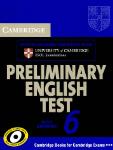


Text
                    Succeed in
B1 Preliminary
K/€U
2020
PorwuH
including a full-colour
Exam Guide
Test 1 is accompanied by Exam Tips for
each task of the Bl Preliminary exam!
analysing all the exam tasks for the 4 Papers
of the Cambridge Bl Preliminary exam:
Reading, Writing, Listening, Speaking, with
example questions, exam tips & strategies that
help candidates better understand what is
required from them.
QR Codes for the
Listening paper
for audio streaming
complete Practice Tests
for the
Bl Preliminary, Revised Exam 2020
Student’s Book
Andrew Betsis
Lawrence Mamas
Play audio
GLOBAL ELT
Cambridge Assessment English: Bl Preliminary
GlobalELT
Succeed in Bl Preliminary
8 complete Practice Tests
for the revised 2020 exam
The Bl Preliminary (PET) is an intermediate-level exam,
at Level Bl of the Council of Europe's Common European
Framework of Reference for Languages (CEFR).
It tests whether candidates are able to read simple texts and
articles, write simple personal letters, make notes during a
meeting or understand everyday dialogues or monologues.
The Bl Preliminary is a very useful qualification as it is
widely recognised in many countries around the world.
This exam comes between A2 Key and B2 First.
It is also useful preparation for other Cambridge English
Qualifications, such as 62 First (FCE), Cl Advanced (CAE)
and C2 Proficiency (CPE).
Published by GLOBAL ELT LTD
www.globalelt.co.uk
email: orders@globalelt.co.uk
Copyright © GLOBAL ELT LTD, 2019
Andrew Betsis and Lawrence Mamas
Contributors: Linda Lethem, Maria Windsor, Deborah Cotterell, Pierre Staple/, Marianna Georgopoulou and Varvara Valianatou
All rights reserved. No part of this publication may be reproduced, stored in a retrieval system, or transmitted in any form or by any means, electronic, mechanical, photocopying, recording
or otherwise, without the prior permission in writing of the Publisher. Any person who does any unauthorised act in relation to this publication may be liable to criminal prosecution and
civil claims for damages.
Every effort has been made to trace the copyright holders and we apologise in advance for any unintentional omission.
We will be happy to insert the appropriate acknowledgements in any subsequent editions.
The authors and publishers wish to acknowledge the following use of material: 123RF for the photos used in the Exam guide, the Practice Tests & the Speaking section.
• Succeed in Bl Preliminary - 8 complete Practice Tests for the revised 2020 exam - Student’s book - ISBN: 9781781646533
•Succeed in Bl Preliminary - 8 complete Practice Tests for the revised 2020 exam - Overprinted Edition with answers - ISBN: 9781781646540
2
[GlobalELT
CONTENTS
CONTENTS
Bl Preliminary (PET) Revised Exam Format	Page 4
Bl Preliminary (PET) Exam Guide for all papers for the Revised Exam	Page 5
Useful Vocabulary & Exercises for Test 1	Page 22
PRACTICE TEST 1 with Tips and step-by-step Guidance	Page 24
Useful Vocabulary & Exercises for Test 2	Page 36
PRACTICE TEST 2	Page 38
Useful Vocabulary & Exercises for Test 3	Page 50
PRACTICE TEST 3	Page 52
Useful Vocabulary & Exercises for Test 4	Page 78
PRACTICE TEST 4	Page 80
Useful Vocabulary & Exercises for Test 5	Page 92
PRACTICE TEST 5	Page 94
Useful Vocabulary & Exercises for Test 6	Page 106
PRACTICE TEST 6	Page 108
Useful Vocabulary & Exercises for Test 7	Page 120
PRACTICE TEST 7	Page 122
Useful Vocabulary & Exercises for Test 8	Page 21
PRACTICE TEST 8	Page 106
Speaking Tutor
for assistance in Practice Tests 1-4
Speaking Section 8 Speaking Practice Tests	Page 125
3
Cambridge Assessment: English Bl Preliminary
Revised 2020 Exam Format
Paper 1	Reading	Time: 45 mins
j Part	Task	Questions	Format	Marks
Part 1	3-option multiple choice	5	Candidates need to understand 5 short messages of different types.	5
Part 2	Matching	5	Candidates should match 5 descriptions of people to 8 short texts, reading for specific information and detailed understanding.	5
Part3	4-option multiple choice	5	Candidates must read a longer text to understand gist, global and detailed meaning, attitude, opinions & feelings, and then answer 5 multiple-choice questions with four options (А, В, C, D) each.	5
Part 4	Gapped text	5	Candidates are required to read to understand gist and text structure: choose the correct sentence to put in the gaps.	5
Part5	4-option multiple choice cloze	—6_	Candidates are required to read a text and choose missing words (А, В, C, D) to fill in the gaps. Grammatical knowledge may be tested in this task.	6
Part 6	Open cloze	6	Candidates must read a text and write words in the gaps.	6
TOTAL		32		32
Paper 2	Writing	Time: 45 mins
Part	Task	Questions	Format	Marks
Part 1	Email	1	Candidates should write an email in response to information given. They are expected to write approximately 100 words.	20
Part 2	Article or Story	1	Candidates can choose to write either an article or a story on the topic given (about 100 words).	20
TOTAL		2		40
Paper 3	Listening	Time: 30 mins
Part	Task	Questions	Format	Marks
Part 1	3-option multiple choice	7	Candidates are required to find key information in 7 short monologues/dialogues and choose the correct visual.	7
Part 2	3-option multiple choice	6	Candidates must listen to 6 short dialogues for attitudes and opinions, and choose the right option (А, В, C).	6
Part3	Gap fill	6	Candidates must listen to a longer text and write the missing information in 6 gaps.	6
Part 4	3-option multiple choice	6	Candidates listen to a longer text/interview for specific information, detailed meaning, attitudes & opinions.	6
TOTAL		25		25
Paper 4	Speaking	Time: 12-17 mins
Part	Task	Questions	Format	Marks
Part 1	Introductory phase	2	This part involves general interactional and social language about personal topics.
Part 2	Individual long turn	3	Candidates are required to describe photographs and manage discourse, using appropriate vocabulary in a longer turn.
Part3	Collaborative task	4	Candidates use functional language to make suggestions and also respond to suggestions, discuss alternatives, make recommenda- tions and negotiate agreement, based on picture prompts.	25
Part 4	Discussion	3	Candidates talk about likes/dislikes, preferences, habits, opinions and agreeing/disagreeing. This is linked to the collaborative task.
4
GlobalELT
Cambridge Assessment English:
Bl Preliminary
Exam Guide
Global ELT
к J
5
SUCCEED in Cambridge B1 Pr
READING Part One  A
What is the task
This part of the reading test consists of five short texts.
Each text has one multiple-choice question with 3 possible
answer options: A, В and C. The texts can be notices, signs,
messages, emails, information on packets, etc.
How to do the task
Look at each text one at a time. Try to work out what kind of
text it is and where you might see it. For example, might it be
a notice in a shop window or information on something you
have bought? You can use the information that is given to
you to help you work this out. If it is a message, note or email
it will usually say this.
Let's practise!
Look at the following text and answer the questions below.
All students must return books to this desk within three
weeks of borrowing them. Students who return books
after the return date will have to pay a fine.
1.	Is this most likely to be a notice, advert or email?
Why do you think this?
Choosing the correct answer
As we have already said, there are 3 possible answers for you
to choose from: A, В or C. When you have read the text and
got an idea of what the text is and its context, read the 3
answer options carefully. Compare each option with the text
before choosing your answer. Remember that the wrong
answers might seem to be correct at first, so it is important
to read the chosen option again to check that the meanings
match.
EXAM PRACTICE
For each question, choose the correct answer.
To: Brian
From: Helen
Brian, here’s the information about the new pool.
I always go there after school on Monday,
Wednesday and Friday.
Email me if you want to come with me on Friday
and my Dad will pick you up on the way.
Send
2. Where might you see this text? Could it be in a bookshop,
an office or a school? Why do you think this?
A.	Brian must ask his dad to drive Helen to the pool.
B.	Brian needs to let Helen know if he wants to go
swimming on Friday.
C.	Brian should meet Helen at the pool on Monday.
Now, say if the following statements are T (True) or F (False).
3.	Students always have to pay to borrow a book. ______
4.	Books can only be borrowed for a limited
amount of time.	_____
5.	Only some books can be borrowed.	_____
6.	Students should keep each book for at least
three weeks before returning it.	_____
Analysis and justification of the answers
1.	This is most likely to be a notice as it is quite formal and
gives specific information. It is not trying to sell something
as the books can be borrowed, not bought.
2.	You are most likely to see this in a school library as it is
in a place where students can borrow books.
3.	False, as students only have to pay if the books are late
and then they have to pay a fine. So they don't pay just
because they have borrowed a book.
4.	True, as books have to be returned within three weeks.
5.	False, as there is no mention of books that can't be
borrowed.
6.	False, as three weeks is the maximum amount of time that
the students can keep a book but there is nothing to say
that they can't return a book before the three weeks are up.
Sandwiches and salads sold here.
Hot snacks only available between 12 and 3pm.
Hot and cold drinks served all day.
A.	You can buy a hot drink at any time.
B.	You can buy a hot cooked breakfast.
C.	Sandwiches are only available at lunchtime.
Analysis and justification of the answers
Question 1
Answer A is not correct as it is Helen's dad that will drive
Brian to the pool. Answer В is correct as Helen says, 'Email
me if you want to come with me on Friday'. Answer C is not
correct as Helen is asking Brian about Friday, not Monday
and they will give Brian a lift if he wants to go; so they will
not meet at the pool.
Question 2
Answer A is correct as the sign says, 'Hot and cold drinks served
all day.' Answer В is not correct as hot food is only sold between
12 and 3pm; not at breakfast time. Answer C is not correct as
sandwiches are available all day.
6
Exam Guide
READING Part Two ТМНж
What is the task
In this part of the reading test, you will have to read five
short descriptions of people and then match these people to
5 out of 8 short texts, on a particular subject. For example,
you may have to choose the most suitable film, book, hobby,
holiday, etc for each person. You will be given enough infor-
mation about each person to choose the best answer.
How to do the task
The first thing you need to do is to read the five descriptions
of the people. Underline any key words in each description.
Next, you need to read all eight texts carefully, underlining
any matches between these and anything in the descriptions
of the people. Then, compare the description again with any
possible matches. Make sure that the options match all the
requirements of the description. Be careful not to just pick
out one or two words that match; you need to look at the
whole meaning of the texts as some of them may be similar.
Some of the people might have similar interests, but you must
remember there is only one correct answer for each person.
When you have found the answer, read the text again carefully.
There may be one or two details which make an answer wrong.
Remember, no text can be the answer to two questions.
Let's practise!
Look at the statement made by each person and match them
with a suitable hobby. There are three extra hobbies that are
not suitable for any of the people.
Maria: I love being creative.
I bake things all the time and
I also like to use unusual
ingredients.
Tim: I like working with my
hands and making interesting
objects. I use all kinds of
things like wood, metal, glass
or plastic. I try to make
something beautiful out of
other people's rubbish.
Jenny: I started to do it to
keep fit. It certainly does that.
Now I'm more serious about
it and I've even won some
competitions with my partner.
I love the music too, especially
the romantic music.
Sam: It's something that
relaxes me. I especially like
to be outside in a natural
environment because I never
take the same pictures twice,
even in the same place.
Karen: I've done this since
I was quite young. I make
small houses, boats, planes
and many other things.
It's important to always
follow the instructions that
come in the box or you might
join the wrong parts together.
Hobbies:
photography, playing a musical instrument, art (sculpture),
doing quizzes, model making, dancing, camping, cookery
Analysis and justification of the answers
The best hobby for Maria is cookery. She says that she likes to
bake things, so that means she cooks things in the oven and
she uses unusual ingredients; she means unusual food to make
meals etc. At first, when she says she is creative this might make
you choose photography or art. This shows how important it is
to read the whole text carefully.
The best hobby for Tim is art, making sculptures as he likes to
make beautiful things out of objects. He is not taking beautiful
photographs; he is actually making things. Model making also
seems like a possible answer here, but this answer is needed
for another person. This shows how important it is to check
whether an answer matches someone else better.
The best hobby for Jenny is dancing. She mentions music, so
that might make some people think she is talking about playing
a musical instrument, but she says she does it to keep fit.
Also she does it with a partner and has won competitions.
Sam must be interested in photography because he says he
likes taking pictures. Note that he takes pictures; he doesn't
paint or draw them. He says that he likes to be outside, but
he is not talking about camping because he is still talking about
taking pictures and how a place looks different all the time.
Karen's hobby has to be model making and not art, or photo-
graphy, or cookery because she says the kind of things that she
makes and mentions following instructions on how to make
the models which you would not have with photography or art.
EXAM PRACTICE
For each question, choose the correct answer.
The people below all want to go on holiday. There are some
holiday advertisements. Decide which advertisement (A-E)
would be the most suitable for the each person.
1.	Mark wants to travel around Europe but does not have
much money to spend. He would like to meet people
while he is travelling, as he is going to travel on his own.
2.	Gina would like to see as much of Europe as she can but
she doesn't want to have to organise anything herself, as
she is not good at planning things.
3.	Bobby wants to go somewhere where he can enjoy nature.
He wants to get away from the noise of the city and be
somewhere peaceful.
A Natural Europe offers guided treks in different European
countries. Your guides are all experienced country walkers
who have a lot of knowledge of wild plants and animals.
You will stay in small but beautiful hotels with wonderful
views of the countryside.
В Family Fun Vacation offers everything that you and your
children could want from a holiday. Hotels with restaurants
with a large choice of food. Activities day and night for
young and old. Best of all: prices you can afford.
C Go Global Holidays will prepare your holiday for you.
We will arrange your transport, accommodation and a
few interesting trips every day. We have hotels all over
Europe at many different prices.
D Young Travel is a holiday company with a difference. We
introduce young people to each other to form travel groups
around Europe. We also find you work in many different
European countries so that you can pay your way around
Europe, but remain in control of your travels.
E Young person wanted for a friendly family. We are going
to Italy for two months and we need someone to come
with us to help look after our three children. You must be
friendly, sensible and reliable.
7
....... ...• '.. ....  ———————----—
SUCCEED in Cambridge B1 Preliminary
Analysis and justification of the answers
1.	D Young Travel is the best choice for Mark, as he doesn't
have much money and he can earn money while he is
travelling. Also he will make friends immediately with
Young Travel. Although option E offers work abroad, it
is only based in one country and he would be spending
time with children rather than people of his own age
that he could become friends with.
2.	C Gina doesn't want to plan her own travels, so Go Global
Holidays would be perfect for her. They'll do everything
for her. Also, she wants to go to different countries which
Go Global Holidays can organise for her. D might seem
possible, too, but she would have to still organise
things for herself even though they find you work.
3.	A Bobby's natural choice would be Natural Europe as this
is the company that offers holidays that are in peaceful,
natural places. The hotels where they take you to have
countryside views which would be perfect for Paul who
wants to escape the city.
READING
What is the task
Part Three
This part of the reading test is a text with five multiple-choice
questions with four possible answers each: А, В, C or D.
You will be asked questions about people's attitude or their
opinion, as well as specific information.
How to do the task
The first thing you should do is quickly read the text to find out
the topic and its general meaning. Then read the text
for a second time, but this time more carefully. Look at the
questions one by one and compare each option with the text.
Think carefully about each answer before you choose the one
that you think is correct. The answers to the first four questions
will follow the order of the text and the last question is about
the whole text in general.
The final question tests how well you have understood the
general meaning of the text. This is why the answer to such a
question cannot be found in a specific part of the text, as was
the case with the other four questions. You have to answer the
final question having in mind everything you have read about
in the text.
Let's practise!
As we have already said, the last question has to do with the
whole text. Read the three texts, A, В and C, and match them
to the questions 1-3 that follow.
A. After eating at your restaurant last night, I felt that I
had to write to let you know that although the food
was delicious as always, the service was not good at all.
Usually your waiters are very polite, but I was shocked
that the waiter last night was both rude and lazy.
B. Here at Billy's Fish Restaurant we are proud of our menu.
Our food is always fresh and where possible, bought
from local fishermen and greengrocers. We have a
special offer in January of a free starter or dessert with
every main meal. Have a look on our website for our
'daily menu which changes every day.
C. Hi John, I've just been to Billy's Fish restaurant and had
a fantastic meal. I met the owner. He was a really nice
guy and he told me that because he is so busy, he is
looking for another chef. I think it would be the perfect
place for you to work. That cafe you've been working in
for the last two years really isn't where you should be.
You are much better than that. Why don't you go and
have a chat with the owner at Billy's?
What would someone say about Billy's Fish Restaurant?
1.	Great food and even better offers.
2.	Successful business offers job opportunities.
3.	An unexpected complaint.
_ Reading	Exam Guide
#/,
Analysis and justification of the answers
1.	В In text В the owner of the restaurant is advertising the
restaurant in general, stressing how good the food is,
and he is also advertising a special offer in January.
2.	C In text C the writer says that the restaurant is so busy
that he needs another chef, so it must be a very
successful business.
READING Part Four
What is the task
This part of the reading test is a longer text that has five
numbered spaces where sentences have been removed.
Following the text there are eight sentences, A-H. You have
to choose the correct missing sentences to fill the gaps.
This means that there are three extra sentences which you
do not need to use.
3.	A In text A the writer says that he was shocked at how
rude and lazy the waiter at Billy's Fish Restaurant was.
EXAM PRACTICE
For each question, choose the correct answer.
Losing our school's sports field
Sixteen-year-old Janice writes about an issue that is worrying her
We students, in year eleven, have heard that a builder is
planning to build forty new houses on our sports field.
I realise that the field does not belong to our school but
students at the school have been using it for the last thirty
years. There is no other green space around the school that
can be used for sport. We would have to walk for twenty
minutes to get to the park and that would not be possible
for a one-hour lesson. Physical education is so important
for children as it teaches them teamwork and helps them
to stay healthy.
1.	What does physical education offer children,
according to Janice?
A.	better grades in school
B.	better health
C.	happiness
D.	a better relationship with their teachers
2.	Which of these posters have the students made?
A.	Save our sports field
B.	Save our school
C.	Say no to Physical Education
D.	Use your park or lose it
Analysis and justification of the answers
1.	В Janice says that physical education 'helps them
to stay healthy'.
L ,•
2. A would be more likely because they are trying
to stop houses being built on the field where
the children play sport.
How to do the task
The first thing you should do is to read the whole text to get
a general understanding of what it is about. Then, look at
each numbered space in turn and choose one of the sentences
A-H to fit the gap. In order to do this, you not only need to
check that the meaning is correct for the gap but also that it
fits grammatically with the sentences before and after the gap.
Once you have chosen the sentence that you think fits best,
quickly check that the other sentences don't fit and try to
decide why they are wrong. Once you have found all the
missing sentences, read the text once more to make sure that
it all makes sense.
Let's practise!
Put the sentences (A-J) below in the correct order. First, look
at the meaning. The sentences should follow each other so
that the meaning makes sense. Also look at the words and
phrases that are used to connect meaning between sentences.
Look for words and phrases such as because of this, firstly,
secondly, finally, on the other hand, next, as well as this etc.
This will help you link ideas in the text.
Four of the sentences have been written in for you.
A.	Because of this, the town will be much greener in
the future.
B.	We made some plans to decide what we could do.
C.	These classes have been very interesting.
D.	Last month our school decided to do something to
improve our local environment.
E.	Firstly, we created a litter group.
F.	As a result of this, our town is clean and tidy.
G.	Finally, we have had people come to our school to teach
us about protecting the environment.
H.	A group of us students got together to have a meeting.
I.	The students in this group go around town picking up
litter.
J.	Secondly, we have been planting trees.
1. ...P.. (Last month our school decided to do something to
improve our local environment.) 2........3.	.B... (We made
some plans to decide what we could do.) 4.......5......
6. ...f.. (As a result of this, our town is clean and tidy.) 7.
8......9. (Finally, we have had people come to our
school to teach us about protecting the environment.)
10.....
9

SUCCEED in Cambridge B1 Preliminary
. Ж
fading

Analysis and justification of the answers
2. H The writer says 'a group of us students' and the next
sentence says, 'we made some plans' (in the meeting).
4. E Then, the writer goes on to explain what they decided
to do, so the word 'Firstly' shows us that we are going
to hear what they did one by one.
5.1 We know we have been told about the litter group in
sentence 4, so this is more information about what
the group did. In the following sentence, we learn how
this has improved the appearance of the town.
7. J A new idea is introduced here, so the word 'secondly'
is used to introduce the next piece of information
about planting trees.
8. A 'Because of this' refers to the planting of the trees
10. C The final sentence adds information about the speakers
who have been talking to the students about protecting
the environment. 'These classes' refers to this.
EXAM PRACTICE
Three sentences have been removed from the text below.
For each question, choose the correct answer. There are two
extra sentences that you do not need to use.
Preparing for exams
Most students feel nervous before they take an exam.
However, there are lots of things you can do to prepare for
exams. This will make you feel more confident and help you
to get better grades. 1.....After every class you need to
read your notes and learn the most important things. If you
do that, you won't have too much to learn before the exams.
On the day of the exam you need to be as ready as you can
be. The night before, you should go to bed early.
2.......Also, you should have a good breakfast. If you are
hungry, you won't be able to work properly. Have a glass of
water on the desk in the exam room. When you have finished
the exam, do something to relax. 3........Make sure it is
something you enjoy. Don't worry about how well you did in
the exam once it is over.
A Stay up all night and read your notes.
В You could go for a walk or have a coffee with a friend.
C Go home immediately and check your answers.
D Try to get about eight hours of sleep.
E The first thing you should remember is that you need
to learn things as you are taught them.
Analysis and justification of the answers
1.	E Sentence E must be near the beginning of the text
because it says, 'The first thing...' and the sentence
after continues the idea of reading your notes after
each lesson.
2.	D This follows the advice of going to bed early, so it fits
this gap perfectly.
3.	В The sentence before talks about relaxing and this
sentence gives two examples of how you can relax.
READING
What is the task
Part Five
In Part 5 of the reading test, you have to read a short text
with six numbered spaces. Then, you will be given four words
to choose from, А, В, C or D to find the correct word to fill the
space. These words will be testing your vocabulary, mostly,
rather than your grammar skills. Quite often they will be similar
in meaning or they will look similar, so be careful when you
choose your answer.
How to do the task
First of all, you should quickly read the text (this is called
skimming) to find out the topic and the general meaning.
Then, look at the six questions, and read the whole sentence
in order to choose the correct word to complete the gap.
After choosing an answer, you need to check the other three
options and decide why they are wrong. Once all the gaps are
completed, you should read the whole text again to make sure
it makes sense. Remember some of the words might seem
similar in meaning, so check your answers carefully.
Let's practise!
Choose the correct word, A, В or C, to complete the sentences.
1.	Don't.....to ask Jim to the party because he won't come.
A. worry	B. bother	C. trouble
2.	Although it was a(n)....project, we managed to do it
in the end.
A. challenging B. amazing C. impossible
3.	After running the marathon, she was......and slept for
hours.
A. tiring	B. exhausted C. rough
4.	I accidentally....the important work on my computer
and lost it forever.
A. deleted	B. installed C. emailed
5.	I sat down with a coffee to read the interesting...
in the magazine.
A.	headline	B. programme C. article
Analysis and justification of the answers
1.	A. Don't worry about asking Jim. B. Don't bother to ask Jim.
C. Don't go to the trouble of asking Jim.
2.	A. challenging - difficult to do or achieve, so despite the
problems they still managed to do it. B. being amazing
wouldn't be described as something negative. C. being
impossible would mean that it couldn't be done.
3.	A. tiring: what makes you feel tired.
B.	exhausted: very tired. C. rough: hard, challenging
4.	A. delete: destroy, get rid of something in a computer
B.	install: put something in to a computer
C.	email: send something via email
5.	A. a headline would only take a second or two to read, so
you wouldn't need to sit down with a coffee to do that
B.	a programme is something you would watch on TV
C.	an article may be quite a long piece of text, so you may
want to sit down comfortably to read it
10
Exam Guide
Reading
EXAM PRACTICE
For each question, choose the correct answer.
Worldwide Holiday Company
Here at Worldwide Holiday Company we are 1....of the
way that we do business. We have been 2...care of
holiday makers for over twenty years and have taken people
to amazing 3....all over the world. If you are interested in
the holiday of a lifetime, why not ask for one of our 4.
and sit down and choose where you want to go exploring
next. Then, we will do all the work for you.
Remember that often there will be clues to help you choose
the right answer. For example, many words have a dependent
preposition that always follows the word, such as depend on,
insist on, succeed in, in spite of, etc.
Let's practise!
Complete the text using the correct preposition.
George is eighty years old. He was brought 1.........in
a small village in Wales and he has lived there all his life.
He has always been a very hardworking man and 2............
a result he has been very successful.
1.	A. successful
2.	A. taking
3.	A. arrivals
4.	A. instructions
B. proud
B. making
B. receptions
B. applications
C. happy
C. giving
C. departures
C. brochures
D. jealous
D. having
D. destinations
D. postcards
George set 3......a small farm on his land over fifty years
ago. According 4......his family, he has never had a day
Analysis and justification of the answers
1.	A. We are a successful business.
B.	We are proud of the way we do business.
C.	We are happy with/about the way we do business.
D.	Other people are jealous of the way we do business.
2.	A. take care of someone/something (phr v): make sure that
they are safe and well and have everything that they need.
3.	A. arrival (n): the act of someone reaching a place
B.	reception (n): the place in a hotel where you check in
and pay for your room etc
C.	departure (n): the act of leaving a place or the place in
an airport where people wait for their plane
D.	destination (л): a place that people travel to, the end
of a journey
4.	A. instructions (л): information on how to do something
B.	application (n): something you write personal information
on when you want to ask for something such as a job
C. brochure (n): something like a small magazine that
advertises things for sale, such as holidays
D. postcard (л): a card with a picture on one side that is
usually sent without an envelope
READING
What is the task
Part Six
Part 6 of the reading test is similar to Part 5 in that you have
a text with 6 missing words. However, in Part 6 you are not
given a choice of 4 answers to choose from. You need to find
the missing word by yourself; without any help.
How to do the task
Just like you did in Part 5, you should skim read the whole
text to find out the topic and general meaning. Then, look at
each gap in turn and think of a single word that makes sense
in the gap. Look at the words on either side of the gap to help
you and the whole sentence around it. It is important that
the word you write is spelled correctly. Once all the gaps are
completed, read the text again to make sure it makes sense.
This part of the test is designed to test mostly your grammar
skills as well as your knowledge of fixed phrases and phrasal
verbs. You may be tested on the use of tenses, modal verbs,
words that connect ideas, prepositions, etc.
off work in all of those years.
George has also been a wonderful husband and father
5........the same time as running his own business. People
often ask George when he is going to give 6.......working
but he has no plans to do this. He loves being a farmer but
due 7.......his age he doesn’t do all the jobs
he used 8........do but he’s definitely still the boss!
Analysis and justification of the answers
1.	bring up (phr v): to have children and look after them,
feed them, clothe them etc.
2.	as a result (phr): because of this
3.	set up (phr v): start, organize, develop something for the
first time
4.	according to: used to say that someone has said something
that explains something or informs
5.	at the same time as: happening, doing at the same time as
something else
6.	give up (phr v): stop doing or having something
7.	due to: because of, as a result of
8.	used to: for something that was done in the past but is no
longer done
EXAM PRACTICE
For each question, write the correct answer. Write one word
for each gap.
The benefits of having a hobby
There's nothing better than taking 1.......a new hobby
when you are feeling bored. If you aren't sure 2......
might be a good thing to try, why 3.......have a look on
the internet for ideas? These days there are so 4.....
hobbies and leisure activities to choose from. All you need to
do is to decide if you would like to do something on your
own, or whether you would prefer an activity that involves
5........people. Good luck with your new hobby!
Analysis and justification of the answers
1.	take up (phr v): start to do something for the first time
2.	what (pronoun): might be a good thing, here used as the
subject of might
3.	why not: used to make a suggestion, followed by a bare
infinitive
4.	so many: to express an amount or quantity. Here it is plural
as the writer is talking about the large choice of hobbies
and activities
5.	other people: extra, additional, not just yourself
11
SUCCEED in Cambridge B1 Preliminary
Writing
WRITING Part One
What is the task
For Part 1 of the writing test, you will be asked to write an
email of about 100 words. You will be given an email to
respond to and there will also be 4 notes added to the email.
You will answer the email and include all the things that have
been written in the notes. You must answer this question.
How to do the task
Read the email and the notes that you have been given.
Remember, you must respond to all the information that you
have been given. Make sure that you write about 100-120
words. If you don't write enough, you will lose marks and it
probably means that you have not included all the necessary
information. If you write too many words you will not get more
marks and you are more likely to have written information
that is not needed in your response. You could lose marks for
that. It is very important that you write clearly. If the examiner
cannot read your writing, you will lose marks. Also, you must
check your spelling and punctuation when you have finished
writing your email. Make sure you know who you are writing
to, why you are writing, and include the four notes.
Let's practise!
Look at the email below and correct any spelling errors,
EXAM PRACTICE
You must answer this question.
Write your answer in about 100 words.
Question 1
Read this email from your English speaking friend, Sam, and
the notes you have made.
Write your email to Sam using all the notes.
EMAIL
From: Sam
Subject: Your visit
Hi Angela,
Answer...
I'm really looking forward to your visit. How long has it
been since we last saw each other? I'm trying to think
of fun things to do when you get here. You said you
would like to go to London. Is there anything special that
you would like to do there?
Dad said he would take us on a day trip
or Cambridge. Which one would you prefe
Also, are you still a vegetarian or do you eat
eat now?
Email me soon,
Sam	/
Explain...
either Oxford
Choose...
Suggest...
or any punctuation mistakes that you can find.
New message
Dear sophie,
how are you I'm writing to invite you to my birthday
party next week. Its in newbury Road and we are
going to have a great time. I really hope you can
come. I have invited lots of people that you allready
now so you can see all your old School friends,
How was your holiday? Im sure you must have had
a wonderfull time in suny spain.
Write back to me as soon as possible?
Your friend!
Jane
a <£ & V tr fa a. ;
Send
Now look at the corrected version. Did you find all the
Model Answer
Hi Sam,
It was great to hear from you. Can you believe it has been
8 months since we last saw each other?
If we go to London, I would love to go to London Zoo and,
if it’s possible, maybe we could go on a boat trip on the
river Thames. That would be a wonderful way to see some
of the famous London sights.
I've always wanted to go to Cambridge, too. It's such a
famous town. Please say thank you to your Dad.
Don't worry, I'm not a vegetarian anymore, but I only eat
chicken and fish. I don’t like red meat.
See you soon,
Angela
(109 words)
mistakes?
New message
Dear Sophie,
How are you? I'm writing to invite you to my birthday
party next week. It's in Newbury Road and we are going
to have a great time. I really hope you can come. I have
invited lots of people that you already know, so you can
see all your old school friends.
How was your holiday? I'm sure you must have had a
wonderful time in sunny Spain.
Write back to me as soon as possible.
Your friend,
Jane
Send
WRITING Part Two
What is the task
In Part 2 of the Writing test, you have the choice between
writing an article or a story.
Again, you will need to write about 100 words.
How to do the task
The first thing you need to do for Part 2 is to quickly decide
which question you would like to answer. Read both of the
questions and then think which one is the easiest for you to
write. Think about the topic of each question and decide which
one is of interest to you and which one you think you know
more vocabulary for. You might find it easier to write a story
than an article. Of course, you should have had lots of practice
writing both types of task before you take the exam. Try to use
different tenses, expressions and vocabulary and organise your
writing into paragraphs.
12

Exam Guide
Writing
Question 2
Writing an article
When you choose the article option, write down as many ideas
as you can that you want to include in your article. This is called
brainstorming. Then choose what you want to include in your
writing and put them in a logical order.
You will need:
an introduction in the first paragraph,
then two paragraphs that develop your ideas
and a final paragraph for your conclusion.
Let's practise!
Look at this question:
You see this notice on an English-speaking website.
Articles wanted!
If you could live in your perfect home:
- Where would it be?
- What type of home would it be?
- Who would you live with?
Write your article.
Now, using the information below to help you, write
an article for the website.
Notes:
location:	by the sea/in a village
type:	big, 5 bedrooms, large living room, big kitchen,
garden, view of sea, balconies
live with: my family and 2 dogs
Useful vocabulary and expressions:
beautiful/peaceful location sea view fresh air
relaxing dog walks modern decoration comfortable
air conditioning central heating friendly neighbours
Question 3
Writing a story
For the story, you will be given a sentence to start with.
You must then continue the story with clear links to the
opening sentence.
You need to look at any names or pronouns that are used in
the opening sentence and make sure that your story uses the
same people or situation. For example, if the story begins
with 'she', 'he' or a name, you must continue with the same
person. Again, you will need to write about 100 words.
Let's practise!
Look at this exam question:
Paul took off his shoes and walked into the water.
Now we can quickly brainstorm some ideas:
Notes:
walking on beach
hears someone shout 'help'
sees child in sea
rescues them
Useful vocabulary:
summer's day relaxing walk
sandy beach	unexpected noise
terrified	act quickly
rescue	be a hero
Now using the information above to help you, write the story.
EXAM PRACTICE
Write your answer in about 100 words.
EXAM PRACTICE
Write your answer in about 100 words.
Question 2
You see this notice on your school's notice board.
Articles wanted!
Question 3
Your English teacher has asked you to write a story.
Your story must begin with this sentence:
When Jenny looked out of the window, she couldn't
believe her eyes.
Young people and stress
- What do young people worry about?
- Who can they turn to for advice?
- What can they do to relax?
The writer of the best article will win
a free gym membership!
Write your article.
Model Answer Young People and Stress
It is often said that young people lead very stressful lives.
First of all, teenagers worry a lot about schoolwork
and exams. Also, teenagers often worry about their
appearance and usually they don't feel very confident.
Young people can get advice from friends and family and
also from their teachers. But sometimes they don’t like
asking anyone for advice.
Finally, it is very important for young people to find time to
relax and enjoy themselves. They might want to play a sport,
listen to music or spend time chatting with their friends.
What is important is that they find a way to feel better.
(108 words)
Write your story.
Model Answer
When Jenny looked out of the window, she
couldn't believe her eyes. There was an elephant
walking down the street! Jenny closed her eyes
and opened them again. She thought she must be
dreaming.
The elephant was walking very slowly and was quite
relaxed. It stopped at an apple tree and started to
eat the fruit. Then, Jenny saw two men running
towards the elephant. One of the men was
dressed as a clown.
Jenny realised that they had come from the cir-
cus that had just arrived in town the day before.
The elephant must have escaped.
It was the strangest thing she had ever seen in
her life.
(109 words)
13

SUCCEED in Cambridge B1 Preliminary
Listening
LISTENING
The texts (audioscripts) in the Listening paper will be from
a variety of listening situations. There will also be a variety
of native-speaker accents. The texts may include:
□ conversations in shops (Part 1)
□ conversations at home or between friends (Parts 1, 2)
□ radio announcements (Parts 1, 3)
□ recorded messages (Parts 1, 3)
□ parts of talks (Part 3)
□ informational talks or radio programmes (Part 3)
□ interviews with questions from a radio presenter (Part 4)
Analysis and justification of the answers
1.	They won't play tennis on Saturday because there aren't
any free courts.
2.	They must both enjoy playing tennis because that was
their original plan.
3.	They won't go for a bike ride on Saturday because the
boy's bike is broken.
4.	No, they hadn't planned to go fishing on Saturday because
they wanted to play tennis.
5.	The girl isn't good at fishing because she doesn't know
how to fish yet. The boy is going to teach her on Saturday.
Choosing the correct answer
Picture A is the correct answer for the above reasons.
LISTENING PartOne
EXAM PRACTICE
What is the task
For each question, choose the correct answer.
In Part 1, there are seven short listenings, each with a question
and three pictures. You will listen to the text, then choose the
picture which best answers the question that you have been
asked. You will be listening for specific information in Part 1.
You will hear all the listenings twice.
How to do the task
First of all, read the question and look at the three pictures.
By doing this, you will know what you are listening out for
and you will know your three possible answers. During the
first listening, you should listen for general understanding and
choose the best option. When you listen for the second time,
check that your answer is correct.
Let's practise!
Look at the question below and the three pictures.
1. Where has the boy been?
C
2. Which exam is the girl worried about?

1. What do they decide to do on Saturday?
A
C
Now read the script of the conversation.
G: Hi Ben. Are we still going to play tennis on Saturday?
B: Unfortunately we can't because the tennis courts were
all booked up.
G: Oh, that's a shame. What about going for a bike ride then?
B: I'd love to but my bike's broken again. How about I teach
you how to fish?
G: Oh wow, I'd love that. Thanks.
Now answer the following questions.
Audioscript:
1.
G: Hi Jack, did you get the milk and the bread from
the supermarket?
B: Sorry no, I didn't have time.
G: But I thought you weren't going to school today.
What have you been doing all morning?
В: I broke my tooth on a biscuit and I had to go and get
it fixed.
2.
B: How do you think you did in the French exam, Amy?
I thought it was quite difficult.
G: I think I've done really well and the English exam
yesterday was fine, too. I'm good at languages.
B: I'm not, unfortunately. I'm more a history and
geography person.
G: Oh no, history is my worst subject, so I'm really not
looking forward to that exam. There are too many
dates to remember.
1.	Will they play tennis on Saturday? Why?/Why not?
2.	Do they both enjoy playing tennis? How do you know?
3.	Will they go for a bike ride on Saturday? Why?/Why not?
4.	Had they already planned to go fishing on Saturday?
Why?/Why not?
5.	Is the girl good at fishing? How do you know?
Now decide which of the pictures, A, В or C, is the correct
answer.
Analysis and justification of the answers
1. A We know the boy has been to the dentist because he
says that he had to get his broken tooth fixed. He had
planned to go to the supermarket, but he didn't have
time. He also didn't have to go to school today.
2. C Amy says she is good at languages, so she was not
worried about the English and French exams. She does
not like geography or history and says that history is her
worst subject and she is worried about the history exam.
14
Exam Guide
LISTENING
What is the task
Part Two
In Listening Part 2, there are six short dialogues, each with
a context sentence, as well as a question or a sentence to
complete and three options: A, B, or C. You have to listen to
the short conversation, then choose the option which best
answers the question or completes the sentence.
You hear each conversation twice.
How to do the task
Quickly read the question and the possible answers first.
Look for any key words in the questions that you can listen
for in the conversation. During the first listening you should
focus on a general understanding of the conversation and
choose the best option. Then, use the second listening to
check that your answer is correct.
Let's practise!
Look at the question and possible answers below and the
audioscript that follows it. Then, answer the questions.
You will hear two friends talking about a cafe they have
been to.
What did the girl like best?
A. the coffee B. the view C. the waiter
Read the conversation below between the two friends.
В: I really enjoyed that. The coffee was great. How was
your hot chocolate?
G: It was lovely and so was the waiter.
В: I thought you liked him from the way you kept smiling
at him.
G: Oh, was it that obvious? Well, to be honest the view of
the busy road wasn't nice to look at, so I looked at him
instead.
B: You are funny.
1.	What did the boy enjoy?
2.	What did the girl drink?
3.	Do you think the waiter was a friend of theirs?
Why?/Why not?
4.	Was the cafe in a nice location? How do you know this?
5.	What did the girl like?
Analysis and justification of the answers
1.	The boy enjoyed his coffee - 'The coffee was great1 is what
he says.
2.	The girl had hot chocolate because the boy asked her if
she enjoyed it.
3.	It is unlikely that they knew the waiter before they went
into the cafe because the boy noticed that the girl seemed
to like him, as she was smiling at the waiter; but there is no
mention of them talking to him and they don't even seem
to know his name.
4.	The cafe wasn't in a nice location, because there was a
busy road outside it and it didn't have a nice view, according
to the girl.
5.	This is the actual question for the task and the answer is:
the waiter because she kept smiling at him.
EXAM PRACTICE
For each question, choose the correct answer.
1.	You will hear two friends talking about learning a musical
instrument.
What does the boy play now?
A.	drums
B.	guitar
C.	piano
2.	You will hear two friends talking about getting fit.
What do they agree on?
A.	joining a gym
B.	going swimming regularly
C.	going for long walks
Audioscript:
1.
G: Do you still play the piano, Steve?
B: Not really; my parents sold the piano we had at home,
because they wanted more room.
G: Oh, that's too badl I've started drumming lessons. I love it.
В: I wanted to get a drum set too, but they wouldn't let me,
so I'm learning the guitar now instead.
G: Well, at least you can carry that around with you easily.
B: That's true.
B: So, are we going to join the gym, like we said the other
day?
G: To be honest, I can't really afford it. It's quite expensive,
you know.
B: Well, in the summer we used to go swimming a lot, but
it's too cold now.
G: Well, I don't fancy cycling for the same reason, so I guess
we could just get out every day and walk a few miles
around the park.
B: That's a good idea, because it won't cost us anything,
either.
Analysis and justification of the answers
1. A. The boy wanted to get a set of drums, but his parents
wouldn't let him. It is the girl who plays the drums.
B. The boy says that he is learning the guitar now, so В is
the correct answer.
C. The boy used to play the piano, but they don't have
one anymore.
2. A. The boy suggested joining a gym, but the girl doesn't
have enough money for that.
B. They only go swimming when the weather is warm.
C. They both think it's a good idea to go for a long walk
around the park every day, so C is the correct answer.
15
SUCCEED in Cambridge B1 Preliminary
LISTENING Part Three > Л
What is the task
In Part 3 of the listening test, you are given a page of notes,
or sentences, from which six pieces of information have been
removed. As you listen to the speaker, you must fill in the
numbered gaps with words from the text which complete the
missing information. The text that you will be given in notes
makes a summary of what the speaker has said. Most answers
will be single words, numbers, or very short phrases. You will
hear the speaker twice. In this task, you will be listening for
specific pieces of information.
How to do the task
First of all, you should begin by reading and listening to the
instructions. Then, use the pause to read the text on the page,
thinking about the context and predicting the sort of language
and information you are going to hear. By looking at the words
before and after the gaps, you could get a good idea if the
missing word is going to be a noun, verb, adjective, adverb etc.
It may be information about places and events, or people
talking about courses/trips/holiday activities.
You can use the order of the information on the page to help
you follow the recording. The information you are listening for,
will come in the same order as the listening.
The first time you listen to the speaker, you should write down
single words, numbers or very short phrases to complete each
gap. You must keep your answers short. The words you need
to complete the gaps are heard on the recording. Therefore,
you shouldn't try to change the words. It is also important that
you don't write in note form. You must write the words in full
and try to spell them correctly.
If the answer seems to involve a number, you may either
write the number in words e.g. ninety eight, or you can
write it in numbers e.g. 98. Both are acceptable.
During the 2nd listening, check that your answers make sense
in the context of the completed note or sentence and that
each answer contains the correct piece of information. Again,
don't forget that it is important to check the spelling of words.
Let's practise!
Complete the sentences with the correct word from the box
below. There are three extra words which you do not need to
use. Use the words at either side of the gaps to help you find
the correct answer.
romantic	hours	minutes
ninety five	plane	horror
cinema	thirteen
bus	modern
1.	Graham has been a bus driver for...........years.
2.	Mr and Mrs Green live at............London Road.
3.	The lecture will last for two.........
4.	Alison likes to watch..........films	where people fall
in love.
5.	We enjoyed the exhibition at the...........art museum.
6.	The meeting point will be outside the...........
7.	The cheapest way to get to the shops is by..........
because parking is so expensive.
Analysis and justification of the answers
1.	thirteen: We know that we need a number or amount
here. Thirteen is a sensible answer. The other number we
have is ninety-five but no one would be a bus driver for
that long.
2.	ninety-five: Again a number is needed here for an address.
Thirteen would be also possible but we have already used
that for question 1.
3.	hours: Something related to time is needed here. A two-
hour lecture sounds likely. The other option would be
minutes but a lecture would last more than 2 minutes.
If it were only two minutes long, we could call it a short
talk, not a lecture.
4.	romantic: An adjective is needed here. She likes films about
love, so romantic is the answer rather than horror.
5.	modern: An adjective is needed and it has to relate to art.
Romantic could be possible at first, but it is used in question
4 and modern art is much more usual as a phrase.
6.	cinema: Here we need a noun, and more specifically a
place, so cinema is the correct answer.
7.	bus: A form of transport is needed that follows 'by'. The
sentence is talking about going to the shops; not a long
distance. So, plane would not be a correct answer here.
EXAM PRACTICE
For each question, write the correct answer in the gap.
Write one or two words or a number or a date or a time.
You will hear a woman called Joanna Bell talking about
a famous building.
The Royal Pavilion
George, Prince of Wales, bought the Royal Pavilion,
in Brighton in 1..............
Henry Holland rebuilt it.
George bought expensive furniture from 2................
The Palace was completed in 1823.
Queen Victoria sold it in 1850 for 3.............
Audioscript:
The Royal Pavilion in Brighton began as a small house close
to the sea that George, Prince of Wales, used as a holiday
home. He bought it in 1784 and hired the architect Henry
Holland to change his small home into a beautiful villa. He
bought expensive furniture and decorations from China for
his house. In 1811, George decided to turn his villa into a
palace. He hired John Nash to build his palace. The building
was not finished until 1823. The Pavilion stayed in the Royal
Family until 1850 when Queen Victoria sold it to the town of
Brighton for £50,000.
Analysis and justification of the answers
1.	1784 In this question we need a date, so even before we
start to listen, we know that this is what we are listening
for.
2.	China By looking at the question, we understand that we
need either a place, or a person here.
3.	£50,000 Here we know that we are looking for a reference
to money, so probably a specific amount of money.
16
LISTENING Part Four
What is the task
In Part 4 of the listening, you will hear a longer text, which
will be an interview. You will have to answer six multiple-choice
questions as you listen to the interview and choose the correct
answer from a choice of three options, A, В or C.
How to do the task
The first thing you should do is read the instructions, then lis-
ten to them, and then use the pause to read the questions and
think about the context. This may be information about places
and events or people's lives, interests and experiences. Then,
you need to focus on a detailed understanding of the meaning
of the text. During the first listening, listen for gist (general
meaning and understanding) and choose the best option for
each question. During the second listening, you must check all
your answers carefully, focusing on detailed understanding,
attitudes or opinions.
Let's practise!
As you have read the questions before you start listening to
the interview, you know what information you are listening
for. Quite often the speaker will give the information using
different words (but similar in meaning) to the words used
in the questions. This is called paraphrasing.
For example, the speaker may say that they found something
very challenging and the correct answer choice might be that
they found something very difficult or that it was not easy.
Look at the statements (1-6) below and match them with
their similar meaning (a-f).
1.	1 haven't played in a team since 1 left school. 2.	1 decided to go for it. 3.	No one seemed to believe in me. 4.1 proved everybody wrong. 5.1 have never regretted it. 6. There are still things for me to achieve.	a.I showed everyone what I could achieve. b.I'm happy with my decision. с.	I thought I would try and get it. d.	I still have ambitions. e.	I used to be in a team when I was at school. f.	People thought I couldn't do it.
Answers:
P 9 q "S e tr ГЕ э г эх
EXAM PRACTICE
For each question, choose the correct answer.
You will hear a radio interview with a young athlete called
Sarah.
1.	What did Sarah's parents think about her being an athlete?
A.	They thought it was an excellent idea.
B.	They didn't believe in her ability.
C.	They thought it would help her get into university.
2.	What was Sarah determined to do?
A.	leave home as soon as she could
B.	continue her training without her parents' help
C.	. prove that she was good enough
Audioscript:
Int: Sarah, you have achieved amazing things in the world of
athletics, haven't you? It must have been difficult when you
were younger and still at school. Did your parents encourage
you to follow your dreams?
S: Not exactly; in fact, they didn't really believe that I had a
future as a professional athlete. They wanted me to do well
at school and then go to university. I don't think they had
realised just how good I was and how much I wanted to do
this. Looking back, I suppose they were trying to protect me
from failure and disappointment.
Int: Did that cause problems between you and your parents?
S: In some ways yes, but they continued to support me even
though they weren't convinced. My father used to drive me
to competitions all over the country and sometimes we had
to leave home very early in the morning and return late at
night. So they were very good to me. That made me want to
prove myself to them and do well in my sport even more.
I didn't want to let them down. I wanted them to be proud
of me.
Analysis and justification of the answers
1. В A is not the correct answer because they didn't believe
she ‘had a future as a professional athlete’.
В is the correct answer as Sarah says 7 don't think they
(= her parents) had realised just how good I was’.
C is not correct because they wanted her to go to
university and they thought athletics would affect
her schoolwork.
2. C A is not right as there is no mention of her wanting to
leave home; she does say that she had to leave home
early in the morning, sometimes, but for competitions.
В is wrong because she says that her parents helped
her a lot.
C is correct because she wanted to prove herself to
them and ’do well in my sport even more. I didn't want
to let them down. I wanted them to be proud of me.'
17
SPEAKING
EXAM PRACTICE
In the Speaking paper, there will usually be two candidates
and two examiners. One examiner is the interlocutor.
The interlocutor manages the interview and speaks directly
with the candidates. The interlocutor sets up the tasks and
gives the candidates their instructions.
The other examiner is the assessor. The assessor does not join
in the conversation, but marks the candidates' performances.
Candidates are usually assessed in pairs, unless there is an
uneven number of candidates at a centre. In this case, the
last test of the day will be a group of three. This is the only
situation in which candidates can be assessed as a group of
three.
SPEAKING Part One
(2-3 minutes)
What is the task
The interlocutor leads a general conversation with each of the
candidates. He or she will ask questions about your personal
details, your hobbies, your daily routines, likes, dislikes, etc.
Each candidate will be asked these questions one at a time
and at this time you will not speak with the other candidate.
How to do the task
This part of the test is designed to relax you, as most candidates
are nervous at the beginning of the speaking test. You will be
asked very simple and quite easy questions about yourself.
Listen carefully to the questions and give answers that are
relevant. That means that you shouldn't start to talk about
things that the interlocutor has not asked you about.
Try not to give very short answers and certainly not one-word
answers. You can make your answers longer by giving exam-
ples or reasons for what you have said. However, you do not
have to say too much at this time.
Let's practise!
Look at these questions and the two answers. One answer is
acceptable but weak. The other answer gives more information
and so is a strong answer that would earn you a better mark.
Phase 1
Interlocutor:
Candidate A, where do you live? (Do you live in ...?)
Who lives with you? (Do you live with your parents?)
Thank you.
Candidate B, where do you live? (Do you live in ...?)
Who lives with you? (Do you live with your parents?)
Thank you.
Sample Answer
I live here in Madrid, about a twenty-minute walk from
here. It's a nice area and I really enjoy living there
because there is a lot to do.
I live with my mother and father and my little sister,
Isabel. We also have a pet cat and a dog which both live
inside the house with us.
Phase 2
Interlocutor: (One or two questions for each candidate)
- How do you get to school every day?
(Do you walk/take the bus etc?)
-	Who is your best friend?
(What do you like about them?)
-	What do you do at the weekend?
(Have you got any hobbies?)
Sample Answer
I usually walk to school. It takes me about half an hour.
However, if the weather is really bad, my mum gives me
a lift in her car.
My best friend is called Simon. We have known each other
since primary school. I trust him completely and we have a
lot of fun together.
At the weekend, I try to get all my schoolwork done on
Saturday morning. Then, I am free to have some fun.
I usually play basketball and I also go for a coffee with
my friends.
Int: Candidate:	Who do you live with ? Weak answer: / live with my family.
Strong answer: / live with my parents and my two younger brothers. И/е also have my grandmother living with us who is quite old and we also have a pet dog called Sandy.
Int: Candidate:	Do you work or are you a student? Weak answer: / am a student at school.
	Strong answer: / am a student at the local high school. It's a good school and 1 try to work hard because 1 would like to go to university when 1 am 18.
SPEAKING Part Two
(2-3 minutes)
What is the task
In Part 2 of the speaking test, you and your partner will take
turns to speak for about one minute. You will both be given
one colour photograph to describe. The photographs show
everyday situations. You will be asked to describe what you
can see in the photograph.
How to do the task
Have a look at your photograph. Try to keep your description
simple. Concentrate on describing only what you can see and
don't try to talk about other subjects that might be related in
some way to the photograph. This is your chance to show the
interlocutor how much vocabulary you know and how good
your use of English is.
18
Exam Guide
Speaking
Describe the people and activities in the photographs as fully
as possible. Imagine that you are describing the photograph
to someone who can't see it. This may include naming all the
objects, describing colours, clothing, time of day, weather, etc.
If you can't remember or don't know the word for something,
try to describe it in another way.
For example, if you couldn't remember the word 'caravan'
you could say, 'They are sleeping in a small home that you
can fix to the back of your car and take from place to place.'
You will not lose marks for doing this.
EXAM PRACTICE
1A Celebrating an achievement
1A Celebrating an achievement
Interlocutor: Now I'd like each of you to talk on your own
about something. I'm going to give each of you a photograph
and I'd like you to talk about it.
Candidate A, here is your photograph. It shows some people
celebrating an achievement.
Candidate B, you just listen.
Candidate A, please tell us what you can see in the photograph.
Candidate A.......(approximately one minute)
Back-up prompts:
Talk about the people/person.
Talk about the place.
Talk about other things in the photograph.
Interlocutor: Thank you. (Can I have the booklet please?)
Sample Answer
In this photograph, I can see a group of extremely happy students
who have just graduated from university. There are about twenty
of them and they are all wearing their special graduation clothes.
At the time that the picture was taken they are throwing their
hats in the air to celebrate. Some of them are holding plastic cups
too.
All of the students are women but there is one man standing at
the back who is wearing a suit. I think he is probably one of their
professors. They seem to be in a garden but it might be some-
where in the university.
In the background I can see some buildings. They look very
British to me from their design. They may even be houses.
IB At the library
IB At the library
Interlocutor:
Candidate B, here is your photograph. It shows some people
in a library.
Candidate A, you just listen.
Candidate B, please tell us what you can see in the photograph.
Candidate В........(approximately one minute)
Back-up prompts:
Talk about the people/person.
Talk about the place.
Talk about other things in the photograph.
Interlocutor: Thank you. (Can I have the booklet please?)
Sample Answer
In this photograph I can see people at a bookshop, or maybe
students in a very large library. I expect it is a university library.
There are thousands of books. All of the students are dressed
casually. Some of them are walking up a metal staircase to the
next floor in the library. There is something very unusual hanging
in the air. It is a sculpture of a student on a bike. It’s a fantastic
piece of art. Maybe it was made by a student. It looks like the
bike is flying through the air. This library is so huge that it must
be difficult to find the book you are looking for.
SPEAKING Part Three (3-4 minutes)
What is the task
In Part 3 of the Speaking test the interlocutor reads the
instructions once while you look at a group of images that the
interlocutor has given you. These images will give you ideas
to talk about with your partner. They will be about a certain
situation that the interlocutor will give you. You and your
partner will discuss your ideas together, making and responding
to suggestions, discussing alternatives, making recommenda-
tions and trying to come to an agreement. You can also use
any ideas of your own as long as they are relevant to the
situation. You will have 4 minutes to do this task together
with your partner. The interlocutor will not speak unless you
and your partner run out of ideas before the time is up.
How to do the task
It is very important that this task is a balanced discussion
between you and your partner. Don't try to do all the talking
but, on the other hand, make sure that you say enough.
Listen to what your partner says and respond to their ideas.
It is fine to disagree with them but always be polite.
19
SUCCEED in Cambridge В

SPEAKING Part Three
You should also discuss all the images that you have been
given and try not to come to a conclusion too quickly. Try to
use a variety of language to show off your speaking skills.
Don't worry if the interlocutor stops you. This will be because
you have run out of time and this is not a problem. You will
not lose marks if you haven't completed the task.
EXAM PRACTICE
Interlocutor:
Now, in this part of the test you are going to talk about
something together for about two minutes.
I am going to describe a situation to you.
A group of friends have decided that they need to do
something to relax when they aren't studying for exams.
Here are some things that they could do.
Talk together about the different activities and say which
would be the most relaxing.
All right? Now talk together.
Candidates.......(2-3 minutes)
Interlocutor: Thank you. (Can I have the booklet please?)
Sample Answer
Candidate A: Well, in my opinion, one of the most relaxing
things is to go for a walk in the countryside. The fresh air
is good for you and it's a healthy activity, too. What do
you think?
Candidate В: I agree with you up to a point, but if you are
feeling tired from all the studying and exams, then you
may not want to go for a walk. I think it would be much
better to do something else, like going out for a meal and
chatting with your friends.
Candidate A: Yes, that's true, as you can really relax when
you are with your friends. But maybe going dancing is a bet-
ter idea, as you are with your friends and you are having
lots of fun, too. Do you agree?
Candidate B: Yes, I agree completely, because when you are
having fun, that is when you relax completely. I also think
that music helps you to forget all of your problems.
Candidate A: Exactly. Whenever I feel sad, I listen to happy
music and I soon feel better.
Candidate B: Do we agree that the friends should go dancing
then?
Candidate A: Yes, I agree 100%.
SPEAKING Part Four
(2-3 minutes)
What is the task
In Part 4 of the Speaking Test, the interlocutor will ask you
questions that are connected to the topic in Speaking Part 3.
You will be asked about your likes and dislikes and your habits
and opinions. You will either be asked questions individually,
or the question may be for you and your partner to answer
and discuss.
How to do the task
As in all parts of the Speaking test you must listen carefully to
the questions and give suitable answers. Don't forget that there
are no right or wrong answers. You are just giving your opinion.
Try to talk from your own experiences, as this will make it easier
for you to say something. Make sure that you give full answers
to the questions and not just a few words. Think about why you
think what you do and give examples if you can.
EXAM PRACTICE
Interlocutor:
Do you think young people are more stressed than older
people (Why?)
-	Should schools teach children how to relax?
-	Do you think people work better when they are stressed?
(Why?)
-	Do you think people spend too much time working these
days?
How can having a hobby improve your life?
Prompts:
-	What about you?
-	Do you agree?
-	What do you think?
Interlocutor: Thank you. That is the end of the test.
Sample Answer
In my opinion, people of all ages suffer from stress.
Maybe there are different causes of their stress and
maybe younger people haven’t had as much experience of
dealing with stress as older people have.
I think it would be a fantastic idea for schools to teach
children how to deal with stress. This would help them
when they are taking exams and generally in their life in
many different situations.
Some people say that stress makes people work better,
but I don't think this is true. I think people can be ambi-
tious and want to do well and this makes them work better
but I think stress stops people from thinking properly and
so has a bad effect on their work.
I believe very strongly that most of us spend too much
time working these days. This means that we get sick
more often because we are tired and do not relax. It is
also bad for our relationships with our family and friends.
Having a hobby is a really positive thing and can definitely
improve your life. It gives you something to do in your
free time so that you forget your problems. Also, it can be
a really good way of making new friends if you join a club
or talk to people on social media about your hobby.
20
GlobalELT
Succeed in
Cambridge English
B1 Preliminary
PRACTICE
TESTS
Useful Vocabulary
for Practice Test 1, Reading, Parts 1 to 6
Reading - Part 1
lean (v) move the top part of the body in a particular direction
passenger (n) a person travelling in a vehicle (car, train, etc)
instead (adv) in place of someone or something else
appointment (n) a formal arrangement to meet someone at a
particular time and place
Reading - Part 2
particularly (adv) especially
cope (v) do something well in a difficult situation
wildlife (n) animals, birds, plants in the place where they live
artistic (adj) able to create or enjoy art
finance (nJ the management of money
aware (adj) knowing about something
obvious (adj) easy to understand or see
well-known personality (n) a famous person
government (n) the people whose job is to control a country
political (adj) relating to politics
lively (adj) full of energy
abroad (adv) in a different country
enthusiasm (n) a feeling excitement about something
practical (adj) something that can be done successfully
honest (adj) someone who tells the truth
presentation (n) what is shown to an audience
sightseeing (n) visiting interesting places, especially by people
on holiday
cookery (n) preparing and cooking food
frightening (adj) scary
tip (n) useful information
forecast (n) something saying what will happen in the future
informative (adj) something that gives you useful information
review (n) a report in which someone gives their opinion of
something (a book, film, hotel, etc)
major (adj) important, big
although (adv) despite the fact that
violence (n) the act of hurting someone
learning difficulties (n pl) mental problems that affect
someone's ability to learn
overcome (v) solve a problem
similar (adj) something that has many things the same as
something else, but is not exactly the same
Reading - Part 3
administration (n) managing the work of an organisation
degree (n) a qualification that proves you have completed a
course at a university or a college
graduate (v) to complete your education successfully at a uni-
versity, school, etc	свкв1т..сл.1>^м
credit card (n) a small plastic card used as a
method of payment	,j?m seze wu Л
assistant (nJ helper	[ ” “йй иЯ
gain (v) to get something useful
role (n) the job someone has in a particular situation
resort (n) a place where people go for a holiday
come up with (phr.v.) suggest or think of an idea or plan
develop (v) change and become better
evaluate (v) measure the importance, or value of something
involve (v) if a situation/activity involves something, that
thing is a part of it
department (n) a part of a business that deals with a particu-
lar area of work
representative (n) someone who speaks or does something
for another person
organiser (n) the person/company who plans and arranges an
event or activity
aim (n) a result that you try to achieve
turn into (phr.v.) change something into something different
realistic (adj) showing things and people as they really are
workable (adj) a plan that can be used effectively
overseas (adv) in another country or countries (especially
across the sea)
rep (n) {short form of sales representative); someone who
travels to different places trying to persuade people to buy
their company's products or services
supervisor (n) a person who watches people or activities to
make certain that everything is done correctly
venue (n) the place where an event happens
existing (adj) present
holidaymaker (n) a person who is on holiday
open-minded (adj) someone who can accept ideas/opinions
that are different to their own
destination (n) the place where someone/something is going
consider (v) think carefully about something
entertain (v) keep a group of people interested, or enjoying
themselves
promotion (n) a move to a more important
position in a job or organisation
22
TEST 1
GlobalELT
Vocabulary Development for Test 1, Reading, Parts 1 to 6
Reading - Part 4
depressed (adj) very sad (maybe for a long time)
challenging (adj) difficult, in a way that tests
your ability
interestingly (adv) used to introduce a piece of
information that the speaker thinks is strange or interesting
unknown (n) not known
miserable (adj) very unhappy
decision (nJ a choice you make about something
ambition (n) something important that you want to do
reasonably (adv) well or enough, but not extremely well
application (n) asking for something (in writing)
climber (n) someone who climbs mountains, hills, or rocks
as a sport
preparation (n) the things you do to prepare for something
step (n) one of the (many) things that you need to do to
achieve something
reliable (adj) able to be trusted
equipment (n) the objects used for an activity
deal with (phr.v.) take action in order to achieve something
or in order to solve a problem
goal (n) an aim, target, purpose
warn (v) make someone realise a possible danger or problem,
(often, one in the future)
unemployed (adv) not having a job
unhappy
businessemployment
worktroubie i seer5
absolutely (adv) completely
Reading - Part 5
drag sb down (phr.v.) when an unpleasant situation drags you
down, it makes you feel unhappy or ill
prevention (n) stopping something from happening, stopping
someone from doing something
cure (n) something that makes a sick person healthy again
bonus (n) a pleasant extra thing (money, gift, etc)
medication (n) medicines used
to help somebody get better
assist (v) help
professional (nJ relating to
work that needs special training
or education
safely (adv) in a safe way
effectively (adv) in a successful
maintain (v) continue to have, or not allow to become less
sore (adj) painful (especially when touched)
native (adj) of or relating to the place where you were born
local (adj) (relating to an area) near you
command (nJ an order, (often one given by/to a soldier)
Reading - Part 6
elastic (adj) something that can stretch and return to its origi-
nal size
rope (nJ a thick, strong string
attach (v) join one thing to another
curious (adj) wanting to know about something
personally (adv) used when you are expressing your opinion
persuade (v) make someone agree to do something by talking
to them a lot about it
Exercise A
Choose the correct answer (A, В or C) to complete the following
sentences.
1.	The location of the hotel makes it an ideal.for
business meetings.
A finance	В review	C venue
2.	Martha is very......in appearance to her mother.
A creative	В similar	C exhausted
3.	Sarah is very.....If she says she will do something,
she will do it, so don't worry about it.
A curious	В reliable	C unemployed
Exercise В
Choose the correct answer (A, В or C) to complete the following
sentences about Sandra.
4.	Sandra got........because her boyfriend left her.
A depressed В open-minded C workable
5.	She was so unhappy that she lost all her.............
for learning and she stopped studying.
A decision	В enthusiasm C destination
6.	Her mum..............the brilliant idea of buying her
a sewing machine.
A came up with В dealt with C turned into
Exercise C
Complete sentences 7-9 using three of the words below.
appointment	wildlife	supervisor	prevention
sculpture	application	pastime	equipment
7.	I've just watched a fantastic documentary on....
and I was amazed at the things wild animals can do.
8.	Gardening is my favourite...............
9.	You need to complete the job.............form
as soon as possible.
23
PAPER 1 READING
PART 1 Questions 1-5
For each question, choose the correct answer.
Test 1
Reading Part 1 Exam Tips
•	Read the text and choose the sentence which goes with it.
•	Look at the layout and the graphics, as this will help you to
understand the context.
•	Carefully read the three possible answers.
•	Read again each possible answer while checking the text
and, then, decide which answer is the correct one.
•	Read your answer again to check that it matches correctly.
moving.
A.	Passengers are informed that they are not allowed
to open train windows.
B.	Train windows are to open only when the train has
entered a station.
C.	Passengers are prohibited from putting their head out
of the window when the train has left the station.
2
Smoking is only
allowed in the
smoking areas.
A.	You are not allowed to smoke anywhere in the building.
B.	There are certain places where you can smoke.
C.	You must smoke if you are in one of the building's
smoking areas.
Mark is letting Ben know
A.	they are not going to play tennis because of a change
of plans.
B.	they will go to the cinema in a few hours, so he must
get ready.
C.	there is a chance they might not play tennis, depending
on the weather.
5
| Anne
ИПСТЯ Julie
A.	Wait for the green light before opening the door.
B.	Turn off the red light when you open the door.
C.	Do not open the door when the green light is on.
Anne, your doctor's appointment is
at two o'clock on Monday instead
of three o'clock on Tuesday.
Please do not forget.
A.	Anne's appointment will be a day later.
B.	Anne's appointment will no longer be on Tuesday.
C.	Anne's appointment will be an hour later.

24
TEST 1
PART 2 Questions 6-10
For each question, choose the correct answer.
The people below all want to stay home and watch TV tonight.
There are some TV programme reviews.
Decide which programme would be the most suitable for each person.
Reading Part 2 Exam Tips
•	First read the eight texts (A - H) and then read the five
descriptions of people.
•	Compare the texts to the people to find a possible match.
Make sure that all the person's information matches
| the correct text.
6.	Brian likes watersports very much. He would like to go sailing next summer with his
friends. He works in a shop and doesn't have much money.
7.	Sally is a very romantic person. She likes watching programmes about real people
and their lives. She is particularly interested in programmes about people who have
coped with problems in their life.
8.	Dave is a geography teacher in a secondary school in Liverpool. He likes programmes
about travel and the environment in general. He is also very interested in wildlife.
9.	Jane is a very artistic person. She enjoys making things and painting in her free time.
She enjoys visiting art galleries and museums.
10.	Simon works in a bank and is very interested in finance and politics. He likes reading
the newspaper every day and wants to be aware of what is going on in the world.
10
8
9
TV PROGRAMMES
A.	The World Around Us
A fascinating study of the ancient Egyptian pyramids and the
area around the River Nile in Egypt. The area is beautiful and
the filming of this documentary is excellent as it is so carefully
done. As well as the obvious camels, there are also many
interesting images of other desert animals and plant life.
B.	Speak Up
Well-known personalities discuss the main stories of the day.
What is going on in the government and who is attacking who
in the political parties. Always a lively programme as events,
both at home and abroad, are discussed with great enthusiasm.
C.	Summer Holidays
A practical and honest presentation of some of the summer
holidays that are on offer this year. Tonight's programme
includes a weekend in Disneyland in Paris, cheap sailing
holidays in the Mediterranean and a shopping and sightseeing
trip to New York.
D.	Cooking for special occasions
The fun cookery programme that offers lots of exciting ideas
from children's birthday parties to that frightening dinner for
the boss and his wife. Easy to follow step-by-step instructions
and many useful tips on how to make your dinner party a little
bit special.
E.	The weather programme
All your weather forecasts in one programme, local, national
and international weather news. This is a useful programme
for anyone who is going to travel or go on holiday. So if you
are ready for a trip or have an outside event planned, don't miss
this informative programme.
F.	The Creative Mind
One of the most popular programmes on TV at the moment,
it discusses different artistic themes from exhibition reviews,
information about major and smaller galleries and museums
to interviews with artists, writers, actors and musicians.
G.	Death in Paris
A film about the Mafia in Paris. Although there are some good
actors in this film, the story isn't very exciting or interesting
and it is often hard to understand what is going on.
There are some beautiful Parisian scenes, however, and a few
funny moments between the scenes of violence.
H.	Born to Run
An interesting story of a young man with learning difficulties
who overcame the problems in his life through his great talent
for athletics. This is a true story of how one person did his best
and also helped many other people with similar problems.
Everyone will enjoy this movie's happy ending.
25
SUCCEED in Bi Preliminary
w
Paper 1

PART 3 Questions 11-15
For each question, choose the correct answer.
What it means to be a Holiday Company Manager
by Mandy Jones
When I finished school, I did a business administration degree at
Bristol University. After graduating, I worked fora credit card
company for the next eight years. During all this time, I was an
assistant marketing manager. Although I gained a lot of useful
experience doing this job, last year I decided that I really needed
a change. That's why I decided to move to Thomsen Holidays,
where I have worked as a manager ever since. Here my main job
is to think up new and interesting ideas for holidays.
When I have to work from my office in the UK, I arrive at 9am.
The first thing I do is answer my e-mails, and then I plan the
rest of my day. My main role is to look for new projects for
Thomsen Holidays in our Mediterranean resorts. So, I have to
come up with ideas, develop them and evaluate their success.
We have lots of meetings in the office on a daily basis, which
involve the marketing department, holiday representatives and
people that we bring in from outside, such as entertainment
organisers. Our aim is to develop an exciting idea and turn it
into a realistic and workable project.
Once a month I spend a few days overseas,
checking possible resorts, meeting with
reps to develop their roles and working out
how events could be sold to the customer.
I often work with resort supervisors, use
their local knowledge of bars and clubs for venues, talk through
new ideas and find out how existing ones are working. I also get
the chance to meet holidaymakers. When I do that, though, I
have to be very open-minded because ideas can actually come
from anywhere.
I must say that I love my job for so many different reasons.
But what I think I enjoy most is that I get to travel to all these
amazing destinations while I'm actually being paid to do so.
Not to mention that I work on projects that really excite me.
I would never even consider changing jobs.
11.	What do we learn about the writer in the first paragraph?
A.	She learned a lot from her first job.
B.	She disliked her first job.
C.	She was fired from her first job.
D.	Her first job was with Bristol University.
Reading Part 3 Exam Tips
• First, read quickly (skim) the text and get
a general understanding of what the text
is about. Now carefully read the text
again word by word.
12.	Mandy has to
A.	send e-mails all day.
B.	find out if new ideas could actually work.
C.	entertain the holiday reps.
D.	spend all of her time having meetings in the office.
13.	What does Mandy say about her job?
A.	She never knows where or how a new idea might come to her.
B.	It makes her very popular with lots of people.
C.	She spends too much time in bars and clubs.
D.	She has a few problems with local people at the resorts.
•	Make sure that you work on one question
at a time and carefully compare each
option before selecting the right one.
•	Have another look at the option you have
chosen and check again that it does
match the question.
•	Questions 11 to 14 are in the same order
as the information appears in the text.
•	Question 15 looks at the overall meaning
of the text.
14.	What Mandy really likes about being a holiday company manager is that
A.	she always has a lot of work to do.
B.	she decides on which projects she wants to work.
C.	she has to do a lot of travelling as part of her work.
D.	she is still excited about going to the office every day.
15. Which of the following is the best description of Mandy?
B.
A.
C.
A working woman who very much
enjoys what she does for a living.
A travel agent who is trying to get a promotion.
A woman who spends a lot of time
on holiday and has an easy life.
D.
A woman who makes a lot of money by going to
clubs and bars.
26
TEST 1
PART 4 Questions 16-20
Five sentences have been removed from the text below. For each question, choose the correct answer.
There are three extra sentences which you do not need to use.
Climbing Everest
Some years ago, I was feeling really depressed with my job. I was no longer sure I could
manage in the challenging environment of working for a big company in London.
16 I knew I had to do something to believe in myself again and then, while I
was chatting with a friend, I decided to take a break to go and follow my dreams.
At the time it seemed like a crazy idea. Perhaps it was only because I was scared of the unknown. 17
Interestingly, instead of feeling miserable, I felt glad that the decision had been made for me.
18
So I didn't give it a second thought. I knew that this was a once-in-a-lifetime chance. I had some
money saved and I was reasonably fit, as I went jogging daily. All I needed, then, was to join a climbing club to
prepare. And that was really simple, as my brother owned one.
Three months later, I made an application to join a group of climbers who were preparing for Everest. Imagine
how glad I was when I heard that I had been accepted to join the team.
19 This was a great idea, allowing
us to meet each other online and talk about our preparation for the trip.
The next step was to actually start preparing for the climb. Reliable equipment had to be bought as we would be
dealing with below zero temperatures. 20
Climbing the highest mountain in the world is not the easiest
goal and trying to save money on cheap equipment, as our group leader warned us, was something we could pay
for with our lives.
A.	Then, someone suggested starting a chat group.
B.	However, a month later I suddenly found myself unemployed.
C.	This job was just too easy for me.
D.	So I didn't need to spend time and money getting into shape.
E.	The trouble was that we all lived far apart.
F.	I really had no confidence in myself anymore.
G.	Of course, all this was expensive, but it was absolutely necessary.
H.	I had always had one ambition: to climb Mount Everest.
Reading Part 4 Exam Tips
•	First, read the whole text in order to get
a general understanding.
•	Look at each gap (16 - 20) and see which
of the sentences (A - H) would fit best in
the gap.
•	Read the sentences before and after your
answer choice and check whether it fits
in grammatically and if it allows the story
to flow nicely.
•	Then, have a look at the other answer
choices to make sure that they don't fit
in the gap.
• When you have answered the questions,
read the whole text again as well as your
answers, to check that it all makes sense.
27
PART 5 Questions 21-26
For each question, choose the correct answer.
“Ask your pharmacist first”
When you have so many (21)......to do at school, and even some homework
back at home, the last thing you want is a(n) (22).throat	or a headache to
drag you down.
"Prevention is better than cure" is what most people say, meaning that it is always
best to try not to get sick than to find ways to get better when you do. But what happens when you
haven't (23).....yourself for the winter? At some point in autumn you'll start feeling down and
that's when you should remember that a visit to your (24).pharmacy can be a real bonus
in helping you get well soon.
But it's not just the medication that assists the cure - only at a pharmacy will you find expert
(25)...........from	a highly trained health professional. Your pharmacist will gladly (26)......
what he believes is best for you. So, by working together, you can be sure that your medications are
taken safely and effectively to maintain your good health.
21.	A. duties	B. jobs	C. works	D. projects
22.	A. cut	B. sore	C. hurt	D. injured
23.	A. arranged	B. prepared	C. planned	D. trained
24.	A. native	B. national	C. local	D. home
25.	A. treatment	B. preparation	C. therapy	D. advice
26.	A. recommend	B. command	C. order	D. sign
Reading Part 5 Exam Tips
•	First, skim (read quickly) through the text in order to get
an understanding of what the text is about.
•	Look at the six gaps and select the correct option; that is
the answer that makes sense and at the same time makes
the sentence grammatically correct.
•	After selecting your answer, read the sentence with the
other answer options to make sure that they are wrong.
• When you have selected all the correct answers, read the
text again to make sure that all the sentences are now
grammatically correct and that they sound right.
28
PART 6 Questions 27-32
For each question, write the correct answer. Write ONE word for each gap.
Bungee Jumping
Have you ever tried bungee jumping? (27).....you	haven't, then my advice
is don't.
I almost tried it last year on holiday in Indonesia because my best friend, who I was travelling with, had done
it (28)........and	suggested that I should try it. I had to jump from a great height with an elastic rope at-
tached to my ankle. I guess I was really curious about what (29).feels	like to jump off something so
high, knowing that you will not hit the ground (or, in my case, water) below, as we were going (30).
do the jump over a lake.
However, I personally will never know as I was (31).scared when I got up to the top of the rock that
nobody could persuade me to jump. I'm not sure if you have to be crazy or brave to actually do the jump,
but I've decided that bungee jumping is (32)...a	sport for me.
Reading Part 6 Exam Tips
•	First, you should skim through the whole text
to get a general understanding.
•	Then, look at all the gaps one by one and try
to think of one word that could be the correct
answer.
•	Check that you are spelling the words right.
•	When you have answered all the questions,
read the whole text again to make sure that the
sentences make sense now, and that they are
grammatically correct.
29
SUCCEED in B1 Preliminary
•
\ Paper 2
•1 i_
тмММММ
WRITING
МкТПЙЙ!
You must answer this question. Write your answer in about 100 words.
Question 1
Read this email from your English-speaking friend, Ben, and the notes you have made.
Right!
Explain
Suggest...
Ben
Write your email to Ben using all the notes.
Parti WRITING TUTOR
Writing Ideas
•	Make a note of any questions asked in the email.
•	Create an answer for each question.
•	Ask questions yourself, (eg. Can you come and pick me up?)
•	Use vocabulary relating to places and entertainment.
museum, art gallery, theatre, cinema, concert, restaurant
•	Also, use vocabulary relating to food and eating.
fast food, meat, chicken, fish, vegetarian, ice cream, pizza
•	You can use phrases like: Do you think, Why don't we,
I would like to, What do you like
Suggested Structure
•	Paragraph 1 - Thank Ben for the email or say how happy you
are to receive an email from him. Answer his first question.
•	Paragraph 2 - Answer Ben's other questions and any ideas
you have that can go with your answers.
•	Paragraph 3 - Write your own suggestions and questions
that go with them.
•	Paragraph 4 - Write any extra information that you think
that Ben and his mum need to know.
30
TEST 1
PART 2
Choose one of these questions.Write your answer in about 100 words.
Question 2
You see this notice on an English-language website.
part 2 WRITING TUTOR
Articles wanted!
Your city/town
Where do you live?
What can people see and do there?
What do you like most about your city/town?
Write an article answering these questions.
The best article will win a prize.
Write your article.
Writing Ideas
•	Read the question properly and make note of what is required.
•	Think of where you live. Is it a big place? Is it a beautiful place?
•	Think of the things you can see and do there.
Are there any museums and old buildings?
Also, is there a big shopping area?
•	You can use phrases like: there are lots of shops, my town
has a large castle, the restaurants are very good.
•	Think about why you like your town.
•	You can use vocabulary like: friendly, safe, clean, quiet
Suggested Structure
•	Paragraph 1 - Introduce your town/city by saying if it's big
or small and one general piece of information about it.
•	Paragraph 2 - Write a sentence about one of the things
you can see or do there.
•	Paragraph 2 - Write about something else that people can
see or do.
•	Paragraph 3 - Give two or three reasons why you like your
town.
•	Paragraph 4 - Finish off with a closing comment.
Question 3
Part 3 WRITING TUTOR
Your English teacher has asked you to write a story.
Your story must begin with this sentence:
I was really worried about the journey.
Write your story.
Writing Ideas
•	You need to use your imagination.
•	Ask yourself what sort of problems you can have, or why you
would not enjoy a journey.
•	Think about what kind of journey you're going on.
•	Are you going on a bus or train journey? Or are you going to
fly (to another country)?
•	Maybe use phrases like: I'm afraid of flying, I don't like heights,
I have never travelled on my own before, I get sick when I travel
by [bus, train, car],
•	Imagine how you would feel during the journey and what you
would do to pass the time. Maybe listen to music, read a book,
play games, talk to other passengers.
Suggested Structure
•	Part 1 - Use the sentence given and say why you were
worried. Also say what the purpose of the journey was.
•	Part 2 - Say what happened at the beginning of the journey.
•	Part 3 - Explain how you felt as you started your journey.
•	Part 4 - Now write about your trip and how you felt.
31
PAPER 3
1
I'
ng /
LISTENING
Listening Part 1 Exam Tips
•	First, look at the 3 images/options carefully.
•	Then, read the question.
•	Now, listen to the first listening and choose the
best answer. Have in mind that all 3 options
are heard in the recording, but only one of
them is the correct answer.
•	During the second listening check that you
have selected the right answer by checking
the information again.
For each question, choose the correct answer.
Questions 1-7
PART 1
Л
3. What kind of film was it?
19.00
□
32
TEST 1
4. What kind of transportation is the man talking about?
□
5. Where are the boy's keys?
6. Which present is Mark going to buy?
□
7. What will the weather be like tomorrow?
33
PART 2 Questions 8-13 ’
n
For each question, choose the correct answer.
8.	You hear two friends talking about a camping weekend.
What is the girl's main worry?
A.	sleeping outside
B.	the weather
C.	washing facilities
9.	You will hear two friends talking about a test.
What's the girl's main problem with the test?
A.	her memory
B.	her brother
C.	a lack of time
Listening Part 2 Exam Tips
•	First, look at the sentence before the question.
•	Then, read the question and the three possible
answers.
•	When you listen for the first time, you should
concentrate on understanding what is being
said and try to choose the correct answer.
•	Before the second listening, have a look at
your answers.
•	During the second listening, check your answers
again, against the information given to you.
10.	You will hear a girl telling a friend about her windsurfing lesson.
How did she feel about it?
A.	unhappy with the teaching
B.	embarrassed by her lack of ability
C.	fit enough to continue
11.	You will hear two friends talking about a film they have seen.
They agree that it has
A.	great characters.
B.	a satisfactory ending.
C.	a lot of excitement.
12.	You hear two friends talking about a new cafe that has opened.
They agree that the new coffee shop
A.	has great variety.
B.	costs too much.
C.	has poor service.
13.	You hear two friends talking about their plans for the weekend.
What will they do at the weekend?
A.	only go shopping
B.	watch TV at the girl's house
C.	shop and see a movie
34
TEST 1

PART 3 Questions 14-19
For each question, write the correct answer in the gap.
Write one or two words or a number or a date or a time.
You will hear a tour guide giving information about
an old British house.
Listening Part 3 Exam Tips
• First, listen to the instructions and use the
pause in the recording to read the text
with the gaps. Think about the sentences
and try to predict what you think you
might hear.
Stonebridge House
The house was built in the (14).....................
The Reynold family lived in the house until (15)...........
The servants had rooms in the (16)......................
The art collection is in the (17)...................
George Reynold was a (18).......................
George's brother died in a (19).................. accident.
•	The sentences are in the same order as
the recording.
•	While you are listening for the first time,
make a note of words and short phrases
which you can use to answer the questions.
You should keep the answers very short.
•	The correct words for the answers are all
in the recording. Don't try to change the
words or write your answers in note form.
•	While you listen to the recording again,
check your answers and make sure that
they make sense in the sentence.
•	Check your spelling is right.
PART 4 Questions 20-25
For each question, choose the correct answer.
You will hear a radio interview with an environmentalist
called Jane.
Listening Part 4 Exam Tips
•	Have a look at and listen to the instructions.
During the pause in the recording, read the
questions to understand the context.
•	Pay attention to the meaning of the text.
While you listen to the first recording, get an
understanding of the context and choose the
best answers.
•	While you listen to the recording again, have
a look at your answers to make sure they are
right.
20. Jane thinks that people need to
A.	read more news reports.
B.	be more positive.
C.	accept that there is little they can do.
2 What can you do in four weeks, according
to Jane?
A.	learn how to recycle
B.	start throwing away useful things
C.	have a new positive habit
Which of the following does Jane NOT mention?
A.	turning off the oven
B.	wasting water
C.	charging a phone
23.	What does the interviewer suggest?
A.	People should arrange to have fewer bills.
B.	People could save money if they were more careful.
C.	People should spend more money on their house.
24.	What does Jane say people should do?
A.	put one or two pounds in the bank every day
B.	go on less expensive holidays
C.	spend less money on energy
25.	Jane believes that
A.	young people can make a difference to the planet.
B.	ordinary people can do very little to save the
environment.
C.	governments are doing everything that they can.
35
PAPER 1
W
EADING Л
GlobalELT
Useful Vocabulary
for Practice Test 2, Reading, Parts 1 to 6
Reading - Part 1
renew (v) increase the life of something
reserved (adj) (for tickets, seats, etc.) arranged to be kept for you
parcel (n) something covered in paper so that it can be sent
by post safely
junk mail (n) letters or emails, usually advertising products or
services; people have not asked to receive them
lecture (n) a formal talk on an academic subject; usually given
to students at a university
Reading - Part 2
sociable (adj) a person who likes being/meeting with others
retired (adj) someone who has stopped working
cottage (n) a house, usually in the countryside
renovate (v) repair and improve something, especially a building
pastime (n) a hobby
advanced class/course a school class doing work of a higher
standard than usual for students at that stage in their education
instructor (n) someone who teaches people a practical skill
league (n) a group of teams playing a sport and taking part in
competitions between each other
competition (n) a situation in which someone is trying to win
something or be more successful than someone else
aesthetically (adv) in a way that shows great beauty
sculpture (n) a piece of art made from stone, wood, iron, etc.
- also, the art of forming solid objects that represent a thing,
person, idea, etc. out of such materials
pottery (n) the activity of making plates, bowls, etc. from clay
guidance (n) help or advice
encourage (v) say good things to a person that will make
them trust themselves about doing something
creative (adj) good at thinking of new ideas
aspect (n) one part of a situation or problem
primary (adj) of the teaching of young kids (especially those
between five and eleven years old)
qualified (adj) able to do something because you have the
knowledge, skills or the certificates needed
detect (v) discover or notice something
potential (adj) possible
absolute (adj) great, to the largest degree possible
knowledge (n) information and understanding
novelist (n) a person who writes books
approach (v) to deal with something in a certain way
Reading - Part 3
exhausted (adj) very tired
land (v) (for a plane) arrive on the ground after flying
tanned (adj) darkened skin you get from being in the sun
Customs (n) the place where your suitcases are examined
when you are going into another country
head off (phr.v.) start a journey, leave a place
fascinating (adj) very interesting
beneath (prep) under, or in a lower position than something
breathtaking (adj) very exciting or beautiful
hunt (v) chase and kill wild animals
36
TEST 2
Vocabulary Development for Test 2, Reading, Parts 1 to 6
Reading - Part 4
gap year (n) a year between graduating from school and
starting university
thrilled (adj) very excited and pleased
suggest (v) mention an idea/plan for other people to consider
confident (adj) certain about your ability to do things well
backpacking (n) travelling without spending much money,
carrying the things that you need in a backpack
Exercise A
Choose the correct answer (A, В or C) to complete the following
sentences.
1.	There is a demand for............teachers.
A absolute	В sociable	C qualified
2.	When I was a child, my mum gave me.........every
week.
A pocket money В salary	C knowledge
3.	These animals sleep during the day and......at night.
A chase	В hunt	C land
suppose (v) {used here to show unwillingness to agree}
mosquito (n) a small flying insect that drinks people's blood
Reading - Part 5
cabin crew (n) the people on a plane whose job is to look
after the passengers
unique (adj) not the same as anything or anyone else
apply (v) request something, usually officially, especially in
writing or by sending in a form
require (v) need something
request (v) ask for something
moreover (adv) also and more importantly
despite (prep) although something happened or is true; we
say 'despite the bad weather he played tennis'
confused (adj) not able to think clearly or to understand
anxious (adj) worried and very nervous
unreliable (adj) not able to be trusted
fee (n) the amount of money you pay to do or use something
pocket money (n) the amount of money that parents give to a
child each week/month
salary (n) the money you get every month/year for working
chase (v) run after someone or something in order to catch them
follow in someone's footsteps (phr) do the same thing as
someone else before you
Exercise В
Choose the correct answer (A, В or C) to complete the following
sentences about Aria.
4.	Aria wanted to.........for	a job; she wanted to work
as a flight attendant.
A renew	В apply	C approach
5.	This job.........a	skill she didn't have.
A required	В supposed	C chased
6.	Aria wasn't......enough to be a cabin crew member.
A identical	Bunreliable C confident
Exercise C
Complete sentences 7-9 using three of the words below.
league	instructor	route
pastime	competition cottage novelist
7.	'Great Expectations' has been written by my favourite,
19,h century.................. Charles Dickens.
8.	Kim lived in a beautiful, 19th century.............in
a small village near Exeter.
9.	The swimming...............was highly qualified.
Reading - Part 6
route (n) a particular way between places
rewarding (adj) giving a reward, especially by making you feel
happy that you have done something important or useful
37
Test 2
PAPER 1 READING
PART 1 Questions 1-5
For each question, choose the correct answer.
2.
4.
Tony,
The bookshop phoned
to say they've got the
book you ordered.
They will keep it until
Friday and then it will
go out on the shelves.
Mum
Customer Notice
The store will close at 4pm on
Wednesday, for a staff meeting.
WE START OPERATING NORMALLY
AGAIN, 9-5, ON THURSDAY.
Students should return all books by
the due back date.
There will be a fine of £5 for books
delivered late. Books may be renewed
over the telephone only if they have
not been reserved by someone else.

A.	The bookshop will get Tony's book on Friday.
B.	Tony needs to collect the book he asked for, by Friday.
C.	The book is being delivered to Tony's house on Friday.
A.	The store will open later than normal on Wednesday.
B.	The store usually closes at 5pm, except Wednesdays.
C.	On Wednesday, the store will close an hour earlier
than usual.
Students are informed that
A.	if they wish to renew a book they can only do so
by telephone.
B.	if anyone wants to borrow a book, they must reserve
it in advance.
C.	it is essential that all books be taken back on time.
Please leave any parcels with
number 24, Monday to Friday.
No junk mail.
A.	All post should be taken to number 24 on weekdays.
B.	You are not allowed to post any junk mail here.
C.	No mail is accepted at weekends from apartment 24.
To: Mick
From: Sharon
Re: lecture notes
Hi Mick,
can you e-mail me the history notes
from Monday afternoon's lecture?
I had a temperature and missed it.
See you at the theatre,
Sharon
A.	Sharon was too ill to attend the history lecture.
B.	It was too hot for Sharon to go to the history lecture.
C.	Sharon went to the theatre instead of the lecture.
38
TEST 2
PART 2 Questions 6-10
.......J.............
For each question, choose the correct answer.
The people below all want to do a part-time course at college. There are eight reviews.
Decide which course would be the most suitable for each person below.
6. Jack is eighteen. He works in a supermarket but he'd really like to get a job in a bank. He'd like
to do a course that will help him get a better job.
7. Cathy is a police officer. She would like to do something relaxing that will take her mind off her
work. She would enjoy doing something creative but without having to use her brain too much.
6
8. Daniel is 36 years old. He spends all day sitting at a computer and is putting on a lot of weight.
He'd like to do something to help him lose weight and also sociable in order to meet people.
8
Debbie has two children who have just started school. She regrets not going to college and hopes
to get a job when her children are older. She would like to work with children.
10. Rupert is 68 years old. He has retired but he used to be an architect. He has just bought a cottage
in the countryside which he is slowly renovating because it is in bad condition.
10
College Courses
A.	Chess for beginners
A great pastime for all ages. Come and exercise your mind and
make new friends at the same time. Learn from an ex-British
chess champion who has played against some of the greatest
players.
Classes every Monday evening from 7-9 p.m., or Wednesday
morning 9.30-11.30 a.m.
B.	Basketball (for men and women)
Come and have a great workout as well as a lot of fun.
We offer beginners and advanced classes.
Experienced instructors.
Join the team and take part in weekend league competitions.
Transport provided, free of charge, to games.
Tues/Thurs evening 7-9 p.m.
League matches, Sunday afternoons.
C.	Gardening
Make your garden a paradise to be proud of. In this course
you will not only learn how to grow plants but you will also
learn which plants go well together, both aesthetically and
naturally. You can then create the 'perfect garden'. All your
neighbours will be jealous of your new garden!
Mon and Fri 9 a.m. -12 p.m.
D.	Fine Art
This course will give you a taste of drawing, painting, sculpture
and even pottery. You will be given basic guidance and then
encouraged to develop your own ideas and creative skills.
All materials are provided as part of the course.
Tues and Friday mornings 10 a.m. - 1 p.m.
E.	Becoming a Teaching Assistant
This course will prepare you for many aspects of life in the
classroom. You will learn about teaching basic reading, writing
and mathematics at primary level; that is ages 4 to 11. You will
get to spend some mornings in a local primary school, working
with experienced teachers. This is an excellent choice for those
who want to become qualified teachers in the future.
F.	Basic car maintenance
Learn how to fix small problems on your car. Basics, such as
checking the oil and changing a tyre, are all covered. You will
also learn how to detect potential problems. Make your car
safer and save yourself money by doing this highly practical
course.
Weds and Fri afternoons 3-6 p.m.
G.	Basic Computing
This course starts at two levels. The first is for absolute
beginners who have never used a computer, and the second
level is for people who have a very basic knowledge of
computers but want to develop their skills for home, study or
work reasons.
Monday and Wednesday evenings 7-10 p.m.
H.	Creative Writing
Find the poet or novelist hidden deep inside you. In this course
you will be taught by a published poet and a published author.
They will offer you guidelines on how to improve and develop
your writing skills as well as tips on how to approach publishers
or agents. Only for serious professionals.
Mon, Weds, Thurs afternoons 2-5 p.m.
39
SUCCEED in В
PART 3 Questions 11-15
For each question, choose the correct answer.
My first safari
by Jeremy Sanders
I had spent all night on a flight to Africa and I must admit I felt
exhausted once I landed. The only thing that made me feel
better was a smiling, tanned pilot who took us quickly through
Customs. Life suddenly became a lot better when I realised
that we wouldn't have to wait at all to catch our next flight.
We were just about to board a much smaller plane this time,
for our first African safari.
When you are on a short break every hour matters, so the fact
that we were short-cutting the queues at Customs meant that
we could be heading off to the countryside much sooner than
anyone had expected.
Our second flight, the one from Nairobi, lasted less than an hour
but was the most fascinating one I had ever been on. It took
us out of the city until we reached Mount Kenya. There the
view suddenly changed. Our pilot started flying lower, point-
ing out to the elephants, giraffes, gazelles and even rhinos as
they ran beneath us. We did several rounds before reaching
our final destination, Loisaba Lodge, where we landed.
Loisaba Wilderness is a 150sq km,
privately-managed wildlife area of
land kept in its natural state, espe-
cially for wild animals to live in and
be protected. It is much larger than
many of Kenya's parks and a safe
place for more than 250 species of birds and 50 species of
mammals, including elephants. The wildlife here, unlike in the
game parks, is still wild, and so, far more exciting to see than
bored lions lying in front of tourists.
We were soon taken to our rooms, located high up on a hill.
From each of the seven rooms guests can walk out on to their
private balcony to enjoy the wildly dramatic view - 61,000
acres of savannah and rocky area lie beneath you. A bit further
away, you can observe, what I believe was the highlight of the
visit, a watering hole, always drawing in animals for a drink.
I'm telling you, it's just breathtaking; one cannot visit this
place only once in their lifetime.
. ..	C*	........	rr-.-rr.-wbr T"-, —..
11.	When Jeremy arrived in Africa
A.	he was quite excited about his trip.
B.	he was too tired after the long flight.
C.	he felt anxious about what was going to happen next.
D.	he needed to get a good sleep as it was the middle of the night.
12.	Why was Jeremy so pleased to be met by the pilot?
A.	Because he wanted to make the most of his time on holiday.
B.	Because he thought the pilot might not meet him.
C.	Because he expected the pilot to be unfriendly.
D.	Because he did not know where to go.
13.	What does Jeremy say about the flight from Nairobi?
A.	It was far too long.
B.	The pilot flew in a dangerous way.
C.	They were followed by a smaller plane.
D.	It offered many impressive views.
14.	What does Jeremy suggest about Loisaba?
A.	It is still a safe and natural environment for animals.
B.	Tourists are no longer allowed there.
C.	Many of the animals are being hunted.
D.	The wild animals often attack people.
15. Which of the following might Jeremy write about his experience?
A.	"1 am really concerned about the wild animals in Africa as they are facing great dangers. We should take measures."	B.	"It was thrilling to get a taste of natural Africa. It has been without a doubt an unforgettable experience."
C.	"Visiting Africa does not differ much from a day trip to the zoo. The conditions and animal facilities are almost the same."	D.	"Unfortunately tourists are once again taking over beautiful Africa. They are ruining the land- scape and threatening the animals' survival."
40
TEST 2
PART 4 Questions 16-20
Five sentences have been removed from the text below. For each question, choose the correct answer.
There are three extra sentences which you do not need to use.
Backpacking in Australia
After finishing what seemed like a lifetime in school, I told my parents that I was taking
a gap year. 16
I was going travelling instead! I can't say that my parents were
thrilled with the idea but they seemed to be quite understanding at the time, probably
because they hadn't taken me seriously.
A friend of mine had e-mailed me from Australia. A year older than me, she had already gone to see the world
alone. Now she was in Australia, travelling and working, and she suggested that I should start my travels there.
You can't get much further from home than Australia and a trip down under, as they say, is perfect for travelling
alone. It has sun, sand and plenty of surfing.
17 I couldn't wait to see a real Australian kangaroo!
Of course, my parents were not as confident as I was. They needed a lot of persuading. I showed them blogs and
sites on backpacking around Australia. Finally, they agreed as they saw I had made up my mind. 18
They even bought me a great backpack for my travels!
Australia, as I found out, is well known for its travelling culture, so wherever you are, you meet lots of people.
Backpacking is really popular, especially along the East Coast, which is famous for its party atmosphere.
19 It's a real break before entering university or trying to get jobs.
Although I did miss my family and comfortable bed from time to time, the experiences I had were worth it! I met
amazing people and I saw rainforests, desert, beautiful sandy beaches and so much more! 20
those are part of the experience, I suppose!
A.	The only thing I didn't like were the bugs and mosquitoes.
B.	And, apart from beach life, there is also amazing wildlife.
C.	We argued all the time about my idea because they were worried.
D.	In other words, I was not going to university yet.
E.	In fact, they became quite helpful at that time.
F.	This meant I was going to stay with them for a year.
G.	You can spend the whole trip on this beach!
H.	Because of this many gap-year travellers choose to travel here.
But even
41
PART 5 Questions 21-26
For each question, choose the correct answer.
---------------------------------------------------------------------------
Working as cabin crew
If you had asked Ann a few years ago what she would be doing in five years' time,
she wouldn't have believed you if you had suggested she would be a cabin crew
member. When she told her friends that she had (21).for such a job, most
of them laughed.
However, after successfully (22)....her	four-week cabin crew training (23)...,	the only
person laughing now is Ann! Like many cabin crew, Ann is expected to work at any time of the day on
any day of the year, and sometimes she has to work up to 12 hours a day. So the days can be long and
the work tiring, but Ann is enjoying the unique and (24).lifestyle	that being cabin crew brings.
Ann can enjoy a (25)........of	up to 1 7,000 pounds (or 20,000 pounds when she becomes a senior
cabin crew member) and 36 days off per year. If you would like to (26)..in	Ann's footsteps,
and work as cabin crew, it seems you simply have to get ready for a life of adventure. Most people
would say it's worth it!
21.	A. applied	B. hired	C. requested	D. employed
22.	A. believing	B. starting	C. completing	D. working
23.	A. education	B. lesson	C. course	D. subject
24.	A. confused	B. challenging	C. anxious	D. unreliable
25.	A. fee	B. saving	C. bill	D. salary
26.	A. be	B. go	C. run	D. follow
42
PART 6
Questions 27-32
For each question, write the correct answer. Write ONE word for each gap.
Things to do in London
London has to be one of the most exciting cities in the world, and probably one of
the most expensive. However, you don't have to follow (27)..................usual
tourist route. The museums and galleries are interesting of course, but the city has
a lot more to offer to those who want to see (28)..................Londoners	live.
This way, you'll both save some money and you can have a more rewarding experience.
One of the biggest trends in London (29)................going to street markets, where you can find a
real variety of interesting things to buy. Portobello Road is probably the most famous, but there are
many more to explore.
Over the past few years especially, an interesting development has been seen in food street markets,
(30)..............you can find amazing tastes and great quality food, for a small amount of the price
you would pay at a London restaurant. This seems to (31).................the future of food and, if you
think about it, it is an exciting one. You no longer (32).............to	pay a lot of money to eat well!
SUCCEED in Bl Preliminary V	Paper 2
‘''ft '	f ~

—
WRITING
PART1
You must answer this question. Write your answer in about 100 words.
Question 1
Read this email from your English-speaking friend Angela and the notes you have made.
EMAIL
From:	Angela
Subject:	Your school!
Hi Jane,
friend
called Julie
I know you moved to a new school this year. How is your new school?
Have you made any friends? It must be difficult at first. Everything is new. Explain
You don’t know anyone.
	What are the teachers like? Are they friendly or strict? You are such a
Describe...	good student that you always have a good relationship with them.
Is your new school close to your house?
Tell me your news.
Love,	Tell Angela
Angela
Write your email to Angela using all the notes.
Part 1 WRITING TUTOR
Writing Ideas
•	Make a note of the questions Angela has asked in her email.
•	Create an answer for her questions.
•	Use vocabulary to describe a place like: quite nice, very nice,
really bad, horrible
•	Create ideas of your own to add to your answers. Don't make
your answers simple. For example, what you normally do
with your new friend Julie.
•	Use vocabulary for distances like: very close, far away
•	Tell Angela if you need to catch a bus or if you can walk.
Suggested Structure
•	Paragraph 1 - Thank Angela for the email and answer her
first two questions.
•	Paragraph 2 - Continue to answer Angela's questions. Add
any ideas you have that can go with your answers.
•	Paragraph 3 - End with a closing sentence like: I hope you are
well, hope to see you soon, when will you come and visit me?
44
TEST 2
PART 2
Choose one of these questions. Write your answer in about 100 words.
Question 2
You see this notice on an English-language website.
Articles wanted!
An important person
Who is the most important person in your life?
What is he or she like?
Why is he or she so special to you?
Write an article answering these questions
and we will put it on our website.
Part 2 WRITING TUTOR
Write your article.
Writing Ideas
•	Read the question properly and make note of what is required.
•	Think of someone who is important in your life. Is it your
grandmother, mother, father, brother or a friend?
•	Think of what the person is like: kind, clever, generous.
•	Think of times which have made that person special to you
and include two or three examples in the article.
•	Don't give short answers.
Suggested Structure
•	Paragraph 1 - Start the article saying who the special
person is and give one or two basic facts about that person.
•	Paragraph 2 - Describe the person a bit more in detail.
•	Paragraph 3 - Explain why that person is special to you.
What does he or she do.
•	Paragraph 4 - Finish the article with a closing sentence.
Part3 WRITING TUTOR
Question 3
Your English teacher has asked you to write a story.
Your story must begin with this sentence:
/ took a deep breath and knocked on the door.
Write your story.
Writing Ideas
•	You need to use your imagination.
•	Ask yourself, what situations would make you nervous or
frightened to open a door.
•	Choose one situation and imagine what you would see when
you opened the door. Write how you felt after opening the
door: I was very nervous, I was frightened, I didn't want to
open the door1.
•	Write what you saw and what was happening and what was
going to happen.
•	Write what happened and how it affected you: / was surprised,
I was shocked, it made me happy, it made me sad.
Suggested Structure
•	Part 1 - Use the sentence given and describe what you
can see after you open the door.
•	Part 2 - Say how you felt and what you were thinking.
•	Part 3 - Explain what happened and what was said.
•	Part 4 - What happened at the end of the situation.
•	Part 5 - Explain how you felt.
45
PAPER 3 LISTENING
PART 1 Questions 1-7
For each question, choose the correct answer.
1. How did the man get to work?
2. What will the girl buy?
3.	What will the weather be like tomorrow night?
46
TEST 2
4.	What will Ben do on Saturday afternoon?
5.	What did Alison do?
6. What animal will they buy?
7.	What time will Sue collect the children?
47

SUCCEED in Bl Preliminary
.......................—озаэд jll 'JjS
PART 2 Questions 8-13
For each question, choose the correct answer.
8.	You will hear two friends talking about a teacher.
They agree that
A.	the teacher makes them worry.
B.	the teacher's lessons are difficult.
C.	the teacher is patient.
ng
9.	You hear two friends talking about a school trip.
What have they still got to pack?
A.	travel documents
B.	more shoes
C.	spending money
10.	You will hear two friends talking about learning to play tennis.
The girl advises the boy to
A.	practise more often.
B.	concentrate on one thing.
C.	ask his coach for help.
11.	You will hear two friends talking about a website.
What don't they both like about it?
A.	having to pay so much
B.	the interrupted music
C.	the website's design
12.	You will hear two friends talking about jobs.
The girl thinks the most important thing in a job is
A.	money.
B.	travel.
C.	pleasure.
13.	You will hear two friends talking about their holidays.
What did the girl NOT like about the cruise in the beginning?
A.	She got bored.
B.	She kept getting lost.
C.	She had no company.
48
TEST 2
PART 3	Questions 14-19
For each question, write the correct answer in the gap. Write one or two words or a number or a date or a time.
You will hear a tour guide talking to a group of people.
Excursion to Brighton
The coach will be parked outside the (14)....................................
First, there is a tour of the famous Brighton Lanes, which once were (15).............................,
famous for their jewellers and boutiques.
Then there's a coffee break, when people can sit either inside the (16)..............................or
in the Pavilion Gardens Cafe.
At around 12.45, a two-course lunch will be served at the Italian Restaurant for £ (17)..................
From 3 to 5, most of Brighton's sights will be explored, such as the (18).............................,
the Aquarium, the i360 tower and Brighton Pier.
Finally, (19)...................................will	be served at the Grand Hotel.
PART 4	Questions 20-25J
For each question, choose the correct answer.
You will hear a radio interview with a young sports star,
20.	When Michael got his first bike
A.	he fell off it all the time.
B.	he rode it whenever he could.
C.	he went for rides with his big brother.
21.	What does Michael say about his cycling career?
A.	It's always been easy for him.
B.	He almost gave up.
C.	He couldn't have done it without his parents.
22.	What is the most difficult thing for Michael?
A.	not seeing his friends very often
B.	getting up early in the morning
C.	going to the gym every day
23.	What does Michael say a professional athlete
must do?
A.	eat healthy food
B.	sleep a lot
C.	go to the gym every day
24.	What does Michael sometimes do to relax?
A.	read a book
B.	play sports
C.	watch films
25.	In the future, Michael plans to
A.	give up being involved with cycling.
B.	train young cyclists.
C.	win as many competitions as possible.
49
GlobalELT
Useful Vocabulary
for Practice Test 3, Reading, Parts 1 to 6
Reading - Part 1
Pill (n) a small, round piece of medicine that we swallow with
water
fine (v) charge someone money as a punishment for not
obeying a rule or law
tell apart (phr.v.) be able to see the difference between two
very similar things or people
coach (n) someone who teaches people to improve at a sport,
skill, or school subject
terrified (adj) frightened; very scared
Reading - Part 2
constant (adj) happening all the time
luxury (n) expensive and beautiful things
anniversary (n) a day on which you remember or celebrate
something (eg. a wedding anniversary)
accommodation (n) a place to live or stay
tidy (adj) having everything in order, or someone who likes to
keep things like this
scenery (n) the beautiful natural things that you see in the
countryside
corporate (adj) relating to a large company
reasonably (adv) not too low or too high, at a good price
sleepy (adj) feeling tired and wanting to go to sleep
spectacular (adj) very impressive
honeymoon (n) a holiday for two people who just got married
en-suite (adj) (a bathroom) connected to a bedroom
make sure (phr) make certain
Reading - Part 3
admire (v) like and respect a person very much
determination (n) continuing to try to do something, despite
the difficulties
challenge (v) want to try to do something (more) difficult
strength (n) being strong
likeable (adj) nice (person)
fortunate (adj) lucky
achieve (v) succeed in doing something
Reading - Part 4
identical (adj) exactly the same; very similar
Reading - Part 5
southerly (adj) towards or in the south
limited (adj) small in amount or number
natural resources (n pl) the land, forests, and energy sources
that exist naturally in a place and can be used by people
tongue-twisting (adj) difficult to say
dialect (n) a form of a language that some people speak in a
particular part of a country
tax (n) money that you have to pay to the government from
what you earn from work, or when you buy things
wages (n) salary, the money a person regularly gets for their
job, usually hourly, daily, or weekly
welfare (n) money or help that a government gives to poor or
unemployed people
benefit (n) money that a government gives to people who are
sick, poor, or not working
elderly (n) a polite word for 'old'; used to describe people
locate (v) be in a particular place
therefore (adv) for that reason
opportunity (n) an occasion/situation that makes it possible
to do something that you want to do
consist (v) to be made of particular parts or things
receive (v) get or be given something
Reading - Part 6
net (n) material made of threads of rope, string, or wire, with
spaces between them
nowadays (adv) at the present time, now
mammal (n) an animal that drinks milk from its mother's body
when born
all the people or animals living in a particular
accidentally (adv) without wanting/planning to do something
population (n)
area/country
essential (adj)
run out (phr.v.)
important and necessary
to be completely finished
50
TEST 3
Vocabulary Development for Test 3, Reading, Parts 1 to 6
Exercise A
Choose the correct answer (A, В or C) to complete the following
sentences.
1.	I......broke my mum's favourite cup. From now on,
I'm going to be very careful when I carry things.
A therefore	В accidentally C reasonably
2.	He couldn't find a job so he lived on unemployment.
A benefit	В wages	C net
3	that	you arrive on time. They won't wait for
you if you're late.
A Make sure В Locate	C Run out
Exercise В
Choose the correct answer (A, В or C) to complete the following
sentences about Peter and Tony.
4.	Peter and Tony are.......twins.
A limited	В identical	C constant
5.	One day, they each..........a	letter.
A consisted	В admired	C received
6.	Both of them were offered the.......to travel
abroad for free.
A anniversary В accommodation Copportunity
Exercise C
Complete sentences 7-9 using three of the words below.
population	mammal	tax	coach
dialect	determination	luxury
7.	I really admire her.............to succeed.
8.	What's the.................of	China? Is it more than a billion?
9.	He worked as a football..............in Italy last year.
51
PAPER 1 READING
ИИИЯИИШИИИИМ
For each question, choose the correct answer.
A.	Tim's mum has taken the dog for a walk.
B.	Tim must cook dinner before his mum returns from work.
C.	Tim must walk the dog and clean the plates.
2
To: Maria
From: James
This week I'm going to visit Dover. It'll make
a nice change from rainy Glasgow, right?
I guess you still remember how awful the
weather was the last time you visited me.
Anyway, do you fancy meeting?
What does James want to know?
A.	what the weather will be like this time of the year in
Dover
B.	whether Maria is interested in visiting him in Glasgow
C.	if Maria will be available at the time of his visit
j ATTENTION!
On Saturday 16"’ of October trials
will take place for the 1“ and 2nd
football teams.
All those who would like to take part
should give their name and class to
Mr. Johnson.
A.	The first school football match will take place
on Saturday.
B.	The football teams will be chosen depending on how
well people play on Saturday.
C.	Mr Johnson will go to the football trials on Saturday
the 16th.
A.	You must take all the pills unless they make you ill.
B.	You must take a pill every three days unless they make
you ill.
C. You should call your doctor when you finish the pills.
YOU ARE NOTALLOWED
TO DROP LITTER IN THE PARK.
Use the rubbish bins provided.
Anyone caught dropping litter
can be fined up to £100.
A.	You can only drop litter near the park bins.
B.	If you are caught dropping litter, you may have to pay
a fine.
C. If you cannot find a bin, you can drop litter in the park.
52
TEST 3
Ц>1 en9''sh
PART 2 Questions 6-10
For each question, choose the correct answer.
The people below all want to choose a hotel to stay in for the weekend. Look at the eight reviews.
Decide which hotel would be the most suitable for each person below.
Anthony Bitters is a businessman who is travelling to different cities in England. He needs to
be near major roads and transport centres. He also needs to be in constant contact with his
offices.
John and Alex like adventure weekends. They want to stay somewhere organised where
they can sleep in their tents and be close to nature, but are not worried about luxury.
The Peterson family are travelling from the south of England to Scotland in the north, with
their two children. They need a simple hotel near the motorway for just one night.
Stephanie and Sophie want to go walking and exploring the countryside, and need only
a clean, simple place to sleep, as they will be out all day. They do not like camping.
George and Maria are celebrating their wedding anniversary, and want to spend a luxurious
weekend away from the city. It is important that they relax and be away from noise and stress.
10
§

Accommodation Options
A. The Countryside Inn
This tidy, traditional bed and breakfast hotel is located in the
village of Minton, in the heart of the beautiful Chilton hills.
Single and double rooms are available at low prices with
breakfast included, perfect for those wanting to enjoy the
local scenery.
E.
Hotel Amour
Located on the South coast, with spectacular sunset views,
the Hotel Amour is ideal for honeymoons or couples who
want a break from everyday life. Each double room or
honeymoon suite is expensively decorated for your comfort
and includes a free bottle of champagne on your first night.
B.
The Corporate
The new extremely comfortable Corporate Hotel is located
halfway between Birmingham and London. It is only half
a mile from the M40 motorway and allows you to reach
whatever city in England. There are rooms with 'office
features' such as Internet and two phone line connections.
F.
Buffalo Bill's Ranch
Wild-west theme hotel in the Southwest countryside, ideal for
a week away with the children. You can stay on a re-creation
of a 19th century American farm, ride horses with real cowboys
and be served by Native American Indians at dinner.
C.
The Drive-by
For busy travellers arriving from Europe, this small hotel in
the middle of the town of Dover, Southeast England, provides
reasonably priced single and double rooms without the need
to reserve. Ideal rest for sleepy travellers.
D.
Peak Campsite
Located next to the Lake District National Park with its
spectacular mountains and lakes, this is a basic but also a
well-managed campsite. There is a shower and toilet
building, but you have to bring your own tent and equipment.
G.
H.
Travellers' Lodge
Located in the middle of the country, just half a mile from
the north-south Ml motorway. It is ideal for those making
the long trip up or down the country. Simple rooms and low
prices for single, or double rooms, with a fifty percent
discount for kids and breakfast included.
Hotel Royal
Luxury in the heart of the city, good enough for a King, and
located near the lively West End theatre and shopping area.
Each room (whether single, double or honeymoon suite) has
an en-suite sauna. Make sure you enjoy a weekend in style.
53
SUCCEED in BrPreliminary
—
Paper 1 -
PART 3 Questions 11-15
For each question, write the correct answer.
Tom Cruise
by Sarah Holden
When our teacher asked us to interview a person that we
admire, I had never thought I could actually interview Tom
Cruise. I had been thinking for some time who else I could
talk to, but it seemed to me that anyone else would come a
poor second.
Then, one day, out of the blue, as I was enjoying a hot cup of
chocolate in our local coffee shop, I heard a man asking me if
he could sit next to me. As I turned around and saw Tom
Cruise smiling at me, I was at a loss for words. He was so
pleasant and friendly that I felt confident and asked him for a
mini interview. Much to my surprise, he happily agreed.
Over the years, Tom Cruise has become one of the most
popular and successful actors in the world. He has long been
an international star, who gets paid millions of dollars for
every film he makes. "I'm lucky," says Tom. "I'm doing what I
love, and I'm having a great time. Lots of people would love
to do this job, but they didn't get the chances that I did."
For many of us, however, Tom is more than
just lucky or good-looking, as great acting abil-
ity and determination were needed for him to
become one of Hollywood's biggest names.
Is Tom happy with his success so far? He has a different outlook
on his career than one might expect. "I've always looked to
the future," says Tom. "I feel I'm always developing as an
actor. I'm looking for new things all the time. I want to chal-
lenge myself to be better and always try new things. I know
I've made a lot of progress in my career, but I still have ambi-
tions for the future."
After interviewing him, I understood that Tom Cruise has a
mind of his own and he's not at all like the characters in his
movies. That's why, I believe, he has had so much success in
his career; because of both his talent as an actor and his per-
sonal strength. Tom always knew what he wanted to do with
his life and did his best to succeed.
11.	When Sarah was asked to interview the person she admired,
A.	she never thought that she was likely to talk to Tom Cruise.
B.	she was disappointed that her idol refused to talk to her.
C.	she could not make up her mind as to whom she admired the most.
D.	she was surprised to find out that she could write about a celebrity.
12.	Sarah says that Tom Cruise
A.	is actually less friendly than he might seem.
B.	did not originally want to be interviewed.
C.	was uncomfortable talking about himself.
D.	is very likeable as a person.
13.	What does Tom say about other people who try to become actors?
A.	They are not as hard working as successful actors.
B.	He was more fortunate at certain points in his career.
C.	They did not love the job as much as he did.
D.	He took more risks than them to achieve success.
14.	How does Tom describe his attitude to his work?
A.	He is only interested in making millions of dollars as an international star.
B.	He is unlucky and has had many breaks in his career.
C.	He looks forward and wants to improve and develop.
D.	He is determined to become famous one day, whatever the cost.
15.	What might Sarah say about Tom Cruise?
"Tom Cruise's success seems to be more down
A- to luck and connections than anything else."
"Tom Cruise's success is such that almost
anyone can achieve it quite easily."
"Tom Cruise wouldn't be so successful if he
didn't try and work so hard."
"Tom Cruise has not been greatly
successful as he has a lot more to do."
54
TEST 3
—--
aper 1 - Reading
PART 4 Questions 16-20
Five sentences have been removed from the text below. For each question, choose the correct answer.
There are three extra sentences which you do not need to use.
Identical Twins
I look in the mirror and I see my sister. Why? Because we look exactly alike. We have the same
face, hair, height and build. The only difference is her eyes.
She has one green, one blue.
16
Most people think that twins run in families. In fact, this is untrue. Although there are families who have more
twins, this is not due to something 'special' in the family. It is complete chance, or just good luck. 17
Only thirty three out of a thousand births are twins. And identical twins are even less. Only three in a thousand!
So what's it like being an identical twin? In other words, to look exactly the same as your brother or sister? Well, it
can be great fun but it can be quite challenging, too. My sister and I are very close, to the point that we sometimes
think exactly the same thing at the same time! But sometimes we are different, too. 18
However, when
we were little we dressed in the same way, which was fun because we got lots of attention, and teachers couldn't
tell us apart.
Our main difference is in what we like eating and doing. Gina, my sister, loves sweet things, like cakes or honey.
I, on the other hand, eat spicy food and mostly vegetables. Also, we are both sporty, but I'm a swimmer. 19
Nobody can explain this fear. She won't even walk near the sea on a beach. She is great at tennis though, and
wants to be a tennis coach one day.
20
We are so similar and yet so different.
A.	Surprisingly, this is quite usual.
B.	It's strange, don't you think?
C.	We choose to always be identical in appearance.
D.	Gina is terrified of water.
E.	We don't wear the same clothes most of the time, either.
F.	And, of course, it is not that common.
G.	I'm not afraid of being in deep water, even in the sea.
H.	Mine are both the same colour.
55
PART 5 Questions 21-26
For each question, write the correct answer.
Denmark
Denmark is the smallest and most southerly of the countries of Scandinavia, which
(21)......in northern Europe. It is probably best (22).for being home to the
powerful Vikings, over 1,000 years ago. Denmark is a small country, with limited natural
resources. However, it has (23).one of the richest countries in the world.
Denmark has its own.culture and traditions, and a tongue-twisting language, which includes several
different dialects and takes years to master. Although Denmark is a member of the European Union,
at times it has refused to work more closely with the EU and give up some of its (24).................
Wealth in Denmark is shared out more evenly than in most countries, because people pay high taxes.
Many workers pay more than 50 percent of their wages in tax. The (25).........is used to pay for a
welfare system, which (26).........health care, benefits for the unemployed and the elderly, and public
services. Compared to the rest of the world, it is difficult to be either very rich or very poor in Denmark.
21.	A. lay	B. lie	C. locate	D. set
22.	A. felt	B. known	C.seen	D. heard
23.	A. bought	B.begun	C. brought	D. become
24.	A. activity	B. independence	C. relationship	D. opportunity
25.	A. world	B. country	C. money	D. work
26.	A. consists	B.adds	C. receives	D. includes
56
TEST 3
PART 6 Questions 27-32
For each question, write the correct answer. Write ONE word for each gap.
Sharks
The word shark usually creates fear, but in reality sharks have more reasons to be
afraid of people (27).....people to be afraid of them. The fact is, about one
hundred million sharks are killed by humans every year. That's mainly because
people in a lot of countries, (28).Japan	and Australia, eat sharks.
Sharks also get caught in the huge fishing nets that are used nowadays on factory ships, (29)......
do many other sea animals. So in general, sharks are not such a danger to humans. They usually eat seals,
sea lions and other sea mammals. But as sharks are attracted by movement, (30)...........they	see a
person swimming in the sea, they could accidentally attack him or her.
(31)............at the top of the food chain, however, sharks keep populations of other fish healthy and
are essential for keeping our seas alive. This is (32).......we must act now as their time seems to be
running out.
57
WRITING
You must answer this question. Write your answer in about 100 words.
Question 1
Read this email from your English-speaking friend Andy and the notes you have made.
EMAIL
From:	I Andy
Subject:	My birthday
Hi Sandra,
I’m very happy because it's my birthday on 12th September and I’m having
a party at home. Would you like to come? We’ll have great fun.
I know that you have to do a lot every day but please come! I really want you Answer
to be here! You are my best friend.
Bring someone with you if you like. Your sister or your boyfriend.
Let me know if you have any questions.
And be on time!
Andy
What time?
Write your email to Andy using all the notes.
Tell Andy
Ask
Part 1 WRITING TUTOR
Writing Ideas
•	Make a note of any questions asked in the email.
•	Create an answer for each question.
•	Ask questions yourself.
•	Use vocabulary like: jeans, blouse, dress
•	Say something about Sandra's sister or boyfriend.
•	Maybe add some extra relevant information.
Suggested Structure
•	Paragraph 1 - Thank Andy for the invitation to his party and
tell him you will be going with your sister. Add a little extra
information.
•	Paragraph 2 - Ask your own questions and give possible
answers to your own questions.
•	Paragraph 3 - Give a reason why you want to know the start
time.
•	Paragraph 4 - Close off the email.
58
TEST 3
PART 2
Choose one of these questions.
Write your answer in about 100 words.
Question 2
You see this notice on an English-language website.
Part 2 WRITING TUTOR
ARTICLES WANTED!
Celebrations and traditions
We want people to tell us about a
celebration or tradition in their country.
When is it and what do people do?
The writer of the best article
will win a prize!
Write your article.
Writing Ideas
•	You need to think what is traditional in your country.
•	Ask yourself what events you have and what people do at
these events.
•	Say what food and drink is had at these events.
•	Use phrases like: everybody eats a lot of..., there are parties
until late at night, it is a religious celebration.
•	Say if you like this event and say why you like or don't like it.
•	Also, say who you go with -1 usually go with my family, my
friends come with me, I go on my own.
Suggested Structure
•	Paragraph 1 - Start by mentioning the biggest event in your
country. Explain what the event is for and who normally
goes to it.
•	Paragraph 2 - Explain what people do and what they eat
and drink.
•	Paragraph 3 - Say if you like the event and why it is
important.
Part 3 WRITING TUTOR
Question 3
Your English teacher has asked you to write a story.
Your story must begin with this sentence:
/t started to rain heavily.
Write your story.
Writing Ideas
•	You need to use your imagination.
•	Ask yourself what you would do if it suddenly started to rain.
•	Think about where you would go to get out of the rain.
•	Use phrase like: / went to the nearest building, I knocked on
the door, I bought an umbrella.
•	Say what solution you had to get out of the rain.
Suggested Structure
•	Part 1 - Write the starting sentence and mention any extra
problems you might have.
•	Part 2 - Say where you were and what was near you.
•	Part 3 - Explain what you did next. Mention if you saw
anyone else.
•	Part 4 - Say if someone helped you and how.
•	Part 5 - Now write about how you felt after you got out
of the rain.
59
—.-
SUCCEED in B1 Preliminary
PAPER 3 LISTENING
PART 1 | Questions 1-7
For each question, choose the correct answer.
1. What is the weather like in Sydney?
2. How did the woman learn about the accident?
□
60
TEST 3
□	И
5. How are tourists advised to travel?
6. On what date is the birthday party?
7. Which instrument can Ben play?
□
61
'23ЧВ8
PART 2 Questions 8-13
For each question, choose the correct answer.
8.	You will hear two friends talking about a new sports centre.
What amazed the girl most?
A.	the pool
B.	the prices
C.	the facilities
E Play audio
9.	You will hear two friends talking about a test.
The boy thinks studying for a test together with the girl will
A.	help him concentrate.
B.	be more fun.
C.	make him gain weight.
10.	You hear two friends talking about a school theatre group.
How did the girl feel about it?
A.	satisfied with her acting
B.	happy with the help she had
C.	hopeful of improving
11.	You hear two friends talking about rubbish at school.
The girl advises the boy to
A.	ask for advice.
B.	ask for more bins.
C.	start recycling.
12.	You hear two friends talking about an article they read.
They agree that social media
A.	wastes our time.
B.	could be dangerous.
C.	helps us meet people.
13.	You hear two friends talking about the weekend.
The boy advises the girl to
A.	cancel her ticket.
B.	put off seeing the group.
C.	go to the concert.
62
TEST 3
PART 3 Questions 14-19
For each question, write the correct answer in the gap. Write one or two words or a number or a date or a time.
You will hear someone talking on the radio about taxis and private hire vehicles in London.
LONDON TAXIS AND PRIVATE HIRE VEHICLES
Methods of payment: (14).................,	or with credit and debit cards
Where to stop a cab: in the (15)..............,	or at cab ranks
Tariff 2:	Monday - Friday: 8 pm -10 pm
(16)................&..................: 6 am -10 pm
Tariff 3:	every night: 10 pm - 6 am & on (17).............
Requirements:	taxi drivers to complete a (18)................examination
Notice:	Private hire vehicles must always be (19)...............either
at an operator's office, or by phone
PART 4 Questions 20-25 '
For each question, choose the correct answer.
You will hear a radio interview with a personal assistant called Adam.
20.	What does Adam like about his job?
A.	He gets paid well.
B.	He travels a lot.
C.	Every day is different.
23.	What does Adam like most about his new office?
A.	the view
B.	its peace and quiet
C.	his own coffee machine
21.	What does Adam sometimes find difficult
about his job?
A.	working late at night
B.	getting up early
C.	not having a lunch break
22.	What does Adam say about his career?
A.	It's what he has always wanted to do.
B.	He'd like to be the boss one day.
C.	It started by chance.
24.	What does Adam say about his boss?
A. She makes him work too hard sometimes.
B.	She is very good with people.
C.	She is too serious and strict.
25.	What is Adam hoping for in the future?
A.	to stay in this job
B.	to be offered a better job
C.	to get a company car
63

reliminary
Paper 1 ^Rea
Useful Vocabulary
for Practice Test 4, Reading, Parts 1 to 6
Reading - Part 1
break down (phr.v.) stop working (for machines) because of a
problem
Reading - Part 2
contain (v) have something inside or include something as a
part
escape (v) get free from something, or avoid something that
is unpleasant
situation (n) the things that are happening
sequel (n) a book, film, or play that continues the story of an-
other book, film or play before it
definitely (adv) without any doubt; clearly
middle-aged (adj) not young but not very old
exceptional (adj) very good, and better than most others
humorous (adj) funny; making you laugh
tense (adj) a situation that makes you feel nervous
psychological (adj) relating to the human mind and feelings
spirit (n) the part of a person (not the body) that some people
believe continues to exist after death
clue (n) something that helps you solve a problem or answer
a question
throughout (adv/prep) in every part, or during the whole pe-
riod of time
predictable (adj) something that happens in the way that you
would expect
murderer (n) someone who has killed someone else
victim (n) someone who has been hurt or killed because of
the actions of someone else
suspect (n) a person believed to have committed a crime or
done something wrong
disappoint (v) to make someone feel unhappy because what
they expected did not happen
the Middle Ages (n) a period in European history, between
about AD 1000 and AD 1500
march (v) walk with regular steps, esp. with other people who
all walk in the same way (eg. army parade, etc)
Reading - Part 3
remain (v) stay in the same place/condition
personality (n) the type of person you are, shown by the way
you behave; character
childhood (n) the time when you were a child
split up (phr.v.) end a relationship or marriage
eventually (adv) in the end, especially after a long time or
after a lot of problems, etc.
in search of (phr) trying to find (something)
solo (adj) alone; without other people
determined (adj) wanting to do something very much despite
any difficulties
get ahead (v) to be successful in what you do
single (adj) only one
cause (n) the reason why something (usually bad) happens
huge (adj) very large
effort (n) the physical or mental activity needed to achieve
something
poverty (n) the condition of being poor
hardship (n) something that causes difficult or unpleasant
conditions of life
orphan (n) a child whose parents are dead
found (v) to start an organisation, a business, etc.
clothing (n) clothes, especially clothes of a particular type or
those worn in a particular situation
shelter (n) (a building made to give) protection from bad
weather, or danger
education (n) teaching and learning in a school
medical care (n) what is necessary for a person's health
wonder (v) to want to know something or try to understand
the reason for something
volunteering (n) doing unpaid work, especially in order to
help others
charity (n) an organisation that gives money, food, or help to
people who need it
benefit (n) something good for you
mainly (adv) mostly
due to (phr) because of
passionate (adj) showing a strong feeling about a topic
64
TEST 4
GlobalELT

Vocabulary Development for Test 4, Reading, Parts 1 to 6
Reading - Part 4
qualification (n) an exam you have passed, or a course of
study you have completed; proof that you have a skill or
experience
financial (adj) having to do with money
reward (n) something nice that you get because you have
done something good
consider (v) think carefully about something
suit (v) be right for someone
willing (adj) happy to do something
plenty of (quant) a lot of
measure (v) discover the exact size or amount of something
realistically (adv) according to the facts and what is possible
unemployed (adj) not having work, a job
pick (v) take some things and leave others; choose
profession (n) any type of work that needs special training or
a particular skill, often one that is respected because it involves
a high level of education
consideration (n) thinking about something carefully
make an informed decision (phr) make a decision based on
knowledge of a subject or situation
Reading - Part 5
force (n) (sometimes violent) strength, or power
pin (n) a thin piece of metal
vice-versa (adv) {used to say that what you have just said
is also true in the opposite order}
gap (n) an empty space in the middle of something, or be-
tween two things
enable (v) make someone able to do something
Reading - Part 6
southernmost (adj) furthest towards the south
state (n) a country or its government; a part of a large country
with its own government (the USA has 50 states)
straw (n) a thin tube made of plastic used to drink something
complain (v) say that something is wrong or not good enough
pollute (v) make air, water, or land too dirty and dangerous
for people to use
affect (v) cause some change in someone or something
Exercise A
Choose the correct answer (A, В or C) to complete the following
sentences.
1.	Jason's book is a.....look at teenage life in the
village.
A huge	В willing	C humorous
2.	He.......the company in 1958.
A measured	В founded	C suited
3.	You need to show that you have made a(n)....
to find a job.
A cause В education C effort
Exercise В
Choose the correct answer (A, В or C) to complete the following
sentences.
4.	The police have found the three....
All of them are women.
A professions В sequels C suspects
5.	They believe that one of them is the....
A murderer В charity C reward
6.	One of them is.......and the other two in their
early 20s.
A financial В psychological C middle-aged
Exercise C
Complete sentences 7-9 using three of the words below.
predictable	tense	passionate
unemployed	single	southernmost solo
7.	Carol has been playing in a band for years, but now she's
thinking of following a(n) ............career, so she could
be working on her own soon.
8.	This film is so.........;	you know what's going to follow.
9.	Harry's looking for work. He's been..............for	two
years now, and he can't afford to live like this any longer.
65
I Test 4
PAPER 1 READING
.........-----.
PART 1 Questions 1-5
For each question, choose the correct answer.
NOTICE
passengers are reminded that they
are not allowed to eat, drink or smoke
on the underground system.
A. You can only smoke, eat and drink in special areas
on the train.
B. You cannot drink, eat or smoke anywhere on the
underground system.
C. You cannot smoke, eat or drink on the train but
you can on the platform.
Dear Jane,
It's beautiful here in Spain; the sun's
shining and we've been to the beach
every day! The hotel's not great, but
we're out most of the time!
Wish you were here,
Anne
A. Anne is not very satisfied with the accommodation
but doesn't mind that much.
B. The weather in Spain is much better than they had
expected for this time of year.
*1-----------------------------------------------пип
C. Anne wasn't able to accompany Jane on her journey
as she had intended.
To:	Nick
From:	Peter
I've found a great site that's got reviews
of all the latest Hollywood films!
Check out the articles and let me know
if you want us to go and see anything.
A. Nick is extremely interested in reading articles
about Hollywood actors.
B. Peter has written an article on films and wants
Nick's opinion.
C. Peter wants Nick to read film reviews from
an internet site.
David,
As soon as you get
this message, ring
dad on his mobile.
Mum's car broke
down on the mo-
torway and he's
got to collect her.
Jane
What does Jane want David to do?
A.	collect their mother from the motorway.
B.	call their dad to let him know he must pick up their
mother from the motorway.
C. let their mother know that dad's car was involved
in an accident on the motorway.
The headmaster has called an emergency
meeting. Bring your teaching plan to his
office tomorrow at 4.00.
Don't forget to tell the other teachers.
A. The teachers will attend one of their regular meetings.
B. The headmaster does not like the teaching plan.
C. There is a problem and someone must give a plan
to the headmaster.
66
TEST 4
PART 2 Questions 6-10
For each question, choose the correct answer.
The people below all want to see a film at the cinema. There are eight film reviews.
Decide which film would be the most suitable for each person below.
6. Ian's favourite movies are horror films, but not if they contain too much blood. He would like
to see something to do with mystery and ghosts.
7. Jenny wants to go with her boyfriend on a date, and wants to see something that is romantic
and ideal for young people, but she knows he does not like musicals.
6
8. Nick has had a stressful day and wants to see a film that will help him relax and escape.
He would like something funny but does not enjoy science fiction films.
8
9. George is married to Sylvia and they want to see an entertaining film. They have seen many
typical Hollywood movies but now they want something with singing or dancing.
9
10. Rob is interested in technology and the future and he likes a different setting from everyday
situations. He also prefers films to have a message or an issue to think about.
10
Films of the week
A.	East-side Story
This sequel to the original musical classic is definitely worth
seeing. This time, the romantic interest takes place between
a middle-aged Italian man and a Russian woman in New York,
with a great message about love and age. Excellent dance
routines and singing performances make this exceptional film
as entertaining as a Broadway hit.
B.	Chuckling all Day
The young comedian Steve Trumann gives us another
extremely funny performance as the office worker who has
one humorous accident after another in the busy city he lives
in. In the end, we feel that this could happen to any one of
us, which perhaps helps us laugh in an understanding way.
C.	Phantom Screams
In this tense psychological thriller, James Tyler has the same
terrible dream: that spirits who want the house empty, kill him
and his family. However, when the first events of his dream
start happening, a series of clues provide the only hope he
has to save himself and the family.
D.	The Soldier Returns
Although Arnold Stallon tried his best in this film, he seems
to have failed. He plays an ex-commando who must now fight
a drug-lord. But the only thing he seems to do throughout the
movie is fight everyone, using guns, knives and bombs. His
character is nothing more than a guy who enjoys killing others.
E.	Destiny of the Heart
Two young students leave high school for college, and
although they were in love with each other, neither managed
to tell the other. The film is set four years later when the two
meet by chance at a train station. Will they let each other
go again or live happily ever after? A predictable but sweet
romantic movie for teenagers.
F.	Murder at the Office
This is a classic murder mystery. At the beginning of the film,
we see through the murderer's eyes, as he attacks and kills
his victim, a rich businessman. Next, we see a room with five
suspects, all his employees, who were in the building at the
time. Can you guess who did it?
G.	The 23rd Century Man
The biggest science fiction film of the year does not
disappoint as Michael Saunt plays an astronaut in the 23rd
century who is travelling the stars with only robots and
computers as company. But there's more to this film than
fiction, as it warns us about the danger of losing our human
nature to computers.
H.	Henry V
Anyone looking for a classic should consider this Shakespeare
play, complete with Hollywood special effects and star names.
The hard reality of war in the Middle Ages is certainly brought
to life by the tough actors as they march through France.
67
SUCCEED in B1 Preliminary
37 -
Paper 1 2. Read m

PART 3 Questions 11-15
For each question, choose the correct answer.
Giving back
Ever since she arrived on the pop scene in the early eighties,
Madonna has remained one of the most well-known celebrities
in the world. She has shown herself to be a talented singer,
dancer, songwriter and actress. Having achieved all this, one
cannot doubt that she has a strong belief in herself and her
abilities. She seems to have gained such a strong personality
through her own painful childhood experiences. She went to
a strict Catholic school, was one of many children, and her
family was split up after her mother died from cancer.
Eventually, in search of fame, she left college and went to
New York with only her suitcase and a few dollars. Madonna
became one of the biggest stars on the planet, and has sold
over 200 million records worldwide, making her the most
successful solo artist alive. Few, though, may have realised
that her rough start in life is exactly what made her so deter-
mined to get ahead and to decide to help so many others.
Madonna's single cause over the past 10 years of her life is
to give back to the people as much as she can. This is why she
to the people
: has made such a huge effort to bring an
: end to the extreme poverty and hardship
; experienced by Malawi's 2 million orphans.
; She founded Raising Malawi, a non-profit
 organisation that gives children in Malawi
J food, clothing, shelter, education, medical care and psycholog-
: ical support. At the same time, she supports other non-gov-
: ernment organisations that offer many poor African families
: opportunities to earn money themselves. These programmes
• try to change the lives of these people once and for all.
: It makes you wonder, doesn't it? What would happen if every
: one of us, just like Madonna did, gave back to those in need?
; Without a doubt, the world would be such a better place to live
; in. And it's not simply because certain people would be able
• to have the things that they should have never lived without
• in the first place, but also because through volunteering and
j charity, everyone can become a better person, experiencing
: benefits one would have never even imagined.
11.	Madonna's career
A.	is steadily in decline since her first appearance in the eighties.
B.	has not been limited to the pop scene.
C.	has been down to luck rather than talent.
D.	is the result of a lifetime of opportunities.
12.	As a child, Madonna was probably
A.	happiest during her school days.
B.	lonely and without anyone to talk to.
C.	unhappy in New York.
D.	made stronger due to difficult events.
13.	What does the writer say about Madonna's success?
A.	She is the best-selling artist alive.
B.	She earned a lot of money early on in her career.
C.	Her success is mainly due to luck.
D.	Her move to New York didn't help much with her career.
14.	According to the text Raising Malawi
A.	has earned Madonna a lot of money.
B.	is a charity that helps poor African families.
C.	tries to make a difference in the lives of many children in Malawi.
D.	has failed to attract other's attention to the issues it deals with.
15. How would the writer probably describe Madonna?
A.	"She is a woman that may seem to care for others but in fact only does so for herself."	B.
C.	"Her success doesn't mean much to her as she always wants to become better and better."	D.
"She has failed to achieve what she could have because
of a life of hardship that eventually brought her down."
"What she is truly passionate about is helping those
in need have a better future."
68
TEST 4
Paper 1 - Reading
PART 4 Questions 16-20
Five sentences have been removed from the text below. For each question, choose the correct answer.
There are three extra sentences which you do not need to use.
Choosing a Career
You know what they say; find a job you love and you will never work a day in your life.
So, if you are thinking about what to do with your life, this may be something to consider.
16
Especially because there are so many jobs to choose from and many things to think about, such as
qualifications and financial rewards. 17
that you are getting paid for doing something you truly love".
The only answer seems to be "choose one that makes you feel
Unless you have grown up with a talent or are keen on something that you can make a career out of, you need to
consider certain things about yourself. What suits your personality? We are all different and just because your
best friend wants to be a doctor, this does not mean that you should follow.
18
This means thinking
carefully about the path you need to follow to get that job. Are you willing to get the training or education needed?
19
If it's just because it's well paid, then, for sure, sometime in the future you are going to feel 'empty',
even with a healthy bank account.
Nowadays, there are plenty of online career sites, but the main part has to come from you. You need to be honest
and measure your skills and talents reaIistically. Also, you may need to talk to your parents who have their own
ideas, based on their own experiences, about what you should do.
20
They don't want to see you having
financial problems or being unemployed. But at the end of the day, it is your life. There is no point in being miser-
able for the next forty years just to please someone else.
A.	They have your best interests at heart.
B.	The education system is different in each country.
C.	So how do you pick a career?
D.	I always wanted to follow his profession.
E.	Choosing a career can be difficult.
F.	Money can be a major consideration in our choices.
G.	You must also consider why you really want to do it.
H.	You need to make an informed decision.
69
PART 5 Questions 21-26
For each question, choose the correct answer.
Magnets
Objects that have the power to pull iron and some other metals are called magnets.
Magnets can do that because of their magnetic field; that is a region of force around
them. So magnets work from a(n) (21)........; they do not have to be touching
other objects to pull them.
The objects that are attracted to the magnet, feel a force (22)..as	'magnetism', when they
are inside the magnet's magnetic field. This magnetic force can also easily pass through some other
(23)........., such as plastic. And even a not so strong magnet will (24)...to	pull a pin to
the other side of a sheet of paper.
Magnets come in different shapes and sizes, but the most common one is the one that (25)....
like a horseshoe. But there are also other forms, such as bar magnets. Every magnet has two poles:
a north pole and a south pole, at the opposite ends of it. Unsurprisingly, the north pole of a magnet
(26).........towards the Earth's north pole and vice-versa.
21.	A. area	B. gap	C. distance	D. space
22.	A. mentioned	B. called	C. known	D. referred
23.	A. objects	B. materials	C. ingredients	D. products
24.	A. succeed	B. enable	C. manage	D. allow
25.	A. seems	B. looks	C. shows	D. appears
26.	A. points	B. aims	C. directs	D. approaches
70
TEST 4
PART 6 Questions 27-32
For each question, write the correct answer. Write ONE word for each gap.
Fishing for plastic
(27)........August last year, in Kollam, a fishing town in India's southernmost
state, Kerala, fishermen have been bringing all the plastic they find in the sea back
(28).........land. Until then, they thought they could do nothing about this
plastic, as they had nowhere to take it and nothing to help them do something with it. But now, they've
managed to set up the first ever recycling centre in the area to clean, sort and process all the plastic bags,
bottles and straws that they fish out.
(29)........years, fishermen have been complaining about plastic getting caught in their nets. Not
(30)........has this plastic caused them problems, but it has also killed sea life by polluting the sea.
This, in turn, has affected how (31)...fish they can catch. As most of the plastic rubbish they
fish out is (32).......damaged	to recycle in the usual way, they cut it into very small pieces and
then use it when making roads.
71
SUCCEED in
BTPreliminary
WRITING
PART 1
You must answer this question. Write your answer in about 100 words.
Question 1
Read this email from your English-speaking friend Susan and the notes you have made.
EMAIL
From:	| Susan
Subject:	Your holiday!
Tell
Hi David,	Susan
I know you were in Italy last week. It's a wonderful country, isn't it? How was your
holiday there? I heard that the weather was bad.	Describe...
Tell me about your hotel. What was it like? What did you do every day? Did you
meet any interesting people or were you with your family all the time?
I’m looking forward to your reply.
Susan
Explain
Write your email to Susan using all the notes.
Parti WRITING TUTOR
Writing Ideas
•	Make a note of any questions asked in the email.
•	Create an answer for each question.
•	Tell Susan about the weather. Use phrases like: it was sunny,
it rained a lot, it was cloudy all the time.
•	Give some information about the hotel and the rooms.
•	You can talk about the food you ate: I had pizza, I liked the
pasta, I ate a lot of ice cream.
•	Talk about other activities you did on holiday and the people
you met.
Suggested Structure
•	Paragraph 1 - Answer Susan's first questions and tell her
about the weather.
•	Paragraph 2 - Talk about the hotel and the food.
Mention the activities you did.
•	Paragraph 3 - Write about the people you met there.
•	Paragraph 4 - Close off by asking Susan about her holiday.
72
TEST 4
PART 2
Part 2 WRITING TUTOR
Choose one of these questions.
Write your answer in about 100 words.
Question 2
You see this notice in a scientific magazine.
Articles wanted!
The environment
What can we all do to protect
the environment?
Tell us what you do to be
environmentally friendly.
Do you recycle things, walk to school
or pick up litter?
Write an article answering these
questions and the best article
will win £50.
Writing Ideas
•	Read the questions carefully and think of what you do or
should do.
•	Write about how it is important to protect the environment.
•	Mention different items you can recycle like: glass, paper,
metal, plastic.
•	Write about how you get involved in helping the environment:
pick up litter, put items in the recycling bin, help clean the
streets.
•	Say if your town is clean or dirty.
•	Write how the environment can be a better place.
।
Suggested Structure
•	Paragraph 1 - Introduce the subject of protecting the
environment.
•	Paragraph 2 - Write about what you do at home and why
what you do is important.
•	Paragraph 3 - Talk about how other people near you help
with the environment. Say if people look after your town.
•	Paragraph 4 - Finish off with a positive note for the future.
Write your article.
Question 3
Your English teacher has asked you to write a story.
Your story must begin with this sentence:
/ was very surprised.
Write your story.
Part 3 WRITING TUTOR
Writing Ideas
•	You need to use your imagination.
•	Write about what could happen that would surprise you: a
surprise party, a house in darkness, a shop closed, seeing an
old friend.
•	Say what the situation is and why it is strange: the lights are
normally on, the shop doesn't close until 9pm, I haven't seen
my friend for 5 years.
•	Explain what you did next and what happened.
•	Say if you got another surprise and what it was.
•	Mention any other people who were there with you and
what they were doing.
Suggested Structure
•	Part 1 - Write the starting sentence and introduce the
situation.
•	Part 2 - Explain why it was strange and how you felt.
•	Part 3 - Say what you did next and what you found.
•	Part 4 - Write what you did next and what happened.
•	Part 5 - Explain what you saw and what it was.
73
Paper 3 -
PAPER 3 LISTENING
PART 1 Questions 1-7
For each question, choose the correct answer.
1. What time will they meet?
2. Where is the girl's diary?
3.	What is not open on Monday?
74
TEST 4
4.	What will the woman have?
5.	Where did the man go on Saturday?
6. What will the man buy for his brother?
will most people travel to work tomorrow?
75


SUCCEED in Bl Preliminary

Paper 3 - Li
HS Шмаммммшм
Ing
PART 2 । Questions 8-13
For each question, choose the correct answer.
8.	You will hear two friends talking about going on holiday.
What does the boy like most?
A.	travelling
B.	freedom
C.	nice beaches
9.	You will hear two friends talking about extra school courses.
They agree that
A.	the course must interest them.
B.	the course must help their career.
C.	the course must be about computers.
10.	You will hear a boy talking about a waterskiing weekend.
How did he feel about it?
A.	satisfied with himself
B.	hopeful of going again
C.	not very confident
11.	You hear two friends talking about a book they are reading.
They agree that
A.	it's boring.
B.	it's confusing.
C.	it's a good choice.
12.	You will hear two friends talking about clothes.
The boy advises the girl to
A.	buy the two pairs.
B.	get the black ones.
C.	get the colour she prefers.
13.	You hear two friends talking about mountain bikes.
They agree that
A.	the sport needs little equipment.
B.	a quality bicycle is essential.
C.	mountain biking is the most expensive sport.
76
TEST 4
Paper 3 - Listening
PART 3 Questions 14-19
For each question, write the correct answer in the gap. Write one or two words or a number or a date or a time.
You will hear a woman talking about tours of historic houses in the south of England.
HISTORIC TOURS
South Elmham House
It was built around the 1300s, but it was greatly improved in the (14).....................
It must have been the home of a (15)..............................,	as its wall paintings suggest.
Haughley Hall
One of its best features is the secret (16)..............................in	the walls.
Tours take place at 11.30 and 2 pm and are £15 with a (17)..............................,
or £12 with tea.
Bedfield House
Gardens are joined by (18)...................................
Tours start at 10.30 and 2.30 and one has to pay £ (19)..............................
PART 4 Questions 20-25
For each question, choose the correct answer.
You will hear a radio interview with a young clothes designer called Sally.
20.	What did Sally want to do when she was 19?
A.	become a cartoonist
B.	be a successful artist
C.	work as a fashion designer
23.	How did Sally first start as a designer?
A.	She began designing for fun.
B.	She knew the right people to help her out.
C.	Her boss asked her to make some designs.
21.	Why couldn't Sally sell her paintings?
A.	Only people close to her enjoyed them.
B.	She didn't have enough time to make any good
ones.
C.	Not enough people saw them.
24.	How does Sally feel about designing clothes
for men?
A.	She has mixed feelings.
B.	She is not very interested.
C.	She is very worried.
22. While working at the clothes shop Sally
A. realised she needed a change of career.
B. decided to change her style completely.
C. gained some useful knowledge.
25.	What does Sally like most about being a designer?
A.	getting lots of new clothes
B.	seeing her designs in the shops
C.	earning a high salary
77

SUCCEED in ВТ Preliminary

Useful Vocabulary
for Practice Test 5, Reading, Parts 1 to 6
Reading - Part 1
private (adj) only for one person or group; not for everyone
public (adj) for everyone to use
access (n) the way that you go to a place
resident (n) someone who lives in a particular place
at all times (phr) always
forbid (v) tell someone they must not do something
allow (v) say that someone can do something
inform (v) tell someone about something
arrest (v) (police) take a person away to ask them about
a crime that they might have done
Reading - Part 2
nearby (adj) not far away
anniversary (n) a day on which you remember or celebrate
something that happened on that day in the past
memorable (adj) so good that you will remember for
a long time
combine (v) mix things together
historical (adj) relating to the past
experience (v) be in a situation
culture (n) a set of ideas, beliefs, and ways of behaviour
of a particular group of people
recommend (v) say that a place/person is good
landmark (n) an important and famous structure
Reading - Part 3
emotion (n) a strong feeling (love, anger, etc)
communicate (v) give messages or information to people
through speech, writing, body movements, or signals;
issue (n) an important subject or problem that we talk about
crime (n) something someone does that is not legal
unemployment (n) the number of people who are out of
work
exploitation (n) the use of something so that you get an ad-
vantage from it; treating someone badly in order to get some-
thing good from them
inequality (n) the unfair situation in society when some peo-
ple have more money, or more opportunities etc. than others
express (v) show a feeling, opinion, etc
desire (n) a strong feeling that you want something
give up (phr.v.) stop trying
surround (v) be or to go around something
conflict (n) a serious disagreement
comment (v) say something
connected (adj) when people or things have a link between
them
religious (adj) relating to religion
peninsula (n) a long piece of land that sticks out from
a larger area of land into the sea
untouched (adj) not changed or affected
development fnj when someone or something changes
or grows and becomes better
glamorous (adj) attractive in an exciting way
ferry (n) a boat or ship for taking passengers (and vehicles)
across an area of water
canyon (n) a large valley with very steep sides and often
a river flowing along the bottom
commercial (adj) having to do with buying and selling things
78
TEST 5
GlobalELT
Vocabulary Development for Test 5, Reading, Parts 1 to 6
Reading - Part 4
several (adj) some, not many
injury (n) harm done to someone's body
take place (v) happen
grassy (adj) covered in grass
steep (adj) (hill, road, etc) that goes up or down very quickly
Exercise A
Choose the correct answer (A, В or C) to complete the following
sentences.
1.	What an amazing singer! It was a(n) .performance.
A connected В memorable C untouched
2.	The police.........the shop-lifter when he was trying
to escape in a stolen car.
A allowed	В arrested C communicated
3.	The London Eye is one of the most famous..........
in London.
A landmarks В cultures C emotions
go off course (v) to go somewhere else, out of bounds
situated (adj) in a specific place
aim (v) try to do/achieve something
particular (adj) special
obviously (adv) when something is easy to understand and see
Exercise В
Choose the correct answer (A, В or C) to complete the following
sentences.
Reading - Part 5
sheltered (adj) protected from (bad weather, threat, etc)
flow (v) move (for a liquid)
drain (n) a pipe that takes away liquid waste
appliance (n) a device, machine, etc, used in the house
(a cooker, washing machine, etc)
property (n) building or land
gadget (n) a small device that does a specific job
depend on (v) to need the help of something or someone
rely (v) to trust something or someone
inner (adj) on the inside
4. Alex and Marian celebrated their wedding..........last
Sunday.
A development	В anniversary	C landmark
5.	Alex had booked a table in a(n).......restaurant.
A nearby	В situated	C accurate
6.	Marian looked........in	her red dress.
A several	В grassy	C glamorous
Reading - Part 6
ancient (adj) very old, from a long time ago
dune (nJ a hill made of sand
vast (adj) extremely large
accurate (adj) correct in every detail
region (n) an area of a country, especially one that has
particular characteristics
crowded (adj) full of people
Exercise C
Complete sentences 7-9 using three of the words below.
region property gadget conflict
desire issue access
7	in	London is very expensive. Most people
can't afford to buy a house there.
8.	Make sure that you have.............to	the internet.
Otherwise, you won't be able to do your job.
9.	Marian's just bought a(n).........that separates egg
yolks from whites.
79


Test 5
PAPER 1 READING
PART 1 Questions 1-5
For each question, choose the correct answer.
Keep at room temperature.
Put in fridge for half an hour
before opening and serve
with ice and a slice of lemon.
A.	Chill the drink in the fridge before you use it.
B.	The drink should be served at room temperature.
C.	Keep the drink in the fridge at all times.
PRIVATE ROAD
NO PUBLIC ACCESS OR PARKING.
RESIDENTS AND GUESTS ONLY.
IN USE 24 HOURS. DRIVE SLOWLY.
A.	The car park is open to the public 24 hours.
B.	It is forbidden for most people to use, or stop on, this road
C. Guests' cars are not allowed on this road.
Warning	i
^Thieves will be reported to the police-4
,r and taken to the police station.	<
’ Security cameras in use 24/7.
A.	The police are watching thieves in the area around the
police station.
B.	The police will be informed of anyone taking someone
else's personal property.
C.	The police have arrived to arrest some thieves without
using any security cameras.
To: Mr. Clinton
From: Mr. Smith
Re: Museum trip
Could you inform me how much it
would cost to take my class of thirty
students to the local museum?
Thank you
SEEHB	в!
A.	Mr. Smith works for the local museum.
B.	Mr. Clinton wants to take a school class to the museum.
C.	Mr. Smith is organising a school trip to a museum.
I Dave,
I Can you pick up a fresh
I loaf, two pies and a
I cream cake? I'm going
Ito buy some chicken.
I Don't forget we're
I meeting Sam at the
I cafe in the afternoon.
I Thanks, Annie
What does Annie want Dave to do?
A.	go to the bakery to get some things she needs
B.	meet her at the cafe on his way back from the bakery
C.	prepare some chicken for lunch when he gets back
80
TEST 5
PART 2 Questions 6-10
For each question, choose the correct answer.
The people below are looking for a holiday destination in Greece. There are eight resort reviews.
Decide which resort would be the most suitable for the people below.
6. Jay wants to go to an island with lots of exciting nightlife, and also be able to visit
other nearby islands for day trips.
7. Dean wants to go with a group of university students to a place where they can both
enjoy nightlife and visit historic sites during the day.
8. Chris and his wife are celebrating their first wedding anniversary. They have been to
some popular resorts before, but now they want to visit somewhere different and
memorable.
8
9. Alan and his three friends want to combine days on hot beaches with their interest
in outdoor activities, such as climbing and hill walking.
10. George and his group of retired couples want to visit areas of historical importance,
and experience the local culture. They need a relaxing place to stay.
10
Recommended Greek Holiday Options

A.	Corfu
If you want the classic Greek holiday resort, come to our new
family destination in Corfu. The resort has a two-kilometre
beach, which has no bars or nightclubs. Each day there are
special children's club activities on the main beach and parents
are welcome to join in most of them!
B.	Cape Attica
This resort is located only a few hundred metres from
historic Cape Sounio, and is only a fifty-minute coach trip
from Athens. Daily trips to the Acropolis and other famous
landmarks in the city are available. The night bus service
allows a full experience of the nightlife in Athens.
C.	Mount Athos
The religious peninsula known as Mount Athos is untouched by
modern development and contains some of the most beautiful
natural scenery in the whole country. This male-only area is
home to monasteries from various countries, and is peaceful
enough for some time alone.
D.	Mykonos
Mykonos is now internationally famous for its glamorous
clubs and bars, which attract many of the rich and famous
from the international celebrity world. The unique party
atmosphere of this island is not to be missed. Ferries are also
available to provide short trips to many of the nearby islands.
E.	Crete
In the south of Crete you can visit some of the most exotic
beaches around. After you've cooled off in the sea, the
famous Samaria canyon, the longest in Europe, is well worth
a visit for the very active and fit. Some remarkable scenery
can be discovered if you put in the legwork.
F.	Thessalonica
Experience shopping in the wide streets of Greece's second
biggest city. All the top designers are to be found in the
commercial centre. After this, why not enjoy some traditional
nightlife in one of the many live music clubs in the city?
G.	Peloponnesian Tour
Enjoy a tour of the sights of the historic Peloponnese, taking
in Sparta, Argos and Corinth. In each location you will stay in
comfortable and peaceful hotels, which specialise in the best
of local food and wines. Perfect for those who would like to
learn more about Greek history and culture.
H.	Santorini
For an experience that's unique among the Greek islands,
the volcanic island of Santorini has a magic of its own,
even though it doesn't have as many beaches as some
others. The spectacular views of the sunset are not to be
missed. Santorini is the perfect place for people who are
in love.
81
SUCCEED in Bl Preliminary
Paper 1
waw--
PART 3 Questions 11-15
For each question, choose the correct answer.
How to follow your dreams
by Paul Staples
expressing our own dreams and desires
It is amazing to be on stage and have
twenty thousand people sing the songs
that you write, songs that are about
people like them, and in the end, these
songs are for people like them.
I have had many years as a successful rock star, but will always
remember how it all started and how I formed my first band.
At sixteen I was still growing up in a bad part of town. I didn't
have any way to express myself; I was disappointed by the
terrible state of the neighbourhood and the unfairness that
existed. Rich people, who had everything, lived just one mile
away, while we had nothing, and could only hope for the
worst of jobs.
One night, while I was at a friend's house we found a pair of
electric guitars and started playing. We pretty much taught
ourselves the music, and when a couple of other guys, who
really knew how to play, joined us I knew we had something.
With my songs, I could express far more emotion and I could
communicate with other people. Soon after that we set up
our own band.
The songs we write are still very important to us. They're
about telling others how we feel about the problems and
issues around us; crime, unemployment, exploitation, and
the inequality present in the country. Of course, we are also
Our music has been very popular and is worth listening to,
as it is the ordinary people who have made it such a success.
We sing what we feel, so we're sure that if people listen to
the music, they'll understand our message, too.
So my advice to anyone dreaming of becoming a rock star is
to never give up! Learn howto play a musical instrument and
take vocal lessons. Put together a band and practise as much
as you can. Write your own music, record it and let your friends
listen to it. Play in front of an audience. Make a Youtube
channel with your music and videos of live performances.
You will, sooner or later, find yourself with a larger fan base
and this will be the time when the adventure will begin!
11.	What could a reader learn about Paul's childhood?
A.	His family always treated him terribly.
B.	He was surrounded by rich people.
C.	He grew up in a poor area of town.
D.	His family had the worst jobs in the area.
12.	How does Paul describe his lyrics?
A.	They express his feelings on serious issues.
B.	They are written by a professional songwriter.
C.	They are about the problem of international conflict.
D.	They are the most important thing in his life.
13.	What does Paul say about performing on stage?
A.	It was his great dream, as he always loved attention.
B.	He only performs in front of crowds of twenty thousand or more.
C.	Most people at the concerts do not understand his music.
D.	He feels amazing when the crowd sing his own songs.
14.	Paul would advise anyone interested in becoming a rock star to
A.	try hard to make it but if it doesn't work out soon, give up.
B.	start as a solo artist and try to become popular without a band at first.
C.	make use of technology to make themselves known to the wider audience.
D.	perform in front of an audience only after practising for years.
15.	How might Paul describe being in a band?
Being in a band is the greatest thing I could
ever hope to do. The best part is the money
and being famous.
Music has always been important to me as
a way to comment on social problems and
communicate with the people.
We are now a hugely successful band all over
the world. I want to make more pop and
commercial music to make more money.
The enjoyment I got when I was younger is
no longer there. I don't feel so connected
with the people as I used to.
82
TEST 5
PART 4 Questions 16-20
... .	.... ... -....-- h
Five sentences have been removed from the text below. For each question, choose the correct answer.
There are three extra sentences which you do not need to use.
Dangerous Fun
When we think about dangerous and extreme sports, bungee jumping or sky diving
comes to mind. But did you know that there are several festivals or events that take
place around the world where people risk serious injury or even death?
The custom of cheese rolling in the UK is only one of them. It is actually so unsafe that many think it should be
banned.
16
This event takes place on a grassy hill which is too steep for a person to walk down standing
up. Competitors run after a round, five-kilo English cheese, going at speed down this hill. The cheese, which is
given a one-second head start on the runners, may go as fast as one hundred and twelve kilometres an hour.
17
However, it is the competitors who are in the most danger as they fall down running after the cheese.
As you can imagine, there are broken bones and other injuries by the time this event has finished. 18
However, very few do, which means the winner is the first person to reach the bottom, broken bones or not.
And if you thought this was mad enough, go to Greece, where at the village of Vrontados people have an unusual,
but extremely dangerous custom. Two competing churches have an annual war. 19
happen while the churches are empty, but while services are being held, so both churches are full. 20
This is why this extreme tradition is also very dangerous. Nobody is sure exactly how it got started but, whatever
the history, if you feel like risking your life, these two unusual extreme customs are a good way to start.
This attack does not
A.	They fire up to 60,000 small rockets at each other's bell towers.
B.	They are situated on opposite hills.
C.	This is hardly surprising.
D.	Everyone is aiming to catch the cheese.
E.	Although the light show in the night sky is amazing, some of
the rockets go off course.
F.	The cheese is a particular local type.
G.	This obviously is dangerous for anybody watching, too.
H.	No competitors could, at such a speed, hurt themselves.
83
PART 5 Questions 21-26
For each question, choose the correct answer.
Our Homes: Now and Then
Everyone needs to have a place to call home where they can feel safe and sheltered.
Whether they have bought their own (21)....or rent it, it matters very little.
Our modern-day houses or apartments have air-conditioning to keep us cool, and
heating to keep us warm. There is electricity for lighting and the use of several (22)........,	such as TVs
and computers, and supplies of gas or heating oil for keeping us warm. Hot and cold water flows from the
taps and dirty water (23)..........down the drains. Many of our homes have balconies or gardens, as well.
In the past, people made their homes from (24).........that they found nearby. When we look at different
houses we can tell how old they are (25).........on	that and the way they were built. In the past, people
did not have running water in their homes and there were no electric lights. There was no (26)......
heating of course, so, to keep warm, they sometimes had to light a fire inside their homes. They would use
the same fire to also cook their food and heat their water.
21.	A. possession	B. product	C. property	D. land
22.	A. appliances	B. tools	C. gadgets	D. instruments
23.	A. flies	B. escapes	C. sinks	D. disappears
24.	A. places	B. materials	C. parts	D. pieces
25.	A.depended	B. relied	C. based	D.counted
26.	A. main	B. basic	C. central	D. inner
84
Paper 1 - Reading
ll^ji E.ng\'sVl
TEST 5
PART 6 Questions 27-32
For each question, write the correct answer. Write ONE word for each gap.
Namibia
Namibia is in Southern Western Africa. It's a country of desert and sand, with a long
coast on the South Atlantic Ocean. The Namib Desert, which, at 80 million years old,
is the (27).
sand hill in the world, known (28),
ancient desert on the whole planet, is also home to the highest
NAMIBIA
a dune.
The name 'Namib' translates as 'vast place', or in (29)...........words, a huge area. This is an accurate
description of this desert region (30)...........is one of the least crowded places on the planet. Only
Greenland, the Falkland Islands, Mongolia and the Western Sahara have fewer people for (31)...............
square kilometre.
And in this huge empty area of Southern Africa lives the fastest land animal on the planet, the cheetah.
As home to the world's largest population of wild and completely free cheetahs, it is hardly surprising
(32)...............Namibia	is turning into a popular tourist destination.
85

SUCCEED in B1 Preliminary
PAPER 2 WRITING
PART 1
You must answer this question. Write your answer in about 100 words.
Question 1
Read this email from your English-speaking friend Sam and the notes you have made.
EMAIL
From:	Sam
Subject:	Getting fit
Hi Mark,
Last week I had a check-up to see if everything is ok with my health. The doctor
said that I weigh much more than I should.
Since then, I have decided I need to lose weight and have a healthier way
of life.
Great!
I'm not sure what to do. You're very fit, aren't you? What do you do?
Any ideas for me? What should I eat?
I can't wait to read your reply.
Sam
Suggest
\
\ \
\ \
Explain	Tell Sam
Write your email to Sam using all the notes.
Parti WRITING TUTOR
Writing Ideas
•	Make a note of any questions asked in the email.
•	Create an answer for each question.
•	Show your happiness and give some suggestions.
•	Use phrases like: do more exercise, walk more, go for a run,
go to a gym.
•	Talk about the best diet to have to lose weight.
•	Use vocabulary for healthy foods like: vegetables, fruit.
Suggested Structure
•	Paragraph 1 - Say how happy you are that Sam wants to be
healthier. Give a couple of suggestions.
•	Paragraph 2 - Give more details on another way to get
healthy and what the benefits are.
•	Paragraph 3 - Talk about what Sam needs to eat and not eat.
•	Paragraph 4 - Close off the email by giving some encouragement.
86
TEST 5
PART 2
Part 2 WRITING TUTOR
Choose one of these questions.
Write your answer in about 100 words.
Question 2
You see this notice on a cinema website.
Articles wanted!
FILMS
What's your favourite film?
What is it about? Why should people watch it?
Write an article answering these questions
and we will put it on our website.
Write your article.
Writing Ideas
•	Read the questions carefully and think about your favourite
film.
•	Say if the film is old or new: it's a very old film, I saw it in the
cinema last week.
•	Write about the people in the film and what they do.
•	Explain why you like the film: it's very funny, it's full of
action, the songs and the music are great.
•	Say when you last saw the film and where: / saw it in the
cinema, I have the film on DVD.
Suggested Structure
•	Paragraph 1 - Start off by saying what the film is called and
when it was made. Give a brief description of the film.
•	Paragraph 2 - Go more into detail about the story and the
characters.
•	Paragraph 3 - Explain why you liked the film.
Question 3
Your English teacher has asked you to write a story.
Your story must begin with this sentence:
I couldn’t believe what my dad had just said.
Write your story.
Part3 WRITING TUTOR
Writing Ideas
•	You need to use your imagination.
•	Think about your dad and what he might say that would
surprise you or embarrass you.
•	Explain what he said and why he said it.
•	Use vocabulary like: he surprised us, he shocked us,
it made us happy, it was so embarrassing.
•	Say what happened after he said what you don't believe
he said.
•	Say if it was a nice or a bad experience.
Suggested Structure
•	Part 1 - Write the starting sentence and introduce the
situation.
•	Part 2 - Say what your dad said.
•	Part 3 - Explain what happened after your dad spoke.
•	Part 4 - Write what your dad said next.
•	Part 5 - Explain how you felt.
87
SUCCEED in BVPreliminary
Paper 3 ^Listen
——
PAPER 3 LISTENING
PART 1 Questions 1-7
For each question, choose the correct answer.
1. What did the boy's uncle buy him for Christmas?
2. What job does Michelle's father do?
3. How will Steve get to school tomorrow?
88
TEST 5
4. What will the weather be like on Saturday?
□
6.	What will the woman do last?
7.	What does the man want to do at the weekend?
89
PART 2 Questions 8-13
For each question, choose the correct answer.
8.	You will hear a girl talking about her illness.
The girl advises the boy to
A.	keep away from other kids.
B.	go to the hospital/
C.	keep his hands clean.
9.	You will hear two friends discussing a band.
They agree that the band
A.	has better songs now than in the past.
B.	charges little money.
C.	offers something important.
10.	You hear a boy telling his friend about a movie he saw.
How did he feel after watching it?
A.	angry
B.	positive
C.	negative
11.	You hear two friends talking about a new teacher.
The girl thinks that the Maths teacher is
A. exciting.
B. boring.
C. strict.
12.	You will hear two friends talking about language learning.
How does the girl feel about language learning?
A.	It's interesting.
B.	It's unnecessary.
C.	It's good for older people.
13.	You hear two friends talking about their plans.
They agree that they should
A.	go on a tour later.
B.	spend all day on the beach.
C.	go and eat something in the morning.
90
TEST 5
PART 3 Questions 14-19
For each question, write the correct answer in the gap. Write one or two words or a number or a date or a time.
You will hear an announcement at a fitness centre.
—
Fitness week
Anyone who would like to become healthier and learn new things should (14).
for this course.
All new members must have with them trainers, a tracksuit, shorts and T-shirts as well as a(n)
(15)..................
After answering some questions, specific targets will be set according to the members'
(16)..................
Every morning a(n) (17).....will	keep an eye on new members
exercising.
At the end of the week, members will be told (18).so	as not to
gain back the weight they've lost.
For the next 48 hours, there's a sale on: you can pay £ (19).for 7 days.
PART 4 Questions 20-25
For each question, choose the correct answer.
You will hear a radio interview with an athlete called George.
20.	When did George first get interested in athletics?
A.	at university
B.	at secondary school
C.	at primary school
21.	Who has helped George most with his athletics
career?
A.	his father
B.	his coach
C.	his friends
22.	How did George feel when he won his first
gold medal?
A.	excited
B.	tired
C.	surprised
What does George find difficult?
A.	training
B.	travelling
C.	being away from his family
24.	What does George really enjoy?
A.	being on TV
B.	meeting new people
C.	giving interviews
25.	What does George think he will do in the next
few years?
A.	work for TV
B.	teach
C.	retire and look after his children
23.
91
—„—--
Useful Vocabulary
for Practice Test 6, Reading, Parts 1 to 6
Reading - Part 1
depressed (adj) very unhappy and without hope
unexpected (adj) something surprising, not expected
reduction (n) making something less/smaller
deposit (n) an advance payment
admission (n) money paid when entering a place
translate (v) change words from one language to another
Reading - Part 2
graduate (v) successfully finish school/university
primary school (n) school for children between 5-11
romantic novel a book about imaginary people and their
romantic events
retired (adj) having stopped working (because of age)
scientist (n) someone who studies or works in science
analytical (adj) examining the details of something, in order
to understand it
mind (n) someone's ability to think
solve (v) find an answer (solution) to a problem
light-hearted (adj) happy, not serious
ordinary (adj) not unusual in any way
human (adj) about people or their characteristics
relationship (n) the way people feel and behave towards
each other
concentrate (v) pay extreme attention to something; focus on
something
heart-breaking (adj) making you feel very sad
bushman (n) a member of one of the first groups of people to
live and hunt in areas in Africa
acceptance (n) a general agreement that someone could be
included/welcomed in a group
timeless (adj) not affected by time
odds (nJ problems
against all odds (phr) (happen) although it seemed impossible
culture (n) the way of life of a particular country or group
anthropologist (n) a person who studies humans and their
customs, beliefs, and relationships
archaeological (adj) relating to the study of cultures of the
past
diagram (n) a simple drawing showing how something works
gripping (adj) very interesting
criticise (v) say that you disapprove (have a negative opinion)
effect (n) a change that someone/something causes on some-
one/something else
chapter (n) a separate section in a book, often with a number
or title
sponsor (v) a person or company that pays for something in
return for advertising
sanctuary (n) a place where
birds or animals are protected
illegal (adj) not allowed by law
fur (n) the (thick) hair that covers the body of some animals
trade (n) the activity of buying and selling goods between
people or countries
Reading - Part 3
warning (n) telling or showing that something unpleasant or
dangerous might happen in the future
realisation (n) the process of becoming aware of something
confident (adj) feeling sure about your ability to do some-
thing well
alongside (adv) next to
struggle (v) try very hard, especially when there are a lot of
problems
Reading - Part 4
global warming (n) the increase in temperature of the earth's
atmosphere as a result of pollution
developed country (n) a country with an advanced level of in-
dustry, technology, income, etc.
shortage (n) a situation when there is not enough of something
demand (n) a need for something
comfort (n) the state of feeling relaxed and having no pain
refusal (n) showing that you will not do or accept something
Reading - Part 5
take something for granted (phr) never think about something
because you believe it will always be available or stay the same
vision (nJ the ability to see
complex (adj) difficult to understand
process (n) a series of things/actions that you do
in order to achieve a result
surgery (n) the activity in
which a doctor cuts open a
person's body and repairs or
removes something
transfer (v) to move something from one place to another
enable (v) to make it possible for someone to do something
provide (v) to give
average (n) usual
insist (v) demand that something happens
Reading - Part 6
continent (n) one of the seven areas of land on Earth, such as
Europe, Asia or Africa
exhausted (adj) extremely tired
hire (v) to pay money to borrow something for a particular
amount of time (a car, etc)
set off (v) begin a journey
92
TEST 6
Globa IE LT
Vocabulary Development for Test 6, Reading, Parts 1 to 6
Exercise A
Choose the correct answer (A, В or C) to complete the following
sentences.
1.	I feel.........I've	been working all day!
A complex	В exhausted C archaeological
2.	The school is being..........for	allowing this kind of
behaviour.
A criticised	В concentrated C struggled
3.	There is a........of water, so the government is going
to take measures.
A shortage	В comfort	C purpose
Exercise В
Choose the correct answer (A, В or C) to complete the following
sentences.
4.	Susan is 69 and is a(n)................teacher.
A retired	В analytical C human
5. She started writing, and in December, her first romantic
..................was	published.
A acceptance В novel	C mind
6.	The first..........of	the book	is not	very interesting.
A surgery	В	trade	C chapter
Exercise C
Complete sentences 7-9 using three of the words below.
warning	realisation	effect	process
vision	admission	deposit
7.	If you want to buy a house, you have to save money
for a(n)..............
8.	First, they gave her a written......, and then,
two weeks later, they fired her.
9.	I have a toothache and unfortunately painkillers have
no................on	me.
93
Test 6
PAPER 1 READING j
PART 1 Questions 1-5
For each question, choose the correct answer.
] Brian
МППДнП Sue
Hi Brian
Are you still feeling depressed?
Уои should come out with us.
I'll come and pick you up on
Saturday at six if you like.
А В Л ® 9 О Л Q
Sue wants to
A.	see if Brian is feeling better after being sick for some
time.
B.	invite Brian to hang out with her and her friends at the
weekend.
C.	tell Brian she is feeling a bit depressed and may not
go out after all.
Svnd
As something unexpected happened,
the shop will close at 4 pm
instead of 5 pm on Wednesday.
We apologise to our customers for any
problems that this might create.
A.	The shop usually closes early once a week.
B.	They did not plan to close the shop early on Wednesday.
C.	The shop will be closed all afternoon on Wednesday.
5
'	20% deposit reserves J
any item in the shop.
Our most popular items
sell fast.
Buy now to avoid disappointment!
FREE ADMISSION TO THE GALLERY
AFTER 6.30 pm
For groups of students:
Reservation by phone only.
Reservation is free but required.
No online reservations are
accepted.
A.	Pay part of the price and we will keep any item for you.
B.	20% reduction off any item in the shop if you pay now.
C.	No items can be bought without paying a deposit first.
A.	Students can't enter the gallery for free.
B.	There is no entrance fee to the gallery after 6.30 pm.
C.	You are not allowed to enter the gallery unless you pay
for a reservation.
A.	Tina wants John to help with the cooking while they
are away on holiday.
B.	Tina speaks German well, so she should not have any
trouble communicating while in Berlin.
C.	Tina needs John's language skills to get around in a
foreign country.
94
TEST 6
PART 2 Questions 6-10
For each question, choose the correct answer.
The people below all want to borrow a book from the library. There are eight book reviews.
Decide which book would be the most suitable for the people below.
6.	Brian is twenty-two and has just graduated with a degree in history. He enjoys reading about
real people who have done something unusual or exciting in their life.
7.	Marie is a primary school teacher. She enjoys reading books that transport her to another
world, or to a completely different life from her own. She also likes romantic novels.
8.	Bob is a retired scientist. He enjoys doing quizzes and solving puzzles because he has a very
analytical mind. He wouldn't be interested in reading an ordinary book.
9.	Angie doesn't have a lot of time to read so she enjoys books that she can read a little bit at
a time. She particularly likes books about people and human relationships.
10.	John likes detective stories. He doesn't like anything that is too difficult because he doesn't
want to have to concentrate too much while he is reading.
8
10
----------------------------—
BOOK REVIEWS
A.	Journeys with my Family
This book of short stories isn't actually about travelling at all,
even though the title may make you think so. It is a collection
of studies of how people are with their families. Often funny
and also often heartbreaking, these short stories show both
the best and the worst of people.
B.	The Enchanted April
An advertisement for a castle to rent on the Italian Riviera
brings together four very different women. The beautiful
environment helps them make discoveries about themselves,
life and love. A novel that you won't want to put down once
you start reading it.
C.	Living with the Bushmen
This is the true story of Richard Berk's search for the
African bushmen and their amazing acceptance of his
presence in their timeless world. Berk managed, against
all odds, to live with the bushmen for six months, learning
their language and exploring their ancient culture. A great
story about an impressive anthropologist.
D.	Trouble in the Suburbs
A light-hearted crime story about a private detective on his
final case before retirement. However, the investigation takes
an unexpected turn of events and the hero is put in some
dangerous situations. A good read for those who don't want
to be challenged too much.
E.	The King of all Kings
This story of an imaginary Egyptian pharaoh has some
interesting archaeological facts and some beautifully drawn
maps and diagrams. But unless you have a passion for
Ancient Egypt, it probably wouldn't be a gripping read.
F.	The History of Advertising
A surprisingly interesting look at how the media has changed
our lifestyles. This non-fiction book shows how advertising
has developed over the years and how we now accept
images that would have been criticised in the past.
G.	The Connection
Not an easy-reading book. This novel takes the reader into
a world of mystery and strange events that all have an
effect on each other. There is, however, one common factor
that links everything together. Can you work out what this is
before everything is explained in the final chapter?
H.	The Lost Leopard
The story of a snow leopard, orphaned by hunters, which
ran across miles of frozen land searching for a home.
This book is sponsored by the Leopard Sanctuary and its
message about the illegal fur trade is clear and powerful.
95

PART 3 Questions 11-15
For each question, choose the correct answer.
This is how it all started
by Joanna Summers
I guess you could say that acting is in my blood as my mother
and my father are both actors, my grandfather was a theatre
musician and my grandmother was a singer and dancer. I
suppose it seemed normal for me to perform for family and
friends and I certainly wasn't shy while growing up. I actually
used to enjoy the attention and I still have many enjoyable
memories of the whole family singing and dancing together.
That's why it came as no surprise that I started going to Drama
school from the young age of six. I attended classes
there every Saturday for almost 10 years. We were taught
how to sing and dance, as well as act, so I was quite good by
my teens.
Once I'd left school, I went to drama school in London full-time
to do a degree. I must say that at that time, and for a period
of about six months, I needed a break. I had spent my whole
childhood acting and it felt like I had missed out on so much.
So I started partying with friends, danced the
nights away and slept late most mornings. It
was only when my personal tutor told me
that I was on my final warning that I realised
it was time to stop. Partying was great but I was about to lose
everything I had worked so hard for all these years.
After the shock of that realisation, I got my act together very
quickly, went back to classes and workshops and soon after, I
ended up graduating with a first. I had always been confident
about my acting skills but it was then that I felt truly ready to
get myself out there professionally. A few months later, The
Royal Shakespeare Company gave me my first real role and I
acted alongside some great names in the world of the stage.
Now, of course, I'm better known for my Hollywood roles
and people will probably be amazed to hear that I started my
acting career as a Shakespearean actor. But it's true; this is
how it all started.
11.	What does Joanna say about her childhood?
A.	Her parents made her become an actor.
B.	She grew up among entertainers.
C.	She did not want to perform for her family.
D.	She was too young to enjoy drama school.
12.	When Joanna finished school,
A.	she had a break of about six months before going to drama school.
B.	she had to work full-time in order to pay for drama school.
C.	she realised she was under a lot of pressure and needed to relax.
D.	she had doubts as to whether she wanted to spend her adulthood acting.
13.	What happened when Joanna was a full-time drama student?
A.	She was nearly told to leave the course.
B.	She had an argument with her personal tutor.
C.	She concentrated on developing as a serious dancer.
D.	She worked as a dancer in the evenings.
14.	What does Joanna say about working as a Shakespearean actor?
A.	She found it boring after a while.
B.	It is what she is mostly known for.
C.	It was something she had to do to get into Hollywood.
D.	It gave her the chance to work with famous actors.
15.	Which of the following is the best description of Joanna?
A. The young actress who is developing a career. B.
The actress who struggled through drama school
and became a Hollywood director.
The actress who has followed in her parents' foot-
steps and went from Shakespeare to Hollywood.
The actress whose wild life is affecting her career
but who is now trying to get serious.
96
TEST 6
PART 4 Questions 16-20
Five sentences have been removed from the text below. For each question, choose the correct answer.
There are three extra sentences which you do not need to use.
The Future of Water
Even at a time when global warming and the effect it will have on our water supply is
often in the news, those of us living in developed countries cannot imagine not having
a shower whenever we want, or drinking water when we are thirsty. We are often
told about the effects of climate change and future water shortages. 16
Of course not! It seems we haven't realised what is really going on around us or we choose not to.
The fact that the growing world population is going to make an even bigger demand on the planet's water is
something most of us prefer not to think about. 17
In addition, as developing countries become richer,
more people have the ability to spend money, so there is greater demand for water. More gardens need watering,
more dishwashers and washing machines are in use and there are more cars to wash. Water is being wasted
every day for some people's comfort.
However, for many people in less developed regions of the world, water is not a question of turning on a tap.
For women, especially, it can mean a long walk to get water from a well or a river. This may be some kilometres
away from their homes. 18 And girls also have to help their mothers, so education takes second place,
or no place at all. And without education there cannot be positive change. 19
So, next time you leave the tap running when brushing your teeth, think.
20
And ask yourself: 'How can
I help to save water?' Start thinking before it's too late because the time will come when all of us will have to
deal with the lack of water.
A.	And all this is because there is no running water nearby.
B.	It's not difficult to live without water
C.	Think about all those who don't have a tap to turn on.
D.	And this refusal to drink is the problem.
E.	These women cannot have a job because they have no time.
F.	Scientists are not worried about the future.
G.	Feeding this number of people means more water for farming, for example.
H.	But do we really believe wars may be fought over water?
97
SUCCEED in B1 Preliminary

Paper 1
PART 5 Questions 21-26
For each question, choose the correct answer.
Look after your eyes
The eye is undoubtedly one of the greatest organs in our body. It is actually like a
camera working 24 hours a day, 7 days a week. The eye takes pictures of the world
around us and (21).......these	pictures to our brain. Then the brain works out
what it is that our eyes see.
H
E С О G
WURPS
QKXLY
BVADM
NIFCT
As this happens from the moment we open our eyes in the morning to when we close them at night, most
of us take our vision for granted, giving little thought to the complex processes that (22)......us	to
see, until one (23).......we realise we may have an eye problem.
At middle age, several eye conditions are becoming more and more (24)..........and by the age of 50 most
people have (25)..........that they cannot see as well as they once could. They may become near-sighted
or far-sighted. People who are near-sighted can't see things far away while people who are far-sighted can't
see things (26).........up. Most of these problems can be corrected with glasses but some of them may
need surgery.
21. A. removes	B. appears	C. transfers	D. draws
22. A. let	B. encourage	C. enable	D. provide
23. A. time	B. decade	C. minute	D. day
24. A. common	B. average	C. rare	D. popular
25. A. insisted	B. noticed	C. proved	D. received
26. A. next	B. near	C. nearby	D. close
98
TEST 6
PART 6 Questions 27-32
For each question, write the correct answer. Write ONE word for each gap.
Hi Sam,
How are you? It's been some time since we last spoke. I have some exciting
news to tell you.
Recently, I decided to return to the village in (27).......I grew up, deep
in the countryside in the South of England. As my home is now in Australia,
this meant a long journey (28)..........plane across continents. I was exhausted when I arrived at the
airport, but (29).........having a long rest, I hired a car and set off.
My first shock came (30)...........I had to keep joining the busy motorways which now cross England
in all directions. As I raced along with the rest of the traffic, I got the feeling that I was in for some more
surprises.
I was right. When I finally arrived at the village, I stood in the village square. Everything was very different.
There was (31)...........village shop; instead, I could see a large, bright supermarket. And the open
fields I (32).......to walk through to get to school, once filled with beautiful wild flowers, were now
full of box-like modern houses.
So that's all for now. Let me know what you've been doing all this time.
Miss you,
Sheila
99
SUCCEED in Bl Preliminary
PAPER 2 WRITING
You must answer this question. Write your answer in about 100 words.
Question 1
Read this email from your English-speaking friend Emma and the notes you have made.
EMAIL
From:	Emma
Subject:	Exams!
I'm sorry...	Hi Diane,
Explain	I'm so worried about the exams that I can’t study properly. I need your help. What do you do the day before the exam? Do I have to do something special
	on the day of the exam?
Suggest...	You are a very good student and you always seem so relaxed at exam time. What is your secret? Please give me sorne good advice. I want to pass the exams and enjoy my holidays afterwards. Emma	\
Tell Emma
Write your email to Emma using all the notes.
Part 1 WRITING TUTOR
Writing Ideas
•	Make a note of any questions asked in the email.
•	Create an answer for each question.
•	Think of what you can say to Emma to make her feel better.
•	Use phrases like: don't worry, everything will be ok.
•	Suggest things to do before the exam.
•	Also use phrases like: you have to eat and drink, sleep well
the night before, try and relax.
Suggested Structure
•	Paragraph 1 - Tell Emma how you feel and give her some
basic advice on what to do.
•	Paragraph 2 - Include some other important pieces of
advice and say something to make her feel better.
100
Paper 2 - Writing
PART 2
Part 2 WRITING TUTOR
Choose one of these questions.
Write your answer in about 100 words.
Question 2
You see this notice in an online technology magazine.
Articles wanted!
The Internet
What do you use the internet for and how
often do you use it?
Why do you think most young
people use the internet?
Write an article answering these questions
and we will put it on our website!
Write your article.
Writing Ideas
•	Read the questions carefully and think about what you use
the internet for.
•	Also, think about what your friends use the internet for.
•	Use phrases like: / use it for my school work, I play games.
•	Explain what the benefits for you and your friends are.
•	Use phrases like: it helps me to study, I can find information,
I can chat with my friends.
Suggested Structure
•	Paragraph 1 - Start off by saying if the internet is important
and how long you are on it every day.
•	Paragraph 2 - Talk about why the internet is important to
you and what you use it for. Also, say what other young
people use it for.
•	Paragraph 3 - Briefly say what it would be like without the
internet.
Question 3
Your English teacher has asked you to write a story.
Your story must begin with this sentence:
/ couldn’t believe my eyes.
Write your story.
Part 3 WRITING TUTOR
Writing Ideas
•	You need to use your imagination.
•	Ask yourself what would surprise you and why.
•	Explain how you would feel with a surprise like this.
•	Use phrases like: it was like a dream, I was so excited.
•	Write what you did after the surprise.
•	Use phrases like: / phoned my parents, I took my family
on holiday, I made other people happy.
Suggested Structure
•	Part 1 - Write the starting sentence and say what happened.
•	Part 2 - Say how you felt and your first thoughts.
•	Part 3 - Write what you did next.
•	Part 4 - Say what you would do with the money.
101
стипгииц .jMMM
SUCCEED in

PAPER 3 LISTENING
PART 1 Questions 1-7
For each question, choose the correct answer.
1.	What has the woman received for her birthday?
2.	What did the boy forget to buy?
3.	What is the date of the party?
CALENDAR 25
A
CALENDAR
27
□
102
TEST 6
5. What form of transport is unaffected?
□
□
6. What is the man's job?
7. Where is Billy now?
103
SUCCEED in Bl Preliminary	Paper 3 - Listening
-	—• ten шманпавмявммвь»--
PART 2 Questions 8-13
For each question, choose the correct answer.
8.	You will hear a boy telling his friend about his problem.
The girl advises the boy
A.	to stop worrying.
B.	not to go alone to the concert.
C.	not to listen to his parents.
9.	You will hear two friends talking about a school trip they went on.
What did the boy like best about it?
A.	drinking coffee
B.	going shopping
C.	doing a sporting activity
10.	You will hear a girl telling her friend about her accident.
They agree that
A.	she was very lucky.
B.	she should wear her helmet.
C.	she shouldn't talk on the phone.
11.	You will hear two friends talking about an invitation.
How does the girl feel about it?
A.	sure it will be great
B.	worried about school work
C.	certain she will go
12.	You hear a girl telling her friend about her smart phone.
What does the boy think about it?
A.	It is not really necessary.
B.	It isn't so expensive.
C.	It takes better pictures than his phone.
13.	You will hear two friends talking about a TV series.
The boy feels that the girl
A.	is wasting her week.
B.	had better stay at home.
C.	is not being sensible.
104
TEST 6
PART 3 Questions 14-19
For each question, write the correct answer in the gap. Write one or two words or a number or a date or a time.
You will hear a holiday rep welcoming a new group of guests to a hotel.
The Oasis Hotel
Holiday Representative: available in his (14).................between	10 and 11 am,
or between 6 and 7 pm.
Price:	everything included except (15)..............
Participants:	anyone, but not children under the age of (16)..........
Creche and toddler group: Opening hours: 7.30 am to (17)................am.
Yoga classes:	Cost: £ (18)............  an	hour.
(19)...............class: in the pool on Sunday at 10 o'clock.
PART 4 Questions 20-25
For each question, choose the correct answer.
You will hear a radio interview with a young student about learning a language.
20.	Where did Anna first learn a language?
A.	at a language school
B.	with a private teacher at home
C.	at primary school
21.	What were Anna's French lessons like?
A.	enjoyable
B.	difficult
C.	boring
22.	What does Anna say you should do when
learning new words?
A.	learn a new word every day
B.	put the words into meaningful sentences
C.	try to memorise as much as you can
23.	Anna says that in order to learn new words,
you should
A.	actually use them in your everyday life.
B.	write them down many times.
C.	study them a lot every day.
24.	What does Anna say about language learning?
A.	It is too hard for some people.
B.	It doesn't require as much time as many would
think.
C.	Many people go about it in the wrong way.
25.	Listening to songs in a foreign language can help
A.	mostly pop music fans.
B.	any learner.
C.	only teenagers.
105
Useful Vocabulary
for Practice Test 7, Reading, Parts 1 to 6
Reading - Part 1
within (prep) before a particular period of time has passed
frozen (adj) kept at a low temperature (in a freezer)
beyond (adv) on the other side of something
guest (n) someone who visits a place
identity card (n) a card that proves who you are
herb (n) a plant used in cooking to add flavour to food
peel (v) remove the skin of vegetables or fruit
accompany (v) go somewhere with another person
permission (n) allowing someone to do something
Reading - Part 2
non-fiction (n) (writing) about real events
fascinated (adj) very interested
reality show (n) TV show about normal people in real situa-
tions
interior designer (n) a person who decorates the inside of a
building
relate to (v) understand a situation
tough (adj) strong
military (adj) relating to the armed forces
exploration (n) going somewhere to look for something
survive (v) continue to live
defend (v) protect
horizon (n) where the sky meets the sea or the land
documentary (n) a film that gives information about a subject
reveal (v) show something surprising, or to show something
that was previously secret
murder (n) the crime of killing a human
case (n) a situation
contestant (n) someone who takes part in a contest
wealthy (adj) rich
transform (v) change completely
faith (n) great trust on somebody or something
heartbreak (n) a very sad feeling
dispatch (n) sending someone or something somewhere
traffic warden (n) someone who checks that people don't
park their cars in the wrong place
abuse (n) cruel and unfair treatment of someone
face (v) deal with
violent (adj) using force to hurt
violate (adj) act against something (a rule, law, etc.)
suitable (adj) right, appropriate
punishment (n) punishing somebody for doing something
wrong
Reading - Part 3
irritate (v) make someone angry or annoyed
blame (v) say that someone did something wrong
work placement (n) when a university student gets to work
for a company in order to get work experience
fond (adj) when you like something very much
justice (n) the fair/right treatment of people; being fair
judge (n) a person who is in charge of a trial in a court and
decides how a person, guilty of a crime, should be punished
challenging (adj) difficult
at times (phr) sometimes
emotionally (adv) related to feelings
involved (adj) taking part in something; affected
make up one's mind (phr) decide
occupation (n) job
aspect (n) one part of a situation
guilty (adj) feeling bad because you have done something
wrong
society (n) a community of people that live in the same area
and have the same traditions
concentrate (v) direct your attention or your efforts towards
a particular activity, subject, or problem
priority (n) something that is more important than other
things and must be dealt with first
misbehave (v) behave badly
job satisfaction (n) the feeling of pleasure that you have in
your job
Reading - Part 4
end up (phr.v.) find yourself in a particular situation
congratulations (n, pl) {an expression used when you want to
say to someone that you are happy with their success)
board (n) meals that you get when you stay somewhere
(hotel, guest house, etc.)
bill (n) a document that requests money to be paid for goods
or services
Reading - Part 5
refreshed (adj) less tired
previous (adj) happening or existing before something else
Reading - Part 6
occasionally (adv) sometimes
106
TEST 7
^lobalELT
Vocabulary Development for Test 7, Reading, Parts 1 to 6
Exercise A
Choose the correct answer (A, В or C) to complete the following
sentences.
1.	My brother is a business student and he's now on
	with a huge company.
A identity card В reality show C work placement
2.	Last Sunday, we went to the top of the mountain, where
the view was amazing. We saw the whole village and the
woods.................
A emotionally	В beyond	C occasionally
3.	They.................the field into a beautiful park.
A irritated	В transformed	C survived
Exercise В
Choose the correct answer (A, В or C) to complete the following
sentences about Adam.
4.	Adam is a very........man. He even has his own
helicopter.
A wealthy	В previous	C involved
5.	I used to be..........of him when I was a teenager.
A fond	В refreshed	C suitable
6.	I started disliking him when he........me for
something that I hadn't done.
A faced	В misbehaved C blamed
Exercise C
Complete sentences 7-9 using three of the words below.
guilty	challenging	military	violent
involved	frozen	tough
7.	I always have..............vegetables	at home, as
sometimes it's difficult to find fresh ones.
8.	He has a(n)...............background.	In fact, he left
the army last year.
9.	Martha felt............about forgetting their wedding
anniversary.
107
Test 7
PAPER 1 READING
For each question, choose the correct answer.
Eat within three days
of opening, or freeze
A.	You must eat the product as soon as the package
is opened.
B.	The package must not be opened while frozen.
C.	The product must be thrown away after April.
To:
From:
Sales Department
Mr Jones
The staff meeting arranged for 4 o’clock
on Thursday will be held a day earlier at
the same time. Please let me know by
5 o’clock today if you can’t attend.
 A & oC rtb <S> (Л О	 ‘
A.	The	meeting will	be held	at 5	o'clock today.
B.	The	meeting will	be held	at 4	o'clock on Wednesday.
C.	The	meeting will	be held	at 5	o'clock on Thursday.
-	No entry beyond this point
without a security pass.
-	Guests can get their passes
at reception.
-	An identity card is required.
A.	The receptionist will give everyone a free pass.
B.	There is no way anyone can go beyond this point.
C.	People without a pass will not be allowed to enter.
5
Mum is telling Gerry that
A.	he should be checking the potatoes which are roasting.
B.	the chicken is ready and he has to put it in the oven.
C.	he needs to have a look at the carrots that are already
cooking.
Children under the age of 16
must not enter the restaurant
unless accompanied by an adult.
Young adults over 16 are
allowed to stay in the restaurant
unaccompanied until 9pm.
A.	Children are allowed into the restaurant unaccompanied
before 9 pm.
B.	Children are allowed in the restaurant only if they are
with someone aged 18 or over.
C. Young adults may enter the restaurant without the
permission of an adult at all times.
108
TEST 7
PART 2 Questions 6-10
For each question, choose the correct answer.
The people below all want to watch something on TV tonight. There are eight TV programme reviews.
Decide which programme would be the most suitable for the people below.
6.	Barbara is a history teacher but she's also very interested in art. She is interested in programmes
about real life, people or events. She prefers non-fiction to fiction and is fascinated by other
cultures.
7.	Adam doesn't have a lot of time to watch TV as he is always in a hurry. He enjoys reality shows
and gameshows because he's a very competitive person.
6
Barry is an interior designer. He has lived in several European countries and often travels to get
ideas for his house designs and decoration.
8
9.	Mark is a seventeen-year-old student. He plays in a rock band and enjoys action films with
lots of adventure. He also enjoys films about people that he can relate to in some way.
10.	Sarah enjoys thrillers and horror films. She likes trying to solve mysteries and gets bored
if there isn’t much action. She prefers fiction to non-fiction.
10
WHAT’S ON
A.	Drumline 6pm, Sky Movies 1
A tough kid finds himself in a new school where he joins the
military marching band. Has he survived on the streets alone
for too long or will he be able to find his soft side? Can he
work in a team instead of being a loner? An excellent teen
movie with some great drumming scenes.
B.	Journey of Life 9pm, BBC1
Steve Leonard leads this new five-part exploration of how
we got here. As you'd expect, there are lots of great images,
such as flying fish, sharks and coral. Watch today how some
baby turtles struggle to survive on a beach and how one of
nature's strangest creatures, a sea cucumber, does what it
knows best to defend itself when attacked.
C.	Horizon 9pm, BBC2
Documentary examining the rise and fall of the Moche people
who suddenly disappeared despite ruling the northern coast
of Peru for hundreds of years. The programme reveals evidence
recently discovered by scientists and archaeologists which
has finally allowed them to understand what really happened
to one of the greatest civilizations of the ancient world.
D.	Murder One 9pm, FX
A great crime show, which follows a single murder case, with
each episode showing only a day. The main character is LA's top
lawyer, who is hired to help a millionaire, when he finds himself
involved in a murder investigation. Talented Hollywood actors,
lots of action and, most importantly, great mystery.
TV TONIGHT?
E.	Masterchef Goes Large 6.30pm, BBC2
Contestants have to create a new recipe in 30 minutes, before
the three best are sent to the kitchens of London's La Porchetta,
where they must prepare simple Italian meals as quickly as
possible. Their final challenge is to make a two-course meal for
the judges who will decide which of them will go through to
Friday's quarter-final.
F.	A Dream Home Abroad 8pm, Channel Five
George Clarke follows the efforts of a wealthy north London
couple to transform a 200-year-old farmhouse in Piedmont, Italy,
into the house of their dreams. Although the couple has no
money worries, they can't leave their jobs for long periods of
time to be in Italy, so they have to trust the builders to do the
right job on their own.
G.	Faith 9pm, BBC1
William Ivory's story of love and heartbreak is set during the
miners' strike of 1984-1985. This year-long conflict forces two
sisters and their husbands to think about their relationships with
each other as they struggle to survive before their lives are
changed forever.
H.	Dispatches 9pm, Channel 4
An investigation into the working lives of traffic wardens, with
hidden cameras revealing the extent of the abuse they are faced
with on a day-to-day basis from angry and often violent motorists.
The programme also explains how traffic wardens make sure
people who have violated parking laws get a suitable punishment.
109
SUCCEED in Bl Preliminary
w

PART 3 Questions 11-15
For each question, choose the correct answer.
Fight for what is right
by Ted Williams
I've always enjoyed being with other people and I suppose
I've always had a strong opinion about what is wrong and
what is right, ever since I was a very young child. That used
to irritate my brothers and sisters because I would always tell
It can be really challenging at times not to
get emotionally involved. In most cases it
helps if you just follow your head and not
your heart when you can't make up your
our parents if they did something wrong. I remember they
had secrets that they wouldn't share with me and I probably
missed out on a lot because of that. Not that I blame them.
mind. The working hours are quite long and not all judges
earn a lot of money. But for me, choosing an occupation was
never about the financial aspect.
When I finished school, I actually studied history at university
and then, in my final year, I had a work placement in a lawyer's
office. I was fascinated from day one and, as soon as I gradu-
ated, I applied to do a degree in law. I don't know why I hadn't
thought of this earlier, but I was certain I would love to be a
judge one day.
Several years have gone by and I am still very fond of my job.
I'm keen on fighting for justice, no matter what kind of case
it is. Being a judge is not an easy profession, I must admit.
When a court case is finished and I am confident that I have
made the right decision, I am relieved. Knowing that people
guilty of crimes will end up in prison and society will be a bit
safer tomorrow could not make me any happier. However, I
make it a personal rule not to take my work home with me.
Once I leave the court, I switch off and concentrate on my
family. They will always be my number one priority. When
I'm at home, I'm no longer a judge; I'm a husband and a dad
and that sometimes takes even more work.
11.	Why did Ted's brothers and sisters get annoyed with him?
A.	Because he was always misbehaving.
B.	Because he was their parents' favourite child.
C.	Because he followed them all the time.
D.	Because he got them into trouble.
12.	After finishing school, Ted
A.	went to law school and then worked at a lawyer's office.
B.	decided he wanted to be a judge so he dropped out of university.
C.	studied something else for a few years before deciding to become a judge.
D.	studied at university to become a lawyer but was then unhappy with his choice.
13.	What does Ted say about his job?
A.	He has a lot of job satisfaction.
B.	He has made mistakes during his career.
C.	He always wins a case.
D.	It doesn't affect him emotionally.
14.	What does Ted do at the end of the working day?
A.	finish off any work that he has at home
B.	leave all his work problems at the court
C.	tell his family all about his working day
D.	stop spending time with his family
15. What would Ted say if someone asked him to describe himself?
A.	"I am a strict family man who does not easily take no for an answer."	B.	"Unfortunately I tend to put work before family most of the times."
C.	"I care deeply about both my family and work and I try to keep them separated."	D.	"I am proud to be a judge that everyone fears."
110
TEST 7
pei
PART 4
Questions 16-20
Five sentences have been removed from the text below. For each question, choose the correct answer.
There are three extra sentences which you do not need to use.
The Choice
I was looking out of the window, watching the traffic and umbrellas below. As the rain
fell, I was wondering what I was doing with my life. 16
and taken the first job that I was interviewed for.
I had finished university
I was worried I would join all those who ended up working in cafes or fast-food places after graduation, or that I'd
be out of work.
17
I listened to my friends and parents saying congratulations, but, actually, I did not
feel like celebrating. I had never thought of myself as the person who would end up working late in the office and
having to attend long, boring meetings.
Well, that was a year ago. Today I am sitting in a boat in the Pacific Ocean, filming a documentary about sea
pollution. I remember that day, when unable to concentrate on my work, I started to look at volunteer sites on
the internet. Then I saw it! My dream job!
18
However, food and board are free. Anyway, I decided to
apply. My parents were shocked! 19
positive.
But after seeing how enthusiastic I was, they started to be more
For me it was the decision of a lifetime. I knew I could not spend the rest of my life working just to pay the bills.
Through the work I do now, I have met amazing people. I started as a member of a research group but now I work
on the documentary team making films for schools. The aim is to teach kids about how they can keep the oceans
clean by reducing their personal pollution. 20
doing something important now.
It's not a lot, but it doesn't matter because I really feel I'm
A.	And the most amazing part is that I am now being paid!
B.	The pay was much more than I had expected.
C.	Well, not exactly a job, because you don't get paid when you start.
D.	| guess they wanted to prove something to me.
E.	So, I just took the first offer of employment.
F.	Although I had a good job, I was bored.
G.	We teach them how to swim more carefully.
H.	They couldn't understand why I wanted to give up a paid job.
111
SUCCEED in Bl Preliminary
Paper 1 - Reading
PART 5 Questions 21-26
For each question, choose the correct answer.
We all need a good night’s sleep
According to research, 20 million people in the UK are not (21).enough
sleep nowadays. Experts believe that this may be one of the leading causes of
health problems.	_______
So all of us should try to work out how much sleep we need, says Professor Chris Idzikowski. To do so,
we must (22)...........our	alarm clock for when we need to get up, then count back six to eight hours,
(23)..........on	how much sleep we feel we need. Then, we should try to go to bed and get up at the
same time every day, even at weekends. If we still feel tired during the day, we should try going to bed
15 minutes earlier for a week until we wake up refreshed. So if we (24)..........go	to bed at 11 pm, we
should go at 10.45pm. If we are still tired, then we should go at 10.30 the following week, and so on,
until we find the perfect (25).........for	us.
Finally, we must remember that a weekend afternoon nap can help (26)........
hours in the week.
up for any missed
21. A. earning	B. gaining	C. receiving	D. getting
22. A. take	B. set	C. make	D. fix
23. A. counting	B. relying	C. insisting	D. depending
24. A. altogether	B. exactly	C. normally	D. fullly
25. A. hour	B. moment	C. time	D.second
26. A. do	B. make	C. keep	D. put
112
- TEST 7
PART 6 Questions 27-32
For each question, write the correct answer. Write ONE word for each gap.
Cats and humans
Cats have a strange effect on people. You (27)....love	them or hate them.
Some people like the fact that cats are independent. They don't really need us,
except for food and a comfortable sofa to sleep on. (28)...feel the opposite. Some people
prefer dogs as company because dogs show their happiness (29)......people	are around and
they also make them feel important.
But for the cat people, (30).....find these beautiful small animals charming, it is often a one-
sided relationship. You have to accept that this cute creature will always rule your house, but will
only occasionally be sweet to you, in return. They are lazy, they won't eat if they do not like
(31)............is	offered and they will leave their hair on the furniture. Sometimes they will climb
your curtains. And (32)..............you	are really lucky, you may find an unlucky mouse left on the
kitchen floor.
113
SUCCEED in B1 Preliminary
Paper 2 ^Writing
1»ша8явмим
PAPER 2 WRITING
рак77В9ё9№й^й1
You must answer this question. Write your answer in about 100 words.
Question 1
Read this email from your English-speaking friend Mike and the notes you have made.
EMAIL
From:	Mike
Subject: The summer!
Hello Paul,
I'm so excited that schools are going to close for the summer holidays.
I'd like to invite you to go camping with my family. When would it be a good
Thanks t'me t0 9°? 9reat fun- We C0L,ld go swimming every day and have
campfires at night. We can cook, too. Do you know how to cook? If not,
don’t worry, because my father is a very good cook.
Let me know if you have any questions
Mike	\
Suggest...
Tell Mike
Ask Mike
Write your email to Mike using all the notes.
Parti WRITING TUTOR
Writing Ideas
•	Make a note of any questions asked in the email.
•	Create an answer for each question.
•	Ask some questions yourself.
•	Use phrases like: I can make dinner, your dad is a better
cook, do I need to take a tent.
Suggested Structure
•	Paragraph 1 - Thank Mike for the invitation and tell him
if you have any plans for the summer.
•	Paragraph 2 - Ask him where and when he is going.
Tell him what you like and what you can do.
•	Paragraph 3 - Ask Mike if you need to take your own tent.
•	Paragraph 4 - Say that you will speak to him soon.
114
TEST 7
PART 2
Part 2 WRITING TUTOR
Choose one of these questions.
Write your answer in about 100 words.
Question 2
You see this notice in a teenage magazine.
Articles wanted!
Fashion
How important is fashion?
Why do young people follow fashions and
why might this cause problems?
l/Vr/te an article answering these questions
and the best article will win
a £50 voucher to spend on clothes.
Writing Ideas
•	Read the questions carefully and ask yourself what you think
about fashion.
•	Say if you think it's more important than anything and
explain why.
•	Use phrases like: other things are more important, people
wear fashionable clothes.
•	Explain why new fashions and clothes can be a problem.
•	Use phrases like: spend too much money, make them unhappy,
this causes problems, they try to be someone else.
Suggested Structure
•	Paragraph 1 - Say what your opinion is on fashion for
young people. Also say what you think is less or more
important.
•	Paragraph 2 - Explain why young people think fashionable
clothes are important. Give your opinion on this.
•	Paragraph 3 - Write what you think could happen.
Write your article.
Question 3
Your English teacher has asked you to write a story.
Your story must begin with this sentence:
Jackie didn’t know whether to laugh or cry.
Write your story.
Part 3 WRITING TUTOR
Writing Ideas
•	You need to use your imagination.
•	Think of something that would make someone confused:
a situation where they wouldn't know how to feel.
•	Explain what happened before Jackie didn't know whether to
laugh or cry.
•	Use phrases like: she was on her way, something bad happened,
it made her very wet.
•	Say what happened in the end.
•	Use phrases like: they both laughed, everything was ok.
Suggested Structure
•	Part 1 - Write the starting sentence and explain what the
article is about.
•	Part 2 - Explain what happened.
•	Part 3 - Say what surprised her in the meeting room.
•	Part 4 - Write what happened at the end.
115
***“***&&&
SUCCEED in ВТ Preliminary
Я
\ Paper 3 ^Listen!
 я?
5<яЙ» W(и:	J
PAPER 3 LISTENING
PART 1 Questions 1-7
For each question, choose the correct answer.
1. What is the woman talking about?
2. What is the current weather?
A
3. Where are they?
116
TEST 7
4. What is the woman going to do on Sunday?
5. What are the people talking about?
□
6. Where do the people work?
□
7.	At which time is the plumber available?
3 o’clock
12 o’clock
5.30
□
□
□
117
PART 2 Questions 8-13
For each question, choose the correct answer.
8.	You will hear two friends talking about learning to play the drums.
They agree that playing drums
A.	is unexpectedly difficult.
B.	isn't as complicated as it seems.
C.	is not really music.
9.	You will hear two friends talking about a river boat trip.
What did the boy like the least about it?
A.	the water
B.	the heat
C.	the insects
10.	You will hear two friends talking about revising for exams.
The girl advises the boy to
A.	talk to his brother.
B.	make a decision.
C.	study without music.
11.	You will hear two friends talking about an adventure weekend.
They agree that
A.	the campfire was nice.
B.	they didn't sleep enough.
C.	rock climbing was great.
12.	You will hear two friends talking about a movie they saw.
The girl thinks that the movie
A.	was too frightening.
B.	needed nice music.
C.	was not realistic.
13.	You will hear two friends arranging a meeting.
The girl thinks that first they should
A.	decide where to go.
B.	vote on a time.
C.	put up a notice.
118
PART 3 Questions 14-19
For each question, write the correct answer in the gap. Write one or two words or a number or a date or a time.
You will hear a woman talking about an art holiday.
Spanish Art Holidays
From 8 to 9, breakfast will be served on the patio; it's a(n) (14)................................
buffet-style breakfast.
At (15).......................................the	group will leave the hotel for its painting destination.
Once there, the teacher will show her students how to paint a (16)................................
Different (17)......................................will	be used, including charcoal and acrylic paint.
A picnic lunch will follow; everyone should get their own from (18)...............................
before leaving the hotel.
Then a(n) (19)...........................................meeting will follow to discuss the day's work.
PART 4 Questions 20-25
For each question, choose the correct answer.
You will hear a radio interview with the manager of a new shopping centre, Rob Stevens.
20.	How long has the shopping centre been open?
A.	less than six months
B.	a little more than a year
C.	about eight months
21.	One advantage of the shopping centre is
A.	it's close to the city centre.
B.	the free bus service.
C.	you can access it by car, bus and underground.
22.	What problem might drivers have in the city
centre?
A.	They can't leave their car there for a long time.
B.	Parking is very expensive.
C.	Cars aren't allowed in the city centre.
23.	What is true about the play area?
A.	Children must be with their parents at all times.
B.	There will always be someone looking after the
children.
C.	There are doctors ready to help if needed.
24.	What can you do in the gardens?
A.	go fishing in the lake
B.	play outdoor sports
C.	row a boat
25.	What is said about the zoo?
A.	The zookeepers invite the children to see the
animals up close.
B.	Children can feed the animals whenever they want
C.	It is not suitable for young children because of
the dangerous animals.
119
SUCCEED in B1 Preliminary
Useful Vocabulary
for Practice Test 8, Reading, Parts 1 to 6
Reading - Part 1
jam (n) something stuck in a machine making it stop working
toner (n) ink for a printer
stuck (adj) unable to move
driveway (n) a private road that leads to a garage
access (n) a way of entering a place
valid (adj) useable; a valid ticket will be accepted by officials
decline (v) become less
temptation (n) the desire (wanting) to do something that you
should not
motivate (v) to make somebody want to do something
selfish (adj) someone who only cares about themselves, and
not about others
vital (adj) necessary and important
lasting (adj) continuing to exist for a long time
avoid (v) stay away from
suffering (n) physical or mental pain
worth (adj) if something is not worth the money, it means
that it is not good enough for the price being asked
overtired extremely tired
Reading - Part 2
excursion (n) a short, pleasant journey
facility (n) services that are provided for a particular purpose
self-catering accommodation a place to stay for a short time
with cooking facilities, so that you can cook for yourself
run (v) control a business
delicious (adj) very enjoyable
landscaped (adj) (of an area of land, gardens, etc.) made to
look natural or attractive by a designer
ground (n) area of land
nature reserve (n) area where animals/plants are protected
for a while for some time
cater for (v) provide the things that a person wants
supervision (n) being in charge and making sure that every-
thing is done correctly
handy (adj) useful, near
landscape (n) the view in the countryside
surrounded (adj) all around something
improve (v) get better
Reading - Part 4
tiny (adj) extremely small
amount (n) a quantity of something that cannot be counted
quality (n) how good or bad something is
relevant (adj) connected
Reading - Part 3
fit (adj) healthy and strong because of exercise
slim (adj) thin in an attractive way
lettuce (n) a plant with large, green leaves, eaten uncooked
in salads
Reading - Part 5
substance (n) a solid, a liquid or a gas
whole (adj) full, complete
supplement (n) something that is added to something else
to complete it
approach (n) a way of doing something
inspire (v) give someone an idea for a book, a painting, etc.
divide (v) separate in groups
custom (n) an accepted way of behaving or doing things
habit (n) something that you do often
manners (n) the socially acceptable ways of behaving around
people
procedure (n) the usual/official way of doing something
willpower (n) the ability to control your thoughts and actions
long term (adj) continuing a long time into the future
tend (v) to be likely to happen in a particular way
Reading - Part 6
opportunity (n) the chance to do something good for you
attitude (n) the way you feel about something
independent (adj) not needing anyone to help
to a great extent (phr) mainly
120
TEST 8
aGlobalELT
Vocabulary Development for Test 8, Reading, Parts 1 to 6
Exercise A
Choose the correct answer (A, В or C) to complete the following
sentences.
1.	She spends a large................of	money on clothes.
A quality	В habit	C amount
2.	She couldn't find work...................to	her degree
so she had to work in a pub.
A relevant	В whole	C lasting
3.	I'm afraid your ticket isn't.............., Sir.
A vital	В stuck	C valid
Exercise В
Choose the correct answer (A, В or C) to complete the following
sentences about Anna.
4.	Anna's...........towards learning is negative.
A custom	В attitude	C habit
5.	The problem is that nothing........her.
A divides	В motivates	C runs
6.	Anna always try to.........doing her homework.
A inspire	В tend	C avoid
Exercise C
Complete sentences 7-9 using three of the words below.
delicious handy slim selfish
suffering independent tiny
7.	I always have............vegetables	at home,
as it's difficult sometimes to find fresh ones.
8.	He has a(n).............background.	In fact,
he left the army last year.
9.	Martha felt............about	forgetting their
wedding anniversary.
121
Test 8
PAPER 1 READING
PART 1 Questions 1-5
For each question, choose the correct answer.
Memo
All students should finish their
reports by Wed for the Fri class.
Mr Jones will collect
the finished reports.
Jane,
George phoned to say
that he needs his
camera back before
Saturday for Bob's
wedding. Can you drop
it at his place because
he's too busy to collect
it himself?
Sue
A.	All reports must be collected at Friday's class.
B.	All reports are needed before Friday's class.
C.	Students will finish their reports at Friday's class.
A.	George is inviting Jane to Bob's wedding and he needs
her camera.
B.	Sue will collect Jane's camera from George's place
because he's very busy.
C.	Sue is letting Jane know that George is going to use
his camera on Saturday.
3
If red light flashes, check copier
for paper jam.
If there is no jam, turn off copier
and restart it.
If toner is low, red light will flash
on and off.
A.	If paper is stuck in the copier, the red light will come on.
B.	If the red light flashes, you must turn on the copier.
C.	If the red light flashes, replace the toner and paper.
The sign
A.	warns vehicle owners that parking is only allowed at
certain times.
B.	informs drivers that deliveries must be left just in front
of the driveway.
C.	prohibits parking in this specific location at any time
of day.
Gift Voucher
Dear member,	/
introduce a friend to the gym and	>
receive a free health and beauty	•
session including massage.	?
Valid till 31st December.
A.	This is an offer for people who already belong to the gym.
B.	This is a special package for people joining the gym
before the end of the year.
C.	If you and a friend join the gym now, your friend will
get a free massage.
5
122
TEST 8
PART 2 Questions 6-10
J
For each question, choose the correct answer.
The people below all want to go on holiday. There are eight holiday reviews.
Decide which holiday would be the most suitable for the people below.

6.	Jackie is 18 and wants to go on holiday with her best friend Sarah. They are starting university
in September to study archaeology. They want to relax, swim and go on some excursions.
6
7.	John is retired. He loves birdwatching. He and his wife would like to go somewhere beautiful.
They don't want to cook on holiday and they would prefer to stay in a place that is not noisy.
8.	Stephen is very sporty. He doesn't enjoy sitting on the beach all day. He likes meeting new
people on holiday and enjoys lively, late nights out. He'd prefer accommodation without meals
included.
8
9.	Sandra and Dave have two young children aged six and eight. They like to go to places where
there are facilities for children. Dave quite enjoys short trips but Sandra prefers to play on the
beach with the children.
10.	Mary is 68. She's travelling alone. She is very interested in history, art and culture. She doesn't
want to cook on holiday and likes to meet new people. She doesn't enjoy being in warm countries.
Holiday
A.	Oceanview Village
Our beautiful holiday village offers self-catering accommodation
in beautiful surroundings close to the beach. There is evening
entertainment every night and an afternoon kids1 club which is
run by our team of trained staff. Excursions are available three
times a week.
B.	Oaktree Park Hotel
Situated in beautiful grounds in the countryside, Oaktree Park
offers first-class accommodation with a delicious menu
offered by our award-winning chef. The landscaped grounds
include a stunning lake and nature reserve. A beautiful retreat
for anyone who wants to get away from it all for a while.
C.	Kidsland Adventure Park
A child's heaven, Kidsland caters for children aged 11 to 18.
Accommodation is in ten-bed chalets with adult supervision.
We offer sport, art and craft, computer technology, music,
cookery lessons and lots more. Leave your children with us
for a week or two and they will make friends for life.
All meals included and entertainment provided every night.
D.	Bob's Diving Centre
We offer courses for both beginners and more advanced
divers. Also on offer are various watersport activities
including jetskis, surfing and water volleyball. Self-catering
accommodation at affordable prices with a handy shop on-site
for all your supplies. Evening entertainment arranged every
night plus a weekly barbecue.
Choices
E.	Sandybeach Hotel
Sandybeach Hotel is only a two-minute walk from the beach.
There are plenty of bars and restaurants nearby and a
nightclub where you can dance until the early hours of the
morning. Breakfast and evening meal are included in the price
and two-day trips to local places of interest and historical
sights are offered too.
F.	Desert Walking Holidays
Give yourself a challenge this year and cross a desert.
Organised trips (camels to carry your bags, included).
Professional guides will lead you through the sand.
Campfire cooking and fantastic landscapes. Trek all day
and enjoy quiet nights round the campfire under starry skies.
G.	Scandinavian Cruises
Experience the beauty of the north. Watch the amazing
Northern Lights in the Scandinavian sky. Double or single
cabins available with full-board catering. Don't forget to bring
your winter coat for those romantic walks on deck in the
snow!
H.	Woodside House
A beautiful hotel in the heart of the city but surrounded by
lovely gardens. Come and enjoy a relaxing holiday in luxury.
Within walking distance of the main sights and places of culture.
We also offer art classes and talks on cultural issues.
Learn to make a ceramic pot or improve your painting or
photography skills.
123
мпкш
PART 3 Questions 11-15
For each question, choose the correct answer.
Getting fit
I know that many people, myself included, each year make
a promise to themselves to get fit and slim, join a gym and
start a diet. But what happens to these gym visits and the
lettuce diet? At least half of us who try to get fit and thinner
give up after less than a month. Many people seem to blame
their failure on lack of time. Lack of willpower is even more
important, though.
Much of this has to do with the fact that we set unrealistic
fitness goals - a flat stomach in eight weeks and a celebrity
diet plan - instead of doing what we know will have the best
results in the long term: exercising a bit more and eating a bit
less. Most fitness clubs get many new members from
January to March, but their use of the gym tends to decline
after that. So how can someone beat the temptation to give
up? First, no one should expect to fail as soon as they start;
we must stay positive, even if we've failed before.
and slim
Many people are fooled into believing
that they really need to follow an ex-
pensive fitness and eating plan. But
this is simply not true. The only correct
answer seems to be to search for the thing that really inter-
ests and motivates you. It's fine to have many small motiva-
tions, but you should write them down and put them
together to make a list of things to keep you going.
You also need to change the way you think about things.
Women, for example, feel particularly guilty about exercising
two or three hours a week, thinking this is 'selfish time' that
takes them away from responsibilities to family and friends.
But it is much better to see this as vital 'self-care' time. Many
people also think that three hours is a lot of time out of their
ordinary week, but as we spend around 98 hours a week
awake, that leaves us nearly 95 hours to do everything else
that we need to do.
11.	What is true of most people at the start of the year?
A.	They have already given up getting fit.
B.	They are not sure whether they'll continue exercising.
C.	They decide to make an effort to get fit.
D.	They are too bored to start exercising.
12.	What is the main reason why people give up exercising?
A.	They haven't got enough time.
B.	They have no one to exercise with them.
C.	They do not really want to do it.
D.	They have tried too many times before.
13.	Another reason why people quit a fitness programme is that
A.	they have achieved their goals.
B.	they expect too much of themselves.
C.	they become too tired.
D.	they can't afford to continue.
14.	In order to continue a successful fitness programme
A.	you need to find a strong and lasting reason.
B.	you need a friend to exercise with.
C.	you can't avoid suffering for many hours.
D.	your friends and family will have to suffer.
15.	What would the writer say about exercise?
A.
C.
It isn't actually worth of all this effort
because of how slow the results are.
B.
No one should overtire themselves because it
does not make much difference.
Going to the gym is a waste of time
and very boring.
D.
If you really want to get fit, you need to find the
time and a reason why and then commit to it.
124
TEST 8
г 1 - Reading
PART 4 Questions 16-20
Five sentences have been removed from the text below. For each question, choose the correct answer.
There are three extra sentences which you do not need to use.

Don’t drink the water!
People often don't think about the water they drink. However, it's a very different story if
we are travelling abroad. In some countries the water is simply not safe to drink. 16
Try to learn anything you can about the water situation of the place where you are travelling.
The health problems from drinking unsafe water can often be really serious if you don't.
The water you need to worry about is water that could be dirty. Unsafe water does not actually mean it will kill you.
Local people can drink the water where they live and are fine because their bodies are used to it. 17
Even a tiny amount can have unpleasant results. On your travels it's best to ask the locals about the quality of the
tap water. These are the people who are living there, so they are your best guide.
18
If the water is unsafe, there will usually be a notice in your room. This also means you should not clean
your teeth with tap water. And, of course, don't take any pills with it. Use bottled water instead.
Another danger, of course, could be swimming. Check that natural water lakes and rivers are safe before you swim.
And don't open your mouth when swimming! 19
It's the same tap water!
What many people don't consider until it's too late is food which has not been cooked; salad or fruit, for example.
So only eat food which has been cooked or that has an outside peel or skin (like an orange or banana)
which you can remove. And finally, don't have ice in your drinks! Remember, before it became ice, it was tap water!
20
A.	It will have been washed in water.
B.	Of course, food in other countries can be delicious.
C.	So you must get all the relevant information.
D.	They can't eat and drink without worrying.
E.	Of course, your hotel will let you know if the water isn't safe to drink.
F.	Also remember to keep it closed in the shower, too.
G.	Drinking from rivers and lakes by mistake cannot cause any serious harm.
H.	But yours is not, so you could get seriously ill.
125
SUCCEED in B1 Preliminary
PART 5 Questions 21-26
For each question, choose the correct answer.
Tomatoes - the whole truth
Leading scientists have (21)...that tomatoes can be of great
benefit to our health. A lot of (22).has been done in recent
years, trying to understand why that is. It now seems that it's the whole
tomato that may lower cancer risks, not parts of it, according to some new studies.
Experts have (23).........that	simply taking the antioxidant lycopene - a substance which
is found in tomatoes but is highly popular as a health food supplement because of its link to
a(n) (24)........risk	of cancer - did not work as well as eating whole tomatoes.
This is why scientists today believe that people should eat tomatoes in pastas, salads, tomato
juice and pizza, rather than take supplements. Recent findings suggest that the risks of poor
eating (25)...........cannot	simply be reversed with a pill.
We shouldn't (26)...........easy solutions to a complex problem.

21.	A. announced	B. promoted	C. considered	D. convinced
22.	A. approach	B. investigation	C. improvement	D. research
23.	A. discovered	B. invented	C. developed	D. inspired
24.	A. increased	B. divided	C. reduced	D. measured
25.	A. customs	B. habits	C. manners	D. procedures
26.	A. insist	B. agree	C. expect	D. mention
126
TEST 8
Paper 1 - Reading
PART 6 Questions 27-32
For each question, write the correct answer. Write ONE word for each gap.
Changing attitudes
Every culture has its own traditional ways of celebrating the birth of a child. In the
Indian village of Piplantri, for instance, baby girls are an opportunity to plant 111 trees.
In most Indian villages, daughters (27)..considered a problem. There still exists an old marriage system:
this means the parents of the girl must give a 'dowry' when the time comes for a girl to marry. In (28).
words, property or money. This means the marriage of a girl costs a lot.
However, the practice of planting trees completely goes against this idea. (29).celebrating girls in this
way, the villagers hope to change attitudes. When born, daughters are given money by the villagers (30).
that they can be independent when they grow up.
The parents (31)......to agree that the girls will be educated and that they will not get married (32)..
they are eighteen. And of course, the 111 trees have to be cared for! So, both the women of tomorrow and the
local environment benefit to a great extent.
127
SUCCEED in B1 Preliminary _
Paper 2 -Writin
....	.««иЯййВДГй
PAPER 2 WRITING
PARTI
You must answer this question. Write your answer in about 100 words.
Question 1
Read this email from your English-speaking friend Tina and the notes you have made.
EMAIL
From: Гйпа
Subject: Your flat!
Hi Sandra,
I’m so happy that you moved house. I know your previous one was
Tell Tina
Describe verV old;
How is your new flat? Do you like the neighbourhood?
Also, have you bought any new furniture?	Explain
I'd like to come and see your new house as soon as possible.
See you soon,
Tina
Invite Tina
Write your email to Tina using all the notes.
Parti WRITING TUTOR
Writing Ideas
•	Make a note of any questions asked in the email.
•	Create an answer for each question.
•	Talk about the area where the new flat is.
•	Use phrases like: it's very peaceful, there's a park nearby,
it's safe and friendly.
•	Talk about the new furniture you bought for the flat.
•	Use phrases like: I bought a big red sofa, I have a new
dining table, I put a double-bed in my room.
Suggested Structure
•	Paragraph 1 - Tell Tina about the neighbourhood and
how it compares to your old flat.
•	Paragraph 2 - Talk about the furniture you bought for
the flat.
•	Paragraph 3 - Ask Tina to come and visit you.
128
TEST 8
PART 2
Part 2 WRITING TUTOR
Choose one of these questions.
Write your answer in about 100 words.
Question 2
You see this notice on an English-language website.
Articles wanted!
Leisure time
What do you like doing in your free time?
Is there a new activity that you
would like to try?
Write an article answering these
questions and the best article
will win a free month at a gym.
Writing Ideas
•	Read the questions carefully and think about what you like
to do and would like to do in your spare time.
•	Say what you normally do during the week and at weekends.
•	Use phrases like: / got jogging, I like swimming, I watch films
and eat popcorn, I go shopping.
•	Explain the activities you would like to do that you haven't
done before.
•	Use phrase like: I have never gone sailing, I would like to go
skiing, I might try horse-riding.
Suggested Structure
•	Paragraph 1 - Explain how much free time you have.
•	Paragraph 2 - Say what you normally do.
•	Paragraph 3 - Write what you do when you can't go
outside because of the weather.
•	Paragraph 4 - Say what you would like to do.
Write your article.
Question 3
Your English teacher has asked you to write a story.
Your story must begin with this sentence:
This was one of the most important days
of my life.
Write your story.
Part3 WRITING TUTOR
Writing Ideas
•	You need to use your imagination.
•	Try and remember what one of your most important
days was.
•	Say how it happened and how you felt about it.
•	Use phrases like: I felt really happy, I was so excited,
I was feeling nervous.
•	Explain how that special day changed your life at the time.
Suggested Structure
•	Part 1 - Write the starting sentence and introduce what
happened at the start of the day.
•	Part 2 - Explain how you felt and why you felt this way.
•	Part 3 - Say what happened next.
•	Part 4 - Briefly say what your opinion of the event was.
129
SUCCEED in B1 Preliminary	Paper 3 -Listening* ____________»
..-......,............      —...—	".	___:_I' iffin' mw> —
PAPER3 LISTENING
PART 1 Questions 1-7
For each question, choose the correct answer.
1.	What is dangerous about the weather tonight?
LCE
□
2.	What's the time?
□
3.	Where are they going?
130
TEST 8
4.	Where will the boy go first after school?
5. How did the girl break her arm?
6. Where is the remote control?
7. Where are they staying on holiday this year?
131
SUCCEED in B1 Preliminary
PART 2 Questions 8-13
For each question, choose the correct answer.
8.	You will hear two friends talking about an exam.
The boy advises the girl to
A.	be more positive.
B.	get some rest.
C.	not be in such a hurry.
9.	You will hear two friends talking about the new school cafeteria.
They agree that
A.	it's good for vegetarians.
B.	it's quite expensive.
C.	the old cafeteria was better.
10.	You will hear a girl talking about her weekend.
How did she feel about the weather?
A.	nervous
B.	unsafe
C.	relieved
11.	You will hear two friends talking about exercise.
They agree that
A.	the gym is quite expensive.
B.	jogging is too tiring.
C.	the gym is more sociable.
12.	You hear a girl talking about moving abroad.
The boy advises the girl to
A.	meet lots of people.
B.	see it as an opportunity.
C.	contact her friends often.
13.	You hear two friends talking about a book.
The girl thinks that the story
A.	has great characters.
B.	is really boring.
C.	is not realistic.
132
TEST 8
Paper 3 - Listening
PART 3 Questions 14-19
For each question, write the correct answer in the gap. Write one or two words or a number or a date or a time.
You will hear a radio announcement about a competition.
	Win a 'dream night7 at the theatre
Running times:	from Monday, June 18th to Saturday (14)
Prize:	(15)	pairs	of tickets.
Bonus:	chance to talk to (16)	in	person
Saturdays:	three (17)	,	at 2, 5 and 8pm.
Ticket prices:	from £11.00 to £ (18)
Bookings:	by phone or (19)
ПЯ Play audio
PART 4 Questions 20-25
For each question, choose the correct answer.
You will hear a radio interview with a blogger called Karen.
20.	Who will probably not understand blogging?
A.	the elderly
B.	someone who is not a tech expert
C.	people in their thirties or forties
21.	If you start blogging about your hobby,
A.	you will probably earn a lot of money from it.
B.	you will have the chance to socialise with a lot
of people.
C.	you may find others don't share your interests.
22.	What can a business offer its customers through
a blog?
A.	reviews of similar products
B.	further information about its products
C.	free samples of products
23.	Bloggers
A.	have often experimented with writing a book
before.
B.	are usually magazine or newspaper journalists.
C.	may be offered the chance to work in the press
24.	When someone is committed to blogging,
A.	they might be offered a new job because of it.
B.	they can be considered an expert in writing.
C.	they will earn the respect of fellow writers.
25.	What should a blogger avoid?
A.	being too honest about some topics
B.	dealing with too many issues at a time
C.	using their blog in a negative way
133
134
SUCCEED in
Cambridge Bl Preliminary
Speaking Section
j
Practice Tests 1-8
For Practice Tests 1 to 4, you can also use the Speaking Tutor, which you
can find on the following light blue pages, BEFORE the Practice Tests.
For Practice Tests 5 to 8, you should try to answer the questions, on your
own, without the help of the Speaking Tutor.
However, in case you feel that you still need the guidance of the Speaking
Tutor for Tests 5-8, you can download it for free from the website:
www.globalelt.co.uk


SUCCEED in Cambridge Bl Preliminary
Paper 4 Speaking Tutor
TESTI
Part 1
la About you (personal information)
Put the words below in the correct order.
1.	is - my - Dan - name .......................
2.	old - years - ten -1 - am ..................
Now write sentences about yourself.
My................................(name).
I................................(age).
lb Where you live / Who you live with
A.	Where you live
Circle the words which describe where you live.
House type: apartment block / apartment or flat /
cottage / house
Place: a town / city / village
More information: outside / near / in the centre, in the
countryside, in the mountains, by the sea/seaside
Now write sentences about yourself.
I live in a(n)..............................(house type).
It is...........................................(place)
outside/near/in/by.......................(where	exactly).
B.	Who you live with
Circle the name of the relative(s) you live with.
grandparent(s), parent(s), aunt, uncle, brother(s), sister(s)
Age of relatives
General: elderly, middle-aged, young
You and your relatives: older/younger than (talking about
two people), the oldest/youngest (talking about more than
two people)
Now write sentences about who you live with.
I live with my................(and my................).
My.....................is/are....................(age).
My.....................is...................than me and
..................am/is	the.................in	the family.
2 General questions
A.	Things you do
When you talk about how often you do something, you can
use the adverbs 'always', 'usually', 'normally', 'generally',
'sometimes', 'often' and 'never'.
Look at the sentences below. Rewrite them, using the example
to help you, with a suitable adverb.
e.g. I go to my grandparent's house once a month.
I sometimes go to my grandparent's house.
1.	I take the bus to school every day.
I.....................take the bus to school.
2.	On every day except Mondays and Thursdays, I do sport.
I.................do sport.
3.	Once a month I go to the cinema.
I.................go to the cinema.
4.	I have never been to the theatre.
I.....................go to the theatre.
Now complete the sentences below so they are true about you,
using a suitable adverb. Use the example to help you.
e.g. I usually go to school by bus.
I......................walk to school.
I ........................... do sport.
I......................travel to school	by car.
I......................play games online.
NOTE: Adverbs that tell someone how often you do something
usually go before the main verb, except when it is the verb 'be'
e.g. I am always late for lessons.
B.	Talking about past events
You need a time phrase like: yesterday, last week/month/year
which you use with the simple past.
e.g. Last week I went to the cinema.
Now complete the sentences below so they are true about you,
using a suitable time phrase.
1...................I played computer games with my friends.
2...................I went to school.
3...................I had some important exams.
4...................I went to bed late.
5...................I went to the cinema with some friends.
C.	Talking about future plans
You can use phrases to talk about a general time in the future
e.g. 'When I grow up/ In the future, or, a fixed future date
e.g. This/Next week/month/year.
Using the time phrases above, complete the sentences below,
so they are true about you.
1	I (don't) want to go to university to study.
2	I (don't) want to learn another language
/ more about computers.
3...................I (don't) want to travel to other countries
and learn about the world.
4	I (don't) want to go to see a film at
the cinema.
5	I (don't) want to use English in the
future because it will (won't) be useful to find work.
136
S UCCEED in Camb rid ge Bl Preliminary
Paper 4 Speaking Tutor
Part 2
Describing a photo:
Free-time activities / Summer holidays
1	Talking about a person / what someone looks like
Photo 1A
When you are not sure about something, you can use words
like 'maybe' 'possibly' 'could/might be' to describe someone
or something. You can then say why you guessed some infor-
mation about the person.
eg I can see a boy sitting down in front of a computer. Possibly
he is alone in the room or in the house as there is no one else
in the photo. I think maybe his parents are out or at work.
Photo IB
In this photo you have to guess the age of the people in the
photo, as you cannot see their faces.
Complete the sentences below, using words like 'maybe', 'possibly',
'could/might be' to show you are not sure.
Note: Use ‘maybe’, 'possibly' at the beginning of a sentence
and ‘could’, ‘might1, and ‘та/ after a pronoun/noun.
e.g. The man might be the child's father. / Possibly the man
is the child's father.
I can see a man and a child.......the man is young but not
middle-aged; he also looks slim and fit. The child.......
be between 3 and 4 years old; he's short, too........the
child is a boy; he is wearing shorts and a T-shirt.....
the man is the child's father as he is holding the child's hand.
2	Talking about a place/things you can see
Photo 1A indoors - modern house, child's bedroom,
bike and clothes in the background
Photo IB seaside, sand-covered beach, rough sea, waves,
people swimming
3	Other
Describe what the person/people is/are wearing/holding, what you
think they are doing and why you think this. Describe the weather.
Photo 1A
Clothes: casual clothes, plain white T-shirt, open collar with
buttons
Activity: surfing the net/playing computer games
Л/eather/season: possibly summer as he's wearing a T-shirt,
but cannot tell for sure as indoors
Photo IB
Clothes: casual, beach clothes, T-shirt, shorts
Vian wearing: long, white T-shirt, black shorts
Joy wearing: red/white T-shirt/top and shorts maybe with
a pattern on them
Activity: walking on beach, not swimming-not wearing swim-
ning costumes, probably boy can't swim: wearing rubber ring
Л/eather/season: must be summer, people swimming, people
in beach wearing summer clothes, sunny
Part 3
Suggesting ideas for a hobby
Vocabulary related to hobbies
sailing	playing the piano
dancing	walking
riding	playing tennis
painting
Saying why each activity is good
Sailing: outdoors, in fresh air, challenging, helps keep you fit,
move around boat, learn new skill
Dancing: fun, keeps you fit, learn to move well, learn new skill
Riding: outdoors, in fresh air, challenging, fun, learn newskill
Painting: indoors/outdoors, learn newskill, challenging
Playing the piano: indoors, learn newskill, entertain friends
Walking: outdoors, in fresh air, beautiful scenery, visit places
you can't reach by car/bus, keeps you fit
Playing tennis: outdoors, in fresh air, learn new skill, make
new friends, keep fit
Say which activity is/isn't good for someone who is strong, fit
and loves the outdoors.
Hobbies that are not suitable: playing the piano, dancing,
painting - all activities indoors. Also for piano and painting -
do not need to be fit/strong. Someone who is fit/strong needs
to do something that tests their level of fitness.
Hobbies that are suitable: sailing, walking, riding, playing
tennis. Need to be strong/fit for all hobbies, also all hobbies
are outdoors.
Making a suggestion
Use the phrases below and say why a hobby is suitable/unsuitable.
She could try...............because.......................
I think she should try...........as.......................
I don't think..........is	a good idea because............
Reaching a final decision
At the end, you need to say why one idea is the best. Think of
reasons why some of the hobbies which are suitable may not
be the best.
Why some hobbies are not so good
Sailing: expensive, have to be able to swim, not good when
sea is rough
Riding: expensive, can be dangerous, not many riding schools
Playing tennis: need two people, you can't exercise alone,
not many tennis courts available
Suggesting the best idea for a hobby
In my opinion,....... is the best/most suitable, as e.g. not
expensive, can exercise alone, can plan your activity as you
want: where you go, how long for...
137
SUCCEED in Cambridge Bl Preliminary
Paper 4 Speaking Tutor
Part 4
Talking about hobbies/what you do in your free time
Questions
What is your hobby? How long have you had it for?
My favourite hobby is.......I have done it since + (year). /
I started it.years/weeks/months ago.
Do you have enough free time? (Why/Why not?)
Yes: after school, afternoons/evenings free.
Not much homework/no housework to do, just time to relax.
No: too much homework, school projects given by teachers,
exam preparation, housework, helping parents afterschool
Do you prefer spending your free time alone or with others?
(Why?)
No: like to be with other people, feel sad when alone, can do
more activities with other people e.g sport, more fun, too.
Yes: prefer hobbies you do alone e.g reading, walking.
Can't relax with other people, need time alone.
Are there any new hobbies you would like to try? (Why?)
Yes: I would like to try....Reason: like new challenges/
learning new skills, meeting new people
No: too busy, homework, school projects, other hobbies
Which hobbies do you think are the most difficult? (Why?)
Hobbies that are difficult are challenging /require skill/ability
/lots of practice. Examples: chess, riding, dancing.
Not everyone can do them well.
Now look at the table and circle the correct word in each group
that describes men's hair.
opinion	length	style	condition	colour
nice beautiful	short long	straight curly	healthy fit	brown/black/ grey/white fair/dark
b. Your opinion
We can use words like 'a bit', 'quite' and 'very' before some
adjectives to make them stronger ('very') or not so strong
('a bit', 'quite'). 'Quite' can be used before all the adjectives in
the above tables except for 'middle-aged' and for adjectives
that describe nationality.
'a bit' is used before adjectives such as the following: fat/thin,
short/long e.g. He is a bit short.
If we want to say politely that something isn't true, we can use
'not very' instead of 'quite', e.g. He isn't very attractive.
Now complete the sentences below about one of the men in picture A.
He is quite/isn't very..........................(opinion).
He's quite.................(how tall) and....................
(how big). He's very..............................(condition)	and
...............(age). He is........................(origin).
TEST 2
Part 2
Describing a photo: Keeping fit / Household activities
1 Talking about a person / what someone looks like
Photo 1A
You need to describe what the people look like (face, body,
hair) and any other details (e.g. condition, age, origin).
Look at picture 1A. Circle the correct word in each word group,
so that it describes the people you see.
Note: The adjective 'beautiful' is mostly used to describe
a woman/girl/child but 'attractive' can be used to describe
anyone, of any age. Also, the verb 'be' is used before all
adjectives in the table above. It is not used for adjectives to
describe hair length and type. e.g. He is elderly and has short,
curly hair. However, 'fair' and 'dark' can have 'be' or the verb
'have' before them. e.g. He has fair hair. / He is fair.
Now, using the same word order of adjectives in the tables,
rewrite the sentence pairs below, so they are correct.
1. a. He is a/an healthy/attractive/Asian man.
b. He is a/an young / short / attractive man.
2. a. He has black/straight / long hair.
b. He has healthy / nice / long hair.
opinion	size	condition	age	origin
beautiful attractive	tall/short fat/thin/ slim	healthy fit	young middle-aged elderly	European African Asian
Note: English sounds better when you do not use 'he/she', 'it'
is again and again. It is better to use these pronouns once,
followed by different adjectives.
Do not use more than three adjectives together, as this will
not sound natural.
138
SUCCEED in Cambridge Bl Preliminary
Paper 4 Speaking Tutor
Photo IB
You can only see part of this photo, so you can only know that
it is a woman. You can only guess her age, here.
When you don't know something for sure, you can use words
like 'possibly', 'probably', 'perhaps' or 'might'. You can then
say why you guessed what you did, giving a reason.
e.g. I can see that it's a woman and she's probably quite young
because her hands don't look old. She might not be married
because she's not wearing a wedding ring.
2 Talking about a place/things you can see
Photo 1A
outdoors: outdoor basketball court, by the seaside,
local sports facilities
Photo IB
indoors: modern kitchen, new cooker, healthy food -
vegetables on plastic board for cutting up vegetables
3 Other
Here you can describe what you think the person is doing
and why. You can also say where you think they are.
Use the following: It's clear to me that... I Clearly he/she is
+ activity because/as + reason
If you're not sure what the person is doing/why they are doing
it and where they are, you can use the following phrases:
I'm not sure why he/she is + activity because ... I'm not sure
where he/she is because ...
Giving more details: He/she might be + activity that's why ...
He could be in/at a ...
Photo 1A
It's clear to me they are trying to keep fit while having fun as...
playing basketball / wearing sports clothes. Might spend all
day at school/college... That's why...
Photo IB
Clearly, she is preparing food in a kitchen / chopping up
vegetables. Might be on a diet/ wants to eat healthier food,
that's why... Perhaps she's not a professional chef because
she's not wearing a uniform.
Part 3
Talking about different ideas for a youth club
Vocabulary for activities
drawing/painting
playing sports (football)
reading books
computer studies/games
playing chess
watching TV
Reading books: learn about the world / help you forget about
the real world
Computer studies: learn new computer programmes / help
you find work
Computer games: stop you getting bored / break from studies
Playing chess: difficult game so it makes you think
Watching TV: helps you to enjoy your free time, everyone can
enjoy it
Saying why something is a bad idea
Drawing/Painting: not everyone is good at this activity
Playing sports: some people don't like sport/team games
Reading books: boring for teenagers, activity you can do at
home alone
Computer studies/games: not everyone likes working with
computers
Playing chess: many teenagers don't like board games / not
interesting enough / need to be very patient / too challenging
for most people
Watching TV: something you can do at home alone, not in
a club
Asking if someone agrees
What do you think (about)... / What is your opinion (about)... ?
/ Do you agree with me on this?
Agreeing / Disagreeing
I agree that + activity is a good idea/I'm sorry but I don't
agree with you on that because...
Ending a discussion
So we agree that it would be best to spend money on +
activity and not on + activity.
Part 4
It is important to give reasons for your answers and not just
'yes' or 'no' or one word answers, here.
Questions
Are you a member in a youth club?
Yes: enjoy meeting new people / learning new things / sharing
activities with other young people or people of same age.
No: prefer doing activities alone, don't need to go out to meet
people - meet them in school/ haven't thought about it yet/
no clubs in my area.
What activities would you like to take part in? (Why?)
I like/enjoy + activity because I can meet new people / learn
something new / get fit/it doesn't cost much / you don't need
to be good at it to enjoy doing it.
How to begin talking about an idea
I believe/think/am of the opinion that + activity is/isn't
a good idea because/as...
Saying why something is a good idea
Drawing/Painting: make something beautiful to put on
your wall
Playing sports: get fit / team games help you to work
with other people
Do you think children today waste their free time sometimes?
Yes: spend too much time on computer games/mobile phones
/not enough time being outdoors in fresh air / exercising /
meeting other children. Because of this, children aren't fit,
and not healthy, feel alone, no friends.
No: children in the past played simple games - didn't have
challenging games to improve their brains, like computer
games. Playing on computers, you learn how to use computers
well - helps for the future for finding a good job.
SUCCEED in Cambridge Bl Preliminary
Paper 4 Speaking Tutor
Can you learn useful skills for your life from a youth club?
Yes: shared activities - you learn how to work with other people,
make new friends, learn new things e.g about computers
No: you can learn everything you need at school /from the
internet / your own friends.
Does doing activities together help someone make new
friends?
Yes: team games (eg. football) need to work with other people
so you talk to them more. You share experiences (eg. winning/
losing a match, having fun together) so this brings you closer,
and more likely to become friends
No: some people do not make friends easily even if in a large
group of people doing the same activity. With shared activities
e.g. sport you may work/play with other people but not become
friends.
TEST3
Part 2
Describing a photo: Family time / Going out
1	Talking about a person / what someone looks like
Photo 1A
Family:
Woman: attractive, young, long, shiny dark hair
Clothes: wearing white jumper/pullover made of wool
Man: possibly middle-aged (short, grey/white beard), short,
straight, brown hair
Clothes: casual shirt, with pattern on it, open collar
Child: must be son, young, short, fair hair
Clothes: dark grey T-shirt
Photo IB
Group of friends, two girls, two boys, possibly teenagers:
One girl: young, attractive, long, straight, fair hair, light skin,
blue eyes
Clothes: sweatshirt with blue and white stripes
Other girl: young, attractive, long, dark hair, divided and tied
in separate sections, brown eyes
Boy on left: young, attractive, short, straight, dark hair with
brown eyes
Boy on right: young, quite attractive, short, light brown hair,
blue eyes
2	Talking about a place/things you can see
Photo 1A: at home, in dining room, sitting at table, bookshelf
behind man, window behind woman and child, flowers in vases
Photo IB: probably in school canteen, group of young people
sitting at table, cakes, plates, drinks on table (coffee and soft
drinks), wooden tables, metal chairs, behind group of young
people
3	Other
Describe what the person is/people/are wearing/holding.
What you think they are doing and why you think this.
Describe the weather.
Photo 1A
Everyone smiling, having fun, playing board game. Boy moving
piece from board game. Whole family must be taking part in
game, all holding cards from game. Must be warm, everyone
wearing clothes for spring/summer/early autumn.
Photo IB
Girls: holding spoons/eating cake, possibly celebrating birthday
Boys: drinking soft drinks/coffee
Everyone smiling at camera. A friend might be taking photo.
Friends same age, could be classmates.
Part3
Vocabulary for useful things for a car journey
(fast) food MP3 player pillow	water
/sandwich book	money
How to make a suggestion:
Why don't you...?
I think you should take ...
I think it would be a good idea to have/take ...
Saying why you think something is useful / a good idea
Food: need to eat so not hungry. Sandwiches/fast food:
convenient, don't have to prepare them/it
MP3 player: can listen to music, watch films. Provides hours
of entertainment so not bored on long car journey.
Book: good story provides hours of entertainment.
Light, easily packed in bag.
Pillow: provides comfort. Makes sleeping possible in car,
sitting more comfortable.
Money: useful to pay for small items e.g. drinks / snacks /
magazines
Water: (bottles) necessary when journey long /not near
cafes/shops
Saying why you think something is not useful/а good idea
Food: may not be necessary, cafes/restaurants on route.
If you eat large breakfast/lunch before journey, you won't get
hungry/need food for journey.
MP3 player: battery may run out of power on journey, so not
useful
Book: difficult to read in moving car, reading in car can make
you feel sick
Pillow: difficult to sleep in car, only useful if you have back
problems
Money: most people use credit cards not cash today, even for
small items
Water: may not be necessary if cafes/restaurants on route.
Saying which you think is the best idea
In my opinion /1 think taking water is the best idea as don't
need....except for........Other items only make journey
more comfortable.
Asking if someone agrees
Do you agree that...is the best idea?
What do you think about taking ... ?
140
SUCCEED in Cambridge Bl Preliminary
Paper 4 Speaking Tutor
Part 4
Questions
Do you like to travel with your parents or your friends?
(Why?)
Prefer parents: more fun with own family, share experiences
together, especially when you are young. When you grow up,
can travel with friends.
Prefer friends: same age, want to do same things so don't
argue. More exciting travelling with young people, can go to
more places, do more things.
Do you prefer travelling by car or plane? (Why?)
Prefer car: can pack more in suitcase, journey more comfort-
able, no queues, can stop when you want, enjoy scenery,
travelling by car cheaper than by plane
Prefer plane: can travel to more foreign countries, journey
quicker
Have you ever been to a foreign country?
Yes, I went to ... (country's name), last week/month/year/in ...
(year). I liked/didn't like it because hotel/accommodation
great/not good, weather good/bad. Travelled by car/plane/
train, the journey took... (how many) hours.
In which places would you like to travel? (Why?)
/ would like to travel to ... (name of country/countries) because
weather warmer/colder, new experience, different culture, food,
traditional way of living, read about country/countries in a
book/on internet/have friends, relatives who have been there.
What is the most interesting place in your country?
I think... (name of place) is the most interesting because the
scenery is amazing / there are unusual, beautiful, ancient/
modern buildings/lots of things to do e.g shops, cinemas.
TEST 4
Part 2
Describing a photo: Eating out / Doing homework
1	Talking about a person / what someone looks like
Photo 1A
Man: in his 40s, attractive, fit, in a open collar shirt
Woman: in her 30s, beautiful, blond, black dress with
red cardigan
Children: young, cute, casual clothes, girl older than boy
Photo IB
Boy: Teenage, wearing glasses, red T-shirt with unbuttoned
checked shirt
2	Talking about a place/things you can see
Photo 1A: They have gone out to eat, probably lunch - looks
like at an Italian restaurant - eating pizza and salad.
Photo IB: Not clear where the boy is: probably at home or
at the school library
3	Other
Describe what the person is doing and why you think they
are doing this.
Photo 1A
Man: talking to the boy, point at his plate, seem to be laughing
Woman: looking at the girl, a bit stricter, seems like an argu-
ment
Photo IB
Boy studying or doing some homework, maybe project/research,
so collecting information /has many different books in front of
him/taking notes/also a laptop computer
Part 3
Vocabulary for different places to visit
cinema	match	museum/	theatre
basketball	ZOO	art gallery	fun fair
Making a suggestion:
What do you think about... ? (activity)
How about going to a/the... ? (activity)
I think going to a/the... (activity) would be a good idea.
What do you think?
Saying why you think an activity is a good idea
Cinema: can choose from different films, most people like
watching films, you can relax, not too expensive, indoors, no
problem if bad weather
Basketball match: exciting, fun to watch, especially if you
support team playing, indoors no problem if bad weather
Zoo: can see lots of different animals you don't normally see,
so can learn about animals and their behaviour
Museum/art gallery: can learn about different artists/art,
indoors so no problem if bad weather
Theatre: can watch an interesting play, relax indoors, no
problem if weather bad
Fun fair: Fun, some rides may be free. Most people love fun
fairs. Can choose how long you spend there. Don't have to stay
long to have fun.
Saying why you think an activity isn't a good idea
Cinema: Have to pay for ticket, can watch films at home for
free, films may not be suitable for children/students
Basketball match: some people don't like sport/watching
sport, tickets can be expensive
Zoo: Large part of zoo outdoors, problem if bad weather, not
everyone likes idea of zoos, animals not free
Museum/art gallery: not interesting for young people, not
everyone interested in art, museum tickets can be expensive
Theatre: tickets very expensive, not everyone likes theatre,
plays can be quite long, difficult for children/young people to
sit still if they don't like the play
Fun fair: rides can be expensive, some rides dangerous/not
suitable for young children, all rides outdoors so problem if
bad weather.
Saying which you think is the best idea
In my opinion /1 think going to the... is the best idea as not as
expensive as some of other ideas e.g theatre. Doesn't matter if
weather not good, as indoors ...
Asking someone's opinion
What do you think about going to the cinema?
How about going to the cinema?
141
SUCCEED in Cambridge Bl Preliminary
Paper 4 Speaking Tutor
Part 4
Questions
Where is your favourite place to go on a school trip? (Why?)
Generally/Usually I like to go to ... (place) as there is a lot to
do/see e.g. shopping, sightseeing. Great places to eat: fast
food restaurants/more traditional restaurants. Places to
relax/have fun/play sports in parks/at seaside/on the beach.
Lots of tourists/young people so interesting, full of life.
Do you prefer travelling by bus or by boat? (Why?)
Prefer travelling by bus: quicker, cheaper, more convenient,
bus stops everywhere, also more comfortable. Travelling by
boat can be cold, unpleasant if sea rough.
Prefer travelling by boat: feel you are part of nature with sea
all around you. Nicer to be outdoors on boat than inside bus
when good weather. Slower than bus so you can relax more.
What things would you like to have with you on a school trip?
Useful things to take: mobile/camera for taking photos, mo-
bile for texting friends, searching for information on internet.
Bag for putting things in. Snacks e.g chocolate, crisps so not
hungry, water so not thirsty.
Things to take for entertainment: MP3 player for listening to
music, tablet for watching films, smart phone for playing games.
Have you ever been on a really boring school trip?
Yes: went to the countryside/another town/city. Nothing to do
weather bad. Journey by coach very long, nothing to see, only
fields, trees/buildings, factories. Didn't have good company,
friend(s) not on trip.
No: always have fun when no lessons. Like travelling by coach,
train. Have fun with other classmates. Teachers choose best/
most interesting places to go to. Good to have free time on
own during day.
What was the best trip you have ever been on?
Best trip was to ... (place). Exciting, everything new, different,
lots to do: shopping, playing sports in park/on beach. Good
company, with classmates, best friend.
Speaking Tutor
Practice Tests: 5-8
For Practice Tests 5 to 8, you should now try
to practise and answer the questions, on your own,
without the help of the Speaking Tutor.
However, in case you feel that you still need the guidance
of the Speaking Tutor for Tests 5-8, you can download it
for FREE from the website: www.globalelt.co.uk
142
SUCCEED in Cambridge Bl Preliminary
Practice Test 1
Paper 4 -
Paper 4 Speaking
Paper 4 Speaking
Phase 1
Interlocutor
To both candidates Good morning/afternoon/evening.
Can I have your mark sheets, please?
I'm...............and	this is............
To Candidate A
To Candidate В
What's your name? How old are you?
Thank you.
And what's your name? How old are you?
Thank you.
Speaking Section Test 1
B. Where do you live?
Who do you live with?
Thank you.
And A. Where do you live?
Who do you live with?
Thank you.
Back-up prompts
Do you live in name of town, city or region?
Do you live with your family?
Do you live in name of town, city or region?
Do you live with your family?
Phase 2 (NOTE: 8 questions in real exam)
Interlocutor
Select one or more questions from the list to ask each candidate. Ask Candidate A first.
	Back-up prompts
How do you get to school every day?	Do you usually travel by car? (Why/Why not?)
What did you do last weekend?	Did you do anything last weekend? What?
Do you think that English will be useful for you in the future? (Why/Why not?)	Will you use English in the future? (Why?/Why not?)
How often do you use a computer?	What do you use a computer for?
Thank you.
SUCCEED in Cambridge Bl Preliminary
Practice Test 1
Paper 4 - Speakini
Test 1
Speaking Section Test 1
Paper 4 Speaking
1A Free-time activities
(2 -3 minutes)
Interlocutor
Now I'd like each of you to talk on your own about something. I'm going to give each of you a photograph
and I'd like you to talk about it.
A,	here is your photograph. It shows someone spending his free time.
B,	you just listen.
A, please tell us what you can see in the photograph.
Candidate A..............
(approx. 1 minute)
Back-up prompts
•	Talk about the people/person.
•	Talk about the place.
•	Talk about other things in the photograph.
Interlocutor
Thank you
IB Summer holidays
Interlocutor
B, here is your photograph. It shows people on their summer holidays.
A,	you just listen.
B,	please tell us what you can see in the photograph.
Candidate В..............
(approx. 1 minute)
Back-up prompts
•	Talk about the people/person.
•	Talk about the place.
•	Talk about other things in the photograph.
Interlocutor
Thank you
SUCCEED in Cambridge Bl Preliminary
Practice Test 1
Paper 4 - Speaking
Speaking Section Test 1
SUCCEED in Cambridge Bl Preliminary
Practice Test 1
Paper 4 - Speaking
Paper 4 Speaking
PARTS 3 and 4 |
(6 minutes)
tn
.Ф
Starting a hobby
Ф
(/)
W)
Part 3
Interlocutor
Now, in this part of the test you're going to talk about something together for about two minutes. I'm going
to describe a situation to you.
Ф
Your friend needs your help because she can't decide which hobby club to join. She is very
strong and fit and loves the outdoors.
(Л
Here are some hobby clubs that she could join.
Talk together about the different hobby clubs she could join and say which one would suit her best.
i
All right? Now, talk together.

Candidates..........
(approx. 2-3 minutes)
Interlocutor
Thank you.
Part 4
Interlocutor
Use the following questions, as appropriate:
What is your hobby? (How long have you had it for?)
Do you have enough free time? (Why?/Why not?)
ж
Do you prefer spending your free time alone or with others? (Why?)

Are there any new hobbies you would like to try? (Why?)
Which hobbies do you think are the most difficult? (Why?)
Select any of the following prompts, as appropriate:

How/What about you?
Do you agree?
What do you think?


Thank you. That is the end of the test.


146
SUCCEED in Cambridge Bl Preliminary
Practice Test 1
Paper 4 - Speaking
Starting a hobby
Speaking Section Test 1
SUCCEED in Cambridge Bl Preliminary
Practice Test 2
Paper 4 - Speaking
Test 2
Speaking Section Test 2
Paper 4 Speaking
1A Keeping fit
PART 2 |
(2 -3 minutes)
Interlocutor
Now I'd like each of you to talk on your own about something. I'm going to give each of you a photograph
and I'd like you to talk about it.
A,	here is your photograph. It shows some people keeping fit.
B,	you just listen.
A, please tell us what you can see in the photograph.
Candidate A..............
(approx. 1 minute)
Back-up prompts
•	Talk about the people/person.
•	Talk about the place.
•	Talk about other things in the photograph.
Interlocutor
Thank you
IB Household activities
Interlocutor
B, here is your photograph. It shows someone performing a household activity.
A,	you just listen.
B,	please tell us what you can see in the photograph.
Candidate В..............
(approx. 1 minute)
Back-up prompts
•	Talk about the people/person.
•	Talk about the place.
•	Talk about other things in the photograph.
Interlocutor
Thank you
SUCCEED in Cambridge Bl Preliminary
Practice Test 2
Paper 4 - Speaking
Speaking Section Test 2
SUCCEED in Cambridge Bl Preliminary
Practice Test 2
Paper4-Speaking
Paper 4 Speaking
PARTS 3 and 4
(6 minutes)
Starting a youth club
Part 3
Interlocutor
Now, in this part of the test you're going to talk about something together for about two minutes. I'm going
to describe a situation to you.
Your local council has been given some money to start a new youth club in your area.
Here are some ideas for a youth club.
Talk together about the different things that might be good to have in the youth club, and decide
which thing would be the one to spend the most money on.
All right? Now, talk together.
Candidates ............
(approx. 2-3 minutes)
Interlocutor
Thank you.
Part 4
Interlocutor
Use the following questions, as appropriate:
•	Are you a member in a youth club? (If not, would you like to be one?)
•	What activities would you like to take part in? (Why?)
•	Do you think children today waste their free time sometimes? (Why?)
•	Can you learn useful skills for your life from a youth club?
•	Does doing activities together help someone make new friends?
Select any of the following prompts, as appropriate:
•	How/What about you?
•	Do you agree?
•	What do you think?
Thank you. That is the end of the test.
Starting a youth club
Speaking Section Test 2
SUCCEED in Cambridge Bl Preliminary
Practice Test 3
Paper 4 - Speaking
Paper 4 Speaking
PART 2
Test 3
1A Family time
Interlocutor
Now I'd like each of you to talk on your own about something. I'm going to give each of you a photograph
and I'd like you to talk about it.
A,	here is your photograph. It shows a family spending time together.
B,	you just listen.
A,	please tell us what you can see in the photograph.
Candidate A.............
(approx. 1 minute)
Back-up prompts
•	Talk about the people/person.
•	Talk about the place.
•	Talk about other things in the photograph.
Interlocutor
Thank you (Can I have the booklet please?) Retrieve Part 2 booklet.
IB Going out
Interlocutor
B,	here is your photograph. It shows some people going out/socialising.
A,	you just listen.
B,	please tell us what you can see in the photograph.
Candidate В..............
(approx. 1 minute)
Back-up prompts
•	Talk about the people/person.
•	Talk about the place.
•	Talk about other things in the photograph.
Interlocutor
Thank you

SUCCEED in Cambridge Bl Preliminary
Practice Test 3
Paper 4 - Speaking
Paper 4 Speaking
PARTS 3 and 4
(6 minutes)
Journey in a car
Part 3
Interlocutor
Now, in this part of the test you're going to talk about something together for about two minutes. I'm going
to describe a situation to you.
Your cousin is going on a long journey in a car with her friends. She wants to know what she should
bring along on the car journey.
Here are some things that are useful in a car journey.
Talk together about the different things she could bring with her and decide which one is the most
important.
All right? Now, talk together.
Candidates ...........
(approx. 2-3 minutes)
Interlocutor
Thank you.
Part 4
Interlocutor
Use the following questions, as appropriate:
•	Do you like to travel with your parents or your friends? (Why?)
•	Do you prefer travelling by car or by plane? (Why?)
•	Have you ever been to a foreign country?
•	In which places would you like to travel? (Why?)
•	What is the most interesting place in your country?
Select any of the following prompts, as appropriate:
•	How/What about you?
•	Do you agree?
•	What do you think?
Thank you. That is the end of the test.
SUCCEED in Cambridge Bl Preliminary
Practice Test 3
Paper 4 - Speaking
ourney in a car
SUCCEED in Cambridge Bl Preliminary
Practice Test 4
Paper 4 - Speaking
Paper 4 Speaking
PART 2
Test 4
(2 -3 minutes)
1A Eating out
Interlocutor
Now I'd like each of you to talk on your own about something. I'm going to give each of you a photograph
and I'd like you to talk about it.
A,	here is your photograph. It shows some people eating out.
B,	you just listen.
A, please tell us what you can see in the photograph.
Candidate A.............
(approx. 1 minute)
Back-up prompts
•	Talk about the people/person.
•	Talk about the place.
•	Talk about other things in the photograph.
Interlocutor
Thank you.
IB Doing homework
Interlocutor
B, here is your photograph. It shows someone doing his homework.
A,	you just listen.
B,	please tell us what you can see in the photograph.
Candidate В.............
(approx. 1 minute)
Back-up prompts
•	Talk about the people/person.
•	Talk about the place.
•	Talk about other things in the photograph.
Interlocutor
Thank you.
Sectio
157
SUCCEED in Cambridge Bl Preliminary
Practice Test 4
Paper 4 -
Paper 4 Speaking
PARTS 3 and 4
Speaking Section Test 4
Places to go on a School trip
Part 3
Interlocutor
Now, in this part of the test you're going to talk about something together for about two minutes. I'm going
to describe a situation to you.
Your school is going to organise a trip for the students. The students have to choose a place to go to.
Here are some places the students can choose to go to.
Talk together about the different places the children could go to, and decide which would be the
most interesting.
All right? Now, talk together.
Candidates ............
(approx. 2-3 minutes)
Interlocutor
Thank you.
Part 4
Interlocutor
Use the following questions, as appropriate:
•	Where is your favourite place to go on a school trip? (Why?)
•	Do you prefer travelling by bus or by boat? (Why?)
•	What things would you like to have with you on a school trip?
•	Have you ever been on a really boring school trip?
•	What was the best trip you have ever been on?
Select any of the following prompts, as appropriate:
•	How/What about you?
•	Do you agree?
•	What do you think?
Thank you. That is the end of the test.
Places to go on a school trip

SUCCEED in Cambridge Bl Preliminary
Practice Test 5
Paper 4 - Speaking
Paper 4 Speaking
PART 2
Test 5
(2 -3 minutes)
1A Clothes for the office
Interlocutor
Now I'd like each of you to talk on your own about something. I'm going to give each of you a photograph
and I'd like you to talk about it.
A,	here is your photograph. It shows two people wearing office clothes.
B,	you just listen.
A,	please tell us what you can see in the photograph.
Candidate A..............
(approx. 1 minute)
Back-up prompts
•	Talk about the people/person.
•	Talk about the place.
•	Talk about other things in the photograph.
Interlocutor
Thank you
IB Working in fashion
Interlocutor
B,	here is your photograph. It shows some people working in fashion.
A,	you just listen.
B,	please tell us what you can see in the photograph.
Candidate В..............
(approx. 1 minute)
Back-up prompts
•	Talk about the people/person.
•	Talk about the place.
•	Talk about other things in the photograph.
Interlocutor
Thank you
160
SUCCEED in Cambridge Bl Preliminary Practice Test 5 Paper 4 - Speaking
Speaking Section Test 5
SUCCEED in Cambridge Bl Preliminary Practice Test 5 Paper 4 - Speaking
Paper 4 Speaking |	ii fy fin* t i	(6 minutes)
Choosing the best job
Part 3
Interlocutor
Now, in this part of the test you're going to talk about something together for about two minutes. I'm going
to describe a situation to you.
Your friend is finishing school this year and must decide between different jobs.
Here are some jobs that he/she can do.
Talk together about the good and bad points of each job, and decide which job would be
the best one for your friend.
All right? Now, talk together.
Candidates ............
(approx. 2-3 minutes)
Interlocutor
Thank you.
Part 4
Interlocutor
Use the following questions, as appropriate:
•	What job would you most like to do?
•	Which jobs are the most dangerous ones?
•	Are there jobs that are only for women or only for men?
•	What should someone look for in a job?
•	If money weren't a problem for you, which job would you prefer to have?
Select any of the following prompts, as appropriate:
•	How/What about you?
•	Do you agree?
•	What do you think?
Thank you. That is the end of the test.
Choosing the best job
163
SUCCEED in Cambridge Bl Preliminary
Practice Test 6
Paper 4 - Speaking
Test 6
Speaking Section Test 6
Paper 4 Speaking
1A Staying indoors
PART 2
Interlocutor
Now I'd like each of you to talk on your own about something. I'm going to give each of you a photograph
and I'd like you to talk about it.
A,	here is your photograph. It shows someone staying indoors.
B,	you just listen.
A, please tell us what you can see in the photograph.
Candidate A.............
(approx. 1 minute)
Back-up prompts
•	Talk about the people/person.
•	Talk about the place.
•	Talk about other things in the photograph.
Interlocutor
Thank you
IB Doing an activity
Interlocutor
B, here is your photograph. It shows two people doing an activity.
A,	you just listen.
B,	please tell us what you can see in the photograph.
Candidate В..............
(approx. 1 minute)
Back-up prompts
•	Talk about the people/person.
•	Talk about the place.
•	Talk about other things in the photograph.
Interlocutor
Thank you
SUCCEED in Cambridge Bl Preliminary
Practice Test 6
Paper 4 - Speaking
Speaking Section Test 6
SUCCEED in Cambridge Bl Preliminary
Practice Test 6
Paper 4 - Speaking
Paper 4 Speaking
PARTS 3 and 4
(6 minutes)
Camping holiday
Part 3
Interlocutor
Now, in this part of the test you're going to talk about something together for about two minutes. I'm going
to describe a situation to you.
Your friends are going to go on a summer camping trip for two weeks in the mountains.
Here are some things they will need on the trip.
Talk together about the things they will need on the trip and agree on the most important thing
to bring with them.
All right? Now, talk together.
Candidates ...........
(approx. 2-3 minutes)
Interlocutor
Thank you.
Part 4
Interlocutor
Use the following questions, as appropriate:
•	Do you like camping? (Why?/Why not?)
•	Is camping a good idea for everyone? (Why?/Why not?)
•	Have you ever been on holiday without your parents? (When?)
•	What type of holiday do you usually go on?
•	What is the worst thing about camping?
Select any of the following prompts, as appropriate:
•	How/What about you?
•	Do you agree?
•	What do you think?
Thank you. That is the end of the test.
Camping ho(iday
SUCCEED in Cambridge Bl Preliminary_Practice Test 6______Paper 4 - Speaking
9 isaj. иорээ^ Suppads
SUCCEED in Cambridge Bl Preliminary
Practice Test 7
Paper 4 - Speaking
Test 7
Paper 4 Speaking
1A Having a pet
Interlocutor
Now I'd like each of you to talk on your own about something. I'm going to give each of you a photograph
and I'd like you to talk about it.
A,	here is your photograph. It shows someone playing with some dogs.
B,	you just listen.
A,	please tell us what you can see in the photograph.
Candidate A..............
(approx. 1 minute)
Back-up prompts
•	Talk about the people/person.
•	Talk about the place.
•	Talk about other things in the photograph.
Interlocutor
Thank you
IB Going on a school trip
Interlocutor
B,	here is your photograph. It shows some people going on a school trip.
A,	you just listen.
B,	please tell us what you can see in the photograph.
Candidate В.............
(approx. 1 minute)
Back-up prompts
•	Talk about the people/person.
•	Talk about the place.
•	Talk about other things in the photograph.
Interlocutor
Thank you

SUCCEED in Cambridge Bl Preliminary
Practice Test 7
Paper 4 - Speaking
Paper 4 Speaking
PARTS 3 and 4
(6 minutes)
Mother's Day present
Part 3
Interlocutor
Now, in this part of the test you're going to talk about something together for about two minutes. I'm going
to describe a situation to you.
Soon it’s Mother's Day and your cousins want to buy a present for their mother.
Here are some presents they could buy.
Talk together about the different presents they could buy and decide which present their mother
would like best.
All right? Now, talk together.
Candidates ...........
(approx. 2-3 minutes)
Interlocutor
Thank you.
Part 4
Interlocutor
Use the following questions, as appropriate:
•	Which family member are you closest to?
•	Do you ever fight with your family? (Why?/Why not?)
•	Do mothers always know what is best for their kids?
•	Should mothers not have a job and stay at home to look after their kids?
•	What do you think is the hardest thing about being a parent?
Select any of the following prompts, as appropriate:
•	How/What about you?
•	Do you agree?
•	What do you think?
Thank you. That is the end of the test.
Speaking Section Test 7
Mother’s Day present
SUCCEED in Cambridge Bl Preliminary
Practice Test 8
Paper 4 - Speaking
Test 8
Paper 4 Speaking
1A Helping the environment
Interlocutor
Now I'd like each of you to talk on your own about something. I'm going to give each of you a photograph
and I'd like you to talk about it.
A,	here is your photograph. It shows some people helping the environment.
B,	you just listen.
A,	please tell us what you can see in the photograph.
Candidate A..............
(approx. 1 minute)
Back-up prompts
•	Talk about the people/person.
•	Talk about the place.
•	Talk about other things in the photograph.
Interlocutor
Thank you
IB Going to work
Interlocutor
B,	here is your photograph. It shows some people going to work.
A,	you just listen.
B,	please tell us what you can see in the photograph.
Candidate В..............
(approx. 1 minute)
Back-up prompts
•	Talk about the people/person.
•	Talk about the place.
•	Talk about other things in the photograph.
Interlocutor
Thank you

SUCCEED in Cambridge Bl Preliminary
Practice Test 8
Paper 4 - Speaking
Paper 4 Speaking И ZT	(6 minutes)
Activities to do with a friend
Part 3
Interlocutor
Now, in this part of the test you're going to talk about something together for about two minutes. I'm going
to describe a situation to you.
A foreign friend is coming to stay with you for the weekend. You want to find interesting activities
to do with him/her.
Here are some activities that you could do.
Talk together about the different activities you could do and say which one would be the
most interesting.
All right? Now, talk together.
Candidates ............
(approx. 2-3 minutes)
Interlocutor
Thank you.
Part 4
Interlocutor
Use the following questions, as appropriate:
•	Do you make friends easily?
•	Do you often invite friends to visit your home?
•	What do you usually do together with your friends?
•	Who is your best friend?
•	Have you ever argued with a friend? (Why?)
Select any of the following prompts, as appropriate:
•	How/What about you?
•	Do you agree?
•	What do you think?
Thank you. That is the end of the test.
SUCCEED in Cambridge Bl Preliminary
Practice Test 8
Paper 4 - Speaking