/


Text
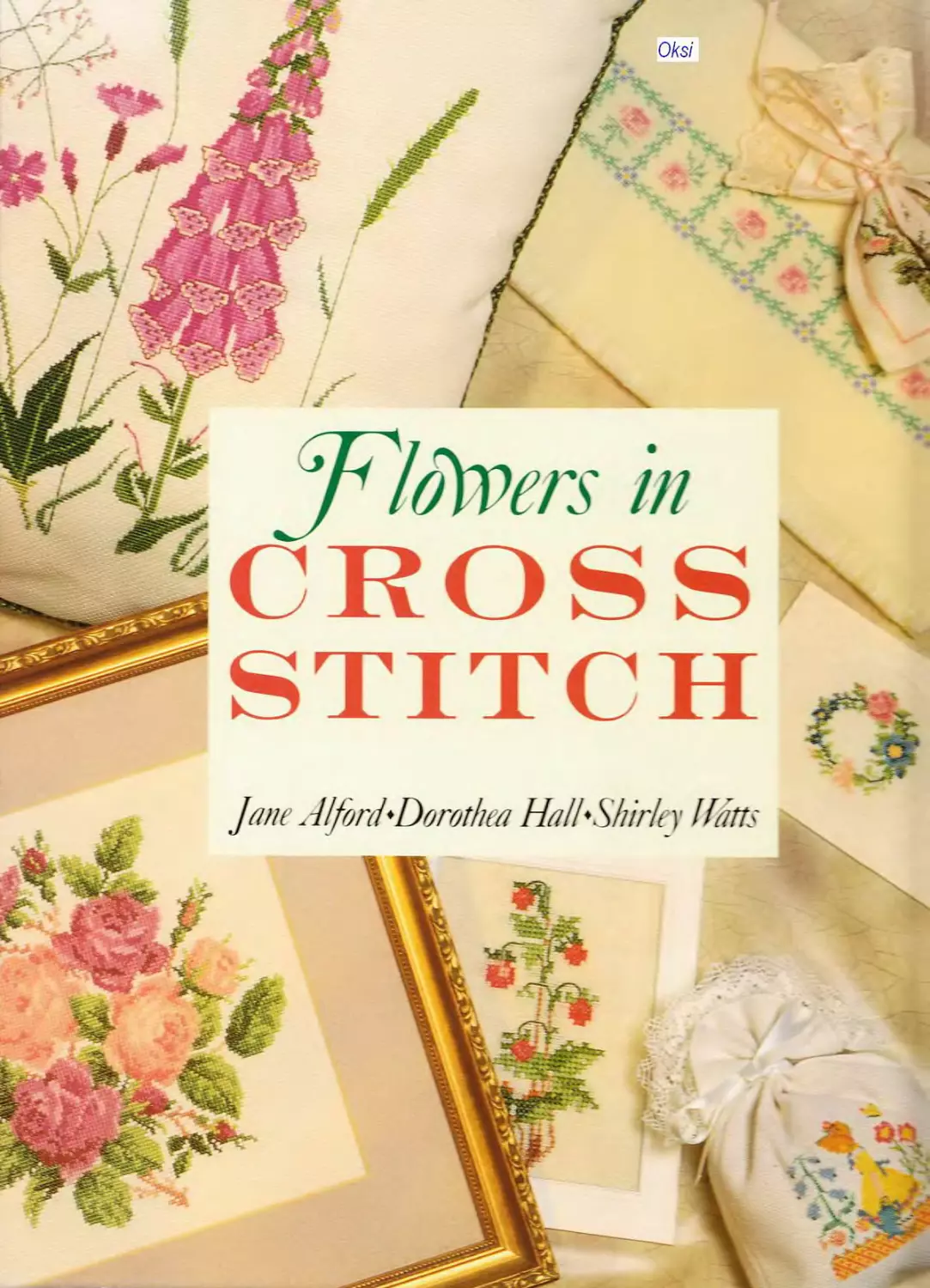
                    ]ane Alford'Dorothea Hall'Shirley I farts
CONTENTS
Introduction 4
Basic Skills 8
SPECIAL OCCASIONS AND CELEBRATIONS 12
Wild Flower Cards 14
Wedding Sampler 18
Floral Feast 22
Say it with Roses 26
Celebration Cushions 30
Lacy Lavender Sachets 35
Flowers and Storks Sampler 38
Floral Birthday Cards 42
Wedding Day Treasures 46
SAMPLERS AND PICTURES
Rose Sampler 54
Poppy Picture and Frame 58
Botanical Sampler 62
Traditional Sampler 66
52
Summer Picture 74
Flowery Alphabet Sampler 78
Cottage Garden 82
Л Panel of Flowers 86
100
104
108
QUICK AND EASY GIFTS 94
Sachets and Herb Pillow 112
Floral Basket Liner 116
Framed Bramble and Eglantine 120
Lacy Gifts 124
Gift Tags and Bookmark 96
Small and Beautiful
Pins and Needles
Bordered Guest Towels
DECORATIVE TOUCHES FOR THE HOME 128
Baskets and Wreaths 130
Foxglove Duo 138
Rose Comer 142
Silverweed Table Set 146
Four Seasons Placemat 150
Pansies and Roses Table Set 154
Index 158
Acknowledgements and Suppliers 160
Wild Flower
Cards
Delicate wild flowers have been used
to create a charming trio of cards,
which could be used for best wishes
or congratulations.
Small and
Beautiful
These little samplers make an
excellent introduction to cross stitch.
The projects are small, and quick to
complete, but provide the stitcher
with an attractive first embroidery.

SMALL AND BEAUTIFUL
YOU WILL NEED
For Love is Kind, with a design area measuring
14.5cm X 17.5cm (5%in X 7in), or 81 stitches
by 97 stitches, here in a frame measuring
27cm X 30cm (10%in X 12in):
24cm X 28cm (9l/2in X Ilin) ofcream,
14-count Aida fabric
Stranded embroidery cotton in the colours given
in the appropriate panel
No24 tapestry needle
Strong thread, for lacing across the back
Cardboard, for mounting, sufficient to fit into the
frame recess
Frame of your choice
For Home Sweet Home, with a design area
measuring 17.5cm X 14cin (7in X З'/гт), or
97 stitches by 77 stitches, here in a frame
measuring 30.5cm X 26cm (1214in X lOV^in):
28cm X 24cm (Ilin X 9'/21п) ofcream,
14-count Aida fabric
Stranded embroidery cotton in the colours given
in the appropriate panel
No24 tapestry needle
Strong thread, for lacing across the back
Cardboard, for mounting, sufficient to fit into the
frame recess
Frame of your choice
THE EMBROIDERY
Prepare the fabric and stretch it in a frame as
explained on page 9. Following the appropriate
r.art. start the embroidery at the centre of the
iT'izn. using two strands of embroidery cotton in
:r.e needle. Work each stitch over one block of
in each direction. Make sure that all the top
r sses run in the same direction and that each row
worked into the same holes as the top or bottom
I the row before so that you do not leave a space
between the rows.
The bow and stalks on the Love is Kind sampler
are worked in backstitch with two strands of green
; . tton. and the roses on the Home Sweet Home
-ampler are outlined with one strand of dark green
cotton.
MAKING UP
Gently steam press the work on the wrong side and
mount it as explained on page 10. The samplers
could be framed as a matching pair or as two separate
projects. The pine frames seen here complement the
soft peach shades used for the embroideries, but
these gentle shades could be exchanged for more
vibrant colours to give a stronger feel to the designs.
Both samplers would look equally attractive
stitched on an 11-count Aida fabric, which is partic-
ularly easy for a beginner to use. Remember that you
may need extra stranded cotton for a design worked
on an 11-count Aida because the stitches are bigger.
The Love is Kind sampler could be used as a small
wedding sampler if the initials of the bride and
groom were added, together with the date.
•MEET
4	DMC	ANCHOR	MADEIRA
	3688	68	0605
. pea* r.	353	9	0304
. peach	352	10	0303
t	n	3052	844	1509
rreen	319	218	1313
	640	393	1905
KIND ►	DMC	ANCHOR	MADEIRA
	Ecru	926	Ecru
Dea* П	758	9575	0403
Dea* П	352	10	0303
	368	214	1310
bcvu n	841	378	1911
Ьптп	829	906	2106
103
Home, with a design area
i X 14cm (7in X 5M>in), or
stitches, here in a frame
X 26cm (12'/tin X 10*/2in):
Ilin X 9i/zin) of cream,
unt Aida fabric
cotton in the colours given
ppropriate panel
:apestrv needle
;>r lacing across the back
nting, sufficient to fit into the
ame recess
e pt vour choice
THE EMBROIDERY
Prepare the fabric and stretch it in a frame as
explained on page 9. Following the appropriate
chart, start the embroidery at the centre of the
design, using two strands of embroidery cotton in
the needle. Work each stitch over one block of
fabric in each direction. Make sure that all the top
crosses run in the same direction and that each row
is worked into the same holes as the top or bottom
of the row before so that you do not leave a space
between the rows.
The bow and stalks on the Love is Kind sampler
are worked in backstitch with two strands of green
cotton, and the roses on the Home Sweet Home
sampler are outlined with one strand of dark green
cotton.
could be trainee
; - . - ' - -
'-----------------------“ -
Both sarr.r-1
stitched oom
ularh eas;. : r
may need extn
on an 11чcent
The Lore и 1
wedding samg
groom '	'
HOME SWEET HOME ◄		DMC	ANCHOR	MADEIRA
=	Pink	3688	68	0605
<	Light peach	353	9	0304
+	Dark peach	352	10	0303
s	Light green	3052	844	1509
X	Dark green	319	218	1313
%	Brown	640	393	1905
LOVE IS KIND ►		DMC	ANCHOR	MADEIRA
c	Ecru	Ecru	926	Ecru
<	Light peach	758	9575	0403
+	Dark peach	352	10	0303
X	Green	368	214	1310
X	Light brown	841	378	1911
=	Dark brown	829	906	2106
Pins and
Needles
The vivid blue cornflower (Centaurea
cyanus) provides a bold design fora
pincushion. The diminutive and paler
blue flowers of the forget-me-not
i Myosotis arvensis) are used for the
needlecase. These flowers have a
yellow centre and are often a
delicate pink in bud.
Oksi\
PINS AND NEEDLES
YOU WILL NEED
For the Forget-me-not needlecase, measuring
12.5cm X 11.5cm (5in X 41/^in):
33cm X 16.5cm (13in X 6'/2in) of cream,
18-count Aida fabric
27.5cm X 14cm(llin X 5'/гт)of satin liningfabric
25 cm X 11.5cm (lOin X 4'/2in) of heavyweight
iron-on interfacing
23cm X 9cm (9in X З'/гт) of cream felt
45cm (18in) of matching ribbon, 6mm ('Ain) wide
Stranded embroidery cotton in the colours given
in the appropriate panel
No26 tapestry needle
For the Cornflower pincushion, measuring
10cm (4in) in diameter:
23cm (9in) square of cream, 18 count Aida fabric
Stranded embroidery cotton in the colours given
in the appropriate panel
No26 tapestry needle
Pincushion base and pad (for suppliers, see
page 160)
THE EMBROIDERY
For the needlecase, first fold the fabric in two, to
measure 16.5cm (6V2) square. With the fold on the
left, measure in 2.5cm (lin) from each raw edge
and mark the upper surface of the fabric at the top,
bottom and right-hand side with basting stitches.
The centre of the area enclosed by the fold and
basting lines is the centre point of the design.
For each design, prepare the fabric and set it in a
hoop (see page 8). Embroider the design, using two
strands of thread in the needle for both the cross
106
stitch and the backstitching. Gently press the fini-
shed embroidery on the wrong side.
FINISHING
For the needlecase, trim the fabric to measure
27.5cm X 14cm (Ilin X 5V£in). Make and press
a 12mm (Viain) turning on all sides, mitring the
corners. Slide the interfacing under the turnings and
iron it in place.
Turn under 12mm (Vfcin) all around the lining
and hem it to cover the interfacing. Attach the felt to
the inside of the case by lightly stitching down the
centre. Tie the ribbon into a bow to trim the spine.
For the pincushion, use a plate or similar round
guide to trim the fabric to a 19cm (7Vzin) circle.
Stitching 12mm (V&in) from the edge, run a line of
gathering stitches around the fabric. Place it over the
pincushion dome and tighten until it fits snugly.
Secure the thread firmly. Place the dome in the
wooden base and screw firmly into position.
FORGET-ME-NOT	◄ DMC	ANCHOR	MADEIRA
1 Yellow	307	289	0104
-I- Pale blue	794	120	0907
т Blue	799	145	0910
»’ Purplish blue	340	118	0902
“ Pale green	3348	264	1409
J. Green	3347	266	1408
+ Dark green	3346	817	1407
Light brown*	680	901	2210
Note: bks flower centre	in light broi	n*. stems in	dark green and
buds in purplish blue.
CORNFLOWER ▼	DMC	ANCHOR	MADEIRA
• Pale mauve	210	108	0802
U Light navy	336	150	1007
1 Pale blue	341	117	0901
•I- Blue	340	118	0902
т Dark blue	793	121	0906
s’ Green	3347	266	1408
+ Dark green	3345	268	1406

Bordered
Guest
Towels
Plain linen guest towels are decorated
with simple floral motifs, repeated in
sequence across one short edge only.
Instead of embroidering across the
full width, you may prefer to stitch a
single motif in each corner of
the towel.
To embroider other towelling, first
cross stitch the design on a band of
evenweave fabric and then hem it in
place over the towelling pile.


BORDERED
GUEST TOWELS
YOU WILL NEED
For two Guest towels, each measuring
62cm X 37cm (24l/^in X I4’/2in):
Two prepared 26-count guest towels, which can be
purchased from specialist suppliers (see page 160);
alternatively, for applying a band to thick-pile
towelling, you will need 26-count evenweave
fabric, such as Linda, the width of the towel by
8cm (3in) deep, plus turnings on all sides
Stranded embroidery cotton in the colours
given in the panels
No26 tapestry needle
Matching sewing thread for applied band
Narrow lace edging (optional)
THE EMBROIDERY
Embroidering a prepared guest towel is a relatively
easy operation, especially with these repeated
motifs — the most important consideration is to
make sure that you balance the repeats correctly,
starting from the centre.
At the end of the towel to be embroidered, begin
by basting the centre vertically (either count the
threads or measure precisely, and mark with a pin).
The line should ideally be about 15cm (6in) long.
Next, baste the base line across the towel, placing
this line 6cm (2V£in) up from the hemstitching of
the fringed edge.
On both designs, work one cross stitch over two
threads of ground fabric. Following the chart and
using two strands of thread in the needle through-
out. complete the first half of the border, beginning
in the marked centre. Complete the second half by
repeating the design, again stitching out from the
centre. If you work this way, the finished border
design will be symmetrically balanced out from the
FLORAL BORDER ►	DMC	ANCHOR	MADEIRA
4 Yellow	726	295	0109
Ф Orange	741	304	0114
A Rusl	721	324	0308
□ Blue	,.>	130	1013
• Deep blue	792	941	0905
Mini green	959	186	1113
О Green	704	256	1308
Note: bks around stems in p	een.
centre, and you will have the same number
unworked threads at each side.
APPLYING A BAND
Use this technique for decorating purchased towels.
Embroider the design on the evenweave band in
exactly the same way as for a prepared towel. Steam
press the embroidery on the wrong side, and then
110
"'re. and you will have the same number of
worked threads at each side.
APPLYING A BAND
r th:' technique for decorating purchased towels,
ibroider the design on the evenweave band in
wily the same way as for a prepared towel. Steam
*ss the embroidery on the wrong side, and then
make 12mm (V^in) turnings all around, and :	-
Pin and baste the band to the right side of the t< wel.
6cm (2'/2in) up from the lower edge. \ou may * -
to insert a narrow lace edging between the :	: an 1
the towel, to soften the edge. Machine stit< h •
place, using matching sewing thread. Remove the
basting stitches and steam press to finish.
To complete each border, repeat the design working
make 12mm (Vfcin) turnings all around, and baste.
Pin and baste the band to the right side of the towel,
6cm (2!Ain) up from the lower edge. You may wish
to insert a narrow lace edging between the band and
the towel, to soften the edge. Machine stitch in
place, using matching sewing thread. Remove the
basting stitches and steam press to finish.
ROSE BORDER ▼	DMC	ANCHOR	MADEIRA
О Yellow	726	295	0109
▼ Pale pink	818	23	0502
Pink	776	25	0606
• Deep pink	604	51	0504
□ Blue	341	117	0901
A Green	563	215	1209
ill
&Щй

Oksi_
What could be more delightful than a
sweet-scented sachet to place in a
drawer or wardrobe, or a fragrant herb
pillow to help induce sleep? These
sachets are easy to make and a
pleasure to receive (if you can bear to
part with them).
Sachets and
Herb Pillow
SACHETS AND
HERB PILLOW
YOU WILL NEED
For the Dog Violet pot pourri sack, measuring
9.5cm X 15.5cm (3%in X 6!Ztin) approximately:
Two 14.5cm X 21cm(53Ain X 8'/zin) pieces of
beige, 18-counl Hardangerfabric
46cm (18in) of lilac ribbon, 12mm f/zin) wide
Stranded embroidery cotton in the colours given
in the appropriate panel
No26 tapestry needle
Pot pourri of your choice forfilling
For the Cornflower sachet, measuring 13cm (5in)
square, excluding the lace edging:
18cm (7'Ain) square of cream, 18-count
Aida fabric
15cm (6in) square of cotton net, for backing
90cm <lyd) of cream lace edging, 18mm
(3Ain) wide
46cm 118in) of lavender ribbon, for bow and loop
Stranded embroidery cotton in the colours given
in the appropriate panel
No26 tapestry needle
Pot pourri ofyour choice forfilling
For the Ragged Robin herb pillow, measuring
21.5cm X 14cm(8'/2in X 5’/bin):
Two 27cm X 19.5cm (103/iin X 7:‘/iin) pieces of
cream, 18-counl Aida fabric
70cm (27in) of cream lace edging, 18mm
(3Ain) wide
Stranded embroidery cotton in the colours given
in the appropriate panel
No26 tapestry needle
Pot pourri ofyour choice forfilling
THE EMBROIDERY
Prepare fabric, marking the centre lines of each
design with basting stitches, with the exception of
the pot pourri sack. For this, measure up 6cm
(2’/bin) from one short edge and baste a line across
from one side to the other. This marks the base line.
Mount the fabric in a hoop or frame, following
the instructions on pages 8-9. Referring to the
appropriate chart, complete the cross stitching,
using two strands of embroidery cotton in the
needle for both the cross stitch and the backstitch-
ing. For the pot pourri sack, start from the centre
of the base line. For the other designs, start from
the centre and work out. Embroider the main areas
first, and then finish with the backstitching. Steam
press on the wrong side.
MAKING THE POT POURRI SACK
Place the two pieces of fabric with right sides
together and trim to measure 11.5cm X 18cm (4’/2in
X 7’Ziin). Taking a 12mm (’/bin) seam allowance,
stitch the side and bottom seams. Roll a narrow hem
around the top of the sack, stitching it by hand.
Fold the ribbon in half and, leaving a loop 5cm
(2in) long at the folded end, stitch it to the side of the
sack, about 3cm (I’/dn) down from the top edge. Fill
the sack with pot pourri and tie the ribbon securely.
MAKING THE LACE-TRIMMED SACHET
Trim the embroidered fabric to measure 15cm (6in)
square. With right sides together, and taking a
12mm (’/bin) seam allowance, stitch it to the net,
leaving an opening of 6.5cm (2’/bin). Trim across the
corners; turn the sachet right side out and press the
edges.
Join the short edges of the lace with a small french
seam. Gather the lace and stitch it by hand to the
edge of the sachet, allowing extra fullness at the
comers. Decorate with a bow and loop of ribbon at
one corner.
Fill the sachet with pot pourri, and slipstitch the
opening.
MAKING THE HERB PILLOW
Trim the two pieces of fabric to measure 24.5cm X
16.5cm (9!/г!п X 6!/bin). With right sides together,
and taking a 12mm (’/bin) seam allowance, join the
two pieces, leaving a gap of 8cm (З'/bin) in one side.
Trim across the corners; turn the pillow right side
out, and press the edges. Add the lace, as for the
sachet; then fill with pot pourri or lavender, and
slipstitch the opening.
DOG VIOLET ►	DMC	ANCHOR	MADEIRA
В Ecru	Ecru	926	Ecru
® Pale mauve	554	97	0711
is] Mauve	208	110	0804
® Reddish orange	350	И	0213
® Pale green	3364	260	1603
® Dark green	3345	268	1406
Note: bks main stems in dark green and leaf rib in pale green.
CORNFLOWER ◄	DMC	ANCHOR	MADEIRA
® Pale mauve	210	108	0802
[n] Light navy	336	150	1007
Й Blue	340	118	0902
Щ Dark blue	793	121	0906
Щ Green	3347	266	1408
® Dark green	3345	268	1406
Note: bks in green.
RAGGED ROBIN ▼	DMC	ANCHOR	MADEIRA
0 Ecru	Ecru	926	Ecru
[§] Pale pink	3609	85	0710
|д| Medium pink	3608	86	0709
|B| Deep pink	3607	87	0708
|+] Pale green	3348	264	1409
Green*	3347	266	1408
® Dark green	3345	268	1406
!•! Purplish brown	315	896	0810
Note: bks centres of two lower flowers in ecru, and bud stalks in
purplish brown, all main stems in green*, and centres of five
upper flowers in pale green.
115


Floral
Haskel
Liner
WILD FLOWER
CARDS
YOU WILL NEED
For the Red Campion card, measuring
20.5cm X 15cm (8in X 6in). with a rectangular
portrait cut-out measuring 14cm X 9cm
(5'/2in X 3>/2in):
18cm X 14cm (7'/iin X 5'/zin) ofcream. 18-count
Aula fabric
18cm X 14cm (7'Ain X 5'/zin) of iron-on
interfacing
Stranded embroidery cotton in the colours given
in the appropriate panel
No26 tapestry needle
Greetings card blank (for suppliers, see page 160)
For the Bluebell card, measuring 20.5cm X 15cm
(8in X 6in), with an oval cut-out measuring
14cm X 9cm (5'Zjin X 3*Zsin):
18cm X 14cm (7'Ain X 5'/zin) of cream, 18-counl
Aida fabric
18cm X 14cm (7'Ain X 5'/zin) of iron-on
interfacing
Stranded embroidery cotton in the colours given
in the appropriate panel
No26 tapestry needle
Greetings card blank (for suppliers, see page 160)
For the Wild Pansy card, measuring 12cm X 9cm
(4%in X 3’/2in). with an oval cut-out measuring
8.5cm X 6.5cm (3!4in X 2,Z>in):
13.5cm X 9cm (5'Ain X З'/zin) ofcream,
18-counl Aida fabric
13.5cm X 9cm (5'/iin X З'/zin) of iron-on
interlacing
Stranded embroidery cotton in the colours given
in the appropriate panel
No26 tapestry needle
Greetings card blank (for suppliers, see page 160)
THE EMBROIDERY
All three cards are stitched in the same way and
on the same type of fabric.
Note that it is particularly important with
16 embroidered cards to avoid excessive overstitching
on the back, as this would cause unsightly lumps
to show through on the right side.
Prepare the fabric, marking the centre lines of
each design with basting stitches, and mount it
in a hoop, following the instructions on page 8.
Referring to the appropriate chart, complete the
cross stitching, using two strands in the needle
throughout. Embroider the main areas first, and
then finish with the backstitching. If necessarv.
steam press on the wrong side.
MAKING UP THE CARDS
Iron the interfacing to the back of the embroiderv.
and trim both to about 12mm (*/2in) larger all around
than the cut-out window. This will help to prevent
the mounted picture from wrinkling. Position the
embroidery behind the window.
Open out the self-adhesive mount and centre your
embroidery behind the aperture. Fold the card and
press firmly to secure. Some cards require a dab
glue to ensure a secure and neat finish.
FLORAL
BASKET LINER
YOU WILL NEED
For a Basket liner, measuring 30cm X 25cm
(12in X lOin):
34cm X 29cm(13,/2in X 11'/tin) of white,
28-count linen,
Stranded embroidery cotton in the colours
given in the panel
No26 tapestry needle
115cm (1 '/iyd) of contrast cotton bias binding,
12mm ('/2in) wide
Sewing thread to match the contrast binding
15cm 16in) square of cardboardfor a template
' use a breakfast cereal box, or similar packaging)
Tracing paper
THE EMBROIDERY
Stretch the prepared fabric in a frame and, follow-
ing the chart, cross stitch the motifs given in one
quarter section, as marked by the basting stitches.
Use two strands of thread in the needle and work
one cross stitch over two threads of fabric through-
out. For the remaining three sections, turn the frame
through 90 degrees and repeat the cross stitching.
Remember not to strand the thread across the
back of the fabric, or it will show through on the
right side. Remove the finished embroidery from
the frame, retaining the basting stitches, and steam
press on the wrong side.
DRAWING THE SCALLOPED EDGE
Using a soft pencil, trace the outline of the quarter
section, as shown, and transfer it to the cardboard
40 do this, simply turn the tracing over and,
placing it on the cardboard, pencil over the back
of the outline). Cut out the template.
Lav the embroidery face down and position the
template over one quarter section, matching the
118 straight lines to the basted lines. Lightly draw
around the scalloped edge with a pencil. Repeat for
the other three quarter sections, cut around the
scalloped edge, and remove the basting stitches.
BINDING THE EDGE
With right sides and raw edges together, pin and
baste the binding around the edge (see page 10),
To complete the
embroidery, turn the
fabric through 90
degrees and repeat
the design
three times.
around the scalloped edge with a pencil. Repeat for
the other three quarter sections, cut around the
scalloped edge, and remove the basting stitches.
BINDING THE EDGE
ith right sides and raw edges together, pin and
bastr- the binding around the edge (see page 10),
beginning in the corner of one scallop. V. here
two ends of the binding meet, overlap :  2 -
(%in), turning the raw, overlapped end under t •
6mm (Viin) to neaten it. Using matching se*
thread, machine stitch or backstitch in place.
Turn the binding over the edge of the fat - .ar»’
hem, sewing into the back of the first stitchina •
prevent the thread from showing through.
To complete the
embroidery. turn the
£abn>- through 90
- and repeat
three times.
beginning in the corner of one scallop. Where the
two ends of the binding meet, overlap by 2cm
(3/«п), turning the raw, overlapped end under by
6mm (Viin) to neaten it. Using matching sewing
thread, machine stitch or backstitch in place.
Turn the binding over the edge of the fabric, and
hem, sewing into the back of the first stitching to
prevent the thread from showing through.
FLORAL BASKET LINER ▼	DMC	ANCHOR	MADEIRA
▼ Yellow	725	306	0108
4" Pink	961	40	0610
• Dark red	326	20	0407
□ Blue	341	117	0901
Д Olive green	733	280	1611


																																																							—


	A	A
A	A
A A


																																																							-
					A

											И	л
										ВГ
				A	A				И	ИГ	зв
				A	A

						A			я
								заапапа
								□□□□a
										1
							3'”	зваааа	в												А
								ЗИПОВВ														л
							♦ ♦	ЗааПВв														л
								зазвав									л				л	л
																	д	л	л	л		л
																					л		л
																					л

													□□□I				и	и	на		л
													ЗППП		веепв				ив		А	л
								A A				®a:	зпппвс			зппп			Е		-	л
								A A				hi	1ПППЕПППЕ									л	А
												□с	ЗПП	вас		зппп							л
													ЗЕВ	□□1		IE	и®		в Е
												□с	знав		□1	ППЕ
												мкс	зппввс			ЗППП			ЕВ
													аппппппп						ЕВ
													□□□□В				пп		а
													IBBEEEB				S		л
														е	BI				л


																					д


																																																						7
															А																											л	А
																						~)ks

																					1 1 г
																					7 П
119
Oksi

The bramble is a member of the rose
family, its white or pale pink flowers
of early summer giving way to a
profusion of berries in autumn. The
eglantine, or briar rose, is a fragrant
wild hedgerow rose, much pinker than
the common dog rose.
Framed
Bramble and
Eglantine
FRAMED BRAMBLE
AND EGLANTINE
YOU WILL NEED
For each picture, set in a frame with a picture
area measuring 18cm X 12.5cm (7in X 5in):
27cm X 23cm (lO-Viin X 9in) of eau-de-Nil,
18-count Aida fabric
Stranded embroidery cotton in the colours given
in the panel
No26 tapestry needle
Strong thread, for lacing across the back
Cross-over frame (for suppliers, see page 160)
•
THE EMBROIDERY
For each picture, prepare the fabric, marking the
centre lines of the design with basting stitches, and
set it in a frame (see page 9). Embroider from the
centre of the design, completing the main areas
first, and then the backstitching. Use two strands
of thread throughout, except for fine details, such
as the stamens, where one thread is recommended.
Gently steam press the finished embroidery on the
wrong side. Retain the central basting stitches at
this stage.
ASSEMBLING THE PICTURES
Each picture is assembled in the same way. Trim the
edges of the embroidery until it measures 23cm X
18cm (9in X 714in). Mark the central horizontal and
vertical lines on the mount provided and, matching
these with the central basting stitches, lace the
embroidery over the mount, following the instruc-
tions on page 10. Remove basting stitches. Assem-
ble according to the manufacturer’s instructions.
EGLANTINE ◄	DMC	ANCHOR	MADEIRA
Ъ White	White	2	White
• Cream	712	926	2101
T Palest pink	3689	49	0607
I Pale pink	605	60	0613
Pink	604	66	0614
+ Deep pink	603	62	0701
4 Lemon	744	301	0112
г Yellow	743	297	0113
J Bright yellow	972	298	0107
x Orange	970	316	0204
l 1 Deep orange	900	333	0208
!— Green	3347	266	1408
x Medium green	3346	262	1407
т Dark green	3345	268	1406
— Yellowish green	472	264	1414
Dark yellowish
green*	470	267	1503
J. Fawn	729	890	2209
□ Yellowish brown	831	889	2201
Note: bks rosehips in dark yellowish green*, stamens in yellow,
pollen tips on stamens, adjacent flower centre and dying leaf in
yellowish brown, leaf stalks in dark green, and rosehip stalks in
medium green.
BRAMBLE ▼	DMC	ANCHOR	MADEIRA
• White	White	2	White
/ Soft pink	819	271	0501
Г, Pink	3688	66	0605
т Deep pink	3350	42	0603
— Pale mauve	3609	85	0710
X Purplish pink	3608	86	0709
□ Navy	939	152	1009
Pale green	3013	842	1605
I Green	3363	262	1602
+ Dark green	520	862	1514
J. Yellowish green	3348	264	1409
%• Greyish green	3052	859	1509
4 Ginger brown	433	371	2008
LI Dark brown	3031	905	2003
x Dark grey	413	401	1713
 Black	310	403	Black
Note: bks base of new fruit in ginger brown, tips of stamens and
base of flowers in dark green, stamens in pale green and all stems
in yellowish green.

Oksi'
RED CAMPION ▼	DMC	ANCHOR	MADEIRA
1 Pale pink	3609	85	0710
Pink	3608	86	0709
т Deep pink	3607	87	0708
U Purplish red	315	896	0810
~ Pale green	3348	264	1409
T Green	3347	266	1408
+ Dark green	3346	817	1407
\ote: bks flower stems and	centres in green.
BLUEBELL ▲	DMC	ANCHOR	MADEIRA
• Light mauve	210	108	0802
1 Pale blue	341	117	0901
-I- Blue	340	118	0902
X Light navy	792	177	0905
~ Light green	3347	266	1408
Л Medium green	3346	817	1407
+ Dark green	3345	268	1406
Note: bksflowers stalks in light mauve, bracts in pale blue, lea]
blade in dark green, and main stems in light green .
LACY GIFTS
YOU WILL NEED
For the Pincushion, measuring 17.5cm
(7in) square, excluding the lace:
25cm 11 Oin) square ofcream, 14-count Aida fabric
20cm (Sin) square of cream backing fabric
1,6m (l3Ayds) of cream broderie anglaise,
5cm (2in) wide
4 pale peach ribbon roses
Stranded embroidery cotton in the colours given
in the panel
No24 tapestry needle
Polyesterfilling
For the Lavender bag, measuring 12.5cm X 17cm
(5in X 6%in):
20cm X 22cm (8in X 8'Ain) ofcream,
14-count Aida fabric
15cm X 17cm (6in X б'/гт) of cream backing
fabric
35cm (14in) of cream broderie anglaise, 5cm
(2in) wide
50cm l20in) of peach satin ribbon, 6mm (Vain)
wide
Stranded embroidery cotton in the colours given
in the panel
No24 tapestry needle
For the Bookmark, measuring 9cm X 20.5cm
(3’/2in X 8in):
Stranded embroidery cotton in the colours given
in the panel
No24 tapestry needle
Prepared bookmark, in ivory (for suppliers, see
page 160)

THE EMBROIDERY
Stretch the fabric for the pincushion or the lavender
bag in a hoop or frame, as explained on page 8.
The bookmark may be held in the hand when work-
ing the embroidery.
Following the correct chart, start the embroidery
at the centre of the design, using two strands of
embroidery cotton in the needle for the pincushion
or lavender bag and one strand for the bookmark.
Vi ork each stitch over one block of fabric in each
direction. Make sure that all the top crosses run in
the same direction and that each row is worked into
the same holes as the top or bottom of the row
before, so that you do not leave a space between
rows. Lightly steam press the finished embroidery.
MAKING THE PINCUSHION
Trim the embroidery to measure 20cm (8in) square.
Using a tiny french seam, join the short edges of the
broderie anglaise together, then run a gathering
thread close to the straight edge of the lace. Pulling
up the gathers to fit, lay the lace on the right side of
the embroidery, with the decorative edge facing
inward and the straight edge parallel to the edge of
the fabric and just inside the 12mm (Vfein) seam
allowance. Baste in position, adjusting the gathers to
allow extra fullness at the corners. Machine in place.
With right sides together, pin and machine the
backing fabric and the embroidered piece together,
enclosing the broderie anglaise edging and leaving a
gap of 5cm (2in) at one side. Trim across the corners;
turn the pincushion right side out, and insert the
polyester filling. Slipstitch the opening to close it.
MAKING THE LAVENDER BAG
Trim the embroidered fabric to measure 15cm X
17cm (6in X 6'/2in). With right sides together, baste
and machine stitch the embroidery to the backing
fabric, stitching down the sides and across the
bottom and taking a 12mm (Vain) seam allowance.
Turn to the right side. Turn a single 12mm ('/tin)
hem around the top. Join the short edges of the
broderie anglaise with a tiny french seam, then run a
gathering thread close to the straight edge of the
lace. Pulling up the gathers to fit and with the right
side of the lace to the wrong side of the bag, baste
and then machine stitch the broderie anglaise in
place around the top of the bag. Gently steam press.
Fill the bag with lavender and tie with a ribbon,
placing it around the space between the two areas of
embroidery.
Pincushion ▼
BOOKMARK, LAVENDER BAG AND PINCUSHION ▼ DMC	ANCHOR	MADEIRA
Щ Cream	746	275	0101
Щ Light peach	353	6	0304
[Й] Dark peach	352	9	0303
Light green	3348	264	1409
 Medium green	3052	844	1509
В Dark green*	936	263	1507
* Dark green used for bks outline of roses on pineushii m	•
Bookmark ▼
I I I I I I I I I I I I I I I I I Hi I I 11 i I I i

TOUCHES FOR
THE HOME
It is the small personal
touches that turn a house
into a home, and hand-
embroidered cushions and
table linen are an ideal way
of adding elegance to your
surroundings.
The foxglove cushion and
bellpull — a challenge for
cross stitch enthusiasts —
would look at home
in almost any room of
the house.
The table linen includes a
choice of tablemats with
either a silverweed border
or one of pansies and roses,
as well as a scalloped
design with fruits
and berries.
Baskets and
Wreaths
gives a light and airy feel to these
cushions. The bright shades of the roses
are complemented by the gentler blue
and mauve flowers, making this trio a
Oksi

BASKETS AND WREATHS
YOU WILL NEED
For each cushion, measuring 40cm (16in) square:
21.5cm (8'/2in) square of white, 14-counl
Aida fabric
Stranded embroidery cotton in the colours given
in the panel
No24 tapestry’ needle
42cm (16'/2in) square of lace fabric
Two 42cm (16'/2in) squares of white backing fabric
85cm (34in) of gathered lace edging, 5cm (2 in)
wide, for the edge of the embroidered panel
1.8 m 12yds) of gathered lace edging, 4cm (l'/2in)
wide, for the edge of the cushion
42.5cm (17in) square cushion pad
NOTE If you are making the easy care cover, you
will require, in place of the two squares of backing
fabric, one 42cm (16'/2in) square and two more
pieces, both 42cm(16'/2in) long, one 23cm (9in)
wide, and one 33cm (13in) wide
THE EMBROIDERY
Prepare the fabric and stretch it in a frame as
explained on page 9. Following the chart, start the
embroidery at the centre of the design, using two
strands of embroidery cotton in the needle. Work
each stitch over a block of fabric in each direction,
making sure that all the top crosses run in the same
direction and each row is worked into the same
holes as the top or bottom of the row before, so that
you do not leave a space between the rows.
MAKING UP
Each cover is made up in the same way. Gently
steam press the embroidered fabric on the wrong
side, then turn under 12mm (’Ain) on al) sides,
mitring the comers as explained on page 10. Baste
the wider of the lace edgings around the embroidered
fabric, positioning it just under the turned edge and
joining the ends of the lace together with a narrow
french seam.
Centre the panel over the lace fabric. Pin it in
position and then applique the panel to the lace by
slipstitching around the edge through all layers.
Take the remaining lace edging and. again joining
132 the ends with a narrow french seam, pin and baste it
around the edge of the lace fabric. The decorative
edge should face inward and the straight edge of the
lace should lie parallel to the edge of the fabric and
just inside the 12mm (’Ain) seam allowance.
Take one of the pieces of backing fabric and lay
the prepared lace fabric over it, still with the frill
lying flat on the lace, facing inward. With the wrong
side of the lace fabric to the right side of the backing,
pin, baste and stitch through all three layers, stitch-
ing through the straight edge of the lace, just within
the 12mm (’Ain) seam allowance.
With right sides together, join the remaining piece
of backing fabric to the cushion front, leaving a
25cm (lOin) gap at one side. Turn the cover right
side out; insert the cushion pad, and slipstitch to
EASY CARE VERSION
If you prefer a cover that can quickly be slipped off
and on, for ease of laundering, you can make one
with an overlap across the centre back.
Make up the front of the cover as described above.
Take the wider of the two pieces of backing fabric;
neaten one of the long edges and then press and
stitch a 12mm (’Ain) hem. Take the other piece, and
again on a long edge turn under 6mm (’Ain) and then
a further 12mm (’Ain) and hem. Lay the shorter
piece over the longer one, overlapping the prepared
edges, to make a 42cm (16'Ain) square; baste and
stitch the sides.
Place the prepared back and cushion front with
right sides together and. taking a 12mm (’Ain)
seam, stitch all around the edge. Turn the cover right
side out and insert the cushion pad through the
opening across the back.


Basket cushion A
Wreath cushion
136
-
IL1UI
*7
IL


FOXGLOVE DUO
YOU WILL NEED
For the Foxglove cushion cover, measuring
47cm (18*/2in) square:
52cm (21 in) of cream, 14-count Aida fabric
48.5cm (19'/2in) square offurnishing fabric, for
the cushion back
Two 48.5cm (19'/2in) squares of strong unbleached
cotton fabric, for the inner cover
Stranded embroidery cotton in the colours given
in the panel
No24 tapestry needle
3m (3'/2yds) of matching green (or deep pink)
cushion cord, 6mm ('Ain.) in diameter
47cm (18'/2in) cushion pad
For the Wall hanging, measuring41cm X 16.5cm
(16!/2in X 6!/£in):
50cm X 25cm (20in X lOin) of cream, 18-counl
Aida fabric
46cm X 20.5cm (18in X 8in) of cream
lining fabric
40.5cm X 16cm(16in X 6'Ain) of
iron-on interfacing
Stranded embroidery cotton in the colours given
in the panel
No26 tapestry needle
Pair of wooden hangers (for suppliers, see page 160)
MAKING THE CUSHION COVER
With right sides together, and taking a 12mm (!Z>in)
seam, join the two pieces of strong cotton for the
inner lining, leaving a 25cm (lOin) opening at one
side. Trim across the corners and turn the lining
inside out. Insert the cushion pad and slipstitch the
opening.
Trim the embroidered fabric to measure 48.5cm
(19*/^in) square, keeping the design centred. Re-
move the central basting lines and, with right sides
together, join the embroidered fabric and the
cover backing fabric, again leaving a 25cm (lOin)
opening. Repeat the same process as for the inner
lining.
To complete the cover, trim the edges with cord,
forming it into loops at the corners and slipstitching
it in place.
THE WALL HANGING
Centre the interfacing on the back of the embroidery
and pin it in place. Remove the basting stitches and
iron the interfacing in position. Trim the long edges
of the embroidery until it measures 19cm (7Vfein)
wide. Turn in the long edges by 12mm (*/2in) and
press.
On the two short edges, make a 6mm ('Ziin) turn-
ing. Make a second turning, 4cm (P/fcin) deep,
taking the fabric over a rod at the top and bottom.
Baste and neatly hem in place.
Turn in the long edges of the lining fabric by
12mm (!/2in) and turn in the short edges so that the
piece will neatly cover all raw edges and hems at the
back of the work. Slipstitch in place.
THE EMBROIDERY
Prepare the fabric for your chosen design, marking
the centre lines with basting stitches, and mount it
in a frame (see page 9). In both cases, start to
embroider from the centre of the design. For the
cushion, use three strands of cotton in the needle
for both the cross stitch and the backstitch.
The wall hanging is adapted from the cushion
design, as seen in the picture. The stalk of the
Timothy grass on the left-hand side is lowered so
that it extends only over 32 threads from the upper
leaf to the head: this is to balance the effect. Use
two strands of thread in the needle for cross stitch-
ing and backstitching the grass stalks, and one
thread for backstitching the finer details.
When you have finished your chosen design,
140 gently steam press on the wrong side.
FOXGLOVE CUSHION	► DMC	ANCHOR	MADEIRA
• Cream	746	275	0101
1 Rose pink	3609	85	0710
Medium rose	3608	86	0709
T Deep rose	3607	87	0708
X Dull pink	223	894	0812
J. Dusky pink	778	968	0808
LI Purplish red	315	896	0810
H Lime green	472	264	1414
—•	Bluish green	320	216	1311
Pale green*	522	859	1513
— Green	3348	264	1409
T Medium green	3347	262	1408
+ Dark green	3346	817	1407
□ Very dark green	3345	268	1406
•a Light fawn	3047	886	2205
> Fawn	612	832	2108
Note: bks foxglove bells in	purplish red. Timothy grass stalks and
leaf in bluish green and seeds in lime green, bent grass stalk in
pale green*. ground elderflower stalks in dark green, red campion
stalks and flower in green	and style of dead foxglove flower in
deep rose; for the wallhanger, you will not need dull pink, dusky
pink, fawn, light fawn, pale green.		very dark green, and green.


ROSE CORNER
YOU WILL NEED
For the tablecloth, measuring approximately
Im (39in) square:
90cm (36in) square of white, 25-count
Lugana fabric
Stranded embroidery cotton in the colours given
in the panel
3 m (3J/2yds) of gathered lace, 9cm (З'/гт) wide
No24 tapestry needle
For the bowl lid, with an inset measuring 9cm
(3'/2in) in diameter:
14cm (S'/zin) square of white, 14-count
A ida fabric
Stranded embroidery cotton in the colours given
in the panel
No24 tapestry needle
Crystal bowl with prepared lid (for suppliers, see
page 160)
For the picture, in an oval frame measuring
8cm X 10cm (3in X 4in):
13cm X 15cm (5inX 6in) of white, 14-count
Aida fabric
Stranded embroidery cotton in the colours given
in the panel
No24 tapestry needle
Oval frame (for suppliers, see page 160)
THE TABLECLOTH
Prepare the linen and stretch it in a hoop, as
explained on page 8. Alternatively, as the even-
weave linen is a firmly-woven fabric, it is possible
to embroider without a hoop. Following the chart,
begin with the central circle, then work outward.
Use two strands of embroidery cotton in the needle
throughout, and work each stitch over two threads
of fabric in each direction.
MAKING UP
Steam press on the wrong side. Make a hem 12mm
(Piin) deep around the outside of the cloth, mitring
the corners (see page 10). Next, measure 24cm
(9lz^in) in each side from each corner and lightly
mark the right side of the cloth with a soft pencil,
144 12mm (Pfein) in from the edge.
Pin and baste the gathered lace to the tablecloth,
positioning the straight edge of the lace 12mm
(’/tin) in from the edge. When you reach the pencil
marks, baste the lace across the corner of the cloth,
between the two marks. Slipstitch the lace in place.
BOWL LID AND PICTURE
For each, prepare the fabric, basting the central
vertical and horizontal lines, and set it in a hoop, as
explained on page 8. Use two strands of embroidery
cotton in the needle and work over one block of
fabric in each direction. Start at the centre and
work outward. Steam press the finished work and
mount it as explained in the manufacturer’s
instructions.
Picture ►
Bowl lid ▼
BBBBBBBBBBBBBBBI BBBBBBBBBBBBBBBI BBBBBBBBBBBBBBBI BBBBBBBBBBBBBBBI BBBBBUBBBBBBBBI BBBBBBBBBBBBBBBI BBBBBBBBBBBBBBBI BBBBBBBBBBBBBBBI a	:	ns SSSSS! SS55S! isss sss: - J S EE	ВВВЯВВВВаЯВв!ВЯалПйппвВВвввййв		ввввпппплавввваапаавапввваавв	ввв	ввв вввава	aaaaaaaaai EE	EBB	RDfiBB ЯЯЯаапллппппааааавааа	аввввв	ввваппппппппвааппваапопвввввв	ввв	ввв аваааа	aaaaaaai п	ИПЯЯН! пмиппппппппввввввввв	вавапв	вваапппппппппвппппвапаппвввав	ввв	аввввааввв	saeaaai п	ЯЙЧ	ЫМЭЯ ппппплппппппввввпввпа	аввпав	виивпппппппппппппппппааипвввп	ввв	ввввааввав	вававааваааа ап	Дпппп п11пппнпппппввввввввпв	аввпав	ввваапппппппппппппппппппавнвп	bi
sss	В В	5E5RS ннднвпнннпнппппппппп НПНППП ППППНПНННВВНОНННОППНВППППНИПННПННННННПНПННН ВВВ	вВнп BBBSn Й25В5Я5ЭЙЙЯЭППППППП ппппп пппнпоннвннвпопанопнвпппппппппнппп	^2
«   « »	мВ 22222 2Е2Е2 □ИВОНННВННиПНПППППП	ппппп ппнпдннвнннввводпнпвппппппппппппппппппппппп	 ппппп внпна вввнннннвнапнпппппп	ппппп ппнпанвнннннвввнонпнвппппппппппппг
	! !! B!

 SSS S  SSI	нпппвоиинн вннвиииапннпппппппп	ппппп ппппннпаддпвннвннниипнвпппппппппппппппппппп	 SSS SnS ВВвпппвппппп пнвппппнппиппв.пп..	SEESS 22ЯЙЕВЙ5В£ЯЯВ8ЙЯЙЙЯЙЯ!!ВПЯ2ВВВВ5!£!
 » i ! »	' в EEK ЕЕЕ22н222222 2ЙЕЭ^2„ЙЙ99ПЛЯ!ППВВ ппппп ппппнпднпппдвнппппдппнппппппппппппппппппппп
    SSI 	  ППП
  о    ППП       ППП	ZBBI  ВВП  ВВП И  □ ваш ваш ввш  ВВП  ВВП ВВП  ВВП  ВВП ввв вз  ВВП ваз лаг □□с □ЗЕЕ шзз ваг зава язв 3333 3333 3333 эззз 3333 3333 3333 1333 3333  □□□ лее ]□□□ 1333 ЗВВЗ 1ВЭВ ввв ввв ввв ввв ввв ввв ввв ван  BBS ввв ввв взв BBS 333 □□□ 3EEI □ее 333 зээ: 333 333 333 333' □□□ 1333 1333 1333 □ □ ВВП ввз зз: зва: □□□ ааз: зз: ввв: B3I  BBI : 1  BBI BB3I □1 BB3I BB3I 1 ввв: ЗВВ! вввс ВВС 1 ВВВ( BB3I BB3I вва □в вав овв 1
	 ППП  III  ППП	1пнпппппп!!!!ЕЕ ЕЕ Е2пЕ2пппппг1йпЙ0ЕВЕ25Е5ЯЯ1ИИИ1ИИ11ВИ1а111ППППГ1ПНПППП11^И iinnnnnnnnnnnnn
ппа пипппппп is ппап иппппппп □□□ППИППИННПН	'faaannaSnSSSSSS SS S5ESSSann!aiaS!!!!nnSS»£EEEEEEEEE».SSBEEE2S2Enn2  anaannnnnnnnnnun iSSiisi is isssssss sisssssisssssssisissssiissiisiisssisssss isss! imigssssssgssssnssMsssig
яеяоя1 ddbqsi ИСИИ31 OCDC3SI bbdcqi DOSED CODED Ecano ЕСЕСП1 EEECCI DEDCCI CBBDBI CBBBEI BBBBEI DBBBBI  CDEII	sisSSi	is	ii	is!!!!!!	!s::iiii!!!!!!!!!!:!ii!iii!i!!!!!s!ii!!!::::i	ииявв»	sssssssnnis: ann n пнппв!	Sa	!!	SSSSSSES	ЕЕЕЕЕЕЕЕЕВЕЕВЕВЕВВВВВВВЕЕВЕВЕЕЕЕЕЕЕЕЕЕЯЕ				ппппвнпвв	ивниппваппппвв1 анн n ппн !!	EE	SS	SSSSSSE2	ЕЕЕЕВВВЕВВЕЕВЕЕЕЕЕЕЕЕЕЕЕЕЕЕЕЕЕЕЕЕЕЕЕЯЯ5Я				вппапиппв	вииаипппеппппаа лип uuu вв	na	bb	вввввапв	аввавввавввввааввввваввваввававвавввввап	ввввв	ввв	пп	ввнпппппп	ннппнппппвпппппав
SSS sss sii ееееезяяяя ! впп ппнп ванн ; впп ппнп нанн Ёввяяяж ill [] ППП ппн нппа ВВИВ ППП ВПП пнпп  ПИ ИИ и ППП ппнн 1 ИПП ПППП и и и ППП ПППП г 1 пни ПППП 1 И И ПППП НИИ И ПИП ПППП ВПП В ВВП ПППП J П ППП ПНИН '.'.1 И ППП ПППП ! Н ВВП ннвв	энн ппн пп пп SS SSSSE2S ESSSSSSSSEEEEEESEEEEEEBBSBBBBBBBBBEBEEES   пп пвнпапвва ввиинааппвппппвВВ а п В плп пп пп ЕВ ВВЕВВЕЕ ЕЕЕВВВВВЕВВВВВВВВВВ£ВВВВВВВВВВВВВВЕЕВЕЯВаааааа аап пп ппнппввнн вввиннпппапппавв э в	п	пп	пп	nS	EBESE	S	££ЕЕЕЕЕЕВВЕЕВЕВВВВВЕВВВВВВВВВВЕВВВВВВВВВаааааа	апп	пп	ппппвпаав	ввввиниппвлпииа з п	п	пяп	пп	пп	SS	SSSEB	Е	ЕВЕЕ£££В££ЕЕВВВВВВВВВВВВВВВВВВВВ8ВВВВЯ!Вааапаа	апп	пп	пппвппипв	внааннипвппппа з п	п	ляп	34	нР	ЕВ	ВлВЕВ	£	Е£ЕЕ££ЕВЕЕЕЕВВВЕВВВВВВВВВВВВВВВВВВВВВВ!Ваааааа	ааа	пп	пппвпаппп	вввввноппппппаавпииа з R	п	ЯЙЯ	Пп	пн	ЕЕ	ВВВВВ	В	ВВВВ8ВЕВВВЕЕВВВВВВВВЕЕЕВЕЕВВВЕЕЕЕЕЕЯЯЕЯВааааЕ1а	аап	пп	пппвпппии	вннаааипнпппплва1 I п я ляп п nRREE REEEB £ Е£££ЕЕЕ£ЕЕВЕВЕВВЕ£В!ВВВВВВВВВВВВВВВВВВВВаааааа аап пп ллпвпапаи вввабнапвпппппив1 J S S ЙЯЙ	ЙЙ Й ВЕЕ	ВЕЕВ	В	ВЕ!£В!!ВВВВВВВВ!ЯЕЯ!ааааааааа!!,,ааааааЯаааааа	ааа	пп	ппппвпиап	а	нааиппвппппппаа 1 я RhRRR	Пп	ВЕЕ	ЕВЕ!	В	ВЕВВЕВВВВВВВВВВ!!!!!ВЕВВЕЕ!!!!!!ааааааа!аааааа	ааа	пп	ппппввпвв	в	аипппнвппппппавапа 1 nnnRRRn	пп	BBS	££££	£	£££££ЕВВВВЕВВВВВВВ£!!!!ЕЯ!ВЕВВВЯВВЯВЯ!Я1аааааа	паа	п	пппппвввв	и	ипапавпаппппппиапп а пнПпп	пл	Ев	ВЕЕВ	£	£ЕЕЕЕ!£ВЕВВ!!!ВВВВ!!Е!!Е!ЕЕЕВВЕЕЯЕЯЕ!ЯаЯаааааа			□□лллпппп	п	пвпавплввппппавпав з ппнппип	пп	ю	ВЕЕВ	В	ЕЕЕ£ЕВЕВЕВВВВВЕЕВВВВВВВВВВВВВВВ!!!!!!Я!Ёааааа	па	п	aannnnnnn	в	вплвиппааиввиаапав з пRESnnR	пп	В	ВЕЕВ	8	£В8ЕЕЕВВВВВВ!!!!!!Е!!!!аа!!|аааааааааа|1ааааа		ппппппапп	п	nnnnnnnasi Esssi s i ssss s sisissssss sssis sE ssssssissssss I::SSS	" ЯМВВ1 Й	is S s SE i H!!! I j !!!:! isisisisisisiSsi!s!sS!!!sisiiiiliisis	I si i ssisssisS-:!!!!!
IS ! SSSS :::: ss яяяё !! S is iS If S If Uli 0 s ill IBB 	П 0BBBHH is: в i S!s !ВВ В	В □□HDQB bb пп в панппн □в BB П □□НПО пи пп п ппннн пи пп п НПППП ПП ПП П НННВН пп ппо п вввпв ПИП ИПП п ппппп ППП ППП и ппппп ппппп пп ппппп is !! ни Ш«Ш IIIIIII	IBB ess s	। sssss ssssssssssssssssssssssssssssssssssssssslsssss	I	MS sees sisSsHhi || i i ilii 11ПНПИннННШН|НННННННН1шН	1	sN Illi i jjjijjiiiiiiiiiiiiiiiiiiiiiiiiiiiiiiiiiiiii IIII11Щ1 Slii! «SnnRn	! EES!	EEEEEEBEESEE!EEE"EE!EiiliiiiiiiiiiiBiiiiiBil" nB  пп п пнн нннвн □ пп аппппппппнпп пплип	ЙЙЯ2 В ВЕЕВ	!ЕВВВВВВВВВВВЕЕЕЕ!Е!Ввввввввввввввввввв9ввввв пв вп пп п пнп ипннп ннип нппппппиннап H iiiiiiiiiiiiiiiiiiiiiiiii iiii: ii ii ii i 1 ill 11 Isilili ill Г :s- ЁиЁЁЕЁЁЁЁШЁЁЕЁЁЁЁЁнЁЁЕЕЕЕНЕЕЕЁЁЁЕНЕЁгЕЁЁЁЁ ЙЯ R 1	1 ill s	s В == = ёН ! :1:Г^ Ii ii ii	iii iiijHiiiiiiiiiiiiiiiiiliiiiiiiiHiiiiiiiiiiiiii ii ii Is si Ell 1Ш1 я ет |!	si! ^siSiisSsssssssssiiiliiiiliiiillliiliiii iiiiiili ESS 1 as ЁЁЕЁ ЁЁ	aaS^R^BI3RBRSE88SBSBSfiBSBSSSSSSSSSgBS!i8RgS^R^RBBfiSBB ЕЕВЕЕЕЁЁЕаЕЁЯаЯЯЯЯЁЁ S ЯЯ|ЯЕЕЯЯЯЯЯЯЯЯЯЯ^ВЯЯЕЕЕЕЕЕЕЕ£5ЕЕЕЯЕЯЯЯ^Я^ЯЯЯЙЯЯЯЕЕЯЯВЯЯ SSSSSSSSSSSSSSSaSSSS E SSS BBBB222 BB	ЖЙЯЯЯПЛ"Оа2Л22лдзпйпвввв«ваааааа0пп00ппппппппппввпппдпп na!
ЯЯЯвИЯвввшЯваЯ IBBBBBBBBBBBBBBBBBBBI (I IBBBBBBBBBBBBBBBBBBBI IBRIBSBBBBBBBBBBBBSBI  BBBBBBBBBBBBBBI I I ibbbbbbbbbbbbbbbbbbb ibbbbbbbbbbbbbbbbbbb ibbbbbbbbbbbbbbbbbbb 1в€вввввввяввввввввв	свввввввввваввввввв! "в8пЯ8й8о88вв8вв« вкпкпвв ^ВВВСЕ BBEZCQDBBBBBBHBB ZBEZBBECZCECDCBBHBBHBfl BCaCEEEdCECCCBBBBBBB ССЕЕЕЕЕЕПСЕЕЕВЕИИС ЕВВЕЕПППЕЕПСПОСВЕВЕЕ ЕЕВЕЯЯНИПЕЕЕППЕЕВЕЕЕ ЕЕЕЯЕЕЕЕЯПЕПППЕЕВЕЕг ЕЕЕЕЕПаИЕШПЯИШПЕЕЕЕЕ ЕЕЕСЕзааааЕПЕсшазссгсЕЕ СЕЯЯЕЯЯЯаЯЯаЕЕЯСЕХСЕЕ ЕясаЕЕЯяяааяаЕЕСПЕЕЕ ЯЕЛЕЕЕЯЯЯЯОаяаЕЕЕПЕЕ ЯЕПЕЕЯПППППОЯППЕЕПСС гСВЕЕЕСЕСЕЕЕЕЕЕВВВВВ ZOCBBEEEEEEECQEBEBBB SiXEEZBiZEEEEECCCEEEBBB ЗЕЕЕХЕЕЕЕЯЯЯЕБОСХЕЕМВ *СС^ССГИЕССПСИИССМ1С: ::яясвиввппппсспигсс ЕЕЯПППЕЯЯПЯЯЯПЕЕЯЕЕЕ ЕЯПаЯЕПППЯПЯЯШаПЯЕЕЕ ^яоясзаапяяплвЕювЕЕС сяЕЕЕапппяяппшапшЕЕЕ □япапаиипянппшасЕЕЕп :ВСС2СПППВПОВВЗППЕЕС :свсппвпвппппвзпспсс iSbbSbBBbSSbSSSSSESb
EiSSSSSSS SEEMS EBB	! ЕЕ ЕЕВЕетВЕ йп иппппппп пп неппппнппппп йпппппппбййпя ппш ни пнп iiiiiil
I

Fablecloth
RED ROSE TABLECLOTH, BOWL AND PICTURE DMC	ANCHOR	MADEIRA			DMC	ANCHOR	MADEIRA
“ Pink	892	28	0413	<	Light green	369	213	1309
C Light red	666	46	0210	%	Medium green	368	214	1310
+ Medium red	304	42	0511	Ф	Dark green	367	216	1312
О Dark red	814	44	0514 Note: One skein of each colour is sufficient for all three designs.			—	Grey	415	398	1803
Wedding
Sampler
A wedding is a great family occasion,
so why not add your congratulations
in cross stitch with a beautiful
wedding sampler? Stitched on white
evenweave linen, the shades of pink,
peach and blue are perfect for the
profusion of flowers and ribbons
that make up the border.
The hearts surrounding the names are
a reminder of the love and affection
the couple share.

Silvenveed
Table Set
SILVERWEED TABLE SET
YOU WILL NEED
For one placemat, measuring 46cm X 34cm
(18V£in X 13'/2in):
50cm X 39cm (20in X ISVizin) of cream,
28-count evenweave fabric
Stranded embroidery cotton in the colours given
in the panel
No26 tapestry needle
For one napkin, measuring 37cm (14!/£) square:
42cm (16]/2in) of cream, 28-count evenweave
fabric
Stranded embroidery cotton in the colours given
in the panel
No26 tapestry needle
Alternatively, ready-prepared placemats and
napkins can be obtained from specialist
suppliers (see page 160)
THE EMBROIDERY
For either the placemat or the napkin, begin by
preparing the edges of the fabric in the usual way
(see page 8).
For the placemat, mark the central horizontal
line across the fabric with a line of basting stitches.
From the left-hand side of the fabric, measure in
along this line for 10cm (4in). A vertical line at this
point marks the start of the embroidery. Set the
fabric in a frame (see page 9), and work out from
the central point to complete two motifs, one on
either side of the horizontal line.
For the napkin, which features only one motif,
baste a vertical line 10cm (4in) in from the left-
hand side and a horizontal one 13.5cm (514in) up
from the lower edge. The centre point of the motif
is the point where these two lines intersect.
For both the placemat and the napkin, use three
strands of embroidery cotton in the needle for the
cross stitch and the backstitching, working over two
fabric threads. Gently steam press the finished
embroideries on the wrong side.
ERINGING
Trim 2.5cm (lin) all around the finished embroid-
eries, so that the placemat measures 46cm X 34cm
(ISMzin X 13*Лт) and the napkin measures 37cm
(14V^in) square.
On all four sides of each, withdraw a single fabric
thread 12mm (V^in) in from the outer edge.
The fringing can be secured in one of several
ways: by machining around the rectangle (placemat)
or square (napkin) left by the withdrawn threads,
using either straight stitch or a narrow zigzag stitch:
by overcasting every alternate thread by hand, or by-
hemstitching, as shown below.
When you have secured the line by your chosen
method, remove all cross threads below the stitched
line to complete the fringe.
HEMSTITGH
If you prefer to secure your fringing by hemstitch,
remove a single thread from the fabric at the hem-
line (the start of the fringe). Bring the needle out on
the right side, two threads below the drawn-thread
line. Working from left to right, pick up either two or
three threads, as shown in the diagram. Bring the
needle out again and insert it behind the fabric, to
emerge two threads down, ready to make the next
stitch. Before reinserting the needle, pull the thread
tight, so that the bound threads form a neat group. To
complete the fringe, remove the weft threads below
the hemstitching.
148
leafstalks in light green.
SILVERWEED ◄		DMC	ANCHOR	MADEIRA
	Yellow	727	293	0110
—	Deep yellow	726	295	0109
X	Gold ’	725	306	0113
T	Silver green	368	240	1310
	Light green	3347	266	1408
	Green	3346	817	1407
U	Ginger brown	782	308	2212
Note: bks flower stems, outlines and centres in ginger bruit n. anti
14
Oksi

FOUR SEASONS
PLACEMAT
YOU WILL NEED
For a Placemat measuring 39cm X 29cm
(15>/21п X lli/2in):
46cm X 35cm (18in X 14in) of white,
26-count linen,
130cm (1 '/iyd) of contrast cotton bias binding,
2.5cm (lin) wide
Stranded embroidery cotton in the colours
given in the panel
No26 tapestry needle
Sewing thread to match the contrast binding
20cm X 15cm (Sin X 6in) of cardboard for a
template (use a breakfast cereal box or
similar packaging}
Tracing paper
THE EMBROIDERY
Prepare the edges of the fabric and baste the centre
both ways. Then, following the measurements given
on the chart, baste the central rectangle, which
forms the positioning lines for each motif. The com-
pleted rectangle should measure 200 threads across
by 140 threads down.
With the fabric stretched in a hoop and following
the chart and colour keys, complete the embroi-
dery. Use two strands of thread in the needle, and
work one cross stitch over two threads throughout.
Steam press on the wrong side. Retain the basting
stitches at this stage.
DRAWING THE SCALLOPED EDGE
Using a soft pencil, trace the quarter section of the
placemat, as shown on this page. Turn the tracing
over; place it on the cardboard, and go over the
outline to transfer it to the cardboard. Make sure
that the two straight sides meet at an exact right
angle. Cut out the template.
Lay the embroidery face down, and place the
template over one quarter, matching the straight
edges to the central basting stitches. Lightly draw
around the scalloped edge. Repeat this for the
remaining sections. Carefully cut out the placemat
and remove the basting stitches.
BINDING THE EDGE
With right sides and raw edges together, pin and
baste the binding around the edge (see page 10),
beginning in the corner of one scallop. Where the
two ends of the binding meet, overlap by 2cm
(%in), turning the raw, overlapped end under by
6mm (IZiin) to neaten it. Using matching sewing
thread, machine stitch or backstitch in place.
Bring the binding over the raw edge of the fabric
and hem, gently easing it around curves and sewing
into the back of the first stitching line to prevent
the thread from showing on the right side.
To complete the scalloped outline, reverse the template on
the centre lines of each quarter section and draw around.
ROSEHIPS ▲	DMC	ANCHOR	MADEIRA
О Yellow	676	891	2208
• Red	350	11	0213
Д. Rust	976	309	2302
□ Blue	3766	167	1109
HE* Sap green	581	267	1609
Browny green	3012	843	1606
Note: use browny green for the tips of the rose hips.
CRANBERRIES ◄	DMC	ANCHOR	MADEIR
Л Old gold	744	301	0112
• Magenta	718	88	7
О Pale blue	3752	976	1001
□ Blue	334	145	0910
HE* Dark blue	3750	816	1006
♦ Pale green	564	219	1208
4- Green	959	186	1113
Note: bks frame in green, and stitch corner spots with old >/</.
CHERRIES		►	DMC	ANCHOR	MADEIRA
A	Pale pink		962	52	0609
□	Pink		602	78	0703
	Red		600	65	0704
*	Deep red		814	45	0513
О	Pale green		955	241	1211
♦	Sage green		992	187	1202
4-	Veridian green		943	188	1203
Note: bks leaves		in veridian	green.
To complete the scalloped outline, reverse the template
on the centre lines of each quarter section and draw
around.
STRAWBERRIES ▼	DMC	ANCHOR	MADEIRA
□ Pale pink	776	8	0404
Hh Strawberry pink	335	42	0.506
• Red	321	799	0210
4 Pale green	470	267	1503
О Green	3348	254	1409
A Olive green	731	924	1607
Note: bks around light side of strawberries in strawberry pink,
and the stems in olive green.


WEDDING SAMPLER
YOU WILL NEED
For the Wedding Bells sampler, with a design area
measuring 24cm X 25cm (9'/6in X lOin), or 124
stitches by 129 stitches, here in a frame
measuring 36cm X 38cm (14!/^in X 15!Ztin):
34cm X 35cm(13'/2in X 14in) of white, 25-couni
Lugana fabric
Stranded embroidery cotton in the colours given
in the panel
No24 tapestry needle
Strong thread, for lacing across the back
Cardboardfor mounting, sufficient to fit into
the frame recess
Frame of your choice
strands of dark grey cotton. The flower stalks are
worked with two strands of medium green cotton in
backstitch. Instructions for using an alphabet to
write your own name and date are at the beginning
of the book.
Work the centres of the blue flowers with french
knots in light peach cotton.
MAKING UP
Gently steam press the work on the wrong side and
mount it as explained on page 10. Choose an appro-
priate frame and mount to add the final touch to this
record of a very special day.
THE EMBROIDERY
Prepare the fabric and stretch it in a frame as
explained on page 9. Following the chart, start the
embroidery at the centre of the design, using two
strands of embroidery cotton in the needle. Work
each stitch over two threads of fabric in each
direction. Make sure that all the top crosses run in
the same direction and that each row is worked into
the same holes as the top or bottom of the row
before, so that you do not leave a space between
the rows.
With backstitch and using one strand of dark
grey cotton, outline the bells and flowers, then
embroider the date, month and year with two
WE	DDING SAMPLER	► DMC	ANCHOR	MADEIRA
Fl	Light pink	3689	66	0606
Iй	Dark pink	3688	68	0605
lSl	Light mauve	211	108	0801
0	Dark mauve	210	109	0803
	Light peach			0304
N	Dark peach	758	9575	0403
HI	Light blue	8(M)	128	0908
	Medium blue	799	130	0910
И	Dark blue	798	131	0911
|n|	Light green	33-18	264	1409
	Medium green	3052	844	1509
A	Dark green	936	263	1507
Lo.	Light grey	415	398	1803
	Dark grey	414	399	1801
PREPARING THE FABRIC
PANSIES AND ROSES
YOU WILL NEED
For one placemat, measuring 33cm X 47cm
(13in X 19in), and one napkin, measuring
40cm (16in) square:
Ready-prepared, 26-count placemat and napkin
(for suppliers, see page 160)
Stranded embroidery cotton in the colours given
in the panel
No24 tapestry needle
NOTE If you prefer not to use ready-prepared table
linen, buy fabric with the same thread count. Work
the embroidery first; trim to the correct size
(includingfringe), and withdraw a thread 12mm
(Min) in from each edge. Neatly overcast every
alternate thread, and then remove all cross threads
below the stitched line to complete the fringe.
First mark the centre (horizontal) line along
the length of the placemat with a line of basting
stitches. Measure in 2.5cm (lin) from the start of
the fringe on the right-hand side and make a ver-
tical line of basting stitches. Position the centre of
the motif on the horizontal line of basting stitches
and the right-hand edge of the motif along the
vertical line of basting stitches. For the napkin,
measure in and baste lines 12mm (Угт) in from the
edge, at one corner, as base lines for positioning.
Stretch the placemat or napkin in a frame I see
page 8).
THE EMBROIDERY
Start at the centre of the appropriate motif and.
using two strands of embroidery cotton in the needle,
work each stitch over two threads of fabric in each
direction. Make sure that all the top crosses run in
the same direction and that each row is worked into
the same holes as the top or bottom of the preceding
row, so that you do not leave a space between rows.
Gently steam press the finished work on the wrong
side to remove all creases.
156
PREPARING THE FABRIC
mark the centre (horizontal) line along
length of the placemat with a line of basting
nes. Measure in 2.5cm (lin) from the start of
Fringe on the right-hand side and make a ver-
line of basting stitches. Position the centre of
motif on the horizontal line of basting stitches
the right-hand edge of the motif along the
cal line of basting stitches. For the napkin,
sure in and baste lines 12mm (Vfcin) in from the
. at one corner, as base lines for positioning,
retch the placemat or napkin in a frame (see
81.
THE EMBROIDERY
at the centre of the appropriate motif and,
g two strands of embroidery cotton in the needle,
; each stitch over two threads of fabric in each
:non. Make sure that all the top crosses run in
ame direction and that each row is worked into
ame holes as the top or bottom of the preceding
so that you do not leave a space between rows,
ently steam press the finished work on the wrong
to remove all creases.
PANSIES AND ROSES	DMC	ANCHOR	MADEIRA
♦ Light pink	3609	85	0710
S Medium pink	3608	86	0709
Г Dark pink	718	88	0707
e Darkest pink	915	89	0705
— Light mauve	210	108	0803
У Medium mauve	208	111	0804
$ Dark mauve	562	210	1202
% Light yellow	3078	292	0102
О Dark yellow	743	301	0113
C Light green	3052	844	1509
X Medium green	3347	266	1408
= Dark green	3051	845	1508
INDEX
Anniversary cushion, 32, 34
Backstitch, 11
Basket liner, floral, 118, 119
Baskets and wreaths cushion,
132-137
Bird sampler, 70
Birthday cards, floral, 44, 45
Bluebell card, 17
Bookmarks
lacy, 126,127
meadow cranesbill, 98, 99
Bordered guest towels, 110,
111
Botanical sampler. 64, 65
Bramble, framed, 122, 123
Butterfly sachet, 37
Cards
floral birthday. 44, 45
say it with roses, 28, 29
wild flower, 16,17
Celebration cushions, 32-34
Cherries placemat, 153
Chicory panel, 90
Children, samplers for, 40, 41
Christmas cushion, 32, 33
Confetti bags blue, 49
heart-shaped, 48
straight-sided, 49
Corners, mitring, 9
Cornflower pincushion, 106,
107
Cornflower sachets, 114, 115
Cornflower sampler, 71
Cottage garden, 84, 85
Cranberries placemat, 153
Cross stitch, 11
Cushions baskets and wreaths,
132-137
celebration, 32-34
Christmas time, 32, 33
finishing, 33
foxglove, 140, 141
making up, 32
ring-bearer’s, 48, 50
Valentine, 33, 34
wedding anniversary, 32, 34
Dog violet pot pourri sack,
114,115
Edge, binding, 10
Eglantine, framed, 122, 123
Extending fabric, 8
Field scabious panel, 93
Floral basket liner, 118, 119
Floral birthday cards, 44, 45
Floral border towels, 110, 111
Floral feast sampler, 24, 25
Flower basket card, 45
Flowery alphabet sampler, 80.
81
Forget-me-not needlecase.
106,107
Four seasons placcmats, 152.
153
Foxglove cushion, 140, 141
Foxglove wallhanging, 140.
• J41
preparing, 8
rectangular, working in. 9
Framed bramble and
eglantine, 122, 123
French knots, 11
Gift tags,
meadow cranesbill, 99
red campion, 98
wild pansy, 99
Harebell panel, 92
Heart-shaped confetti bag. 48
Hem stitch, 148
Herb pillow, ragged Robin.
114, 115
Home sweet home sampler.
102
Hoop, working in, 8
158
Instructions. 8
1. g - . 1 26. 127
Lac. lavender sachets. 36, 37
Lavender bag, 126, 127
Lavender blue sachet. 37
Lavender sachets. 36. 37
Love is kind sampler. 103
Marv. Mary sachet, 37
Meadow cranesbill gift tags
and bookmark, 99
Mitring corners, 9
cmbroiderv. 16
Name and dates, adding, 11
Napkins
pansies and roses. 156. 157
silver weed. 148. 149
Needlecase, forget-me-not,
106.107
Panel of flowers. 88-93
Pansies and roses placemat
and napkin. 156. 157
Pictures
framed bramble and
122. 123
poppy. 60.61
summer. 76. 77
Picture frame
poppy. 60, 61
Pincushion
cornflower. 106, 107
lacy. 126, 127
Pins and needles, 106, 107
Piped seams, 10
Placemats
cherries, 153
cranberries, 153
four seasons, 152, 153
pansies and roses, 156,157
rose hips, 153
silverweed, 148, 149
strawberries, 152
Poppy picture and frame, 60,
61
Pot pourri sack, dog violet,
114, 115
Ragged Robin herb pillow,
114, 115
Red campion card, 17
Red campion gift tags, 98
Red clover panel, 89
Ring-bearer’s cushion, 48,
50 Rose border towels, 110,
111
Rose card, 44
Rose corner tablecloth, 144,
145
Rose hips placemat, 153
Rose is red sachet, 36
Rose sampler, 56, 57
Rose sampler, 71
Rosebay willowherb panel, 91
Sachets
butterfly, 37
cornflower, 114, 115
lacy lavender, 36, 37
lavender blue, 37
Mary, Mary, 37
rose is red, 36
Sampler
bird, 70
botanical, 64, 65
children, for, 40, 41
cornflower, 71
floral feast, 24, 25
flowery alphabet, 80, 81
home sweet home, 102
love is kind, 103
rose, 56, 57, 71
small and beautiful. 102. 103
traditional, 68-73
wedding, 20, 21
Say it with roses, 28, 29
Silverweed table set, 148, 149
Small and beautiful samplers.
102, 103
Straight-sided confetti bag. 49
Strawberries card, 45
Strawberry placemat, 152
Summer picture, 76, 77
Tablecloth, rose corner. 144.
145
Towels, bordered, 110, 111
Traditional sampler, 68-73
Tufted vetch panel, 88
Valentine cushion, 33. 34
Wallhanging, foxglove. 140.
141
Wedding anniversary cushion.
32,34
Wedding sampler, 20, 21
Wedding-day treasures, 48-51
Wild pansy card, 16
Wild pansy gift tags and
bookmark, 99
ACKNOWLEDGEMENTS
The authors would like to thank the following people for
their help with the projects in this book:
Gisela Banbury, Clarice Blakey, Helen Burke,
Caroline Davies, Christina Eustace, Lyn Freeman,
Janet Grey, Elizabeth Hall, Betty Haste, Cilla King,
Kate Riley, Diane Teal, Jenny Thorpe,
Violet Watts and Anne Whitbourn.
Thanks are also due to DMC Creative World Ltd, for
supplying fabrics and threads, and in some cases the
charts, and to Framecraft Miniatures Ltd for supplying
some of the frames used in this book, and the box
on page 142.
SUPPLIERS
The following mail order
company has supplied
some of the basic items
needed for making up the
projects in this book:
Framecraft Miniatures Limited
372/376 Summer Lane
Hockley
Birmingham, B19 3QA
England
Telephone (021 )212 0551
Addresses for Framecrafi
stockists worldwide
Ireland Needlecraft Pty. Ltd.
2-4 Keppel Drive
Hallam. Victoria 3803
Australia
Danish Art Needlework
PO Box 442, Lethbridge
Alberta T1J3Z1
Canada
Sanyei Imports
PO Box 5. Hashima Shi
Gifu 501-62
60 Japan
The Embroidery Shop
286 Queen Street
Masterton
New Zealand
Anne Brinkley Designs Inc.
246 Walnut Street
Newton
Mass. 02160
USA
S A Threads and Cottons Ltd.
43 Somerset Road
Cape Town
South Africa
nearest stockist of
embroidery cotton,
contact the following:
DMC
UK
DMC Creative World Limited
62 Pullman Road
Wigston
Leicester, LE82DY
Telephone: 0533 811040
US,\
The DMC Corporation
Port Kearney Bld.
# 10 South Kearney
N.J. 07032-0650
Telephone: 201 5890606
AUSTRALIA
DMC Needlecraft Pty
P.O. Box 317
Earlswood 2206
NSW 2204
Telephone: 02599 3088
AUSTRALIA
Coats Patons Crafts
Thistle Street
Launceston
Tasmania 7250
Telephone: 003444222
COATS AND ANCHOR
UK
Kilncraigs Mill
Alloa
Clackmannanshire
Scotland, FK10 1 EG
Telephone: 0259 723431
USA
Coats & Clark
P.O. Box27067
Dept CO1
Greenville
SC 29616
Telephone: 803 234 0103
MADEIRA
UK
Madeira Threads (UK) Limited
Thirsk Industrial Park
York Road, Thirsk
N. Yorkshire, YO7 3BX
Telephone: 0845 524880
USA
Madeira Marketing Limited
600 East 9th Street
Michigan City
IN 46360
Telephone: 219873 1000
AUSTRALIA
Penguin Threads Pty Limited
25-27 Izett Street
Prahran
Victoria 3181
Telephone: 03529 4400
Jane Alford studied embroidery and
design at the London College of Fashion
and began her career designing for
magazines. This in turn led to her
spending a year in Norway, where she
designed for a local embroidery firm.
After producing cross stitch designs for
eight years, Jane then branched out into
making kits with a floral theme and
formed her own company, Reflexions,
which continues to expand today. Jane
has written two previous books on cross
stitch, both published by Merehurst.
Dorothea Hall it> a freelance writer and
designer. She took a textile degree at
Bradford College of Art, England, and
began her career designing wallpapers
and fabrics for the major London
manufacturers. She later went on to
teach art and crafts and interior design
— a subject in which she finds constant
inspiration. Dorothea has written and
contributed to numerous books on
crafts and interior style, and is the
author of several cross stitch books.
Shirley Watts taught for many years in
selective schools in England and the
Caribbean. In 1987, having resigned
from her post as Head of Department,
Shirley began producing cross stitch
designs. Taking as her inspiration her
love of nature and conservation, her
cross stitch wildlife kits have since
become increasingly successful. Shirley
has written three books on cross stitch,
all published by Merehurst, and she
contributes regularly to needlecraft
magazines.
Merehurst is a leading publisher of craft
books. For further information send for
a catalogue to:
Merehurst Limited
Ferry House
51/57 Lacy Road
Putney
London SW15 1PR
The beauty of flowers is celebrated in this delightful
cross stitch collection, which includes simple gift tags,
more challenging samplers, charming cushions,
birthday cards, table linen and a host of other projects,
all as pretty as they are practical.
♦ Easy-to-follow charts
♦ Each project illustrated in full colour
♦ Detailed instructions for each project,
including the making-up stage
♦ Simple designs for beginners as well as
complex pictures for cross stitch enthusiasts

 *


q/ntroduction
From the early days of samplers, when
small girls were made to practise their
embroidery skills until they reached
perfection, flowers have been a cherished and
favoured theme, their delicate beauty being
ideally suited to interpretation in embroidery
threads and fine stitchery. Today, when so
much of the countryside is threatened with the
advent of herbicides and intensive farming
methods, and when so many of us live in
cities, we can perhaps appreciate the beauty
of floral embroideries as never before.
The projects in this book represent a
celebration in cross stitch of flowers -
including the cultivated beauty of roses, as
well as the more fragile loveliness of wild
flowers. The designs vary in difficulty from
the very simple to the more elaborate. Cross
stitch is not only one of the oldest stitches, it
is also one of the simplest, and with the help
of the instructions on the following pages,
even complete beginners will find that many
of these designs are well within their scope.
The patterns have been worked on various
materials, ranging from perforated paper t.
fabrics with between 14 and 28 threads per
2.5cm (lin). More experienced cross stitchers
may like to experiment by working the :e-. —_s
on different counts to those suggested,
perhaps to suit their eyesight. In this case. ,t
is important that you calculate the size •>: •
complete design before you begin.
For those who are new to cross stitch, there
are simple designs in the Quick and Easy
Gifts section to choose from, as well as se - era!
sets of greetings cards, any of which c aid be
framed as a picture. As you gain confidence,
you might like to try the larger projects s j -
as the baskets and wreaths cushions. S - - >t
the more advanced projects, such as tr-
of wayside flowers or the botanical samp .er.
use a wide range of colours for shade-: effects,
and will challenge the more exper.enc e:
embroiderers.
Whatever your level of skill, you will s _re.-.
find a project in these pages to cat:.-. -: _r е е.
and bring a special touch of elegance•:<_r
home. Happy stitching!
FLORAL FEAST
YOU WILL NEED
For the Floral Feast sampler, with a design area
measuring 18.5cm X 21cm (7’Ain X 8!4in), or
101 stitches by 119 stitches, here in a frame
measuring 31cm X 35cm (12’Ain X Min):
28.5 cm X 31cm (11‘Ain X 12‘Ain) of white,
14-count Aida fabric
Stranded embroidery cotton in the colours given
in the panel
No24 tapestry needle
Strong thread, for lacing across the back
Cardboard, for mounting, sufficient to fit into the
frame recess
Frame of your choice
so that you do not leave a space between the rows.
Embroider your name and the date, following the
instructions on page 11. The basket of flowers has
here been framed as a picture, but it could also be
used as a design for a small pincushion.
MAKING UP
Gently steam press the work on the wrong side and
mount it as explained on page 10. As this is a
sampler with traditional motifs, it has been framed
without a mount so that it is in keeping with the
samplers stitched around the turn of the century.
The rose motif would look most attractive as a
separate picture, and other motifs could also be
extracted and used in this manner, perhaps with
minor modifications.
THE EMBROIDERY
Prepare the fabric and stretch it in a frame as
explained on page 9. Following the chart, start the
embroidery at the centre of the design, using two
strands of embroidery cotton in the needle. Work
each stitch over one block of fabric in each direc-
tion. Make sure that all the top crosses run in the
same direction and each row is worked into the
same holes as the top or bottom of the row before
FLORAL FEAST ►	DMC	ANCHOR	MADEIRA
( Light pink	604	60	0614
+ Medium pink	603	63	0701
О Dark pink	600	65	0704
% Eight mauve	210	108	0803
Dark mauve	208	11 1	0804
V Yellow	743	301	0113
S Light green	369	213	1309
= Medium green	320	215	1311
♦ Dark green	367	217	1312
X Light brown	729	890	2209
У Dark brown	434	365	2009
24


Say it
with Roses
Whichever of these attractive
greetings cards you embroider, the
result will provide a lasting reminder
of a special occasion, as the finished
card can easily be framed.
SAY IT WITH ROSES
YOU WILL NEED
For either the Rosy Posy card or the Wild Rose
card, each measuring 15cm X 20.5cm
(6in X 8in) overall, with a portrait cut-out
measuring 11cm X 15cm (41/2in X 6in):
15cm X 19cm (6in X 7‘/2in) ofcream,
18-counl Aida fabric
Stranded embroidery cotton in the colours given
in the appropriate panel
No24 tapestry needle
Card mount, landscape or portrait, as required
(for suppliers, see page 160)
For the Rose Garland card, measuring
15.5cm X 11cm (6'/tin X 41/2in), with a cut-out
measuring 8cm (3in) in diameter:
10cm (4in) square of cream, 18-count Aida fabric
Stranded embroidery cotton in the colours given
in the appropriate panel
No24 tapestry needle
Card mount (for suppliers, see page 160)
WILDROSE ►	DMC	ANCHOR	MADEIRA
ЕЛ Light pink	818	48	0502
[A] Medium pink	776	73	0606
H Dark pink	899	40	0609
® Light yellow	3078	292	0102
S Medium yellow	743	301	0113
[±] Light green	3348	264	1409
HE Medium green	3347	266	1408
® Dark green	3345	268	1406
[®j Light brown	434	365	2009
® Medium brown	829	906	2106
THE EMBROIDERY
Prepare the fabric for your chosen card and stretch
it in a frame as explained on page 9. Following the
appropriate chart, start the embroidery at the centre
of the design, using one strand of embroidery cotton
in the needle. Work each stitch over one block of
fabric in each direction. Make sure that all the top
crosses go in the same direction and that each row
is worked into the same holes as the top or bottom
of the row before, so that you do not leave a space
between the rows.
MAKING UP THE CARDS
Trim the embroidery to about 12mm (Vain) larger
than the cut-out window. Open out the self-adhesive
mount and centre your embroidery behind the
aperture. Fold the card and press firmly to secure.
Some cards require a dab of glue for a secure and
neat finish.
IDEEnCEl
1ППСССПББ1
«□□□□□EBBEDI
l□□□□ББББI
(□□□□ESI
ПВССССЕБББ
ПВСССППБББ
ВППСПСПППГ
ВСППСПББВ1
□□□□□ББВ1
(□□□□□□□ECOEI
lEECECESEDEEl
IBEBBBBBHQBEEBEEEEEEEBI
□□БББ1
□□□□
веса
1СПЕБ1
IBEEBI
1ВВПВ1
ПППЕЕППППППВВВСОПППССПСС1
паппаспппаввпппспопппппсссспссссссс!
ппппввввпаввппппаппппваосспспсосссо
ввпппапавввппппппппппппввсссссспссссв1
□□□□□□□□БЕ.
!□□□□□□□!
1СССПСВВ1
□□□□□□□□□I

bbbbbccccccccccbi
BBBQnBBBBDDDDDCCDDCDI
«□□□□□□□SEEI
lent
ВВВЕЕЕЕЕЕЕЕБЕЕ1
ввссссспппсеевебпсесеввнпппппппвппевппввг
lEEDDCCCBB.
l□□□БББББI
]ППППППЕЕ1=
]□□□□□□□□□□


«□□□□□□□□□БББСПППСС1
ББББС1
 □□I
ППЕ
1СПППВВИСППППИПППВВПВПППП1
1ВПППСВВЕПППППИЕВПППЕЗПППП!
l□□□□□□□□□BEBППBEEBBBOИППBBП
1вврррпппссввакзпппппппппЕшсап
1ВЕЕЕССССССВВЕПЕЕППЕЕЕПЕЕЕВВВ
1ВЕБЕБЕССОССВВВЕЕЕЕПППСССЕР’ВВ
1ББББЕЕБЕЕЕЕЕВГ““”“”~~--------
1БЕЕЕББЕЕЕЕЕПП1
lEEEEEDEEDDEEDI
lEEEEDnnDDODEDI
1ББББББССППСБ1
lEEEEDCDDEDEEl
ICCCCECCE
IDCEEDI
ROSY POSY 4	DMC	ANCHOR	MADEIRA
3 Light pink	894	26	0408
.A] Medium pink	892	28	0413
Dark pink	304	47	0511
Jo] Light green	3348	264	1409
3] Medium green	3052	844	1509
* Dark green	3051	845	1508
ROSE GARLAND ►	DMC	ANCHOR	MADEIRA
6 Light pink	776	73	0606
> Medium pink	899	40	0609
A Dark pink	309	42	0510
Ш Light peach	948	778	0306
3. Medium peach	353	6	0304
Z. Dark peach	754	868	0305
XI Yellow	743	301	0113
M Light blue	932	920	1602
~ Medium blue	931	921	1003
* Dark blue	930	922	1005
>J Light green	3348	264	1409
21 Medium green	470	266	1502
Z. Dark green	936	263	1507
29

г • f '
Celebration
Cushions
iptable gift.
wn wedding
CELEBRATION
CUSHIONS
YOU WILL NEED
For the Wedding Anniversary cushion, measuring
overall 25cm (lOin) square:
Two 25cm (lOin) squares of while,
18-count Davosa
Stranded embroidery colton in the colours
given in the appropriate panel
140cm (1 '/iyd) of white lace trim, 2.5cm
(Un) wide
Gold embroidery thread for the border
23cm (9in) square cushion pad
No26 tapestry needle
Matching sewing thread
For the Christmas Time cushion, measuring
overall 25cm (lOin) square:
Two 25cm (1 Oin) squares of khaki, 16-counl Aida
Stranded embroidery cotton in the colours
given in the appropriate panel
140cm (I'/zyd) of deep cream lace trim, 2cm
(3/iin) wide
23cm (9in) square cushion pad
No24 tapestry needle
Matching sewing thread
For the Valentine cushion, measuring overall
25cm (lOin) square:
Two 23cm (9in) squares of white, 21-count linen
Stranded embroidery colton in the colours
given in the appropriate panel
140cm (1 'Aiyd) of white lace trim, 4cm
(1 '/tin) wide
180cm (2yd) of pink parcel ribbon
20cm (8in) square cushion pad
No26 tapestry needle
Matching sewing thread
WEDDING ANNIVERSARY
Baste the centre both ways on one of the squares of
fabric and stretch it in a hoop, see page 8. Follow-
ing the chart and colour key. and using two strands
of thread in the needle throughout, begin the
embroidery, stitching the gold thread details first.
On this fabric, it is better to work one complete
cross stitch at a time, over each intersection, to
prevent the threads from slipping. Finish the
embroidery and then outline the base of the bells
in silver thread. Steam press on the wrong side.
For the border, follow the chart and, using two
strands of gold thread in the needle, embroider the
double lines, stitching under one thread and over
five. Make sure that the pattern of stitching is the
same on each line.
MAKING UP THE CUSHION
Trim the embroidery to measure 21.5cm (8'/2in)
square. Using a tiny french seam, join the short
edges of the lace together.
Run a gathering thread close to the straight edge
of the lace. Pulling up the gathers to fit, lay the
lace on the right side of the embroidery, with the
decorative edge facing inwards and the straight
edge parallel to the edge of the fabric and just
inside the seam allowance. Baste in position,
adjusting the gathers to allow extra fullness at the
corners. Machine stitch in place.
With the right sides together, centre the backing
fabric over the embroidered fabric and lace. Trim
to size, then baste and machine stitch around,
leaving a 13cm (Sin) opening in the middle of one
side. Remove all basting stitches; trim across the
seam allowance at the corners, and turn the cover
right side out. Insert the cushion pad and slipstitch
the opening to close it.
CHRISTMAS TIME
Following the appropriate chart, complete the
embroidery as for the Wedding Anniversary
cushion. In this case, however, the design is
embroidered on Aida fabric, so the cross stitches
can be made in two stages, if you prefer. Embroider
the backstitch details last of all.
Steam press the embroidery on the wrong side.
Trim the embroidery and backing fabric 24cm
(9*/bin) square. Add the lace edging and make up
the cushion following the previous instructions.
VALENTINE
'retch the prepared fabric in a hoop and, following
the relevant chart, complete the embroidery, using
twstrands of thread in the needle and working one
-- stitch over two threads throughout. Steam
tjress the finished embroidery on the wrong side.
For the ribbon border, cut the parcel ribbon into
::-ur 27.5cm (Ilin) lengths and four 17.5cm (Tin)
lengths. Withdraw a single thread from the ground
fabric on each side, six threads out from the
embroidered motif.
Following the diagram, thread one short length
of ribbon from a point where two drawn-thread lines
intersect and out to the nearest edge; take the
ribbon under four threads and over six, leaving a
tail for tying at the intersection.
Thread a longer length from the opposite edge of
the fabric to meet the first at the same intersection,
again leaving a tying thread at this point. Repeat
on all sides to complete the ribbon border. The
bows are tied after the cushion seams have been
stitched, securing the outer ends of the ribbons.
FINISHING THE CUSHION
Trim the embroidery and the backing fabric to
measure 20cm (8in) square. Add the lace edging
and complete the cushion, following the instruc-
tions for the Wedding Anniversary cushion.
CHRISTMASTIME ▼	DMC	ANCHOR	MADEIRA
Ik. Yellow	725	306	0108
О Pink	604	51	0504
Г*] Deep pink	600	65	0704
4< Red	606	335	0209
• Purple	915	70	0705
♦ Pale yellow	772	264	1604
A Yellow green	907	255	1410
I Pale green	955	203	1210
+ Veridian green	912	209	1212
Note: bks poinsettias in purple, and leaves in veridian green.
!□□□!
ВВЫаЫИЫИЫВ1
ВИИЦИИМИИВ1
□□□□□□□□□Bl
muuuDuaaaai___
1иииис’иаааавзвииипиззззи1
I3333QUUI
IIIUUIIUI...
1BUUUUUUUUI
(HiiiiiuiiLj:
ввиииизза:
ввиишшзз:
Miiuiniiniu:
□□□□□□uuu:
1иапаавзззаиазззззи1
ик'аааазззззз □□□□□□Bi
laHaauuui
!□□□□!
иииизоззпзззззззззззвваиыииг?
133331
(□□□□□□^□□□□□□□□□□□□□□□□□□□□□□□uqq:
1иииаттиииииаааспзззззс133333зиииш
------□□□[^□□□□□□□□□□[^□□□□□□□□nUUlJH
□□□□□□□□□□□□□□□□□□□□□□UUIJI
E ^□□□□□□□□□□□□□□□□□□□□□□□UUI
laaasz
133___
□□□!
1аэЕ№Ирт7Я(?э(эиизпсззпззаз(зазпзззазаэаи1
uuui
UULU
]aaas№ -um ^□□□□□□□□□□□□□□□□□□□□ззззз:
10Езиыаынаии1
:.._/’Z332UUi
1ааааашп][й]шззаиззззизаааззпа1заааааааааа:__
1иаааа:йк»изззнииииззззсззззззаааааааазаааии
muuaai
зииоооаашааос □□□□□□зззззз:
1ввзззви:
наайрл as:
-З1£3(й)соаииаииииииаанааопааааспаааааааааа!
ииииииииииизиииыызпззззззззззиииа:
^□□^□□□□□□□□B33Qaaaa3anaaai
luuuuuQoaa^iiJZiaauuuaaaaHi
l33333aaZ:a>;j3UUUUUU3Haam
!□□□□□□!
13331
1зззззп>1 uuuuuaaai
□□□□□31
□□333 3!
□□3333!
IUUI
iuui
IBHI
IB333333L1L;ZZl]UUUU33333BBI
1вззз03зиаааииииизззаззз1
1B333333QQUUOUUU3333333BI
1виззззаааааииииазазазвв1
""333333QmUUUllU33333BBBI
B333333M3UUUU333333BBBI
B333333U33UU3333333BBBI
вииазззаззззззззззз===:____
□□□□□□□□□□□□□□□□□□□□□□BBI
UUU33Q33333333□□□□□□□□□□!
ииззззг...................
1331
о
]□□□□□□□□!
!□□□□□!
1ИИИЗЗЗ!
□□ззз;
(□□ззз:
lauaui
IB333I
IBB33!
зззззапзззззз□□___
□□□□□□□□□□□□□□□□□"□□□□I
□□□□□□□□□□□□Г----------
Ж

Ж
;□□<
_______ппззааззззззззз!
ииааззззззаааззззззззз!
ibbuuuuu3"":	:::i:bbbi
----------»------------’"□□33331
«□□□□□□□□□□□□□^------------
!□□□□□□□□□□□□□□□□□□□□3333BI
------^^□□□□□□ааЗЫЫИЫиииие

iuuuuuui


13зиыиыыы1
^□□□□aui
IBBm^MUI
iBuui
1'411
IUUI
IUUI
ia:


133
IULJ
ШИИИВВ
laQQQBB
!□□□□□&
!□□□□□□
зинаинв
13333BB
131
ввззвввиз!
вззззвааи!
13звзззззз:
!□□□□□□□□□□□
!□□□□□□□□□□□
iBBaaaaaaaaaaaa
1вввппзззаззззз
ls.uuu__-___----------------------------------------
1зыыззз; □□□□□ззыыиззззыиыыыывззззззисзозззз:
виыыыыыыззз:_____________-___
□□□□□□□□□□□з □□□□□□зиззс ззз:  —---------—
1 •	. ни:	. / : ' ’.	.....:
вззааззззззззии!....................."...———
Buuuauuuuaaaauui
ввзззззззваааии!
1333331
шзззв!
iaa:
naui
13UUI
!□□
iqqe
!□□□!
!□□□!
(□□□□□□ззззызззззыыыыизззззззаааззззззиаа:
......................—— шиииаа:
ипаааа:
^□□□□□□□□□□□□□□ддпп:
laaaaaui
iBaaaaui
iBuaaaui
из:
luuuuuuuuuuuaaaauuaaaaanaaaacaaL----------
....... ^пииызззззииизззззсззззззаааааа!
]ыызззззиаыизззззс□□□□□r------
изззззззз ...’
иизиииизаза!
uuaauuLi х:
UUU3UZ1Z J
из:
_______________________jaa:
иииизззиииизззззнизззззвв:
131
luuaaEiQsasiiiis
]Е)[£>1ИИЫЗЗЗНИЗЗПППИЗЗИИНВ1
КЗИЗЫЫЗЗЗЫЫЗЗЗЗЫИЗЗЗИаВ!
1иизззиииззз£2.*______;.<:1;:иизззииззззуииззииц|
muuuaai
>изззз:
ИаИЗЗЗНЗЗЗЗЗНЫИНЗЗИН1
________:ззпзззиззззззннииаии1
□□□□□□□□□□□□□ЗЗЗЗЗЗЗЗВЗЗИИИИИИ1
B3333333333QB33333333F-........
BB333333333I—.........
BBB33333333I
вввааааазаа1
вввааг------
- ” -
itiuauaaaaaaaaaiij):
ibuuuf-------------
laaui
331
133333331
133333331
1333333BI
IB3333BBI
uuuuuuai
33

34
luuuanaaaaaaaa:
IUUUI
 UUUUUGi--
аапплаливв!
□□□UU0QQUHI
1вилппплл0ллв|
luauuuu^aa^aui
□лаалппял;


__1лыллпплплс13зл
1влп>]ииииииипллв
)пп:’]ппллпплллпг
IQSQQr”
gg
IQi!
;зэ:»:ииивллл1
:q>:uq>:q:-----
13333331
UUUUUUUUB
lauaoDDaaaaEj
jaDQnaaaaQQan
;□□□£□□□□□□□
;аааяппппааззс
)>;>:аиииии0лаап
......:ananu0G
—.....:qd
ООООООШОГОЕШХ-____....
□□□□□□□□□□□ИЗЗЗЗПЗЗЗ^____
ззазазааззз^_133зз^зззззали

izaaaaaaaauuaai
:D. :xxx:;x; ;x;;; i
iBBBaaaaaiiiiuuuaraaaLZuaLauaaauuauuu
iBaaaaaaaao III iuuu □□□□ззезззззззз UUUIIIII11
lananaanaaauuiiiiuuaar-”".............
__2азааааз0лззззаиииа1
зззззззззиа03ззааиив1
2<ззззииицззз^заззаив1
взэзиииииззза^ззззав
в*азииииизззза.?зззав
вввв^заиииазазааз^азив
^зззззззззззз<?зав
в^пазззззззззз^аа
^аааааааааэа^в
вяззззазааазсв
—'^апаааааа^в


kjlduuucx; ииш ii i ииизввв
iuu^uuuuuiniaLJUUuu(£j)BB
lUU^uuuiiiiauaaLiaaaanB
-ic uui и i ааззззиззишшшь?
i ши ucxxxxxxj Hjnjaaaaaa
в 11 азззззииаииизаззи
jupauuauuu
IUUUUUUL
I33^3U^)333UUUUU3330
13ззиаззззииииззззa
!зззаззззззиизззз0в
1взизззззззг......—

1аззззззззз1
1333301
1333301
вззаааззззза
^IXXXXXJU^I
Stitching lines for the gold embroidery thread.
WEDDING
ANNIVERSARY ▲	DMC	ANCHOR	MADEIRA
♦ Off white	762	397	1804
A Silver thread
ф Pale yellow	3047	886	2205
О ellow	676	891	2209
f\ Rich yellow	725	306	0108
| Gold thread
• Pink	3354	75	0608
S Pale blue	747	158	1104
к Pale green	504	213	1701
□ Grey	415	398	1803
4- Pale green grey	928	900	1709
•f* Green grey	927	849	1708
\ote: bks around bell rims in silver thread; make the double
border in gold thread; and bks around the off-white bell in grey
and the green grey bell in green grey.
VALENTINE ►	DMC	ANCHOR	MADEIRA
+ Pink	962	52	0609
• Red	601	78	0703
О Bright green	704	256	1308
A Olive green	733	280	1611
И Dark olive green	732	281	1612
Dark green	520	269	1514
--------Withdrawn thread line for ribbons.
Lacy
Lavender
Sachets
Lavender sachets are a traditional
idea that will surely never go out of
fashion, for sweetly-scented
cupboards and drawers are among
those finishing touches that are the
hallmark of a good hostess. These
sachets have been designed to be
placed in a drawer, but if you wish to
make them for use in wardrobes, you
will need to purchase a slightly longer
length of ribbon than the amount
specified. Although they are called
lavender sachets, remember that they
can be filled with any type of pot
pourri. A summer garden mixture of
rose petals would be particularly
appropriate for the roses and violets
design, for example. Alternatively,
LACY LAVENDER
SACHETS
YOU WILL NEED
For one sachet, with an overall measurement of
23cm X 15cm (9in X 6in):
50cm X 20cm (20in X 8in) of white,
18-count openweave fabric, such as cotton Davosa
or natural linen
32.5cm (13in) of pre-gathered white lace trim,
4cm (1 Ifoin) wide
70cm (28in) of double-sided white satin ribbon,
1cm (%in) wide
Stranded embroidery cotton in the colours given
in the appropriate panel
No26 tapestry needle
Matching sewing thread
Sufficient lavender or pot pourri to fill the
sachet halfway
•
THE EMBROIDERY
To transfer the positioning lines to the embroidery,
told the fabric widthways in half and mark this line
with a pin. Measure 8cm (3in) in from this point
and baste across. Baste the upright centre line.
XX ith the fabric held in a hoop, follow the chart
and complete the motif, using two strands of thread
in the needle. Where several colours are required,
and to save time in starting and finishing, you may
prefer to keep two or three needles in use, pinning
them to the side when those particular colours are
not being used.
Remove the basting stitches and steam press the
finished embroidery on the wrong side.
MAKING UP THE SACHET
XX ith the wrong side facing out, fold the fabric
widthways in half; baste and machine stitch the
sides, taking a 2.5cm (lin) seam. If the edges have
frayed, check that the width of the sachet is 15cm
l6in). Trim the seam allowances to 12mm (Viin),
and turn to the right side. Make a 4cm ll'/iin)
single turning on the top edge and baste.
Join the short edges of the lace trim, using a tiny
french seam. Pin and baste the trim to the inside of the
top edge and, working from the right side, machine
stitch in place, sewing close to the top edge.
Half fill the sachet with lavender and tie the ribbon
36 twice around the top, finishing with the bow in front.
MARY, MARY ►	DMC	ANCHOR	MADEIRA
II White	While	2	White
О Pale lemon	745	300	0111
X Pale yellow	445	288	0103
Bright yellow	444	291	0108
♦ Deep yellow	783	307	2211
-t Flesh	948	778	0306
□ Pink	605	50	0613
Ф Deep pink	603	62	0701
•i* Red	3705	11	0412
= Pale blue	3761	159	1014
© Turquoise	3766	167	1108
4- Slate grey	930	922	1712
I Blue	794	120	0907
S Pale green	564	212	1308
A Veridian green	958	187	1114
— Green	3348	254	1409
fas. Dark green	702	227	1305
O Khaki	3053	859	1510
Note: bks butterfly wing and cockle shells with deep yellow, and
bloomers and butterfly body with slate grey.
THE ROSE IS RED ▲	DMC	ANCHOR	MADEIRA
II Yellow	445	288	0103
A Pink	3733	75	0505
•F Magenta	603	62	0701
□ Dark red	817	47	0211
♦ Pale blue	341	117	0901
t\ Blue	794	120	0907
© Deep blue	798	131	0911
ik Mauve	3609	85	0710
4- Violet	792	941	0905
= Turquoise	3761	159	1014
4" Veridian green	959	186	1113
S Dark green	943	188	1203
| Green	989	256	1401
ф Olive	471	280	1501
О Dark olive	3051	846	1508
—*□□□□□□!--__---------------
^□□ЕЕ^аЗЗЗВЗЯ^ПИИ-^ЕиииИ^ППЗ^,
ТйиййЮЦ П Giuu 5 JQ£U
1ВВЕНИиаиплгии^эа
SSSUDUUL'd
ЯЙИЮбО
-зваааппппиа
laaUDQasJUUl
laUUUUDMgll
запаса-
зииииаииииЕаПкЯ
JUUdQEEQHt
№□□□№»!
.junaaa'-'""*
azjuuuduaaQQn n.__
twc^unssngn^w®


mssonaoau
luussaasss
IQUUUSUO"-
IUUUU
>□□□□
LAVENDER BLUE ▼	DMC	ANCHOR	MADEIRA
•F Pink	224	893	0813
ф Geranium	892	28	0412
□ Violet	340	118	0902
Д Blue	341	117	0901
4- Green	368	261	1310
Note: bks stems in green.
BUTTERFLY ▲		DMC 445	ANCHOR 288	MADEIRA 0103
Ф	Yellow
к	Ochre	783	307	2211
1	Orange	721	324	0308
♦	Khaki	734	279	1610
□	Pink	602	78	0703
+	Red	349	13	0212
К	Green	989	256	1401
4-	Veridian green	993	186	1201
О	Dark green blue	930	922	1712
S	Light blue	340	118	0902
•	Dark blue	792	941	0905
д	Navy blue	824	164	1010
Note: bks around butterfly wings in			khaki.
Mr Mr М“ Mr М“ МГ МГ Ж	«ч
':> •>	?* ‘-^ ’s М” "ч	’-ч"
jU :.^К :;Д* -:.Як :.3^ j.J^. :.Jk :.)U. . ji>
;; . .:s.	л:.	.!;,	”.. ’л ••:•
Flowers
and Storks
Sampler
A new baby! Record the excitement,
laughter, joy and celebration in a
lovingly-stitched birth sampler.
Two slender storks, encircled by a
heart, hold a bouquet over the baby’s
name and date of birth.
The sampler is worked in soft shades
of pastel colours to echo those tender
feelings a new baby arouses in every
heart. The flowers are pink, in the
stitched example, but they could
easily be changed to blue for a boy.
If the baby has a particularly long
name, you could just put the date
under the bouquet and add a name
panel below the heart, omitting some
of the flowers and outlining the panel
with dark brown, as for the heart.
FLOWERS AND STORKS
SAMPLER
YOU WILL NEED
For the Sampler, with a design area measuring
16cm X 20cm (6'Ziin X 8in), or 89 stitches
by 110 stitches, here in a frame measuring
25cm X 30cm (lOin X 12in):
26cm X 30cm I lO'/iin X 12in) of white, 14-count
Aida fabric
Stranded embroidery cotton in the colours given in
the panel
No24 tapestry needle
Strong thread, for lacing across the back
Cardboard, for mounting, sufficient to fit into the
frame recess
Frame of your choice
THE EMBROIDERY
Prepare the fabric and stretch it in a frame (see
page 9). Following the chart, start at the centre
of the design, using two strands of cotton in the
needle. Work each stitch over one block of fabric
in each direction. Make sure that all top crosses
run in the same direction and that each row is
worked into the same holes as the top or bottom
of the row before, so that you do not leave a space
between rows.
Embroider the leaf stems with two strands of
green cotton and the bow with two strands of dark
pink cotton. Outline the heart and the storks, and
embroider the feet, name and date with one strand
of dark brown cotton. If you are making the
sampler for a boy, you might choose to embroider
the flowers in blue rather than pink.
MAKING UP
STORK ►	DMC	ANCHOR	MADEIRA
+ Cream	746		0101
О l.ighl pink	3689	66
s Dark pink	3688	68	0605
t Green	368	214	1310
C Light brown	842	376	1910
= Dark brown	840	679	1912
Gently steam press the finished embroidery on the
wrong side and mount it as explained on page 10.
When choosing the mount and frame, consider
the colour scheme of the room, as this charming
sampler will make a striking and attractive feature.
ООО
41

Floral
Birthday
Cards
Naturalistic flowers and fruits,
embroidered on backgrounds of
a contrast colour, are featured
on this charming trio of birthday
cards. Friends and relatives will
be delighted to receive them,
and cards as pretty as this
should be framed after the day
and hung as miniatures.
d&ASIC SKILLS
BEFORE YOU BEGIN
adjustable screw attachment so that it • an be
lightened to hold the stretched fabric in place.
Hoops are available in several sizes, ranging trem
10cm (4in) in diameter to quilting hoops with a
diameter of 38cm (15inl. Hoops with table stands
or floor stands attached are also available.
PREPARING THE FABRIC
Even with an average amount of handling, many
evenweave fabrics tend to fray at the edges, so it is
a good idea to overcast the raw edges, using
ordinary sewing thread, before you begin.
THE INSTRUCTIONS
Each project begins with a full list of the materials
that you will require. All the designs are worked on
fabrics such as Aida or Lugana, produced by
Zweigart. The measurements given for the embroi-
dery fabric include a minimum of 5cm (Sin) all
around, to allow for stretching it in a frame and
preparing the edges to prevent them from fraying.
Colour keys for stranded embroidery cottons —
DMC, Anchor or Maderia - are given with each
chart. It is assumed that you will need to buy one
skein of each colour mentioned in a particular key
even though you may use less, but where two
or more skeins are needed, this information is
included in the main list of requirements.
To work from the charts, particularly those
where several symbols are used in close
proximity, some readers may find it helpful to
have the chart enlarged so that the squares
and symbols can be seen more easily. Many
photocopying services will do this.
Before you begin to embroider, always mark the
centre of the design with two lines of basting
stitches, one vertical and one horizontal, running
from edge to edge of the fabric, as indicated by the
arrows on the charts.
As you stitch, use the centre lines given on the
chart and the basting threads on your fabric as
reference points for counting the squares and
threads to position your design accurately.
WORKING IN A HOOP
A hoop is the most popular frame for use with small
areas of embroidery. It consists of two rings, one
8 fitted inside the other; the outer ring usually has an
1 To stretch your fabric in a hoop, place the area
to be embroidered over the inner ring and press the
outer ring over it, with the tension screw released.
Tissue paper can be placed between the outer ring
and the embroidery, so that the hoop does not mark
the fabric. Lay the tissue paper over the fabric
when you set it in the hoop, then tear away the
central embroidery area.
2 Smooth the fabric and. if necessa.-.. - - .
the grain before tightening the screw. The tai .-
should be evenly stretched.
EXTENDING EMBROIDERY FABRIC
It is easy to extend a piece of embroidery faici .
such as a bookmark, to stretch it in a r.
• Fabric oddments of a similar w-.g	_ -
used. Simply cut four pieces to size i in : th er - :eds.
to the measurement that will fit both the err. r .- :e~
ASSEMBLING THE CARDS
FLORAL
BIRTHDAY CARDS
YOU WILL NEED
For the three Birthday greetings cards, each
measuring overall 20cm X 14cm (8in X 5'/2in),
with oval portrait cut outs, 14cm X 9.5cm
(5'Z>in X 3%in):
For the Rose card:
23cm X 18cm (9in X 7 '/tin) of evenweave,
26-count Linda fabric, in pale blue
No26 tapestry needle
For the Flower Basket card:
23cm X 18cm (9in X 7'Ain) of evenweave,
26-count Linda fabric, in yellow
No26 tapestry needle
For the Strawberries card:
23cm X 18cm (9in X 7'Ain) of off white,
20-count linen
Nol8 tapestry needle
For each card:
Stranded embroidery cotton in the colours given
in the appropriate panel
Card mount (for suppliers, see page 160)
THE EMBROIDERY
Prepare the fabric (overcasting the edges and
basting the centre both ways) and then stretch it in
a hoop, see page 8. For all three designs, work one
cross stitch over two threads of fabric. For the
Flower Basket and Rose designs, embroider with
two strands of thread in the No26 needle
throughout. For the Strawberries design, use the
Nol8 needle and three strands of thread through-
out. Embroider the stems first, and then the straw-
berries and leaves.
Steam press the finished embroideries on the
wrong side. Leave the basting stitches in place at
this stage; they will be used later for centring the
44 design in the card.
Open out the self-adhesive card mount; centre your
embroidery over the cut-out window (using the
basting threads as accurate guide lines), and trim
the fabric until it is some 12mm (Viin) larger all
around than the marked area on the card. Remove
the basting stitches. Reposition your embroidery;
fold over the left-hand section of the card, and
press to secure.
ROSE ▲	DMC	ANCHOR	MADEIRA
I Pale yellow	734	279	1610
+ Yellow	972	303	0107
О Pale pink	605	50	0613
□ Pink	962	52	0609
• Warm pink	335	42	0506
HE* Magenta	602	78	0703
♦ Green	966	207	1310
Д Veridian green	959	186	1113
Note: bks stems and around leaves in viridian green.
STRAWBERRIES ▼	DMC	ANCHOR	MADEIRA
♦ Pale pink	776	8	0404
+ Pink	891	35	0411
*1* Red	350	11	0213
• Dark red	817	47	0211
Э Green	3348	254	1409
1 Sap green	3347	266	1408
Э Dark green	937	268	1507
S Ginger	301	370	2306
A Brown	975	371	2305
ж. Dark brown	3045	888	2103
Л ole: bks all lower and upright stems with a double line of dark
brown.

FLOWER BASKET ▼	DMC	ANCHOR	MADEIRA
L, Yellow	741	304	0114
♦ Orange	721	324	0308
И Ginger	781	365	2213
1 Pale pink	761	49	0502
Pink	3733	76	0505
• Pale magenta	603	62	0701
A Warm pink	351	10	0214
+ Blue	341	117	0901
S Pale green	3348	254	1409
О Green	3364	266	1513
ф Light stone	3047	886	2205
K. Stone	372	854	2110
Note: bks the right side of the basket with ginger, around the bow
with pink, the stems with green, and around the base, left side
and edge of the basket with stone.
IUUUUUI
----------------IUUUUUUJII
uuiiiiuuiuuiuuaaauuaii
___aQiiuanauiiaaaiiuiiuaMi
IUUUUUUUUUUU3UUUUU0UUII
luuu^aaaaaaaiaaaaauuuii
|80иииисмипзвппиииипвв1
18ПииВ88Ш1ПЗВВППВиППВВ1
IB128BSUUUUL.?BB:2L'BBBBBBI
1ВВВВиППППДЗВВ0иПВВВВВ1
IIJIJI
iiai
IBU3BI
□□I
1811П81
Ж
1331
□□□I
"IUUGUUUII
lUlinntinil
luunnunsi
unnaunei
1331
laaaaai
laaaaai
IU3I
ИГЛ
aa
згаа
uni
iaaa3S3S:
.□aaMsaaasi
13333333381
!□□□□□□□!
133333381
luuaaaisan
iiiiaaaaaaai
launczzaaai
laussumaai
,,....^nnQ|
iuni

1
.□aaazzizzzaaai
laaaazisaazaaai
_______laaazrauaausaai__-__
миия^ииазэпиииаипэзиизз ззи w
паззп0апзз00ииии0зэ0аззззпп
1иапп0^^_______
1влллп0пппззпз0эзээ0000ээззз0ззззаяз:
uuum
И0ПП
----MMM~.=™..™MMjocoaaaaQ0gisisisiDnnaaan0Qi
1аздд03з:зв0взэазязяээя0аааз:зззз00[ззд0В81
333=i=i=i3'j3332zaa]iaaaa33Z3a^=j=j=‘[!3333Biiii
iii333S333aa30333aaa3
«зззз^^зааззззззизз
□□зззазззза
3333331П333 8
____   -   ~ J33303333388
18833333333333333333:: 'зззззззвав
18833303303330333333333033033888
18883333330330330333333333338888
18888 33—33—33—333333333—3—3888LI ;J
1вввзаа0ама0да0зав0дз:
1ВВЗД0330Д303Д0330а30аД0а1
-- — -	—i—i —-j-j ——i——i-д—lji
 333E33E3033S33Z333330331
»	_• 1В8ВД30аа0а0Да0аВ0ДД0Д^Л81
II 33^33а3033а3303303031
3303333333333333333381
S333333333333333333338I
цзззздзззззззззззззззи I
пп0паа0зз03030аз0из0ап i
ППП0ПП0ПП0ППП0ППП0ПП0ОI
188 ЯЯ0ПП0ЯЯ0ЯПП0ППП0 !
45

Day
Treasures
This exquisite ringbearer’s cushion,
embroidered with doves, flowers,
hearts and the bride’s and groom’s
floral borders and lace trim. is learned
confetti/rice bags. Edged and tied
with ribbon bows, these little bags
would make pretty purses after the
wedding — looped on a sash in pockel-
would become treasured mementoes
of the day.

WEDDING-DAY
TREASURES
YOU WILL NEED
Fora Ringbearer’s cushion measuring 25cm (lOin)
square (including lace trim):
Two 20cm (8in) squares of white evenweave,
26-count linen or Davosa
Stranded embroidery cotton in the colours
given in the appropriate panel
76cm (30in) of white pre-gathered lace trim,
4cm (1 ОЫп) wide
20cm (8in) square cushion pad
Two 46cm (18in) lengths of parcel ribbon, one in
blue and one in pale pink
No26 tapestry needle
Malching sewing threads
For the Well-wisher’s confelti/rice bags,
each measuring approximately 13cm X 10cm
(5in X 4in):
Two 33cm X 12cm (13in X 4'/zin) pieces of while,
26-count evenweave linen or Davosa
Stranded embroidery cotton in the colours
given in the appropriate panels
Two 90cm (lyd) lengths of satin ribbon, 12 mm
I '/zin) wide, one in pale blue and one in pale pink
No26 tapestry needle
Matching sewing thread
Tracing paper
THE RING-BEARER’S CUSHION
With the prepared fabric stretched in a hoop, see
page 8. begin the embroidery, using two strands
of thread in the needle and working one cross stitch
over two threads of ground fabric throughout.
Following the chart and colour key, begin with the
inner border and finish with the outer border. Using
955. make an eye with a french knot, two stitches
back from the beak, on each bird. Complete the
embroidery and remove it from the hoop. Take out
the basting stitches and steam press on the wrong
48 side, if needed.
MAKING UP THE CUSHION
Using a tiny french seam, join the raw short edges
of the lace trim together. Lay the lace on the
embroidery, facing inward and with right sides
together, and baste the edge of the lace to the outer
edge of the fabric, just inside the 12mm (Vfein) seam
allowance. Ease the gathers around the edges,
allowing a little extra fullness at the corners.
Machine stitch in place.
With right sides together, place the backing
fabric on top. Baste and machine stitch around,
leaving a 13cm (Sin) opening in the middle of one
side. Trim across the corners and turn the cover
through to the right side.
Fold the lengths of parcel ribbon in half and
stitch the folds to the centre of the cushion, in
readiness for tying on the wedding rings.
Insert the cushion pad, turn in the edges of the
opening and slipstitch to close.
THE HEART-SHAPED CONFETTI BAG
Fold the prepared fabric widthways in half and cut
along the fold. Set one section (the back) aside, and
on the other mark the centre both ways with basting
stitches. Stretch the fabric in a hoop and, referring
to the chart, complete the embroidery, using two
strands of thread in the needle and working one
cross stitch over two threads throughout. Steam
press the finished embroidery on the wrong side.
MAKING UP THE BAG
Using a soft pencil, trace the outline of the heart
and mark the centre lines, as on the chart. Lay the
embroidery face down. Turn over the tracing and
place it on the embroidery, with basting and pencil
lines matching, then go over the outline to transfer
it to the fabric. Working freehand, draw a second
line 12mm ('/sin) outside, for the seam allowance,
and cut out the fabric. Using this as a template, cut
out the backing fabric.
Cut a 25cm (lOin) length of ribbon for the
handle, and put this to one side. Join the raw ends
of the remaining ribbon together, using a tiny
french seam. Pleat the ribbon and pin it to the right
side of the embroidery, in the same way as the
lace trim for the Ring-bearer’s cushion. With the
embroidery and backing fabric right sides together,
machine stitch around the edge, leaving the open-
ing, as marked on the chart.
Turn and hem a 6mm (I4in) double turning on
the top edge of the backing.
For the handle, fold the remaining ribbon and
attach the two ends inside the top front edge with
a few back stitches, taken through the seam allow-
ance. Make a buttonhole loop inside the hem
opposite. Fill the bag with confetti, then thread the
handle through the loop.
THE STRAIGHT-SIDED CONFETTI BAG
Following the diagram on page 51, fold the fabric
widthways in half and mark the foldline with
basting stitches. In the top section only, baste the
vertical centre to give the positioning lines for the
embroidery. Referring to the chart, complete the
embroidery as for the heart-shaped bag.
MAKING UP THE BAG
W ith right sides together, fold the fabric widthways
in half and baste the two sides. Machine stitch,
using matching sewing thread. Trim the seams to
6mm (!/4in) and press open. Make a 12mm (Vfcin)
double turning on the top edge; pin; baste, and
hem to secure.
For the handle, cut 40cm (16in) of pink ribbon
and tuck the ends inside the bag, catchstitching
them to the centre front and back, about 3cm
(IViin) in from the edge (where the stitches will be
hidden under the tied bow). Fold the remaining
ribbon in half and attach it to the side of the bag,
about 3cm (I’Ain) down from the top edge. Fill the
bag with confetti or rice and tie the ribbon in a bow
to finish.
BLUE CONFETTI BAG	▼ DMC	ANCHOR	MADEIRA
О Pale gold	677	886	2207
□ Yellow	744	301	0112
+ Pale blue	3747	129	0901
• Blue	794	120	0907
Z\ Green	772	264	1604
Hk Grey green	504	213	1701
Leave open
◄--------------------------------------►


																																					1	IBBB
																			A				A														Baa:	3BBB
													A							A			A														□□□:	зввв		A
																				A															1		aaa:	3BBB	+	A	A
																	A				*													an:			aaar	Daaa	□В
																	Д					HH		A									□□□!					зааа
																	A	Д																		займа:		зааа
																		A										Д						□□E		займа:		зааа
										Д	A	A	Д					A					*												BE	ne		завв
																	д														BMB			 □	□E			saaa						л
																			*	♦			*								□E	IB			□E	jaaaa:			l~ Д	A
																•				46																		заав
																	•	О				•	• «					A			□□□		и		BE	заава:		завв
																		•			L J						□	A			□E	IB				I*, jii	1
																		♦		Ц	*		□1		*		И
											Д’		A	A					i		a		□L			*	□	A			ф		A
																•	«	1	I	2			□E	:b			□				AZ										A
															□	□	•			□	«			я			□			*								□□□		*
															□	I 1			I	•	©	•													:	□□□□be		:□□□	ВП
															□	. J	I		t>										•*							□□□□at		:□□□
																												*							i	□□IM		зааа															7
	7																																	*	□L	3D		>]□□□□
																									A							*	*			jOOMME.
																	Д								A	Д					*•				□[			зава		В	В	в	в
																										A		*		*					:			IJDBB
																						A				A	A
																					A	A							*									JL'BB
																								♦				*						AT
																									*	*		*					A
																										+		♦				A	A
																											+				*	A
																															* >
																												*					A	A	A
																												*		♦

																													*


49
																									1		I
				r_L_																							i


																																											~T
				□1		□		□	□		□	св:	JEB	□	□ 1	•			4	□ 1	4	4	4	IQBQI		С		□вас	4 4	' 4	44	4 4 ।	» •	4 4	4	4	4	4		IC	4			□B	•
					JBB	E	[o		E	E		@@i	EE		в	зВ	u		И	EQ		Ш	3	1@©В1	ЕЕИЕ[<	шв		S|S|	ев a	a	a	J3BI	Б	а е	a		за		Е	IE		E	IEB	BE
				"1	□E	IQ		4-	4		♦	qb:	JEB	in	□i	□		c	IQQI		4	4	4	OBOI	4 4 4	•		□вас	4 4	’ 4	4 4	□□с	зван	4 4	4	4	4	4		IE	4		ian	□	•
																								_L																				EB
				★	34																																							□E	П	IK
					3																																							IBE
				♦	♦																																							4	4
				★	34																																							4 a	4
					3																																							a
				♦	♦																																							+
				♦	J4																																							□E	E
					3																			□□1	□QBBI																			IBE
				♦	4																			□□□(	ШВВ1				□□□□с	Jtw														4	4
				4t	□ 4																				QBBBI					Ш1														4S	4
					J																	вс	2ПППП1		звввии		и	'J'J'JB	впппс	за:	СВЕЙ													a
				♦	♦																SS				виииииинаи				ввшпи	3QE3QBI														4
				*	J4										•	•	4	4		ЕЕППППППП1					вииаииииии				ввпас	эппппааваапн				•										□E	E
					3											JB		О	И	ВС	2ППППППП1				виииииииии				ивллг	ЭППППЕ		MSSBBQ												BE
				•	•										□i		4	4	В	вс	ЗППППППВ1				ВИПИИПИИЫП				□с	ЭППППЕ		:вв:	JD3B	□вв										ПВ	•
															□i	in			в						д	к А		д д д		ЭППППЕ		LQBI	1ВПВ	□вв
				□1											q:-:q				□	пив		□				д	д	д д		1ВПВВЕ			ва@	□вв										□B	□
				QI	QB							□1			В J					□1		впв					д			IBQBBI		*	1ВВ»	ввв		ВС	^В							EB	□
				Qi	3QB							ГЗПС	JBB	Й	□1	♦																	1ВПВ		В	□с	ЭЕ							□E	E
					□								зпп	Й	□p	J4																	1ваяавпш:				ЭВ							BE
				♦	♦							bb:	ЗППП		c<																		1ВВ№	□□□□I										□B	♦
				♦	J*								ЭЦЦПШ			i.Q																	1ВПВ											□E	□
					J							□□c	JHUUHUU																				iBQnnnnnni				ЭЕ							BE
				★	4							:	ЗПППППП																				1впппЕзапп1											4	4
				♦	J4								!□□□□□□				□																!□□□□□□□□!											□E	4
													!□□□□□□				□u															•	!□□□□□□□			SS								BE
				♦	♦								1ВППППП				□	□															зпппппп		Я									4	4
				4	J4										K.	2П	□	♦															2ППП	ввв										□E	4
																	□	♦														•												BE
				♦	★								д Д	Д	Д																			д д д	Д									EB	E
				♦	★								Д Д	Д	Д																		д	Д Д Д	д	д								□E	E
												Д	Д Д	Д	Д																		д	Д Д Д	д	д								BE
				•	•							Д	Д Д	Д	Д																		д	д д д	д	д								•I	•
												Д Д	Д Д	Д	Д																			д д д	д	д	д							BE
				•	•							Д	Д Д	Д	Д																		д’	д д д	д	д								•Г	•
												Д	Д Д	Д	Д																		д	д д д	д	д								BE
				♦	J4								Д Д	Д	Д																		д	д д д	д	д								□E	E
				♦	♦								Д Д	Д	Д																			д д д	д									EB	□
																Si®	□	□															:пвв											BE
				★ 1	J4										1	jnn		□														•												EE
				*	★													□														•	зпппппп		н									4
													!□□□□□□□					□														•												BE
				♦	J4							i-'s:	ЗППППППП					Й															АПППППППП1											EE	E
				4	4							bb:	щпппнн				a																!□□□□□□□!											EB	E
													2ПППППЕ																				впппппппс				ЭЕ							BE!
				El!								bb:				ia																	вав											□Ei
				★	4							BBL	ЗППП		p																		ввя	ВШЕИ1										EBI
				Bll	DBB							BCC	2ПП		+ 1	CQ																	вая	аваппс			:в							BE
				Et	DEB							qc:	cbb			Q																	вав	авв		□С	ЗЕ							EE!
				□fl	IEB							BQI			B?	СИ																	ввя			в:	:в							□Bl	E
				□1											□c<	CQ								ВВП'	ЗИИИ1			bqqq	□ПВВ1				воя	4										□Bl	□
															4	IQ									k	2				*				вав	4										BUI
				•	•										•	IQ				QC	ж	QQB		QQB!	Ь	2			BBQB	♦ 4 4	звс	1QBE	гавааав												□Bl	□
																		о	о	В-	ЗЯ	вяя		®q:	CQBBr			вша	*	is:-	:в.<:>	JBML’	:вва											BE
				w	йз										•	•	4	4		QL	,;.Ui	□□в			30QQI	,й	«	шив	шва:	:ве	I3BE	IQBQQQB		в										EE	E
																								BBQF	3BBBI			ва::в	BBQBI															EB	El
																												ввав	BBQBI															BE	1
				★	J4																							ввав	BBQBI															EE	El
				★	♦																							ввпв	ВВПВ1															EB	El
					]j_																			д	д			апп	BBQQI															BE	1
				*	34																																							EE	El	-1
				♦	♦																																							EB BE	El

				♦	4-																																							EE	El
				♦	♦																																							EB	El
																																												BEI	1
				4	34																																							EEI	El
				QI	IQB																																							EBI	El
				□	DO	□		□	Q				зав	QI	QI	IQI	ai	□	QI	QI	4	4	4	QBQE	2BQQI	!□		□ваа	ваавЕ	1QI	IQQ1	IQQZ	1ВПВ	4 4	4	4	а	4		QI	4			□Bl	□1
						Й]	a		3	и		3 laJ	IEE		В Г	>i!	4					Ш1*		sal |с	30В0Е	а		вшв	30В0Е	В'	ИВЕ:	BBI	♦ a	a a	3				Я	ai		9	3	El	1
				•	• 4			QI	Q					4	4	•		•	4	4	4	4	4	СВОЕ	3BQQI	О	№	□ваа	ваавЕ	ЗОИ	юаа	IQQE	•	4 4	4	4	а	4		QI	4		4 4	□:	□1
																																													1


																											I
																											г
WEDDING RING
PILLOW ▲	DMC	ANCHOR	MADEIRA
♦ Yellow	677	886	2207
A Pink	605	50	0613
• Deep pink	963	271	0502
•i? Blue	3747	129	0901
E Mint green	955	203	1210
Yellow green	722	323	0307
О Grey green	504	213	1701
0 J®
	к
Positioning line
PINK CONFETTI
BAG ▲		DMC	ANCHOR	MADEIRA
о	Pale gold	677	886	2207
□	Yellow	744	301	0112
A	Pale pink	605	50	0613
	Pink	962	52	0609
4	Green	722	323	0307
+	Grey green	504	213	1701
51

SAMPLERS
AND
PICTURES
1
Samplers have been part of
our way of life for hundreds
of years, but became
popular as decorative
pieces of work in the
19 th century, when they
were used in this way by
the Victorians.
The selection shown here
contains some in the
traditional vein together
with others that are more
modern in feel.
If you prefer to embroider
a picture, there is a wide
selection from which to
choose, including a panel
of wild flower portraits, a
bouquet of roses, and a
charming study of poppies.
fabric and your hoop) and baste them to each side
of the embroidery fabric before stretching it in the
hoop in the usual way.
WORKING IN A RECTANGULAR FRAME
Rectangular frames are more suitable for larger
pieces of embroidery. They consist of two rollers,
with tapes attached, and two flat side pieces, which
slot into the rollers and are held in place by pegs
or screw attachments. Available in different sizes,
either alone or with adjustable table or floor stands,
trames are measured by the length of the roller
tape, and range in size from 30cm (12in) to 68cm
As alternatives to a slate frame, canvas stret-
chers and the backs of old picture frames can be
used. Provided there is sufficient extra fabric
around the finished size of the embroidery, the
edges can be turned under and simply attached
with drawing pins (thumb tacks) or staples.
all around the finished size of the embroidery. Baste
a single 12mm (l/zin) turning on the top and bottom
edges and oversew strong tape, 2.5cm (lin) wide,
to the other two sides. Mark the centre line both
ways with basting stitches. Working from the centre
outward and using strong thread, oversew the lop
and bottom edges to the roller tapes. Fit the side
pieces into the slots, and roll any extra fabric on
one roller until the fabric is taut.
2 Insert the pegs or adjust the screw attachments
to secure the frame. Thread a large-eyed needle
(chenille needle) with strong thread or fine string
and lace both edges, securing the ends around the
intersections of the frame. Lace the webbing at
2.5cm (lin) intervals, stretching the fabric evenly.
TO MITRE A CORNER
Press a single hem to the wrong side, the same as
the measurement given in the instructions. Open
the hem out again and fold the corner of the fabric
inwards as shown on the diagram. Refold the hem
to the wrong side along the pressed line, and slip-
stitch in place.
1 To stretch your fabric in a rectangular frame, cut
out the fabric, allowing at least an extra 5cm (2in)

Rose Sampler
A midsummer day’s dream is
captured in this elegant rose sampler.
‘How fair is the rose' showers praise,
as rose garlands twine around the
sampler. The romanticism of the rose
is emphasized by the soft pink, mauve
and blue shades of the basket of
roses, which creates a charming focal
point. Coolness and viridescence wait
in the shadows of the olive, sage and
lime green shades of the leaves.
ROSE SAMPLER
YOU WILL NEED
For the sampler, with a design area measuring
26.5cm X 31cm (lOMnn X 121Ain), or 154
stitches by 175 stitches, here in a frame
measuring 42.5cm X 46cm (17in X IS'/ain):
36.5cm X 41cm (14l/2in X 16V2in) of white,
14-count A ida fabric
Stranded embroidery cotton in the colours given
in the panel
No24 tapestry needle
Strong thread, for lacing across the back
Cardboard, for mounting, sufficient to fit in to the
frame recess
Frame of your choice
THE EMBROIDERY
Prepare the fabric and stretch it in a frame as
explained on page 9. Following the chart, start the
embroidery at the centre of the design, using two
strands of embroidery cotton in the needle. Work
each stitch over one block of fabric in each
direction. Make sure that all the top crosses run in
the same direction and each row is worked into the
same holes as the top or bottom of the row before,
so that you do not leave a space between the rows.
To give the basket more definition, work the
outline in backstitch, with one strand of darkest
brown cotton in the needle.
The shades chosen would fit very well in a bed-
room colour scheme, but the sampler would look
equally attractive if the colours were changed for
stronger shades of green for the leaves and perhaps
red and dark magenta for the roses.
MAKING UP
Gently steam press the work on the wrong side and
mount it as explained on page 10. When framing
the picture, consider using a double mount with the
darker of the shades on the inside, to give your
sampler extra depth. Do not prepare your embroid-
ery by lacing it over the mounting cardboard until
you have chosen your frame and decided whether
you will also require a mount (double or single).
These decisions will all affect the amount of fabric
that you will wish to leave around the edges of the
56 embroidered area.
ROSE SAMPLER ◄	DMC	ANCHOR	MADEIRA
/ Light pink	3689	66	0606
• Medium pink	3688	68	0605
< Dark pink	3685	70	0514
У Light mauve	211	342	0801
\ Medium mauve	210	109	0803
C Dark mauve	208	111	0804
v Yellow	3078	292	0102
Ф Light blue	932	920	0907
4- Dark blue	311	148	1007
О Light green	369	213	1309
Г Medium green	320	215	1311
S Dark green	319	217	1313
W Light brown	842	376	1910
X Medium brown	841	378	1911
z Dark brown	840	379	1912
Darkest brown*	938	381	2005
* Darkest brown used for bks outline of basket only.
57

Oksi
Poppy
Picture and
Frame
The bright red of fragile poppies
growing among stems of bearded
barley is used here to create a striking
picture. To complete the effect, the
same design has been used for an
eye-catching surround for a
favourite photograph.

POPPY PICTURE
AND FRAME
YOU WILL NEED
For the Poppy picture, measuring 27cm X 22cm
(10%in X 8%in) when framed:
33cm X 27.5cm (13in X Ilin.) of cream,
18-count Aida
Stranded embroidery cotton in the colours given
in the panel
No26 tapestry needle
Strong thread, for lacing across the back when
mounting
Cardboard for mounting
Frame of your choice
For the photograph frame, measuring
27cm X 22cm (10%in X 8%in), with an aperture
measuring 14cm X 9cm (.o'/zin X ЗУпп):
25.5cm X 20.5cm (lO'/iin X 8'/tin) of white,
14-count perforated paper
Stranded embroidery cotton in the colours given
in the panel
No24 tapestry needle
25.5cm X 20.5cm (lO'/iin X 8V4in) of iron-on
interfacing
Frame of your choice
THE EMBROIDERY
For the picture, prepare the fabric and mark the
horizontal and vertical centre lines with basting
stitches in a light-coloured thread. Stretch the
fabric in an embroidery frame, following the
instructions on page 9. Begin at the centre and
work out, using two strands of embroidery cotton in
the needle for both cross stitch and backstitching.
Gentlv steam press the finished embroidery.
For the frame, find the centre of the perforated
paper by counting the spaces between holes. Mark
this point with a soft pencil, and then count out to
a convenient starting point on the border. Use three
strands of embroidery cotton in the needle for both
cross stitch and backstitching. When you have
completed your design, cut out the central aper-
ture. Mark the line first with a soft pencil and cut
6U with a sharp craft knife.
MOUNTING AND FRAMING
For the picture, mark the central horizontal and
vertical lines on the cardboard to be used for moun-
ting and align these with the lines of basting stitches.
Lace the embroidery over the mount, following
the instructions on page 10, and remove basting
stitches. Set the mount in a frame of your choice.
For the frame, iron the interfacing to the back of
the embroidered perforated paper and then use a
craft knife to trim the interfacing to the same size,
including the aperture. Insert the embroidered
paper into the frame of your choice.
POPPY PICTURE
h+H+
---Oksi
IGGGG
IGGGGI
IGGGGGGGGGGGGGGGGGBI
IBGGGGGGGGCGGCGBGGGOCCGGGGI
IGGGI
iBGGGGI
IGGGGGGGCGGGBGGCGGGGGGGGI
IGGGI
IGGEGGI
IDDU
IGGGI
IGI
IBBGGGGGGGGGGGGGGDEGGGGBBGGR I
IBQQQQQGEQGQr"""'"'""""""'’""'-"
IGGGEGGGGEGBBBBBGGGI
1ввввеевпвг“““““_"'~’
iBBBBGGGEGGGGGGCBGGGBBGBGEEoSSoEEEGGGGBGGGGBBB
IGGGBBBGGEGGGCGCBGGGGGECEGGGGGGGGGGGGGGGGGBB!£
IE
IE
IE
IE
IGGGBG
IGGGGG
IBGGGG
IBGGGB
1BGGBB
IGGGGGDGI
IBGGGGEGI
IBGGt
IGGGI
____________JGGI
IBCGCGECCCBBGGBI
GGBGGEBCCCBI
BGCCGCCnCBBI
BCGGCCCCCBSI
BGGGCCCC8BBI
IECCBCECDBBI
ICCGECGCBBBI
•
IBCCCGCGCCBI
IBGGI
IGGBI
IBGGGEGBGBGECGGCCBBGGGI
IBBGGGEGGGGCGGCCBBGGGBI
IBBGGGCGGGGGCGCr-------
IGBGGEGGGB
IGBBGGEGGBI
IGGBGGEGGBI
IBGBBGGEGBI
--IGGI
IGBBBI
IBBGGGEEEGGBBCr
IGGGGGGGGCEGBGI
DCDP.
BCCRl
ВВВВЕВВЛ
IGGGGDEEEGGGBGGI"”
BGGI
BGGI
BCGGI
BGGGI
IGGGGGI
IBGGGGL —
IBBGGGBGGI
iBBBGGGGGI
1BBBGEGGBI
iGBBGDGGBI
iGGBGEGBBI
IGGGGEGBBI
IGGGEGGBBI
ibggeggbbi
IBGGEGGBBI
ibbggegqgi
IGGI
IGGI
IGGt
IGGI
IGGGG
IGGt
IGGI
IGGt
IGGGG.
GGI
GGI
GDI
GEI
GDI
GGGEGGGG
GGDGGGG
POPPY FRAME
?.*e: one skein of each colour will complete both designs, but if
• are only making the frame you will not require the dark
brown: poppy picture bks the stamens of the seed heads in black,
- irley whiskers and soil in fawn, highlights on the seed pod in
yellowish green, lines separating the barley grains in cream, soil
: i dark brown, and poppy bud stems in green: for the frame bks
z-arley whiskers in fawn, lines separating barley grains in cream,
:.p of barley leaf in pale green, and poppy bud stems in green.
POPPIES	DMC	ANCHOR	MADEIRA
Cream*	746	275	0101
ffi Red	349	13	0212
® Deep red	498	19	0511
E Maroon	902	897	0601
0 Light orange	608	330	0206
[□] Orange red	606	335	0209
H Deep orange	900	333	0208
0 Deep salmon	3340	329	0301
Й Pale green	3053	859	1510
0 Green	3347	266	1408
0 Medium green	3346	817	1407
E Dark green	3345	268	1406
= Yellowish green	472	264	1414
IQ] Fawn	372	887	2110
@ Dark brown	3031	905	2003
И Black	310	403	Black
61
Botanical
Sampler
Look through a text book on roses
and, alongside the more familiar
names of your favourite species, yoi
will find their scientific names. In th:
design, the Latin names have been
used as a frame for the beautiful
blooms of a selection of our more
traditional roses.
Set in a frame with an appropriate
period air, this beautiful sampler
will make an attractive focal point
MOUNTING EMBROIDERY
The cardboard should be cut to the size of the
Finished embroidery, with an extra 6mm (M>in)
added all round to allow for the recess in the frame.
LIGHTWEIGHT FABRICS
1	Place embroidery face down, with the cardboard
centred on top, and basting and pencil lines
matching. Begin by folding over the fabric at each
corner and securing it with masking tape.
2	Working first on one side and then the other,
fold over the fabric on all sides and secure it firmly
with pieces of masking tape, placed about 2.5cm
(lin) apart. Also neaten the mitred corners with
masking tape, pulling the fabric tightly to give a
firm, smooth finish.
PIPED SEAMS
Contrasting piping adds a special decorative finish
to a seam and looks particularly attractive on items
such as cushions and cosies.
You can cover piping cord with either bias-cut
fabric of your choice or a bias binding: alternatively,
ready covered piping cord is available in several
widths and many colours.
1	To apply piping, pin and baste it to the right
side of the fabric, with seam lines matching. Clip
into the seam allowance where necessary.
2	With right sides together, place the second piece
of fabric on top, enclosing the piping. Baste and
then either hand stitch in place or machine stitch,
using a zipper foot. Stitch as close to the piping as
possible, covering the first line of stitching.
HEAVIER FABRICS
3 To join ends of piping cord together, first overlap
the two ends by about 2.5cm (lin). Unpick the two
cut ends of bias to reveal the cord. Join the bias strip
as shown. Trim and press the seam open.
Unravel and slice the two ends of the cord. Fold the
bias strip over it, and finish basting around the edge.
• Lay the embroidery face down, with the
cardboard centred on top; fold over the edges of the
fabric on opposite sides, making mitred folds at the
corners, and lace across, using strong thread.
Repeat on the other two sides. Finally, pull up the
fabric firmly over the cardboard. Overstitch the
10 mitred corners.
TO BIND AN EDGE
1 Open out the turning on one edge of the bias
binding and pin in position on the right side of the
fabric, matching the fold to the seamline. Fold over
the cut end of the binding. Finish by overlapping
the starting point by about 12mm I'/zin). Baste and
machine stitch along the seam.


BOTANICAL SAMPLER
YOU WILL NEED
For the sampler, with a design area measuring
17cm X 23.5cm (6%in X 9’/2in), or 103 stitches
by 133 stitches, here in a frame measuring
27.5cm X 33cm (Ilin X 13in):
27cm X 33.5cm (KFAin X 13 Van) of cream,
14-count Aida fabric
Stranded embroidery cotton in the colours given
in the panel
No24 tapestry needle
Strong thread, for lacing across the back
Cardboard, for mounting, sufficient to fit into the
frame recess
Frame of your choice
THE EMBROIDERY
Prepare the fabric and stretch it in a frame as
explained on page 9. Following the chart, start the
embroidery at the centre of the design, using two
strands of embroidery cotton in the needle. Work
each stitch over one block of fabric in each
direction. Make sure that all the top crosses run in
the same direction and that each row is worked into
the same holes as the top or bottom of the row
before, leaving no spaces between the rows.
Make french knots for seeds in the bottom left-
hand corner with six and three strands of light and
medium green stranded cotton respectively, wind-
ing the cotton once around the needle and using the
picture as a guide. Make the straight lines in back-
stitch with three strands of light green cotton.
Work the names around the outside in backstitch
using two strands of dark brown cotton, and the
branches with two strands of medium brown cotton.
MAKING UP
Gently steam press the work on the wrong side and
mount as explained on page 10. Set your finished
sampler in a traditional frame.
BOTANICAL
SAMPLER ►	DMC	ANCHOR	MADEIRA
t Light pink	605	50	0613
/ Medium pink	604	60	0614
Г Dark pink	603	62	0701
e Darkest pink	602	63	0702
— Light mauve	210	108	0803
) Medium mauve	208	III	0804
$ Dark mauve	550	101	0714
% Light yellow	3078	292	0102
a Medium yellow	743	301	0113
o Dark yellow	742	302	0107
C Light green	3348	264	1409
X Medium green	3347	266	1408
= Dark green	937	268	1504
S Light brown	C>40	393	1905
\ Medium brown	841	378	1911
Dark brown*	938	381	2005
* Used for bks writ ing.
8 8 8 8 8 8 8 s' s' 8 s’ 8~ J S 8 8 8 J f S 8 8 J 8 8 8 8 8 8 S s" f 8 "s f 8 8 8 8 8 8 8 8 8 S 8 8 8 8 8 8 8 8 8 8 8 S 8 Jj
65


TRADITIONAL SAMPLER
YOU WILL NEED
For the sampler and each of the small pictures
derived from it, you will need the following, plus
the individual requirements specified below:
Stranded embroidery cotton in the colours given
in the appropriate panel
No24 tapestry needle
Strong thread, for lacing across the back
Cardboard, for mounting, sufficient to fit into the
frame recess
Frame of your choice
For the sampler, with a design area measuring
34cm X 25.5cm (13*/2in X 1014in), or 183
stitches by 138 stitches, here in a frame
measuring 40cm X 32.5cm (16in X 13in):
44cm X 35cm (17'/2in X 14in) ofcream.
27-count Linda fabric
For the Rose picture, with a design area
measuring 12cm X 13cm (4!/2in X 5in), or 64
stitches by 70 stitches, here in a frame measuring
18.5cm (71^in) square:
22cm X 23cm (8V2in X 9in) of cream.
27-count Linda fabric
For the Cornflower picture, with a design area
measuring 15cm X 11cm (6in X 41Ztin), or 83
stitches by 59 stitches, here in a frame measuring
21cm X 16.5cm (S^iin X 6!/2in):
25cm X 21cm (lOin X S'/iin) ofcream.
27-count Linda fabric
CHART
68
For the Bird picture, with a design area measuring
11cm X 8cm (4'An X 3in), or 59 stitches by
44 stitches, here in a frame measuring
16.5cm X 13.5cm (б'/гш X 5l4in):
21cm. X 18cm(8'/4in X T'/tin) of cream,
27-count Lindafabric
that you do not leave a space between the rows.
Work the butterfly feelers with two strands of dark
brown cotton in backstitch.
MAKING UP
Gently steam press the work on the wrong side and
mount it as explained on page 10. To retain the
traditional feel of the sampler, choose a simple
wooden frame without a cardboard mount.
THE EMBROIDERY
For each design, prepare the linen and stretch in
a frame as explained on page 9. Following the
chart, start the embroidery at the centre of the
design, using two strands of embroidery cotton in
the needle. Embroider each stitch over two threads
of fabric in each direction. Make sure that all the
top crosses run in the same direction and each row
is worked into the same holes as the row before so
NOTE
The sampler has been divided into four
charts, each showing a quarter.
The key and Charts 3 and 4 are on
pages 72-3.
BIRD ▲	DMC	ANCHOR	MADEIRA
X Light mauve	341	117	0901
( Dark mauve	340	118	0902
9 Gold	834	874	2204
2 Dark yellow	725	298	0113
♦ Light blue	3325	976	1002
0 Light green	471	265	1502
r Medium green	988	244	1402
s Dark green	986	246	1404
x Light brown	612	832	2002
$ Dark brown	370	856	2201
CORNFLOWER ◄	DMC	ANCHOR	MADEIRA
V Light yellow	727	293	0110
z Dark yellow	725	306	0108
t Light blue	3325	976	1002
I Medium blue	334	977	1003
= Dark blue	312	979	1005
О Light green	471	265	1502
S Dark green	986	246	1404
x Light brown	612	832
$ Dark brown	370	856	99ГГ
ROSE ▼	DMC	ANCHOR	MADEIRA
% Pale magenta	3609	85	0710
v Light yellow	727	295	0111
Z Dark yellow	725	298	0113
0 Light green	471	265	1502
r Medium green	988	244	1402
S Dark green	986	246	1404
x Light brown	612	832	2002
$ Dark brown	370	856	•»oi
TRADITIONAL SAMPLER	DMC	ANCHOR	MADEIRA
/ Light pink	224	894	0813
< Dark pink	3721	896	0811
X Light mauve	341	117	0901
> Dark mauve	340	118	0902
% Pale magenta	3609	85	0710
V Light yellow	727	295	0111
z Dark yellow	725	298	0113
9 Gold	834	874	2204
t Light blue	3325	379	1912
* Medium blue	334	977	1003
= Dark blue	312	979	1005
0 Light green	471	265	1502
r Medium green	988	244	1402
s Dark green	986	246	1404
x Light brown	612	832	2002
$ Dark brown	370	856	2201
2 Fold the binding over the raw edge to the worng
side, baste and, using matching sewing thread,
neatly hem to finish.
CROSS STITCH
For all cross stitch embroidery, the following two
methods of working are used. In each case, neat
rows of vertical stitches are produced on the back
of the fabric.
•	W hen stitching large areas, work in horizontal
rows. Working from right to left, complete the first
row of evenly spaced diagonal stitches over the
number of threads specified in the project
instructions. Then, working from left to right,
repeat the process. Continue in this way, making
sure each stitch crosses in the same direction.
•	Vi hen stitching diagonal lines, work
downwards, completing each stitch before moving
to the next. When starting a project always begin
to embroider at the centre of the design and work
outwards to ensure that the design will be placed
centrally on the fabric.
FRENCH KNOTS
This stitch is shown on some of the diagrams by a
small dot. Where there are several french knots,
the dots have been omitted to avoid confusion.
Where this occurs you should refer to the instruc-
tions of the project and the colour photograph.
To work a french knot, bring your needle and
cotton out slightly to the right of where you want
your knot to be. Wind the thread once or twice
around the needle, depending on how big you want
your knot to be, and insert the needle to the left of
the point where you brought it out.
Be careful not to pull too hard or the knot will
disappear through the fabric. The instructions state
the number of strands of cotton to be used for the
french knots.
BACKSTITCH
Backstitch is used in the projects to give emphasis
to a particular foldline, an outline or a shadow. The
stitches are worked over the same number of
threads as the cross stitch, forming continuous
straight or diagonal lines.
•	Make the first stitch from left to right; pass the
needle behind the fabric and bring it out one stitch
length ahead to the left. Repeat and continue in
this way along the line.
ADDING NAMES AND DATES
First of all, on a spare piece of graph paper, draw
your names and dates, using the alphabet given for
that particular project. Count the number of
stitches in the width of each name or date and mark
the centre. When you have done this draw the
names and dates again, matching the centres with
the centre of the sampler.	11
CHART I	CHART2
CHART3	CHART4
CHART 4

<x яг?
Summer
Picture
This bouquet of peach and pink roses
is just as fresh as the moment it was
picked on a balmy summer's day.
The subtle shades of the roses make
this picture an ideal focal point for
anyone fond of pastel shades.
Alternatively, you might choose to
embroider the roses in shades of dark
pink and red to give warmth and
vibrance to the design.
The design has been shown here
as a picture, but you could, of
course, make it into a cushion cover,
if you prefer.
f
SUMMER PICTURE
YOU WILL NEED
For the Summer picture, with a design area
measuring 19cm (TVfcin) square, or 110 stitches
by 108 stitches, here in a frame measuring
36cm (14!/2in) square:
29cm (11 '/2in.) of white, 14-count Aida fabric
Stranded embroidery cotton in the colours given
in the panel
No24 tapestry needle
Strong thread, for lacing across the back
Cardboard, for mounting, sufficient to fit into the
frame recess
Frame and mount of your choice
THE EMBROIDERY
Prepare the fabric and stretch it in a frame as
explained on page 9. Following the chart, start the
embroidery at the centre of the design, using two
strands of embroidery cotton in the needle. Work
each stitch over one block of fabric in each
direction. Make sure that all the top crosses run in
the same direction and each row is worked into the
same holes as the top or bottom of the row before,
so that you do not leave a space between the rows.
MAKING UP
Gently steam press the work on the wrong side and
mount it as explained on page 10. Choose a mount
and frame to match your colour scheme.
SUMMER PICTURE		► DMC	ANCHOR	MADEIRA
*	Light pink	3689	66	0606
z	Medium pink	3688	68	0605
r	Dark pink	3687	69	0604
e	Darkest pink	3685	70	0514
%	Light peach	948	778	0306
a	Medium peach	754	868	0305
о	Dark peach	353	6	0304
n	Darkest peach	352	9	0303
c	Light green	3348	264	1409
X	Medium green	3347	266	1408
=	Dark green	937	268	1504
s	Light brown	950	882	2309
@	Dark brown	407	914	2312
76


Flowery
Alphabet
Sampler
The treatment of traditional motifs
and an alphabet in pastel colours
bring this sampler up to date. The
border of carnations can easily be
extended to make space for your own
words underneath the alphabet, or
perhaps you could use the space filled
here by the letters of the alphabet to
write your own message.
This sampler can easily be adapted by
using alternative shades of cotton.
FLOWERY ALPHABET
SAMPLER
YOU WILL NEED
For the Bordered Alphabet sampler, with a design
area measuring 26cm X 15cm (10l4in X 6in), or
144 stitches by 85 stitches, here in a frame
measuring 36cm X 25cm (MV^in X lOin):
36cm X 25cm (14in X lOin) ofcream, 14-count
Aida fabric
Stranded embroidery cotton in the colours given in
the panel
No24 tapestry needle
Strong thread, for lacing across the back
Cardboard, for mounting, sufficient to fit into the
frame recess
Frame of your choice
THE EMBROIDERY
Prepare the fabric and stretch it in a frame as
explained on page 9. Following the chart, start the
embroidery at the centre of the design, using two
strands of embroidery cotton in the needle. Work
each stitch over one block of fabric in each
direction. Make sure that all the top crosses run in
the same direction and that each row is worked into
the same holes as the top or bottom of the row
before so that you do not leave a space between the
rows.
MAKING UP
Gently steam press the work on the wrong side and
mount it as explained on page 10. Choose a mount
and frame to complement your embroidery colours.
FLOWERY
ALPHABET ►		DMC	ANCHOR	MADEIRA
*	Light pink	3689	66	0606
-	Dark pink	3688	68	0605
0	Pale magenta	3609	85	0710
s	Light mauve	211	108	0801
X	Dark mauve	210	109	0803
<	Light green	369	213	1309
=	Dark green	368	214	1310
%	Brown	841	378	1911
80
81
“uiubn,}..
Hl;	i 111 ИпЖНШт
Cottage
Garden
Walk down the pathway of this
English cottage garden and take a
step back in time. In your
imagination, smell the sweet scent of
lavender and absorb the colours and
peacefulness of a bygone era.
The rambling roses around the cottage
door are embroidered with clusters of
french knots to give extra depth and
texture to this nostalgic design. It has
been set in a deep frame, but an
alternative idea would be to surround
it with a double mount, to add to the
sense of perspective.

COTTAGE GARDEN
YOU WILL NEED
For the Cottage Garden, with a design area
measuring 19.5cm X 15cm (7%in X 6in), or 119
stitches by 85 stitches, here in a frame measuring
23cm X 18.5cm (9in X 71/2in):
30cm X 25cm (12in X lOin) of white, 14-count
Aida fabric
Stranded embroidery cotton in the colours given
in the panel
No24 tapestry needle
Strong thread, for lacing across the back
Cardboard for mounting, sufficient to fit in the
frame recess
Frame and mount of your choice
THE EMBROIDERY
Prepare the piece of fabric and stretch it in a frame
as explained on page 9. Following the chart, start
the embroidery at the centre of the design, using
two strands of embroidery cotton in the needle.
Work each stitch over a block of fabric in each
direction. Make sure that all the top crosses run in
the same direction and each row is worked into the
same holes as the top or bottom of the row before,
so that you do not leave a space between the rows.
Using backstitch, work all the outlines and
markings with one strand of dark green cotton.
Work the roses in clusters of medium and dark
coloured pink french knots, using six strands of
cotton in the needle and winding the cotton around
the needle either once or twice, varying this so that
some clusters of roses stand out more than others,
to create a three-dimensional effect.
MAKING UP
Steam press the work on the wrong side and mount it
as explained on page 10. Choose a mount and frame
that are in keeping with the ‘Olde Worlde’ charm of
the picture.
	COTTAG	E GARDEN	DMC	ANCHOR	MADEIRA	DMC	ANCHOR	MADEIRA
	✓	Light pink	776	73	0606	C Cream	/46	275	0101
	•	Medium pink	894	26	0408	+ Light gold	676	887	2208
	<	Dark pink	891	29	0412	П Medium gold	729	890	2209
		Light mauve	210	108	0803	Э Dark gold	680	901	2210
	>	Medium mauve	208	1 1 1	0804	v Yellow	743	301	01 13
84 .	%	Dark mauve	550	101	0714	♦ Light blue	799	130	0910
		DMC	ANCHOR	MADEIRA	DMC			ANCHOR	MADEIRA
=	Dark blue	798	131	091 1	?	Dark brown	829	906	2106
—	Light green	3348	264	1409	о	Light grey	762	234	1804
г	Medium green	3347	266	1408	z	Dark grey	414	399	1801
s	1 )ark green	3345	268	1406
©	Darkest green	936	263	1507
X	l.ighl brown	434	365	2009
85
	DMC		ANCHOR	MADEIRA	DMC			ANCHOR	M ADE
с		746	21 ">	0101	=	Dark blue	798	131
-	1	Lughl gold	676	887	2208	—	Light green	3348	264
	И-lHim gold	729	890	2209	Г	Medium green	3347	266
9	»ark gold	680	901	2210	s	Dark green	3345	268
	I ellnW	743	301	01 13	<a	Darkest green	936	263
X	Jgm blue	799	130	0910	X	Light brown	434	365


A PANEL OF FLOWERS
YOU WILL NEED
For this panel, here with a frame measurement of
39.5cm X 37cm(15%in X WZtin):
47cm X 43.5cm (19in X 17!/2in) ofcream,
18-count Aida
Stranded embroidery cotton in the colours given
in the panel
No26 tapestry needle
Strong cardboard, for the mount, sufficient to fit
into the frame recess
Strong thread, for lacing across the back when
mounting
Picture frame of your choice
NOTE To complete the sampler, you will only
need one skein each of every colour listed in the
combined six charts, with the exception of green
(3346181711407), for which you will
require two skeins.
THE EMBROIDERY
Prepare the edges of the fabric in the usual way.
The six panels of the design are shown on separate
charts, so the centre lines of each must be marked.
Start by marking the horizontal and vertical centre
lines of the fabric with basting stitches. The border
around each flower study measures 99 stitches (in
total) down each side and 75 stitches (in total) along
the top and bottom, and there are two threads
between each border. You may find it easier to work
out where to place the centre basting lines if you
lightly mark the border outlines on the back of the
fabric with a soft pencil.
With the fabric held in a frame (see page 9i.
work from the centre point of each chart to complrx
the panels one by one. Start with the two central
panels, top and bottom, and check that you have
the positioning correct before going on to complete
the four corner panels. Use two strands of embroid-
ery cotton in the needle for both the cross stitch
and the backstitching, with the exceptions of fine
details, such as stamens, which are stitched with
one thread, as on the charts.
When you have completed the embroider.,
gently steam press it on the wrong side. Leave the
two central lines of basting stitches in place, but
remove those at either side.
Chart 2 Red Clover
BED CLOVER ►	DMC	ANCHOR	MADEIRA
A Pale pink	3609	85	0710
1 Pink	3608	86	0709
Deep pink	3607	87	0708
— Purplish red	315	896	0810
’* Silver green	524	858	1511
“ Yellowish green	472	264	1414
*• Pale moss green	734	279	1610
— Medium moss green 733	280	1611
’ Medium green	3363	262	1602
Jt Dark green	936	269	1507
' use medium green for bks.
89
SPECIAL
OCCASIONSAND
CELEBRATIONS
Birthdays, weddings, the
arrival of a new member of
the family, moving to a new
home — embroiderers
celebrate these landmarks
with a decorative picture
to be treasured.
This section includes lovely
samplers, including some
that are traditional and
others, such as the stork
sampler, that are more
modern. There are also
greetings cards for family
and friends, plus some
enchanting keepsake
designs for a bride and
attendants.
MOUNTING THE PANEL
Mark the central horizontal and vertical lines on the
c ardboard and align these with the lines of basting
stitches. Lace the embroidery over the mount,
following the instructions on page 10, and remove
basting stitches.
>et the mount in a frame of your choice. The one
used here was intentionally selected for its unob-
trusive simplicity, but a narrow silvered frame might
be equally effective.
As an alternative idea, the flower portraits might
be embroidered and framed individually to make a
set of pictures or even scatter cushions.
The flowers chosen — tufted vetch (Vicia
cracca), red clover (Trifolium pratense),
chicory (Cichorium intybus), rosebay
willowherb (Epilobium angustifolium\
harebell (Campanula rotundifolia) and field
scabious (Knautia arvensis) — are ail ones
that you might find by the wayside when
walking on a summer’s afternoon.
Chart 4 Rosebay Willowherb
ROSEBAY
WILLOWHERB ►	DMC	ANCHOR	MADEIRA
Cream*	746	275	0101
л Pale pink	3609	85	0710
X Pink	3608	86	0709
Deep pink	3607	87	0708
Purplish red	315	896	0810
Light green	3347	266	1408
r Moss green	522	859	1513
*“ Medium green	3363	262	1602
П Dark green	520	862	1514
\ole: bks flower centres and stamens in cream, main stem
and style in light green, top of seed pod and stalks in deep
pink, and bud and flower stalks in pink.
HAREBELL ▼	DMC	ANCHOR	MADEIRA
1 Pale blue	794	120	0907
x Medium blue	793	121	0906
/ Dark blue	792	940	0905
•r Light green	3347	266	1408
4" Green	3346	817	1407
Note: bks bracts in green and flower and leaf stems in light green.
Chart 5 Harebell
92
1 Tufted Vetch	2 Red Clover	3 Chicory
4 Rosebay Willowherb	5 Harebell	6 Field Scabious
FIELD SCABIOUS ▼		DMC	ANCHOR	MADEIRA
i	Pale pink	3609	85	0710
	Pale mauve	211	342	0801
4	Mauve	210	108	0802
	Medium mauve	554	97	0711
L	Purplish red*	315	896	0810
C	Pale blue	828	158	1101
	Blue*	340	118	0902
	Light green	3347	266	1408
+	Green	3346	817	1407
T	Dark green	3345	268	1406
Note: use purplish red* to separate petals and bks stamens, and
blue* for bks outlining flower centre, separating it from the petal <
Chart 6 Field Scabious
Ofc/I
GIFTS
One of the delights of cross
stitch is that it offers the
opportunity to please
friends and family with
charming handmade gifts.
A bookmark makes a
thoughtful gift for a friend
in hospital, floral guest
towels are perfect presents,
small gifts such as scented
sachets or a pretty
pincushion will be used and
treasured for years.
Even the eglantine and
bramble pictures, although
they are delicately and
subtly shaded, are small in
scale and therefore quick
to embroider.
QUICK
AND EASY
Oksi'

GIFT TAGS AND
BOOKMARK
YOU WILL NEED
For the Meadow Cranesbill bookmark, measuring
20.5cm X 7cm (8in X 3in):
25cm X 11.5cm (lOin X 4'/2in) of white, 14-count
perforated paper
20.5cm X 7.5cm (8in X 3in) of iron-on
interfacing
50cm (20in) of lilac ribbon, 6mm ('Ain) wide
Stranded embroidery cotton in the colours given
in the appropriate panel
No24 tapestry needle
For the Red Campion gift tag, measuring
9.5cm X 5cm (3%-in X 2in):
19cm X 5cm (7'Ain X 2 in) of white, 14-count
perforated paper
19cm X 5cm (7'/2in X 2in) of parchment paper,
for the inside
Stranded embroidery cotton in the colours given
in the appropriate panel
No24 tapestry needle
For either the Meadow Cranesbill or the Wild
Pansy gift tag, each measuring 5cm (2in):
10cm (4in) of cream, 22-count Aida fabric
Stranded embroidery cotton in the colours given
in the appropriate panel
No26 tapestry needle
Gift tag (for suppliers, see page 160)
THE EMBROIDERY
For the designs embroidered on perforated paper,
use three strands of thread in the needle. Find the
centre of the bookmark paper by counting the
spaces between the holes. Fold the paper for the
tag in half, and find the centre of the front half only.
In either case, mark the centre with a soft pencil,
which can be rubbed out later. Begin from the
centre point of the pattern and work outward.
The design for the meadow cranesbill tag is
simply the top flower from the bookmark design.
For this and the wild pansy tag, use one strand of
thread in the needle for both cross stitch and back-
stitch, and embroider from the centre. Gently steam
press the embroidery on the wrong side.
FINISHING THE BOOKMARK
Centre the interfacing on the wrong side of the book-
mark, then iron it in place. Trim around the border of
the design, leaving an edging of two perforations.
You may find it easier to mark your cutting line with
a soft pencil before you start.
Cut the ribbon in half. Gather along the edge of
one piece and tighten it into a rosette. Fold the other
length in half to make two streamers and stitch the
fold to the lower edge of the bookmark. Glue or stitch
the rosette in place over the streamers.
MAKING THE GIFT TAGS
For the red campion gift tags, use all-purpose
adhesive to glue the parchment paper to the back of
the embroidered paper. Fold the tag in half.
For the meadow cranesbill or wild pansy tag, trim
around the design until the fabric measures 4.5cm
(1%-in) square. Open the tag and centre the design in
the aperture, then secure according to the manufac-
turer’s instructions.
RED CAMPION ◄	DMC	ANCHOR	MADEIRA
1 Pale pink	3609	85	0710
Pink	3608	86	0709
T" Deep pink	3607	87	0708
U Purplish red	315	896	0810
— Pale green	3348	264	1409
T Green	3347	266	1408
+ Dark green	3346	817	1407
Note: bks stalks antiflower	enlre in green.
91