/
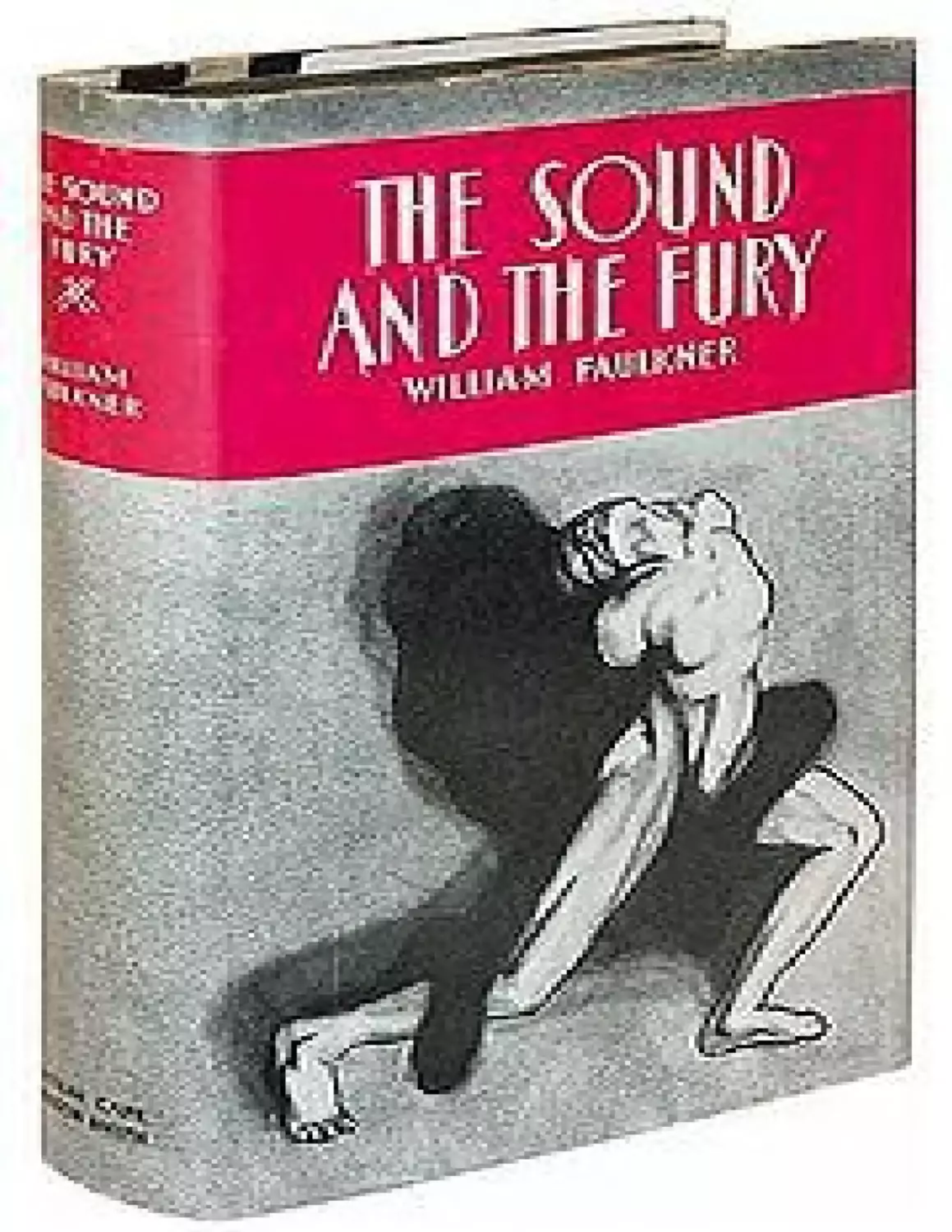
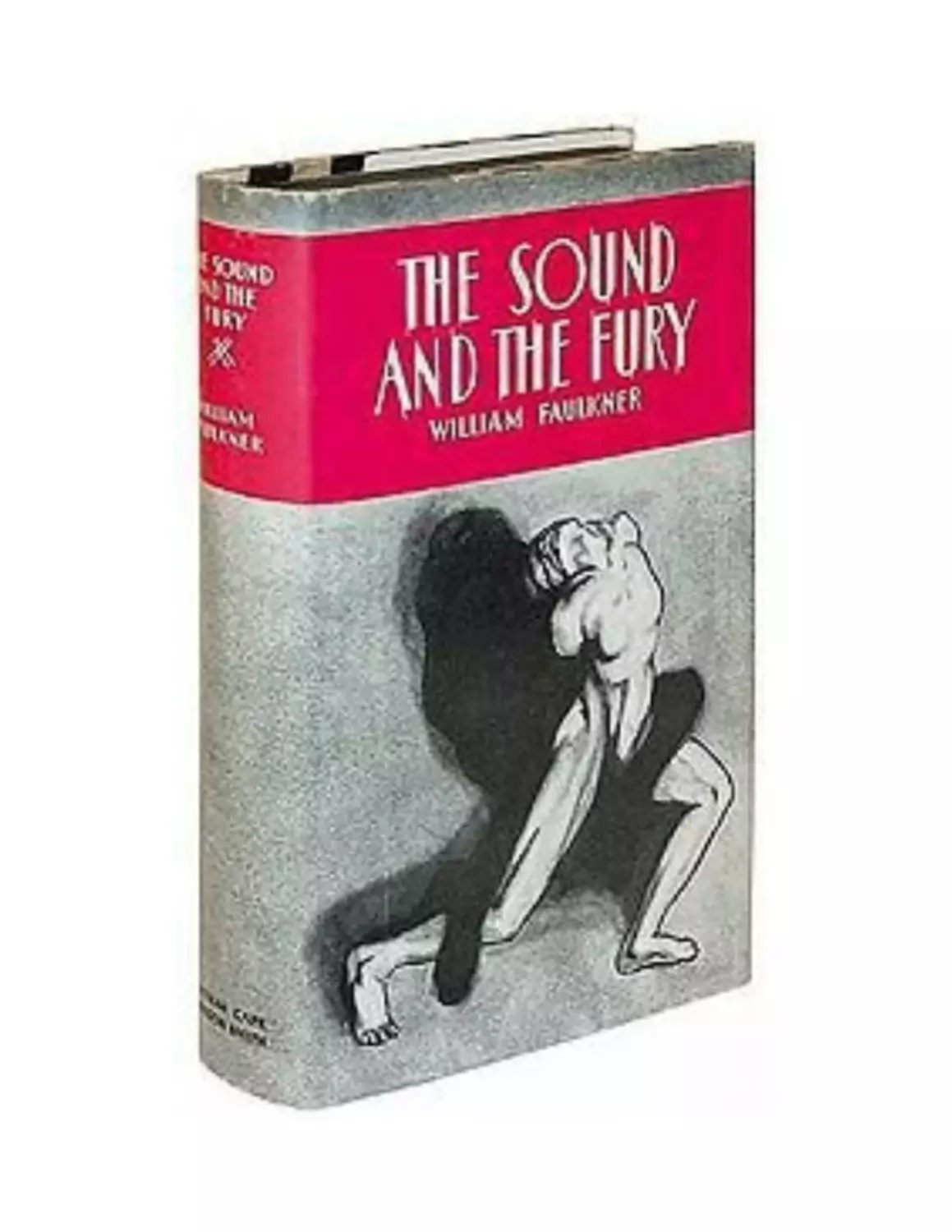




















Author: Faulkner W.



Text
                    William Faulkner
The Sound and the Fury

An Introduction for The Sound and the Fury
The Southern Review 8 (N.S ., 1972) 705-10.
I wrote this book and learned to read. I had learned a little about writing
from Soldiers' Pay--how to approach language, words: not with seriousness
so much, as an essayist does, but with a kind of alert respect, as you approach
dynamite; even with joy, as you approach women: perhaps with the same
secretly unscrupulous intentions. But when I finished The Sound and the
Fury I discovered that there is actually something to which the shabby term
Art not only can, but must, be applied. I discovered then that I had gone
through all that I had ever read, from Henry James through Henty to
newspaper murders, without making any distinction or digesting any of it, as
a moth or a goat might. After The Sound and The Fury and without heeding
to open another book and in a series of delayed repercussions like summer
thunder, I discovered the Flauberts and Dostoievskys and Conrads whose
books I had read ten years ago. With The Sound and the Fury I learned to
read and quit reading, since I have read nothing since.
Nor do I seem to have learned anything since. While writing Sanctuary,
the next novel to The Sound and the Fury, that part of me which learned as I
wrote, which perhaps is the very force which drives a writer to the travail of
invention and the drudgery of putting seventy- five or a hundred thousand
words on paper, was absent because I was still reading by repercussion the
books which I had swallowed whole ten years and more ago. I learned only
from the writing of Sanctuary that there was something missing; something
which The Sound and the Fury gave me and Sanctuary did not. When I began
As I Lay Dying I had discovered what it was and knew that it would be also
missing in this case because this would be a deliberate book. I set out
deliberately to write a tour-de-force. Before I ever put pen to paper and set
down the first word, I knew what the last word would be and almost where
the last period would fall. Before I began I said, I am going to write a book
by which, at a pinch, I can stand or fall if I never touch ink again. So when I
finished it the cold satisfaction was there, as I had expected, but as I had also
expected the other quality which The Sound and the Fury had given me was
absent that emotion definite and physical and yet nebulous to describe: that
ecstasy, that eager and joyous faith and anticipation of surprise which the yet
unmarred sheet beneath my hand held inviolate and unfailing waiting for

release. It was not there in As I Lay Dying. I said, It is because I knew too
much about this book before I began to write it. I said, More than likely I
shall never again have to know this much about a book before I begin to write
it, and next time it will return. I waited almost two years, then I began Light
in August, knowing no more about it than a young woman, pregnant, walking
along a strange country road. I thought, I will recapture it now, since I know
no more about this book than I did about The Sound and the Fury when I sat
down before the first blank page.
It did not return. The written pages grew in number. The story was going
pretty well: I would sit down to it each morning without reluctance yet still
without that anticipation and that joy which alone ever made writing pleasure
to me. The book was almost finished before I acquiesced to the fact that it
would not recur, since I was now aware before each word was written down
just what the people would do, since now I was deliberately choosing among
possibilities and probabilities of behavior and weighing and measuring each
choice by the scale of the Jameses and Conrads and Balzacs. I knew that I
had read too much, that I had reached that stage which all young writers must
pass through, in which he believes that he has learned too much about his
trade. I received a copy of the printed book and I found that I didn't even
want to see what kind of jacket Smith had put on it. I seemed to have a vision
of it and the other ones subsequent to The Sound and The Fury ranked in
order upon a shelf while I looked at the titled backs of them with a flagging
attention which was almost distaste, and upon which each succeeding title
registered less and less, until at last Attention itself seemed to say, Thank
God I shall never need to open any one of them again. I believed that I knew
then why I had not recaptured that first ecstasy, and that I should never again
recapture it; that whatever treenovels I should write in the future would be
written without reluctance, but also without anticipation or joy: that in the
Sound and The Fury I had already put perhaps the only thing in literature
which would ever move me very much: Caddy climbing the pear tree to look
in the window at her grandmother's funeral while Quentin and Jason and
Benjy and the negroes looked up at the muddy seat of her drawers.
This is the only one of the seven novels which I wrote without any
accompanying feeling of drive or effort, or any following feeling of
exhaustion or relief or distaste. When I began it I had no plan at all. I wasn't
even writing a book. I was thinking of books, publication, only in the reverse,
in saying to myself, I wont have to worry about publishers liking or not liking

this at all. Four years before I had written Soldiers' Pay. It didn't take long to
write and it got published quickly and made me about five hundred dollars. I
said, Writing novels is easy. You dont make much doing it, but it is easy. I
wrote Mosquitoes. It wasn't quite so easy to write and it didn't get published
quite as quickly and it made me about four hundred dollars. I said,
Apparently there is more to writing novels, being a novelist, than I thought. I
wrote Sartoris. It took much longer, and the publisher refused it at once. But I
continued to shop it about for three years with a stubborn and fading hope,
perhaps to justify the time which I had spent writing it. This hope died
slowly, though it didn't hurt at all. One day I seemed to shut a door between
me and all publishers' addresses and book lists. I said to myself, Now I can
write. Now I can make myself a vase like that which the old Roman kept at
his bedside and wore the rim slowly away with kissing it. So I, who had
never had a sister and was fated to lose my daugher in infancy, set out to
make myself a beautiful and tragic little girl.

An Introduction to The Sound and the
Fury
Mississippi Quarterly 26 (Summer 1973): 410-415.
Art is no part of southern life. In the North it seems to be different. It is
the hardest minor stone in Manhattan's foundation. It is a part of the glitter or
shabbiness of the streets. The arrowing buildings rise out of it and because of
it, to be torn down and arrow again. There will be people leading small
bourgeois lives (those countless and almost invisible bones of its articulation,
lacking any one of which the whole skeleton might collapse) whose bread
will derive from it--polyglot boys and girls progressing from tenement
schools to editorial rooms and art galleries, men with grey hair and paunches
who run linotype machines and take up tickets at concerts and then go
sedately home to Brooklyn and suburban stations where children and
grandchildren await them--long after the descendants of Irish politicians and
Neapolitan racketeers are as forgotten as the wild Indians and the pigeon
And of Chicago too: of that rhythm not always with harmony or tune
lusty, loudvoiced, always changing and always young; drawing from a river
basin which is almost a continent young men and women into its living unrest
and then spewing them forth again to write Chicago in New England and
Virginia and Europe. But in the South art, to become visible at all, must
become a ceremony, a spectacle; something between a gypsy encampment
and a church bazaar given by a handful of alien mummers who must waste
themselves in protest and active self-defense until there is nothing left with
which to speak--a single week, say, of furious endeavor for a show to be held
on Friday night and then struck and vanished, leaving only a paint- stiffened
smock or a worn out typewriter ribbon in the corner and perhaps a small bill
for cheesecloth or bunting in the hands of an astonished and bewildered
tradesman.
Perhaps this is because the South (I speak in the sense of the indigenous
dream of any given collection of men having something in common' be it
only geography and climate, which shape their economic and spiritual
aspirations into cities, into a pattern of houses or behavior) is old since dead.

New York, whatever it may believe of itself, is young since alive; it is still a
logical and unbroken progression from the Dutch. And Chicago even boasts
of being young. But the South, as Chicago is the Middlewest and New York
the East, is dead, killed by the Civil War. There is a thing known whimsically
as the New South to be sure, but it is not the south. It is a land of Immigrants
who are rebuilding the towns and cities into replicas of towns and cities in
Kansas and Iowa and Illinois, with skyscrapers and striped canvas awnings
instead of wooden balconies, and teaching the young men who sell the
gasoline and the waitresses in the restaurants to say O yeah? and to speak
with hard r's, and hanging over the intersections of quiet and shaded streets
where no one save Northern tourists in Cadillacs and Lincolns ever pass at a
gait faster than a horse trots, changing red-and-green lights and savage and
peremptory bells.
Yet this art, which has no place in southern life, is almost the sum total of
the Southern artist. It is his breath, blood, flesh, all. Not so much that it is
forced back upon him or that he is forced bodily into it by the circumstance;
forced to choose, lady and tiger fashion, between being an artist and being a
man. He does it deliberately; he wishes it so. This has always been true of
him and of him alone. Only Southerners have taken horsewhips and pistols to
editors about the treatment or maltreatment of their manuscript. This--the
actual pistols--was in the old days, of course, we no longer succumb to the
impulse. But it is still there, still within us.
Because it is himself that the Southerner is writing about, not about his
environment: who has, figuratively speaking, taken the artist in him in one
hand and his milieu in the other and thrust the one into the other like a
clawing and spitting cat into a croker sack. And he writes. We have never got
and probably will never get, anywhere with music or the plastic forms. We
need to talk, to tell, since oratory is our heritage. We seem to try in the simple
furious breathing (or writing) span of the individual to draw a savage
indictment of the contemporary scene or to escape from it into a makebelieve
region of swords and magnolias and mockingbirds which perhaps never
existed anywhere. Both of the courses are rooted in sentiment; perhaps the
ones who write savagely and bitterly of the incest in clayfloored cabins are
the most sentimental. Anyway, each course is a matter of violent
partisanship, in which the writer unconsciously writes into every line and
phrase his violent despairs and rages and frustrations or his violent prophesies
of still more violent hopes. That cold intellect which can write with calm and

complete detachment and gusto of its contemporary scene is not among us; I
do not believe there lives the Southern writer who can say without lying that
writing is any fun to him. Perhaps we do not want it to be.
I seem to have tried both of the courses. I have tried to escape and I have
tried to indict. After five years I look back at The Sound and The Fury and
see that that was the fuming point: in this book I did both at one time. When I
began the book, I had no plan at all. I wasn't even writing a book. Previous to
it I had written three novels, with progressively decreasing ease and pleasure,
and reward or emolument. The third one was shopped about for three years
during which I sent it from publisher to publisher with a kind of stubborn and
fading hope of at least justifying the paper I had used and the time I had spent
writing it. This hope must have died at last, because one day it suddenly
seemed as if a door had clapped silently and forever to between me and all
publishers' addresses and booklists and I said to myself, Now I can write.
Now I can just write. Whereupon I, who had three brothers and no sisters and
was destined to lose my first daughter in infancy, began to write about a little
girl.
I did not realise then that I was trying to manufacture the sister which I
did not have and the daughter which I was to lose, though the former might
have been apparent from the fact that Caddy had three brothers almost before
I wrote her name on paper. I just began to write about a brother and a sister
splashing one another in the brook and the sister fell and wet her clothing and
the smallest brother cried, thinking that the sister was conquered or perhaps
hurt. Or perhaps he knew that he was the baby and that she would quit
whatever water battles to comfort him. When she did so, when she quit the
water fight and stooped in her wet garments above him, the entire story,
which is all told by that same little brother in the first section, seemed to
explode on the paper before me.
I saw that peaceful glinting of that branch was to become the dark, harsh
flowing of time sweeping her to where she could not return to comfort him,
but that just separation, division, would not be enough not far enough. It must
sweep her into dishonor and shame too. And that Benjy must never grow
beyond this moment; that for him all knowing must begin and end with that
fierce, panting, paused and stooping wet figure which smelled like trees. That
he must never grow up to where the grief of bereavement could be leavened
with understanding and hence the alleviation of rage as in the case of Jason,
and of oblivion as in the case of Quentin.

I saw that they had been sent to the pasture to spend the afternoon to get
them away from the house during the grandmother's funeral in order that the
three brothers and the nigger children could look up at the muddy seat of
Caddy's drawers as she climbed the tree to look in the window at the funeral,
without then realising the symbology of the soiled drawers, for here again
hers was the courage which was to face later with honor the shame which she
was to engender, which Quentin and Jason could not face: the one taking
refuge in suicide, the other in vindictive rage which drove him to rob his
bastard niece of the meagre sums which Caddy could send her. For I had
already gone on to night and the bedroom and Dilsey with the mudstained
drawers scrubbing the naked backside of that doomed little girl--trying to
cleanse with the sorry byblow of its soiling that body, flesh, whose shame
they symbolised and prophesied, as though she already saw the dark future
and the part she was to play in it trying to hold that crumbling household
together.
Then the story was complete, finished. There was Dilsey to be the future,
to stand above the fallen ruins of the family like a ruined chimney, gaunt,
patient and indomitable; and Benjy to be the past. He had to be an idiot so
that, like Dilsey, he could be impervious to the future, though unlike her by
refusing to accept it at all. Without thought or comprehension; shapeless,
neuter, like something eyeless and voiceless which might have lived, existed
merely because of its ability to suffer, in the beginning of life; half fluid,
groping: a pallid and helpless mass of all mindless agony under sun, in time
yet not of it save that he could nightly carry with him that fierce, courageous
being who was to him but a touch and a sound that may be heard on any golf
links and a smell like trees, into the slow bright shapes of sleep.
The story is all there, in the first section as Benjy told it. I did not try
deliberately to make it obscure; when I realised that the story might be
printed, I took three more sections, all longer than Benjy's, to try to clarify it.
But when I wrote Benjy's section, I was not writing it to be printed. If I were
to do it over now I would do it differently, because the writing of it as it now
stands taught me both how to write and how to read, and even more: It taught
me what I had already read, because on completing it I discovered, in a series
of repercussions like summer thunder, the Flauberts and Conrads and
Turgenievs which as much as ten years before I had consumed whole and
without assimilating at all, as a moth or a goat might. I have read nothing
since; I have not had to. And I have learned but one thing since about writing.

That is, that the emotion definite and physical and yet nebulous to describe
which the writing of Benjy's section of The Sound and The Fury gave me--
that ecstasy, that eager and joyous faith and anticipation of surprise which the
yet unmarred sheets beneath my hand held inviolate and unfailing--will not
return. The unreluctance to begin, the cold satisfaction in work well and
arduously done, is there and will continue to be there as long as I can do it
well. But that other will not return. I shall never know it again.
So I wrote Quentin's and Jason's sections, trying to clarify Benjy's. But I
saw that I was merely temporising; That I should have to get completely out
of the book. I realised that there would be compensations, that in a sense I
could then give a final turn to the screw and extract some ultimate distillation.
Yet it took me better than a month to take pen and write The day dawned
bleak and chill before I did so. There is a story somewhere about an old
Roman who kept at his bedside a Tyrrhenian vase which he loved and the rim
of which he wore slowly away with kissing it. I had made myself a vase, but I
suppose I knew all the time that I could not live forever inside of it, that
perhaps to have it so that I too could lie in bed and look at it would be better;
surely so when that day should come when not only the ecstasy of writing
would be gone, but the unreluctance and the something worth saying too. It's
fine to think that you will leave something behind you when you die, but it's
better to have made something you can die with. Much better the muddy
bottom of a little doomed girl climbing a blooming pear tree in April to look
in the window at the funeral.
Oxford.
19 August, 1933.

April 7, 1928
Through the fence, between the curling flower spaces, I could see them
hitting. They were coming toward where the flag was and I went along the
fence. Luster was hunting in the grass by the flower tree. They took the flag
out, and they were hitting. Then they put the flag back and they went to the
table, and he hit and the other hit. Then they went on, and I went along the
fence. Luster came away from the flower tree and we went along the fence
and they stopped and we stopped and I looked through the fence while Luster
was hunting in the grass.
"Here, caddie." He hit. They went away across the pasture. I held to the
fence and watched them going away.
"Listen at you, now." Luster said. "Aint you something, thirty three years
old, going on that way. After I done went all the way to town to buy you that
cake. Hush up that moaning. Aint you going to help me find that quarter so I
can go to the show tonight."
They were hitting little, across the pasture. I went back along the fence to
where the flag was. It flapped on the bright grass and the trees.
"Come on." Luster said. "We done looked there. They aint no more
coming right now. Les go down to the branch and find that quarter before
them niggers finds it."
It was red, flapping on the pasture. Then there was a bird slanting and
tilting on it. Luster threw. The flag flapped on the bright grass and the trees. I
held to the fence.
"Shut up that moaning." Luster said. "I cant make them come if they aint
coming, can I. If you dont hush up, mammy aint going to have no birthday
for you. If you dont hush, you know what I going to do. I going to eat that
cake all up. Eat them candles, too. Eat all them thirty three candles. Come on,
les go down to the branch. I got to find my quarter. Maybe we can find one of
they balls. Here. Here they is. Way over yonder. See." He came to the fence
and pointed his arm. "See them. They aint coming back here no more. Come
on.
We went along the fence and came to the garden fence, where our
shadows were. My shadow was higher than Luster's on the fence. We came to
the hroken place and went through it.

"Wait a minute." Luster said. "You snagged on that nail again. Cant you
never crawl through here without snagging on that nail."

4.1
Caddy uncaught me and we crawled through. Uncle Maury said to not let
anybody see us, so we better stoop over, Caddy said. Stoop over, Benjy. Like
this, see. We stooped over and crossed the garden, where the flowers rasped
and rattled against us. The ground was hard. We climbed the fence, where
the pigs were grunting and snuffing. I expect they're sorry because one of
them got killed today, Caddy said. The ground was hard, churned and
knotted. Keep your hands in your pockets, Caddy said. Or they'll get froze.
You dont want your hands froze on Christmas, do you.

3.1
"It's too cold out there." Versh said. "You dont want to go outdoors."
"What is it now." Mother said.
"He want to go out doors." Versh said.
"Let him go." Uncle Maury said.
"It's too cold." Mother said. "He'd better stay in. Benjamin. Stop that,
now."
"It wont hurt him." Uncle Maury said.
"You, Benjamin." Mother said. "If vou dont be good, you'll have to go to
the kitchen."
"Mammy say keep him out the kitchen today." Versh said. "She say she
got all that cooking to get done."
"Let him go, Caroline." Uncle Maury said. "You'll worry yourself sick
over him."
"I know it." Mother said. "It's a judgment on me. I sometimes wonder."
"I know, I know." Uncle Maury said. "You must keep your strength up.
I'll make you a toddy."
"It just upsets me that much more." Mother said. "Dont you know it
does."
"You'll feel better. " Uncle Maury said. "Wrap him up good, boy, and
take him out for a while."
Uncle Maury went away. Versh went away.
"Please hush." Mother said. "We're trying to get you out as fast as we can.
I dont want you to get sick."
Versh put my overshoes and overcoat on and we took my cap and went
out. Uncle Maury was putting the bottle away in the sideboard in the
diningroom.
"Keep him out about half an hour, boy." Uncle Maury said. "Keep him in
the yard, now."
"Yes, sir." Versh said. "We dont never let him get off the place."
We went out doors. The sun was cold and bright.
"Where you heading for." Versh said. "You dont think you going to town,
does you." We went through the rattling leaves. The gate was cold. "You
better keep them hands in your pockets." Versh said. "You get them froze

onto that gate, then what you do. Whyn't you wait for them in the house." He
put my hands into my pockets. I could hear him rattling in the leaves. I could
smell the cold. The gate was cold.
"Here some hickeynuts. Whooey. Git up that tree. Look here at this
squirl, Benjy." I couldn't feel the gate at all, but I could smell the bright cold.
"You better put them hands back in your pockets."
Caddy was walking. Then she was running, her booksatchel swinging and
jouncing behind her.
"Hello, Benjy." Caddy said. She opened the gate and came in and stooped
down. Caddy smelled like leaves. "Did you come to meet me." she said. "Did
you come to meet Caddy. What did you let him get his hands so cold for,
Versh." "I told him to keep them in his pockets." Versh said. "Holding on to
that ahun gate."
"Did you come to meet Caddy." she said, rubbing my hands. "What is it.
What are you trying to tell Caddy." Caddy smelled like trees and like when
she says we were asleep.

19.2
What are you moaning about, Luster said. You can watch them again
when we get to the branch. Here. Here's you a jimson weed. He gave me the
flower. We went through the fence, into the lot.

3.2
"What is it." Caddy said "What are you trying to tell Caddy. Did they
send him out, Versh."
"Couldn't keep him in." Versh said. "He kept on until they let him go and
he come right straight down here, looking through the gate."
"What is it." Caddy said. "Did you think it would be Christmas when I
came home from school. Is that what you thought. Christmas is the day after
tomorrow. Santy Claus, Benjy. Santy Claus. Come on, let's run to the house
and get warm." She took my hand and we ran through the bright rustling
leaves. We ran up the steps and out of the bright cold, into the dark cold.
Uncle Maury was putting the bottle back in the sideboard. He called Caddy.
Caddy said,
"Take him in to the fire, Versh. Go with Versh." she said. "I'll come in a
minute."
We went to the fire. Mother said,
"Is he cold, Versh."
"Nome." Versh said.
"Take his overcoat and overshoes off." Mother said. "How many times do
I have to tell you not to bring him into the house with his overshoes on.
"Yessum." Versh said. "Hold still, now." He took my overshoes off and
unbuttoned my coat. Caddy said,
"Wait, Versh. Cant he go out again, Mother. I want him to go with me.
"You'd better leave him here." Uncle Maury said. "He's been out enough
today."
"I think you'd both better stay in." Mother said. "It's getting colder, Dilsey
says."
"Oh, Mother." Caddy said.
"Nonsense." Uncle Maury said. "She's been in school all day. She needs
the fresh air. Run along, Candace."
"Let him go, Mother." Caddy said. "Please. You know he'll cry."
"Then why did you mention it before him." Mother said. "Why did you
come in here. To give him some excuse to worry me again. You've been out
enough today. I think you'd better sit down here and play with him."
"Let them go, Caroline." Uncle Maury said. "A little cold wont hurt them.

Remember, you've got to keep your strength up.
"I know." Mother said. "Nobody knows how I dread Christmas. Nobody
knows. I am not one of those women who can stand things. I wish for Jason's
and the children's sakes I was stronger."
"You must do the best you can and not let them worry you. " Uncle
Maury said. "Run along. you two. But dont stay out long, now. Your mother
will worry."
"Yes, sir." Caddy said. "Come on, Benjy. We're going out doors again."
She buttoned my coat and we went toward the door.
"Are you going to take that baby out without his overshoes." Mother said.
"Do you want to make him sick, with the house full of company."
"I forgot." Caddy said. "I thought he had them on. We went back. "You
must think." Mother said. Hold still now Versh said. He put my overshoes on.
"Someday I'll be gone, and you'll have to think for him." Now stomp Versh
said. "Come here and kiss Mother, Benjamin."
Caddy took me to Mother's chair and Mother took my face in her hands
and then she held me against her.
"My poor baby." she said. She let me go. "You and Versh take good care
of him, honey."
"Yessum." Caddy said. We went out. Caddy said,
"You needn't go, Versh. I'll keep him for a while."
"All right." Versh said. "I aint going out in that cold for no fun." He went
on and we stopped in the hall and Caddy knelt and put her arms around me
and her cold bright face against mine. She smelled like trees.
"You're not a poor baby. Are you. Are you. You've got your Caddy.
Haven't you got your Caddy."

19.3
Cant you shut up that moaning and slobbering, Luster said. Aint you
shamed of yourself, making all this racket. We passed the carriage house,
where the carriage was. It had a new wheel.

17.1
"Git in, now, and set still until your maw come." Dilsey said. She shoved
me into the carriage. T.P . held the reins. "Clare I dont see how come Jason
wont get a new surrey." Dilsey said. "This thing going to fall to pieces under
you all some day. Look at them wheels."
Mother came out, pulling her veil down. She had some flowers.
"Where's Roskus." she said.
"Roskus cant lift his arms, today." Dilsey said. "T.P . can drive all right."
"I'm afraid to." Mother said. "It seems to me you all could furnish me
with a driver for the carriage once a week. It's little enough I ask, Lord
knows."
"You know just as well as me that Roskus got the rheumatism too bad to
do more than he have to, Miss Cahline." Dilsey said. "You come on and get
in, now. T.P . can drive you just as good as Roskus."
"I'm afraid to." Mother said. "With the baby." Dilsey went up the steps.
"You calling that thing a baby." she said. She took Mother's arm. "A man big
as T.P . Come on, now, if you going."
"I'm afraid to." Mother said. They came down the steps and Dilsey helped
Mother in. "Perhaps it'll be the best thing, for all of us." Mother said.
"Aint you shamed, talking that way." Dilsey said. "Dont you know it'll
take more than a eighteen year old nigger to make Queenie run away. She
older than him and Benjy put together. And dont you start no projecking with
Queenie, you hear me. T.P. If you dont drive to suit Miss Cahline, I going to
put Roskus on you. He aint too tied up to do that."
"Yessum." T.P. said.
"I just know something will happen." Mother said. "Stop, Benjamin.
"Give him a flower to hold." Dilsey said. "That what he wanting." She
reached her hand in.
"No, no." Mother said. "You'll have them all scattered."
"You hold them." Dilsey said. "I'll get him one out." She gave me a
flower and her hand went away.
"Go on now, fore Quentin see you and have to go too." Dilsey said.
"Where is she." Mother said.
"She down to the house playing with Luster." Dilsey said. "Go on, T.P.

Drive that surrey like Roskus told you, now.
"Yessum." T.P. said. "Hum up, Queenie."
"Quentin." Mother said. "Dont let "
"Course I is." Dilsey said.
The carriage jolted and crunched on the drive. "I'm afraid to go and leave
Quentin." Mother said. "I'd better not go. T.P ." We went through the gate,
where it didn't jolt anymore. T.P . hit Queenie with the whip.
"You, T.P ." Mother said.
"Got to get her going." T.P . said. "Keep her wake up till we get back to
the barn."
"Turn around." Mother said. "I'm afraid to go and leave Quentin."
"Cant turn here." T.P. said. Then it was broader.
"Cant you turn here." Mother said.
"All right." T.P. said. We began to turn.
"You, T.P ." Mother said, clutching me.
"I got to turn around some how." T.P . said. "Whoa, Queenie." We
stopped.
"You'll turn us over." Mother said.
"What you want to do, then." T.P . said.
"I'm afraid for you to try to turn around." Mother said.
"Get up, Queenie." T.P . said. We went on.
"I just know Dilsey will let something happen to Quentin while I'm
gone." Mother said. "We must hurry back."
"Hum up,' there." T.P. said. He hit Queenie with the whip.
"You, T.P ." Mother said, clutching me. I could hear Qucenie's feet and
the bright shapes went smooth and steady on both sides, the shadows of them
flowing across Queenie's back. They went on like the bright tops of wheels.
Then those on one side stopped at the tall white post where the soldier was.
But on the other side they went on smooth and steady, but a little slower.
"What do you want." Jason said. He had his hands in his pockets and a
pencil behind his ear.
"We're going to the cemetery." Mother said.
"All right." Jason said. "I dont aim to stop you, do I. Was that all you
wanted with me, just to tell me that."
"I know you wont come." Mother said. "I'd feel safer if you would."
"Safe from what." Jason said. "Father and Quentin cant hurt you."
Mother put her handkerchief under her veil. "Stop it, Mother." Jason said.

"Do you want to get that damn looney to bawling in the middle of the square.
Drive on, T.P ."
"Hum up, Queenie." T.P. said.
"It's a judgment on me." Mother said. "But I'll be gone too, soon.
"Here." Jason said.
"Whoa." T.P . said. Jason said,
"Uncle Maury's drawing on you for fifty. What do you want to do about
it."
"Why ask me." Mother said. "I dont have any say so. I try not to worry
you and Dilsey. I'll be gone soon, and then you "
"Go on, T.P ." Jason said.
"Hum up, Queenie." T.P . said. The shapes flowed on. The ones on thc
other side began again, bright and fast and smooth, like when Caddy says we
are going to sleep.

19.4
Cry baby, Luster said. Aint you shamed. We went through the barn. The
stalls were all open. You aint got no spotted pony to ride now, Luster said.
The floor was dry and dusty. The roof was falling. The slanting holes were
full of spinning yellow. What do you want to go that way, for. You want to get
your head knocked off with one of them balls.

4.2
“Keep your hands in your pockets." Caddy said. "Or they'll be froze. You
dont want your hands froze on Christmas, do you."
We went around the barn. The big cow and the little one were standing in
the door, and we could hear Prince and Queenie and Fancy stomping inside
the barn. "If it wasn't so cold, we'd ride Fancy." Caddy said. "But it's too cold
to hold on today." Then we could seethe branch, where the smoke was
blowing. "That's where they are killing the pig." Caddy said. "We can come
back by there and see them." We went down the hill.
"You want to carry the letter." Caddy said. "You can carry it." She took
the letter out of her pocket and put it in mine. "It's a Christmas present."
Caddy said. "Uncle Maury is going to surprise Mrs Patterson with it. We got
to give it to her without letting anybody see it. Keep your hands in your
pockets good, now." We came to the branch.
"It's froze." Caddy said. "Look." She broke the top of the water and held a
piece of it against my face. "Ice. That means how cold it is." She helped me
across and we went up the hill. "We cant even tell Mother and Father. You
know what I think it is. I think it's a surprise for Mother and Father and Mr
Patterson both, because Mr Patterson sent you some candy. Do you
remember when Mr Patterson sent you some candy last summer.
There was a fence. The vine was dry, and the wind rattled in it.
"Only I dont see why Uncle Maury didn't send Versh." Caddy said.
"Versh wont tell." Mrs Patterson was looking out the window. "You wait
here." Caddy said. "Wait right here, now. I'll be back in a minute. Give me
the letter." She took the letter out of my pocket. "Keep your hands in your
pockets." She climbed the fence with the letter in her hand and went through
the brown, rattling flowers. Mrs Patterson came to the door and opened it and
stood there.

5.1
Mr Patterson was chopping in the green flowers. He stopped chopping
and looked at me. Mrs Patterson came across the garden, running. When I
saw her eyes I began to cry. You idiot, Mrs Patterson said, I told him never to
send you alone again. Give it to me. Quick. Mr Patterson came fast, with the
hoc. Mrs Patterson leaned across the fence, reaching her hand. She was
trying to climb the fence. Give it to me, she said, Give it to me. Mr Patterson
climbed the fence. He took the letter. Mrs Patterson's dress was caught on the
fence. I saw her eyes again and I ran down the hill.

19.5
"They aint nothing over yonder but houses." Luster said. "We going down
to the branch."
They were washing down at the branch. One of them was singing. I could
smell the clothes flapping, and the smoke blowing across the branch.
"You stay down here." Luster said. "You aint got no business up yonder.
Them folks hit you, sho."
"What he want to do."
"He dont know what he want to do." Luster said. "He think he want to go
up yonder where they knocking that hall. You sit down here and play with
your jimson weed. Look at them chillen playing in the branch, if you got to
look at something. How come you cant behave yourself like folks." I sat
down on the bank, where they were washing, and the smoke blowing blue.
"Is you all seen anything of a quarter down here." Luster said."What
quarter."
""The one I had here this morning." Luster said. "I lost it somewhere. It
fell through this here hole in my pocket. If I dont find it I cant go to the show
tonight."
"Where'd you get a quarter, boy. Find it in white folks' pocket while they
aint looking."
"Got it at the getting place." Luster said "Plenty more where that one
come ftom. Only I got to find that one. Is you all found it yet."
"I aint studying no quarter. I got my own business to tend to."
"Come on here." Luster said. "Help me look for it."
"He wouldn't know a quarter if he was to see it, would he.""He can help
look just the same." Luster said. "You all going to the show tonight."
"Dont talk to me about no show. Time I get done over this here tub I be
too tired to lift my hand to do nothing."
"I bet you be there." Luster said. "I bet you was there last night. I bet you
all be right there when that tent open."Be enough niggers there without me.
Was last night."
"Nigger's money good as white folks, I reckon."
"White folks gives nigger money because know first white man comes
along with a band going to get it all back, so nigger can go to work for some

more."
"Aint nobody going make you go to that show."
"Aint yet. Aint thought of it, I reckon."
"What you got against white folks."
"Aint got nothing against them. I goes my way and lets white folks go
theirs. I aint studying that show."
"Got a man in it can play a tune on a saw. Play it like a banjo."
"You go last night." Luster said. "I going tonight If I can find where I lost
that quarter."
"You going take him with you, I reckon."
"Me." Luster said. "You reckon I be found anywhere with him, time he
start bellering."
"What does you do when he start bellering."
"I whips him." Luster said. He sat down and rolled up his overalls. They
played in the branch.
"You all found any balls yet." Luster said.
"Aint you talking biggity. I bet you better not let your grandmammy hear
you talking like that."
Luster got into the branch, where they were playing. He hunted in the
water, along the bank.
"I had it when we was down here this morning." Luster said.
"Where bouts you lose it."
"Right out this here hole in my pocket." Luster said. They hunted in the
branch. Then they all stood up quick and stopped, then they splashed and
fought in the branch. Luster got it and they squatted in the water, looking up
the hill through the bushes.
"Where is they." Luster said.
"Aint in sight yet."
Luster put it in his pocket. They came down the hill.
"Did a hall come down here."
"It ought to be in the water. Didn't any of you boys see it or hear it."
"Aint heard nothing come down here." Luster said. "Heard something hit
that tree up yonder. Dont know which way it went."
They looked in the branch.
"Hell. Look along the branch. It came down here. I saw it."
They looked along the branch. Then they went back up the hill.
"Have you got that ball." the boy said.

"What I want with it." Luster said. "I aint seen no ball."
The boy got in the water. He went on. He turned and looked at Luster
again. He went on down the branch.
The man said "Caddie" up the hill. The boy got out of the water and went
up the hill.
"Now, just listen at you." Luster said. "Hush up."
"What he moaning about now."
"Lawd knows." Luster said. "He just starts like that. He been at it all
morning. Cause it his birthday, I reckon."
"How old he."
"He thirty three." Luster said. "Thirty three this morning."
"You mean, he been three years old thirty years.
"I going by what mammy say." Luster said. "I dont know. We going to
have thirty three candles on a cake, anyway. Little cake. Wont hardly hold
them. Hush up. Come on back here." He came and caught my arm. "You old
looney." he said. "You want me to whip you."
"I bet you will."
"I is done it. Hush, now." Luster said. "Aint I told you you cant go up
there. They'll knock your head clean off with one of them balls. Come on,
here." He pulled me back. "Sit down." I sat down and he took off my shoes
and rolled up my trousers. "Now, git in that water and play and see can you
stop that slobbering and moaning."
I hushed and got in the water [...]

1.1
[...]and Roskus came and said to come to supper and Caddy said,
It's not supper time yet I'm not going.
She was wet. We were playing in the branch and Caddy squatted down
and got her dress wet and Versh said,
"Your mommer going to whip you for getting your dress wet."
"She's not going to do any such thing." Caddy said.
"How do you know." Quentin said.
"That's all right how I know." Caddy said. "How do you know."
"She said she was." Quentin said. "Besides, I'm older than you."
"I'm seven years old." Caddy said. "I guess I know."
"I'm older than that." Quentin said. "I go to school. Dont I, Versh."
"I'm going to school next year." Caddy said. "When it comes. Aint I,
Versh."
"You know she whip you when you get your dress wet." Versh said.
"It's not wet." Caddy said. She stood up in the water and looked at her
dress. "I'll take it off." she said. "Then it'll dry."
"I bet you wont." Quentin said.
"I bet I will." Caddy said.
"I bet you better not." Quentin said.
Caddy came to Versh and me and turned her back.
"Unbutton it, Versh." she said.
"Dont you do it, Versh." Quentin said.
"Taint none of my dress." Versh said.
"You unbutton it, Versh." Caddy said. "Or I'll tell Dilsey what you did
yesterday." So Versh unbuttoned it.
"You just take your dress off." Quentin said. Caddy took her dress off and
threw it on the bank. Then she didn't have on anything but her bodice and
drawers, and Quentin slapped her and she slipped and fell down in the water.
When she got up she began to splash water on Quentin, and Quentin splashed
water on Caddy. Some of it splashed on Versh and me and Versh picked me
up and put me on the bank. He said he was going to tell on Caddy and
Quentin, and then Quentin and Caddy began to splash water at Versh. He got
behind a bush.

"I'm going to tell mammy on you all." Versh said.
Quentin climbed up the bank and tried to catch Versh, but Versh ran
away and Quentin couldn't. When Quentin came back Versh stopped and
hollered that he was going to tell. Caddy told him that if he wouldn't tell,
they'd let him come back. So Versh said he wouldn't, and they let him.
"Now I guess you're satisfied." Quentin said. "We'll both get whipped
now."
"I dont care." Caddy said. "I'll run away."
"Yes you will." Quentin said.
"I'll run away and never come back." Caddy said. I began to cry.
Caddy turned around and said "Hush" So I hushed. Then they played in
the branch. Jason was playing too. He was by himself further down the
branch. Versh came around the bush and lifted me down into the water again.
Caddy was all wet and muddy behind, and I started to cry and she came and
squatted in the water.
"Hush now." she said. "I'm not going to run away." So I hushed. Caddy
smelled like trees in the rain.

19.6
What is the matter with you, Luster said. Cant you get done with that
moaning and play in the branch like folks.
Whyn't you take him on home. Didn't they told you not to take him off the
place.
He still think they own this pasture, Luster said. Cant nobody see down
here from the house, noways.
We can. And folks dont like to look at a looney. Taint no luck in it.

1.2
Roskus came and said to come to supper and Caddy said it wasn't supper
time yet.
"Yes tis." Roskus said. "Dilsey say for you all to come on to the house.
Bring them on, Versh." He went up the hill, where the cow was lowing.
"Maybe we'll be dry by the time we get to the house." Quentin said.
"It was all your fault." Caddy said. "I hope we do get whipped." She put
her dress on and Versh buttoned it.
"They wont know you got wet." Versh said. "It dont show on you. Less
me and Jason tells."
"Are you going to tell, Jason." Caddy said.
"Tell on who." Jason said.
"He wont tell." Quentin said. "Will you, Jason."
"I bet he does tell." Caddy said. "He'll tell Damuddy."
"He cant tell her." Quentin said. "She's sick. If we walk slow it'll be too
dark for them to see."
"I dont care whether they see or not." Caddy said. "I'm going to tell,
myself. You carry him up the hill, Versh."
"Jason wont tell." Quentin said. "You remember that bow and arrow I
made you, Jason."
"It's broke now." Jason said.
"Let him tell." Caddy said. "I dont give a cuss. Carry Maury up the hill,
Versh." Versh squatted and I got on his back.

19.7
See you all at the show tonight, Luster said. Come on, here. We got to
find that quarter.

1.3
"If we go slow, it'll be dark when we get there." Quentin said.
"I'm not going slow." Caddy said. We went up the hill, but Quentin didn't
come. He was down at the branch when we got to where we could smell the
pigs. They were grunting and snuffing in the trough in the comer. Jason came
behind us, with his hands in his pockets. Roskus was milking the cow in the
barn door.

10.1
The cows came jumping out of the barn.
"Go on." T.P . said. "Holler again. I going to holler myself. Whooey."
Quentin kicked T.P . again. He kicked T.P. into the trough where the pigs ate
and T.P . lay there. "Hot dog." T.P . said. "Didn't he get me then. You see that
white man kick me that time. Whooey."
I wasn't crying, but I couldn't stop. I wasn't crying, but the ground wasn't
still, and then I was crying. The ground kept sloping up and the cows ran up
the hill. T.P . tried to get up. He fell down again and the cows ran down the
hill. Quentin held my arm and we went toward the barn. Then the barn wasn't
there and we had to wait until it came back. I didn't see it come back. It came
behind us and Quentin set me down in the trough where the cows ate. I held
on to it. It was going away too, and I held to it. The cows ran down the hill
again, across the door. I couldn't stop. Quentin and T.P . came up the hill,
fighting. T.P . was falling down the hill and Quentin dragged him up the hill.
Quentin hit T.P. I couldn't stop.
"Stand up." Quentin said. "You stay right here. Dont you go away until I
get back."
"Me and Benjy going back to the wedding." T.P. said. "Whooey."
Quentin hit T.P . again. Then he began to thump T.P . against the wall T.P.
was laughing. Every time Quentin thumped him against the wall he tried to
say Whooey, but he couldn't say it for laughing. I quit crying, but I couldn't
stop. T.P . fell on me and the barn door went away. It went down the hill and
T.P . was fighting by himself and he fell down again. He was still laughing,
and I couldn't stop, and I tried to get up and I fell down, and I couldn't stop.
Versh said,
"You sho done it now. I'll declare if you aint. Shut up that yelling."
T.P . was still laughing. He flopped on the door and laughed. "Whooey."
he said. "Me and Benjy going back to the wedding. Sassprilluh." T.P . said.
"Hush." Versh said. "Where you get it."
"Out the cellar." T.P . said. "Whooey."
"Hush up." Versh said. "Where bouts in the cellar."
"Anywhere." T.P . said. He laughed some more. "Moren a hundred boftles
lef. Moren a million. Look out, nigger, I going to holler."

Quentin said, "Lift him up."
Versh lifted me up.
"Drink this, Benjy." Quentin said. The glass was hot. "Hush, now."
Quentin said. "Drink it."
"Sassprilluh." T.P . said. "Lemme drink it, Mr Quentin."
"You shut your mouth." Versh said. "Mr Quentin wear you out."
"Hold him, Versh." Quentin said.
They held me. It was hot on my chin and on my shirt. "Drink." Quentin
said. They held my head. It was hot inside me, and I began again. I was
crying now, and something was happening inside me and I cried more, and
they held me until it stopped happening. Then I hushed. It was still going
around, and then the shapes began. Open the crib, Versh. They were going
slow. Spread those empty sacks on the floor. They were going faster, almost
fast enough. Now. Pick up his feet. They went on, smooth and bright. I could
hear T.P . laughing. I went on with them, up the bright hill.

1.4
At the top of the hill Versh put me down. "Come on here, Quentin." he
called, looking back down the hill. Quentin was still standing there by the
branch. He was chunking into the shadows where the branch was.
"Let the old skizzard stay there." Caddy said. She took my hand and we
went on past the barn and through the gate. There was a frog on the brick
walk, squatting in the middle of it. Caddy stepped over it and pulled me on.
"Come on, Maury." she said. It still squatted there until Jason poked at it
with his toe.
"He'll make a wart on you." Versh said. The frog hopped away.
"Come on, Maury." Caddy said.
"They got company tonight." Versh said.
"How do you know." Caddy said.
"With all them lights on." Versh said. "Light in every window."
"I reckon we can turn all the lights on without company, if we want to."
Caddy said.
"I bet it's company. " Versh said. "You all befter go in the back and slip
upstairs."
"I dont care." Caddy said. "I'll walk right in the parlor where they are.
"I bet your pappy whip you if you do." Versh said.
"I dont care." Caddy said. "I'll walk right in the parlor. I'll walk right in
the dining room and eat supper."
"Where you sit." Versh said.
"I'd sit in Damuddy's chair." Caddy said. "She eats in bed."
"I'm hungry. " Jason said. He passed us and ran on up the walk. He had
his hands in his pockets and he fell down. Versh went and picked him up.
"If you keep them hands out your pockets, you could stay on your feet."
Versh said. "You cant never get them out in time to catch yourself, fat as you
is."
Father was standing by the kitchen steps.
"Where's Quentin." he said.
"He coming up the walk." Versh said. Quentin was coming slow. His
shirt was a white blur.
"Oh." Father said. Light fell down the steps, on him.

"Caddy and Quentin threw water on each other. " Jason said.
We waited.
"They did." Father said. Quentin came, and Father said, "You can eat
supper in the kitchen tonight." He stooped and took me up, and the light came
tumbling down the steps on me too, and I could look down at Caddy and
Jason and Quentin and Versh. Father turned toward the steps. "You must be
quiet, though." he said.
"Why must we be quiet, Father." Caddy said. "Have we got company.
"Yes." Father said.
"I told you they was company." Versh said.
"You did not." Caddy said. "I was the one that said there was. I said I
would "
"Hush." Father said. They hushed and Father opened the door and we
crossed the back porch and went in to the kitchen. Dilsey was there, and
Father put me in the chair and closed the apron down and pushed it to the
table, where supper was. It was steaming up.
"You mind Dilsey, now." Father said. "Dont let them make any more
noise than they can help, Dilsey."
"Yes, sir." Dilsey said. Father went away.
"Remember to mind Dilsey, now." he said behind us. I leaned my face
over where the supper was. It steamed up on my face.
"Let them mind me tonight, Father." Caddy said.
"I wont." Jason said. "I'm going to mind Dilsey."
"You'll have to, if Father says so." Caddy said. "Let them mind me,
Father."
"I wont." Jason said. "I wont mind you."
"Hush." Father said. "You all mind Caddy, then. When they are done,
bring them up the back stairs, Dilsey."
"Yes, sir." Dilsey said.
"There." Caddy said. "Now I guess you'll mind me.
"You all hush, now." Dilsey said. "You got to be quiet tonight."
"Why do we have to be quiet tonight." Caddy whispered.
"Never you mind." Dilsey said. "You'll know in the Lawd's own time."
She brought my bowl. The steam from it came and tickled my face. "Come
here, Versh." Dilsey said.
"When is the Lawd's own time, Dilsey." Caddy said.
"It's Sunday." Quentin said. "Dont you know anything."

"Shhhhhh." Dilsey said. "Didn't Mr Jason say for you all to be quiet. Eat
your supper, now. Here, Versh. Git his spoon." Versh's hand came with the
spoon, into the bowl. The spoon came up to my mouth. The steam tickled
into my mouth. Then we quit eating and we looked at each other and we were
quiet, and then we heard it again and I began to cry.
"What was that." Caddy said. She put her hand on my hand.
"That was Mother." Quentin said. The spoon came up and I ate, then I
cried again.
"Hush." Caddy said. But I didn't hush and she came and put her arms
around me. Dilsey went and closed both the doors and then we couldn't hear
it.
"Hush, now." Caddy said. I hushed and ate. Quentin wasn't eating, but
Jason was.
"That was Mother." Quentin said. He got up.
"You set right down." Dilsey said. "They got company in there, and you
in them muddy clothes. You set down too, Caddy, and get done eating."
"She was crying." Quentin said.
"It was somebody singing." Caddy said. "Wasn't it, Dilsey."
"You all eat your supper, now, like Mr Jason said." Dilsey said. "You'll
know in the Lawd's own time." Caddy went back to her chair.
"I told you it was a party." she said.
Versh said, "He done et all that."
"Bring his bowl here." Dilsey said. The bowl went away.
"Dilsey." Caddy said. "Quentin's not eating his supper. Hasn't he got to
mind me."
"Eat your supper, Quentin." Dilsey said. "You all got to get done and get
out of my kitchen."
"I dont want any more supper. Quentin said.
"You've got to eat if I say you have." Caddy said. "Hasn't he, Dilsey." The
bowl steamed up to my face, and Versh's hand dipped the spoon in it and the
steam tickled into my mouth.
"I dont want any more." Quentin said. "How can they have a party when
Damuddy's sick."
"They'll have it down stairs." Caddy said. "She can come to the landing
and see it. That's what I'm going to do when I get my nightie on.
"Mother was crying. " Quentin said. "Wasn't she crying, Dilsey."
"Dont you come pestering at me, boy." Dilsey said. "I got to get supper

for all them folks soon as you all get done eating."
After a while even Jason was through eating, and he began to cry.
"Now you got to tune up." Dilsey said.
"He does it every night since Damuddy was sick and he cant sleep with
her." Caddy said. "Cry baby."
"I'm going to tell on you." Jason said.
He was crying. "You've already told." Caddy said. "There's not anything
else you can tell, now."
"You all needs to go to bed." Dilsey said. She came and lifted me down
and wiped my face and hands with a warm cloth. "Versh, can you get them
up the back stairs quiet. You, Jason, shut up that crying."
"It's too early to go to bed now." Caddy said. "We dont ever have to go to
bed this early."
"You is tonight." Dilsey said. "Your paw say for you to come right on up
stairs when you et supper. You heard him."
"He said to mind me. " Caddy said.
"I'm not going to mind you." Jason said.
"You have to." Caddy said. "Come on, now. You have to do like I say.
"Make them be quiet, Versh." Dilsey said. "You all going to be quiet, aint
you.
"What do we have to be so quiet for, tonight." Caddy said.
"Your mommer aint feeling well." Dilsey said. "You all go on with
Versh, now."
"I told you Mother was crying. " Quentin said. Versh took me up and
opened the door onto the back porch. We went out and Versh closed the door
black. I could smell Versh and feel him. You all be quiet, now. We're not
going up stairs yet. Mr Jason said for you to come right up stairs. He said to
mind me. I'm not going to mind you. But he said for all of us to. Didn't he,
Quentin. I could feel Versh's head. I could hear us. Didn't he, Versh. Yes, that
right. Then I say for us to go out doors a while. Come on. Versh opened the
door and we went out.
We went down the steps.
"I expect we'd better go down to Versh's house, so we'll be quiet." Caddy
said. Versh put me down and Caddy took my hand and we went down the
brick walk.
"Come on." Caddy said. "That frog's gone. He's hopped way over to the
garden, by now. Maybe we'll see another one." Roskus came with the milk

buckets. He went on. Quentin wasn't coming with us. He was sitting on the
kitchen steps. We went down to Versh's house. I liked to smell Versh's house.
[...]

13.1
[...]There was a fire in it and T.P . squatting in his shirt tail in front of it,
chunking it into a blaze.

15.1
Then I got up and T.P . dressed me and we went to the kitchen and ate.
Dilsey was singing and I began to cry and she stopped.
"Keep him away from the house, now." Dilsey said.
"We cant go that way." T.P. said.
We played in the branch.
"We cant go around yonder." T.P. said. "Dont you know mammy say we
cant."
Dilsey was singing in the kitchen and I began to cry.
"Hush." T.P . said. "Come on. Les go down to the barn." Roskus was
milking at the barn. He was milking with one hand, and groaning. Some birds
sat on the barn door and watched him. One of them came down and ate with
the cows. I watched Roskus milk while T.P. was feeding Queenie and Prince.
The calf was in the pig pen. It nuzzled at the wire, bawling.
"T.P ." Roskus said. T.P . said Sir, in the barn. Fancy held her head over
the door, because T.P. hadn't fed her yet. "Git done there." Roskus said. "You
got to do this milking. I cant use my right hand no more."
T.P . came and milked.
"Whyn't you get the doctor." T.P . said.
"Doctor cant do no good." Roskus said. "Not on this place."
"What wrong with this place." T.P. said.
"Taint no luck on this place." Roskus said. "Turn that calf in if you done."

2.1
Taint no luck on this place, Roskus said. The fire rose and fell behind him
and Versh, sliding on his and Versh's face. Dilsey finished putting me to bed.
The bed smelled like T.P. I liked it.

13.2
"What you know about it." Dilsey said. "What trance you been in."
"Dont need no trance." Roskus said. "Aint the sign of it laying right there
on that bed. Aint the sign of it been here for folks to see fifteen years now.
"Spose it is." Dilsey said. "It aint hurt none of you and yourn, is it. Versh
working and Frony married off your hands and T.P . getting big enough to
take your place when rheumatism finish getting you."
"They been two, now." Roskus said. "Coing to be one more. I seen the
sign, and you is too."
"I heard a squinch owl that night." T.P. said. "Dan wouldn't come and get
his supper, neither. Wouldn't come no closer than the barn. Begun howling
right after dark. Versh heard him."
"Going to be more than one more." Dilsey said. "Show me the man what
aint going to die, bless Jesus."
"Dying aint all." Roskus said.
"I knows what you thinking." Dilsey said. "And they aint going to be no
luck in saying that name, lessen you going to set up with him while he cries."
"They aint no luck on this place." Roskus said. "I seen it at first but when
they changed his name I knowed it."
"Hush your mouth." Dilsey said. She pulled the covers up. It smelled like
T.P . "You all shut up now, till he get to sleep."
"I seen the sign. " Roskus said.
"Sign T.P. got to do all your work for you." Dilsey said. [ ...]

15.2
[...]Take him and Quentin down to the house and let them play with
Luster, where Frony can watch them, T.P., and go and help your paw.
We finished eating. T.P. took Quentin up and we went down to T.P.'s
house. Luster was playing in the dirt. T.P. put Quentin down and she played
in the dirt too. Luster had some spools and he and Quentin fought and
Quentin had the spools. Luster cried and Frony came and gave Luster a tin
can to play with, and then I had the spools and Quentin fought me and I cried.
"Hush." Frony said. "Aint you shamed of yourself. Taking a baby's play
pretty." She took the spools from me and gave them back to Quentin.
"Hush, now." Frony said. "Hush, I tell you.
"Hush up." Frony said. "You needs whipping, that's what you needs." She
took Luster and Quentin up. "Come on here." she said. We went to the barn.
T.P . was milking the cow. Roskus was sitting on the box.
"What's the matter with him now." Roskus said.
"You have to keep him down here." Frony said. "He fighting these babies
again. Taking they play things. Stay here with T.P . now, and see can you
hush a while."
"Clean that udder good now." Roskus said. "You milked that young cow
dry last winter. If you milk this one dry, they aint going to be no more milk."
Dilsey was singing.
"Not around yonder." T.P. said. "Dont you know mammy say you cant go
around there."
They were singing.
"Come on." T.P. said. "Les go play with Quentin and Luster. Come on.
Quentin and Luster were playing in the dirt in front of T.P .'s house. There
was a fire in the house, rising and falling, with Roskus sitting black against it.
"That's three, thank the Lawd." Roskus said. "I told you two years ago.
They aint no luck on this place."
"Whyn't you get out, then." Dilsey said. She was undressing me. "Your
bad luck talk got them Memphis notions into Versh. That ought to satisfy
you.
"If that all the bad luck Versh have." Roskus said.
Frony came in.

"You all done." Dilsey said.
"T.P . finishing up." Frony said. "Miss Cabline want you to put Quentin to
bed."
"I'm coming just as fast as I can." Dilsey said. "She ought to know by this
time I aint got no wings."
"That's what I tell you." Roskus said. "They aint no luck going be on no
place where one of they own chillen's name aint never spoke."
"Hush." Dilsey said. "Do you want to get him started."
"Raising a child not to know its own mammy's name." Roskus said.
"Dont you bother your head about her." Dilsey said. "I raised all of them
and I reckon I can raise one more. Hush, now. Let him get to sleep if he will."
"Saying a name." Frony said. "He dont know nobody's name."
"You just say it and see if he dont." Dilsey said. "You say it to him while
he sleeping and I bet he hear you.
"He know lot more than folks thinks." Roskus said. "He knowed they
time was coming, like that pointer done. He could tell you when hisn coming,
if he could talk. Or yours. Or mine."
"You take Luster outen that bed, mammy." Frony said. "That boy conjure
him."
"Hush your mouth." Dilsey said. "Aint you got no better sense than that.
What you want to listen to Roskus for, anyway. Get in, Benjy."
Dilsey pushed me and I got in the bed, where Luster already was. He was
asleep. Dilsey took a long piece of wood and laid it between Luster and me.
"Stay on your side now." Dilsey said. "Luster little, and you dont want to hurt
him."

16.1
You cant go yet, T.P. said. Wait.
We looked around the corner of the house and watched the carriages go
away.
"Now." T.P . said. He took Quentin up and we ran down to the corner of
the fence and watched them pass. "There he go." T.P. said. "See that one with
the glass in it. Look at him. He laying in there. See him."

19.8
Come on, Luster said, I going to take this here ball down home, where I
wont lose it. Naw, sir, you cant have it. If them men sees you with it, they'll
say you stole it. Hush up, now. You cant have it. What business you got with
it. You cant play no ball.

1.5
Frony and T.P . were playing in the dirt by the door. T.P . had lightning
bugs in a bottle.
"How did you all get back out." Frony said.
"We've got company." Caddy said. "Father said for us to mind me
tonight. I expect you and T.P . will have to mind me too."
"I'm not going to mind you." Jason said. "Frony and T.P. dont have to
either.""They will if I say so." Caddy said. "Maybe I wont say for them to."
"T.P . dont mind nobody." Frony said. "Is they started the funeral yet."
"What's a funeral." Jason said.
"Didn't mammy tell you not to tell them." Versh said.
"Where they moans." Frony said. "They moaned two days on Sis Beulah
Clay."

18.1
They moaned at Dilsey's house. Dilsey was moaning. When Dilsey
moaned Luster said, Hush, and we hushed, and then I began to cry and Blue
howled under the kitchen steps. Then Dilsey stopped and we stopped.

1.6
"Oh." Caddy said. "That's niggers. White folks dont have funerals."
"Mammy said us not to tell them, Frony." Versh said.
"Tell them what." Caddy said.

18.2
Dilsey moaned, and when it got to the place I began to cry and Blue
howled under the steps. Luster, Frony said in the window. Take them down to
the barn. I cant get no cooking done with all that racket. That hound too. Get
them outen here.
I aint going down there, Luster said. I might meet pappy down there. I
seen him last night, waving his arms in the barn.

1.7
"I like to know why not." Frony said. "White folks dies too. Your
grandmammy dead as any nigger can get, I reckon."
"Dogs are dead." Caddy said. "And when Nancy fell in the ditch and
Roskus shot her and the buzzards came and undressed her."

15.3
The bones rounded out of the ditch, where the dark vines were in the
black ditch, into the moonlight, like some of the shapes had stopped. Then
they all stopped and it was dark, and when I stopped to start again I could
hear Mother, and feet walking fast away, and I could smell it. Then the room
came, but my eyes went shut. I didn't stop. I could smell it. T.P. unpinned the
bed clothes.
"Hush." he said. "Shhhhhhhh."
But I could smell it. T.P. pulled me up and he put on my clothes fast.
"Hush, Benjy." he said. "We going down to our house. You want to go
down to our house, where Frony is. Hush. Shhhhh."
He laced my shoes and put my cap on and we went out. There was a light
in the hall. Across the hall we could hear Mother.
"Shhhhhh, Benjy." T.P . said. "We'll be out in a minute." A door opened
and I could smell it more than ever, and a head came out. It wasn't Father.
Father was sick there.
"Can you take him out of the house."
"That's where we going." T.P . said. Dilsey came up the stairs.
"Hush." she said. "Hush. Take him down home, T.P . Frony fixing him a
bed. You all look after him, now. Hush, Benjy. Go on with T.P ."
She went where we could hear Mother.
"Better keep him there." It wasn't Father. He shut the door, but I could
still smell it.
We went down stairs. The stairs went down into the dark and T.P . took
my hand, and we went out the door, out of the dark. Dan was sitting in the
back yard, howling.
"He smell it." T.P . said. "Is that the way you found it out."
We went down the steps, where our shadows were.
"I forgot your coat." T.P . said. "You ought to had it. But I aint going
back."
Dan howled.
"Hush now." T.P . said. Our shadows moved, but Dan's shadow didn't
move except to howl when he did.
"I cant take you down home, bellering like you is." T.P . said. "You was

bad enough before you got that bullfrog voice. Come on."
We went along the brick walk, with our shadows. The pig pen smelled
like pigs. The cow stood in the lot, chewing at us. Dan howled.
"You going to wake the whole town up." T.P. said. "Cant you hush." We
saw Fancy, eating by the branch. The moon shone on the water when we got
there.
"Naw, sir." T.P. said. "This too close. We cant stop here. Come on. Now,
just look at you. Got your whole leg wet. Come on, here." Dan howled.
The ditch came up out of the buzzing grass. The bones rounded out of the
black vines.
"Now." T.P . said. "BelIer your head off if you want to. You got the whole
night and a twenty acre pasture to belIer in."
T.P . lay down in the ditch and I sat down, watching the bones where the
buzzards ate Nancy, flapping hlack and slow and heavy out of the ditch.

19.9
I had it when we was down here before, Luster said. I showed it to you.
Didn't you see it. I took it out of my pocket right here and showed it to you.

1.8
"Do you think buzzards are going to undress Damuddy." Caddy said.
"You're crazy."
"You're a skizzard." Jason said. He began to cry.
"You're a knobnut." Caddy said. Jason cried. His hands were in his
pockets.
"Jason going to be rich man." Versh said. "He holding his money all the
time."
Jason cried.
"Now you've got him started." Caddy said. "Hush up, Jason. How can
buzzards get in where Damuddy is. Father wouldn't let them. Would you let a
buzzard undress you. Hush up, now."
Jason hushed. "Frony said it was a funeral." he said.
"Well it's not." Caddy said. "It's a party. Frony dont know anything about
it. He wants your lightning bugs, T.P. Let him hold it a while."
T.P . gave me the bottle of lightning bugs.
"I bet if we go around to the parlor window we can see something."
Caddy said. "Then you'll believe me."
"I already knows." Frony said. "I dont need to see.
"You better hush your mouth, Frony." Versh said. "Mammy going whip
you."
"What is it." Caddy said.
"I knows what I knows." Frony said.
"Come on." Caddy said. "Let's go around to the front."
We started to go.
"T P. wants his lightning bugs." Frony said.
"Let him hold it a while longer, T.P." Caddy said. "We'll bring it back."
"You all never caught them." Frony said.
"If I say you and T.P . can come too, will you let him hold it." Caddy said.
"Aint nobody said me and T.P . got to mind you." Frony said.
"If I say you dont have to, will you let him hold it." Caddy said. "All
right." Frony said. "Let him hold it, T.P . We going to watch them moaning."
"They aint moaning." Caddy said. "I tell you it's a party. Are they
moaning, Versh."

"We aint going to know what they doing, standing here." Versh said.
"Come on." Caddy said. "Frony and T.P . dont have to mind me. But the
rest of us do. You better carry him, Versh. It's getting dark."
Versh took me up and we went on around the kitchen.

10.2
When we looked around the corner we could see the lights coming up the
drive. T .P . went back to the cellar door and opened it.
You know what's down there, T.P. said. Soda water. I seen Mr Jason
come up with both hands full of them. Wait here a minute.
T.P. went and looked in the kitchen door. Dilsey said, What are you
peeping in here for. Where's Benjy.
He out here, T.P. said.
Go on and watch him, Dilsey said. Keep him out the house now.
Yessum, T.P. said. Is they started yet.
You go on and keep that boy out of sight, Dilsey said. I got all I can tend
to.

1.9
A snake crawled out from under the house. Jason said he wasn't afraid of
snakes and Caddy said he was but she wasn't and Versh said they both were
and Caddy said to be quiet, like Father said.

10.3
You aint got to start bellering now, T.P. said. You want some this
sassprilluh.
It tickled my nose and eyes.
If you aint going to drink it, let me get to it, T.P. said. All right, here tis.
We better get another bottle while aint nobody bothering us. You be quiet,
now.
We stopped under the tree by the parlor window. Versh set me down in
the wet grass. It was cold. There were lights in all the windows.

1.10
"That's where Damuddy is." Caddy said. "She's sick every day now.
When she gets well we're going to have a picnic."
"I knows what I knows." Frony said.
The trees were buzzing, and the grass.
"The one next to it is where we have the measles." Caddy said. "Where
do you and T.P. have the measles, Frony."
"Has them just wherever we is, I reckon." Frony said.
"They haven't started yet." Caddy said.

10.4
They getting ready to start, T.P. said. You stand right here now while I
get that box so we can see in the window. Here, les finish drinking this here
sassprilluh. It make me feel just like a squinch owl inside.
We drank the sassprilluh and T.P . pushed the bottle through the lattice,
under the house, and went away. I could hear them in the parlor and I clawed
my hands against the wall. T.P . dragged the box. He fell down, and he began
to laugh. He lay there, laughing into the grass. He got up and dragged the box
under the window, trying not to laugh.
"I skeered I going to holler." T.P . said. "Git on the box and see is they
started."

1.11
"They haven't started because the band hasn't come yet." Caddy said.
"They aint going to have no band." Frony said.
"How do you know." Caddy said.
"I knows what I knows." Frony said.
"You dont know anything." Caddy said. She went to the tree. "Push me
up, Versh."
"Your paw told you to stay out that tree." Versh said.
"That was a long time ago." Caddy said. "I expect he's forgotten about it.
Besides, he said to mind me tonight. Didn't he didn't he say to mind me
tonight."
"I'm not going to mind you." Jason said. "Frony and T.P . are not going to
either."
"Push me up, Versh." Caddy said.
"All right." Versh said. "You the one going to get whipped. I aint." He
went and pushed Caddy up into the tree to the first limb. We watched the
muddy bottom of her drawers. Then we couldn't see her. We could hear the
tree thrashing.
"Mr Jason said if you break that tree he whip you." Versh said.
"I'm going to tell on her too." Jason said.
The tree quit thrashing. We looked up into the still branches.
"What you seeing." Frony whispered.

10.5
I saw them. Then I saw Caddy, with flowers in her hair, and a long veil
like shining wind. Caddy Caddy
"Hush." T.P . said. "They going to hear you. Get down quick." He pulled
me. Caddy. I clawed my hands against the wall Caddy. T.P . pulled me.
"Hush." he said. "Hush. Come on here quick." He pulled me on. Caddy
"Hush up, Benjy. You want them to hear you. Come on, les drink some more
sassprilluh, then we can come back if you hush. We better get one more
bottle or we both be hollering. We can say Dan drank it. Mr Quentin always
saying he so smart, we can say he sassprilluh dog, too."
The moonlight came down the cellar stairs. We drank some more
sassprilluh.
"You know what I wish." T.P . said. "I wish a bear would walk in that
cellar door. You know what I do. I walk right up to him and spit in he eye.
Gimme that bottle to stop my mouth before I holler."
T.P . fell down. He began to laugh, and the cellar door and the moonlight
jumped away and something hit me.
"Hush up." T.P . said, trying not to laugh. "Lawd, they'll all hear us. Get
up." T.P . said. "Get up, Benjy, quick." He was thrashing about and laughing
and I tried to get up. The cellar steps ran up the hill in the moonlight and T.P.
fell up the hill, into the moonlight, and I ran against the fence and T.P . ran
behind me saying "Hush up hush up." Then he fell into the flowers, laughing,
and I ran into the box. But when I tried to climb onto it it jumped away and
hit me on the back of the head and my throat made a sound. It made the
sound again and I stopped trying to get up, and it made the sound again and I
began to cry. But my throat kept on making the sound while T.P . was pulling
me. It kept on making it and I couldn't tell if I was crying or not, and T.P. fell
down on top of me, laughing, and it kept on making the sound and Quentin
kicked T.P . and Caddy put her arms around me, and her shining veil, and I
couldn't smell trees anymore and I began to cry.

6.1
Benjy, Caddy said, Benjy. She put her arms around me again, but I went
away. "What is it, Benjy." she said. "Is it this hat." She took her hat off and
came again, and I went away.
"Benjy." she said. "What is it, Benjy. What has Caddy done."
"He dont like that prissy dress." Jason said. "You think you're grown up,
dont you. You think you're better than anybody else, dont you. Prissy."
"You shut your mouth." Caddy said. "You dirty little beast. Benjy."
"Just because you are fourteen, you think you're grown up, dont you."
Jason said. "You think you're something. Dont you."
"Hush, Benjy." Caddy said. "You'll disturb Mother. Hush."
But I didn't hush, and when she went away I followed, and she stopped on
the stairs and waited and I stopped too.
"What is it, Benjy." Caddy said. "Tell Caddy. She'll do it. Try."
"Candace." Mother said.
"Yessum." Caddy said.
"Why are you teasing him." Mother said. "Bring him here."
We went to Mother's room, where she was lying with the sickness on a
cloth on her head.
"What is the matter now." Mother said. "Benjamin.
"Benjy." Caddy said. She came again, but I went away.
"You must have done something to him." Mother said. "Why wont you
let him alone, so I can have some peace. Give him the box and please go on
and let him alone."
Caddy got the box and set it on the floor and opened it. It was full of
stars. When I was still, they were still. When I moved, they glinted and
sparkled. I hushed.
Then I heard Caddy walking and I began again.
"Benjamin." Mother said. "Come here." I went to the door. "You,
Benjamin." Mother said.
"What is it now." Father said. "Where are you going."
"Take him downstairs and get someone to watch him, Jason." Mother
said. "You know I'm ill, yet you "
Father shut the door behind us.

"T.P ." he said.
"Sir." T.P . said downstairs.
"Benjy's coming down." Father said. "Go with T.P."
I went to the bathroom door. I could hear the water.
"Benjy." T.P . said downstairs.
I could hear the water. I listened to it.
"Benjy." T.P . said downstairs.I listened to the water.
I couldn't hear the water, and Caddy opened the door.
"Why, Benjy." she said. She looked at me and I went and she put her
arms around me. "Did you find Caddy again." she said. "Did you think Caddy
had run away." Caddy smelled like trees.
We went to Caddy's room. She sat down at the mirror. She stopped her
hands and looked at me.
"Why, Benjy. What is it." she said. "You mustn't cry. Caddy's not going
away. See here." she said. She took up the bottle and took the stopper out and
held it to my nose. "Sweet. Smell. Good."
I went away and I didn't hush, and she held the bottle in her hand, looking
at me.
"Oh." she said. She put the bottle down and came and put her arms
around me. "So that was it. And you were trying to tell Caddy and you
couldn't tell her. You wanted to, but you couldn't, could you. Of course
Caddy wont. Of course Caddy wont. Just wait till I dress."
Caddy dressed and took up the bottle again and we went down to the
kitchen.
"Dilsey." Caddy said. "Benjy's got a present for you." She stooped down
and pot the bottle in my hand. "Hold it out to Dilsey, now." Caddy held my
hand out and Dilsey took the bottle.
"Well I'll declare." Dilsey said. "If my baby aint give Dilsey a bottle of
perfume. Just look here, Roskus."
Caddy smelled like trees. "We dont like perfume ourselves." Caddy said.

1.12
She smelled like trees.

8.1
"Come on, now." Dilsey said. "You too big to sleep with folks. You a big
boy now. Thirteen years old. Big enough to sleep by yourself in Uncle
Maury's room." Dilsey said. Uncle Maury was sick. His eye was sick, and his
mouth. Versh took his supper up to him on the tray.
"Maury says he's going to shoot the scoundrel." Father said. "I told him
he'd better not mention it to Patterson before hand." He drank.
"Jason." Mother said.
"Shoot who, Father." Quentin said. "What's Uncle Maury going to shoot
him for."
"Because he couldn't take a little joke." Father said.
"Jason." Mother said. "How can you. You'd sit right there and see Maury
shot down in ambush, and laugh."
"Then Maury'd better stay out of ambush." Father said.
"Shoot who, Father." Quentin said. "Who's Uncle Maury going to shoot."
"Nobody." Father said. "I dont own a pistol." Mother began to cry. "If
you begrudge Maury your food, why aren't you man enough to say so to his
face. To ridicule him before the children, behind his back."
"Of course I dont." Father said. "I admire Maury. He is invaluable to my
own sense of racial superiority. I wouldn't swap Maury for a matched team.
And do you know why, Quentin."
"No, sir." Quentin said.
"Et ego in arcadia I have forgotten the latin for hay." Father said. "There,
there." he said. "I was just joking." He drank and set the glass down and went
and put his hand on Mother's shoulder.
"It's no joke." Mother said. "My people are every bit as well born as
yours. Just because Maury's health is bad.
"Of course." Father said. "Bad health is the primary reason for all life.
Created by disease, within putrefaction, into decay. Versh."
"Sir." Versh said behind my chair.
"Take the decanter and fill it."
"And tell Dilsey to come and take Benjamin up to bed." Mother said.
"You a big boy." Dilsey said. "Caddy tired sleeping with you. Hush now,
so you can go to sleep." The room went away, but I didn't hush, and the room

came back and Dilsey came and sat on the bed, looking at me.
"Aint you going to be a good boy and hush." Dilsey said. "You aint, is
you. Sec can you wait a minute, then." She went away. There wasn't anything
in the door. Then Caddy was in it.
"Hush." Caddy said. "I'm coming."
I hushed and Dilsey turned back the spread and Caddy got in between the
spread and the blanket. She didn't take off her bathrobe.
"Now." she said. "Here I am." Dilsey came with a blanket and spread it
over her and tucked it around her.
"He be gone in a minute." Dilsey said. "I leave the light on in your room.
"All right." Caddy said. She snuggled her head beside mine on the pillow.
"Goodnight, Dilsey."
"Goodnight, honey." Dilsey said. The room went black. Caddy smelled
like trees.

1.13
We looked up into the tree where she was.
"What she seeing, Versh." Frony whispered.
"Shhhhhhh." Caddy said in the tree. Dilsey said, "You come on here."
She came around the corner of the house. "Whyn't you all go on up stairs,
like your paw said, stead of slipping out behind my back. Where's Caddy and
Quentin."
"I told her not to climb up that tree." Jason said. "I'm going to tell on her.
"Who in what tree." Dilsey said. She came and looked up into the tree.
"Caddy." Dilsey said. The branches began to shake again.
"You, Satan." Dilsey said. "Come down from there."
"Hush." Caddy said, "Dont you know Father said to be quiet." Her legs
came in sight and Dilsey reached up and lifted her out of the tree.
"Aint you got any better sense than to let them come around here." Dilsey
said. "I couldn't do nothing with her." Versh said.
"What you all doing here." Dilsey said. "Who told you to come up to the
house."
"She did." Frony said. "She told us to come."
"Who told you you got to do what she say." Dilsey said. "Get on home,
now.' Frony and T.P. went on. We couldn't see them when they were still
going away.
"Out here in the middle of the night." Dilsey said. She took me up and we
went to the kitchen. "Slipping out behind my back." Dilsey said. "When you
knowed it's past your bedtime."
"Shhhh, Dilsey." Caddy said. "Dont talk so loud. We've got to be quiet."
"You hush your mouth and get quiet, then." Dilsey said. "Where's
Quentin."
"Quentin's mad because we had to mind me tonight." Caddy said. "He's
still got T.P .'s bottle of lightning bugs."
"I reckon T.P . can get along without it." Dilsey said. "You go and find
Quentin, Versh. Roskus say he seen him going towards the barn." Versh went
on. We couldn't see him.
"They're not doing anything in there." Caddy said. "Just sitting in chairs
and looking."

"They dont need no help from you all to do that." Dilsey said. We went
around the kitchen.

19.10
Where you want to go now, Luster said. You going back to watch them
knocking ball again. We done looked for it over there. Here. Wait a minute.
You wait right here while I go back and get that ball. I done thought of
something.

7.1
The kitchen was dark. The trees were black on the sky. Dan came
waddling out from under the steps and chewed my ankle. I went around the
kitchen, where the moon was. Dan came scuffling along, into the moon.
"Benjy." T.P. said in the house.
The flower tree by the parlor window wasn't dark, but the thick trees
were. The grass was buzzing in the moonlight where my shadow walked on
the grass.
"You, Benjy." T.P . said in the house. "Where you hiding. You slipping
off. I knows it."

19.11
Luster came back. Wait, he said. Here. Dont go over there. Miss Quentin
and her beau in the swing yonder. You come on this way. Come back here,
Benjy.

7.2
It was dark under the trees. Dan wouldn't come. He stayed in the
moonlight. Then I could see the swing and I began to cry.

19.12
Come away from there, Benjy, Luster said. You know Miss Quentin going
to get mad.

7.3
It was two now, and then one in the swing. Caddy came fast, white in the
darkness.
"Benjy." she said. "How did you slip out. Where's Versh."
She put her arms around me and I hushed and held to her dress and tried
to pull her away.
"Why, Benjy." she said. "What is it. T.P." she called. The one in the
swing got up and came, and I cried and pulled Caddy's dress.
"Benjy." Caddy said. "It's just Charlie. Dont you know Charlie."
"Where's his nigger." Charlie said. "What do they let him run around
loose for."
"Hush, Benjy." Caddy said. "Go away, Charlie. He doesn't like you."
Charlie went away and I hushed. I pulled at Caddy's dress.
"Why, Benjy." Caddy said. "Aren't you going to let me stay here and talk
to Charlie a while."
"Call that nigger." Charlie said. He came back. I cried louder and pulled
at Caddy's dress.
"Go away, Charlie." Caddy said. Charlie came and put his hands on
Caddy and I cried more. I cried loud.
"No, no." Caddy said. "No. No."
"He cant talk." Charlie said. "Caddy."
"Are you crazy." Caddy said. She began to breathe fast. "He can see.
Dont. Dont." Caddy fought. They both breathed fast. "Please. Please." Caddy
whispered.
"Send him away." Charlie said.
"I will." Caddy said. "Let me go."
"Will you send him away." Charlie said.
"Yes." Caddy said. "Let me go." Charlie went away. "Hush." Caddy said.
"He's gone." I hushed. I could hear her and feel her chest going.
"I'll have to take him to the house." she said. She took my hand. "I'm
coming." she whispered.
"Wait." Charlie said. "Call the nigger."
"No." Caddy said. "I'll come back. Come on, Benjy."
"Caddy." Charlie whispered, loud. We went on. "You better come back.

Are you coming back." Caddy and I were running. "Caddy." Charlie said. We
ran out into the moonlight, toward the kitchen.
"Caddy." Charlie said.
Caddy and I ran. We ran up the kitchen steps, onto the porch, and Caddy
knelt down in the dark and held me. I could hear her and feel her chest. "I
wont." she said. "I wont anymore, ever. Benjy. Benjy.' Then she was crying,
and I cried, and we held each other. "Hush." She said. "Hush. I wont
anymore. So I hushed and Caddy got up and we went into the kitchen and
turned the light on and Caddy took the kitchen soap and washed her mouth at
the sink, hard. Caddy smelled like trees.

19.13
I kept a telling you to stay away from there, Luster said. They sat up in
the swing, quick. Quentin had her hands on her hair. He had a red tie.
You old crazy loon, Quentin said. I'm going to tell Dilsey about the way
you let him follow everywhere I go. I'm going to make her whip you good.
"I couldn't stop him." Luster said. "Come on here, Benjy."
"Yes you could." Quentin said. "You didn't try. You were both snooping
around after me. Did Grandmother send you all out here to spy on me." She
jumped out of the swing. "If you dont take him right away this minute and
keep him away, I'm going to make Jason whip you."
"I cant do nothing with him." Luster said. "You try it if you think you
can."
"Shut your mouth." Quentin said. "Are you going to get him away."
"Ah, let him stay." he said. He had a red tie. The sun was red on it. "Look
here, Jack." He struck a match and put it in his mouth. Then he took the
match out of his mouth. It was still burning. "Want to try it." he said. I went
over there. "Open your mouth." he said. I opened my mouth. Quentin hit the
match with her hand and it went away.
"Goddam you." Quentin said. "Do you want to get him started. Dont You
know he'll beller all day. I'm going to tell Dilsey on you." She went away
running.
"Here, kid." he said. "Hey. Come on back. I aint going to fool with him."
Quentin ran on to the house. She went around the kitchen.
"You played hell then, Jack." he said. "Aint you."
"He cant tell what you saying." Luster said. "He deef and dumb."
"Is." he said. "How long's he been that way."
"Been that way thirty three years today." Luster said. "Born looney. Is
you one of them show folks."
"Why." he said.
"I dont ricklick seeing you around here before." Luster said.
"Well, what about it." he said.
"Nothing." Luster said. "I going tonight."
He looked at me.
"You aint the one can play a tune on that saw, is you." Luster said.

"It'll cost you a quarter to find that out." he said. He looked at me. "Why
dont they lock him up." he said. "What'd you bring him out here for."
"You aint talking to me." Luster said. "I cant do nothing with him. I just
come over here looking for a quarter I lost so I can go to the show tonight.
Look like now I aint going to get to go." Luster looked on the ground. "You
aint got no extra quarter, is you." Luster said.
"No." he said. "I aint."
"I reckon I just have to find that other one, then." Luster said. He put his
hand in his pocket. "You dont want to buy no golf ball neither, does you."
Luster said.
"What kind of ball." he said.
"Golf ball." Luster said. "I dont want but a quarter."
"What for." he said. "What do I want with it."
"I didn't think you did." Luster said. "Come on here, mulehead." He said.
"Come on here and watch them knocking that ball. Here. Here something you
can play with along with that jimson weed." Luster picked it up and gave it to
me. It was bright.
"Where'd you get that." he said. His tie was red in the sun, walking.
"Found it under this here bush." Luster said. "I thought for a minute it
was that quarter I lost." He came and took it.
"Hush." Luster said. "He going to give it back when he done looking at
it."
"Agnes Mabel Becky." he said. He looked toward the house.
"Hush." Luster said. "He fixing to give it back."
He gave it to me and I hushed.
"Who come to see her last night." he said.
"I dont know." Luster said. "They comes every night she can climb down
that tree. I dont keep no track of them."
"Damn if one of them didn't leave a track." he said. He looked at the
house. Then he went and lay down in the swing.
"Go away." he said. "Dont bother me."
"Come on here." Luster said. "You done played hell now. Time Miss
Quentin get done telling on you."
We went to the fence and looked through the curling flower spaces.
Luster hunted in the grass.
"I had it right here." he said. I saw the flag flapping, and the sun slanting
on the broad grass.

"They'll be some along soon." Luster said. "There some now, but they
going away. Come on and help me look for it."
We went along the fence.
"Hush." Luster said. "How can I make them come over here, if they aint
coming. Wait. They'll be some in a minute. Look yonder. Here they come."
I went along the fence, to the gate, where the girls passed with their
booksatchels. "You, Benjy." Luster said.
"Come back here."

11.1
You cant do no good looking through the gate, T.P. said. Miss Caddy
done gone long ways away. Done got married and left you. You cant do no
good, holding to the gate and crying. She cant hear you.
What is it he wants, T.P. Mother said. Cant you play with him and keep
him quiet.
He want to go down yonder and look through the gate, T.P. said.
Well, he cannot do it, Mother said. It's raining. You will just have to play
with him and keep him quiet. You, Benjamin.
Aint nothing going to quiet him, T.P . said. He think if he down to the gate,
Miss Caddy come back. Nonsense, Mother said.

12.1
I could hear them talking. I went out the door and I couldn't hear them,
and I went down to the gate, where the girls passed with their booksatchels.
They looked at me, walking fast, with their heads turned. I tried to say, but
they went on, and I went along the fence, trying to say, and they went faster.
Then they were running and I came to the corner of the fence and I couldn't
go any further, and I held to the fence, looking after them and trying to say.
"You, Benjy." T.P. said. "What you doing, slipping out. Dont you know
Dilsey whip you."
"You cant do no good, moaning and slobbering through the fence." T.P.
said. "You done skeered them chillen. Look at them, walking on the other
side of the street."

14.1
How did he get out, Father said. Did you leave the gate unlatched when
you came in, Jason.
Of course not, Jason said. Dont you know I've got better sense than to do
that. Do you think I wanted anything like this to happen. This family is bad
enough, God knows. I could have told you, all the time. I reckon you'll send
him to Jackson, now. If Mr Burgess dont shoot him first.
Hush, Father said.
I could have told you, all the time, Jason said.

14.2
It was open when I touched it, and I held to it in the twilight. I wasn't
crying, and I tried to stop, watching the girls coming along in the twilight. I
wasn't crying.
"There he is."
They stopped.
"He cant get out. He wont hurt anybody, anyway. Come on."
"I'm scared to. I'm scared. I'm going to cross the street."
"He cant get out."
I wasn't crying.
"Dont be a fraid cat. Come on."
They came on in the twilight. I wasn't crying, and I held to the gate.
They came slow.
"I'm scared."
"He wont hurt you. I pass here every day. He just runs along the fence."
They came on. I opened the gate and they stopped, turning. I was trying
to say, and I caught her, trying to say, and she screamed and I was trying to
say and trying arid the bright shapes began to stop and I tried to get out. I
tried to get it off of my face, but the bright shapes were going again. They
were going up the hill to where it fell away and I tried to cry. But when I
breathed in, I couldn't breathe out again to cry, and I tried to keep from
falling off the hill and I fell off the hill into the bright, whirling shapes.

19.14
Here, looney, Luster said. Here come some. Hush your slobbering and
moaning, now.
They came to the flag. He took it out and they hit, then he put the flag
back.
"Mister." Luster said.
He looked around. "What." he said.
"Want to buy a golf ball." Luster said.
"Let's see it." he said. He came to the fence and Luster reached the ball
through.
"Where'd you get it." he said.
"Found it." Luster said.
"I know that." he said. "Where. In somebody's golf bag."
"I found it laying over here in the yard." Luster said. "I'll take a quarter
for it."
"What makes you think it's yours." he said.
"I found it." Luster said.
"Then find yourself another one." he said. He put it in his pocket and
went away.
"I got to go to that show tonight." Luster said.
"That so. " he said. He went to the table. "Fore caddie." he said. He hit.
"I'll declare." Luster said. "You fusses when you dont see them and you
fusses when you does. Why cant you hush. Dont you reckon folks gets tired
of listening to you all the time. Here. You dropped your jimson weed." He
picked it up and gave it back to me. "You needs a new one. You bout wore
that one out." We stood at the fence and watched them.
"That white man hard to get along with." Luster said. "You see him take
my ball." They went on. We went on along the fence. We came to the garden
and we couldn't go any further. I held to the fence and looked through the
flower spaces. They went away.
"Now you aint got nothing to moan about." Luster said. "Hush up. I the
one got something to moan over, you aint. Here. Whyn't you hold on to that
weed. You be bellering about it next." He gave me the flower. "Where you
heading now.

Our shadows were on the grass. They got to the trees before we did. Mine
got there first. Then we got there, and then the shadows were gone. There
was a flower in the bottle. I put the other flower in it.
"Aint you a grown man, now. Luster said. "Playing with two weeds in a
bottle. You know what they going to do with you when Miss Cahline die.
They going to send you to Jackson, where you belong. Mr Jason say so.
Where you can hold the bars all day long with the rest of the looneys and
slobber. How you like that."
Luster knocked the flowers over with his hand. "That's what they'll do to
you at Jackson when you starts bellering."
I tried to pick up the flowers. Luster picked them up, and they went away.
I began to cry.
"Beller." Luster said. "Beller. You want something to beller about. All
right, then. Caddy." he whispered. "Caddy. Beller now. Caddy."
"Luster." Dilsey said from the kitchen.
The flowers came back.
"Hush." Luster said. "Here they is. Look. It's fixed back just like it was at
first. Hush, now."
"You, Luster." Dilsey said.
"Yessum." Luster said. "We coming. You done played hell. Get up." He
jerked my arm and I got up. We went out of the trees. Our shadows were
gone.
"Hush." Luster said. "Look at all them folks watching you. Hush."
"You bring him on here." Dilsey said. She came down the steps.
"What you done to him now." she said.
"Aint done nothing to him." Luster said. "He just started bellering."
"Yes you is." Dilsey said. "You done something to him. Where you
been."
"Over yonder under them cedars." Luster said.
"Getting Quentin all riled up." Dilsey said. "Why cant you keep him away
from her. Dont you know she dont like him where she at."
"Got as much time for him as I is." Luster said. "He aint none of my
uncle."
"Dont you sass me, nigger boy." Dilsey said.
"I aint done nothing to him." Luster said. "He was playing there, and all
of a sudden he started bellering."
"Is you been projecking with his graveyard." Dilsey said.

"I aint touched his graveyard." Luster said.
"Dont lie to me, boy." Dilsey said. We went up the steps and into the
kitchen. Dilsey opened the firedoor and drew a chair up in front of it and I sat
down. I hushed.

2.2
What you want to get her started for, Dilsey said. Whyn't you keep him
out of there.
He was just looking at the fire, Caddy said. Mother was telling him his
new name. We didn't mean to get her started.
I knows you didn't, Dilsey said. Him at one end of the house and her at
the other. You let my things alone, now. Dont you touch nothing till I get
back.

19.15
"Aint you shamed of yourself." Dilsey said. "Teasing him." She set the
cake on the table.
"I aint been teasing him." Luster said. "He was playing with that bottle
full of dogfennel and all of a sudden he started up bellering. You heard him."
"You aint done nothing to his flowers." Dilsey said.
"I aint touched his graveyard." Luster said. "What I want with his truck. I
was just hunting for that quarter."
"You lost it, did you." Dilsey said. She lit the candles on the cake. Some
of them were little ones. Some were big ones cut into little pieces. "I told you
to go put it away. Now I reckon you want me to get you another one from
Frony."
"I got to go to that show, Benjy or no Benjy." Luster said. "I aint going to
follow him around day and night both."
"You going to do just what he want you to, nigger boy." Dilsey said.
"You hear me."
"Aint I always done it." Luster said. "Dont I always does what he wants.
Dont I, Benjy."
"Then you keep it up." Dilsey said. "Bringing him in here, bawling and
getting her started too. You all go ahead and eat this cake, now, before Jason
come. I dont want him jumping on me about a cake I bought with my own
money. Me baking a cake here, with him counting every egg that comes into
this kitchen. See can you let him alone now, less you dont want to go to that
show tonight."
Dilsey went away.
"You cant blow out no candles." Luster said. "Watch me blow them out."
He leaned down and puffed his face. The candles went away. I began to cry.
"Hush." Luster said. "Here. Look at the fire whiles I cuts this cake."

2.3
I could hear the clock, and I could hear Caddy standing behind me, and I
could hear the roof It's still raining, Caddy said. I hate rain. I hate
everything. And then her head came into my lap and she was crying, holding
me, and I began to cry. Then I looked at the fire again and the bright, smooth
shapes went again. I could hear the clock and the roof and Caddy.

19.16
I ate some cake. Luster's hand came and took another piece. I could hear
him eating. I looked at the fire.
A long piece of wire came across my shoulder. It went to the door, and
then the fire went away. I began to cry.
"What you howling for now." Luster said. "Look there." The fire was
there. I hushed. "Cant you set and look at the fire and be quiet like mammy
told you." Luster said. "You ought to be ashamed of yourself. Here. Here's
you some more cake."
"What you done to him now." Dilsey said. "Cant you never let him
alone."
"I was just trying to get him to hush up and not sturb Miss Cahline."
Luster said. "Something got him started again."
"And I know what that something name." Dilsey said. "I'm going to get
Versh to take a stick to you when he comes home. You just trying yourself.
You been doing it all day. Did you take him down to the branch."
"Nome." Luster said. "We been right here in this yard all day, like you
said."
His hand came for another piece of cake. Dilsey hit his hand. "Reach it
again, and I chop it right off with this here butcher knife." Dilsey said. "I bet
he aint had one piece of it."
"Yes he is." Luster said. "He already had twice as much as me. Ask him if
he aint."
"Reach hit one more time." Dilsey said. "Just reach it."

2.4
That's right, Dilsey said. I reckon it'll be my time to cry next. Reckon
Maury going to let me cry on him a while, too.
His name's Benjy now, Caddy said.
How come it is, Dilsey said. He aint wore out the name he was born with
yet, is he.
Benjamin came out of the bible, Caddy said. It's a better name for him
than Maury was.
How come it is, Dilsey said.
Mother says it is, Caddy said.
Huh, Dilsey said. Name aint going to help him. Hurt him, neither. Folks
dont have no luck, changing names. My name been Dilsey since fore I could
remember and it be Dilsey when they's long forgot me.
How will they know it's Dilsey, when it's long forgot, Dilsey, Caddy said.
It'll be in the Book, honey, Dilsey said. Writ out.
Can you read it, Caddy said.
Wont have to, Dilsey said. They'll read it for me. All I got to do is say Ise
here.

19.17
The long wire came across my shoulder, and the fire went away. I began
to cry.
Dilsey and Luster fought.
"I seen you." Dilsey said. "Oho, I seen you." She dragged Luster out of
the corner, shaking him. "Wasn't nothing bothering him, was they. You just
wait till your pappy come home. I wish I was young like I use to be, I'd tear
them years right off your head. I good mind to lock you up in that cellar and
not let you go to that show tonight, I sho is."
"Ow, mammy." Luster said. "Ow, mammy.
I put my hand out to where the fire had been.
"Catch him." Dilsey said. "Catch him back."
My hand jerked back and I put it in my mouth and Dilsey caught me. I
could still hear the clock between my voice. Dilsey reached back and hit
Luster on the head. My voice was going loud every time.
"Get that soda." Dilsey said. She took my hand out of my mouth. My
voice went louder then and my hand tried to go back to my mouth, but Dilsey
held it. My voice went loud. She sprinkled soda on my hand.
"Look in the pantry and tear a piece off of that rag hanging on the nail."
she said. "Hush, now. You dont want to make your maw sick again, does
you. Here, look at the fire. Dilsey make your hand stop hurting in just a
minute. Look at the fire." She opened the fire door. I looked at the fire, but
my hand didn't stop and I didn't stop. My hand was trying to go to my mouth,
but Dilsey held it.
She wrapped the cloth around it. Mother said,
"What is it now. Cant I even be sick in peace. Do I have to get up out of
bed to come down to him, with two grown negroes to take care of him."
"He all right now." Dilsey said. "He going to quit. He just burnt his hand
a little."
"With two grown negroes, you must bring him into the house, bawling."
Mother said. "You got him started on purpose, because you know I'm sick."
She came and stood by me. "Hush." she said. "Right this minute. Did you
give him this cake."
"I bought it." Dilsey said. "It never come out of Jason's pantry. I fixed

him some birthday."
"Do you want to poison him with that cheap store cake." Mother said. "Is
that what you are trying to do. Am I never to have one minute's peace."
"You go on back up stairs and lay down." Dilsey said. "It'll quit smarting
him in a minute now, and he'll hush. Come on, now."
"And leave him down here for you all to do something else to." Mother
said. "How can I lie there, with him bawling down here. Benjamin. Hush this
minute."
"They aint nowhere else to take him." Dilsey said. "We aint got the room
we use to have. He cant stay out in the yard, crying where all the neighbors
can see him."
"I know, I know." Mother said. "It's all my fault. I'll be gone soon, and
you and Jason will both get along better." She began to cry.
"You hush that, now." Dilsey said. "You'll get yourself down again. You
come on back up stairs. Luster going to take him to the liberry and play with
him till I get his supper done."
Dilsey and Mother went out.
"Hush up." Luster said. "You hush up. You want me to burn your other
hand for you. You aint hurt. Hush up."
"Here." Dilsey said. "Stop crying, now." She gave me the slipper, and I
hushed. "Take him to the liberry." she said. "And if I hear him again, I going
to whip you myself."
We went to the library. Luster turned on the light. The windows went
black, and the dark tall place on the wall came and I went and touched it. It
was like a door, only it wasn't a door.
The fire came behind me and I went to the fire and sat on the floor,
holding the slipper. The fire went higher. It went onto the cushion in Mother's
chair.
"Hush up." Luster said. "Cant you never get done for a while. Here I done
built you a fire, and you wont even look at it."

2.5
Your name is Benjy, Caddy said. Do you hear. Benjy. Benjy.
Dont tell him that, Mother said. Bring him here.
Caddy lifted me under the arms.
Get up, Mau- I mean Benjy, she said.
Dont try to carry him, Mother said. Cant you lead him over here. Is that
too much for you to think of.
I can carry him, [...]

1.14
Caddy said. "Let me carry him up, Dilsey."
"Go on, Minute." Dilsey said. "You aint big enough to tote a flea. You go
on and be quiet, like Mr Jason said."
There was a light at the top of the stairs. Father was there, in his shirt
sleeves. The way he looked said Hush. Caddy whispered,
"Is Mother sick."

2.6
Versh set me down and we went into Mother's room. There was a fire. It
was rising and falling on the walls. There was another fire in the mirror, I
could smell the sickness. It was on a cloth folded on Mother's head. Her hair
was on the pillow. The fire didn't reach it, but it shone on her hand, where
her rings were jumping.
"Come and tell Mother goodnight." Caddy said. We went to the bed. The
fire went out of the mirror. Father got up from the bed and lifted me up and
Mother put her hand on my head.
"What time is it." Mother said. Her eyes were closed.
"Ten minutes to seven." Father said. "It's too early for him to go to bed."
Mother said. "He'll wake up at daybreak, and I simply cannot bear another
day like today."
"There, there." Father said. He touched Mother's face.
"I know I'm nothing but a burden to you. Mother said. "But I'll be gone
soon. Then you will be rid of my bothering."
"Hush." Father said. "I'll take him downstairs a while." He took me up.
"Come on, old fellow. Let's go down stairs a while. We'll have to be quiet
while Quentin is studying, now.
Caddy went and leaned her face over the bed and Mother's hand came
into the firelight. Her rings jumped on Caddy's back.

1.15
Mother's sick, Father said. Dilsey will put you to bed. Where's Quentin.
Versh getting him, Dilsey said.
Father stood and watched us go past. We could hear Mother in her room.
Caddy said "Hush." Jason was still climbing the stairs. He had his hands in
his pockets.
"You all must be good tonight." Father said. "And be quiet, so you wont
disturb Mother."
"We'll be quiet." Caddy said. "You must be quiet now, Jason." She said.
We tiptoed.

2.7
We could hear the roof. I could see the fire in the mirror too. Caddy lifted
me again.
"Come on, now." she said. "Then you can come back to the fire. Hush,
now."
"Candace." Mother said.
"Hush, Benjy." Caddy said. "Mother wants you a minute. Like a good
boy. Then you can come back. Benjy."
Caddy let me down, and I hushed.
"Let him stay here, Mother. When he's through looking at the fire, then
you can tell him."
"Candace." Mother said. Caddy stooped and lifted me. We staggered.
"Candace." Mother said.
"Hush." Caddy said. "You can still see it. Hush."
"Bring him here." Mother said. "He's too big for you to carry. You must
stop trying. You'll injure your back. All of our women have prided
themselves on their carriage. Do you want to look like a washerwoman."
"He's not too heavy." Caddy said. "I can carry him."
"Well, I dont want him carried, then." Mother said. "A five year old child.
No, no. Not in my lap. Let him stand up."
"If you'll hold him, he'll stop." Caddy said. "Hush." she said. "You can go
right back. Here. Here's your cushion. See."
"Dont, Candace." Mother said.
"Let him look at it and he'll be quiet." Caddy said. "Hold up just a minute
while I slip it out. There, Benjy. Look."
I looked at it and hushed.
"You humor him too much." Mother said. "You and your father both.
You dont realise that I am the one who has to pay for it. Damuddy spoiled
Jason that way and it took him two years to outgrow it, and I am not strong
enough to go through the same thing with Benjamin."
"You dont need to bother with him." Caddy said. "I like to take care of
him. Dont I. Benjy.
"Candace." Mother said. "I told you not to call him that. It was bad
enough when your father insisted on calling you by that silly nickname, and I

will not have him called by one. Nicknames are vulgar. Only common people
use them. Benjamin." she said.
"Look at me." Mother said.
"Benjamin." she said. She took my face in her hands and turned it to hers.
"Benjamin." she said. "Take that cushion away, Candace."
"He'll cry." Caddy said.
"Take that cushion away, like I told you." Mother said. "He must learn to
mind."
The cushion went away.
"Hush, Benjy." Caddy said.
"You go over there and sit down." Mother said. "Benjamin." She held my
face to hers.
"Stop that." she said. "Stop it."
But I didn't stop and Mother caught me in her arms and began to cry, and
I cried. Then the cushion came back and Caddy held it above Mother's head.
She drew Mother back in the chair and Mother lay crying against the red and
yellow cushion.
"Hush, Mother." Caddy said. "You go up stairs and lay down, so you can
be sick. I'll go get Dilsey." She led me to the fire and I looked at the bright,
smooth shapes. I could hear the fire and the roof
Father took me up. He smelled like rain.
"Well, Benjy." he said. "Have you been a good boy today."
Caddy and Jason were fighting in the mirror.
"You, Caddy." Father said.
They fought. Jason began to cry.
"Caddy." Father said. Jason was crying. He wasn't fighting anymore, but
we could see Caddy fighting in the mirror and Father put me down and went
into the mirror and fought too. He lifted Caddy up. She fought. Jason lay on
the floor, crying. He had the scissors in his hand. Father held Caddy.
"He cut up all Benjy's dolls." Caddy said. "I'll slit his gizzle."
"Candace." Father said.
"I will." Caddy said. "I will." She fought. Father held her. She kicked at
Jason. He rolled into the corner, out of the mirror. Father brought Caddy to
the fire. They were all out of the mirror. Only the fire was in it. Like the fire
was in a door.
"Stop that." Father said. "Do you want to make Mother sick in her room.
Caddy stopped. "He cut up all the dolls Mau- Benjy and I made." Caddy

said. "He did it just for meanness.
"I didn't." Jason said. He was sitting up, crying. "I didn't know they were
his. I just thought they were some old papers.
"You couldn't help but know." Caddy said. "You did it just "
"Hush." Father said. "Jason." he said. "I'll make you some more
tomorrow." Caddy said. "We'll make a lot of them. Here, you can look at the
cushion, too."

19.18
Jason came in.
I kept telling you to hush, Luster said.
What's the matter now, Jason said.
"He just trying hisself." Luster said. "That the way he been going on all
day."
"Why dont you let him alone, then." Jason said. "If you cant keep him
quiet, you'll have to take him out to the kitchen. The rest of us cant shut
ourselves up in a room like Mother does."
"Mammy say keep him out the kitchen till she get supper." Luster said.
"Then play with him and keep him quiet." Jason said. "Do I have to work
all day and then come home to a mad house." He opened the paper and read
it.

2.8
You can look at the fire and the mirror and the cushion too, Caddy said.
You wont have to wait until supper to look at the cushion, now. We could
hear the roof. We could hear Jason too, crying loud beyond the wall.

19.19
Dilsey said, "You come, Jason. You letting him alone, is you."
"Yessum." Luster said.
"Where Quentin." Dilsey said. "Supper near bout ready."
"I don't know'm." Luster said. "I aint seen her."
Dilsey went away. "Quentin." she said in the hall. "Quentin. Supper
ready."

2.9
We could hear the roof. Quentin smelled like rain, too.
What did Jason do, he said.
He cut up all Benjy's dolls, Caddy said.
Mother said to not call him Benjy, Quentin said. He sat on the rug by us. I
wish it wouldn't rain, he said. You cant do anything.
You've been in a fight, Caddy said. Haven't you.
It wasn't much, Quentin said.
You can tell it, Caddy said. Father'll see it.
I dont care, Quentin said. I wish it wouldn't rain.

19.20
Quentin said, "Didn't Dilsey say supper was ready."
"Yessum." Luster said. Jason looked at Quentin. Then he read the paper
again.
Quentin came in. "She say it bout ready." Luster said. Quentin jumped
down in Mother's chair. Luster said,
"Mr Jason."
"What." Jason said.
"Let me have two bits." Luster said.
"What for." Jason said.
"To go to the show tonight." Luster said.
"I thought Dilsey was going to get a quarter from Frony for you." Jason
said.
"She did." Luster said. "I lost it. Me and Benjy hunted all day for that
quarter. You can ask him."
"Then borrow one from him." Jason said. "I have to work for mine." He
read the paper. Quentin looked at the fire. The fire was in her eyes and on her
mouth. Her mouth was red.
"I tried to keep him away from there." Luster said.
"Shut your mouth." Quentin said. Jason looked at her.
"What did I tell you I was going to do if I saw you with that show fellow
again." he said. Quentin looked at the fire. "Did you hear me." Jason said.
"I heard you." Quentin said. "Why dont you do it, then."
"Dont you worry." Jason said.
"I'm not." Quentin said. Jason read the paper again.

2.10
I could hear the roof Father leaned forward and looked at Quentin.
Hello, he said. Who won.
"Nobody." Quentin said. "They stopped us. Teachers."
"Who was it." Father said. "Will you tell."
"It was all right." Quentin said. "He was as big as me."
"That's good." Father said. "Can you tell what it was about."
"It wasn't anything." Quentin said. "He said he would put a frog in her
desk and she wouldn't dare to whip him."
"Oh." Father said. "She. And then what."
"Yes, sir." Quentin said. "And then I kind of hit him."
We could hear the roof and the fire, and a snuffling outside the door.
"Where was he going to get a frog in November." Father said.
"I dont know, sir." Quentin said.
We could hear them.
"Jason." Father said. We could hear Jason.
"Jason." Father said. "Come in here and stop that."
We could hear the roof and the fire and Jason.
"Stop that, now. " Father said. "Do you want me to whip you again."
Father lifted Jason up into the chair by him. Jason snuffled. We could hear
the fire and the roof. Jason snuffled a little louder.
"One more time." Father said. We could hear the fire and the roof.

2.13
Dilsey said, All right. You all can come on to supper.
Versh smelled like rain. He smelled like a dog, too. We could hear the fire
and the roof.

9.1
We could hear Caddy walking fast. Father and Mother looked at the door.
Caddy passed it, walking fast. She didn't look. She walked fast.
"Candace." Mother said. Caddy stopped walking.
"Yes, Mother." she said.
"Hush, Caroline." Father said.
"Come here." Mother said.
"Hush, Caroline." Father said. "Let her alone."
Caddy came to the door and stood there, looking at Father and Mother.
Her eyes flew at me, and away. I began to cry. It went loud and I got up.
Caddy came in and stood with her back to the wall, looking at me. I went
toward her, crying, and she shrank against the wall and I saw her eyes and I
cried louder and pulled at her dress. She put her hands out but I pulled at her
dress. Her eyes ran.

2.11
Versh said, Your name Benjamin now. You know how come your name
Benjamin now. They making a bluegum out of you. Mammy say in old time
your granpaw changed nigger's name, and he turn preacher, and when they
look at him, he bluegum too. Didn't use to be bluegum, neither. And when
family woman look him in the eye in the full of the moon, chile born bluegum.
And one evening, when they was about a dozen them bluegum chillen running
around the place, he never come home. Possum hunters found him in the
woods, et clean. And you know who et him. Them bluegum chillen did.

9.2
We were in the hall. Caddy was still looking at me. Her hand was against
her mouth and I saw her eyes and I cried. We went up the stairs. She stopped
again, against the wall, looking at me and I cried and she went on and I came
on, crying, and she shrank against the wall, looking at me. She opened the
door to her room, but I pulled at her dress and we went to the bathroom and
she stood against the door, looking at me. Then she put her arm across her
face and I pushed at her, crying.

19.21
What are you doing to him, Jason said. Why cant you let him alone.
I aint touching him, Luster said. He been doing this way all day long. He
needs whipping.
He needs to be sent to Jackson, Quentin said. How can anybody live in a
house like this.
If you dont like it, young lady, you'd better get out, Jason said.
I'm going to, Quentin said. Dont you worry.

2.12
Versh said, "You move back some, so I can dry my legs off." He shoved
me back a little. "Dont you start bellering, now. You can still see it. That's all
you have to do. You aint had to be out in the rain like I is. You's born lucky
and dont know it." He lay on his back before the fire.
"You know how come your name Benjamin now." Versh said. "Your
mamma too proud for you. What mammy say."
"You be still there and let me dry my legs off." Versh said. "Or you know
what I'll do. I'll skin your rinktum."
We could hear the fire and the roof and Versh.
Versh got up quick and jerked his legs back. Father said, "All right,
Versh."
"I'll feed him tonight." Caddy said. "Sometimes he cries when Versh
feeds him."
"Take this tray up." Dilsey said. "And hurry back and feed Benjy."
"Dont you want Caddy to feed you." Caddy said.

19.22
Has he got to keep that old dirty slipper on the table, Quentin said. Why
dont you feed him in the kitchen. It's like eating with a pig.
If you dont like the way we eat, you'd better not come to the table, Jason
said.

2.14
Steam came off of Roskus. He was sitting in front of the stove. The oven
door was open and Roskus had his feet in it. Steam came off the bowl. Caddy
put the spoon into my mouth easy. There was a black spot on the inside of the
bowl.

19.23
Now, now, Dilsey said. He aint going to bother you no more.

2.15
It got down below the mark. Then the bowl was empty. It went away.
"He's hungry tonight." Caddy said. The bowl came back. I couldn't see the
spot. Then I could. "He's starved, tonight." Caddy said. "Look how much he's
eaten."

19.24
Yes he will, Quentin said. You all send him out to spy on me. I hate this
house. I'm going to run away.

2.16
Roskus said, "It going to rain all night."

19.25
You've been running a long time, not to've got any further off than
mealtime, Jason said.
See if I dont, Quentin said.

2.17
"Then I dont know what I going to do." Dilsey said. "It caught me in the
hip so bad now I cant scarcely move. Climbing them stairs all evening."

19.26
Oh, I wouldn't be surprised, Jason said. I wouldn't be surprised at
anything you'd do.
Quentin threw her napkin on the table.
Hush your mouth, Jason, Dilsey said. She went and put her arm around
Quentin. Sit down, honey, Dilsey said. He ought to be shamed of hisself
throwing what aint your fault up to you.

2.18
"She sulling again, is she." Roskus said.
"Hush your mouth." Dilsey said.

19.27
Quentin pushed Dilsey away. She looked at Jason. Her mouth was red.
She picked up her glass of water and swung her arm back, looking at Jason.
Dilsey caught her arm. They fought. The glass broke on the table, and the
water ran into the table. Quentin was running.

2.19
"Mother's sick again." Caddy said.
"Sho she is." Dilsey said. "Weather like this make anybody sick. When
you going to get done eating, boy."

19.28
Goddam you, Quentin said. Goddam you. We could hear her running on
the stairs. We went to the library.

2.20
Caddy gave me the cushion, and I could look at the cushion and the
mirror and the fire.
"We must be quiet while Quentin's studying." Father said. "What are you
doing, Jason."
"Nothing." Jason said.
"Suppose you come over here to do it, then." Father said.
Jason came out of the corner.
"What are you chewing." Father said.
"Nothing. " Jason said.
"He's chewing paper again." Caddy said.
"Come here, Jason." Father said.
Jason threw into the fire. It hissed, uncurled, turning black. Then it was
gray. Then it was gone. Caddy and Father and Jason were in Mother's chair.
Jason's eyes were puffed shut and his mouth moved, like tasting. Caddy's
head was on Father's shoulder. Her hair was like fire, and little points of fire
were in her eyes, and I went and Father lifted me into the chair too, and
Caddy held me. She smelled like trees.

19.29
She smelled like trees. In the corner it was dark, but I could see the
window. I squatted there, holding the slipper. I couldn't see it, but my hands
saw it, and I could hear it getting night, and my hands saw the slipper but I
couldn't see myself but my hands could see the slipper, and I squatted there,
hearing it getting dark.
Here you is, Luster said. Look what I got. He showed it to me. You know
where I got it. Miss Quentin give it to me. I knowed they couldn't keep me out.
What you doing, off in here. I thought you done slipped back out doors. Aint
you done enough moaning and slobbering today, without hiding off in this
here empty room, mumbling and taking on. Come on here to bed, so I can get
up there before it starts. I cant fool with you all night tonight. Just let them
horns toot the first toot and I done gone.

1.16
We didn't go to our room.
"This is where we have the measles." Caddy said. "Why do we have to
sleep in here tonight."
"What you care where you sleep." Dilsey said. She shut the door and sat
down and began to undress me. Jason began to cry. "Hush." Dilsey said.
"I want to sleep with Damuddy." Jason said.
"She's sick." Caddy said. "You can sleep with her when she gets well.
Cant he, Dilsey."
"Hush, now." Dilsey said. Jason hushed.
"Our nighties are here, and everything." Caddy said. "It's like moving."
"And you better get into them." Dilsey said. "You be unbuttoning Jason.
Caddy unbuttoned Jason. He began to cry.
"You want to get whipped." Dilsey said. Jason hushed.

19.30
Quentin, Mother said in the hall.
What, Quentin said beyond the wall. We heard Mother lock the door. She
looked in our door and came in and stooped over the bed and kissed me on
the forehead.
When you get him to bed, go and ask Dilsey if she objects to my having a
hot water bottle, Mother said. Tell her that if she does, I'll try to get along
without it. Tell her I just want to know.
Yessum, Luster said. Come on. Get your pants off.

1.17
Quentin and Versh came in. Quentin had his face turned away. "What are
you crying for." Caddy said.
"Hush." Dilsey said. "You all get undressed, now. You can go on home,
Versh."

19.31
I got undressed and I looked at myself and I began to cry. Hush, Luster
said. Looking for them aint going to do no good. They're gone. You keep on
like this, and we aint going have you no more birthday. He put my gown on. I
hushed, and then Luster stopped, his head toward the window. Then he went
to the window and looked out. He came back and took my arm. Here she
come, he said. Be quiet, now. We went to the window and looked out. It came
out of Quentin's window and climbed across into the tree. We watched the
tree shaking. The shaking went down the tree, then it came out and we
watched it go away across the grass. Then we couldn't see it. Come on,
Luster said. There now. Hear them horns. You get in that bed while my foots
behaves.

1.18
There were two beds. Quentin got in the other one. He turned his face to
the wall. Dilsey put Jason in with him. Caddy took her dress off.
"Just look at your drawers." Dilsey said. "You better be glad your maw
aint seen you."
"I already told on her." Jason said.
"I bound you would." Dilsey said.
"And see what you got by it." Caddy said. "Tattletale."
"What did I get by it." Jason said.
"Whyn't you get your nightie on." Dilsey said. She went and helped
Caddy take off her bodice and drawers. "Just look at you." Dilsey said. She
wadded the drawers and scrubbed Caddy behind with them. "It done soaked
clean through onto you." she said. "But you wont get no bath this night.
Here." She put Caddy's nightie on her and Caddy climbed into the bed and
Dilsey went to the door and stood with her hand on the light. "You all be
quiet now, you hear." she said.
"All right." Caddy said. "Mother's not coming in tonight." she said. "So
we still have to mind me."
"Yes." Dilsey said. "Go to sleep, now."
"Mother's sick." Caddy said. "She and Damuddy are both sick."
"Hush." Dilsey said. "You go to sleep."
The room went black, except the door. Then the door went black. Caddy
said, "Hush, Maury" putting her hand on me. So I stayed hushed. We could
hear us. We could hear the dark.
It went away, and Father looked at us. He looked at Quentin and Jason,
then he came and kissed Caddy and put his hand on my head.
"Is Mother very sick." Caddy said.
"No." Father said. "Are you going to take good care of Maury."
"Yes." Caddy said.
Father went to the door and looked at us again. Then the dark came back,
and he stood black in the door, and then the door turned black again. Caddy
held me and I could hear us all, and the darkness, and something I could
smell. And then I could see the windows, where the trees were buzzing. Then
the dark began to go in smooth, bright shapes, like it always does, even when

Caddy says that I have been asleep.

June 2, 1910
When the shadow of the sash appeared on the curtains it was between
seven and eight oclock and then I was in time again, hearing the watch. It was
Grandfather's and when Father gave it to me he said I give you the
mausoleum of all hope and desire; it's rather excruciating-ly apt that you will
use it to gain the reducto absurdum of all human experience which can fit
your individual needs no better than it fitted his or his father's. I give it to you
not that you may remember time, but that you might forget it now and then
for a moment and not spend all your breath trying to conquer it. Because no
battle is ever won he said. They are not even fought. The field only reveals to
man his own folly and despair, and victory is an illusion of philosophers and
fools.
It was propped against the collar box and I lay listening to it. Hearing it,
that is. I dont suppose anybody ever deliberately listens to a watch or a clock.
You dont have to. You can be oblivious to the sound for a long while, then in
a second of ticking it can create in the mind unbroken the long diminishing
parade of time you didn't hear. Like Father said down the long and lonely
light-rays you might see Jesus walking, like. And the good Saint Francis that
said Little Sister Death, that never had a sister.
Through the wall I heard Shreve's bed-springs and then his slippers on the
floor hishing. I got up and went to the dresser and slid my hand along it and
touched the watch and turned it face-down and went back to bed. But the
shadow of the sash was still there and I had learned to tell almost to the
minute, so I'd have to turn my back to it, feeling the eyes animals used to
have in the back of their heads when it was on top, itching. It's always the
idle habits you acquire which you will regret. Father said that. That Christ
was not crucified: he was worn away by a minute clicking of little wheels.
That had no sister.
And so as soon as I knew I couldn't see it, I began to wonder what time it
was. Father said that constant speculation regarding the position of
mechanical hands on an arbitrary dial which is a symptom of mind-function.
Excrement Father said like sweating. And I saying All right. Wonder. Go on
and wonder.
If it had been cloudy I could have looked at the window, thinking what he

said about idle habits. Thinking it would be nice for them down at New
London if the weather held up like this. Why shouldn't it? The month of
brides, the voice that breathed She ran right out of the mirror, out of the
banked scent. Roses. Roses. Mr and Mrs Jason Richmond Compson
announce the marriage of. Roses. Not virgins like dogwood, milkweed. I said
I have committed incest, Father I said. Roses. Cunning and serene. If you
attend Harvard one year, but dont see the boat-race, there should be a refund.
Let Jason have it. Give Jason a year at Harvard.
Shreve stood in the door, putting his collar on, his glasses glinting rosily,
as though he had washed them with his face. "You taking a cut this
morning?"
"Is it that late?"
He looked at his watch. "Bell in two minutes."
"I didn't know it was that late." He was still looking at the watch, his
mouth shaping. "I'll have to hustle. I cant stand another cut. The dean told me
last week--" He put the watch back into his pocket. Then I quit talking.
"You'd better slip on your pants and run," he said. He went out.
I got up and moved about, listening to him through the wall. He entered
the sitting-room, toward the door.
"Aren't you ready yet?"
"Not yet. Run along. I'll make it."
He went out. The door closed. His feet went down the corridor. Then I
could hear the watch again. I quit moving around and went to the window
and drew the curtains aside and watched them running for chapel, the same
ones fighting the same heaving coat-sleeves, the same books and flapping
collars flushing past like debris on a flood, and Spoade. Calling Shreve my
husband. Ah let him alone, Shreve said, if he's got better sense than to chase
after the little dirty sluts, whose business. In the South you are ashamed of
being a virgin. Boys. Men. They lie about it. Because it means less to women,
Father said. He said it was men invented virginity not women. Father said it's
like death: only a state in which the others are left and I said, But to believe it
doesn't matter and he said, That's what's so sad about anything: not only
virginity and I said, Why couldn't it have been me and not her who is
unvirgin and he said, That's why that's sad too; nothing is even worth the
changing of it, and Shreve said if he's got better sense than to chase after the
little dirty sluts and I said Did you ever have a sister? Did you? Did you?
Spoade was in the middle of them like a terrapin in a street full of

scuttering dead leaves, his collar about his ears, moving at his customary
unhurried walk. He was from South Carolina, a senior. It was his club's boast
that he never ran for chapel and had never got there on time and had never
been absent in four years and had never made either chapel or first lecture
with a shirt on his back and socks on his feet. About ten oclock he'd come in
Thompson's, get two cups of coffee, sit down and take his socks out of his
pocket and remove his shoes and put them on while the coffee cooled. About
noon you'd see him with a shirt and collar on, like anybody else. The others
passed him running, but he never increased his pace at all. After a while the
quad was empty.
A sparrow slanted across the sunlight, onto the window ledge, and cocked
his head at me. His eye was round and bright. First he'd watch me with one
eye, then flick! and it would be the other one, his throat pumping faster than
any pulse. The hour began to strike. The sparrow quit swapping eyes and
watched me steadily with the same one until the chimes ceased, as if he were
listening too. Then he flicked off the ledge and was gone.
It was a while before the last stroke ceased vibrating. It stayed in the air,
more felt than heard, for a long time. Like all the bells that ever rang still
ringing in the long dying light-rays and Jesus and Saint Francis talking about
his sister. Because if it were just to hell; if that were all of it. Finished. If
things just finished themselves. Nobody else there but her and me. If we
could just have done something so dreadful that they would have fled hell
except us. I have committed incest I said Father it was I it was not Dalton
Ames And when he put Dalton Ames. Dalton Ames. Dalton Ames. When he
put the pistol in my hand I didn't. That's why I didn't. He would be there and
she would and I would. Dalton Ames. Dalton Ames. Dalton Ames. If we
could have just done something so dreadful and Father said That's sad too
people cannot do anything that dreadful they cannot do anything very
dreadful at all they cannot even remember tomorrow what seemed dreadful
today and I said, You can shirk all things and he said, Ah can you. And I will
look down and see my murmuring bones and the deep water like wind, like a
roof of wind, and after a long time they cannot distinguish even bones upon
the lonely and inviolate sand. Until on the Day when He says Rise only the
flat-iron would come floating up. It's not when you realise that nothing can
help you--religion, pride, anything--it's when you realise that you dont need
any aid. Dalton Ames. Dalton Ames. Dalton Ames. If I could have been his
mother lying with open body lifted laughing, holding his father with my hand

refraining, seeing, watching him die before he lived. One minute she was
standing in the door
I went to the dresser and took up the watch, with the face still down. I
tapped the crystal on the corner of the dresser and caught the fragments of
glass in my hand and put them into the ashtray and twisted the hands off and
put them in the tray. The watch ticked on. I turned the face up, the blank dial
with little wheels clicking and click- ing behind it, not knowing any better.
Jesus walking on Galilee and Washington not telling lies. Father brought
back a watch-charm from the Saint Louis Fair to Jason: a tiny opera glass
into which you squinted with one eye and saw a skyscraper, a ferris wheel all
spidery, Niagara Falls on a pinhead. There was a red smear on the dial. When
I saw it my thumb began to smart. I put the watch down and went into
Shreve's room and got the iodine and painted the cut. I cleaned the rest of the
glass out of the rim with a towel.
I laid out two suits of underwear, with socks, shirts, collars and ties, and
packed my trunk. I put in everything except my new suit and an old one and
two pairs of shoes and two hats, and my books. I carried the books into the
sitting-room and stacked them on the table, the ones I had brought from home
and the ones Father said it used to be a gentleman was known by his books;
nowadays he is known by the ones he has not returned and locked the trunk
and addressed it. The quarter hour sounded. I stopped and listened to it until
the chimes ceased.
I bathed and shaved. The water made my finger smart a little, so I painted
it again. I put on my new suit and put my watch on and packed the other suit
and the accessories and my razor and brushes in my hand bag, and folded the
trunk key into a sheet of paper and put it in an envelope and addressed it to
Father, and wrote the two notes and sealed them.
The shadow hadn't quite cleared the stoop. I stopped inside the door,
watching the shadow move. It moved almost perceptibly, creeping back
inside the door, driving the shadow back into the door. Only she was running
already when I heard it. In the mirror she was running before I knew what it
was. That quick her train caught up over her arm she ran out of the mirror
like a cloud, her veil swirling in long glints her heels brittle and fast clutch
ing her dress onto her shoulder with the other hand, run ning out of the
mirror the smells roses roses the voice that breathed o'er Eden. Then she was
across the porch I couldn't hear her heels then in the moonlight like a cloud,
the floating shadow of the veil running across the grass, into the bellowing.

She ran out of her dress, clutching her bridal, running into the bellowing
where T. P. in the dew Whooey Sassprilluh Benjy under the box bellowing.
Father had a V-shaped silver cuirass on his running chest
Shreve said, "Well, you didn't.... Is it a wedding or a wake?"
"I couldn't make it," I said.
"Not with all that primping. What's the matter? You think this was
Sunday?"
"I reckon the police wont get me for wearing my new suit one time," I
said.
"I was thinking about the Square students. They'll think you go to
Harvard. Have you got too proud to at tend classes too?"
"I'm going to eat first." The shadow on the stoop was gone. I stepped into
sunlight, finding my shadow again. I walked down the steps just ahead of it.
The half hour went. Then the chimes ceased and died away.
Deacon wasn't at the postoffice either. I stamped the two envelopes and
mailed the one to Father and put Shreve's in my inside pocket, and then I
remembered where I had last seen the Deacon. It was on Decoration Day, in a
G.A.R . uniform, in the middle of the parade. If you waited long enough on
any corner you would see him in whatever parade came along. The one
before was on Columbus' or Garibaldi's or somebody's birthday. He was in
the Street Sweepers' section, in a stovepipe hat, carrying a two inch Italian
flag, smoking a cigar among the brooms and scoops. But the last time was the
G.A.R . one, because Shreve said:
"There now. Just look at what your grandpa did to that poor old nigger."
"Yes," I said. "Now he can spend day after day marching in parades. If it
hadn't been for my grandfather, he'd have to work like whitefolks."
I didn't see him anywhere. But I never knew even a working nigger that
you could find when you wanted him, let alone one that lived off the fat of
the land. A car came along. I went over to town and went to Parker's and had
a good breakfast. While I was eating I heard a clock strike the hour. But then
I suppose it takes at least one hour to lose time in, who has been longer than
history getting into the mechanical progression of it.
When I finished breakfast I bought a cigar. The girl said a fifty cent one
was the best, so I took one and lit it and went out to the street. I stood there
and took a couple of puffs, then I held it in my hand and went on toward the
corner. I passed a jeweller's window, but I looked away in time. At the corner
two bootblacks caught me, one on either side, shrill and raucous, like

blackbirds. I gave the cigar to one of them, and the other one a nickel. Then
they let me alone. The one with the cigar was trying to sell it to the other for
the nickel.
There was a clock, high up in the sun, and I thought about how, when you
dont want to do a thing, your body will try to trick you into doing it, sort of
unawares. I could feel the muscles in the back of my neck, and then I could
hear my watch ticking away in my pocket and after a while I had all the other
sounds shut away, leaving only the watch in my pocket. I turned back up the
street, to the window. He was working at the table behind the window. He
was going bald. There was a glass in his eye--a metal tube screwed into his
face. I went in.
The place was full of ticking, like crickets in September grass, and I could
hear a big clock on the wall above his head. He looked up, his eye big and
blurred and rushing beyond the glass. I took mine out and handed it to him.
"I broke my watch."
He flipped it over in his hand. "I should say you have. You must have
stepped on it."
"Yes, sir. I knocked it off the dresser and stepped on it in the dark. It's
still running though."
He pried the back open and squinted into it. "Seems to be all right. I cant
tell until I go over it, though. I'll go into it this afternoon."
"I'll bring it back later," I said. "Would you mind telling me if any of
those watches in the window are right?"
He held my watch on his palm and looked up at me with his blurred
rushing eye.
"I made a bet with a fellow," I said. "And I forgot my glasses this
morning."
"Why, all right," he said. He laid the watch down and half rose on his
stool and looked over the barrier. Then he glanced up at the wall. "It's twen--"
"Dont tell me," I said, "please sir. Just tell me if any of them are right."
He looked at me again. He sat back on the stool and pushed the glass up
onto his forehead. It left a red circle around his eye and when it was gone his
whole face looked naked. "What're you celebrating today?" he said. "That
boat race aint until next week, is it?"
"No, sir. This is just a private celebration. Birthday. Are any of them
right?"
"No. But they haven't been regulated and set yet. If you're thinking of

buying one of them--"
"No, sir. I dont need a watch. We have a clock in our sitting room. I'll
have this one fixed when I do." I reached my hand.
"Better leave it now."
"I'll bring it back later." He gave me the watch. I put it in my pocket. I
couldn't hear it now, above all the others. "I'm much obliged to you. I hope I
haven't taken up your time."
"That's all right. Bring it in when you are ready. And you better put off
this celebration until after we win that boat race."
"Yes, sir. I reckon I had."
I went out, shutting the door upon the ticking. I looked back into the
window. He was watching me across the barrier. There were about a dozen
watches in the window, a dozen different hours and each with the same
assertive and contradictory assurance that mine had, without any hands at all.
Contradicting one another. I could hear mine, ticking away inside my pocket,
even though nobody could see it, even though it could tell nothing if anyone
could.
And so I told myself to take that one. Because Father said clocks slay
time. He said time is dead as long as it is being clicked off by little wheels;
only when the clock stops does time come to life. The hands were extended,
slightly off the horizontal at a faint angle, like a gull tilting into the wind.
Holding all I used to be sorry about like the new moon holding water, niggers
say. The jeweller was working again, bent over his bench, the tube tunnelled
into his face. His hair was parted in the center. The part ran up into the bald
spot, like a drained marsh in December.
I saw the hardware store from across the street. I didn't know you bought
flat-irons by the pound.
"Maybe you want a tailor's goose," the clerk said. "They weigh ten
pounds." Only they were bigger than I thought. So I got two six-pound little
ones, because they would look like a pair of shoes wrapped up. They felt
heavy enough together, but I thought again how Father had said about the
reducto absurdum of human experience, thinking how the only opportunity I
seemed to have for the application of Harvard. Maybe by next year; thinking
maybe it takes two years in school to learn to do that properly.
But they felt heavy enough in the air. A car came. I got on. I didn't see the
placard on the front. It was full, mostly prosperous looking people reading
newspapers. The only vacant seat was beside a nigger. He wore a derby and

shined shoes and he was holding a dead cigar stub. I used to think that a
Southerner had to be always conscious of niggers. I thought that Northerners
would expect him to. When I first came East I kept thinking You've got to
remember to think of them as colored people not niggers, and if it hadn't
happened that I wasn't thrown with many of them, I'd have wasted a lot of
time and trouble before I learned that the best way to take all people, black or
white, is to take them for what they think they are, then leave them alone.
That was when I realisedthat a Digger is not a person so much as a form of
behavior; a sort of obverse reflection of the white people he lives among. But
I thought at first that I ought to miss having a lot of them around me because
I thought that Northerners thought I did, but I didn't know that I really had
missed Roskus and Dilsey and them until that morning in Virginia. The train
was stopped when I waked and I raised the shade and looked out. The car
was blocking a road crossing, where two white fences came down a hill and
then sprayed outward and downward like part of the skeleton of a horn, and
there was a nigger on a mule in the middle of the stiff ruts, waiting for the
train to move. How long he had been there I didn't know, but he sat straddle
of the mule, his head wrapped in a piece of blanket, as if they had been built
there with the fence and the road, or with the hill, carved out of the hill itself,
like a sign put there saying You are home again. He didn't have a saddle and
his feet dangled almost to the ground. The mule looked like a rabbit. I raised
the window.
"Hey, Uncle," I said. "Is this the way?"
"Suh?" He looked at me, then he loosened the blanket and lifted it away
from his ear.
"Christmas gift!" I said.
"Sho comin, boss. You done caught me, aint you."
"I'll let you off this time." I dragged my pants out of the little hammock
and got a quarter out. "But look out next time. I'll be coming back through
here two days after New Year, and look out then." I threw the quarter out the
window. "Buy yourself some Santy Claus."
"Yes, suh," he said. He got down and picked up the quarter and rubbed it
on his leg. "Thanky, young marster. Thanky." Then the train began to move. I
leaned out the window, into the cold air, looking back. He stood there beside
the gaunt rabbit of a mule, the two of them shabby and motionless and
unimpatient. The train swung around the curve, the engine puffing with short,
heavy blasts, and they passed smoothly from sight that way, with that quality

about them of shabby and timeless patience, of static serenity: that blending
of childlike and ready incompetence and paradoxical reliability that tends and
protects them it loves out of all reason and robs them steadily and evades
responsibility and obligations by means too barefaced to be called subterfuge
even and is taken in theft or evasion with only that frank and spontaneous
admiration for the victor which a gentleman feels for anyone who beats him
in a fair contest, and withal a fond and unflagging tolerance for whitefolks'
vagaries like that of a grandparent for unpredictable and troublesome
children, which I had forgotten. And all that day, while the train wound
through rushing gaps and along ledges where movement was only a laboring
sound of the exhaust and groaning wheels and the eternal mountains stood
fading into the thick sky, I thought of home, of the bleak station and the mud
and the niggers and country folks thronging slowly about the square, with toy
monkeys and wagons and candy in sacks and roman candles sticking out, and
my insides would move like they used to do in school when the bell rang.
I wouldn't begin counting until the clock struck three. Then I would
begin, counting to sixty and folding down one finger and thinking of the
other fourteen fingers waiting to be folded down, or thirteen or twelve or
eight or seven, until all of a sudden I'd realise silence and the unwinking
minds, and I'd say "Ma'am?" "Your name is Quentin, isn't it?" Miss Laura
would say. Then more silence and the cruel unwinking minds and hands
jerking into the silence. "Tell Quentin who discovered the Mississippi River,
Henry." "DeSoto." Then the minds would go away, and after a while I'd be
afraid I had gotten behind and I'd count fast and fold down another finger,
then I'd be afraid I was going too fast and I'd slow up, then I'd get afraid and
count fast again. So I never could come out even with the bell, and the
released surging of feet moving already, feeling earth in the scuffed floor, and
the day like a pane of glass struck a light, sharp blow, and my insides would
move, sitting still. Moving sitting still. My bowels moved for thee. One minute
she was standing in the door. Benjy. Bellowing. Benjamin the child of mine
old age bellowing. Caddy! Caddy!
I'm going to run away. He began to cry she went and touched him. Hush.
I'm not going to. Hush. He hushed. Dilsey.
He smell what you tell him when he want to. Dont have to listen nor talk.
Can he smell that new name they give him? Can he smell bad luck?
What he want to worry about luck for? Luck cant do him no hurt.
What they change his name for then if aint trying to help his luck?

The car stopped, started, stopped again. Below the window I watched the
crowns of people's heads passing beneath new straw hats not yet unbleached.
There were women in the car now, with market baskets, and men in work-
clothes were beginning to outnumber the shined shoes and collars.
The nigger touched my knee. "Pardon me," he said. I swung my legs out
and let him pass. We were going beside a blank wall, the sound clattering
back into the car, at the women with market baskets on their knees and a man
in a stained hat with a pipe stuck in the band. I could smell water, and in a
break in the wall I saw a glint of water and two masts, and a gull motionless
in midair, like on an invisible wire between the masts, and I raised my hand
and through my coat touched the letters I had written. When the car stopped I
got off.
The bridge was open to let a schooner through. She was in tow, the tug
nudging along under her quarter, trailing smoke, but the ship herself was like
she was moving without visible means. A man naked to the waist was coiling
down a line on the fo'c's'le head. His body was burned the color of leaf
tobacco. Another man in a straw hat withoutany crown was at the wheel. The
ship went through the bridge, moving under bare poles like a ghost in broad
day, with three gulls hovering above the stern like toys on invisible wires.
When it closed I crossed to the other side and leaned on the rail above the
boathouses. The float was empty and the doors were closed. Crew just pulled
in the late afternoon now, resting up before. The shadow of the bridge, the
tiers of railing, my shadow leaning flat upon the water, so easily had I tricked
it that would not quit me. At least fifty feet it was, and if I only had
something to blot it into the water, holding it until it was drowned, the
shadow of the package like two shoes wrapped up lying on the water.
Niggers say a drowned man's shadow was watching for him in the water all
the time. It twinkled and glinted, like breathing, the float slow like breathing
too, and debris half submerged, healing out to the sea and the caverns and the
grottoes of the sea. The displacement of water is equal to the something of
something. Reducto absurdum of all human experience, and two six-pound
flat-irons weigh more than one tailor's goose. What a sinful waste Dilsey
would say. Benjy knew it when Damuddy died. He cried. He smell hit. He
smell hit.
The tug came back downstream, the water shearing in long rolling
cylinders, rocking the float at last with the echo of passage, the float lurching
onto the rolling cylinder with a plopping sound and a long jarring noise as the

door rolled back and two men emerged, carrying a shell. They set it in the
water and a moment later Bland came out, with the sculls. He wore flannels,
a gray jacket and a stiff straw hat. Either he or his mother had read
somewhere that Oxford students pulled in flannels and stiff hats, so early one
March they bought Gerald a one pair shell and in his flannels and stiff hat he
went on the river. The folks at the boathouse threatened to call a policeman,
but he went anyway. His mother came down in a hired auto, in a fur suit like
an arctic explorer's, and saw him off in a twenty-five mile wind and a steady
drove of ice floes like dirty sheep. Ever since then I have believed that God is
not only a gentleman and a sport; he is a Kentuckian too. When he sailed
away she made a detour and came down to the river again and drove along
parallel with him, the car in low gear. They said you couldn't have told they'd
ever seen one another before, like a King and Queen, not even looking at one
another, just moving side by side across Massachusetts on parallel courses
like a couple of planets.
He got in and pulled away. He pulled pretty well now. He ought to. They
said his mother tried to make him give rowing up and do something else the
rest of his class couldn't or wouldn't do, but for once he was stubborn. If you
could call it stubbornness, sitting in his attitudes of princely boredom, with
his curly yellow hair and his violet eyes and his eyelashes and his New York
clothes, while his mamma was telling us about Gerald's horses and Gerald's
niggers and Gerald's women. Husbands and fathers in Kentucky must have
been awful glad when she carried Gerald off to Cambridge. She had an
apartment over in town, and Gerald had one there too, besides his rooms in
college. She approved of Gerald associating with me because I at least
revealed a blundering sense of noblesse oblige by getting myself born below
Mason and Dixon, and a few others whose Geography met the requirements
(minimum). Forgave, at least. Or condoned. But since she met Spoade
coming out of chapel one He said she couldn't be a lady no lady would be out
at that hour of the night she never had been able to forgive him for having
five names, including that of a present English ducal house. I'm sure she
solaced herself by being convinced that some misfit Maingault or Mortemar
had got mixed up with the lodge-keeper's daughter. Which was quite
probable, whether she invented it or not. Spoade was the world's champion
sitter-around, no holds barred and gouging discretionary.
The shell was a speck now, the oars catching the sun in spaced glints, as
if the hull were winking itself along him along. Did you ever have a sister,

No but they're all bitches. Did you ever have a sister? One minute she was.
Bitches. Not bitch one minute she stood in the door Dalton Ames. Dalton
Ames. Dalton Shirts. I thought all the time they were khaki, army issue khaki,
until I saw they were of heavy Chinese silk or finest flannel because they
made his face so brown his eyes so blue. Dalton Ames. It just missed
gentility. Theatrical fixture. Just papier-mache, then touch. Oh. Asbestos. Not
quite bronze. But wont see him at the house.
Caddy's a woman too remember. She must do things for women's reasons
too.
Why wont you bring him to the house, Caddy? Why must you do like
nigger women do in the pasture the ditches the dark woods hot hidden furious
in the dark woods.
And after a while I had been hearing my watch for some time and I could
feel the letters crackle through my coat, against the railing, and I leaned on
the railing, watching my shadow, how I had tricked it. I moved along the rail,
but my suit was dark too and I could wipe my hands, watching my shadow,
how I had tricked it. I walked it into the shadow of the quad. Then I went
east.
Harvard my Harvard boy Harvard harvard That pimple-faced infant she
met at the field-meet with colored ribbons. Skulking along the fence trying to
whistle her out like a puppy. Because they couldn't cajole him into the
diningroom Mother believed he had some sort of spell he was going to cast
on her when he got her alone. Yet any blackguard He was lying beside the
box under the window bellowing that could drive up in a limousine with a
flower in his buttonhole. Harvard. Quentin this is Herbert. My Harvard boy.
Herbert will be a big brother has already promised Jason
Hearty, celluloid like a drummer. Face full of teeth white but not smiling.
I've heard of him up there. All teeth but not smiling. You going to drive?
Get in Quentin.
You going to drive.
It's her car aren't you proud of your little sister owns first auto in town
Herbert his present. Louis has been giving her lessons every morning didn't
you get my letter Mr and Mrs Jason Richmond Compson announce the
marriage of their daughter Candace to Mr Sydney Herbert Head on the
twenty-fifth of April one thousand nine hundred and ten at Jefferson
Mississippi. At home after the first of August number Something Something
Avenue South Bend Indiana. Shreve said Aren't you even going to open it?

Three days. Times. Mr and Mrs Jason Richmond Compson Young Lochinvar
rode out of the west a little too soon, didn't he?
I'm from the south. You're funny, aren't you.
O yes I knew it was somewhere in the country.
You're funny, aren't you. You ought to join the circus.
I did. That's how I ruined my eyes watering the elephant's fleas. Three
times These country girls. You cant ever tell about them, can you. Well,
anyway Byron never had his wish, thank God. But not hit a man in glasses
Aren't you even going to open it? It lay on the table a candle burning at each
corner upon the envelope tied in a soiled pink garter two artificial flowers.
Not hit a man in glasses.
Country people poor things they never saw an auto before lots of them
honk the horn Candace so She wouldn't look at me they'll get out of the way
wouldn't look at me your father wouldn't like it if you were to injure one of
them I'll declare your father will simply have to get an auto now I'm almost
sorry you brought it down Herbert I've enjoyed it so much of course there's
the carriage but so often when I'd like to go out Mr Compson has the darkies
doing something it would be worth my head to interrupt he insists that
Roskus is at my call all the time but I know what that means I know how
often people make promises just to satisfy their consciences are you going to
treat my little baby girl that way Herbert but I know you wont Herbert has
spoiled us all to death Quentin did I write you that he is going to take Jason
into his bank when Jason finishes high school Jason will make a splendid
banker he is the only one of my children with any practical sense you can
thank me for that he takes after my people the others are all Compson Jason
furnished the flour. They made kites on the back porch and sold them for a
nickel a piece, he and the Patterson boy. Jason was treasurer.
There was no nigger in this car, and the hats unbleached as yet flowing
past under the window. Going to Harvard. We have sold Benjy's He lay on
the ground under the window, bellowing. We have sold Benjy's pasture so
that Quentin may go to Harvard a brother to you. Your little brother.
You should have a car it's done you no end of good dont you think so
Quentin I call him Quentin at once you see I have heard so much about him
from Candace.
Why shouldn't you I want my boys to be more than friends yes Candace
and Quentin more than friends Father I have committed what a pity you had
no brother or sister No sister no sister had no sister Dont ask Quentin he and

Mr Compson both feel a little insulted when I am strong enough to come
down to the table I am going on nerve now I'll pay for it after it's all over and
you have taken my little daughter away from me My little sister had no. If I
could say Mother. Mother
Unless I do what I am tempted to and take you instead I dont think Mr
Compson could overtake the car.
Ah Herbert Candace do you hear that She wouldn't look at me soft
stubborn jaw-angle not back-looking You needn't be jealous though it's just
an old woman he's flattering a grown married daughter I cant believe it.
Nonsense you look like a girl you are lots younger than Candace color in
your cheeks like a girl A face reproachful tearful an odor of camphor and of
tears a voice weeping steadily and softly beyond the twilit door the twilight-
colored smell of honeysuckle. Bringing empty trunks down the attic stairs
they sounded like coffins French Lick. Found not death at the salt lick
Hats not unbleached and not hats. In three years I can not wear a hat. I
could not. Was. Will there be hats then since I was not and not Harvard then.
Where the best of thought Father said clings like dead ivy vines upon old
dead brick. Not Harvard then. Not to me, anyway. Again. Sadder than was.
Again. Saddest of all. Again.
Spoade had a shirt on; then it must be. When I can see my shadow again
if not careful that I tricked into the water shall tread again upon my
impervious shadow. But no sister. I wouldn't have done it. I wont have my
daughter spied on I wouldn't have.
How can I control any of them when you have always taught them to have
no respect for me and my wishes I know you look down on my people but is
that any reason for teaching my children my own children I suffered for to
have no respect Trampling my shadow's bones into the concrete with hard
heels and then I was hearing the watch, and I touched the letters through my
coat.
I will not have my daughter spied on by you or Quentin or anybody no
matter what you think she has done
At least you agree there is reason for having her watched
I wouldn't have I wouldn't have. I know you wouldn't I didn't mean to
speak so sharply but have no respect for each other for themselves
But why did she The chimes began as I stepped on my shadow, but it was
the quarter hour. The Deacon wasn't in sight anywhere. think I would have
could have

She didn't mean that that's the way women do things it's because she
loves Caddy
The street lamps would go down the hill then rise toward town I walked
upon the belly of my shadow. I could extend my hand beyond it. feeling
Father behind me beyond the rasping darkness of summer and August the
street lamps Father and I protect women from one another from themselves
our women Women are like that they dont acquire knowledge of people we
are for that they are just born with a practical fertility of suspicion that
makes a crop every so often and usually right they have an affinity for evil for
supplying whatever the evil lacks in itself for drawing it about them
instinctively as you do bed-clothing in slumber fertilising the mind for it until
the evil has served its purpose whether it ever existed or no He was coming
along between a couple of freshmen. He hadn't quite recovered from the
parade, for he gave me a salute, a very superior-officerish kind.
"I want to see you a minute," I said, stopping.
"See me? All right. See you again, fellows," he said, stopping and turning
back; "glad to have chatted with you." That was the Deacon, all over. Talk
about your natural psychologists. They said he hadn't missed a train at the
beginning of school in forty years, and that he could pick out a Southerner
with one glance. He never missed, and once he had heard you speak, he could
name your state. He had a regular uniform he met trains in, a sort of Uncle
Tom's cabin outfit, patches and all.
"Yes, suh. Right dis way, young marster, hyer we is," taking your bags.
"Hyer, boy, come hyer and git dese grips." Whereupon a moving mountain of
luggage would edge up, revealing a white boy of about fifteen, and the
Deacon would hang another bag on him somehow and drive him off. "Now,
den, dont you crap hit. Yes, suh, young marster, jes give de old nigger yo
room number, and hit'll be done got cold afar when you arrives."
From then on until he had you completely subjugated he was always in or
out of your room, ubiquitous and garrulous, though his manner gradually
moved northward as his raiment improved, until at last when he had bled you
until you began to learn better he was calling you Quentin or whatever, and
when you saw him next he'd be wearing a cast-off Brooks suit and a hat with
a Princeton club I forget which band that someone had given him and which
he was pleasantly and unshakably convinced was a part of Abe Lincoln's
military sash. Someone spread the story years ago, when he first appeared
around college from wherever he came from, that he was a graduate of the

divinity school. And when he came to understand what it meant he was so
taken with it that he began to retail the story himself, until at last he must
have come to believe he really had. Anyway he related long pointless
anecdotes of his undergraduate days, speaking familiarly of dead and
departed professors by their first names, usually incorrect ones. But he had
been guide mentor and friend to unnumbered crops of innocent and lonely
freshmen, and I suppose that with all his petty chicanery and hypocrisy he
stank no higher in heaven's nostrils than any other.
"Haven't seen you in three-four days," he said, staring at me from his still
military aura. "You been sick?"
"No. I've been all right. Working, I reckon. I've seen you, though."
"Yes?"
"In the parade the other day."
"Oh, that. Yes, I was there. I dont care nothing about that sort of thing,
you understand, but the boys likes to have me with them, the vet'runs does.
Ladies wants all the old vet'runs to turn out, you know. So I has to oblige
them."
"And on that Wop holiday too," I said. "You were obliging the W. C . T.
U. then, I reckon."
"That? I was doing that for my son-in-law. He aims to get a job on the
city forces. Street cleaner. I tells him all he wants is a broom to sleep on. You
saw me, did you?"
"Both times. Yes."
"I mean, in uniform. How'd I look?"
"You looked fine. You looked better than any of them. They ought to
make you a general, Deacon."
He touched my arm, lightly, his hand that worn, gentle quality of niggers'
hands. "Listen. This aint for outside talking. I dont mind telling you because
you and me's the same folks, come long and short." He leaned a little to me,
speaking rapidly, his eyes not looking at me. "I've got strings out, right now.
Wait till next year. Just wait. Then see where I'm marching. I wont need to
tell you how I'm fixing it; I say, just wait and see, my boy." He looked at me
now and clapped me lightly on the shoulder and rocked back on his heels,
nodding at me. "Yes, sir. I didn't turn Democrat three years ago for nothing.
My son-in-law on the city; me-- Yes, sir. If just turning Democrat'll make that
son of a bitch go to work.... And me: just you stand on that corner yonder a
year from two days ago, and see."

"I hope so. You deserve it, Deacon. And while I think about it--" I took
the letter from my pocket. "Take this around to my room tomorrow and give
it to Shreve. He'll have something for you. But not till tomorrow,mind."
He took the letter and examined it. "It's sealed up."
"Yes. And it's written inside, Not good until tomorrow."
"H'm," he said. He looked at the envelope, his mouth pursed. "Something
for me, you say?"
"Yes. A present I'm making you."
He was looking at me now, the envelope white in his black hand, in the
sun. His eyes were soft and irisless and brown, and suddenly I saw Roskus
watching me from behind all his whitefolks' claptrap of uniforms and politics
and Harvard manner, diffident, secret, inarticulate and sad. "You aint playing
a joke on the old nigger, is you?"
"You know I'm not. Did any Southerner ever play a joke on you?"
"You're right. They're fine folks. But you cant live with them."
"Did you ever try?" I said. But Roskus was gone. Once more he was that
self he had long since taught himself to
"I'll confer to your wishes, my boy."
"Not until tomorrow, remember."
"Sure," he said; "understood, my boy. Well--"
"I hope--" I said. He looked down at me, benignant, profound. Suddenly I
held out my hand and we shook, he gravely, from the pompous height of his
municipal and military dream. "You're a good fellow, Deacon. I hope....
You've helped a lot of young fellows, here and there."
"I've tried to treat all folks right," he said. "I draw no petty social lines. A
man to me is a man, wherever I find him."
"I hope you'll always find as many friends as you've made."
"Young fellows. I get along with them. They dont forget me, neither," he
said, waving the envelope. He put it into his pocket and buttoned his coat.
"Yes, sir," he said. "I've had good friends."
The chimes began again, the half hour. I stood in the belly of my shadow
and listened to the strokes spaced and tranquil along the sunlight, among the
thin, still little leaves. Spaced and peaceful and serene, with that quality of
autumn always in bells even in the month of brides. Lying on the ground
under the window bellowing He took one look at her and knew. Out of the
mouths of babes. The street lamps The chimes ceased. I went back to the
postoffice, treading my shadow into pavement. go down the hill then they rise

toward town like lanterns hung one above another on a wall. Father said
because she loves Caddy she loves people through their shortcomings. Uncle
Maury straddling his legs before the fire must remove one hand long enough
to drink Christmas. Jason ran on, his hands in his pockets fell down and lay
there like a trussed fowl until Versh set him up. Whyn't you keep them hands
outen your pockets when you running you could stand up then Rolling his
head in the cradle rolling it flat across the back. Caddy told Jason and Versh
that the reason Uncle Maury didn't work was that he used to roll his head in
the cradle when he was little.
Shreve was coming up the walk, shambling, fatly earnest, his glasses
glinting beneath the running leaves like little pools.
"I gave Deacon a note for some things. I may not be in this afternoon, so
dont you let him have anything until tomorrow, will you?"
"All right." He looked at me. "Say, what're you doing today, anyhow? All
dressed up and mooning around like the prologue to a suttee. Did you go to
Psychology this morning?"
"I'm not doing anything. Not until tomorrow, now."
"What's that you got there?"
"Nothing. Pair of shoes I had half-soled. Not until tomorrow, you hear?"
"Sure. All right. Oh, by the way, did you get a letter off the table this
morning?"
"No."
"It's there. From Semiramis. Chauffeur brought it before ten oclock."
"All right. I'll get it. Wonder what she wants now."
"Another band recital, I guess. Tumpty ta ta Gerald blah. 'A little louder
on the drum, Quentin'. God, I'm glad I'm not a gentleman." He went on,
nursing a book, a little shapeless, fatly intent. The street lamps do you think
so because one of our forefathers was a governor and three were generals and
Mother's weren't
any live man is better than any dead man but no live or dead man is very
much better than any other live or dead man Done in Mother's mind though.
Finished. Finished. Then we were all poisoned you are confusing sin and
morality women dont do that your mother is thinking of morality whether it
be sin or not has not occurred to her
Jason I must go away you keep the others I'll take Jason and go where
nobody knows us so he'll have a chance to grow up and forget all this the
others dont love me they have never loved anything with that streak of

Compson selfishness and false pride Jason was the only one my heart went
out to without dread
nonsense Jason is all right I was thinking that as soon as you feel better
you and Caddy might go up to French Lick
and leave Jason here with nobody but you and the darkies
she will forget him then all the talk will die away found not death at the
salt licks
maybe I could find a husband for her not death at the salt licks
The car came up and stopped. The bells were still ring ing the half hour. I
got on and it went on again, blotting the half hour. No: the three quarters.
Then it would be ten minutes anyway. To leave Harvard your mother's dream
for sold Benjy's pasture for

what have I done to have been given children like these Benjamin was
punishment enough and now for her to have no more regard for me her own
mother I've suffered for her dreamed and planned and sacrificed I went down
into the valley yet never since she opened her eyes has she given me one
unselfish thought at times I look at her I wonder if she can be my child except
Jason he has never given me one moment's sorrow since I first held him in
my arms I knew then that he was to be my joy and my salvation I thought that
Benjamin was punishment enough for any sins I have committed I thought he
was my punishment for putting aside my pride and marrying a man who held
himself above me I dont complain I loved him above all of them because of it
because my duty though Jason pulling at my heart all the while but I see now
that I have not suffered enough I see now that I must pay for your sins as well
as mine what have you done what sins have your high and mighty people
visited upon me but you'll take up for them you always have found excuses
for your own blood only Jason can do wrong because he is more Bascomb
than Compson while your own daughter my little daughter my baby girl she
is she is no better than that when I was a girl I was unfortunate I was only a
Bascomb I was taught that there is no halfway ground that a woman is either
a lady or not but I never dreamed when I held her in my arms that any
daughter of mine could let herself dont you know I can look at her eyes and
tell you may think she'd tell you but she doesn't tell things she is secretive
you dont know her I know things she's done that I'd die before I'd have you
know that's it go on criticise Jason accuse me of setting him to watch her as if
it were a crime while your own daughter can I know you dont love him that
you wish to believe faults against him you never have yes ridicule him as you
always have Maury you cannot hurt me any more than your children already
have and then I'll be gone and Jason with no one to love him shield him from
this I look at him every day dreading to see this Compson blood beginning to
show in him at last with his sister slipping out to see what do you call it then
have you ever laid eyes on him will you even let me try to find out who he is
it's not for myself I couldn't bear to see him it's for your sake to protect you
but who can fight against bad blood you wont let me try we are to sit back
with our hands folded while she not only drags your name in the dirt but
corrupts the very air your children breathe Jason you must let me go away I
cannot stand it let me have Jason and you keep the others they're not my flesh
and blood like he is strangers nothing of mine and I am afraid of them I can
take Jason and go where we are not known I'll go down on my knees and

pray for the absolution of my sins that he may escape this curse try to forget
that the others ever were
If that was the three quarters, not over ten minutes now. One car had just
left, and people were already waiting for the next one. I asked, but he didn't
know whether another one would leave before noon or not because you'd
think that interurbans. So the first one was another trolley. I got on. You can
feel noon. I wonder if even miners in the bowels of the earth. That's why
whistles: because people that sweat, and if just far enough from sweat you
wont hear whistles and in eight minutes you should be that far from sweat in
Boston. Father said a man is the sum of his misfortunes. One day you'd think
misfortune would get tired, but then time is your misfortune Father said. A
gull on an invisible wire attached through space dragged. You carry the
symbol of your frustration into eternity. Then the wings are bigger Father
said only who can play a harp.
I could hear my watch whenever the car stopped, but not often they were
already eating Who would play a Eating the business of eating inside of you
space too space and time confused Stomach saying noon brain saying eat
oclock All right I wonder what time it is what of it. People were getting out.
The trolley didn't stop so often now, emptied by eating.
Then it was past. I got off and stood in my shadow and after a while a car
came along and I got on and went back to the interurban station. There was a
car ready to leave, and I found a seat next the window and it started and I
watched it sort of frazzle out into slack tide flats, and then trees. Now and
then I saw the river and I thought how nice it would be for them down at New
London if the weather and Gerald's shell going solemnly up the glinting
forenoon and I wondered what the old woman would be wanting now,
sending me a note before ten oclock in the morning. What picture of Gerald I
to be one of the Dalton Ames oh asbestos Quentin has shot background.
Something with girls in it. Women do have always his voice above the gabble
voice that breathed an affinity for evil, for believing that no woman is to be
trusted, but that some men are too innocent to protect themselves. Plain girls.
Remote cousins and family friends whom mere acquaintanceship invested
with a sort of blood obligation noblesse oblige. And she sitting there telling
us before their faces what a shame it was that Gerald should have all the
family looks because a man didn't need it, was better off without it but
without it a girl was simply lost. Telling us about Gerald's women in a
Quentin has shot Herbert he shot his voice through the floor of Caddy's room

tone of smug approbation. "When he was seventeen I said to him one day
'What a shame that you should have a mouth like that it should be on a girl's
face' and can you imagine the curtains leaning in on the twilight upon the
odor of the apple tree her head against the twilight her arms behind her head
kimono-winged the voice that breathed o'er eden clothes upon the bed by the
nose seen above the apple what he said? just seventeen, mind. 'Mother' he
said 'it often is'." And him sitting there in attitudes regal watching two or
three of them through his eyelashes. They gushed like swallows swooping his
eyelashes. Shreve said he always had Are you going to look after Benjy and
Father
The less you say about Benjy and Father the better when have you ever
considered them Caddy
Promise
You needn't worry about them you're getting out in good shape
Promise I'm sick you'll have to promise wondered who invented that joke
but then he always had considered Mrs Bland a remarkably preserved woman
he said she was grooming Gerald to seduce a duchess sometime. She called
Shreve that fat Canadian youth twice she arranged a new room-mate for me
without consulting me at all, once for me to move out, once for
He opened the door in the twilight. His face looked like a pumpkin pie.
"Well, I'll say a fond farewell. Cruel fate may part us, but I will never
love another. Never."
"What are you talking about?"
"I'm talking about cruel fate in eight yards of apricot silk and more metal
pound for pound than a galley slave and the sole owner and proprietor of the
unchallenged peripatetic john of the late Confederacy." Then he told me how
she had gone to the proctor to have him moved out and how the proctor had
revealed enough low stubbornness to insist on consulting Shreve first. Then
she suggested that he send for Shreve right off and do it, and he wouldn't do
that, so after that she was hardly civil to Shreve. "I make it a point never to
speak harshly of females," Shreve said, "but that woman has got more ways
like a bitch than any lady in these sovereign states and dominions." and now
Letter on the table by hand, command orchid scented colored If she knew I
had passed almost beneath the window knowing it there without My dear
Madam I have not yet had an opportunity of receiving your communication
but I beg in advance to be excused today or yesterday and tomorrow or when
As I remember that the next one is to be how Gerald throws his nigger

downstairs and how the nigger plead to be allowed to matriculate in the
divinity school to be near marster marse gerald and How he ran all the way to
the station beside the carriage with tears in his eyes when marse gerald rid
away I will wait until the day for the one about the sawmill husband came to
the kitchen door with a shotgun Gerald went down and bit the gun in two and
handed it back and wiped his hands on a silk handkerchief threw the
handkerchief in the stove I've only heard that one twice
shot him through the I saw you come in here so I watched my chance and
came along thought we might get acquainted have a cigar
Thanks I dont smoke
No things must have changed up there since my day mind if I light up
Help yourself
Thanks I've heard a lot I guess your mother wont mind if I put the match
behind the screen will she a lot about you Candace talked about you all the
time up there at the Licks I got pretty jealous I says to myself who is this
Quentin anyway I must see what this animal looks like because I was hit
pretty hard see soon as I saw the little girl I dont mind telling you it never
occurred to me it was her brother she kept talking about she couldn't have
talked about you any more if you'd been the only man in the world husband
wouldn't have been in it you wont change your mind and have a smoke
I dont smoke
In that case I wont insist even though it is a pretty fair weed cost me
twenty-five bucks a hundred wholesale friend of in Havana yes I guess there
are lots of changes up there I keep promising myself a visit but I never get
around to it been hitting the ball now for ten years I cant get away from the
bank during school fellow's habits change things that seem important to an
undergraduate you know tell me about things up there
I'm not going to tell Father and Mother if that's what you are getting at
Not going to tell not going to oh that that's what you are talking about is it
you understand that I dont give a damn whether you tell or not understand
that a thing like that unfortunate but no police crime I wasn't the first or the
last I was just unlucky you might have been luckier
You lie
Keep your shirt on I'm not trying to make you tell anything you dont want
to meant no offense of course a young fellow like you would consider a thing
of that sort a lot more serious than you will in five years
I dont know but one way to consider cheating I dont think I'm likely to

learn different at Harvard
We're better than a play you must have made the Dramat well you're right
no need to tell them we'll let bygones be bygones eh no reason why you and I
should let a little thing like that come between us I like you Quentin I like
your appearance you dont look like these other hicks I'm glad we're going to
hit it off like this I've promised your mother to do something for Jason but I
would like to give you a hand too Jason would be just as well off here but
there's no future in a hole like this for a young fellow like you
Thanks you'd better stick to Jason he'd suit you better than I would
I'm sorry about that business but a kid like I was then I never had a
mother like yours to teach me the finer points it would just hurt her
unnecessarily to know it yes you're right no need to that includes Candace of
course
I said Mother and Father
Look here take a look at me how long do you think you'd last with me
I wont have to last long if you learned to fight up at school too try and see
how long I would
You damned little what do you think you're getting at
Try and see
My God the cigar what would your mother say if she found a blister on
her mantel just in time too look here Quentin we're about to do something
we'll both regret I like you liked you as soon as I saw you I says he must be a
damned good fellow whoever he is or Candace wouldn't be so keen on him
listen I've been out in the world now for ten years things dont matter so much
then you'll find that out let's you and I get together on this thing sons of old
Harvard and all I guess I wouldn't know the place now best place for a young
fellow in the world I'm going to send my sons there give them a better chance
than I had wait dont go yet let's discuss this thing a young man gets these
ideas and I'm all for them does him good while he's in school forms his
character good for tradition the school but when he gets out into the world
he'll have to get his the best way he can because he'll find that everybody else
is doing the same thing and be damned to here let's shake hands and let
bygones be bygones for your mother's sake remember her health come on
give me your hand here look at it it's just out of convent look not a blemish
not even been creased yet see here
To hell with your money
NonocomeonIbelongtothefamilynowseeIknowhowitiswitha

young fellow he has lots of private affairs it's always pretty hard to get the old
man to stump up for I know haven't I been there and not so long ago either
but now I'm getting married and all specially up there come on dont be a fool
listen when we get a chance for a real talk I want to tell you about a little
widow over in town
I've heard that too keep your damned money
Call it a loan then just shut your eyes a minute and you'll be fifty
Keep your hands off of me you'd better get that cigar off the mantel
Tell and be damned then see what it gets you if you were not a damned
fool you'd have seen that I've got them too tight for any half-baked Galahad
of a brother your mother's told me about your sort with your head swelled up
come in oh come in dear Quentin and I were just getting acquainted talking
about Harvard did you want me cant stay away from the old man can she
Go out a minute Herbert I want to talk to Quentin
Come in come in let's all have a gabfest and get acquainted I was just
telling Quentin Go on Herbert go out a while Well all right then I suppose
you and bubber do want to see one another once more eh
You'd better take that cigar off the mantel
Right as usual my boy then I'll toddle along let them order you around
while they can Quentin after day after tomorrow it'll be pretty please to the
old man wont it dear give us a kiss honey
Oh stop that save that for day after tomorrow
I'll want interest then dont let Quentin do anything he cant finish oh by
the way did I tell Quentin the story about the man's parrot and what happened
to it a sad story remind me of that think of it yourself ta-ta see you in the
funnypaper
Well
Well
What are you up to now
Nothing
You're meddling in my business again didn't you get enough of that last
summer
Caddy you've got fever You're sick how are you sick
I'm just sick. I cant ask.
Shot his voice through the
Not that blackguard Caddy
Now and then the river glinted beyond things in sort of swooping glints,

across noon and after. Good after now, though we had passed where he was
still pulling upstream majestical in the face of god gods. Better. Gods. God
would be canaille too in Boston in Massachusetts. Or maybe just not a
husband. The wet oars winking him along in bright winks and female palms.
Adulant. Adulant if not a husband he'd ignore God. That blackguard, Caddy
The river glinted away beyond a swooping curve.
I'm sick you'll have to promise
Sick how are you sick
I'm just sick I cant ask anybody yet promise you will
If they need any looking after it's because of you how are you sick Under
the window we could hear the car leaving for the station, the 8:10 train. To
bring back cousins. Heads. Increasing himself head by head but not barbers.
Manicure girls. We had a blood horse once. In the stable yes, but under
leather a cur. Quentin has shot all of their voices through the floor of Caddy's
room
The car stopped. I got off, into the middle of my shadow. A road crossed
the track. There was a wooden marquee with an old man eating something
out of a paper bag, and then the car was out of hearing too. The road went
into trees, where it would be shady, but June foliage in New England not
much thicker than April at home. I could see a smoke stack. I turned my back
to it, tramping my shadow into the dust. There was something terrible in me
sometimes at night I could see it grinning at me I could see it through them
grinning at me through their faces it's gone now and I'm sick
Caddy
Dont touch me just promise
If you're sick you cant
Yes I can after that it'll be all right it wont matter dont let them send him
to Jackson promise
I promise Caddy Caddy
Dont touch me dont touch me
What does it look like Caddy
What
That that grins at you that thing through them
I could still see the smoke stack. That's where the water would be, healing
out to the sea and the peaceful grottoes. Tumbling peacefully they would, and
when He said Rise only the flat irons. When Versh and I hunted all day we
wouldn't take any lunch, and at twelve oclock I'd get hungry. I'd stay hungry

until about one, then all of a sudden I'd even forget that I wasn't hungry
anymore. The street lamps go down the hill then heard the car go down the
hill. The chair-arm flat cool smooth under my forehead shaping the chair the
apple tree leaning on my hair above the eden clothes by the nose seen You've
got fever I felt it yesterday it's like being near a stove.
Dont touch me.
Caddy you cant do it if you are sick. That blackguard.
I've got to marry somebody.Then they told me the bone would have to be
broken again
At last I couldn't see the smoke stack. The road went beside a wall. Trees
leaned over the wall, sprayed with sunlight. The stone was cool. Walking
near it you could feel the coolness. Only our country was not like this
country. There was something about just walking through it. A kind of still
and violent fecundity that satisfied even bread-hunger like. Flowing around
you, not brooding and nursing every niggard stone. Like it were put to
makeshift for enough green to go around among the trees and even the blue
of distance not that rich chimaera. told me the bone would have to be broken
again and inside me it began to say Ah Ah Ah and I began to sweat. What do
I care I know what a broken leg is all it is it wont be anything I'll just have to
stay in the house a little longer that's all and my jaw-muscles getting numb
and my mouth saying Wait Wait just a minute through the sweat ah ah ah
behind my teeth and Father damn that horse damn that horse. Wait it's my
fault. He came along the fence every morning with a basket toward the
kitchen dragging a stick along the fence every morning I dragged myself to
the window cast and all and laid for him with a piece of coal Dilsey said you
goin to ruin yoself aint you got no mo sense than that not fo days since you
bruck hit. Wait I'll get used to it in a minute wait just a minute I'll get
Even sound seemed to fail in this air, like the air was worn out with
carrying sounds so long. A dog's voice carries further than a train, in the
darkness anyway. And some people's. Niggers. Louis Hatcher never even
used his horn carrying it and that old lantern. I said, "Louis, when was the last
time you cleaned that lantern?"
"I cleant hit a little while back. You member when all dat flood-watter
wash dem folks away up yonder? I cleans hit dat ve'y day. Old woman and
me settin fo de fire dat night and she say 'Louis, whut you gwine do ef dat
flood git out dis fur?' and I say 'Dat's a fack. I reckon I had better clean dat
lantun up.' So I cleant hit dat night."

"That flood was way up in Pennsylvania," I said. "It couldn't ever have
got down this far."
"Dat's whut you says," Louis said. "Watter kin git des ez high en wet in
Jefferson ez hit kin in Pennsylvaney, I reckon. Hit's de folks dat says de high
watter cant git dis fur dat comes floatin out on de ridge-pole, too."
"Did you and Martha get out that night?"
"We done jest cat. I cleans dat lantun and me and her sot de balance of de
night on top o dat knoll back de graveyard. En ef I'd a knowed of aihy one
higher, we'd a been on hit instead."
"And you haven't cleaned that lantern since then."
"Whut I want to clean hit when dey aint no need?"
"You mean, until another flood comes along?"
"Hit kep us outen dat un."
"Oh, come on, Uncle Louis," I said.
"Yes,suh.YoudoyowayenIdomine.EfallIgottodotokeepoutende
high watter is to clean dis yere lantun, I wont quoil wid no man."
"Unc' Louis wouldn't ketch nothin wid a light he could see by," Versh
said.
"I wuz huntin possums in dis country when dey was still drowndin nits in
yo pappy's head wid coal oil, boy," Louis said. "Ketchin um, too."
"Dat's de troof," Versh said. "I reckon Unc' Louis done caught mo
possums than aihy man in dis country."
"Yes, suh," Louis said. "I got plenty light fer possums to see, all right. I
aint heard none o dem complainin. Hush, now. Dar he. Whooey. Hum awn,
dawg." And we'd sit in the dry leaves that whispered a little with the slow
respiration of our waiting and with the slow breathing of the earth and the
windless October, the rank smell of the lantern fouling the brittle air, listening
to the dogs and to the echo of Louis' voice dying away. He never raised it, yet
on a still night we have heard it from our front porch. When he called the
dogs in he sounded just like the horn he carried slung on his shoulder and
never used, but clearer, mellower, as though his voice were a part of darkness
and silence, coiling out of it, coiling into it again. WhoOoooo. WhoOoooo.
WhoOooooooooooooooo. Got to marry somebody
Have there been very many Caddy
I dont know too many will you look after Benjy and Father
You dont know whose it is then does he know
Dont touch me will you look after Benjy and Father

I began to feel the water before I came to the bridge. The bridge was of
gray stone, lichened, dappled with slow moisture where the fungus crept.
Beneath it the water was clear and still in the shadow, whispering and
clucking about the stone in fading swirls of spinning sky. Caddy that
I've got to marry somebody Versh told me about a man who mutilated
himself. He went into the woods and did it with a razor, sitting in a ditch. A
broken razor flinging them backward over his shoulder the same motion
complete the jerked skein of blood backward not looping. But that's not it. It's
not not having them. It's never to have had them then I could say O That
That's Chinese I dont know Chinese. And Father said it's because you are a
virgin: dont you see? Women are never virgins. Purity is a negative state and
therefore contrary to nature. It's nature is hurting you not Caddy and I said
That's just words and he said So is virginity and I said you dont know. You
cant know and he said Yes. On the instant when we come to realise that
tragedy is second-hand.
Where the shadow of the bridge fell I could see down for a long way, but
not as far as the bottom. When you leave a leaf in water a long time after a
while the tissue will be gone and the delicate fibers waving slow as the
motion of sleep. They dont touch one another, no matter how knotted up they
once were, no matter how close they lay once to the bones. And maybe when
He says Rise the eyes will come floating up too, out of the deep quiet and the
sleep, to look on glory. And after a while the flat irons would come floating
up. I hid them under the end of the bridge and went back and leaned on the
rail.
I could not see the bottom, but I could see a long way into the motion of
the water before the eye gave out, and then I saw a shadow hanging like a fat
arrow stemming into the current. Mayflies skimmed in and out of the shadow
of the bridge just above the surface. If it could just be a hell beyond that: the
clean flame the two of us more than dead. Then you will have only me then
only me then the two of us amid the pointing and the horror beyond the clean
flame The arrow increased without motion, then in a quick swirl the trout
lipped a fly beneath the surface with that sort of gigantic delicacy of an
elephant picking up a peanut. The fading vortex drifted away down stream
and then I saw the arrow again, nose into the current, wavering delicately to
the motion of the water above which the May flies slanted and poised. Only
you and me then amid the pointing and the horror walled by the clean flame
The trout hung, delicate and motionless among the wavering shadows.

Three boys with fishing poles came onto the bridge and we leaned on the rail
and looked down at the trout. They knew the fish. He was a neighborhood
character.
"They've been trying to catch that trout for twenty-five years. There's a
store in Boston offers a twenty-five dollar fishing rod to anybody that can
catch him."
"Why dont you all catch him, then? Wouldn't you like to have a twenty-
five dollar fishing rod?"
"Yes," they said. They leaned on the rail, looking down at the trout. "I
sure would," one said.
"I wouldn't take the rod," the second said. "I'd take the money instead."
"Maybe they wouldn't do that," the first said. "I bet he'd make you take
the rod."
"Then I'd sell it."
"You couldn't get twenty-five dollars for it."
"I'd take what I could get, then. I can catch just as many fish with this
pole as I could with a twenty-five dollar one." Then they talked about what
they would do with twenty-five dollars. They all talked at once, their voices
insistent and contradictory and impatient, making of unreality a possibility,
then a probability, then an incontrovertible fact, as people will when their
desires become words.
"I'd buy a horse and wagon," the second said.
"Yes you would," the others said.
"I would. I know where I can buy one for twenty-five dollars. I know the
man."
"Who is it?"
"That's all right who it is. I can buy it for twenty-five dollars."
"Yah," the others said. "He dont know any such thing. He's just talking."
"Do you think so?" the boy said. They continued to jeer at him, but he
said nothing more. He leaned on the rail, looking down at the trout which he
had already spent, and suddenly the acrimony, the conflict, was gone from
their voices, as if to them too it was as though he had captured the fish and
bought his horse and wagon, they too partaking of that adult trait of being
convinced of anything by an assumption of silent superiority. I suppose that
people, using themselves and each other so much by words, are at least
consistent in attributing wisdom to a still tongue, and for a while I could feel
the other two seeking swiftly for some means by which to cope with him, to

rob him of his horse and wagon.
"You couldn't get twenty-five dollars for that pole," the first said. "I bet
anything you couldn't."
"He hasn't caught that trout yet," the third said suddenly, then they both
cried:
"Yah, what'd I tell you? What's the man's name? I dare you to tell. There
aint any such man."
"Ah, shut up," the second said. "Look. Here he comes again." They
leaned on the rail, motionless, identical, their poles slanting slenderly in the
sunlight, also identical. The trout rose without haste, a shadow in faint
wavering increase; again the little vortex faded slowly downstream. "Gee,"
the first one murmured.
"We dont try to catch him anymore," he said. "We just watch Boston
folks that come out and try."
"Is he the only fish in this pool?"
"Yes. He ran all the others out. The best place to fish around here is down
at the Eddy."
"No it aint," the second said. "It's better at Bigelow's Mill two to one."
Then they argued for a while about which was the best fishing and then left
off all of a sudden to watch the trout rise again and the broken swirl of water
suck down a little of the sky. I asked how far it was to the nearest town. They
told me.
"But the closest car line is that way," the second said, pointing back down
the road. "Where are you going?"
"Nowhere. Just walking."
"You from the college?"
"Yes. Are there any factories in that town?"
"Factories?" They looked at me.
"No," the second said. "Not there." They looked at my clothes. "You
looking for work?"
"How about Bigelow's Mill?" the third said. "That's a factory."
"Factory my eye. He means a sure enough factory."
"One with a whistle," I said. "I haven't heard any one oclock whistles
yet."
"Oh," the second said. "There's a clock in the unitarial steeple. You can
find out the time from that. Haven't you got a watch on that chain?"
"I broke it this morning." I showed them my watch. They examined it

gravely.
"It's still running," the second said. "What does a watch like that cost?"
"It was a present," I said. "My father gave it to me when I graduated from
high school."
"Are you a Canadian?" the third said. He had red hair.
"Canadian?"
"He dont talk like them," the second said. "I've heard them talk. He talks
like they do in minstrel shows."
"Say," the third said. "Aint you afraid he'll hit you?"
"Hit me?"
"You said he talks like a colored man."
"Ah, dry up," the second said. "You can see the steeple when you get over
that hill there."
I thanked them. "I hope you have good luck. Only dont catch that old
fellow down there. He deserves to be let alone."
"Cant anybody catch that fish," the first said. They leaned on the rail,
looking down into the water, the three poles like three slanting threads of
yellow fire in the sun. I walked upon my shadow, tramping it into the dappled
shade of trees again. The road curved, mounting away from the water. It
crossed the hill, then descended winding, carrying the eye, the mind on ahead
beneath a still green tunnel, and the square cupola above the trees and the
round eye of the clock but far enough. I sat down at the roadside. The grass
was ankle deep, myriad. The shadows on the road were as still as if they had
been put there with a stencil, with slanting pencils of sunlight. But it was only
a train, and after a while it died away beyond the trees, the long sound, and
then I could hear my watch and the train dying away, as though it were
running through another month or another summer somewhere, rushing away
under the poised gull and all things rushing. Except Gerald. He would be sort
of grand too, pulling in lonely state across the noon, rowing himself right out
of noon, up the long bright air like an apotheosis, mounting into a drowsing
infinity where only he and the gull, the one terrifically motionless, the other
in a steady and measured pull and recover that partook of inertia itself, the
world punily beneath their shadows on the sun. Caddy that blackguard that
blackguard Caddy
Their voices came over the hill, and the three slender poles like balanced
threads of running fire. They looked at me passing, not slowing.
"Well," I said. "I dont see him."

"We didn't try to catch him," the first said. "You cant catch that fish."
"There's the clock," the second said, pointing. "You can tell the time
when you get a little closer."
"Yes," I said. "All right." I got up. "You all going to town?"
"We're going to the Eddy for chub," the first said.
"You cant catch anything at the Eddy," the second said.
"I guess you want to go to the mill, with a lot of fellows splashing and
scaring all the fish away."
"You cant catch any fish at the Eddy."
"We wont catch none nowhere if we dont go on," the third said.
"I dont see why you keep on talking about the Eddy," the second said.
"You cant catch anything there."
"You dont have to go," the first said. "You're not tied to me."
"Let's go to the mill and go swimming," the third said.
"I'm going to the Eddy and fish," the first said. "You can do as you
please."
"Say, how long has it been since you heard of anybody catching a fish at
the Eddy?" the second said to the third.
"Let's go to the mill and go swimming," the third said. The cupola sank
slowly beyond the trees, with the round face of the clock far enough yet. We
went on in the dappled shade. We came to an orchard, pink and white. It was
full of bees; already we could hear them.
"Let's go to the mill and go swimming," the third said. A lane turned off
beside the orchard. The third boy slowed and halted. The first went on, flecks
of sunlight slipping along the pole across his shoulder and down the back of
his shirt. "Come on," the third said. The second boy stopped too. Why must
you marry somebody Caddy
DoyouwantmetosayitdoyouthinkthatifIsayititwontbe
"Let's go up to the mill," he said. "Come on."
The first boy went on. His bare feet made no sound, falling softer than
leaves in the thin dust. In the orchard the bees sounded like a wind getting up,
a sound caught by a spell just under crescendo and sustained. The lane went
along the wall, arched over, shattered with bloom, dissolving into trees.
Sunlight slanted into it, sparse and eager. Yellow butterflies flickered along
the shade like flecks of sun.
"What do you want to go to the Eddy for?" the second boy said. "You can
fish at the mill if you want to."

"Ah, let him go," the third said. They looked after the first boy. Sunlight
slid patchily across his walking shoulders, glinting along the pole like yellow
ants.
"Kenny," the second said. Say it to Father will you I will am my fathers
Progenitive I invented him created I him Say it to him it will not be for he will
say I was not and then you and I since philoprogenitive
"Ah, come on," the third boy said. "They're already in." They looked after
the first boy. "Yah," they said suddenly, "go on then, mamma's boy. If he
goes swimming he'll get his head wet and then he'll get a licking." They
turned into the lane and went on, the yellow butterflies slanting about them
along the shade.
it is because there is nothing else I believe there is something else but
there may not be and then I You will find that even injustice is scarcely
worthy of what you believe yourself to be He paid me no attention, his jaw set
in profile, his face turned a little away beneath his broken hat.
"Why dont you go swimming with them?" I said. that blackguard Caddy
Were you trying to pick a fight with him were you
A liar and a scoundrel Caddy was dropped from his club for cheating at
cards got sent to Coventry caught cheating at midterm exams and expelled
Well what about it I'm not going to play cards with
"Do you like fishing better than swimming?" I said. The sound of the bees
diminished, sustained yet, as though instead of sinking into silence, silence
merely increased between us, as water rises. The road curved again and
became a street between shady lawns with white houses. Caddy that
blackguard can you think of Benjy and Father and do it not of me
What else can I think about what else have I thought about The boy
turned from the street. He climbed a picket fence without looking back and
crossed the lawn to a tree and laid the pole down and climbed into the fork of
the tree and sat there, his back to the road and the dappled sun motionless at
last upon his white shirt. else have I thought about I cant even cry I died last
year I told you I had but I didn't know then what I meant I didn't know what I
was saying Some days in late August at home are like this, the air thin and
eager like this, with something in it sad and nostalgic and familiar. Man the
sum of his climatic experiences Father said. Man the sum of what have you.
A problem in impure properties carried tediously to an unvarying nil:
stalemate of dust and desire. but now I know I'm dead I tell you
Then why must you listen we can go away you and Benjy and me where

nobody knows us where The buggy was drawn by a white horse, his feet
cropping in the thin dust; spidery wheels chattering thin and dry, moving
uphill beneath a rippling shawl of leaves. Elm. No: ellum. Ellum.
On what on your school money the money they sold the pasture for so you
could go to Harvard dont you see you've got to finish now if you dont finish
he'll have nothing
Sold the pasture His white shirt was motionless in the fork, in the
flickering shade. The wheels were spidery. Beneath the sag of the buggy the
hooves neatly rapid like the motions of a lady doing embroidery, diminishing
without progress like a figure on a treadmill being drawn rapidly offstage.
The street turned again. I could see the white cupola, the round stupid
assertion of the clock. Sold the pasture
Father will be dead in a year they say if he doesn't stop drinking and he
wont stop he cant stop since I since last summer and then they'll send Benjy
to Jackson I cant cry I cant even cry one minute she was standing in the door
the next minute he was pulling at her dress and bellowing his voice
hammered back and forth between the walls in waves and she shrinking
against the wall getting smaller and smaller with her white face her eyes like
thumbs dug into it until he pushed her out of the room his voice hammering
back and forth as though its own momentum would not let it stop as though
there were no place for it in silence bellowing
When you opened the door a bell tinkled, but just once, high and clear
and small in the neat obscurity above the door, as though it were gauged and
tempered to make that single clear small sound so as not to wear the bell out
nor to require the expenditure of too much silence in restoring it when the
door opened upon the recent warm scent of baking; a little dirty child with
eyes like a toy bear's and two patent-leather pigtails.
"Hello, sister." Her face was like a cup of milk dashed with coffee in the
sweet warm emptiness. "Anybody here?"
But she merely watched me until a door opened and the lady came.
Above the counter where the ranks of crisp shapes behind the glass her neat
gray face her hair tight and sparse from her neat gray skull, spectacles in neat
gray rims riding approaching like something on a wire, like a cash box in a
store. She looked like a librarian. Something among dusty shelves of ordered
certitudes long divorced from reality, desiccating peacefully, as if a breath of
that air which sees injustice done
"Two of these, please, ma'am."

From under the counter she produced a square cut from a newspaper and
laid it on the counter and lifted the two buns out. The little girl watched them
with still and unwinking eyes like two currants floating motionless in a cup of
weak coffee Land of the kike home of the wop. Watching the bread, the neat
gray hands, a broad gold band on the left forefinger, knuckled there by a blue
knuckle.
"Do you do your own baking, ma'am?"
"Sir?" she said. Like that. Sir? Like on the stage. Sir? "Five cents. Was
there anything else?"
"No, ma'am. Not for me. This lady wants something." She was not tall
enough to see over the case, so she went to the end of the counter and looked
at the little girl.
"Did you bring her in here?"
"No, ma'am. She was here when I came."
"You little wretch," she said. She came out around the counter, but she
didn't touch the little girl. "Have you got anything in your pockets?"
"She hasn't got any pockets," I said. "She wasn't doing anything. She was
just standing here, waiting for you."
"Why didn't the bell ring, then?" She glared at me. She just needed a
bunch of switches, a blackboard behind her 2 x 2 e 5. "She'll hide it under her
dress and a body'd never know it. You, child. How'd you get in here?"
The little girl said nothing. She looked at the woman, then she gave me a
flying black glance and looked at the woman again. "Them foreigners," the
woman said. "How'd she get in without the bell ringing?"
"She came in when I opened the door," I said. "It rang once for both of us.
She couldn't reach anything from here, anyway. Besides, I dont think she
would. Would you, sister?" The little girl looked at me, secretive,
contemplative. "What do you want? bread?"
She extended her fist. It uncurled upon a nickel, moist and dirty, moist
dirt ridged into her flesh. The coin was damp and warm. I could smell it,
faintly metallic.
"Have you got a five cent loaf, please, ma'am?"
From beneath the counter she produced a square cut from a newspaper
sheet and laid it on the counter and wrapped a loaf into it. I laid the coin and
another one on the counter. "And another one of those buns, please, ma'am."
She took another bun from the case. "Give me that parcel," she said. I
gave it to her and she unwrapped it and put the third bun in and wrapped it

and took up the coins and found two coppers in her apron and gave them to
me. I handed them to the little girl. Her fingers closed about them, damp and
hot, like worms.
"You going to give her that bun?" the woman said.
"Yessum," I said. "I expect your cooking smells as good to her as it does
to me."
I took up the two packages and gave the bread to the little girl, the woman
all iron-gray behind the counter, watching us with cold certitude. "You wait a
minute," she said. She went to the rear. The door opened again and closed.
The little girl watched me, holding the bread against her dirty dress.
"What's your name?" I said. She quit looking at me, bu she was still
motionless. She didn't even seem to breathe. The woman returned. She had a
funny looking thing in her hand. She carried it sort of like it might have been
a dead pet rat.
"Here," she said. The child looked at her. "Take it," the woman said,
jabbing it at the little girl. "It just looks peculiar. I calculate you wont know
the difference when you eat it. Here. I cant stand here all day." The child took
it, still watching her. The woman rubbed her hands on her apron. "I got to
have that bell fixed," she said. She went to the door and jerked it open. The
little bell tinkled once, faint and clear and invisible. We moved toward the
door and the woman's peering back.
"Thank you for the cake," I said.
"Them foreigners," she said, staring up into the obscurity where the bell
tinkled. "Take my advice and stay clear of them, young man."
"Yessum," I said. "Come on, sister." We went out. "Thank you, ma'am."
She swung the door to, then jerked it open again, making the bell give
forth its single small note. "Foreigners," she said, peering up at the bell.
We went on. "Well," I said. "How about some ice cream?" She was eating
the gnarled cake. "Do you like ice cream?" She gave me a black still look,
chewing. "Come on."
We came to the drugstore and had some ice cream. She wouldn't put the
loaf down. "Why not put it down so you can eat better?" I said, offering to
take it. But she held to it, chewing the ice cream like it was taffy. The bitten
cake lay on the table. She ate the ice cream steadily, then she fell to on the
cake again, looking about at the showcases. I finished mine and we went out.
"Which way do you live?" I said.
A buggy, the one with the white horse it was. Only Doc Peabody is fat.

Three hundred pounds. You ride with him on the uphill side, holding on.
Children. Walking easier than holding uphill. Seen the doctor yet have you
seen Caddy
I dont have to I cant ask now afterward it will be all right it wont matter
Because women so delicate so mysterious Father said. Delicate
equilibrium of periodical filth between two moons balanced. Moons he said
full and yellow as harvest moons her hips thighs. Outside outside of them
always but. Yellow. Feet soles with walking like. Then know that some man
that all those mysterious and imperious concealed. With all that inside of
them shapes an outward suavity waiting for a touch to. Liquid putrefaction
like drowned things floating like pale rubber flabbily filled getting the odor
of honeysuckle all mixed up.
"You'd better take your bread on home, hadn't you?"
She looked at me. She chewed quietly and steadily; at regular intervals a
small distension passed smoothly down her throat. I opened my package and
gave her one of the buns. "Goodbye," I said.
I went on. Then I looked back. She was behind me. "Do you live down
this way?" She said nothing. She walked beside me, under my elbow sort of,
eating. We went on. It was quiet, hardly anyone about getting the odor of
honeysuckle all mixed She would have told me not to let me sit there on the
steps hearing her door twilight slamming hearing Benjy still crying Supper
she would have to come down then getting honeysuckle all mixed up in it We
reached the corner.
"Well, I've got to go down this way," I said. "Goodbye." She stopped too.
She swallowed the last of the cake, then she began on the bun, watching me
across it. "Goodbye," I said. I turned into the street and went on, but I went to
the next corner before I stopped.
"Which way do you live?" I said. "This way?" I pointed down the street.
She just looked at me. "Do you live over that way? I bet you live close to the
station, where the trains are. Dont you?" She just looked at me, serene and
secret and chewing. The street was empty both ways, with quiet lawns and
houses neat among the trees, but no one at all except back there. We turned
and went back. Two men sat in chairs in front of a store.
"Do you all know this little girl? She sort of took up with me and I cant
find where she lives."
They quit looking at me and looked at her.
"Must be one of them new Italian families," one said. He wore a rusty

frock coat. "I've seen her before. What's your name, little girl?" looked at
them blackly for a while, her jaws moving steadily. She swallowed without
ceasing to chew.
"Maybe she cant speak English," the other said.
"They sent her after bread," I said. "She must be able to speak
something."
"What's your pa's name?" the first said. "Pete? Joe? name John huh?" She
took another bite from the bun.
"What must I do with her?" I said. "She just follows me. I've got to get
back to Boston."

"You from the college?"
"Yes, sir. And I've got to get on back."
"You might go up the street and turn her over to Anse. He'll be up at the
livery stable. The marshal."
"I reckon that's what I'll have to do," I said. "I've got to do something with
her. Much obliged. Come on, sister."
We went up the street, on the shady side, where the shadow of the broken
facade blotted slowly across the road. We came to the livery stable. The
marshal wasn't there. A man sitting in a chair tilted in the broad low door,
where a dark cool breeze smelling of ammonia blew among the ranked stalls,
said to look at the postoffice. He didn't know her either.
"Them furriners. I cant tell one from another. You might take her across
the tracks where they live, and maybe somebody'll claim her."
We went to the postoflice. It was back down the street. The man in the
frock coat was opening a newspaper.
"Anse just drove out of town," he said. "I guess you'd better go down past
the station and walk past them houses by the river. Somebody there'll know
her."
"I guess I'll have to," I said. "Come on, sister." She pushed the last piece
of the bun into her mouth and swallowed it. "Want another?" I said. She
looked at me, chewing, her eyes black and unwinking and friendly. I took the
other two buns out and gave her one and bit into the other. I asked a man
where the station was and he showed me. "Come on, sister."
We reached the station and crossed the tracks, where the river was. A
bridge crossed it, and a street of jumbled frame houses followed the river,
backed onto it. A shabby street, but with an air heterogeneous and vivid too.
In the center of an untrimmed plot enclosed by a fence of gaping and broken
pickets stood an ancient lopsided surrey and a weathered house from an
upper window of which hung a garment of vivid pink.
"Does that look like your house?" I said. She looked at me over the bun.
"This one?" I said, pointing. She just chewed, but it seemed to me that I
discerned something affirmative, acquiescent even if it wasn't eager, in her
air. "This one?" I said. "Come on, then." I entered the broken gate. I looked
back at her. "Here?" I said. "This look like your house?"
She nodded her head rapidly, looking at me, gnawing into the damp
halfmoon of the bread. We went on. A walk of broken random flags, speared
by fresh coarse blades of grass, led to the broken stoop. There was no

movement about the house at all, and the pink garment hanging in no wind
from the upper window. There was a bell pull with a porcelain knob, attached
to about six feet of wire when I stopped pulling and knocked. The little girl
had the crust edgeways in her chewing mouth.
A woman opened the door. She looked at me, then she spoke rapidly to
the little girl in Italian, with a rising inflexion, then a pause, interrogatory.
She spoke to her again the little girl looking at her across the end of the crust,
pushing it into her mouth with a dirty hand
"She says she lives here." I said. "I met her down town. Is this your
bread?
"No spika," the woman said. She spoke to the little girl again. The little
girl just looked at her.
"No live here?" I said. I pointed to the girl, then at her, then at the door.
The woman shook her head. She spoke rapidly. She came to the edge of the
porch and pointed down the road, speaking.
I nodded violently too. "You come show?" I said. I took her arm, waving
my other hand toward the road. She spoke swiftly, pointing. "You come
show," I said, trying to lead her down the steps.
"Si, si," she said, holding back, showing me whatever it was. I nodded
again.
"Thanks. Thanks. Thanks." I went down the steps and walked toward the
gate, not running, but pretty fast. I reached the gate and stopped and looked at
her for a while. The crust was gone now, and she looked at me with her
black, friendly stare. The woman stood on the stoop, watching us.
"Come on, then," I said. "We'll have to find the right one sooner or later."
She moved along just under my elbow. We went on. The houses all
seemed empty. Not a soul in sight. A sort of breathlessness that empty houses
have. Yet they couldn't all be empty. All the different rooms, if you could just
slice the walls away all of a sudden. Madam, your daughter, if you please.
No. Madam, for God's sake, your daughter. She moved along just under my
elbow, her shiny tight pigtails, and then the last house played out and the road
curved out of sight beyond a wall, following the river. The woman was
emerging from the broken gate, with a shawl over ner head and clutched
under her chary. The road curved on, empty. I found a coin and gave it to the
little girl. A quarter. "Goodbye, sister," I said. Then I ran.
I ran fast, not looking back. Just before the road curved away I looked
back. She stood in the road, a small figure clasping the loaf of bread to her

filthv little dress, her eyes still and black and unwinking I ran on
A lane turned from the road. I entered it and after a while I slowed to a
fast walk. The lane went between back premises-- unpainted houses with
more of those gay and startling colored garments on lines, a barn broken-
backed, decaying quietly among rank orchard trees, unpruned and weed-
choked, pink and white and murmurous with sunlight and with bees. I looked
back. The entrance to the lane was empty. I slowed still more, my shadow
pacing me, dragging its head through the weeds that hid the fence.
The lane went back to a barred gate, became defunctive in grass, a mere
path scarred quietly into new grass. I climbed the gate into a woodlot and
crossed it and came to another wall and followed that one, my shadow behind
me now. There were vines and creepers where at home would be
honeysuckle. Coming and coming especially in the dusk when it rained,
getting honeysuckle all mixed up in it as though it were not enough without
that, not unbearable enough. What did you let him for kiss kiss
I didn't let him I made him watching me getting mad What do you think of
that? Red print of my hand coming up through her face like turning a light on
under your hand her eyes going bright
It's not for kissing I slapped you. Girl's elbows at fifteen Father said you
swallow like you had a fishbone in your throat what's the matter with you and
Caddy across the table not to look at me. It's for letting it be some darn town
squirt I slapped you you will will you now I guess you say calf rope. My red
hand coming up out of her face. What do you think of that scouring her head
into the. Grass sticks cries-crossed into the flesh tingling scouring her head.
Say calf rope say it
I didn't kiss a dirty girl like Natalie anyway The wall went into shadow,
and then my shadow, I had tricked it again. I had forgot about the river
curving along the road. I climbed the wall. And then she watched me jump
down, holding the loaf against her dress.
I stood in the weeds and we looked at one another for a while.
"Why didn't you tell me you lived out this way, sister?" The loaf was
wearing slowly out of the paper; already it needed a new one. "Well, come on
then and show me the house." not a dirty girl like Natalie. It was raining we
could hear it on the roof, sighing through the high sweet emptiness of the
barn.
There? touching her
Not there

There? not raining hard but we couldn't hear anything but the roof and if
it was my blood or her blood
She pushed me down the ladder and ran off and left me Caddy did
Was it there it hurt you when Caddy did ran off was it there
Oh She walked just under my elbow, the top of her patent leather head,
the loaf fraying out of the newspaper.
"If you dont get home pretty soon you're going to wear that loaf out. And
then what'll your mamma say?" I bet I can lift you up
You cant I'm too heavy
Did Caddy go away did she go to the house you cant see the barn from
our house did you ever try to see the barn from
It was her fault she pushed me she ran away
IcanliftyouupseehowIcan
Oh her blood or my blood Oh We went on in the thin dust, our feet silent
as rubber in the thin dust where pencils of sun slanted in the trees. And I
could feel water again running swift and peaceful in the secret shade.
"You live a long way, dont you. You're mighty smart to go this far to
town by yourself." It's like dancing sitting down did you ever dance sitting
down? We could hear the rain, a rat in the crib, the empty barn vacant with
horses. How do you hold to dance do you hold like this
Oh
I used to hold like this you thought I wasn't strong enough didn't you
OhOhOhOh
I hold to use like this I mean did you hear what I said I said
ohohohoh
The road went on, still and empty, the sun slanting more and more. Her
stiff little Pigtails were bound at the tips with bits of crimson cloth. A corner
of the wrapping flapped a little as she walked, the nose of the loaf naked. I
stopped.
"Look here. Do you live down this road? We haven't passed a house in a
mile, almost."
She looked at me, black and secret and friendly.
"Where do you live, sister? Dont you live back there in town?"
There was a bird somewhere in the woods, beyond the broken and
infrequent slanting of sunlight.
"Your Papa's going to be worried about you. Dont you reckon you'll get a
whipping for not coming straight home with that bread?"

The bird whistled again, invisible, a sound meaningless and profound,
inflexionless, ceasing as though cut off with the blow of a knife, and again,
and that sense of water swift and peaceful above secret places, felt, not seen
not heard.
"Oh, hell, sister." About half the paper hung limp. "That's not doing any
good now." I tore it off and dropped it beside the road. "Come on. We'll have
to go back to town. We'll go back along the river."
We left the road. Among the moss little pale flowers grew, and the sense
of water mute and unseen. I hold to use like this I mean I use to hold She
stood in the door looking at us her hands on her hips
You pushed me it was your fault it hurt me too
We were dancing sitting down I bet Caddy cant dance sitting down
Stop that stop that
I was just brushing the trash off the back of your dress
You keep your nasty old hands off of me it was your fault you pushed me
down I'm mad at you
I dont care she looked at us stay mad she went away We began to hear
the shouts, the splashings; I saw a brown body gleam for an instant.
Stay mad. My shirt was getting wet and my hair. Across the roof hearing
the roof loud now I could see Natalie going through the garden among the
rain. Get wet I hope you catch pneumonia go on home Cowface. I jumped
hard as I could into the hogwallow the mud yellowed up to my waist stinking
I kept on plunging until I fell down and rolled over in it "Hear them in
swimming, sister? I wouldn't mind doing that myself." If I had time. When I
have time. I could hear my watch. mud was warmer than the rain it smelled
awful. She had her back turned I went around in front of her. You know what
I was doing? She turned her back I went around in front of her the rain
creeping into the mud flatting her bod ice through her dress it smelled
horrible. I was hugging her that's what I was doing. She turned her back I
went around in front of her. I was hugging her I tell you.
I dont give a damn what you were doing
You dont you dont I'll make you I'll make you give a damn. She hit my
hands away I smeared mud on her with the other hand I couldn't feel the wet
smacking of her hand I wiped mud from my legs smeared it on her wet hard
turning body hearing her fingers going into my face but I couldn't feel it even
when the rain began to taste sweet on my lips
They saw us from the water first, heads and shoulders. They yelled and

one rose squatting and sprang among them. They looked like beavers, the
water ripping about their chins, yelling.
"Take that girl awayl What did you want to bring a girl here for? Go on
awayl"
"She wont hurt you. We just want to watch you for a while."
They squatted in the water. Their heads drew into a clump, atching us,
then they broke and rushed toward us, hurling water with their hands. We
moved quick.
"Look out, boys; she wont hurt you."
"Go on away, Harvard!" It was the second boy, the one that thought the
horse and wagon back there at the bridge. "Splash them, fellows!"
"Let's get out and throw them in," another said. "I aint afraid of any girl."
" Splash them! Splash them!" They rushed toward us, hurling water. We
moved back. "Go on away!" they yelled. "Go on away!"
We went away. They huddled just under the bank, their slick heads in a
row against the bright water. We went on. "That's not for us, is it." The sun
slanted through to the moss here and there, leveller. "Poor kid, you're just a
girl." Little flowers grew among the moss, littler than I had ever seen. "You're
just a girl. Poor kid." There was a path, curving along beside the water. Then
the water was still again, dark and still and swift. "Nothing but a girl. Poor
sister." We lay in the wet grass panting the rain like cold shot on my back. Do
you care now do you do you
My Lord we sure are in a mess get up. Where the rain touched my
forehead it began to smart my hand came red away streaking off pink in the
rain. Does it hurt
Of course it does what do you reckon
I tried to scratch your eyes out my Lord we sure do stink we better try to
wash it off in the branch "There's town again, sister. You'll have to go home
now. I've got to get back to school. Look how late it's getting. You'll go home
now, wont you?" But she just looked at me with her black, secret, friendly
gaze, the half-naked loaf clutched to her breast. "It's wet. I thought we
jumped back in time." I took my handkerchief and tried to wipe the loaf, but
the crust began to come off, so I stopped. "We'll just have to let it dry itself.
Hold it like this." She held it like that. It looked kind of like rats had been
eating it now. and the water building and building up the squatting back the
sloughed mud stinking surfaceward pocking the pattering surface like grease
on a hot stove. I told you I'd make you

I dont give a goddam what you do
Then we heard the running and we stopped and looked back and saw him
coming up the path running, the level shadows flicking upon his legs.
"He's in a hurry. We'd--" then I saw another man, an oldish man running
heavily, clutching a stick, and a boy naked from the waist up, clutching his
pants as he ran.
" There's Julio," the little girl said, and then I saw his Italian face and his
eyes as he sprang upon me. We went down. His hands were jabbing at my
face and he was saying something and trying to bite me, I reckon, and then
they hauled him off and held him heaving and thrashing and yelling and they
held his arms and he tried to kick me until they dragged him back. The little
girl was howling, holding the loaf in both arms. The half naked boy was
darting and jumping up and down, clutching his trousers and someone pulled
me up in time to see another stark naked figure come around the tranquil
bend in the path running and change direction in midstride and leap into the
woods, a couple of garments rigid as boards behind it. Julio still struggled.
The man who had pulled me up said, "Whoa, now. We got you." He wore a
vest but no coat. Upon it was a met shield In his other hand he clutched a
knotted, polished stick.
" You're Anse, aren't you?" I said. "I was looking for you. What's the
matter?"
"I warn you that anything you say will be used aganst you," he said.
"You're under arrest."
" I killa heem," Julio said. He struggled. Two men held him. The little girl
howled steadily, holding the bread. "You steala my seester," Julio said. "Let
go, meesters."
" Steal his sister?" I said. "Why, I've been--"
"Shet up," Anse said. "You can tell that to Squire."
" Steal his sister?" I said. Julio broke from the men and sprang at me
again, but the marshal met him and they struggled until the other two
pinioned his arms again. Anse released him, panting.
"You durn furriner," he said. "I've a good mind to take you up too, for
assault and battery." He turned to me again. "Will you come peaceable, or do
I handcuff you?" "I'll come peaceable," I said. "Anything, just so I can find
someone--do something with-- Stole his sister," I said. "Stole his--"
" I've warned you," Anse said. "He aims to charge you with meditated
criminal assault. Here, you, make that gal shut up that noise."

"Oh," I said. Then I began to laugh. Two more boys with plastered heads
and round eyes came out of the bushes, buttoning shirts that had already
dampened onto their shoulders and arms, and I tried to stop the laughter, but I
couldn't.
"Watch him, Anse, he's crazy, I believe."
"I'll h-have to qu-quit," I said. "It'll stop in a mu-minute. The other time it
said ah ah ah," I said, laughing. "Let me sit down a while." I sat down, they
watching me, and the little girl with her streaked face and the gnawed looking
loaf, and the water swif and peaceful below the path. After a while the
laughter ran out. But my throat wouldn't quit trying to laugh, like retching
after your stomach is empty.
"Whoa, now," Anse said. "Get a grip on yourself."
"Yes," I said, tightening my throat. There was another yellow butterfly,
like one of the sunflecks had come loose. After a while I didn't have to hold
my throat so tight. I got up. "I'm ready. Which way?"
We followed the path, the two others watching Julio and the little girl and
the boys somewhere in the rear. The path went along the river to the bridge.
We crossed it and the tracks, people coming to the doors to look at us and
more boys materialising from somewhere until when we turned into the main
street we had quite a procession. Before the drug store stood an auto, a big
one, but I didn't recognise them until Mrs Bland said,
" Why, Quentin! Quentin Compson!" Then I saw Gerald, and Spoade in
the back seat, sitting on the back of his neck. And Shreve. I didn't know the
two girls.
"Quentin Compson!" Mrs Bland said.
" Good afternoon," I said, raising my hat. "I'm under arrest. I'm sorry I
didn't get your note. Did Shreve tell you?"
"Under arrest?" Shreve said. "Excuse me," he said. He heaved himself up
and climbed over their feet and got out. He had on a pair of my flannel pants,
like a glove. I didn't remember forgetting them. I didn't remember how many
chins Mrs Bland had, either. The prettiest girl was with Gerald in front, too.
They watched me through veils, with a kind of delicate horror. "Who's under
arrest?" Shreve said. "What's this, mister?"
"Gerald," Mrs Bland said. "Send these people away. You get in this car,
Quentin."
Gerald got out. Spoade hadn't moved.
"What's he done, Cap?" he said. "Robbed a hen house?"

"I warn you," Anse said. "Do you know the prisoner?"
"Know him," Shreve said. "Look here--"
"Then you can come along to the squire's. You'reobstructing justice.
Come along." He shook my arm.
"Well, good afternoon," I said. "I'm glad to have seen you all. Sorry I
couldn't be with you."
"You, Gerald," Mrs Bland said.
"Look here, constable," Gerald said.
"I warn you you're interfering with an officer of the law," Anse said. "If
you've anything to say, you can come to the squire's and make cognizance of
the prisoner." We went on. Quite a procession now, Anse and I leading. I
could hear them telling them what it was, and Spoade asking questions, and
then Julio said something violently in Italian and I looked back and saw the
little girl standing at the curb, looking at me with her friendly, inscrutable
regard.
"Git on home," Julio shouted at her. "I beat hell outa you."
We went down the street and turned into a bit of lawn in which, set back
from the street, stood a one storey building of brick trimmed with white. We
went up the rock path to the door, where Anse halted everyone except us and
made them remain outside. We entered, a bare room smelling of stale
tobacco. There was a sheet iron stove in the center of a wooden frame filled
with sand, and a faded map on the wall and the dingy plat of a township.
Behind a scarred littered table a man with a fierce roach of iron gray hair
peered at us over steel spectacles.
"Got him, did ye, Anse?" he said.
"Got him, Squire."
He opened a huge dusty book and drew it to him and dipped a foul pen
into an inkwell filled with what looked like coal dust.
"Look here, mister," Shreve said.
"The prisoner's name," the squire said. I told him. He wrote it slowly into
the book, the pen scratching with excruciating deliberation.
"Look here, mister," Shreve said. "We know this fellow. We--"
"Order in the court," Anse said.
"Shut up, bud," Spoade said. "Let him do it his way. He's going to
anyhow."
"Age," the squire said. I told him. He wrote that, his mouth moving as he
wrote. "Occupation." I told him. "Harvard student, hey?" he said. He looked

up at me, bowing his neck a little to see over the spectacles. His eyes were
clear and cold, like a goat's. "What are you up to, coming out here kidnapping
children?"
"They're crazy, Squire," Shreve said. "Whoever says this boy's
kidnapping--"
Julio moved violently. "Crazy?" he said. "Dont I catcha heem, eh? Dont I
see weetha my own eyes--"
"You're a liar," Shreve said. "You never--"
"Order, order," Anse said, raising his voice.
"You fellers shet up," the squire said. "If they dont stay quiet, turn 'em
out, Anse." They got quiet. The squire looked at Shreve, then at Spoade, then
at Gerald. "You know this young man?" he said to Spoade.
"Yes, your honor," Spoade said. "He's just a country boy in school up
there. He dont mean any harm. I think the marshal'll find it's a mistake. His
father's a congregational minister."
"H'm," the squire said. "What was you doing, exactly?" I told him, he
watching me with his cold, pale eyes. "How about it, Anse?"
"Might have been," Anse said. "Them durn furriners."
"I American," Julio said. "I gotta da pape'."
"Where's the gal?"
"He sent her home," Anse said.
"Was she scared or anything?"
"Not till Julio there jumped on the prisoner. They were just walking along
the river path, towards town. Some boys swimming told us which way they
went."
"It's a mistake, Squire," Spoade said. "Children and dogs are always
taking up with him like that. He cant help it."
"H'm," the squire said. He looked out of the window for a while. We
watched him. I could hear Julio scratching himself. The squire looked back.
"Air you satisfied the gal aint took any hurt, you, there?"
"No hurt now," Julio said sullenly.
"You quit work to hunt for her?"
"Sure I quit. I run. I run like hell. Looka here, looka there, then man tella
me he seen him give her she eat. She go weetha."
"H'm," the squire said. "Well, son, I calculate you owe Julio something
for taking him away from his work."
"Yes, sir," I said. "How much?"

"Dollar, I calculate."
I gave Julio a dollar.
"Well," Spoade said. "If that's all--I reckon he's discharged, your honor?"
The squire didn't look at him. "How far'd you run him, Anse?"
"Two miles, at least. It was about two hours before we caught him."
"H'm," the squire said. He mused a while. We watched him, his stiff crest,
the spectacles riding low on his nose. The yellow shape of the window grew
slowly across the floor, reached the wall, climbing. Dust motes whirled and
slanted. "Six dollars."
"Six dollars?" Shreve said. "What's that for?"
"Six dollars," the squire said. He looked at Shreve a moment, then at me
again.
"Look here," Shreve said.
"Shut up," Spoade said. "Give it to him, bud, and let's get out of here. The
ladies are waiting for us. You got six dollars?"
"Yes," I said. I gave him six dollars.
"Case dismissed," he said.
"You get a receipt," Shreve said. "You get a signed receipt for that
money."
The squire looked at Shreve mildly. "Case dismissed," he said without
raising his voice.
"I'll be damned--" Shreve said.
"Come on here," Spoade said, taking his arm. "Good afternoon, Judge.
Much obliged." As we passed out the door Julio's voice rose again, violent,
then ceased. Spoade was looking at me, his brown eyes quizzical, a little
cold. "Well, bud, I reckon you'll do your girl chasing in Boston after this."
"You damned fool," Shreve said. "What the hell do you mean anyway,
straggling off here, fooling with these damn wops?"
"Come on," Spoade said. "They must be getting impatient."
Mrs Bland was talking to them. They were Miss Holmes and Miss
Daingerfield and they quit listening to her and looked at me again with that
delicate and curious horror, their veils turned back upon their little white
noses and their eyes fleeing and mysterious beneath the veils.
"Quentin Compson," Mrs Bland said. "What would your mother say. A
young man naturally gets into scrapes, but to be arrested on foot by a country
policeman. What did they think he'd done, Gerald?"
"Nothing," Gerald said.

"Nonsense. What was it, you, Spoade?"
"He was trying to kidnap that little dirty girl, but they caught him in
time," Spoade said.
"Nonsense," Mrs Bland said, but her voice sort of died away and she
stared at me for a moment, and the girls drew their breaths in with a soft
concerted sound. "Fiddlesticks," Mrs Bland said briskly. "If that isn't just like
these ignorant lowclass Yankees. Get in, Quentin."
Shreve and I sat on two small collapsible seats. Gerald cranked the car
and got in and we started.
"Now, Quentin, you tell me what all this foolishness is about," Mrs Bland
said. I told them, Shreve hunched and furious on his little seat and Spoade
sitting again on the back of his neck beside Miss Daingerfield.
"And the joke is, all the time Quentin had us all fooled," Spoade said.
"All the time we thought he was the model youth that anybody could trust a
daughter with, until the police showed him up at his nefarious work."
"Hush up, Spoade," Mrs Bland said. We drove down the street and
crossed the bridge and passed the house where the pink garment hung in the
window. "That's what you get for not reading my note. Why didn't you come
and get it? Mr MacKenzie says he told you it was there."
"Yessum. I intended to, but I never went back to the room."
"You'd have let us sit there waiting I dont know how long, if it hadn't
been for Mr MacKenzie. When he said you hadn't come back, that left an
extra place, so we asked him to come. We're very glad to have you anyway,
Mr MacKenzie." Shreve said nothing. His arms were folded and he glared
straight ahead past Gerald's cap. It was a cap for motoring in England. Mrs
Bland said so. We passed that house, and three others, and another yard
where the little girl stood by the gate. She didn't have the bread now, and her
face looked like it had been streaked with coaldust. I waved my hand, but she
made no reply, only her head turned slowly as the car passed, following us
with her unwinking gaze. Then we ran beside the wall, our shadows running
along the wall, and after a while we passed a piece of torn newspaper lying
beside the road and I began to laugh again. I could feel it in my throat and I
looked off into the trees where the afternoon slanted, thinking of afternoon
and of the bird and the boys in swimming. But still I couldn't stop it and then
I knew that if I tried too hard to stop it I'd be crying and I thought about how
I'd thought about I could not be a virgin, with so many of them walking along
in the shadows and whispering with their soft girlvoices lingering in the

shadowy places and the words coming out and perfume and eyes you could
feel not see, but if it was that simple to do it wouldn't be anything and if it
wasn't anything, what was I and then Mrs Bland said, "Quentin? Is he sick,
Mr MacKenzie?" and then Shreve's fat hand touched my knee and Spoade
began talking and I quit trying to stop it.
"If that hamper is in his way, Mr MacKenzie, move it over on your side. I
brought a hamper of wine because I think young gentlemen should drink
wine, although my father, Gerald's grandfather " ever do that Have you ever
done that In the gray darkness a little light her hands locked about
"They do, when they can get it," Spoade said. "Hey, Shreve?" her knees
her face looking at the sky the smell of honeysuckle upon her face and throat
"Beer, too," Shreve said. His hand touched my knee again. I moved my
knee again. like a thin wash of lilac colored paint talking about him bringing
"You're not a gentleman," Spoade said. him between us until the shape of
her blurred not with dark
"No. I'm Canadian," Shreve said. talking about him the oar blades
winking him along winking the Cap made for motoring in England and all
time rushing beneath and they two blurred within the other forever more he
had been in the army had killed men
"I adore Canada," Miss Daingerfield said. "I think it's marvellous."
"Did you ever drink perfume?" Spoade said. with one hand he could lift
her to his shoulder and run with her running Running
"No," Shreve said. running the beast with two backs and she blurred in
the winking oars running the swine of Euboeleus running coupled within how
many Caddy
"Neither did I," Spoade said. I dont know too many there was something
terrible in me terrible in me Father I have committed Have you ever done
that We didnt we didnt do that did we do that
"and Gerald's grandfather always picked his own mint before breakfast,
while the dew was still on it. He wouldn't even let old Wilkie touch it do you
remember Gerald but always gathered it himself and made his own julep. He
was as crotchety about his julep as an old maid, measuring everything by a
recipe in his head. There was only one man he ever gave that recipe to; that
was " we did how can you not know it if youll just wait Ill tell you how it was
it was a crime we did a terrible crime it cannot be hid you think it can but
wait Poor Quentin youve never done that have you and Ill tell you how it was
Ill tell Father then itll have to be because you love Father then well have to

go away amid the pointing and the horror the clean flame Ill make you say
we did Im stronger than you Ill make you know we did you thought it was
them but it was me listen I fooled you all the time it was me you thought I was
in the house where that damn honeysuckle trying not to think the swing the
cedars the secret surges the breathing locked drinking the wild breath the yes
Yes Yes yes
"never be got to drink wine himself, but he always said that a hamper
what book did you read that in the one where Gerald's rowing suit of wine
was a necessary part of any gentlemen's picnic basket" did you love them
Caddy did you love them When they touched me I died
one minute she was standing there the next he was yelling and pulling at
her dress they went into the hall and up the stairs yelling and shoving at her
up the stairs to the bathroom door and stopped her back against the door and
her arm across her face yelling and trying to shove her into the bathroom
when she came in to supper T. P . was feeding him he started again just
whimpering at first until she touched him then he yelled she stood there her
eyes like cornered rats then I was running in the gray darkness it smelled of
rain and all flower scents the damp warm air released and crickets sawing
away in the grass pacing me with a small travelling island of silence Fancy
watched me across the fence blotchy like a quilt on a line I thought damn that
nigger he forgot to feed her again I ran down the hill in that vacuum of
crickets like a breath travelling across a mirror she was lying in the water her
head on the sand spit the water flowing about her hips there was a little more
light in the water her skirt half saturated flopped along her flanks to the
waters motion in heavy ripples going nowhere renewed themselves of their
own movement I stood on the bank I could smell the honeysuckle on the
water gap the air seemed to drizzle with honeysuckle and with the rasping of
crickets a substance you could feel
on the flesh
is Benjy still crying
I dont know yes I dont know
poor Benjy
I sat down on the bank the crass was damn a little then I found my shoes
wet
get out of that water are you crazy
but she didnt move her face was a white blur framed out of the blur of the
sand by her hair

get out now
she sat up then she rose her skirt flopped against her draining she climbed
the bank her clothes flopping sat down
why dont you wring it out do you want to catch cold
yes
the water sucked and gurgled across the sand spit and on in the dark
among the willows across the shallow the water rippled like a piece of cloth
holding still a little light as water does
hes crossed all the oceans all around the world
then she talked about him clasping her wet knees her face tilted back in
the gray light the smell of honeysuckle there was a light in mothers room and
in Benjys where T. P. was putting him to bed
do you love him
her hand came out I didnt move it fumbled down my arm and she held my
hand flat against her chest her heart thudding
no no
did he make you then he made you do it let him he was stronger than you
and he tomorrow Ill kill him I swear I will father neednt know until afterward
and then you and I nobody need ever know we can take my school money we
can cancel my matriculation Caddy you hate him dont you dont you
she held my hand against her chest her heart thudding I turned and caught
her arm
Caddy you hate him dont you
she moved my hand up against her throat her heart was hammering there
poor Quentin
her face looked at the sky it was low so low that all smells and sounds of
night seemed to have been crowded down like under a slack tent especially
the honeysuckle it had got into my breathing it was on her face and throat like
paint her blood pounded against my hand I was leaning on my other arm it
began to jerk and jump and I had to pant to get any air at all out of that thick
gray honeysuckle
yes I hate him I would die for him Ive already died for him I die for him
over and over again everytime this goes
when I lifted my hand I could still feel crisscrossed twigs and grass
burning into the palm
poor Quentin
she leaned back on her arms her hands locked about her knees

youve never done that have you
what done what
that what I have what I did
yes yes lots of times with lots of girls
then I was crying her hand touched me again and I was crying against her
damp blouse then she lying on her back looking past my head into the sky I
could see a rim of white under her irises I opened my knife do you remember
the day damuddy died when you sat down in the water in your drawers
yes
I held the point of the knife at her throat
it wont take but a second just a second then I can do mine I can do mine
then
all right can you do yours by yourself
yes the blades long enough Benjys in bed by now
yes
it wont take but a second Ill try not to hurt
all right
will you close your eyes
no like this youll have to push it harder
touch your hand to it
but she didnt move her eyes were wide open looking past my head at the
sky
Caddy do you remember how Dilsey fussed at you because your drawers
were muddy
dont cry
Im not crying Caddy
push it are you going to
do you want me to
yes push it
touch your hand to it
dont cry poor Quentin
but I couldnt stop she held my head against her damp hard breast I could
hear her heart going firm and slow now not hammering and the water
gurgling among the willows in the dark and waves of honeysuckle coming up
the air my arm and shoulder were twisted under me
what is it what are you doing
her muscles gathered I sat up

its my knife I dropped it
she sat up
what time is it
I dont know
she rose to her feet I fumbled along the ground
Im going let it go
to the house
I could feel her standing there I could smell her damp clothes feeling her
there
its right here somewhere
let it go you can find it tomorrow come on
wait a minute Ill find it
are you afraid to
here it is it was right here all the time
was it come on
I got up and followed we went up the hill the crickets hushing before us
its funny how you can sit down and drop something and have to hunt all
around for it
the gray it was gray with dew slanting up into the gray sky
then the trees beyond
damn that honeysuckle I wish it would stop
you used to like it
we crossed the crest and went on toward the trees she walked into me she
gave over a little the ditch was a black scar on the gray grass she walked into
me again she looked at me and gave over we reached the ditch
lets go this way
what for
lets see if you can still see Nancys bones I havens thought
to look in a long time have you
it was matted with vines and briers dark
they were right here you cant tell whether you see them or not can you
stop Quentin
come on
the ditch narrowed closed she turned toward the trees
stop Quentin
Caddy
I got in front of her again

Caddy
stop it
I held her
Im stronger than you
she was motionless hard unyielding but still
I wont fight stop youd better stop
Caddy dont Caddy
it wont do any good dont you know it wont let me go the honeysuckle
drizzled and drizzled I could hear the crickets watching us in a circle she
moved back went around me on toward the trees
you go on back to the house you neednt come
I went on
why dont you go on back to the house
damn that honeysuckle
we reached the fence she crawled through I crawled through when I rose
from stooping he was coming out of the trees into the gray toward us coming
toward us tall and flat and still even moving like he was still she went to him
this is Quentin Im wet Im wet all over you dont have to if you dont want
to
their shadows one shadow her head rose it was above his on the sky
higher their two heads you dont have to if you dont want to then not two
heads the darkness smelled of rain of damp grass and leaves the gray light
drizzling like rain the honeysuckle coming up in damp waves I could see her
face a blur against his shoulder he held her in one arm like she was no bigger
than a child he extended his hand
glad to know you
we shook hands then we stood there her shadow high
against his shadow one shadow
whatre you going to do Quentin
walk a while I think Ill go through the woods to the road and come back
through town
I turned away going
goodnight
Quentin
I stopped
what do you want
in the woods the tree frogs were going smelling rain in the air they

sounded like toy music boxes that were hard to turn and the honeysuckle
come here
what do you want
come here Quentin
I went back she touched my shoulder leaning down her shadow the blur
of her face leaning down from his high shadow I drew back
look out
you go on home
Im not sleepy Im going to take a walk
wait for me at the branch
Im going for a walk
Ill be there soon wait for me you wait
no Im going through the woods
I didnt look back the tree frogs didnt pay me any mind the gray light like
moss in the trees drizzling but still it wouldnt rain after a while I turned went
back to the edge of the woods as soon as I got there I began to smell
honeysuckle again I could see the lights on the courthouse clock and the glare
of town the square on the sky and the dark willows along the branch and the
light in mothers windows the light still on in Benjys room and I stooped
through the fence and went across the pasture running I ran in the gray grass
among the crickets the honeysuckle getting stronger and stronger and the
smell of water then I could see the water the color of gray honeysuckle I lay
down on the bank with my face close to the ground so I couldnt smell the
honeysuckle I couldnt smell it then and I lay there feeling the earth going
through my clothes listening to the water and after a while I wasnt breathing
so hard and I lay there thinking that if I didnt move my face I wouldnt have to
breathe hard and smell it and then I wasnt thinking about anything at all she
came along the bank and stopped I didnt move
its late you go on home
what
you go on home its late
all right
her clothes rustled I didnt move they stopped rustling
are you going in like I told you
I didnt hear anything
Caddy
yesIwillifyouwantmetoIwill

I sat up she was sitting on the ground her hands clasped about her knee
go on to the house like I told you
yes Ill do anything you want me to anything yes
she didnt even look at me I caught her shoulder and shook her hard
you shut up
I shook her
you shut up you shut up
yes
she lifted her face then I saw she wasnt even looking at me at all I could
see that white rim
get up
I pulled her she was limp I lifted her to her feet
go on now
was Benjy still crying when you left
go on
we crossed the branch the roof came in sight then the windows upstairs
hes asleep now
I had to stop and fasten the gate she went on in the gray light the smell of
rain and still it wouldnt rain and honey- suckle beginning to come from the
garden fence beginning she went into the shadow I could hear her feet then
Caddy
I stopped at the steps I couldnt hear her feet
Caddy
I heard her feet then my hand touched her not warm not cool just still her
clothes a little damp still
do you love him now
not breathing except slow like far away breathing
Caddy do you love him now
I dont know
outside the gray light the shadows of things like dead
things in stagnant water
I wish you were dead
do you you coming in now
are you thinking about him now
I dont know
tell me what youre thinking about tell me
stop stop Quentin

you shut up you shut up you hear me you shut up are you going to shut up
all right I will stop well make too much noise
Ill kill you do you hear
lets go out to the swing theyll hear you here
Im not crying do you say Im crying
no hush now well wake Benjy up
you go on into the house go on now
I am dont cry Im bad anyway you cant help it
theres a curse on us its not our fault is it our fault
hush come on and go to bed now
you cant make me theres a curse on us
finally I saw him he was just going into the barbershop he looked out I
went on and waited
Ive been looking for you two or three days
you wanted to see me
Im going to see you
he rolled the cigarette quickly with about two motions he struck the
match with his thumb
we cant talk here suppose I meet you somewhere
Ill come to your room are you at the hotel
no thats not so good you know that bridge over the creek in there back of
yes all right
at one oclock right
yes
I turned away
Im obliged to you
look
I stopped looked back
she all right
he looked like he was made out of bronze his khaki shirt
she need me for anything now
Ill be there at one
she heard me tell T. P. to saddle Prince at one oclock she kept watching
me not eating much she came too
what are you going to do
nothing cant I go for a ride if I want to
youre going to do something what is it

none of your business whore whore
T. P. had Prince at the side door
I wont want him Im going to walk
I went down the drive and out the gate I turned into the lane then I ran
before I reached the bridge I saw him leaning on the rail the horse was
hitched in the woods he looked over his shoulder then he turned his back he
didnt look up until I came onto the bridge and stopped he had a piece of bark
in his hands breaking pieces from it and dropping them over the rail into the
water
I came to tell you to leave town
he broke a piece of bark deliberately dropped it carefully into the water
watched it float away
I said you must leave town
he looked at me
did she send you to me
I say you must go not my father not anybody I say it
listen save this for a while I want to know if shes all right have they been
bothering her up there
thats something you dont need to trouble yourself about
then I heard myself saying Ill give you until sundown to leave town
he broke a piece of bark and dropped it into the water then he laid the
bark on the rail and rolled a cigarette with those two swift motions spun the
match over the rail
what will you do if I dont leave
Ill kill you dont think that just because I look like a kid to you
the smoke flowed in two jets from his nostrils across his face
how old are you
I began to shake my hands were on the rail I thought if I hid them hed
know why
Ill give you until tonight
listen buddy whets your name Benjys the natural isnt he
Quentin
my mouth said it I didnt say it at all
Quentin
he raked the cigarette ash carefully off against the rail he did it slowly and
carefully like sharpening a Pencil my hands had quit shaking
listen no good taking it so hard its not your fault kid it would have been

some other fellow
did you ever have a sister did you
no but theyre all bitches
I hit him my open hand beat the impulse to shut it to his face his hand
moved as fast as mine the cigarette went over the rail I swung with the other
hand he caught it too before the cigarette reached the water he held both my
wrists in the same hand his other hand flicked to his armpit under his coat
behind him the sun slanted and a bird sing ing somewhere beyond the sun we
looked at one another while the bird singing he turned my hands loose
look here
he took the bark from the rail and dropped it into the water it bobbed up
the current took it floated away his hand lay on the rail holding the pistol
loosely we waited
you cant hit it now
no
it floated on it was quite still in the woods I heard the bird again and the
water afterward the pistol came up he didnt aim at all the bark disappeared
then pieces of it floated up spreading he hit two more of them pieces of bark
no bigger than silver dollars
thats enough I guess
he swung the cylinder out and blew into the barrel a thin wisp of smoke
dissolved he reloaded the three chambers shut the cylinder he handed it to me
butt first
what for I wont try to beat that

youll need it from what you said Im giving you this one because youve
seen what itll do
to hell with your gun
I hit him I was still trying to hit him long after he was holding my wrists
but I still tried then it was like I was looking at him through a piece of
colored glass I could hear my blood and then I could see the sky again and
branches against it and the sun slanting through them and he holding me on
my feet
did you hit me
I couldnt hear
what
yes how do you feel
all right let go
he let me go I leaned against the rail
do you feel all right
let me alone Im all right
can you make it home all right
go on let me alone
youd better not try to walk take my horse
noyougoon
you can hang the reins on the pommel and turn him loose hell go back to
the stable
let me alone you go on and let me alone
I leaned on the rail looking at the water I heard him untie the horse and
ride off and after a while I couldnt hear anything but the water and then the
bird again I left the bridge and sat down with my back against a tree and
leaned my head against the tree and shut my eyes a Patch of sun came
through and fell across my eyes and I moved a little further around the tree I
heard the bird again and the water and then everything sort of rolled away
and I didnt feel anything at all I felt almost good after all those days and the
nights with honeysuckle coming up out of the darkness into my room where I
was trying to sleep even when after a while I knew that he hadnt hit me that
he had lied about that for her sake too and that I had just passed out like a girl
but even that didnt matter anymore and I sat there against the tree with little
flecks of sunlight brushing across my face like yellow leaves on a twig
listening to the water and not thinking about anything at all even when I
heard the horse coming fast I sat there with my eyes closed and heard its feet

bunch scuttering the hissing sand and feet running and her hard running
hands
fool fool are you hurt
I opened my eyes her hands running on my face
I didnt know which way until I heard the pistol I didnt know where I
didnt think he and you running off slipping I didnt think he would have
she held my face between her hands bumping my head against the tree
stop stop that
I caught her wrists
quit that quit it
I knew he wouldnt I knew he wouldnt
she tried to bump my head against the tree
I told him never to speak to me again I told him
she tried to break her wrists free
let me go
stop it Im stronger than you stop it now
let me go Ive got to catch him and ask his let me go Quentin please let me
goletmego
all at once she quit her wrists went lax
yes I can tell him I can make him believe anytime I can make him
Caddy
she hadnt hitched Prince he was liable to strike out for home if the notion
took him
anytime he will believe me
do you love him Caddy
do I what
she looked at me then everything emptied out of her eyes
and they looked like the eyes in statues blank and unseeing and serene
put your hand against my throat
she took my hand and held it flat against her throat
now say his name
Dalton Ames
I felt the first surge of blood there it surged in strong accelerating beats
say it again
her face looked off into the trees where the sun slanted and where the bird
say it again
Dalton Ames

her blood surged steadily beating and beating against my hand
It dept on running for a long time, but my face felt cold and sort of dead,
and my eye, and the cut place on my finger was smarting again. I could hear
Shreve working the pump, then he came back with the basin and a round blob
of twilight wobbling in it, with a yellow edge like a fading balloon, then my
reflection. I tried to see my face in it.
"Has it stopped?" Shreve said. "Give me the rag." He tried to take it from
my hand.
"Look out," I said. "I can do it. Yes, it's about stopped now." I dipped the
rag again, breaking the balloon. The rag stained the water. "I wish I had a
clean one."
"You need a piece of beefsteak for that eye," Shreve said. "Damn if you
wont have a shiner tomorrow. The son of a bitch," he said.
"Did I hurt him any?" I wrung out the handkerchief and tried to clean the
blood off of my vest.
"You cant get that off," Shreve said. "You'll have to send it to the
cleaner's. Come on, hold it on your eye, why dont you.
"I can get some of it off," I said. But I wasn't doing much good. "What
sort of shape is my collar in?"
"I dont know," Shreve said. "Hold it against your eye. Here."
"Look out," I said. "I can do it. Did I hurt him any?"
"You may have hit him. I may have looked away just then or blinked or
something. He boxed the hell out of you. He boxed you all over the place.
What did you want to fight him with your fists for? You goddam fool. How
do you feel?"
"I feel fine," I said. "I wonder if I can get something to clean my vest."
"Oh, forget your damn clothes. Does your eye hurt?"
"I feel fine," I said. Everything was sort of violet and still, the sky green
paling into gold beyond the gable of the house and a plume of smoke rising
from the chimney without any wind. I heard the pump again. A man was
filling a pail, watching us across his pumping shoulder. A woman crossed the
door, but she didn't look out. I could hear a cow lowing somewhere.
"Come on," Shreve said. "Let your clothes alone and put that rag on your
eye. I'll send your suit out first thing tomorrow."
"All right. I'm sorry I didn't bleed on him a little, at least."
"Son of a bitch," Shreve said. Spoade came out of the house, talking to
the woman I reckon, and crossed the yard. He looked at me with his cold,

quizzical eyes.
"Well, bud," he said, looking at me, "I'll be damned if you dont go to a lot
of trouble to have your fun. Kidnapping, then fighting. What do you do on
your holidays? burn houses?"
"I'm all right," I said. "What did Mrs Bland say?"
"She's giving Gerald hell for bloodying you up. She'll give you hell for
letting him, when she sees you. She dont object to the fighting, it's the blood
that annoys her. I think you lost caste with her a little by not holding your
blood better. How do you feel?"
"Sure," Shreve said. "If you cant be a Bland, the next best thing is to
commit adultery with one or get drunk and fight him, as the case may be."
"Quite right," Spoade said. "But I didn't know Quentin was drunk."
"He wasn't," Shreve said. "Do you have to be drunk to want to hit that son
of a bitch?"
"Well, I think I'd have to be pretty drunk to try it, after seeing how
Quentin came out. Where'd he learn to box?"
"He's been going to Mike's every day, over in town," I said.
"He has?" Spoade said. "Did you know that when you hit him?"
"I dont know," I said. "I guess so. Yes."
"Wet it again," Shreve said. "Want some fresh water?"
"This is all right," I said. I dipped the cloth again and held it to my eye.
"Wish I had something to clean my vest." Spoade was still watching me.
"Say," he said. "What did you hit him for? What was it he said?"
"I dont know. I dont know why I did."
"The first I knew was when you jumped up all of a sudden and said, 'Did
you ever have a sister? did you?' and when he said No, you hit him. I noticed
you kept on looking at him, but you didn't seem to be paying any attention to
what anybody was saying until you jumped up and asked him if he had any
sisters."
"Ah, he was blowing off as usual," Shreve said, "about his women. You
know: like he does, before girls, so they dont know exactly what he's saying.
All his damn innuendo and lying and a lot of stuff that dont make sense even.
Telling us about some wench that he made a date with to meet at a dance hall
in Atlantic City and stood her up and went to the hotel and went to bed and
how he lay there being sorry for her waiting on the pier for him, without him
there to give her what she wanted. Talking about the body's beauty and the
sorry ends thereof and how tough women have it, without anything else they

can do except lie on their backs. Leda lurking in the bushes, whimpering and
moaning for the swan, see. The son of a bitch. I'd hit him myself. Only I'd
grabbed up her damn hamper of wine and done it if it had been me."
"Oh," Spoade said, "the champion of dames. Bud, you excite not only
admiration, but horror." He looked at me, cold and quizzical. "Good God," he
said.
"I'm sorry I hit him," I said. "Do I look too bad to go back and get it over
with?"
"Apologies, hell," Shreve said. "Let them go to hell. We're going to
town."
"He ought to go back so they'll know he fights like a gentleman," Spoade
said. "Gets licked like one, I mean."
"Like this?" Shreve said. "With his clothes all over blood?"
"Why, all right," Spoade said. "You know best."
"He cant go around in his undershirt," Shreve said. "He's not a senior yet.
Come on, let's go to town."
"You needn't come," I said. "You go on back to the picnic."
"Hell with them," Shreve said. "Come on here."
"What'll I tell them?" Spoade said. "Tell them you and Quentin had a
fight too?"
"Tell them nothing," Shreve said. "Tell her her option expired at sunset.
Come on, Quentin. I'll ask that woman where the nearest interurban--"
"No," I said. "I'm not going back to town."
Shreve stopped, looking at me. Turning his glasses looked like small
yellow moons.
"What are you going to do?"
"I'm not going back to town yet. You go on back to the picnic. Tell them I
wouldn't come back because my clothes were spoiled."
"Look here," he said. "What are you up to?"
"Nothing. I'm all right. You and Spoade go on back. I'll see you
tomorrow." I went on across the yard, toward the road.
"Do you know where the station is?" Shreve said.
"I'll find it. I'll see you all tomorrow. Tell Mrs Bland I'm sorry I spoiled
her party." They stood watching me. I went around the house. A rock path
went down to the road. Roses grew on both sides of the path. I went through
the gate, onto the road. It dropped downhill, toward the woods, and I could
make out the auto beside the road. I went up the hill. The light increased as I

mounted, and before I reached the top I heard a car. It sounded far away
across the twilight and I stopped and listened to it. I couldn't make out the
auto any longer, but Shreve was standing in the road before the house,
looking up the hill. Behind him the yellow light lay like a wash of paint on
the roof of the house. I lifted my hand and went on over the hill, listening to
the car. Then the house was gone and I stopped in the green and yellow light
and heard the car growing louder and louder, until just as it began to die away
it ceased all together. I waited until I heard it start again. Then I went on.
As I descended the light dwindled slowly, yet at the same time without
altering its quality, as if I and not light were changing, decreasing, though
even when the road ran into trees you could have read a newspaper. Pretty
soon I came to a lane. I turned into it. It was closer and darker than the road,
but when it came out at the trolley stop--another wooden marquee--the light
was still unchanged. After the lane it seemed brighter, as though I had walked
through night in the lane and come out into morning again. Pretty soon the
car came. I got on it, they turning to look at my eye, and found a seat on the
left side.
The lights were on in the car, so while we ran between trees I couldn't see
anything except my own face and a woman across the aisle with a hat sitting
right on top of her head, with a broken feather in it, but when we ran out of
the trees I could see the twilight again, that quality of light as if time really
had stopped for a while, with the sun hanging just under the horizon, and then
we passed the marquee where the old man had been eating out of the sack,
and the road going on under the twilight, into twilight and the sense of water
peaceful and swift beyond. Then the car went on, the draft building steadily
up in the open door until it was drawing steadily through the car with the
odor of summer and darkness except honeysuckle. Honeysuckle was the
saddest odor of all, I think. I remember lots of them. Wistaria was one. On
the rainy days when Mother wasn't feeling quite bad enough to stay away
from the windows we used to play under it. When Mother stayed in bed
Dilsey would put old clothes on us and let us go out in the rain because she
said rain never hurt young folks. But if Mother was up we always began by
playing on the porch until she said we were making too much noise, then we
went out and played under the wisteria frame.
This was where I saw the river for the last time this morning, about here. I
could feel water beyond the twilight, smell. When it bloomed in the spring
and it rained the smell was everywhere you didn't notice it so much at other

times but when it rained the smell began to come into the house at twilight
either it would rain more at twilight or there was something in the light itself
but it always smelled strongest then until I would lie in bed thinking when
will it stop when will it stop. The draft in the door smelled of water, a damp
steady breath. Sometimes I could put myself to sleep saying that over and
over until after the honeysuckle got all mixed up in it the whole thing came to
symbolis night and unrest I seemed to be lying neither asleep nor awake
looking down a long corridor of gray halflight where all stable things had
become shadowy paradoxical all I had done shadows all I had felt suffered
taking visible form antic and perverse mocking without relevance inherent
themselves with the denial of the significance they should have affirmed
thinking I was I was not who was not was not who.
I could smell the curves of the river beyond the dusk and I saw the last
light supine and tranquil upon tideflats like pieces of broken mirror, then
beyond them lights began in the pale clear air, trembling a little like
butterflies hovering a long way off. Benjamin the child of. How he used to sit
before that mirror. Refuge unfailing in which conflict tempered silenced
reconciled. Benjamin the child of mine old age held hostage into Egypt. O
Benjamin. Dilsey said it was because Mother was too proud for him. They
come into white people's lives like that in sudden sharp black trickles that
isolate white facts for an instant in unarguable truth like under a microscope;
the rest of the time just voices that laugh when you see nothing to laugh at,
tears when no reason for tears. They will bet on the odd or even number of
mourners at a funeral. A brothel full of them in Memphis went into a
religious trance ran naked into the street. It took three policemen to subdue
one of them. Yes Jesus O good man Jesus O that good man.
The car stopped. I got out, with them looking at my eye. When the trolley
came it was full. I stopped on the back platform.
"Seats up front," the conductor said. I looked into the car. There were no
seats on the left side.
"I'm not going far," I said. "I'll just stand here."
We crossed the river. The bridge, that is, arching slow and high into
space, between silence and nothingness where lights-- yellow and red and
green--trembled in the clear air, repeating themselves.
"Better go up front and get a seat," the conductor said.
"I get off pretty soon," I said. "A couple of blocks."
I got off before we reached the postoffice. They'd all be sitting around

somewhere by now though, and then I was hearing my watch and I began to
listen for the chimes and I touched Shreve's letter through my coat, the bitten
shadows of the elms flowing upon my hand. And then as I turned into the
quad the chimes did begin and I went on while the notes came up like ripples
on a pool and passed me and went on, saying Quarter to what? All right.
Quarter to what.
Our windows were dark. The entrance was empty. I walked close to the
left wall when I entered, but it was empty: just the stairs curving up into
shadows echoes of feet in the sad generations like light dust upon the
shadows, my feet waking them like dust, lightly to settle again.
I could see the letter before I turned the light on, propped against a book
on the table so I would see it.
Calling him my husband. And then Spoade said they were going
somewhere, would not be back until late, and Mrs Bland would need another
cavalier. But I would have seen him and he cannot get another car for an hour
because after six oclock. I took out my watch and listened to it clicking away,
not knowing it couldn't even lie. Then I laid it face up on the table and took
Mrs Bland's letter and tore it across and dropped the pieces into the waste
basket and took off my coat, vest, collar, tie and shirt. The tie was spoiled
too, but then niggers. Maybe a pattern of blood he could call that the one
Christ was wearing. I found the gasoline in Shreve's room and spread the vest
on the table, where it would be flat, and opened the gasoline.
the first car in town a girl Girl that's what Jason couldn't bear smell of
gasoline making him sick then got madder than ever because a girl Girl had
no sister but Benjamin Benjamin the child of my sorrowful if I'd just had a
mother so I could say Mother Mother It took a lot of gasoline, and then I
couldn't tell if it was still the stain or just the gasoline. It had started the cut to
smarting again so when I went to wash I hung the vest on a chair and lowered
the light cord so that the bulb would be drying the splotch. I washed my face
and hands, but even then I could smell it within the soap stinging,
constricting the nostrils a little. Then I opened the bag and took the shirt and
collar and tie out and put the bloody ones in and closed the bag, and dressed.
While I was brushing my hair the half hour went. But there was until the
three quarters anyway, except suppose seeing on the rushing darkness only
his own face no broken feather unless two of them but not two like that going
to Boston the same night then my face his face for an instant across the
crashing when out of darkness two lighted windows in rigid fleeing Being

crash gone his face and mine just I see saw did I see not goodbye the
marquee empty of eating the road empty in darkness in silence the bridge
arching into silence darkness sleep the water peaceful and swift not goodbye
I turned out the light and went into my bedroom, out of the gasoline but I
could still smell it. I stood at the window the curtains moved slow out of the
darkness touching my face like someone breathing asleep, breathing slow
into the darkness again, leaving the touch. After they had gone up stairs
Mother lay back in her chair, the camphor handker- chief to her mouth.
Father hadn't moved he still sat beside her holding her hand the bellowing
hammering away like no place for it in silence When I was little there was a
picture in one of our books, a dark place into which a single weak ray of light
came slanting upon two faces lifted out of the shadow. You know what I'd do
if I were King? she never was a queen or a fairy she was always a king or a
giant or a general I'd break that place open and drag them out and I'd whip
them good It was torn out, jagged out. I was glad. I'd have to turn back to it
until the dungeon was Mother herself she and Father upward into weak light
holding hands and us lost somewhere below even them without even a ray of
light. Then the honeysuckle got into it. As soon as I turned off the light and
tried to go to sleep it would begin to come into the room in waves building
and building up until I would have to pant to get any air at all out of it until I
would have to get up and feel my way like when I was a little boy hands can
see touching in the mind shaping unseen door Door now nothing hands can
see My nose could see gasoline, the vest on the table, the door. The corridor
was still empty of all the feet in sad generations seeking water. yet the eyes
unseeing clenched like teeth not disbelieving doubting even the absence of
pain shin ankle knee the long invisible flowing of the stair-railing where a
misstep in the darkness filled with sleeping Mother Father Caddy Jason
Maury door I am not afraid only Mother Father Caddy Jason Maury getting
so far ahead sleeping I will sleep fast when I door Door door It was empty
too, the pipes, the porcelain, the stained quiet walls, the throne of
contemplation. I had forgotten the glass, but I could hands can see cooling
fingers invisible swan-throat where less than Moses rod the glass touch
tentative not to drumming lean cool throat drumming cooling the metal the
glass full overfull cooling the glass the fingers flushing sleep leaving the taste
of dampened sleep in the long silence of the throat I returned up the corridor,
waking the lost feet in whispering battalions in the silence, into the gasoline,
the watch telling its furious lie on the dark table. Then the curtains breathing

out of the dark upon my face, leaving the breathing upon my face. A quarter
hour yet. And then I'll not be. The peacefullest words. Peacefullest words.
Non fui. Sum. Fui. Non sum. Somewhere I heard bells once. Mississippi or
Massachusetts. I was. I am not. Massachusetts or Mississippi. Shreve has a
bottle in his trunk. Aren't you even going to open it Mr and Mrs Jason
Richmond Compson announce the Three times. Days. Aren't you even going
to open it marriage of their daughter Candace that liquor teaches you to
confuse the means with the end I am. Drink. I was not. Let us sell Benjy's
pasture so that Quentin may go to Harvard and I may knock my bones
together and together. I will be dead in. Was it one year Caddy said. Shreve
has a bottle in his trunk. Sir I will not need Shreve's I have sold Benjy's
pasture and I can be dead in Harvard Caddy said in the caverns and the
grottoes of the sea tumbling peacefully to the wavering tides because Harvard
is such a fine sound forty acres is no high price for a fine sound. A fine dead
sound we will swap Benjy's pasture for a fine dead sound. It will last him a
long time because he cannot hear it unless he can smell it as soon as she
came in the door he began to cry I thought all the time it was just one of
those town squirts that Father was always teasing her about until. I didn't
notice him any more than any other stranger drummer or what thought they
were army shirts until all of a sudden I knew he wasn't thinking of me at all
as a Potential source of harm but was thinking of her when he looked at me
was looking at me through her like through a Piece of colored glass why must
you meddle with me dont you know it wont do any good I thought you'd have
left that for Mother and Jason
did Mother set Jason to spy on you I wouldn't have.
Women only use other people's codes of honor it's because she loves
Caddy staying downstairs even when she was sick so Father couldn't kid
Uncle Maury before Jason Father said Uncle Maury was too poor a classicist
to risk the blind immortal boy in person he should have chosen Jason because
Jason would have made only the same kind of blunder Uncle Maury himself
would have made not one to get him a black eye the Patterson boy was
smaller than Jason too they sold the kites for a nickel a piece until the trouble
over finances Jason got a new partner still smaller one small enough anyway
because T. P . said Jason still treasurer but Father said why should Uncle
Maury work if he Father could support five or six niggers that did nothing at
all but sit with their feet in the oven he certainly could board and lodge Uncle
Maury now and then and lend him a little money who kept his Father's belief

in the celestial derivation of his own species at such a fine heat then Mother
would cry and say that Father believed his people were better than hers that
he was ridiculing Uncle Maury to teach us the same thing she couldn't see
that Father was teaching us that all men are just accumulations dolls stuffed
with sawdust swept up from the trash heaps where all previous dolls had been
thrown away the sawdust flowing from what wound in what side that not for
me died not. It used to be I thought of death as a man something like
Grandfather a friend of his a kind of Private and particular friend like we used
to think of Grandfather's desk not to touch it not even to talk loud in the room
where it was I always thought of them as being together somewhere all the
time waiting for old Colonel Sartoris to come down and sit with them waiting
on a high place beyond cedar trees Colonel Sartoris was on a still higher
place looking out across at something and they were waiting for him to get
done looking at it and come down Grandfather wore his uniform and we
could hear the murmur of their voices from beyond the cedars they were
always talking and Grandfather was always right
The three quarters began. The first note sounded, measured and tranquil,
serenely peremptory, emptying the unhurried silence for the next one and
that's it if people could only change one another forever that way merge like a
flame swirling up for an instant then blown cleanly out along the cool eternal
dark instead of Iying there trying not to think of the swing until all cedars
came to have that vivid dead smell of perfume that Benjy hated so. Just by
imagining the clump it seemed to me that I could hear whispers secret surges
smell the beating of hot blood under wild unsecret flesh watching against red
eyelids the swine untethered in pairs rushing coupled into the sea and he we
must just stay awake and see evil done for a little while its not always and i it
doesnt have to be even that long for a man of courage and he do you consider
that courage and i yes sir dont you and he every man is the arbiter of his own
virtues whether or not you consider it courageous is of more importance than
the act itself than any act otherwise you could not be in earnest and i you dont
believe i am serious and he i think you are too serious to give me any cause
for alarm you wouldnt have felt driven to the expedient of telling me you had
committed incest otherwise and i i wasnt lying i wasnt lying and he you
wanted to sublimate a piece of natural human folly into a horror and then
exorcise it with truth and i it was to isolate her out of the loud world so that it
would have to flee us of necessity and then the sound of it would be as
though it had never been and he did you try to make her do it and i i was

afraid to i was afraid she might and then it wouldnt have done any good but if
i could tell you we did it would have been so and then the others wouldnt be
so and then the world would roar away and he and now this other you are not
lying now either but you are still blind to what is in yourself to that part of
general truth the sequence of natural events and their causes which shadows
every mans brow even benjys you are not thinking of finitude you are
contemplating an apotheosis in which a temporary state of mind will become
symmetrical above the flesh and aware both of itself and of the flesh it will
not quite discard you will not even be dead and i temporary and he you
cannot bear to think that someday it will no longer hurt you like this now
were getting at it you seem to regard it merely as an experience that will
whiten your hair overnight so to speak without altering your appearance at all
you wont do it under these conditions it will be a gamble and the strange
thing is that man who is conceived by accident and whose every breath is a
fresh cast with dice already loaded against him will not face that final main
which he knows before hand he has assuredly to face without essaying
expedients ranging all the way from violence to petty chicanery that would
not deceive a child until someday in very disgust he risks everything on a
single blind turn of a card no man ever does that under the first fury of
despair or remorse or bereavement he does it only when he has realised that
even the despair or remorse or bereavement is not particularly important to
the dark diceman and i temporary and he it is hard believing to think that a
love or a sorrow is a bond purchased without design and which matures
willynilly and is recalled without warning to be replaced by whatever issue
the gods happen to be floating at the time no you will not do that until you
come to believe that even she was not quite worth despair perhaps and i i will
never do that nobody knows what i know and he i think youd better go on up
to cambridge right away you might go up into maine for a month you can
afford it if you are careful it might be a good thing watching pennies has
healed more scars than jesus and i suppose i realise what you believe i will
realise up there next week or next month and he then you will remember that
for you to go to harvard has been your mothers dream since you were born
and no compson has ever disappointed a lady and i temporary it will be better
for me for all of us and he every man is the arbiter of his own virtues but let
no man prescribe for another mans wellbeing and i temporary and he was the
saddest word of all there is nothing else in the world its not despair until time
its not even time until it was

The last note sounded. At last it stopped vibrating and the darkness was
still again. I entered the sitting room and turned on the light. I put my vest on.
The gasoline was faint now, barely noticeable, and in the mirror the stain
didn't show. Not like my eye did, anyway. I put on my coat. Shreve's letter
crackled through the cloth and I took it out and examined the address, and put
it in my side pocket. Then I carried the watch into Shreve's room and put it in
his drawer and went to my room and got a fresh handkerchief and went to the
door and put my hand on the light switch. Then I remembered I hadn't
brushed my teeth, so I had to open the bag again. I found my toothbrush and
got some of Shreve's paste and went out and brushed my teeth. I squeezed the
brush as dry as I could and put it back in the bag and shut it, and went to the
door again. Before I snapped the light out I looked around to see if there was
anything else, then I saw that I had forgotten my hat. I'd have to go by the
postoffice and I'd be sure to meet some of them, and they'd think I was a
Harvard Square student making like he was a senior. I had forgotten to brush
it too, but Shreve had a brush, so I didn't have to open the bag any more.

April 6, 1928
Once a bitch always a bitch, what I say. I says you're lucky if her playing
out of school is all that worries you. I says she ought to be down there in that
kitchen right now, instead of up there in her room, gobbing paint on her face
and waiting for six niggers that cant even stand up out of a chair unless
they've got a pan full of bread and meat to balance them, to fix breakfast for
her. And Mother says,
"But to have the school authorities think that I have no control over her,
that I cant--"
"Well," I says. "You cant, can you? You never have tried to do anything
with her," I says. "How do you expect to begin this late, when she's seventeen
years old?"
She thought about that for a while.
"But to have them think that ... I didn't even know she had a report card.
She told me last fall that they had quit using them this year. And now for
Professor Junkin to call me on the telephone and tell me if she's absent one
more time, she will have to leave school. How does she do it? Where does
she go? You're down town all day; you ought to see her if she stays on the
streets."
"Yes," I says. "If she stayed on the streets. I dont reckon she'd be playing
out of school just to do something she could do in public," I says.
"What do you mean?" she says.
"I dont mean anything," I says. "I just answered your question." Then she
begun to cry again, talking about how her own flesh and blood rose up to
curse her.
"You asked me," I says.
"I dont mean you," she says. "You are the only one of them that isn't a
reproach to me."
"Sure," I says. "I never had time to be. I never had time to go to Harvard
or drink myself into the ground. I had to work. But of course if you want me
to follow her around and see what she does, I can quit the store and get a job
where I can work at night. Then I can watch her during the day and you can
use Ben for the night shift."
"I know I'm just a trouble and a burden to you," she says, crying on the

pillow.
"I ought to know it," I says. "You've been telling me that for thirty years.
Even Ben ought to know it now. Do you want me to say anything to her
about it?"
"Do you think it will do any good?" she says.
"Not if you come down there interfering just when I get started," I says.
"If you want me to control her, just say so and keep your hands off.
Everytime I try to, you come butting in and then she gives both of us the
laugh."
"Remember she's your own flesh and blood," she says.
"Sure," I says, "that's just what I'm thinking of--flesh. And a little blood
too, if I had my way. When people act like niggers, no matter who they are
the only thing to do is treat them like a nigger."
"I'm afraid you'll lose your temper with her," she says.
"Well," I says. "You haven't had much luck with your system. You want
me to do anything about it, or not? Say one way or the other; I've got to get
on to work."
"I know you have to slave your life away for us," she says. "You know if
I had my way, you'd have an office of your own to go to, and hours that
became a Bascomb. Because you are a Bascomb, despite your name. I know
that if your father could have foreseen--"
"Well," I says, "I reckon he's entitled to guess wrong now and then, like
anybody else, even a Smith or a Jones." She begun to cry again.
"To hear you speak bitterly of your dead father," she says.
"All right," I says, "all right. Have it your way. But as I haven't got an
office, I'll have to get on to what I have got. Do you want me to say anything
to her?"
"I'm afraid you'll lose your temper with her," she says.
"All right," I says. "I wont say anything, then."
"But something must be done," she says. "To have people think I permit
her to stay out of school and run about the streets, or that I cant prevent her
doing it.... Jason, Jason," she says. "How could you. How could you leave
me with these burdens."
"Now, now," I says. "You'll make yourself sick. Why dont you either lock
her up all day too, or turn her over to me and quit worrying over her?"
"My own flesh and blood," she says, crying. So I says,
"All right. I'll tend to her. Quit crying, now."

"Dont lose your temper," she says. "She's just a child, remember."
"No," I says. "I wont." I went out, closing the door.
"Jason," she says. I didn't answer. I went down the hall. "Jason," she says
beyond the door. I went on down stairs. There wasn't anybody in the
diningroom, then I heard her in the kitchen. She was trying to make Dilsey let
her have another cup of coffee. I went in.
"I reckon that's your school costume, is it?" I says. "Or maybe today's a
holiday?"
"Just a half a cup, Dilsey," she says. "Please."
"No, suh," Dilsey says. "I aint gwine do it. You aint got no business wid
mo'n one cup, a seventeen year old gal, let lone whut Miss Cahline say. You
go on and git dressed for school, so you kin ride to town wid Jason. You fixin
to be late again."
"No she's not," I says. "We're going to fix that right now." She looked at
me, the cup in her hand. She brushed her hair back from her face, her kimono
slipping off her shoulder. "You put that cup down and come in here a
minute," I says.
"What for?" she says.
"Come on," I says. "Put that cup in the sink and come in here."
"What you up to now, Jason?" Dilsey says.
"You may think you can run over me like you do your grandmother and
everybody else," I says. "But you'll find out different. I'll give you ten
seconds to put that cup down like I told you."
She quit looking at me. She looked at Dilsey. "What time is it, Dilsey?"
she says. "When it's ten seconds, you whistle. Just a half a cup. Dilsey, pl--"
I grabbed her by the arm. She dropped the cup. It broke on the floor and
she jerked back, looking at me, but I held her arm. Dilsey got up from her
chair.
"You, Jason," she says.
"You turn me loose," Quentin says. "I'll slap you."
"You will, will you?" I says. "You will will you?" She slapped at me. I
caught that hand too and held her like a wildcat. "You will, will you?" I says.
"You think you will?"
"You, Jason!" Dilsey says. I dragged her into the diningroom. Her
kimono came unfastened, flapping about her, dam near naked. Dilsey came
hobbling along. I turned and kicked the door shut in her face.
"You keep out of here," I says.

Quentin was leaning against the table, fastening her kimono. I looked at
her.
"Now," I says. "I want to know what you mean, playing out of school and
telling your grandmother lies and forging her name on your report and
worrying her sick. What do you mean by it?"
She didn't say anything. She was fastening her kimono up under her chin,
pulling it tight around her, looking at me. She hadn't got around to painting
herself yet and her face looked like she had polished it with a gun rag. I went
and grabbed her wrist. "What do you mean?" I says.
"None of your damn business," she says. "You turn me loose."
Dilsey came in the door. "You, Jason," she says.
"You get out of here, like I told you," I says, not even looking back. "I
want to know where you go when you play out of school," I says. "You keep
off the streets, or I'd see you. Who do you play out with? Are you hiding out
in the woods with one of those dam slick-headed jellybeans? Is that where
you go?"
"You--you old goddam!" she says. She fought, but I held her. "You damn
old goddam!" she says.
"I'll show you," I says. "You may can scare an old woman off, but I'll
show you who's got hold of you now." I held her with one hand, then she quit
fighting and watched me, her eyes getting wide and black.
"What are you going to do?" she says.
"You wait until I get this belt out and I'll show you," I says, pulling my
belt out. Then Dilsey grabbed my arm.
"Jason," she says. "You, Jason! Aint you shamed of yourself."
"Dilsey," Quentin says. "Dilsey."
"I aint gwine let him," Dilsey says. "Dont you worry, honey." She held to
my arm. Then the belt came out and I jerked loose and flung her away. She
stumbled into the table. She was so old she couldn't do any more than move
hardly. But that's all right: we need somebody in the kitchen to eat up the
grub the young ones cant tote off. She came hobbling between us, trying to
hold me again. "Hit me, den," she says, "ef nothin else but hittin somebody
wont do you. Hit me," she says.
"You think I wont?" I says.
"I dont put no devilment beyond you," she says. Then I heard Mother on
the stairs. I might have known she wasn't going to keep out of it. I let go. She
stumbled back against the wall, holding her kimono shut.

"All right," I says. "We'll just put this off a while. But dont think you can
run it over me. I'm not an old woman, nor an old half dead nigger, either. You
dam little slut," I says.
"Dilsey," she says. "Dilsey, I want my mother."
Dilsey went to her. "Now, now," she says. "He aint gwine so much as lay
his hand on you while Ise here." Mother came on down the stairs.
"Jason," she says. "Dilsey."
"Now, now," Dilsey says. "I aint gwine let him tech you." She put her
hand on Quentin. She knocked it down.
"You damn old nigger," she says. She ran toward the door.
"Dilsey," Mother says on the stairs. Quentin ran up the stairs, passing her.
"Quentin," Mother says. "You, Quentin." Quentin ran on. I could hear her
when she reached the top, then in the hall. Then the door slammed.
Mother had stopped. Then she came on. "Dilsey," she says.
"All right," Dilsey says. "Ise comin. You go on and git dat car and wait
now," she says, "so you kin cahy her to school."
"dont you worry," I says. "I'll take her to school and I'm going to see that
she stays there. I've started this thing, and I'm going through with it."
"Jason," Mother says on the stairs.
"Go on, now," Dilsey says, going toward the door. "You want to git her
started too? Ise comin, Miss Cahline."
I went on out. I could hear them on the steps. "You go on back to bed
now," Dilsey was saying. "dont you know you aint feeling well enough to git
up yet? Go on back, now. I'm gwine to see she gits to school in time."
Iwentonoutthebacktobackthecarout,thenIhadtogoalltheway
round to the front before I found them.
"I thought I told you to put that tire on the back of the car," I says.
"I aint had time," Luster says. "Aint nobody to watch him till mammy git
done in de kitchen."
"Yes," I says. "I feed a whole dam kitchen full of niggers to follow
around after him, but if I want an automobile tire changed, I have to do it
myself."
"I aint had nobody to leave him wid," he says. Then he begun moaning
and slobbering.
"Take him on round to the back," I says. "What the hell makes you want
to keep him around here where people can see him?" I made them go on,
before he got started bellowing good. It's bad enough on Sundays, with that

dam field full of people that haven't got a side show and six niggers to feed,
knocking a dam oversize mothball around. He's going to keep on running up
and down that fence and bellowing every time they come in sight until first
thing I know they're going to begin charging me golf dues, then Mother and
Dilsey'll have to get a couple of china door knobs and a walking stick and
work it out, unless I play at night with a lantern. Then they'd send us all to
Jackson, maybe. God knows, they'd hold Old Home week when that
happened.
I went on back to the garage. There was the tire, leaning against the wall,
but be damned if I was going to put it on. I backed out and turned around.
She was standing by the drive. I says,
"I know you haven't got any books: I just want to ask you what you did
with them, if it's any of my business. Of course I haven't got any right to ask,"
I says. "I'm just the one that paid $11.65 for them last September."
"Mother buys my books," she says. "There's not a cent of your money on
me. I'd starve first."
"Yes?" I says. "You tell your grandmother that and see what she says.
You dont look all the way naked," I says, "even if that stuff on your face does
hide more of you than anything else you've got on."
"Do you think your money or hers either paid for a cent of this?" she says.
"Ask your grandmother," I says. "Ask her what became of those checks.
You saw her burn one of them, as I remember." She wasn't even listening,
with her face all gummed up with paint and her eyes hard as a fice dog's.
"Do you know what I'd do if I thought your money or hers either bought
one cent of this?" she says, putting her hand on her dress.
"What would you do?" I says. "Wear a barrel?"
"I'd tear it right off and throw it into the street," she says. "dont you
believe me?"
"Sure you would," I says. "You do it every time."
"See if I wouldn't," she says. She grabbed the neck of her dress in both
hands and made like she would tear it.
"You tear that dress," I says, "and I'll give you a whipping right here that
you'll remember all your life."
"See if I dont," she says. Then I saw that she really was trying to tear it, to
tear it right off of her. By the time I got the car stopped and grabbed her
hands there was about a dozen people looking. It made me so mad for a
minute it kind of blinded me.

"You do a thing like that again and I'll make you sorry you ever drew
breath," I says.
"I'm sorry now," she says. She quit, then her eyes turned kind of funny
and I says to myself if you cry here in this car, on the street, I'll whip you. I'll
wear you out. Lucky for her she didn't, so I turned her wrists loose and drove
on. Luckily we were near an alley, where I could turn into the back street and
dodge the square. They were already putting the tent up in Beard's lot. Earl
had already given me the two passes for our show windows. She sat there
with her face turned away, chewing her lip. "I'm sorry now," she says. "I dont
see why I was ever born."
"And I know of at least one other person that dont understand all he
knows about that," I says. I stopped in front of the school house. The bell had
rung, and the last of them were just going in. "You're on time for once,
anyway," I says. "Are you going in there and stay there, or am I coming with
you and make you?" She got out and banged the door. "Remember what I
say," I says. "I mean it. Let me hear one more time that you are slipping up
and down back alleys with one of those dam squirts."
She turned back at that. "I dont slip around," she says. "I dare anybody to
know everything I do."
"And they all know it, too," I says. "Everybody in this town knows what
you are. But I wont have it anymore, you hear? I dont care what you do,
myself," I says. "But I've got a position in this town, and I'm not going to
have any member of my family going on like a nigger wench. You hear me?"
"I dont care," she says. "I'm bad and I'm going to hell, and I dont care. I'd
rather be in hell than anywhere where you are."
"If I hear one more time that you haven't been to school, you'll wish you
were in hell," I says. She turned and ran on across the yard. "One more time,
remember," I says. She didn't look back.
I went to the postoffice and got the mail and drove on to the store and
parked. Earl looked at me when I came in. I gave him a chance to say
something about my being late, but he just said,
"Those cultivators have come. You'd better help Uncle Job put them up."
I went on to the back, where old Job was uncrating them, at the rate of
about three bolts to the hour.
"You ought to be working for me," I says. "Every other no-count nigger
in town eats in my kitchen."
"I works to suit de man whut pays me Sat'dy night," he says. "When I

does cat, it dont leave me a whole lot of time to please other folks." He
screwed up a nut. "Aint nobody works much in dis country cep de boll-
weevil, noways," he says.
"You'd better be glad you're not a boll-weevil waiting on those
cultivators," I says. "You'd work yourself to death before they'd be ready to
prevent you."
"Dat's de troof," he says. "Boll-weevil got tough time. Work ev'y day in
de week out in de hot sun, rain er shine. Aint got no front porch to set on en
watch de wattermilyuns growin and Sat'dy dont mean nothin a-tall to him."
"Saturday wouldn't mean nothing to you, either," I says, "if it depended
on me to pay you wages. Get those things out of the crates now and drag
them inside."
I opened her letter first and took the check out. Just like a woman. Six
days late. Yet they try to make men believe that they're capable of conducting
a business. How long would a man that thought the first of the month came
on the sixth last in business. And like as not, when they sent the bank
statement out, she would want to know why I never deposited my salary until
the sixth. Things like that never occur to a woman.
"I had no answer to my letter about Quentin's easter dress. Did it arrive all
right? I've had no answer to the last two letters I wrote her, though the check
in the second one was cashed with the other check. Is she sick? Let me know
at once or I'll come there and see for myself. You promised you would let me
know when she needed things. I will expect to hear from you before the 10th.
No you'd better wire me at once. You are opening my letters to her. I know
that as well as if I were looking at you. You'd better wire me at once about
her to this address."
About that time Earl started yelling at Job, so I put them away and went
over to try to put some life into him. What this country needs is white labor.
Let these dam trifling niggers starve for a couple of years, then they'd see
what a soft thing they have.
Along toward ten oclock I went up front. There was a drummer there. It
was a couple of minutes to ten, and I invited him up the street to get a dope.
We got to talking about crops.
"There's nothing to it," I says. "Cotton is a speculator's crop. They fill the
farmer full of hot air and get him to raise a big crop for them to whipsaw on
the market, to trim the suckers with. Do you think the farmer gets anything

out of it except a red neck and a hump in his back? You think the man that
sweats to put it into the ground gets a red cent more than a bare living," I
says. "Let him make a big crop and it wont be worth picking; let him make a
small crop and he wont have enough to gin. And what for? so a bunch of dam
eastern jews I'm not talking about men of the jewish religion," I says. "I've
known some jews that were fine citizens. You might be one yourself," I says.
"No," he says. "I'm an American."
"No offense," I says. "I give every man his due, regardless of religion or
anything else. I have nothing against jews as an individual," I says. "It's just
the race. You'll admit that they produce nothing. They follow the pioneers
into a new country and sell them clothes."
"You're thinking of Armenians," he says, "aren't you. A pioneer wouldn't
have any use for new clothes."
"No offense," I says. "I dont hold a man's religion against him."
"Sure," he says. "I'm an American. My folks have some French blood,
why I have a nose like this. I'm an American, all right."
"So am I," I says. "Not many of us left. What I'm talking about is the
fellows that sit up there in New York and trim the sucker gamblers."
"That's right," he says. "Nothing to gambling, for a poor man. There
ought to be a law against it."
"dont you think I'm right?" I says.
"Yes," he says. "I guess you're right. The farmer catches it coming and
going."
"I know I'm right," I says. "It's a sucker game, unless a man gets inside
information from somebody that knows what's going on. I happen to be
associated with some people who're right there on the ground. They have one
of the biggest manipulators in New York for an adviser. Way I do it," I says,
"I never risk much at a time. It's the fellow that thinks he knows it all and is
trying to make a killing with three dollars that they're laying for. That's why
they are in the business."
Then it struck ten. I went up to the telegraph office. It opened up a little,
just like they said. I went into the corner and took out the telegram again, just
to be sure. While I was looking at it a report came in. It was up two points.
They were all buying. I could tell that from what they were saying. Getting
aboard. Like they didn't know it could go but one way. Like there was a law
or something against doing anything but buying. Well, I reckon those eastern
jews have got to live too. But I'll be damned if it hasn't come to a pretty pass

when any dam foreigner that cant make a living in the country where God put
him, can come to this one and take money right out of an American's pockets.
It was up two points more. Four points. But hell, they were right there and
knew what was going on. And if I wasn't going to take the advice, what was I
paying them ten dollars a month for. I went out, then I remembered and came
back and sent the wire. "All well. Q writing today."
"Q?" the operator says.
"Yes," I says. "Q. Cant you spell Q?"
"I just asked to be sure," he says.
"You send it like I wrote it and I'll guarantee you to be sure," I says.
"Send it collect."
"What you sending, Jason?" Doc Wright says, looking over my shoulder.
"Is that a code message to buy?"
"That's all right about that," I says. "You boys use your own judgment.
You know more about it than those New York folks do."
"Well, I ought to," Doc says. "I'd a saved money this year raising it at two
cents a pound."
Another report came in. It was down a point.
"Jason's selling," Hopkins says. "Look at his face."
"That's all right about what I'm doing," I says. "You boys follow your
own judgment. Those rich New York jews have got to live like everybody
else," I says.
I went on back to the store. Earl was busy up front. I went on back to the
desk and read Lorraine's letter. "Dear daddy wish you were here. No good
parties when daddys out of town I miss my sweet daddy." I reckon she does.
Last time I gave her forty dollars. Gave it to her. I never promise a woman
anything nor let her know what I'm going to give her. That's the only way to
manage them. Always keep them guessing. If you cant think of any other way
to surprise them, give them a bust in the jaw.
I tore it up and burned it over the spittoon. I make it a rule never to keep a
scrap of paper bearing a woman's hand, and I never write them at all.
Lorraine is always after me to write to her but I says anything I forgot to tell
you will save till I get to Memphis again but I says I dont mind you writing
me now and then in a plain envelope, but if you ever try to call me up on the
telephone, Memphis wont hold you I says. I says when I'm up there I'm one
of the boys, but I'm not going to have any woman calling me on the
telephone. Here I says, giving her the forty dollars. If you ever get drunk and

take a notion to call me on the phone, just remember this and count ten before
you do it.
"When'll that be?" she says.
"What?" I says.
"When you're coming back," she says.
"I'll let you know," I says. Then she tried to buy a beer, but I wouldn't let
her. "Keep your money," I says. "Buy yourself a dress with it." I gave the
maid a five, too. After all, like I say money has no value; it's just the way you
spend it. It dont belong to anybody, so why try to hoard it. It just belongs to
the man that can get it and keep it. There's a man right here in Jefferson made
a lot of money selling rotten goods to niggers, lived in a room over the store
about the size of a pigpen, and did his own cooking. About four or five years
ago he was taken sick. Scared the hell out of him so that when he was up
again he joined the church and bought himself a Chinese missionary, five
thousand dollars a year. I often think how mad he'll be if he was to die and
find out there's not any heaven, when he thinks about that five thousand a
year. Like I say, he'd better go on and die now and save money.
When it was burned good I was just about to shove the others into my
coat when all of a sudden something told me to open Quentin's before I went
home, but about that time Earl started yelling for me up front, so I put them
away and went and waited on the dam redneck while he spent fifteen minutes
deciding whether he wanted a twenty cent hame string or a thirty-five cent
one.
"You'd better take that good one," I says. "How do you fellows ever
expect to get ahead, trying to work with cheap equipment?"
"If this one aint any good," he says, "why have you got it on sale?"
"I didn't say it wasn't any good," I says. "I said it's not as good as that
other one."
"How do you know it's not," he says. "You ever use airy one of them?"
"Because they dont ask thirty-five cents for it," I says. "That's how I know
it's not as good."
He held the twenty cent one in his hands, drawing it through his fingers.
"I reckon I'll take this hyer one," he says. I offered to take it and wrap it, but
he rolled it up and put it in his overalls. Then he took out a tobacco sack and
finally got it untied and shook some coins out. He handed me a quarter. "That
fifteen cents will buy me a snack of dinner," he says.
"All right," I says. "You're the doctor. But dont come complaining to me

next year when you have to buy a new outfit."
"I aint makin next year's crop yit," he says. Finally I got rid of him, but
every time I took that letter out something would come up. They were all in
town for the show, coming in in droves to give their money to something that
brought nothing to the town and wouldn't leave anything except what those
grafters in the Mayor's office will split among themselves, and Earl chasing
back and forth like a hen in a coop, saying "Yes, ma'am, Mr Compson will
wait on you. Jason, show this lady a churn or a nickel's worth of screen
hooks."
Well, Jason likes work. I says no I never had university advantages
because at Harvard they teach you how to go for a swim at night without
knowing how to swim and at Sewanee they dont even teach you what water
is. I says you might send me to the state University; maybe I'll learn how to
stop my clock with a nose spray and then you can send Ben to the Navy I
says or to the cavalry anyway, they use geldings in the cavalry. Then when
she sent Quentin home for me to feed too I says I guess that's right too,
instead of me having to go way up north for a job they sent the job down here
to me and then Mother begun to cry and I says it's not that I have any
objection to having it here; if it's any satisfaction to you I'll quit work and
nurse it myself and let you and Dilsey keep the flour barrel full, or Ben. Rent
him out to a sideshow; there must be folks somewhere that would pay a dime
to see him, then she cried more and kept saying my poor afflicted baby and I
says yes he'll be quite a help to you when he gets his growth not being more
than one and a half times as high as me now and she says she'd be dead soon
and then we'd all be better off and so I says all right, all right, have it your
way. It's your grandchild, which is more than any other grandparents it's got
can say for certain. Only I says it's only a question of time. If you believe
she'll do what she says and not try to see it, you fool yourself because the first
time that was the Mother kept on saying thank God you are not a Compson
except in name, because you are all I have left now, you and Maury and I
says well I could spare Uncle Maury myself and then they came and said they
were ready to start. Mother stopped crying then. She pulled her veil down and
we went down stairs. Uncle Maury was coming out of the diningroom, his
handkerchief to his mouth. They kind of made a lane and we went out the
door just in time to see Dilsey driving Ben and T. P . back around the corner.
We went down the steps and got in. Uncle Maury kept saying Poor little
sister, poor little sister, talking around his mouth and patting Mother's hand.

Talking around whatever it was.
"Have you got your band on?" she says. "Why dont they go on, before
Benjamin comes out and makes a spectacle. Poor little boy. He doesn't know.
He cant even realise."
"There, there," Uncle Maury says, patting her hand, talking around his
mouth. "It's better so. Let him be unaware of bereavement until he has to."
"Other women have their children to support them in times like this,"
Mother says.
"You have Jason and me," he says.
"It's so terrible to me," she says. "Having the two of them like this, in less
than two years."
"There, there," he says. After a while he kind of sneaked his hand to his
mouth and dropped them out the window. Then I knew what I had been
smelling. Clove stems. I reckon he thought that the least he could do at
Father's or maybe the sideboard thought it was still Father and tripped him up
when he passed. Like I say, if he had to sell something to send Quentin to
Harvard we'd all been a dam sight better off if he'd sold that sideboard and
bought himself a one-armed strait jacket with part of the money. I reckon the
reason all the Compson gave out before it got to me like Mother says, is that
he drank it up. At least I never heard of him offering to sell anything to send
me to Harvard.
So he kept on patting her hand and saying "Poor little sister", patting her
hand with one of the black gloves that we got the bill for four days later
because it was the twenty-sixth because it was the same day one month that
Father went up there and got it and brought it home and wouldn't tell
anything about where she was or anything and Mother crying and saying
"And you didn't even see him? You didn't even try to get him to make any
provision for it?" and Father says "No she shall not touch his money not one
cent of it" and Mother says "He can be forced to by law. He can prove
nothing, unless--Jason Compson," she says. "Were you fool enough to tell--"
"Hush, Caroline," Father says, then he sent me to help Dilsey get that old
cradle out of the attic and I says,
"Well, they brought my job home tonight" because all the time we kept
hoping they'd get things straightened out and he'dfool keep her because
Mother kept saying she would at least have enough regard for the family not
to jeopardise my chance after she and Quentin had had theirs.
"And whar else do she belong?" Dilsey says. "Who else gwine raise her

cep me? Aint I raised ev'y one of y'all?"
"And a dam fine job you made of it," I says. "Anyway it'll give her
something to sure enough worry over now." So we carried the cradle down
and Dilsey started to set it up in her old room. Then Mother started sure
enough.
"Hush, Miss Cahline," Dilsey says. "You gwine wake her up."
"In there?" Mother says. "To be contaminated by that atmosphere? It'll be
hard enough as it is, with the heritage she already has."
"Hush," Father says. "dont be silly."
"Why aint she gwine sleep in here," Dilsey says. "In the same room whar
I put her maw to bed ev'y night of her life since she was big enough to sleep
by herself."
"You dont know," Mother says. "To have my own daughter cast off by
her husband. Poor little innocent baby," she says, looking at Quentin. "You
will never know the suffering you've caused."
"Hush, Caroline," Father says.
"What you want to go on like that fo Jason fer?" Dilsey says.
"I've tried to protect him," Mother says. "I've always tried to protect him
from it. At least I can do my best to shield her."
"How sleepin in dis room gwine hurt her, I like to know," Dilsey says.
"I cant help it," Mother says. "I know I'm just a troublesome old woman.
But I know that people cannot flout God's laws with impunity."
"Nonsense," Father says. "Fix it in Miss Caroline's room then, Dilsey."
"You can say nonsense," Mother says. "But she must never know. She
must never even learn that name. Dilsey, I forbid you ever to speak that name
in her hearing. If she could grow up never to know that she had a mother, I
would thank God."
"dont be a fool," Father says.
"I have never interfered with the way you brought them up," Mother says.
"But now I cannot stand anymore. We must decide this now, tonight. Either
that name is never to be spoken in her hearing, or she must go, or I will go.
Take your choice."
"Hush," Father says. "You're just upset. Fix it in here, Dilsey."
"En you's about sick too," Dilsey says. "You looks like a hant. You git in
bed and I'll fix you a toddy and see kin you sleep. I bet you aint had a full
night's sleep since you lef."
"No," Mother says. "dont you know what the doctor says? Why must you

encourage him to drink? That's what's the matter with him now. Look at me, I
suffer too, but I'm not so weak that I must kill myself with whiskey."
"Fiddlesticks," Father says. "What do doctors know? They make their
livings advising people to do whatever they are not doing at the time, which
is the extent of anyone's knowledge of the degenerate ape. You'll have a
minister in to hold my hand next." Then Mother cried, and he went out. Went
down stairs, and then I heard the sideboard. I woke up and heard him going
down again. Mother had gone to sleep or something, because the house was
quiet at last. He was trying to be quiet too, because I couldn't hear him, only
the bottom of his nightshirt and his bare legs in front of the sideboard.
Dilsey fixed the cradle and undressed her and put her in it. She never had
waked up since he brought her in the house.
"She pretty near too big fer hit," Dilsey says. "Dar now. I gwine spread
me a pallet right across de hall, so you wont need to git up in de night."
"I wont sleep," Mother says. "You go on home. I wont mind. I'll be happy
to give the rest of my life to her, if I can just prevent--"
"Hush, now," Dilsey says. "We gwine take keer of her. En you go on to
bed too," she says to me. "You got to go to school tomorrow."
So I went out, then Mother called me back and cried on me a while.
"You are my only hope," she says. "Every night I thank God for you."
While we were waiting there for them to start she says Thank God if he had
to be taken too, it is you left me and not Quentin. Thank God you are not a
Compson, because all I have left now is you and Maury and I says, Well I
could spare Uncle Maury myself. Well, he kept on patting her hand with his
black glove, talking away from her. He took them off when his turn with the
shovel came. He got up near the first, where they were holding the umbrellas
over them, stamping every now and then and trying to kick the mud off their
feet and sticking to the shovels so they'd have to knock it off, making a
hollow sound when it fell on it, and when I stepped back around the hack I
could see him behind a tombstone, taking another one out of a bottle. I
thought he never was going to stop because I had on my new suit too, but it
happened that there wasn't much mud on the wheels yet, only Mother saw it
and says I dont know when you'll ever have another one and Uncle Maury
says, "Now, now. Dont you worry at all. You have me to depend on, always."
And we have. Always. The fourth letter was from him. But there wasn't
any need to open it. I could have written it myself, or recited it to her from
memory, adding ten dollars just to be safe. But I had a hunch about that other

letter. I just felt that it was about time she was up to some of her tricks again.
She got pretty wise after that first time. She found out pretty quick that I was
a different breed of cat from Father. When they begun to get it filled up
toward the top Mother started crying sure enough, so Uncle Maury got in
with her and drove off. He says You can come in with somebody; they'll be
glad to give you a lift. I'll have to take your mother on and I thought about
saying, Yes you ought to brought two bottles instead of just one only I
thought about where we were, so I let them go on. Little they cared how wet I
got, because then Mother could have a whale of a time being afraid I was
taking pneumonia.
Well, I got to thinking about that and watching them throwing dirt into it,
slapping it on anyway like they were making mortar or something or building
a fence, and I began to feel sort of funny and so I decided to walk around a
while. I thought that if I went toward town they'd catch up and be trying to
make me get in one of them, so I went on back toward the nigger graveyard. I
got under some cedars, where the rain didn't come much, only dripping now
and then, where I could see when they got through and went away. After a
while they were all gone and I waited a minute and came out.
I had to follow the path to keep out of the wet grass so I didn't see her
until I was pretty near there, standing there in a black cloak, looking at the
flowers. I knew who it was right off, before she turned and looked at me and
lifted up her veil.
"Hello, Jason," she says, holding out her hand. We shook hands.
"What are you doing here?" I says. "I thought you promised her you
wouldn't come back here. I thought you had more sense than that."
"Yes?" she says. She looked at the flowers again. There must have been
fifty dollars' worth. Somebody had put one bunch on Quentin's. "You did?"
she says.
"I'm not surprised though," I says. "I wouldn't put anything past you. You
dont mind anybody. You dont give a dam about anybody."
"Oh," she says, "that job." She looked at the grave. "I'm sorry about that,
Jason."
"I bet you are," I says. "You'll talk mighty meek now. But you needn't
have come back. There's not anything left. Ask Uncle Maury, if you dont
believe me."
"I dont want anything," she says. She looked at the grave. "Why didn't
they let me know?" she says. "I just happened to see it in the paper. On the

back page. Just happened to."
I didn't say anything. We stood there, looking at the grave, and then I got
to thinking about when we were little and one thing and another and I got to
feeling funny again, kind of mad or something, thinking about now we'd have
Uncle Maury around the house all the time, running things like the way he
left me to come home in the rain by myself. I says,
"A fine lot you care, sneaking in here soon as he's dead. But it wont do
you any good. Dont think that you can take advantage of this to come
sneaking back. If you cant stay on the horse you've got, you'll have to walk,"
I says. "We dont even know your name at that house," I says. "Do you know
that? We dont even know your name. You'd be better off if you were down
there with him and Quentin," I says. "Do you know that?"
"I know it," she says. "Jason," she says, looking at the grave, "if you'll fix
it so I can see her a minute I'll give you fifty dollars."
"You haven't got fifty dollars," I says.
"Will you?" she says, not looking at me.
"Let's see it," I says. "I dont believe you've got fifty dollars."
I could see where her hands were moving under her cloak, then she held
her hand out. Dam if it wasn't full of money. I could see two or three yellow
ones.
"Does he still give you money?" I says. "How much does he send you?"
"I'll give you a hundred," she says. "Will you?"
"Just a minute," I says. "And just like I say. I wouldn't have her know it
for a thousand dollars "
"Yes," she says. "Just like you say do it. Just so I see her a minute. I wont
beg or do anything. I'll go right on away."
"Give me the money," I says.
"I'll give it to you afterward," she says.
"dont you trust me?" I says.
"No," she says. "I know you. I grew up with you."
"You're a fine one to talk about trusting people," I says. "Well," I says. "I
got to get on out of the rain. Goodbye." I made to go away.
"Jason," she says. I stopped.
"Yes?" I says. "Hurry up. I'm getting wet."
"All right," she says. "Here." There wasn't anybody in sight. I went back
and took the money. She still held to it. "You'll do it?" she says, looking at
me from under the veil. "You promise?"

"Let go," I says. "You want somebody to come along and see us?"
She let go. I put the money in my pocket. "You'll do it, Jason?" she says.
"I wouldn't ask you, if there was any other way."
"You dam right there's no other way," I says. "Sure I'll do it. I said I
would, didn't I? Only you'll have to do just like I say, now."
"Yes," she says. "I will." So I told her where to be, and went to the livery
stable. I hurried and got there just as they were unhitching the hack. I asked if
they had paid for it yet and he said No and I said Mrs Compson forgot
something and wanted it again, so they let me take it. Mink was driving. I
bought him a cigar, so we drove around until it begun to get dark on the back
streets where they wouldn't see him. Then Mink said he'd have to take the
team on back and so I said I'd buy him another cigar and so we drove into the
lane and I went across the yard to the house. I stopped in the hall until I could
hear Mother and Uncle Maury upstairs, then I went on back to the kitchen.
She and Ben were there with Dilsey. I said Mother wanted her and I took her
into the house. I found Uncle Maury's raincoat and put it around her and
picked her up and went back to the lane and got in the hack. I told Mink to
drive to the depot. He was afraid to pass the stable, so we had to go the back
way and I saw her standing on the corner under the light and I told Mink to
drive close to the walk and when I said Go on, to give the team a bat. Then I
took the raincoat off of her and held her to the window and Caddy saw her
and sort of jumped forward.
"Hit 'em, Mink!" I says, and Mink gave them a cut and we went past her
like a fire engine. "Now get on that train like you promised," I says. I could
see her running after us through the back window. "Hit 'em again," I says.
"Let's get on home." When we turned the corner she was still running.
And so I counted the money again that night and put it away, and I didn't
feel so bad. I says I reckon that'll show you. I reckon you'll know now that
you cant beat me out of a job and get away with it. It never occurred to me
she wouldn't keep her promise and take that train. But I didn't know much
about them then; I didn't have any more sense than to believe what they said,
because the next morning dam if she didn't walk right into the store, only she
had sense enough to wear the veil and not speak to anybody. It was Saturday
morning, because I was at the store, and she came right on back to the desk
where I was, walking fast.
"Liar," she says. "Liar."
"Are you crazy?" I says. "What do you mean? coming in here like this?"

She started in, but I shut her off. I says, "You already cost me one job; do you
want me to lose this one too? If you've got anything to say to me, I'll meet
you somewhere after dark. What have you got to say to me?" I says. "Didn't I
do everything I said? I said see her a minute, didn't I? Well, didn't you?" She
just stood there looking at me, shaking like an ague-fit, her hands clenched
and kind of jerking. "I did just what I said I would," I says. "You're the one
that lied. You promised to take that train. Didn't you? Didn't you promise? If
you think you can get that money back, just try it," I says. "If it'd been a
thousand dollars, you'd still owe me after the risk I took. And if I see or hear
you're still in town after number 17 runs," I says, "I'll tell Mother and Uncle
Maury. Then hold your breath until you see her again." She just stood there,
looking at me, twisting her hands together.
"Damn you," she says. "Damn you."
"Sure," I says. "That's all right too. Mind what I say, now. After number
17, and I tell them."
After she was gone I felt better. I says I reckon you'll think twice before
you deprive me of a job that was promised me. I was a kid then. I believed
folks when they said they'd do things. I've learned better since. Besides, like I
say I guess I dont need any man's help to get along I can stand on my own
feet like I always have. Then all of a sudden I thought of Dilsey and Uncle
Maury. I thought how she'd get around Dilsey and that Uncle Maury would
do anything for ten dollars. And there I was, couldn't even get away from the
store to protect my own Mother. Like she says, if one of you had to be taken,
thank God it was you left me I can depend on you and I says well I dont
reckon I'll ever get far enough from the store to get out of your reach.
Somebody's got to hold on to what little we have left, I reckon.
So as soon as I got home I fixed Dilsey. I told Dilsey she had leprosy and
I got the bible and read where a man's flesh rotted off and I told her that if she
ever looked at her or Ben or Quentin they'd catch it too. So I thought I had
everything all fixed until that day when I came home and found Ben
bellowing. Raising hell and nobody could quiet him. Mother said, Well, get
him the slipper then. Dilsey made out she didn't hear. Mother said it again
and I says I'd go I couldn't stand that dam noise. Like I say I can stand lots of
things I dont expect much from them but if I have to work all day long in a
dam store dam if I dont think I deserve a little peace and quiet to eat dinner
in. So I says I'd go and Dilsey says quick, "Jason!"
Well, like a flash I knew what was up, but just to make sure I went and

got the slipper and brought it back, and just like I thought, when he saw it
you'd thought we were killing him. So I made Dilsey own up, then I told
Mother. We had to take her up to bed then, and after things got quieted down
a little I put the fear of God into Dilsey. As much as you can into a nigger,
that is. That's the trouble with nigger servants, when they've been with you
for a long time they get so full of self importance that they're not worth a
dam. Think they run the whole family.

"I like to know whut's de hurt in lettin dat po chile see her own baby,"
Dilsey says. "If Mr Jason was still here hit ud be different."
"Only Mr Jason's not here," I says. "I know you wont pay me any mind,
but I reckon you'll do what Mother says. You keep on worrying her like this
until you get her into the graveyard too, then you can fill the whole house full
of ragtag and bobtail. But what did you want to let that dam boy see her for?"
"You's a cold man, Jason, if man you is," she says. "I thank de Lawd I got
mo heart den cat, even ef hit is black."
"At least I'm man enough to keep that flour barrel full," I says. "And if
you do that again, you wont be eating out of it either."
So the next time I told her that if she tried Dilsey again, Mother was
going to fire Dilsey and send Ben to Jackson and take Quentin and go away.
She looked at me for a while. There wasn't any street light close and I
couldn't see her face much. But I could feel her looking at me. When we were
little when she'd get mad and couldn't do anything about it her upper lip
would begin to jump. Everytime it jumped it would leave a little more of her
teeth showing, and all the time she'd be as still as a post, not a muscle moving
except her lip jerking higher and higher up her teeth. But she didn't say
anything. She just said,
"All right. How much?"
"Well, if one look through a hack window was worth a hundred," I says.
So after that she behaved pretty well, only one time she asked to see a
statement of the bank account.
"I know they have Mother's indorsement on them," she says. "But I want
to see the bank statement. I want to see myself where those checks go."
"That's in Mother's private business," I says. "If you think you have any
right to pry into her private affairs I'll tell her you believe those checks are
being misappropriated and you want an audit because you dont trust her."
She didn't say anything or move. I could hear her whispering Damn you
oh damn you oh damn you.
"Say it out," I says. "I dont reckon it's any secret what you and I think of
one another. Maybe you want the money back," I says.
"Listen, Jason," she says. "dont lie to me now. About her. I wont ask to
see anything. If that isn't enough, I'll send more each month. Just promise that
she'll--that she--You can do that. Things for her. Be kind to her. Little things
that I cant, they wont let.... But you wont. You never had a drop of warm
blood in you. Listen," she says. "If you'll get Mother to let me have her back,

I'll give you a thousand dollars."
"You haven't got a thousand dollars," I says. "I know you're lying now."
"Yes I have. I will have. I can get it."
"And I know how you'll get it," I says. "You'll get it the same way you
got her. And when she gets big enough--" Then I thought she really was
going to hit at me, and then I didn't know what she was going to do. She
acted for a minute like some kind of a toy that's wound up too tight and about
to burst all to pieces.
"Oh, I'm crazy," she says. "I'm insane. I cant take her. Keep her. What am
I thinking of. Jason," she says, grabbing my arm. Her hands were hot as
fever. "You'll have to promise to take care of her, to-- She's kin to you; your
own flesh and blood. Promise, Jason. You have Father's name: do you think
I'd have to ask him twice? once, even?"
"That's so," I says. "He did leave me something. What do you want me to
do," I says. "Buy an apron and a gocart? I never got you into this," I says. "I
run more risk than you do, because you haven't got anything at stake. So if
you expect--"
"No," she says, then she begun to laugh and to try to hold it back all at the
same time. "No. I have nothing at stake," she says, making that noise, putting
her hands to her mouth. "Nuh-nuh-nothing," she says.
"Here," I says. "Stop that!"
"I'm tr-trying to," she says, holding her hands over her mouth. "Oh God,
oh God."
"I'm going away from here," I says. "I cant be seen here. You get on out
of town now, you hear?"
"Wait," she says, catching my arm. "I've stopped. I wont again. You
promise, Jason?" she says, and me feeling her eyes almost like they were
touching my face. "You promise? Mother--that--money if sometimes she
needs things-- If I send checks for her to you, other ones besides those, you'll
give them to her? You wont tell? You'll see that she has things like other
girls?"
"Sure," I says. "As long as you behave and do like I tell you."
And so when Earl came up front with his hat on he says, "I'm going to
step up to Rogers' and get a snack. We wont have time to go home to dinner,
I reckon."
"What's the matter we wont have time?" I says.
"With this show in town and all," he says. "They're going to give an

afternoon performance too, and they'll all want to get done trading in time to
go to it. So we'd better just run up to Rogers'."
"All right," I says. "It's your stomach. If you want to make a slave of
yourself to your business, it's all right with me."
"I reckon you'll never be a slave to any business," he says.
"Not unless it's Jason Compson's business," I says.
So when I went back and opened it the only thing that surprised me was it
was a money order not a check. Yes, sir. You cant trust a one of them. After
all the risk I'd taken, risking Mother finding out about her coming down here
once or twice a year sometimes, and me having to tell Mother lies about it.
That's gratitude for you. And I wouldn't put it past her to try to notify the
postoffice not to let anyone except her cash it. Giving a kid like that fifty
dollars. Why I never saw fifty dollars until I was twentyone years old, with
all the other boys with the afternoon off and all day Saturday and me working
in a store. Like I say, how can they expect anybody to control her, with her
giving her money behind our backs. She has the same home you had I says,
and the same raising. I reckon Mother is a better judge of what she needs than
you are, that haven't even got a home. "If you want to give her money," I
says, "you send it to Mother, dont be giving it to her. If I've got to run this
risk every few months, you'll have to do like I say, or it's out."
And just about the time I got ready to begin on it because if Earl thought I
was going to dash up the street and gobble two bits worth of indigestion on
his account he was bad fooled. I may not be sitting with my feet on a
mahogany desk but I am being payed for what I do inside this building and if
I cant manage to live a civilised life outside of it I'll go where I can. I can
stand on my own feet; I dont need any man's mahogany desk to prop me up.
So just about the time I got ready to start I'd have to drop everything and run
to sell some redneck a dime's worth of nails or something, and Earl up there
gobbling a sandwich and half way back already, like as not, and then I found
that all the blanks were gone. I remembered then that I had aimed to get some
more, but it was too late now, and then I looked up and there she came. In the
back door. I heard her asking old Job if I was there. I just had time to stick
them in the drawer and close it.
She came around to the desk. I looked at my watch.
"You been to dinner already?" I says. "It's just twelve; I just heard it
strike. You must have flown home and back."
"I'm not going home to dinner," she says. "Did I get a letter today?"

"Were you expecting one?" I says. "Have you got a sweetie that can
write?"
"From Mother," she says. "Did I get a letter from Mother?" she says,
looking at me.
"Mother got one from her," I says. "I haven't opened it. You'll have to
wait until she opens it. She'll let you see it, I imagine."
"Please, Jason," she says, not paying any attention. "Did I get one?"
"What's the matter?" I says. "I never knew you to be this anxious about
anybody. You must expect some money from her."
"She said she-- " she says. "Please, Jason," she says. "Did I?"
"You must have been to school today, after all," I says. "Somewhere
where they taught you to say please. Wait a minute, while I wait on that
customer."
I went and waited on him. When I turned to come back she was out of
sight behind the desk. I ran. I ran around the desk and caught her as she
jerked her hand out of the drawer. I took the letter away from her, beating her
knuckles on the desk until she let go.
"You would, would you?" I says.
"Give it to me," she says. "You've already opened it. Give it to me.
Please, Jason. It's mine. I saw the name."
"I'll take a hame string to you," I says. "That's what I'll give you. Going
into my papers."
"Is there some money in it?" she says, reaching for it. "She said she
would send me some money. She promised she would. Give it to me."
"What do you want with money?" I says.
"She said she would," she says. "Give it to me. Please, Jason. I wont ever
ask you anything again, if you'll give it to me this time."
"I'm going to, if you'll give me time," I says. I took the letter and the
money order out and gave her the letter. She reached for the money order, not
hardly glancing at the letter. "You'll have to sign it first," I says.
"How much is it?" she says.
"Read the letter," I says. "I reckon it'll say."
She read it fast, in about two looks.
"It dont say," she says, looking up. She dropped the letter to the floor.
"How much is it?"
"It's ten dollars," I says.
"Ten dollars?" she says, staring at me.

"And you ought to be dam glad to get that," I says. "A kid like you. What
are you in such a rush for money all of a sudden for?"
"Ten dollars?" she says, like she was talking in her sleep. "Just ten
dollars?" She made a grab at the money order. "You're lying," she says.
"Thief!" she says. "Thief!"
"You would, would you?" I says, holding her off.
"Give it to me!" she says. "It's mine. She sent it to me. I will see it. I
will."
"You will?" I says, holding her. "How're you going to do it?"
"Just let me see it, Jason," she says. "Please. I wont ask you for anything
again."
"Think I'm lying, do you?" I says. "Just for that you wont see it."
"But just ten dollars," she says. "She told me she--she told me--Jason,
please please please. I've got to have some money. I've just got to. Give it to
me, Jason. I'll do anything if you will."
"Tell me what you've got to have money for," I says.
"I've got to have it," she says. She was looking at me. Then all of a
sudden she quit looking at me without moving her eyes at all. I knew she was
going to lie. "It's some money I owe," she says. "I've got to pay it. I've got to
pay it today."
"Who to?" I says. Her hands were sort of twisting. I could watch her
trying to think of a lie to tell. "Have you been charging things at stores
again?" I says. "You needn't bother to tell me that. If you can find anybody in
this town that'll charge anything to you after what I told them, I'll eat it."
"It's a girl," she says. "It's a girl. I borrowed some money from a girl. I've
got to pay it back. Jason, give it to me. Please. I'll do anything. I've got to
have it. Mother will pay you. I'll write to her to pay you and that I wont ever
ask her for anything again. You can see the letter. Please, Jason. I've got to
have it."
"Tell me what you want with it, and I'll see about it," I says. "Tell me."
She just stood there, with her hands working against her dress. "All right," I
says. "If ten dollars is too little for you, I'll just take it home to Mother, and
you know what'll happen to it then. Of course, if you're so rich you dont need
ten dollars--"
She stood there, looking at the floor, kind of mumbling to herself. "She
said she would send me some money. She said she sends money here and you
say she dont send any. She said she's sent a lot of money here. She says it's

for me. That it's for me to have some of it. And you say we haven't got any
money."
"You know as much about that as I do," I says. "You've seen what
happens to those checks."
"Yes," she says, looking at the floor. "Ten dollars," she says. "Ten
dollars."
"And you'd better thank your stars it's ten dollars," I says. "Here," I says. I
put the money order face down on the desk, holding my hand on it. "Sign it."
"Will you let me see it?" she says. "I just want to look at it. Whatever it
says, I wont ask for but ten dollars. You can have the rest. I just want to see
it."
"Not after the way you've acted," I says. "You've got to learn one thing,
and that is that when I tell you to do something, you've got it to do. You sign
your name on that line."
She took the pen, but instead of signing it she just stood there with her
head bent and the pen shaking in her hand. Just like her mother. "Oh, God,"
she says, "oh, God."
"Yes," I says. "That's one thing you'll have to learn if you never learn
anything else. Sign it now, and get on out of here."
She signed it. "Where's the money?" she says. I took the order and blotted
it and put it in my pocket. Then I gave her the ten dollars.
"Now you go on back to school this afternoon, you hear?" I says. She
didn't answer. She crumpled the bill up in her hand like it was a rag or
something and went on out the front door just as Earl came in. A customer
came in with him and they stopped up front. I gathered up the things and put
on my hat and went up front.
"Been much busy?" Earl says.
"Not much," I says. He looked out the door.
"That your car over yonder?" he says. "Better not try to go out home to
dinner. We'll likely have another rush just before the show opens. Get you a
lunch at Rogers' and put a ticket in the drawer."
"Much obliged," I says. "I can still manage to feed myself, I reckon."
And right there he'd stay, watching that door like a hawk until I came
through it again. Well, he'd just have to watch it for a while; I was doing the
best I could. The time before I says that's the last one now; you'll have to
remember to get some more right away. But who can remember anything in
all this hurrah. And now this dam show had to come here the one day I'd have

to hunt all over town for a blank check, besides all the other things I had to
do to keep the house running, and Earl watching the door like a hawk.
I went to the printing shop and told him I wanted to play a joke on a
fellow, but he didn't have anything. Then he told me to have a look in the old
opera house, where somebody had stored a lot of papers and junk out of the
old Merchants' and Farmers' Bank when it failed, so I dodged up a few more
alleys so Earl couldn't see me and finally found old man Simmons and got the
key from him and went up there and dug around. At last I found a pad on a
Saint Louis bank. And of course she'd pick this one time to look at it close.
Well, it would have to do. I couldn't waste any more time now.
I went back to the store. "Forgot some papers Mother wants to go to the
bank," I says. I went back to the desk and fixed the check. Trying to hurry
and all, I says to myself it's a good thing her eyes are giving out, with that
little whore in the house, a Christian forbearing woman like Mother. I says
you know just as well as I do what she's going to grow up into but I says
that's your business, if you want to keep her and raise her in your house just
because of Father. Then she would begin to cry and say it was her own flesh
and blood so I just says All right. Have it your way. I can stand it if you can.
I fixed the letter up again and glued it back and went out.
"Try not to be gone any longer than you can help," Earl says.
"All right," I says. I went to the telegraph office. The smart boys were all
there.
"Any of you boys made your million yet?" I says.
"Who can do anything, with a market like that?" Doc says.
"What's it doing?" I says. I went in and looked. It was three points under
the opening. "You boys are not going to let a little thing like the cotton
market beat you, are you?" I says. "I thought you were too smart for that."
"Smart, hell," Doc says. "It was down twelve points at twelve oclock.
Cleaned me out."
"Twelve points?" I says. "Why the hell didn't somebody let me know?
Why didn't you let me know?" I says to the operator.
"I take it as it comes in," he says. "I'm not running a bucket shop."
"You're smart, aren't you?" I says. "Seems to me, with the money I spend
with you, you could take time to call me up. Or maybe your dam company's
in a conspiracy with those dam eastern sharks."
He didn't say anything. He made like he was busy.
"You're getting a little too big for your pants," I says. "First thing you

know you'll be working for a living."
"What's the matter with you?" Doc says. "You're still three points to the
good."
"Yes," I says. "If I happened to be selling. I haven't mentioned that yet, I
think. You boys all cleaned out?"
"I got caught twice," Doc says. "I switched just in time."
"Well," I. O. Snopes says. "I've picked hit; I reckon taint no more than
fair fer hit to pick me once in a while."
So I left them buying and selling among themselves at a nickel a point. I
found a nigger and sent him for my car and stood on the corner and waited. I
couldn't see Earl looking up and down the street, with one eye on the clock,
because I couldn't see the door from here. After about a week he got back
with it.
"Where the hell have you been?" I says. "Riding around where the
wenches could see you?"
"I come straight as I could," he says. "I had to drive clean around the
square, wid all dem wagons."
I never found a nigger yet that didn't have an airtight alibi for whatever he
did. But just turn one loose in a car and he's bound to show off. I got in and
went on around the square. I caught a glimpse of Earl in the door across the
square.
I went straight to the kitchen and told Dilsey to hurry up with dinner.
"Quentin aint come yit," she says.
"What of that?" I says. "You'll be telling me next that Luster's not quite
ready to eat yet. Quentin knows when meals are served in this house. Hurry
up with it, now."
Mother was in her room. I gave her the letter. She opened it and took the
check out and sat holding it in her hand. I went and got the shovel from the
corner and gave her a match. "Come on," I says. "Get it over with. You'll be
crying in a minute."
She took the match, but she didn't strike it. She sat there, looking at the
check. Just like I said it would be.
"I hate to do it," she says. "To increase your burden by adding
Quentin...."
"I guess we'll get along," I says. "Come on. Get it over with."
But she just sat there, holding the check.
"This one is on a different bank," she says. "They have been on an

Indianapolis bank."
"Yes," I says. "Women are allowed to do that too."
"Do what?" she says.
"Keep money in two different banks," I says.
"Oh," she says. She looked at the check a while. "I'm glad to know she's
so ... she has so much.... God sees that I am doing right," she says.
"Come on," I says. "Finish it. Get the fun over."
"Fun?" she says. "When I think--"
"I thought you were burning this two hundred dollars a month for fun," I
says. "Come on, now. Want me to strike the match?"
"I could bring myself to accept them," she says. "For my children's sake. I
have no pride."
"You'd never be satisfied," I says. "You know you wouldn't. You've
settled that once, let it stay settled. We can get along."
"I leave everything to you," she says. "But sometimes I become afraid
that in doing this I am depriving you all of what is rightfully yours. Perhaps I
shall be punished for it. If you want me to, I will smother my pride and
accept them."
"What would be the good in beginning now, when you've been destroying
them for fifteen years?" I says. "If you keep on doing it, you have lost
nothing, but if you'd begin to take them now, you'll have lost fifty thousand
dollars. We've got along so far, haven't we?" I says. "I haven't seen you in the
poorhouse yet."
"Yes," she says. "We Bascombs need nobody's charity. Certainly not that
of a fallen woman."
She struck the match and lit the check and put it in the shovel, and then
the envelope, and watched them burn.
"You dont know what it is," she says. "Thank God you will never know
what a mother feels."
"There are lots of women in this world no better than her," I says.
"But they are not my daughters," she says. "It's not myself," she says. "I'd
gladly take her back, sins and all, because she is my flesh and blood. It's for
Quentin's sake."
Well, I could have said it wasn't much chance of anybody hurting Quentin
much, but like I say I dont expect much but I do want to eat and sleep without
a couple of women squabbling and crying in the house.
"And yours," she says. "I know how you feel toward her."

"Let her come back," I says, "far as I'm concerned."
"No," she says. "I owe that to your father's memory."
"When he was trying all the time to persuade you to let her come home
when Herbert threw her out?" I says.
"You dont understand," she says. "I know you dont intend to make it
more difficult for me. But it's my place to suffer for my children," she says. "I
can bear it."
"Seems to me you go to a lot of unnecessary trouble doing it," I says. The
paper burned out. I carried it to the grate and put it in. "It just seems a shame
to me to burn up good money," I says.
"Let me never see the day when my children will have to accept that, the
wages of sin," she says. "I'd rather see even you dead in your coffin first."
"Have it your way," I says. "Are we going to have dinner soon?" I says.
"Because if we're not, I'll have to go on back. We're pretty busy today." She
got up. "I've told her once," I says. "It seems she's waiting on Quentin or
Luster or somebody. Here, I'll call her. Wait." But she went to the head of the
stairs and called.
"Quentin aint come yit," Dilsey says.
"Well, I'll have to get on back," I says. "I can get a sandwich downtown. I
dont want to interfere with Dilsey's arrangements," I says. Well, that got her
started again, with Dilsey hobbling and mumbling back and forth, saying,
"All right, all right, Ise puttin hit on fast as I kin."
"I try to please you all," Mother says. "I try to make things as easy for
you as I can."
"I'm not complaining, am I?" I says. "Have I said a word except I had to
go back to work?"
"I know," she says. "I know you haven't had the chance the others had,
that you've had to bury yourself in a little country store. I wanted you to get
ahead. I knew your father would never realise that you were the only one who
had any business sense, and then when everything else failed I believed that
when she married, and Herbert ... after his promise--"
"Well, he was probably lying too," I says. "He may not have even had a
bank. And if he had, I dont reckon he'd have to come all the way to
Mississippi to get a man for it."
We ate a while. I could hear Ben in the kitchen, where Luster was feeding
him. Like I say, if we've got to feed another mouth and she wont take that
money, why not send him down to Jackson. He'll be happier there, with

people like him. I says God knows there's little enough room for pride in this
family, but it dont take much pride to not like to see a thirty year old man
playing around the yard with a nigger boy, running up and down the fence
and lowing like a cow whenever they play golf over there. I says if they'd
sent him to Jackson at first we'd all be better off today. I says, you've done
your duty by him; you've done all anybody can expect of you and more than
most folks would do, so why not send him there and get that much benefit out
of the taxes we pay. Then she says, "I'll be gone soon. I know I'm just a
burden to you" and I says "You've been saying that so long that I'm beginning
to believe you" only I says you'd better be sure and not let me know you're
gone because I'll sure have him on number seventeen that night and I says I
think I know a place where they'll take her too and the name of it's not Milk
street and Honey avenue either. Then she begun to cry and I says All right all
right I have as much pride about my kinfolks as anybody even if I dont
always know where they come from.
We ate for a while. Mother sent Dilsey to the front to look for Quentin
again.
"I keep telling you she's not coming to dinner," I says.
"She knows better than that," Mother says. "She knows I dont permit her
to run about the streets and not come home at meal time. Did you look good,
Dilsey?"
"Dont let her, then," I says.
"What can I do," she says. "You have all of you flouted me. Always."
"If you wouldn't come interfering, I'd make her mind," I says. "It wouldn't
take me but about one day to straighten her out."
"You'd be too brutal with her," she says. "You have your Uncle Maury's
temper."
That reminded me of the letter. I took it out and handed it to her. "You
wont have to open it," I says. "The bank will let you know how much it is this
time."
"It's addressed to you," she says.
"Go on and open it," I says. She opened it and read it and handed it to me.
" 'My dear young nephew', it says,
'You will be glad to learn that I am now in a position to avail myself of an
opportunity regarding which, for reasons which I shall make obvious to you,
I shall not go into details until I have an opportunity to divulge it to you in a
more secure manner. My business experience has taught me to be chary of

committing anything of a confidential nature to any more concrete medium
than speech, and my extreme precaution in this instance should give you
some inkling of its value. Needless to say, I have just completed a most
exhaustive examination of all its phases, and I feel no hesitancy in telling you
that it is that sort of golden chance that comes but once in a lifetime, and I
now see clearly before me that goal toward which I have long and
unflaggingly striven: i.e., the ultimate solidification of my affairs by which I
may restore to its rightful position that family of which I have the honor to be
the sole remaining male descendant; that family in which I have ever
included your lady mother and her children.
'As it so happens, I am not quite in a position to avail myself of this
opportunity to the uttermost which it warrants, but rather than go out of the
family to do so, I am today drawing upon your Mother's bank for the small
sum necessary to complement my own initial investment, for which I
herewith enclose, as a matter of formality, my note of hand at eight percent.
per annum. Needless to say, this is merely a formality, to secure your Mother
in the event of that circumstance of which man is ever the plaything and
sport. For naturally I shall employ this sum as though it were my own and so
permit your Mother to avail herself of this opportunity which my exhaustive
investigation has shown to be a bonanza--if you will permit the vulgarism--of
the first water and purest ray serene.
'This is in confidence, you will understand, from one business man to
another; we will harvest our own vineyards, eh? And knowing your Mother's
delicate health and that timorousness which such delicately nurtured Southern
ladies would naturally feel regarding matters of business, and their charming
proneness to divulge unwittingly such matters in conversation, I would
suggest that you do not mention it to her at all. On second thought, I advise
you not to do so. It might be better to simply restore this sum to the bank at
some future date, say, in a lump sum with the other small sums for which I
am indebted to her, and say nothing about it at all. It is our duty to shield her
from the crass material world as much as possible.
'Your affectionate Uncle, 'Maury L. Bascomb.' "
"What do you want to do about it?" I says, flipping it across the table.
"I know you grudge what I give him," she says.
"It's your money," I says. "If you want to throw it to the birds even, it's

your business."
"He's my own brother," Mother says. "He's the last Bascomb. When we
are gone there wont be any more of them."
"That'll be hard on somebody, I guess," I says. "All right, all right," I
says. "It's your money. Do as you please with it. You want me to tell the bank
to pay it?"
"I know you begrudge him," she says. "I realise the burden on your
shoulders. When I'm gone it will be easier on you."
"I could make it easier right now," I says. "All right, all right, I wont
mention it again. Move all bedlam in here if you want to."
"He's your own brother," she says. "Even if he is afflicted."
"I'll take your bank book," I says. "I'll draw my check today."
"He kept you waiting six days," she says. "Are you sure the business is
sound? It seems strange to me that a solvent business cannot pay its
employees promptly."
"He's all right," I says. "Safe as a bank. I tell him not to bother about mine
until we get done collecting every month. That's why it's late sometimes."
"I just couldn't bear to have you lose the little I had to invest for you," she
says. "I've often thought that Earl is not a good business man. I know he
doesn't take you into his confidence to the extent that your investment in the
business should warrant. I'm going to speak to him."
"No, you let him alone," I says. "It's his business."
"You have a thousand dollars in it."
"You let him alone," I says. "I'm watching things. I have your power of
attorney. It'll be all right."
"You dont know what a comfort you are to me," she says. "You have
always been my pride and joy, but when you came to me of your own accord
and insisted on banking your salary each month in my name, I thanked God it
was you left me if they had to be taken."
"They were all right," I says. "They did the best they could, I reckon."
"When you talk that way I know you are thinking bitterly of your father's
memory," she says. "You have a right to, I suppose. But it breaks my heart to
hear you."
I got up. "If you've got any crying to do," I says, "you'll have to do it
alone, because I've got to get on back. I'll get the bank book."
"I'll get it," she says.
"Keep still," I says. "I'll get it." I went up stairs and got the bank book out

of her desk and went back to town. I went to the bank and deposited the
check and the money order and the other ten, and stopped at the telegraph
office. It was one point above the opening. I had already lost thirteen points,
all because she had to come helling in there at twelve, worrying me about that
letter.
"What time did that report come in?" I says.
"About an hour ago," he says.
"An hour ago?" I says. "What are we paying you for?" I says. "Weekly
reports? How do you expect a man to do anything? The whole dam top could
blow off and we'd not know it."
"I dont expect you to do anything," he says. "They changed that law
making folks play the cotton market."
"They have?" I says. "I hadn't heard. They must have sent the news out
over the Western Union."
I went back to the store. Thirteen points. Dam if I believe anybody knows
anything about the dam thing except the ones that sit back in those New York
offices and watch the country suckers come up and beg them to take their
money. Well, a man that just calls shows he has no faith in himself, and like I
say if you aren't going to take the advice, what's the use in paying money for
it. Besides, these people are right up there on the ground; they know
everything that's going on. I could feel the telegram in my pocket. I'd just
have to prove that they were using the telegraph company to defraud. That
would constitute a bucket shop. And I wouldn't hesitate that long, either.
Only be damned if it doesn't look like a company as big and rich as the
Western Union could get a market report out on time. Half as quick as they'll
get a wire to you saying Your account closed out. But what the hell do they
care about the people. They're hand in glove with that New York crowd.
Anybody could see that.
When I came in Earl looked at his watch. But he didn't say anything until
the customer was gone. Then he says,
"You go home to dinner?"
"I had to go to the dentist," I says because it's not any of his business
where I eat but I've got to be in the store with him all the afternoon. And with
his jaw running off after all I've stood. You take a little two by four country
storekeeper like I say it takes a man with just five hundred dollars to worry
about it fifty thousand dollars' worth.
"You might have told me," he says. "I expected you back right away."

"I'll trade you this tooth and give you ten dollars to boot, any time," I
says. "Our agreement was an hour for dinner," I says, "and if you dont like
the way I do, you know what you can do about it."
"I've known that some time," he says. "If it hadn't been for your mother
I'd have done it before now, too. She's a lady I've got a lot of sympathy for,
Jason. Too bad some other folks I know cant say as much."
"Then you can keep it," I says. "When we need any sympathy I'll let you
know in plenty of time."
"I've protected you about that business a long time, Jason," he says.
"Yes?" I says, letting him go on. Listening to what he would say before I
shut him up.
"I believe I know more about where that automobile came from than she
does."
"You think so, do you?" I says. "When are you going to spread the news
that I stole it from my mother?"
"I dont say anything," he says. "I know you have her power of attorney.
And I know she still believes that thousand dollars is in this business."
"All right," I says. "Since you know so much, I'll tell you a little more: go
to the bank and ask them whose account I've been depositing a hundred and
sixty dollars on the first of every month for twelve years."
"I dont say anything," he says. "I just ask you to be a little more careful
after this."
I never said anything more. It doesn't do any good. I've found that when a
man gets into a rut the best thing you can do is let him stay there. And when a
man gets it in his head that he's got to tell something on you for your own
good, goodnight. I'm glad I haven't got the sort of conscience I've got to nurse
like a sick puppy all the time. If I'd ever be as careful over anything as he is
to keep his little shirt tail full of business from making him more than eight
percent. I reckon he thinks they'd get him on the usury law if he netted more
than eight percent. What the hell chance has a man got, tied down in a town
like this and to a business like this. Why I could take his business in one year
and fix him so he'd never have to work again, only he'd give it all away to the
church or something. If there's one thing gets under my skin, it's a dam
hypocrite. A man that thinks anything he dont understand all about must be
crooked and that first chance he gets he's morally bound to tell the third party
what's none of his business to tell. Like I say if I thought every time a man
did something I didn't know all about he was bound to be a crook, I reckon I

wouldn't have any trouble finding something back there on those books that
you wouldn't see any use for running and telling somebody I thought ought to
know about it, when for all I knew they might know a dam sight more about
it now than I did, and if they didn't it was dam little of my business anyway
and he says, "My books are open to anybody. Anybody that has any claim or
believes she has any claim on this business can go back there and welcome."
"Sure, you wont tell," I says. "You couldn't square your conscience with
that. You'll just take her back there and let her find it. You wont tell,
yourself."
"I'm not trying to meddle in your business," he says. "I know you missed
out on some things like Quentin had. But your mother has had a misfortunate
life too, and if she was to come in here and ask me why you quit, I'd have to
tell her. It aint that thousand dollars. You know that. It's because a man never
gets anywhere if fact and his ledgers dont square. And I'm not going to lie to
anybody, for myself or anybody else."
"Well, then," I says. "I reckon that conscience of yours is a more valuable
clerk than I am; it dont have to go home at noon to eat. Only dont let it
interfere with my appetite," I says, because how the hell can I do anything
right, with that dam family and her not making any effort to control her nor
any of them like that time when she happened to see one of them kissing
Caddy and all next day she went around the house in a black dress and a veil
and even Father couldn't get her to say a word except crying and saying her
little daughter was dead and Caddy about fifteen then only in three years
she'd been wearing haircloth or probably sandpaper at that rate. Do you think
I can afford to have her running about the streets with every drummer that
comes to town, I says, and them telling the new ones up and down the toad
where to pick up a hot one when they made Jefferson. I haven't got much
pride, I cant afford it with a kitchen full of niggers to feed and robbing the
state asylum of its star freshman. Blood, I says, governors and generals. It's a
dam good thing we never had any kings and presidents; we'd all be down
there at Jackson chasing butterflies. I says it'd be bad enough if it was mine;
I'd at least be sure it was a bastard to begin with, and now even the Lord
doesn't know that for certain probably.
So after a while I heard the band start up, and then they begun to clear
out. Headed for the show, every one of them. Haggling over a twenty cent
hame string to save fifteen cents, so they can give it to a bunch of Yankees
that come in and pay maybe ten dollars for the privilege. I went on out to the

back.
"Well," I says. "If you dont look out, that bolt will grow into your hand.
And then I'm going to take an axe and chop it out. What do you reckon the
boll-weevils'll eat if you dont get those cultivators in shape to raise them a
crop?" I says, "sage grass?"
"Dem folks sho do play dem horns," he says. "Tell me man in dat show
kin play a tune on a handsaw. Pick hit like a banjo."
"Listen," I says. "Do you know how much that show'll spend in this
town? About ten dollars," I says. "The ten dollars Buck Turpin has in his
pocket right now."
"Whut dey give Mr Buck ten dollars fer?" he says.
"For the privilege of showing here," I says. "You can put the balance of
what they'll spend in your eye."
"You mean dey pays ten dollars jest to give dey show here?" he says.
"That's all," I says. "And how much do you reckon--"
"Gret day," he says. "You mean to tell me dey chargin um to let um show
here? I'd pay ten dollars to see dat man pick dat saw, ef I had to. I figures dat
tomorrow mawnin I be still owin um nine dollars and six bits at dat rate."
And then a Yankee will talk your head off about niggers getting ahead.
Get them ahead, what I say. Get them so far ahead you cant find one south of
Louisville with a blood hound. Because when I told him about how they'd
pick up Saturday night and carry off at least a thousand dollars out of the
county, he says,
"I dont begridge um. I kin sho afford my two bits."
"Two bits hell," I says. "That dont begin it. How about the dime or fifteen
cents you'll spend for a dam two cent box of candy or something. How about
the time you're wasting right now, listening to that band."
"Dat's de troof," he says. "Well, ef I lives swell night hit's "wine to be two
bits mo dey takin out of town, cat's shot"
"Then you're a fool," I says.
"Well," he says. "I dont spute dat neither. Ef dat uz a crime, all chain-
gangs wouldn't be black."
Well, just about that time I happened to look up the alley and saw her.
When I stepped back and looked at my watch I didn't notice at the time who
he was because I was looking at the watch. It was just two thirty, forty-five
minutes before anybody but me expected her to be out. So when I looked
around the door the first thing I saw was the red tie he had on and I was

thinking what the hell kind of a man would wear a red tie. But she was
sneaking along the alley, watching the door, so I wasn't thinking anything
about him until they had gone past. I was wondering if she'd have so little
respect for me that she'd not only play out of school when I told her not to,
but would walk right past the store, daring me not to see her. Only she
couldn't see into the door because the sun fell straight into it and it was like
trying to see through an automobile searchlight, so I stood there and watched
her go on past, with her face painted up like a dam clown's and her hair all
gummed and twisted and a dress that if a woman had come out doors even on
Gayoso or Beale street when I was a young fellow with no more than that to
cover her legs and behind, she'd been thrown in jail. I'll be damned if they
dont dress like they were trying to make every man they passed on the street
want to reach out and clap his hand on it. And so I was thinking what kind of
adammanwouldweararedtiewhenallofasuddenIknewhewasoneof
those show folks well as if she'd told me. Well, I can stand a lot; if I couldn't
dam if I wouldn't be in a hell of a fix, so when they turned the corner I
jumped down and followed. Me, without any hat, in the middle of the
afternoon, having to chase up and down back alleys because of my mother's
good name. Like I say you cant do anything with a woman like that, if she's
got it in her. If it's in her blood, you cant do anything with her. The only thing
you can do is to get rid of her, let her go on and live with her own sort.
I went on to the street, but they were out of sight. And there I was,
without any hat, looking like I was crazy too. Like a man would naturally
think, one of them is crazy and another one drowned himself and the other
one was turned out into the street by her husband, what's the reason the rest
of them are not crazy too. All the time I could see them watching me like a
hawk, waiting for a chance to say Well I'm not surprised I expected it all the
time the whole family's crazy. Selling land to send him to Harvard and
paying taxes to support a state University all the time that I never saw except
twice at a baseball game and not letting her daughter's name be spoken on the
place until after a while Father wouldn't even come down town anymore but
just sat there all day with the decanter I could see the bottom of his nightshirt
and his bare legs and hear the decanter clinking until finally T.P . had to pour
it for him and she says You have no respect for your Father's memory and I
says I dont know why not it sure is preserved well enough to last only if I'm
crazy too God knows what I'll do about it just to look at water makes me sick
and I'd just as soon swallow gasoline as a glass of whiskey and Lorraine

telling them he may not drink but if you dont believe he's a man I can tell you
how to find out she says If I catch you fooling with any of these whores you
know what I'll do she says I'll whip her grabbing at her I'll whip her as long
as I can find her she says and I says if I dont drink that's my business but
have you ever found me short I says I'll buy you enough beer to take a bath in
if you want it because I've got every respect for a good honest whore because
with Mother's health and the position I try to uphold to have her with no more
respect for what I try to do for her than to make her name and my name and
my Mother's name a byword in the town.
She had dodged out of sight somewhere. Saw me coming and dodged into
another alley, running up and down the alleys with a dam show man in a red
tie that everybody would look at and think what kind of a dam man would
wear a red tie. Well, the boy kept speaking to me and so I took the telegram
without knowing I had taken it. I didn't realise what it was until I was signing
for it, and I tore it open without even caring much what it was. I knew all the
time what it would be, I reckon. That was the only thing else that could
happen, especially holding it up until I had already had the check entered on
the pass book.
I dont see how a city no bigger than New York can hold enough people to
take the money away from us country suckers. Work like hell all day every
day, send them your money and get a little piece of paper back, Your account
closed at 20.62. Teasing you along, letting you pile up a little paper profit,
then banal Your account closed at 20.62. And if that wasn't enough, paying
ten dollars a month to somebody to tell you how to lose it fast, that either
dont know anything about it or is in cahoots with the telegraph company.
Well, I'm done with them. They've sucked me in for the last time. Any fool
except a fellow that hasn't got any more sense than to take a jew's word for
anything could tell the market was going up all the time, with the whole dam
delta about to be flooded again and the cotton washed right out of the ground
like it was last year. Let it wash a man's crop out of the ground year after
year, and them up there in Washington spending fifty thousand dollars a day
keeping an army in Nicarauga or some place. Of course it'll overflow again,
and then cotton'll be worth thirty cents a pound. Well, I just want to hit them
one time and get my money back. I dont want a killing; only these small town
gamblers are out for that, I just want my money back that these dam jews
have gotten with all their guaranteed inside dope. Then I'm through; they can
kiss my foot for every other red cent of mine they get.

I went back to the store. It was half past three almost. Dam little time to
do anything in, but then I am used to that. I never had to go to Harvard to
learn that. The band had quit playing. Got them all inside now, and they
wouldn't have to waste any more wind. Earl says,
"He found you, did he? He was in here with it a while ago. I thought you
were out back somewhere."
"Yes," I says. "I got it. They couldn't keep it away from me all afternoon.
The town's too small. I've got to go out home a minute," I says. "You can
dock me if it'll make you feel any better."
"Go ahead," he says. "I can handle it now. No bad news, I hope."
"You'll have to go to the telegraph office and find that out," I says.
"They'll have time to tell you. I haven't."
"I just asked," he says. "Your mother knows she can depend on me."
"She'll appreciate it," I says. "I wont be gone any longer than I have to."
"Take your time," he says. "I can handle it now. You go ahead."
I got the car and went home. Once this morning, twice at noon, and now
again, with her and having to chase all over town and having to beg them to
let me eat a little of the food I am paying for. Sometimes I think what's the
use of anything. With the precedent I've been set I must be crazy to keep on.
And now I reckon I'll get home just in time to take a nice long drive after a
basket of tomatoes or something and then have to go back to town smelling
like a camphor factory so my head wont explode right on my shoulders. I
keep telling her there's not a dam thing in that aspirin except flour and water
for imaginary invalids. I says you dont know what a headache is. I says you
think I'd fool with that dam car at all if it depended on me. I says I can get
along without one I've learned to get along without lots of things but if you
want to risk yourself in that old wornout surrey with a halfgrown nigger boy
all right because I says God looks after Ben's kind, God knows He ought to
do something for him but if you think I'm going to trust a thousand dollars'
worth of delicate machinery to a halfgrown nigger or a grown one either,
you'd better buy him one yourself because I says you like to ride in the car
and you know you do.
Dilsey said she was in the house. I went on into the hall and listened, but I
didn't hear anything. I went up stairs, but just as I passed her door she called
me.
"I just wanted to know who it was," she says. "I'm here alone so much
that I hear every sound."

"You dont have to stay here," I says. "You could spend the whole day
visiting like other women, if you wanted to." She came to the door.
"I thought maybe you were sick," she says. "Having to hurry through
your dinner like you did."
"Better luck next time," I says. "What do you want?"
"Is anything wrong?" she says.
"What could be?" I says. "Cant I come home in the middle of the
afternoon without upsetting the whole house?"
"Have you seen Quentin?" she says.
"She's in school," I says.
"It's after three," she says. "I heard the clock strike at least a half an hour
ago. She ought to be home by now."
"Ought she?" I says. "When have you ever seen her before dark?"
"She ought to be home," she says. "When I was a girl--"
"You had somebody to make you behave yourself," I says. "She hasn't."
"I cant do anything with her," she says. "I've tried and I've tried."
"And you wont let me, for some reason," I says. "So you ought to be
satisfied." I went on to my room. I turned the key easy and stood there until
the knob turned. Then she says,
"Jason."
"What," I says.
"I just thought something was wrong."
"Not in here," I says. "You've come to the wrong place."
"I dont mean to worry you," she says.
"I'm glad to hear that," I says. "I wasn't sure. I thought I might have been
mistaken. Do you want anything?"
After a while she says, "No. Not any thing." Then she went away. I took
the box down and counted out the money and hid the box again and unlocked
the door and went out. I thought about the camphor, but it would be too late
now, anyway. And I'd just have one more round trip. She was at her door,
waiting.
"You want anything from town?" I says.
"No," she says. "I dont mean to meddle in your affairs. But I dont know
what I'd do if anything happened to you, Jason."
"I'm all right," I says. "Just a headache."
"I wish you'd take some aspirin," she says. "I know you're not going to
stop using the car."

"What's the car got to do with it?" I says. "How can a car give a man a
headache?"
"You know gasoline always made you sick," she says. "Ever since you
were a child. I wish you'd take some aspirin."
"Keep on wishing it," I says. "It wont hurt you."
I got in the car and started back to town. I had just turned onto the street
when I saw a ford coming helling toward me. All of a sudden it stopped. I
could hear the wheels sliding and it slewed around and backed and whirled
and just as I was thinking what the hell they were up to, I saw that red tie.
Then I recognised her face looking back through the window. It whirled into
the alley. I saw it turn again, but when I got to the back street it was just
disappearing, running like hell.
I saw red. When I recognised that red tie, after all I had told her, I forgot
about everything. I never thought about my head even until I came to the first
forks and had to stop. Yet we spend money and spend money on roads and
dam if it isn't like trying to drive over a sheet of corrugated iron roofing. I'd
like to know how a man could be expected to keep up with even a
wheelbarrow. I think too much of my car; I'm not going to hammer it to
pieces like it was a ford. Chances were they had stolen it, anyway, so why
should they give a dam. Like I say blood always tells. If you've got blood like
that in you, you'll do anything. I says whatever claim you believe she has on
you has already been discharged; I says from now on you have only yourself
to blame because you know what any sensible person would do. I says if I've
got to spend half my time being a dam detective, at least I'll go where I can
get paid for it.
So I had to stop there at the forks. Then I remembered it. It felt like
somebody was inside with a hammer, beating on it. I says I've tried to keep
you from being worried by her; I says far as I'm concerned, let her go to hell
as fast as she pleases and the sooner the better. I says what else do you expect
except every dam drummer and cheap show that comes to town because even
these town jellybeans give her the go-by now. You dont know what goes on I
says, you dont hear the talk that I hear and you can just bet I shut them up
too. I says my people owned slaves here when you all were running little shirt
tail country stores and farming land no nigger would look at on shares.
If they ever farmed it. It's a good thing the Lord did something for this
country; the folks that live on it never have. Friday afternoon, and from right
here I could see three miles of land that hadn't even been broken, and every

able bodied man in the county in town at that show. I might have been a
stranger starving to death, and there wasn't a soul in sight to ask which way to
town even. And she trying to get me to take aspirin. I says when I eat bread
I'll do it at the table. I says you always talking about how much you give up
for us when you could buy ten new dresses a year on the money you spend
for those dam patent medicines. It's not something to cure it I need it's just an
even break not to have to have them but as long as I have to work ten hours a
day to support a kitchen full of niggers in the style they're accustomed to and
send them to the show where every other nigger in the county, only he was
late already. By the time he got there it would be over.
After a while he got up to the car and when I finally got it through his
head if two people in a ford had passed him, he said yes. So I went on, and
when I came to where the wagon road turned off I could see the tire tracks.
Ab Russell was in his lot, but I didn't bother to ask him and I hadn't got out of
sight of his barn hardly when I saw the ford. They had tried to hide it. Done
about as well at it as she did at everything else she did. Like I say it's not that
I object to so much; maybe she cant help that, it's because she hasn't even got
enough consideration for her own family to have any discretion. I'm afraid all
the time I'll run into them right in the middle of the street or under a wagon
on the square, like a couple of dogs.
I parked and got out. And now I'd have to go way around and cross a
plowed field, the only one I had seen since I left town, with every step like
somebody was walking along behind me, hitting me on the head with a club.
I kept thinking that when I got across the field at least I'd have something
level to walk on, that wouldn't jolt me every step, but when I got into the
woods it was full of underbrush and I had to twist around through it, and then
I came to a ditch full of briers. I went along it for a while, but it got thicker
and thicker, and all the time Earl probably telephoning home about where I
was and getting Mother all upset again.
When I finally got through I had had to wind around so much that I had to
stop and figure out just where the car would be. I knew they wouldn't be far
from it, just under the closest bush, so I turned and worked back toward the
road. Then I couldn't tell just how far I was, so I'd have to stop and listen, and
then with my legs not using so much blood, it all would go into my head like
it would explode any minute, and the sun getting down just to where it could
shine straight into my eyes and my ears ringing so I couldn't hear anything. I
went on, trying to move quiet, then I heard a dog or something and I knew

that when he scented me he'd have to come helling up, then it would be all
off.
I had gotten beggar lice and twigs and stuff all over me, inside my clothes
and shoes and all, and then I happened to look around and I had my hand
right on a bunch of poison oak. The only thing I couldn't understand was why
it was just poison oak and not a snake or something. So I didn't even bother to
move it. I just stood there until the dog went away. Then I went on.
I didn't have any idea where the car was now. I couldn't think about
anything except my head, and I'd just stand in one place and sort of wonder if
I had really seen a ford even, and I didn't even care much whether I had or
not. Like I say, let her lay out all day and all night with everthing in town that
wears pants, what do I care. I dont owe anything to anybody that has no more
consideration for me, that wouldn't be a dam bit above planting that ford
there and making me spend a whole afternoon and Earl taking her back there
and showing her the books just because he's too dam virtuous for this world. I
says you'll have one hell of a time in heaven, without anybody's business to
meddle in only dont you ever let me catch you at it I says, I close my eyes to
it because of your grandmother, but just you let me catch you doing it one
time on this place, where my mother lives. These dam little slick haired
squirts, thinking they are raising so much hell, I'll show them something
about hell I says, and you too. I'll make him think that dam red tie is the latch
string to hell, if he thinks he can run the woods with my niece.
With the sun and all in my eyes and my blood going so I kept thinking
every time my head would go on and burst and get it over with, with briers
and things grabbing at me, then I came onto the sand ditch where they had
been and I recognised the tree where the car was, and just as I got out of the
ditch and started running I heard the car start. It went off fast, blowing the
horn. They kept on blowing it, like it was saying Yah. Yah. Yaaahhhhhhhh,
going out of sight. I got to the road just in time to see it go out of sight.
By the time I got up to where my car was, they were clean out of sight,
the horn still blowing. Well, I never thought anything about it except I was
saying Run. Run back to town. Run home and try to convince Mother that I
never saw you in that car. Try to make her believe that I dont know who he
was. Try to make her believe that I didn't miss ten feet of catching you in that
ditch. Try to make her believe you were standing up, too.
It kept on saying Yahhhhh, Yahhhhh, Yaaahhhhhhhhh, getting fainter and
fainter. Then it quit, and I could hear a cow lowing up at Russell's barn. And

still I never thought. I went up to the door and opened it and raised my foot. I
kind of thought then that the car was leaning a little more than the slant of the
road would be, but I never found it out until I got in and started off.
Well, I just sat there. It was getting on toward sundown, and town was
about five miles. They never even had guts enough to puncture it, to jab a
hole in it. They just let the air out. I just stood there for a while, thinking
about that kitchen full of niggers and not one of them had time to lift a tire
onto the rack and screw up a couple of bolts. It was kind of funny because
even she couldn't have seen far enough ahead to take the pump out on
purpose, unless she thought about it while he was letting out the air maybe.
But what it probably was was somebody took it out and gave it to Ben to play
with for a squirt gun because they'd take the whole car to pieces if he wanted
it and Dilsey says, Aint nobody teched yo car. What we want to fool with hit
fer? and I says You're a nigger. You're lucky, do you know it? I says I'll swap
with you any day because it takes a white man not to have anymore sense
than to worry about what a little slut of a girl does.
I walked up to Russell's. He had a pump. That was just an oversight on
their part, I reckon. Only I still couldn't believe she'd have had the nerve to. I
kept thinking that. I dont know why it is I cant seem to learn that a woman'll
do anything. I kept thinking, Let's forget for a while how I feel toward you
and how you feel toward me: I just wouldn't do you this way. I wouldn't do
you this way no matter what you had done to me. Because like I say blood is
blood and you cant get around it. It's not playing a joke that any eight year
old boy could have thought of, it's letting your own uncle be laughed at by a
man that would wear a red tie. They come into town and call us all a bunch of
hicks and think it's too small to hold them. Well he doesn't know just how
right he is. And her too. If that's the way she feels about it, she'd better keep
right on going and a dam good riddance.
I stopped and returned Russell's pump and drove on to town. I went to the
drugstore and got a shot and then I went to the telegraph office. It had closed
at 20.21, forty points down. Forty times five dollars; buy something with that
if you can, and she'll say, I've got to have it I've just got to and I'll say that's
too bad you'll have to try somebody else, I haven't got any money; I've been
too busy to make any.
I just looked at him.
"I'll tell you some news," I says. "You'll be astonished to learn that I am
interested in the cotton market," I says. "That never occurred to you, did it?"

"I did my best to deliver it," he says. "I tried the store twice and called up
your house, but they didn't know where you were," he says, digging in the
drawer.
"Deliver what?" I says. He handed me a telegram. "What time did this
come?" I says.
"About half past three," he says.
"And now it's ten minutes past five," I says.
"I tried to deliver it," he says. "I couldn't find you."
"That's not my fault, is it?" I says. I opened it, just to see what kind of a
lie they'd tell me this time. They must be in one hell of a shape if they've got
to come all the way to Mississippi to steal ten dollars a month. Sell, it says.
The market will be unstable, with a general downward tendency. Do not be
alarmed following government report.
"How much would a message like this cost?" I says. He told me.
"They paid it," he says.
"Then I owe them that much," I says. "I already knew this. Send this
collect," I says, taking a blank. Buy, I wrote, Market just on point of blowing
its head off. Occasional flurries for purpose of hooking a few more country
suckers who haven't got in to the telegraph office yet. Do not be alarmed.
"Send that collect," I says.
He looked at the message, then he looked at the clock. "Market closed an
hour ago," he says.
"Well," I says. "That's not my fault either. I didn't invent it; I just bought a
little of it while under the impression that the telegraph company would keep
me informed as to what it was doing."
"A report is posted whenever it comes in," he says.
"Yes," I says. "And in Memphis they have it on a blackboard every ten
seconds," I says. "I was within sixty-seven miles of there once this
afternoon."
He looked at the message. "You want to send this?" he says.
"I still haven't changed my mind," I says. I wrote the other one out and
counted the money. "And this one too, if you're sure you can spell b-u-y."
I went back to the store. I could hear the band from down the street.
Prohibition's a fine thing. Used to be they'd come in Saturday with just one
pair of shoes in the family and him wearing them, and they'd go down to the
express office and get his package; now they all go to the show barefooted,
with the merchants in the door like a row of tigers or something in a cage,

watching them pass. Earl says,
"I hope it wasn't anything serious."
"What?" I says. He looked at his watch. Then he went to the door and
looked at the courthouse clock. "You ought to have a dollar watch," I says. "It
wont cost you so much to believe it's lying each time."
"What?" he says.
"Nothing," I says. "Hope I haven't inconvenienced you."
"We were not busy much," he says. "They all went to the show. It's all
right."
"If it's not all right," I says, "you know what you can do about it."
"I said it was all right," he says.
"I heard you," I says. "And if it's not all right, you know what you can do
about it."
"Do you want to quit?" he says.
"It's not my business," I says. "My wishes dont matter. But dont get the
idea that you are protecting me by keeping me."
"You'd be a good business man if you'd let yourself, Jason," he says.
"At least I can tend to my own business and let other people's alone," I
says.
"I dont know why you are trying to make me fire you," he says. "You
know you could quit anytime and there wouldn't be any hard feelings
between us."
"Maybe that's why I dont quit," I says. "As long as I tend to my job, that's
what you are paying me for." I went on to the back and got a drink of water
and went on out to the back door. Job had the cultivators all set up at last. It
was quiet there, and pretty soon my head got a little easier. I could hear them
singing now, and then the band played again. Well, let them get every quarter
and dime in the county; it was no skin off my back. I've done what I could; a
man that can live as long as I have and not know when to quit is a fool.
Especially as it's no business of mine. If it was my own daughter now it
would be different, because she wouldn't have time to; she'd have to work
some to feed a few invalids and idiots and niggers, because how could I have
the face to bring anybody there. I've too much respect for anybody to do that.
I'm a man, I can stand it, it's my own flesh and blood and I'd like to see the
color of the man's eyes that would speak disrespectful of any woman that was
my friend it's these dam good women that do it I'd like to see the good,
church-going woman that's half as square as Lorraine, whore or no whore.

Like I say if I was to get married you'd go up like a balloon and you know it
and she says I want you to be happy to have a family of your own not to slave
your life away for us. But I'll be gone soon and then you can take a wife but
you'll never find a woman who is worthy of you and I says yes I could. You'd
get right up out of your grave you know you would. I says no thank you I
have all the women I can take care of now if I married a wife she'd probably
turn out to be a hophead or something. That's all we lack in this family, I
says.
The sun was down beyond the Methodist church now, and the pigeons
were flying back and forth around the steeple, and when the band stopped I
could hear them cooing. It hadn't been four months since Christmas, and yet
they were almost as thick as ever. I reckon Parson Walthall was getting a
belly full of them now. You'd have thought we were shooting people, with
him making speeches and even holding onto a man's gun when they came
over. Talking about peace on earth good will toward all and not a sparrow
can fall to earth. But what does he care how thick they get, he hasn't got
anything to do: what does he care what time it is. He pays no taxes, he doesn't
have to see his money going every year to have the courthouse clock cleaned
to where it'll run. They had to pay a man forty-five dollars to clean it. I
counted over a hundred half-hatched pigeons on the ground. You'd think
they'd have sense enough to leave town. It's a good thing I dont have
anymore ties than a pigeon, I'll say that.
The band was playing again, a loud fast tune, like they were breaking up.
I reckon they'd be satisfied now. Maybe they'd have enough music to
entertain them while they drove fourteen or fifteen miles home and
unharnessed in the dark and fed the stock and milked. All they'd have to do
would be to whistle the music and tell the jokes to the live stock in the barn,
and then they could count up how much they'd made by not taking the stock
to the show too. They could figure that if a man had five children and seven
mules, he cleared a quarter by taking his family to the show. Just like that.
Earl came back with a couple of packages.
"Here's some more stuff going out," he says. "Where's Uncle Job?"
"Gone to the show, I imagine," I says. "Unless you watched him."
"He doesn't slip off," he says. "I can depend on him.
"Meaning me by that," I says.
He went to the door and looked out, listening.
"That's a good band," he says. "It's about time they were breaking up, I'd

say."
"Unless they're going to spend the night there," I says. The swallows had
begun, and I could hear the sparrows beginning to swarm in the trees in the
courthouse yard. Every once in a while a bunch of them would come swirling
around in sight above the roof, then go away. They are as big a nuisance as
the pigeons, to my notion. You cant even sit in the courthouse yard for them.
First thing you know, bing. Right on your hat. But it would take a millionaire
to afford to shoot them at five cents a shot. If they'd just put a little poison out
there in the square, they'd get rid of them in a day, because if a merchant cant
keep his stock from running around the square, he'd better try to deal in
something besides chickens, something that dont eat, like plows or onions.
And if a man dont keep his dogs up, he either dont want it or he hasn't any
business with one. Like I say if all the businesses in a town are run like
country businesses, you're going to have a country town.
"It wont do you any good if they have broke up," I says. "They'll have to
hitch up and take out to get home by midnight as it is."
"Well," he says. "They enjoy it. Let them spend a little money on a show
now and then. A hill farmer works pretty hard and gets mighty little for it."
"There's no law making them farm in the hills," I says. "Or anywhere
else."
"Where would you and me be, if it wasn't for the farmers?" he says.
"I'd be home right now," I says. "Lying down, with an ice pack on my
head."
"You have these headaches too often," he says. "Why dont you have your
teeth examined good? Did he go over them all this morning?"
"Did who?" I says.
"You said you went to the dentist this morning.
"Do you object to my having the headache on your time?" I says. "Is that
it?" They were crossing the alley now, coming up from the show.
"There they come," he says. "I reckon I better get up front." He went on.
It's a curious thing how, no matter what's wrong with you, a man'll tell you to
have your teeth examined and a woman'll tell you to get married. It always
takes a man that never made much at any thing to tell you how to run your
business, though. Like these college professors without a whole pair of socks
to his name, telling you how to make a million in ten years, and a woman that
couldn't even get a husband can always tell you how to raise a family.
Old man Job came up with the wagon. After a while he got through

wrapping the lines around the whip socket.
"Well," I says. "Was it a good show?"
"I aint been yit," he says. "But I kin be arrested in dat tent tonight,
dough."
"Like hell you haven't," I says. "You've been away from here since three
oclock. Mr Earl was just back here looking for you."
"I been tendin to my business," he says. "Mr Earl knows whar I been."
"You may can fool him," I says. "I wont tell on you."
"Den he's de onliest man here I'd try to fool," he says. "Whut I want to
waste my time foolin a man whut I dont keer whether I sees him Sat'dy night
er not? I wont try to fool you," he says. "You too smart fer me. Yes, suh," he
says, looking busy as hell, putting five or six little packages into the wagon.
"You's too smart fer me. Aint a man in dis town kin keep up wid you fer
smartness. You fools a man whut so smart he cant even keep up wid hisself,"
he says, getting in the wagon and unwrapping the reins.
"Who's that?" I says.
"Dat's Mr Jason Compson," he says. "Git up dar, Dan!"
One of the wheels was just about to come off. I watched to see if he'd get
out of the alley before it did. Just turn any vehicle over to a nigger, though. I
says that old rattletrap's just an eyesore, yet you'll keep it standing there in the
carriage house a hundred years just so that boy can ride to the cemetery once
a week. I says he's not the first fellow that'll have to do things he doesn't want
to. I'd make him ride in that car like a civilised man or stay at home. What
does he know about where he goes or what he goes in, and us keeping a
carriage and a horse so he can take a ride on Sunday afternoon.
A lot Job cared whether the wheel came off or not, long as he wouldn't
have too far to walk back. Like I say the only place for them is in the field,
where they'd have to work from sunup to sundown. They cant stand
prosperity or an easy job. Let one stay around white people for a while and
he's not worth killing. They get so they can outguess you about work before
your very eyes, like Roskus the only mistake he ever made was he got
careless one day and died. Shirking and stealing and giving you a little more
lip and a little more lip until some day you have to lay them out with a
scantling or something. Well, it's Earl's business. But I'd hate to have my
business advertised over this town by an old doddering nigger and a wagon
that you thought every time it turned a corner it would come all to pieces.
The sun was all high up in the air now, and inside it was beginning to get

dark. I went up front. The square was empty. Earl was back closing the safe,
and then the clock begun to strike.
"You lock the back door?" he says. I went back and locked it and came
back. "I suppose you're going to the show tonight," he says. "I gave you those
passes yesterday, didn't I?"
"Yes," I says. "You want them back?"
"No, no," he says. "I just forgot whether I gave them to you or not. No
sense in wasting them."
He locked the door and said Goodnight and went on. The sparrows were
still rattling away in the trees, but the square was empty except for a few cars.
There was a ford in front of the drugstore, but I didn't even look at it. I know
when I've had enough of anything. I dont mind trying to help her, but I know
when I've had enough. I guess I could teach Luster to drive it, then they could
chase her all day long if they wanted to, and I could stay home and play with
Ben.
I went in and got a couple of cigars. Then I thought I'd have another
headache shot for luck, and I stood and talked with them a while.
"Well," Mac says. "I reckon you've got your money on the Yankees this
year."
"What for?" I says.
"The Pennant," he says. "Not anything in the league can beat them."
"Like hell there's not," I says. "They're shot," I says. "You think a team
can be that lucky forever?"
"I dont call it luck," Mac says.
"I wouldn't bet on any team that fellow Ruth played on," I says. "Even if I
knew it was going to win."
"Yes?" Mac says.
"I can name you a dozen men in either league who're more valuable than
he is," I says.
"What have you got against Ruth?" Mac says.
"Nothing," I says. "I haven't got any thing against him. I dont even like to
look at his picture." I went on out. The lights were coming on, and people
going along the streets toward home. Sometimes the sparrows never got still
until full dark. The night they turned on the new lights around the courthouse
it waked them up and they were flying around and blundering into the lights
all night long. They kept it up two or three nights, then one morning they
were all gone. Then after about two months they all came back again.

I drove on home. There were no lights in the house yet, but they'd all be
looking out the windows, and Dilsey jawing away in the kitchen like it was
her own food she was having to keep hot until I got there. You'd think to hear
her that there wasn't but one supper in the world, and that was the one she had
to keep back a few minutes on my account. Well at least I could come home
one time without finding Ben and that nigger hanging on the gate like a bear
and a monkey in the same cage. Just let it come toward sundown and he'd
head for the gate like a cow for the barn, hanging onto it and bobbing his
head and sort of moaning to himself. That's a hog for punishment for you. If
what had happened to him for fooling with open gates had happened to me, I
never would want to see another one. I often wondered what he'd be thinking
about, down there at the gate, watching the girls going home from school,
trying to want something he couldn't even remember he didn't and couldn't
want any longer. And what he'd think when they'd be undressing him and
he'd happen to take a look at himself and begin to cry like he'd do. But like I
say they never did enough of that. I says I know what you need you need
what they did to Ben then you'd behave. And if you dont know what that was
I says, ask Dilsey to tell you.
There was a light in Mother's room. I put the car up and went on into the
kitchen. Luster and Ben were there.
"Where's Dilsey?" I says. "Putting supper on?"
"She up stairs wid Miss Cahline," Luster says. "Dey been goin hit. Ever
since Miss Quentin come home. Mammy up there keepin um fum fightin. Is
dat show come, Mr Jason?"
"Yes," I says.
I thought I heard de band," he says. "Wish I could go," he says. "I could
ef I jes had a quarter."
Dilsey came in. "You come, is you?" she says. "Whut you been up to dis
evenin? You knows how much work I got to do; whyn't you git here on
time?"
"Maybe I went to the show," I says. "Is supper ready?"
"Wish I could go," Luster says. "I could ef I jes had a quarter."
"You aint got no business at no show," Dilsey says. "You go on in de
house and set down," she says. "dont you go up stairs and git um started
again, now."
"What's the matter?" I says.
"Quentin come in a while ago and says you been follerin her around all

evenin and den Miss Cahline jumped on her. Whyn't you let her alone? Cant
you live in de same house wid yo own blood niece widout quoilin?"
"I cant quarrel with her," I says, "because I haven't seen her since this
morning. What does she say I've done now? made her go to school? That's
pretty bad," I says.
"Well, you tend to yo business and let her lone," Dilsey says. "I'll take
keer of her ef you'n Miss Cahline'll let me. Go on in afar now and behave
yoself swell I git supper on."
"Ef I jes had a quarter," Luster says, "I could go to dat show."
"En ef you had wings you could fly to heaven," Dilsey says. "I dont want
to hear another word about dat show."
"That reminds me," I says. "I've got a couple of tickets they gave me." I
took them out of my coat.
"You fixin to use um?" Luster says.
"Not me," I says. "I wouldn't go to it for ten dollars."
"Gimme one of um, Mr Jason," he says.
"I'll sell you one," I says. "How about it?"
"I aint got no money," he says.
"That's too bad," I says. I made to go out.
"Gimme one of um, Mr Jason," he says. "You aint gwine need um bofe."
"Hush yo motif," Dilsey says. "dont you know he aint gwine give nothin
away?"
"How much you want fer hit?" he says.
"Five cents," I says.
"I aint got dat much," he says.
"How much you got?" I says.
"I aint got nothin," he says.
"All right," I says. I went on.
"Mr Jason," he says.
"Whyn't you hush up?" Dilsey says. "He jes teasin you. He fixin to use
dem tickets hisself. Go on, Jason, and let him lone."
"I dont want them," I says. I came back to the stove. "I came in here to
burn them up. But if you want to buy one for a nickel?" I says, looking at him
and opening the stove lid.
"I aint got dat much," he says.
"All right," I says. I dropped one of them in the stove.
"You, Jason," Dilsey says. "Aint you shamed?"

"Mr Jason," he says. "Please, suh. I'll fix dem tires ev'y day fer a mont."
"I need the cash," I says. "You can have it for a nickel."
"Hush, Luster," Dilsey says. She jerked him back. "Go on," she says.
"Drop hit in. Go on. Git hit over with."
"You can have it for a nickel," I says.
"Go on," Dilsey says. "He aint got no nickel. Go on. Drop hit in."
"All right," I says. I dropped it in and Dilsey shut the stove.
"A big growed man like you," she says. "Git on outen my kitchen. Hush,"
she says to Luster. "Dont you git Benjy started. I'll git you a quarter fum
Frony tonight and you kin go tomorrow night. Hush up, now."
I went on into the living room. I couldn't hear anything from upstairs. I
opened the paper. After a while Ben and Luster came in. Ben went to the dark
place on the wall where the mirror used to be, rubbing his hands on it and
slobbering and moaning. Luster begun punching at the fire.
"What're you doing?" I says. "We dont need any fire tonight."
"I tryin to keep him quiet," he says. "Hit always cold Easter," he says.
"Only this is not Easter," I says. "Let it alone."
He put the poker back and got the cushion out of Mother's chair and gave
it to Ben, and he hunkered down in front of the fireplace and got quiet.
I read the paper. There hadn't been a sound from upstairs when Dilsey
came in and sent Ben and Luster on to the kitchen and said supper was ready.
"All right," I says. She went out. I sat there, reading the paper. After a
while I heard Dilsey looking in at the door.
"Whyn't you come on and eat?" she says.
"I'm waiting for supper," I says.
"Hit's on the table," she says. "I done told you."
"Is it?" I says. "Excuse me. I didn't hear anybody come down."
"They aint comin," she says. "You come on and eat, so I can take
something up to them."
"Are they sick?" I says. "What did the doctor say it was? Not Smallpox, I
hope."
"Come on here, Jason," she says. "So I kin git done."
"All right," I says, raising the paper again. "I'm waiting for supper now."
I could feel her watching me at the door. I read the paper.
"Whut you want to act like this fer?" she says. "When you knows how
much bother I has anyway."
"If Mother is any sicker than she was when she came down to dinner, all

right," I says. "But as long as I am buying come down to the table to eat it.
Let me know when supper's ready," I says, reading the paper again. I heard
her climbing the stairs, dragging her feet and grunting and groaning like they
were straight up and three feet apart. I heard her at Mother's door, then I
heard her calling Quentin, like the door was locked, then she went back to
Mother's room and then Mother went and talked to Quentin. Then they came
down stairs. I read the paper.
Dilsey came back to the door. "Come on," she says, "fo you kin think up
some mo devilment. You just tryin yoself tonight."
I went to the diningroom. Quentin was sitting with her head bent. She had
painted her face again. Her nose looked like a porcelain insulator.
"I'm glad you feel well enough to come down," I says to Mother.
"It's little enough I can do for you, to come to the table," she says. "No
matter how I feel. I realise that when a man works all day he likes to be
surrounded by his family at the supper table. I want to please you. I only wish
you and Quentin got along better. It would be easier for me."
"We get along all right," I says. "I dont mind her staying locked up in her
room all day if she wants to. But I cant have all this whoop-de-do and sulking
at mealtimes. I know that's a lot to ask her, but I'm that way in my own house.
Your house, I meant to say."
"It's yours," Mother says. "You are the head of it now."
Quentin hadn't looked up. I helped the plates and she begun to eat.
"Did you get a good piece of meat?" I says. "If you didn't, I'll try to find
you a better one."
She didn't say anything.
"I say, did you get a good piece of meat?" I says.
"What?" she says. "Yes. It's all right."
"Will you have some more rice?" I says.
"No," she says.
"Better let me give you some more," I says.
"I dont want any more," she says.
"Not at all," I says. "You're welcome."
"Is your headache gone?" Mother says.
"Headache?" I says.
"I was afraid you were developing one," she says. "When you came in
this afternoon."
"Oh," I says. "No, it didn't show up. We stayed so busy this afternoon I

forgot about it."
"Was that why you were late?" Mother says. I could see Quentin
listening. I looked at her. Her knife and fork were still going, but I caught her
looking at me, then she looked at her plate again. I says,
"No. I loaned my car to a fellow about three oclock and I had to wait until
he got back with it." I ate for a while.
"Who was it?" Mother says.
"It was one of those show men," I says. "It seems his sister's husband was
out riding with some town woman, and he was chasing them."
Quentin sat perfectly still, chewing.
"You ought not to lend your car to people like that," Mother says. "You
are too generous with it. That's why I never call on you for it if I can help it."
"I was beginning to think that myself, for a while," I says. "But he got
back, all right. He says he found what he was looking for."
"Who was the woman?" Mother says.
"I'll tell you later," I says. "I dont like to talk about such things before
Quentin." Quentin had quit eating. Every once in a while she'd take a drink of
water, then she'd sit there crumbling a biscuit up, her face bent over her plate.
"Yes," Mother says. "I suppose women who stay shut up like I do have no
idea what goes on in this town."
"Yes," I says. "They dont."
"My life has been so different from that," Mother says. "Thank God I
dont know about such wickedness. I dont even want to know about it. I'm not
like most people."
I didn't say any more. Quentin sat there, crumbling the biscuit until I quit
eating. Then she says,
"Can I go now?" without looking at anybody.
"What?" I says. "Sure, you can go. Were you waiting on us?"
She looked at me. She had crumpled all the bread, but her hands still went
on like they were crumpling it yet and her eyes looked like they were
cornered or something and then she started biting her mouth like it ought to
have poisoned her, with all that red lead.
"Grandmother," she says. "Grandmother--"
"Did you want something else to eat?" I says.
"Why does he treat me like this, Grandmother?" she says. "I never hurt
him."
"I want you all to get along with one another," Mother says. "You are all

that's left now, and I do want you all to get along better."
"It's his fault," she says. "He wont let me alone, and I have to. If he
doesn't want me here, why wont he let me go back to--"
"That's enough," I says. "Not another word."
"Then why wont he let me alone?" she says. "He--he just--"
"He is the nearest thing to a father you've ever had,"
Mother says. "It's his bread you and I eat. It's only right that he should
expect obedience from you."
"It's his fault," she says. She jumped up. "He makes me do it. If he would
just--" she looked at us, her eyes cornered, kind of jerking her arms against
her sides.
"If I would just what?" I says.
"Whatever I do, it's your fault," she says. "If I'm bad, it's because I had to
be. You made me. I wish I was dead. I wish we were all dead." Then she ran.
We heard her run up the stairs. Then a door slammed.
"That's the first sensible thing she ever said," I says.
"She didn't go to school today," Mother says.
"How do you know?" I says. "Were you down town?"
"I just know," she says. "I wish you could be kinder to her."
"If I did that I'd have to arrange to see her more than once a day," I says.
"You'll have to make her come to the table every meal. Then I could give her
an extra piece of meat every time."
"There are little things you could do," she says.
"Like not paying any attention when you ask me to see that she goes to
school?" I says.
"She didn't go to school today," she says. "I just know she didn't. She says
she went for a car ride with one of the boys this afternoon and you followed
her."
"How could I," I says. "When somebody had my car all afternoon?
Whether or not she was in school today is already past," I says. "If you've got
to worry about it, worry about next Monday."
"I wanted you and she to get along with one another," she says. "But she
has inherited all of the headstrong traits. Quentin's too. I thought at the time,
with the heritage she would already have, to give her that name, too.
Sometimes I think she is the judgment of both of them upon me." "Good
Lord," I says. "You've got a fine mind. No wonder you keep yourself sick all
the time."

"What?" she says. "I dont understand."
"I hope not," I says. "A good woman misses a lot she's better off without
knowing."
"They were both that way," she says. "They would make interest with
your father against me when I tried to correct them. He was always saying
they didn't need controlling, that they already knew what cleanliness and
honesty were, which was all that anyone could hope to be taught. And now I
hope he's satisfied."
"You've got Ben to depend on," I says. "Cheer up."
"They deliberately shut me out of their lives," she says. "It was always
her and Quentin. They were always conspiring against me. Against you too,
though you were too young to realise it. They always looked on you and me
as outsiders, like they did your Uncle Maury. I always told your father that
they were allowed too much freedom, to be together too much. When
Quentin started to school we had to let her go the next year, so she could be
with him. She couldn't bear for any of you to do anything she couldn't. It was
vanity in her, vanity and false pride. And then when her troubles began I
knew that Quentin would feel that he had to do something just as bad. But I
didn't believe that he would have been so selfish as to--I didn't dream that he-
-"
"Maybe he knew it was going to be a girl," I says. "And that one more of
them would be more than he could stand."
"He could have controlled her," she says. "He seemed to be the only
person she had any consideration for. But that is a part of the judgment too, I
suppose."
"Yes," I says. "Too bad it wasn't me instead of him. You'd be a lot better
off."
"You say things like that to hurt me," she says. "I deserve it though.
When they began to sell the land to send Quentin to Harvard I told your
father that he must make an equal provision for you. Then when Herbert
offered to take you into the bank I said, Jason is provided for now, and when
all the expense began to pile up and I was forced to sell our furniture and the
rest of the pasture, I wrote her at once because I said she will realise that she
and Quentin have had their share and part of Jason's too and that it depends
on her now to compensate him. I said she will do that out of respect for her
father. I believed that, then. But I'm just a poor old woman; I was raised to
believe that people would deny themselves for their own flesh and blood. It's

my fault. You were right to reproach me."
"Do you think I need any man's help to stand on my feet?" I says. "Let
alone a woman that cant name the father of her own child."
"Jason," she says.
"All right," I says. "I didn't mean that. Of course not."
"If I believed that were possible, after all my suffering."
"Of course it's not," I says. "I didn't mean it."
"I hope that at least is spared me," she says.
"Sure it is," I says. "She's too much like both of them to doubt that."
"I couldn't bear that," she says.
"Then quit thinking about it," I says. "Has she been worrying you any
more about getting out at night?"
"No. I made her realise that it was for her own good and that she'd thank
me for it some day. She takes her books with her and studies after I lock the
door. I see the light on as late as eleven oclock some nights."
"How do you know she's studying?" I says.
"I dont know what else she'd do in there alone," she says. "She never did
read any."
"No," I says. "You wouldn't know. And you can thank your stars for
that," I says. Only what would be the use in saying it aloud. It would just
have her crying on me again.

I heard her go up stairs. Then she called Quentin and Quentin says What?
through the door. "Goodnight," Mother says. Then I heard the key in the lock,
and Mother went back to her room.
When I finished my cigar and went up, the light was still on. I could see
the empty keyhole, but I couldn't hear a sound. She studied quiet. Maybe she
learned that in school. I told Mother goodnight and went on to my room and
got the box out and counted it again. I could hear the Great American
Gelding snoring away like a planing mill. I read somewhere they'd fix men
that way to give them women's voices. But maybe he didn't know what they'd
done to him. I dont reckon he even knew what he had been trying to do, or
why Mr Burgess knocked him out with the fence picket. And if they'd just
sent him on to Jackson while he was under the ether, he'd never have known
the difference. But that would have been too simple for a Compson to think
of. Not half complex enough. Having to wait to do it at all until he broke out
and tried to run a little girl down on the street with her own father looking at
him. Well, like I say they never started soon enough with their cutting, and
they quit too quick. I know at least two more that needed something like that,
and one of them not over a mile away, either. But then I dont reckon even
that would do any good. Like I say once a bitch always a bitch. And just let
me have twenty-four hours without any dam New York jew to advise me
what it's going to do. I don't want to make a killing; save that to suck in the
smart gamblers with. I just want an even chance to get my money back. And
once I've done that they can bring all Beale street and all bedlam in here and
two of them can sleep in my bed and another one can have my place at the
table too.

April 8, 1928
The day dawned bleak and chill, a moving wall of gray light out of the
northeast which, instead of dissolving into moisture, seemed to disintegrate
into minute and venomous particles, like dust that, when Dilsey opened the
door of the cabin and emerged, needled laterally into her flesh, precipitating
not so much a moisture as a substance partaking of the quality of thin, not
quite congealed oil. She wore a stiff black straw hat perched upon her turban,
and a maroon velvet cape with a border of mangy and anonymous fur above a
dress of purple silk, and she stood in the door for a while with her myriad and
sunken face lifted to the weather, and one gaunt hand flac-soled as the belly
of a fish, then she moved the cape aside and examined the bosom of her
gown.
The gown fell gauntly from her shoulders, across her fallen breasts, then
tightened upon her paunch and fell again, ballooning a little above the nether
garments which she would remove layer by layer as the spring accomplished
and the warm days, in color regal and moribund. She had been a big woman
once but now her skeleton rose, draped loosely in unpadded skin that
tightened again upon a paunch almost dropsical, as though muscle and tissue
had been courage or fortitude which the days or the years had consumed until
only the indomitable skeleton was left rising like a ruin or a landmark above
the somnolent and impervious guts, and above that the collapsed face that
gave the impression of the bones themselves being outside the flesh, lifted
into the driving day with an expression at once fatalistic and of a child's
astonished disappointment, until she turned and entered the house again and
closed the door.
The earth immediately about the door was bare. It had a patina, as though
from the soles of bare feet in generations, like old silver or the walls of
Mexican houses which have been plastered by hand. Beside the house,
shading it in summer, stood three mulberry trees, the fledged leaves that
would later be broad and placid as the palms of hands streaming flatly
undulant upon the driving air. A pair of jaybirds came up from nowhere,
whirled up on the blast like gaudy scraps of cloth or paper and lodged in the
mulberries, where they swung in raucous tilt and recover, screaming into the
wind that ripped their harsh cries onward and away like scraps of paper or of

cloth in turn. Then three more joined them and they swung and tilted in the
wrung branches for a time, screaming. The door of the cabin opened and
Dilsey emerged once more, this time in a man's felt hat and an army overcoat,
beneath the frayed skirts of which her blue gingham dress fell in uneven
balloonings, streaming too about her as she crossed the yard and mounted the
steps to the kitchen door.
A moment later she emerged, carrying an open umbrella now, which she
slanted ahead into the wind, and crossed to the woodpile and laid the
umbrella down, still open. Immediately she caught at it and arrested it and
held to it for a while, looking about her. Then she closed it and laid it down
and stacked stovewood into her crooked arm, against her breast, and picked
up the umbrella and got it open at last and returned to the steps and held the
wood precariously balanced while she contrived to close the umbrella, which
she propped in the corner just within the door. She dumped the wood into the
box behind the stove. Then she removed the overcoat and hat and took a
soiled apron down from the wall and put it on and built a fire in the stove.
While she was doing so, rattling the grate bars and clattering the lids, Mrs
Compson began to call her from the head of the stairs.
She wore a dressing gown of quilted black satin, holding it close under
her chin. In the other hand she held a red rubber hot water bottle and she
stood at the head of the back stairway, calling "Dilsey" at steady and
inflectionless intervals into the quiet stairwell that descended into complete
darkness, then opened again where a gray window fell across it. "Dilsey," she
called, without inflection or emphasis or haste, as though she were not
listening for a reply at all. "Dilsey."
Dilsey answered and ceased clattering the stove, but before she could
cross the kitchen Mrs Compson called her again, and before she crossed the
diningroom and brought her head into relief against the gray splash of the
window, still again.
"All right," Dilsey said. "All right, here I is. I'll fill hit soon ez I git some
hot water." She gathered up her skirts and mounted the stairs, wholly blotting
the gray light. "Put hit down dar en g'awn back to bed."
"I couldn't understand what was the matter," Mrs Compson said. "I've
been lying awake for an hour at least, without hearing a sound from the
kitchen."
"You put hit down and g'awn back to bed," Dilsey said. She toiled
painfully up the steps, shapeless, breathing heavily. "I'll have de fire gwine in

a minute, en de water hot in two mot"
"I've been lying there for an hour, at least," Mrs Compson said. "I thought
maybe you were waiting for me to come down and start the fire."
Dilsey reached the top of the stairs and took the water bottle. "I'll fix hit
in a minute," she said. "Luster overslep dis mawnin, up half de night at dat
show. I gwine build de fire myself. Go on now, so you wont wake de others
swell I ready."
"If you permit Luster to do things that interfere with his work, you'll have
to suffer for it yourself," Mrs Compson said. "Jason wont like this if he hears
about it. You know he wont."
"'Twusn't none of Jason's money he went on," Dilsey said. "Dat's one
thing shot" She went on down the stairs. Mrs Compson returned to her room.
As she got into bed again she could hear Dilsey yet descending the stairs with
a sort of painful and terrific slowness that would have become maddening
had it not presently ceased beyond the flapping diminishment of the pantry
door.
She entered the kitchen and built up the fire and began to prepare
breakfast. In the midst of this she ceased and went to the window and looked
out toward her cabin, then she went to the door and opened it and shouted
into the driving weather.
"Luster!" she shouted, standing to listen, tilting her face from the wind.
"You, Luster!" She listened, then as she prepared to shout again Luster
appeared around the corner of the kitchen.
"Ma'am?" he said innocently, so innocently that Dilsey looked down at
him, for a moment motionless, with something more than mere surprise.
"Whar you at?" she said.
"Nowhere," he said. "Jes in de cellar."
"Whut you coin in de cellar?" she said. "Dont stand dar in de rain, fool,"
she said.
"Aint coin nothin," he said. He came up the steps.
"Dont you dare come in dis do widout a armful of wood," she said. "Here
I done had to tote yo wood en build yo fire bofe. Didn't I tole you not to leave
dis place last night befo dat woodbox wus full to de top?"
"I did," Luster said. "I filled hit."
"Whar hit gone to, den?"
"I dont know'm. I aint teched hit."
"Well, you git hit full up now," she said. "And git on up dar en see bout

Benjy."
She shut the door. Luster went to the woodpile. The five jaybirds whirled
over the house, screaming, and into the mulberries again. He watched them.
He picked up a rock and threw it. "Whoo," he said. "Git on back to hell, whar
you belong at. 'Taint Monday yit."
He loaded himself mountainously with stove wood. He could not see over
it, and he staggered to the steps and up them and blundered crashing against
the door, shedding billets. Then Dilsey came and opened the door for him and
he blundered across the kitchen. "You, Luster!"Hah!"" she shouted, but he
had already hurled the wood into the box with a thunderous crash. "Hah!" he
said.
"Is you tryin to wake up de whole house?" Dilsey said. She hit him on the
back of his head with the flat of her hand. "Go on up dar and git Benjy
dressed, now."
"Yessum," he said. He went toward the outer door.
"Whar you gwine Dilsey said.
"I thought I better go round de house en in by de front, so I wont wake up
Miss Cahline en dem."
"You go on up dem back stairs like I tole you en git Benjy's clothes on
him," Dilsey said. "Go on, now."
"Yessum," Luster said. He returned and left by the diningroom door.
After a while it ceased to flap. Dilsey prepared to make biscuit. As she
ground the sifter steadily above the bread board, she sang, to herself at first,
something without particular tune or words, repetitive, mournful and
plaintive, austere, as she ground a faint, steady snowing of flour onto the
bread board. The stove had begun to heat the room and to fill it with
murmurous minors of the fire, and presently she was singing louder, as if her
voice too had been thawed out by the growing warmth, and then Mrs
Compson called her name again from within the house. Dilsey raised her face
as if her eyes could and did penetrate the walls and ceiling and saw the old
woman in her quilted dressing gown at the head of the stairs, calling her
name with machinelike regularity.
"Oh, Lawd," Dilsey said. She set the sifter down and swept up the hem of
her apron and wiped her hands and caught up the bottle from the chair on
which she had laid it and gathered her apron about the handle of the kettle
which was now jetting faintly. "Jes a minute," she called. "De water jes dis
minute got hot."

It was not the bottle which Mrs Compson wanted, however, and clutching
it by the neck like a dead hen Dilsey went to the foot of the stairs and looked
upward.
"Aint Luster up dar wid him?" she said.
"Luster hasn't been in the house. I've been lying here listening for him. I
knew he would be late, but I did hope he'd come in time to keep Benjamin
from disturbing Jason on Jason's one day in the week to sleep in the
morning."
"I dont see how you expect anybody to sleep, wid you standin in de hall,
holl'in at folks fum de crack of dawn," Dilsey said. She began to mount the
stairs, toiling heavily. "I sent dat boy up dar half an hour ago."
Mrs Compson watched her, holding the dressing gown under her chin.
"What are you going to do?" she said.
"Gwine git Benjy dressed en bring him down to de kitchen, whar he wont
wake Jason en Quentin," Dilsey said.
"Haven't you started breakfast yet?"
"I'll tend to dat too," Dilsey said. "You better git back in bed swell Luster
make yo fire. Hit cold dis mawnin."
"I know it," Mrs Compson said. "My feet are like ice. They were so cold
they waked me up." She watched Dilsey mount the stairs. It took her a long
while. "You know how it frets Jason when breakfast is late," Mrs Compson
said.
"I cant do but one thing at a time," Dilsey said. "You git on back to bed,
fo I has you on my hands dis mawnin too."
"If you're going to drop everything to dress Benjamin, I'd better come
down and get breakfast. You know as well as I do how Jason acts when it's
late."
"En who gwine eat yo messin?" Dilsey said. "Tell me dat. Go on now,"
she said, toiling upward. Mrs Compson stood watching her as she mounted,
steadying herself against the wall with one hand, holding her skirts up with
the other.
"Are you going to wake him up just to dress him?" she said.
Dilsey stopped. With her foot lifted to the next step she stood there, her
hand against the wall and the gray splash of the window behind her,
motionless and shapeless she loomed.
"He aint awake den?" she said.
"He wasn't when I looked in," Mrs Compson said. "But it's past his time.

He never does sleep after half past seven. You know he doesn't."
Dilsey said nothing. She made no further move, but though she could not
see her save as a blobby shape without depth, Mrs Compson knew that she
had lowered her face a little and that she stood now like cows do in the rain,
holding the empty water bottle by its neck.
"You're not the one who has to bear it," Mrs Compson said. "It's not your
responsibility. You can go away. You dont have to bear the brunt of it day in
and day out. You owe nothing to them, to Mr Compson's memory. I know
you have never had any tenderness for Jason. You've never tried to conceal
it."
Dilsey said nothing. She turned slowly and descended, lowering her body
from step to step, as a small child does, her hand against the wall. "You go on
and let him alone," she said. "Dont go in dar no mo, now. I'll send Luster up
soon as I find him. Let him alone, now."
She returned to the kitchen. She looked into the stove, then she drew her
apron over her head and donned the overcoat and opened the outer door and
looked up and down the yard. The weather drove upon her flesh, harsh and
minute, but the scene was empty of all else that moved. She descended the
steps, gingerly, as if for silence, and went around the corner of the kitchen.
As she did so Luster emerged quickly and innocently from the cellar door.
Dilsey stopped. "Whut you up to?" she said.
"Nothin," Luster said. "Mr Jason say fer me to find out whar dat water
leak in de cellar fum."
"En when wus hit he say fer you to do dat?" Dilsey said. "Last New
Year's day, wasn't hit?"
"I thought I jes be lookin whiles dey sleep," Luster said. Dilsey went to
the cellar door. He stood aside and she peered down into the obscurity
odorous of dank earth and mold and rubber.
"Huh," Dilsey said. She looked at Luster again. He met her gaze blandly,
innocent and open. "I dont know whut you up to, but you aint got no business
coin hit. You jes tryin me too dis mawnin cause de others is, aint you? You
git on up dar en see to Benjy, you hear?"
"Yessum," Luster said. He went on toward the kitchen steps, swiftly.
"Here," Dilsey said. "You git me another armful of wood while I got
you."
"Yessum," he said. He passed her on the steps and went to the woodpile.
When he blundered again at the door a moment later, again invisible and

blind within and beyond his wooden avatar, Dilsey opened the door and
guided him across the kitchen with a firm hand.
"Jes thow hit at dat box again," she said. "Jes thow hit."
"I got to," Luster said, panting. "I cant put hit down no other way."
"Den you stand dar en hold hit a while," Dilsey said. She unloaded him a
stick at a time. "Whut got into you dis mawnin? Here I vent you fer wood en
you aint never brought mo'n six sticks at a time to save yo life swell today.
Whut you fixin to ax me kin you do now? Aint dat show lef town yit?"
"Yessum. Hit done gone."
She put the last stick into the box. "Now you go on up dar wid Benjy, like
I tole you befo," she said. "And I dont want nobody else yellin down dem
stairs at me swell I rings de bell. You hear me."
"Yessum," Luster said. He vanished through the swing door. Dilsey put
some more wood in the stove and returned to the bread board. Presently she
began to sing again.
The room grew warmer. Soon Dilsey's skin had taken on a rich, lustrous
quality as compared with that as of a faint dusting of wood ashes which both
it and Luster's had worn as she moved about the kitchen, gathering about her
the raw materials of food, coordinating the meal. On the wall above a
cupboard, invisible save at night, by lamp light and even then evincing an
enigmatic profundity because it had but one hand, a cabinet clock ticked, then
with a preliminary sound as if it had cleared its throat, struck five times.
"Eight oclock," Dilsey said. She ceased and tilted her head upward,
listening. But there was no sound save the clock and the fire. She opened the
oven and looked at the pan of bread, then stooping she paused while someone
descended the stairs. She heard the feet cross the diningroom, then the swing
door opened and Luster entered, followed by a big man who appeared to have
been shaped of some substance whose particles would not or did not cohere
to one another or to the frame which supported it. His skin was dead looking
and hairless; dropsical too, he moved with a shambling gait like a trained
bear. His hair was pale and fine. It had been brushed smoothly down upon his
brow like that of children in daguerrotypes. His eyes were clear, of the pale
sweet blue of cornflowers, his thick mouth hung open, drooling a little.
"Is he cold?" Dilsey said. She wiped her hands on her apron and touched
his hand.
"Ef he aint, I is," Luster said. "Always cold Easter. Aint never seen hit
fail. Miss Cahline say ef you aint got time to fix her hot water bottle to never

mind about hit." "Oh, Lawd," Dilsey said. She drew a chair into the corner
between the woodbox and the stove. The man went obediently and sat in it.
"Look in de dinin room and see whar I laid dat bottle down," Dilsey said.
Luster fetched the bottle from the diningroom and Dilsey filled it and gave it
to him. "Hurry up, now," she said. "See ef Jason wake now. Tell em hit's all
ready."
Luster went out. Ben sat beside the stove. He sat loosely, utterly
motionless save for his head, which made a continual bobbing sort of
movement as he watched Dilsey with his sweet vague gaze as she moved
about. Luster returned.
"He up," he said. "Miss Cahline say put hit on de table." He came to the
stove and spread his hands palm down above the firebox. "He up, too," he
said. "Gwine hit wid bofe feet dis mawnin."
"Whut's de matter now?" Dilsey said. "Git away fum dar. How kin I do
anything wid you standin over de stove?"
"I cold," Luster said.
"You ought to thought about dat whiles you was down dar in dat cellar,"
Dilsey said. "Whut de matter wid Jason?"
"Sayin me en Benjy broke dat winder in his room."
"Is dey one broke?" Dilsey said.
"Dat's whut he sayin," Luster said. "Say I broke hit."
"How could you, when he keep hit locked all day en night?"
"Say I broke hit chunkin rocks at hit," Luster said.
"En did you?"
"Nome," Luster said.
"Dont lie to me, boy," Dilsey said.
"I never done hit," Luster said. "Ask Benjy ef I did. I aint stud'in dat
winder."
"Who could a broke hit, den?" Dilsey said. "He jes tryin hisself, to wake
Quentin up," she said, taking the pan of biscuits out of the stove.
"Reckin so," Luster said. "Dese funny folks. Glad I aint none of em."
"Aint none of who?" Dilsey said. "Lemme tell you somethin, nigger boy,
you got jes es much Compson devilment in you es any of em. Is you right sho
you never broke dat window?"
"Whut I want to break hit fur?"
"Whut you do any of yo devilment fur?" Dilsey said. "Watch him now, so
he cant burn his hand again swell I git de table set."

She went to the diningroom, where they heard her moving about, then she
returned and set a plate at the kitchen table and set food there. Ben watched
her, slobbering, making a faint, eager sound.
"All right, honey," she said. "Here yo breakfast. Bring his chair, Luster."
Luster moved the chair up and Ben sat down, whimpering and slobbering.
Dilsey tied a cloth about his neck and wiped his mouth with the end of it.
"And see kin you keep fum messin up his clothes one time," she said,
handing Luster a spoon.
Ben ceased whimpering. He watched the spoon as it rose to his mouth. It
was as if even eagerness were musclebound in him too, and hunger itself
inarticulate, not knowing it is hunger. Luster fed him with skill and
detachment. Now and then his attention would return long enough to enable
him to feint the spoon and cause Ben to close his mouth upon the empty air,
but it was apparent that Luster's mind was elsewhere. His other hand lay on
the back of the chair and upon that dead surface it moved tentatively,
delicately, as if he were picking an inaudible tune out of the dead void, and
once he even forgot to tease Ben with the spoon while his fingers teased out
of the slain wood a soundless and involved arpeggio until Ben recalled him
by whimpering again.
In the diningroom Dilsey moved back and forth. Presently she rang a
small clear bell, then in the kitchen Luster heard Mrs Compson and Jason
descending, and Jason's voice, and he rolled his eyes whitely with listening.
"Sure, I know they didn't break it," Jason said. "Sure, I know that. Maybe
the change of weather broke it."
"I dont see how it could have," Mrs Compson said. "Your room stays
locked all day long, just as you leave it when you go to town. None of us ever
go in there except Sunday, to clean it. I dont want you to think that I would
go where I'm not wanted, or that I would permit anyone else to."
"I never said you broke it, did I?" Jason said.
"I dont want to go in your room," Mrs Compson said. "I respect
anybody's private affairs. I wouldn't put my foot over the threshold, even if I
had a key."
"Yes," Jason said. "I know your keys wont fit. That's why I had the lock
changed. What I want to know is, how that window got broken."
"Luster say he didn't do hit," Dilsey said.
"I knew that without asking him," Jason said. "Where's Quentin?" he said.
"Where she is ev'y Sunday mawnin," Dilsey said. "Whut got into you de

last few days, anyhow?"
"Well, we're going to change all that," Jason said. "Go up and tell her
breakfast is ready."
"You leave her alone now, Jason," Dilsey said. "She gits up fer breakfast
ev'y week mawnin, en Miss Cahline lets her stay in bed ev'y Sunday. You
knows dat."
"I cant keep a kitchen full of niggers to wait on her pleasure, much as I'd
like to," Jason said. "Go and tell her to come down to breakfast."
"Aint nobody have to wait on her," Dilsey said. "I puts her breakfast in de
warmer en she--"
"Did you hear me?" Jason said.
"I hears you," Dilsey said. "All I been hearin, when you in de house. Ef
hit aint Quentin er yo maw, hit's Luster en Benjy. Whut you let him go on dat
way fer, Miss Cahline?"
"You'd better do as he says," Mrs Compson said. "He's head of the house
now. It's his right to require us to respect his wishes. I try to do it, and if I
can, you can too."
"'Taint no sense in him bein so bad tempered he got to make Quentin git
up jes to suit him," Dilsey said. "Maybe you think she broke dat window."
"She would, if she happened to think of it," Jason said. "You go and do
what I told you."
"En I wouldn't blame her none ef she did," Dilsey said, going toward the
stairs. "Wid you naggin at her all de blessed time you in de house."
"Hush, Dilsey," Mrs Compson said. "It's neither your place nor mine to
tell Jason what to do. Sometimes I think he is wrong, but I try to obey his
wishes for you all's sakes. If I'm strong enough to come to the table, Quentin
can too."
Dilsey went out. They heard her mounting the stairs. They heard her a
long while on the stairs.
"You've got a prize set of servants," Jason said. He helped his mother and
himself to food. "Did you ever have one that was worth killing? You must
have had some before I was big enough to remember."
"I have to humor them," Mrs Compson said. "I have to depend on them so
completely. It's not as if I were strong. I wish I were. I wish I could do all the
house work myself. I could at least take that much off your shoulders."
"And a fine pigsty we'd live in, too," Jason said. "Hurry up, Dilsey," he
shouted.

"I know you blame me," Mrs Compson said, "for letting them off to go to
church today."
"Go where?" Jason said. "Hasn't that damn show left yet?"
"To church," Mrs Compson said. "The darkies are having a special Easter
service. I promised Dilsey two weeks ago that they could get off."
"Which means we'll eat cold dinner," Jason said, "or none at all."
"I know it's my fault," Mrs Compson said. "I know you blame me."
"For what?" Jason said. "You never resurrected Christ, did you?"
They heard Dilsey mount the final stair, then her slow feet overhead.
"Quentin," she said. When she called the first time Jason laid his knife
and fork down and he and his mother appeared to wait across the table from
one another in identical attitudes; the one cold and shrewd, with close-
thatched brown hair curled into two stubborn hooks, one on either side of his
forehead like a bartender in caricature, and hazel eyes with black-ringed irises
like marbles, the other cold and querulous, with perfectly white hair and eyes
pouched and baffled and so dark as to appear to be all pupil or all iris.
"Quentin," Dilsey said. "Get up, honey. Dey waitin breakfast on you."
"I cant understand how that window got broken," Mrs Compson said.
"Are you sure it was done yesterday? It could have been like that a long time,
with the warm weather. The upper sash, behind the shade like that."
"I've told you for the last time that it happened yesterday," Jason said.
"Dont you reckon I know the room I live in? Do you reckon I could have
lived in it a week with a hole in the window you could stick your hand...."
his voice ceased, ebbed, left him staring at his mother with eyes that for an
instant were quite empty of anything. It was as though his eyes were holding
their breath, while his mother looked at him, her face flaccid and querulous,
interminable, clairvoyant yet obtuse. As they sat so Dilsey said,
"Quentin. Dont play wid me, honey. Come on to breakfast, honey. Dey
waitin fer you."
"I cant understand it," Mrs Compson said. "It's just as if somebody had
tried to break into the house--" Jason sprang up. His chair crashed over
backward. "What--" Mrs Compson said, staring at him as he ran past her and
went jumping up the stairs, where he met Dilsey. His face was now in
shadow, and Dilsey said,
"She sullin. Yo maw aint unlocked--" But Jason ran on past her and along
the corridor to a door. He didn't call. He grasped the knob and tried it, then he
stood with the knob in his hand and his head bent a little, as if he were

listening to something much further away than the dimensioned room beyond
the door, and which he already heard. His attitude was that of one who goes
through the motions of listening in order to deceive himself as to what he
already hears. Behind him Mrs Compson mounted the stairs, calling his
name. Then she saw Dilsey and she quit calling him and began to call Dilsey
instead.
"I told you she aint unlocked dat do yit," Dilsey said.
When she spoke he turned and ran toward her, but his voice was quiet,
matter of fact. "She carry the key with her?" he said. "Has she got it now, I
mean, or will she have--"
"Dilsey," Mrs Compson said on the stairs.
"Is which?" Dilsey said. "Whyn't you let--"
"The key," Jason said. "To that room. Does she carry it with her all the
time. Mother." Then he saw Mrs Compson and he went down the stairs and
met her. "Give me the key," he said. He fell to pawing at the pockets of the
rusty black dressing sacque she wore. She resisted.
"Jason," she said. "Jason! Are you and Dilsey trying to put me to bed
again?" she said, trying to fend him off. "Cant you even let me have Sunday
in peace?"
"The key," Jason said, pawing at her. "Give it here." He looked back at
the door, as if he expected it to fly open before he could get back to it with
the key he did not yet have.
"You, Dilsey!" Mrs Compson said, clutching her sacque about her.
"Give me the key, you old fool!" Jason cried suddenly. From her pocket
he tugged a huge bunch of rusted keys on an iron ring like a mediaeval jailer's
and ran back up the hall with the two women behind him.
"You, Jason!" Mrs Compson said. "He will never find the right one," she
said. "You know I never let anyone take my keys, Dilsey," she said. She
began to wail.
"Hush," Dilsey said. "He aint gwine do nothin to her. I aint gwine let
him."
"But on Sunday morning, in my own house," Mrs Compson said. "When
I've tried so hard to raise them christians. Let me find the right key, Jason,"
she said. She put her hand on his arm. Then she began to struggle with him,
but he flung her aside with a motion of his elbow and looked around at her
for a moment, his eyes cold and harried, then he turned to the door again and
the unwieldy keys.

"Hush," Dilsey said. "You, Jason!"
"Something terrible has happened," Mrs Compson said, wailing again. "I
know it has. You, Jason," she said, grasping at him again. "He wont even let
me find the key to a room in my own house!"
"Now, now," Dilsey said. "Whut kin happen? I right here. I aint gwine let
him hurt her. Quentin," she said, raising her voice, "dont you be skeered,
honey, I'se right here."
The door opened, swung inward. He stood in it for a moment, hiding the
room, then he stepped aside. "Go in," he said in a thick, light voice. They
went in. It was not a girl's room. It was not anybody's room, and the faint
scent of cheap cosmetics and the few feminine objects and the other
evidences of crude and hopeless efforts to feminise it but added to its
anonymity, giving it that dead and stereotyped transience of rooms in
assignation houses. The bed had not been disturbed. On the floor lay a soiled
undergarment of cheap silk a little too pink, from a half open bureau drawer
dangled a single stocking. The window was open. A pear tree grew there,
close against the house. It was in bloom and the branches scraped and rasped
against the house and the myriad air, driving in the window, brought into the
room the forlorn scent of the blossoms.
"Dar now," Dilsey said. "Didn't I told you she all right?"
"All right?" Mrs Compson said. Dilsey followed her into the room and
touched her.
"You come on and lay down, now," she said. "I find her in ten minutes."
Mrs Compson shook her off. "Find the note," she said. "Quentin left a
note when he did it."
"All right," Dilsey said. "I'll find hit. You come on to yo room, now."
"I knew the minute they named her Quentin this would happen," Mrs
Compson said. She went to the bureau and began to turn over the scattered
objects there--scent bottles, a box of powder, a chewed pencil, a pair of
scissors with one broken blade lying upon a darned scarf dusted with powder
and stained with rouge. "Find the note," she said.
"I is," Dilsey said. "You come on, now. Me and Jason'll find hit. You
come on to yo room."
"Jason," Mrs Compson said. "Where is he?" She went to the door. Dilsey
followed her on down the hall, to another door. It was closed. "Jason," she
called through the door. There was no answer. She tried the knob, then she
called him again. But there was still no answer, for he was hurling things

backward out of the closet, garments, shoes, a suitcase. Then he emerged
carrying a sawn section of tongue-and-groove planking and laid it down and
entered the closet again and emerged with a metal box. He set it on the bed
and stood looking at the broken lock while he dug a keyring from his pocket
and selected a key, and for a time longer he stood with the selected key in his
hand, looking at the broken lock. Then he put the keys back in his pocket and
carefully tilted the contents of the box out upon the bed. Still carefully he
sorted the papers, taking them up one at a time and shaking them. Then he
upended the box and shook it too and slowly replaced the papers and stood
again, looking at the broken lock, with the box in his hands and his head bent.
Outside the window he heard some jaybirds swirl shrieking past and away,
their cries whipping away along the wind, and an automobile passed
somewhere and died away also. His mother spoke his name again beyond the
door, but he didn't move. He heard Dilsey lead her away up the hall, and then
a door closed. Then he replaced the box in the closet and flung the garments
back into it and went down stairs to the telephone. While he stood there with
the receiver to his ear waiting Dilsey came down the stairs. She looked at
him, without stopping, and went on.
The wire opened. "This is Jason Compson," he said, his voice so harsh
and thick that he had to repeat himself. "Jason Compson," he said, controlling
his voice. "Have a car ready, with a deputy, if you cant go, in ten minutes. I'll
be there-- What?-- Robbery. My house. I know who it Robbery, I say. Have a
car read-- What?? Aren't you a paid law enforcement-- Yes, I'll be there in
five minutes. Have that car ready to leave at once. If you dont, I'll report it to
the governor."
He clapped the receiver back and crossed the diningroom, where the
scarce broken meal lay cold now on the table, and entered the kitchen. Dilsey
was filling the hot water bottle. Ben sat, tranquil and empty. Beside him
Luster looked like a fice dog, brightly watchful. He was eating something.
Jason went on across the kitchen.
"Aint you going to eat no breakfast?" Dilsey said. He paid her no
attention. "Go on en eat yo breakfast, Jason." He went on. The outer door
banged behind him. Luster rose and went to the window and looked out.
"Whoo," he said. "Whut happenin up dar? He been beatin Miss Quentin?"
"You hush yo mouf," Dilsey said. "You git Benjy started now en I beat yo
head off. You keep him quiet es you kin swell I git back, now." She screwed
the cap on the bottle and went out. They heard her go up the stairs, then they

heard Jason pass the house in his car. Then there was no sound in the kitchen
save the simmering murmur of the kettle and the clock.
"You know whut I bet?" Luster said. "I bet he beat her. I bet he knock her
in de head en now he gone fer de doctor. Dat's whut I bet." The clock tick-
tocked, solemn and profound. It might have been the dry pulse of the
decaying house itself, after a while it whirred and cleared its throat and struck
six times. Ben looked up at it, then he looked at the bulletlike silhouette of
Luster's head in the window and he begun to bob his head again, drooling. He
whimpered.
"Hush up, looney," Luster said without turning. "Look like we aint
"gwine git to go to no church today." But Ben sat in the chair, his big soft
hands dangling between his knees, moaning faintly. Suddenly he wept, a
slow bellowing sound, meaningless and sustained. "Hush," Luster said. He
turned and lifted his hand. "You want me to whup you?" But Ben looked at
him, bellowing slowly with each expiration. Luster came and shook him.
"You hush dis minute!" he shouted. "Here," he said. He hauled Ben out of the
chair and dragged the chair around facing the stove and opened the door to
the firebox and shoved Ben into the chair. They looked like a tug nudging at
a clumsy tanker in a narrow dock. Ben sat down again facing the rosy door.
He hushed. Then they heard the clock again, and Dilsey slow on the stairs.
When she entered he began to whimper again. Then he lifted his voice.
"Whut you done to him?" Dilsey said. "Why cant you let him lone dis
mawnin, of all times?"
"I aint doin nothin to him," Luster said. "Mr Jason skeered him, dat's
whut hit is. He aint kilt Miss Quentin, is he?"
"Hush, Benjy," Dilsey said. He hushed. She went to the window and
looked out. "Is it quit rainin?" she said.
"Yessum," Luster said. "Quit long time ago."
"Den y'all go out do's a while," she said. "I jes got Miss Cahline quiet
now."
"Is we gwine to church?" Luster said.
"I let you know bout dat when de time come. You keep him away fum de
house swell I calls you."
"Kin we go to de pastuh?" Luster said.
"All right. Only you keep him away fum de house. I done stood all I kin."
"Yessum," Luster said. "Whar Mr Jason gone, mammy?"
"Dat's some mo of yo business, aint it?" Dilsey said. She began to clear

the table. "Hush, Benjy. Luster gwine take you out to play."
"Whut he done to Miss Quentin, mammy?" Luster said.
"Aint done nothin to her. You all git on outen here."
"I bet she aint here," Luster said.
Dilsey looked at him. "How you know she aint here?"
"Me and Benjy seed her clamb out de window last night. Didn't us,
Benjy?"
"You did?" Dilsey said, looking at him.
"We sees her doin hit ev'y night," Luster said. "Clamb right down dat pear
tree."
"Dont you lie to me, nigger boy," Dilsey said.
"I aint lyin. Ask Benjy ef I is."
"Whyn't you say somethin about it, den?"
"'Twarn't none o my business," Luster said. "I aint gwine git mixed up in
white folks' business. Come on here, Benjy, les go out do's."
They went out. Dilsey stood for a while at the table, then she went and
cleared the breakfast things from the diningroom and ate her breakfast and
cleaned up the kitchen. Then she removed her apron and hung it up and went
to the foot of the stairs and listened for a moment. There was no sound. She
donned the overcoat and the hat and went across to her cabin.
The rain had stopped. The air now drove out of the southeast, broken
overhead into blue patches. Upon the crest of a hill beyond the trees and roofs
and spires of town sunlight lay like a pale scrap of cloth, was blotted away.
Upon the air a bell came, then as if at a signal, other bells took up the sound
and repeated it.
The cabin door opened and Dilsey emerged, again in the maroon cape and
the purple gown, and wearing soiled white elbow-length gloves and minus
her headcloth now. She came into the yard and called Luster. She waited a
while, then she went to the house and around it to the cellar door, moving
close to the wall, and looked into the door. Ben sat on the steps. Before him
Luster squatted on the damp floor. He held a saw in his left hand, the blade
sprung a little by pressure of his hand, and he was in the act of striking the
blade with the worn wooden mallet with which she had been making beaten
biscuit for more than thirty years. The saw gave forth a single sluggish twang
that ceased with lifeless alacrity, leaving the blade in a thin clean curve
between Luster's hand and the floor. Still, inscrutable, it bellied.
"Dat's de way he done hit," Luster said. "I jes aint foun de right thing to

hit it wid."
"Dat's whut you doin, is it?" Dilsey said. "Bring me dat mallet," she said.
"I aint hurt hit," Luster said.
"Bring hit here," Dilsey said. "Put dat saw whar you got hit first."
He put the saw away and brought the mallet to her. Then Ben wailed
again, hopeless and prolonged. It was nothing. Just sound. It might have been
all time and injustice and sorrow become vocal for an instant by a
conjunction of planets.
"Listen at him," Luster said. "He been gwine on dat way ev'y since you
vent us outen de house. I dont know whut got in to him dis mawnin."
"Bring him here," Dilsey said.
"Come on, Benjy," Luster said. He went back down the steps and took
Ben's arm. He came obediently, wailing, that slow hoarse sound that ships
make, that seems to begin before the sound itself has started, seems to cease
before the sound itself has stopped.
"Run and git his cap," Dilsey said. "Dont make no noise Miss Cahline kin
hear. Hurry, now. We already late."
"She gwine hear him anyhow, ef you dont stop him," Luster said.
"He stop when we git off de place," Dilsey said. "He smellin hit. Dat's
whut hit is."
"Smell whut, mammy?" Luster said.
"You go git dat cap," Dilsey said. Luster went on. They stood in the cellar
door, Ben one step below her. The sky was broken now into scudding patches
that dragged their swift shadows up out of the shabby garden, over the broken
fence and across the yard. Dilsey stroked Ben's head, slowly and steadily,
smoothing the bang upon his brow. He wailed quietly, unhurriedly. "Hush,"
Dilsey said. "Hush, now. We be gone in a minute. Hush, now." He wailed
quietly and steadily.
Luster returned, wearing a stiff new straw hat with a colored band and
carrying a cloth cap. The hat seemed to isolate Luster's skull, in the beholder's
eye as a spotlight would, in all its individual planes and angles. So peculiarly
individual was its shape that at first glance the hat appeared to be on the head
of someone standing immediately behind Luster. Dilsey looked at the hat.
"Whyn't you wear yo old hat?" she said.
"Couldn't find hit," Luster said.
"I bet you couldn't. I bet you fixed hit last night so you couldn't find hit.
You fixin to ruin dat un."

"Aw, mammy," Luster said. "Hit aint gwine rain."
"How you know? You go git dat old hat en put dat new un away."
"Aw, mammy."
"Den you go git de umbreller."
"Aw, mammy."
"Take yo choice," Dilsey said. "Git yo old hat, er de umbreller. I dont
keer which."
Luster went to the cabin. Ben wailed quietly.
"Come on," Dilsey said. "Dey kin ketch up wid us. We "wine to hear de
singin." They went around the house, toward the gate. "Hush," Dilsey said
from time to time as they went down the drive. They reached the gate. Dilsey
opened it. Luster was coming down the drive behind them, carrying the
umbrella. A woman was with him. "Here dey come," Dilsey said. They
passed out the gate. "Now, den," she said. Ben ceased. Luster and his mother
overtook them. Frony wore a dress of bright blue silk and a flowered hat. She
was a thin woman, with a flat, pleasant face.
"You got six weeks' work right dar on yo back," Dilsey said. "Whut you
gwine do ef hit rain?"
"Git wet, I reckon," Frony said. "I aint never stopped no rain yit."
"Mammy always talkin bout hit gwine rain," Luster said.
"Ef I dont worry bout y'all, I dont know who is," Dilsey said. "Come on,
we already late."
"Rev'un Shegog gwine preach today," Frony said.
"Is?" Dilsey said. "Who him?"
"He fum Saint Looey," Frony said. "Dat big preacher."
"Huh," Dilsey said. "Whut dey needs is a man kin put de fear of God into
dese here triflin young niggers."
"Rev'un Shegog kin do dat," Frony said. "So dey tells."
They went on along the street. Along its quiet length white people in
bright clumps moved churchward, under the windy bells, walking now and
then in the random and tentative sun. The wind was gusty, out of the
southeast, chill and raw after the warm days.
"I wish you wouldn't keep on bringin him to church, mammy," Frony
said. "Folks talkin."
"Whut folks?" Dilsey said.
"I hears em," Frony said.
"And I knows whut kind of folks," Dilsey said. "Trash white folks. Dat's

who it is. Thinks he aint good enough fer white church, but nigger church
aint good enough fer him."
"Dey talks, jes de same," Frony said.
"Den you send um to me," Dilsey said. "Tell um de good Lawd dont keer
whether he bright er not. Dont nobody but white trash keer dat."
A street turned off at right angles, descending, and became a dirt road. On
either hand the land dropped more sharply; a broad flat dotted with small
cabins whose weathered roofs were on a level with the crown of the road.
They were set in small grassless plots littered with broken things, bricks,
planks, crockery, things of a once utilitarian value. What growth there was
consisted of rank weeds and the trees were mulberries and locusts and
sycamores--trees that partook also of the foul desiccation which surrounded
the houses; trees whose very burgeoning seemed to be the sad and stubborn
remnant of September, as if even spring had passed them by, leaving them to
feed upon the rich and unmistakable smell of negroes in which they grew.
From the doors negroes spoke to them as they passed, to Dilsey usually:
"Sis' Gibson! How you dis mawnin?" "I'm well. Is you well?"
"I'm right well, I thank you."
They emerged from the cabins and struggled up the sharing levee to the
road--men in staid, hard brown or black, with gold watch chains and now and
then a stick; young men in cheap violent blues or stripes and swaggering hats;
women a little stiffly sibilant, and children in garments bought second hand
of white people, who looked at Ben with the covertness of nocturnal animals:
"I bet you wont go up en tech him."
"How come I wont?"
"I bet you wont. I bet you skeered to." "He wont hurt folks. He des a
looney." "How come a looney wont hurt folks?" "sat un wont. I teched him."
"I bet you wont now."
"Case Miss Dilsey lookin." "You wont no ways."
"He dont hurt folks. He des a looney."
And steadily the older people speaking to Dilsey, though, unless they
were quite old, Dilsey permitted Frony to respond.
"Mammy aint feelin well dis mawnin."
"Dat's too bad. But Rev'un Shegog'll kyo dat. He'll give her de comfort en
de unburdenin."
The road rose again, to a scene like a painted backdrop. Notched into a
cut of red clay crowned with oaks the road appeared to stop short off, like a

cut ribbon. Beside it a weathered church lifted its crazy steeple like a painted
church, and the whole scene was as flat and without perspective as a painted
cardboard set upon the ultimate edge of the flat earth, against the windy
sunlight of space and April and a midmorning filled with bells. Toward the
church they thronged with slow sabbath deliberation, the women and children
went on in, the men stopped outside and talked in quiet groups until the bell
ceased ringing. Then they too entered.
The church had been decorated, with sparse flowers from kitchen gardens
and hedgerows, and with streamers of colored crepe paper. Above the pulpit
hung a battered Christmas bell, the accordion sort that collapses. The pulpit
was empty, though the choir was already in place, fanning themselves
although it was not warm.

Most of the women were gathered on one side of the room. They were
talking. Then the bell struck one time and they dispersed to their seats and the
congregation sat for an instant, expectant. The bell struck again one time. The
choir rose and began to sing and the congregation turned its head as one as
six small children--four girls with tight pigtails bound with small scraps of
cloth like butterflies, and two boys with close napped heads--entered and
marched up the aisle, strung together in a harness of white ribbons and
flowers, and followed by two men in single file. The second man was huge,
of a light coffee color, imposing in a frock coat and white tie. His head was
magisterial and profound, his neck rolled above his collar in rich folds. But
he was familiar to them, and so the heads were still reverted when he had
passed, and it was not until the choir ceased singing that they realised that the
visiting clergyman had already entered, and when they saw the man who had
preceded their minister enter the pulpit still ahead of him an indescribable
sound went up, a sigh, a sound of astonishment and disappointment.
The visitor was undersized, in a shabby alpaca coat. He had a wizened
black face like a small, aged monkey. And all the while that the choir sang
again and while the six children rose and sang in thin, frightened, tuneless
whispers, they watched the insignificant looking man sitting dwarfed and
countrified by the minister's imposing bulk, with something like
consternation. They were still looking at him with consternation and unbelief
when the minister rose and introduced him in rich, rolling tones whose very
unction served to increase the visitor's insignificance.
"En dey brung dat all de way fum Saint Looey," Frony whispered.
"I've knowed de Lawd to use cuiser tools den dat," Dilsey said. "Hush,
now," she said to Ben. "Dey fixin to sing again in a minute."
When the visitor rose to speak he sounded like a white man. His voice
was level and cold. It sounded too big to have come from him and they
listened at first through curiosity, as they would have to a monkey talking.
They began to watch him as they would a man on a tight rope. They even
forgot his insignificant appearance in the virtuosity with which he ran and
poised and swooped upon the cold inflectionless wire of his voice, so that at
last, when with a sort of swooping glide he came to rest again beside the
reading desk with one arm resting upon it at shoulder height and his monkey
body as reft of all motion as a mummy or an emptied vessel, the congregation
sighed as if it waked from a collective dream and moved a little in its seats.
Behind the pulpit the choir fanned steadily. Dilsey whispered, "Hush, now.

Dey fixin to sing in a minute."
Then a voice said, "Brethren."
The preacher had not moved. His arm lay yet across the desk, and he still
held that pose while the voice died in sonorous echoes between the walls. It
was as different as day and dark from his former tone, with a sad, timbrous
quality like an alto horn, sinking into their hearts and speaking there again
when it had ceased in fading and cumulate echoes.
"Brethren and sisteren," it said again. The preacher removed his arm and
he began to walk back and forth before the desk, his hands clasped behind
him, a meagre figure, hunched over upon itself like that of one long immured
in striving with the implacable earth, "I got the recollection and the blood of
the Lamb!" He tramped steadily back and forth beneath the twisted paper and
the Christmas bell, hunched, his hands clasped behind him. He was like a
worn small rock whelmed by the successive waves of his voice. With his
body he seemed to feed the voice that, succubus like, had fleshed its teeth in
him. And the congregation seemed to watch with its own eyes while the
voice consumed him, until he was nothing and they were nothing and there
was not even a voice but instead their hearts were speaking to one another in
chanting measures beyond the need for words, so that when he came to rest
against the reading desk, his monkey face lifted and his whole attitude that of
a serene, tortured crucifix that transcended its shabbiness and insignificance
and made it of no moment, a long moaning expulsion of breath rose from
them, and a woman's single soprano: "Yes, Jesus!"
As the scudding day passed overhead the dingy windows glowed and
faded in ghostly retrograde. A car passed along the road outside, laboring in
the sand, died away. Dilsey sat bolt upright, her hand on Ben's knee. Two
tears slid down her fallen cheeks, in and out of the myriad coruscations of
immolation and abnegation and time.
"Brethren," the minister said in a harsh whisper, without moving.
"Yes, Jesus!" the woman's voice said, hushed yet.
"Breddren en sistuhn!" His voice rang again, with the horns. He removed
his arm and stood erect and raised his hands. "I got de ricklickshun en de
blood of de Lamb!" They did not mark just when his intonation, his
pronunciation, became negroid, they just sat swaying a little in their seats as
the voice took them into itself.
"When de long, cold--Oh, I tells you, breddren, when de long, cold.... I
sees de light en I sees de word, po sinner! Dey passed away in Egypt, de

swingin chariots; de generations passed away. Wus a rich man: whar he now,
O breddren? Wus a po man: whar he now, O sistuhn? Oh I tells you, ef you
aint got de milk en de dew of de old salvation when de long, cold years rolls
away!"
"Yes, Jesus!"
"I tells you, breddren, en I tells you, sistuhn, dey'll come a time. Po sinner
sayin Let me lay down wid de Lawd, femme lay down my load. Den whut
Jesus "wine say, O breddren? O sistuhn? Is you got de ricklickshun en de
Blood of de Lamb? Case I aint gwine load down heaven!"
He fumbled in his coat and took out a handkerchief and mopped his face.
A low
concerted
sound
rose
from
the congregation:
"Mmmmmmmmmmmmm!" The woman's voice said, "Yes, Jesus! Jesus!"
"Breddren! Look at dem little chiller settin dar. Jesus wus like dat once.
He mammy suffered de glory en de pangs. Sometime maybe she heft him at
de nightfall, whilst de angels singin him to sleep; maybe she look out de do
en see de Roman po-lice passin." He tramped back and forth, mopping his
face. "Listen, breddren! I sees de day. Ma'y settin in de do wid Jesus on her
lap, de little Jesus. Like dem chiller dar, de little Jesus. I hears de angels
singin de peaceful songs en de glory; I sees de closin eyes; sees Mary jump
up, sees de sojer face: We gwine to kill! We gwine to kill! We gwine to kill
yo little Jesus! I hears de weepin en de lamentation of de po mammy widout
de salvation en de word of God!"
"Mmmmmmmmmmmmmmmm! Jesus! Little Jesus! and another voice,
rising:
"I sees, O Jesus! Oh I sees!" and still another, without words, like bubbles
rising in water.
"I sees hit, breddren! I sees hit! Sees de blastin, blindin sight! I sees
Calvary, wid de sacred trees, sees de thief en de murderer en de least of dese;
I hears de boastin en de braggin: Ef you be Jesus, lif up yo tree en walk! I
hears de wailin of women en de evenin lamentations; I hears de weepin en de
cryin en de turns-away face of God: dey done kilt Jesus; dey done kilt my
Son!"
"Mmmmmmmmmmmmm. Jesus! I sees, O Jesus!"
"O blind sinner! Breddren, I tells you; sistuhn, I says to you, when de
Lawd did turn His mighty face, say, Aint "wine overload heaven! I can see de
widowed God shet His do; I sees de whelmin flood roll between; I sees de
darkness en de death everlastin upon de generations. Den, lo! Breddren! Yes,

breddren! Whut I see? Whut I see, O sinner? I sees de resurrection en de
light; sees de meek Jesus sayin Dey kilt me dat ye shall live again; I died dat
dem whut sees en believes shall never die. Breddren, O breddren! I sees de
doom crack en de golden horns shoutin down de glory, en de arisen dead
whut got de blood en de ricklickshun of de Lamb!"
In the midst of the voices and the hands Ben sat, rapt in his sweet blue
gaze. Dilsey sat bolt upright beside, crying rigidly and quietly in the
annealment and the blood of the remembered Lamb.
As they walked through the bright noon, up the sandy road with the
dispersing congregation talking easily again group to group, she continued to
weep, unmindful of the talk.
"He sho a preacher, mon!! He didn't look like much at first, but hush!"
"He seed de power en de glory."
"Yes, suh. He seed hit. Face to face he seed hit."
Dilsey made no sound, her face did not quiver as the tears took their
sunken and devious courses, walking with her head up, making no effort to
dry them away even.
"Whyn't you quit dat, mammy?" Frony said. "Wid all dese people lookin.
We be passin white folks soon."
"I've seed de first en de last," Dilsey said. "Never you mind me."
"First en last whut?" Frony said.
"Never you mind," Dilsey said. "I seed de beginnin, en now I sees de
endin."
Before they reached the street though she stopped and lifted her skirt and
dried her eyes on the hem of her topmost underskirt. Then they went on. Ben
shambled along beside Dilsey, watching Luster who anticked along ahead,
the umbrella in his hand and his new straw hat slanted viciously in the
sunlight, like a big foolish dog watching a small clever one. They reached the
gate and entered. Immediately Ben began to whimper again, and for a while
all of them looked up the drive at the square, paintless house with its rotting
portico.
"Whut's gwine on up dar today?" Frony said. "Somethin is."
"Nothin," Dilsey said. "You tend to yo business en let de whitefolks tend
to deir'n."
"Somethin is," Frony said. "I heard him first thing dis mawnin. 'Taint
none of my business, dough."
"En I knows whut, too," Luster said.

"You knows mo den you got any use fer," Dilsey said. "Aint you jes
heard Frony say hit aint none of yo business? You take Benjy on to de back
and keep him quiet swell I put dinner on."
"I knows whar Miss Quentin is," Luster said.
"Den jes keep hit," Dilsey said. "Soon es Quentin need any of yo egvice,
I'll let you know. Y'all g'awn en play in de back, now."
"You know whut gwine happen soon es dey start playin dat ball over
yonder," Luster said.
"Dey wont start fer a while yit. By dat time T. P . be here to take him
ridin. Here, you gimme dat new hat."
Luster gave her the hat and he and Ben went on across the back yard. Ben
was still whimpering, though not loud. Dilsey and Frony went to the cabin.
After a while Dilsey emerged, again in the faded calico dress, and went to the
kitchen. The fire had died down. There was no sound in the house. She put on
the apron and went up stairs. There was no sound anywhere. Quentin's room
was as they had left it. She entered and picked up the undergarment and put
the stocking back in the drawer and closed it. Mrs Compson's door was
closed. Dilsey stood beside it for a moment, listening. Then she opened it and
entered, entered a pervading reek of camphor. The shades were drawn, the
room in halflight, and the bed, so that at first she thought Mrs Compson was
asleep and was about to close the door when the other spoke.
"Well?" she said. "What is it?"
"Hit's me," Dilsey said. "You want anything?"
Mrs Compson didn't answer. After a while, without moving her head at
all, she said: "Where's Jason?"
"He aint come back yit," Dilsey said. "Whut you want?"
Mrs Compson said nothing. Like so many cold, weak people, when faced
at last by the incontrovertible disaster she exhumed from somewhere a sort of
fortitude, strength. In her case it was an unshakable conviction regarding the
yet unplumbed event. "Well," she said presently. "Did you find it?"
"Find whut? Whut you talkin about?"
"The note. At least she would have enough consideration to leave a note.
Even Quentin did that."
"Whut you talkin about?" Dilsey said. "Dont you know she all right? I bet
she be walkin right in dis do befo dark."
"Fiddlesticks," Mrs Compson said. "It's in the blood. Like uncle, like
niece. Or mother. I dont know which would be worse. I dont seem to care."

"Whut you keep on talkin that way fur?" Dilsey said. "Whut she want to
do anything like that fur?"
"I dont know. What reason did Quentin have? Under God's heaven what
reason did he have? It cant be simply to flout and hurt me. Whoever God is,
He would not permit that. I'm a lady. You might not believe that from my
offspring, but I am."
"You des wait en see," Dilsey said. "She be here by night, right dar in her
bed." Mrs Compson said nothing. The camphor soaked cloth lay upon her
brow. The black robe lay across the foot of the bed. Dilsey stood with her
hand on the door knob.
"Well," Mrs Compson said. "What do you want? Are you going to fix
some dinner for Jason and Benjamin, or not?"
"Jason aint come yit," Dilsey said. "I gwine fix somethin. You sho you
dont want nothin? Yo bottle still hot enough?"
"You might hand me my bible."
"I give hit to you dis mawnin, befo I left."
"You laid it on the edge of the bed. How long did you expect it to stay
there?"
Dilsey crossed to the bed and groped among the shadows beneath the
edge of it and found the bible, face down. She smoothed the bent pages and
laid the book on the bed again. Mrs Compson didn't open her eyes. Her hair
and the pillow were the same color, beneath the wimple of the medicated
cloth she looked like an old nun praying. "Dont put it there again," she said,
without opening her eyes. "That's where you put it before. Do you want me to
have to get out of bed to pick it up?"
Dilsey reached the book across her and laid it on the broad side of the
bed. "You cant see to read, noways," she said. "You want me to raise de
shade a little?"
"No. Let them alone. Go on and fix Jason something to eat."
Dilsey went out. She closed the door and returned to the kitchen. The
stove was almost cold. While she stood there the clock above the cupboard
struck ten times. "One oclock," she said aloud. "Jason aint comin home. Ise
seed de first en de last," she said, looking at the cold stove. "I seed de first en
de last." She set out some cold food on a table. As she moved back and forth
she sang, a hymn. She sang the first two lines over and over to the complete
tune. She arranged the meal and went to the door and called Luster, and after
a time Luster and Ben entered. Ben was still moaning a little, as to himself.

"He aint never quit," Luster said.
"Y'all come on en eat," Dilsey said. "Jason aint comin to dinner." They
sat down at the table. Ben could manage solid food pretty well for himself,
though even now, with cold food before him, Dilsey tied a cloth about his
neck. He and Luster ate. Dilsey moved about the kitchen, singing the two
lines of the hymn which she remembered. "Y'all kin g'awn en eat," she said.
"Jason aint comin home."
He was twenty miles away at that time. When he left the house he drove
rapidly to town, overreaching the slow sabbath groups and the peremptory
bells along the broken air. He crossed the empty square and turned into a
narrow street that was abruptly quieter even yet, and stopped before a frame
house and went up the flower bordered walk to the porch.
Beyond the screen door people were talking. As he lifted his hand to
knock he heard steps, so he withheld his hand until a big man in black
broadcloth trousers and a stiff bosomed white shirt without collar opened the
door. He had vigorous untidy iron-gray hair and his gray eyes were round and
shiny like a little boy's. He took Jason's hand and drew him into the house,
still shaking it.
"Come right in," he said. "Come right in."
"You ready to go now?" Jason said.
"Walk right in," the other said, propelling him by the elbow into a room
where a man and a woman sat. "You know Myrtle's husband, dont you?
Jason Compson, Vernon."
"Yes," Jason said. He did not even look at the man, and as the sheriff
drew a chair across the room the man said,
"We'll go out so you can talk. Come on, Myrtle."
"No, no," the sheriff said. "You folks keep your seat. I reckon it aint that
serious, Jason? Have a seat."
"I'll tell you as we go along," Jason said. "Get your hat and coat."
"We'll go out," the man said, rising.
"Keep your seat," the sheriff said. "Me and Jason will go out on the
porch."
"You get your hat and coat," Jason said. "They've already got a twelve
hour start." The sheriff led the way back to the porch. A man and a woman
passing spoke to him. He responded with a hearty florid gesture. Bells were
still ringing, from the direction of the section known as Nigger Hollow. "Get
your hat, Sheriff," Jason said. The sheriff drew up two chairs.

"Have a seat and tell me what the trouble is."
"I told you over the phone," Jason said, standing. "I did that to save time.
Am I going to have to go to law to compel you to do your sworn duty?"
"You sit down and tell me about it," the sheriff said. "I'll take care of you
all right."
"Care, hell," Jason said. "Is this what you call taking care of me?"
"You're the one that's holding us up," the sheriff said. "You sit down and
tell me about it."
Jason told him, his sense of injury and impotence feeding upon its own
sound, so that after a time he forgot his haste in the violent cumulation of his
self justification and his outrage. The sheriff watched him steadily with his
cold shiny eyes.
"But you dont know they done it," he said. "You just think so."
"Dont know?" Jason said. "When I spent two damn days chasing her
through alleys, trying to keep her away from him, after I told her what I'd do
to her if I ever caught her with him, and you say I dont know that that little b-
-
"
"Now, then," the sheriff said. "That'll do. That's enough of that." He
looked out across the street, his hands in his pockets.
"And when I come to you, a commissioned officer of the law," Jason said.
"That show's in Mottson this week," the sheriff said.
"Yes," Jason said. "And if I could find a law officer that gave a solitary
damn about protecting the people that elected him to office, I'd be there too
by now." He repeated his story, harshly recapitulant, seeming to get an actual
pleasure out of his outrage and impotence. The sheriff did not appear to be
listening at all.
"Jason," he said. "What were you doing with three thousand dollars hid in
the house?"
"What?" Jason said. "That's my business where I keep my money. Your
business is to help me get it back."
"Did your mother know you had that much on the place?"
"Look here," Jason said. "My house has been robbed. I know who did it
and I know where they are. I come to you as the commissioned officer of the
law, and I ask you once more, are you going to make any effort to recover my
property, or not?"
"What do you aim to do with that girl, if you catch them?"
"Nothing," Jason said. "Not anything. I wouldn't lay my hand on her. The

bitch that cost me a job, the one chance 1 ever had to get ahead, that killed
my father and is shortening my mother's life every day and made my name a
laughing stock in the town. I wont do anything to her," he said. "Not
anything."
"You drove that girl into running off, Jason," the sheriff said.
"How I conduct my family is no business of yours," Jason said. "Are you
going to help me or not?"
"You drove her away from home," the sheriff said. "And I have some
suspicions about who that money belongs to that I dont reckon I'll ever know
for certain."
Jason stood, slowly wringing the brim of his hat in his hands. He said
quietly: "You're not going to make any effort to catch them for me?"
"That's not any of my business, Jason. If you had any actual proof, I'd
have to act. But without that I dont figger it's any of my business."
"That's your answer, is it?" Jason said. "Think well, now."
"That's it, Jason."
"All right," Jason said. He put his hat on. "You'll regret this. I wont be
helpless. This is not Russia, where just because he wears a little metal badge,
a man is immune to law." He went down the steps and got in his car and
started the engine. The sheriff watched him drive away, turn, and rush past
the house toward town.
The bells were ringing again, high in the scudding sunlight in bright
disorderly tatters of sound. He stopped at a filling station and had his tires
examined and the tank filled.
"Gwine on a trip, is you?" the negro asked him. He didn't answer. "Look
like hit gwine fair off, after all," the negro said.
"Fair off, hell," Jason said. "It'll be raining like hell by twelve oclock." He
looked at the sky, thinking about rain, about the slick clay roads, himself
stalled somewhere miles from town. He thought about it with a sort of
triumph, of the fact that he was going to miss dinner, that by starting now and
so serving his compulsion of haste, he would be at the greatest possible
distance from both towns when noon came. It seemed to him that in this
circumstance was giving him a break, so he said to the negro:
"What the hell are you doing? Has somebody paid you to keep this car
standing here as long as you can?"
"Dis here ti' aint got no air a-tall in hit," the negro said.
"Then get the hell away from there and let me have that tube," Jason said.

"Hit up now," the negro said, rising. "You kin ride now."
Jason got in and started the engine and drove off. He went into second
gear, the engine spluttering and gasping, and he raced the engine, jamming
the throttle down and snapping the choker in and out savagely. "It's going to
rain," he said. "Get me half way there, and rain like hell." And he drove on
out of the bells and out of town, thinking of himself slogging through the
mud, hunting a team. "And every damn one of them will be at church." He
thought of how he'd find a church at last and take a team and of the owner
coming out, shouting at him and of himself striking the man down. "I'm Jason
Compson. See if you can stop me. See if you can elect a man to office that
can stop me," he said, thinking of himself entering the courthouse with a file
of soldiers and dragging the sheriff out. "Thinks he can sit with his hands
folded and see me lose my job. I'll show him about jobs." Of his niece he did
not think at all, nor of the arbitrary valuation of the money. Neither of them
had had entity or individuality for him for ten years; together they merely
symbolised the job in the bank of which he had been deprived before he ever
got it.
The air brightened, the running shadow patches were now the obverse,
and it seemed to him that the fact that the day was clearing was another
cunning stroke on the part of the foe, the fresh battle toward which he was
carrying ancient wounds. From time to time he passed churches, unpainted
frame buildings with sheet iron steeples, surrounded by tethered teams and
shabby motorcars, and it seemed to him that each of them was a picket-post
where the rear guards of Circumstance peeped fleetingly back at him. "And
damn You, too," he said. "See if You can stop me," thinking of himself, his
file of soldiers with the manacled sheriff in the rear, dragging Omnipotence
down from his throne, if necessary; of the embattled legions of both hell and
heaven through which he tore his way and put his hands at last on his fleeing
niece.
The wind was out of the southeast. It blew steadily upon his cheek. It
seemed that he could feel the prolonged blow of it sinking through his skull,
and suddenly with an old premonition he clapped the brakes on and stopped
and sat perfectly still. Then he lifted his hand to his neck and began to curse,
and sat there, cursing in a harsh whisper. When it was necessary for him to
drive for any length of time he fortified himself with a handkerchief soaked
in camphor, which he would tie about his throat when clear of town, thus
inhaling the fumes, and he got out and lifted the seat cushion on the chance

that there might be a forgotten one there. He looked beneath both seats and
stood again for a while, cursing, seeing himself mocked by his own
triumphing. He closed his eyes, leaning on the door. He could return and get
the forgotten camphor, or he could go on. In either case, his head would be
splitting, but at home he could be sure of finding camphor on Sunday, while
if he went on he could not be sure. But if he went back, he would be an hour
and a half later in reaching Mottson. "Maybe I can drive slow," he said.
"Maybe I can drive slow, thinking of something else...."
He got in and started. "I'll think of something else," he said, so he thought
about Lorraine. He imagined himself in bed with her, only he was just lying
beside her, pleading with her to help him, then he thought of the money
again, and that he had been outwitted by a woman, a girl. If he could just
believe it was the man who had robbed him. But to have been robbed of that
which was to have compensated him for the lost job, which he had acquired
through so much effort and risk, by the very symbol of the lost job itself, and
worst of all, by a bitch of a girl. He drove on, shielding his face from the
steady wind with the corner of his coat.
He could see the opposed forces of his destiny and his will drawing
swiftly together now, toward a junction that would be irrevocable; he became
cunning. I cant make a blunder, he told himself. There would be just one right
thing, without alternatives: he must do that. He believed that both of them
would know him on sight, while he'd have to trust to seeing her first, unless
the man still wore the red tie. And the fact that he must depend on that red tie
seemed to be the sum of the impending disaster; he could almost smell it, feel
it above the throbbing of his head.
He crested the final hill. Smoke lay in the valley, and roofs, a spire or two
above trees. He drove down the hill and into the town, slowing, telling
himself again of the need for caution, to find where the tent was located first.
He could not see very well now, and he knew that it was the disaster which
kept telling him to go directly and get something for his head. At a filling
station they told him that the tent was not up yet, but that the show cars were
on a siding at the station. He drove there.
Two gaudily painted pullman cars stood on the track. He reconnoitred
them before he got out. He was trying to breathe shallowly, so that the blood
would not beat so in his skull. He got out and went along the station wall,
watching the cars. A few garments hung out of the windows, limp and
crinkled, as though they had been recently laundered. On the earth beside the

steps of one sat three canvas chairs. But he saw no sign of life at all until a
man in a dirty apron came to the door and emptied a pan of dishwater with a
broad gesture, the sunlight glinting on the metal belly of the pan, then entered
the car again.
Now I'll have to take him by surprise, before he can warn them, he
thought. It never occurred to him that they might not be there, in the car. That
they should not be there, that the whole result should not hinge on whether he
saw them first or they saw him first, would be opposed to all nature and
contrary to the whole rhythm of events. And more than that: he must see
them first, get the money back, then what they did would be of no importance
to him, while otherwise the whole world would know that he, Jason
Compson, had been robbed by Quentin, his niece, a bitch.
He reconnoitred again. Then he went to the car and mounted the steps,
swiftly and quietly, and paused at the door. The galley was dark, rank with
stale food. The man was a white blur, singing in a cracked, shaky tenor. An
old man, he thought, and not as big as I am. He entered the car as the man
looked up.
"Hey?" the man said, stopping his song.
"Where are they?" Jason said. "Quick, now. In the sleeping car?"
"Where's who?" the man said.
"Dont lie to me," Jason said. He blundered on in the cluttered obscurity.
"What's that?" the other said. "Who you calling a liar?" and when Jason
grasped his shoulder he exclaimed, "Look out, fellow!"
"Dont lie," Jason said. "Where are they?"
"Why, you bastard," the man said. His arm was frail and thin in Jason's
grasp. He tried to wrench free, then he turned and fell to scrabbling on the
littered table behind him.
"Come on," Jason said. "Where are they?"
"I'll tell you where they are," the man shrieked. "Lemme find my butcher
knife."
"Here," Jason said, trying to hold the other. "I'm just asking you a
question."
"You bastard," the other shrieked, scrabbling at the table. Jason tried to
grasp him in both arms, trying to prison the puny fury of him. The man's
body felt so old, so frail, yet so fatally single-purposed that for the first time
Jason saw clear and unshadowed the disaster toward which he rushed.
"Quit it!" he said. "Here. Here! I'll get out. Give me time, and I'll get out."

"Call me a liar," the other wailed. "Lemme go. Lemme go just one
minute. I'll show you."
Jason glared wildly about, holding the other. Outside it was now bright
and sunny, swift and bright and empty, and he thought of the people soon to
be going quietly home to Sunday dinner, decorously festive, and of himself
trying to hold the fatal, furious little old man whom he dared not release long
enough to turn his back and run.
"Will you quit long enough for me to get out?" he said. "Will you?" But
the other still struggled, and Jason freed one hand and struck him on the head.
A clumsy, hurried blow, and not hard, but the other slumped immediately and
slid clattering among pans and buckets to the floor. Jason stood above him,
panting, listening. Then he turned and ran from the car. At the door he
restrained himself and descended more slowly and stood there again. His
breath made a hah hah hah sound and he stood there trying to repress it,
darting his gaze this way and that, when at a scuffling sound behind him he
turned in time to see the little old man leaping awkwardly and furiously from
the vestibule, a rusty hatchet high in his hand.
He grasped at the hatchet, feeling no shock but knowing that he was
falling, thinking So this is how it'll end, and he believed that he was about to
die and when something crashed against the back of his head he thought How
did he hit me there? Only maybe he hit me a long time ago, he thought, And I
just now felt it, and he thought Hurry. Hurry. Get it over with, and then a
furious desire not to die seized him and he struggled, hearing the old man
wailing and cursing in his cracked voice.
He still struggled when they hauled him to his feet, but they held him and
he ceased.
"Am I bleeding much?" he said. "The back of my head. Am I bleeding?"
He was still saying that while he felt himself being propelled rapidly away,
heard the old man's thin furious voice dying away behind him. "Look at my
head," he said. "Wait, I'--"
"Wait, hell," the man who held him said. "That damn little wasp'll kill
you. Keep going. You aint hurt."
"He hit me," Jason said. "Am I bleeding?"
"Keep going," the other said. He led Jason on around the corner of the
station, to the empty platform where an express truck stood, where grass
grew rigidly in a plot bordered with rigid flowers and a sign in electric lights:
Keep your on Mottson, the gap filled by a human eye with an electric pupil.

The man released him.
"Now," he said. "You get on out of here and stay out. What were you
trying to do? commit suicide?"
"I was looking for two people," Jason said. "I just asked him where they
were."
"Who you looking for?"
"It's a girl," Jason said. "And a man. He had on a red tie in Jefferson
yesterday. With this show. They robbed me."
"Oh," the man said. "You're the one, are you. Well, they aint here."
"I reckon so," Jason said. He leaned against the wall and put his hand to
the back of his head and looked at his palm. "I thought I was bleeding," he
said. "I thought he hit me with that hatchet."
"You hit your head on the rail," the man said. "You better go on. They
aint here."
"Yes. He said they were not here. I thought he was lying."
"Do you think I'm lying?" the man said.
"No," Jason said. "I know they're not here."
"I told him to get the hell out of there, both of them," the man said. "I
wont have nothing like that in my show. I run a respectable show, with a
respectable troupe."
"Yes," Jason said. "You dont know where they went?"
"No. And I dont want to know. No member of my show can pull a stunt
like that. You her ... brother?"
"No," Jason said. "It dont matter. I just wanted to see them. You sure he
didn't hit me? No blood, I mean."
"There would have been blood if I hadn't got there when I did. You stay
away from here, now. That little bastard'll kill you. That your car yonder?"
"Yes."
"Well, you get in it and go back to Jefferson. If you find them, it wont be
in my show. I run a respectable show. You say they robbed you?"
"No," Jason said. "It dont make any difference." He went to the car and
got in. What is it I must do? he thought. Then he remembered. He started the
engine and drove slowly up the street until he found a drugstore. The door
was locked. He stood for a while with his hand on the knob and his head bent
a little. Then he turned away and when a man came along after a while he
asked if there was a drugstore open anywhere, but there was not. Then he
asked when the northbound train ran, and the man told him at two thirty. He

crossed the pavement and got in the car again and sat there. After a while two
negro lads passed. He called to them.
"Can either of you boys drive a car?"
"Yes, suh."
"What'll you charge to drive me to Jefferson right away?"
They looked at one another, murmuring.
"I'll pay a dollar," Jason said.
They murmured again. "Couldn't go fer dat," one said. "What will you go
for?"
"Kin you go?" one said.
"I cant git off," the other said. "Whyn't you drive him up dar? You aint
got nothin to do."
"Yes I is."
"Whut you got to do?"
They murmured again, laughing.
"I'll give you two dollars," Jason said. "Either of you." "I cant git away
neither," the first said.
"All right," Jason said. "Go on."
He sat there for some time. He heard a clock strike the half hour, then
people began to pass, in Sunday and easter clothes. Some looked at him as
they passed, at the man sitting quietly behind the wheel of a small car, with
his invisible life ravelled out about him like a wornout sock, and went on.
After a while a negro in overalls came up.
"Is you de one wants to go to Jefferson?" he said.
"Yes," Jason said. "What'll you charge me?"
"Fo dollars."
"Give you two."
"Cant go fer no less'n fo." The man in the car sat quietly. He wasn't even
looking at him. The negro said, "You want me er not?"
"All right," Jason said. "Get in.
He moved over and the negro took the wheel. Jason closed his eyes. I can
get something for it at Jefferson, he told himself, easing himself to the jolting,
I can get something there. They drove on, along the streets where people
were turning peacefully into houses and Sunday dinners, and on out of town.
He thought that. He wasn't thinking of home, where Ben and Luster were
eating cold dinner at the kitchen table. Something--the absence of disaster,
threat, in any constant evil--permitted him to forget Jefferson as any place

which he had ever seen before, where his life must resume itself.
When Ben and Luster were done Dilsey sent them outdoors. "And see kin
you let him alone swell fo oclock. T. P . be here den."
"Yessum," Luster said. They went out. Dilsey ate her dinner and cleared
up the kitchen. Then she went to the foot of the stairs and listened, but there
was no sound. She returned through the kitchen and out the outer door and
stopped on the steps. Ben and Luster were not in sight, but while she stood
there she heard another sluggish twang from the direction of the cellar door
and she went to the door and looked down upon a repetition of the morning's
scene.
"He done hit jes dat way," Luster said. He contemplated the motionless
saw with a kind of hopeful dejection. "I aint got de right thing to hit it wid
yit," he said.
"En you aint gwine find hit down here, neither," Dilsey said. "You take
him on out in de sun. You bofe get pneumonia down here on dis wet flo."
She waited and watched them cross the yard toward a clump of cedar
trees near the fence. Then she went on to her cabin.
"Now, dont you git started," Luster said. "I had enough trouble wid you
today." There was a hammock made of barrel staves slatted into woven wires.
Luster lay down in the swing, but Ben went on vaguely and purposelessly. He
began to whimper again. "Hush, now," Luster said. "I fixin to whup you." He
lay back in the swing. Ben had stopped moving, but Luster could hear him
whimpering. "Is you gwine hush, er aint you?" Luster said. He got up and
followed and came upon Ben squatting before a small mound of earth. At
either end of it an empty bottle of blue glass that once contained poison was
fixed in the ground. In one was a withered stalk of jimson weed. Ben squatted
before it, moaning, a slow, inarticulate sound. Still moaning he sought
vaguely about and found a twig and put it in the other bottle. "Whyn't you
hush?" Luster said. "You want me to give you somethin to sho nough moan
about? Sposin I does dis." He knelt and swept the bottle suddenly up and
behind him. Ben ceased moaning. He squatted, looking at the small
depression where the bottle had sat, then as he drew his lungs full Luster
brought the bottle back into view. "Hush!" he hissed. "Dont you dast to
beller! Dont you. Dar hit is. See? Here. You fixin to start ef you stays here.
Come on, les go see ef dey started knockin ball yit." He took Ben's arm and
drew him up and they went to the fence and stood side by side there, peering
between the matted honeysuckle not yet in bloom.

"Dar," Luster said. "Dar come some. See um?"
They watched the foursome play onto the green and out, and move to the
tee and drive. Ben watched, whimpering, slobbering. When the foursome
went on he followed along the fence, bobbing and moaning. One said,
"Here, caddie. Bring the bag."
"Hush, Benjy," Luster said, but Ben went on at his shambling trot,
clinging to the fence, wailing in his hoarse, hopeless voice. The man played
and went on, Ben keeping pace with him until the fence turned at right
angles, and he clung to the fence, watching the people move on and away.
"Will you hush now?" Luster said. "Will you hush now?" He shook Ben's
arm. Ben clung to the fence, wailing steadily and hoarsely. "Aint you gwine
stop?" Luster said. "Or is you?" Ben gazed through the fence. "All right,
den," Luster said. "You want somethin to belier about?" He looked over his
shoulder, toward the house. Then he whispered: "Caddy! Beller now.
"Caddy! "Caddy! "Caddy!
A moment later, in the slow intervals of Ben's voice, Luster heard Dilsey
calling. He took Ben by the arm and they crossed the yard toward her.
"I tole you he warnt gwine stay quiet," Luster said.
"You vilyun!" Dilsey said. "Whut you done to him?"
"I aint done nothin. I tole you when dem folks start playin, he git started
up."
"You come on here," Dilsey said. "Hush, Benjy. Hush, now." But he
wouldn't hush. They crossed the yard quickly and went to the cabin and
entered. "Run git dat shoe," Dilsey said. "Dont you sturb Miss Cahline, now.
Ef she say anything, tell her I got him. Go on, now; you kin sho do dat right, I
reckon." Luster went out. Dilsey led Ben to the bed and drew him down
beside her and she held him, rocking back and forth, wiping his drooling
mouth upon the hem of her skirt. "Hush, now," she said, stroking his head.
"Hush. Dilsey got you." But he bellowed slowly, abjectly, without tears; the
grave hopeless sound of all voiceless misery under the sun. Luster returned,
carrying a white satin slipper. It was yellow now, and cracked, and soiled,
and when they gave it into Ben's hand he hushed for a while. But he still
whimpered, and soon he lifted his voice again.
"You reckon you kin find T. P .?" Dilsey said.
"He say yistiddy he gwine out to St John's today. Say he be back at fo."
Dilsey rocked back and forth, stroking Ben's head.
"Dis long time, O Jesus," she said. "Dis long time."

"I kin drive dat surrey, mammy," Luster said.
"You kill bofe y'all," Dilsey said. "You do hit fer devilment. I knows you
got plenty sense to. But I cant trust you. Hush, now," she said. "Hush. Hush."
"Nome I wont," Luster said. "I drives wid T. P." Dilsey rocked back and
forth, holding Ben. "Miss Cahline say ef you cant quiet him, she gwine git up
en come down en do hit."
"Hush, honey," Dilsey said, stroking Ben's head. "Luster, honey," she
said. "Will you think about yo ole mammy en drive dat surrey right?"
"Yessum," Luster said. "I drive hit jes like T. P ."
Dilsey stroked Ben's head, rocking back and forth. "I does de tees I kin,"
she said. "Lewd knows dat. Go git it, den," she said, rising. Luster scuttled
out. Ben held the slipper, crying. "Hush, now. Luster gone to git de surrey en
take you to de graveyard. We aint gwine risk gittin yo cap," she said. She
went to a closet contrived of a calico curtain hung across a corner of the room
and got the felt hat she had worn. "We's down to worse'n dis, ef folks jes
knowed," she said. "You's de Lawd's chile anyway. En I be His'n too, fo long,
praise Jesus. Here." She put the hat on his head and buttoned his coat. He
wailed steadily. She took the slipper from him and put it away and they went
out. Luster came up, with an ancient white horse in a battered and lopsided
surrey.
"You gwine be careful, Luster?" she said.
"Yessum," Luster said. She helped Ben into the back seat. He had ceased
crying, but now he began to whimper again.
"Hit's his flower," Luster said. "Wait, I'll git him one."
"You set right dar," Dilsey said. She went and took the cheekstrap. "Now,
hurry en git him one." Luster ran around the house, toward the garden. He
came back with a single narcissus
.
"Dat un broke," Dilsey said. "Whyn't you git him a good un?"
"Hit de onliest one I could find," Luster said. "Y'all took all of um Friday
to dec'rate de church. Wait, I'll fix hit." So while Dilsey held the horse Luster
put a splint on the flower stalk with a twig and two bits of string and gave it
to Ben. Then he mounted and took the reins. Dilsey still held the bridle.
"You knows de way now?" she said. "Up de street, round de square, to de
graveyard, den straight back home."
"Yessum," Luster said. "Hum up, Queenie."
"You gwine be careful, now?"
"Yessum." Dilsey released the bridle.

"Hum up, Queenie," Luster said.
"Here," Dilsey said. "You hen me dat whup."
"Aw, mammy," Luster said.
"Give hit here," Dilsey said, approaching the wheel. Luster gave it to her
reluctantly.
"I wont never git Queenie started now."
"Never you mind about dat," Dilsey said. "Queenie know mo bout whar
she gwine den you does. All you got to do es set dar en hold dem reins. You
knows de way, now?"
"Yessum. Same way T. P . goes ev'y Sunday."
"Den you do de same thing dis Sunday."
"Cose I is. Aint I drove fer T. P . mo'n a hund'ed times?"
"Den do hit again," Dilsey said. "G'awn, now. En ef you hurts Benjy,
nigger boy, I dont know whut I do. You bound fer de chain gang, but I'll send
you dar fo even chain gang ready fer you."
"Yessum," Luster said. "Hum up, Queenie."
He flapped the lines on Queenie's broad back and the surrey lurched into
motion.
"You; Luster!" Dilsey said.
"Hum up, dar!" Luster said. He flapped the lines again. With subterranean
rumblings Queenie jogged slowly down the drive and turned into the street,
where Luster exhorted her into a gait resembling a prolonged and suspended
fall in a forward direction.
Ben quit whimpering. He sat in the middle of the seat, holding the
repaired flower upright in his fist, his eyes serene and ineffable. Directly
before him Luster's bullet head turned backward continually until the house
passed from view, then he pulled to the side of the street and while Ben
watched him he descended and broke a switch from a hedge. Queenie
lowered her head and fell to cropping the grass until Luster mounted and
hauled her head up and harried her into motion again, then he squared his
elbows and with the switch and the reins held high he assumed a swaggering
attitude out of all proportion to the sedate cropping of Queenie's hooves and
the organlike basso of her internal accompaniment. Motors passed them, and
pedestrians; once a group of half grown negroes:
"Dar Luster. Whar you gwine Luster? To de boneyard?"
"Hi," Luster said. "Aint de same boneyard y'all headed fen Hum up,
elefump."

They approached the square, where the Confederate soldier gazed with
empty eyes beneath his marble hand in wind and weather. Luster took still
another notch in himself and gave the impervious Queenie a cut with the
switch, casting his glance about the square. "Dar Mr Jason car," he said, then
he spied another group of negroes. "Les show dem niggers how quality does,
Benjy," he said.
"Whut you say?" He looked back. Ben sat, holding the flower in his fist,
his gaze empty and untroubled. Luster hit Queenie again and swung her to
the left at the monument.

For an instant Ben sat in an utter hiatus. Then he bellowed. Bellow on
bellow, his voice mounted, with scarce interval for breath. There was more
than astonishment in it, it was horror; shock; agony eyeless, tongueless; just
sound, and Luster's eyes backrolling for a white instant. "Gret God," he said.
"Hush! Hush! Gret God!" He whirled again and struck Queenie with the
switch. It broke and he cast it away and with Ben's voice mounting toward its
unbelievable crescendo Luster caught up the end of the reins and leaned
forward as Jason came jumping across the square and onto the step.
With a backhanded blow he hurled Luster aside and caught the reins and
sawed Queenie about and doubled the reins back and slashed her across the
hips. He cut her again and again, into a plunging gallop, while Ben's hoarse
agony roared about them, and swung her about to the right of the monument.
Then he struck Luster over the head with his fist.
"Dont you know any better than to take him to the left?" he said. He
reached back and struck Ben, breaking the flower stalk again. "Shut up!" he
said. "Shut up!" He jerked Queenie back and jumped down. "Get to hell on
home with him. If you ever cross that gate with him again, I'll kill you!"
"Yes, suh!" Luster said. He took the reins and hit Queenie with the end of
them. "Git up! Git up, dar! Benjy, fer God's sake!"
Ben's voice roared and roared. Queenie moved again, her feet began to
clop-clop steadily again, and at once Ben hushed. Luster looked quickly back
over his shoulder, then he drove on. The broken flower drooped over Ben's
fist and his eyes were empty and blue and serene again as cornice and
faccirc;ade flowed smoothly once more from left to right, post and tree,
window and doorway and signboard each in its ordered place.
New York, N.Y.
October 1928
APPENDIX

Compson
1699-1945
IKKEMOTUBBE. A dispossessed American king. Called "l'Homme"
(and sometimes "de l'homme") by his fosterbrother, a Chevalier of France,
who had he not been born too late could have been among the brightest in
that glittering galaxy of knightly blackguards who were Napoleon's marshals,
who thus translated the Chickasaw title meaning "The Man"; which
translation Ikkemotubbe, himself a man of wit and imagination as well as a
shrewd judge of character, including his own, carried one step further and
anglicised it to "Doom." Who granted out of his vast lost domain a solid
square mile of virgin North Mississippi dirt as truly angled as the four corners
of a cardtable top (forested then because these were the old days before 1833
when the stars fell and Jefferson Mississippi was one long rambling
onestorey mudchinked log building housing the Chickasaw Agent and his
tradingpost store) to the grandson of a Scottish refugee who had lost his own
birthright by casting his lot with a king who himself had been dispossessed.
This in partial return for the right to proceed in peace, by whatever means he
and his people saw fit, afoot or a horse provided they were Chickasaw horses,
to the wild western land presently to be called Oklahoma: not knowing then
about the oil.
JACKSON. A Great White Father with a sword. (An old duellist, a
brawling lean fierce mangy durable imperishable old lion who set the
wellbeing of the nation above the White House and the health of his new
political party above either and above them all set not his wife's honor but the
principle that honor must be defended whether it was or not because
defended it was whether or not.) Who patented sealed and countersigned the
grant with his own hand in his gold tepee in Wassi Town, not knowing about
the oil either: so that one day the homeless descendants of the dispossessed
would ride supine with drink and splendidly comatose above the dusty
allotted harborage of their bones in specially built scarletpainted hearses and

fire-engines.
These were Compsons:
QUENTIN MACLACHAN. Son of a Glasgow printer, orphaned and
raised by his mother's people in the Perth highlands. Fled to Carolina from
Culloden Moor with a claymore and the tartan he wore by day and slept
under by night, and little else. At eighty, having fought once against an
English king and lost, he would not make that mistake twice and so fled again
one night in 1779, with his infant grandson and the tartan (the claymore had
vanished, along with his son, the grandson's father from one of Tarleton's
regiments on a Georgia battlefield about a yea; ago) into Kentucky, where a
neighbor named Boon or Boone had already established a settlement.
CHARLES STUART. Attainted and proscribed by name and grade in his
British regiment. Left for dead in a Georgia swamp by his own retreating
army and then by the advancing American one, both of which were wrong.
He still had the claymore even when on his homemade wooden leg he finally
overtook his father and son four years later at Harrodsburg, Kentucky, just in
time to bury the father and enter upon a long period of being a split
personality while still trying to be the schoolteacher which he believed he
wanted to be, until he gave up at last and became the gambler he actually was
and which no Compson seemed to realize they all were provided the gambit
was desperate and the odds long enough. Succeeded at last in risking not only
his neck but the security of his family and the very integrity of the name he
would leave behind him, by joining the confederation headed by an
acquaintance named Wilkinson (a man of considerable talent and influence
and intellect and power) in a plot to secede the whole Mississippi Valley
from the United States and join it to Spain. Fled in his turn when the bubble
burst (as anyone except a Compson schoolteacher should have known it
would), himself unique in being the only one of the plotters who had to flee
the country: this not from the vengeance and retribution of the government
which he had attempted to dismember, but from the furious revulsion of his
late confederates now frantic for their own safety. He was not expelled from
the United States, he talked himself countryless, his expulsion due not to the
treason but to his having been so vocal and vociferant in the conduct of it,
burning each bridge vocally behind him before he had even reached the place
to build the next one: so that it was no provost marshal nor even a civic
agency but his late coplotters themselves who put afoot the movement to

evict him from Kentucky and the United States and, if they had caught him,
probably from the world too. Fled by night, running true to family tradition,
with his son and the old claymore and the tartan.
JASON LYCURGUS. Who, driven perhaps by the compulsion of the
flamboyant name given him by the sardonic embittered woodenlegged
indomitable father who perhaps still believed with his heart that what he
wanted to be was a classicist schoolteacher, rode up the Natchez Trace one
day in 1811 with a pair of fine pistols and one meagre saddlebag on a small
lightwaisted but stronghocked mare which could do the first two furlongs in
definitely under the halfminute and the next two in not appreciably more,
though that was all. But it was enough: who reached the Chickasaw Agency
at Okatoba (which in 1860 was still called Old Jefferson) and went no
further. Who within six months was the Agent's clerk and within twelve his
partner, officially still the clerk though actually halfowner of what was now a
considerable store stocked with the mare's winnings in races against the
horses of Ikkemotubbe's young men which he, Compson, was always careful
to limit to a quarter or at most three furlongs, and in the next year it was
Ikkemotubbe who owned the little mare and Compson owned the solid square
mile of land which someday would be almost in the center of the town of
Jefferson, forested then and still forested twenty years later though rather a
park than a forest by that time, with its slavequarters and stables and
kitchengardens and the formal lawns and promenades and pavilions laid out
by the same architect who built the columned porticoed house furnished by
steamboat from France and New Orleans, and still the square intact mile in
1840 (with not only the little white village called Jefferson beginning to
enclose it but an entire white county about to surround it because in a few
years now Ikkemotubbe's descendants and people would be gone, those
remaining living not as warriors and hunters but as white men--as shiftless
farmers or, here and there, the masters of what they too called plantations and
the owners of shiftless slaves, a little dirtier than the white man, a little lazier,
a little crueller--until at last even the wild blood itself would have vanished,
to be seen only occasionally in the noseshape of a Negro on a cottonwagon or
a white sawmill hand or trapper or locomotive fireman), known as the
Compson Domain then, since now it was fit to breed princes, statesmen and
generals and bishops, to avenge the dispossessed Compsons from Culloden
and Carolina and Kentucky then known as the Governor's house because sure
enough in time it did produce or at least spawn a governor--Quentin

MacLachan again, after the Culloden grandfather--and still known as the Old
Governor's even after it had spawned (1861) a general--(called so by
predetermined accord and agreement by the whole town and county, as
though they knew even then and beforehand that the old governor was the
last Compson who would not fail at everything he touched save longevity or
suicide)--the Brigadier Jason Lycurgus II who failed at Shiloh in '62 and
failed again though not so badly at Resaca in '64, who put the first mortgage
on the still intact square mile to a New England carpetbagger in '66, after the
old town had been burned by the Federal General Smith and the new little
town, in time to be populated mainly by the descendants not of Compsons but
of Snopeses, had begun to encroach and then nibble at and into it as the failed
brigadier spent the next forty years selling fragments of it off to keep up the
mortgage on the remainder: until one day in 1900 he died quietly on an army
cot in the hunting and fishing camp in the Tallahatchie River bottom where
he passed most of the end of his days.
And even the old governor was forgotten now; what was left of the old
square mile was now known merely as the Compson place--the weedchoked
traces of the old ruined lawns and promenades, the house which had needed
painting too long already, the scaling columns of the portico where Jason III
(bred for a lawyer and indeed he kept an office upstairs above the Square,
where entombed in dusty filingcases some of the oldest names in the county--
Holston and Sutpen, Grenier and Beauchamp and Coldfield--faded year by
year among the bottomless labyrinths of chancery: and who knows what
dream in the perennial heart of his father, now completing the third of his
three avatars--the one as son of a brilliant and gallant statesman, the second
as battleleader of brave and gallant men, the third as a sort of privileged
pseudo-Daniel Boone- Robinson Crusoe, who had not returned to juvenility
because actually he had never left it--that that lawyer's office might again be
the anteroom to the governor's mansion and the old splendor) sat all day long
with a decanter of whiskey and a litter of dogeared Horaces and Livys and
Catulluses, composing (it was said) caustic and satiric eulogies on both his
dead and his living fellowtownsmen, who sold the last of the property, except
that fragment containing the house and the kitchengarden and the collapsing
stables and one servant's cabin in which Dilsey's family lived, to a golfclub
for the ready money with which his daughter Candace could have her fine
wedding in April and his son Quentin could finish one year at Harvard and
commit suicide in the following June of 1910, already known as the Old

Compson place even while Compsons were still living in it on that spring
dusk in 1928 when the old governor's doomed lost nameless seventeen-year-
old greatgreatgranddaughter robbed her last remaining sane male relative (her
uncle Jason IV) of his secret hoard of money and climbed down a rainpipe
and ran off with a pitchman in a travelling streetshow, and still known as the
Old Compson place long after all traces of Compsons were gone from it: after
the widowed mother died and Jason IV, no longer needing to fear Dilsey
now, committed his idiot brother, Benjamin, to the State Asylum in Jackson
and sold the house to a countryman who operated it as a boarding house for
juries and horse- and muletraders, and still known as the Old Compson place
even after the boardinghouse (and presently the golfcourse too) had vanished
and the old square mile was even intact again in row after row of small
crowded jerrybuilt individuallyowned demiurban bungalows.
And these:
QUENTIN III. Who loved not his sister's body but some concept of
Compson honor precariously and (he knew well) only temporarily supported
by the minute fragile membrane of her maidenhead as a miniature replica of
all the whole vast globy earth may be poised on the nose of a trained seal.
Who loved not the idea of the incest which he would not commit, but some
presbyterian concept of its eternal punishment: he, not God, could by that
means cast himself and his sister both into hell, where he could guard her
forever and keep her forevermore intact amid the eternal fires. But who loved
death above all, who loved only death, loved and lived in a deliberate and
almost perverted anticipation of death as a lover loves and deliberately
refrains from the waiting willing friendly tender incredible body of-his
beloved, until he can no longer bear not the refraining but the restraint and so
flings, hurls himself relinquishing, drowning. Committed suicide in
Cambridge Massachusetts, June 1910, two months after his sister's wedding,
waiting first to complete the current academic year and so get the full value
of his paid-in-advance tuition, not because he had his old Culloden and
Carolina and Kentucky grandfathers in him but because the remaining piece
of the old Compson mile which had been sold to pay for his sister's wedding
and his year at Harvard had been the one thing, excepting that same sister and
the sight of an open fire, which his youngest brother, born an idiot, had loved.
CANDACE (CADDY). Doomed and knew it, accepted the doom without
either seeking or fleeing it. Loved her brother despite him, loved not only him
but loved in him that bitter prophet and inflexible corruptless judge of what

he considered the family's honor and its doom, as he thought he loved but
really hated in her what he considered the frail doomed vessel of its pride and
the foul instrument of its disgrace, not only this, she loved him not only in
spite of but because of the fact that he himself was incapable of love,
accepting the fact that he must value above all not her but the virginity of
which she was custodian and on which she placed no value whatever: the
frail physical stricture which to her was no more than a hangnail would have
been. Knew the brother loved death best of all and was not jealous, would
(and perhaps in the calculation and deliberation of her marriage did) have
handed him the hypothetical hemlock. Was two months pregnant with
another man's child which regardless of what its sex would be she had
already named Quentin after the brother whom they both (she and her
brother) knew was already the same as dead, when she married (1910) an
extremely eligible young Indianian she and her mother had met while
vacationing at French Lick the summer before. Divorced by him 1911.
Married 1920 to a minor movingpicture magnate, Hollywood California.
Divorced by mutual agreement, Mexico 1925. Vanished in Paris with the
German occupation, 1940, skill beautiful and probably still wealthy too since
she did not look within fifteen years of her actual fortyeight, and was not
heard of again. Except there was a woman in Jefferson, the county librarian, a
mousesized and -colored woman who had never married who had passed
through the city schools in the same class with Candace Compson and then
spent the rest of her life trying to keep Forever Amber in its orderly
overlapping avatars and Jurgen and Tom Jones out of the hands of the
highschool juniors and seniors who could reach them down without even
having to tip-toe from the back shelves where she herself would have to stand
on a box to hide them. One day in 1943, after a week of a distraction
bordering on disintegration almost, during which those entering the library
would find her always in the act of hurriedly closing her desk drawer and
turning the key in it (so that the matrons, wives of the bankers and doctors
and lawyers, some of whom had also been in that old highschool class, who
came and went in the afternoons with the copies of the Forever Ambers and
the volumes of Thorne Smith carefully wrapped from view in sheets of
Memphis and Jackson newspapers, believed she was on the verge of illness
or perhaps even loss of mind) she closed and locked the library in the middle
of the afternoon and with her handbag clasped tightly under her arm and two
feverish spots of determination in her ordinarily colorless cheeks, she entered

the farmers' supply store where Jason IV had started as a clerk and where he
now owned his own business as a buyer of and dealer in cotton, striding on
through that gloomy cavern which only men ever entered--a cavern cluttered
and walled and stalagmitehung with plows and discs and loops of tracechain
and singletrees and mulecollars and sidemeat and cheap shoes and
horselinament and flour and molasses, gloomy because the goods it contained
were not shown but hidden rather since those who supplied Mississippi
farmers or at least Negro Mississippi farmers for a share of the crop did not
wish, until that crop was made and its value approximately computable, to
show them what they could learn to want but only to supply them on specific
demand with what they could not help but need--and strode on back to
Jason's particular domain in the rear: a railed enclosure cluttered with shelves
and pigeonholes bearing spiked dust-and-lintgathering gin receipts and
ledgers and cottonsamples and rank with the blended smell of cheese and
kerosene and harnessoil and the tremendous iron stove against which chewed
tobacco had been spat for almost a hundred years, and up to the long high
sloping counter behind which Jason stood and, not looking again at the
overalled men who had quietly stopped talking and even chewing when she
entered, with a kind of fainting desperation she opened the handbag and
fumbled something out of it and laid it open on the counter and stood
trembling and breathing rapidly while Jason looked down at it--a picture, a
photograph in color clipped obviously from a slick magazine--a picture filled
with luxury and money and sunlight--a Cannebière backdrop of mountains
and palms and cypresses and the sea, an open powerful expensive
chromium/rimmed sports car, the woman's face hatless between a rich scarf
and a seal coat, ageless and beautiful, cold serene and damned; beside her a
handsome lean man of middleage in the ribbons and tabs of a German
staffgeneral--and the mousesized mousecolored spinster trembling and aghast
at her own temerity, staring across it at the childless bachelor in whom ended
that long line of men who had had something in them of decency and pride
even after they had begun to fail at the integrity and the pride had become
mostly vanity and selfpity: from the expatriate who had to flee his native land
with little else except his life yet who still refused to accept defeat, through
the man who gambled his life and his good name twice and lost twice and
declined to accept that either, and the one who with only a clever small
quarterhorse for tool avenged his dispossessed father and grandfather and
gained a principality, and the brilliant and gallant governor and the general

who though he failed at leading in battle brave and gallant men at least risked
his own life too in the failing, to the cultured dipsomaniac who sold the last
of his patrimony not to buy drink but to give one of his descendants at least
the best chance in life he could think of.
'It's Caddy!' the librarian whispered. 'We must save her!'
'It's Cad, all right,' Jason said. Then he began to laugh. He stood there
laughing above the picture, above the cold beautiful face now creased and
dogeared from its week's sojourn in the desk drawer and the handbag. And
the librarian knew why he was laughing, who had not called him anything but
Mr Compson for thirty-two years now, ever since the day in 1911 when
Candace, cast off by her husband, had brought her infant daughter home and
left the child and departed by the next train, to return no more, and not only
the Negro cook, Dilsey, but the librarian too divined by simple instinct that
Jason was somehow using the child's life and its illegitimacy both to
blackmail the mother not only into staying away from Jefferson for the rest of
her life but into appointing him sole unchallengeable trustee of the money she
would send for the child's maintenance, and had refused to speak to him at all
since that day in 1928 when the daughter climbed down the rainpipe and ran
away with the pitchman.
'Jason!' she cried. 'We must save her! Jason! Jason!'--and still crying it
even when he took up the picture between thumb and finger and threw it back
across the counter toward her.
'That Candace?' he said. 'Don't make me laugh. This bitch aint thirty yet.
The other one's fifty now.'
And the library was still locked all the next day too when at three oclock
in the afternoon, footsore and spent yet still unflagging and still clasping the
handbag tightly under her arm, she turned into a neat small yard in the Negro
residence section of Memphis and mounted the steps of the neat small house
and rang the bell and the door opened and a black woman of about her own
age looked quietly out at her. 'It's Frony, isn't it?' the librarian said. 'Dont you
remember me--Melissa Meek, from Jefferson--'
'Yes,' the Negress said. 'Come in. You want to see Mama.' And she
entered the room, the neat yet cluttered bedroom of an old Negro, rank with
the smell of old people, old women, old Negroes, where the old woman
herself sat in a rocker beside the hearth where even though it was June a fire
smoldered--a big woman once, in faded clean calico and an immaculate
turban wound round her head above the bleared and now apparently almost

sightless eyes--and put the dogeared clipping into the black hands which, like
the women of her race, were still as supple and delicately shaped as they had
been when she was thirty or twenty or even seventeen.
'It's Caddy!' the librarian said. 'It is! Dilsey! Dilsey!'
'What did he say?' the old Negress said. And the librarian knew whom she
meant by 'he', nor did the librarian marvel, not only that the old Negress
would know that she (the librarian) would know whom she meant by the 'he',
but that the old Negress would know at once that she had already shown the
picture to Jason.
'Dont you know what he said?' she cried. 'When he realised she was in
danger, he said it was her, even if I hadn't even had a picture to show him.
But as soon as he realised that somebody, anybody, even just me, wanted to
save her, would try to save her, he said it wasn't. But it is! Look at it!'
'Look at my eyes,' the old Negress said. 'How can I see that picture?'
'Call Frony!' the librarian cried. 'She will know her!' But already the old
Negress was folding the clipping carefully back into its old creases, handing
it back.
'My eyes aint any good anymore,' she said. 'I cant see it.'
And that was all. At six oclock she fought her way through the crowded
bus terminal, the bag clutched under one arm and the return half of her
roundtrip ticket in the other hand, and was swept out onto the roaring
platform on the diurnal tide of a few middleaged civilians but mostly soldiers
and sailors enroute either to leave or to death and the homeless young
women, their companions, who for two years now had lived from day to day
in pullmans and hotels when they were lucky and in daycoaches and busses
and stations and lobbies and public restrooms when not, pausing only long
enough to drop their foals in charity wards or policestations and then move
on again, and fought her way into the bus, smaller than any other there so that
her feet touched the floor only occasionally until a shape (a man in khaki; she
couldn't see him at all because she was already crying) rose and picked her up
bodily and set her into a seat next the window, where still crying quietly she
could look out upon the fleeing city as it streaked past and then was behind
and presently now she would be home again, safe in Jefferson where life
lived too with all its incomprehensible passion and turmoil and grief and fury
and despair, but here at six oclock you could close the covers on it and even
the weightless hand of a child could put it back among its unfeatured kindred
on the quiet eternal shelves and turn the key upon it for the whole and

dreamless night. Yes she thought, crying quietly that was it she didn't want to
see it know whether it was Caddy or not because she knows Caddy doesn't
want to be saved hasn't anything anymore worth being saved for nothing
worth being lost that she can lose
JASON IV. The first sane Compson since before Culloden and (a
childless bachelor) hence the last. Logical rational contained and even a
philosopher in the old stoic tradition: thinking nothing whatever of God one
way or the other and simply considering the police and so fearing and
respecting only the Negro woman, his sworn enemy since his birth and his
mortal one since that day in 1911 when she too divined by simple
clairvoyance that he was somehow using his infant niece's illegitimacy to
blackmail its mother, who cooked the food he ate. Who not only fended off
end held his own with Compsons but competed and held his own with the
Snopeses who took over the little town following the turn of the century as
the Compsons and Sartorises and their ilk faded from it (no Snopes, but Jason
Compson himself who as soon as his mother died--the niece had already
climbed down the rainpipe and vanished so Dilsey no longer had either of
these clubs to hold over him-- committed his idiot younger brother to the
state and vacated the old house, first chopping up the vast oncesplendid
rooms into what he called apartments and selling the whole thing to a
countryman who opened a boardinghouse in it), though this was not difficult
since to him all the rest of the town and the world and the human race too
except himself were Compsons, inexplicable yet quite predictable in that they
were in no sense whatever to be trusted. Who, all the money from the sale of
the pasture having gone for his sister's wedding and his brother's course at
Harvard, used his own niggard savings out of his meagre wages as a
storeclerk to send himself to a Memphis school where he learned to class and
grade cotton, and so established his own business with which, following his
dipsomaniac father's death, he assumed the entire burden of the rotting family
in the rotting house, supporting his idiot brother because of their mother,
sacrificing what pleasures might have been the right and just due and even
the necessity of a thirty-year-old bachelor, so that his mother's life might
continue as nearly as possible to what it had been this not because he loved
her but (a sane man always) simply because he was afraid of the Negro cook
whom he could not even force to leave even when he tried to stop paying her
weekly wages, and who despite all this, still managed to save almost three
thousand dollars ($2840. 50) as he reported it on the night his niece stole it, in

niggard and agonised dimes and quarters and halfdollars, which hoard he
kept in no bank because to him a banker too was just one more Compson, but
hid in a locked bureau drawer in his bedroom whose bed he made and
changed himself since he kept the bedroom door locked all the time save
when he was passing through it. Who, following a fumbling abortive attempt
by his idiot brother on a passing female child, had himself appointed the
idiot's guardian without letting their mother know and so was able to have the
creature castrated before the mother even knew it was out of the house, and
who following the mother's death in 1933 was able to free himself forever not
only from the idiot brother and the house but from the Negro woman too,
moving into a pair of offices up a flight of stairs above the supplystore
containing his cotton ledgers and samples, which he had converted into a
bedroom- kitchen-bath, in and out of which on weekends there would be seen
a big plain friendly brazenhaired pleasantfaced woman no longer very young,
in round picture hats and (in its season) an imitation fur coat, the two of them,
the middleaged cottonbuyer and the woman whom the town called, simply,
his friend from Memphis, seen at the local picture show on Saturday night
and on Sunday morning mounting the apartment stairs with paper bags from
the grocer's containing loaves and eggs and oranges and cans of soup,
domestic, uxorious, connubial, until the late afternoon bus carried her back to
Memphis. He was emancipated now. He was free. 'In 1865,' he would say,
'Abe Lincoln freed the niggers from the Compsons. In 1933, Jason Compson
freed the Compsons from the niggers.'
BENJAMIN. Born Maury, after his mother's only brother: a handsome
flashing swaggering workless bachelor who borrowed money from almost
anyone, even Dilsey although she was a Negro, explaining to her as he
withdrew his hand from his pocket that she was not only in his eyes the same
as a member of his sister's family, she would be considered a born lady
anywhere in any eyes. Who, when at last even his mother realised what he
was and insisted weeping that his name must be changed, was rechristened
Benjamin by his brother Quentin (Benjamin, our lastborn, sold into Egypt).
Who loved three things: the pasture which was sold to pay for Candace's
wedding and to send Quentin to Harvard, his sister Candace, firelight. Who
lost none of them because he could not remember his sister but only the loss
of her, and firelight was the same bright shape as going to sleep, and the
pasture was even better sold than before because now he and TP could not
only follow timeless along the fence the motions which it did not even matter

to him were humanbeings swinging golfsticks, TP could lead them to clumps
of grass or weeds where there would appear suddenly in TP's hand small
white spherules which competed with and even conquered what he did not
even know was gravity and all the immutable laws when released from the
hand toward plank floor or smokehouse wall or concrete sidewalk. Gelded
1913. Committed to the State Asylum, Jackson 1933. Lost nothing then either
because, as with his sister, he remembered not the pasture but only its loss,
and firelight was still the same bright shape of sleep.
QUENTIN. The last. Candace's daughter. Fatherless nine months before
her birth, nameless at birth and already doomed to be unwed from the instant
the dividing egg determined its sex. Who at seventeen, on the one thousand
eight hundred ninetyfifth anniversary of the day before the resurrection of
Our Lord, swung herself by a rainpipe from the window of the room in which
her uncle had locked her at noon, to the locked window of his own locked
and empty bedroom and broke a pane and entered the window and with the
uncle's firepoker burst open the locked bureau drawer and took the money (it
was not $2840. 50 either, it was almost seven thousand dollars and this was
Jason's rage, the red unbearable fury which on that night and at intervals
recurring with little or no diminishment for the next five years, made him
seriously believe would at some unwarned instant destroy him, kill him as
instantaneously dead as a bullet or a lightningbolt: that although he had been
robbed not of a mere petty three thousand dollars but of almost seven
thousand he couldn't even tell anybody; because he had been robbed of seven
thousand dollars instead of just three he could not only never receive
justification--he did not want sympathy--from other men unlucky enough to
have one bitch for a sister and another for a niece, he couldn't even go to the
police; because he had lost four thousand dollars which did not belong to him
he couldn't even recover the three thousand which did since those first four
thousand dollars were not only the legal property of his niece as a part of the
money supplied for her support and maintenance by her mother over the last
sixteen years, they did not exist at all, having been officially recorded as
expended and consumed in the annual reports he submitted to the district
Chancellor, as required of him as guardian and trustee by his bondsmen: so
that he had been robbed not only of his thievings but his savings too, and by
his own victim; he had been robbed not only of the four thousand dollars
which he had risked jail to acquire but of the three thousand which he had
hoarded at the price of sacrifice and denial, almost a nickel and a dime at a

time, over a period of almost twenty years: and this not only by his own
victim but by a child who did it at one blow, without premeditation or plan,
not even knowing or even caring how much she would find when she broke
the drawer open; and now he couldn't even go to the police for help: he who
had considered the police always, never given them any trouble, had paid the
taxes for years which supported them in parasitic and sadistic idleness; not
only that, he didn't dare pursue the girl himself because he might catch her
and she would talk, so that his only recourse was a vain dream which kept
him tossing and sweating on nights two and three and even four years after
the event, when he should have forgotten about it: of catching her without
warning, springing on her out of the dark, before she had spent all the money,
and murder her before she had time to open her mouth) and climbed down
the same rainpipe in the dusk and ran away with the pitchman who was
already under sentence for bigamy. And so vanished; whatever occupation
overtook her would have arrived in no chromium Mercedes; whatever
snapshot would have contained no general of staff.
And that was all. These others were not Compsons. They were black:
T.P . Who wore on Memphis's Beale Street the fine bright cheap
intransigent clothes manufactured specifically for him by the owners of
Chicago and New York sweatshops.
FRONY. Who married a pullman porter and went to St Louis to live and
later moved back to Memphis to make a home for her mother since Dilsey
refused to go further than that.
LUSTER. A man, aged 14. Who was not only capable of the complete
care and security of an idiot twice his age and three times his size, but could
keep him entertained.
DILSEY.
They endured.