/
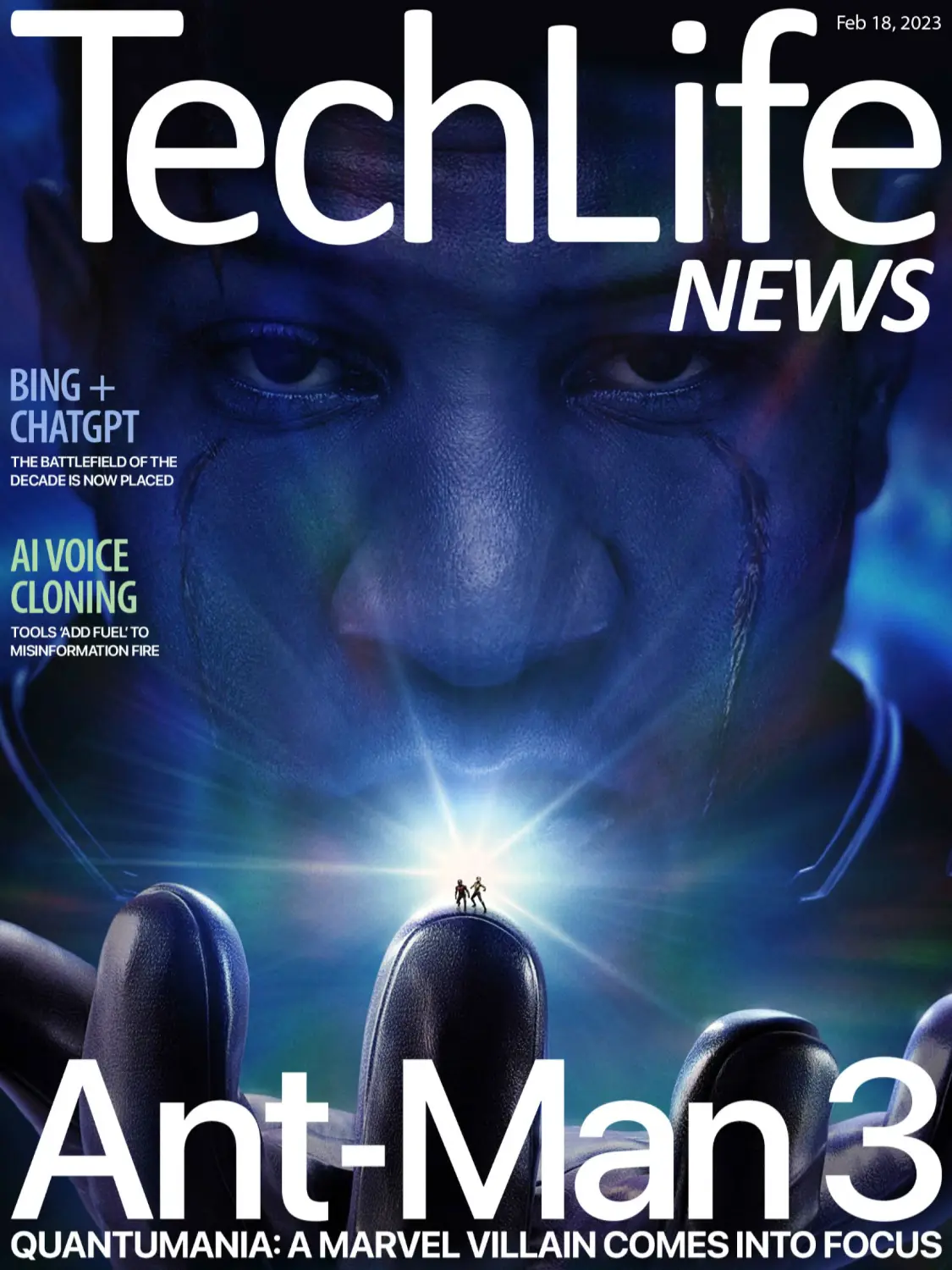


Tags: magazine magazine techlife news
Year: 2023




Text
                    SUMMARY

FORD STOPS PRODUCTION OF ELECTRIC F-150 AFTER BATTERY FIRE

06

AIRBUS SEES PROFIT BOOST, BUT DEFENSE AND SPACE CHALLENGES

20

CBO PROJECTS HIGHER UNEMPLOYMENT, SLOW EXIT FROM INFLATION

28

CHINA SANCTIONS LOCKHEED MARTIN, RAYTHEON FOR TAIWAN SALES

38

A MARVEL VILLAIN COMES INTO FOCUS IN ‘ANT-MAN 3’

52

DUBAI AGAIN PLANS FOR FLYING TAXI TAKEOFF, THIS TIME BY 2026

68

NEW BING - AI WARFARE: THE BATTLEFIELD OF THE DECADE IS NOW PLACED

78

AMID CHATGPT OUTCRY, SOME TEACHERS ARE INVITING AI TO CLASS

98

NEW AI VOICE-CLONING TOOLS ‘ADD FUEL’ TO MISINFORMATION FIRE

112

SEVERAL UNIVERSITIES TO EXPERIMENT WITH MICRO NUCLEAR POWER

122

AMAZON UNIT ZOOX TESTS ROBOTAXI ON CALIFORNIA CITY’S STREETS

134

WHITE HOUSE: TESLA TO MAKE SOME EV CHARGERS AVAILABLE TO ALL

142

TIKTOK ‘DE-INFLUENCERS’ WANT GEN Z TO BUY LESS, AND MORE

152

ELON MUSK HOPES TO HAVE TWITTER CEO TOWARD THE END OF YEAR

168

BUFFETT’S FIRM BUYS APPLE, SLASHES CHIPMAKER AND BANK STAKES

182

STUDY SHOWS ‘STRIKING’ NUMBER WHO BELIEVE NEWS MISINFORMS

188

GOOGLE TO EXPAND MISINFORMATION ‘PREBUNKING’ IN EUROPE

196

US BLACKLISTS 6 CHINESE ENTITIES OVER BALLOON PROGRAM

208

EX-APPLE DESIGNER BEHIND CHARLES III’S CORONATION EMBLEM

216

06

FORD STOPS
PRODUCTION OF
ELECTRIC F-150 AFTER
BATTERY FIRE

07

Ford Motor Co. has suspended production and
halted shipments of the F-150 Lightning electric
pickup after a battery caught fire during a
pre-delivery quality check.
Production at Ford’s Rouge Electric Vehicle
Center in Dearborn, Michigan, has been stopped
until at least the end of next week.
The automaker said in a statement Wednesday
night it has no reason to believe electric pickups
already in use by customers are affected by the
battery issue.
“By the end of next week, we expect to conclude
our investigation and apply what we learn to
the truck’s battery production processes,” Ford
spokeswoman Emma Berg said in the statement.
“This could take a few weeks.”
Image: Scott Mlyn

08

09

10

Image: Ben Torres

11

The fire happened at an outdoor lot nearby in
Dearborn where vehicles are held for quality
checks. The truck with the battery problem and
two nearby vehicles were damaged by the fire,
Berg said. No injuries were reported.
The company believes it has identified the
root cause of the battery problem, including
the likely population of trucks affected by it.
“We monitor vehicle data to help ensure our
vehicles are performing as expected in the
field,” Berg said.
The company will continue to hold completed
trucks until engineering and production
changes are made.
Batteries for the trucks are supplied by SK
Innovation, a Korean supplier with a factory
in Georgia.

12

13

14

15

The production halt comes at an inopportune
time for Ford, which has struggled with quality
issues, recalls and high warranty costs for
several years.
The problem also stops production of a
popular product. Berg said the company is still
working through a backlog of nearly 200,000
reservations for the F-150 Lightning since
it stopped taking them in December 2021.
Reservation holders put down $100 deposits,
which Ford was converting to orders.
Last year, Ford sold more than 15,000 of the
trucks in its first full year of production.
There have been previous problems with the
lithium-ion batteries used in most electric
vehicles. Fires in the batteries can burn very
hot and take thousands of gallons of water
to extinguish, which has caused difficulty for
firefighters attempting to put out battery fires
in several Teslas after crashes. General Motors,
Hyundai, BMW and others have issued recalls of
the batteries.

Image: Jeff Kowalsky

16

17

AIRBUS SEES
PROFIT BOOST,
BUT DEFENSE
AND SPACE
CHALLENGES

20

21

22

Airbus is urging stepped-up European
cooperation to ensure the continent’s security
and future access to space after a year that saw
the company suffer fallout from Russia’s war in
Ukraine and the crash of a European satellite
launcher.
The France-based plane maker reported a
record overall 2022 profit of 4.25 billion euros
($4.55 billion), up from 4.21 billion euros the year
before, despite inflation challenges and supply
chain disruptions that slowed efforts to ramp up
aircraft production.
CEO Guillaume Faury said the company aims to
deliver 720 planes this year, up from 661 last year,
in an effort to keep up with growing demand by
airlines as travel picks up worldwide following
pandemic disruptions.
This week, Air India unveiled an massive order that
included 250 Airbus passenger jets. Airbus didn’t
disclose financial terms of the deal, which could
be worth tens of billions of dollars.
Airbus took in 820 orders in 2022 and reported
revenue of 58.8 billion euros ($63 billion). U.S. rival
Boeing has lagged behind Airbus in deliveries but
has been closing the gap, reporting 774 orders
and 480 deliveries last year.
Both companies are struggling with shortages of
engines and other supply chain issues that limit
how fast they can build and deliver planes.
The Airbus Defence and Space business struggled last
year, notably taking a 477 million euro ($511 million)
loss on the long-troubled A400M military transport
plane, in part linked to unusually high inflation.
Faury said the European space sector also was
hit by the loss of access to Russia’s Soyuz rocket
23

launchers and the failure of a new Vega-C
rocket soon after takeoff from French Guiana in
December. The Vega-C is made by Arianespace,
part owned by Airbus.
“Europe’s independent access to space is now
fundamentally challenged,” Faury told reporters
in Toulouse.
The last year “has proven the need for a stronger
Europe in defense and space ... to maintain the
peace, stability and security which our societies
have become used to,” Faury said.
While pledging that Airbus is on track to meet
promises to reduce the industry’s heavy carbon
emissions, he added: “There is no sustainability
without security.”
He noted that Airbus planes operated by
Russian airlines no longer have access to parts or
maintenance provided by the company because
of Western sanctions aimed at punishing Moscow
for its invasion of Ukraine.
“We start to hear about situations where they
are missing parts or components or an inability
to keep some of the planes in flight,” Faury said.
“But we are not speaking with the Russian airlines.
We miss visibility. And yes, we are we are slightly
concerned about the way the planes are operated,
but we have no real means to act.”
Airbus is still buying titanium from Russia but
looking for other suppliers, Faury said, adding that
“it will still take some time to be fully independent
from the Russian sources.”
Shares in Airbus, which employs 134,000
people worldwide, were trading up 3% after
the annual results.

24

25

28

CBO PROJECTS
HIGHER
UNEMPLOYMENT,
SLOW EXIT FROM
INFLATION

The Congressional Budget Office said this week
that it expects the U.S. economy to stagnate this
year with the unemployment rate jumping to
5.1% — a bleak outlook that was paired with a 10year projection that publicly held U.S. debt would
nearly double to $46.4 trillion in 2033.
The office’s updated 10-year Budget and
Economic Outlook outlined stark expectations for
the decade ahead, where Social Security would be
unable to pay full benefits to recipients in 2032 —
29

with a roughly 20 percent reduction in benefits
across the board — and the net interest costs on
U.S. debt would eclipse what the nation spends
on defense.
“The debt trajectory is unsustainable,” CBO
director Phillip Swagel told journalists at a press
conference after the report’s afternoon release.
The CBO can’t tell Congress what to do, he said,
“but at some point, something has to give —
whether it’s on spending or revenue.”
The latest figures seemed to affirm the worst
fears of many U.S. consumers and businesses.
But in a reminder that the U.S. economy has
seldom behaved as anticipated through the
pandemic and its aftermath, the employment
forecast looks very different from the pace of
hiring so far this year.
The CBO estimated that just 108,000 jobs will be
added in 2023, but employers added 517,000 jobs
in January alone. It also assumes that inflation
will ease from 6.4% to 4.8% this year, far more
pessimistic than Federal Reserve officials who in
December said inflation would fall to 3.5%.
The CBO separately pointed to the risks of not
increasing the government’s legal borrowing
authority, noting that the Treasury Department
could exhaust its current “extraordinary measures”
to keep the government running while President
Joe Biden and House Speaker Kevin McCarthy
jostle over a deal.
Treasury Secretary Janet Yellen wrote to congressional
leadership last month, stating that her agency will
use creative accounting measures to buy time until
Congress can pass legislation that will either raise the
nation’s $31.4 trillion borrowing authority or suspend
it again for a period of time.
30

31

If tax receipts from this year’s filing season fall
short of estimated amounts, the U.S. could hit its
statutory debt ceiling earlier than July, according
to the nonpartisan organization, which provides
independent analyses of budget and economic
issues to Congress.
Following the CBO issuing its report, Senate
Democrats reiterated their calls for Republicans
to help pass legislation to increase the nation’s
borrowing authority. Then, they said, lawmakers
could turn their attention to funding the
government and addressing the solvency of
Medicare and Social Security.
“We don’t want to cut benefits. We don’t want
to privatize. We don’t want to do the kinds of
things that Republicans have talked about
in that area,” Senate Majority Leader Chuck
Schumer, D-N.Y., said of Social Security. “And
we have some plans to make it solvent, which
you’ll hear from down the road.”
Sen. Chuck Grassley, R-Iowa, ranking member of
the Senate Budget Committee, said the report
“paints a dire picture.”
“If we don’t get serious about reining in spending,
reducing annual budget deficits and bringing
down the debt, the country will end up spending
more on interest payments than the programs
that actually benefit Americans,” Grassley said.
The outlook warns about rising yearly budget
deficits. In 2033, the CBO anticipates that
the yearly shortfall in tax revenues relative to
spending would exceed $2.85 trillion, more than
double the deficit in 2022. Publicly held debt was
roughly equal to U.S. gross domestic product in
2022, but it would climb to 118% of GDP by 2033.

32

33

The office says the biggest drivers of rising debt in
relation to GDP are increasing interest costs and
spending for Medicare and Social Security.
The two parties also engaged in blaming the other
side for the rising deficit projections. Republicans
blamed Democrats for spending too much during
the Biden presidency and Democrats blamed
Republican for the tax cuts undertaken during the
Trump presidency.
“Biden’s numerous bailouts and massive
government expansion disguised as COVID
relief has blown out spending and exacerbated
our debt disaster,” said Rep. Jodey Arrington,
the Republican chairman of the House Budget
Committee. “House Republicans must rein-in the
unbridled spending and restore fiscal sanity in
Washington before it’s too late.”
Sen. Sheldon Whitehouse, the Democratic
chairman of the Senate Budget Committee, said
Republicans “deliberately” made the deficit worse
during the Trump presidency with “massive
revenue losses because they lowered tax rates for
their corporate and billionaire friends and donors.”
One reason why the CBO expects a slowdown
this year are the actions taken by the Fed. The
U.S. central bank has been trying to reduce
inflation by raising its benchmark interest rates.
Earlier this month the Fed raised its key interest
rate a quarter-point, its eighth hike since March
of last year.
The CBO expects growth to pick up once the
Fed has tamed inflation and pulls back on its
benchmark rates.

34

35

CHINA SANCTIONS
LOCKHEED MARTIN,
RAYTHEON FOR
TAIWAN SALES

38

39

China on Thursday imposed trade and
investment sanctions on Lockheed Martin and
a unit of Raytheon for supplying weapons to
Taiwan, stepping up efforts to isolate the island
democracy claimed by the ruling Communist
Party as part of its territory.
Lockheed Martin Corp. and Raytheon
Technologies Corp.’s Raytheon Missiles and
Defense are barred from importing goods
into China or making new investments in the
country, the Ministry of Commerce announced.
It said they were added to the “unreliable entity”
list of companies whose activities are restricted
because they might endanger national
sovereignty, security or development interests.
It wasn’t clear what impact the penalties might
have. The United States bars most sales of
weapons-related technology to China, but some
military contractors also have civilian businesses
in aerospace and other markets.

40

Image: Harald Tittel

41

42

43

Taiwan and China split in 1949 after a civil war.
The island of 22 million people never has been
part of the People’s Republic of China, but the
Communist Party says it is obliged to unite with
the mainland, by force if necessary.
President Xi Jinping’s government has stepped
up efforts to intimidate Taiwan by flying fighter
jets and bombers near the island and firing
missiles into the sea.
The United States has no official relations with
Taiwan but maintains extensive commercial
and informal contacts. Washington is obligated
by federal law to make sure the island’s
government has the means to defend itself.
The United States is Taiwan’s main supplier of
military equipment.
44

45

46

Image: Simon Dawson

47

Image: Aly Song

48

Raytheon Missiles and Defense, part of
Raytheon Technologies Corp., was awarded a
$412 million contract in September to upgrade
Taiwanese military radar as part of a $1.1 billion
package of U.S. arms sales to the island. Boeing
Defense received a $355 million contract to
supply Harpoon missiles.
Beijing responded to that sale by announcing
sanctions against the CEOs of Raytheon and of
Boeing Defense but gave no details of what
they were.
Lockheed Martin has supplied Taiwan’s military
with radar, helicopters and air traffic control
equipment. It plays a role in the island’s
development of its own fighter jet and
navy frigates.
In China, Lockheed Martin has sold air traffic
control equipment for civilian airports and
helicopters for commercial use.
Beijing announced plans for the “unreliable
entity” list in 2019 in response to U.S. restrictions
imposed on Huawei Technologies Ltd., a
Chinese maker of telecom equipment.

49

Simply Better Living

SUPERSTEAM+™
BUILT-IN WALL OVEN
SSC2489DS

The Sharp® SuperSteam+ Built-In Wall Oven is the start of
a cooking revolution. With Wi-Fi enabled IoT features, the
innovations within this steam oven are a perfect match
for modern cooking needs.
While regular steam only reaches 212°F, the SuperSteam+
oven can create superheated steam up to 485°F. Steam
this hot can roast meats and caramelize sugars so your
food can be brown and crispy on the outside, tender and
juicy on the inside. With the Sharp SuperSteam+ Oven,
you can grill without smoke, roast without drying, and get
the roasty-toasty, tasty results you desire.

SEE FOR
YOURSELF

Get started right away with built-in recipes and
download the Sharp SuperSteam+ Oven app* to
enable the smart features and access custom
recipes powered by SideChef.

The new Sharp SuperSteam+ Built-In Wall Oven
features Steam Bake for superior breads, and Water
Bath for cheesecakes, custards and puddings.

www.sharpusa.com | simplybetterliving.sharpusa.com
*Mobile Application and Home Assistant Skill available upon commercial release. © 2020 Sharp Electronics Corporation. All rights reserved. Sharp, Supersteam™ Oven
and all related trademarks are trademarks or registered trademarks of Sharp Corporation and/or its affiliated entities. Product specifications and design are subject to
change without notice. Internal capacity calculated by measuring maximum width, depth and height. Actual capacity for holding food is less.

52

A MARVEL
VILLAIN COMES
INTO FOCUS IN
‘ANT-MAN 3’

53

Ant-Man and The Wasp: Quantumania | Visual
Spectacle

54

Ant-Man and The Wasp: Quantumania | Official
Trailer

55

56

Peyton Reed’s “Ant-Man” films have generally
served as a kind of palate cleanser to the
world-ending stakes of the larger Marvel
Cinematic Universe. Paul Rudd’s Scott Lang is
just an ordinary dude, or so they keep telling
us, who still can’t really believe that he’s part
of the Avengers at all. He gets to be the wideeyed middle-aged fanboy of the group in
those films. In his own films, he’s just living
a blue-sky life in San Francisco as an affable
single dad and ex-con who was once fired
from Baskin Robbins and who has occasional
enemies to defeat.
In this third film, “ Ant-Man and The Wasp:
Quantumania,” in theaters Thursday, he’s
coasting on his own post-Blip celebrity with
a best-selling memoir out, lots of fans around
town and a generally sunny disposition —
when he’s not breaking his teenage daughter
Cassie (now played by Kathryn Newton,
always an enjoyable presence) out of jail for
civil disobedience.
There is a fun, light, sitcom-y touch to these
early scenes in which he and his makeshift
family, Hope Van Dyne (Evangeline Lilly),
Janet Van Dyne (Michelle Pfeiffer) and Hank
Pym (Michael Douglas) sit around the table
for takeout pizza. They use their particle
technology to blow up the tiny pie.
“I just saved us $8,” Pym declares proudly.
But Ant-Man is part of the larger chess board
of the MCU, so naturally he’s doomed to be
sucked into the multiverse mess, setting up
pieces for more Avengers films to come with
the introduction of a new villain, Kang (played
with a maniacal sorrow by the great Jonathan
57

Ant-Man and The Wasp: Quantumania | New
Trailer

58

59

Majors). And the results are mixed. Reed has
returned to direct with a new writer, Jeff
Loveness, who has also been tapped to write
“Avengers: The Kang Dynasty” and it’s hard
not to empathize with both for the logic
gymnastics required to back Ant-Man and his
gang into this conflict.
Loveness, who cut his teeth in comedy and
has an affinity for comic book and B-movie
absurdities, gives Ant-Man his own “Star
Wars”-adjacent adventure. There’s quite a bit
of unrest in the Quantum Realm, with scrappy
rebels battling against a powerful ruler with
an army of faceless soldiers. But he takes that
conceit further and gives the rebels some
personality and humor, including William
Jackson Harper as the mind-reading Quaz.
The villain’s a killing machine, M.O.D.O.K., that
looks (knowingly) straight out of a “Mystery
Science Theater 3000” movie and it is quite
entertaining. It’s both a nod to the fun of the
ridiculousness in sci-fi and a reminder that
Serious Superhero Films are sometimes just
one crazy special effect away from being Silly
Superhero Films.
“Quantumania” also gives Pfeiffer a lot more to
do as we, and Hank and Hope, learn a little bit
more about Janet’s 30 years in the Quantum
Realm and the various compromises and
allegiances she made to stay alive. Pfeiffer is
an unambiguous delight and the real center of
the movie despite what the title might claim.
Ant-Man just finds himself in the middle of the
mess, which starts to drag on in a muddle of
sci-fi furnishings that individually are probably
quite inspired and interesting but together
just blend into a dreary mess.
60

61

Ant-Man and The Wasp: Quantumania | Down
Here

62

63

64

It’s a shame because Reed’s films are generally
so crisp and styled and are best when focused
on characters, not worlds and Quantum
Realms. “Quantumania” shines when it is
keeping things light and quippy.
But Kang, for what we can assume are bigger
story needs, needs to be more serious.
Majors is certainly chilling and captivating,
but Kang seems like a mismatched foe for a
standalone Ant-Man film and the result is a
“Quantumania” that is trying to be too many
things. One thing it is not is a Wasp movie,
though. Lilly gets a lot to do but not a lot of —
or any — character development.
“Quantumania” sticks the ending, however.
Without giving anything away, we’ll just say
that Reed and Rudd get to return to their sweet
spot, with a bit of a twist.
“Ant-Man and the Wasp: Quantumania,” a Walt
Disney release in theaters Thursday, is rated
PG-13 by the Motion Picture Association for
“some sci-fi action violence.” Running time: 122
minutes. Two and a half stars out of four.

MPA Definition of PG-13: Parents strongly cautioned. Some material may
be inappropriate for children under 13.

65

68

DUBAI AGAIN
PLANS FOR
FLYING TAXI
TAKEOFF, THIS
TIME BY 2026

69

Dubai again is planning for the takeoff of flying
taxis in this futuristic city-state on the Arabian
Peninsula, offering its firmest details yet for a
pledged launch by 2026.
Since 2017, the commercial capital of the United
Arab Emirates has offered promises to launch
flying taxis in the city already home to the world’s
tallest building and other architectural wonders. A
series of d
ifferent types and companies have cycled through
those promises as well, most timed to be included
at Dubai’s annual World Government Summit.
Dubai’s ruler, Sheikh Mohammed bin Rashid Al
Maktoum, announced the relaunched flying taxi
program on Twitter last weekend. This time, Dubai
highlighted the six-rotor electric flying taxi made
by Joby Aviation of Santa Cruz, California, in the
promotional video.
The inclusion of Joby Aviation, rather than the
Chinese-made EHang 184 and XPeng X2 or the
German-made electric Volocopter all previously
displayed in Dubai, wasn’t explained by Emirati
officials. Joby aircraft featured at a stand at the
World Government Summit this week.
“We’re excited about the opportunity and actively
exploring the possibility,” said Oliver Walker-Jones,
a spokesman for Joby Aviation.
Ahmed Bahrozyan, an official in the emirate’s
Roads and Transport Authority, similarly told the
state-owned Dubai Eye radio station that “it’s early
days” for the plan.
“We haven’t yet signed with any partners
yet,” he said.
Another difference in this year’s promise on
flying taxis is the release of specifics about the
70

71

program. The city plans four “vertiports” by
Dubai International Airport, the world’s busiest
for international travel, downtown Dubai, the
manmade Palm Jumeirah archipelago and Dubai
Marina. Those points will include two launching
pads and four charging points for the flying taxis.
“We believe those are attractive areas with
business hubs and tourist hubs that could
generate considerable demand,” Bahrozyan said.
The pricing for the flying taxis “will be in the range
of a limousine service in Dubai, maybe slightly
higher,” Bahrozyan said. The RTA describes limo
services rates as “at least 30% higher than taxi
fares” in the city. Taxis have a minimum fare of
around $3.25 and charge $0.50 a kilometer.
Another departure from earlier plans include
the RTA planning to have piloted flying taxis at
first, rather than autonomous ones as previously
discussed. Dubai officials described the taxi as
having a pilot with four seats for passengers on
board, which match Joby’s electric flying taxi.
However, Bahrozyan said tests would continue
with autonomous flying taxis as well.
The Joby prototype can fly over 240 kilometers
(150 miles) before needing a charge — something
which would put Abu Dhabi and other areas of
the country within range. It takes off and lands
vertically, while its rotors tilt forward in flight. It has
a maximum speed of 320 kph (200 mph).
Joby Avation Inc., which is listed on the New York
Stock Exchange, was at $4.20 a share. Its major
shareholders include Intel Corp., while Atlantabased Delta Air Lines also has invested.
The video posted by Sheikh Mohammed’s Twitter
account also included the logo of London-based

72

73

Skyports Infrastructure, which also refers to its
support projects as “vertiports.” The company
already is testing its “vertiport” model outside of
Paris and is working with Joby. Skyports did not
immediately respond to a request for comment.
Opening the skies to flying taxis would add to the
“Blade Runner” skyline of Dubai, while also easing
the real-world grind of daily traffic that’s only
worsening as its population booms to over 3.5
million people.
Rush hour on Sheikh Zayed Road, a dozen-lane
artery running down the length of the Dubai,
alternates between dense gridlock and sports-car
slalom. Over 1.8 million Dubai-registered vehicles
ply its roads, not counting those crowding in from
the United Arab Emirates’ six other sheikhdoms.
There’s also the desire to move away from carbonbelching gasoline and diesel vehicles as the UAE
will host the upcoming United Nations COP28
climate talks later this year. That’s even as the
Emirates hopes to expand its production of crude
oil ahead of a promised “carbon-neutral” future by
2050. Meanwhile, Dubai hopes to have a quarter
of all cars on its roads be driverless by 2030.

74

75

78

AI warfare: The battlefield of
the decade is now placed

79

80

Welcome to the AI battles, where companies
compete to be the top provider of artificial
intelligence technology. Microsoft and Bing
have unexpectedly taken the lead in this race,
but Google and Apple are just around the
corner with their own AI-powered search tools.

81

INTRODUCING BING WITH CHATGPT
The AI wars have officially begun, and
companies are competing to provide the most
advanced artificial intelligence technology
to users. In this race, Microsoft and Bing have
taken the lead with their new chatbot-powered
search engine. After trying it out, it’s hard to
deny that Microsoft has won the first battle in
the tech dominance struggle. Bing has finally
arrived, and it’s time for users to start paying
attention to this search engine that has been
around for over a decade. Microsoft’s new
Bing search engine is not like the old one. The
desktop version is now available, with a mobile
version coming soon. The interface has been
updated with a “Chat” option in the menu,
and you can switch between the main search
screen and the chatbot screen. The query
box has been enlarged to accommodate up
to 1,000 characters for any natural language
question you may have. Think Siri on steroids.
The chatbot, called Prometheus Model, is
a result of Microsoft’s collaboration with
OpenAI. OpenAI’s work on ChatGPT has
been integrated with Microsoft’s Azure Cloud
Services and Bing’s knowledge graph to
create a powerful and sophisticated chatbot.
The chatbot expands on search results with
additional details and references, and it can
also guide you with additional questions to
continue your search. If you encounter an
inaccurate result, you can provide feedback
to Microsoft through the dislike option. This
updated version of Bing is a fully-integrated
search AI that is not only useful but also fun to
use. It guides you to the best result by allowing
you to ask follow-up questions, making the
82

83

84

85

search process smoother and more efficient.
Bing’s chatbot inherits the strengths of Bing’s
search engine, which is capable of filtering
out false and harmful information. The most
exciting part? It will only improve as developers
work hard to introduce new user intelligence
and capabilities.
While AI is not foolproof, ChatGPT has been
successful because it is powerful and easy to
use while avoiding biases and poor judgment
that have plagued previous chatbots. Microsoft
has combined a well-established search engine
with the best-in-class consumer AI and created
a brand-new tool that anyone can use without
training. And they have done it before Google.
Microsoft and Bing have taken a major step
forward in the AI wars with their new chatbotpowered search engine. With its sophisticated
technology and user-friendly interface, the
new Bing is poised to revolutionize how people
search for information online. But Microsoft
won’t be on its own regarding AI search
capabilities: Google is coming.

GOOGLE BARD IS COMING
Keen not to be overlooked by users as the
world’s best search engine, Google was quick
to announce and launch its answer to Chat
GPT earlier in February. Alphabet, the parent
company behind Google, said that AI “has
the potential to revolutionize the way we live
and work. It has already made remarkable
advances in fields like healthcare, education,
and information accessibility,” adding that it
“recognized the transformative power of AI
six years ago and made a strategic decision
to focus its efforts in this area.” The company
86

87

88

also announced Bard, its ChatGPT rival, which
“draws on information from the web to provide
customized responses to users’ queries.” Google
says that the tool is designed to combine the
breadth of the world’s knowledge with the
intelligence and creativity of its AI models.
“Whether you want to learn about discoveries
from the James Webb Space Telescope, find the
best football strikers, or understand complex
topics in simple terms, Bard is the AI tool you
need,” it added, though an early pas faux has
no doubt embarrassed the company.
Google confirmed in a press release that it was
starting with a lightweight model version of
LaMDA, which is less computationally intensive
and will allow them to scale to more users.
They will conduct a rigorous testing process
to ensure that Bard’s responses meet high
standards for quality, safety, and accuracy.
“Our goal is to make Bard a trusted source of
information and a valuable tool for anyone
looking to expand their knowledge,” it added.
“Our earlier Transformer models, like BERT,
have revolutionized how we understand
human language. And now, our newest AI
technologies, like LaMDA, PaLM, Imagen, and
MusicLM, are creating new ways to engage
with information, from language and images
to video and audio. We are working to bring
these AI advancements into our products,
starting with search, to help people find
the information they need more easily and
efficiently,” the company said in a statement,
promising new AI-powered tools coming to
search soon.

89

90

91

92

APPLE’S KEEPING UP WITH THE AI
SURGE
As the technology industry continues to be
reshaped by the advancements of artificial
intelligence, the question arises as to whether
Apple can keep up. With Bard and ChatGPT
entering our everyday vocabularies just weeks
after their launch, Apple has been quiet on the
AI front, at least publicly. Despite this, Apple is
far from sitting on the sidelines. The company
has even announced it will be holding an AI
summit for its employees in February 2023,
indicating a strong interest in the development
of artificial intelligence. Apple CEO Tim Cook
has stated, “We see enormous potential in this
space to affect virtually everything we do. It
will affect every product and every service
that we have.” Apple’s approach to AI is likely
to continue to incorporate AI advancements
into its products and services, rather than
trying to compete with Google or Microsoft
in the AI space. Apple’s business model is not
centered around a single product or service.
The company has already implemented AI in
features such as Crash Detection on Apple
Watch and iPhone, ECG recordings on Apple
Watch, and digital audiobook narration on
Apple Books. And as Apple launches its new
AR/VR headset in the coming months, it’s clear
the firm is headed in new directions.

93

While some firms may be
racing to incorporate AI
into their products, Apple
is taking a measured
approach and focusing
on how AI can enhance
its existing products and
services. We can’t wait to
see where the company is
headed and the immense
possibilities that await.
94

95

AMID CHATGPT
OUTCRY, SOME
TEACHERS ARE
INVITING AI
TO CLASS

Under the fluorescent lights of a fifth grade
classroom in Lexington, Kentucky, Donnie
Piercey instructed his 23 students to try and
outwit the “robot” that was churning out
writing assignments.
The robot was the new artificial intelligence
tool ChatGPT, which can generate everything
from essays and haikus to term papers within
seconds. The technology has panicked teachers
and prompted school districts to block access to
the site. But Piercey has taken another approach
98

99

100

by embracing it as a teaching tool, saying his
job is to prepare students for a world where
knowledge of AI will be required.
“This is the future,” said Piercey, who describes
ChatGPT as just the latest technology in his
17 years of teaching that prompted concerns
about the potential for cheating. The calculator,
spellcheck, Google, Wikipedia, YouTube. Now
all his students have Chromebooks on their
desks. “As educators, we haven’t figured out the
best way to use artificial intelligence yet. But it’s
coming, whether we want it to or not.”
One exercise in his class pitted students against
the machine in a lively, interactive writing
game. Piercey asked students to “Find the Bot:”
Each student summarized a text about boxing
champion and Kentucky icon Muhammad Ali,
then tried to figure out which was written by
the chatbot.
At the elementary school level, Piercey is less
worried about cheating and plagiarism than
high school teachers. His district has blocked
students from ChatGPT while allowing teacher
access. Many educators around the country say
districts need time to evaluate and figure out
the chatbot but also acknowledge the futility
of a ban that today’s tech-savvy students can
work around.
“To be perfectly honest, do I wish it could be
uninvented? Yes. But it happened,” said Steve
Darlow, the technology trainer at Florida’s Santa
Rosa County District Schools, which has blocked
the application on school-issued devices
and networks.
He sees the advent of AI platforms as both
“revolutionary and disruptive” to education.
101

He envisions teachers asking ChatGPT to make
“amazing lesson plans for a substitute” or even
for help grading papers. “I know it’s lofty talk,
but this is a real game changer. You are going
to have an advantage in life and business and
education from using it.”
ChatGPT quickly became a global phenomenon
after its November launch, and rival companies
including Google are racing to release their own
versions of AI-powered chatbots.
The topic of AI platforms and how schools
should respond drew hundreds of educators to
conference rooms at the Future of Education
Technology Conference in New Orleans last
month, where Texas math teacher Heather
Brantley gave an enthusiastic talk on the “Magic
of Writing with AI for all Subjects.”
Brantley said she was amazed at ChatGPT’s
ability to make her sixth grade math lessons
more creative and applicable to everyday life.
“I’m using ChatGPT to enhance all my lessons,”
she said in an interview. The platform is blocked
for students but open to teachers at her school,
White Oak Intermediate. “Take any lesson you’re
doing and say, ‘Give me a real-world example,’
and you’ll get examples from today — not
20 years ago when the textbooks we’re using
were written.”
For a lesson about slope, the chatbot suggested
students build ramps out of cardboard and
other items found in a classroom, then measure
the slope. For teaching about surface area, the
chatbot noted that sixth graders would see how
the concept applies to real life when wrapping
gifts or building a cardboard box, said Brantley.

102

103

104

She is urging districts to train staff to use the
AI platform to stimulate student creativity and
problem solving skills. “We have an opportunity
to guide our students with the next big thing
that will be part of their entire lives. Let’s not
block it and shut them out.”
Students in Piercey’s class said the novelty of
working with a chatbot makes learning fun.
After a few rounds of “Find the Bot,” Piercey
asked his class what skills it helped them hone.
Hands shot up. “How to properly summarize and
correctly capitalize words and use commas,” said
one student. A lively discussion ensued on the
importance of developing a writing voice and
how some of the chatbot’s sentences lacked flair
or sounded stilted.
Trevor James Medley, 11, felt that sentences
written by students “have a little more feeling.
More backbone. More flavor.”
Next, the class turned to playwriting, or as the
worksheet handed out by Piercey called it:
“Pl-ai Writing.” The students broke into groups
and wrote down (using pencils and paper) the
characters of a short play with three scenes to
unfold in a plot that included a problem that
needs to get solved.
Piercey fed details from worksheets into the
ChatGPT site, along with instructions to set the
scenes inside a fifth grade classroom and to
add a surprise ending. Line by line, it generated
fully formed scripts, which the students edited,
briefly rehearsed and then performed.
One was about a class computer that escapes,
with students going on a hunt to find it. The
play’s creators giggled over unexpected plot

105

106

107

twists that the chatbot introduced, including
sending the students on a time travel adventure.
“First of all, I was impressed,” said Olivia Laksi,
10, one of the protagonists. She liked how the
chatbot came up with creative ideas. But she
also liked how Piercey urged them to revise any
phrases or stage directions they didn’t like. “It’s
helpful in the sense that it gives you a starting
point. It’s a good idea generator.”
She and classmate Katherine McCormick, 10,
said they can see the pros and cons of working
with chatbots. They can help students navigate
writer’s block and help those who have trouble
articulating their thoughts on paper. And there is
no limit to the creativity it can add to classwork.
The fifth graders seemed unaware of the hype
or controversy surrounding ChatGPT. For these
children, who will grow up as the world’s first
native AI users, their approach is simple: Use it
for suggestions, but do your own work.
“You shouldn’t take advantage of it,” McCormick
says. “You’re not learning anything if you type in
what you want, and then it gives you the answer.”

108

109

112

NEW AI
VOICE-CLONING
TOOLS
‘ADD FUEL’ TO
MISINFORMATION
FIRE

113

In a video from a Jan. 25 news report, President
Joe Biden talks about tanks. But a doctored
version of the video has amassed hundred of
thousands of views this week on social media,
making it appear he gave a speech that attacks
transgender people.
Digital forensics experts say the video was created
using a new generation of artificial intelligence
tools, which allow anyone to quickly generate
audio simulating a person’s voice with a few clicks
of a button. And while the Biden clip on social
media may have failed to fool most users this
time, the clip shows how easy it now is for people
to generate hateful and disinformation-filled
“deepfake” videos that could do real-world harm.
“Tools like this are going to basically add more fuel
to fire,” said Hafiz Malik, a professor of electrical
and computer engineering at the University of
Michigan who focuses on multimedia forensics.
“The monster is already on the loose.”
It arrived last month with the beta phase of
ElevenLabs’ voice synthesis platform, which
allowed users to generate realistic audio of any
person’s voice by uploading a few minutes of
audio samples and typing in any text for it to say.
The startup says the technology was developed
to dub audio in different languages for movies,
audiobooks and gaming to preserve the speaker’s
voice and emotions.
Social media users quickly began sharing an AIgenerated audio sample of Hillary Clinton reading
the same transphobic text featured in the Biden clip,
along with fake audio clips of Bill Gates supposedly
saying that the COVID-19 vaccine causes AIDS and
actress Emma Watson purportedly reading Hitler’s
manifesto“Mein Kampf.”
114

115

116

Shortly after, ElevenLabs tweeted that it was
seeing “an increasing number of voice cloning
misuse cases,” and announced that it was now
exploring safeguards to tamp down on abuse.
One of the first steps was to make the feature
available only to those who provide payment
information. Initially, anonymous users were
able to access the voice cloning tool for free. The
company also claims that if there are issues, it can
trace any generated audio back to the creator.
But even the ability to track creators won’t
mitigate the tool’s harm, said Hany Farid,
a professor at the University of California,
Berkeley, who focuses on digital forensics and
misinformation.
“The damage is done,” he said.
As an example, Farid said bad actors could move
the stock market with fake audio of a top CEO
saying profits are down. And already there’s a clip
on YouTube that used the tool to alter a video to
make it appear Biden said the U.S. was launching a
nuclear attack against Russia.
Free and open-source software with the same
capabilities have also emerged online,
meaning paywalls on commercial tools aren’t
an impediment. Using one free online model,
the AP generated audio samples to sound like
actors Daniel Craig and Jennifer Lawrence in
just a few minutes.
“The question is where to point the finger and
how to put the genie back in the bottle?” Malik
said. “We can’t do it.”
When deepfakes first made headlines about
five years ago, they were easy enough to detect
since the subject didn’t blink and audio sounded

117

118

robotic. That’s no longer the case as the tools
become more sophisticated.
The altered video of Biden making derogatory
comments about transgender people, for
instance, combined the AI-generated audio with a
real clip of the president, taken from a Jan. 25 CNN
live broadcast announcing the U.S. dispatch of
tanks to Ukraine. Biden’s mouth was manipulated
in the video to match the audio. While most
Twitter users recognized that the content was
not something Biden was likely to say, they were
nevertheless shocked at how realistic it appeared.
Others appeared to believe it was real – or at least
didn’t know what to believe.
Hollywood studios have long been able to
distort reality, but access to that technology has
been democratized without considering the
implications, said Farid.
“It’s a combination of the very, very powerful AI
based technology, the ease of use, and then the
fact that the model seems to be: let’s put it on the
internet and see what happens next,” Farid said.
Audio is just one area where AI-generated
misinformation poses a threat.
Free online AI image generators like Midjourney
and DALL-E can churn out photorealistic images
of war and natural disasters in the style of legacy
media outlets with a simple text prompt. Last
month, some school districts in the U.S. began
blocking ChatGPT, which can produce readable
text – like student term papers – on demand.
ElevenLabs did not respond to a request
for comment.

119

SEVERAL
UNIVERSITIES
TO EXPERIMENT
WITH MICRO
NUCLEAR POWER

If your image of nuclear power is giant,
cylindrical concrete cooling towers pouring
out steam on a site that takes up hundreds of
acres of land, soon there will be an alternative:
tiny nuclear reactors that produce only onehundredth the electricity and can even be
delivered on a truck.
Small but meaningful amounts of electricity —
nearly enough to run a small campus, a hospital

122

123

124

or a military complex, for example — will pulse
from a new generation of micronuclear reactors.
Now, some universities are taking interest.
“What we see is these advanced reactor
technologies having a real future in
decarbonizing the energy landscape in the
U.S. and around the world,” said Caleb Brooks, a
nuclear engineering professor at the University
of Illinois at Urbana-Champaign.
The tiny reactors carry some of the same
challenges as large-scale nuclear, such as how to
dispose of radioactive waste and how to make
sure they are secure. Supporters say those issues
can be managed and the benefits outweigh
any risks.
Universities are interested in the technology not
just to power their buildings but to see how far it
can go in replacing the coal and gas-fired energy
that causes climate change. The University
of Illinois hopes to advance the technology
as part of a clean energy future, Brooks said.
The school plans to apply for a construction
permit for a high-temperature, gas-cooled
reactor developed by the Ultra Safe Nuclear
Corporation, and aims to start operating it by
early 2028. Brooks is the project lead.
Microreactors will be “transformative” because
they can be built in factories and hooked up
on site in a plug-and-play way, said Jacopo
Buongiorno, professor of nuclear science and
engineering at the Massachusetts Institute of
Technology. Buongiorno studies the role of
nuclear energy in a clean energy world.
“That’s what we want to see, nuclear energy on
demand as a product, not as a big mega project,”
he said.
125

Both Buongiorno and Marc Nichol, senior
director for new reactors at the Nuclear Energy
Institute, view the interest by schools as the start
of a trend.
Last year, Penn State University signed
a memorandum of understanding with
Westinghouse to collaborate on microreactor
technology. Mike Shaqqo, the company’s senior
vice president for advanced reactor programs,
said universities are going to be “one of our key
early adopters for this technology.”
Penn State wants to prove the technology so
that Appalachian industries, such as steel and
cement manufacturers, may be able to use
it, said Professor Jean Paul Allain, head of the
nuclear engineering department. Those two
industries tend to burn dirty fuels and have very
high emissions. Using a microreactor also could
be one of several options to help the university
use less natural gas and achieve its long-term
carbon emissions goals, he said.
“I do feel that microreactors can be a gamechanger and revolutionize the way we think
about energy,” Allain said.
For Allain, microreactors can complement
renewable energy by providing a large amount
of power without taking up much land. A
10-megawatt microreactor could go on less than
an acre, whereas windmills or a solar farm would
need far more space to produce 10 megawatts,
he added. The goal is to have one at Penn State
by the end of the decade.
Purdue University in Indiana is working
with Duke Energy on the feasibility of using
advanced nuclear energy to meet its long-term
energy needs.
126

127

128

Nuclear reactors that are used for research are
nothing new on campus. About two dozen U.S.
universities have them. But using them as an
energy source is new.
Back at the University of Illinois, Brooks explains
the microreactor would generate heat to make
steam. While the excess heat from burning coal
and gas to make electricity is often wasted,
Brooks sees the steam production from the
nuclear microreactor as a plus, because it’s a
carbon-free way to deliver steam through the
campus district heating system to radiators in
buildings, a common heating method for large
facilities in the Midwest and Northeast. The
campus has hundreds of buildings.
The 10-megawatt microreactor wouldn’t
meet all of the demand, but it would serve
to demonstrate the technology, as other
communities and campuses look to transition
away from fossil fuels, Brooks said.
One company that is building microreactors that
the public can get a look at today is Last Energy,
based in Washington, D.C. It built a model
reactor in Brookshire, Texas that’s housed in an
edgy cube covered in reflective metal.
Now it’s taking that apart to test how to
transport the unit. A caravan of trucks is taking
it to Austin, where company founder Bret
Kugelmass is scheduled to speak at the South by
Southwest conference and festival.
Kugelmass, a technology entrepreneur and
mechanical engineer, is talking with some
universities, but his primary focus is on industrial
customers. He’s working with licensing
authorities in the United Kingdom, Poland and

129

Romania to try to get his first reactor running in
Europe in 2025.
The urgency of the climate crisis means zerocarbon nuclear energy must be scaled up soon,
he said, “It has to be a small, manufactured
product as opposed to a large, bespoke
construction project.”
Traditional nuclear power costs billions of
dollars. An example is two additional reactors at
a plant in Georgia that will end up costing more
than $30 billion. The total cost of Last Energy’s
microreactor, including module fabrication,
assembly and site prep work, is under $100
million, the company says.
Westinghouse, which has been a mainstay of the
nuclear industry for over 70 years, is developing
its “eVinci” microreactor, Shaqqo said, and is
aiming to get the technology licensed by 2027.
The Department of Defense is working on
a microreactor too. Project Pele is a DOD
prototype mobile nuclear reactor under design
at the Idaho National Laboratory.
Abilene Christian University in Texas is leading
a group of three other universities with the
company Natura Resources to design and build
a research microreactor cooled by molten
salt to allow for high temperature operations
at low pressure, in part to help train the next
generation nuclear workforce.
But not everyone shares the enthusiasm.
Edwin Lyman, director of nuclear power safety
at the Union of Concerned Scientists, called it
“completely unjustified.”
Microreactors in general will require much more
uranium to be mined and enriched per unit of
130

131

132

electricity generated than conventional reactors
do, he said. He said he also expects fuel costs to
be substantially higher and that more depleted
uranium waste could be generated compared to
conventional reactors.
“I think those who are hoping that microreactors
are going to be the silver bullet for solving the
climate change crisis are simply betting on the
wrong horse,” he said.
Lyman also said he fears microreactors could
be targeted for a terrorist attack, and some
designs would use fuels that could be attractive
to terrorists seeking to build crude nuclear
weapons. The UCS does not oppose using
nuclear power, but wants to make sure it’s safe.
The United States does not have a national
storage facility for storing spent nuclear fuel
and it’s piling up. Microreactors would only
compound the problem and spread the
radioactive waste around, Lyman said.
A 2022 Stanford-led study found that smaller
modular reactors — the next size up from micro
— will generate more waste than conventional
reactors. Lead author Lindsay Krall said this week
that the design of microreactors would make
them subject to the same issue.
Kugelmass sees only promise. Nuclear, he said,
has been “totally misunderstood and under
leveraged.” It will be “the key pillar of our energy
transformation moving forward.”

133

AMAZON UNIT
ZOOX TESTS
ROBOTAXI ON
CALIFORNIA
CITY’S STREETS

134

135

136

Zoox’s recent achievement of successfully
transporting passengers on public roads marks a
significant step forward for the development of
autonomous driving technology. The company’s
innovative four-person “robotaxi” has been
designed without traditional vehicle controls,
including steering wheels and pedals, and is
intended to be a fully self-driving vehicle.
The recent test of the vehicle took place between
two buildings at Zoox’s headquarters in Foster
City, California, where it completed a mile-long
route. The carriage-style interior of the vehicle
has two benches that face each other, providing
ample space for passengers to sit back and relax
while the vehicle takes care of the driving.
According to Zoox, its vehicle has undergone
rigorous testing on private roads, and the
company has obtained the necessary approvals
from the California Department of Motor
Vehicles to operate on public roads. This makes
it one of the first companies to receive such
approval, putting it at the forefront of the
autonomous vehicle industry.
Zoox’s self-driving technology has been
designed to navigate roads and avoid collisions,
making it a safer and more efficient way to
transport people. With the completion of the
recent test, the company is planning to launch a
shuttle service exclusively for its employees.
The potential benefits of autonomous driving
technology are significant, with the potential to
reduce traffic congestion, improve road safety,
and provide increased access to transportation
for people who may not have been able to
drive before. However, the development of this
technology has not been without challenges.

137

138

139

One of the main challenges facing the
autonomous vehicle industry is the development
of safe and reliable technology. Self-driving
vehicles need to be able to make decisions in realtime, navigate complex road environments, and
respond to unexpected situations. This requires
sophisticated technology that is still in the
process of being refined.
Another challenge facing the industry is
regulatory compliance. The development of
self-driving vehicles has prompted a range
of regulatory questions, including issues
related to liability, data privacy, and the legal
responsibilities of both the manufacturers
and operators of these vehicles. Addressing
these issues will be critical to the future of the
autonomous vehicle industry.
Despite these challenges, companies like
Zoox are making significant strides in
the development of autonomous driving
technology, bringing us closer to a future
where self-driving vehicles are a common sight
on our roads. As the technology continues to
evolve and improve, we can expect to see more
companies testing and launching autonomous
vehicles in the years ahead.

140

141

WHITE HOUSE:
TESLA TO
MAKE SOME
EV CHARGERS
AVAILABLE
TO ALL

142

143

144

Electric car giant Tesla will, for the first time,
make some of its charging stations available
to all U.S. electric vehicles by the end of
next year, under a new plan announced by
the White House.
The plan will make at least 7,500 chargers from
Tesla’s Supercharger and Destination Charger
network available to non-Tesla EVs by the end of
2024, the White House said.
The plan to open the nation’s largest and most
reliable charging network to all drivers is a
potential game-changer in promoting EV use, a
key component of President Joe Biden’s goal to
fight climate change.
“As President Biden said, the great American
road trip will be electrified,’‘said Mitch
Landrieu, a White House aide who oversees
implementation of the 2021 infrastructure law
signed by Biden.
Soon, charging an EV “will be as easy as filling up
at a gas station,” Landrieu said.
The plan to open up Tesla’s charging network
was among a series of developments
announced this week by the White House, such
as new standards to make EV charging networks
convenient and reliable for all Americans,
including those driving long distances. The new
standards will ensure that everyone can use a
charging network, no matter what car they drive
or what state they charge in, Landrieu and other
officials said.
Tesla, General Motors, EVgo, Pilot, Hertz and
other companies also have agreed to expand
their networks by thousands of public charging
ports in the next two years, using private funds
and federal spending from the infrastructure
145

law, “putting the nation’s EV charging goals even
closer within reach,” the White House said.
“It’s clear this administration is making incredible
progress in ensuring EVs’ future,” Landrieu
told reporters.
Under the administration’s plan, Tesla will set up
charging sites at hotels, restaurants and other
public spaces in urban and rural locations, the
White House said. All EV drivers will be able
to access these stations using the Tesla app or
website, officials said. Tesla plans to triple its
nationwide network of Superchargers over the
next few years, the White House said.
The developments come after Landrieu and
another top White House aide, John Podesta,
met with Tesla CEO Elon Musk in Washington last
month. Biden did not attend the meeting, which
centered on the EV industry and the broader
goal of electrification of the U.S. economy, the
White House said.
A week later, the Treasury Department said it
is making more electric vehicles — including
SUVs made by Tesla, Ford and General Motors
— eligible for tax credits of up to $7,500 under
new vehicle classification definitions. The
revised standards follow lobbying by Tesla and
other automakers to change vehicle definitions
to allow higher-priced EVs to qualify for a
maximum tax credit.
Tesla raised prices on its Model Y SUV within
hours of the Treasury announcement.
Sam Abuelsamid, principal analyst for
Guidehouse Insight, said the agreement to open
up Tesla chargers to non-Tesla EVs “is potentially
a very big deal.’

146

147

148

149

The plan “should be a big help to non-Tesla EV
drivers if they can use the Tesla network and if
the network remains as reliable as it is today,”
he said.
While the White House said the Tesla network
should be available through use of a company
app or website, an adaptor — or even a new
charger design — will likely be required for nonTesla EVs, Abuelsamid said.
Even so, a question remains, he added: “Once
they open it up, will (the Tesla network) still
be reliable?”

150

151

TIKTOK
‘DE-INFLUENCERS’
WANT GEN Z
TO BUY LESS,
AND MORE

Image: Gabby Jones

152

153

At a time when consumers are inundated with
so-called social media influencers peddling the
latest products online, a slew of TikTok users are
leveraging their platforms to tell people what
not to buy instead.
The trend, called “de-influencing,” is a stark
contrast to prior ones like #TikTokMadeMeBuyIt,
when consumers were showing off products
they purchased after seeing them on the social
media app.
These days, TikTokers are telling their followers
which products aren’t worth the money, or
urging them to resist indulging in trends. Some
influencers are sounding off about blushes,
mascaras or other beauty and skincare items that
made big promises but don’t deliver. And others
are telling their followers to avoid hair stylers and
water bottles TikTok itself helped popularize.
All told, clips with the hashtag #deinfluencing
have racked up more than 150 million views
in just a few months. It’s not clear how the
trend originated, though one of the first TikTok
videos came from a former employee for Ulta
and Sephora, who listed frequently-returned
products at the beauty stores.

Image: Loic Venance

154

155

Paige Pritchard, 33, said it’s refreshing to see
consumers finally having this conversation. Now
a spending coach who shares financial advice
on TikTok, Pritchard said she chose her career
path after blowing her entire $60,000 salary on
clothing, beauty and hair products in the first
year after she graduated from college.
At the time, Pritchard was living with her parents
to help pay off her student loans. But heeding
recommendations from YouTube influencers,
who routinely get paid by brands to market
products, she regularly went to Nordstrom
or J. Crew on her lunch breaks, easily dropping
$500 per visit.
“When it came time to move out, I realized that
I had no money,” Pritchard said. “I could barely
afford to move out of my parent’s house at the
end of that year.”

156

Image: Tony Gutierrez

157

Image: Tony Gutierrez

158

She felt embarrassed and ashamed, and
characterizes the moment as her “breaking point.”
Estefany Teran, 23, said she was inspired to make
her “de-influencing” video after her sister-in-law
told her she wanted a Stanley cup — a popular
40-ounce drinking tumbler that recently went
viral on TikTok. But it was out of stock.
“I was like, ‘You can just go to TJ Maxx and get a
different cup,’” Teran said.
TikTok trends come and go, and criticisms
of consumerism aren’t necessarily new. Still,
influencers who hop on the de-influencing
trend could be seen as more trustworthy and
use the opportunity to shore up credibility,
said Abhisek Kunar, a marketing lecturer at the
University of Essex who has studied how Gen Z
interacts with content creators.
A study he did with other academics showed
Gen Z shoppers typically ignore influencer
campaigns they believe to be controlled by
companies. Brand deals and influencers have
become almost synonymous over the years,
but consumers still crave authenticity and
those seen as inauthentic often incur a
cost to their reputation.

159

Most recently, Mikayla Nogueira, a makeup artist
with 14.4 million TikTok followers, was accused
of wearing fake eyelashes while promoting a
L’Oreal mascara in a sponsored video by the
brand. (Representatives for Nogueira did not
reply to a request for comment.)
“Influencers will still remain relevant, but one
of their major weapons -- which is source
credibility -- is slowly getting eroded unless they
do something about it,” Kunar said.
The temptation to make money, however, can
be hard to overcome. Many influencers earn
their living from the content they produce,
oftentimes in collaboration with brands. Such
partnerships have exploded in the past decade,
according to Influencer Marketing Hub, which
says the influencer marketing industry reached
over $16 billion last year, up from $1.6 billion in
2016. At the same time, the number of people
160

161

who search for products on social media has
risen by 43% since 2015, the audience research
company GWI said in a recent report.
Compared to other influencer-dominant
platforms like Instagram and YouTube, TikTok
is fairly new to driving consumer behavior. But
traction there has driven sales on many items,
including books by Texas-based writer Colleen
Hoover as well as products that can supposedly
give the skin a glistening and plump finish
known as “dolphin skin.”
Data from the market research company NPD
Group also shows purchasing decisions on
skincare and fragrance products, in particular,
were influenced more by TikTok last year
compared with 2021.

Image: Artur Widak

162

163

De-influencing — much like influencing —
sprang from a place of authenticity. But the
longer the trend lingers, the more it becomes
something of a paradox: The hashtag is being
used by some users to pan certain products
and then turn around and offer up alternatives
-- essentially influencing their followers to buy
more items, not less.
And there might be money to be made in that
as well. For example, some products mentioned
in popular TikToker user alyssastephanie’s
de-influencing videos are listed on her
Amazon Storefront, a personalized page on
the e-commerce site where influencers earn
commission from purchases made using affiliate
links. TikToker valeriafride, whose de-influencing
video got more than a million views, also has
recommendations listed on her Storefront.
164

165

Fride has a caption that tells viewers to not
buy everything mentioned in her video. She
told in an emailed response that she hasn’t
made and “didn’t intend to” make money off
of the alternative products she recommended,
but did not provide further details. TikToker
alyssastephanie said in an email that having a
Storefront makes it easier for viewers to find
items mentioned in a clip.
Mandy Lee, a fashion critic and freelance writer
who posted a TikTok video championing the
anti-consumption trend, said she would be
skeptical of any influencer who is participating
in this conversation for the first time because
its a trend.
“It’s hard for me to trust someone who’s never
done a nuanced take about products before,
and suddenly they’re doing it now,” said Lee,
who lives in Brooklyn, New York and has
another side job consulting companies about
fashion trends. “I would question whether
or not it’s genuine.”

166

167

168

ELON MUSK
HOPES TO HAVE
TWITTER CEO
TOWARD THE
END OF YEAR

Billionaire Elon Musk said that he anticipates
finding a CEO for Twitter “probably toward the
end of this year.”
Speaking via a video call to the World
Government Summit in Dubai, Musk said
making sure the platform can function remained
the most important thing for him.
“I think I need to stabilize the organization and
just make sure it’s in a financial healthy place,”
Musk said when asked about when he’d name a
CEO. “I’m guessing probably toward the end of
this year would be good timing to find someone
else to run the company.”
169

170

It remains unclear how seriously Musk will take
that timeline. His comment came only hours
after he posted images of his shiba inu dog,
Floki, on Twitter as the company’s “CEO.”
“So much better than that other guy!”
wrote Musk, who often posts memes. After
making the posts, a cryptocurrency known
as Dogecoin, based around the image of a
shiba inu meme, rose in value by around 5%.
Musk previously has suggested Twitter accept
Dogecoin in transactions.
Musk, 51, made his wealth initially on the
finance website PayPal, then created the
spacecraft company SpaceX and invested in the
electric car company Tesla. In recent months,
however, more attention has been focused on
the chaos surrounding his $44 billion purchase
of the microblogging site Twitter.
Meanwhile, the Ukrainian military’s use of Musk’s
satellite internet service Starlink as it defends
itself against Russia’s ongoing invasion has put
Musk off and on at the center of the war.
Musk offered a wide-ranging 35-minute
discussion that touched on the billionaire’s
fears about artificial intelligence, the collapse
of civilization and the possibility of space
aliens. But questions about Twitter kept coming
back up as Musk described both Tesla and
SpaceX as able to function without his direct,
day-to-day involvement.
“Twitter is still somewhat a startup in reverse,” he
said. “There’s work required here to get Twitter
to sort of a stable position and to really build the
engine of software engineering.”
Musk also sought to portray his takeover of San
Francisco-based Twitter as a cultural correction.
171

172

Image: Kamran Jebreili

173

Image: Mary Altaffer

174

Since taking over the company, he’s restored
Donald Trump’s access to the platform after the
then-president lost access to the website after
a pro-Trump mob attacked the U.S. Capitol on
Jan. 6, 2021. Musk also reinstated the accounts
of several people who spread misinformation
about the coronavirus, including that of Rep.
Marjorie Taylor Greene, R-Ga.
“I think that the general idea is just to reflect the
values of the people as opposed to imposing
the values of essentially San Francisco and
Berkeley, which are so somewhat of a niche
ideology as compared to the rest of the world,”
Musk said. “And, you know, Twitter was, I think,
doing a little too much to impose a niche.”
Musk’s takeover at Twitter has seen mass firings
and other cost-cutting measures. Musk, who is
on the hook for about $1 billion in yearly interest
payments for his purchase, has been trying to
find way to maximize profits at the company.

175

Image: Patrick T. Fallon

176

However, some of Musk’s decisions have
conflicted with the reasons that journalists,
governments and others rely on Twitter as an
information-sharing platform.
Musk described the need for users to rely on
Twitter for trusted information from verified
accounts. However, a confused rollout to a paid
verified account system saw some impersonate
famous companies, leading to a further
withdrawal of needed advertising cash to the site.
“Twitter is certainly quite the rollercoaster,”
Musk acknowledged.
Forbes estimates Musk’s wealth at just
under $200 billion. The Forbes analysis
ranks Musk as the second-wealthiest person
on Earth, just behind French luxury brand
magnate Bernard Arnault.
But Musk also has become a thought leader for
some as well, albeit an oracle that is trying to
get six hours of sleep a night despite the
challenges at Twitter.

177

178

179

Image: Jakub Porzycki

180

Musk described his children as being
“programmed by Reddit and YouTube.” However,
he criticized the Chinese-made social media
app TikTok.
“TikTok has a lot of very high usage (but) I often
hear people say, ‘Well, I spent two hours on
TikTok, but I regret those two hours,’” Musk said.
“We don’t want that to be the case with Twitter.”
TikTok, owned by Beijing-based ByteDance,
did not immediately respond to a request
for comment.
Musk warned that artificial intelligence should
be regulated “very carefully,” describing it as
akin to the promise of nuclear power but the
danger of atomic bombs. He also cautioned
against having a single civilization or “too
much cooperation” on Earth, saying it could
“collapse” a society that’s like a “tiny candle
in a vast darkness.”
And when asked about the existence of aliens,
Musk had a firm response.
“The crazy thing is, I’ve seen no evidence of alien
technology or alien life whatsoever. And I think
I’d know because of SpaceX,” he said. “I don’t
think anybody knows more about space, you
know, than me.”

181

182

BUFFETT’S
FIRM BUYS
APPLE, SLASHES
CHIPMAKER AND
BANK STAKES

Billionaire Warren Buffett’s company added to its
already substantial Apple investment at the end
of last year while slashing a new investment in
computer chip maker Taiwan Semiconductor and
two longtime bank holdings.
Berkshire Hathaway Inc. revealed several changes
to its stock portfolio in documents filed with the
Securities and Exchange Commission this week.
Many investors follow the company’s moves
closely because of Buffett’s remarkably successful
investing record over the decades.
183

184

Berkshire picked up nearly 21 million more shares
in the iPhone maker during the final three months
of last year to give it 915.6 million shares at the
end of 2022.
Buffett has called Apple one of the four giants that
drive Berkshire’s results even though it is only a
stock investment. Berkshire’s other main drivers
are companies that it owns outright: its insurance
unit that includes Geico, its energy company that
owns several major utilities, and BNSF railroad.
During the quarter, Berkshire slashed its
investments in Taiwan Semiconductor, US
Bancorp and Bank of New York Mellon.
Just three months after revealing a 60 millionshare stake in the chipmaker, Berkshire cut its
Taiwan Semiconductor investment down to 8.3
million shares.
Berkshire also cut its US Bancorp investment
drastically from 52.5 million shares to 6.7 million
by the end of the year.
Berkshire Hathaway cut its investment in Bank of
New York Mellon again and sold off more than 37
million shares during the quarter to leave it with
just over 25 million shares of the bank.
The quarterly filings Berkshire submitted this
week don’t make clear which investments
Buffett is responsible for and which ones were
made by the company’s two other investment
managers, but Buffett generally handles all
of Berkshire’s biggest investments worth
$1 billion or more. Buffett doesn’t regularly
comment on these stock filings.
Berkshire also added to one of its smaller
investments that it first revealed three months
ago when it picked up more than 1.2 million
185

Louisiana Pacific shares to give it control of
nearly 10% of that maker of building products.
During the quarter, Buffett continued to trim
Berkshire’s investment in Activision Blizzard to
52.7 million shares. He has said that he bought
that stock as a way to bet that Microsoft’s
acquisition of the video game maker will
ultimately go through.
The Omaha, Nebraska-based conglomerate
Buffett leads also trimmed its investments in
the grocer Kroger and Ally Financial.
Buffett’s biggest investment over the past
year in oil producer Occidental Petroleum
remained unchanged during the quarter.
Berkshire held 194.4 million Occidental shares
and warrants to buy another 83.9 million
shares at the end of the year.
Berkshire did pick up nearly 2 million more
Chevron shares during the quarter to give it
control of 8.7% of the oil giant.
One of the biggest changes in Berkshire’s
portfolio isn’t reflected in the SEC filings
because its investment in Chinese electric car
maker BYD is held on the Hong Kong stock
exchange. Since August, Berkshire has sold
off 95 million of the 225 million BYD shares it
bought back in 2008.
Besides stocks, Berkshire owns an eclectic mix
of dozens of different manufacturing, retail
and service businesses.

186

187

STUDY SHOWS
‘STRIKING’
NUMBER WHO
BELIEVE NEWS
MISINFORMS

Half of Americans in a recent survey indicated
they believe national news organizations intend
to mislead, misinform or persuade the public
to adopt a particular point of view through
their reporting.
The survey, released this week by Gallup and
the Knight Foundation, goes beyond others that
have shown a low level of trust in the media to
the startling point where many believe there is
an intent to deceive.
Asked whether they agreed with the statement
that national news organizations do not intend
188

189

190

to mislead, 50% said they disagreed. Only 25%
agreed, the study found.
Similarly, 52% disagreed with a statement that
disseminators of national news “care about
the best interests of their readers, viewers
and listeners,” the study found. It said 23% of
respondents believed the journalists were acting
in the public’s best interests.
“That was pretty striking for us,” said Sarah
Fioroni, a consultant for Gallup. The findings
showed a depth of distrust and bad feeling that
go beyond the foundations and processes of
journalism, she said.
Journalists need to go beyond emphasizing
transparency and accuracy to show the impact
of their reporting on the public, the study said.
“Americans don’t seem to think that the national
news organizations care about the overall
impact of their reporting on the society,” said
John Sands, Knight’s senior director for media
and democracy.
In one small consolation, in both cases
Americans had more trust in local news.
The ability of many people to instantly learn
news from a device they hold in their hand, the
rapid pace of the news cycle and an increased
number of news sources would indicate that
more Americans are on top of the news than
ever before.
Instead, an information overload appears to
have had the opposite effect. The survey said
61% of American believe these factors make
it harder to stay informed, while 37% said
it’s easier.

191

192

193

Like with many other studies, Knight and
Gallup found Democrats trust news more
than Republicans. Over the past five years, the
level of distrust has particularly spiked among
independents. Overall, 55% of respondents
said there was a great deal of political bias in
coverage, compared to 45% in 2017.
In a finding reflected in the financial struggles
of some news organizations and declining
ratings of television news networks, the survey
found 32% of Americans said they pay a great
deal of attention to local news, compared to
56% in early 2020. That was at the outset of a
presidential election year and the beginning of
the COVID-19 outbreak.
In a picture of how people get their news,
58% said online, 31% said television, 7% said
radio and 3% mentioned printed newspapers
or magazines.
For members of Gen Z, aged 18- to 25-yearsold, 88% said they got their news online, the
survey found.
In one olive branch, if Americans believed local
news organizations didn’t have the resources or
opportunities to cover the news, they would be
more likely to pay for it.
The results are based on a Gallup study of
5,593 Americans aged 18 and older conducted
between May 31 and July 21, 2022.

194

195

Image: Ed Jones

196

GOOGLE
TO EXPAND
MISINFORMATION
‘PREBUNKING’
IN EUROPE

After seeing promising results in Eastern
Europe, Google will initiate a new campaign
in Germany that aims to make people more
resilient to the corrosive effects of online
misinformation.
The tech giant plans to release a series of short
videos highlighting the techniques common to
many misleading claims. The videos will appear
as advertisements on platforms like Facebook,
YouTube or TikTok in Germany. A similar
campaign in India is also in the works.
It’s an approach called prebunking, which
involves teaching people how to spot false
197

claims before they encounter them. The
strategy is gaining support among researchers
and tech companies.
“There’s a real appetite for solutions,” said Beth
Goldberg, head of research and development
at Jigsaw, an incubator division of Google that
studies emerging social challenges. “Using
ads as a vehicle to counter a disinformation
technique is pretty novel. And we’re excited
about the results.”
While belief in falsehoods and conspiracy
theories isn’t new, the speed and reach of the
internet has given them a heightened power.
When catalyzed by algorithms, misleading
claims can discourage people from getting
vaccines, spread authoritarian propaganda,
foment distrust in democratic institutions and
spur violence.
It’s a challenge with few easy solutions.
Journalistic fact checks are effective, but they’re
labor intensive, aren’t read by everyone, and
won’t convince those already distrustful of
traditional journalism. Content moderation
by tech companies is another response, but it
only drives misinformation elsewhere, while
prompting cries of censorship and bias.
Prebunking videos, by contrast, are relatively
cheap and easy to produce and can be seen
by millions when placed on popular platforms.
They also avoid the political challenge
altogether by focusing not on the topics of
false claims, which are often cultural lightning
rods, but on the techniques that make viral
misinformation so infectious.
Those techniques include fear-mongering,
scapegoating, false comparisons, exaggeration
198

Image: Allie Schmitz

199

and missing context. Whether the subject is
COVID-19, mass shootings, immigration, climate
change or elections, misleading claims often
rely on one or more of these tricks to exploit
emotions and short-circuit critical thinking.
Last fall, Google launched the largest test of the
theory so far with a prebunking video campaign
in Poland, the Czech Republic and Slovakia. The
videos dissected different techniques seen in
false claims about Ukrainian refugees. Many of
those claims relied on alarming and unfounded
stories about refugees committing crimes or
taking jobs away from residents.
The videos were seen 38 million times on
Facebook, TikTok, YouTube and Twitter —
a number that equates to a majority of the
population in the three nations. Researchers
found that compared to people who hadn’t
seen the videos, those who did watch were
more likely to be able to identify misinformation
techniques, and less likely to spread false claims
to others.
The pilot project was the largest test of
prebunking so far and adds to a growing
consensus in support of the theory.

200

201

202

“This is a good news story in what has
essentially been a bad news business when it
comes to misinformation,” said Alex Mahadevan,
director of MediaWise, a media literacy initiative
of the Poynter Institute that has incorporated
prebunking into its own programs in countries
including Brazil, Spain, France and the U.S.
Mahadevan called the strategy a “pretty efficient
way to address misinformation at scale, because
you can reach a lot of people while at the same
time address a wide range of misinformation.”
Google’s new campaign in Germany will include
a focus on photos and videos, and the ease
with which they can be presented of evidence
of something false. One example: Last week,
following the earthquake in Turkey, some
social media users shared video of the massive
explosion in Beirut in 2020, claiming it was
Image: Annegret Hilse

203

Image: Edgar Su

204

actually footage of a nuclear explosion
triggered by the earthquake. It was not the
first time the 2020 explosion had been the
subject of misinformation.
Google announced its new German campaign
ahead of next week’s Munich Security
Conference. The timing of the announcement,
coming before that annual gathering of
international security officials, reflects
heightened concerns about the impact of
misinformation among both tech companies
and government officials.
Tech companies like prebunking because it
avoids touchy topics that are easily politicized,
said Sander van der Linden, a University of
Cambridge professor considered a leading
expert on the theory. Van der Linden worked
with Google on its campaign and is now
advising Meta, the owner of Facebook and
Instagram, as well.
Meta has incorporated prebunking into many
different media literacy and anti-misinformation
campaigns in recent years, the company told in
an emailed statement.
205

They include a 2021 program in the U.S.
that offered media literacy training about
COVID-19 to Black, Latino and Asian American
communities. Participants who took the training
were later tested and found to be far more
resistant to misleading COVID-19 claims.
Prebunking comes with its own challenges.
The effects of the videos eventually wears
off, requiring the use of periodic “booster”
videos. Also, the videos must be crafted well
enough to hold the viewer’s attention, and
tailored for different languages, cultures and
demographics. And like a vaccine, it’s not
100% effective for everyone.
Google found that its campaign in Eastern
Europe varied from country to country. While
the effect of the videos was highest in Poland, in
Slovakia they had “little to no discernible effect,”
researchers found. One possible explanation:
The videos were dubbed into the Slovak
language, and not created specifically for the
local audience.
But together with traditional journalism,
content moderation and other methods
of combating misinformation, prebunking
could help communities reach a kind of herd
immunity when it comes to misinformation,
limiting its spread and impact.
“You can think of misinformation as a virus. It
spreads. It lingers. It can make people act in
certain ways,” Van der Linden told the AP. “Some
people develop symptoms, some do not. So: if it
spreads and acts like a virus, then maybe we can
figure out how to inoculate people.”

206

207

US BLACKLISTS
6 CHINESE
ENTITIES
OVER BALLOON
PROGRAM

The United States has blacklisted six Chinese
entities it said were linked to Beijing’s
aerospace programs as part of its retaliation
over an alleged Chinese spy balloon that
traversed U.S. airspace.
The economic restrictions announced followed
the Biden administration’s pledge to consider
broader efforts to address Chinese surveillance
activities and will make it more difficult for the
five companies and one research institute to
obtain American technology exports.
208

209

The move is likely to further escalate the
diplomatic row between the U.S. and China
sparked by the balloon, which was shot down
last weekend off the Carolina coast. The U.S. said
the balloon was equipped to detect and collect
intelligence signals, but Beijing insists it was a
weather craft that had blown off course.
The incident prompted Secretary of State
Antony Blinken to abruptly cancel a high-stakes
trip to Beijing aimed at easing tensions.
The U.S. Bureau of Industry and Security said
the six entities were being targeted for “their
support to China’s military modernization
efforts, specifically the People’s Liberation
Army’s (PLA) aerospace programs including
airships and balloons.”
“The PLA is utilizing High Altitude Balloons
(HAB) for intelligence and reconnaissance
activities,” it said.
Deputy Secretary of Commerce Don Graves
said on Twitter his department “will not hesitate
to continue to use” such restrictions and other
regulatory and enforcement tools “to protect
U.S. national security and sovereignty.”
The six entities are Beijing Nanjiang Aerospace
Technology Co., China Electronics Technology
Group Corporation 48th Research Institute,
Dongguan Lingkong Remote Sensing
Technology Co., Eagles Men Aviation Science
and Technology Group Co., Guangzhou
Tian-Hai-Xiang Aviation Technology Co., and
Shanxi Eagles Men Aviation Science and
Technology Group Co.
The research institute did not immediately
respond to a request for comment. The other
five entities could not be reached.
210

211

212

213

214

A U.S. military fighter jet shot down an unknown
object flying off the remote northern coast
of Alaska on orders from President Joe Biden.
The object was downed because it reportedly
posed a threat to the safety of civilian flights,
instead of any knowledge that it was engaged
in surveillance.
But the twin incidents in such close succession
reflect heightened concerns over China’s
surveillance program and public pressure on
Biden to take a tough stand against it.

215

EX-APPLE
DESIGNER BEHIND
CHARLES III’S
CORONATION
EMBLEM

The official emblem of King Charles III’s
coronation, created by former Apple chief
designer Jony Ive and his associates, honors the
monarch’s love of nature by joining the flora
that symbolize the four nations of the United
Kingdom in a single image.
The rose of England, the thistle of Scotland, the
daffodil of Wales and the shamrock of Northern
Ireland form a picture of St. Edward’s Crown,

216

217

218

219

which will be placed on the new king’s head
when he is crowned May 6 at Westminster
Abbey. The emblem revealed by Buckingham
Palace is rendered in the colors of the Union flag,
with the crown depicted in blue surrounded by
further drawings of the four plants in red, all on a
white background.
“The design was inspired by King Charles’ love of
the planet, nature, and his deep concern for the
natural world,” Ive said in a statement.
“The emblem speaks to the happy optimism of
spring and celebrates the beginning of this new
Carolean era for the United Kingdom.”
The emblem was designed by Ive and his
creative collective, LoveFrom.
Ive holds some 14,000 patents globally, as well
as honorary doctorates from the Universities
of Oxford and Cambridge, as well as the Royal
College of Art, where he is chancellor.
The emblem will be available for use for all
activities associated with the coronation,
including community and national events.

220

221