/



Text
ik£^
\\':>'.''}AX.mm
!SG2^X
Digitized by tine Internet Arciiive
in
2008
witii
IVIicrosoft
funding from
Corporation
littp://www.arcliive.org/details/bulgarialierpeoplOOmonr
QUEEN ELEANOKA OF BULGARIA.
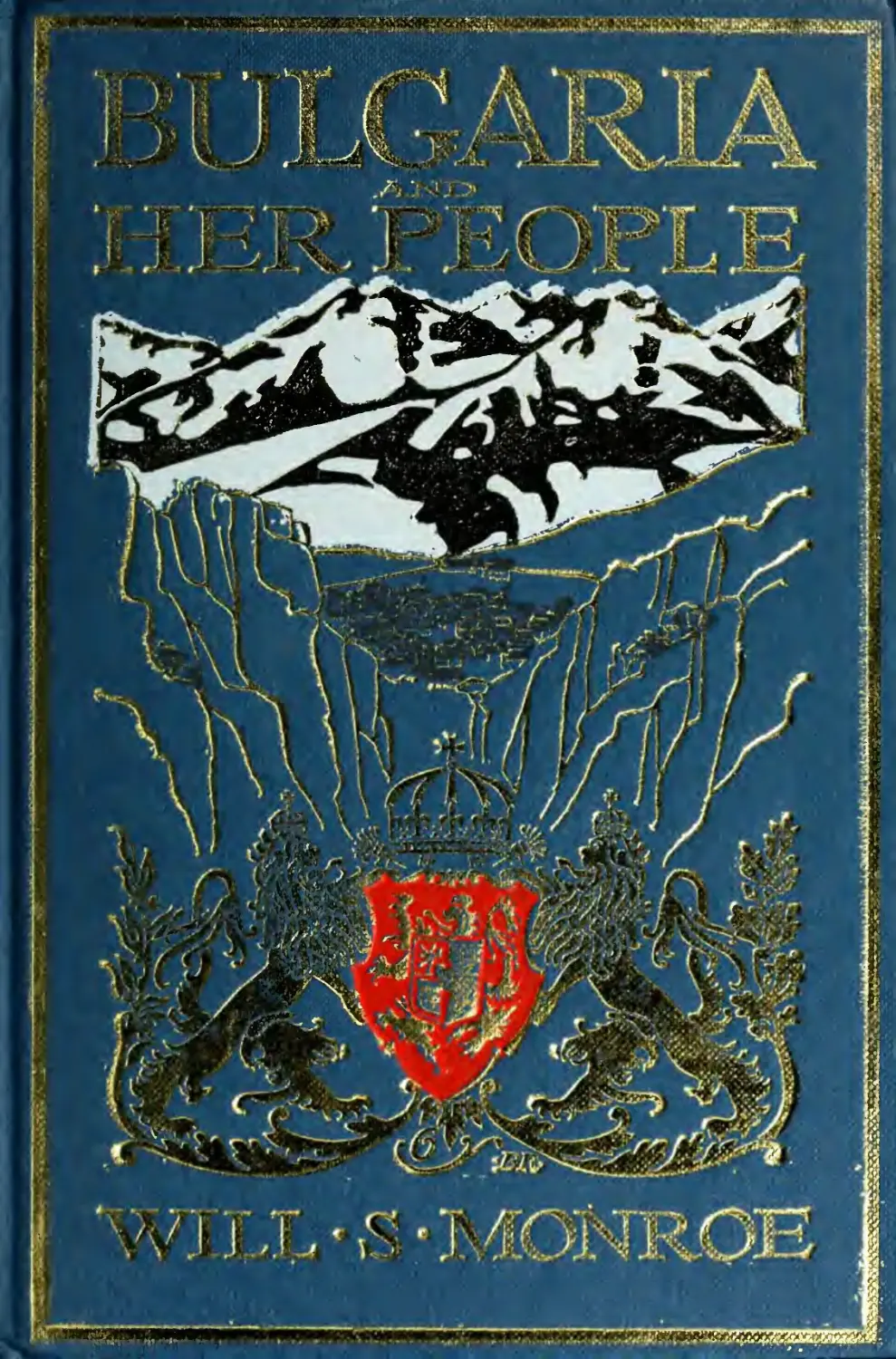
lulgaria
With an Account
of the
Balkan Wars, Macedonia, and the
Macedonian Bulgars
9tU &.
IHonrot
Author of "Turkey and the Turks," "In Viking
Land," "Sicily, the Garden of the Mediterranean," " Bohemia and the Cechs,"
" Europe and Her People," etc.
aiUuBlratfiJ
THE PAGE COMPANY
BOSTON
^
MDCCCCXIV
Copyright, 1914,
By The Pagk Company
All rights reserved
First.
C.
11.
IinprossioD, September, 1914
THE COLONIAL PRESS
SIMOfDS CO., BOSTON,
V.
P..
A.
srlF
MRU
DEDICATED TO
DR. LOUIS N. WILSON,
CtuMlK OmVERSITY,
WOKCEHTEH, MASS.,
U.
8.
A.
BULGARIA AND HER PEOPLE
Works
of
PROFESSOR WILL
Turkey and the
Turks
S.
-
MONROE
-
-
-
$3.00
In Viking Land: Norway , Its PeoFjords,
ple, Its
nean
and
Garden of
Sicily, the
-
Its Fjelds
-
3.00
-
Bohemia and
the Cechs
-
3.00
Net
3.00
Carriage paid,
3-20
-
-
Bulgaria and Ber People
-
-
0?<]
THE PAGE COMPANY
53
3.00
the Mediterra-
Beacon
Street, Boston, Mass.
FOREWORD
This
is
the first general book of travel and de-
treating
scription,
of
the
rejuvenated
Bulgarian
kingdom, to be published in the English language.
Of all the peoples of the Balkan peninsula, the Bulgars are least well known in Europe and America;
and yet
it
foreigners
is
the universal testimony of the few
who have
learned to
mately that the inhabitants of
**
know them
inti-
the peasant state,'*
although more recently liberated from the oppressive Turkish rule than the other races of the penin-
have outdistanced the Greeks, the Rumanians,
the Servians, and the Montenegrins in most of the
matters that make for social progress and civiliIlliteracy, for example, is distinctly lower
zation.
in Bulgaria than in the other Balkan states.
The
Bulgars spend twice as much per inhabitant on
elementary education as the Servians, two and a
sula,
much as the Greeks, and three times
much as the Montenegrins.
As this book is intended for the general reader,
the author has stressed the human side of the subhalf times as
as
ject,
and treated of a reasonably wide range of gengeography, history, religion, educa-
eral topics,
—
tion, ethnic types, agriculture, industry,
vii
commerce,
Foreword
VUl
— that
throw
developing
civili-
literature, painting, sculpture, music,
on and lend interest
zation of the new kingdom.
light
Considerable space
Balkan wars and
is
to the
devoted to the two recent
to the authoritative report of the
The author was
Carnegie commission.
in
Bulgaria
during the second Balkan war, and his personal
investigations into the nature of
bility for the
and the responsi-
second Balkan war are in entire ac-
cord with the findings of the Carnegie commission.
Bulgaria was betrayed, attacked, and traduced
by her treacherous allies. She accomplished most
and lost most in the Balkan wars. The charges of
atrocities against Bulgarian soldiers were in the
main false. On the other hand, the barbarities committed by the victorious Greeks and Servians, and
the torture of the wounded,
notably by the former,
the murder of prisoners of war, the firing on Red
Cross and neutral flags, the violation of women,
have shocked humanity. The report of the Car-
—
—
negie commission
is
a crushing indictment of the
Greeks and the Serbs and their shameful behaviour during the recent wars.
The author
under a large debt of gratitude to
a score of people in Bulgaria, who have aided him
in the collection and tbe verification of the facts in
his book; but they must be passed over with a
Four friends, howblanket statement of thanks.
is
must be named
Mr. Tvan A. Karastoyanoff,
the artistic photographer at Sofia, for many of the
illustrations used in this volume; the Reverend
Elia K. Kutukchieff, of Haskovo, Bulgaria, who
ever,
:
Foreword
ix
accompanied the author in his arduous travels in
Bulgaria during the second Balkan war; and Professor Radoslav A. Tsanoff, formerly of Clark University hut
now
of Rice Institute, Houston, Texas,
and Professor Amos W. Farnham,
wego Normal
School,
late of the Os-
who submitted
to the
drudg-
ery of reading the proof sheets.
w.
June
1,
1914.
s.
M.
CONTENTS
CHAPTER
I
GEoGRArnY OF Bulgaria
— Nature the Balkan mountaina
— Diviflions the Stara Planina — The mountains of southern
liulgaria — The Kilos — The Rhodopes — Mountain streania
—
The Maritza river valley — Picturesque features of the
southern Rhodopes — Lakelets and mineral springs — Climate
of Bulgaria — Rainfall — Flora and fauna — Area and poputhe United States
lation of the country — Bulgarians
Physiography of the country
PAOB
of
of
in
CHAPTER
1
II
The Old Bulgarian Kingdom:
—
The ancient Thraco-Iliyrians
Earliest inhabitants of Bulgaria
Arrival of the Bulgars
Reign of Philip of Maecdon
The rule of AsTheir subjugation of the native Slavic tribas
Prince Boris and the adoption of Chrisparuh and Kruin
The royal palace at Preslav
Reign of Simeon
tianity
Conflicts with the ByGolden age of Bulgarian literature
Their doctrines
The Bogomil heresy
zantine emperors
Bulgaria a part of the Greek empire
and persecution
Tne fate
The new capital at Tirnovo
The house of Asen
Discord in Bulgaria
of Baldwin, the Prankish emperor
—
—
—
—
—
—
—
Conquest
of the
—
—
—
—
—
—
—
—
—
—
country by the Turks
CILVPTER
12
III
Under the Turkish Yoke
of Bulgaria — Dark ages of Bulgarian
— Turkish political oppression and Greek ecclesiastyranny — The corrupt Phanariotes — Extinction of Bulgarian learning — \V\\y the movement for the Hcllcnization
of the Bulgars failed — Origin of the Poinak republic —
the Turkish yoke — Influence
of the Bulgars to throw
the literary and historical revival — Labours of the monk
revolutionary
Paissy — The school at Kotel — Beginnings
movements — Services of Venelin — The school at Gabrovo
The Turkish conquest
history
tical
PJfforts
of
oil
of
Contents
xii
— Re^atablishment of the Bulgarian national church — Turkish oppression following the Crimean
tionary committees in Rumania
CHAPTER
war
— Work of revolu-
20
IV
Liberation ok Bulgaiiia
—
Beginning of the end of the Turkish rule
Massacres of the
bashi-bozouks
Responsibility of England for conditions in
Turkey
The Crimean war
Russia and the oppressed
The Massacre at Batak
Bulgars
Mr. Gladstone on the
Bulgarian " horrors "
Outbreak of the Russo-Turkish war
of 1877-78
Russian 3uccet)s(«
IIow the Bulgars cooperated with their liberators
The treaty of San Stcfano
Anger of England
The congress of Berlin
The cunning of
Abdul-Hamid
Macedonia, Albania, and Thrace given back
to Turkey
Creation of the principalities of Bidgaria and
Eastern Rumelia
—
—
—
—
—
—
—
—
—
—
—
—
—
—
38
CHAPTER V
The New Bulgarian Kingdom
—
Adminifltrative affairs of Bulgaria in the hands of Russians
The new constitution adopted at Timovo
Election of
Prince Alexander of Battenberg aa ruler of Bulgaria
The
Russophil party
The coup d'etat
Airognnce of the Russian officials
Restoration of the suspended constitution
Departure of the Russian officials
Union of Eastern Rumelia
—
—
—
—
—
—
—
with Bulgaria — Appearance of Stefan StambolofT — The war
with Servia — Russian intrigues — Kidnapping of Prince
Alexander — His return to Bulgaria — Abdication of the
prince — Wbat Prince Alexander had done for Bulgaria
.
CHAPTER
50
VI
Bulgaria Under King Ferdinand
Alienation of the Bulgarian sympathies by the intrigues of the
Russians
Election of Prince Ferdinand by the national
assembly
Refusal of the powers to recognize the election
Non-recognition a distinct advantage
Stamboloff and the
friendly relations of Bulgaria with the governments of Europe
Intriguing Russophil ecclesiastics
How StambolofT disciplined them
Birth of Prince Boris
Friction between
Ferdinand and his great minister
The downfall of Stamboloff
Sinister Russian influences again in evidence
Dedication
of the Russian chapel at Shipka pass
Independence of Bulgaria from Turkey
What King Ferdinand has accomplished
Popularity of Prince Boris
His rebaptism to the
faith of the national Orthodox church
—
—
—
—
—
—
—
—
—
—
—
—
—
—
—
GO
Contents
CHAPTER
Stamboloff
The
vh.
xiii
Vli
Russian Intrigues
of Stefan SfnmbolofT
—
—
—
His Russian experiences
early
Connection with the Bulgarian revolutionary committee
President of the
Leader of the upriBing at Stara Zagora
Ilis role m the union of the two Bulgarias
national assembly
How he met the
Prime minister to Prince Alexander
attacks of Russia against Bulgarian independence
The
Prime minister under Prince l'\'rdinand
Was hia
regency
rule despotic?
How he punished Macedonian brigands
His quarrels with the prince
Resignation from the ministry
Cruel persecution by the Russophil government
His murPen picture of the great statesman
Estimates of his
der
Connection of Russia with his downfall and murder
servioea
His faults and his virtues
life
—
—
—
—
—
—
—
—
—
—
—
—
—
CHAPTER
—
—
—
73
VIII
The Balkan League
Responsibility
for
Turkish
Ottoman
misrule
in
— Guiding
—
—
—
—
Macedonia
— The
revolutionary movement and its consequences — Turkish massacres
Attempts
The Young
of Russia and Austria to inaugurate reforms
Attempf.s to Ottomanize Macedonia
Turk party
Why
Early atthe Macedonians revolted against Turkish rule
tempts to form a Balkan league
Why StarabolofI rejected
the ov(;rture^s of the Greeks
Venizelos and the Balkan
league of 1912
Provisions of the league for the reform of
Macjxlonia
Bulgarian conventions with Greece, Servia,
principle of
statecraft
—
•
—
—
—
—
and Montenegro
87
CHAPTER
IX
The First Balkan War
of the war — Inefficiency of the great powers
— Demands of the
— Turkey's refusal — Declaration of
war — Composition of the Bulgarian army — General Savoff
— Kutincheff, Ivanoff, and Dimitrieff — General Fitchefl —
The battle of Kirk Kliss^ — Bulgarian successes at Lule
Burgas and Bunar Hissur — Before the Tchatalja lines —
Expediency of the attack — The siege of Adrianople — Armisand peace conference — Resumption of hostilities —
Capture of Adrianople — The part Bulgaria took
Balkan war — Tribute to the splenaid qualities of her
Immediate causes
allies
tice
in tlie first
soldiers
106
Contents
xiv
CHAPTER X
The Second Balkan War
—
—
of the Becond Balkan war
Conduct of the Greek and
Servian armies in Macedonia
Attempts to disintegrate
Bulgarian social and national life
Maltreatment of Bulgarian biflhops and teachers
Secret understanding between
Greece and Servia before the close of the first Balkan war
Vacillating policy of the prime minister of Servia
Violation
of the conditions of the Balkan league by Greeks and Servians
Efforts of Russia to prevent war
GueahofT and Pachitch
in conference
Outbreak of hostilities
Plan of General
Savoff's campaign against the Servians
Greeks attack the
Bulgarian garrison at Salonika
Retreat of General Ivanoff
Invasion of Bulgaria by Rumania
Turkey reconquers
Thrace
The peace treaty of Bucharest
Why the Balkan
question is not settled
CauBes
—
—
—
—
—
—
—
—
—
—
—
—
—
—
116
CHAPTER XI
Alleged Bulgahian Atrocities
The
—
of King Constantine of Greece
Isolation
during the second Balkan war
Personal experiTestimony of refugees
author
What he saw in
the Rilo and the Rhodope mountains
Accounts of atrocities
published in Le Temps and the retraction
Bishops report.ed
killed by the Greeks found alive by the Carnegie commission
How the Greeks forged the signature of an American missionary
Bulgaria demands the apjjointment of an international commission to investigate the atrocities of all the belligerents
Action of the Hague tribunal
Report of the
Carnegie commission
Its findings at Doxato, Seres, and
Demir Hissar
Responsibility of the Greeks
Charges by
the Greeks of mutilation of bodies by Bulgarian soldiers pronounced false by the commisflion
press
campaign
of Bulgaria
ences of the
—
—
—
—
—
—
—
—
—
—
—
—
CHAPTER
Greek Atrocities
in
135
XII
the Balkan Wars
Responsibility of the Greek press in inciting feelings of hatred
against the Bulgars
The order of King Constantine for
Greek reprisals antedated the alleged Bulgarian provocation
Sacking and burning Kukush by the Greeks
Tales of
torture by Macedonian refugees
Catholic priests and Armenian doctors flogged for money
Attempts of Greek soldiers to violate nuns
Damaging evidence of the letters
found m the Razlog district of Macedonia
Greek soldiers
boast of their cruelties
One hundred and sixty Bulgarian
villages burned by the Greeks
—
—
—
—
—
—
—
—
162
Contents
CHAPTER
The Pkohlk
xv
XIII
ok Buloahia
— Physical characteris— Industry- and frugality — Peasant
— Mental
costumes — Standards of morality — The community home
—
Bulgarian language — Literacy of the people — Spirit of
Bulgaria — Gypsies — Greeks — Their
toleration — Jews
characteristic ethical defects — The Kutzo-Vlacks
Ethnically the Bulgars of Finnic stock
traits
tics
in
.
.
.
182
CHAPTER XIV
How
Fundamental
Bulgaria
Is
Governed
—
—
—
principles of the Bulgarian constitution
ExecuThe national assembly
How constituted A
powers
Representation of minorities
unique electoral law
Charges
The grand sobranje
of unfair elections
Sources of revMunicipal councils
enue
Ix)cal government in Bulgaria
The judiciary
Bulgaria a well governetl state
Political
parties
Conservatives and liberals
Other parties
tive
—
—
—
—
—
—
—
—
—
—
—
—
.
.
192
CHAPTER XV
Rklkjion and Monasteries
—
—
—
A static religion
of intellectual life among its priests
Language of
Place of fasts
the service
Nature of church services
The confessional
Celibacy required only of monks
Religious toleration in Bulgaria
The Pomaka or Bulgarian
The
national Ort.hodox church of Bulgaria
Dearth
—
—
—
—
—
—
—
—
—
Moslems — Moriasticism —-The
famous Rilo monastery
Other monasteries
The Mohammedan church in Bulgaria
The Greek {)atriarchist church
Hebrews
Catholics and
Uniates
'I'he American Protestant movement in Bulgaria
Its educational influence
What Protestantism has uonc for
—
—
—
—
—
the country
208
CHAPTER XVI
Education in Bulqahia
Bulgarian culture effaced during the supremacy of the Greek
Phanariotes
The revival of learning in Bulgaria
Education and the literary and historical renaissance
The secondary school at Gabrovo
Opposition of the Greek ecclesiastics
Views of the American missionaries
Mission schools
conducted by Americans
The national school system
How elementar>' schools are support.ed
Course of study
Education of girls
Norma! schools for the training of
—
—
—
—
—
—
—
— The university
— Rapid decrease
teachers
schools
Libraries
of
in
—
—
—
—
Sofia
— Special
and technical
the percentage of illiteracy
—
224
Contents
xvi
PAOB
CHAPTER XVII
BULGAIUAN FoLJC
-
SoNQ AND MuBIC
—
—
How theHO songs originated
Rich folk-popt.ry nf the country
EarHest efforts to collect the folk-songs of Bulgaria and MaceSong of
Opposition of the Greek ecclesiastics
donia
Resemblance of the measures to LongLiuben the haiduk
Marko, the
Ivan Popoff and the Fairy
fellow's Hiawatha
Relation of
Mental traits of the lyrics
legendary hero
The hero
Musical inthe folk-songs to national dances
Works of modem
Art music of Bulgaria
struments used
Musical societies
composers
—
—
•
—
—
—
—
—
—
CHAPTER
—
—
—
—
238
XVIII
Modern Buluaiuan Literature
—
—
literary revival and the movement for political liberty
Zachary Stoyanoff
Liuben KaravelofT
Christo Boteff
Petko R. Shiveikofl", the founder of modern Bulgarian literaCollections
His political and educational activities
ture
Ivan Vazoff, poet,
Translation of the Bible
of folk-songs
Early life and training
Condramatist, and novelist
Early verses
nection with the revolutionary movement
Vlaikoff
Dramas
Other romance*)
Under the Yoke
Aleko Constantinoff, humourStoyan Michailovsky, satirist
Pencho Slaveikoff, the foremost
Success of Bai Ganio
ist
His art work
Pen-picture of the poet
Bulgarian writer
Petko Todoroff,
His great epic
Lyrical compositions
Author of the finest Bulgarian prose
poet and dramatist
Political and philosophical wriMinor poets
Velitchkoff
The
—
—
—
—
—
—
—
—
—
—
—
—
—
—
—
—
—
—
—
—
—
—
—
—
—
—
252
ters
CHAPTER XIX
PAINTFNa AND ScOLPTDRB
—
—
—
High rank
Earliest artists foreigners
of Bulgaria in painting
Wide range of his artistic
Professor Ivan D. Mirkvicka
His historical
Studies of Bulgarian peasants
activities
paintings
Mural paintings in the Alexander Nevsky catheYaroslav
dral
Founder of the Academy of Fine Arts
Professor
Anton
Veshin
Pavlovitch
and Dospevsky
Sculpture
ColIvan Angeloff
Other painters
Mitoff
lections of paintings
Art school at Sofia
—
—
—
—
—
—
—
—
—
—
—
—
CHAPTER XX
Farms and Forests
mainstay — Peasant ownership — Common
— Cereal pnjducts — Cultivation of roses —
— Growth of tobacco — Rearing of live-stock
Agricultural Bank — Need of agricultural edu-
Agriculture
the
pasture lands
Orchard
fruits
— Bulgarian
277
Contents
— yocial
— Government
cation
garia
xvii
—
of the peasant farmers
i'oresta of Bulregulationa
The forests of the Rilo
life
—
and the Rhodopo mountains
288
CHAFl^ER XXI
Industry and Trade
—
—
Decline in home industries
Textile industries
at Sliven and Gabrovo
Silk-spinning at Timovo
Saw
mills
Social and economical evils at the industrial centres
Legislative labour restrictions
Encouragement of industry by the national government
Special concessions
Mineral resources and mining
Numerous mineral springs in Bulgaria
Commerce
Its rapid growth
Exports and imports
Chief trading towTis
Railways and highwaj's
Handicrafts
—
—
—
—
—
—
System
—
of
—
—
—
—
—
measurements
—
— The
—
Bulgarian National
Bank
300
CHAPTER XXII
QUEKN ElEANORA AND PuiLANTHROPT
The Orthodox church not directly identified with philanthropic
movements
Indifference of the clergy
Queen Eleanora
at the heatl of philanthropic prnjerts
The Florence Nightingale of the Russo-Turkish war
Her services in the two
—
—
—
Balkan wars — Tribute of Miss Abbott — Pen picture by Professor Markham — The Clementine hospital and
needs —
—
its
Dearth of orphanges
in
Bulgaria
313
CHAPTER XXIII
American Influence
Large influence
of the
of the nation
in
Bulgaria
United
in the intellectual develop— RobertStates
College — Work
Dr. Hamhn
— Dr. Washburn and the college — ^Tiat has done
for Bulgaria — Bulgarian statesmen e<lucatcd at Robert College —
Present condition of the college — Influence of the Am(!rican
College for Women at Constantinople — Work of the American missionaries — American Institute at Samokov — American School for Girls — The influence
has exerted through
ment
of
it
it
its
graduates
323
CHAPTER XXIV
Sofia,
the Modern Capital
—
The
—
—
site of an ancient city
Sofia in the eighteenth century
Transformation since it ceased to be a Turkish town
The Djul-Dschamija mosque
The Bu^-uk Djamia
The
Black Mosque
New Cathedral of Alexander Nevaky
Bulgarian National Theatre
Palace of the Holy Synod
Public ba'.h
Post-office
Statue of the Tsar Liberator
Public gardens
The suburbs of Sofia
—
—
—
—
—
—
—
—
—
—
341
Contents
xviii
CHAPTER XXV
Other Cities and Towns
— Principal quarters
— Rustchuk — Tirthe Forty
novo, the ancient capital — Historic church
the city by an earthquake —
Martyrs — Recent destruction
Varna — Burgaa — Shumeu — Stara Zagora, Sliven, and
....
Kazanhk — Dubnitza — Samokov — Rilo
Philippopolifl, the capital of Eastern Rumelia
Nature of the population
in the city
—
of
of
349
CHAPTER XXVI
The Bulqabs of Macedonia
Why
Macedonia was given back to the Turks after the RussoOrganization
Revolt in the Struma valley
Turkish war
How it was supRevolution of 1902
of the komitadjis
The wrecking of the bank at Salonika
pressed by the Turks
Economic conditions in MaceCapture of Miss Stone
Physical and mental
Methods of leasing the land
donia
characteristics of the Bulgars of Macedonia
—
—
—
—
—
—
—
—
—
....
359
CHAPTER XXVII
Macedonia after the Balkan Wars
—
Racial and religious elements of the population of Macedonia
Conditions of the province at the close of the first Balkan war
The countrj' laid waste
Disappearance of the population
Verdict of Mr.
Work of pillage and murder
by the Greeks
Conditions in the part of Macedonia occupied by the
Wallis
Oppression
Report of the Carnegie commission
Servians
Peter
Tyrannical order of
of the Bulgarian population
The results
Methods of coercion
—
—
—
—
—
—
—
—
—
—
Kmg
373
Bibuography
397
Index
401
LIST OF ILLUSTRATIONS
Queen Eleanora
PAOB
Frontispiece
of Bulgaria
MAP OF BULGARIA
Rilo MountainB
The
2
— Rhodope Mountains
lekcr River
Tiraovo, Capital of the Old Bulgarian
Kingdom
4
....
Prince Boris (852-884)
12
15
The Monk Paissy
...
Christo Boteff, Leader of the Revolt against Turkey
Monument
6
of the Tsar Liberator at Sofia
33
36
38
Batak
42
Shipka Pass
44
Prince Alexander
51
Royal Palace at
Sofia, erected
by Prince Alexander
...
57
King Ferdinand
62
Prince Borifl
71
Stefan Stamboloff
74
A
8q
Peasant Citizen
Macedonian Vlacks
gg
Ex-Prime Minister Gueshoff
Father and Four Sons
who
100
fought in the First Balkan
War
.
General Savoff
First
106
108
Balkan War: Burying the Dciid
Second Balkan War: Troops Marching to the Front
Second Balkan War: Ox Train with War Materials
xix
114
.
.
.
.116
.130
List of Illustrations
XX
PAOB
Macedonian Refugees
in the
Mount.aina near Ichtiraan
137
Refugees from Seres
145
Macedonians Fleeing Greek Atrocities
162
Turkish Exiles from Macedonia
179
A
182
Bulgarian Family
Typical Bulgarian Costumes
185
A
186
Bulgarian Peasant
Group
of
Peasants
188
The Sobranje or Parliament House
The National Assembly (Sobranje)
A Monastery
near Sofia
Monastery of
St.
192
in
200
Session
208
Peter and St. Paul
Bird's-Eyc View of Rilo Monastery
210
— Court, of Rilo Monastery
.
Primary School at Sofia
230
Secondary School at Rustchuk
Public Library- at
— Agricultural School at Plevna
.
Shumen
240
The Horo
249
260
Ivan VazofT
208
Aleko Constantinoff
Pencho
Slaveikoflf
— Petko Todoroff
272
Ivan V. Mirkvicka
"
278
The Rhodope Wedding
"
280
Anton Mitoff
Ploughing
234
237
Bulgarian Musicians
National Dance:
217
284
w-ith
Water BufTalo
Harvesting with Camels
288
— Threshing \Vheat
290
Factory at Gabrovo
301
Queen Eleanora as a War Nurse
314
Clementine Hospital, under the direction
Dr. George Washburn, Educator
of
of
Queen Eleanora
Bulgarian Statesmen
Bulgarian Graduates of Robert. College and their Wives
Samokov, Seat
Sofia, the
of
Modem
Rustchuk
.
336
338
342
— Bulgarian National Theatre
of Philippopolis
of
331
.
Capital
— Varna
The Captore
321
.
American Schools
Alexander Nevsky Cathedral
General View
.
.
Miss Ellen M. Stone
.
346
350
353
364
List of Illustrations
xxi
PAOB
A Patriarchal B^amily
A Macedonian Village after the Balkan Wars
368
374
Macetlouiau Bulgars exiled by the Greeks
Macedonian Bulgars driven
into exile
by the Servians
370
.
382
BULGARIA
AND HER PEOPLE
CHAPTER
I
GEOGRAPHY OF BULGARIA
—
—
Physiography of the country'
Nature of the Balkan mountains
Divisionfl of the Stara Planina
The mountains of southern Bulgaria
The Rilofl
The Rhodopes
Mountain streams
The
Maritza river valley
Picturesque features of the southern Rhodopes
LakeletH and mineral springs
Climate of Bulgaria
Rainfall
Flora and fauna
Area and population of the country
Bulgarians in the United States.
—
—
—
—
—
—
—
—
—
—
—
—
The kingdom of Bulgaria forms a part of the
mountainous Balkan peninsula. The physiography
of the country presents a combination of
mountain
chains encircling broad and fertile mountain valleys.
The average elevation of the kingdom is 1,411 feet
above sea-level. The character of the country is
determined by the mountain systems.
may
four well defined sections
be noted
Structurally
:
the
Danu-
bian table-land in the north, the long chain of the
Balkan mountains extending west-east the entire
length of the country, the high and elevated mass
of the Rilo-Rhodope mountains in the south, and the
elevated plains between these two great parallel
mountain systems.
The Balkan mountains, or Stara Planina as they
1
Bulgaria and Her People
are called by the Riilgars, extend from the
Timok
Black sea in the east, a
river in the west
length of 375 miles, the average width being about
to the
20 miles.
They are
really a continuation of
the
The Balkans have been formed
by horizontal pressure from the south. They have
Carpathian system.
abrupt projections nor rocky peaks, but
many rounded domes which, for the most part, are
neither
the remains of ancient volcanic cones.
The higher
parts have a core of granite and metamorphic rock.
The northern
slopes of the Balkans present a suc-
cession of terraces, which are so gentle that one
may
approach the crest from the Danube river without
coming in sight of mountains. The southern slopes,
on the other hand, are very abrupt, with numerous
narrow and tortuous defiles.
There are three well marked divisions of the Balkan, or Stara Planina, system. The western division,
a continnation of the Carpathian mountains,
extends from the Servian frontier to the gorge of
from the Isker
to the Demir Kapia; and the eastern division from
the Demir Kapia to the Black sea.
The western Stara Planina is flanked north-south
along its entire length by parallel lines of peaks
abruptly cut into rough shapes. This is the most
rugged part of the Balkans and is extremely diflRcult
the Isker river; the central division
of
access.
It
has
only
two passes
— the
Sveti
Nicola (3,916 feet above the sea), through which
Lom Palanka and the
Nishava valley in Servia, and
leads the highway between
Danube regions
to the
the Ginci pass (4,737 feet elevation), with the high-
Geography
way from Lorn Palanka
of Bulgaria
to Sofia.
The steepness
of
and the narrowness of the defiles through
which the streams flow have combined to make railway and highway construction matters of costly
the slopes
engineering.
The
centra] Stara Planina also has a
peaks north of the main ridge.
number
The Isker
pierces through this section of the Balkans
way
to the
of
river
on
its
Danube, forming the most picturesque
gorge in the entire system. Two other passes serve
as highways over the central section of the Stara
Planina
the Baba Konak (3,200 feet), through
which passes the road from Plevna to Sofia, and
Shipka pass (4,300 feet), with a military road lead-
—
Yumrukchal (7,790
the Balkan system, is in
ing from Gabrovo to Kazanlik.
feet), the highest
peak in
the middle section of the Stara Planina.
The eastern Stara Planina is composed of brokendown ridges, which gradually merge in the coastal
plains on the shores of
tlie
Black
sea.
South of the
Stara Planina, and extending parallel with it, is the
Sredna Gora. The Ichtiman range connects the
Sredna Gora with the Stara Planina, and is the
watershed that separates the Tsker and the Maritza
basins.
The
fertile
plains
of
Zlatitza,
Karlovo,
Kazanlik, and Sliven are between the Balkans and
the Sredna Gora.
These are the famous rose valleys of Bulgaria, with hundreds of great damaskrose gardens that produce the world's supply of
attar of roses.
The western
section of the Stara Planina
is
con-
nected with the Rilo mountains by the Verila Pla-
—
Bulgaria and Her People
nina and the Vitoslia, thus forming the watershed
between the Isker and the Struma river systems.
Between the high mountain ridges of western Bulgaria are numerous plains, such as Sofia, Samokov,
Kustendil, Dubnitza, and Radomir, which are beds
of extinct lakes.
Southern Bulgaria
mountains.
is
crossed by the Rilo-Rhodope
They present a
central
ous branches stretching out in
with huge
cliffs
all
mass with
directions
cut by deep valleys.
vari-
and
The jagged
summits of the Rilo mountains contrast strikingly
with the rounded summits of the Balkans. They
have much of the character of the Swiss Alps. The
Rilo mountains are the highest in Bulgaria. They
contain the loftiest peak in the Balkan peninsula^
Mt. Mussalla, whose altitude is 9,588 feet. They
form the southern buttress of the Sofia plain their
upper slopes are dotted with numerous lakes inclosed among rocky cliffs; and their lower slopes
;
are well forested with pine, larch, and beech.
The
Rilo mountains do not have a continuous covering
of snow, as the highest peaks do not reach above the
snow-line;
but recent investigations in the upper
valley of the Isker and on the slopes of Mt. Mussalla
have established the fact that the most southern
point in Europe, where traces of the ice age have
been found, is in the northern slopes of the Rilo
mountains.
The Rhodopes,
a confused net-work of
mountain
groups, are a continuation of the Rilo mountains
and extend through southern Bulgaria a distance of
180 miles.
They are highest
in the west;
in the
Geography
of Bulgaria
east they are split up into several chains extending
in different directions,
shores of the
Many
^gean
which gradually sink into the
sea.
streams have their rise on the northern
Rhodopes and emerge from narrow
slopes of the
valleys into the wide plain of the Maritza.
The
largest of these streams is the Arda, which has its
rise in the central part of the range and flows between two lines of hills, finally escaping through a
narrow gorge to join the Maritza near Adrianople.
The streams that rise on the southern slopes are for
the most part small, the largest being the Jardimula,
which traverses the wide cultivated plain east of
Gumuljina.
On the western side of the Rhodopes is the wide
basin of the Mesta, which rises in the Kilo mounIt flows through the deeply cut valley of the
Razlog district and enters the plain of Nevrokop,
but resumes the character of a mountain torrent
before it reaches Drama on its way to the JEgcan.
There are no peaks of striking grandeur in the
tains.
Rhodopes, the two most important being the Ibar
(8,747) and the Sivry Chal (8,671 feet). The chief
beauty of these mountains consists of the pineclad
summits and slopes, and the j)icturesque upland valleys.
The northern spurs
of the
Rhodopes termi-
nate abruptly above the plain of the Maritza.
Concerning the beauty of the scenery of the southeast slopes of the Rhodopc mountains, the Hon.
James Bryce writes: " One part of the southeast
Rhodopes, the part which lies between Xanthi and
Drama, contains one of the most beautiful pieces of
Bulgaria and Her People
scenery I have ever seen.
like thirty miles long,
It is a valley
something
traversed by a river, where
the railway has been run along the edge of the
Mountains rise from two to three thousand
feet above the stream;
they are in part richly
wooded, and break in splendid crags down into an
excessively narrow valley, along which there is no
passage except the railway. The winding gorge,
with its limestone crags towering above it, is wonderfully picturesque. There is hardly a more beautiful piece of railway scenery in Europe, or perhaps
in America either, and it can be seen in perfect comstream.
fort in travelling along the line."
The most elevated and rugged part of
dopes is in the west. Here the formation
crystalline rocks, granite
the Rhois
slopes of the mountains are richly forested.
carriage-road
nand over
is
A
fine
being constructed by King Ferdi-
Rhodopes to Macean elevation of nearly
this section of the
It crosses the ridge at
donia.
of old
and gneiss, and the abrupt
eight thousand feet.
The
up
peculiar
into
manner
in
which Bulgaria
mountain ranges makes
it
is
broken
impossible for
the streams to mingle, hence there are no conse-
Those draining to
and joining the Danube are the Isker,
quential rivers in the country.
the north
the
Lom, the Vid,
the Ogosta, and the Yantra.
All
of them, excepting the Isker, have their rise in the
Stara Planina, and are, therefore, short.
rises in the Rilo
The Isker
mountains and breaks through the
Stara Planina in a magnificent gorge.
streams furnish excellent water-power.
All these
Geography
The Maritza
river drains the great valley between
the Balkans and the
miles long and
miles.
of Bulgaria
its
Rhodope mountains.
It takes its rise in the
southeast to the
It is 329
basin has an area of 20,790 square
^gean
Balkans and flows
It is navigable for
sea.
small boats to Adrianople, but beyond that point
is
obstructed by rocks and sand-bars.
It is
it
an im-
portant fertilizing agent to the plains of PhilippoIts tributaries from the Stara Planina are
and deep during the rainy season in winter
and spring, but nearly dry during summer and autumn while the tributaries from the forest-covered
Rhodope mountains on the south have nearly the
same flow throughout the year. The two largest
tributaries of the Maritza are the Tundja from the
Stara Planina and the Arda from the Rhodopes.
Both join the Maritza near Adrianople.
The
polis.
swift
;
Struma, in southwestern Bulgaria, has its rise on the
slopes of Vitosh, near Sofia, and flows west and then
south to the
^gean.
There are no large lakes
in
Bulgaria, although on
and Rhodope mountains there arc more than one hundred small lakelets very similar to the " sea eyes " in the Carpathe higher slopes of the Rilo
thian mountains.
There are more than two hundred
hot and mineral springs in the country.
The climate of Bulgaria
is
relatively severe as
compared with other parts of Europe in the same
latitude, due in the main to the general physiography of the Balkan peninsula. North of the Balkan
mountains the plain is exposed 1o the bitter north
winds, and the thermometer sometimes falls as low
Bulgaria and Her People
8
as twenty-four degrees below zero
(Fahrenheit).
But the summer heat is less intense because the
same range shuts out the hot winds from the south.
The Sofia tableland, although covered with snow in
winter, has a more equable climate than most other
parts of the kingdom. The air is bracing, the summer nights are cool, and the maximum temperature
seldom higher than eighty-six degrees or the minlower than two degrees. The eastern part of
the country, however, suffers from both the extremes
is
imum
and cold. The Black sea sometimes freezes
over at Varna, and the eastern coastal jjlain is ex-
of heat
posed to violent winds. The sheltered plain of the
Maritza has a comparatively mild winter, although
the
summers are
in Bulgaria,
and July
The
mean annual
January
hot.
is
heaviest rainfall
the coldest
month
the hottest month.
is
for
rainfall
twenty-seven inches.
is
in the spring,
the
country
and the
is
about
In the less favoured regions
on the shores of the Black sea the average is less
than eighteen inches. Generally speaking Bulgaria
a healthful countiy, the only unhealthful regions
being the marshes along the Danube and on the
is
shores of the Black sea.
The
flora of
Bulgaria
is
both rich and varied.
On
the broad and gentle northern plain of the Stara
Planina the spring flowers are very like those found
crocuses, orchids, irises,
on the steppes of Russia
—
and both the Rilo and the Rhodope
and
mountain regions are
tulips;
rich in indigenous plants that
are representative of the flora of the Alpine regions.
The jasmine grows wild on the southern slopes of
Geography
of Bulgaria
the Balkans, and the lilac through
Rhodope mountains. Among
plain are the salvia,
rohin,
and the yellow
tlie
9
the Rilo
and
the wild J3owers of the
pink campion, the ragged
hipin.
The northern slopes of the Balkans are liberally
wooded, but the southern slopes are comparatively
bare. Portions of the Rilo and Rhodope mountains
The
are forested.
principal trees are oak, beech,
and juniper. The pines are simifound in the Himalayas. The plains of
the country are for the most part treeless, barring
scrub oak, sumac, thorn, and elder. During the long
period of Turkish misrule the forests of the mountains were largely destroyed.
By a law of 1889
ash, pine, poplar,
lar to those
deforestation is prohibited, and the forests of the
kingdom have been placed under the supervision of
state foresters.
Wild animals are abundant in Bulgaria. Eagles,
vultures, kites, owls, and smaller birds of prey are
found in all parts of the kingdom; although song
birds are less abundant. The principal song birds
are the nightingales, the golden orioles, and the
hoopoes. Wild geese, swans, pelicans, and herons
haunt the marshes of the Danube and the lagoons
of the shores of the Black sea.
Woodcock, quail,
and partridge are in the forests on the slopes of
the Balkan and Rhodope mountains.
The crane
hibernates
where
in
the Maritza valley.
The stork every-
Bulgaria adds a picturesque feature to villife.
Small browii bears are numerous in the
lage
Rhodope mountains. Roe deer and chamois range
in
the forests of both the
Rhodope and
the Balkan
Bulgaria and Her People
10
mountains and lynx are in the Sredna Gora.
boar, badger, and otter inhabit the marshes.
Wild
kingdom of Bulgaria, before the
recent Balkan wars, was 36,188 square miles. By
The area
of the
the conditions of the
treaty of Bucharest, 2,969
square miles in the Silistria-Baltchik district
were
ceded to Rumania, but she received 8,851 square
miles in Macedonia and Thrace as her part of the
former Turkish possessions, so that the present area
of the kingdom is approximately 43,310 square
miles.
The population of Bulgaria before the recent wars
was 4,329,108 people. There were 286,000 inhabitants in the district ceded to Rumania and, with the
addition in the new territories, the present populaThe countion of the kingdom is about 4,700,000.
;
try
is
sparsely settled, there being only forty-five
inhabitants to the square mile.
The number
not large.
thousand,
It
of Bulgarians in the United States
probably
is
does not exceed thirty-five
including Bulgarians
from Macedonia.
Between twelve and fifteen thousand returned to the
homeland during the Balkan wars, some of whom
were killed and many wounded. The largest Bulgarian settlement is on the Illinois side of the Mississippi river opposite the city of St. Louis. It includes the towns
of East St.
Louis, Collinsville,
Madison, and Granite City. These towns have altogether about seven thousand Bulgarians. They have
their own churches, publish newspapers in the Bulgarian language, and possess other national institutions. The Bulgarians are regarded as sober, in-
Geography
of Bulgaria
11
and law-abiding people.
Elsewhere in
the United States there are smaller Bulgarian communities. It is to be regretted that our Bulgarian
dustrious,
immigrants so generally find their way
rather than to farms, since in their
make
excellent agriculturalists.
to steel mills
own country
they
CHAPTEE
II
THE OLD BULGARIAN KINGDOM
—
—
Rci^iiU
Tho ancient 'I'hraco-Illyrian.s
Earliest inhabitants of Bulgaria
Their subj\ip;aArrival of the Bulgars
of Philip of Maccdon
The rule of Asparuh and Kruni
tiou of the native Slavic tribes
Reif^n of Simeon
Prince Boris and the adoption of Christianity
Golden ape of Bulf^arian literature
The royal palace at Prcslav
The Bogomil heresy
Conflicts with the fiyzantine emperors
Their doctrines and persecution —..Bulgaria a part of the Greek
The
The new caj)ital at Tiruovo
The house of Asen
empire
Discord in Bulgaria
fate of Baldwin, the Prankish emperor
—
—
—
—
Conquest
of the country
—
— —
—
—
;
—
—
—
—
—
—
by the Turks.
known concerning the early
history of the Bulgars. The country that they occupy to-day was inhabited at the dawn of tlie ChrisThey
tian era by ancient Tbraco-Illyrian tribes.
Little
is
definitely
were an agricultural people, governed by democratic
local institutions, without national leaders or central organization, the political unit
being the
tribe.
if they
Herodotus wrote concerning them that
were only ruled by one man, and could only agree
among themselves, they would become the greatest
**
of
all
nations."
The
ancient
lllyrian
speech
is
proI)ably represented to-day in Albania.
Philip of
Macedon brought
the warring tribes of
and federated them
Macedonian empire. But the union was
short-lived; and upon the death of Alexander the
Great they " returned to the congenial business of
the Balkans under his control
into the
flying at one another's throats."
12
For a century the
The Old Bulgarian Kingdom
13
Thracian and lUyrian warriors struggled with the
conquerors, but the country was jBnally
brought under Roman influence. Shortly after the
Roman conquest, hordes of wild and uncouth war-
Roman
first
ravaged the country;
lowed; and in
The Goths
pour into the peninsula.
riors began to
many
the terrible
Huns
fol-
parts of the Balkans the entire
native population perished at the hands of these
barbarians.
The Bulgars arrived
in
the
seventh century.
Their origin is a vexed question. Recent ethnographic and anthropological investigations suggest
that the Bulgars originally belonged to the Turanian
race and that ethnically they were related to the
Tatars, the Finns, and the Huns.
"We
first
hear of
them as wild, fierce liorsemen occupying a tract of
land between the Ural mountains and the Volga
river.
They cros.scd the Danube in the year 679;
subjugated the Slavic tribes, and advanced to the
The Byzantine empire
gates of Constantinople.
was forced to cede tliem large grants of land in the
Balkan peninsula and to pay them an annual tribute. The Bulgars welded the scattered Slavic tribes
into a compact and powerful state; they assimilated the language, customs, and institutions of the
Sla^dc tribes which they concpicred, and in reality
became themselves Slavs. For several centuries
they played an important role in the historj^ of
southwestern Europe, and on several occasions they
threatened the very existence of the Byzantine empire.
According
to
Bulgarian traditions, Asparuh was
Bulgaria and Her People
14
the first Bulgar warrior to leave the ancient
home
on the Volga, where the ruins of Bulgari, their
former capital, are still pointed out to tlie traveller.
He crossed the Dniester and the Dnieper, and settled at a place called Onklos between the Transylvanian Alps and the Danube. By the seventh century his followers had occupied the country that
bears their name to-day and absorbed the native
races. One of the earliest Bulgar rulers, concerning
whom we
have authentic information, is Krum, who,
borrow Gibbon's phrase, '* could boast the honour of having slain in battle one of the successors
of Augustus and Constantino." He captured Sofia,
the present capital of the coimtry, in the year 809,
and occupied large parts of what are to-day the
kingdoms of Servia and Rumania. The Byzantine
emperor, in an attempt to drive Krum out of the
Balkans, was himself killed and the entire imperial
army was annihilated. The \nctorious Bulgars then
marched into Thrace and laid siege to Constantinople.
The Byzantine rulers made terms with
Krum, offering him a largo yearly tribute, quantities of fine clothing, and a fixed number of Greek
maidens. Krum conquered the Struma valley, and
when he died his rule extended from Adrianople to
to
the Carpathian mountains.
The next Bulgarian
ruler concerning
whom we
have reliable information was Omortag. lie made
an expedition against the Franks, his neighbours on
the northwest, and conquered the Drave and the
Save river
valleys.
An inscription
on a pillar in the
recently destroyed Church of the Forty Martyrs at
I'ainted
by Ivan
\'
Mirkvioka.
PRINCE BORIS (852-884).
Reprodu.-ed by permission of the
artist.
The Old Bulgarian Kingdom
15
Tirnovo tells of his execution of Christian missionaries and of his fruitless efforts to prevent the adoption of Christianity by his people.
The Christian religion liad been spread throughout Bulgaria by the large number of captives, many
of
whom were
and bishops, that Omortag
priests
and his successors had brought from the Byzantine
empire.
Bulgaria was, moreover, surrounded by
nations that had been converted by the teachings of
the two
great
Slavic missionaries
and scholars,
Kyril and Method; hence Prince Boris (852-884),
for purely political reasons, decided to adopt the
religion that
sors.
By
adopted
had been proscribed by his predeces-
a formal edict the Christian religion was
in
Bulgaria in 9G4 and Prince Boris was
baptized by the Byzantine emperor Michael III.
Soon after the adoption of Christianity
in Bul-
garia, the great schism broke out between the east-
ern and the western churches, and Boris wavered
for a long time as to whicli branch of the church he
would offer the allegiance of his country. But the
refusal of tlie pope of Rome to recognize an independent national church in Bulgaria, led him to
cast the lot of his country with the Greek patriarch.
The independence of the Bulgarian national church
was recognized; and this concession had special historical significance in the separation of the national
church of Bulgaria from the Greek Orthodox churcli
in our own day. ITe secured the rights of the Bulgarian primates to the
sees
were successively
Prespa, and Ochrida.
title
at
of patriarchs, whose
Preslav,
Sofia,
Voden,
Boris retired to a monastery
;
Bulgaria and Her People
16
in 888.
He was
succeeded
first
by
his son
Vladimir
by his son Simeon.
was during the reign of Simeon (893-927), as
Gibbon points out, that " Bulgaria assumed a rank
among the civilized powers of the earth." This
period was the golden age of Bulgarian history.
The kingdom extended from the Adriatic to the
Black sea, and from the Save river and the Carpathians to Thessaly. Simeon's title was ** tsar of all
the Bulgars and the Greeks," and his title was recognized by the pope of Rome. He had been carefully educated at Constantinople and had studied
" the masterpieces of ancient eloquence and philosophy with so much zeal that his comrades called him
half Greek. But his acquaintance with Greek literature did not dispose him to look with favour upon
the Greek empire." He encouraged literature, art,
and industry; and Preslav, his capital, rivalled
Constantinople and its splendour excited universal
admiration. John the Exarch, a contemporary of
and
later
It
Simeon, gives this account of the palace at Preslav:
" If a stranger coming from afar enters the outer
court of the princely dwelling, he will be amazed,
and ask many questions as he walks up to the gates
and if he goes within, he will see on either side buildings decorated with stone and wainscoted with wood
of various colours.
If he goes yet further into the
courtyard, he will behold lofty palaces and churches
decorated with marbles and frescoes without and
with silver and gold within.
If he perchance espy
the prince sitting in robes covered with pearls, with
chains of coin about his neck, bracelets on his wrists,
The Old Bulgarian Kingdom
girt about with a purple girdle
at his side, tlien will he say
17
and a sword of gold
when he returns home
I know not how to describe it, for only thine owti
eyes could comprehend such splendour.' "
*
While Slavic literature had gradually developed
and Method, the reign of
Simeon is remembered as the golden age of Bulgarian letters. He was himself an author of no mean
ability and he gathered at his court, Preslav, the
ablest writers and thinkers of his age. John the
Exarch wrote a descriptive account of the creation
since the days of Kyril
of the world
he dedicated to Simeon. The
orations of Athanasius were translated into the verw]ii(3li
nacular;
Gregory, a Bulgarian monk, wrote a life
of Alexander the Great and compiled a Bible history; an encyclopajdia of contemporary learning
was translated from Greek authors; and several
notable treatises were composed on Slavonic philology.
Simeon was succeeded by his son Peter (927-969)
whose long reign marked a decline in Bulgarian
statesmanship. His marriage with the daughter of
the Byzantine ruler brought hira under the evil influence of the Greek court. The Magyars invaded his
coimtry five times and caused great damage and his
kingdom was menaced by an alliance witli Russia.
;
Sviatoslav, a Russian chief, arrived with ten thousand men at the mouth of the Danube; Silistria was
conquered, and an alliance with the Byzantine ruler
averted the calamity of the capital of Bulgaria falling into the liands of the Russians. While the country
was thus menaced, Servia, which had been added
;
Bulgaria and Her People
18
to
Bulgaria during the reign of Simeon, regained
her independence.
The Bogomil heresy added to the dissensions that
prevailed during the troubled reign of Peter.
Simhad appeared among the Waldensians
and Albigenses of France, but the teachings of Boilar heresies
gomil, the author of a
number
of mystical books,
found readier acceptance among the Bulgars than
similar doctrines had hitherto found among other
peoples in Europe; for the decadence of
tlie
coun-
under Greek influence, had been as marked in
and political affairs. The new
religion was at bottom a protest against the immorality and autocracy of the Orthodox clergy.
The Bogomiles denied the diWne birth of Christ.
His miracles they interpreted in a spiritual, not a
try,
religion as in letters
material sense.
They
likewise denied the validity
and ceremonies; baptism was reserved for adults only, and their church organiza-
of sacraments
They
selected their ministers, women as well as men, from
their own members, and ordination was conferred
by the congregation. They declared Christ to be
the son of God only through grace, like the other
prophets. The bread and wine of the eucharist they
tion
was purely congregational
in character.
held as merely symbolical, and not transformed into
flesh
and blood.
Images of the cross they regarded
as idols and they characterized the worship of saints
as idolatry. They regarded bloodshed with horror
forbade participation in warfare, and denounced
capital punishment.
cuted them with
fire
The Orthodox church perseand sword, as the Roman church
The Old Bulgarian Kingdom
19
had persecuted the Waldensians and the Albigenses.
The empress Theodora is said to have hanged or
drowned more than one himdred thousand. The
persecution oi' the church in Bulgaria was so great
that
many
fled to
Scrvia, where they continued to
reside until expelled by
the twelfth century.
King Stephen
at the end of
Witli the coming of the Turks
Balkan peninsula, their persecutions were at
an end, and tiiey continued their individual existto the
ence
down
when
to the
middle of the seventeenth century,
the few survivors were taken into the
Roman
Catholic church.
The
political
distractions
and religious dissen-
sions of the reign of teeter had resulted in a divi-
sion of the Bulgarian kingdom.
Shishman, a Bulgarian noblcTiian of Tirnovo, founded a western
Bulgarian empire that included most of Macedonia
and parts of Albania. His descendants continued
to rule western Bulgaria for nearly half a century
after
the eastern
kingdom had
fallen
under the
Byzantine yoke.
Boris II succeeded Peter as ruler of eastern BulBut the Greeks took advantage of an inva-
garia.
and
was deposed.
of the kingdom under Sanmel
sion of the Russians,
The westeni part
in 971 Boris
(976-1014), however, rose to importance.
He
con-
quered most of the Balkan i)eninsula and was undisputed ruler from llio Danube to the Morea. Tlie
Byzantine emperor, Basil IT, a ferocious tyrant who
concealed the most detestable vices under the
of rigid piety, and
of Boris
II,
found
who had conquered
in
Samuel
a
mask
the territory
foeman worth v of
Bulgaria and Her People
20
A historian
bis steel.
of this period writes of Basil
II: " From his early years this heartless ascetic
seemed to have but one desire, the complete subjuIt took him forty
gation of the Bulgarian race.
years to accomplish his task, but at last he succeeded, and
'
is
now
chiefly
Imown by
the epithet of
the Bulgar slayer,' which his cruelties and his vic-
tories
won
Basil
for him."
conducted
against Samuel.
two
unsuccessful
campaigns
In a third campaign against the
thousand soldiers and
with a refinement of cruelty unparalleled even in
the annals of that barbarous age, Basil had their
Bulgars he captured
fifteen
*'
eyes put out, allowing every hundredth
man
to re-
tain one eye, in order that he might be able to guide
his
comrades
to
the headquarters of their sover-
Samuel beheld the atrocities of his
protagonist, he fell into a swoon and died ten days
His son Gabriel succeeded him and for a few
later.
years kept at bay the blood-thirsty Greek emperor;
but he was murdered by his cousin in 1018, at the
instigation of the emperor, and western Bulgaria
became a dependency of the Byzantine empire.
During the one hundred sLxty-eight years (10181186) that Bulgaria was an integral part of the
Greek empire every effort was made to stifle the
eign."
l\nien
national feelings
of the people.
Although Basil
proclaimed that he would maintain the rights of the
conquered country, he divided it into provinces, over
which he placed governors with civil and military
authority. These officials rarely held office for more
than a year and as they had paid dearly for their
;
The Old Bulgarian Kingdom
posts, tlicy
had
to
21
recoup themselves promptly, with
" scarcely had one official been satiated than another hungry placeman appeared in his
stead." William Miller quite truly remarks in this
the result that
connection: "
Under the Greek rule the Bulgarians
had a foretaste of the coming Turkish domination.
The men were different, but the methods were very
much the same."
The religious liberties
curtailed.
of the Bulgars were also
Basil substituted the
for that of patriarch
of
tlie
title
of archbishop
national Bulgarian
Greeks were appointed to fill this and all
important ecclesiastical posts; Bulgarian
church books were burned, and, whenever possible,
the Greek liturgy was substituted for the Slavic.
church;
other
The long misrule of the Greeks was brought to
a close by the rapaciousness of the emperor Isaac
Angelus.
In order to meet the enormous expenses
connected with the marriage of his daughter to the
king of Hungary, and after extorting the last farthing from the sullen J^ulgars,
lie
ordered their flocks
and herds
to be seized.
This was tlie last straw.
Under the leadership of Ivan and Peter Asen, who
were descended from the Bulgarian king Shishman,
an insurrection broke out; the Greek ofllcials were
driven from the country, and with such grace as he
could
command,
emperor was forced to
recognize the independence of Bulgaria. Ivan Asen
was crowned tsar of the Bulgarians and the Greeks,
and Tirnovo was made his capital.
The reign of Ivan Asen covered onl\' nine years
(1186-1195). During his rei.ini tho boundaries of the
the feeble
Bulgaria and Her People
22
rejuvenated kingdom were established; successive
armies sent against him from Coustautinople were
was inauguhands of an assassin and was
brother Peter, who had been asso-
repulsed, and a period of prosperity
rated.
He
fell
at the
succeeded by his
him in the insurrection that liberated his
country from the oppressive Greek yoke. Peter also
fell as Ivan had fallen, and the crown was seized by
Kaloyan (1197-1207). He formed an alliance with
the Greeks against the crusaders and won a great
victory over Baldwin in a battle near Adrianople
on the 15th of April, 1205. The Frank emperor was
taken captive to Tirnovo and his fate is one of the
mysteries of history. It is known that he was imprisoned in a ruined castle there, and nothing more.
Whether he met with a violent death or was treated
ciated with
kindly at the hands of his captor has never been
established.
Years after the battle a false Baldwin
appeared in Flanders, although it was generally held
that the Frankish emperor had long before this died.
Upon the death of Kaloyan the throne was occupied
by his nephew Boril, and after much internal disturbances he was deposed and Ivan Asen II (1218-
Asen dynasty,
His reign was one of peace, and a
1241), the greatest of the rulers of the
succeeded him.
contemporary wrote of liim: "He has neither
drawn his sword against his own countrymen, nor
disgraced himself by the murder of Greeks, and all
other nations loved him." He was a man of great
enlightenment, and governed his country with jusBulgaria attained
tice, wisdom, and moderation.
an unprecedented degree of prosperity under his
The Old Bulgarian Kingdom
23
and commerce flourished;
and embellished
many
schools, churches, and monasteries were founded,
and under his wise leadership Bulgaria became the
first state in the Balkan peninsula.
At his death in 1241 the crown of Ivan Asen II
passed in rapid succession to his sons, mere lads,
who died violent deaths. Then it passed to their
cousin Kaliman II, who likewise died a violent death,
and in default of a lineal descendant, the Bulgars
His
elected Constantino of Servia as their ruler.
marriage with a Greek princess brought great disaster to the nation. Q'he Greek wives of Bulgarian
rulers, notes an English historian, have left evil
records behind them, but Constantino's consort was
the worst of them all. ^* vShe made her husband's
severe illness an excuse for seizing supreme power
By
for herself in the name of her boy Michael.
intrigues she
removed all the most dangerous of
Meanwhile the empire lay
the Bulgarian nobles.
rule;
literature, the arts,
Tirnovo
was
enlarged
'
;
'
open to the attacks of the Tatars, who, after overrunning Rumania, had begun to cross the Danube.
In this extremity, with a disabled tsar and a designing woman on the throne, Bulgaria threw itself into
the arms of a restless adventurer, named Ivajlo,
who had abandoned the profession of a shepherd
for the more congenial one of a brigand."
Ivajlo told the Bulgars that the holy saints of
their country had apj^eared to him in dreams and
had prepared him for the great mission of driving
the Tatars from the kingdom. The people flocked
to his standard; he had remarkable success in his
Bulgaria and Her People
24
campaigiis against them, but Constantine was killed,
and his crafty widow became the wife of the con-
A rival for the throne, however, appeared,
George Tcrterii, who was sprung from an old Bulgarian family. His aristocratic connections led the
Bulgars to prefer him to the humble shepherd with
the scheming Greek consort. Ivajlo fled to the court
of the chief of the Tatar horde.
Terterii was not
able to stem the tide of the Tatar invasion; with the
death of his son the Bulgarian empire gradually
went to pieces. Tlie Bulgars elected Michael, a dequeror.
scendant of the old
Rumanian
aristocracy, as their
ruler in 1323.
But conflicts with Servia and the
appearance of the Turks soon caused the fall of the
old Bulgarian kingdom.
Stara Zagora and Philippopolis fell into the
hands of the Turks in 1362; Sofia was soon captured
and with the fall of the kingdom of Servia
on the plain of Kossovo, the 15th of June, 1389, the
Balkan peninsula was doomed to five centuries of
Turkish oppression.
Concerning the factors involved in the fall of the
old Bulgarian empire, Mr. William Miller, the English historian of the Balkan states, writes: " The old
;
Bulgarian system was concentrated in an aristocracy which, except under the iron hand of a strong
tsar,
was rarely
united.
The masses, degraded
the level of serfs and chained to the
common
interests with their lords.
soil,
The
to
had no
clergy, in-
stead of striving to raise and influence the people,
wasted their energies in hair-splitting theories or
passed their lives in monkish seclusion. Their in-
The Old Bulgarian Kingdom
25
tolerance drove the Bogomiles of Bulgaria, as of
who seemed to
more generous than their
Christian oppressors. Morally, Bulgaria was slowly
but surely undermined by its intercourse with the
Byzantine empire. The nobles and the priesthood
were most affected by this sinister influence, and it
Bosnia, into the arms of the Turks,
the persecuted lieretics
is
noticeable that in the old as in the
the ablest
soil
'
men have
new Bulgaria
usually sprung from the virgin
of the peasantry."^
The Balkans.
By William
Miller.
New
York, 1907, pp. 476.
CHAPTER
III
UNDER THE TURKISH YOKE
The Turkish conquest
Turkish
of Bulgaria
opprt's.sion
political
—
— Dark ages of BulRarian history —
and Greek
ecclesiastical
tyranny
Extinction of Bulgarian learning
The corrupt Fhanariotes
Why tiic movement for the Hellenization of the Bulbars failed
—
—
—
—
Pornak republic
Efforts of the Bulgars to throw off
Influence of the literary and historical revival
the Turkish yoke
Labours of the monk Paissy
The school at Kotcl
Beginnings
Services of Venelin
of revolutionary movements
The school
Reestablish ment of the Bulgarian national church
at (iabrovo
Turkish oppression following the Crimean war
Work of revolutionary committees in Rumania.
Griffin of the
—
—
—
—
—
—
—
—
—
•
•
Turkish troops ravaged the Maritza valley
in
1340; Thrace was occupied twenty-one years later;
fchtiman, Samokov, and Kustendil were captured in
1370; and Sofia
fell in
1382.
The
battle of
Kossovo
in 1389 decided the fate of the "Bulgars, although
Tirnovo, the capital of the country, did not capitulate until the 17th of July, 1393.
Shishman
not known.
The
fate of Ivan
the last of the Bulgarian tsars, is
111,
Tradition represents him as perishing
Samokov. The occupation of Bulgaria by the Turks was completed by the expulsion
of Ivan's half brother from Vidin in 1398.
in the battle of
The
five centuries that
novo and the
separate the
fall
of Tir-
Plevna have been aptly characterized as the dark ages of Bulgarian history.
For five hundred years the Bulgars bore the double
yoke of Turkish political oppression and Greek ecclesiastical tyranny.
The Turks carried fire and
fall of
26
Under the Turkish Yoke
27
sword througliout the kingcJoin. They laid waste
towns and villages. Churches and monasteries were
sacked and burned. Fertile plains were converted
into desolate wastes.
Peasants fled to the moun-
Danube and found refuge in
Russia. Some of tlie nobles embraced the Moslem
religion and were rewarded with place and power
for their apostas3^
Highways were neglected.
Khans and caravanseries fell into ruin. The flower
of Bulgarian youth was carried to Constantinople
to be trained for the janissaries.
The fairest of
tains or crossed the
the maidens of the land were seized to grace the
harems of their Turkish nuasters. Every Christian
above the age of fourteen years had to pay a poll
tax; there was a tax on every head of cattle, and a
tenth of all the products of the soil was claimed
by the Ottoman government. Regular payment of
taxes was greatly augmented by the irregular extortions of Turkish governors, who were allowed to
recoup themselves for Ihe bribes they had paid for
their jobs.
And worst of all, the peasants were
fixed to the soil and required to work a certain nnmber of days each week on the estates of their feudal
lords.
But the political and economic bondage of the
Turks was scarcely less irksome than the religious
and intellectual ])oudage of the Greeks. The entire
spiritual government of the Bnlgars was turned
over to the Greek Phanariotes of Constantinople,
for handsome financial considerations, of course!
Less than a year after the
erable Patriarch
fall
of Tii-?u)vo
tlie
ven-
Eumenius was expelled and the
28
Bulgaria and Her People
Bulgarian see was subordinated to the patriarch of
Constantinople. Greek bishops displaced Bulgarian
bishops.
Bibles in the Slavic tongue were replaced
by the Scriptures in Greek. All offices within the
sale, and we hear of Greek barbers
church were for
and restaurant keepers holding posts as bishops;
and the
ecclesiastical rulers
like the political,
from Constantinople,
having paid dearly for their
offices,
had to recoup themselves at the expense of their
" The art of extortion among Greek
bishops and priests," wrote a contemporary German traveller in Bulgaria, " has been reduced to
a system, so that between Greek ecclesiastics and
Turkish governors the lot of the Bulgarian peasant
The Greek liturgy replaced the
is a hard one."
Slavic throughout the country, and all Bulgarian
parishioners.
books and manuscripts were committed to the flames.
So late as the year 1823 the metropolitan Greek
Phanariot Hilarion, in repairing the cathedral at
Tirnovo, discovered a closed chamber that contained
numerous relics and the ancient libraries of the
Bulgarian patriarchs, including the library of Eumenius. The relics he sold in Rumania, and the
Bulgarian books and manuscripts he solemnly comSchools, such as existed in
mitted to the flames.*
by Greek priests; the
Greek alphabet and Greek books were used, and the
Kyrillic alphabet of the Bulgarians was entirely
" The Greek clergy ended what the
forgotten.
Turks began," remarks Wniiam Miller, and he adds,
the country, were conducted
' Histoire
dc la BiUgarie.
pp. 480.
By R.
P. Gu^rin Songeon.
Paris, 1913,
Under the Turkish Yoke
" but the
spiritual tyranny of the Phanariotes
29
was
even worse than the political tyranny of the Turks.
For the Turks were not bigots, the Phanariotes
were."
The Hellenization of Bulgaria was never quite
Although tlie Slavic language was no
complete.
longer taught,
it
continued to be spoken by the
Mr. Brailsford in his authoritative work
on the Races of Macedonia attributes this persistence of the Bulgarian language to the failure of
peasants.
make any sort of provision for the
Bulgarian women. He writes concern-
the Greeks to
education of
ing the growth of Greek influence after the advent
of the Turks in Bulgaria: "It depended almost
upon the church, and it nuist have been
immeasurably stronger in the Balkan peninsula
after the coming of the Turks than ever before. It
embraced not merely Macedonia, but Rumania,
Bulgaria, and even Scrvia as well. The few Slavs
in the interior who w^erc educated at all were taught
to regard themselves as Greeks, and the very tradition of their origin was in danger of dying out.
Two fatal errors alone wrecked what was nothing
less than a scheme for Heilenizing the Balkan peninThe women were not educated; and for all
sula.
the Greek schools might do, every Slav child learned
entirely
his
own despised tongue
at his
peasants also were neglected.
mother's knee. The
The Greeks regarded
them with the unmeasured and stupid contempt
which a quick town-bred people instinctively feels
They were barbarians,
for a race of cultivators.
beasts of burden, men only in the catalogue' The
*
Bulgaria and Her People
30
Greeks denied the rights of men to tlie Slav peasants and refused to accept them as brethren. The
consequence was that the i^easants never quite lost
their sense of separation,
and a certain dim con-
sciousness of nation a hty remained, rooted in injuries
and hatred.
The nemesis came
at the beginning
of the nineteenth century."^
Many
of
tlie
Bulgars who inhabited the wildest
Rhodope mountains became converts
to the Moslem religion during the reign of Mohammed IV (1648-1G87). They retained the habits, customs, and language of the Bulgars, but were henceforth known as Pomaks. The adoption of the creed
of Islam made them a privileged class in the conquered country. They received special concessions
from the sultans and acquired a large measure of
self-government. They were ruled by beys elected
from their own ranks; had their own police and
law courts; paid no taxes, and furnished no regular
recruits to the Ottoman army.
parts of the
In return for these favours they furnished the
government of the sultans with special contingents
of soldiers during times of war.
Thus there
devel-
oped what was known as the Pomak republic. Several sultans during the eighteenth century attempted
to curtail the privileges of the Pomaks and force
them to pay taxes, but with little success. " It was
an evil day for any Turkish tax-collector," remarks
Mr. Bourchier, " who ventured within the Pomak
territor>^ for the highlanders were armed to the
^
Races of Macedonia.
340.
By H. N.
Brailsford.
London, 1906, pp.
Under the Turkish Yoke
teeth,
and
31
tauglit the intruders a lesson wliich tbey
was thought prudent
and
pass that the little community of the
were not
likely to forget.
It
to overlook these acts of vigorous self-assertion,
so it came to
Rhodope enjoyed
the sweets of self-government un-
molested and unhindered
;
and though not recog-
nized by diplomatists, they possessed
membership
ileges of independent
all
in the
the priv-
European
family."'
It
was not
middle of the nineteenth cen-
until the
Pomaks attracted the attention of
western Europe. They were ruled at that time by
Hassan Aga, who was the recognized chief of tliirty
tury that
tlie
and twenty thousand people. He was sucby his son Aclunet Aga, the leader
of the terrible massacre of Christian villages in
villages
ceeded in 18G0
Bulgaria that precipitated the Russo-Turkisli war
Some
of 1877-78.
ethnologists regard the
Pomaks
as the purest Bulgar stock, for the reason that their
adoption of the Moslem religion prcser\^ed their
women
against
the
of
license
the
Turkish con-
querors.
The acceptance of the Mohammedan religion
not prevent the?n from clinging to many of
religious
customs of their
Mr. Bourchier wrote of
1893:
*'
They
days; they
still
liis
Christian
visit to the
celebrate
did
tlie
forefathers.
Pomaks
some Christian
in
holi-
still
attend the consecration of a Chris-
tian sanctuary;
they will even invite the prayers
of a Christian priest in cases of illness.
'
Pomaks
Oct., 1893.
of
Rhndnpc.
Vol.
m,
Hv
J.
pp. 50'.>-532.
D. Bourchier.
Tlie
women
Forlnighlly
Renew,
Bulgaria and Her People
32
lament over
tlie
graves of their departed relatives,
using the old Christian prayers muintis mutandis
to suit their present creed.
At
the feast of
the maidens dance the Bulgarian
this once;
for
it
select their brides;
Bairam
horo — unveiled
Pomak youths
young men may not dance,
then that the
is
the
but stand at a becoming distance and take stock of
their future partners for life."
With
Aaron of
Hungary, the Bul-
the aid of Michael of Wallachia,
Transylvania, and Sigismund of
gars made an attempt to throw
off the
Turkish yoke,
but the revolution of Tirnovo of 1595 ended in defeat at Nicopolis.
Beginning with the eighteenth
century, and the period of
man
ent.
marked
decline of Otto-
power, the spirit of revolt became more appar-
Organized guerilla warfare was carried on
against the Turks in the Balkan and
Rhodope moun-
by outlaws whose exploits have been idealized
in the rich literature of Bulgarian folk-song. These
brigand chiefs, like Robin Hood in the English
ballads, were regarded as the protectors of the
tains
rights of the people against the aggressions of the
Turks.
Hellenized as they had been by the unscrupulous,
rapacious, and corrupt Phanariot clergy;
disheart-
ened by ages of Turkish oppression; isolated from
Christendom by their geographic position, and
cowed by the proximity of Constantinople, the Bulgars took no collective part in the revolutionary
movements that ultimately resulted in the liberation
But the
of other parts of the Balkan peninsula.
long dormant national spirit was at last awakened
Under the Turkish Yoke
in Bulgaria, as
in
33
Boliemia and other oppressed
countries in Europe, by the influence of a literary
and
historical revival.
This movement was inaugrirated by a monk in the
monastery at Mount Athos, who, in 1762, published
a history of the old Bulgarian kingdom.
Father
Paissy's book marks the beginning of a literary
revival in Bulgaria that culminated a century later
in the liberation of his country
from the
spiritual
oppression of the Greeks and the political tyranny
of the Turks.
He was born
at
Samokov
in
1720
and educated in the monasteries at Hilandar and
Mount Athos.
In the preface of
liis
book he
tells
us that he had frequently been insulted by the asser-
and Servians that the Bulgars had
no national history and that his country had never
produced any political or spiritual leaders of contions of Greeks
sequence.
He
travelled widely in Bulgaria, Aus-
tria, and Russia, and searched carefully all historical
documents that he could find; and his TTistory of the
Bulgarian People with Accounts of their Tsars and
Saints, written in simple but graphic stjde, was the
spark that roused the dormant patriotism of the
Bulgars.
The Bulgar whom Paissy's book most deeply inwas Stoiko Vladislavoff (1739-1815), better
known as Bishop Sophroni. VladislavolT was twenty
fluenced
years in charge of a school for peasant boys at
Kotel, where George Mamarlchoff and most of the
other leaders in the revolutionary
movement were
He later became bishop of Vratza, but his
advocacy of the cause of the Bulgars aroused the
trained.
'
Bulgaria and Her People
34
hatred of both the Turkish
and the Greek
officials
Phanariotes, and he was condemned to death.
He
mountains and subsequently escaped to
Bucharest, where he devoted the closing years of
fled to the
his
life
among
to
the
first to
He
language.
tells
literary
us in
liis
His writings were
labours.
new Bulgarian
be printed in the
directed his patriotic efforts,- as he
Memoirs
(1804), chiefly to the peas-
by virtue of their very ignorance they
had been less influenced by Greek ideas and culture,
and it was easier to interest them in the glorious
past of their country than the Bulgars who had been
ants, since
tainted with cosmopolitan ideas.
Another important writer
in the
movement
that
ultimately liberated the Bulgars was the Kuthenian
historian Juri
His Bulgars
Venelin (1802-1839).
I.
Former Times and To-day
of
(1829) was a
work
of
recognized historical scholarship and recalled not
only to the Bulgars but to the historical students
Europe the splendid place which
of
this race once
occupied in the history of the Balkan peninsula.
He
also published numerous documents bearing on
Bulgarian history; made a collection of folk-songs
and legends, and published a Bulgarian grammar.
gratitude
In
for
service
his
Bulgars have erected a tomb
with this inscription:
forgotten
the
tion.
but
*'
He
once
their
to
to
nation the
Venelin at Odessa
recalled
mighty
to
memory
Bulgarian
na-
'
The work of Venelin
inspired two Bulgarian mer-
chants at Odessa to found a Bulgarian school at
Gabrovo
in 1835.
Neophyte
Rilski, a
famous Slavic
Painted by Ivan V. Mirkvicka.
thp: monk paissy.
Hepn)duccd with the artist's permission.
Under the Turkish Yoke
scholar in the monastery at Kilo,
35
was chosen director
This school and similar ones established at Karlovo, Svishtov, Koprivshtitza, and elsewhere, brought the national spirit squarely face to
of the school.
face with the spiritual domination of the Greek Phanariotes, and inaugurated the long
gle that ultimately resulted in the
and
bitter strug-
reestablishment
Orthodox church in Bulgaria. The
literary movement was pushed with great vigour.
School books, novels, plays, and popular songs in
a translation of the
the vernacular were printed
New Testament was made, and in 1S44 there appeared at Smyrna the first newspaper published in
of the national
;
the Bulgarian language.
The
of the
safest
patriots that were trained under the influence
new
literary
and quickest
movement belicvefl that the
way to political freedom was
through the restoration of the national church, and
a bitter struggle followed.
sighlcd tlian
tlie
The
Turks, argued
more farthe Ottoman
reeks,
witli
authorities that the reestablishment of an independ-
ent Bulgarian church would uiKpiestionably lead to
awakening of the Bulgarian national spirit, and
that Turkey would thus raise up for herself an
enemy in her own Iiouse. But as the settled policy
the
of the
Sublime Porte was
to create divisions
among
the Christian subjects, the struggle led to the rees-
tablishment of an independent Bulgarian church in
1870.
The Bulgars sought more than deliverance from
They desired political
their spiritual oppressors.
not less than religious autonomy. As early as 1836
Bulgaria and Her People
36
movement was inaugurated at Tirnovo under the leadership of George Mamartchoff,
who was a pupil in the famous peasant school at
a revolutionary
Kotel that gave so
many
patriots to Bulgaria.
Greek metropolitan at Tirnovo learned of the
The
or-
ganization, informed the Turkish authorities, most
of the
leaders
were executed, many sympathetic
many Bulgars fled
peasants were massacred, and
to Bessarabia.
After the Crimean war
many thousands
Moslem Tatars and Circassians from the Crimea were
settled
on lands belonging
to
of
Bulgarian peasants,
who were not duly compensated for the expropriation of their property. The new settlers were lawless and were the cause of renewed discontent among
the Bulgarian peasants with the Turkish govern-
The discontent of
ment.
the people found expres-
sion in the revolutionary committees organized in
Rumania during
the dozen years that preceded the
Eusso-Turkish war.
Turkey
The refusal of the sultan of
to recognize Prince Charles as the rightful
ruler of the principalities of Moldavia and Wallachia
facilitated the activities of revolutionary
bands of
Bulgarian emigrants that crossed the Danube and
tried
to induce
the Bulgarian
peasants to revolt
against the Turkish government.
Such
agitation,
with the avowed object of complete emancipation
and independence from Turkish rule, gradually ex-
tended throughout Bulgaria.
Many
of the agitators
were arrested and executed or sent to prisons in
Asia Minor, but their places were promptly filled.
The severities practised by the Turks in the sup-
CKRISTO BOTEFF, LEADER OF THE REVOLT AGAINST TVUKEY.
Under the Turkish Yoke
pression of revolutionary movements
the
least
emulation
bands.
enthusiasm
lessen
the
of
members
the
of
the
and
37
did
not in
spirit
of
revolutionary
CHAPTER
IV
LIBERATION OF BULGARIA
—
Massacres of the baahiBeginning of the end of the Turkish rule
ReaponsibiHty of England for conditions in Turkey
bozouks
Russia and the oppressed Bulgars
The masThe Crimean war
Mr. Gladstone on the Bulgarian "horrors"
sacre at Batak
Russian sucOutbreak of the Russo-Turkish war of 1877-78
cesses
How the Bulgara cooperated with their liberators The
treaty of San Stefano
Anger of England
The congress of Berlin
Macedonia, Albania, and Thrace
The cunnmg of Abdul-Haniid
given back to Turkey
Creation of the principalities of Bulgaria
and Eastern Rumelia.
—
—
—
The year
—
—
—
—
—
—
—
—
of 1876
—
—
—
marks the beginning of the end
The activities of the
of Turkish rule in Bulgaria.
patriots in agitating for governmental reforms in
their country led the
Turks
to retaliate with the
most oppressive measures. Whole villages were
slaughtered; and the Ottoman government justified
the action of its savage soldiers and the brutal bashibozouks on the pretext that they were simply putting down rebellion and restoring peace by armed
force.
The cruelties in the Balkan peninsula became so glaring that Russia asked England and the
other members of the European concert to force
Turkey to grant some of the reforms demanded by
the revolutionists, and to compel her to cease the
brutal massacre of innocent men, women, and children.
The
responsibility of
England for conditions in
the Balkans cannot be passed over in silence.
As
England grew conscious of the
fact
early as 1791
38
Liberation of Bulgaria
39
that Turkey was in the clutches of Russia.
She
formed a tripartite alliance with Holland and Prussia and tried to make Catherine disgorge some of
her Turkish conquests, which the proud and selfsufficing empress refused to do. The House of Com-
mons was asked
to furnish the sinews of
bring Catherine to terms, but
tlic
war
to
opposition of
Burke and Fox defeated the measure. The overweening power wliich Russia acquired by her share
in the overthrow of Napoleon caused a popular feeling of dislike for her in Great Britain. '' For then
came the new spirit breathed into our foreign policy
by George Canning," remarks the Duke of Argyll,
and especially our national and popular antipathy
to the Holy Alliance. Russia was the head and front
''
That she should be allowed
of that offending.
seat herself on the throne of Constantinople
to
— to
make
the whole Black sea a Russian lake, to com-
mand
the Bosjiorus and the Dardanelles, and to
issue from them
into the Mediterranean with fleets
powerful in action and inaccessible in retreat
this
would indeed be a menace and a danger to the west-
—
To avert
ern world.
this danger, or at least to post-
pone it, the easiest plan was to keep up the Turkish
empire as long as possible."^
But
done,
it is
to
not entirely
interpret the
Turkey during
the
fair, as
alliance
some writers have
of England with
Crimean war as British approval
of the oppression of Christian races in the Balkans.
William E. Gladstone, the honest and sturdy cham'
Our Rcsponsibilihj for Turkey. By the Duke
London, 1896, pp. 196.
Douglas Campbell).
of Argyll
(George
Bulgaria and Her People
40
pion of national rights and personal liberty, was
one of the English statesmen directly responsible
The Duke of Argj^ll, who, with
for this alliance.
Gladstone, was a
member
of the Palmerston cabinet,
wrote years afterwards in defence of the policy:
" On my own behalf, and on behalf of colleagues who
cannot
now
vindicate their
own
reputation
— on be-
whole generation of British people
whose name we acted
I emphatically deny that
such was our conduct or our position in the war of
1854-55, or in the treaty of 1856.
For myself, inhalf, too, of a
—
in
deed, I never did believe in the regeneration of
—
Turkey I doubt if any of my colleagues did
even
Lord Palmerston. But we did hope that lier government might at least be rendered tolerable for a
;
time, if
it
made
could be
to feel its
dependence on
a united Europe instead of on Russia alone, and
if
some time were given
it to initiate and carry into
reforms which might be of a very
effect certain
simple character, but which, nevertheless, might be
far reaching.
to believe
I see
even
idea on which
now
this.
we
that
it
But, at
was a gross delusion
all
events, this is the
did actually proceed, and which
did underlie the whole policy both of the
the treaty.
We never did, even
for a
war and
moment,
enter-
tain the iniquitous policy of strengthening a gov-
ernment irredeemably
without caring at
vicious, corrupt,
and
cruel,
for the sufferings it would
on millions of subject populations."
Fearing that Russia might carry out her threat
to declare war against Turkey, a congress of the
powers was called at Constantinople, which drew
inflict
all
Liberation of Bulgaria
up certain reform measures that
41
was
sultau
tlie
asked to put into operation in the rebellious provinces
;
but Abdul-Hamid, sensible of the strong feel-
ing in England against Russia, assumed that the
government of the tsar would be held in check by
the English, promptly consigned the recommendaBashitions of the powers to the waste-basket.
bozouks, irregular Turkish soldiers, were let loose
upon the helpless Christian population, and within
two months from the time the congress had made
its recommendations, fifty-eight villages in Bulgaria
had been destroyed, five monasteries had been demolished, and fifteen thousand people had been massacred.
Januarius A. MacGahan (1844-1878), an American Irishman, who was correspondent of the London
Daily News, visited Batak, one of the villages whose
inhabitants had been massacred, and sent his news-
paper a graphic account of what he saw.
ported that the bashi-bozouks, under the
of
Achmet Aga,
to the village,
a regular Turkisli
and after
army
He
re-
command
officer,
came
a desultory struggle, the
conmiander assured the inhabitants upon his word
of honour that not a hair of their heads would be
touclied if they would lay down their arms.
They
complied with his terms, " only to be butchered like
sheep."
Some took refuge
was torn
off
by the Turkish
in the church.
soldiers,
who
The roof
flung burn-
ing pieces of wood and rags dipped in petroleum
down upon
the poor wretches within.
applied to those
who escaped death
Torture was
in
order that
they might reveal to the Turkish soldiers where
42
Bulgaria and Her People
were hidden. Out of a population
of seven thousand, only two thousand survived; and
Achmet Aga, the Pomak leader who directed these
terrible orgies, was decorated by the sultan for
their treasures
bravery!
MacGahan's description of the blood-bath at
Batak came to the notice of William E. Gladstone.
He demanded an immediate official inquiry on the
An
part of England.
investigation conducted on
the spot confirmed the terrible story that
had published
in the
London Daily
Ncivs.
MacGahan
The com-
missioners reported that when they visited Batak,
nearly two mouths after tlie massacre, they found
the stench of the
still unburied corpses overpower"
ing.
Skulls \Wth grey hair still attached to them,
dark tresses which had once adorned the heads of
maidens, the mutilated trunks of men, the rotting
limbs of children "
such were the scenes that met
—
the eyes of the British commissioners.
Mr. Gladstone wrote in his famous pamphlet on
Bnlgarian Horrors: " There has been perpetrated,
under the immediate authority of a government to
which all the time we have been giving the strongest
moral, and for part of the time even material sup-
and outrages so vast in scale as to
exceed all modern examples, and so utterly vile -as
well as fierce in character, that it passes the power
of heart to conceive, and of tongue and pen adequately to describe them. These are the Bulgarian
horrors. As an old servant of the crown and the
state, T entreat my countrymen, upon whom far
more than upon any other people in Europe it deport, crimes
;
Liberation of Bulgaria
43
pends, to require and to insist that onr government,
has ])een working in one direction, shall work
in the other, and sliall apply all its vigour to concur
with the states of Europe in obtaining tlie extinction
wliicli
power in Bulgaria. Let
the Turks now carrj- away their abuses in the only
possible manner, namely, by carrying off themselves.
This thorough riddance, this most blessed deliverof the Turkish executive
we can make
to the
of those heaps on heaps of dead;
to the
ance, is the only reparation
memory
maiden, of child;
to the civilization that has been affronted and
shamed to the laws of God or, if you like, of Allah
violated purity alike of inatron, of
;
moral sense of mankind at large."
The celebrated para])hlet of Mr. Gladstone pro*
vided Russia with an excellent cause for aggression
^
to the
against Turkey, and on the 24th of April, 1877, she
declared war.
Abdul-Ilamid relied confidently upon
the assistance of Fhigland in case of war,
for the effect of Gladstone's
pamphlet
and but
this assist-
The
British
ance would have been forthcoming.
government was forced to inform the sultan that
"it had now become practically impossible
—
owing
to
the state of public feeling
— for
us to
intervene."
Russia formed an alliance with Rumania, the latter declaring Jier independence of Turkey, and the
Danubian provinces were invaded. Mukhtar Pasha
retained Kars for a time against the siege of the
Russians; but defeats soon began to come '* thick
'
BitUjarian Unrron^ mid the Question of the East.
Gladstoiic. London, 1870, pp. M.
By William Kwart
Bulgaria and Her People
44
and fast ";
Lootsk was stormed by the Russians
was won by the
Montenegrins five days later; Plevna was stormed
the 11th of September; Mukhtar Pasha suffered a
the 3rd of September, 1877; Niksic
severe defeat at Aladja
Duga
the 15th of October;
Gurko, the leading Russian general, stormed Gorin
Dubrik the 24th of October, and four days later he
Kars was successfully stormed
the 18th of November; the army of Osman Pasha
was nearly annihilated and forced to surrender
Plevna the 10th of December; and the same month
Gurko crossed the Balkans to continue the war in
captured Telish;
central Bulgaria.
The year 1878 opened with the capture of Sofia
by Gurko on the 4th of January; an army composed of Russian and Bulgarian soldiers crossed
Shipka pass the 7th of January and captured a large
body of Turkish troops; Nish and Antivari surrendered the 10th of January; seven days later the
army
of Suleiman
was completely routed near
Phil-
and Adrianople fell the 20th of January.
Within a week the Russian troops were marching
towards the undefended Turkish capital. The sultan sued for peace an armistice was declared, and
the treaty of San Stefano, signed the 3rd of March,
1878, brought the Russo-Turkish war to a close.
ippopolis
;
;
Both sides had lost heavily; for, in the taking of
Plevna alone, the Russians had sacrificed 50,000 men.
Concerning the cooperation of the Bulgars with
their liberators, Mr. William Miller, the English
historian of the Balkans, writes: " Bulgaria, disorganized by nearly
five
centuries of Turkish rule.
•
Liberation of Bulgaria
could do
little
but provide a theatre for the war.
was upon Bulgarian
It
45
soil that
the chief struggle
took place, and the siege of Plevna and the occu-
pation of Shipka pass attracted the eyes of the
whole world
Europe.
helped
To
the
to this
remote comer of the
map
of
the best of their abilities the peasants
Russian forces;
legions went the natives
wherever the tsar's
welcomed them; not be-
cause they wished to exchange the Turkish for the
Muscovites' domination, but because they regarded
them as instruments for the liberation of their counTheir local knowledge was placed at the distry.
posal of the invaders;
the Russian
tains
;
Bulgarian guides directed
army through
the mazes of the
moun-
Bulgarian boys carried water to the Russian
soldiers in battle at the risk of their lives;
volun-
teer corps were formed to fight by the side of the
Russian and the Rimianian regulars and five thousand Bulgarians accompanied General Gurko in his
;
operations in the Balkans, and
their allies
won
the praise of
by their gallant defence of the Shipka
pass, and by their conspicuous bravery at Stara
Zagora, where four-fifths of the Bulgarian ex)mbatants were left dead upon the field."
^
The chief feature of the treaty of San Stefano
was the rehabilitation of the old Bulgarian kingdom.
The big Bulgaria that it created extended from the
Danube to Thessaly and embraced most of Albania,
Macedonia, and Thrace.
gion of the Dobrutja;
'
Rumania received
The Dalkan.'^. (Stor>' of the Nations Series.)
York, 1907, pp. 476.
New
the re-
Servia was granted the disBy William
Miller.
Bulgaria and Her People
46
trict southeast of Nisli; and Montenegro benefited
by portions of Bosnia and Albania. The big Bulgaria created by the treaty of San Stefano was based
essentially on ethnic lines. The people were chiefly
Bulgars. Much of the bloodshed of the past thirty
years in the Balkan i)eninsula might have been
avoided
if this
treaty had been allowed to stand.
England, influenced
b}^
the dread which she enter-
tained of the creation of a great Bulgaria that might
become a powerful
ally of Russia,
thirty million dollars
was angered;
were voted for
arrnanioiils;
troops were ordered from India, and Eussia was
informed that the treaty of San Stefano must be
torn up, and that the whole matter nuist be submitted to a congress of the great powers. Russia
did not object to a congress, in spite of the fact that
she had fought the
war
of lilieration of the Bulgars
without the aid of any of the powers, and that
it
had cost her millions of dollars and the loss of the
lives of many thousand of her soldiers.
The congress of the powers met at Berlin the 8th
of June, 1878, and a month later they announced the
division of the big Bulgaria into five sections, one
of which
was
Rumania,
two
Turkey, and
created into
to be given to Seiwia, one to
one given back to
autonomous provinces under the suzerainty of the
sultan of Turkey. Of the two autonomous provinces
that were created, one was to be known as Eastern
Rumelia and the other as Bulgaria. ^' It was England especially that insisted upon this arrangement," writes Dr. Washburn, '' and also upon the
right of Turkey to occupy and fortify the range of
Liberation of Bulgaria
the Balkans, all with the object of
making
47
it
impos-
sible for the Bulgarians to form a viable state, which
might be friendly to Russia. The Englishmen who
knew Bulgaria understood the folly and wickedness
England has learned it
since.
Thus far [19091 1^^^ results have been the
revolution of 1885, which resulted in the union of
Bulgaria and Eastern Rumelia, the M'ar with Servia,
the insurrection in Macedonia and the province of
Adriauo})le, and all the massacres and unspeakable
of this at the time, and
all
horrors of the last twenty-nine years in Macedonia,
say nothing of what Bulgaria has suffered from
to
the intrigues of foreign
powers ever since the treaty
The awful massacres and persecutions
from which the Armenians have suffered since 1886
of Berlin.
have been equally the result of this treaty.'^
^
Nine days before the meeting of the congress of
Berlin England had concluded a secret treaty with
Turkey
which she promised to maintain the integOttoman empire in Asia, and in consideration for this service she was permitted to occupy
the island of (yVjirus and hold the same in fee for
in
rity of the
the sultan.
In the treaty of San Stefano Turkey
maintenance of a Russian army
Armenia as a guarantee against the slaughter of
had agreed
in
to the
Armenians by Moslem Kurds and Circassians; the
retention of certain Asiatic provinces which she had
wrested from Turkey by liard fighting, and the free
access to the Black sea to
war and
in
Fifty Wars in
1909, pp. 319.
'
all
nations both in time of
time of peace.
C()7is((i7ttinn])le.
By George Washburn.
RoHtnn,
Bulgaria and Her People
48
cunning of Abdul-Hamid to make
Lord Beaconsfield rather than permit
It delighted the
this deal with
to protect his Christian subjects in
Russia
Armenia.
The Duke of Argyll remarks in this connection:
" The Turk could see at a glance that, whilst it
relieved him from the dangerous pressure of Russia, it substituted no other pressure which his own
infinite dexterity in delays could not make abortive.
As for the unfortunate Armenians, the change was
simply one which must tend to expose them to the
increased enmity of their tyrants, whilst it damaged
and discouraged the only protection which was posunder the inexorable conditions of the physical
geography of the country."^ The awful butchery
probably more than a hundred thouof thousands
of innocent men, women, and children in
sand
Armenia, and the burning of more than forty Armenian towns and villages are some of the direct
sible
—
—
consequences of the substitution of the treaty of
Berlin for the treaty of San Stefano.
The treaty of Berlin provided for the small principality, that it had created, a Christian government
subject to the sultan of Turkey. The prince was
to be freely chosen by the Bulgarian people, with the
approval of the sultan and the great powers. The
treaty provided that differences of religious views
should form no hindrance to the exercise of civil
and political rights and the holding of public office.
Commercial treaties that had been made by Turkey
were binding on Bulgaria, and she was not per1
Out
RespoTixibililies for Turkey.
Douglas Campbell).
By
London, 1896, pp.
the
19G.
Duke
of Argyll (George
Liberation of Bulgaria
49
mitted to make any changes in the same without the
consent of the power concerned.
No
transit duties
could be charged on merchandise passing through
Bulgaria;
Bulgarians travelling
in
subject to the Turkish authorities;
Turkey were
Bulgaria was
required to pay tribute to Turkey, and to take part
in her debts.
Such were the conditions linked with the
half-
hearted freedom that the great powers granted to
the Bulgars after five centuries under the oppressive
Ottoman yoke.
Timovo on
A
constitutional assembly
met
at
the 10th of February, 1879, and adopted
a constitution for the kingdom, which, with slight
modifications,
is still in
1879, the Bulgars
force.
On
the 29th of April,
unanimously elected Alexander of
Battenberg prince of their country.
CHAPTER V
THE NEW BULGABTAN KINGDOM
—
Administrative affairs of Bulgaria in the hands of RuRsians
The
new constitution adopted at Tirnovo
Election of Prince Alexander of Battenberg as ruler of Bulgaria
The Russophii paity
The coup d'etat
Arrogance of the Russian oflieiaLs
Restoration
of the suspended constitution
Departure of the Russian oflicials
Union of Eastern Rumelia with Bulgaria
Appearance of Stefan
Stamboloff
The war with Servia
Russian intrigues
Kidnapping of Prince Alexander
His return to Bulgaria
Abdication of the prince
A\'hat Prince Alexander had done for Bulgaria.
—
—
—
—
The
—
—
—
—
—
—
congress of Berlin had
—
—
—
—
made provision for
army of fifty thou-
the occupation of Bulgaria by an
sand Russian soldiers and the administration of the
country by an im])erial Russian commission until
such time as a prince miglit be secured and a con-
adopted and ]nil into force. Prince Dondukoff-Korsakoff was tlie Russian officer selected by
stitution
the tsar to head the commission,
and the administraand military,
tive affairs of the country, both civil
were placed
hands of Russians.
A constitutional assembly met at Tirnovo the 10th
of February, 1879, to pass upon the new constituin the
had been drawn np by Professor Gradovsky and General Domontovitz, under the direction
tion that
provisional Russian government. The assemwas composed of two hundred and thirty-one
members, of whom one hundred and five were a]")pointed from the Russian officials holding posts in
of
tlie
bly
50
PRINCE ALKXANDER.
The
New
Bulgarian Kingdom
51
Bulgaria; eighty-nine, chiefly peasants, were elected
by popular suffrage, at the rate of one member for
every ten thousand male inhabitants;
and twenty-
one members represented the religious organiza-
Moslem, and Je\vish.
The constitution which was passed on the 16th of
April, 1879, provided for a national assembly (so-
tions of the country, Orthodox,
branje) to consist of a single chamber, elected by
manhood
suffrage, to which
any
citizen
who had
reached the age of thirty and could read and write
was eligible. The constitution provided that the
members of the cabinet should be nominated by the
ruler of the country and responsible to him only,
regardless of opposing majorities in the sobranje.
The
civil list
of the ruler
was
fixed at one
hundred
twenty thousand dollars a year and the princely dig-
was made hereditary in the male line. Provision was made for liberty of the press, universal
nity
conscription, and compulsory education.
On
the 29th of April, 1879, Prince Alexander of
Battenberg, a cousin of Tsar Alexander of Russia,
was
elected the first ruler of the
new kingdom
of
He was
twenty-two years old at the time
of his election and occupied a subordinate post in
Bulgaria.
the
German army. He
tion, the office,
and took
accepted, after some hesitaflie
oath to the constitution
amid great entliusiasm
and with the confidence of the European powers,
and notably of Russia, whose nominee he iiad been.
Concerning the qualifications of the young ruler
for the difficult post that he had been selected to fill
William Miller writes: '* The first prince of Buiat Tirnovo the 9(h of July,
Bulgaria and Her People
52
garia
is
one of the most romantic figures in the his-
tory of our time.
His career borders on the mar-
something of the heroic
His frank and open bearing, his social
charms, and his military prowess on behalf of his
vellous, his character has
about
it.
adopted country on the
him
field
of Slivnitza, endeared
to the cold hearts of a people
enthusiastic.
He was
which
is
essentially a soldier,
seldom
and was
the best possible ruler of a country like Bulgaria in
time of war.
But he was lamentably
arts of a statesman.
A
diplomatist,
deficient in the
who knew him
intimately, has described to the writer the obsti-
nacy and singular incapacity which he showed in
matters of business, while he committed indiscretions of speech which proved that he had, like some
other sovereigns, never mastered that aphorism of
Metternich, that a monarch should never talk.' He
had a singular knack of quarrelling with his advisers, which once drew upon him a sharp rebuke from
the tsar. He was not a great administrator or a
clever politician; but if he had had an old and experienced statesman to guide him he might have
'
succeeded.
liberals,
who
Unfortunately, he estranged
included
all
the ablest
men
and then the Russians, and when the
his
fall,
first
the
in Bulgaria,
latter desired
befell."
At the suggestion of the Russians, who had secured him his throne, Prince Alexander selected the
members
of his cabinet
from the conservative, or
Russophil, party, which represented a very small
minority of the voters. As the first national assembly
was overwhelmingly
liberal in politics, a dead-
The New Bulgarian Kingdom
53
and the prince was forced to dismiss
Russophil cabinet and nominate Dragan Zankoif,
lock ensued,
his
then the chief antagonist of Russia in Bulgaria, as
prime minister. A brief experience with the belligerent government, convinced the prince that he
could not
work with
cuted a coup
d'etat,
the national assembly; he exe-
and on the 27th of
xipril, 1881,
he suspended the constitution.
He made General Ernroth, a Russian, his prime
minister, and threatened to resign the throne unless
he was given absolute power for a period of seven
The constitution was suspended, and the
years.
government was again turned over to the hands of
Russians. So long as Tsar Alexander II lived the
relations of Prince Alexander with Russia were
most cordial; but Tsar Alexander III disliked his
cousin heartily, and the Russian officials soon made
it
evident to the prince that they took their orders
from St. Petersburg.
Alexander chafed under the arbitrary rule of his
Russian masters, who were not at pains to spare the
feelings of the ostensible ruler of the country or the
has frequently been remarked
by travellers that of all the races in the Balkans,
tlie Bulgars are the most thrifty and economical
and the most suspicious of foreigners. Yet the Rus-
Bulgarian people.
sian
It
government not only monopolized such
offices
as president of the national assembly, minister of
war, chief of police, governor of Sofia, and several
hundred of the most lucrative posts in the army, but
the officials that
**
came from
men who had proved
St.
Petersburg w^ere
either failures or firebrands
Bulgaria and Her People
54
wherever they had been employed, and spent money
right and left."
the peasants' money
These conditions induced the prince to surrender
—
—
the irresponsible power in 1883
;
he restored the
and the Russians in indignation left
the country. A plot to kidnap the prince was discovered, also proclamations announcing his expulsion from Bulgaria, and the formation of a proviSubsequent investigations imsional government.
plicated Generals Kaulbars and Soboleff and other
Russian officials and established conclusively the
complicity of Russia in the plot. The liberals returned to power and during: the next ten years Rusconstitution,
sian influence in Bulgarian affairs
a
was reduced
to
minimum.
In an earlier chapter attention was called to the
creation of Eastern Rumelia by the congress of
The inhabitants of this province were almost entirely Bulgars, and early in the reign of
Berlin.
Prince Alexander they sent deputations to Sofia
asking that they might be united w^ith that principality.
Russia had originally favoured this union,
but the growth of an independent national spirit in
the rejuvenated nation caused her to change her
policy; and after the departure of the Russian of-
from Bulgaria she opposed the union vigorAlexander was not able, in consequence, to
comply with the wishes of the inhabitants of Eastficials
ously.
ern Rumelia.
In September, 1885, the liberals of Eastern Ruown hands. They took
melia took matters into their
the governor of the province captive, and without
The New Bulgarian Kingdom
the loss of a
of
droi">
55
of blood they proclaimed the union
Eastern Rumelia with Bulgaria.
Even then
Prince Alexander hesitated to further incur the hos-
Stefan Stamboloff, who was later
role in the history of the
important
to play such an
tility
of Russia.
young
principality,
was president of the national
assembly, and he is reported to have told Prince
Alexander that he had reached the cross-roads in
his career. '* One road," he said, '* leads to Eastern Rumelia and as much further as God may lead;
but the other to the Danube and back to Darmstadt.**
The prince chose the former, and on the 20th of
September he issued a proclamation which declared
the union of the two provinces.
War with Turkey was apprehended, and it is well
known that Russia advised the Porte to resist this
But Turkey was momenand Sir William White, the British
act of alleged aggression.
tarily crippled
;
ambassador at Constantinople, strongly supported
the Bulgarian cause. England and Russia had exchanged places in their respective attitudes toward
Bulgaria. Seven years earlier at the congress of
Berlin Russia had favoured but England had opposed the union of Eastern Rumelia with Bulgaria.
Greece and Servia were both indignant because of
this increase of territory by a sister state, but the
former was prevented from declaring war by a
naval demonstration of the powers. King Milan of
Servia
army
ordered
the
the day of the
mobilization
oflicial
of
the
Servian
declaration of union of
His army of seventeen thousand
soldiers crossed the Bulgarian frontier, where it
the two Bulgarias.
Bulgaria and Her People
56
met
a Bulgarian force of eleven thousand
countered a most humiliating defeat.
the fact that the Bulgarian
and
en-
In spite of
army had only
recently
been deprived of all its chief officers by the exodus of the Russians, the courage of the prince and
the skill of the Bulgar soldiers triumphed every-
where against the Serbs; and Belgrade, the capital
of Servia, would have been occupied but for the
Austria informed
intervention of the Austrians.
Prince Alexander that if his army marched any
further it would have to encounter an Austrian
army allied with the Servian.
The Bulgars were forced
force;
to
yield to
superior
and through the machinations of Austria and
Russia, Servia escaped unpunished for her
war
of
aggression, for the Bulgars did not get an inch of
land or a cent of
war indemnity. Eastern Rumelia,
however, was secured to her by the war.
In spite of the honours showered upon Prince
Alexander as the ** hero of Slivnitza," and the
growing independence of the Bulgarian people,
Russia continued her intrigues. Shortly after the
close of the Servian war, a plot was discovered at
Burgas to carry off the prince, or if necessary, to
Another plot was soon hatched by the
kill him.
Russophil party in Bulgaria. In the early morning
of the 21st of August, 1886, a party of conspirators
forced entrance into the palace at Sofia and at the
was forced to abdiThe leading conspira-
point of a revolver the prince
cate and leave the country.
tors were Clement, the intriguing metropolitan of
the Orthodox church, Bendereff, acting minister of
.*
•IH
ir~
^^ipf^^^^^ "
V^
The
New
Bulgarian Kingdom
57
war, and Grueff, principal of the military academy.
The prince with an armed military escort was
and from the Danube
hastily driven to the Danube,
taken to Russia.
The metropolitan Clement formed a
his
cabinet of
Russian partisans and issued a proclamation
assuring the people that order would promptly be
restored and promising them the protection of the
tsar of Russia!
Stefan Stamboloff, as president of
the national assembly, and Colonel Mutkuroff, as
commander
of the military forces in the newly ac-
quired province of Eastern Rumelia, issued a coun-
Clement and his colleagues were
ter proclamation
denounced as traitors, and the Bulgarian people
were urged to rally in defence of the throne. The
provisional government of Clement and his conspirators was dissolved a regency was formed until
the prince could be found and induced to return.
The conspirators had taken him to Lemberg, where
the Russian authorities had released him.
The
regency telegraphed him to return at once and re;
;
sume
ity.
his post as the rightful ruler of the principal-
The prince accepted
the offer before the Rus-
sian commissioner could forestall him.
He
returned
where he was met by the local Russian
At the suggestion of the latter he sent a
telegram to the tsar of Russia thanking him for
having restored to him the throne of Bulgaria. The
servile message read: ** Russia gave me my crown;
to Rustchuk,
consul.
am
ready to return it into the hands of her sovereign." This caused the undoing of the prince. The
tsar replied: " Cannot approve of your return to
I
Bulgaria and Her People
58
Bulgaria.
I shall refrain
from
all
interference with
the sad state to which Bulgaria has been brought so
long as you remain there."
He was
forced by Russia to abdicate.
urged him in vain
Stamboloff
remain and defy the threats
keep the throne
against the wishes of the powerful Russian sovereign, and he promised to abdicate provided Russia
would consent to allow the Bui gars to elect his sucto
of the tsar, but he declined to
cessor.
To
this
Russia consented; and on the 7th
of September, 1886, he
made
public his abdication,
and the appointment of Stamboloff, Karaveloff, and
Mutkurolf as regents until such time as the people
might select a prince as his successor.
*'
'*
The next day," notes a
historian of the period,
sadly and sorrowfully the prince bade farewell to
Bulgaria for ever.
He summoned
the chief
men
of
told them how the welfare of
his adopted country had been his sole desire, and
confessed that he had failed because of the great
opposition that he had met. And then he set out
Sofia to the palace;
with Stamboloff, amidst the tears of his subjects,
sorry to leave them, yet glad to be freed from the
responsibilities of a
Balkan throne.
His memory
among the
Under the name of Count
Hartenau, happily yet humbly married, he tried to
bury the prince in the simple Austrian officer. But
lived,
and
still
lives
after his death,
people of his adoption.
long after his departure there were
who hoped
were many
for his return.
— were
men
His faults
in
Bulgaria
— and
they
forgotten; it was remembered
years
he had created an army,
that in seven brief
The
New
Bulgarian Kingdom
led a nation to victory,
peasant in
and united the two Bulga-
And when
rias together.
liis
59
he died in 1893,
many
humble cottage mourned for the
soldier prince, the hero of Slivnitza."^
1
The Balkmis.
a
By William
Miller.
New
York, 1907, pp. 476.
CHAPTER VI
BULGAItIA
UNDER KING FERDINAND
Alienation of the Bulgarian sympathies by the intrigues of the Russians
ReElection of Prince Ferdinand by the national assembly
Non-recognition a
fusal of the po\> ers to recognize tiie election
StambolufT and the friendly relations of Buldistinct advantage
intriguing Ilussophil ecgaria with the governments of Europe
Birth of Prince
clesiastics
How ytainboloff disciplined them
The
Friction between Ferdinand and his great minister
Boris
Sinister Russian inlluences again in evidownfall of StambololT
IndeDedication of the Russian chapel at Shipka pass
dence
What Kmg Ferdinand has
pendence of Bulgaria from Turkey
His rebaptism to
Popularity of Pnnce Boris
accomplished
the faith of the national Orthodox church.
—
—
—
—
—
—
The
—
•
—
—
•
—
—
—
case
—
—
—
constitution of Bulgaria provided that in
tlie
throne
slioiild
become vacant,
elections to
the grand sobranje for the choice of a successor
should take place within one month from the date
Accordingly the regents made arrangements for a general election in accordance
with constitutional requirement. The tsar of Rus-
of such vacancy.
sia, Avith
gars
the
avowed object of
in their difficulties," sent
Sofia.
" To the action of
''
assisting the Bul-
General Kaulbars to
this
man more
than to
any other cajiise," writes William Miller, " may be
attributed the antipathy of Russia which has grown
up in the country which she helped to liberate."
Kaulbars came to Bulgaria " with a knout in his
hand." First he attempted to postpone the elections to the grand sobranje, and failing in this
he conducted an extremely indiscreet campaign
60
Bulgaria Under King Ferdinand
61
throughout the country, in wliich by verj' questionable means he endeavoured to secure the election of
an assembly with Russian sympathies. But Stamboloff
and the
liberal
party secured an enormous
majority, and then Kaulbars attempted to nullify
the returns by the allegation that violence
had been
used and that the verdict did not represent the will
of the majority of the Bulgarian electors.
Violence
had been employed, but it was the violence incited
by the Russian consular agents and the Russophil
party.
Disgusted with his humiliating defeat, Gen-
eral Kaulbars, accompanied by all the Russian con-
sular agents in Bulgaria, left the country and re-
turned to Russia.
The grand sobranje met at Tirnovo the 10th of
November, 1886, and unanimously elected Prince
Valdemar of Denmark as successor of Prince Alexander. Prince Valdemar was a son of the king of
Denmark, brother of the princess of Wales and of
the dowager empress of Russia.
It was felt that
the election of so near a relative of the tsar would
not be opposed by Russia. But Tsar Alexander III
refused to recognize the election as valid, and Prince
Valdemar declined the crown.
Europe was ransacked for a candidate, and it was
not until the following summer that a royal cadet
was found who was walling to accept the crown of
the uncertain Bulgnrian ])rincipalit3^
The grand
sobranje met at Tirnovo the 7th of July, 1887, and
elected Prince Ferdinand of Saxe-Cobnrg-Gotha as
the sovereign of their country.
throne,
and
five
He
accepted the
weeks later (the 14th of August)
Bulgaria and Her People
62
took the oath of
office at
the ancient capital of the
Bulgarian tsars.
Prince Ferdinand was the youngest son of Prince
Augustus of Saxe-Coburg-Gotha and Princess Clementine of Bourbon-Orleans, a daughter of King
Louis Philippe of France. He was bom the 26th
of February, 1861.
He married
(first)
the 20th of
Maria Louise, eldest daughter
Parma. Four children were born to
April, 1893, Princess
of the
Duke
them:
of
Prince Boris, boru the 20th of January,
Prince Kyril, bom the 17th of November,
Eudoxia, born the 17th of January,
Princess
1895
1898, and Princess Nadejda, born the 30th of JanThe Princess Maria Louise died the
uary, 1899.
1894;
;
31st of January, 1899,
and Prince Ferdinand mar-
ried (second) the 28th of February, 1908, Princess
Eleanora of Eeuss-Kostritz.
The hostile Russians hounded Prince Ferdinand
and his government. The treaty of Berlin had
stipulated that the election of the ruler of Bulgaria
by the national assembly must be confirmed by the
Russia refused her consent to the
confirmation on the ground that the national assembly which selected Ferdinand had not been le-
great powers.
gally elected.
Desirable as formal recognition may-
have been to the sense of propriety of the prince,
it did not matter a pinch of snuff to the Bulgarian
people;
and amid enthusiasm, the new sovereign
assumed the
rectly,"
responsibilities of his crown.
writes an English historian,
''
Indi-
" the non-
recognition of Prince Ferdinand had this advantage,
that there was no Russian agent accredited to his
KING FKRDINAND.
Bulgaria Under King Ferdinand
03
and consequently no Russian agency always
at work to undermine bis throne."
Stefan Stamboloff, whose conspicuous services to
his country have been mentioned in a previous chapter, was chosen prime minister by Ferdinand, the
1st of September, 1887, and this position he occucourt,
pied without intermission
till
his fall the 31st of
May, 1894. The first effort of the prime minister
was to establish friendly relations with Turkey,
which averted the interference of the Ottoman government with tbe practical independence of Eastern
Rumelia. To this friendly relation was due the
establishment of two additional Bulgarian bishops
Macedonia and permission
in
number
to organize a large
of Bulgarian schools in different parts of
the Turkish empire where there were considerable
colonies of Bulgars.
Early in 1889 Clement, the metropolitan of the
national Orthodox church at Sofia, preached a ser-
mon
at Tirnovo in which he attacked the prince and
government in violent terms. It was well known
that the Russophil metropolitans had been plotting
against the Roman Catholics in Bulgaria
and it
was rumoured that at a meeting of the Holy Synod
to be held at Sofia an anathema was to bo pronounced against the prince, and this was to be the
his
;
signal for a Russophil uprising against the liberal
government.
When
the
Holy Synod was convoked
at Sofia only
three of the five metropolitans attended
the notorious intriguer,
— Clement,
who was a member
of the
brief provisional government that followed the coup
Bulgaria and Her People
64
Simeon, who had been suspended by the regency of Stamboloff a year for
sedition, and Conslantine, whose connection with the
Russian intriguers was notorious. Two of the metd'etat, described above;
ropolitans,
who wore
friendly to the government,
did not attend the convocation.
The prelates were
to the prince, the
of public worship.
invited to
pay
their respects
prime minister, and the minister
This they refused to do on the
ground that Ferdinand had encouraged the Roman
Catholic religion to the detriment of the national
Orthodox church, and that he and
his ministers
repeatedly infringed on the canons of the state
had
re-
Stamboloff promptly informed them that
government could have no relations with them
and they were ordered to return to their respective
They regarded the
dioceses within three days.
order merely as a threat, assuming that no ministry
would dare use violence against the heads of the
But they omitted the dogged
established church.
ligion.
the
nature of Stamboloff in their calculation.
At the
expiration of the three days the recalcitrant ecclesiastics
were waited upon by the police and accom-
panied to their respective bishoprics.
The sympathy of Orthodox fanaticism against the
was enlisted; and some of the Russophil
statesmen, who later played leading roles in the government of King Ferdinand, petitioned the exarch
prince
had
But the
at Constantinople to redress the indignity that
heaped upon his
shrewd exarch waste-basketed the petition.
Cordial relations were also established with Ru-
been
metropolitans.
Bulgaria Under King Ferdinand
65
mania and other European powers, and a needed
was secured from
foreign financiers. The marriage of Prince Ferdinand presented a difficult political situation. The
Duke of Parma insisted that a condition of the marriage of his daughter 'with the prince would be a
promise to rear the children that might result from
loan on very favourable terms
this
union in the faith of the
The Bulgarian
Roman
Catholic church.
constitution specifically stated that
must belong to the Orthodox
For political reasons Stamboloff
consented to the demands of the duke; the constitution was changed, and Boris, the first-born, was
baptized a Roman Catholic. Two years later, and
after the fall of Stamboloff, tlic prince was rebaptized in the Orthodox national church.
It was the
belief of Prince Ferdinand that if the heir apparent
the heir to the throne
national church.
to the
Bulgarian throne should be converted to the
Orthodox church, it would be the means
faith of the
of bringing about a reconciliation of his country
with Russia; and more important, his legal recognition
by the
tsar.
It
was argued, and with reason,
that the future ruler of the country should profess
same faith as the great majority of his subjects.
The Holy See at Rome was petitioned to grant the
change of the faith of the young prince; but, as the
petition was denied, the conversion took place withthe
out the consent of the authorities of the
Roman
Catholic church.
Friction between Ferdinand and his prime minister
developed shortly after the marriage of the
prince and the birth of an heir, and on the 31st of
m
May,
from
Bulgaria and Her People
1894, rrince
Ferdinand dismissed Stamboloff
his counsels.
In a subsequent chapter the sig-
nificant services of Stamboloff in behalf of his coun-
try will be pointed out.
In this connection
it is
only
necessary to indicate the justification of the prince
in the dismissal of his
historian
''
well
states
An
prime minister.
the
cause
of
the
English
rupture:
Prince Ferdinand's marriage and the birth of an
heir
strengthened the djaiasty but weakened
great minister.
From
its
that date the sovereign be-
came increasingly impatient of
control, until at last
on the 31st of May, 1894, the world learned with surprise that he had dismissed the Bismarck of Bul'
garia from his counsels.
'
His alliance with a Bour-
bon princess had greatly increased his desire for
and he regarded his minister as the
recognition,
There were intriguers
whom Stamgrowing arrogance had alienated, who poi-
chief obstacle in the way.
at the prince's elbow, old colleagues
boloff 's
soned their sovereign's mind against the premier.
Relations between the two men became worse; conversations at the palace were faithfully reported to
the minister, who was not backward in telling his
master to his face what he thought of his conduct.
Stamboloff Uvice offered to resign; the prince declined to accept his resignation, fearing that the
great popularity, which his minister had just gained
by the appointment of the second batch of Bulgarian
bishops in Macedonia, would make him even more
dangerous in opposition than in office. A domestic
scandal, in which one of Stamboloff 's most trusted
colleagues
was involved, gave the prince
his oppor-
Bulgaria Under King Ferdinand
tunity.
He
67
pressed for the noniiiiation of a favour-
vacant portfolio, and carried
his point by threatening to abdicate rather than
The presence of an enemy within his cabyield.
ite of Ills
inet
own
to the
embarrassed the premier and emboldened the
In
tlie opposition to further attacks."
prince and
a moment of rage Stamboloff wrote a hasty letter
of resignation to his sovereign, which the prince
promptly accepted.
Dr. Stoiioff, an able law}^er w^ho had served as
private secretary to the prince, became prime minister, and the policy of the new government was
one of conciliation towards Russia. With the rebaptism of Prince Boris into the faith of the Orthodox national church, on the 14th of February, Russian influence
became more ay)parent at
nancial disorders caused the fall
ministry.
A
of
Sofia.
the
Fi-
Stoiioff
new cabinet was organized with Gre-
koff as premier, but his failure to secure a foreign
loan
improve economic
Ministries were formed and dismissed
frustrated his
conditions.
efforts
The
who became prime minister
in rather rapid succession.
off,
to
efforts of Karavel-
for the third time
improve financial conditions in
were abortive; and in June, 1902, a
new cabinet under Dr. Daneff was formed. Russian
influence now became predominant, and this influence brought the kingdom to the verge of ruin in
the second Balkan war.
Late in the summer of 1902 the Russians dedicated a handsome chapel at the foot of Shipka pass
in the Balkan mountains to the memory of the Rusin March, 1901, to
the country,
Bulgaria and Her People
68
and Bulgarian soldiers who
sian
fell in
the famous
encounter at this place in the war of liberation.
Many distinguished Russians were present; and
with a Russophil-Bulgarian cabinet in power,
looked
for
quite
liad
intrigue
a
brief
forgotten
time as
the
it
though the Bulgars
long years
of
Russian
against the independence of their coun-
try.
The ardour of the Bulgars for Russia, however,
was soon dampened. The interference of the tsar's
government in Macedonia in an attempt to place a
Servian prelate in a Bulgarian
see, the efforts of
the Russians to get control of the Bulgarian army,
and the discovery of an alleged plot to make Burgas
and Varna Russian ports caused a cabinet crisis
in May, 1903; the Russophil ministry fell, and the
Stambolovist, or liberal party, with General Petroff as the
On
prime minister, came into power.
the 5th of October, 1908, Bulgaria declared her
independence of the suzerainty of the sultan of
Turkey, and Prince Ferdinand assumed the
that
of Bulgaria, that of tsar.
the
title
had been used by the rulers of the old kingdom
The Porte protested
to
powers, but Russia proposed to advance an
indemnity, and the powers finally ratified the comBarbarities
independence of the country.
committed by the Turks against the Bulgars in
plete
Macedonia brought the country to the brink of war
with the Ottoman empire several times in recent
years.
These disturbances will be described in
later chapters on Macedonia.
Under the rule of King Ferdinand Bulgaria has
Bulgaria Under King Ferdinand
made enormous progress
C9
in matters of culture, in-
dustry, trade, and agriculture.
His services
to his
adopted country have been both varied and effective. Writing of Ferdinand in 1891, Mr. J. D. Bour-
and distinguished correspondent
of the Londo7i Times at Sofia, says: *' He had embarked upon what seemed an ahiiost hopeless adventure; he was confronted with the hostility of a
power (Russia) which knew no scruple in the prosecution of its designs; he had come into a country
honeycombed with the workings of Oriental conspiracy; he liad to deal witli an army tainted with
mutiny, and uith a hierarchy that had sold itself
chier, the veteran
to the
enemies of Bulgarian freedom.
stood aloof;
All
Europe
even Austria-Hungary scarcely ven-
tured to offer a word of encouragement; in England
the undeserved misfortunes of Prince Alexander had
excited a national indignation which seemed to ex-
clude
all
sympathy with
his successor,"
Against all these odds Mr. Bourchier wrote;
" Prince Ferdinand has held his ground amidst the
snares and pitfalls of political
and
and
still
half-civ'ilized
is still
countr3^
life in
He
learned
learning to accommodate himself to the
peculiarities of Bulgarian character;
tered the Bulgarian tongue;
of acting in
a distracted
has
harmony with
he has mas-
he has found means
a minister (StamboloiT)
of autocratic disposition, whose great ability, courage,
and patriotism render him indispensable
national progress.
He
to the
possesses not only diplo-
matic tact in reconciling hostile elements, but ho
also
knows how
to yield at a i)roper time
— a lesson
Bulgaria and Her People
70
which
all
constitutional sovereigns
must sooner or
later learn;
while his energ}^ and tenacity of char-
acter enable
him
to grapple firmly with
innumerable
difficulties.
''
Prince Ferdinand's devotion and self-sacrifice
are beginning to meet with their reward.
The
inter-
nal development of the country, its excellent financial condition, the
spread of education, the construc-
improvement of the capital, the
commerce with foreign
powers, the practical recognition now^ accorded by
tion of railways, the
negotiation of treaties of
the latter to the existing regime, the recent diplo-
matic success with Turkey
—
all
point to advance-
ment at home as well as abroad; one by one the
magnates of Europe have sounded the note of praise
and last, but not least, the Man of Blood and Iron
(Bismarck),
who once
so
brutally
expressed his
young principality,
has uttered words of approbation and encourage-
indifference to the fate of the
There is no resisting the logic of facts. Bulgaria under Prince Ferdinand has been a suc-
ment.
cess."^
Subsequent chapters will recite the development
of education, industry, and the arts during the
more
than quarter-century reign of King Ferdinand, and
Bulgarians are themselves cognizant of this ad-
vancement and the large measure of credit that
belongs to their sovereign. And if, as M, de Launay
remarks, " the king is not popular in the ordinary
sense of that term as the royal head of the nation,
'
Ry J.
Arrival of Ferdinand.
Vol. 55, pp. 82-101.
Jan., 1891.
D. Bourchier.
Fortnightly Retnctv,
HRINCE UOKIS.
Bulgaria Under King Ferdinand
71
certainly the j^ractical Bulgars appreciate bis value
as
tlie
president of a crowned republic."^
Prince Boris, the heir apparent to the Bulgarian
throne, is a young man of promise and is highly
esteemed by his subjects. As already mentioned,
the young Boris was originally baptized in the faith
of the church of
ance
witli tlie
liis
father and mother, in accord-
wishes of the latter and her father.
Stamboloff, for reasons of state, secured an alteration of the constitution that these wishes
carried out.
But
might be
the Bulgarian people resented the
After the reconciliation with Russia, Ferdinand wrote Tsar Nicholas his determination to
have the prince rebaptized. The tsar was much
change.
John MacDonald writes
Looked at as a clever move in
pleased with the decision.
in this connection
'*
:
the diplomatic game, the infant prince's conversion
at this particular time
was far more
effective for
the prince's conciliatory purpose than an Orthodox
baptism at birth would have been. The early rite
would have been universally regarded as a matter
Tt would have made no impression on
of course.
the obdurate Tsar Alexander ITT.
But the lost
was
sheep's return to the fold
the lost lamb's
an impressive event.
The 26th of February was
—
—
.
.
.
day for the Orthodox rite. The place
was the historic town of Tirnovo. The selection of
the old capital was another manifestation of the
the appointed
prince's talent for mastership of the ceremonies.
The scene was almost
• La Ihdgaric d'hicr
pp. 494.
cl
as imposing as Prince Fer-
dc dcnuiin.
By
I^uis dc Launay.
Paria, 1912,
Bulgaria and Her People
72
dinand's advent there niue years before to inau^Great
rate the rebuilding of the Bulgarian state.
old
nacompanies of country people, singing their
tional songs, displaying banners with patriotic mottoes, filled the
roads converging to the
city.
The
were decorated with trophies of Russian and Bulgarian flags combined.
The streets resounded with the Russian and Bulgarian national hymns. It was a Russian festival
house fronts of Tirnovo
as well as a national one."
>
Czar Ferdinand and his People.
[1913], pp. 344.
^
By
Jolrn
MacDonald.
New
York,
CHAPTER
STAMBOLOFF
VS.
VIT
RUSSIAN INTRIGUES
—
Conearly life of Stefan Stamboloff -— His Russian experiences
Leader of
nection with the Bulgarian revohitionary committee
President of the national assembly
the uprising at Stara Zagora
Prime minister to
His role in the union of the two Bulgarias
IIow ho met the attacks of Russia against BulPrince Alexander
Prime minister under Prince
The regency
garian independence
Was his rule despotic?
How he punished MaceFerdinand
His quarrels with the prince
Resignation
donian brigands
Cruel persecution by the Russophil governfrom the ministry
Pen picture of the great statesman
EstiHis murder
ment
mates of his services - Connection of Russia with his downfall
The
—
—
—
—
—
—
and murder
—
—
—
—
—
—
—
—
—
— His faults and his virtues.
Stefan Stamboloff, who for eight years was the
and who carried to a
successful issue the long and bitter struggle that
prevented the absorption of his country by the Russian empire, was one of the half dozen greatest
European statesmen of the last half of the nineteenth century. And when it is recalled that he was
murdered at the early age of forty-one years, the
extraordinary career of this national patriot and
statesman is little less than marvellous. *' He was
a man who saw what he wanted done, and did it,"
remarks Henry Crust. '* He rescued an old country, and made a new one. And he was destroyed by
the very lowest and most monstrous thoughts,
w^ords, and deeds of which human nature is capapractical dictator of Bulgaria
ble."
73
74
Bulgaria and Her People
Stamboloff was born at Tirnovo the 31st of January (old style), 1854. He attended an elementary
when he was apwhen Shishmanoff, a
school lip to the age of fourteen,
prenticed to a tailor.
Bulgarian scholar
Later,
who had
studied at Paris, opened
a commercial school at Tirnovo, Stamboloff resumed
his studies. The pohtical and religious agitation in
the late sixties over the reestablishment of the Bulgarian Orthodox church interested him keenly. He
decided to study for the priestliood, and in June,
1870, was granted a scholarship at Odessa that
had been founded by the emperor of Russia. He
spent two years in study at Odessa, but with keener
interest in the nihilistic teachings of his fellow stu-
dents than in the theological doctrines of his spiriOf the two hundred students in
tual instructors.
the seminary at Odessa, he
tells us,
there were cer-
who were free
Stamboloff
only
Not
from the taint of nihilism.
but all the Bulgarian students at Odessa and elsewhere, '' panting for freedom and intoxicated with
the breadth and grandeur of the new ideas, threw
themselves into the arms of the Russian nihilists."
The secret police of Odessa made a sudden raid
on the seminary and the students were arrested en
hloc. The Bulgars, as Turkish subjects, were given
tainly not
more than
thirty or forty
twenty-four hours in which to leave Russia. Stamboloff made his way to Tirnovo. In August, 1874,
he represented his native town at a general revolutionary conference held at Bucharest. During the
following year he shared with Christo Boteff the
leadership of the revolutionary committee.
In the
STEFAN STAMBOLOFF.
I
Stamboloff
vs.
Russian Intrigues
75
capacity of a peddler he travelled about Bulgaria
forining revolutionary committees.
He
organized
and managed the uprising against Turkey at Stara
Zagora in 1875 joined the Russian staff in the war
and served with
of Servia against Turkey in 1876
the Bulgarian irregulars in the Russo-Turkish war
;
;
of 1877-78.
After the liberation of Bulgaria from the Turkish
yoke, Stamboloff took up the practice of law at Tirnovo.
He was
elected to represent his native city
assembly and was chosen vicepresident. After the fall of the Zankoff ministry
he was chosen president of the assembly and held
in the first national
this post
was entirely
and energ)^ that the two Bulgarias
during two
due to his tact
critical years.
It
were united in 1885. To the indecision of Prince
Alexander as to the advisability of recognizing the
union of Eastern Rumelia with the principality of
Bulgaria, Stamboloff is reported to have said:
" Sire, the union is made
the revolt is an accom-
—
plished fact past recall, and the time for hesitation
Two
—
Your Highness
the one to Philippopolis and as much farther as
God may lead; the other to the Danube and Darm-
has gone.
roads
lie
before
you to take the crown the Bulgarian
nation offers you." The prince replied: " I choose
the road to Philippo])olis, and if God loves Bulgaria
He will protect me and her."
With characteristic courage and promptitude he
restored Prince Alexander to his tlirone after the
stadt.
I advise
notorious conspiracy
tlie
21st of August, 1886.
He
frustrated the conspiracy of General Kaulbars, men-
Bulgaria and Her People
76
tioned in a previous chapter;
quelled a military
conspiracy that had been hatched by Russia at Silistria
and Rustchuk, and secured the
election of
Prince Ferdinand to the Bulgarian throne against
the unscrupulous opposition of Russia.
The new
prince selected him as prime minister, and for eight
years he ruled Bulgaria with an iron hand;
but
he accomplished great things for his country.
Without doubt Stamboloff's greatest service
Bulgaria was the preservation of
its
to
independence
against the powerful and insidious influence of Russia.
After the treaty of Berlin, the Bulgars were
given to understand that the primary cause of the
\^ar of 1877-78
was not the
liberation of their coun-
try against the oppressive
Ottoman
rule,
but the
establishment of a Russian advance post on the road
to Constantinople;
The pretensions of
the Russians,
from Turkey
eternal gratitude and sub-
that the liberation of the principality
constituted a claim to
mission, did not appeal to the hard-headed Bulgars,
and
least of all to StambolofF and the other liberal
statesmen in the new country. The Bulgars have
been charged with ingratitude towards their Rus-
sian benefactors;
that
it
was
Russian
but
it
the autocratic
officials
should not be forgotten
and brutal policy of the
sent to Bulgaria that estranged the
people and aroused the opposition of the patriots.
It
was the
thinly veiled intention of crushing out
the national idea of independence and the policy of
brutal interference with internal affairs that alien-
ated the affections of the Bulgars for the Russians.
And
it
was Stamboloff who saved the young
state
Stamboloff
Russian Intrigues
vs.
77
from the menace of domination by Russia. Under
his regime Russia had no representation at Sofia.
He kept Prince Ferdinand on his throne against
the active opposition of Russia, and he taught his
half-hearted countrymen to believe in Bulgaria. His
brief but stirring life was a living negation of the
charge of the Russophil party in Bulgaria that
''
we
cannot live without the guidance and support of
Russia."
He shamed
his
belief in this treacherous
countrymen out of the
declaration.
He
estab-
—
European powers
Russia excepted
and best of all, he saw the great
political value of friendly relations with Turkey
and Rumania.
At home, as Henry Crust has remarked, " he
lished excellent relations with
—
planted and watered, and the increase came.
Treacommerce, railways, education, and all that
we call civilization, prospered apace. Europe was
more than friendly; and if the powers failed by
convention to recognize Ferdinand, they recognized
Stamboloff, and they recognized Bulgaria."^
The charge has been made that the despotic rule
of Stamboloff did not meet the approval of the Bulgarian nation, and that he held power by the pressure which the liberal party used at the polls. Forties of
eign students
who knew both Stamboloff and
the
character of the Bulgars of the first generation of
independence pronounce this charge false. They
assert that he
was
Bulgarian people;
' Stamboloff.
By
125, pp. 563-569.
in complete s>Tnpathy with the
that he shared their ideals and
Henry Crust.
Eclectic
Magazine, Oct., 1895.
Vol.
Bulgaria and
78
Her People
their prejudices; that lie was simple in hia tastes
and mode of life; tliat he was accessible to everybody, aMd knew how to speak to his countrymen
after their own fashion. '* He was an ideal ruler
of a half-civilized community of small peasant farm-
ers," remarks an English writer.
A system of political
assassination, which resulted
murder of two of his ministers and the numerous attempts on his own life, forced liim to bathe
his hands in blood in the punishment of his countrymen who had been tempted by the intrigues of RusOne of the victims was Olympi Panoff, an old
sia.
and in
friend and one of the heroes of Slivnitza
in the
;
measures for the maintenance
of order in the country and keejnng I^rince Ferdinand on his throne against the ill-will of Russia
and the political activity of tlie Russophil party in
Bulgaria, the closing years of his ministry amounted
the enforcement of
to little less
He
than a reign of terror.
punished severely the brigands,
many
of
whom
were Panslavists in the service of Russia and were
members of the Macedonian revolutionary bands.
vSome of these brigands were refugees from Turkish
oppression. Others were Bulgarians who could not
shut their eyes and repress their sympathies for
their kinsmen in Macedonia. It was the conviction
of Stamboloff, however, that a revolution in Macedonia would give Russia an opportunity to interfere
with no disinterested motive; and he urged that
patience and friendly relations with Turkey would
in the end help Macedonia most. Many of the acts
of brigandage were directed against wealthy for-
Stamboloff vs. Russian Intrigues
eigiiers;
and by clearing Bulgaria of brigands
certainly
won
79
lie
the approbation of foreign countries,
even though ho incurred the enmity of the Macedonian brigands and their revolutionary friends.
The ultimate downfall of Stamboloff was brought
about by his tension with the prince, his severe pun-
ishment of political opponents,
whom
he regarded as
the tools of Russia, and the growing political im-
portance of a group of statesmen with strong Russophil and mild clerical ideals and aspirations. This
group included Gueslioff, Madjaroff, Velitchkoff,
Daneff, and Bobtcheff
men who were at the head
of affairs in Bulgaria during the two decades that
followed the fall of Stamboloff and the close of the
—
fatal
war
of
tiie allies.
Attention has been called to the fact that after
his
marriage and the birth of an
heir,
nand desired the recognition of the
his election;
tion would
but Stamboloff
mean
disaffection
Prince Ferdi-
legal status of
felt that this recogni-
and intrigue against
the established order of things that would follow
with the return of the Russian minister and the Russian consuls.
Non-recognition by the powers en-
tailed constant slights
and
and rebuffs; the prince felt,
were not unreasonable.
rightly, that his desires
Stamboloff, on the other liand, apprehended that
recognition would bring calamity to Bulgaria. There
grew up
in consequence a divergence of policy between the prince and his prime minister. The two
men became incapable of understanding each other's
point of view, and it is not easy for foreigners to
disentangle the motives of their quarrels.
That the
Bulgaria and Her People
80
prince bad long cbafod under the tutelage of his
arrogant and pig-headed minister, and that the latter
his
had assumed a rough and insulting tone towards
sovereign are facts that the most partisan ad-
mirers of Stamboloff admit; but they argue as an
extenuating circumstance, bis great ability, courage,
patriotism, and lasting service to his country in
thwarting Russian aggressions.
The incidents attending the
final
resignation of
Stamboloff are too painful to recite in this connection and the subsequent venomous attack on Prince
Ferdinand, published as an interview in the Frank;
was unworthy of the great statesman who for eight years had so ably steered the
furter Zeitung,
unsteady Bulgarian ship of state among uncertain
whirlpools of Russian intrigue into reasonably
smooth waters. Tn making this attack he committed
the greatest blunder of his
rapher remarks
by
a
in
life.
His English biog-
this connection:
**
Stamboloff,
committed what was worse than
mistake. There can be no real excuse
It may be urged that he was smarting
this outburst,
crime — a
made
for
it.
under great provocation, as he doubtless was, but
how much worthier and more dignified it would
have been to show himself superior to such petty
revenge by silence."
The subsequent persecution of Stamboloff by the
party that came into power after his fall was equally
unworthy; for, in spite of shameful attempts to
pillory the sovereign of Bulgaria in a foreign news-
must not be forgotten, as Mr. Beaman
very properly insists, that it was Stamboloff who
paper,
it
A
PEASANT CITIZEN.
;
Stamboloff vs. Russian Intrigues
81
had consolidated the union of Eastern Rumelia with
the principality; who had held the country singlehanded against the kidnappers of Prince Alexander
had ruled Bulgaria as regent in the teeth of Russia;
had driven out the intriguing Russian commissioners and consuls; had brought in a new prince and
kept him on his throne through a series of plots and
dangers from within and without; had reconciled
the church and the state; and had closely drawn
the ties between Bulgaria and her suzerain, the
sultan.
and personal enemies were not satisfied
they clamoured for his disgrace
and punishment; and the responsible government
tacitly sanctioned a cruel and unjust persecution
that was certain to be attended with fatal consePolitical
with his downfall
;
was not only subjected to indignities
and persecution; his property was confiscated, and
he was denied a passport that he might visit Bohemia and recuperate his shattered health. It had
repeatedly been asserted in government circles that
quences,
lie
so long as Stamboloff lived the desired reconcilia-
and the recognition of the election
of Prince Ferdinand were out of the question. He
was brutally attacked and mutilated the evening of
the 15th of July, 1895, and died three days later.
To the lasting shame of a really fine people, it must
be recorded that the Bulgarian government did absotion with Russia
lutely nothing to ferret out the instigators of this
appalling crime and to punish tliem.
Mr. Beaman, in his admirable English
Stamboloff,
gives
this
life
of
pen picture of the great
:
Bulgaria and Her People
82
statesman:
"His
portrait gives some idea of his
face, but it fails entirely to
reproduce the character
mouth and eyes. Looking at the photograph,
you see a somewhat heavy, sleepy-looking counteof the
nance, giving no indication of the restless energy
and indomitable
spirit of the
man.
In repose these
arc not so very marked, but as soon as he touches
upon a subject of interest, Mr. Stamboloff's whole
mien changes. The heavy brows arch or contract,
and the drooj^ing
lids lift
under the searching
flash
glow like live coals. The thick full
form themselves into kindly smiles or sarcastic
twists with equal facility, and now and again they
draw back into a grim thinness in front of the white
teeth, while the close cropped hair bristles and
of his eyes, w^hich
lips
stands
stiff
over the massive forehead.
In stature
and thick-set, and in spite of continued
and a ceaseless hacking cough, which
scarcely gives him a moment's respite, he holds
himself erect, and walks with a firm, decided tread.
he
is sliort
bad
health,
hardship in the open-air has toughened his frame, and his fondness for outdoor exer-
Ilis early life of
cise,
particularly for shooting, has probably enabled
him
to
withstand the attacks of insidious diseases
aggravated by the intense mental strain which he
has undergone,"
^
Mr. Stoyan K. Vatralsky, a Bulgarian
after
the
murder
of
Stamboloff,
publicist,
wrote
in
an
American review concerning his great countrjmaan
" Built after the pattern and of the stuff of which
StmnholojJ.
(Public Mfn nf
raan.
London, 1S05, pp. 210.
'
To-day
Seriea).
By
A.
Hulme Bea-
Stamboloff vs. Russian Intrigues
83
nature builds greatness, his strength and his weakness, his virtues and his vices, were alike great.
Judged by a high standard of Christian civilization
he can indeed be condemned but compared with his
;
antagonists he appears not only great, but noble
and upright.
True, he was arbitrary and
fierce,
He
but he plotted or committed nobody's murder.
had traitors shot without mercy, but only after they
had been sentenced in an open court. He was no
coward. He struck right from the shoulder, and
stood in the light of day like a man the w^hole world
knew where he stood and what he was about. The
very reverse was the case of the Russophiles who
opposed him. They skulked in the dark; with rebellion in favour of a foreign power, fraud and
assassination were their chief weapons. The fiendish temper of Russophilism, which he fought and
;
held in check for so
many
made
years,
is
now
well
known
of itself at Stamboloff 's
by the exhibition it
During {he hours lie was writhing, from
the fifteen terrible wounds it had dealt him, Russo-
murder.
philism broke forth with exultant rejoicing over
his agony;
when he
died,
it
insulted his remains,
danced around his grave."
Russia has never forgiven Bulgaria for the independence which she permitted Stamboloff to mani-
and at his burial
^
it
fest during the years that he directed the ship of
She was able to sip from the cup of revenge
when Bulgaria was dismembered by treacherous
The Nation,
allies during the second Balkan w^ar.
state.
' Study
of a Notable Man: Stawhnlnff.
Forum, Nov., 1895. Vol. 20, pp. ;]17-;;:5;;.
Bv Stoyan K.
Vatralsky.
Bulgaria and Her People
84
the ably
and certainly the best informed
edited,
English weekly journal on Balkan questions, said
in a leader in its issue of the 19tli of July, 1913:
"
Bulgaria began this shameful and
It is said that
disastrous war.
Technically, that
is true.
Morally,
The war was begun by Servia
and Greece, who, as far back as May, concluded
it is
meanly
false.
between themselves a treaty of alliance against Bulgaria, by which Servia secured Greek help for the
seizure of regions which only a year before she
by a no
less
had
solemn treaty of alliance acknowledged
as Bulgarian.
The Bulgar armies did, indeed, march upon
It was the Servians who committed
the real aggression by holding them. But the real
reason for this shameful dismemberment is hardly
concealed.
Bulgaria has become too strong. Six
months ago the whole of Europe was lost in admiration for the victories, more wonderful as moral than
'^
these regions.
as physical achievements, which this peasant race
was enabled
to
win by the
self-discipline
of one generation of freedom.
first
misfortunes,
all
that
is
and labour
To-day, after her
forgotten, and
official
persons talk solemnly about the balance of power.
The jealousy of Servia, Greece, and Rumania is
each of them will gain directly by her
dismemberment.
" But the real author of this concerted crushing of
Bulgaria is Russia. She it was who first encouraged
Servian pretensions, and then failed, if, indeed, she
sincerely tried, to impose her mediation. It is admitted even by her apologists that she incited the
intelligible;
Stamboloff vs. Russian Intrigues
85
Rumanian invasion, and thereby tore up the settlement which she herself negotiated. It is even suspected that she has prompted the Turkish northward march, meanly backed by Bulgaria's allies in
the work of emancipation. Bulgaria's real offence
has been her habit of independence, her refusal to
imitate Servia and Montenegro in grovelling defer-
ence to the leading Slav power.
son
why
St.
This
may
be a rea-
Petersburg should crush her."
— the most painful the
we except
whole history of the Bulgarian people,
close
the fratricidal war of 1913 — may
This painful chapter
in
if
fittingly
with a brief quotation from the pen of an English
publicist
who knew
and the period of
intimately the great statesman
achieved his extraordinary triumphs.
Dicey writes:
western
critic
**
when he
Mr. Edward
his country's existence
In judging StambolofT's
life,
must take into consideration the
roundings amongst which he was bred and
the
sur-
lived.
was a rough people he had
man, in almost absoAt the age when
lute power over a young nation.
most of our youths are wielding the oar and the
cricket bat, he was a leader in the forlorn struggle
Taught in the hard
of Bulgaria against Turkey.
school of want and adversity, his nature was rugged
as the mountains which were his youthful home and
refuge. He was blamed, when in power, for behaIf he ruled roughly,
to deal with.
it
He was
a j^oung
ving with unnecessary rigour towards his opponents;
but politics in Bulgaria is not what it is in western
Europe.
Political passions are so fierce that every
party looks upon the other as an actual physical foe,
Bulgaria and Her People
86
to be dealt with in a
for ever.
it
manner
In Stamboloff
to crij^plc it
we
and disable
see the strong
man
Amidst plots and conspiracies,
surrounded by uncertain friends and open enemies,
he was often obliged to strike swiftly. And when!
he struck, his hand was undoubtedly heavy."
defending his house.
^
The Slory of SlamboloJJ's Fall. By Edward Dicey.
Review, September, 1895. Vol. 64, pp. 391-404.
'
Fortnightly
CHAPTER
Vm
THE BALKAN LEAGUE
—
Guidinp; principle
Responsibility for Turkish miflrule in Macedonia
The revolutionary movement and its conof Ottoman Btatecraft
—
—
—
—
to Ottomanize Macedonia — Why the Macedonians revolted against
Turkish rule — Pearly attempts to form a Balkan league — ^V^ly
Stamboloff rejected the overtures of the Greeks — Venizelos and
the reform
the Balkan league of 1912 — Provisions of the league
of Mace<ionia — Bulgarian conventions with Greece, Servia, and
—
•
Attempts of Russia and AusTurkish massacres
eequences
Attempts
The Yoiing Turk party
tria to inaugurate reforms
for
Montenegro.
The
revision of the treaty of
San Stefano was
the direct cause of the Balkan wars.
By
its
terms
Macedonia was included in the newly constituted
state of Bulgaria. But largely because of the jealousy of England that treaty was torn up. Disraeli,
then premier of England, vigorously opposed the
liberation of Macedonia from Turkish oppression
because he feared that a great Bulgaria would
strengthen Russia's power in the Balkan peninsula.
The treaty of Berlin dismembered Bulgaria and
gave Macedonia back to the Turks. " In the devilish ingenuity with which the powers placed every
obstacle in the path of racial unity," remarks Cyril
Campbell,
with which they traded on interstate
jealousy and played off people against people, can
be traced the cause of the sullen animosity so appar''
87
Bulgaria and Her People
88
ent in the long discord of the next three decades, and
for this the treaty of Berlin
must be held respon-
sible."^
The reforms promised
to the
Macedonians by the
Turkey devised
treaty of Berlin never materialized.
a cunning system of decentralization that prevented
the
growth of
locnl opinion
and checked the develop-
ment of ethnic consciousness. The guiding principal
of Ottoman statecraft was the application of the
divide et impera rule, which played off the Macedonian races against each other. Throughout the
reign of Abdul-Hamid (1876-1909) the use of the
word Macedonia was forbidden. The province was
divided into three administrative districts or vilayets
— Monastir, Uskub,
responded
— which cor-
no natural division either racial or
to
geographic.
and Salonika
More than half
the people in the three
were Bulgars, a fifth were Turks, and the
remainder were Greeks, Servians, Vlacks, Albanians, Jews, and gypsies; but the boundaries of the
\41ayets were so drawn that no one race might attain
undue prominence. The Bulgarians were strong in
all three vilayets; there were vServians and Albanians in Uskub and the Greeks were well represented
vilayets
;
in Salonika.
Any
display of national aspirations on the part
was punished by persecution and massacre, while special favours were
bestowed upon its rivals. Thus, the Bulgarians
were favoured by the creation of several new bishof any one of these races
>
The Balkan
VP. 206.
War Drmna.
By
Cyril Campbell.
New
York, 1913,
The Balkan League
89
oprics in Macedonia as a punishment to the Greeks
for the
war
But when
of 1897.
Macedonia rose
the Bulgarians of
in rebellion against misrule in 1903,
the Greeks, the Serbs, and the Vlacks were over-
whelmed with
official
favours.
" In
this
way," notes
the first impulse was given to the
Cyril Campbell,
Greek campaign of proselytism and terrorism in the
vilayets of Monastir, Kossovo, Salonika, and Adrianople, which must remain as an indelible disgrace
in Greek history, and which to the lasting dishonour was aided and abetted or at least allowed to continue by Ottoman officials."
The Greeks were active and hostile, and in their
warfare against the Bulgarians they used their
treachery aud bribery. Interfamiliar weapons
'
'
—
and, as the recent Carnegie
nal conflicts followed;
commission well
no more security
nations
states,
from
this time there
in Macedonia.
— Bulgarian,
heroes and
*'
Each
Greek, Servian
its victims, its
— counted
captains and
was
of the rival
its
its recruits,
and the result for
the beginning of
1904 the number of political assassinations in Macedonia had, according to the English Blue Book,
reached an average of one hundred per month. The
Bulgarians naturally were the strongest, their bands
the most numerous, their wliole militant organization possessing the most extensive roots in tlie population of the country. The government of the Bulgarian principality had presided at the origination
of the Macedonian moveuK^nt in the time of Stefan
Stamboloff. There was, however, always a diverin this national guerilla warfare,
each was a long martyrology.
By
Bulgaria and Her People
90
between the views of official Bulgaria, which
sought to use the movement as an instrument in its
geiice
and those of the revolutionaries
proper, most of them young people enamoured of
independence and filled with a kind of cosmopolitan
foreign policy,
idealism.
" The revolutionary movement in Macedonia has
frequently been represented as a product of Bulgarian ambition and the Bulgarian government held
directly responsible for
ever, the hands
it.
of the
As a matter of fact, howgovernment were always
forced by the Macedonians,
who
relied
on public
by the press, and the direct
propaganda of the leaders. There certainly was a
Central Committee at Sofia, whose president was
generally some one who enjoyed the confidence
opinion, violently excited
'
'
of the prince.
This committee, however, served
chiefly as the representative of the
eyes of the foreigner;
ers
it
was
was
in
in the
alwaj's suspected of too great eagerness
to serve the dynastic
It
movement
in the eyes of the real lead-
ambitions of King Ferdinand.
Macedonia that the
real
revolutionary
organization, uncompromising and jealous of
its in-
For the origin of
we must go back to 1893,
dependence, was to be found.
this internal organization
when, in the little village of Resna, a small group
of young Bulgarian intellectuals founded a secret
society with the clearly expressed intention of
*
pre-
paring the Christian population for armed struggle
against the Turkish regime in order to win personal
security and guarantees for order and justice in
the administration,* which
may
be translated as the
The Balkan League
political
91
The
autonomy of Macedonia.
organization
Macedonia
'
to
not aim
did
Bulgaria;
it
at
confidence was felt in Europe;
energetic action by the people.
and
them
annexation of
the
ranks.
No
young people in the villages,
in musketry and military evo-.
— such were the
spirators.
its
hope was set on
To procure arms,
to the
drill the latter
lutions
internal
called all nationalities
dwelling in the three vilayets to join
distribute
*
endeavours of the conwas not long in coming to the
All this
first
who came by accident upon a
arms and bombs at Vinnitsa. This dis-
notice of the Turks,
depot of
covery gave the signal for Turkish acts of repression and atrocities which counted more than two
From
hundred victims.
was no
The peo-
that time on, there
further halt in the struggle in Macedonia.
from being discouraged by torture and massacre, became more and more keenly interested in
the organization. In a few years the country was
ready for the struggle. The whole country had been
ple, far
divided into military districts, each with
tain and militia staff.
The
central
*
its
cap-
organization,'
everywhere and nowhere liad all
the regular machinery of a revolutionary organization; an 'executive police,' a postal service, and
even an espionage service to meet the blows of the
enemy and punish traitors and spies.' Throughgathering force
'
'
'
out this period of full expansion, the peoi)le turned
voluntarily to the leaders, even in the settlement of
their private affairs, instead of going before the
Ottoman
officials
and judges, and gladly paid their
contributions to the revolutionarv bodv.
Self-confi-
Bulgaria and Her People
92
dence grew to such a point that offensive action
began
The
to be taken.
agricultural labourers tried
striking against their Turkish masters for a rise in
wages, to bring them up to the
by the leaders of the
minimum
organization.'
*
laid
down
They grew
bolder in risking open skirmishes with the Turkish
troops
tion
;
and the
official
records that as
'
report of the
many
as 132
'
organiza-
(512 victims)
took place in the period 1898-1902. At last European diplomacy stirred. The first scheme of reforms appeared, formulated by Russia and Austria
The Austro-Rusformulated demands
in virtue of their entente of 1897.
sian note, of February, 1903,
too modest to be capable of solving the problem.
The result was as usual; the Porte hastened to
prevent European action by promising in January
to inaugurate reforms. The Macedonian revolutionwere
A
group of extremists
detached itself from the Committee to attempt violent measures such as might stir Europe; in June
bombs were thrown at Salonika. On July 20 (old
style), the day of St. Elie (Ilinjah-den), a formal
aries
in despair.
little
insurrection broke out:
were strong enough
to
the rayas saw that they
measure themselves against
their old oppressors.
"
was the climax of the internal organization
and that of its fall. The heroism of the rebels broke
It
itself
The
'
'
against the superior force of the regular army.
fighting ratio
there were
was
1 to
13, 26,000 to 351,000;
thousand deaths and, in the final
result, 200 villages ruined by Turkish vengeance,
12,000 houses
burned, 3,000 women outraged,
a
The Balkan League
4,700
inhabitants
slain
and
93
71,000
without
a
roof.'"
The Macedonian uprising and
that
tortures
followed
the barbarities
and
reminded Europe of the
promises made more than a quarter of a century
and the great powbefore by the treaty of Berlin
;
however reluctantly, were compelled to intervene. England took the initiative and through Lord
Lansdowne proposed the following reforms: (1)
The nomination of a Christian governor for Macedonia; (2) the nomination of European officers to
reform the gendarmerie; (3) withdrawal of all
bashi-bozouks from Macedonia; (4) each of the
great powers to send six officers to accompany the
Ottoman troops and thus exercise a restraining influence and secure reliable information, and (5) the
ers,
distribution of relief.
Two
and interested members of the conwere invested with
and Austria
power to devise and supervise reform measures in
Macedonia. Their schemes were half-hearted and
The great
their reforms remained a dead letter.
powers, largely from financial motives, were unwilling to put any pressure on Turkey, because no
cert
selfish
—
— Russia
individual
prejudice
member
its own
of the concert
interests
was
willing to
or jeopardize
future
concessions by taking the initiative in the matter
The matter dragged on
of Macedonian reform.
until the insurrection of the Young Turks in 1908.
Report of the Inlematinnal Commission (o Inquire into the Causes
PubliBhed by the CarncRir: EndowBJ^ects of the Balkan Wars.
ment for International peace. Washington, D. C., 1914.
'
and
Bulgaria and Her People
94
The overthrow of the autocratic rule of AbdulHamid was hailed by the {jowcrs as the rainbow
of promise of Turkey's regeneration and the solution of the Macedonian question. In the final overthrow of the sultan in April, 1909, and the revival
of the Turkish constitution, which had been *' suspended " since the days of Midhat, races yesterday
on terms of irreconcilable hostility, embraced one
The Young Turks announced
that they would entirely reconstruct the Ottoman
empire. They promised the Macedonians to solve
another as brothers.
all
difficulties
and
to pacify all hatreds;
tute justice for arbitrarj^ rule;
plete equality
among
and
to substi-
to ensure com-
the different races.
The Mace-
donian revolutionists laid down their arms and
re-
turned from their hiding-places in the Rilo and
Rhodope mountains to the towns.
The dream of the Macedonians, that they could
become good Ottoman patriots while still faithful
to their national ambitions, was soon shattered.
Far from satisfying the reawakened nationalism of
the various races in Macedonia, remarks the report
of the Carnegie commission,
" the Young Turks
set
themselves a task to which the absolutism of the
sultan had never ventured
:
to reconstruct the
Tur-
key of the Caliphate and transform it into a modern
state, beginning by the complete abolition of the
rights and privileges of the different ethnic groups.
These rights and privileges, confirmed by firmans
and guaranteed by European diplomacy, were the
sole
means by which the Christian
nationalities
could safeguard their language, their beliefs, their
The Balkan League
95
These barriers once down,
they felt themselves threatened by Ottoman assimilation in a way that had never been threatened be-
ancient civilizations.
fore in the course of the ages since the capture of
by Mahomet
Constantinople
tion,
this
'
Ottomanization,
This
11.
assimila-
was the avowed aim
Union and Prog-
*
of the victor, the committee of
'
ress.'
" Worse
still:
the assimilation of heterogeneous
populations could only be effected slowly, however
violent might be the measures threatening the future
existence of the separate nationalities.
the Committee had
of
not even confidence in the action
They wished
of time.
The men
to
destroy their enemies
forthwith, while they were
still
power.
in
national rivalries in Macedonia offered
Since
an ever-
ready pretext for the intervention of the powers,
they decided to make an end of the question with
and freThey were sure
all possible celerity.
—
—
quently stated their assurance in the chamber
that the ancien regime was to blame for the power-
They, on the
other hand, with their new methods, would have
made an end of it in a few months, or at most a
lessness
it
had shown
in
Macedonia.
few years.
" Nevertheless
employed.
lating
the
A
was
it
the old
beginning was
article
methods
made
tliat
were
by viowhich pro-
in 1909
of the constitution
The various
claimed the liberty of associations.
ethnic groups, and especially the Bulgarians, had
taken advantage of this article to found national
As the 1908 pre-revolutionary
clubs in Macedonia.
Bulgaria and Her People
96
organizations had been dissolved by their heads, in
their capacity of loyal
been replaced by
Ottoman citizens, they had
had served as the
clubs which
nucleus of an open national organization.
was now
Their
armed conflict; and while secretly arming there was nevertheless a readiness to trust the Ottoman parliament,
objective
to leave it to
electoral instead of
time to accomplish the task of regen-
eration and actual realization of constitutional prin-
The Bulgarian revolutionaries had even
ciples.
con-
cluded a formal agreement with the revolutionaries
Committee of Union and Progress, according
which
the return home of the insurgents was reto
garded as conditional only, and the internal organization only to be disbanded on condition that the
of the
was really put in force.
The committee once in power saw
constitution
**
the danger of
these national political organizations and entered
on a systematic conflict ^\ath
From
its allies of
yesterday.
the spring of 1909 onwards, the partisans of
Committee caused the assassination one after
another of all those who had been at the head of
revolutionary bands or committees under the previous regime. In the autumn of 1909 the final blow
was aimed at the open organizations. (The Union
the
of Bulgarian constitutional clubs included at that
moment
sixty-seven branches in Macedonia.)
In
November, the chamber passed an Association law
which forbade
any organization based upon national denomination.'
An end was thus success'
fully put to the legal existence of the clubs, but not
to
the
clubs
themselves.
Revolutionary activity
The Balkan League
97
began again from the moment when open legal conflict
became impossible.
" The Christian populations had good reasons for
revolting against the new Turkish regime. Articles
and 10 of the revised constitution infringed the
rights and privileges of the religious communities
11
The Ottoman
and national schools.
state claimed
to extend the limits of its action under the pretext
protecting the exercise of all forms of worof
and watching over all public schools.' The
ship
principles might appear modern but in practice they
were but new means for arriving at the same end
This policy
of the empire.
Ottomanization
the
For the
aimed at both Greeks and Bulgarians.
Greeks, the violent enemies of the Young Turkish
movement from its beginning, it was the economic
'
'
'
—
'
'
boycott declared by the Committee against
all
the
Greeks of the empire in retaliation for the attempts
of the Cretans to reunite themselves with the
mother-country. It was forbidden for months that
the good Ottomans should frequent shops or cafes
kept by Greeks. Greek ships stopped coming into
Ottoman ports, unable to find any labourers to handle their cargo.
" Even more dangerous was the policy of Turkizing Macedonia by
means
carried out by the
of systematic colonization,
mohadjirs
— emigrants,
MosThis measure
lems from Bosnia and Herzegovina.
caused discontent with the new regime to penetrate
down to the agricultural classes. They were almost
universally Bulgarian tenant-farmers
tivated the tchifliks
who had
cul-
(farms) of the Turkish beys
Bulgaria and Her People
98
from time immemorial. In the course of the last
few years they had begun to buy back the lands of
their overlords, mainly with the money many of
them brought home from America. All this was
now at an end. Not only had the purchase of their
holdings become impossible; the Turks began turning the tenants out of their farms. The government
bought up all the land for sale to establish mohadjirs
(Moslem refugees from Bosnia) upon it.
**
This was the final stroke. The leaders of the
disarmed bands could now return to their mountains,
where they rejoined old companions in arms. The
internal organization
again took up the direction of the revolutionary movement. On October 31,
declared publicly that it assumed respon1911, it
sibility for all the attacks on and encounters with
the Turkish army by the insurgents in this and the
previous year, and for all other revolutionary manifestations.'
The Young Turkish government had
'
*
'
not waited for this declaration to gain cognizance
upon it.
had replied by an
of revolutionary activity and take action
So early as November, 1909, it
band law, making the regular authorities of the villages, all the families where any member disappeared from his home, the whole population of any village harbouring a komitadji, responsible for all the deeds and words of the voluntary,
irregular associations.
In the summer of 1910 a
systematic perquisition was instituted in Macedonia
with the object of discovering arms hidden in the
iniquitous
'
'
villagers' houses.
The vexations,
the tortures to
which peaceful populations were thus subjected, can-
The Balkan League
99
In November,
not possibly be enumerated here.
Mr. PavlofF, Bulgarian deputy, laid the facts
before the Ottoman parliament. He had counted as
1910,
many
as
1,853
assault and
ill
persons individually subjected to
treatment in the three Macedonian
vilayets, leaving out of account the cases of persons
executed en masse, arrested and assaulted,
whom were
dozens killed or mutilated.
among
Adding them
To
Mr. Pavloff brought his total up to 4,913.
in,
added 4,060 who had
taken refuge in Bulgaria or fled among the mountains to escape from the Turkish authorities.
" The year 1910 was decisive in the sense of affording definite proof that the regime established
in 1908 was not tolerable. The regime had its chance
of justifying itself in the eyes of Pjurope and
this
number were
strengthening
still
to be
position in relation to its
its
own
subjects and to the neighbouring Balkan states;
From
the chance go.
let
it
that time the fate of Tur-
key in Europe was decided beyond appeal.
*'
This was also the end of the attempts at au-
tonomy
in
Macedonia.
To
realize this
principal conditions were required:
autonomy two
the indivisibil-
Turkey and a sincere desire on the part of
the Turkish government to introduce radical reforms based on decentralization. No idea was less
Committee of Union and Progacceptable to the
of
decentralization,
since it was the
ress than this
watchword of the rival political organization.
Thenceforward any hope of improving the condition
ity of
'
*
of the Christian populations within the limits of the
status quo
became
illusory.
Those
limits
had
to be
Bulgaria and Her People
100
Autonomy was no longer possible.
Dismemberment and partition had to be faced."
The idea of a Balkan league to drive the Turks
out of Europe and divide the Ottoman possessions
among the victors was suggested to Bulgaria by
Trikoupis, prime minister of Greece, in 1893. But
transcended.
Stamboloff declined to become a party to such an
alliance.
He
recognized that the raw and untrained
levies, which were all that the Balkan states
would be able at the time to muster, would be no
match for the trained soldiers of Turkey. He like-
peasant
wise recognized that Bulgaria, as the nearest bel-
would have to bear the brunt of the conflict.
The Ottomanizing policy of the Young Turks
already referred to finally brought the Bulgarian
and the Greek to an understanding.
ligerent,
Venizelos, prime minister of Greece, proposed to
Malinoff, the prime minister of Bulgaria, in 1910,
that
the
two governments should cooperate and
bring pressure to bear on the Turkish government.
But no agreement was reached, because of
differ-
ences with reference to the delimination of spheres
of influence.
The Bulgars were unwilling
to
hand
over Kavala, Seres, Voden, Kastoria, and Lerin to
the Greeks.
After the
fall
of the Malinoff cabinet
and the appointment of a Russophil ministry under
Gueshoff, pourparlers between the responsible heads
of the Bulgarian and the Greek governments on the
question of a defensive alliance were resumed.
A
was signed at Sofia
the 29th of May, 1912. Peace was declared to be
the object of the alliance; but the document states
treaty between the two countries
EX-PRIME MI.NISTKR GUESHOf'F.
The Balkan League
101
that this object can be best attained
by a defensive
alliance,
by the creation of
among
political equality
by the
the different nationalities in Turkey, and
To
careful observation of treaty rights.
this
end
the contracting parties agreed to cooperate to pro-
mote correct relations with the Ottoman government
and to consolidate the good will already existing
between Bulgarians and Greeks in Turkey. It was
furthermore agreed that if either was attacked by
Turkey, they woidd aid each other with their entire
forces, and conclude peace only by reciprocal agreement.
Both states were to use their influence to
reconcile animosities with kindred populations in
Macedonia, and to offer reciprocal assistance that
they might conjointly impress on Turkey and the
great powers the importance of the performance
of treaty obligations.
The
treaty
w^s
to
run three
months
years, and for a fourth unless denounced six
and was
in advance,
to be kept absolutely secret
between the two contracting parties.
*
Bulgaria had already (the 13th of March, 1912)
The fundamental
concluded a treaty with Servia.
point of the treaty was
of partition
*
'*
the delimitation of the line
beyond which
'
Servia agreed
mulate no territorial claim.'
of this frontier
garian diplomatists
for themselves.
sibility for the
A
was annexed
still
That
to for-
'
highly detailed
to the treaty.
wished to keep an open door
is
why
concessions
they
left the
demanded
respon-
to the tsar of
For an interesting account of the Balkan league, see" the
by J. D. Hourchier in the Ijondon Times for June 4th,
nth, and 13th, 1913.
•
articles
map
Bul-
series of
5th, Gth,
Bulgaria and Her People
102
Russia.
'
Bulgaria agrees to accept
they added,
'
tliis
the emperor of Russia,
if
be requested to act as
frontier,'
who
shall
final arbiter in this question,
pronounces in favour of the line.* Their idea was
that the emperor might still adjudge to them the
'
disputed zone
'
they were in the act of ceding, be-
tween the frontier marked on the map and Old
Ser\da, properly so-called,
to the north and west
'
of
Shar-Planina.'
treaty added,
*
'
It
goes without saying,' the
that the two contracting parties un-
dertake to accept as definitive the frontier line which
the emperor of Russia
may have
below, most
limits
indicated
rights
and interests of the two
'
found, within the
consonant with the
parties.'
Shar-Planina and the line
Evidently
meant between
marked on the map, be-
within the limits indicated below
'
'
yond which Servia agreed to formulate no territorial
claim.' That was the straightforward meaning of
the treaty, afterwards contested by the Servians.
The line of partition of which the treaty spoke corresponded fully with the ethnographic conclusions
of the learned geographer, Mr. Tsviyitch; conclusions which made a profound impression on the
Tsar Ferdinand at the time of his interview with
Mr. Tsviyitch. It was these conclusions probably
which made the tsar decide to accept the compromise.
Mr. Tsviyitch was also the
cate to the world, in his article
communiof November, 1912,
first to
Review of Reviews, the frontier established
by the treaty. The reason why Bulgarian diplomatists decided on making a concession so little acceptable to public opinion is now clear. They did more.
in the
The Balkan League
103
After deciding on eventual partition they reverted
to the idea of
was
tition
autonomy and
laid
it
down
tion of the conquered countries
'
as a distinct au-
tonomous province,' should be found
in the
'
that par-
only to take place in case the organiza-
established conviction
'
'
impossible
of both parties.
*
Up
were to
under common dominion
condominium.* Finally the treaty was to remain
find themdefensive purely, until the two parties
selves in agreement on undertaking common military action.' This action was to be undertaken
solely in the event of Russia's not opposing it,' and
the consent of Russia was to be obligatory. Turkey
had been expressly designated as the objective of
to the
'
liquidation,' the occupied countries
be regarded as
*
falling
—
'
'
'
'
action
'
*
'
'
in the cases forecast, but included
was
any one among the Great Powers which should
attempt to annex * * * any portion whatsoever of
Such were the
the territories of the peninsula.'
*
precautions and provisions designed to guarantee
All, howBulgarian diplomatists against abuse.
ever, were to fall away at the first breath of reality.
The Bulgarian military convention, foreshadowed by the treaty, was signed as early as May 12.
Bulgaria undertook in case of war to mobilize 200,minimum figures, since
000 men; Servia 150,000
there could be no thought of conquering Turkey with
an army of 350,000 men. Of these 200,000 men, Bulgaria was to dispatch half to Macedonia, and half
to Thrace.
At the same time the convention took
**
—
into
account the possibility of Austria-Hungary's
Bulgaria and Her People
104
marching upon Servia,
dertook to send 200,000
In that case Bulgaria un-
men
to Servia
's
assistance.
" The basis of the Graeco-Bulgarian military convention was different; it was concluded almost on
the eve of general mobilization, October
5.
Bul-
garia promised, in case of war, an effective
army
360,000 strong;
Greece, 120,000.
took to take the offensive
of
its
army
Bulgaria under-
with an important part
'
Macedonian vilayets but
war with at
Bulgaria might employ the
in the three
'
;
in case Servia should take part in the
least
120,000
whole of
its
men,
*
military forces in Thrace.'
Now
that
real war was about to begin and the main Turkish
force was directed hither, it was high time to contemplate war in Thrace, which had been left, in the
hypothetical agreements, to Russia's charge, as Mr.
Bourchier assumes.
made
This
it
necessary to
change, define and complete the militai'y agreement
May
The document was now
more than once remodelled in consonance with new
with Servia of
12.
agreements arrived at between the heads of the general staff of the two armies
such agreements having been foreshadowed in Articles 4 and 13. The
special arrangements of July 1 provides that the
—
necessary number of troops agreed upon might be
transported from the Vardar to the Maritza and
demands it.' On September 5, the Bulgarians demand to have all their
forces for disposition in Thrace, the Servians make
objections and no agreement is reached. At last,
vice versa,
'
if
the situation
three days after the Greek military convention (Sep-
tember 28), an understanding was arrived
at.
'
The
The Balkan League
whole of the Bulgarian army
will
105
operate in the
valley of the Maritza, leaving one division only in
the first days on the Kustendil-Doupnitsa line.'
the
if
Uskub
But
Ser\dan army repulsed the Turks on the
line
and advanced southward, the Bulgarians
might recall their division to the theatre of the
Maritza to reinforce their armies, leaving only the
battalions of the territorial army in Macedonia.
Later, as is known, it was the Servians who sent two
divisions with siege artillery to Adrianople.
The
Servians were later to declare the arrangements
made by
ing,
and
the two general staffs forced and not bindto use this as
an argument for treaty
re-
vision."
The Balkan
was completed by the inclusion of Montenegro. As early as 1888 King Nicholas of Montenegro had memorialized Russia on the
The Montenegrins, it
subject of such an alliance.
will
alliance
bo recalled, took the initiative in declaring war.
Mr. Bourchier writes in this connection: '' Montenegro had been at peace for thirty-four years, a
The mounperiod unprecedented in its history.
taineers were spoiling for a fight; their yatagans
were rusting in their scabbards and the intervention of Europe, with a scheme of Macedonian reform, threatened to deprive them of their heart's
The liberation of the Macedonian rayahs
desire.
;
was only a secondary consideration from the Monte
negrin point of view; the main object was to obtain
a place in the sun,' and in order to achieve it, King
Nicholas determined to force the hand of his allies."
'
CHAPTER IX
THE
FIRST
BALKAN WAK
—
—
—
Inefiiciency of the great powers
of the war
Turkey's refusal
Declaration of war
of the allies
General Savoff
KutinComposition of the Bulgarian army
General FitchefT
The battle of
cheff, Ivanoff, and Dimitrieff
Bulgarian successes at Lule Burgas and Bunar IlisKirk Kiliss^
Expediency of the attack
Before the Tchataija lines
sar
Immediate causes
—
Demands
—
—
siege of Adrianople
sumption of hostilities
The
ties of
—
— Armistice
—
garia took in the
—
—
first
^
Capture
Balkan war
—
—
—
and peace conference
—
— Re-
of Adrianople — The part Bul— Tribute to the splendid quali-
her soldiers.
The immediate
causes of the
first
Balkan war
were the weakened condition of the Turkish military
war with Italy; rivalry and discord among the army leaders; the uprising in Albania; the powerlessness of Europe to impose on
forces due to the
Turkey the reforms which she had
attempted to introduce when Turkey was an absolute monarchy; and the consciousness of increased
constitutional
strength
among
the Balkan states which the alliance
had given. But the concentration of the Turkish
troops at Adrianople was the final cause of provocation.
The thread-bare shibboleth of status quo of the
was displayed with pathetic ineffi-
great powers
ciency.
Montenegro,
in defiance of the
powers, de-
war against Turkey the 8th of October, 1912.
The army of the little mountain kingdom promptly
clared
captured Detchich, Tuzi, and Raganj. It entered
The other three
the sanjak and took Byelopolyc.
106
FATHER AND
K()1;H SONS WUO KOUUHT I.N THE FIRST BALKAN WAlt
(three of the sons were killed).
The
First
Balkan
War
107
Balkan allies sent to Turkey the 13th of October an
nitimatum in which they demanded (1) the administrative autonomy of European Turkey; (2) the recognition of ethnic principles in the determination of
provincial boundaries; (3) the appointment of Swiss
or Belgian provincial governors;
(4) the reorgani-
Ottoman gendarmerie; (5) freedom in
the matter of organizing and supervising schools;
(6) the application of reforms to be under the management of a board to be composed equally of Christians and Moslems, and the supervision of the reforms to be under the control of the ambassadors
of the great powers at Constantinople a7id the ambassadors of the four Balkan states; and (7) the
immediate demobilization of the Ottoman army.
Turkey professed sublime contempt for the nitimatum, and four days later Bulgaria and Servia
declared war. The Bulgars at once occupied Mus
zation of the
tapha pass, and the 24th of October they captured
Kirk
There were two separate theatres of
war during the Balkan struggle
eastern Thrace
and western Macedonia. The former was the chief
centre from the very outset; here all the hard fighting was done, and the battles won by the Bulgars
in Thrace decided the results of the war.
The Bulgarian main army, with most of the troops
from the first, second, and third military districts,
won
Kilisse.
—
the victories in ^Phracc,
The
first
army was
the second, under Genand the third, under General Dimitrieff.
Detachments from the sixth division were
concentrated at Kustendil to cooperate with the Ser-
under General Kutincheff;
eral TvanofF,
Bulgaria and Her People
108
General Savoff, the military adviser of King
Ferdinand, was the generalissimo of the Bulgarian
vians.
forces.
General Savoff, who played such an important role
two Balkan wars, was born at Haskovo the
14th of November, 1857. He studied in the military
school at Sofia, where, upon the completion of his
course, he received a commission as lieutenant in
in the
the artillery.
He was
stationed for a time in East-
ern Rumelia, but subsequently pursued a course of
training at the military academy at St. Petersburg
and studied military matters in France and Austria.
He
served as captain
and at
its close
He became
inet,
Servian war of 1885
in the
was promoted
to the
rank of major.
minister of war in the Stamboloff cab-
and applied himself with great zeal and
effi-
ciency to the reorganization and development of the
Bulgarian army.
After
five
years in the ministry,
he spent several years in private
to travel in
Europe.
Upon
life,
devoted chiefly
his return he
was ap-
pointed principal of the military academy at Sofia,
which he directed for eight years and made it one
its type in Europe.
of the most effective schools of
He
entered the cabinet of Petroff in 1903 as min-
Large expenditures for heavy^ artillery, shells, and other articles of war caused opposition in the sobranje to his policy and he resigned
in 1908. With the outbreak of the war with Turkey
he was by common consent chosen as the adviser
of the king to direct the Bulgarian forces.
General Kutincheff was born at Rustchuk the 25th
of March, 1857. He was graduated from the millister of war.
GENERAL SAVOFF.
;
The
First
tary academy at Sofia;
He was
commanded
109
a battalion in
and distinguivshed himself at
the Servian war,
nitza.
War
Balkan
in
command
army
of the first
Sliv-
in the
Balkan war and rendered admirable service to General Dimitrieff on his right flank.
General Ivanoff was born at Kalofer the 18th of
February, 1861; was graduated from the military
academy
and received a sub-lieutenant's
1879. He served in the Servian war
at Sofia
commission in
distinguished himself for bravery, and
moted
to the
ister of
war
rank of
first lieutenant.
was pro-
He was
min-
in the Stoi'loff cabinet.
General Radko Dimitrieff was born at Gradetz the
24th of September, 1859; was educated in the military academy at Sofia
at St. Petersburg;
;
studied at the military school
and was with the famous
left
wing that won the decisive
battle against the Ser-
vians at Slivnitza in 1885.
He
exile in
spent ten years in
Russia but returned to accept appointment
under the StoVIoff government.
General Fitchoff, joint
with Savoff in the
officer
is probably
younger officers in the Bulgarian
army. He w^as born at Tirnovo the 15th of April,
1860; was educated in the secondary school at Tir-
Bulgarian campaign in the Balkan war,
the ablest of the
novo and at the military academy at Sofia; was
made a lieutenant on the eve of the outbreak of the
war with Servia, and showed great ability as a commander in the repulse of the Scrsaans at Vidin.
He was
emy
sent to Italy to study in
at Turin.
Upon
tlie
director of military education.
military acad-
was appointed
He is a quiet, mod-
his return he
Bulgaria and Her People
110
man
of scholarly tastes and the author of two
Theory of Mounworks
on military subjects
able
tain Warfare and The Siege of Vidin. Noel Buxton
writes of him: " Fitcheif's bright eyes conceal a
est
—
reserve impenetrable even for a Bulgar
he opens
subject
out
worthy of freedom."
The
first
— the
;
but on one
wrongs of a people
^
signal success of the Bulgarian forces
was
Kirk Kilisse, Malko Tirnovo had fallen into the hands of the Bulgarians on
their march from Mustapha Pasha. On the 23rd of
October the Bulgars were in close contact with the
Turkish forces at Kirk Kilisse. The town lies in
a hollow and is commanded by two forts that stand
The Bulgarian infantry were
on high ground.
24th
in a continuous and successful
launched on the
The Turkish rear-guard was taken by a
assault.
against the Turks
direct frontal attack.
at
Mahmud
Muklitar with sev-
enty thousand Ottoman troops was defeated.
eral
Radko Dimitrieff was
Gen-
the leader of the victori-
ous forces at Kirk Kilisse.
It
was not the most
moral signifi-
important battle of the war, but its
cance was very great.
Mr. Noel Buxton, who was with the Bulgarian
''
It was a thrilling experience for one
staff, writes
who had visited Kirk Kilisse in bygone years to
:
enter
now with
it
the victors.
The
superficial ap-
pearance of the town, which I had visited in the
Turkish epoch, was of itself sufficient to indicate the
Every man had
liberation that had taken place.
1
Wilh
pp. 165.
the
Bulgarian
Staff.
By Noel Buxton.
New
York, 1913,
The
First
Balkan
War
ill
discarded with delight the red badge of ser^atude
and adopted a European hat. A well-known Christian, who had been a member of the Turkish court
of appeal, apologized suddenly, while talking to me,
He had forgotten, he said,
was a hat and not the irremovable fez. The
streets wore quite a changed aspect in another way.
They had never before been full of women and girls.
One could not forget that for every good-looking
woman, thanksgiving was due for the present freedom from danger. It was not only happiness but
virtue which suffered from Turkish rule; and this
became more than ever evident when the Christians
were free to show themselves and express their
The licentious habits of the Turks, which
views.
for wearing his hat.
that
it
have always degraded the general standard in regard to purity, meant at war time the rape and disappearance of girls on an unprecedented scale."
The first and third Bulgarian armies advanced
from Kirk Kilisse to Lule Burgas, where they encountered the main Turkish army with one hundred
and fifty thousand soldiers under the command of
The Bulgarian army made an
Abdullah Pasha.
^
extraordinary dash the
ing
was continuous
29t]i
of October.
The
for forty-eight hours.
of the 31st of October
it
fight-
By noon
was apparent that the Turks
Bulgars, and by evening re-
were no match for the
tirement became general and degenerated into a
The Turks retreated in the direction of
rout.
Tchorlu. Another engagement took place at Bunar
>
With
pp. 165.
the
Bulgarian
Staff.
By Noel Buxton.
New
York, 1913,
:
Bulgaria and Her People
112
Hissar, which resulted in the complete defeat of the
Turkish troops. Theu the Turks retreated behind
the Tchatalja lines. In the fighting at Lule Burgas,
Bunar Hissar, and Tchorlu the Turks had lost in
killed forty thousand and the Bulgars about half
that number.
stretch from
Marmora, a distance of
The actual front to be
about twenty-five miles.
defended, however, is only fifteen miles, as lakes and
arms of the sea that encroach upon the land reduce
The line follows a
the distance about ten miles.
ridge and takes its name from the village of Tchatalja, which lies in front of the main line of defence.
The line is strongest in the central and southern
sections and weakest in the northern wooded part.
The entrenched
lines of Tchatalja
the Black sea to the sea of
Behind these lines the Turkish troops were strongly
intrenched, with abundant opportunities of bringing
up
food, ammunition,
and troops from Constanti-
nople.
The expediency of the attack
of the Tchatalja lines
has been seriously questioned by military experts.
Lieutenant Wagner of Austria, who was with the
Bulgarian army, writes concerning this question
*'
From the military point of view it might be said
would give no
been won, for
had
already
further advantage than
the positions already held by the Bulgarian army
in front of the Tchatalja lines were amply sufficient
that even the most complete victory
for the military protection of the territory that had
been conquered, and the retention of these positions
by the army would entail no losses worth mention-
The
First
Balkan
War
U3
political point of view a victory
army would undoubtedly break
Turkish
over the
down the resistance of the Porte and compel the
sultan's government to make peace on terms dicing.
But from a
tated by the Balkan states."^
The
siege
of Adrianople
was one
of the most
dramatic chapters in the first Balkan war. The city
had quite recently been strongly fortified, and the
construction of new forts of concrete and armour
made it practically a defensible fortress.
The Turkish forces of the city were commanded by
plates had
Shukri Pasha, one of the ablest generals in the
General Ivan off was in charge of
Ottoman army.
the Bulgarian forces.
The Bulgarian army had crossed the Turkish
frontier and occupied Kurt Kale the 18th of October.
The Turkish troops were also driven from the Arda
valley at Ortakeui and Seimenli. The bombardment
of Adrianople was begun the 28th of October on the
northwest front of the fortress. The southeast and
southwest forts were invested the 8th of November.
It
was recognized that the capture
incur large losses of troops
;
reported badly pro\'isionerl,
so,
it
of the fort would
as the fortress
was determined
starve out the city by a close blockade.
sion,
was
to
This deci-
however, did not diminish the fierceness of the
fighting,
which continued
to the
moment
of the ar-
mistice.
Tl\o peace conference convonod at Tjondon the 16th
of December, 1912
;
but the dilatory- tactics of the
' With the
Victorious Bulgarians.
ton, 1913, pp. 273.
By Ilermenengild Wagner.
Bos-
Bulgaria and Her People
114
Turks caused the powers to send a note to thq. Ottoman government on the 17th of January, 1913, advising the cession of Adrianople to the Balkan
The council of the sultan's government
states.
accepted the suggestion;
but Enver Bey, the hero
of 1908, caused a revolution in Constantinople that
overthrew the council. The Young Turk party returned to power and promptly repudiated the action
The Balkan states declared the
negotiations at an end and the armistice terminated.
The attack on Adrianople was resumed and the city
of
its
predecessors.
the hands of the Bulgars the 26tli of March,
This brought to a close the first Balkan war.
Bulgaria had borne the brunt of the war. She
fell into
1913.
had done practically all of the hard fighting. A
nation of a little more than four million inhabitants
had put
into the field a total
army strength
cluding line of communication)
troops.
of the
(in-
of a half million
Fifteen per cent, of the total population
kingdom fought
in the first
Balkan war; a
proportion never reached by any other nation, not
even France during the reign of Napoleon. Lieutenant
Wagner remarks
in this
connection:
" Of
Balkan states, Bulgaria was the one
whose lot fell the most serious task of all. She
was to shatter the shield of the enemy and then deal
the four allied
to
liim the death stroke.
And
in the main, Bulgaria
had to accomplish this task alone, and without direct
support from any of the allies."
Foreigners who were eye-witnesses of the fighting
during the first Balkan war have borne abundant
testimony to the fine qualities of the Bulgarian sol-
'
;
The
diers.
'^
First
Balkan
War
They were human beings
115
of a fine type,''
wrote Noel Buxton, " jjeasants of pure blood, remarkably free from immoral diseases, of courage
and endurance that has made them renowned as
fighters throughout Europe, with qualities of mind
and body unique among the peasants of the world."
The same author calls attention to the entire absence of love of show.
There was no display of
pride in the marvellous victories that they had
over the Turks.
The quality
of coolness,
won
which
the Bulgars possess in such large measure, is not
a trait of the other races of the Balkan peninsula.
Mr. Buxton remarks that at no time during and after
the war did he see any sign of excitement. *' It is
enough for a Bulgarian that he knows Avhat he has
to do and is carrying it oait. He has no mannerisms
deep feeling would not be expressed by noise; the
whole instinct is towards reality. If a Bulgarian
utters an emotional aphorism he does it with studied
calm.
'
CHAPTER X
THE SECOND BALKAN WAR
—
Conduct of the Greek and Servian
Causps of the second Balkan war
Attempts to disintegrate Bulgarian Bocial
armies in Macedonia
Maltreatment of Bulgarian bishops and teachers
and national life
Secret imderFttanding between Greece and Servia before the
Vacillating policy of the prime minisclose of the first Balkan war
Violation of the conditions of the Balkan league by
ter of Servia
GueEfforts of Russia to prevent war
Greeks and Servians
Plan
Outbreak of hostilities
ehoff and Pachitch in conference
Greeks attack
of General SavofT's campaign against the Servians
Retreat of General Ivanoff
the Bulgarian garrison at Salonika
Turkey reconquers Thrace
Invasion of Bulgaria by Rumania
Why the Balkan question is not
The peace treaty of Bucharest
—
—
—
—
—
—
—
—
—
—
—
—
—
—
—
settled.
The
ricidal
causes of the second Balkan war, the frat-
war of
'Tilly,
1913,
tremely complex and
among
little
the allies, are ex-
understood in America
and Europe. The recent report of the Carnegie
commission is so thorough and impartial in its discussion of the factors that brought about the conflict between the allies, that the author has thought
best to give in resume the findings of the commission.
The report
calls attention to the fact that
*'
there
had long existed germs of discord among the Balkan
nationalities which could not be stifled by treaties
of alliance. Rather the texts of these treaties created fresh misunderstandings and afforded formal
pretexts to cover the real reasons of conflict. There
was but one means which could have effectually preto maintain
vented the development of the germs
—
116
The Second Balkan
the territorial status quo of
tonomy
War
117
Turkey and grant au-
to the nationalities without a cliange of sov-
This could not have been,
ereignty.
definitive solution
it
;
is
it
true, a
could only be a delay, a stage,
but a stage that would have bridged the transition.
In default of an issue which Turkey rendered impossible by
its
errors,
Europe by
its
too protracted
patience and the allies by their success, the change
was
"
too abrupt.
We
find
this
struggle in Macedonia from the
days of the Servian and Greek occupation onwards. At first there was general rejoicing and an
first
outburst of popular gratitude towards the libera-
The Macedonian revolutionaries themselves
tors.
had foreseen and encouraged this feeling. They
said in their
'
proclamation
to
our brothers,' pub-
lished by the delegates of the twenty-five
nian confederacies on October 5, 1912,
very beginning of the war:
Brothers:
'
i.
Macedoc, at the
— your suf-
ferings and your pains have touched the heart of
your kindred. Moved by the sacred duty of fraternal compassion, they come to your aid to free
you from the Turkish yoke. In return for their
sacrifice they desire
nothing but to reestablish peace
and order in the land of our birth. Come to meet
these brave knights of freedom therefore with tri-
umphal crowns.
Cover the way before their
feet
And be magnanimous to
who yesterday were your masters. As true
Long live
Christians, give them not evil for evil.
liberty!
Long live the brave army of liberation!
In fact the Servian army entered the north of Macewith flowers and glory.
those
'
Bulgaria and Her People
118
army
donia, and the Greek
joy from the population.
the
liberators soon
the south,
But
gave place
amid
cries of
enthusiasm for
this
doubt,
to
then to
disenchantment, and finally was converted to hatred
The Bulgarian journal published at
some discouraging
whose number was swollen by the presence of
and despair.
Salonika, Bulgarine, first records
cases,
certain individuals, chauvinists of a peculiar turn,
who gave
offence to the national sentiment of the
country by the risks they ran.
'
It is the imperative
duty of the powers in occupation,' said the journal,
to keep attentive watch over the behaviour of irre*
sponsible persons.'
Alas!
days later (Novemit down, as a general
five
ber 20) the journal had to lay
condition of the stability of the alliance, that the
powers
show toleration to all
and refrain from treating some of them
as enemies.
Four days later the journal, instead
in occupation should
nationalities
of attacking the persons responsible,
cing the powers
who
'
was denoun-
in their blind chauvinism take
no account of the national sentiments of the people
temporarily subject to them.' They still, however,
cherished the hope that the local authorities were
acting without the knowledge of Belgrade.
day the editor wrote
his leader
under a question
addressed to the allied government
of liberation or a
war
reply well enough;
The next
*
:
of conquest?
*
75 this a
war
He knew
the
the Greek authorities forbade
the existence of this Bulgarian paper in their town
of Salonika.
" The illusion of the inhabitants likewise disappeared before the touch of reality. The Servian
The Second Balkan
soldier, like the Greek,
in
Macedonia he would
was
all.
119
firmly persuaded that
find compatriots,
could speak his language.
not understand at
War
He
men who
misunderstood or did
The theory he had learned
from youth of the existence of a Servian Macedonia
and a Greek Macedonia naturally suffered but his
patriotic conviction that Macedonia must become
Greek or Servian, if not so already, remained unafDoubtless Macedonia had been what he
fected.
;
Dushan the
Strong or the Byzantine emperors. It was only
agitators and propagandist Bulgarians who instilled
wanted
it
to
become
into the population
in those times of
the
idea of being Bulgarian.
The agitators must be driven out of the country,
and it would again become what it had always been,
Servian or Greek.
Accordingly they acted on this
basis.
Who
were these agitators who had made the
people forget the Greek and Servian tongues?
First, they were the priests; then the schoolmasters; lastly the revolutionary elements who, under
the ancient regime, had formed an organization ';
heads of bands and their members, peasants who had
in a word the
supplied them with money or food,
whole of the nuile population, in so far as it was
educated and informed. It was much easier for a
Servian or a Greek to discover all these criminal
patriots than it had been for the Turkish authoriThe
ties, under the absolutist regime, to do so.
means of awakening the national conscience were
much better known to Greeks and Servians, for one
thing, since they were accustomed to use them for
**
'
—
Bulgaria and Her People
120
own cause. Priests, schoolmasters, and bands
existed among the Greeks and Servians, as well as
among the Bulgarians. In Macedonia the difference, as we know, lay in the fact that the school-
their
master or priest, the Servian voyevoda or Greek
antarte, addressed himself to the minority, and had
to recruit his
own
following instead of finding them
Isolated in the midst of a Bulgarian
ready made.
he made
terms with Turkish power
while the national Bulgarian organizations fought
population,
'
'
against
it.
Since the representative of the national
minority lived side by side with his Bulgarian neighknew them far better than did the Turk-
bours, and
ish official or policeman, he could supply the latter
with the exact information.
He
learned
still
more
during the last few years of general truce between
the Christian nationalities and the growing alliance
Almost admitted to the plot,
many secrets were known to him. It was but natural
he should use this knowledge for the advantage of
the compatriots who had appeared in the guise of
On the arrival of his army, he was no
liberators.
longer solitary, isolated and despised; he became
useful and necessary, and was proud of serving the
national cause. With his aid, denunciation became
an all-powerful weapon it penetrated to the recesses of local life and revived events of the past
unknown to the Turkish authorities. These men,
regarded by the population as leaders and venerated
as heroes, were arrested and punished like mere
vagabonds and brigands, while the dregs were raised
against the Turk,
;
to greatness.
The Second Balkan War
**
121
This progressive disintegration of social and
began in Macedonia witli the entry of
the armies of occupation, and did not cease during
the eight months which lie between the beginning
national
life
war and the beginning of the second. It
could not fail to produce the most profound changes.
The Bulgarian nation was decapitated. A beginning
was made when it was easiest. The openly revoluof the first
tionary elements were gotten rid of,
tadjis
the
rule
and
all
movement
those
— the
komi-
who had been connected with
of insurrection against the Turkish
or the conflict with the national minorities.
This was the easier because
in the
chaos of Mace-
donian law there was no clearly drawn line of de-
marcation between political and ordinary crime.
" To combat the Bulgarian schools was more difficult.
The time was already long past when the
schoolmaster was necessarily a member of the in'
terior organization.'
The purely professional
ele-
and marment had
tyrs of preceding generations. But the conquerors
saw things as they had been decades ago. For them
steadily displaced the apostles
was always the conspirator, the
be gotten rid of, and the
professional,' was a censchool, however strictly
civilization emanated.
Bulgarian
tre from which
This is why the school became the object of sys-
the schoolmaster
dangerous
man who must
*
tematic attack on the part of Servians and Greeks.
on arriving in any place whatsoever
was to close the schools and use them as quarters for
the soldiery. Then the teachers of the village were
Their
first act
collected together
and told that their services were
Bulgaria and Her People
122
no longer required if tliey refused to teach in Greek
or Servian. Those who continued to declare themselves Bulgarians were exposed to a persecution
whose severity varied with the length of
Even the most intransigent had
sistance.
to
avow
not, they
were
to depart for Bulgaria, but
more
themselves beaten in the end;
sometimes allowed
their re-
if
usually sent to prison in Salonika or Uskub.
**
The most
priests,
difficult
and above
all
people to subdue were the
the bishops.
They were
first
asked to change the language of divine service. Endeavours were made to subject them to the Servian
or Greek ecclesiastical authorities, and they were
compelled to mention their names in the liturgy.
showed the smallest inclination to resist, his exarchist church was taken from him and
handed over to the patriarchists; he was forbidden
to hold any communication with his flock, and on the
smallest disobedience was accused of political propagandism and treason. At first an open attack on
the bishops was not ventured on. When Neophite,
If the priest
bishop of Veles, refused to separate the name of
King Peter from the names of the other kings of
the allies in his prayers, and used colours in his
services which were suspected of being the Bul-
garian national colours, Mr. Pachitch advised the
military powers at
him as equal
Uskub (January, 1913)
to the
to treat
Ser\ian bishop and with cor-
This ministerial order, however, did not
prevent the local administrator of Veles, some weeks
reciitude.
later,
from forbidding Neophite
to hold services
and
assemblies in his bishopric, to see priests outside of
The Second Balkan
War
123
the church or to hold communication with the
lages.
As
vil-
the bishop refused to take the veiled hints
given to him to depart for Bulgaria, an
officer
was
house accompanied by soldiers,
who took his abode for the army, after having beaten
his secretary. In the same way Cosmas, bishop of
finally sent to his
Debra, was forced to abandon his seat and leave his
town. It was even worse at Uskub, where the holder
of the bishopric, the Archimandrite Methodius,
first
up
was
driven out of his house, taken by force, shut
in a
room and belaboured by four
soldiers until
Cast out into the street, Methodius escaped into a neighbouring house, in which
a Frenchman dwelt, who told the story to Mr. Car-
he lost consciousness.
French consul at Uskub. Under his protection,
Methodius left for Salonika on April 13, whence he
was sent to Sofia. The commission has in its poslier,
session a deposition signed by the foreign doctors
of Salonika
who saw and examined Methodius on
and found his story entirely probable.'
The Bulgarian leaders, intellectual and religious, of
the revolutionary movement, having been removed,
the population of the villages were directly approached and urged to change their nationality and
proclaim themselves Servian or Greek."'
It will thus be seen that while the Bulgarian forces
were still fighting at Tchatalja and Adrianople, the
Greeks and Servians, who were merely holding
Macedonia for the allies, had already determined to
April
15,
'
Report of Ihc International Commission to Inquire into the Causes
Puhliehed by the Carnegie EndowEffects of the Balkan Wars.
ment for International Peace, Washington, D. C, 1914.
•
and
124
Bulgaria and Her People
retain permaneutly the territories they occupied, in
That there
was a secret understanding between Servia and
entire disregard of treaty obligations.
Greece, subsequent events clearly indicated.
The
Russophil Gucshoff and Daneff cabinets professed
to believe in the sacredness of treaty obligations.
But Servia and Greece cared very little about such
obligations and when the time for arbitration came
they openly denounced the treaty and made it clear
to Bulgaria that they would retain with the sword
what they held. The partition treaty had, accordingly, been violated months before General SavofF
issued the order that is usually supposed to have
been the direct cause of the second Balkan war.
Another causal factor in the second Balkan war
was tiie greed of Servia and the vacillating policy
of Mr. Pachitch, her prime minister. The creation
of an autonomous Albania was certainly a great
disappointment to Servian ambition; and this disappointment, it has been generally supposed, was
what led her to form an alliance with Greece against
her Slav neighbour. But the recent report of the
Carnegie commission shows that '* On September
28, 1912, that is to say, six and a half months after
the conclusion of the treaty, and twenty days beforie
the beginning of the first Balkan war, Servia 's
representative received a secret circular demanding
the incorporation in Old Servia,' beyond the agreed
frontier, of the towns of Prilep, Kitchevo and
Ochrida. With the victories of the Servian army,
the list of concessions demanded rapidly lengthened.
Mr. Pachitch was still only talking of Prilep, the
*
The Second Balkan
War
125
town of the legendary hero, Marko Kralievitch,
when the army was asking for Monastir. "\Mien ho
asked for Monastir, the army insisted on a frontier
coterminous with Greece.
by accepting
all
The government ended
the conditions laid
down by
the
grew more and more exactThe military party was powerful it was led
ing.
by the hereditary prince; and it invariably succountry, conditions that
;
ceeded in overriding the
everything pleasantly.
minister, always undeand anxious to arrange
first
cided, always temporizing
The demands presented
to
the Bulgarians by Mr. Pachitch were as vague and
indecisive as his
tumn
home
policy.
He began
in the au-
of 1912, by offering a revision of the treaty
Then in December, in a private
ambassador at Sofia, he informed Mr.
Gueshoff, the head of the Bulgarian cabinet, that
revision was necessary. In January his ideas as to
the limits within which tlie said revision should take
In February he subplace, wore still undecided.
mitted written proposals to the Bulgarian government, and suggested that revision might be underin the official organ.
letter to his
taken
*
without rousing public opinion or allowing
mix theniselves up with the
question of partition.' At this moment Mr. Pachitch
could still fancy that he had the solution of the conflict in his hand.
He was to lose this illusion. His
colleague was already writing his Balcanicus pamthe great powers to
*
phlet,
in
whicli
'
he took his stand on the clause
pacta servanda sunt, with the reservation rehys
sic
stantibus, and pointing to the changes in the disposition of the allied
armies between the two theatres
Bulgaria and Her People
126
of war, as infractions of the treaty which
to revision.
In his speech of
ended by accepting
this
May
At
reasoning.
must lead
Mr. Pachitch
29,
the
same
time the military authorities in Macedonia had de-
On February
cided to hold on.
the population of Veles that the
27,
1913 they told
town would remain
On April 3rd Major Razsoukanoff,
in Servia,
Bul-
garian attache with the general staff of the Servian
army at Uskub, told his government that his demands were not even answered with conditional
phrases.
decided to
'
This
whom
is
provisional, until
it
has been
such and such a village belongs.'
Major Kazsoukanoff learned that
at the instance
of the general staff the Belgrade government had
decided on the rivers Zletovska, Bregalnitsa and
Lakavitsa as the definite eastern limit of the occupation territory.
The
interesting correspondence
published by Balcanicus in his pamphlet refers
to
the forced execution of this resolution in the dis-
puted territories during the month of March. We
have here, on the one hand, the Bulgarian komitadjis begging, according to the advice of the above
letter, for the arrival of the Bulgarian force, and
trying in its absence, to do its work, well or ill; on
the
other,
the Servian army,
up Serviati
setting
administration in the villages, closing the Bulgarian
schools, driving out the komitadjis
ing order.'
Between the two
and
'
reestablish-
parties, contending in
a time of peace, stood the population, forced to side
with one or the other and naturally inclining to the
stronger."
The Rumanian green book confirms
the fact that
!
The Second Balkan
-
War
127
-
was an agreement between Servia and Greece
As early
as the 24th of March, 1913, the Servian ambassador
there
long before the outbreak of hostilities.
Rumania a
at Bucharest proposed to
treaty of
ance against Bulgaria, and on the 2nd of
May
alli-
the
ambassador made the same proposition. It
now known that Greece and Servia entered into
Grreek
is
an alliance against Bulgaria as early as the 9th of
March, although the convention was not concluded
until the IGth of May. In the meantime the Servian
general staff employed the time in fortifying the
and the Greeks,
after increasing their Macedonian army by the addition of the regiments released by the capture of
Janiiia, also tried to take up advanced positions in
central position at Ovtche-Pole;
the area of the Bulgarian occupation at Pravichta
and Nigrita.
These steps were taken while the
peace congress was
still in session in London
The Carnegie commission reports as follows concerning the next step taken by Servia: " On May
25,
Mr. Pachitch dually despatched
to Sofia
propo-
sitions relative to the revision of tlie treaty.
new Servian demands by two
classes of
First, the clauses of the treaty
had been
justified the
reasons.
He
modified in application;
secondly, external circum-
stances not foreseen by the treaty had profoundly
changed
its
tenor.
The clauses of
been violated by the fact
had
that the Bulgarians had
the treaty
not given the Servians military assistance, while the
Servians for their part had aided the Bulgarians.
The
refusal to leave the Adriatic on the part of the
Servians, and the occupations of Adrianople and
Bulgaria and Her People
128
Thrace by the Bulgarians, constituted two new vioServia then was entitled to
lations of the treaty.
territorial
compensation;
because the Bulga-
first,
had not rendered the promised aid; second,
because Servda had assisted the Bulgarians; third,
because Servia had lost the Adriatic littoral while
rians
This time Mr. Pa-
Bulgaria had acquired Thrace.
chitch
was
in accord with public opinion.
public opinion had
government.
mained
ical
secret, the public could not follow the jurid-
ambiguous phrase
the treaty en bloc
the
influence on the Bulgarian
its
Since the treaty of February 29 re-
casuistry based on a
'
This same
in the
commentary on this or that
The public renounced
text.
and would have nothing
contested zone.'
If the Servians transgressed
the terms of the treaty in their
diplomatists greatly inclined to
If the Servians
to do with
demanded an
demands Bulgarian
act in the same way.
outlet on the
^gean
as a necessary condition of existence after the loss
and insisted on a
coterminous frontier with Greece to secure it, M.
Daneff left the allies and contravened the terms of
the treaty when he laid before the powers in Lonof their outlet on
tlie
Adriatic,
don a demand for a frontier coterminous with Albania in the Dobra region. At the same time Mr.
Daneff went against his ministerial colleagues and
followed the military authorities in refusing to hand
over Salonika.
it
Russia appeared
to
have promised
him, after promising the Vardar plain to Servia.
Thus on the one hand complications and broils were
being introduced by the perversion to megalomania
of the National Ideal: on the other (this was the
War
The Second Balkan
129
standpoint of Gueshoff and Theodoroff), there was
With Ser-
the endeavour to safegnard the alliance.
via drawing near to Greece, Bulgaria had to join
hands with Rumania if it were not to find itself
isolated in the peninsula. This w^as what AustriaHungary wanted, and it favoured the policy. Rumania accepted, but on condition of receiving the
recompense assured it by a secret convention with
Austria
the event of
in
war with Bulgaria
nexation of the Tutrakan-Baltchik
On
line.
Rumania would remain neutral
conditions
;
an-
:
these
it
even
promised military assistance against Turkey! But
Turkey was defeated and the ministry pretended not
war with
to desire
the allies.
Why
then sacrifice
the richest bit of Bulgarian territory?
Austria
'v-:
effort broke against these hypocritical
— or too
simple
and formal
At bottom war was
— arguments.
believed to be inevitable and Russia,
would do the
rest.
it
was thought,
Russia threatened Bulgaria with
Rumanian invasion, if it came to war. By the end
of May, Russian diplomacy made a final effort to
avoid
conflict.
While agreeing
play the part of
to
arbiter within the limits of the alliance, Russia gave
counsels of prudence.
mands
for
Go beyond
the Servian de-
compensation, they said:
implicit promise the Ser\-ians
made you
despite
of
the
demand-
ing nothing beyond what the treaty gave them, agree
some towns outside the contested zone,*
beyond the frontier which they had promised not
to cede
*
to
*
'
'
violate.'
" This Russian
solution,
the Servians, had not
which could not satisfy
of being accepted
much chance
'
Bulgaria and Her People
130
by the Bulgarians. The attitude taken by Russia
filled the opposing parties with some doubts as to
the impartiality of its arbitration.
The
Serv^ians
were sure that Russia had not forgotten the Bulgaria of San Stefano and the Bulgarians could not
use Macedonia as a medium of exchange on the
international market.
On
both sides the conviction
was reached that the issue must be sought
conflict.
in
armed
'
Russia supported the lead of Bulgaria in the Balkan league so long as she regarded the alliance as
She evidently exthe struggle; and then
an instrument against Austria.
pected Turkey to win in
under the pretext of
could
fix
''
saving the Balkans," she
her price for the service.
But the success
of Bulgaria in the first Balkan war disappointed
her, and she accordingly determined to crush the
independent upstart. Russia and Austria were as
one as to the undoing of the Balkan league. Russia
—
Bulgaria.
by crushing its heart
Gueshoff and Pachitch, the prime ministers of
Bulgaria and Servia, at a meeting at Tsaribrod
made one further effort to avert war; but nothing
came of the conference. The tsar of Russia made
a final effort to bring the two countries to a friendly
solution of their difficulties. " On May 26, he sent
crushed
it
telegram to the kings of Servia and Bulgaria in
which, while noting the suggested meeting at Salonika and its eventual continuation at St. Petersburg,
a
he reminded them that they were bound to submit
He stated soltheir findings to his arbitrament.
emnly that
*
the
state
which begins the war
will
The Second Balkan War
answer for
its
131
He
conduct to Slavism.'
reserved
freedom to decide what attitude
Russia would take up in view of the possible conto himself entire
'
sequences of this criminal
strife.'
The
secret diploIf Ser-
matic correspondence explains this threat.
via will not submit to Russian arbitration
risk its existence.'
'
it
will
If it is
Bulgaria that
be attacked, in the war with the
'
it
will
resists,
allies,
by
Rumania and Turkey.' "
Neither Servia nor Bulgaria really cared for the
intervention of the tsar of Russia.
trusted by both of the contestants.
He was
dis-
Mr. Gueshoff
had resigned as prime minister of Bulgaria the 17th
of May; and while the DanelT ministry was still
engaged in pourparlers with Russia and the exnllies, hostilities were precipitated by General Savoff by
tlie
The
provocation of the Servians.
mili-
tary spirit was strong at both Sofia and Belgrade,
and neither Mr. Danoff nor Mr. Pachitch possessed
the qualities of which great statesmen arc made.
They yielded to an irresistible public pressure that
reopened the bloody strife. As the report of the
Carnegie commission well remarks in this connection: " A war of liberation became a war of conquest for the satisfaction of personal ambition
its
causes, too, lay in strategic necessities
;
:
but
in legit-
imate tendencies implicit in the traditional national
which had
never experienced a reverse and was intoxicated by
successes, justly recognized by all the world for
their military glory; in a misjudgment of their
opponents based on well known facts in the past and
policy;
in the auto-liypnosis of a people
Bulgaria and Her People
132
found
word
in a
ignorance of the present;
belief in their cause
and
in that pro-
their star
which
a part of the national character."
General Savoff's plan of the second Balkan
was
war
Servians by throwing the prin-
to surprise the
cipal weight of the
is
Bulgarian army against the Ser-
vian home territory by the passes leading from
northwest Bulgaria through the Balkan mountains.
His aim was to cut off Servian forces in Macedonia
from their base. After the attack had been ordered,
the Russian government tried to stop the movement
of the armies and Daneff, in obedience to the wishes
;
of St. Petersburg, ordered the retreat of the Bul-
garian troops.
The delay was
fatal.
Scrvia learned
march; hastily forand effected a union with the Greek
army in Macedonia. At first successful, the Bulgarian army was checked and then thrown back by
the reenforcements that Servia was able to push
forward by railways and highways. Bulgaria had
only the use of rough mountain roads. The Bulgarian troops were thrown on the defensive, and
the operations assumed the character of a stationary holding contest, which prevented them from
turning in force against the Greeks, the Rumanians,
and the Turks.
On the 1st of July the Greeks fell upon the Bulgarian garrison at Salonika, massacred some of the
soldiers and took the others prisoners.
General
the direction of the Bulgarian
tified
the passes,
Ivanoff
commanded
the
south against the Greeks.
Bulgarian forces in the
Ilis
army was composed
of thirty-three thousand soldiers,
most of them un-
The Second Balkan War
trained local levies
before.
He was
who had
compelled
133
enrolled eight weeks
to
face a Greek force
of one hundred twenty thousand troops.
Finding
himself outnumbered by nearly four to one, he pre-
pared to retire from his base, when he was attacked
at Kukush the 2nd of July. He drew in his extended
wings and made an orderly retreat. He was two
hundred miles from the Bulgarian frontier and
nearly three hundred miles from his base of supplies, with no prospects of reenforcements for a
month.
Seeing that matters were going badly with the
Bulgars, Rumania decided to strike them in the
back. She mobilized with great celerity the 5th of
July, crossed the Danube on a bridge of boats and
occupied Nikopol. Cholera and the rising of the
river prevented her army from joining the forces
of Servia, Greece, and Montenegro. The Bulgarians
made no resistance to the invading Rumanian
On the 12th of July the Turks took the of-
army.
fensive and began the rcconqueat of Thrace.
Lule
Burgas and Kirk Kilisse were taken the 21st of
July and Adrianoplc recaptured the 22nd.
It was apparent that Bulgaria could not meet successfully the combined armies of five nations
Greece, Servia, Montenegro, Rumania, and Turkey.
King Ferdinand appealed first to Europe and then
to the tsar of Russia to mediate.
Mr. DanetT, who
had brought the country to the brink of destruction,
resigned. An armistice was declared and negotiations were opened at Bucharest the 30th of July.
The peace of Bucharest, signed the 10th of August,
—
Bulgaria and Her People
134
brought to a close the war of" ikilgaria with Servia,
and peace with
Greece, Montenegro, and Eumania
;
Turkey was concluded the 29th of September.
By
garia
the conditions of the treaty of Bucharest, Bul-
was forced
to cede to
Rumania
2,969 square
miles of territory, containing 286,000 inhabitants,
all
but
fifty
thousand of
wheat alone from
dollars a year.
whom
are Bulgars.
The
this territory yields eight million
Practically all of
Macedonia was
Greece and Rervia; and the treaty which
was signed a few weeks later with Turkey deprived
ker of most of Thrace. The Bulgars were forced
to accept these wicked and unjust treaties under
force ?najeure, opposed as they were on all sides by
enemies. But it must be the endeavour of the Bulgarian nation to annul at the earliest possible moment the unfair and humiliating treaty her delegates
were forced to sign at Bucharest. Had Servia
yielded Kotchana, Tshtip, and Radovishta, and
Greece Kavala, the Bulgars might have regarded
the Balkan question as closed.
But the extreme
coveteousness betrayed by her former allies at Bucharest makes reasonably certain a third Balkan
war.
For the moment the Bulgars accept their
humiliation in grim silence, but they nurse with
lost to
none the less determination a spirit of revenge for
the manifest wrongs they have been forced to bear.
CHAPTER XI
ALLEGED BULGARIAN ATROCITIES
—
Isolation of
prcs3 campaign of King Constantinc of Greece
Personal experiences of
Bulgaria during the second Balkan war
What he saw in the Rilo
Testimony of refugees
the aut.hor
Accounts of atrocities i)ubli8hcd
and the Rhodopc mountains
Bishops report,ed killed by the
in Le Temps and the retraction
How the Greeks
(ireeks found alive by the Carnegie commission
Bulgaria deforged the signature of an American missionary
mands the appointment of an international commission to invesAction of the Hague
tigate the atrocities of all the belligerents
tribunal
Report of the Carnegie commission
Its findings at
Responsibility of the Greeks
Doxato, Seres, and Demir Hissar
Charges by the Greeks of mutilation of bodies by Bulgarian
soldiers pronounced false by the commi8.sion.
The
—
—
—
—
—
—
break of
—
—
—
Early
—
in Jul}', 1913, a
hostilities
few
da3''s
—
—
after the out-
between the ]5iilgarians and their
— the Greeks, the Servians, and the
former
Montenegrins — King Constantine of Greece took
allies
the press of the world into his confidence and
grave and
specific
made
charges of atrocities against the
soldiers in the Bulgarian army.
In a dispatch ad-
dressed to the Greek legations in the capitals of
Europe he threatened reprisals, and authorized his
make his intentions known. During the
month of fighting in the second Balkan war the animosity of the Greek troops was kept at a fever heat
by the belief that the population of certain Greek
towns had been subjected to pillage, outrage, and
massacre by the Bulgars. At the time these charges
were made Bulgaria was isolated and her teleministers to
graphic communications
cut.
135
136
Bulgaria and Her People
During the whole of the month of July Bulgaria
was completely out of touch with the rest of the
world. But from the 2nd of July the Greek press
agents kept the newspapers of Europe and iVmerica
supplied wdth letters and photographs that completely alienated the
sympathy of
civilized nations
for the Bulgars. Unlike the Bulgarians, the Greeks
welcomed war correspondents and every resource of
pubHcity was placed at their disposal. As has been
shown by the retractions that certain European
journals have been forced to make, the foreign correspondents were spared the trouble of gathering
and writing the alleged charges of Bulgarian atrocities.
Greek press agents generously did this work
for them.
was not until after the termination of the second Balkan war that the Bulgars knew anything
about the charges that the Greeks had made, as the
five nations with whom they were at war
Greece,
Servia, Montenegro, Rumania, and Turkey
cut
off all postal communications.
While there were
practically no war correspondents in Bulgaria at
the time, there happened to be a few Americans and
Europeans who were spending the summer in the
country. The author was one of these foreigners.'
He had reached Bulgaria the week before the outbreak of hostilities and he was one of the few noncombatants who succeeded in penetrating to the
theatre of the war. He was with the Bulgarian army
and was in sight of the Greek army; and both beIt
—
—
fore and after the armistice that terminated the sec-
ond Balkan war he visited parts of Macedonia that
Alleged Bulgarian Atrocities
137
had been occupied by both the Greek and Bulgarian
forces.
The author found
that in those parts of Mace-
donia through which the Greek army had marched
the country was devastated.
and
Grain-fields, vineyards,
all
other sources of livelihood had been des-
troyed.
In his travels in Bulgaria and in excur-
and Rhodope mountains he met
thousands of refugees who told him they were fleeing from the atrocities of the Greek army. Most
of the refugees were women and children; they had
walked througli the mountains for many days, some
of them for twenty-five days most of them fled with
only the clotliing on their backs. He met a party
of refugees in the mountains near Ichtiman.
It
numbered one hundred and five persons when they
started from Macedonia, but in a march of twelve
days, twenty-five of the children and one old man
had died.
Bulgaria is separated from Macedonia by steep
and rugged mountains that are crossed only by
mountain trails and rude roads. This is a scene that
the author was forced to witness practically every
day that he spent in mountain travel during July
and August A party of refugees, old men, women,
and children, pausing in their weary journey to put
into the earth the body of a companion that had died
of exhaustion; a trench a few feet deep was dug;
tattered garments that could be spared by some
members of the party served as shroud and casket;
a few handfuls of earth covered the body; two twigs
sions in the Rilo
;
:
tied together with grass or roots provided the cross
Bulgaria and Her People
138
that
was
left to
mark
the grave, and the homeless
pilgrims resumed the hard march towards Bulgaria.
The author interviewed hundreds of these
refu-
Their descriptions of atrocities committed by
the Greeks were heartrending, and w^ould have been
gees.
incredible, but for the
sides.
This
We
is
overwhelming testimony on
all
the gist of the stories they told the
were urged not to leave our homes,
that the Greeks would do us no harm. But when
we lingered until the Greek troops arrived, our villages were surrounded, the cavalry in many places
being employed for the purpose, and all those who
attempted to escape were indiscriminately sabred,
men, women, and diildren. In cases where seemingfriendly emissaries sent by the Greek army persuaded the villagers to linger, no mercy was shown.
The men were compelled to give up to the Greek
soldiers any arms that they possessed, after which
they were shot. The pillagers gave themselves up
to orgies of rape, which were terminated by the murder of the Bulgarian women they had ravished. A
few escaped to tell the fate of the villagers that
trusted to the promised mercy of the Greek emissaries.
There was general agreement in their accounts of the fiendish conduct of the Greek soldiers.
The narrators came from remote parts of Macedonia.
They had left their villages by different
routes and had crossed by passes in the Rilo and
Rhodope mountains that were miles apart. Unthinkable as were the tales they told, collusion was
even more unthinkable. The report of the commission appointed by the Hague tribunal to examine
author:
Alleged Bulgarian Atrocities
139
the question of culpability for the atrocities com-
mitted in
tlie
second Balkan war verifies the talcs
told the author of this book by the hundreds of
ugees that he interviewed.
ref-
Although the author had been in Bulgaria and
Macedonia throughout the second Balkan war; had
travelled freely about the country; and, as above
related, had been told by eye-witnesses of outrages,
tortures, and murders committed by the Greeks, his
attention was first called to Greek charges of Bul-
He was
garian atrocities in August.
Eoman
visiting the
A
copy of
Le Temps of Paris had somehow come into the hands
of the prelate. It related with horrible reality the
torture and murder of the Greek bishop of Do'iran
by the Bulgarian troops. The same journal gave
Catholic bisliop at Rustcliuk.
an account of the murder of the Greek archbishop
of Seres and of the terrible mutilation of the ecclesiastic. His ears and nose had been cut off; his eyes
gouged out and other unmentionable mutilations had
preceded his death. Oorresi)ondents of Le Temps
stated that they personally participated in the mili-
tary funerals that were given the two ecclesiastics
by the Greek army;
requiem masses said
and that they had attended
in
repose of the souls of the
bishop and the archbishop.
L' Illustration of Paris
reproduced photographs of the mutilated and murdered Greek prelates.
Through the quick
his press agents these
^\'^t
and
of
King Constantine and
like
charges of atrocities
army were telenewspapers not only of Paris,
against the soldiers in the Bulgarian
graphed
to the leading
Bulgaria and Her People
140
but of Rome,
Vienna, Brussels, London,
Berlin,
New York and scores of other large cities in Europe
and America. In September Le Temps was forced
to publish a retraction.
A mummery
had really taken place for the
of the kind
benefit of its corre-
spondents, but the ecclesiastics referred to in the
published article in July were alive and well
!
The
recently published report of the Carnegie commission says of the Greek bishop of Doiran:
''
We
saw
him vigorous and apparently alive two months afterwards " (that is, after the reported murder and
burial)
and concerning the torture and murder of
the archbishop of Seres, the report remarks: '* This
distressing experience in no way caused this prelate
to interrupt his duties, whicli he still performs."
The murder of the bishop of Kavala was another
tale of atrocity reported by the Greeks, and for the
repose of whose soul requiem masses were celebrated.
The Carnegie commission report says of
**
him:
His flock welcomed him back to them while
we were in Salonika."
;
^
The story of the archbishop of Seres, with a photograph of a murdered Bulgar stripped and reclothed with Greek ecclesiastical vestments, was
The
name of the Reverend E. B. Haskell, an American
missionary at Salonika, was appended to the account
The
as an eye-witness of the atrocities at Seres.
Christian Herald of New York published the acsent to several papers in the United States.
Repori of the International Commission to Inquire into the Cause
Effects of the Balkan Wars. Carnegie Endowment for International
'
and
Peace.
Washington, D.
C,
1914.
Alleged Bulgarian Atrocities
was subsequently found that the signature
Mr. Haskell was a forgery. He had been induced
count.
of
141
It
by the Greeks
refugees,
to sign a petition for relief for the
after which his
signature was adroitly
copied and appended to the article in question.
When
Bulgaria learned of the charges that had
been made by King Constantine and the newspaper
correspondents that were with the Greek army she
asked for the appointment of an international commission
to
make
investigations
of
all
atrocities
committed by the belligerents in the second Balkan
war.
The Hague
tribunal offered to select such a
commission and the Carnegie EndowTiient for International Peace to finance it. Baron d'Estournelles
de Constant, senator of France and the French rep-
and second Hague conferchairman of the commission
His associates on the commission were
resentative to the
ences,
was
of inquiry.
first
selected as
Dr. Joseph Redlich, professor of jurisprudence in
the University of Vienna;
Dr. Walther Shucking,
professor of law in the University of Marburg, Ger-
many; Dr. Henry Noel Brailsford, editor of The
Nation (London) and the best European authority
on the races of Macedonia; Professor Paul Miloukov, a
member
of the Russian duraa;
Professor
Samuel Train Dutton, of Teacliers' College, ColumNew York City, and Francis W.
Hirst, editor of The Economist, of London.
The report of the Carnegie commission has just
been published (May, 1914). Herbert L. Bridgmau
in an editorial in a leading American journal says
bia University,
of
it:
142
Bulgaria and Her People
The report of the Carnegie Balkan Commission
is masterly and convincing. For many reasons it will
make a profound impression throughout the world
and become historic. Bulgaria has waited long for
her vindication but, at last, it has come and is emBetrayed, attacked, isolated and traduced
phatic.
*'
;
by her treacherous allies, she asked investigation
and confidently awaited the verdict, which rests
upon exhaustive inquiry and bears every evidence
It should
it is both competent and impartial.
presents
commission
that
mind,
too,
the
in
borne
be
the first opportunity to see the endo\\Tnent in action,
that
transmutation of ideas, theories and
capital into actual results, and it may be frankly admitted that the outcome more than justifies the most
sanguine hopes of its founders and friends and gives
promise of a new and powerful force in shaping
to witness the
future events and opinions.
" Here again Bulgaria overplayed her enemies,
and by taking the initiative in a line of action altogether new and which may become an important
precedent, commands universal respect and international good will. Greece slammed its door in the face
of the commission on the ground that it had no jurisdiction.
Servia gave
it
the
'
frozen face
courtesy and only in Bulgaria was
it
'
of scantiest
welcomed, and
and personal,
placed at its command. Greek partisans and defenders, who have carried on in the press and capitals of
Europe and America a campaign which for virulence
and mendacity was a fit counterpart to the orgy of
blood, lust, arson, and pillage in Macedonia, transevidence of
all
sorts,
oflicial,
secret
Alleged Bulgarian Atrocities
143
gressing even outward courtesy concerning the visit
of
Queen Eleanora of Bulgaria
to
America, will now
engage their attention, and
it will be interesting to see whether they can resist
light and truth as violently as they defend and pro-
have something
else to
mulgate their opposites.
*'
Interest in the report centres on two points
war
responsibility for the
of
—
June and July between
and for its consequent reign of terror in
and on these the testimony is full and
Macedonia
That Servia and Greece deliberately
conclusive.
planned and negotiated to strike Bulgaria and to
repudiate the treaties of 1912 is indisputable, and
while Bulgaria did actually fire the first shot on the
Bregalnitza, as did the Americans at Lexington, it
has never been held against them that they brought
the
allies,
—
on the Revolution.
Tlie report is particularly clear
on this point and its narrative of the
negotiations, for the first time plainly and consecu-
and
explicit
tively set forth, are a
most valuable contribution
to
history.
"As
Macedonian horrors the report is
In Seres, Doxato, Doiran
and other towns during the interval between the
withdrawal of the Bulgarian regulars and the Greek
occupation riot and lawlessness prevailed, but when
the Greek troops came tlie reign of terror began.
to the
impartial and emphatic.
To
those
who
at the time,
followed the
it is
sufficient to
tale,
as
it
was reported
say that the commission,
after personal examination, accepts as genuine the
letters
captured from the Greek soldiers, boasting
of their unspeakable atrocities
by order of their
144
officers,
Bulgaria and Her People
gives credence to the reports of barbarities
wounded, ranrder of prisoners of war and brutalities to others, of firing on Red Cross and neuto the
tral flags, and, in short, declares that all the
crimes
which shocked humanity and challenged the credulity of the world are established by indisputable
evidence. Details are given in abundance, not for
the sake of sensational effect, but to demonstrate
the awful, repulsive truth, and it will be impossible to break the force of this crushing indictment.
" But the work of the commission and its report
are much broader and deeper than disposition of the
two immediate propositions which called it into existence. Balkan history, religions, politics, and social
orders were all within its competent and impartial
review; its report is a model of clear and logical
discussion of these highly intricate and complex topics, and will at once take high nnd permanent rank
as a masterpiece in this crowded field of Uterature.
Besides its resume of the past and analysis of the
present it throws light forward, suggesting a commission to compel observance by belligerents of articles of war to which they have subscribed, repudiated and violated, as in the Balkan wars, and foreshadows the path of peace and prosperity in understanding and solidarity among nations antagonistic
in race, religion, and social order. All these are vast
and far-reaching questions, but the commission handles them with courage and sagacity, as men who
are honestly striving to advance the day and establish peace on earth and good wdll to men. It is not
Alleged Bulgarian Atrocities
too
the
much to say
endowment
that the commission, the report
145
and
responsible for them have laid the
world under large and lasting obligations."^
The Carnegie commission having shown that the
charges made by King Constantine with reference
and murder of the Greek bishops of
Doiran and Kavala and the archbishop of Seres
had no foundation in fact, it remains to ask what
they found with reference to Greek charges of Bulgarian murder and pillage at Doxato, Seres, and
to the torture
Demir Hissar.
For
here, as in the charges with
reference to the Greek prelates,
are given;
names and dates
and as in the cases above examined,
was the specific nature
of the charges that led many Europeans and Americans to entertain the idea that the Bulgars must
have pillaged, murdered, and raped as the Greek
the charges are specific.
It
accounts charged.
The Carnegie commission made an exhaustive
and impartial investigation with reference to alleged atrocities committed by Bulgarians at Doxato,
Seres, and Demir Hissar.
It says: "In forming
an opinion upon the series of excesses which marked
the Bulgarian withdrawal from southeastern Macedonia," it is necessary to recall the fact that the Bulgarians were here occupying a country w^hose pop-
ulation is mainly Greek
and Turkish.
The Bulga-
rian garrisons were small, and they found themselves on the outbreak of the second
countrj'.
war in a hostile
The Greek population of these regions is
wealthy and intensely patriotic.
*
In several Greek
Brooklyn Standard-Union, the 18th of May, 1914.
Bulga ria and Her People
146
centres insurgent organizations {andartes) existed.
and some experienced
guerilla chiefs were believed to be in hiding, and
Arms had been
collected,
ready to lead the local population.
All of this in
was creditable to Greek patriwas
at war with Bulgarians, and
otism;
the more enterprising and courageous among them
existing conditions
their race
intended to take their share as auxiliaries of the
Greek army in driving the Bulgarians from their
From
country.
a nationalist standpoint, this was
morally their right and some might even say their
But it is equally clear that the Bulgarians,
duty.
wherever they found themselves opposed by the
armed civil population, had also a right to take steps
to protect themselves. The steps which they elected
to take in
some places grossly exceeded the
limits
of legitimate defence or allowable reprisal."
Doxato affair, the commission finds that five hundred persons (not two thousand as stated in the Greek charges) were killed.
The depositions obtained " leave no doubt in the
mind of the Commission that the Greeks had organ-
With reference
ized a
to the
formidable military movement among the
that Doxato was one of its cen-
local population
;
and that several hundreds of armed men were
Provocation had been given not
only by the wanton and barbarous slaughter by
Greeks of Moslem non-combatants, but also by a suc-
tres;
concentrated there.
Doxato upon a Bulgarian convoy.
There was, therefore, justification for the order
given from the Bulgarian headquarters to attack the
Greek insurgents concentrated in Doxato."
cessful attack at
Alleged Bulgarian Atrocities
147
There was no doubt in the minds of the investigators that the massacre was the work of the Turks,
and that the charges made by the Greeks that the
Bulgars had given the Tnrks orders to massacre the
Greeks were baseless. " But some part of the responsibility for the slaughter falls, none the less,
upon the Bulgarian officers. They armed the Turks
and left them in control of the village. They must
have known what would follow. The employment of
Turkish bashi-bozouks as
allies
against defenceless
Christian villagers was an offence of which Greeks,
Servians, and Bulgarians were
No
sion.
officer in
all
guilty
upon
occa-
the Balkans could take this step
Avithout foreseeing that
massacre must result from
it.
*'
It is fair
ans were
none Ihe
less to note that the Bulgari-
in a difficult position.
They could not
oc-
cupy the village permanently, for they were threatened by Greek columns marching from several quarTo leave the Turks unarmed was to expose
ters.
them to Greek excesses. To arm the Turks was, on
the other hand, to condemn ihe Greek inhabitants to
massacre. A culpable error of judgment was committed in circumstances which admitted only of a
choice of evils. "Wliile emphasizing the heavy responsibility which falls on the Bulgarian officers for
this catastrophe, wo do not hesitate to conclude thai
the massacre at Doxato was a Turkish and not a
Bulgarian atrocity."
The findings of the commission with reference to
the charges of Bulgarian atrocities at Seres are
even more damaging to the Greeks.
*'
Seres
is
the
148
Bulgaria and Her People
town of the interior of eastern Macedonia.
The tohacco trade had brought considerable wealth
to its thirty thousand inhabitants
and it possessed
in its churches, schools and hospitals the outward
signs of the public spirit of its Greek community.
The villages around it are Bulgarian to the north
and west, but a rural Greek population approaches
it from the south and east.
The town itself is predominately Greek, with the usual Jewish and Turkish admixture. The Bulgarians formed but a small
minority.
From October to June the town was
under a Bulgarian occupation; and, as the second
war drew near, the relations of the garrison and the
citizens became increasingly hostile. The Bulgarian
authorities believed that the Greeks were arming
secretly, that andartes (Greek insurgents) were concealed in the town, and that a revolt was in preparation.
Five notables of the town were arrested on
largest
;
July 1 with the idea of intimidating the population.
On Friday, July 4, the defeat of the Bulgarian forces
to the south of Seres rendered the position unten-
and arrangements were made for the evacuaGeneral Voulkoff, the governor
of Macedonia, and his staff left on the evening of
Saturday, July 5.
The retirement was hastily
planned and ill executed. There is evidence from
Greeks and Turks, and from one of the American
residents, Mr. Moore, that some of the troops found
able,
tion of the town.
time to pillage before withdrawing.
On
the other
hand, stores of Bulgarian munitions, including
rifles,
were abandoned in the town, and some of the archives were also left behind. We gather that there
Alleged Bulgarian Atrocities
was some
conflict of authority
Bulgarian
officers.
*'
The plain
among
149
the superior
fact is that at this central point the
organization and discipline of the Bulgarian troops
Some
would expect,
undoubtedly occurred, but the Greek evidence on this
matter is untrustworthy. Commandant Moustakoff
believes that the notables who had been arrested
were released. We find, on the other hand, in the
semi-official Greek pamphlet Atrocites Bulgares, the
statement that the bodies of four Greek notables were
found outside the town killed by bayonet thrusts;
among them was the corpse of the director of the
Orient bank. For this assertion the authority of the
Italian and Austrian consuls general of Salonika is
claimed. The member of our commisvsion who visited Seres had the pleasure of meeting this gentleman, Mr. Ghine, alive, well, and unharmed, and enjoyed his hospitality. Such discoveries as this are
a warning that even official Greek statements regarding these events must be subjected to careful
broke down.
excesses, as one
scrutiny.
" The main body of the Bulgarian garrison, with
headquarters, withdrew
from Seres on Saturday, July 5. A panic followed, and a squadron
of dismounted Bulgarian cavalry paraded the town
to maintain order. The Greek irregulars and armed
citizens were already under arms, and fired from
some of the houses at this squadron. It camped that
night outside the town, and entered it again on Sunthe
day, but apparently without attempting to maintain
complete control.
On Monday, July
7 (if not on
Bulgaria and Her People
150
Sunday), the effective authority passed into the
The archbishop was
liands of the local Greeks.
recognized as governor of the town, and at his palace there sat in permanence a commission of the
Thirty armed Greeks wearing the
local inhabitants.
evzone (highlander) uniform,
probably
irregulars
who
(andartes),
were, however,
had
arrived
Seres, and one witness states that they
the
command
in the
of Captain Doukas.
were under
A Russian
Bulgarian sanitary service, who was
the town, heard on
Monday
in
a Greek priest
doctor
left in
summon-
ing the inhabitants to the bishop's palace, where
arms were
distributed, first to the Greeks,
and later
From Monday morning
Thursday
to the Turks.
to
evening these Greek irregulars and the citizen militia which they organized were in possession of the
town. Tlirice they were threatened by small Bulgarian detachments, which returned and skirmished
on the
way
outside the town and at the distant rail-
hills
station.
But these Bulgarian scouts were not
sufficient force to
enter the town.
A
telegram
in
dis-
patched on Thursday by the archbishop to King
Constantine begs him to hasten to occupy the to\vn,
which is, he says, defending itself successfully
against the attacks of
tlie
Bulgarians.
He mentions
is governing the town, and states that it has
been abandoned for a week by the Bulgarian authorities.
He fears, however, that the citizens' power of
that he
resistance
may
soon be exhausted.
These rather
aimless Bulgarian attacks must have contributed to
excite the local Greeks,
vengeance.
and
to inflame a spirit of
Alleged Bulgarian Atrocities
151
The main concern of the archbishop's Greek
militia during this week was apparently to hunt down
'^
the Bulgarian population within the
town and
in
some of the neighbouring villages. It is conceivable
measure may have been dictated in the first
instance by the fear that the small Bulgarian minority inside Seres would cooperate with the enemy
who attacked it from without. An armed Greek mob
followed a few uniformed men from house to house,
threatening the Bulgarians and all who should assist
them to hide. Their houses were pillaged and their
wives ill treated, while the men were arrested and
that this
taken singly or in batches to the bishop's palace;
there they were brought before a commission of lay-
men over whom
Whatever money
they possessed was taken from them by this priest,
and the only question asked about them was, whether
they were or were not Bulgarians. Tliis process was
Avitnessed by Dr. Klugmann, and the testimony of
a priest presided.
Russian doctor entirely confirms that of our
Bulgarian peasant witnesses. From the bishopric
the prisoners were taken to the neighbouring Greek
In the school the}'' were closely
girls' high school.
confined in several rooms by fifties and sixties.
this
Fresh batches arrived continuously from the town
and from the villages, until the total number of
impiisoned Bulgarians reached two hundred or two
hundred and fifty. The gaolers were in part citizens
of Seres, some of whom can be named, and in part
uniformed irregulars. From the first they behaved
with gross cruelty. The prisoners were tightly bound
and beaten with the butt ends of
rifles.
The plan
of
Her People
152
Bulgaria and
the gaolers
was apparently
to slaughter their pris-
oners in batches, and they were led two by two to
an upper room, where they were
killed,
usually by
repeated wounds in the head and neck inflicted vdih
a butcher's knife or a Martini bayonet.
Each
of
the butchers aimed at accounting for fourteen men,
which was apparently the number which each could
bury during the night. The massacre went on in
this leisurely
way
until Friday, the 11th.
The
pris-
oners included a few captured Bulgarian soldiers,
arms
in their hands,
and
at least one local Bulgarian, Christo Dimitroff,
who
a few peasants taken with
was known to be an active associate of the Bulgarian
bands. The immense majority were, however, inoffensive tradesmen or peasants whose only offence
was that they were Bulgarians. Among them were
four women, who were killed with the rest. The
only mitigating circumstance is that five lads were
released in pity for their youth, after seeing their
fathers killed before their eyes.
We
are unwilling
to dwell on the detailed barbarities of this butchery,
of which
more than enough
is
recorded in the appen-
dices.
**
We must here
anticip.ate a
to explain that in the early
11, a
part of the narrative
morning of Friday, July
Bulgarian regular force with cavalry and light
engaged the militia outside
and began toward noon to penetrate into the town itself. There were still sixty or
seventy of the Bulgarian prisoners alive, and their
gaolers, alarmed by the sound of cannon in the disartillery reached Seres,
the town, defeated
it,
tance, resolved to finish their
work
rapidly.
Two
Alleged Bulgarian Atrocities
153
at least of the Bulgarian prisoners contrived to over-
Some of them,
sentinels and escaped.
were
too enfeebled
were
bound
and
others
however,
or too terrified to save themselves. They were led
power the
by fours and fives, but the killing
this day was ineiTicient, and at least ten of the prisoners fell among the heaps of corpses, severely
to the slaughter
wounded
indeed, but
still
alive.
They recovered
consciousness in the early afternoon, to realize that
town was on fire,
and that the Bulgarian troops were not far distant.
Ten of them struggled out of the school, and eight
had strength enough to reach safety and their countheir gaolers
had
fled,
that the
trymen.
The commission saw three of these fugitives
from the Seres massacre, who all bore the fresh
scars of their wounds. These wounds, chiefly in the
head and neck, could have been received only at close
quarters.
They were such wounds as a butcher
would inflict, who was attempting to slaughter men
as he would slaughter sheep. The e^adeuce of these
three, given separately, was mutually consistent.
''
We
questioned a fourth witness, the lad Blagoi
who was
We
were also supplied
with the written depositions, backed by photographs
showing their injuries, of three other wounded survivors of the massacre, who had found refuge in
distant parts of Bulgaria which we were unable to
visit.
Among these was George Beleff, a Protestant,
to whose honesty and high character the American
Petrov,
missionaries of
released.
Samokov paid
written depositions of the two
The
a liigh tribute.
men who escaped by
Bulgaria and Her People
154
rushing the sentinels afforded another element of
Dr. Klugmann's evidence, given to
confirmation.
us in person, is valuable as a description of the
way
in
which the Bulgarian civilians of Seres were
The commission finds
hunted down and arrested.
this evidence irresistible,
and
is
forced to conclude
that a massacre of Bulgarians to the number of
about two hundred, most of them inoffensive and
non-combatant
was carried out
in
Seres
by the Greek militia with revolting cruelt5^
The
victims were
civilians,
arrested and imprisoned under the
authority of the archbishop.
may have been
they may have
when he
It is possible that
he
misled by his subordinates, and that
disobeyed his orders.
But
the fact
Thursday, he
assured the survivors that their lives would be
spared, suggests that he knew that they were in
that
visited the prison on
danger.
*'
The
last stage of the episode of Seres
Friday, the 11th.
stores
began on
Partly because they had left large
of munitions
in
the
town,
partly because
rumours of the schoolhouse massacre had reached
them, the Bulgarians were anxious to reoccupy the
Their small detachments had been repulsed,
and it was with a battalion and a half of infantry,
a squadron of horse and four guns, that Commandant Kirpikoff marched against Seres from Zernovo,
and at da^vn approached the hills which command
it.
He overcame the resistance of the Greek militia
posted to the number of about one thousand men
on the hills, without much diflieulty. In attempting
toward noon to penetrate into the town, his troops
town.
Alleged Bulgarian Atrocities
155
met with a heavy iire from several large houses held
by the Greeks. Against these he finally used his
guns. From noon onward the town was in flames
at several points. The commandant does not admit
that his shells caused the conflagration, but in this
matter probability
is
against him.
One
witness,
George Beleff, states that the schoolhouse was set
on fire by a shell. The commandant states further
that the Greeks themselves, who were as reckless
as the Bulgarians, fired certain houses wdiich con-
tained their
own
stores of munitions.
Tt is
probable
that the Bulgarians also set on fire the buildings
which their own stores were housed. Both Greeks
and Bulgarians state that a high wind was blowing
during the afternoon. Seres was a crowded town,
in
closely built in the Oriental fashion, with
constructed mainly of wood.
hot and dry.
Tt is
houses
The summer had been
not surprising that the town
We
must give due weight to the belief uniby the Greek inhabitants that the town
was deliberately set on fire by the Bulgarian troops.
The inhabitants for the most part had fled, and few
of them saw what happened
but one eye-witness
states that the soldiers used ])etroleum and acted
on a sj^stematic plan. This witness is a local Turk
who had taken service under the Bulgarians as a
police officer while they were still at war with his
country. That is not a record wliich inspires conblazed.
versally held
;
On the other hand, Dr. Yankoff, a legal
who accompanied the Bulgarian troops,
that he personally made efforts to check the
fidence.
official
states
flames.
Bulgaria and Her People
156
'
'
The general impression conveyed by
all
the evi-
dence before us, and especially that of the Russian
is that the Bulgarian troops were hotly
engaged throughout the afternoon, first with the
Greek militia and then with the main Greek army.
The Greek forces advanced in large numbers and
with artillery from two directions to relieve the town,
and compelled the Bulgarians to retreat before sun-
Dr. Laznev,
down.
Their shells also
fell
in the town.
The Bulgamuch
rians were not in undisturbed possession for so
as an hour, and it is difficult to believe that they can
have had leisure for much systematic incendiarism.
On
the other hand,
it is
indisputable that some Bul-
garian villagers who followed the troops did deliberately burn
houses, and that a
mob comprised
partly of Bulgarians and partly of Turks pillaged
and burned while the troops were fighting. It is
probable that some of the Bulgarian troops, who
seem to have been, as at Doxato, a very mixed
force which included some Pomak (Moslem) levies,
The Bulgarians knew that the
Greeks were burning their \nllages, and some of
them had heard of the schoolhouse massacre. Any
soldiers in the world would think of vengeance under
joined in this work.
these conditions.
**
we must conclude that the Greek
Seres was burned by the Bulgarians in
To sum
quarter of
up,
the course of their attack on the town, but the evi-
dence before us does not suffice to establish the Greek
accusation, that the burning was a part of the plan
conceived by the Bulgarian headquarters. But unquestionably the whole conduct both of the attack
Alleged Bulgarian Atrocities
157
and of the defence contributed to bring about the
conflagration, and some of the attacking force did undoubtedly burn houses. There is, in short, no trustworthy evidence of premeditated or oflficial incendiarism, but the responsibility for the burning of
Seres none the less falls mainly upon the Bulgarian
army. The result was the destruction of four thousand out of six thousand houses, the impoverishment
of a large population,
many of
make good their
and
in all likelihood the pain-
who could
The episode of Seres
ful death of
the aged and infirm,
not
escape.
is
deeply discreditable alike to Greeks and Bulga-
rians."
remains to notice the charges of Bulgarian
Demir Hissar; and the finding of the
Carnegie commission on this count is of special
It
atrocities at
importance because Demir Ilissar was used as a
pretext for the reprisals of the Greek army at the
expense of the Bulgarian population in accordance
with the order from King Constantine already
An
extremely damaging bit of evidence
brought out in the commission's report is the fact
quoted.
that the Greek atrocities against defenceless Bulgars
'^
began in and around Kukush some days before
Demir Hissar! "
the Bulgarian provocation at
The commission concludes that excesses were
committed by both Greeks and Bulgarians at Demir
Hissar. " The Bulgarian army, beaten in the south,
was fleeing in some disorder through Demir Ilissar
narrow defile of the Struma above this little
The Greeks of the town, seeing their confusion, determined to profit by it, took up arms and
to the
town.
Bulgaria and Her People
158
upon the Bulgarian wounded, the baggage trains,
and the fugitive peasants. They rose too soon and
fell
exposed themselves to Bulgarian reprisals. When
the Greek army at length marched in, it found a
scene of carnage and horror.
had slaughtered
defenceless
The Greek inhabitants
Bulgarians, and the
Bulgarian rear-guard had exacted vengeance.
" The case of the bishop has naturally attracted
Of the four Greek bishops who were said
to have been killed in Macedonia, he alone was in
fact killed. There is nothing improbable in the Bulgarian statement that he was the leader of the Greek
attention.
insurgents, nor even in the further allegation that
he fired the first shot. The bishops of Macedonia,
whether Greeks or Bulgarians, are always the recognized jDolitical heads of their community; they
are often in close touch with the rebel bands, and
a young and energetic man will sometimes place
himself openly at their head. The Bulgarians allege
that the bishop, a
man
of forty years of age, fired
The Greeks admit
true that he was
that he resisted arrest.
found with a revolver, from which some cartridges
had been fired, there was technical justification for
regarding him as a combatant. The hard law of
war sanctions the execution of civilians taken with
arms in their hands. There is no reason to reject
the Greek statement that his body was mutilated,
dead or alive. But the Greek assertion that this was
done by a certain Captain Bostanov is adequately
met by the Bulgarian denial that any such officer
from
his
'
exists.
window
at their troops.
'
If
it is
Alleged Bulgarian Atrocities
159
" Some of the men in the Greek list of dead were
presumably armed inhabitants who engaged in the
Nine are young men of twenty and
thereabouts and some are manual labourers. Clearly
street fighting.
these are not
massacre.
'
On
notables
'
collected for a deliberate
the otlier hand, six are
men
of sixty
years and upwards, who are not likely to have been
These leaders of the Greek community
were evidently arrested on suspicion of fomenting
the outbreak and summarily
executed.' It was a
lawless proceeding without form of trial, and the
killing was evidently done in the most brutal way.
We are far from feeling any certainty regarding
the course of events at Demir Hissar. There tvas
clearly riot an unprovoked massacre as the Greeks
allege.
But there did follow on the cowardly excombatants.
'
cesses of the Greek inhabitants against the Bulga-
wounded and fugitives, indefensible acts of
and a lawless and brutal slaughter of men
who may have deserved some more regular punishrian
reprisal,
ment.
*'
The events
at
Doxato and Demir Hissar, with
form the chief counts in the
the burning of Seres,
Greek indictment of the Bulgarians.
The other
items refer mainly to single acts of violence charged
many
against individuals in
range of territory.
places over a great
These minor charges we have
not investigated, since they rarely involved an
sation against the
officers.
We
army
ac<;u-
as a whole or its superior
regret that
we were unable
to visit
was bunied during
the fighting which raged around it.
Many of the
Nigrita, a large village, which
Bulgaria and Her People
160
inhabitants are said to Lave perished in the flames.
We
think
it
proper to place on record, without
any;
expression of opinion, the Greek belief that this
place was deliberately burned by the Bulgarians.
We
note also the statement
in a captured letter that
garian
prisoners were
Greek army.
We
made by a Greek
soldier
more than a thousand Bulslaughtered there by the
have also before us the signed
statement of a leading Moslem of the Nigrita district
to the effect that after the
second war the Greeks
drove the Aloslems from the surrounding villages
with gross violence, because they had been neutral
in the conflict, and took possession of their lands
and houses.
**
It remains to mention the charge repeatedly
made by some of the diplomatic representatives of
Greece in European capitals, that the fingers and
ears of women were found in the pockets of captured
Bulgarian soldiers. We need hardly insist on the
inherent improbability of this vague story. Such
relics would soon become a nauseous possession, and
a soldier about to surrender would, one supposes,
throw away such damning evidence
The only authority quoted for this
accusation is a correspondent of the Times. We
saw the gentleman in question at Salonika, a Greek
journalist, who was acting as deputy for the Times
correspondent. He had the story from Greek solfliers, and did not hitnself see the fingers and ears.
The headquarters of the Greek army, which lost
endeavour
to
of his guilt.
no opportunity of publishing facts likely to damage
the Bulgarians, would presumably have published
Alleged Bulgarian Atrocities
this accusation also, with the
it
necessary details, had
been capable of verification.
by further evidence, the story
**
The
161
is
Until
it
is
unworthy of
backed
belief.
case against the Bulgarians which remains
after a critical examination of the evidence relating
to
Doxato, Seres, and Demir Hissar
grave.
is
sufficiently
In each case the Bulgarians acted under
provocation,
and
in
each
case
the
accusation
is
grossly exaggerated, but their reprisals were none
however, to point out that these three cases, even on the
worst view which may be taken of them, are far
the less lawless and unmeasured.
It is fair,
from supporting the general statements of some
Greek writers, that the Bulgarians, in their withdrawal from southern Macedonia and western
Thrace, followed a general policy of devastation and
massacre. They held five considerable Grjeco-Turkish towns in this area, and many smaller places
Drama, Kavala, Xanthi, Gumurjina, and DedeaIn none of these did the Bulgarians burn
gatch.
and massacre, though some acts of violence occurred.
The wrong they did leaves a sinister blot upon their
record, but it must be viewed in its just propor-
—
tions."
CHAPTER
XIT
GREEK ATROCITIES IN THE BALKAN WARS
Responsibility of the Greek press in inciting feelings of hatred against
The order of King Constantine for Greek reprisals
the Bulga'rs
Sacking and burnantedated the alleged Bulgarian provocation
Tales of torture by Macedonian refing Kukush by the Greeks
Catholic priests and Armenian doctors flogged for money
iigeas
Damaging evidence
Attempts of Greek soldiers to violate nuns
Greek
of the letters found in the Razlog district of Macedonia
One hundred and sixty Bulgarian
soldiers boaat of their cruelties
villages burned by the Greeks.
—
—
—
—
—
—
—
—
The Greeks were
quite willing that the atrocities
of the Bulgarian soldiers should be investigated by
the Carnegie commission;
but
it
was
quite other-
wise when the commission sought to investigate the
atrocities that had been committed by the defenders
was a matter for wonder and
M.
'*
when there began
Sloane of Columbia University,
to emanate from Greek sources long telegraphic disof Hellenism.
''
It
for some reflection," writes Professor William
patches calling the attention of the civilized world
to the atrocities
tion was,
permitted by Bulgaria.
The ques-
had the Greeks been practising the
guile
for which of old they were renowned, and taking a
leaf
from the Bulgarian book?
dispatched with
much
The agents they
publicity to investigate the
shameful deeds of others about which there was no
question, might possibly have been better employed
in investigating their
own
162
kinsfolk and ending for
Greek Atrocities
in the
Balkan Wars
163
ever the activities of both the Greek and the Turkish
koniitadjis along the frontiers of the northeast."^
In spite of the veiled opposition of the Greek
government to the investigation by the Carnegie
commission of the atrocities of its soldiers, such an
investigation was, nevertheless, made, and the findings of the commission are embodied in the following paragraphs: *' It required no artificial incitement to produce the race-hatred which explains the
excesses of the Christian allies, and more especially
of the Bulgarians toward the Turks.
Race, language, history, and religion have made a barrier
which only the more tolerant minds of either creed
are able wholly to surmount.
It
is
less
easy to
explain the excesses of which Greeks and Bulgarians
were guilty toward each other. The two races are
sharply distinguished by temperament.
A traditional enmity has divided them from the daum of
history, and this is aggravated in Macedonia by a
certain social cleavage. But for a year the two races
had been allies, united against a common enemy.
When
policy dictated a breach,
prepare public opinion
it
was necessary
to
and the Greek press, as if
by a common impulse, devoted itself to this work.
To the rank and file of all three Balkan armies, the
idea of a fratricidal war was at first repugnant and
inexplicable. The passions of the Greek array were
roused by a daily diet of violent articles. The Greek
press had had little to say regarding the Bulgarian
excesses against the Turks while the facts were still
1
New
;
The Balkans: a Laboratory of Hiaiory.
York, 1914, pp. 322.
By William M.
Sloane.
Bulgaria and Her People
164
and indeed none of the allies had the right
to be censorious, for none of their records were
clean. Now everything was dragged into the light,
and the record of the Bulgarian bands, deplorable
in itsolf, lost nothing in the telling. Day after day
the Bulgarians were represented as a race of monsters, and public feeling was roused to a pitch of
chauvinism which made it inevitable that war, when
In talk and in print
it came, should be ruthless.
one phrase summed up the general feeling of the
Greeks toward the Bulgarians, Dhen einai anthro(They are not human beings). In their expoi!
citement and indignation the Greeks came to think
fresh,
*
'
of themselves as the appointed avengers of civilization against a race
which stood outside the pale of
humanity.
" When an excitable southern race, which has
been schooled in Balkan conceptions of vengeance,
begins to reason in this way,
the consequences.
Deny
it is
easy to predict
that your enemies are men,
them as vermin. Only
half realizing the full meaning of what he said, a
Greek officer remarked to the writer, Wlien you
have to deal with barbarians, you must behave like
and presently you
will treat
*
a barbarian yourself.
It is the only thing they un-
The Greek army went into the war, its
mind inflamed with anger and contempt. A gaudily
coloured print, which we saw in the streets of Salonika and the Pinpus, eagerly bought by the Greek
derstand.'
soldiers returning to their homes, reveals the depth
of the brutality to which this race-hatred had sunk
them.
It
shows a Greek evzone (highlander) hold-
:
Greek Atrocities
Balkan Wars
in the
165
ing a living Bulgarian soldier with both hands, while
he gnaws the face of his victim with his teeth, like
some beast of prey.
(Bulgar-eater), and
It is entitled the
Bulgarophagos
adorned with the following
is
verses
The sea of fire which boils in my breast
And calls for vengeance with the aavage waves of my sou!,
Will be quenched when the monsters of Sofia are still,'
And thy life blood extinguishes ray hate.'
" Another popular battle picture shows a Greek
soldier gouging out the eyes of a living Bulgarian.
A
third shows as an episode of a battle scene the
exploit of the Bulgar-eater.
"As
an evidence of the feeling which animated
army these things have their importance.
They mean, in plain words, that Greek soldiers
the Greek
wished
to believe that
they and their comrades per-
petrated bestial cruelties.
A
print seller
who
issued
such pictures in a western country would be guilty
of a gross libel on its army.
*'
The excesses
4 with the
army began on July
Kukush (Kilkis). A few
of the Greek
first conflict at
days later the excesses of the Bulgarians at Doxato
(July 13), Seres (July 11), and Demir Hissar (July
7) were known and still further inflamed the anger
of the Greeks.
nounced
at
in
On July
12
Demir Hissar that he
'
to
found himself obliged with
proceed to reprisals.'
parison of dates will show
'
'
an-
A comGreek
rehad begun some days before the Bulgarian
profound regret
prisals
King Constantine
a dispatch which reported the slaughter
provocation.*
tlmt
the
*
Bulgaria and Her People
166
"
was with the defeat of the little Bulgarian
army at Kukush, after a stubborn three days' deIt
fence against a superior Greek force, that the Greek
campaign assumed the character of a war of devasThe Greek army entered the town of Kutation.
kush on July 4. We do not propose to lay stress
on the evidence of Bulgarian witnesses regarding
certain events which preceded their entry.
Shells
fell outside the town among groups of fugitive peasants from the villages, while within the town shells
fell in the orphanage and hospital conducted by the
French Catholic sisters under the protection of the
French flag. It is possible and charitable to explain
such incidents as the effect of an unlucky chance.
The evidence of European eye-witnesses confirms
the statements of the Bulgarian refugees on
These
crucial point.
flagration,
and
it
is
shells
caused no general con-
doubtful whether more than
three or four houses were set on
the Greek
It is
one
fire
army entered Kukush
to-day a heap of ruins
— as
it
a
by them. When
was still intact.
member
of the
commission reports, after a visit to which the Greek
It was a
authorities opposed several obstacles.
prosperous town of thirteen thousand inhabitants,
the centre of a purely Bulgarian district and the seat
of several flourishing schools.
of its electric
it
had made
lamps
still
The bent standards
testify to the efforts
to attain a level of
unusual in Turkey.
That
erate admits of no doubt.
which
material progress
destruction was
The great majority
its
delib-
of the
inhabitants fled before the arrival of the Greeks.
About four hundred,
chiefly old people
and
children,
Greek Atrocities
in the
Balkan Wars
167
had found shelter in the Catholic orphanage, and
European eye-witnesses dewere not molested.
entry
systematic
of the Greek soldiers- into
scribe the
house after house. Any of the inhabitants who were
found inside were
first evicted, pillage
followed, and
then, usually after a slight explosion, the house burst
into flames.
Fugitives continued to arrive in the
orphanage while the town was burning, and several
women stated that they had been violated by Greek
soldiers. In one case a soldier, more chivalrous than
his comrades, brought a woman to the orphanage
whom
he had saved from violation.
Some
civilians
were killed by the Greek cavalry as they rode in,
and many lives were lost in the course of the sacking
and burning of Kukush. We have received a detailed list from a Bulgarian source of seventy-four
who are believed to have been killed.
them
are old women, and eleven are babies.
Most of
*'
The main fact on which we must insist is that
the Greek army inaugurated the second war by the
inhabitants
deliberate burning of a Bulgarian
to\^Ti.
A
singular
fact which has some bearing on Greek policy is that
the refugees who took shelter in the French orphan-
age were
still,
on September
6,
long after the con-
clusion of peace, closely confined as prisoners within
it,
though hardly a
bearing arms.
A
man among them
is
capable of
notice in Greek on its outer door
states that they are forbidden to leave its precincts.
Meanwhile, Greek (or rather Grecoman ') refugees
from Strumnitza were being installed on the sites of
*
the houses which once belonged to Bulgarians, and
in the
few buildings (perhaps a dozen
in
number)
Bulgaria and Her People
168
which escaped the flames. The inference is irresistIn conquering the Kukush district, the Greeks
were resolved to have no Bulgarian subjects.
ible.
'*
The precedent
of
Kukush was only
fully followed in the villages.
of
Kukush alone no
less
than forty Bulgarian
lages were burned by the Greek
ward march.
too faith-
In the caza (county)
army
vil-
in its north-
Detachments of cavalry went from
and the work of the regulars was
village to village,
completed by bashi-bozouks. It was a part of the
Greek plan of campaign to use the local Turkish
population as an instrument in the work of devastation.
In some cases they were armed and even
provided with uniforms. In no instance, however,
of which we have a record, were the Turks solely
responsible for the burning of a village.
They
followed the Greek troops and acted under their
We have no means of ascertaining
whether any general order w^as given which regulated the burning of the Bulgarian villages.
A
Greek sergeant among the prisoners of war in Sofia,
protection.
stated in reply to a question which a member of the
commission put to him, that he and his comrades
burned the villages around Kukush because the inhabitants had fled. It is a fact that one mainly
Catholic village (Todoraki), in which most of the in-
habitants remained, was not burned, though
it
was
thoroughly pillaged. But the fate of other villages,
notably Akanjeli, in which the inhabitants not only
remained, but even welcomed the Greek troops, disposes of this explanation. "Wliatever may have been
the terms of the orders under which the Greek
Alleged Bulgarian Atrocities
155
met with a heavy fire from several large liouses held
by the Greeks. Against these he finally used his
guns. From noon onward the town was in flames
The commandant does not admit
at several points.
that his shells caused the conflagration, but in this
matter probability
is
against him.
One
witness,
George Beleff, states that the schoolhouse was set
by a shell. The commandant states further
that the Greeks themselves, who were as reckless
as the Bulgarians, fired certain houses which conon
fire
tained their
own
stores of munitions.
It is
probable
that the Bulgarians also set on fire the buildings
in which their
own
and Bulgarians
were housed. Both Greeks
wind was blowing
Seres was a crowded town,
stores
state that a high
during the afternoon.
closely built in the Oriental fashion, with liouses
constructed mainly of wood.
hot and dry.
It is
The summer had been
not surprising that the town
We
must give due weight to the belief uniby the Greek inhabitants that the town
was deliberately set on fire by tlie Bulgarian troops.
The inhabitants for the most part had fled, and few
of them saw what happened
but one eye-witness
states that the soldiers used petroleum and acted
on a systematic plan. This witness is a local Turk
who had taken service under the Bulgarians as a
police officer while they were still at war with his
country. That is not a record which inspires conblazed.
versally held
;
On the other hand. Dr. Yankoff, a legal
who accompanied the Bulgarian troops,
that he personally made efforts to check the
fidence.
official
states
flames.
Bulgaria and
156
Her People
The general impression conveyed by
**
all
the evi-
dence before us, and especially that of the Russian
Dr. Laznev, is that the Bulgarian troops were hotly
engaged throughout the afternoon, first with the
Greek militia and then with the main Greek army.
The Greek forces advanced in large numbers and
with artillery from two directions to relieve the town,
and compelled the Bulgarians to retreat before sun-
down.
The Bulgaundisturbed possession for so much
Their shells also
rians were not in
as an hour, and
it is
fell
in the town.
difficult to
believe that they can
have had leisure for much systematic incendiarism.
On
the other hand,
it is
indisputable that some Bul-
garian villagers who followed the troops did deliberately burn houses, and that a mob comprised
partly of Bulgarians and partly of Turks pillaged
and burned while the troops were fighting. It is
probable that some of the Bulgarian troops, who
seem to have been, as at Doxato, a very mixed
force which included some Pomak (Moslem) levies,
The Bulgarians knew that the
Greeks were burning their villages, and some of
them had heard of the schoolhouse massacre. Any
joined in this work.
soldiers in the world
would think of vengeance under
these conditions.
''
we must conclude that the Greek
Seres was burned by the Bulgarians in
To sum
quarter of
up,
the course of their attack on the town, but the evi-
dence before us does not suffice to establish the Greek
accusation, that the burning was a part of the plan
conceived by the Bulgarian headquarters. But unquestionably the whole conduct both of the attack
Alleged Bulgarian Atrocities
157
and of the defence contributed to bring about the
conflagration, and some of the attacking force did undoubtedly burn houses. There is, in short, no trustworthy evidence of premeditated or official incendiarism, but the responsibility for the burning of
Seres none the less falls mainly upon the Bulgarian
army. The result was the destruction of four thousand out of six thousand houses, the impoverishment
of a large population,
death of
ful
make good
and in
all likelihood
of the aged and infirm,
the pain-
who could
The episode of Seres
deeply discreditable alike to Greeks and Bulga-
not
is
many
their escape.
rians."
remains to notice the charges of Bulgarian
Demir Hissar; and the finding of the
Carnegie commission on this count is of special
importance because Demir Ilissar was used as a
It
atrocities at
pretext for the reprisals of the Greek
army
at the
expense of the Bulgarian population in accordance
with the order from King Constantine already
An extremely damaging bit of evidence
brought out in the commission's report is the fact
that the Greek atrocities against defenceless Bulgars
'*
began in and around Kvkush some days before
the Bulgarian provocation at Demir Hissarl "
quoted.
The commission concludes that excesses were
committed by both Greeks and Bulgarians at Demir
Hissar. " The Bulgarian army, beaten in the south,
was fleeing in some disorder through Demir Ilissar
narrow defile of the Struma above this little
The Greeks of the town, seeing their confusion, determined to profit by it, took up arms and
to the
town.
Bulgaria and Her People
158
upon the Bulgarian wounded, the baggage trains,
and the fugitive peasants. They rose too soon and
exposed themselves to Bulgarian reprisals. When
the Greek army at length marched in, it found a
scene of carnage and horror. The Greek inhabitants
had slaughtered defenceless Bulgarians, and the
fell
Bulgarian rear-guard had exacted vengeance.
" The case of the bishop has naturally attracted
Of the four Greek bishops who were said
have been killed in Macedonia, he alone was in
fact killed. There is nothing improbable in the Bulgarian statement that he was the leader of the Greek
insurgents, nor even in the further allegation that
he fired the first shot. The bishops of Macedonia,
attention.
to
whether Greeks or Bulgarians, are always the recognized political heads of their community; they
are often in close touch with the rebel bands, and
a young and energetic man will sometimes place
himself openly at their head. The Bulgarians allege
that the bishop, a
man
of forty years of age, fired
The Greeks admit
that he resisted arrest. If it is true that he was
found with a revolver, from which some cartridges
had been fired, there was technical justification for
regarding him as a combatant. The hard law of
war sanctions the execution of civilians taken with
arms in their hands. There is no reason to reject
the Greek statement that his body was mutilated,
dead or alive. But the Greek assertion that this was
done by a certain Captain Bostanov is adequately
met by the Bulgarian denial that any such officer
from
his
'
exists.
window
at their troops.
'
Alleged Bulgarian Atrocities
159
" Some of the men in the Greek list of dead were
presumably armed inhabitants who engaged in the
Nine are young men of twenty and
thereabouts and some are manual labourers. Clearly
street fighting.
these are not
massacre.
*
On
notables
'
collected for a deliberate
the other hand, six are
men
of sixty
years and upwards, who are not likely to have been
These leaders of the Greek community
were evidently arrested on suspicion of fomenting
the outbreak and summarily
executed.' It was a
lawless proceeding without form of trial, and the
killing was evidently done in the most brutal way.
We are far from feeling any certainty regarding
the course of events at Demir Ilissar. There ivas
clearly 7iot an unprovoked massacre as the Greeks
allege.
But there did follow on the cowardly excesses of the Greek inhabitants against the Bulgarian wounded and fugitives, indefensible acts of
reprisal, and a lawless and brutal slaughter of men
who may have deserved some more regular punishcombatants.
*
ment.
" The events at Doxato and Demir Hissar, witli
the burning of Seres, form the chief counts in the
Greek indictment of tlie Bulgarians. The other
items refer mainly to single acts of violence charged
many
against individuals in
range of territory.
places over a great
These minor charges
Ave
have
not investigated, since they rarely involved an
ac<iu-
sation against the
officers.
We
army
as a whole or its superior
regret that
we were unable
to visit
was bunied during
the fighting which raged around it.
Many of the
Nigrita, a large village, whic^h
Bulgaria and Her People
160
inhabitants are said to have perished in the flames.
We
think
it
proper to place on record, without
any;
expression of opinion, the Greek belief that this
was deliberately burned by the Bulgarians.
made by a Greek soldier
We
in a captured letter that more than a thousand Bulgarian prisoners were slaughtered there by the
Greek army. We have also before us the signed
statement of a leading Moslem of the Nigrita district
to the effect that after the second war the Greeks
drove the Moslems from the surrounding villages
with gross violence, because they had been neutral
in the conflict, and took possession of their lands
and houses.
place
note also the statement
"
It
remains to mention the charge repeatedly
made by some of the diplomatic representatives of
Greece in European capitals, that the fingers and
women were found
in the pockets of captured
hardly insist on the
need
Bulgarian soldiers. We
inherent improbability of this vague story. Such
relics would soon become a nauseous possession, and
ears of
a soldier about to surrender would, one supposes,
endeavour to throw away such damning evidence
of his guilt.
The only authority quoted
accusation
a correspondent of the Times.
is
for this
We
saw the gentleman in question at Salonika, a Greek
journalist, who was acting as deputy for the Times
correspondent. He had the story from Greek soldiers, and did not himself see the fingers and ears.
The headquarters of the Greek army, which lost
no opportunity of publishing facts likely to damage
the Bulgarians, would presumably have published
Alleged Bulgarian Atrocities
this accusation also, with the
it
necessary details, had
been capable of verification.
Until
it
is
backed
unworthy of belief.
The case against the Bulgarians which remains
by further evidence, the story
*'
161
is
after a critical examination of the evidence relating
to
Doxato, Seres, and Demir Hissar
grave.
is
sufficiently
In each case the Bulgarians acted under
provocation,
and
in
each
case
the
accusation
is
grossly exaggerated, but their reprisals were none
the less lawless and unmeasured.
It is fair,
how-
ever, to point out that these three cases, even on the
worst view which
may
be taken of them, are far
from supporting the general statements of some
Greek writers, that the Bulgarians, in their withdrawal from southern Macedonia and western
Thrace, followed a general policy of devastation and
massacre. They held five considerable Gr?Bco-Turkish towns in this area, and many smaller places
Drama, Kavala, Xanthi, Gumurjina, and DedeaIn none of these did the Bulgarians burn
gatch.
and massacre, though some acts of violence occurred.
The wrong they did leaves a sinister blot upon their
record, but it must be viewed in its just propor-
—
tions."
CHAPTER
GREEK ATROCITIES
IIN"
XII
THE BALKAN WABS
Responsibility of the Greek press in inciting feelings of hatred against
The order of King Constantine for Greek reprisals
the Bulgars
Sacking and burnantedated the alleged Bulgarian provocation
Tales of torture by Macedonian refing Kukush by the Greeks
Catholic priests and Armenian doctors fJogged for money
ugeas
Damaging evidence
Attempts of Greek soldiers to violate nuns
Greek
of the letters found in the Razlog district of Macedonia
One hundred and sixty Bulgarian
soldiers boast of their cruelties
villages burned by the Greeks.
—
—
—
—
—
—
—
—
The Greeks were
quite willing that the atrocities
of the Bulgarian soldiers should be investigated
the Carnegie commission;
but
it
was
by
quite other-
wise when the commission sought to investigate the
had been committed by the defenders
'*
It was a matter for wonder and
of Hellenism.
for some reflection," writes Professor William M.
Sloane of Columbia University, " when there began
to emanate from Greek sources long telegraphic disatrocities that
patches calling the attention of the civilized world
to the atrocities
tion was,
permitted by Bulgaria.
had the Greeks been practising
The questhe guile
for which of old they were renowned, and taking a
leaf
from the Bulgarian book?
dispatched with
much
The agents they
publicity to investigate the
shameful deeds of others about which there was no
question, might possibly have been better employed
in investigating their
own
162
kinsfolk and ending for
Greek Atrocities
Balkan Wars
in the
163
ever the activities of both the Greek and the Turkish
komitadjis along the frontiers of the northeast."^
In spite of the veiled opposition of the Greek
government to the investigation by the Carnegie
commission of the atrocities of its soldiers, such an
investigation was, nevertheless, made, and the findings of the commission are embodied in the following paragraphs: " It required no artificial incitement to produce the race-hatred which explains the
excesses of the Christian allies, and more especially
Race, lanof the Bulgarians toward the Turks.
guage, history, and religion have made a barrier
which only tlie more tolerant minds of either creed
are able wholly to surmount.
It is
less
easy to
explain the excesses of which Greeks and Bulgarians
were guilty toward each other. The two races are
A tradisharply distinguished by temperament.
d^vm of
the
from
tional enmity has divided them
history, and this is aggravated in Macedonia by a
certain social cleavage. But for a year the two races
had been allies, united against a common enemy.
When
was necessary
to
and the Greek press, as
if
policy dictated a breach,
prepare public opinion
common
;
it
impulse, devoted itself to this work.
by
a
To
the rank and
file
of
all
three Balkan armies, the
war was
and
inexplicable. The passions of the Greek array were
roused by a daily diet of violent articles. The Greek
pre.ss had had little to say regarding the Bulgarian
excesses against the Turks while the facts were still
idea of a fratricidal
1
New
at first repugnant
The Balkans: a Laboratory of Hiatory.
York, 1914, pp. 322.
By William M.
Sloane.
Bulgaria and Her People
164
and indeed none of the allies had the right
to be censorious, for none of their records were
clean. Now everything was dragged into the light,
and the record of the Bulgarian bands, deplorable
in itself, lost nothing in the telling. Day after day
the Bulgarians were represented as a race of monsters, and public feeling was roused to a pitch of
fresh,
chauvinism which made
it
it
inevitable that war,
came, should be ruthless.
one phrase
summed up
when
In talk and in print
the general feeling of the
Greeks toward the Bulgarians,
'
Dhen
einai anihro-
(They are not human beings). In their excitement and indignation the Greeks came to think
poi!
'
of themselves as the appointed avengers of civilization against a race
which stood outside the pale of
humanity.
an excitable southern race, which has
been schooled in Balkan conceptions of vengeance,
begins to reason in this way, it is easy to predict
the consequences. Deny that your enemies are men,
and presently you will treat them as vermin. Only
half realizing the full meaning of what he said, a
Greek officer remarked to the writer, Wlien you
have to deal with barbarians, you must behave like
*'
\\Tien
'
a barbarian yourself.
It is the only thing they un-
The Greek army went into the war, its
mind inflamed with anger and contempt. A gaudily
coloured print, which we saw in the streets of Salonika and the Pinpus, eagerly bought by the Greek
derstand.'
soldiers returning to their homes, reveals the depth
of the brutality to which this race-hatred had sunk
them.
It
shows a Greek evzone (highlander) hold-
:
Greek Atrocities
Balkan Wars
in the
165
ing a living Bulgarian soldier with both hands, while
he gnaws the face of his victim with his teeth, like
some beast of prey. It is entitled the Bulgarophagos
(Bulgar-eater), and is adorned with the follovNing
verses
"
'
The sea of fire which boils in my breast
And calls for vengeance with the aavage waves of my sou!,
Will be quenched when the raoustcra of Sofia are still,'
And
''
thy
life
blood extinguishes
Another popular
my
hate.*
battle picture
shows a Greek
soldier gouging out the eyes of a living Bulgarian.
A
third shows as an episode of a battle scene the
exploit of the Bulgar-eater.
"As
an evidence of the feeling which animated
army these things have their importance.
They mean, in plain words, that Greek soldiers
the Greek
wished
they and their comrades per-
to believe that
A
petrated bestial cruelties.
print seller
who
issued
such pictures in a western country would be guilty
of a gross libel on
*'
The excesses
4 with the
its
army.
army began on July
Kukush (Kilkis). A few
of the Greek
first conflict at
days later the excesses of the Bulgarians at Doxato
(July 13), Seres (July 11), and Demir Hissar (July
7)
were known and
of the Greeks.
nounced
at
in
profound regret
prisals
'
On July
to
King Constantine an-
'
found himself obliged with
proceed to reprisals.'
A
com-
Greek
rehad begun some days before the Bulgarian
of dates
'
12
a dispatch which reported the slaughter
Demir Hissar that he
parison
further inflamed the anger
still
provocation.*
ivill
shoiv
tJmt
the
'
Bulgaria and Her People
166
"
It
army
was with the defeat of the little Bulgarian
Kukush, after a stubborn three days' de-
at
fence against a superior Greek force, that the Greek
campaign assumed the character of a war of devasThe Greek army entered the town of Kutation.
kush on July 4, We do not propose to lay stress
on the evidence of Bulgarian witnesses regarding
Shells
certain events which preceded their entry.
fell outside the town among groups of fugitive peasants from the villages, wiiile within the town shells
fell in the orphanage and hospital conducted by the
French Catholic sisters under the protection of the
French flag. It is possible and charitable to explain
such incidents as the effect of an unlucky chance.
The evidence of European eye-witnesses confirms
tbe statements of the Bulgarian refugees on one
crucial point. These shells caused no general conflagration, and it is doubtful whether more than
three or four houses were set on fire by them. When
the Greek army entered Kukush it was still intact.
as a member of the
It is to-day a heap of ruins
commission reports, after a visit to which the Greek
It was a
authorities opposed several obstacles.
prosperous town of thirteen thousand inhabitants,
the centre of a purely Bulgarian district and the seat
of several flourishing schools. The bent standards
of its electric lamps still testify to the efforts which
it had made to attain a level of material progress
unusual in Turkey. That its destruction was deliberate admits of no doubt. The great rriajority of the
—
inhabitants fled before the arrival of the Greeks.
About four hundred,
chiefly old people
and
children,
Greek Atrocities
in the
Balkan Wars
167
had found shelter in the Catholic orphanage, and
European ej^e-witnesses dewere not molested.
entry
of the Greek soldiers- into
systematic
the
scribe
house after house. Any of the inhabitants who were
found inside were first evicted, pillage followed, and
then, usually after a slight explosion, the house burst
into flames.
Fugitives continued to arrive in the
was burning, and several
women stated that they had been violated by Greek
soldiers. In one case a soldier, more chivalrous than
orphanage while the
his comrades,
whom
to\vTi
brought a
woman
to the
he had saved from violation.
orphanage
Some
civilians
killed by the Greek cavalrj'- as they rode in,
and many lives were lost in the course of the sacking
and burning of Kukush. We have received a detailed list from a Bulgarian source of seventy-four
inhabitants who are believed to have been killed.
Most of them are old women, and eleven are babies.
*'
The main fact on which we must insist is that
the Greek army inaugurated the second war by the
deliberate burning of a Bulgarian to\vTi. A singular
fact which has some bearing on Greek policy is that
the refugees who took shelter in the French orphanage were still, on September 6, long after the con-
were
clusion of peace, closely confined as prisoners within
it,
though hardly a
bearing arms.
A
man among them
notice in
Greek on
is
capable of
its
outer door
states that they are forbidden to leave its precincts.
Meanwhile, Greek (or rather Grecoman ') refugees
from Strumnitza were being installed on the sites of
*
the houses which once belonged to Bulgarians, and
in the
few buildings (perhaps a dozen
in
number)
168
Bulgaria and Her People
which escaped the flames. The inference is irresistIn conquering the Kukush district, the Greeks
ible.
were resolved
*'
to
have no Bulgarian subjects.
The precedent
of
Kukush was only
fully followed in the villages.
of
Kukush alone no
less
than forty Bulgarian
lages were burned by the Greek
ward march.
too faith-
In the caza (county)
army
vil-
in its north-
Detachments of cavalry went from
and the work of the regulars was
completed by bashi-bozouks. It was a part of the
Greek plan of campaign to use the local Turkish
population as an instrument in the work of devasIn some cases they were armed and even
tation.
provided with uniforms. In no instance, however,
of which we have a record, were the Turks solely
They
responsible for the burning of a village.
followed the Greek troops and acted under their
protection.
We have no means of ascertaining
whether any general order was given which reguA
lated the burning of the Bulgarian villages.
Greek sergeant among the prisoners of war in Sofia,
stated in reply to a question which a member of the
commission put to him, that he and his comrades
burned the villages around Kukush because the inhabitants had fled. It is a fact that one mainly
Catholic village (Todoraki), in which most of the inhabitants remained, was not burned, though it was
thoroughly pillaged. But the fate of other villages,
notably Akanjeli, in which the inhabitants not only
remained, but even welcomed the Greek troops, disposes of this explanation. Whatever may have been
the terms of the orders under which the Greek
village to village,
Greek Atrocities
in the
Balkan Wars
troops acted, the effect was that the Bulgarian
169
vil-
lages were burned with few exceptions.
" Refugees have described how, on the night of
the fall of Kukush, the whole sky seemed to be
was a signal which the peasants underof them hesitated, and the general flight
stood.
began which ended in massing the Bulgarian popuaflame.
It
Few
lation
of the districts through which the
Greeks
marched within the former frontiers of Bulgaria.
We
need not insist on the hardships of the flight.
Old and young, women and children, walked sometimes for two consecutive weeks by devious mountain paths. The weak fell by the wayside from hunger and exhaustion.
among
Families were divided, and
hundred thousand refugees scattered
throughout Bulgaria, husbands are still looking for
wives, and parents for children.
Sometimes the
stream of refugees crossed the path of the contending armies, and the clatter of cavalry behind them
would produce a panic, and a sauve qui pent in
which mothers lost their children, and even abandoned one in the hope of saving another. They
arrived at the end of their flight with the knowledge
that their flocks had been seized, their crops abandoned, and their homes destroyed. In all this misery
and loss there is more than the normal and inevitable
wastage of war. The peasants abandoned everything and fled, because they would not trust the
Greek army with their lives. It remains to inquire
whether this was an unreasonable fear.
'*
The immense majority of the Macedonian refugees ill Bulgaria were never in contact with the
the
Bulgaria and Her People
170
Greek army and know nothing of it at first hand.
They heard rumours of excesses in other villages;
they knew that other villages had been burned they
fled because every one was fleeing; at the worst they
;
can say that from a distance they saw their own
village in flames. It would be easy to ascribe their
fears to prejudice or panic, were
it
not for the
testi-
few who were in direct touch with the
In the appendices will be found a
number of depositions which the commission took
from refugees. It was impossible to doubt that
mony
of the
Greek troops.
Most of them
and stunned by
these peasants were telling the truth.
were
villagers, simple, uneducated,
their sufferings,
They
and quite incapable of invention.
told their tales with a dull, literal directness.
In two of the more striking stories, we obtained
ample corroboration in circumstances which admitted of no collusion. Thus a refugee from Akanjeli,
who had
fled
to Salonika, told
us a story of
butchery and outrage which tallied in almost every
detail with the story afterwards told by another
from the same village who had fled to Sofia.
While passing through Dubnitza we inquired from
a group of refugees whether any one present came
from Akan.ieli. A youth stepped forward, who
once more told a story which agreed with the two
others. The story of the boy Mito Koleff, told in
Sofia, was similarly corroborated in an equally accidental way by two witnesses at Samokov, who
fugitive
stepped out of a crowd of refugees in response to
our inquiry whether any one present came from the
village in question (Gavaliantsi).
We
can
feel
no
Greek Atrocities
in the
Balkan Wars
171
doubt about the truth of a story which reached us
in tills way from wholly independent eye-witnesses.
These two incidents are typical, and must be briefly
summarized here.
**
Mito Koleff is an intelligent boy of fourteen,
who comes from the Bulgarian village Gavaliantsi,
He fled with most of his
in the Kukush district.
neighbours in the first alarm after the Bulgarian
defeat at Kukush, but returned next day to fetch his
mother,
who had remained
behind.
Outside the
vil-
him but missed him.
The lad had the wit to feign death. As he lay on
the ground, his mother w^as shot and killed by the
same cavalryman. He saw another lad killed, and
the same trooper then went in pursuit of a crippled
girl.
Of her fate Mito, who clearly distinguished
between what he saw and what he suspected, knew
lage a Greek trooper fired at
nothing, but another witness chanced to
corpse of this
girl.
see
the
Mito's subsequent adventures
The
saw his village
burned, and (2) that another Greek cavalr\'man
whom he met later in the day all but killed him with
a revolver shot and a sabre cut at close quarters,
while he spared a by-stander who was able by his
were told very clearly and
in
groat detail.
that he
essential
points are
command
of the language to pass himself off as a
(1)
The material corroboration of this story is,
that Mito still bore the marks of his wounds. A
shot wound may be accidental, but a sabre wound
can only be given deliberately and at close quarters.
A trooper who wounds a boy with his sword cannot
plead error. He must have been engaged in indisGreek.
172
Bulgaria and
criminate butchery.
Greek cavalry,
it is
Of
Her People
this
not too
particular squad of
much
to
say that they
were slaughtering Bulgarian peasants at sight, and
that they spared neither women nor children.
" The evidence regarding Akanjeli points to the
same conclusion. In this Bulgarian village near the
Lake of Doiran, refugees from many of the neighbouring villages, who are said to have numbered
four thousand persons, had halted in their
squadron of Greek cavalry,
flight.
A
numbering about three
hundred men, with officers at its head, arrived between 3 and 4 p. m. on Sunday, July 6. The villagers
with their priest went out to meet them with a white
The officer, in converflag and the Greek colours.
sation with the mayor, accepted their surrender and
ordered them to give up any arms they possessed.
The peasants brought bread and cheese, and thirty
sheep were requisitioned and roasted for the troops.
Some sixty of the men of the place were separated
from the others and sent away to a wood. Of their
The villagers believe that
fate nothing is known.
they were slaughtered, but we have reason to hope
that they may have been sent as prisoners to SaloWhile the rifles were being collected the troopers began to demand money from both men and
women. The women were searched with every circumstance of indignity and indecency. One witness,
a well to do inhabitant of Kukush, was bound together with a refugee whose name he did not know.
He gave up his watch and five piastres and his life
was spared. His companion, who had no money,
was killed at his side. While the arms were being
nika.
Greek Atrocities
in the
Balkan Wars
173
one which was loaded went off accidentally
and wounded an officer, who was engaged in breaking the rifles. Two youths who were standing near
collected,
were then
avenge the
killed
by the
officer's
soldiers forced their
to violate the
soldiers,
mishap.
presumably
Toward evening
to
the
way into the houses and began
One witness stated that vio-
women.
were carried out quite publicly by the roadside and in the fields; he saw several cases.
'*
Another witness, the butcher who roasted the
sheep for the troops, saw two young women, whom
lations
he named, violated by three soldiers beside his oven.
Infantry arrived on Monday, and shortly afterwards
the village was set on fire. During Sunday i}ight
and on Monday morning many of the villagers were
form an estimate
of the number, for our witnesses were in hiding and
each saw only a small part of what occurred. One
of them estimated the number at fifty, but this was
clearly only a guess. We have before us a list from
a Bulgarian source of 356 persons from seven villages who have disappeared and are believed to have
been killed at Akanjeli. Turks from neighbouring
villages joined in the pillage under the eyes of the
Greek soldiers and their officers. The facts which
slaughtered.
It is impossible to
emerge clearly from our depositions are (1) that
the village submitted from the first; (2) that it was
sacked and burned; (3) that the Greek troops gave
themselves up openly and generally to a debauch
of lust; (4) that many of the peasants were killed
wantonly and without provocation.
**
It would serve no purpose to encumber this ac-
Bulgaria and Her People
174
count of the Greek march with further narratives.
They all convey the same impression. Wherever
the peasants ventured to await the arrival of the
Greek troops in their
experience.
The
were violated before
had the same
was sacked and the women
was burned, and non-com-
villages, they
village
it
batants w^ere wantonly butchered, sometimes in twos
or threes, sometimes in larger numbers.
We
would
call attention particularly to two of these narratives
— that of Anastasia Pavlova,
the middle class,
story with
more
who
she
woman
of
and dramatic
and feeling than most of
told her painful
intelligence
the peasant witnesses.
lation;
an elderly
Like them, she suffered vio-
was robbed, and beaten, and witnessed
women and the slaughter
non-combatant men. Her evidence relates in part
the dishonour of other
of
to
the taking of the town of Gevgheli. Gevgheli, which
is a mixed town, was not burned, but a reliable European, well acquainted with the town, and kno\vn
to one member of the commission as a man of honour and ability, stated that fully two hundred Bul-
garian civilians were killed there on the entry of
Greek army.
" Another deposition to which we would particularly call attention is that of Athanas Ivanoff, who
the
was an eye-witness of the violation of six women
and the murder of nine men in the village of I^rHis story is interesting because he states
that one Greek soldier who protested against the
brutality of his comrades was overruled by his sergeant, and further that the order to kill the men
was given by officers. It is probable that some huntchevo.
Greek Atrocities
in the
Balkan Wars
175
dreds of peasants were killed at Kirtchevo and Ger-
man
in a deliberate massacre, carried out with gross
treachery and cruelty.
For these depositions
commission assumes responsibility,
it
believes that the witnesses told the truth;
further, that
it
the
in the sense that
and,
took every care to ascertain by ques-
tioning them whether any obvious excuse, such as
by irregulars in the neighbourhood, could be adduced. These depositions relate to the conduct of the Greek troops in ten villages.
We should hesitate to generalize from this
basis (save as to the fact that villages were almost
everywhere burned), but we are able to add in the
appendix a summary of a large number of depositions taken from refugees by Professor Miletich of
Sofia University. While it can not assume personal
responsibility for this evidence, the commission has
a disorderly resistance
every confidence in the thoroughness with which
Professor Miletich performed his task.
" This great mass of evidence goes to show that
there was nothing singular in the cases which the
commission
number
of a
itself investigated.
In one instance a
of liUropeans witnessed the brutal conduct
detachment of Greek regulars under three ofFifteen wounded Bulgarian soldiers took
ficers.
refuge in the Catholic convent of Paliortsi, near
Gevgheli, and were nursed by the sisters. Father
Alloati reported this fact to the Greek
commandant,
detachment was sent to search the convent for a certain Bulgarian voivoda (chief of
bands) named Arghyr, who was not there. In the
course of the search a Bulgarian Catholic priest,
whereupon
a
176
Bulgaria and Her People
Father Treptche, and the Armenian doctor of the
convent were severely flogged in the presence of
A
Greek soldier attempted to
violate a nun, and during the search a sum of £T300
was stolen. Five Bulgarian women and a young
girl were put to the torture, and a large number of
peasants carried off to prison for no good reason.
The officer in command threatened to kill Father
Alloatti on the spot and to burn down the convent.
If such things could be done to Europeans in a building under the protection of the French flag, it is not
difficult to believe that Bulgarian peasants fared
incomparably worse.
'*
The commission regrets that the attitude of the
Greek government toward its work has prevented it
from obtaining any official answer to the charges
which emerge from this evidence. The broad fact
that the whole of this Bulgarian region, for a distance of about one hundred miles, was devastated
and nearly every village burned, admits of no denial.
the Greek officers.
Nor do we think
that military necessity could be
pleaded with any plausibility. The Greeks were
numerically greatly superior to their enemy, and so
far as we are aware, their flanks were not harassed,
nor their communications threatened by guerillas,
who might have found
shelter in the villages.
The
Greeks did not wait for any provocation of this kind,
but everywhere burned the villages, step by step
The slaughter of peasant men
could be defended only if they had been taken in
the act of resistance with arms in their hands. No
such explanation will fit the cases on which we have
with their advance.
Greek Atrocities
in the
Balkan Wars
particularly laid stress, nor have any of the
177
war
correspondents who followed the Greek army re
ported conflicts along the main line of the Greek
march with armed
women admits
The
villagers.
of no excuse;
" Denial unfortunately
is
it
violation
of
can only be denied.
impossible.
No
verdict
which could be based on the evidence collected by
the commission could be more severe than that
which Greek soldiers have pronounced upon them-
happened that on the eve of the armistice
(July 27) the Bulgarians captured the baggage of
the nineteenth Greek infantry regiment at DobriIt
selves.
nichte (Razlog).
It included its post-bags, together
and some of
its accounts.
We were permitted to examine these
documents at our leisure in the Foreign OfTice at
Sofia. The file of telegrams and accounts presented
no feature of interest. The soldiers' letters were
written often in pencil on scraps of paper of every
sort and size.
Some were neatly folded without
envelopes.
Some were written on souvenir paper
commemorating the war, and others on oflficial
sheets.
Most of them bore the regimental postal
stamp.
Four or five were on stamped business
belonging
paper
to a Turkish firm in Seres, which
some Greek soldier had presumably taken while
with the
file
of its telegraphic orders,
The greater number of the letters
and simply informed the
family at home that the writer was well, and that
his friends were well or ill or wounded, as the case
looting the shop.
were of no public
might
be.
ination.
Many
We
interest,
of these letters
still
await exam-
studied with particular care a series
Bulgaria and Her People
178
of twenty-five letters, wliicli contained defiinite avow-
by these Greek soldiers of the brutalities which
Two members of the commission have some knowledge of modern Greek.
We
als
they had practised.
satisfied ourselves (1) that the letters
erate and
ill
(mostly
illit-
written) had been carefully deciphered
and honestly translated;
(2)
that the interesting
portions of the letters were in the same handwriting
as the addresses on the envelopes (which bore the
stamp) and the portions which related only
fjersonal news;
(3) that no tampering with the
official
manuscripts had been practised.
Some minor
errors
and inaccuracies are interesting, as an evidence of
authenticity. Another letter is dated by error July
15 (old style), though the post-bags were captured
on the 14th (27th). "We noted, moreover, that more
than one slip (including an error of grammar) had
been made by the Bulgarian secretary in transcribing the addresses of the letters from Greek into
Latin script
a proof that he did not know enough
Greek to invent them. But it is unnecessary to
dwell on these minor evidences of authenticity. The
The adletters have been published in facsimile.
dresses and the signatures are those of real people.
If they had been wronged by some incredibly ingenious forger, the Greek government would long ago
have brought these soldiers before some impartial
tribunal to prove by specimens of their genuine
—
handwriting that they did not write these
The commission,
letters.
in short, is satisfied that the letters
are genuine.
''
The
letters require
no commentary.
Some
of
Greek Atrocities
in the
Balkan Wars
179
the writers boast of the cruelties practised by the
Greek army.
The statements
Others deplore them.
of fact are simple, brutal, and direct, and always
same effect. These soldiers all state that they
everywhere burned the Bulgarian villages. Two
boast of the massacre of prisoners of war. One
remarks that all the girls they met with were vioMost of the letters dwell on the slaughter
lated.
of non-combatants, including women and children.
These few extracts, each from a separate letter, may
to the
suffice to
*'
*
convey their general tenor:
By
order of the king we are setting
to
fire
the Bulgarian villages, because the Bulgarians
all
burned the beautiful town of Seres, Nigrita, and
We have shown ourselves
several Greek villages.
more
far
"
'
We
cruel than the Bulgarians.
lated all the
young
girls
whom we
met.
have
*
*
*
vio»
Here we are burning the villages and killing
women and children. * * *
We took only a few [prisoners], and these we
'
the Bulgarians, both
*'
'
killed, for
'*
'
order
We
such are the orders
have
burn the
to
we have
ble
*
What
also
;
butchery.
but
"
is
is
the
— slaugliter the young people and spare only
the old people and the children.
'^
received.'
villages — such
is
to
done
the
There
to the
*
*
Bulgarians
*
'
is
indescriba-
Bulgarian peasants.
It was a
not a Bulgarian town or village
is
burned.'
We
massacre all the Bulgarians who fall into
our hands and burn the villages.'
" Of the twelve hundred prisoners we took at
Nigrita, only forty-one remain in the prisons, and
*
*
Bulgaria and Her People
180
everywhere we have been we have not
left
a single
root of this race'
"
*
We
picked out their eyes [five Bulgarian pris-
oners] while they were
**
*
The Greek army
still alive.'
sets fire to all the villages
where there are Bulgarians and massacres all it
* * * God knows where this will end.'
" These letters relieve us of the task of summing
up the evidence. From Kukush to the Bulgarian
frontier the Greek army devastated the villages,
violated the women, and slaughtered the non-combatant men. The order to carry out reprisals was
meets.
evidently obeyed.
We
repeat, however, that these
began before the Bulgarian provocation.
A list of Bulgarian villages burned by the Greek
army conveys some measure of this ruthless devreprisals
astation.
At Seres the Bulgarians destroyed four
thousand houses in the conflagration which followed
the fighting in the streets.
The ruin of
this con-
siderable town has impressed the imagination of the
civilized world.
Systematically and in cold blood
burned one hundred and sixty Bulgarian
and destroyed at least sLxteen thousand Bulgarian homes. The figures need no commentary."
With reference to the Greek letters found in the
Razlog district, it may be noted that some of the
Greek journals pronounced them forgeries and declared that there were no persons in Greece with
the names of the writers of the letters and no Greeks
bearing the names of the persons to whom they were
addressed. The Carnegie commission made a careful examination of the letters and pronounced them
the Greeks
villages
Greek Atrocities
authentic.
Balkan Wars
in the
181
Since the publication of the report, an
investigation
made
in the
United States with refer-
ence to the names and addresses given in three of
These
the letters have been verified.
to friends or relatives in
Minnesota.
An
bearing
names and
tlie
New
letters
were
York, Wisconsin, and
investigation has located the Greeks
living at the addresses given
in the three letters in question.
CHAPTER
XIII
THE PEOPLE OP BULGAKIA
—
—
—
Physical characteristics
Ethnically the Bulgars of Finnic stock
Peasant costumes
Industry and frugality
Mental traits
Bulgarian lanThe community home
Standards of morality
Spirit of toleration
Jews in
Literacy of the people
guage
Their characteristic ethical deGypsies
Greeks
Bulgaria
The Kutzo-Vlacks.
fects
—
—
—
—
—
—
Although
—
—
—
—
—
the Bulgars are usually classed
as
came from the Fingroup of the Sibiric branch of the Turanian race
in Asia. The forebears of the Bulgarians were kin
We first hear of
to the Tatars, Finns, and Huns.
them in the fifth and sixth centuries, when they
occupied tracts of land between the Ural mountains
and the Volga river. In the seventh century they
crossed the Danube, subjugated the Slavic tribes in
the Balkan peninsula, and took over the language,
customs, and institutions of the conquered Slavs.
Outwardly the Bulgars are not an attractive people, for the Turanian element in the physiognomy
They are someis too pronounced to be beautiful.
what below the medium in stature, broad-shouldered,
wide-chested, strongly built, and have admirably
Slavs, the original ethnic stock
nic
developed
legs.
The
face is round, the nose straight
or slightly curved, the hair dark blond or black,
muddy, the eyes slightly slanting,
the eyebrows thick, and the cheek-bones and chin
the complexion
182
The People
well developed.
ous and
of Bulgaria
The expression
energetic.
Vazoff's
183
of the face is seri-
characterization
of
Under the Yoke, *' he had a serious and
Marko
somewhat stem expression even when he smiled,"
in
might be applied to the Bulgars in general.
The Bulgars are thrifty agriculturists and laborious husbandmen. They are practical and stolid and
have inexhaustible powers of silence and self-reThey are hard-working and economical
straint.
peasants " with all the peasant's meannesses and
prejudices, but also with
all
the peasant's virtues
of frugality and industry."
While uncommunicative and cautious, and inclined
be suspicious, the Bulgars are not boasters or
agitators, and " they do not claim an imagined
superiority or flaunt their nationality " like some
of the other Balkan races. They fulfill their duties
While sensiin life quietly and understandingly.
tive to foreign criticism, the author has always
found them willing to discuss defects of the national
character and institutions with characteristic frankto
ness.
Professor Jiricek,
historian,
who
the
distinguished
lived in the country for
writes: " Tlic Bulgarian
is
Bohemian
many
years,
sober in every respect,
careful in his expenditures, and hard-working.
The
energy he displays in the cultivation of the soil is
remarkable. Under the exterior of peasant cunning
and suspiciousness, the Bulgar conceals a shrewd
and observant mind. Being both docile and conscientious, whether as student, soldier, artisan or
trader, he identifies himself completely with the
Bulgaria and Her People
184
work he undertakes. The whole mode of
is simple and frugal."
life
of the
'
people
Foreigners who best know the Bulgar character
and great
it with patience, perseverance,
credit
power of physical endurance. An English author
The Bulgarian is truly a son of
says of the race
the soil, wedded to the uncompromising earth whose
very qualities he seems to have drawn into his being.
Unequalled obstinacy and tenacity of purpose, combined with the most practical point of view, promFrugal and taciturn,
ise great things for his race.
'
'
:
he has none of the thoughtless cheeriness of the
Rumanian, the expansiveness of the Serb, or the
dreamy unpractical idealism
resembles rather the Lowland
many admirable
He
of the Russian.
Scot,
and carries his
which
qualities beneath an exterior
not every one's good fortune to penetrate."
William Miller makes this contrast between the
Montenegrin and the Bulgar: " Put the two in a
drawing-room, and the Montenegrin, who has never
bowed his neck to a foreign master, will look and
behave like a gentleman, while the Bulgar will look
and behave like a peasant. But put the two upon
a waste plot of ground, the Bulgar will convert it
into a garden of roses, while the Montenegrin will
is
look on."
This
is
not to say that there are not
many
highly educated and refined people in Bulgaria.
But taken as a whole, they are a nation of peasants.
There are neither rich people nor paupers in the
1 Das
Furslenlhum Bulqarien: seine Bodengestnltung Nalur, Bevdlirthsrhaftlirhe Zustande, gcistige Cultur, SUjatst'crfassung iind
kcrung,
neuesie Gcschichte. Von Constantine J. Jiricek. Prague, 1891, pp. 573.
,
W
TYI'ICAL,
UULUAKIAN COSTIIMK
The People
of Bulgaria
185
country, and the peasant farmers have few wants
Even among
that they themselves cannot satisfy.
those engaged in trade and commerce, life
Luxuries scarcely
exist.
is
simple.
The people are temperate
There is no horseracing and little card-playing. While markedly less
emotional than the other races of the Balkan peninsula, the Bulgars are kindly, hospitable, and chivand drinking.
in both eating
alrous.
Mrs. Stobart,
who
directed the
Corps of England during the
first
Woman's Convoy
Balkan war (her
entire corps of physicians, surgeons, nurses,
etc.,
being composed of women), pays this tribute to the
"
was prepared for
the possibility of annoyance from men who, in a
Turkish environment, would be unaccustomed to
seeing such work conducted solely by women. But
Bulgarian peasant soldiers:
Bulgarian
men
men
of
all
I
classes could give lessons to
most of the nations of Europe in their
women. Our doctors and nurses
corroborated to their last day in the hospital the
the
of
attitude towards
impressions gained at the
first
— that
in qualities
of courtesy, respect, and gratitude, no patients could
surpass these Bulgarian peasant soldiers."*
Bulgaria
is
essentially a peasant state
and the
peasant costumes continue to be more generally worn
than in the other countries of Europe.
is
Embroidery
an important feature of the dress of the women,
and most of it is highly artistic. The garments of
the women hang loosely from the shoulders and they
»
239.
War and Women.
By Mrs.
St. Clair Stobart.
London, 1913, pp.
Bulgaria and Her People
186
The skirts are
and underneath there is a long
white petticoat which reaches to the ankles, and
which has beautiful insertion trimmings exposed
below the skirt line. Colour plays an important part
in the jackets and aprons, but the colours vary in
are unfettered by corsets or belts.
narrow and
different
short,
Coloured handkerchiefs are
provinces.
twisted into the plaits of hair that
back.
fall
down
the
Gold and silver ornaments and strings of
worn about the neck.
coins are
The men
in the district of Sofia
wear white serge
trousers braided in black, and less baggy than those
worn
in other parts of the country.
are embroidered with red, as
is
The white
shirts
also the black jacket
that comes to the waist and has a sort of a flap
ing over behind.
A
and the outer coat
is
of
fall-
worn about the waist
sheepskin. The fez, so long
red sash
is
worn by the men, has been abandoned for the kalpak or lambskin cap. Sheepskins and home-made
woollen, linen, and cotton cloth provide the materials
for the dress of the peasants.
Missionaries and other foreigners familiar with
social
conditions in the Balkans have repeatedly
assured the author that the standard of sexual morality is higher in Bulgaria than in the other states
of the peninsula.
Illegitimacy
is
very rare.
Mar-
riage occurs early in life and families are very large.
The community home formerly occupied a prominent place in the family life of Bulgaria. The home
community {zadruga) is a patriarchal institution
that dates back
to
early times.
Related family
groups, sometimes ten or a dozen in number, dwell
A
lUHi.MUAN
ri;\S\Nl',
The People
of Bulgaria
187
together on a farm and observe communistic prin-
The property descends from generation to
The association is
ruled by a house-father and a house-mother, who
assign to tlie different members tlieir respective
tasks. Community groups are usually composed of
ciples.
generation to the family gronp.
grandparents
with
married
their
The
grandchildren.
and
children
recent adoption of a law of
succession has tended to reduce the number of community homes by dividing the property among the
various
With
members of
the family.
the disappearance of the
there has been
marked development of cooperative
In 1900 there were only six coopera-
associations.
tive societies in Bulgaria
hundred
community home
;
to-day there are nine
thirty-one.
The language
em
of the Bulgars belongs to the eastbranch of the Slavic family of tongues, but it
has undergone more modifications than any other
Slavic speech.
The highly
the Slavic languages
the Bulgar.
It is the
is
synthetic character of
only
slightlj^
apparent in
only Slavic language that has
articles wliich are attached to the terminations of
nouns and adjectives, and it is the only Slavic language that makes use of the infinitive. Cases have
disappeared, and instead of declining the nouns,
prepositions are used, as in English.
Some
dialects of remote sections, as well as a
old ballads,
show traces of the
of the
few of the
inflection of nouns,
thus proving the antiquity of the language.
the fall of the old Bulgarian empire,
After
Greek was suband
stituted for the literary language of the people,
Bulgaria and Her People
188
for nearly five centuries the native language
was
The
used only as an oral speech by the peasants.
Kyrillic characters are used in the written language,
and the thirty-three letters of this alphabet make
ampler provision for the representation of sounds
than
is
the case with the Latin alphabet.
Although a nation of peasants, and more recently
liberated from Turkish rule than the other Balkan
states,
education
is
more wide-spread
in
Bulgaria
and the percentage of illiteracy is lower than in
Rumania, Servia, Montenegro, or Greece. Education was practically denied the peasants during the
five centuries of Turkish rule; and when they acquired independence thirty-six years ago, illiteracy
was general.
In 1880 the percentage of illiteracy
among army recruits was 90 in 1910 it was 10 per
;
and in 1913 it was only 5 per cent. While
an industrious and provident people, the keen sense
of what is practical has given them a correct notion
of the value of mental training, and they have volcent.,
untarily
made
large
financial
speedy establishment of an
sacrifices
efficient
for
the
educational ma-
chinery.
Bulgars constitute four-fifths of the population
The non-Bulgar fifth is composed
of the kingdom.
Armeand Jews; and the Turks comprise onefourth of the non-Bulgar fifth of the population.
The spirit of racial and religious toleration, which
of Turks, gypsies, Greeks, Albanians, Vlacks,
nians,
is
a
marked
characteristic of the Bulgarian peo-
has averted the exodus of the Ottoman population that has taken place in all the other lost
ple,
(iUori' Ol'
I'KASANTS.
The People
provinces of the Turk.
of Bulgaria
189
The Moslems and the Jews
Bulgaria have known nothing of the bitter race
antagonisms that their compatriots in the other
in
Balkan states have had
to face.
Jews and Turks are
not only represented in the national assembly, but
they occupy posts of honour in the
civil service of
the country.
Jews claim
days of
to
Roman
have resided in Bulgaria since the
under Trajan. Krum, one of
rule
the earliest Bulgar rulers, is said to have brought
large numbers of Jewish prisoners from Thessaly
in the year 811.
Many
Byzantine Jews established
themselves at Nicopolis, Sofia, Vidin and Silistria
during the tenth century; and during the Asen dynasty a large number of Jewish merchants from
Ragusa, Venice, and Geneva became identified with
the business affairs of the country.
turies that the
the
in
Jews were
During the cen-
Turks were masters of the peninsula,
less persecuted than in any country
Europe.
With the organization of the rehabilitated Bulgarian principality the Jews were accorded full civil
rights.
They enjoy the privilege of suffrage; are
eligible to all the elective offices in the
country; are
and enjoy the right of
military promotion.
Each Jewish community is
governed by a special synagogical committee in all
matters touching religion, and the national government makes special grants for the maintenance of
the Hebrew clergy.
The cities in which Jews are
found in considerable numbers are Sofia, Rustchuk,
Philippopolis, and Vidin.
subject to military service;
Bulgaria and Her People
190
Gypsies constitute about two per cent, of the population of the kingdom. They are scattered throughout the country, but have
more
settled abodes in
Bulgaria than in the other countries of eastern Europe.
The men are engaged
in such occupations as
black-smithing, horse-breeding, and horse hire. Poverty
e^ddence than
is less in
their race in the other
tall,
handsome
among
members of
The men are
the
Balkan states.
and many of them are the
fellows,
finest physical types to be seen in the country.
They
wear long flowing trousers held at the waist by a
sash, and the conventional Turkish fez.
So far as
they profess any creed at all, it is that of the Mohammedan church. The Bulgarian government has
made strenuous efforts to bring the gypsy children
within the pale of the compulsory education law,
but with
little
success.
Gypsy
children are taught
by their parents to beg as soon as they can walk,
and when they groAv older they are disciplined in
the art of theft.
The Greeks of Bulgaria are found almost entirely
in the larger cities of the interior and the maritime
towns on the Black sea. They have strong aptitude
for trade and possess great subtlety in monetary
transactions,
markedly
although
they
are
regarded
deficient in practical ethics as
with the other races of the kingdom.
as
compared
" The cun-
ning of the Greek," remarks a foreign writer in
this connection, " comes very near fraud, and he
lies
in the
blustering,
most impudent manner. He is noisy,
and obsequious. He has never been able
to cure himself of cheating.
If he is a sharp, intelli-
;
The People
gent mercliant, that
one.
j>
is
of Bulgaria
not to say he
191
is
an honest
1
There are several villages of Vlacks in the provand numerous Kutzo- Vlacks in the
ince of Vidin
Khodope mountains.
The
latter are a pastoral peo-
ple with a shy preference for mountain dwellings.
Their speech
is
a Latin tongue that has been cut off
from Latin
culture, and the enrichment of the language that has come to the other Romance tongues
through direct study of the classical Latin literature.
The Vlacks of Bulgaria are an unlettered
folk
;
and,
so far as their isolated and migratory life has per-
mitted them to acquire any culture,
it
has been from
the Orthodox church and the Greek literature.
They
are a timid people, living apart from the other races
and although professing the same religion as the
Bulgars, they seldom intermarry with them.
By
occupation they are shepherds, inn-keepers, and carriers in the
»
The Evil
mountainous
of the East.
districts,
By Keanin Bey.
London, 1888, pp. 327.
CHAPTER XIV
HOW
BULGARIA
the
Fundamental
IS
GOVEBNED
Bulgarian constitution
— Executive
principles of
— The national assembly — How constituted — A unique
minorities — Charges of unfair
electoral law — Representation
elections — The grand sobranje — Sources of revenue — Local
—
government in Bulgaria — Municipal councils — The judiciary
governed state — Political parties — Conservatives
Bulgaria a
and liberals — Other parties.
powers
of
wftll
Bulgaria was created by the treaty of Berlin the
13th of July, 1878. It constituted the country an
autonomous and tributary principality under the
suzerainty of the sultan of Turkey with a Christian
governor and a national militia. The treaty pro-
vided that the prince should be freely elected by the
people and confirmed by the SuWime Porte with the
consent of the great powers. It further stipulated
that no member of the reigning houses of the great
powers should be eligible to the post. Bulgaria
declared her independence from Turkey the 5th of
October, 1908.
The fundamental
stitution
are
thorities
into
(1)
principles of the Bulgarian con-
separation of governmental au-
legislative,
executive,
and
judicial;
regards civil and
(2) perfect equality oi citizens as
(3) inviolability of person, resipolitical rights;
dence, property, and correspondence;
(4)
of conscience, press, and public meetings;
rect
liberty
(5)
di-
and secret universal manhood suffrage, and (6)
192
How
Bulgaria Is Governed
The
local self-government.
193
constitution consists of
one hundred sixty-nine clauses, grouped into twenty-
two chapters.^ It follows in the main the constitution of Belgium.
Bulgaria is a constitutional monarchy. Heredity
The king must
descends in the direct male line.
profess the national Orthodox faith, only the
first
and second rulers being released from this obligaLegislative power is vested in the king in
tion.
conjunction with the national assembly (sobranje).
The king of Bulgaria possesses larger powers than
those exercised by most of the constitutional sovereigns of Europe. He appoints and dismisses the
members
of the ministry' but he cannot retain per-
manently a cabinet which
the national assembly.
not in harmony with
is
He
is
the supreme head of
the army, supervises the executive power, and rep-
resents the nation in
its
The executive power
foreign relations.
is
vested in a ministry of
ten members, representing the following portfolios:
Foreign Affairs and Public Worship, Interior and
Public Health, Public Instruction, Finance, Justice,
"War, Commerce and Industry, Agriculture, Public
Works and Communications, and Railways, Posts,
and Telegraph. The cabinet is responsible only to
the king.
The national assembly
is
composed of two hun-
dred forty-five members elected by manhood suffrage
in the proportion of one to twenty thousand of the
' For the English version of the riulgarian constitution, see
Constitution nf the Principality of Bulgaria. Parliament Sessional Papers for
187S-79. Vol. 80. London, 1879.
Bulgaria and Her People
194
popuUitioii of the country.
Candidates to the na-
assembly must be thirty years old and able
The compensation to members
to read and write.
of the assembly from the city where it holds its sessions is three dollars a day; to the other members
four dollars a day, including holidays and Sundays.
tional
Travellinfi^
expenses are also paid.
The following classes of male citizens are ineligible to membership in the national assembly: all
those engaged in actual military service; members
of the clergy
;
individuals having contracts with the
government and those having pecuniary interest in
such contracts; and all public officials (members of
the cabinet excepted), mayors and assistant mayors,
and other persons occupying public posts.
The electoral law of Bulgaria is unique. It provides for the representation of minorities in the
national assembly, which makes the assembly truly
representative
the
The country
nation.
tricts,
of
political
is
but a candidate
sentiments of the
divided into electoral dis-
may
stand for election in
kingdom, upon the petition
of ten voters in that district. The ballots are on
coloured papers, each party having its own colour,
and the party colours are duly registered. The
ballots contain the names of the candidates of a
any one
district in the
particular party.
There
are,
however, blank spaces
on the ticket, so that a voter may cross out the names
of such candidates on the ticket of his party for
whom
he
from the
may
not care to vote, and
tickets of other parties.
ballots are placed in envelopes
may add names
These coloured
and deposited in the
How
election box.
Bulgaria Is Governed
195
Bulgarians claim that their system
makes easier the counting of the votes and more
difficult efforts to tamper with the results.
The new election law of 1912 (amending article
120 of the election law of 1911) provides that within
five days from the date of the election the district
electoral colleges shall in public session tabulate the
votes cast in
respective
their
electoral
districts.
This tabulation shall include (1) the number of
voters registered in the district, (2) the
number
all
of
votes actually cast at this particular election, (3)
number of valid ballots, (4) the number of
the
spoiled or void ballots, (5) the
number
for the ticket of each political party,
of votes cast
and
(6)
number of votes received by each individual
the
can-
didate.
Upon
the basis of the results, the respective elec-
toral colleges determine the election of the candi-
dates to the national assembly in the following man-
ner:
The
total
number
of valid ballots cast is di-
vided by the number of representatives to be sent
from the respective
electoral districts, plus one.
If,
for example, a given electoral district has a population of 425,000 inhabitants,
it
will
be entitled to
send twenty-one representatives to the national assembly, the basis of representation being one assem-
blyman for twenty thousand of the population. The
electoral divisor being obtained by dividing the number of representatives from the district plus one by
the total number of votes cast. Each party ticket
sends as
many
of
its
sembly as that divisor
candidates to the national asis
contained times in the total
Bulgaria and Her People
196
number
of votes cast for that particular party's
more
rep-
resentatives should remain unallotted, then the
first
ticket.
If,
after such distribution, one or
undistributed representative
is
given to the party
number of votes. In
same way any other undistributed representa-
receiving the highest average
the
may remain
are apportioned. In case two
have the same number of votes, the
choice is determined by lot.
Perhaps the workings of the law may be made
tives that
tickets should
a
by the following example.
bit clearer
district A,
Electoral
with a population of 425,000 inhabitants,
twenty-one representatives in the na-
is entitled to
In a given election there are seven
the field, and each ticket, let us say, re-
tional assembly.
tickets in
ceives the following votes:
liberals, 26,181;
nationalists, 5,226;
rians, 7,226;
democrats, 4,976
liberals, 2,041,
;
socialists, 4,985;
national liberals, 2,575, and young
with a total of 53,317 votes for the
seven parties in the electoral
53,317
agra-
by 22 (21 plus
1) gives 2,423,
the electoral divisor for this
Dividing
district.
which becomes
particular
election.
Since the young liberals received less votes than
the electoral divisor, this party gets no representation
bly.
from
electoral district
A in
the national assem-
number
Dividing consecutively the
cast for each of the other tickets
by
2,423, the allot-
ment of representatives stands as follows
10 representatives;
socialists, 2;
agrarians, 2;
democrats, 2;
It will thus
of votes
:
liberals,
nationalists, 2;
and national
liberals, 2.
be seen that nineteen of the twenty-
one representatives from electoral district
A
have
;
How
been allotted.
Bulgaria Is Governed
The two remaining
197
places are given
to the parties having cast the highest average vote
and this average is determined by adding one to the
number of assignments to each party for a divisor.
The liberals had a total of 26,181 votes; dividing
this number by 11, their average is 2,380. The agradividing this number by
rians received 7,22G votes
Tlie
nationalists had 5,333
3, the average is 2,408.
votes; dividing their allotment by 3 gives 1,177.
The socialists received 4,985 votes; dividing again
by three, their average is found to be 1,1G6. The
democrats received 4,976 votes, and this number
;
divided by two gives 1,658.
It will thus be seen that
and the liband these two par-
the agrarians had the highest average,
erals the second highest average,
ties in
consequence get each an additional represen-
tative.
The
selection is
made from
the candidates
who
have received the largest number of votes. Thus,
if in electoral district A the liberals had sixteen
names on their party ticket the eleven receiving the
largest number of votes are declared elected, and
so with the other tickets that are entitled to repre-
sentation in the national assembly.
The system
makes possible the representation of minorities in
the sobranje, and these minorities often contain the
ablest
men
in the countr>\
Some
of the really able
statesmen in recent national assemblies have been
chosen by insignificant parties.
When,
for example,
Alexander Malinoff became prime minister his party
numbered one other member in the sobranje besides
himself.
Bulgaria and Her People
198
If one should accept without examination the
charges of corruption and violence at the polls, it
would be easy to conclude that an absolutely free
had never been held in Bulgaria. The highly
amusing account given by the Bulgarian humourist
Aleko ConstantinofY in Ins Bdi Ganio
tends to
election
*
The pressure brought to
bear on the elections by the government party in
power may have been considerable in the days of
confirm this suspicion.
the rule of Stamboloff and the corrupting influences
of Russia.
But
years elections have been
power has probably influenced
in recent
quiet and the party in
very slightly the results of the returns. Even in
Stamboloff's days, charges of governmental pressure were probably grossly exaggerated by the violent and rancorous Russophil press.
Mr. Reaman,
the English biographer of Stamboloff, remarks in
this connection: " After every election the opposition invariably
produces a long
list
of cases of
maltreatment, and the government as regularly piats
in a solemn and formal declaration that no force
was ever used. It is, however, a part of the pro-
gram
in the elections,
which everybody understands
perfectly well, that some heads should be broken,
and the complaints and lamentations of the defeated
are never treated seriously. The main returns are
not actually very much interfered with by these
amenities, as
it is
only in particular strongholds of
the opposition, as a rule, that the government inter* This chapter has been translated into English by Natalie
D. Sonnichsen. See The Independent (New York) for Jan. 2, 1913. Vol. 74,
pp. 31-35,
How
feres
;
and
Bulgaria Is G-overned
in the rest of the cases the
199
majority bully
the minority, because they are the majority,
and
therefore would elect their candidate, even without
violence."'
Recent
elections, it should be said to
the credit of the political intelligence of Bulgarian
have been conducted "uith quiet, and few
charges of irregularity have been made.
electors,
The duration of
years.
It
new
may
the national assembly is four
be dissolved at any time by the king,
must take phice within two months
from the date of dissolution. All legislative and
financial matters must first be discussed and voted
by the sobranje and sanctioned by the king.
Through his ministers the king may initiate legislative measures, and he may issue regulations having
the obligatory force of laws whenever the state is
but
elections
threatened wdth immediate internal or external danger.
Such measures, however, must be adopted by
the cabinet since they entail the collective responsibility of all the ministers;
and they must be ap-
proved by the national assembly at
its earliest ses-
sion.
The national assembly chooses
its
own
officers,
consisting of a president, two vice-presidents, and
secretaries.
Debates and voting are public, but the
chamber may decide to sit with closed doors. Any
of the assembly has the right to introduce
bills if he is supported by one-fourth the members
present. Bulgarian citizens have the right to peti-
member
tion the national assembly.
The
»
national assembly consists of only one cham-
Stamboloff.
By
A. Ilulmc
Bcaman.
Ix)ndon, 1895, pp. 240.
200
Bulgaria and Her People
There is, however, a grand national assembly
by special convocation to decide on matmeets
that
ters touching the revision of the constitution, acqui-
ber.
sition of territory, election of a ruler,
of a regency,
appointment
and authorization of the sovereign
accept the government of another state.
bers are elected in precisely the
members
Its
same way
to
memas the
of the national assembly, save that the
electoral unit for twenty
thousand inhabitants
is
two instead of one.
The state budget must be submitted annually for
the approval of the national assembly, but it may
not strike out or modify any feature of the budget
without explaining the reasons which have determined its action. State loans may be contracted
only with the consent of the sobranje.
The main source of revenue
is
a direct land tax
of one-tenth the gross value of the products of
any
farm, calculated on the average yield of the four
preceding years;
tax levied on goats, sheep, and
twenty cents a head for goats
and ten cents a head for sheep and pigs; and also
direct tax on tobacco, spirits, and playing-cards.
The indirect taxes come from import and export
duties.
There are also excise duties upon all topigs, at the rate of
bacco grown in the country, and upon the manufacture of spirits and cigarette paper and the production of salt.
The imposts are made up
charged for registration, legal
of fees
certificates,
pass-
by the
and profits from state railways, posts, telegraphs, and telephones.
ports, licenses to carry arms, fines levied
courts,
How
Bulgaria Is Governed
Local government in Bulgaria
under
is
201
tlie
control
The kingdom is
At the
administrative departments.
of the ministry of the interior.
divided into
head of each department there is a prefect appointed
by royal decree upon the recommendation of the
He
minister of the interior.
of the central government,
is
the representative
and as such represents
the executive authority of the kingdom.
Pie is en-
trusted with the control of the towns and villages
He is assisted by a departmental
in regular session one month
meets
which
council,
each year to assess taxes in the towns and villages
in his department.
in the department, revise the accounts of the differ-
ent institutions under
its control,
and consult on
all
matters relating to proposed construction of rail-
ways, roads,
etc.,
in the
department.
departmental council there
is
Besides the
also a medical council
that superintends the sanitary conditions and public
hygiene in the department, and an educational council
that administers and supervises the schools in
the department.
The departments are again subdivided into districts administered by sub-prefects, who act as judiciary police and are held responsible for the public
Some
safety of the district.
centres, such as vSofia,
more important
Philippopolis, Rustchuk, and
of the
Varna, have in addition city prefects, who exercise
within the limits of their respective cities the functions of chief of police.
Town government
ministrative
is
the smallest unit in the ad-
Every
a comnmne and
organization of the country.
Bulgarian subject must belong to
Bulgaria and Her People
202
figure in its registers, the laws of the country not
This law has had
the effect of forcing upon the gypsies settled abodes.
tolerating the state of vagrancy.
The administrative bodies
and
rural communities are the municipal councils. The
members of the municipal councils are elected by
universal suffrage in the same way and subject to
the same regulations as the members of the national
assembly.
All
members
in the cities, towns,
commune who
of the
are at
and can read and write are
membership in the municipal council.
Those electors who have completed a secondary
least thirty years of age
eligible
to
school course
may
be elected at the age of twenty-
five.
The term
cils is
of service in the
town municipal coun-
three years and in the rural communities, two
from its own members a
mayor and two assistant mayors. The mayor represents the community in its relations with the other
public departments of the government. In -the city
of Sofia the municipal council numbers thirty memyears.
The
council elects
The
bers, all elected at one time.
council controls
the water system, electric lights, electric railways,
public health, parks and recreation centres, public
elementary education, baths, and markets.
The judiciary power of Bulgaria is vested in law
charities,
courts and magistrates
king.
The
civil
largely based on
criminal court
who
act in the
name
of the
and penal codes of the country are
Ottoman law. The lowest civil and
is
that of the justice of the peace.
Such courts are found in
quence, and in Sofia there
all
is
towns of any consea
number
distributed
How
Bulgaria Is G-overned
203
between the various quarters of the capital. The
justice of the peace may try cases involving ci\nl
and commercial disputes up to two hundred dollars,
and criminal cases involving infractions and misdemeanours entailing an imprisonment up to six
months and fines not exceeding one hundred dollars.
Departmental tribunals, or courts of the first instance, are found in the chief towns of the different
departments. These courts have large powers; they
may pass sentence of death, penal servitude, and
deprivation of
civil
rights.
In specified criminal
cases the departmental tribunals are assisted by a
jury of three persons chosen by lot from a panel of
The duty of serving on the
forty-eight citizens.
jury
is
honorary and obligatory on
subjects with a secondary education
official
all
Bulgarian
who know
the
language and pay at least one hundred dollars
a year in direct taxes.
The
verdict of the jury,
when unanimous,
is final,
the only recourse being to the court of appeal, which
examines afresh the whole affair and decides the
case without the aid of a jury.
The
decision of the
is final
unless taken to the supreme
court of the kingdom.
There are three courts of
at Sofia, Philippopolis, and
court of appeal
appeal in Bulgaria
—
Rustchuk.
The supreme
seat at Sofia.
court, or court of cassation, has its
It
has the power to reverse the judg-
ments of all the other courts of the land
of law or procedure. It is comi)osed of a
judge, two vice-president, and nine other
The judiciary is open to all Bulgarian
on points
president
judges.
male sub-
Bulgaria and Her People
204
jects twenty-six years
full legal
old,
who have completed a
know the official lan-
course of instruction,
guage of the country, and have practised law in a
departmental court for at least six months.
No
judge may at the same time practise law, serve as a
member of the national assembly, or pursue such
vocations as teaching, trade, or editor of a political
newspaper.
Judges
in
Bulgaria are poorly paid;
and, as they may be removed by the government,
changes are frequent and sometimes for inadequate
causes.
In addition to the law courts, there are
kingdom certain
in
the
Matters touching
marriage, divorce, and inheritance are under the
direction of the Orthodox, the Mohammedan, the
Jewish, and other religious organizations.
There
special tribunals.
are consular courts that deal with
all civil
and com-
mercial disputes arising between foreign subjects
and not involving landed property in Bulgaria. Milupon all criminal cases involving
itary courts pass
persons in active service in the army.
In spite of the fact that Bulgaria officials received
their political education in the two worst schools of
political
—
it is
pedagogy
in
Europe
— Turkey and Russia
the opinion of competent foreign critics that
the country has been better governed than any of
the
other
Balkan
states.
Frequent
newspaper
charges of graft and corruption of public officials
carry little weight when one recalls the violence of
the Sofia press and
rancorous abuse of political
opponents. The officials who administer the affairs
of state have sometimes blundered and blundered
its
How
Bulgaria Is Governed
but when one recalls the
grievously;
205
difficulties
which they have had to face during the brief period
of national existence, the marvel
is that they have
governmental matters. Mr. AVilliara
Miller, an English writer, w^ell voices the sentiments
of the author in the statement: " With all their
done so well
faults,
in
and in spite of
all
their trials
and tempta-
tions, the peasant statesmen have achieved great
triumphs during the comparatively brief period of
their country's existence as a practicall}^ independ-
ent state."
It is
^
not easy for a foreigner to comprehend the
upon which the political parties are
founded, and for the obvious reason that most of
them have been founded upon personalities. One
hears, for example, much more often of the G-ueshoff
principles
party, the Radosavoff party or of the Zankoif party
than of the national party, the liberal party, or the
During the first years of
the principality there w^ere two political parties.
progressive liberal party.
This division took place at the
convention at Tirnovo.
first
constitutional
The Dondukoff-Korsakoff
project of a constitution for the Bulgarian people
gave rise to warm discussions and the participants
were ranged as conser\'atives and liberals. The
conservatives were aristocrats and numerically in
They followed the lead of Russia.
Their leaders were Marko BalabanotT and BurmofF.
The motto of the liberals was " Bulgaria for the
Bulgarians." They opposed the autocratic rule of
the minority.
Russia, and sought to give expression to the will of
^
The Balkans.
By William
MjJler.
New
York, 1907. pp. 476.
;
Bulgaria and Her People
206
Their leadcrvS were Petko Karaveloff
the people.
and Dragan ZankofF, and
later the great statesman,
Stefan Stamboloff.
In Eastern Rumelia there were also two parthe conservative " unionists " (Russophiles)
ties
—
and the
by their oppoBoth parties
Eastern Rumelia favoured union with Bulgaria
radicals, scornfully called
nents kazionni, or treasure-hunters.
in
but
when Russia,
after Bogoridi's removal, turned
against the union, the conservatives became antiunionists.
The
radicals,
however, under Zachary
Stoyanoff, effected at Philippopolis the union of
the two Bulgarias.
After the union, the conserv-
from Eastern Rumelia joined forces with
and as a result of the combination wo have to-day what is known as the nationalist
(narodniak) party under the leadership of Madjaroff, Velitchkoff, Ivan Vazoff, the Bobtcheffs,
Todoroff, and Gueshoff. The nationalist party is
mildly clerical and strongly Russophil.
Following the alienation of Prince Alexander
from Russia in 1885, Dragan Zankoff, hitherto a
atives
those in Bulgaria
;
leader in the liberal party, turned against the prince
and cast his
lot
with Russia.
This was the
ori-
gin of the liberal Russoj^hil or Zankovist party,
which
is
to-day represented by Daneff and Luds^
kanoff under the
name
of the progressive liberal
The traitorous conduct of Petko Karaveloff
during the coup d'etat of 1886 and the regency that
followed caused the breach with Stamboloff and the
formation of a new liberal party that is represented
to-day by the democratic party under the leadership
party.
How
of Malinoff
Bulgaria Is Governed
and Takeff.
When
207
Dr. Radoslavoff, the
present prime minister, became active in Bulgarian
between the other liberal leadand himself caused a division in the party
into liberals (Radoslavists) and national liberals
(Stambolovists), the latter now led by Dr. Ghuenadieff.
Tontcheff later withdrew from the Eadospolitics, differences
ers
lavist
party and established the young liberal party.
Recently
more
members
the
old
Karavelist (democratic) party, together with
men
the
from other
radical
of
have formed a party called the
radical democratic. It will thus be seen that most
parties,
of the political parties in Bulgaria are the result
There are two secthe broad
socialist party (shiroki), led by Sakuzoff, and the
strict socialist party (tessni), under the leadership
of Blagoeff. The most recent political party is the
of splits in the liberal party.
tions of the socialist party in Bulgaria
—
agrarian, organized in consequence of an agitation
among
the peasant farmers,
and under the leader-
ship of Stamboliski and Dragieff.
CHAPTER XV
RELIGION AND MONASTERIES
—
—
—
—
A static religion
Orthodox church of Bulgaria
Language of the servof intellectual life among its priest^s
The confesNature of church services
Place of fasts
ice
Religious toleration
Celibacy required only of monks
Hional
Monasticism
The PomaLs or Bulgarian Moslems
in Bulgaria
The
national
Dearth
—
—
—
—
— The
—
—
—
—
The MoOther monasteries
famous Rilo monastery
The Greek patriarchist church
hammedan church in Bulgaria
Catholics and ITniatos
The American Protestant
Hebrews
—
movement
—
—
—
in Bulgaria
Its educational influence
estantism has done for the country'.
— \\Tiat
—
Prot-
The national church of Bulgaria is the Orthodox,
sometimes called the Greek Orthodox, because Christianity arose in the east and Greek was the language
of the Scriptures and of the early services of the
church. To-day, however, the Orthodox church includes nine independent branches, one of the less
important branches being the Hellenic church of
modern Greece. Eussia, Servia, Rumania, Montenegro, and Bulgaria
all
have independent state or-
ganizations and employ the old Slavonic as the lan-
guage of the
service.
be recalled that in the time of Constantine
the Christian church was divided into dioceses, over
which a bishop ruled in ecclesiastical matters. Later
It will
the bishop in the chief city of a diocese rose to pre-
eminence and received the title of exarch. In time
the most distinguished exarchs received the title of
patriarch. AVhen the empire was divided there were
208
^-'
Religion and Monasteries
three patriarchs
:
one at Rome, one at Antioch, and
one at Alexandria.
were
later
made
209
Constantinople and Jerusalem
patriarchates in the eastern church.
happened that with four heads the Orthodox
church never became a despotic monarchy governed
from one centre. It beciime what it is to-day, an
It thus
Each patriarch
oligarchy of patriarchs.
own
his
church.
diocese
He
is
what the pope
is
is
within
in the western
not amenable to his brother patri-
archs, but like them, he
is
within the jurisdiction of
ecumenical synods.
" The attachment of the Bulgarian peasant for the
national Orthodox church," remarks Mr. Henry N.
Brailsford, the most competent European authority
on etlmic problems in the Balkan peninsula, *' is not
so much due to the religious instincts of the peasant
as to his political conditions, which explain his passionate attachment to his church and the great part
which
it
plays in his existence.
church has been through
uous martyrdom.
He
His
fidelity to his
five centuries
one contin-
has remained true to
it
not
merely from a reasoned or traditional faith in its
tenets, but simply because apostasy involved a foreswearing of his nationality and a treason to the
cause of his
own race."
^
It is never easy for a foreigner to pass judgment
upon the worth and influence of an alien religion.
One may, however, as Mr. Brailsford has remarked
concerning the Orthodox church, draw some reasonably sure inference from certain glaring and quite
'
Macedonia: its Rarcx ami
London, 190G, pp. 340.
ford.
Ihcir Future.
By Henry Noel
Brails-
Bulgaria and Her People
210
Nothing could be more remarkable," he says, " than the total absence of heresy
obvious facts.
among
states.
and
its
'*
the Christians of
The
preoccupation with religion produced an
endless succession of
sies
Turkey and the Balkan
Greek mind
active speculation of the
more or
during the Middle Ages.
conquest they abruptly ceased.
less interesting here-
With
in the
Turkish
A patriarch who had
been educated in Germany played a
estantism
the
seventeenth century.
little
with Prot-
I believe there
no other instance of any deviation from the monotonous path of official orthodoxy. There has been
schism, it is true, but always on political and never
is
on theological grounds. The explanation lies, I am
afraid, on the surface. There is no heresy in the
eastern church because there is no interest in religTurkish rule has crushed out every form of
ion.
intellectual life, and in the feud of conqueror and
conquered, Christianity has become no more than
a sort of mental uniform in which one party has
inarched in a long and doubtful defensive warfare.
The conquest
did, in fact, destroy a peculiarly inter-
esting heresy which flourished under the
name
of
Bogomilism among the Slavs of Macedonia and Bosnia and also in Albania. It seems to have been Unitarian in its theolog>% Manichean in its metaphysics,
and so stubbornly idealist, so certain that all matter
and therefore all external forms are evil, that it
rejected the sacraments. The little one knows of it
suggests an affinity with some of the most spiritual
of the Russian peasant heresies. But the modern
Balkan peasant has neither the leisure nor the ease
Religion and Monasteries
of
mind
to
211
approach religion with any fresh and
And
original insight.
here the Christianity of the
eastern church compares unfavourahly with Islam,
which proves
speculation,
.
its vitality
.
.
by not a
little
unorthodox
Indeed the Cross in the east has
become so much a mere symbol of warfare that it
is a little difTicult to define Orthodox Christianity
in any but negative terms.
I doubt if it has any
important bearing on conduct, and certainly in its
traditions there is no longer a trace of that humanitarian spirit of mercy and love which the modern
mind tends more and more to read into religion.
The Moslem at least has a theory that he may atone
for many sins by giving bread to the pariah dogs
of the streets. There is no such sentiment as this
among the Christians, and as little recognition of
any duty to the poor and the sick."
The Orthodox church has no creed in the sense
in which the word is used in Roman Catholic and
Protestant countries.
But the doctrines of the
church are found in the confessions of faith. Old
Slavonic is the language used in the Orthodox
churches in Bulgaria. It differs from the modern
Bulgarian language about as much as the Anglo-
Saxon of Chaucer differs from modern English.
Fasts in the Orthodox church are frequent and
severe. Besides Wednesday and Friday, which are
fast days, there are four fasting seasons during the
year
— Lent,
Pentecost to Saints Peter and Paul,
Feast of the Sleep of Theotoxos (the 1st to the 15th
of August), and the six weeks' fast preceding Christmas.
Indulgences are not recognized.
The Virgin
Bulgaria and Her People
212
receives homage, but the
conception
dogma
of her
immaculate
not admitted.
is
Apart from the ikons of the saints and the cruthere are no " graven images " in the Orthodox churches. Singing plays an important part in
the service, but there is no instrumental music.
cifix,
Prayers are offered standing,
vpith the face
towards
At Pentecost, however, the worshippers
The celebration of the Eucharist is an elab-
the east.
kneel.
symbolical
orate
Consecrated bread
representation
is
Passion.
the
of
broken into the wine and both
elements are given in a spoon.
The
confessional, which
stitution of the
into disuse.
to
**
is
still
Orthodox church,
nominally an
is
in-
rapidly falling
Mr. Brailsford attributes
this
tendency
the ignorance and degradation of the secular
To go
for ethical guidance to the average
would indeed be too ridiculous. The
married priests outside the larger towns are for
the most part totally uneducated, and lead the life
of peasants, only adding the fees paid by their flock
for marriages, baptisms, and funerals to the revenues of their fields. They can read enough to mumble through the ritual, and write sufficiently well
to keep the parish registers; but there their superiPreaching is
ority to the average peasant ends.
practically unknown. Their function is not that of
clergy.
village priest
the pastor or the teacher.
officials
who perform
They are simply petty
the rites appropriate to the
crossing of the frontier between this world and the
next.
much
They bury and baptize
for a consideration,
in the spirit of a customs' officer
who
takes
Religion and Monasteries
toll
213
on the border of him who enters and of him who
leaves."
The clergy of
into priests
the Orthodox church are divided
and monks.
must marry but
Only
remain celibates.
Priests
monts are required to
monks are eligible to appointment
the highest
offices
in
paid by the state;
the church.
to bishoprics
The
and
clergy are
they also receive fees for mar-
The compensation, however,
Parish priests have very little
education, and they are esteemed with indifference
by their parishioners. The ignorance of the clergy
riages, burials, etc.
is ridiculously small.
Roman
in the Orthodox church.
and Protestant pastors in Bulgaria
are distinctly superior to the Orthodox clergy in
education, intelligence, and moral ideals.
The governing body of the Orthodox church of
Bulgaria is the Holy Synod, which consists of four
metropolitan bishops chosen for life by secret balis
weak spot
the
Catholic priests
lot of all the bishops.
Laymen
take part in these
same footing as members of the
The Holy Synod is presided over by the
elections on the
clergy.
exarch,
church.
who is the nominal head of the national
More than three-fourths of the people of
Bulgaria are adherents of the Orthodox church.
No
other country in the Balkan peninsula gives
measure of religious freedom as Bulgaria.
The Servian goverament prohibits by law all proselytizing.
The Greeks, although they welcomed the
aid of Protestants of England and America in their
so large a
war of liberation, have since enacted laws which
make the labours of Protestant missionaries and
Bulgaria and Her People
214
teachers in Hellas quite impossible.
an American missionary, remarks in
tion:
The
**
Mr. Ilerrick,
this connec-
circulation of the Bible in Greece in
and in
the language of the country is forbidden,
Servia intolerance of missionary work
rigid than in Greece.
'
is
even more
^
'
Tlie tolerance in Bulgaria, however, has
been due
enlightened statesmanship rather than to any
to
forbearance on the part of the clergy of
Orthodox church.
It may well be doubted
whether the priests of the national church are less
spirit of
the
than
bigoted
tlieir
unenlightened
Greece, Servia, and Rumania.
when the Orthodox clergy
On
confreres
the few occasions
of Bulgaria have
the chance to assert authority,
it
the
Pomaks
question.
had
in the
had
has not been in
the dit-ection of tolerance towards Moslems,
Catholics, and Protestants.
in
Roman
Their attitude towards
Rhodope mountains
is
a point in
In the spring of 1913, after the Turks
Balkan war, Orthodox
the Pomak villages and forcibly
lost this region in the
priests
visited
" converted " the inhabitants to the religion of the
national church. After the recent war among the
allies, upon the strong representation of the Moslem inhabitaiits of Bulgaria and Turkey, the Bulgarian government was compelled to repudiate the
action of the Orthodox priests, and to forbid any
further attempts by force to reconvert the Pomaks
to the faith of the national church.
This stupid blunder
is
^ Peace an Ike
World Givcth.
Review of Ike World, June, 1913.
responsible for the charge
By George
F. Herrick.
Missionary
Religion and Monasteries
215
of intolerance against the Bulgarians.
should be credited to the clerical
Rather it
Russophil Gue-
shoff-Daneff ministries and to certain leading ecclesiastics in the
Bulgarian Orthodox church.
Lib-
eral-minded Bulgars denounced the efforts to forcibly reconvert the
Pomaks
to the faith of the national
church as an outrage on humanity and a grave po-
Witness this published protest from
Anton Strashimiroff, one of the leading
Bulgarian men of letters: " Those who stand for
error.
litical
the pen of
the thought
and the honour of our country ought to
know that our authorities have, in the countries on
the frontier inhabited by the Pomaks and recently
liberated, acted in a way which is a disgrace to their
country and to humanity. One aim alone was kept
in sight
that of personal enrichment. Conversion
—
was only a pretext. It did not save the poor Pomaks
from atrocious treatment except where the priests
with whom they had to deal were conscientious men.
Such cases, however, were rare. The ecclesiastical
mission was beneath criticism. High rewards were
paid, but the priests sent to carry out thjs task in
the
Pomak
villages
were drunkards and criminals
who could not be kept in Bulgaria. The behaviour
of the police was monstrous. In Bulgaria no one
has and no one can have any idea of the atrocities
committed by prefects, heads of police, and priests.
The device
of the
Pomaks now runs
take us, only not the
(the dirty Bulgarian
these
Pomaks showed
to our
army.
'*
—
'
Let any one
Pisse hukiminfe Bulgnr
government).'
Yet
"
at first
the most absolute submission
In the last two decades they had con-
Bulgaria and
216
Her People
ceived a hatred for Turkism.
Tlieir principal griev-
ance was the defective condition of their mountain
roads and the burden of annual duties.
They knew
that this state of things had been largely remedied
and they held to the idea that the Bulgarian government would at least give them roads.
At Dary-deri a Pomak, an officer in the reserve of
the Turkish army, came before the authorities and
had himself baptized because he was fired by the
in Bulgaria,
idea that the Bulgarians brought nothing but
with them.
and
He was
his children
at last disillusioned,
good
and he
were massacred by their neigh-
bours.
" Nevertheless the Bulgarian government is not
ignorant as to the steps which should be taken to
satisfy the population of the
secure their gratitude.
manifesto addressed
It
has
annexed region and
itself
declared in a
newly
day after the conclusion of the treaty with Turkey, September 29,
1913.'
most formal orders are given to the Bulgarian civil and military authorities to display the
greatest kindness to the inhabitants of the annexed
territories, to respect their- faith and their nationality, to refrain from any attack on their personal
liberty, and to maintain the inviolability of their
houses and their property. The citizens of new Bul*
to the inhabitants of the
liberated region, published the
—
garia are to enjoy, without distinction of religion
or nationality, the same rights which are secured
by the constitution of the kingdom to all its citizens.
Respect for religious freedom and for education is
enjoined, and also respect for the religious beliefs
BIRD 3-EYE VIEW OF UILO MONASTERY.
COURT OF KILO MONASTKRY.
Religion and Monasteries
217
and usages, the mosques, cemeteries, and other holy
places of
all
citizens alike."
an important feature of the religThere are seventyeight monasteries for men and forty for women in
Monasticism
is
ion of the Orthodox church.
Bulgaria.
Among
tutions of the
the well knowii monastic insti-
kingdom are
John of Rilo
St.
in the
Rilo mountains, St. Nicholas near Shipka pass, and
Tseherepish at the northern end of the Isker gorge.
The monastery of
St.
John
is
located in a gloomy
ravine hetween the lofty ridges of the richly forest-
Stupendous rocky summits
surround and protect the monastery. The steep
slopes of the mountains are covered with a primeval forest, and a foaming torrent dashes through the
clad Rilo mountains.
narrow gorge
is
in
which the
gi'eat national
sanctuary
situated.
Rilo monastery
to the Bulgars,
as Professor
what
St.
in
mandy and Grande Chartreuse
in
is
Jiricek has well remarked,
so long to the
French
Michael
Nor-
Dauphiny were
— the central point and focus
of not only the national religion, but also of the
The monastery
was founded by St. John of Rilo (Ivan Rilsky).
He was born in 876; and after leading a holy life
national sentiment and aspiration.
and caves for many years he selected this
wild and almost inaccessible spot in the Rilo mountains as the permanent place of his devotions. His
great piety brought him great fame. Tt soon became
known that he possessed unusual power of exorcising demons and curing bodily maladies.
Pour
times a year devout pilgrims come to the monastery,
in trees
Bulgaria and
218
sometimes as
orate
tlie
many
Her People
as fifteen thousand, to
commem-
life of the saint, offer thanksgivings,
and
seek fresh blessings.
Among
other well-known monasteries in Bulgaria
are the monastery of the Transfiguration, overlook-
ing the narrow valley of the Yantra river; the Poganovsk}^ monastery, near the Servian frontier, at
the gateway of the "wild gorge of the Jerma river;
and the monastery of the Seven Altars, hidden in
the heart of wooded hills. In earlier times the monasteries were the homes of the Slavic tongue and
preserved some of the remnants of the old literature
from complete destruction by the intolerant Greeks.
During the revolutionary period patriots and leaders met at the monasteries to discuss plans and form
organizations. To-day, however, they exercise very
little political
Peasants
cles are
ies
may
still
or intellectual influence in Bulgaria.
reverence them as places where mira-
worked, and where diseased souls and bodbe
made
healthy.
part are unlettered.
They
The monks
for the
most
cultivate their vineyards,
care for stock and flocks, distil spirits from fruits,
and say perfunctory prayers. The monasteries own
vast tracts of land, and the Bulgarian government
has always respected their property.
The Mohammedan church ranks
of
first
in
number
communicants among the non-conformist
ious bodies of Bulgaria.
many
It
has about a
relig-
fifth
as
adherents as the national Orthodox church.
The Moslem population of the kingdom
is
organized
into religious communities which are administered
by muftis, whose duties are entirely spiritual.
The
Religion and Monasteries
219
muftis are freely chosen by the followers of the
Prophet, and are confirmed by the government.
Like the clergy of other denominations in Bulgaria
they are paid by the state. There are thirty-six
Mohammedan churches in Bulgaria, and they are
The mufti
administered by forty-two muftis.
Soiia
is
of
the head of the organization in the coun-
try.
head of each Mohammedan comby one or more secretaries (whose
salaries are paid by the Bulgarian government) and
an administrative council, the members of which are
The mufti
munity
is
at the
assisted
chosen by the
ish.
Mohammedan
The mufti deals with
population of the parall
questions touching
divorce, property inheritance of his parishioners,
care of mosques and other religious establishments;
he also deals with the matter of taxes on
all
properties that have been bequeathed by
landed
Moham-
medans for purposes of charity and for the needs
of the Moslem churches. Most of the Mohammedans
of Bulgaria reside in the northern and eastern provinces of the country.
The Greek church
of Bulgaria
the national Orthodox church.
is
independent of
It is
under the
di-
rect supervision of the patriai'ch of Constantinople.
The membership of the Greek church is about sixty
The religious communities are organized
in the same way as the communities of tlie other
The bishop is assisted by a council freely
faiths.
chosen by the Greek population to administer the
affairs of the community and to decide on matters
touching marriage, divorce, and parochial education.
thousand.
Bulgaria and Her People
220
The Greek bishoprics
of Bulgaria are at Varna,
Philippopolis, Sozopol, Anchialo, and Messemvria.
There are about thirty-eight thousand adherents
Hebrew faith in Bulgaria.
of the Jews is the grand rabbi
of the
chief
The
spiritual
of Sofia.
He
is
assisted in the direction of affairs touching religion
There are similar
by a synagogical committee.
committees under the direction of rabbis in the
towns w^th Jewish congregations. There are about
fifteen thousand Gregorian Armenians in Bulgaria,
with a bishop at Rustchuk. While the organization
Armenian church is in a comparatively rudimentary state, its priests receive the same ecclesi-
of the
astical rights
and aid as the other denominations
in
the country.
The Roman Catholic church
of Bulgaria
numbers
about thirty thousand communicants, who, for the
most part, are descended from the Bogomiles, an
heretical sect that endured the persecutions of the
Orthodox church for several centuries. A writer
4n the CatJwlic Times calls attention to the large
liberties enjoyed by Roman Catholics in Bulgaria
as compared with those in Greece and in other states
of the Balkans. " In Greece," he says, '' Catholics
are everywhere detested and considered rebels and
hostile to the institutions of the country.'*
The
diocese of Nieopolis, with the bishop's resi-
dence at Rustchuk, contains about thirteen thousand
Latin
Catholics,
divided
into
fourteen
parishes.
There are parish schools for both boys and
girls,
as well as religious houses of the Passionist, Marist,
and Assumptionist orders.
The
apostolic vicar of
Religion and Monasteries
221
Philippopolis contains about fifteen thousand Latin
There is a Catholic
under the order of the Assumptionists, and numerous elementary and secondary schools under the direction of the Brothers of
the Christian Schools and other Catholic teaching
Catholics in thirteen parishes.
college at Philippopolis
orders.
The
intellectual status of the
olic priests of
Bulgaria
is
Roman
Cath-
distinctly superior to that
of the priests of the Orthodox church.
An interesting ecclesiastical development in the
Balkan peninsula is the Catholic Uniate church. It
uses the language and liturgy of the Orthodox
church; its clergy marry and wear the garb of the
Orthodox priests, and in dogma as well as in ritual,
it is practically indistinguishable from the Orthodox
faith. But it recognizes the authority of the church
Rome.
There are about thirteen thousand CathUniates in Bulgaria, chiefly in districts that
formerly were parts of Thrace and Macedonia.
of
olic
They are under
the immediate jurisdiction of two
Bulgarian bishops appointed by the Holy See at
Rome.
The Protestant movement in Bulgaria is entirely
due to the religious and educational labours of
American missionaries. In 1857 the Methodist Episcopal church of the United States took as the field
of its labours that part of Bulgaria that lies between
Danube river and the Balkan mountains. The
work was carried on amid difficulties and was t>^ace
practically suspended
but in 1905, the Reverend
Elmer E. Count, an able American Methodist clergyman, was sent to the field as resident superintendent
the
;
Bulgaria and Her People
222
of the Methodist Episcopal churches in Bulgaria.
Since that date the church has
made remarkable
progress and has to-day congregations at Plevna,
Sofia,
Eustchuk, Varna, Lom, Lovetch, Vidin, Tir-
novo, Shumen, Voyvodevo, and nine other towns in
the kingdom.
The Methodists maintain a secondary
school for Bulgarian girls at Lovetch, and publish
a paper, llie Christian World, at Sofia.
The Congregational churches of the United States
occupied the territory between the Balkan mountains
and the
^gean
sea.
Their
first
missionaries were
what was then European Turkey in 1858.
They located at Adrianople. During the next dozen
years iVmerican missionaries were sent to Stara Zagora, Philippopolis, Sofia, and Samokov. The Bansko church in the Razlog district was organized in
1871.
This has become one of the chief centres of
Protestantism in Bulgaria. Bansko is the birthplace
of the Reverend Marko N. Popoff, who, for nineteen
sent to
years, administered so efliciently the large Protestant church at Sofia, the "Reverent D. N. Fornajiefif,
the present pastor of the Protestant church of Sofia,
and other leaders of the Protestant movement.
The American Board of Foreign Missions of the
Congregational church has been especially active
in establishing churches and preaching stations in
Macedonia. Beginning with 1873, stations were established at Monastir, Resen, Prilep, Veles, Skopie,
Radovish, Doi'ran, Drama, Kuknsh, and at
many
other points in Macedonia.
Besides the religious work of the missions, many
elementary schools were organized in Macedonia
Religion and Monasteries
and
what
in
At Samokov
to-day Bulgaria.
is
223
in
Bulgaria there have been maintained for more than
half a century Bulgarian secondary schools for girls
and boys; and connected with the latter a theological institute for the training of clergymen for the
work of pastors. Through the agency of the missions
the
More than
was translated into Bulgarian.
hundred hymns and sacred songs
Bible
six
have been translated into the vernacular. Zornitza,
the weekly journal published in Bulgarian by the
Protestant churches of the kingdom,
is
the oldest
newspaper published in Bulgaria.
There are about six thousand Protestants in Bulgaria, and the conspicuous part they have played in
the public life of the nation
is
altogether out of pro-
portion to their numerical strength.
ican missionaries have not
made
" If the Amer-
hirge numbers of
converts to Protestantism," remarks Mr. Brails-
have made relatively well-educated
men, who found the stagnation and oppression of
the Turkish east completely unendurable.
Their
colleges and secondary schools were so largely frequented by native Christian lads that the eastern
ford,
*'
they
churches were compelled in self-defence to imitate
them."
CHAPTER XVI
EDUCATION IN BULGARIA
Bulgarian culture effaced during the supremacy of tht- Greek ^'li^.Education and
The revival of learning in Bulgaria
nariotes
The secondary school at
the literarj' and historical renaissance
Views of the
Opposition of the Greek eccleHiaatics
Gabrovo
Mission schools conducted by Americans
American missionaries
How elementary schools are supThe national school system
Education of girls
Normal schools
Course of study
ported
The university of Sofia
Special
for the training of teachers
Rapid decrease in the percentage of illitand technical schools
Libraries.
eracy
—
—
—
—
—
-
—
—
—
—
—
—
—
—
—
—
During the dark ages of Bulgarian history, the
period when the Bulgars were under the spiritual
supremacy of the Greek church, schools in the vernacular never entirely disappeared. The bigoted
Phanariotes did everything in their power to completely efface the native culture
and although their
work at times seemed to have completely stamped
;
out the old Slavic language, here and there the stubborn villagers maintained at their own expense primary schools where the mother tongue was the me-
dium of instruction.
With the destruction of the Byzantine empire by
the Turks and the assumption of temporal sovereignty of Bulgaria by the sultans, spiritual authority
over the conquered Slavs was vested in the Greek
" The patriarchate," remarks quite
patriarchate.
truly Mr. Brailsford, " was sold at frequent intervals and at a steadily rising price to any Greek
adventurer who could buy his nomination. He re224
'
Education in Bulgaria
225
couped himself by selling the consecration of bishops, and they in turn, regarding this outlay as a
legitimate investment of capital, proceeded to
farm
their dioceses.
Out of this system there grew up
a Greek aristocracy in Constantinople, grouped
round the Phanar
as the patriarch's seat was
called.
The lay members enjoyed the confidence of
the Porte, and bought offices of much profit and
—
power.
'
The Phanariotes exploited the church, and
set be-
fore themselves the task of crushing the Slavs of
Bulgaria with the authority of the Ottoman goveni-
ment behind them.
rian
patriarchate,
schools,
They extinguished
the Bulga-
higher
Bulgarian
closed
the
and burned the books
in the Slavic language.
The Greek language, both as a literary and a church
language, was forced on the Bulgars. With Greek
churches, Greek priests, and Greek cloister schools
in their midst,
it
was impossible for
power necessary
retain the spiritual
the Bulgars to
to successfully
resist the constant pressure of foreign
supremacy,
both material and spiritual.
Do-^Ti to the opening years of the nineteenth century culture in Bulgaria was a close preserve for
the Greeks.
A
few monks of the Slavic race pre-
served by discretion and dissimulation the
ories of the days
when Bulgaria was
portant kingdom
in
mem-
the most imBalkan peninsula. These
monks were the real foiM^'unners of the Bulgarian
renaissance that made possible ultimate freedom
from the intolerant and corrupt patriarchate and
the oppressive
the
and tyrannical sultans.
Bulgaria and Her People
226
As related in a pre\nL0us historical chapter, it
was the Monk Pai'ssy who started the literary revival that
was
to
bring about the national independ-
ence. In 1762 he published his History of the Bulgarian People, " a work with no pretensions to scientific
accuracy, but which
aroused the dormant
patriotism of the people where a coldly critical and
impartial narrative would have failed."
His pupil,
Stoiko Vladislavoff (1739-1815), afterwards Bishop
Sophroni, was the teacher
in the
school at Kotel that
trained most of the leaders in the
to
the
movement
that led
reestablishment of the national Bulgarian
church and
tlic
rehabilitation of the empire of the
old Bulgarian tsars.
In the spring of 1834, Vassil Apriloff, a merchant
from
open a secwhich the lan-
at Gabrovo, visited Constantinople and secured
the Turkish
government permission
to
ondary school in his native town, in
guage of instruction should be Bulgarian. He made
appeals to his compatriots in Russia and Rumania,
and received pledges of several hundred dollars
towards the support of the school. Neophyt Rilsky,
who had been connected with the monastic institution
at Rilo from 1816 to 1828, was secured as principal
teacher. He spent some months at Bucharest preparing text-books and plans for the school. He composed a Bulgarian grammar; translated from the
Russian an arithmetic; secured copies of Boron's
reading book; and returning to Bulgaria, opened
a school at Gabrovo the 14th of January, 1835
**
the first Bulga7-ian secondary school," observes
a historian, " and one that was destined to be-
—
Education in Bulgaria
227
come the nurseiy of the new Bulgarian educaThe school was patterned after the monition."
torial system of Bell and Lancaster.
The system
was both cheap and (comparatively) effective; only
bare rooms were required few teachers were needed
for large numbers of pupils; and the cost of maintenance was reduced to a minimum.
The school at Gabrovo is one of the milestones in
;
the history of Bulgarian
education.
AVithin
ten
years similar schools were organized at Sofia, Kotel,
Eustchuk, Stara Zagora, Plevna, Kazanlik, Pana-
Shumen, and ten other to\vns in the counThe Greek priests strongly opposed the schools,
gurishte,
try.
but their opposition served rather to increase the
Young men,
zeal of the Bulgarians.
at their
own
or aided by benevolent persons, went
abroad to prepare themselves for the work of teachexpense,
ing.
The national
awakened with the educa-
spirit
tion of the people and the struggle for religious
emancipation from the tyranny of the corrupt Phanariotes began.
Greeks charged the Bulgars
Tlie
with being revolutionists and of attempting to throw
Ottoman yoke.
off the
sinister
Turkey, as a result of the
charges of the Greeks, imprisoned
many
of the Bulgarian teachers and sent others into exile
in
Asia Minor.
The
of
fate of the Miladinoff brothers
many Bulgarian
schoolmasters at
was the
tliis
fate
period.
Dimiter and Constantine Miladinoff were Bulgarian
was an ardent folk-lorist.
Through the generosity of the bishop of Djakovo,
teachers, and the former
they were able to publish their studies in Bulgarian.
Bulgaria and Her People
228
This roused the indignation of the Greek metro-
Dimiter was denounced to the Turkish
politan.
he was arrested and
as a revolutionist;
officials
taken to Constantinople, where he was thrust into
His brother Constantine, in the hope that
prison.
he might secure his release,
his brother;
made
haste to follow
" but no sooner had he reached the
Turkish capital than he too was cast into prison,
and one fine day a couple of corpses were thrown
out into the sunlight.
Joachim, the Greek patriarch,
whose acquaintance Dimiter had made when he attended the Greek college at Janina, being anxious
that Heaven should not grieve for the lack of two
righteous souls, managed to procure for them the
cup of Socrates. They sleep in an unknown grave,
for the solitary witness of their burial, a fellow
countryman, was the next day compelled to
The brothers Miladinoff have their place in the
of Bulgarian martyrs."^
A^Hien Dr. Elias Riggs,
made
up
roll
an American missionary,
a tour of Bulgaria, in 1859, he
to find so
die.
many Bulgarian
was surprised
schools that had sprung
in spite of the opposition of the
powerful Greek
church and the hostility of the Turkish government.
He
tells
of a visit to a school at Sofia attended by
four hundred boys and another for girls with an
attendance of one hundred and twenty.
we remember that we are
"it
is
in
''
"V^Tien
Turkey," he writes,
an interesting fact to notice that the Bulga-
rians do not limit their laudable endeavours for
education to boys alone.
*
Shade of
the
Balkans.
This
By Pencho
is
a striking indica-
Slaveikoff,
et al.
London, 1^4.
Education in Bulgaria
229
tion that they are training themselves to give the
right place to
women even
at the ver^^ beginning
of their educational system."
At Stara Zagora he
found a boys' school with eight hundred pupils and
a girls' school with one hundred thirty-five; and
lie remarks that there are several schools in the
neighbouring villages. He pays a high compliment
to the Bulgarian teachers.
He found them " men
with gentlemanly manners, making great self-sacrifices, and working without hope of financial returns."
Byington,
Dr.
another
American
missionary,
writing to the Missionary Herald from Bulgaria in
1862, says:
''It
is
an encouraging fact that Bul-
garian schools are found not only in the
in
many
cities,
but
of the villages that I have visited, so that
the nation in a short time will be able to rank as
The more
a nation that can read and write.
ligent Bulgarians simply
T
make an
have heard them say that learning
of which they have need and that
intel-
idol of learning.
it
is
the one thing
will
transform
and purify the heart."
schools organized by the American missionaries in Bulgaria have also played an important
life
The
role in the educational history of the country.
1860
a
opened
collegiate
at
and
theological
institute
In
was
Philippopolis by the American Board
Ten years
was removed to Samokov. Up to
June, 1910, when the school celebrated its fiftieth
anniversary, eight hundred young men had been
enrolled as students. Most of the pastors connected
(Congregational) of Foreign Missions.
later the school
Bulgaria and Her People
230
with the Protestant missions in Bulgaria and Macedonia received their training, in whole or in part,
at the
Samokov
school;
and manj^ of the former
students occupy responsible positions in both the
public and private
life
of the nation.
The high school for girls at Samokov, organized
by the American Board
has also rendered
in 1863,
admirable service in the promotion of the higher
education
of
Bulgarian women.
The Methodist
Episcopal church of the United States has maintained an excellent high school for girls at Lovetch
for
many
years.
The very great
Robert
influence of
College and the American College in Turkey on the
development of education in Bulgaria will be
cussed at length in a subsequent chapter.
The
constitution of 1878 recognized
primary edu-
made
The law
cation as an essential factor of the state, but
no provision for the support of schools.
of 1881 left the matter of
dis-
it
primary instruction en-
hands of the individual communities,
communes was the
state authorized to aid in the maintenance of schools.
When Ferdinand came to the throne the keen interest which he took in the matter of public education
resulted in considerable augmentation in the matter
tirely in the
only in the case of very poor
of state expenditures for schools.
It
was not
until the
organic law of 1891 was
passed, however, that the state acquired supreme
control of the schools of Bulgaria.
Since that date,
the growth of the national system of public schools
has been remarkable.
instruction in the
There
king's
is
a ministry of public
cabinet
that has
entire
Education in Bulgaria
231
control of the educational affairs of the country.
Associated with the minister of public instruction
are two directors
— one
of primary education and
one of iSecondary education.
of general inspectors
who
There
is
also a corps
are the representatives
of the ministry in their respective departments.
There are departmental councils of education,
which exercise advisory and judicial functions also
local school committees that have direct charge of
the schools, select the sites for buildings, and nominate the teachers, who must, however, be approved
;
by the minister of public instruction. Women, provided they have completed a course in a secondary
school, are eligible to membership on the local committees.
Two-thirds of the funds required for the support
of the schools are supplied by the national government, and the other one-third by the local communiQualifications of teachers, courses of study,
ties.
and school inspection are entirely in the hands of
the state.
The compulsory school period is from
the ages of eight years to twelve.
tricts the school is in session six
towns ten months.
are
Many
In country
months and
dis-
in the
of the elementary schools
and nearly two-thirds of the
these schools are men.
coeducational,
teachers in
The
studios
in
the
elementary schools include
and morals, the mother tongue, arithmetic
and geometry, geography, history, nature study,
drawing, singing, and g}^mnastics.
Religion gets
two periods a week throughout the four years of the
compulsory period. During the first and second
religion
Bulgaria and Her People
232
school years the children learn prayers and church
ceremonies, and have stories concerning the
Jesus and the saints
;
basis of instruction in the third school year
New Testament
life
of
the Old Testament forms the
the fourth year.
and the
Families are en-
tirely relieved of the religious education of their
children.
There are higher elementary schools that continue
the studies of the primary schools with the addition
of French, old Slavic, phj^sics, chemistry, and nat-
These schools supplement the educa-
ural history.
who cannot
tion of those pupils
take a complete sec-
ondary course.
The course of study
Bulgaria covers
in the secondary schools of
five years.
into three sections
classical course,
and
ence in the courses
It is generally divided
— modern
is
language course, half
The
classical course.
largely a matter of the
differ-
number
In the modern course,
German and Russian are
of foreign languages studied.
for instance, French or
studied; Latin
and Greek
is
added
to the half classical course,
The Bulgars,
people, and they do
languages. Most of
to the classical course.
however, are a very practical
not esteem highly the classical
the students, therefore, in the secondary schools are
found in the modern course.
There are
in Bulgaria
seventeen secondary schools for boys and ten for
girls.
The education of
that of boys;
but
girls in
it is
Bulgaria
is still
behind
far in advance of the edu-
cation of girls in the other Balkan states.
During
was
the period of Turkish rule, such education as
Education in Bulgaria
233
was obtained at the convents, noConstantine Fotably at Kalofer and Samokov.
available to girls
tinoff
(1780-1858), founder of the first Bulgarian
newspaper, was an ardent advocate of the education
The
of women.
first
public schools for girls were
opened at Stara Zagora in' 1852 and at Gabrovo in
1862. Recently the Bulgarian government has given
special attention to the subject,
and there are now
ten secondary schools for girls in the country with
an attendance of
Normal
3,200.
schools
have been established for the
There are four such schools
for men. The course of instruc-
training of teachers.
women and
for
five
normal school covers four years and includes religion, Bulgarian language and literature,
pedagogy and psychology, geography and history,
mathematics, French or German, Russian, physiology and hygiene, natural history, agriculture, mantion in the
The remunera-
ual training, drawing, and singing.
tion of teachers in Bulgaria is
still
very low.
In
the Turkish days the teachers in the village {kylien)
schools got
from $40
to
$60 a year;
in 1887 the
average annual salary was only $120; to-day it
ranges from $250 to $400 a year. There has been
marked improveiuent in the qualifications of ele-
mentary teachers and the quality of the
The university
of
Sofia
represents
educational interests of the country.
ized
with
a
faculty
of philology
It
instruction.
the
higher
was organ-
and history
in
1888; faculties in matliematics and physical science
were added in 1889, and the faculty of law in 1902.
Medical students receive their education in the uni-
;
Bulgaria and Her People
234
versities of foreign countries,
and theological
stu-
are provided
dents
for in denominational semiNearly sixteen hundred students are enrolled each year in the university of Sofia, about
naries.
whom
are in the law faculty.
About a fifth
women.
The university has some excellently equipped laboratories, but it does not have suitable permanent
half of
of the students are
Many years ago a Bulgarian patriot left
two and one-third million dollars for the erection of
quarters.
The money was, however, to
it was
available for the erection of buildings.
The fund
has drawn more than $120,000 a year interest for
university buildings.
draw
interest for a definite period before
fifteen
years and
is
now
In the near fu-
available.
ture Bulgaria will have at Sofia a fine
its
new home
for
highest institution of learning.
Among the special educational institutions
country may be named the excellent art and
trial schools at Sofia.
The
of the
indus-
art academy, organized
by Professor Ivan Mirkvicka, has departments of
painting, sculpture, and ceramics. It has an able
corps of instructors and has already trained a number of men who are making their mark as creative
There is also a conservatory of music at
artists.
the capital, which up to 1910 was a private instibut since that
tution with a grant from the state
date it has been taken over by the government as
;
a national institution.
An
opened
institute
at
of
Sofia;
technology has
been
and horticultural
Sadovo and Plevna
agricultural
schools have been organized at
recently
SECONDARY
scilool, AT lU'sTriniK.
AGRICULTURAL SCHOOL AT PLEVNA.
Education in Bulgaria
and there
is
235
an excellent military academy at
Sofia.
Hitherto Bulgarian students in very large numbers
have attended the universities, institutes of technology, and art schools of Germany, Russia, Switzerland, France, and Belgium. With the organization of special schools and the extension of facilities
for advanced study at home, this number is already
diminishing.
The expenditure
for educational purposes during
the year 1912 reached five million dollars.
Bulgaria
far exceeds the other Balkan states in the matter
of national and municipal expenditures for the education of children.
The amount spent
for educa-
tional purposes in 1912 averaged $1.20 per inhabitant.
For Servia during the same period
cents per inhabitant;
Greece,
fifty
it
was
cents;
sixty
Monte-
negro, forty cents, and Turkey, twenty cents.
The most remarkable achievement
in the history
of Bulgarian education is the rapidity with which
the percentage of illiteracy has been reduced.
In
1887 the percentage of illiteracy in the kingdom was
it was 72.
These figures, however,
more than six hundred thousand Moslem
Turks, Tatars, and gypsies, among whom the percentage of illiteracy is 97.
These people are in
Bulgaria what the Indians and negroes are in the
United States. The government has made heroic
89,
and
in 1905
include
efforts to educate them, but with very indifferent
success.
In order
to
measure the
efiiciency of the
school system in terms of literacy,
the
Moslem population and
all
Bulgarian
we must
exclude
Bulgars over thirty-
Bulgaria and Her People
236
five
years of age, since the country was not liberated
and the people beyond this age had no
opportunity under the Turkish rule to learn to read
until 1878,
and
With
write.
these exclusions, the percentage
of illiteracy for the year 1905
22 per cent, for
The military
men and
is
33 for both sexes,
43 per cent, for women.
statistics of the
country probably
give the best index of the decrease in illiteracy.
1878,
when
the
army was
In
organized, 90 per cent, of
the recruits were illiterate;
in 1888 the percentage
was 70 per cent.
in 1910 it was 10
per cent.,- and in 1913, only 5 per cent.^ When these
figures are compared with the statistics of the older
Balkan states, the result is even more striking. In
Greece 30 per cent, of the army recruits are illiterate, and in Rumania 41 per cent. (Statesman's
Year-Booh for 1913.) The statistics for the army
of illiteracy
;
*
recruits of Servia are not available;
but of the
entire Servian population, 83 per cent, are illiterate.
It
should be noted in this connection that Bulgaria
has a Moslem Turk and gypsy population of over
600,000;
Servia,
14,000;
Greece practically none.
Rumania,
40,000,
and
Greece and Servia have
been liberated from Ottoman rule more than four
score years; Rumania more than half a century,
and Bulgaria only thirty-six years.
There are national libraries at Sofia and Philippopolis, a university library at Sofia, and municipal
' Das
Leipzig,
Bulgarische BUdungswesen. Von W. Nikoltschoff.
1910.
^ Dictionnaire de. PMagogie.
Par. F. Buis.son. Paris, 1911.
^ Bulgaria's Defence.
By M. Momtchilofl. New York Times Annalist, January 12, 1914.
Education in Bulgaria
libraries at Varna, Rustchuk,
other places.
The national
237
Shumen, and several
library at Sofia contains
thousand volumes, and the one at PhilipBoth arc open
Bulgaria, however, is much in need
to the public.
about
fifty
popolis about thirty-six thousand.
of public libraries, liberally administered, and
made
all the people.
The Bulgars
and with the great increase of
among the peasants, libraries might be
readily accessible to
are serious-minded
literacy
;
made a very valuable
feature of the national edu-
Reading-rooms are found in many
little besides newspapers;
and, as is elsewhere remarked, the Bulgarian newspapers have very slight literary value.
cational system.
towns, but they contain
CHAPTER XVII
BULGARIAN FOLK
-
SONG AND MUSIC
—
—
How these songa originated
Rich folk-poetry of the country
EarHest efforts to collect the folk-songs of Bulgaria and Macedonia
Song of Liuben the haiOpposition of the Greek ecclesiastics
Resemblance of the measures to Longfellow's Hiawatha
duk
Marko, the legendary hero
Mental
Ivan PopolT and the Fairy
Relation of the folk-songs to national dances
traits of the lyrics
Art music of Bulgaria
Musical instruments used
The horo
Musical societies.
Works of modern composers
—
—
—
—
After
—
—
—
—
—
—
—
—
Balkan peninsula by the
Turks, many of the Bulgars took to the mountains
and left the plains to be occupied by the conquerors
and such of their kinsmen as had embraced the faith
of Islam. It was among the mountain people that
the national traditions, language, and customs were
preserved and it was here that the rich literature
of folk-song had its birth.
Pencho Slaveikoff, the foremost poet of Bulgaria,
the conquest of the
;
has given this account of the circumstances of the
birth and development of the folk-poetry of his coun-
try
*'
:
Those things which were dear
the people were preserved
among
to the hearts of
such of the Bul-
gars as had taken to the mountains. Their lives were
spent in the narrow circle of the family, conducted
after the somnolent patriarchal fashion, so that they
concerned themselves almost exclusively with the
politics of a
domestic world, as
is faithfully
cinatingly depicted for us in their songs.
simple
life
of theirs
it
is
238
and
fas-
In that
not often that an event
Bulgarian Folk-Song and Music
239
round of every day;
what is coloured
by their condition of servitude. The solitary gleams
of light are the undying memories of the days of
tales and dark legends of a time that has
freedom
faded into hearsay, legends and tales that have long
been meaningless, but are still remembered by the
occurs which
is
beyond the
dull
there can, indeed, be nothing but
—
people because of the poetry that is in them.
" The Bulgar did not look merely into himself;
he went with open eyes and ears to make acquaintance with surrounding nature,
felt
that she
was
united organically with himself, and, being some-
what heathenishly inclined, he gave to her a catalogue of manners that were strange, original, and
full of a
He
marvellous poetry.
celebrated her as
the sister of his grief and happiness, while in a similar
way he
listened to the
mournful rustling of the
woods around him, and of that everlasting sadness
made
'*
the sadness of his songs.
These, in truth, are always with him through
the changes of life, from the cradle to the grave.
If he plows or if he sows or gathers in the harvest,
there is no helpmate like a song; it is the royal com-
rade of his journey; when he
ness
it
consoles him.
voice of the singer;
lies
on the bed of
The song usually
sick-
lives in the
although at times one meets
with the strange trio of \nolin, clarinet, and drum,
made
while banquets and dances are
flute
and
fiddle
and bagpipe.
Only two of these
struments, the bagpipe and the
—
delightful with
flute,
in-
accompany the
Bulgar at his work
when he guards his flocks in
the pastures and when he traverses the bleak and
Bulgaria and Her People
240
lonely plain, plodding on behind his caravan.
these instruments,
it is
best, for it will sing to
the flute which he loves the
him more
them what the melodies contain
oriental sorrow."
One
truly than all of
of softness
of the earliest attempts to collect
brothers
They published
Agram
in 1861. ^
a
and of
^
serve the folk-songs of Bulgaria was
Miladinoff
Of
— Dimiter
volume
of six
Constantine
and
made by
pre-
the
and Constantine.
hundred songs at
tells
us in the intro-
duction that the printed volume represents scarcely
a tithe of the material collected. From one young
The
girl he got one hundred fifty beautiful songs.
authors found Bulgarians who could neither read
nor write but who could recite from memory hundreds of folk-songs, ballads, and proverbs.
The melancholy fate of the authors of this volume
has been referred to elsewhere in this work. Because they had the temerity to publish their book
in the Bulgarian alphabet rather than the Greek,
they were accused of treason by the Greek authori-
and thrown into Turkish prisons. Upon the
representations of the Austrian and Russian consuls
that the men had been falsely accused, the Ottoman
government ordered their release. But when the
ties
order sanctioning their liberation reached Constantinople,
both the brothers were dead.
They had
been killed by the intriguing Greek ecclesiastics.
Constantine was under thirty and Dimiter a few
»
The Shade of
(he
Balkans.
By Pencho
Slaveikoff,
et al.
1904, pp. 328.
2
ter
Bulgarski Narodni Pessni (Bulgarian National Songa).
and Constantine Miladinoff. Agram, 1861, pp. 542.
London,
By Dimi-
Bulgarian Folk-Song and Music
241
Such was the miserable fate of two
really fine Bulgarian scholars and patriots. Hellenism forced them to drink the cup of Socrates for
no other reason than the laudable purpose of preyears older.
serving the folk-literature of their people.*
Stefan K. Verkovitch, a clergyman from Bosnia,
was another early student of Bulgarian folk-songs.
His labours were largely confined to the Bulgarian
peasants in Macedonia. His book was published in
Servian, but a Bulgarian-Servian vocabulary was
added. He relates that a woman in Macedonia recited to him two hundred seventy folk-songs, show-
how many of the old songs were orally preserved
by the people in a country where books did not exist.
His collection contains some of the finest specimens
ing
of the
Bulgarian folk-poetry.
Verkovitch subse-
quently tarnished his fame by the fabrication of the
Veda Slovena.
Among
other early collections of Bulgarian folk-
and Dozon.' A few
of the poems in Cholakoff's collection had already
appeared; but Dozon's collection, published at Paris
Another ardent worker
in 1875, was entirely new.
in this field was Petko R. Slaveikoff, who made a
collection of 17,441 proverbs, which contain " the
most certain record of the independence of the soul
of the people and of the philosophy which they cultivated.
In these proverbs there is mirrored more
songs M^ere those by Cholakoff
* For an excellent account of
the life
brothers, see Casopis Ccsktho Musea
for 1866.
^
and labours of the Miladinoff
(Bohemian Literary Journal)
^ Bulgarski Narodni Sbornik (Bulgarian National Miscellany).
Belgrade, 1873.
' ChansoTis populaires Bulgares.
By August Dozon. Paris, 1876.
:
Bulgaria and Her People
242
clearly than elsewhere that extreme individualism
which so sharply differentiates the Bulgar from his
neighbours."
Many
of the Bulgarian folk-songs refer to the
Hood sort, whose
were idealized by the common people. Some
of these songs, as Dozon has remarked, take a really
high note and show something more than the coarse
haiduks, brigands of the Kobin
exploits
materialism of a
life
of thieving.
a literal translation of the
The following
haiduk Liuben:
" Liuben, the younp; hero, cried out
Of the summit
of the old mountain.
Liuben bade adieu to the forest,
To the forest and mountain he spoke:
Oh, wood! oh, green wood,
'
And
oh, cool spring,
Dost thou know, forest, and dost thou remember
How often I have wandered over thee,
Have
Have
led
my
carried
younp; heroes.
my
red standards?
have made many mothers weep,
Deprived many brides of their homes.
Even more have I made of little orphans.
So that they weep, forest, they curse me.
I
Farewell, forest, farewell.
For I shall go homo.
So that my mother may betroth me
To the daughter of the priest,
The priest Nicholas.'
The forest never spake to any
And yet it spake to Liuben
'
one.
Liuben, thou hero, Liuben!
Enough hast thou wandered over me,
Led thy chosen youth
And carried thy red standard
On the mountain, on the old mountain,
By
the cool thick shade of the trees,
is
Bulgarian Folk-Song and Music
By
243
the dew>' green grass.
Thou
Thou
Thou
hast,
made many mothers weep,
many brides of their homes,
hast deprived
hast
left
many
little
children orphans,
So that they weep, Liuben, they curse
Me, voivode, on thy account.
Till this time,
Liuhcn,
mountain was thy mother.
green forest was thy bride,
grass gave thee a bed.
The
The
The
The
The
The
old
For
thee, Liuben, they spoke.
leaves of
tlie
forest covered thee,
clear brooklet
gave thee drink,
forest birds sang to thee;
yoimg hero, with thy comrades,
For the mountain is glad
And bidd'st thee adieu to the mountain.
Rejoice,
For thou dost desire to go home
That thy mother may betroth tliee,
May betroth thee and marry thee
To
the daughter of the priest,
"
priest Nicholas.'
Of the
This
is
one of the
many
really fine ballads in the
Bulgarian folk literature. Surely, as an English
writer remarks, ''never were the sympathies berieh
tween nature and
man more
beautifully expressed
than in this delightful song, which has
ness of
its
all
the fresh-
native woods and mountains upon
it.
If
we could only do away with the savage accessories,
the cruel stories about widows and oi*phans, it might
be taken as one of Wordsworth's pantheistic pic-
Something of the spirit of The Excursion
The
is in it and of that exquisite sonnet of sonnets,
Brook '; and even more forcibly it reminds us of
some of the fine lines of Emerson."
Many of the selections in the collection by the
'
tures.
'
'
:
Bulgaria and Her People
244
Miladinoff brothers resemble strikingly the style
and composition of Longfellow's Hiawatha. There
is the same measure, the absence of rhyme, the repetition of words from the close of one line to the beginning of the next, and the repetition of entire lines
in a question and its answer. The following lines
from the Bulgarian folk-ballad Ivan Popo/f and the
Fairy suggests this resemblance:
'
Out he
To
go
Ivan Popoff,
on Easter Sunday,
started,
off
Easter Sunday to his plowing;
He had gotten only half way
When there issued out a fairy,
A
wild fairy of the mountains,
And
'
she stopped the path before him.
Turn you, tm-n you, Ivan
Popoff,
Don't go forth on Easter Sunday,
Easter Sunday to your plowing.'
Ivan handsomely made answer:
Get away, be gone, you fairy.
Or I'll down from off my courser.
By your flaxen hair I'll catch you,
'
And I'll tie you to my courser,
To the tail of my swift courser.
And ril drag you like a harrow.'
Then
And
And
the fairy she was angry,
her flaxen hair she loosened,
she tripped up his swift courser,
Longing
his black eyes to swallow.
Then was angry Ivan Popoff,
And he caught the wily fairy.
By her flaxen hair he caught her,
And he tied her to his courser,
To the tail of his swift courser,
And he dragged her like a harrow,
Swiftly to his
From
home he dragged
afar he called his
mother
her.
::
Bulgarian Folk-Song and Music
Oh, come out,
'
my
245
dearest mother.
For a bride to you I'm bringing,
For a bride I bring a fairy,
To reheve you,
Wash the linen
Comb
dearest mother,
my
of
the hair of
father,
little
Plait the tresses of
my
brother,
sister.'
Then he locked up her right pinion,
Locked her in a coloured casket.
For three years his bride lived with him,
And
a
little
Then they
And
the
son she bore him.
called a
little
worthy sponsor
son they christened.
Said the sponsor to the fairy
Fairy bride, now dance a
Let us see a fairy dancer.'
'
Thus
*
little,
replied to her the fairy
Let but Ivan Popoff give me,
Let him give
Then
me my
right pinion,
you with pleasure.'
Ah, but fairy bride, we doubt you.'
If you doubt me, Ivan Popoff,
If you fear that I'll escape you,
I'll
dance
for
*
'
Then
the door securcl}' fasten.
Fasten, too, the gate securely,
Then
I'll dance for you with pleasure.'
So the door secure they fastened.
Fastened, too, the gate securely.
But
as she began her dancing
Quickly she flew up the chimney."
The
chief legendary hero in Bulgarian folk-song
Marko,
is
an adventurer to whom nature gave great
intellectual and physical powers, as well as frailties
of character. He was, as Pencho Slaveikoff has well
said, a national god created by the people in their
own image. His castle was supposed to be near
Prilep, but his activities were shrouded in mystery.
He was always accompanied in his exploits by his
:
Bulgaria and Her People
246
faithful horse Sharko, " blue-grey with dark spots."
He is usually represented in the songs as the champion of the oppressed Christians against the Turks.
The follo^ving song which tells of the death of Marko
taken from Slaveikoff's collection:^
is
" There in the castle at the lofty battlement,
With
With
And
his friend of friends sat the king's son
his friend of friends, Philip the
Marko,
Hungarian,
the wnfe of Marlto, the fair young wife attended them,
Filling their
Then
it
cups with the noble wine.
was they gazed
And unto Marko spoke
o'er the plain of Prilep,
Philip the Himgarian:
Knowest thou what has befallen in the world?
Never dost thou sally forth beyond the threshold,
As if the world had nought save the beauty of thy
And what befalls, of that thou knowest nothing.
There is invented a death machine
'
And
inside
it
there
a
is
little ball.
Out it flies and strikes a man, and out flies his
Then laughed Marko at the word of Philip,
Marko laughed and his wife was smihng,
And
wife.
soul.'
these were the words of the great-hearted hero
my friend, hast thou travelled,
knowest what happens in the world,
fears for thy understanding.
Widely, forsooth,
'
Too
well thou
Yet have
How
I
can a ball
kill
a noble hero?
'
and shouted,
Shouted with his voice o'er Prilep's plain:
Shepherd, come hither, leave the sheep grazing,
Young shepherd, come hither with your little gun.''
Then Marko laughed till the castle quivered:
Now we shall see, now we shall be instructed.'
When the shepherd came, Marko seized his gun.
Throwing it about as if it were a feather.
Philip the
Hungarian
raised his voice
'
'
'
And
that you say can "send a hero into darkness?
Take your
'
Shade
pp. 328.
foolish gun, there
of the Balkans.
is
By Pencho
my
hand
for you.
Slaveikoff,
cl al.
London, 1904,
Bulgarian Folk-Song and Music
Let the
ball fly forth
and
I will
catch
247
it.'
The ball flew forth and bored through Marko's hand.
Then he grew pale, the old great-hearted hero,
arms upon the table,
went forth but returned no more.
Sitting there in silence with his
And
at nightfall he
" There
is a story told by the people
That Marko hides between the lofty mountains,
Near to the chasm of Demir-Kapia,
Where the river Vardar winds like a serpent.
There in a cave he lies hidden.
There the hero slumbers through the ages.
In the earth before it he has plunged his lance
And
against the lance his horse
Ever ready
When
for the gallant
he rides again
in
is
fastened
Marko
pursuit of exploits.
Beyond the chasm winds a mountain path.
When the people go there
Do you live, do you still
'
And
'
it is
He
to
lives,
Many
them
he
as
they turn round and shout:
Hve, father
Marko?
though they heard
still lives,
this
'
answer:
the people's father Marko.'
of the lyrical pieces treat of
"'
human
affec-
tions with considerable evidence of tenderness
not without elegance.
Some
and
of the songs relate to
who play an immythology. The Samovilas
the Samovilas, mysterious beings
portant role in Slavic
of the Bulgarian folk-song are the sisters of heroes
whom
they are always prepared to help in times of
need.
They are
beautiful maidens, with fair hair
and blue eyes, and they wear white silken robes that
are so long that their feet are not visible. Their
habitat is in the deep forest or on the shores of
mountain lakes.
In the ballad of the fair Strana and Samovila,
Strana
is
represented as a beautiful young girl
Bulgaria and
248
Her People
dressing for the church service on the morning of
Easter Sunday.
to
Her mother warns her not
to
go
church before other people have arrived for fear
young priest might make love to her. She
offended by the caution of her mother and goes
that the
is
to the
who
garden
to pout.
There she meets a Samovila,
tears out her beautiful black eyes with the re-
mark:
" This
is the way, fair Strana,
For thee to go to the Easter
The Easter
One
festival, the
festival,
lucky day."
of the lays in Slaveikoff's collection tells
how
Samovila built her castle " not in the sky, nor in
the heaven, nor upon the hanging sky, but in the
dark clouds." The materials used in its construction were not stones and timbers, but brave warriors
and fair maidens. For the foundation stones she
took " only warriors newly married " and for mortar ** maidens with a face of whiteness."
Dragons and serpents also figure in the Bulgarian
folk-songs. Dragons fall in love with peasant girls
and carry them off to the clouds. Birds likewise
play an important role, and notably the falcon
(sokol), which is regarded by the Bulgarians as
a
the bird of heroes.
One ballad
tells
of the trans-
formation of a young wife into a swallow.
a severe punishment administered
After
by her mother-
prayed that she might be transformed
into a bird. The next day the old woman attempted
to punish her with a pair of scissors, and instantly
she was changed to a swallow and flew up the chimin-law, she
Bul garian Folk-Song and Music
249
ney, but the scissors struck ber before her escape,
as may be seen by the shape of the tail of the
swallow.
Many
of these songs are sung in connection with
the horo or national dance.
An
unlimited number
of persons can participate in the horo.
Each dancer
places her hand either in that of her neighbour or
upon the latter 's shoulder. A step is taken sideways
and then three steps to the right. As
the dancers move, they assume the form of a serpent,
which coils and uncoils. There are several forms
The form most generally found is
of the horo.
danced slowly, the music moving in two-quarter
measure. Another form calls for great agility of
leg movements. It is in quick tempo in the threeeighth measure. A third form moves in two measures and is not unlike the tempo of the gallop. The
vocal music that goes with the horo is composed in
plain motives without any variations or modulations, and the tunes in minor chords are expressive
to the left
of the cries of an oppressed people.
The native musical instruments include the gaida,
the gadulka, and the kaval. The gaVda is not unlik(>
the Scotch bagpipe. The gadulka is the Bulgarian
violin.
It is
onion-shaped and strung with three
horizontal strings.
The
fiddler plays
the melody
on one of the strings and the other two sound as
a double cadenza. The gadulka reposes not underneath the chin of the performer but on his chest.
The kaval is the national flute and is much used by
shepherds.
It is
made
of a hollow piece of
wood
twelve or fifteen inches long and consists of three
Bulgaria and Her People
250
parts, of which the middle part has six holes and
the other two parts one hole each.
The songs sometimes have a
or they
who
tell
religious character,
of the exploits of saints with monsters
inhabit the pools and
tlie
mountains.
Most
of
the songs are in minor chords and express forcibly
the wretched captivity in which the country so long
groaned.
among
Slaveikoff calls attention to the fact that
the thousands of Bulgarian folk-songs there
exist only five or six in
which the motif
is
con-
sciously humourous.
With
the inexhaustible treasures of folk-songs,
the tone artists of Bulgaria have a wealth of original
motives upon which to build a fine art music.
been done in this field. Dobrey Kristoff
Little has
(born at Varna the 14th of December, 1875) is the
composer of several musical works based upon folksongs. His Songs of the Balkans is said to be a
work of considerable promise and he is the composer
of a music drama based on the first Balkan war that
has been cordially received. Dimiter Hadji-Georgieff is the author of several notable operas and cantatas,
as well as meritorious orchestral composi-
George Atanasoff has an opera based on one
dramas of Ivan Vazoff, as well as several
operettas dealing with fairy stories. Petko Naumoff
has composed for the violin and the piano and is
the author of a rhapsody that has been well received
Panyot
in Germany and other musical countries.
Pipoff has composed a number of child operas and
tions.
of the
other compositions.
The Bulgarian National Theatre
at Sofia produces
Bulgarian Folk- Song and Music
the music
tlie
251
dramas of native composers, as well
as
operas by Bohemians, Bussians, and other for-
eign tone artists.
There
is
a
good orchestra
at Sofia
and a national school of music has recently been
organized at the capital.
The Rodna Pessen
leading musical society at Sofia.
It
is
the
gives symphonic,
and chamber music concerts and aims to popularize art music. There are flourishing music societies at Philippopolis and in several other large
towns in the kingdom.
choral,
CHAPTER
XVIII
MODERN BULGARIAN LITERATURE
—
Chriato
1'he literary revival and the movement for political liberty
Petko R. SlaZachary Stoyanoff
Liuben Karaveloff
Boteff
His political
voikoff. the founder of modern Bulgarian literature
TranslaCollections of folk-songs
and educational activities
Ivan Vazoff, poet, dramatist, and novelist
tion of the Bible
—
—
—
—
—
—
—
— Connection with the revolutionary move—
inent — Early verses — Under the Yoke — Other romances
— Aloko^ ConDramas — Vlaikoff — Stoyau Michailovsky,
Bai Ganio — Pencho Slave!Btantmoff, humourist — Success
—
koff the foremost Bulgarian writer — Pen-picture of the poet
His art work — Lyrical compositions — Mis great epic — Petko
Bulgarian
the
Todoroff, poet and dramatist — Author
proge — VelitchkofT — Minor poets — Political and philosophical
—
Early
life
ami training
satirist
of
,
finest
of
writers.
Attention has been
called in previous chapters
with which the Bulgars retained for
centuries feelings of nationality in the face of the
the political
double yoke they were forced to bear
to the tenacity
—
yoke imposed upon them by the Turks and the ecclesiastical and educational yoke imposed by the
Greek church. The modern literature of Bulgaria
had its birth in the Cidturlmw.pf that raged for a
quarter of a century about the reestablishment of
The patriots who were the
movement against the corrupt Pha-
the national church.
leaders of the
nariot bishops in the struggle for the revival of the
national church were the founders of the new school
of Bulgarian letters.
The movement for
nationalistic aims,
ecclesiastical
and
it
emancipation had
ultimately led to the organ252
;
Modem
Bulgarian Literature
253
Kumania of revolutionary bands of Bulwho advocated complete emancipation and independence. The dormant patriotism
ization in
garian emigrants
of the nation
was aroused by the
lyrics,
ballads,
pamphlets, collections of folk-songs, and romances
of Christo Boteff, Liuben Karaveloff, Zachary Stoy-
and Petko E. Slaveikoff. Professor Alfred
Jensen, the Swedish literary critic, remarks that,
" while the liberators of the Serbs were nothing
anoff,
but warriors, the Bulgarian liberators were both
warriors and poets; and they aroused their country-
men from their letharg}^
quite as much as by their
bj^
their patriotic songs
patriotic acts."
The influence of Christo Boteff (1847-1876) on the
younger writers of Bulgaria was veiy great indeed
and this influence has been considerable on the later
verse-writers of the country.
There was artistic
intensity in his lyrics and ballads. *' Of all the poets
of the ])ast," writes Pencho Slaveikoff, Bulgaria's
greatest poet, *' Boteff is the dearest to us; he comes
nearest to our souls, because ho never separated
poetry from the life and feeling of the people."
Professor Kadoslav A. Tsanoff characterizes Bo" A torrential soul
teff as the Bulgarian Marlowe.
who perished
at
Marlowe's own age at the head of
a band of patriotic desperadoes,
who
flung reason
and crossed the Danube to shatter tlie
Ottoman empire." Again lie remarks: ''Boteff
was a poet of Marlowe's intensity, if not of the
hitter's sweep of imagination
a genius that miglit
have done wonders lind he lived, judging from the
handful of lyrics he left behind him."
to the winds,
—
Bulgaria and Her People
254
Boteff with less than three hundred followers
fell
His head, remark-
in the battle
near Vratza in 1876.
able for its
beauty, was displayed by the Turks on
Hadji
a pole as a warning to insurgent Bulgarians.
Dimiter, a revolutionary leader, had been slain not
long before and his
army
Boteff' s best
shattered.
poem is entitled The Death of Hadji Dimiter. It
is full of fine poetic feeling and choice imagery.
In this poem, as the English translator remarks,
Boteff unconsciously foreshadowed his own death,
so similar in all respects to that of the hero he
brooded over with such intense affection. An English version of the poem by Lucy C. Ball will be
found in the World's Best Literature.^
Liuben Karaveloff (1837-1879) was poet, novelHe played an imist, journalist, and statesman.
culminated in
that
portant role in the movement
the emancipation of the Bulgarian church
tion.
For Karaveloff
literature
was
and na-
chiefly a
means
of arousing the national consciousness of his coun-
trymen nevertheless, some of his character sketches
and notably his sketches dealing with Greek
treachery and depravity and the descriptions of
the peasant customs in his native village of Kowill long occupy an important place
privshtitza
in the short story literature of Bulgaria. His work
as a journalist and editor was also important in
connection with Liberty, Independence, Knowledge,
;
—
—
and Banner.
Some
of these publications he edited
in collaboration with Christo Boteff.
»
24.
World's Best Literature.
New
York, 1897.
Edited by Charles Dudley Warner.
Vol.
Modern Bulgarian Literature
255
Zachary Stoyanoff (1850-1889) was another member of the revolutionary band that precipitated the
insurrections that were the prelude to the liberation of the Bulgars from the rule of the Turks. His
Autobiography ,^ an excellent English version of
which has lately appeared, gives perhaps the best
account of the spirit of emulation and enthusiasm of
the activities of the central revolutionary committee
Bucharest and the sub-committees
at
in
Bul-
garia.
Stoyanoff, in his
early
life
at Kotel,
peasant home, of his
and of
his
Autohiography, describes his
and gives an account of his
first
occupation as a shepherd,
ardent desire for an education.
joined the revolutionary
movement
at
He
Rustchuk;
took part in the revolts of 1875 and 1876;
was
captured by the Turks, but escaped condemnation.
After the emancipation he was associated with
Stefan Stamboloff as the editor of Svohoda (Liberty).
He
was that
held several
official posts,
one of which
of president of the national assembly.
Be-
was the author of numerous works, most of which deal with the insurrectionary period.
Mr. Potter, his English translator, says of his literary work: '\His remarkable
command of language and his great facility in describing humourously the events which he had witsides the Autobiography, he
nessed lend to
The
all
his writings a peculiar cliarm."
real founder of
modern Bulgarian
literature,
however, was Petko R. Slaveikoff (1827-1895).
He
1 Pages from the Aulobioyraphy
By Zachof o Bulgarian hisurgent.
ary Stoyanoff. Translated by M. W. Potter. London", 1913, pp. 316.
Bulgaria and Her People
256
was the son
of an illiterate but musical copper-
smith; and, after a brief course in the Turkish and
Bulgarian schools, he was apprenticed to his
ther's trade.
It
was subsequently decided
fa-
that he
should prepare for the priesthood, and with this in
He
many
view he studied for a time in a Greek school.
engaged instead in teaching and laboured for
years in different Bulgarian villages and towns.
This was the period when the Bulgars were attempting to restore
tlieir
ancient language by the organ-
ization of national elementary schools.
of
Slaveikoff brought
him
The work
active opposition
into
with the Greeks, then the spiritual rulers of Bulgaria.
was
Slaveikoff
active in the
movement
that se-
cured the emancipation of the Bulgarian Orthodox
church from the domination of the Greek Phanarihe participated in the revolutions that ultimately freed his country from Turkish rule; he
otes;
fought in the Turko-Russian war of 1877-78, and
the Servian
life;
war
of 1885; he
was
active in political
served for a number of years as a
the national assembly;
the cabinet
and was twice a
member
member
of
of
— once as minister of public instruction
and once as minister of the interior.
His son Pencho Slaveikoff, the leading man of
letters in Bulgaria, writes of his father: " His life,
the life of a
man
of itself a legend.
of the Bulgarian renaissance, is
I
need only mention that in the
course of his variegated career he was relentlessly
pursued by Turks and Greeks, was arrested by them
some thirty times, and more than once b}^ the gov-
Modern Bulgarian Literature
ernment of
his liberated fatherland.
iK^ver did
him once indeed it saved his
when he was standing with his hands manacled
his lucky star desert
life
But
257
upon the
;
His exploits and his services for
made him th(^ most popuhir
scaffold.
the national awakening
personage in Bulgaria, so that tlie people conferred
Grandfather,' which the
upon him the title of
'
Bulgars are accustomed to bestow upon the men
they most deeply reverence. It is not easy
to measure the debt whicli literary Bulgaria owes
whom
to him, especially with
regard to the language, the
present literary language
intents
its
creator.
— seeing that he
attention which he gave to his profession
the political
is
to all
]n spite of the close personal
movements
of the day, there
and to
was ap-
no lack of time for a great mass of literary
work, which included the collection of folk-lore and
parently^
of material for histories.
It
was only
a small por-
saw the light, all the
having been destroyed by the Turks in 1S77.
tion of the latter which
is
rest
He
considered as the best among our poets — having
been also the
first
among them
to lay
down laws
the technical side of Bulgarian verse."
Slaveikoff 's greatest service to the
for
^
modern
litera-
was the reestablishment of the
Greek had held
the national literary spirit in fetters for more than
four hundred years. He clearly saw that the surest
ture of Bulgaria
vernacular as a literary language.
road to the use of the Bulgarian as a literary language was to publish in the vernacular the proverbs
'
The Shade of
1904, pp. 328.
Ihc Balknnf^.
liv IVnolio Slavoikoff,
cl al.
London,
Bulgaria and Her People
258
and folk-songs which had been handed down orally
for
many
was the
tasks
rent
One
generations.
among
of his first literary
collection of proverbs that
were cur-
the peasants.
This collection includes
maxims
that contain the soul of
17,441 saws and
the people and the philosophy which they cultivated
five centuries that they were under the
bondage of the Turks and the ecclesiastical
bondage of the Greeks. " There is more clearly
mirrored in these proverbs than anjru^here else,"
remarks Slaveikoff, *' that extreme individualism
w^hich so sharply differentiates the Bulgar from his
during the
political
neighbours."
He was
indefatigable in his efforts to secure the
representative folk-songs of the Bulgarian peasants,
many
of which he printed
was found among
;
but after his death there
enormous number
his papers an
of unprintcd folk-songs,
many
of which have since
been published by Dozon, Rakovsky, and Bezsonoff.
Most of the fragments of folk-songs given elsewhere
volume are from his unpublished collection.
He was the first to write down the old Bulgarian
epics of Krali Marko, which the Russian Academy
in this
of Sciences published in 1855.
The
modern Bulwas published
excellent literaiy quality of the
garian translation of the Bible, which
by the American Bible Society, must be credited
the cooperation of Slaveikoff.
The
the Scriptures in Bulgarian has
to
publication of
had an enormous
influence in determining the character of the written
language.
During the centuries that the Bulgarian
was used only as a spoken language among
the peas-
Modern Bulgarian Literature
ants,
numerous
dialects
earlier writers of the
of these dialects.
appeared
259
and many of the
;
modern renaissance made use
Dr. Albert Long, an Amqrican
missionary in Bulgaria, and later a professor in
Robert College, wrote of Slaveikoff at the time of
his death:
"
A grateful nation will
as connected with
attractive
stories,
triotic appeals,
some
cherish his
name
of the sweetest songs, most
vigorous polemics, earnest pa-
and valuable folk-lore contributions
made by any writer during the renaissance period
But foremost among his
of Bulgarian literature.
and his influence upon the
language and the moral development of the nation,
will ever stand his work upon the Bulgarian Bible."
Certainly the most popular author in Bulgaria
to-day is Ivan Vazoff, poet, dramatist, and novelist.
Vazoff was born at Sopot the 9th of July, 1850.
Professor Radoslav A. Tsanoff writes of him: " His
father was a prominent local merchant, an honest
old style tradesman of devout orthodoxy and unTo his mother's literary taste
flinching honesty.
Old Vazoff
Vazoff owes his early book culture.
wanted his son to master Turkish and modem
Greek, the two dialects necessary for a merchant of
Ivan learned French and Russian, the
that day.
two languages indispensable for a poet revolutionliterary contributions
ist."^
The revolutionary movement
of the early sev-
most of the educated Bulgars to reside
foreign countries. Vazoff took up his residence
enties forced
in
•
Ivan Vazoff, Balkan Poet and Novelist.
Poet Lore, 1908.
Vol. 19, pp. 98-110.
By Radoslav
A. TsanofT.
2G0
in
Bulgaria and Her People
Rumania and contributed
published at Braila,
^'
to the Periodic Revieiv,
that first tender leaf of the
budding Bulgarian literary spirit." He was a member of the revolutionary committee tliat directed
the insurrectionary movements against the Turks in
1875 and 1876. He returned to Bulgaria in 1877 to
accept a government post at Svishtov under Prince
Tcherkasky after that town had been captured by
the Russians.
fate of
It
was there that he learned
Sopot — the
the sad
complete destruction of the
town and the murder of his father by the Turks.
During his years of exile he published three volumes of patriotic lyrics
Sorrmvs of Bulgaria,
Banner and Lyre, and The Deliverance. In the first
he voices the sorrows of his oppressed countrymen,
and in the last their joys of deliverance from a long
and oppressive yoke. After the independence of
the country he was elected to the national assembly
of Eastern Rumelia.
He settled at Philippopolis,
published
his
Not
where he
earliest prose works
Long Ago, Mitrofan, Hadji Akhil, and The Outcasts.
To the same period belongs Mikhalaki, his
first dramatic work.
He published two collections
of verses in 1883
Gusla and Fields and Woods
and the next year Italy, in which, as Professor
Krsteff remarks, he struck a deeper and truer poetic
" This work was the first book of poems in
note.
Bulgarian in which a native poet revealed to his
countrj'men the inmost recesses of his soul."
Vazoff was in the Servian war of 1885; and on
the battle-fields of Slivnitza, Tsaribrod, and Pirot,
amidst dying soldiers and "vvithin sound of the roar
—
—
—
—
r^>*f^
-I
IVAN VAZOKl'.
1
Modern Bulgarian Literature
of cannon, he sang the valour of his
20
countrymen
in
Some
of
dithyrambic strains in Slivnitza (1885).
the verses in this volume are of high merit and
establish his clahn to artistic rank as a poet.
Following the downfall of the Russian party in
Bulgaria, Vazoff spent three years in exile at
Professor Tsanoff writes in this connec" Vazoff has from the very first been a devout
Odessa.
tion
:
His poetic adoration for the Tsar Liberator shut his eyes to the vile hypocrisy of the St.
Petersburg diplomats. He could see nothing w^rong
coming from Russia. The word of the Great A\nute
Russophil.
Tsar had been the gospel of his father; it was a
sacred truth to him. While others were paid for
their services, Vazoff considered it a mere act of
stand pat
by Russia. But there
patriotism to
'
'
was a man in Bulgaria, Stefan Stamboloff, the Bismarck of the Balkans, who succeeded in setting Russia's
plotting to nought.
Wliile being himself a
poet and respecting everything literary, Stamboloff
was before all else a statesman. Vazoff was a friend
of Russia, therefore, in the statesman's eyes, an
enemy
The bard
of the people.
of Sopot
was
ex-
iled."
AATiile
in
exile
at
Odessa he wrote Pod Igofo
{Under the Yoke), the novel that was
to
make him
return to Bulgaria in 1889 it
appeared serially in Sbornik, a literary review published under the auspices of the ministry of public
famous.
Upon
instruction.
all
his
This novel has been tmnslated into
the languages of
guages of Asia.
Europe and two of the
There
is
lan-
an excellent English ver-
Bulgaria and Her People
262
sion,
with
a
graceful
introduction
Edmund
by
Gosse.^
In Under the Yoke, as Mr.
Edmund
pointed out, Vazoff has concentrated in
Gosse has
riper form
than elsewhere the peculiar gifts of his mind and
*'
style.
The
first
quality
tliat strikes
reading this v€ry remarkable book
the critic in
is its
freshness.
It is not difficult to realize that in its original form,
must be the earliest work of genius written
an unexhausted language. Nor, if Vazoff should
this
in
and should write with unbated
zeal and volume, is it very likely that he will ever
live eighty years,
recapture this
first
fine
careless rapture.
Under
the Yoke is a historical romance, not constructed
by an antiquary or imagined by a poet out of vague
and insufficient materials accidentally saved from
a distant past, but recorded by one who lived and
fought and suffered through the scenes that he sets
himself to chronicle. It is like seeing Old Mortality
written by Morton or finding the autobiography of
through a powerful
telescope, with mediaeval figures crossing and recrossing the seventies of our own discoloured nineteenth century. When the passion which animates
Ivanhoe.
it
is
It is a history seen
taken into consideration, the moderate and
artistic tone of
praise.
Under the Yoke
is
worthy of great
In the episode out of the epic of an intox-
icated nation, great
extravagance, great violence
might have been expected and excused. But this
tale of forlorn Bulgarian patriotism is constructed
1 Under the Yoke:
a Romance of Bulgarian Liberty. By Ivan Vazoff.
With an Introduction by Edmund Gosse. New and Revised Edition.
London, 1912, pp. 301.
First English edition, 1893.
Modern Bulgarian Literature
263
with delicate consideration, and passes nowhere into
The author writes out of
bombast.
his heart things
which he has seen and felt, but the moment of frenzyhas gone by, and his pulse as an observer has recovered
The passion
its precision.
is
there
the
still,
intense conviction of intolerable wrongs, scarcely
wiped out with blood. The strenuous political
fervour of this romance is relieved by a multitude of delicate, touching, and humourous epi-
to be
sodes."
romances of Vazoff include New Country (1896) and The Queen of Kazalar (1902), in
which he has given a picture of the social life of
his country since its liberation.
But he has not
The
later
reached the high mark of merit attained in Under
Vazoff possesses remarkable powers of
the Yoke.
observation;
but, as the
Jensen, has remarked, "
Swedish
critic,
Professor
He knows
little
or nothing
about racial psychology, and probably cares
about it."
little
Vazoff has also tried his hand at drama.
Vagabonds (1894),
his
most popular dramatic work,
deals with the life and activities of the Bulgarian
exiles in
Rumania
the Abyss, a later
Over
drama, based upon ancient Bul-
just before the liberation.
garian history, strikes a higher note and indicates
better workmanship.
Ivdilo
(1913), Vazoff 's
most
recent dramatic piece, deals with the second half of
the thirteenth century, just after the close of the
glorious reign of Ivan
Asen
TI in Bulgaria.
his other dramatic compositions
patriotic appeal.
TTis
it
Like
makes a strong
dramas have received cordial
and it
reception at the National Theatre at Sofia;
Bulgaria and Her People
264
is
the opinion of capable critics that they are certain
to hold a
prominent place in the theatres of Bulgaria
because of their effective situations.
The melodious character
him the favourite poet
of Vazoff 's lyrics
witli children;
readers of the country contain
many
makes
the school
of his poems,
and he enjoys more popularity with the masses of
his countrymen than any other Bulgarian writer.
His poems have been translated into Russian, Slovenian, Servian, and Bohemian.
The translation
into Bohemian by Voracek (Prague, 1891) is said
to be one of the best of the foreign versions.
The
Pine Tree appears in an English version, by Lucy
ConcernC. Bull, in the World's Best Literature.
ing the Epic of the Forgotten Ones Professor Tsanoff writes:
'*
It appealed to the
ments of a dauntless
ing odes, swinging
race.
very noblest
senti-
In a series of fire-breath-
in a wildly torrential rhythm,
Vazoff sings the glories of the fallen heroes.
The
language
is steeped in passion.
Eulogies of brave
champions intermingle with almost savage anathemas at the tyrant Turks and the maliciously jealous
Phanariotes."
vSome of Vazoff 's latest publications are A Wanderer's Songs, Under Our Shy, All
Sorts of People, and Things Seen and Heard. The
first and second are volumes of verses, and the last
two stories and sketches.
A
novelist wdio has not reached the popularity
of Vazoff, but
who gave
early promise of becoming
a worthy competitor of the author of Under the
Yoke,
is
material
Theodore
is
Vlai'koff
drawn from the
His
of the Bulgarian
(born in 1865).
life
Modern Bulgarian
Literature
265
peasants, and his romances are adroitly constructed
on psychological problems.
Slavtcho's Granddaughter (1887) is a charming idyl of village life.
human
more acute in psyThe Servant (1892). In this
story he describes the cares and sufferings that followed the disappearance of the frugal habits and
patriarchal customs of earlier days. The interest
of the story is directed not so much upon artistic
effects as upon the thoughts and feelings of the
characters. Probably his most effective novel was
The Officer's Servant (189G), in which he describes
the new life of his country.
Exceptionally well
drawn are the officer, his old mother, and his servant. The great artistic merit of this work aroused
Riciier in
content and
chological analysis is
hopes for the future literary superiority of Vlaikoff
that have not been realized. Shortly after its appearance, he renounced letters for politics, and his
later years
have been entirely occupied with
social,
economic, and political matters.
Stoyan Michailovsky, satirist and polemist, was
born at Elena in 185G; he studied in the French
lycee at Constantinople, and later pursued courses
in jurisprudence at the university of Aix in France.
He became
active in the literature of political jour-
nalism after his return to Bulgaria, and for some
years he was professor in the university at Sofia.
His
first
entitled
important publication was a dramatic poem
The Song of Evil
(1882).
obscure work that dealt with the
more
significant
Tt
fall
was a rather
of man.
A
work was Susjnria de profundis
(1883), a mystical composition that deals witli the
Bulgaria and
266
Her People
sorrows of the Slavs in the ages past and the rainof promise in the future. His most important
work, a satirical poem, is The Book for the Bulga-
bow
rian People (1897).
It
purports
ical affairs in Asia, but in
to deal
with polit-
reality it is a veiled
attack on the early years of the reign of
King Fer-
dinand and the government of Stamboloff.
Among
the other writings of Michailovsky are
Novissima Verba, Lamentations and Tears, Philosophical and Satirical Sonnets, The Diary of a Lone*'
These
some Man, and Concealed Thoughts.
works," remarks Professor Krsteff, a candid but
thoroughly judicious critic of Bulgarian literature,
**
bespeak a profound and contradictory character
to whom the riddle of existence does not remain
concealed. Michailovsky called hi7nself a lonesome
man and the statement is quite true. lie has always
been a poet among politicians and a politician among
poets, and he has never l)een entirely at home in
He
has continued to be more or less
a stranger in his own time and country. In his
ideas and language, as in tlic artistic forms in which
either camp.
he has chosen to give expression to his political
and social woes, he has clung rather closely to
French models."
Most
mon
of the writings of Michailovsky have a com-
They abound with epigrams, aphorisms, and meditations inspired by love, duty, and
the struggle of life, and are tinged with a gloomy
character.
religious mysticism that gives the tone feeling to
so
many
satires
of the creations of Slavic poets.
In his
he assails graft and corruption and boodle
Modern Bulgarian
Literature
207
and vice and hypocrisy and unbelief
but
in social life. Pessimism is the dominant note
it is not the pessimism of the sentimentalist, but
in political life,
;
the prearliment of the social and political reformer.
His prose writings are polemic, even vehement, full
of invective and biltor harangue.
Aleko Constantinoff (1863-1897), a refined humourist, was an author of the first rank. He was
born at Svishtov the 1st of January, 1863. He
studied in the elementary school at Svishtov, and
at the age of eleven entered the secondary school at
After the w^ar of 1877-1878, he was sent
Russia to complete his education. During the
seven years spent abroad in study, he wrote several
Gabrovo.
to
small pieces for the theatre, a comic
poem published
and published in collaboration with several
humourous review. He returned to Bulgaria in 1885 and received an official appointment
in 1882,
friends a
as judge in the district court of Sofia.
he soon
lost,
however,
*'
This post
through the most miserable
of political motives."
He
then took up the practice of law, and while
Avaiting for clients turned his attention to literature.
Ho made
translations of
tlie
poeins of Pushkin, Ler-
montoff, Nekrassoff, Francois Coppee, and Moliere,
and wrote literary criticisms for the papers of Sofia.
He visited America in 189.3, and upon his return
to Bulgaria publisluMl his first l)ook, To Chicago and
Back. It was a nolable book of travel and gave
him a place of disiiiiction among the wnters of his
country.
It
was, however,
i]]o
Ihii
(uuiio,
the Bulgarian
Bulgaria and Her People
268
Tartarin, that established his fame.
In this work he
gives an account of the visit of a typical Bulgarian
peasant to Bohemia.
All the
weak points
in the
character of the peasant citizen are laid bare; but
was the veracity of the story, its humour w^as so calm and irresistible that even the Bulgarian peasants enjoyed it. Bai Ganio is one of
the finest contributions to the literature of modern
European humour, and it is to be regretted that
There
it has never been translated into English.
however, a very satisfactory French veris,
merciless as
sion.^
In 1894 he joined the ranks of the young democratic party under the leadership of Karaveloff and
began the publication of a series of feuilletons in
the newspapers of Sofia, which he continued up to
" For these
the moment of his untimely death.
remarks Professor Krsteff, '' he chose
the simplest possible themes, but his language was
feuilletons/'
so powerful, his style so forceful, and, withal, so
charming, that they acted like war songs on the peoHe controlled the literary world of Bulgaria
ple.
and kept the people
his death in 1897."
in breathless expectancy until
2
While carriage-riding in the mountains between
Bulgaria and Macedonia, and accompanied by Mr.
Takeff, minister of the interior in the Malinoff cabinet,
Constantinoff received revolver bullets that
' Bal
Ganio. Par Aleko ConstantinofT. Traduit du Bulgare par
Matel Gueorguiev et Jean Jagerschmidt. Paris, 1911, pp. 245.
^ Die neue bulgarische Litteraiur.
Von K. Kreteff-Miroljuboff. Internationale Wochenschrift fur Wissenschaft Kunst und Technik, 23rd
January, 1909.
ALEKO CONSTANTINOFF.
Modern Bulgarian
were intended for
instantl}'.
erected a
liis
Literature
269
companion, and died almost
At the spot where he fell there has been
monument to his memory which hears this
" Travellers,
inscription:
tell to
future generations
that at this spot Aleko Constantinoff, poet-author,
was assassinated by hired murderers, the 11th of
May, 1897." A collection of his works, with an
appreciative sketch by Pencho Slavei'koff, was published after
There
liis
is,
death.
(Sofia, 1901.)
so far as the author knows, practical
unifonnity of judgment
among competent European
students of Bulgarian literature with reference to
the
name
that stands at the head of the
of letters in the peasant state.
list
Pencho
of
men
vSlaveikoff
(1866-1912), son of Petko Slaveikoff, the father of
modern Bulgarian
literature, struck a higher intel-
employed more refined literary canons,
and projected himself more effectively into the fuProfessor
ture than any of his contemporaries.
Jensen of Sweden says of him: '* He brought the
lectual note,
new poetry of Bulgaria into
European culture, while at
ously preserved
No Bulgarian
its
living relationship with
the
same time he
jeal-
unique national characteristics.
poet has sung more effectively than
he in honour of the martyr pioneers; yet no artist
has more ruthlessly lashed the political and social
shortcomings of the Bulgarian people than Pencho
Slaveikoff."
An
English literary
critic,
who knew
personally, gives this account of him:
caged lion of Sofia.
Slavo'iknff
" He
is
the
Great massive shoulders, a
\vith beard of black and
massive head, swarthy,
Bulgaria and Her People
270
—
a brow that sets one tliinking, and eyes
eyes weary with the world's troubles, eyes of the
twilit woods, then of a woodland faun, eyes that
silvor,
you and dance away from you, eyes that laugh
you and their owner, unbearable eyes. Slavei'koff
As he walks painfully
is the figure of revolt.
for his feet are unwilling travthrough the town
lure
at
ellers
no
—
— he
longs with a fierce desire to be where
man knows
l)lood;
it
The passion of revolt is in his
the poems he wrote in Germany,
him.
burns in
whither the spirit of Nietzsche
that series of remarkable
summoned
poems he
him.
In
celebrates Bee-
thoven, Lenau, Shelley, Nietzsche, Michael Angelo
— men who
wrong great things out of anguish."
was the first Bulgarian poet
who placed special emphasis both on the form and
Pencho
Slavei'koff
His predecessors and
contemi^oraries had been concerned primarily with
the spiritual life of the people; but Slavei'koff recognized that the poet must be an artist, and that his
songs must be cast in forms that will bear the test
The magical
of the highest canons of poetic art.
the content of his creations.
perfection of his phrasing, the classical purity of
and the appropriateness of his imagery may well serve as models for the younger
his language,
poets of Bulgaria.
His
first really
great lyrical composition was the
poetical cycle, the Kaledari, so
the wandering folk-bards
who
named
in
honour of
at Christmas time
went from place to place singing songs of
wishing, for which they were paid with small
Here, as in his other works, the diction
is
wellgifts.
of a rich
Modern Bulgarian
Literature
271
and permanent texture; and the thrill of the properly chosen word, which gratifies at once the ear, the
imagination, and the understanding, is more marked
than in any other Bulgarian poet.
A melancholy note pervades Epic Songs (18901897), and Dreams (1898), A Dream of Happiness
(1908), and Island of the Blessed (1910). They are
brilliantly coloured shadows in a brilliantly coloured
shadowland
and there is behind these songs, as
Henry Bernard has remarked, '' a living backthe tawnj'-coloured
ground of Bulgarian nature
;
—
plains, the vast pine-clad Eilo mountains, the cele-
brated rose-fields of Rumelia.
Straggling hamlets
of grey and yellow and at intervals a Turkish case-
ment; dark, active-looking men, despite their bulging pantaloons; girls in gauzy robes of blue with
ancient belts of silver-work, with coins and red and
yellow flowers twined
children,
among
whose garment
is
their strands of hair;
often the sunlight, con-
gregating in the dust of villages or about the
little
river which disports itself between the cobblestones
of the tortuous
which
is
main
unknown
to
street
Kurvava Pessen (A
great epic, which was unfin-
It is a
is
ished at the time of the death of the poet.
Its cen-
no human being, but the genius of the
is personified by Father Balkan
of the vast chain of mountains that is
tral figure is
—
Bulgarian race
the spirit
life
our poet."
Slaveikoff's masterpiece
Bloody Song).
— no phase of rural
inseparably connected with the
life
of the nation.
The story of the sufferings of the Bulgarian people
under the Turks and their deliverance by the Kus-
272
Bulgaria and Her People
sians is unfolded in the epic
manner with
large
In intellectual comprehension,
episodes.
moral sublimity, and rich description it takes high
rank among the epics of modern European literaIt has an admirable Swedish version; and,
ture.
but for the untimely death of the poet, would have
secured him the Nobel prize.
Professor Krsteff, one of the most discriminating
inset
work of
"
His poetical development was
Pencho Slavei'koff
determined in part by the Russian novelists and in
part by the German lyric poets. He united the tender and dreamy soul of the Slav with the thoughtful
and artistic mind of the Teuton. He was the first
Bulgarian poet who combined lofty standards of
form with virile content." He took the spiritual
life of the Bulgarian people, as embodied in folksong, and gave it new poetic energy and beauty.
of Bulgarian critics, writes concerning the
:
Wliile Bulgarian literature is
still
in a state of trans-
which makes it difficult for the foreign critic
pronounce with any finality what is better and
what is best, there can be but one judgment with
reference to the work of Pencho Slavei'koff: It is
increasingly recognized that he reached the highest
point which the authors of Bulgaria have attained
ition,
to
in the field of letters.
For
Slavei'koff
was more
than a Bulgarian imet; he was a poet.
Petko Todoroff (born 1879), author of ballads,
dramas, and essays,
is
probably the most significant
of the younger living authors of Bulgaria.
the most
modern
He
is
of the poets and approximates
most nearly the high rank attained by Pencho Slave-
Modern Bulgarian
Literature
273
The
Inconstant, Bewitched, Shadows, and
i'koff.
Marriage
of the
Sun
lently translated into
(all
of which have been excel-
German by
tray Bulgarian peasant
Dr. G.
life in all
Adam)
por-
the freshness of
beauty and simplicity.
His dramas likewise are notable creations. In
The Masons he describes the slow awakening of the
its
national Bulgarian consciousness, with which
he
has admirably blended the religious feelings of the
peasant folk. This is one of the popular pieces in
the National Theatre at Sofia. The First Ones, a
social
drama, deals with the period of intellectual
emancipation from Greek culture.
Todoroff's greatest dramatic achievement
Mountain Fairy,
in
is
The
which the poet has attained a
degree of poetic perfection not hitherto reached by
other Bulgarian authors in the field of dramatic literature.
It is a
work of genuine
poetic inspiration,
as well as fine artistry in construction,
tain sooner or later to find its
toire of
way
European and American
and
is cer-
into the reper-
theatres.
All of Todoroff's writings display unusual imag-
ination and suggest the idealistic philosophy that
mirrors the author's fine personality. His sketches
of folk-life and his prose writings are probably the
finest that have been produced by any Bulgarian
author.
Constantino VelitchkofP (1857-1897)
minor poets of Bulgaria.
Pazardjik
tinople,
;
is
one of the
He was bom
at
Tatar
studied in the French lycee at Constan-
and participated
in the revolutionary
move-
ment against Turkey that preceded the war of
Bulgaria and Her People
274
He was
1877-78.
Turks, and
captured and imprisoned by the
has since publislied In Prison, in which
he gives his experiences during- that stirring and
After the liberation of Bul-
dangerous period.
garia he became Tuinister of public instruction in
the province of Eastern Kumelia.
careful translator of
Bulgarian
— Macheth
many
lie has been a
foreign poems into the
of Shakespeare, Inferno
Dante, and Misanthrope of Moliere.
of
In 1889 he
published a volume of sonnets, most of them in a
melancholy vein, but
all
of
them indicating poetic
no mean order. In his prose works, as
from Borne (1895), he shows marked
power of description and keen sense of appreciation
talent of
in Letters
of natural beauty.
Another minor poet
1875).
He
is
is
Kyril Ghristoff (born in
the author of patriotic verses, erotic
songs, and dramas.
He was
early in
life
a devotee
and some of his poems of passion
show unmistakable Italian influences. In a more
recent volume, Na Kriistopid (At the Parting of the
Ways), he has shown finer feeling and a higher
order of poetic genius. His Selected Poems (1904)
show mastery of lyric verse forms. He has shown
keen interest in working over folk-song motives and
of Italian x)oetry,
folk-ballads.
He
has achieved no marked success in
dramatic literature, but his dramas h;ive unmistakable elements of promise; and as he is a comparatively
lie in
young
writer, his best
work
in this field
may
the future.
Payo Yavoroff (born 1877) is a lyric poet of recognized al)ility. His Poems (1901) showed the un-
Modern Bulgarian Literature
275
mistakablc influence of the revolutionary versifiers,
and notably of Christo Boteff; but in a later vol-
ume, Sleeplessness (1907), there is independence of
thought and marked growth in poetic power. He
was a volunteer in the Macedonian revolutionary
movement; and his recent volume of haiduk songs
(1909) has both beauty of form and fine lyric sentiment.
Many
of the choice lyrics of this collection
are richly coloured by the racial psychology of the
Bulgarian people.
technique
else, the
is
Yavoroff's
remarkable.
rare flexibility
mastery of verse
has shown, as no one
of Bulgarian, both in rhytlmi
lie
and rhyme.
Anton Strashimiroff (born 1875), a symbolical
and mystical writer, is the author of a number of
novels and dramas that deal with the life of the Bulgarian peasants. A significant work of fiction by
Strashimiroff is the novel Troubled Times (1899),
which deals with political events in Bulgaria following the coup d'ftat of 18Sn. His later novels.
An Autumn Day
(1901) anrl The Crossroad (1904),
deal with the social and political y)roblems of sturdy
who have grown up in close touch with
His most important dramatic composition
is The Unmarked Grave (1900).
The writer who knows most intimately the life
of the Bulgarian peasant is Elin-Pelin (Demeter
Ivanoff), a child of the common people, whose short
stories are delightful genre pieces. His best knowTi
romance, Guerachs, portrays the hard realities of
peasant existence during the period of transition;
but the grim life of the obstinate old Guerach is
village folks
nature.
Bulgaria and Her People
276
relieved by the penetrating
humour and
the keen
observation of the peasant-author.
Eeference should also be made to Tsanko Tserkovsky, born at Bela Tservka in 1869, the peasant
poet par excellence of Bulgaria.
He
a peasant
is
poet not only in his choice of subjects, but in his
point of view.
He
has tried to do with the Bulgarian
folk-song what few others have done in Bulgaria:
not modernize
it,
but catch
its spirit,
and
in its spirit
express the joys and sorrows of the present peasant
life.
Among modern
Simeon Eadeff,
political writers
may
journalist, historian,
be
and
named
essayist,
author of the Builders of Bulgaria, and probably
the ablest journalist in the country; St. Daneff,
and lawyer, and author of works on jurisprudence and political science; Stephen S. Bobtcheff, diplomat and politician, and writer on legal
and political subjects; and Vasil Zlatarsky, the hispolitician
torian.
In the
field of literary criticism
A. Balabanoff, Ivan Shishmanoff,
should be
Boyan
named
Penneff,
and Constantine Krsteff. Authors in the field of
philology and folk-lore include Jordan Ivanoff,
Benu Tsoneff, Lubomir Miletitch, and A. Arnaoudoif Peter Neukoff and Ivan Georgoff are the two
leading writers on pedagogy and psychology; a
really forceful and original writer in the field of
philosophy is Dimiter Michaltscheff, and among
notable scientific writers may be mentioned George
Zlastarsky, Stephen Petkoff, and George Boncheff.
;
CHAPTER XIX
PAINTING AND SCULPTURE
—
—
—
Earliest artists foreigners
of Bulgaria in painting
Wide range of his artistic activProfessor Ivan D. Mirkvicka
His historical paintings
Studies of Bulgarian peasants
ities
Founder of
Mural paintings in the Alexander Nevsky cathedral
Pavlovitch and
Yaroslav Veshin
the Academy of Fine Arts
Ivan AngelolT
Other
Professor Anton' MitofT
Dospevsky
Art school at
Collections of paintings
Sculpture
painters
High rank
—
—
—
—
—
—
—
—
—
—
—
—
Sofia.
When
it is
recalled that for a period of five hun-
dred years the Bulgars were subjected to the misrule of the Turks, and that they have enjoyed free-
dom from
years,
to
it
the
will
Ottoman yoke for
than thirty-six
surprise even well informed people
hear that Bulgaria
able
less
is
already taking an honour-
among the culture-nations of modern
The political and literary activity of the
place
Europe.
rejuvenated nation has reacted favourably on the
art movement of the country, and already the young
kingdom has a very satisfactory list of paintings
and painters to her credit account.
The artist who has done most to win distinction
for Bulgaria in the field of painting
is
Professor
Ivan V. Mirkvicka, a Bohemian by birth but a Bulgar in spirit. After the freedom of Bulgaria from
Turkish
rule,
a dozen artists flocked to the
new
and
from Germany, Bohemia,
France; but most of them soon became discouraged
Russia,
country
277
Bulgaria and Her People
278
with the unfavourable couditions they had to face,
and left the country. The conditions for art work
were most adverse there were no galleries or art
collections or exliibits; even art materials and models were obtained with great difficulty.
But Mirkvicka became acclimated; the life of the
young nation interested him. Writing in later life
of his early experiences in Bulgaria he says: " At
;
the school I tried
aroused the
put
all
to the
best to inspire
my
pupils with
art.
As for myself I
The splendid scenery around
characteristic faces I met at every step,
artist within me, and made me long to
artistic taste
and a love of
lived a very quiet
me, and the
my
life.
these things on canvas.
I devoted myself
study of Bulgarian nature and to the national
ethnic types, and in doing so derived great pleasure.
Nowhere can one
and such
interesting costumes as are to be found here. Things
have kept the natural imprint, and neither the barbers nor the fashion papers have succeeded in giving the same appearance to every one. The homme
du peuple has preserved his manner of wearing his
clothes, of putting on his fur cap and belt, and of
leaving his chest bare. All this has something infind such varied types
dividual about it."
an astonishingly productive
scarcely any branch of painting
Mirkvicka
There
pieces,
is
is
landscapes,
tions, icons,
tried bis
mural
artist.
— genre
portraits,
historical
composi-
paintings — at which he has not
hand and
in
extraordinary results.
which he has not attained
But it is the Bulgarian peas-
ants that supply the groundwork of his best paint-
IVAN
V.
.M1KK\ICKA.
Painting and Sculpture
ings.
270
It is in genre pieces that he reaches the ripest
maturity of his genius.
And
his Bulgarian peasants
are full of dignity and beauty. He does not paint
them " as darkened by the pall of an unremediable
fatality, but as strong men and women fronting with
strength the vicissitudes of their existence."
No
other artist has given such a sympatlietic and
varied survey of the inhabitants of the peasant
His genre pieces have grown out of and into
iii Bulgaria and
Macedonia. They represent all the traits of a hardy
peasant folk, the characteristic gestures, the heavistate.
the circumstances of peasant life
ness of the motley dress, and an extravagance of
colour that sometimes offends the western eye unfamiliar with
life
in the
Balkans;
but
tliere
beautiful humanity in all the paintings that
story of Bulgar
life,
and
it
is
the
tell
is
a
the
humanity of the
Bulgar nature.
A
good example of this kind of work b}^ Mirkvicka is " The horo in a Bulgarian khan." The
horo is the national dance of the country, danced
on holidays by the peasants attired in all their
finery. There is a comprehension of details in this
painting, as complete as that of the Dutch masters.
You see the Turkish coffee-pot on the wall, the Bulgars in their highly coloured costumes, with the
up the
as you look
characteristic sandals, and lacings running
home-spun woollen stockings.
You
feel
at the painting the absorption of Ihe artist in the
emotions of the dancers and
liis
desire to give the
whole affair faithful reproduction.
This phase of
Mirkvicka's work will have lasting value; for these
280
Bulgaria and Her People
peasant types and customs are certain to pass away
with time, and his pictures will come to have large
historical significance.
is
Another interesting example of his genre work
" All Souls' Day in a Country Churchyard."
Peasants have come
to the
graves of their departed
kin with dishes of boiled wheat, baskets of bread
and cake,
and honey, and bunches of
flowers.
Black robed priests bless the food which
the mourners place on the graves, at the same time
chanting dirges which recount the virtues of the
departed.
flasks of oil
It is
a scene of exquisite refreshment
Burning of a Macedonian Village,"
Pursuit," and ''The Rhodope Wedding"
are other notable examples that deal wdth the life
of the common people. '* The Rhodope Wedding,"
owned by Mr. Charles R. Crane of Chicago, is big
in life and art.
The simple faith and habits of
mountain peasants are represented with noble seriousness and a tenderness that is irresistibly appealto the spirit.
*'
"The
ing.
Mirkvicka has also achieved notable results as a
In
portrait painter.
all his
amazing suggestion of
portraits there is an
actuality.
His painting of
the Princess Maria Louisa, first wife of
King Ferdi-
nand of Bulgaria, is executed in the old mosaic style
and represents the princess as the founder of the
new Bulgarian dynasty. She is seated on an angarbed in the beautiful costume
His portrait of
of media?.val Bulgarian queens.
King Ferdinand, also in the antique style, gives one
tique throne and
is
a good notion of the
artist's delicate
schemes of
,
,
%.--*'
^^^^^KKmSsu^^^^^^^^|B&.'.
.
^I
MM
^
-.
-
.
•
L^'
^•^
^yj^L
^tfs.gr
^
^'^-':::.^^^H
f
j»
_;>
.
^1
^^
-—
-
1
ST
Jll
w
^^
M
Kv.
^fBHSSi
'^
k'
k
5
J
^
•31/
^
%
^
g,
^
M
Painting and Sculpture
281
colour and the excellent adjustment of their values.
Another interesting portrait is his conception of
Paissy, the monk and scholar of the eighteenth century.
His historical paintings are
full of tragic
horror,
but they give the actuality of the terrible events
which always seizes his imagination, and one
is
pretty certain to discover in these historical paintings the fundamental note of humanity beneath his
tragic actors.
The new Alexander Nevsky cathedral
at
Sofia
contains some of Professor Mirkvicka's latest work.
The cathedral was
built, at
a cost of
more than one
million dollars, as a token to Russia for the libera-
from the Turkish yoke.
These mural paintings represent a rather wide
range of historical and religious subjects, such as
''Christ in the Temple," ''The Seven Saints to
tion of the Bulgarian people
the Slavs,"
"Holy
Zlata,"
'Mohn
the Baptist,"
Salome and Herod," and " Moses and Aaron."
These mural paintings show breadth of pinturesque
style and a refined pictorial sense.
They are adjusted with wonderful skill to the architectural
''
spaces embellished.
Professor Mirkvicka was the founder of the Academy of Fine Arts at Sofia and its first president;
he organized the first art exhibit held in Bulgaria,
and has been the teacher of most of the men who are
doing distinguished work in art in the country. His
paintings were exhibited at Paris in 1900, at St.
Louis in 1904, at Liege in 1905, and at Brussels in
1910.
Most of
his pictures are in the palaces
and
282
Bulgaria and Her People
public and priviito buildings in Bulgaria and Servia,
although several adorn the home of that well-known
Amerieau friend of Slavic
art,
Mr. Charles R. Crane
of Chicago.
Yaroslav Veshin, also a Bohemian by birth, is
who has contributed to the development of the art life of the young kingdom.
Veshin had studied in the art academies at Prague
and Munich, and had acquired considerable repuanother foreigner
tation as a painter before he
came
to Bulgaria.
He
taught for a time in secondary schools and the art
academy after coming
connected
with
the
and was later
department as official
to the country,
war
His most important paintings take as
subjects winter landscapes, hunting scenes, and old
Turkish villages. " Tn his c/enre pictures," writes
Protitch, " especially in his paintings of peasants,
painter.
gypsies, and Turks, he introduces a sense of
quite personal to himself.
With
humour
his well-established
style Veshin has exercised a profound influence on
Mihoff and Petroff, two of the
all his pupils."^
Bulgarian artists who have attained distinction,
were trained by Veshin.
The Polish
artist Piotrovsky,
who came
to Bul-
garia as correspondent and artist for various jour-
number of important war
His most important work was " The Massacre in Batak." Protitch says of this historical
painting: ^' It displays great mastery in individualizing crowds and in rendering events in a simple
and easily comprehensible form: to the right, the
nals in 1885, jjainted a
pieces.
'
Fine Art in Bulgaria.
15y
Audrey
Protitch.
London, 1907, pp. 37.
Painting and Sculpture
283
burning village of Batak; to the left, mutilated,
dying Bulgarians and the victors covered with tlieir
cheap glory
Circassians, baslii-bozouks, Turkish
—
women, and gypsies revelling
by the burning village."
tacle presented
Among
in the dreadful spec-
native Bulgarians the
first to attain dis-
were Nicholas Pavlovitch and VladiPavlovitch was born at Svishtov
in 1835; studied in the art academies at Munich
and Vienna, and travelled in Russia. He returned
tinction in art
slav Dospevsky.
to
Bulgaria in 1861 and endeavoured by means of
paintings and lithographs dealing with the ancient
history of the country to stimulate the patriotism
and intellectual
life
of his compatriots.
He
also
endeavoured to reform ilie icon ])aiutings for the
Orthodox church, but without appreciable results.
He made two
unsuccessful attempts to organize a
school of painting.
In 1867 he illustrated for the
Turkish pasha at Kustcluik a history of the janissaries. After the liberation of Bulgaria from Turkish rule he sensed for seven years as an inspector
of schools (1878-1885).
Vladislav Dospevsky studied
in
Russia and was
He
largely interested in church paintings.
joined
with Pavlovitch in an effort to modernize church
painting in accordance with the requirements of
modern
artistic technique,
but without much success.
Professor Anton Mitoff, an associate of Professor
Mirkvicka
is
in
the
Academy
of Pine Arts at Sofia,
also a ])ainter of high mei-it.
Mitoff
is
a Bulgar;
he was born at Stara Zagora the 31st of March,
1862; graduated at the art academy at Florence,
Bulgaria and Her People
284
and has passed
He
painter.
his
active life as a teacher
has exhibited at Rome, Venice,
and
St.
Louis, and Liege, and his pictures are to he found
chiefly in public
and private
collections in Sofia
and
Belgrade.
There is a note of unmistakable force and independence in all of Mitoff's work, and it is sometimes tempered with fine poetic feeling. His pictorial sense is one of the sources of greatness in
and his best paintings represent the life of
*'
Market Scene at Sofia," " Lemonade
Vendor at Stara Zagora," " Washing by the Brook
"
at Plevna," and " Death of the Patriarch Eftimi
his art,
his people.
are full of significant suggestion.
Mitoff
is
also liberally represented in
cathedral of Alexander Nevsky at Sofia.
piquancy
and
virility
in
his
the
new
There
conception
of
is
St.
and King Boris; and fine feeling
The
in the altar-piece, '' Christ and the Virgin."
mosaics of the king's altar in the cathedral are from
Method,
St. Kyril,
drawings by Mitoff.
The superb decorations
of the
walls and ceiling of the council chamber of the Bul-
garian Agricultural Bank at Sofia are the joint labours of Mitoff and Mirkvicka.
Ivan Angeloff, who studied at Rome and Munich,
He has
a Bulgarian artist of the Millet scliooL
caught the spirit of the Bulgarian peasant, and his
discrimination of light values links his art with
is
His most notable paintNicholas
Peasants Taking the Oath."
a water-colour painter who shows unusual
that of the impressionists.
ing
is
Petroff
'*
is
comprehension of the subtle qualities of rural
life
AN'TON MI TOFF.
Painting and Sculpture
285
Danube
in the neigh-
in his scenes on the banks of the
bourhood of Vidin.
most distinguished icon
painter in Bulgaria, has done some creditable work
with the methods of the impressionists.
Marin
Georgieff, a student of Mirkvicka, has some pleasing paintings of ancient church ruins; Alexander
Moutafoff, some interesting melancholy subjects;
Christo Berberoff, some fine bits of landscape;
Nicholas Mihailoff, some excellent portraits; and
Krali Marko suggests an artist's dream of atmosphere and colour in his representations from BulStefan
Ivanoff,
the
garian folk-lore.
Alexander Bojinoff, who
in
Europe
is
reasonably well kno^Ti
as a caricaturist, has a
number of
ad-
mirable symbolical landscape works in water colours
and
pastel.
But
his caricatures of village life in
Bulgaria represent his best work,
Bulgaria has made less notable contributions
to
Andrey Protitch
is
sculpture
than to painting.
authority for the statement that this backwardness
due to the puritanical attitude of the Bulgarian
people towards undraped figures.
Andrea Nikoloff has made creditable busts of the artists Mirkvicka and Mitoff and the poet Vazoff, as well as
heads of children.
The historical monument at
Kustendil is by him. There is an interesting group
of miners in the national museum at Sofia by Alexander Andraeff Marin VassileiT has a creditable
bust of Alexander of Battenberg, and several pieces
by Yetcho Spiridonoff have artistic worth. The
workers in ceramics by young artists connected with
is
;
Bulgaria and Her People
286
the school of painting at Sofia have done
some
alto-
gether noteworthy pictorial work on vases.
The most important
collections of paintings in
Bulgaria are found in the royal palaces at Sofia,
Varna, Philippopolis, Tcham-Koria, and GorubliThe Bulgarian Agricultural Bank at Sofia
contains a number of mural paintings by Mirkvicka
nay.
and Mitoff.
The walls
of the national assembly
at the capital contain portraits of the
Tsar Libera-
tor (Alexander II of Russia), Prince Alexander of
Battenberg, King Ferdinand, Princess Maria Lou-
and Prince Boris by Nicholas Mihailoff. The
new cathedral of Alexander Nevsky and the palace
of the Holy Synod, described elsewhere, also contain rich collections of paintings by modern Bulgarian artists. The national government has made
a beginning in the matter of a collection of paintisa,
ings representative of the art life of the nation.
But
meagre
this
national
museum
badly housed in the
collection,
at Sofia, gives a
very inadequate
idea of the present state of art in Bulgaria.
Several art exhibitions have been held in Bulgaria
and Bulgarian artists h^ve exhibited at most of
the recent European expositions. Two societies of
The Society of Bulartists have been formed
"
"
The Modern Art Society."
and
garian Artists
In 1895 the national government organized a state
—
'
'
scliool of art at Sofia for the
training of students
and fine arts teachers of painting, drawing, and manual arts in the secondary and technical
schools; and artists for the various art industries,
of plastic
;
such as icon painting, wood carving, goldsmiths'
Painting and Sculpture
work, and ceramics.
Most
of the leading artists
of the country are or have been
faculty,
have
and practically
all
studied in the school.
287
members
of the
of the younger artists
CHAPTER XX
FAEMS AND FORESTS
—
— Common pasture
—
— Orchard
—
—
— Bulgarian Agricultural Bank — Need of agricultural education — Social
of
the peasant farmers — Forests of Bulgaria — Government regulations — The
the
and the Rhodope mountains.
Agriculture the mainstay
Peasant ownership
lands
Cereal products
Cultivation of rosea
Growth of tobacco
Rearing of live-stock
—
fruits
life
forests of
Agriculture
is
Ililo
the mainstay of Bulgaria.
Three-
fourths of the people are farmers, and products of
the soil are the chief source of wealth.
ulation of the country is sparse
dant;
tural
;
The pop-
capital is not abun-
the peasants are conservative, and agi'icul-
methods are primitive.
generally used
;
Fertilizers are not
rotation of crops is
little
practised,
and modern farming implements are rather rare.
Water buffalo and oxen are the chief beasts of burden, although camels are
still
used to a slight ex-
tent in the northeastern part of the kingdom.
The
water buffalo are strong and patient animals, but
they require
much
care.
There are few horses
in
the country, but the Bulgarian horse, although small,
hardy and intelligent.
Peasant proprietorship is general. Farms are
To
small, the average being about eighteen acres.
is
except the lands owned by the monasteries, there
288
Farms and Forests
289
Very few people
work for wages. Each
are no large estates in Bulgaria.
in the agricultural districts
farmer cultivates his own small holding and depends
upon the products of his own
The method of inheritance, adopted after
the liberation from the Turkish yoke, has tended
There
to make the holdings smaller and smaller.
are one hundred thousand farmers in Bulgaria with
farms of two and one-half acres, and less than one
hundred farmers with more than seven hundred
for his livelihood
hands.
acres.
The Bulgarian farmers as a class live roughly,
even sordidly. They enjoy very few rude comforts,
but they are independent and
industry
is
is
proverbial.
remarkable.
contented.
Their
Their power of endurance
Poverty, in the sense in which the
word is used in Europe and America, is simply
unknown in Bulgaria; for the peasant farmers are
not only industrious:
they add to the capacity for
hard work the virtues of temperance and frugality.
In addition to their farms, the peasants have certain pasture lands that are held in perpetuitj^ by
the communities.
Farmers have the
right of pas-
turing their domestic animals on these communal
meadows. Certain forest lands are also held in
common, from which wood for fuel may be taken.
No taxes are paid on the lands held by communities.
The house-community was until very recent times
Family
an important institution of farm life.
groups lived together in patriarchal fashion. Sometimes as
many
as ten or a dozen families lived to-
Bulgaria and Her People
290
gether on a large farm and observed communistic
principles.
About
forty-six per cent, of the area of Bulgaria
susceptible of cultivation.
is
products of the
soil
Three-fourths of the
are cereals
;
wheat, maize, bar-
and rye being the chief cereal products.
The best wheat and maize lands are on the plains
that border the Danube. From the Dobrudja region,
which Bulgaria was forced to cede to Rumania as
a result of the last war, the yield of wheat alone
exceeded eight million dollars annually. The adoption of modern methods of agriculture would greatly
augment the yield of cereals. The primitive wooden
ley, oats,
plough of Biblical days is still generally used. It
does scarcely more than scratch the soil. Harrows
are seldom used. The Bulgarian farmer makes little
use of manures in his cultivation of cereals.
Rape and hemp are
also
grown;
the former for
which is
made into rope in the large rope factories near
exportation and the latter for
its
fibre,
Sofia.
The
cultivation of roses is the chief occupation
hundred fifty villages in a sheltered valley
between the Balkan mountains and the Sredna Gora.
The valley is eighty miles long and thirty miles
wide, with an area of eighteen thousand acres deof one
The world's supply of that expensive luxury known as attar of roses
comes from this valley. The attar is obtained by
Damask roses
the distillation of the rose petals.
are chiefly cultivated. The rose-fields are cultivated
after the manner of vineyards. The petals are gath-
voted to the cultivation of roses.
HAHVESTINti WITH CAMELS.
^^i£.'
THHESHINC
wiii;\r
Farms and Forests
291
ered at the end of May or the beginning of June.
They are taken from the rose-bnshes in the early
morning while the half-opened buds are
with dew, the rose being broken
A
calyx.
wet
below the
wax-like substance sticks to the hands of
the girls and
is
off just
still
scraped
off
women who
from time
This
gather the roses.
to time
and manufactured
into a substance that is used for coating metal necklaces.
An
acre of land will produce about four thousand
pounds of
roses, but
takes two hundred pounds
it
produce a single ounce of rose oil.
After the petals have been gathered they are taken
of petals to
to the distillery.
In the process of distillation, the
tiny yellow globules of
oil
come
are skimmed off with a feather.
and Klissura are the chief
to the surface
and
Kazanlik, Karlova,
distilling centres of the
attar of roses.
The orchard
fruits cultivated are plums, apples,
peaches, and apricots.
grown
in
abundance
in
Figs and pomegranates are
Eastern Rumelia.
The most
productive orchard lands arc the plains of Kustendil
and Gabrovo.
Quantities of nuts are grown,
including walnuts, almonds, and hazel nuts.
Anise,
sesame, and colza seeds are produced in the southern parts of the country.
Tobacco
is
an important agricultural product.
The tobacco regions are
in the districts of
Kustendil, Philippopolis, and Haskovo.
Xanthi,
Before the
Balkan wars, the yield of tobacco exceeded eight
thousand pounds a year. The tobacco lands in the
Silistria district, however, have been ceded to Ku-
Bulgaria and Her People
292
—
mania; but Bulgaria has acquired tlie rich tobacco
lands in the Xanthi district, where the finest quality
of Turkish tobacco has long been grown. With the
acquisition of new tobacco districts in Thrace and
Macedonia the acreage devoted to tobacco culture
will be doubled, and the yield will probably reach
twenty million pounds a year. The Bulgarian government encourages the growth of tobacco by distributing seed of a good quality free of cost to the
planters, by placing a bounty on the tobacco exported, and by authorizing the Bulgarian National
Bank to grant loans to the planters on surety certificates until
they are able to dispose of their crops
advantageously.
The
cultivation
of beet-root
has recently been
introduced in the country, chiefly in the province
of
Sofia,
and there has been established
in
the
suburbs of the capital a sugar refinery that utilizes
the whole crop. There are vineyards on the slopes
Srcdna Gora, and the Rhodopes,
and the yield of wine is considerable. Rice is grown
in the provinces of Philippopolis and Kustendil,
of the Balkans, the
and beans are grown in considerable quantities in
many parts of the kingdom. Some cotton is grown
in the lower Maritza valley.
The rearing of live-stock constitutes an important
branch of rural economy in Bulgaria. With the
rapid agricultural development of the country that
began twenty-five years ago, many of the pasture
lands were brought under cultivation and the forage
ranges of the shepherds accordingly greatly deThe government has attempted to help
creased.
Farms and Forests
293
the goat and sheep herders increase the quantity
of food supply for their flocks by supplying them
without cost lucern and vetch seed, and by exempt-
ing such pasture lands from taxation. There has
been in consequence very great increase in the number of sheep and some increase in the number of
goats and cattle. Poultry-raising and dairying are
growing in importance, as are bee-culture and the
growth of silk-worms. A beginning has been made
in the matter of agricultural education. This is the
imperative need of
tlie
hour.
The Bulgarian Agricultural Bank
is
an important
adjunct of the farm interests of the country.
It is
and has eighty-five branches in
and towns, and seventy-six agencies in vilIt is administered by a council which conlages.
sists of a governor and four administrators appointed by the king. The capital amounts to $8,000,000.
The bank accepts deposits; advances loans
guaranteed by mortgages or securities lends farmers money for bujang cattle, seed, or farming implements; opens uncovered accounts with farmers
and cooperative societies; makes loans guaranteed
by cattle and agricultural produce; buys farming
implements, cattle, and seed for farmers; advances
loans to departments and villages, when such loans
are destined for public improvements; transfers
and collects commercial bills. Agricultural banks
located at Sofia
cities
;
pay
5 per cent, on deposits for five years;
4 per
and 3 per cent, for one year.
paid on deposits left for unlimited
cent, for three years,
One per
l)oriods.
cent, is
Six per cent,
is
charged on loans guar-
Bulgaria and Her People
294
anteed by the deposit of securities,
on mortgage
loans,
and 8 per
cent,
7
per cent.
on personal
guarantees.^
The greatest need
is
of the Bulgarian
agricultural education.
has
made
a beginning.
farmer to-day
The national government
There are state schools of
agriculture at Sadovo and Rustchuk, with model
farms connected with, each, and a school of horticulture and viticulture at Plevna but the immediate
need could be met by the organization of brief
courses in agriculture in the elementary rural
schools.
A beginning has been made in this direction in a few villages, and the subject of agriculture
There
is now required in the state normal school.
;
is
a national agricultural society; a journal
lished devoted to the interests of the farm,
is
pub-
and an
attempt has been made to publish a few books, treating in a popular and elementary style practical agricultural subjects.
In spite of the mountainous nature of the country, there are many fine tracts of farming land in
Bulgaria, and the peasants
They are attached
make
to the soil
;
excellent farmers.
they have enormous
capacity for hard work, and are frugal and temper-
The rapidity with which illiteracy has diminished since the country was freed
from the Turkish yoke indicates their desire for
ate in their habits.
In all
education and their capacity for training.
to
superior
these qualities they are unmistakably
the
class of
workers in Greece, Rumania, and
Banque Agricole de Bulgarie (Sofia, 1907) and Compte-Rendu de
Danque Agricole de Bulgarie (Sofia, 1912).
'
la
same
Farms and Forests
295
Already one of the most important
Servia.
agri-
cultural countries in the Balkans, with the right sort
of agricultural education, of an elementary and sec-
ondary
sort,
Bulgaria would soon outdistance
all
the
other states in the peninsula.
An
American, who knows rather intimately the
life of the peasant farmer, writes: *' Bulgaria is
a nation constituted almost entirely of peasants, and
while these peasants are faithful to their wives, they
do not show them affectionate esteem or chivalrous
At a youthful age they marry the women
by their parents, and without compunction
permit them to engage in the roughest, coarsest,
most disagreeable out-door work. Under such circumstances the men of Bulgaria have come to look
woman's work.' Morewith no little disdain on
regard.
selected
'
over, the peasant of Bulgaria is extremely unappreciative, or if he does appreciate the efforts of
others he
it.
Again
is
marvellously successful in concealing
he, like the people in
nities, lives in a
many
small world and
in looking after his sheep,
is
making
rural
commu-
largely engaged
his butter
and
cheese, tending his crops, and, in short, in fashion-
— T have not
— under his own vine and
ing him a dry and comfortable place
said a soft and easy one
fig-tree.
He
spends no money for books or stere-
oscopic views, and reads the newspaper only once or
twice a week.
His tastes are
sim])le
and his aspi-
The young village belles would not
know a corset from a coat of mail, and the yoimg
men feel much more fittingly bedecked when their
abdomen is copiously encompassed by a bright red
rations limited.
Bulgaria and Her People
296
two feet wide and twelve feet long than they
would if an immaculate boiled shirt reflected the
resplendent rays of shiny stones from their bosom.
And one who had seen the human species bedecked
in both habiliments would rather hesitate to condemn their judgment.
**
I by no means wish to belittle the worth of the
Bulgarian peasants. They are farmers with the
somewhat magnified defects of farmers. They have
belt
also in a magnified degree the virtues of farmers..
They are healthy, strong, industrious, peaceable,
reliable, and with a fortitude and endurance beyond
all belief.
They are literate, patriotic, ready to
learn, and are more and more coming in touch with
the great movements of the world. They own their
own farms, live in their own houses, and the new
machinery which they are continually buying belongs to them. Their youth are capable and ambitious, eager, indeed passionate, for an education,
and very progressive.
Still
the great bulk of the
uncouth villages more
or less out of touch with the trend of events, and
is altogether disinclined to support Sunday supplements or a swarm of illustrated magazines."
The forests of Bulgaria occupy nearly one-third
Bulgarian nation lives in
little
of the area of the country.
The
state
owns oneand re-
third of the forests, communities one-half,
ligious
organizations and private individuals the
Bulgaria possesses a great variety of
deciduous and evergreen trees, those in the former
remainder.
class being the
most abundant
:
oak, beech,
ash, elm, plane-tree, lime, mhIIow,
common
and poplar are
Farms and Forests
among
297
the most important deciduous trees, and the
pines and
firs
the chief evergreen trees.
When Turkey conquered Bulgaria more than five
hundred years ago, the country was covered with
but during the five centuries of
no control was exercised over the
destruction of the forests, and no measures were
taken for their preservation. Entire liberty was
granted to the people to pasture their flocks and
virgin
forests;
Ottoman
rule
herds in the forests, and the right to cut wood upon
the
payment of a tax
the country.
1878
tlie
When
liastened the deforestation of
Bulgaria won her freedom in
forests had largely disappeared.
One of the earliest enactments of the new government (1878) had for its object the protection of the
The measure provided for foresters, proforests.
hibition of the export of wood, and regulations with
reference to forest areas that might be felled.
the measure
met with
part of the peasants.
lation
But
obstinate resistance on the
Subsequent forestry
legis-
by the national assembly did not prove very
efficacious.
It
was not
able to
government was
secure the passage of laws that were really
until 1890 that the
effective in preventing the deforestation of the country. A survey was made of the forest lands in the
kingdom; nurseries for the growth of young trees
were started, and a course of instruction provided
for the education of foresters.
Since that date great
progress has been made in the matter of preserving
the forests already in existence and in planting vast
areas of waste land with young trees.
Bulgaria and Her People
298
Tlie superiuteiidciice of the forests of the king-
dom
hands of the ministry of agriculture.
The country is divided into forest districts under
is
in the
the control of expert foresters.
trees in its
own
forests
The
state fells the
and those belonging
to the
communities, and regulates the conditions under
may be felled. The right of
by auction or sold in the form
The proceeds go to the national
of a concession.
government, but all the revenues from the forests
of villages are used for the development of the forestry interests of the particular communities from
which the revenues come.
Communities situated in forests are obliged to
which private forests
felling is disposed of
afforest forty-five per cent, of their land;
villages
and those in the
open country, six per cent. Many communities falling short of these requirements have been active in
near forests, twenty-five
recent years in the
i3er cent.,
work of
tree-planting.
The
fact
that the soil of the country is rich in vegetable mat-
young trees take root easily and grow vigorously. The forests are patrolled by special officials,
those in state and parish forests being paid by the
national government, but owners of private forests
are required to pay their own keepers. In spite of
the vigilance of the keepers, much damage is done
to the forests by sheep and cattle, by fires, and by
ter,
the theft of the peasants.
on the most
inaccessible heights of the Rilo, the Rhodopes, the
Sredna Gora, and the Stara Planina (Balkans).
The forests belonging to the Kilo monastery are
The
finest forests of large trees are
Farms and Forests
299
and include the most valuable
coniferous areas in the kingdom. The best beech
especially valuable,
forests
are in the region of Berkovitza, Vratza,
Teteven, Klissura, and Staro Novo Selo.
The best
ash and elm forests are found along the Kamtchia
river
from Longosa
wood
is
its
to the
distinguished by
bright colours, and
its
Black
sea.
Bulgarian
numerous annual
rings,
its relative flexibility.
Bulgaria exports considerable quantities of hard
wood and imports soft wood. Wliile the export
trade has steadily increased since the government
took charge of
tlie matter of the forests, there has
been a marked decrease in the import trade. The
export of forest products
the imports
is chiefly to Turkey, and
come from Austria-Bohemia-Hungary.
CHAPTER XXI
INDUSTRY AND TRADE
—
—
Textile industries at
Decline in home industries
Silk-spinning at Tirnovo
Saw mills
Sliven and Gabrovo
Legislative
Social and economical evils at the industrial centres
Encouragement
of
industry
by the national
labour restrictions
Mineral resources and miSpecial concessions
government
Commerce
Numerous mineral springs in Bulgaria
ning
Chief trading towns
Exports and imports
Its rapid growth
Handicrafts
—
—
—
—
—
Railways and highways
—
—
— System
—
—
of
—
—
measurements
— The
—
—
Bul-
garian National Bank.
Up
to the
time of emancipation from Turkish rule,
the industries of Bulgaria were limited to handicrafts,
most of which were carried on
Weaving
is
from the
earliest times
home
in the
homes.
and
was widely
Quantities of wool were
the oldest of the
down
industries,
to 1878
it
spread in the country.
produced and woven into coarse cloth, carpets,
braids, and the like. Bulgarian woollen cloth was
held in high esteem and was in constant
demand not
only in the Turkish empire but in Crreece, Austria,
and other countries. The cloth for the uniforms of
the Ottoman army was entirely woven in Bulgaria.
There were 2,500 weaving-sheds for coarse cloth at
Stara Zagora and 700 at Pirdop at the time of emancipation.
Since 1878 there has been marked decline in the
home
and they retain
their original character only in the more remote
villages. With the freedom from Turkish rule large
industries of the country;
300
Industry and Trade
301
were divided and the large patriarchal
homes began to disappear. The population formerly was in villages and small towns. In recent
years there has been marked growth in the population of large towns and cities. Before 1878 there
were no railways and few public roads; and, in
consequence, little or no commercial intercourse. In
conformity with the spirit of the constitution of
the rejuvenated kingdom, Bulgaria was declared
open for trading purposes with foreign countries,
railways were constructed, and the foreign products
brought to the country modified markedly both the
social and the industrial life of the people.
estates
The
textile industries are largely concentrated in
Sliven and Gabrovo.
Less important centres are
Samokov, Karlovo, Kazanlik, and Kotel.
Besides
the fifty-seven large textile factories in Bulgaria,
there are seventy-nine factories engaged in the prep-
aration of food and drinks
twenty factories engaged with the manufacture of leather and leather
products;
;
fourteen chemical plants;
nine devoted
manufacture of wood and furniture; seven
metal wares; and various other industries are
to the
to
followed.
The
most rapid
in the
industrial
development has been
northeastern part of the country.
Silk-spinning has recently become an important
industry at Tirnovo;
brewing and
work
in leather at
Shumen;
from plums at Slivovitsa; sugar at Sofia; copper wares at Stara Zagora; and pottery and porcelain at Rustchuk and
Trn.
An
distilling liquor
excellent beginning has been
made
in
native ceramics of a high order of artistic merit in
Bulgaria and Her People
302
tlic
art school of Sofia.
This
is
an industry that
might yield large returns to the country if encouraged hj the national government.
There are many saw-mills in the central section
of the Rhodope mountains. Primitive machinery is
worked by water-power. The boards and planks are
transported on the backs of mules to the coast ports.
One of the interesting sights of mountain travel is
the caravan of mules laden with lumber slowly \vending down the steep and tortuous mountain trails.
The
finest logs are
found in the forests at the source
The chief timbers are Scotch
and juniper. The firs are
chiefly manufactured into railway ties, and a resin
is extracted from the waste parts of the trees.
The decline in handicrafts, with the rapid increase
of the Metsa river.
firs,
oak, birch, larch,
development of the new government, brought distress to the peasant artisans and
farmers. They found it quite impossible to compete
with the cheap machine-made goods imported from
Austria-Hungary. The government attempted by
means of tariff measures to protect the peasant
in taxation for the
industries, but such artificial
measures proved un-
availing.
It
was soon discovered that the industries of the
country could no longer be carried on in a primitive
and that the hand lal)our must in a large
measure be replaced by machines. In consequence
the old industrial regime has gradually been transformed during the past twenty years. New methods
the mountain
of production have been introduced
fashion,
;
streams have been utilized for powder purposes;
Industry and Trade
industries have been centralized in the towns
303
;
and
foreign capital has been brought to the country.
Tlie
new
brought
industrial
in its train
development, however, has
not a few social and economic
The working hours have been lengthened and
evnls.
the wages of the workmen decreased; large num-
women and children have entered into competition with men as wage-earners. In the days of
bers of
the peasant industries the workers spent a part of
the year in the fields; to-day they live in towns and
are confined to the direction of machines in factories
that leave
much
to be desired
from the standpoint
of sanitation.
Since 1905 the government has seen the necessity
of making some legislative restrictions to meet the
growing social ills of the new industrial development. Laws have been passed regulating the employment of women and cliildren, making provision
for the inspection of sanitary conditions in factories,
and the establishment of funds for the insurance of
Children under twelve years of
factory workers.
age cannot be employed in factories and workshops;
children under fifteen and women under twenty-one
cannot be employed in mines, quarries, or other
Workers of either sex
subterranean industries.
under the age of eighteen are not allowed in factories "where the work is specially deleterious to
health.
The woi'king day for children under the
age of fifteen is eight hoiu's, and for women, ten
hours. WomoTi and children must be given a period
for rest after five consecutive working hours.
Niirht work is foi'bidden to women and to children
;
Bulgaria and Her People
304
and they are not allowed to work more
This law, however, does not
include the workers in home industries.
With a view to the encouragement of local industries and the attraction of foreign capital, the law
under
fifteen,
than six days a week.
of 1905 grants the following general privileges to
all
industrial enterprises
:
The use
without payment, where this
erty; exemption
is
of water-power
not on private prop-
from customs duties for such ma-
chines and parts of machines needful for the installation of industrial plants; exemption
raw
when
from customs
imported in order
to be exported again, after having been worked up;
free grant of land belonging to the state or local
duties for
material,
it is
community for the erection of factories, the land
granted to be determined by the needs of the enterno case to exceed nine acres machinand fuel to be carried by the state railways at a rate 35 per cent, below the lowest usual
charge for such commodities. Public institutions
are compelled to buy from home manufacturers,
even though native commodities may be dearer (up
to 15 per cent.) than similar articles manufactured
prise, but in
;
ery, tools,
abroad.
The enjoyment of
special privileges is reserved
for certain enterprises of at least five horse-power,
employing at least fifteen workers for not less than
six months a year, and with an investment in indusThe specially
trial plant of not less than $4,000.
favoured enterprises are sugar and sugar products
the spinning and weaving of wool, cotton, silk, hemp,
and jute; manufacture of pottery, water-pipes, and
Industry and Trade
305
mining and cutting
milling of flour and
of marble, granite, and metals
preparation of foods wood, paper, iron, glass, and
chemical industries tanneries and dye works beerbrewing and the distillation of alcohol; silk- worm
culture, and the installation of electric plants for
motor-power.
The special privileges enjoyed by
these favoured industrial enterprises include exemption from customs duties for raw or partially
wrought material, if such material cannot be obbrick
;
construction of vehicles
;
;
;
;
;
exemption from land tax,
patent duties, and stamp taxes; coal needed for
such enterprises may be obtained from the state
mines at reduced rates; free use of state land to
tained in the country;
obtain stone, sand, gravel, clay, and other materials
for purposes of building and manufacture, and the
transportation of raw materials, things needed for
the construction and equipment of factories, and
manufactured products over state railways at a
reduction of 35 per cent, of the usual
tariff.
Formerly the government gave exclusive rights
of manufacture of certain commodities in definite
districts for periods of thirty years;
cessions are
now
rarely made.
government has
national
but such con-
In recent years the
attempted
to
regulate
trade organizations and professional associations.
No one
can practise a trade without possessing a
granted by the syndic of his guild, after
certificate
he has given proof of knowledge of and training
in the trade he proposes to follow.
One of the
avowed objects of this law is the improvement in
handicrafts by the foundation of vocational schools,
Bulgaria and Her People
306
museums, and the orThe government has estabvocational school at Trn for training in
tbc establisliment of industrial
ganization of exhibits.
lished a
and carpets, and
woodwork at Koprivitza and
the manufacture of Oriental rugs
schools for training in
Etropole.
Very
little
has been done as yet to develop the
mineral resources of the country.
of Bulgaria
While the mines
were of considerable consequence in
ancient times, they were largely abandoned after the
Turkish occupation.
Eccent researches in the
re-
gion of Vratza, Sliven, and Burgas have brought
and other evidences of
zinc by the Romans.
lead,
and
mining
of
copper,
the
To except the mines at Samokov, no mining operations were carried on after the coming of the
Turks. At Samokov iron was obtained from magnetite ore found in the Vitosh mountains and smelted
to light pits, galleries, slag
in charcoal
The industry survived the
Ottoman rule; but with the fall in
furnaces.
five centuries of
the price of iron, due to
tlie
development of railways,
was not found profitable to continue the iron industry at Samokov.
In 1879 the government opened a coal mine at
Moehino which yields a moderate quality of brown
coal (lignite). Twelve years later another coal mine
was opened at Pernik, and more recently coal has
it
been discovered in the districts of Gabrovo, Stara
Zagora, Sliven, and Lom.
All the coal mines are
the property of the state.
Copper is being mined in the provinces of Vratza
and Burgas, manganese in the districts about Varna
Industry and Trade
and Yamboli, and lead
in the provinces of
Excellent potter's clay
Kustendil.
lak, lime-stone
at Ncgoclievo.
307
at Lovotch,
and
is
Trn and
found at Tor-
litlio^rapliic
stone
Several kinds of granite occur in
and Kustendil, marble in
the districts of Kazanlik and Vratza, brown buildiiig-stone in the districts about Kustchuk and Vratza,
quantities at Dubnitza
and a beautiful serpentine comes from the neighbourhood of Philippopolis.
Bulgaria has more than two hundred mineral
springs. A few of them arc operated by the state
and a few by municipalities, but most of them are
undeveloped. The mational government has taken
charge of the hot mineral springs at Meritschleri,
Buildings have been
Banki, Varshetz, and Ilissar.
erected and attempts have been
made
to convert
these places into pleasure and health resorts.
There
are twenty-three hot mineral sjjrings in the innnedi-
Over the one in the heart of
the capital the municiy)al government has erected a
handsome public bath at a cost of one million five
hundred thousand dollars. The water as it comes
from the earth has a temperature of 84 degrees
ate vicinity of Sofia.
Fahrenheit.
Sofia, the
in
temperature of the water
Fahrenheit.
olis,
At Dolnia Bania,
The baths
the vicinity of
is
110 degrees
at Ilissar, near Philippop-
are celebrated through the East.
There arc
several hot mineral springs in the heart of the Kho-
dope mountains. The waters of the hot springs at
Meritschleri have many of the reputed medicinal
virtues of the famous Karlsbad waters in Bohemia.
The
hottest spring in Bulgaria is at Bania, near
308
Bulgaria and Her People
Dubnitza.
Tlie
temperature of the water
degrees Fahrenheit.
way
With
is
148
the development of rail-
ajid hotel facilities, the hot
mineral springs of
Bulgaria might easily attract large numbers of tour-
from western Europe and America.
There has been enormous growth in the volume
of the commerce of Bulgaria during the last dozen
ists
Two years after emancipation (1880) the
combined imports and exports amounted to $16,The
268,368; in 1912 they reached $65,397,800.
chief imports are cotton and cotton cloth, iron, machinery and farming implements, lumber and building materials, hides, skins^ and leather. Bulgaria
imports more from Austria-Bohemia-Hungary than
from any other country. The other nations that
rank high in the matter of imports are, in the order
of importance, Germany, Great Britain, France,
years.
Turkey, and Belgium.
From
1900 to 1908 the value
of the exports exceeded the imports, but since that
date the imports have been in excess of the exports.
Thirty-seven per cent, of the imports enter the
country through the seaports at Varna and Burgas,
the former being
much
in the lead.
Many
of the
rail from Sawas in the hands of the Turks,
wuU now enter by the new Bulgarian seaports on
the ^gean sea at Dede Agatch and Porto Lagos.
imports that entered the country by
lonika,
when
that port
Twenty-seven per cent, of the imports enter the
country through river ports on the Danube. The
important river ports are Rustchuk, Svishtov, Samovit, Vidin, and Orehovo, the first being the most
Importation by land and railway is
important.
Industry and Trade
principally
made through
Sofia, Philippopolis,
The
the
309
customs houses at
and Harmanly.
chief articles of export are wheat, maize, live-
stock, silk cocoons, hides, attar of roses, tobacco,
Belgium is the largest purchaser of Bulgarian products; Turkey ranks second; Great BritGermany, fourth; Greece, fifth; and
ain, third;
and
fruit.
France, sixth.
Forty-six per cent, of the exports
are by sea and twenty-seven per cent, each by
and river
lan'l
ports.
Bulgaria has twelve hundred miles of railway
constructed by the state at a cost of
dollars.
Two hundred
in course of construction.
ten miles in length,
is
fifty million
miles of railway are
A
new
line,
now
one hundred
soon to be constructed from
the Maritza valley to Porto Lagos on the ^-Egean
sea.
The
line will start at
Kayadjik
in the district
of Philippopolis, pass near Ilaskovo, and cross the
Rhodope mountains
to the valley of the Arda.
will cost five million dollars,
It
and about four years
will be required for its construction.
In addition to the main railway line that connects
Sofia with
Europe and Turkey, there
is
another line
that traverses the entire length of the country from
Kustendil to Varna, which also passes through the
capital.
There are a half-dozen branches that con-
Danube river ports with the latter line; also
a branch from Philippopolis through Stara Zagora,
nect
Tirnovo, and Rustchuk, connecting this line with the
Rustchuk is connected with
Varna on the Black sea, and there is a line from
Stara Zagora that connects with Burgas, the other
transcontinental line.
310
Bulgaria and Her People
The recently completed line between Stara Zagora and Tirnovo through the Balkan mountains was constructed at enormous cost
Black sea port.
and required great engineering skill. A line is contemplated from Sofia to Sliven that will pass
through Karlovo and Kazanlik and the numerous
in the rose valleys between the Balkan
mountains and the Sredna Gora. The railway lines
of Bulgaria are government property and are op-
villages
erated by the state.
of construction
In spite of the enormous cost
and the relatively large cost of
operation, the state railways of Bulgaria yield a
net annual revenue of about two
and one-fourth
per cent.
The construction and maintenance of railways and
public highways are under the direction of the min-
and communications.
There has been great development in the matter of
public roads as w^ell as railways during the past
twentj-five years. As the country is very mountainous, the roads crossing the Balkans and the Rhodopes have been constructed at enormous cost. The
new highway that crosses the Rilo mountains near
Samokov is one of the finest and best built mountain
roads in Europe.
The metric system has been officially adopted for
Bulgaria, although the old Turkish measures are
The Bulgarian
still considerably used in local trade.
monetary system is based on the double standard
of gold and silver. The unit is the lev, nominally
istry of public works, roads,
American
multiple of one hundred stotiuki
of the value of a franc (twenty cents in
money), with
its
Industry and Trade
311
For some years after the creation of tlio
Idngdom the government tolerated the circulation
of foreign money, but the country was flooded with
foreign coins; and in 18S7 a law w^as passed prohibiting the circulation of Servian, Rumanian, and
Russian coins. The coinage of Bulgarian money
is in nickel, copper, silver, and gold, there being
very little of the latter. The gold coins comprise
pieces of one hundred, twenty, and ten levs; the
and the copper and
silver of five, two, and one lev
nickel pieces of twenty, ten, five, two, and one stotinka. The gold coins of the Latin monetary union
to a lev.
;
are received at their nominal value.
The Bulgarian National Bank
tion.
bank notes, up
a state institu-
to the triple of its capital
fund, provided
it
has in
its
one-third of the value of the
tion.
is
It enjoys the exclusive privilege of issuing
and reserve
vaults bullion at least
bank notes
in circula-
Sev(Mi series of bank notes are in circulation,
five, ten,
twenty, and one hundred lev notes in gold,
and fifty lev notes in silver.
The Bulgarian National Bank is located at Sofia,
with branches at Rustchuk, Varna, Philippopolis,
Tirnovo, and Burgas, rtnd agencies at Vidin, Plevna,
Svishtov, and Sliven. Branches of the Bulgarian
and
five, ten,
Bank act as correspondents of the Bulgarian National Bank in the smaller towns. The
administration of the National Bank is vested in a
Agricultural
council appointed by the king,
and consists of a
governor and four administrators. The management of the branches is in the hands of boards of
directors appointed
by the
king.
Bulgaria and Her People
312
The Bulgarian National Bank accepts deposits
from public institutions and private persons; it
advances loans secured by mortgages to individuals,
provinces, and communities grants loans on goods
and bills of lading; discounts and collects commer;
cial
bills;
deposit
all
revenues;
handles letters of credit;
kinds of securities;
and
etfects
governmental payments to
the extent of these revenues.
tributed as follows:
The
profits are dis-
ten per cent, to the reserve
fund, three per cent, as
cials,
accepts on
receives the state
premiums
to the
bank
offi-
and eighty-seven per cent, to the national govThe bank pays interest on deposits.
ernment.
CHAPTER XXII
QUEEN ELEANORA AND PHILANTHROPY
The Orthodox church not
— Indifference of the
— Queen Eieanora at themovehead
of philanthropic projects — The Florence Nightingale of the RussoTurkish war — Her services
the two Balkan wars — Tribute
of Miss Abbott — Pen picture by Professor Markham — The Clementine hospital and
needs — Dearth of orphanages
Bulgaria.
directly identified with philanthropic
ments
clerpiy
in
in
its
is
In the chapter on religion in Bulgaria attention
called to the fact that the Orthodox church does
not concern itself with humanitarian movements
which form such important features of the activities
of the Protestant and
Roman
Catholic churches in
America and Europe. The spirit of mercy and love,
if it ever formed a part of eastern Christianity has
very largely,
There is
any duty
in
not
if
quite
consequence
to the
entirely,
or no recognition of
little
poor and the
disappeared.
sick
and other unfor-
tunate classes of society.
Europeans who have worked in the hospitals in
the Balkan peninsula have noted the manifest indifference of the Orthodox clergy towards the sick
and the wounded. A foreigner who serv(^l as a
nurse in one of the Balkan wars related to the author the fact that there was an Orthodox priest
connected with his contingent of the army, but that
he never visited the suffering soldiers unless called
upon
to render official service.
to confess,
If patients wished
he was always ready to hear their con313
Bulgaria and Her People
314
fessions.
was on hand to conduct
But he seldom, if ever, visited
If they died, he
the burial service.
the hospital voluntarily to offer religious consolation or render
humanitarian
aid.
Mr. Brailsford, who was in active service in Macedonia in connection with the British Relief
Fund
after the massacres of 1903-1904, writes in the
same
" Both at Ochrida and Castoria we made
several vain attempts to induce the Bulgarian clergy
strain:
and wounded in our hospitals, to
bring them some spiritual consolation, to read aloud
to them, and at all events to cheer them with a kindly
tO'
visit tlie sick
human word.
But evidently ministrations of
this
sort do not enter into the eastern ideals of Christianity.
The only concern the clergy displayed in
our patients was a very keen anxiety
lest
we should
encourage these miserable creatures, in need of
every attention and nourishment, to break the terribly severe fasts
which the Orthodox church im-
poses for thirty days before Christmas as well as
during Lent."
^
Philanthropic movements, so far as they exist at
all in
Bulgaria are connected with the state, munic-
ipal organizations of a lay character, the missions
of the Protestant and Catholic churches,
royal family.
Queen Eleanora
is
really the
and the
moving
most of that which is best in the national
philanthropy. She is at the head of the Red Cross
movement in Bulgaria; she has been the leader in
spirit in
the
'
ford.
movement
Macedonia:
London,
for the reorganization of hospitals;
itn
Races and
19()G,
pp. 340.
their Future.
By Henry Noel
Brails-
Ul I'.KN
ELKA.NOliA
AS A
W
A
K
M
li.sE.
Queen Eleanora and Philanthropy
315
she has taken the initiative in the matter of the
organization of special schools for defective, de-
pendent, and delinqnent children, and most of the
other agencies in tlie kingdom tliat represent awakened social consciousness and rational cooperation.
Queen Eleanora is of the German house of Reussshe
Kostritz;
is a Protestant;
she served as a
nurse in the Russo-Japanese war, and was acclaimed
a Florence Nightingale on the blood-stained plains
of Manchuria.
Iler marriage with
King Ferdinand
took place the 28th of February, 1908.
Miss Inez L.
Abbott, principal of the American School for Girls
Samokov, writes of the queen: " Her Majesty,
Queen Eleanora of Bulgaria, the royal nurse of
Europe, is one of tlie world's great philanthropists.
That she has a heart of tender sympathy that goes
out in a most practical way to every form of suffering known to her, there has been abundant evidence
throughout lier life. In her girlhood days near
Vienna she received instruction in the rudiments of
medicine-making from an old priest, and with the
knowledge thus acquired she relieved the sufferings
at
of
many
around.
sick people wlio
A
little later
came
to
her from miles
the establishing of a hospital
woods near Vienna for children wdio were the
the opening of day nurseries for
the care of the babies of working women, and the
in the
victims of rickets
;
formation of an organization for nurses
—
all these
philanthropic agencies were the result of the initiative of the queen.
These organizations are still
in existence
majesty.
and they are
still
maintained by her
Bulgaria and Her People
316
*'
slic
The regular training course for nurses,
wliich.
took in her young womanhood, fitted her to be-
come the Florence Nightingale
of the Russo-Japan-
ese war. It followed naturalh^ that in 1908,
when she
became the first lady of Bulgaria, that the kind of
work to which her life had been devoted should continue to be lier supreme interest. Tlie erection of
the
a new building for the blind and deaf in Sofia
establishment of a brush factory in the same city
where these unfortunates may find employment; the
founding of a sanitarium for tubercular children on
;
the shores of the Black sea;
the reorganization of
and the organization of the Good
Samaritan Society, under whose direction nearly
five hundred women have received a six months'
the hospitals,
training course in
first
aid to the injured, indicate
the line of her majesty's activities in the land of
her ado])tion.
^'
It was,
however, during the Balkan wars that
the queen has done the best
work of
lier life.
The
establishment and direction of military hospitals at
her own expense;
the services of competent sur-
geons and nurses that she was able to secure; vis-
wounded on the fields of battle; expenditure of money for the relief of needy women
in poor mountain districts, whose husbands were in
itation of the
the wars;
personal care of thousands of refugees
from Macedonia
and a thousand and one other
ministrations of mercy have filled to overflowing the
hours of Eleanora the Good and justly won for her
first rank among the world's great philanthropists."
The author bears mlling witness to the tribute
;
Queen Eleanora and Philanthropy
The
317
and continuous service of the queen during the second Balkan war was
a matter of surprise to every foreign resident in the
She gave evidence of not only great
kingdom.
energ}^ but remarkable knowledge and skill in the
matter of hospital work and the care of sick and
of Miss Abbott.
wounded
soldiers.
nected with
llie
enTicient
Professor Markham, who
American Institute
at
is
con-
Samokov,
writes of Queen Eleanora: " Ilcr manners are
full
of grace and elegance, and her general attitude
very dignified and serious; yet she never
put those about her at
tlieir
ease, to
is
fails to
charm them
spirit, her simplicity, her extreme
freedom from ostentation, and her interest in common things and common people. No one for a
moment would venture to encroach upon her dignity, and yet one feels that if she were his neighbour he really wouldn't hesitate to ask her what
to do when the baby got sick or to seek her opinion
as to which gown would be most suitable to wear
with her genial
at the president's reception.
When
one has the
honour of meeting her he rejoices that Bulgaria has
such a handsome, shapely, aud stately queen; but
a still stronger emotion is his wish that he might
have for a friend and counsellor just such a wise,
thoughtful, and sjanpathetic person as she is. Her
majesty combines to an unusual degree those two
qualities which we so much admire in our American
women, seriousness and unimpeachable dignity on
the one hand, together with simplicity, sympathy,
spontancousness and a spirit of democracy on the
other.
Bulgaria and Her People
318
"
It is
a
common sajang
tunately one
^
a
a cause of pain and trouble.
is
'
and unfor-
substantiated by facts, that
well
second mother
in Bulgaria,
Queen Eleanora is a most pleasing exception to this
rule.
She is a second mother to four vigorous and
promising children and to a whole nation of strange
people, yet she is esteemed and loved by them all.
Her majesty
is
a
woman
of extraordinary ability
and the highest culture. She speaks English, German, French, Russian, and Bulgarian fluently. Her
tastes whether in clothes or scenery or in the dec-
orating of a house invariably reveal most excellent
judgment.
She dresses simply but most becomingly.
Her appearance on all public
and impressive. Her powers
occasions
of-door
life.
She
is
stately
of conversation, of
expressing herself in incisive original
are brilliant.
is
sentences,
fond of horses and enjoys out-
Through the
latest
books and the
standard magazines in three chief languages of
Europe she keeps
in close touch with the
modern
world.
" During the years of her young womanhood she
spent a great deal of time in Russia, where she has
not a few relatives with royal connections. "While
there she took a course of training in the nursing
of surgical and infectious diseases, at the end of
which she received a diploma as a trained nurse.
Wlien the Japanese war broke out she offered her
services and was placed in charge of a hospital train,
where she often had to look after as many as five
hundred wounded soldiers. Besides this she directed
a field ambulance attached to the army of General
Queen Eleanora and Philanthropy
319
The staff of helpers which she had
under her consisted of no less than one hundred
nurses. During her faithful and arduous service in
this war, besides enduring daily hardships, she was
sometimes placed in acute danger, being more than
Kuropatkin.
once actually under the
fire
of the enemies' guns.
Some time after this experience she entered
Bulgaria as her princess, for in 1908 Bulgaria was
'*
not yet a kingdom.
become the
first
The
fact,
however, that she had
lady of a wliole nation did not
change in the least her interests and pursuits of
former years. Her heart and mind were still with
She at once
the unfortunate and the suffering.
became interested in an institution for the blind
and deaf in Sofia, and herself secured money for
a
new
She
building for the unfortunates sheltered there.
also lent her support to
some four hospitals
in
cities of Bulgaria, and one of these
having rebuilt. Besides all this she has herfounded and now oversees a beautiful and spa-
four of the large
she
self
is
cious seaside sanitarium for children afflicted with
tuberculosis.
Besides these institutions which she
from her own
limited resources, she organized a few years ago
a
Good Samaritan Society,' through which she
succeeded in giving a six months' course of trainsupports in part or maintains in
full
*
ing in
'
first
aid to the injured
450 young women.
who
It
was these
*
'
to not less
than
good Samaritans
'
did by far the greater part of the nursing
during the recent wars
in
which Bulgaria has en-
gaged.
" Perhaps, however, the greatest service which
320
Bulgaria and Her People
Queen Eleanora has rendered
during the recent wars.
Her
to
Bulgaria was given
activities for
almost
a year after the outbreak of the war with Turkey
were incessant. Surely very few generals in his
majestj^'s service worked more indefatigahly than
did Queen Eleanora. She established and directed
hospitals of her own and interested herself in not
a few otliers besides. Nor did she by any means
direct her operations from Sofia. The general staff
safely protected itself in the heart of Bulgaria or
on the secure border of the newly conquered territory, while her majesty was working untiringly in
She oversaw hospitals,
gave directions to Avorkers, and even bound up the
wounds of grimy, uncouth soldiers with her own
hands. And in her treatment of her helpers and
patients her thoughtfulness and good-will were remarkable. Every worthy helper felt that the queen
was his particular friend, and hundreds of rude,
brave peasants throughout Bulgaria will bequeath
to their children the gracious words and the exquisite little presents given to them by her majesty
the very heart of Thrace.
while they were suffering for their fatherland in
the war against Turkey. Her activities during the
more unwearying;
were
still less.
her days in the palace in Sofia
''
To this her adopted people has Queen Eleanora
devoted her life. Amid the turmoil and suffering,
the hatred and ignorance, the uncertainty and insecurity of the Balkans, this brilliant woman of pure
war with
the allies were even
manners, rich culture, and broad interests scatters
cheer and health and culture
among
a simple, worthy
Queen Eleanora and Philanthropy
people.
rise
Political parties
and
fall,
may
321
may
rage, cabinets
Bulgaria's enemies
may form
every
kind of a plot against her, but in the midst of
all
her majesty, Queen Eleanora, offers hope
it
to
makes the deaf to rejoice, binds up the
the maimed, gives health to the sick, provides sustenance for the widow and orphan, and
the blind,
wounds of
with her
life
preaches the gospel of love, sympathy,
and service to the whole nation."
The Clementine hospital at Sofia, which is under
the immediate supervision of Queen Eleanora, is
an international institution and one in which the
American and English people should have a very
This hospital is under Red Cross
direct interest.
management and is the only liospital in Bulgaria
where foreigners may be received and get the kind
of service found in the countries of western Europe
and in America. The needs of the hospital are
great, and generous people in Great Britain and
Ireland and the United States should come to the
aid of Bulgaria's philanthropic queen and provide
her with the means to make improvements and the
additions that are so urgently demanded.
The recent Balkan wars made painfully
not only the need of better hospital
api)arent
facilities,
but
the dearth of institutions for the care of orphans.
The Protestant and Catholic church organizations
in Bulgaria have done what they could to meet this
situation; but they have been able to care for relatively few of the thousands of homeless orphans.
Funds have been contributed by generous Americans through the agency of the Christian Uerald
322
of
Bulgaria and Her People
New York
thai will care for a few of the children
who were orphaned by
the recent
wars or by the
Of
barbarities of the Greek armies in Macedonia.
the many thousands of Bwlgars in Macedonia, who
were forced to flee from the atrocities of the Greek
soldiers during the second Balkan war, most of them
were women and children, the husbands and fathers
having been massacred by the Greeks or met death
The false and malicious
as soldiers in the war.
charges of atrocities made by King Constantine and
the press agents in the service of the Greek government served to dam the springs of charity. Charitably disposed persons in Europe and America,
who otherwise would have contributed
to the care
have responded half-heartedly to
the appeals for aid in behalf of worthy Bulgarian
of the orphans,
philanthropic enterprises.
Now
that the report of
the Carnegie commission of the causes and effects
Balkan wars has vindicated the Bulgars, and
has made clear the enormous extent of atrocities
committed by the Greeks, it is to be hoped that
sympathy of a practical sort may be forthcoming
in the near future.
of the
CHAPTER
XXIII
AMERICAN INFLUENCE IN BULGARIA
Larpe influonco of tho United Slates in tho intellectual development
Robert Colh^^e -Work of Dr. Hamlin
of the nation
Dr.
What it ha»s done for Bulgaria
Washburn and the college
Bulgarian Rtatesjncn educated at Robert College
Present condi-
—
—
—
—
—
— —
^
—
Influence of the American College for Women
tion of the college
Work of the American missionaries
Amerat Constantinople
ican Institute at Samokov
American School for Girla
The
inlluence it has exerted through iti^ graduates.
Bulgaria
is tlio
—
—
—
only country in Europe in wliich
the United Stntes lias played an important role in
the development of a state; hut in Bulgaria
Amer-
ican influence has been considerable, and the Bul-
gars gratefully recognize their obligation.
In pre-
vious chapters attention has been called to the move-
ment to check the Ilellenization of Bulgaria, a movement that ultimately resulted in throwing off the
ecclesiastical yoke of the Greek church.
It was at
this period that Americans found themselves in position to help a people struggling for religious liberty.
was
at the time of the conflict
between zealous
Bulgarian patriots and the intolerant and corrupt
Phanariotes that American missionaries settled in
It
the country.
The Methodist Episcopal church of
the United States sent
pean Turkey
in 1857
its first missionaries to Euroand the American Board (Con-
323
324
Bulgaria and Her People
grcgational church) a year later.
The former was
to confine its labours to the region lying
between the
Danube and the Stara Planina (Balkans) and the
latter, from this geographic line south to the ^gean
sea. This was the beginning of the missionary work
in what to-day is Bulgaria.
;
About the same time there was planned the opening of a non-sectarian Christian college in Turkey
under the auspices of Americans interested in mission work. Hitherto the only work of the missionary had been to preach the Gospel. But the time
had come when some at least of the missionaries
saw the necessity of a new departure. Mr. Christopher Robert, an American business man who had
for many years been identified with the American
Home Missionary Society, was the first man of
means in America to sec and appreciate this need.
The idea of founding in Turkey an institution
after the pattern of American colleges was suggested to Mr. Robert in 1857 by James and William
Dwight, graduates of Yale University and sons of
an American missionary in Turkey. Funds were
not forthcoming and the plan was abandoned. Mr.
Robert had visited Constantinople during the Crimean war and was keenly impressed with the need
of such an institution. In 1859 he wrote to the Reverend Cyrus Hamlin, then engaged in educational
work in connection with the American Board of Foreign Missions, and proposed that he should join him
in an effort to raise funds to establish a college at
Constantinople, which should offer to young men,
without distinction of race or creed, the opportunity
American Influence
in Bulgaria
325
to secure a tlioroiigli education, equivalent to that
a
obtainable in
first-class
American
and
college
based on the same principles.
Dr. Hamlin came to America during the
of 1860;
money
but
it
was not
summer
a favourable time to raise
for such a project.
The country was
ab-
between the free and the slave
states.
The presidential election and the subsequent outbreak of civil war made it impossible to
sorbed in the
conflict
awaken interest and secure funds, and Mr. Robert
and Dr. Ilanilin were accordingly left to undertake
the work alone.
Dr. Hamlin returned to Turkey
in June, 1861, to make such arrangements as might
be possible for the erection of a building and the
organization of the college.
There were delays in securing the necessary aufrom the Ottoman government, but these
thorization
delays, according to Dr.
inate witli the Turks.
writes,
*'
''
Washburn, did not
If left to themselves," he
they would probably have regarded
a matter of very
orig-
it
as
little importance in any way.
The
powers that he (Dr. Hamlin) had to contend with
were France, Russia, and the Roman Catholic
church. Their influence was pushed to the utmost to
prevent the establishment of a college which would
promote and extend the use of the English language
and the influence of Protestant, English and American, ideas. They were formidable enemies because
at that time our friends were weak. America, engaged in a great civil war, had little influence here;
Prussia and Holland were friendly, but without
much influence England at the close of the Crimean
;
;
Bulgaria and Her People
326
war had
nople."
lost
her dominant position at Constanti-
^
With these forces arrayed against the college it
was not possible to secure at this time the necessary
permission to erect a college building. It was accordingly decided to begin work in a rented house at
Bebek on the Bosporus, near Constantinople. Two
American professors
H. A. Schauffler and G. A.
Perkins
and four native tutors were appointed,
and the institution was formally opened the 16th
of September, 1803. The first class was graduated
in 1868.
It included an Armenian and a Bulgar:
Hagopos Djedjizan, who has ever since been associated with the college as professor of the Armenian
language and literature, and Petko Gorbanoff, who,
up to his death in 1909, was in constant public service in his country after its liberation from Turkey.
He was a member of the national Bulgarian assembly, and was for some time its vice-president; he
—
—
served on the administrative council for the construction of the international railway;
secretar}^ to the
was
assistant
was general
Bulgarian minister of justice; and
mayor
of the city of Sofia.
There were six graduates in the class of 1869, all
them Bulgarians, and. all of them have filled important posts in the government of Bulgaria. Theodor J. Djabaroff taught at Shumen and was prefect
at Svishtov, Plevna, Varna, and Razgrad he served
as secretary of the commission of the state railways
was director of the Varna, Kustchuk, and Burgas
of
;
•
Fifty
Years in Conslanlinojde and Recollections of Robert College.
Boston, 1911, pp. 319.
By George Washburn.
American Influence
member
railway;
in Bulgaria
327
of the commission in the minis-
and director of the national
Jordan J. Economoff
printing establishment.
in
a
secondary
school
at Varna; studied
taught
theology at the Drew Theological Seminary in
America, and engaged in the work of the Protestant
ministry. Peter M. Mattheoff served as postmaster
try of public works;
at Sofia
secretary to the governor-general of East-
;
ern Rumelia
;
member
of the Bulgarian national
inspector of administration of the min-
assembly;
istry of the interior;
director general of Bulgarian
chief commissioner of the
posts and telegraphs;
Bulgarian section of the
Bulgarian
diplomatic
St.
Louis exposition; and
agent
to
Greece.
Naiden
Nicoloff has been administrator of the Bulgarian
Bank and held other posts of trust. Stefan
Thomoff taught at Yambol; studied theology at
Drew Theological Seminary; and engaged in the
work of the Protestant ministry.
Only one person graduated in the class of 1870,
and he w^as an Armenian. The graduating class of
1871 numbered five, all Bulgars, and all have held
National
important positions in their country. Ivan E. Gueshoff, recently prime minister of Bulgaria, was a
member
of this class.
He
has served as mayor of
been a member of the national ashas been the representative of the Bul-
Philippopolis;
sembly;
garian government at Paris, Constantinople, and
Vienna. Stefan Panareto ff has served as a special
envoy of the Bulgarian government, and for many
years he has been professor of the Bulgarian lajiguage and literature at Pobert College. Ivan Slave-
Bulgaria and Her People
328
ikoff
was an instructor at Robert College and later
and Sofia he was secretary
at Pliilippopolis, Slivcn,
;
of the Bulgarian legation at Bucharest
the national assembly;
of
public
StoVloff
instruction
was a member
Pliilippopolis
Sofia;
mayor
of Sofia,
Bulgaria.
of
;
member
of
and minister
Constantine
of the court of appeals at
president of the court of appeals at
;
member
of the national assembly;
of foreign affairs
minister
and prime minister of Bulgaria.
Petko Taptchileshtoif was secretary of the Bulgarian cabinet and became merchant and banker.
will thus
It
be seen that the class of 1871 furnished
Bulgaria with two mayors, three ambassadors, four
members
and three cabinet
were prime ministers!
of the national assembly,
members, two of whom
Of the eight graduates in the class of 1872, six
were Bulgars. Oonstantine Caltchoff was a member
of the national assembly
served as an envoy to
the great powers; was vice-director of finance in
Eastern Rumelia, and engaged in banking. Stefan
M. Cambouroff was a lieutenant in the Bulgarian
army and died ten years after graduation. Peter
Dimitroff was first a teacher and later prefect at
Philippopolis
served in the Bulgarian diplomatic
service at Belgrade, Bucharest, Constantinople and
Athens; was chief Bulgarian commissioner at the
Paris exposition; and has served as secretary gen;
;
eral to the ministry of foreign
affairs.
Dimiter
Economoff was sub-prefect at Tulcea and Nicopol,
and prefect at Varna and Shumen. Ivan D. Gueshoff was secretary of the Bulgarian diplomatic
service at Belgrade and Constantinople; charge
American Influence
d'affaires
at
assembly;
Belgrade;
and
in Bulgaria
member
until quite
of
recently
the
329
national
mayor
of the
city of Sofia.
There was only one graduate in the class of 1873
and he was a Bulgar, John J. Sitchanoff, who taught
in the American school at Samokov; was pastor of
Protestant churches at Bansko and Panagurishte,
and is now the editor of a religious paper published
at Sofia. All the members of the class of 1874 were
Bulgarians.
Ivan Bradinoff was chief engineer for
the district of Sofia and principal of the Polytechnic
School at Sofia.
Dossi Economoff was chief of the
section of the ministry of justice
;
vice-president of
the court of appeal, and president of the high judicial
administrative committee of the ministry of
Peter Gobranoff was teacher at Shumen; prefect at Rustchuk, Tirnovo, and Philippopolis; and mayor of Elena.
Peter Tcherneff was
public works.
under-secretaiy of the ministry of foreign affairs;
diplomatic representative at Bucharest;
member
of
and mayor of Sofia.
This list of the graduates during the first ten
years of the work of the college gives some notion
the national assembly;
of the splendid service that the institution has ren-
The reader must
preponderance of Bulgars among
dered for the new Balkan
state.
have observed the
those completing the four years' course
in the col-
Dr. Washburn remarks in tliis connection:
For twenty years the great majorit}' of the graduates were of this nationality. During the previous
decade the Bulgarians had awakened from the sleep
of centuries. They had thro\vn off the yoke of the
lege.
''
Bulgaria and Her People
330
Greek patriarch of Constantinople and bad begun
dream
to
of escaping
from that
of the Turk.
It
was
a nation of peasants, held in ignorance by a double
bondage.
ment
,
"Wlien they
their attention
began
was
to seek for enlighten-
first
directed to Robert
College by Dr. Long, then an American missionaiy
Bulgaria and later a professor in the college.
Although Dr. Hamlin had interested himself in the
Bulgarians in 1856 and used his influence to have
in
missions established in Bulgaria,
it
does not appear
from their correspondence that either he or Mr. Robert had ever thought of them as possible students
in the college; and Mr. Robert died without knowing that he had played an important part in founding a new state in Europe."
It is interesting likewise
to
note the positions
occupied by the Bulgarian students after their graduation from Robert College.
Their records for pub-
service are remarkable.
Dr. Washburn, for so
lic
many
years the distinguished president of the col-
lege, in the
work from which the above quotation
was made, mentions the fact that in the class of
1881 there were nine Bulgars, two Armenians, and
one Greek. All of the Bulgars engaged in some form
of public service
service, or as
— teaching, consular or diplomatic
members
of the national assembl}^ or
Armenians engaged in teaching, and the other took up the pracThe Greek engaged in business.
tice of medicine.
Robert College has furnished men for hundreds
municipal government.
One of
the
of important and responsible posts in Bulgaria
cabinet officers and
members
—
of the national assem-
DK.
GEORGE WASHBURN, EDUCATOR OF BULGARIAN STATESMEN.
American Influence
bly,
in Bulgaria
ambassadors and consuls, mayors of
331
cities
and
judges of courts, educators, physicians, clergymen,
lawyers, librarians, journalists,
army
officers,
and
These men came in contact with the finest
type of American manhood, educators of the fine
bankers.
Hamlin and Dr. Washburn, the first
presidents of the college, during their four years
at the institution.
They were instructed by pro-
quality of Dr.
fessors with good training and high ideals
American
from
institutions like Amherst,
Bowdoin, Willthey have carried back to the fatherland a large measure of the
spirit of service for which Robert College has always been so conspicuous.
iams, Dartmouth, and Oberlin.
As already
Bebek.
It
And
noted, the college began
was removed
to
Rumeli
its
work
at
Ilissar in 1871.
Dr. Hamlin continued president of the college until
when he was succeeded by Dr. George WashDr. Washburn had graduated at Amherst
College; taken a theological course at the Andover
1878,
burn.
Theological Seminary, and had been a missionary
Turkey from 1858 to 1862. In 1862 he became
one of the professors of Robert College; and from
1870 to 1878 he was acting president of the college.
in
Upon
Hamlin in 1878 he was
chosen president of the college, and this position
he held until 190.'^, when he resigned and was made
president emeritus.
Dr. C. Frank Gates is now
the resignation of Dr.
president of the college.
Under
the presidency of Dr.
College rose to recognized rank
institutions of Europe,
It is
Washburn, Robert
among
everywhere
the higher
in the
near
Bulgaria and Her People
332
model Christian college; and
development of manliness and the spirit
of social service among its students, it probably
stands in a class by itself among collegiate institutions in Europe, ^^lile its special eminence has
east regarded as a
in tlie
been in the matter of the development of the
social
and spiritual qualities of
its
students,
finest
it
has
likewise taken high rank in the matter of scholarship, and many of its graduates occupy posts of
honour in European and American colleges and universities.
The college occupies a beautiful site of fifty acres
at Rumeli Hissar on the Bosporus, a few miles from
Constantinople. Through the generosity of American philanthropists, seven handsome college buildings and thirteen residences for professors have
been erected on the grounds. The faculty includes
Six
thirty professors and thirty-six instructors.
hundred students, representing nineteen nationaliThere
ties, are at present enrolled in the college.
are about a hundred Turks, the same number of Bulgarians, and a considerable number of Armenians,
Albanians, Greeks, Persians, and Jews. Through
the generosity of Mr. Charles R. Crane of Chicago,
six scholarships
have been established for Albanian
students.
Dr,
Washburn
writes concerning the unique serv-
rendered Bulgaria by Robert College: " In our
college work we did nothing for the Bulgarians
ice
which we did not do for other nationalities or which
we might not have done for the Turks if any number of them had come to the college. It was not our
American Influence
in Bulgaria
333
purpose to denationalize our students, to make
Americans of them or cosmopolitans. We were cosmopolitan
in the fifteen nationalities represented in
we did our best to teach them muand good-will, but our purpose was to
train each one to be a worthy member and a wise
the college, and
tual respect
leader of his
was
own
nationality. It is true that English
the language of the college, but this
necessary because we must have a
was made
common language
where the students of many mother-tongues could
meet on equal tcrins and because this language
opened to them the learning and the literature of
the world. At the same time we spared no pains
to make them masters of their o\\m language, literaOur curriculum was adapted as
ture, and history.
far as possible to their conditions.
was in this way that Eobert College became,
as King Ferdinand has called it, a nursery of Bulgarian statesmen.
Through the long, hopeless
years before the dawn of independence, young Bul**
It
garians were fitting themselves there under Chris-
and American influence to be leaders of tlieir
people out of ilio bondage of serfdom into the freedom of self-government. "Wben the opportunity
came they were ready for it. Graduates of other
nationalities might have done as well, if a similar
opportunity had come to them.
*'
Another and quite unexpected line of influence
was opened to Bobert College by the fact that its
establishment in Constantinople had attracted tlie
attention of all the great powers of Europe and led
to a long conflict between those who opposed and
tian
Bulgaria and Her People
334
those
who favoured
it.
It
brought us into specially
intimate relations with England, with statesmen of
both parties, the press and the embassy.
a unique position.
It
was
AVe had no favours to ask for
and we were believed to have a better
knowledge of what was going on in Turkey than
any one else. On the other side our relations with
the people were such that they had confidence in
ourselves,
our wisdom and our devotion to their interests.
Both parties sought our advice and
aid.
They
did
not always follow our advice, but in the case of the
Bulgarians we were able to be of great service to
some of the most critical periods of their
history. We came into actual conflict with the EngThat was when Dislish government only once.
raeli was prime minister, and the Turks were masthem
in
sacring the Bulgarians.
be told here, but having
England
in vain,
It is too long a story to
first
we appealed
Disraeli denounced
appealed privately to
to the world,
and Mr.
our statements in parliament
was then that Horace
Maynard, our ambassador, came to the rescue and
as
*
coffee-house babble.'
It
sent Consul General Schuyler to Bulgaria to inves-
was Mr. Schuyler's report which first
to enter upon the campaign
which roused the indignation of Europe and led to
tigate.
It
moved Mr. Gladstone
the conference of Constantinople, the Russo-Turkisii
war, and the independence of Bulgaria. As our
to the front in the organization and
graduates came
development of the country it was natural for them
to seek our advice and aid. One of them, Mr. Stoiloff, was the private secretary and most intimate
American Influence
in Bulgaria
335
Another, Mr. Dimi-
friend of Prince Alexander.
occupied a similar position in Eastern Kumelia, before the union of that province with Bultroff,
garia.
Others occupied important positions in the
Our confiministry and the national assemblies.
dential relations with them and with the English
government, which was then dominant at Constantinople, enabled us to aid them in many ways, specially during the years when Russia, under Alexander III, was an active enemy of Bulgaria. The
Russian newspapers at that time accused us of having spent half a million pounds of English money
It is an interesting
to overthrow their influence.
never accused us
government
Turkish
fact that the
of plotting against it, and never complained of our
relations with Bulgaria. T suppose that our wellknown relations with the British embassy satisfied
them that we had never in any way encouraged any
revolutionary movements, which was true.
**
a grateful people and they
The Bulgarians arc
never
fail to
kingdom.
It will
in Bulgaria
political,
count us
was
among
the founders of the
be seen that American influence
chiefly
moral and only incidentally
but I think that
it is
true that without this
would have been dominated by
Russian ideals rather than American, and would
never have been the free state which she is to-day.
influence Bulgaria
A
small state, with a liomogeneous population, un-
trammelled by traditions, she has made more progress during the last thirty years tliau any other
country
in tlio
world."
Another American institution
tliat
has exercised
Bulgaria and Her People
336
large infiuenco in Bulgaria
for
Women
is tlie
at Constantinople.
American College
It was established
by the American Board of Foreign Missions in 1871
as a secondary scliool for girls.
The aim of the
school was to offer facilities for the higher education of women in a part of Europe where such opportunities did not exist.
The school was
first es-
tablished at Scutari, a suburb of Constantinople, on
the Asiatic shore of the Bosporus.
The
institution
was raised to the rank of a college in 1890 and in
1912 it was moved to its beautiful new quarters near
Robert College and re-christened Constantinople
;
College.
It
has a faculty of twenty-five professors
and instructors
in the collegiate
department;
instructors in the secondary department;
instructors in the school of music.
Patrick, an
fifteen
and eight
Mary
Dr.
American woman of recognized
Mills
scholar-
ship and administrative ability, has been president
of the college for
many
years.
Like Robert College it has drawn its students
from the numerous nationalities of the near east;
and, like Robert College, Bulgaria has been most
largely represented in its student body, and the Bulgarian graduates have exerted the largest measure
of influence. About twenty-six per cent, of the total
number of alumnae have been Bulgars and many
other Bulgarian women have pursued courses in the
college and taken the course in the secondary school.
All these women have exerted a strong influence
;
Bulgarian girls in large numAmerican
school after the Russobers entered the
Turkish war. Ellenka Dimitrieva (now Mrs. Peter
among
their people.
American Influence
Yencheff) was the
uate.
Two
first
in Bulgaria
Bulgarian
woman
337
to grad-
of her daughters have recently been
graduated from the
The
college.
college graduated
a class of twenty-three in 1912, eleven of whom were
Bulgars. Through the munificence of Mr. Charles
R. Crane of Chicago six scholarships have been es-
The Bulgarian women
tablished for Albanian girls.
who have studied
at the
have rendered most
Constantinople College
efficient social service in their
country, as teachers, nurses, and social workers.
Many
of
them have married prominent statesmen
The Constantinople College has
and publicists.
been well characterized by Bulgarians as '* the
institution that trains the mothers of our states-
men and
leaders."
Besides the influence of these two splendid Amer-
ican educational institutions,
is
that of the mission-
aries sent out by the Protestant churches of the
United States. As already mentioned, the work of
missionaries during the past half-century has not
been confined to
*'
the oral utterance of the Gospel
in public or in private."
heartily in educational
Missionaries have engaged
work
in diverse forms.
Be-
sides the elementary and secondary schools that they
were instrumental in
sending large numbers of young men to the United
States to pursue courses in colleges and technical
schools, and practically all such students returned
to the fatherland and became men of mark in public
and private life.
established, the missionaries
Dr. A. S. TsanolT, the veteran editor of Zorniiza,
the oldest journal published in the Bulgarian Ian-
Bulgaria and Her People
338
guage, was educated at Amherst College forty years
ago; the Reverend Marko N. Popoff, who for
nineteen years was the pastor of the Protestant
community
at Sofia
and made that church a
self-
supporting and highly effective religious organization, was graduated from Hamilton College; Stoyan
K. Vatralsky, a publicist and writer, was graduated
from Harvard University; Constantine Stephanove, at the head of the department of the English
language and literature in the University of Sofia
and the author of the standard English-Bulgarian
dictionary, was graduated from Yale University;
the Reverend D. N. Furnajieff, pastor of the Protestant church at Sofia,
ton University.
Bulgaria
was graduated from Prince-
Scores of
— lawyers,
judges,
men
in public life in
physicians,
journalists, preachers, engineers
— have
cated in American institutions.
And
these men,
have been
active exponents of American ideals and culture.
Americans of superior character like Elias Riggs,
Albert N. Long, George D. Marsh, J. F. Clarke, and
J. W. Baird have spent their entire lives in the
mission work in Bulgaria. These men went directly
after graduation from college to the Balkans, where
like
the graduates of Robert
teachers,
been edu-
College,
they laboured with a disinterested zeal that
is
found
among no other class of workers.
The American Institute at Samokov, a secondary
school for boys, organized fifty-throe years ago
the
by
American Board of Foreign Missions, has given
an excellent secondary education to nearly a thousand Bulgarian youths. Nearly all the pastors and
American Influence
in Bulgaria
339
preachers connected with the Protestant mission
in Bulgaria and Macedonia have received their
work
and many of the Bulgars
America for collegiate courses
were prepared for college at Samokov. A considerable number of former students of the American
training in this school;
who have come
to
Institute occupy responsible positions in the public
and private life of Bulgaria. A Bulgarian writer
pays this tribute to the work of the American Institute: '' Through the example and instruction of its
teachers, an unconscious influence is exerted for the
building of character.
ideal
else
and more
among us." The
is more
Samokov than anywhere
Spiritual culture
solid at
principal of the school
is
the
Reverend L. F, Ostrander. The annual enrollment
varies from seventy-five to a hundred students. A
theological seminary, with a course covering two
years, is affiliated with the institute. Graduates of
the institute, who wish to engage in the work of the
Protestant
ministry,
may
receive
their
training
here.
The American School
for Girls at
Samokov
is
another institution that has exerted large influence
in Bulgaria. It was opened at Stara Zagora in 1863
and was the
rank for the education
of girls opened in the country. Eight years later,
chiefly because of the more favourable climate, the
school
first
school of
was moved
to
its
Samokov, a mountain town of
ten thousand inhabitants near the Macedonian fron-
The
has been directed from the
first by
women. Miss
Esther Tappan Maltbic, of Oberlin College, was the
tier.
scliool
the finest type of
American
collpge
Bulgaria and Her People
340
principal of the school
from 1870
to 1906,
and Miss
Inez L. Abbott, of the University of Michigan, and
Rome, has
Miss Ellen M. Stone,
Miss Mary M. Haskell, and Miss Agnes M. Baird
have also rendered admirable service for the school.
More than eight hundred Bulgarian women have
been students at the school, and the graduates occupy
important posts as teachers in the national schools,
nurses, and religious and social workers. The wives
of most of the Protestant pastors of Bulgaria and
Macedonia have been educated at the Samokov
school.
Throughout the kingdom Samokov gradu-
later of the school for classical studies at
been principal since 1907.
Several
ates are distinguished for social service.
graduates have taken up professional and business
callings.
The proprietor of
at Sofia, for example,
school at Samokov.
is
It
a graduate of the American
has also served as a fitting
school for Bulgarian girls
at the
American College
the leading book-store
who have taken courses
at Constantinople
and
vari-
ous collegiate institutions in the United States.
is the
testimony of competent Bulgarian
It
critics that
the school has rendered significant service to the
nation not only in preparing teachers of superior
character, but in fitting Bulgarian
women
to
become
home-makers, housekeepers, and intelligent mothers.
For the splendid work the school has done during
the last fifty years and the large field before
equally useful
work
in the future,
it
it
for
certainly merits
the hearty support of philanthropic Americans.
CHAPTER XXIV
SOFIA,
THE MODERN CAPITAL
—
—
TransSofia in the eighteenth century
Bite of an ancient city
The Djul-Dschaformation since it ceased to be a Turkish town
New
The Black Mosque
The Buyuk Djamia
mija mosque
Bulgarian National Theatre
cathedral of Alexander Nevsky
Public bath
Post-office
Statue
Palace of the Holy Synod
The suburbs of Sofia.
Public gardens
of the Tsar Liberator
The
—
—
—
—
—
—
—
—
— —
—
new kingdom,
was an important towTi in pre-Roman days. The
Shop tribes of peasants who live in the mountains
Sofia, the
near by
may
handsome
capital of the
be the descendants of the ancient Da-
cians who occupied the town when Diocletian made
It was a prosperous
it the capital of Lower Dacia.
Krum
by
and his Bulgars
town when it was captured
in 809. He made it the capital of his kingdom. It
was occupied by the Turks in 1383 and remained in
their hands, save for a brief period when it was
occupied by the Hungarians under John Hunyady
in
1443,
Gurko
until
they were driven out by General
in 1878.
Lady Montagu
England tarried in Sofia a few
days on her way from London to Constantinople in
1717. She tells us that Sofia is one of the most beauUnder Turkish
tiful towns in the Turkish empire.
rule Sofia was the residence of an Ottoman governor,
and for many years it was an important centre for
trade with Ragusa.
It was the headquarters of
Mustafa Pasha during the Turko-Russian campaign
of
841
Bulgaria and Her People
342
of 1829.
An
in 1860 calls
English traveller who visited the city
it " a miserably poor place.
The same
'
'
traveller in 1890 writes:
east, Sofia
On
''
Of
has made the greatest improvement."
the eve of liberation Sofia
concourse of mean, red-tiled
ins of
the cities of the
all
wood and
plaster.
described as
is
'*
a
houses and cab-
little
narrow
Its crooked,
lanes,
leading nowhere in particular, were unpaved.
In
rainy weather they were no better than sewers.
In
Turkish Sofia no Christian
woman dared
of the house after dark, or far
time.
from
There were no street lamps.
it
venture out
in the day-
No man went
out of doors in the night-time without a lantern,"
When
the author visited Sofia for the first time
fourteen years ago,
a Turkish town.
it still
retained the character of
But a great transformation has
taken place during the last dozen years.
ful city has
A
beauti-
been created upon the ruins of the old
squalid Turkisli town.
Handsome
public buildings
and private residences, broad and well-paved streets,
tramways and electric lights, and all the appurtenances of a modern city are now found at the modern capital, which is the social and intellectual as
well as the political centre of the
The process
of transformation
new
national
was begun under
the reign of Prince Alexander of Battenberg.
built the royal palace
of public buildings.
rectangular edifice
oured walls.
some building.
He
and had constructed a number
The royal palace is a solid
surrounded by high drab-col-
The entrance
massive iron gates.
life.
It
to the palace is
through
can scarcely be called a hand-
Sofia, the
Modern
When King Ferdinand
Capital
343
got firmly seated on his
throne he took np the matter of transforming his
modern
Large parts
of the old Turkish town were pulled down. Five-
capital into a thoroughly
city.
story houses, chiefly of brick encased in stucco, re-
wood and mud. Narrow, dirty
were widened into broad thoroughfares and
placed the hovels of
alleys
paved with macadam. The work of building the
city was interrupted by the Balkan wars, but
it has been actively resumed during recent months.
new
The Djul-Dschamija, with
its
slender minaret,
is
one of the few reminders of the evil Turkish days.
Parts of the mosque are said to have been erected
by Trajan as a heathen temple in the Roman days.
Constantine the Great consecrated it as a Christian
church and dedicated it to Saint George. The Turks
hundred years ago transformed it into a mosque
and added the minaret. It is still used as a house
of worship by the Moslem residents of Sofia.
The Buyuk Djamia, with its nine metal cupolas,
was the most important sanctuary during the days
of Turkish occupation.
To-day it houses the Bulgarian National Museum. The museum contains the
five
beginning of a collection that will ultimately represent the historical development of the country
from
earliest
considerable
to the present day.
A
monuments belonging
well as numbers of relics
be-
Dacian times
number
pre-historic times, as
longing to the
of
Roman and Byzantine
to
periods of
Macedonia and Bulgaria, have been secured.
Many
of the old Slavic inscriptions in stone have great
historical value.
The museum has notable
coUec-
Bulgaria and Her People
344
and
tions of bas-reliefs, bronzes,
Here
coins.
also
found the beginnings of a national gallery of
painting and sculpture. Such works of art as have
is
been purchased by the national government are
displayed in the museum.
Bulgaria also has an
interesting ethnographic collection at present housed
in a private building.
building
is
An
ethnographic
museum
shortly to be erected at Sofia.
The Tscherna Djamia, or Black Mosque,
is
now
used as a place of worship by the Orthodox church.
The most
is
significant religious
monument
in the city
the ruin of the church of St. Sofia, a basilica with
three naves that dates from the year 1329.
The
cathedral or church of Sveti Krai, with three cupolas, is
one of the least attractive public buildings in
the city.
It is
a
modem
structure and
is
the chief
place of worship of the state religion.
It contains
the remains of the Servian king Stefan
Uros
The new cathedral
II.
of Alexander Nevsky, just com-
pleted at a cost of one and one-fourth million dol-
most important building in the city. It
was erected as a memorial to Russian valour in the
war of liberation. It is built in the Russian-Byzantine style. The general details of the church, such
as the large central dome and many of the smaller
bulbous domes, are distinctly Russian. The domes
arc gilded and produce a rather fierce and dazzling
effect.
The facade is of local white stone, and the
marbles used in the interior decorations were
brought from Italy, Brazil, and Africa. Quantities
of Mexican onyx were also used in the decoration
lars, is the
of the anterior.
Sofia, the
A
Modern
Capital
345
Russian, Professor Pomerantzeff, was the chief
architect,
and the interior decorations were
trusted to Russian and Bulgarian artists.
The
en-
walls
and domes of the interior are covered with paintings of Scriptural and historical subjects and the
chapels are ornate with mosaics and paintings.
The
thrones for the bishop and the king are especially
rich in ornaments.
One
feels,
however, a lack of
intimate relation behind the forces that produced
the great and costly cathedral
— architect,
decorators, and building commission.
artists,
Divided
re-
must account for some of the ill-adjusted relations. Instead of farming out the interior decorations to a considerable number of Bulgarian and Russian artists, it probably would have
sponsibility
been better to have placed the matter in the hands
of one artist and held him responsible for the har-
monizing of
details.
The paintings by Bulgarian
artists are the best
There are some notable paintings
by Mirkvicka, such as " The seven saints to the
Slavs," " The Virgin and Child," " The prophets
Moses and Aaron," '' The contest of Christ and the
devil," ** God the Father," and '' Christ in the Temple." Mi toff also has done some highly creditable
work in the new cathedral. Among his paintings
are Saints Kyril, Method, and Boris, the Patriarch Eftmi, '' Ivan Rilsky," and '* Maria and the
Child." The frescoes over the right altar are by
Mitoff, and the mosaics of the king's throne were
made from his drawings. " Christ with the Poor,"
**
St. George," and several other saints are the work
in the cathedral.
Bulgaria and Her People
346
of Stefan Ivanoff.
of holy
men by
There
is
an interesting series
Malinoff, Petroff, Berberoff, and
Mihailoff.
The Bulgarian National Theatre, the home of
opera and drama, is a handsome modern structure
erected at a cost of four hundred thousand dollars.
It has a competent corps of actors and singers and
produces standard works by native and foreign
dramatic and music composers. The theatre receives an annual appropriation from the national
government.
Two
other recent public buildings are the palace
of the
Holy Synod and the public bath, both the
work
of the Bulgarian architect Momtchiloff.
All
Holy Synod are the work of
Bulgarian artists
Mirkvicka, Mitoff, and Ivanoff.
Besides the paintings, there are some fine
wood carvings and tapestries in the palace of the
Holy Synod by native artisans.
The new public bath at Sofia is the finest institution of its land in the world. It was erected at a
cost of six hundred thousand dollars over a hot
spring that has been famed for its mineral properties since the days of the Romans. The temperature of the water as it comes from the ground is
117 degrees Fahrenheit.
The bath is not only a
handsome structure in the Byzantine style of architecture, but its equipment is modern and commodithe decorations in the
—
ous.
The new post-office is the work of the Bulgarian
architect Jordan Malinoff, who has also planned
many
of the fine private residences of Sofia.
He
ALEXA>fDER NBVSKY CATHEDRAL.
lUJUiAlllAN
NATIONAL TUEATUK.
Sofia, the
was the president
Modern
Capital
347
of the commission that
had charge
The cham-
of the cathedral of Alexander Nevsky.
ber of commerce
is
the
work
of the Bulgarian archi-
The Bulgarian Agricultural Bank is
tect Fingoff.
an attractive modern huilding. It has interesting
mural paintings in the council chamber by MirTlie sobranje, or parliament
kvicka and Mitoff.
house,
but
it
is
one of the older buildings of the capital,
produces a good
when completed
effect.
will be
The academy
of arts
one of the striking public
buildings of the capital, and costly
new
university
buildings are shortly to be erected.
In the public square in front of the sobranje
is
the handsome equestrian statue of the Tsar Lib-
Alexander II of Eussia, to whom Bulgaria
pays willing homage. Among other monuments at
the capital is one erected in memory of Vassil Levsky, a Bulgarian patriot, executed by the Turks in
1873, and another commemorating the services of
the physicians and surgeons who fell in the Russoerator,
Turkish war of 1877-78.
There
is
a small but attractive public garden in
the heart of the city, and a larger public garden in
the suburbs, with
its
its fine acacias, its
The
miniature lake.
fountain, and
lion's bridge
spanning the
river that flows through the city is an interesting
piece of work.
The
city is well drained;
it
has an
from Mount
Vitosha; there are several broad and attractive
avenues, and all the thoroughfares are well lighted.
excellent water supply that is brouglit
Sofia is situated on a rolling upland plain that
is
encompassed
in
every direction by lofty mountain
Bulgaria and Her People
348
ranges.
Its elevation is 1,700 feet
of the sea.
The plateau on which the
extends for miles in
infinite
above the level
all
city is built
directions, thus affording
space for expansion.
The dilapidated Turk-
town of twenty-five thousand inhabitants has
grown in a quarter of a century' to a handsome city
of one hundred five thousand inhabitants.
In the
ish
suburbs of the
are breweries, sugar-refineries,
cit)^
and cotton mills and
city
healthful;
is
which
it
Vitosha.
is
silk mills.
The climate
of the
and, overlooking the plain on
located, is the superb
peak of Mount
CHAPTER XXV
OTHER
CITIES
AND TOWNS
—
Principal quarters
the capital of Eastern Rumelia
Tirnovo,
Rustchuk
Nature of the population
the citj'
Historic church of the Forty Martyrs
the ancient capital
Varna
BurRecent destruction of the city by an earthquake
Dubnitza
Shumen
Stara Zagora, Sliven, and Kazanlik
gas
Philippopolia,
in
—
—
—
—
—
—
—
— Samokov — Rilo.
—
—
—
PniLippopoLis (Plovdiv), the capital of Eastern
Rumelia before the two Bulgarias were united,
is
the second city of importance in the kingdom.
It
is
situated in the valley of the Maritza in the midst
of a vast fertile plain that stretches between the
Isolated
Balkans and the Rhodope mountains.
crags emerge from the plain to the south of the
Here and there the monotony of the plain is
city.
broken by the mammoth mounds scattered through
the valley that
mark
the burial-places of ancient
warriors.
on three granite eminences on
Maritza.
There are many
the
bank
of
the right
comfortable homes on the hills built at all angles on
the rocks. It is a very old city, having been captured and re-christened by Philip of Macedon in
842 B. c. The Franks held it from 1204 to 1235. It
was occupied by the Turks in 1363; was destroyed
by an earthquake in 1818 and suffered by a fire in
The
1846.
istence
city is built
It
enjoyed a brief period of independent ex-
from 1878
to 1885.
349
Bulgaria and Her People
350
The
principal quarters of the city nestle between
two crags, and from
this centre it stretches in all
directions into the plain.
There are many
built houses in the older part of the city.
mosque
well-
The great
at the foot of the hill is the centre of the
The broad avenue that leads from
the railway station to the town is lined with subThe old national assembly
stantial residences.
industrial
life.
house has been converted into a public library. It
has a collection of forty thousand books. The city
has an excellent water system, the water being
brought from the Rhodope mountains, ten miles
distant.
An
exhibition park
was
laid out in 1892.
Near by
Djumaja mosque. On one of the hills
monument erected by the Russians in commemoration of the war of 1877-78, and one of the
is
the fine
is
a
crowned with a clock tower. There are
numerous churches, schools, and colleges. The city
has forty-eight thousand inhabitants, most of whom
are Bulgarians. There are, however, small colonies
of Greeks, Turks, Armenians, Jews, and gypsies in
the city. There are about four thousand Catholics
They are under the charge of
at Philippopolis.
parish priests. There is a Catholic college that is
conducted by a French teaching order, and a hospital
other hills
is
under the direction of the Sisters of Mercy of
The orchards of Dermendere are near by,
and not very distant is the ancient Orthodox monAgram.
astery of Bachkovo.
Rustchuk, on the Danube,
northern Bulgaria.
It
is
the largest city in
has forty-six thousand
in-
other Cities and Towns
351
is growing rapidl3\
In the Turkish
days it was a squalid village with a small European
quarter facing the river. It is to-day a handsome
city and teems with commercial activity.
It has
habitants and
broad and well-paved streets that are lined with
shops, banks, schools, and public buildings. It has
factories for the manufacture of tobacco, soap,
spirits, and pottery, and it is the chief wheat market
in the country.
Besides being the chief Danube
river port, it is an important centre for traffic by
rail.
Rustchuk was a
city in
Roman
days.
It
was
des-
troyed by the barbarians in the seventh century.
The Russians occupied
it
twice before
recovered from the Turks
— in
wars of 1828-29 and 1853-54.
down
it
was
finally
the Russo-Turkish
was
It
a fortified city
to 1878.
Tirnovo is the capital of the old Bulgarian kingdom. It is situated on the Yantra river as it leaves
the mountains and winds through an amphitheatre
of steep bluffs on which the city is built. During
the
Asen dynasty Tirnovo was one
of Europe.
No
mately associated with the
ends
tell
us that
it
was
It
life
built
For several centuries
"
of the chief cities
other place in Bulgaria
it
is
so inti-
of the nation.
Leg-
by the hands of giants.
rivalled
Constantinople.
witnessed the rise of Shislnnan and his doughty
Within
Asen received
crown from
modest inn the
ill-starred Stamboloff, the ablest modern Bulgarian
statesman, first saw the light. Here were the palace
of the tsars and the residence of the head of the
line.
its
walls
the hands of the people
;
and
in its
the
Bulgaria and Her People
352
Bulgarian church
;
here too was the great cathedral,
long since gone."
The
Forty Martyrs, des-
historic church of the
troyed the 24th of June, 1913, by a terrible earthquake, was the burial-place of the tsars.
The church
was
An
built
by Tsar Ivan Asen II
in 1230.
inscrip-
tion in the church gives this chronicle of the found-
" In the year 1230, I, Ivan Asen,
Tsar and Autocrat of the Bulgarians, obedient to
er's conquests:
God
in Christ, son of the old Asen,
most worthy church from
pletely decked
it
its
have
built this
foundations, and com-
with paintings in honour of the
forty holy martyrs, by whose help, in the 12th year
my
when the church had just been painted,
I set out to Rumania to the war and smote the Greek
army and took captive the Emperor Theodore Kora-
of
reign,
nenus with
all his nobles.
I have conquered all the
land from Adrianople to Durazzo, the Greek, the
Only the towns
round Constantinople and that city did the Franks
hold; but these too bowed themselves beneath the
hand of my sovereignty, for they had no other tsar
but me, and prolonged their days according to my
Albanian, and the Servian lands.
God so ordained. For without Him no word
work is accomplished. To Him be honour for
will, as
or
ever."
Tirnovo was the capital of Bulgaria from 1186
it was captured by the Turks the 17th of July,
1394. It was occupied by the Russians in 1877. All
until
the sessions of the grand sobranje have been held
here.
Here King Ferdinand was crowned and here
Prince Boris was initiated into the faith of the na-
RUSTCHUK.
£
g
H
1
iM^^^^^^^^^^^HBii^
Si
^^
^^1
JH1
H1Lj>
4k
other
Cities
and Towns
353
tional Orthodox cliiircli. Here Count Baldwin, who
was elected to the imperial throne of Constantinople
by the crusaders, was imprisoned in 1205 by the
Bulgarian ruler Kaloyan. He was imprisoned in
one of the towers of the city that is still known as
Baldwin's tower, but the fate of the Frank emperor
is
one of the mysteries of history.
There are numerous ancient remains, many of
which were badly damaged by the recent earthquake,
which completely destroyed parts of the cities of
BeTirnovo, Gornia-Orechovitza, and Lcskovetz.
of
destruction
many
of
the
important
most
sides the
ancient and modern buildings in the old capital, two
hundred persons were killed and six hundred
wounded. The greatest loss was the church of the
Forty Martyrs. It contained the most ancient and
valuable historical relics relating to the origin and
rise of the Bulgarian people.
Bulgaria has two seaports on the Black sea
Varna and Burgas. "While the transformation of
Varna has been less rapid than at Bustchuk, there
have been many improvements during the last fifteen years. The government has built at considerable cost a breakwater that permits vessels to lie at
anchor within the bay with safety. Quays have also
been constructed so that ships of large burden may
load and unload without employing lighters.
—
The
city has a large export trade in wheat, cattle,
dairy products, and lumber.
The vineyards
in the
neighbourhood produce considerable wine, and there
are tanneries, breweries, and cloth factories in the
city and suburbs.
Bulgaria and Her People
354
Near by
is
residences of
possesses
the chateau of Euxinograd, one of the
King Ferdinand.
little
The chateau
architectural interest;
but
itself
it is
sit-
siglitly cliff overlooking the Black sea
surrounded by parks and gardens constructed
uated on a
and
is
and St. Cloud
The chateau contains a considerable
paintings. An immense aviary is one
after the models of those at Versailles
in
France.
collection of
of the features of the grounds.
head of a gulf with the same
is built on a low foreland between lagoons.
It has a fine harbour five fathoms deep, and large
Behind the
vessels may enter without difficulty.
town is Sozopolis, the ancient Appolonia, perched
high on a picturesque rock and encircled by unduThe seaport is surrounded by villating downs.
lages, vineyards, and fertile plains.
Shumcn, fifty miles west of Varna, is built in a
rugged ravine within a cluster of hills. A broad
street and a rivulet divide the upper and the lower
quarters of the towTi. In the upper part is the magnificent mausoleum of the Turkish pasha, JezairliHassan, wlio enlarged the fortifications during the
eighteenth century. Silks, embroideries, and copper
and tin wares are manufactured in the town. There
Shumen
is also a large trade in wine and grain.
was burned by the Emperor Nicephorus in the year
it was besieged by Alexius I in 1087 and sur811
rendered to the Turks in 1388.
Stara Zagora, Sliven, and Kazanlik are also growing towns. Plevna, on the banks of the Tutchinitza,
a branch of the Vid, is situated in a plain that is
Burgas
name. It
;
is
at the
other Cities and Towns
355
surrounded by a series of hills a few hundred feet
in elevation. At the outbreak of the Russo-Turkish
war the town was occupied by sixty thousand Otto-
man
troops.
It
was besieged for
five
months and
surrendered the 10th of December, 1877; but fifty
thousand Russian troops were sacrificed in its capture. Plevna has many handsome modem buildings,
including
a
town
hall,
schools,
and a memorial
church built with materials captured from the conquered Turks. In the suburbs is the Skobeleff park
and public gardens.
Dubnitza is a town of ten thousand inhabitants.
It is the birthplace of Yani Sandansky, the Macedonian brigand who captured Miss Stone, an American missionary, and held her for a ransom of sixty
thousand dollars. It is a picturesque town, many
of the buildings being
made
of lathes that are
filled
and covered over with mud, after which they are
It has an
imposing Orthodox church surrounded by granite
pillars, and the ruins of a mosque that was destroyed
in the Russo-Turkish war.
The gypsy quarter is
composed of one-roomed huts, but the brown-skinned
nomads lend colour to the squalor of the hovels.
in
given a coat of blue or pink whitewash.
Dubnitza
is
in
the
centre of a rich tobacco dis-
trict.
Samokov, a town of ten thousand inhabitants, is
located on the slopes of the Rilo mountains near the
headwaters of the Isker river at an elevation of
3,075 feet above the level of the sea.
times
it
was
In ancient
the centre of the iron industry, but the
mines are no longer worked.
Here are located the
356
Bulgaria and Her People
schools and missions that direct the educational and
religious activities of the
American Board of For-
eign Missions of the Congregational Church.
account of these schools
is
An
given elsewhere in this
work.
A
mountain trail leads from Samokov to the Rilo
monastery, which is perched high in the mountains
in a narrow gorge that is guarded by a natural gateway of rocks. The monastery is half palace and
half fortress. The building is an irregular penta-
gon with a number of galleries that extend around
The corridors are
it and open into a great court.
supported by stone arches which rise tier upon tier
and form a series of picturesque arcades. The topmost gallery forms a veranda beneath a projecting
roof resting on great oak beams. The masonry of
the buildings is white and red. In the centre of the
court is the gaudy Byzantine church, the most brilIts alcoves
liant and variegated of the buildings.
are filled with gorgeous frescoes. Near the church
is an ancient and majestic tower, the oldest existing
part of the monastery.
The interior of the church contains the body of
John of Kilo (Ivan Rilsky), the founder of the
monastery. The body is encased in gold leaf. One
arm of the saint is visible for the adoration of devout pilgrims. The crude and weird frescoes that
St.
adorn the walls of the church represent gruesome
scenes that depict the terrors of hell in truly Ortho-
dox fervour. One of the frescoes represents the day
of judgment. At the top sits God the Father with
Christ and the Virgin. Groups of saints stand on
other
Cities
and Towns
357
the clouds that are lloating tlirough the air.
represented
is
as
a
court-yard,
Heaven
and the twelve
apostles stand at the gate, Peter opening the portal
with his great key.
On
another wall one gets a good
notion of culture and ethics in the Balkans during
the middle ages.
Bulgarian rulers and saints are
surrounded by angels, and below them the damned
are suffering all the torments of hell. Brigands, impostors, law-breakers, fraudulent shopkeepers, dis-
honest millers, and the unchaste are suffering pun-
ishments appropriate to their transgressions.
In the ancient tower mass is celebrated once a
month; and down in its dark dungeons the rings
to
may
which the insane were chained
still
be seen.
Here, in the dark ages of the history of lunacy, these
unfortunates were allowed to beat out their brains.
The
library of the monaster^'
tical
manuscripts, books, and
pilgrims
may
rich in ecclesias-
is
relics.
Ten thousand
be entertained in the rooms of the vast
tliat surround the court.
The stables
accommodate a thousand horses, and there are
dormitories
will
outbuildings for the various crafts essential to the
life
of
tlie
There
that
is
is
monastery.
a grotto in the rocks near the monastery
pointed out as the
Through
of the founder.
pilgrims
make
their way.
site of the original
this
chapel
narrow grotto
It is
a
difficult feat,
for those with slender bodies; but
it is
i)ious
even
the belief of
the devout that only sinners get caught in the crevice.
The monastery suffered greatly during
turies of Turkish rule.
Several times
it
It stood
the cen-
innumerable sieges.
was almost completely destroyed
Bulgaria and Her People
358
It was often captured by brigands, who
ransoms from the monks. As the
heavy
exacted
by
fire.
of Slavic culture it suffered frightful persecution at the hands of the intolerant Greek church.
home
CHAPTER XXVI
THE BULGARS OF MACEDONIA
Why
Macedonia waa given back to the Turks after the Rusao-Turkish
Organization of the komiRevolt in the Struma valley
war
How it was suppressed by the Turks
Revolution of 1902
tadjis
Capture of Miss Stone
The wrecking of the bank at Salonika
Methods of leasing the
Economic conditions in Macedonia
Physical and mental characteristics of the Bulgars of Maceland
—
—
—
—
—
—
—
—
—
donia.
was the fear of England that Bulgaria would
be a mere vassal of Russia that tore up the treaty
of San Stefano and brought to an end the momentary and elusive hope of the Macedonian people that
they were to be liberated from centuries of Turkish
oppression. The treaty of Berlin decreed that they
must return to the Ottoman yoke. '' There is no
It
reason in the history or nature of things," remarks
Mr. Brailsford in his authoritative work on Macedonia, " why these two regions should have been
subjected to such different fates.
In both the pop-
ulation is predominantly Slavic, and in both there
Both took up
arms to cooperate with the liberating Russian invader. Both had revolted from the Greek form of
Orthodoxy and freely joined the Bulgarian exaris
a minority of
chist church."
Turks and Greeks.
*
In the Struma valley the people revolted and
seized the mountain passes. But Europe had given
Maccdnnin: its Rnccs'and
London, 190G, pp. 340.
'
their
Future
359
Bv Hcnrv N.
Brailsford.
Bulgaria and
360
its
Her People
The Macedonian Bulgars must con-
decision.
tinue to endure the oppression of their Turkish masThe revolting Macedonians were forced to
ters.
submit to the decrees of the great powers. But they
endured their fate sullenly. They turned their attention to education and sought to solve the probpolitical servitude by intellectual develop-
lem of
Education made them even more conscious
of the evils of the Ottoman political system and
its enfeebling and crushing social organism.
Fifteen years after the signing of the Berlin
ment.
treaty there
was
by the Macedonia komitadjis a revolutionary movement with the ultimate
object of the freedom of the country from Turkish
initiated
rule.
From this date down to the formation of the
Balkan league (1912), the komitadjis waged a jSerce
guerilla warfare with knife, revolver, and bomb.
Students, teachers, college professors, lawyers, phy-
and merchants to the number of twelve thousand were enrolled in the ranks of the komitadjis
sicians,
during the twenty years of
its
active operations.
Major Panitza, who distinguished himself
in the
Servian war;
General NikolaieflP, who later served
in the Bulgarian cabinet in the Malinoff ministry;
Traiko Kikantscheff, a gifted man of letters; Damian Grueff and Yani Sandansky, distinguished
schoolmasters
;
Christo Tatarcheff, a leading physi-
and other men of eminence were leaders in
the revolutionary movement.^
cian,
^ For an excellent popular account of the work
of the komitadjis,
see Confessions of a Macedonian Bandit by Albert Sonnichsen (New
York, 1909). Mr. Sonnichsen is an American man of letters who was
connected with the work of the komitadjis for several years.
The Bulgars
Macedonia
of
361
The great powers of Europe had obligated themselves by the conditions of the treaty of Berlin to
protect the Christian races in Macedonia;
but the
scores of piteous appeals sent to them met with no
response.
In the autumn of 1902 General Tzoncheff,
head of one branch of
proclaimed a general
key. With a force of about
carried on a gallant guerilla
Macedonian komi-
at the
the
tadjis,
uprising against Tur-
four hundred men he
campaign for a month
The
in the region of Djumaia and the Raslog.
enterprise did not receive the sanction of the united
revolutionary committee and had to be given up.
General Tzoncheff and his band returned to Bulgaria, and the peasants, who had taken little part
in the uprising,
were
left to
bear the brunt of Turk-
ish vengeance.
Mr. Henry N. Brailsford, who visited the region
shortly afterwards to distribute relief among the
victims of Ottoman vengeance for the adventure,
says that there was wholesale beating of the peas-
women, and
some burning of houses. The terror that the Turks
established in the district was general enough and
serious enough to drive three thousand peasants
in the rigour of a Balkan winter across the mounants,
some
torture,
some
violation of
tains of the frontier into the kindly refuge of Bul-
Mr. Brailsford writes: " Although the internal organization (of the komitadjis) had no share
in these events, and tried to frustrate General Tzongaria.
Turks made no nice distinctions, and all over Macedonia the burden of the
Turkish yoke grew heavier. Villages were searched
cheff 's wild enterprise, the
Bulgaria and Her People
362
for arms, which
means that
all
the peasants were
beaten and tortured until they produced them, and
they really possessed no
if
constrained to buy one
m
rifle
they were often
order to surrender
it
to
the Turks."
The uprising
had the
powers
in the
Djumaia and Easlog
districts
effect of calling the attention of the great
serious nature of the
to the
Macedonian
The powers, however, took the fatal step
members of the concert
Austria and Russia
to manage the affair as
they pleased. The sultan of Turkey, anticipating
question.
of allowing two interested
—
—
intervention on the part of the powers, announced
But the reform measures of
both Austria and Russia and of the sultan of Tur-
reforms of his own.
key remained dead letters. Their sole effect, writes
Mr. Brailsford, '' was to convince the Bulgarians
that Europe would do nothing without some powerful stimulus, some bloody and sensational objectlesson, which would convince her that the mismanagement of Macedonia is an evil which calls for
drastic remedy.
lesson take?
But what form should that
object-
Petitions, deputations, notes of pro-
and appeal from the friendly Bulgarian government attract no attention whatever. Partial revolts
and brutal repressions result in nothing more than
futile remonstrance and feeble counsels of reform.
Europe acts with energy only when the lives and
property of her own subjects are endangered. Then
indeed the ironclads move, and the spectacle of
test
cleared decks induces the sultan to yield to superior
force.
The younger men among the Macedonian
The Bulgars
of
Macedonia
363
extremists were full of this idea, and wild plans for
attacking the railways and the consulates were in
the air.
It
was thought that
if
the insurgents could
create a state of anarchy dangerous to
capital the concert
Two
European
would intervene."
episodes in the plans of the extremist wing
of the komitadjis
tion — the
may
be mentioned in this connec-
effort to destroy the
Ottoman bank
at
Salonika and the capture of Miss Ellen M. Stone,
an American missionary. The Ottoman bank at
Salonika represented European capital. The revolutionists opened a small grocer's shop beside the
bank. Steadily but secretly they mined under the
bank for weeks, carrying away the earth from the
tunnel in paper bags. The Turks had been warned
of what was going on, but " nothing could induce
them
and the inference is either that
they were bribed or that they were clear-sighted
enough and Machiavellian enough to allow the Bulgarians to discredit themselves in the eyes of Euto interfere,
rope."
The bank was blowm up in April, 1903. Salonika
was plunged into panic and bombs were thrown at
a number of public buildings without success. A
French steamer in the bay was wrecked. Most of
the revolutionists were killed, either in resisting
own bombs. A massacre was
averted by the energy of the Turkish vali, who managed to utilize and control his troops before more
than sixty Christians had been done to death. This
arrest or by their
outrage shocked Europe and alienated the sympathies of the great powers,
who were
directly re-
Bulgaria and Her People
364
sponsible for the conditions that
acts of the terrorists.
made
possible the
was a grim commentary
Europe. The measures which
It
on the indifference of
the Turkish officials adopted to suppress the komi-
were drastic and wholesale. All the notables
towns of Macedonia were thrown
into prison. Schools were closed because the teachers that had not been herded into filthy Turkish
jails had fled to escape arrest.
Practically all the
educated Bulgars in Macedonia were placed under
Towns were in a state of siege, Turkish
arrest.
tadjis
in the Bulgarian
soldiers patrolled
the
streets,
and the Bulgarian
inhabitants were forbidden to stir abroad after sun-
male Moslem popidation were
called to the colours, reenforced by ragged Ottoman
regiments from Asia Minor and undisciplined levies
from Albania.
The author visited during the summer of 1913
Yani Sandansky, the Macedonian brigand and revdown.
The
olutionary,
entire
who was
responsible for the capture of
Miss Stone, the American missionary. Sandansky
was a school-teacher before he joined the brigands.
He had been condemned to death by the courts of
Bulgaria. The revolutionary band with which Sandansky was connected was greatly in need of money
It was felt, moreover, that
to carry on its work.
the capture of a prominent European would call
attention to the conditions that existed in Macedonia.
*'
Here were Turkish regular soldiers and
said Sandansky to the
irregular bashi-bozouks,"
" carrying off our wives and daughters
daily; and although we had acquainted the great
author,
The Bulgars
of
Macedonia
365
powers of the outrages again and again, a deaf ear
was turned to our appeals. We thought we would
see just how Europe might take the matter if we
carried off one of your women." Miss Stone was
captured at Bansko by Yani Sandansky, Christo
Tchenopaeff, and Krusty Bulgarias. With a companion, Mrs. Gregory M. Tsilka, she was held in
The
captivity in the mountains for six months.
original ransom demanded by her captors was one
hundred and twenty-five thousand dollars. She was
finally released for sixty thousand dollars, a sum
that had been raised by American friends of mission
work.
It was the belief of Sandansky and his
colleagues that the Turkish government would
promptly pay the ransom to avoid complications
with the United States and the great powers of
Europe.^
Economic as well
as political matters
grew worse
rather than better after the treaty of Berlin
;
for
hand of the Turk was always raised against the
and the social and ecointellectuals in Macedonia
nomic conditions of the Christian farmers steadily
deteriorated. The economic servitude of the Christians as conquered peoples had always been an
axiom of the Turkish mind. The administrative
the
;
efforts after 1878 tended to
feel the
make
the Christian races
weight of this servitude, and
all
the officers
Ottoman government, from the highest functionaries to the humblest \dllage policemen, worked
of the
^ For Mis8 Stone's account of her captivity, see her series of articles
entitled " Six Months Among Brigands " in McClure's Magazine,
June to October, 1902, Vol. 19.
Bulgaria and Her People
366
The means might vary, but the
the impoverishment
was always the same
Christians.
It was a regular system, skil-
towards that end.
result
of the
fully
—
planned and skilfully executed.
The economic
of the
state
Christian
races in
Macedonia at the outbreak of the first Balkan war
is one of the darkest pages in the Ottoman political
organization. It condemned to a life of wretchedness a thrifty and industrious race like the Bulgars
of Macedonia. The excessive labour of the farmer
failed to ensure him a modest subsistence.
The
efforts of several generations, the toil shared by all
the members of the family, children and adults,
procured nothing but a shelter exposed to every
This condition of
act of violence and spoliation.
affairs arose from two circumstances: (1) from the
absence of government officials capable of restraining crying abuses and (2) from the social and economic relations of the dominant Mussulman minority
with the unfortunate Christian serfs.
Agriculture
is
almost the sole means of livelihood
for the Christian races of Macedonia,
ularly of the Bulgars
tricts.
who occupy
Cattle-breeding
means of
is
rare,
as
an exclusive
subsistence, except in the regions of Priz-
rend, Guiliani, Fiorina, and Kastoria.
of the
and partic-
the inland dis-
Ottoman law the Macedonian
In the eyes
cultivators were
classed as landowners, farmers sharing in the prod-
uce (tschiftchis), and labourers or farm servants.
The landowners were the Mussulman
beys.
They
were the masters of the Christian villagers, who
worked their farms and shared the produce. The
The Bulgars
of
Macedonia
367
farm servants also were Christians. There were a
few Christian proprietors, but their estates were
Christian farmers were largely represented
small.
by Greeks in the districts of Seres, Drama, and
Salonika.
The system of leasing land
at half profits
was
in operation over three-fourths of all the arable
land of Macedonia.
But
this
system was directly
responsible for the frightful wretchedness of the
Christian population of the villages.
sible the
It
made
pos-
permanent tyranny and abuses of the beys.
Theoretically, the beys gave the farmers land, ac-
Free dwellings
and seeds were furnished by the beys. The profits,
after deducting the tithes, were divided into equal
parts between the landlord and the labourer. This
division brought the landlord an annual profit of
from eighteen to twenty-five per cent, on his capBut he was rarely satisfied with this profit;
ital.
and as absolute master of the fate of the Christian
farmer, whose work he exploited according to his
cording to the size of the families.
own
wishes, he generally succeeded in wresting froni
the farmer the better part of his earnings.
The farmer was further
obliged to convey the
bey's share of the produce to whatever point ho
might indicate. It often happened that the bey
found it most profitable to sell his share of the
produce in towns fifty or sixty miles away. The
farmer must deliver it at its destination. The beasts
of burden and the wagons the farmer was compelled
to provide at his own expense.
Each farmer was
compelled to furnish his landlord with four cart-
Bulgaria and Her People
368
The farmer was obliged
ten days a year in fields reserved by
loads of firewood a year.
to
work
for
the bey, no matter
If the
be.
how
distant these fields might
bey owned a mill, as was usually the case,
and the maintenance of the mill fell
the operation
to the farmer, in return for the right to
own
grind his
Rural policemen, with whose aid the
beys terrorized the Christian farmers, were almost
always paid by the farmers.
There were other
obligations which the caprice of a bey might impose
grain.
upon the farmers.
Here for example is the substance of a contract
imposed by a bey who enjoyed the reputation of
being one of the best landlords in his
district.
head of the family
named
members
Sixteen
contract
:
is
a Bulgarian
Blajo, the head, fifty years old
years old
old;
;
;
his wife,
a son Christo, twenty-
his wife, Stephana, twenty-five years
their son Mitra, one year old;
of the
old;
;
Blajo.
of the family are registered in the
Doitza, forty-eight years old
five
The
a second son
head of the family, Anghel, twenty-two years
twenty years old; their son
his wife, Bira,
Constantine, one year old;
named
a third son of Blajo,
Christo, ten years old;
eight years old
;
a
a daughter Helena,
nephew of the head of the family,
Vassil by name, thirty years old; his wife, Sirma,
twenty-eight years old
old
;
;
their son, Spasso, ten years
another son, Pietro, one year old
Stoi'na, eight years
Draga, one year old.
old,
and
;
a daughter,
another
daughter,
The contract provides that Blajo and all the memThe
bers of the family must work for the bey.
The Bulgars
entire family
Macedonia
369
must work one day a week
in the pri-
vate fields of the bey
of
— plow, dig, reap, carry wood,
and convey the produce of the bey
as he ma}^ care to sell
to such places
The house which serves
it.
as a dwelling-place for the family
dried bricks, with a roof of
tiles,
is built
of sun-
and resting on a
foundation of wood two and a half feet from the
The walls are of mixed earth and straw.
The sleeping-rooms are about four by three feet,
and from four to five persons occupy a room. The
ground.
house includes an entry, a cellar for provisions, and
a corridor. The whole building forms a quadrilat-
hundred and thirty feet broad
by three hundred and thirty feet long. In this court
there is a small bread oven and two storehouses.
There is a kitchen near the house a small vegetable
garden; and a fruit orchard. The average annual
eral in a court one
;
yield to this family of sixteen persons in chiniks is
as follows: wheat, 150; barley, 80;
oats, 80;
rye,
50; maize, 50, and buckw^ieat, 100.
As elsewhere
all
noted, the Bulgarians far outnumber
While racially
the other races in Macedonia.
they are of close kin to the people of Bulgaria, they
represent a lower class intellectually because they
have not had the same facilities for education as
their kinsmen in the kingdom north of the moun" A traveller's
tains. Mr. Brailsford says of them
:
first
impressions of the Bulgarians of Macedonia
are rarely favourable.
ternal attractions;
and
Tt is a
it
race with few ex-
seldom troubles
to
sue
for s}Tnpathy, or assist the process of mutual under-
standing.
It is neither hospitable nor articulate.
Bulgaria and Her People
370
The Slav peasant has no password
er's heart.
great past
;
to the foreign-
He cannot point, like the Greek, to a
he cannot boast that his forebears have
civilization.
He leaves you to
form what opinion of him you please, and shows
himself only in the drab of his daily costume of
commonplace. He will not call on you unbidden at
your hotel, or invite you to his schools, or insist that
you shall visit his churches. And, perforce, you
study him from the outside.
You find him dull,
reserved, and unfriendly, for experience has taught
him to see in every member of an ahen race a prob-
been your tutors in
able enemy.
He
lacks the plausibility, the grace,
the quick intelligence of the Greek.
He
has noth-
ing of the dignified courtesy, the defiant independence, the mediasval chivalry of the Albanian.
has he physical graces to recommend him
Nor
and even
the women are unprepossessing. He has no sense
for externals, no instinct for display.
If he is
wealthy he hoards his wealth. If he is poor he lives
in squalor and dirt.
His national costumes are
rarely picturesque, Ms national dances monotonous,
his national songs unmusical.
;
You may
learn to
respect his industry, his vast capacity for uninteresting work;
but
it is
all
the toil of the labourer,
and the spirit of the artist and the craftsman is not
him."
And yet, as Mr. Brailsford admits, time and acci-
in
dent bring the clue to a different reading of his
" The more one learned to know of the
Bulgarians of Macedonia, the more one came to
respect their patriotism and courage. These are no
character.
The Bulgars
of
Macedonia
flamboyant or picturesque virtues
;
371
they have grown
serfdom among a reserved and
They are consistent with compromise and prudence. There is something almost
up
in the soil of
unimaginative race.
furtive in their manifestations.
And
yet
when
the
Bulgarian seems most an opportunist and a timeserver, he
his people,
still
and
cherishes his faith in the future of
still
works for
has no great past to boast
to give
him courage.
He
of,
its realization.
He
no glorious present
does not flaunt his nation-
an imagined superino needless persecution for the
pure joy of calling himself by the name of his ancestors.
And yet these men, when the occasion
comes to throw away their lives for any definite
ality like the Greek, or claim
He
ority.
.
.
will risk
.
purpose, are capable of an utterly reckless heroism.
The komitadjis never found
a difficulty in obtaining
volunteers for such work as mining, bridge-wrecking, or
bomb-throwing, which involved almost cer-
Education among the Bulgarians, so
far from weakening the primitive tribal instinct of
tain death.
seems only to intensify it, instead of
softening it with humanitarian scruples.
The
Bulgarians of Macedonia are to be judged not by
the standard of morality and civilization which in
fact they have attained, but by their courage and
self-sacrifice,
.
their determination
The history
title
in
.
striving for better things.
of their ten years' struggle
to our s^Tiipatliy.
.
If they lack
is
their
some of the
and gracious virtues which their Albanian
let us remember that the honour
of the Albanian stands rooted in unfaithfulness. He
dignified
neighbours possess,
372
Bulgaria and Her People
renounced his religion, and received as his reward
the right to bear himself erect, to carry weapons
an overman amid a race of serfs.
The Bulgarian held to the faith which the centuries
had bequeathed to him, bowed himself to his daily
task and his habitual sufferings, learned to lie before men that he might be true to God, and acquired
the vices of a slave that he might keep the virtues
and
to hector
of a martyr."
it,
^
Macedonia: its Rncrs and
London, 1906, pp. 340.
'
their
Future.
By
Henrj' Noel Brailflford.
CHAPTER XXVII
MACEDONIA AFTER THE BALKAN WARS
—
—
ConRacial and religious elements of the population of Macedonia
Disditions of the province at the close of the first Balkan war
The country laid waste by the
appearance of the poj)ulation
Verdict of Mr. Wallis
Work of f)illage and uuirdcr
Greeks
Conditions in the part of Macedonia occupied by the Servians
Oppression of the Bulgarian
Report of the Carnegie conunission
Methods of coerTyrannical order of King Peter
population
cion
The results.
—
—
—
—
—
The majority
—
—
—
—
of the iuhabitants of Macedonia are
Greeks largely inhabit the southern
and there are Turks, Vlakhs, Albanians, and
Bulgarians.
coast,
Servians in various parts of the province.
The
Macedonia is about two million and
Of this number about eight hundred
population of
a quarter.
thousand profess the
Mohammedan
religion,
sev-
thousand the Hebrew, three thousand six
hundred the Roman Catholic, two thousand the
Protestant, and the remainder the Orthodox religenty-five
ion.
Some
of the Orthodox are affiliated with the
Bulgarian national church and some with the Greek
branch.
The story of the partition of Macedonia after the
Balkan wars has been recounted in previous chapIt remains to note the manner
ters in this work.
in which heirs of Turkey treated their inheritance.
Through the machinations of the Greeks and the
Servians, the portion of Macedonia that fell to Bul373
Bulgaria and Her People
374
garia was very small.
Greece got the lion's share,
although a considerable portion became the possession of Servia.
The conditions
of eastern
Macedonia (now
New
Greece) as they were last June before the second
Balkan war, and as they are to-day, are carefully
treated in a recent article by Mr. H. M. Wallis
published in the Quarterly Review for April, 1914.^
Mr. Wallis spent six months in the Balkans in the
winter of 1912-1913, distributing relief on behalf of
England
the Society of Friends of
the
first
Balkan war.
He
has recently made a study
by the Greeks during the
of the region devastated
second Balkan war.
He
expresses the conviction
that Macedonia is one of the
fruitful parts of
Europe.
most beautiful and
It is the seat of
the most ancient civilizations but
For
day.
five
centuries
to the victims of
it
was
little
vilely
one of
known
to-
governed by
has been the cockpit of
rival sectaries, patriarchist Greeks and Bulgarian
the Turks.
Since 1887
it
was traversed by the Turkish army
exarcists.
It
in the first
Balkan war, but
it
suffered surprisingly
was ruled by the Bulgars for six months
(to June, 1913). The conquerors paid for what they
took discipline was rigid no looting was allowed.
There was some local friction, due to fanatical Greek
ecclesiastics.
The skirmishes at Pangaion and Nigrita were the consequences of Greek troops intruding upon districts under Bulgarian adm.inistralittle.
It
;
;
tion.
'
Bj' H. M.
506—523.
The Devastation of Macedonia.
view, April, 1914.
Vol. 220, pp.
Wallia.
Quarterly Re-
Macedonia After the Balkan Wars
375
The population of eastern Macedonia was not
homogeneous. The most important city in the provThe Ohalkidic
ince was predominantly Hebrew.
and
the
trading
towns were
coast-line,
the
peninsula,
The rural population was solidly
largely Greek,
Bulgarian in the northern half of the territory and
largely so to within a few miles of the -^gean
sea. There were considerable Turkish districts and
smaller settlements of Kutzo-Vlakhs and gypsies.
But the mass of the population from the Rhodope
mountains to the sea were Bulgarians, speaking the
Bulgarian language and worshipping according to
The
the rites of the Bulgarian exarchist church.
attached
to
and
ardontlj'
people were consciously
They
their brothers in the kingdom of Bulgaria.
were courteous, industrious, and virile. They lived
for the most part upon their own properties and
produced wine, silk, cotton, tobacco, leather, and
Despite much discouragement from
foodstuffs.
their former Turkish masters, they had educated
The schoolhouse was a conspicuous
themselves.
object in a ma.iorit}^ of the villages, and in all the
towns the school-teacher was the leading man. Such
was the condition of the Bulgarians in eastern Macedonia in Juno, 1913.
Where
Macedonian Bulgars to-day?
Mr. Wallis says they have disappeared. '' So far
as human agency can effect it, they have been obBy shot, shell, and bayonet, by torture
literated.
and fire, by proscription, imprisonment, and forcible exile, the whole non-Greek element has been destroyed or chased out. Nor have destruction and
are
these
Bulgaria and Her People
376
proscription stopped at Bulgarians.
olics
Roman
Cath-
and Protestants, and a mixed multitude of
Turks, Kutzo-Vlaklis, and Jews have been impartially
maltreated, robbed, and expelled at the point
of the bayonet.
Whither^ Into Bulgaria. At the present moment more than one hundred villages and several
towns which were in June last as peaceable and
prosperous as any in the Balkans, and in point of
good order and education would have compared
favourably with a similar number in the kingdom
*'
lie wasted, roofless, and without inhabThis devastation, by whomsoever effected,
of Greece,
itants.
was done during or immediately
after the harvest,
and with extreme severity. It appears that it was
no part of the destroyer's plan that the population
should escape. Efforts were made to intercept escape, in many cases successful efforts. Those who
saved themselves
(and
many thousands
did so)
moment's notice, carrying children upon
and dragging others by the hand.
These fugitives, two-thirds of whom were w^omen,
were questioned by Englishmen and Americans as
they entered Bulgarian territory. Most of them
brought away nothing but the working summer
clothes in which they stood at the moment, and in
fled at a
their
backs,
these garments, long since reduced to filthy rags,
an enormous number are at this hour enduring the
rigours of a Bulgarian winter. I believe that of
approximately 180,000 refugees, who are now King
Ferdinand's guests, and are fed by his bounty and
the bounty of the Bulgarians, there are about
Macedonia After the Balkan Wars
100,000 whos(3 liomes
were
in
what
is
377
now New
Greece.
" These are admitted facts upon which I ask
judgment. Neither Greeks nor Bulgars deny that
New
Greece
lies
waste, or that this abominable and
wholesale ruin was wrought within the space of
about four months.
Greeks lay
it
at the
Who
it and why?
The
door of the Bulgarians; these
did
accuse the Greeks.
**
First let us decide whether
war and can be defended
force
may
villages
it
as such.
was an
A
hard-pressed
plead justification for setting
and towns through which
ing delays pursuit like
this.
wasted Thrace as they fell
Lule Burgas. The Times
that ninety per cent, of the
of Adrianople was their
it
act of
fire to
retreats.
the
Noth-
The beaten Turks
back from Losengrad to
war correspondent held
destruction visible south
The Bulgarians
have never claimed this excuse for what they did
or did not do. In the first place their retreat from
Kilkis (Kukush) to the mountains was a leisurely
movement. They covered about six-and-a-quarter
miles a day, and except for a few hours on one day
were never pressed; they had therefore no need
to destroy the country behind them.
They deny
having done so; it belonged to their own people;
nor will they admit for a moment having perpedoing.
trated massacres and compelled wholesale emigrations.
Nor do
the refugees accuse them;
voice they accuse the Greeks.
Is
it
with one
reasonable to
suppose that from party feeling, or any other conceivable impulse, an enormous multitude of women
Bulgaria and Her People
378
and children, without means of collusion and isolated in widely-separated harbours of refuge, should
all invent and adhere to the same mendacity?
**
Observe, too, the circumstances under which
were first told. The depositions of
very many were taken (for the most part at various points along the frontier, and before they had
any opportunity of contact with Bulgarian officials,
or others) by impartial foreigners, whoso good faith
their stories
cannot be doubted,
who speak Bulgarian, questioned
the refugees directly witliout the aid of interpreters,
and took notes in common.^
**
How
then shall I treat the mass of evidence
which encumbers my desk? How make selection
from Bulgarian official publications, private memoranda placed at my disposal, notes of conversations
with eye-witnesses, letters from personal friends'?
I cannot deal with one per cent, of
it.
catalogue of villages sacked and burnt,
to death,
women raped and mothers
with
held
up
wounded
war tied to
and burned alive, or
would occupy a score
The advance of the Greek army has been
telegraph-wire
buried to the neck and
of pages.
flogged
ripped,
slaughtered in hospital, prisoners of
trees
The merest
men
to
left,
the admiration of military
miracle of speed. Its slowness
for explanation
thon race, but
;
is
as a
the fact which calls
two furlongs per hour
it is all
men
is
no Mara-
King Constantino was
able to
exact from a force outnumbering its opponents by
The author was one of the foreigners who took the depositions of
1
of the refugees at various {)hices along the frontier between
Bulgaria and Macedonia. With one accord they aecused the P-eeks
of the abominable and wholesale desolation of their grainfields, viiiages,
and towns.
hundreds
Macedonia After the Balkan Wars
four or
Why?
five to one.
had something
379
Because his gallant boys
else to do.
From
almost the
first
contact with the enemy, desertion became epidemic.
The Greek, making away witli his uniform, donned
clothes looted from countrymen, and forewent the
joy of battle and the crowded hour of glorious life
to revert to liis congenial, and shall we say ancestral,
calling of thief.
Regiments
with heterogeneous
loot,
dejDleted, or
encumbered
make slow marchers and
What went oti beliind the line of
Greek advance no pen may tell. The maltreatment
of Bulgarian women seems to have been a specialty
timid fighters.
of these dastards,
ing
*
who during
their
month
of
'
fight-
could never, as General Ivanoff assures me,
be got to charge with the bayonet.
*'
Wliat emerges plainly from this mass of
dence
to
is
a systematic plan.
evi-
The Greek method was
send ahead of their army seeming-friendly emiswearing Bulgarian dress, who warn the
saries, often
Next
day the cavalry arrive; a cordon is draw^n around
the doomed hamlet or town; the men are summoned
to surrender their arms, then rounded up and shot;
search for money and valuables follows; then the
pillagers give themselves up to an orgy of rape.
Last comes an indiscriminate killing of women, children and elders. This was common form, not in
country people to remain in their villages.
one valley, or in the path of this or that regiment,
but over the entire area of the war from a little
north of Salonika to Petrich on the Bulgarian march.
It w^as
ing.
extended to districts outside the
It
was meted out
to
line of fight-
non-Bulgarian races.
The
;
Bulgaria and Her People
380
Kutzo-Vlakhs
are
a
docile,
wooden-faced,
slow-
spoken breed, hereditary herdsmen, and of no particular politics.
thrifty,
But they are not Greeks!
These
harmless folk were scattered sporadically
in groups of little hamlets
Uproot them
among
the mountains.
was the word
and whole
settlements w^ere obliterated with torch and sabre.
Four villages at Oshen and Oshani went up in flame
the smoke of their burning was visible for many
a mile, and was testified to by Bulgarians of another
valley. The survivors tell of returning next day to
find wife, child, stock and cottage lost, gone, or des!
burn
!
kill
I
;
troyed.
" Such were the methods; what was the object?
The extermination
the population of
was
this object
lists
of the non-Hellenic elements in
New
Greece.
fully attained.
In certain instances
In preparing the
of voters for the recent elections, the Bulgarian
from some of the villages all
had disappeared except some old men and
The aim is openly avowed in the interchildren.
cepted letters, from which we take the following
authorities found that
the males
as typical examples.
Pericles Soumblis writes to
Megali Anastasova, Alahave
taken no prisoners, for
We
Calamas:
gonia,
such are our orders. Ev^erj'Avhere we burn the Bulgarian villages, so that that dirty race may never
By
be able to recover itself. I embrace you, etc'
fire
all
the
Bulgarian
we
on
king,
set
the
order of
We burn all the villages here and kill
villages.'
Our orders
women and children.'
Bulgarians,
the
are to burn the villages and massacre the young.
his father, G. P. Soumblis,
*
'
'
'
Macedonia After the Balkan Wars
men and
sparing only the old
are doing to the Bulgarians
children.'
'
381
What we
indescribable, as also
is
—
—
Bulgarian villages
a butchery
there is
not a Bulgarian town or village which has not been
to the
Need I
garians we take
burnt.'
'
tell
you, brother, that
— and
all
there are a good
the Bul-
many
—
Of the 1200 jHisoners we took
at Nigrita only forty-one remain in the prisons, and
wherever we have passed we have left no root of this
race.'
We burn all the Bulgarian villages that we
occupy and kill all the Bulgarians who fall into our
hands.'
Not a cat escapes us.'
We shoot them
like sparrows.'
But enough of these horrors. Inare put to death?
'
'
'
'
'
augurated with a shriek for vengeance, the brief
campaign was a pandemonium of
lust,
loot
and
blood, deliberately organized for political ends.
" King Oonstantine had a singular opportunity of
proving to Europe the capacity, ci\dlization and
magnanimity of himself and his people. He preferred to play the role of Tamerlane; he has made
a desert and calls it Greece.' "
'
So much for the part of Macedonia that the Bucharest conference awarded to Greece. But what
about Servian Macedonia?
to let the
dition of affairs.
dom
Here
Carnegie commission
the author prefers
tell
the present con-
The report remarks
of Servia suddenly doubled
tion of peoples described as
''
that the king-
area by the addiSlav-Macedonian
its
—
a euphemism designed to conceal the existence of
Bulgarians in Macedonia. And their acquisitions
under the treaty of Bucharest went beyond their
most extravagant pretensions. They took advan-
Bulgaria and Her People
382
tage of the Bulgarians' need to conclude peace at
any price to deprive them of territories to the east
of the Vardar, for example, Chtipe and Radoviche,
where Bulgarian patriotism glowed most vividly
and where the
sacrifices accepted
by Bulgarian pa-
triots for the sake of freeing Macedonia, had always
been exceptionally great.
This was adding insult
to injury.
Servian deputy and member of
the opposition, closed his speech in the skuptchina
on October 18, 1913, with these memorable words:
We do not regard territorial results as everything.
Enlarged Servia does not spell, for us, a country in
''
Mr.
Skerlits, a
'
which the number of policemen, tax-collectors, and
controllers has been doubled. New Servia, greater
Servia,
must be a land of greater
liberty, greater
May Servia,
greater general well being.
twice as great as she was, be not twice as weak but
.iustice,
twice as strong.'
" Unfortunately these generous words are but pia
desideria. For some time the government hesitated.
Nevertheless, Mr. Pachitch must have understood
that the question whether Servia 's acquisitions
were to make her twice as weak or twice as strong
depended on the pohcy pursued in Macedonia. During the days spent by the Commission at Belgrade
the question was debated. There were two antagOne, represented by Mr. Pachitch
onistic views.
regime in Macedonia
liberal
himself, wanted a
'
*
and the avoidance,
tatorship.'
was
at
any
price, of a
The population
to be left to express its
of the
*
military dic-
new
territories
loyalty spontaneously;
Macedonia After the Balkan Wars
to wait
until it realized that its
'
than the
old.'
uew
lot
383
was sweeter
Military circles, however, did not
share this view.
They were for a military adminis-
tration, since a civil administration, in their view,
must be incapable of repressing the propagandism
sure to be carried on by the Bulgarians.' True, the
regime as projected by Mr. Pachitch was
liberal
*
'
*
not so liberal as the Bulgarian manifesto to the
inhabitants of the annexed countries had hoped.
The new
were not to possess the franchise
a new Macedonian party should thus
citizens
for fear lest
'
'
be brought into the skuptchina to upset
all
the rela-
tions between the contending parties in the
kingdom
and form the mark of common jealousy.
of local franchise or self-government
ered.
A
Some
was
sort
consid-
kind of compromise was suggested in the
shape of military administration with a civil annex
and representatives of the departments at Belgrade,
on the familiar plan employed in Bosnia and Herzegovina before the 1908 annexation. In any case, the
question of the administration to be erected in Macedonia displayed so wide a divergence between the
views of Mr. Pachitch and his colleagues, apart from
the military group, that Mr. Pachitch 's resignation
was talked of.
" Mr. Pachitch neither resigned nor
his
own
standpoint.
Silence
fell
insisted on
on such isolated
voices as that of the president of the skuptchina,
Mr. Andre
Nicolits,
who
protested in the foreign
press against the exceptional regime in Macedonia
and asked for constitutional guarantees. The Piemont, the organ of the military parly, declared that
Bulgaria and Her People
384
such notions were
opposed to the interests of the
the popstate,' and assured the Servian public that
moment
a
never
for
had
ulation of Macedonia
'
'
thought of elections, or communal self-government,'
that nothing save a military regime could be
etc.
'
;
entirely just,
humanely severe and
sufficiently firm
to break the will of individuals or groups hostile to
the state.'
Such was the spirit in which the Servian government on September 21 issued a decree on public
security in the recently acquired territories, which
''
*
'
amounted to the establishment of a military dictatorship, and called forth cries of horror in the foreign press. The document is so characteristic and
so important that, despite its length,
we quote
it
in extenso.
*'
Article
1.
The
police authorities are author-
ized, in case of a deficiency in the regular organiza-
tion for securing the liberty
and security of persons
and property, to ask the Military
Commander
for the
troops necessary for the maintenance of order and
The Military Commander
bound to
comply immediately with these demands, and the
police is bound to inform the Minister of the Interior
tranquillity.
is
of them.
'*
Article
2.
public poivers is
itude.
Any
attempt at rebellion against the
pimishable by five years petml serv-
The decision of
lished in the respective
the police authorities, pub-
communes
of the commission of crime.
,
is
suficient proof
If the rebel refuses to
give himself up as prisoner ivithin ten days from'
Macedonia After the Balkan Wars
such publication, he
lic
or military
" Article
may
385
he put to death by any pub-
officer.
Any
3.
person accused of rebellion in
terms of the police decision and who commits any
crime shall be punished with death. If the accused
person himself gives himself up as a prisoner into
the hands of the authorities, the death penalty shall
be commuted to penal servitude for ten or twenty
years, always provided that the commutation is ap-
proved by the tribunal.
" Article 4. Where several cases of rebellion
occur in a commune and the rebels do not return
to their homes within ten days from the police notice,
the authorities have the right of deporting their
families whithersoever they
may
find
conveyiient.
Likewise the inhabitants of the houses in which
armed persons or criminals in general are found
The heads
concealed, shall be deported.
lice shall
of the po-
transmit to the Prefecture a report on the
deportation procedure, which
The Minister
immediately.
is to
be put in force
of the Interior shall,
if
he think desirable, rescind deportation measures.
" Article
Any person deported by an
5.
of the Prefecture
who
order
shall return to his original
domicile without the authorization of the Minister
of the Interior shall be punished by three years'
imprisonment.
" Article
If in
6.
any commune or any canton
the maintenance of security
demands
the sending
of troops, the maintenance of the latter shall be
charged
to the
commune
case the Prefect
is to
or the canton.
be notified.
In such a
If order is re-
Bulgaria and Her People
386
stored after a brief interval and the culprits taken,
the Minister of the Interior
may refund
such ex-
penses to the canton or the commune. The Minister
may act in this way as often as he may think desirable.
" Article
Any
person found carrying arms
who has not in his possession a permit from the
police or
7.
from the Prefect, or who
shall hide
arms
house or elsewhere, shall be condemned to a
penalty varying from three months' imprisonment
in his
to five years'
penal servitude.
Any
one selling arms
or ammunition without a police permit shall be liable
same penalty.
" Article 8. Any person using any kind of explosives, knowing that such use is dangerous to the
life and good of others, shall be punished Avith
twenty years' penal servitude.
*' Article
Any one who shall prepare explo9.
to the
sives or direct their preparation or
who knows
of
the existence of explosives intended for the commis-
sion of a crime shall, subject to Article
8,
be pun-
ished by ten years' penal servitude.
'*
Article
10.
Any
person receiving, keeping or
transporting explosives intended for a criminal purpose shall be punished by five years' penal servitude,
except where he does so with the intention of pre-
venting the commission of a crime.
" Article 11. Any person who uses an explosive
without any evil intent, shall be punished by
five
years' penal servitude.
" Article
one deliberately harming
the roads, streets or squares in such a way as to
12.
(1)
Any
Macedonia After the Balkan Wars
endanger
387
or public health, shall be punished by
life
fifteen years'
penal servitude.
If the delinquency
be unintentional the penalty shall be
five years.
If the author of the crime cited above causes
to the life or health of
(2)
danger
numerous persons, or
if his
action results in the death of several individuals
(and this could be foreseen), he shall be punished
by death or twenty years' penal servitude. If the
crime be unpremeditated the punishment shall be
ten years.
" Article
way
13.
Any
attempt at damaging the
lines or navigation, shall be
years' penal servitude.
rail-
punished by twenty
If the attempt is not pre-
meditated the punishment shall be for ten years.
the author of sucli attempt has endangered the
If
life
of several individuals, or if his action results in
death or wounds
to several persons,
he shall be pun-
ished by death or twenty years' penal servitude.
"•
Article
14.
Any person
injuring the means of
telegraphic or telephonic communication
shall
be
punished by fifteen years' penal servitude. If the
act is not premeditated the penalty shall be five
j^ears.
" Article
15.
Generally speal<ing the conceal-
ment of armed or guilty persons shall be punished
by ten years' penal servitude.
" Article 1G. Any one who knows a malefactor
and does not denounce him
to the
Authorities shall
he 'punished by five years* penal servitude.
" Article
17.
Those instigating
to disobedience
against the established powers, the laws and the
regulations with the force of law; rebels against the
Bulgaria and Her People
388
authorities or public or coimuunal oiricers;
shall be
punished by twenty-one months' imprisonment up
If such acts produce
to ten years' penal servitude.
no effects, the penalty may be reduced to three
months.
" Article 18. Any act of aggression and any resistance either hy
or
communal
word or
officer
force, offered to a public
charged with putting
in force
a decision of the tribunal, or an order of the com-
munal or
police public authority, during the exer-
cise of his duties,
may
be punished by ten years*
penal servitude or at least six months' imprisonment, however insignificant he the magnitude of the
Any aggression against those helping the
crime.
public officer, or experts specially called in, may be
punished by the same penalty.
If the aggression
offered to the public officer takes place outside the
exercise of his
official
duties the penalty shall be
two years' imprisonment.
*'
Article 19. Where the crimes here enumerated
are perpetrated by an associated group of persons,
the penalty shall be fifteen years' penal servitude.
The accomplices
of those
who committed
the above
mentioned misdeeds against public officials shall be
punished by the maximum penalty, and, if this is
thought
insufficient,
they
may
be condemned to penal
servitude for a period amounting to twenty years.
" Article 20. Those who recruit bands against
the State, or with a view to offering resistance to
public authorities shall be liable to a penalty of
twenty years' penal servitude.
" Article 21. Accomplices of rebels or of bands
Macedonia After the Balkan Wars
offering
389
armed resistance to Servian troops or the
communal officers shall be punished by
public or
death or by at least ten years' penal servitude.
Article
Persons taking part in seditious
meetings which do not disperse when ordered to do
'*
22.
by the administrative or communal authorities
are liable to terms of imprisonment up to two years.
" Article 23. In the case of the construction of
so
roads, or, generally speaking, of public works of
all
who incite workmen to strike or
unwilling to work or who seek to work else-
kinds, agitators
who are
where or in anotlier manner, from that in wliicli they
are told and who persist in such insubordination,
after notification by the authorities shall be punished by imprisonment from three months up to two
years.
*'
Article
24.
Any
soldier or citizen called to
who does not follow the call,
army to obey his superiors,
the colours
refuses in the
condemned
to a penalty
imprisonment
or
who
shall be
varying from three months'
to five years' penal servitude.
Sol-
who assist any one to desert from the army
who desert themselves, and those who make en-
diers
or
deavours to attract Servian subjects to serve with
foreign troops, shall be y)unislied by ten years' penal
servitude.
In time of mobilization or war the pen-
alty for this delincjuency is death.
" Article
25.
Any one releasing an individual
under surveillance or under the guard of officials or
public employees for surveillance, guard or escort,
or setting such person at liberty,
to
penal servitude for a
sliall
maximum
be condemned
period of five
Her People
Bulgaria and
390
Where such delinquency
is the work of an
group
organized
of individuals, each accomplice
shall be liable to a penalty of between three and five
years.
years' penal servitude.
^'
Article
26.
prescribe in their
the life
and property of those subject
ministration.
those
The Prefects have the right to
name police measures to safeguard
who
They
to their ad-
shall fix penalties applicable to
refuse to submit to such measures.
penalty shall consist of a
maximum
The
period of three
years' imprisonment or of a pecuniary fine
up
to a
mousand dinars. The edicts of the Prefects shall
come into force immediately, but the Prefects are
bound to communicate them at once to the Minister
of the Interior.
''
Article
27.
The crime
set forth in the present
regulations are to have precedence of
all
other suits
before the judicial tribunals and judgment upon
them
to be executed with the briefest possible
is
Persons indicted of such offences shall be
delay.
subject to preventive detention until final judgment
is
passed on their case.
Within a three days' delay
the tribunal shall send its findings to the
and the
latter shall
High Court,
proceed immediately to the ex-
amination of this decision.
" Article
28.
The law
of July 12, 1895, as to the
pursuit and destruction of brigands, which came into
force on
nexed
August
18, 1913, is applicable to the an-
territories, in so far as it is not modified
by
the present regulations.
" Article
302b, 302
c,
29.
Paragraphs
92, 93, 95, 96, 97, 98,
303 d (so far as concerns paragraphs b
'
Macedonia After the Balkan Wars
and
and
c), 304, 306,
360,
391
and Section III of the penal
code which do not agree with the present regulation,
are null and void.
**
Article
The present regnlation does not
30.
abolish the provisions of paragraph 34 of the penal
military code, in connection with paragraph 4 of the
same code, paragraphs 52 and 69 of the penal military code and paragraph 4 of the same, which are
not applicable to
**
Article
civil
persons.
The present regulation is in force
signature by the King and its
31.
from the day of
its
publication in the Servian press.
*'
We
order our Council of Ministers to make the
present regulation public and to see that
ried into effect
we order
:
act in conformity with
all to
''
submit
to
Executed
it is
and we order each and
it,
it.
at Belgrade,
September
21, 1913.
Peter.
**
car-
the public authorities to
'
In the wiords of the socialist Servian paper
Radnitchke Novine,
ritories is a fact,
why
established there?
why
are they not
ans;
why
is
If the liberation of these ter-
then
is this
exceptional regime
If the inhabitants are Servians
made
the equals of
all
the Servi-
the constitutional rule not put in opera-
tion according to
before the law "?
unification,
'
why
is
which
'*
all
Servians are equal
If the object of the
wars was
not this unification effectively
and why are these exceptional ordinances created, such as can only be imposed upon
conquered countries by conquerors? Moreover, our
recognized,
Bulgaria and Her People
392
constitution does not admit of
ture!
''
As
a matter of fact,
Macedonia
is,
if
'
of
this
na-
Old Servia
treated as
one did not know what
one might guess
from the publicaClearly Macedonia was
tion of these ordinances.
not
rules
"
unified,
'
it
since the population is
rebels in a perpetual state of revolt.*
*
AVhat the ordinances had in view were not isolated
they had accomplices and people who
criminals,
—
would hide them everywhere. To punish the culprit?
That was not enough w^liile his family remained his family must be deported and the friends
who were umvdlling to denounce the culprit, his
;
'
'
who seized the opportunity of setting
liberty
when he was under surveillance,
associates,*
'
*
him at
guard or escort by officials or public employes
they must be deported too. In short, a whole population was recalcitrant,' and to resist it there were
only these public or communal officers
invested
with extraordinary powers. "WHiat were they to do,
when the population, not content with offering pasaggressive.' This populasive resistance, became
'
'
—
'
*
*
'
*
to obey the call.'
work
on the
construction of
Wlien asked to
roads or on any communal works, they struck, they
tion, called to the colours,
*
refused
*
'
'
'
preferred to work
ner.'
'
elsewhere or in some other man-
Finally, each one
'
refused to give himself
up as a prisoner,' always holding himself ready to
to resist them if not by
This
last crime is punished
word
by
by the ordinances by ten years' penal servitude, or
attack the public officers,
force at least
!
'
'
'
at least six
months' imprisonment hoiuever
insignifi-
Macedonia After the Balkan Wars
393
The hope openly
cant he the ivords or the deeds.'
expressed to the members of the commission from
the first half of August onwards, was that thanks to
these measures an end will be
of the alien population in
made
qf the resistance
Macedonia
in five or six
years! "
A
regime of anarchy prevails in Servian Mace-
donia.
in
an
The condition
of affairs
is
well
summed up
Manchester Guardian.
article in the
After
the vicious Servian ordinances, already
quoted in the extract from the report of the Carnegie commission, the Enghsh journal says: " This
citing
is
the theory of Servian coercion.
worse.
Servia
is
The practice
is
not a country with a large edu-
cated population.
It
cent, of illiterates.
has indeed some eighty per
has to supply rulers for a
It
conquered territoiy which ahnost equals it in extent,
and the abler men regard life in rural Macedonia
Unworthy agents are invested \\\i\\ sovereign powers.
The consequences are vividly, if
as exile.
briefly,
described in a personal letter which arrived
recently,
and
is
translated below.
The writer
is
a
man of high character and a minister of religion —
it is
safer not to indicate his church.
He
is
a native
of the country, but has had a European education,
and
is
not himself a
member
of the persecuted Bul-
garian community:
The
grows more and more unbearable for the Bulgarians
a perfect hell. I had opportunities of talking with peasants from the interior. "What they tell us makes one shudder. Every
group of four or five villages has an oflicial placed
**
*
situation
—
Bulgaria and Her People
394
over
it
who, with six or seven underlings,
men
of
disreputable antecedents, carries out perquisitions,
and on the pretext of searching for arms steals
everything that is worth taking. They indulge in
flogging and robbery and violate many of the women
and girls. Tributes under tlie form of military contribution's arc arbitrarily
imposed.
One
village of
110 families had already been fined 6,000 dinars
(£250) and
The
now
it
has to pay another 2,000 (£80).
priest of the village, to avoid being sent into
has had to pay a ransom of £T.50.
Poor emigrants returning from America have had to pay
from ten to twenty napoleons for permission to go
The officials and officers carry out
to their homes.
wholesale robberies through the customs and the
army contracts. The police is all-powerful, especially the secret service. Bands of Servian terror{homitadjis) recruited by the government,
ists
swarm all over the country. They go from village
to village, and woe to any one who dares to refuse
them anything. These bands have a free hand to
exile,
do as they please, in order to serbise the population.
Shepherds are forbidden to drive their
pasture lest (such
is the
flocks
to
excuse) they should supply
In a word it is an
absolute anarchy. We shall soon have a famine,
for the Serbs have taken everything, and under present conditions no one can earn a living. Every one
the Bulgarian bands with food.
would
like to emigrate,
but
it is
impossible to get
"
permission even to visit a neighbouring village.*
After five centuries of Turkish rule the Bulgars
of
Macedonia
still
retained
their
language,
cus-
Macedonia After the Balkan Wars
toms, and nationality.
395
methods of denationalization employed by the Greeks and Servians merit the severe condemnation of all civilized
nations.
Tlie brutal
Servia, for example, has suppressed
Bulgarian books and newspapers
;
all
closed the schools
and the churches; driven away the priests and the
and forced the inhabitants to change their
names, substituting the Servian itch for the BulA Bulgarian in Servian Macedonia
garian off.
who wants any legal document cannot obtain it
unless he writes his name with the Servian ending.
If he attempts to defend his Bulgarian nationality
the police deal with him on some trumped-up
charges, and he is sent to prison. Sixteen hundred
teachers have been expelled from Servian Macedonia; and hundreds of priests, not only the priests
of the Bulgarian national church but also those of
the Catholic and Protestant churches have been
teachers,
driven into
exile.
THE END.
BIBLIOGRAPHY^
(a)
ENGLISH AND AMERICAN BOOKS
^
7.
Between the Danube and the Black Sea: or
Years in Bulgaria. London, 1876, pp. 313.
Beaman, a. Hulme. Stamboloff. (Public Men of To-day.) London, 1895, pp. 240.
Not only a well-written life of Bulgaria's great statesman,
but an excellent survey of the history of the country from its
re-eBtabhshincut to the tragic death of Stamboloff.
BitAiLSFORD, Henry Noel. Macedonia: its Races and their Future.
London, 1906, pp. 340.
The most authoritative work on the ethnic problems in Macedonia published in any language. Contains valuable chapters
on the Bulgara of Macedonia and gives excellent accounts of the
Macedonian revolutionary movement.
Pubhshed by the Bulgarian Ministry of
Bulgaria of To-day.
Commerce and Agriculture. London, 1907, pp. 299.
An official document that contains a large amount of useful
statistical information.
BtrxTON, Noel. With the Bulgarian Staff. London, 1913, pp. 165.
A sympathetic sketch of the first Balkan war and the
peasant soldiers of Bulgaria.
Dicey, Edward. The Peasant Slate. Ix»ndon, 1894, pp. 332.
An admirable account of social and economic matters in
Bulgaria from 1878 to 1894.
Green. Francis Vinton. Tfie Campaign in Bulgaria: 1877-78.
8.
London, 1903, pp. 202.
History of the Rusao-Turkish war.
Macdonald, JonN. Czar Ferdinand and his People.
1.
2.
3.
4.
5.
6.
Barkley, Henry C.
New
York,
1913, pp. 341.
9.
The Bulgarian Exarchate: its history and
Authority in turkey. London, 1907, pp. 105.
Miller, William.
The Balkans: Rumania, Bulgaria, Servia,
and Montenegro. (Story of the Nations.) New York, 1907,
pp. 476.
The best historical account of Bulgaria in English. Pages
119 to 248 arc devoted to Bulgaria.
Report of the International Commission to Inquire into the Caiises
and Effects of the Balkan Wars. Published by the Carnegie
Endowment for International Peace. Washington, 1914.
The report, is characterized by scientific accuracy and impartiality. It is a painstaking piece of work, and throws a flood
of light not only on the Balkan wars but al.so on the ethnic and
political problems in Bulgaria and Macedonia.
Mach, Richard von.
the Extent of its
10.
11.
>
See also bibliographic footnotes throughout the volume.
397
Bibliography
398
12.
13.
14.
The Balkans: a Laboratory of History.
Sloane, William M.
New York, 1914, pp. 322.
SoNNicnsEN, Albert. Confessions of a Macedonian Bandit. New
York, 1910.
An interesting account of the revolutionary movement that
precipitated the Balkan wars.
Stobart, Mrs. St. Clair. War and Women. London, 1913,
pp. 239.
17.
Account of the work of women in the first Balkan war.
TsANOFF, CoRniXN'E AND Radoslav. Pawns of Liberty: a Balkan Tale of Yesterday. New York, 1914.
A story of the organization of revolt and of peasant and town
life in Macedonia before the first Balkan war.
Wagner, Hermenengild. With the Victorious Bulgarians. New
York, 1913, pp. 273.
Perhaps the best English account of the first Balkan war.
Washburn, George. Fifty Years in Constantinople. Boston,
18.
1913, pp. 319.
An intimate account of the political situation in the Balkan
peninsula during a half century. Excellent survey of the rfile
played by Robert College in the development of Bulgaria.
WiNLOw, Clara Vostrovskt. Our Little Bulgarian Cousin.
15.
16.
Boston, 1913, pp. 114.
19.
20.
An interesting children's book of peasant life and customs in
Bulgaria.
There are excellent English versions of VazofT's Under the Yoke
(London, 1912), Stoyanoff's Autobiography (London, 1913),
and Slaveikoff's Shade of the Balkans (London,
For a Bulgarian grammar see W. R. Morfill's
Bulgarian Language (London, 1897), and for
Constantine Stephanove's English-Bulgarian
English dictionaries
(6)
1.
2.
3.
4.
5.
6.
(Sofia,
1904).
Grammar
of the
dictionaries see
and
_
Bulgarian-
1913).
FRENCH, GERMAN, AND BOHEMIAN BOOKS
Histoire du peuple Bulgare depuis les
origines jusqu'rl 7ios jours. Paris, 1909, pp. 435.
Brancoff, D. M. La Macidoine et sa population ChrUienne.
Paris, 1905, pp. 270.
GuERiN Songeron, R. p. Histoire de la Bulgarie depuis les
origines jusqu'd, nos jours: 485-1013. Paris, 1913, pp. 480.
JiRECEK, C. J. Cesty po Bulharska. Prague, 1888.
JiRECEK, C. J. Das Fiirstenthum Bulgarien. Prague, 1891, pp. 573.
JiRECEK, C. J. Gcschichte dcr Bulgarien. Prague, 1876.
The writings of Professor Jirecek, published originally in
Bohemian, contain the most valuable historical accounts of
the origin of the Bulgarian people and the rise of the old Bul-
BousQUET, Georges.
garian kingdom.
La Bulgarie d'hier et de demain. Paris, 1912,
pp. 494.
Turcs et Grecs conlre Bulgares en Macedoine.
8. Leger, Louis.
Paris, 1904, pp. 228.
9. MiLETiTCH, L. AtrocitSs Grecques en Macedoine pendant la Guerre
With a map and 53
Sofia, 1913, pp. 180.
Greco-Bulgare.
7.
Ladnay, Louis de.
illustrations.
Bibliography
10.
Sis,
Vladimir.
Weiss
-
1.
Bulharska: dojmy, promridmky,
Bartenstein, W. K.
tvickelung.
(c)
dny
Prague, 1914, pp. 168.
Hvahy.
11.
Kriticke
399
Bulgarieiis Ydiksivirtchaflliche EntBerlin, 1913, pp. 151.
AMERICAN AND ENGLISH PERIODICAL ARTICLES
Abbott, G.
Bulgarians in the United States. Charities, Jan. 9,
Vol. 21, pp. 653-G60.
BouRcniER, J. D. On the Black Sea with Prince Ferdinand.
Fortnightly Review, Jan. 1891. Vol. 55, pp. 82-101.
Brailsford, Hen-ry N. The Macedonian Revolt. Fortnightly
Review, Sept. 1903, pp. 428-444.
1909.
2.
3.
5.
Freedom and Servitude in the Balkans. WestMay, 1903, pp. 481-490.
Russia and Bulgaria.
DiCET, Edward.
Fortnightly Review,
6.
Marsh, B. C.
4.
Buxton, Noel.
minster Review,
April, 1896, pp. 663-676.
Bulgarian at
Home.
Charities,
Jan. 9,
1909.
Vol. 21, pp. 649-650.
7.
ScELLE, Georges.
8.
Thompson, Ellinor
9.
11.
Tonjoroff, Svetozar. Bulgaria and the Treaty of Berlin. North
American Review, 1908. Vol. 188, pp. 833-841.
TsANOFF, Corrinne Stephenson.
\\Tiat I Saw in Bulgaria.
Chautauquan, Nov. 1913. Vol. 72, pp. 215-218.
Wallis, H. M. Bulgaria and her Traducers. Nineteenth Century,
12.
Wallis, H. M.
of International
7,
10.
1906.
1913.
Bulgarian Independence. American Journal
Law. 1912. Vol. 6, pp. 86-106.
F. B.
Bulgaria To-day. Living Age, April
Vol. 249, pp. 31-42.
Vol. 74, pp. 1342-1346.
The Devastation
view, April, 1914.
of
Macedonia.
Vol. 220, pp. 506-523.
Quarterly Re-
INDEX
Angeloff, Ivan, 284-285
Antarte, 120
Antioch, 209
Antivari, 44
Aaron
of Transylvania, 32
Abbott, G., 399
Abbott, Inez L., 315, 340
Abdul-IIamid, 41, 43, 48, 88
Apriloff, Vassil, 226
river, 5, 7
Area of Bulgaria, 10
Arda
Abdulla Paaha, 111
Achraet Aga, 41
Adrianoplc,
123, 127,
7, 14, 44,
Argyll,
89, 113, 114,
222
Agrarian party, 207
Agriculture, 288-299
Agricultural banks, 286, 293, 347
Agricultural education, 234, 294
Akanjeli, 168, 170
Albania, 12, 19, 45, 46, 124, 210
Albanians, 370
Albigenaes, 18
Alexander II, Tsar of Russia, 51,
53, 286, 347
Alexander III, Tsar of Russia, 53,
61, 71
Alexander, Prince of Bulgaria,
50-59, 09, 75, 285
Alexander the Great, 12
Alexander Ncvsky cathedral, 281,
286, 344
Alexandria, 209
American Bible Society, 258
American Board of Foreign Missions, 222, 229, 323
American College
for Girls.
See
Constantinople College
American influence in Bulgaria,
323-340
American Institute at Samokov,
229^ 338-339
American School for Girls at
Samokov, 339-340
Amherst College, 331
Anaoudoff, A., 276
Andartefl, 145
Andraeff, Alexander, 285
401
Duke
of, 39,
48
Arghyr, 175
Armenia, 47
Army, 204
Army
recruits,
188
Art, 277-287
Art,
Academy, 234, 281, 286-287
Art collections, 286
Art. exhibitions, 286
Asen, Ivan, I, 21
Asen, Ivan, II, 23, 263
Asen, Peter, 21
Asparuh, 13
Atanaaoff, George, 250
Attar of roses, 3, 290
Athos, Mount, 33
Augustus, Prince, 62
Austria, 56, 69, 93, 130, 308
B
Baba Konak, 3
Bachkovo monastery, 350
Baird, Agnea M., 340
Baird, J. W., 338
Balabanoff, A., 276
Balabanoff, Marko, 205
Baldwin, Count, 22
Balkan league, 87-105, 130
Balkan mountains, 1, 46
Ball, Lucy C, 254
Hanki, 307
Hanks, 293, 311-312
Bania, 307
Bansko, 222, 365
Barkley, Henry C, 397
Index
402
Bashi-Bozouks, 38, 41, 147, 168
Basil II, 19
Batak, 41, 282
Baths, 307. 346
Bcaconsfield, Lord, 48
Beaman, A. Hiilme, 80, 82, 198,
Bunar
Hissar, 111
Burgas, 306, 308, 309, 354
Buxton, Noel, 110, 115,
397,
399
Byclopolyc, 106
Byington, Dr., 229
397
Bee-culture, 293
Beet sugar, 292
Belgrade, 56
Bell
and Lancaster systems, 227
Bendereff, 56
Berberoff, Christo, 285
Berlin, 140
Berlin, treaty of, 46, 48, 55, 76, 97
Bessarabia, 36
Bibliography, 397-399
Black sea, 3
Blagoeff,
207
Bobtcheff, Ilia S., 79, 206
Bobtcheff, Stephen S., 79, 206,
276, 376
Bogonailes, 18-19, 25, 210
Bohemia, 33, 277, 282, 299, 307,
308
Bojinoff, Alexander, 285
BonchefT, George, 276
Boris I, 15
Boris II, 19
Boris, Prince, 62, 65, 67, 71, 286,
352
Bosnia, 46, 210, 383
Bostanov, Captain, 158
Boteff, Christo, 74, 253, 275
Bourchier, J. D., 30, 69, 101, 104,
399
Bousquet, Georges, 398
Bowdoin College, 331
Bradinoff, Ivan, 329
Brailsford, Henry Noel, 29, 30,
141, 209, 212, 223, 314, 361,
369, 397, 399
Brancoff, D. M., 398
Bregalnitza, 126, 143
Bridgman, Herbert L., 141
Brigandage. 78
British Relief Fund, 314
Brothers of the Christian Schools,
221
Brycc, James, 5
Buchar&st, treaty of, 10, 133
Buffalos,
288
_
Buisson, Ferdinand, 236
Btilgarians in the United States,
10
Bulgarius, Krusty, 365
Caltchoff, Constantine, 328
Campbell, Cyril, 87
Campbell, George Douglas.
Argyll,
Duke
See
of
Cambouroff, Stefan M., 328
Canning, George, 39
Caricatures, 285
earlier, Mr., 123
Carnegie
commission,
124, 127, 131, 140,
180, 322, 381, 397
89,
141,
116,
162,
Castoria, 314
Catherine of Russia, 39
Catholic church.
See Roman
Catholic church
Catholic Times, 220
Catholic Uniate church, 221
Ceramics, 285
Cereals, 290
Charles, King of
Rumania, 36
Chatalfa. See Tchalja
Cholakoff, 241
Cholera, 133
Chorlu. 5eeTchorlu
Christian Herald, 140, 321
Christian World, 222
Christoff, Kyril, 274
Circassians, 36, 47
Cities of Bulgaria, 349-358
Clarke, J. F., 338
Clement, Metropolitan, 56, 63
Clementine hospital, 321
Clementine, Princess, 62
Clergy, 213
Climate, 7, 348
Coal, 306
Commerce. See Trade
Concessions, 304
Congregational church, 222, 229
Conservative party, 52, 205
Constantine, King of Greece, 135,
145,
157,
165,
179,
322,
378,
381
Constantine, Metropolitan, 64
Constantine of Servia, 23
ConstantinofT,
269
Aleko,
198,
267-
Index
Constantinople, 22, 32, 39
Constantinople College, 335-337,
340
Constitution, 50, 60
Consular courts, 204
Copper, 30G
Cosmos, Bishop, 123
Cotton, 292
Count, Elmer E., 221
Coup d'6lal, 53, 206
Courts, 202-204
Crane, Charles R., 280, 282, 332,
337
Cretans, 97
Crimean war, 39
Crusades, 22
Crust, Henry, 73, 77
Cyprus, 47
Cyrill.
See Kyrill
403
Doxato, 143, 145, 146, 159, 161,
165
Dozon, August, 241
Dragieff, 207
Drama, 5, 161, 250, 367
Drev,- Theological Seminary, 327
Dubnitza, 4, 170, 307, 355
Dutton, Samuel Train, 141
Dwight, James, 324
Dwight, William, 324
E
Eastern Rumelia, 54, 55, 75
Economoff, Di miter, 328
EconomoiT, Dossi, 329
EconomolT, Jordan J., 327
Education, 224-237
Eleanor, Queen of Bulgaria, 62,
313-322
D
Dance. See Horo
Dancff. Stefan, 67, 79,
131. 133, 21.5,
DanuDo
Elections, 198
Electoral law, 194-197
Elin-Pelin. See Ivanoff, Dimiter
124, 128,
276
6
river,
England, 38, 87
English blue book, 89
Enroth, General, 53
Danubian provinces, 43
Danubian table-land, 1
Dartmouth College, 331
Estournelles, Baron de, 141
Etropole, 306
Eudoxia, Princess, 62
Dary-deri, 216
Debra, 123, 128
Eumeniua, 27
Euxinograd, 354
Evzone, 164
Exports, 309
Dcd6 Agatch,
Demir Hissar,
161, 308
145, 157, 159, 161,
165
Demir Kapia, 2
Democratic party, 206
Detchich, 106
Dicey, Edward,
85,
86,
397,
399
DimitrofT, Christo, 152
DimitrofT, General Radko,
109,
110
DimitrofF, Peter, 328, 335
Dimitrieva, Ellenka, 336
Djabaroff, Theodor J., 326
Djedjizam, Hagopos, 326
Djakovo, 227
Djtimaia, 361
Dobrinichte, 177
Dobnidja, 45, 290
Doiran, 143, 145
DoTran, Lake of, 172
Dolni Bania, 307
Domontovitz, General, 50
DondukofT-KorsakofF, Prince, 50
Dospeveky, Vladislav, 283
Farms. See Agriculture
Fasts, 211
Fauna, 9
Ferdinand, King of Bulgaria,
60-72, 79, 280, 333, 376
Finns, 13, 182
Fitcheff, General, 109
Flora, 8
6,
Fiorina, 366
Folk-music. See Folk-songs
Folk-songs, 238-251
Forests, 9, 296-299
Fortv Martyrs, church of, 352353
FotinolT, Constantinc, 233
France, 308
Frankfurter Zeitung, 80
French Catholic Sisters, 166
Fruit, 291
Furnajieff, D. N., 222, 338
Index
404
G
Gabrovo, 3, 34, 226, 227, 291,
301
Gadulka, 249
Gaida, 249
Gates, C. Frank, 331
Gavaliantsi, 170, 171
Geneva, 189
Geography, 1-11
GeorgieiT, Dimiter.
See
Georgieff, Dimiter
Georgicff, Ivan^ 276
Georgieff, Marin, 285
Hadji-
Germany, 308
Gevgheli, 174
Ghenadieff, Dr., 207
Gibbon, 16
Ginci pass, 2
Gladstone, William E.,
43
Gobranoff, Peter, 329
Good Samaritan
39,
42,
Society, 316
Gorbanoff, I'etko, 326
Gorin Dubrik, 44
Goase, Edmund, 262
Goths, 13
Government, 192-207
Gradovsky, Professor, 50
Great Britain, 308
Greece, 55, 84, 100, 127, 134, 188,
235, 236, 374
Greek army atrocities,
162-181, 373-381
Greek church, 219
137,
142,
Greeks, 89, 190
Greene, Francis Vinton, 397
Gregory, 17
Damian,
360
Guerin-Songeron, R. P., 398
Gueshoff, Ivan D., 328
Gueshoff, Ivan E., 79, 124, 125,
129, 130, 206, 215, 327
GuUiani, 366
Grueff,
57,
Gumuljini, 5, 161
Gurko, General, 44, 45
Gypsies, 190, 375
H
Hartenau, Count. See Alexander,
Prince of Bulgaria
Harvard University, 338
Haskovo, 108, 291, 309
Haskell, E. B., 140
II;uskeIl, Mary M., 340
Hixs.san Aga, 31
Hebrews, 51, 220
Ilelleni/iation of Bulgaria, 29
Herodotus, 12
Ilerrick, George F., 214
Highways, 370
Ililander, 33
Ililawon, 28
Hirst, Francis W., 141
Hissar, 307
Holland, 39
Holy Synod, 63, 213, 286, 346
Horo, 32, 249, 279
Horses, 288
Hospitals, 314, 321
Hot springs. See Mineral springs
House communitv, 186, 289
Hungary', 21, 129", 308
Hims, 13, 182
Hunyady, John, 341
Ibar mountain, 5
Ichtiman, 3, 26, 137
Ikons, 212
Illegitimacy, 186
Illiteracy, 188,
235-236
lUyrians, 12
Imports, 308
India, 46
Indulgences, 211
Industry, 300-312
Iron, 306
Isker gorge, 2, 6
Iskcr river,
3, 4,
6
Ishtip, 134
Islam, 30
Ivajlo, 23
Ivanoff, Athanas, 174
IvanofT, Dimiter, 275-276
Ivanofl, General, 109, 113,
379
Ivanoff, Jordan, 276
Hadji-Georgieff, Dimiter, 250
Hague tribunal, 138, 141
Hamilton College, 338
Hamlin, Cyrus, 324, 331
Handicrafts. See Industry
Harmanly, 309
IvanofT, Stefan, 285, 346
Janina, 127, 228
Jardimula, 5
132,
Index
405
L
Jensen, Alfred, 253, 269
Jerma
river,
218
Labor laws, 303
Jews, 189
Constantme
Jiricek,
183, 398
J.,
John, the Exarch, 16
Judiciary, 202
Judges, 204
202
Justice,
K
Lakavista, 126
Lakes, 7
Language, 187
Lansdowaie, Lord, 93
Larenay, Louis de, 70, 398
Laznev, Dr., 156
Leger, Louis, 398
Levsky, Vasail, 347
Kaliman
II,
Liberal party, 54, 76, 205
23
Libraries, 236-237
Literacy, 235-236
Literature, 252-276
Kalofer, 109, 233
Kaloyan, 22
Kam'tchia river, 299
Karaveloff, Liuben, 58, 67, 254
Karaveloff, Petko, 206
Karlovo, 3, 291,301, 310
Kars, 43
Kaatoria, 100, 366
Kaulbars, General, GO, 61, 75
Kaval, 249
Kavala, 100, 134, 140, 161
Kayadjik, 309
Kazanlik, 3, 227, 291, 301, 354
Khans, 27
Kikautscheff, Traiko, 360
Kilkis. See KukuHli
Kirk Kili.s86, 107, 110, 111, 133
Kirkpikod, Commandant, 154
Kilchevo, 124, 174
Klissura, 291
Klugmann, Dr., 151, 154
KoleiT, Mito, 170, 171
Komitadjis, 98, 360-365
Koprivshtitza, 35, 306
Kossovo, 24, 89
Kotchana, 134
Kotel, 33, 226, 227, 255, 301
Krum, 14, 341
Krali, Marko, 258
Kristofl, Dobrey, 250
Kristoff, Constantine,
266,
268,
276
Kukush,
133, 157, 165, 166, 168,
169, 172, 180, 377
Rumanian
aristocracy, 24
Kurds, 47
Kuropatkin, General, 319
Kustondil, 4, 26, 291, 307, 309
Kutincheff, General, 107, 108
Kutzo-VlakhH, 191, 375
Kylien. Sec Education
Kyrillic alphabet, 28
Kyril, Prince, 62
KyriJ, Saint, 15, 17
Liuben, the haiduk, 242
Live stock, 292
Local government, 201
Lom, 222
Lom Polanka, 2, 3
Lom river, 6
London, 140
London Daily News, 41
London, peace of, 113, 127
London Times, 'ill
I^ng, Albert, 259, 330, 338
Lootsk, 44
Losengrad, 377
Louis Philippe, King, 62
Lovetch, 222, 307
LuleBurges, 111, 133,377
M
MacDonald, John,
Macedonia,
117,
19,
130,
71, 397
47, 66, 87,
132,
158,
148,
90,
163,
359-395
Mac.(iahan, Januarius A., 41
Mack, Richard von, 397
MadjarolT, 79, 206
Magyars. 17
Mukhtar, 110
Mahmud
MalinofT,
Alexander,
100,
197,
207
MalinofT, Jordan, 346
Malko Tirnovo, 110
Multbie, Esther Tappan, 339
Manchester Guardian, 393
Maria Louisa, Princess, 62, 280,
286
Maritza
Maritza
river, 5, 7, 8, lO-l
vallev, 26, 309
Markham,
R."lL, 317
Marko, Krali, 285
Marsh, B. C, 399
Index
406
Marsh, George D., 338
Mamurtchoff, George,
Musalla, 4
33,
Mustafa Pasha, 110,341
36
Marriage, 180
Massacre of Bulgara, 179
Mattheoff, Peter M., 327
Maynard, Horace, 334
Meritschleri, 307
Method, Saint, 15, 17
Methodist Episcopal church, 221,
230, 332
Metric systems, 310
Michael, 15, 23
Michailovsky, Stoyan, 265-267
Michaltscheff, Dimiter, 276
Midhat Pasha, 94
MiliailoiT, Nicholas, 285, 286
Miiioff, 282
Miladiiioff, Constantine, 227,
Miladinoff, Diiniter, 227, 240
240
Milan, King, 55
Miletitch,
Lubomir,
175,
276,
398
Military statistics, 236
Miller, William, 21, 24, 44, 60,
184, 397
Miloukov, Paul, 141
Minerals, 306-307
Mineral springs, 307-308
Mining, 306
Ministry, 193
Mirkvicka, Ivan, 234, 277-282,
285, 286, 345
Missionaries, 186, 222, 230, 337-
338
Mitoff, Anton, 283-284, 285, 286,
346
Mohadjirs, 97
Mohammed
Mutkuroff, Colonel, 57
N
Nadejda, Princess, 62
Narodniak. Sec Nationalist party
Nation (London), 83
National assembly, 51, 193, 199,
286
National bank, 311-312
National dance. See Horo
National liberal party, 207
National museum, 343-344
National party, 206
National theatre, 250, 263, 346
Naumoff, Petko, 250
Neophite, Bishop, 122
Ncukoff, Peter, 276
Nevrokop, 5
New York, 140
Newspapers, 35, 198, 237
Nicolitis, Andr^, 383
Nicoloff, Naiden, 327
Nicopolis, 32, 189, 220
Nigrita, 127,
159,
179, 374,
160,
381
Nihilism, 74
Nikolaieff, General, 360
Nikoloff, Andrea, 285
Nikolschoff, W., 236
Niksic, 44
Nish, 44, 46
Nishava valley, 2
Nuts, 291
O
IV, 30
Mohammedans. See Moslems
Mochino, 306
Momtchiloff, M., 237
Monasteries, 217
Monastir, 88, 89, 125
Montague, Lady, 341
Montenegro, 44, 46, 85, 106, 188,
235
Morfill, W. R., 398
Moslems, 51, 97, 218-219
Moustakoff, Commandant, 149
Moutafoff, Alexander, 285
Muftis, 219
Mukhtar Pasha, 43
Municipal councils, 202
Music, 250-251
Musical instruments, 239, 249250
Oberlin CoUege, 331
Ochrida, 15, 124, 314
Odessa, 34, 74
Ogosta river, 6
Old Servia, 124, 392
Omortag, 14
Onklos, 14
Orehovo, 308
Orthodox church,
15,
208-218, 313
Orphanages, 321-322
Oshani, 380
Oshen, 380
Osman Pasha, 44
Ostrander, L. F., 339
Ovtch6-Pol6, 127
Oxen, 288
18, 51, 64,
Index
Pachitnh, premier of Servia, 122,
124, 125, 127, 130,
382
Painting, 277-287
Paussy, Monk, 33, 226, 281
Press, 124, 204
Prilep, 245
Princeton University, 339
Prizrcnd, 366
Progressive liberal part}', 206
Protcs{.ant church, 210, 211, 221223, 230, 313, 321, 337, 395
175
Palmerston, Lord, 40
Paliortsi,
Panajj:urisht6,
Protitch, Andrey, 282, 285
Prussia, 39
Public instruction.
See Education
Public libraries. See Libraries
227
Panaretoff, Stefan, 327
Pangaion, 374
Panitza, Major, 360
Panoff, Olympia, 78
Panslavists, 78
Paris, 139
Q
Parma, Duke of, 62, 65
Patriarchal home, 289
Queen Eleanora. Sec Eleanora,
Queen of Bulgaria
Patrick, Marv Mills, 336
Pavloff, 99
R
Pavlova, Anastasia, 174
Pavlovitch, Nicholas, 283
Peneff, Boyan, 276
Perkins, G. A., 326
Radefl, Simeon, 27G
Pcrnik, 306
Peter, King of Servia, 122, 391
Pctkoff, Stephen, 276
Pctrich, 379
PetrolT, Nicholas, 282
Petrov, Blagai, 153
Phanariotes, 27, 32, 225
Philanthropy, 313-322
Philip of Macedon, 12
Philippopolis, 24, 44,
309, 311, 349-350
189,
222,
Protrovsky, 282
PiprofT, Panyot, 250
Pirdop, 300
Pirot, 260
Plevna, 3, 44, 45, 222, 227, 234,
294, 354-355
Plovdiv. Sec Philippopolis
Poganovsky monastery, 218
205-207
Pomaks, 30-32, 42, 156, 214
Political parties,
Poraerantzeff, Professor, 345
PopofT, Ivan, 244
PopofT, Marko N., 222, 338
Population, 10, 188
Porto Lagos, 308
Potter, M. W., 255
Potterv, 301
Povert.v, 289
Pravichta, 127
Pn;fectH, 201
Preslav, 16
Prespa, 15
407
Radical democratic part.y, 207
Radomir, 4
Radoviche, 134, 382
Radoslavoff, Vassil, 205, 207
Ragusa, 189
Raganj, 106
Railways, 309-310
Rainfall, 8
Rayas, 92
Razlog district, 5, 177, 180, 361
Razsoukanoff, Major, 126
Reading-rooms, 237
Red Cross, 314
Redlich, Joseph, 141
Refugees, 137
Religion, 20.8-223
Religious toleration, 188, 214
Revenues, 200
Review of Reviews, 102
Revolutionary committee, 255
Rhodope mountains, 4, 31, 137
Rice 292
Riggs, Ehas, 228, 338
Rilo monastery, 217, 356-358
Rilo mountains, 3, 4, 6, 137
Ril.skv, Ivan, 217
Rilsky, Neophyt, 34, 226
Rivers, 0-7
Roads, 310
Robert, Christopher, 324, 330
Robert College, 230, 324-335
Rodna
Pessen, 251
Catholic church, IS, 63,
<y\, 65, 166, 175, 211, 220-221,
313, 321, 395
Roman
Index
408
Romans
Rome,
209
Roaee 290
Rumania,
84, 129, 188,
Rumelia.
See Eastern Rumelia
236
Rumeli Hissar, 332
Russia, 38, 46, 60, 69, 73, 80, 83,
93, 102, 128, 130
Russophil party, 52, 68, 77, 198,
206, 215
Russo-Turkiah war, 31, 75
Rustchuk, 57, 76, 189, 222, 227,
294, 308, 311, 350-357
Sadova, 234, 294
Saint John of Rilo, 356
Saint Nicholas monastery, 217
Sakuzoff, 207
Salonika, 88, 89, 118, 121, 128,
140, 160, 170, 363, 367, 379
Samokov, 4, 26, 170, 229, 233,
306, 310, 355-356
Samovilas, 247
Samovit, 308
Sandansky, Yani, 360, 364
San Stefano, treaty of, 44, 46, 87,
130, 359
Savoff, General, 108, 124, 132
Saw-mills, 302
GeorRcs, 399
H.
A.,
Petko R., 241, 255-
259
Slavic language, 224
Slavic literature, 17
Slavs, 182
Sliven, 3, 301, 306, 310, 311, 354
Slivnitza, 260
Sloane, William M., 162, 398
See National assembly
Socialist party, 207
Sofia, 3, 4, 14, 15, 170, 189, 222,
S
Scelle,
Slaveikoff,
Sobranje.
Rye, 290
Schauifler,
John J., 329
Sivry Chal, 5
Slaveikoff, Ivan, 327
Slaveikoff, Pencho, 228, 238, 245,
269-272, 398
SitchanofT,
in Bulgaria, 13
140,
326
Schools, 226
Sculpture, 285-287
Seres, 100, 139, 140, 143, 145, 147,
148, 153, 156, 159, 165, 177,
179, 180, 367
Servia, 17, 24, 45, 46, 55, 84, 85,
101, 104, 107, 127, 134, 188,
235, 236
Seven Altars, monastery of, 218
307, 309, 310, 321, 341-348
Sofia table-land, 8
Sonnichsen, Albert, 360, 398
Sonnichsen, Natalie D., 198
Sophroni, Bishop, 33, 226
Soumblis, Pericles, 380
Spiridonoff, Yetcho, 285
Sredna Gora, 3
Stamboloff, Stefan, 55, 57, 61, 63,
65, 73-86, 89, 100, 198, 206,
207
Stara Planina, 1, 3, 6
Stara Zagora, 24, 45, 75, 222, 227,
233, 300, 309. 339, 354
Constantine,
338,
Stephanove,
398
King,
Stephen,
19
Stobart, Mrs. St. Clair, 185, 398
Constantine, 67, 328,
Stoiloff,
334
Stone, Ellen M., 340, 363, 364365
Stoyanoff,
Zachary, 206, 255,
398
Strana, 247
Strashimiroff, Anton, 215, 275
Struma
river, 4, 7, 14
Shar Planina, 102
Shipka pass, 3, 44, 45
Shishman, 19, 21
Shishman, Ivan, III, 26
Shishmanoff, Ivan, 276
Shucking, Walther, 141
Strumnitza, 167
Suleiman, 44
Shukri Pasha, 113
Shuraen, 222, 227, 301, 354
Silistria, 17, 76, 189
Silk-spinning, 301
Simeon, 16
Simeon, Metropolitan, 64
Sis, Vladimir, 399
Svoboda, 255
Supreme
court, 203
Sveti Nicola, 2
Sviatoslav, 17
Svishtov, 35, 308, 311
Takeff, 207, 268
Taptchelcshtoff, Petko, 328
Tatarcheff, Chrislo, 360
Index
409
U
Tatar Pazardjik, 273
Tatars, 13, 23, 36, 182
Taxes, 200, 289
Tchalja, 112, 123
Uniate church.
Uniate church
Tcham-Koria, 286
Union and Progress, Committee
TcheinopaefT, Christo, 365
Tcherkasky, rrince, 260
Tchernefl, Peter, 329
of 95 96 99
United States, 181, 222, 337, 340,
365
University of Sofia, 233
Uskub, 88, 122, 123
Tcbifliks, 97
See
Teachers, 231, 233
Technology, 234
Temps, Le, 139
Terterii, George, 24
Textile industries, 301
Theodoroff, 129
Thessaly, 45
Valdemir, Prince, 61
Vannitsa, 91
Vardar plain, 128
Thomoff, Stefan, 327
Vardar
river, 10-4
Thompson,
Varna,
8,
Ellinor F. B., 399
26, 45, 128, 133, 161,
Thrace,
377
Thraco-IIlyrians, 12
Timok river, 2
Tirnovo, 14, 19, 21, 27, 50, 61,
71, 74, 222,
351-353
222, 306, 308, 309, 311,
353-354
Vanshetz, 307
Vassileff,
Marin, 285
Vatralsky, Stoyan K., 82, 338
Vazoff, Ivan, 183, 206, 250, 259264, 285, 398
Tobacco, 291
Todoraki, 168
Veda Slovena, 241
TodorofT, Petko, 272-273
Tonjoroff, Svetozar, 399
Tontcheff, 207
Town government, 201
Velitchkoff,
V^;les, 122,
VenelLn, Juri
Venice, 189
monastery
of,
218
Treptch^, Father, 176
Trikoupis, 100
Tm, 306, 307
Tsankoff. Sec Zankoflf
Tsaribrod, 2()0
Tsar Liberator.
See Alexander
II of Russia
TsanofT, A. S., 337
TsanofT,
Corrimie Stephenson,
398, 399
Tsanoff, lladoelav A., 253, 261,
264, 398
Tscherepish monastery, 217
Tserkovsky, Tsanko, 276
Tsilka, Mrs. Gregory M., 365
Tsoneff, Benu, 276
Turanian race, 13, 182
Tundja
126
Constantine,
79,
273
Trade, 300-312
Tranefigviration,
Catholic
I.,
34
Verkovitch, Stefan K., 241
Verila Planina, 3
Veshin, Yaroslav, 282
Vid river, 6
Vidin, 26, 189, 222, 308, 311
Vienna, 140
Vineyards, 292
Vitosha mountain, 4, 347
Vlacks, 88, 191
Vladimir, 16
Vladi.slavofT, Stoiko, 33, 226
Theodore, 264-265
Vocational schools, 305
Voden, 15, 100
Voracek, 264
VoulkofT, General, 148
Voy6voda, 120
Vratza, 33, 306
Vlaikoff,
W
river, 7
Turkey, 46,
365
Turks, 24, 26
55,
75,
Tuzi, 106
Tzoachell, General, 361
87,
235,
Wagner, Ilermeningild,
113,
VVuldenHians, 18
Wallachia, 32
Wallis, 11.
374, 399
M
Warner, Charles Dudley, 255
398
|
Index
410
Washburn, George,
46, 325, 329,
330, 331-332, 398
Weaving, 300
Weights and measures, 310
Weiss-Bartenstein, W. K., 399
Wheat, 290
White, Sir WiJUam, 55
Yamrukchal, 3
YankofT, Dr., 155
Yanthra
river, 6,
218
Yavoroff, Payo, 274-275
Yencheff, Mrs. Peter, 337
Young Turks,
93, 97
WilHams
College, 331
Winlow, Clara Vostrovaky, 398
Women, 29
Zadruga, 186
Dragan, 53, 75,
206
Zemovo, 154
Zlatarsky, George, 276
Zlatarsky, VassiJ, 276
Zankoff,
Xanthi,
5, 161,
291
Y
Yale University, 338
Yamboli, 307
Zlatitza, 3
Zletovska, 126
Zomitza, 223, 337
205.
AND SHIPPING
IN THE BLACK SEA
CEWJUES
RDM
'-0
ST.
KLIMENT OHRIDSKI
UNIVERSITY PRESS
125, Tsarigradsko Shosse Blvd,
PC
f
L
^
B14
i'f.
1113
Sofia, Bulgaria
^SS^
iHEiiiii
iilP
;:fhB
South Korean
D.u.ii'la
Sli
urban ova
ENGLISH
lor StiKii'uis
'Drive for National
of Chi'iiiistrv,
"
^
Prestige
and Emergence
HUie latemational
ii:
Arena
Chemical
Tt'cliiiolotj}^
and Metal lun]}'
i
STEPHEN
NOERPER
Si. Kliiiitiit
Oliri.i*ki Univfrsily Prr<s
iillliliiiizlik^^^
ililiS'^
ST.
KLIMENT OHRIDSKI
UNIVERSITY PRESS
125, Tsarigradsko Shosse Blvd.,
1113
Sofia, Bulgaria
B14
KLIMENT <^iP|l^^
ST.
OHRIDSKI
UNIVERSITY
PRESS
Founded
jiw
1"3
Sofia
^^^ Tsarigradsko Shosse Blvd.,
''"'1'"''^
Block 4
Tel. (+359 2) 71
in 1986, the St.
151(288)
Kliment Ohridski University Press
is
the largest publisher of scientific literature and textbooks in the
country.
It
publishes annually over 200
titles
- monographs,
textbooks, reference books, dictionaries, journals and annual
books. The publications cover
all
spheres of modern science:
philosophy, sociology, psychology, ethics, aesthetics, history, law,
Bulgarian and foreign fiction and poetry, semiotics, journalism,
physics, chemistry, mathematics,
computer science,
geology, geography, etc.
MAIN SERIES:
Ideas
Debuts
Classical Heritage
Oriens
Language and Literature
Pros
& Cons
Eminent University Scholars
Key
to the University
biology,
lllijinniNi^^^^'^
I
AA
BALKAN
STUDIES
The reprinting
of this
initiative
Inc.
It
political,
the
first
social
countries which
of
Room
323
02135
2178
(617) 552 2483
Internet: bsl@sysu.com
book was made possible through the
and sponsorship of the Balkan Studies
is
MA
Tel. (617) 552
Fax
Inc.
000 518 559
201 Foster Street,
Brighton,
INSTITUTE,
REGIOMAL LIBRARY FACILITY
many books concerning
Institute (BSI),
the historical,
and cultural development of the
we intend
to reprint, translate
Balkan
and publish.
BSI was established in 1995 as a nonprofit, independent,
nonpartisan educational and research organization whose major
objectives are to conduct research, convene national
and
international seminars and conferences, publish studies
and
educational materials, and strengthen education by advancing
objective scholarly analyses of political, social,
economic and
cultural issues in the field of Balkan Studies.
BSI sponsors the Balkan Studies program at Boston
College,
which includes courses
in history, politics,
culture and languages of the Balkan region.
BSI: 201 Foster
St.,
Brighton,
MA
02135
o
.iasiiiillillli
l*rlnfed In Bulgaria
by
§t,
KlSmemt
Qlm m\
ijnw^x^iv