/


Text
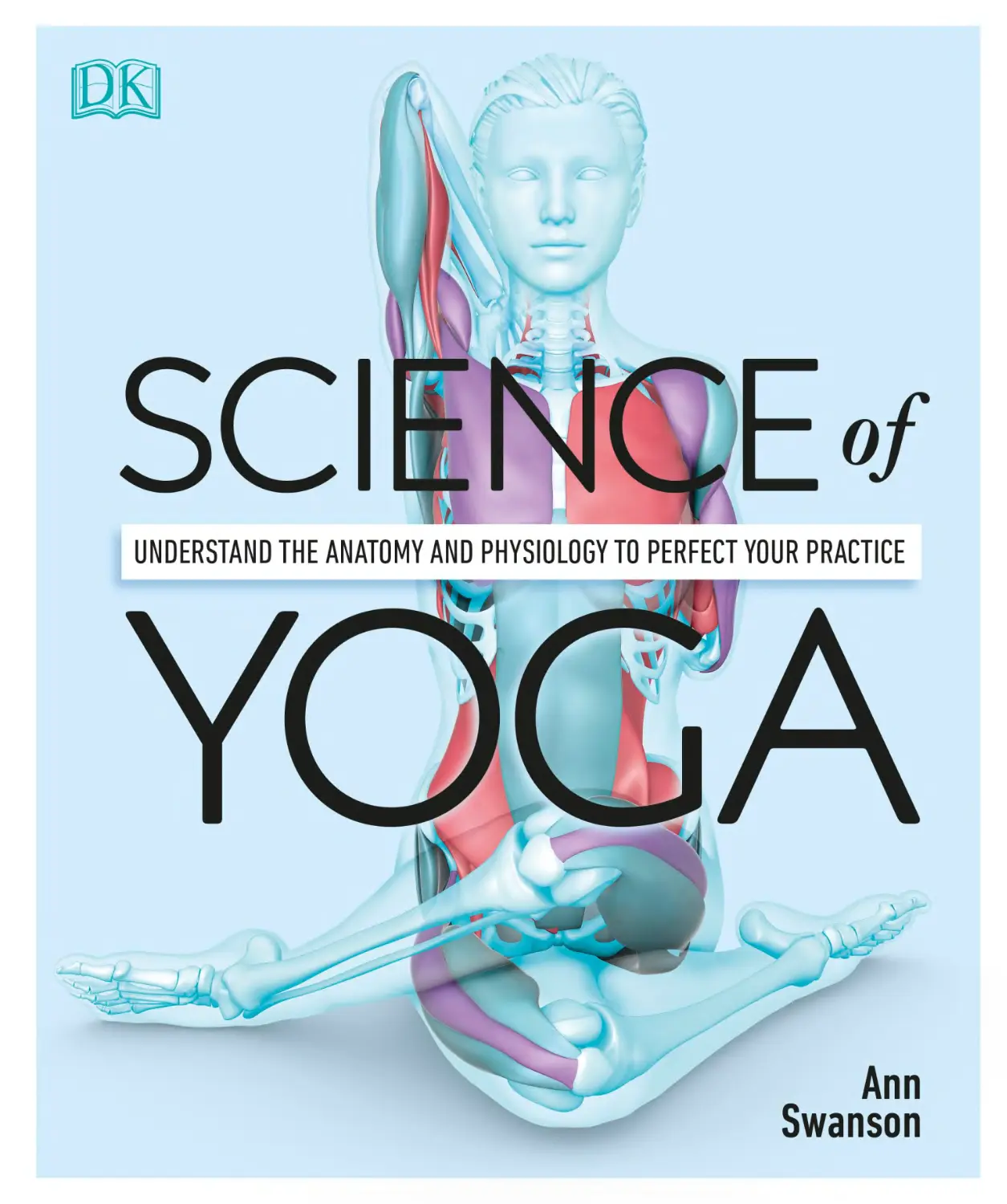
                    SCIENCE of

YOGA
UNDERSTAND THE ANATOMY AND PHYSIOLOGY TO PERFECT YOUR PRACTICE

SCIENCE

of

YOGA
UNDERSTAND THE ANATOMY AND PHYSIOLOGY TO PERFECT YOUR PRACTICE

Ann Swanson

Senior Editor Ruth O’Rourke-Jones
Senior Designer Clare Joyce
Editor Alice Horne
US Editor Karyn Gerhard
Senior Art Editor Karen Constanti
Design assistance Philippa Nash,
Louise Brigenshaw
Editorial Assistant Megan Lea
Senior Jacket Creative Nicola Powling
Jacket Co-ordinator Lucy Philpott
Pre-production Producers
Heather Blagden, Tony Phipps
Production Controller Igrain Roberts
Creative Technical Support Sonia Charbonnier
Managing Editor Dawn Henderson
Managing Art Editor Marianne Markham
Art Director Maxine Pedliham
Publishing Director Mary-Clare Jerram
Illustrations Arran Lewis
First American Edition, 2019
Published in the United States by DK Publishing
345 Hudson Street, New York, New York 10014
Copyright © 2019 Dorling Kindersley Limited
DK, a Division of Penguin Random House LLC
Text copyright © Ann Swanson 2019
19 20 21 22 23 10 9 8 7 6 5 4 3 2 1
001–310296–Jan/19

CONTENTS
Preface

6

HUMAN
ANATOMY

8

Cell to system

SEATED ASANAS

44

Accomplished Siddhasana

46

10

Bound Angle Baddha
Konasana

50

Skeletal system

12

Cat Marjaryasana

54

Muscular system

18

Cow Bitilasana

56

Nervous system

22

Cow Face Gomukhasana

60

Side Bend Parivrtta
Janu Sirsasana

64

Seated Twist Ardha
Matsyendrasana

68

Child’s Pose Balasana

72

Camel Ustrasana

76

King Pigeon Eka Pada
Rajakapotasana

80

STANDING ASANAS

84

Mountain Tadasana

86

Forward Fold Uttanasana

90

Endocrine system

28

All participants in fitness
activities must assume the responsibility for
their own actions and safety. If you have any
health problems or medical conditions, consult
with your physician before undertaking any of
the activities set out in this book. The
information contained in this book cannot
replace sound judgment and good decision
making, which can help reduce risk of injury.

Respiratory system

30

Cardiovascular system

34

Lymphatic system

36

Digestive system

38

Urinary system

40

All rights reserved. No part of this publication
may be reproduced, stored in or introduced
into a retrieval system, or transmitted, in any
form, or by any means (electronic, mechanical,
photocopying, recording, or otherwise)
without the prior written permission of the
copyright owners. Published in Great Britain
by Dorling Kindersley Limited

Reproductive system

41

Health warning

A catalog record for this book is
available from the Library of Congress.
ISBN: 978-1-4654-7935-8
Printed and bound in China
A WORLD OF IDEAS:
SEE ALL THERE IS TO KNOW
www.dk.com

THE ASANAS 42

Chair Utkatasana
Crescent Lunge
Anjaneyasana

94
98

Warrior II
Virabhadrasana II

102

Warrior III
Virabhadrasana III

106

Tree Vrksasana

110

Dancer Natarajasana

114

Triangle Trikonasana

118

INVERSION ASANAS

122

Downward-Facing Dog
Adho Mukha
Svanasana

124

Headstand Sirsasana

128

Half Shoulderstand
Ardha Sarvangasana

132

Bridge Setu
Bandhasana

136

Wheel Urdhva
Dhanurasana

140

FLOOR ASANAS

144

Crow Bakasana

146

Plank Kumbhakasana

The brain and mental
well-being

192

150

Chronic pain

194

Side Plank
Vasisthasana

Yoga therapy

196

154

Transformation

198

Cobra Bhujangasana

158

Locust Salabhasana

162

On the frontiers of
science

200

Cautions

202

Glossary

206

Index

208

Bibliography

214

About the author and
acknowledgments

216

Supine Leg Stretch Supta
166
Padangusthasana
Supine Twist Supta
Matsyendrasana

Q&AS

170

174

Joints and flexibility

176

Spinal care

178

Life stages

180

Meditation

184

Savasana

186

Stress

188

PREFACE
As the daughter of a NASA scientist I was raised
to have an analytical mind. A part of me craves method,
data, and evidence. I started journaling at the age of
seven, carrying my notebooks everywhere. I filled
them with charts, graphs, observations, and plans
concerning everything from what I ate that day to
what to rent at the video store.
I was a curious child, constantly asking, “Why?” My
parents would send me to the trusty encyclopedia to
look up the answer.
At the same time, I have always been artistic, creative,
and interested in spirituality. My notebooks are also filled
with elaborate stories, poetry, and colorful drawings.
My undergraduate studies in art led to burnout. Like
many people, I came to yoga hoping to relieve stress
and anxiety during a difficult time—with the added
bonus of staying fit. I didn’t expect that yoga would
transform me in an ineffable, seemingly magical way.
When I started practicing, I aimed to make the pictureperfect poses. I slowly realized that yoga isn’t about
performing the pose “perfectly,” but instead about being
perfectly okay with my body and mind in the moment.
Now I know that many of the most profound effects of
poses transcend my anatomy of muscles and bones
to shape my neurology, psychology, and energetic body.

I vividly remember lying on my mat at the end
of a yoga class with my eyes wide open, looking
impatiently around when I was supposed to be
relaxing. I thought “What a waste of time; I have work
to do!” With practice, I started to enjoy the way
relaxation and meditation practices made me feel.
Now, through reading research, I know that when
I meditate, I am literally reshaping my brain. Ultimately,
I am impacting every single system of my body, and
optimizing function. What more important work
could I possibly do?
My shifting mindset drew me to the Himalayas to
study yoga, massage, and healing arts. My teacher,
Yogi Sivadas, renewed my interest in science. I
returned to the US and completed the pre-medicine
courses, in pursuit of understanding how and why
yoga works in such life-changing ways.
I will never forget the first time I held a human
brain in the cadaver lab. The experience was
neither antiseptic nor clinical, but deeply spiritual.
That three-pound folded gray mysterious mass
once both computed mathematics and felt the
depths of love. Holding that brain, I knew that the
mind-body connection was a key mechanism
behind yoga’s benefits.

Scientific principles and
evidence have demystified
so much of the practice.

Science of Yoga is the book I wanted to read when I
first started practicing yoga. In classes, teachers offer
(sometimes conflicting) cues and claims—“Calm your
nervous system by elongating your exhales;” “This
pose will boost your immunity;” “Align your knee over
your ankle”—and I constantly wondered, “Why?”
For the past decade, through workshops, reading
research papers, and completing my Master of Science
in yoga therapy at Maryland University of Integrative
Health, I have continued to fill my notebooks with
facts, figures, sketches, and stories. Science of Yoga
summarizes the notes I found most fascinating as a
yoga student and teacher. This book is intended as
neither a comprehensive text on human anatomy and
yoga, nor a medical reference book; it is just the
beginning. My intention is for this material to spark
more curiosity and discussion about the science of
yoga, and lead to more inspired yoga practitioners and
professionals, more rigorous research, more public
policies that encourage yoga in schools and healthcare,
and, ultimately, more accessibility and acceptance.
Through my research, scientific principles and
evidence have demystified so much of the practice.
Surprisingly, this made my transformative experiences
feel even more magical. There is just so much more

to discover. In the grand scheme of scientific inquiry,
yoga research is in its infancy. However, now is an
exciting and pivotal point in the field, with a
remarkable increase in the quality and quantity of
yoga research papers in the past few decades;
the evidence supporting yoga’s benefits continues
to grow rapidly.
Science can explain the hows and whys of
many things, but research studies, no matter how
rigorously conducted, cannot compare to your
personal, experiential evidence of healing and
transformation. Only you can harness the power of
yoga through practice. As with any scientific inquiry,
I hope this book leaves you with more questions
than answers, and brings out your inner child to
playfully enquire, “Why?”
Be well,

Ann Swanson
Mind-body science educator and certified yoga therapist
www.AnnSwansonWellness.com

HUMAN
ANATOMY
Most yoga anatomy books and courses focus on the musculoskeletal system, but
research shows that practicing yoga affects all body systems. This section breaks
down the key effects and benefits for each one. Study your anatomical systems as
modern biology defines them—then, challenge yourself to shift to a yogic perspective,
that of unity. Experience your extraordinary body as an interconnected whole.

HUMAN ANATOMY

CELL TO
SYSTEM

Telomeres
Telomeres are like caps on
the tips of chromosomes.
With aging, telomeres tend
to shorten. Studies on the
cutting edge of molecular
biology have shown that a
yogic lifestyle (including
asanas, meditation, social
support, and a plant-based
diet) seems to increase
telomere length, which may
have an impact on increased
longevity and health.

As in design, a key concept in biology is “form
follows function”—this means that the physical
structures of your body reflect their specific
tasks. Anatomy is the study of these body
structures and physiology is the study of their
functions, or how your body works.

BUILDING BLOCKS
Atoms are the building blocks of matter; cells are the
building blocks of biological life. Approximately 37
trillion body cells are vibrating in your body right
now. They create four basic tissue types and 11 organ
systems. All of these parts and pieces create an
integrated whole called the human body.

Chromosome
consists of coiled
DNA strand
Telomeres on tips
of chromosome

CHROMOSOME

Blood vessels

Liver cells are
called hepatocytes

Cell membrane
is semipermeable
outer layer

Protons and
neutrons are
in the nucleus

Electrons
surround the
nucleus

Tissue
Cells come together to form tissues, which
are like unique fabrics. This specifically
shaped tissue is located in the liver.

Cell

DNA contains the
information a cell needs
to function and replicate

Cells are the smallest unit of life.
Most cells contain a nucleus in the center,
cytoplasm, and an outer layer called the
cell membrane. Small functional units
inside the cell are called organelles.

Atom
These chemical building blocks contain
protons, neutrons, and electrons. They
bond together to make important
molecules, such as water (H2O).

10

A gene is a unit of DNA
in a cell nucleus—meditation
may prevent cellular aging
and harmful gene expression

STRAND
OF DNA

Liver forms part of
the digestive system

Digestive system
absorbs nutrients
and eliminates
waste products

Organ
Tissues come together to form organs,
like your liver (shown below). This large
organ receives blood from all over your
body for processing and purification. It
also makes bile, which is used to break
down fats in the digestive process.

System
Organs come together to form organ
systems, including: integumentary,
skeletal, muscular, nervous, endocrine,
respiratory, cardiovascular, lymphatic,
digestive (shown above), urinary,
and reproductive.

Liver has
two lobes

Integumentary system
The integumentary system includes hair, nails, skin and associated
structures like sweat glands. Some claim that hot yoga causes you
to “sweat out toxins.” However, your liver is responsible for such
detoxification processes. What you are actually sweating out is water,
leading to dehydration. If you sweat a lot or practice hot yoga, make
sure you drink plenty of water to replenish your losses.

Tactile nerve
made of
nervous tissue
Hair

Sweat
gland

Dermis made
of connective
tissue

Epidermis made
of epithelial tissue
Arrector pili made
of muscle tissue
SKIN

The skin has two main
layers: the epidermis
on the surface and the
dermis below, which
contains sweat glands,
blood vessels, nerves,
and hair follicles.
Blood
vessel
Nerve

Human body
Organ systems
come together to
form an organism.
As a human being,
you are made up of
all of this, functioning
as a dynamic,
living whole.

11

HUMAN ANATOMY

SKELETAL
SYSTEM

Skull

These fused plates of
bone protect your brain
Mandible

Lower jawbone that
forms the only movable
joint in your skull

The 206 bones that make up your
skeleton are dynamic, living organs.
Together they form a framework for
your body that provides structure and
protection, and has the ability to move.

Clavicle

Also called the collarbone, it connects your
scapulae and sternum
Sternum

Also called the
breastbone, it
connects your ribs

SYSTEM OVERVIEW

Ribs

The 12 pairs of bones
that form your ribcage

Your bones are made of collagen and they
store calcium, a mineral that makes them
strong and is vital for bodily functions. They
also contain bone marrow where blood
cells are produced. Bones form joints,
which are supported by cartilage and
structures such as ligaments. Yoga can
support your bone and joint health.

Pelvis

Two hip bones
connected by
your sacrum
Carpals

Eight small bones
form each wrist
Metacarpals

Five long bones run
through each palm
Phalanges

Each hand has
14 bones forming
your fingers
Spongy bone
Patella

Bone marrow
Compact bone

Also called the kneecap,
it is attached to your
quadriceps tendon

Periosteum
Tarsals

The seven small bones
that form your ankle
Metatarsals

Bone structure
Bone has a smooth outer connective tissue
shell called periosteum. Inside this is a
strong, dense layer known as compact bone.
Deeper still is spongy bone with
honeycomblike spaces; this is strong yet light.

12

Five long bones that
run through your foot
Phalanges

The 14 bones in each
foot that form your toes

Chondrocyte
(cartilage cell)

Vertebral column

A series of bony disks
that form your spine

Scapula

The shoulder blade
connects torso and arm
Humerus

This bone connects your
scapula and forearm
Ulna

Forearm bone
that runs to your
little finger

Cartilage
Hyaline articular cartilage lines bones at most
joints and is smoother than glass—it even
looks like stained glass under a microscope.
However, when this cartilage wears down, it
can become coarse like sandpaper, causing
a condition called osteoarthritis (see p.17).

Radius

Forearm bone
that runs to
your thumb

Sacrum

This bone is the
keystone of your pelvis

Ligament
attaches bone
to bone

Femur

Your thighbone
is the longest bone
in your body
Tibia

You can feel the edge
of your shinbone
under your skin
Fibula

Thin bone that sits on
the outside of your leg

Ligaments
Bones are connected by dense fibers called
ligaments. Both ligaments and tendons (see
p.19) have very little elasticity, meaning, if you
overstretch them in an asana, they often don’t
go back to their resting length and lose stability.

Calcaneus

Your heel bone attaches
to your Achilles tendon

13

SPINE
Your vertebrae sit on top of each other to create natural curves.
This is called a “neutral spine.” It alternates between curving
inward (lordosis) and outward (kyphosis) to absorb shock like
a coiled spring. Your vertebrae are like wedges stacked to form
these curves in order to bear your body weight most efficiently.

Space for
vertebral
artery

Hole for
spinal cord

Neutral spine
Many asanas incorporate a neutral spine,
such as seated meditation poses. Poor
posture and other considerations can
lead to a multitude of spinal structural
deviations, including common conditions
like hyperlordosis and hyperkyphosis.
Yoga works your spine in unique ways
and enhances body awareness to
improve your overall posture.

Cervical
curvature

There is
a natural
lordosis in
the neck

CERVICAL VERTEBRA
Thoracic
curvature

There is a natural
kyphosis in the
mid-back

Gentle, even curves
NEUTRAL SPINE

Articulates
with rib

Body of
vertebra

These natural curves
create the strongest, most
stable alignment of the
spine. In this ideal, the
spine is also not twisted
or leaning to either side.

Curvature in upper
spinal column
KYPHOSIS

Lumbar
curvature

There is
a natural
lordosis in the
lower back

THORACIC VERTEBRA

Articular
process

Enlarged body to
support weight

Hyperkyphosis of the
thoracic spine is often
simply called a kyphosis
or hunchback. This
exaggerated curvature is
common in osteoporosis.

Curvature in lower
spinal column
LORDOSIS

Hyperlordosis of the
lumbar spine is sometimes
just called a lordosis
or swayback. This
exaggerated curvature is
natural during pregnancy.
LUMBAR VERTEBRA

14

HUMAN ANATOMY

Skeletal System

PELVIS
Your pelvis includes two hip (coxal) bones connected by your
sacrum. The sacrum, which means “sacred” in Latin, is the
triangular bone with the tailbone at the lower, or inferior,
end; it acts like the keystone to an arched bridge, forming
a structurally sound base for your spine.

Anterior superior
iliac spine

Your “hip points” can be
felt under your skin

Sacroiliac joint

Commonly called
the SI joint, this is
slightly movable

Acetabulum

Greater sciatic notch

The socket of your hip
joint which articulates
with your femur

This creates a space for
the sciatic nerve to pass

Coccyx

These fused bones are
known as the tailbone

Ischial tuberosity

FEMALE PELVIS

Pubic symphysis

This joint is made of
fibrocartilage like your
intervertebral disks

Your “sitting bones”
are at the base of
your pelvis

Neutral pelvis
A neutral pelvis facilitates a
neutral spine and vice versa.
Imagine your pelvic bowl
filled with water. Finding a
neutral spine and pelvis
means that the water
wouldn’t spill backward,
forward, or to the side—
such as when one of your
hip points is lifted or
your pelvis is rotated.

Pelvic bowl
tilts backward,
flattening
lumbar curve

POSTERIOR TILT

Pelvic bowl
is balanced,
with neutral
lumbar curve

NEUTRAL

Pelvic bowl
tilts forward,
exaggerating
lumbar curve

ANTERIOR TILT

15

JOINTS
Joints are where bones unite and articulate to allow movement.
There are three joint types: fibrous, cartilaginous, and synovial.
Fibrous joints are immobile, such as the sutures in your skull.
Cartilaginous joints are slightly mobile, like your pubic symphysis.
Synovial joints are most mobile and are very important for asanas.
JOINT ACTIONS
Synovial joints of your body can move in many
directions. Hinge joints in your elbow and knee
mainly perform flexion and extension, like the
hinge of a door. Larger ball and socket joints like in
your shoulder and hip can also perform abduction,
adduction, rotation, and circumduction, which is
a combination of all of the above movements.

Elbow extension

Shoulder
abduction

Spinal axial
rotation

Hip internal
rotation and
abduction
Shoulder
external
rotation

TYPES OF MOVEMENT
Flexion

Angle at joint generally gets smaller

Extension

Angle at joint generally gets larger

Abduction

A limb moves away from the body

Adduction

A limb moves closer toward
the body

External rotation

A limb rotates outward

Internal rotation

A limb rotates inward

Axial rotation

The spine twists on its axis

Plantar flexion

Pointing the feet

Dorsiflexion

Flexing the feet

Inside a joint
Synovial fluid lubricates and cushions. It
is a “non-Newtonian fluid,” which means
it gets more viscous or thicker in response
to pressure, similar to solutions of cornstarch
in water. With a sedentary lifestyle, synovial
fluid may become thin and less effective.
However, impact from the practice of yoga
asanas causes synovial fluid to thicken,
reducing pain and better protecting joint
structures such as cartilage.

SYNOVIAL JOINT

Synovial joints allow movement while
protecting bone ends from touching
each other, which would cause damage.
They are the most common type of
joint in the body.

16

Hip external
rotation

Knee extension

TRIANGLE

Ligaments
connect bone
to bone

Spongy bone

Joint capsule
holds joint
together
Articular cartilage
reduces friction

Bones come
together to
create a joint

Healthy synovial
fluid is thick to
cushion joint
ELBOW JOINT

HUMAN ANATOMY

Skeletal System

Shoulder
extension
THE POSES

Yoga asanas move joints in all
directions. Visualize or try doing
these poses to experience the joint
actions in your body. Imagine or
feel each joint action internally.

Shoulder
internal rotation

Knee flexion

Spinal extension

Hip flexion and
adduction

Hip extension
Hip flexion

Spinal
flexion

Knee extension

Knee flexion

CHILD’S POSE

Ankle dorsiflexion

Ankle plantar flexion

DANCER

Arthritis

Smooth cartilage

Wear and tear on joints can lead
to osteoarthritis. In a 7-year clinical
trial, researchers found that yoga is
safe and effective in managing both
osteoarthritis and rheumatoid arthritis
(see p.37). After an 8-week yoga
class, participants showed a reduction
in pain by 25 percent, along with
statistically significant improvements
in physical fitness and quality of life.

Cartilage degrades
Space
in joint

Bone surfaces meet

Joint space
narrows

Bone spur

PROGRESSION

As cartilage degrades there is
less space in the joint, leading
to inflammation and pain. Bone
spurs or osteophytes can form as
the condition progresses.

Synovial fluid
cushions joint
HEALTHY
JOINT

Inflamed
membrane
EARLY
ARTHRITIS

Cyst in
bone
LATE
ARTHRITIS

17

HUMAN ANATOMY

MUSCULAR
SYSTEM

Pectorals

Pectoralis major
Pectoralis minor

Intercostal muscles

There are about 640 muscles in your
body. Your skeletal muscles are attached
to your bones, allowing you to move.
Some muscles are superficial (close to
the surface) and others are deep.

Brachialis

Abdominals

Rectus abdominis
External abdominal
obliques
Internal abdominal
obliques
(deep, not shown)
Transversus abdominis

SYSTEM OVERVIEW
As you study each of these key chosen
muscles, try to palpate or physically touch
them while visualizing their internal
location. This will help you learn better,
while improving your mind-body
connection. Most of the muscles
here are categorized into groups
based on their actions.

Muscle fibers are
arranged in
parallel orientation

Hip flexors

Iliopsoas (iliacus
and psoas major)
Rectus femoris
(see quadriceps)
Sartorius
Adductors
(see below)
Adductors

Adductor longus
Adductor brevis
Adductor magnus
Pectineus
Gracilis

Elbow flexors

Biceps brachii
Brachialis (deep)
Brachioradialis

Quadriceps

Rectus femoris
Vastus medialis
Vastus lateralis
Vastus intermedius
(deep, not shown)

Striations are visible
stripes from internal
structures (see p.21)

Ankle dorsiflexors

Tibialis anterior
Extensor digitorum longus
Extensor hallucis longus

Skeletal muscle
There are three types of muscle tissue:
cardiac, smooth, and skeletal. We will focus
on skeletal muscle as it is responsible for the
movement of joints in asana. This is what it
looks like under a microscope.

18

SUPERFICIAL

DEEP

Cervical extensors

Splenius capitis
Splenius cervicis

Trapezius

Levator scapulae
Rhomboids

Rhomboid minor
Rhomboid major

Deltoids

Spinal extensors

Latissimus dorsi

Cervical extensors (above)
Erector spinae
Transversospinales
(small, deep muscles
along spine)

Triceps brachii

Serratus posterior
Gluteus medius

Gluteals

Gluteus maximus
Gluteus medius
Gluteus minimus

Piriformis

Muscle has more
blood flow and
stretching capacity

Adductor
magnus
Hip extensors

Gluteals
Adductor magnus
Hamstrings
Biceps femoris
Semitendinosus
Semimembranosus

Ankle plantar flexors

Collagen fibers resist
pull or tension

Tibialis posterior
Calf muscles
Gastrocnemius
Soleus

Tendons
Tendons are tough cords of dense
connective tissue attaching muscle to bone.
As bundles of parallel collagen fibers, they
have little elasticity or blood flow. In general,
you want to stretch muscles, not tendons.

DEEP

SUPERFICIAL

19

MUSCLE STRUCTURE

HOW MUSCLES WORK

Skeletal muscles are bundles of bundles of bundles
of parallel muscle cells, blood vessels, and nerves
wrapped with connective tissue, including fascia.
Fascia creates a network through and around muscles
and other structures of your body. Microscopic
proteins in your muscles cause muscle contractions.

Muscles often work in antagonistic pairs. As the
agonist muscle engages, the antagonist generally
releases. Synergist muscles engage around the joint
to support the action.

Fascicle

A bundle of
muscle cells

TYPES OF CONTRACTION
Isotonic contractions involve a change in muscle length,
as in the act of flexing or extending your elbow (see
below) or transitioning in or out of an asana. Isometric
contractions involve tension with no change in muscle
length, such as when holding an asana.

Muscle cell

Also called a
muscle fiber

Myofibril

Microscopic
contractile
proteins

M line

Middle of a
sarcomere

Antagonist

Biceps brachii is the
antagonist as it
mostly relaxes

Extension

Angle of joint increases

Z disk

Edge of a
sarcomere

Thin filament

Made of the
protein actin

Thick filament

Made of the
protein myosin

Agonist

Triceps brachii is the agonist
as it concentrically contracts
to extend the elbow

Fascia
Fascia is similar to the white
pith of an orange; it separates
parts yet integrates the whole.
Fascia is not just found
around muscles. It is also
around vital organs and
woven throughout your body.
This body-wide network of
fascia is part of the reason
why a yoga pose that affects
your foot can suddenly
release your tight shoulders.

20

Fascia
connects heel
to toes

Flat band of
connective
tissue
PLANTAR
FASCIA

ECCENTRIC CONTRACTION

Eccentric contractions occur when muscle fibers
“lengthen” to change the angle of a joint. This
occurs in your biceps when extending your elbow
as you lower a weight, or in your hamstrings when
extending your knee as you transition from
Warrior II to Triangle (see pp.118–21) pose.

HUMAN ANATOMY
Movement and fascia

Muscular System

Healthy double
lattice collagen
orientation

Research suggests that the
collagen fibers of the fascia
surrounding healthy muscles
are organized in a crisscross,
lattice structure. Inactivity and
aging seem to cause your
fascia to lose its structural
integrity. Asana may help
organize your fascia, helping
you move and feel better.

Random collagen
orientation from
inactivity

COLLAGEN FIBERS

Agonist

Biceps brachii is the
agonist as it concentrically
contracts to flex the elbow
Flexion

Angle of joint
decreases

Antagonist

Triceps brachii is the
antagonist as it
mostly relaxes

CONCENTRIC CONTRACTION

Concentric contractions occur when the muscle fibers
“shorten” to change the angle of a joint. This occurs in
your biceps when flexing your elbow as you lift a weight,
or in your hamstrings when flexing your knee as you
move into Warrior II (see pp.102–05).

Muscle contraction
A cascade of events initiated
by a signal from the nervous
system and the presence of
calcium leads to the removal
of the blockage on actin of
the thin filament, allowing
the thick and thin filament to
connect. The thick filament
pulls the thin filament in
toward the M-line, bringing
the Z-disks closer together.

M line
Thick
filament
RELAXED SARCOMERE

Thin filament
Z disk

CONTRACTED SARCOMERE

21

HUMAN ANATOMY

NERVOUS
SYSTEM
The nervous system is a control network
that connects all body systems. It is split
into the central and peripheral nervous
systems (PNS). The PNS is comprised of the
somatic and autonomic nervous systems.

Brain

Responsible for control
and cognition
Cranial nerves

12 pairs of peripheral nerves
Brachial plexus

A collection of nerves
around your armpit
Spinal cord

Your body’s primary
communication highway
Median nerve

SYSTEM OVERVIEW
The somatic nervous system consists of nerves
carrying sensory and motor signals to and
from the spinal cord and brain. The
autonomic nervous system (ANS) is
divided into two functional systems:
the sympathetic nervous system and
parasympathetic nervous system, which
accounts for many of yoga’s benefits.

Spinal nerve carries
messages to and
from your central
nervous system

Spinal cord
connects the
brain and body

Can be pressed on
in carpal tunnel
Lumbar plexus

A collection of nerves
around lower back
Sacral plexus

A collection of nerves
around your sacrum
Ulnar nerve

On the little finger
side, causes tingling
when hitting “the
funny bone”

Femoral nerve

Supplies sensation
around thigh and leg

Sciatic nerve

Largest nerve
in your body

Vertebra
protects
spinal cord

Tibial nerve

Branches off
sciatic nerve

Spinal cord
In this superior, or bird’s-eye, view of
a vertebra, you can see how your spinal cord
is protected by the bony encasement of the
spinal column. Spinal nerves project off to
the side, in between the vertebrae.

22

Digital branches
of fibular nerve

Supply sensation to foot

NERVE STRUCTURE

Cell body

Contains nucleus

Neurons are the main cells of your nervous
system. Axons are bundled together in your
PNS to make nerves. Nerves are like highly
conductive electrical wires sending signals
throughout your body. Some are wrapped
with a fatty substance called myelin, making
their signals travel faster.

Dendrite

Smaller projections that
receive signals from
neighboring neurons
Myelin

Covering that insulates
and speeds up signal
Nerve signal

Epineurium

Connective tissue
around nerve

Axon

Largest projection
that transmits signal
to next cell

Perineurium

Connective tissue
around bundle
of neurons

NERVE SIGNAL

Nerve signals are pulses of electricity
along the cell membrane due to the
movement of electrically charged
particles called ions.

Endoneurium
NERVE

Connective tissue
around neuron

THE AUTONOMIC
NERVOUS SYSTEM

NEURONS

Brain and spinal
cord monitor internal
conditions of body

Dilates
The autonomic nervous system (ANS)
pupils
can be thought of as your body’s
autopilot. Its functions are automatic
Dilates airways
and they include processes such as
Accelerates
your heart rate, breathing, digestion,
heartbeat
and excretion, which happen without
you having to consciously think about Stimulates glucose
production
them. The ANS is further divided
into two systems of control that
Inhibits proper
digestion
complement each other: the
Slows urine
sympathetic nervous system (SNS)
output
and the parasympathetic nevous
Inhibits peristalsis
system (PSNS).
(see p.39)

Relaxes bladder

Constricts pupils

Constricts airways
Slows heartbeat
Stimulates glucose
storage as glycogen
Stimulates proper
digestion
Stimulates pancreatic
enzyme release
Stimulates peristalsis
Contracts bladder

Constricts blood
vessels
SYMPATHETIC NERVOUS SYSTEM

The SNS is known as “fight or flight”
or the “stress response” because it
helps you deal with stressful situations.

PARASYMPATHETIC NERVOUS SYSTEM

The PSNS is known as “rest and digest”
or the “relaxation response” because it
creates a restful state of optimal function.

23

CEREBRAL CORTEX

INSIDE THE BRAIN

Compared to other mammals, our brains are massive for
our bodies, with a particularly developed cerebral cortex.
Most of the cortex is on the outside of the brain, except
the insula. It is composed of gray matter, which is filled
with synapses or connection points between neurons.
Your cortex has five lobes and many functional areas.

The brain contains many different structures
and scientists are still figuring out what their
functions are. Some of these structures
monitor conditions inside your body and
relay information. The limbic system is the
emotional center of your brain.

LOBES OF THE BRAIN

INTERNAL STRUCTURES

The brain is separated into five main divisions,
called lobes, including the insula which is
inside the brain (not seen here).
Temporal lobe
Frontal lobe

Responsible for
decision-making and
motor functions

LATERAL VIEW

24

Involved in
smell, hearing,
and memory

Parietal lobe

Processes body
sensation

This image shows the brain as if it were cut
in half down the middle (a midsagittal section)
to reveal structures inside the cerebrum.
Occipital lobe

Back area
of the cortex
processes vision

Corpus callosum

Connects two sides
of brain

Hypothalamus

Controls much of
neuroendocrine
function

MIDSAGGITAL
SECTION

Thalamus

Relay center for
information

HUMAN ANATOMY

How yoga affects your brain
This chart looks at the neuroscience that may
explain the vast mental and physical benefits
of yoga. Modern science shows us that the
brain maintains its ability to adapt across a
lifetime, making it possible to break bad habits
and negative patterns. It can also create the
key chemicals that pharmaceutical companies
synthesize in a lab. Research is uncovering the
huge potential of yoga therapy to help people
on a global scale. These effects stem from
yoga’s multidimensional approach, reflected in
its 8-limb structure (see p.198), which includes
guidelines on self-control and self-regulation.

Brain alpha wave activity increased
Alpha waves are associated with relaxation.
GABA increased Gamma-aminobutyric
acid counteracts anxiety and stress
symptoms, leading to more relaxation.
Serotonin increased Serotonin helps
regulate your mood. Low levels of usable
serotonin are associated with depression.
BDNF increased Brain-derived
neurotrophic factor is a protein responsible
for neuron health and neuroplasticity. Yoga
can boost levels of BDNF, which may help
people with chronic pain or depression.

Caudate nucleus

Involved in learning
and processing
memories

Pineal gland

Regulates
sleep–wake cycle

Putamen

Involved in
movement and
learning

Nervous system

Dopamine regulated Dopamine
acts as your body’s reward system and
dysfunction is associated with addiction.
Research suggests that meditation results
in improved self-regulation.
Cortisol reduced Cortisol is a stress
hormone. When your baseline increases
and levels are too high for too long, it can
lead to inflammation and weight gain.
Norepinephrine reduced A decrease
in norepinephrine, or adrenaline, means
fewer stress hormones in your system.

Fornix

Plays a role in
memory processing

Cingulate gyrus

Regulates emotions
and behavior

Olfactory bulb

Detects scents
and triggers
memories

Amygdala

Fear center

Cerebellum

Hippocampus

Brainstem

Pons

Involved in bodily
movement,
muscle control,
and balance

Regulates
autonomic
functions like
breathing and
heart rate

Memory center
that allows
neurogenesis
(see pp.26–27)

Communication
center on brainstem

LIMBIC SYSTEM

25

NEURAL PATHWAYS

CHANGING BRAIN

The brain develops neural connections—and
eventually becomes conditioned—based on your
choices and experiences. It is said that neurons that
fire together, wire together. The more you practice
an activity—or a mindset—the more networks are
created. With approximately 100 billion neurons,
the brain’s possible connections are vast. Yoga
practices facilitate this process.

Neuroplasticity is the ability of your brain to be
molded. Not long ago, scientists thought the brain
couldn’t change after childhood and degraded with
age. Now we know that nervous tissue adapts. Like
exercise affects your muscles, your brain tissue either
develops or atrophies based on stimulation.

Nerve signal
BUILDING
CONNECTIONS

New
connection

A new experience
triggers neurons
to form new
connections.

Brain cell

UNSTIMULATED BRAIN

Nerve signal

More cells
join network

Synapse
New connection

BUILDING A NETWORK

Repetition strengthens
and continues to build
a neural network.

How yoga boosts your brain
There is no neuroplasticity pill. The
most effective way to shape your brain
is through behavioral changes.
Although any yoga practice should
encourage neuroplasticity, try the tips
here for improved results.

26

Without stimulation, fewer
connections are made. The
brain tissue looks like a dying
tree with sparse branches.

STIMULATED BRAIN

With stimulation, more
connections form. The brain
tissue looks like a thriving
tree with dense branches.

Samskara
Yogis perhaps conceptualized
SAMSKARA
neuroplasticity with samskaras:
(IMPRESSION)
impressions due to past thoughts
and actions. Yoga can help beat bad
habits or conditioned responses
by affecting neural pathways and
samskaras. This occurs at a
synaptic level each time you
consciously change your
VRITTI
KARMA
(THOUGHT
thoughts and actions through
(ACTION)
PATTERN)
awareness and practice. The
more you travel that new path,
the stronger the connection
CYCLIC NATURE OF HABITS
between the neurons gets.

Increase the intensity
Moderate to vigorous
physical activity, like from
sun salutations, is one of
the most effective ways of
increasing brain-derived
neurotrophic factor. This is
a nerve growth factor, which
is like a glue that helps to
wire in neural connections.

Change your routine
Purposefully and consciously
changing your yoga practice
routine benefits your mind
and your body.
Meditate
Research shows that
meditation builds gray matter
in your cerebral cortex.

Join a class
The act of moving with
a group and following
the teacher activates
mirror neurons. The
mirror neuron system is
a recently discovered
network of nerves involved
in emulation of movement
and developing compassion.

HUMAN ANATOMY

NEUROGENESIS
Scientists used to think that people are born with a certain number
of nerve cells and that they cannot grow new ones. Research has since
revealed that the growth of new neurons, or neurogenesis, can happen
at any age. Neurogenesis occurs in key areas of the brain responsible
for memory—the hippocampus—and smell. Neural stem cells in these
regions of the brain develop new neurons.

Nervous System

CORTISOL
LEVELS
Consistently high levels of
the stress hormone cortisol are
related to increased amygdala
(fear center, see p.25) activity
and decreased hippocampal
(memory center) activity.
When under these conditions,
the hippocampus doesn’t grow
new neurons or connections
well. Yoga practices are shown
to reduce cortisol levels and
reverse these effects, which may
contribute to improving memory.

Amygdala
Hippocampus
Hippocampus
(Memory)

Amygdala (Fear)
SITE FOR NEW CELLS

In this hippocampus tissue, helper
cells or neuroglia are blue, axons
are green, and neuron cell bodies
and stem cells are pink.

Stem cells

Hippocampal stem cells can
develop into new neurons,
improving memory

STRESS AND MEMORY

Increased activity in the amygdala
is correlated with reduced activity
in the hippocampus, which has an
adverse effect on memory.

Practice hand mudras
Hand mudras are gestures
that require concentration
and awareness. Just as
people who read braille
have more developed
hand-specific sensory areas
of their brain, mudras may
develop brain areas linked
with sensory acuity, and
fine motor skills.
PADMA MUDRA

HAKINI MUDRA

SHUNI MUDRA

BUDDHI MUDRA

27

HUMAN ANATOMY

ENDOCRINE
SYSTEM

Pineal gland

Makes melatonin,
which affects sleep

Hypothalamus

Controls other glands

Pituitary gland

The endocrine system is a slower, longerlasting control system than the nervous
system. It consists of glands that release
hormones into your bloodstream to be
delivered to specific cells.

SYSTEM OVERVIEW
Your brain controls the release of hormones
from endocrine glands to maintain a
balance inside your body, called homeostasis.
Stressors—from external environmental
conditions to internal or emotional
factors—affect this balance, but yoga
can help. For example, research suggests
that yoga may prevent and improve
symptoms of type 2 diabetes.

Ovaries produce
female sex
hormones

Produces key hormones
Parathyroid gland

Regulates blood calcium levels
Thyroid gland

Regulates
metabolism and
blood calcium

Heart

Releases hormones
to regulate
blood pressure

Adrenal gland

Regulates salt levels
and produces
adrenaline in
response to danger

Pancreas

Secretes insulin
and glucagon
to regulate
blood sugar

Small intestine

Releases hormones
to help with
digestion

Testis

Produces male
sex hormones
FEMALE

28

MALE

Homeostasis and allostasis
Homeostasis is your body’s state of
dynamic equilibrium. Most processes—
like the control of hormone release, blood
calcium and blood sugar levels, and
temperature—are tightly regulated
through negative feedback, which works
in a similar way to a thermostat. Nature
wants you to be in balance. Yogis referred
to this as samatva, which can be
translated as equilibrium or equanimity.
Allostasis is a process of maintaining
homeostasis amid stressors. The
more intense the stress, the heavier the
“allostatic load” and the more your cells
have to work to maintain equilibrium.
This increases the likelihood of
chronic diseases. Researchers
believe that yoga can reduce
allostatic load.

Hormone production
by gland turned down
Rising blood levels
of hormone detected

Gland decreases
secretion of hormones

HOMEOSTASIS

Gland releases more
hormone into the blood

Low blood levels of
hormone detected

Hormone production
by gland turned up

500lb

500lb

5lb

INCREASED LOAD

5lb

REDUCED LOAD

ALLOSTASIS

PANCREAS

Metabolism

Your pancreas releases insulin to help sugar get into
your body cells. However, cells can become insulinresistant, which can cause disease. A review found
that yoga can improve glycemic control, lipid levels,
and body composition of fat in those with metabolic
syndrome and type 2 diabetes. A doctor-approved
reduction in medications was also found.

Most yoga practices tend to slow your
metabolism, which helps your body to
be more efficient with less. Although your
metabolism may slightly lower from relaxationbased practices, this doesn’t mean you will
gain weight. A reduction in stress hormones
like cortisol also prevents your body from
holding onto fat.

Meditation has
been shown to lower
metabolism

Islet

Beta cells in pancreas
release insulin

Most
breathwork
can lower
metabolism

Your thyroid
regulates
metabolism

Pancreatic islets
Inside your pancreas, islets contain different
types of cells. Beta cells release insulin,
which allows your body cells to use glucose.

29

HUMAN ANATOMY

RESPIRATORY
SYSTEM
You take a breath 12–20 times per minute. The
purpose of your breath is to get oxygen to your
cells and to get rid of waste like carbon dioxide.
The respiratory system includes the nasal
cavities, air passageway tubes, and lungs.

SYSTEM OVERVIEW
You don’t have to think to breathe; respiration
is a part of your autonomic nervous function.
However, yogis claim that by controlling your
breath, you can control all aspects of being.
Science reveals that your breath is an access
point to regulating your nervous system.

Nasal cavity

Air entering through
nose is humidified,
warmed, and filtered
Nostril

Openings in the nose
Mouth

Air can enter here,
though less efficient
Epiglottis

Flap that closes off
trachea to keep food
from entering airways
Larynx

Top part of trachea,
contains vocal cords

Trachea

Neti pots
The neti pot is a part of traditional yogic hygiene
practices. It involves pouring clean (filtered or boiled),
warm salt water in one nostril to fill the sinuses and
drain out the other nostril. Neti pots (or a similar
sinus rinse) are recommended by many modern
physicians to help allergies and respiratory illness.

Frontal sinus
Sphenoid and
ethmoid sinuses

Also called the
windpipe, carries
air to lungs

Lungs

Branching
airways end here;
oxygen enters
blood and carbon
dioxide is removed

Maxillary sinus
Nasal
passageway
Diaphragm

SINUSES

Your sinuses are a system of connected,
air-filled cavities in your skull. They make
your skull lighter, help your voice to resonate,
and affect your breath.

30

Primary muscle
of respiration

HOW WE BREATHE
When you inhale, the breath enters your nose, throat,
and then your lungs. Your lungs and ribcage expand threedimensionally in all directions; your diaphragm engages
to flatten. When you exhale, your diaphragm relaxes
to ascend, your lungs and ribcage compress, and the air
releases out of your throat and then nose.

Air drawn in
through nose
or mouth

Air expelled
through nose
or mouth

Ribcage

Bones surrounding
lungs

Ribcage expands,
creating space
in chest

Ribcage
releases
down
and in

Lungs
enlarge,
filling
with air

Lungs
decrease
in size,
pushing
out air

Diaphragm
contracts,
allowing lungs
to descend

Diaphragm
relaxes and
expands

INHALE

EXHALE

Belly breathing

Diaphragm

“Belly breathing” doesn’t mean
you are actually breathing in
your belly, but rather that you
are allowing your belly to move
freely with your breath. When
your diaphragm engages with
the inhale, it presses against
your abdominal organs—
pushing down and out, which
is why this is also called
diaphragmatic breathing.

Ribs attach
to diaphragm
INFERIOR VIEW

Lumbar
vertebrae
attach to
diaphragm

31

PRANAYAMA
Yogis use pranayama or breathwork to
control their prana and anchor to the
present moment. The word prana in
Sanskrit means vital energy or lifeforce energy that permeates through
us and everything. Interestingly,
prana simultaneously means breath.
Yogis believe that you can change the
flow and qualities of your energetics
by breath control.

Brain stem

Automatically
monitors breathing
Sympathetic nerve

Vagus nerve

Increases sympathetic
nervous system (SNS)
activity with inhales

Increases parasympathetic
nervous system (PSNS)
activity with exhales
Baroreceptor

Heart

Pressure receptors
located here

Relaxes slightly
with exhale

INHALE AND EXHALE

When you inhale, blood is shunted
to your heart and lungs to help them
function. Baroreceptors (see p.134)
sense this increased pressure and
respond by signaling to let off the
brake pedal, momentarily increasing
sympathetic activity. During each
exhale, your heart is slightly more
relaxed with increased parasympathetic
activity. This explains why elongating
your exhales in pranayama is relaxing.

BREATHWORK
PRACTICES
Modern yogis use breathwork for health
benefits, including overcoming inefficient
breathing patterns from a culture of poor
posture and stress. Through altering your
breath, you change your state of mind.
For example, you may practice left nostril
breathing and bee breath to calm down
or right nostril breathing and kapalabhati
for alertness.

Passive inhale

Pressure passively
allows air in

Active exhale

Chest
expands

Quick, forceful
exhale pushes
air out

Ribs drop in

BREATH OF FIRE (KAPALABHATI)

This is a fast breath that mimics
hyperventilation, increasing your
heart rate and blood pressure. It
also tones your abdominals. Avoid
this technique if you are pregnant or
have anxiety, certain eye conditions,
or high blood pressure. Similar
effects and precautions apply for
holding your breath (kumbhaka).

32

Abdominals
move gently
outward

INHALE

Abdominals
drawn in

EXHALE

HUMAN ANATOMY

NASAL CYCLE
For many, each nostril takes turns dominating air
flow (in .5- to 4-hour shifts). This is called the nasal
cycle. You probably notice this more when you are
congested. Openness indicates local vasoconstriction
and the swollenness indicates vasodilation. Observe
this cycle naturally or try purposefully covering one
nostril for a desired effect (see panel right).

Respiratory System

Left brain, right brain
Each half of your body is controlled by the opposite
hemisphere of your brain—meaning that your left arm is
controlled by the right half of your brain. The same is true of
your nostrils. This may have many implications, including a
slight overall increase in SNS activity when right nostril
breathing and PSNS when left, although evidence is mixed.

Open nasal
passage

Maxillary sinus

Left nostril breathing,
calm and relaxed
Right nostril
breathing, alert
and energetic

Left brain,
increased
SNS activity

Engorged nasal
tissue
Right brain,
increased
PSNS activity

NASAL TISSUE

This image shows the right nasal passage
swollen while the left is open. In this case
the swelling is exacerbated by congestion.

Vocal cords
during
normal
breathing

BRAIN HEMISPHERES

Finger
blocks one
nostril

Fingers and thumbs
cover ears and eyes

Thumb
switches to
block other
nostril

OPEN

Vocal cords
during ujjayi

PARTIALLY
CLOSED

VICTORIOUS BREATH (UJJAYI)

ALTERNATE NOSTRIL BREATHING

BEE BREATH (BRAHMARI)

Victorious breath involves partially
constricting your vocal cords. The
feeling is similar to when you whisper
softly. It creates an ocean sound to
give your mind a focal point.

This technique may calm the mind
and body. It involves focus and
activation of both sides of the brain.
To practice it, just remember: exhale,
inhale, and switch nostrils.

This involves covering your eyes and
ears and humming on a long exhale.
Yogis used this to improve sleep.
Research shows it can lower heart
rate, blood pressure, and anxiety.

33

HUMAN ANATOMY

CARDIOVASCULAR
SYSTEM

Jugular vein

Returns blood from
brain to heart

Subclavian artery

Carries blood to
arm and hand

The heart, an intricate network of
vessels, and the blood circulating
through them make up your
cardiovascular system.

Superior vena cava

Returns blood
back to heart
Aorta

SYSTEM OVERVIEW

Largest artery in
your body

Your heart constantly beats to pump blood
around your body, removing waste and
delivering vital oxygen. Research on yoga
suggests profound benefits for cardiovascular
health, including a reduced risk of heart
disease. Yoga has been shown to clinically
improve blood pressure, cholesterol levels,
and cardiovascular resilience (see opposite).
Red blood cells

Also called erythrocytes,
they deliver oxygen

Heart

Muscular pump
for blood
Inferior vena cava

Returns blood from
lower body to heart

White blood cells

Also called leukocytes,
they fight invaders
Abdominal aorta

Delivers blood to
abdomen and lower body

Femoral vein

Delivers blood from
lower limbs to heart

Platelets

Also called
thrombocytes,
they help
blood to clot

Femoral artery

Carries blood
to thighs

Popliteal artery

Composition of blood
Adults have about 11 pints (5 liters) of blood
circulating around the body. Blood is a connective
tissue composed of red blood cells, white blood
cells, and platelets suspended in a liquid called
plasma. It provides oxygen, nutrients, and hormones,
as well as removing waste from cells.

34

Carries blood to
knee and calf

Great saphenous vein

Longest vein in the body

Carotid
artery

Delivers
blood to
brain

HEART AND CIRCULATION
Circulation has two loops: pulmonary (lungs) and systemic
(body). Veins carry blood to the heart, and arteries carry it
away. Veins are shown in blue to represent deoxygenation, and
arteries are red for oxygenation. The exceptions are pulmonary
arteries (deoxygenated) and pulmonary veins (oxygenated).

Heart rate variability
Heart rate variability (HRV) is the heart’s
ability to adapt fast. It is better for your
pulse to vary rather than tick steadily.
High HRV shows autonomic resilience
and may lead to improved physical,
emotional, and cognitive
function. Yoga appears
to improve HRV.

HEARTBEAT

Cerebral veins

Return deoxygenated
blood from brain

Cerebral arteries

Deliver oxygenated
blood to brain

Hypertension
Research shows that yoga can reduce
blood pressure significantly. With
more than 1 billion people living with
hypertension, yoga offers a cost-effective
adjunct to care with minimal to no side
effects. Consult your
doctor about any blood
pressure shifts.

Pulmonary artery

BLOOD
PRESSURE
MONITOR

Pulmonary vein

Delivers deoxygenated
blood to lungs

Returns oxygenated
blood from lungs
Capillaries

Where exchange
occurs
Artery wall

Thick muscular
walls adjust
pressure

Vein valve

One-way valves
prevent backflow

Cholesterol
Reports have shown that yoga can
increase “good” cholesterol (high-density
lipoprotein or HDL) and decrease “bad”
cholesterol (low-density lipoprotein or
LDL). This reduces the
risk of heart disease
by preventing
arterial narrowing.
NARROWED
ARTERY

Heart disease

Vein

Artery

Veins return blood to your
heart from cells. The blood is
usually deoxygenated
(oxygen-poor).

Arteries carry blood away
from your heart to cells. The
blood is usually oxygenated
(oxygen-rich).

A meta-analysis suggests that yoga reduces
heart disease risk as well as or better than
accepted exercise guidelines. Long-term
clinical trials have shown that
a yogic lifestyle— with
asanas, meditation, social
support, and a plantbased diet—could
reverse heart disease.
DAMAGED
HEART TISSUE

35

HUMAN ANATOMY

LYMPHATIC
SYSTEM

Tonsils

Help destroy bacteria
or viruses that enter
the nose or mouth
Thoracic duct

The lymphatic and immune systems
work together to fight invaders. Acute
inflammation can be a helpful result of
this internal war, such as when you have a
cut. However, chronic inflammation is an
underlying cause of many major diseases.

Lymph drains
back into the heart
through here
Axillary nodes

A concentration
of lymph nodes
under the arm
Spleen

Produces cells that
fight infection

SYSTEM OVERVIEW
Lymph vessels collect and drain excess fluid
from body tissues. They also carry immune
cells around your body. Evidence suggests
that yoga can help reduce chronic
inflammation and it may boost
immunity, helping you get sick less
often and less intensely. Your body
can heal itself, and yoga can help.

Cisterna chyli

Collects lymph
from the lower
half of the body

Valve keeps lymph
flowing in one direction

Inguinal nodes

A concentration
of lymph nodes
around the groin

Lymph node

Lymph
flows out
of node

Lymph node
These are checkpoints that screen lymphatic
fluid for foreign invaders. The cleaned fluid is
returned to your blood. Movement in yoga asanas,
particularly from sun salutations and inversions,
can help facilitate lymph flow.

36

Lymphocytes,
specialized white
blood cells

Lymph is processed
and cleaned here

Lymph vessel

Drains and
transports lymph

White blood cells
White blood cells are like warriors fighting
viruses, bacteria, and cancer cells in your
body. Fragments of the invaders, called
antigens, are presented so the warriors can
strategically fight using the right antibodies
and chemical messengers, called cytokines.
Communication is key—miscommunication
can lead to chronic inflammation.

INFLAMMATORY RESPONSE
Inflammation often involves heat, pain, redness, and swelling
due to a cascade of events where white blood cells fight invaders.
In an autoimmune disease, they mistakenly fight body tissue. For
example, rheumatoid arthritis (see below) can flare to cause local
inflammation and body-wide inflammation.
Finger joint
inflamed with
rheumatoid
arthritis

DENDRITIC CELL

These present antigens,
which the body
recognizes as a foreign
invader. They activate
T-cells to do their job.

Inflammation
Damage to
cartilage

Healthy
cartilage

MACROPHAGE

Hungry hunter cells
(see phagocytosis
below) that also release
cytokines to induce
inflammation.
B-CELL

A type of lymphocyte
that secretes antibodies,
which are proteins
specialized to fight
specific antigens.
T-CELL

A type of lymphocyte
that is activated to fight
by the presentation of
antigens. There are
many specialized types.

Blood
vessel
Lymph
node
T-cell
Antigen
fragment
Dendritic cell

B-cell releases
antibodies

INFLAMED JOINT

Yoga and
inflammation

PHAGOCYTOSIS

Macrophages (white) patrol your body
on alert for invaders (red) to engulf
and eat, in a process called phagocytosis.

Macrophage

A cascade of events can
lead to inflammation, joint
damage, loss of function,
and possibly pain.

Yoga seems to help attenuate
inflammation by reducing the
stress response, which may
reduce your disease risk. A
review shows that yoga
practice reduces cytokine
count and therefore
inflammation. Scientists
hypothesize that a long-term,
regular practice would be
most effective.

Cytokines
(inflammatory
markers)

More cytokines
means more
inflammation

CYTOKINES

These are inflammatory
markers that encourage
an immune response.

Yoga has been shown
to reduce cytokines,
including: IL-1beta,
TNF-alpha, IL6,
and IL10

37

HUMAN ANATOMY

DIGESTIVE
SYSTEM

Mouth

Entry point for food

Pharynx

Also called the throat
Teeth

The digestive tract is a tube with
selective membranes that control
what gets into your body. Nutrients
are absorbed and waste is expelled.

Grind food, making
it easier to swallow
Salivary glands

Release saliva to
start digestion

SYSTEM OVERVIEW

Epiglottis

Food is broken down into absorbable units
by your digestive system, from chewing in
the mouth to chemical breakdown in the
stomach and squeezing in the intestines.
Nutrients enter the blood, and ultimately
your cells. Yogis recognized that you
become what you eat, equating the physical
body (anamaya) with the “food body.”

Cartilage flap that
blocks entry to trachea
Esophagus

Muscular tube that
pushes food down
Liver

Makes bile and
processes nutrients
and toxins
Stomach

Journey of food
It is best to practice yoga asanas on an
empty stomach. That may mean not eating
a meal 2–4 hours before class. You may
need to strategically plan a small snack,
especially if you tend to have low blood
sugar or other medical conditions.

Gallbladder

Stores and
releases bile

Small intestine

30sec

Digests and absorbs
nutrients

10sec

Large intestine

Chewing in mouth
Swallowing
2–4hr

Churning in stomach
3–5hr

Absorbing nutrients
in small intestine
10–18hr

Water absorbed in
large intestine
After 24–72hr

Undigested waste
leaves body

38

Breaks down food by
acid and churning

Stores food and
beneficial bacteria
Appendix

Stores extra
beneficial bacteria

Rectum

Voluntary
muscular
release chamber
Anus

Exit point of feces

Enteric nervous system (ENS)

Serotonin
molecule

Scientists have recently discovered the
semi-independent enteric nervous system
(ENS). These 100 million neurons may be
responsible for you feeling butterflies in
your stomach from love or having an
intuitive gut feeling. Yoga enhances
your mind-body connection, so you
can feel what is going on in your gut
clearly. This interconnection may
explain how yoga can improve both
your digestion and mood significantly.

Nervous system
health affects
gut health

Gut brain

GUT–BRAIN
CYCLE

Gut health
affects nervous
system health

About 95 percent of your serotonin, a chemical
needed for mood regulation, is stored in and
partially controlled by your gut. “Gut brain” or
enteric nervous system (see right) dysfunction is
associated with gastrointestinal upset and irritable
bowel syndrome (IBS), depression, and anxiety.

Ahimsa diet

Muscle
relaxes

Direction of
movement

Yogis often make conscious choices
about what they put into their body. An
ahimsa diet is one of nonharm. For many,
this means being a vegetarian to reduce
the suffering of other animals. A largely
plant-based diet reduces your risk of heart
disease, cancer, and related major killers.
Scientists project that a mostly vegetarian
diet may reduce global mortality by 6–10
percent and cut food-based greenhouse
gas emissions by 29–70 percent—a huge
impact on the environment. Even small
dietary changes like a Meatless Monday
can make a big difference.

Muscle contracts
to push
food along

Peristalsis
Peristalsis is the involuntary smooth
muscular movement of food through your
digestive tract. It’s encouraged by the
relaxation response and physical
movement, as from yoga asana practice.

NONHARM FOOD

39

HUMAN ANATOMY

URINARY
SYSTEM

Inferior vena cava

Returns blood from
kidneys and lower body
Abdominal aorta

The urinary system filters out waste
and excess fluids to maintain correct
blood volume. This, in turn, affects blood
pressure, which yoga has also been
shown to help regulate.

Delivers blood
to kidneys and
lower body

Adrenal gland

Regulates fluid
volume
Kidney

Filters blood to
make urine

SYSTEM OVERVIEW
Your kidneys process waste from blood into
urine, which is then stored in your bladder.
Urine release is voluntary in adults but
some people lose this control, leading
to urinary incontinence. A recent study
showed that yoga classes may help
manage urinary incontinence.

Ureter

Carries urine from
kidneys to bladder
Bladder

Stores urine
Prostate gland

Surrounds male
urethra

Urethra
FEMALE

Shorter urethra
increases chance
of infections

Urethra

Carries urine from
bladder out of body

MALE

Pelvic floor muscles
Your pelvic floor muscles
are vital for bladder control.
Common issues such as
frequent, urgent, or painful
urination, or slight leaking—
such as when sneezing or
laughing—may be helped by
yoga exercises. For example,
a gentle version of mula
bandha (see p.153) and
relaxation practices could
improve pelvic floor health.

Ischiocavernosus

Bulbospongiosus

Transverse
perineal

Pubococcygeus

Iliococcygeus

External anal
sphincter
INFERIOR VIEW OF FEMALE

40

REPRODUCTIVE
SYSTEM

Milk ducts

Carry milk from
glands to nipple
Nipple

The reproductive system functions to help
continue our species by sexual reproduction.
Yoga may help aspects of reproductive health,
including pelvic floor health. This may improve
sexual satisfaction, and labor and delivery.

Opening where a
baby sucks milk
Fallopian tube

Connects ovary
to uterus
Uterus

Where a fertilized
egg develops

SYSTEM OVERVIEW

Ovary

Yoga seems to indirectly address aspects of pelvic
health, both urinary and reproductive, partly by
promoting optimal breathing. It is also feasible
that, because yoga helps manage stress, it can
improve fertility and conception; although we
need more research to confirm this.

Where eggs
are stored
and released
Endometrium

Uterus lining
that thickens to
receive an egg

Penis

Cervix

Transfers sperm
into the vagina

Opening
to uterus

Testes
MALE

Manufacture
sperm and
testosterone

Pelvic floor motion
A healthy pelvic floor is able to move
through its full range of motion with
your breath, following the movement
of your diaphragm. Yoga practice may
enhance neurological awareness, along
with increasing strength, flexibility, and
the relaxation of these muscles. This
may improve your bladder, bowel,
sexual, and reproductive health.
BREATHING

Your pelvic floor muscles
descend as you inhale and
ascend as you exhale.

Vagina

FEMALE

Muscular tube

Respiratory
diaphragm
Inhale

Respiratory
diaphragm and
pelvic floor descend

Exhale

Respiratory
diaphragm and
pelvic floor ascend

Pelvic floor muscles
PELVIC FLOOR
AND DIAPHRAGM

41

SEATED
Pages 44 – 83

STANDING
Pages 84 – 121

INVERSIONS
Pages 122 – 143

FLOOR

Pages 144 – 173

THE
ASANAS
Allow this section to guide a meditative exploration of your inner
world. Visualize, physically touch, and become curious about how
your body feels. Studying these 30 asanas can be an engaging way to
memorize the muscles and better understand the basics of anatomy,
physiology, and kinesiology. I hope these poses, or any variation of
them, help you to become more connected to yourself.

SEATED
ASANAS
Seated and kneeling poses can be grounding and meditative,

often forming the starting and ending points of yoga sessions.
The asanas presented here show how the body can benefit
physically from yoga in a range of ways. Use variations and
modify to find stability and ease in body and mind, and
remember: if you can breathe, you can do yoga.

THE ASANAS

Seated

ACCOMPLISHED
Siddhasana

This seated pose is so called because the traditional
purpose of all the other poses is to prepare your body
physically for this meditative posture. The neutral spine
and engaged abdominals should make this pose steady
and comfortable; if it isn’t, try other options.

THE BIG PICTURE
Your back muscles and abdominals
engage, while stretching muscles on the
outside of your hips. You may feel this
minimally, but for many people it can
be challenging to maintain a neutral
spine and pelvis, using muscles in ways
your body isn’t used to.

KEY
Joints

Legs crossed
comfortably

VARIATION

The common variation Sukhasana,
or “easy pose,” has the legs crossing
at the shins. For many, this may not
be so “easy;” find support by sitting
on a prop to elevate your hips.

Muscles
Engaging

r
lde
ou s
h
S
oid
Delt

Engaging while
stretching
Stretching

Arms

Imagine your
head floating up
Chin parallel
to floor

ALIGNMENT

Your spine is neutral, to hold
your weight most efficiently.
Allow a sense of lightness in
your spine. Your shoulders
roll back, slightly pulling your
shoulder blades together.

Spine elongating
Spine
neutral
Pelvis
neutral

46

Shoulders
released back
and down
Chest broad

Your arms relax with the
palms of the hands facing up
(supinated). Your posterior
deltoid initiates external
shoulder rotation, while
your anterior deltoid
is slightly stretching.

Neck
To stabilize your cervical
spine in a natural curve, your
cervical extensor muscles—
your splenius capitis and
cervicis—engage while in a
neutral or slightly lengthening
position. Activate this by
imagining your head is as
light as a helium balloon.

Torso

Your spinal extensors and
transversus abdominis
engage to lengthen and
stabilize your spine in a neutral
position, while your rectus
abdominis stretches slightly.
Your multifidus engages,
sending feedback to your brain
about your body’s position. Your
rhomboids and middle and
lower trapezius engage slightly
to retract your scapulae, while
you consciously release any
tension held in your upper
trapezius. Your latissimus
dorsi and other back muscles
may be minimally engaged
to stabilize you in position.

Splenius muscles

s
Trapeziu

Rhom

boids
Spine
Pectoralis mino
r
Spinal extensors
s dorsi
Latissimu
minis
d
s ab o inis
Rectu
bdom
us a
vers
s
n
a
Tr

is

Rec

tus

fem

Kn
ee
ori
s

ial

ed

sm

tu

Va
s

Va
s

tu

sl

at

era

lis

us
Iliac r
jo
a
as m Hip
o
s
P
s
mu
axi eus
m
s
n
s
teu
cti
Pe
gu
Glu
on us
l
r
n
cto
ag
m
du
d
r
A
cto
du
d
A

Thighs and lower legs

Your hip flexors – mainly your
iliopsoas – help maintain
hip flexion. You may feel
engagement of more thigh
muscles here; consider using
props until you can relax
unnecessary engagement.
Your quadriceps, gluteus
maximus, and hip adductors
are stretched. You may feel
stretching around your ankles,
which are in plantar flexion.

47

ACCOMPLISHED

Siddhasana

CLOSER LOOK

Ribcage
expands

In Accomplished pose, your
intervertebral disks are stacked on top
of each other, creating the natural
curves of the neutral spine. As you
breathe, your ribcage expands and
releases efficiently, which is facilitated
by sitting tall with good posture.

Breastbone
lifts up and
outward
Diaphragm
contracts and
descends
INHALE

Cervical extensor
muscles work to
lengthen spine

Ribcage
contracts
Breastbone
moves down
and inward
Diaphragm
relaxes and
ascends

Intervertebral
disk

Vertebrae
stack vertically

EXHALE

Ribcage movement
As you inhale, your breastbone lifts while
your ribcage expands in all directions and
the diaphragm descends. As you exhale, your
breastbone and ribs return down and inward;
the diaphragm ascends to push out carbon
dioxide. Allow this movement as you breathe.

Disk stacking
When your spine is in its natural
curvature—in a “neutral” position (see
p.14)—your vertebrae are stacked
and the gravitational load on your
intervertebral disks is evenly
distributed. Your disks are made of
squishy fibrocartilage, allowing your
spine to move dynamically.

Hip joint is
rotated outward

LATERAL VIEW

48

THE ASANAS

Seated

Locked long rhomboids

If you slouch, your back muscles,
including your rhomboids, may
be “locked long.” When this
happens, your shoulder blades
spread forward and your
pectoralis minor muscles
shorten. Try rolling your shoulders
back to awaken your rhomboids.
This creates a muscular sling of
tension for efficient posture.

Head is light,
as if floating
upward

Middle and lower
trapezius engage
with rhomboids to
stabilize scapulae

Trapezius
is long
Rhomboids
are long
Neutral
spine

Pectoralis
minor is
short

Gravity

Axial
extension
Spine
Spinal
extensors

Enlongating your spine
“Axial extension” involves muscle
engagement to elongate the axial
skeleton (your spine, ribcage, and skull).
In many poses, this action counteracts
gravity and the tendency to slouch.
However, don’t lengthen so much that
you lose the natural spinal curves. Like
a stretched spring, these curves create
support and resilience.

Quadriceps
stretch

POSTERIOR VIEW

Gluteus maximus
stretches and relaxes

49

THE ASANAS

Seated

BOUND ANGLE
Baddha Konasana

Arms

Bound angle pose is a seated hip opener and
groin stretch. It can relieve pelvic cramping, and
this version of the pose also improves your ankle
flexibility and awareness, which will come in handy
in balancing poses.

THE BIG PICTURE
Your inner thighs stretch, particularly
around your groin. If you can reach, this
is also an opportunity to stretch your
ankle muscles by opening your feet
like a book revealing its pages.

Muscles
Engaging

Stretching

Feet opened
like book

50

Spine
elongated
Shoulders
relaxed back
and down
Pelvis
neutral
Hip rotating
outward

Lower legs

Your tibialis anterior
muscles dorsiflex
your ankles, and your
extensor digitorum
muscles extend your
toes. If you are using
your hands to manually
invert your feet, your
fibularis muscles
are stretching.

les
us
usc
long
e
kl ris m torum
An la
igi
u
d
Fib ensor
ior
Ext
s anter
Tibiali

ALIGNMENT

Spine
neutral

Should
er
Bice
ps b
rach
Bra
ii
chi
alis
Br
El achi
bo ora
w
dia
lis

KEY
Joints

Engaging while
stretching

Your spine is stabilized
into neutral and, in this
version of the pose, your
pelvis is also neutral. Your
thighs rest in a rotated
outward position.

As you reach toward your
feet with flexed elbows, your
brachialis flexes your elbow
with the help of the biceps
brachii and brachioradialis.

Torso
For many people, there is a
tendency to lose natural lumbar
lordosis (curve inward) in this
pose. To resist this, engage your
spinal extensors to lengthen and
stabilize your spine. Your rectus
abdominis stretches slightly.

is

ajor
s m us
c
Ilia ip
H s
eu
tin us
c
Pe long
tor
uc
d
Ad

ctu
sf
r m emo
ag ris
n
Sa
Vas
r to us
tus
riu
med
s
iali
s
Kne
e

a
Pso

cto

s

min

Re

ctu

o
abd

du

Re

al

Ad

Spin

Spine
sors
exten

Thighs

Your hip flexors—particularly
your iliopsoas—engage to
maintain hip flexion. Your
quadriceps, along with
your adductors, strongly
stretch. Although your
hamstrings initially engage to
flex your knee, in this version
of the pose try to relax them as
much as possible. This is not a
major hamstring strengthener.

51

BOUND ANGLE

Baddha Konasana

CLOSER LOOK
Your one-of-a-kind bone shapes and joint
structures determine what your bound angle
pose looks like. Some people will never be
able to bring their knees to the floor and
that is okay. Focus on releasing your hips.

Deep
angle

Normal angle
between head
and shaft
Shallow
of femur
angle

When seated in Bound Angle pose, notice if you
feel a “hard” or a “soft” stop. A hard stop is when
the bones get in the way, with little stretching
sensation felt. A soft stop is when tight muscles
limit movement and a stretching is sensation felt.
Soft stops can shift from stretching, but you
cannot change hard stops. Variance in femur
shape and angle can limit certain poses.

Head of femur
rotates outward
in your hip socket

POSTERIOR–LATERAL VIEW

52

Multifidus sends
sensory information
to your brain,
helping body
awareness

115o

130o

140o

Femur differences

Knee is lowered
toward floor

Head is stacked
over your spine

Erector spinae
engage to
maintain
posture

Lower back is
curved inward
to neutral, not
rounding forward

THE ASANAS
Acetabulum
(socket)

Sacroiliac
(SI) ligament

Seated

Sacrospinous
ligament

130o

Angle is greater
than 90°
FEMALE

Pubic symphysis
made of
fibrocartilage

Thicker bone
in male pelvis

Iliofemoral
ligament

Pelvis softening

90o

Angle is less than
or equal to 90°

Women release a hormone called relaxin
during pregnancy. Some research suggests
women release small amounts monthly
around ovulation. Relaxin prepares the body
for childbirth, prompting the ligaments and
fibrocartilage that support the pelvis to
relax and allow for more flexibility. Women
should take care to not overstretch
during these times.

MALE

Pelvis differences
The shape of the pelvis differs
in everyone. A key difference is
between males and females—
women tend to have a wider pelvis
to allow for childbirth. Variance in
pelvis shape contributes to the fact
that everyone has their unique
expression of asanas. In Bound
Angle your pelvic structure is a
factor in how far you can lower
your knees.

Upper arms
engage to
grasp feet
Engage thighs for
a few breaths, then
allow quadriceps
to stretch further

ANTERIOR–LATERAL
VIEW

53

THE ASANAS

Seated

CAT

Lower torso
Your lumbar spine is in flexion, stretching your
quadratus lumborum. Your abdominals
engage to compress your abdomen,
squeezing your belly button in toward your
spine. Your pelvis is in a posterior pelvic tilt.

Marjaryasana

Your back muscles stretch while the muscles on the front
of your body—including your chest and abdominal muscles—
engage. Muscles in your arms work to stabilize you. Your rib cage
is compressed, helping to facilitate a deep exhale into the pose.

ALIGNMENT

Your arms and thighs are
fixed in place, with your knees
directly under your hips and
hands under your shoulders
(or slightly forward). The
rounding of your spine is
as even as possible.

Knees hipdistance apart

54

Even curve
in spine

Hands
shoulderdistance
apart

Shoulder blades
are wide apart

Fingers spread
and palms
pressing down

p

THE BIG PICTURE

Inte
Re rnal obl
ique
Ili ctus
s
abd
op
so
o
m
as
ini
s

Hi

This is a gentle kneeling pose that takes the position
of a scared cat, warming up joints in your spine, hips,
and shoulders. Try exhaling as you move into the pose.
This is often done with the next pose, Cow, by flowing
from Cat to Cow with the exhale and inhale.

Upper torso
n
or spi
Erect

r

iu

s

rio

Spi

ne

ez

ra

nte

Tr
ap

Ser

a
tus

ae

The muscles on the front of your
body engage to flex your spine—
including your abdominals and
iliopsoas, while the muscles on
the back of your body stretch—
including your spinal extensors,
trapezius, rhomboids, and
latissimus dorsi. Your scapulae
are elevated, protracted, and
upwardly rotated. Your pectoralis
major is slightly engaged.

s
Splenius muscle
s
le
sc
u
m
Longus
toid
s
a
m
o
ocleid
Stern

Neck

Pec
to

ral
is

ma

jor

Your cervical flexors—
sternocleidomastoid, longus
colli, and longus capitis—
engage. Your cervical
extensors—upper trapezius,
splenius capitis, and splenius
cervicis—stretch as you flex
your cervical spine, tucking your
chin in toward your sternum.

Sh

r

de

l
ou

s
cep
Tri

ch
bra

ii

Elbow

Lower arms
Upper arms

Your triceps brachii
extend your elbows,
while your biceps
brachii stabilize
synergistically in a
lengthened position.

Lower legs
Your lower legs are
relaxed. You may feel
your ankle dorsiflexors
stretching if they are
particularly tight.

Extens

or carp

i radia
lis long
us
Extensor carpi radial
is brevis
naris
Extensor carpi ul
aris
ln
u
i
carp
is
Flexor
cial
perfi
u
s
ist
rum
Wr s
gito
i
d
gu
or
lon
Flex
s
i
ar
lm
Pa

Your wrist extensors
extend your wrists, and
your wrist flexors slightly
stretch while stabilizing your
hands in position.

KEY
Joints
Muscles
Engaging
Engaging while
stretching
Stretching

55

THE ASANAS

Seated

COW
Bitilasana

THE BIG PICTURE
Your abdominal and chest muscles stretch, while your back
muscles—including your spinal extensors—engage. Your rib
cage is expanding, making it possible to inhale fully. A subtle,
even curve is created by the backbend and raised head.

ALIGNMENT

Your arms and thighs are fixed in place
with your knees under your hips and
hands under your shoulders (or slightly
forward). Your backbend is as even as
possible, focusing on lengthening your
neck, creating a subtle, even curve.
Even curve
in spine

Shoulder
blades squeeze
toward center

Knees hipdistance apart
Hands
shoulderdistance
apart

56

Especially
even curve
in neck

Fingers spread
and palms
pressing down

m
ru
bo
um
sl
s
ue
tu
q
ra
bli
ad
lo
nis
mi
Qu terna
bdo
Ex
sa
ctu
Re
s
us
Hip
axim
eus m
Glut

Mimicking the slightly dipped back of a cow, this
gentle kneeling pose incorporates a backbend, and is
practiced to warm up the spine, hips, and shoulders.
Inhale as you enter the pose; you can also alternate
between this and Cat pose, in time with your breath.

Rho
mbo
Ser
ids
rat
u
Sp
ina s ant
erio
Sp
l ex
r
in
ten
e
sor
s

Torso

Your spinal extensors engage
to extend your spine, while your
abdominals stretch. Your middle
and lower trapezius retract your
scapulae, while your serratus
anterior muscles stabilize.

Neck

Your cervical spinal extensors
engage, while your cervical
flexors stretch slightly as you
gently lift your chin. Imagine
there is an egg behind your
neck—avoid cracking it by
resisting hyperextension
(extreme extension).

Splen

ius m

Longus m

uscle

s

uscles

Sternocleidomastoid

Sh

Pec
to

ou

rali
s

maj

ld

er

Upper arms

Your triceps brachii extend
your elbows, while your
biceps brachii stabilize in
a lengthened position.

or

Triceps brachii
ow

Elb

Lower arms

Extensor

KEY
Joints
Muscles
Engaging
Engaging while
stretching

carpi rad

Your wrist extensors
extend your wrists while
your wrist flexors slightly
stretch while stabilizing.

ialis long
us
Extensor carpi radialis brev
is
s
ari
uln
Extensor carpi
is
r
a
rpi uln
Flexor ca
is
ficial
super
m
st
u
itor
Wri
r dig
us
Flexo
ng
s lo
i
r
lma
Pa

Stretching

57

CAT—COW

Marjaryasana—Bitilasana

CLOSER LOOK
Flowing from the flexion of Cat to the
extension of Cow as you breathe deeply in
and out improves your mind–body connection,
as well as your sense of body awareness.

Spinal cord

Brain receives
signals

Flexion

Extension

Spine flexion
and extension
When your spine flexes, the
front of your body engages while
the back of your body stretches.
When your spine extends, going
into a backbend, the back of
your body engages while the
front of your body stretches.
Your spinal extensors are the
main players in this extension.

Trapezius
stretches

Signals
sent from
muscles

Mind–body connection
We often think of the brain as controlling
our muscles. This is true: those motor
signals tell your muscles what to do.
However, your nervous system is a two-way
conversation. Your body sends tons of
sensory signals to your brain. Yoga improves
the mind–body connection by encouraging
you to listen to your body.

Ankles and feet
are relaxed (in
plantar flexion)

Middle finger is
facing forward

58

ANTERIOR–LATERAL
VIEW OF CAT

THE ASANAS

Seated

Sensory cortex
receives signals
from body
Cerebellum
receives signals

Eyes open
or closed

Conscious
pathway

Inhalation and exhalation

Signals from
body to brain

Breathe mindfully, coordinating your breath
and movement; your nervous system loves
this sort of integration. As a general rule,
exhale when your ribcage is compressed (as
in forward folds or twists), and inhale when
your ribcage can expand (as in backbends).

Proprioception
Proprioception is body awareness, particularly while
moving through space. Your cerebellum constantly
receives unconscious signals from your body about
its position, while your cerebral cortex consciously
deciphers where you are in space. Mindfully
flowing between poses can help develop
this awareness and improve balance.

Exhale, compressing
your ribcage to
push air out
Lungs

EXHALE DURING CAT

Pectoral muscles
stabilize your
shoulders

Inhale, making
space for air to come
into your lungs

INHALE DURING COW

Wrists are
extended
Kneecap may
need padding,
such as a folded
blanket

ANTERIOR–LATERAL
VIEW OF COW

59

THE ASANAS

Seated

COW FACE
Gomukhasana

This seated pose involves unique actions of your
shoulder joints. This can be helpful in stretching out
tight shoulders, particularly if you work at a desk and
spend a lot of time typing—but you should avoid this
pose if you have a rotator cuff injury. Switch arms and
notice if you feel a difference between each side.

THE BIG PICTURE
In this seated pose, you particularly
stretch around your shoulders and
the outside of your hips and buttocks.
You are also engaging key postural
muscles to counteract slouching or
rounding forward.

KEY
Joints

Your knees are stacked in the
center while your hands reach
toward each other, trying to
clasp your fingertips. Your
elbows are squeezing in
toward the center. Keep
your spine neutral or in a
slight backbend, trying
to twist or lean.

Your shoulder flexors—
anterior deltoid and pectoralis
major—flex your shoulder. Your middle
deltoid and supraspinatus stabilize and
abduct it, and your infraspinatus, teres
minor, and posterior deltoid engage
to externally rotate. Your elbow flexors
engage and triceps brachii stretches.

Torso

Muscles
Engaging
Engaging while
stretching
Stretching

ALIGNMENT

Top arm

Top elbow
reaching up
and in

Your spinal extensors and
transversus abdominis
engage to slightly extend and
stabilize your spine, while your
rectus abdominis stretches.
Your rhomboids engage to
retract your scapulae.

Reach elbows in as
much as possible

Grip strap while
holding pose

Keep head
and neck back

Spine neutral
Bottom elbow
reaching down
and in

Hip rotating
outward

60

Work toward
stacking knees
at midline

VARIATION

If you cannot reach your hands
together, use a strap or towel to
extend your reach. If you hold
for approximately 10 breaths,
you may find you can walk your
fingers closer toward each other.

Elbow
Bra

Neck

Your splenius capitis and
splenius cervicis engage
to press your head back,
perhaps in slight cervical
extension to counteract
the tendency of the head
to fall forward.

lis
chioradia

Brachialis
Triceps brachii

Biceps brachii
Deltoids

Cer vical

Shoul

der

boids
Rhom
nsors
Spinal exte
Serratus anterior

Tra
ns

Sp

in

e

simus

ver

sus

dorsi

abd

Bottom arm

Your anterior deltoid,
subscapularis, teres major,
pectoralis major, and
latissimus dorsi internally
rotate your shoulder. Your
posterior deltoid stretches
while in internal rotation. Your
elbow flexors engage while
your triceps brachii stretches.

Infra
spina
tus
Tere
s mi
n
o
r
Tere
s ma
jor

Latis

extensors

omi

De
ltoi
Infr
ds
aspi
natu
s
Teres
major
Biceps brac
hii

Brachioradialis
s
Brachiali
h
c
a ii
ps br
Trice
ow
Elb

nis

Thighs

Your hip flexors help
stabilize your hips in flexion,
while your quadriceps and
gluteus medius, minimus,
and maximus stretch.

Gluteus medius
Gluteus m

aximus

61

COW FACE

Gomukhasana

CLOSER LOOK
Cow Face works your shoulders
dynamically—including your deltoid
muscles. Compression at your shoulder
joint can also lead to cardiovascular shifts
both system-wide and in local blood vessels.

Middle—
abduction

Anterior—flexion
and internal
rotation

Posterior—
extension and
external
rotation

Triceps brachii
stretches strongly
on your top arm

Fingers gently
clasp, if accessible

Pectoralis major
stretches while
flexing your
shoulder

Dynamic deltoids
Your deltoids are split into three parts, or
heads, which have opposing actions when
engaged. Some research suggests that there
are 19 parts filled with muscle fibers that can
be controlled independently by your nervous
system. This pose dynamically engages and
stretches each part of your deltoids.

Latissimus dorsi
stretches on
this side

All of your gluteal
muscles stretch,
including your
gluteus maximus

LATERAL
VIEW

62

THE ASANAS

Eyes open
or closed

Seated

Flexion
External
rotation

Collarbones move
slightly with
your arms

Extension
Internal
rotation

Middle deltoid
stretches as you
slightly squeeze
your elbow inward

Range of movement
Your body has the potential to do many actions,
but our modern-day lifestyle limits its opportunities.
Humans are designed to go through more joint
actions more regularly. Your yoga practice helps you
maintain these capabilities in full range of motion
(ROM). When it comes to ROM, if you don’t
use it, you lose it.

Pectoralis major
engages to
strongly adduct
your shoulder

Psoas major on
both sides engage
to flex your hips

Vasoconstriction
(vessel constricting)

Vasodilation
(vessel opening)

Blood vessel changes
There is slight pressure on your blood vessels at
your shoulders, similar to a loose tourniquet. When
you release the pose, blood rushes to the area. This
vascular pressure causes an increase of nitric oxide
(NO), encouraging blood vessel dilation, slightly
lowering blood pressure and increasing relaxation.

Ankles and
feet are relaxed

ANTERIOR
VIEW

63

THE ASANAS

Seated

SIDE BEND

Neck

oclei
dom
astoi
d

This seated, lateral side stretch allows you to
mobilize your spine in a way that you probably don’t
often move it in everyday life. The novel movement that
this pose involves benefits your intervertebral discs,
nervous system, and fascia.

Stern

Parivrtta Janu Sirsasana

To rotate your neck, your
rotatores, multifidus,
sternocleidomastoid, and
semispinalis cervicis engage
on the side toward the ground
(model’s right in this image),
while stretching on the
upward-facing side. Your
splenius capitis and splenius
cervicis engage on the
upward-facing side (model’s left
in this image), while stretching
on the downward-facing side.

THE BIG PICTURE
As you bend deeply to the side, muscles along your spine
stretch and strengthen. Your shoulder muscles engage to
reach your arms over your head, and your thigh muscles
on both sides stretch in different ways.

Arms

Brachioradialis
Serratus anterior
Shoulder
Deltoid
Trice s
p
Bice s brachii
Bra ps brac
hii
Elb chiali
s
ow

Your shoulder flexors—including
the anterior deltoids—engage. Your
middle deltoids and supraspinatus
engage to abduct your shoulders, and they
are externally rotated by your posterior
deltoids, infraspinatus, and teres minor
muscles. Your brachialis, biceps, and
brachioradialis muscles flex your elbows.

KEY
Joints

64

Gastrocnem
ius
longus
Flexor d.
ior
nter
kle
lis a
An cia
as
rf

Stretching

Your ankle dorsiflexors
engage to dorsiflex your ankle
and extend your toes. If you
are grabbing your foot and
pulling, you are probably
feeling a stretch in your calf
muscles, along with your
plantar muscles and fascia.

ta

Engaging while
stretching

Extended lower leg

an
Pl

Engaging

a
Tibi

Muscles

Thigh

Your hamstrings and gluteus
maximus stretch, while your
quadriceps engage to extend your
knee. Also, your internal rotators—
including gluteus medius, gluteus
minimus, and tensor fasciae latae—
engage while lengthening. You may
feel a stretch in your iliotibial band.

Torso

ALIGNMENT

Avoid rounding forward by reaching your top
shoulder blade back, as if you are trying to press
toward an imaginary wall. Focus on finding length
in your spine and broadness in your chest.

Spine
Spinal extensors
liques
nal ob
Exter

On the side toward the ground
your external abdominal
obliques, erector spinae, and
quadratus lumborum engage
while the upper side stretches,
to laterally flex your spine. On
both sides, your rotatores and
multifidus rotate your spine and
send signals to your brain about
where your spine is in space.
Your transversus abdominis
engages to stabilize your spine.

Turn head
comfortably

Spine
elongating

Bring shoulder
blade back

Knees soft,
not locked
Chest broad

Flexed leg

Your adductors, quadriceps, and
iliopsoas stretch. Although your
hamstrings engage initially to flex
your knee in place, try to relax your
leg muscles while holding the pose.

s

Ps Pec
oa tin
s
r m ma eus
j
Sa agn or
Vas
tus r tor us
me ius
dia
l
Rect
Kn is
ee
us f
emo
Vastu
ris
s late
ralis

teu

mu

sm

Ad

du

cto

u
Gl

i
ax

Ilio
pso
Adducto
r magnu as
s
oris
s
osu

ten

din

s fem

mi

Rectu

Se

65

SIDE BEND

Parivrtta Janu Sirsasana

CLOSER LOOK

Disk health

Seated side bend is a one-sided movement
that dynamically affects your abdominals,
back muscles, and spinal disks. You don’t
have to be able to reach your foot with
either hand to do this pose; your arms
can simply reach to the side.

When side-bending (lateral
flexion of the spine), your
intervertebral disks push to
the sides. As you bend to the
right, your disks shift to the left
(and vice versa). The cartilage in
your spine allows for this
natural process.

Vertebra

Rectus
abdominis

Abdominal structure

External
oblique

Your criss-crossing abdominal
muscles provide multilayered
support for your internal organs
and allow your torso to move.
Legend has it that in 1888, Dr.
Dunlop, a surgeon, was watching
his son bouncing on his tricycle
due to the poor design of the
wheels, causing a headache.
Inspired by the structure of the
abdominals, he designed a tire for
a smoother ride and fewer flats.

Internal
oblique
Transversus
abdominis

Quadratus
lumborum stretches
on upper side

Unilateral movement
Your quadratus lumborum (QL) is important
for holding posture. When the erector spinae
are weak it picks up the slack. Keeping your
spine erect is a big job for this little muscle,
leading to muscle fatigue and even pain. This
pose helps by stretching and engaging the QL.

66

Quadratus
lumborum
engages on
lower side

Latissimus dorsi
stretches on the
upper side

Disk pushes
to opposite
side of bend

THE ASANAS

Seated

Pressure and balance
Notice and feel the point of
contact of your body on the floor
in this pose. It is a little different
for everybody. Notice how the
pressure points shift as you
transition in and out of the pose.

Knee may be
lifted or touching
the floor

Weight is back
on buttocks

Posterior deltoid
stretches and engages
to help externally
rotate shoulder
Erector spinae stretch
on the upper side

Elbow flexors
engage

If hands don’t
reach foot, place
one hand on your
shin and reach the
other out and over
toward it

Erector spinae
engage on the
lower side

Ankle dorsiflexors
engage to flex
your ankle

POSTERIOR VIEW

67

THE ASANAS

Seated

SEATED TWIST
Ardha Matsyendrasana

This seated twist will wake up small muscles along
your spine and stimulate digestion. Practicing twists
mindfully in yoga can help prevent injury from twists
you do in everyday life. Take care not to twist too far
if you have spinal disk issues or osteoporosis.

THE BIG PICTURE

To rotate your neck, on the
contralateral side of axial rotation (side
you are rotating away from, model’s left
side on this image), your rotatores,
multifidus, sternocleidomastoid, and
semispinalis cervicis engage while
stretching on the ipsilateral side (the
side you are rotating toward). Your
splenius capitis and splenius
cervicis engage on the ipsilateral
side, and stretch on the contralateral.

Sternocleido

Muscles
Engaging
Engaging while
stretching

hi
ad
or

Spine elongating
Keep the rotation
as even as possible
Pelvis rotates
slightly with you
Arm presses
down

68

lis

Prioritize elongating your spine
over rotating more or leaning.
If you do decide to rotate more
deeply, try to use your core
muscles instead of pulling with
the external force of your arms.

ia

Stretching

ALIGNMENT

mastoid

Shoulder
Teres minor
Teres major
Tricep
s brac
hii
Bice
ps b
r
a
Bra
chii
chi
El
ali
bo
s
w

KEY
Joints

ac
Br

Your back muscles and abdominals
dynamically engage and stretch as you
rotate your spine. Your thighs and hips—
particularly around your buttocks—are
stretching as they rotate outward. Your
lowered arm presses down to help you
find more length along your spine.

Neck

Arms
On your extended arm, your
teres minor engages to
stabilize and externally rotate
your shoulder, while your teres
major extends your shoulder.
Your elbow flexors and triceps
are dynamically engaging to
help hold your arm in place,
pushing down into the ground
to help elongate your spine. On
your flexed arm, your elbow
flexors engage while your
triceps stretches slightly.

e
Spin
or
i
r
nte
us a inalis
t
a
r
sp
ae
Ser
erso pin s
nsv tor s ique m
a
r
l
T
ec
Er al ob boru
n
m
r
te
lu
Ex tus
ra
Torso
ad
Qu
On the contralateral side of

axial rotation (this model’s left),
your external abdominal
obliques engage, while your
internal abdominal obliques
stretch. On the ipsilateral side,
your internal abdominal
obliques engage while your
external obliques stretch. Your
spinal extensors engage on
both sides—including your
erector spinae and quadratus
lumborum muscles.

Kne
Rectus femor e
is
Iliotibial band
Vastus lateralis
edius
Gluteus m us
im
x
a
m
s
Gluteu
Hips
soa
p
o
Ili
us
tori
Sar ialis
ed
sm
stu
a
V

Thighs

In your top thigh, your gluteus
maximus, tensor fasciae latae,
iliotibial band, and quadriceps
stretch. In your bottom thigh,
you may feel most of the stretch
in your quadriceps.

69

SEATED TWIST

Ardha Matsyendrasana

CLOSER LOOK
Spinal twists affect the disks between your vertebrae
and your sacroiliac joint. Although this action may
not “wring out toxins” as is sometimes claimed,
it does encourage healthy digestive movement in
your intestines, known as peristalsis.
Small, deep muscles
called rotatores help
to rotate your spine

Vertebrae rotate

Intervertebral
disks compress

Spinal rotation
With rotation of your spine (spinal twists), your
intervertebral disks naturally compress. For optimal safety
and benefit, first consciously lengthen your spine into
axial extension as much as possible, then twist only as far
as your muscles bring you. Use your arms to help you
maintain length in your spine. Breathe.

External obliques
engage as you
twist away

Gluteal muscles
stretch

Foot is relaxed

70

THE ASANAS

Wringing out toxins

Rotation of torso

Leg not
crossed over

You may have heard that
spinal twists “wring out toxins.”
However, your liver efficiently
deals with toxins automatically.
Although mechanically
compressing the organs may
be beneficial, evidence does
not show that this contributes
to “detoxification.” You can
instead visualize wringing out
negative energy as you twist,
for psychological benefit.

Deep to the
erector spinae,
the multifidus is
dynamically engaging

Knee
extended

VARIATION

Your liver naturally
detoxifies

For a gentler twist, keep one leg extended
and consider not crossing the lifted leg over
the midline. Use your arm wrapped around
the leg to help you sit tall as you twist.

Sacroiliac
joint (SI)
Ilium

Sacrum

Seated

Relaxed
muscle

Food moving through
the digestive tract
Contracted
muscle

Ischial
tuberosities
(sitting bones)

Sacroiliac joint

Stimulating peristalsis

Allow your sitting bones to move slightly on the floor
with the twist. If you anchor them down, the twist puts
a lot of pressure on the structure of the SI joint, which
can cause aches. Alternatively, allowing too much
movement in your SI joint can also lead to achiness.
Find the middle way for your body.

In your digestive tract, peristalsis is the involuntary
engagement of smooth muscles to move digesting food
(see p.39). Thankfully, you don’t have to consciously tell
your stomach to empty into the small intestines. Stress
and a sedentary lifestyle can affect peristalsis and lead to
digestive issues. Twisting can stimulate healthy peristalsis.

POSTERIOR–LATERAL VIEW

71

THE ASANAS

Seated

CHILD’S POSE
Balasana

Reminiscent of the fetal position and with your weight
supported by the floor, the restorative forward bend of
Child’s pose can be a deeply relaxing, restful posture
for many. It provides a deep but gentle stretch for your
back muscles, calming both body and mind.

THE BIG PICTURE
With as little muscle engagement as possible, your body
releases down. In particular your back muscles, buttocks,
and ankles stretch out. As you breathe deeply, the muscles
in and around your ribcage dynamically engage and
stretch with each breath.
Neck and upper arms

len

ius

len

ds

cer

iu
sc
ap
iti
s

72

Deltoi

Sp

Sp

Your neck muscles are passive
with your splenius capitis and
splenius cervicis stretching.
Your posterior deltoids slightly
stretch while your shoulders are
in internal rotation. Your arm
muscles are passive with your
forearms pronated, allowing
the backs of your hands to
rest on the floor.

vic

is

Hands reach
forward

Knees open
to create space

VARIATION

Another option is to separate
your knees and bring your hands
forward. This allows more space
for the torso and is a common
resting pose during sequences
such as sun salutations.

ALIGNMENT

Your abdomen is compressed as you release
your body weight down. Drop your head,
allowing your forehead to rest on the floor or
use a bolster or blankets for support.

Torso
With your spine in slight flexion,
your spinal extensors stretch. In
particular, when you inhale and
exhale deeply with awareness,
the small, deep muscles along
your spine stretch gently.

Front of
shoulders drop
forward

lumborum
Quadratus

Spine

ors
tens
al ex

Spin

Int

erc

ost

al

mu

scl

es

Ankles
together

Forehead rests
on floor

Knees are
close together

Arms released
at sides

KEY
Joints

Engaging while
stretching

Muscles

Stretching

Thighs and lower legs

Your quadriceps and gluteus
maximus stretch while you
try to release all the muscles
around the thighs. Your
dorsiflexors may be stretching
while your feet rest in plantar flexion.

Rectus

femoris
Vastus lateralis
Gluteus maximus
ior
s anter
Tibiali
us
g
n
m lo
u
s
r
o
t
ngu
digi
s lo
nsor
i
e
t
c
x
u
E
l
hal
sor
n
e
t
Ex

73

CHILD’S POSE

Balasana

CLOSER LOOK

External intercostals

Child’s pose can be an opportunity to rest, take deep
breaths, relax tired muscles, and access a primal sense
of safety. If comfortable, you can use this pose as a place
of rest and rejuvenation between challenging poses.

Rib
Blood vessels

Intercostal muscles

Splenius muscles
If needed, put a block
or cushion beneath
your forehead

Your intercostals are crisscrossed
and layered, like your abdominals.
Your external intercostals engage
to help you inhale. Your internal
intercostals engage to help you
forcefully exhale. Your innermost
intercostals stabilize your ribs,
stretching when you inhale. Feel
how dynamic your rib movement
is while you take deep breaths here.

Innermost
intercostals
Nerve
Internal
intercostals

Head rest
Throughout the day, your neck muscles have
the job of holding up the 11lb (5kg) bowling ball
that is your head. This muscular activity keeps
your nervous system on slight alert. Letting
the muscles of your neck and head
completely relax lets your nervous
system know it is safe to rest.

Neck muscles are
completely relaxed

Quadriceps
stretch

SUPERIOR–LATERAL VIEW

74

THE ASANAS

Seated

Fetal position
This pose may evoke comfort
as it is reminiscent of being in
your mother’s womb. In the
fetal position, most of your
joints are in flexion, protecting
your abdominal organs from
harm. Notice how your body
moves with each breath: your
torso rising and broadening
with each inhale and releasing
back as you exhale.

Shoulders
drop forward

Shins rest
on the
ground

Ribcage
expands in
all directions
Spinal extensors
stretch while in
relaxed flexion

Pressure points

Intercostal muscles
dynamically stretch
and engage with
deep breaths

Allow your body to release down completely,
with your shins, feet, forearms, hands, and
forehead all resting on the ground. If your
body doesn’t make this shape, use
blankets and props to find support.

Gluteal muscles
stretch

Arms are relaxed
and rest down at
your sides

A blanket under
the ankles can
relieve pressure
for some

POSTERIOR VIEW

75

Seated

Pec
tora
lis m
Ser
ajor
rat
u
Er
sa
ect
nte
or
rio
r
sp
in
ae

Your spinal extensors engage to extend your
spine while your abdominals stretch. Your
pectorals stretch as you broaden your chest.
Your middle and lower trapezius work with your
rhomboids to retract and stabilize your scapulae,
while your serratus anterior stretches.

Torso

The front of your body—including your abdominals and thighs—
stretches, while the back of your body—including your back
muscles, buttocks, and thighs—engages. You may also feel
stretching on the soles of your feet as you tuck your toes under.

THE BIG PICTURE

Camel is an energetic backbend that can leave you
feeling confident and ready to take on the day. This pose
counteracts our flexion-driven modern lifestyles by
broadening the chest. It is challenging but can be
adapted for anyone who struggles to reach their feet.

Ustrasana

CAMEL

THE ASANAS

Knees hipdistance
apart

Keep backbend
as even as
possible

Your breastbone is lifting
up and neck is elongating
to create as even a backbend
as possible. Your knees and
feet are hip distance apart.

Neck elongating
with even curve

ALIGNMENT

Your cervical extensors engage to
extend your neck, while your cervical
flexors stabilize, preventing your head
from being thrown back, and creating
an even, controlled curve.

Neck

Breastbone
lifting up

s
ziu
ape cles
r
t
us
per
Up enius m les
l
Sp us musc
id
Long cleidomasto
Sterno

i
Sp

ne

Qu

a
adr

lu
tus

sa
Rectu

mb
oru

bdom
m

inis

77

Thighs and lower legs

us
Gluteus maxim
oris
s fem
Rectu
is
ral
late
s
s
u
t
ori
Vas
fem
s
cep
Bi

as
Hip

Iliopso

um lo

Se
m
ite
n
di
no
su
Tib
Kn s
ia
l
ee
i
s
ant
erio
r
ngus
Flexor halluci

Exten

s

or di
gitor

s longus

Your hip extensors engage to help you
lean back, while your hip flexors stretch.
Your quadriceps engage and lengthen,
working with your hamstrings to stabilize
your thighs. Your ankle dorsiflexors
engage to flex your ankles and extend
your toes. The strongest stretch may be
felt on the plantar region of your feet.

longus
Extensor hallucis
Ankle
cles
mus cia
tar
s
Plan tar fa
n
Pla

s bra

id
s

Arms

Stretching

Engaging while
stretching

Engaging

Muscles

KEY
Joints

Your posterior deltoids,
latissimus dorsi, and teres
major muscles engage
to extend your shoulders,
while your triceps extend
your elbows.

Elbow

r

lto

ajo

De

chii

sm

Biceps brachii

Trice
p

Ter
e

CAMEL

Ustrasana

CLOSER LOOK
Camel can be great for your posture and spinal disk
health. However, make sure you warm up first, and
take care with the position of your neck.

Vertebra

This subtle, controlled
neck extension protects
the small, complex
joint structures

Intervertebral
disk
Abdominals mainly
stretch, perhaps with
some engagement

Spinal extension
Backbends (spinal extension) push your
intervertebral disks slightly forward, while
strengthening your back muscles. This is
great for the health of your disks, and can
be applied therapeutically for disk issues.
Consult your healthcare team and a qualified
yoga professional about your unique
conditions first.

Stabilize
your neck
Gentle curve
through spine
Feet can
be relaxed

VARIATION

For a gentler backbend, press your
hands into your hips as you lean
back slightly into the pose. You
could also place your hands on
blocks set alongside your shins.

78

Toes can be relaxed
or curled under

ANTERIOR–LATERAL VIEW

THE ASANAS

Gaze lifted but
neck does not
reach back

Vertebral artery
Dropping head
back increases
risk of vertebral
artery damage
and stroke

Seated

Cardiovascular risk
There have been rare reports of
injury in cervical hyperextension,
including joint damage, impaired
blood flow, and stroke. The risk
is increased for the elderly,
though more women in their
20s–40s are having strokes.
Risk factors include prolonged
use of birth control, migraines,
pregnancy, and smoking.

Stretches
sternocleidomastoid
Strengthens
rhomboids
and trapezius

Stretches
pectoralis
major

Stretches
serratus
anterior

Counteract flexion dominance

Hands can
grasp ankles,
if accessible

Our lifestyles place us in flexion-dominant
positions when typing, texting, driving,
cooking, and more. Over time such
postures lead to muscle weakness and
tightness. Camel pose directly counteracts
these patterns through controlled
extension of your spine, shoulders, and
hips. Backbends also tend to be energizing
and a mood booster to combat fatigue.

Quadriceps
engage while
lengthening

POSTERIOR–
LATERAL VIEW

79

THE ASANAS

Seated

KING PIGEON
Eka Pada Rajakapotasana

Pigeon pose, as practiced today, is not a traditional
yoga asana. This modern kneeling backbend can be
modified to offer therapeutic benefits for sciatica and
back pain, with suitable options for everyone. Make
sure you are warmed up and move slowly into this pose.

THE BIG PICTURE
This version of the pose deeply
stretches your hips, buttocks, thighs,
abdomen, chest, and shoulders.
Muscles in your arms, back, and hips
engage to hold you in the pose,
preventing you from toppling over.

Arms

Your shoulder flexors engage. Your
deltoids dynamically engage to bring
you into the position and then help pull
your leg in. Your brachialis, biceps,
and brachioradialis engage to
flex your elbow, while your
lis
triceps stretch.
dia

ora
chi
Bra hialis
c
Bra
achii
ps br
Trice
rachii
Biceps b
Deltoids
Shoulder

Back thigh
KEY
Joints
Muscles

Your hip extensors are working
to extend your hip, while your
quadriceps maintain knee
extension. Your hip flexors
stretch strongly.

Engaging
Engaging while
stretching
Stretching

Gl

ut

eu

ae
lat
ae
sci
fa
or
ris
ns
mo
Te eps fe
s
osu
Bic
din
iten
Sem
ris
s femo
Rectu
Knee

sm

ax

ALIGNMENT

Your hip points are
facing forward. If you
feel pinching in your
lower back, try a gentler
option. Your gaze is
up toward where
the wall meets the
ceiling ahead of you.

Gaze can be up
at an angle
Even curve
in neck

Breastbone
lifting up
and out

Ground down
to lift up
Hip points are
forward

80

im

us

Neck

Your splenius capitis,
splenius cervicis, and
upper trapezius engage to
extend your neck, while your
sternocleidomastoid, longus
colli, and longus capitis
engage while lengthening to
stabilize your neck into an
even extension. Resist
dropping your head back.

Torso

Pect
orali
s ma
jor
Serratu
s ante
rior
Trapezius

Your spinal extensors engage
to extend your spine while your
rectus abdominis strongly
stretches (although it may be
engaged a little to stabilize). Your
pectoralis major stretches as
you press your sternum forward
while engaging a little to assist
in shoulder flexion. Your middle
and lower trapezius retract and
stabilize your scapulae.

Spinal extensors

Spine
m
mboru
atus lu
r
d
a
u
Q
soas
Iliop
inis
dom
b
a
tus
Rec

rto
r
Kn ius
ee

s
iali
med osus
s
s
tu
n
Vas tendi gnu s
i
a su
m
m
e
o
S
r an
cto
du embr
d
A
m
mi
Se
Sa

Ster

id

asto

dom

lei
noc

Front thigh

Your hip flexors actively
engage to stabilize you upright
into hip flexion while your hip
extensors stretch. All of your
glutes, along with your deep
six external rotators, stretch,
especially when practicing the
modified variations of the pose.

81

KING PIGEON

Eka Pada Rajakapotasana

CLOSER LOOK
King Pigeon is challenging for some,
but you can find a relaxed variation by
lying down or using props. These options
may relieve pressure on your joints.

Forehead rests
on forearms

Can place blanket
under hips

Leg folded
under torso

Breastbone
reaches
forward
and up

VARIATION

For a more passive version, release forward.
You may feel enough of a stretch on your
hands or forearms. Consider using blankets
or a bolster under your hips. You can get
similar benefits by lying on your back and
placing your legs in a figure 4 position.

Flexion
120°

Rectus
abdominis
stretches
Extension

60°
0°

Hip flexors on
extended leg
side stretch

30°

Piriformis
Your piriformis normally externally rotates your
hip. However, when your hip is flexed past 60°,
your piriformis transforms action to an internal
rotator. This means it stretches deeply when in
external rotation and flexion, as in the front hip
of many versions of Pigeon.

Place leg at angle
that is comfortable
for your knee

82

ANTERIOR VIEW

THE ASANAS

Seated

Triceps strongly
stretch
If you can’t
reach your foot,
use a strap

Pectoral muscles
mostly stretch
Sciatic
notch
Piriformis
Superior
gemellus
Obturator
internus
Inferior
gemellus
Sciatic
nerve

Sciatic nerve
A tight piriformis can be a pain in the butt,
literally. It can squeeze down on the thickest
nerve in your body, the sciatic nerve, causing
tingling down the leg. Although sciatica can
have other causes, if it is due to the piriformis,
this strong stretch can relieve the symptoms.

Muscles on
lower leg are
mostly relaxed

Knee is flexed to
your comfort level
Gluteal muscles
stretch along with the
piriformis on this side

POSTERIOR–LATERAL
VIEW

83

STANDING
ASANAS
These standing asanas were specifically chosen to help
improve posture and balance. How you hold your body affects
all the systems of your anatomy, as well as your energy levels,
your cognition, and your confidence. The intention behind
these poses is less pain, fewer injuries, improved posture,
and optimal movement in everything you do.

Standing

Your spinal extensors and transversus
abdominis engage to lengthen and
stabilize your spine. Your rhomboids
and middle and lower trapezius
engage to stabilize your
scapulae. Your pectoralis
minor may be engaging
to lift your ribs.

Torso

s

Although the aim is to activate as few muscles as
little as possible, a lot of muscles in your body
engage subtly in a neutral or lenthening position
to prevent you from leaning or falling in any
direction. Your lower legs, thighs, hips, back
muscles, and abdominals may all be felt
buzzing with this slight engagement.

THE BIG PICTURE

This standing pose is essentially the anatomical
position. It represents how you hold yourself in the
world—your postural alignment. The pose creates a
stable connection to the earth. Many muscles are slightly
engaged to support you upright, resisting gravity.

Tadasana

MOUNTAIN

THE ASANAS

s
r
oid
no
mb is mi
o
l
h
R tora
c
Pe
s
ne
nsor
Spi
exte
l
a
orum
Spin
lumb
atus
r
d
a
Qu
minis
sus abdo
Transver
Rectus abdominis

Splen

ius m

s

Arms

lto

ids

ow
Elb

De

Your posterior deltoids slightly
engage to externally rotate your
shoulders, while your anterior
deltoids stretch. Your
supinators engage to make
your palms face forward.

uscle

Neck

Your cervical extensors
engage while in a lengthened
or neutral position to keep
your neck long with a neutral,
inward curve.

or
at
pi
n
Su

de

ziu

ul

Tr
ap
e

o
Sh
r

87

Weight evenly
on both feet

More weight
back toward
heels

Knees soft

Pelvis neutral

Spine neutral

Your standing thighs are subtly
engaged. Your gluteus maximus
and tensor fasciae latae stabilize
around your hips, your quadriceps
extend and stabilize your knees,
and your hamstrings engage
slightly to resist gravity while in
a lengthened position.

Thighs

Toes spread,
press into
big toe

Center of
gravity

Your bones are
stacked with your
weight back toward
your heels. Avoid
locking your knees.
Your spine is gently
elongating,
maintaining a
neutral curve.

ALIGNMENT

us
im
x
a
s
s m osu
eu din
sus
t
u
n
no
Gl mite mbra
Se ime
oris
Sem tus fem
c
ialis
Re
med
s
u
Vast
ralis
s late
Vastu
l band
Iliotibia
Knee

ci

as

s

or
f
Te
n

ae
at
ae
l

terior

Stretching

Engaging while
stretching

Engaging

Muscles

KEY
Joints

Gastrocnemius
s
Soleu

Tibialis a
n

Lower legs

Your tibialis anterior and calf
muscles engage to resist
gravity while in a neutral
position, stabilizing into
balance as you subtly sway.

MOUNTAIN

Tadasana

CLOSER LOOK
Mountain pose is an opportunity to find a stable, structurally
sound base. The structure and placement of your feet can
facilitate the foundation of that base.

Full lung
capacity

Shoulder blades
rest on your
ribcage

Limited lung
capacity

Movement of
the diaphragm
is unrestricted

Restricted
diaphragm

NEUTRAL

SLOUCHED

Breathing and posture
When you slouch, you have limited
lung capacity, as well as restricted
movement of your diaphragm. From
a yoga perspective, when you aren’t
breathing well, your prana, or vital
energy, is not flowing properly. From

a physiological perspective, when
your respiratory system is not efficient,
neither are your cardiovascular,
digestive, endocrine, or nervous
systems. So, stand up tall and let
your body function optimally.

Feet at hip distance

16o

Women
generally
have a
larger
Q-angle

12o

Men and
children
generally
have a
smaller
Q-angle

FEMALE

88

Neck muscles
subtly engage
to stabilize
your head

MALE

Some styles of yoga bring
the feet together in Tadasana.
However, while many modern
asanas were developed for
preadolescent boys in India,
who have fairly narrow hips,
yoga is now predominantly
practiced by adult women,
whose hips are wider. For many
people, standing with the feet
at hip distance is more stable,
decreasing the Q-angle (shown
left) and reducing stress on
the knees.

LATERAL VIEW

Palms face
forward

Fingers are
relaxed and
passive

Hamstrings
maintain muscle
tone for balance

Knee joint
structures are
evenly stacked

THE ASANAS

Upper trapezius
is relaxed

Standing

Weight evenly
distributed
across front
of feet

Middle and
lower trapezius
engage slightly to
stabilize your
shoulder blades

Majority
of weight
on heel

Pressure points
Supinator turns
palms forward
(in forearm
supination)

Gluteus maximus
is subtly toned but
not clenched

Calf muscles
engage slightly
to maintain
balance

Your feet are your stable foundation and
connection to the earth. There is a balance
between giving and receiving, with some
muscles lifting the three arches, while the
three pressure points of your feet ground
down. About two-thirds of your weight rests
on your heels, stacking your bones.

Lateral
longitudinal
arch

Transverse
arch

Medial
longitudinal
arch

Foot arches

POSTERIOR VIEW

The Romans built bridges in arches knowing this
elegant structure would stand the test of time. Your
feet are just as structurally sound, with three
overlapping arches creating a stable yet resilient
tripod base. To activate your arches, lift your toes,
pressing evenly into these three pressure points.
Release your toes, maintaining a lifting energy.

89

Standing

Lat
issi
mu

Spine

s do

All of your spinal extensors
and your latissimus dorsi
stretch when you release
your upper body to gravity.

Neck and torso

rsi

The back of your whole body is stretching—including
your calf muscles, thighs, buttocks, and back muscles. At the
front of your body—especially in your legs—your muscles are
working to stabilize you in the deep bend.

THE BIG PICTURE

Forward Fold offers an opportunity to improve flexibility.
Transitioning in and out of the pose, such as in Sun
salutations, will help prepare you for common functional
movements you do throughout the day. This pose can be
adapted for all abilities by going into the fold less deeply.

Uttanasana

FORWARD FOLD

THE ASANAS

ors
ns
xte scles
e
u
al
in
sm
Sp leniu
Sp

Feet hipdistance
apart

Release head

Spine flexes
slightly

Anterior
pelvic tilt

teu

sm
a
teus ximu
med s
ius
Psoas
major
Iliacus
Tensor fasciae latae
femoris
Rectus
is
teral
l
us a oris
Vast
m
fe sus
o
eps
Bic ndin
te
i
Sem

Glu

Glu

Thighs

Your gluteus maximus,
medius, and minimus,
hamstrings, and adductor
magnus stretch strongly in
this pose while your hip
flexors engage. Your
quadriceps extend the
knees and stabilize your
base of support.

Your feet are at hip distance,
creating a stable base. If you
have no spinal problems or
back pain, relax your neck
muscles and release your
head to gravity.

ALIGNMENT

Knees soft,
not locked

Hips flexed

91

Lower legs

Your ankle dorsiflexors
engage, stabilizing your feet and
ankles further into dorsiflexion,
as your weight is brought
forward. You might also feel a
stretch in your calf muscles.

Stretching

Engaging while
stretching

Engaging

Muscles

ius
em
n
gus
c
o
m lon
str
itoru
g
Ga
i
d
sor
Exten

Soleus
Ankle

is
al
Ti
bi

KEY
Joints

ior
er
an
t

Upper and lower arms

Keep a
long spine

If you have back pain you may
need to keep your spine neutral.
Place your hands on your shins—
or two blocks—and reach the
crown of your head forward.
Feel free to bend your knees.

VARIATION

Rest your
hands at
shin height

Crown of
head reaches
forward

Brachialis
Elbow
s
diali
hiora
Brac

s an
ter
Shou ior
lder
Triceps
brachii
Biceps brachii

Serr
atu

If you pull yourself gently toward your
legs, your brachialis, biceps brachii,
and brachioradialis flex your elbows
while the serratus anterior muscles
engage to stabilize, protract, and
upwardly rotate your scapulae.

FORWARD FOLD

Uttanasana

CLOSER LOOK
Forward Fold delivers a deep spinal stretch,
which can help to improve back health and
reduce back pain. However, care should be
taken to reduce the lumbar load for those
with intervertebral disk issues.

Pelvis tilts
anteriorly
and hips flex

Latissimus
dorsi stretches

Lumbar
region
of spine

Shoulder blades
protract and
upwardly rotate

Lumbar load
The load on the lumbar spine in a standing
Forward Fold is significant. The lower back is
particularly vulnerable during the transition in
and out of the pose. If you have any back
pain, arthritis, disk issues, osteopenia, or
osteoporosis, try keeping your spine neutral
and transition in and out of the pose with
bent knees and an engaged core.

Spinal
cord

Vertebra

Spinal extensors
stretch, allowing
upper body to
release fully

Coming up too
quickly can cause
dizziness as your
blood redistributes

Herniation

Spinal
nerve
Anulus fibrosus
(doughnut)

Nucleus
pulposus (jelly)

Hands can
grasp ankles
if comfortable

Herniated disk
Intervertebral disks are like jelly doughnuts. In a
“slipped” or herniated disk, the “jam” partially leaks out
of the tougher fibrocartilage “dough.” Since most
herniations occur posterior-laterally due to spinal
flexion, if you currently have a disk issue, move slowly
or avoid flexion by not going into the pose as deeply.

92

ANTERIOR VIEW

THE ASANAS

Disks naturally
shift backward

Verterbral bodies
move and tilt
forward

Standing

Gluteus maximus
stretches strongly

Adductor magnus
stretches, but may
engage a little as well

Spinal disks
When your spine flexes, your resilient
intervertebral disks naturally push posteriorly.
Spinal nerves thread between your vertebrae
and are vulnerable to compression, such as
from disk herniation. You would likely know if
your nerves were being pinched because of
numbness, tingling, or shooting pain.

Hamstrings stretch

Triceps brachii
may engage to
synergize with
your biceps
brachii

Belly of
hamstrings
Attachments
Gastrocnemius
particularly
stretches with the
knees extended

Feeling the pull
Feel the pull in the belly of the muscle, not the
attachments. Muscle tissue has more elasticity
to stretch, and blood flow to heal, than the
connective tissue of joint structures. If you feel
a sharp pull near the attachments, bend your
knees, or don’t go as deeply into the pose.

POSTERIOR VIEW

93

Standing

er)

ow
hi

Spine
Qua
Re dratus
lum
Tr ctus a
boru
an
bdo
m
sv
m
ers
ini
s
us
ab
do
mi
ni
s

ep
s

ac
Br

bra
ch
ii
De
ltoi
ds
Sho
uld
er
Pecto
ralis
majo
r
Serratus
anterior

Tr
ic

Elb

Latissimus dorsi

id/low

Arms

Your shoulder flexors
engage to bring your arms
overhead. Your deltoids
dynamically engage
to abduct your arms into
position, and to help hold
your arms in shoulder
flexion. Your triceps
extend your elbows.

i
rad

zius (m
Trape

nsor

Your spinal extensors and transversus
abdominis engage to stabilize your spine
in neutral curves. Your rectus abdominis
is mostly lengthening. Your rhomboids
engage with your middle and lower
trapezius to retract and stabilize your
scapulae. Your latissimus dorsi
stretches with shoulder flexion.

Although your upper trapezius
engages slightly to elevate your
scapulae, aim to consciously soften
the area, letting go of extraneous
tension. Your cervical extensors
engage to prevent your head from
dropping forward.

Neck

l exte

Torso

Muscles around your thighs, hips, and core are engaging
strongly to hold you in this squatting position. Lifting
your arms overhead further challenges your core strength
and engages your shoulder muscles. Alternatively, you can
put your hands on your hips to lighten the load.

THE BIG PICTURE

Chair pose activates the largest muscles in your
body, gets your heart pumping, and engages your
core strongly. This energizing standing pose
improves your thigh strength, which some studies
suggest is a key factor in prolonging your life.

Utkatasana

CHAIR

THE ASANAS

ica
Cer v

o
chi
Bra
alis
al
is

s

Lower legs

Stretching

Engaging while
stretching

Engaging

Muscles

KEY
Joints

Your calf muscles—including
your gastrocnemius and
soleus—engage while
lengthened. Your ankle
dorsiflexors—particularly
your tibialis anterior—
engage to strongly stabilize
your feet and ankles.

Knee
Gastrocnemius
Tibiali
s anter
ior
Sol
e
Ex us
ten
sor
dig
ito
ru
m
lon
gu

An
kle

95

s

Weight back
on heels

Sink hips back

Neutral
tailbone
and pelvis

To relieve pressure on your
knees, bring your weight back
toward your heels. Lifting
your arms adds to the load
on your lower back and
core by increasing the
lever arm, to give you
more of a challenge.

ALIGNMENT

Hips and thighs

Knees parallel

Hinge at hips

Low ribs
soften inward

Lifting arms
increases load
and effort

Your hip flexors, hip
adductors, quadriceps, and
tensor fasciae latae actively
engage to stabilize your hips in
position. Your gluteus maximus
is stretching while engaging to
hold the pose. Your hamstrings
flex and stabilize your knees.

Hip
mus
i
x
a
eus m latae
t
u
l
G
iae
ris
fasc
mo s
sor
n
e
s fe
T
p
e
osu
Bic
din lis
n
e
it
era
lat and
Sem
s
b
stu
al
Va
ibi
t
o
Ili

CHAIR

Utkatasana

CLOSER LOOK
Chair pose leads to body-wide effects.
Lifting your arms, for example, raises
blood pressure as well as increases
the lumbar load, which tests your
cardiovascular system and core muscles.
Heart pumps blood
up toward fingers

Head and neck
align with
neutral spine

Fingers reach
up softly

Arms up
Shoulder blades
are only slightly
elevated

Serratus
anterior
engaging

Heart works
harder
Abdominals
lengthen as you
reach up

Blood pressure
Raising your arms overhead in any pose quickly
increases your heart rate because blood pressure has
to increase to pump all the way to your now-higher
fingertips. Be conscious of these changes in your body.
If you have high blood pressure, consider keeping your
arms down with your hands on your hips.

Lower body
pushes body
weight
upward

Thigh muscles
power your lift

96

Hip flexors
work to hold
hips in pose

Hips are
flexed

Quadriceps strength
Quadriceps strength is
an indicator of longevity.
Strengthening your quads in a
balanced way can help relieve
knee and hip pain (particularly from
arthritis) and improve your balance.
You can think of your quadriceps as
your “independence muscles,” as they
are vital for getting up from a chair or
the floor—researchers often use the
sitting–rising test (see left) to
determine function and longevity.

Ease pressure
on knees by
keeping
weight back

Feet are flexed
(in dorsiflexion)

ANTERIOR–
LATERAL VIEW

THE ASANAS

Consider
keeping your
hands on
your hips

Standing

Biceps brachii
lengthen to reach out
arms and engage
to stabilize
Brachioradialis
is in a stretched
position

Increased lumbar load
Lifting your arms increases the load
on your lumbar spine. This can be
great to effectively strengthen the
core muscles. However, for some
people the force is so strong that
they lose the integrity of the core
and spine, causing lower back strain.
If this happens, you can rest your
hands on your hips.

Erector
spinae
Diaphragm

Spinal extensors
stabilize spine in
neutral position

Rectus
abdominis

Quadratus
lumborum

Transversus
abdominis

Iliopsoas
Pelvic
floor

Hips are released
back and down
toward floor

Core strength

Try shifting
weight back
to protect
your knees

Pressure and balance
Bringing your weight back toward
your heels can take pressure off your
knees. Try spreading and lifting your
toes, feeling your weight shift back.
Then, place your toes down gently
while keeping your weight back.

There are many definitions of what
makes up the “core,” but it generally
includes all of the abdominals, the pelvic
floor, back muscles like the erector spinae,
the respiratory diaphragm, and sometimes
the iliopsoas. Asanas like Chair pose help
develop core function and awareness, which
can improve posture, balance, and functional
movements throughout your day.

Toes are spread and
relaxed, without
curling or clenching

POSTERIOR–LATERAL
VIEW

97

Standing

Your cervical extensors
engage to extend your cervical
spine while your cervical
flexors engage and lengthen
to stabilize your neck, preventing
your head from dropping back.

Neck
les
usc
m
stoid
s
gu
oma
Lon nocleid cles
Ster ius mus
Splen

In this pose, the muscles of your hips and
your gluteus muscles stretch and activate
dynamically to keep you balanced. Your
thigh muscles engage strongly to stabilize
your hips and knees, while your core muscles
stabilize your spine in a slight backbend.

THE BIG PICTURE

This lunge is a good antidote to sitting
down too much. It is also beneficial for
runners or anyone who participates in
sports that involve running, because it
strengthens the muscles that power your
stride and stretches your hip flexors.

Anjaneyasana

CRESCENT
LUNGE

THE ASANAS

On ball of foot

Arms

Your shoulder flexors engage. Your
anterior deltoids aid in shoulder
flexion while your posterior deltoids
lengthen, yet some fibers engage to
stabilize and externally rotate your
shoulders. Your triceps extend the
elbows. Feel space, not stiffness, in your
joints as you reach through your fingers.

chio

Elb
rad ow
iali
s
Brac
hiali
s
Biceps b
rachii
Coracobrachialis
Deltoids
r
Shoulde
or
i
r
e
t
n
tus a
Serra

Bra

Scissor
thighs
together

Slight
extension
of spine

Your feet are hip-width apart to maintain
balance. Your front knee is directly over
your ankle or behind it for safety.

ALIGNMENT

Feet hipdistance apart

Press down
into feet to feel
core engage

Knee directly
over ankle

Lift chin
slightly

Engaging

Muscles
Stretching

Engaging while
stretching

Front leg

Your hip flexors and external rotators
stabilize your hip and knee. Your gluteus
maximus stretches while engaging to
hold the pose. Your hamstrings flex and
stabilize your knee while lengthening
in hip flexion. Your quadriceps engage
while lengthened. Your calf muscles
engage and lengthen, and your tibialis
anterior works to stabilize your ankle.

stro

r to
r
Kn ius
cne
Tib
e
e
iali
s an mius
teri
or
Soleu
s
Ga

Sa

Tensor fasciae la
tae
Gluteu
s max
imus
Re
c
t
u
Sem s femor
is
Bi itendi
ce
nos
us

is

tiss
im

us

Torso

Your spinal extensors and
transversus abdominis
engage to extend and stabilize
your spine. Your rhomboids
and trapezius engage to retract
your scapulae. Soften your upper
trapezius as you flex your
shoulders to release tension.
Your latissimus dorsi stretches
with your shoulders in flexion.

al ex

sl
stu
ius
a
V nee cnem
o
K astr
r
G leus
terio
So ialis an
a
b
i
c
i
T
ar fas
Plant tus plantae
ra
d
a
u
Q
longus
Extensor digitorum

al
er
at

Spin

La
do
Spi r s i
ne
ten
Psoas sors
major
Rectus abdo
minis
Transversus abdominis
Iliacus

Your hip extensors extend your hip
while your hip flexors stretch, and the
quadriceps extend your knee. All your
dorsiflexors engage to come onto the
toes. If you sink your weight back, you’ll
feel a stretch in your calf muscles and
in the muscles and fascia on the soles
of your feet. If you need more stability, try
pressing into the ball of your foot.

Back leg

s
ori
em
ps
f

KEY
Joints

Hip
atae
l
e
a
fasci dialis
r
o
s
me oris
Ten
tus
Vas us fem gnus s
a
ct
Re or m nosu
t
a
c
br
du
Ad imem
m
Se

99

Anjaneyasana

Trapezius IV
(lower):
upward rotation,
depression,
retraction

Spinal extensors
engage on both sides

Deep to the trapezius,
your rhomboids stabilize
your shoulder blades

Latissimus dorsi
stretches

Trapezius muscles
engage

Trapezius recruitment

Trapezius III
(middle):
retraction

Trapezius II
(middle):
elevation, upward
rotation, retraction

Your trapezius has three parts, and four fiber
directions. When you flex your shoulders, all
of the fibers engage to varying degrees.
Your upper traps engage slightly to elevate
the scapulae, though many overengage
these muscles, causing tension. Your middle
and lower traps should be the main players.

Head is gently
tilted up

Trapezius I
(upper):
shoulder blade
elevation

Standing

Spinal flexibility

Engage
transversus
abdominis

Fingers reach
up softly

THE ASANAS

Highly flexible people often allow their pelvic
bowl to tilt forward, creating an extreme arch
in the spine (see pp.14–15). If this is you, bring
in your low ribs and engage your abdominals,
particularly your transversus abdominis.
However, don’t overcompensate by tucking
the tailbone and losing the lumbar curve.

Lumbar
curve

Tuck in
low ribs

You may try modifications to find
comfort and efficient alignment.
This pose presents an opportunity
to consciously release common
“stress” and “fear” muscles like the
upper trapezius and psoas major.

CLOSER LOOK

CRESCENT LUNGE

101

Back foot is flexed
(in dorsiflexion)

Calf muscles engage
slightly to maintain
balance while stretching

If you sit a lot, your hip flexors may be tight.
You may feel a profound sense of release
following this asana, because your psoas is
considered a fear reflex muscle. Ancient
humans would engage it to run from predators;
modern humans unconsciously engage it
while stressed, seated at a computer.

Hip flexors

Rectus femoris

Sartorius

Tensor fasciae
latae

Iliacus

Psoas major

Psoas minor

POSTERIOR–
LATERAL VIEW

Plantar fascia
stretches on
sole of foot

Knee is flexed

Tight hamstrings
If your hamstrings are tight, they
may be pulling your pelvis into
posterior tilt and rounding your
lumbar spine. If this is you, or if
you feel pinching in your lower
back, try bending your back
knee into flexion to lessen the
pull on your hamstrings, coming
to a more neutral position.

Hamstrings
engage strongly

Hamstrings
pull on pelvis

Pelvis is close
to neutral

Avoid
rounding the
lumbar spine

Flex this knee
to bring spine
and pelvis
into position

Place your back knee on the floor or
on a folded blanket to reduce intensity.
You could also place your hands on the
floor to take balance out of the equation,
allowing you to focus solely on stretching.

VARIATION

Back knee rests
on the floor

THE ASANAS

Standing

WARRIOR II
Virabhadrasana II

This strong standing pose is grounding, energizing,
and stabilizing. Holding Warrior II for a period of time
works on your balance and muscular strength, and
provides a great opportunity to observe how your
mind reacts during a heated challenge.

Muscles

s

KEY
Joints

Engaging
Engaging while
stretching
Stretching

i
hi
s
ac
r
cle
b
us
ps
ci e oids uff m r
B elt
no
rc
D tato is mi
r
o
R toral nterio
Pec atus a
r
Ser

Arms

Elbows soft,
not locked

Hip rotating
outward
Hip rotating
inward

Knee directly
over the ankle

Press into
outer foot
ALIGNMENT

Your front knee is
over or just behind your
ankle, distributing the load
on your joint evenly. Your front
hip rotates outward while your
back rotates inward.

102

Bra
Pr chior
ad
El ona
ial
bo tor
is
w
qu
ad
ra
tu

This pose engages large muscles around
your thighs and core. Your arms are
reaching in both directions, creating
space in the joints, without stiffening or
locking your elbows or fingers.

Wrist

THE BIG PICTURE

Your shoulders are abducted
by your middle deltoid and
supraspinatus. While all the
deltoid heads engage to
stabilize your shoulders in place,
your anterior deltoid helps your
latissimus dorsi to internally
rotate the joints. Your elbows are
extended by your triceps and
your forearms are turned palm
face down by your pronators.
Your pectorals stabilize while
in a lengthened position on
both sides.

Neck

stoid
doma scles
i
e
l
c
o
u
sm
Stern
niu
Sple

To turn your neck, your rotatores,
multifidus, sternocleidomastoid, and
semispinalis cervicis engage on the side
you are turning away from (contralateral,
this model’s left) while stretching on the
opposite side (ipsilateral, this model’s right).

Torso

Spin

Extended leg

Your spinal extensors and
transversus abdominis
elongate and stabilize your
spine. Your rhomboids and
middle and lower trapezius
retract your scapulae.

al e

Your hip extensors engage
while the quadriceps extend
your knee. Your hip flexors
stretch while stabilizing your hip.
The fibularis muscles lengthen
while actively pressing the outer
edge of your foot down. Your
calf muscles and tibialis
anterior stabilize your ankle.

xten

sors
Spine

Rectus abdom

inis

Iliopsoas
Hip
nus
g
a
ctor m
u
d
d
tae
A
ae la s
fasci
u
r
o
s
o
t ri
Ten
Sar alis
i
d
me oris
tus
m
Vas us fe alis
r
ct
ate nee
Re
sl
K
u
t
s
Va

Sa

r to
Ga
r
stro
Kn ius
cne
ee
Tib
m
iali
s an ius
teri
or
Soleu
s
Ankle

s

Ankle

is

Fibula

ris ter

tius

eus

brev

Sol

Fibu

laris

ula

ris

lon

gu

s

iu

em

str
ocn

Fib

Se

rs
otato e
nal r
a
t
a
l
exter
iae gnus
Hip
fasc
is
sor or ma mor s
t
Ten
fe su is
c
o
s
du
l
Ad Rectu ndin dia
e
te
mi s m
stu
Va

Ga

Ti
bi

al

is

an

ter

ior

s
Transversus abdomini

Front leg

Your front hip flexors and hip
external rotators actively work to
stabilize your hip. Your gluteus maximus
is stretching while engaging to hold the
pose. Your hamstrings flex and stabilize
your knee, while your quadriceps engage
in a lengthening position to stabilize. Your
calf muscles and tibialis anterior
engage to stabilize your ankle.

103

Virabhadrasana II

This pose is traditionally
done with the knee stacked
over the ankle. Allowing
your knee to move forward
past your ankle increases
the load on joint structures
such as your ACL. If you
have any increased knee
pain, an ACL injury, or
knee arthritis, avoid moving
your knee past your ankle.

Knee over ankle

Hands reach in
both directions

Flexing
knee past 90
degrees can
put strain
on the ACL

Try bringing your front heel in line with
the center of the arch of your back foot.
Distribute weight evenly between feet.

Pressure and balance

Front foot
points forward

Bent knee
aligned
with ankle

Turn back
foot inward

Proper alignment in Warrior II can prevent damage to joint
structures, especially in your knees. This is vital because the
knee is one of the most mechanically complex joints in the body.

CLOSER LOOK

WARRIOR II

Standing

Deep to the pectoralis
major, the pectoralis
minor also engages

Biceps stretch

Neck muscles
dynamically stretch
and engage

Soft gaze over your
middle finger

THE ASANAS

Meniscus

ANTERIOR–LATERAL VIEW

Front toes are
spread and
relaxed

Tibialis anterior
engages slightly

The knee is technically a “modified hinge joint.”
Hinge joints can flex and extend, which is like
the open and close action from a door hinge.
Modified hinge joints also allow rotation—when
in flexion, ligaments have less tension, allowing
some rotational movement. However, rotation
can leave the structure around the knee
vulnerable to injury, so alignment is key.

Medial collateral
ligament (MCL)

Posterior cruciate
ligament (PCL)

Quadriceps
tendon

Knee ligaments

Anterior cruciate
ligament (ACL)

Lateral collateral
ligament (LCL)

105

Adductors engage
to stabilize but
may stretch for
some people

Meniscus

This maintains
an even load on
joint structures

Keep knee
aligned with
kneecap toward
second toe

Knee is soft,
not locked

A common misalignment
is allowing the knee to drop
inward past the big toe, which
puts uneven pressure on the joint
structures, including the MCL and
meniscus, while losing the arch
and stability in the foot. Keep
your kneecap facing toward
your second toe. This stabilizes
around the knee, preventing
wear and tear.

Knee alignment

Press into the
center of the back
heel to avoid
falling into arch

Sartorius is
stretching on
this side

Notice your pelvic
floor engaging
and releasing
with your breath

THE ASANAS

Standing

WARRIOR III
Virabhadrasana III

Warrior III is a strong, standing balancing pose that
increases your focus and coordination. Your balance is
particularly challenged as you bring your head parallel
to the ground, affecting structures inside your inner ear
that monitor your position and help to keep you upright.

Pelvis neutral with
hip points down

Spine
neutral

Shoulders
parallel

Hand
under
shoulder
and pressed
into floor

Knee under
hip, lower leg
pressed into floor

VARIATION

Sunbird challenges your balance but
from a more stable base. Start on all
fours, then lift an arm at shoulder height
and the opposite leg at hip height.

The muscles of your thighs,
lower legs, and ankles
strengthen as you try to
maintain your balance on
one leg. Muscles around
your hips, core, and
shoulders work hard to
hold the rest of your
body horizontal.

Spine is stabilized
into neutral
Press heel
back

Lifting your arms forward
increases the load and effort
on your lower back and core

Straight
line

Hip points
down

ALIGNMENT

Your hip points are facing
downward. If this causes
pain in your back, keep
your hands at your hips
and don’t lift your back
leg so high.

106

s
ngu
le
s lo
i
k
c
u
An leus r hall
So tenso
rior
Ex lis ante
a
i
b
i
s
T
cnemiu
Gastro
Knee
Adductor magnus
Tensor fa
sciae lata
e
Vastu
Bice s lateralis
p
Re s fem
Gl ctus f oris
ute
e
us moris
ma
xim
us

THE BIG PICTURE

Soft knee,
not locked

Spread toes
without gripping

Lifted leg

Your hip extensors engage
while your hip flexors stretch.
Your quadriceps engage to
extend your knee, while your
hamstrings engage and
lengthen. Push your heel back
and feel your ankle dorsiflexors
activate as though you are
stepping firmly on a wall behind
you. This helps your overall
balance and stability.

KEY
Joints

Your upper trapezius
and deep cervical
extensors engage to
stabilize your neck,
resisting gravity’s pull to
drop the head forward.

Muscles
Engaging

Uppe

r trap

ezius
Splenius muscles

Neck

External oblique
zius
Trape

Torso

Your spinal extensors
engage to resist gravity’s
pull, maintaining a neutral
spine. Your abdominals engage
strongly to stabilize your spine
and compress your abdominal
organs. Your middle and lower
trapezius engage to stabilize
your scapulae.

Engaging while
stretching
Stretching

Gr
Addu
ctor m acilis
agnu
Semim
s
embra
nosus
Semitend
inosus
Rectus femoris
Vastus medialis
Knee
ius
em
Gastrocn
ior
r
e
t
n
sa
s
Tibiali
ongu
um l
r
s
o
t
u
i
e
g
Sol s
or di
Flex
u
g
on
is l
c
kle
u
l
An
Standing leg
s
hal
r
o
gu
x
Your hip flexors are strongly
Fle
lon
engaging, while your extensors
um
tor
i
stretch. Your quadriceps engage
g
i
d
to extend your knee, while your
sor
ten
hamstrings engage and lengthen.
x
E
Your ankle dorsiflexors help your
ankle move into deeper dorsiflexion
as you transition into the pose. Your
fibularis muscles help to stabilize
against swaying. Press your big
toe down for balance and feel your
flexor hallucis longus engage.

La

lis
dia w
o
ora
chi Elb chii
Bra
ra ii
s b ach s
cep br id
Bi eps elto
D
ic
Tr

Ser

Sh
tis
s
o
rat imu uld
s
us
e
an dors r
ter i
ior

Arms

Your shoulder flexors engage
while your latissimus dorsi
stretches. Your anterior
deltoids also contribute to
shoulder flexion while your
posterior deltoids are in a
lengthening position, yet
engaging slightly to stabilize and
externally rotate your shoulders.
Your triceps extend your elbows.

107

WARRIOR III

Virabhadrasana III

CLOSER LOOK
There are three mechanisms of balance:
inner ear, visual, and proprioceptive
input. Warrior III challenges each of
these systems, improving your dynamic
balance as you enter the pose and
static balance while you hold it.

Visual cortex
processes sensory
information

Optic nerve carries
information to
back of brain

Torso comes as
close toward
parallel to the
ground as
comfortable

Eye

Visual input
“Drishti” is the yoga term for a
focal point, which can help with
both balance and concentration.
Softly focus on a single stationary
point ahead of you. You can also
experiment with closing your
eyes for a few moments—you
will quickly realize how much
your visual input contributes
to your balance.

Hip extensors
engage and
lengthen

Quadriceps
engage strongly

Kneecap faces
forward
Force of gravity
Hair cell
attached to
nerve
Otoliths (crystals)
move

Tibialis anterior
engages to
maintain balance

Macula
INNER EAR

Inner ear input
Your inner ear has a bony labyrinth of tunnels
filled with fluid to regulate your equilibrium or
balance. When your head changes orientation,
the fluid pushes on sensitive hair cells. Attached
nerves tell your brain which direction your head
is moving, to adjust for balance.

108

Vestibulocochlear
nerve
Otolithic membrane
contains gelatinous
fluid

Toes spread out
and relaxed

ANTERIOR VIEW

THE ASANAS

Standing

Middle and lower
trapezius stabilize your
shoulder blades
Hip is extended
Hamstrings
engage
Sartorius
stretches
Deltoids
dynamically
engage to
stabilize your
shoulder

Deep to
your trapezius,
your spinal
extensors engage
Weight even from
side to side

Gluteus maximus
stabilizes your hip
while lengthening

Weight fairly even
between front and
back of foot
Knee is soft,
not locked

Foot is flexed
(dorsiflexion)

Pressure point
Try to keep your weight spread evenly on
your standing foot. Notice if you tend to
curl your toes, and if you do, relax them.

Calf muscles
engage to stabilize
while lengthening

Proprioceptive input
Touch receptors
in your feet
send signals
to your brain

POSTERIOR–
LATERAL VIEW

Balancing poses develop your
proprioception, or body
awareness as you move through
space, especially in your ankle
joints and feet. Transitioning
in and out of Warrior III is an
opportunity to practice being
graceful through transitions
in life. Acknowledging the
wobbliness in your ankles can
help prepare you for those times
in life when you feel unstable.

109

Your spinal extensors and
transversus abdominis engage to
elongate and stabilize your spine into
its neutral curves. Your rhomboids
and middle and lower trapezius
engage to retract your scapulae.

Torso

Rectus a
bdominis
Tran
svers
us ab
domi

ds
ors
boi
om extens
h
R nal
Spi e
Spin

nis

Large muscles in your standing thigh
and lower leg engage to give your body
a stable base. Muscles in your torso and
on your raised thigh work to keep your
leg lifted and rotated outward.
Your upper body remains
neutral and stable.

THE BIG PICTURE

Tree pose builds static balance, which can be
facilitated by allowing a smooth and steady breath and
focused mind. In this iconic yoga pose, unsteadiness
is completely natural. Wobbling means you are
strengthening muscles key for joint stabilization.

Vrksasana

TREE

Standing

Shou
lde
Pectoralis m r
ajor
Triceps brachii
Wrist
i
chi
bra lis
s
p
e
Bic
hia
ac
Br

Your brachialis, biceps, and
brachioradialis flex your elbows
while your pectoralis major
helps to adduct your shoulders.
Your wrist flexors stretch, while
your wrist extensors engage as
you firmly press your palms
together at your sternum.

Arms

Raising your arms
overhead shifts your
center of gravity higher.
Challenge your balance
further by lifting your
gaze. You may also hold
your ams in a wide V.

VARIATION

Arms raised
over head

w

THE ASANAS

bo
El

111

Standing
foot bears
body weight

Knee soft, not
locked straight

Knee to
side

Gaze
forward

Your hip flexors engage
and your hip is externally
rotated by your deep six
muscles, sartorius, and
gluteus maximus. Your
quadriceps and adductors
stretch as your hamstrings
engage to flex your knee,
keeping it from falling down.

Lifted thigh

Your body weight is stacked
over your standing leg,
which provides a stable base.
Your center of gravity shifts
to your lower abdomen on
the side of your raised leg.

ALIGNMENT

Center of gravity
in lower abdomen

Neutral spine

Hands held
at central line
of body

ee us
i
Kn
r
o
t
is
Sar s femor
u
Rect
us
ndinos
Semite
s
Semimembranosu
Adductor magnus
Adducto
r longus
G
l
u
t
e
us m
P
axim
e
c
us
Ad tineus
du
c
t
o
rb
rev
is

Engaging

Muscles

KEY
Joints

Stretching

Engaging while
stretching

muscles to resist gravity, finding
center as you sway.

Gastrocnemius
Soleus
s
ongu
um l
r
o
es
t
i
l
ig
usc
sor d
s m nkle
i
r
Exten
a
l
A us
Standing
Fibu
g
on
lower
leg
l
cis
Your ankle is stabilized
llu
a
h
by the engagement of your
sor
dorsiflexors, along with toning
ten
x
E
your plantar flexors and fibularis

Tibialis anterior

Your standing thigh is active with
the engagement of your glutes and
tensor fasciae latae to stabilize
around your hip. Your quadriceps
extend and stabilize your knee, and
your hamstrings engage slightly
while in a stretched position to resist
gravity as you sway in the pose.

Standing thigh

Glu
teus
max Hip
Tenso
im
r fasc
iae la us
Semimembran tae
osus
Rectus femoris
teralis
Vastus la
s
diali
s m e ne e
u
t
s
Va
K

TREE

Vrksasana

CLOSER LOOK
Tree pose stabilizes your hips in a unique position. Holding
the pose increases body awareness, particularly in the sole
of your standing foot. Breathe steadily and focus.

Upper trapezius
relaxes

Biceps brachii
engage as
hands are held
at the heart

Hip abductors
If you are not engaging your
hip abductors, particularly
your gluteus medius, on your
standing thigh, your hip will
hike out. This is tough for
balance and a common
bad postural habit you
may mindlessly do. To
counteract this, press
your standing hip in,
bringing your pelvis
to neutral.

Hip shifts
outward

Good
posture

Spinal extensors
engage to maintain
posture

Quadriceps
lengthen as
knee flexes

Glutes engage
strongly to keep
hips aligned

Piriformis
Superior
gemellus

Foot and thigh press
into each other with
equal and opposite force

Internal
obturator
Quadratus
femoris

Hamstrings engage
to maintain
balance

Inferior
gemellus

Deep six
To rotate your hip out to the side you engage a set
of six small muscles deep within your hip joint. Strong
standing poses, such as Tree, dynamically stretch and
strengthen the deep six external rotators. To get a
deeper stretch in these muscles, try stretches like
King Pigeon (see pp.80–83).

112

Ligaments around
your ankles help
to stabilize

POSTERIOR VIEW

THE ASANAS

Triceps brachii
engage slightly with
your biceps brachii

Focus
Cerebellum
receives
signals

Airway
Lungs hold
carbon dioxide

Nerve
signals
to brain

Palms press in toward
each other

Transversus
abdominis engages to
stabilize your core

Standing

Focus on center
line of your body
to aid balance

Breath and concentration
Notice if you tend to hold your breath, which
is common in balancing poses. Holding your
breath builds up carbon dioxide in your
system. When your cells get irritated enough,
they alert the respiratory center of your brain
that you are in distress. Breathing steadily
here calms your nervous system.

Center of pelvis
approximately over
standing foot

Hip points face
forward

Knee is not directly
to the side but at a
comfortable angle

Knee is angled
forward

Calf muscles engage
to provide support
Pelvis aligns
over foot
Weight is balanced
across standing foot

Pelvic alignment
Toes are spread
and relaxed

ANTERIOR–LATERAL VIEW

You are not trying to point your knee directly to the
side, as your hip will probably not allow it. Plus, trying
to do that puts your pelvis out of alignment. Instead,
keep your hip facing forward with your knee angled at a
comfortable diagonal for your unique bone structure.

113

THE ASANAS

Standing

DANCER

Arms

Natarajasana

Large muscles of your standing hip,
thigh, and leg dramatically engage to
help you balance on one leg. The front
of your lifted hip and thigh stretch, as
you kick back as a counterbalance. Your
back muscles engage to come into a
backbend, while your chest and abdomen
stretch. Your neck is extended out long,
and your shoulders are relaxed.

Br
El achi
bo ora
w
dia
l

THE BIG PICTURE

is

Dancer pose is a challenging static balancing pose,
which also develops strength, flexibility, and agility.
Dynamic balance skills are required to transition in
and out of the pose with grace, though you can always
hold onto a wall or chair for steadiness.

In your front arm, your
anterior deltoid, pectoralis
major, and coracobrachialis
flex your shoulder, while your
triceps extend your elbow. In
your back arm, your posterior
deltoid, latissimus dorsi, and
teres major engage to extend
your shoulder, while your triceps
extend your elbow. Your elbow
flexors also engage in a stretched
position to isometrically pull
your leg inward.

KEY
Joints

ii
ch
ra chii
b
ps s bra
ce
Bi icep s
Tr ltoid r
De ulde major
o
Sh toralis
Pec

Muscles
Engaging
Engaging while
stretching
Stretching

Press foot
into hand

Arms reach up
and back

Both hands
hold foot

Gaze
forward

Breastbone
reaches up
and out
Relatively even
curve in spine

ALIGNMENT

Your body weight is supported
by your standing thigh and lower
leg. For balance, kick your lifted leg
back into your hand as you pull it in
with equal and opposite force.

114

Hip points
facing down

Knee soft,
not locked

VARIATION

For a challenge, reach both arms up
and back to grasp your big toe. If you
feel pinching in your lower back, don’t
go as deeply into the bend. Also try
using a strap looped around your ankle.

e

s
Your gastrocnemius and
soleus engage to plantarflex
your ankle, while your tibialis
anterior stretches.

Tibia
lis

str
ocn
Ga

Lifted lower leg

anteri

ius

leu

em

So

or

Ankl

Lifted thigh

Your hip extensors engage
while your hip flexors
stretch. Your hamstrings
engage to flex your knee.
Your quadriceps engage
while in a lengthened
position as you kick your leg
back into your hand.

Ili

Gastr
ocnem
ius
Tibialis anterior
Soleus
s
longu e
s
l
lluci
k
a
h
n
r
A
Flexo

Sternocleidomastoid
Splenius m
uscles
Trapez
ius
Pecto
Lati ralis majo
r
Spi ssimus
Spi nal ex dorsi
ten
Qu ne
sors
Re adra
ctu
tus
sa
l
bd umb
oru
om
in
m
is

d
an
l b lis
bia tera
a
sl

Adductor magnus
ialis
Vastus med us
os
n
i
d
n
e
sus
Semit
n
a
r o
emb Knee
m
i
Sem

tu

Your cervical extensors engage
to extend your neck while your
cervical flexors stabilize, preventing
throwing your head back. Your spinal
extensors engage to extend your
spine while your abdominals stretch.
Your pectoralis major stretches,
particularly on your back arm. Your
middle and lower trapezius retract
and stabilize your scapulae.

H
sciae la ip
tae
Rectus femoris

oti

s
Va

Neck and torso

Tensor
fa

Bi

cep
s
ten fem
din or
us
i
Rec max osus s
im
tus
fem us
Iliop oris
soas

Gl

Se

ute

mi

Standing thigh

Your hip flexors—including the
iliopsoas, tensor fasciae
latae, and rectus femoris—
strongly engage, while your
hip extensors—including
your gluteus maximus and
hamstrings—stabilize you
into balance while in a
lengthened position.

Standing lower leg
Your ankle is stabilized
by your tibialis anterior—
along with your calf
muscles—to resist wobbling.
Press your big toe down for
balance, and feel your flexor
hallucis longus engage.

115

DANCER

Natarajasana

CLOSER LOOK
Dancer strikes a balance between
stability and mobility, along with
effort and ease. Muscles build in
strengthening poses like this
when microtears heal.

Fiber bundle
Muscle fibers

Elbow soft,
not locked
Microtears on
muscle tissue
after exercise

Neck muscles stabilize
chin, lifting slightly

How muscles build
Throughout your life, you can’t grow more
skeletal muscle cells. Instead, the cells can
grow larger in diameter. After exercising, your
muscle cells are left damaged—covered in
microtears—as a response to the beneficial
stress on your tissue. Your body sends
nutrients to the area, helping it heal and
become even stronger than before.

Scapula
Glenoid
cavity
Humerus

Adductors engage
and lengthen

SHOULDER

Acetabulum is
deep, securing
head of femur

First
metatarsal
Your big
toe is key
for balance

Neck of
femur

Femur
HIP

Ball and socket joints
Both your shoulder and hip joints are ball and
socket joints (see pp.16–17). Your shoulder joint
is shallow with a lot of mobility; it is only limited
by ligaments and muscles. Your hip joint, in
contrast, is deeper with more joint structures
to help hold it securely in place.

116

Toe joints
ANTERIOR
VIEW

In poses like Dancer, spreading your toes
helps you to balance. It can also counteract
hallux valgus (bunions) in which the big toe
joint turns inward, leading to bone deformity
and inflammation around the joint.

THE ASANAS

Head feels light as
it lifts up and
slightly back

Standing

Reach softly
through your
fingers

If you can’t
reach your foot,
use a strap
Posterior deltoid
engages to extend
your shoulder

Biceps brachii are in
a lengthened position
as you reach

Spinal extensors
engage to come
into a backbend

Gluteus maximus
engages to extend
your hip

Tensor fasciae latae
stabilizes your hip
and knee joints

Toes spread and
relax down

POSTERIOR–LATERAL VIEW

Slightly
stretched
calf muscle

Engaged
calf muscle

Cramping
calf muscle

Muscle cramps
Cramping can occur due to neuromuscular fatigue, electrolyte
imbalance, and dehydration. If you have a cramp, try gently massaging
the muscle in a stretched position until it releases. Or, mindfully
engage the muscle while it’s in a stretched position, such as slowly
standing to bear weight for a calf cramp. Also, drink some water.

117

To rotate your neck, on the side
nearer the ground (model’s left),
your sternocleidomastoid,
rotatores, multifidus, and
semispinalis cervicis engage,
while stretching on the upwardfacing side (model’s right). On the
upward side, your splenius
capitis and splenius cervicis
engage, while stretching on the
downward side. Your transversus
abdominis engages to stabilize
your spine. On the upward-facing
side, your external obliques
stretch, while your internal
obliques engage to rotate your
spine. On the downward side,
your external obliques engage
to rotate your spine.

Neck and torso
Sp
in
so

om

rs

eid

ten

ocl

ex

rn

al

Ste
ast

oid

This pose particularly strengthens your core, thighs, and
legs. Deep muscles close to your spine engage to stabilize
your spine and give your brain feedback, enhancing your
mind–body connection.

THE BIG PICTURE

Triangle is a strengthening and grounding standing
pose. It involves twisting your spine and ribcage to move
against gravity and the tendency to round forward and
down. Strong poses like this can strengthen both your
muscles and bones.

Trikonasana

TRIANGLE
Knees soft,
not locked

Front hip
rotating
outward

Back hip
rotating
inward

ialis
Brach
hii
brac i
eps
i
c
i
r
T
ach
s br ids
p
e
c
o
lt
Bi
De inor
sm
ali
r
o
ct
Pe

Supinator
Elbow

Press into outer
edge of foot

Center of
gravity

Bring shoulder
blade back

Arms

Rotate your back hip
inward by turning
your toes inward.
Rotate your front hip
outward by turning
your toes toward the
front of your mat.
Rotate your spine to
stack your shoulder
blades vertically.

ALIGNMENT

Arm
reaches up

Your shoulders are
abducted by your middle
deltoids and supraspinatus
and stabilized by your rotator
cuff muscles. Your posterior
deltoids externally rotate your
shoulders. Your elbows are
extended by your triceps and
forearms turned palms forward
by your supinators.

pr
a

Su

Standing

s
tu
na
sp
i

THE ASANAS

Sp
i
ne

Ab
ersu
nsv
Tra
m
do

ina
bl
lo
iqu
es

do
s ab
min
is

ula

Your hip is internally rotated, which may bring a slight
stretch into your external rotators—including your
gluteus maximus and sartorius. Your quadriceps
extend your knee while your hamstrings engage to
stabilize while in a lengthened position. Your adductors
are stretching while helping to stabilize. Your calf
muscles and tibialis anterior engage to stabilize your
ankle. Your fibularis muscles are lengthening while
you press the outer edge of your foot firmly down.

mu

kle

s

s

mi

or

ne

eri

leu

scle

So

nt

str
oc

sa

Ga
ali

An

ris

Back leg

Fib

Ti
bi

us

us
tine
Pec
tae
e la is
a
i
c
or
fas
fem lis
sor
s
n
e
T
ctu atera us
Re
ri
sl
stu ar to ialis
a
S ed
V
nd
s m ba
ts u ial
Va otib
Ili

119

Hip
Pectineus
s
r longu
Adducto
ilis
c
a
r
G
s
oriu
Sar t ialis
med oris
m e
tus
Vas tus fe Kne d
c
n
e
R
ba
al
i
b
oti
Ili

Front leg

Stretching

Engaging while
stretching

Engaging

Muscles

KEY
Joints

Your hip flexors engage
while your gluteus maximus
and sartorius externally rotate
your hip. Your quadriceps
extend your knee while your
hamstrings engage to stabilize
while in a lengthened position.
Your adductors are stretching
while helping stabilize. Your calf
muscles—gastrocnemius and
soleus—engage to stabilize
your ankle in slight plantar flexion.
Your tibialis anterior engages
while in a slightly lengthened
position to stabilize your ankle.

Ti
bi
a
Ga lis
s
tro ant
cn eri
em or
So ius
leu
s

Trikonasana

Neck muscles
dynamically
engage and stretch

Twisted Triangle adds a torso twist
to the pose, which challenges your
stability. With your right foot
forward, reach over your front leg
and rotate your torso to the right.
Avoid this pose if you have back
issues. Feel free to place your
left hand on your leg, a block,
or the floor.

VARIATION

Hand reaches
down

Press outer
edge of back
heel down

Torso twists
upward

TRIANGLE

Standing

Rotator cuff
muscles stabilize
the shoulders

Transversospinales
(including the rotatores
and multifidus) engage
to rotate with
awareness

Compact
bone

Spongy
bone

Scalene muscles
may press on
nerves

Brachial
nerve plexus

Osteon

Large muscles in your thighs engage firmly,
beneficially stressing your bones. This may
wake up cells in the bone called osteoblasts,
which triggers bone building. A 10-year trial
concluded that yoga appears to raise bone
mineral density in the spine and the femur.

Bone growth

Osteoblasts at edge
of compact bone

Ease off or come out of any pose
that causes numbness, sharpness,
or shooting pain. This may be due
to pressure or impingement on
nerves. Likewise, stop if you
experience any tingling, coolness,
or a dull, lifeless feeling like when
you fall asleep on your arm. This
can be caused by pressure
occluding blood vessels.

Pressure points

Strengthening the muscles of your thighs, hips, and back in poses like
Triangle may have the added benefit of boosting bone density. This pose
should be practiced with care—listen to your body and ease out of the pose
if you experience any pain or tingling, and be mindful of your knee joints.

CLOSER LOOK

THE ASANAS

121

Toes are spread
and relaxed down

Elbow is soft,
not locked

Triceps engage
to extend elbow

In Triangle, and all standing poses,
don’t lock or hyperextend your knees. It
can block nerves and blood vessels.
Microbend your knees to find a more
stable position closer to 180 degrees.
Your muscles will work harder to support
the joint, strengthening even more.

Hyperextension of the knee
Knee
hyperextends

Calf muscles
engage

Hamstrings
lengthen while
engaging to
stabilize and
maintain
balance

More stable
alignment
with
microbend
in knee

POSTERIOR–
LATERAL VIEW

Press down into
your feet evenly

Quadriceps
engage

Calf muscles
stretch and
engage to
stabilize

INVERSION
ASANAS
Inversions are defined here as poses that turn your body upside
down. Having your head below your heart has certain physiological
effects and benefits, such as boosting circulation and aiding
lymphatic drainage. Full inversions can be a great exploration
of getting a new perspective—both literally and figuratively.

THE ASANAS

Inversions

DOWNWARDFACING DOG

Torso

Your transversus abdominis stabilizes your
spine and core. Your spinal extensors engage
while your spine remains neutral or in slight
extension. Your middle and lower trapezius
engage to stabilize and slightly depress your
scapulae. Your latissimus dorsi stretches.

Adho mukha svanasana

THE BIG PICTURE

Tra
n
Sp sversu
s ab
Re ine
dom
Se ctus
inis
rra
ab
do
tu
mi
sa
nis
nt
eri
or

rsi
do
us
jor
sim is ma
tis
l
La tora s
Pec peziu
s
Tra spinatu
Infra inor
Teres m

Also known as “Downward dog,” this is a common
pose in modern yoga classes, particularly as an integral
part of sun salutations or flow sequences. This arm
balance is a forward fold and partial inversion, stretching
the back of your legs and strengthening your shoulders.

In this pose, the back of your body—including your buttocks,
thighs, and calf muscles—is stretching. Your shoulders are
strengthening as you press into the floor.

Arms

Should

er

Del

Tr
ic

toid

eps

bra

ii
ch
ra
sb
cep
Bi
ow
Elb
teres
ator
Pron
dialis
Brachiora

Pronator quadratus
Wrist

Your shoulder flexors
engage—including your
pectoralis major, which has
some lengthening muscle fibers
due to shoulder external rotation
and slight abduction. Your
deltoids dynamically engage to
stabilize your shoulders in
position, and externally rotate
your shoulders with the help of
your infraspinatus and teres
minor. Your rotator cuff
muscles are active to stabilize
your shoulders. Your triceps
extend your elbows.

s

ch

ii

Sp

len

iu

sm

us

cle

s

Neck

Your splenius capitis, splenius
cervicis, and upper trapezius are
either fully relaxed and stretching, or
slightly engaged and lengthening to
keep your ears approximately in line
with your arms.

124

ALIGNMENT

KEY
Joints

Although your arms appear to be 180 degrees
overhead, they are in a safe range of slightly less
flexion. Your spine is neutral or in a slight backbend.

Engaging
Engaging while
stretching

Muscles

Angle of
shoulder flexion
approximately
120–150 degrees

Stretching

Angle at hips
approximately
90 degrees

Pelvis and
spine
neutral

Shoulders
rotated
outward

Heels reach
toward
ground

Fingers spread
and hands
flat down

Relax head
and neck
Forearms rotated
inward

us fe

mor

Sem
is
iten
din
Bic
osu
eps
s
Va
fem
stu
ori
sl
s
at
era
lis

Chair
provides
stability

VARIATION

Rect

Hip
Gluteu

s max

imus

Takes pressure
off shoulders

lb

ia

ib
iot

Il

d
an

ius
nem
c
o
str
Ga
us
Sole
terior
lis an
Tibia
ngus
allucis lo
Flexor h
gus
Extensor hallucis lon

ee

Kn

For those who have an injury, a
health condition, or don’t want
to get on the floor, the chair
version is a great option.
Also try it with your hands
on a wall or desk.

Ankle

Extensor

digitorum

longus

Thighs and lower legs

Your hip flexors engage, quadriceps
extend your knees, and adductors
stabilize your thighs and hips. Your hip
extensors and plantar flexors stretch.
Your ankle dorsiflexors engage as you
press your heels toward the ground.

125

DOWNWARD-FACING DOG

Adho Mukha Svanasana

CLOSER LOOK
Being too tight or too flexible can both present
challenges when finding effective alignment in
Downward-facing Dog. However, modifications
can make it accessible for everyone.

Gluteus maximus
stretches

Adductor magnus
engages while in
a neutral position

Avoid rounding
your lumbar spine
Spine long,
not rounded

Bend your
knees

Tight hamstrings
When the hamstrings are tight, the pelvis is pulled and
the back rounded. The integrity of your spine is more
important than having your legs straight in this pose,
so flex your knees and press into the floor—this will help
lengthen your spine and bring the pelvis closer to neutral.

Stretch
as heel
lowers

Achilles
tendon
Calcaneus

Achilles tendon
This tendon was named after the
Greek mythological figure, Achilles,
who only had one weakness: his
calcaneal tendon. For many, it is very
tight, preventing touching the heel to
the ground in this pose. It can
stretch with practice; however, there
is some functional benefit to it
maintaining tension as it stores
potential energy.

126

Pressing your
heels actively
down strengthens
your tibialis
anterior

POSTERIOR–
LATERAL VIEW

THE ASANAS
Pressure on
lumbar spine
Spinal extensors
engage—including
your erector spinae

Inversions

Concave
thoracic spine

Latissimus dorsi
stretches

More stable
alignment

Shoulders
not stable

Spinal flexibility
If you are very flexible or hypermobile, your Downward
Dog might look something like this. However, this is not
stable on your shoulders or spine. You can squeeze
your belly button in to engage your transversus
abdominis. This will bring in your low ribs, and your
spine and pelvis closer to neutral.

Lower and middle
trapezius engage to
stabilize upper body

All deltoid heads
may engage as you
press into the floor

Biceps lengthen
as elbow extends
but engage to
stabilize

Head releases down
to comfort level

Fingers face
forward

Pronator quadratus
engages as you press
into your thumb

ANTERIOR–
LATERAL VIEW

127

Inversions

Forearms
support
upper body
weight

Feet hipdistance apart,
heels reach
down

This pose strengthens your arms and
shoulders. Your core and thighs activate
to stabilize your body at its center,
preventing you from falling to either
side. Despite the name, it is your arms
that are supporting your weight in this
pose, not your head.

THE BIG PICTURE

This version of the pose
has a reduced risk of
falling and takes weight
off your upper body. Push
your forearms into the
floor, lower your heels,
and lift hips up and back.
Allow your head to drop.

VARIATION

Stretching

Engaging while
stretching

Engaging

Muscles

KEY
Joints

This full inversion turns you physically upside down.
A multitude of benefits can be ascribed to this pose: from
helping you breathe more efficiently to strengthening
your upper body—especially the muscles around your
shoulder joints—and your core.

Sirsasana

HEADSTAND

THE ASANAS

terior

lis
media

us

us

An
kle

Rect

us fe

s
mori
s
gnu
ma
r
s
o
gu
uct
lon
s
Add
r
eu
cto
tin ip
du
c
d
e
A
H
P

Vastus

Gracilis

Knee

Gastrocnemius

Tibialis a
n

s

Sole

ng

s lo

uci

gitor
um l
ongu

or di

Exten
s

all

rh

nso

Ex
te

Thighs

Your quadriceps engage
to extend your knees. Your
hip adductors engage to
adduct your hips, while your
abductors stabilize, keeping
you from falling over to
either side.

Lower legs

Your ankle dorsiflexors
engage, to dorsiflex your feet
and extend your toes. Your
calf muscles are in a
stretched position.

Gl
Gl uteu
u
s
te
m
Gl us m ini
ute
m
us axim us
m
edi us
us

129

Torso

Your rotator cuff muscles
are engaging dynamically to
stabilize your scapulae and
shoulder joints. Your shoulder
flexors stabilize your shoulders
in flexion. Your brachialis,
biceps, and brachioradialis
engage to flex your elbows.
Your triceps stabilize as you
press into the floor.

Arms

Your abdominals engage to
stabilize your spine in a neutral
position and compress your
abdominal organs inward. Your
spinal extensors engage to
resist falling forward.

Trice
ps bra
chii
Bice
ps b
rach
Bra
ii
chia
lis
Bra
chi
ora
El
dia
bo
lis
w

Shoulder
Deltoids

Teres minor

Infraspinatus

terior
us an
Serrat
major
Pectoralis

dominis
Transversus ab
Rectus abdominis
Spinal
extenso
rs
Spin
e

Cervical extens

ors

Spine
neutral

Pelvis
neutral

Heels
press up

Your cervical extensors
engage to hold your spine
in a neutral curve and
stabilize your head.

Neck

Pressing into
floor to lift up
through body

Neck neutral
curve

For the safety of your
neck, your head is
either not touching or
barely brushing the
ground, with little to
no weight on it. Your
spine, including your
neck, is neutral.

ALIGNMENT

HEADSTAND

Sirsasana

CLOSER LOOK
Headstand can be safely practiced with little to no pressure
on the head and neck. It has many health benefits, from
improving respiratory and shoulder function to helping
you better regulate your blood pressure.

Endometrium
lines uterus

Heels are lifted
toward ceiling

Kneecaps
face forward

Quadriceps
tighten to keep
legs lifted

Hip adductors
engage to draw
legs together

Menstruation
From a yoga perspective, inverting during
menstruation could interfere with the natural
downward flow of energy (apana vayu), which
could be reason enough to avoid inversions
during menstruation. However, from a
medical perspective, there is no scientific
evidence yet to support these claims. Choose
what feels right for you.

Cradle your
head to keep it
from pressing
into the ground

Your head
should carry
little to
no weight

Pressure and balance
A modern way of practicing Headstand, and
perhaps the safest, involves only allowing 0–10
percent of your weight to rest on your head. Cradle
your head in your forearms so it barely touches the
ground. Press firmly into your forearms, reaching
your feet upward energetically.

130

Tensor fasciae
latae stabilizes
your hips

Pectoralis major
engages and
stretches as the
chest expands

Abdominal
muscles engage to
maintain balance

Slowly transitioning
in and out of
the pose reduces
neck pressure

Gaze is forward

ANTERIOR VIEW

THE ASANAS

Inversions

Feet are flexed
(in dorsiflexion)
Intestines
push down
with gravity
Diaphragm
compressed
Hamstrings may
engage slightly while
in a neutral position
to maintain balance

Diaphragm
pushes on
to lungs

Compressed diaphragm
In this orientation to gravity, your respiratory
diaphragm works hard when you inhale to
push against the weight of your abdominal
organs. This effort strengthens your
diaphragm, making breathing more
efficient with practice.

Headstand
variations use
muscles like
teres minor

Gluteal muscles
also help
maintain balance

Infraspinatus
The commonly injured
supraspinatus has a
chance to heal

Rotator cuff strength
In an 8+-year clinical trial, participants
with rotator cuff injury used Headstand,
or a modified variation, to strengthen. This
resulted in a reduction in pain for the
majority of participants, and prevented
surgery for many.

Middle and lower
trapezius engage
to stabilize your
shoulder blades

Fingers
interlace

POSTERIOR–LATERAL
VIEW

131

Inversions

Around
2–4 folded
blankets

Legs vertical
and drawn
together

Supported shoulderstand
allows you to bring your
legs vertical to perform
the traditional pose safely.
Folded blankets under the
shoulders take pressure
and the sharp angle off
your neck. Reducing the
degree of neck flexion
in this way lessens the
risk of injury,
particularly if you
have neck issues.

VARIATION

This pose gently strengthens the muscles at the front of your
neck, while your upper back and neck muscles stretch. The
muscles of your core and thighs engage to stabilize you and
hold your body in an inverted position.

THE BIG PICTURE

Shoulderstand is a classic inversion, often done at
the end of an asana class to relax. It can help lower
your blood pressure and activate the rest, digest, and
rejuvenate part of your nervous system. The version
shown here reduces pressure on the neck.

Ardha Sarvangasana

HALF
SHOULDERSTAND

THE ASANAS

Bi
c

Weight of
legs slightly
forward

Legs drawn
together

Lower legs

Neck flexion less
than or equal to
50 degrees

Weight on shoulders
and upper arms

ALIGNMENT

kl
e

By flexing your hips,
you distribute more
weight toward your hands
and off your upper body.
This is shoulderstand not
neckstand. Avoid anything
that causes pain or intense
pressure in your neck.
Hips flexed,
to create a
counterbalance

Gastrocnemius

eus
Tibiali
s ante
rior

So l

An

With your feet in plantar
flexion, your calf muscles
are engaged with some
stretch in your dorsiflexors,
particularly your tibialis
anterior muscles. Try
dorsiflexing your ankles, with
your heels to the ceiling,
and feel the stretch shift to
your calf muscles.

is
ist
dial
Wr chiora
cialis
Bra
. superfi
Flexor d
Flexor carpi ulnaris
Delto
ids
Bi
Tr ceps b
rac
ice
hii
ps
bra
ch
ii

Your posterior deltoids,
latissimus dorsi, and teres
major muscles engage to
extend your shoulders further
by pressing your upper arms into
the floor. Your brachialis, biceps
brachii, and brachioradialis
muscles engage to flex your elbows.
Your wrist flexors engage to press
into your lower back, holding
your hips up.

Arms

Stretching

Engaging while
stretching

Engaging

sl

jor
s ma ne
p
S i rs
o
ns
r
xte erio
e
l
t
a
n
in
sa
Sp
tu
a
r
r
Se

Psoa

Hip

lon

Pe
ct

or
ali

sm
a

Muscles

Va
stu

jor

at
era
li
g
Sem
h
ead s
iten
)
din
Tens
osu
or fa
s
sciae
latae
Gluteus
maximu
s

s(

ori

em

sf

cep

Stern
o
c
l
e
i
dom
a
s
t
oid
Longu
s mu c
s
les
Splenius mus
cles

Bi

s

KEY
Joints

cep
e
Kne
s
ori
fem d)
s
ea
ctu
th
Re
or
h
s
s(
ori
ef m

El

bo

w

133

Your cervical flexors
engage, while your cervical
extensors stretch. Your
trapezius, serratus anterior,
and pectoralis major are
stretching. Your spinal
extensors are mostly
stretching but slightly
engaging to create a lifting
action. Imagine your feet
floating up toward the sky
to aid this elevation.

Neck and torso

Your quadriceps extend your
knees while your hamstrings
and gluteus maximus help
stabilize your thighs while in
a lengthened position. Your
adductors engage. In this
version of the pose, your hip
flexors engage to stabilize
your hips.

Thighs

HALF SHOULDERSTAND

Ardha Sarvangasana

CLOSER LOOK
Shoulderstand is particularly effective at encouraging
lymphatic drainage and improving overall circulation.
Although it may not stimulate your thyroid, it can
stimulate baroreceptors to lower your blood pressure.
Lymph
vessels

Lymphatic drainage
Lymph vessels rely on
movement to pump lymphatic
fluid around your body. Like
veins, they have one-way valves
that prevent backflow (see
opposite). Inverting encourages
these valves to open,
preventing or alleviating
edema (a buildup of fluids)
in your ankles.

Tibialis anterior
lengthens

Knees can
be straight or
flexed slightly

Lymph nodes

Heart pumps blood

Carotid baroreceptors
(pressure sensors)
Arteries carry
blood to brain

Hip flexors
are engaged

Psoas major
particularly
engages

Shoulders
rest on the
floor

Baroreceptors
When inverting, blood pressure initially goes up. Then,
signals to your brain should set in motion a cascade
of events to lower your blood pressure and maintain
homeostasis. This drop may be enhanced by the physical
pressure placed on carotid baroreceptors in neck flexion.
Regular practice of inversions could lower your blood
pressure over time.

134

ANTERIOR VIEW

Avoid putting pressure
on your head or neck

THE ASANAS

Open valve allows
blood to flow

Closed valve
blocks blood flow

Inversions

In this version, feet
are pointed (in
plantar flexion)

Hamstrings may
engage slightly to
maintain balance

Venous blood flow
Unlike arteries, veins do not have muscular
walls to transport blood around your body.
Instead they have one-way valves that
prevent backflow and help carry
deoxygenated blood back to your heart.
Inversions allow gravity to open the valves for
you, encouraging venous return to your heart
and improving circulation.

Gluteal muscles may
also engage minimally

Your thyroid regulates
your metabolism and
energy levels
Compression
from head

Slight compression
from chest
Arms support
your lower back

Thyroid stimulation
Yogis claim that this pose stimulates and
regulates your thyroid gland. However, unlike
your digestive tract, the thyroid doesn’t
function through mechanical pressure and
movement. Although it is possible that the
increased blood flow could affect its function,
scientific evidence does not seem to support
these claims.

POSTERIOR–LATERAL VIEW

135

THE ASANAS

Inversions

BRIDGE
Setu Bandhasana

Torso

Your spinal extensors engage
while your abdominals stretch.
Your pectorals—particularly
your pectoralis minor
muscles—stretch as you
broaden your chest. Your
middle and lower trapezius
work with the rhomboids to
retract and stabilize your
scapulae, while your serratus
anterior muscles stretch.

Bridge is a gentle and accessible backbend that can
help relieve back pain, particularly discomfort caused
by sitting down too much. It is a calming pose, used by
many to wind down at the end of a practice or at the
end of the day in preparation for sleep.

THE BIG PICTURE
Bridge pose stretches the muscles along the front of your
body—including your thighs, hips, abdomen, and chest.
The back of your body strengthens—including your thighs,
buttocks, back, and shoulders—as the muscles here work
to support and hold you in an elevated backbend.

Re
Qu

sa

ad

bd

om

in

is

m

r

bo

ajo

lu

sm

us

oa

t
ra

Ps

ine

Sp

ru

xten

m

al e
sors

terior

136

tus an

Stretching

Spin

Engaging while
stretching

or

Engaging

Serra

Muscles

i
hi i
ac
i
h
br
c
ra
ps
ce s b
oid
Bi icep ds
ast
Tr ltoi eidom
De rnocl uscles
Ste gus m
les
Lon ius musc
Splen

KEY
Joints

Pectoralis min

Neck and arms

Your cervical flexors engage to
flex your neck while your cervical
extensors slightly stretch. Your
posterior deltoids, latissimus
dorsi, and teres major muscles
engage to extend your shoulders.
Your triceps extend your elbows.

ctu

Thighs

ALIGNMENT

Your hip extensors—including
your gluteus maximus—
engage, while your hip flexors
stretch. Your quadriceps
engage while lengthening,
synergizing with your
hamstrings to stabilize your
thighs. Your adductors engage
as you squeeze your thighs in
toward parallel.

Engage your inner thighs, bringing them
toward parallel. Look up toward the sky and
avoid turning your head while in the pose.
Hips press
upward

Thighs
parallel

Knees hipdistance apart

Breastbone pressed
toward chin

s

ris
mo

s fe

li
ra
ate

sl

ctu

Re

Hands clasped

is

ae la

fasci

mor
s fe

ep
Bic

Hip

tae

Gluteus maximus

or
Tens

Feet hip-distance
apart, directly
under knees

tu

s
Va

Shoulder blades
squeeze together

Lower legs

Your calf muscles
stabilize while in a neutral
position. Your tibialis
anterior stabilizes your
ankles in dorsiflexion.

Gas

Kn

troc

ee

nem

ius

Tibialis anterior

s

Soleu

kle

An

137

BRIDGE

Setu Bandhasana

CLOSER LOOK
Backbends like this could also be considered
“heart openers,” because broadening your chest
area may leave you feeling openhearted. Your
glutes strengthen and tone.
Hips are
extended

Rectus
abdominis
stretches

Send knees away
from torso to find
length through
the hips

VARIATION

To challenge your pelvic
stability, try raising one
leg while in Bridge pose.
Engage your core muscles
to support your back as
you raise one leg upward.
Focus on keeping your
hips parallel. Press your
standing foot into the
floor to find support.

Leg lifts
energetically
upward

Hips press
directly upward

Heart pumps
oxygenated blood
around body

Lungs fill
chest cavity as
you inhale
Feel your ribcage
expand threedimensionally

Oxygenated blood
flows to brain

Blood rush

Some claim that inversions send a rush of oxygenated
blood to your head. This may happen briefly but your brain
regulates its blood flow (see p.134). If you do get a head
rush, come down. Backbends are called “heart openers”
because they create space in your chest. Be aware of this
sensation and feel your ribcage expand as you inhale.

138

ANTERIOR VIEW

THE ASANAS

Inversions

Closed chain movement
Hamstrings

Glute engagement
You must engage your glutes
and hamstrings to extend
your hips into Bridge. However,
you should not do this by
forcefully clenching together
your buttocks. Instead,
isometrically engage by gliding
your heels back toward your
head (without moving them on
the mat) while imagining
driving your knees forward.

Send
knees
forward

A kinetic chain is a line of joints and muscles that
affect each other. Bridge is a closed chain because
both ends of the chain (shoulders and feet) are fixed
in place. In an open chain, one side of the chain is
not fixed, like the arms in Warrior poses. Closed
chains tend to be more stable.

Gluteus
maximus
Pull heels
backward

Muscles along
chain stabilize
joints
Transversus
abdominis
engages

Feet are
fixed

Shoulders are
fixed

Hands can be
clasped or palms
face down at
shoulder width

Feet are
flexed (in
dorsiflexion)
Serratus anterior
stretches as your
shoulder blades are
drawn together

POSTERIOR–LATERAL VIEW

139

THE ASANAS

Inversions

WHEEL

Urdhva Dhanurasana
Wheel is a full backbend and inversion, bringing your
head below the level of your heart. This pose is often
done toward the end of a class as it requires warming
up to be safe for most people. With practice, Wheel can
improve the strength and flexibility of your back.

THE BIG PICTURE

fasciae

Hip

latae

)

ead

Muscles
Engaging
Engaging while
stretching

s

iu

em

ee
Kn

Stretching

Ga

n
oc
str

r

terio

s an

ali
Tibi

Soleus

An

kle

Lower legs

Your calf muscles stabilize
while in a neutral or lengthening
position. Your tibialis anterior
muscles dorsiflex your ankles,
aligning your shins and knees
directly over them.

140

Thighs

Your hip extensors engage,
while your hip flexors mostly
stretch. Your hip adductors
engage to maintain your thighs
in parallel. Your quadriceps
engage while lengthening,
working with your hamstrings
to stabilize your hips and knees.

Gluteus maximus

Tensor
is

d)

ea

th
lis

gh

or
era

mor

s

(sh

su

is
at

(lon

ino

or
sl

oris

fem

nd

em
tu

us fe

eps

ite

sf
Va
s

KEY
Joints

Rect

Bic

Sem

cep

Bi

This pose strongly stretches the muscles at the
front of your body—including your thighs,
hips, abdomen, and chest. It strengthens
your shoulders and the back of your body—
particularly your back muscles, buttocks,
and thighs—as they support you in this
deep backbend and elevation.

ALIGNMENT

Hip points Breastbone
pushes out
lift up
and up

Your hands are slightly wider
than shoulder-distance apart.
Relax your head and neck.
Keep your feet approximately
hip-distance apart, while
squeezing your thighs
in toward parallel.
Thighs
parallel
Hips are
extended

Hands slightly
wider than shoulderdistance apart

Shou
lder
rachiali
s
Deltoids
Triceps brachii
i
Biceps brachi
lis
ia
h
c
a
r
B
s
ongu
alis l
i
w
d
a
o
r
b
i
l
E
carp
r
s
o
s
n
ari
Exte
uln
i
is
p
rev s
car
or
sb
s
i
ri
l
n
te
ia
na
Ex
ul
rad
i
i
p
p
ar
car
rc
or
o
s
x
e
ten
Fl
Ex

gu
s
Wr
ist

Coracob

Pa
l

ma

ris

lon

Psoas major
Quadratus lumborum
Rectus abdominis
Spine
Latissim
us dorsi
Spinal
extens
ors
Trap
ezius
Serr
a
Pec tus ant
er
tora
lis m ior
Rh
om
a
jor
boi
ds

Press down
into big
toes

Torso

Your spinal extensors engage
to extend your spine while your
abdominals stretch strongly.
Your pectoralis major muscles
stretch as you broaden your
chest, while stabilizing you in
position. Your middle and lower
trapezius retract and stabilize
your scapulae.

Neck and arms

Your cervical flexors passively
stretch, allowing a gentle
extension of your neck. Your
shoulder flexors engage. Your
deltoids dynamically stretch
and engage. Your triceps
extend your elbows. Your wrist
flexors are stretching intensely,
while your extensors engage.

141

WHEEL

Urdhva Dhanurasana

CLOSER LOOK
Wheel puts your shoulder joints and spine in a unique
position that can be challenging both for people who
are tight and those who are very flexible. It can be
quite demanding, yet energizing and uplifting.

Pectoralis
major
Posterior deltoid

Rectus abdominis
stretches

Pectoralis major
mainly stretches

Triceps

Cervical flexors
stretch

Tight shoulders
Tight shoulders are a common limiting factor
for this pose. Many people lack the range of
motion to go into full shoulder flexion, bringing
the arms directly overhead. Make sure you
thoroughly warm up your shoulders before
doing Wheel. Stretch your shoulders over time
with poses like Cow Face (see pp.60–63).

Triceps engage to
extend elbows, but
may stretch too if tight

Rhomboids hug
scapulae together

Flexion
≤ 130
degrees

Shoulder flexion

ANTERIOR VIEW

142

In shoulder flexion there is little stability,
particularly when weight bearing as in Wheel.
If you are very flexible, especially with a tendency
toward dislocation, be mindful when doing this
pose, or try Bridge pose for a more stable
shoulder position in extension instead
(see pp.136–39).

THE ASANAS
Send knees
away to create
length

Hyperextension
in lumbar
region
Lumbar spine
Thoracic spine

Inversions

Spinal flexibility
Many yogis allow too much
bending or hyperextension in
the lower back, like this. If this is
you, focus on lengthening your
lower back instead of crunching
and sinking into it. Although your
lumbar spine has a greater capacity
for extension than your thoracic, try
to make the extension more even.

Knees stacked
approximately
over your
ankles

Sternum lifts
upward

Even curve in
lumbar spine

Gluteus maximus
engages to extend
your hips

Heart pumps
to deliver
blood
Engaging
muscles need
more blood
Feet are fixed

Heart pounding
Wrists are
extended

In this intense backbend, large muscles are
active, your heart is pounding, and breaths are
full. Wheel often leaves people feeling energized
and confident. You may feel empowered to know
that you can consciously choose certain yoga
practices to lift your energy when feeling
sluggish (or calm yourself when agitated).

ANTERIOR–LATERAL
VIEW

143

FLOOR
ASANAS
These floor asanas include arm balance poses, prone (on your
front) poses, and supine (on your back) poses. The asanas in this
section range from intense and strong, like Plank, to soft and
subtle, like the Supine Twist. No matter what the intensity, they
all provide a rich opportunity to inquire within yourself.

THE ASANAS

Floor

CROW
Bakasana

Thighs

Crow pose is an arm balance that uniquely develops
your strength, flexibility, balance, and agility. Working your
wrist muscles is a great antidote to typing on a computer
all day. Plus, this challenging pose offers an opportunity
to face your fears and be playful in your practice.

THE BIG PICTURE
Practicing Crow strengthens the muscles
of your wrists, shoulders, arms, hips, and
abdomen. In this pose, you are fully
weight-bearing on your hands, with your
upper body working to support you and
keep you balanced.

KEY
Joints
Muscles

Your hip flexors engage to
flex your hips. Your hamstrings
flex your knees and your
quadriceps stretch. Your
adductors are recruited
to adduct and stabilize
your hips and thighs.

tae

e la

ia
fasc

p
Hi

sor
s
Ten
nosu
tendi
Semi
oris
Biceps fem

Rectus femoris
Vastus la
teralis

Engaging
Engaging while
stretching

Ankle
Flex
or h
allu
Sol
cis lo
eus
ngu
s
Ga
str
ocn
em
iu
s

Stretching

ALIGNMENT

Your knees rest on a shelf created by your upper
arms. Gaze forward with your chin slightly lifted.
Press down into the floor and be prepared to fall
backward with grace.

or

eri

t
an

lis
bia
Ti
ee
Kn

Neck long
Toes pointed

Knees rest on
shelf created by
upper arms

146

Elbows
stable
Press down
into floor
to lift up

Look forward
and out
to around
2 ft (60 cm)

Lower legs

Your plantar flexors engage
to point your toes, while your
dorsiflexors slightly stretch—
particularly your tibialis anterior.

Torso

Your abdominals engage to
flex your spine, while your
spinal extensors, trapezius,
rhomboids, and latissimus
dorsi stretch. Your hip flexors—
particularly your iliopsoas—
engage. Your serratus anterior
muscles stabilize your scapulae.

r
Psoas majo
u
c
Ilia s
rum
umbo ne
tus l
a
pi
r
d
S
Qua
or
teri
s an sors
u
t
ra
en
Ser
ext
al
n
i
Sp

les
id
sto
ma

usc

m
ius

en

Spl
St

ido

cle

o
ern

Neck

Your cervical extensors
engage to look forward
about 2 ft (60 cm)
while your cervical
flexors are stretching.

Arms
s
atu
r
pin
ras mino
Inf
s
or
e
j
Ter
ma ids
lto

ct
Pe

ora

lis

Tr
ic

De

ep
s
Br bra
Bic
c
ac
eps hia hii
bra lis
c
Exte
Bra
Elb hii
nsor
c
o
h
w
i
o
carp
rad
i rad
iali
ialis
Extens
or carp
long s
u
i radia
lis brev s
Flexor digi
is
torum supe
rficialis
Extensor carpi ulnaris
Palmaris longus

Your triceps engage as you
press into the floor, resisting
more elbow flexion. Your elbow
flexors help to stabilize the
joints. Your wrist extensors
extend your wrists and your
wrist flexors stretch while
stabilizing your hands in
position. Your rotator cuff,
pectoralis muscles, and
serratus anterior muscles
stabilize your body in position.

147

CROW

Bakasana

CLOSER LOOK
Crow is a challenging balancing pose that strengthens
your wrists. Finding playfulness in the pose can help you
reveal a sense of bravery and resilience.

Gaze ahead of
your hands to
keep head up

Underneath the erector
spinae, your quadratus
lumborum stretches

Spinal extensors, such
as the erector spinae,
slightly stretch

Weight even
across hands
Knees pulled
into body

Quadriceps
stretch as knee
is flexed

Pressure and balance
Your forearms and hands bear your weight in
Crow. Spread the weight evenly across both
hands and across the knuckles of each hand.
Find a sense of play in this pose and laugh
when you fall back. Research suggests that
play is not only vital for children but enhances
life satisfaction and well-being in adults.

Extensor
carpi ulnaris
Extensor carpi
radialis longus
Extensor carpi
radialis brevis

Wrist strengthening
Arm balances strengthen your wrist
extensors, which can often be weak due to
lack of use. Likewise, your wrist flexors may
be tight from typing, texting, and grasping
things. This action stretches them to help
prevent carpal tunnel syndrome. However, if
you currently have wrist issues, this amount
of weight bearing is probably too much.

148

Chin is lifted
for balance

Wrists are
extended

ANTERIOR VIEW

THE ASANAS
Cerebellum activation
Cerebellum

Floor

Keep your knees
wide apart

This pose activates your cerebellum,
which is responsible for muscle
memory. It detects shifts in balance,
coordinates smooth muscle and eye
movement, and helps your body
learn complex movement patterns
that become second nature with
practice, such as riding a bike or
getting into Crow pose.

Heels lower to
ground as far
as comfortable

Low squat
Getting down to (and up from) the
floor as in this low squat (malasana)—
the starting point for Crow pose—is
extremely beneficial for your body.
Moreover, your ability to get
up and down from the ground
successfully, and ideally without
using your hands, is a strong
indicator of your lifespan.

Triceps engage
by pressing up
against the weight
of your knees

Fingers are
spread

Tibialis anterior
lengthens as calf
muscles engage

Feet are pointed
(in plantar flexion)

Wrist flexors
lengthen but
engage to
stabilize

POSTERIOR–LATERAL VIEW

149

THE ASANAS

Floor

PLANK

Thighs

Your quadriceps engage to
extend your knees and stabilize
your thighs. Your hip adductors
and abductors engage while in
a neutral position to stabilize
your thighs and hips.

Kumbhakasana

THE BIG PICTURE

s
iu
s
ed
u
s m axim
ae
eu
lat
ut
sm
e
Gl teu
cia
u
fas
Gl
or
is
s
r
o
Ten
fem
tus
sus
Rec
dino
iten
Sem
ris
s femo
Bicep
teralis
Vastus la
Knee

Plank pose is the top point of a press up. It is a
strong, stabilizing pose that works muscles from
the deepest layers inside you to the most superficial.
When holding Plank you are giving your body a
thorough, strengthening workout.

Plank pose particularly strengthens your shoulders and entire
core—including your abdominals, back muscles, and pelvic
floor muscles. It builds heat and energy throughout your
body when held for several breaths or more.

Lower legs

Your ankle dorsiflexors engage
as you press your heels back. You
are likely to feel a stretch in your toe
flexors and in the plantar region of
your foot. Your calf muscles are in
a slightlly stretched position.

s
gu
lon
cis
llu
ha
sor
ten
Ex leus
So
Ankle
Plantar fascia

Gast
Tib rocnemi
us
Ex ilias
ten
an
t
erio
sor
r
dig
ito
ru
m
lon
gu
s

KEY
Joints

Hips
forward
of knees

150

Shoulders and
elbows in line

VARIATION

Place your forearms and,
optionally, knees down to
lower the intensity. Don’t
allow your back to sag—if
you feel any strain on
your back come out of
the pose and rest.

Muscles
Engaging
Engaging while
stretching
Stretching

ALIGNMENT

Torso

The abdominals engage to compress
your abdominal organs. Your spinal
extensors engage to resist gravity,
bringing your spine into neutral. Your
pectoralis major muscles engage
to adduct and flex your shoulders.

Your hands are under your shoulders or slightly
forward. Without moving your hands, pull them
back toward your feet to engage your core. Imagine
a diagonal line from your heels to your head.

Crown of
head reaches
forward

Spine neutral,
core engaged
Press heels
back

Sp

Ser
in

e

iqu

ex

ten

sa

so

nte

rio

r

Feet hipdistance apart

Hands under
shoulders, press
down and back

Elbows
soft, not
locked

rs

s abdo

es

Rectu

Obl

in
Sp

al

rat
u

minis
id
asto
dom scles
oclei
u
Stern
s m ius
eniu apez
Spl
tr
per
Up

i
ids
chi
lto s bra
e
ii
D cep
ach
Tri eps br
lis
Bic hioradia
c
a
r
B
us
Elbow
ialis long
carpi rad
Extensor
Extensor carpi radialis brevis

Arms

Extensor carpi uln
aris
Flexor c
arpi uln
aris
Palm
aris l
ongu
s

Your rotator cuff muscles and
deltoids dynamically engage to
stabilize your scapulae and shoulders.
The triceps extend your elbows, while
your pronators help to pronate your
forearms. Your wrist extensors engage,
while your wrist flexors stretch.

Neck

Your upper trapezius and
cervical extensors engage to
stabilize your neck, resisting
gravity’s pull to drop the head
forward. In this version, your
cervical flexors engage to
tuck the chin slightly.

151

PLANK

Kumbhakasana

CLOSER LOOK
Plank can be used to explore yogic
energetic locks, called bandhas. In
this version, notice subtle activation
in the areas of the bandhas while
breathing. You can practice engaging
the bandhas under instruction
from a qualified teacher.

Jalandhara bandha
Sternocleidomastoid
Splenius muscles
Longus muscles

Jalandhara means “net holding”
in Sanskrit; the bandha is so called
because fishermen in ancient India
would hold nets under their chins.
This pose engages your neck
muscles in a subtle but similar
way as you lift your head up against
gravity. Traditionally, this is done
while seated, and with the glottis
closed for breath retention
(kumbhaka). However, you should
keep breathing while in plank.

Rotator cuff
muscles engage
to stabilize
shoulders

Crown of the head
reaches forward

Thoracic outlet
diaphragm
(including the
neck and thorax
muscles and
the glottis)
Respiratory
diaphragm
Abdominals move
freely with breath

Serratus anterior
muscles engage
to prevent your
shoulder blades
from winging out

Pelvic floor
diaphragm

Three diaphragms
Some researchers describe the three areas of the
bandhas as the “three diaphragms,” shown on
the image above. According to this model, these
three oscillate between engagement and release
freely in a healthy breath.

152

Wrists are
extended

THE ASANAS

Floor

Diaphragm
ascends with
exhales
Keep
breathing
steadily in
this pose
Lungs
Diaphragm
Abdominals
drawn in
and up
Deep core
muscles engage
to support torso

Transversus
abdominis
(corset muscles)

Pelvic floor
muscles

Uddiyana bandha

Mula bandha

Uddiyana bandha involves engagement
of the abdominal muscles to pull the belly
in, and diaphragm up, with the exhale, and
often incorporates a breath hold. In this pose,
you are only doing a subtle version of this,
but drawing your abdominals in and up
while still breathing.

Mula means “root” in Sanskrit; this bandha
involves a pelvic floor engagement. When your
transversus abdominis or “corset muscles”
engage, your pelvic floor also naturally engages.
Notice if you feel a lift (in this case, horizontally) in
your pelvic floor, particularly with your exhales.
This is soft and subtle; don’t squeeze.

Hamstrings
lengthen and
engage slightly
to stabilize
Calf muscles
stretch as heels
press back

Heels press
back
Quadriceps work
to hold legs in
extended position

Knees extended
but not locked

Toes are
curled under

ANTERIOR–LATERAL VIEW

153

THE ASANAS

Floor

SIDE PLANK
Vasisthasana

Top thigh

Side Plank is a challenging arm balance that may get
you sweating and your heart pounding. This pose is
particularly beneficial for anyone looking to improve
their focus and endurance. Holding Side Plank takes
concentration to keep your hips from sagging.

THE BIG PICTURE

KEY
Joints
Muscles
Engaging
Engaging while
stretching
Stretching

ALIGNMENT

Hand
reaches up
Gaze up
Shoulders and
hips stacked

Hips lift up

Feet
stacked
Elbows soft,
not locked

154

Your ankle dorsiflexors engage
to dorsiflex your ankles and
extend your toes. Your calf
muscles are in a stretched
position. Press the side of your
foot into the floor to activate
your fibularis muscles in your
bottom leg, preventing your
ankle from rolling downward.

s
iu
em rior
te
ocn
str s an
Ga iali
Tib eus
scles
Sol laris mu
us
Fibu
cis long
or hallu
Extens
longus
Extensor digitorum

Try to stack your hips and
shoulders on top of each
other. If comfortable, reach
your top arm up and gaze
skyward. Alternatively, you
may find looking down at
your supporting hand helps
you to stay balanced.

Lower legs

is
us
rev
ne
rb
cti
cto
Pe
gus
du
lon
Ad
tor
duc
Ad
cilis
Gra
Knee

This pose strengthens your core—
including your abdominals and back
muscles. Your supporting arm and
shoulder muscles are also engaging
strongly to maintain balance. Even your
leg muscles are working to support you
and keep you aligned and balanced.

Your hip adductors
engage on both sides to
stabilize your thighs.

Neck
To turn your neck, on the side toward the
ground (this model’s left), your rotatores,
multifidus, sternocleidomastoid, and
semispinalis cervicis engage. On the
side facing upward they stretch. Your
splenius capitis and splenius cervicis
engage on the upward-facing side, and
stretch on the side nearer the ground.

Torso

Sp

in

ex

is
in
om
bd
es
sa
liqu
l ob
ctu
ina
Re
inis
dom
bdom
Ab
us a
svers
Tran

al

so

rs

Ste

ten

rn
oc
Spl leido
eni
m
us ast
mu oid
scle
s

The abdominals engage to stabilize
your spine in neutral curves and
compress your abdominal organs.
Your spinal extensors engage to resist
gravity, bringing your spine into neutral.

Bottom arm

Your rotator cuff,
pectoralis major, and
deltoids engage to
stabilize your shoulder.
The triceps extend
your elbow while your
pronators help to pronate
your forearm as you press
into the palm of your
hand evenly. Your wrist
extensors engage while
your wrist flexors stretch.

Pec
to

ral
is

m
Delt ajor
oid
tus a
nte s
Triceps b rior
rachii
Biceps brachii
Brachialis
r teres
ro
P nato alis
di s
a
r
pi
r car radiali is
Flexo
l
o
i
ch
dia s
Bra
i ra ratu s
p
r
ca uad ngu
q
sor
o
ten ator ris l
x
E
n
a
o
m
l
Pr
Pa

cia

rfi

pe

su

um
tor
gi

lis

di

ris

era
lis

or

mo

at
dia

Your quadriceps engage
to extend your knees and
stabilize your thighs. Your
hip abductors engage on
both sides. However, on
the bottom thigh, they work
harder to resist the force of
gravity, lifting your hip.

ex

s fe

sl
me

e latae
Hip

ctu

tu
us

Bottom thigh

Fl

ia
Tensor fasc

Re

s
Va

Va
st

lis

Serra

155

SIDE PLANK

Vasisthasana

CLOSER LOOK
Side Plank involves deep breaths, recruiting
more respiratory muscles than usual. There is
also significant core muscle engagement, which
is good for scoliosis, but poses risks for pregnancy.

Stretch up to the
tips of your fingers
This arm
engages minimally
compared to the
supporting arm

Sternocleidomastoid
Gaze up to your
hand to challenge
your balance

Internal
intercostal muscles

Pectoralis
minor
Serratus
anterior

Rectus abdominis
External oblique
Internal oblique

INHALATION
MUSCLES

EXHALATION
MUSCLES

Pectoralis major has
minimal engagement
compared to the
supporting side

Respiratory muscles
In a natural breath, your diaphragm is the main player.
When you breathe deeply, as in this pose, other accessory
respiratory muscles can be recruited. The inhale involves
the muscles above left, along with small muscles along
your neck called the scalenes. The exhale also involves
deep muscles along your ribs called transversus thoracis.

Quadriceps
engage to
stabilize thighs

Rectus abdominis
prepregnancy
Linea alba

Elbow flexors
lengthen and
engage to
stabilize

During pregnancy
Post-pregnancy
with diastasis
recti

Pregnancy caution
The linea alba is the connective tissue joining the sections
of the rectus abdominis. During pregnancy, pressure can
separate this tissue, causing a condition called diastasis
recti or abdominal separation. For this reason, be cautious
of poses that involve abdominal engagement and
pressure while pregnant, particularly later in pregnancy.

156

Feet stacked
with weight
on side of foot

To reduce pressure
on wrist, come
down to rest on
your forearm

ANTERIOR–LATERAL VIEW

THE ASANAS

Thoracic
spine

Floor

Leg raised just
over hip height

Strengthen
muscles with
convex side
toward floor

Scoliosis

VARIATION

To further challenge your stability and
strengthen your core muscles, slowly lift
your top leg to a little over hip height.
Keep your hips aligned and if you feel
unstable lower your leg back down.

In scoliosis the spine curves to the side making
an S or, more commonly, a backward S shape.
Some evidence suggests that strengthening the
convex side of the primary curve with Side Plank
—by practicing with the convex side toward the
floor—can reduce sideways spinal curvature and
symptoms. Consult a specialist if you are unsure
which side needs strengthening more.

This side of
your hip engages
less than the
supporting side

Back muscles engage
more on this side
of your spine

Stable
alignment—
elbows stacked,
not locked

Knees extended
but not locked

Humerus
Radius

Hyperextension
of joint

Ulna

Feet are flexed
(in dorsiflexion)

Locking elbows
Avoid locking your elbows into hyperextension
(>180 degrees). This causes compression on
the weight-bearing joint. When the bones aren’t
stacked optimally, the uneven load may lead to
osteoarthritis and impaired function over time.
Instead, microbend your elbow so it appears
straight and stacked. This will require more
muscular effort but will bring long-term stability.

Calf muscles are
in a lengthened
position

POSTERIOR–LATERAL VIEW

157

THE ASANAS

Floor

COBRA
Bhujangasana

Cobra pose is a key traditional yoga pose. This gentle
backbend was believed to ignite a burning digestive
fire and awaken the flow of dormant energy. It does
seem to stimulate digestion and elimination, while
helping to ease back pain for many.

Neck long
and chin lifted

VARIATION

THE BIG PICTURE
The front of your body—including your chest, abdominals,
and hips—is stretching. Meanwhile, muscles in your back,
shoulders, and arms are strengthening as you maintain the
posture, creating an even curve along your neck and spine.

With your forearms on the floor,
Sphinx can be a more accessible and
more passive version of the pose.

Thighs

Your gluteus maximus, adductor
magnus, and hamstrings engage
to hold your hips in extension, while
your tensor fasciae latae and
iliotibial band stabilize your hips.

ALIGNMENT

Your pubic bone remains on the mat as you
elongate your spine into an even backbend.
If you feel pinching or pain in your lower
back, come down lower.
Shoulder blades down
and toward center
Even curve in spine

Even curve
in neck

No pinching in
lower back

Breastbone
reaches forward
and up

Buttocks not
clenched

Elbows bent
Pubis remains
on mat

158

Glut
Hip eus max
imus
Te
n
Bi sor f
asc
ce
ps
iae
fem
lat
ae
or
is

s
su
ino
nd
ite
alis
Sem s later
tu
Vas
nd
ial ba
Iliotib

Toes
untucked

Gaze straight
ahead

Elbows under
shoulders

KEY
Joints

Neck

Your cervical extensors engage to
extend your neck, and the cervical
flexors engage while lengthening to
stabilize. This prevents your head from
dropping back and creates an even
curve through the length of your spine.

Muscles
Engaging
Engaging while
stretching
Stretching

Sternocl
eidomast
Splen
oid
i
Upp us muscle
s
er tr
Lon
a
gus pezius
mu
scle
s

Upper arms

Torso

Your spinal extensors engage
to extend your spine while your
abdominals stretch. Your pectoralis
major stretches as you broaden your
chest while adducting your shoulders.
Your middle and lower trapezius
engage with your rhomboids to
retract and depress your scapulae.

es
qu
s
bli
ini
lo
na bdom
a
ter
In ectus
R

Transverso
spinalis
Erect
Spi or Spina
e
Qu ne
Ili adr
op atu
soa
s lu
s
mb
oru
m

Rhomboid
s
Deltoids
Infraspinatus
Teres major
s
Trapeziu
jor
a
m
s
ali
r
Pector
terio
s an chii
u
t
a
r
bra is
Ser
eps
al
Tric
chi
i
Bra rachi
b
s
ep
Bic

Your triceps engage to resist
gravity, pressing into the
ground as if you are moving
toward elbow extension,
while maintaining some
elbow flexion. Your biceps
also engage to stabilize.

Lower arms

Your pronators engage to
pronate your forearms,
pressing your thumbs more
firmly into the mat.

Elbow

dialis
Brachiora
s
ratu
uad
q
r
ist
ato
Wr
Pron

159

COBRA

Bhujangasana

CLOSER LOOK
Cobra pose can be refined with activation of key
muscles like the serratus anterior. It can be adapted
to gentler versions such as Sphinx pose, or a deeper
backbend such as Upward-facing Dog.

Blood vessels close
to spine can be
damaged in
hyperextension

Keep spine
gently curved to
protect disks

Eyes gaze up
diagonally to
where the ceiling
meets the wall

Chin lifts
slightly

Hyperextension
could increase
fluid pressure
in eyes

Pectoralis minor
mainly stretches

Neck problems
Traditional teachers have taught to throw the
head back as far as possible. However, we
now understand this has more risks than
benefits. Based on case studies and anatomy
knowledge, you can choose to respectfully
adapt for safety and optimal function by
avoiding hyperextension.

Elbows are
straight but
not locked
Thighs are
lifted

VARIATION

Upward-facing Dog is a similar pose
to Cobra, used more in some styles of
yoga. The thighs are lifted off the floor
with the elbows straight to create a
deeper backbend.

160

Iliopsoas stretches

ANTERIOR VIEW

THE ASANAS

Upper back strength

Gently
counteracts
mid-back
rounding

By strengthening your upper
and middle back and stretching
your torso, you counteract
hyperkyphosis (see p.14). The
more passive forearm version
(Sphinx pose) can also be a
great option for hyperkyphosis
of the thoracic spine,
preventing dysfunction or
a “dowager’s hump.”

Your rhomboids
engage to draw
your shoulder
blades toward
each other

Floor

Rotator cuff
muscles engage,
including your
infraspinatus

Serratus anterior
activation
Try gliding your hands back
without moving them on
your mat, pressing your
breastbone forward to
reduce pressure in your
spine. This also activates
your serratus anterior
muscles, which help with
functional movements like
reaching your arms forward.
Strengthening them could
relieve some neck and
shoulder pain.

Serratus
anterior

Calf muscles
are passive
and relaxed

Hamstrings
lengthen but
engage to hold
hips in extension
Knees fully
extended

Toes and feet
are pointed (in
plantar flexion)

POSTERIOR–LATERAL
VIEW

161

THE ASANAS

Floor

LOCUST

Thighs

Salabhasana

Your hip extensors engage to
help you lift your thighs, while
your hip flexors stretch. Your
quadriceps engage to
extend your knees.

Locust pose, also known as belly-down boat pose, can
be helpful for relieving back pain. Elongating your spine
in this way helps to counteract poor posture and related
issues, as muscles along your back and legs engage to
hold each end of your body off the ground.

THE BIG PICTURE

Ili

op

as

im

ax
us

tae

e la

cia

fas

oris

fem

lis

head)

Ankl
e
Sol
eu
s

so

sm

or

tus

latera

oris (long

Biceps fem

Biceps femoris (short head)

s
Vastu

Rec

s
Ten

p

Hi

eu
ut
Gl

This pose particularly strengthens your back muscles, buttocks,
and thighs as you lift your legs and shoulders from the ground.
It can be challenging, but you don’t have to lift very high to
get the benefits of the pose.

us

mi

e
cn

o
or
str
teri
Ga alis an
i
Tib
Knee

Lower legs

Your gastrocnemius and
soleus engage to plantarflex
your ankles while your tibialis
anterior muscles and other
ankle dorsiflexors are in a
stretched position.

162

Toes
pointed

Leg lengthens
up and away

Upper body
relaxed

VARIATION

If you have neck issues,
place your forehead on
your hands and lift one
leg at a time, trying to
keep both of your front
hip points toward the
ground. Hold for several
breaths, then switch legs.

As you lift your shoulders and
legs, focus on elongating your
spine. Reach the crown of your
head forward and upward, and
aim for an even-feeling curve
all the way along your spine,
including in your neck.

Gaze
forward

Shoulder blades
reach together

ALIGNMENT

Toes
pointed

Lengthen
spine as
you lift

Arms
reach back

Stabilize
neck into
even curve

Neck and arms

Spl
Ste enius
m
Lo rno
ng clei uscles
do
us
mu mas
toi
scl
d
es

De

lto

ids

Bice
ps b
rach

ii

a
Triceps br

Elbow

Your cervical extensors
engage to extend your neck,
and your cervical flexors
engage while lengthening to
stabilize your neck, preventing
throwing your head back and
creating an even curve in your
spine. Your posterior deltoids,
latissimus dorsi, and teres
major muscles engage to
extend your shoulders,
while your triceps extend
your elbows.

chii
major
Pectoralis
or
nteri
tus a
is
Serra
min
o
abd
ine
tus
Sp ors
s
ten
ex
Rec

KEY
Joints
Muscles
Engaging

Engaging while
stretching
Stretching

ra
t

us

al
in

ad

Sp

Qu

lu

mb

or

um

Torso

Your spinal extensors engage
while your abdominals and
pectoralis major stretch. Your
middle and lower trapezius
engage with your rhomboids to
retract your scapulae, while your
serratus anterior muscles
engage to help stabilize them.

163

LOCUST

Salabhasana

CLOSER LOOK
Locust strengthens the entire back of your body, which
can be particularly helpful for improving posture and
core function. You do not have to lift yourself very far
off the ground to gain the benefits of this pose.

Crown of your
head reaches up
at a diagonal

Psoas minor

Psoas major

Anterior deltoid
stretches

Psoas minor
You’ll probably feel your psoas stretching
in this pose. Approximately 40 percent of
people have a psoas minor. This is further
evidence of the variation between individuals;
some people have more muscles or bones
than others. Bodies are so different that,
of course, each person’s expression of
a yoga pose will look unique.

Pectoralis major
stretches
Rectus abdominis
stretches

ANTERIOR VIEW
Pressure is placed
on your intestines

Boost digestion
Poses like this can help stimulate a
bowel movement because of the floor’s
pressure on your digestive organs, and
from the engagement of your core. This
effect may be enhanced if you come in and
out of the pose several times, simulating
the rhythmic movements of your intestines.

164

Feet are pointed
(in plantar
flexion)

THE ASANAS

Floor

Degenerated disk
Back pain

Nucleus
pulposus

The World Health Organization cites back pain,
particularly lower back pain, as a major cause
of disability worldwide. Research suggests that
yoga is a safe, effective, nonpharmacological,
noninvasive, and low-cost method of relieving
back pain, and pain in general.

Annulus
fibrosus

Intervertebral
disk narrows

Lack of body
awareness can
lead to pain

Disk degeneration is part of the
natural process of aging. Over time,
gravity wears down your disks. Cells,
including those in intervertebral
disks, also become drier with age,
making them less resilient, and less
resistant to gravity. Strengthening
your back muscles may help prevent
or slow these age-related changes
by supporting your spinal posture.

Rhomboids
engage

Fatigued or pulled
muscles could lead
to back pain

Nerves such as the
sciatic nerve can
be compressed

Disk problems such
as herniation can
lead to pain

Hamstrings
engage to help
extend your hips

Tibialis anterior
stretches

Tensor fasciae latae
slightly stretches as
your hips extend

SUPERIOR–
POSTERIOR VIEW

165

THE ASANAS

Floor

SUPINE LEG
STRETCH

Lifted thigh and lower leg

Your hip flexors engage while your quadriceps
extend your knee. Your hip extensors—
particularly your hamstrings and gluteus
maximus—stretch. As you grasp at your toes
you’ll likely feel your ankle plantar flexors—
especially your calf muscles—stretching.

Supta Padangusthasana

This pose and its variations stretch your thighs in a
way that is particularly safe for your lower back. This
can be very relaxing and great for winding down after
a long day. If you are unable to grasp your toes, try
holding onto a strap around the bottom of your foot.

THE BIG PICTURE

166

Relax shoulders
and neck

Head
resting

moris

Spine
neutral

Knee as
straight
as possible

Rectus fe

Flexed feet

Hip rotating
inward

Grab big toe
or a strap
around foot

Vastus lateralis

ALIGNMENT

Your spine is neutral, or your lower back
may be slightly flexed depending on how
far into the pose you go. Pull your toe in
until you feel a deep but comfortable
stretch in your hamstrings.

In this version of the pose,
your lowered thigh and leg are
slightly engaged to stabilize.
Your hip flexors are in a
slightly lengthened position,
your quadriceps extend your
knees, and your hamstrings
are slightly engaging. Your
ankle dorsiflexors engage
while your plantar flexors
are in a neutral or
lengthening position.

Iliotibial band
Biceps femor
is (long head
)
Bic
e
p
s
fe
moris (
shor t h
Knee
ead)
G
a
s
t
Ext rocnem
ius
Tib ensor
dig
ial
itor
is
a
u
nte
m
lon
rio
gus
r

The back of your lifted thigh and leg intensely stretch. Your
arms gently pull your leg in, but you should try to relax any
muscles that are not necessary for this action (like your jaw,
neck, and shoulders).

Lowered thigh
and lower leg

KEY
Joints

ong
cis l

Muscles

us

allu
or h
Flex
e
Ankl
longus
igitorum
d
r
o
x
le
F
Soleus

Engaging
Engaging while
stretching
Stretching

Gastrocnemius

Kn
ee
Sem
i
me
Se
mb
m
ran
Va iten
osu
stu
din
s
sm
osu
s
ed
ia
lis

Re

s
diali
hiora bow
c
a
r
B
El lis
a
chi ii
Bra rach ii
b
h
ac
ps
ice s br
r
T
p
ce
Bi

is
or
s
nu
em
ag
sf
ctu tor m
c
du
Ad

Arms

Your brachialis, biceps,
and brachioradialis are
engaging to pull toward
elbow flexion. Your
triceps stretch.

Neck
Try to relax your head down
and release your neck muscles,
allowing your neck to maintain
a neutral curve.

Torso
With as few muscles
engaged as possible, your
transversus abdominis
stabilizes your spine.

Tra
ns

ver

sus

abd

Sp
i
omi ne
nis

167

SUPINE LEG STRETCH

Supta Padangusthasana

CLOSER LOOK

Foot is flexed
(in dorsiflexion)

This stretch can be done with or without a strap,
making it accessible for many people. Use your
neurophysiology to your advantage to get a
more effective stretch with mindfulness tricks.

Calf muscles
stretch deeply
as foot is flexed

Knee is soft,
not locked

A strap can
help you reach
your foot
Elbow is soft,
not locked
VARIATION

If you are unable to reach your toes
without straining, you can hold onto a
strap around the sole of your foot. You
may also bring your leg out to the side to
shift the focus of the stretch to your
groin and inner thighs (adductors).

Reach toward your foot with
little to no muscular effort
around your shoulders
Allow your ribcage to
move with your breath
Eyes can be
open or closed

168

THE ASANAS

Floor

Motor signal
decreases, allowing
muscle to release
Protective
signal to
spinal cord

Quadriceps
Hamstrings
Muscle spindle
Golgi tendon organ
Motor signal
engages quadriceps
Sensory signal
to spinal cord

Release
When you first go into a stretching pose, you probably feel
a taut pulling in your muscles. After a few breaths, tension
peaks, and sensors in tendons called the Golgi tendon
organ send a protective signal, inhibiting contraction
and resistance in larger muscle fibers. This causes that
pleasurable “ahhh” feeling of release.

Muscle spindles
sense a stretch

Motor signal decreases,
hamstrings relax

Reciprocal inhibition
Muscles often work in pairs. You can use reciprocal
inhibition (RI), a protective physiological phenomenon, to
get a deeper stretch safely. To initiate RI, consciously
engage your quadriceps for a few breaths. Nerves in your
quadriceps send a message to the paired hamstrings,
telling them to relax deeper into the stretch.

Research suggests
a 20–30 second
hold can increase
hamstring flexibility

Motor neuron
tells muscle
to contract

Stretch reflex
Kneecap faces
toward the sky

Smaller muscle fibers with sensors, called muscle
spindles, don’t release as quickly, causing the stretch reflex
(which involves muscle contraction to protectively resist
overstretching). Override this by moving gradually
into the pose, allowing muscle fibers to slowly
release, to get a deeper stretch without injury.

Ankle flexors
engage

LATERAL VIEW

169

THE ASANAS

Floor

SUPINE TWIST
Supta Matsyendrasana

This relaxing spinal twist is often done at the end of
a yoga class to calm your nervous system. Cultivate a
sense of groundedness by releasing your body weight
down into the floor. Find ease to activate the rejuvenating
“rest and digest” part of your nervous system.

THE BIG PICTURE
This pose stretches muscles along your spine, including the
small muscles that rotate it. Your shoulders, glutes, and thigh
muscles are also stretching, though elsewhere in your body
your muscles should be as relaxed as possible.

ALIGNMENT

Release completely to gravity, feeling your bones
dropping down. If your shoulders or knee can’t
completely release, feel free to use a blanket
or bolster for support.
Look away
from knees if
comfortable

Particularly
relax inner
thighs
Both
shoulders
on ground

Relax all muscles
completely

Knee
Vastus lateralis
Iliotibial band
Rectus
femoris
Glut
eus m
axim
Glu
us
teu
sm
ediu
s

Foot and lower
leg relaxed

Palm up to
feel energized,
down to feel
grounded

Thighs
Although you may feel some
sensation in your bottom thigh,
allow it to be passive. On your top
thigh, your hip abductors and
quadriceps stretch. Allow your
knee to drop down until you feel a
comfortable stretch across your hip
and torso into your opposite arm.

170

Neck

Ste

rno

As your cervical spine
passively releases to gravity,
you stretch muscles on the
downward side (model’s left in
this image), including your
rotatores, multifidus,
semispinalis cervicis, and
sternocleidomastoid. On
the upward-facing side,
your splenius capitis,
Sp
splenius cervicis, and
len
upper trapezius
iu
Up
sm
are stretching.
p

cle

er

ido

tra

ma

pe

sto

us

ziu

id

s

cle

s

Ext
ern

na

bdo

ter
bd

min

la

Spine

liq
ue

ues

ob

major

al

bliq

in

al o

om

s
Pectorali

al a

In

KEY
Joints
Muscles

s
Engaging
Engaging while
stretching

Torso
Shoulder
drops back

Hand grasps
opposite knee

Hips facing
forward

Stretching

On the side your head is
turning toward (model’s left
in this image), your external
abdominal obliques and
semispinalis stretch. On
the side your knee is
dropping toward (model’s
right in this image), your
internal abdominal
obliques stretch.

Arms
VARIATION

To challenge your balance and stretch
your hip external rotators without lying
down, try raising one knee and pulling
it gently across your body.

Try to relax your arms and
shoulders completely. You may rest
one arm on your top knee; this
forearm can rest in supination or
pronation, depending on which
feels more comfortable.

171

SUPINE TWIST

Supta Matsyendrasana

CLOSER LOOK

Spine safety

For many, Supine Twist is a safe way to do
spinal rotation with ease. Wiggle into the
pose and use props like a blanket until you
find a pain-free position.

Supine Twist can be safer than seated or standing twists
by changing the orientation of the impact of gravity on
your intervertebral disks and spine. Also, spinal flexion
often occurs with upright twists and the combination of
rotation and flexion increases the risk of spinal issues.

Gravity compresses
disks
Brain receives
faster signal first,
interpreting pleasure

Lighter load
on disks

Spinal cord carries
signals to brain
Nerves transmit
potential pain and
pleasure signals

UPRIGHT

LYING DOWN

Perceived pain pathway
Imagine two signals like trains simultaneously traveling
to your brain: the red train pathway carries a signal that
could be perceived as painful (nociceptive), and the green
train pathway carries a signal that could be perceived as
pleasurable. The green train is faster, reaching your brain
first, possibly overriding nociceptive signals. This is called
the gate theory of pain.

Head is resting
and turned to side

Pectoral muscle
stretches

Abdominal obliques
stretch

Allow gravity to
stretch your neck

Arms are passive

SUPERIOR–LATERAL VIEW

172

Elbow is soft
and relaxed

Try using a blanket,
pillow, or bolster under
this knee for support

THE ASANAS

Cervical spine
allows most
lateral movement

Cervical
(Oc–T1)

Lumbar
(L1–S1)
Degrees (0°)

Thoracic spine
has variable
capacity for
rotation

Greatest
range at
base of spine

Thoracic
(T1–L1)

23.5°
7.5°

0°

7.5°

LATERAL MOVEMENT

10°

0°

23.5°
10°

10°

FLEXION AND EXTENSION

Floor

0°

10°

ROTATIONAL MOVEMENT

Spinal motion
Notice that your cervical and thoracic spine allow more twisting
action than the lumbar. The shape of your vertebrae in each area
facilitates or limits the amount of movement. Technically, you
won’t have a perfectly even twist. That is a visualization to help
prevent extreme mobility or pinching in any one area. Different
segments of your spine allow varying amounts of other motion.

Foot rests wherever
it is comfortable

Pain relief
Bursa are fluid filled sacs around
the joint that reduce friction
between joint structures. They
can become inflamed, which is
called bursitis. There can be
several causes, but if it is due to
tight muscles around the joint,
gentle stretches like this can help.
During acute stages, however,
you may need to just rest.

Leg is relaxed
and passive

Foot is passive

This pose stretches
a tight gluteus
medius, which can
press on the bursa
Ligament

Inflamed
trochanteric bursa

173

Q
&

A

QUESTIONS
AND
ANSWERS
These Q&As are based on common questions I have had from my students over the
years. The physical body is addressed first, then mental and more subtle layers of self.
It is important to note that although yoga is based in Hindu traditions, its practices and
wisdom are adaptable for everyone. Whether you are spiritual, religious, agnostic, or
something else, yoga can help you find health and peace.

QUESTIONS AND ANSWERS

JOINTS AND
FLEXIBILITY
While a certain degree of flexibility is important in accomplishing many
asanas and completing daily activities, it’s crucial to understand your body
and know your limits so you can avoid injury and look after your joints. If you
are very flexible, it may be best to focus on strengthening asanas.

Yoga has been
widely shown
to increase
flexibility, so a
lack of flexibility
only gives you
more reason to
practice.

176

Most of the

360

joints in the body
are synovial, or
free-moving.

Q

Can I do yoga if
I’m not flexible?

Yes. Yoga has been widely shown
to increase flexibility, so a lack of
flexibility only gives you more
reason to practice. If you have
limited range of motion (ROM) in
a pose because your muscles are
tight or you are recovering from an
injury, it can be helpful to visualize
your body moving deeper into the
pose. Research suggests that this
creates a neural map, sending
signals to the muscles which
leads to increased ROM. Similarly,
research has found that visualizing
yourself doing a pose and getting
stronger can measurably strengthen
your muscles, even without moving.

do my
QWhy
joints “pop”?
Most joints have synovial fluid
between the bones, which contains
dissolved gas molecules. Creating
more space in the joint—for example,
by pulling your thumb—pulls gases
out of the fluid, similar to how CO2
bubbles fizz out of carbonated
drinks when you open the bottle.
The gases redissolve into the fluid,
and can be “popped” again after
20–30 minutes. There is no evidence
to suggest this causes arthritis, but
it may make your joints larger. If
your joints pop with no wait, the
joint structures may be rubbing
against each other. This could
slowly damage the joint structures.
Synovial
fluid in
joint cavity

Bone

Bone
Ligament
SYNOVIAL JOINT

Q

Is it possible
to stretch
too much?

This graph shows how much stress your tissue
(muscle, tendon, or ligament) can take before
injury. In the elastic region, the tissue can still
return to its normal length when the stress is
removed, but in the plastic region, it can’t recoil.
The ultimate fail point is a complete tear. To
avoid injury, don’t push beyond your limits.

ultimate fail point
Stress (amount of load on tissue)

Yes. There is a correlation
between hypermobility—the ability
to stretch beyond the normal range,
or being “double jointed”—and
chronic joint pain. When you stretch,
you should feel the stretching
sensation in the middle of the
muscle, not near the joints, and you
want to be able to breathe smoothly
through the stretch. If you feel sharp
or shooting sensations, numbness,
pain, or anything that makes you
grimace or hold your breath, you
are overstretching. Overstretching
lengthens your ligaments and/or
tendons and, since they don’t have
much elasticity, they don’t recoil
well after they have been stretched.
In other words, when the stress
(load or stretch) on the tissue
reaches the yield point it stops
being “elastic” and becomes
“plastic” (see above right). In clinical
terms, this represents a tear. To

Stress–strain curve

yield point

PLASTIC REGION
ELASTIC
REGION
Strain (change of length of tissue)

avoid injury, it’s best to strike a
balance between using your yoga
asana practice to improve your
strength and using it to improve
your flexibility.

MYTH-BUSTER
Hot yoga makes me
more flexible.
It does, but only in the moment; it doesn’t
necessarily affect how flexible you are
afterward. Higher temperatures raise your
metabolic rate, warming your tissue quicker
so you can stretch deeper. Practicing in
hotter conditions makes it easy to stretch
beyond your muscles’ natural lengthening,
which can lead to muscle damage (see
above). Move slowly into poses with
awareness to prevent injury.

177

QUESTIONS AND ANSWERS

SPINAL CARE
Your spine supports your whole body and protects your spinal cord, so looking
after it is crucial for your health and well-being. Yoga helps care for your spine
by encouraging good posture and alignment, but you may need to make simple
adjustments to prevent or manage specific conditions and diseases.

Leaning forward
over a smartphone
can increase the
load on the neck by
5 times.

suffer from neck pain from texting
Q Iand
typing. Can yoga help?
Yes. While typing or texting, many
of us allow our heads to fall forward.
This increases the load on the neck
and upper back muscles. With
sustained strain, these muscles
become inflamed and excessively
tight, which can lead to pain. Yoga
improves your awareness of how

you hold your head throughout
the day, which can prevent tech
neck. To counteract its effects,
you can also strengthen key
muscles of proper neck posture
by pressing your head back into
your hands, a wall, or a car headrest
for several breaths.

Optimal alignment
of the head over
the body minimizes
muscular effort

Neck and upper
back muscles
become fatigued
when head is out
of alignment

178

TECH NECK

When you lean forward, you
bring your head out of
alignment, which effectively
makes it heavier. The more
you bring it forward, the heavier
the load on your spine.

MYTH-BUSTER
I have back problems, so I can’t do yoga.
Research suggests that yoga is safe and effective for relieving chronic
back pain. However, you may need to make adjustments to certain asanas or
avoid some poses completely if you are managing a specific back condition
(see pp.202–205). For many people, for example, touching the floor in Standing
Forward Fold is not possible or comfortable, particularly for the lower back
(the lumbar spine). However, you can still get the main benefits of the pose
by bringing the floor closer to you, for example, by resting your hands
on a block or on the base of a chair.

Q

is there an alternative to rolling up
from a standing forward fold?

The cue of rolling up from a
Standing Forward Fold “vertebra by
vertebra” is likely to have come from
the dance world. Biomechanically
and functionally, this transition has
more risks than benefits. For many,
it feels good and improves
coordination. However, rolling up
could lead to or exacerbate a
herniated disk or a spinal fracture
for those with osteoporosis. This
transition also doesn’t prepare you
properly for real-world activities,
such as picking things up safely.
To avoid potential injury, and to
build the muscle memory of

Research
suggests that
yoga is safe
and effective
for relieving
chronic back
pain.

safe movement patterns, try coming
out of a Standing Forward Fold in
the following way:

1

Create a wider base of support
with your toes turned out slightly.
This reduces the pressure on
your knees.
Bring your hands to your hips
or the front of your thighs.
Keeping a neutral spine,
engage your core and push
up to standing, as with a hip hinge.
This can particularly recruit your
transversus abdominis, which may
help alleviate lower back pain.

2
3

Did you know?
Back pain is one of the most common
disabling ailments and is a leading
cause of lost productivity.
Research shows yoga not only
reduces back pain by clinically
significant levels, but also reduces
the number of sick days taken.
179

QUESTIONS AND ANSWERS

LIFE STAGES
Not only is it possible and safe to practice yoga during different life stages—
from childhood to pregnancy to old age—but research is now building to show
that yoga and its accompanying practices, such as meditation, can have
additional benefits at these times of life.

Yoga emphasizes
the whole child,
so it fulfills an
important need
for social and
emotional
learning.

There are over

900

“yoga in school”
programs in
North America.

Did you know?
research suggests
that yoga could
improve core
symptoms of attention
deficit hyperactivity
disorder (ADHD)
such as INattention,
hyperactivity, and
impulsivity, in children
and adolescents,
when Practiced as a
mind-body therapy
and form of exercise.
180

Q

Does yoga
benefit children?

A focus on academic performance
can result in children sitting for
long periods of time and can lead
to other vital life skills being
overlooked. As a holistic practice,
yoga emphasizes the whole child,
so it fulfills an important need for
social and emotional learning (SEL).
Yoga can affect all components of
the social and emotional learning
model, which include:

•
•
•
•
•

Self-awareness: recognizing
and identifying emotions
Self-management: regulating
emotions and managing stress
Social awareness: acknowledging
the perspectives of others
Relationship skills: creating and
maintaining a social network
Responsible decisions: making
conscious, positive decisions.
A review of research from Harvard
and the Kripalu Center for Yoga and
Health, for example, found that
using yoga therapeutically was a
viable way to improve the physical
and mental health of children and
adolescents. Meditation programs
in schools have also shown strong
improvements in resilience to stress
and cognitive performance.

yoga safe during pregnancy?
QIsDoes
it have any benefits?
Yes. Prenatal yoga classes are
widely available and are often
recommended by doctors.
Research, including a 2015 study
from the Alpert Medical School at
Brown University, has suggested
that prenatal yoga is not only safe
for both the expectant mother and

•

REDUCES

pelvic pain and overall
pregnancy discomfort

• signs of stress, depression,
and anxiety

•

Q

the baby (as measured by fetal
heart rate), but it can also be
beneficial for the fetus and mother
while pregnant, throughout labor
and delivery, and postpartum. Small
studies have also suggested that,
during pregnancy, yoga may have
the positive effects shown below.

postpartum depression.

•

IMPROVES

optimism, empowerment,
well-being, and social support

• birth weight (by reducing

Meditation may
slow or even
prevent some
of the natural
degradation of
brain tissue
that happens
with aging.

risk of preterm labor).

How does meditation affect my
brain as I age?

Many areas of your brain tend
to shrink with age, but Harvard
neuroscientist Sara Lazar, PhD, and
her team have shown via MRI brain
scans that 50-year-old meditators
have key brain structures similar to
that of 25-year-old nonmeditators.
This suggests that meditation may
slow or even prevent some of the
natural degradation of brain tissue
that happens with aging. This is
thanks to neuroplasticity (see pp.26–
27). While it is likely that other factors
are involved, such as lifestyle and
diet, it is feasible that meditation
and the resulting mindset contribute
significantly. Research also suggests

that your brain can start to make
these changes in eight weeks. A
daily 30-minute mindfulness practice
(including a body scan, yoga, and
seated meditation practice) has
been shown to change the brain in
ways that result in better memory
and improved problem-solving. A
mindfulness questionnaire also
showed that eight weeks’ instruction
and practice improved three key
qualities that may contribute to a
positive mindset as we age:
observing internal and external
environment; acting with awareness
instead of reacting; and the nonjudgment of inner experience.

Continued

181

QUESTIONS AND ANSWERS

Q
The yogic concept
of equanimity
teaches us to
handle change
and challenges
with grace.

How does
yoga affect
how we age?
According to experts, yoga has
the following benefits that
support healthy aging:
builds muscle strength to
•counteract
the natural skeletal
atrophy that happens with aging
improves flexibility to prevent
the loss of range of motion
improves dynamic and static
balance, reducing your risk
of falling
improves mental and physical
agility so you can react faster.

•
•
•

Yoga improves strength, flexibility,
balance, and agility in both physical
and mental realms. Together, all
of this may help improve your
healthspan—the number of years
you live without illness.

Did you know?
In 2050, one fifth
of the world’s
population will be
age 60 or over.
This makes it more
important than
ever to prepare our
bodies for healthy
aging with practices
such as yoga.
182

MYTH-BUSTER
I’m too old to practice yoga.
Studies of yoga and older adults
have shown improvements in
flexibility, strength, balance, and
functional activities, such as
getting up from a chair. Yoga is
also highly customizable. You can
practice simple breathwork and
adapt any asana, for example by
using a chair, blocks, or blankets.

yoga help
QCan
me keep my
independence?
Yes. Practicing yoga can help
you maintain independence by
preserving functional abilities so
you can perform daily activities
and continue doing what you love.
Applying the philosophy of yoga
to your life can also help you find
purpose and meaning, which
contributes to independence and
well-being. For example, the yogic
concept of equanimity (mental
calmness) teaches us to handle
change and challenges with grace.

Just
weeks of
mindfulness practice
could slow brain
changes associated
with aging.

8

Q

How does yoga affect my bones
as I age?

Yoga can feasibly protect you
from fractures associated with
osteoporosis by preventing falls
and strengthening the bone and
muscles around common fracture
sites, such as T9 and T10 (vertebrae

at the base of the upper back), wrists,
and the hip, particularly with asanas
such as the below. Yoga also helps
maintain the ability to safely get up
and down from the floor so you can
protect your joints and keep active.

Yoga is becoming
more popular with
those age

65

and over.

CAT

Muscles around
the wrists are
strengthened

WARRIOR II

Muscles that support
the neck of the femur
are strengthened

Muscles along the
spine and core are
strengthened

LOCUST

183

QUESTIONS AND ANSWERS

MEDITATION
Yoga was traditionally seen as a way to prepare the body for meditation. Today,
many yoga classes include meditative elements, such as mindfulness practices
and chanting “om,” as ways to relax the body and mind. Science shows that the
benefits of these meditative practices also extend into your daily life.

mindfulness the same as
QIsmeditation?
how is it practiced?

Simply observe
your thoughts
arising. It’s like
watching clouds
pass by while
remaining aware
of the vast, clear
blue sky.

Mindfulness is a simple and
popular type of meditation that is
often practiced in traditional seated
poses. It also refers to a mindset
that you can bring into the rest of
your life. According to Jon KabatZinn, PhD, founder of the wellresearched Mindfulness-Based

Stress Reduction (MBSR)
program, mindfulness can be
defined as deliberately paying
attention to the present moment
without judgment. It often involves
observing breath, thoughts, sounds,
or physical sensations, all of which
are encouraged in yoga practice.

PAYING
ATTENTION

WITHOUT
JUDGMENT

MINDFULNESS

TO THE
PRESENT
MOMENT

184

ON PURPOSE

MINDFUL MOVEMENT

Yoga classes encourage
mindfulness through momentto-moment awareness, for
example during asanas. You
may notice this mindset spilling
into your daily life, making
even menial tasks, such as
washing the dishes, mindful.

Q

Does
mindfulness
really work?
Anatomical MRI scans have
shown changes in subjects’ brain
gray matter concentration after they
participated in an eight-week MBSR
program, suggesting that MBSR
affects areas of the brain involved in
learning and memory processes,
emotion regulation, self-awareness,
and new perspective-taking.
Another study showed that even
brief training in mindfulness
reduced fatigue and anxiety, while
longer training seems to particularly
improve attention and focus.

do I sit
QHow
comfortably
for meditation?
Sitting on a cushion, folded
blanket, pillow, or bolster helps you
to elevate your hips at an angle and
tilt your pelvis to neutral, bringing
a natural inward (lordotic) curve
to your lumbar spine. Another
traditional meditation posture is
Hero pose (Virasana), or kneeling.
If you feel any pain in your knees,
you can use blocks or a bolster to
elevate your hips. If neither of these
positions work for you, you can
also sit in a chair to meditate. Try
to sit tall and forward in the chair,
without leaning back. It may also
help to sit on a cushion as this will
tilt your pelvis forward slightly.
Place your feet directly under your
knees or a little ahead of them. If
meditating in any of these seated
positions is too uncomfortable,
meditate in Savasana (see p.186).

Did you know?
extreme focus, such as while playing an
instrument, has been connected with
meditation. psychologists call this a “flow
state.” in both meditation and “flow,” your
brain waves change from Beta—associated
with thinking and conversing—to mostly Alpha
and Theta—associated with relaxation and
creative problem-solving.

mind is so
QMy
busy. Does this
mean I’m no good
at meditating?
No. Many people think meditating
is about “stopping” thoughts, but it
isn’t. In the form of meditation most
commonly practiced today, you
simply observe your thoughts
arising. It’s like watching clouds
pass by while remaining aware of
the vast, clear blue sky in which
they float. When meditating, your
only task is to gently remind yourself
to come back to the present in a
state of observing.

Q

Why do we
chant “om?”

An elongated exhale turns on the
relaxation response. One small
study also found that chanting “om”
deactivates parts of the emotional
brain related to fear, compared to
chanting “sssss,” as seen in fMRI
brain imaging. This suggests that
“om” may have benefits beyond
the elongated exhale.

185

QUESTIONS AND ANSWERS

SAVASANA
Also known as Corpse pose, Savasana is the final relaxation pose often
practiced for 5–15 minutes at the end of yoga classes. It is also used for
meditative practices, such as yoga nidra. While there is still more research to
be done, Savasana has been used clinically for its relaxation benefits.

is
What is
QWhat
Q
savasana and
progressive

Savasana what are its
benefits?
activates the Savasana is practiced lying flat on
back with your legs and arms
parasympathetic your
relaxed symmetrically, palms face
It can also be used for relaxation
nervous system up.
and as a meditation posture if
is uncomfortable or you are
and all the sitting
not well. Its many benefits include:
profound activating the parasympathetic
• system (PNS) and all the
benefits of this nervous
profound benefits of this relaxation
including lowering blood
relaxation response,
pressure and slowing heart rate
• teaching muscles to relax
response. effectively

•

increasing heart rate variability,
representing resilience.

6

weekly sessions
of yoga nidra
improved stress,
muscle tension,
and self-care.

186

muscle relaxation?
Progressive muscle relaxation
(PMR) involves squeezing and
then releasing your muscles, often
sequentially from head to toe, while
in Savasana. This encourages
neuromuscular connection, giving
the body-mind clear examples of
tension and release, which helps the
body relax physically. Immediately
after your muscle fibers contract,
they have the capacity to lengthen
or relax even more.

Q

Why is there
often a longer,
guided savasana at
the end of class?
This is a mindfulness practice
called yoga nidra. Nidra means
sleep, so think of it as a “yoga nap.”
A general intention of the practice is
to remain alert to allow observation
of the physiological effects of each
stage of sleep. It is usually practiced
in Savasana for 15–30 minutes
and in small studies has shown
promising results for improving
sleep, decreasing depression, and
managing chronic pain.

Q

Does yoga nidra provide the same
benefits as sleep?

Although it does seem to offer
many of the same rejuvenating
benefits, yoga nidra does not

replace sleep. However, it does
produce brain wave patterns similar
to those of sleep (see below).

Brain frequency chart
BRAINWAVE

SLEEP STAGE

YOGA NIDRA
STAGE

LEVEL OF
CONSCIOUSNESS

GAMMA

Fully awake

Not nidra

Conscious

High alertness (not
well understood)

BETA

Fully awake

Initially when
transitioning into
the practice

Conscious

Thinking and
talking

ALPHA

First stage
of sleep

During body scan
and relaxation

Conscious—
gateway to the
subconscious

Relaxation

THETA

Next stage of
sleep

May be reached,
likely later in
the practice

Subconscious

Creative problem
solving

DELTA

Deep dreamless
sleep

May be reached
but there is little
to no evidence
of this

Unconscious

Rejuvenation
and intuition

flat on
QLying
my back is

MYTH-BUSTER

uncomfortable.
What can I do?

Savasana prevents
lactic acid buildup.

Many people find Savasana
uncomfortable, particularly for their
backs. Try using a support under
your knees or lying in a constructive
rest position—raising your knees
and placing the soles of your feet
on the floor—to relieve tension in
your lower back. This can also help
stop you from falling asleep.

CHARACTERISTICS

No. Lactic acid, a waste product
from muscle engagement, is
broken down and removed by your
liver within minutes after exertion.
To reduce soreness, build the
intensity of your asana practice
over time. You can also rest the
sore muscles by doing a more
restorative class or working
different muscle groups.

187

QUESTIONS AND ANSWERS

STRESS
Common sense tells us that yoga helps to manage stress by promoting
relaxation and holistic well-being. But understanding the science behind the
calming power of yoga can empower us to take a more proactive approach to a
less stressed life, which enables us to achieve more positive health outcomes.

Q

How does stress impact my health?
and how does yoga help?

We tend to think of all stress as
bad, but healthy levels of positive
stress—eustress—can help us
perform at our best. However, too
much negative stress is associated
with mental health imbalances and
chronic pain, along with many of
the industrial world’s major killers,
including heart disease, stroke, and
cancer. It’s important to recognize
that stress doesn’t necessarily
cause these diseases. Research
suggests that the greatest predictor
of whether or not you will suffer
from these diseases is not how

STRESS

LIFESTYLE
CHOICES

• poor diet
• inactivity
• tobacco use
• alcohol
BREAKING THE CHAIN

Yoga can stop stress from
affecting our physical well-being
by helping us deal with stress
more positively and by encouraging
healthier life choices.

188

CHRONIC DISEASE

• heart disease
• lung disease
• diabetes
• cancer

much stress you experience,
but how you deal with and think
about stress. Those who have
more negative emotions amid
stress are more likely to experience
negative health outcomes. Yoga is
an effective tool for managing stress
because it helps us regulate our
emotional response to stressors by
teaching us to become the observer
of our thoughts and feelings, and
through improving our mind-body
connection (see right). As a result,
yoga can lead to more positive
health outcomes.

Yoga helps us manage
stress both in terms of how
we view it and by activating
the relaxation response and
decreasing cortisol. Yoga
practitioners are also more
likely to make healthy lifestyle
choices, such as exercising.

Q

How does an improved mind-body
connection help me manage stress?

Because yoga includes practices
that engage both your mind and
body, it helps you to regulate your
system through both top-down and
bottom-up pathways. Enhancing
your mind-body and body-mind
connections increases your ability

to self-regulate and improves your
resilience (your ability to bounce
back after stress via homeostasis,
the body’s self-regulation of internal
conditions). This all occurs partly
due to the complex workings of your
vagus nerve (see pp.190–91).

NEUROCOGNITIVE
(MIND-BODY) PATHWAY

1

Meditation, mindful
movement, and
intentional living based
on the philosophical
teachings of yoga increase
your attention

2

Increased attention
regulates your nervous
system and helps you
maintain homeostasis
more efficiently

NEUROPHYSIOLOGICAL
(BODY-MIND) PATHWAY

1

Yoga practices such
as asanas, mudras,
and pranayama, give you
internal body awareness
(interoception)

2

This interoceptive
information affects your
autonomic nervous system
(ANS), which changes
your thoughts and neural
pathways, building your
brain and improving
self-regulation

Enhancing
your mind-body
and body-mind
connection
increases your
ability to selfregulate and
improves your
resilience.

Did you know?
Hans selye coined the term
“stress” in 1936 to describe the
body’s response to change. he
identified two types of stress:
eustress, which is beneficial
stress, such as an engaging work
project; and distress, which is
real or imagined stress that puts
more pressure on your system.
Continued

189

QUESTIONS AND ANSWERS

Q

How does stress fit into traditional
yogic philosophy?

A 2018 article in Frontiers in
Human Neuroscience aligns the
ancient wisdom of yoga, particularly
the gunas, with the role of the vagus
nerve in our physiological response
to stress and relaxation.
The vagus nerve is the only
cranial nerve that leaves the
head and neck area. It is mainly
responsible for your relaxation
response: telling your heart to slow
down, improving your digestion, and
encouraging social connection.
Rather than an “on/off” switch, the
stress and relaxation responses
work more like a dial or dimmer
knob. This allows adjustment to the
perfect blend of electrical activity

from each branch of your autonomic
nervous system (ANS) for the
situation (see below).
According to the Polyvagal Theory
proposed by American neuroscientist
Stephen Porges, PhD, the vagus
nerve is split functionally in a way
that helps us adjust effectively.
Researchers have explained this
neural adaptability in terms of the
gunas. Gunas means “thread” or
quality. The three gunas—sattvic,
rajasic, and tamasic—are the three
essential aspects of nature that
weave together to create what we
observe as the reality of the material
world (also known as prakriti) with
its ever-changing conditions. Each
of the gunas is associated with
a state of mind and certain
characterstics that map against
the different functions of the vagus
nerve (see below).

SYMPATHETIC
NERVOUS
SYSTEM
(fight or flight)
Courage

Compassion

Worry

Rajasic: an agitated state
of mind. Its characteristics
are anger, anxiety, activity,
and creativity

Panic

Fun

Intimacy

SOCIAL
VAGUS
(love and
connection)

190

Hopelessness

Sattvic: a calm
state of mind. Its
characteristics
are contentment,
connection, and clarity

Tamasic: a dull
state of mind. Its
characteristics are
fear, depression,
and stability

Dissociation
POLYVAGAL THEORY
AND THE GUNAS

The adaptable responses
of the vagus nerve to
SHUTDOWN stress can be understood
in terms of the gunas
VAGUS
(sattvic, tamasic, rajasic).
(freeze)

Q

Should I be calm and under the
Social vagus or sattvic state
all the time?
No. Yoga does teach our bodies
to go into the sattvic state more
often and more efficiently. This
helps us to find balance in a world
dominated by extremes of rajas
and tamas. However, there is a
misconception that yoga should
make you perfectly calm all the time
and that if that doesn’t happen, you
are bad at yoga. Constant calm is
not the goal.
Your nervous system dynamically
fluctuates, as do the gunas,
throughout the day and over the

Q

course of your life to help you rise
to the challenges your environment
presents. Through yoga, you
cultivate the capacity to be a nonjudgmental observer of the constant
changes so they don’t control you.
The ultimate ideal of this higher
state of pure consciousness
(also known as Purusha) is selfrealization: finding meaning and
connection amid the experience
of inevitable stressors. Increased
consciousness of any level
represents increased resilience.

How can I recognize and rebalance
the negative gunas?

The first step is to notice the
signals of stress and the negative
gunas in your body. These signals
are different for everybody. Does
your chest tighten or gut churn in an
agitated, rajasic state? Do you tend
to slouch or disassociate from
sensations in a dull, tamasic state?
Once you can recognize, identify,
and observe your signals effectively,

Through yoga,
you cultivate the
capacity to be a
nonjudgmental
observer of the
constant changes
so they don’t
control you.

you can use the tools of yoga—
including physical poses, mudras,
breathwork, and meditation—to
activate the relaxation response.
Many yoga practices can be done
discreetly throughout the day: no
one will know that you are elongating
your exhales to calm down,
adjusting your posture, or taking
fuller breaths for more energy.

Did you know?
80 percent of the vagus nerve’s
fibers send information from the
body to the brain. This makes it a key
pathway of interoception (internal
body awareness) from your heart
and gut to your brain. Yoga can
improve your interoception and
vagal function.
191

QUESTIONS AND ANSWERS

THE BRAIN AND
MENTAL WELL-BEING
New research shows us that yoga changes how our brains work, for the
better. Due to the neuroplasticity of our brains (see pp.26–27), these changes
demonstrate the potential for yoga to become an effective adjunct to our
medical and psychological care.

QWhat does yoga do to my brain?
Yoga gives us
the tools to
break thought
and emotional
patterns that
no longer
serve us.

8

weeks of
mindfulness
meditation can help
reduce fear-related
activity in the
brain.

When your brain becomes
accustomed to a well-worn neural
path, it becomes a habit, such as
mindlessly looking at your phone
when you’re bored. New neural
paths can form in the same way,
and repeated activation makes
these paths bigger and stronger.

Q

How can yoga help my
mental well-being?

Sometimes we get stuck in a
rajasic (the energy of agitation),
reactionary pattern or a tamasic (the
energy of resistance) slump. Yoga
alone is not enough to manage a
serious mental health concern, but
it can be an effective supplement to
your medical and psychological
care because it affects how your
brain responds to mental challenges.
In simplified terms, there are three
structures within the brain:
The instinctual brain (brain
•stem),
which asks, “Am I safe?”
The emotional brain (limbic
•system), which asks, “What am
I feeling?”

192

By reinforcing positive behaviors,
yoga gives us the tools to break
thought and emotional patterns
that no longer serve us. This allows
the choice of healthier patterns
when challenges arise, making
yoga a powerful practice for our
mental health and well-being.

•

The thinking brain (frontal cortex),
which asks, “What does this mean?”
Under trauma, depression, chronic
stress, or anxiety, you may have an
overactive emotional brain. Signals
from your amygdala (the “fear center”
of your emotional brain) encourage
fight-or-flight responses from your
instinctual brain, causing the stress
response to override the relaxation
response. When this happens often,
your thinking brain is less effective
at regulating. Yoga—including
asanas, pranayama, and meditation—
teaches the thinking brain to better
regulate mood and emotional states
amid stressors in life (see p.188).

evidence
QWhat
is there to
show that yoga
really changes
our brains?

people to better reduce fearrelated amygdala activity. This
seems to work largely as a result
of participants being mindful of
sensations and emotions instead
of pushing them down.
Posterior
cingulate
cortex

KEY
Parts of the brain
associated with
emotional regulation
are strengthened
The striatum,
associated with
emotional regulation
and attention control,
is strengthened

Anterior
A number of studies have
cingulate
focused on this. One 2015 review of
cortex
two decades of research found that
Multiple
specific areas of the brain are
prefrontal
regions
commonly affected by the yogabased practice of mindfulness, as
shown in the diagram, right. It
showed that key areas of the frontal
cortex are strengthened, helping
Medial
prefrontal
you effectively recognize and
cortex
regulate emotions. Brain scans
reported in a different research
article, from 2018, also demonstrated
Insula
(location based
that yoga asanas and meditation
both reduced amygdala volume on on lateral view)
the right-hand side of the brain,
Striatum
which is more associated with
negative emotions and fear. In
Amygdala
addition, researchers at Stanford
University found that eight weeks of
MIDSAGITTAL VIEW OF THE BRAIN
mindfulness meditation enabled

Anterior cingulate
cortex, associated
with attention
control, is
strengthened
Parts of the brain
associated with
self-awareness
are strengthened
The amygdala,
associated with
fear, is reduced

Did you know?
researchers believe that somatic
practices (or movement practices that
emphasize perception, such as yoga asanas)
are useful for helping people to process
trauma without retriggering because
they help us release tension
held in the body.
193

QUESTIONS AND ANSWERS

CHRONIC PAIN
Acute pain, such as an ankle sprain or a slip-and-fall injury, often needs rest
to heal, which may mean avoiding or modifying yoga poses. But when pain
becomes chronic, mind-body practices such as yoga have been shown to
be well-suited to providing a safe supplement to medical care.

Q

Can yoga really
help when pain
becomes chronic?

BRAIN PERCEIVES
PAIN MORE
FREQUENTLY

LESS LIKELY TO
MOVE, SO PAIN
IS NOT RELIEVED

EMOTIONAL AND
PHYSICAL HEALTH
IS AFFECTED

194

Yes, there is evidence to show that
it can help. Pain becomes chronic
when it persists beyond the healing
time of about three months. If you
suffer from chronic pain, such as
many cases of back pain or
arthritis, you generally don’t need to
rest more because there may be
little to no physical damage to heal.
In fact, you probably need to move
more because exercise tends to
help relieve chronic pain, along
with reducing associated stress.
Yoga practices have been shown
to have an analgesic—or painrelieving—effect. In one study of
military veterans with lower
back pain, opioid use
declined in all subjects
after a 12-week, twice
weekly yoga program.

BRAIN IS UNABLE
TO INTERPRET/
REGULATE
PAIN SIGNAL

CHRONIC PAIN CYCLE

When the brain frequently
perceives signals as pain, it
becomes inured and is unable
to regulate its response. Yoga
helps break the cycle.

MYTH-BUSTER
Meditation relieves
pain because of the
placebo effect.
Recent research has shown that
mindfulness meditation works
better than a placebo in reducing
pain. Subjects were exposed to
a painful heat stimulus before
and after receiving treatment: a
placebo cream, “fake meditation,”
and traditional mindfulness
meditation. The intensity and
unpleasantness of the pain was
evaluated psychophysically and
by functional neuroimagery.
The mindfulness group’s pain
intensity and unpleasantness
reduced most significantly.

Four 20-minute
mindfulness classes
can reduce pain’s
unpleasantness by

57%

Q

Will asana practice reduce
my chronic pain?

It depends. Some asanas can
help reduce pain by stretching and
strengthening the affected area(s).
However, biomechanics is just one
piece of the puzzle. At its most basic
level, what your brain interprets as
“pain” starts as a signal received
from a receptor (nociceptor) in your
body. Research has shown that the
amount of pain perceived doesn’t
depend on the amount of tissue
damage as seen in X-ray or MRI
scans. This means that without the
brain there is no pain; but this

doesn’t mean pain is imagined. Your
brain builds your pain experience
just as it constructs your reality and
perspective. The level of pain you
experience is based on your brain’s
interpretation of the level of danger
those signals represent. So, as with
chronic stress, chronic pain is partly
a problem with regulation, often
related to a faulty alarm system.
Research shows that relaxing yoga
asanas and practices, such as
meditation and pranayama, can
help regulate the pain response.

Relaxing yoga
asanas and
practices, such as
meditation and
pranayama, can
help regulate the
pain response

much do I
QHow
need to meditate
to reduce pain?
Research has shown that less
than 1½ hours of meditation training
may help alleviate pain and diminish
pain-related brain changes. One
study showed that just four
20-minute mindfulness classes
reduced the unpleasantness of pain
by 57 percent and the intensity of
pain by 40 percent. It wasn’t just the
perception of the pain that changed:
the brain’s activity also measurably
changed. The same study showed,
via fMRI scans, that meditation
reduced pain-related activation of
the primary somatosensory cortex.
Instead of a spike of activity in the
area of the somatosensory cortex
related to the location of the pain,
researchers found that, while
meditating, participants had more
brain activity reflecting sensory
awareness of the neck and throat,
which represented the participants’
mindfulness of their breathing.

Did you know?
Chronic pain
causes gray matter
deterioration,
but the areas of
the brain that are
degraded by
chronic pain are
restored during
meditation through
the increase of
neural connections
in those areas.
195

QUESTIONS AND ANSWERS

YOGA THERAPY
Yoga therapy is a growing field in integrative healthcare, based on the
mounting research into yoga’s therapeutic benefits. With educational
standards and a scope of practice beyond those of yoga teaching, yoga
therapists use the tools of yoga to empower individuals toward well-being.

can i expect from a yoga
QWhat
therapy session?

Lifestyle changes
and mindset shifts
from yoga can
help people move
beyond a disease
focus to cultivate
human f lourishing.

Yoga therapy sessions are often
one-on-one or in small groups of
people with similar conditions or
life situations. Yoga therapists will
always take your health history into
account and, though they don’t
make medical diagnoses, they
provide an individualized assessment
of your health using tools including:
Observations of posture,
•movement,
and breath
Questions about mood
•and lifestyle
through the lens
•of Observations
yogic subtle anatomy, such as
the vayus and the five koshas.
The koshas are five layers, or

“sheaths,” that make up your self,
similar to the layers of an onion.
The koshas start with your physical
well-being and end with bliss (see
below). Yoga therapists consider
all aspects of your well-being
and how they interact in their
recommendations. For example,
arthritis in your physical body may
be affecting your emotions and
deeper connection to bliss, while
your emotions may be exacerbating
the pain. From these observations
and considerations, yoga therapists
create a personalized plan of care
for each client using tools such
as poses, breathwork, meditations,
and lifestyle suggestions.

Physical

(Annamaya)
Energy and breath

(Pranamaya)

Mind and emotions

(Manomaya)
Wisdom

(Vijnanamaya)
Bliss

(Anandamaya)

196

THE FIVE KOSHAS

Each of these five layers or
“sheaths” must be looked
after if we are to live a
healthy, balanced life.

Q

How does yoga
therapy work?

Yoga has profound therapeutic
potential because it acts on what
researchers call a biopsychosocialspiritual model (see right). Much of
yoga research is done through this
lens, showing therapeutic yoga’s
promise for multidimensional
conditions such as chronic pain,
trauma, and anxiety. Just as with the
koshas (see left), the core of yoga
therapy is that each aspect of self
interacts with the others. To address
this, yoga therapy applies a balance
of research evidence, client values,
and clinician experience.

we have
QDo
scientific

BIOLOGICAL
Genetics
Physical health
and fitness
Disease states

PSYCHOLOGICAL
Mood and
mental health

WELL-BEING

SOCIAL
Community and
relationships

SPIRITUAL
Self-actualization
Self-realization
Purpose
Meaning

BIOPSYCHOSOCIAL-SPIRITUAL MODEL

does
QHow
yoga therapy

evidence to
compare to other
support the benefits healthcare
of yoga therapy?
practices?
Yes. The vast majority of scientific
research into yoga is focused on
understanding its therapeutic
benefits, particularly for one of the
world’s most pressing healthcare
issues: lifestyle-based chronic
diseases (see pp.178–79, pp.188–
91, and pp.194–95). The quality
of this research is also improving,
although some of the therapeutic
benefits of yoga may never be
fully understood through Western
scientific inquiry. The yoga therapy
profession is now growing partly
because of the need for highly
trained individuals who can work
with specialized populations, for
example veterans and those in
cancer care.

Most healthcare systems work
on the level of pathogenesis, which
is a disease-based model of
healthcare. The primary aim in this
model is managing symptoms and
“fixing” parts and pieces of the
system. Although yoga therapy
often is successful at managing
symptoms, such as by providing
pain relief, it also works on a level
of salutogenesis, which is a healthbased model. Rather than focusing
on the disease to be cured or a
problem to be fixed, salutogenesis
focuses on creating well-being.
Lifestyle changes and mindset
shifts from yoga, therefore, can help
people move beyond a disease
focus to cultivate human flourishing.

197

QUESTIONS AND ANSWERS

TRANSFORMATION
Exercise is the most common reason why people first come to yoga. However,
the spiritual side of yoga often becomes more important for those who continue
to practice. With advances in technology including neuroimaging, researchers
are now exploring yoga’s potentially transformative spiritual effects.

Q

What are the spiritual states
that ancient yogis spoke of?

Neuroscientists
are now studying
the brain during
spiritual states.

3

The “eight limbs” of yoga are
outlined in an ancient text called
the “Yoga Sutras.” The first four
limbs concern how we live in the
external world, and are intended
to prepare your body and mind for
the second four, which concern
our internal world or consciousness
(see below).
Astronauts undergo a similar
process to the eight limbs of
yoga: from an ethical code
4
to intensive
BREATHWORK
physical
(PRANAYAMA)

5

POSES AS
EXERCISE
(ASANAS)

CONTROLLED
SENSES
(PRATYAHARA)

2

6

SELFREGULATION
(NIYAMAS)

YOGA

7

1

SELF-CONTROL
(YAMAS)

8

ENLIGHTENMENT
(SAMADHI)

198

CONCENTRATION
(DHARANA)

exercises to prepare the body and
mind. When in space, “Earth gazing”
is reportedly so captivating that
astronauts spend hours just staring
at the planet. This can be seen as
similar to yogic concentration
(dharana) exercises, such as staring
at the flame of a candle to improve
concentration and eventually evoke
higher states of consciousness.
According to a 2016 paper called
“The Overview Effect: Awe and
Self-Transcendent Experience in
Space Flight,” astronauts return to
Earth with a new perspective and
sense of purpose. The founder of
Phoenix Rising Yoga Therapy,
Michael Lee, believes we can
experience the same transformation
on Earth by exploring the last four
limbs of yoga.

MEDITATION
(DHYANA)

THE EIGHT LIMBS OF YOGA

The ultimate aim of the eight
limbs of yoga is to help us live a
meaningful life. Not all modern
classes incorporate them, but
many at least allude to this
depth and potential.

Q

How can we study the effects
of spirituality?

Neuroscientists are now studying
the brain during spiritual states,
with fascinating findings. American
neuroscientist Dr. Andrew Newberg
from the Marcus Institute of
Integrative Health, for example,

uses neuroimaging to understand
higher spiritual states, including
spiritually based meditative states
such as Samadhi, deep prayer
practices, and some drug-induced
spiritual experiences (see below).

Four common brain patterns in spiritual experiences
Dr. Newberg has compared the brain at rest and during transcendent spiritual
experiences, including Samadhi, to identify specific brain activity patterns
associated with spirituality.

AT REST

DURING SPIRITUAL
EXPERIENCE

INTERPRETATION
INTENSITY

Increased
activity in the
limbic system

Increased activity in the limbic system
may account for the intense emotional
states that people often feel during spiritual
experiences. This increase is also likely
to make such experiences memorable
and life-changing.

CLARITY

Decreased
activity in the
left thalamus

The thalamus is a relay center that
helps us integrate sensory information
to construct our sense of reality.
Decreased activity here may result in
a sense of increased clarity.

UNITY

Decreased
activity in
the posterior
parietal lobe

The posterior parietal lobe is in charge of
spatial orientation. A decrease in activity
here may reduce the feeling of being
physically separate from what is around
us, creating a sense of unity and a lack
of boundaries.

SURRENDERING OF SELF
Decreased
activity in the
frontal cortex

Though many meditation practices
increase activity in the frontal cortex due
to the increase in concentration and
regulation, spiritual states such as Samadhi
may turn off the frontal cortex, the seat
of the will, leading to a sense of
surrendering to what is.

199

QUESTIONS AND ANSWERS

ON THE FRONTIERS
OF SCIENCE
Scientists predict that we only observe and understand 4 percent of the
universe in which we live. Similarly, we are only on the frontiers of exploration
when it comes to the science of the human brain, mind, and consciousness,
which gets to the heart of yoga’s capacity for transformation.

do I know if a yoga study
QHow
is reliable?

Bear in mind that
extraordinary
claims require
extraordinary
evidence.

Not all yoga research is created
equally, so it is good to approach
it critically. Some factors to
consider are:

yoga, including mental health, heart
disease, chronic pain, and safety.
How large is the sample size?
From case reports of one to
randomized controlled trials (RCTs)
of 228 people, yoga studies tend
What kind of study is it? The
hierarchy of scientific evidence (see to be relatively small, especially
compared to pharmaceutical RCTs
below) gives a good idea of how
with up to tens of thousands
reliable different kinds of studies
of participants.
are. Evidence that is lower on the
pyramid is still valuable, but the
Is there a control group? If so,
higher up, the more reliable. There
what? Many yoga studies incorporate
are increasing systematic reviews
a “usual care” control group. A few
and meta-analyses on key topics in higher-quality ones have an active
control, such as comparing yoga to
exercise or talk therapy.
Gold standard—
What is the conclusion? Bear
Meta- larger review of the
analysis systematic reviews
in mind that extraordinary claims
require extraordinary evidence. This
A review of all
Systematic
is why many yoga researchers use
the RCTs
review
phrases such as “yoga may improve”
or “this suggests that yoga helps.”
Aims to limit bias
Randomized
through randomization
As interest in yoga research
controlled trials
and comparison
increases, scientists will keep
questioning results.
Usually preliminary

•

•

•

Inc

re
a

se

si

nr
eli

ab

ilit

y

•

Studies without
controls and case reports

Expert advice

200

research and an
individual’s results

Such as blogs
or magazines

HIERARCHY OF EVIDENCE

You can use this pyramid to gauge
the reliability of different types of
scientific evidence.

Q

Is there scientific evidence to
support yogic concepts, such as
prana and the chakras?

Yoga research tends to focus
on specific health conditions
and practical benefits, rather
than subtle energetics, as
prana and chakras represent
a way of knowing that doesn’t
necessarily translate directly
to a straightforward analysis
of biology. Some people, for
example, claim that the flow
of prana is in alignment with
the nerves, and the chakras
with the glands, but there
is no scientific evidence to
support this. It may be that
before dissection showed us
where these structures were,
yogis felt them working in their

bodies. It is also possible
that we are still limited by our
current instruments and will
one day have the tools to locate
and measure prana.
Ajna chakra is
our third eye, or
intuitive center

Sahasrara chakra is
the gateway to Cosmic
Consciousness

Ida nadi

Pingala nadi
Vishuddha chakra
is a manifestation
of the element ether
Anahata chakra
is dominated by
the air element

Manipura chakra is
the astral counterpart
of the solar plexus;
its element is fire

Sushumna nadi is
the central channel
Svadhisthana chakra
corresponds to the sexual
organs and is dominated
by the water element

Muladhara chakra
corresponds to the
earth element

CHAKRAS AND NADIS

Nadis are energy channels along
which the seven energy centers,
known as chakras, are located.

Q

How much research is there
into yoga?

correlating with the rise of
Research into yoga is relatively
popularity of yoga.
limited, albeit on the rise, and fast.
The research also identifies that
A bibliometric review of the relevant
the top four areas of research are:
research from 1967 to 2013, for
example, showed an exponential
growth in the number of studies
mental health disorders
conducted from fewer than 25
cardiovascular disease
publications from 1967–1973 to well
respiratory diseases
over 225 publications in 2009–2013,
musculoskeletal disorders.

•
•
•
•

201

CAUTIONS

CAUTIONS
Just as the Hippocratic Oath states “first do no harm,” the first principle of yoga
is ahimsa, which translates to nonharm. To avoid harm, it is important to know
your body and adapt or modify poses and practices based on your needs and
health conditions. Everyone is different, so use these pages as a general guide.

Injuries in yoga do happen, as
they do in all types of physical
activity, from walking down the
stairs to lifting weights at the gym.
A meta-analysis of randomized
controlled trials, however, found
that yoga is as safe as other types
of recommended exercise. In fact,
yoga may be safer than many
forms of exercise because it often
incorporates slow transitions,
present-moment awareness, and
an emphasis on nonharm.
That said, if you believe that
yoga practices are powerful
enough to profoundly benefit you,
you must also acknowledge that
yoga has the power to harm, and
you must treat it with that level of
respect. To prevent injury, therefore,
practice the first two limbs of
yoga—the Yamas and Niyamas—
both in yoga class and in life (see
p.205). It is also advisable to bear in
mind the following guidelines:
We all have differently shaped
•bones
and bodies, so poses will
look different when practiced by
different people. Some postures
may not be accessible to you
without modifications
Allow recovery after strains,
sprains, tears, breaks/fractures,
surgery, or wounds. After surgery,
ask your surgeon for guidance

•
202

point of yoga is not to
•beThe
able to perform an asana
perfectly, or to do any particular
technique or pose. Enjoy the
journey of self-exploration!
Avoid anything that causes
pain or increases existing pain
Be careful of sharp sensations
inside the body or sharp, shooting
sensations down the limbs
Avoid anything that causes
numbness in the limbs.

•
•
•

CONDITIONS

The following pages outline any
cautions and considerations for
specific health conditions that you
should bear in mind when practicing
yoga, as general guidance. However,
you should always ask your
professional medical team what
is right for you. If in doubt, work with
a qualified yoga professional, such
as a yoga therapist.
Acid reflux/GERD/heartburn
Be careful of or avoid any full or
partial inversion where the head
goes below the heart, and fast
breathing (kapalabhati).
Ankylosing spondylitis
Be careful of spinal flexion
and move slowly into gentle
spinal extension.

anxiety/tendency toward
panic attacks
Be careful of inversions, backbends,
fast breathing (kapalabhati), or
holding the breath (kumbhaka)
during symptoms.
Arthritis (including osteoarthritis
and rheumatoid arthritis, and other
conditions that involve joint
inflammation)
For osteoarthritis and rheumatoid
arthritis, avoid anything that
increases joint pain, and focus
on modifying poses for comfort,
strengthening, and learning to
meditate to cope with pain; for
rheumatoid arthritis, avoid hot
yoga and overheating.
Asthma
Be careful when practicing
backbends, holding the breath
(kumbhaka), and fast breathing
(kapalabhati); avoid intense back
bending during symptoms.
Bursitis and tendonitis
Avoid anything that increases pain
or swelling; rest the affected area
during acute stages.
Carpal tunnel syndrome
Be careful of or avoid arm balances
or weight bearing while wrists are
extended (e.g. Plank or Crow pose),

especially if it increases numbness;
consider resting your forearms
on the floor or blocks, or try
using a wedge.
Degenerative disk disease
Practice spinal flexion and spinal
rotation gently; avoid or be careful
during headstands, shoulderstands,
or anything that puts pressure
on the neck.
Diabetes
For type 1, avoid anything that puts
pressure on your insulin pump; for
type 1 and 2, eat before class if
needed, and rest if lightheaded.
Disk herniation (Slipped,
bulging, protruding)
Be careful of unsupported spinal
flexion, such as a Standing or Seated
Forward Fold, and spinal rotation;
focus on lengthening the spine
before gently entering a pose, and
consider keeping the spine neutral
and bending at the hips into a
Forward Fold—Child’s or Cat pose
may be safer forms of spinal flexion;
be careful during headstands,
shoulderstands, or anything that
puts pressure on the neck.
Ear infection
Be careful with inversions and
in balancing poses.

Eye conditions that
increase pressure (such
as glaucoma, detached retina,
diabetic retinopathy, or recent
cataract surgery)
Be careful with or avoid any
pose in which the head goes
below the heart, holding the breath
(kumbhaka), and fast breathing
(kapalabhati); seek the advice
of your ophthalmologist if you
are unsure.
Fibromyalgia
Consider restorative yoga and yoga
nidra; use lots of props and let your
teacher know if you prefer not to be
touched in a hands-on assist.
Frozen shoulder
(adhesive capsulitis)
Move slowly into shoulder stretches
and gradually increase the stretch
over time.
Heart conditions
Be careful when performing
inversions, holding the breath
(kumbhaka), and fast breathing
(kapalabhati); you should also seek
the advice of your cardiologist.
High blood pressure
(hypertension)
Be careful with any pose where the
head goes below the heart, holding

the breath (kumbhaka), and
fast breathing (kapalabhati); if
your blood pressure is not
currently regulated, avoid full
inversions, intense practice, and
hot yoga completely.
Hip replacement
Follow these precautions 6–8 weeks
after surgery, and with the advice of
your doctor. In the anterior approach,
be careful of or avoid extension (as
in the lifted leg in Warrior III); in the
posterior approach, be careful of or
avoid hip flexion past 90 degrees,
internal rotation, and crossing the
midline (crossing legs); after proper
healing, you are likely to be able to
perform all of these movements,
but move slowly into the poses and
ask your doctor for advice.
Hypermobility
Avoid any extreme movement or
hyperextension of joints; focus on
strengthening.
Knee ligament injury (ACL,
PCL, LCL, MCL)
Be careful with poses that involve
rotation (e.g. Triangle pose and
Warrior II); for ACL, avoid deep knee
flexion and for PCL, be careful
of hyperextension/locking your
knees; for both, be careful of or
avoid jumping into poses.

Continued

203

CAUTIONS

CAUTIONS
Knee Meniscus tear/injury
Be careful of or avoid deep knee
flexion, especially if weight bearing.
Knee replacement
Avoid extreme knee flexion; cushion
the knee with blankets or padding
when in kneeling poses.
Low blood pressure
(hypotension)
Move slowly out of any pose where
the head goes below the heart;
pause a few moments in a restful
pose, such as Child’s pose, after full
inversions to prevent dizziness; move
slowly when rising from the floor.
Migraine
Be careful when performing full
inversions; try practicing in a room
with the lights dimmed.
Multiple sclerosis
Be careful of intense practices
that make you feel overheated;
avoid hot yoga.
Obesity
Be careful of unsupported spinal
flexion and full inversions, such as
headstands, shoulderstands, or
anything that puts your weight
on your neck.
Osteoporosis/osteopenia
For spinal areas, talk to your doctor,
as what you can do will depend on
the severity of your condition.

204

continued

However, general guidelines are to
be careful of unsupported spinal
flexion and spinal rotation; move
slowly and focus on elongating the
spine before coming into twists, and
consider flexing at the hips and try
keeping the spine neutral in many
Forward Folds to avoid the risks of
spinal flexion (Child’s or Cat pose
may be safer forms of spinal flexion);
avoid or take extreme caution during
headstands, shoulderstands, or
anything that puts pressure on the
neck; take particular caution to move
slowly and gently in movements that
combine spinal flexion and rotation
such as Triangle pose; take care in
transitioning poses and balancing
poses to reduce the risk of falling;
for nonspinal areas, such as hips or
wrists, move slowly into poses and
focus on mindfully strengthening
muscles around the affected areas.
Parkinson’s disease
Be careful of inversions and
balancing poses; try holding onto
the wall or a chair to prevent falls;
use props as needed.
Plantar fasciitis
Avoid or be careful jumping into
poses, or any movement that
exacerbates symptoms; stretch the
feet and legs slowly and mindfully.
Pregnancy
Be careful of full inversions,
especially if you don’t already have

an inversion practice; be careful of
or avoid anything that puts pressure
on the abdomen (e.g. Locust pose
or extreme abdominal engagement);
avoid extreme abdominal stretching
(e.g. Wheel pose); don’t stay too long
lying on your back in later stages of
pregnancy if uncomfortable, and
consider lying on your side with a
pillow between your legs, or propping
yourself up to lie at an angle.
Rotator cuff (tear,
tendonitis, instability)
Be careful with any shoulder
stretches; avoid Low Plank pose
(Chaturanga), particularly in acute
stages; focus on strengthening over
stretching, e.g. consider holding a
forearm version of Plank or
Downward Dog on the floor or wall.
Sacroiliac (SI)
dysfunction/pain
Avoid extreme twists and be
careful in wide-legged postures
(e.g. Triangle pose). Being in
asymmetric poses, such as Warrior
poses or Triangle pose, for a
prolonged period on one side may
be uncomfortable; if so, consider
switching sides more often.
Sciatica
Be careful of anything that
increases numbness; if the condition
is due to a tight piriformis, consider
modified versions of Pigeon pose,
e.g. figure 4 on your back (see p.82).

Scoliosis
Avoid anything that causes
numbness; consider strengthening
your back muscles by practicing
Side Plank pose and gently
stretching in the opposite
direction of the curvature.
Shoulder dislocation,
history of
Avoid any extreme shoulder
extension, especially while weight
bearing, such as in Wheel pose;
consider focusing your practice
on strengthening.

Sinusitis
Be careful of inversions and
spinal extensions; you may find
the alternate nostril breathing
technique difficult.
Spinal Stenosis
Be careful of spinal extension.
Spondylolisthesis
Ask your doctor what to avoid
in your individual case. However,
general guidance is: be careful of
spinal extension and spinal rotation;
avoid deep twisting, moderate or

deep backbends, and jumping
into poses.
Stroke, history or risk of
Be wary of inversions and extreme
cervical extension; avoid anything
that puts pressure on the neck.
Vertigo/dizziness
See Low Blood Pressure.

Approaching yoga with respect
The Yamas and Niyamas are the ethical guidelines for a yogic lifestyle.
Traditionally, a guru would require that a practitioner lives these principles
before learning any asana, to prevent ego and injury.

YAMAS (SELF-CONTROL)

•

Ahimsa (nonharm): don’t do
anything that hurts or increases
current pain
Satya (truthfulness): be truthful
with yourself about what your body
can do today
Asteya (nonstealing/abundance):
focus on the things you can do instead
of what you cannot do
Brahmacharya (moderation):
practice everything in moderation to
regulate your energy
Aparigraha (nonpossession):
there is no need to grasp for a body
you used to have, or to be jealous of
the person practicing next to you.

•
•
•
•

NIYAMAS (SELF-REGULATION)
Saucha (cleanliness): organize
•your
props and practice area to
prevent falls or distraction

• Santosha (contentment): find
contentment with where you are

physically and mentally today
Tapas (self-discipline): balance
your burning desire to improve with
the practice of nonharm
Svadhyaya (self-study): observe
your breath and energy today and adjust
your practice to respect that
Ishvara Pranidhana (surrendering/
accepting): allow a sense of
surrendering to what is in the present
moment, changing what you can (for
example, using a prop for comfort in a
pose), but accepting what you cannot
change. Just be.

•
•
•

205

GLOSSARY

GLOSSARY
Acute When symptoms come on rapidly;
acute pain generally lasts for less than
3–6 months.
Alignment In yoga, the way a pose is
instructed with the intention of encouraging
optimal function and preventing injury;
although there are general principles,
proper alignment may vary from person to
person and day to day, and based on the
intention behind the pose.
Anatomy Study of the structure of the
body, including the naming of parts.
Antigen Invader that the body’s immune
system fights with antibodies and white
blood cells.
Arthritis Group of joint conditions that
involves joint inflammation and/or damage;
osteoarthritis is the most common type
and involves damage to the cartilage of
the joint due to wear and tear.
Asana Yoga pose or posture.
Bile Substance that helps break down fats
in digestion.
Cartilage Firm but flexible connective tissue;
includes hyaline (glasslike, in synovial joints
to reduce friction), fibrocartilage (firm
cushioning, in intervertebral disks for
cushioning), and elastic (stretchy, in nose
and ears for elasticity).
Central nervous system (CNS) The brain
and spinal cord; controls the body and
perceives the world.
Cerebral cortex Outer shell of the cerebrum.
Cerebrum Largest part of the brain;
contains the cerebral cortex and some
internal structures such as the hippocampus.
Cervical spine Seven vertebrae of the neck.
Chromosomes Threadlike molecules
made of DNA and proteins; humans
generally have 23 pairs.
Chronic Long-lasting symptoms, disease,
and/or pain; chronic pain generally
persists for longer than 3–6 months.

206

Collagen Key component in many
connective tissues; has good tensile
strength, allowing it to resist tension or pull.
Concentric contraction Muscle
shortening in response to a load, as in
lifting a weight in a biceps curl.
Connective tissue Forms connections
in your body; subtypes include cartilage,
bone, blood, lymph, adipose (fat), and
elastic tissue (such as in the ears and
nose), along with fibrous connective tissue.
Control group The research group that
doesn’t receive the intervention being
studied; may recieve nothing, or an active
control, to act as a comparison.
Deep Further inward from the surface; for
instance, your muscles are deep to your skin.
Diaphragm Usually refers to the respiratory
diaphragm, which is the primary muscle
used in a relaxed breath; there are also the
vocal/thoracic outlet diaphragm and
urogenital/pelvic floor diaphragm.
DNA Deoxyribonucleic acid; carries
hereditary information in genes;
within chromosomes.
Eccentric contraction Muscle
lengthening in response to a load, as in
lowering a weight in a biceps curl.
Engaging When a muscle is contracting;
“Engaging while stretching” is used in this
book to describe contraction while a muscle
is in a neutral or lengthening position, as in
an eccentric contraction, but held steady.
Epithelial tissue Forms coverings in your
body, such as the superficial layer of skin.
Fascia Fibrous connective tissue that
surrounds muscles and other organs.
Fibrous connective tissue Contains either
a parallel or irregular pattern of collagen
fibers; includes dense regular connective
tissue, of tendons and ligaments, and dense
irregular connective tissue, of fascia and
synovial joint capsules.

fMRI Functional magnetic resonance
imaging; machine that measures blood
flow in the brain to reflect neural activity.
Gray matter Tissue in the central nervous
system that contains mostly cell bodies,
dendrites, and synapses (as compared to
white matter which contains mostly axons
and is white due to myelin).
Heart rate variability (HRV) Measure of
the variation between heart beats within a
specific increment of time; may be an indicator
of cardiorespiratory and stress resilience.
Hip points Colloquial name for the two
bony protrusions on the front of the pelvis,
called the anterior superior iliac spines.
Homeostasis State of dynamic
equilibrium maintained in the human
body to support life.
Hot yoga Yoga classes in rooms heated to
92–105°F (33–40.5°C).
Hyperextension Extreme extension of
a joint, often past normal range.
Hypermobile Extremely flexible beyond
normal limits.
Hypertension High blood pressure.
Inflammation Indication that the body is
fighting something locally or systemically;
symptoms can include redness, swelling,
heat, and pain.
Interoception Sensory body awareness
of your internal environment, including of
the digestive organs, heart, and muscles.
Intervertebral disk Disks, made mostly
of fibrocartilage, which absorb shock
between vertebrae and allow movement.
Inversion Poses, like Headstand, where
the body is “upside down;” partial
inversions include any pose where the
head is below the heart.
Isometric contraction Muscle
engagement where the muscle stays
the same length, such as pushing into
a wall or the floor.

Isotonic contraction Muscle engagement
where the muscle changes length; can
either be eccentric or concentric.
Kinesiology Study of body movement.
Kumbhaka Pranayama practice of
breath retention.
Kyphosis Convex curves of the spine,
found naturally in the thoracic spine and
sacrum; the term can also describe an
excessive amount of this convex curve,
as in a dowager’s hump.
Ligament Connects bone to bone; made
of dense regular connective tissue proper,
which has parallel collagen fibers.
Lordosis Concave curves of the spine,
found naturally in the lumbar and cervical
spine; the term can also describe an
excessive amount of this concave curve.
Lumbar spine Five vertebrae of the low back.
Lymph Fluid filled with white blood cells
to fight invaders; collected from interstitial
fluid, it drains back into the heart after
being filtered in lymph nodes.
Meditation Concentration or mental focus
exercise; includes mindfulness, mantra,
loving-kindness, transcendental meditation
(TM), and others; Dhyana, in Sanskrit.
Meta-analysis Systematic assessment
of previous research in a specific area to
derive broad conclusions; the gold
standard of review articles.
Mindfulness Paying attention on purpose to
the present moment, without judgment (as
defined by researcher Jon Kabat Zinn, PhD).
Muscle tissue Contractile tissue; the
three types are skeletal, smooth, and
cardiac muscle.
Nadis According to Indian medicine and
Hindu philosophy, these are channels for
prana to flow.
Nerve Bundle of axons of neurons in the
peripheral nervous system; conductive
tissue that acts like wires through the body,
carrying signals to and from the central
nervous system. Includes cranial nerves
and spinal nerves; a bundle of axons in the
central nervous system is called a tract.

Nervous tissue Conductive tissue made
of neurons and helper cells.
Neuron Nerve cell; carries electrical signals.
Neuroplasticity Ability of the brain to
create neural connections.
Neutral spine Position of optimal load
distribution for the spine; maintains the
natural curves of the cervical (lordosis),
thoracic (kyphosis), and lumbar (lordosis)
segments of the spine.
Neutral pelvis Position of the pelvis that
best supports the inward curve of the
lumbar spine. No excessive anterior or
posterior pelvic tilt; hip points are in line
with each other; minimized stress on
ligaments, muscles, and other tissues.
Osteoporosis Condition where bones
become weak and brittle, leaving them at
higher risk for fractures.
Parasympathetic nervous system (PSNS)
“Rest and digest” branch of the autonomic
nervous system; the relaxation response.
Peripheral nervous system (PNS)
Includes the cranial and spinal nerves.
Physiology The study of the function of
parts and systems in the body; the study
of how the body works.
Postural hypotension Also called
orthostatic hypotension; a sudden onset of
low blood pressure caused by standing up
too quickly from the floor or an inversion.
Prana Sanskrit word meaning life-force
energy, vital energy, or breath, similar to the
Chinese concept of qi; yogis believe you can
consciously transform and move your prana.
Pranayama Sanskrit word meaning breath
extension or control; breathwork.
Proprioception Type of interoception that
focuses on spatial body awareness,
particularly while in motion.
Randomized controlled trial (RCT)
Randomization of the experimental group
and control(s), which can lead to less bias;
gold standard of research trials.
Sacroiliac joint Joint between the sacrum
and ilium of the pelvis; allows a small
amount of movement.

Samskaras According to Indian philosophy,
these are imprints or impressions of our
past actions.
Sanskrit The ancient Indian language in
which many yoga texts were written.
Stretching When muscle fibers lengthen,
often beyond resting length.
Sun salutation Series of asanas done in
flowing sequence to warm up the body
and focus the mind.
Superficial Closer to the surface; for
instance, your skin is superficial to
your muscles.
Supine Lying on your back, face up.
Sympathetic nervous system (SNS)
“Fight or flight” branch of the autonomic
nervous system; the stress response.
Synovial joint Most common and most
mobile type of joint in the body, such as
the shoulders, hips, and knees.
Tendon Connects muscle to bone; made
of dense regular connective tissue proper,
which has parallel collagen fibers.
Thoracic spine The 12 vertebrae of the
mid-back region.
Tissues Collection of cells that come
together for a similar function; the four
primary tissue types are epithelial,
connective, muscle, and nervous.
Vagus nerve Tenth cranial nerve (CN X),
important in parasympathetic control of
the heart, lungs, and digestive organs.
Vayus According to yoga philosophy, your
prana flows in specific patterns called the
vayus: Prana (in), Udana (into head), Vyana
(into limbs), Samana (around), and Apana
vayu (down and out).
Yoga therapy According to the International
Association of Yoga Therapists, “Yoga therapy
is the process of empowering individuals
to progress toward improved health and
well-being through the application of the
teachings and practices of Yoga;” this
developing field has educational standards
that exceed those for general yoga
instruction, and prepares practitioners to
work safely with health conditions.

207

INDEX

INDEX
A

abdominal aorta 34, 40
abdominal separation 156
abdominals 18, 66, 68, 76,
152, 153
abduction 16
Accomplished 46–49
acetabulum 15
Achilles tendon 126
acid reflux 202
adduction 16
adductors 18
Adho Mukha Svanasana
124–27
adrenal gland 28, 40
agility 114, 146, 182
aging
and meditation 181
and yoga 182–83
agitation 143, 190, 191, 192
agonist muscles 20, 21
ahimsa (non-harm) 202, 205
diet 39
ajna chakra 201
alignment 178
allostasis 29
alpha waves 25, 185, 187
alternate nostril breathing
33
amygdala 25, 27, 192, 193
anahata chakra 201
analgesic effect 194
anatomy 10–41
Anjaneyasana 98–101
ankle dorsiflexors 18
ankle flexibility 50
ankle plantar flexors 19
ankylosing spondylitis 202
antagonist muscles 20, 21
anterior cingulate cortex 193
anterior superior iliac
spine 15

208

antibodies 37
antigens 37
anus 38
anxiety 185, 202
aorta 34
aparigraha (nonpossession)
205
appendix 38
arches, foot 89
Ardha Matsyendrasana
68–71
Ardha Sarvangasana
132–35
arm strength 128–31,
154–57
arteries 135
artery wall 35
arthritis 92, 194, 196
osteoarthritis 13, 17, 157,
202
rheumatoid 17, 37, 202
asanas
and chronic pain 195
floor 146–73
inversion 124–43
seated 46–83
standing 86–121
asteya (nonstealing/
abundance) 205
asthma 202
astronauts 198
atoms 10
attention 189, 193
Attention Deficit
Hyperactivity Disorder
(ADHD) 180
autoimmune disease 37
autonomic nervous system
(ANS) 22, 23, 189, 190
axial rotation 16
axillary nodes 36
axons 23, 27

B

B-cells 37
back
care of 178–79
lying flat on 187
pain 80, 92, 136, 158, 162,
165, 194
strength and flexibility
140, 161
backbends 76–83, 136–39,
140–43, 158–61
Baddha Konasana 50–53
Bakasana 146–49
balance 67, 96, 97, 106, 182
poses 102–5, 106–9,
110–13, 114–17, 146–49,
154–57
and pressure 97, 104, 130,
148
three mechanisms of
108–9
Balasana 72–75
ball and socket joints 116
bandhas (energetic locks)
152–53
baroreceptors 32, 134
bee breath (brahmari) 32,
33
behavioral changes 26
belly breathing 31
belly-down boat pose
162–65
beta waves 185, 187
Bhujangasana 158–61
biopsychosocial-spiritual
model 197
Bitilasana 56–59
bladder 40
bliss (anandamaya) 196
blood
composition of 34
and nutrients 38

rush of 138
and waste 40
blood cells 12, 34
blood flow, venous 135
blood pressure 35, 40, 96,
186, 203, 204
lowering 132, 134
regulating 130
blood vessel changes 63
body awareness 110
body-mind connection 189
bone density 120
bone growth 120
bone marrow 12
bone spurs 17
bones 12–13
strengthening 118
yoga and aging 183
Bound Angle 50–53
brachial plexus 22
brahmacharya (moderation)
205
brain
and chronic pain 194,
195
hemispheres 33
inside 24–25
and meditation 181
and mental well-being
192–93
nervous system 22, 23
and perceived pain
pathway 172
plasticity 26
and regulation of blood
flow 138
and spiritual experience
199
understanding science
of 200
yoga and 25, 26, 192–93
brain-derived neurotrophic
factor (BDNF) 25, 26

brainstem 25, 32, 192
brainwaves 187
breathing 30–33
and concentration 113
more efficient 128, 131
and posture 88
breathwork 32–33, 191,
198
Bridge 136–39, 142
bunions 116
bursa 173
bursitis 173, 202

C

calcaneus 13, 126
calcium 12, 21
calmness 136, 143, 191
Camel 76–79
cancer 188, 197
capillaries 35
carbon dioxide 113
cardiac muscle 18
cardiovascular risk 79
cardiovascular system
34–35
carotid artery 34
carpal tunnel syndrome
202–3
carpals 12
cartilage 12, 13
arthritis 17, 37
cartilaginous joints 16
Cat 54–55, 183
cataracts 203
caudate nucleus 25
cells 10
central nervous system 22
cerebellum 25
activation 149
cerebral arteries 35
cerebral cortex 24, 26
cerebral veins 35
cervical extensors 19
cervical hyperextension
79
cervical spine 173
cervical vertebrae 14

cervix 41
Chair 94–97
chakras 201
change, response to 189
chanting 184, 185
children, yoga for 180
Child’s pose 17, 72–75
cholesterol 35
chondrocytes 13
chromosomes 10
cingulate gyrus 25
circulation 35
classes, yoga 26
clavicle 12
closed chain movement
139
coordination 106
Cobra 158–61
coccyx 15
collagen 12, 19, 21
compassion 26
concentration 198
breath and 113
concentric contraction 21
consciousness
higher states of 191, 198
levels of 187
science of 200
constructive rest position
187
contraction, types of
muscle 20
control groups 200
core strength 97, 118, 128,
150, 154
Corpse pose 186–87
corpus callosum 24
cortisol 25, 29
yoga and levels of 27
Cow 56–59
Cow Face 60–63, 142
cramp 117
cranial nerves 22, 190
Crescent Lunge 98–101
Crow 146–49
cysterna chyli 36
cytokines 37

D

Dancer 17, 114–17
deep six external rotators
112
degenerative disk disease
203
dehydration 117
delta waves 187
deltoids 62
dendrite 23
dendritic cells 37
dermis 11
detached retina 203
detoxification 11, 71
dharana (concentration)
198
dhyana (meditation) 198
diabetes
type 1 203
type 2 28, 29, 203
diaphragm 30, 31, 41, 153,
156
compressed 131
three diaphragms 152
diastasis recti 156
digestion, stimulating 68,
70, 158, 164
digestive system 11, 38–39
disk degeneration 165
disk herniation 92, 203
disk stacking 48
disks 64, 66, 68, 70, 93, 179,
203
disease
lifestyle-based chronic
197
stress and chronic 188
yoga research and 201
distress 189
dizziness 205
DNA 10
dopamine 25
dorsiflexion 16
“double jointed” 177
Downward-facing Dog
124–27

drishti (focal point) 108
dull state 143, 190, 191
dynamic balance 182

E

ear infections 203
Easy pose 46
eccentric contraction 20
edema 134
eight limb structure 25, 198
Eka Pada Rajakapotasana
80–83
elastic region 177
elbows 16
flexors 18
locking 157
electrolyte imbalance 117
elimination, stimulating
158
emotional brain 192
emotional states,
regulating 192, 193
emulation of movement 26
endocrine system 24,
28–29
endometrium 41
endoneurium 23
energy 143, 150, 191
flow of dormant 158
energy and breath
(pranamaya) 196
energy centres (chakras)
201
energy channels (nadis)
201
enlightenment 198, 199
enteric nervous system
(ENS) 39
epidermis 11
epiglottis 30, 38
epineurium 23
equanimity 182
equilibrium 108
erythrocytes 34
esophagus 38
eustress 188, 189
exhalation 31, 32, 59

209

INDEX
extension 16, 20
external rotation 16
eye conditions 203

F

fallopian tubes 41
falls 182, 183
fascia 20, 21, 64
fascicles 20
fatigue 185
fear 27, 192, 193
feet 89
femoral artery 34
femoral nerve 22
femoral vein 34
femur 13
differences 52
fetal position 72, 75
fibromyalgia 203
fibrous joints 16
fibula 13
fibular nerve 22
fight-or-flight response 190,
192
fine motor skills 27
flexibility 90, 114, 146,
173–74, 182
flexion 16, 21
flexion dominance 79
floor asanas 146–73
flow sequences 124
flow state 185
focal point 108
focus 106, 185
food, digestive system 38
foot arches 89
fornix 25
Forward Fold 90–93, 179
fractures 183
friction 173
frontal cortex 192, 193, 199
frontal lobe 24
frozen shoulder 203

G

gallbladder 38
gamma waves 187

210

Gamma-Aminobutyric acid
25
gate theory of pain 172
genes 10
glands 28–29
glaucoma 203
gluteals 19, 98, 139
glycemic control 29
Golgi tendon organ 169
Gomukhasana 60–63
gravity 86, 118
gray matter
deterioration 195
and mindfulness 185
great saphenous vein 34
greater sciatic notch 15
greenhouse gasses 39
groin stretch 50
groundedness 170
gunas 190–91
gut brain 39

H

habits 192
hair 11
Half Shoulderstand 132–35
hamstrings 139
tight 101, 126
hand-specific sensory
areas 27
head, relaxing 204
Headstand 128–31
health conditions, and yoga
202–5
healthcare systems 197
healthspan 182
heart 28, 32, 34, 35
circulation 35
pounding 143, 154
heart disease 35, 188, 201,
203
heart openers 138
heart rate variability (HRV)
35, 186
heartburn 202
heel 126
herniated disks 92, 203

Hero pose 185
hip abductors 112
hip extensors 19
hip flexors 18, 47, 51, 98, 101
hip joints 116
hip replacement 203
hip stretches 50–53
hippocampus 25, 27
hips 15
homeostasis 28, 29, 134,
189
hormones 28–29
hot yoga 11, 177
human body 11
humerus 13
hyperextension
of elbow 157
of knee 121, 203
of lumbar region 143
of neck 57, 79, 160
hyperkyphosis 14, 161
hypermobility 127, 177, 203
hypertension 35, 203
hyperventilation 32
hypotension 204
hypothalamus 24, 28

I

immune system 36
impulsivity 180
incontinence 40
independence, preserving
182
inferior vena cava 34, 40
inflammation 36, 37
inguinal nodes 36
inhalation 31, 32, 59
injuries, yoga 202
inner ear, and balance 106,
108
inner thighs 50
instinctual brain 192
insula 24
insulin 29
integumentary system 11
intercostal muscles 18, 74
internal rotation 16

interoception 189, 191
intervertebral disks 64, 70,
92, 165, 172
inversion asanas 124–43
ischial tuberosity 15
ishvara pranidhana
(surrendering/accepting)
205
islets 29
isometric contractions 20

J

Jalandhara bandha 153
joint stabilization 110
joints 12, 16–17
ball and socket 116
bursitis 173
and flexibility 176–77
inflamed 37
“popping” 176
jugular vein 34

K

Kabat-Zinn, Jon 184
kapalabhati (breath of fire)
32
karma (action) 26
Khumbhakasana 150–53
kidneys 40
kinetic chains 139
King Pigeon 80–83
knee alignment 105
knee hyperextension 121
knee ligaments 105
injury 203
knee meniscus tear 204
knee replacement 204
koshas, five 196
kumbhaka (breath holding)
32, 153
kyphosis 14, 161

L

lactic acid 187
large intestine 38
larynx 30
Lazar, Sara 181

learning 185
Lee, Michael 198
left nostril breathing 32
leukocytes 34, 37
life stages 180–83
lifestyle changes 196, 197
lifestyle choices 188
ligaments 12, 13, 116, 177
knee 105
limbic system 25, 192, 199
liver 11, 38, 187
lobes of the brain 24
Locust 162–65, 183
longevity 94, 96, 149
lordosis 14
low squat 149
lumbar load 92, 96, 97
lumbar plexus 22
lumbar spine 143, 173
lumbar vertebrae 14
lung capacity 88
lungs 30, 31
lymph nodes 36
lymph vessels 36
lymphatic drainage 134
lymphatic system 36–37
lymphocytes 36

M

M-line 20, 21
macrophages 37
Malasana 149
mandible 12
manipura chakra 201
Marjaryasana 54–55
Meatless Monday 39
median nerve 22
meditation 26, 29, 184–85,
189, 198
and brain activity 192
and brain aging 181
for children 180
and chronic pain 194,
195
and Savasana 186
memory 27, 185
menstruation 130

mental well-being, brain
and 192–93
meta-analysis 200
metabolism 29, 177
metacarpals 12
metatarsals 12
migraine 204
milk ducts 41
mind and emotions
(manomaya) 196
mind-body connection 58,
118, 188, 189, 194
mind-body therapy 180
mindfulness
and aging 181, 182
and brain activity 192, 193
and chronic pain 194
and meditation 184, 185
Mindfulness-Based Stress
Reduction (MBSR)
program 184, 185
mindset shifts 196
mineral density 120
mirror neurons 26
mobility 116
mood, regulating 192
motor neurons 169
motor signals 169
Mountain 86–89
mouth 30, 38
movement
closed chain 139
and fascia 21
mindful 184, 189
spinal 173
types of 16
MRI scans 181, 185, 195
mudras 27, 189, 191
mula bandha 40, 153
muladhara chakra 201
multiple sclerosis 204
muscle cramps 117
muscle fibers 20
muscle memory 149
muscle spindles 169
muscles
building 116

contraction 21
damage 177
progressive muscle
relaxation 186
skeletal 18–19
sore 187
structure 20
working of 20–21
muscular strength 102, 110,
116, 118, 120
muscular system 18–21
myelin 23
myofibrils 20

N

nadis 201
nasal cavity 30
nasal cycle 33
Natarajasana 114–15
neck 178
problems 160
relaxing 74
negative emotions 188, 191
nerve signals 23
nerve structure 23
nervous system 22–27, 64,
132
and breath 30
and muscle contraction 21
neti pots 30
neural pathways 26, 189,
192, 195
neurocognitive pathway
189
neurogenesis 27
neuroglia 27
neuroimaging 199
neuromuscular fatigue 117
neurons 23, 24, 26, 27
neurophysiological pathway
189
neuroplasticity 26, 181, 192
neutral pelvis 15, 50
neutral spine 14, 46, 50,
166, 179
Newberg, Andrew 199
nidra 186, 187

nipples 41
niyamas 198, 205
nociceptive signals 172
non-judgmentalism
191
norepinephrine 25
nose 31
nostrils 30
numbness 202
nutrients 38, 116

O

obesity 204
occipital lobe 24
olfactory bulb 25
“om” 184, 185
organisms 11
organs 11
osteoblasts 120
osteopenia 92, 204
osteophytes 17
osteoporosis 68, 92, 179,
183, 204
ovaries 28, 41
overstretching 177
oxygen 30, 35

P

pain
chronic 194–95, 196, 197
perceived pain pathway
172
relief 173
pancreas 28, 29
panic attacks 202
parasympathetic nervous
system (PSNS) 22, 23, 33,
170, 186
parathyroid gland 28
parietal lobe 24
Parivrtta Janu Sirsasana
64–67
Parkinson’s disease 204
patella 123
pathogenesis 197
pectorals 18
pelvic alignment 113

211

INDEX
pelvic floor diaphragm 152
pelvic floor muscles 40, 41,
150, 153
pelvis 12, 15
differences 53
softening 53
penis 41
perceived pain pathway 172
perception 193
perineurium 23
peripheral nervous system
(PNS) 22
peristalsis 39, 70, 71
phalanges 12
pharynx 38
physical well-being
(annamaya) 196
pineal gland 25, 28
piriformis 82
pituitary gland 28
placebos 194
Plank 150–53
plantar fascia 20
plantar fasciitis 204
plantar rotation 16
plasma 34
plastic region 177
plasticity 26
platelets 34
pleasure signals 172
Polyvagal Theory 190
pons 25
popliteal artery 34
Porges, Stephen 190
positive behaviors,
reinforcing 192
positive mindset 181
posterior parietal lobe 199
postural alignment 86
posture 178
and breathing 88
counteracting poor 162
prakriti 190
prana 32, 201
pranayama 32, 189, 192,
195, 198
pratyahara (controlled

212

senses) 198
prefrontal cortex 26
pregnancy
cautions 156, 204
yoga during 181
present moment 184, 185
pressure, and balance 97,
104, 130, 148
pressure points 67, 75, 89,
109, 120
primary somatosensory
cortex 195
problem-solving 181, 185
progressive muscle
relaxation 186
proprioception 59, 106, 109
prostate gland 40
psoas major 100
psoas minor 164
pubic symphysis 15
pulmonary artery 35
pulmonary vein 35
Purusha 191
push-ups 150
putamen 25

Q

Q-angle 88
quadratus lumborum 66
quadriceps 18, 96

R

radius 13
rajasic state 190, 191, 192
randomized controlled
trials 200
range of motion (ROM) 63,
176, 182
reciprocal inhibition (RI) 169
rectum 38
red blood cells 34
relaxation 72–75, 185, 186,
190
relaxin 53
release 169
reproductive system 41
resilience 189, 191

respiratory diaphragm 152
respiratory muscles 156
respiratory system 30–33
rest and digest response
23, 170
rheumatoid arthritis 37
rhomboids 19, 49
ribcage movement 48
ribs 12, 31
right nostril breathing 32
rotation 16
rotator cuff
injuries 204
strength 131
routine, changing 26
running 98

S

sacral plexus 22
sacroiliac dysfunction/pain
204
sacroiliac joint 15, 71
sacrum 13, 15
sahasrara chakra 201
Salabhasana 162–65
salivary glands 38
salt water 30
salutogenesis 197
samadhi (enlightenment)
198, 199
sample size 200
samskaras (impressions) 26
santosha (contentment) 205
sarcomeres 20, 21
sattvic state 190, 191
satya (truthfulness) 205
saucha (cleanliness) 205
Savasana 185, 186–87
scalenes 156
scapula 13
sciatic nerve 22, 83
sciatica 80, 204
scoliosis 156, 157, 205
seated asanas 46–83
Seated Twist 68–71
self-actualization 197
self-awareness 193

self-control 25, 198
self-realization 191, 197
self-regulation 25, 189, 195,
198, 205
Selye, Hans 189
sensory awareness 195
serotonin 25, 39
serratus anterior 160, 161
Setu Bandhasana 136–39
sex hormones 28
sexual reproduction 41
shoulder dislocation 205
shoulder flexion 142
shoulder joints 116, 128, 130
shoulder stretches 60–63,
170
shoulders, tight 142
Shoulderstand, Half 132–35
shutdown vagus 190
Siddhasana 46–49
Side Bend 64–67
Side Plank 154–57
sinuses 30
sinusitis 205
Sirsasana 128–31
sitting, for meditation 185
skeletal muscles 18–19, 116
skeletal system 12–13
skin 11
skull 12, 30
sleep 87
preparation for 136
small intestine 28, 38
smell 27
smooth muscle 18
social vagus 190, 191
somatic nervous system 22
somatic practices 193
sperm 41
Sphinx pose 160
spinal cord 22, 23, 172, 178
spinal disks 66, 68, 78, 93
spinal extensors 19
spinal flexibility 100, 127,
143
spinal stenosis 205
spinal twists 68–71, 170–73

spine 14
elongating 49, 162
flexion and extension 58,
78, 92, 143, 173
lateral movement 173
motion 173
rotating 68, 70, 170–73
safety 172
scoliosis 156, 157, 205
spinal care 178–79
warming up 54, 56
spirituality 198–99
spleen 36
spondylolisthesis 205
stability 116, 128, 157
standing asanas 86–121
static balance 182
stem cells 27
sternum 12
stimulation, brain 26
stomach 38, 39
strength 146, 150, 182
stress 188–91
and health 188
managing 188, 189
and memory 27
and mindfulness 184
types of 189
and yoga 188–91
stress hormones 25, 29
stress-strain curve 177
stretch reflex 169
striations 18
striatum 193
stroke 79, 188, 205
subclavian artery 34
Sukhasana 46
sulci 24
sun salutations 26, 72, 124
Supine Leg Stretch 166–69
Supine Twist 170–73
suprarenal gland 28
Supta Matsyendrasana
170–73
Supta Padangusthasana
166–69
sushuma nadi 201

svadhisthana chakra 201
svadhyaya (self study) 205
sweat 11, 154
sympathetic nervous
system (SNS) 22, 23, 32,
33, 190
synapses 24
synergist muscles 20
synovial fluid 16, 176
synovial joints 16, 176
systems 11

T

T-cells 37
Tadasana 86–89
tamasic state 190
tapas (self-discipline) 205
tarsals 12
teeth 38
telomeres 10
temporal lobe 24
tendonitis 202, 204
tendons 19, 177
tension, release of 193
testes 28, 41
testosterone 41
texting 178
thalamus 24, 199
theta waves 185, 187
thick filament 20, 21
thigh strength 94, 106, 120
thigh stretches 50–53,
76–79, 166–69, 170
thin filament 20, 21
thinking brain 192
thoracic duct 36
thoracic outlet diaphragm
152
thoracic spine 143, 173
thoracic vertebrae 14
thoughts
observing 184, 185
stopping 185
three diaphragms 152
throat 31
thyroid 29
stimulation of 135

tibia 13
tibial nerve 22
tissue 10
toe joints 116
tonsils 36
toxins, wringing out 70, 71
trachea 30
transformation 198–99, 200
transversus thoracis 156
trapezius 100
trauma 193, 197
Tree 110–13
Triangle 16, 20, 118–21
Trikonasana 118–21
Twisted Triangle 120
twists
seated 68–71
spinal 170–73
typing 178

U

Uddiyana bandha 153
ulna 13
ulnar nerve 22
upper back strength 161
Upward-facing Dog 160
Urdhva Dhanurasana
140–43
ureter 40
urethra 40
urinary system 40
Ustrasana 76–79
uterus 41
Utkatasana 94–97
Uttanasana 90–93

venous blood flow 135
vertebrae 14, 22, 173, 179
vertebral column 13
vertigo 205
victorious breath (ujjayi) 33
Virabhadasana II 102–5
Virabhadasana III 106–9
vishuddha chakra 201
visual input, and balance
108
vocal cords 33
vritti (thought pattern) 26
Vrksasana 110–13

W

Warrior II 20, 21, 102–5, 183
Warrior III 106–9
waste 40
Wheel 140–43
white blood cells 34, 37
wisdom (vijnanamaya) 196
wrists, strengthening 148

Y

yamas (self-control) 198,
205
yoga research 200–201
“Yoga Sutras” 198
yoga therapy 196–97

Z

Z-disks 20, 21

V

vagina 41
vagus nerve 32, 189, 190,
191
valves, vein 35, 135
Vasisthasana 154–57
vasoconstriction 33, 63
vasodilation 33, 63
vayus 196
vegetarianism 39
veins 35, 135

213

BIBLIOGRAPHY

BIBLIOGRAPHY
10–11 R. Chaix et al., “Epigenetic clock analysis in long-term
meditators,” Psychoneuroendocrino 85 (2017); E. Epel et al., “Can
Meditation Slow Rate of Cellular Aging? Cognitive Stress, Mindfulness,
and Telomeres,” Ann NY Acad Sci 1172 (2009); D. Ornish et al., “Effect of
comprehensive lifestyle changes on telomerase activity and telomere
length in men with biopsy-proven low-risk prostate cancer: 5-year
follow-up of a descriptive pilot study,” Lancet Oncol 14 (2013). 12–17
S. H. Moonaz et al., “Yoga in Sedentary Adults with Arthritis: Effects of a
Randomized Controlled Pragmatic Trial,” J Rheumatol 42 (2015); S. Muraki
et al., “Quadriceps muscle strength, radiographic knee osteoarthritis
and knee pain: the ROAD study,” BMC Musculoskel Dis 16 (2015); M.
Wallden, “The neutral spine principle,” J Bodywork Movement Ther 13
(2009). 18–21 T. W. Myers, Anatomy trains (3rd ed.), Edinburgh, Churchill
Livingstone/Elsevier, 2014. 22–27 M. Balasubramaniam et al., “Yoga on
our minds: a systematic review of yoga for neuropsychiatric disorders,”
Front Psychiat 3 (2013); B. Rael Cahn et al., “Yoga, Meditation and
Mind-Body Health: Increased BDNF, Cortisol Awakening Response,
and Altered Inflammatory Marker Expression after a 3 Month Yoga and
Meditation Retreat,” Front Hum Neurosci 11 (2017); R. A. Gotink et al.,
“Meditation and yoga practice are associated with smaller right
amygdala volume: the Rotterdam study,” Brain Imaging Behav (2018); B.
K. Hölzel et al., “Mindfulness practice leads to increases in regional brain
gray matter density,” Psychiat Res Neuroim 191 (2011); D. E. LarsonMeyer, “A Systematic Review of the Energy Cost and Metabolic Intensity
of Yoga,” Med Sci Sport Exer 48 (2016). 28–29 M. Á. D. Danucalov et al.,
“Cardiorespiratory and Metabolic Changes during Yoga Sessions: The
Effects of Respiratory Exercises and Meditation Practices,” Appl
Psychophys Biof 33 (2008); K. E. Innes and T. K. Selfe, “Yoga for Adults
with Type 2 Diabetes: A Systematic Review of Controlled Trials,” J
Diabetes Res 2016 (2016); C. C. Streeter et al., “Effects of yoga on the
autonomic nervous system, gamma-aminobutyric-acid, and allostasis in
epilepsy, depression, and post-traumatic stress disorder,” Med
Hypotheses 78 (2012). 30–33 S. Telles et al., “Blood Pressure and Heart
Rate Variability during Yoga-Based Alternate Nostril Breathing Practice
and Breath Awareness,” Med Sci Monitor Basic Res 20 (2014); M. Joshi
and S. Telles, “Immediate effects of right and left nostril breathing on
verbal and spatial scores,” Indian J Physiol Pharmacol 52 (2008); R.
Kahana-Zweig et al., “Measuring and Characterizing the Human Nasal
Cycle,” PLoS ONE 11 (2016); M. Kuppusamy et al., “Effects of Bhramari
Pranayama on health – A systematic review,” J Trad Complem Med 8
(2018); D. S. Shannahoff-Khalsa et al., “Ultradian rhythms of autonomic,
cardiovascular, and neuroendocrine systems are related in humans,”
Am J Physiol 270 (1996); A. N. Sinha et al., “Assessment of the effects of
pranayama/alternate nostril breathing on the parasympathetic nervous
system in young adults,” J Clin Diag Res 7 (2013); G. Yadav and P. K.
Mutha, “Deep Breathing Practice Facilitates Retention of Newly Learned

214

Motor Skills,” Sci Rep 6 (2016); F. Yasuma and J. Hayano, “Respiratory
Sinus Arrhythmia,” CHEST 125 (2004). 34–35 World Health Organization,
“Cardiovascular diseases (CVDs),” World Health Organization [web
article], 17 May 2017, (accessed 20 Aug 2018); H. Cramer et al., “Effects
of yoga on cardiovascular disease risk factors: A systematic review and
meta-analysis,” Int J Cardiol 173 (2014); K. E. Innes et al., “Risk Indices
Associated with the Insulin Resistance Syndrome, Cardiovascular
Disease, and Possible Protection with Yoga: A Systematic Review,” J Am
Board Fam Med 18 (2005); D. Ornish et al., “Can lifestyle changes
reverse coronary heart disease? The Lifestyle Heart Trial,” Lancet 336
(1990). 36–37 Harvard Health Letter, “Inflammation: A unifying theory of
disease,” Harvard Health Publishing [web article], Apr 2006, (accessed
20 Aug 2018); R. I. Falkenberg et al., “Yoga and immune system
functioning: a systematic review of randomized controlled trials,” J Behav
Med 41 (2018); T. Oka et al., “Changes in fatigue, autonomic functions,
and blood biomarkers due to sitting isometric yoga in patients with
chronic fatigue syndrome,” BioPsychoSocial Med 12 (2018). 38–39 M.
Berners-Lee et al., “The relative greenhouse gas impacts of realistic
dietary choices,” Energy Policy 43 (2012); H. C. J. Godfray et al., “Food
Security: The Challenge of Feeding 9 Billion People,” Science 327
(2010); M. Springmann et al., “Analysis and valuation of the health and
climate change cobenefits of dietary change,” P Natl A Sci 113 (2016);
D. Tilman and M. Clark, “Global diets link environmental sustainability
and human health,” Nature 515 (2014). 40–41 S. Prosko, “Optimizing
Pelvic Floor Health Through Yoga Therapy,” Yoga Ther Today, 12 (2016);
A. Huang et al., “PD32-01 A Randomized Trial of a Group-Based
Therapeutic Yoga Program for Ambulatory Women With Urinary
Incontinence,” J Urology 199 (2018). 46–49 T. W. Myers, Anatomy Trains
(3rd ed.), Edinburgh, Churchill Livingstone/Elsevier, 2014. 50–53 F.
Dehghan et al., “The effect of relaxin on the musculoskeletal system,”
Scand J Med Sci Spor 24 (2013). 60–63 J. M. M. Brown et al., “Muscles
within muscles: Coordination of 19 muscle segments within three
shoulder muscles during isometric motor tasks,” J Electromyogr Kines
17 (2007); H. Mason, “Learning to Abide with What Is: The Science of
Holding Poses,” Yoga Ther Today 13 (2017). 76–79 E. J. Benjamin et al.,
“Heart Disease and Stroke Statistics—2018 Update: A Report From
the American Heart Association,” Circulation 137 (2018); P. Page et al.,
Assessment and Treatment of Muscle Imbalance: The Janda Approach,
Champaign (IL), Human Kinetics, 2010; K. W. Park et al., “Vertebral Artery
Dissection: Natural History, Clinical Features and Therapeutic
Considerations,” J Korean Neurosurg S 44 (2008). 94–97 L. B. De Brito
et al., “Ability to sit and rise from the floor as a predictor of all-cause
mortality,” Eur J Prev Cardiol 21 (2014); A. B. Newman et al., “Strength,
but not muscle mass, is associated with mortality in the health, aging
and body composition study cohort,” J Gerontol A-Biol 61 (2006).
102–105 J. L. Oschman et al., “The effects of grounding (earthing) on

inflammation, the immune response, wound healing, and prevention
and treatment of chronic inflammatory and autoimmune diseases,” J
Inflamm Res 2015 (2015). 118–121 Y. H. Lu et al., “Twelve-Minute Daily
Yoga Regimen Reverses Osteoporotic Bone Loss,” Top Geriatr Rehabil
32 (2016). 128–131 L. M. Fishman et al., “Yoga-Based Maneuver
Effectively Treats Rotator Cuff Syndrome,” Top Geriatr Rehabil 27 (2011);
R. Hector and J. L. Jensen, “Sirsasana (headstand) technique alters
head/neck loading: Considerations for safety,” J Bodywork Movement
Ther 19 (2015); T. B. McCall, Yoga as Medicine: The Yogic Prescription
for Health and Healing, New York, Bantam, 2007. 132–135 M. Robin, A
21st-Century Yogasanalia: Celebrating the Integration of Yoga, Science,
and Medicine, Tucson (AZ), Wheatmark Inc., 2017. 136–139 P. Page et
al., Assessment and Treatment of Muscle Imbalance: The Janda
Approach, Champaign (IL), Human Kinetics, 2010. 146–149 L. B. De
Brito et al., “Ability to sit and rise from the floor as a predictor of all-cause
mortality,” Eur J Prev Cardiol 21 (2014); R. T. Proyer, “The well-being of
playful adults: Adult playfulness, subjective well-being, physical
well-being, and the pursuit of enjoyable activities,” Eur J Humour Res 1
(2013); United Nations, “Convention on the Rights of the Child,” 2 Sep
1990, (accessed 11 Aug 2018). 150–153 D. Frownfelter and E. Dean,
Cardiovascular and Pulmonary Physical Therapy: Evidence to Practice
(4th ed.), St Louis, Elsevier Health Sciences, 2005. 154–157 L. M.
Fishman et al., “Serial Case Reporting Yoga for Idiopathic and
Degenerative Scoliosis,” Glob Adv Health Med 3 (2014). 162–165 B.
Duthey, “Background Paper 6.24 Low back pain,” Priority Medicines for
Europe and the World, World Health Organization, 2013; Society of
Behavioral Medicine, “Yoga Shown to be Cost-Effective for Chronic
Back Pain Management,” PR Web, [web article], 13 Apr 2018, (accessed
17 Sep 2018). 166–169 H. Mason, “Learning to Abide with What Is:
The Science of Holding Poses,” Yoga Ther Today 13 (2017); W. D. Bandy
and J. M. Irion, “The effect of time on static stretch on the flexibility of
the hamstring muscles,” Phys Ther 74 (1994). 170–173 J. Hamill and
K. M. Knutzen, Biomechanical Basis of Human Movement (2nd ed.),
Philadelphia, Wolters Kluwer Health, 2003. 176–177 K. deWeber et al.,
“Knuckle Cracking and Hand Osteoarthritis,” J Am Board Fam Med 24
(2011); A. Guillot et al., “Does motor imagery enhance stretching and
flexibility?,” J Sport Sci 28 (2010); A. J. Hakim and R. Grahame, “A simple
questionnaire to detect hypermobility: an adjunct to the assessment
of patients with diffuse musculoskeletal pain,” Int J Clin Pract 57 (2003);
G. N. Kawchuk et al., “Real-Time Visualization of Joint Cavitation,” PLoS
ONE 10 (2015); V. K. Ranganathan et al., “From mental power to
muscle power – gaining strength by using the mind,” Neuropsychologia
42 (2004); D. Syx et al., “Hypermobility, the Ehlers-Danlos syndromes
and chronic pain,” Clin Exp Rheumatol 35 (2017). 178–179 R. Chaix
et al., “Epigenetic clock analysis in long-term meditators,”
Psychoneuroendocrinol 85 (2017); L.-H. Chuang et al., “A Pragmatic
Multicentered Randomized Controlled Trial of Yoga for Chronic Low
Back Pain: Economic Evaluation,” Spine 37 (2012); K. K. Hansraj,
“Assessment of stresses in the cervical spine caused by posture and
position of the head,” Surg Tech Int 25 (2014); Society of Behavioral

Medicine, “Yoga Shown to be Cost-Effective for Chronic Back Pain
Management,” PR Web, [web article], 13 Apr 2018, (accessed 17 Sep
2018). 180–183 B. P. Acevedo et al., “The Neural Mechanisms of
Meditative Practices: Novel Approaches for Healthy Aging”, Curr Behav
Neurosci Reports 3 (2016); R. F. Afonso et al., “Greater Cortical
Thickness in Elderly Female Yoga Practitioners – A Cross-Sectional
Study,” Front Aging Neurosci 9 (2017); B. Bell and N. Zolotow, Yoga for
Healthy Aging: A Guide to Lifelong Well-Being, Boulder, CO, Shambhala,
2017; A. J. Cerrillo-Urbina et al., “The effects of physical exercise in
children with attention deficit hyperactivity disorder: a systematic review
and meta-analysis of randomized control trials,” Child Care Hlth Dev 41
(2015); B. Chethana et al., “Prenatal Yoga: Effects on Alleviation of Labor
Pain and Birth Outcomes,” J Altern Complem Med (2018); A. Herbert
and A. Esparham, “Mind–Body Therapy for Children with AttentionDeficit/Hyperactivity Disorder,” Children 4 (2017); Q. Jiang et al., “Effects
of Yoga Intervention during Pregnancy: A Review for Current Status,”
Am J Perinatol 32 (2015); S. B. S. Khalsa and B. Butzer, “Yoga in school
settings: a research review,” Ann NY Acad Sci 1373 (2016); S. W. Lazar
et al., “Meditation experience is associated with increased cortical
thickness,” NeuroReport 16 (2005); P. J. Reis and M. R. Alligood, “Prenatal
Yoga in Late Pregnancy and Optimism, Power, and Well-Being,” Nurs
Sci Quart 27 (2014); M. Y. Wang et al., “Physical-Performance Outcomes
and Biomechanical Correlates from the 32-Week Yoga Empowers
Seniors Study,” Evid-Based Compl Alt 2016 (2016). 184–185 B. K. Hölzel
et al., “Mindfulness practice leads to increases in regional brain gray
matter density,” Psychiat Res-Neuroim 191 (2011); B. G. Kalyani et al.,
“Neurohemodynamic correlates of ‘OM’ chanting: A pilot functional
magnetic resonance imaging study,” Int J Yoga 4 (2011); K. Katahira et
al., “EEG Correlates of the Flow State: A Combination of Increased
Frontal Theta and Moderate Frontocentral Alpha Rhythm in the Mental
Arithmetic Task,” Front Psychol 9 (2018); F. Zeidan et al., “Mindfulness
meditation improves cognition: Evidence of brief mental training,”
Conscious Cogn 19 (2010). 186–187 R. Anderson et al., “Using Yoga
Nidra to Improve Stress in Psychiatric Nurses in a Pilot Study”, J Altern
Complem Med 23 (2017); H. Eastman-Mueller et al., “iRest yoga-nidra
on the college campus: changes in stress, depression, worry, and
mindfulness,” Int J Yoga Ther 23 (2013); S. A. Gutman et al., “Comparative
Effectiveness of Three Occupational Therapy Sleep Interventions: A
Randomized Controlled Study,” OTJR-Occup Part Heal 37 (2016); M. M.
Hall et al., “Lactate: Friend or Foe,” Am Acad Phys Med Rehabil 8 (2016);
M. S. McCallie et al., “Progressive Muscle Relaxation,” J Hum Behav Soc
Envir 13 (2008); T. H. Nassif et al., “Mindfulness meditation and chronic
pain management in Iraq and Afghanistan veterans with traumatic brain
injury: A pilot study,” Milit Behav Heal 4 (2016). 188–189 A. Ross et al.,
“National survey of yoga practitioners: Mental and physical health
benefits”, Complement Ther Med 21 (2013); M. B. Sullivan et al., “Yoga
Therapy and Polyvagal Theory: The Convergence of Traditional
Wisdom and Contemporary Neuroscience for Self-Regulation and
Resilience,” Front Hum Neurosci 12 (2018); S. Szabo et al., “‘Stress’ is 80
Years Old: From Hans Selye Original Paper in 1936 to Recent Advances

215

BIBLIOGRAPHY
in GI Ulceration,” Curr Pharm Des 23 (2017); R. M. Yerkes and J. D.
Dodson, “The relation of strength of stimulus to rapidity of habitformation,” J Comp Neurol Psychol 18 (1908). 192–193 R. A. Gotink
et al., “Meditation and yoga practice are associated with smaller right
amygdala volume: the Rotterdam study,” Brain Imaging Behav (2018); P.
A. Levine, In an Unspoken Voice: How the Body Releases Trauma and
Restores Goodness, Berkeley (CA), North Atlantic Books, 2010; K. Nila
et al., “Mindfulness-based stress reduction (MBSR) enhances distress
tolerance and resilience through changes in mindfulness,” Ment Health
Prev 4 (2016); P. Payne et al., “Somatic experiencing: using interoception
and proprioception as core elements of trauma therapy,” Front Psychol
6 (2015); Y.-Y. Tang et al., “The neuroscience of mindfulness meditation,”
Nat Rev Neurosci 16 (2015). 194–195 M. C. Bushnell et al., “Cognitive
and emotional control of pain and its disruption in chronic pain,” Nat Rev
Neurosci 14 (2015); E. J. Groessl et al., “Yoga for Military Veterans with
Chronic Low Back Pain: A Randomized Clinical Trial,” Am J Prev Med 53
(2017); G. L. Moseley and D. S. Butler, “Fifteen Years of Explaining Pain:
The Past, Present, and Future”, J Pain 16 (2015); N. Vallath, “Perspectives
on Yoga inputs in the management of chronic pain,” Indian J Palliative
Care 16 (2010); F. Zeidan et al., “Mindfulness Meditation-Based Pain
Relief Employs Different Neural Mechanisms Than Placebo and Sham
Mindfulness Meditation-Induced Analgesia,” J Neurosci 35 (2015); F.
Zeidan et al., “The Effects of Brief Mindfulness Meditation Training on
Experimentally Induced Pain,” J Pain 11 (2010); F. Zeidan et al., “Brain
Mechanisms Supporting Modulation of Pain by Mindfulness
Meditation,” J Neurosci 31 (2011). 196–197 International Association of
Yoga Therapists, “Educational Standards for the Training of Yoga
Therapists,” IAYT, [web article], 2012, (accessed 10 Sep 2018); W. B.
Jonas et al., “Salutogenesis: The Defining Concept for a New Healthcare
System,” Global Adv Health Med 3 (2014); International Association of
Yoga Therapists, “Introduction to the IAYT Scope of Practice,” IAYT, [web
article], 2016, (accessed 10 Sep 2018); M. J. Taylor and T. McCall,
“Implementation of Yoga Therapy into U.S. Healthcare Systems,” Int J
Yoga Ther 27 (2017). 198–199 C. L. Park et al., “Why practice yoga?
Practitioners’ motivations for adopting and maintaining yoga practice,” J
Health Psychol 21 (2014); M. T. Quilty et al., “Yoga in the Real World:
Perceptions, Motivators, Barriers, and Patterns of Use,” Global Adv Health
Med 2 (2013); D. B. Yaden et al., “The overview effect: Awe and
self-transcendent experience in space flight,” Psychol Consciousness 3
(2016); A. B. Newberg, “The neuroscientific study of spiritual practices,”
Front Psychol 5 (2014). 200–201 M. Hagins and S. B. Khalsa, “Bridging
yoga therapy and scientific research,” Int J Yoga Ther 22 (2012); P. E.
Jeter et al., “Yoga as a Therapeutic Intervention: A Bibliometric Analysis
of Published Research Studies from 1967 to 2013,” J Altern Complem
Med 21 (2015). 202–203 H. Cramer et al., “The Safety of Yoga: A
Systematic Review and Meta-Analysis of Randomized Controlled Trials,”
Am J Epidemiol 182 (2015).
Research on yoga is constantly evolving. For updated resources
go to: www.scienceof.yoga

216

ABOUT THE AUTHOR
Ann Swanson, MS, C-IAYT, LMT, E-RYT500, is a mind-body
science educator. She holds a Master of Science in yoga
therapy from Maryland University of Integrative Health, where
she went on to become an adjunct faculty member. With years
of experience tutoring and teaching anatomy and physiology in
colleges, massage therapy schools, and yoga teacher training
programs, she has refined the ability to make complex scientific
concepts simple to understand. Ann uniquely applies cutting-edge
research practically to yoga while maintaining the heart of the
tradition. In her private practice, she makes yoga therapy, qigong,
and mindfulness meditation accessible and convenient in an
online format, helping people worldwide manage pain and
stress effectively.
For more about Ann, head to www.AnnSwansonWellness.com

ACKNOWLEDGMENTS
Author acknowledgments
Gratitude to my mentors and colleagues: Yogi Sivadas and Alice
from Kailash Tribal School of Yoga in India, Yang Yan and
Mahendra from Yogi Yogi in China, John Pace, Steffany Moonaz,
Marlysa Sullivan, Laurie Hyland Robertson, and Michel Slover.
Gratitude to my family: Mom, Dad, Joe, Aunt Sandy, and Pop.
Gratitude to the brilliant DK team: Ruth, Clare, Arran, and
everyone else.

Publisher acknowledgments
DK would like to thank Rebecca Fallowfield and Luca Frassinetti
for production, Alison Gardner and India Wilson for design
assistance, John Friend for proofreading, and Helen Peters for
the index.

Picture credits
The publisher would like to thank the following for their kind
permission to reproduce their photographs:
(Key: a-above; b-below/bottom; c-center; f-far; l-left; r-right; t-top)
13 Science Photo Library: Biophoto Associates (cla). 18 Science
Photo Library: Professors P.M. Motta, P.M. Andrews, K.R. Porter &
J. Vial (clb). 27 Science Photo Library: Thomas Deerinck, Ncmir
(cl). 32 Science Photo Library: Zephyr (bl). 33 Science Photo
Library: Zephyr (cla). 37 Science Photo Library: (clb)

All other images © Dorling Kindersley
For further information see: www.dkimages.com