/


Author: Halperin C.J.
Tags: history of the middle ages history of russia political history ivan the terrible
ISBN: 978-0-8229-4591-8
Year: 2019

Text
FREE то REWARD & FREE то PUNISH
CHARL E S J. HALPERIN
Ivan the Terrible
RUSSIAN AND EAST EUROPEAN STUDIES
JO NATHAN H ARRIS, EDITOR
IVAN
THE T E R R IB L E
FREE TO REWARD & FREE TO PUNISH
CHARLES J. HALPERIN
U N IV E R SIT Y OF PITTSBU RGH PRESS
Published by the University of Pittsburgh Press, Pittsburgh, Pa., 15260
Copyright © 2019, University of Pittsburgh Press
All rights reserved
Manufactured in the United States of America
Printed on acid-free paper
10 9 8 7 6 5 4 3 2 1
Cataloging-in-Publication data is available from the Library of Congress
ISBN 13: 978-0-8229-4591-8
ISBN 10: 0-8229-4591-6
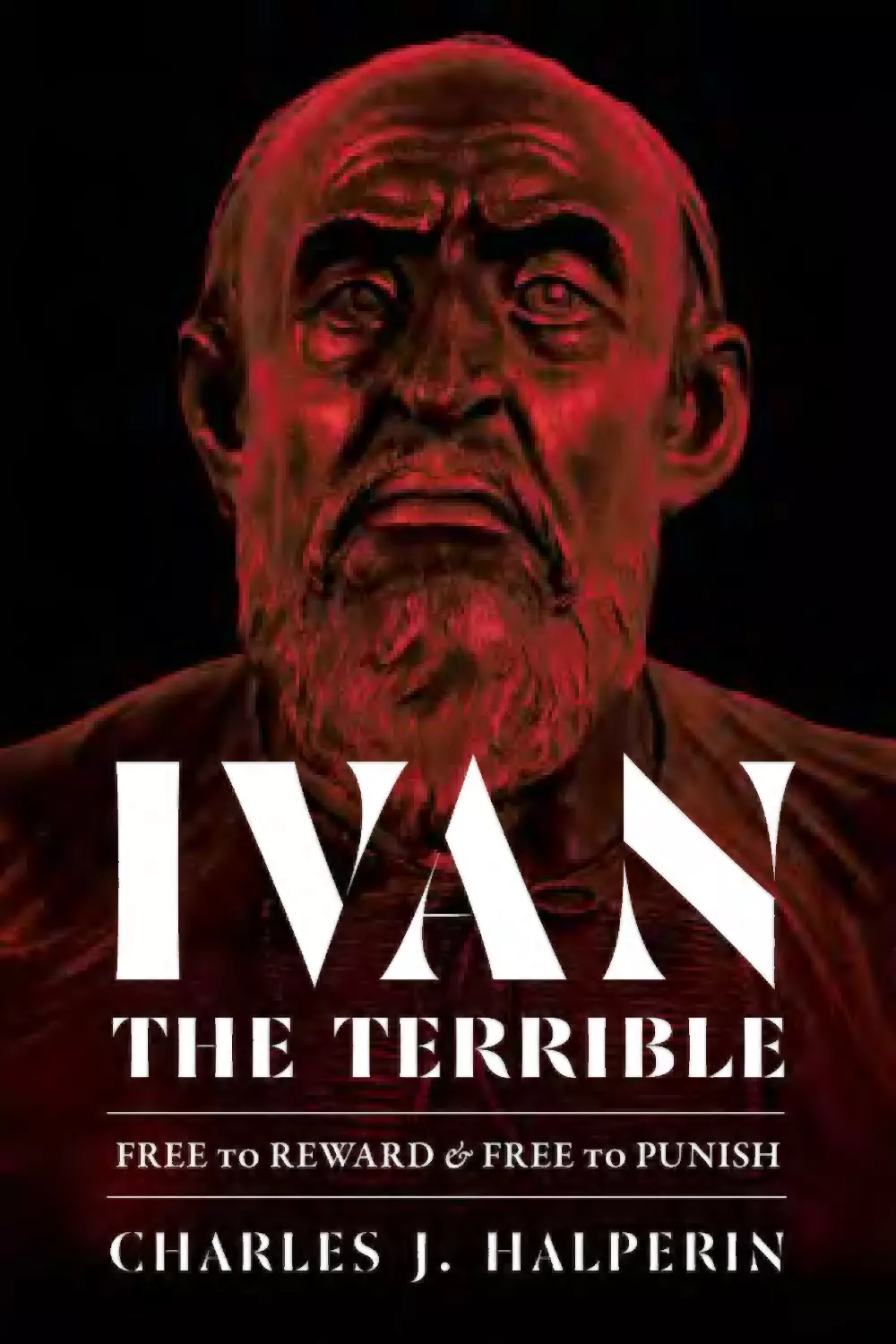
C over art : Mikhail Gerasimovs forensic facial reconstruction and bust of Ivan
the Terrible, 1953.
C over design: Alex Wolfe
L o vin g M em ory o f M y M o th er a n d M y A u n ts
Yvette Rudick Halperin
Dorothy Rudick Lipton
Rose Rudick Schielmann
Three sisters— together again .
Each man is three men:
who he thinks he is,
who others think he is,
and who he really is.
— Anonymous
Contents
Preface and Acknowledgments
xi
Introduction
3
Part I. M u s c o v y in the Sixteenth C en tu ry
r
r
1
Muscovy in 1533
15
2
The Young Ivans World
29
Part II. Ivan s Life from His A ccession to the O p rich n in a
3
Ivans Minority
37
4
Ivans Coronation and First Marriage
43
5
Life at Ivans Court
50
6
The Dynastic Crisis of 1553
57
7
The Prehistory of the Oprichnina
63
Part III. M uscovy from Ivan's Accession to the O p rich n in a
8
Domestic Political Reform
9
Church Reform and Heresy
101
10
Intellectual and Cultural History
117
11
The Economy and Economic Management
133
12
Early Foreign Policy
144
A gallery o f images follow s page 162
81
IVAN и м : п : к к и ш :
Part IV. Ivan and M uscovy during and after the O p rich n in a
13
The Oprichnina and Its Aftermath, 1564-1584
165
14
The Problem of the Oprichnina
172
15
The Oprichnina in Action
188
16
Ivans Ideology, the Oprichnina, and
Muscovite Society
209
17
Muscovy, 1572-1584
237
18
Ivan, 1572-1584
М3
Conclusion
258
Glossary
265
Notes
267
Index
355
1> _
LANDS OF(THE
'LIVONIAN ORDER
~
\^ o 0
%)
/
\
Velikie Luki/< § *
\
.VHna
Radoshkovichi
""
koVVV i^t e 'b s k
Л *g
s
« /T rin ity
“
^ Su zd al
.YoshkarOla
4» Nizhnii Novgorod
r f Kazan'
Sviiazhsk \
Voipkolamk _x^ -M o sco w
o f Murom
Dorogobuzh
& {
/ * J и л ^ /V
X S lJz b R ia z a n ^ ,
Russia and Poland-Lithuania in the mid-sixteenth century. Map by Bill Nelson.
Monastery of Solovki
WHITE SEA
-St, Nicolas
J Kh'olmogory
l \ Lake\
LANDS
V
\ \Ladoga
St. Cyril of the White
Г| La ke Mo nastery:•;
lLIVONIAN 3 N a r v a
Border
NOVGOROD
Vologda
Pskov
/
>
T rin ity{ Suzdal. VAIeksandrovskaia
"^S lo d o d a S ^N izhn ij Novgorod
t - i r-^ Starl6 l r
Monastery of Volokolamk • M onast®rV '
LITHUANIA
Radoshkovichi
^ Dorogobuzh
SMOLENSK
Vladim ir
/
-K a sim o v
^bscow
Vorotyrisk
...
^
Sviazhsk
* OdoeV:
POLAND
KHANATE OF
THE CRIMEA
h
у\
Oprichnina 1565
t
I Oprichnina 1566-68
f
\
Oprichnina 1569-71
Areas incorporated into the oprichnina. Map by Bill Nelson.
Astrakhan'
Preface
b
Acknowledgments
his book could not have been written without the assistance o f the
I Slavic Reference Service, University of Illinois at Urbana-Champaign
Library, and Inter-Library Loan, Document Delivery Service, Herman В
Wells Library, Indiana University, Bloomington.
I wish to thank all of my colleagues who have listened to, commented
on, or responded to my convention and conference papers on Ivan IV,
and endured endless conversations with me on the subject; Maria Arel,
Daniel Kaiser, and Russell Martin, for copies o f unpublished conference
papers or essays and permission to cite them; Isaiah Gruber, for a copy of
an inaccessible article; the referees o f all my articles on Ivan IV; the late
Norman Ingham and Ann Kleimola, for inviting me to do presentations at
the Midwest Medieval Slavic Workshop at the University o f Chicago and
the Early Russian History Workshop at the Summer Research Laboratory
of the University o f Illinois at Urbana-Champaign, respectively; Donald
Ostrowski, for invitations to address the Harvard Early Slavists Seminar;
Jennifer Spock and Barbara Skinner, for arranging campus visits to East
ern Kentucky University and Indiana State University, respectively; and
Dr. Predrag Matejic, for an invitation to deliver the Second Annual Hilandar Public Lecture, sponsored by the Hilandar Research Library and
the Resource Center for Medieval Slavic Studies at The Ohio State Uni
versity. I also wish to express my gratitude to the Gang of Four and all of
my thirteen benefactors for their generosity in a project unrelated to Ivan
the Terrible.
Barbara Skinner and Robert O. Crummey read earlier drafts o f this
book. I cannot thank them enough for their assistance. I also wish to
thank Peter Kracht, director of the University of Pittsburgh Press, Professor
Jonathan Harris, editor o f its Russian and East European Studies series,
and the two anonymous readers for the University of Pittsburgh Press. All
remaining errors are my responsibility alone.
I use the Library of Congress system for transliterating Russian. Russian
\i
IVAN T ill: TERR IBLE
words appear in the text without diacritical marks at the end o f words,
except for Rus’, which refers to the medieval East Slavs.
Muscovy utilized the Byzantine calendar from the Creation o f the
World, circa 5508 BC E, in which the year began on September 1. When we
know the Byzantine year of an event but not the month, it is impossible to
be certain o f the C E calendar year, because September to December were
one year earlier than January through August. In such cases the convention
is to put a slash between the years: 1555/1556 means in either 1555 or 1556,
depending upon the month; 1555-1556, with a dash, means from 1555 to 1556.
The field of Ivan the Terrible studies has flourished in recent years, and
some sources have been issued in new editions. I have cited only the edition
I have used.
In the sixteenth century foreigners called the country Ivan ruled
“Muscovy” and its inhabitants “Muscovites.” Ivans subjects referred to
themselves as “ Russian” or “Rus’,” the same term used by the East Slavs
as early as the tenth century. I find the modern connotations of the word
“ Russia” misleading in reference to sixteenth-century history, so I prefer to
use “Muscovy” instead.
For reasons of space, it is impossible for me to cite, let alone engage, all
of the scholarly works I have consulted. For the same reason, I cannot point
out all factual errors in those works.
Ivan the Terrible
Introduction
n August 12,1976, a situation comedy about an irascible paterfamilias
and his household of colorful denizens debuted as a summer replace
ment on the CBS television network. It was not very funny and went off
the air just a month later. The series was set in Moscow, its protagonist
was named Ivan, and it was called Ivan the Terrible.1 Television network
programming executives have never been accused of exaggerating the his
torical knowledge of their viewing audience. Therefore, we may assume that
they correctly expected the public to recognize the name Ivan the Terrible.
Tsar Ivan IV (1533-1584), commonly called Ivan “the Terrible” (in Russian,
“Groznyi”), is an icon of Western civilization and a card-carrying member
of the Historical Hall o f Shame— a dubious pantheon o f mostly rulers,
infamous primarily for their vices, that includes Nero, Caligula, Attila the
Hun, Chinggis (Genghis) Khan, Vlad the Impaler (Dracula), Caesare Bor
gia, and the Marquis de Sade (who was not a ruler).2 Ivans celebrity status
explains how inmates of a Nazi concentration camp could label a sadistic
Ukrainian guard named Ivan “Ivan the Terrible” and how American media
could dub a 2004 hurricane named Ivan “Ivan the Terrible.”
Ivans evil reputation precedes him, prejudices scholarship, and distorts
history. Russians writing about Ivan have to contend with the sheer weight
O
4
IVAN TUI: ТЕК К И Ш :
of his negative image in Russian culture.3 During Ivans lifetime to be styled
“Groznyi” would have carried positive connotations, meaning “awe-inspir
ing,” “ formidable,” or “ dread,” but in fact no one called Ivan “Groznyi”
in his lifetime. The epithet did not become pejorative until the eighteenth
century.4 Nowadays Ivan is so universally and uniquely known as Ivan Gro
znyi that in Russian “Groznyi” alone means Ivan IV. The historian Anna
Khoroshkevich even created neologisms for “ historians who study Ivan IV s
reign” (groznovedy) and for “the study of Ivan I V s reign” (groznovedenie)
from that epithet.5
During his lifetime Ivan was both idealized and demonized. Domestic
sources extolled him as the God-chosen, pious tsar. This positive image of
Ivan infused literary texts such as the Book o f Degrees o f Imperial Genealogy,
a thematic history of Ivans dynasty from Kievan times (starting in the ninth
century and ending in the middle o f the thirteenth century) to 1563, and
artistic works such as the icon Blessed Is the Host o f the Heavenly Tsar (often
called the Church Militant), which most scholars believe depicts Ivan s con
quest of the Tatar khanate of Kazan, and works created under the supervision
of state or church authorities. One contemporary Muscovite, boyar Prince
Andrei Kurbskii, produced perhaps the most influential negative image of
Ivan, but only from the safety o f exile in the Grand Duchy of Lithuania.
Kurbskii wrote several letters and a History o f the Grand Prince o f Moscow
denouncing Ivan.6 Numerous foreigners, some of whom served Ivan and
then wrote scathing attacks on him after they left Muscovy and even others
who had never been there, wrote sensationalist anti-Muscovite propaganda
for Moscow’s enemies during the Livonian War (1558-1581). Muscovy lacked
an effective printing industry that could respond to the massive pamphlet
literature denouncing Ivan, so the vicious portrayals of Ivan by his enemies
went largely unanswered.7 The satanic image o f Ivan propagated by such
publications created the still pervasive negative myth of Ivan.
This foreign satanic image was largely borrowed. Foreigners lifted
images o f Ivans “tyranny” verbatim from texts about other “monstrous”
rulers from antiquity on. Many authors appropriated stories from literature
about the Ottomans, which demonized the Ottoman sultan.8 These, in
turn, had already been applied to the Ottomans’ enemy, Vlad the Impaler
(Tsepesh), in the second half of the fifteenth century the ruler of Wallachia
in modern-day Romania, the original Dracula. As a result, Ivan appeared
on gravures and woodcuts wearing a turban. Universal folkloric motifs
INTRODUCTION
were also applied to Ivan. The story that Tsepesh nailed an ambassadors
hat to his head when he refused to take it o ff in the rulers presence was
applied to Ivan simply by changing Tsepesh s name to Ivans.9 Similarly,
fantastic legends that Ivan blinded the architect of St. Basils Cathedral so
that he could not duplicate his feat, ordered the execution of an elephant
that refused to bow to him, or “punished” a bell that spooked his horse also
reflect Ivans imputed reputation, not his actual actions.10
Contemporary foreign writings also presented Ivan as a typical “Musco
vite barbarian.” Ethnic origin was used to explain the “Eastern” tyranny of
Ivan and the Ottomon sultan but not the “Western” tyranny of “civilized”
Romans such as Nero or Caligula.11 Ivan became the personification of
what modern scholars call Russian exceptionalism, the theory that Russia’s
history differed significantly from that of “Europe,” for the worse. Ivan was
uniquely worse than any non-Russian ruler, because Russians were uniquely
worse than any other people. Such stereotyping must be rejected. Other
sixteenth-century monarchs also took a cavalier attitude toward the lives
o f their subjects. If Ivan was no worse than his contemporaries, neither was
he any better. He resembled his contemporaries among foreign rulers more
than he did his Muscovite predecessors or successors.
It is no exaggeration to say that everything significant about Ivans life
is contested among historians, from his parentage to his cause o f death.
His reign was politicized in his own time and has remained so ever since.12
In 1891 Nikolai Mikhailovskii blamed Ivans contradictory reign for dis
orienting even experienced historians to the point that they disregarded
the sources and indulged in fantasy.13 Whether a particular explanation is
best understood as an analysis o f existing sources, an extrapolation from
available evidence, an inference based upon a reliable foundation, a baseless
speculation, or an ignorant, worthless fantasy often depends upon the point
of view of the critic. When it comes to interpreting Ivan, all theories can be
described as controversial; so describing any given theory as controversial
says nothing.
While the negative image of Ivan remained constant outside of Mus
covy after his death in 1584, the positive image within Muscovy did not.
Especially during the chaotic “Time of Troubles” at the turn of the seven
teenth century, Muscovites were able to express not only positive but also
more ambivalent, and even critical, opinions about Ivan. This ambivalence
continued throughout the seventeenth century, epitomized, on the one
6
IVAN T ill: TI:KKIIiU:
hand, by false claims by the Romanov dynasty, beginning in 1613 with
Tsar M ikhail Romanov, that they were descended from Ivan (they were
actually descended from the family of Ivans first wife, Anastasiia Roma
novna), and, on the other, by Tsar Aleksei Mikhailovich’s “apology” to the
relics of Saint Metropolitan Filipp for the saints murder at the order of his
“ancestor,” Ivan.14
Modern historical studies about Ivan began to appear in Russia in the
middle of the eighteenth century, but Russian opinion about Ivan remained
divided. The aristocrat Prince Mikhail Shcherbatov excoriated Ivan for at
tacking the aristocracy. The early nineteenth-century court historiographer
Nikolai Karamzin praised the “good” Ivan of the 1550s and denounced the
“ bad” Ivan o f the oprichnina, Ivans infamous instrument of mass terror,15
a separate domain within Muscovy within which Ivan had unlimited au
thority, staffed by oprichniki. (The words “oprichnina” and “oprichniki”
are untranslatable.)16
Karamzins paradigm of the two periods of Ivans reign dominated nine
teenth- and early twentieth-century Russian historiography. Late Imperial
Russian historiography began to produce serious scholarly works of lasting
value about Ivan. Despite detours such as Stalins “cult” of Ivan, such work
continues down to the present in Russia.17 Scholarship about Ivan increased
significantly in Russia after the Communist Party rejection o f Stalinism
in 1956, and even more so after the fall o f the Soviet Union in 1991. The
removal o f censorship in Russia after 1991 permitted Russians to express
all shades of opinion about Ivan. Defending Ivan against “ foreign” slander
became a cause celebre o f Russian chauvinists. Monarchists and extreme
Russian Orthodox devotees urged the Russian Orthodox Church to can
onize Ivan, an effort that ultimately failed.18 The same, often anti-Semitic,
milieu continues to inspire apologias for Ivan. Nevertheless, Russians in
Russia can now elect to categorize Ivan as a sadistic, immoral tyrant and
totalitarian “Asiatic” despot, and some do. The anachronistic “deadly paral
lel” to Stalin, never far below the surface in the Soviet Union, has now risen
to the full light of day.19At the same time, the views of amateurs clutter the
bookshelves, radio and television broadcasts, movies, and Internet, creating
a cacophony o f interpretations of little or no scholarly value.20 Even a broad
overview o f all professional historical scholarship on Ivan would require
too much space to be included here.21 Suffice it say that Ivan and his reign
remain lively and contentious subjects of study in his homeland.
INTRODUCTION
/
Since the Second World War, Western scholarship on Ivan has also
grown significantly. The fragmentary nature of the extant documentation
makes it impossible to write a conventional biography of Ivan. No personal
documents from Ivan survive, no diaries, no private correspondence, no
memoires, autobiographies, or diaries from Ivans intimates. We have no
insight into Ivans character away from the public eye.22 It is impossible
even to construct a reliable chronology of his life. The refractory sources at
our disposal— chronicles (narratives that organize events by years), other
narrative tales, saints’ lives, law codes, sermons, charters, cadastres, foreign
policy memos and negotiation accounts, registers o f military and civilian
service, and so forth— cannot answer some of the key questions we would
like to pose about events during Ivan’s time, such as identifying his personal
role in policy formation. We have no minutes o f meetings o f the Royal
Council or draft legislation or memoranda to show us who initiated a policy,
how it evolved, or who expressed alternative opinions. Narrative sources,
following literary etiquette, presented events as they “should have” taken
place. In the chronicles, political actors played cliche roles.23 Given these
inherent limitations of the sources, even writing a purely political biography
of Ivan remains impossible. So-called biographies of Ivan are actually books
about Ivan and his reign, as is this volume.
To blame Ivan’s actions upon his insanity, as many have done, divorces
Ivan from that context; to assert that sixteenth-century Muscovite histo
ry resulted only from long-term processes unaffected by Ivan’s “excesses”
marginalizes Ivan from that context. The latter is not a fault only of Soviet
Marxist scholarship; it can be found in Vasilii Kliuchevskii, perhaps the
greatest Imperial Russian historian, who wrote that the Muscovite order
would have turned out the same, with less difficulty, without Ivan.24
The problems created by the nature of the sources for writing about Ivan
and his reign have sometimes been misconstrued. The contrast in terms of
reliability between narrative sources, such as chronicles, and documentary
sources, such as registers and charters, has sometimes been exaggerated.25
Dissimilar genres of sources filter reality differently, but from an underlying
common mentality. The greatest source problem in studying Ivan’s reign is
the 1567 termination of the all-encompassing Moscow chronicle tradition,
the continuation o f the Nikon Chronicle, which provided a basic narrative
of events. There is no consensus on the identity o f the authors/compilers
o f the chronicle or their institutional sponsor, but whoever wrote these
s
IVAN T ill: TERR IBLE
narratives had superb access to both state and church archives.26 Despite the
bias of these writers and omissions from the chronicle, it is invaluable. We
have no idea why this particular chronicle tradition came to a dead stop in
1567, nor can we connect its termination to any event in that year. Chron
icle writing did not completely cease in Muscovy in 1567, but the local,
monastic, and private chronicles that persisted cannot compensate for the
loss of the “central” chronicle. So midway through the crucial oprichnina
years, historians must shift from relying upon the Muscovite chronicle to
using foreign accounts, many of them deliberately tilted against Ivan, and
laconic documentary sources. Our knowledge of Ivan s reign from 1567 to
1584 suffers enormously from that change.
Specialists on Ivans reign disagree about which sources are reliable,
contemporary, or even authentic. As a result, it is virtually guaranteed that
they will disagree about what happened and why. Therefore, definitive and
broadly accepted conclusions about Ivans reign hardly exist among scholars.
Because historians disagree about which sources are “reliable,” writing an
account o f Ivan based only upon “reliable” sources is impossible. Some
historians doubt the authenticity of all literary works attributed to Ivan and
Prince Andrei Kurbskii, a skeptical school “founded” by Edward Keenan. I
find his conclusions unconvincing. More recently Brian Boeck has tried to
impugn the authenticity of Kurbskiis History. I do not find his arguments
persuasive. Because I have concluded that these works are authentic, I will
not qualify my references to them below. However, it should be noted that
although authentic, I consider these works mendacious; they are reliable as
to Ivans or Kurbskiis point of view or at least propaganda, but not always
reliable in their factual content.27 All sources, indeed all types of sources,
may contain reliable and unreliable information; blanket rejection of any
source, or type of source, in toto is therefore unwarranted.
Historians have traditionally divided Ivans reign into four periods: 1)
Ivans minority, from his accession at an extremely young age in 1533 to
his coronation and marriage in 1547, during which he did not have much
influence upon the actions of the Muscovite government but during which
the violent atmosphere of court politics and the boyars’ neglect o f his needs
are supposed to have greatly influenced his character and determined his
later attitude toward the boyars; 2) the period of reforms, the “ long” 1550s,
from Ivans coronation and marriage until the eve o f the creation o f the
oprichnina in December 1564, a period o f major domestic political and
INTRODUCTION
9
religious reform, exciting cultural productivity, and foreign policy success,
including the conquest of the Tatar khanate of Kazan and the initial vic
tories in the war against Livionia to secure Baltic Sea ports, during which
Ivans role remains contested among historians; 3) the oprichnina, from
January 1565 until some time in early 1572, when Ivan s security apparatus,
the black-robed oprichniki, with dogs’ heads and brooms on their horses’
necks, committed brutal mass murder and atrocities upon the Muscovite
population, for which a “paranoid” and “sadistic” Ivan has been given sole
responsibility; and 4) the rest of Ivan’s reign, from the abolition of the op
richnina to Ivan’s death in 1584. O f course each period has continuities and
discontinuities with its predecessor and/or successor.28 Most books on Ivan’s
reign present uninterrupted narratives, but whether they acknowledge this
four-part periodization or not,29 somehow chapter breaks seem to coincide
with the ends of the first three.
Because Ivan o f necessity makes almost no appearance in events o f
his minority and his role during the reforms remains a matter o f conjec
ture, Ivan perforce disappears, entirely or partially, from half of a straight
narrative history of his reign. Therefore, instead, I have adopted a mixed
chronological and thematic structure. Part I describes the rise of Muscovy
and the nature o f the Muscovite state and society at the time o f Ivan’s
accession. Part II focuses on Ivan’s life from 1533 to December 1564, the first
two periods of the traditional periodization. With this background in hand,
we can better evaluate Ivan’s role in events in Muscovy during that time,
the subject of part III. Because Ivan’s responsibility for what happened in
his realm during and after the oprichnina is not disputed, part IV examines
together the oprichnina and Ivan’s life for the remaining two periods of the
traditional periodization. The conclusion presents a brief characterization
of Ivan’s contribution to Muscovite history.
In this book I have tried to avoid exclusivist paradigms and monocausal
explanations of Ivan’s actions. For example, at some times the Muscovite
state did dominate society, but at other times it did not. Sometimes the
government pursued centralization of authority and power, and sometimes
it sought to achieve its goals by decentralized means.
Although all o f Ivan’s life and Muscovite history during his reign are
connected, it is impossible to discuss everything at once. Any text or event
referred to but not explained at first mention will be described in full
elsewhere. I have chosen not to burden the text with innumerable cross
К)
IVAN T ill: T КKIMBLE
references to “see below” or “see above”; the index and glossary should
ameliorate this problem.
I have reached three general conclusions about Ivan. First, while there
is considerable continuity between Ivan and his predecessors, Ivan was also
unique in key respects, and he cannot be called a typical Muscovite ruler.
No Muscovite ruler before or after Ivan, no Imperial Russian ruler, and no
Soviet ruler save Stalin ever used mass terror as a political instrument.30 Ivan
was neither all “good” nor all “ bad” nor did he shift from all one to all the
other. At all times Ivan was a human being, a paradoxical human being to
be sure but not simply the monster o f legend.
Second, to understand Ivans actions, they must be placed within the
context of Muscovite history during the sixteenth century. To blame Ivans
actions solely upon his mental state divorces him from that context. Ivans
behavior is far too complex to be reduced a single all-encompassing theory,
a “magic bullet,” that will “explain” Ivan. To attribute Ivans torture and
execution of seemingly innocent members of the elite and the population
at large to his insanity, or to the fact that he was was a tyrant, explains
nothing, in part because it avoids questions o f why no one stopped him
and why various members of the elite assisted him.To assert that the shape
o f sixteenth-century Muscovite history resulted from long-term processes
unaffected by Ivans “excesses” marginalizes him from that context. For
this reason, in order to analyze Ivan, the historian must address all aspects
of Muscovite history during his reign, because Muscovite political, social,
economic, and cultural history were all related to Ivan and to each other.
The economic prosperity of the 1530s to 1550s was essential to the growth
o f local self-government, domestic administrative and religious reform,
foreign expansion, and cultural flourishing, all reflective of an optimistic,
self-assured state and society. I interpret the oprichnina as the result of the
interaction between Ivan and Muscovite society. On the one hand, Ivan
was dealing with the multiple ideological stresses imposed upon him as he
tried to live like a good Orthodox Christian but rule ruthlessly to defend the
realm. On the other hand, a century of Muscovite expansion, necessitating
mobilization o f existing social resources and the creation o f new social
classes to serve government needs, had created significant social tensions.
Social innovation produced a degree o f upward and downward social mo
bility beyond the limits of Muscovy’s traditional society. Ivan created the
oprichnina to escape his moral dilemma as ruler, but in doing so he created
INTRODUCTION
п
a medium through which these accumulated social tensions could express
themselves violently. The result was social pathology, certainly not what
Ivan intended. O f course it would be foolish to expect any Muscovite source
from Ivans reign to explain the oprichnina that way; my interpretation is an
extrapolation that tries to do justice to what the sources do tell us.
Third, Ivan not only made an impression on contemporaries and poster
ity but also had a real impact.31 Some of the institutions established during
Ivans reign survived one, two, or three centuries after his death. Kazan
remains part o f the Russian Federation to the present. At the very least,
Ivan did not prevent these reforms or sabotage these accomplishments.32
While it is often impossible to determine how much responsibility Ivan
bears for specific policies, he certainly initiated enough atrocities to merit
condemnation and enough successful policies to deserve praise.
Ivans contradictory legacy reflects his contradictory, if always charis
matic, character and rule. Ivan made a difference in Muscovite history, a
difference as contradictory as he was.
Muscovy in the Sixteenth Century
I
Muscovy in 1533
1 ^ hen his father, Grand Prince Vasilii III, died in 1533, Ivan, then three
▼ T years old, became Grand Prince o f Moscow and All Rus’. Musco
vy’s domestic institutions and international situation determined how the
Muscovite elite dealt with a minor ruler. These factors also influenced how
the adult Ivan would relate to the elite, to the Muscovite governmental
apparatus, and to Muscovite society. This chapter first examines the rise
of Muscovy before 1533 and the uncertainties affecting dynastic succession,
then it explores some o f the major characteristics o f the Muscovite polity
and society: Muscovy’s political structure and political culture, the devel
opment o f a bureaucracy and an administrative apparatus, the concept of
centralization, and the reciprocal relationship between the government and
society.
The Muscovite principality arose at the turn o f the fourteenth century,
when the Mongols still ruled the land. By the middle o f the fourteenth
century it had become a grand principality. As a result of continued expan
sion during the fifteenth and early sixteenth centuries, by the time of Ivan’s
accession it encompassed all the formerly independent Russian principalities
of the northeast, including Tver and Riazan, as well as the formerly inde
pendent city-states of the northwest, Lord Novgorod the Great and Pskov.
1
Muscovy had even conquered the city o f Smolensk from the Grand Duchy
o f Lithuania and extended Muscovite rule into the former heartland o f
the ancestor o f all three East Slavic peoples (Russians, Ukrainians, and
Belarusians) of Kievan (Kyivan) Rus’, the Dnieper (Dnipro) River valley, by
taking the city of Chernigov (Chernihiv). Although Muscovy did not try to
conquer the city of Kiev itself, the Muscovite elite remained fully conscious
of Muscovy’s Kievan roots.
Muscovy had become more powerful than its long-time regional rival,
the Grand Duchy o f Lithuania, which included considerable East Slavic
territories populated by Ukrainians and Belarusians. Poland also included
East Slavic lands, and the elected king o f Poland after 1506 automatically
became Grand Duke o f Lithuania. Polish and Latin sources called East
Slavs living under Polish and Lithuanian rule “ Ruthenians.” I refer to
“ Poland-Lithuania” as one country, although they were separate states
with the same ruler until 1569, when they formally united in the PolishLithuanian Commonwealth. Lithuania was not reconciled to losing East
Slavic territory, such as Smolensk, to Muscovite expansion and particularly
coveted Novgorod and Pskov, which it had never ruled.
The territorial boundaries o f Muscovy to the west reached the state
created by the crusading Livonian Knights on the Baltic Sea, called Livo
nia, which monopolized Muscovite-Baltic trade. Muscovy also bordered
Finland, then part of Sweden; Sweden and Muscovy competed for influ
ence over the Lapp population o f the Arctic Circle. Sweden, Denmark,
and Poland-Lithuania all had territorial designs on Livonia, which became
especially prominent after war erupted between Muscovy and Livonia in
1558. The Livonian War lasted twenty-five years, and Muscovy lost.
The Juchid ulus, commonly and anachronistically called the Golden
Horde in scholarship, the Mongol successor state o f the Mongol Empire
that had conquered Rus’ in the thirteenth century, had disappeared by
the time Ivan came to the throne. The Juchid ulus derived its name from
Juchi, Chinggis Khan’s eldest son, to whom Chinggis left the western lands
conquered by the Mongols, and the Turkic word “ulus,” meaning a polity.
In the middle of the sixteenth century a Muscovite writer gave the Juchid
ulus the name “the Golden Horde” (Zolotaia orda)' However, its successor
states, the khanates o f Kazan, Astrakhan, Crimea, and Sibir (western Si
beria), and the nomadic Nogai hordes, still threatened Muscovy’s southern
and southeastern borders with slave raids. Under Ivan’s grandfather, Ivan
MUSCOVY IN I ПУЛ
17
III, Muscovy had begun encroaching down the Volga River to influence
Kazan. Ivan completed the process by conquering Kazan and Astrakhan in
1552 and 1556. The Crimeans retaliated by burning Moscow in 1571. Crimea
had more military resources than Kazan. Muscovy and Poland-Lithuania
engaged in a bidding war to bribe the Crimeans to attack the other, and
both lost. The Crimeans raided the Ukrainian and southern Polish regions
as well as Muscovite territory. Therefore, the ruler of Moscow always faced
the risk of a two-front war, on the south and southeast with Muslim Tatar
states and on the west and northwest with Christian states.
Until 1453, when Constantinople fell to the Ottomans, the Patriarch
of Constantinople appointed the Metropolitan o f All Rus’, the head o f
the Rus’ Orthodox Church, usually a Greek, originally one metropolitan
in Kiev. In the fourteenth century the metropolitan moved to Moscow.
In 1453 the Muscovite Church became autocephalous, although after 1458
a rival Metropolitan o f All Rus’ was established in Halych for East Slavs
under Polish and Lithuanian sovereignty. We are interested only in the
metropolitan in Moscow. Historians disagree as to how much control the
grand prince of Moscow exercised over the autocephalous Russian Church
and the selection o f its metropolitan. The Russian church continued to
show due respect to the Greek Patriarch of Constantinople, who was also
the recipient of royal philanthropy. Some historians assert that it was the tri
angular relationship among the grand prince of Moscow, the Metropolitan
of Moscow, and the Patriarch of Constantinople, and not just relations be
tween the grand prince and the metropolitan, that created political tensions
in Moscow.
Both the Habsburg Holy Roman emperor and the pope knew about
Muscovy. Imperial envoys had visited Muscovy during the reign o f Ivan
III, in part because Muscovy and the empire had a common enemy in
Poland-Lithuania and in part because the emperors, like the popes, never
ceased hoping for Muscovite aid against the Ottomans. Indeed, the Ot
toman threat played a role in the papacy’s intervention as matchmaker in
arranging Ivan I l l ’s marriage to Sophia Palaiologa, the niece o f the last
Byzantine emperor. The pope wanted Muscovy to expel the Turks from
Constantinople. Muscovite rulers knew that Muscovy lacked the military
capacity to accomplish such a goal. Moscow assiduously courted the sultans
approval, in part because o f the profitable oriental trade and in part in
hopes, no more fulfilled than those of the Holy Roman emperor or pope
uS
IVAN T ill: TERR IBLE
for a Muscovite crusade, that the sultan would restrain the ruler he treated
as his vassal, the Crimean khan, from raiding Muscovite territory.
Therefore, Muscovite expansion before Ivans accession left in its wake
potential problems in dealing with Moscow’s neighbors, the Tatars, Livo
nians, and Lithuanians.
D YN ASTIC SU CCESSIO N
At home, in the middle of the fifteenth century, Muscovy endured a long
dynastic war over succession. Vasilii II claimed the throne by direct suc
cession from his father, Vasilii I. Vasilii Is brothers and nephews asserted
a counterclaim by collateral succession, from brother to brother. Vasilii
II won. Brothers and nephews o f the grand prince o f Moscow became
holders of appanages, hereditary semiautonomous domains with their own
institutions. In the absence of a direct heir, an appanage prince could still
claim the throne. Before Vasilii III had an heir, his eldest brother, Prince
Iurii Ivanovich, had been heir apparent, and his younger brother, Prince
Andrei Ivanovich, next in line. When Ivan ascended the throne as a minor,
his appanage princely uncles became a problem. Muscovy lacked a fixed
law of succession, so the ambiguity of direct or collateral succession could
only be resolved by politics, a very problematic process sometimes, as the
crisis o f 1553, when it was expected that Ivan was fatally ill, demonstrated
all too clearly.
M U SCO V Y’S PO LITIC A L STR U CTU R E AND PO LITIC A L
CU LTU R E
In the absence o f a mentally and physically competent adult male grand
prince after Ivans accession as a boy, someone else had to fill the vacuum
at the center of political authority. Muscovy’s political structure and culture
determined how the elite would respond to this situation.
Muscovy’s political culture rested upon tradition (starina) and custom
{obychai), not codified laws. No fundamental law regulated dynastic suc
cession or political decision making. Muscovy lacked Renaissance abstract
political theory, however marginal such theorizing was to political reality
in contemporary states.2 The absence o f constitutional legislation gave
the Muscovite political elite a certain degree o f flexibility in adapting to
MUSCOVY IN \УП
19
changing circumstances. Nothing prevented Muscovites from declaring
innovations in administration to be the restoration o f tradition, which
they did. Failure to deal with political problems cannot be blamed on the
customary nature of the Muscovite government.
The Royal Council (Duma) stood at the apex o f the administrative
structure. It was more than an ad hoc meeting of whichever councillors the
ruler (or whoever acted in his name) decided to summon at the moment; it
was an institution. Muscovite diplomatic sources beginning in 1536 referred
to gentry who lived “ in the Royal Council.” (In the sixteenth century the
word “ dvoriane” referred to members of the royal court or household [dvor],
literally “courtiers,” who included boyars, gentry, and others; it was only in
the seventeenth century that it acquired the meaning o f “gentry.” In this
study I translate deti boiarskie / deti boiarstvo as “gentry” and dvoriane,
except when dealing with conciliar gentry, as “courtiers” or “members o f
the court.”) Beginning in 1555, the sources referred to the Privy Council
(Blizhnaia duma), not just to “privy councillors.”3While the relationship of
the Privy Council to the Royal Council remains obscure, nevertheless these
references demonstrate that the Muscovite political structure recognized the
existence of functioning permanent political bodies. At Ivan s ascension only
boyars and associate boyars (<okolnichie) belonged to the Royal Council. The
boyars, from approximately twenty to forty families, constituted the upper
elite (gentry and some bureaucrats formed the lower elite). They filled the
major civilian and military leadership posts. Judging by boyar testaments,
land purchases and donations, and cadastres, they owned large amounts of
land, the major form of wealth in Muscovy, as patrimonies (votchiny). How
ever, the Royal Council was a state, not a class, organ. Modern historians
invented the term “Boyar Council” (Boiarskaia duma).
Later in Ivans reign, without impugning boyar preeminence, Ivan ap
pointed members of two additional classes to the Royal Council: conciliar
gentry (<dumnye dvoriane, the only case during the sixteenth century in
which dvoriane meant “gentry”) and conciliar state secretaries (dumnye d 'ia ki). “State secretaries” refers to clerks who worked for the central govern
ment, as opposed to those who worked for individuals, other institutions, or
freelanced. The highest level of state secretary was conciliar state secretary.
The gentry had begun assuming more prominence in Muscovite service
after the Muscovite annexation o f Novgorod, when Ivan III initiated a
program of assigning conditional land grants (pomest’ia) to gentry military
20
IVAN Till: T EK K IliU :
servitors as a reward for service. (Boyars accepted conditional land grants as
well.) By Ivan IV ’s reign, gentry who held conditional land grants and did
not serve could forfeit those grants. Gentry cavalry archers constituted the
core of the Muscovite army and occupied lower administrative offices than
did boyars. Although state secretaries and almost all treasurers {kaznachei)
were nonaristocratic bureaucrats, the office of majordomo (dvoretskoi), an
official in charge of the rulers personal properties, could be a boyar or an
associate boyar. Only one treasurer ever rose to boyar rank. The majordomos and treasurers of boyar rank who helped set policy acted not as boyars
or members o f the Royal Council but as officials. The state secretaries were
the highest-ranking professional bureaucrats in Muscovy. They headed the
most important administrative bureaus. State secretaries served on “ boyar”
diplomatic negotiating teams.4 Historians have paid much attention to how
the boyars reacted to the promotion o f gentry and state secretaries to posi
tions of influence in the Muscovite governmental apparatus because much
of traditional historiography assumes that rulers sought to offset aristocratic
influence by relying upon gentry and non-noble bureaucrats. In this study
“nobles” or “the nobility” refers to the Muscovite boyars (aristocracy) and
gentry combined.5
Officially, the ruler decided who acquired the status of boyar. He did so
primarily but not exclusively on the basis o f genealogical seniority within
the clans customarily entitled to supply members.6The word “ boyars” often
encompassed associate boyars as well. Unofficial texts also employed the
word “magnates” (;vel’mozhi)? The ruler could not dispense with the lead
ership of the boyars, who commanded his armies, administered the most
important provinces and cities, advised him in council, and who alone had
the experience to perform these services.
W hy the Royal Council could not prevent Ivan from committing
atrocities is a question that has dominated modern historiography.8 Legal
historians in particular have blamed this failure on the absence o f boyar
constitutional and political rights that would have enabled them to stand up
to Ivan the way the English barons stood up to King John, producing the
Magna Carta in 1215. (Such historians would do well to remember that later
King John in effect tore up the charter.) Such a rigid approach to political
history underestimates the Muscovite ability to manipulate their customary
institutions.9No law regulated the competence of the Royal Council or how
the ruler selected its members. Legislation could become law without its
MUSCOVY IN \УМ
21
approval, as was also true of the English Parliament.10 In all likelihood the
boyars arrived at decisions by consensus, not voting, but because no minutes
of the councils proceedings survive, this inference cannot be tested. In any
event the Royal Council presented all its decisions as unanimous. It is likely
that all boyars belonged to the Royal Council but unlikely that all boyars
actually attended any given session, because some were always out of town
with field armies, in various cities as governors, on leave, sick, or in disgrace
(“ disgrace” officially deprived a courtier out of favor o f the tsars physical
presence; the nature and duration o f the punishment depended entirely
upon the rulers discretion).11
Muscovy lacked any concept that the Royal Council should oppose
the ruler. No law defined the rights of the Royal Council, but no law de
fined the rights of the ruler either. Custom dictated that no member of the
Royal Council could be punished without trial by the grand prince or the
boyars, but political reality permitted exceptions.12 Tradition expected
the ruler and his boyars to cooperate, rendering the distinction between
the Royal Councils legislative and consultative authority moot. The ruler
should consult his subjects, especially his elite; if he did not, he was a bad
ruler. Literary texts, icons and frescoes, palace and church architecture, and
ritual and ceremony— in a word, image and performance— articulated this
same harmonious conception o f politics. A grand prince without a royal
council would have been as unthinkable as a royal council without a grand
prince.13 Muscovite political culture did not share the assumption of many
historians that conflict should and did govern the relationship between the
ruler and the boyars.
Boyar dominance of Muscovite politics depended in part upon the bo
yars’ relationship to members of other social groups active in administration.
Unfortunately, we know only enough about patronage-client relationships
among the elite to conclude that they existed.14 Theoretically, boyars could
patronize other boyars, gentry, or officials. In addition, non-boyar members
of the elite such as appanage and serving princes (southwest border princes
who retained some regalian rights when they switched loyalty from the
Grand Duchy of Lithuania to Muscovy), as well as bishops and monaster
ies, had their own clients. Therefore, as in France, nobles could choose to
act on the basis o f kinship or patronage. Loyalty to one set o f ties might
entail disloyalty to another.15 O f course, the boyar clans played politics
among themselves, most of all via marital alliances. Kinship politics among
22
IVAN T ill; ТЁККМШ:
boyars did not exclude non-kinship political relationships among boyars or
between boyars and non-boyars.
Who initiated policy cannot be established.16 The ruler (if not a minor),
the boyars, the metropolitan, leading clerics, and even state officials— state
secretaries, majordomos, and treasurers— could all contribute to policy
formulation, formally or informally.17 State officials were not just flunkies
who took orders. State secretaries wrote and presented “position papers” to
the Royal Council. I f it approved them, they became decrees or decisions.
If it rejected them, most likely the paper on which they were written was
discarded. Without an adult ruler the Royal Council had to play a stronger
role in government, unless someone else successfully acted in the name of
the ruler, as Ivans mother did for a time.
During Ivans minority changes in bureaucratic personnel did not reflect
changes in the boyar clans dominating the Royal Council. No boyar faction
constituted a “government” in the modern sense of controlling the entire
administrative apparatus of state. Consequently, continuity in government
operation resulted from cooperation. It was not a case o f just the leading
boyar clans playing musical chairs at the top. The entire elite, including the
gentry and highest apolitical professional bureaucrats, had to work together.
Only such cooperation explains Muscovy’s ability to defend its borders and
even to innovate in domestic policy during Ivans minority. Preserving the
dynasty constituted the number one priority of the elite as a whole, and in
this it succeeded: Ivan lived to adulthood. However, chaos at the top did
permit greater abuse of authority in the provinces.18
TH E BUREAUS AND BU REAU CRACY
Historians have long considered the development o f a bureaucracy, a pro
fessional administrative apparatus, as a hallmark of the new, modern mon
archies o f the sixteenth century. A bureaucracy freed the monarch from
dependence upon the “ feudal” aristocracy, and provided an instrument
for the implementation o f royal policy. Ivans Muscovy certainly had of
ficials, but whether it had a bureaucracy depends upon ones definition of
the word. Max Weber defined a bureaucracy as a completely meritocratic,
rational, efficient administration independent of outside interests. Because
this sociological “ ideal type” exists only in theory, Muscovy could hardly
have a Weberian bureaucracy. Whether Tudor England had a Weberian
m u s c o v y in
i ■>:*:*
bureaucracy remains disputed. As in Muscovy, results, personality, and
power mattered more than abstract, rational principles or plans. It is more
productive to look at bureaucracy not as an institution but as a process.19
Counterintuitively, Muscovy had bureaucrats before it had bureaus
(prikazy). By the beginning o f the sixteenth century state secretaries con
ducted administrative business according to standardized procedures and
wrote administrative documents in professional jargon. The government
apparatus evolved out o f the household o f the ruler, the Royal Council,
or the treasury.20 Because departments were not established by decree, we
know only the date of the first reference to a department, not necessarily
its date of creation. Most departments appear first as “ huts” (singular, izba)
and did not acquire the designation “ bureau” (prikaz) before the 1560s.
Even after that, either designation could apply.21 Some bureaus utilized
names without either “ bureau” or “ hut,” such as the Treasury (Kazna) and
the Register (Razriad), which could also appear as the Registry Bureau
(Razriadnyi prikaz). To further complicate matters, sources refer to state
secretaries as bureau secretaries earlier than the first reference to the bureau
itself. Allusions to “registry secretaries” (razriadnye cTiaki) predate the first
reference to the Registry. Therefore when the Law Code o f 1550 referred
to “ bureau people” (prikaznye liudi), it did not mean “people who work in
bureaus” but “people (civilian officials) who take orders.” “To work in a
‘bureau” {v prikaze) meant to work under someone’s supervision.22 During
Ivans reign Muscovy never developed a “ bureau system” in which all bu
reaucratic institutions became “ bureaus,” although more bureaus existed
by the 1570s than earlier.
Muscovy’s administrative structure remained “unsystematic,” not only
in its terminology but also in its functionality. Even bureaus differed in the
type of activity they performed. Some served a single function everywhere,
while others served multiple functions in a single territory.23 The dvor some
times served as the household, headed by a majordomo, which administered
all estates owned by the dynasty and supplied the ruler and his royal family
with necessities, and sometimes as the court, which included boyars, gentry,
the armorer, the master of the bedroom, and the keeper-of-the-seal. (I say
“the ruler’s household” or “the household o f the ruler” or “royal household”
to refer to Ivan’s royal household; “ household” by itself refers to someone
else’s household.) The court served governmental functions and includ
ed the Royal Council. Muscovites did not perceive a distinction between
4
IVAN и м : п : к к и ш :
public and private bureaus. The two functions varied in other countries too,
and at different times in the same country.The tsar served as head of the two
highest-ranking bureaus, the Ambassadorial Bureau and the Registry.24 The
Law Code of 1550, unlike the preceding Law Code of 1497, made mention of
the majordomos as well as the treasurer, demonstrating that state law drew
no distinction between the rulers household and other elements of the state
administrative apparatus.25
During Ivans reign, Muscovite administration became less “personal”
and more “ institutional.” At the beginning of Ivans reign documents from
an office did not even carry the offices name. Scribes wrote documents in
Ivans name. If necessary, the documents would refer recipients to a specific
official or boyar in Moscow, not to an office. Early but inconsistent refer
ences to the Anti-Brigandage Bureau constitute the exception. Gradually
the concept of “ institution” took hold. A 1577 report to the Royal Council
recounted cooperation by the Conditional Land Bureau (Pomestnyi prikaz),
the Registry, and Major Revenue (Bolshoi prikhod, also known as the
Bureau o f Major Revenue) by name in sending cash to gentry without
conditional estates in frontier districts.26
Muscovy was underadministered in terms of the number of officials per
capita. However, enough officials already resided in Moscow to merit spe
cial attention by the 1551 Church Council o f One Hundred Chapters (Stoglav). The Council authorized early and late masses in Moscow’s churches
to accommodate officials’ work schedules.27 Therefore, scribes and state
secretaries staffing government offices had a tangible social presence in
the capital.
C E N T R A LIZ A T IO N
In traditional historiography bureaucratization usually goes hand in hand
with centralization, but neither the Muscovite state nor Ivan articulated any
such concept.28 Centralization is a matter of degree.29 No sixteenth-century
state possessed the kind o f central administration, civil service, standing
army, countrywide treasury, or uniform tax system that the concept of cen
tralization evokes. In Muscovy, as elsewhere, the central authorities lacked
the wherewithal to impose homogeneity.
The Muscovite government had a mixed record on centralization issues.
Territorial unification certainly “centralized” political authority in Moscow.
MUSCOVY IN
15X 1
Regulatory charters (ustavnye gramoty) strengthened central control over the
provinces by defining very precisely how much a governor {namestnik) or
county administrator (ivolostel, from volost, “county”) could collect as taxes,
fees, and customs, when he could do so, and how many people (who had to
be housed and fed) could accompany him when he visited localities. Local
representatives had to witness his court proceedings.30
However, the government continued to issue fiscal and judicial immuni
ties. Judicial immunities exempted laymen or ecclesiastical institutions from
the jurisdiction of governors by placing them under the direct jurisdiction
of the grand prince and later of the tsar. Fiscal immunities exempted them
from taxes, which depleted central revenue. One motive need not explain
the issuance o f all immunity charters. Administrative routine, soliciting
political support, or, for immunities to monasteries, religious piety might
all have inspired charters.31 The central government had trouble just keeping
track o f what immunities it had already issued. In 1551 the government
performed the most extensive review o f immunity charters of any year of
Ivans reign. It renewed, modified, or issued 170 charters. Although judi
cial immunities underwent greater modification than fiscal immunities,
on the whole immunities decreased. Moscow adjusted ecclesiastical judicial
immunities to fit the provisions of the Council of One Hundred Chapters.
Moreover, Moscow had no monopoly on issuing immunity charters.
Appanage princes could also issue them, and Moscow made no attempt
to abolish the appanage system. The government abolished the Staritskii
appanage more than once, but then restored it, until the cadet branch of the
royal line died out naturally. Ivan gave an appanage to a refugee Wallachian
voivode. Ivan offered appanages to any children he would sire with En
glishwoman Mary Hastings. In his testament he left the throne to his elder
son, Tsarevich Ivan, but an appanage to his younger son, Tsarevich Fedor.32
Holders of such appanages could no longer issue coinage or conduct foreign
policy, but they still retained administrative autonomy.33 The perpetuation
of the appanage system attests that either Moscow, or later Ivan himself, did
not favor centralization, or that neither the government nor Ivan thought
appanages threatened centralization. Inconsistently, however, Moscow did
gradually abolish the regalian rights of serving princes, much as the Tudors
treated English marcher lords.34
Despite what some contemporary foreigners wrote, Muscovy conspicu
ously lacked uniformity. Muscovy had multiple currencies (Novgorodian
26
IVAN Till: т е к к и ш ;
and Muscovite), systems of weights and measures (the “share” [vyt] or “units”
[<obzhy], the “plow” \sokha\ or the “quarter” \chetverty chet]), legal systems
(state law, canon law, Shari a), tax systems, faiths (Orthodox Christianity,
Catholicism, Protestantism, Islam, animism), and languages (Russian,
Tatar, and many more). Such heterogeneity was endemic in contemporary
states.35 Muscovite heterogeneity set limits to Muscovite centralization.
Moscow, like London and Paris, did centralize political and adminis
trative decision making. In 1553 the English had to wait on their ship on
the White Sea while the local authorities sent to Moscow for instructions.
Muscovy, England, and France, although they did not have identical po
litical structures, differed in this respect from a federal state like the Holy
Roman Empire, or composite states, in which previously separate polities
retained their autonomous institutions and customs when they united, such
as Spain or Poland-Lithuania.36 Muscovy was not a composite state. Its
annexed territories, whatever their regionalism, did not retain their political
structures, princely lines, or legal systems and did not support separatism.
Therefore, the Muscovite government pursued centralization only
partially. Centralization, in Muscovy and in some other countries, was a
negotiated and inconsistent process. Moreover, the ostensibly centralized
Muscovite state, like other supposedly centralized states, often utilized de
centralized mechanisms, such as local self-government, to achieve its goals.
STATE AND SO C IE T Y
Traditional historiography argues that the Muscovite government dominat
ed society, that all social groups lacked autonomy and meekly served the
state; this is the hypertrophic school conception of the relationship o f state
and society.37 Recent scholarship has contested that paradigm by arguing
that the boyars ran the government collegially and by consensus; this is the
consensus and collegial school perception o f the relationship between the
state and society.38 The relationship between the state and society in Mus
covy cannot be reduced to a single formula, however. Neither interpretation
adequately explains all of Ivans reign. We do not know who initiated, let
alone who influenced, policy decisions.39Sometimes “autocracy,” the theory
o f unlimited royal authority, was a facade, but at other times the consensus
o f the boyars was also a facade. In any event the significance o f the the
ory of autocracy for Ivans ideology has been exaggerated.40 As elsewhere,
MUSCOVY IN
153:*
*1
centralization and negotiated contractual modes of rule might go hand in
hand. Ivan s minority fits neither paradigm.41
In practice the state knew that its administrative reach exceeded its
grasp. The government acknowledged that its ability to control its dis
persed population was limited. It delegated authority to its officials and
local social groups and admitted its own lack o f omniscience. Ivan, like
other contemporary rulers, had great difficulty getting his officials to carry
out his orders.42 The ruler called his boyars his “slaves,” and boyars called
themselves “slaves” o f the ruler, but a boyar who petitioned Ivan as his
“slave” enhanced, not demeaned, his own status.43 Boyars knew that they
could sell their slaves, but the tsar could not sell his boyars. Ivan considered
Muscovy his patrimony (;votchina:), which he could bequeath to his heir, but
he could not sell it as a boyar could sell his patrimony.
The ideal that the ruler should consult (sovetovati) his advisors, shared
even by Niccolo Machiavelli,44 should not be confused with reality. During
his minority, Ivan “consulted” his mother; as an adult, he “consulted” his
brother, Prince Iurii, considered by many historians to have been a deafmute, although the matter is not so simple.45 The appearance of consultation
had genuine meaning to the Muscovite court, but it should not automat
ically be taken literally. It is impossible to correlate Ivans proclivity for
“consultation” and his supposedly “autocratic” aspirations.46
Muscovites distinguished the ruler from both society and the state.
Narratives and documents refer to “the lands and the sovereigns business”
Czemkoe i gosudarskoe delo), separating the affairs o f the “ land” (zem lia)
from those of the ruler.47 The “ land” could be society or the state in this
passage. In 1536 Muscovite negotiators informed Lithuanian representatives
that although Ivan was young, his gosudarstvo was “mature.” Usually “gosudarstvo” meant “reign,” how long a ruler had been “sovereign” (gosudar),
but this reference indicates duration from before Ivans time, an abstrac
tion, the “state.”48 State secretary Fedor Karpov, who was familiar with
some of Aristotle’s works, wrote o f the “general good” and the “common
good” (delo narodnoe, obshchee chelovecheskoe delo), but no other writer used
these concepts. One could compare these phrases to the Latin res publica/publicae or Polish Rzeczpospolita (the name o f the Polish-Lithuanian
Commonwealth).49
Historians cite Ivan’s increasing reliance upon political surety (loyal
ty) oaths by boyars as evidence of state domination o f society.50 Whether
28
IVAN T ill; T EK K IB U :
contemporary states employed similar oaths to prevent defection seems
unclear.51 Such sureties reflect the increasing political tension between Ivan
and his elite. However, we do not know if the guarantors supported the man
for whom they stood surety, and therefore opposed Ivans policies, or, to the
contrary, whether they served the government loyally as unpaid surveillance
officers.52After Ivans reign, sureties for princes and boyars disappeared, but
late in Ivans reign the surety practice spread throughout the Muscovite
administrative apparatus as a means of insuring job performance. The need
for political sureties may attest to the weakness of the social bond between
the state and its subjects rather than the strength of state domination over
society. The Muscovite government apparently used collective responsibil
ity, a group guarantee of service performance or obligation fulfillment, like
surety, more often and at higher levels of society than contemporary states
because of Muscovys underadministration.53
Muscovy's customary political structure and culture underwent con
siderable change during the sixteenth century. Muscovites camouflaged
innovation as a return to custom. The ruler and his elite either consulted or
pretended to consult each other as the political situation warranted. Territo
rial expansion produced centralized political decision making in Moscow,
but the locus of authority within the city of Moscow varied because of acci
dental factors such as the presence of a boy ruler. The personal relationship
between the ruler and his subjects, especially the members of the elite, did
not prevent the growth o f institutional affiliations or consciousness with
in the administrative apparatus. The state did not unilaterally dominate
society, because it lacked the resources to do so, and acknowledged that
constraint upon its activity by delegating operational policy implementa
tion to its officials on the scene outside Moscow or to local institutions.
In conclusion the hypertrophic and consensual or collegial models of the
relationship between the state and society are both partially correct and
partially incorrect. Muscovites did not confuse unambiguous political or
social ideals with ambiguous, and certainly malleable, political and social
reality.
The Young Ivans World
^ xamination o f several issues pertinent to the history o f Ivans family
^ and the Muscovite court during Ivans minority provides a fuller back
ground for understanding how events then may have influenced Ivan.
Vasilii III had long been married to Solomoniia Saburova, but she had
not produced an heir. He wanted at all costs not to leave his throne to his
brother, Prince Iurii Ivanovich, heir-presumptive.1 Under Russian Orthodox
canon law, Vasilii III could not divorce Solomoniia because she was barren.
To solve the problem, Solomoniia had to take the veil. Sources disagree as
to whether she became a nun voluntarily to free her husband to remarry
or if she had to be coerced. Only Sigismund von Herberstein, envoy of the
Holy Roman emperor to Vasilii III, reported a rumor that Solomoniia had
given birth to a son, Iurii (Georgii), after she entered a convent. Herberstein
immediately discounted the veracity of this story, which has not impeded its
propagation.2 Vasilii III then married the much younger Elena Glinskaia,
who gave birth to the requisite heir, Ivan, the future Ivan IV, in 1530, and
then to a second son, Iurii, in 1532.
Vasilii I ll’s testament, which did not survive, would have made arrange
ments for Ivans minority. Presumably Vasilii named Ivans mother as his
guardian. The assumption in traditional historiography was that Vasilii
1
29
:*<>
IVAN Till:
k k ib u
:
appointed her uncle, Prince Mikhail Glinskii, Ivan (Shigon) Podzhogin,
and M ikhail Zakhar’in to a “regency council” to rule in Ivan’s name.
Mikhail Krom disproved that theory. Muscovy lacked legal precedents for
a regency council. A true regent would have had the power to issue decrees
in his own name, which Glinskii and associates could not do. Rather, the
triumvirate served as the executors of Vasilii I l l ’s testament, a legitimate
role in Muscovite private law but one that circumscribed their political
authority. Worse yet the executors Vasilii III chose lacked the political clout
to take charge of the situation. Glinskii did not hold boyar rank. According
to some chronicles, on his deathbed Vasilii III emphasized Glinskii’s loyalty,
even though he was a “newcomer” (priezzhii), from a family of relatively
recent immigrants from the Grand Duchy of Lithuania. Vasilii obviously
tried to preempt opposition to assigning Glinskii a prominent political role.
As a blood relative of the grand princess, Glinskii could not only leapfrog
boyars, whose clans had served the ruler of Moscow far longer, but he could
also acquire far more power than other boyars could tolerate.3 In a move that
would probably have surprised Vasilii, Elena herself took over. She removed
the triumvirate from power and disposed permanently o f Ivan’s uncles,
the appanage princes Iurii Ivanovich of Dmitrov and Andrei Ivanovich of
Staritsa. In 1538 Elena died. At that point Ivan was still only eight years old,
so the Royal Council had to assume a more influential role.
Historians sometimes describe Elena unflatteringly as cold, calculat
ing, ruthless, and dissolute, if also effective. She not only had her uncle
arrested but also, with boyar support, masterminded the arrests of Vasilii
I ll’s brothers, Iurii of Dmitrov and Andrei of Staritsa, who died in prison,
probably from starvation. Ivan later saw to it that his mother escaped blame
for the deaths of her brothers-in-law. Catherine de Medicis, Queen Mother
of France, failed to escape similar blame for political murders, even when
she was blameless.4 Prince Ivan Fedorovich Telepnev Obolenskii Ovchin
(Obolenskii for short) became Elena’s closest associate and, some said, her
lover. Indeed, some historians assert that Obolenskii became her lover
during Vasilii I l l ’s lifetime, and that Obolenskii, not Vasilii III, fathered
Elena’s children. Elena supposedly removed her uncle from power because
he criticized her scandalous love life. However, the structure o f Kremlin
life precluded Elena from imitating the adulteries of Lucrezia Borgia, sister
o f the infamous Cesare Borgia, in Italy. No sexual dalliance could have
escaped notice in the terem, the women’s quarters in the Kremlin, before
Till: YOUNG IVAN'S WOULD
or after Vasilii I lls death. The sixteenth-century Muscovite court conspic
uously lacked the sexual improprieties, royal mistresses, and bastards en
demic to contemporary courts.5 Later allusions to Ivan as illegitimate— his
evil birth “explained” his misdeeds— did not refer to the identity o f Ivans
biological father but to Vasilii’s “uncanonical,” because coerced, divorce.6
Elenas reputation should not be sullied by unreliable court gossip.
Obolenskii had more than enough influence to arouse jealousy among
other boyars, but he did not govern. Obolenskiis sister Agrafena Cheliadnina became Ivans nurse, although historians disagree about whether she
got the job because of her brother or whether he became the royal favorite
because of her proximity to the young grand prince. After Elenas death the
boyars ordered Obolenskiis immediate execution and exiled his sister to a
convent.7 Like all royal favorites, Obolenskii lacked an independent political
base to enable him to survive his patrons disappearance from the scene.
Elena ran the government and took care o f her sons. According to the
chronicles and other sources, “Grand Princess Elena and her son Grand
Prince Ivan” made many political decisions. When a royal spy who had
worked for Vasilii III fell on hard times and found himself in prison, he
petitioned Ivan and Elena for mercy. Nogai Tatar mirzas (nobles) addressed
diplomatic correspondence to Elena and Ivan.8 She revised the currency
to end counterfeiting, introducing the coin later known as the kopeck.
She firmly repulsed diplomatic attempts by the Crimean khan, the king
of Poland/grand duke of Lithuania, and a Nogai Tatar prince to take ad
vantage o f Ivans youth.9 Muscovy lost the Belarusian city and region of
Gomel, recently acquired from the Grand Duchy o f Lithuania, during the
Starodub War, but no core Muscovite lands were lost.10 At the same time
Elena did not neglect her sons. She dined and traveled with them. Ivan,
judging by Ivans first letter to Kurbskii and his actions, always remembered
her affectionately.
In 1538 Elena died young, perhaps in her late thirties. Again, only Herberstein reported without comment the rumor that someone, probably
boyars, poisoned her. Because at royal banquets, or even in the womens
quarters, servants served food family style, poison in Elenas food would
have poisoned everyone at table, including perhaps her sons, an unaccept
able risk even to homicidal-minded boyars. Unlike for England, neither
Muscovite nor foreign sources mention a food taster in Moscow. Assertions
based upon her autopsy that Elena died of poisoning in food or cosmetics
IVAN T ill: TEKKIBLI:
have been contested; individuals who did not die o f poisoning show the
same symptoms as Elena. Ivan never accused anyone of having poisoned
her, although he did voice such unproven accusations concerning two of
his wives, Anastasiia and Anna Koltovskaia.11 The only reliably attested use
o f poison against royals during Ivans reign occurred at Ivans command.
In 1569 he ordered his cousin Prince Vladimir Staritskii, Staritskiis wife,
and one or more of Staritskiis children, to commit suicide by swallowing
poison.
Sufficient violence accompanied Elenas rise to and exercise of power to
arouse considerable anxiety among the Muscovite elite. An Italian architect
in Muscovite service fled to Livonia, blaming boyar oppression in Moscow
on Ivans youth. The defection to Lithuania of boyar Prince Semen Belskii
and associate boyar Ivan Liatskoi testified to the degree of uncertainty of the
time.12 Hundreds of Muscovite gentry also fled to Lithuania. Even so, Elena
at least restrained boyar feuding. Her death unleashed yet greater violence.
Chaotic political infighting seems to have broken out among boyar fac
tional cliques after Elenas death, primarily between the princes Shuiskie,
descendants of Riurik, the legendary founder o f the Rus’ dynasty, and the
princes Glinskie, Elenas family, descended from Grand Duke Gedimin
o f Lithuania. By 1547 internecine violence had resulted in the murder of
thirteen princes, boyars, and their gentry supporters, and the removal from
office of two metropolitans, Daniil and Ioasaf.13 Boyars accused of being too
close to Ivan, meaning that they monopolized access to the grand prince
and packed the Royal Council with relatives and supporters, paid with
their lives for their arrogance; their associates (“advisors,” sovetniki) suffered
exile.14 In 1542 the Shuiskie staged a military coup by invading the Kremlin.
In 1543 Ivan (or, according to some chronicles, the boyars) ordered the lead
ing boyar (pervosovetnih, literally, “ first councilor”) Prince Andrei Shuiskii
seized by kennel men who, with or without orders to do so, killed him.15
Such a high death toll among the elite, in addition to the deaths during
Elenas ascendancy, testify to a genuine political crisis. In Muscovite sources
written in hindsight, during the period of “ boyar misrule” selfish ambition
guided the actions of the aristocrats in control of the government, resulting
in corruption, violence, and the weakening o f the country.16
Ivan’s minority constituted a necessary but not a sufficient cause o f
the political crisis.17 Similar disorder did not characterize the minority of
every ruler in similar circumstances in Muscovite history. The minorities of
Till: YOUNG IVAN'S WOULD
Grand Prince Dmitrii Donskoi and his grandson, Grand Prince Vasilii II,
in the fourteenth and early fifteenth centuries, escaped such chaos. During
Donskoi s minority Metropolitan Aleksei and during Vasilii IIs minority
his maternal grandfather Grand Duke Vytautus o f Lithuania guaranteed
political stability. Perhaps if Elena had lived longer, she could have done
the same in the 1530s and 1540s. Vasilii III did not select effective executors
of his testament or build a consensus among the boyars to prevent such
extreme political infighting after his death.
Even after Elenas death in 1538, however, the political situation in
Muscovy was not entirely negative. The government could muster enough
consensus among boyars and officials to defend the realm against invasion,
improve the administration, and protect the minor ruler, who did, after all,
live long enough to rule and not just reign. All boyars protected the integrity
of the throne and the realm. Ivan may have feared for his life, but no boyar
threatened it. Even while they feuded with their rivals in the “politics of
status,” the boyars still reached policy decisions and instituted some re
forms, such as legislation to fight brigandage, which the “reformers” of the
1550s retained. The nascent bureaucracy provided administrative stability.
The boyars did not just run around killing each other while waiting for the
grand prince to grow up. Even while they arranged each others untimely
demises, they somehow managed to serve their country.18 They merely
disagreed over which boyars would live long enough to see Ivan become
an adult. Consequently, the divide between the period o f Ivans minority
and the reforms o f the 1550s was not as great as polemicists in the 1550s,
including Ivan, and traditional historiography contended. Ivan illogically
disavowed his participation in 1550s politics in his first letter to Kurbskii in
1564 in order to blacken the reputations of his advisors during that period.
Historians should not take his propaganda at face value. Nevertheless, Ivans
criticism of the abuses of his minority had some connection to reality. He
declared null and void state land grants and donations made to monasteries
between the death of Vasilii III and Ivans coronation, although we do not
know if this declaration was implemented.
Part II
Ivans Life from His Accession
to the Oprichnina
< >
< )
Ivans M inority
any historians agree with William Wordsworth that the child is fa
ther to the man. They see Ivans childhood as the key to his adult be
havior, either good or bad. Ivan himself described his childhood as deprived
when he sought to absolve himself of responsibility for his adult misdeeds.
Some historians interpret Ivans persecution of the boyars as just retribution
for the boyars’ abuse of power during his minority and their mistreatment
of Ivan and his brother at that time. Other historians take the position that
Ivan’s childhood reading led him to believe that he, as ruler, should occupy
an exalted place o f authority in the realm, and thus the boyars’ failure to
respect his status when he was a child produced Ivan’s backlash against
them when he became an adult. Still other historians believe that sycophan
tic boyars encouraged Ivan’s inherently immoral impulses toward cruelty
and debauchery in order to curry favor with him. These negative qualities
resurfaced during the oprichnina, after those who exercised restraint on their
expression during the “ long” 1550s— his first wife Anastasiia, Metropolitan
Makarii, the Chosen Council— disappeared naturally or by Ivan’s will in
the early 1560s. All these theories explain Ivan’s adulthood by way o f his
childhood, and they all misstate the evidence or exaggerate the influence
of Ivan’s childhood upon his adulthood. They uniformly deny Ivan the
M
ability to overcome his putative childhood trauma. They rely upon Ivans
very suspect retroactive autobiographical depiction or Prince Kurbskii’s
equally suspect retroactive blackwash o f Ivans childhood. Contempo
rary evidence of how the boyars treated Ivan during his childhood tells a
different story.
Ivan attended the funeral of his father and then ascended the throne as
Grand Prince of Moscow and All Rus’ at the age of three. In England at
this time royalty, such as Henry V III, did not witness death or attend royal
funerals. Ivan might not have remembered his fathers death. He certainly
remembered his mother’s funeral, which occurred when he was eight years
old.1 How much Ivan understood those events remains unknowable.
At age thirty-four, in his first letter to Kurbskii, Ivan explained his
untoward acts against boyars by claiming that the boyars neglected him as
a child. They failed to clothe, feed, and care for him properly.2 Ivan did not
claim that he was depraved because he had been deprived, but he did use
his deprivation as an excuse for his untoward acts. He did not specify at
what age this abuse occurred. We can rule out the period before his moth
er’s death in 1538. Neither his father nor his mother would have tolerated
anything but the best care for their son. Ivan never accused his parents of
not nurturing him. Therefore, if Ivans accusation carries any credibility, he
must have been referring to the time after his mothers death, when he was
eight years old, and lasting not much longer than five years, since in 1543
thirteen-year-old Ivan ordered Prince Andrei Shuiskii arrested, after which
he was killed. Boyars, servitors, or servants, if they valued their freedom,
let alone their lives, would not have failed to fulfill Ivans personal wishes
after that episode.
Good evidence attests that after 1538 the orphan Ivan was well taken
care of. The Kremlin made child care a high priority, even if we know
little about its particulars. Contemporary chronicles demonstrate an abiding
recognition that the child Ivan (and his younger brother) required special
consideration. The Muscovite diplomatic establishment appreciated that
the boy Ivan could not preside over diplomatic banquets. Ivan began to
take some part in diplomatic receptions in 1537. As a child, Ivan performed
the ceremonial duties o f office as best he could. Supposedly, he presided
over various court cases from 1536 on, including a murder trial in 1539, and
delivered a speech at the installation o f Ioasaf as metropolitan of Moscow
in 1539.3 When the Crimean Tatars threatened Moscow in 1542, the boyars
IVAN S M INORITY
39
decided not to evacuate Ivan and his brother because o f the problems of
transporting boys aged twelve and ten. The sixteenth-century Muscovite
elite knew a royal child when they saw one and knew how to take care of
one.4
Ivan did endure traumatic experiences. In 1542 the twelve-year-old Ivan
witnessed the storming o f the Kremlin at night by the Shuiskie faction,
who assaulted rival boyar Prince Ivan Belskii and roughed up Metropolitan
Ioasaf. Although the rebels had no intention of doing Ivan harm, he might
legitimately have feared for his well-being. In 1543 at a meeting of the Royal
Council, before Ivans eyes, many boyars attacked and nearly killed his men
tor at the time, the boyar Fedor Vorontsov. Only Ivans intercession induced
these boyars to exile Vorontsov instead of ordering his execution on Red
Square. Elizabeth I o f England and Peter the Great in Russia experienced
worse during their childhoods.5
Kurbskiis account of the young Ivan as already a monster-in-training
lacks credibility. According to Kurbskiis History, as a boy Ivan threw “small
animals” off the Kremlin walls for sadistic pleasure, and when slightly older,
perhaps already a teenager, he led a gang of mounted hooligans through the
streets of Moscow trampling people and goods alike.6 Kurbskii wrote these
passages at least twenty years after the fact, however, while in exile in the
Grand Duchy of Lithuania. No evidence places him in the Kremlin when
Ivan was young, so he may not have witnessed the behavior he attributed to
Ivan. Ivans nannies, tutors, and servants would have prevented the boy from
walking alone on the Kremlin walls, let alone engaging in animal abuse.
When he was a teenager, Ivans bodyguards would have inhibited reckless
horseback rides in the heart o f Moscow on grounds o f security concerns
alone. No other sources confirm Kurbskiis portrait o f Ivan as a juvenile
delinquent. His portrayal of Ivans misspent youth smacks of ex post facto
slander. Because Karamzin accepted Kurbskiis depiction o f the boy Ivan
as a sadist, Karamzins twofold periodization of Ivans reign into the “good”
Ivan of the 1550s and the “ bad” Ivan of the oprichnina actually consists of
three periods: it suggests that Ivan first changed from the “ bad” Ivan of
his minority to the “good” Ivan of the 1550s and then regressed after 1564/
As an adult, Ivan became an inveterate liar who manipulated history,
including his own, to serve his purposes. Ivans plaintive complaints about
his neglected childhood strain credulity. They are the self-serving excuses
of an arrogant ruler rewriting history. Ivans image o f his childhood merits
40
ivan tin :
mmiisu:
attention as evidence of his consummate skill as a writer, not as evidence
of his difficult childhood.
Ivans political policies, including the oprichnina and mass terror, did
not constitute an attack only on the boyars. Although boyars suffered
disproportionately from Ivans repression, far larger numbers o f gentry,
peasants, and urban residents lost their lives. Ivan would not have needed
the oprichnina with all its symbolism to take his revenge on the boyars
for transgressions during his childhood. In his writings Ivan expressed an
ambivalence toward boyars that mitigates against accepting the premise that
Ivan directed his ire solely against them for misdeeds committed decades
earlier.
As Ivan approached his middle teenage years, he performed more of the
functions associated with being a monarch. In 1545, under careful boyar
supervision, he undertook his first campaign, “commanding” troops sent to
Kolomna. In the mid-i540s he took part in a lengthy series of pilgrimages
and hunting trips that kept him away from Moscow for months at a time.
Accusing him o f selfishly disregarding his royal duties misses the point
because these travels were Ivans royal duties. By symbolically marking off
the boundaries o f his realm, he demonstrated to the elite and the popu
lace at large his adult status, physical health, and commanding authority.
Hunting showcased his courage, strength, and masculinity; pilgrimages, his
piety.8 Through these excursions Ivan learned more about his realm. His
peripatetics continued in his adulthood. The progresses of Tudor monarchs
served the same functions and earned the young Henry V III the same
criticism.9Contemporaries often contrasted the behavior of rulers when they
were young and when they matured, not just in the case of Henry V III but
also Elizabeth I in England, Francis I in Spain, and Charles V in Habsburg
Burgundy. In general the younger ruler evinced less interest in ruling; the
elder ruler became more capricious and lethal.10
Some unedifying incidents marred Ivans image as a maturing ideal
ruler. In 1546 in Kolomna a group o f Novgorod gunners (pishchaVniki)
attempted to accost Ivan to complain of their work conditions. Ivan showed
no interest in their grievances and ordered his bodyguards to disperse them.
Resistance led to a skirmish with fatalities on both sides. Perhaps Ivan held
some o f his boyars responsible for inspiring or not preventing this con
frontation. First Ivan ordered one boyars tongue cut out for “ disrespectful
speech.” Then he placed five others in disgrace. Months later, Ivan ordered
IVAN'S MINORITY
4i
two of the boyars and a majordomo beheaded, supposedly without benefit
of confession or last rites. Later chronicles contain contradictory versions of
the incident that blame either Ivan, a state secretary as provocateur, or Ivans
victims. Historians disagree about what actually happened and Ivans role.11
Ivan had boyar and master of the horse 0koniushii), at least ceremonially
the most prestigious office at court after the sovereign (Boris Godunov held
that office during the reign o f his brother-in-law, Tsar Fedor Ivanovich),
Ivan Fedorov stripped naked for not greeting him properly. Fedorov avoided
execution by admitting his guilt. Ivan sent him under guard to Beloozero
and confiscated his property. Just shy o f his sixteenth birthday, Ivan was
old enough to be held responsible for his actions. O f course we cannot be
certain if someone else put Ivan up to his treatment of Fedorov.
In 1547 Pskov petitioners repeated the experience of the 1546 Novgorod
gunners when they tried to complain to Ivan about their governor. Ivan
poured wine on their beards and was preparing to set them on fire when
the great Moscow fire distracted him. Ivans gratuitous cruelty, recorded
much later, resonates with other sensational accounts of his atrocities, which
might lead us to disregard this evidence except for the fact that the chronicle
containing the story also expressed pro-Ivan attitudes. Therefore we can
neither dismiss this incident out o f hand nor can we assign responsibility
for Ivans actions to anyone else.
Other narratives of Ivans arbitrary or cruel treatment of his subjects lack
credibility. Only post-1584 chronicles criticized Ivans visits to Novgorod
(1544) and Pskov (1548) in passages not confirmed elsewhere that probably
reflect the ill will generated by Ivans assault on those cities in 1570.12 Still,
Ivans encounters with the Novgorod and Pskov petitioners tarnish his rep
utation and speak poorly of his sensitivity, solicitude toward his subjects,
and tolerance.
Krom suggests that some Muscovites in their writings already took
a dim view o f Ivans behavior. He concludes that a letter o f consolation,
written by the monk Fotii of the Iosifov Monastery to a boyar widow-nun,
impugned the justice o f Ivans 1546 punishment o f boyars.13 The content
of the letter permits a different interpretation, however. Fotii described
Prince Ivan Kubenskii as having died a “ bitter and ferocious death,” but
Fotii counseled Kubenskii’s widow to accept G o d s will, as all men are
sinners.14 Fotii neither declared Kubenskii innocent nor did he accuse Ivan
of being a “tormentor” (;muchitel), the classic impious ruler in Muscovite
4a
IVAN Till: Т 1:ККМШ:
theological and political discourse.15 The monk Zinovii o f Oten, in the
northwest region, wrote letters of consolation to disgraced nobles. Without
questioning the propriety of their punishment, he too urged them to rec
oncile themselves to their fates as G o d s will. Fotii’s letter, like Zinovii’s,
avoided the question of guilt. A letter of consolation might urge a sinner to
repent and save his soul, as all men are sinners, but without judging guilt;
even so, Fotii would hardly try to convince a widow that her husband
deserved to be beheaded. The only Muscovite standing on Muscovite soil
when he accused Ivan of the murder o f innocents was Metropolitan Filipp;
he paid with his life for speaking up.
Other historians see generic moral exhortations to Ivan by the priest
Sylvester and Maksim Grek (“the Greek”), a monk from Mount Athos sent
to Muscovy as a translator under Vasilii III, as direct criticisms of Ivan for
becoming too fond of women, wine, minstrels (skomorokhi), and homosexu
als.16 The imprisoned Maksim, convicted of heresy, humbly petitioned Ivan
to let him take communion and/or return to Mount Athos; complaining
about Ivans morals would hardly have served Maksims purpose.17 Mus
covite sins in general, not Ivans, preoccupied Sylvester. The evidence of
Ivans putative homosexuality consists only o f unsubstantiated innuendo
during the oprichnina, minuscule compared to the abundant evidence of
the lifestyle o f James I/VI o f England/Scotland or the supposedly bisexually depraved Henri III o f France.18 No reliable evidence attests to Ivans
supposed debauched lifestyle before 1547.
Historians should not assume that either all o f Ivans victims before
1547 deserved their punishments or all the punishments meted out by Ivan
reflected only the excesses of royal caprice. After over a dozen years of not
having a functioning ruler, some members o f the elite might not have been
prepared to pay Ivan due deference. As a result, Ivan may have sometimes,
selectively to be sure and occasionally lethally, exceeded the usual norms
governing disgrace and punishment in disciplining his obstreperous elite.
Such incidents, even if Ivan and not his advisors were responsible (and he
could still be responsible for letting his advisors act improperly), remained
few and far between and were not the general rule. Ivans behavior had not
yet irretrievably exceeded moral limits.
z|_
Ivans Coronation and First M arriage
к fter his sixteenth birthday Ivan was no longer a boy. His coronation and
marriage marked the commencement of his rule. O f course, Ivan could
not immediately take over the reins of power completely, but the boyars, the
court, and the administrative apparatus had to treat him with much greater
deference. Ivans coronation illustrates the Muscovite conception of the re
sponsibilities and obligations of the tsar, which was derived selectively from
multiple ideological models. With his marriage, Ivan assumed the primary
responsibility of a monarch: to produce a male heir in order to maintain the
continuity of the dynastic line. How both events occurred demonstrates the
extent to which Ivan had become his own man and illustrates the roles of
the Russian Orthodox Church and the boyars in Muscovite politics.
CORONATION: KH AN OR B A SILE U S
On January 16,1547, in the Dormition (Uspenskii) Cathedral in the Moscow
Kremlin, Metropolitan Makarii crowned Ivan tsar, making him the first
crowned tsar in Muscovite history. The government wasted no time in using
his new title, Grand Prince and Tsar, although some government clerks
somehow did not get the message.1 Muscovy became a Grand Principality
4:5
44
IVAN Till: TERRI В U:
and a tsarstvo, which could mean “ kingdom” or “empire,” but in connection
with Ivans coronation conveyed imperial connotations, elevating Ivan above
mere royal status. Who engineered this ceremony and its ideological sig
nificance remain matters of dispute. The title became the foundation stone
of Ivans ideology. The Muscovite Ambassadorial Bureau spent the rest of
Ivans reign trying to secure its recognition abroad, but Poland-Lithuania
never accepted the title in writing.2
According to the chronicles, the proposal that Ivan be crowned tsar orig
inated with Ivan. Metropolitan Makarii and the boyars merely concurred
with his decision. This presentation adheres to the chronicles’ tendency to
attribute all decisions to the ruler, no matter how young. Some historians
contend that the sixteen-year-old Ivan lacked the experience in governing
required to conceive such a bold step, no matter how much he had read
about Byzantine history. Historians have ascribed the initiative for Ivans
coronation to his natal family, the princes Glinskie, his future in-laws (the
Iurev-Zakhar’ins), or to Makarii. The case for Glinskie influence rests upon
their supposed role in ordering two executions at the time. Rulers of sixteen
or seventeen did exercise authority elsewhere. In the sixteenth century King
Philip II of Spain had political input at the age of sixteen, and in the seven
teenth century at the age of seventeen King Charles XII of Sweden led armies
and Peter the Great became ruler. Still, Ivan probably had help in making
the decision to be crowned tsar. The coronation ceremony took place in a
church, so Makarii must have agreed to perform it; it is likely that the idea
originated with him.3 No source mentions anyone opposing the coronation.
No literal transcription o f the ceremony survives. Nevertheless, the
description o f the rite expressed Muscovite ideals.4 Ivans coronation rite
ultimately derived from a Byzantine model, but Muscovy imported Byz
antine imperial theory only selectively. The 1498 coronation o f Ivan I lls
grandson, Dmitrii, as his co-ruler, served as the immediate model for the
1547 coronation, but that in turn derived from a Byzantine prototype.5The
Rus’ translated the Byzantine title basileus as “tsar.” The Byzantine emperor
was the icon of Christ, ruling his earthly kingdom just as Christ ruled the
heavenly kingdom. One ruler in heaven meant only one ruler— meaning
one universal, supreme ruler— on earth, the basileus. The Muscovites un
derstood the universal aspirations of the title “ basileus.” As tsar, Ivan felt
himself superior to almost all contemporary rulers, especially those who
ascended the throne via election.6
IVAN S CORONATION b FIRST MARRIAGE
45
Nevertheless, the Muscovite ceremony did not completely mimic its
Byzantine prototype. No one raised Ivan on a shield, he made no profession
of faith, he did not join lower clerical orders, and he did not enter the
Great Entrance during the liturgy reserved only for clergy.7 Scholars dis
pute whether Makarii anointed Ivan. The earlier version o f the coronation
mentioned Ivans anointing, but only the later version fully described it.8 It
may be more significant that in his speeches, letters, and diplomatic com
muniques Ivan asserted that Makarii had anointed him, and even Kurbskii
concurred. O f course Ivan could have meant a rhetorical, not physical,
anointment. Later coronations always fully describe the anointing o f the
new tsar.9
According to M akarii’s sermon and Ivans speech at the coronation,
state and church should act in “symphony,” in complete harmony with
each other. Ivan had no aspirations at this time to imitate the degree of
control that King Philip II exercised over the Catholic Church in Spain,
which exceeded the authority even of Protestant rulers who did not have to
contend with the pope in Rome.10
Unlike Orthodox South Slavs, Muscovites manifested considerable
reticence about pursuing the foreign policy implications of adopting the
Byzantine title o f basileus. When a medieval Bulgarian or Serbian ruler
became tsar/basileus, he tried to conquer Constantinople, to replace the
Byzantine emperor. Ivan had no such ambition. Greeks living in the Otto
man Empire dreamed of liberation at Russian hands, but Ottoman power
and the distance between Moscow and Istanbul precluded the Muscovites
from sharing that dream.11
Pskov monk Filofei s claim that Moscow had become the Third Rome
played no role in Ivans coronation. Filofei argued that the first Rome, on
the Tiber, and the second Rome, Constantinople, had fallen because of
religious impurity, leaving Moscow as the Third Rome. I f Moscow did not
protect true Orthodox Christianity, then the world would come to an end
because there would be no Fourth Rome. He sought to inspire the ruler
of Moscow to reform the Russian Orthodox Church, not to conquer the
world. Filofei s spiritual and eschatological concerns lacked a messianic di
mension. The theory of Moscow, the Third Rome, had nothing to do with
the historical legacy of the Roman Empire that infused contemporary En
glish, French, and Spanish imperial notions. Moreover, Ivans government
wanted no part of Third Rome theory.12 The Muscovite government neither
attempted to make Moscow a “new” Rome architecturally by constructing
a Muscovite Appian Way, Colosseum, or Circus, nor to make Moscow a
“new” Constantinople by constructing a Hippodrome. Kiev, Novgorod, and
Polotsk (Polatsk, now in Belarus, temporarily under Muscovite rule during
the Livonian War) had their St. Sophia cathedrals, like the Hagia Sophia
in Constantinople, but not Moscow.13 The phrase “Third Rome” did not
appear in any Muscovite governmental document during Ivan s reign, and
it did not appear in Ivans writings.14
The word “tsar” also translated the Turkic word “ khan,” but the Mus
covite government manifested equal reticence in invoking Mongol imperial
ideology. The Mongol image of ruler did influence Rus’. The Muscovites
appreciated, and in the fourteenth and fifteenth centuries sometimes ex
ploited, Chingissid legitimacy, the doctrine that only descendants of Chinggis Khan could bear the title “ khan.” Some historians claim that Ivans title
“tsar” meant “ khan.” Ivan became a khan in order to conquer the Kazan
Khanate; the conquest of Kazan constituted Ivans “true coronation” as tsar.
Ivan sought equality in status with the khans o f Kazan, Astrakhan, and
Crimea.15This interpretation misstates the Muscovite attitude toward Chin
gissid ideology. Even though Muscovy had conquered part of the heartland
of the Juchid ulus, the middle Volga River valley, it respected the claim of
the Crimean Khanate as successor of the Juchid ulus.16 Ivan became khan of
Kazan and khan o f Astrakhan by (actual) right of conquest and (fictitious)
inheritance from previous Rus’ rulers, not because he had been crowned
tsar. (Muscovite diplomats argued that in 1487 Kazan had submitted to Ivan
III by accepting a Muscovite puppet ruler, so Ivan IV inherited sovereignty
over the khanate. Kazan later repudiated that puppet khan anyway.) Ivans
1547 coronation did not imitate the Mongol practice of throwing the new
khan in the air on a rug. Moscow exploited its steppe expertise for political
advantage, but Muscovy’s elite did not identify Muscovy as a steppe Mongol
khanate and Ivan did not perceive himself as a khan.17
Ivan demonstrated equal flexibility in relating his title to East Slavic
history. On the one hand, he and his diplomats asserted that Kievan rulers
St. Vladimir and Vladimir Monomakh had held the title “tsar.”18 In their
own time, neither could possibly have thought of replacing the still powerful
Byzantine Empire, and Chinggis had not yet created the Mongol Empire.
On the other hand, Ivan admitted that the title had been “ forgotten” until
he revived it. A literary text, the so-called vita of Dmitrii Donskoi, lauded
IVANS CORONATION fc- FIRST MAURI AGE
47
him as “tsar of the Rus’ Land,” a claim probably based upon the theory of
the fourteenth-century Tverian monk Akindin that “the prince is tsar in his
own land,” the equivalent of the medieval doctrine that “the king is emperor
in his own realm” (rex imperator est in regno suo). Ivan did not cite Akindin s
theory and never claimed Donskoi as a predecessor as tsar.19
Ivans coronation elevated the significance of his imperial regalia, which
was, like his title itself, inspired by multiple sources.20 Monomakh’s Cap
(shapkaMonomakhova:), supposedly given to Ivans ancestor Vladimir Monomakh by the Byzantine emperor Constantine Monomachos in the twelfth
century, occupied pride of place. In actual fact, Constantine and Vladimir
Monomakh were not contemporaries and the “cap,” actually a crown, orig
inated in fourteenth-century Central Asia.21 Only the later version of the
coronation rite mentioned a scepter (.skipetr), although Ivan definitely later
appeared in receptions holding one.22 Even if Ivan did not wield a physical
scepter, in narrative and diplomatic sources he still held the “scepter” of the
realm (derzhava) or the “scepter of the Russian Empire” (rossiiskoe tsarstvo),
rhetorically or metaphorically.23 “To hold the scepter” meant “to rule.” The
dying Vasilii III left Ivan his “scepter” long before Ivans coronation. The
word for “orb” (derzhava) also meant “realm.” Ivan s silk shoulder-covering
(barma) came from Byzantium. Ivan also had ceremonial military regalia,
including a bow and arrow, spears, helmet, and armor, but unlike contem
porary rulers no sword. Shields had gone out of use.24 The quantity and
diversity of Ivans regalia paralleled that of contemporary rulers.
In 1557 Ivan sought confirmation of his imperial title from the Patriarch
of Constantinople. He got less than he bargained for when the answer
arrived in 1561.25 Patriarch Ioasaph II approved the title, but because of
St. Vladimir’s marriage to Byzantine princess Anna Porphyrogenita, not
because of Ivan’s coronation. Ioasaph rejected Metropolitan M akarii’s au
thority to perform the ceremony alone. The Muscovites altered Ioasaph’s
letter in translation to read that the pope or the patriarch had to approve
such a coronation. Whether the patriarch thought a recoronation necessary
cannot be determined.26
Ivan’s identity as tsar, he proclaimed, made him superior to other rulers.
Even after Peter the Great became “Emperor,” Russian rulers remained
“tsars” until 1917. Ivan’s coronation as tsar became one of his longest-lasting
“reforms.” Ivan claimed the title neither as heir to Byzantium nor as ruler of
the Third Rome nor as the successor of Chinggis Khan or the Juchid ulus
4«
IVAN Till: Tl RKIBLi:
but by a genealogically correct but historically fictitious inheritance from
Kievan rulers St. Vladimir and Vladimir Monomakh. Ivans ideology as
ruler began and ended with his title of tsar.27
IVAN ’S FIR ST M ARRIAG E
In Muscovy, or any contemporary monarchy, the rulers marriage was a
matter of state. According to the chronicle, Ivan made the decision that he
should marry, as he had made the decision that he should be crowned tsar.
It seems more likely that Ivan was the originator o f the marriage project
than that he initiated his coronation. Weddings were a sacrament o f the
Russian Orthodox Church. Metropolitan Makarii performed Ivans first
two marriages and delivered appropriate sermons at both, but he played
no role in the selection of the bride. A number o f elements o f Ivans wed
ding, such as showering the bride and groom with coins or hops, derived
from pagan fertility rites, but Makarii did not object. Such marital customs
found their way into a later version of the very Christian Book o f Household
Management {Domostroi)?* Ivan declared, so the chronicle recounts, that
differences in customs with a foreign wife would augur ill for a foreign
marriage; therefore, he had decided to marry a Russian girl. Ivans bride,
Anastasiia Romanovna-Iur’evna, came from a respectable gentry family that
had previously held boyar rank.29 How Ivan selected her reflected Muscovy’s
court customs and social structure.
The process o f selecting a royal bride entailed a “ bride show.” (Henry
V III did something similar to replace Jane Seymour in 1537.) According to
the chronicle, the government summoned all the eligible maidens in the
land to appear before Ivan, who personally chose his bride. O f course, for
practical and social reasons, that romantic scenario did not take place. No
bachelor-ruler could possibly “ inspect” all eligible maidens. In a hierarchical
society such as Muscovy, the ruler could not marry a bride o f peasant, arti
san, merchant, or clerical origin. Indeed, bride show documents attest that
the families of eligible noble brides did not always demonstrate enthusiasm
about producing their daughters for consideration as Ivans bride.30
Boyars dominated the bride-selection process. They found appropriate
virgin candidates and appointed boyar women to vet them physically. The
bride show managers assumed the piety and morality o f the brides but
carefully described the candidates’ health. The wedding documents paid
IVAN'S CORONATION b FIRST MARRIAGE
49
great attention to the candidates’ genealogy and relatives, probably in order
to locate instances of mental or physical illness that boded ill for the brides
future fecundity. The Muscovites lacked any knowledge o f genetics, but,
as devout Orthodox Christians, they believed that illness signified G ods
disfavor. Therefore, a family with a dubious medical history lacked G ods
favor, and Gods favor alone guaranteed a brides ability to produce a healthy
male heir.31
The teenage Ivan, even if he had help, still had the last word on who
would be his betrothed. Ivan knew his choice of bride was political in the
broadest sense. He could not have chosen a bride from a clan in disgrace,
and he had to take into account boyar reactions to his future in-laws. How
ever, a brides age, health, and piety probably counted most. Unfortunately,
we have no idea of the precise characteristics o f Anastasiia that motivated
Ivan s choree.
Ivans marriage ended the worst of the feuding among boyar clans be
cause it signaled that Ivan had become an adult, mature enough to arbitrate
elite feuds. The Zakhar’in-Iurev clan, now Ivans in-laws, (re)joined the
boyars. The significant expansion of the Royal Council between 1547 and
1550— Ivan appointed twenty-three boyars and fifteen associate boyars—
restored equilibrium.32
Ivans coronation and marriage did much more than mark him as an
adult. The coronation illustrates the multiple, complex sources of Muscovite
imperial ideology, as well as their limitations. It legitimized Ivan s authority
at an infinitely higher level.33 The marriage process illustrates the insepara
bility of Ivans personal life from his rule. Metropolitan Makarii performed
both Ivans coronation and wedding, symbolizing the role of the Church in
Ivans life and that of the court.
Life at Ivans Court
eligion dominated Ivans life, as it did the life of the Muscovite court.1
Religious values, religious practices, religious rituals, and religious
symbols infused everything Ivan did. The physical setting o f the court,
the Moscow Kremlin, unlike most contemporary capitals, emphasized reli
gious, not royal, power. Cathedrals, not palaces, dominated its architecture.
Foreigners, accustomed to courts where palaces outshone churches, did
not always appreciate its message that God is great and man is small.2
The government could not always convert religious belief into political
policy, however. Pragmatic concerns sometimes dictated compromises that
obfuscated religious preferences. Nevertheless, such instances cannot impair
the fundamentally religious mentality and identity of Ivan and the court.3
Sacraments marked transitions in Ivans life and the lives of the members
of his court. Priests baptized them, usually giving them the names of saints,4
married them in church, and buried them in churches or monasteries. The
lay elite endowed churches in honor of their name-saints. All social classes
participated in the memorial culture of donations for prayers in memory of
the dead.5 Ivan made enormous donations to monasteries of money, land,
robes, vessels, icons, books, and veils.6 Before Tsarevich Ivans death, Ivans
largest donations occurred between 1563 and 1571, probably totaling over
R
S<>
LIFE AT IVAN S COURT
thirty-five thousand rubles. Many boyar clans had a special attachment to a
specific monastery. Inscriptions attest that the elite owned religious books,
which they donated or bequeathed to churches or monasteries.7 Over twenty
testaments allocated religious objects to heirs and monasteries, some as part
of dowries.8
The icon and the cross played major roles in Ivans life. The tsar crossed
himself before taking a bite to eat or a sip to drink. He did not wash his
hands after touching a non-Orthodox, even though foreigners criticized
him by claiming that he did.9 Ivans personal belongings included crosses
and icons. He signified his acceptance of an international treaty by “ kissing
the cross,” a religious ceremony, although clergy neither participated nor
attended.10 Ivans actions evidence his faith that saints performed miracles.11
Despite years of haggling over their ransom, Ivans government offered to
exchange fifty prisoners o f war from Lithuania for an icon held in Vilni
us, even if the Lithuanians kept the precious stones on its cover.12 Icons
made visible the parallel between the heavenly and earthly kingdoms, the
heavenly and earthly tsars, and the heavenly and earthly hosts (;voinstvo),
reinforcing the religious identity o f Ivan and the lay elite every time they
saw these images, let alone bowed or prayed to them.13
Lay elite personal religious belief found expression verbally and materi
ally. Ivan s best military engineer, Ivan Vyrodkov, rode into battle in chain
mail with the inscriptions: “Mother of God be with us” and “God is with
us, who can stand against us.” (God did not save him or his family from
execution on Ivans order.)14 Bureaucrats inserted gratuitous expressions of
religious sentiment into government documents. State secretaries employed
scriptural citations in foreign policy negotiations and documents. Private
individuals went beyond the required formulae by invoking G ods guidance
in legal documents.15
No linguistic wall separated the Slavonic of the church from the chan
cery Russian of the court. Texts employed mixed language. Saints’ lives and
chronicles in Slavonic included charters and decrees in chancery language.
The state register in chancery Russian took information from chronicles
written in Slavonic.16 The difference between Slavonic and the spoken
tongue matched that between Shakespeare’s language and modern English.17
Members of the court elite wrote religious texts in Slavonic. Gentry-man
Vasilii Tuchkov wrote a new version of the vita of St. Mikhail Klopskii.18
Religion exerted a powerful influence on the quotidian life o f the court
IVAN T ill: IT UK IK LI:
elite and society at large. The tsar went to church almost every day. The cer
emonial life of the court revolved around the liturgical calendar. Ivan went
on frequent pilgrimages.19 Marriages could not take place during church
fasts or on Wednesdays or Fridays. Fasts determined what the elite could
eat and drink, and whether they could have sex. Dates of birth suggest that
the laity observed such bans on sex.20
Government actions appeared in religious garb. Religious motives
justified political policies. In wartime Ivan sent requests to monasteries
for prayers.21 Religious ideology infused state sources concerning the 1563
conquest o f Polotsk from the Grand Duchy o f Lithuania.22 The Muscovite
court perceived Muscovy to be more like other Christian than steppe or
Muslim countries.23
The criminal justice system reflected religious sensibilities. A decree
banned executions in Moscow on days when the metropolitan performed
the longer funeral service because public punishment drew crowds who
should have been attending religious services.24 Religion pervaded judicial
procedures. Boyar and gentry witnesses testified “ in G ods truth” or “as is
right before God.” Judicial ordeals, trial by combat, even drawing lots pre
sumed divine intervention. Litigants offered to swear on a cross to validate
their testimony.25
Ivan might have exaggerated his knowledge o f theology, but he was
not theologically illiterate. He took time in 1570 to debate Jan Rokyta,
a member o f the Protestant Bohemian Brethren.26 The reply to Rokyta’s
exposition o f his Protestant faith issued in Ivan’s name lacks his literary
style, but the text still reflects Ivans obligation as tsar to defend Orthodox
Christianity against heresy.27 At Ivans request, the pope sent the Jesuit
Antonio Possevino to Muscovy to arbitrate the Livonian War between Mus
covy and the Polish-Lithuanian Commonwealth. Ivan had promised to
engage in a theological debate with Possevino, who wanted him to recognize
papal supremacy. Ivan realized that disagreement over religion might impair
Possevino’s mission, so at first he declined to debate at all, claiming that he
could not speak of religion unless the metropolitan and all the bishops were
present, and then he deliberately sabotaged the discussion by asking why
the pope wore a cross below his belt and shaved. Ivan simply manipulated
his promise to debate Possevino as he thought best for Muscovy’s foreign
policy. Despite his interest in theology, as a writer Ivan was more a political
polemicist than a theologian.28
LIFE AT IVAN'S COU RT
Ivan, the diplomatic establishment, and the court believed in Muscovy’s
Kievan religious inheritance.29 In diplomatic papers Ivan repeatedly invoked
his descent from St. Vladimir, who baptized the Rus’ Land, which Ivan now
ruled.30 He referred to the monk prince Sviatosha of the Kievan Monastery
of the Caves in his 1573 letter to the Kirillo-Beloozero Monastery. The lay
elite bore the names o f Rus’ saints of Kievan origin, such as the princely
martyrs Boris and Gleb, the first saints o f Kievan Rus’, more often than
they did Tatar names.31
Muscovy could not, however, impose its religious confession upon all
its residents. The entire native population of the Kazan Khanate professed
faiths other than Christianity. The Tatars in Kazan and the volatile no
madic Nogai Tatar hordes adhered to Islam, and many of the Finnic and
Ugric ethnic groups living along the middle Volga River practiced ani
mism. Even the Russian Orthodox Church, for all its repeated diatribes
against Islam, recognized the practical impossibility of forcibly converting
this vast population to Orthodox Christianity. Attempting to do so would
have exacerbated the still dangerous security problems o f controlling the
region. Moreover, Ivan and the court saw political advantage in tolerating
Islam among its servitors and subjects. Muscovy did not want to give the
sultan, the defender of the Muslim faith, an excuse to intervene in Kazan
or Astrakhan or exacerbate its relations with the Nogai Tatars. Ivan invoked
his benign policy toward Islam in correspondence with the Ottoman Porte
and the Nogai Tatars. When addressing the sultan, Ivan could even profess
agnosticism regarding which was the true faith.32
On the other hand, Ivan did not mention, let alone defend, his toleration
of Islam in his dealings with Christian states. Instead, to them he claimed
that the conquest of Kazan constituted a Christian victory over Islam. A l
though he assiduously avoided military confrontation with the Ottomans
and curried friendship with Istanbul, Ivan invoked the Ottoman threat in
diplomacy with the Holy Roman emperor and the pope. Moreover, no prag
matic considerations could diminish his religious animosity toward Jews.
When a Muscovite army conquered Polotsk, he ordered the drowning of all
Jews who refused to convert. Whatever contribution the Jewish population
of Polotsk made to its economy was outweighed by Ivan’s anti-Semitism.
In the sixteenth century ethnic and religious identity often overlapped,
not only in Muscovy but also elsewhere, as was the case with Calvinism
in the Netherlands, Anglicanism in England, and Catholicism in Poland
54
IVAN TUI: T IK K IIU J:
and Ireland.33 Circumstances, not religious indifference, dictated the 1556
Peace of Augsburg between Protestants and Catholics in the Holy Roman
Empire and the 1555 truce between the Sunni Ottoman and Shiite Safavid
empires, just as they compelled Muscovy to tolerate Islam.34 The sixteenth
century was a confessional age, the age o f the Reformation and Count
er-Reformation (or Catholic Reformation). The religious element of royal
life at the time belies labeling royal courts “secular” even if, unlike Muscovy,
they patronized Renaissance art and culture.35 Necessity, not choice, drove
religious toleration; when circumstances permitted, Catholic, Protestant,
Orthodox, Sunni, and Shiite regimes persecuted “heretics.”
Muscovite textual, visual, and behavioral sources ascribed a religious
raison d’etre to the state to facilitate the salvation of the Russian people and
a political function to the church to assist the state to succeed. The behavior
of Ivan and his court demonstrate that church and state in Muscovy were
united in ideology, mentality, and identity.
E L IT E L IT E R A C Y
To appreciate the religious content that saturated their lives, the court elite
had to be literate. Visual images alone could not adequately convey Ortho
dox Christian theology. Murals, icons, and frescoes would have made no
sense to servitors without a proper religious background that could only
come from reading scripture or understanding scripture read aloud in the
liturgy. Images were not “ books for the illiterate.”36 The literacy of the bu
reaucratic class can be assumed. The literacy of the peasants, who constitut
ed the great bulk of the population, lies outside the scope of this study. Here
our interest is in the literacy o f the lay landowning class.37 Most Western
historians estimate its literacy rate as exceedingly low, although historians
in Russia usually disagree.38 Given their linguistic proximity, anyone able
to read chancery Russian could read or understand Slavonic at some level.
Literacy did not need to entail the ability to compose theological works in
Slavonic.39 Members of the lay elite who read chancery Russian had access
to the basic religious content of the liturgy and other prayers, of icons and
frescoes, and o f religious rites and ceremonies. Evidence attests to fairly
extensive functional literacy among the elite, comparable to that o f other
contemporary elites.40
Church and state assumed that some members o f the lay elite were
LIFE AT IVAN S COU RT
literate but that others were not. Therefore, they regulated procedures for
probating testaments without signatures and specified that literate gentry
serve as anti-brigandage elders respectively.41 Literacy greatly facilitated landownership because all land transactions required written documentation.42
Visual and textual evidence confirms elite literacy.43 Consider, for exam
ple, the miniature in the Illustrated Chronicle Compilation showing Prince
Mikhail Temriukovich, Ivans brother-in-law, learning “ letters” (gramota) in
order to convert to Christianity, which posed him sitting next to a piece of
paper with the first four letters o f the alphabet. Possevino wrote from per
sonal experience that Muscovite ambassadors, boyars, as well as secretaries,
read their opening statements in diplomatic negotiations aloud from scrolls.
Tax collectors from the gentry, who were not professional scribes, wrote
receipts.44 Seven gentry envoys and couriers sent to Nogai Tatar nobles deep
in the steppe dispatched written memos back to Moscow, although there is
no mention in the records that scribes accompanied them.45Vasilii Griaznoi,
a gentry oprichnik, described himself as using paper and quill to write a
quite literary letter to Ivan. A boyar or gentry governor in the provinces
had to keep up with a daunting quantity of government correspondence,
instructions, and requests for information. An illiterate governor would
have spent an inordinate amount of time listening to his scribe read such
memos aloud and then also reading aloud the replies he dictated or that
the scribe wrote on his behalf in order to confirm their contents.46 Even
a field general, who presumably had a secretary, had to be able to read
to keep in touch with his superiors. Commander Prince Vasilii Khilkov’s
“ field archive” in 1580 contained twenty-seven dispatches sent to him by
Moscow bureaus between May and September 1580 alone. When an officer
in a field army “wrote” a petition to the ruler for redress, he must actually
have written it because the petitions did not mention that anyone else wrote
them.47 Therefore, historians need to reconsider whether the Muscovite
administrative apparatus could have functioned with illiterate boyars and
gentry occupying so many central and provincial administrative offices.
Counting signatures remains the standard method of determining lit
eracy.48 In Muscovy witnesses to a legal act “affixed their hands” {ruku
prilozhit) to the document.49 Those who did not “ know letters” (tgramota
umeet) could not “affix their hands.” O f eighteen boyars and associate bo
yars at the 1566 Assembly of the Land, only two “ did not know letters.” In
the functional educational curriculum o f Muscovy (which had no formal
schools) and elsewhere, students learned writing only after learning read
ing. Therefore, anyone who could write could read. Under Elizabeth I of
England one peer was supposedly so close to illiterate that he could barely
scratch out his signature.50 However, no one in sixteenth-century Muscovy
“signed” documents by making a “mark” or an “X .” Witnesses in legal
proceedings testified that they recognized signatures. Numerous public
documents specify that only literate litigants and witnesses would affix their
hands, while the presumably literate priests of the illiterate signed for them.51
Charters often explained why someone could not affix his hand: because
he was not present, had a physical injury or illness, his hands had been
amputated, he was physically incapable of writing, he was too young to have
learned to write, or he had started learning reading and writing but had
not yet finished.52 Drafting a legal document in chancery Russian required
more skill than signing ones name. Men not identified as scribes wrote over
a hundred charters.53 In another hundred-plus cases, one of the parties to a
document, rather than a secretary, wrote the charter himself, “ in my own
hand.”54 Several dozen boyars or gentry, who may themselves have been
literate, chose to employ “men,” meaning servants, servitors, or slaves, not
described as professional scribes, to write documents for them.55
The functional literacy of a great many members o f the lay elite helps
explain the influence of Orthodox Christianity upon their daily lives. Any
one who could read, let alone write, chancery Russian knew the Cyrillic
alphabet and could read Slavonic. Listening to the liturgy or scripture read
aloud in Slavonic could have provided the lay elite with the background
information they needed to understand the frescoes, murals, icons, rituals,
and ceremonies they saw, but it is more likely that at some time, somehow,
they became familiar with Christian theology via reading. In Ivans case we
can judge his reading by the quotations in his writing. For the overwhelm
ing majority o f the court elite who practiced Orthodox Christianity the
same way Ivan did, save Kurbskii, we lack such evidence.
6
The Dynastic Crisis o f 1553
fter his coronation and marriage Ivan went from success to success.
In 1550 he issued a new law code to improve government efficiency
and adapt the law to changes in Muscovite society. In 1551 he summoned a
church council to improve the functioning of the Russian Orthodox Church
and the piety of the Russian people. In 1552 he personally led the Muscovite
army that conquered the Muslim Tatar khanate o f Kazan. However, in 1553
Ivan became so ill that Muscovites considered his death imminent. The
question of dynastic succession revealed a deep rift within the Muscovite
elite. Unfortunately, the surviving sources about that crisis obscure what
actually happened.
The contemporary chronicle reports that in March 1553 Ivan “was sick.”
This is the only time the chronicle mentions his health.1 From the excep
tional nature of the allusion we may infer that Ivan suffered a particularly
severe illness, but no further details are provided. Interpolations in the
Tsars Book (Tsarstvennaia kniga), a segment o f the Illustrated Chronicle
Compilation written much later, tell a much longer story.2 Ivan and his
wife Anastasiia had one infant son, Tsarevich Dmitrii. Princess Evfrosiniia
Staritskaia, the villainess of Sergei Eisenstein’s classic film Ivan the Terrible,
began politicking for the selection of her son, Prince Vladimir Staritskii,
V
Ivans first cousin, as Ivans heir, rather than Tsarevich Dmitrii. Evaluations
o f Staritskiis abilities vary.3 Unfortunately, the sources convey nothing
about his personality or capacities. Ivan suffered such delirium that he
could not recognize people, but supposedly he debated the merits of the two
choices of successor with the boyars summoned to his bed to swear loyalty
to Tsarevich Dmitrii as heir apparent. Ivans preference elicited concern and
disagreement among the boyars.
Associate boyar Fedor Adashev, father of Aleksei Adashev, traditionally
considered a leader o f the reform party supposedly dubbed the Chosen
Council by Kurbskii, purportedly said that he would willingly swear loyalty
to Tsarevich Dmitrii, but Tsarevich Dmitrii’s minority would be dominated
by the Zakhar iny-Iur’evy, Anastasiias family, and chaos would reign. An
other boyar insisted that the full-grown Prince Vladimir Staritskii would
do a better job as tsar than an infant still in swaddling clothes. Still other
boyars objected to swearing loyalty to Tsarevich Dmitrii on procedural
grounds because Ivan had not yet died or because such an oath should be
taken in the throne room, not in Ivans private quarters.
Ivan advised the boyars who supported Tsarevich Dmitrii to flee the
country to save the lives of his widow and son. He warned the Zakhar’iny
that they had better defend his son because they would not survive a Star
itskii accession, echoing Vasilii I lls dying words to Prince Mikhail Glinskii
to protect his widow, Elena Glinskaia, and her sons.4
When Prince Vladimir Staritskii attempted to see Ivan on his sickbed,
boyars objected, but the priest Sylvester, also considered a member o f the
Chosen Council, excoriated the boyars for interfering in a proper act of
familial sympathy. The interpolations imputed enormous influence to the
priest Sylvester, who putatively ruled church and state, dictated policy to
the metropolitan and bishops, and controlled all government appointments.
The interpolations described Sylvester as a great friend of the Staritskie who
had secured their release from prison. Sylvesters actions, the interpolations
concluded, created enmity between himself and the boyars. Even in his
1564 first letter to Kurbskii and in his 1573 letter to the Kirillo-Beloozero
Monastery, written when Sylvester had become a monk in the Solovetskii
Monastery and no longer had any influence at court, Ivan presented Syl
vester as very influential but not this powerful.5
The bureaucrat Ivan Viskovatyi loyally insisted upon the propriety of
the loyalty oath to Tsarevich Dmitrii. Some boyars swore immediately, but
T ill: DYNASTIC CRISIS ОГ
133:*
.39
two did not show up on grounds o f illness. They did not take the oath
until after the boyar “revolt” (miatezh) had ended. In order to induce Prince
Vladimir Staritskii to swear loyalty to Tsarevich Dmitrii as heir, loyal boyars
threatened to kill him. They also importuned Princess Evfrosiniia Staritskaia
in her household three times before she swore loyalty to Tsarevich Dmitrii,
all the while complaining about the worthlessness of a coerced oath. Ivan
instructed those boyars who had taken the oath not to let Tsarevich Dmitrii
fall into the hands of “the boyars.” Intra-boyar animosity became heated,
and boyars called each other traitors or impugned the loyalty of their fathers.
In the end all this political maneuvering counted for naught because
Ivan recovered and his heir did not need to ascend the throne. In fact
Tsarevich Dmitrii never succeeded his father. He died three months later,
according to early seventeenth-century chronicles, when his nurse acciden
tally dropped him in a river as Ivan and family traveled on a pilgrimage to
celebrate Ivans recovery.6
A story related to the death of Tsarevich Dmitrii and later recounted by
Kurbskii provides additional hindsight evidence about who had influence at
Ivans court in 1553. Supposedly Maksim Grek, then confined to the Trinity
Monastery because of his earlier conviction for heresy, delegated Kurbskii,
Aleksei Adashev, and others to convey a warning to Ivan not to go on that
pilgrimage because Tsarevich Dmitrii would die.7 He urged Ivan instead
to see to the welfare o f the troops who had fought at Kazan and to their
widows and orphans. An imprisoned monk was in no position to prophesy
the demise o f the heir apparent, unless he wanted to be burned alive for
witchcraft. However, whoever made up this story did not choose Maksim’s
designated emissaries accidentally.8
To complicate matters even further, interpolations in the Synodal man
uscript o f the Illustrated Chronicle Compilation offer a competing narra
tive. After Ivans recovery, border guards supposedly caught boyar Prince
Nikita Lobanov-Rostovskii trying to flee to Lithuania. He confessed that
many boyars and gentry had discussed replacing Tsarevich Dmitrii on the
throne with Prince Vladimir Staritskii. Lobanov-Rostovskii objected to
Ivans marriage to a daughter o f a boyar, so that now the boyars had to
serve their “sister,” as if they were her slaves. Ivan appointed men from the
Royal Council to investigate Lobanov-Rostovskii’s confession. This group
included individuals who had, according to the interpolations in the Tsars
Book, resisted swearing loyalty to Tsarevich Dmitrii.
If the interpolations in the Tsar s Book and in the Synodal manuscript
both accurately reported the course of events during Ivans illness, then Ivan
either had a short memory or he did not bear a grudge. Ivans actions toward
the elite after 1553 corroborate the latter possibility. He promoted those who
had dissented from his sons succession. Fedor Adashev rose from associate
boyar to boyar, and Aleksei Adashev rose to associate boyar. Ivan punished
only Lobanov-Rostovskii and his associates.9
It is self-evident that no one could have written either interpolated ac
count before the Illustrated Chronicle Compilation itself had been compiled;
a text must exist before anyone can add an interpolation. Unfortunately,
historians disagree about the dating of the Illustrated Chronicle Compilation.
The identity of the authors and the purpose o f the interpolations remain
unknown. Many historians assert that, at Ivans order, someone composed
the Tsars Book interpolations in 1569 to justify the murders o f Princess
Evfrosiniia and Prince Vladimir Staritskii and his family. In 1569, however,
Ivan fabricated a different excuse to dispose of his aunt and cousin— their
fictitious plot to assassinate him— and he did not mention their actions
during the succession crisis. Historians have proposed different men as
authors of the Tsars Book interpolations, but none has done so convincing
ly.10 Some historians fall back upon the conclusion that the interpolations
reflected Ivans views, even if we do not know who wrote them or when.11
Even this assertion depends upon the dubious assumption that the chron
icles constituted “official” texts.12
Historians should devote more attention to the omissions, errors, and
contradictions in the interpolations. Three names are notably absent from
the interpolations: Kurbskii, Prince Iurii Vasilevich, and Metropolitan Makarii. Ivan later accused Kurbskii of favoring Vladimir Staritskii’s accession
in 1553, which Kurbskii denied. No one proposed Ivans twenty-one-year-old
brother Prince Iurii Vasilevich as an alternative candidate to Tsarevich
Dmitrii, or even asked him to take a loyalty oath to Ivans choice o f heir,
his own nephew.13 Finally, M akarii’s absence makes absolutely no sense
because he bore the responsibility of crowning Ivans successor. No theory
satisfactorily explains his nonparticipation.14
Sylvester probably had not yet arrived in Moscow when the boy Ivan
supposedly pardoned Princess Evfrosiniia and Prince Vladimir Staritskie,
so his role in that event may be fictitious.15 Despite Sylvesters putative
influence, the boyars refused to heed his advice to let Staritskii enter Ivans
TNI: DYNASTIC CRISIS OF
153:*
61
bedroom. Ivan warned the Zakhar’iny to protect his son from “the boyars,”
yet the boyars became hostile toward Sylvester, in opposition to his interces
sion on Staritskii’s behalf and therefore ostensibly in defense of Tsarevich
Dmitriis accession.16 The Synodal manuscript interpolations misrepresent
the status of Anastasiia’s family. Her father became a boyar after her selec
tion as Ivans bride, and all boyars were “slaves” of the tsar, not the tsaritsa.
On the other hand, dismissing the interpolations as late, embellished,
and unreliable in their entirety is not justified. The absence of the “ long”
story o f the dynastic crisis o f 1553 from the contemporary chronicle does
not prove that no succession crisis occurred. Absence o f evidence is not
evidence o f absence. The Tsars Book interpolations contain some very plau
sible political analysis. The Zakhar iny would have dominated a Tsarevich
Dmitrii minority, and oaths to the tsars successor administered in the
tsars private quarters before he died did violate custom and decorum. The
interpolations recount that Tsar Ivan told associate boyar Lev Saltykov
that Prince Dmitrii Nomovo had told him while crossing Red Square that
the boyars did not wish to serve the young Tsarevich Dmitrii, preferring
the older Prince Vladimir Staritskii. Only a court insider had access to
such hearsay. Unfortunately, the interpolations would have served entirely
different political purposes in the 1560s, the 1570s, the early 1580s, or after
Ivans death. Without a plausible dating, establishing a credible political
context for the writing of the interpolations remains elusive.
If both interpolations contain even a grain of truth, then they attest to
serious divisions among the boyars and to Ivans misreading of the situation.
Some boyars might genuinely have feared that the political ascendance of
the unpopular Zakhar’iny would result in disorders comparable to those
during 1538-1542. Ivan later frequently and vehemently criticized boyar
abuses during his childhood, but he remained deaf to concerns that Tsarev
ich Dmitriis succession as a child would unleash comparable improprieties.
Ivan myopically focused exclusively on the succession and safety o f his son.
At the same time many historians exaggerate the degree o f boyar dissent in
1553. Even if some boyars talked about favoring Prince Vladimir Staritskii
as heir, they did not replay the 1542 Shuiskii coup. Staritskii supporters did
not storm the Kremlin. Boyar action confined itself to politicking.17
Ivan’s relations with Vladimir and Evfrosiniia Staritskie after the crisis
suggest that Ivan took their behavior seriously. He ordered Prince Vladimir
to reside in Moscow and limited the size o f Staritskii’s household to 108
people, perhaps to restrict the resources at his command. After his recovery
Ivan imposed new loyalty oaths on Staritskii. Vladimir promised not to seek
the throne. He also obligated himself to inform on his mother if she said
anything seditious or if he heard of any nefarious scheme she was concoct
ing. Ivan imposed restrictions on where Staritskii could buy land, which
servitors he could accept into his service, and how he could treat servitors
who left his service.18 Ivan certainly did not go out o f his way to respect
the memory of his uncles, including Prince Andrei Staritskii, husband of
Evfrosiniia and father of Vladimir Staritskii. The 1557 special commemora
tive list Ivan sent to the Patriarch of Constantinople omitted their names.
Contemporary royalty habitually distrusted their kin, as the relationship
between M ary Tudor and her half-sister Elizabeth I dramatically attests.
Ivans actions toward Staritskii do not bespeak any great amity between
Ivan and his cousin.19
Evfrosiniia’s rejoinder took artistic form. Her workshop embroidered a
shroud that cast her son as Boris or Gleb, the innocent martyred Kievan
princes, which implicitly assigned to Ivan the role o f Sviatopolk “the Ac
cursed,” the prince who martyred them.20
The events o f 1553 did not produce a major turnover in Royal Council
membership.21 Aleksei Adashev and the priest Sylvester lost favor only seven
years later. Evfrosiniia and Vladimir Staritskii lost their lives sixteen years
later. Whether Ivan chose his victims because o f their actions in 1553, or
whether someone later attributed such actions to people after they became
Ivans victims, cannot be resolved.
Whether the succession crisis o f 1553 took place as described in the
interpolations of the Tsars Book and the Synodal manuscript remains un
knowable, but their story illustrates the primacy of dynastic concerns in
Muscovite politics. Whoever wrote them knew that disagreements over
dynastic succession, procedures, propriety, and custom could produce fierce
political conflicts.
У
The Prehistory o f the Oprichnina
^ rom 1553 until 1560 Ivans reign seemed to go on as if the dynastic crisis
o f 1553 had never happened. His behavior did not display any drastic
change. Beginning in 1560, however, Ivan reportedly began to demonstrate
the immorality and cruelty that he had earlier manifested before his corona
tion and marriage and that achieved fruition in the terror of the oprichnina.
In his correspondence with Kurbskii, initiated by Kurbskii in 1564, Ivan
articulated the ideology o f unlimited rule that he sought to actualize in
the oprichnina. Thus, in traditional historiography, Ivans actions between
1560 and December 1564 constitute the pivotal transition point in his reign.
Nevertheless, even if Ivans punishment o f misbehaving boyars grew sig
nificantly harsher and he expressed his concept of divine royal rule in no
uncertain terms, neither o f these developments necessarily presaged the
oprichnina.
1
IVAN ’S TU R N TO TH E DARK SIDE
As the people who purportedly had restrained Ivans sadistic impulses passed
from the scene between 1560 and 1564, at least according to Kurbskii and
many historians since, he is believed to have changed from the “good” Ivan
64
IVAN Till: ter r ib le
into the “ bad” Ivan. Ivans religious fervor o f the 1550s petered out to the
degree that he resumed hunting and perhaps playing chess, both criticized
by the 1550 church council.1 However, the traditional paradigm o f Ivans
transition rests upon ambiguous or unreliable sources.
In 1560 Anastasiia died, probably worn out by pregnancies and pilgrim
ages. Beginning with the late eighteenth- and early nineteenth-century
historian Nikolai Karamzin, historians have bemoaned the loss o f her
moderating influence on Ivan. Skeptics relegate Ivans romantic attach
ment to Anastasiia to myth. Before her death, Ivan and Anastasiia lodged
at Kolomenskoe, a vacation retreat outside Moscow. Ivan left her there to
return to the city to combat a serious fire. His departure does not prove
his emotional detachment from his dying wife. Rather, it demonstrates
Ivans devotion to duty. He could hardly have forgotten the Moscow fire of
1547. After Anastasiias death, of course, propriety dictated that Ivan make
donations to monasteries in her memory, but he donated more cash for her
than for some of his later wives. Ivan referred to Anastasiia fondly for the
rest of his life.2
Despite Karamzin, no contemporary source attributes Ivans good
behavior between 1547 and 1560 to Anastasiias benign influence or his
increasingly bad behavior after 1560, such as the oprichnina and Ivans
supposed murder o f his son Tsarevich Ivan, to her absence. Only Jerome
Horsey, an English traveler who wrote his account after Ivans death, the
1617 Muscovite world chronicle, and other late sources did so.3These ex post
facto rationalizations tell us nothing about Ivans emotional state in 1560.
On August 6,1560, the day before Anastasiia died and probably in an
ticipation of that eventuality, Ivan ordered special residences built quickly
for the Tsareviches Ivan and Fedor, aged six and three, respectively. Ivan
assigned a separate court (household) to his brother, Prince Iurii, twen
ty-eight years old and married but still living in Ivans quarters.4 Ivan also
arranged a fourth, separate court for his ward, the converted Tatar Tsarevich
Aleksandr Safakireevich, the last khan of independent Kazan, baptized after
the Muscovite conquest. Tsarevich Aleksandr died at age seventeen in 1567,
so he must have been about ten in 1560.
Ivan did not evict these people from his royal household so that upon
Anastasiias death he could embark upon a life o f sexual degradation. A
seventeenth-century Muscovite chronicle was the only account that accused
Ivan o f engaging in sexual promiscuity after Anastasiias death.5 One can
Till: PR EH ISTO RY OI: Till: OPRICHNINA
6.S
only guess Ivans motive. Certainly Anastasiia was primary caretaker for
her sons and probably for Aleksandr Safakireevich. Conceivably, Ivan was
making sure that after her passing his sons and ward would each receive
proper care in fully staffed, separate households, and he now trusted his
sister-in-law to take proper care of his brother.
On August 14, one week after Anastasiias death, Metropolitan Makarii
requested that Ivan set aside his grief and remarry. At age thirty, Ivan was
still too young, Makarii declared, to live in the world without a spouse. To
avoid sin, he should marry as soon as possible. The haste with which Maka
rii proffered this request might appear unseemly to us, but it was completely
canonical. Ivan could have even remarried during the initial forty-day pe
riod of mourning for Anastasiia. Diplomatic correspondence to Lithuania
inquiring about King Sigismund Augustus’s sisters Anna and Ekaterina as
potential brides attributed this same argument to Metropolitan Makarii.
Makariis logic in favor of Ivans remarriage seems quite transparent.6
Two days after hearing M akariis request, Ivan summoned Makarii,
clergy, and boyars to his presence to inform them that “due to the age of
his children, he had thought not to remarry,” but if Makarii and everyone
else so wished, he would comply. Ivan implausibly implied that his children
were old enough not to need maternal care. Even if Ivan had no desire to
remain single, voluntarily acceding to M akariis request was the proper
response of an Orthodox tsar to a request by an Orthodox metropolitan.
Ivan declared that he would search for a bride in foreign lands, in Lithuania,
Sweden, and Kabarda (Circassia). Ivan had obviously overcome his 1547
aversion to a foreign bride. The choice of prospective brides reflected foreign
policy considerations: a Polish or Lithuanian wife might bring a Livonian
dowry, while a Circassian wife would cement Muscovy’s flank against the
Crimeans. The likelihood of a Polish or Swedish match cannot have been
very high. Poland and Sweden each wanted all of Livonia, although they
eventually settled for less. Moscow’s insistence that the prospective bride
convert to Orthodox Christianity precluded any Polish or Swedish mar
riage. Ivan’s Circassian bride did convert.
Despite the speed with which Metropolitan Makarii asked Ivan to re
marry in 1560, Ivan’s remarriage to Kuchenei (Altynjan), baptized as Mariia
Cherkasskaia, did not take place until September 21,1561, a one-year interval
after Anastasiias death. By contrast, King Henry V III of England became
engaged to Jane Seymour the day after he had his previous wife, Anne
66
IVAN Till: ТЫШМШ:
Boleyn, executed on trumped-up charges o f incest with her brother and
adultery with four other men. Henry married Seymour ten days later.7
Foreign policy toward Crimea dictated an alliance with the North
Caucasus Circassian Kabardinians. Unfortunately, the “subjects” of Cher
kasskaia s father, Temriuk, expelled him from the region. Only Muscovite
military assistance restored his lands to him. However, the Kabardinians
controlled the main highway across the Caucasus, and Ivans in-laws sup
plied troops against Crimea and Livonia.8
The chronicle recounted that upon first seeing Kuchenei in 1561, Ivan
“ fell in love with her” (poliubil). O f course Muscovy lacked the modern
conception of romantic love. The word denoted a spiritual, not a physical,
attraction. Muscovite sources applied it to other royal betrothals.9 After
Ivans remarriage, he, his young wife, his sons by his first wife, and his
brother Prince Iurii went off together on a family outing to the Trinity-Sergius Monastery. Then Ivan sent the tsareviches and Iurii back to Moscow,
while he and his bride spent two months together traveling, before them
selves returning to the capital. Ivans lust played no role in his remarriage.10
After 1560, by his own choice, Ivan dispensed with the services of Aleksei
Adashev and the priest Sylvester. Historians disagree on the reasons for their
loss of influence.
Ivan lost his brother, Prince Iurii Vasilevich, in November 1563.11 We
know nothing of Ivans emotional attachment to Iurii, but, whatever his
younger brothers limitations, Ivan had always taken care of him.
Metropolitan Makarii could not perform Prince Iuriis funeral because
he lay dying himself. In December 1563 he passed away. Makarii lasted in
office longer than any other metropolitan during Ivans reign. Ivan must
have respected him, but we know nothing of their personal relationship.12
Ivans treatment o f his elite became harsher, but his punishment o f
Prince Dmitrii Belskii in 1562 for attempting to flee Muscovy did not
exceed the “normal” limits in such cases. Belskii suffered disgrace, impris
onment, and confiscation of his property. The man who convinced him to
attempt to defect lost his tongue. Belskiis other associates endured knouting and prison.13 However, Ivans punishment of the Vorotynskie serving
princes for unspecified treason exceeded what was usual. Ivan not only
confiscated their properties but also ordered both brothers, Aleksandr and
Mikhail, imprisoned with their wives. Ivan had never previously taken such
action against the wife of a boyar. Ivan ordered disgraced Prince Dmitrii
T i l l : P R E H I S T O R Y Ol T i l l : O P R I C H N I N A
67
Kurliatev and his son shorn, which removed them from court permanently.
Ivan had never imposed that penalty before either. He also decreed that
Kurliatev’s wife and daughters take the veil, terminating even the family’s
female line, another punishment that Ivan had not previously used.14 New
but unspecified charges o f treason against the Staritskie clan resulted in
the reassignment o f the personnel o f Prince Vladim ir’s appanage and a
restructuring o f its territory. Although Ivan later visited Prince Vladimir
and joined him in a feast, ostensibly a friendly gesture, Princess Evfrosiniia
“requested” permission to become a nun. She might have had help making
her request. Still, Ivan permitted her son, Prince Vladimir Staritskii, to
make financial arrangements at his own expense to ensure Evfrosiniia’s
comfort at the Goritskii Convent. Evfrosiniia remained a member of the
royal family, so propriety dictated that she live in the style to which she was
accustomed. Ivan symbolically but ungenerously scheduled her vows on her
late husband’s birthday.15 Prince Vladimir had to sign new loyalty oaths.
Ivan had significantly escalated his repressive measures, but he had not yet
irrevocably crossed the line,
When Ivan dropped Adashev and Sylvester, he did not dispense with all
advisors. He found new confidants as quickly as he fell out with old ones.
Kurbskii tried to impugn Ivan’s judgment in choosing advisors. According
to Kurbskii, former bishop Vassian Toporkov whispered in Ivan’s ear: “If
you wish to be an autocrat, do not keep beside you a single counselor wiser
than yourself. . . . I f you keep near you men wiser than yourself, then
perforce you will be subject to them.”16 Toporkov’s supposed advice derives
from Kurbskii’s preface in Novyi M argarit (New Pearl), a compilation of
translations of the works of St. John Chrysostom.17 Ivan’s reported conver
sation with Toporkov sounds like court gossip, which Kurbskii might have
heard before or after he defected rather than invented himself. Possevino
wrote that Ivan strove to cut short the career o f any individual who was
“regarded as more learned or wiser” than himself.18 That tyrants feared
advisors wiser than themselves was a political cliche.
Ivan’s increasingly severe repression remained selective. It did not ap
proach the mass terror promulgated by the oprichnina. Nothing connects
Ivan’s actions before December 1564 to the black-robed oprichniki on black
horses with dogs’ heads and brooms. A world o f difference separates his
behavior before the oprichnina from that during the oprichnina. The period
from 1560 to 1564 did not mark a rapid decline into insanity and tyranny.
68
IVAN TUI:
киты :
It did witness a changing o f the guard in the Kremlin as Ivans relatives,
supporters, and enemies died or defected, but no one observing Ivan during
these years could have anticipated the oprichnina.
Ivan had ample opportunities to react to the loss o f those he valued
before 1560. He lost his mother at age eight and his children in infancy
between 1553 and 1560. To infer that the loss of his first wife, brother, and
trusted advisor Metropolitan Makarii so traumatized Ivan that he lost
control o f himself and then o f his country gives him too little credit for
resilience. I f it took another straw to break the camels back, though, that
straw might have been the defection of Prince Andrei Kurbskii in 1564.
TH E K U R BSK II-IVAN CO RRESPO N D EN CE AND M U SCO VITE
PO LIT IC A L IDEO LO GY
Historians cite the correspondence between Ivan and boyar Prince An
drei Kurbskii more frequently than any other source when discussing six
teenth-century Muscovite political ideology. Kurbskiis criticism o f Ivan
and Ivans replies articulate their respective interpretations of Ivans behavior
and authority. Ivans letters often also serve as the foundation for analy
sis o f Ivans personality. Other works by the two men also speak to these
questions.
Kurbskii, commander-in-chief o f all Muscovite armies in Livonia,
defected to Poland-Lithuania in 1564. He later claimed that, after recent
military reverses, he had feared for his life. He brought twelve retainers
with him, but left his wife and property behind.19 His defection created a
major scandal in Muscovite eyes. For the remainder o f Kurbskiis life, Mus
covite envoys to Poland-Lithuania repeatedly demanded his extradition.20
In negotiations for a Muscovite candidacy to the Polish-Lithuanian throne,
Muscovite diplomats offered to drop demands for Kurbskiis extradition as
though it were a significant concession. Even in 1582 Muscovite negotiators
sought confirmation of an untrue rumor of Kurbskiis death.21 Because of
the symbolic value o f Kurbskiis defection, the king of Poland would never
agree to repatriate him. King Sigismund II Augustus arranged for Kurbskii
to be present at his court when Muscovite ambassadors arrived, just to
rub their noses in the matter.22 Following precedent set during the 1530s,
the Ambassadorial Bureau instructed Muscovite envoys to refuse to attend
diplomatic functions in Kurbskiis presence. Ivan complained vehemently
T ill: P КЕМ I STO RY ()l T ill: OPRICHNINA
69
to Stefan Batory (Bathory), the former Transylvanian prince elected king
of Poland and grand duke of Lithuania after the termination of the Jagiellonian dynasty, about Kurbskiis advice on Poland-Lithuania’s Muscovite
policy. Even the Crimeans knew about Kurbskiis defection.23 Kurbskiis
importance to Poland-Lithuania as a symbol far outweighed his value as
an advisor or as a military commander against Muscovy.24 Kurbskiis de
nunciation of Ivan only enhanced Kurbskiis value to Poland-Lithuania and
exacerbated Muscovy’s obsessive attempts to get its hands on him.
Any interpretation of Ivan’s first letter to Kurbskii must begin with the
realization that he and his government, like other contemporary rulers and
governments (such as the French government in defending the St. Bar
tholomew’s Day massacre), habitually lie d 25 It would be naive to expect
political polemicists to tell the truth. In 1558 Ivan’s emissary lied to the
Patriarch of Alexandria by claiming that Ivan did not permit Muslims or
Armenians to have dwellings in Muscovy. In 1563 Ivan blamed bad relations
between Muscovy and Crimea on three of his officials whom he said he had
removed. One had died, and Ivan had not removed the other two.26 Begin
ning in 1566 the Ambassadorial Bureau instructed Muscovite diplomatic
personnel in Poland-Lithuania to deny that the oprichnina existed. Letters
to Sigismund and Lithuanian officials written in the names of boyars in
cluded this denial. In 1570 a Lithuanian delegation doubted that Ivan’s
absence from Moscow had delayed its negotiations with him, so the Ambas
sadorial Bureau informed them of the precise time that Ivan would pass by
the Lithuanian compound upon his return from Aleksandrovskaia Sloboda.
Presumably black-robed oprichniki carrying dogs’ heads and brooms on
their saddles accompanied him. Once home, the Lithuanians reported that
oprichniki, not the usual musketeers, forced them to dismount en route to
their reception. Obviously, Lithuanian diplomatic personnel knew oprich
niki on sight.27 After the 1571 Crimean raid on Moscow Ivan requested that
Crimean Khan Devlet Girei release two o f his former brothers-in-law, who
had been captured during that raid. The khan replied that such a request
made no sense coming from someone who had just executed yet another
brother from the same family, Prince Mikhail Cherkasskii. Ivan blithely lied
that he bore no responsibility for Cherkasskii’s death, although Ivan later
included Cherkasskii’s name in the memorial lists of his victims. In 1583 the
Ambassadorial Bureau instructed a liaison assigned to escort a Lithuanian
delegation to Moscow to claim that all o f Kazan had been converted to
7 <>
IVAN T ill:
uuiiiu:
Christianity and the region pacified, both lies.28 Honesty took second place
to opportunism in communications from Ivan and his government.
When defending his treason in his writings, Kurbskii hardly respected
the truth more than Ivan.29 He admitted that in writing his History he
relied upon faulty memory and incomplete or contradictory rumors that
reached him abroad. Perhaps this explains Kurbskiis description of the trial
of Aleksei Adashev and Sylvester for heresy in absentia, lest their presence
permit them to bewitch Ivan. No evidence corroborates that such a trial
took place.30To take Kurbskii at his word, that he could not write his name
in Cyrillic or that he had learned enough Latin to translate Latin texts into
Slavonic, does not seem prudent.31 Kurbskii probably had a reason other
than illiteracy not to sign his name in Cyrillic rather than in Latin letters
and “patronized” the translations from Latin credited to him.
Kurbskiis first letter to Ivan excoriated Ivan as a cruel ruler who had
violated the dictates o f Christian behavior.32 Kurbskiis accusations un
dermined Ivans identity as an Orthodox Christian tsar. I f Ivan were not
a true tsar, then he must be a “tormentor” (muchitel), which meant the
same thing in the sixteenth century as “tyrant,” who had to be disobeyed
if his orders violated Christian conscience.33 According to Kurbskii, Ivan
already served Satan. Kurbskii made these charges while safely abroad.
Some o f Henry V IIIs subjects committed treason by labeling him a “ty
rant” during his lifetime in his own realm.34 Kurbskii criticized Ivan on
political and religious grounds simultaneously. He accused Ivan o f aban
doning good advisors for evil servants of the devil.35 Ivan previously ruled
properly, but now he had a minion o f the Antichrist as his main advisor.
Kurbskii pilloried Ivan as the “ helper o f the first beast and o f the great
serpent itself.” Because Ivan executed worthy servitors, Muscovy suffered
defeats in war. I f Ivan did not repent and mend his ways, then he would
be held answerable on the Day o f Judgment when he met his maker.36
Kurbskii presumed the innocence o f all o f Ivans victims, portraying them
in his History as saints. He spared no prose in recounting Ivans atrocities,
but the rumors upon which he relied, not surprisingly, contained much
erroneous information. Historians cannot confirm much o f his unique
“ information.”
Kurbskiis contradictory comments on political issues complicate his
simple moral condemnation of Ivan.37 He advised Ivan to consult everyone,
even the low-born. In his letter to the monastic elder Vassian Muromtsev of
T ill; m : i l l S T ( ) K Y ()l T ill: O l’ KICIININA
71
the Pskov Caves Monastery, Kurbskii painted a dismal picture of corruption
and oppression in Muscovy, where peasants had to sell their children into
slavery, merchants and peasants paid exorbitant taxes, cowardly clerics kept
silent, and greedy monks accumulated wealth.38 Simultaneously, he accused
Ivan of relying too much upon upstart low-born bureaucrats, who insulted
the well-born by giving them orders. Fellow emigre gentry-man Timofei
Teterin shared Kurbskii’s animus toward Ivan’s bureaucrats. Like any aristo
crat anywhere, anytime, Kurbskii thought that the well-born made the best
advisors.39At the same time Kurbskii, often portrayed as the spokesman for
the conservative, if not reactionary, boyars, criticized Ivan’s “quarrelsome
boyars,” obviously a reference to those boyars o f whom Kurbskii disap
proved. In this case Kurbskii admitted that Ivan’s advisors included boyars.
Kurbskii stood up only for “good” boyar advisors. He blamed Ivan for
his own participation in Polish-Lithuanian campaigns against Muscovy.
He disingenuously claimed that he tried to prevent Lithuanian Muslim
Tatars and Christian heretics under his command from burning Muscovite
Orthodox churches.40 Kurbskii criticized Ivan for arbitrarily violating the
law and indulging in excessive violence against the innocent, but he omitted
from his History the unedifying details of his own personal life in exile in
Volynia, a part of the Grand Duchy of Lithuania. Kurbskii broke the law,
conducted violent feuds with his neighbors, and ordered his officials to
torture Jews with whom he had a financial conflict by incarcerating them
in a flooded dungeon.41
Kurbskii’s religious argumentation resonated with his role as defender of
Orthodox Christianity against Protestant and Catholic assault. His preface
in Novyi Margarit regurgitated the same accusations against Ivan and apo
logias for his own defection.42
What Kurbskii did not write in his works sheds light on his views. He
did not diagnose Ivan as insane. He did not accuse Ivan of being the Anti
christ, nor were his references to the apocalypse more than cliches.43 He did
not defend any specific boyar rights or privileges, nor did he ever mention
the 1566 Assembly of the Land. He neither hinted that he preferred the Pol
ish-Lithuanian constitutional system o f an elected monarch to Muscovy’s
political system nor that Muscovite boyars should envy the class privileges
of the Polish-Lithuanian gentry (.szlachta).44 In his History he lambasted the
Polish gentry as lazy, immoral cowards who did not fight invading Crimean
Tatars, hardly a model worth emulating. In his first letter to Ivan, he did not
specifically defend Adashev or the priest Sylvester, his putative collaborators
in the “Chosen Council.” By 1564 both had been removed from power, and
Adashev was dead.45 He did not even use the expression “Chosen Council”
in his letters; it occurs only in his History.
Ivan responded to Kurbskiis first letter with a lengthy diatribe.46 Struc
turally, his verbose and bombastic first letter to Kurbskii replied point-bypoint to Kurbskiis accusations, but it indulged in long digressions over
flowing with inaccurate scriptural and patristic quotations and snippets of
biblical, Byzantine, and Rus’ history.47 Ivan committed numerous historical
and factual errors, contradicted himself, and perpetrated illogical arguments
in sometimes unintelligible prose.48 Stylistically, Ivan wrote with more
emotion than lucidity. His allusions to the apocalypse were as generic as
Kurbskiis.49 Ivan did not draw upon books that should have been available
to him from his legendary classical library o f Hebrew, Greek, and Latin
texts because that library never existed, but he did own some books, such
as, later, the famous Ostroh Bible published by Ivan Fedorov.50The sudden
shifts in theme, eclectic literary style, and lack of discipline characteristic
of Ivan’s first letter matched his mercurial character.51
Substantively, Ivan monotonously insisted that everyone he had exe
cuted was guilty— and even if some were not, he was only human, so he
could not be held responsible if he made mistakes. As tsar he answered
only to God, not to his subjects, who were obligated to follow his orders
without question. Similar letters written in the name o f the boyars to
King Sigismund Augustus and Hetman o f Lithuania Jan Chodkiewicz
contended that the boyars happily served him without complaints; from
their shared template, scholars believe Ivan ghostwrote these letters.52 Ivan
claimed that Adashev and Sylvester had told him what to do politically
and personally. A tsar who did what his subjects told him to do was not a
tsar, and certainly unworthy to be a tsar, he wrote, echoing the “Valaam
Discourse,” a text that criticized monastic involvement in politics. Ivans
famous insulting remark about Aleksei Adashev, that Ivan had raised him
from a dung-heap, was a lie, echoing scriptural language. The Adashev
family belonged to the respectable gentry. Aleksei’s father had the rank
o f associate boyar when Ivan began favoring him.53 History showed that
states whose rulers listened to their subjects perished, Ivan declared, sec
onding the views o f Ivan Peresvetov, a Ruthenian immigrant and author.
Besides, the boyars had abused their prerogatives during Ivans minority and
Till: PR EH ISTO RY ()l Till: OPRICHNINA
1\\
mistreated him. Such self-serving, circular apologias for his behavior abound in
Ivans letters.
Ivan formulated his theory of rule succinctly: he was “ free to reward our
slaves . . . and also free to punish them” {a zhalovati esmia svoikh kholopei
voVny . . . a i kazniti vol’ny zhe). Ivan did not invent this dictum— Grand
Prince Boris Aleksandrovich of Tver used the same formula in 1427— but
his diplomatic establishment assiduously promulgated it. Previous Musco
vite rulers had been “ free to reward and to punish their subjects.” Ivans
merciless enemies had separated him from his first wife, Anastasiia. I f they
had not done so, there would have been no executions, which cannot apply
to executions before 1561. Ivan implicitly deflected blame from himself by
arguing that his enemies were responsible for his actions. A long description
of negotiations with Lithuania in 1563 in the diplomatic papers, incoherent
enough to have been composed by Ivan but not usually attributed to him,
claimed that “our sovereign is free to punish and reward his slaves” and
later quoted Ivan as saying, “ in truth we are free to punish or reward our
slaves.” In 1567 the Ambassadorial Bureau instructed Muscovite negotiators
to insist that Ivan was “ free to reward the good and punish the bad.” The
1567 letter to Hetman Chodkiewicz attributed to Prince Vorotynskii opined
that the true Orthodox Christian Ivan “gave his beneficence to the good,
and punished the evil.” Instructions for negotiating with Poland-Lithuania
repeated the same refrain in 1578.54
While intellectually Ivans first letter to Kurbskii had firm roots in
writings available during the 1550s, including the “Tale o f Dracula,” the
works o f state secretary Fedor Karpov and Peresvetov, and the “Valaam
Discourse,”55 an even stronger link bound Ivans writings to his personality
and life. Dmitrii Likhachev linked Ivans role-playing in his writings to his
role-playing in his life: his use of pseudonyms, such as writing a canon to
the Archangel Michael under the nom de plume of Parfenii Iurdovii (Ivans
authorship of the canon is less convincing than Likhachevs other examples)
and ghostwriting replies by boyars to invitations by the king of Poland to
commit treason; his self-deprecation in his testament and petition to Sim
eon Bekbulatovich; his “abdications” in 1564, which led to the oprichnina,
and in 1575, which led to the installation of Simeon Bekbulatovich on the
throne; and his performance as the poverty-stricken ruler toward the envoy
of the Crimean khan after the burning o f Moscow in 1571. Role-playing
came naturally to sixteenth-century monarchs and the members o f their
74
IVAN Till; T EK K IB U :
courts. Sigurd Shmidt observed that Ivan was as unrestrained in writing as
he was in action. Ivan badly needed a copy editor, but he refused to permit
anyone to serve that function. Vasilii Kalugin wrote that in literature as in
life, Ivan thought that everything was permitted to him and to him alone.56
Ivans inimitable literary persona reflected his behavior and character.
Kurbskii criticized Ivans lengthy reply to his previous letter by deni
grating Ivans skill as a writer, accusing him o f verboseness and crudity in
prose.57 Kurbskii and Ivan did not debate literary style over a cup of tea at a
cafe. Kurbskii lampooned Ivans style to undermine his credibility. Kurbskii
and Ivan took their correspondence personally.58 Kurbskii wrote his first
letter to Ivan from the city o f Wolmar in the Grand Duchy of Lithuania
(now the Latvian city of Valmiera). When the Muscovites took the city, Ivan
taunted Kurbskii by writing his second letter to Kurbskii from Wolmar.
Kurbskii had the last laugh, because Batory retook Wolmar.
In his first letter to Kurbskii Ivan disavowed responsibility for the re
forms of the 1550s that many historians consider the greatest achievements
o f his reign. To do so he exaggerated the influence o f Aleksei Adashev
and Sylvester. No reform could have been instituted over Ivans vigorous
objections, so at the very least Ivan did not prevent the reforms. Ivans
retrospective judgment o f his role in the reforms should be discarded as
history and treated as propaganda.59 It should not be utilized to justify the
argument that Ivan played no role in the reforms of the 1550s.
Ivan insulted fellow rulers as easily as he did Kurbskii, although con
temporary rulers also believed that their power derived from God and did
not shy away from insulting each other.60 In his diplomatic correspondence
Ivan dismissed the Swedish Vasa dynasty as parvenus because their ances
tor engaged in trade. The Vasa family actually derived from the gentry.
Ivan called the Danish king the ruler o f “water and salt.” Neither could
legitimately call himself Ivans brother; that is, his equal. Ivan criticized
Queen Elizabeth I of England for letting merchants tell her what policies to
follow. Such behavior was beneath the dignity of a ruler. Elected monarchs
such as the kings of Poland or Sweden or even the Holy Roman emperors
ranked lower than hereditary monarchs like Ivan. Elizabeth I also assert
ed her superiority as a hereditary monarch to the elected king o f Poland.
Muscovite genealogies maligned the social origins of the Lithuanian royal
line as slaves, servants, or, at best, the heirs o f minor Riurikid princes.61
Ivan responded to Batorys successful invasion of Muscovite territory with a
I III: PR EH ISTO RY ()l: Till: OPRICHNINA
letter insulting Batory’s unknown origins, Muslim taint, heretical subjects,
elected throne, barbarous desecration of the corpses of Muscovite soldiers,
arrogant mistreatment o f Muscovite envoys, and unworthy rhetoric. Ivan
sounded like an arrogant bully who has been called out and petulantly
whines at his humiliation, but o f course he was bluffing. Batory sent an
equally insulting reply and challenged Ivan to a duel to satisfy his honor.
Holy Roman Emperor Charles V at least twice made the same offer to King
Francis I of France. Ivan, like Francis I, did not accept the challenge.
When reality compelled him, however, Ivan tempered his arrogance. He
never insulted the Crimean khan or the Ottoman sultan; they were far too
dangerous. In 1562, because he needed the Danish fleet in the Livonian War,
he treated the king of Denmark as an equal and concluded with Denmark
Muscovy’s first bilateral treaty. When convenient Muscovite diplomats
could laud the “elected” Holy Roman emperor as superior to the king of
Poland.62
Ivan used his sarcastic, sardonic wit, his vicious sense o f parody, and
his creative invective not just to display his virtuosity as a writer and his
erudition, although he was a show-off, but also to overwhelm, humiliate,
dismiss, or trick his opponents, including Kurbskii.63 Although no Musco
vite official or writer used insults better than Ivan, they sometimes tried.64
Whether Ivan’s prose expressed arrogance or humility, an authoritarian
attitude toward his addressee or a conciliatory one, his letters always sought
to gain an advantage. Ivan wrote letters the way he played politics, to win.65
Ivan’s ambiguous treatment of the boyars precludes characterizing his
ideology as anri-boyar. Ivan did not condemn all boyars. In his first letter to
Kurbskii he did castigate “you boyars,” including Kurbskii, and berate “the
boyars” for undermining his policies and threatening his life, but he vented
most of his anger against two individuals, the priest Sylvester and associate
boyar Aleksei Adashev, not the boyars as a class. Ivan did defend the boyars
who had stood up for him during his minority. “How many boyars and
well-wishers of our father and commanders did they [the “ bad” boyars] not
massacre?” Ivan defended Prince Ivan Bel’skii, one of the prime boyar-in
triguers during his minority, no doubt because other boyars murdered him.
Ivan accused the Shuiskie of trying to murder his boyar and protector Fedor
Vorontsov and blamed his enemies, the “treacherous boyars,” for the death
of boyar and relative Prince Iurii Glinskii at the hands o f the Moscow mob
in 1547. Ivan accused “ bad” boyars o f treasonously wanting him and his
76
ivan tin :
mmiKu:
family dead in order to rule themselves. He seemingly contended that all
boyars were bad, except those he liked. He even defended individuals whom
he later executed, such as Vorontsov and the treasurer Nikita Funikov. We
have no way o f knowing if Ivan only criticized boyars who agreed with
Kurbskii— or whom Ivan suspected of agreeing with him— because many
incidents took place long before Kurbskii achieved any prominence. Earlier
Ivan had defended the nobility of the boyars he appointed as governors of
Novgorod to Swedish envoys, so as to sweeten the pill that the envoys had
to swallow by dealing with the governors instead of with him.66
Ivan wrote so much about the boyars because within Muscovite political
discourse the boyars mattered most. They constituted the most influen
tial, highest-status class, and there was more to be gained by criticizing or
praising them than any other class. In Ivans rhetoric Adashev and Sylvester
became leaders of the boyars. Ivan, in Daniil Alshits s neologism, turned all
his enemies into boyars (oboiarival).6? Some historians take this rhetorical
ploy as gospel truth and accuse Sylvester and Aleksei Adashev o f serving
boyar interests, despite the comment o f the interpolations in the Tsars Book
about enmity between Sylvester and the boyars.
Historians should not believe either Kurbskii or Ivan about the guilt or
innocence of all of Ivans victims. References to Ivan s “real and imaginary”
enemies do not change our inability to determine who was in each category.
Even if Ivan was so suspicious, if not paranoid, that he could not tell the
difference between actual and fictitious foes, historians must move beyond
his limitations. Muscovites had a conception o f insanity, which Ivan did
not fit, so they did not diagnose Ivan as insane.68 Ivan accused anyone he
wanted to punish o f treasonous intentions because treason encompassed
virtually all political crimes within Muscovite discourse, from trying to
emigrate to plotting to assassinate Ivan. No evidence confirms even one
conspiracy to kill Ivan.
Ivan knew that he did not exercise unlimited authority. Otherwise he
could not have complained about violations o f his authority by his advi
sors or sabotage o f his policies by his officials and generals. Ivans actions
demonstrate his perception o f the difference between the theory o f un
limited rule and reality, as well as his understanding of the impracticality
o f implementing his theory. Ruslan Skrynnikov observed that Ivans first
letter to Kurbskii has fooled historians into thinking that Ivan possessed the
unlimited power he claimed he was entitled to. Time and again Ivan had
Ti ll: PR El 11STO RY OF THE OPRICHNINA
to adjust his policies because of resistance by powerful classes such as the
boyars and powerful institutions such as the Russian Orthodox Church.69
More broadly, the Muscovite government under Ivan knew that its apparatus
possessed neither omniscience nor omnipotence. The central administration
repeatedly delegated authority to its officials in order that they might use
their own judgment about how to apply centrally dictated policies. Ivan
never dispensed with advisors entirely, probably because he realized that he
could not rule Muscovy without them. He needed advisors simply to stay
informed of what was going on. In any type of government whoever supplies
information also shapes policy by doing so. Ivan ruled at different times for
opposing parties in a lawsuit over market rights because he had no sources
of information of his own to contradict either sides assertions.70
The necessity of consulting the boyars did not hamstring Ivan or impede
him from conducting political affairs in person. As a rule Ivan did not
negotiate privately with foreign ambassadors, not to prevent him from mak
ing anti-boyar deals behind their backs but to protect his dignity.71 By not
getting involved, he gave himself and his diplomatic representatives more
flexibility. The Muscovite negotiating team could reject or stall any proposal
by insisting that it had to consult Ivan. Ivan could then act magnanimously
by acceding to proposals that his negotiators could not. As early as 1549
he accepted a compromise on his title in the truce with Poland-Lithuania:
the Muscovite copy o f the truce referred to him as “tsar,” but the Polish
copy did not, an arrangement his boyars had indignantly rejected but then
accepted as Ivans generous concession. At one point in negotiations to end
the Livonian War the Muscovite envoys informed their Polish counterparts
that if they allowed the Poles to keep the fortress of Velizh, Ivan would
execute them72 Perhaps with Ivans blessing, and certainly with his indul
gence, the Muscovite representatives utilized Ivans reputation for cruelty
as a bargaining chip. Ivan could and did negotiate personally in private as
well as in public, and this did not constitute meddling in matters beyond
his competence or authority. Ivans tirade on English-Muscovite relations
confirms his expertise.73 The ideas Ivan expressed in his correspondence
with Kurbskii and elsewhere should be appreciated as Ivans ideal, not his
political program. Proclaiming unlimited rule in theory enabled him to
achieve more influence in practice.
When Metropolitan Makarii crowned Ivan and performed his wedding
ceremony, Ivan was sixteen. He was thirty-four when he left Moscow in
December 1564 on the path that led to the establishment of the oprichnina.
By then Ivan had probably gained maturity from experience.74 It would be
foolish to equate a man in his early thirties with a teenager or a man in his
early twenties. Likewise, to conclude that Ivan had no role in developments
in Muscovy during the “ long” 1550s because all reform activity ceased after
he established the oprichnina rests upon a false premise— Ivan not only
did not undo previous reforms, he also instituted new reforms, such as the
creation of the Assembly of the Land. Ivans role during the reforms should
not be discounted.
Part III
Muscovy from Ivans Accession
to the Oprichnina
8
Domestic Political Reform
aving traced Ivans growth from a boy to a teenager to a young man,
we are in a better position to explore which developments in Musco
vite history from 1533 to 1564 he might have influenced.
Political reform began before Ivan reached maturity. Despite lethal
political rivalries among the boyars, the government dealt creatively with
the problem of brigandage, and its solution met with approval during the
period o f reform. After Ivans coronation and marriage, the government
undertook a much wider range o f domestic political reform. Traditional
historiography notwithstanding, no Council of Reconciliation met in 1549
and no so-called Chosen Council guided the reform process. In 1550 the
government issued a new law code, the first since 1497. Procedurally, the
law code updated government regulations based upon the experiences of
the intervening period. The law code did not try to limit the authority of
the ruler. Its revision of the procedure to pass legislation merely codified
custom. New substantive provisions on dishonor and a new form of slavery
reflected significant social change. The central government also applied the
principle o f “ drafting” local resources to revise its tax collection method
by creating a new institution o f local government, the “ land.” Thus, the
principle of decentralization bridged the divide between Ivans minority and
H
81
the period of reforms. Additional reforms sought to protect, mobilize, stan
dardize, support, and regulate the elite to sustain its position in Muscovite
society and the economy, so it could better serve the Muscovite government
at home and abroad. Even when Ivan and the Royal Council granted the
lower classes autonomy, the government still served, and expected to be
served by, the elite.
P O LIT IC A L IN ST ITU TIO N S AND P O LITIC A L REFORM
Irrespective o f who initiated the reforms o f the 1550s— Ivan, boyars, or
bureaucrats— no Muscovite had any abstract concept o f “reform.”1 Here,
as elsewhere at the time, the government presented all changes in adminis
tration or policy as returns to “tradition” and “antiquity.” Nevertheless, the
absence of a concept of reform did not preclude the practice of instituting
reforms, incremental measures to improve the functioning of the adminis
tration. Ad hoc reform qualifies as reform. The government wanted a more
efficient and effective administration in order to generate more resources.
Although no comprehensive reform plan existed, the participants in the
process did have agendas. For this reason we will use the word “reform”
without the affectation of quotation marks. Sixteenth-century governments
made changes to serve the elite, not, except accidentally, the masses. Like all
contemporary states, Muscovy lacked the modern conception of democracy.
Governments did not rate improving the life of the “people” as a priority.
Changes constituted “technical reforms,” which left the fundamental social
and political structure of the regime unchanged.2
AN TI-B R IG AN D AG E LEG ISLATIO N
Although Grand Princess Elena had undertaken some reform measures,
such as monetary reform, she did not address the problem of brigandage.
The first anti-brigandage (guba) charters appeared in 1539—1541, during the
period of boyar rule. Despite boyar ascendancy in Moscow, some historians
still interpret the anti-brigandage reform as anti-boyar because it reduced
the obligations and authority of the governors, most of whom were boyars.
While boyars monopolized the major governorships, gentry held many less
important gubernatorial offices. The significance o f the anti-brigandage
reform lies elsewhere, in the fact that this reform utilized local participation
domestic : po litica l reform
to address the brigandage problem. Local communities could create anti
brigandage institutions to perform gratis the task of catching and punish
ing bandits. Governors retained jurisdiction over other serious crimes. Socalled absolutist regimes everywhere at the time used similar mechanisms
to achieve their goals. Although this was probably an unintended effect, the
anti-brigandage reform also contributed to local social cohesion. Historians
need to devote more attention to regionalism in sixteenth-century Muscovy,
but without misrepresenting it as political separatism.
The anti-brigandage charters adhered to a common pattern.3 A com
munity petitioned the central government on the grounds that banditry
had become endemic and that the governors and the county administrators
had proven incapable o f containing the crime wave. The central govern
ment acceded to the community’s request to deal with the problem on its
own. Moscow gave anti-brigandage elders (gubyne starosty) carte blanche to
summon grand juries of members of all social classes to identify “known”
criminals and to impose capital punishment on the spot. The elders were
initially elected locally but then ratified by Moscow, and they were later
appointed from Moscow, probably with local consultation. Contemporary
states did not lightly share their monopoly of capital punishment. Moreover,
the draconian anti-brigandage procedures did not include trials, a sacrifice
o f state judicial fees. No central government official even attended the
anti-brigandage grand juries.
Local discretion did not approach local vigilantism, however, because
the anti-brigandage authorities proceeded according to centrally defined
regulations. They reported to Moscow. The central institution to which
local anti-brigandage elders reported was variously identified. Originally,
elders had to forward their reports to Moscow “to the boyar in charge o f
anti-bandit affairs” {boyarprikazany razboinim delam), who was sometimes
named, sometimes not, with no institutional name. Later the institution in
charge of fighting bandits possessed multiple names, such as the Anti-Brig
andage Hut {gubnaia izba), the Bandit Hut {razboinaia izba), or the Bandit
Bureau {razboinyiprikaz)* The Anti-Brigandage Bureau qualifies as one of
only a few, and perhaps the only, central government department headed
by a boyar during Ivans reign.5 The fluidity of its nomenclature reflected
the flexible development o f an institution in an under-institutionalized
customary state.
The chronology and scope of the anti-brigandage reform remain matters
8*4
IVAN Till;
тсккиш:
o f dispute. The earliest charters applied locally. A charter to a southern
frontier town mentioned anti-brigandage elders, although large frontier
garrisons should have obviated the need for anti-brigandage institutions.
Eventually, in theory the system became countrywide, and central orders
superseded local initiative.6 The Law Code o f 1550 assumed that anti
brigandage elders existed everywhere, although they probably did not.
Anti-brigandage elders could be state peasants or suburban artisans,
but the government preferred gentry, whose combat skills equipped them
best to deal with violent bandits. When possible charters specified that
anti-brigandage elders should come from literate gentry so that they could
correspond with anti-brigandage officials in neighboring districts in the
pursuit o f named accomplices and supervise the recording of their pro
ceedings to be dispatched to Moscow. Sixteenth-century English gentry
not asked to serve as unpaid justices o f the peace considered themselves
snubbed.7 Muscovite gentry should not have resented acquiring a respectable
and respected service role in the local community.
The inquests to identify “ known brigands” probably encouraged forma
tion of regional collective identities. The grand juries were drawn from local
residents, regardless of class, united in a common goal of mutual self-inter
est. The grand juries did not completely ignore class distinction, however.
The charters stipulated that the testimony of boyars, state secretaries, and
government officials was not to be questioned. The gentry who became an
ti-brigandage elders had strong provincial links. The anti-banditry charters
presumed not only that local communities knew all their neighbors but also
that “outsiders” automatically became suspects.8
A reciprocal relationship linked these local communities to the political
center. The first petitions pertained to relatively few and distant regions.
The central authorities lacked the knowledge of local conditions necessary
to mastermind a charade o f popular initiative. Local communities wanting
to institute an anti-brigandage system easily found out the “proper” way to
articulate their request. The anti-brigandage reform did not demonstrate
either excessive centralization or central government impotence but, rather,
the cooperation of center and provinces to their common benefit. The anti
brigandage, and later the local self-government, institutions served both as
conduits for the transmission of central state policy to the provinces and as
communication channels from the provinces to the center. They integrated
local and central elites.
DOMESTIC PO LIT ICA L Kl:l (ЖМ
85
Problems remained. Anti-brigandage elders did not always fulfill
their obligation to keep Moscow informed. They sometimes exceeded
the scope o f their authority to pursue criminals who were not bandits.
Governors, military governors 0 voevody), and other local officials did not
always work well with them. Some anti-brigandage elders shirked their
duties or, worse, became bandits. In 1556 the government tried to deal with
the problem o f family collusion in criminal activity by tightening cen
tral control.9 Although local communities supported the anti-brigandage
institutions in theory, in practice not all community members behaved
accordingly.
The timing of this reform could have resulted from a rise in brigandage
because o f weak central government during boyar rule or because of social
instability.10 Muscovy enjoyed prosperity during the first half o f the six
teenth century, so we can rule out economic hard times as a cause. Lower
local tolerance for antisocial behavior or greater central government concern
for “ law and order” might explain the implementation of the anti-brigand
age reform. It is likely that local society and the central government jointly
perceived an existing level o f brigandage as an increase. Social instability
increased sensitivity to disorder. Banditry everywhere reflected social ten
sion, as late sixteenth-century English paranoia about crimes against prop
erty attests.11 Some Muscovite gentry became bandits, so not all banditry
qualifies as social protest, as some have suggested.12
Although the boy Ivan had no role in the formulation of anti-brigandage
policy during the late 1530s and early 1540s, the anti-brigandage charters
attributed to him the central governments decision to respond favorably to
local initiative and the charters were issued in Ivans name. In this way the
reform projected a positive image of Ivan into the provinces.13
TH E CO U N CIL OF R ECO N CILIATIO N
In 1549, according to the traditional narrative, Ivan gave two speeches pro
claiming his intention, now that he had attained adulthood, to end the dis
orders of his minority, restore social peace, and initiate needed reforms. In
the first speech, delivered to the boyars, he declared that he would vacate all
lawsuits about past boyar transgressions and take no measures against their
perpetrators, i f the boyars ceased their wrongdoing. Ivan then addressed
the same message to a group of gentry and officials on Red Square, which
86
IVAN T ill: T ERR IBLE
constituted the first Assembly of the Land (<zemskii sobor), a countrywide
representative assembly, called by historians, because of Ivans message, the
Council of Reconciliation {soborprimireniia).14 Ivan committed himself to
justice for all.15 He appointed Aleksei Adashev, a member of the gentry and a
leading light among the Chosen Council, to the post of head of the Petitions
Chancellery, with authority to adjudicate grievances.
This episode did not take place as the traditional narrative proposes.
Someone in the seventeenth century fabricated Ivans speech. No Petitions
Chancellery existed in 1549.16 No one summoned gentry and “Christians”
to Moscow in 1549.17 Ivan “spoke” to the gentry rhetorically, not in person.
Nor did these events constitute Muscovy’s first Assembly of the Land.
An Assembly o f the Land did meet during Ivans reign, in 1566, so the
institution does belong in a history o f Ivans reign. Nineteenth-century
historians invented the phrase “Assembly of the Land” for meetings of rep
resentatives o f several social classes.18 Contemporary sources do not even
call the 1566 meeting a “council”; they just describe its proceedings without
giving it a name. After Г584 sources refer to a “council of the entire land”
{sobor vseia zemli). The ruler, or someone acting in his name, summoned
such councils. During the Time of Troubles (Smutnoe vremia) from 1598 to
1613, “Assemblies of the Land” acquired considerable political power. The
parallels with an Estates-General, Parliament, Sejm, Cortes, or Riksdag in
spired inferences that Muscovy developed constitutional institutions and an
“estate-representative monarchy” comparable to those of other countries.19
Regardless of the validity of these comparisons, the history of the Muscovite
Assembly of the Land did not begin in 1549.
TH E CHOSEN CO U N CIL
The seventeenth-century ascription o f a role to Aleksei Adashev in the fic
tionalized account of events of 1549 resonates with the wider question of the
existence o f a Chosen Council (Izbrannaia rada) spearheading Muscovite
reform. According to Kurbskii’s History, after the 1547 Moscow fires the
priest Sylvester bellowed at Ivan that the fires were G ods punishment for
his sins and that Ivan needed to repent. Kurbskii modeled his story on the
Prophet Nathan’s confrontation with King David in the Old Testament.
Ivan took the advice to heart and made Sylvester his closest advisor. Thus
supposedly arose the Chosen Council, which included the rising gentry
DOMESTIC PO LIT ICA L REFORM
*7
reformer Aleksei Adashev, the priest Sylvester, perhaps Metropolitan Makarii, and a number of progressive-minded boyars, including Kurbskii.20
As Anthony Grobovksy and Aleksandr Filiushkin have conclusively
demonstrated, however, the Chosen Council never existed. The name ap
pears only in Kurbskiis History.21 Kurbskii might have chosen the word
“rada,” the name of the Polish and Lithuanian royal councils, to accommo
date the audience of his History, to translate the Muscovite word “ duma
(council). The phrase “ Izbrannaia duma” does not occur in Muscovite
sources. Grohovsky’s meticulous analysis of Kurbskiis text established that
Kurbskii did not mean “the Chosen Council,” an institution, but “cho
sen council,” a phrase referring to selected, competent advisors, and one
that Kurbskii loosely applied to any advisor executed by Ivan. Therefore,
Kurbskii could not have meant the Privy Council (Blizhnaia duma), which
was an institution.22 Filiushkin showed that the career trajectories o f the
putative members of the Chosen Council do not correspond. Kurbskii spent
most of the 1550s campaigning, not serving as a reform advocate in Moscow.
No cleric, whether priest or metropolitan, could have belonged to a govern
ment council. Leading clerics belonged to the Holy or Consecrated Council
(Osviashchennyi sobor), headed by the metropolitan. (In Poland-Lithuania
the nobility monopolized episcopal office, so bishops sat on the Polish or
Lithuanian “royal councils.” In Muscovy, boyars rarely became bishops.)
Unfortunately, mainstream scholarship on Ivan s reign, especially in Russia,
remains committed to the Chosen Council paradigm because it provides
a ready excuse not to attribute any positive role to Ivan in the institution
of reforms.
Although Sylvester and Adashev could not belong to a nonexistent
institution, they did enjoy proximity to the throne and did exercise con
comitant influence. Letters from the imprisoned Maksim Grek to Sylvester
and Adashev, asking for mercy, document that contemporaries recognized
their prominence. In 1585 Polish bishop Stanislaw Karnovski, speaking
to Muscovite envoy Luka NovosiPtsev, compared the influence o f Boris
Godunov, by then virtually running Muscovy as Tsar Fedors brother-inlaw, to that o f Adashev. By the first quarter of the seventeenth century, a
Muscovite chronicle asserted that Adashev coruled the “Rus’ Land” with
the priest Sylvester.23 Ivan in his first letter to Kurbskii, and Kurbskii in his
later letters and History, did not invent but only exaggerated the influence
of Adashev and Sylvester. Even so, neither they nor anyone else exercised
such influence through the mythical Chosen Council. Political influence
flowed through Ivan.
TH E LAW CODE OF 1550
In 1550 Ivan issued a new law code, which he promulgated with his “ broth
ers” (his brother [brat] Prince Iurii Vasilevich and his cousin [in Russian
dvoiurodnyi brat> often abbreviated simply as “ brother”] Prince Vladimir
Andreevich) and the boyars.24 The sources do not permit us to apportion re
sponsibility for its contents among these parties. We do not know who com
piled the new law code or who wrote any o f its provisions. By 1550, if Ivan
seriously objected to the law code, he might have refused to issue it. Instead,
during the 1550s Ivan seems to have enforced and abided by its provisions.
We may, therefore, infer his approval o f its contents. The 1550 Law Code
was procedurally conservative and substantively innovative. Approximately
two-thirds of its provisions derived from the 1497 code, modified to reflect
judicial practice during the intervening fifty-three years. New substantive
provisions reflected changing social conditions and government needs.25
Most of the Law Code o f 1550 dealt with procedural law, with a heavy
emphasis on inhibiting corruption. All contemporary governments worried
about the honesty o f their officials. Impartial justice served the states fi
nancial and political interests. Foreigners disagreed about whether Muscovy
enforced justice too severely or too mildly, but all governments proclaimed
justice as their goal.26 Anti-banditry reform and administrative charters
had limited or regulated the jurisdiction o f the governors. Now they lost
jurisdiction over the gentry too. The gentry acquired the class privilege, and
attendant prestige, of coming under Ivans personal jurisdiction, although
the government did not abolish the office of governor.27
On the whole, judges made decisions based upon evidence and testimo
ny. Elected “sworn-men” (tselovalniki), representing the community, aided
Muscovite judges in ruling impartially. Judges even articulated the reason
ing behind their decisions {ratio decidendi). The law code made crimes of
false accusations 0iabednichestvo), slander, and oath-breaking, already seen
as sins.28 Judgment charters {pravye gramoty) suggest that judges utilized
common sense in reaching their verdicts.29 They only reluctantly abdicated
human justice to divine intervention by permitting judicial duels to decide
guilt. Therefore, although the Law Code of 1550 continued to refine the law
domestic : po lit ica l keeokm
cSt;
o f judicial duels and foreigners claimed to have witnessed them, judicial
charters from Ivans reign do not contain a single example o f an actual
judicial duel, which might have become a judicial fiction.30Judges exercised
discretion by accepting out-of-court settlements forbidden by law, by threat
ening corporal punishment for crimes to which it did not apply, and by not
employing torture when legislation permitted. Judges relied upon popular
notions of justice and the spirit, not just the letter, of the law, as they saw
fit. Even Ivan went above and beyond judicial procedure to establish the
truth in one land-related case, during the oprichnina no less. The Law Code
of 1550 fostered equal justice and fair procedural law, except, as elsewhere,
in treason cases.31
Substantively, the Law Code o f 1550 introduced a new tax measure,
the “ big plow” {bol’shaia sokha:), which standardized tax rates based upon
social status. State peasants paid the most, military servitors the least. The
government also introduced a new countrywide dry measure of weight, the
“quarter.”32 An article regulated the practice o f land redemption, whereby
for forty years after a sale or donation specified relatives o f the vendor or
donor could “redeem” it by making restitution. Parallel practices existed
elsewhere. In Muscovy all classes could take advantage of redemption, but
in France only the nobility could.33 The rising volume of sales of patrimonial
estates may have motivated the development of redemption law. Redemp
tion restricted individual property rights in the interest o f strengthening
family or clan property rights. Clauses defining redemption became almost
de rigueur in land transactions.34 Such regulation diminished the number
of lawsuits and facilitated the efficacious resolution o f those that did occur.
Redemption of land donated or sold to monasteries violated the supposed
inalienability o f ecclesiastical land, but monasteries could insist on no
redemption clauses in their bills of sale and donation charters.35 Redemption
was always for cash.
Article 98 of the Law Code of 1550 specified that the boyars had to give
their assent before any new delo (plural dela:) could be added to the law
code. This provision neither expressed aristocratic pretensions nor limited
royal prerogatives. Throughout the law code the word “ delo” denoted a
legal “case.”36 Boyars usually decided “cases” (sometimes gentry or state
secretaries did so too), so a “case” that led to a new “ decree,” “order,” or
“decision” already had boyar (or other elite) assent. In Muscovite discourse
royal actions always resulted from an agreement between the ruler and his
90
IVAN T ill: Т1:1ШМШ:
elite: “the tsar decreed and the boyars assented” or “the tsar proposes and
the boyars dispose” (tsar ukazal i boyareprigovorilt). No legal distinction
distinguished decrees “with the boyars” from decrees “with all the boyars.”
In practice decrees of the tsar alone, “ decisions” of the boyars alone, and
“decisions” of Ivan and the boyars together carried equal legal power. Article
98 merely codified Muscovite custom.37
The Law Code of 1550 contained new articles on dishonor or “ injured
honor” (1bezchestie).38 The law code did not define dishonor, but ample case
law demonstrates that verbal rather than physical offenses against honor
predominated. Even physical insults entailed more symbolic than corporal
harm, such as pulling a mans beard or touching a womans hair. The scale
o f fines for dishonor offenses reflected the social hierarchy: highest for
boyars and government officials, because insulting a government official in
sulted the tsar whom he represented, and lowest for peasants. Consequently,
“ honor” did not encourage individual social worth; an individuals honor
derived from group membership. The Law Code o f 1550 did not include
a fee for dishonoring slaves per se.39 Fines doubled for crimes dishonoring
women, because an insult to a woman also insulted her father if she were
single or her husband if she were married. Heightened concern for honor
reflected social insecurity. Law suits over defamation increased dramatically
in the second half of the sixteenth century in England, France, Italy, and
Germany, so the development o f dishonor law in Muscovy kept pace with
that in other countries.40
The Law Code of 1550 also regulated a new form of limited-contract slav
ery (каЬаГпое kholopstvo, via a “ limited-service slavery contract” [tkabala]).
People sold themselves into slavery without any expectation that they could
“repay” their purchase price and resume a life o f freedom. The law code
forbade gentry from selling themselves into slavery;41 by this prohibition the
government sought to protect the army. Gentry-mounted archers, usually
holding conditional land grants (singular, pomest’e) in return for service,
constituted M uscovy’s primary military force.42 M ilitary servitors who
could not afford to fulfill their military obligations tried to sell themselves
into slavery to evade service. By contrast, better-off military servitors owned
elite military slaves.43A slave emancipated with a quiver, saber, armor, horse,
and saddle must have been a military slave.
Slavery can coexist with a money economy, even capitalism, as it did
in the US Antebellum South, so the growth of slavery in Muscovy during
domestic : po lit ica l reform
91
Ivans reign does not contradict evidence of the increase in cash economic
transactions. Serfdom, not present in Muscovy at the time, also coexist
ed with a money economy. The so-called second serfdom appeared in
sixteenth-century Bohemia, Poland, and Hungary to guarantee the gentry
the labor that they needed to grow grain to export for cash.44
The Muscovite administrative and judicial apparatus used the Law Code
of 1550, and eventually every government bureau and governor had a copy.
Secretaries frequently updated copies by adding subsequent legislation,
although some provisions that should have been added to the Law Code
of 1550 only appeared in the Compilative Law Code (Svodnyi sudebnik) of
1606.45 Case law, instructions, and charters all cited the Law Code of 1550.46
Foreign descriptions of Muscovy as a “lawless” society grossly misstated the
situation.47
The compilers o f the Law Code o f 1550 manifested a more pragmatic
attitude toward government actions during Ivans minority than Ivans rhet
oric in his first letter to Kurbskii might suggest. The government retained
Elena Glinskaias currency reform and expanded anti-brigandage legisla
tion. The procedural content of the Law Code o f 1550 reflected continuity,
while substantive innovations in redemption, dishonor, and slavery reflected
discontinuity. Overall the Law Code o f 1550 conservatively defended the
existing social order but made incremental “ liberal” legislative changes. Po
litical reform did not stop with these measures, however, but also addressed
other issues.
LO CA L G O V ER N M EN T REFORM
The so-called land (zemskaia, the adjective from the noun zemlia) reform
of local government matched the anti-brigandage reform in structure, im
plementation process, and, in part, consequences.48 Localities petitioned the
central government to complain about illegal exactions by governors and
county administrators, excessive fees, and gratuitously large gubernatorial
entourages to be fed and housed at local expense, despite prohibitions in
administrative charters. If given the authority to apportion and collect taxes
themselves and to deliver the revenue to Moscow, the petitioners offered to
pay double taxation. Moscow graciously acceded to these requests, granting
localities the right to elect unpaid local government elders to be super
vised by local sworn-men. The elders had to make up revenue shortfalls
92
ivan tin :
mmiBu:
themselves. The land reform charters forbade the local government clerk
(zemskii d ’iak) from taking the documents he wrote home, lest he “revise”
them. The central government implemented the local government reform
in two stages: first, only volitionally in selected regions, such as among the
prosperous state peasants o f the north, and second, nationally by central
decree. Local government reform facilitated the formation of communal
identity. Historians often anachronistically apply to these local government
institutions the word “zemstvo? the term from the Great Reforms o f the
1860s, because the word derives from the same root meaning “land.”49
The “ land” local government reform never entirely replaced its prede
cessor. Previously, the government appointed tax collectors to a “ feeding”
(kormlenie), sometimes translated as “provender” or “prebend,” because in
lieu of salaries such officials “ fed” o ff customary gratuities and fees from
the people they administered. Custom defined bribery only as those gifts
that sought benefits harmful to the public interest, not gift giving that
incorporated the governor into the local community.50 Returning from con
quering Kazan in 1552, Ivan distributed “ feedings” and other gratuities to his
victorious officers. In 1558 noble Livonian German captives received “ feed
ings.” Perhaps local government institutions never reached border garrison
regions. Later in Ivans reign military commanders replaced “ feedings” and
“ land” as local governmental institutions.51 During the oprichnina many
cities switched from “ feeding” to tax farming {otkup)?x
Local self-government did not apply to landed estates with fiscal and
judicial immunities. Governors with “ feedings” and “ land” local govern
mental institutions could coexist in the same locations. Administrative
experimentation produced an unsystematic patchwork of “ feedings,” elect
ed local government elders, anti-brigandage elders, urban administrators
(gorodovye prikazshchiki)? fortification stewards {osadnye golovy), and urban
commanders. The central government never stopped experimenting with
mechanisms to limit administrative abuse and increase local revenue.54
The local government reform primarily served fiscal needs, but it also
freed elite personnel for other m ilitary and administrative functions.
Would-be officials could not buy jobs in Muscovy as they could in France
and elsewhere where venality o f office was practiced. Boyars and gentry
deprived o f their jobs by the local government reform had no cause for
complaint, because in 1555/1556 Ivan issued a law establishing a “feeding tax”
to generate the funds needed to compensate former “ feeding”-holders for
DOMESTIC PO LIT ICA L REFORM
93
lost revenue. Ivan instituted the local government reform with the approval
of the boyars in the Royal Council. Clearly neither Ivan nor the boyars had
any problem with depriving boyars and gentry appointed as governors and
county administrators by the tsar of direct administrative responsibility for
tax collection.55
Local communities willingly paid more for autonomy in tax administra
tion to avoid excessive payments to governors and county administrators, as
well as to emancipate themselves from aristocratic and gentry administrative
fiat. The economic prosperity of the first half of Ivans reign gave localities
that choice. The local government reform cannot be described as a topdown measure of fiscal oppression, imposed upon localities by an avaricious
central government. Local petitions were more than a pro forma facade to
mask a tax hike and raise service obligations. Ongoing negotiation between
the center and the provinces shaped the process o f implementation o f the
reform. The local government reform, like the anti-brigandage institutions,
fits the pattern o f so-called absolutist states that frequently resorted to mo
bilizing unpaid social groups to fulfill state-dictated functions.56
M O BILIZATIO N, STAN D ARD IZATIO N , AND REG U LATIO N
OF TH E E L IT E
To facilitate swift mobilization o f elite cadres, in 1550 the government is
sued the Book o f the Thousand (Tysiachnaia kniga), granting graduated
amounts of land in conditional tenure to selected military servitors who did
not have estates within seventy kilometers o f Moscow. Presumably these
servitors could now reside in close proximity to the capital or could sustain
households in Moscow.57 Few gentry could afford to live in Moscow on a
regular basis. Servitors living on distant estates took longer to assemble. The
size of the land grants supposedly also guaranteed that the servitors had the
wherewithal to serve. Historians disagree about whether the government
fully implemented the reform because there was not enough available land
to go around.58We lack definitive proof either way. The selected Thousand
included only eighteen o f thirty-two boyars and seven of twelve associate
boyars because the remainder already possessed estates in the Moscow re
gion. Allotment amounts depended upon social category: the largest to
boyars, associate boyars, and the highest o f the three “ranks” (stat'i) o f
gentry; less to the second and third gentry ranks. Bureaucrats, such as the
94
IVAN T ill: TI:KKIBU:
treasurers, also received estates. Scribes did not update the Book o f the
Thousand to keep up with changes in the demographics o f its personnel.
It continued to list servitors assigned to appanages that no longer existed.
Therefore its totals remained inaccurate. The Thousand overlapped the
membership o f the court.59 The Thousand reform did not set a precedent
for the oprichnina, nor would its total implementation have eliminated the
need for the oprichnina. The men o f the Thousand did not take a special
oath, did not wear special dress, did not carry dogs’ heads or brooms on
their horses, and did not belong to a pseudo-monastic brotherhood. They
lacked all the symbolic markers of oprichnina.60
Gentry who could not pay their debts could not afford to serve, so the
government tried to deal with servitor indebtedness in 1558. A decree freed
servitors from interest payments for the next five years. After that period the
decree limited interest to 10 percent, half the going rate. (Loan rates in Spain
rose as high as 50 percent.) The Orthodox Church enjoyed no more success
in banning interest on loans on the grounds that it constituted the sin of
usury than did the Catholic Church.61 Servitors on service received payment
deferments. The legislation permitted “righter” (pravezh) punishment for
debtors proportionate to the size o f the defaulted debt, one month of punishement for each one hundred rubles o f debt for nonserving people but
double that duration for servitors. (A debtor on “righter” suffered potentially
crippling public beating on the shins daily until he paid up.62) Why servitors
incurred a heavier penalty for debt remains unclear. One hundred rubles
was an enormous sum, enough to fund daily commemorative prayers in
monasteries for two deceased. The extent of gentry debt suggests economic
hardship but also the prevalence of sufficient cash to be borrowed.
In order to protect the landowning economic base of the serving elite,
the government limited the right o f landowners to dispose of patrimonial
(inherited) clan lands. A 1550 decree authorized landowners to sell, mort
gage, or bequeath to monasteries purchased land in full but no more than
half o f patrimonial land. Violators forfeited any monies received. Landowners could not sell their land to “outsiders” (people who did not reside in
the locale). They could not donate it to monasteries without a report to the
crown. A 1562 decree restricted monastic acquisition of purchased land. It
also forbade female inheritance, probably because upon the marriage of the
inheritor the land would pass out of her natal clan. According to a donation
charter, if Ivan disallowed the donation of land to a monastery and took the
DOMESTIC PO LIT ICA L REFORM
95
land for his royal household or reallocated it as a conditional land grant,
the donor would compensate the monastery in cash for any resulting loss.
The government did not oppose monastic landownership, but it restricted
monastic land acquisition in the interest o f the continuity o f elite clan
landownership in order to guarantee the continued military capacity o f the
state. Security concerns trumped religious sentiment.63
In order for the central government to control the elite it needed more
information and a better articulated conception of the servitor corps. The
Court Quire (Dvorovaia tetrad’) restructured the royal household. Territori
al organization gave way to class organization, centralizing the membership
of the royal household. The court elite included not only boyars, associate
boyars, and gentry but also state secretaries, treasurers, and other officials.
Scribes amended the Court Quire for as long as a decade after its promulga
tion in a vain effort to keep it current. Unfortunately, only defective copies
survive.64 The significance o f the gradual elimination o f separate serving
princely and regional princely and non-princely groupings remains under
discussion. However, organizing the royal household members into ranks
differentiated by status and wealth did not impair group cohesion. The Court
Quire distinguished conditional landholders from patrimonial owners, but it
did not segregate either group. Annotations described personnel in disgrace,
captive, retired, dead, blind, or in prison; minors not yet old enough to
serve; and those who were now monks or bandits. Obviously, no completely
up-to-date version o f the list ever existed, but the attempt to compose an
authoritative definition of the royal household elite resonated with the com
position in 1556 of the Sovereigns Register (Gosudarev razriad, “ deployment
book”) of military and civilian appointments, and the Sovereigns Genealogy
(Gosudarev rodoslovets), a compendium of princely and aristocratic lineages
to serve as evidence in precedence suits.65 Regulating central government
money allotments to nobles might have inspired compilation of the so-called
Boyar Book {boiarskaia knigd) of 1556. In the 1560s the government created
new fiscal departments, called “quarters” (cheti, chetverty).66
D ECR EE ON PR EC ED EN CE
Precedence, the system o f allocating civilian, military, or ceremonial
“places,” dictated that no noble could be assigned an office or a “place”
at a ceremony that made him inferior to someone who ranked lower in a
complicated calculation based upon seniority among clans and within a
clan and all offices ever held by members of that clan. The historiography
of precedence uniformly presents it as a boyar issue, but one quarter of all
precedence cases and one quarter of all participants in precedence cases were
members of the gentry. Consequently, precedence affected all nobles, bo
yar and gentry alike. Precedence inspired sometimes vehement, sometimes
humorous rivalries among the nobles. Ivan might have to send officials to
drag a noble to a feast because he refused to sit “ lower” than a rival noble.
Precedence inspired a plethora o f lawsuits over dishonor that occupied not
only Ivans time but also that of the Royal Council and the Registry Bureau.
The origin and uniqueness of the system remain debatable.67
Historians disagree about whether precedence limited royal discretion in
making appointments, impeding the promotion of less well-born but more
competent servitors, or facilitated royal manipulation of the elite because
rival elite clans devoted their time to competing with each other rather than
opposing royal authority. When no adult ruler could discipline boyar feuds
over office and political favoritism during Ivan s minority, the precedence
system assumed its final form.68 Whether precedence inhibited military
efficiency or helped the aristocracy maintain a monopoly of higher office
remains disputed. Only rarely can historians attribute military defeats to
precedence disputes.69Ad hoc decrees suspending precedence for particular
campaigns proved insufficient to control the unintended consequences of
the system. In 1552 at Kazan, Ivan intended for all his privy boyars to gather
in order o f worth, but the number involved dictated that precedence be
lifted.70 The government needed to take additional action.
In 1556 Ivan issued a decree on precedence. Unfortunately, the decree
survives only in a confusing chronicle paraphrase. The decree concerned the
relative status of commanders o f the divisions (polki, sometimes translated
as “regiments”) of a Muscovite field army: main, right hand, left hand, ad
vance guard, and rear guard.71 Precedence never applied to commanders of
the artillery and reconnaissance units, which did not stop an artillery officer
from filing a precedence suit. When the tsar personally took the field, he
commanded his own division, the largest in any field army, comprised of
his royal household troops. Precedence did not apply to this unit, variously
called the Tsars 0tsarev), Court (<dvorovoi), or Big Sovereigns (bol’shoigosudarev) Division.72 The 1556 decree forbade lawsuits between commanders of
the lower divisions and among second-in-commands of the Main Division.
DOMESTIC PO LIT ICA L REFORM
97
The Decree on Precedence o f 1556 did not affect the systems application
to civilian appointments or ceremonial occasions, for which it could also
be suspended, or appointments to offices in the tsars court, mostly held
by gentry, such as the keepers-of-the-seal (pechatnik) or treasurers.73 Ivan
obviously concentrated on minimizing divisive and distracting precedence
lawsuits within the field army.
Based upon their class structures and social hierarchies, all military
systems limit who can command. Nowhere does merit alone govern ac
quisition o f office. In Ivans Muscovy the tsars choice regarding whom
to appoint to a given position was limited by precedence, but precedence
did not require him to appoint a specific person to any specific office or
appoint a specific person to any office. The decree on precedence created
a framework for the resolution of lawsuits. Jealousy, arrogance, and other
personal motives inspired many disputes. Suits over who handed over dis
patches, sequences o f names in dispatches, or receipt o f gold medals did
not affect military operations, except indirectly by impinging on morale. In
practice, in the absence of the tsar, precedence did not apply to command
of the Main Division, so Ivan could appoint anyone of ability.74Appointing
an exceptionally competent second-in-command or declaring a campaign
“without precedence” could mitigate the potential harm created by the need
to appoint an incompetent commander-in-chief based upon social status.
Up to a point Ivan could manage the weaknesses of the precedence system.
Ivan responded to precedence disputes in a variety o f ways. He could
simply order two feuding officers separated. Ivan indulged his zealous anger
to compel obedience to the decree on precedence and his decisions by curs
ing stubborn litigants and calling them stupid, “ delirious fools,” or thieves.
He threatened filers of gratuitous precedence lawsuits with everything from
disgrace, beating, and imprisonment to execution in order to shock them
into understanding the error of their ways75 The ferocity with which nobles
pursued precedence suits, even when ordered not to by an infuriated tsar,
belies their supposed servility. The vocabulary and temperament displayed
by Ivan in registers concerning precedence cases conform to Ivans per
sona in his letters, his diatribes in diplomatic papers, and his depiction
in sixteenth-century foreign accounts76 Ivans emotional explosions over
precedence had no perceptible effect upon litigious, prickly nobles.
Statistics concerning precedence cases, however imperfect, offer some
interesting insights into the system. O f course, extant documentation might
9«
IVAN T ill: Tl: R K IВ LI:
not include every precedence lawsuit during Ivans reign. Moreover, the
registry state secretaries probably took precedence into account in making
assignments, in order to preempt precedence conflicts as much as possible.
Nevertheless, the most comprehensive register of known precedence cases
raises a number of questions. During the entirety of Ivans reign, 351 prece
dence cases occurred, averaging about seven a year. During the seven years
of the oprichnina, 36 cases occurred, slightly below the annual average. All
seven years with double-digit precedence cases, from 19 to 33, occurred after
the oprichnina, the highest number in 1582. Therefore, whatever else was
true about the impact o f the oprichnina, it did not destroy the nobilitys
commitment to defending its precedence status; if anything, it enhanced
that procilivity.77
The 1550s constituted a decisive phase in the evolution of the precedence
system because o f the interrelated appearance of the Decree on Precedence
of 1556, the Sovereigns Register in 1556, and the Sovereigns Genealogy in
I555/I556. Clearer rules, restricted applicability, and definitive documentation
promised fewer and more easily resolved disputes. The authorities— whether
Ivan, a boyar court, or the register bureaucrats— settled most precedence
lawsuits on the basis o f the law and the evidence, but political favoritism,
especially during the oprichnina, tainted some decisions. Irrespective o f
credible evidence of impropriety, losers hurled accusations of bias to over
turn negative decisions78
Ivan did not try to abolish the precedence system either because he knew
that he lacked the ability to do so or, more likely, because the thought never
occurred to him. Ivan never challenged the legitimacy of precedence; he
only attempted to ameliorate some of its consequences. Precedence did put
a glass ceiling on how high low-born officers could rise, but during Ivans
reign Muscovy never lost a war because o f precedence. While precedence
lawsuits fractionalized the noblity, the system also facilitated a common
esprit de corps that united its exclusive beneficiaries— boyars and gentry—
against everyone else79
D EC R EE ON M ILITAR Y SERVICE
Ivan issued the Decree on Service (ukaz 0 sluzhbe) at the same time as the
Decree on Precedence, in 1556. It also survives only in a chronicle paraphrase,
however, in less obtuse language. The decree defined service obligations for
DOMESTIC PO LIT ICA L REFORM
99
all landowners, not just those who held conditional land grants. Every landowner or landholder owed one mounted, armed military servitor for every
ioo chetverty of arable (a chetvert equaled 1.35 acres). Such a standard may
have existed previously, but now it became uniform.80 In other countries,
too, all landowners owed an obligation to serve that was proportionate to
their landed wealth or they served voluntarily.81 Service was linked either
to land or to class. Ivans decree reflected a common understanding of the
relationship between land and service in contemporary states. This decree
did not constitute the “enserfment” o f the nobility, a precedent for the
enserfment of all social classes in Muscovy. Nobles retained their privileges
such as higher dishonor penalties, precedence preference, and for gentry
being subordinate only to royal judicial authority.82The decree clearly served
the interests of the Muscovite state, however, especially its armed forces.
The chronicles exposition of this decree linked it to the abolition of the
“ feeding” system and the creation o f anti-brigandage institutions, which
violated chronology. The chronicler asserted that God loves the “magnates
and the middle [level servitors] and the young [poorer, lowest status servi
tors] equally,” a pithy expression of landowner solidarity. Mandatory service
helped consolidate the aristocracy and gentry into a single class. The chron
icle also contained an extensive praise of Ivans piety, perhaps to suggest that
his personal virtues matched the quality of his political leadership.83
Cadastres reveal that practice did not match theory. All patrimonial
holders did not serve, and those who served did not all serve the tsar.
The Tver cadastre contained many servitors o f the bishop o f Tver and of
the dominant local family, the princes Mikulinskie. Fewer than half the
servitors served Ivan. The Zvenigorod cadastre contained servitors o f the
Chingissid Semen Kasaevich, who had entered Ivans service and converted
to Christianity.84 Cadastres demonstrate the existence of regional variations
in conditional landholding and the ubiquity o f the service-conditional
landholding nexus.85 The central government did not conduct a national
cadastre, but a series of regional cadastres sought to stabilize land titles and
hence military service assessments. The 1556 decree declared its intent to
foster equity in obligations, which it did, but greater mobilization o f mil
itary resources animated its issuance. No historian has demonstrated that
after 1556 all landowners d id serve. Moreover, as is obvious from the Boyar
Book of 1556/1557, an account of a muster, the government frequently denied
boyars and gentry their full cash allotment because they and their “people”
100
IVAN T ill: Ш Ш И Ш :
(military slaves) did not appear with proper armor and weapons.86 Not all
landowners could serve, in Muscovy or elsewhere.87 However, the service
mentality o f the Muscovite aristocracy and gentry did not distinguish it
from its contemporary noble counterparts. Service, whether military or at
court, voluntary or mandatory, everywhere led to political influence and
wealth.
Despite the Decree on Service of 1556, government mobilization of land
for state service had limits.88 The government sought to prevent donation,
sale, exchange, or mortgaging of conditional land without the tsars permis
sion. It converted much “ black” (state) land into conditional land assigned
to servitors, but not much royal household land. The land of “serving princ
es” became simple patrimonies when their holders lost their regalian rights,
but the “serving princes” were already serving. The government made no
systematic attempt to eliminate appanages, whose owners voluntarily sup
plied troops for the rulers service. It did not challenge directly the largest
type o f landowning not under direct government control, church land.
Ecclesiastical gentry served in state armies only with the assent of bishops
and abbots. The government’s ambition exceeded its capabilities, but its
reach definitely increased during the reforms.
The governments attitude toward its elite appears two-sided. The govern
ment apparently did not worry that restricting the obligations o f boyar
and gentry as governors and county administrators in fighting banditry
or collecting taxes would weaken the elite. Co-opting local social forces to
accomplish these administrative tasks aided governors and county admin
istrators in governing and freed personnel resources for military service.
Ivan and the Royal Council tried to save the elite from the consequences of
too much debt or of deaccessioning too much clan land. The government
facilitated elite service by supplying the wherewithal for servitors to mobilize
quickly. It strove to minimize distracting precedence lawsuits in the field
army. It tried to rationalize the structure of the royal household. However,
Ivan and the Royal Council did these things as much to help themselves as
to help the elite. The government wanted the elite to be able to serve. To
the government, arguably to Ivan and to the boyars in the Royal Council,
as well as to the state secretaries and gentry officials, the interests o f the
state and the elite coincided.
9
Church Reform and Heresy
ust as the government sought to improve its performance o f its mis
sion during the long 1550s, so did the Russian Orthodox Church. The
church contributed to state reform efforts, and the government contributed
to church reform efforts. The overlap between state and church responsi
bilities dictated this synchronicity, although church and state sometimes
had conflicting interests concerning jurisdiction over criminal clergymen,
ecclesiastical fiscal and judicial immunities, and, most o f all, expansion
of ecclesiastical, especially monastic, landowning. These conflicts found
expression in compromises and inconsistent policies by both parties.
The church’s push to standardize theology and enforce conformity re
sulted, with state compliance, in the persecution of dissenters and heretics,
both real and imaginary. The taint o f heresy even attached itself to the
priest Sylvester and the state secretary Ivan Viskovatyi, despite their royal
patronage. Heresy in Muscovy never rose to the level of countries affected
by the Protestant Reformation, but, as in those countries, it drew some of
its energy from social unrest and injustice. “Holy fools” expressed moral
discontent in dramatic fashion.
The Russian Orthodox Church did not confine itself to administrative
reform. It also strove to raise the religious level o f its congregants. As head
I
101
102
IVAN T ill: TEKKIBLI:
o f the government Ivan took an active interest, and played an active role,
in ecclesiastical reform activities. Whether he actually undertook all the
actions attributed to him remains disputed. He patronized religious reform,
persecuted heretics, and interacted with holy fools.
CHURCH REFORM AND CH U RCH -STATE RELATIO NS
In 1551 Ivan summoned a church council to consider reforms. Following
Byzantine practice, only the tsar could summon such a council. The church
had already held at least one council, in 1547, to canonize new Russian saints
and to establish which saints were to be venerated countrywide and which
only locally.1 The Church Council o f 1551, the Council o f One Hundred
Chapters (Stoglav), exceeded all previous and subsequent church councils
in scope.2 The name dates from the late sixteenth century. The document
of the councils decisions prepared at the time referred to it as a “conciliar”
or “new code” (.sobornoe, novoe ulozhenie).3
Ivan not only presided but also addressed the council and prepared a
list o f questions for the assembled clerics to consider. He may have been
responsible for a separate list o f topics to discuss. Historians disagree about
whether it was Ivan or someone else who wrote “Ivans” questions. Whether
Ivan composed or even delivered the speech to the council attributed to
him also remains disputed. That speech invoked themes common in Ivans
writings; namely, his troubled childhood and boyar abuse of power during
his minority. Ivan asked the Council of One Hundred Chapters to give its
imprimatur to the Law Code of 1550. (Coincidentally, the Law Code of 1550
and the Church Council of 1551 both contained one hundred articles.) The
scathing criticism o f monasteries for laxity, greed, and impiety in Ivans
questions resonated with the contents o f his 1573 letter to the Kirillo-Beloozero Monastery.4
Some scholars suggest that Metropolitan Makarii wrote some or all of
“Ivans” questions. Makarii had no doubts, however, about the legitimacy
o f monastic landowning o f populated villages, and he opposed the deci
sion of the Church Council of 1551 to set limits on the tax exemptions of
ecclesiastically owned enclaves (.slobody). Makarii would not have authored
questions on these issues.
Manuscripts containing long excerpts from the church councils deci
sions were sent to various regional or social constituencies. These documents
CHURCH REFORM Lr HERESY
i ( > :j
and contemporary decrees referring to the councils decisions definitively
confirm the substance o f its resolutions. Even so, only later sixteenthcentury manuscripts contain the entire document.5 Taken together, these
manuscripts establish the authenticity of the Church Council of 1551 beyond
reproach.
The Church Council of 1551 dealt far more with practical matters than
with theology. Its rules, such as the proper way to cross oneself, became so
normative that changes to them in the seventeenth century helped lead to
the Russian Orthodox Church schism (Raskol). While the Church Council
o f 1551 set standards for icons, invoking not only Byzantine models but
also the brilliant works o f Andrei Rublev (medieval Russia’s most famous
icon painter), it did not deal with the innovative icons that bureaucrat Ivan
Viskovatyi was even then criticizing. To regulate the behavior of priests, the
Church Council o f 1551 established a system of priestly elders elected by a
city’s or district’s priests to supervise them, a close parallel to elected state
anti-brigandage and tax-collection elders.6 The council’s regulations tried
to foster better education for priests and laity alike.7
According to the traditional view, the Church Council of 1551 continued
the Russian Orthodox Church’s battle against the combination of pagan
and Christian beliefs known as “ dual faith” (dvoeverie). Historians have
labeled as “pagan survivals” some elements of popular religion practiced by
people who thought o f themselves as Christians. The phrase “ dual faith”
did not refer to combining the practices of two faiths but to the combina
tion o f irreligious and religious practice. Entertainments such as fistfights,
bear-baiting, minstrels, executions, and taverns constituted sinful, but not
“pagan,” practices. The same applied to consulting witches, sorcerers, or
shamans.8The Russian Orthodox Church had as little success in disciplin
ing popular entertainment as did the Tudor English government and the
Anglican Church.9
In general the Church Council o f 1551 sought to conserve episcopal
authority and ecclesiastical wealth. The council declared uncanonical the
state’s issuance of judicial immunities to monasteries, exempting them from
the authority of their bishops for non-spiritual crimes. The government only
honored that prohibition some of the time.10 The council decided that peas
ants, not the Russian Orthodox Church, should pay for ransoming Tatar
captives, an uncharitable decision criticized by former Metropolitan Ioasaf.
The council forbade laymen from judging clerics, except in cases involving
к>4
IVAN Till: TCRKIIlLi:
high crimes, and forbade the tsars boyars and majordomos from judging
the metropolitan s boyars. Both measures reinforced episcopal jurisdiction.
The Church Council o f 1551 could not separate government and church
justice completely, however. Although clerical courts employed canon law,
their judicial fees derived from the fee schedule in the Law Code of 1550.11
The Church Council o f 1551s emphasis upon episcopal authority re
inforced the shift in the sixteenth-century Russian Orthodox Church’s
choices for sainthood from charismatic monks to bishops. Prestige now
accrued to the monastery itself as an institution, not its charismatic monks.12
The church had already elevated the founders of three o f the four leading
Muscovite monasteries (Trinity-Sergius, Kirillo-Beloozero, and Solovetskii)
to sainthood, and, even if the church did not recognize its founder as a local
saint until 1579, the Iosifov Monastery did quite well for itself. Monastic
prestige did not decline. In 1542 Metropolitan Makarii became the first
metropolitan since 1473 chosen from among the bishops, rather than abbots.
But this did not set a precedent: M akarii’s successors during Ivan’s reign
included one monk, one archbishop, and three heads of monasteries.13 The
Church Council of 1551 succeeded only partially in adjusting the balance of
prestige between bishops and monasteries in favor of the bishops.
Discussion of the issue o f monastic ownership of populated villages at
the Church Council o f 1551 resonates with the supposed factional divide
between the Trans-Volga Elders or Non-Possessors, followers of the ascet
ic monk Nil o f Sora, and the Josephans, followers o f Iosif, abbot o f the
Volokolamsk Monastery, who both lived at the turn of the sixteenth century.
The former has been said to have opposed monastic ownership of populated
villages, which the latter defended. The factions also supposedly disagreed
on the punishment o f heretics. Recent scholarship has undermined this
paradigm.14 Unquestionably, Nil and Iosif respected each other’s works and
disagreed less than the paradigm implies. Nil opposed landownership by
hermitages, not by communal monasteries. The presumed Non-Possessor
Maksim Grek did not recommend confiscation o f monastic lands.15
The Trans-Volga Elders and the Josephans did, however, differ in their
organizational and spiritual conceptions o f monasticism. The Josephans
formed something similar to an old boys’ club, involving only “graduates”
of the Iosifov Monastery. Although the Iosifov Monastery’s abbot did not
even merit the rank of archimandrite, the monastery’s monks dominated
appointments o f bishops and leading abbots, particularly during the tenure
CHURCH REFORM 6- HERESY
i <>5
of Metropolitan Makarii, shorn at a monastery headed by a disciple of Iosif.
Five of ten bishops at the Church Council o f 1551 had taken their monas
tic vows at the Iosifov Monastery.16 The word first appeared in Greek in
1528/1529 when Dosifei Toporkov called himself “Iosifitis? the “Josephan.”17
Second-generation successors o f Nil and Iosif became far more intol
erant than their mentors. Josephan hostility toward any deviation from
their theological views peaked in the middle of the sixteenth century. The
Josephan Russian Orthodox Church turned hard right, repressing the en
tire Trans-Volga Elder movement as heretical. Both sides participated in
this polarization. The Non-Possessor text, “Debate with Iosif,” accused the
Josephans of being “Judaizers” for seeking Old Testament revenge against
heretics. The Josephans projected their mid-sixteenth-century extremism
onto Nil and Iosif by rewriting the history of the Church Council of 1503.18
Whether Metropolitan Makarii adhered to the Josephan hard line re
mains unclear. The vita of Iosif attributed to the Serbian monk Lev Filolog,
written during his tenure as metropolitan, treated both Nil and Iosif with
respect. Although Makarii did not include this version of Iosifs vita in his
Great Menology, he did include a vita o f N ils Kirillo-Beloozero disciple
and literary executor Grigorii Tushin. Iosif approved the burning alive
of heretics who did not repent, but Makarii did not usually follow that
practice. (In 1563 the Muscovites burned alive the monk Foma, emigre
follower of heretic Feodosii Kosoi, when they caught him in Polotsk.)19 In
the 1540s Josephan metropolitans pardoned two contrite, convicted heretics.
Metropolitan Ioasaf released Isaac Sobaka, and may have tried to install him
as archimandrite of the Moscow Simonov Monastery. Makarii appointed
Sobaka archimandrite o f the Kremlin Chudov Monastery. In no later than
1543 Makarii lifted the ban on communion for Maksim Grek, although
he was not permitted to return to Mount Athos, either at Makarii s or the
government’s decision.20 Maksim was accused o f objecting to Muscovite
denigration of the prerogatives of the Patriarch of Constantinople and to the
Muscovite insult to Jerusalem by designating Moscow the “New Jerusalem.”
Makarii did include some o f Maksims works in his Great Menology, and
eight years after Maksims death in 1556 (and after Makarii s death in 1563),
some metropolitan or Ivan ordered or approved painting Maksims likeness
on a fresco of the Kremlin Annunciation Cathedral and on an icon in the
Dormition Cathedral.21 While the Russian Orthodox Church continued
to relax its position on Maksim after Makarii s death, Makarii reversed
himself on Sobaka, ordering him defrocked and sent to monastic prison.
The church imposed a new system of surveillance of possible heretics, lead
ing to the 1550s heresy trials. Makarii excluded all o f N ils work from his
Great Menology? 1 His moderation remained inconsistent.
Some historians have interpreted Ivans question about the legitima
cy o f church landownership as the apex o f a century-long campaign to
secularize church lands that would have made Ivan the Russian Henry
V III. No direct evidence verifies that Tvan knew about the secularization
o f ecclesiastical land in England in 1536-1539, Sweden in 1527, or Denmark
in 1536. The vehement church reaction to Ivans question attests that it took
Ivans intentions quite seriously. Some cleric fabricated a charter (;iarlyk) to
the church attributed to the fourteenth-century Khan Uzbek of the Juchid
ulusу granting it fiscal immunities, in order to argue that if even Muslim
Mongol rulers respected the church’s privileges, then Orthodox Christian
rulers could do no less. The forgery was gratuitous because authentic char
ters from the khans to the church already granted it those same privileges.
Makarii probably wrote or at least commissioned “The Reply” (Otvet), an
uncompromising defense o f ecclesiastical landownership that castigated
any alienation o f ecclesiastical land. The “Reply” relied for evidence upon
the “Donation of Constantine,” already recognized as a forgery in Renais
sance Europe.23 Makarii utilized the “Donation” selectively: for example,
it advocated the superiority of the pope over the emperor, whereas, at least
in theory, Makarii favored their cooperation. The Church Council of 1551
devoted the better part of nine chapters to arguing that ecclesiastical land
should remain inviolable.24 Some historians see a major defeat for Ivan in
the church’s successful defense of monastic landowning.
Ivan may have manipulated the Church Council of 1551 on the issue of
monastic landowning. He did not propose secularization o f ecclesiastical
land. He confiscated some lands belonging to the bishop o f Riazan, but
this exceptional act seems to derive from local circumstances, the need for
frontier defense, not a principled objection to ecclesiastical landownership.25
At the council he went no further than raising the question of the legitimacy
o f monastic landowning. Perhaps he used the threat o f confiscation as a
negotiating tactic in order to gain leverage. After the Church Council of
1551 Ivan successfully had restraints on monastic acquisition o f additional
land and limits on ecclesiastical fiscal and judicial immunities added to its
decisions.26 He forbade monasteries to acquire property without informing
CHURCH REFORM £r HERESY
107
the tsar. Not coincidentally, several major monasteries immediately ceased
land purchases. The council did limit the growth and tax exemptions of
church enclaves. Neither bishops nor monasteries could acquire patrimonies
without royal permission. Monasteries had to return to their former land
holders conditional land grants that had been mortgaged to them or seized
by force. Boyar donations of land to monasteries since the death o f Vasilii
III, in theory, became null and void. Ivan later entirely banned some sales
and donations o f patrimonies to monasteries to protect clan patrimonial
land. Violation of these prohibitions led to the forfeiture of the land to the
tsar, for which the monastery received monetary compensation. In 1578 a
monastery lost a landownership dispute when the judge invoked such a
prohibition.27
However, Ivan vitiated his own tactical victory because his religious de
votion prevented him from remaining consistent on the issue. The Church
Council o f 1551 voided the right of redemption o f land previously donated
to monasteries for memorials, which guaranteed monastic retention of con
siderable land. Moreover, Ivan violated his own limitations on donations of
land to monasteries. In 1556 he granted permission to the Trinity-Sergius
Monastery to purchase land, albeit with limitations on how much money it
could spend, where it could purchase land, and from whom. Although laws
designed to preserve princely landowning barred sales or donations of such
land to monasteries, Ivan permitted exceptions.28 In 1580, amid economic
stress and defeat in the Livonian War, a church council approved a ban
on any further episcopal or monastic acquisition o f lay land by purchase
or donation, permitting only cash donations.29 Even then Ivan granted an
exemption to a monastery “ in need.”30 Ivan never reconciled his piety and
state needs concerning ecclesiastical land.
Church-state relations encompassed more than ecclesiastical landown
ing. The state certainly had some say in church governance. During the
oprichnina Ivan not only removed Archbishop Pimen o f Novgorod and
Metropolitan Filipp from office and imprisoned them but also humiliated
the former and had the latter murdered. His actions horrified Kurbskii
and no doubt other Muscovites not in a position to complain. It is difficult
to determine who influenced the choice of metropolitan. Bishops selected
abbots o f monasteries in their eparchies after consulting the monks, but
the tsar had to ratify the selection, a system that encouraged consider
able politicking by all parties. After 1551 Ivan could not issue new charters
exempting monasteries from the authority o f the bishop in whose diocese
their monastery lay, but he did not always repeal earlier exemptions. Ju
risdiction over clergymen who committed lay crimes remained a sensitive
matter, but only abbots and bishops could judge religious misconduct. The
government judged the murder of a monastic elder. Monasteries and bishops
complained to the central government when provincial state officials vio
lated their fiscal and judicial immunities.31 Although the Law Code of 1550
recalled all “special fiscal immunity” (tarkhan) charters and forbade their
further issuance, the Church Council of 1551, which ratified the Law Code
of 1550, nevertheless referred to operative “special fiscal immunity” grants.32
In fact the government continued to issue “special fiscal immunity” grants,
as did the church. A Muscovite envoy tried to assuage English unhappiness
at having to pay customs dues in 1581 and 1582 by informing Elizabeth I that
even “special tax exemption-holders” contributed to the war effort.33 Thus,
the quid pro quo between church and state remained fluid.
The Muscovite state and the Russian Orthodox Church shared respon
sibility for maintaining social order and religious conformity. The concept
o f “church-state relations” implies a separation of the two institutions not
maintained in practice. Both opposed injustice. Metropolitan Makarii
began or supported the composition of new penitentials designed for “the
powerful and grandees,” meaning high government officials, which ad
monished them, consistent with the anticorruption provisions of the Law
Code o f 1550, not to betray their oaths to the sovereign, not to rule unjustly,
not to take bribes, and not to acquire wealth through violence. To disobey
the sovereign was to disobey God. The government legally and the church
morally advocated the same behavioral standards for magnates as Christians
and as state officials.34 Under Metropolitans Daniil and Makarii the Rus
sian Orthodox Church envisioned an ideal society— pious, close-minded,
paternalistic, authoritarian, and hierarchal. Ivan and the boyars would not
have disapproved.35
Church and state utilized the same administrative means to deal with
the same administrative problems. Both lacked sufficient manpower to
administer their huge domains directly. Both used immunity charters to
accomplish their goals and sometimes employed their subjects as their offi
cials. The diocesan administration employed mostly lay officials, secretaries
and gentry, not priests or (as monasteries did) monks. Both church and
state lacked sufficient cash to pay their employees, and instead both used
CHURCH REFORM ir IIERES Y
109
conditional land grants, subject to confiscation for malfeasance. Bishops
assigned “ feedings” to their administrative officials.36 Sometimes secretaries
moved between episcopal and state service. The identical administrative
cultures o f church and state created a rarely appreciated zone of common
understanding, one apart from the potentially divisive issues of priority of
authority or conflicts of interest over land and jurisdiction.37
H ER ESY
Reforming the Russian Orthodox Church entailed enforcing conformi
ty on church beliefs and practices. The church treated those who refused
to comply as heretics. Muscovy during the reign o f Ivan IV did not ex
perience any mass heretical movement on the scale of the Reformation.38
Some Orthodox monks and laymen did espouse heretical views, and the
church labeled unsuccessful religious reformers as heretics too. Opponents
of heresy gave the impression that heresy ran rampant, but such hysterical
overreactions to “ heretical” ideas were par for the course. Spanish hysteria
over the Protestant Reformation far exceeded actual Reformation influence
in Spain.39 Accused heretics might admit foreign influence under torture
because that was what the authorities wanted to hear, but heretics originated
at home, whatever role foreign influence played.40 Unfortunately, every
thing we know about the Muscovite heretics comes from trial records and
denunciations written by their opponents.
In October 1553 the church accused the head o f the Ambassadorial
Bureau, the state secretary (dumnyi d ’iak) Ivan Viskovatyi, o f heresy for
agitating for three years against the new icons and frescoes in the Krem
lin Church of the Annunciation and the new murals in the Golden Hall
(Zolotaia polata). Viskovatyi denounced these new religious paintings as
heretical because they introduced symbolic or allegorical representations
of the members o f the Holy Trinity.41 Contemporary manuscripts o f the
trial record survive. A church council found Viskovatyi guilty, which he
admitted, and sentenced him to a mild punishment, three years of penance.
The verdict emphasized Viskovatyi s humility. It might have helped that
the council judging him found some of his objections valid. Virtually all
scholars concur with Viskovatyi s analysis o f the new icons. The icons of
the Ancient o f Days and Jesus with closed palms, winged or in armor,
show tangible Western influence and violated traditional Russian Orthodox
I K)
IVAN T ill: T ERR IBLE
Christian iconography. Obviously, Viskovatyi, who, according to the trial
record, read patristic literature, had more than a passing acquaintance with
theology and iconography.42
During the trial Viskovatyi implicated gentry-man Fedor Bashkin and
the priest Sylvester.43 The church council acquitted Sylvester but convicted
Bashkin. (Suspecting a trap, the usually politically clumsy Maksim Grek
adroitly declined Ivans invitation to comment on Bashkins heresy.) Bash
kin confessed under torture to denying the sacraments and icons, as well
as other proto-Protestant beliefs.44 Unfortunately, Viskovatyi’s trial created
more problems than it solved.
Historians have paid too much attention to the supposed political as
pects o f this incident. Viskovatyi acted from religious motives, not from a
desire to weaken the political influence o f Metropolitan Makarii or Sylves
ter. O f course Ivans patronage of Viskovatyi might explain why he did not
lose his government job. Makarii, who had selected Sylvester to restore the
Kremlin icons and had approved those icons, would have been more than
embarrassed if he had approved heretical icons. Ivan had also approved the
icons and murals, and he would have shared complicity.45 Viskovatyi could
hardly have intended to attack his own patron. Curiously enough, long
after Viskovatyi’s conviction the monk-author Zinovii Otenskii, a notable
opponent o f heresy (when he was archbishop of Novgorod, Makarii com
missioned Zinovii to rewrite a vita), apparently suffered no punishment for
endorsing Viskovatyi’s view o f the illegitimacy o f the icons. No one has
explained the church’s apparent failure to act against Zinovii.46
I f Makarii put Sylvester in charge of renovating a Kremlin church and
palace, he must have considered Sylvester an expert in church art as well
as an able project manager. Sylvester must already have enjoyed a favor
able reputation as a priest and royal advisor to serve in a Kremlin church.
Presumably, Sylvester wrote his letter advising the governor-designate o f
conquered Kazan, Prince Aleksandr Gorbatyi-Shuiskii, how to govern that
region because Gorbatyi-Shuiskii, aware of Sylvester’s reputation, had asked
for his counsel.47 Despite Sylvester’s renown, Viskovatyi’s accusations put
him on the defensive.
A church council also convicted the monk Artemii o f heresy. Artemii
had earlier been named abbot of the Trinity-Sergius Monastery, supposedly
at Ivan’s instigation.48The monks did not take a liking to their new superior,
who fled the monastery without permission. Trinity monks then accused
CHURCH REIO RM Ь HERESY
in
him o f heresy, for which he was tried and sentenced to imprisonment in
the Solovetskii Monastery. He escaped to Lithuania where, in conjunction
with emigre Muscovite printer Ivan Fedorov, he played an active role in
defending Orthodoxy against the Reformation. This strongly suggests that
he was framed.49 During Artem iis tenure as abbot, the Trinity-Sergius
Monastery, a large landowner, acquired no land, but his tenure there was
so brief that we cannot be sure that this was because of Artemiis views of
monastic landownership.50 We do not know if the Trinity-Sergius monks
expelled him because he had Non-Possessor views. Monks sometimes re
jected abbots because they were too strict or because they were outsiders.
Artemii got o ff easy. Monastic elders at the Skolova hermitage (pustynia:)
o f the Most Holy Mother o f God (Prechistaia Bogoroditsa) Monastery
murdered their unpopular abbot.51
Whether Artemii opposed monastic ownership o f populated villages
(because monks should live by their own labor) and, further, whether he
advised Ivan to confiscate all monastic landed properties (but not episcopal
landed properties) or only those not properly registered with the government
is not at all clear because Artemiis statements at his trial for heresy, in his
letter to Ivan from Lithuanian exile, and in the “Debate with Iosif” (Prenie
s Iosifom), which some scholars believe he authored, are not consistent. Ivan
might not have cared what Artemii thought, as long as he could frighten
the church by asking for opinions about the legitimacy o f monastic lands.
But Artemii definitely made an unwise political decision in answering Ivans
question whatever he said. Neither N il Sorskii nor Vassian Patrikeev (a
former princely boyar forced to take the cowl, who became a Non-Possessor)
nor even the “authors” o f the “Valaam Discourse” advocated government
confiscation o f monastic lands. Artem iis emphasis in another letter on
noncoercive treatment of heretics appears to stand in sharp contrast to Josephan authoritarianism, but even Artemii conceded that the church could
employ undefined “severity” against obvious opponents of religious truth,
those who refused to conform to Orthodoxy, even after punishment. Sir
Thomas More in England, hailed as a martyr to religious conscience, shared
Artemiis qualified approval o f the use of coercion against those he consid
ered heretical.52Judged against the rigid standard o f mid-sixteenth-century
Josephan orthodoxy, Artemii qualified as unreliable.
The heresy o f Feodosii Kosoi, known only from the antiheretical
works o f Zinovii and an anonymous author, appeared in the 1560s in the
northwest, completely unrelated to the heretics uncovered at Viskovatyi’s
1553 heresy trial. We know nothing about Zinovii’s premonastic life.53 He as
cribed great popular support to Kosoi, which would suggest that Kosoi had
more followers than Bashkin, but Zinoviis excited complaints may reflect
nothing more than clerical paranoia.54 Kosoi left no writing. Indeed, his
opponent wrote that Kosoi opposed writing. Two sources ascribed entirely
different, but both extremely radical, programs to him: one a theological
rejection o f virtually all Orthodox Christianity, including the divinity of
Jesus, Mary, baptism, saints, icons, the liturgy, and monasticism; the other
a rejection of Muscovy’s social hierarchy. Kosoi’s putative assertion of the
equality o f all religions resonated with the notion o f the equality o f all
mankind o f the “Tale o f the Dispute o f Death and Life,” translated into
Slavonic at the end of the fifteenth century and popular in Muscovy during
the sixteenth.55 One o f the two anti-Kosoi sources called him a Judaizer,
while the other called him a Protestant, both vacuous polemical cliches.
Zinovii Ottenskii probably wrote “A Truthful Witness by the Monk Zinovii
to Those Who Have Inquired Concerning the New Teaching” (Istiny pokazanie k vosprosivshim 0 novom uchenii inoka Zinoviici) in 1565-1566, which
snobbishly argues that a slave could not legitimately speak truth about
religion. Zinovii probably did not write the “Protracted Letter” (Poslanie
mnogoslovnoe), which is sometimes attributed to him.56 Scholars consider
the “Protracted Letter” more reliable in its exposition o f Kosoi’s views than
the “Truthful Witness,” which weakens accusations of Kosoi’s theological
extremism but bolsters accusations of his social radicalism.57 Some historians
assert that Kosoi changed his views once abroad, so that each work about
him reflects a different stage o f his intellectual evolution. Both sources
probably imputed views to him that he did not share.
A church council convicted Kosoi of heresy, but, like Artemii, he escaped
to Lithuania. There Kosoi and his followers joined the most radical wing
of Polish Protestantism, the Socinians and Anabaptists, who rejected the
Trinity and the divinity of Christ, which lends credence to the view that
Kosoi was a religious heretic.58 Potential contradictions remain. Someone
who rejected Christ might quote the Gospels or patristic authors such as
John Chrysostom, but they would have to be extremely selective in doing
so.59
Zinovii had views on a variety of religious issues, not just heresy. He de
fended the right of poor monasteries to own land for their own sustenance,
as long as the monks avoided greed. He specifically criticized Maksim Grek
and Vassian Patrikeev for hypocrisy in opposing monastic wealth while benefitting from tsarist largesse. Zinovii also accused Maksim of bias against
Muscovite monasteries because of his incarceration in them, which makes
it unlikely that Zinovii was M aksims disciple.60 Kosoi stood accused of
opposing monasticism itself, not just landowning monasteries, a far more
radical position than that of Maksim or Patrikeev. Zinovii did not blame
Kosoi’s teachings on foreign influence, nor did he share current church
opinion of Maksim, nor did he mention Nil Sorskii. Zinovii’s defensiveness
on the issue of monastic landowning suggests that the Church Council of
1551 had not terminated debate on the subject.
Accusations o f heresy reflected genuine religious ferment, which the
Josephans politicized. The Josephans disregarded the distinction between
heretics such as Bashkin and Kosoi and reformers such as Viskovatyi and
Artemii. From the late fifteenth century on, the Josephans instituted an
inquisition that rode roughshod over legality. Makarii persecuted Orthodox
reformers, social dissidents, and incipient sectarians as heretics. Zinovii, on
the other hand, linked Kosoi s influence to administrative abuse and social
and economic problems.61
The Russian Orthodox Church’s reformist drive toward uniformity
spawned a growing intolerance toward dissent within its ranks. The Span
ish Catholic Church, led by the Spanish Inquisition, became much more
intransigent against Jews beginning in the second half o f the fifteenth cen
tury, but in the sixteenth century, in response to the Reformation, it grew
more suspicious o f humanists, accusing previously respected Erasmus of
heresy.62 Needless to say, the Reformation increased religious antagonism.
The papacy and Spain formulated indexes of forbidden literature. Muscovy
did not experience “the” Reformation, but Russian Orthodox Church fear
of Reformation theology spurred greater rigidity on its part. The Russian
church had its own list of forbidden books, mostly about astrology.63 During
the late fifteenth and early sixteenth centuries manuscripts appeared in
Muscovy o f works o f belles lettres such as the “Tale o f Dracula.” In the
middle of the sixteenth century the church categorized these works as “not
useful.” As a result no one made new copies o f them, with the partial
exception of the “Tale of Petr and Fevroniia.” New manuscripts reappeared
only in the seventeenth century. This pattern reflects unique mid-sixteenthcentury censorship.64
Russian Orthodox Church repression never found all possible victims.
Zinovii escaped discipline for his views of iconography or for disagreeing
with Iosif Volotskii on monastic rules. Zinovii and Sylvester wrote let
ters o f sympathy to victims of ecclesiastical or state discipline. The letters
contained cookie-cutter content— we are all, including the tsar, sons of
Adam, and must all patiently suffer until we attain the bliss o f Heaven.
The importance o f these letters lies less in their content than the fact that
these clerical writers did not hesitate to write to those in disgrace in the first
place. Sylvester did so from the perspective of an acquitted suspect. Never
theless, all social reformers and social critics, clerical or lay, were at risk of
accusations of heresy.65 Those convicted of heresy may have taken comfort
in the church’s mixed record o f keeping incarcerated heretics locked up.
Two leading “ heretics,” Artemii and Kosoi, succeeded in escaping not only
from monastic confinement but also from Muscovy entirely, which suggests
less than total competence on the part of ecclesiastical and state authorities
at controlling the convict population.
Accusations of heresy in mid-sixteenth-century Muscovy, valid or invalid,
accurate or exaggerated, reflected intellectual and religious ferment as well as
social unrest. The intellectual ferment derived from the innovation and ex
perimentation characteristic of Muscovite culture at the time. The religious
ferment derived from the very reformist impulses that inspired heightened
concern with Orthodox practice and belief. The social unrest derived from
massive social instability, occasioned by Muscovy’s political development.
HOLY FOOLS
Holy fools were neither priests nor monks but charismatic laymen who gave
voice to social and moral protest in a period o f social change. Homeless
holy fools went about naked or almost naked, wore chains, spoke in riddles,
uttered prophesies, and committed inexplicable antisocial acts that turned
out to be denunciations of the hypocritical morals of people from the ruler
on down. Holy fools expressed popular piety in Muscovy and supposedly
engaged in more political protest than the holy fools of Byzantium, where
the practice originated. The sixteenth century witnessed the apex of Musco
vite holy foolishness, possibly because there were fewer charismatic monks
to compete with them. No analogies to holy fools occur in Judaism, Islam,
Catholicism, or Protestantism.
с м и к с и Kill (Ж М ь н i: u h s y
Holy fools did not lack a vindictive streak. Vasilii “the Blessed” (Blazhennyi), who gave St. Basils Cathedral on Red Square its name, blinded several
peasant girls who mocked him and caused the death of a thief pretending
to be dead to defraud him of money. He restored the sight of the contrite
peasant girls, but the thief remained dead. Holy fools sought to induce fear
in people. Holy foolery became so fashionable in Muscovy that hagiographers attached the label to saints whom it did not fit.66
Although Vasilii “the Blessed” lived during Ivan s reign and the Musco
vite central government considered his death so significant that the register
recorded it, Ivans interactions with Vasilii “the Blessed” belong to legend
because they were recorded only in a vita written during the 1590s and can
not be confirmed through other sources.67 Vasilii’s vita largely plagiarized
the Byzantine vita of St. Theodore o f Edessa. It also plagiarized the more
reliable account o f an encounter in Pskov during the oprichnina between
Ivan and another holy fool, Nikola Salos {salos is Greek for “ holy fool”),
by having Vasilii “the Blessed” prevent the sack o f Novgorod. Vasilii “the
Blessed” died either in 1552 or 1557, before the 1570 sack of Novgorod. Thus,
after his death Vasilii “the Blessed” became Ivans political critic. Elsewhere
in the vita Ivan honored Vasilii.68
Historians and contemporary foreign accounts disagree about the con
frontation between Ivan and Nikola Salos. Nikola objected when Ivan and
his oprichniki entered Pskov, intent on repressive measures.69 In one version
Nikola prophesied the death of Ivans favorite horse should Ivan not desist.
When the horse died, Ivan left Pskov. In another version Nikola offered
Ivan raw meat. When Ivan objected that the church forbade eating meat
during Lent, Nikola asked him why he ate the meat of his subjects. Again,
the chastened Ivan left Pskov. Some foreigners thought Nikola a charlatan;
others doubted that he ever met Ivan.
Ivans reaction to Nikola Salos should not be dismissed as superstition.
Genuine faith generated respect for holy men. It is entirely credible that Ivan
would accept and react seriously to criticism by a holy fool.
Historians describe the sixteenth century as a confessional age. Foreign
travel accounts to Muscovy emphasize the centrality o f Muscovy’s religious
identity. During the long 1550s, the Russian Orthodox Church undertook a
major reformist program to improve its operation and the level of religious
observance among the laity. Religion infused the daily lives o f the elite,
Il6
IVAN Till: T ERR IBLE
including Ivan. The elite could not have been indifferent to the efforts of
the church to standardize religious practice. I f Ivan crossed himself before
taking food or drink, he had to know that the Russian Orthodox Church
validated how many fingers he used.
Church fear o f heretical or unauthorized religious views at home and
abroad transformed reform into repression. Social disorder exacerbated both
social unrest, sometimes expressed in religious ways, and church intran
sigence toward religious change. The major social changes underway in
Muscovy, some represented by new provisions o f the Law Code o f 1550,
goaded the church into trying to impose absolute conformity by force, to
convince itself that Muscovite religious purity remained unsullied. Ivans
treatment of Jews arose from the same imperative.
Intellectual and Cultural History
eform initiatives by Ivan and the Muscovite government during the
1550s did not occur in an intellectual or cultural vacuum. The same
Russian Orthodox Christian monarchical values and concepts that in
spired government action also inspired the creation o f cultural artifacts
that expressed them. Court and church patronized the efflorescence o f
literature, art, and architecture.1 Ritual and ceremony actualized the notion
of a divinely approved monarch ruling a divinely protected realm found in
Ivans first letter to Kurbskii. The optimism and ambitiousness of Muscovite
domestic reform and territorial expansion found expression in grandiose
literary projects, not all o f which reached completion. The cultural and
political mood of Muscovy during the 1550s devolved from the notion that
human activity, with G ods favor, could influence the world. The political,
social, religious, and cultural elites, and Ivan himself, shared this mentality.
R
IN T E L L E C T U A L FER M EN T
To discuss the nature of monarchical rule mid-sixteenth-century Muscovite
authors could draw upon earlier Slavonic translations of three foreign texts.
The sayings of the sixth-century Byzantine deacon Agapetus, a “mirror of
"7
princes,” became the textual foundation for virtually all Muscovite polit
ical theory. Muscovite writers applied Agapetus’s portrait of an ideal ruler
to Muscovite grand princes and tsars. Defenders and critics o f the ruler
invoked the Agapetan precept that the tsar is “ in body” like other men
but “ in power” like God.2 Authors could tilt this axiom either to exalt or
excoriate the tsar.
Muscovites only rarely quoted another “mirror of princes,” the “Secret
o f Secrets” {Seereta Secretorumy Taina tainykh), purported to be Aristotle’s
advice to Alexander the Great.3 Only a single allusion to blue-eyed men
as suspicious reflects direct textual borrowing from this work.4 Muscovite
court behavior did not conform to its precepts. The “ Secret o f Secrets”
advised rulers to seat everyone at ceremonies or in council by merit and
to meet servitors between two and four times a year. In Muscovy prece
dence governed seating, and business meetings between the ruler and his
advisors took place several times a week.5 Nevertheless, the existence of
sixteenth-century manuscripts o f the “Secret of Secrets” attests that some
Muscovites read it.
The “Tale of Dracula” {Povest о Drakule) hit much closer to home, un
comfortably so. The “Tale” argued graphically that in order to end sin and
crime, a ruler needed to be “ dread” {grozeri). Ivan echoed this premise in his
first letter to Kurbskii, albeit without applying to himself the word “dread.”
Draculas sadistic sense of humor matched that attributed to Ivan. The story
that Dracula ordered an ambassadors hat nailed to his head when he refused
to doff it as a sign of respect toward him appeared in popular pamphlets
o f Ivans time outside Muscovy, with Ivan as perpetrator. Such episodes
reflect Ivans image, however, not necessarily his self-image. Ivan employed
Draculas favorite means of capital punishment, impalement, but less often.
O f course Dracula did not have a monopoly upon that practice. Dracula
crossed the line by converting from Orthodox Christianity to Catholicism
and by burning all poor people alive so that everyone in his realm would
be rich. The former act sufficed by itself to arouse the moral approbation
of the author of the “Tale.” Ivan could not have imitated the actions of an
apostate. Scribes did not copy the “Tale” during the mid-sixteenth century,
but neither did they destroy earlier manuscripts, so Muscovites o f Ivan’s
time could have read it. The “Tale” portrayed Draculas vices too honestly
for Muscovite authors to mine it on Ivans behalf. Anti-Muscovite foreigners
had no such qualms about using Dracula horror stories.6
NTULLECTUAL 6* CULTURAL H ISTORY
119
While Agapetus had a major impact upon Muscovite political thought
in general and the “Tale of Dracula” and the “Secret o f Secrets” lurked in
the background, several Muscovite writers in the 1550s dealt with monar
chical reform in seminal original works: Ivan Peresvetov, the priest and
later monk Ermolai-Erazm, and the anonymous author o f the “Valaam
Discourse.”
Peresvetov
Historians have paid considerable attention to Peresvetovs literary compo
sitions because of their supposed influence upon Muscovite reforms of the
1550s, although all surviving manuscripts date to the seventeenth century.
The connections between Peresvetovs proposals and the reforms are more
apparent than real. His claim to be a descendant o f the Muscovite war
rior-monk Peresvet, who fought the Tatars at the battle of Kulikovo Field
in 1380, cannot be verified. Peresvetov certainly did not write all the works
attributed to him. Nevertheless, the inventory o f the Muscovite archive
during Ivans reign mentioned a manuscript of unidentified works by Peres
vetov, and in his works Peresvetov supplied credible details of his career as a
soldier of fortune before his arrival in Moscow. The historical verisimilitude
of Peresvetovs autobiography and the inventory reference suffice as grounds
to reject theories that Peresvetov was a pseudonym, whether used by Ivan
or anyone else, or a seventeenth-century invention.7
Peresvetovs works include petitions, tales, and allegories.8In Tudor En
gland, too, circumspect political criticism could take the form of allegory^
Alone among sixteenth-century Muscovite authors, but like foreign contem
poraries, Peresvetov portrayed the Ottoman sultan Mehmed (Magmet in
Russian) the Conqueror, who took Constantinople in 1453, as the ideal ruler,
a far cry from Maksim Greks opinion of Ottoman rule. The last Byzantine
emperor, weak because dominated by rich, effeminate aristocrats, served
as the antithesis of the sultan. Peresvetov disliked aristocrats. He claimed
that boyars persecuted him after he lost his Muscovite patron. The same
motif, o f rich aristocrats who made poor soldiers, occurred in the Kazan
History, a narrative o f M uscovy’s conquest o f Kazan, and in Kurbskii’s
History. Peresvetov advocated a wide reform program directed by a powerful
ruler graced with “awe,” supported by an army of loyal, low-born, salaried
military servitors.9
120
IVAN T ill: TERR IBLE
Peresvetov asserted that God loves justice (pravda) more than faith
(vera), his most controversial axiom. What he meant remains disputed, in
part because he immediately added that Christ was true justice. Regard
less of Peresvetovs adherence to Russian Orthodox Christianity, clearly he
judged a state by its social justice and military strength, not its religious
purity, however inseparable justice was from piety. He did not describe
Muscovy as the “New Israel.” In order to ameliorate Mehmeds Muslim
identity, Peresvetov invented his desire to convert to Christianity, claiming
that he was Christian in “all but name,” and highlighted the influence of
Christian books upon his behavior.10
The reforms o f the 1 5 5 0 s neither resembled Peresvetovs proposals nor
derived from Ottoman models.11 The Muscovite conditional land grant for
military service conveyed land, not just income, unlike the Ottoman timar,
the Tatar soyurghal, or the Arabic iqta. The simple concept of granting land
for service needed no foreign inspiration.12 Muscovy’s musketeers did not
emulate the Janissaries, who were converted, celibate, enslaved foreigners.13
Peresvetov preferred salaried warriors, but Ivan did not salary his gentry
military servitors. Peresvetov opposed slave-warriors (ignoring the slave Jahissaries) as poor fighters, but Ivan permitted military slaves in his armies.
Peresvetov abhorred rich generals, but Ivan did not fire all his rich boyar
officers. Peresvetovs proposals differ from Ivan s policies in principle, not
just in degree. Even if Peresvetov did not influence the 155O S reforms, how
ever, the “secular” and rational elements in Peresvetovs thought resonated
with the works of other contemporary writers in Muscovy and with some
of Ivans ideas.
ER M O LAI-ER AZM
The compositions of Ermolai-Erazm (the priest Ermolai became the monk
Erazm), whose works survive in contemporary manuscripts, unsuccessfully
advocated utopian reforms, but his social criticism and mode o f thought
illustrate the novelty and richness o f Muscovite culture during the 1550s.14
Ermolai-Erazm condemned social injustice. He supported love and truth.
Magnates insulted the poor. Government officials abused peasants. If the
rich acquired gold and silver for selfishness, they were evil. Like fellow
monk Maksim Grek, Ermolai-Erazm suspected immorality of anyone who
put profit ahead of morality, including acquisitive monks. Christ told his
I NTELLII-CTUAL b CULTURAL H ISTORY
121
disciples to abandon their material goods and follow Him. Man cannot
serve God and Mammon. Ermolai-Erazms economics derived from his
theology. Goods should be purchased for their “natural price” (cherez estestvo
mnogo tseny), a medieval scholastic notion. Like Peresvetov, Ermolai-Erazm
complained that boyars persecuted him, but we have no evidence of why
he became a monk.
Two of his works, very different from each other, merit individual atten
tion. Some scholars contest the authorship and dating of the first text, the
“Tale o f Petr and Fevroniia,” but majority opinion accepts Ermolai-Erazm
as author and a mid-sixteenth-century dating. The “Tale” tells the story
of a Murom prince who married a wise, lower-class maiden after she had
cured him o f an illness contracted from the blood o f a dragon he killed.
The church canonized both in 1547.15 With its folk motifs the “Tale” hardly
qualifies as a proper vita, which may have disqualified it for inclusion in
Makarii’s Great Menology. Fevroniia displays common sense, patience, and
devotion, but she did not conform to the Muscovite stereotype o f an ideal
wife, who was submissive and obedient.16 Ermolai-Erazm foregrounds Petrs
humility and mercy and anachronistically gives him the title “autocrat,”
meaning a pious ruler in this case.
In one telling episode, Petr and Fevroniia become victims of social preju
dice. Because of Fevroniia’s social background, the animosity of the wives of
the Murom boyars force her and Petr to leave Murom. Ermolai-Erazm treats
the snobbishness of the boyar wives as sin. They were, after all, denigrating
a saint. He espouses Christian egalitarianism because high born and low
born are equal in Christ. Similarly, in his letter to the Kirillo-Beloozero
Monastery Ivan preached a monastic egalitarianism, arguing that all monks
should be equal regardless of their social origin. Iosif Volotskii did not want
to abolish slavery, but he did want to permit slaves to join his monastery. On
the Day o f Judgment there would be no slaves and no freemen.17 Feodosii
Kosoi’s putative heretical belief in social egalitarianism went much further.
That various Muscovite writers addressed the question o f social inequality
in a variety o f ways suggests that the issue had social relevance at the time.
Ermolai-Erazms other work, “To the Benevolent Tsar, Rule and Land
Measurement” (Blagokhotiashchim tsarempravitel’nitsa i zemlemerie), urged
government reform to save the farmers (the peasantry), the mainstay of soci
ety, the people who grew the grain for communion wafers. Ermolai-Erazm
advocated the abolition of noble landownership and the “ feeding” system.
122
IVAN TNI: ТЫШМШ:
Peasants should pay taxes or dues to their former landowners only in kind.
The government should implement a new uniform tax measurement based
upon Ermolai-Erazms geometrical assessment unit, which would require a
new survey of all arable land in Muscovy.
Unfortunately, despite Ermolai-Erazms sympathy for the peasantry,
his proposals were quite impractical. The government should forbid peas
ants to grow hops to prevent the production of alcohol, thus eliminating
drunkenness; of course brewers can produce alcoholic drinks without hops.
Blacksmiths should manufacture only dull knives to prevent murderous
brawls. Ermolai-Erazms uniqueness consisted in combining his morality
with mathematics and uncompromising rationality. Despite strict adher
ence to his own logic, he expressed inconsistent ideas on a cash economy.
Peasants should not pay taxes or rent in cash, but landowners should sell
their land and donate the cash to monasteries because landownership dis
tracted monks from their piety, a patristic notion shared by Nil Sorskii.
Ermolai-Erazm did not ask if utilizing cash would distract monks.18 He
grappled unsuccessfully with the moral and economic implications o f a
money economy for monks and peasants, perhaps because a money econo
my was becoming more prevalent in Muscovy at the time.
Ermolai-Erazms heartfelt protest against peasant exploitation remains
significant. His depiction o f the moral failings o f mid-sixteenth-century
Muscovite society rests upon religious belief. Unfortunately, the agrarian
utopian policies he advocated would not have worked. No evidence survives
that Ivan or anyone in the government ever read Ermolai-Erazms “Rule and
Land Measurement.” The existence o f this text does attest that clerics did
not confine their reformist impulses to morals. In addition his proposals
illustrate a hyperrational mathematical bent unique at the time. We know
from the fact that his writings survive that, despite his complaints of perse
cution, neither boyars nor the government nor the church censored him.19
“Valaam Discourse”
The “Discourse of the Valaam Wonder-Workers Sergii and German” (Beseda valaamskikh chudotvortsev Sergiia i Germana, commonly called simply
the “Valaam Discourse” [Valaamskaia beseda\) roundly criticized monastic
wealth and clerical interference in the state. It attributed its authorship to
monastic elders. Scholars disagree about its dating.20 The text took positions
incompatible with those of Metropolitan Makarii and the Church Council
of 1551. To the “Valaam Discourse,” monks were greedy parasites who could
not even sing properly. A ruler must rule with “awe,” not “meekness,” not
“simplicity” (prostota), not Artemiis “mildness.” The ideal ruler possessed
“humble imperial awe” or “humbling regal awe” {smirennaia tsarskaia groza) 21 which sounds like an oxymoron. Rulers did not deserve praise for
giving estates to monasteries. They should give villages to military servitors,
who would defend the realm. The “Valaam Discourse” did not, however,
go so far as to advocate secularization o f existing monastic lands.22 Rulers
should never listen to the political advice o f monks, which can only ruin
the state.
The reference of the “Valaam Discourse” to a “simple” ruler raises an in
teresting question. In safe exile Kurbskii in his History called Ivans brother,
Prince Iurii Vasilevich, “without mind, memory, or speech '*23 The Kazan
History described him as “simple” (simple-minded). Jerome Horsey de
scribed Tsar Fedor Ivanovich as “simple.”24 No one in Muscovy during Ivans
reign, or even during the reign of his physically and mentally challenged son
Tsar Fedor, could have written such things. Nevertheless, if scholars could
date the “Valaam Discourse” more reliably, we might discover whether its
authors had a specific “simple” ruler in mind.
The attitude o f the “Valaam Discourse” toward monks found assent
in other sources. In his letter to the Kirillo-Beloozero Monastery Ivan
criticized the failure o f monks to live up to their own ideals. A petition of
Moscow-region lower monastic brothers (klyroshane) bewailed the rich diet
of archimandrites that was bankrupting monasteries and advocated that
food and drink in a common-life monastery be shared on an equal basis.
Zinovii Otenskii sympathized with poorer monasteries. Nevertheless, the
objections of the “Valaam Discourse” to any political role for monks seem
unique. Kurbskii opposed the political actions of some monks— Josephan
supporters of Ivans arbitrary rule— but not o f all. He praised pious monks
victimized by Ivans atrocities. The interpolations in the Tsars Book about
the dynastic crisis of 1553 and Ivans first letter to Kurbskii attacked the role
in politics o f a priest, Sylvester. Ivan ordered some monks executed but
admitted some monasteries into the oprichnina. The “Valaam Discourse”
did not oppose monasticism per se, the view ascribed to Feodosii Kosoi. The
author o f the “Valaam Discourse” might have been a monk who wanted
to “save” monks from themselves by getting them out o f the business of
124
IVAN T ill: Т1:ККМШ:
owning land or playing politics. In Renaissance Italy monks wrote some
of the most scandalous satires of monks. However, dne would not expect a
fionk to insult monks as “ buried” or call them “corpses,” descriptions that
merit further study.25 What developments inspired this passionate tirade
against any monastic involvement in politics remains undetermined.
The intellectual interconnectedness of the works of Peresvetov, Ermolai-Erazm, and the anonymous author o f the “Valaam Discourse” speak
to a shared cultural and political atmosphere, a reason to date them all to
the mid-sixteenth century, but they did not speak with one voice. Their
disagreements suggest an open-mindedness and toleration of diversity that
did not last beyond the 1550s. Moreover, even during the 1550s, the Josephan
Russian Orthodox Church establishment had already begun attacking such
freedom of expression.
L IT ER A T U R E
Three major, innovative literary monuments, and the introduction of print
ing, illustrate the creativity, ambitiousness, and heterogeneity of Muscovy’s
literary culture during Ivan’s reign.
T h e Great M enology
The Great Menology (Velikie M inei Chetii), a comprehensive compendium
of religious writings acceptable to the Russian Orthodox Church and or
ganized as reading material for each day o f the year, represents the impulse
in mid-sixteenth-century Muscovy to regulate cultural output. Makarii
compiled the first redaction o f the Great Menology when he served as arch
bishop of Novgorod before his promotion to metropolitan. As metropolitan,
Makarii produced a second redaction of twelve huge monthly volumes. He
deposited one copy in the metropolitan’s Dormition Cathedral and gave a
second to Ivan. Only these three witnesses exist. Clearly Makarii did not
intend the project for mass consumption or liturgical use. Who read it
remains unknown. The desire for standardization motivated the enterprise.
Makarii omitted literary works unacceptable from a literary or substantive
point of view. The pretentious literary style of the Great Menology matches
the ostentation o f Moscow court ceremonies and the monotonous, stultify
ing, pompous literary style of Muscovite “monumentalism” of the period.26
The ambitiousness o f this literary project matches the ambitiousness o f
Muscovite territorial expansion during the 1550s.
The Great Menology reflects Makarii’s and the church’s ambivalence about
the theory of Moscow, the Third Rome. The compendium included a letter
of Filofei of Pskov characterizing Moscow as the Third Rome. However, nei
ther Makarii nor Ivan ever utilized the phrase in original writings.27 Indeed,
even Muscovite authors who quoted passages from Filofei’s letters did not cite
sentences that referred to the Third Rome. The Tale o f the White Cowl {Povest
0 belom klobuke) mentioned Third Rome in its fictitious description of the
migration of that sacred headdress from Rome to Novgorod, where Makarii,
as archbishop, had worn it. Makarii continued to wear it when he became
metropolitan. Upon his death, a church council decided that in the future
all metropolitans would wear it, but in so doing it noted the absence of any
written record of how the white cowl had arrived in Rus’. Therefore, the Tale
o f the White Cowl did not yet exist in 1563. The earliest reliably dated reference
to Third Rome in an official source dates to 1589 in the document elevating
the metropolitan of Moscow, not Novgorod, to the rank of patriarch.28 The
church treated Third Rome ideology as gingerly as did the state; presumably
for the same reason: its alarming eschatological implications.
Makariis Great Menology resembles the ambitiousness of Thomas Aqui
nas’s Summa Theologica, even if in a different form, an encyclopedia rather
than a treatise. Undertaking such a project requires the kind of confidence
only a period of prosperity and optimism can generate, but it also carries
a not so faint w hiff of cultural complacency, the notion that authors have
already expressed all valid, original ideas, so additional originality would be
unwelcome. Moreover, deciding what to include in such a work also entails
deciding what to exclude, such as the “useless” works. Makarii censored
Muscovite Orthodox reading material.
THE BOO K OF D EG R EES
The Book o f Degrees o f Imperial Genealogy {Stepennaia kniga tsarskogo rodosloviid) departed from the annalistic (year-by-year) format of Rus’ and Russian
chronicles to structure the first coherent, consistent history of the East Slavs,
organized into seventeen “ degrees” (stepeni). It originated in the metropol
itan’s chancery, and metropolitans receive due attention.29 Scholars debate
whether Metropolitan Makarii or his successor Metropolitan Afanasii, Ivan’s
I26
IVAN T ill: TERR IBLE
former confessor, played a greater role in its conception and compilation.30
The first degree treated St. Vladimir; the last, Ivan.31 A vita of St. Vladimir’s
grandmother, St. Olga, sometimes unconvincingly attributed to Sylvester,
served as a preface. Each degree discussed a different ancestor of Ivan. The
Book o f Degrees remained incomplete.32 Contradictions in the text betray a
lack of final editing. Degree seventeen on Ivan stopped in 1560. Isolated
interpolations date to as late as 1563. The three earliest manuscripts date to
the 1560s. The editor could have presented Ivan’s actions from 1560 to 1563 fa
vorably by using the same selective approach applied to the years before 1560,
but he did not. Why the project came to a halt in 1560 remains a mystery.33
The compiler sanitized the history of the Rus’/Russian Orthodox Church
and the Rus’ princes. Genealogical and biblical concepts, such as the Tree of
Paradise, served as literary models for his portrait of harmonious relations
between church and state, the divine nature o f the Russian dynasty, and
God’s protection of tsar and country as the Rus’/Russian people advanced
toward salvation. To do so, he omitted conflicts within the church almost
entirely and omitted or downplayed princely cooperation with the Tatars
and unedifying instances of conflict between princes and the church.
The Book o f Degrees accorded rulers from St. Vladimir through Ivan the
title “autocrat” (samoderzhets). Although Makarii lauded Ivan as “autocrat”
in Ivan’s coronation, Makarii did not crown him as “autocrat.” In the Book
o f Degrees the title denoted a pious ruler, not an independent ruler or one
with unlimited authority.
The compiler could have intended the Book o f Degrees for Ivan personal
ly, or for him and his children, as edifying reading but hardly as an oblique
criticism o f the tsar’s un-Orthodox Christian behavior. The inventory of
the “Tsar’s Archive” did not mention a copy of the Book o f Degrees, however,
and no direct evidence confirms that Ivan ever read it.34 The text most
likely served multiple functions for multiple audiences. Our ignorance of
who read it, and the paucity of copies from Ivan’s reign, precludes reaching
definitive conclusions on this question.35 No sixteenth-century ruler would
have rejected a text combining love o f God, ruler, and country.
The Illustrated Chronicle Compilation
I f the Book o f Degrees confined itself to Rus’ history as an expression o f
G od’s will, the equally unfinished Illustrated Chronicle Compilation tried
ECTUAL b CULTURAL H ISTORY
127
to examine the workings o f divine providence in world history. The Il
lustrated Chronicle Compilation placed Muscovy within a grander, even
cosmic, plan o f history since the Creation. One statistic adequately con
veys its scope: if finished, it would have included approximately sixteen
thousand miniatures.36 The work contains many blank spaces for future
miniatures, as well as uncolored miniatures or mere outlines. It remains
an open question whether the state or the church sponsored the work.
The Book o f Degrees served as a source for the Illustrated Chronicle Com
pilation. Indeed, one o f the formers compilers may have served as one of
the latters editors. Yet the annalist chronicle structure o f the Illustrated
Chronicle Compilation took a step backward from the thematic structure
of the Book o f Degrees. Identifying the intended audience o f an incom
plete work of indeterminate patronage remains problematic. Scholars have
not yet fully investigated its interpretation o f Ivans reign and Muscovite
history.37
Most scholars believe work on the Illustrated Chronicle Compilation took
place during the 1570s. Even if it could have begun earlier, it could not
have been started any earlier than the date of the composition of the Book
o f Degrees. Even if the copyists and artists preparing the text lived during
or after the oprichnina, the inspiration behind its creation belongs to the
cultural flowering of the long 1550s. That both the Book o f Degrees and the
Illustrated Chronicle Compilation remained unfinished suggests that Mus
covite intellectuals had exhausted the willpower and resources necessary to
carry such ambitious projects to fruition. The incompleteness of the Book
o f Degrees and the Illustrated Chronicle Compilation might be connected to
problems of scale or cost. Cultural productivity probably began to decline
during the oprichnina, exacerbated further by the accompanying economic
crisis. Even if Zinovii and an anonymous individual writer could still mus
ter the energy to compose massive denunciations o f Kosoi’s heresy, group
projects such as the Book o f Degrees and the Illustrated Chronicle Compilation
required not only institutional sponsorship but also social optimism. It was
precisely that optimism that had declined, perhaps starting when Muscovy
could not sustain its initial successes in the Livonian War, begun in 1558. On
the other hand, regional, monastic, and private chronicle writing did not
cease at this time, so the termination of work on the Book o f Degrees and the
Illustrated Chronicle Compilation cannot be explained by difficulties within
the genre.
12S
IVAN Till:
киши:
Printing
Muscovy took its first steps toward joining the “print revolution” during
Ivans reign. The first printing press in Muscovy began to function during
the 1550s. Muscovites already had access to foreign printed books. The
first books printed in Muscovy appeared anonymously and without dates
of publication. In 1564 Ivan Fedorov and Petr Mstislavets printed the first
dated book, the Acts o f the Apostles.38 Muscovy must have imported the
technology, perhaps from Poland-Lithuania, although much early Musco
vite printing vocabulary came from Italian. Muscovy’s first paper mill may
have also appeared during Ivan’s reign, but it vanished without a trace.39
Many questions about the history of Fedorov’s press remain open. Fedor
ov and Mstislavets published only a few religious works before they departed
from Moscow. Fedorov claimed that ignorant clergy and citizens, whose
motives he did not elucidate, drove them out. Even in exile he lauded the
support that Ivan and Metropolitan Makarii had provided, asserting that
Ivan had subsidized the press out of his own treasury. Fedorov’s explanation
implies that neither Ivan nor Makarii could control the people of Moscow
who opposed printing. Most scholars infer that scribes feared that printing
would put them out o f business, but the small scale of printing in Muscovy
makes that unlikely. W hy the Moscow mob drove him out of town cannot
be determined.40
Regardless of this mysterious popular opposition, printing resumed in
Muscovy after 1572 at Aleksandrovskaia Sloboda. The press o f Fedorov’s
student Andronik Nevezha also printed liturgical and religious books. Early
printing everywhere lived a precarious economic life, so printers frequent
ly moved about looking for new patrons. Fedorov eventually printed the
first complete Cyrillic Bible, the famous Ostrog (Ostroh, Ostrih) Bible, for
the Ukrainian Orthodox magnate Prince Constantine Ostrozky. Fedorov
must have taken his tools o f the trade, a press and type fonts, with him.
I f so, Muscovy must have replaced them. No one in Muscovy “ banned”
printing.41
Printing made censorship easier. The Muscovy Company had Fletcher’s
O f the Russe Commonwealth banned because it feared that the book would
hurt their business in Muscovy. Both the preacher who preached a ser
mon that Elizabeth I should not marry a French Catholic and the printer
who printed it lost their right hands. The government of Poland-Lithuania
INTEL TEXTUAL 6* CULTURAL H ISTORY
129
banned books whose negative images o f Ivan threatened to impair relations
with Muscovy.42 The absence o f free speech in Muscovy cannot be blamed
upon the absence of printing.
Ivans patronage o f printing in Muscovy demonstrates his receptivity to
technological improvement. We can only guess at his motives, but the use
of the early printing presses to print ecclesiastical books suggests a religious
one. The Church Council of 1551 addressed the question of accurate cop
ies of ecclesiastical manuscripts. Printing offered a more reliable means of
textual transmission than copying. Even so, printing had no impact upon
Muscovy during Ivans reign or for a long time thereafter.
RITU AL, CEREM ONY, ART, AN D A R C H IT E C T U R E
The same conception of the connection of the ruler and Muscovy to God
that infused literary sources from Ivans reign also animated works o f art
and architecture and rituals and ceremonies.
All physical appurtenances of the ruler projected his image. The royal
seal and coinage bore a rider perceived by foreigners as St. George but by
Muscovites as the ruler. The seals two-headed eagle derived from a Byzan
tine prototype.43 The big state seal borrowed heraldic images from Poland,
Sweden, and the Holy Roman Empire to substantiate regional subservience
to Moscow. Ivan and Anastasiia donated an embroidered liturgical curtain
(katepetasma) to the Hilandar Monastery on Mount Athos that extolled the
position of the Muscovite ruler in the Orthodox Christian world.44
The decorum o f Ivans seating at banquets sometimes differed from
practices o f other rulers of the time. Ivan sometimes sat alone and some
times at the same table as his closest relatives, the metropolitan, or the
boyars. By contrast, in Spain, Burgundy, and the Holy Roman Empire the
ruler always sat alone, elevated above his subjects.45When Ivan sat alone his
spatial distance from his subjects illustrated his exalted status. When he sat
beside the metropolitan his deference to a cleric illustrated his piety. When
he sat with relatives or boyars his seating illustrated his generosity and the
collegiality of the Muscovite elite. In all cases Ivan s seating enhanced his
image.
The Palm Sunday, Epiphany, and Furnace ceremonies, mainstays of the
courts calendar, had diverse origins and conveyed multiple messages. Mul
tivalent rituals and ceremonies functioned on four levels: as performance,
iconography, history, and eschatology. Muscovy’s countrywide festivals
resembled those in Italy, but not those in Northern Europe, where local
monasteries, courts, and cities fostered their own holiday events.
The Palm Sunday ritual, o f Western, Catholic origin, re-created the en
trance of Jesus Christ into Jerusalem.46 The metropolitan played the role of
Jesus. The tsar led his “ass” (usually a horse with artificial ears). Historians
disagree on whether Ivan’s service to the metropolitan demeaned him by
dramatizing the superiority o f the church because Christ’s authority de
volved to the metropolitan, not the tsar, or enhanced him by foregrounding
his humility in imitation o f Christ. Both interpretations seem plausible,
and they need not be mutually exclusive. After the construction o f St.
Basil’s Cathedral, the procession wound its way to its Jerusalem chapel,
proclaiming its message to Muscovites not permitted inside the Kremlin.
The Epiphany ceremony, the Blessing of the Waters, belonged primarily
to the metropolitan, but the tsar and court attended. The Muscovite version
differed greatly from its Byzantine prototype. The tsar stood while the met
ropolitan sat, but here, unlike in the Palm Sunday ritual, the metropolitan
functioned as the very human head o f the church, not as a surrogate for
Christ. The tsar’s deportment conveyed his piety and his respect for the
metropolitan, not the metropolitan’s superiority over the tsar.47
The Furnace ceremony, a re-creation o f the biblical story of Shadrach,
Meshach, and Abednego, resonated with ecclesiastical insistence that the
ruler listen to wise advisors, presumably including bishops. It carried an
apocalyptic echo because the Chaldeans served the Antichrist.48 Royal at
tentiveness to clerical advisors did not entail church superiority to the state.
In these ceremonies Muscovy became the New Israel and Moscow be
came the New Jerusalem.49 Muscovites experienced their identity in scrip
tural, not Byzantine or Roman, terms, similar to seventeenth-century New
England Puritans. The concepts of the New Israel and New Jerusalem were
ubiquitous in miniatures and paintings. Murals on Old Testament themes
in the Golden Hall, a privileged space open only to the elite, depicted Mus
covy’s ruler as a new Solomon or David, G od’s protection of Muscovy, and
the Muscovite military establishment as a parallel to the Heavenly Host and
the armies of ancient Israel. Christological, apocalyptic, and salvific themes
also appeared in the Golden Hall murals, along with Rus’ saints and histo
ry.50 The Tale o f the Princes o f Vladimir (Skazanie о kniaziakh vladimirskikh)
was based on a legend of Byzantine imperial gifts to Kievan Grand Prince
IN
LECTUAL b CULTURAL HISTORY
Vladimir Monomakh, which supposedly included the Crown o f Monomakh and conveyed imperial status upon the Rus’ prince. Artists carved
scenes from the Tale around the so-called Monomakh Throne. The Tsars
Place (Tsarkoe mesto), the royal pew in the Dormition Cathedral, perhaps
installed in 1551, replicated the throne of King Solomon.51 If Muscovy had
become the New Israel, the Muscovites had become G ods chosen people.
The developing concepts o f Muscovy as the New Israel and the New
Jerusalem may have influenced Muscovy’s changing attitude toward con
temporary Jews.52 Expressions o f hostility toward Judaism, embedded in
Christianity, found voice in Kievan times. Ivan went a step further when
in 1550 he barred from Muscovy Jewish merchants from Poland-Lithuania.
In this new phase of Muscovite history, Ivan could not tolerate endangering
Muscovite religious purity as the “new” Israel by permitting descendants of
the “old” Israel to tread on its soil. In 1563, when Ivan conquered Polotsk, he
ordered the drowning of Jewish residents of the city who refused to accept
baptism.53 Pragmatism did not moderate Ivan’s bigotry toward Jews. To
remove all Jews from Polotsk was to ignore their contribution to the Belar
usian economy. Even Ivan’s predecessors had permitted a handful of useful
Jews, doctors and merchants, to enter Muscovy.54 Ivan bears responsibility
for this unique massacre (probably only because no other city acquired by
Muscovy during the Livonian War had a Jewish community, so the oppor
tunity for a repeat did not occur). Its extremism equals the worst excesses
of the Spanish Inquisition against conversos, Jews coerced into converting
to Christianity to avoid expulsion from Spain. The Spanish Inquisition
burned secret Jews at the stake.55
Other artworks also propagated Muscovite ideology. The Muscovite
army marched on Kazan under an icon of Christ. The Blessed Is the Host of
the Heavenly Tsar (Blagoslovenno voiska nebesnogo tsarid) icon, sometimes re
ferred to as the Church M ilitant (Voinstvuiushchaia tserkov) may have depict
ed the conquest of Kazan by allegorically linking Moscow and Jerusalem
and by showing the Muscovite army under the protection of the Heavenly
Host led by the Archangel Michael. Scholars have proposed a variety of
interpretations of this striking, large, and complex icon.56 The Muscovite
army o f 1559/1560 marched behind a banner showing the Heavenly Host
headed by the Archangel Michael and the Muscovite army that marched on
Polotsk in 1563 bore a banner showing the Muscovite army led, not by the
tsar, but by Christ as a warrior, an image of apocalyptic “sacred violence.”57
The Cathedral o f the Intercession o f (the Protective Veil [.Pokrov]) of
the Mother o f God (Theotokos) on the Moat, now known as St. Basils
Cathedral, built outside the Kremlin on Red Square, made its message
available to the entire population o f Moscow, not just the elite. Not all
scholars still believe that Pskov stonemasons Posnik and Barma designed
it.58 Its architecture evolved between 1552 and its consecration in 1561. The
original ensemble structure metamorphosed into a single edifice. Its com
plex theological and allegorical meaning exceeded the simple dedication of
its chapels to saints connected to events in the conquest of Kazan. St. Basils
lauded Ivan as procreator for fathering Tsarevich Ivan and Tsarevich Fe
dor, linking conquest and dynastic continuity. The onion domes with their
multicolor painting were probably added later. Architectural historians have
not identified any antecedent for its novel architecture, but its exuberance,
vibrancy, and playfulness suggested that the conquest of Kazan inaugurated
a new period in Muscovite history.59
Without “a rich knowledge o f the Bible, Orthodox theology, and iconographic motifs,” visual monuments such as seals, coinage, banners, icons,
frescoes, murals, and church architecture or ceremonies such as Palm Sun
day, the Epiphany, and the Fiery Furnace would have made little sense to
the Muscovite audience.60 Moreover, the oral element o f ceremonies and
liturgies was uttered in Slavonic. Fortuitously, members o f the court elite
by and large possessed a level o f literacy in chancery Russian sufficient to
give them access to Slavonic. Therefore, they possessed the religious and
historical background necessary for them to appreciate these ideological
messages.
The Economy and
Economic Management
uscovy could not have afforded its cultural flowering or territorial
expansion during the 1550s unless its economy had generated a suf
ficient discretionary surplus to fund such activities. There is no doubt that
Muscovy prospered economically more before the oprichnina than during
and after it. Why the shift occurred, and whether the Muscovite economy
changed, remain open questions.1 This chapter discusses theories of Mus
covite economic development during Ivans reign, inspects evidence of cash
flow, and considers a sterling expression of Muscovite elite attitudes toward
economic activity conducive to profitable enterprise, the Book o f Household
Management.
M
TH E ECONOM Y
Daniil Makovskii made the case that the pre-1564 Muscovite economy was
developing on capitalist lines, by which he meant not only the use of cash
but also capitalist ways o f using cash.2 He cited separation o f handicrafts
from agriculture; opposition to the spread of slavery; division o f labor in
manufacturing; regional specialization in agriculture; increasing sale o f
food and cash crops such as hemp, flax, and hops; expansion of the money
КУЛ
economy; conversion o f natural or labor rents to money; moneylending;
increased use o f hired labor, especially in transportation, metallurgy, con
struction, and also in agriculture; increasing urbanization, both in the
growth of existing towns and in the creation of new towns; rising prices; and
the elimination of internal trade barriers.3 Even peasants sold grain. Hired
labor became sufficiently widespread that the Law Code of 1550 mandated
that an employer owed his employee double pay if he failed to pay the agreed
upon wages in full.4As Makovskii saw it, the economy displayed the capital
accumulation and economic differentiation necessary for capitalist develop
ment. Government and church construction projects, legal protection for
enterprises, construction of safe roads, and expanding domestic and foreign
markets all fueled capitalism. Tragically, Ivans oprichnina destroyed any
prospects for further prosperity or economic progress, perverted the legal
structure of the reforms, and initiated a spiral of economic regression.5
The Muscovite cash economy developed unevenly. The north, popu
lated by peasants and monks, not boyars or gentry, became the most cash
dependent. The Solovetskii Monastery even allowed its monks, who had
taken vows of poverty, to keep cash in their cells. (Iosif Volotskii’s Extended
Rule allowed monks to keep money in their cells only with the superior s
permission.) In a nonagricultural region, everyone had to purchase food.
Residents of other regions also had ready access to cash. Even during the
economic downturn, some peasants managed to pay rising rents and taxes
with money.6
The concepts o f private property and contract law penetrated deeply
into Muscovite society. State confiscation of land for treason or eminent
domain did not impugn private ownership of property. Sales of land and
civil litigation over land ownership presupposed private property. Land reg
istration developed to mitigate litigation. Foreigners trusted in the validity
of business deals enough to make loans to natives. The use of promissory
notes, payment in advance to deliver goods, assumed enforceable contracts.7
Aside from their ability to act collectively, northern peasants working as
artisans, hunters, fishermen, traders, and trappers also had a strong sense
o f individual private property, including shares o f saltworks or fisheries.
Contracts figured very prominently in their economic activities.8A peasant
could contract his labor in a written “agreement charter” (poriadnaia gramota) that clearly defined his obligations. Some “agreement charters” look
like labor contracts, but others resemble leases. Cash penalties applied for
T ill: ECONOMY ir ECONOMIC MANAGEMENT
contract violations.9 The oprichnina did not abolish the concept of private
property or the use of such contracts.
Some trends identified by Makovskii need not be seen as evidence of
capitalist development. Landlords shifted back and forth between money
rent and rent-in-kind or labor, depending upon their profitability. When
the price o f grain or cash crops rose, landlords switched to labor dues to
exploit their demesnes. Therefore, a rise in money rent does not demonstrate
a trend toward a cash economy. Opposition to slavery did not preclude the
spread of the new form o f limited-contract slavery, but in any event slavery
can coexist with capitalism.10 Ivan exempted ecclesiastical institutions from
internal customs, but he did not abolish them completely. Land constituted
the only permanent form of wealth in sixteenth-century Muscovy, so dis
posable income, including that of merchants, went mostly into purchasing
land, not into commerce or industry, as was also the case in most contem
porary countries.11
Excessive government regulation did not inhibit economic development
in Muscovy as compared to England. English aristocrats favored govern
ment regulation as a break against social mobility and to protect England’s
security and economic self-sufficiency. Except when fiscal necessity or
patronage dictated otherwise, the English court agreed.12
Blame for the economic contrast between the first and second halves
of Ivans reign does not rest solely upon the oprichnina. Grain prices rose
after, not during, the oprichnina.13 Ivan bears the responsibility for the
economic hardship o f the oprichnina as well as the Livonian War. He did
not cause crop failures or epidemics, but he can be held responsible for the
failure o f famine relief or the inability to impose effective quarantines.
Nevertheless, the Muscovy Company and the Stroganovs did very well for
themselves during the 1560s by joining the oprichnina. The authority vested
in the Stroganovs recalls that o f the Dutch and English West and East
Indies Companies. While forced loans from monasteries in the 1580s suggest
government revenue shortfall, Ivans cash donations to monasteries and the
continuing commercial market for land indicate a still positive economy.
Monasteries, prime economic entrepreneurs, expanded their landowning by
leaps and bounds during the oprichnina through donations, purchases, and
foreclosures. The peasantry, however, suffered considerably.14
Makovskii’s analysis erroneously treated natural and money economies
as mutually exclusive successive stages o f economic development.15 The
value of Makovskii’s conclusions lies in their focus on Muscovite economic
behavior in practice, not theoretical oberta dicta about the deleterious con
sequences of Muscovy’s lack of capitalist institutions such as banks, letters
o f credit, and joint-stock companies. As elsewhere, kinship and personal
networks compensated for the absence of modern capitalist institutions and
procedures.16 The flourishing Muscovite economy o f the 1550s showed no
signs of backwardness.
CASH FLOW IN M U SCO VY
Makovskii included use of cash among his indicators of Muscovy’s econom
ic development. Historians cannot measure the percentage of the economy
that functioned on a natural basis, but we can extract data on who had cash,
especially among the elite, and how much cash they had, from bills of sale
for land and registers of donations to monasteries. Coin hordes started to
increase in Muscovy during the 1540s and continued to do so throughout
the rest of Ivan’s reign.17 Documentary evidence demonstrates conclusively
that some elite Muscovites disposed of considerable cash.
As some contemporary foreigners and all Muscovites realized, six
teenth-century Muscovy possessed no gold or silver mines.18 During Ivan’s
reign, Muscovites could not yet mine Siberian gold. Therefore, whatever
gold or silver Muscovites possessed must have been imported from the New
World, the Old World, or the Orient.19 The Muscovite government never
borrowed money abroad. Muscovy obtained cash via a favorable balance of
trade or, specifically, a favorable balance o f payments. Muscovy’s trading
partners knew that Muscovy imported specie. Even the strict mercantilist
Elizabeth I had to permit English export of specie to Muscovy.20 Allowing
for fluctuations and regional differences, on the whole prices generally rose
during Ivan’s reign, a development usually attributed to the Price Revolution
of the sixteenth century. Muscovy may have been peripheral to Immanuel
Wallerstein’s European world-economy of the sixteenth century, but profits
from foreign trade had a profound impact on. the Muscovite economy.21
M uscovy’s elite needed cash. Furs did not suffice as a substitute for
currency. The need to regulate punishment for debt in multiples o f one
hundred rubles testifies to the volume of borrowing. Some boyars, let alone
gentry, lacked cash, fell deeply in debt, and even went bankrupt. A testator
allowed his executor to donate a hamlet to a monastery if his estate could
Till; ECONOMY b ECONOMIC MANAGEMENT
KM
not muster the ten rubles he hoped to donate in cash. Ivan had to lend a
boyars wife a gown for her daughters wedding because her husband had
pawned her wardrobe to pay his debts. Gentry failed to raise the necessary
cash to redeem sold or donated estates.22 Partible inheritance cannot be
blamed for such elite poverty because Muscovite boyars and gentry con
stantly received additional lands for service.23 But elite debt and bankruptcy
do not tell the entire story.
Not all boyars or gentry lived in poverty. Some elite landowners had
ample cash.24A boyar testament abounds in cash transactions of many types
(dowries, loans, contracts, and purchases), involving hundreds o f rubles.
Borrowers also served as lenders. A testator opined that if the tsar disallowed
a land donation to a monastery, then his executor should compensate the
monastery with forty rubles in cash. In the cadastres o f the Tver region
landowners frequently validated their rights to land ownership by citing
bills of sale.25 Lay landowners bought land for cash. Bills of sale and other
land transaction documents specify how many rubles lay elite members paid
for landed estates. A 1565-1568 census details an active real estate market in
Kazan. Analysis of these cash sales shows little decline in quantity of sales
or volume of cash during or after the oprichnina.
Some boyars, o f course, controlled fabulous wealth. Prince M ikhail
Glinskii spent over 1,000 rubles on land purchases in 1535/1536. Prince Andrei
Shuiskii purchased a village for 900 rubles.26 Lay landowners donated large
amounts of cash to monasteries and churches.27 Individual cash donation
charters and composite monastic records, such as registers and accounting
books, demonstrate lay monetary largess to ecclesiastical institutions. A nun
donated 9,024 rubles to the Trinity-Sergius Monastery, topping Ivan’s dona
tion of 5,500 rubles in memory of his son Tsarevich Ivan.28 Absence of cash
did not necessarily motivate land donations to monasteries.29The same people
made donations of both kinds. We do not know how they decided in which
form to make a donation. Cash donations to monasteries rose in importance
in sixteenth-century Muscovy relative to donations of land or in kind.30
The ruble was only a unit o f account; there was no ruble coin in
sixteenth-century Muscovy. A ruble contained 100 Novgorod dengi or 200
Muscovite dengi. Paying 1,000 rubles in coin meant transmitting 100,000
or 200,000 tiny silver coins. Historians and numismatists need to investi
gate the logistics of doing so, which required a great deal of counting, not
to mention the ability to transport a large weight of silver.
O f course land purchasers did not imitate modern real-estate develop
ers. Some men purchased land to donate to monasteries, which avoided
depleting clan land. Something other than profit motivated a boyar to
sell an estate to a monastery for its original purchase price.31 Moreover,
men and women “ invested” their money in the hereafter by donating it to
monasteries and churches or paying for memorial prayers for themselves and
their loved ones. Such pious usage of cash, while not without nonreligious
aspects, such as status and prestige, does not qualify as “capitalistic.”
Muscovites with ample capital in cash utilized it for a variety of purpos
es, not just for land purchases or cash donations to monasteries. Merchants,
bureaucrats, boyars, and gentry all lent money. A Smolensk merchant lent
English merchants 6,200 rubles. A state secretary and Anfim, son o f the
priest Sylvester, lent Lithuanian merchants 1,210 rubles. An Englishman
owed seventeen Muscovite merchants a whopping 23,343 rubles. English
complaints o f nonpayment o f loans attest that no economic, cultural, or
legal barriers prevented extensive English-Muscovite financial transactions.
Muscovites gave out money in return for limited-service slavery contracts.
A gentry-man who “ lived in the Royal Council” at the time of his death
in 1541 was owed 119 rubles by nine people, held limited-service slavery
contracts on ten people worth 262 rubles and fifty pieces of gold, and left
six hundred pieces o f gold to Ivan, 50 rubles to his wife, and a total of 338
rubles to thirteen monasteries. The average number o f debtors named per
testament in Muscovy peaked in the first quarter of the sixteenth century.
The average number of creditors reached its apex in the second half of the
sixteenth century. The average total ruble debt in the second quarter of the
sixteenth century climbed to an impressive 50 rubles per testament before
falling in the second half of the century.32 Money from dowries redeemed
donated or sold land and financed mortgages.33
Investment of cash in land purchases did not take that cash out of circula
tion, because the vendor presumably spent it or lent it. If the vendor donated
cash to a monastery, the monastery could spend it or lend it out. Only
specie turned into sacred or secular objets dart went out of circulation; what
percentage of circulating cash did so cannot be determined. How imported
specie wound up in the hands of boyars and gentry for them to spend cannot
be ascertained, but it was certainly not as state salaries for military service,
which were paid intermittently at best and almost never in full. These aspects
of sixteenth-century Muscovite economic history require further study.
T ill; ECONOMY b ECONOMIC MANAGEMENT
КЮ
Although the tsar had the most cash at his disposal, all classes used cash.
Peasants and artisans, especially in the north, needed cash to pay some of
their rents and taxes. Peasants, artisans, and slaves could only have acquired
even petty amounts of cash by selling something or receiving wages in cash.
Merchants spent, borrowed, and lent cash. Bishops and abbots acquired and
spent cash. State secretaries and musketeers received cash allotments. Boyars
and gentry spent, borrowed, donated, and lent cash, no matter how much
dues in kind or labor dues they received. The percentages of noncash trans
actions varied from class to class, region to region, and time to time, but the
money economy flourished right alongside Muscovy’s natural economy.34
TH E BOO K OF HOUSEHOLD M A N A G E M EN T
The Book o f Household Management {Household Management for short) sheds
light on many aspects of Muscovite life,35 but here we will focus on its eco
nomic philosophy. Like any advice book, Household Management represents
an ideal, not reality. Historians cannot safely presume that Muscovites did
everything Household Management prescribed or avoided doing anything it
proscribed. Nevertheless, ideals play a significant role in actual practice.36
Household management books proliferated in the sixteenth century.
They originated to the west of Muscovy and made their way eastward via
translations. Logically, one would therefore expect the Muscovite version of
Household Management to be a translation, but no one has located an orig
inal. A translator would have had to adapt an existing book to the Russian
Orthodox Church calendar and the Muscovite diet. Moreover, unlike texts
such as Castiglione’s Book o f the Courtier or Erasmus’s A Handbook o f Good
Manners fo r Children, Household Management did not address the problem
of civility per se. It subsumed manners under morals.37 Similarities between
Household Management and other household management manuals derive
from shared religious sources. The appearance o f such a text in Muscovy
does not represent foreign influence but rather parallel social development.
Household Management described the ideal religious practice, family de
portment, and economic management of a midsized, fairly well-off “ house
hold” (<dvor), a fenced-in compound o f living quarters and storage rooms
that defined a distinct private sphere.38We do not know who composed the
original text, to what social class he belonged, or when he wrote. Unlike
some Italian treatises, Household Management did not extol the country life.
Its precepts applied primarily, but not exclusively, to an urban milieu. The
priest Sylvester not only had a copy but also wrote a conspectus in the form
of a letter to his son Anfim .39 The text preaches the rational allocation of
resources, which, by definition, presumes the existence of discretionary re
sources. Only a prosperous economy affords the well-to-do the opportunity
to make economic decisions.
The question o f who read Household Management during Ivans reign
cannot be answered. A gentry-man who could write a bill of sale or a dona
tion charter to a monastery could read Household Management. Different
sections of the text appear to address urban merchants and artisans, rural
gentry military servitors, senior clerks and bureaucrats, and the milieu in
which Sylvester lived— elite, married, urban parish clergy. On economic
grounds only the wealthiest peasants could have belonged to its audience.
Most peasants did not have discretionary income to manage. Social grounds
exclude boyars. To maintain their status boyars needed to demonstrate their
wealth, not manage it. A secluded royal or aristocratic wife might have “run”
the womens quarters, but she would have had great difficulty running the
entire household, including its male servants. Had he followed the dictates
of Household Management, Ivan himself could hardly entertain lavishly, as
he did. Household Management addressed the middling segment o f society,
not society as a whole.40 The generation of several versions of the text in the
sixteenth century demonstrates that some literate men not only read the text
but also engaged its substance.
The mentality of Household Management qualifies as bourgeois, neither
jbecause It treated the concept o f profit positively nor because it linked piety
to prosperity but because it combined profit, piety, and propriety in the
quintessential^ middle-class ethic.41 It was not only laity or priests such
as Sylvester who associated prosperity with a near-Puritan work ethic. The
Solovetskii Monastery shared a belief in their connection. Monks could
laud economic success, if such success did not involve the vice of greed.42
Household Management espoused bourgeois values: proper performance of
religious ritual, without much concern for theology; strict family hierarchy
(its limited advocacy o f beating wives and children did not exceed the
norms in contemporary societies); rigorous adherence to social hierarchy,
requiring both deference to betters and modesty toward inferiors; lack
o f waste in time and goods, thrift {not miserliness), a rare virtue in Old
Rus’ texts; lack of ostentation; cleanliness; considerable concern for social
T ill: ECONOMY b ECONOMIC MANAC.EMENT
141
reputation; and moderation in all things. Scholars have not addressed the
extraordinary novelty of a Rus’ or Muscovite text valuing cleanliness. Earlier
literature insisted only on ritual cleanliness. In Renaissance Italy, Italians
praised cleanliness and thought themselves cleaner than “ filthy” barbarian
Germans. Physical cleanliness became identified with moral cleanliness.43
Household Management reflects the same new bourgeois economic and so
cial ethos that had appeared outside Muscovy.
Household Management encapsulated its philosophy in two related Rus
sian phrases, “according to ones strength” (po sile) and “as much as you
have the strength [to do]” {eliko tvoia sila).44 The text advised its reader to
give alms “ in accord with ones means”; to invite priests and monks into the
home, “as many as [you] can afford”; to invite priests into the home of the
sick, “as many as [you] can afford”; to donate alms, “as much as you can
afford”; to pray “according to your strength”; to make offerings to priests,
“as much as you can spare”; to live “according to [your] means”; to spend
only “according to your means”; to keep only as many slaves “as you can
afford,” and to emancipate, not sell, those “you cannot afford” to retain. In
his letter to his son Anfim, Sylvester regurgitated the advice to bring clerics
and the poor into your house “according to your means,” to give charity “as
much as possible,” and to give alms “according to your means.” Sylvester
claimed that he had bought prisoners out o f jail and debtors out o f debt
“according to my means” and fed the hungry “according to my means.” He
admonished his son yet again to take care of the poor and needy “according
to your means.”45
Other texts also used these phrases. The Church Council of 1551 advised
giving charity “according to ones ability.” Penitentials declared it sinful
not to give charity according to ones means. From the fifteenth century
on, the government admonished lords not to impose taxes and quitrents
beyond the ability o f peasants to pay. The government expected peasants
to pay according to their ability.46 However, to the author o f Household
Management giving excessive charity constituted just as serious a sin as not
giving at all. Only this text transformed judicious economic judgment into
a social philosophy.
Muscovy possessed some concept o f investment, but economic invest
ment was subordinate to religious investment in Household Management.
Anyone who lent money for interest or advanced money to finance a trading
expedition understood the concept of profit, even without a stock market
14 а
IVAN T ill: Tl: К RIB LI:
generating dividends. Within the framework o f Household Management,
however, the reward for abstaining from conspicuous consumption came
in the form of salvation, not luxury in retirement following deferred grati
fication. The Orthodox theology at the base of Household Management
nothing to do with Calvinist predestination or a “calling.” Nevertheless,
the text idealized behavior congruent with Webers “Protestant ethic,” such
as making economic decisions on rational grounds and avoiding laziness,
waste, and ostentation.47
The appearance in Muscovy during the 1550s o f a book o f household
management, the first o f its kind, was no accident. Concern with social
behavior and economic management reflected ongoing, and threatening,
change. The texts obsession with social control cannot be separated from
church and state concern for regulating sinful or criminal behavior. No
hysterical apocalyptic thoughts marred its mood o f controlled discipline.
The very creation o f this text attests to a perceived need to defend the
existing social order. As in England, social mobility produced insistence on
social immobility.48 Its obsession with increasing material assets, economic
self-improvement, rational allocation o f resources, indeed with managing
a household as an economic enterprise, bespeaks a bourgeois mentality
previously unattested in Muscovite literature.
The moderation o f Household Management contrasts sharply with the
“extremism” of the early seventeenth-century vita of Iuliianiia Lazarevskaia
Osor’ina, a rare laywoman saint who was not a martyr, nun, princess, or
holy fool.49 Iuliianiias vita conforms to the traditional ascetic ethos of Rus
sian Orthodoxy. During a famine Iuliianiia gave away all her possessions
to feed the hungry, going hungry herself. She gave charity far in excess of
her means. Her extreme asceticism and aversion to bathing violate the sober
propriety and personal cleanliness o f a housewife abiding by Household
Management. An admitted illiterate such as Iuliianiia could not have kept
the written records it prescribed. In contrast to Household M anagement
Iuliianiia emphasized the spirit, not the letter, of ritual. She ran her house
hold in a far less authoritarian style than prescribed by the text and never
inflicted corporal punishment on her servants.50 Household Management
advocated multiplying economic assets, not depleting them to the point
of bankruptcy. Iuliianiias religious enthusiasm and philanthropic excesses
seem far more traditional than the punctilious religiosity o f the author of
Household Management. Comparing Household Management to the vita of
Till: ECONOMY b ECONOMIC MANAGEMENT
I4:i
Iuliiannia demonstrates the formers economic and religious atypicality,
despite its sincere Orthodox faith.
Muscovite prosperity during the first half of Ivans reign reflected econom
ic progress and development, even if Muscovy remained a mixed natural
and money economy. The economic mentality of Household Management
resonated with the rational elements of Muscovite culture during the 1550s,
such as bureaucratic administration. O f course traditional conspicuous
consumption, so alien to Household Managements continued to dominate
the court and the boyars, and an ascetic monastic culture still prevailed in
the Russian Orthodox Church, despite the existence of monastic entrepre
neurial activities.
Economic prosperity directly affected political reform and foreign policy.
Prosperous peasants and artisans could afford to pay double their tax rate in
order to have local self-government in allotting and collecting state revenue.
Peasant prosperity funded the gentry cavalry and musketeers who fought
M uscovys wars and expanded its borders. Territorial expansion not only
depended upon adequate financing o f Muscovy’s military regime, but it
also facilitated economic prosperity. When Muscovy conquered the Kazan
and Astrakhan khanates, it acquired control of the entire Volga River to the
Caspian Sea and opened up new, very profitable, opportunities for foreign
trade to the Orient, which, in turn, increased cash imports. The arrival of
the English via the Arctic Ocean stimulated Muscovite trade with England
and other countries. When Muscovy conquered Narva, it acquired direct
access to more economical trade routes via the Baltic Sea, thus creating even
more profitable opportunities for trade with northern countries.
V
I
Early Foreign Policy
к healthy adult tsar could and did direct Muscovite foreign policy,
could and did lead and inspire Muscovite armies to defend or ex
pand Muscovite territory. Muscovy could neither have conquered Kazan
in 1552 nor undertaken the Livonian War without Ivans participation. As
in domestic policy, historians disagree on Ivans role in Muscovite foreign
policy after his coronation. Muscovy faced issues on two fronts: to the
south and the southeast, the Tatars in Crimea and Kazan; to the west,
Livonia. In 1553 the arrival o f the English via the Arctic Ocean led to direct
commercial and diplomatic relations, but in the long run it did not alter
the dynamic of Muscovy’s relations with the Baltic powers as much as Ivan
hoped.
The conquest o f Kazan and Astrakhan raised Moscow’s confidence
that it could accomplish its goals on the battlefield. Early victories in the
Livonian War seemed to confirm that optimism. By the turn of the 1560s,
however, Muscovite campaigns in Livonia had stalled and the diplomatic
situation worsened. Eventually, during the oprichnina, Muscovy’s involve
ment in Baltic affairs cost it dearly on the southern front, when the Crime
ans burned Moscow.
144
THE CO NQ UEST OF K A ZA N
Russian historiography glorified Muscovy’s conquest o f Kazan in 1552 more
than any other event during Ivans reign. Historians hailed the conquest of
Kazan as the victory of Christianity over Islam, the Cross over the Crescent,
the forest over the steppe, and European civilization over Asiatic barbarism.1
Church spires replaced minarets. Ivan endowed the new Kazan archbish
op, equal in rank to that of Novgorod, the second-highest hierarch in the
Russian Orthodox Church after the metropolitan himself, with a tithe of
state revenues, reviving a Kievan institution from the Church Statute of
St. Vladimir.2
Military reforms that gave Muscovy superiority in gunpowder weapons
made the conquest of Kazan possible. Muscovy caught on quickly to the
“gunpowder revolution.” The Muscovites started casting falconets eleven
years after the Italians invented them in 1 5 3 6 . Muscovy was ahead o f the
curve in loading cannon from the chamber. Muscovy’s iron industry im
proved significantly.3 Although Muscovy imported some raw materials it
lacked and some guns, essentially it was self-sufficient in artillery, achieving
parity with, and sometimes superiority over, its enemies. After the failure
of the 1 5 4 9 - 1 5 5 0 Kazan campaign, Ivan created the musketeers (strel’tsy),
professional infantry, and Russia’s first standing army to supplement its
mounted archers.4 By contrast, even under Philip II, Spain had no standing
army and needed to import virtually all its weapons, especially field guns.
Previously, Muscovite cities raised gunpowder infantry with matchlocks
locally and temporarily, not countrywide or permanently.5 At first the
central government established six companies o f five hundred musketeers.
The Russian words “prikazy” (which also meant bureaus) and “pribory”
(companies) later replaced the original Russian word for their units, “stat’i,”
“detachments” (literally: “grades”). A few musketeer units rode horses, but
musketeers could only fire muskets on the ground, using their poleaxes as
a prop. Gentry captains (golovy) commanded each unit. The musketeers
possessed limited battlefield mobility but fought quite effectively behind a
“moving wall” {guliai gorod) or from city walls. The Muscovite government
was obviously satisfied with the performance of the musketeers; by 1 5 7 7 it
had doubled their number.6
The Muscovite military had to meet the challenge o f moving men,
weapons, and supplies down and along the Volga River to arrive simultane
ously at Kazan. Before 1552 campaigns foundered because flooded rivers or
rain destroyed supplies. Moscow solved this logistical problem by building
an advance armory and supply depot at Sviiazhsk, overlooking Kazan. An
attempt by the Crimeans to divert Muscovite forces from Kazan failed.7 A
mysterious Razmysl, presumably a foreigner, led Muscovys sappers, who
first blew up the city’s water supply and then its walls. Nevertheless, it took
a lengthy siege and a bloody storm to take the city. The Muscovites enslaved
so many captured Kazan women and children that they sold them very
cheaply. The Muscovites slaughtered the men.8
Muscovite writers advanced largely spurious legal, religious, historical,
and dynastic claims to justify the conquest of Kazan: Kazan had become
Ivan’s patrimony (yurt) when it succeeded Grand Bolgar, supposedly con
quered by Ivan’s ancestor, Vladimir Grand Prince Andrei Bogoliubskii.
Muscovite rulers had installed previous khans. Muscovy claimed Kazan by
right of conquest and by its right to liberate enslaved Muscovite captives.
One text even asserted that Kazan sat on native Rus’ soil.9 Different ratio
nales appealed to different audiences: some to Muscovites, some to foreign
Christians, and some to steppe inhabitants.10
Contemporary sources written in Muscovy gave Ivan credit for the
conquest o f Kazan because o f his bravery, piety, and wisdom. Narratives
about the conquest of Kazan borrowed from literary works about the battle
of Kulikovo Field in 1380, when Dmitrii Donskoi defeated emir Mamai of
the Juchid ulus. Although those sources showed Donskoi fighting in the
front ranks, Ivan never engaged in hand-to-hand combat. The ruler had
become too valuable to risk his life. The tsar’s most important function in
battle was praying for victory. Ivan fought for victory by praying for it. No
hint o f cowardice was attached to this role.11
Not all sources praised Ivan’s actions. Whereas the Nikon Chronicle
and the Tsars Book wrote that Ivan ordered Kazan captives killed when the
city would not surrender, as if that did not reflect badly on him, Kurbskii,
who accused Ivan o f cowardice at Kazan, claimed that the Tatars killed
those captives because it was better for them to die at the hands o f co-religionists rather than “ infidels.” (Sergei Eisenstein filmed Kurbskii’s version.)
Kurbskii ignored the Muslim belief that death at the hands o f infidels
guarantees martyrdom. An early seventeenth-century chronicler impugned
Ivan’s image by recounting the legend that upon Ivan’s birth, the tsaritsa of
EARLY FOREIGN P O L IC Y
147
Kazan, Suyunbike, told a Muscovite envoy that a man had just been born
in Moscow with two sets of teeth, one of which would devour Kazan, the
other Muscovy, an allusion to the oprichnina.12
Historians have described the Muscovite campaigns as “crusades.”13 If
only a pope can launch a crusade by issuing indulgences, then the cam
paigns against Kazan cannot qualify as crusades, although the Russian
Orthodox Church actively supported the 1552 campaign by sending monks,
holy water, and icons to inspire the troops. The Muscovites expelled any
surviving Tatars from Kazan, which became a Christian city. Ivan patron
ized the establishment o f monasteries and churches within and around
the city and adorned them with sacred objects, including miracle-working
icons.14 The expedient use o f Muslim Nogai or Kasimov Tatars in Ivans
army did not impugn the religious motive for conquering Kazan. (Founded
in the middle o f the fifteenth century, the Kasimov Khanate, bordering
on the steppe, became a Muscovite vassal; its Tatars served in Muscovite
armies against other Tatars and on the western front).15 Earlier, when Mus
covy promoted a Muslim, the Chingissid Shah-Ali, as its choice of puppet
ruler over Kazan, Muscovite sources refrained from criticizing his religion.
Muscovite chronicles and sermons promised eternal life to those who died
in battle against Kazan, equivalent to papal indulgences. The illustrations in
the Illustrated Chronicle Compilation portray Muscovys war against Kazan
as a holy war.16 Historians, can, therefore, speak o f crusader themes in
Muscovite propaganda.
Russian Orthodox Church missions in Kazan differed from New World
Catholic missions. The Muscovite state funded them, not the church, and
the missionaries lived in towns, not frontier missions. Despite these ef
forts Muscovy failed to convert the Tatars as intended.17 To convert such
a massive Muslim population proved impractical. Political considerations
dictated that attempts to convert the Muslim population o f the middle
Volga region be played down. It took years for Muscovy to pacify the region
fully. Resistance required punitive campaigns as late as the early 1580s.
Yet Muscovy could not have left its entire conquest army on site in 1552
to subdue the region without leaving the Muscovite heartland defenseless
against Crimean attack.18
With the acquisition o f Astrakhan at the mouth of the Volga River in
1556, Muscovy possessed untrammeled access to the Caspian Sea and trade
with Persia, Central Asia, and even India.19 Regional trade in honey, fish,
salt, and wax, and luxury international trade in Indian spices or Iranian silk
generated attractive profits. Faith did not exclude commerce as a motivation
for Muscovite policy.20
Muscovy lacked the resources to impose its control over the Kazan re
gion without co-opting local elites and tolerating local differences. Unlike
the Spanish in Mexico or the Portuguese in India, the Muscovites in Kazan
did not make up the difference between available and needed adminis
trative cadres by using non-Muscovites in prominent local administrative
positions. Wherever possible, Moscow did permit local self-government of
native communities.21
Many historians have utilized the Kazan History to describe Muscovy’s
conquest of Kazan because some of its narrative and themes (for example,
criticism of boyars) seem to date to the 1560s. None of its manuscripts date
to earlier than the seventeenth century, however, and all derive from a
prototype with clear anachronisms. The texts reference to Third Rome was
probably written after 1589. No literary scholar has succeeded in re-creating
a mid-sixteenth-century version of the Kazan History. Therefore, its con
tents should not be taken as evidence of Muscovite opinion during Ivans
reign.22
Whether the conquest o f Kazan changed Muscovy into an empire
depends upon ones definition o f “empire.” There are different types o f
empire— universal and finite, with colonies and without. Muscovites did
not conceive o f Kazan as a colony, but sometimes treated it as one. The
Kazan Tatars living under Muscovite rule undoubtedly thought of them
selves as subjects o f a foreign power; whether they understood the con
cept o f a colony is another matter. The way in which Muscovy integrated
Kazan into the Muscovite state set the pattern for future Muscovite and
Russian acquisition o f non-Russian, non-Orthodox Christian territories,
a process that continued long after Ivans death. Tatarstan remains part
o f the Russian Federation, the longest-lasting accomplishment o f Ivans
reign, although Kazans Tatars did not and do not necessarily view it in
this light.23
No matter how great their achievement in conquering Kazan, the
Muscovite government and elite did not appreciate the extent to which
by doing so they had already exhausted Muscovy’s material and human
resources. This misjudgment influenced Muscovite conduct of the Livonian
War.
EARLY FOREIGN' P O L IC Y
149
TH E AR R IV A L OF TH E EN GLISH
In August 1553 one of three English ships searching for a northern passage
to China reached Muscovy instead; the other two perished. Ivan invited
the survivors to Moscow and permitted the opening o f direct EnglishMuscovite trade via the northern route. The Arctic route remained open
fewer months of the year than the Baltic route, but it enabled the English
to avoid the Danish Sound tolls, Livonian German markups, Baltic pirates,
and prying eyes when England shipped war supplies to Muscovy, despite
disclaimers that it was not doing so.24 Ships on the Baltic did not risk the
icebergs in the Arctic, but they did suffer severe storms. Land routes took
longer and entailed equally high customs. The northern route had distinct
advantages for the English.
The English founded the Muscovy Company, England’s first joint-stock
company. Ivan granted it a monopoly on Arctic trade and total customs
exemption.25 The surviving English text o f that charter almost certainly
contains the draft English proposal.26 It is likely that no one in Muscovy
understood the corporate nature of a joint-stock company. The Muscovites
treated the company’s personnel as individuals.27
As a result of the opening of Anglo-Muscovite relations, English dip
lomats, merchants, and artisans became common in Muscovy. Muscovite
diplomacy escaped its Baltic and regional confines and, for the first time,
reached the Atlantic Ocean. England figured prominently in Muscovite
foreign policy after 1553. When the Crimeans burned Moscow in 1571, the
number of Englishmen who died and the amount of English property that
was destroyed attest to the extent o f English commercial penetration of
Muscovy.28
Changing international circumstances affected Muscovite-English dip
lomatic and commercial relations, and none more so than the Livonian
War, which drastically altered the conditions o f Muscovite trade with its
Baltic neighbors.
TH E LIV O N IAN WAR
The Livonian War began with Muscovy’s invasion o f Livonia in 1558 and
lasted for twenty-five years. Nearly all Baltic powers were eventually in
volved. The war drained Muscovy of manpower and resources and opened
the way for the Crimeans to burn Moscow in 1571. Worst of all, Muscovy
lost.29 Referring to “the” Livonian War misstates its narrative, like referring
to “the” Hundred Years’ War. The Livonian War took place as a series of
related wars that historians conceptualized in hindsight as “the” Livonian
War. Ivan played a leading role in the diplomatic and military conduct
o f the war. Ivan’s management o f the war looms large in evaluations of
his leadership skills and decision making. The Livonian War inspired the
anti-Muscovite propaganda that to this day dominates Ivan’s image outside
Russia. It is a distortion o f history, however, to view the Livonian War as
a conflict between “Europe” and “Russia” or as a precursor o f Peter the
Great’s “Great Northern War.”
Historians disagree about various aspects of the Livonian War, beginning
with whether Muscovy needed to fight it at all;30whether the annexation of
Livonia should have taken precedence over invading Crimea; Muscovy’s war
goals; and the reasons Muscovy lost. Muscovy’s occupation of Livonia sheds
light on Muscovy’s “ imperial” policy toward non-Orthodox, non-Russian,
non-steppe conquered populations.
C auses o f the Livon ian W a r
Ivan declared Livonia’s failure to pay tribute for use of some Muscovite land,
actually a never-enforced provision of a medieval treaty between the city of
Dorpat and then-independent Pskov, as its casus belli. He claimed Dorpat
by right o f inheritance because o f his ancestor, Grand Prince Iaroslav of
Kiev, who founded it as the city of Iur’ev. Ivan rightly complained that icon
oclastic Lutheran Livonians had destroyed Orthodox icons and churches in
Dorpat. Metropolitan Makarii sponsored the vita of an Orthodox martyr in
Livonia.31 Ivan blamed his minority for Muscovy’s earlier failure to contest
Livonian treaty violations. After years of fruitless negotiations and Livonia’s
unfulfilled promises to pay, in 1558 Ivan sent an army into Livonia.32 Ivan
must have known all along that the fractious Livonian Knights, city-states,
and episcopal lords would never actually pay any money.33
Historians have ascribed various goals to Ivan in initiating the Livonian
War. He may have intended Muscovy’s initial “invasion” merely as a raid for
plunder, the idea of conquest not coming up until the inability of Livonia to
resist Muscovite arms became apparent. Or Ivan may have intended the first
campaign into Livonia as a means to coerce it into paying tribute because
EARLY FOREIGN P O L IC Y
payment meant recognition o f Muscovite sovereignty. Ivan had other eco
nomic motives for conquest too, such as collecting customs and booty or
facilitating Muscovite trade with the Baltic by breaking the Livonian mo
nopoly. When Muscovy tried to hire foreign artisans and technicians, the
Livonian cities barred their travel to Muscovy; Ivan wanted to remove this
barrier. He did not seek to increase cultural contacts between “ backward,”
“uncivilized” Muscovy and progressive, “civilized,” Renaissance “Europe.”
Unlike Peter the Great, Ivan did not think that Muscovy was backward or
that “Europe” or “European civilization” were superior, especially in terms
of the cultural issue that was most important to him, religion. Whatever
Ivans motive, his Livonian policy constituted an ambitious innovation in
Muscovite foreign policy. Neither his father nor his grandfather had ever
attempted to invade Livonia.34
Robert Kerner famously attributed Russian expansion to its “urge to the
sea,” a motive Eisenstein assigned to Ivan. Kerner oversimplified. Muscovy
had reached the Baltic Sea when it annexed Novgorod, although it lacked
a Baltic port until it acquired Narva during the Livonian War. Under Ivan,
Muscovy did reach the shores of the Caspian Sea. It already bordered the
White Sea and the Arctic Ocean. Muscovy avoided the Black Sea, lest the
Ottomans take umbrage. Muscovy did appreciate the need to circumvent
Poland-Lithuania by a northern sea route to communicate with the Holy
Roman emperor, but this is hardly what Kerner had in mind. Muscovy
under Ivan certainly evinced no desire to reach the Pacific Ocean, even
if late in Ivans reign it penetrated Western Siberia, the Sibir Khanate.35
Nevertheless, Kerner correctly interpreted getting to the Baltic as the key
to the Livonian War.
The Livonian cities justified their monopoly of Muscovy’s Baltic trade
by the need to prevent Muscovy’s importation of advanced military tech
nology that would make her a threat to all Baltic powers, an argument
invoked by the Holy Roman Empire and Poland-Lithuania to persuade
England to stop providing Muscovy with military supplies. England did not
stop, but Muscovy imported only very small quantities of non-gunpowder
weapons such as swords, hardly advanced military technology.36 Livonian
propaganda actually defended Livonian profit, not Baltic security.
The Baltic trade mattered to Ivan. While he welcomed higher customs
revenue, his Livonian policy was also inspired by the desire to increase Muscovite-Baltic trade. Muscovite terms for peace with Livonia stipulated that
Livonia must permit Muscovite merchants to trade directly with non-Li
vonian merchants in Livonian cities, breaking the Livonian monopoly and
saving Muscovite merchants the expense o f Livonian middleman profits.
Moscow did not need to attain naval dominance in the Baltic Sea to change
the conditions of trade. Ivan also pushed reciprocity in commercial relations
in treaties with Sweden and Denmark. To acquire free trade in the Baltic,
Muscovy had to acquire the Livonian ports and enough Livonian territory
to provide access.37 Despite mutual recriminations between Livonia and
Muscovy, lack of good faith on both sides did not slow down commerce.
Muscovite merchants doing business in Livonian cities voiced the same
complaints— o f fraud, corruption, and debt default— voiced by foreign
merchants in Muscovy.38 Too many historians have taken the latter at face
value and ignored the former.
Muscovite merchants trading with the Baltic did not oppose the Livo
nian War because it would interrupt their trade. On the contrary, at the
Assembly o f the Land in 1566 merchants supported continuing the war.
Their willingness to lend Livonian emissaries the funds needed to pay the
tribute before 1558 reflected their desire to make a profit, not to prevent
war. Because he rightly doubted that the Livonians would pay it back,
Ivan forbade the loan. The Muscovite government supported Muscovite
merchants doing business in Livonia.39
Although Ivan criticized Elizabeth I for putting commercial matters
above political ones, he still valued commerce. He told English envoy Rich
ard Jenkinson that he knew the importance of merchants’ affairs— in fact,
he was Muscovy’s leading merchant— but politics came first.40 Historians
have overdrawn the contrast between anti-merchant Ivan and pro-merchant
Elizabeth. The Tudors did not patronize the entire English middle class.
They favored a clique of London bankers at the expense of everyone else.
Ivan demeaned Elizabeth I for letting “ filthy trading peasants” (torgovye
muzhiki) or “uneducated peasants” run her realm. In his letters to Swed
ish King Johann III, Ivan maligned the social origin o f the Swedish Vasa
dynasty as from “trading peasants.”41 These insults did not impair Ivan’s
patronage o f Muscovite merchants.
The Muscovite bourgeoisie does not deserve its reputation for backward
ness, nor should it be compared invidiously to the middle classes of Tudor
England, Flanders, the Upper Rhine, or parts of Italy.42 When Muscovite
merchants complained that they were losing money because they could not
EARLY I ORLIC.N P O L IC Y
is:*
compete with foreign merchants who were granted tax exemptions, they
did so in order to deprive their competitors of those privileges or to acquire
those privileges for themselves. Historians have failed to locate a bourgeoisie
in Muscovy that conforms to the idealized contours o f the rational, acquis
itive, socially confident, and politically influential bourgeoisie of the Weber
thesis, but that ideal type never existed anywhere. Capitalism does not
require a dominant bourgeoisie or any bourgeoisie. Landowning aristocrats
can create capitalism. Therefore, the absence of a Weberian bourgeoisie in
Muscovy cannot explain the supposed absence of capitalism in Muscovy.43
Muscovy did have an active and acquisitive commercial bourgeoisie with
some political influence. Muscovite merchants played a far from negligible
role in Muscovite affairs. They probably had a hand in Ivan s refusal to let
English merchants travel to and trade in Persia, where Muscovite merchants
had already established commercial connections. The largest contingent of
Muscovite merchants abroad went by land via Smolensk to Livonia, Lith
uania, and Poland. War between Muscovy and Poland-Lithuania did not
interrupt this trade. Overland trade to Poland-Lithuania, Germany, and the
Habsburg lands constituted at least a fifth of sixteenth-century Muscovite
exports.44 Muscovite merchants must have traveled by sea to Copenhagen
and Dordrecht because thieves robbed them there. In a 1566 letter two
Muscovite trading people in Copenhagen informed their employer at home
of the projected four-week business trip to Amsterdam o f a third trading
person. Muscovite merchants took full advantage of the new opportunities
for trade with foreign merchants when Muscovy conquered Narva. Trade
through Narva surged during the Muscovite occupation.45
English merchants felt so superior to Muscovites at free enterprise that
they besought their own and the Muscovite governments to enforce their
trading monopoly by the use o f police force.46 By barring Muscovite mer
chants from using English shipping to transport goods to England, the
Muscovy Company illegally forced them to sell their goods to English
merchants in Muscovy. Ivan expected reciprocal retail and wholesale com
mercial privileges for Muscovite merchants in England, but he acquiesced
to this violation of Muscovite commercial rights, partially to let the English
take the shipping risks and partially as leverage to get English military
assistance in the Livonian War. He did not entirely sacrifice the interests
of Muscovite merchants because he also barred English merchants in Mus
covy from the retail trade, which forced them to sell their goods wholesale
to Muscovite merchants, and he limited where they could reside. On the
whole, then, Ivans desire to increase merchant profit from international
trade probably equaled his desire to increase state customs revenue; he did
not need to choose between them. Whether Ivan sought to increase his cus
toms revenues from the Livonian cities or to increase Muscovite commerce
by breaking the Livonian trade monopoly that precluded direct Muscovite
trade with other Baltic parties, the Muscovite economy’s seemingly infinite
demand for imported silver could have played a role not only in Ivans
thinking but also in that of the foreign policy establishment. Muscovy did
not seek to annex Livonia for coinage, but the cash value o f Livonia would
not have escaped their attention.47
C rim ea or Livon ia
At the same time that Muscovy launched the Livonian War, it also con
ducted its first offensive operations against Crimea. The Crimean Chingissid khans, the Gireids, vassals of the Ottoman Empire, led raids against
Muscovy, sometimes with the participation o f nomad Nogai Tatars who
inhabited the steppe between Crimea and Muscovy. Only rarely did Otto
man forces participate. Muscovite armies reached the Crimean peninsula
in 1558—1559. The Muscovites were assisted by Don Cossacks and the forces
o f Prince Dmytro Vishnevetsky, who had left Lithuania to enter Ivans
service and constructed a fortress on the river Psel to interdict Crimean
raids on Muscovy. In 1563, to appease Crimea and remove an irritant to the
Ottomans, Ivan ordered the destruction o f the Pselsk fortress. Muscovy
had difficulty provisioning so distant an outpost.48 Muscovite campaigns
against Crimea sought not to annex it but to check Crimean raiding activity
just enough, without upsetting the Ottomans, to permit safely reassigning
Muscovite troops from the southern to the western front. Unfortunately
the Muscovites miscalculated. Muscovy so weakened its southern defenses
when it redeployed troops to the Livonian front that not only did Nogai
raids increase but also the Crimean Tatars broached the Oka River line in
1571 and burned Moscow almost to the ground.49
I f no Muscovites opposed the Livonian War, no debate about the wars
advisability could have taken place. We have no evidence that Aleksei
Adashev, the priest Sylvester, boyars supposedly averse to fighting fellow
EARLY FOREIGN P O L IC Y
Christians, boyars of Lithuanian descent, or anyone at the Council of the
Land in 1566 opposed the war. When Ivan complained, in his first letter to
Kurbskii, that his putative enemies, Aleksei Adashev and Sylvester, sabo
taged the war against Livonia, he lied.50Adashev, for example, held military
and civilian offices in Livonia after his disgrace at the same time that his
brother Danilo served in a raid on Crimea. In the 1550s Muscovy more than
once unsuccessfully proposed an entirely unrealistic anti-Crimean alliance
with Lithuania. Numerous conflicting interests, in particular over the ter
ritories of Kievan Rus’, precluded such an alliance. Muscovy and Lithuania
each sought an alliance with Crimea.51 It is true that the Muscovite gentry
failed to show up for muster in the later stages o f the Livonian War in
such numbers that punitive expeditions had to be sent out to round them
up, and Ivan had to make up the shortfall in manpower by increasing the
numbers o f Tatars and non-Russian troops in his armies. But the gentry
did not shirk military service out o f political opposition to the Livonian
War. Rather they did so from a lack of arms, horses, armor, and provisions.
Gentry had no objections to participating in, and profiting from, Muscovy’s
early victories in Livonia.52
A Muscovite invasion of Crimea remained unfeasible in the second half
o f the sixteenth century. Over a century later, Sofiia Alexeevna, regent
for her brother Tsar Ivan Alexeevich and half-brother Tsar Peter (later,
the Great), found the logistical problems insurmountable. Muscovite men
and horses lacked water in the arid steppe, and, after the Crimeans set the
steppe grass on fire, the horses lacked fodder. Muscovy could not establish
an advance post against Crimea in the steppe. The temporary weakness
of the Crimean Tatars in the late 1550s, whether due to disease or lack
o f rain, did not create an opportunity that Ivan missed. The Ottoman
Empire would have responded immediately to a Muscovite invasion o f its
vassal.53War with the sultan so terrified the Muscovites that Moscow polite
ly returned Ottomans captured during Muscovite raids on Crimea to the
Porte unharmed, with abject apologies for the inconvenience. In 1569 a joint
Ottoman-Crimean Tatar attempt to retake the sultan’s yurt, Astrakhan,
failed disastrously, but it so successfully signaled Ottoman displeasure at
Muscovite policy toward Crimea, on the Volga River and in the North
Caucasus, that Ivan and the Muscovite government retreated.54 Ivan insisted
to the sultan that, despite his conquests o f Kazan and Astrakhan, he did
not intend to harm Muslims. Ivan declared that Muslims could practice
Islam without hindrance in his lands. He had built the Terek fortress to
assist his father-in-law, the Kabarda Circassian ruler Temriuk, not to harm
Ottoman interests. (Ivan tactfully omitted to note that the fortress defended
Temriuk against Crimean Tatars.) Muscovy could not project its power
into the North Caucasus in the face of determined Crimean and Ottoman
resistance.55 Ivan reopened Astrakhan to Central Asian Muslims making
the Hajj to Mecca and Medina, and he promised to destroy the fortress
constructed on the Terek River. He did not actually destroy the fortress,
but he did withdraw its Muscovite garrison. Ivan also apologized profusely
to the sultan for the “misunderstanding.”56
Losing the Livonian War
Ivan did not try to invade Crimea, but his attempt to conquer Livonia
ultimately failed. Explanations o f M uscovys defeat run the gamut from
Ivans insanity to Muscovite military backwardness, from military logistics
to diplomatic incompetence.57
One popular theory argues that Muscovy could not satisfy its contra
dictory needs for mounted archers in the south-southeast and musketeers
and artillery in the northwest. To the contrary, Muscovy deployed artillery
and musketeers against Kazan and light cavalry against Livonia. Cavalry
remained crucial to Muscovy's neighbors as well, constituting nearly half of
the Ottoman, Polish-Lithuanian, and Swedish armies for another century.
Muscovy understood and successfully managed to adjust the proportions
of its forces on the two fronts. In the south it put forth a cavalry army sup
ported by infantry and artillery; in the northwest an artillery and infantry
army supported by cavalry.58
From 1558 until 1577, time and again it looked as if Muscovy would
win the Livonian War, but the lack o f a Baltic fleet doomed its chances
for success. In 1563 the Muscovites took the Belarusian city o f Polotsk,
which directly threatened Vilnius, and secured the Livonian flank. I f Ivan
thought that the fall o f Polotsk would motivate Poland-Lithuania to con
cede Livonia to him, he was painfully mistaken.59 In 1577 Ivan could still
muster a formidable field army with sufficient musketeers and artillery
to invade Livonia and wrack up an impressive list o f captured Livonian
cities.60 Unfortunately, without a Baltic fleet Muscovy could not take the
port cities of Riga and Revel (Tallinn), because despite any Muscovite siege
by land, they continued to receive supplies and reinforcements from the
sea.61 Muscovy had boats and ships, but the wrong kind for Baltic warfare.
The Don and Zaporozhian Cossacks used galleys to cross the Black Sea to
raid Asia Minor. Muscovy possessed river transport. Muscovite merchants
found their way in the Baltic and Caspian Seas on vessels that hugged the
shore, but such vessels could not engage in Baltic naval warfare.62 Ivans
attempts to build— or have built for him— his own Baltic navy failed.63
First, he hired Danish privateers led by Carsten Rode (Karsten Rhode),
but, unfortunately, the Danes soon arrested him. (Vasilii III may have tried
the same method.64) Ivans compelling need for English naval intervention
in the Baltic on Muscovy’s side drove his obsessive efforts to arrange an
English dynastic marriage as the basis for an offensive-defensive military
alliance. Elizabeth I resolutely avoided both such a marriage and such an
alliance, lest it hurt English commercial profits from trade with Muscovy’s
enemies. England commanded sufficient naval power in the Baltic to pro
tect English, Dutch, and French ships from Swedish privateers, but she did
not place that naval power at Ivan’s disposal.65
Ivan began the Livonian War at the most propitious time possible to
avoid the risk either that other Baltic powers would intervene or that Mus
covy’s southern neighbors would take advantage of Muscovy’s involvement
in a war on its northern and western borders. Denmark and Sweden were
at war; Lithuanian resistance to incorporation into Poland made the Poles
unwilling to assist Lithuania against Muscovy; frosts and epidemics weak
ened Crimea and the Nogais.66 Then Denmark and Sweden made peace,
Poland and Lithuania created the Polish-Lithuanian Commonwealth in the
Union of Lublin, and Crimea and the Nogais recovered.
Ivan tried to play Sweden and Poland-Lithuania o ff against one another
to no avail. He tried to neutralize Poland-Lithuania via another marriage
project. Regrettably, his pursuit o f Catherine (Katarzyna Jagiellonka/Katarina Jagellonika), sister of Sigismund Augustus II o f Poland and already
married to Duke Johann of Finland, brother o f King Erik X IV of Sweden,
proved disastrous. Ivan later insisted that he thought that Johann had died,
else he would never have asked for a married woman as bride. He lied. He
expected Erik to have his brother assassinated to make his sister-in-law
IS«
IVAN Till: Tl: К RIB LI:
available. With equal deceit Ivan later told Johann that he had never in
tended to marry Katerina but only to ransom her to her brother in return
for Livonia. Erik signed a treaty promising Catherine to Ivan, but he also
became homicidally insane. When Johann overthrew Erik, Sweden joined
Poland-Lithuania against Muscovy in Livonia. Ivan even plotted, with no
serious hope of success, to rescue Erik from Swedish prison and offer him
asylum in Muscovy.67
Historians have unfairly criticized Ivan for never being willing to com
promise his goal o f occupying all o f Livonia. In 1566 Ivan did reject a
compromise. But in 1567 and 1578 Ivan proposed a partition of Livonia with
Poland-Lithuania, based upon current possession, that would have denied
him Riga and Revel. Poland-Lithuania turned down these offers because,
like Sweden, it wanted all o f Livonia for itself.68
Some factors worked in Muscovy’s favor. Its native infantry did not mu
tiny over missing wages, as its enemies’ mercenaries did. Because of its tax
base, Muscovy could mount engineering and logistical operations superior to
Poland-Lithuania.69 Muscovite light cavalry were as good as Polish hussars.
Muscovy could conquer all o f Livonia except for Riga and Revel, but
it lacked sufficient resources to hold its territorial acquisitions. Defeats in
open battle did not matter. Musketeers, crucial for garrisons in heavily
urbanized Livonia, required supplies. A small number of expensive German
and Scottish mercenaries captured in Livonia chose to enroll in Muscovite
service, such as the German horse and infantry mercenaries recruited by
Elert Kruse, a captive Livonian noble who entered Ivan’s service. The largest
unit, commanded by Iurii Franzbek (Georg Franzbeck), numbered at most
several hundred men. Ivan deployed such troops against the Tatars, not
against his western enemies.70
Ivan never gave up. He favored truces when it suited his purpose, but
he wanted victory. He considered the “end” of the war in 1582 just a respite
until he could resume hostilities. Even during the oprichnina, fear of do
mestic unrest did not impede Ivan from leading Muscovite field armies
into Livonia. His presence in Livonia would not have enabled Muscovite
garrisons to defend conquered cities. Only rarely did a Muscovite garrison
surrender to Batory and petition to enter Polish service; Muscovite garri
sons usually either fought to the death or, when they could no longer hold
out, surrendered and marched home. Ivan looked for scapegoats, of course,
accusing commanders o f sabotage for not doing what they did not have the
resources to do. Once he even sent state secretary Andrei Shchelkalov to the
front to get military units moving.71 Nothing availed.
When he became King of Poland and Grand Duke of Lithuania, Stefan
Batory of Transylvania raised Polish and Lithuanian troops and recruited
multinational mercenaries to recover Polish-Lithuanian territory and invade
Muscovy. He retook Polotsk, but even his mercenaries and military genius
did not suffice to capture Pskov (he used the same trench warfare strategy
that had worked successfully for Ivan at Kazan). Neither Ivan nor anyone
else in Moscow could have anticipated that a military opponent of Batory’s
skill would tip the balance of the Livonian War.72
The debate among historians over whether Muscovy should have in
vaded Crimea instead o f Livonia misses the point. Muscovy could neither
project its military force into Crimea nor retain Livonia. Invading Livonia
was discretionary, but the need to defend the southern frontier against
Crimean raids was not. Muscovy could not sustain a two-front war in the
west and the south. It could not avoid military action in the south, but
it could do so in the west. Any western military action created avoidable
problems.73 Prudence dictated that Ivan concentrate on defensive measures
against Crimea, such as the enhancement o f the Oka River intelligence
network in the steppe implemented in the 1570s. A defensive strategy against
Crimea could have taken good advantage of Muscovy’s Ukrainian Cossack,
Don Cossack, and Circassian surrogates.
Had it tried to conquer Crimea, Muscovy would have overreached. By
trying to conquer Livonia, it did overreach. However unwise, Ivan’s exces
sive ambition remains understandable. Ivan and the elite drew the wrong
conclusion from their success at Kazan. Their euphoria blinded them to
the extent to which Muscovy had already taken its best shot. They jumped
to excessively optimistic conclusions about Muscovy’s capacity to expand.
The huge expenditure o f resources needed to conquer Kazan and to hold it
during years of popular resistance to Muscovite rule precluded undertaking
any other prolonged, territorial expansion. Muscovy became a victim of its
own success.74
The Livonian War was aggressive, not defensive. It was a “war for ex
pansion” {zakhvatnicheskaia voina).75Although contemporary Tatarstan his
torians present the Muscovite conquest of Kazan as an example of Russian
imperialism, Muscovy’s conquest of Kazan originated in defensive needs.
Kazan Tatars raided Muscovite territories and captured and sold Muscovite
slaves.76 Even if Muscovy needed— meaning that it would genuinely have
benefited from— Baltic access, Livonia did not pose a military threat to
Muscovy. Greed does not justify aggression. Muscovy did not have a choice
about fighting Kazan or Crimea. It chose to fight Livonia.
T h e M uscovite O ccupation o f L ivon ia
Muscovy faced serious problems dealing with the Livonian territory it occu
pied, which was heavily urban, Protestant or Catholic in religion, ethnically
German, Estonian, or Latvian, and institutionally very different from the
Muscovite homeland. Initially, Ivan generously promised to respect the
rights, privileges, and property of Livonian burghers and knights who swore
loyalty to him and not to deport any German knights or burghers. Despite
his aversion to Lutheranism, he also swore not to interfere in Livonia’s
religious life. Ivan kept the latter promise. Although the Muscovites con
structed Russian Orthodox churches in every Livonian city they occupied,
Moscow never sought to impose Orthodox Christianity upon the Livonian
population. Although Muscovy always had some support among Livoni
an Germans, it never possessed enough local support to secure Livonian
acquiescence to Muscovite sovereignty.77 The insincere Livonian surrender
masked a refusal to accept Muscovite rule. When they revolted against
Muscovite rule, Ivan deported many Livonians and probably overrode his
previous grants o f rights to them78
To maintain his army o f occupation, Ivan had to transfer Muscovy’s
political and economic systems to Livonia79 Muscovite musketeers gar
risoned the cities, as in conquered Polotsk. To sustain Muscovite gentry
cavalry stationed in Livonia, Ivan assigned them the land o f dead or fled
Livonian Knights as conditional land grants.80 Shortening supply lines, not
a dearth of landed estates at home, motivated this policy. Livonian cities had
the privilege of self-government under the medieval German Magdeburg
Law. Historians have not traced how long it continued to function after
Muscovy took over. Ivan granted the Livonians in Dorpat most, but not all,
of the privileges they requested.81 The Muscovite government did not permit
residents of conquered Polotsk, like the Tatars in conquered Kazan, inside
EARLY FOREIGN P O L IC Y
16 1
the “city” (the citadel) without permission, and even then, only if unarmed.
Perhaps a similar rule applied in Livonia. Moscow extended its postal sys
tem to occupied Lithuanian and Livonian territory. Muscovite census takers
periodically surveyed Livonian territorial and human resources. Ivan added
“Livonia” to his title. Administratively, then, Livonia became an integral
part of the Muscovite state.82
In order to lessen Livonian resistance to direct Muscovite rule, Ivan
explored means of indirect rule. First he asked captured Master of the Livo
nian Order, Prince Wilhelm von Fiirstenberg, to remain in office as Musco
vy’s vassal, but he refused. Then, with equal creativity but an equal lack of
success, Ivan recruited a Danish prince, Magnus, brother of King Fredrick
II, to be his vassal “King of Livonia.”83 Ivan even let Magnus remain Luther
an when he married Ivan’s first cousin once removed, the daughter of Prince
Vladimir Staritskii. Ivan wrote Magnus a long exposition of their mutual
obligations and his plans for Magnus’s kingdom. Unfortunately, Magnus
failed to appreciate his dependent status. When he tried to claim Livonian
cities other than those that Ivan had assigned to him, both Magnus and the
occupants of those cities suffered severely. Ivan threatened to exile Magnus
to Kazan.84 Magnus eventually defected to Poland-Lithuania. These ploys
had no effect on Livonian resistance to Muscovite rule.
We cannot know if Ivan would have respected the liberties he granted
the Livonians had they sincerely accepted Muscovite sovereignty instead of
conspiring to revolt.85 Ivan punished a Muscovite commander whose troops
violated a safe-conduct to a surrendering Lithuanian garrison. He would
have done no less for his Livonian subjects. Ivan assiduously protected the
activities o f German merchants from Muscovite-occupied Livonia, such
as when they were victimized by Baltic piracy.86 There was absolutely no
chance, however, that the Livonians would accommodate Muscovite con
trol. Pamphlets detailing Muscovite atrocities and Ivan’s barbarism flooded
Livonia at the time. The usual depredations by an occupying army did not
help matters. The Livonians made up in arrogance toward the “ barbaric
Asiatic” Muscovites what they lacked in military or political competence.
The Muscovite occupation of Livonia demonstrates its willingness to ac
commodate religious, social, and cultural differences if and only if the sub
ject population recognized Muscovite political domination. Ivan’s rational
policies toward Livonia ran aground on the Livonian hatred of Muscovy.87
Ivan demonstrated courage and leadership in the conquest o f Livonia,
and he showed creativity and flexibility in trying to find an administra
tive modus vivendi with its refractory residents— until things went bad.
Then Ivan succumbed to blaming scapegoats for military losses and taking
punitive measures against rebellious subjects. Given the situation, it can
be argued that he acted no differently than any other sixteenth-century
monarch would have in the same situation.
“ Lion o f Revel” (now Tallinn) cannon by Karsten Middledorp of Liibeck,
1559. Artillery Museum, St. Petersburg. Photo by Sergei Bogatyrev. Repro
duced with permission
M ikhail Mikhaylovich Gerasimov’s forensic facial reconstruction o f Ivan
IV, 1953.
‘Copenhagen Portrait” o f Ivan IV, seventeenth century. National Museum, Copenhagen.
^ Ilya Repin, Ivan the Terrible and His Son Ivan on 16 November
1885. Oil on canvas,
78.5 in x 100 in. Tretyakov Gallery, Moscow.
>> Viktor Mikhailovich Vasnetsov, Tsar Ivan the Terrible, 1897. Oil on canvas, 97.2 in. x 51.9
in. Tretyakov Gallery, Moscow.
Nikolai Cherkasov as Ivan IV in Sergie Eisenstein s Ivan the Terrible {Ivan Groznyi),
1944.
Part IV
Ivan and Muscovy during and
after the Oprichnina
The Oprichnina and
Its Afterm ath, 156 4-158 4
ГИ"! he oprichnina lasted from 1565 to 1572, seven years out of the fifty years
I o f Ivans reign or the thirty-seven years of Ivans rule. Yet these seven
years constitute the litmus test of any evaluation of Ivans personality and
rule. No RusVRussian ruler before Ivan had ever employed mass terror as
a political instrument. Even if Ivan continued to pursue the same policies
as during the period of reform but using different methods, the qualitative
difference in those methods constitutes a drastic change. The following four
chapters address the oprichnina period of Ivans reign. This chapter lays out
the basic narrative details. Chapter 14 will discuss general interpretations
of the nature of the oprichnina in order to lay the groundwork for a more
detailed examination o f key events in Muscovite history during this period
in chapter 15. That chapter will also assess the impact o f the oprichnina
upon Muscovy at the time and upon subsequent Russian history. Finally,
chapter 16 will present a new explanation o f the evolution o f the oprichnina
as the result of the interaction of Ivans political ideology and developments
in Muscovite society over the preceding century.
Regardless o f how we explain the oprichnina, no excuse can obviate
Ivans moral responsibility for its atrocities. Ivan must have executed some
innocent people. Even if all o f his elite male victims had been guilty, the
166
IVAN и м : T E R K I l i U :
lower-class men and the elite and commoner women and children killed on
Ivans orders had committed no crimes, with perhaps the lone exception of
Princess Evfrosiniia Staritskaia. Because some boyars and gentry committed
treason by emigrating, Ivan invoked guilt by association to take reprisals
against blameless boyars and gentry. He invented conspiracies and assassi
nation plots against him. Mass terror constituted a wholly disproportionate
response to whatever degree o f political disaffection existed in Muscovy.
It far exceeded the selective use of violence previously employed by Ivan s
predecessors. Some historians minimize Ivans “excesses” by referring to the
“spirit o f the times,” arguing that other contemporary rulers committed
equally inhuman acts, such as the repression o f the Peasants’ Revolt in
Germany, the revolt of the Netherlands against Habsburg rule, or the St.
Bartholomews Day massacre.1 That such rulers deserve equal moral con
demnation does not exonerate Ivan. I f Ivan’s actions were no worse than
those of other rulers, neither were they better than them. That said, moral
condemnation does not terminate historical analysis o f the oprichnina.
Historians must attempt to understand why and how Ivan and Muscovy
degenerated to the level of violence of the oprichnina. To explain the oprich
nina, historians must place Ivans actions within the context of Muscovite
society of the time. They must distinguish between Ivans intentions and the
actual consequences o f his actions. Ivan might not have planned to launch
mass terror when he created the oprichnina. The oprichnina evolved in
response to changing circumstances. There are parallels to Ivan’s abdication
and to mass terror in world history, but the ideological and institutional mix
of the oprichnina retains unique characteristics. For example, the symbol
ism of dogs’ heads had no precedent or parallel anywhere at any time. The
complexity of the oprichnina precludes simplistic monocausal explanations.
It is not possible to separate the problem of explaining Ivan from that of
explaining the oprichnina.
In December 1564 Ivan ordered his courtiers (<dvoriane), members o f the
royal court (<dvor), to assemble in full military garb, accompanied by their
families.2 Ivan left Moscow accompanied by boyars, privy personnel, state
officials, courtiers, and selected gentry. He took with him the state treasury
and the treasures of Moscow— coins, jewels, and plate of precious metals—
as well as religious valuables, icons, and crosses. He kept his destination
secret. These unusual features of his departure created no little drama.3 Ivan
Till: OPRICHNINA b ITS AFTERMATH, I5G4 1384
167
usually indicated his destination in advance so that proper accommodations
could be prepared for him. He first went to Kolomenskoe, his vacation
lodge, where he prayed at the St. Nicholas Monastery. From there he went to
the Trinity-Sergius Monastery, a frequent site of royal pilgrimages. After a
delay occasioned by road problems, he turned in the opposite direction and
wound up at Aleksandrovskaia Sloboda, a favorite royal retreat and hunting
lodge, about one hundred kilometers northeast of Moscow.
From Aleksandrovskaia Sloboda Ivan sent two letters to Moscow. The
first, to Metropolitan Afanasii and the boyars, announced that he had
abdicated because he could no longer tolerate the treason of his servitors or
the church’s protection of those traitors. Since his fathers death, the boyars,
military commanders, and state officials had embezzled money from the
treasury and “ feedings,” stolen patrimonies and conditional land estates,
oppressed the Orthodox, and failed to defend the land against Crimean
Tatars, Germans, and Lithuanians. Ivan also directed his anger against
the archbishops, bishops, archimandrites, and abbots who had protected
these miscreants. He put boyars, majordomos, the equerry, associate bo
yars, treasurers, secretaries, gentry, and all state officials in disgrace. Ivan
declared that he would wander whither God led him. He addressed a second
letter to the populace of Moscow, the lower classes, primarily artisans and
merchants. In that letter, read aloud on Red Square, he announced that he
felt no rancor toward them. He had not placed commoners in disgrace, and
they should not fear Ivans anger.
The population o f Moscow panicked. The lower classes (chern)
lamented that they could not possibly survive without their shepherd. All
governmental, commercial, and religious activity in the city ceased. The
population petitioned the metropolitan and the boyars to persuade Ivan
to return and to permit Ivan to deal with evildoers as he saw fit. In this
atmosphere it is very likely that anyone Ivan named as an evildoer would
not have lived long, but Ivan had not named names.4 The boyars and cler
gy, accompanied by commoners, undertook to walk to Aleksandrovskaia
Sloboda to implore Ivan to return to Moscow. The metropolitan remained
in Moscow to maintain order.
At Aleksandrovskaia Sloboda, now an armed camp, Ivan deigned to
receive the elite but not the commoners. He informed the elite delegation
that he would return to the throne and lift his disgrace only upon certain
nonnegotiable conditions. Ivan must have the freedom to reward and to
punish whomever he chose, without interference by boyars or clergy. He
would establish the oprichnina, a separate realm in which only his authority
obtained, and would create a personal corps of servitors and bodyguards,
oprichniki. Ivan wanted his own oprichnina “court” (household) of servants,
artisans, boyars, associate boyars, majordomos, treasurers, state secretaries,
state officials, lower household officials, and musketeers.5The boyars in the
Royal Council and officials in the Moscow bureaus should continue to per
form their duties, consulting Ivan on major issues. Ivan provided a long list
of territories to be included in the oprichnina, including a street-by-street
delineation in Moscow. The territory not included in the oprichnina would
become the “ land,” later called the zemshchina. The “ land” must provide
100,000 rubles for the oprichninas maintenance. The elite agreed. The
tsars archive contained Ivans decree {ukaz) establishing the oprichnina;
eventually, it disappeared or someone destroyed it.6That same winter Ivan
ordered the execution of four boyars and associate boyars and banished two
others to a monastery. He put some courtiers and gentry in disgrace anew
and confiscated all their property.
Ivan did not abandon the Kremlin entirely. At first he spent most of
his time at Aleksandrovskaia Sloboda. Later he had an oprichnina court
(compound) constructed in Moscow outside the Kremlin. Ivan still ran
Muscovite foreign policy; diplomatic negotiations and receptions still took
place in the Kremlin. He continued to pray at the Annunciation Cathedral.7
Ivan must have lived in the Kremlin while in Moscow before the completion
of the oprichnina court in 1567 and again after it burned down in 1571.8
In 1567 Ivan prepared to go on campaign to the west, but he turned back,
reportedly after the discovery o f a plot to capture him in the field, turn him
over to the Lithuanians, and replace him on the throne with his cousin,
Prince Vladimir Staritskii. Foreigners report either that Ivan tricked Prince
Vladimir Staritskii into naming all the conspirators or that Staritskii did so
on his own in the hope of saving his own neck. Ivan probably invented this
plot. Staritskii’s betrayal o f the conspirators, however obtained, probably
qualifies as a court rumor. The conspiracy resembles the one that Henry
V III invented to justify executing his Yorkist relatives, including a near
seventy-year-old countess.9 Staritskii could not have been stupid enough to
believe that Ivan would spare his life in return for the lives o f those accused
of being his supporters.
Ivan ordered the estates o f boyar Ivan Fedorov-Cheliadnin, master of
T ill: OPRICHNINA k ITS AFTERMATH, I5G4-I584
169
horse and titular head o f the “ land” Royal Council, looted in retribution
for his supposed role in the conspiracy. According to Albert Schlichting, a
German renegade who entered Ivan s service and later defected, Ivan first
dressed Fedorov in the imperial regalia. Ivan told Fedorov that he had now
achieved his goal of becoming ruler and added that just as he could make
Fedorov ruler, he could remove him as ruler. Ivan then drew his knife and
stabbed Fedorov to death. While this narrative resembles other episodes
of Ivans playacting, it contains too many errors to be reliable. Schlichting
erroneously called Fedorov a prince and recounted Fedorovs tender goodbye
to his nonexistent children. Fedorov died, certainly at Ivans orders, but
it is very unlikely that the cause o f death was a stab wound inflicted by
Ivan himself. As far as I can tell, in no Muscovite miniature, icon, fresco,
or mural does Ivan carry a knife, even when hunting. He carries a spear
when he appears in the guise of St. George on coins and seals, but that is a
different matter.10 Ivans ceremonial dress would have made carrying a knife
awkward. Ironically, in a letter in Fedorovs name— whose authorship histo
rians attribute to Fedorov, Ivan, or both— “Fedorov” insisted to Lithuanian
Hetman Chodkiewicz that Ivan never executed anyone who was innocent.11
In 1566 Ivan selected Filipp, abbot of the Solovetskii Monastery, to be
come the next metropolitan o f the Russian Orthodox Church. Filipp at
first refused to accept the position unless Ivan abolished the oprichnina.
Ivan and Filipp reached a compromise, embodied in a formal agreement.
Filipp agreed not to interfere with the oprichnina, in return for which Ivan
permitted him to retain the traditional right o f the metropolitan to inter
cede for mercy on behalf of those judged guilty by the ruler. This truce did
not last. Filipp openly criticized the oprichnina. Ivan had him deposed on
trumped-up charges of personal misconduct and ordered him incarcerated
in a Tver monastery.12
Repression escalated in 1569, as Ivan prepared a punitive expedition
against the cities o f the northwest: Tver, Klin, Novgorod, and Pskov. He
forced Staritskii and some members o f his family to take poison. En route
to Novgorod he ordered his oprichnina henchman Maliuta Skuratov to
secure Filipps approval of his punitive expedition against Novgorod. Ivan
must have been counting on Filipps animosity toward the archbishop of
Novgorod, Pimen, who had supported Filipps removal from office, to
induce Filipp to comply with his wishes. Filipp refused to endorse Ivans
campaign, so Skuratov strangled him.
7 <>
IVAN Till: TERR IBLE
Upon completion o f the devastation he wrought in the northwest in
1570, Ivan staged gruesome public executions in Moscow. The sack o f
Novgorod and the Moscow executions constitute the height, or perhaps
the depth, of the oprichninas atrocities, the culmination of the mass terror
that Ivan had unleashed upon his own subjects.
Ivan could not avoid foreign affairs during the oprichnina. In 1569 the
Ottoman-Crimean campaign to conquer Astrakhan forced him to abandon
his ambitious plans for increasing Muscovite influence in the North Cauca
sus. In that year the Grand Duchy of Lithuania, unable to resist Muscovite
expansion into its territory, reluctantly agreed to the Union of Lublin with
Poland that created the Polish-Lithuanian Commonwealth (Rzeczpospolita)
in order to induce Poland to commit its vaster military resources to the war
effort against Muscovy.13 In 1571 the Crimean Khan Devlet Girei breeched
Muscovy’s depleted southern defensive line and reached Moscow, which his
forces put to the torch. In 1572 Muscovite troops from both the “ land” and
the oprichnina defeated Devlet at the battle o f Molodi.14 Soon thereafter
Ivan abolished the oprichnina in name and, by my definition, in fact.
When he abolished the oprichnina in 1572, Ivan was forty-two. The
remaining twelve years o f his life cannot be called anticlimactic. A depres
sion struck Muscovy during the 1570s and 1580s. After King Sigismund
II Augustus o f the Polish-Lithuanian Commonwealth died, Ivan actively
sought to secure its throne for himself or for his younger son, Tsarevich
Fedor, as a means o f securing Muscovite control o f Livonia. In 1575 Ivan
abdicated again, placing the converted Chinggisid Simeon Bekbulatovich
on the throne “o f A ll Rus’” and taking for him self the modest title o f
“Prince of Moscow.”15Within a year Ivan removed Simeon from his throne,
as consolation making him Grand Prince o f Tver. Before the abolition of
the oprichnina Ivan had begun a game of marital musical chairs that spun
completely out o f control during the remainder of his reign. Before 1569 he
had married twice, to Anastasiia and Mariia Cherkasskaia, but between
1569 and 1581 he married five more times. In 1582-1583, although married
to Mariia Nagaia, who had just given birth to a son, Ivan made yet anoth
er futile attempt to secure an English bride, the nadir o f his increasingly
dysfunctional marital life. In 1577 Ivan led a major campaign into Livonia
that captured many cities, but the Muscovite army could still not take Riga
or Revel. The new king o f the Polish-Lithuanian Commonwealth, Stefan
Batory, launched a counteroffensive that did not stop until it reached the
Till: OPRICHNINA b ITS Л1:Т1:КМЛТМ, 15(>4 1
'У'
walls o f Pskov, where his unsuccessful siege demonstrated the exhaustion
of both countries.16 Ivan secured peace through the mediation of the Jesuit
Antonio Possevino after he requested papal arbitration.
In 1581 Ivan supposedly accidentally killed his elder son, Tsarevich Ivan,
whose death, regardless o f its cause, cast a pall over his declining years.17
The death o f Tsarevich Ivan also left his younger brother, the mentally
and physically deficient Tsarevich Fedor, as heir. Out o f grief or in yet
another byzantine plot to uncover disloyalty, Ivan offered to abdicate in
favor o f Fedor. After Tsarevich Ivans death, his father made donations in
memory of his victims, something he had previously not done. Memorial
lists documented these donations and provide a frightening catalogue of
Ivans victims. Even Ivans death remains shrouded in controversy. Some
historians claim that Ivan died from poison. Thus, Ivan s life began in
controversy, with questions about his parentage, and ended in controversy,
with questions about his cause of death.
1
4
The Problem o f the Oprichnina
he lack of consensus among historians about the oprichnina seems to grow
I every time a new monograph or article on the subject appears. Older
interpretations of the oprichnina never disappear. They either survive intact or
morph into new forms. This is particularly true in Russia, where the fall of the
Soviet Union in 1991 freed historians from censorship. Historians in Russia,
professional or amateur, have published numerous studies of the oprichnina
with ever more diverse interpretations. The paucity and bias of the existing
sources permit the creation of such varied theories. Historians in Russia con
tinue to find new sources that speak to technical issues of its history, but no
archival find could possibly resolve the conundrum of the oprichnina itself.
This chapter selectively surveys the major interpretations of the oprich
nina that have been put forward by historians. We then turn to specific
questions related to its territory, personnel, structure, and local impact.
Disagreements about these issues animate disputes over its purpose, oper
ation, and consequences.
IN TER PR ETA TIO N S OF TH E OPRICH N IN A
Gunnar Opeide best made the case that evaluations o f the oprichnina
vary because definitions o f the oprichnina vary.1 The word “oprichnina”
tin : i’ koblem oi tin : oprichnina
17:*
sometimes refers to everything that happened in Muscovy between 1565
and 1572, at other times to the institution of the oprichnina, the methods
o f terror employed by the oprichnina, or, most vaguely, “the tsarist re
gime.” The oprichnina has been considered everything from an episode of
social engineering to a private security force run amok. Until recently the
oaths, black horses, black robes, dogs’ heads, brooms, and pseudo-monastic
brotherhood of the oprichniki have been treated as extraneous sidebars, the
“form” of the oprichnina rather than its “content,” which concerned land or
power.2 Recent religious interpretations of the oprichnina treat these formal
elements as semiotic symbols. In a culture dominated by symbolism, form
was content.
Because of the absence of documentation other than Ivans propaganda,
historians sometimes infer Ivans motives for creating the oprichnina from
its consequences or from the identity of its victims— a very risky business.
Such an approach assumes that the oprichnina turned out as Ivan intended.3
Different historiographic schools focus on different facts and, naturally,
derive different conclusions therefrom. We may group the major interpre
tations of the oprichnina into three categories: psychiatric, political, and
religious.
The Oprichnina as Mental Illness
The insanity theory of the oprichnina renders any rational explanation of
its realia superfluous. I f Ivan were insane, o f course the details o f the op
richnina would make no sense. Undocumented assertions that Ivan derived
sexual pleasure from sadistic torture and first committed rape at age eleven
do not require further comment. Ivans arbitrary choice of victims suppos
edly derived from his delusions and psychoses. His self-destructive policies
emanated from his megalomania. Ivan s paranoia inspired his fear of threats
against his life. It must be kept in mind, however, that sane politicians lie,
pursue failed policies, and have exalted opinions of themselves all the time.
Assertions about Ivans sadism rest upon dubious atrocity stories. Doc
umentation of Ivan s role in torture suggests a more restrained conclusion.
Ivan personally supervised the interrogation of Muscovites who had escaped
Crimean captivity after the Tatar raid in 1571 and returned to Moscow. He
posed leading questions incriminating boyars in inviting Devlet Girei to
raid Moscow. Ivan decided which tortures to apply, to whom, and with
what frequency, but he never applied the fire or other instruments of torture
171
IVAN TUI: T EK R IB U :
himself. Physically torturing his subjects was probably beneath his imperial
dignity.4
Psychiatric theories overlook all Ivans rational political decisions during
the oprichnina.5The related biological reductionist argument that Ivan ab
dicated because he could not physically perform the duties o f tsar lacks
evidence.6
The Oprichnina as Politics
It would require a monograph in itself to describe adequately the numerous,
sometimes mutually exclusive political theories o f the oprichnina. Such
theories argue that Ivan tried to overthrow institutional restraints upon
his authority or to remove political opposition to his policies by actual or
potential enemies. That opposition variously included boyars, the Suzdal
elite, the appanages, Novgorod, the court (royal household), or the Russian
Orthodox Church.
Historians have marshaled evidence that supposedly contradicts each
political theory, but contradictory evidence cannot disprove the existence
of a policy. A policy may be pursued inconsistently or it may produce con
tradictory results or collateral damage. A policy can change in response to
changing circumstances. Moreover, even if a policy fails or proves to be
unnecessary, it remains a policy. For example, the oprichnina impaired cen
tralization by dividing the realm in two, but Ivan still might have thought
that the oprichniki would eliminate opposition to centralization in the
“ land” so that centralization could resume unimpeded once the oprichnina
was abolished.7 The same inverted logic applies to the relationship o f the
oprichnina to the Livonian War. The oprichnina weakened the war effort
by diverting financial and military resources, but Ivan may have thought
that the oprichniki would quash opposition to the war and make addi
tional land available to support gentry military service, thus contributing
to eventual victory. Such mental gymnastics miss the point. Even if some
Muscovites opposed centralization or the Livonian War, Ivans response to
such opposition created worse problems. Ivan did not need the oprichnina
or mass terror to deal with individual opponents o f his policies.8
The concepts of reform and counter-reform do not apply to the oprich
nina. Describing the oprichnina as a reform is a distortion. The oprichnina
did not envisage the revision of existing political institutions to improve
Till; PROBLEM OF T ill: OPRICHNINA
■75
their operation. The oprichnina did not continue the anti-boyar policies of
the 1550s by different methods because the 1550s reforms did not attack the
boyars as a class, and neither did the oprichnina.9 The oprichnina did not
repeal any of the 1550s reforms, so describing it as counter-reform misstates
its purpose.
Judging the purpose o f the oprichnina by its victims overlooks the fact
that the selection o f those victims may not reflect Ivans decisions alone.
Ivans advisors may have manipulated him to repress their rivals. Ivan may
have disgraced or executed some boyars at the behest o f other boyars, al
though no one has ever identified who sabotaged whom. Rivalries among
the oprichniki could have resulted in executions. Intrigue by Vasilii Griaznoi and Maliuta Skuratov may have led to the fall of the Basmanovs, father
Aleksei and his son Fedor.10 The Shchelkalov brothers, Andrei and Dmitrii,
leading bureaucrats, denounced bureaucrat Viskovatyi because they wanted,
and ultimately received, his jobs. According to Filipps vita, clerics moti
vated by ambition or corruption, such as Archbishop of Novgorod Pimen,
who supposedly wanted to become metropolitan, supported the removal
of Metropolitan Filipp from office but not necessarily his murder. To be
sure, Ivans suspiciousness created the soil in which rivalries could grow into
fatalities, so final blame would still fall on Ivans shoulders. The oprichnina
amplified opportunities for false denunciations, but such intra-elite feuding
did not produce the oprichnina.
Ivan did not seek to “operationalize” his unlimited rule via the oprichni
na. Ivans childhood reading is sometimes said to have given him an exalted
conception of himself as ruler, one at odds with the hypocritical behavior of
boyars who deferred to him in public but mistreated him in private. This
theory rests upon Ivans fictionalized autobiography. Custom, tradition,
and religion could constrain Ivans actions somewhat, but he still had more
than enough flexibility within the Muscovite political system to achieve his
policies without an oprichnina.
Ivan did not expect to achieve unlimited power.11 His actions demon
strate that he appreciated the difference between theory and practice. Ivan
asserted his total authority neither to create a facade to mask his impotence
nor to succor his megalomania. His claims to unlimited authority func
tioned as a negotiating tactic, a means to achieve more leverage with the
elite, as part and parcel o f an ongoing political process. The oprichnina
did not lessen Ivans dependence upon institutions any more than it did his
|76
IVAN Till: TERR IBLE
dependence upon advisors. Rather, in some cases it doubled the number
o f institutions with which he had to deal: two Royal Councils, two royal
households, two treasuries, the “ lands” and the oprichninas bureaus. Ivan
complicated his relations with his bureaucracy by creating the oprichnina;
he did not remove a layer of bureaucracy between himself and his subjects.12
Ivans political ideology did not pervert his perception o f reality. He
adapted to circumstances. I f a domestic policy failed, he changed it. When
all is said and done, that was the fate o f the oprichnina. Experimentation
in local government never stopped. Ivans foreign policy demonstrates his
undogmatic flexibility very well. When necessary, Ivan could address “ in
ferior” rulers, even kings o f Sweden or Poland, as “ brothers.” He could
abrogate his own insistence that Sweden conduct its foreign relations with
Novgorod. He could violate Muscovite tradition by sending Muscovite en
voys to Batory rather than insisting that Batory send his envoys to Moscow.
He could imitate composite states by offering to recognize the institutions
and privileges o f Livonian cities and knights. He could compromise on
religion, the most inflexible element of his belief system. Although he hat
ed Protestants, he welcomed Protestant English merchants to Muscovy
and permitted the Lutheran Magnus to marry into the royal family. Ivan
did not permit the construction o f a Catholic church in Moscow but he
allowed private Catholic services and utilized a Jesuit to extricate Muscovy
from a debilitating war. Ivan could inform Batory of the unity o f the Latin
and Greek faiths and allude sympathetically to the Union o f Florence, by
which a failing Byzantine Empire had accepted the union of the Orthodox
and Catholic churches in 1438—1439 in order to secure Catholic military
support against the Ottomans, although it was vehemently rejected by the
Muscovite Orthodox Church at the time.13 The existence o f the flexible
Ivan contradicts the image o f the rigid ideologue Ivan who inflicted mass
terror on Muscovy in order to achieve the impossible— absolute servility
to his arbitrary will.
The Oprichnina as Religious Institution
Some historians have recently approached the oprichnina not as— or not
only as— a political institution but also— or primarily— as a religious insti
tution. They argue that hitherto neglected visual and performance elements
o f the oprichnina reveal its true purpose. Ivan reacted to expectations of
Till: PROBLEM ()l T ill: OPRICHNINA
the Apocalypse by creating the oprichnina in order to purify the Russian
people of sin and help them achieve salvation.
As tsar, Ivan believed that no one but God could judge him and that he
remained sacred even as he acted sinfully. His redemptive sacred violence
anticipated the Last Judgment. Ivan saw himself as both a martyr and a
merciless judge. Indeed, he was a martyr because he had to be a merciless
judge.14 Ivan expected the Apocalypse in 7070 (1562) or 7077 (1569), dates
based upon the calculation that the end of the seventh millennium (the year
7000 in the Byzantine calendar) would witness the End of Days, on a date
with sevens. According to Staden, Ivan or someone in his employ designed
the oprichnina court in Moscow on the model of the Temple of Jerusalem,
the site o f the Second Com ing o f Christ. (Pavel Lungin re-created that
building as the Temple of Solomon in his film Tsar) Excavations in 1989 are
supposed to have confirmed Staden’s description.15 Ivan mortified the flesh
of his “ body,” the Russian people. He chose modes o f execution saturated
with the religious symbolism of fire, water, and bridges.16 All o f his actions
derived from his obligation before God to punish sinners. Ivan did not
egoistically inflate his own absolute power. Rather, he piously defended
G o d s authority.17 Ivan modeled the oprichnina upon Catholic religious
orders, either the Dominicans (the “ dogs of God,” hence the dogs’ heads on
the manes o f the horses o f the oprichniki), the Jesuits, or military monastic
brotherhoods such as, o f all people, the Livonian Knights.
Such religious theories o f the oprichnina fail to provide a satisfactory
explanation of the evidence. O f course Ivan expected the End o f Days but
not imminently. A few cliche theological terms in Kurbskii’s and Ivan’s let
ters do not constitute evidence of a serious apocalyptic mood. No text from
the 1560s repeated the speculations o f the 1490s that the Apocalypse might
occur in 1562 (7070) or 1569 (7077) rather than 1492 (7000).18 During the
oprichnina Ivan denied his victims last rites. Sometimes he exterminated all
relatives who could have arranged memorial prayers for them. Sometimes
he had their bodies dismembered, which precluded their resurrection.19 If
relatives survived, they could perhaps have said private memorial prayers
for the victims, but without Ivan’s approval no major church or monastery
would have commemorated the disgraced, until Ivan made his own do
nations for their commemoration. Rather than save his victim’s souls for
eternal life, Ivan was at least trying to doom them to Hell for eternity. In his
first letter to Kurbskii Ivan wrote that anyone who disobeyed him doomed
himself and all his relatives to Hell. The oprichniki were neither monks nor
a chivalric order. Ivan did not lead them into northwest Muscovy under
a banner o f an icon o f Christ, as he did his pre-oprichnina armies in the
campaigns against Kazan or Livonia.20 The mood in Muscovy during the
oprichnina does not match that of 1492.21
Existing psychiatric, political, and religious interpretations of the oprich
nina fall short of adequately explaining its purpose, meaning, and evolution.
TH E CR EATIO N OF TH E OPRICH N IN A
A Muscovite chronicle contains the only complete narrative o f the oprichnina’s creation. The narrative survives in the sixteenth-century Synodal
manuscript and in a seventeenth-century copy in the “continuation” o f
the Aleksandro-Nevskaia Chronicle, both parts of the Illustrated Chronicle
Compilation. Therefore, we may consider the narrative authentic, which
does not, however, guarantee its reliability.22 The two letters that Ivan sent
to Moscow survive only in the chronicles paraphrase, so we cannot verify
their contents.
Ivan pretended to act spontaneously, as if he did not know what the
outcome o f his political maneuver would be, but his actions suggest oth
erwise. If he had actually abdicated, he should have left the state treasury
in Moscow for his successor, and he should have sent his military servitors
back to Moscow from Aleksandrovskaia Sloboda to protect that successor.
A ruler who had abdicated could not place elite subjects or commoners in
disgrace. Aleksandrovskaia Sloboda must have been prepared to house a far
larger entourage than Ivan usually took with him when he went hunting
because his servitors brought their families. The circuitous route Ivan took
to arrive there could not have reflected indecision as to his destination on
his part; perhaps he deliberately disguised where he was going. Ivan brought
state officials with him because he expected to set up a new, separate admin
istration.23 His scribes immediately provided the delegation from Moscow
with a detailed list o f territories to be included in the oprichnina, down to
names of streets in the city of Moscow. Planning to establish the oprichnina
must have taken months. Ivan was clearly prepared for his manoeuver to
succeed and could not have expected it to fail.
Ivans “abdication” was political theater, a spectacle designed to make
an impression on the Moscow elite and populace. Ivan neither invented nor
T ill: PROBLEM ОГ Till: OPRICHNINA
179
monopolized the technique o f threatening to abdicate in order to secure
concessions from his subjects. In 1527 in order to acquire the authority to
impose the Reformation on Sweden, King Gustav Vasa tearfully asked the
Swedish Estates to let him abdicate. In 1570 King Fredrick III o f Denmark
had to threaten to abdicate to secure supplies for Denmark’s continued
participation in the Livonian War. Ivan involved the “people” in his gambit
because he anticipated that they would invite him to retake his throne on
whatever conditions he set.24 His talents as a political tactician and strategist
far exceeded those of anyone else in Muscovy.25
The narrative o f the creation o f the oprichnina refutes the traditional
anti-boyar interpretation o f its purpose and reveals the duplicity of Ivans
political rhetoric. Except for clergy, the categories of people Ivan took with
him matched the categories of people he excoriated in his letter to the met
ropolitan and the boyars. His entourage included boyars, but Ivans letter
attacked the boyars’ behavior during his minority and the reform period.
Ivan could not have intended to use the oprichnina to attack the boyars
exclusively because he accused a dozen other social groups o f the same
misdeeds. As Muscovy’s premier class, the boyars figured first on the list
of those Ivan criticized, but they also held pride of place among those who
accompanied him, following only royalty. The list o f malefactors consisted
overwhelmingly of non-boyars, including significant members of the royal
household, gentry, and bureaucrats. The oprichnina could not have been
aimed exclusively at the court because Ivan also blamed clergy, who were
not members o f his royal household.26 Ivan’s letters did not criticize the
appanage system, although he did not take Prince Vladimir Staritskii with
him. When Ivan blamed the entire “establishment,” lay and clerical, for
driving him from the throne, he “overlooked” those members of the estab
lishment who accompanied him to Aleksandrovskaia Sloboda. By blaming
everyone, Ivan justified repressive actions against anyone.
The solicitous attitude toward the lower classes that Ivan expressed in his
second letter to Moscow should not be construed as a sign of his democratic
or populist leanings. He often expressed contempt for “ boorish merchants”
and “ filthy peasants.” It is conceivable, but improbable, that Ivan feared a
popular uprising or riot in Moscow in 1564 like the one that occurred in
1547. Ivan’s demagogic second letter to Moscow sought to manipulate the
populace of Moscow to pressure the elite recipients of his first letter.27
Ivan had no meritocratic agenda in mind for the oprichnina. The
oprichniki and the elite of the “ land” drew from the same social base. Their
social profiles did not differ. Gentry cavalry warriors presumably supplied
the bulk o f the mounted, armed oprichniki; no one else had horses and
skill at arms. If Ivan had intended an oprichnina corps of gentry to replace
the boyars, he would not have brought some boyars with him or included
boyars in the oprichnina corps or deported or executed so many gentry.28
The narrative o f the creation o f the oprichnina belies assertions that
Ivan had class motives in establishing the oprichnina. Ivans disingenuous
rhetoric makes extracting anything concrete from the narrative about his
motives problematic. We can conclude that Ivan did and said whatever
he thought necessary to get approval to establish the oprichnina, but his
motives for wanting to establish the oprichnina cannot be deduced from
this narrative.
IVAN AS HOLY FOOL AN D M IN STR EL
Some scholars unconvincingly view the theatricality of Ivan s establishment
o f the oprichnina in the context of other occasions on which he supposedly
played the role of a holy fool or a minstrel in his prose and conduct. These
scholars invoke Mikhail Bakhtin’s theory of carnival.29
Reports do attribute theatrical actions to Ivan. He is said to have dressed
the boyar Ivan Fedorov in his regalia and sat him on the throne before
stabbing him to death. He reportedly enjoyed wearing the mask o f a min
strel, a very disreputable profession in the eyes o f the Russian Orthodox
Church. He supposedly had the boyar Prince M ikhail Repnin executed
for criticizing such unseemly behavior. Ivan summoned bears and bear
trainers from Novgorod to Moscow to entertain at his wedding to Anna
Koltovskaia. In his petition to Simeon Bekbulatovich he indulged in exag
gerated self-deprecation like a holy fool, as he did in his letter to the Kirillo-Beloozero Monastery and the prologue to his testament. He dressed in
rags to convey his poverty when the Crimean khan asked for a huge tribute
after the burning of Moscow in 1571.30 He referred to musical instruments
used by minstrels in a letter he ghostwrote for a boyar.31 He also enjoyed
using pseudonyms, most plausibly in the letters written in the name of the
boyars, much less plausibly as Parfenii the Holy Fool, author of a canon to
the Archangel Michael, or as Peresvetov.32
This evidence can be questioned or reinterpreted. I doubt that Ivan
T ill: PROBLEM OF T ill: OPRICHNINA
i (S i
insulted the royal regalia by dressing a boyar in them. It would have been
beneath Ivans dignity to wear a minstrel mask or dress in rags before a
foreign envoy, even a Crimean Tatar. Specialists dispute Ivans authorship of
the canon to the Archangel Michael. On the other hand, Ivans enjoyment
of entertainment by minstrels, including at his wedding to Koltovskaia in
1572, despite their prohibition by the Church Council of 1551, occasions no
surprise. Minstrels voiced no social criticism.33
Ivans literary or theatrical poses differed in important ways from those
o f holy fools or minstrels. He certainly never walked around Moscow in
winter naked or wearing only a loincloth or chains to cover his private parts,
he never spoke in tongues, and he did not deliberately commit social gaffes
to earn the opprobrium of the court. The opening sections of Ivans letter to
the Kirillo-Beloozero Monastery and his testament contain purely literary
modesty motifs, not homages to holy fools.34 The humility of Ivan s petition
to Simeon Bekbulatovich was artificial, not genuine. Ivan did not play the
mutually exclusive and incompatible roles of holy fool or minstrel. He did
not apply the principle o f carnival to his deportment.35 Ivans self-abasement,
unlike that of a holy fool, did not uncover the moral shortcomings of the
powers that be. He was the powers that be. According to Bakhtin, the carni
val “terror” of medieval and Renaissance folk culture resembled, in modern
parlance, childrens stories. It was comic and farcical but not serious. It never
included violence. Authority never employed it. Ivans violent “terror,” im
posed by state authority, bears no resemblance to Bakhtins theory. Carnival
involves social inversion, but Ivan could not imitate his superiors because he
had none. Ivan impersonated an abbot of the pseudo-monastic brotherhood
at Aleksandrovskaia Sloboda, a sacrilegious but not carnivalesque act. The
oprichnina did not belong to the realm of carnival.36
PROBLEMS IN A N A LYZIN G TH E OPRICH N IN A
The different interpretations o f the oprichnina rest on a foundation of dis
agreements about the factual details of the oprichninas existence, the size of
its territory, the number of oprichniki, and the extent of land confiscations
and landowner deportations it generated. Absent the oprichnina archive
or the continuation of mainline Moscow chronicle writing after 1567, such
disputes remain unavoidable and irresolvable.37
The territory o f the oprichnina changed. Ivan probably incorporated
18 2
IVAN T ill: T ERR IBLE
Iaroslavl and Rostov into the oprichnina. Unquestionably, he added two of
the five regions of the former Novgorod hinterland and half of the city itself.
At its largest extent the oprichnina may have encompassed two-thirds of
Muscovy.38 Given different regional population densities, such a territorial
measurement has less value than an estimate of what percentage o f Musco
vy’s population lived in the oprichnina. No one has attempted to calculate
such an estimate.
The size o f the oprichniki corps also changed concomitantly: as its ter
ritory increased the size o f the corps presumably increased proportionally.
Ivan judged political reliability on an individual basis. He had no qualms
about adding gentry to the oprichnina after gentry at the Assembly o f the
Land of 1566 protested its existence.39 Novgorod territory added to the op
richnina, if assigned proportionally, would have increased the size o f the
oprichnina corps by 50 percent. Some estimates conclude that Ivan recruited
4,500 to 5,000 oprichniki. An estimate that at its height there were 6,000
oprichniki may rest upon a misreading o f a passage declaring that Ivan
summoned 6,000 gentry to Moscow. The passage might not have referred
to oprichniki.
Not all residents o f the oprichnina became oprichniki. Not all servants,
artisans, or employees o f Ivan’s oprichnina household qualified as members
o f the oprichnina corps, those armed men riding black horses with dogs’
heads and brooms. Neither did most infantry musketeers in the oprichnina.
Whether the oprichniki corps included only the pseudo-monastic broth
erhood at Aleksandrovskaia Sloboda, about three hundred in number, or
also the larger troop of bodyguards, remains unresolved. So, the size o f the
oprichniki corps remains an open question. Ivan began with a thousand op
richniki, who probably increased in number later by an unknown amount.
A register of members of the royal household, dated March 20, 1573, does
not provide a complete list o f oprichniki, even if Ivan did not abolish the
oprichnina, but merely renamed it the “household.” The list included cooks,
artisans, and even two minstrels who were employees of the oprichnina but
not oprichniki.40
The scattering o f foreigners who belonged to the oprichnina has re
ceived disproportionate attention. The oprichniki included a few Germans
(probably not including Staden); one Circassian, the convert Prince Mikhail
Cherkasskii, Ivan’s brother-in-law; and no Muslims.41 Contemporary for
eigners and some later Muscovites accused Ivan of favoring foreigners over
Till: PROBLEM OF Till: OPRICHNINA
■8;j
natives because he thought foreigners more loyal. The former attributed
to Ivan the typical tyrants fear o f his own people; the latter sought to
blame foreigners for Ivans misdeeds. At some point Ivan must have noticed
how many foreigners in his service (Schlichting, Staden, Taube, Kruse,
and Magnus) eventually defected. No historian has ever asked whether
non-Orthodox foreigners could take the oprichnik oath or belong to the
oprichnina pseudo-monastic brotherhood.
Disagreement over the size of oprichnina confiscations and deportations
derives from disagreement about which territories Ivan incorporated into the
oprichnina. The evidence supports assertions of massive gentry relocation.42
O f course the impact o f the oprichnina varied from region to region. Some
suffered more than others, depending upon location, economic profitability,
and the social makeup o f their population.
Historians assert that Muscovite society responded to the oprichnina
with shock, social anomie, moral debasement, numbness, and disorienta
tion. No Muscovite private memoirs or letters survive to corroborate the no
tion that members of the elite thought that they had to denounce someone
else before they were denounced.43 Analysis of all appearances of the terms
“oprichnina” and “oprichniki” in Muscovite sources written in Muscovy
between 1565 and 1572 demonstrates that Muscovites expressed two primary
perceptions of the oprichnina. On the one hand, the oprichnina was a fact
of life. Registers unemotionally recorded the appointment of elite military
officers “ from the oprichnina.” Charters and cadastres recounted in a per
fectly matter-of-fact tone that gentry lost estates when Ivan incorporated
their districts into the oprichnina or acquired new estates to compensate
them for their losses. On the other hand, numerous passages in cadastres
from late in the oprichnina also detail in gruesome detail the illegal actions
of oprichniki, but they do so without criticizing Ivan. Such depictions of
oprichnik illegalities portray the oprichnina as a criminal enterprise, and
may have served Ivan as an excuse to abolish the corps.44
The termination of the Moscow tradition o f all-encompassing chron
icle writing in 1567 vastly complicates analysis o f the oprichnina. This
discontinuity, not the shift from the “good” to the “ bad” Ivan and not
any substantive event, constitutes the most significant chronological divide
during Ivans reign, and it should drive the division of Ivans reign into two
periods.45 No one knows why Moscow chronicle writing stopped, in part
because no one knows who wrote chronicles in the first place. If government
bureaus supervised the compiling of chronicles, then it seems illogical that
they would stop this activity when they did not cease compiling diplomatic
or office-assignment records. The end of chronicle writing did not coincide
either with the establishment o f the oprichnina in 1565 or the murder of
Metropolitan Filipp in 1569, although either event could have been trau
matic enough to induce a chronicle writer to put down his quill. The last
potential apocalyptic year in the Byzantine calendar would have been 7077,
which ran from September 1568 to August 1569, but if central chronicle
writing ceased in anticipation o f that event, regional and private chronicle
writing did not.46 During Ivan s reign the Moscow chronicle never included
all the news. The issuance of the Law Code of 1550 and the Church Council
of 1551 went unmentioned. Even so, the Moscow chronicle tradition provides
the most comprehensive narrative account o f events available. Historians
cannot compensate for its discontinuance. We have a narrative o f the cre
ation o f the oprichnina but not o f its ongoing activities or termination.
Instead historians have to rely heavily upon foreign denunciations of Ivans
tyranny or upon narrowly focused regional chronicles such as the Novgorod
chronicles or upon very haphazard and unsystematic documentary sourc
es.47 The Moscow chronicle did not resume after the oprichnina, similarly
handicapping studies o f Ivans reign from 1572 to 1584.
Historians writing about the oprichnina, especially in Russian, some
times use anachronistic terminology. Skrynnikov structured his narrative
around “cases” (<dela:) and “purges” (<chistki), vocabulary taken from the 1930s.
He also employed the Imperial Russian concept of a “state of emergency,”
literally an “extraordinary situation” (chrezvychainoe polozhenie). Two his
torians who criticized Srynnikovs employment o f “current terminology”
themselves described a man promoted because o f the oprichnina as an
“upwardly mobile person” (vydvizhenets), a term for those people promoted
to higher positions vacated by victims of Stalins purges. Another historian
referred to the division of Muscovy into the oprichnina and the “ land” as
“ dual authority” (dvoevlastie), the term for the relationship between the
Provisional Government and the Petrograd Soviet after the Russian Revo
lution of February 1917.48 O f course historians cannot avoid anachronistic
vocabulary entirely; no alternative to the word “repression” presents itself,
for example. Other misleading and anachronistic terms include “zemstvo,”
boyar “commissions,” and gentry “corporations.” Gratuitous anachronistic
language modernizes and distorts sixteenth-century Muscovite history.
T ill: PROBLEM ()l: Till: OPRICHNINA
1 8 .S
TH E N ATU R E OF TH E OPRICH N IN A
Ivan established the oprichnina as an appanage, a private territory with its
own administrative apparatus, judicial extraterritoriality, and finances, as
signed to a member of the royal dynasty. It took time to staff the oprichnina
infrastructure, but the oprichnina began operating immediately.49The royal
who held the oprichnina distinguished it from any other appanage because
he simultaneously ruled his appanage and the entire country.
Unique distinguishing features characterized the oprichniki. They wore
distinctive garb and insignia; they rode black horses and dressed in black.
(Did the two Muscovite defectors who tricked the guards of Izborsk into
letting them enter the city by pretending to be oprichniki, only to betray it
to the Lithuanians, “ dress” the part?) The oprichniki took an oath to sever
all personal ties to anyone living outside the oprichnina, including members
o f their own families, and to give absolute obedience to Ivan. The oath
forbade social contact between oprichniki and non-oprichniki, even the
exchange of “a single word.”50 The dogs’ heads and brooms on the necks of
oprichniki horses symbolized that the oprichniki were the dogs o f the tsar
and would sweep the land free o f traitors.51 Muscovite sources written in
Muscovy during Ivans reign do not mention any of these semiotic elements
of the oprichnina, either because they were too obvious or too controversial
to mention.52 Muscovite sources written outside Muscovy by Muscovites
during Ivans lifetime, namely by the emigre Kurbskii, or written in Mus
covy after Ivans death and foreign sources do provide information on these
semiotic aspects of the oprichnina.
The oprichniki belonged to a sacrilegious pseudo-monastic brotherhood
(monks in the Russian Orthodox Church were not organized into orders as
in the Roman Catholic Church) at Aleksandrovskaia Sloboda with Ivan as
pseudo-abbot— “pseudo” because they did not take the cowl and did not
observe monastic celibacy or poverty. Nevertheless the pseudo-monastic
brotherhood very strongly suggests that the oprichnik oath imitated the
ritual of becoming a monk.53Whether Ivan created this brotherhood imme
diately after he instituted the oprichnina remains unknown, but he did not
do so as a burlesque or a parody for entertainment purposes.54The brothers
observed a rigorous daily routine of church services. Oprichniki not resid
ing in Aleksandrovskaia Sloboda probably could not participate in these
pseudo-monastic activities. Even if the pseudo-monastic brotherhood had
18 6
IVAN T ill: T EK K IB U :
a short life span, because Ivan spent rather little time at Aleksandrovskaia
Sloboda during the later years of the oprichnina, its very creation speaks to
Ivans conception of the oprichnina as a society isolated from the Muscovite
population at large. In legitimate monasteries the abbot was obligated to
consult collegially with the council of (monastic) elders on all important de
cisions, but the oprichnina brotherhood lacked such an institution because
it did not constitute a legitimate Orthodox monastery.55
Unfortunately for Ivan, he could not, in practice, isolate oprichniki
from non-oprichniki to the extent mandated by their oath. The two halves
of the realm, however hostile to one another, had to interact. Oprichniki
continued to own land in the “ land,” and residents o f the “ land” continued
to own land in the oprichnina. Oprichnina and “ land” boyars together
negotiated with Polish-Lithuanian envoys in 1566 and with Magnus in 1570.
The oprichnina had its own Royal Council. Whether it had its own Privy
Council remains obscure. Even if oprichnina and “ land” members of either
council met jointly, Ivan probably met separately with his oprichnina boyars
at times. Anti-brigandage charters authorized anti-brigandage elders in the
oprichnina to cooperate with anti-brigandage elders outside the oprichnina
in the hot pursuit of known brigands. Some districts had both oprichnina
and “ land” anti-brigandage elders.56Although no oprichnina service register
survives, for an oprichnik to sue a noble from the “ land” over precedence
entailed that they were serving together. Ivan disappointed oprichniki
who assumed that he would always favor them in precedence lawsuits.
In all such cases known to us he obfuscated, declaring service “without
place.” This resolution also awaited oprichniki who sued each other over
precedence. Sometimes a joint oprichnina/“ land” court, in lieu o f Ivan,
adjudicated a precedence lawsuit that crossed the oprichnina divide. Ivan
issued a blanket prohibition on precedence lawsuits when, after 1569, he
merged the oprichnina and “ land” armies for service on the Oka River
with dual commands in every division.57 Oprichniki boyars could no more
segregate themselves from their “ land” counterparts than could oprichnina
anti-brigandage elders.
The oprichnina created an administrative quagmire at the local level.
The city o f Moscow dealt with its division into oprichnina and “ land”
streets by establishing two land bureaus (zemskie prikazy), one for each
jurisdiction.58 After Ivans sack o f Novgorod, he divided that city in two
administratively, between the oprichnina “trade” side and the “ land” St.
T ill: PROBLEM ()l T ill: OPRICHNINA
1S7
Sophia side. This partition was more coherent geographically than that of
Moscow.59 In 1571, when two military officers, one an oprichnik and the
other not, arrived in Novgorod en route to Kolyvan (Revel) in Livonia, the
former stayed at the household of an oprichnina boyar and the latter billeted
on the “ land” side of the city.60 Oprichniki stood surety for non-oprichniki.61 How the oprichnina functioned at the local level requires more study,
but it is clear that oprichniki interacted far more with non-oprichniki than
Ivan anticipated or preferred.
Conflicting interpretations o f the oprichnina— psychological, political, or
religious— create a confusing historiographic and historical landscape for
trying to make sense o f Ivans complex and idiosyncratic institutional in
novation. O f course, the oprichnina did not remain static, but the problem
lies elsewhere. The lack o f consensus among historians derives from differ
ent conceptions of what the oprichnina was and emphasis upon different
aspects o f the oprichnina. Nevertheless, one conclusion seems inescapable:
without Ivan— without his personality, beliefs, and proclivities— there
would have been no oprichnina. Ivan, not his advisors, designed the op
richnina. He remains solely responsible for the actions of the oprichniki and
for the devastation that the mass terror o f the oprichnina wrought upon
Muscovite society.
The Oprichnina in Action
к trocities dominate the narrative of the oprichnina in action: the murder
/ m a t Ivans order o f former metropolitan Filipp and o f Prince Vladimir
Staritskii and family members; Ivans “ invasion” o f his own northwestern
territories; the gruesome public executions in Moscow in 1570; and the use
o f mass terror. The oprichnina years do contain two redeeming reforms:
the creation o f a new institution, the Assembly o f the Land, and the es
tablishment o f a new frontier reconnaissance service, but the former did
not play a prominent role in Muscovite history until after Ivans death and
the latter did not prevent the Crimean burning o f Moscow in 1571. This
chapter discusses Ivans atrocities, the two reforms, and then examines his
motivation for abolishing the oprichnina. Mass terror always degenerates
to the point that the instruments o f terror become its last victims, which
is exactly what happened in Muscovy. Ivan liquidated the oprichnina by
liquidating some of the oprichniki. We will also address various conclusions
about its impact upon Muscovite history, in Ivans time and since.
M ETRO PO LITAN FILIPP
When, after the break-up o f the Soviet Union, a fringe group o f Great
Russian chauvinists, Russian Orthodox Christian extremists, monarchists,
188
T ill: OPRICHNINA IN ACTION
189
and anti-Semites proposed that the Russian Orthodox Church canonize
Ivan, their campaign crashed against the rock o f Ivans responsibility for
the murder of Metropolitan Filipp, now a saint. The man who ordered the
murder of a saint, the Patriarch of Moscow declared, could not be made a
saint. Ivans treatment of Filipp undermines his image as a devout Orthodox
Christian.
In 1566 Metropolitan Afanasii resigned “ for reasons o f health,” but he
lived such a productive retirement that some historians argue that his res
ignation was actually a muted protest against the oprichnina. Nevertheless,
a strong case can be made for the health motivation. Regardless of whether
grand princes chose earlier metropolitans, during the oprichnina Ivan must
have had the decisive voice on who would succeed Afanasii.1
Before becoming metropolitan, Filipp had been abbot of the Solovetskii
Monastery.2 As abbot he directed a major construction program that en
hanced the monastery’s entrepreneurial activities. His concern for profit did
not intrude into his largely patrimonial and pastoral relations with peasants
living on monastic lands.3As a condition of his selection Filipp insisted that
Ivan abolish the oprichnina because it was impious to divide a land under
divine protection. Ivan refused. In a compromise Filipp became metropol
itan upon signing a written agreement not to interfere in the oprichnina.
In return he retained the right o f intercession on behalf o f the disgraced.
When Ivan abdicated in 1564, he had complained of church protection of
traitors and criminals by its right o f intercession. It is assumed that the
Russian Orthodox Church had renounced that right in order to induce Ivan
to return to the throne. If so, then Filipp restored the metropolitans right to
request mercy for malefactors. (Asking for mercy did not impugn the legiti
macy of Ivans judgment that such individuals were guilty. For the wrongly
convicted one asks for justice, not mercy.) W hy Ivan chose an opponent of
the oprichnina to become metropolitan remains unfathomable. No existing
explanation adequately explains this choice. Ivan was not so naive as to
believe that his previous generosity toward the Solovetskii Monastery would
guarantee that its abbot would become a compliant metropolitan.4
Filipps vita, composed during the 1590s and partially confirmed by a
German account, recounts his opposition to the oprichnina. For unknown
reasons the vita, the “most negative picture” of Ivan produced in Muscovy,
stopped short of directly accusing Ivan of suborning the perjured testimony
that convicted Filipp of impropriety to justify his removal from office. Nor
did the vita accuse Ivan of ordering Maliuta Skuratov to murder Filipp if
19 о
IVAN T ill: TIEKKIBLI:
Filipp refused to “ bless” Ivans punitive campaign against the northwest.
Skuratov would not have dared to exceed his instructions in dealing with
Filipp. The vita, like the Muscovite chronicle, omitted reference to Filipps
agreement not to criticize the oprichnina, although it later inconsistently
noted that Filipp violated his “oath” not to do so.5 Different versions o f the
vita criticized Ivan as a “tormentor” only once or applied the term only to
Skuratov.6The author o f the vita manipulated Agapetuss mirror of princes,
used to laud Ivan in the Book o f Degrees, to criticize him for impiety.7 What
ever the accuracy of the vitas rendition of Filipps sermons and dialogues
with Ivan, the metropolitan undoubtedly opposed the oprichnina. Filipp
certainly did not acquiesce to Ivans policies. Kurbskii’s History and the vita
declared Filipps removal at the insistence o f the laity uncanonical, but it
is unclear who judged Filipp, whether clergy or boyars.8 In any event his
judges convicted Filipp and removed him from office. Ivan surely must have
instigated and approved that action because he had the power to preclude it.
According to the vita, Filipp’s opposition to the oprichnina did not garner
the support o f the Holy Council. Ironically, Filipp had ordained five o f
its eleven bishops. The vita noted approvingly the later punishment of the
bishops and abbots who had voted to remove Filipp from office and thus
slandered a saint, but it does not opine that God, the church, or Ivan pun
ished them because of their role in Filipps removal. During the oprichnina
Ivan reversed the restrictive policies on monastic immunities inaugurated
in 1552, supposedly to secure monastic support against the metropolitan and
the bishops.9 Ivan incorporated some monasteries into the oprichnina. No
monastery, including Filipps, opposed the oprichnina. Filipp largely stood
alone against Ivan and the oprichnina, without support from ecclesiastical
institutions.
Muscovite church-state relations cannot be reduced to a single incident,
even the murder o f a deposed metropolitan. Ivan certainly was not the
only monarch o f the time who ordered the execution of clergy. Henry V III
had some abbots hung from church towers. Piety no more inhibited Ivans
treatment of individual bishops or monks than it did Philip IPs. Muscovy
imported the Byzantine ideal of church-state “symphony,” but in Byzantine
practice it was sometimes the emperor and sometimes the patriarch who had
the upper hand. In sum, Ivan displayed the same combination of religious
piety and high-handed interference in ecclesiastical affairs as his fellow
monarchs.10
Till; OPRICHNINA IN ACTION
191
After Filipp, no metropolitan in Moscow openly opposed the oprichnina.
Ivan omitted Filipps name from his memorial list, adhering to Skuratov’s
cover story, repeated in but disputed by Filipps vita, that Filipp had died
of asphyxiation before Skuratov entered his cell. Nevertheless, Ivan cannot
escape guilt for the murder o f a political opponent who was a metropolitan
and later became a saint.
TH E ST A R IT SK II APPANAGE
In 1569, the same year as Filipps murder, Ivan ordered the execution o f
his cousin, the appanage Prince Vladimir Staritskii. Oprichniki compelled
Staritskii, his wife, and one or more of his children (the evidence is confused
but at least one) to take poison. They escorted Staritskii’s mother, the nun
Princess Evfrosiniia Staritskaia, out of her convent and apparently asphyx
iated her in a cart. Ivan made memorial donations on their behalf; dead
royal family remained royal family. Ivan spared at least three of Vladimir’s
progeny, two daughters and a son, Vasilii. Ivan betrothed the elder daughter,
Evfimiia, to Magnus; when she died, Magnus married her sister, Mariia.
Ivan later granted the son, Vasilii, a portion o f his father s appanage. Vasilii
probably died a natural death, although a late chronicle accused Ivan of
murdering him too.11 Thus ended the Staritskii collateral line.
Contradictions abounded in Ivans relations with his cousin. At different
times Vladimir served as a potential regent for Ivans minor heir, a military
commander, and acting governor o f Moscow. After the dynastic crisis of
1553 Ivan demanded that Vladimir agree to denounce his mother, should she
conspire against Ivan and his family. In 1558-1559 Ivan let Vladimir select
which of his boyars he would send to Kashira for defense against the Crime
ans. Vladimir served prominently in the 1563 Polotsk campaign. Makarii
blessed him as a member of the royal family in his 1563 testament. In 1563
Ivan pardoned Vladimir after his conviction on vague treason charges of
conspiring against the tsar. Yet in 1564 Vladimir accompanied Ivan to Aleksandrovskaia Sloboda. In 1565 a boyar had to take an oath that he would
not switch from serving Ivan to serving Staritskii.12 In 1566 Ivan ordered
another territorial exchange, in which Vladimir lost Staritsa district to the
oprichnina.13 Shortly thereafter Ivan imposed his last territorial exchange on
Staritskii, taking Vereia for Zvenigorod. In these territorial alterations Ivan
sometimes permitted landowners freely to choose whether to serve himself
192
IVAN Till: Tl: К КИШ:
or Vladimir. Therefore, severing Vladimir’s ties to his appanage servitors
did not motivate the exchanges. In 1566 another boyar had to promise not
to engage in a conspiracy with Vladimir. When Ivan ordered construc
tion of his own oprichnina court in Moscow outside the Kremlin in 1566,
he permitted Vladimir to resume occupancy o f his court (compound) in
Moscow.14 Interpreting these shifts in policy remains problematic. Perhaps
Ivan vacillated between trusting and distrusting Staritskii; perhaps it took
him from 1553 to 1569 to find the resolve to do what he always wanted to
do— order Staritskii s execution.
The Staritskii clan anticipated which way the wind would eventually
blow. Between 1558 and 1561 they constructed a church in Staritsa in honor
o f the princely martyrs Saints Boris and Gleb. Vladimir was cast in the role
of innocent martyr and Ivan in the role of the “accursed” Prince Sviatopolk
Vladimirovich, an early eleventh-century Kievan Rus’ prince who ordered
the assassination o f Boris and Gleb because they blocked his way to the
Kievan throne. Evfrosiniia’s needlework assigned that same role to Ivan.
Perhaps the construction of the Boris and Gleb Church constituted another
response to the conquest of Kazan in competition with Ivans architectural
monument, St. Basils, also completed in 1561.15 Neither Ivan nor anyone else
among the elite could have mistaken the message of this Staritskii political
propaganda, despite its guise o f religious patronage.
The sources do not reveal much about Vladim ir’s character. Perhaps
he was an able military and political leader; perhaps he was Eisenstein’s
fool. That Ivan compelled Evfrosiniia to take the cowl, while leaving her
son at large, suggests that Ivan considered Evfrosiniia the greater threat.
Ivan might have assigned Vladimir high political and military roles only
as a pretense, demonstrating to the public the absence o f friction within
the Moscow house. No one forced Ivan to designate Vladimir as regent in
1554 and 1556. It is unlikely that Vladimir plotted to poison Ivan, the crime
for which he died. Ivan’s death would hardly have benefitted Vladim ir
because Tsarevich Ivan Ivanovich would have become tsar and would not
have viewed Vladimir kindly.16
Muscovites, contemporary and after 1584, knew that Ivan bore respon
sibility for Staritskii’s death. Ivan acted out o f purely dynastic motives:
Vladim ir’s claim to the throne as grandson o f Ivan III posed a potential
threat to the succession o f one o f Ivan’s sons. Appanages, autocracy, or
“ feudal” division had nothing to do with it. Yet another territorial division
I III: OPRICHNINA IN ACTION
19:5
could have neutralized any danger posed by Staritskii’s appanage. Forcing
Vladimir to take the cowl would have sufficed to remove him from poli
tics, without murdering Vladim irs mother, wife, and one or more o f his
children. Ivan, however, chose to employ the most extreme solution to the
Staritskii problem. His choice of self-induced poison as a means o f capital
punishment required his victims to commit the sin o f suicide, but they
avoided public humiliation. For whatever reason or for no reason, Ivan re
fused any longer to tolerate the risk of a rival contender for the throne, even
one who never came close to the degree of hostile plotting that compelled
Queen Elizabeth I o f England, after years o f stalling, finally to order the
execution of M ary Stuart.17
NOVGOROD
The city-state of Lord Novgorod the Great (Gospodin Velikii Novgorod)
looms large in the history of medieval Rus’, in part because it is mistakenly
viewed as a “ democratic” alternative to “autocratic” Moscow and in part
because it was a major economic and cultural center. Ivan IV ’s grandfa
ther, Ivan III, “the Great,” conquered the city in 1478. Ivan III liquidated
Novgorod’s autonomous political institutions and executed or deported
the Novgorodian boyars, carving up their estates to assign to immigrant
Muscovite gentry as conditional land grants. The metropolitan in Moscow
together with the ruler appointed the archbishop o f Novgorod. Therefore,
by Ivan IV ’s reign Novgorod’s elite consisted o f third-generation pro-Muscovite servitors and Moscow-appointed clerics.
Ivan’s justification for his repression o f Novgorod lacks credibility.
During his reign Novgorod displayed no serious signs of political disaffec
tion such as separatist or “ democratic” tendencies. Few Novgorod gentry
supported Prince Andrei Staritskii in 1537. Ivan’s conflicts with Novgorodians in 1546 and 1552 had no lasting import.18 He accused Novgorod o f
contradictory aims, o f wanting to replace him on the Muscovite throne
with Prince Vladimir Staritskii and o f planning to switch its allegiance
from Moscow to Poland-Lithuania. Oprichniki probably invented both lies.
Archbishop Pimen had played a significant role in the development of the
doctrine of royal authority. During Ivan’s punitive campaign, he removed
Pimen from office, humiliated him by making him ride backward on a
donkey, and hauled him o ff to Moscow.19
194
IVAN THE T ER R IBLE
The history of the city o f Smolensk reveals the artificiality o f Ivans ac
cusations against Novgorod. When Vasilii III conquered Smolensk from Poland-Lithuania in 1510, he guaranteed the elite s corporate rights and privileg
es. These guarantees became void when the Smolensk gentry rebelled against
Muscovite rule. Moscow deported the indigenous elite to various central
Muscovite provinces, and imported Muscovite gentry. Their descendants did
not “go native” or dream of restoring Polish-Lithuanian rule in Smolensk.
The oprichnina did not touch Smolensk. Ivan never leveled any accusations
of treason against the city. The Muscovite gentry in Novgorod behaved no
differently from the Muscovite gentry in Smolensk, despite Ivans charges.20
Only the “Tale o f the Destruction of Novgorod” (.Povest’ 0 razgrome
Novgoroda), extant in seventeenth-century Novgorod chronicles, provides
an extensive Russian narrative of the sack of Novgorod.21 Muscovite sources
described the campaign as a “sack,” “plundering,” or “destruction” (plenenie,
pokhody prikhody razgrom). Historians commonly describe the attack as a
“pogrom,” a term not found in any Muscovite source depicting this event,
although other contemporary sources used the word to mean a “raid” or “rob
bery,” not in its modern sense of an anti-Semitic riot.22According to the “Tale,”
the destruction lasted six weeks, slightly longer than the St. Bartholomew s
Day massacre outside Paris. The earliest version of the “Tale” did not mention
oprichniki in Ivans army, just boyars, gentry, and musketeers. Nor did the
“Tale” allude to the musketeers stationed in Novgorod at the time. One late
chronicle version included serving Tatars from Kazan in Ivan s forces, although
no Tatars served in the oprichnina.23 Later versions of the “Tale” interpolated
the word “oprichniki” into the title of the “Tale” but never into the body of the
text. Nevertheless, historians almost always write that Ivan attacked Novgorod
with oprichniki.24 O f course we may assume that Ivan would not have left
Aleksandrovskaia Sloboda in 1569 without an oprichnik bodyguard. Why
the author of the first version of the “Tale” did not use the word “oprichniki”
remains an open question. (Coincidentally, a late chronicle describing Ivans
friendly visit to the city in 1568 did not use the word either.) The “Tale”
blamed Ivans attack on “our” sins, which permitted slanderers to inflame
Ivans anger against the city of “our” fathers. It is clear that a Novgorodian
wrote the “Tale,” although when it was written remains debatable.25
Despite its inconsistencies, historians have taken the “Tale” literally,
with two notable exceptions: the eighteenth-century aristocrat Prince
Mikhail Shcherbatov and the twentieth-century American Hugh Graham.26
T ill: OPRICHNINA IN ACTION
•95
According to this narrative, Ivan ordered hundreds o f Novgorodians
drowned in the Volkhov River daily for weeks on end in December and
January, months when the river should have been frozen. I f as many peo
ple had been executed as this account enumerated, the city would have
been virtually uninhabited by the time Ivan left— and certainly, given the
looting, uninhabitable. Yet soon thereafter Ivan stayed in Novgorod en
route to Livonia, and later even temporarily moved his family and treasury
there. The Novgorod mint remained in operation. Novgorod’s sack did not
irretrievably impoverish the city. Empty shops attest that Novgorod did
decline some but not so severely as proposed and not exclusively because of
the oprichnina. Extraneous factors such as the Livonian War and changes
in Baltic trade, and indigenous factors such as bad harvests and epidemics,
also negatively affected the city’s economy.27
According to the memorial lists o f Ivan’s victims compiled after the
death o f Tsarevich Ivan in 1581, approximately three thousand victims died
in Novgorod, about the same number o f casualties as in Paris during the
St. Bartholomew’s Day massacre, in the same range as the “at least” two
thousand Dutch executed as heretics in the Netherlands by Charles V, and
less than the eight thousand fatalities in Antwerp when unpaid Spanish
troops rioted.28 All segments of the Novgorod population suffered, espe
cially clergy and boyars o f the archbishop as well as merchants, artisans,
and even state secretaries.
Ivan’s campaign also claimed victims outside Novgorod and Novgorodian territory. To disguise his approach, Ivan treated Novgorod as quar
antined. Foreign sources claim that Ivan ordered his army to kill everyone
it met on its way to Novgorod so no one could warn the city o f his ap
proach.29 This sensational detail seems fictional. Ivan’s punitive expedition
also sacked several cities en route to Novgorod, including Tver and Klin,
and prepared to do the same to Pskov until the holy fool Nikola intervened.
Pskov still suffered, but less than Novgorod.
Some passages in the “Tale” suggest that Ivan acted from a mercenary
motive, to replenish the coffers o f the oprichnina. Ivan’s forces looted St.
Sophia Cathedral, removing its iron doors and sending them to Aleksandrovskaia Sloboda, where they still stand. Ivan’s soldiers also pillaged all the
Novgorod monasteries. They extorted money from clerics, merchants, and
artisans.30 One register identified Ivan’s goal as plunder. Sixteenth-century
Novgorod’s cultural production bespeaks wealth. There is no evidence,
however, that Ivan lacked money at this time. I f he intended to collect as
much money as possible, then burning commercial assets such as grain and
killing livestock make no sense. Two historians, Igor Kurukin and Andrei
Bulychev, suggest that the Bible influenced Ivan to perceive this property
as “tainted” by the sins of its owners, so Ivan had to order its destruction.
More likely, such senseless vandalism derived from Ivans desire to terror
ize the inhabitants of the city. Whether Ivan s troops visited such wanton
destruction upon the merchandise o f Muscovite merchants in Dorpat or
Narva, as claimed by a Livonian chronicle, remains uncertain.31
In scale the northwest expedition qualifies as Ivans worst atrocity. Kill
ing the military servitors of the St. Sophia eparchy when he lacked sufficient
personnel to fight the Livonian War was self-destructive. Even if the fan
tastic number o f victims cited in the traditional accounts is adjusted, the
monstrous level of the assault on Novgorod and other northwest cities seems
totally mindless. The death o f several thousand innocent men, women, and
children remains a horrendous atrocity.
After its sack, life in Novgorod went on but not unchanged. Ivan in
corporated two of its “ fifths” (piatiny\ provinces) into the oprichnina. He
added Novgorod gentry conditional landholders to the oprichnina corps,
accompanied by the usual deportations and confiscations. Ivan attached
the trade side o f the city, across the Volkhov River from the St. Sophia
side, to the oprichnina. Oprichnina state secretaries arrived to administer
the new additions to Ivans personal domain. Ivan issued a new commercial
statute in the expectation that tax farmers would continue to have customs
dues to collect on the trade side, and that merchants from central Muscovy
and Smolensk, as well as Germany and Lithuania, would continue to visit
Novgorod. Novgorod remained a regional, statewide, and international
trade emporium. Oprichnina authorities did not forbid traffic across the
bridge between the St. Sophia and trade sides. If merchants from the “ land”
St. Sophia side crossed over to the oprichnina trade side, they had to pay
customs. Obviously, the ban on personal contact between members of the
oprichnina and members o f the “land” did not apply to Novgorod. In 1571
the government deported to Moscow 40 families from Novgorod’s “ land”
side, along with sixty merchants from the oprichnina side, and/or, in either
a new deportation or a different calculation o f the same action, 5 Pskov
families and 145 Novgorod families, as part of replenishing the commercial
population of Moscow after it was burned by the Crimean Tatars. However
T ill: OPRICHNINA IN ACTION
<97
much Novgorod’s bifurcation disrupted its normal life, obviously the city
could still support central government officials.32
The 1569-1570 campaign ravaged the entire northwest, although Ivan
did not bother to propagate accusations against the cities that his army
looted other than Novgorod. Looking for the expeditions purpose in the
heritage or political disaffection of Novgorod’s population is unproductive.
Mass terror aims at intimidating everyone, regardless o f behavior. Ran
dom terror, such as the Duke o f A lvas (Albas) “reign o f terror” in the
Netherlands, has a far more chilling impact than selective terror. Perhaps
Ivan launched his attack neither for the excuses he articulated at the time
nor for the reasons historians have ascribed to him but simply to terrorize
Muscovy on a larger scale.33 At the same time, the momentum o f terror
always entails an escalation from controlled, “rational” to uncontrolled,
“ irrational” violence, as the French Revolution attests.
TH E M OSCOW EX EC U TIO N S OF 1570
In 1570, after his return to Moscow from his depredation of the northwest,
Ivan staged public executions as horrible as anything in the sixteenth cen
tury.34 To demonstrate his mercy, he spared 184 of the 300 potential victims
who were marched onto Red Square. For comparison, in just under four
years, Queen Mary Tudor o f England had 284 men and women burned at
the stake in her attempt to reinstate the Catholic Church, for which she
acquired a reputation almost as bad as Ivans. In a much longer reign Queen
Elizabeth I of England had about 250 men and women hanged, drawn, and
quartered; around 50 others died in prison.35 Ivans Moscow victims came
from neither the boyars nor the appanages. They included some deported
Novgorod ecclesiastical gentry, state officials, and their families. Leading
Moscow bureaucrats were the most prominent objects o f Ivans ire. Ivan
Viskovatyi, conciliar state secretary, keeper of the seal, and erstwhile head of
the Ambassadorial Bureau, headed the list, which included onetime treasur
er Nikita Funikov and the heads of the Bureau of Conditional Land, Main
Revenue, and the Anti-Brigandage Bureau. A bureaucrat and an oprichnina
boyar in Ivans “court” managed to avoid disgrace by taking the cowl.36
Viskovatyi, who did not belong to the oprichnina, fell out o f favor with
astonishing speed: he worked normally on July 12 and died on July 25,1570.
Why Ivan executed his “right-hand men,” especially Viskovatyi, remains
19
»
IVAN T ill: T ERR IBLE
unknown. Viskovatyi s standard operating procedure o f pursuing backchannel contacts with Tatar or Ottoman intelligence assets in Crimea did
not constitute treason. No evidence tied Viskovatyi or any other bureaucrat
to an anti-oprichnina protest, Novgorod separatism, or boyar opposition.
Ivan did not blame Viskovatyi for failures in Livonian War diplomacy. O f
all the members of the Muscovite elite, one would expect the greatest loyalty
to Ivan from the highest non-noble bureaucrats because their careers rested
entirely on royal patronage. That Viskovatyi denounced the oprichnina
as he endured fatal torture cannot be confirmed.37 Ivan did not have a
monopoly on venting obviously bogus charges against someone he wanted
executed. As was usual by now, sometimes Ivan ordered men executed with
their families. Novgorod gentry wives and children also died in the carnage.
On the other hand, Ivan sometimes spared relatives. The younger brother
of an executed treasurer became keeper of the seal.38 Ivan continued to mix
mercy and brutality, compassion and vengeance, in his repression, governed
by personal whim and arbitrariness.
Michel Foucault observed that public torture and execution by gov
ernmental authorities served as ritualistic political theater, a “ bacchanalia
o f executions” intended to demonstrate the power o f the sovereign. This
concept applies to Spanish Inquisition autos-da-fe and the English disem
boweling and quartering of traitors. Crowds everywhere always turned out
to watch the new versions of bread and circuses.39 The Moscow executions
of 1570 belong to the same phenomenon.
TH E ASSEM BLY OF TH E LAN D OF 1566
The first meeting o f an Assembly o f the Land in Muscovy in 1566 qual
ifies as a beacon o f light in Muscovy during the years o f the oprichnina,
a new reform promulgated when Ivan was undoubtedly in control o f the
government.
In 1566 Ivan summoned an Assembly of the Land to discuss whether to
continue the Livonan War or accept a Polish-Lithuanian peace offer to par
tition Livonia based upon the status quo, meaning that Muscovy would not
get Riga and Revel.40 The document produced by the assembly did not call
itself an “assembly” or “council” (sobor). Historians infer that denotation
from the later history o f the institution. Like most monarchs who sum
moned representative institutions, Ivan did not actually want advice.41 He
T ill: OPRICHNINA IN ACTION
199
expected public support for a policy decision that he had already made. The
Assembly o f the Land of 1566 was the first of its kind. Previous candidates
for that distinction between 1549 and 1566 do not qualify as Assemblies of
the Land. No other assembly met during Ivans reign.42 The 1566 assembly
is thus doubly unique: it was the first and the only such assembly during
Ivans reign.
Muscovite sources inform us about many, but not all, aspects o f the
assembly. Boyars, clergy, gentry, and merchants attended. Whether any op
richniki were present remains disputed. Technically the oprichnina did not
belong to the “ land” whose representatives Ivan summoned.43 “Land” and
oprichnina boyars jointly conducted the negotiations with the Polish-Lithuanian delegation at the time of the assembly. Clerics at the assembly offered
their “advice” (.sovet), laymen only their “thoughts” (mysli). The chronicle
passage on the assembly noted that Ivan “spoke” (govoril) to members of
various social classes, not that he “consulted” (posovetoval) with them. The
central government selected the participants. The government may have
assumed that the opinion of any member o f a class represented the views
of that class as a whole, obviating the necessity for elections. Curiae met
by class. All of them unanimously rejected the Polish-Lithuanian offer and
advised continuing the war, which they promised to support with their
prayers, weapons, or money. We know o f no voting rules or debate pro
cedures. Ivan summoned the 1566 assembly specifically for a consultative,
not a legislative, function, to advise him, but Muscovites would not have
understood that functional distinction. The assembly’s resolutions reflected
considerable familiarity with the military and diplomatic situation, suggest
ing government briefing.44 Ivan permitted Viskovatyi, the state secretary in
charge o f foreign affairs, to express an individual opinion, but Ivan and the
assembly deemed his proposal too clever— to accept the Polish-Lithuanian
offer under conditions that permitted Muscovy to violate it.
Historians should take seriously the formal similarity and synchronicity
of the Assemblies of the Land to foreign institutions such as Parliament, the
Cortes, the Riksdag, the Estates-General, or the Sejm. Those representative
assemblies vary so much in structure, timing, development, composition,
authority, and influence that the Muscovite Assembly o f the Land easily
finds a place among them. In the sixteenth century some representative
assemblies rose in influence, while others fell. Some became more important
in subsequent centuries, but many virtually disappeared. Some defended
200
IVAN T ill: TERR IBLE
local noble rights, but most served, and did not oppose, central monarchs.
The “non-constitutional” nature of the Muscovite Assembly of the Land
does not disqualify it as a comparable institution. Although Muscovy pos
sessed royal and ecclesiastical councils for inspiration, the Muscovite assem
bly originated much later than its counterparts. Royal need for additional
revenue drove the development o f representative assemblies elsewhere, but
Muscovite rulers could rely on their patrimonial possessions and customary
taxation to fund the central government. They did not need a countrywide
assembly to vote on new taxes. Nor did any previous foreign policy issue
require such an assembly.45 After Ivans death, at times Assemblies o f the
Land elected tsars, passed laws, and ran the country, but such actions have
nothing to do with Ivans conception o f the assembly.
Ivan summoned the 1566 assembly to impress the Polish-Lithuanian
delegation with a parallel to the Polish and Lithuanian Sejms and to facil
itate mobilizing additional domestic support for the Livonian War. I f Ivan
assumed that everyone would agree with him, then the question of whether
he thought the opinions o f the participants worthwhile becomes moot.46
Ivan never summoned another assembly after 1566. Perhaps he never
again needed to mobilize his subjects’ support for his foreign policy. Rep
resentative assemblies met rarely in England and France at the time, but
what representative assemblies accomplished exceeded in importance how
frequently they met.47 Ivan probably decided not to summon another as
sembly because he took umbrage at an unwelcome by-product of the 1566
meeting. According to Schlichting, some attendees took advantage o f the
opportunity o f gathering together in Moscow to petition Ivan to abolish
the oprichnina. No such petition survives. Historians speculate whether
metropolitan-designate Filipp, who opposed the oprichnina, colluded with
this opposition. Ivan would have been astonished and infuriated. He ex
pected loyal agreement and nothing more. He got loyal agreement on the
Livonian War, but much more than he bargained for on the oprichnina. He
waited until the Lithuanian delegation left town to react. He ordered the
leaders of the petition drive executed and three hundred gentry imprisoned,
although he later released them. Historians disagree about the severity and
duration o f Ivans all-out war on the properties o f the senior “ land” boyar
Ivan Fedorov-Cheliadnin and about its possible connection to the assem
bly protest. It was Fedorov-Cheliadnins leadership o f the “ land” protest
against the oprichnina and not, per Schlichting, his role in a conspiracy
T ill: OPRICHNINA IN ACTION
201
to assassinate Ivan or aspirations to sit on the tsars throne that motivated
Ivans death sentence.48
The fate o f the attendees at the assembly indicates either extremely
widespread dissent against the oprichnina among members of the elite or
indiscriminate repression by Ivan. Ivan eventually executed nine of seven
teen boyars, the treasurer, the keeper of the seal, three of six conciliar state
secretaries, eleven of thirty-three rank-and-file bureaucrats and state offi
cials, and twenty-nine gentry participants in the assembly.49 Some, perhaps
most, o f these deaths may have been unrelated to the assembly, but one
wonders how enthusiastically Muscovites would have responded after 1566
to an invitation to another assembly.
The 1566 assembly protest and its denouement conform to the usual dy
namic of political terror. Repression generates its own opposition. Evidence
of opposition to the oprichnina outside the Assembly of the Land is sparse.
Staden’s reports that oprichniki faced violent popular wrath lack credibility.
He claimed that he had rescued six oprichniki from three hundred infu
riated members o f the “ land,” and that he had “ heard” that people from
the “ land” massacred five hundred oprichnina musketeers.50 Distance from
Moscow would have permitted greater resistance. Oprichniki depredations
must have faced some resistance. If Ivan intended the oprichnina to repress a
certain kind of opposition to his rule, he now faced opposition from entirely
different segments o f society— specifically, from the gentry on whom he
supposedly depended to counter the influence o f the boyars. It is not clear
whom the oprichnina was originally meant to repress. However, no one
has suggested that in 1565 Ivan thought that the gentry, the social base of
his regime, constituted his primary enemy. Nevertheless, the oprichnina
generated opposition precisely among the gentry, despite the fact that gentry
predominated among the oprichniki. If Ivan created the oprichnina to deal
with existing political dissent, it then made the situation worse by creating
additional opposition.
TH E CR IM EA N RAID OF 1571 AND TH E ABO LITIO N OF
TH E OPRICH N IN A
Despite the ongoing Livonian War, Moscow remained acutely conscious of
the threat of Crimean slave raids on its southern and southeastern frontier.
For two decades after the conquests o f Kazan and Astrakhan and during
202
IVAN T ill: T ERR IBLE
the oprichnina, Ivan continued building new fortress-cities on the southern
frontier. Muscovite diplomacy had tried to check Crimean raids by going
over the head o f the Crimean khan to the Ottoman sultan, but that tactic
failed.51
In 1571 a series o f Royal Council decrees established a new, more sophis
ticated system of frontier scouts and lookout posts, under the direction of
Prince Vasilii Vorotynskii, to provide advance warning of impending raids.
Government employees, gentry, town Cossacks, serving Tatars, and Mordva
(a Finno-Ugric people living in the middle Volga region) provided the per
sonnel, not, as before, independent Don Cossacks or men from the frontier
Sever district.52 Muscovite intelligence facilities advanced farther into the
steppe. Unfortunately, the new system did not begin functioning quickly
enough to prevent the Crimeans from reaching Moscow in 1571. Russian
scouts sent early warnings, but efforts to anticipate Khan Devlet Girei s
route failed. After 1572 the government made strenuous efforts to correct a
serious shortfall in manpower and material support on the southern frontier.
It established a “ border command” separate from the regular mobilization
of a field army along the Oka River line.53A stronger Muscovite intelligence
network and southern defense eventually enabled greater colonization o f
the southern region.
Devlet Girei originally planned a normal raid. He changed his objec
tive to reaching Moscow on the recommendation o f dozens o f Muscovite
turncoats, identified by name in Muscovite sources, who emphasized his
clear path to the defenseless city. The defectors came from Kaluga, Kashi
ra, and Serpukhov, non-oprichnina cities that served as staging areas for
defense o f the Oka River crossings. Whether anti-oprichnina sentiment
animated this betrayal remains an inference. Some defectors bear names
that might be Tatar, but it is not clear whether ethnicity influenced their
actions. A turncoat Nogai Tatar in the service of an oprichnik defected to
Lithuania and then proceeded to Crimea in time to inform Devlet Girei
that the situation in Muscovy favored a raid. At least one turncoat returned
to Crimea with Devlet Girei and eventually petitioned Ivan for pardon. The
disposition o f his petition remains unknown. What happened to most of
these collaborators escaped notice in the surviving sources. Some of Ivans
subjects had provided the enemy with crucial intelligence before but without
such disastrous consequences.54
In 1571 Ivan executed his brother-in-law, Prince Mikhail Temriukovich
THE OPRICHNINA IN ACTION
20
;*
Cherkasskii. It is unclear why he did so. The confused chronology connect
ing Cherkasskii’s death to the Crimean raid raises unanswerable questions.
Was Cherkasskii executed because his father, the Kabarda Circassian Temriuk, joined Devlet Girei’s raid, or did Temriuk join the Crimean raid because
his son had been executed? Was Cherkasskii executed because a relative
defected to Lithuania, or did the relative defect after Mikhail was executed?
Was Cherkasskii executed because Ivan thought that Temriuk had aided the
Crimeans, only to find out afterward that he had not? Was Cherkasskii the
victim of disinformation planted by Devlet Girei?55 Ivan had put Cherkasskii
in command of the army defending Moscow from the Crimeans. One way
or another his death contributed to that army’s poor performance.
Ivan’s flight from Moscow could not have helped, either; although the
wisdom of not risking the life of the tsar remained paramount. Eventually,
Ivan wound up as far away from the scene of the action as he could get, in
Rostov. He returned to Moscow only after Devlet Girei got away scot-free.
Ivan wept at the number of dead.56
Ivan made boyar Prince Ivan Mstislavskii the scapegoat. Mstislavskii
admitted “ inviting” Devlet Girei to attack. He signed a number of surety
charters with enormous penalties should he repeat his offense. O f course
Mstislavskii lied to cover for Ivan.57 Had Ivan believed Mstislavskii’s con
fession, he would have sentenced him to death. Instead, at the interces
sion o f the metropolitan, probably arranged in advance, Ivan pardoned
Mstislavskii.
Some historians have argued that the poor performance of oprichnina
military units in 1571 and the success of joint oprichnina and “ land” forces
a year later at Molodi, where they soundly defeated Devlet’s second major
raid, convinced Ivan to abolish the oprichnina. In fact, steps to reunite the
oprichnina and “ land,” including combining the two halves o f Novgorod,
the fusion of the “land” and oprichnina treasuries, joint diplomatic activities
by “land” and oprichnina boyars, and cooperation of oprichnina and “land”
military units, began well before Molodi. Although the oprichnina and
“ land” still remained separate before 1572, Ivan had already begun phasing
out the oprichnina before the battle o f Molodi.58
Diane Smith convincingly contested the notion that the oprichnina was
more effective at murdering unarmed civilians than at fighting Muscovy’s
enemies. The oprichnina army duplicated the army o f the “ land” in re
cruitment, social composition, structure, officer assignment, promotion,
2(Ц
IVAN T ill; TERRI ВЫ:
precedence, and military effectiveness. Sole blame for the failure to prevent
the Crimean burning of Moscow in 1571 does not belong to the oprichni
na. Oprichnina forces fought well side by side with those o f the “ land”
as early as 1565. Many oprichnina division commanders, including a few
very successful generals, had prior military experience. Some held military
appointments as commanders after 1572. Devlet Girei had not defeated the
Muscovite armies in 1571, he had avoided them. Ivan executed both op
richnina and “ land” commanders after the burning of Moscow. The better
prepared, combined oprichnina and “ land” army in 1572 forced Devlet
Girei to fight on ground of its choice. Historians dispute whether oprichnik
Prince Dmitrii Khvorostinin deserved more credit for the victory by his
tactical skill than his commander-in-chief from the “ land,” Prince Mikhail
Vorotynskii, but both fought well and deserve credit. For unknown reasons,
Ivan later executed Vorotynskii. Historians have tarred all oprichniki with
the same reputation as the worst oprichniki executioners, but some served
purely military functions honorably.59
The burning o f Moscow sullied Ivans international reputation. The
story became headline news on the international pamphlet circuit. A vi
gnette repeated with variations by contemporary foreign sources and a later
Muscovite chronicle had it that Ivan dressed in a peasant coarse-cloth caftan
to plead poverty to the Crimean khans emissary who was demanding trib
ute after the burning o f Moscow. The envoy supposedly gave Ivan a rusty
knife with which to commit suicide. According to the diplomatic archives,
the Crimean envoy presented Ivan with a gold knife, an honorable present
from a superior to an inferior, which Ivan politely returned. Ivan would
not have “ dressed down” in public. His typically theatrical protestations
of poverty, on the other hand, reflected his usual mixture of humility and
arrogance.60 Circumstances dictated that in his letter to Devlet, Ivan write
that he “petitioned” (bitchelomy “ beat his head,” kowtowed to) the Crimean
khan, a monumental acknowledgment of subservience and the first time
he had so humbled himself. Ivan had to perform such damage control. He
was stalling for time for Muscovy’s military to recover, seeming to agree to
Crimean demands to abandon his conquest o f Astrakhan but stipulating
impossible conditions. He knew that the Crimea would never consent to
the continued presence o f a Muscovite official in Astrakhan, which would
turn it into a Muscovite vassal state like Kasimov, or to placing it under joint
Muscovite-Crimean rule. Muscovy did recover at Molodi in 1572. In 1573
Till: OPRICHNINA IN ACTION
205
Ivan delivered a long speech to a Crimean envoy regurgitating the history
of Muscovite-Crimean relations. Ivans sense o f humor had not deserted
him. To Devlets complaints about Ivans puny gifts, he responded by citing
Devlets self-proclaimed disinterest in wealth.61
The Muscovite defeat by the Tatars in 1571 and the Muscovite victory
over the Tatars in 1572 complicate the question o f Ivans military compe
tence. Ultimate responsibility for the burning o f Moscow falls on Ivans
shoulders. As tsar, he directed Muscovy’s armed forces. He depleted the
southern defenses by transferring troops to the Livonian front. On the other
hand, if Muscovy still had enough military talent to defeat the Crimeans
at Molodi, then Ivan’s execution o f the Muscovite officer corps during
the oprichnina had not left Muscovite forces under the command of only
incompetent second- or third-rate officers.62
TH E EVO LUTIO N OF TH E OPRICH N IN A
Ivan the Terrible was the first Rus’ ruler to use mass terror as a political
weapon. Ruslan Skrynnikov brilliantly encapsulated this defining charac
teristic o f the oprichnina and o f Ivan’s reign in a single short phrase (two
words in Russian, three in English), “reign of terror” (tsarstvo terrora), for
the title o f his most-cited monograph. Mass terror has a logic of its own. In
its last phase, terror always makes victims o f its own instruments. The op
richnina conformed to this logic. After the attack on Novgorod, Ivan began
executing oprichniki such as Prince Andrei Viazemskii, accused of trying to
warn that city o f Ivan’s intentions. For obvious political reasons, Ivan kept
these executions less public than those of non-oprichniki. The oprichnina
now went to war not only against the “ land” but also against itself.63
Ivan applied mass terror inconsistently. He had most o f his victims ar
rested, tortured, and executed summarily, without any trial, although he
sometimes granted due process to boyars accused o f treason for trying to
flee the country. Trials followed proper investigations before the normal
authorities. If convicted, the accused suffered punishment or enjoyed par
dons. Some of the accused even survived the oprichnina and Ivan’s reign.
In high-profile cases Ivan abandoned all procedural restraint, such as the
executions of boyar Ivan Fedorov, appanage Prince Vladimir Staritskii and
his family, or bureaucrat Ivan Viskovatii. Historians do not need to rely on
lurid and sensational foreign accounts or Kurbskii’s History to document the
2 О6
IVAN T ill: Т 1:ККМШ:
scale o f these atrocities, often involving desecration o f corpses, because of
the memorial lists and other documentary sources. “Explaining” this orgy
o f violence by Ivans irrationality addresses neither the rationale o f mass
terror— atrocities create more terror— nor its social context.64
It is unlikely that Ivan intended to authorize the oprichniki to rob,
torture, or murder anyone other than those victims chosen by him. Ac
cording to Staden, Ivan instructed his courts always to judge the oprichniki
innocent o f all charges, although the oprichniki did not get away with
unlimited lawlessness, rapine, murder, extortion, or theft. One attempt of
an oprichnik to extort land from a resident o f the “ land” failed.65 Such
occasions were admittedly rare. The oprichniki deserved their reputation
for illegality and legal immunity.66
The oprichnina consisted of at least three phases: its establishment, its
response to the opposition generated by its creation, and its self-liquidation.
Skrynnikov deserves credit for recognizing that the oprichnina lacked a
single, coherent policy or unified goal. At different times the oprichnina
had different objects. Skrynnikov may have exaggerated the number o f
phases, but all historians divide the oprichnina into phases, whether they
realize it or not.67
Staden reported that in 1572 Ivan abolished the oprichnina and banned
anyone from even saying the word. Some historians contend that the op
richnina continued to exist under another name, the royal household. Ivan
did transfer some oprichnina personnel and territory to the royal household.
He did not demote, let alone execute, all oprichniki. No decree abolishing
the oprichnina survives; no surviving short chronicle mentions its dissolu
tion. Kurbskii would not have mentioned the abolition of the oprichnina
because that would have reflected well upon Ivan. The word “oprichnina”
did disappear from general usage after 1572, although complete censorship
of the word proved impossible in a manuscript culture. The taboo placed
upon the word “oprichnina” might explain its absence from monastic short
chronicles covering Ivans reign from 1572 to 1584.68
The royal household did not continue the oprichnina under another
name. The oprichnina had its own household to administer royal estates
and enterprises in oprichnina territory. Oprichnina household majordomos
and treasurers duplicated “ land” royal household offices.69A 1573 document
defining the “ household” committed a lapse in the supposed taboo on usage
o f the word by indicating that one man received fifty rubles in the “land”
T ill: OPRICHNINA IN ACTION
207
but had no allotment in the oprichnina. This error does not mean that the
oprichnina still existed as the royal household. I f Ivan originally thought
that he could administer the oprichnina with a skeleton staff of members of
his household, reality soon disabused him o f that delusion.70 The contrast
between “ land” and royal household personnel in the registers after 1572
reflected the usual division between them before 1564, no more. The post1572 royal household lacked the symbols o f the oprichnina and mass terror.
TH E O PRICH N IN A AN D TH E CO URSE OF M U SCO VITE
HISTORY
Historians have drawn dire conclusions about the impact of the oprichnina
on Muscovite history. Makovskii concluded that it aborted the growth of
capitalism in Muscovy. Pavlov and Perry concluded that it terminated the
development in Muscovy of an estate monarchy in which corporate estates
would have acquired legal rights and privileges that would eventually have
restricted the autocratic power of the ruler. Other historians have conclud
ed that Ivan permanently turned Russia away from the path leading to
democratic constitutional monarchy and onto the path leading to “Asiatic
despotism.”71 In the sixteenth century “constitutional development” or “de
mocracy” did not exist, and Muscovy’s Western neighbors did not adhere
to a single path of development. “Asiatic” or “Oriental despotism” does not
constitute a form o f government. The rulers o f Muscovy’s Tatar neighbors,
as the Muscovites knew full well, were answerable to various vested interests
among their subjects.72 The “great man in history” paradigm has its value,
but Ivan did not personally exercise enough influence to decide Russia’s fate
by himself. Such fatalism deprives Ivan’s successors of any historical agency.
Ivan abolished the oprichnina, and no later Muscovite tsar employed mass
terror.
EVALUATING TH E OPRICH N IN A
Whether the oprichnina can be said to have succeeded depends upon what
we assume to have been its goals. I f Ivan was insane, then the oprichnina
had no goal. I f he wanted to extinguish boyar conspiracies to assassinate
him, he failed because there were none. If he intended to destroy the pow
er base o f the aristocracy or the aristocracy itself and replace it with the
208
IVAN T ill; TERR IBLE
gentry, he failed. If he sought to destroy the appanage system or nonexistent
Novgorodian separatism or the autonomy of the Russian Orthodox Church,
he failed. If he sought personal security, even he thought that he had failed.
I f he intended to establish a personal dictatorship, he failed. If he intended
the oprichnina as a lasting contribution to Muscovite administration, he
failed. If he sought to make the Muscovite state more centralized, he failed.
As an experiment the oprichnina failed so badly that not one o f Ivans
successors imitated it. He did not intend for the oprichnina to wreck the
Muscovite economy, but it did.73 He did not intend to reduce the country
to chaos, but he did. He abolished the oprichnina because of its unintended
consequences.
To punish traitors, or any political opponents, Ivan did not need oprich
niki in black clothes riding black horses with dogs’ heads on their necks and
brooms. A musketeer and gentry bodyguard would have sufficed. For such
bodyguards it would have been superfluous to imitate a monastic brother
hood, impose residential segregation, or require oaths not to communicate
with non-bodyguards. Yet Ivan created the oprichnina with precisely those
characteristics. In the next chapter I will propose a different interpretation
of Ivan’s goal in establishing the oprichnina, one that foregrounds precisely
its unique features.
We can conclude here that, despite positive reforms such as the creation
of the southern frontier intelligence service and the creation of the Assembly
o f the Land, the oprichnina defies any justification on political or religious
grounds. Ivan deserves all the opprobrium heaped upon him for its atroci
ties. Gaining a better understanding of the process by which Ivan came to
commit such inhuman acts cannot alter that judgment.
Ivans Ideology, the O prichnina ,
and M uscovite Society
к viable interpretation o f the oprichnina should take into account two
A m fundamental but separate factors: Ivans intentions in creating it, and
how Muscovite society responded to his actions. The evolution of the op
richnina resulted from the interaction of Ivan and society. He felt morally
and intellectually (but not physically) overburdened by the multiple layers
of Muscovite ruler-myth ideology. He could not resolve the contradiction
between his personal wish to be pious and the demands of his office, which
required him to act impiously, so he pretended to abdicate, knowing that
he could not or would not actually renounce power. In this sense Ivan pro
grammed the oprichnina to fail. He had staged a spectacle, not perpetrated
a coup d’etat. He could not seize power because he already had power.
Because Ivan did not abdicate, his personal act had political consequenc
es. Ivan created an autonomous zone that he tried, but failed, to isolate
from society. The residential and social isolation o f the oprichniki from
non-oprichniki reflected Ivans desire to divorce himself from the rest of
Muscovite society. Politically, Ivans actions in establishing the oprichnina
institution— such as deporting population— created political opposition.
The spontaneous lawlessness o f the oprichniki exacerbated that opposi
tion. When fighting that opposition elevated repression from a secondary
210
IVAN THE ТЕ Kill ISLE
by-product of the oprichnina to its primary function, Ivan turned to mass
terror. Mass terror, in turn, fed upon the long-repressed strains on Mus
covite society resulting from a century o f directed change in the form o f
social mobilization and social engineering— integration of the boyars and
the creation of the gentry and the bureaucracy. This combination of terror
and social malaise proved explosive. Mass terror drew its dynamism from
Muscovite social disorder, and it followed its own inexorable logic to self-de
struction. The elite used the oprichnina to settle intra-class feuds. Mass
terror produced the massacres of the northwest campaign and the horrors
of the Moscow mass executions. The antisocial behavior o f the oprichniki
inflicted huge harm upon Muscovite society and forced Ivan to terrorize
the oprichniki. Everybody in Muscovy lost, including Ivan. The interaction
between Ivans intentions and actions, and between Muscovite society’s
reactions and social problems, determined the evolution of the oprichnina.
This chapter elucidates the Muscovite ruler cult that animated and con
founded Ivan until he sought respite o ff the throne. Then it will analyze
the evolution of Muscovite society, which generated the destructive energy
unleashed by the oprichnina.
TH E O PRICH N IN A AS ID EO LO G ICAL OVERLO AD
Michael Cherniavsky interpreted Ivans actions as the product o f the ac
cumulation o f ideological burdens on the Muscovite ruler. Ivans political
ideology consisted o f three layers of myths, the first two of which consisted
o f two images in tension: Mongol khan and Byzantine basileus, saintly
prince and pious tsar, and Renaissance prince.
The first layer comprised the tension between the ruler as Mongol khan,
a secular image rooted in conquest, and the ruler as Byzantine basileus, a
religious image rooted in Orthodox Christianity. The unresolved conflict
between the two images manifested itself tragically in Ivans “killing by day
and praying by night.”1
The tension between the ruler as saintly prince and the ruler as pious
tsar comprised the second layer. The earlier image of the saintly prince of
Kievan Rus’ had obviated the distinction between the king’s two bodies, as
ruler and as person. The image of the pious tsar, obligated to preserve the
purity o f Muscovite Orthodox Christianity, superseded the image of the
saintly prince and generated apocalyptic consequences. Ivan fused the two.
IVAN S ID EO LO G Y, Till: OPKICIININA, k MUSCOVITE S O C I E T Y
211
He internalized his divine function to such an extent that, in his first letter
to Kurbskii, he argued that opposition to him meant opposition to God.
Anyone who opposed Ivan not only forfeited his body but also his soul and
the souls of his ancestors. If the tsar was a saint and Christlike, then anyone
who claimed the right to share the tsars authority committed blasphemy.
Political opposition to the tsar became heresy. The ruler led the people to
salvation. Anyone who interfered with the fulfillment of the state’s purpose
contradicted divine will.2
The image o f Ivan as a Renaissance prince comprised the third layer.
Ivan had not read Machiavelli’s The Prince. Ivans self-image as a Renais
sance prince resulted from parallel development, not Italian influence.3
Cherniavsky related Ivan to a cohort of contemporary or near contemporary
rulers who acquired reputations as “terrible” (regardless of the accuracy of
that reputation), including Kings Richard III and Henry V III in England,
King Louis X I in France, King Philip II in Spain, condottieri (mercenary)
“Lord” Sigismondo Malatesta, Pope Alexander V I (Rodrigo de Borja), and
power broker and warlord Cesare Borgia in Italy, King Christian (Kristian,
Christiern) II of Denmark, and Erik X IV of Sweden.4
Cherniavsky, extrapolating from Ivan s first letter to Kurbskii, connected
Ivans conception o f rule with his use o f terror: “The tsar ruled through
terror reasonably, that is, deliberately, and through terror saved men, both
their souls and their bodies. . . . What was new was the emphasis on the
power o f fear, the conscious and deliberate use o f terror as an instrument
of policy and o f justice itself.”5 Ivan internalized the Agapetan dichotomy
of ruler as human and divine by insisting that a monarch who drew upon
the worst in human nature became the best of rulers. Unfortunately, this
required the ruler to act like a bad Christian, which made Ivan feel guilty.
Such guilt was characteristic o f the northwestern or northern Renaissance,
in countries along the Baltic Sea and Atlantic Ocean, but absent in the
southern Renaissance, primarily Italy. Ivan was wicked in order to be just.
Cherniavsky correlated his ideas with contemporary writings by Peresvetov
and the “Valaam Discourse.” As in Machiavelli, a pessimistic opinion of
human nature dictated the need for firm rule. However, in addition to ra
tional terror, this theory of rule also facilitated “the irrational, the personal,
humanly monstrous aspects of Ivans nature— the savagery, the incredible,
blasphemous cruelty, the vengefulness,” which associated him with the
prototypical sadistic ruler, Dracula. Thus, Ivans actions made him tragic,
212
IVAN T ill: TI-KKIBU:
although not quite a Hamlet. “The terrible ruler is not only terrible in his
function b u t . . . in his person as well, for he has broken though human
limitations and cannot be judged by human standards.” Cherniavsky cited
Jan Kott’s Shakespeare, Our Contemporary as Shakespearian confirmation of
this interpretation of Renaissance monarchy. Foreigners who described Ivan
as cruel but just shared this Renaissance ambivalence about the morality
of the ruler.6
Ivan the Terrible as a Renaissance prince reflected a Renaissance fusion of two
strands of thought and feeling: the idea of the ruler, terrible in his function as
ruler, guaranteeing through cruel terror justice and order in a world of weak
and evil men and of evolving strong centralized monarchies; and the idea of
the awe-inspiring free personality, autonomous of old standards, above human
law, and independent of divine law in a world where any means to gain im
mortality could be considered and utilized. But the fusion was explosive, for
it combined political autonomy with an autonomous ego. It legitimized in one
persona absolute political power with no limitations except his own interests,
and the untrammeled human personality fulfilling itself by exceeding all
human limitations. The result frequently was awe-inspiring and monstrous.7
The combination of multiple layers of ruler myth gave Ivan ideological
flexibility. He could play saintly prince, pious tsar, imperious khan, im
perial basileus, or arbitrary and playfully cruel Renaissance prince as the
occasion warranted. However, the awareness of his own evil tortured Ivan.8
The doom and gloom, defeat and disaster, of the later years of Ivans reign
reflected an “enormous ideological escalation, on the part of Ivan certainly,
and in the Russian setting as a whole. The events appear to be part o f a cos
mic drama; everything is measured on a cosmic scale; and Muscovite Russia
is a cosmic stage. The political terror is absolute, the defeats catastrophic,
the terribilita of the tsar world-shaking, and the countryside depopulated.”9
Recent scholarship has corrected Cherniavsky’s exposition on several
minor points. He exaggerated the role of Third Rome theory in state ide
ology in the image o f the pious ruler. His dating of the Kazan History as a
contemporary source has largely been abandoned; the later dating precludes
citing it as evidence of Ivan s desire for fame and greatness. To Ivan, aspi
rations to greatness, fame, or glory would have constituted the sin o f pride,
although the problem of pride is of course much more complicated. Divine
IVAN S ID EO L O G Y , T ill: OPKICIININA, b MUSCOVITE S O C I E T Y
2i;{
favor toward the Rus’ dynasty or toward Ivan personally was supposed to
produce humility in the recipient, not arrogance.
Cherniavsky gave too much credence to unreliable atrocity stories
about Ivan.Cherniavsky did not explain to his readers that his conception
of a Renaissance prince differed from other definitions. By describing Ivan
as a Renaissance prince, he did not mean to imply that Ivan patronized
Renaissance humanism or art. Recent historians focus on the personali
ties, ideals, and values of monarchs during the Renaissance period, all of
whom shared an overarching ambition to achieve greatness.10 Cherniavsky
implied that Ivan committed excesses to express his individuality and to
demonstrate his superiority to mortal law. This was Cherniavsky s greatest
error concerning Ivan. Ivan expressed his individuality in his writing. He
always insisted upon his subordination to divine law. His atrocities reflect
the dynamic o f terror, not the Renaissance impulse to achieve fame via
infamy. Finally, in print Cherniavsky never integrated his three layers of the
ruler myth.
Nevertheless, Cherniavsky s exposition on the whole retains its value. His
analysis of the differences between the northern and southern Renaissance
makes a great deal of sense. Cesare Borgia, had he lived in England, would
never have agonized like Henry V III over the refusal of Queen Catherine
of Aragon to give him a divorce, like Mary Tudor over whether to order the
death of Elizabeth I, or like Elizabeth I in hesitating to pronounce a death
sentence on M ary Stuart. With total equanimity and no sense o f guilt,
Borgia would have ordered the immediate assassination o f anyone who
stood in his way politically, as he did when he ordered the murder o f his
brother-in-law, the husband of his sister Lucrezia Borgia. Moreover, other
historical judgments, older and recent, corroborate Cherniavsky s approach.
Gratuitous, monstrous cruelty and deliberate terrorism definitely resonate
with Jakob Burckhardt’s depiction of Renaissance Italian condottieri. Even
the great humanist Erasmus accepted the need to tolerate rulers who violat
ed the Gospel in their public actions.11
Cherniavsky presented a persuasive context in which to understand
Ivans desire to escape his ideological burden, the obligation to commit
un-Christian acts in order to rule effectively, by ceasing to be a ruler. Evi
dence supporting this view includes Ivans pseudo-abdications in 1564 and
1575, fantasies of asylum in England, and delusions about becoming a monk,
which Cherniavsky did not explicitly invoke.12 (Historians often interpret
214
IVAN T ill: TERR IBLE
these events as proof of Ivans paranoia.) Historical and contemporary for
eign rulers had set precedents for voluntary abdication to become monks:
in 889 Bulgarian Khan Boris; in 1196 Serbian ruler Stepan Nemanja; and
between 1539 and 1556 Holy Roman Emperor Charles V (Charles I of Spain),
who definitely retired to a monastery but may not have actually become a
monk. Louis of Bavaria disguised himself as a pilgrim, worked as a gardener,
and thought himself a monk, suggesting a combination o f mental illness
and abdication. Ivan certainly knew about Nemanja, could have known
about Boris, and should have been aware of Charles V.13 If Ivan had read the
Nikon Chronicle, he could have learned about Vojshelk, son o f Lithuanian
Grand Duke Mindaugus, who took the cowl but left his monastery to
suppress his fathers assassins and then returned to his cloister.14 Ivan did not
take the cowl until he lay dying, and he performed only sham abdications.
His refusal to cut the Gordian knot of his ideological overload by actually
giving up power resulted in repeated phony abdication scenarios.
Cherniavsky’s analysis provides an ideological explanation for the at
tempted isolation of the oprichniki from “normal” Muscovite society. Ivan
sought symbolic and physical autonomy from his role as ruler. In Muscovite
society, to achieve salvation apart from the temptations of daily life, one be
came a monk: hence the pseudo-monastic brotherhood at Aleksandrovskaia
Sloboda and the equivalent o f monastic vows, not o f poverty, asceticism,
or silence but, in the oath of the oprichniki, of obedience to Ivan, isolation
from families, and abstention from socializing with outsiders.
O f course, Ivan did not renounce power or his political obligations. He
retained power not only within his appanage, the oprichnina, where he
possessed autonomy, but also in Muscovy, where he remained in control of
foreign policy, warfare, and major policy decisions. He was constrained, as
before his “abdication,” by custom. Ivan enjoyed no social isolation from
the “ land.” Although a personal desire to avoid politics inspired the creation
o f the oprichnina, its establishment had tangible political consequences.
The opposition it inspired fed Ivans violent excesses. In this sense the lack
o f restraint by the oprichniki mimicked Ivans own lack o f restraint in
his behavior. Moreover, the oprichnina became the vehicle through which
several elite classes of Muscovite society— boyars, gentry, and bureaucrats—
could relieve the tensions created by a century of social change in the most
dysfunctional way imaginable, with unmitigated violence. Cherniavsky cor
related the development of the seventeenth-century schism in the Russian
IVAN S ID EO LO G Y, T ill: OPRICHNINA, 6* MUSCOVITE S O C IE T Y
215
Orthodox Church to changes in Muscovite society,15 but he never attempted
to relate the social pathology o f the oprichnina— mass terror, lawlessness,
and crime— to the inability of sixteenth-century Muscovite society to toler
ate degrees of social change and mobility beyond the limits of a traditional
society. I use the term “traditional society” to emphasize the contrast to
“modern” societies in which upward social mobility is viewed as far more
legitimate, in the United States even encouraged, than in societies that see
all social mobility, upward or downward, as a threat to stability, and caste
societies, in which all social mobility is forbidden. Cherniavsky focused
on the cultural context o f Ivans Renaissance moral contradiction, to the
exclusion of its social context. We will now try to fill that lacuna.
TH E OPRICH N IN A AN D M U SCO VITE SO C IE T Y
Muscovite society influenced the evolution of the oprichnina. Social change
created problems in all contemporary states, lethally in France, where aris
tocratic assassination politics unleashed the popular mayhem o f the St.
Bartholomew’s Day massacre.16 Choices between central and indigenous
values, processes, and priorities drove provincial Muscovite political culture.
To understand its interaction with the oprichnina, it is necessary to examine
Muscovite society.17 Anti-banditry legislation, the increase in slavery, the
rise o f social critics such as the holy fools, and elite concern with social
problems reflect social change and tension during the pre-oprichnina era.18
Historians usually see the oprichnina as the cause of the social instability
of the Time of Troubles, but social instability contributed to transforming
the oprichnina into mass terror and social chaos.
Descriptions o f Muscovite society during Ivans reign lack precision.
Historians refer to estates during that period, although Muscovy did not
become a caste or estate society, in which everyone inherited his social place
and social mobility was forbidden, until passage of the Conciliar Law Code
of 1649, If then. Some Western historians resist applying the term “class” to
social groups in the sixteenth century for fear of the Marxist definition of
class. Because historians cannot describe social groups during Ivans reign
as “estates,” they should use the term “class” with a social definition, to
describe a group o f people with a common social identity.19
Muscovite society during Ivans reign constituted a typical traditional
society, in which most people inherited their social status and some social
2 I6
IVAN T ill: TERR IBLE
mobility was tolerated, in contrast to Burckhardt’s Renaissance Italian ideal,
in which by and large birth did not matter. Social consensus and social
conflict obtained in all sixteenth-century societies in unstable ratios.20 Tra
ditional societies can tolerate a limited amount of upward and downward
social mobility. Up to and during Ivans reign, Muscovite society experi
enced a degree o f social mobility well beyond those limits. The excessive
strains on Muscovite society manifested themselves in the excesses of the
oprichnina.
This process began at the end of the fifteenth century, when Muscovy
embarked on a large-scale program of social engineering.21 The government
began creating the service gentry and bureaucratic classes to supplement
the boyars. Boyars were too few in number to staff all military and civilian
offices and too noble to fulfill the role o f paper-pushers. Such social en
gineering created social dislocation. Ivans social policies exacerbated this
social instability.
The Muscovite regime lacked the institutional apparatus— a large
standing army, a national police force, a bureaucracy that projected central
authority into the provinces— to rule by coercion alone. It had no choice
but to utilize nonviolent mechanisms to create social consensus. The beliefs,
rituals, and practices of the Russian Orthodox Church united the elite and
lower classes in the quest for salvation. Precedence, consultation, and court
ritual and ceremony fostered cohesion between the ruler and the elite.22
The concepts of dishonor and collective responsibility applied to Muscovite
society from top to bottom. The philanthropy and mercy o f the tsar also
applied to everyone; all his subjects could petition him to request succor.
As in every contemporary state, violence or the threat of violence reinforced
social integration, but these cohesive forces could not contain Muscovy’s
rising social tensions indefinitely.
T h e Com ponents o f M uscovite So ciety
As in all contemporary states, Muscovy’s social classes formed a hierarchy.
Each social class stood in a position of superiority or inferiority to every other
social class. For example, all well-born nobles outranked all bureaucrats. We
will examine evidence of social change among boyars, princes, gentry, bureau
crats, merchants, peasants, slaves, clergy, musketeers, women, and Cossacks.
Social divisions within each of these classes remain outside this discussion.23
IVAN S ID EO L O G Y , T ill: OPRICHNINA, b MUSCOVITE S O C I E T Y
217
The boyars occupied the highest social rank in Muscovy, exceeded only
by the ruling dynasty. “Boyar” referred both to an assigned office in the
Royal Council and to an inherited social status, membership in one o f
the forty to sixty elite clans that supplied boyars. Historians referring to
“the boyars” usually subsume associate boyars within that category. Only
a boyar could hold the most prestigious governorships, generalships, and
usually the highest diplomatic ranks (a conciliar state secretary in charge
of the Ambassadorial Bureau such as Viskovatyi could, although less often,
head a diplomatic mission). Like some other powerful aristocracies, the
boyars did not need inherited office to maintain their influence. Purchases,
royal grants, and conditional landholding more than offset the supposedly
destructive impact of partible inheritance and the absence of primogeniture
upon inherited boyar landed wealth. The boyars comprised the wealthiest
class in Muscovy.24
The preeminent social status o f the boyars as a class did not preclude
instability among individual boyars, boyar clans, and boyar lineages. The
lethal boyar feuds of Ivan s minority and the sometimes lethal process of
boyar accommodation to the pretensions o f a maturing grand prince and
then tsar increased the insecurity of boyar life. Most boyars achieved their
rank because of genealogical seniority in their clans,25 although powerful
boyar clans could arrange boyar status for lesser relatives or deny it to oth
erwise deserving heads o f rival clans. A clan could lose boyar status when
death in war, disease, or high infant mortality deprived it of male heirs. The
disappearance o f one lineage of a boyar clan might provide an opportunity
for a junior lineage o f that clan to acquire boyar status. Many descendants
of boyar clans lost boyar status.26 Although boyars resided at court in Mos
cow, they did not need the social skills of Castiglione’s courtiers and did
not incur the risks of court life he described. Nevertheless, the boyars still
remained vulnerable.27
An adult ruler regulated boyar clan rivalries but added other sources
of unpredictability. Favorites and royal in-laws could rise to boyar rank.
Such parvenus were few in number, as few as the members of the English
gentry or bourgeoisie who bought their way into the English titled no
bility, but they attracted disproportionate attention from traditionalists.
New aristocrats everywhere assimilated old aristocratic values and lifestyles.
The disgrace or execution o f a family member could destroy a boyar clans
standing, although a demoted boyar could be pardoned and sometimes
218
IVAN T ill: TERRI В Li
the clan survived a member’s disgrace. Similarly, boyar favorites could lose
favor, and the ruler could discard boyar in-laws when he discarded royal
wives. Members o f a boyar clan could suffer different fates.28 A new ruler
usually increased the number o f boyars in order to gain political support.
Only a handful of disgruntled boyars resorted to the extreme measure of
emigrating to Lithuania, Sweden, or Crimea. During the oprichnina Ivan
did not replace most boyars, whether they died naturally or unnaturally.
The Royal Council in 1572 included only eight o f its fifty-two members
from 1564. The size o f the (“ land”) Royal Council shrank from sixty bo
yars and associate boyars to eighteen, approximately its number in 1533.
Notwithstanding kinship customary rights, boyar membership experienced
considerable, even excessive, turnover.29
Despite boyar clan competition, the boyars as a class possessed consid
erable social cohesion. The precedence system fostered mutual suspicion
and engendered endless lawsuits, but it also united the boyars (and gentry
who qualified for inclusion in the system) against those not included in the
system. Neither the distinction between princely and non-princely boyars
nor differences in real or legendary ethnic origin produced boyar factions.30
Like the English aristocracy of the time, boyars, but not the boyar class
as a whole, underwent considerable strain during Ivans reign as a result of
upward and downward social mobility. Unlike French nobles, boyars did
not have to deal with the Reformation, lawyers, and domination by nobles
of high clerical office. Historians disagree about the vaunted antagonism
between the nobilities o f the sword and the robe in France.31 While gentry,
bureaucrats, and merchants in Muscovy could purchase estates, they could
not as elsewhere rise in social status by emulating the boyar lifestyle. Pro
portionally, no class suffered more from the oprichnina than the boyars,
but, despite complaints by Kurbskii in his History about social-climbing
bureaucrats, boyars experienced insecurity individually, not collectively.
Class, ethnic origin, place o f service, and category divided princes.
Princes included descendants of the legendary founder of the Rus’ dynasty,
Riurik, or more accurately of St. Vladimir, the baptizer of Rus’; descendants
o f the Lithuanian grand duke Gedminas; and converted non-Chinggisid
Tatar begs. Some princes belonged to the boyars, but the vast majority be
longed to the gentry. A non-princely boyar outranked a prince gentry-man.
Precedence suits testify that princes competed against each other for status.32
Three distinct categories of princes existed: appanage, “special princes,” and
IVAN'S ID EO L O G Y , T ill: OPRICHNINA, 6* MUSCOVITE S O C I E T Y
219
“serving princes.” Appanage princes, as members of the royal family, were
completely separate from all other princes.
No currently proposed definition o f “special princes” (kniazhata) is sat
isfactory.33 Special princes differed from boyars, but their special status did
not make them equal to boyars. Because they were not members of the royal
household, special princes could not serve as master of the horse, armorer,
or majordomo. The resolutions o f the Assembly of the Land of 1566 did not
list special princes as a separate curia, but the summary of its proceedings
attributed its recommendations to “special princes, gentry and courtiers
[dvoriane].” 34 Inadequate sources preclude adequate study of this subset of
princes: no individual is ever identified as a “special prince.”
Southwestern “serving princes,” after they switched their loyalty to Mus
covy, retained their own courts, boyars, and even musketeers. The registers
grouped serving princes by clan family name in field armies. It took several
generations for the descendants of serving princes to become fully integrated
into the boyar elite. They then lost their serving prince status and regalian
rights and sometimes their patrimonies. Whether Ivan opposed their au
tonomous status as such remains unclear. Legislation attempted to preserve
their family landowning, but the oprichnina victimized serving princes.35
Princely status mattered socially. A prince always remained a prince and
had to be addressed as a prince. Before the sixteenth century, some princely
lines had lost their princely status, but apparently none did so during the
sixteenth century.36 Male princely status depended entirely on inheritance.
Generic lists of Muscovite social groups usually listed princes immediately
after members o f the royal family. Prince Kurbskii recounted princely mar
tyrs first in his History. Plinth inscriptions violated funerary egalitarianism
by noting the deceased s princely title.37 I f boyar princes favored military
careers, sons of princely gentry, unlike sons of non-princely gentry, almost
never became clerks, preferring judicial or administrative service.38
The social problems o f boyar and gentry princes derived from their
class affiliations, not their princely status. Dynastic politics destroyed some
appanage princes. The abolition of serving princely status turned serving
princes into boyars or gentry with princely titles. The fate of special princes
remains as mysterious as their identity.
The gentry {deti boiare) constituted the largest, fastest growing, most
economically vulnerable, and most socially unstable segment o f the elite.
Population growth within the gentry alone probably could not have met
220
IVAN
им: ш ти ш :
Ivans need for additional military servitors. Additional gentry derived most
ly from families of clerks and bureaucrats.39
To serve, gentry needed land with labor. Partible inheritance did not
inevitably lead to impoverishment among gentry any more than among
boyars. Most gentry had only conditional land grants. The government
promised serving gentry a certain amount o f land and a cash allotment,
but in practice it guaranteed neither. Gentry often successfully petitioned
the government to assign a fathers conditional estate to his son, even a
minor son, but that did not make conditional estates legally inheritable.40
A servitor deprived o f his conditional estate for not appearing for service
could petition for its return, but he had to provide a valid excuse for his ab
sence. Conditional landed estates endured the same economic insecurity as
small patrimonial estates. The poorest gentry had no peasants and worked
the land themselves. They probably could not afford to perform military
service. A significant minority o f gentry servitors with peasants needed
supplemental government grants in money, grain, or military equipment to
support their service. A servitor who ruined his estate, seeking short-term
gain on the premise that he or his heir would not retain it, risked not receiv
ing another estate. Turnover in conditional landholding varied by district
and period. The greatest discontinuity occurred during the oprichnina.41
A change in conditional landholders’ rights toward peasants may reflect
economic and social change. Beginning in 1541 grants o f conditional land
increasingly shifted from obliging peasants to pay rent according to tradi
tion (po starine) to peasants paying whatever rent the lord imposed (<obrok
vam izobrochii)*x Over sixty charters contain the new language. The change
spread most notably during and after the 1560s. The traditional formula
continued to appear in a majority o f charters, however. The change in
language may represent a change in practice. The authority of the lord to
set the level o f peasant exploitation probably reflected a greater need for
revenue among the gentry because o f more frequent, lengthier, and more
costly military service. The new formula did not imply an open invitation to
predatory gentry treatment of the peasantry, lest the peasantry be ruined.43
Perhaps the government altered the phrase to give gentry the flexibility
to adjust existing customary dues to current economic conditions. In the
last analysis what stands out most is the partial abandonment o f a formula
invoking tradition.
Gentry accumulated significant debts. The Law Code o f 1550 forbade
IVAN S ID EO LO G Y, T ill: OPRICHNINA, b MUSCOVITE S O C I E T Y
221
gentry to sell themselves into limited-contract slavery. As early as 1558 the
government provided debt relief for insolvent gentry. By the later stages of
the Livonian War gentry constituted the bulk o f the growing number of
draft dodgers (netchiki) who failed to show up for muster. Well-to-do gentry
donated money or land to monasteries. Impoverished gentry, fighting a
losing battle with epidemics, crop failures, runaway or stolen peasants, and
the burden o f incessant warfare, might have been attracted to the solace
of the monastery, but they could not afford to purchase cells. Some gentry
fled the country.44
On the other hand, service as anti-banditry or local government tax
collectors reinforced the gentry’s social identity as the leading provincial
social class. Gentry remained socially selective in their marriage partners.
They did not marry into peasant, merchant, or clergy families.45
Historians have assumed rather than demonstrated what the gentry
thought about the boyars who dominated the government. The number of
gentry from declasse boyar descendants and from princes who had lost their
princely title was probably too small, compared to the size o f the gentry
class as a whole, to have much weight in determining that opinion. Andrei
Staritskii’s largely unsuccessful 1537 appeal to the Novgorod gentry consti
tutes the only evidence of class antagonism between gentry and boyars. The
social boundary between gentry and boyars was porous; demoted boyars
and upwardly mobile gentry broached it, and sources describe sons from
boyar families who had not yet attained boyar rank as “gentry.” Neverthe
less, boyars and gentry remained distinct social classes. It was unusual for
the son of a boyar (literally, not a member of the gentry called in Russian a
“son of a boyar” \syn boiarskii\ ) to be made a conciliar gentry-man (dumnyi
dvorianin), keeping in mind that “ dvorianin” means “gentry” rather than
“member of the royal household/court” only in this term.46
Gentry suffered significant dislocations during Ivans reign. The op
richnina involved major deportations of gentry into and out of oprichnina
districts.47 Gentry had some room to maneuver to avoid relocation or de
portation but probably less than before or after the oprichnina. Gentry
might lack emotional attachment to a specific estate, but they could still
prefer land in a home district because of proximity to relatives who could
help out in times of need. This consideration might have induced gentry
to decline or exchange conditional estates. I f so, then the dislocations of
the oprichnina disrupted gentry lives even more. During the Livonian War,
IVAN T ill: TERR IBLE
the government relocated over four hundred gentry to, and then back from,
Livonia.48Whether from warfare or natural causes, young male gentry suf
fered atrocious mortality rates. Cadastres list numerous conditional estates
held by widows with very young children. Dead, missing, or captured gen
try constituted a quarter of the Riazan contingent that served in Livonia in
1577.49 On the other hand, to provincial gentry the oprichnina constituted
an opportunity for promotion to previously unattainable military assign
ments.50 The gentry constituted a majority o f the oprichniki. Given the
enormous strains imposed upon the gentry by Ivans government, granting
armed gentry servitors what they took as immunity from the law became a
prescription for social disaster, which, ironically and tragically, redounded
badly back on the gentry class as a whole.
The class o f “scribes” or “secretaries” (d ’iaki), like the gentry, grew in
numbers during Ivans reign. The highest-ranking bureaucrats, the conciliar
state secretaries (dumnye d ’iaki), ran Moscow bureaus, but they constitut
ed only a small percentage o f the government clerks, copyists, and sub
clerks (pod” iachie) in Muscovy.51 The increase in the number of secretaries
from non-secretary families masks an enormous and unappreciated social
transformation.
The traditional view that secretaries were sons of priests (Russian Or
thodox priests had to be married and therefore had sons) is partially true,
but most secretaries originated in the (non-princely) gentry.52 Scores o f
secretaries belonged to gentry families. Some individuals even moved backand forth between working as scribes and serving in the cavalry. By the
mid-sixteenth century sources identify some scribes as the sons of scribes,
but scribe families could not satisfy the growing personnel needs of the ex
panding government apparatus and a society increasingly dependent upon
written documentation for land transactions.53
Mutually beneficial ties existed between state secretaries and boyars.
State secretaries lent money to boyars, served as executors of boyar testa
ments, and witnessed boyar donations to monasteries. However, only an
extraordinary state secretary from a gentry family could rise to the rank of
military commander {voevodd), and only as an oprichnik. His promotion
did not turn out well; he lost his life and the lives of his wife and five rela
tives, although probably not because of his social origin.54With rare excep
tions, the social gap between boyars and secretaries precluded intermarriage.
The social consequences of the permeable wall between the gentry and
IVAN S ID EO LO G Y, THE OPRICHNINA,
MUSCOVITE S O C IE T Y
22;*
bureaucrats remain unstudied. Service as a state secretary did not convey
gentry status. No state secretary became a conciliar gentry-man. Gentry
did not improve their social status by becoming secretaries because gentry
outranked secretaries. Gentry were included in the precedence system; even
the highest ranked conciliar state secretaries were not. Gentry claimed noble
birth regardless of their poverty, but status as secretaries derived from pro
fessional expertise and secretaries were not nobles regardless of their wealth.
In Ivans reign a fathers service as a bureaucrat did not inhibit the careers of
his gentry sons.55 Gentry and scribes did not share a common social identity.
The penalties for dishonoring gentry and scribes differed. Historians have
no idea how members o f the same family shared different social statuses
and interacted with each other. Poverty could not induce a gentry-man to
abandon his status as “well-born” to become a non-noble bureaucrat, the
motive for gentry self-sale into slavery, because only the highest-ranking
bureaucratic clerks became rich. How individuals who crossed the social
divide between gentry and clerk viewed their changing social identities
remains unknown.
All bureaucrats in the central administration depended entirely upon
the goodwill of the ruler for their livelihoods. This was a source o f greater
instability during Ivans adulthood, especially during the oprichnina, than
during his minority. The state-building enterprise that produced the gentry
also magnified the size of the class of scribes, which derived from the gentry.
Scribes from the gentry experienced not only changes in profession but also
a drastic change in social identity.
Merchants in Moscow played a more varied and vigorous role in the
economy and society than traditional scholarship allows. Two legal cat
egories o f Muscovite merchants existed during Ivans reign: “select mer
chants” (gosty; literally, guests) and “trading people” (torgovye liudi). The
government chose select merchants. Because the profit justified the risk of
losing royal favor or incurring popular wrath with government officials via
guilt by association, merchants sought this designation, which carried tax
exemption. On their own or as royal agents, select merchants dominated
foreign trade.56 Some select merchants became prominent enough to be
singled out for execution during the oprichnina, especially merchants from
Novgorod, as opposed to artisan casualties who became collateral damage.
Trading people dominated local trade, but not everyone engaged in trade
qualified legally and/or socially as a merchant. In the countryside many
224
IVAN Till: Tl: RRII* LI:
peasants earned their living as traders.57 De facto middling merchants and
artisans, whether “taxable” (tiaglye) urban dwellers or peasants, served as
collectors of customs tolls (tamga:), tax farmers, and collectors of revenue
from state-run taverns (kabaki)? Merchants made money serving as govern
ment officials, which changed their social status, or fulfilling government
functions.
Scattered evidence suggests that the government tried to move all major
provincial merchants to Moscow after the 1571 fire to repopulate its com
mercial ranks, forcibly relocating merchants from many regional cities. Mer
chants, like gentry, resisted relocation by retaining ties to their former do
miciles.59Select merchants did not disappear from the countryside, however.
Muscovite merchants enjoyed a respectable social status and econom
ic well-being. They did not hesitate to exhibit their wealth by endowing
churches and making religious donations. Merchants did not feel the need
to hide their wealth from Ivan, lest he confiscate it.6° Merchants traveled by
land or sea to Central, Northern, and Eastern Europe, the Middle East, and
Central Asia on commercial, diplomatic, and philanthropic missions. The
effects o f such international experience upon merchant mentality remain
unstudied. International entrepreneurial travel refutes the cliche image of
the isolated, passive, conservative, and dependent Muscovite merchant. The
Stroganovs achieved exceptional economic success in salt manufacture and
fur trapping, but other merchants also displayed economic initiative unim
paired by Muscovy’s economic, social, or political structure. Such activity
bespeaks social confidence.
In the sixteenth century international commerce always involved great
risks from both natural and human hazards. As the Livonian War pro
gressed Muscovite merchants had to adjust first to trading in Narva and
then to not trading in Narva. Oprichnina devastation o f Novgorod and
Pskov and Tatar destruction o f Moscow hurt merchants. The murder o f
merchants and confiscation of their property during the oprichnina, along
with compulsory relocation, must have had an impact. The merchants as a
class survived these vicissitudes well, but individual merchants faced great
er insecurity, with the exception o f the Stroganovs. Declines in merchant
income and the state revenue collected by merchants affected everyone
dependent upon government economic resources.
Peasants constituted the overwhelming majority of the population— at
least 90 percent. Peasants included not just farmers but people engaged in
IVAN'S ID EO LO G Y, THE OPRICHNINA, l- MUSCOVITE S O C I E T Y
225
commerce, extractive industries, and artisan trades. Despite periodic crop
failures and local famines, subsistence agriculture fed the country. One
way or another, peasants paid for the dynasty, the boyars, the gentry, the
bureaucrats, and the church, as well as sustaining the merchants and arti
sans who sold them goods or services.61 The economy placed great pressure
upon the peasantry.
The transformation of the peasants into serfs, which restricted their right
o f movement and increased the rights of private landowners, lay or clerical,
over the peasantry, dominates scholarship on the peasantry. Serfdom did
not exist during Ivans reign, and calling Muscovite peasants at this time
“serfs” misstates their legal status. The Law Code o f 1550 tinkered with
peasant departure fees, but otherwise it left the right to peasant movement
unchanged.62 Peasants who left the countryside to live in urban enclaves
could not become free in a year and a day, as happened in medieval imperial
German cities, where “urban air makes free,” because they were not “unfree” to begin with. Ivans decrees forbade the illegal “export” of peasants,
coerced peasant movement, and peasant movement without due process.
Monasteries, gentry, and princes, who needed more peasant labor than
they had, cheated. Illegal peasant movement disproportionately hurt con
ditional landholders and “black” (state) peasants.63 The mobility of peasants
varied geographically, chronologically, and depending on whose land they
occupied. Muscovy did not experience anything equivalent to the massive
enclosure movement in England that drove peasants from the land. Some
Muscovite peasants moved voluntarily, others involuntarily.64
Because of the collapse of the economy in the 1580s, the central govern
ment issued the Forbidden Years (zapovednye letd) decrees, forbidding all
peasant movement, which historians have almost always interpreted as a
step toward serfdom because peasants never reacquired the right to move.
(During the early seventeenth-century famines peasants were temporarily
allowed to move to avoid starvation.)65 The sources that refer to the For
bidden Years during Ivans reign all date to after 1584 and may have been
projecting the practice back in time to shift responsibility from Tsar Fedor
to his father. Even if Ivan did begin to issue Forbidden Years decrees, an
nual prohibitions on peasant movement did not constitute serfdom because
peasants remained technically free to move as soon as the Forbidden Year
decree for a given year expired. Events, not Ivans intentions, altered the
impact of the Forbidden Years decrees.66
2 2
О
IVAN
пи: п:ккиш:
The status of some peasants did decline during Ivan s reign. Ivan trans
ferred “ black” peasant settlements to the gentry, which deprived them o f
some autonomy. “Owners of their own land” (.woezemtsy), who owned land
like servitors but engaged in agriculture like peasants, became state peasants
socially (without losing their land); this clearly represented downward social
mobility.67 Peasant activity reflects continued common identity. Despite their
geographic dispersal, peasants petitioned the state collectively from villages,
or even districts, for redress o f grievances. We can assume that they peti
tioned landlords in a similar way, although no petitions to landlords survive.
Most peasant petitions asserted a violation of custom, although we have no
petitions objecting to the shift in rents from custom to landlord discretion.
Not many peasants escaped oppression in the center and northwest by
fleeing to the newly acquired lands o f the middle Volga. Peasants would
hardly move to regions in the midst of rebellions and punitive expeditions.68
Only the areas o f the former Kazan Khanate contiguous with core Mus
covite territory experienced some peasant in-migration. Nor did peasants
migrate in large numbers across the Urals to Siberia because annexation of
the Khanate o f Sibir came after Ivan’s death.69
Peasants did move geographically and socially. Increasingly, physical
movement from a poorer landed estate to a richer one resulted from pirating
(vyvoz\ literally, “export”) o f peasants, as richer owners paid o ff peasants’
debts so that they could “voluntarily” migrate to newer settlements, or from
outright kidnapping by powerful landowners, including oprichniki. Some
peasants also ran away socially to join the Don Cossacks.70 The ranks of
the peasantry increased with the migration to Muscovy o f Tatars, some
o f whom converted to Orthodox Christianity, some o f whom did n ot71
Peasants must have contributed to the increasing ranks o f priests, clerks,
and musketeers, which constituted upward social mobility. Some must have
joined the rural proletariat by becoming free hired labor confusingly also
called “Cossacks” (kazaki). Others definitely moved down the social scale
to become slaves; “wandering people” {guliashchie liudi, “rural vagrants”), a
social substratum found in other countries too; or to join the always volatile
urban lumpen proletariat o f day laborers, beggars, urban vagrants, and
criminals72 Historians cannot quantify any of this peasant social instability.
The most often cited evidence of peasant flight from the economic crisis,
the cadastres from the 1570s and early 1580s, especially in the northwest
and center, recorded up to 90 percent of all peasant households as “empty.”
IVAN S ID EO LO G Y, Till: OPRICHNINA, ir MUSCOVITE S O C I E T Y
227
The cadastres listed the causes of peasant flight very specifically, including
famine, disease, death, taxes, war, or the oprichnina, but often described the
current whereabouts of their former occupants more vaguely as “unknown.”
Census takers (pistsy) did not visit every peasant hut to record its occupancy
or vacancy. Instead, they traveled from district center to district center,
querying local informants. No doubt many homesteads were empty, and
some landlords did have to adjust to labor shortages. Some peasants could,
no doubt, disappear without a trace, and many just died.73
However, it is unlikely that half to three-quarters of the peasants of any
district could just vanish. We lack evidence o f sufficient peasant in-mi
gration to the middle Volga region, the Don Cossacks, or anywhere else,
for that matter. After Ivans death, most depopulated regions seemingly
miraculously rediscovered much of their population, tax revenue recovered,
and the state resumed aggressive spending without forced loans. It seems
plausible to infer that “empty” meant “unable to pay taxes” and that some
peasants had fled only locally, to nearby forests or marshes, neighboring
and more prosperous estates, or the borders o f their province, and returned
to their homesteads a short time later. O f course, some landowners simply
hid some settlements from the census takers in old-fashioned tax evasion. It
remains true that we cannot account for the whereabouts of approximately
half the peasants who had occupied the abandoned homesteads described
in the cadastres.
Even if many peasants had not permanently departed from their homes,
there is no question that during the last years o f Ivans reign the peasant
economy declined drastically. Homesteads unable to pay taxes represent se
vere economic hardship. While some peasant flight may have been illusory,
peasant impoverishment was not.74
Peasant instability created boyar, gentry, and bureaucratic anxiety.
Peasant responses to the increasingly heavy tax burdens and the ancillary
depredations of Ivans political repression directly affected the operation of
the machinery o f the state. Nonviable peasant households could not afford
to pay taxes or rent. Records o f criminal proceedings illustrate that the
state apparatus noticed peasant robbery and murder of lay landowners and
monks. Rising rents to owners and taxes to the state, more frequent famines
and epidemics, and greater susceptibility to foreign incursion drove peasants
to despair, slavery, beggary, banditry, bankruptcy, poverty, or death. Their
fate shook Muscovy’s economic foundation.
228
IVAN T ill: TERR IBLE
Slavery expanded in Muscovy during the second half of the sixteenth
century.75 Elite slaves, either military slaves or slave estate administrators
(kliuchniki\ literally “ key holders”), enjoyed higher status, but the latter
gradually disappeared during Ivans reign. Some slaves engaged in agri
culture on their lords’ demesnes, while others worked their own plots.
Household slaves predominated, as in contemporary Spain and Italy. Slaves
contributed significantly to the economy via their labor. They constituted
perhaps 10 to 15 percent of the population.76
Slaves in Muscovy included both natives and foreigners. Prisoners of war
probably comprised a minority of the slave population.77 Muscovy permitted
the resale of non-Muscovite slaves to the Nogais, who held them for ransom
or resold them in Central Asian or Ottoman slave markets. Children of
slave captives did not become slaves, as children o f limited-contract debt
slaves did. For a while the law emancipated slave captives upon the death of
their owners. The government treated skilled captives differently. Between
a quarter and a third o f all slaves ran away, rendering their lifelong status as
slaves or that o f their offspring moot. Between two-thirds and three-quar
ters of all slaves, therefore, did pass lifelong slavery on to their progeny. Slave
owners spent years trying to recover runaways/8
Slaves— even runaway slaves— also became free via testamentary
emancipation, as widespread in Muscovy as in Seville. Such charitable acts
retained slave service while the owner lived, encouraged slaves to behave
and not run away, and enabled the testator to die with a clear conscience.79
Although Orthodox Christians could be slaves, conversion of non-Christian
slaves to Orthodox Christianity brought emancipation. The government re
stricted the right to issue slave emancipation charters to certain government
officials in selected cities, but it did not inhibit emancipation o f slaves.80
The composition of the slave class remained in a state of constant flux.
As other categories of slaves grew obsolete, a new category of slavery, lim
ited-contract debt slavery, arose and became predominant. Free people be
came slaves, while slaves became free. Farmer slaves gradually fused with
the peasantry.81 Elite slave administrators disappeared. Captives became
slaves or left slavery by ransom. Children o f slave captives grew up to be
free. Slaves ran away or were returned to slavery upon recapture. Although
the government benefitted from the services performed by boyar or gentry
military slaves, runaway military slaves posed a greater danger than runaway
civilian slaves because they knew how to use weapons. No slave revolts
IVAN'S ID EO L O G Y , TilI: O P K lC l ININA, Lr MUSCOVITE S O C I E T Y
229
occurred during Ivans reign, but elite concern about slavery as a problem of
social control resulted in frequent legislative initiatives and lengthy gentry
searches for runaways. Both drained elite resources. Overall, slavery con
tributed to social insecurity.
In Muscovy religion was the main source of social cohesion, but it served
as a social unifier only through the agency o f the clergy.82 Institutional and
social divisions within the Russian Orthodox Church, and between the cler
gy and laity, mitigated the efficacy of shared religious values, although some
pious laity undoubtedly remained completely devoted to Russian Orthodox
Christianity despite the human foibles of clerics. Russian Orthodox clergy
consisted of the “white” parish clergy— priests who had to marry— and the
“ black” regular clergy— monks and nuns who lived according to monastic
rules. Priests whose wives died were supposed to move to monasteries, but
the social divide between priests and monks bifurcated the church. All
bishops were chosen from among the monks, creating a social disconnect
between the episcopal administration and the clergy it supervised. Episco
pal spiritual responsibility over monasteries could lead to disputes between
bishops and monasteries. To be sure, donations to monasteries by bishops
and priests suggest that such divisions could be overcome through shared
religious respect for the monastic state.
The parish clergy were not a closed caste during Ivans reign. Because the
population of Muscovy grew during the first half o f the sixteenth century
and because o f territorial expansion the Russian Orthodox Church had to
expand its parish structure. It therefore required the services o f a greater
number o f priests; it would not have been enough to replace priests who
died or became monks. Priestly names that included the phrase “son of a
priest” (syn popov) demonstrate that the priestly vocation could remain in
the family. Clearly, the hierarchy sympathized with priests who wanted
qualified members o f their families to succeed them.83 Even if one son
might replace his father as the priest in their home parish, other sons still
needed jobs. We may infer that the demographic growth of existing priestly
families did not suffice to fill all clerical openings in the church’s growing
infrastructure because many priests were not described as “sons o f priests.”
Peasants might become priests if they had the calling or if they thought it
would improve their status. At the same time some sons of priests did not
continue their fathers’ occupation. Anfim, the son o f the priest Sylvester,
became a merchant and government official. Most sons of priests who did
not enter the clergy, such as the Shchelkalov brothers, became secretaries,
although few rose to the political heights (and wealth) of the Shchelkalovs.84
The parish clergy became economically enmeshed in their congregants’
lives. Proprietary churches predominated.85 Rural churches rested on private
land, “ black” land, or monastic land, while townspeople established parish
churches in their houses. Unless a priest owned his church, he answered
to whoever did. Priests’ income depended upon fees for their services. For
this period little evidence exists of social tension between priests and their
congregants. The Russian Orthodox Church at this time began making a
concerted effort to replace “ founder” authority over proprietary churches
with a genuine parish structure responsible to the hierarchy, a change that
may have created some lay-clerical disagreements. Economic disruption
of the peasantry or urban population affected the well-being of the parish
priesthood as well.
Although the Russian Orthodox Church, unlike the Catholic Church,
had no monastic orders, Orthodox monasteries varied in social compo
sition, size, and wealth. Social tensions within a given monastery could
derive from clashing personalities, degree o f discipline, or contradictory
preferences for an individual hermit existence or communal organization.
Some monasteries reproduced the outside world’s social hierarchy within
their walls; others did not.86 Although its most famous sixteenth-century
abbot and later metropolitan, Filipp Kolychev, came from the boyar class,
state peasants dominated the Solovetskii Monastery. Only the Iosifov and
Kirillo-Beloozero Monasteries served the same food to all monks. Given
Muscovy’s hierarchical society, the question of monastic egalitarianism res
onated outside monastic walls, but advocates of lay social hierarchy could
still object to social inequality within monastic walls.87
Monasteries served social functions that contributed to social harmony.
They provided hospitals, soup kitchens, poor houses, convalescent homes
for injured soldiers, and retirement homes for donors. Monasteries became
refuges for laity overwhelmed by the problems o f secular existence. The
Church Council of 1551 expressed concern for those who chose the monastic
life for secular motives.88
Even for men who became monks to “ leave the world,” economic en
terprises, particularly those of large and wealthy monasteries, could impair
their vocation. The worldly institutional needs o f monasteries required
monks to intrude into lay society and, concomitantly, required lay society
IVAN S 11)1:0LOGY, Till: OPRICHNINA,
MUSCOV ITI: S O C I E T Y
231
to intrude into monasteries. Monks lived in monastic compounds (“courts”)
in cities or in distant villages to supervise entrepreneurial activities. They
could be sent o ff on assignment to make deliveries or purchases.89 Mon
asteries became major landowners. Donations of land to monasteries and
purchase of land by monasteries spiked during the oprichnina, although the
increase may have been exaggerated by better recordkeeping, mandated by
the Church Council o f 1551. Regardless, litigation over lands and privileges
between monasteries and lay landowners could not be avoided and could
create ill will.90
Like every class of Muscovite society during Ivans reign, the clergy un
derwent social change. Sons of clergy left the priestly class to become clerks
or merchants; sons of non-clergy entered the clergy as priests or monks. So
cial strains upon their congregants affected the parish priests; social strains
among the inhabitants o f monastic lands affected monks. Concerns over
social inequality among the laity penetrated monasteries. The church strove
to sustain societal cohesion in Muscovy— ideologically, by propagating the
faith, and institutionally, by providing social services for people who had
no other recourse— but one wonders if conflicts within its ranks or with
the laity, involving criminal and sometimes violent encounters, distracted
clergy from that purpose.
In 1551 Ivan created a new social entity, the musketeers. The social origin
of the musketeers remains elusive. The first six companies of five hundred
musketeers consisted o f reorganized gunners, but where additional man
power was recruited cannot be determined. Only free men not registered as
taxpayers in a rural or urban unit could volunteer. Serving in the musketeer
ranks was beneath the dignity o f gentry-men, although they did serve as
musketeer captains.91 During Ivans reign there is no evidence to suggest
social tensions between those gentry officers and “commoner” enlisted
men. Nor is there any evidence to support the widespread assumption that
urban artisans, such as blacksmiths with expertise in working with metal,
comprised the recruiting base. Scattered references suggest that some mus
keteers came from the countryside.92 The government exempted musketeers
from taxes and domiciled them in tax-exempt enclaves. In Ivans time, the
musketeers formed an occupational group, not a caste.93
Collective grants to land just outside their garrisons urban location
reinforced musketeer identity, but apparently some musketeers received
individual conditional land grants in the countryside (if strelok [“shooter”]
meant strelets, the singular of streVtsy). All musketeers lived in urban areas.
They mostly engaged in artisan crafts and trade to supplement their govern
ment-issued supplies and salaries. The musketeers’ uniforms distinguished
them from other urban dwellers. Inevitably, the musketeers acquired some
urban police functions. They could fight fires or enforce the government
liquor monopoly, but during Ivan’s reign they did not serve as riot police.94
The government sent musketeer garrisons to Livonia and later brought
them home.
The establishment of the musketeers constituted a major social innova
tion. Historians have not studied what social tensions resulted from their
creation or how their development changed the rural and urban social
landscape. How many musketeers existed at one time during Ivan’s reign
cannot be determined. Register data on Ivan’s 1577 campaign against Li
vonia suggests that between five and seven thousand could be mobilized
for a single field army, perhaps double the number of musketeers created
in 1550.95 The initial recruitment o f the musketeers drained thousands of
able-bodied males from somewhere, and the presence o f hundreds of mus
keteers in a suburb with tax-exempt shops and stalls would have altered
cities. The musketeers changed the social environment around them, but,
even more profoundly, they changed themselves. The recruits underwent
a transformation from their previous occupations and social identities to a
new profession and identity constructed around their units. For the time
being at least, the musketeers did not create mayhem— they did not riot
over missing pay, like mercenaries or Janissaries— but the consequences of
the establishment o f the musketeer corps for the stability of sixteenth-cen
tury Muscovite society have not been studied.96
The role and status o f women in a society serves as a sensitive barometer
o f social change. Unfortunately, no consensus exists among historians re
garding how social change in sixteenth-century Muscovy affected women.
Some historians argue that women’s status improved; others argue that it
deteriorated. Because class determined a woman’s social status, generalizing
about women remains problematic.97
Royal and boyar women lived in secluded women’s quarters, but it is not
known when this institution arose. Some historians argue that it reflected
the enhanced value o f royal and boyar women in marriage politics. The
homes o f middle-class women did not have separate women’s quarters, but
women still did not socialize with men. To honor exceptional guests a host
IVAN'S ID EO L O G Y , Till: OPRICHNINA,
MUSCOVITE S O C I E T Y
2;^
might present his wife and daughters to them in a brief courtesy ceremony.98
Peasant, artisan, merchant, priestly, and slave women worked as hard as
their menfolk and could hardly live in seclusion.
Whether the rights o f elite women to own property changed in the
sixteenth century remains under discussion.99 Restrictions on bequeathing
clan patrimonial land negatively affected womens property rights. The
conditional landholdings o f widows, with or without children, probably
increased, as the state assumed a welfare responsibility for families o f de
ceased military servitors. The right of a widow to receive a portion of her
late husband’s conditional land grant to support her and, if necessary, her
minor children, called the “widows portion,” evolved without benefit of
legislative regulation. This state welfare program remained atypical of six
teenth-century states.100
Non-class legislation honored and protected women. In new dishonor
legislation, women of all classes enjoyed a dishonor fee double that of their
husbands because an insult to a wife also insulted her husband. A 1555
decree nullified a womans testament naming her husband executor be
cause the wife would have dictated what her husband told her to. Household
Management did not follow the foreign model o f assigning gender-based
parenting roles, such as the disciplinarian father versus the nurturing
mother.101 Whether this enhanced or minimized womens role remains an
open question. We cannot draw any definitive conclusions about the effects
o f social change on sixteenth-century Muscovite women, other than the
obvious one: whatever social changes affected men also affected women.
The Cossacks were of, but not in, Muscovite society. They began serving
Moscow as steppe scouts and guides, but in the second half o f the six
teenth century they graduated to direct military action in coordination with
regular Muscovite forces against Crimea.102 The Cossacks supplemented
their income from hunting, fishing, and beekeeping through banditry and
piracy. Cossacks proliferated on the Don, the Iaik (Ural), the Volga, and
the Terek (Greben) Rivers. They frequented Astrakhan. During Ivans reign
the Cossacks remained somewhat peripheral to Muscovy, like other border
irregulars such as the Uskoks o f Senj and the Croatian Grenzer.103 Only
males joined the Cossack brotherhoods, so their population growth derived
exclusively from in-migration.
The social impact o f the Cossacks cannot be measured. Their social
origin cannot be determined, but members of almost all social groups could
have joined the Cossacks. The Cossacks drew people away from the heart
land, although becoming a Cossack meant more than geographic relocation.
It meant adopting a new identity as a freebooter— an even greater social
transformation than becoming a musketeer.104 Crossing the Muscovite bor
der to live in the “wild steppe” or “wild field” {dikoepole) meant severing
all ties with Muscovite society.
Muscovite sources provide numerical data on “ free” Cossacks serving in
Muscovite field armies or “settled” garrison Cossacks during Ivans reign.
Nearly 3,000 Cossacks participated in the 1563 Polotsk campaign. In 1570
the Pskov garrison included 250 Cossacks. These numbers suggest the visi
bility of the Cossacks in Muscovite society. They could not have attracted
recruits unless Muscovites of various social classes had acquired knowledge
of Cossack social and political organization. By Ivan s reign, would-be Cos
sacks in Poland-Lithuania joined Cossack groups there.105 Such awareness of
a class-free, democratic, lower-class brotherhood might also have influenced
the social views o f the peasantry and artisans.
We cannot document how Cossack military service in field armies or
garrisons affected Muscovites. Cossacks disdained discipline. Their con
tempt for Muscovy’s social hierarchy would have been painfully obvious
to any Muscovite who came into contact with them. Tatars and Cossacks
considered each other deadly enemies.106 The commander o f a field army
in which both served probably kept them as far apart as possible. During
Ivan’s reign the migration o f Muscovites to the steppe to join the Cossacks,
the establishment o f settled Cossack garrisons, and interaction between
regular Muscovite military forces with Cossack units might not yet have
had tangible consequences. However, clearly the development of the Cos
sacks did contribute to social discontinuity in Muscovy by providing an
alternative to Muscovy’s hierarchical social order, even if this was as yet
more symbolic than manifest.
TH E CO N SEQ U EN CES OF SO CIA L CH AN G E
Ivan’s reign witnessed enormous social change.107 A traditional society can
tolerate only so much social change, and during Ivan’s reign change ex
ceeded Muscovy’s limits. The oprichnina magnified preexisting strains on
Muscovite society beyond the breaking point. Ivan had a personal purpose
in establishing the oprichnina, but its creation had consequences beyond
IVAN S ID EO LO G Y, T ill: OPKICI ININA, b MUSCOVITE S O C I E T Y
what he intended. At first the effects o f the oprichnina were confined to
massive deportations and the formation of a new social identity for oprich
niki. Executions played a secondary role. The escalation o f terror to mass
executions of entire families and mass repression in rural areas, cities, and
regions exacerbated these social strains.108
The notion that Ivan was deranged cannot alone account for the scale
o f the mass terror during the oprichnina. To accomplish the looting of
Fedorovs estates or of the northwest cities in 1569-1570, and to perform the
Red Square executions in 1571, Ivan required the assistance of thousands of
oprichniki, recruited not from the dregs of Muscovite society but from the
Muscovite elite. Non-oprichnina members o f various elite Muscovite class
es, including notably boyars, bureaucrats, and upper clergy, took advantage
of the situation to advance their careers by joining the orgy of denunciations
accompanying these atrocities.109 These phenomena require a society-wide
explanation.
The level o f violence in Ivan’s M uscovy probably did not exceed that
in other contemporary societies. Corporal punishment o f children and
adults occurred equally everywhere. In theory Muscovite custom exempted
adult boyars from corporal punishment, but in Muscovy, as in England,
where adult peers supposedly shared that exemption, that privilege was
not respected in treason cases. State violence against political and criminal
deviance exhibited no more savagery in Muscovy than among its neighbors
and contemporaries. Despite Muscovy’s supposedly domineering central
government, Moscow could not eliminate violent crime.110 The level of
violence, sadism, barbarity, and inhumanity o f the oprichnina rose pre
cipitously, as it did in the French wars of religion,111 the German Peasants’
Revolt,112 the English repression of Ireland, the Habsburg response to the
Dutch Revolt, Renaissance Italian politics, and the Spanish repression of the
revolt o f Moriscos (forcibly converted Muslims) in Grenada.113 Historians
perceive a lower level of violence in these other contexts than in Muscovy
because its causes— religion, class warfare, or ethnic bigotry— seem to make
sense. Ivan’s violence, especially the oprichnina, is categorized as gratuitous
and, thus, worse."4 Regardless of how much Ivan exceeded the customary
Muscovite limits on violence, his actions did not distinguish him among
contemporary or near contemporary rulers. Kings Henry V III of England
and Philip II of Spain used secret police and lethal repression just as much
as Ivan, albeit in different contexts, outright rebellion at home or abroad.
2[ ф
IVAN Till:
KRIBLI:
The atmosphere of intrigue, envy, and insecurity at Ivans court resembled
that of the foreign courts of the native lands of foreign visitors to Muscovy.115
When Ivan turned to mass terror to repress opposition to the oprichnina,
he unintentionally unleashed the tensions germinating in the Muscovite
elite by over a century o f territorial expansion, state building, and social
mobilization. Elite social stress fed upon the uncertainties created by an un
precedented and intolerable level of elite and popular social mobility. Boyars
became gentry; gentry became boyars, bureaucrats, or slaves; bureaucrats
became gentry; merchants became bureaucrats; peasants became slaves,
priests, bureaucrats, musketeers, or Cossacks. The synergistic interface of the
oprichnina with the destructive consequences of Muscovite social change
produced the oprichninas massive social dysfunction, a social pathology in
which the normal constraints upon antisocial behavior evaporated.
To escape the contradictions among the multiple levels of the ruler myth
in Muscovy Ivan created an appanage, the oprichnina, in which he would
possess total autonomy. To carry out this policy it was necessary to give the
oprichniki autonomy from the law. The oprichniki came primarily from
the gentry, the most vulnerable segment of the elite, armed and dangerous
but lacking any mechanism to express their angst, frustration, resentment,
or social animosity. Ivans reign o f terror unintentionally created just such
a mechanism. I f the gentry had been complacent and satisfied, they might
very well have confined themselves to following Ivans orders. Instead, and
in violation o f Ivans wishes, they ran rampant on their own. Ivans ideo
logical dilemma and the gentry’s social anxiety combined to produce mass
violence, which affected the gentry class as well as the entirety of Muscovite
society.
Muscovyу 1572-158 4
uring the period between the abolition o f the oprichnina in 1572 and
Ivans death in 1584, it becomes nearly impossible to separate Ivans
actions from Muscovite history. This chapter discusses Muscovite economic
and foreign policy during this period. Ivans policies at first exacerbated the
economic depression and then ameliorated it. Throughout, it was Ivan who
determined the course o f Muscovite diplomacy and warfare.
D
ECONOM IC DEPRESSIO N
War, crop failure, epidemics, and political conflict drove the Muscovite
economy into a deep depression by the 1570s and 1580s, comparable to
the economic collapse that followed the French Wars o f Religion. In
some regions, upwards o f 97 percent of all arable land could not pay tax
es. Lost taxes forced the government to demand loans from monasteries
and subsidies from the Muscovy Company.1 Poverty induced gentry to
dodge military service. Nevertheless, transient causes produced a revers
ible depression. Some sectors of the economy recovered even during Ivans
reign, and the downturn was largely overcome for the entire economy after
his death.
a;*8
IVAN Till:
кн и ги ;
The poor harvest of 1567 initiated a cycle of economic problems. Because
o f increased taxes, peasants had no reserves to tide them over, resulting in
famine. Grain prices rose precipitously. Wages rose and rents fell, devel
opments that hurt rent-dependent gentry. From 1568 to 1571 the economy
crashed. The oprichnina raised expenditures and lowered revenues.2
Even at its worst, however, the depression did not spell economic
doom for the entire country. Ulfeldt described the burned-out remains
o f Novgorod and Tver after Ivans punitive expedition, but he saw signs
o f prosperity when he entered central Russia. Changing policies amelio
rated fiscal exactions somewhat and permitted some economic revival.
I f a significant minority o f peasants had not actually fled, but merely
taken a leave o f absence when the census-takers came to town, it would
have been easier for them to reconstitute the agricultural sector when the
most oppressive features o f the economy— wars, the oprichnina— were
removed. Perhaps to compensate for lost revenue, in 1572-1573 Moscow
experimented with letting conditional landholders purchase their estates,
transforming them into patrimonies. Given the poor financial situation
o f so many gentry, the likelihood o f a large revenue windfall must have
been slim. A northern fishing community recovered almost completely
from the oprichnina. Gentry in the Novgorod region in the 1580s relied
upon a variety o f management techniques to cope with the depression,
including using slave labor on demesnes and turning abandoned arable
land into hayfields to sell the hay or engage in animal husbandry. Almost
all found a workable survival strategy.3 Historians have underestimated
the resilience o f the economy. I f government policy played no small role in
creating the economic catastrophe, it also made a contribution to economic
recovery.
Ivans donations in memory o f Tsarevich Ivan demonstrate that he
still had large cash resources at his command.4 As ever, specie came from
abroad. As a result o f the loss o f Narva, Baltic trade shifted to the White
Sea, while eastern trade with Turkey, Persia, and Central Asia continued
unabated.5The domestic economy functioned at a sufficiently high level to
sustain foreign trade and import currency in precious metals to Muscovy.
Terminating the Livonian War released even more economic resources for
domestic needs. The building programs initiated by Tsar Fedor Ivanovich
and Tsar Boris Godunov after Ivans death strongly suggest that the eco
nomic depression did not result from structural causes.
MUSCOVY, 1572-1584
TH E THRO NE OF P O LA N D -LITH U A N IA
Ivans role as a candidate for the throne of the Polish-Lithuanian Common
wealth during the 1570s illustrates very well the inseparability of dynastic
issues from international relations. Historians sometimes criticize Ivans
actions, but he pursued a consistent strategy to achieve his highest foreign
policy objective, winning the Livonian War to secure Baltic ports.
Lithuania needed military assistance from Poland to stop the Musco
vite military juggernaut that produced Muscovite annexation of Polotsk
in 1563. To secure that support Lithuania had to agree to a stronger union
with Poland, the 1569 Union of Lublin. Even worse, Lithuania had to pay
Poland to enter the Livonian War by transferring its Ukrainian territories
to Poland. The aged Polish King Sigismund II Augustus had little interest
in waging war, however. He died childless in 1572, the first and last Jagellon
on the throne of the Polish-Lithuanian Commonwealth. Foreigners could
campaign for the post since there were no restrictions on whom the com
monwealth, meaning the magnates and gentry, could elect to replace him.
The candidates during the First Polish Interregnum, 1572-1573, included
Ivan and his son Fedor.6
Divergent priorities, interests, and mentalities undermined Ivans can
didacy. Some Lithuanians favored Ivan because he could defend Lithuania
against the Tatars and Ottomans. Ivans Polish supporters arrogantly in
sisted that Polish civilization would “tame” his “ barbarity,” but Ivan would
not play Polish politics by Polish rules. He felt it beneath his dignity to
campaign or to bribe electors. Ivan wanted the electors to invite him to
assume the throne. He colluded with Holy Roman Emperor Ferdinand in
an attempt to prevent the election o f the “Ottoman” candidate, Henri of
Valois (France was an ally of the Ottoman Empire). Ivan failed to persuade
King Frederick II of Denmark to interdict Henri s travel across Danish soil
to reach Poland. Ivan lied to Frederick that the Poles and Lithuanians had
invited him to become king first.7 Upon the death o f his brother, Henri
left Poland as soon as he could, preferring to rule in Paris, which initiat
ed the Second Polish Interregnum (1574-1576). Despite opposition from
Ivan and Ferdinand, another “Ottoman” candidate, Stefan Batory from
Transylvania (an Ottoman vassal), won the resumed election campaign.8
It took Batory several years to suppress Ferdinands supporters, who had
elected him as rival king, and to impose his will upon the city of Danzig
240
IVAN T ill: TEKRIliLI:
(Gdansk). Only then could he begin regaining Lithuanian territory from
Muscovy.
Ivans conditions for his election as king o f Poland prove that he saw
his candidacy as no more than a means to an end, winning the Livonian
War. He would not convert to Catholicism. The Orthodox metropolitan
o f Moscow had to crown him. The Polish throne would be inherited by his
male heirs. Ivan sought not to rule Poland-Lithuania but to neutralize it.9
Some factions in Poland-Lithuania proposed the young, and therefore
suitably pliable, Tsarevich Fedor as king. I f they knew o f his mental and
emotional limitations, they said nothing. In his maliciously clever and men
dacious response, Ivan declared that the Poles and Lithuanians intended
to turn Fedor over to the sultan as a peace offering to secure the end o f
Crimean raids on Ukraine and southern Poland. Ivan terminated Fedors
candidacy.
Ivans diplomatic dance with Ferdinand proved equally fruitless. He
offered to support the candidacy of Ferdinand or his son Archduke Ernst in
return for Livonia, which was in theory an imperial possession. Meanwhile
Ferdinand sought to persuade Ivan to abandon his Livonian ambitions.
As an alternative, Ivan proposed the partition of the commonwealth. The
Habsburgs could have Poland (thus sacrificing the Ukrainian lands trans
ferred to Poland in 1569) and Ivan would take Lithuania, which virtually
guaranteed that Ivan would keep Livonia. (With Polish withdrawal from
Livonia, I suspect that Ivan expected to retrieve Livonian territory occupied
by Sweden). Batorys military aptitude laid all this plotting to rest, but
Ivans creativity in trying to solve the Polish-Lithuanian problem anticipated
Poland’s later partitions in the eighteenth century.
Although Ivan would not have turned down the Polish throne if of
fered on his own terms, conflict between the territorial interests of Poland
and Muscovy proved insurmountable and precluded the election o f any
Muscovite candidate. Ivan knew what he was doing, however, and knew
with whom he was dealing. He addressed an electoral letter, which urged
the election o f Archduke Ernst, to every influential lay or clerical noble
in Poland or Lithuania by name. Ivan kept his options open.10 He did
not lose the Polish-Lithuanian election because of arrogance or ignorance.
He was arrogant, but he was not ignorant. He formulated his priorities
well— Livonia first, Ukraine second (even if claims to Kiev served only as
leverage), Lithuania a distant third, Poland not even fourth— and stuck to
MUSCOVY, 1572-1584
241
them. Unfortunately for him, he could not prevent the election of a military
genius as king of Poland, and he and Muscovy suffered the consequences.
TH E END OF TH E LIVO N IAN WAR
By the late 1570s Ivan knew that he had to cut his losses in Livonia. He
showed himself to be decidedly less obstinate than Philip II of Spain was
on the issue o f war against the Netherlands and a bit more realistic than
Philip on his war with France.11 Muscovy had exhausted its economic and
military resources. The Livonian War left Muscovy as impoverished as
Henry V III’s 1540s wars with France left England. As Polish and Swedish
forces methodically seized Muscovite possessions in Livonia, Ivan knew that
he could not extricate himself from the situation on his own. For the First
time in his reign, Ivan took the initiative to make peace.12
The Russian Orthodox tsar took the bold diplomatic step of inviting the
pope to mediate a truce between Muscovy and the Polish-Lithuanian Com
monwealth. (As precedent, Grand Prince Ivan III, grandfather o f Ivan IV,
had let the pope play matchmaker between himself and Sophia Palaiologa.)
Ivan dangled the chimera of a joint crusade against the Ottomans before the
popes eyes. Ivan knew that the pope would salivate at the prospect of induc
ing him to change his religious affiliation and transfer his support from the
Patriarch of Constantinople to the papacy. Ivan fully intended to keep the
illusion of his interest in a religious union alive while avoiding any practical
commitments, a tactic he did not need to learn from Elizabeth Is treatment
of Muscovite proposals for an English-Muscovite military alliance. He also
knew full well that the pope would elevate his interest in church union and
crusade above the interests of Catholic Poland and its very Catholic ruler,
Stefan Batory, an active instrument o f the Counter-Reformation. Papal
hopes for, and Polish fears of, a papal-Muscovite alliance proved equally
unfounded. Ivans grasp o f the politics o f the situation demonstrates that
he remained in complete command of his mental faculties, fully capable of
outthinking his enemies. Ivans continued tactical— not delusional— bluster
against Batory demonstrated Muscovy’s resolve to continue the war in order
to negotiate better terms. Ivan knew that Batory needed to end the war as
much as he did because Batory’s siege of Pskov had stalled.13 To be sure, for
Ivan desperate times called for desperate measures.
The pope sent the Jesuit Antonio Possevino to mediate the truce.
Possevinos account and the official Muscovite diplomatic report differ.
The former made Possevino look good; the latter favored Ivan. Evalua
tions o f Possevinos role as honest broker and judgments as to whether
Ivan or Batory “won” the negotiations varied then and continue to do so.
Batory was not pleased by the expectation that he subordinate his plan to
conquer Muscovy to papal priorities, but he had no choice. The treaty of
Yam Zapolskii cost Ivan what he should have expected it to cost him: all
his gains in Livonia that Batory had seized.14 The defenders o f Pskov saved
Ivan from worse terms. He managed to retain his freedom of action against
Sweden, which had taken Dorpat; he mistakenly hoped to recoup some
losses in Livonia at Swedish expense. In the end, though, Muscovy gained
nothing from the separate Plyusa treaty with Sweden, since each side kept
what territory it already held.
Although Muscovy wound up with essentially the same boundaries it
started with, the Livonian War was a major event in Ivans reign. The
waste o f lives and resources involved in fighting the Baltic powers to a
draw cannot be minimized. The Livonian War contributed significantly
to Muscovy’s temporary economic collapse.15
Ivans diplomatic end game in the Livonian War made the best of the
bad situation that his foreign policy had created.16 Historians accuse Ivan
of being too stubborn to know when to quit while he was ahead in Livonia,
but he was clearly smart enough to quit when he was behind. Contemporary
states never conceded the failure o f their acquisitive dreams. Truces and
treaties just laid the groundwork for future wars.17 The Polish-Lithuanian
Commonwealth still wanted to recover more territory from Muscovy, as its
actions during the Time o f Troubles attest.
Ivan expected to live to fight another day in his pursuit of Livonia, but
he exaggerated his own life expectancy. The state of the economy and the
embarrassing loss o f the Livonian War cast a shadow over Ivans last years
on the throne. Ivans personal life between 1572 and 1576 did nothing to
lift that shadow.
Ivan , 1572-158 4
ompared to Ivans image as a young, newlywed conqueror o f Kazan
J in the late 1540s and early 1550s or a mature reformer and victorious
warrior during the “ long” 1550s, Ivans life during his last years paints a de
pressing picture. That his behavior at least constituted an improvement over
the putative homicidal maniac of the oprichnina provides little relief. Ivans
pessimism after the Crimean Tatars burned Moscow in 1571 was reflected in
his 1572 testament. This mood passed with the Muscovite victory at Molodi
in 1572, but Ivan s increasingly chaotic married and personal life, marred most
of all by the death of Tsarevich Ivan in 1581, bore no silver lining. The Simeon
Bekbulatovich episode of 1575-1576 still confuses historians. After Tsarevich
Ivans death, Ivan made memorial donations not only for him but also for
all his victims, a somber comment on the legacy of Ivans reign. Historians
disagree about the cause of Ivans death— a fitting close to his life, paralleling
disagreement over his parentage, and framing his life in uncertainty.
IV AN ’S 1572 T EST A M E N T
Ivans 1572 testament, the only one extant from his reign, reflected his
mind-set just before he abolished the oprichnina. The testament begins
244
IVAN T ill: T ERR IBLE
with Ivans extensive mea culpa detailing his seemingly endless vices. This
preamble, unique among Muscovite royal testaments, strongly resembled
in its self-flagellation Ivans letter to the Kirillo-Beloozero Monastery
in which he established his bona fides for correcting monastic laxity by
emphasizing his humility. As usual, Ivan employed a literary cliche to
excess.
Ivan named Tsarevich Ivan as his heir, while granting Tsarevich Fedor an
appanage. Ivan admonished Tsarevich Fedor to obey his older brother and
Tsarevich Ivan to take care of his younger brother. He instructed both not
to use violence blindly to achieve their goals. He specifically authorized his
sons to retain or abolish the oprichnina as they saw fit.1 Most studies of the
testament date it to after the Crimean sack of Moscow— arguing that this
is the best explanation for Ivans despondency and unenthusiastic attitude
toward the oprichnina— and before the victory o f Molodi restored Ivans
confidence. The content o f the testament suggests a work in progress, one
undergoing continuous revision. For example, it contains three different
accounts o f who held territories originally belonging to the princes Vorotynskii. Ivan could not have written that his sons could decide the fate
o f the oprichnina after Ivan himself abolished it in 1572. The testament
became inoperative on the death o f Tsarevich Ivan in 1581. The lack o f a
contemporary manuscript, therefore, occasions no surprise. The wonder is
that any copy survived. To be sure, the provenance o f the surviving manu
script, a copy of a copy of a copy, does not inspire tremendous confidence.
It likely dates to the early nineteenth century, from an eighteenth-century
prototype. Some particularly confusing passages in the testament require
further study.2
No historian has explained the real mystery o f the testament, which
is why Ivan did not replace it after Tsarevich Ivans death, especially after
the birth o f the second Tsarevich Dmitrii, o f Uglich, to Tsaritsa Mariia
Nagaia. There is no evidence to support assertions that Ivan wrote a subse
quent testament after 1582 that was later deliberately destroyed.3 After 1584
no tsar left a testament allocating his territories and personal possessions
to his designated heir or other progeny. For unknown reasons, Muscovite
rulers abandoned a practice initiated in the fourteenth century. Ivans fail
ure to modify his testament set a precedent for not composing testaments
at all.
SIM EON BEK BU LATO VICH
It is not clear why Ivan put the converted Chingissid Simeon Bekbulatovich
on the throne in 1575 and seemingly treated him as his overlord, only to
remove him a year later. Supposedly, astrologers predicted the death of the
ruler, but Ivan did not believe in astrology enough to let this determine his
actions. He did not permit anyone to bear arms in his presence. Bodyguards
accompanied him everywhere. At diplomatic receptions foreigners had to
relinquish their weapons. He did not need to worry about an assassination
plot, although of course he claimed that he did.4
Ivan did not randomly choose a Christian Chingissid to sit on his throne
(no Muslim Chingissid could do so, o f course). The Chinggisid lineage
enjoyed considerable prestige among the Muscovite elite, but Ivan did not
give Simeon any independent authority. The registers during his year on the
throne did not consistently attribute decisions to him.5 Ivan chose to give
Simeon the title of “Grand Prince of All Rus,’” not “Tsar,” which Simeon
held as former khan of the vassal khanate of Kasimov. Ivan bluntly insisted
to an English envoy that Simeon was his puppet. Ivan kept Simeon hidden
from Poland-Lithuania as he had officially kept the oprichnina secret from
his worst enemy.
Ivans titles at this time remain confused. Most often he took for himself
the modest title o f “Prince o f Moscow” (1kniaz moskovskii). One historian
suggests that Ivan also claimed to be “ Prince o f Moscow and Pskov and
Rostov.”6 Ivan issued immunity charters to the Trinity-Sergius Monastery
for estates in the former Kazan Khanate in which he titled himself “Tsar
and Grand Prince of All Rus,’” but not “Tsar of Kazan.” Ivans use of “tsar”
while Simeon reigned was erratic.7 Two “Grand Princes o f All Rus’” makes
little sense, unless the second was the son and designated heir and coruler
of the first, which did not obtain during 1575-1576.
After Ivan resumed the throne, he had to reissue now invalid documents
he had issued to monasteries as “Prince o f Moscow.” He made no attempt
to destroy the earlier documents. He also had to reissue or confirm Simeons
grants of privileges and decrees.8Pro forma, therefore, Simeons acts as “Grand
Prince of All Rus’” and Ivans as “Prince of Moscow” carried the force of law.
The ambiguities o f Ivans relationship to Simeon as “Grand Prince of
all Rus’” surfaced in a curious case. In 1576 Prince Ivan of Moscow needed
246
IVAN T ill: T ERR IBLE
evidence from the Moscow state archives concerning a precedence case. His
secretary in Staritsa ordered state secretary Andrei Shchelkalov in Moscow
to deliver the relevant documentation. Technically, Shchelkalov was Simeons official, but, of course, he obeyed Ivans order. He addressed Ivan by
referring to himself as “your slave,” not Simeons. Simeon, Grand Prince of
All Rus,’ did not decide precedence cases, but Ivan, Prince of Moscow, did.9
After he placed Simeon on the throne o f “All Rus,”’ Ivan petitioned
Simeon for permission to set up an appanage. Ivan utilized the abject ter
minology obligatory for a subject addressing his ruler.10 Servitors could
leave Simeons domain for Ivans but not vice versa. Ivan requested that
those relocating to his domain be permitted to take with them moveable
property, standing grain, and money without being robbed, an interesting
commentary on the treatment of previous servitors who had changed lords.
O f course Simeon acceded to Ivans “request.” As Prince o f Moscow Ivan
issued charters allocating conditional land grants to his new servitors. Sim
eon reassigned the estates of the men who had left his jurisdiction." Ivans
petition epitomized his flexibility as an actor and dexterity as a writer. It
is vintage Ivan, a masquerade played out in all seriousness on a par with
Ivans humility topos in his letter to the Kirillo-Beloozero Monastery and
the preface to his testament.
In a second petition Ivan eschewed the use of self-deprecating dimin
utives for himself when informing Simeon that he and his son, “ Prince”
(not “Tsarevich”) Ivan were preparing to depart for military service on the
Oka River. He requested whatever subsidy God instructed Simeon to grant
him. Only a later chronicle supplies the amount o f money Ivan desired:
forty thousand rubles.12 This brief, business-like document shows that Ivan
could turn his role-playing on and o ff at will. The subsidy does echo the
hundred-thousand ruble subvention o f the oprichnina that Ivan demanded
and got in 1565.
When Ivan resigned the throne of Moscow in 1575, his eldest son, Tsarev
ich Ivan, should have succeeded him, but Ivan named someone else as his
heir. Apparently, Ivan assumed that if he were alive, his sons would share
his fate. In 1575, as in 1564, he abdicated with his sons. In 1575 the twentyyear-old Tsarevich Ivan was old enough to rule, let alone reign. In a letter in
the name of Tsarevich Ivan to the Crimean kalga, the khans heir apparent,
in 1564 Tsarevich Ivan called himself Ivans heir. Although Danish envoy
Paul Juusten claimed that he dealt with both o f Ivan’s sons, in Muscovite
documents only the elder brother, Tsarevich Ivan, not the younger brother,
Tsarevich Fedor, joined his father in diplomatic receptions. Tsarevich Fedor
only began attending diplomatic events after his brothers death.13 Accord
ing to a Danish diplomat and a Danzig burgher, Ivan flattered Germans
and Magnus by proposing that Magnus would succeed him, disregarding
Tsarevich Ivan altogether.14 Some historians believe that Ivans flattery of
Magnus and the facade o f Simeon Bekbulatovich impugned Tsarevich
Ivans status as his designated successor. Tsarevich Ivan and his entourage
supposedly felt insulted by Ivans actions, an interpretation relevant to the
issue of Tsarevich Ivans death.
Some historians explain Ivans installation o f Simeon as an excuse for
him to create his own appanage, reprising the oprichnina in order to resume
executions.15 Ivans 1575 removal o f Archbishop o f Novgorod and Pskov
Leonid for personal and professional abuses occurred before the Bekbula
tovich episode. Leonid died in prison, but according to seventeenth-century
legends Ivan dressed him in a bear costume and sicced hunting dogs on
him. Ivan also ordered two archimandrites and some priests executed, but
why remains unknown. Later Muscovites and modern historians confused
the Simeon Bekbulatovich episode with the oprichnina by making Simeon
ruler o f the “ land” between 1565 and 1572,16 but executions predate and
postdate the oprichnina and Ivan never needed the oprichnina to carry
them out. Unlike Henry V III, Ivans executions declined in number in
his last years. Partial continuity of personnel between the oprichnina and
Ivans appanage does not prove continuity of policy. His appanage did not
reproduce the mass terror of the oprichnina. Its servitors did not take an
oath to renounce their families outside the appanage. They did not wear
black clothes, ride black horses with dogs’ heads and brooms, or constitute
a pseudo-monastic brotherhood.17
Ivans petition to Simeon to establish his appanage provides the key to
understanding the episode. The petition both was and was not a parody. It
was not a parody in that it was a legal instrument in the real world that led
to physical consequences. It was a parody, however, in the sense that the
puppet Simeon had no choice but to approve it. Its flawlessly subservient
terminology shows Ivan assuming another of his theatrical poses, a common
contemporary royal activity.18 Ivan played a joke on himself by abdicating
to Simeon, even if no one laughed. He lampooned his own pretensions as
Tsar of All Rus’. Ivan was never more serious than when he was joking.19
IVAN’S MARRIAGES
Ivans marital life was unexceptional until the death of Tsaritsa Mariia Cher
kasskaia in 1569. His first wife, Anastasiia, died in 1560, and Ivan remarried
in 1561. The history of Ivans five later marriages strongly suggests that Ivan
would never take a woman into his bed whom he did not consider his wife,
despite his literary mea culpas. Russell Martin has established that Ivan had
wives, not concubines. Only unproven propaganda accused Ivan of rape and
sexual perversion.20 Queen Elizabeth I o f England did not go further than
crediting him with an eye for beautiful women.21
Martin has definitively established the number and identities o f Ivans
wives, while throwing the fantasies of a nineteenth-century forger into the
trash bin o f history.22 As Ivan grew older, the duration o f his marriages
grew shorter. Ivan never imprisoned, exiled, or poisoned any o f his wives.
Unlike Henry V III, Ivan never sent no-longer-desirable wives to the block.
Instead, he deposited discarded wives in convents. No man could touch
a woman who had shared Ivans bed. Even in convents, Ivans ex-wives,
like the former wives and widows of Prince Iurii Vasilevich and Tsarevich
Ivan, retained their status as royal women.23 Ivan continued to respect the
institution of marriage and the status of royal women even after his marital
life became chaotic.
In 1571 Ivan married his third wife, the seriously ill Marfa Sobakina,
who soon died. How she passed muster at a bride show remains a mystery.
In his April 29, 1572, petition to the Consecrated Council for permission
to marry for an uncanonical fourth time, Ivan wrote that Anastasiia had
been poisoned, a charge he had not previously made. Her death left him
with two sons. For that reason he had married Mariia Cherkasskaia, but she
died eleven years later. (Ivan miscounted; Cherkasskaia died eight years and
one month after her marriage to Ivan.) Upon Cherkasskaias death in 1569
he could not become a monk because he could not resign the throne, but
because of his bodily needs, he also could not lead a holy life as a bachelor.
Because his children had not yet achieved their majority, he had married
a third time, to M arfa Sobakina, but she died a virgin. He did not sug
gest poisoning as the cause of death. Because his third marriage remained
unconsummated, Ivan asked the council not to count it and to give him
permission to marry for what he said was the third time.24
IVAN, 1572-1584
249
In Orthodox canon law, once the priest performs the sacrament o f
marriage, the marriage becomes valid, regardless o f whether the couple
consummates it, so the council did count Ivans marriage to Sobakina as
his third marriage. Ivan was over forty and had children. He had not been
entitled to dispensation to remarry even for a third time. Nevertheless, the
church granted Ivans request for permission to take a fourth wife on the
grounds o f expediency. Implicitly, it accepted the logic of Ivans argument
that he had to remain tsar, and therefore he had to marry.
In 1572 Ivan counterintuitively suggested that he had to marry for a
third time in 1569 because his sons, Tsarevich Ivan and Tsarevich Fedor,
then aged fifteen and twelve, were so young that they could not live without
maternal care, whereas in 1560 he told Makarii that he had not intended to
remarry because his sons were six and three years old and no longer needed
such care. Obviously, on both occasions Ivan manipulated the needs of his
children to justify his actions.
The church imposed penances barring Ivan from communion for the
rest of his life and made it clear that no one else should get any ideas about
imitating his multiple marriages. (Ivan enclosed part of a gallery of the An
nunciation Cathedral to create a small room from which he could hear the
service without entering the church.) Ivan then married Anna Koltovskaia.
The chronology of this marriage remains murky. Within a few years either
she voluntarily took the veil or he repudiated her.25 He did not even ask
for permission for further marriages. Nevertheless, priests performed the
marriage sacrament as part of the usual marital panoply of bride shows and
banquets. The Russian Orthodox Church did not defrock the priests who
performed Ivans uncanonical weddings.
When Ivan abdicated to Simeon in 1575, Tsaritsa Anna Vasilchikova
abdicated with him, resuming her title when he resumed his. Vasilchikova
died by 1577. Ivan then married Vasilissa Radilova Melenteva, his only pre
viously married wife, an extraordinary violation of royal marriage etiquette.
The date o f her death remains uncertain. He married his seventh wife,
Mariia Nagaia, in 1580. In negotiations for an English bride the Muscovite
ambassador to England first insisted that Ivans current marriage did not
constitute an obstacle because Nagaia was low-born and unimportant. Ivan
did not find her suitable (;nepo sebe). When confronted by information from
English merchants that she had just given birth to the second Tsarevich
250
IVAN THE TERR IBLE
Dmitrii, the ambassador lied. Religion and politics stood in the way of
Ivans marriage to M ary Hastings, a relative o f Elizabeth I. Ivans death
made Mariia Nagaia his widow.26
Ivan did not obsessively pursue a foreign wife in order to raise the pres
tige of the Muscovite throne. As Orthodox tsar he had all the prestige he
required. He married Cherkasskaia for reasons of foreign policy. His mar
riage proposals for Polish, Polish-cum-Swedish, or English brides possessed
the same rationale. He wanted an English bride as leverage, to establish an
offensive-defensive military alliance that would put the English fleet in the
Baltic at his disposal.27 He wanted a Polish bride, with or without a Swedish
connection, to get Livonia.
Ivans later marriages to Muscovite women lacked any political rationale,
domestic or foreign.28 Historians infer that his closest political advisors of
the moment influenced Ivans selections, but, even if true, that would at
most explain whom he chose, not his desire to remarry. Ivans later marital
instability— five marriages during the last thirteen years of his life— derived
from his personal deterioration. He would not give up having a wife, but
he was unable to find one who would retain his favor as long as Anastasiia
or even Cherkasskaia. Because his judgment in marital affairs ceased to be
sound, domestic stability eluded him.
TH E DEATH OF T SA R E V IC H IVAN
Ivans marital mayhem seems like no more than a minor inconvenience
compared to the aftermath o f the tragic death o f Tsarevich Ivan at Aleksandrovskaia Sloboda on November 19, 1581. Contemporary registers re
corded his death without comment.29 Ivan had earlier written from Aleksandrovskaia Sloboda to Moscow that he could not return to the capital
because o f his sons illness. No eyewitness account describes the circum
stances o f Tsarevich Ivans death; surviving stories consist of rumors, court
gossip, retrospective speculation, and fantasy. According to Possevino, Ivan
found his pregnant daughter-in-law, Elena Sheremeteva, improperly attired
and struck her, causing a miscarriage. Tsarevich Ivan accosted his father,
complaining that Ivan had selected three wives for him, compelled him to
send the first two to convents, and had now caused his third wife’s miscar
riage. Enraged, Ivan struck Tsarevich Ivan with the iron point of his staff,
fatally wounding him.30
IVAN, 1572-1584
2*51
This story presents a number of logical flaws. For example, Sheremetova’s ladies-in-waiting would not have permitted Ivan to barge in on her if
she were not dressed appropriately. Ivans jewel-tipped royal staff cannot
have been the iron-tipped staff he supposedly wielded against Tsarevich
Ivan.31 Given Ivan’s spinal problem, it is doubtful whether he even could
have swung such a weapon. Nevertheless, accusations that Ivan accidentally
murdered his son rest largely upon Possevino’s narrative.32
Paul Bushkovich has persuasively discredited Possevino’s Sheremeteva
story.33 Possevino lied about how he heard, and when he wrote down, that
Ivan had struck his son while arguing about his treatment of his daughterin-law. Possevino gave more than one account o f the death o f Tsarevich
Ivan. Although he had ample opportunity to do so earlier, he did not tell
the Sheremeteva tale until he wrote his Moscovia in 1586, only after he
had “consulted” a number of Polish and papal “referees.” To make matters
worse, translations o f the Latin text into German, Russian, and English
take liberties that obscure its anomalies. Possevino either made his story up
or acquired it from a Polish informant. Conflict between Ivan and his son,
like tales of discord between Ivan and the boyars, fed the Polish desire for
political unrest in Muscovy, which was seen as conducive to Polish victory
in the Livonian War. Historians should no more hold Ivan responsible for
the death o f Tsarevich Ivan than Philip II for the death o f his son Don
Carlos.34
Ivans relations with Tsarevich Ivan pose a number o f problems. First
of all, we cannot be sure why Ivan ordered Tsarevich Ivans first two mar
riages terminated. Chronology does not support the inference that he did
so because o f the inability o f his daughters-in-law to provide him with a
grandson. Five years of marriage passed before Elena Glinskaia gave birth
to Ivan. It was three years after her marriage to Ivan before Anastasiia gave
birth to her first child, a daughter. Ivan compelled Tsarevich Ivan to divorce
his first wife after four years o f marriage, and his second after only two
years. The inconsistency in duration of his first two marriages suggests a
different but unknown rationale behind their termination.35Tsarevich Fedor
married Irina Godunova in 1575, and until 1581 all her pregnancies ended
in miscarriages. Ivan should have begun to feel some urgency at the lack of
a grandson, yet he did not compel Tsarevich Fedor to divorce Irina, even
when Tsarevich Fedor became heir apparent. As is so often the case, we do
not and cannot know what motivated Ivans actions or inactions.
Theories of long-standing rivalry between Ivan and Tsarevich Ivan lack
credibility. Ivan cannot have disapproved of Sheremeteva as his sons wife,
even if Ivan had just executed her father, because Ivan chose her. Once she
was pregnant, any animosity would have evaporated at the prospect o f a
royal grandson.36 In Muscovite sources Tsarevich Ivan remains a cipher.
He never expresses an independent opinion. Foreigners and later Musco
vites painted him either as a sadist, as cruel as his father, or as a humane
man, his subjects’ hope for a better life after his fathers death. We cannot
corroborate either the demonized or the idealized stereotype.37 No source
expresses Tsarevich Ivans feelings about his father. Some historians infer
animosity between father and son over Ivans seeming selection o f Magnus
and Simeon Bekbulatovich as his successor. Other historians may have
viewed their relationship through the distorting prism of Peter the Greats
relationship to Tsarevich Aleksei.
Tsarevich Ivan shared his fathers erudition, piety, and literary aptitude.
Scribes prepared copies o f the Great Menology, the Book o f Degrees, and a
“short chronicle” for Tsarevich Ivan, the latter as a history textbook.38 Ivan,
like Henry V III, wrote hymns. Tsarevich Ivan wrote a redaction of the vita
o f Antonii Siiskii, as well as a laud and hymns to him.39 Scholars cannot
firmly establish whether Ivan and Tsarevich Ivan composed the music as
well as the texts o f these hymns. A stone slab in a church consecrated in
1564 and the accompanying tale recorded that Ivan sang in a church choir.
Reliable sources attest that Ivan loved sacred music. He patronized hymnographers and a royal church choir.40 During Ivans reign, the church deemed
assigning authorship to hymns prideful. Few manuscripts of hymns violated
this rule o f propriety. We know that at least one hymn later attributed to
Ivan was not written by him because it is included in a manuscript written
before his birth.41 The manuscripts attributing hymns to Ivan all date to
after his death. The earliest manuscript of the Svirskii vita and the hymns
ascribed to Tsarevich Ivan have watermarks from Tsarevich Ivans lifetime.
To my knowledge, no expert in hagiography or hymnography has addressed
the verisimilitude of such an attribution of a hymn to a living royal author.42
Other stories of Tsarevich Ivans death also circulated as rumors. A Pskov
chronicle written after Ivans death recounted that Tsarevich Ivan berated
his father for not dispatching troops to alleviate the siege of Pskov. Ivans son
volunteered to command such a relief expedition. Enraged at his sons pre
sumptuousness and jealous of the popularity his son would accrue should
he succeed in such a mission, Ivan “stuck [or “stabbed”] [him] with a sharp
object” (<ostnem pokolol). What sharp object this problematic text meant (a
scepter? an iron-pointed staff?) cannot be determined. The chronicle did not
say that Ivan killed him, however. It noted Tsarevich Ivans death, without
explanation, several lines later.43 The self-interest o f a Pskov chronicler in
finding a hero who wanted to do more than the implicitly cowardly Ivan to
help the beleaguered city seems self-evident. A contradictory version of this
story reached the Livonian Salomon Henning, although it is impossible to
know when (Henning died in 1589, the chronicle appeared in print in 1590),
and wound up in his chronicle. It recounted that Ivan became so enraged
when Tsarevich Dmitrii urged him to make peace that he struck and killed
him. (In fact, Ivan favored making peace, and Tsarevich Dmitrii of Uglich
was born after the siege ended and did not die until 1591.) Ivan Timofeev
wrote that “some people” said that Ivan murdered Tsarevich Ivan, without
invoking either the Sheremeteva or Pskov versions. Stories about Tsarevich
Ivans death tell us a good deal about Ivans reputation but nothing about
Tsarevich Ivan s death.44
IVAN ’ S M EM O RIAL LISTS
Ivans traumatic reaction to his elder sons death motivated memorial do
nations in amounts that exceeded even his own previous generosity for
deceased relatives. His largesse did not constitute an admission o f guilt.
Ivan never admitted accidentally killing his son. Any feelings of guilt he felt
about Tsarevich Ivans death would have derived from the then common
belief that the death of a son, royal or not, constituted G o d s punishment
o f the sins o f the father, for which donations to ecclesiastical institutions
served as atonement.45
Ivans donations raise the question o f the source o f his abundant cash.
The government’s lack of money had inspired extortion from monasteries
and the Muscovy Company, yet Ivan had tens o f thousands o f rubles at
his disposal.46 The loss of Dorpat depleted the importation o f silver via the
Baltic. Specie did still enter the country via the White Sea littoral and from
the Ottoman Empire. Three possible explanations for Ivan s cash reserves
suggest themselves: 1) Ivan had been hoarding his treasure, instead o f ex
pending it to alleviate the suffering of his subjects; 2) economic disaster had
not impaired his source of specie via customs dues because the elite luxury
trade continued unabated; or 3) historians have exaggerated the depression.
Historians should reassess the likelihood of these scenarios.
In addition to donations to monasteries for prayers on behalf o f his
son, Ivan also commissioned memorial lists o f all his victims to be sent
to monasteries, with yet more donations for prayers for the dead. (Unlike
such administrative sources as genealogies, the memorial lists included
Ivans female victims.)47 The lists are not identical, but all contain names
from what we presume was a master list, which does not survive. The
victims included Muslim Tatars and Catholic and Protestant Germans,
Poles, and Lithuanians. The efficacy o f prayers on their behalf by Or
thodox monks seems problematic, but Ivan had clearly reversed himself
on the question o f permitting commemoration o f his victims. Although
he acknowledged that God had punished him for his sins and that he
needed to balance the scales, he did not repent of his deeds. Ivan remained
a bundle of mutually exclusive traits— humility and arrogance, piety and
blasphemy.48
The memorial lists constituted a kind o f posthumous amnesty. The
lifting of disgrace from the executed greatly improved the prospects of their
descendants, if they had any, by erasing their social stigma.49 Whether this
measure resulted in the restoration of any confiscated estates or the politi
cal rehabilitation of any surviving elite relatives remains unknown. When
monasteries received Ivans requests for memorial prayers for his victims,
they did not assume that the deceased were innocent.50 Monasteries prayed
for deceased sinners as much as for deceased innocents, although some
monasteries may later have changed their views on the guilt or innocence
o f Ivans victims.
Most o f the surviving manuscripts o f the memorial lists lack the last
names of victims, making identification difficult. Many victims remained
unnamed. The memorial lists referred to anonymous groups, whose indi
vidual names God alone knew. Even so, the lists of almost three thousand
men, women, and children make somber reading. The lists excluded Met
ropolitan Filipp, because Ivan stuck to the cover story that Filipp died of
asphyxiation.51 Ivan did list many other clergy, including Vassian Muromtsev and Kornilii o f the Pskov Caves Monastery.
Skrynnikov, continuing Stepan Veselovskiis pioneering research, made
one o f his greatest contributions to scholarship about Ivans reign by sort
ing out the manuscripts o f the memorial lists and discovering the key to
IVAN, 1572-1584
deciphering them: the lists recorded names in blocks, in rough chrono
logical order. The core o f the memorial lists pertained to the Novgorod
campaign, for which they probably provide close to a comprehensive enu
meration of prominent victims and an accurate estimate of the total number
o f victims. Coincidentally, the word “oprichnina” did not appear in the
memorial lists. On the basis o f this yeoman analysis Skrynnikov recon
structed a model text. He identified far more victims than any previous
historian.52
Despite the existence o f the memorial lists, it is impossible to compile
a comprehensive list o f all o f Ivans victims. The memorial lists did not
include the names of some of Ivans most prominent victims unrelated to
the Novgorod campaign.53 For many years its coverage is quite incomplete.
Historians do not agree on the reliability o f the names o f Ivans victims
found in other contemporary sources, such as Kurbskii’s History and for
eigners’ accounts, because their data often lack confirmation. Similarly,
data in genealogies, often preserved in seventeenth-century manuscripts,
resist corroboration and lack explanation. A genealogy might indicate that
so-and-so died but not whether Ivan ordered his execution. It is safe to
say that all relevant sources, including the memorial lists, contain errors.
Nevertheless, we can establish the approximate scale of Ivan’s repression. He
was directly responsible for the murders o f thousands o f people who were
killed by people acting on his orders, perhaps over ten thousand, but not
many more than that. This number approximates the total victims of the
St. Bartholomew’s Day massacre in all of France, falls short o f the number
of commoner deaths during the German Peasants’ Revolt, and exceeds the
number of French peasants who perished in late sixteenth-century peasant
revolts.54 Foreigners then and historians since have bandied about much
higher, fantastic numbers, but the evidence from Ivan’s time does not sup
port them.
The number of victims for whom Ivan bears direct responsibility pales
in comparison to the estimated number o f deaths in Muscovy for which
he bears indirect responsibility— deaths by famine, because the oprichniki
destroyed all crops and he did not organize famine relief; by epidemic,
because of ineffective quarantines; in unnecessary warfare; or in Tatar raids
because Ivan failed to protect the southern frontier adequately.55 When
he died, Ivan had more than enough blood on his hands to earn eternal
damnation.
IVAN’S DEATH
Ivan died on March 18, 1584, after a long illness. (Some scribes continued
to issue charters in his name after his death.56) After the Second World War
archaeologists disinterred his remains and subjected them to forensic anal
ysis. Dmitrii Gerasimov prepared a reconstruction o f Ivans face and head.
He discovered that Ivan suffered from a serious bone problem, osteophytes,
whose chronology and consequences remain elusive. Ivan did not lose the
mobility needed to ride a horse. Juusten commented that Ivan rode in a
carriage in 1570, as did many rulers, ill or not, but in 1577 Ivan rode Boris
Godunovs horse from Pskov to Novgorod.57 Horsey saw him carried into
his throne room on a chair, but by then Ivan was already dying, although
not from his non-life-threatening spinal condition. Ivan never became a
chronic invalid. No source ever noted his nonperformance of a ceremony or
ritual because of physical debility or even remarked that he was in obvious
physical pain while doing so. His illness cannot explain his actions. Accord
ing to sixteenth-century Russian Orthodox Christianity, God punished sin
with illness. Therefore, prayer, not mass murder, constituted the appropriate
response to pain. We do not know how well Ivan was able to tolerate pain
or medication. In any case, his body chemistry did not determine his be
havior.58Whatever his mental or physical disabilities, Tsar Fedor Ivanovich
fully participated in Muscovite ceremonies and even went on campaign.
Ivans autopsy, however, raises a greater issue than his osteophytes.
Serious scholars, including the director of the Kremlin Museum com
plex, infer from the chemical levels in Ivans bones that he was poisoned. An
early seventeenth-century Muscovite chronicle reported that “some people”
said that he had been poisoned. Gerasimov and his consultants found a
normal level o f arsenic in his skeleton but a high level o f mercury, which
was used externally to treat problems with limbs. Someone may have mur
dered Ivan deliberately or he may have died from an accidental overdose of
painkillers combined with copious quantities of alcohol. These medications
were not prescribed by a doctor as treatment for syphilis because, according
to Gerasimovs autopsy, Ivan had not contracted that disease.59
It is unlikely that anyone poisoned Ivan. To poison him deliberate
ly via food would have required finessing the circumstantial obstacles to
poisoning anyone in the royal household, since food was not prepared for
individuals. The only plausible way he could have been poisoned was by
IVAN, 1572-1584
medical treatment, since someone prepared medications exclusively for him.
The validity of the chemical analysis depends upon the absence of contam
ination o f Ivans sarcophagus by water or chemicals over the hundreds of
years after his death. Tsarevich Ivans corpse tested positive for the same
mercury and arsenic levels as Ivans, but no one poisoned Tsarevich Ivan.60
There were rumors that Boris Godunov had assassinated Ivan, believing
that Ivan wanted Tsarevich Fedor to divorce Irina Godunova because she
had not produced an heir. A divorce would have driven Godunov from
power. No evidence corroborates such accusations, which prove only that
Godunov had a bad reputation.61
On his deathbed, aided by the priest Feodosii Viatka, Ivan finally took
the cowl as the monk Iona. The legend that he died before he became a
monk originated in an unreliable early seventeenth-century chronicle that
misdated Ivans death to 1591.62 Someone contested even Ivans final religious
act.
Although Ivan never stopped trying to achieve his foreign policy goals
during his last years, despite his impressive creativity, he always failed. He
gained nothing from all his diplomatic efforts in the Polish-Lithuanian
interregna or his attempts to secure a Polish or English bride. Ivan extricated
himself from the Livonian War as best he could. Even his continuing mental
dexterity did not suffice to compensate for Muscovy’s failures abroad.
Even as Ivan’s domestic life deteriorated, he retained the ability to direct
a theatrical enterprise— the Simeon Bekbulatovich episode— that confused
contemporaries and still confuses historians. The death o f Tsarevich Ivan
remains unexplained, and it cast a pall upon Ivan himself, no more than
partially ameliorated by his memorial gifts for his victims. Tsarevich Ivan’s
death had a profound impact on later Muscovite history by placing on the
throne a man who would not produce a male heir, ending the Daniilovich
princely line. Ivan’s rule began in glory and ended in agony, both for himself
and his country.
Conclusion
van the Terribles reign, like Ivan himself, was complex, contradictory,
and paradoxical. Ivan was sacrilegious, temperamental, stubborn, and
cruel. He was also pious, erudite, perspicacious, witty, playful, and phil
anthropic. Good or bad, Ivan always remained charismatic, the focus of
attention for Muscovites and foreigners alike. Ivan violated literary rules
in his compositions and behavioral rules in his conduct. He adopted a
variety of literary poses in his writings and a variety of political roles in his
rule. More an opportunist than a chameleon, Ivan refused to be consistent
as a writer or a politician.1 No wonder historians have failed to produce a
coherent portrait o f him.2 Kliuchevskii, who saw history as contingent,
accidental, and paradoxical, embraced Ivan s contradictions. Like all con
temporary rulers, Ivan lived a theatrical life, but he did not mistake theater
for real life and his self-image never got the better of him.3
Ivans conception o f his relationship to God dominated his identity. He
implicitly agreed with Agapetus that in his power he was like God, but he
did not try to become God. If God could judge Ivan by divine law, Ivan was
not God.4 Even in his most arrogant and self-righteous moments, he could
do no more than ask God to forgive his sins, which he readily admitted
committing.
I
CONCLUSIO N
259
To compare Ivan to his “terrible” contemporaries requires confronting
the theory o f Russian exceptionalism, its “special path.” His detractors
criticize him for being much more violent than comparable contemporary
rulers, but levels o f atrocity defy comparison.5 His apologists insist that,
although he acted no worse than his contemporaries, he is viewed more neg
atively because contemporary and subsequent Europeans and Europeanized
Russians hate Russia, an attitude they call Russophobia. Such apologists fail
to mention that Ivan was no better than his contemporaries.
Ivans contradictory qualities also characterize most o f Cherniavskys
“terrible” rulers and leaders, such as Lorenzo de Medici of Italy, Louis X I
of France, Henry V III of England, and Gustav Vasa of Sweden. O f course,
no two rulers were identical. People praised Lorenzo for his tenderness
toward children, but no one mentioned Ivans paternal instincts. Unlike
Henry VIII, Ivan never had any of his children legally declared illegitimate.
Ivan did not share Louis X Is aversion to ceremony or his refusal to bear
grudges. Like Ivan, Henry VIII deprived his subjects of their lives without
trial or due process. Philip II, unlike nearly all contemporary rulers, refused
flattery, hearsay, or calumny, not to mention bodyguards. Very much unlike
Ivan, Henry VIII, or Elizabeth I, Philip always remained perfectly in con
trol o f himself when speaking, spoke little, and never interrupted anyone
else while speaking.6
Russian exceptionalism loses some o f its luster when faced with these
comparisons. Ivan had more in common with his fellow rulers than indi
cated by his own arrogant rhetoric about their inferiority or biased insults of
him by foreign travelers. Then again, the “Europe” against which historians
judge Muscovy never existed.7 Ivan resembled his fellow rulers in some
respects, despite some significant differences between their countries and
Muscovy.
In some ways Ivans life was the stuff of classical Greek tragedy: the
young and successful hero, conqueror, reformer, newlywed, and father
brought low by war, degradation, insanity, and political catastrophe. His
fatal flaw— hubris, his belief in the ideology of unlimited rule— caused him
to disregard sensible advice and put himself above human and divine law.8
This classical dramatic analogy falls short, however. Ivan was not insane,
and he did not confuse his ideology with reality. Rather, Ivan would have
made a great hero in a Shakespearean drama.9 Calling Ivans reign a tragedy
does not explain how that tragedy occurred.
26 О
IVAN Ti ll: TERRI ВЫ:
I f we place too much emphasis on the contrast between the high hopes
o f the “ long” 1550s and the despair o f the late 1570s and early 1580s, we
risk overlooking the significance of Ivans minority, which was a discour
aging beginning to his reign. The same risk affects contrasts between the
“good” Ivan o f the reform period and the “ bad” Ivan o f the oprichnina
because, according to Kurbskii and other sources, Ivan was already “ bad” as
a child.
It is equally misleading to infer “public opinion” from elite govern
ment or literary sources that tell us nothing of what the peasants thought.
Folklore, not recorded until the eighteenth century, cannot compensate for
the absence o f contemporary written sources conveying popular opinion.
Historians cannot draw any credible conclusions about what nine-tenths of
the Muscovite population thought about Ivan during his lifetime.10
Given the sources available to us, it remains impossible to determine how
much o f what happened during Ivans reign can be attributed to him and
how much was due to other factors. Ivans contribution to events need not
have been consistent. Kudos for Ivans successes— reforms, the conquest of
Kazan— tends to accrue to his advisors, while blame for his failures— the
Livonian War, the oprichnina— to Ivan.11 We face challenges in document
ing Ivans involvement in either successes or failures, even the extent to
which he was responsible for devising the oprichnina, seemingly an expres
sion o f his self-identity, because some historians attribute his behavior to
the influence of his advisors. Surviving sources always attribute government
policy to Ivan. Historians can and should hold Ivan responsible, as ruler,
for all good and all bad things during his reign. Anachronistic references
to Ivans always anonymous “stage managers,” “masters o f ceremonies,”
or “ handlers” merely obfuscate. Ivan picked his advisors and chose whose
advice to take.
It is not productive to divide the decades of Ivans rule, after he became
an adult, into periods o f “good Ivan” and “ bad Ivan,” a trend that began
with Kurbskii in his letters to Ivan and his History, the Chronograph o f
1617, and some foreign accounts, and was enshrined in Karamzin.12 Ivan
did not begin to rule as “all good” and then turn into “all bad.” At all times
he was a frustrating combination o f the two. He was always flawed and
contradictory— in short, human. No one should deny the plausibility of a
cruel brilliant writer or a hypocritical, devout Christian. Ivan was neither
inhuman nor superhuman but all too human.
CONCLUSIO N
261
Ivan not only made an impression on Muscovy but also had an impact.13
In his own lifetime his actions altered the lives of thousands, and perhaps
tens o f thousands, o f members of the elite and their families: where they
served, how they died, what rewards or punishments they received. Thou
sands perished in the oprichnina as a result o f his war against his own
country. Hundreds o f boyars, state secretaries, gentry, and clergy suffered
grisly deaths at his orders. On the other hand, Ivans reforms lasted as
long as any reforms last, until the elite preferred something else. The Law
Code of 1550 remained in effect until 1649. All the decisions o f the Church
Council o f 1551 remained in force until 1666, which revised only some of
them. The institutional structure of the central government created in the
mid-sixteenth century lasted until Peter the Great,14 as did the musketeers.
Ivans successors continued to hold the title o f “tsar” until 1917. Kazan and
Astrakhan remain part o f the Russian Federation. To bestow upon Ivan
only praise for the good or blame for the bad developments in Muscovy
during his reign distorts both Ivans complexity and the complexity of Mus
covite history in the sixteenth century.15
Ivan became the first ruler of Muscovy to employ mass terror as a polit
ical instrument, something no subsequent Muscovite or Imperial Russian
ruler ever imitated.16 Although the Romanovs falsely claimed him as their
direct ancestor, they saw him as a negative role model and avoided imitating
his policies. Tsar Aleksei Mikhailovich may have portrayed Ivan s reign as
an ideal, but he repealed some provisions o f the Church Council o f 1551
on religious ritual and apologized to the relics of St. Metropolitan Filipp
for the injustice done to him by Ivan. Boris Godunov and the Romanovs
eschewed Ivans cavalier treatment of the boyars. Attempts to restrict royal
criminality in the seventeenth century must have had Ivan in mind, as the
example Muscovy’s rulers should not follow. Sixteenth-century interroga
tories for confession did not query the tsar about whether he had accused
anyone in anger, sent an unwanted wife to a convent so he could remarry,
or ordered innocent people tortured, all sins which Ivan committed, but
seventeenth-century interrogatories did.17 Russian rulers after Ivan did not
repeat the oprichnina’s mass terror until the twentieth century, in part
because it had obviously not worked.
Historians have not adequately studied the seventeenth-century Musco
vites who copied, revised, and read the manuscripts of Ivan’s correspondence
with Kurbskii and Kurbskii’s History or what they thought about Ivan.18
Previous analyses o f this correspondence fixated on autocracy, aristocra
cy, and bureaucracy, whereas Ivan and Kurbskii debated whether Ivan
behaved like a pious ruler and whether he executed the innocent or the
guilty. Narratives and chronicles o f the Time o f Troubles hardly idealized
Ivan.19 No one has comprehensively analyzed the many historical reminis
cences, comments, notes, and minutiae about Ivan in seventeenth-century
manuscripts.
We have no more definite a picture o f what Ivan looked like than we
have o f what he did. Ivans likeness graces the barrel o f a cannon cast in
Revel in 1559.20 Historians now date the icon-style Copenhagen Portrait
o f Ivan to the seventeenth century or later, so the image on the cannon
becomes the only surviving contemporary, realistic portrait of Ivan.21 Other,
mid-sixteenth- and seventeenth-century Muscovite and foreign portraits
were highly stylized. Gerasimovs reconstruction should be compared to
both the Revel cannon and the Copenhagen Portrait.22 None of these im
ages, however accurate, possesses the emotional force of the contradictory
depictions of Ivan in Imperial Russian painting: Ilya Repins image o f Ivan
crumpled up on the floor, cradling the bloody dead body of Tsarevich Ivan,
and Vasilii Vasnetsovs portrait of Ivan standing upright, in all his imperial
regalia and fierceness. Regardless o f physical details, even in old age Ivan
remained an impressive, charismatic figure. When he died, he was over six
feet tall and weighed approximately 210 pounds.23
Ivans reign was politicized in his lifetime and remains so to this day, in
part because the myth of Ivan the sadistic tyrant dominates the historical
Ivan, a very complicated man whose personality and rule cannot be reduced
to a cliche. Works of Russian culture, some of which have had a worldwide
impact (none more so than Eisensteins films), enshrine the myth. Since the
nineteenth century, historians in Russia have struggled to separate the man
from the myth. Until fairly recently, Western historians by and large simply
elaborated the myth, and some still do. Since the death of Stalin, Russian
and Western historians have produced a bounty of valuable historical schol
arship. Even this scholarship, however, has not entirely overcome Ivans
traditional image. Many historians sincerely believe in the accuracy o f the
myth. New scholarship creates more opinions, theories, interpretations, and
conclusions, and less consensus. Given the sources, this dilemma cannot be
overcome. No historian can “solve” the problem of Ivans life or his reign;
the most that any historian can do is engage these problems. Writing a
CONCLUSIO N
26;$
“ definitive” study of Ivan and his reign remains impossible. This book has
offered some new answers to old questions, identified some old questions
that no longer contribute to the discussion, and posed some new questions.
Despite the limitations o f the sources, historians still have much to learn
about Ivans life, reign, and rule. Their ultimate goal should be to achieve
a historical understanding of Ivan that encompasses the “ five Cs”: change,
context, causality, complexity, and contingency.24
Glossary
¥
anti-brigandage (guba) institutions: Elders, sworn men, and scribes
authorized to conduct inquests to identify known brigands and deal
with them summarily.
appanage {udet)i Territory assigned to a member of the royal family.
“ black” lands / peasants: land not owned by a private owner or institu
tion and the peasants who lived on it.
conditional land grant (pomestye)\ During Ivan IV s reign, land given in
return for service, usually military.
county adm inistrator (volosteV)\ Centrally appointed administrator of a
county (volostT).
court (dvor)i (i) The ceremonial court: those who were present when Ivan
held diplomatic and domestic receptions. (2) The institutional court:
the household of the ruler, which included boyars, associate boyars,
gentry, clerks, artisans, and servants who staffed Ivans private domains
and supplied the domestic needs o f Ivan and the royal family.
“ feeding” (kormlenie)\ The practice by which centrally appointed ad
ministrators lived off the people they administered by collecting taxes,
customs, and supplies from them; a prebend.
gentry (deti boiarskie)\ Nobles below the rank o f boyar or associate boyar.
governor (jnamestnik)i Centrally appointed administrator of a city and
its district.
266
IVAN Т mi;
п:ккиш:
“ land” (zemlid) [noun]: The “ land,” Muscovite society exclusive of the
dynasty or the Muscovite state.
“ land” ( Zemshchina:) [noun]: The territory not included in the oprichnina
from 1565 to 1572.
“ land” 0zemskaia) [adjective]: Local government tax collection insti
tution composed of elders; replaced “ feeding” governors and country
administrators.
minstrels (skomorokhi): Entertainers, primarily bear tamers and musicians.
nobility, nobles: The boyars and the gentry.
oprichnikh Members of Ivans special corps, attached to the oprichnina.
oprichnina*. Ivans personal appanage from 1565 to 1572.
patrim ony (votchind)i Alodial inherited landed estate.
precedence (mestnichestvo)*. A system for assigning a noble a relative
“place” in office or ceremonially. It followed a complicated calculation
based upon seniority within a clan and the offices previously held by all
members of a clan.
prince (ikniaz): Descendants of the legendary founder of the Rus’ dy
nasty, Riurik, or more accurately o f St. Vladimir, the baptizer of Rus’;
descendants of the Lithuanian grand duke Gedminas; and converted
non-Chinggisid Tatar begs.
“ righter” (pravezH)*. Daily public beating on the shins of a debtor until
he paid up.
Royal Council (dumd)\ Council consisting o f boyars and associate bo
yars; later during Ivans reign it included conciliar gentry and conciliar
state secretaries.
Notes
Abbreviations Used in the Notes
AAE
AI
Akty, sobrannye v bibliotekakh i arkhivakh Arkheograficheskoi
Ekspeditsiei Imperatorskoi Akademii Nauk
Akty istoricheskie, sobrannye i izdannye Arkheogracheskoiu
kommissieiu
AN
Akademiia Nauk
AZR
Akty, otnosiasbchiesia k istorii Zapadnoi Rossii, sobrannye i izdannye
Arkheograficheskoiu Kommissieiu
BA N
Biblioteka Akademii Nauk
Chteniia
DRV
Chteniia v Imperatorskom Obshchestve istorii i drevnostei rossiiskikh
pri Moskovskom universitete
Dukhovnye i dogovornyegramoty velikikh i udeTnykh kniazei
XIV-XVIvv.
Dopolneniia k Aktam istoricheskim, sobrannyia i izdannyia
Arkheograficheskoiu Kommissieiu
Drevniaia Rossiiskaia Vivliofika
II
Institut istorii
IR I
LG U
Institut rossiiskoi istorii
DDG
DAI
Leningradskii gosudarstennyi universitet
M GU
Moskovskii gosudarstvennyi universitet
PDRV
PRP
PSRL
Prodolzheniia Drevnei Rossiiskoi Vivlikofiki
Pamiatniki russkogo prava
Polnoe sobranie russkikh letopisei
RAN
Rossiiskaia Akademiia Nauk
RIB
SGGD
Russkaia istoricheskaia biblioteka
Sobranie gosudarstvennykh gramot i dogovorov, khraniashchikhsia v
Gosudarstvennoi Kollegii inostrannykh del
Sbornik russkogo istoricheskogo obshchestva
Trudy otdela drevnerusskoi literatury
SRIO
TODRL
267
NOTES TO PACES 3 - 5
268
In troduction
1. Alex M cNeil, Total Television, 4th ed. (New York: Penguin Books, 1996),
419.
2. N . I. Kostomarov, “ Lichnost’ tsaria Ivana Vasil’evicha Groznago,” in Sobranie sochinenii N. I Kostomarova, vols. 14-16, Istoricheskie monografii i izsledovanii (St. Petersburg: Obshchestvo dlia posobiia nuzhdaiushchimsia literatorov
i uchenym, 1905), 415-17. This is mythology, o f course; a historian might distin
guish between personal cruelty (Nero, Caligula) and cruelty in conquest (Attila,
Chinggis).
3. Aleksandr Aleksandrovich Zim in, Oprichnina Ivana Groznogo (Moscow:
MysP, 1964), 3; NataPia Nikolaevna Mut’ia, Ivan Groznyi: Istorizm i lichnost’pravi-
telia v otechestvennom iskusstve XIX-XX vv. (St. Petersburg: Ateleia, 2010); Kevin
M . F. Platt, Terror and Greatness: Ivan and Peter as Russian Myths (Ithaca: Cornell
University Press, 2011).
4. Edward L. Keenan, “ How Ivan Became ‘Terrible,’” Harvard Ukrainian
Studies 28 (2006): 521-42; Charles J. Halperin, “ The Metamorphosis o f Ivan IV
into Ivan the Terrible,” in Miscellanea Slavica. Sbornik statei k у0-letHu Borisa
Andreevicha Uspenskogo, ed. F. B. Uspenskii (Moscow: Indrik, 2008), 379-97.
5. A. L. Khoroshkevich, “O Viskova tom, ego vremeni i bezvremen’i,” Russia
Mediaevalis 10 (2001), 273, 293, 302.
6. John L. I. Fennell, trans., Prince A. M. Kurbsky’s History o f Ivan IV (Cam
bridge: Cambridge University Press 1965).
7. Aleksandr Il’ich Filiushkin, Izobretaiapervuiu voinu Rossii i Evropy. Baltiiskie
voiny vtoroi poloviny X V I v. glazami sovremennikov i potomkov (St. Petersburg:
Dmitrii Bulanin, 2013), 289-598.
8. Cornelia Soldat, Erschreckende Geschichten in der Darstellung von Moskovitern
und Osmanen in den deutschen Flugschriften des 16. und iy. Jahrhunderts / Stories of
Atrocities in Sixteenth and Seventeenth Century German Pamphlets about the Russians
and Turks, Foreword by David Goldfrank (Lewiston— Queenston— Lampeter:
Edwin Mellon Press, 2014).
9. Marshall T. Poe, “A People Born to Slavery”: Russia in Early Modern European
Ethnography, 14У6-1У48 (Ithaca: Cornell University Press, 2000), 157-61, 227-37;
Filiushkin, Izobretaia pervuiu voinu Rossii, 508-10.
10. E. Golubinskii, Istoriia russkoi tserkvy. Period vtoroi, Moskovskii, vol. 2, ot
nashestviia Mongolov do mitropolita Makariia vkliuchitel’no, pts. 1- 2 (Moscow:
University Typography for the Imperatorskoe Obshchestvo Istorii i Drevnostei
Rossiiskikh pri Moskovskom Universitete, 1900), 2: 331П3; Irina Borisovna M ikhai
lova, I zdes’ soshlis’ vse tsarstva. . . . Ocherki po istorii gosudareva dvora v Rossiii
X V I v.: povsednevnaia iprazdnichnaia kul’tura, semantika etiketa i obriadnosti
(St. Petersburg: Dmitrii Bulanin, 2010), 323-24; Edward V. Williams, The Bells
NOTES TO PAGES 3-7
269
o f Russia: History and Technology (Princeton: Princeton University Press, 1985),
41-42.
11. Andreas Kappeler, Ivan Groznyi im Spiegel der auslandischen Druckschriften
seiner Zeit. Ein Beitragzur Geschichte des westlichen Russlandbildes (Bern, Frankfurt
am Main: Herbert Land, Peter Land, 1972), 241.
12. Richard Hellie, “ Introduction,” Russian History 14 (1987): 1-4 ; Robert O.
Crummey, “Ivan the Terrible,” in Windows on the Russian Past: Soviet Historiogra
phy since Stalin, ed. Samuel H. Baron and Nancy W. Heer (Columbus: American
Association for the Advancement of Slavic Studies, 1977), 57-74. Whether Ivan had
an impact on modern Russian history or even on contemporary Russia or whether
only the perception o f Ivan in modern times, not Ivans actual deeds, does so, falls
outside the scope o f this monograph.
13. Nikolai Konstantinovich Mikhailovskii, Sochineniia, vol. 6 (St. Petersburg:
“ Russkoe Bogatstvo,” 1897), 186-87.
14. Charles J. Halperin, “ How Q uickly They Forgot: Ivan IV in Muscovite
Historical Memory,” Vestnik Sankt-Peterbиrgskogo gosudarstvennogo universiteta,
seriia 2, istoriia, 63, no. 1 (2018): 223-43.
15. Nikolai Mikhailovich Karamzin, Istoriia gosudarstva Rossiiskago, vols. 8-9,
ed. P. N. Polevoi (St. Petersburg: Izdanie Evg. Evdokimova, 1892).
16. Ruslan G. Skrynnikov, Ivan the Terrible, trans. Hugh F. Graham (G u lf
Breeze: Academic International Press, 1981), xvii.
17. Maureen Perrie, The Cult o f Ivan the Terrible in Stalins Russia (New York:
Palgrave, 2001).
18. Charles J. Halperin, “Would You Believe Saint Ivan the Terrible? Reforming
the Image of Tsar Ivan IV,” Symposion 16 -17 (2011-2012): 1-22; Charles J. Halperin,
“Anything Goes: Post 1991 Historiography about Ivan IV in Russia,” Jo u rn al o f
Modern Russian History and Historiography 10 (2017): 3-27.
19. George Backer, The Deadly Parallel: Stalin and Ivan the Terrible (New York:
Random House, 1950).
20. Charles J. Halperin “ False Identity and Multiple Identities in Russian
History: The Mongol Empire and Ivan the Terrible,” C arl Beck Papers in Russian
and East European Studies, no. 2103 (Pittsburgh: University o f Pittsburgh, Center
for Russian and East European Studies, 2011).
21. Charles J. Halperin, “Ivan IV the Terrible, Tsar o f Russia,” in Oxford B ib li
ographies in Renaissance and Reformation, ed. Margaret King (New York: Oxford
University Press, 2014, www.oxfordbibliographies.com).
22. Sergei Fedorovich Platonov, Ivan the Terrible, ed. and trans. Joseph L
Wieczynski, with Richard Hellie, “In Search o f Ivan the Terrible” (G ulf Breeze:
Academic International Press, 1986), 1-4 .
23. Stepan Borisovich Veselovskii, Tsar Ivan Groznyi v rabotakh pisatelei i is-
NOTES TO PAC.ES 7-
270
torikov: T ristat'i (Moscow: Assotsiatsiia issledovatelei rossiiskogo obshchestva X X
veka, 1999), 10 -11; Dmitrii Sergeevich Likhachev, Poetika drevnerusskoi literatury
(Leningrad: Nauka, Leningradskoe otdelenie, 1967), 84-108.
24. Vasilii Osipovich Kliuchevskii, Sochineniia, vol. 2, Kurs russkoi istorii (Mos
cow: Gosudarstvennoe izdatel’stvo politicheskoi literatury, 1957), 98. Compare
with, to a lesser degree, Nancy Shields Kollmann, “Muscovite Russia 1450-1598,”
in Russia: A History, ed. Gregory L. Freeze (Oxford: Oxford University Press,
2009), 31-62, especially 61.
25. Edward L. Keenan Jr., “Muscovy and Kazan: Some Introductory Remarks
on the Patterns o f Steppe Diplomacy,” Slavic Review 26 (1967): 548-58.
26. Edward L. Keenan Jr., “The Trouble with Muscovy: Some Observations
upon Problems of the Comparative Study o f Form and Genre in Historical Writ
ing,” M edievalia et Humanistica 5 (1974): 109; Donald Ostrowskii, Muscovy and the
Mongols: Cross-cultural Influences on the Steppe Frontier (Cambridge: Cambridge
University Press, 1998), 10 5 ,153П42.
27. Edward L. Keenan, The Kurhskii-Groznyi Apocrypha: The Seventeenth-Cen
tury Origin o f the “Correspondence” A ttributed to Prince A . M . Kurbskii and Tsar
Ivan I V [hereafter Apocrypha] with an appendix by Daniel C . Waugh (Cam
bridge: Harvard University Press, 1971); Charles J. Halperin, “A Heretical View
o f Sixteenth-Century M uscovy: Edward L. Keenan, The Kurbskii-Groznyi
Apocrypha,” Jahrbiicher fu r Geschichte Osteuropas 22 (1974): 161-86; Charles J.
Halperin, “ Keenan’s Heresy Revisited,” Jahrbiicher fu r Geschichte Osteuropas 28
(1980): 481-99; Charles J. Halperin, “Edward Keenan and the Kurbskii-Groznyi
Correspondence in Hindsight,” Jahrbiicher fu r Geschichte Osteuropas 46 (1998):
376-403; Brian J. Boeck, “Eyewitness or False Witness? Two Lives o f Metropolitan
Filipp o f M oscow ” Jahrbiicherfu r Geschichte Osteuropas 55 (2007): 16 1-77; Charles
J. Halperin, “You Dog! Ivan I V ’s Canine Invective,” in Rusistika Ruslana Skrynnikova. Sbornik stateipamiatiprofessora R. G. Skrynnikova, v chest* ego 8o-letiia> ed.
G. Szvak and I. O. Tiumentsev (Knigi po rusistike X X X ; Budapest -Volgograd:
M agyar Ruszisztikai Intezet, 2011), 92П29.
28. Sergei Bogatyrev, “Micro-Periodization and Dynasticism: Was There a
Divide in the Reign o f Ivan the Terrible?” Slavic Review 69 (2010): 398-409.
29. Pierre Gonneau, Ivan le Terrible: Ou la metier de tyran (Paris: Tallender,
2017).
30. Kappeler, Ivan Groznyi, 246.
31. Paul Bushkovitch, A Concise History o f Russia (Cambridge: Cambridge
University Press, 2012), 48.
32. Robert O. Crummey, The Formation o f Muscovy, 1304-1613 (London: Long
man, 1987), 149.
NOTES TO PACES IG-21
271
Chapter 1. Muscovy in 1533
1. Charles J. Halperin, “Stepennaia kniga on the Reign o f Ivan IV: Omissions
from Degree 17,” Slavonic and East European Review 89 (2011): 58-59.
2. Arlette Jouanna, The Saint Bartholomew's Day Massacre: The Mysteries o f a
Crime o f State (24 August 1572), trans. Joseph Bergin (Manchester: Manchester Uni
versity Press, 2013), 199-211; Robert M. Kingdon, Myths about the St. Bartholomew's
Day Massacres, 1572-1576 (Cambridge: Harvard University Press, 1988), 137-82,
216; John Lynch, Spain 1516—1598: From Nation State to World Em pire (Oxford:
Blackwell, 1991), 284-87.
3. Richard Hellie, “W hat Happened? How Did He Get Away with It? Ivan
Groznyi’s Paranoia and the Problem o f Institutional Restraints,” Russian History 14
(1987): 220; Anna Leonidovna Khoroshkevich, Rossiia v sisteme mezhdunarodnykh
otnoshenii serediny X V I veka (Moscow: Drevlekhranilishche, 2003), 72П54; Sbornik
russkogo istoricheskogo obshchestva [hereafter SRIO ], vol. 59 (St. Petersburg, 1887),
443, 468-69; Vladim ir Borisovich Kobrin, Ivan Groznyi (Moscow: Moskovskii
Rabochii, 1989), 34-35.
4. Erik Tiberg, Z u r Vorgeschichte des Livlandischen Krieges: D ie Beziehungen
zwischen Moskau und Litauen 1549-1562 (Uppsala: University of Uppsala, 1984), 52.
5. 1 also use the word “noble” to translate m irza, the title o f Nogai Tatar leaders.
6. M . D ’iakonov, Ocherki obshchestvennogo i gosudarstvennago stroia drevnei
Rusiy 4th ed. (St. Petersburg: Izdanie Iuridicheskago knizhnago skrada “ Pravo,”
1912), 426-49; Nancy Shields Kollmann, Kinship and Politics: The M aking o f the
Muscovite Political System, 1545—1547 (Stanford: Stanford University Press, 1987).
7. Paul Bushkovitch, Religion and Society in Russia: The Sixteenth and Seven
teenth Centuries (New York: Oxford University Press, 1992), 34П4.
8. Hellie, “What Happened?” 199-224; Richard Hellie, “W hy Did the Mus
covite Elite Not Rebel?” Russian History 25 (1998): 155-62.
9. D ’iakonov, Ocherki obshchestvennogo i gosudarstvennago stroia, 198-200.
10. Isabel de Madariaga, Ivan the Terrible: First Tsar o f Russia (New Haven: Yale
University Press, 2005), 77ШО.
11. S. P. Mordovina and A. L. Stanislavskii, ed., Boiarskie spiskiposlednei chetverti XV I-nachala X V II i Rospis' russkogo voiska 1604 g, pt. 1 (Moscow: Glavnoe
arkhivnoe upravlenie pri Sovete M inistrov SSSR, 1979), 84-85; M ikhail Krom,
“Vdovstvuiushchee tsarstvo": Politicheskii krizis v Rossii 50—40-kh godov X V I veka
(Moscow: Novoe literaturnoe obozrenie, 2010), 139; Hartmut Rufi, “Einige Bemerkungen zur Namestnicestvo-Problem in der ersten Halfte des 16. Jahrhunderts,” Jahrbiicher fu r Geschichte Osteuropas 20 (1972): 40 3-11; Daryl W. Palmer,
Writing Russia in the Age o f Shakespeare (Adlershot: Ashgate, 2004), 52-53.
12. Paul Bushkovitch, Peter the Great: The Struggle fo r Power, 16 71-1725 (Cam
bridge: Cambridge University Press, 2001), 28-29; Ruslan Grigor’evich Skryn-
272
NOTES TO PAGES 21-23
nikov, Tsarstvo terrora (St. Petersburg: Nauka, Sankt-Peterburgskoe otdelenie,
1992), 175. The translation o f this book, Ruslan G . Skrynnikov, Reign o f Terror,
by Paul Williams for the Bronze Horseman Literary Agency (Leiden: Brill, 2015),
appeared after I had written the first draft o f this book.
13. S. N. Bogatyrev, “ ‘Smirennaia groza’: к probleme interpretatsii istochnikov
po istorii politicheskoi kul’tury Moskovskoi Rusi,” in Istochnikovedenie i kraevedenie v kuTture Rossii: Sbornik k 50-letiiu sluzheniia Sigurda Ottovicha Shm idta
Istoriko-arkhivnom u institutu, ed. V. F. Kozloz et al. (Moscow: R G M U , 2000),
79-83; Helmut Neubauer, Car und Selbstherrscher: Beitrdge zur Geschichte der
Autokratie in R u tlan d (Wiesbaden: Otto Harrassowitz, 1964), 69.
14. Michail Krom, “ Formen der Patronage in Russland des 16 und 17 Jahrhunderts: Perspektiven der vergleichenden Forschung im europaischen Kontext,”
Jahrbiicher fu r Geschichte Osteuropas 57 (2009): 121-45.
15. Kristen B. Neuschel, Word o f Honor: Interpreting N oble Culture in Six
teenth-Century France (Ithaca: Cornell University Press, 1989).
16. John Eric Myles, “The Muscovite Ruling Oligarchy o f 1547-1564: Its Com
position, Political Behavior, and Attitudes towards Reform” (PhD dissertation,
Oxford University-Bodleian College, 1987), 329m.
17. Krom , “ Vdovstvuiushchee tsarstvo,УУ237-599, 381-87, 440-509; Aleksei
Konstantinovich Leont’ev, Obrazovanie prikaznoi sistemy upravleniia v russkom
gosudarstve: Iz istorii sozdaniia tsentralizovannogo gosudarstvennogo apparata v kontse
X V —pervoipolovine X V I v. (Moscow: M GU , 1961), 60-63.
18. George Vernadsky, The Tsardom o f Moscow, 1547-1682, pt. 1 (New Haven:
Yale University Press, 1969), 22-23; A. N. Nasonov, ed., Pskovskie letopisi, 2 vols.
(Moscow-Leningrad: A N SSSR, 1941,1955), 1:110, 2:229.
19. From M ax Weber: Essays in Sociology, trans. H. H. Gerth and C . Wright
M ills (New York: Oxford University Press, 1958), 196-244; Geoffrey Randolph
Elton, The Tudor Revolution in Government: Adm inistrative Changes in the Reign o f
Henry V III (Cambridge: Cambridge University Press, 1953); Christopher Coleman
and David Starkey, ed., Revolution Reassessed: Revisions in the History o f Tudor
Government and Adm inistration (Oxford: Clarendon Press, 1986); Krom, “Vdovst
vuiushchee tsarstvo, ” 616-19.
20. Leont’ev, Obrazovanie prikaznoi sistemy upravleniia, 21-72; Peter B. Brown,
“Muscovite Government Bureaus,” Russian History 10 (1983): 269.
21. Brown, “Muscovite Government Bureaus,” 294-329; Zim in, Oprichnina
Ivana Groznogo, 380; Leont’ev, Obrazovanie prikaznoi sistemy upravleniia, 136-52,
73-116; Vladimir Ivanovich Buganov, Razriadnye knigi poslednei chetverti XV-nachala X V II v. (Moscow: A N SSSR, 1962), 110 -17.
22. Leont’ev, Obrazovanie prikaznoi sistemy upravleniia, 43, 55-56; Pavel N i
kolaevich Miliukov, “ Drevneishaia Razriadnaia kniga offitsial’noi redaktsii (po
1565 g.),” Chteniia v Imperatorskom obshchestve istorii i drevnostei rossiiskikh p ri
Moskovskom universitete [hereafter Chteniid\ 1902, bk. 1, vol. 200, sec. 1, 185, 233;
A. A. Zim in, Reformy Ivana Groznogo: Ocherki sotsiaTno-ekonomicheskoi ipolitickeskoi istorii Rossii seredinyX V I v. (Moscow: Izdatel’stvo Sotsial’no-ekonomicheskoi
literatury, i960), 361-64; Razriadnaia kniga 14/5-1598gg. (Moscow: Nauka, 1966),
152,160.
23. Nikolai Petrovich Likhachev, Razriadnye d ’ia k iX V I veka. Opyt istoricheskago izsledovaniia (St. Petersburg: Tipografiia V. S. Belashova, 1888), 1—81; Zim in,
Reformy Ivana Groznogo, 455-56; S. O. Shmidt, Rossiiskoe gosudarstvo v seredine
X V I stoletiia: Tsarskii arkhiv i litsevye letopisi vrem eni Ivan Groznogo (Moscow:
Nauka, 1984), 65-68.
24. Andrei Pavlovich Pavlov, Gosudarev dvor i politicheskaia borba p ri Borise
Godunove (1584-1605) (St. Petersburg: Nauka, St.-Peterburgskoe otdelenie, 1992),
27-29; Ronald G. Asch and A dolf M . Birke, ed., Princes, Patronage, and the N o
bility: The Court at the Beginning o f the M odern Age, c. 1450-1650 (Oxford: Oxford
University Press, 1991).
25. Pam iatniki russkogoprava [hereafter PRP\, vol. 4: Pam iatnikipravaperioda
ukrepleniia russkogo tsentralizovannogo gosudarstva. X V -X V II vv. (Moscow: Gosudarstvennoe izdatel’stvo iuridicheskoi literatury, 1956), 263-64.
26. N. A. Popov, ed, Akty Moskovskago gosudarstva, vol. 1, Razriadnyi prikaz:
Moskovskii stol 15 /1—1634 (St. Petersburg: Tipografiia Imperatorskoi A N , 1890),
no. 21, 34L-35L; A. M . Sakharov, ed., Sbornik dokum entovpo istorii SSSR dlia
seminarskikh i prakticheskikh zaniatii (periodfeodalizma), pt. 3, X V I vek (Moscow:
Vysshaia shkola, 1972), no. 35,176-77.
27. Krom, <(Vdovstvuiushchee tsarstvo,” 364-75, 491-509; Jack Edward Kollmann
Jr.,“ The Moscow Stoglav (‘Hundred Chapters’) Church Council o f 1551” (PhD
dissertation, University o f Michigan, 1978), vol. 1,153.
28. M ikhail Krom, “ Religiozno-nravstvennoe osnovanie administrativnykh
preobrazovanii v Rossii X V I veka,” Forschungen zur osteuropdischen Geschichte 76
(2010): 63.
29. A. L. Iurganov, “Moskovskoe gosudarstvo v zhiznennom mire sovremennikov i issledovateli,” in RoVgosudarstva v istoricheskom razvitii Rossii / The Role
o f the State in the H istorical Development o f Russia, ed. Gyula Szvak (Budapest:
Russica Pannonicana, 2011), 18; Boris N. Floria, “Tsentralizatsiia i modernizatsiia
Russkogo gosudarstva vo vtoroi polovine XV-pervoi polovine X V I v.,” in M odernizacja struktur wladzy w warunkach opoznienia. Europa Srodkowa i Wschodnia na
przelom ie sredniowiecza i czasow nowozytnych, ed. M arian Dygo et al. (Warsaw:
D iG , 1999), 59-72.
30. A. I. Iakovlev, Namestnich*i, gubnyia izemskyia ustavnyegramotyMoskovskago
gosudarstva (Moscow: Istoriko-fililogicheskii fakul’tet Imperatorskogo Moskovska-
NOTES TO PACES 23-2G
274
go universiteta, 1909), 1536 to 1556: no. 7,16 -19 ; no. 8 ,19 -22 ; no. 9, 22-25; no- 10>
25-30; no. 11, 30-32; no. 12, 32-37; no. 13 ,17 -19 , no. 16, 45-46.
31. Horace W. Dewey, “Immunities in Old Russia,” Slavic Review 23 (1964):
643-59; Sergei M ikhailovich Kashtanov, SotsiaTno-politicheskaia istoriia Rossii
kontsa X V —pervoi poloviny X V I v. (Moscow: Nauka, 1967), 275-376; M ark D.
Zlotnik, “Immunity Charters and the Centralization of the Muscovite State” (PhD
dissertation, University o f Chicago, 1976); Nikolai Evgen’evich Nosov, Stanovlenie
soslovno-predstaviteTnykh uchrezhdenii v Rossii: Izyskaniia 0 zemskom reforme Ivana
Groznogo (Leningrad: Nauka, Leningradskoe otdelenie, 1969), 89-239.
32. Zlotnik, “ Immunity Charters,” 93-100; Andrei Lvovich Iurganov, Kat-
egorii russkoi srednevekovoi kuTtury (Moscow: M IR O S, 1998), 117 -9 9 ; SRIO 38
(St. Petersburg: Tipografiia V. S. Balasheva, 1883), 7; К. V. Baranov and T. B.
Solov’eva, “Novye dokumenty о prebyvanii v Rossii valashskogo voevoda Bogdana
Aleksandrovicha,” Russkii diplomatarii 4 (1998): 159-65.
33. Margarita Evgen’eva Bychkova, Sostav klassa feodalov Rossii v X V I v. Istoriko-genealogicheskoe issledovanie (Moscow: Nauka 1986), 29-73; A. L. Iurganov,
“ Udel’no-votchinnaia sistema i traditsiia nasledovaniia vlasti i sobstvennosti v
srednevekovoi Rossii,” Otechestvennaia istoriia, no. 3 (1996): 93-114.
34. Kashtanov, SotsiaUno-politicheskaia istoriia Rossii, 11; V. Iu. Belikov and E. I.
Kolycheva, “Dokumenty о zemlevladenii kniazei Vorotynskikh vo vtoroi polovine
XVI-nachale X V II w .,” Arkhiv russkoi istorii 2 (1992), no. 2,110 -18; Sakharov, Sbornik
dokumentov, no. 15,150-52; Nicholas Henshall, The Myth o f Absolutism: Change and
Continuity in Early Modern European Monarchy (London: Longman, 1992), 82.
35. Peter Burke, Languages and Communities in Early M odern Europe (Cam
bridge: Cambridge University Press, 2004).
36. John Elliot, “A Europe o f Composite Monarchies,” Past & Present 137
(1992): 4 8 -7 1; Harald Gustafsson, “The Conglomerate State: A Perspective on
State Formation in Early Modern Europe,” Scandinavian Jo u rn a l o f History 23
(1998): 189-213.
37. Richard Hellie, Enserfment and M ilitary Change in Muscovy (Chicago: Uni
versity of Chicago Press, 1967); David M. Goldfrank, ed., The Monastic Rule o f Io sif
Volotskiiy rev. ed. (Kalamazoo: Cistercian Publications, 2000), 10 n. 71; Marshall
Poe, “The Truth About Muscovy,” K ritika 3 (2002): 473-86.
38. Edward L. Keenan, “Muscovite Political Folkways” and “Muscovite Po
litical Folkways: Reply,” Russian Review 45 (1986): 15-58, 199-209; Kollm ann,
Kinship and Politics; Valerie A. Kivelson, “On Words, Sources, and Historical
Method: Which Truth about Muscovy?” Kritika 3 (2003): 487-99; Hartmut Riifi,
Herren und D iener: D ie soziale undpolitische M entalitdt des Russischen Adels. 9 -17.
Jahrhundert (Cologne: Bohlau Verlag 1994).
39. Krom, “ Vdovstvuiushchee tsarstvoj 18; Bogatyrev, “Localism and Integration
NOTES TO PACES 2(i-27
in Muscovy,” in Russia Takes Shape: Patterns o f Integration from the M iddle Ages
to the Present, ed. Sergei Bogatyrev (Saarijarvi: Gummerus Kirjapaino Oy, 2005),
102-5; Myles, “The Muscovite Ruling Oligarchy,” 85-87, 88ni; Valerie Kivelson,
“Muscovite ‘Citizenship’: Rights without Freedom,” Journ al o f Modern History 74
(2002): 465-89; Russell E. Martin, A B ride fo r the Tsar: Bride-Shows and M arriage
Politics in Early M odern Russia (DeKalb: Northern Illinois University Press, 2012).
40. Charles J. Halperin, “Ivan IV as Autocrat (.samoderzhets),” Cahiers du monde
russe 55 (2014): 197-213.
41. Richard Wortman, Scenarios o f Power: Myth and Ceremony in Russian M on
archy, vol. 1, From Peter the Great to the Death o f Nicholas (Princeton: Princeton
University Press, 1995), 35П38; Glenn Richardson, Renaissance Monarchy: The Reigns
o f Henry VIII, Francis I and Charles V (London: Arnold, 2002), 141-44; Robert O.
Crummey, “The Silence o f Muscovy,” Russian Review 46 (1987): 157-64; Richard
Hellie, “Edward Keenan’s Scholarly Ways,” Russian Review 46 (1987): 177-90.
42. Charles J. Halperin, “Muscovy as a Hypertrophic State: A Critique,” K ritika 3 (2003): 501-7; Charles J. Halperin,, “Administrative Discretion in Ivan IV ’s
Muscovy,” Russian History 33 (2006): 429-46; Dopolneniia kAktam istoricheskim,
sobrannyia i izdannyia Arkheograficheskoiu Kommissieiu [hereafter DAT\> vol. 1 (St.
Petersburg: Tipografiia II otdeleniia Sobstvennoi E IV kantseliarii, 1846), no. 62,
124-25; no. 10 1,150 -51; Richardson, Renaissance Monarchy, 10 9 -11.
43. Marshall Poe, “What Did Russians Mean When They Called Themselves
‘Slaves o f the Tsar’?” Slavic Review 57 (1998): 585-608.
44. Sergei Bogatyrev, The Sovereign and His Counsellors: Ritualised Consultations
in Muscovite Political Culture, 1350s—1570s (Saarijarvi: Gummerus, 2000); Niccolo
Machiavelli, The Prince and the Discourses (New York: Random House, 1950),
87-89.
45. Polnoe sobranie russkikh letopisei [hereafter PSRL] 13 (Moscow: Nauka, 1965),
79-234; PSRL 29 (Moscow: Nauka, 1965), 57-356.
46. Charles J. Halperin, “Ivan IV Consults his Elite Subjects,” Vestnik Sankt-Peterburgskogo gosudarstvennogo universiteta, seriia 2, Istoriia, no. 4 (2016): 69-76.
47. Razriadnaia kniga 1475-1598 gg, no; PSR L 13, 177; Akty, otnosiashchiesia k
istorii Zapadnoi Rossii, sobrannye i izdannye Arkheograficheskoiu Kommissiei [here
after AZR\, vol. 2 (St. Petersburg: Tipografiia II Otd Sobst E IV Kantseliarii, 1848),
no. 178, 328-29; M ikhail Krom, “ ‘Die Sache des Herrschers und das Landes’: Das
Aufkommen der offentlichen Politik in Russland im 16. und 17. Jahrhundert,”
trans. Andrea Kamp, in “P o litik ”: Situationen eines Wortgebauchs im Europa der
Neuzeit, ed. Willibald Steinmetz (Frankfurt: Campus/Verlag, 2007), 210-16.
48. Oleg Kharkhordin, “W hat Is the State? The Russian Concept o f Gosudarstvo in the European Context,” History and Theory 40 (2001): 206-40; M. M.
Krom, “Rozhdenie ‘gosudarstva’: iz istorii moskovskogo politicheskogo diskursa
276
NOTES ТО PAGES 27-М)
X V I veka,” in Istoricheskieponiatiia ipoliticheskie idei v Rossii X V I-X X veka: Sbornik
nauchnykh trudov (St. Petersburg: Ateleia, 2006), 54-69; SRIO 59, 37.
49. Pam iatniki literatury drevnei Rusi. Konets X V — pervaia polovina X V I veka
(Moscow: Khudozhestvennaia literatura, 1984), 504-19; Aleksandr Il’ich Klibanov,
Dukhovnaia k u l’tura srednevekovoi Rusi (Moscow: Aspekt Press, 1996), 207—18.
50. Prodolzhenie drevnei Rossiiskoi vivliofiki [hereafter PD RV ], vol. 6 (St. Pe
tersburg: Imporatorskaia Akademiia Nauk, 1790), no. 188, 45-55; no. 190, 58-61;
no. 191, 62-66; no. 192, 67-87; no. 193, 88-99; no- J94» 10 0-3; no. i95> 104-28; no.
196,129-32; no. 197,133-55; Horace W. Dewey and Ann M . Kleimola, “ Suretyship
and Collective Responsibility in Pre-Petrine Russia,” Jahrbiicher fu r Geschichte
Osteuropas 18 (1970): 337-54; Horace W. Dewey, “ Political Poruka in Muscovite
Rus,” ’ Russian Review 46 (1987): 117-33.
51. Riifi, Herren und D ienery t j 'l n. 73.
52. A. V. Antonov, “ Poruchnye zapisi 1527-1571 godov,” Russkii diplomatarii 10
(2004): nos. 3-13,13-18; A. M. Kleimola, “Ivan the Terrible and his ‘Go-fers’: Aspects
o f State Security in the 1560s,” Russian History 14 (1987): 283-92; A. M. Kleimola,
“The Duty to Denounce in Muscovite Russia,” Slavic Review 31 (1972): 769.
53. Horace W. Dewey and Ann M. Kleimola, trans., Russian Private Law in the
X IV —X V II Centuries (Ann Arbor: Department of Slavic Languages and Literatures,
1973), 16, 32-33; Jaako Lehtovirta, “ Ivan IV as Emperor: The Imperial Theme in
the Establishment o f Muscovite Tsardom” (PhD dissertation, University o f Turku,
1999), 228-29; Valerie Kivelson, “Merciful Father, Impersonal State: Russian Au
tocracy in Comparative Perspective,” M odern Asian Studies 31 (1997): 655.
Chapter 2. The Young Ivan’s World
1. Hartm ut Riifi, “ M achtkam pf oder ‘ feudale Reaktion’ ? Z u den innerpolitischen Auseinandersetzungen in Moskau nach dem Tode Vasilijs III,” Jahr
biicherfu r Geschichte Osteuropas 18 (1970): 493.
2. Sigismund von Herberstein, Notes upon Russia, trans. R. H. Major, Hakluyt
Society Works vol. 10 (London: Hakluyt Society, 1851), 51; Georgii Leonidovich
G rigor’ev, Kogo boialsia Ivan Groznyi? К voprosu 0 proiskhozhdenii oprichniny
(Moscow: “ Intergraf Servis,” 1998); Viacheslav Valentinovich Shaposhnik, Tserkovno-gosudarstvennye otnosheniia v Rossii v 30—80-e gody X V I veka, 2nd exp. ed. (St.
Petersburg: Gosudarstvennoe izdatel’stvo Sankt-Peterburgskogo Universiteta,
2006), 514-16.
3. Paul Bushkovitch, “ Princes Cherkasskii or Circassian Murzas: The Kabardians in the Russian Boyar Elite 1560-1700,” Cahiers du monde russe 45 (2004): n ;
PSRL 6 (St. Petersburg: Tipografiia Eduarda Pratsa,i853): 271; PSRL 34 (Moscow:
Nauka, 1978): 21; PSRL 29:122; V. V. Shaposhnik, “ Bor’ba za vlast’ v Moskve posle
smerti Vasiliia III i vneshniaia politika russkogo gosudarstva,” Studia Slavica et
Balcanica Petropolitana, no. i (2014): 27-37; Krom, “ Vdovstvuiushchee tsarstvo,"
31-119.
4. Hartmut Riifi, “Elena Vasil evna Glinskaja ? Jahrbiicherfur Geschichte Osteuropas y j (1971): 481-98; Kingdon, Myths about the St. Bartholomew's Day Massacres,
20 0 -211.
5. Prince А. M . Kurbsky's History o f Ivan IV, 190-91; Krom, “Vdovstvuiushchee
tsarstvo," 156-57; Natalia Pushkareva with Eve Levin, Women in Russian History:
From the Tenth to the Twentieth Century (Armonk: M . E. Sharpe, 1997), 89; Sarah
Bradford, Lucrezia Borgia: Lifey Love, and Death in Renaissance Italy (New York:
Viking, 2004); G. J. Meyer, The Borgias: The H idden History (New York: Bantam
Books, 2013), 238-47, 258-89, 297, 303-417, 429-41; Liudmila Evgen eva Morozova
and Boris Nikolaevich Morozov, Ivan Groznyi i ego zheny (Moscow: Drofa-Plius,
2005), 36.
6. Sergei Belokurov, О biblioteke moskovskikh gosudarei v X V I stoletii (Mos
cow: Tipografiia G. Lissner and A. Gesheli, 1898), lxviii; G . N . Moiseeva, ed.,
Kazanskaia istoriia (Moscow-Leningrad: A N SSSR, 1954), 87-92; O. A. Iakovleva,
ed., “Piskarevskii letopisets,” M aterialypo istorii SSSR II (Moscow: A N SSSR, 1955),
86; Martin, A Bride fo r the Tsary 101-2.
7. Morozova and Morozov, Ivan Groznyi i ego zheny, 38, 52.
8. Dewey and Kleimola, Russian Private Law , no. 1, 7-8; Akty istoricheskie, sobrannye i izdannye Arkheogracheskoiu kommissieiu [hereafter AT], vol. 1 (1841-1842),
no. 136,197-99; Charles J. Halperin, “The Minority o f Ivan IV,” in Rude and B ar
barous Kingdom Revisited: Essays in Russian History in Honor o f Robert O. Crummey,
ed. Chester Dunning et al. (Bloomington: Slavica Publishers, Inc., 2008), 41-52.
9. Krom, “Vdovstvuiushcheetsarstvo,"564-69; A. S. M elnikova, “Mesto monet
Ivana Groznogo v riadu pamiatnikov ideologii samoderzhavnoi vlasti,” Vspomogatel'nye istoricheskie distsipliny
yj
(1985): 77-9 2; A Z R vol. 2, no. 175: 246-48;
SRIO vol. 59: 10 -13 , 33-34; Posol'skie kn igipo sviaziam Rossii s Nogaiskoi Ordoi
1489—1549 (Makhachkala: Dagestanskoe knizhnoe izdatel’stvo, 1995), 94,194-95;
Alan MacFarlane, review o f The Family, Sex, and M arriage in England 1500-1800,
by Lawrence Stone, History and Theory 18 (1979): 103-26.
10. M . M . Krom, Starodubskaia voina 1534-1537: Iz istorii russko-litovskikh
otnoshenii (Moscow: Rubezhi X X I, 2008).
11. Herberstein, Notes Upon Russia, 52-53; David Starkey, Henry: Virtuous Prince
(London: Harper Press, 2008), 88; Alison Plowden, Elizabeth I (Sparkford: J. H.
Haynes & Co., Ltd, 2004), 42, 632; Sergei Bogatyrev, “Ivan IV (1533-84),” in the
Cam bridge History o f Russia, vol. 1, From Early Rus' to 1689, ed. Maureen Perrie
(Cambridge: Cambridge University Press, 2006), 242; Tat’iana Panova and Denis
Pezhemskii, “Otravili! Zhizn’ i smert’ Eleny Glinskoi: istoriko-antropologicheskoe
rassledovanie,” Rodina, no. 12 (2004): 26-31.
12. A Iw ol. i, no. 140, 202-4; PSRL 26 (Moscow-Leningrad: A N SSSR, 1959),
316; A Ztf, vol. 2, no. 189, 341-44; no. 206, 372; no. 207, 372-73; no. 211, 375; no.
2i3, 377-79; no. 217, 381-82; no. 218, 382-84; no. 224, 391; no. 226, 292; Radzivillovskie akty iz sobraniia Rossiisskoi natsionaVnoi biblioteki: Pervaia polovina X V I
veka (Moscow-Warsaw: Drevlekhranilishche, 2002), no. 4 3,108-12.
13. Kollmann, Kinship and Politics, 161-80; Paul Bushkovitch, “The Selection
and Deposition of the Metropolitan and Patriarch o f the Orthodox Church in Rus
sia, 1448-1619,” in Etre catholique— etre orthodoxe— etre protestant: Confessions
et identites culturelles en Europe medievale et moderne, ed. Marek Derwich and
M ikhail V. Dmitriev (Wroclaw: L A R H C O R , 2003), 14 1-4 4 ; David B. Miller,
“The Politics and Ceremonial o f Ioasaf Skrypitsyns Installation as Metropolitan
on February 9,1539,” Russian Review 70 (2011): 234-51.
14. P SR L 13, 123 left column, 125-26, 14 0 -4 1, 149; Riifi, Herren und D iener,
367; S. O. Shmidt, “Iz istorii redaktirovaniia Tsarstvennoi knigi (Izvestiia ob opale
boyar letom 1546 g.),” in Rossiia na putiakh tsentralizatsii. Sbornik statei (Moscow:
Nauka, 1982), 221-39.
15. PSRL 29, 45; PSRL 34, 27; PSRL 22 pt. 1 (St. Petersburg: Tipografiia M . A.
Aleksandrova, 1911), 525; V. V. Morozov, “Ivan Groznyi na miniiatiurakh Tsarstven
noi knigi,” in Drevnerusskoe iskusstvo. Rukopisnaia kniga. Sbornik Tretii (Moscow:
Nauka, 1983), 235.
16. Valerie Kivelson, “ Political Sorcery in Sixteenth-Century M uscovy,” in
Culture and Identity in Muscovy, 1539—1584, ed. A. M. Kleimola and G. D. Lenhoff,
U C L A Slavic Studies, N S, vol. 3 (Moscow: IT Z -G aran t, 1997), 267-83; Isaak
Urielevich Budovnits, Monastyri na Rusi i borba s nim i krest’ian vX IV -X V I vekakh
(po zhitiam sviatykh) (Moscow: Nauka, 1966), 307-10.
17. M. M. Krom, “ Politicheskii krizis 30-40-kh god ovX V I veka (Postanovka
problemy),” Otechestvennaia istoriia, no. 5 (1998): 3-19.
18. Ivan Ivanovich Smirnov, Ocherki politicheskoi istorii russkogo gosudarstva
30-50-kh godov X V I veka (Moscow-Leningrad: A N SSSR, 1958), 19-136; Crummey,
“The Silence of Muscovy,” 163; Krom, “Politicheskii krizis,”
61 ;
M . M. Krom, “ Byla
li ‘politika’ v Rossii X V I v.?” Odissei: Chelovek v istorii, no. 1 (2005): 290.
Chapter 3. Ivan’s Minority
1. Starkey, H enry: Virtuous Prince, 169, 266; P am iatniki diplom aticheskikh
snoshenii drevnei Rossii s derzhavam i inostrannym i [hereafter PD SD R], vol. 1
(St. Petersburg: Izdatel’stvo. II otdelenie E. I. V. kantseliarii, 1851), 47-48, 65,
127-28, 160, 262, 609, 733, 856-57; Andrei Sergeevich Usachev, Stepennaia kniga
i drevnerusskaia knizhnost' vremeni mitropolita M akariia (Moscow-St. Petersburg:
APians-Arkheo, 2009), 611-14.
2. John L. I. Fennell, ed., The Correspondence o f Prince A . M . Kurbsky and
NOTES TO PACES !*»-4
279
Tsar Ivan IV o f Russia 1564-1579 (Cambridge: Cambridge University Press, 1963),
72_ 773. Isolde Thy ret, Between God and Tsar: Religious Symbolism and the Royal Wom
en o f Muscovite Russia (DeKalb: Northern Illinois University Press, 2001), 39-40; S.
A. Belokurov, О posoTskom prikaze (Moscow: Imperatorskoe Obshchestvo Istorii
i Drevnostei Rossiiskikh pri Moskovskom Universitete, 1906), 94; PosoTskie knigi
po sviaziam Rossii s Nogaiskoi Ordoi 1489-1549,199; Akty sluzhilykh zemlevladeTtsev
XV-— nachala X V II veka, vol. 4 (Moscow: Drevlekhranilishche, 2008), no. 503,
388-97; Akty, sobrannye v bibliotekakh i arkhivakh Arkheograficheskoi Ekspeditsiei
Imperatorskoi Akadem ii N auk [hereafter A A E ], vol. 1 , 1294-1598 (St. Petersburg:
Tipografiia II Otdeleniia sobstvennoi E IV Kantseliarii, 1836), no. 184,158-63.
4. Crummey, The Formation o f Muscovy, 146; Philippe Aries, Centuries o f Child
hood: A Social History o f Fam ily Life, trans. Robert Baldick (New York: Alfred A.
Knopf, 1962), 15-133; Adrian Wilson, “The Infancy o f the History o f Childhood:
An Appraisal o f Philippe Aries,” History and Theory 19 (1980): 132-53.
5. P SR L 29, 45; Plowden, Elizabeth I, 5-178; Bushkovitch, Peter the Great,
125-89.
6. Prince A. M . Kurbsky's History o f Ivan IV, 10 -n .
7. E. A. Solov’ev, “Ioann Groznyi,” in Ioann Groznyi. KhmeTnitskii. Potemkim.
Suvorov. Skobelev (St. Petersburg: LIO Redaktor, 1998), 38.
8. Razriadnaia kniga 1475—1598gg., 109; Krom, uVdovstvuiushchee tsarstvo, ” 30126; I. B. M ikhailova, Sluzhilye liu di severo-vostochnoi Rusi v X lV -pervoipolovine
X V I veka: Ocherki sotsiaTnoi istorii (St. Petersburg: SPbGU, 2003), 461.
9. Ivan Ivanovich Polosin, SotsiaTno-politicheskaia istoriia Rossii X V I— nachala
X V II v. sbornik statei (Moscow: A N SSSR, 1963), 64-123; Nancy Shields Kollmann,
“ Pilgrimage, Procession and Symbolic Space in Sixteenth-Century Russian Poli
tics,” in M edieval Russian Culture, ed. Michael S. Flier and Daniel Rowland, vol.
2, California Slavic Studies 29 (Berkeley: University o f California Press, 1994),
108; Lucy Wooding, Henry V III (London: Routledge, Francis & Taylor Group,
2009), 61; Neil Samman, “The Progresses o f Henry V III, 1509-1529,” in The Reign
o f Henry V III: Politics, Policy and Piety, ed. Diarmand M acCulloch (New York:
St. M artin’s Press, 1995), 59-73.
10. Stephen Greenblatt, Renaissance Self-Fashioning: From M ore to Shakespeare
(Chicago: University o f Chicago Press, 1980), 15, 121, 136-37, 139; Richardson,
Renaissance Monarchy, 14, 35, 170; M ark Hansen, The Royal Facts o f Life: Biology
and Politics in Sixteenth-Century Europe (Metuchen: Scarecrow Press, 1980), 15-24,
30- 3511. M. N. Tikhomirov, “Zapiski о regenstve Eleny Glinskoi i boiarskom pravlenii 1533-1547,” Istoricheskie zapiski 46 (1954), 286; PSRL 34, 27; PSRL 29, 47-49;
Krom, “Vdovstvuiushchee tsarstvo,"316-322.
12. PSRL 13, 448; Pskovskie letopisi, 1: 116, 2: 230-322; PSRL 4, pt. 1, vypusk
tretii (Leningrad: A N SSSR, 1929), 618; Krom, “ Vdovstvuiushchee tsarstvo,” 323-25.
13. Krom, “Vdovstvuiushchee tsarstvo, ” 316-22.
14. A. A. Zim in, Krupnaia feo d a l’naia votchina i sotsial’no-politicheskaia borba
v Rossii (konets X V -X V I vv.) (Moscow: Nauka, 1977), 310.
15. David Goldfrank, “The Deep Origins o f Tsar-MuchiteV: A Nagging Prob
lem o f Muscovite Political Theory,” Russian History 32 (2005): 341-54.
16. D. P. Golokhvastov and archimandrite Leonid, “ Blagoveshchenskii ierei
SilVestr i ego pisaniia. Issledovaniia,” Chteniia, bk. 1, vol. 88 (1874): 68-87;
Sochineniia prepodobnago Maksima Greka, 3 vols. (Kazan: Kazan Theological
Academy, 1859), 1:23-39; 2:52-88,157-84,185-212, 251-60, 319-39, 338-46, 3:237-38;
V. F. Rzhiga, “ O pyty po istorii russkoi publitsistiki X V I veka: M aksim Grek
как publitsist,” Trudy otdela drevnerusskoi literatury [hereafter TODRL\ 1 (1934),
6 2 -7 2 ,117 -19 .
17. Sochineniia prepodobnago Maksima Greka, 2: 296-319, 346-57, 376-79.
18. Hansen, The Royal Facts o f Life, 7 1-7 9 ,12 0 -2 5.
Chapter 4. Ivan’s Coronation and First Marriage
1. Akty sotsiaTno-ekonomicheskoi istorii severa Rossii kontsa X V -X V I v. Akty
Solovetskogo monastyria 1479—1571 gg. (Leningrad: Nauka, 1988) no. 133, 84-85; Akty
sotsiaVno-ekonomicheskoi istorii severa Rossii kontsa X V -X V I v. Akty Solovetskogo
monastyria 1572-1584 gg. (Moscow: Nauka, 1990), no. 854, 206.
2. SRIO 59, 264-629, 571-72; SRIO 71 (St. Petersburg, 1892), 578.
3. PSRL гг, 526; PSRL 34, 28; Skrynnikov, Ivan the Terrible, 16 -17 ; Henry
Kamen, Philip II o f Spain (New Haven: Yale University Press, 1997), 13; E. Golubinskii, Istoriia russkoi tserkvy, 1: 767.
4. DAI уol. 1, no. 39, 41-57; Elpidifor V. Barsov, “ Drevne-russkie pamiatniki
sviashchennago venchaniia tsarei na tsarsto s sviazi s grecheskimi ikh originalami:
S istoricheskim ocherkom chinov tsarskago venchaniia v sviazi s razvitiiem idei
tsaria na Rusi,” Chteniia bk. 1, sec. 1, vol. 124 (1883): 42-66, 67-90; David B. Miller,
“The Coronation o f Ivan IV in 154y? Jahrbticherfu r Geschichte Osteuropas 15 (1967):
559-74; Olga Novikova, “Le couronnement dTvan IV: La conception de Pempire
a l’Est de PEurope,” trans. Elisabeth Teiro and Andre Berelowitch, Cahiers du
monde russe 46 (2005): 220.
5. V. I. Savva, Moskovskie tsari i vizantiiskie vasilevsy: К voprosu 0 vliian iia
Vizantiia na obrazovanie idei tsarskoi vlasti moskovskikh gosudarei (Kharkov: M.
Z il’berber i synov’ia, 1901), 146-51; Boris Andreevich Uspenskii, T sa ri imperator:
Pom azanie na tsarstvo i semantika monarshikh titulov (Moscow: Iazyki russkoi
kuPtury, 2000), 158 n. 7.
6. Jukka Korpela, Prince Saint and Apostle: Prince Vladim ir Sviatoslavic o f Kiev,
His Posthumous Lifey and the Religious Legitim ization o f the Russian Great Power
(Wiesbaden: Harrassowitz Verlag, 2001), 193 n. 1096.
7. Michael Cherniavsky, MKhan or Basileus: An Aspect o f Russian Mediaeval
Political Theor у? Journal o f the History o f Ideas 20 (1959): 459-76; Savva, Moskovskie
tsari, 145-61.
8. Peter Nitsche, Grossfiirst und Thronfolger. D ie Nachfolgepolitik der Moskauer Herrscher biz zum Ende des Rjurikidenhauses (Cologne: Bohlau Verlag, 1972),
261-66; B. A. Uspenskii, Tsar i patriarkh: Kharizm a vlasti v Rossii (Vizantiiskaia
m odeTi ее russkoepereosmyslenie) (Moscow: Shkola ‘Iazyki russkoi kul’tury,’ 1998),
13-113; A. F. Filiushkin, Tituly russkikhgosudarei (Moscow-St. Petersburg: A l’iansArkheo, 2006), 87; Sergei Bogatyrev, “ Ivan the Terrible Discovers the West: The
Cultural Transformation o f Autocracy during the Early Northern Wars,” Russian
History 34 (2007): 161-70.
9. Savva, Moskovskie tsari, 146-51.
10. Vladim ir V al’denberg, Drevnerusskiia ucheniia 0 predelakh tsarskoi vlasti:
Ocherki russkoi politicheskoi literatury ot Vladim ira Sviatogo do kontsa X V II veka
(Petrograd: A. Benke, 1916), 273-356; Lynch, Spain 1516-1598, 370-71; Lehtovirta,
Ivan IV a s Emperor, 138-54.
11. Mariia Pliukhanova, Siuzhety i simvoly Moskovskogo tsarstva (St. Petersburg:
Akropol,’ 1995), 177; M. D ’iakonov, Vlast’ Moskovskikh gosudarei. Ocheri iz istorii
politicheskikh idei D revnei Rusi do kontsa X V I veka (St Petersburg: Tipografiia I.
N. Skorokhodova, 1889), 91-132.
12. Anthony Pagden, Lords o f A ll the World: Ideologies o f Em pire in Spain, B rit
ainy and France c. 1500—1800 (New Haven: Yale University Press, 1995), 11-28; Paul
Bushkovitch, “The Formation of National Consciousness in Early Modern Russia,”
H arvard Ukrainian Studies 10 (1986): 356-63; Daniel B. Rowland, “Moscow— The
Third Rome or the New Israel?” Russian Review 55 (1996): 591-614.
13. Michael S. Flier, “Transporting Jerusalem: The Epiphany Ritual in Early St.
Petersburg,” in Rites o f Place: Public Commemoration in Russia and Eastern Europe,
ed. Julie Buckler and Emily D. Johnson (Evanston: Northwestern University Press,
2013), 25.
14. Andrei Vasil evich Karavashkin, Russkaia srednevekovaia publitsistika: Ivan
Peresvetovy Ivan Groznyi, Andrei Kurbskii (Moscow: Prometei, 2000), 152-56.
15. Michael Cherniavsky, “Russia,” in National Consciousness, History and Polit
ical Culture in Early M odern Europe, ed. Orest Ranum (Baltimore: Johns Hopkins
University Press, 1975), 126; Michael Khodarkovsky, “ ‘Third Rome’ or a Tributary
State: A View of Moscow from the Steppe,” Forschungen zur osteuropdischen Geschichte 63 (2004): 363-74.
16. Sergei M ikhailovich Solov’ev, Istoriia Rossii s drevneishikh vremen, bk. 3
(vols. 5-6) (Moscow: Izdatel’stvo Sotsial no-ekonomicheskoi literatury, 1963), 596.
9(S2
NOTES TO PAC.ES 4(>-47
17. Ron Sela, R itu al and Authority in Central Asia: The Khan s Inauguration
Ceremony (Bloomington: Indiana University Research Institute for Inner Asian
Studies, 2003); Charles J. Halperin, “Ivan IV and Chinggis Khan,” Jahrbiicherfur
Geschichte Osteuropas 51 (2003): 487-96.
18. SRIO 59, 437.
19. SR IO 59, 287, 309 -10, 345, 373, 437; Charles J. Halperin, “The Russian
Land and the Russian Tsar: The Emergence o f Muscovite Ideology, 1380-1408,”
Forschungen zur osteuropaischen Geschichte 23 (1976), 69-78.
20. Mikhailova, I zdes’ soshlis’ vse tsarstva, 79-144.
21. Nancy Shields Kollmann, “The Cap o f Monomakh,” in Picturing Russia:
Explorations in Visual Culture, ed. Valerie A. Kivelson and Joan Neuberger (New
Haven: Yale University Press, 2008), 38-41.
22. Gunther Stokl, Testament und Siegel Ivan I V (Opladen: Westdeutscher
Verlag, 1973), 24-29; Frank Kampfer, “Dikanikion-posox: Some Considerations on
the Royal Staff in Muscovy,” trans. Aveen Henry, Forschungen zur osteuropaischen
Geschichte 24 (1978): 9-19; Mikhailova, I zdes*soshlis' vse tsarstva, 56 ,120-42.
23. Giovanni Maniscalco Basile, “ Power and Words o f Power: Political, Jurid
ical and Religious Vocabulary in some Ideological Documents in 16th-century
Russia,” Forschungen zur osteuropaischen Geschichte 50 (1994): 7 6 -77 ; M. E. Byc
hkova, Moskovskie samoderzhtsy: Istoriia vozvedeniia na prestol, Obriady i regain
(Moscow: IR I R A N , 1995), 49—51; N . S. Demkova, “Gram oty Ivana Groznogo
shvedskim koroliam Eriku X IV i Iogannu III (Po rukopisiam Shvedskogo gosudarstvennogo arkhiva),” TO DRL 50 (1997), 496-99; N. N. Pokrovskii and G. D.
Lenhoff, ed., Stepennaia kniga tsarskogo rodosloviiapo drevneishim spiskam: Teksty
i kom mentarii, vol. 2, Stepeni X I-X V II, Prilozheniia: Ukazateli (Moscow: Iazyki
slavianskikh kul’tur, 2008), 325, 346; Sergei Bogatyrev, “ Bronze Tsars: Ivan the
Terrible and Fedor Ivanovich in the Decor o f Early Modern Guns,” Slavonic and
East European Review 88 (2010): 68-69.
24. P SR L 13, 76 right column; Bychkova, Moskovskie samoderzhtsy, 32; A. L.
Khoroshkevich, Simvoly russkoi gosudarstvennosti (Moscow: M GU , 1993), 7 0 -72;
Aleksei Konstantinovich Levykin, Voinskie tseremonii i regalii russkikh tsarei
(Moscow: Gosudarstvennyi istoriko-kul’turnyi muzei-zapovednik “Moskovskaia
Kreml,” 1997).
25. Ch. Dzh. De-Mekelis, “Neizdannye istochniki na grecheskom iazyke ob
Ivane IV,” in Rimsko-KonstantinopoTskoe nasledie na Rusi: Ideia vlasti ipoliticheskaia
praktika (Moscow: R A N , 1995), 231-35; S. M. Kashtanov, ed., Rossiia igrecheskii mir
v X V I veke, vol. 1 (Moscow: Nauka, 2004), no. 89, 2 11-14 ; no. 93, 222-23; no. 128,
265-68, 317, 331; no. 129, 268-69, 272-73, 331; n o .13°> 273“ 75> 314; no- U5> 281-84;
B. L. Fonkich, “Gramota Konstantinopol’skogo patriarkha Ioasafa II i sobora
vostochnoi tserkvy, utverdaiushchaia tsarskii titul Ivana IV ” in S. M . Kashtanov,
ed., Rossiia i grecheskii m ir v X V I veke, vol. 1, 381-88.
2 6. Khoroshkevich, Rossiia v sisteme, 282-88; Filiushkin, Tituly russkikh gosudarei, 117-23; Sergei Bogatyrev, “Reinventing the Russian Monarchy in the 1550s: Ivan
the Terrible, the Dynasty, and the Church,” Slavonic and East European Review
85 (2007): 282-92.
27. Khoroshkevich, Rossiia v sisteme, 63-64; Savva, Moskovskie tsari, 400; V.
V. Trepavlov, “Rossiia i kochevye stepy: Problemy vostochnykh vzaimstvovanii v
rossiiskoi gosudarstvennosti,” Vostok 1994: 2, 49-62.
28. D revniaia Rossiiskaia Vivliofika [hereafter D RV], pt. 14 (Moscow: Nikolai
Novikov, 1790, 2nd ed.), no. 17, 227-33; D A I vol, 1, no. 40, 53-55; Daniel H.
Kaiser, “Symbol and Ritual in the Marriages o f Ivan IV,” Russian History 14 (1987):
247-62.
29. PSRL 34, 28; Tikhomirov, “Zapiski о regenstve Eleny Glinskoi i boiarskom
pravlenii,” 286-87; Bogatyrev, “ Ivan IV (1533-84),” 245; Gleb Vladimidirovich
Abramovich, K n iazia Shuiskie i Rossiiskii tron (Leningrad: LGU, 1991), 81; Martin,
A Bride fo r the Tsar, 114.
30. Martin, A Bride fo r the Tsar, 61-67; V. D. Nazarov, “ Svadebnye dela X V I
veka,” Voprosy istorii, no. 10 (1976): 110-23.
31. Bogatyrev, “Ivan IV (1533-84),” 246-47.
32. Janet Martin, M edieval Russia 980-1584, 2nd ed. (Cambridge: Cambridge
University Press, 2007), 373.
33. Lehtovirta, Ivan IV a s Emperor, 320-55, 361.
Chapter 5. Life at Ivan’s Court
1. David B. Miller, “Creating Legitimacy: Ritual, Ideology and Power in Six
teenth-Century Russia,” Russian History 21 (1994): 289-315.
2. Bushkovitch, Peter the Great, 14-20.
3. Keenan, Apocrypha, 53-58; Eve Levin, “Muscovy and Its Mythologies: PrePetrine History in the Past Decade,” Kritika 12 (2011): 780.
4. Daniel H. Kaiser, “Nam ing Cultures in Early Modern Russia,” H arvard
Ukrainian Studies 19 (1995): 271-91.
5. A. G. M elnik, “ Praktikaposviashchennikhkhramovvo im iapatronalnykh
velikokniazheskikh i tsarskikh sviatykh v X V I veke,” in Tsar i tsarstvo v russkom
ohshchestvennom soznanii (Moscow: IR I R A N , 1999), 38-48; Ludwig Steindorff,
Memoria in R ufland: Untersuchungen zu den Formen Christlicher Totensorge (Stutt
gart: Franz Steiner Verlag, 1994); Jennifer B. Spock, “Community Building and
Social Identity: Donations to the Solovki Monastery 1460-1645,” JahrbU cherfiir
Geschichte Osteuropas 55 (2007): 534-65.
6. Ludwig Steindorff (Liudvig Shtaindorf), “Vklady tsaria Ivana Groznogo
v Iosifo-Volokolamskii monastyr,’” D revniaia Rusy: Voprosy m edievistiki 28, no. 2
(2002): 90-100.
7- S. В. Veselovskii, Issledovaniiapo istorii klassa sluzhilykh zem levladel’tsev
(Moscow: Nauka 1969), 94, 222; Zimin, Krupnaia feo d a l’naia votchina, 122-53; M.
N. Tikhomirov, “ Zapisi X IV -X V II vekov na rukopisiakh Chudova monastyria,”
Arkheograficheskii ezhegodnik za щ 8 (i960), no. 39, 20; no. 44, 21; no. 57, 22; no.
58, 23; no. 60, 23.
8. Akty fe o d a l’nogo zem levladeniia i khoziaistva, vol. 2 (Moscow: A N SSSR,
1956), no. 332, 349-51; no. 433,488-89; Ann M. Kleimola, ‘“ In Accordance with the
Canons o f the Holy Apostles’: Muscovite Dowries and Womens Property Rights,”
Russian Review 51 (1992): 206, 209.
9. Lloyd E. Berry and Robert O. Crummey, ed., Rude and Barbarous Kingdom:
Russia in the Accounts o f Sixteenth-Century English Voyages (Madison: University of
Wisconsin Press, 1968), 26, 55; Hugh F. Graham, trans., The Moscovia o f Antonio
Possevinoy S .J. (Pittsburgh: University o f Pittsburgh Press, 1977), 27, 47.
10. “ Opis’ domashnemu imushchestvu tsaria Ivana Vasil’evicha, po spiskam
i knigam 90 i 91 godov,” Vremennik obshchestva istorii drevnostei rossiiskikh 7
(1850), sec. 5,1-4 6 ; Leonid Abramovich Iuzefovich, <(Kak vposol’skikh obychaiakh
vedetsia . . . ” Russkii posol’s kii obychai kontsa X V I— nachala X V II v. (Moscow:
Mezhdunarodnye otnosheniia, 1988), 173-76.
11. Gail Lenhoff, “The Cult o f Saint Nikita the Stylite in Pereslavl’ and Among
the Muscovite Elite,” in Derwich and Dmitriev, Fonctions sociales etpolitiques,
3 4 4 - 45 *
12. SRIO 71, 743-44.
13. Daniel Rowland, “Biblical Military Imagery in the Political Culture of Early
Modern Russia. The Blessed Host o f the Heavenly Tsar,” in Flier and Rowland,
M edieval Russian Culture, vol. 2,197.
14. Valerii Perkhavko, “ Po prozvishchu Vyrodok: Zhizn5 i smert’ pervogo
voennogo inzhenera,” Rodina, no. 12 (2004): 82-85.
15. Charles J. Halperin, “The Culture o f Ivan IV s Court: The Religious Beliefs
o f Bureaucrats,” in The N ew Muscovite Cultural History: A Collection in Honor o f
D aniel B. Rowland, ed. Valerie Kivelson et al. (Bloomington: Slavica Publishers,
Inc., 2009), 93-105; SRIO 71, 2-4 ; Akty sluzhilykh zem levladel’tsev X V —nachala
X V II veka, vol. 3 (Moscow: Drevlekhranilishche, 2002), no. 86, 7 2 -7 7 ; О. E.
Kosheleva, “ D ukhovnaia Tim ofeia Busurmenova vtoroi chetverty X V I veka,”
Russkii diplom atarii 7 (2001): 256.
16. Charles J. Halperin, “The ‘Russian and ‘Slavonic’ Languages in SixteenthCentury Muscovy,” Slavonic and East European Review 85 (2007): 1-2 4 ; Tat’iana
Pavlovna Rogozhnikova, Z h itiia “M akar’evskogo tsikla”: Zhanr— StiU— lazyk (St.
Petersburg: SPbGU, 2003), 56-62, 82; Iurii Vladimirovich Ankhimiuk, Chastnye
Razriadnye knigi s zapisiami zaposlednuiu chetvert’XV-—nachalo X V II vekov (Mos
cow: Drevlekhranilishche, 2005), 10 7-9 ,133-4 6 .
NOTES TO PAC.ES 51-32
285
17. Eve Levin, “Dvoeverie and Popular Religion,” in Seeking God: The Recovery
o f Religious Identity in Orthodox Russia, Ukraine, and Georgia, ed. Stephen K.
Batalden (DeKalb: Northern Illinois University Press, 1993), 40m.
18. L. A. Dmitriev, ed., Povest’ 0 zhitii M ikhaila Klopskogo (Moscow-Leningrad:
A N SSSR, 1958), 73-8 6 ,14 1-6 7.
19. Paul Bushkovitch, “The Moscow Kremlin and its History,” in Britannia
and Muscovy: English Silver at the Court o f the Tsars, ed. Olga Dmitrieva and N a
talya Abramova. (New Haven: Yale Univerity Press, 2006), 245; Riifi, Herren und
D iener, 450-71; Michael S. Flier, “ Political ideas and rituals,” in Perrie, Cambridge
History ^ R u ssia, vol. 1, 387-408.
20. Daniel H. Kaiser, “Death and D ying in Early Modern Russia,” Kennan
Institute for Advanced Russian Studies Occasional Paper No. 228 (Washington,
D C , 1988); Daniel H. Kaiser, “Quotidian Orthodoxy: Domestic Life in Early
Modern Russia,” in Orthodox Russia: B elief and Practice under the Tsars, ed. Valerie
A. Kivelson and Robert H. Greene (University Park: Pennsylvania State University
Press, 2003), 179-92; Daniel H. Kaiser, “The Seasonality o f Family Life in Early
Modern Russia,” Forschungen zur osteuropdischen Geschichte 46 (1992): 21-50.
21. M ikhail Krom, “Religiozno-nravstvennoe osnovanie,” 49-64; A A E vol. 1,
no. 260, 286-87; no. 283, 328-89; no. 297, 560-61; no. 302, 368; no. 306, 371; no.
ЗИ,
37522. Sergei Bogatyrev, “ Battle for Divine Wisdom: The Rhetoric o f Ivan IV s
Campaign against Polotsk,” in The M ilitary and Society in Russia 1450—1917, ed.
Eric Lohr and Marshall Poe (Leiden: Brill, 2002), 325-63; К. V. Petrov, ed., Kniga
polotskogopokhoda 1565 (Issledovanie i tekst) (St. Petersburg: Russkaia natsional’naia
biblioteka, 2004), 6-30.
23. Charles J. Halperin, “Russia Between East and West: Diplomatic Reports
During the Reign o f Ivan IV,” in Saluting Aaron Gurevich: Essays in History, Liter
ature and Other Subjects, ed. Yelena Mazour-Matusevich and Alexandra S. Korros
(Leiden: Koninklijke Brill N V, 2010), 81-103; K. Iu. Erusalimskii, “ Istoriia na
posol’skoi sluzhbe: diplomatiia i pamiat’ v Rossii X V I veka,” in Istoriia i pam iat.’
Istoricheskaia kuTtura do nachala novogo vremeni, ed. Lorina P. Repina (Moscow:
Krug,’ 2006), 664-731.
24. A A E vol. 1, no. 154, 266; PR P 4: 539, 563; ZakonodateTnye akty russkogo gosudarstva vtoroi poloviny X V I—prevoi poloviny X V II veka, vol. 1, Tektsy, vol. 2, Kommentarii (Leningrad: Nauka, Leningradskoe otdelenie, 1986-1987), 1: 33, 52; 2: 56.
25. A. M . Kleimola, “ Formulae and Formalism in Muscovite Judgment Char
ters,” Canadian-American Slavic Studies 6 (1972): 355-73; P R P 4: 537—39, 563.
26. Valerie A. Tumins, Tsar Ivan IV ys Reply to Jan Rokyta (The Hague: Mouton,
1971); Nikoletta Marchalis, Liutor “izhe liu t”: Prenie 0 vere tsaria Ivana Groznogo s
pastorom Rokytoi (Moscow: Iazyki slavianskoi kul’tury, 2009).
NOTES TO PAGES 52-34
286
27. John L. I. Fennell, “Ivan IV as a Writer,” Russian History 14 (1987): 145-54;
Marchalis, Liutor “izhe liut, ” 98-146.
28. The Moscovia o f Antonio Possevino, S .J ., 173; PD SD R vol. 10 (St. Petersburg
1851: Izdanie. II otdelenie E IV kantseliarii, 1851), 301-8, 312; Iakov Solomonovich
L u re in D. S. Likhachev and la. S. Lu re, ed., Poslaniia Ivana Groznogo (Moscow-Leningrad: A N SSSR, 1951), 518; Ostrowski, Muscovy and the Mongols, 211;
Marchalis, Liutor ”izhe liut, ” 26-27.
29. Charles J. Halperin, “ Ivan IV and Kiev,” H arvard Ukrainian Studies 28
(2006): 461-69; Edward L. Keenan, “On Certain M ythical Beliefs and Russian
Behaviors,” in The Legacy o f History in Russia and the N ew States o f Eurasia, ed.
Frederick Starr (Armonk: M . E. Sharpe, 1994), 21-24.
30. “A kty Kopengagenskago arkhiva, otnosiashchiesia к russkoi istorii,” pt.
1, “1326-1569,” Chteniia (1915) kniga 4, vol. 255, no. 54, 10 2-3; no. 60, 116 -2 0 ;
M ikhalon Litvin, О nravakh tatar, litovtsev i m oskvitian, trans. V. I. Matuzova
(Moscow: M G U , 1994), 102.
31. Poslaniia Ivana Groznogo, 174; Charles J. Halperin and Ann M. Kleimola,
“Visual Evidence of the Cult of St. Vladimir,” D ie Welt Der Slaven 51 (2006): 266-68.
32. P D R V vol. 10 (St. Petersburg: Imporatorskaia A N , 1795), 317-19; Michael
Khodarkovsky, Russia’s Steppe Frontier: The M aking o f a Colonial Empire, 1500—1800
(Bloomington: Indiana University Press, 2002), 114,191, 222; Bulat Rakhimzyanov,
“M uslim Iurts o f Muscovy: Religious Tolerance o f the Steppe in the X V -X V I
Centuries,” Forschungen zur osteuropdischen Geschichte 72 (2010): 181-200.
33. Immanuel Wallerstein, The Modern World-System: Capitalist Agriculture and
the Origins o f the European World-Economy o f the Sixteenth Century (New York:
Academic Press, 1974), 207.
34. Gary M. Hamburg, “ Religious Toleration in Russian Thought, 1520-1825,”
Kritika 13 (2012): 521-25; Kaya Sahin, Em pire and Power in the Reign o f Suleyman:
Narrating the Sixteenth-Century Ottoman World (Cambridge: Cambridge Univer
sity Press, 2013), 136.
35. J. H. Hexter, Reappraisals in History (London: Longmans, Green & Co.,
1961), 41-43.
36. J. Huizinga, The Waning o f the M iddle Ages: A Study o f the Forms o f Life,
Thought, and A rt in France and the Netherlands in the XIVth and XVth Centuries,
trans. F. Hopman (New York: St M artins Press, 1967), 149.
37. Charles J. Halperin, “Three ‘Hands’ and Literacy in Muscovy During the
Reign o f Ivan IV: ‘I Affix M y Hand,’ ‘By M y Own Hand,’ and ‘M y M ans Hand,’”
Canadian-American Slavic Studies 51 (2017): 29-63.
38. Nancy Shields Kollmann, Crime and Punishment in Early M odern Russia
(Cambridge: Cambridge University Press, 2012), 27, 49; Daniel E. Collins, Rean
im ated Voices: Speech Reporting in a Historical-Pragmatic Perspective (Amsterdam:
John Benmajins, 2001), 179; Rlifi, Herren und D iener, 217-27; A. I. Sobolevskii,
ObrazovannosT Moskovskoi Rusi X V -X V II vekov. Rech chitannaia na godichnom
akte Imperatorskago S.-Peterburgskago universiteta, 8 fevralia 1892 (St. Petersburg:
Am. M. VoPf, 1892), 1—13; A. I. Iatsimirskii, “Obrazovannost’ v Moskovskoi Rusi,”
in Russkaia istoriia v ocherkakh i stat’iakh, vol. 3, ed. M . V. Dovnar-Zapol’skii
(Kiev: N. Ia. Okhloblin, 1909), 513-15.
39. Edward L. Keenan, “Ivan the Terrible and Book Culture: Fact, Fancy and
Fog; Remarks on Early Muscovite Printing,” Solanus 18 (2004): 32-35.
40. Neuschel, Word o f Honor, 108-9; Anthony Goodman, The New Monarchy:
England, 1471-1734 (Oxford: Basil Blackwell Ltd, 1988), 39, 43.
41. ZakonodateTnye akty, 1, no. 35, 53-54; 2, 56; Ann M . Kleimola, Justice in
M edieval Russia: M uscovite Judgm ent Charters (pravye gramoty) o f the Fifteenth
and Sixteenth Centuries (Philadelphia: Transactions o f the American Philosophical
Society, vol. 65, pt. 6, October, 1975), 19П75; P R P 4: 248-49; Dewey, M uscovite
Ju d icia l Texts 1488-1776, 62.
42. David B. Miller, Saint Sergius o f Radonezh, H is Trinity Monastery, and
the Formation o f the Russian Identity (DeKalb: Northern Illinois University Press
2010), 239; Ludwig Steindorff, “Commemoration and Administrative Techniques
in Muscovite Monasteries,” Russian History 22 (1995): 433-54.
43. Flalperin, “Three ‘Hands’ and Literacy in Muscovy,” 29-63.
44. Valentin Viktorovich Morozov, Litsevoi svod v kontekste otechestvennogo
letopisaniia X V I veka (Moscow: Indrik, 2005), 202, miniature no. 31; The Moscovia
o f Antonio Possevinoy S. /., 16, 50; F. I. Maslov, “Maslovskii arkhiv: Vypusk 1,
1569-1631,” Chteniia 257, bk. 2, sec. 1, no. 4 (1916): 14.
45. PD R V vol. 7 (St. Petersburg: Imperatorskaia A N , 1791), 233, 274, 306; PD RV
vol. 8 (St. Petersburg: Imperatorskaia A N , 1793), 168, 171, 249, 261; P D R V vol. 9
(St. Petersburg: Imperatorskaia A N , 1793), 149, 157, 272, 273; PD R V у ol. 10 ,16 .
46. Poslaniia Ivana Groznogo, 566-69; Petr Alekseevich Sadikov, Ocherki po
istorii oprichniny (Moscow-Leningrad: A N SSSR, 1950), 532-39; Bogatyrev, “ Lo
calism and Integration,” 94.
47. Dokumenty Livonskoi voiny (podlinnoe deloproizvodstvo prikazov i voevod)
1771-1780 gg, 205-36; Razriadnaia kniga 1477-1798 gg, 96.
48. R. A. Houston, Literacy in Early M odern Europe: Culture and Education,
1700—1800 (London: Longman, 1988), 3 ,12 0 -2 9 .
49. Halperin, “Three ‘Hands’ and Literacy in Muscovy,” 30-36.
50. Istoriia M oskvy, vol. 1, P eriod Feodalizm a X II-X V II vv. (Moscow: A N
SSSR, 1952), 206, 244; G ary Marker, “ Literacy and Literacy Texts in Muscovy:
A Reconsideration,” Slavic Review 49 (1990): 78; Skrynnikov, Tsarstvo terrora,
439; Lawrence Stone, The Crisis o f the Aristocracy 1778-1641, abridged ed. (Oxford:
Oxford University Press, 1967), 305.
51. Akty feodaVnogo zem levladeniia, vol. 2, no. 352, 390-94; no. 250, 253-54; no.
373, 416-18; P R P 4: 56-60; Nikolai Kalachov, ed, Akty, otnosiashchiesia do iu ridicheskago byta drevnei Rusi (St. Petersburg: Arkheograficheskaia kommissiia, 1857),
vol. 1, no. 52 V, 192-214; Savvin Storozhevskii monastyr v dokumentakh X V I veka
(iz sobranii TsGADA) (Moscow: Arkhiv russkoi istorii, 1992), no. 23, 30-31; Russkaia istoricheskaia biblioteka [hereafter RIB] 2 (St. Petersburg: Arkheografichesaia
kommissiia, 1876), no. 186, 771-93; Houston, Literacy in Early Modern Europe, 126.
52. Kalachov, Akty, otnosiashchesia do iuridicheskago byta drevnei Rusi, vol. 1,
no. 63, X IX , 453-55; N . P. Popov, “ Sobranie rukopisei Moskovskogo Simonova
monastyria (i-oi fototipiei),” Chteniia (1910) kn. 2, v. 233, otd 2, no. 21, 9.5.
53. Akty feo d a l’nogo zem levladeniia, vol. 2, no. 140,137-38; no. 141,138-39; no.
142 ,139 -4 0 ; no. 14 3 ,14 0 -4 1; no. 14 6 ,14 2 ; no. 152,146-47.
54. Halperin, “Three ‘Hands’ and Literacy in Muscovy,” 36-56; Akty feo da l’nogo
zem levladeniia i khoziaistva X IV -X V I vekov, vol. 1 (Moscow: A N SSSR, 1951), no.
56, 67.
55. Halperin, “Three ‘Hands’ and Literacy in Muscovy,” y j—6i\A kty feo dal’nogo
zemlevladeniia, vol. 2, no. 165,157-58; no. 219, 222; no. 259, 263-64; no. 374,418-49.
Chapter 6. The Dynastic Crisis of 1553
1. P S R L 13, 230-31.
2. PSRL 13, 522-26; Nikolay Andreyev, “ Interpolations in the Sixteenth-Cen
tury Muscovite Chronicles,” Slavonic and East European Review 35 (1956): 95-115;
Hartmut Russ, “Adel und Nachfolgerfrage im Jahre 1553: Betrachtung zur Glaubwiirdigkeit einer umstrittenen Quelle,” in Essays in Honor o f A. A. Zim in , ed. Dan
iel Clarke Waugh (Columbus: Slavica Publishers, 1985), 345-78; A. I. Filiushkin,
Istoriia odnoi m istifikatsii: Ivan Groznyi i “Izbrannaia Rada” (Moscow: Voronezh
Gosudarstvennyi Universitet, 1998), 77-100.
3. Crummey, The Formation o f Muscovy, 155; Filiushkin, Istoriia odnoi misti
fikatsii, 79.
4. PSRL 13, 75-77; Smirnov, Ocherkipoliticheskoi istorii, 36.
5. Poslaniia Ivana Groznogo, 179, 638; Carolyn Johnston Pouncy, “The Domos
troi as a Source for Muscovite History” (PhD dissertation, Stanford University,
1985), 219.
6. PSRL 13, 232; PSRL 34, 229; O. A. Derzhavina, ed., Vremmenik Ivana Timo
feeva (Moscow-Leningrad: A N SSSR, 1951), 20.
7. Prince A. M . K urbskii’s History o f Ivan IV, 74-81, 90-91.
8. R. G. Skrynnikov, Nachalo oprichniny (Leningrad: LG U, 1966), 99П2; Ivan
Zabelin, Domashnyi byt russkago naroda v X V I i X V II st., vol. 1, Domashnyi byt
russkikh tsarei v X V I i X V II st., pt. 1, 4th ed. (Moscow: Iazyki russkoi kul’tury,
2000), 181-82.
NOTES TO PAGES G0-G2
289
9. Andrei Pavlov and Maureen Perrie, Ivan the Terrible (London: Pearson,
Longman, 2003), 85; P S R L 13, 237-38; PSRL 29, 226-27; Shaposhnik, Ivan Groznyi:
Pervyi Russkii Tsar* (St. Petersburg: Vita Nova, 2006), 192; Bogatyrev, “Reinventing
the Russian Monarchy,” 277-78.
10. Ieronym Gralia, “Varshavskii avtograf Ivana Viskovatogo,” in Paleobureaucratica: Sbornik statei k po-letiiu N. F. Demidovoi (Moscow: Drevlekhranilishche,
2012), 9 7 -12 4 ; D aniil Natanovich A l’shits, Nachalo sam oderzhaviia v Rossii:
Gosudarstvo Ivana Groznogo (Leningrad: Nauka, Leningradskoe otdelenie, 1988),
207-27.
11. Filiushkin, Istoriia odnoi m istifikatsii, 7 7 -10 0 ; Khoroshkevich, Rossiia v
sisteme, 123-30.
12. Charles J. Halperin, “W hat Is an ‘Official* Muscovite Source from the
Reign o f Ivan IV?” in The Book o f Royal Degrees and the Genesis o f Russian Historical
Consciousness / “Stepennaia kniga tsarskogo rodosloviia” igenezis russkogo istoricheskogo soznaniia, ed. Gail Lenhoff and Ann Kleimola, U C L A Slavic Studies, NS vol.
7 (Bloomington: Slavica Publishers, 2011), 81-93.
13. The Correspondence o f Prince A . M . Kurbsky and Tsar Ivan IV , 210-13; A.
I. Filiushkin, Andrei M ikhailovich Kurbskii: Prosopograficheskoe issledovanie i germenevticheskii kommentarii k poslaniiam i Andreia Kurbskogo Ivanu Groznomu (St.
Petersburg: SPbGU, 2007), 29; Nitsche, Grossfurst und Ihronfolger, 293-94; Edward
L. Keenan, “The Privy Domain o f Ivan Vasilevich,” in Dunning et al., Rude &
Barbarous Kingdom Revisited, 82П37; Charles J. Halperin, “Ivan the Terrible’s Younger
Brother: Prince Iurii Vasilevich (1533-63),” Court Historian 22, no. 1 (2017): 1-16.
14. Charles J. Halperin, “Metropolitan Makarii and Muscovite Court Politics
during the Reign o f Ivan IV,” Russian Review 73 (2014): 458.
15. Smirnov, Ocherkipoliticheskoi istorii, 231-57.
16. Solov’ev, Istoriia Rossii, bk. 3, vols. 5-6, 534; Filiushkin, Istoriia odnoi misti
fikatsii, 309-25; Carolyn Johnston Pouncy, “The Blessed Sil’vestr’ and the Politics
o f Invention in Muscovy, 1550-1700,” H arvard Ukrainian Studies 19 (1995): 548-72.
17. M el’nikova, “Mesto monet Ivana Groznogo,” 131-32.
18. P D R V vol. 6, no. 183, 34-39; Sobranie gosudarstvennykh gramot i dogovorov,
khraniashchikhsia v Gosudarstvennoi Kollegii inostrannykh del [hereafter SG G D ]
(Moscow: Tipografiia N. S. Vsevolozhskago, 1813), vol. 1, nos. 167-169, 460-68;
A nn Kleim ola, “ Ivan IV and the Staritskie: Post-Modern Narratives from a
Pre-Modern State,” in Lenhoff and Kleimola, The Book o f Royal Degrees, 231-47.
19. Bogatyrev, “ Ivan IV (1533-84),” 250, 251; Martin, A Bride fo r the Tsar, 12.
20. Ann Kleimola, “ T will not listen to my mother’: Vladimir Staritskii’s Oaths
o f 1554,” in Rusistika Ruslana Skrynnikova: Sbornik statei pam iati professora R. G.
Skrynnikova, v chest’ ego 80-letiia, ed. Gyula Svak and Igor O. Tiumentsev (Budapest-Volgograd: Rossica Pannonica, 2011), 76-88.
NOTES ТО PAGES G2-(i(i
29 о
21.
A. M . Kleimola, “Kto kogo: Patterns o f Dum a Recruitment, 1547-1564,”
Forschungen zur osteuropaischen Geschichte 38 (1986), 208; Filiushkin, Istoriia odnoi
m istifikatsii, 77-100.
Chapter 7. The Prehistory of the Oprichnina
1. Charles J. Halperin, “ Royal Recreation: Ivan the Terrible Goes Hunting,”
Journ al o f Early M odern History 14 (2010): 293-316; Horace W. Dewey and Kira B.
Stevens, “Muscovites at Play: Recreation in Pre-Petrine Russia,” Canadian-Am erican Slavic Studies 13 (1979): 193-94,199; Istoriia Moskvy, vol. 1,133.
2. Veselovskii, Tsar Ivan Groznyi v rabotakh pisatelei i istorikov, 30; Martin, A
B ride fo r the Tsar, 122; PSR L 13, 327-30; PSRL 29, 287-89; Thyret, Between God
and Tsar, 53-57.
3. Berry and Crummey, Rude and Barbarous Kingdom, 264-65; V. I. Buganov
and N. M. Rogozhin, “ Kratkii Moskovskii letopisets nachala X V II v. iz g. Galle
(fR G )? Arkhiv russkoi istorii 8 (2007): 563-64; N. N. Pokrovskii and A. V. Sirenov,
ed., Latukhinskaia Stepennaia kniga 1676g (Moscow: Iazyiki slavianskoi kul’tury,
2012), 537-38; Andrei Popov, ed., Izbornik slavianskikh i russkikh sochinenii i statei
vnesennykh v Khronografy russkoi redaktsii (Moscow: Tipografiia A. I. Mamontova,
1869), 183; Thyret, Between God and Tsar, 57-64.
4. PSRL 13, 328-89; Razriadnaia kniga 1550-1636 (Moscow: II A N S S S R 1975),
103-4; Riifi, Herren und D iener, 78.
5. Halperin, “Stepennaia kniga? 67-68.
6. P SR L 13, 329; SR IO 71, no. 1, 1-10 ; M artin, A B ride fo r the Tsar, 122, 131;
Shaposhnik, Ivan Groznyi: Pervyi Russkii Tsar, 235.
7. Morozova and Morozov, Ivan Groznyi i ego zheny, 114-59; Wooding, Henry
V I I I 19 0 -20 1.
8. Bushkovitch, “ Princes Cherkasskii or Circassian Murzas,” 9-29; Murat
Yasar, “The North Caucasus in the Second H alf of the Sixteenth Century: Imperial
Entanglements and Shifting Loyalties” (PhD dissertation, University o f Toronto,
2011), 233-36.
9. P SR L 13, 333; О. V. Gladkova, ‘“ Vozliubikh bo razum ее i blagochestie’:
Obraz ideal noi liubvi v drevnerusskoi literatury,” and P. V. Snesarevskii, “ Predstavleniia о liubvi v pamiatnikakh pis’mennosti Rusi X IV -X V vv.,” in “A segrekhi
zlyey sm ertnye” Liubov,*erotika, i seksuaTnaia etika v doindustriaTnoi Rossii (X-pervaia p o lo vin a X IX v.)y Tektsy. Issledovaniiay ed. N. L. Pushkareva, vol. 1 (Moscow:
Nauchno-izdatel’skii tsentr “Ladimir,” 1999), 492-500, 516-50; D R V vol. 13 (Mos
cow: Nikolai Novikov, 1790), no. 5, 36; no. 6, 46.
10. Prince Mikhail Shcherbatov, Istoriia rossiiskaia ot drevneishikh vremen, vol. 5,
pt. 2 (St. Petersburg: Tipografiia M. M. Stasiulevicha, 1903), 189-90, 312; Morozova
and Morozov, Ivan Groznyi i ego zheny, 145.
NOTES TO PACES 66-69
291
11. P S R L 13, 372.
12. Halperin, “Metropolitan Makarii,” 447-64; Henry Rudolph Huttenbach,
“The Zemsky Sobor in Ivan I V s Reign” (PhD dissertation, University o f Wash
ington, 1961), 141.
13. PSRL 13, 339-40; PSRL 29, 297.
14. PSRL 13, 344; PSRL 29, 301; Boris Floria, Ivan Groznyi (Moscow: Molodaia
gvardiia, 1999), 145.
15. P SR L 13, 368, 370, 372; P SR L 29, 303; Ann M . Kleimola, “The Road to
Beloozero: Ivan IV s Reconciliation with the ‘Devil in a Skirt,’” Russian History
42 (2015): 64-81.
16. Filiushkin, Andrei Kurbskii, 85-86; Skrynnikov, Tsarstvo terrora, 116.
17. Prince A . M . Kurbsky’s History o f Ivan IV , 82-83; V. O. Kliuchevskii,
Boiarskaia Duma D revnei Rusi, 3rd ed. (Moscow: Sinodalnaia Tipografiia, 1902),
285-86; Victor Leontowitsch, Dis Rechtsumwdlzung under Iwan dem Schrecklichen
und die Ideologie der Russischen Selbstherrschaft (Stuttgart: F. F. Koehler Verlag, c.
1947), 91Ш.
18. The Moscovia ofAntonio Possevino, S. ] ., 49.
19. Pskovskie letopisi, 2: 245; A. I. Filiushkin, “M ifologiia i realii bitvy pod
Nevelem,” Studia Slavica et Balcanica Petropolitana, no. 1 (2012), 197-202; PSRL
383.
20. SRIO 71, 321, 454, 467, 468, 513, 517, 523-24, 531» 53*, 537> 538-40, 540-2,
546-49, 777-78, 795-96, 806; S. O. Shmidt, ed., “ Vypiska izposol’skikh knig” osnosheniiakh Rossiiskogogosudarstva s P o l’sko-Litovskim za 1487—1772 (Moscow-Warsaw:
Arkheograficheskii tsentr, 1997). 254; Poslaniia Ivana Groznogo, 272.
21. Posol’skaia knigapo sviazam Rossii s P o l’shei (1575-1776gg), 26-27; Filiush
kin, Izobretaia pervuiu voinu Rossii, 733; M. Koialovich, D nevnik pokhoda S tef ana
Batoriia na Rossiiu (osada Pskova) i diplomaticheskaia perepiska togo vremeni, otnosiasbchaiasia glavnym obrazom k zakliucheniiu Z a p o l’skogo m ira (St. Petersburg,
1867), 584-85 (I am grateful to Paul Bushkovitch for this citation).
22. SRIO 71, 540-42; Inge Auerbach, A ndrej M ichajlovic Kurbskij: Leben in
osteuropaischenAdelsgesellschaften des 16. Jahrhunderts (Munich: Otto Sagner, 1985),
12 0 -2 1; Konstantin Iur evich Erusalimskii, Sborniki Kurbskogo, vol. 1, Issledovanie
knizhnoi k u l’ture (Moscow: Znak, 2009), 75П322; Filiushkin, Andrei M ikhailovich
Kurbskii, 85, 414; Razriadnaia kniga 1477-1607, vol. 2, pt. 1 (Moscow: II A N SSSR,
1981), 165.
23. SRIO 59,122-23; D. K. Uo, “Neizvestnyi pamiatnik drevnerusskoi literatury:
‘Gramotagosudaria tsariai velikogo knigia Ivana Vasilevicha vsea Rusii к Stepanu,
koroliu polskomu,’” Arkheograficheskii ezhegodnik za 1971 goda (1972): 359-61.
24. V. I. Malyshev, ed., Povest’ 0 prikhozhdenii Stefana Batoriia na grad Pskov
(Moscow-Leningrad: A N SSSR, 1952), 41.
25. S. В. Veselovskii, Issledovaniia po istorii oprichniny (Moscow: A N SSSR,
1963), 290-91; Filiushkin, Istoriia odnoi m istifikatsii, 213-47; Jouanna, The Saint
Bartholomew's Day Massacre, 157-78; Kingdon, Myths about the St. Bartholomew's
Day Massacres, 91-92, 9 6 ,10 0 -10 1,10 8 -10 ,12 9 .
26. “ Poslanie tsaria Ivana Vasil evicha к Aleksandriiskomu patriarkhu Ioakim
s kuptsom Vasil’em Pozniakovym i Khozhdenie kuptsa Pozniakova v Ierusalim i
po inym sviatym mestam 1558 goda” Chteniia t . 128,1884 bk. 1 , 1-X II, 4; SRIO 59,
338, 341-42; A. V Vinogradov, “Krymskoe posol’skie knigi как istochnik po istorii
russko-krymskikh otnoshenii 60-70-kh X V I veka,” in Vneshniaia politika Rossii.
Istochniki i istoriografiia (Moscow: II A N SSSR, 1991), 11.
27. SRIO 71, 331, 597, 461, 591, 593, 597, 638, 651; Poslaniia Ivana Groznogo, 266,
2 7 0 -71; Mikhailovskii, Sochineniia, vol. 6, 190-91; Iuzefovich, “Kak vposl'skikh
obychaiakh vedetsia,” 92.
28. Kabardino-russkie otnosheniia v X V I-X V III vv., vol. 1 (Moscow: Izdatel’stvo
A N SSSR, 1957), no. 20, 33-34; V B. Kobrin, “ Sostav oprichnogo dvora Ivana
Groznogo,” Arkheograficheskii ezehgodnik za 1959 (i960): 86-87; “ Priezd v Moskvu
poslannika Geliasha Pelgrimovskago s izvestiem о posylke sudei dlia razmena
plennykh,” Starina i novizna 4 (1901): 408-30.
29. The Correspondence o f Prince A. M . Kurbsky and Tsar Ivan IV, 2 -11,18 0 -8 5 ,
198-247; Bjarne Norretranders, The Shaping o f Czardom under Ivan IV Groznyj
(Copenhagen: Munksgaard, 1964), 65-86.
30. Prince A. M . Kurbsky's History o f Ivan IV, 152-59; Veselovskii, Issledovaniia
po istorii oprichniny, 96—108; Valerie Kivelson and Jonathan Shaheen, “ Prosaic
Witchcraft and Semiotic Totalitarianism: Muscovite Magic Reconsidered,” Slavic
Review 70 (2011): 23-44.
31. I. N . Lebedeva claims to have found a sample o f Kurbskii’s handwriting
in Cyrillic in a manuscript’s marginalia (I. N. Lebedeva, ed., Povest' 0 Varlaame
i Ioasafe: Pam iatnik drevnerusskoi perevodnoi literatury X I-X H vv. [Leningrad:
Nauka, Leningradskoe otdelenie, 1985], 106), but I have seen no commentary on
her discovery and I am not in a position to evaluate it.
32. The Correspondence o f Prince A . M . Kurbsky and Tsar Ivan IV, 2 -11; I. U.
Budovnits, Russkaia publitsistika X V I veka (Moscow-Leningrad, Izdatelstvo A N
SSSR, 1947), 280-303.
33. Goldfrank, “ The Deep Origins o f Tsar'-M uchitel',” 341-54; Andrei Karavashkin, “Vlast’ muchitelia. Konventsional’nye modeli tirannii v russkoi istorii,”
Rossiia X X I2006, no. 4, 63-64.
34. Wooding, Henry VIII, 1-2 , 221-22.
35. Inge Auerbach, “Die politischen Vorstellungen des Fiirsten Andrej Kurbskij,”
JahrbU cherfur Geschichte Osteuropas 17 (1969): 170-86; Auerbach, “ Identity in Ex
ile: Andrei Mikhailovich Kurbskii and National Consciousness in the Sixteenth
Century,” in Kleimola and Lenhoff, Culture and Identity, 11—25; Filiushkin, Andrei
M ikhailovich Kurbskii, 161-578; Karavashkin, Russkaia srednevekovaiapublitsistika,
299-400, 402-3.
36. The Correspondence o f Prince Л. M . Kurbsky and Tsar Ivan IV, 244-45.
37. Val’denberg, Drevnerusskiia ucheniia, 309-21.
38. Nikolay Andreyev, “ Kurbsky’s Letters to Vas’yan Muromtsev,” Slavonic and
East European Review 33 (1955): 414-36.
39. Prince А. M . Kurbsky's History o f Ivan IV, 86-87, 96—97; Shmidt, Stanovlenie
rossiiskogo samoderzhavstva, 189; R IB 31 (St. Petersburg: Imperatorskaia Arkheograficheskaia komissiia, 1914), 489-92.
40. The Correspondence o f Prince A . M . Kurbsky and Tsar Ivan IV , ix, 8-9,
208-9; Leontowitsch, Dis Rechtsumwdlzung under Iwan dem Schrecklichen, 51-64.
41. Oswald P. Backus, “A. M . Kurbsky in the Polish-Lithuanian State (15641583),” Acta Baltico-Slavica 6 (1969): 29-50.
42. Mykhailo Hrushevsky, History o f Ukraine-Rus', vol. 6, Economic, Cultural
and N ational Life in the Fourteenth to Sixteenth Centuries, trans. Leonid Heretz, ed.
Myron M. Kapral and Frank E. Sysyn with Uliana M. Pasicznyk (Edmonton-Toronto: Canadian Institute o f Ukrainian Studies Press, 2012), 342-44, 353, 356-57,
363-64, 366; Ferdinand Liewehr, Kurbskijs “N ovyj M argarit. " Untersucht und in
Auswahl editert (Prague: Taussig and Taussig, 1928).
43. The Correspondence o f Prince A. M . Kurbsky and Tsar Ivan IV, 184-85; Prince
A. M . Kurbsky's History o f Ivan IV, 176-77, 226-27, 228-29, 234-35, 2,38—39, 288-89,
294-95; Karavashkin, Russkaia srednevekovaia publitsistika, 316-17, 327-34; Filiush
kin, Andrei M ikhailovich Kurbskii, 37-50, 225, 548-50.
44. Karavashkin, “V last’ muchitelia,” 91—99; Erich Donnert, D ie L ivldn dische Ordensritterschaft und R utland. D er Livlandische K rieg und die baltische
Frage in der europdischen P olitik 1558—1583 (Berlin: Riitten and Loenig, 1963),
235-36.
45. Prince A. M . Kurbsky's History o f Ivan IV, 126-31,152-53.
46. Ia. S. L u re and Iu. D. Rykov, ed., Perepiska Ivana Groznogo s Andreim
Kurbskim (Leningrad: Nauka, Leningradskoe otdelenie, 1979); Jaako Lehtovirta,
“Terrible Ideas— Some Sources o f the Groza o f Ivan IV,” Faravid: Acta Societas
Historicae Finlandiae Septentrionalis 17 (1995): 121.
47. The Correspondence o f Prince A . M . Kurbsky and Tsar Ivan IV , 12 -179 ,
186-97; Poslaniia Ivana Groznogo, 9-138, 20 8 -11; V al’denberg, D revnerusskiia
ucheniia, 355-56.
48. The Correspondence o f Prince A . M . Kurbsky and Tsar Ivan IV annotated
every such lapse.
49. The Correspondence o f Prince A . M . Kurbsky an d Tsar Ivan IV , 124-25,
142-43; Poslaniia Ivana Groznogo, 263-64, 68-69; A. V. Karavashkin, “Avtor,
NOTES TO PACES 72-74
294
tekst, chitatel’: Problema tvorcheskoi individual’nosti v russkoi publitsistikeXVI
v. (poslaniia Ivana Groznogo),” in Actio Nova (sbornik nauchnykh statei), ed. A. I.
Filiushkin (Moscow: Globus, 2000), 157-210.
50. Belokurov, О biblioteke moskovskikh gosudarei; Daniel Clarke Waugh, “The
Unsolved Problem o f Tsar Ivan’s Library,” Russian History 14 (1987): 395-408; A.
A. Amosov, “ Antichnaia’ biblioteka Ivana Groznogo: К voprosu о dostovernosti
sokhranivshikhsia izvestii ob inoiazychnom fonde biblioteki moskovskikh go
sudarei,” in Knizhnoe delo v Rossii v X V I-X IX vekakh: Sbornik nauchnik trudov
(Leningrad: B A N A N SSSR, 1980), 6 -31; Sergei Bogatyrev, “The Ostroh Bible
from the National Library o f Finland,” Slavonic and East European Review 92
(2014): 707, 712-13.
51. Nikolai Vasilevich Vodovozov, Istoriia drevnei russkoi literatury (Moscow:
Gosudarstvennoe uchebno-pedagogicheskoe izdatel’stvo Ministerstva Prosveshcheniia RSFSR , 1962), 255; V V Kalugin, “Tsar’ Ivan Groznyi: stili khudozhestvennogo myshleniia,” in KuTtura srednevekovoi Moskvy X IV -X V II vv. (Moscow:
Nauka, 1995), 193.
52. Poslaniia Ivana Groznogo, 272-73.
53. Sigurd Ottovich Shmidt, Rossiia Ivana Groznogo (Moscow: Nauka, 1999),
61.
54. The Correspondence o f Prince A. M . Kurbsky and Tsar Ivan IV, 6 6 -6 7,10 6 -7,
190-91; Vasilii Vasil’evich Kalugin, Andrei Kurbskii i Ivan Groznyi (Teoreticheskie
vzgliady i literaturnaia tekhnika drevnerusskogo pisatelia) (Moscow: Iazyki russkoi
kul’tury,i998), 236; la. S. Lure, ed., PovesT 0 Drakule (Moscow-Leningrad: Nauka,
1964), 119; Poslaniia Ivana Groznogo, 252, 270; SR IO 71, 102-15, 230, 465, 775;
Filiushkin, Izobretaia pervuiu voinu Rossii, 491.
55. Michael Cherniavsky, “ Ivan the Terrible as a Renaissance Prince,” Slavic
Review 27 (1968): 195-211; Lehtovirta, “Terrible Ideas,” 119-28.
56. Poslaniia Ivana Groznogo, 2 4 1-7 7 , 417-45, 574-75, 668-76; Charles J.
Halperin, “ False Identity and Multiple Identities,” 56-61; Starkey, Henry: Virtuous
Prince, 13; Greenblatt, Renaissance Self-Fashioning, 29,129-30; Plowden, Elizabeth
I, 177, 680, 692; Shmidt, Rossiia Ivana Groznogo, 20 3-12; Kalugin, “Tsar’ Ivan
Groznyi: stili khudozhestvennogo myshleniia,” 193.
57. The Correspondence o f Prince A . M . Kurbsky and Tsar Ivan IV , 180 -81;
Likhachev, 20 2-13, and Lu re, 214-49, m Perepiska Ivana Groznogo s Andreim
Kurbskim.
58. Kliuchevskii, Sochineniia, vol. 2, Kurs russkoi istorii, 164-70.
59. Filiushkin, Istoriia odnoi m istifikatsii, 215-17; Khoroshkevich, Rossiia v
sisteme, 78-79.
60. Poslaniia Ivana Groznogo, 213-38, 390-414, 573-74, 656-68; Filiushkin,
Izobretaia pervuiu voinu Rossii, 178-91, 752, 754, 761, 771; Andrew Pettegree, Europe
in the Sixteenth Century (Oxford: Blackwell Publishers, 2002), 22; Huizinga, The
Waning o f the M iddle Ages, 84-86.
61. Iuzefovich, “Kak vposrskikh obychaiakh vedetsia, ” 18-20; SRIO 59, 535; Uo,
“Neizvestnyi pamiatnik drevnerusskoi literatury,” 359-61; Plowden, Elizabeth I,
620; M. E. Bychkova, Russkoegosudarstvo i velikoe kniazhestvo Litovskoe s kontsa X V
v. do i$6y g Opyt sravniteVno-istoricheskogo izucheniia politicheskogo stroia (Moscow:
IR I R A N , 1996), 121-25.
62. Iuzefovich, “Kak vposTskikh obychaiakh vedetsia,” гг, 24, 26, 27; Walther
Kirchner, “A Milestone in European History: The Danish-Russian Treaty o f 1562,”
Slavonic and East European Review 23 (1944): 39-48; SRIO 59, 38.
63. Poslaniia Ivana Groznogo, 193-94, 370-71, 565-69, 639-42; 197-204, 374-81,
569-71, 644-49; 212, 389, 573, 655; Charles J. Halperin, “You Dog! Ivan IV ’s Ca
nine Invective,” in Szvak and Tiumentsev, Rusistika Ruslana Skrynnikova, 89-108.
64. R IB 15 (St. Petersburg: Arkheograficheskaia kommissiia, 1894), no. 134,
305-8.
65. Gonneau, Ivan le Terrible, 297-310.
66. The Correspondence o f Prince A . M . Kurbsky and Tsar Ivan IV , 46-47,
72-73, 78-79, 80-81, 82-83, 128-29; Oswald P. Backus, “Treason as a Concept
and Defections from Moscow to Lithuania in the Sixteenth Century,” Forschungen
zur osteuropdischen Geschichte 15 (1970): 119 -4 4; A l’shits, Nachalo samoderzhaviia
v Rossii, 95-96, 100; Lu re in Poslaniia Ivana Groznogo, 474, 475; SRIO 129 (St.
Petersburg: Tipografiia V. S. Balasheva, 1910), 39, 92.
67. D aniil A l,’ Ivan Groznyi: Izvestnyi i neizvestnyi. Ot legend k faktam (St.
Petersburg: Neva, 2005), 119.
68. SR IO 71, 766-9 1; Eve Levin, “ Innocent and Demon-Possessed in Early
Modern Russia,” in Culture and Identity in Eastern Christian History: Papers from
the First B ien n ial Conference o f the Association fo r the Study o f Eastern Christian
History and Culture (ASEC), Inc., ed. Russell E. Martin and Jennifer Spock, with
the assistance o f M . A. Johnson (Eastern Christian Studies, vol. 1, Ohio Slavic
Papers, vol. 9, Columbus: Department o f Slavic and East European Languages
and Literatures, Ohio State University, 2009), 123-61.
69. Skrynnikov, Tsarstvo terrora, 195.
70. Halperin, “Administrative Discretion,” 429-46; A A E vol. 1, nos. 262-263,
289-97; Igor Vladimovich Kurukin and Andrei Alekseevich Bulychev, Povsednevnaia zhizn oprichnikov Ivana Groznogo (Moscow: Molodaia gvardiia, 2010), 134.
71. Donald Ostrowski, “Muscovite Adaption o f Mongol/Tatar Political Insti
tutions: A Reply to Halperin’s Objections,” K ritika 1 (2000): 275.
72. The Moscovia o f Antonio Possevino, S .J., 124.
73. SRIO 59, 299-300; SRIO 71, 288-96, 675-93; SRIO 3 8 ,10 8 -n .
74. Bushkovitch, A Concise History, 50.
Chapter 8. Domestic Political Reform
1. Robert O. Crummey, “ Reform under Ivan IV: Gradualism and Terror,” in
Reform in Russia and the USSR: Past and Prospects, ed. Robert O. Crummey (Urbana: University o f Illinois Press, 1989), 12-27; M ikhail M. Krom, “Les reformes
russes du X V Ie siecle: un myth historiographique?,” trans. Olga Medvedkova,
Annales Histoiresy sciences sociales (2009): 561-78.
2. Krom, “ Religiozno-nravstvennoe osnovanie,” 49 -6 4; J. D. Alsop, “ The
Structure o f Early Tudor Finance, c. 1509-1538,” in Coleman and Starkey, Revo
lution Reassessed, 150.
3. L. I. Ivina, ed., Akty feodaVnogo zem levladeniia i khoziaistva: Akty moskovksogo Simonova monastyria (1306-1613) (Leningrad: Nauka, Leningradskoe otdelenie,
1983), no. 64, 75-76; Iakovlev, Namestnich’i, gubnyia i zemskyia ustavnyegramoty,
nos. 1-8, 52-78; Horace W. Dewey, ed., Muscovite Ju d icia l Texts, 1488-1336 (Ann
Arbor: Department o f Slavic Languages and Literatures, 1966), 33-43; N. E. Nosov,
Ocherkipo istorii mestnogo upravleniia russkogo gosudarstva pervoipolovinyX V I veka
(Moscow-Leningrad: A N SSSR, 1957), 201-339; Horace W. Dewey, “Muscovite
Guha Charters and the Concept o f Brigandage (Razboj),” Papers o f the M ichigan
Academy o f Sciences, Arts and Letters 51 (1966): 277-88; Tat’iana Il’inichna Pashkova, Mestnoe upravlenie v russkom gosudarstve pervoi poloviny X V I veka: Namestniki i volosteli (Moscow: Drevlekhranilishche, 2000), 110 -19 ; Sergei Bogatyrev,
“ Localism and Integration,” 59-127; Vladim ir Valentinovich Bovykin, Mestnoe
upravlenie v Russkom gosudarstve X V I v. (St. Petersburg: Dmitrii Bulanin, 2012),
178-209, 301-18, 324-42.
4. P R P 4: 290, 356-60; Dewey, Muscovite Ju d icial Texts, 36-40; Zimin, Reformy
Ivana Groznogo, 255-58, 265, 312, 330.
5. Kliuchevskii, Kurs russkoi istorii, vol. 2, 343-46; M. M. Krom, “ Status Boiarskoi dumy v pervoi polovine X V I v. (K istorii vozniknoveniia formuly “ boiarskii
prigovor”),” in FeodaTnaia Rossiia. Novye issledovaniia, vol. 2, Sbornik nauchnykh
statei, ed. M . V. Sverdlov (St. Petersburg: “Tret’ia Rossiia,” 1998), 49.
6. M . M . Krom, “Tvorcheskoe nasledie N. E. Nosova i problema izucheniia
gubnoi reformy X V I v.,” in Gosudarstvo i obshchestvo v Rossii XV-nachala X X veka.
Sbornik stateipam iati N ikolaia Evgenevicha Nosova (St. Petersburg: Nauka, 2007),
45-57; V. V. Vel’iaminov-Zernov, Issledovanie 0 Kasimovskikh tsariakh i tsarevichakh,
pt. 1 (St. Petersburg: Tipografiia Imperatorskoi Adademii Nauk, 1863), 474-80;
Carol B. Stevens, “ Banditry and Provincial Order in Sixteenth-Century Russia,”
in Kleimola and Lenhoff, Culture and Identity, 594-99.
7. Michael J. Braddick, State Formation in Early Modern England, c. 1330-ijoo
(Cambridge: Cambridge University Press, 2000), 30-31.
8. P R P 4: 363-70.
9. Akty sluzhilykh zemlevladeTtsev, vol. 4, no. 141,10 3-4 ; A A Evo\. 1, nos. 174-76.
NOTES TO PAGES 83-87
297
10. Oswald P. Backus, “Muscovite Legal Thought, the Law o f Theft, and the
Problem o f Centralization, 1497-1589,” in Essays in Russian History: A Collection
Dedicated to George Vernadsky, ed. Alan D. Ferguson and Alfred Levin (Hamden:
Archon Books, 1964), 48-50.
11. Fernand Braudel, The Mediterranean and the Mediterranean World in the Age
o f Philip //, vol. 2, trans. Silan Reynolds (New York: Harper & Row, 1972), 743-54;
Steve Hindle, The State and Social Change in Early M odern England, c. 1550—1640
(New York: St. M artin’s Press, 2000), 116-45.
12. Pistsovyia knigi Moskovskago Gosudarstva, pt. 1, Pistsovyia knigi X V I veka,
sec. 2, Mestnosti gubernii Iaroslavskoiy Tverskoiy Vitebskoiy Smolenskoi, Kaluzhskoi,
Orlovskoiy TuTskoi (St. Petersburg: Imperatorskoe russkoe geograficheskoe obshchestvo, 1877), 193.
13. Kivelson, “On Words, Sources, and Historical Method,” 492.
14. D ’iakonov, Ocherki obshchestvennogo igosudarstvennago stroia, 449-89; Lev
Vladimirovich Cherepnin, Zem skie sobory russkogo gosudarstva v X V I—X V II vv.
(Moscow: Nauka, 1978), 68-78; Shmidt, Stanovlenie rossiiskogo samoderzhavstva,
x33—96; Ostrowskii, Muscovy and the Mongols, 185-86.
15. P SR L 22, 528-29; N . E. Nosov, “ Sobor ‘primireniia’ 1549 goda i voprosy
mestnogo upravleniia (na pereput’e к zemskim reformam),” in Vnutrennaia p olitika tsarizma (seredina XVI-nachalo X X v.) (Leningrad: Nauka, Leningradskoe
otdelenie, 1975), 39П46.
16. SG G D vol. 2 (Moscow: Tipografiia N. S. Vsevolzhskago, 1819), no. 37, 45-46;
V. N. Avtokratov, “ ‘Rech’ Ivana Groznogo’ как politicheskii pamflet kontsaXV II
veka,” TODRL 11 (1955): 255-79; S. F. Platonov, Stat’ip o russkoi istorii (1885-1912),
2nd ed. (St. Petersburg: Tipografiia M . A. Aleksandrova, 1912), 201-5.
17. Ellerd Hulbert, “ Sixteenth-century Russian Assemblies o f the Land: Their
Composition, Organization and Competence” (PhD dissertation, University o f
Chicago, 1970), 94-96; Huttenbach, “The Zemsky Sobor in Ivan I V ’s Reign,” 70-84.
18. A. P. Pavlov, “ Samoderzhavie i zemskie sobory russkogo gosudarstva X V IX V II vekov,” in Mesto Rossii v Evrope: M aterialy mezhdunarodnoi konferentsii / The
Place o f Russia in Europe: M aterials o f International Conference, ed. Gyula Szvak
(Budapest: M agyar Ruszisztikai Intezet, 1999), 113-21.
19. Diula Svak, Russkaia paradigm a. Russofobskie zam etki rusofila (St. Peters
burg: Ateleia, 2010), 94.
20. Golokhvastov and Archimandrite Leonid, “ Blagoveshchenskii ierei Sil’vestr,” 12; Prince A . M . Kurbsky’s History o f Ivan IV y 16 -17 , 2 0 -2 1, 183П2, 230-31,
242-43; Smirnov, Ocherkipoliticheskoi istorii, 139-474.
21. Anthony N. Grobovsky, The “Chosen Council” o f Ivan IV : A Reinterpretation
(Brooklyn: Theo. Graus’ Sons, Inc, 1969); Filiushkin, Istoriia odnoi m istifikatsii,
281-329; Inge Auerbach, “Gedanken zur Entstehung von A. M . Kurbskijs Istori-
29 S
NOTES TO PAGES 87-89
ja о velikom knjaze Moskovskom ,” Canadian-Am erican Slavic Studies 13 (1979):
16 6 -71.
22. SRIO 59, 468-69, 473; SRIO 7 1,12 4 ,14 7 -4 9 ; Kollmann, Kinship and Poli
tics, 147116; Bogatyrev, The Sovereign and His Counsellors, 144-85.
23. Sochineniia prepodobnago Maksima Greka, 2: 60-79, 379-86, 415-20; Filiushkin, Istoriia odnoi m istifikatsii, 242-43; Iakovleva, “ Piskarevskii letopisets,” 56.
24. P R P 4: 233-61; Dewey, ed., M uscovite Ju d ic ia l Texts, 1488—1556, 47-74;
Horace W. Dewey, “The 1550 Sudebnik as an Instrument o f Reform,” in Govern
ment in Reformation Europe, 1520-1560, ed. Henry J. Cohen (London: Macmillan,
1970), 284-309.
25. V. M. Paneiakh, pt. I, “Rus’ v X V -X V II vv. Stanovlenie i evoliutsiia vlasti
russkikh tsarei,” in Vlast* i reformy. Ot samoderzhavnoi k sovetskoi Rossii (St. Peters
burg: Dmitrii Bulanin, 1996), 61.
26. Scott Seregny, “The NedeTshchik: Law and Order in Muscovite Russia,”
Canadian-Am erican Slavic Studies 9 (1975): 168-78; Braddick, State Formation
in Early M odern England, 196-202, 234-40; J. Russell Major, From Renaissance
Monarchy to Absolute Monarchy: French Kings, Nobles, and Estates (Baltimore: Johns
Hopkins University Press, 1994), 131, 138; Kamen, Philip I I o f Spain, 214; Gabrielle Scheidegger, “ Zu streng oder zu milde? Die altrussische Justiz in den Augen
abendlandischer Beobachter,” in Ot D revnei Rusi k Rossii novogo vremeni. Sbornik
statei. К jo-letiiu Anny Leonidovny Khoroshkevich (Moscow: Nauka, 2003), 490-501.
27. Horace W. Dewey, “ The Decline o f the Muscovite namestnik,” O xford
Slavonic Papers 12 (1965): 21-39; S. O. Shmidt, “ Prodolzhenie khronografa redaktsii 1512 goda,” Istoricheskii arkhiv 7 (1951): 296; N . P. Likhachev, Sbornik aktov
sobrannykh v arkhivakh i bibliotekakh. Vypusk I—II (St. Petersburg: Tipografiia V.
S. Balasheva, 1895), no. 12, 220-36.
28. Horace W. Dewey, “ Defamation and False Accusation {Iabednichestvo) in
Old Muscovite Society,” ftu d es slaves et est europeenes 11 (1966-1967): 10 9 -20 ;
Dewey, “Morality and the Law in Muscovite Russia,” in Russian Law : Historical
and Political Perspectives, ed. William E. Butler (Leyden: A W Sijthoff, 1977), 56-57,
58, 64; M ariia Vladim irovna Korogodina, Ispoved’ v Rossii v X IV —X IX vekakh:
Issledovanie i teksty (St. Petersburg: Dmitrii Bulanin, 2006), 172-81.
29. Kleimola, Justice in M edieval Russia; Horace W. Dewey, “Judges and Ev
idence in Muscovite Law,” Slavonic and East European Review 36 (1957): 189-94.
30. George G. Weickhardt, “Muscovite Judicial Duels as Legal Fiction,” Kritika
7 (2006): 714-32; Akty sluzhilykh zemlevladeTtsev XV-nachala X V II veka: Sbornik
dokumentov, vol. 1 (Moscow: Arkheograficheskii tsentr, 1997), no. 122, 96-97.
31. Kollmann, Crim e an d Punishment, 136, 158, 169, 215; Kleimola, Justice in
M edieval Russia, 60; George D. Weickhardt, “ Due Process and Equal Justice in
the Muscovite Codes,” Russian Review 51 (1992): 466, 468-70, 480.
32. P R P 4: 592-95; Evgeniia Ivanovna Kolycheva, Agrarnyi stroi Rossii X V I
veka (Moscow: Nauka, 1987), 23-25; Smirnov, Ocherkipoliticheskoi istorii, 454-74.
33. Sergei Vasilevich Rozhdestvenskii, Sluzhiloe zem levladenie v Moskovskom
gosudarstve X V I veka (St. Petersburg: V. Demakov, 1897), 9 0 -10 0 , 108-10; R IB
32 (Petrograd: Arkheograficheskaia kommissiia, 1915), no. 199, 288-89; J- H. M.
Salmon, Society in Crisis: France in the Sixteenth Century (London: Ernest Benn
Limited, 1975), 33.
34. George G. Weickhardt, “The Pre-Petrine Law o f Property,” Slavic Review
52 (1993): 36; V. B. Kobrin, Vlast’ i sobstvennost v srednevekovoi Rossii (XV—X V I vv.)
(Moscow: Mysl, 1985), 198; Oswald P. Backus III, “Mortgages, Alienations, and
Redemptions: The Rights in Land o f the Nobility in Sixteenth-Century Lithua
nian and Muscovite Law and Practice Compared,” Forschungen zur osteuropaischen
Geschichte 18 (1973): 139-67.
35. S. B. Veselovskii, FeodaTnoe zem levladenie v severo-vostochnoi Rusi, vol. 1
(Moscow-Leningrad: A N SSSR, 1947), 33; Marina Sergeevna Cherkasova, Zem
levladenie Troitse-Sergieva monastyria v XV —X V I vv. (Moscow: Arkheograficheskii
tsentr, 1996), 166-68.
36. P R P 4: 260, 339-40; Dewey, Muscovite Ju d icia l Texts, 93; Sakharov, Sbornik
dokumentov, no. 189,162-63; Kleimola, Justice in M edieval Russia, 10.
37. Filiushkin, Istoriia odnoi mistifikatsii, 269-71; Skrynnikov, Ivan the Terrible,
22.
38. P R P 4: 238-39; Dewey, Muscovite Ju d icia l Texts, 52-53; Horace W. Dewey,
“Old Muscovite Concepts o f Injured Honor (Bezchestie),” Slavic Review 27 (1968):
594-603; Nancy Shields Kollmann, By Honor Bound: State and Society in Early
M odern Russia (Ithaca: Cornell University Press, 1999).
39. Richard Hellie, Slavery in Russia, 1450-1725 (Chicago: University of Chicago
Press, 1982), 152-53.
40. Marianna Muravyeva, “ Vergiinza, Vergogne, Schande, Skar and Sram: Lit
igating for Shame and Dishonor in Early Modern Europe,” in Shame, Blame, and
Culpability: Crim e and Violence in the M odern State, ed. M arianna Muravyeva,
Davis Nash, and Judith Rowbotham (London: Routledge, 2012), 24.
41. Viktor Moiseevich Paneiakh, KabaTnoe kholopstvo na Rusi v X V I veke
(Leningrad: Nauka, Leningradskoe otdelenie, 1967); E. I. Kolycheva, “ Polnye i
dokladnye gramoty X V -X V I vekov,” Arkheograjicheskii ezhegodnik za 1961 (1962):
53- 56.
42. Donald Ostrowski, “Early Pomest’e Grants as a Historical Source,” Oxford
Slavonic Papers 32 (2000): 36-63; Vincent E. Hammond, State Service in Sixteenth
Century Novgorod: The First Century o f the Pomestie System (Lanham: University
Press o f America, 2009); Janet Martin, “Netstvo and the Conditionality of Pomest’e
Land Tenure,” in Dubitando: Studies in History and Culture in Honor o f D onald
Ostrowski, ed. Brian J. Boeck et al. (Bloomington: Slavica Publishers, Inc., 2012),
4 & -7343. Hellie, Slavery in Russia, 467-74, 476-77; N. V. Smirnov, “ Boevye kholopy
v sostave pomestnoi konnitsy v pervoi polovine XVI-pervoi polovine X V II v.,” in
Issledovaniia po istorii srednevekovoi Rusi. К 80-letiiu Iuriia Georgievicha Alekseeva
(Moscow-St. Petersburg: A l’ians-Arkheo, 2006), 369-82.
44. Boris Kagarlitsky, Em pire o f the Periphery: Russia and the World System,
trans. Renfrey Clarke (London: Pluto Press, 2008), 75,118; Wallerstein, The Modern
World-System, 91.
45. ZakonodateTnye akty, 1: n -12 ; no. 10, 36-7; no. 18, 43; no. 22, 44-5; no. 23,
45; no. 24, 45-46; PRP 4: 501, 514, 515, 515-56, 517.
46. Horace W. Dewey, “Historical Drama in Muscovite Justice: The Case o f the
Extorted Deed,” Canadian Slavonic Papers 2 (1957): 38-46; D A I уol. 1, 18, 82; no.
56,120; V. G. Geiman, ed., M aterialypo istorii K a reliiX II-X V Iv .v . (Petrozavodsk:
Gosudarstvennoe izdatelstvo Karelo-Finskoi SSR, 1941), no. 86,190-93; P R P 4: 89,
92, 93, 9 4 ,117 -2 0 ; Dewey and Kleimola, Russian Private Law , no. 56,176.
47. Charles J. Halperin, “ Sixteenth-Century Foreign Travel Accounts to
M uscovy: A M ethodological Excursus,” Sixteenth-Century Jo u rn a l 6 (1975):
99-100.
48. Iakovlev, Namestnich ’i, gubnyia i zemskyia ustavnye gramoty, no. 1, 10 1-2;
no. 2, 103-13; no. 3, 113 -16 ; no. 4, 116 -2 0 ; no. 5, 12 0 -2 3; no. 6, 123-29; no. 7,
13°-зз; no. 8,134-37; no- 9’ 137-42; Dewey, Muscovite Ju d icial Textsy77-83; Nosov,
Stanovlenie soslovno-predstaviteTnykh uchrezhdenii\ Bovykin, Mestnoe upravlenie,
209-301, 319-77; Vladimir Anatol evich Arakcheev, Vlast’ i “zem lia”:praviteTstvennaia politika v otnoshenii tiaglykh soslovii v Rossii vtoroi poloviny XVI-nachala X V II
veka (Moscow: Drevlekhranilishche, 2014), 179-281, 383-97, 412.
49. S. O. Shmidt, “Neizvestnye dokum entyXVI v.,” Istoricheskii shorniky no. 4,
(1961): 153-54; Pavlov and Perrie, Ivan the Terribleу76, 77, 200, 209, 214.
50. Brian Davies, “The Politics o f Give and Take: Kormlenie as Service Re
muneration and Generalized Exchange, 1488-1726,” in Kleimola and Lenhoff,
Culture and Identityy 39-67; V. A. Arakcheev, “ Zem skaia reforma X V I veka:
Obshcherossiiskie tendentsii i regionalnye osobennosti,” Otechestvennaia istoriia,
no. 4 (2006): 3—11.
51. PSRL 13, 228, 311-12 ; B. N. Floria, “O nekotorykh istochnikakh po istorii
mestnogo upravleniia v Rossii X V I veka,” Arkheograficheskii ezhegodnik za 1962
(1963): 92-97; B. N. Floria, “ Kormlennye gramoty X V -X V I vv. как istoricheskii
istochnik,” Arkheograficheskii ezhegodnik za 1970 (1971): 109-26; Akty sluzhilykh
zemlevladeTtseVy vol. 4, no. 20,18.
52. R IB 32, no. 241, 497-98; A. V. Antonov, “ ‘Boiarskaia kniga 1556/57 goda,”
Russkii diplom atarii 10 (2004): 82-118; Brian Davies, “The Town Governors under
Ivan IV,” Russian History 14 (1987): 92-93; Marshall Poe, “Elite Service Registry
in Muscovy, 1500-1700,” Russian History 21 (1994): 269-73.
53. A. A. Zimin, “Novye dokumenty po istorii mestnogo upravleniia v Rossii
pervoi poloviny XVI v.,” Arkheograficheskii ezhegodnik za 1965, no. 2 (1966): 345-46;
no. 3, 346-47; no. 4, 347; no. 6, 348; no. 7, 349; no. 10, 350-51; Nosov, Ocherkipo
istorii mestnogo upravleniia, 13-197; A. V. Antonov, “Ryl’skaia ustavnaia namestnich’ia gramota 1549 goda,” Russkii diplomatarii 3 (1998): 65-70.
54. Davies, “The Town Governors under Ivan IV,” 77-143.
55. Horace W. Dewey, “Charters of Local Government under Tsar Ivan IV,”
Jahrbticher fu r Geschichte Osteuropas 14 (1966): 16; Davies, “The Politics of Give
and Take,” 47-48.
56. Matthew P. Romaniello and Charles Lipp, “The Spaces of Nobility,” in
Contested Spaces of Nobility in Early Modern Europe, ed. Matthew P. Romaniello
and Charles Lipp (Farnham, Surrey, UK: Ashgate Publishing Group, 2011), 1-10;
B. N. Floria, “Tsentr i provintsii v sisteme upravleniia Rossii (XVI-XVII vv.),”
in Gosudarstvo i obshchestvo, 189-94; Ostrowskii, Muscovy and the Mongols, 199.
57. A. A. Zimin, ed., Tysiachnaia kniga 1550 g i Dvorovaia Tetrad’ 50-kh godov
X V I v. (Moscow-Leningrad: II AN SSSR, 1950), 53-103; ZakonodateTnye akty, 1:
no. 4, 30-31; 2: 14-16.
58. Zimin, Reformy Ivana Groznogo, 366-75; Hulbert, “Sixteenth-century
Russian Assemblies of the Land,” 9—46.
59. Pavlov, Gosudarev dvor, 86-104; Aleksandr L. Korzinin, “Tysiachnaia kniga
1550 g. i Dvorovaia tetrad’ 50-kh gg как istoricheskie istochniki po izucheniiu
Gosudareva dvora v Rossii serediny XVI v.,” Canadian-American Slavic Studies
47 (*013): 409-12.
60. Veselovskii, Issledovaniia po istorii oprichniny, 77-83.
61. Horace W. Dewey, “Old Russia’s Struggle with Usury,” Oxford Slavonic
Papers 18 (1985): 31-47; Lynch, Spain, 1516-1598,156.
62. PRP 4: 360, 486-87, 542-48; ZakonodateTnye akty, 1: no. 7, 35; 2: 23-24.
63. ZakonodateTnye akty, 1: no. 1, 29; 2: 9; Kobrin, VlasT i sobstvennost, 68-86;
Savvin Storozhevskii monastyr, no. 27, 51-52.
64. V. D. Nazarov, “O strukture ‘gosudareva dvora’ v seredine XVI v.,” in
Obshchestvo i gosudarstvo feodaTnoi Rossii. Sbornik statei, posviashchennyi 70-letiiu
Uva Vladimirovicha Cherepnina (Moscow: Nauka, 1975), 40-54; Pavlov, Gosudarev
dvor, 86-104; Korzinin, “Tysiachnaia kniga 1550 g. i Dvorovaia tetrad’,” 412-19.
65. Buganov, Razriadnye knigi, 166-78; Poe, “Elite Service Registry in Musco
vy,” 267; M. E. Bychkova, Rodoslovnye knigi XVI-XVII vv. kak istoricheskii istochnik
(Moscow: Nauka 1975), 19-105.
66. Kollmann, By Honor Bound, 132-67; Nancy Shields Kollmann, “Ritual
and Social Drama at the Muscovite Court,” Slavic Review 45 (1986): 486-502;
Iurii Moiseevich Eskin, Ocherki istorii mestnichestva v Rossii XV I-X V II vv. (Mos
cow: Kvadriga, 2009); Nosov, Stanovlenie soslovno-predstaviteTnykh uchrezhdenii,
386-420.
67. Eskin, Ocherki istorii mestnichestva, 378-404.
68. A. M. Kleimola, “Up through Servitude: The Changing Conditions of the
Muscovite Elite in the Sixteenth and Seventeenth Centuries,” Russian History 6
(1979) : 215; A. M. Kleimola, “Status, Place and Politics: The Rise of Mestnichestvo
during the Boiarskoe Pravlenie,” Forschungen zur osteuropaischen Geschichte irj
(1980) : 195-214.
69. Shmidt, Stanovlenie rossiiskogo samoderzhavstva, 263-311; PSRL 13, 445;
Skrynnikov, Tsarstvo terrora, 133; Vladimir Pavlovich Zagorovskii, Istoriia vkhozhdeniia tsentraVnogo chernozem ia v sostav rossiiskogo gosudarstva v X V I veke
(Voronezh: Voronezhskii gosudarstenyi universitet, 1991), 184.
70. PSRL 13, 267; ZakonodateTnye akty, 1: 2, 29-30; 2: 9-12; Razriadnaia kniga
1475-1605, vol. 1, pt. 3 (Moscow: II AN SSSR, 1978), 420.
71. PSRL 13, 267; Razriadnaia kniga 1475-1598 gg., 125; Eskin, Ocherki istorii
mestnichestva, 157-66; A. L. Korzinin, “Poriadok ierarkhii polkovykh voevod v
Livonskuiu voinu,” in Baltiiskii vopros v kontse XV—X V I vv. Shornik nauchnykh
statei, ed. A. I. Filiushkin (Moscow: Kvadriga, 2010), 153-60.
72. A. I. Iushkov, compiler, “Akty XIII-XVII vv. predstavlennye v Razriadnyi
prikaz predstaviteliami sluzhilykh familii posle otmeny mestnichestva,” Chteniia
(1898), vol. 185, bk. 2, pt. 1, 1257-1613, no. 193, 175-76; Alexander Filjushkin, Ivan
the Terrible: A Military History (London: Frontline Books, 2008), 39-43; Levykin,
Voinskie tseremonii i regalii russkikh tsarei, 16-17.
73. Eskin, Ocherki istorii mestnichestva, 191-280; Ieronim Gralia, Ivan Mikhai
lovich Viskovatyi: Karera gosudarstvennogo deiatelia v Rossii X V I v. (Moscow:
Radiks, 1994), 29; Eskin, Ocherki istorii mestnichestva, 281-438.
74. Riifi, Herren und Diener, 390-408; Dianne Louise Smith, “The Muscovite
Officer Corps, 1465-1598” (PhD dissertation, University of California, Davis, 1989),
268-335.
75. Razriadnaia kniga 1475-1605 gg, vol. 3, pt. 1 (Moscow: II AN SSSR, 1984),
144-45, 162-63; Razriadnaia kniga 1559-1605 gg. (Moscow: II AN SSSR, 1974),
147-48; Razriadnaia kniga 1550-1656, 70-71; Razriadnaia kniga 1475-1605 gg, vol.
2, pt. 2 (Moscow: II AN SSSR, 1982), 9; Kollmann, By Honor Bound, 162-64.
76. Halperin, “A Heretical View of Sixteenth-Century Muscovy,” 172; Halperin, “Sixteenth-Century Foreign Travel Accounts,” 103.
77. Iu. M. Eskin, Mestnichestvo v Rossii XVI-XVII vv. Khronologicheskii reestr
(Moscow: Arkheograficheskii tsentr, 1994).
78. Eskin, Ocherki istorii mestnichestva, 138-90, 189; Razriadnaia kniga 14751605, vol. 2, pt. 2, 343-44.
79- Razriadnaia kniga 1475-1605 gg, vol. 3, pt. 1, no.
80. Hartmut Rufi, Adel und Adelsoppositionen in Moskauer Staat (Wiesbaden:
Franz Steiner Verlag, 1975), 7П31.
81. Braddick, State Formation in Early Modern England, 182; John McGurk,
The Elizabethan Conquest o f Ireland: The 15POS Crisis (Manchester: Manchester
University Press, 1997), 29; Michael Roberts, The Early Vasas: A History ofSweden,
1525—1611 (Cambridge: Cambridge University Press, 1968), 192-93, 222-23; Hexter,
Reappraisals in History, 45-70; Stone, The Crisis of the Aristocracy, 6,191.
82. Brian L. Davies, Warfare, State and Society on the Black Sea Steppe, 1500-1700
(London: Routledge, 2007), 43; Leontowitsch, Dis Rechtsumwdlzung under Iwan
dem Schrecklichen, 97-121.
83. PSRL 13, 267-68; PSRL 29, 245-46.
84. Pistsovye materialy Tverskogo uezda XV I veka (Moscow: Drevlekhranilishche, 2005); Pistsovyia knigi Moskovskago Gosudarstva, pt. 1, sec. 2, Materialy dlia
istorii Zvenigorodskogo kraia: Vypusk pervyi (Moscow: Arkheograficheskii tsentr,
1992); M. M. Krom, “Chastnaia sluzhba v Rossii XVI veka,” in Russkoe srednevekove: Sbornik statei v chest* Professora Iuriia Georgievicha Alekseeva (Moscow:
Drevlekhranilishche, 2012), 422-33.
85. Janet Martin, “Peculiarities of the Pomeste System: A Comparison of
Novgorod and Tver’ in the Mid-Sixteenth Century,” in Moskovskaia Rus*: spetsifika
razvitiia / Muscovy: Peculiarities of its Development, ed. Gyula Szvak (Budapest:
Magyar Ruszisztikai Intezet, 2003), 76-87.
86. Smirnov, Ocherkipoliticheskoi istorii, 423-40; A. V. Antonov, “K rodosloviiu
Polevykh XVI veka,” Russkii dipomatarii 6 (2000), 174-75; Antonov, “‘Boiarskaia
kniga 1556/57 goda,” Russkii diplomatarii 10 (2004): 80-118.
87. Riifi, Herren und Diener, 289, 294-98.
88. E. I. Kolycheva, “Ogosudarstvlenie zemel v Rossii vo vtoroi polovine XVI
veka,” in Sistema gosudarstvennogo feodalizma v Rossii. Sbornik statei, vol. 1 (Mos
cow: IRI RAN, 1993), 93-114.
Chapter 9. Church Reform and Heresy
1. Bushkovitch, Religion and Society, 80-87.
2. Kollmann, “The Moscow Stoglav,” vol. 1, 114; Shaposhnik, Tserkovno-gosudarstvennye otnosheniia, 113-256; Stoglav (St. Petersburg: Izdanie D. E. Kozhanchikov, 1863); Elena Borisovna Emchenko, Stoglav: Issledovanie i tekst (Moscow:
Indrik, 2000), 233-416.
3. N. K. Molchanova, “ZhalovannaiagramotaNikolskomuMozhaiskomusoboru 1536 goda,” Russkii diplomatarii 4 (1998): 127-28; Emchenko, Stoglav, 8-9, 334.
4. Emchenko, Stoglav, 242-50; PRP 4: 576-80; Stoglav, 14-57, 25~355 Poslaniia
Ivana Groznogo, 162-92.
5- Kollmann, “The Moscow Stoglav,” i: 5-67; 2: 614-20; Emchenko, Stoglav,
153-228.
6. Petr Sergeevich Stefanovich, Prikhod i prikhodskoe dukhovenstvo v Rossii v
XV I-X V II vekakh (Moscow: Indrik, 2002), 212-17, 2227. Emchenko, Stoglav, 285-87; Jack E. Kollmann Jr., “The Stoglav Council and
Parish Priests,” Russian History 7 (1980): 68, 69.
8. Stella Rock, Popular Religion in Russia: “Double Belief ” and the Making ofan
Academic Myth (London: Routledge, 2007).
9. Eve Levin, “Dvoeverie and Popular Religion,” in Seeking God: The Recovery
o f Religious Identity in Orthodox Russia, Ukraine, and Georgia, ed. Stephen K.
Batalden (DeKalb: Northern Illinois University Press, 1993), 31-52; Russell Zguta,
Russian Minstrels: A History of the Skomorokhi (Philadelphia: University of Penn
sylvania Press, 1978); Hindle, The State and Social Change, 176-203; Mikhailova,
I szdes* soshlis’ vse tsarstva, 403-96, 606-10.
10. Kollmann, “The Moscow Stoglav,” 2: 481-87; Emchenko, Stoglav, 358-59;
S. V. Strel’nikov, “Rostovskie gramoty XV-XVI vekov,” Russkii diplomatarii 9,
no. 2 (2003): 40-44; S. M. Kashtanov, “Deiatel’nost’ pravoslavnykh monastyrei
v Srednem Povol’zhe v epokhu Ivana Groznogo (1551—1556 gg.),” Forschungen zur
osteuropaischen Geschichte 63 (2004): 293-309.
11. George G. Weickhardt, “The Canon Law of Rus’ and Muscovy, 1100-1551,”
Russian History 28 (2001): 411-46.
12. Bushkovitch, Religion and Society, 10-31.
13. Arkhimandrit Makarii (Veretennikov), Sviataia Rus; Agiografiia. Istoriia.
Ierarkhiia (Moscow: Indrik, 2005), 19, 20.
14. Donald Ostrowski, “Church Polemics and Monastic Land Acquisition in
Sixteenth-Century Muscovy,” Slavonic and East European Review 64 (1986): 355-79;
George Ostrowski, “The Letter Concerning Enmities as a Polemical Source for Mo
nastic Relations of the Mid-Sixteenth Century,” Russian History 39 (2012): 77-105.
15. V. F. Rzhiga, “Opyty po istorii russkoi publitsistiki,” 30.
16. Bushkovitch, Religion and Society, 15-16; Kollmann, “The Moscow Stoglav,”
2:4iin54.
17. The Correspondence ofPrince A. M. Kurbsky and Tsar Ivan IV, 236-37; Prince
A. M. Kurbskys History o f Ivan IV, 6-7, 73-77, 80-81, 244-45; AIvo\. 1, no. 216,
410-11.
18. David Goldfrank, “Recentering Nil Sorskii: The Evidence from the Sourc
es,” Russian Review 66 (2007): 367, 375; Andrei Ivanovich Pliguzov, Polemika v
russkoi tserkvi pervoi treti XV I stoletiia (Moscow: Indrik, 2002), 253-77, 289-92.
19. Bushkovitch, Religion and Society, 27-28; David Miller, “The Velikie Minei
Chetii and the Stepennaia kniga of Metropolitan Makarii,” Forschungen zur osteuropaischen Gesichte 26 (1979): 286.
20. Sochineniia prepodobnago Maksima Greka, vol. 2, 355-67; Jack V. Haney,
From Italy to Muscovy. The Life and Works ofMaxim the Greek (Munich: Wilhem
Fink Verlag, 1973), 86; Rzhiga, “Opyty po istorii russkoi publitsistiki,” 86-95.
21. Sochineniia prepodobnago Maksima Greka, vol. 3, 154-56, 156-64; Haney,
From Italy to Muscovy, 90-91.
22. David Goldfrank, “Theocratic Imperatives, the Transcendent, the Worldly,
and Political Justice in Russia’s Early Inquisitions,” in Religious and Secular Forces
in Late Tsarist Russia: Essays in Honor o f Donald W. Treadgold, ed. Charles E.
Timberlake (Seattle: University of Washington Press, 1992), 40-41.
23. P. P. Sokolov, “Podlozhnyi iarlyk khana Uzbeka mitropolitu Petru,” Rossiiskii
istoricheskii zhurnal, no. 5 (1918): 70-85; S. N. Kisterev, “Delo Agrafiny Volynskoi i
‘otvet’ mitropolita Makariia Ivanu IV,” Arkheograficheskii ezhegodnik za 1998 (1999):
71-77; Arkhimandrit Makarii (Veretennikov), Iz istorii russkoi ierarkhii XV I veka
(Moscow: Izdatel’stvo Moskovskogo podvor’ia Sviato-Troitskoi Sergievskoi Lavry,
2006), 71Ш45; Pagden, Lords ofA ll the World, 32.
24. Akty feodaTnogo zemlevladeniia, vol. 2, no. 227, 229; PRP 4: 107, 127-30;
Kollmann, “The Moscow Stoglav,” 2: 427.
25. S. I. Smetanina, “K voprosu о pravitel’stvennoi politike v otnoshenii
tserkovnogo zemlevladeniia v gody oprichniny,” Istoriia SSSR, no. 3 (1978): 155-64;
Ann M. Kleimola, “Holding on in the ‘Stamped-Over District’— the Survival of
a Political Elite: Riazan’ Landowners in the Sixteenth Century,” Russian History
19 (1992): 134; A. V. Antonov, “Iz istorii nagodchiny v Riazanskoi zemle,” Russkii
diplomatarii 4 (1998): 156.
26. M. B. McGeehan, “The Problem of Secularization in Sixteenth-Century
Muscovy,” in The Council o f1503: Source Studies and Questions o f Ecclesiastical
Landowning in Sixteenth-Century Muscovy, A Collection o f Seminar Papers, ed.
Edward L. Keenan and Donald G. Ostrowski (Cambridge: Kritika, 1977), 164-88.
27. Kollmann, “The Moscow Stoglav,” 2: 426-36; AAE vol. 1, no. 227, 218-19;
Emchenko, Stoglav, 413-16; PRP 4: 523-24, 524-25; P. A. Sadikov, “Iz istorii op
richniny XVI v.,” Istoricheskii arkhiv 3, no. 78 (1940): 243-44.
28. Miller, Saint Sergius ofRadonezh, 88-95; AAE vol. 1, no. 246, 268-69; S. S.
Ermolaev et al., ed., Vkladnaia kniga Serpukhovskogo Vysotskogo monastyria (Mos
cow: Arkheograficheskii tsentr, 1993), appendices, no. 2, 89-90; PRP 4: 529-32;
Rozhdestvenskii, Sluzhiloe zemlevladenie, 120-369.
29. PDRV vol. 7,132-45; AAE vol. 1, no. 308, 372-73; PRP 4: 525-26, 558-60;
Shaposhnik, Tserkovno-gosudarstvennye otnosheniia, 390-93.
30. Veselovskii, FeodaVnoe zemlevladenie, vol. 1, 231-43; A. V. Antonov, “Iaroslavskie monastyri i tserkvy v dokumentakh XVI-nachala XVII veka,” Russkii
diplomatarii 5, no. 27 (1999): 52-53.
31. George G. Weickhardt, “Muscovite Law on Monasteries,” Russian History
39 (2012): 13-41; Charles J. Halperin, “Ecclesiastical Immunities in Practice during
the Reign of Ivan IV,” Russian History 14 (2013): 153-65.
32. PRP 4: 242, 287-89; Dewey, Muscovite Judicial Texts, 56; Stoglav 213, 221,
302-3; Pavel Smirnov, Posadskie liudi i ikh klassovaia borba do serediny XV II veka,
vol. 1 (Moscow-Leningrad: AN SSSR, 1947), 104-59.
33. S. N. Kisterev, “Akty moskovskogo Chudova monastyria 1507-1606,” Russkii
diplomatarii 9, no. 38 (2003): 113-16; Geiman, Materialypo istorii KareliiXII-XVI,
no. 209, 272-74; no. 211, 275-76; S. M. Kashtanov, Finansy srednevekovoi Rusi
(Moscow: Nauka, 1988); Puteshestviia russkikh poslov XVI—
XVII. Stateinye spiski
(Moscow-Leningrad, 1954), 144.
34. B. N. Floria, “Penitential Formulas in the Relationship of Church and
State in Russia in the Sixteenth and Seventeenth Centuries,” Russian Studies in
History 39 (2001-2002): 75-77; Korogodina, Ispoved’ v Rossiiy 95-101, 301-10,
509-20.
35. David Goldfrank, “Pre-Enlightenment Utopianism in Russian History,”
Russian History n (1984): 130-31.
36. Stoglav, 217; G. N. Enin, “Kormlenie tserkovnogo apparata upravleniia v
XVI-XVII vv. i sistema kormlenii,” in Russkaia religioznost; problemy izucheniia
(St. Petersburg: “Zhurnal-Neva,” 2000), 121-28.
37. Charles J. Halperin, “The Administrative Culture of the Russian Orthodox
Church during the Reign of Ivan IV,” in Martin and Spock, Culture and Identity,
63-81.
38. A. I. Klibanov, Reformatsionnye dvizheniia vRossii vXlV-pervoipolovineXVI
vv. (Moscow: AN SSSR, i960), 93-94; J. R. Howlett, “Reformation or Reformatio?
The Case of Muscovite Russia,” Polata k ”nigopis*naia 16 (1987): 141-52.
39. Bushkovitch, Religion and Society, 26-27; Henry Kamen, Inquisition and
Society in Spain in the Sixteenth and Seventeenth Centuries (Bloomington: Indiana
University Press, 1985), 71-80, 91-95.
40. PSRL 13, 232-33; Klibanov, Reformatsionnye dvizheniia v Rossii, 253; A. A.
Zimin, “Osnovnye problemy reformatsionno-gumanisticheskogo dvizheniia v Rossii XIV-XVI vv.,” in Istoriia, foTklor, iskusstvo slavianskikh stran. Doklady sovetskoi
delegatsii. V Mezhdunarodnyi s,yezd slavistov (Sofia, sentiabr 1963) (Moscow: AN
SSSR, 1963), 97-98.
41. O. Bodianskii, ed., “Moskovskie sobory na eretikov XVI veka v tsarstvovanie Ioana Vasil evicha Groznago” Chteniia 16, no. 3 (1847): 1-23; Bodianskii, ed.,
“Rozysk ili spisok о bogokhulnykh strokakh i о sumnenii sviatykh chestnykh ikon,
d’iaka Ivana Mikhailova syna Viskovatago v lete 7062,” Chteniia 24, bk. 2, sec. 3
(1858): i-viii, 1-42; AAE vol. 1, no. 238, 241-49; Nikolai Andreyev, “O ‘dele d’iaka
Viskovatago,’” Seminarium Kondakovianum 5 (1932): 191-242; David B. Miller,
“The Viskovatyi Affair of 1553-54: Official Art, the Emergence of Autocracy, and
the Disintegration of Medieval Russian Culture,” Russian History 8 (1981): 293-332;
Khoroshkevich, “O Viskovatom,” 278-79, 290-94.
42. Gralia, Ivan Mikhailovich Viskovatyi, 416-35.
43. E. B. Emchenko and I. V. Kurukin, “K izucheniiu publikatsii ‘dela Viskovatogo’ i formirovaniia ego sostava,” Arkheograficheskii ezhegodnik za 1983 (1985):
68-75; PSRL 13, 232-33.
44. A. A. Zimin, /. S. Peresvetov i ego sovremenniki: Ocherki po istorii russkoi
obshchestvenno-politicheskoi mysli serediny X V I veka (Moscow: AN SSSR, 1958),
168-82; Klibanov, Reformatsionnoe dvizhenie, 265-66.
45. Bogatyrev, “Reinventing the Russian Monarchy,” 281П43; Gralia, Ivan
Mikhailovich Viskovatyi, 122-46.
46. L. E. Morozova, Sochineniia Zinoviia Otenskogo (Moscow: II AN SSSR,
1990), 103-4; Arkhimandrit Makarii (Veretennikov), Zhizn i trudy sviatitelia
Makariia mitropolita Moskovskogo i vsea Rusi (Moscow: Izdatelskii sovet Russkoi
Pravoslavnoi Tserkvy, 2002), 90; Kollmann, “The Moscow Stoglav,” 1: 91.
47. Golokhvastov and Archimandrite Leonid, “Blagoveshchenskii ierei Sil’vestr,” 2: 88-100; Igor’ Vladimirovich Kurukin, Zhizn i trudy S il’vestra, nastavnika
tsaria Ivana Groznogo (Moscow: Kvadriga, 2015), 44-50.
48. Zimin, /. S. Peresvetov, 153-68.
49. AAE vol. 1, no. 239, 249-56; RIB 4 (St. Petersburg: Arkheograficheskaia
kommissiia, 1878), 1202-1448; Prince A. M. Kurbsky’s History of Ivan IV, 2.66-yy,
Keetje Rozemund, “Ivan Fedorov and Starets Artemyi,” Slavonic and East European
Review 63 (1985): 417-21; Auerbach, “Identity in Exile,” 21П48.
50. Andrei Petrovich Bogdanov, Pero i krest: Russkie pisateli pod tserkovnym
sudom (Moscow: Izdatelstvopoliticheskoiliteratury, 1990), 13-62; DavidB. Miller,
“The Orthodox Church,” in Perrie, The Cambridge History ofRussia, vol. 1, 335-36.
51. Prince A. M. Kurbsky’s History ofIvan IV, 252-85; Muriel Heppell, “Feodorit,
a Russian non-Possessor, priest and martyr,” Sobornost 5 (1983): 22-34; Jukka Kor
pela, “Fedorit (Theodorit) Kolskii: Missionary and Princely Agent,” Forschungen
zur osteuropdischen Geschichte 72 (2010): 201-26; Pistsovyia knigi Moskovskago
Gosudarstva, vol. 1, pt. 2,1522.
52. RIB 4,1432-34; Donald Ostrowski, “The Debate with Iosif {Prenie s Iosifom)
as a Fictive Disputation,” in Ostrowski, Valeria Nolan, and Jennifer Spock, ed., Io
sif Volotskii and Eastern Christianity: Essays across Seventeen Centuries (Washington,
DC: New Academic Publishers, 2017), 199-204; Haney, From Italy to Muscovy, 89;
Anna Yu. Seregina and Mikhail V. Dmitriev, “Two Views of Religious Toleration
in the 16th C: Robert Persons and Starets Artemyi,” in Derwich and Dmitriev,
Ё ш catholique— etre orthodoxe— etre protestant, 104.
53. Morozova, Sochineniia Zinoviia Otenskogo, 94-97,141-49.
54. Zimin, /. S. Peresvetov, 182-214; Klibanov, Reformatsionnye dvizheniia v
Rossii, 266-301; V. I. Koretskii, “Vnov’ naidennoe protivoereticheskoe proizvedenie
Zinoviia Otenskogo,” TODRL 21 (1965): 166-82.
55. R. R Dmitrieva, Povest’ 0 spore zhizny i smerti (Moscow-Leningrad: Nauka,
1964).
56. Inok Zinovii, Istiny pokazanie k voprosivshim 0 novom uchenii (Kazan:
Izdatel’stvo Kazanskogo universiteta, 1863); Andrei Popov, ed., “Poslanie mnogoslovnoe. Sochenenie inoka Zinoviia po rukopisi XVI veka,” Chteniia 112, bk. 2
(1880): i-xix, 1-305.
57. Nancy Yanoshak, “A Fontological Analysis of the Major Works Attributed
to Zinovii Otenskii” (PhD dissertation, Georgetown University, 1981); Nancy
Yanoshak, “The Author of Poslanie Mnogoslovnoe: A Fontological Inquiry,”
Slavic Review 50 (1991): 621—36; Morozova, Sochineniia Zinoviia Otenskogo,
150-200.
58. Yanoshak, “A Fontological Analysis,” 405-21.
59. Inok Zinovii, Istiny pokazanie, 23-31, 48,126.
60. Zinovii, Istiny pokazanie, 890-913, 921-27; Rzhiga, “Opyty po istorii russkoi publitsistiki,” 8; Rudolph M. Mainka, CMF, Zinovij von Osten. Ein Russischer
Polemiker und Theologe der Mitte des 16. Jahrhunderts (Rome: Pontifical Institute
of Oriental Studies, 1961), 18-27; Yanoshak, “A Fontological Analysis,” 382-87,
393-95; Morozova, Sochineniia Zinoviia Otenskogo, 53-62, 72-74, 85-89.
61. Goldfrank, “Theocratic Imperatives,” 45, 46 n. 82.
62. Lynch, Spain, 1516-1598, 342-49.
63. Stoglav, 136-37,139-40.
64. Ia. S. Lure, “Sud’ba belletristiki v XVI v.,” in Istoki russkoi belletristiki:
Vozniknovenie zhanrov siuzhetnogo povestvovaniia v drevnerusskoi literatury (Len
ingrad: Nauka, Leningradskoe otdelenie, 1970), 387-99, 418-23.
65. V. I. Koretskii, “Novye poslaniia Zinoviia Otenskogo,” TODRL 25 (1970):
II9—34; David Goldfrank, “Essential Glue: Muscovy’s Republic of Sacred Letters,
Mid-XIV to Mid-XVI c.,” Forschungen zur osteuropaischen Geschichte 76 (2010):
335- 59 -
66. Sergei A. Ivanov, Holy Fools in Byzantium and Beyond, trans. Simon Frank
lin (Oxford: Oxford Univeristy Press, 2006), 280.
67. Razriadnaia kniga 1475-1605, vol. 2, pt. 1, 5; A. A. Zimin, “K izucheniiu
istochnikov Stepennoi knigi,” TODRL 13 (1957): 225-30; A. A. Zimin, “Povesti
XVI veka v sbornike Rogozhskogo sobraniia,” Zapiski Otdela rukopisei GBL 20
(Moscow, 1958): 186-204; Natalie Challis and Horace W. Dewey, “Basil the Bless
ed, Holy Fool of Moscow,” Russian History 14 (1987): 47-59.
68. I. I. Kuznetsov, Sviatye blazhennye Vasilii i Ioann, Khrista radi moskovskie
chiudotvortsy (Moscow: Zapiski Moskovskogo arkheologicheskago instituta, vol.
8,1910), 1-121,177-308, 330-65.
69.
Mikhailova, Izdes’soshlis’ vse tsarstva, 397-400; A. M. Panchenko, “Laugh
ter as Spectacle,” trans. Priscilla Hunt, in Holy Foolishness in Russia, ed. Priscilla
Hunt and Svitlana Kobets (Bloomington: Slavica Publishers, Inc, 2011), 140-42;
Ivanov, Holy Fools, 291-99.
Chapter 10. Intellectual and Cultural History
1. Alshits, Nachalo samoderzhaviia v Rossii, 62; Backus, “Muscovite Legal
Thought,” 33-68; Goldfrank, “Pre-Enlightenment Utopianism,” 131-47.
2. Ihor Sevcenko, “A Neglected Byzantine Source of Muscovite Political Ideology,” Harvard Slavic Studies 2 (1954): 141-79; Daniel Rowland, “Did Muscovite
Literary Ideology Place Limits on the Power of the Tsar (1540S-1660S)?” Russian
Review 49 (1990): 125-55.
3. William F. Ryan, “The Old Russian Version of the Pseudo-Aristotelian
Secretum Secretorum,” Slavonic and East European Review 56 (1978): 242-60.
4. William F. Ryan, “The Secreta Secretorum and the Muscovite Autocracy,” in
Pseudo-Aristotle, the Secret of Secrets: Sources and Influences, ed. William F. Ryan
and Charles B. Schmitt (London: Warburg Institute Surveys, IX, 1982), 119.
5. Ryan, “The Old Russian Version,” 250.
6. Lure, Povest’ 0 Drakule, 117-22,140-85.
7. Sochineniia I Peresvetova (Moscow-Leningrad: AN SSSR,i956), 162-65,
359, 170-84, 331-59; S. O. Shmidt, ed., Opis’ tsarskogo arkhiva XV I veka i arkhiva
Posol’skogoprikaza 1614 goda (Moscow: Izdatel’stvo vostochnoi literatury, i960), 31;
Daniel C. Matuszewski, “Peresvetov: the Ottoman Example and the Muscovite
State” (PhD dissertation, University of Washington, 1972), 110-27, 150-51, 177,
206-11; Daniil АГ, Pisatel’Ivan Perevsetov i Tsar Ivan Groznyi. U istokov izvechnoi
diskussi— kak obustroit’ Rossiiu (St. Petersburg: Sankt-Peterburgskii gosudarstvenni
universitet kul’tury i iskusstva, 2000), 11-92.
8. Sochineniia I Peresvetova, 123-284; Zimin, I S. Peresvetov, 217-480; Karavashkin, Russkaia srednevekovaia publististika, 27-126.
9. Goodman, The New Monarchy, 68-76; Greenblatt, Renaissance Self-Fashion
ing, 121; Karavashkin, “Vlast’ muchitelia,” 86-88; Kazanskaia istoriia, 113; Prince A.
M. Kurbsky’s History ofIvan IV, 127-33; Sochineniia I Peresvetova, 151-62.
10. Sochineniia /. Peresvetova, 181,147-51,160; Werner Philipp, Ivan Peresvetov
und seine Schriften zur Erneuerung des Moskauer Reiches (Berlin: Ost-Europa-Verlag, 1935), 27П204,48-83; Iurganov, Kategorii russkoi srednevekovoi kul’tury, 33-107;
Neubauer, Car und Selbstherrscher, 42.
11. George Vernadsky, “On Some Parallel Trends in Russian and Turkish His
tory,” Transactions of the Connecticut Academy ofArts and Sciences 36 (1945): 25-36;
liber Ortayli, “Suleyman and Ivan: Two Autocrats of Eastern Europe,” in Suleyman
the Second and His Time, ed. Halil Inalcik and Cemal Kafardar (Istanbul: Isis
Press, 1993), 203-10; S. A. Nefedov, “Reformy Ivan III i Ivana IV: Osmanskoe
vliianie,” Voprosy istorii, no. n (2002): 30-53.
12. Veselovskii, Feodal’noe zemlevladenie, vol. 1, 282; Jaroslaw Pelenski, “State
and Society in Muscovite Russia and the Mongol-Turkic System in the Sixteenth
Century,” in The Mutual Effects o f the Islamic and Judeo-Christian Worlds: The
East European Pattern, ed. Abraham Ascher et al. (New York: Brooklyn College
Press, 1979), 93-109; Donald Ostrowskii, “The Military Land Grant Along the
Muslim-Christian Frontier,” Russian History 19 (1992): 327-59.
13. Brian L. Davies, “The Development of Russian Military Power 1453-1815,”
in European Warfare, 1433-181^ ed. Jeremy Black (London: St Martins Press, 1999),
156-60, 178; Gabor Agoston, “Military Transformation in the Ottoman Empire
and Russia, 1500-1800,” Kritika 12 (2011): 281-319; Godfrey Goodwin, TheJanis
saries (London: Saqi Essentials, 2006).
14. Zimin, I. S. Peresvetov, 109-42; A. I. Klibanov, “Sbornik sochinenii Ermolaia-Erazma,” TODRL 16 (i960): 188-98; Klibanov, Narodnaia sotsiaVnaia utopiia
v Rossiiperiodfeodalizma (Moscow: Nauka, 1977), 35-54.
15. R. P. Dmitrieva, ed., Povest’ 0 Petre i Fevronii (Leningrad: Nauka, Leningradskoe otdelenie, 1979), 209-23; Riccardo Picchio, “The Hagiographic Framing
of the Old Russian Tale on Prince Petr of Murom and the Wise Maid Fevronija,”
in Language and Literary Theory: In Honor ofLadislav Matejka, ed. B. A. Stolz et
al. (Ann Arbor: Department of Slavic Languages and Literatures, University of
Michigan, 1984), 489-90; Pliukhanova, Siuzhety i simvoly, 203-32.
16. Natalia L. Pushkareva, “The Ideal Image of a Spouse and Its Evolution in
Medieval Rus’ and Early Modern Russia from the Twelfth until the Seventeenth
Centuries,” in Das Inviduum und die Seinen. Individuality in der okzidentalen
und in der russischen Kultur in Mittelalter undfriiher Neuzeit, ed. Yuri L. Bess
mertny and Otto Gerhard Oxle (Gottingen: Vandenhoeck & Ruprecht, 2001),
97-98.
17. Andrei Karavashkin, Literatumyi obychai Drevnei Rusi (Moscow: ROSSPEN,
2011), 417, 474.n1, 482-83; Pushkareva, Women in Russian History, 100; Poslaniia
Ivana Groznogo, 162-92; Zimin, Krupnaia feodaTnaia votchina, 120.
18. Dmitriev and Likhachev, Pamiatniki literatury drevnei Rusi: Konets XV-pervaia polovinaXVI veka, 652-63.
19. Maureen Perrie, “The Muscovite Monarchy in the Sixteenth Century:
‘National,’ ‘Popular’ or ‘Democratic’?” Cahiers du monde russe 46 (2005): 238.
20. Galina Nikolaevna Moiseeva, Valaamskaia beseda—pamiatnik russkoipublitsistiki seredinyXVI veka (Moscow-Leningrad: AN SSSR, 1958); N. A. OkhotinaLind, Skazanie 0 Valaamskom monastyre (St. Petersburg: “Glagol” 1996), 69-77.
21. This is a difficult phrase to translate. The second anonymous reader of this
book suggested the second possibility.
22. Vardenberg, Drevnerusskiia ucheniia, 299-309; Huttenbach, “The Zemsky
Sobor in Ivan IV’s Reign,” 60-61, 243; Moiseeva, Valaamskaia beseda, 76.
23. Prince A. M. Kurbsky's History ofIvan IV, 202-3.
24. Kazanskaia istoriia, 72; PS/?/, 19 (St. Petersburg: Tipografiia I. N. Skorokhodova, 1903), 42; Berry and Crummey, Rude and Barbarous Kingdom, 293.
25. Jacob Burckhardt, The Civilization o f the Renaissance in Italy: An Essay
(London: Phaidon Press Ltd, 1951), 286; Moiseeva, Valaamskaia beseda, 163.
26. Miller, “The Velikie Minei Chetii and the Stepennaia kniga,” 268-313; Marija Pljuchanova, “Rhetoric and Russian Thought of the Sixteenth and Seventeenth
Century,” Europa Orientalis 5 (1986): 333-43.
27. Alexander Dvorkin, Ivan the Terrible as a Religious Type: A Study o f the
Background, Genesis and Development o f the Theocratic Idea o f the First Russian
Tsar and his Attempts to Establish “Free Autocracy” in Russia (Erlangen: Lehrstuhl
fur Geschichte und Theologie, 1992), 41; D’iakonov, Vlast’Moskovskikh gosudarei,
67-68.
28. PSRL 29, 330-31; PSRL13, 378-80; Donald Ostrowski, “Ironies of the Tale
ofthe White Cowl” Palaeoslavica 10 (2002): 1-28; Miroslav Labunka, The Legend of
the Novgorodian White Cowl (The Study ofIts “Prologue” and “Epilogue”) (Munich:
Ukrainian Free University, 1998); Uspenskii, Tsar ipatriarkh, 429-39.
29. Usachev, Stepennaia kniga, 456-59; Gail Lenhoff, “The Cult of Metropol
itan Iona and the Conceptualization of Ecclesiastical Authority in Muscovy,” in
Speculum Slaviae Orientalis. Muscovy, Ruthenia and Lithuania in the Late Middle
Ages / Moskoviia, lugo-Zapadnaia Rus' i Litva vperiodpozdnego Srednevekov’ia, ed.
Vyacheslav V. Ivanov and Julia Verkholantsev (UCLA Slavic Studies, New Series,
vol. IV; Moscow: Novoe izdatelstvo, 2005), 122-43.
30. Gail Lenhoff (G. Lenkhoff), “Uchrezhdenie Kazanskoi eparkhii i proekt
sozdaniia Stepennoi knigi,” Drevniaia Rus': Voprosy medievistiki 4, no. 50 (2012):
95-107.
31. Miller, “The Velikie Minei Chetii and the Stepennaia kniga,” 314-61;
Aleksei Vladimirovich Sirenov, Stepennaia kniga. Istoriia teksta (Moscow: Iazyki
slavianskikh kul’tur, 2007).
32. Gail Lenhoff, “The Economics of a Medieval Literary Project: Direct and
Indirect Costs of Producing the Stepennaia kniga” Russian History 34 (2007):
219-37; Gail Lenhoff, “The ‘Stepennaja kniga’ and the Idea of the Book in Medi
eval Russia,” in Germano-Slavistische Beitrdge. Festschriftfu r Peter Rehder zum 65.
Geburtstag, ed. Milos Okuka and Ulrich Schweier (Munich: Verlag Otto Sagner,
2004), 4 4 9 - 58 .
33. A. S. Usachev, “Metody raboty drevnerusskogo knizhnika i problema
avtorstva Stepennoi knigi (chast’ 1),” Dialog so vremenem: ATmanakh intellektualnoi
istorii 25 (2008): 186; Sergei Bogatyrev, “ The Book ofDegrees ofthe Royal Genealogy:
The Stabilization of the Text and the Argument from Silence,” in Lenhoff and
Kleimola, The Book of Royal Degrees, 51-38; Edward L. Keenan, “The Stepennaia
kniga and the Godunovian Renaissance,” in Lenhoff and Kleimola, The Book of
Royal Degrees, 69-79; Halperin, “Stepennaia kniga? 56-75.
34. Lenhoff, 143-44; and Pokrovskii, 94, 96, in Stepennaia kniga tsarskogo
rodosloviia, vol. 1.
35. Wolf-Heinrich Schmidt, “The Serbian Danilov sbornik and the Stepennaia
kniga: Toward a Comparative Analysis of their Genres and Functions,” in Lenhoff
and Kleimola, The Book ofRoyal Degrees,” 125-39; N. N. Pokrovskii, “Istoricheskie
postulaty Stepennoi knigi tsarskogo rodosloviia,” in Istoricheskie istochniki i literaturnyepamiatniki XVI-XX vv.: Razvitie traditsii (Novosibirsk: RAN, Sankt-Peterburgskoe otdelenie, 2004), 12; Usachev, Stepennaia kniga, 666-84.
36. Olga Il’ichna Podobedova, Miniatiuri russkikh istoricheskikh rukopisei. Kistorii russkogo litsevogo letopisaniia (Moscow: Nauka, 1965); Morozov, “Ivan Groznyi
na miniiatiurakh,” 232-40; Aleksandr Aleksandrovich Amosov, Litsevoi letopisnyi
svod: Kompleksnoe kodikologicheskoe issledovanie (Moscow: Editorial U R SS,1998).
I have not consulted Litsevoi letopisnyi svod: Russkaia letopisnaia istoriia, 24 vols.
(Moscow: AKTEON, 2009-10).
37. A. V. Sirenov, Stepennaia kniga i russkaia istoricheskaia mysTXVI—XV III vv.
(Moscow-St. Petersburg: Al’ians-Arkheo, 2010), 121-66; Gail Lenhoff, “Le Livre
des degres, ou l’ecriture hagiographique de l’histoire (1555-1563),” in Ёспге et reecrire
Thistoire russe divan le Terrible a Vasilij Kljucevskij (1547-1917), ed. Pierre Gonneau
and Ecatherina Rai (Paris: Institut d’fitudes slaves, 2013), 30-31.
38. M. N. Tikhomirov et al., U istokov russkogo knigopechataniia: К trekhsot-semidesiatipiatiletiiu so dnia smerti Ivana Fedorova 1583—1958 (Moscow: AN
SSSR, 1958); Evgenii Lvovich Nemirovskii, Voznikovnovenie knigopechataniia v
Moskve: Ivan Fedorov (Moscow: Kniga, 1964).
39. Edward L. Keenan, “Paper for the Tsar: A Letter of Ivan IV of 1570,” Oxford
Slavonic Papers 4 (1971): 21-9; Natal’ia Savel’eva, “Taper for Tsar Ivan Groznyi in
the Archive {Drevlekhranilishche) of Pushkinskii Dom (St. Petersburg),” Solanus
17 (2003): 5-17.
40. Nemirovskii, Voznikovnovenie knigopechataniia, 263-69; Tikhomirov in
U istokov russkogo knigopechataniia, 35-40; Anatolii Sergeevich Demin, PisateV
i obshchestvo v Rossii XVI—X V II vekov (Obshchestvennye nastroenniia) (Moscow:
Nauka 1965), 8-35.
41. M. V. Kukushkina, Kniga v Rossii vX V I veke (St. Petersburg: “Peterburgskoe
Vostokovedenie,” 1999), 164, 169, 178; Nancy Shields Kollmann, “Response to
Wirtschafter. On Advising Princes in Early Modern Russia: Literacy and Perfor
mance,” in Lenhoff and Kleimola, The Book ofRoyal Degrees, 345.
42. Henshall, The Myth ofAbsolutism, 114-15; Plowden, Elizabeth 7 , 518; Кар-
peler, Ivan Groznyi, 102; Keenan, “Ivan the Terrible and Book Culture,” 29; Sergei
Bogatyrev, “The Patronage of Early Printing in Moscow,” Canadian-American
Slavic Studies 51, nos. 2-3 (2017): 249-88.
43. Nadezhda Aleksandrovna Soboleva, “O datirovke bolshoi gosudarstvennoi
pechati Ivana IV,” in Rossiia naputiakh tsentralizatsii, 179-86; Mel’nikova, “Mesto
monet Ivana Groznogo,” 121-33; Gustave Alef, “The Adoption of the Muscovite
Two-Headed Eagle: A Discordant View,” Speculum 41 (1966): 1-21.
44. Stokl, Testament und Siegel Ivan IV, 41-69; John H. Lind, “Ivan IV’s Great
State Seal and His Use of Some Heraldic Symbols during the Livonian War? Jahrbiicherfu r Geschichte Osteuropas 3 (1985): 481-94; Isolde Thyret, “The Katepetasma
of 1555 and the Image of the Orthodox Ruler in the Early Reign of Ivan IV,” in
Kivelson et al., The New Muscovite Cultural History, 43-62.
45. Riifi, Herren und Diener, 454-55; Michael S. Flier, “The Iconology of Royal
Ritual in Sixteenth-Century Muscovy,” in Byzantine Studies: Essays on the Slavic
World and the Eleventh Century, ed. Speros Vryonis Jr. (New Rochelle: Aristide D.
Caratzas, Publisher, 1992), 53-76; Burckhardt, The Civilization of the Renaissance,
24 5 *
46. Richard Hakluyt, The Principal Navigations Voyages Traffiques & Discov
eries o f the English Nation, vol. 2 (Glasgow: James MacLehose and Sons, 1903),
434-35, 439-40; Michael S. Flier, “Breaking the Code: The Image of the Tsar
in the Muscovite Palm Sunday Ritual,” in Flier and Rowland, Medieval Russian
Culture, vol. 2, 213-42; Uspenskii, Tsar i patriarkh, 440-61; Miller, “The Politics
and Ceremonial,” 244-51.
47. Hakluyt, The Principal Navigations, vol. 2, 432-33; Paul Bushkovitch, “The
Epiphany Ceremony of the Russian Court in the Sixteenth and Seventeenth Cen
turies,” Russian Review 49 (1990): 1-17.
48. Giorgio G. DiMauro, “The Church and the Cult of Imperial Humility:
Icons and Enactment of the Muscovite Furnace Ritual,” Harvard Ukrainian Studies
29 (2006): 415-28.
49. M. V. Dmitriev, “Predstavleniia о vlasti i ideal ‘bezvlastiia’ v ucheniiakh
vostochnoslavianskikh religioznykh reformatorov XVI veka,” in Rimsko-KonstantinopoTskoe nasledie, 260.
50. О. I. Podobedova, Moskovskaia shkola zhivopisi pre Ivane IV Raboty v
moskovskom Kremle 40-kh—70-kh godov X V I v. (Moscow: Nauka, 1972), 59-68,
193-207 (K. Lopialo Appendix); Daniel Rowland, “Two Cultures, One Throne
Room. Secular Courtiers and Orthodox Culture in the Golden Hall of the Mos
cow Kremlin,” in Kivelson and Greene, Orthodox Russia, 33-57; Michael S. Flier,
“Golden Hall Iconography and the Makarian Initiative,” in Valerie Kivelson et
al., The New Muscovite Cultural History, 63-75.
51. Irina Mikhailovna Sokolova, Monomakhov tron. Tsarskoe mesto Uspenskogo
sobora Moskovskogo Kremlia. К 450-letiiu pamiatnika (Moscow: Indrik, 2001); Mi
chael S. Flier, “The Monomakh Throne: Ivan the Terrible and the Architectonics of
Destiny,” in Architectures ofRussian Identity: 1500 to the Present, ed. James Cracraft
and Daniel Rowland (Ithaca: Cornell University Press, 2003), 21-33, 216-18.
52. Isaiah Gruber, “Russia, Jews and Hebrews: The Makings of Ambivalence,”
Australian Journal ofJewish Studies 25 (2011): 119-52.
53. Stepennaia kniga tsarskogo rodosloviia, vol. 2, 388; PSRLI3,137; A. A. Zimin,
ed., Gosudarstvennyi arkhiv Rossii X V I stoletiia: Opyt rekonstruktsiii (Moscow: II
AN SSSR, 1978), vol. 2, 428-29; E. Shmurlo, ed., “Izvestiia Dzhiovanni Tedal’di о
Rossii vremeni Ioanna Groznago,” ZhurnalMinisterstvo Narodnogo Prosveshcheniia
275, no. 5 (1891): 129-30; Usachev, Stepennaia kniga /, 336-68.
54. Shmidt, (<Vypiska izposol’skikh knig,” 185; Alexander PereswetofF-Morath,
A Grin without a Cat, vol. 2, Jews and Christians in Medieval Russia: Assessing
the Sources (Lund: Department of Central and Eastern European Studies, Lund
University, 2002), 26-29,122-23.
55. Kamen, Inquisition and Society in Spain; William Monter, Frontiers ofHere
sy: The Spanish Inquisition from the Basque Lands to Sicily (Cambridge: Cambridge
University Press, 1990).
56. Rowland, “Biblical Military Imagery in the Political Culture of Early
Modern Russia,” 182-213; A. V. Sirenov, Stepennaia kniga i russkaia istoricheskaia
mysTXVI—XVIII vv. (Moscow-St. Petersburg: APians-Arkheo, 2010), 39-47; Sergei
Bogatyrev, “The Heavenly Host and the Sword of Truth: Apocalyptic Imagery in
Ivan IV s Muscovy,” in Kivelson et al., The New Muscovite Cultural History, 77-90.
57. Vera i vlasf: Epokha Ivana Groznogo (Moscow: Gosudarstvennyi Istoriko-kuPturnyi muzei-zapovednik “Moskovskii KremP,” 2007), no. 66, 160;
Bogatyrev, “Battle for Divine Wisdom,” 325-63.
58. A. V. Sirenov, “Stepennaia kniga v kontekste kul’turnykh sviazei Rossii
serediny XVI v.,” in Lenhoff and Kleimola, The Book ofRoyal Degrees, 115-17.
59. Cherniavsky, “Russia,” 127; Frank Kampfer, “Uber die theologische und
architecktonische Konzeption der Vasilij-Blazennyj-Kathedrale in Moskau,”
Jahrbticherfu r Geschichte Osteuropas 24 (1976): 481-98; Michael S. Flier, “Filling
in the Blanks: The Church of the Intercession and the Architectonics of Medieval
Muscovite Ritual,” Harvard Ukrainian Studies 19 (1995): 120-37.
60. Levin, “Muscovy and Its Mythologies,” 781.
Chapter 11. The Economy and Economic Management
1. Liudmila Ivanovna Ivina, Vnutrennee osvoenie zemel Rossii X V I v. Istoriko-geograficheskoe issledovanie po materialam monastyrei (Leningrad: Nauka,
Leningradskoe otdelenie, 1985).
2. Daniil Pavlovich Makovskii, Razvitie tovarno-denezhnykh otnoshenii v
sel'skom khoziaistve russkogo gosudarstva v X V I veke (Smolensk: Smolenskii gosudarstvennyi pedagogicheskii institut imeni Karla Marksa, 1963).
3. S. V. Bakhrushin, ed., Lavochnye knigi Novgoroda Velikogo 1583 goda (Mos
cow: RANION, 1930), 4; V. A. Kuchkin, “Zhalovannaia gramota 1538 g. na dve
slobodki v Kolomne,” Arkheograficheskii ezhegodnik za 1959 (i960), 342-43; V. A.
Kuchkin, “Materialy dlia istorii russkogo goroda XVI v. (Vypis’ iz pistsovykh knig
g. Muroma 1566 g. i muromskaia sotnia 1573/74),” Arkheograficheskii ezhegodnik za
1967 (1969): 299.
4. L. S. Prokof’eva, “‘Khlebnyi biudzhet’ krest’ianskogo khoziaistva Belozerskogo kraia v seredine XVI v.,” in Krest’ianstvo i klassovaia borba vfeodal'noi Rossii,
98-113; PRP 4: 256; Dewey, Muscovite Judicial Texts, 69.
5. Vladimir Ivanovich Ivanov, Bukhgalterskii uchet v Rossii X V I-X V II vv. Istoriko-istochnikovedcheskoe issledovanie monastyrskikh prikhodo-raskhodnykh knig
(St. Petersburg: Dmitrii Bulanin, 2005), 106; Wallerstein, The Modern World-Sys
tem, 301-24.
6. Nosov, Stanovlenie soslovno-predstaviteTnykh uchrezhdenii, 289; Spock,
“Community Building and Social Identity,” 553; Zlotnik, “Immunity Charters,”
299; The Monastic Rule ofIosif Volotsky, rev. ed., ed., trans, and introduced by David
Goldfrank (Kalamzoo: Cistercian Publications, 2000), 105.
7. Kalachov, Akty, otnosiashchesia do iuridicheskago byta drevnei Rusi, vol. 2, no.
147 XXII, 361-62; Weickhardt, “The Pre-Petrine Law of Property,” 663-79; Weickhardt, “Was There Private Property in Muscovite Russia?” Slavic Review 53 (1994):
531-38; Weickhardt, “Registering Land Titles in Muscovy,” in Dunning et al.,
Rude & Barbarous Kingdom Revisited, 441-57; Weickhardt, “The Commercial Law
of Old Russia,” Russian History 25 (1998): 361-85; Weickhardt, “The Law and the
Role of Contracts in the Muscovite Tsardom,” Russian History 36 (2009): 530-43.
8. Jennifer B. Spock, “Giving Voice to the Voiceless: Expressions of Non-Elite
Identity and Perspectives in Pre-Petrine Russia,” in Religion and Identity in Russia
and the Soviet Union: A Festschriftfor Paul Bushkovitch, ed. Nikolaos Chrissides et
al. (Bloomington: Slavica Publishers, Inc, 2011), 29-36.
9. Materialy po istorii krest'ian v Rossii X I—X V II vv. (Sbornik dokumentov)
(Leningrad: Izdatelstvo Leningradskogo Ordena Lenina Gosudarstvennogo
Universiteta imeni A. A. Zhdanova, 1958), no. 56, 65; RIB 32, nos. 201, 270, 271,
275, 282, 293, 298, 299.
10. Wallerstein, The Modern World-System, 112, 88.
11. Braudel, The Mediterranean and the Mediterranean World, vol. 1, 527; Barba
ra B. Diefendorf, Beneath the Cross: Catholics and Huguenots in Sixteenth-Century
Paris (Oxford: Oxford University Press, 1991), 17-18; Judith Hook, Lorenzo de*
Medici: An Historical Biography (London: Hamish Hamilton, 1964), 32-33; Ruth
Pike, Aristocrats and Traders: Sevillian Society in the Sixteenth Century (Ithaca:
Cornell University Press, 1972), 22-53, 99-129; Richard Hellie, “Foundations of
Russian Capitalism: D. P. Makovskii, Razvitie tovarno-denezhnykh otnoshenii
v seTskom khoziaistve russkogo gosudarstva v X V I veke” Slavic Review 26 (1967):
148-54.
12. Stone, The Crisis o f the Aristocracy, 200-6.
13. A. G. Man’kov, Tseny i ikh dvizhenie v russkom gosudarstveXVI veka (Moscow-Leningrad: AN SSSR, 1951), 25-30.
14. Andrei Aleksandrovich Vvedenskii, Dom Stroganovykh v X V I-X V II vekakh
(Moscow: Izdatelstvosotsial’no-ekonomicheskoiliteratury, 1962), 29, 34; Richard
Hakluyt, The Principal Navigations Voyages Traffiques and Discoveries ofthe English
Nation, vol. 3 (Glasgow: James MacLehose and Sons, 1903), 113; DAIvo\. 1, no. 118,
172; G. Man’kov, ed., Votchinnye khoziaistvennye knigiXVI v. Prikhodnye i raskhodnye knigi losifo-Volokolamskogo monastyria 70—80-khgg., vol. 2 (Moscow-Leningrad:
II AN SSSR, Leningradskoe otdelenie, 1980), 219.
15. Mikhail Nikolaevich Pokrovskii, Izbrannye proizvedeniia, bk. 1, Russkaia
istoriia s drevneishikh vremen (toma I i II) (Moscow: Mysl, 1966), 255-73.
16. Braudel, The Mediterranean and the Mediterranean World, vol. 1, 445; Stone,
The Crisis of the Aristocracy, 233-48, 241.
17. Peter Turchyn and Sergey A. Nefedov, Secular Cycles (Princeton: Princeton
University Press, 2009), 248.
18. Aleksandr Gvan’ini, Opisanie Moskovii, trans. G. G. Kozlova (Moscow:
Greko-Latinskii kabinet Iu. A. Shichalina, 1997), 21; Aleksandr Ivanovich Tsepkov,
ed., ReinoTd Geidenshtein. Zapiski 0 Moskovskoi voine (1578—1582). ATbert Shlichting.
Novoe izvestie 0 Rossii vremeni Ivana Groznogo. Genrikh Shtaden. О Moskve Ivana
Groznogo (Riazan: Aleksandriia, 2005), 90,126.
19. Artur Attman, The Russian and Polish Markets in International Trade,
1500—1650, trans. Eva and Allan Green (Goteborg: Institute of Economic History
of Gothenburg University, 1973), 103-15, 270; I. G. Spasskii, “Gold Coins and
Coin-Like Gold in the Muscovite State, and the First Gold Pieces of Ivan III,”
trans. H. Bartlett Wells, Numismatic Chronicle, 7th ser., 19 (1979): 165-84.
20. Mariia Vasil evna Fekhner, Torgovlia Russkogo Gosudarstva so stranami
Vostoka v X V I veke, 2nd ed. (Moscow: Gosudarstvennoe izdatelstvo kul’turno-prosevetitel’noi literatury, 1956), 113; Marian Malowist, “Poland, Russia and
Western Trade in the Fifteenth and Sixteenth Centuries,” Past & Presently (1958):
3; Attman, The Russian and Polish Markets, 181.
21. Jerome Blum, “Prices in Russia in the Sixteenth Century,” Journal ofEco
nomic History 16 (1956): 182-99; Kagarlitsky, Empire of the Periphery, 79-98.
22. Boris Dmitrievich Grekov, Krest’iane na Rusi s drevneishikh vremen do
X V II veka (Moscow-Leningrad: AN SSSR, 1946), 584-85; N. P. Popov, “Sobranie rukopisei Moskovskogo Simonova monastyria (i-oi fototipiei),” no. 20, 104;
Akty moskovksogo Simonova monastyria, no. 124, 135-37; D A I\ol. 1, no. 52, XVII,
ioo- ioi, XX, 102-4; Л/vol. 1, no. 146, 210-11; Sergei Shumakov, Sotnitsy (1537-1597
gg.) Gramoty i Zapisi (1561—1696) (Moscow: Imperatorskoe Obshchestvo istorii i
drevnostei rossiiskikh pri Moskovskom universitete, 1902), no. 38, 224-25.
23. Valerie A. Kivelson, “The Effects of Partible Inheritance: Gentry Families
and the State in Muscovy,” Russian Review 53 (1994): 197-212.
24. Riifi, Herren und Diener, 106-221.
25. Likhachev, Sbornik aktov, XIII, 39-49; Iurii Georgievich Alekseev, Agrarnaia i sotsiaVnaia istoriia severo-vostocbnoi Rusi XV—X V I vv. Pereiaslavskii uezd
(Moscow-Leningrad: Nauka, 1966), 65; Sergei Shumakov, Sotnitsy, gramoty i
zapisi 5 (Moscow: Imperatorskoe Obshchesto Istorii i Drevnostei Rossiiskikh pri
Moskovskom Universitete, 1910), no. 5, 31-32; Pistsovye materialy Tverskogo uezda
XV I veka, 145-310.
26. Riifi, Herren und Diener, 121-46; Jerome Blum, Lord and Peasant in Russia
from the Ninth to the Nineteenth Century (New York: Atheneum, 1965), 192; Hellie,
“The Law,” 365, 384; Akty feodaVnogo zemlevladeniia i khoziaistva, vol. 2, no. 150,
no. 166, no. 177, no. 187, no. 188, no. 197; Materialypo istorii Tatarskoi ASSR, 14-33;
Krom, “Vdovstvuiushchee tsarstvo,” 1371162; PRP 4: 107,127-30.
27. Russell E. Martin, “Gifts for the Dead: Death, Kinship and Commem
oration in Muscovy (The Case of the Mstislavskii Princes),” Russian History 26
(1999): 171-202; Daniel H. Kaiser, “Testamentary Charity in Early Modern Russia:
Trends and Motivations,” Journal ofModern History 76 (2004): 1-28; Charles J.
Halperin, “Lay Cash Donations to the Trinity Sergius Monastery During the
Reign of Ivan IV,” Slavonic and East European Review 95, no. 2 (2017): 271-292;
Charles J. Halperin, “Lay Cash Land Purchases During the Reign of Ivan IV,”
Jahrbticherfir Geschichte Osteuropas 65, no. 2 (2017): 177-99.
28. Cherkasova, Zemlevladenie Troitse-Sergieva monastyria, 119,124.
29. Rozhdestvenskii, Sluzhiloe zemlevladenie, 119-20.
30. Ludwig Steindorff, “Donations and Commemoration in the Muscovite
Realm— a Medieval or Early Modern Phenomenon?” Forschungen zur osteuropdischen Geschichte 76 (2010): 496-97.
31. S. B. Veselovskii, Selo i derevnia v severo-vostochnoi Rusi XIV—X V I vv. Istoriko-sotsiologicheskoe issledovanie 0 tipakh vnegorodskikh poselenii (Moscow-Len
ingrad: OGIS, 1936), 101.
32. Makovskii, Razvitie tovarno-denezhnykh otnoshenii, 146; Kagarlitsky, Empire
o f the Periphery, 84; A. V. Mashtafarov, “Dukhovnaia gramota Ivana Iur’evicha
Podzhogina 1541 g.” Russkii diplomatarii 1 (1997): 25-37; Daniel H. Kaiser, “’Forgive
Us Our Debts’: Debts and Debtors in Early Modern Russia,-” Forschungen zur
osteuropdischen Geschichte 50 (1994): 155-83.
33. S. N. Kisterev, “Vladimirskii Rozhdestvenskii monastyr v dokumentakh
XVI-nachala XVII veka,” Russkii diplomatarii 6, no. 15 (2000): 108-9; Akty
moskovksogo Simonova monastyria, no. 198, 243-44.
34. Khoroshkevich, Rossiia v sisteme, 257-58.
35. Carolyn Johnston Pouncy, “The Origins of the Domostroi: A Study in Man
uscript History,” Russian Review 46 (1987): 357-73; V. V. Kolesov, ed., Domostroi
(Moscow: Sovetskaia Rossiia, 1990), 5-24; Viacheslav Valer’evich Khorikhin,
Ruskopisnye teksty Domostroia XVI—XV III vv. Istoriia izdaniia i izucheniia (Sergiev
Posad: Sergievo-Posadskii gumanitarnyi institut, 2002), 29-31,144-63,178-79; Li
udmila Pavlovna Naidenova, M ir russkogo cheloveka X V I-X V II vv. (Po Domostroiu
ipamiatnikamprava) (Moscow: Izdatel’stvo Sretenskogo monastyria, 2003), 24-35.
36. A. L. Khoroshkevich, “Povsednevnyi byt moskvichei v seredine XVI v. (po
materialem Stoglava),” in Chelovek X V I stoletiia (Moscow: Institut vseobshchei
istorii RAN, 2000), 210-11.
37. Nancy Shields Kollmann, “Beginning a Civilizing Process: Handbooks of
Morals and Behavior in Early Modern Russia,” in Everyday Life in Russian History:
Quotidian Studies in Honor ofDaniel Kaiser, ed. Gary Marker et al. (Bloomington:
Slavica Publishers, Inc, 2010), 329-35.
38. L. P. Naidenova, “Ideal pravednoi zhizni u russkogo gorozhanina XVI v
(po materialem Domostroia),” in Mirovospriiatie i samosoznanie russkogo obshchestva
(X I-X X vv.). Sbornik statei (Moscow: IRI RAN, 1994), 51-58; L. P. Naidenova,
“‘Our Own’ [People] and Outsiders in Domostroi,” Russian Studies in History 38,
no. 4 (2000): 76-89.
39. Carolyn Johnston Pouncy, ed., The Domostroi: Rulesfor Russian Households
in the Time o f Ivan the Terrible (Ithaca: Cornell University Press, 1994), 37-45;
Burckhardt, The Civilization of the Renaissance, 244-45.
40. Kollmann, By Honor Bound, 21-22; Naidenova, M ir russkogo cheloveka. 66;
Pouncy, “The Origins of the Domostroi,” 366; Bushkovitch, Religion and Society, 47.
41. A. A. Zimin, “Osnovnye problemy,” 111; Sergei M. Soloviev, History ofRus
sia, vol. 12, Russian Society under Ivan the Terrible, ed. T. Allan Smith (Gulf Breeze:
Academic International Press, 1996), xxii; Naidenova, Mir russkogo cheloveka X V IXV II vv., h i —36; Pouncy, “The Domostroi as a Source for Muscovite History,” 147,
267-68, 283-84; Pouncy, ed., The Domostroi, 50 n. 87; V. V. Kolesov, “Domostroi
as a Work of Russian Culture,” Russian Studies in History 40, no. 1 (2001): 28П38.
42. Jennifer B. Spock, “Administering a Right Life: Secular and Spiritual
Guidance at Solovki in the Sixteenth and Seventeenth Centuries,” Russian History
39 (2012): 148-72; Grekov, Krest'iane na Rusi, 769.
43. Kolesov, “Domostroi as a Work of Russian Culture,” 32, 66; Pouncy, “The
Domostroi as a Source for Muscovite History,” 113-14; Pouncy, The Domostroi, 50;
Burckhardt, The Civilization o f the Renaissance, 226-27; Burke, Languages and
Communities, 142; Korogodina, Ispoved* v Rossii, 347-48; Dmitrii Likhachev in
Biblioteka literatury drevnei Rusi, vol. ю, XV I vek (St. Petersburg: Nauka, 2000),
13-15.
44. Pouncy’s translation obscures the shared use of the word “strength” {sila).
45. Pouncy, The Domostroi, 70, 75, 79, 84, 86, 92, 123, 123-24, 179, 181, 184,
190.
46. Kollmann, “The Moscow Stoglav,” vol. 2, 538; Korogodina, Ispoved’ v Rossiiy
202; R. E. F. Smith, Peasant Farming in Muscovy (Cambridge: Cambridge Univer
sity Press, 1977), 30,109,120, 229.
47. Max Weber, The Protestant Ethic and the Spirit of Capitalism, trans. Talcott
Parsons (Los Angeles: Roxbury Publishing Company, 1998); Richard Henry Tawney, Religion and the Rise of Capitalism (New Brunswick: Transaction Publishers,
1998); Robert W. Green, ed., Protestantism, Capitalism and Social Science: The Weber
Thesis Controversy, 2nd ed. (Lexington: D. C. Heath & Co., 1973).
48. Max J. Okenfuss, The Discovery o f Childhood in Russia: The Evidence of
the Slavic Primer (Newtonville: Oriental Research Partners, 1980), 5-6; Max J.
Okenfuss, “From School Class to Social Caste: The Divisiveness of Early-Modern
Russian Education,” Jahrbiicherfur Geschichte Osteuropas 33 (1983): 323П9; Naidenova, M ir russkogo cheloveka, 32; Stone, The Crisis of the Aristocracy, 22.
49. T. R. Rudi, ed., Zhitie Iiulianii Lararevskoi (Povest’ ob UTianii Osorinoi)
(St. Petersburg: Nauka, 1996); T. A. Greenan, “Iulianiya Lazarevskaya,” Oxford
Slavonic Papers 15 (1982): 28-45; Suzanne Janosik McNally, “From Public Person
to Private Prisoner: The Changing Place of Women in Medieval Russia” (PhD
dissertation, University of New York at Binghamton, 1976), 133-34.
50. L. R. Lewitter, “Women, Sainthood and Marriage in Muscovy,” Journal of
Russian Studies yj (1979): 3—11; H. W. Dewey and A. M. Kleimola, “Muted Eulogy:
Women Who Inspired Men in Medieval Rus,’” Russian History 10 (1983): 195-200.
Chapter 12. Early Foreign Policy
1. Solov’ev, Istoriia Rossii, bk. 3, vol. 6, 474-77; Shafiga Daulet, “Rise and Fall
of the Khanate of Kazan (1438-1552): Internal and External Factors that Led to
its Conquest by Ivan the Terrible” (PhD dissertation, New York University, 1984),
8, 271-72.
2. AAE vol. 1, no. 241: 257-61; PSRL 13: 249-50.
3. Marshall Poe, “The Consequences of the Military Revolution in Muscovy—a
Comparative Perspective,” Comparative Studies in Society and History 38 (1996):
607-9; Michael C. Paul, “The Military Revolution in Russia, 1550-1682,” Journal
ofMilitary History 68 (2004): 9-45.
4. PSRL 22, 532; Smith, “The Muscovite Officer Corps, 1465-1598,” 104-22;
Filjushkin, Ivan the Terrible: A Military History, 19, 20.
5. Kamen, Philip II of Spain, 109-10, 264; Brian Davies, “The Foundation of
N O T E S T O PAGES 1 4 5 - 1 4 7
Muscovite Military Power, 1453-1613,” in The Military History of Tsarist Russia, ed.
Frederick W. Kagan and Robin Higham (New York: Palgrave, 2002), 25.
6. Smith, “The Muscovite Officer Corps, 1465-1598,” 109; Donald Ostrowski,
“The Replacement of the Compound Bow by Firearms in the Muscovite Cavalry,”
Kritika 11 (2010): 513-34; Carol B. Stevens, Russias Wars ofEmergence, 1460-1730
(Harlow: Pearson, Longman, 2002), 72-75; Charles J. Halperin, “Ivan IV’s Profes
sional Infantry, The Musketeers (streTtsy): A Note on Numbers,” Journal o fSlavic
Military Studies 30, no. 1 (2017): 96-116.
7. Frank Kampfer, “Die Eroberung von Kazan 1552 als Gegenstand der zeitgenossischen russischen Historiographie,” Forschungen zur osteuropaischen Geschichte 14 (1969): 58-60.
8. Latukhinskaia Stepennaia kniga 1676g , 515; PSRL13: 209, 218-19; Stepennaia
kniga tsarskogo rodosloviia, vol. 3, 412; A. A. Zimin, “Uchastnik vziatiia Kazani
v 1552 g. litvin Razmysl Petrov,” in Voprosy voennoi istorii Rossii X V III i pervaia
polovina X IX vekov (Moscow: Nauka, 1969), 273-78.
9. PSRL 13, 170; Jaroslaw Pelenski, Russia and Kazan: Conquest and Imperial
Ideology (1438-1360s) (The Hague-Paris: Mouton, 1974).
10. Keenan, Jr., “Muscovy and Kazan,” 548-58; Ihor Sevcenko, “Muscovy’s
Conquest of Kazan: Two Views Reconciled,” Slavic Review 26 (1967): 541-47.
11. Kampfer, “Die Eroberung von Kazan,” 7-161; Levykin, Voinskie tseremonii
i regalii russkikh tsarei, 37.
12. PSRL 13, 209, 505; Prince A. M. Kurbsky's History o f Ivan, 48-49, 60-61;
Iakovleva, “Piskarevskii letopisets,” 86.
13. Materialypo istorii Tatarskoi ASSR, xvi-xvii; Pelenski, Russia and Kazan, 203,
212-13; Miller, “The Velikie Minei Chetii and the Stepennaia kniga,” 294, 301, 312;
Crummey, The Formation ofMuscovy, 153.
14. Paul Bushkovitch, “Orthodoxy and Islam in Russia 988-1725,” Forschun
gen zur osteuropaischen Geschichte 76 (2010): 137-39; Michael P. Romaniello,
“Controlling the Frontier: Monasteries and Infrastructure in the Volga Region,
1552-1682,” Central Asian Survey 19 (2000): 429-43.
15. Aleksandr Filiushkin, “Religioznyi faktor v russkoi vneshnei politike XVI
veka: Ksenofobiia, tolerantnost’ ili pragmatizm?” Forschungen zur osteuropaischen
Geschichte 76 (2010): 145-79; Saliam Khatipovich Alishev, Kazan i Moskva: Mezhgosudarstvennye otnosheniia vX V -X V I vv. (Kazan: Tatarskoe knizhnoe izdatel’svo,
1995) 90,104-6; Daulet, “Rise and Fall of the Khanate of Kazan (1438-1552),” 242,
277, 297.
16. Janet Martin, “The Mongol Elite in Muscovy, Rhetoric and Reality: The
Portrayal of Tsar Shah Ali in the Book ofDegrees ofthe Royal Genealogy,” in Lenhoff
and Kleimola, The Book ofRoyal Degrees, 217-29; Sabine Merten, “Die Kunst und
die Krieg: Kampfbilder under Kriegsverstandnis im ‘Licevoij Letopisnij Svod’”
(Moskau, 2. Halfte des 16. Jahrhunderts),” Jahrbticher fu r Geschichte Osteuropas
50 (2002): 481-518.
17. Michael Khodarkovsky, “The Conversion of Non-Christians in Early
Modern Russia,” in O f Religion and Empire: Missions, Conversions and Tolerance
in Tsarist Russia, ed. Robert P. Geraci and Michael Khodarkovsky (Ithaca: Cor
nell University Press, 2001), 115-43; Matthew P. Romaniello, “Mission Delayed:
The Russian Orthodox Church after the Conquest of Kazan,’” Church History 76
(2007): 511-40.
18. Matthew Romaniello, Elusive Empire: Kazan and the Creation ofRussiay
1552—1671 (Madison: University of Wisconsin Press, 2012), 40—41.
19. I. V. Zaitsev, Astrakhanskoe khanstvo (Moscow: Izdatel’skaia firma “Vostochnaia literatura” RAN, 2004), 147-77.
20. Stephen Frederic Dale, Indian Merchants and Eurasian Trade, 1600-1750
(Cambridge: Cambridge University Press, 1994), 84-87; Matthew Romaniello,
“The Profit Motive: Regional Economic Development in Muscovy after the Con
quest of Kazan,’” Journal o fEuropean Economic History 33 (2004): 663-85.
21. Matthew Paul Romaniello, “Absolutism and Empire: Governance along the
Early Modern Frontier” (PhD dissertation, Ohio State University, 2003), 53П25.
22. Edward L. Keenan Jr., “Coming to Grips with the Kazanskaya istoriya,”
Annals ofthe Ukrainian Academy ofSciences in the United States 31-32 (1967): 143-83;
Liubov’ Andreevna Dubrovina, Istoriia о Kazanskom tsarstve (Kazanskii letopisets):
Spiski i klassifikatsiia tekstov (Kiev: Naukova Dumka, 1989).
23. Khatip Minnegulov, “Literature of the Ulus of Jochi and the Post-Golden
Horde Tatar Khanates,” in The Golden Horde in World History. A Multi-Authored
Monograph, ed. Rafael Khakimov and Marie Favereau (Doumenjou) (Kazan’: Sh.
Marjani Institute of History, Academy of Sciences of the Republic of Tatarstan,
2017), 520-21
24. T. S. Willan, The Early History ofthe Russia Company, 1555-1603 (Manches
ter: Manchester University Press, 1956).
25. Artur Attman, The Strugglefor Baltic Markets: Powers in Conflict, 1558—1618
(Goteborg: Kungl. Vetenskaps-och Vitterhets-Samhallet, 1974), 40.
26. Hakluyt, The Principal Navigations, vol. 2, 297-303;]. Hamel, England and
Russia, comprising the voyages ofJohn Tradescant the Elder, Sir Hugh Willoughby,
Richard Chancellor, Nelson and others, trans. John Studdy Leigh (New York: Da
Capo Press, 1968), 139-41; Samuel H. Baron, “Osip Nepea and the Opening of
Anglo-Russian Commercial Relations,” Oxford Slavonic Papers n (1978): 50П35.
27. Maria Salomon Arel, “Anatomy of Discord: Sources of Friction in Mus
covite Commerce in the Seventeenth Century” (paper presented at the American
Association for the Advancement of Slavic Studies Convention, Denver, November
10, 2000).
28. Kagarlitsky, Empire of the Periphery, 81.
29. Aleksandr Filiushkin, “Diskursy Livonskoi voiny,” Ab Imperio, no. 4 (2001):
43-80; Aleksandr Filiushkin, “Livonskaia voina ili Baltiiskie voiny? К voprosu о
periodizatsii Livonskoi voiny,” in Filjushkin, Baltiiskii vopros, 80-94; Frost, The
Northern Wars, 23-43, 74-101.
30. Gralia, Ivan Mikhailovich Viskovatyi, n 7, 262, 311; A. I. Filiushkin, “The
Livonian War in the Context of the 16th Century East European Wars,” Studia
Slavica et Balcanica Petropolitana, no. 1 (2014): 47-64.
31. William Urban, “The Origin of the Livonian War, 1558,” Lituanus 29, no. 3
(1983): n-25; Filiushkin, “Diskursy Livonskoi voiny,” 43-80; A. I. Rogov, “‘Povest’
ob Isidore Iurevskom’ как istoricheskii istochnik i pamiatnik russkoi publitsistiki
perioda Livonskoi voiny,” in Slaviano-germanskie kuVturnye sviazi i otnosheniia,
ed. V. D. Koroliuk et al. (Moscow: Nauka, 1969), 313-327.
32. RIB 16 (St. Petersburg: Arkheograficheskaia kommissiia, tovarishchestvo
“Pechatnaia S. P. Iakovleva,” 1897), no. 16, 41-52; no. 34, 125; Anti Selart, “Or
thodox Churches in Medieval Livonia,” in The Clash of Cultures on the Medieval
Baltic Frontier, ed. Alan V. Murray et al. (Farnham, Surrey: Ashgate Publishing
Ltd, 2009), 273-90; “Akty Kopengagenskago arkhiva,” pt. 1, “1326-1569,” 1-320.
33. V. D. Koroliuk, Livonskaia voina. Iz istorii vneshnei politiki Russkogo tsentralizovannogo gosudarstva vo vtoroi polovine X V I v. (Moscow: AN SSSR, 1954),
37 -
34. Kirchner, The Rise o f the Baltic Question, 34, 38, 47, 70, 86-122, 124; Erik
Tiberg, Moscow, Livonia and the Hanseatic Leaguey 1487-1550 (Stockholm: Depart
ment for Baltic Studies at Stockholm University, 1995); Filiushkin, Tituly russkikh
gosudareiy 124-51.
35. Robert J. Kerner, The Urge to the Sea: The Course ofRussian History; The Role
ofRivers, Portages, Ostrogs, Monasteries and Furs (Berkeley: University of California
Press, 1942).
36. Thomas Esper, “A Sixteenth-Century anti-Russian Arms Embargo,”
Jahrbiicherfu r Geschichte Osteuropas 15 (1967): 180-96; Thomas Esper, “Military
Self-Sufficiency and Weapons Technology in Muscovite Russia,” Slavic Review 28
(1969): 185-208.
37. SRIO 129, no. 3, 49-55; Samuel H. Baron, “The Muscovy Company, the
Muscovite Merchants, and the Problem of Reciprocity in Russian Foreign Trade/
Forschungen zur osteuropaischen Geschichte 27 (1979): 143-44.
38. A. Chumikov, trans., “Akty Revel’skago gorodskogo arkhiva 1450-1610,”
Chteniia (1898), bk. 4, vol. 187, otd. IV, 1-21; RIB 15, no. 36, 59-72; no. 20, 35-38;
no. 50-54, 89-98; no. 59,103-6; no. 60-62,105-10; no. 57,104-7; no. 33—34,55-6o;
no. 55, 99-102; no. 63,111-12; no. 35, 59-62.
39. A. V. Vinogradov, “Vneshniaia politika Ivana IV Groznogo,” in Istoriia
vneshnei polikiti Rossii. Konets XV—X V II vek (Ot sverzheniia ordynskogo iga do
Severnoi voiny) (Moscow: Mezhdunarodnye otnosheniia, 1999), 143.
40. Poslaniia Ivana Groznogo, 139-43, 329-33, 612-16; Hakluyt, The Principal
Navigations, vol. 3, 174; A. I. Filiushkin, “Diskursy Narvskogo vziatiia,” in Gosudarstvo i ohshchestvo, 159-72.
41. Hexter, Reappraisals in History, 99-111; Poslaniia Ivana Groznogo, 144-47,
148-61.
42. Hexter, Reappraisals in History, 71-116; Lawrence Stone and Jeanne C.
Fawtier Stone, An Open Elite? England 1540-1850 (Oxford: Clarendon Press, 1984),
286-89; Walther Kirchner, “Entrepreneurial Activity in Russian-Western Trade
Relations during the Sixteenth Century: Research Notes,” Explorations in Entre
preneurial History 8 (1956): 245-52.
43. Samuel H. Baron, “The Weber Thesis and the Failure of Capitalist Devel
opment in ‘Early Modern’ Russia? Jahrbiicherfu r Geschichte Ostueropas 18 (1970):
321-336; Wallerstein, The Modern World-System, 289.
44. Samuel H. Baron, “Ivan the Terrible, Giles Fletcher, and the Muscovite
Merchantry: A Reconsideration,” Slavonic and East European Review 56 (1978):
563-85; Jarmo T. Kotilaine, Russia’s Foreign Trade and Economic Expansion in the
Seventeenth Century (Leiden: Brill, 2005), 376.
45. RIB 15, no. 77,139-42; Walter Kirchner, “The Role of Narva in the Sixteenth
Century: A Contribution to the Study of Russo-European Relations,” in Kirchner,
Commercial Relations between Russia and Europe, 59-77; Attman, The Russian and
Polish Marketsу 73-84,125-38.
46. Matthew P. Romaniello, “Through the Filter of Tobacco: The Limits of
Global Trade in the Early Modern Period,” Comparative Studies in Society and
History 49 (2007): 914-15.
47. Baron, “Osip Nepea,” 52-60; Attman, The Russian and Polish Markets, 193.
48. Mykhailo Hrushevsky, History o f Ukraine-Rus’, vol. 7, The Cossack Age to
1625, trans. Bohdan Struminsky, ed. Serhii Plokhy and Frank E. Sysyn with Uliana
M. Pasicznyk (Edmonton-Toronto: Canadian Institute of Ukrainian Studies Press,
1999), 88-98.
49. Posol’skaia kniga po sviaziam Rossii s Nogaiskoi Ordoi (1576g), ed. V. V.
Trepavlov (Moscow: IRI, 2003); Elena Viktorovna Kusainova, Russko-nogaiskie
otnosheniia i kazachestvo v kontse XV-XVII veke (Volgograd: Volgogradskii Gosudarstvennyi Universitet, 2005), 86-116; Aleksei Vladimirovich Vinogradov,
Russko-Krymskie otnosheniia 50-e— vtoraia polovina 70-kh godov X V I veka, 2 vols.
(Moscow: IRI RAN, 2007), 1:112-21.
50. The Correspondence ofPrince A. M. Kurbsky and Tsar Ivan IV, 118-21; Norbert Angermann, Studien zur Livlandpolitik Ivan Groznyjs (Marburg/Lahn: J. G.
Herder-Institut, 1972), 71-105.
51. В. N. Floria, “Proekt antituretskoi koalitsii serediny XVI v.,” in Rossiia,
PoTsha i Prichernomor’e v XV—X V III vv., ed. B. A. Rybakov (Moscow: Nauka,
I979), 71-86; Khoroshkevich, Rossiia v sisteme, 191-92; “Akty Kopengagenskago
arkhiva,” pt. 1, “1326-1569,” no. 49, 90-92.
52. Janet Martin, “Tatars in the Muscovite Army During the Livonian War,”
in Lohr and Poe, The Military and Society, 365-87; Razriadnaia kniga 1475-1605 gg.,
vol. 3, pt. 1, 83; RIB, vol.17, Appendix, no. 4, 845-53.
53. Kostomarov, “Lichnost5 tsaria Ivana,” 401-2; Vernadsky, The Tsardom of
Moscow, 1547-1682У pt. 1, 91-95; Alan W. Fisher, “Muscovy and the Black Sea Slave
Trade,” Canadian-American Slavic Studies 6 (1972): 575-94.
54. Halil Inalcik, “The Origin of the Ottoman-Russian Rivalry and the
Don-Volga Canal (1569),” Annales de TUniversite dAnkara 1 (1947): 47-110; P. A.
Sadikov, “Pokhod tatar i turok na Astrakhan’ v 1569 g.,” Istoricheskie zapiski 22
(1947): 132-66; Alan W. Fisher, “Muscovite-Ottoman Relations in the Sixteenth
and Seventeenth Centuries,” Humaniora Islamica 1 (1973): 207—17.
55. Kabardino-russkie otnosheniia v XVI—
X V III vv., vol. 1, X V I-X V II vv., no.
10, 19-21; Yasar, “The North Caucasus,” 242; Chantal Lemercier-Quelquejay,
“Co-optation of the Elites of Kabarda and Daghestan in the Sixteenth Century,”
in The North Caucasus Barrier: The Russian Advance towards the Muslim World, ed.
Marie Bennigsen Broxup (London: Hurst and Co., 1992), 23-30.
56. DRV vol. 12, 30-36; Yasar, “The North Caucasus,” 151-56,159-60.
57. Filiushkin, Izobretaia pervuiu voinu Rossii, 701.
58. Smith, “The Muscovite Officer Corps, 1465-1598,” 420; Smith, “Muscovite
Logistics, 1462-1598,” Slavonic and East European Review j i (1993): 65.
59. D. N. Aleksandrov and D. M. Volodikhin, Borba za Polotsk mezhdu Litvoi
i Rus’iu v X II—X V I vekakh (Moscow: Izdatel’skoe predpriiatie Avanta+,’ 1994);
Poslaniia Ivana Groznogo (Lure), 502.
60. Smith, “The Muscovite Officer Corps, 1465-1598,” 28-33; Smith, “Musco
vite Logistics, 1462-1598,” 38; Studia Slavica etBalcanica Petropolitana (2009): 1-2
(5-6); Brian Davies, “The Polotsk Campaign of Ivan IV and Stefan Bathory: The
Development of Military Art During the Livonian War,” in Filiushkin, Baltiiskii
vopros, 106-20.
61. Filjushkin, Ivan the Terrible: A Military History, 265.
62. Smith, “Muscovite Logistics, 1462-1598,” 57-59.
63. Fekhner, Torgovlia Russkogo Gosudarstva, 112; Samuel H. Baron, “Ship
building and Seafaring in Sixteenth-Century Russia,” in Waugh, Essays in Honor
ofA. A. Zimin, 102-29.
64. “Akty Kopengagenskago arkhiva, otnosiashchiesia к russkoi istorii,” pt. 2,
“1570-1576,” Chteniia (1916) bk. 2, vol. 257, no. 168,170,171,174,176,180,183,184,
185,186,187,190,191,192,193,195,196,197,198,199, 202, 219; RIB 16, no. 188, 937-51.
65. Henry R. Huttenbach, “The Correspondence between Queen Elizabeth
I and Tsar Ivan IV: An Examination of Its Role in the Documentation of Anglo-Muscovite History,” Forschungen zur osteuropaischen Geschichte 24 (1978):
101-30; Hakluyt, The Principal Navigations, vol. 3, 167-69; Attman, The Struggle
for Baltic Markets, 103-6.
66. Koroliuk, Livonskaia voina, 25-27.
67. SRIO 129, 127-240; Poslaniia Ivana Groznogo, 146, 149-50, 159, 624-25;
Puteshestviia russkikhposlov, 16-18, 50П3, 251-58; Demkova, “Gramoty Ivana Groz
nogo,” 494-98; PDRVvol. 3,108-40; Roberts, The Early Vasas, 199-241.
68. DAI уol. 1,123,178-80; Tiberg, Zur Vorgeschichte des Livlandischen Krieges
150-52,165,193-202, 211-12.
69. Davies, “The Development of Russian Military Power,” 159-60; Smith,
“Muscovite Logistics, 1462-1598,” 35-65.
70. Razriadnaia kniga 1475-1598 gg., 247, 249; The Chronicle ofBalthasar Russow
and a Forthright Rebuttal by Elert Kruse and Errors and Mistakes ofBalthsar Russow
by Henrich Tisenhausen, trans. Jerry C. Smith with the collaboration of Juergen
EichhofF and William L. Urban (Madison: Baltic Studies Center, 1988), 260-63;
Stevens, Russia’s Wars ofEmergence, 69; Razriadnaia kniga 1475-1605 gg., vol. 3, pt.
1, 81.
71. Koroliuk, Livonskaia voina, 56; Razriadnaia kniga 1475—1605 gg, vol. 3, pt.
1, 36.
72. Smith, “The Muscovite Officer Corps, 1465-1598,” 262; The Moscovia of
Antonio Possevino, S. ]., xii; Dariusz Kupisz, “The Polish-Lithuanian Army in
the Reign of King Stefan Bathory (1576-1586),” in Warfare in Eastern Europe,
1500-1800, ed. Brian Davies (Leiden: Brill, 2012), 63-92.
73. Davies, “The Foundation of Muscovite Military Power,” 27.
74. AAE vol. 1, no. 205,184-95; Samokvasov, ed., Arkhivnyi material, otdel 2:
42-43; V. V. Penskoi, “Kakuiu voinu proigral Ivan Groznyi? (Byla li Livonskaia
voinaglavnoi voinoi Ivana Vasilevicha?),” StudiaSlavicaetBalcanicaPetropolitana,
no. 1 (2014): 38-46.
75. Alexander Yanov, The Origins o f Autocracy: Ivan the Terrible in Russian
History, trans. Stephen Dunn (Berkeley: University of California Press, 1981), 107;
Filiushkin, Andrei Kurbskii, 101.
76. Filjushkin, Ivan the Terrible: A Military History, 94; Keenan, “Muscovy
and Kazan,” 553.
77. Edward Thaden, “Ivan IV in Baltic German Historiography,” Russian
History 14 (1987): 382-84.
78. “Akty Kopengagenskago arkhiva,” pt. 1, “1326-1569,” no. 23, 40-41; RIB 15,
no. 70,121-24; SRIO 71, 322.
79. V. I. Buganov, “Materialy TsGADA как istochnik po istorii upravleniia
Pribaltikoi v gody Livonskoi voiny,” Arkheograficheskii ezhegodnik za ip68 (1970):
349—53; Dokumenty Livonskoi voiny, 56-93, 94-121,122-96.
80. Petrov, Kniga polotskogo pokhoda 1563, 70-76, 80, 85; G. A. Novitskii,
“Novye dannye о russkom feodal’nom zemlevladenii v Pribaltike vperiod Livon
skoi voiny (1558-1582),” Voprosy istorii, no. 4 (1956): 134-38; B. N. Floria, “K istorii
russkogo pomestnogo zemlevladeniia v Livonii,” Russkii diplomatarii 5 (1999):
114-17; Ivan Groznyi— zavoevateV Polotska (novye dokumenty po istorii Livonskoi
voiny) (St. Petersburg: Dmitrii Bulanin, 2014).
81. Davies, “The Town Governors under Ivan IV,” 131-38; Angermann, Studien
zur Livlandpolitik Ivan Groznyjs, 60; A. I. Filiushkin, “Politicheskaia praktika
moskovskikh vlastei v Livonii v pervye gody Livonskoi voiny (novye dokumenty),”
Studia Slavica et Balcanica Petropolitana, no. 1 (2008): 78-83.
82. Andreas Kappeler, “Die Moskauer ‘Nationalitaten Poliak’ unter Ivan IV,”
Russian History 14 (1987): 276; Dokumenty Livonskoi voiny, no. 1, 56-57; Pistsovyia
knigi Moskovskago Gosudarstva, vol. 1, pt. 2, 421-55, 462-540, 540-49; Angermann,
Studien zur Livlandpolitik Ivan Groznyjs, 25-70,107-12.
83. John P Maarbjerg, “Diplomatic Relations between Denmark and Russia
during the Livonian Wars 1558-1581,” Scandinavian Journal o f History 16 (1991):
167-88; Aleksandr Filiushkin, “Proekt ‘Russkaia Livoniia,’” Quaestio Rossica, no.
2 (2012): 94-111.
84. Razriadnaia kniga 1330—1636, 209; Razriadnaia kniga 1473—1603 (Moscow:
AN SSSR, 1982), vol. 2, pt. 2, 331, 333; vol. 2, pt. 3, 532-33; Russell E. Martin,
“Ritual and Religion in the Foreign Marriages of Three Muscovite Princesses,”
Russian History 35 (2008): 366-71, 379; “Akty Kopengagenskago arkhiva,” pt. 1,
“1326-1569,” no. 160, 284-88; SGGD vol. 2, no. 48, 67-68.
85. Kirchner, The Rise of the Baltic Question, 33 n. 31,104,116.
86. RIB 15, no. 78-82,141-60; no. 84,161-64; no. 85,163-66; no. 93,191-92;
no. 86-88,167-78; no. 90-92,181-90.
87. V. V. VePiaminov-Zernov, Issledovanie 0 Kasimovskikh tsariakh i tsarevichakh,
pt. 2, Trudy Vostochnago Otdeleniia Imperatorskago Arkheologicheskago Ohshchestva,
vol. 10 (St. Petersburg, 1864), 75-76; Dmitrii Mikhailovich Volodikhin, Voevody
Ivana Groznogo (Moscow: Veche, 2009), 46.
Chapter 13. The Oprichnina and Its Aftermath, 1564-1584
1. Crummey, “Ivan the Terrible,” 60; Skrynnikov, Tsarstvo terrora, 5; Kollmann,
By Honor Bound, 182-83.
2. PSRL 29,341-45; PSRL13,391-96; Mikhailova, Sluzhilye liudi, 103-141,335,449.
3. Pokrovskii, Izbrannyeproizvedeniia, bk. 1, 305.
4. Aleksandr Nikolaevich Bokhanov, Tsar Ioann IV Groznyi (Moscow: Veche,
2008), 179.
NOTES TO PACES IG8-I74
№7
5. Stanislavskii, Trudy po istorii gosudareva dvora, 38,124-27.
G.AIwol.i, no. 179, 340-41; Sakharov, Sbornik dokumentov, no. 33, 6о-6г\ААЕ
vol. 1, no. 288, 349; Оpis' tsarskogo arkhivaXVI veka, 37; Novgorodskie letopisi, vol.
1 (Riazan: Aleksandriia, 2002), 105,107.
7. Skrynnikov, Tsarstvo terrora, 303; Savva, О posoTskom prikaz v X V I v., 85;
SRIO 71, no. 15, 328-36; no. 16, 336-431.
8. In colloquium at Columbia University during the fall 1967, Cherniavsky said
that Ivan never returned to the Kremlin after December 1564.
9. Wooding, Henry V III 232-33; Nitsche, Grossfurst und Thronfolger, 312-13.
10. Hugh F. Graham, ed., “A Brief Account of the Character and Brutal
Rule of Vasilevich, Tyrant of Muscovy (Albert Schlichting on Ivan Groznyi),”
Canadian-American Slavic Studies 9 (1975): 222-25, 234, 247, 254, 258, 264, 272;
Skrynnikov, Tsarstvo terrora, 302-41; Pavlov and Perrie, Ivan the Terrible, 138-39.
11. Ivan Zabelin, Domashnyi byt russkago naroda v X V I i X V II st., vol. 1, Domashnyi byt russkikh tsarei v XV I i XVIIst., pt. 2, 4th ed. (Moscow: Iazyki russkoi
kul’tury, 2000), 369; Poslaniia Ivana Groznogo, губ.
12. Paul Bushkovitch, “The Life of Metropolitan Filipp: Tsar and Metropolitan
in the Late Sixteenth Century,” in Flier and Rowland, Medieval Russian Culture,
vol. 2, 29-46; V. A. Kolobkov, Mitropolit Filipp i stanovlenie moskovskogo samoderzhaviia: Oprichnina Ivana Groznogo (St. Petersburg: Ateleiia, 2004); Irina Alek
sandrovna Lobakova, Zhitie mitropolita Filippa: Issledovanie i tektsy (St. Petersburg:
Dmitrii Bulanin, 2006).
13. Robert I. Frost, The Cambridge History ofPoland-Lithania, vol. 1, The Making
ofthe Polish-Lithuanian Union, 1385—1569 (Oxford: Oxford University Press, 2015).
14. PSRL 34, 224.
15. On variants of this title, see Charles J. Halperin, “Rus’ versus Ros in Ivan
IV s Muscovy,” Slavia 86, no. 4 (2017): 367-75.
16. D. Kupish, “Russko-livonskoe pograniche v strategicheskikh planakh
Stefana Batoriia v 1578-82,” Studia Slavica etBalcanica Petropolitana, no. 1 (2014):
65-76.
17. E. N. Klitina et al., ed., Vkladnaia kniga Troitse-Sergieva Monastyria (Mos
cow: Nauka, 1987), 28R-29L.
Chapter 14. The Problem of the Oprichnina
1. Gunnar Opeide, “Making Sense of Opricnina,” Poliarnyi vestnik: Reportsfrom
Tromso University Department ofRussian, no. 3 (2000): 64.
2. Al’shits, Nachalo samoderzhaviia v Rossii, 122, 228-31; Kleimola, “Ivan the
Terrible and his ‘Go-fers,’” 283.
3. Opeide, “Making Sense of Opricnina,” 65.
4. “Dopros tsarem Ioannom Groznym russkikh plennikov veshedskhikh iz
Kryma,” ed. S. K. Bogoiavlenskii, Chteniia t. 241 (1912), kn. 2, otd. 3, 26-33; Sergei
Konstantinovich Bogoiavlenskii, Moskovskii prikaznyi apparat i deloproizvodstvo
XV I-X V II vekov (Moscow: Iazyki slavianskoi kul’tury, 2006), 499-504,553; Kollmann, Crime and Punishment, 306.
5. Halperin, “Ivan IV’s Insanity,” 207-18.
6. Keenan, “The Privy Domain of Ivan Vasilevich,” 73-88; Edward L. Keenan,
“The Tsars Two Bodies,” ed. Russell Martin, Canadian-American Slavic Studies 51,
no.i (2017): 3-28.
7. S. N. Bogatyrev, “Administratsii Tiudorov i Riurikovichei. Sravnitel’nyi
analiz,” in Zerkalo istorii: Dvadtsadt’ let kruzhku istorii drevnosti i srednevekov’ia.
Sbomik statei (Moscow: Rossiiskii gosudarstvennyi gumanitaryi universitet. Istorikoarkhivnyi institut, 1992), 81-82; Kurukin and Bulychev, Povsednevnaia zhizn, 240.
8. Mikhail Bentsianov, “‘Как by sluzhbu nam ustroiti’: voenno-organizatsionnoe preobrazovanie serediny XVI v.,” Quaestio Rossica, no. 2 (2014): 80-93;
Kliuchevskii, Boiarskia duma, 341.
9. Zimin, Oprichnina Ivana Groznogo, 119; Mikhailova, Izdes’soshlis’ vse tsarstva, 308, 383П244; Dmitrii Volodikhin, Oprichnina i upsy gosudarevy” (Moscow:
Veche, 2010), 1-95, 276-77.
10. Kollmann, By Honor Bound, 153; Skrynnikov, Tsarstvo terrora, 331, 3jj;A k ty
Rossiiskogo gosudarstva. Arkhivy moskovskikh monastyrei i sohorov XV-nachalo XV II
vv. (Moscow: Ladomir, 1998), no. 106, 242-43, 480-82.
11. Kliuchevskii, Sochineniia, vol. 2, 187-99; Marc Szeftel, “The Title of the
Muscovite Monarch up to the End of the Seventeenth Century,” Canadian-Amer
ican Slavic Studies 13 (1979): 67, 68n28; Riifi, Herren und Diener, 472-74; Norretranders, The Shaping of Czardom, 130-73.
12. Kashtanov, Ocherki russkoi diplomatiki, 170; Sadikov, Ocherki po istorii
oprichniny, 73, 80-91; Pavlov and Perrie, Ivan the Terrible, 117-18; D A Ivol. 1, no.
118,172; Opeide, “Making Sense of Opricnina,” 80-100.
13. D’iakonov, Vlast’ Moskovskikhgosudarei, 133-64; Tsepkov, ReinoTd Geidenshtein, 162-63; Bonner and Zguta, “The Sixteenth-Century ‘Account of Muscovy’
Attributed to Don Felippo Prenestain,” 402; Poslaniia Ivana Groznogo, 229.
14. Priscilla Hunt, “Ivan IV’s Personal Mythology of Kingship,” Slavic Review
52 (1993): 769-809; Karavashkin, Russkaia srednevekovaia publististika, 127-298.
15. Iurganov, Kategorii russkoi srednevekovoi kuTtury, 306-404; Mikhailova, /
zdes'soshlis* vse tsarstva, 308-19; Henrich von Staden, The Land and Government of
Muscovy: A Sixteenth-Century Account, trans. Thomas Esper (Stanford: Stanford
University Press, 1967), 48-52.
16. A. A. Bulychev, Mezhdu sviatymi i demonami: Zametki 0posmertnoi sud’be
opaTnykh tsaria Ivana Groznogo (Moscow: ‘Znak, 2005), 88П366,116 -17,128П573,
367-68.
ly. Shaposhnik, Ivan Groznyi: Pervyi Russkii Tsar\ 371-91.
18. R. G. Skrynnikov, Vasilii III. Ivan Groznyi (Moscow: Izdatel’stvo ACT
MOSKVA, 2008), 483-84; Charles J. Halperin, “Cultural Categories, Councils
and Consultations in Muscovy,” Kritika 3 (2002): 662-63.
19. Bulychev, Mezhdu sviatymi i demonami, 130-31,146П647.
20. Dvorkin, Ivan the Terrible as a Religious Type, 97-107; V. A. Sharov, “Op
richnina Ivana Groznogo: Chto eto takoe? (Lektsiia, prochitannaia v Garvardskom
universitete v 1989 g.),” Arkheograjicheskii ezhegodnik za 2003 (2004): 116-30.
21. Michael S. Flier, “Til the End of Time: The Apocalypse in Russian His
torical Experience before 1500,” in Kivelson and Greene, Orthodox Russia, 127-58.
22. Mikhail Grigor’evich Roginskii, trans., “Poslanie Ioganna Taube i Elerta
Kruze,” Russkii istoricheskii zhurnal 8 (1922): 31-36; Vadim Ivanovich Koretskii,
Istoriia russkogo letopisaniia vtoroipoloviny XVI-nachala XV II v. (Moscow: Nauka,
1986), 24-28.
23. АГ, Ivan Groznyi: Izvestnyi i neizvestnyi, 156-58.
24. Kivelson, “Muscovite ‘Citizenship,’” 474.
25. Bokhanov, Tsar Ioann IV Groznyi, 179; Skrynnikov, Tsarstvo terrora, 210.
26. Veselovskii, Issledovaniia po istorii oprichniny, 24-28.
27. Maureen Perrie, “The Popular Image of Ivan the Terrible,” Slavonic and East
European Review 56 (1978): 275-86; Perrie, “The Muscovite Monarchy,” 233-41.
28. Graham, “A B riefAccount? 219; A. P. Pavlov, “Sud’by samoderzhaviia i
zemstva v Rossii XVI veka (oprichnina Ivana Groznogo),” in Istoriia Rossii. Narod
i vlast’. Iz lektsii, prochitannykh v rossiiskikh universitetakh (St. Petersburg: Lan,
1997), 209.
29. Dmitrii Likhachev, Velikoe nasledie: Klassicheskie proizvedeniia literatury
drevnei Rusi (Moscow: Sovremennik, 1975), 270, 277; Mikhail Bakhtin, Rabelais
and His World, trans. Helene Iswolsky (Cambridge: MIT Press, 1968).
30. Leonid Iuzefovich, Put*posla. Russkii posoTskii obychai, Obikhod, Etiket,
Tseremonial konets XV-pervaia polovina XV II v. (St. Petersburg: Izdatel’stvo Ivana
Limbakha, 2007), 295-310.
31. Prince A. M. Kurbsky's History ofIvan IVy180-81; PSRL 30 (Moscow: Nauka,
1965), 189; Poslaniia Ivana Groznogo, 162-92, 202; A. M. Panchenko, “‘Dudino
plemia’ v poslanii Ivana Groznogo kniaziu Polubenskomu,” in KuTturnoe nasledie
Drevnei Rusi: Istoki Stanovlenie Traditsii (Moscow: Nauka, 1976), 151-54.
32. D. S. Likhachev, “Kanon i molitva Angelu Groznomu voevode Parfeniia
Urodivogo (Ivana Groznogo),” in Rukopisnoe nasledie drevnei Rusi, 10-27; Natal’ia
Ganina, “Kanon Angelu Groznomu voevode: Problemy interpretatsii,” in Sergei
Fomin, Groznyi Tsar'Ioann Vasilevich (Moscow: Forum, 2009), 133-48; Marchalis,
Liutor “izhe liut, ” 164-78.
33. Russell Zguta, “The Skomoroxi as Agents of Social Protest: Some Recent
Interpretations,” in Folklorica: Festschriftfor Felix ]. Oinas, ed. Egle Victoria Zygas
and Peter Voorheis (Bloomington: Research Institute for Inner Asian Studies,
1982), 341-48; Jack V. Haney, An Introduction to the Russian Folktale, vol. 1 (Armonk: M. E. Sharpe, 1999), 89.
34. Ivanov, Holy Fools, 285-310.
35. Svitlana Kobets, “Lice on the Iron Cap: Holy Foolishness in Perspective,”
in Hunt and Kobets, Holy Foolishness in Russia, 31-32.
36. Bakhtin, Rabelais and His World, 39, 90, 270; Caryl Emerson, “Tragedy,
Comedy, Carnival, and History on Stage,” in The Uncensored Boris Godunov:
The Casefor Pushkin s Original Comedy, with Annotated Text and Translation, ed.
Chester Dunning et al. (Madison: University of Wisconsin Press, 2006), 157-86.
37. Crummey, The Formation ofMuscovy, 162.
38. Sadikov, “Iz istorii oprichniny XVI v.,” 132-33; Zimin, Oprichnina Ivana
Groznogo, 307-41; Iu. V. Ankhimiuk, “Zapisi letopisnogo kharaktera v rukopisnom
sborniki Kirillo-Belozerskogo sobraniia— novyi istochnik po istorii Oprichniny,”
Arkhiv russkoi istorii 2 (1992): 121-29.
39. Pavlov, “Sud’by samoderzhaviia i zemstva,” 210; Kurukin and Bulychev,
Povsednevnaia zhizn, 56-57.
40. “Poslanie Ioganna Taube i Elerta Kruze,” 35; V. B. Kobrin, “Istochniki dlia
izucheniia chislennosti i istorii formirovaniia oprichnogo dvora,” Arkheograficheskii
ezhegodnik za 1962 (1963): 121-25; Zimin, Oprichnina Ivana Groznogo, 314-59; Ku
rukin and Bulychev, Povsednevnaia zhizn, 143-97; Zguta, Russian Minstrels, 54-55.
41. Staden, The Land and Government ofMuscovy, 103; Crummey, The Forma
tion ofMuscovy, 163; Zimin, Oprichnina Ivana Groznogo, 356-57; Vremennik Ivana
Timofeeva, 11-18.
42. A. L. Shapiro et al., Agrarnaia istoriia severo-zapada Rossii X V I veka:
Novgorodskiepiatiny (Leningrad: “Nauka,” Leningradskoe otdelenie, 1974), 121-44;
Pavlov, “Sud’by samoderzhaviia i zemstva,” 212-14; V. N. Kozliakov, “Novyi dokument ob oprichnykh pereseleniiakh,” Arkhiv russkoi istorii 7 (2002): 97-211.
43. Crummey, “Reform under Ivan IV,” 22; V. I. Ivanov, Monastyri i monastyrskie krest’iane Pomoria v X V I-X V II vekakh: mekhanizm stanovleniia krepostnogo
prava (St. Petersburg: Izdatel’stvo Olega Abyshko, 2007), 170-71; Kleimola, “The
Duty to Denounce,” 759-79.
44. Charles J. Halperin. “Contemporary Russian Perceptions of Ivan IV ’s
O prichninaKritika 18 (2017): 95-124.
45. Kobrin, Ivan Groznyi, 107; Erusalimskii, “Istoriia na posol’skoi sluzhbe,”
721.
46. A. I. Filiushkin, “Izobrazhenie Livonskoi voiny v russkom letopisanii X V IXVII vv.,” in Issledovaniia po istorii srednevekovoi Rusi, 350П8.
47- Crummey, The Formation o f Muscovy, 162; Kolobkov, Mitropolit Filipp,
152-61.
48. Skrynnikov, Tsarstvo terrora, 207; Kurukin and Bulychev, Povsednevnaia
zhizri’, 16,128; Kolobkov, Mitropolit Filipp, 160.
49. Kolobkov, Mitropolit Filipp, 136,141-42,160-61.
50. Valerie A. Kivelson, “How Bad Was Ivan the Terrible? The Oprichnik Oath
and Satanic Spells in Foreigners’ Accounts,” in Seeing Muscovy Anew: Politics—In
stitutions— Culture, In Honor ofNancy Shields Kollmann, ed. Valerie A. Kivelson
et al. (Bloomington: Slavica Publishers, Inc., 2017), 67-84.
51. “Poslanie Ioganna Taube i Elerta Kruze,” 35, 38-40; Prince A. M. Kurbsky’s
History o f Ivan IV, 248-49; Staden, The Land and Government o f Muscovy, 30;
Charles J. Halperin, “Did Ivan IV ’s Oprichniki Carry Dogs’ Heads on Their
Horses?” Canadian-American Slavic Studies 46 (2012): 40-67; Bulychev, Mezhdu
sviatymi i demonami, 140-47.
52. Paul Bushovitch kindly offered the plausible suggestion of these elements
being too obvious.
53. Valerie A. Kivelson, Desperate Magic: The Moral Economy in Seventeenth-Cen
tury Russia (Ithaca: Cornell University Press, 2013), 252П57.
54. Graham, “A B riefAccount? 232; Gvan’ini, Opisanie Moskovii, 99; Pavlov
and Perrie, Ivan the Terrible, 116; Cherniavsky, “Russia,” 133.
55. Zimin, Krupnaia feodal’naia votchina, 112-22,153-64; E. V. Krushel’nitskaia, “Zaveshchanie-ustav Gerasima Boldinskogo,” TODRL 48 (1983): 267-70;
Tom E. Dykstra, Russian Monastic Culture: “Josephism” and the Iosifo-Volokolamsk
Monastery, 1479-1607 (Munich: Otto Sagner Verlag, 2006), 195-227.
56. Kurukin and Bulychev, Povsednevnaia zhizn, 59-60, 73-75, 79; Veselovskii,
Issledovaniia po istorii oprichniny, 41; Bogatyrev, The Sovereign and His Counsellors,
162; Zimin, Oprichnina, 209; Kolobkov, Mitropolit Filipp, 234П209.
57. Smith, “The Muscovite Officer Corps, 1465-1598,” 323-24; Iu. M. Eskin,
“Oprichnina i mestnichestvo,” in Anfologion: Vlast,’ obshchestvo, kuTtura v slavianskom mire v Srednye veka. K70-letiiu Boris Nikovalevicha Flori (Moscow: Indrik,
2008), 349-56; V. B. Kobrin, “Iz istorii mestnichestva XVI veka,” Istoricheskii
arkhiv, no. 1 (i960): 214-19; Dewey and Kleimola, Russian Private Law, no. 57,
179-82.
58. Norretranders, The Shaping of Czardom, 149; Skrynnikov, Nachalo oprich
niny, 269m.
59. Aleksandr Petrovich Pronshtein, Velikii Novgorod v X V I veke: Ocherk sotsiaTno-ekonomicheskoi i politicheskoi istorii russkogo goroda (Kharkov: Khar’kovskii
gosudarstvennyi universiteta imeni A. M. Gor’kogo, 1957), 208-26; appendix 3,
265-68; Davies, “The Town Governors under Ivan IV,” 122-28.
60. PSRL 30,196.
61. Veselovskii, Issledovaniia po istorii oprichniny, 124.
Chapter 15. The Oprichnina in Action
1. Sergei Bogatyrev, “The Resignation of Metropolitan Afanasii in 1566,” Canadian-American Slavic Studies 49 (2015): 174-92; Bushkovitch, “The Selection and
Deposition,” 123,144,146.
2. George R Fedotov, St. Filipp Metropolitan ofMoscow— Encounter with Ivan
the Terrible, trans. Richard Haugh and Nicholas Lupinin (Belmont: Nordland
Publishing Company, 1978); Dmitrii Volodikhin, Mitropolit Filipp (Moscow:
Molodaia gvardiia, 2009).
3. AAE vol. 1, no. 258, 283-85; no. 268, 303-4; Materialy po istorii Karelii X IIXV I vv., no. 87,193-95; Akty Solovetskogo monastyria 1479-1571 gg., no. 251,163-65.
4. PDRVvol. 7, no. 209, 43-46; SGGD vol. 1, no. 193, 557-58; Spock, “Com
munity Building and Social Identity,” 554.
5. “Poslanie Ioganna Taube i Elerta Kruze,” 42-44, 48; PSRL 13, 403; Bush
kovitch, “The Life of Metropolitan Filipp,” 29-46; Lobakova, Zhitie mitropolita
Filippa, 85,129,131.
6. Lobakova, Zhitie mitropolita Filippa, 188, 223.
7. Sevcenko, “A Neglected Byzantine Source,”141-79; N. N. Pokrovskii,
“‘Stepennaia kniga tsarskogo rodosloviia’ i ее novoe izdanie,” in Lenhoff and
Kleimola, The Book ofRoyal Degrees, 6-8.
8. Prince A. M. Kurbsky's History ofIvan IV, 236-37, 234-35; Bushkovitch, “The
Life of Metropolitan Filipp,” 40 n. 22.
9. Zlotnik, “Immunity Charters,” 303-49.
10. Halperin, “Metropolitan Makarii,” 447-64; Wooding, Henry VIII, 204,
210-n; Kamen, Philip II ofSpain, 234; Kollmann, “The Moscow Stoglav,” 415.
11. Iakovleva, “Piskarevskii letopisets,” 76, 78; Horace W. Dewey and Ann M.
Kleimola, “From the Kinship Group to Every Man His Brothers Keeper: Collec
tive Responsibility in Pre-Petrine Russia,” JahrbUcherfu r Geschichte Osteuropas 30
(1987): 330; Ludwig Steindorff, “Mehr als eine Frage der Ehre. Zum Stiferverhalten
Zar Ivans des Schrecklichen,” JahrbUcherfu r Geschichte Osteuropas 51 (2003): 354.
12. Bogatyrev, “Reinventing the Russian Monarchy,” 279-82, 292; Razriadnaia
kniga 1475—1598gg, 179; S. B. Veselovskii, “Poslednye udely v severo-vostochnoi
Rusi,” Istoricheskie zapiski 22 (1947): 107; SGGD vol. 1, no. 182, 503-6.
13. PSRL 13, 400; PDRV vol. 6, no. 203, 232-43; no. 204, 244-75; Dukhovnye
i dogovornye gramoty velikikh i udeTnykh kniazei XIV—X V I vv. [hereafter DDG]
(Moscow-Leningrad: Izdatelstvo AN SSSR, 1950), no. 102, 420-22.
14. DDG, no. 103, 422-26; DRV уol. 13, no. VI, 46-57; SGGD vol. 1, no. 189,
533-37; PSRL 13, 401.
15. A. L. Iurganov, “Otrazhenie politicheskoi bor’by v pamiatnike arkhitektury
(Borisoglebskii sobor v Staritse),” in Genezis i razvitiefeodalizma v Rossii. Problemy
ideologii i kuVtury. Mezvuzovskii sbornik pod redaktsiei prof. I. Ia. Froianova. К
8o-letiiuprof. V.V. Mavrodina (Leningrad: LGU, 1987), 176-85; Kleimola, “Ivan
IV and the Staritskie,” 235.
16. Aleksandr Shitkov, OpaVnyi rod kniazei Staritskikh (Staritsa: Tverskoe
oblastnoe knizhno-zhurnal’noe izdatel’stvo, 2001), 92,116.
17. PSRL 3 (St. Petersburg: Tipografiia Eduarda Pratsa, 1841), 253; Novgorodskie
letopisi, vol. 2 (Riazan: Aleksandriia, 2002), 336-37; RIB 13, 286-87; Vremmenik
Ivana Timofeeva, 23-24; Shitkov, OpaVnyi rod kniazei Staritskikh, 120-21; David
Hipshon, Richard III (London: Routledge, 2011), 136-42; Veselovskii, “Poslednye
udely v severo-vostochnoi Rusi,” 101-31; Plowden, Elizabeth I, 364-65.
18. Robert O. Crummey, “New Wine in Old Bottles: Ivan IV and Novgorod,”
Russian History 14 (1987): 61-76.
19. Bogatyrev, “Ivan the Terrible Discovers the West,” 171-83; D. S. Likhachev
and Aleksandr Mikhailovich Panchenko, uSmekhovyi mir”drevnei Rusi (Leningrad:
Nauka, Leningradskoe otdelenie, 1976), 21.
20. M. M. Krom, “Mestnoe samosoznanie i tsentralizovannoe gosudarstvo:
Smolensk v XVI veke,” Forschungen zur osteuropdischen Geschichte 63 (2004):
128-36. The comparison of Smolensk and Novgorod is mine.
21. Novgorodskie letopisi, vol. 2, 337-45, 393-404, 468-69; PSRL 30,158; Staden,
The Land and Government ofMuscovy, 25-58; Izbornik (Sbornik proizvedenii literatury drevnei Rusi) (Moscow: Khudozhestvennaia literatura, 1969), 477-83; S. A.
Morozov, “Obzor spiskov redaktsii Povesti о plenenii Velikogo Novgoroda Ivanom
Groznym,” Arkheograficheskii ezhegodnik za 1977 (1978): 268-74.
22. Pskovskie letopisi, 1:115; Skazanie Avraamiia Palitsyna, 116; PSRL 13, 383, 386;
PSRL 29, 335; Dokumenty Livonskoi voiny, no. 1, 25; no. 3, 42.
23. Kingdon, Myths about the St. Bartholomew's Day Massacres, 41; PSRL 28,
163; Latukhinskaia Stepennaia kniga 1676g , 547-50; Bakhrushin, Lavochnye knigi
Novgoroda-Velikogo, 56, 75, 99-100, 103, 121, 143, 167; Iakovleva, “Piskarevskii
letopisets,” 83.
24. Except Evgenii Markovich El’ianov, Ivan Groznyi— sozidateV ili razrushiteV? Issledovanieproblemy sub”evtivnosti interpretatsii v istorii (Moscow: Editorial
URSS, 2004), 90.
25. Kamen, Philip II of Spain, 229; PSRL 30,157; Hugh F. Graham, “How Do
We Know What We Know about Ivan the Terrible (A Paradigm)?” Russian History
14 (1987): 179-98.
26. Shcherbatov, Istoriia rossiiskaia, vol. 5, pt. 2, 286-96; Graham, “How Do
We Know.”
27. Melnikova, “Sistemizatsiiamonet IvanaIVi FedoraIvanovicha (1533-98),”
113-16; Skrynnikov, Tragediia Novgoroda, 143-47; Pronshtein, Velikii Novgorod v
XV I veke, 5, 95,194-95.
28. Diefendorf, Beneath the Cross, 3; Jouanna,
Saint Bartholomew's Day
Massacre, 3; Kingdon, Myths about the St. Bartholomew's Day Massacres, 35; Salmon,
Society in Crisis, 186-87; Geoffrey Parker,
Dutch Revolt (London: Penguin
Books Ltd, 1977), 37,178.
29. Petr Petrei di Erlezunda, “Istoriia о velikom kniazhestve Moskovskom,
proiskhozhdenii velikikh russkikh kniazei, nedavnykh smutakh, proizvedennykh
tam tremia Lzhedimitriiami i о Moskovskikh zakonakh, nravakh, pravlenii, vere i
obriadakh,” trans. A. Shemiakin, Chteniia, vol. 56 (1866): 138; A. Kappeler and R.
G. Skrynnikov, “Zabytii istorichnik о Rossii epokhi Ivana Groznogo,” Otechestvenanaia istoriia, no. 1, (1999): 135.
30. Vladimir Anatolevich Arakcheev, Pskovskii krai v X V -X V II vekakh. Ob'
shchestvo i gosudarstvo (St. Petersburg: Russko-Baltiiskii informatsionnyi tsentr
BLITs, 2003), 145-49; Genrikh Nikolaevich Bocharev and Vsevolod Petrovich
Vygolov, Aleksandrovskaia sloboda (Moscow: Iskusstvo, 1970), 5,17-18.
31. Razriadnaia kniga 1475-160$, vol. 2, pt. 2, 265; Kurukin and Bulychev,
Povsednevnaia zhizn,' 328-38; Kirchner, “The Role of Narva,” 72, 76; The Chronicle
ofBalthasar Russow, 126.
32. SGGD vol. 2, no. 43,53-62; PSRL 30,158-61,189, 205.
33. Braudel, The Mediterranean and the Mediterranean World, vol. 2, 1055;
Jouanna, The Saint Bartholomew's Day Massacre, 51; Lynch, Spain, 1516—1598, 400,
405; Roberts, The Early Vasas, 1523-1611,17-19; Cherniavsky, “Ivan the Terrible as
a Renaissance Prince”; Myles, “The Muscovite Ruling Oligarchy,” 183.
34. Graham, “A B riefAccount? 259-65; Iakovleva, “Piskarevskii letopisets,”
78-79; Opis'arkhiva Posol'skogoprikaza 1626goda, pt. 1 (Moscow: Glavnoe arkhivnoe upravlenie pri SM SSSR, 1977), 257-58.
35. Eamon Duffy, Fires o f Faith: Catholic England under Mary Tudor (New
Haven: Yale University Press, 2009), ix, 7; Plowden, Elizabeth I, 351.
36 Daniel H. Kaiser, “Miasoed Konstantin Semenovich Vislyi: Oprichnina
Victim . . . and Beloozero zemliak,” in Svak and Tiumentsev, Rusistika Ruslana
Skrynnikova, 109-17; Iu. D. Rykov, “Vklady gosudareva d’iaka P. M. Mitrofanova v
russkie monastyry v epokhu tsaria Ivana Groznogo,” in Russkoe srednevekov'e, 484-85.
37. Andreyev, “Interpolations in the Sixteenth-Century Muscovite Chroni
cles,” 105; Esper in Staden, The Land and Government o f Muscovy, xxii; Nikolai
Mikhailovich Rogozhin, Ugosudarevykh del byt' ukazano. . . (Moscow: Izdatel’stvo
RAGS, 2002), 85-66.
38. Plowden, Elizabeth I, 324-25; Hans-Walter Camphausen, Die Bojarenduma
under Ivan IV: Studien zur altmoskauer Herrschaftsordnung (Frankfurt am Main:
Verlag Peter Lang, 1985), 279.
NOTES TO PAGES 198-202
39. Michel Foucault, Discipline and Punish: The Birth of the Prison, trans. Alan
Sheridan (New York: Pantheon Books, 1978), 42-57; Greenblatt, Renaissance
Self-Fashioning> 201; Kamen, Inquisition and Society in Spain, 189-90; quote from
Kobrin, Ivan Groznyi, 97.
40. PDRV vol. 7, no. 208, 1-42; Huttenbach, “The Zemsky Sobor in Ivan IV s
Reign,” 169-210; Hulbert, “Sixteenth-century Russian Assemblies of the Land,”
119—60; Cherepnin, Zemskie sobory russkogo gosudarstva, 106-14; A. V. Antonov,
“Prigovornaia gramota 1566 goda,” Russkii diplomatarii 10 (2004): 171-82.
41. Michael A. R. Graves, The Parliaments of Early Modern Europe (Harlow,
England: Longman, 2001), 219-20.
42. Huttenbach, “The Zemsky Sobor in Ivan IV s Reign,” 87-109,100-5, 211-60;
Hulbert, “Sixteenth-century Russian Assemblies of the Land,” 96-118, 161-79;
Cherepnin, Zemskie sobory russkogo gosudarstva, 88-89, 115-25; Ellerd Hulbert,
“The Zemskii sobor of 1575: A Mistake in Translation,” Slavic Review 25 (1966):
320-22.
43. Hulbert, “Sixteenth-century Russian Assemblies of the Land,” 146-57;
Cherepnin, Zemskie sobory russkogo gosudarstva, 109; Camphausen, Die Bojarenduma under Ivan IV, 136; Pavlov and Perrie, Ivan the Terrible, 132.
44. Pavlov and Perrie, Ivan the Terrible, 131; Cherepnin, Zemskie sobory russkogo
gosudarstva, 108; PSRL 13, 402; Kliuchevskii, Sochineniia, vol. 2, 377-91, vol. 8
(Moscow: Gosudarstvennoeizdatelstvopoliticheskoiliteratury, 1959), 5—112; Hul
bert, “Sixteenth-century Russian Assemblies of the Land,” 7.
45. Pelenski, “State and Society in Muscovite Russia,” 93-109; Donald Ostrowski, “The Assembly of the Land (Zemskii sobor) as a Representative Institution,” in
Modernizing Muscovy: Reform and Social Change in Seventeenth-Century Russia,
ed. Jarmo Kotilaine and Marshall Poe (London: Routledge, Curzon, 2004),
117-41.
46. Huttenbach, “The Zemsky Sobor in Ivan IV ’s Reign,” 234-42; Hulbert,
“Sixteenth-century Russian Assemblies of the Land,” 274-86; Angermann, Studien
zur Livlandpolitik Ivan Groznyjs, 78.
47. Goodman, The New Monarchy. England, 1471—1534, 49; Henshall, The Myth
ofAbsolutism, 82; Graves, The Parliaments ofEarly Modern Europe, 38.
48. Graham, “A B riefAccount! 248-49; V. B. Kobrin, “Iz istorii zemelnoi
politiki v gody Oprichniny,” Istoricheskii arkhiv, no. 3 (1958): 152-54.
49. Zimin, Oprichnina Ivana Groznogo, 208-10.
50. Staden, The Land and Government ofMuscovy, 120-21.
51. Zagorovskii, Istoriia vkhozhdeniia tsentraTnogo chernozem’ia, 93-153;
Mikhail Iur’evich Zenchenko, Iuzhnoe rossiiskoeporubezh’e v kontseXVI-nachale
X V II v. (opyt gosudarstvennogo stroitel’stva) (Moscow: “Pamiatniki istoricheskoi
mysli,” 2008), 33-40; Vinogradov, Russko-Krymskie otnosheniia, 2: 164-65.
ХФ
NOTES TO PACES 202-200
52. Akty Moskovskago gosudarstva, vol. 1, Razriadnyi prikaz. Moskovskii stol
1571—1634, no. 1-29, 1 (left column)-52 (right column); Zagorovskii, Istoriia vkhozhdeniia tsentraVnogo chernozem ia, 154-87.
53. Stevens, Russia's Wars ofEmergence, 72; Zagorovskii, Istoriia vkhozhdeniia
tsentraVnogo chernozem*ia, 163; Zenchenko, Iuzhnoe rossiiskoeporubezh *e, 41-64, 80.
54. Filiushkin, Andrei Mikhailovich Kurbskii, 387-88, 390; Zagorovskii, Istoriia
vkhozhdeniia tsentraVnogo chernozem*ia, 160-69; PosoVskaia knigapo sviaziam Rossii
s Nogaiskoi Ordoi (1376 g), 28n 61; Razriadnaia kniga 1330-1636, 56-57.
55. Veselovskii, Issledovaniia po istorii oprichniny, 62; D. N. A 1 shits, “Razriad
naia kniga moskovskikh gosudarei XVI v. (Ofitsial’nyi tekst),” Problemy istochnikovedeniia 6 (1958): 150; Kobrin, “Sostav oprichnogo dvora Ivana Groznogo,” 86-87;
Vernadsky, The Tsardom ofMoscow, 1347—1682, pt. 1,131.
56. PSRL 13, 301; Razriadnaia kniga 1339-1603 gg, 71; Razriadnaia kniga 14731603, vol. 2, pt. 2, 282.
57. Dewey, “Political Poruka in Muscovite Rus’,” 179-81.
58. Zagorovskii, Istoriia vkhozhdeniia tsentraVnogo chernozem*ia, 165-75; Skrynnikov, Tsarstvo terrora, 451, 453-64, 477.
59. Smith, “The Muscovite Officer Corps, 1465-1598,” 336-418, appendix
XXV, 602-10; appendix XXVI, 611-13; АГ, Ivan Groznyi: Izvestnyi i neizvestnyi,
I79-94;V°lodikhin, Oprichnina i “psy gosudarevy** 96-285.
60. Iakovleva, “Piskarevskii letopisets,” 80; Berry and Crummey, Rude and
Barbarous Kingdom, 192, 273; Iuzefovich, “Kak v posoVskikh obychaiakh vedetsia*,*
184-95; Vinogradov, Russko-Krymskie otnosheniia, 2:196-200.
61. Vinogradov, Russko-Krymskie otnosheniia, 2: 204, 206, 213, 234; Andrei
Lyzlov, Skifskaia istoriia (Moscow: “Nauka,” 1990), 147, 368.
62. Volodikhin, Ivan Groznyi. Bich Bozhii, 37-129.
63. Kobrin, Ivan Groznyi, 57-59,163; Norretranders, The Shaping of Czardom,
169; Pavlov, “Sud’by samoderzhaviia i zemstva,” 221.
64. Kollmann, Crime and Punishment, 311-21.
65. V. I. Koretskii, “Razvitie feodalnoi zemelnoi sobstvennosti v Rossii XVI
veka,” in SotsiaVno-ekonomicheskieproblemy Rossiiskoi derevni vfeodalnuiu i kapitalisticheskuiu epokhi. Materialy X V II sessii simpoziuma po izucheniiu problem
agrarnoi istorii, Rostov-na-Donu, 1978 (Rostov: Rostovskii universitet, 1980), 46;
Kurukin and Bulychev, Povsednevnaia zhizn, 79.
66. V. B. Kobrin, “Ivan Groznyi: Izbrannaia rada ili oprichnina?” in Istoriia
otechestva: liudi, idei, resheniia. Ocherki istorii Rossii IX-nachala XX v (Moscow: Izdatelstvo politicheskoi literatury, 1991), 136; Bovykin, Mestnoe upravlenie, 370-73.
67. Skrynnikov, Tsarstvo terrora, 525; Charles J. Halperin, “Ruslan Skrynnikov
on Ivan IV,” in Boeck et al., Dubitando, 196-97.
68. Staden, The Land and Government o f Muscovy, 52; A l’, Ivan Groznyi: Iz-
NOTES TO PAGES 2()(i-2l2
vestnyi i neizvestnyi, 169-70, 205-26; A. V. Antonov, “Kostromskie monastyri v
dokumentakh XVI-nachala XVII veka,” Russkii diplomatarii 7, no. 33 (2007):
100-101; V. I. Koretskii, “Solovetskii letopisets kontsa XVI v.,” Letopisi i khroniki
1980 g (1981): 229-43.
69. Sadikov, “Iz istorii oprichniny XVI v.,” no. 35, 234; Zimin, Oprichnina,
225—35; P. A. Kolesova, “Ustiuzhna Zheleznopol’skaia po materialam opisanii
1567 i 1597 gg.,” in Gorodafeodalnoi Rossii. ShornikstateipamiatiN. V Ustiugova
(Moscow: Nauka, 1966), 150.
70. D. N. Al’shits, “Novyi dokument о liudiakh i prikazakh oprichnogo dvora
Ivana Groznogo posle 1572 goda,” Istoricheskii arkhiv 4 (1949): 6, 51; Kolobkov,
Mitropolit Filipp, 40П207, 143-44; Kurukin and Bulychev, Povsednevnaia zhizn ',
137-42.
71. Yanov, The Origins ofAutocracy; Kobrin, Ivan Groznyi', Pavlov and Perrie,
Ivan the Terrible; АГ, Ivan Groznyi: Izvestnyi i neizvestnyi, 99-102.
72. Henshall, The Myth ofAbsolutism, 89; Ostrowski, Muscovy and the Mongols,
85-107; Charles J. Halperin, “The Muscovite Attitude toward the Outside World
during the Reign of Ivan IV: Stepennaia kniga,” in AktuaTnye problemy istorii i
kuTtury tatarskogo naroda. Materialy k uchebnym v chest*iubileiia akademika A N R T
M. A. Usmanova, ed. Marat Gatin (Kazan: MOiN RT, 2010), 188-201; Filiushkin,
Izobretaia pervuiu voinu Rossii, 117, 699-717.
73. Robert O. Crummey, “The Fate of Boyar Clans, 1565-1613,” Forschungen zur
osteuropaischen Geschichte 38 (1986): 241-56; Veselovskii, Selo i derevnia, 130-48.
Chapter 16. Ivan’s Ideology, the Oprichnina, and Muscovite Society
1. Cherniavsky, “Khan or Basileus,” 459-76, quotation 476.
2. Cherniavsky, Tsar and People, 5-71; Cherniavsky, “Russia to 1700,” in Per
spectives on the European Past: Conversations with Historians, ed. Norman F. Cantor
(New York: Macmillan, 1971), 293.
3. Cherniavsky, “Ivan the Terrible as a Renaissance Prince,” 195-211; Machiavelli, The Prince and the Discourses.
4. Hipshon, Richard III; David Starkey, Henry: Virtuous Prince; Wooding,
Henry VIII; Paul Murray Kendall, Louis XI: “ . . . the universal spider. . . ” (New
York: W. W. Norton, 1971); Kamen, Philip II ofSpain', Joseph Jay Deiss, Captains
ofFortune: Profiles ofSix Italian Condottieri (New York: Thomas Y. Crowell, 1967),
197-241; Meyer, The Borgias, 81-407; Roberts, The Early Vasas, 1523-1611,17-19.
5. Cherniavsky, “Ivan the Terrible as a Renaissance Prince,” 200.
6. Cherniavsky, “Ivan the Terrible as a Renaissance Prince,” 208, 209; Jan Kott,
Shakespeare, Our Contemporary, trans. Boleslaw Taborski (Garden City: Anchor
Books, 1966).
7. Cherniavsky, “Ivan the Terrible as a Renaissance Prince,” 211.
:i:*8
NOTES TO PAGES 212-217
8. Cherniavsky, “Russia,” 123; Cherniavsky, “Russia to 1700,” 294.
9. Cherniavsky, “Russia,” 130.
10. Kamen, Philip II ofSpain, 21-49,178-210; Major, From Renaissance Monar
chy to Absolute Monarchy, xviii-xxi; Richardson, Renaissance Monarchy.
11. Burckhardt, The Civilization o f the Renaissance, 4-32, 69—73, 75, 278-79;
Hipshon, Richard III, 211; Richardson, Renaissance Monarchy, 24-27.
12. Pskovskie letopisi, 2: 262; Lehtovirta, Ivan IVas Emperor, 154-93.
13. Marusha A. Smilyanich, “Testative d’Explication de la Personalite dTvan
le Terrible,” Revue des Etudes Slaves 48 (1969): 122; Poslaniia Ivana Groznogo,
174 -
14. David Goldfrank, “The Lithuanian Prince-Monk Vojselk: A Study of Com
peting Legends,” Harvard Ukrainian Studies 11, nos. 1-2 (1987): 44-76. Anonymous
reader 2 called my attention to this article.
15. Michael Cherniavsky, “The Old Believers and the New Religion,” Slavic
Review 25 (1966): 1-39.
16. Hindle, The State and Social Change; Stone, The Crisis o f the Aristocracy;
Diefendorf, Beneath the Cross', Kingdon, Myths about the St. Bartholomew's Day
Massacres', Salmon, Society in Crisis, 247-73.
17. Norretranders, The Shaping o f Czardom', Hindle, The State and Social
Change, 235.
18. Budovnits, Russkaia publitsistika, 133-66; Ivanov, Literaturnoe nasledie, no.
216,147-48; no. 219,149; no. 221,150-51.
19. D’iakonov, Ocherki obshchestvennogo i gosudarstvennago stroia, 191-489; V.
O. Kliuchevskii, Istoriia soslovii v Rossii, 3rd ed. (Petrograd, 1918; Hattiesburg:
Academic Interntional Press, 1969), 1-38, 96-199.
20. Burckhardt, The Civilization o f the Renaissance, 80-103, 217-23; Hindle,
The State and Social Change, 114-15.
21. Charles J. Halperin, “Master and Man in Muscovy,” in A. E. Presniakov,
The Muscovite Tsardom, trans. R. Price (Gulf Breeze: Academic International Press,
1978), vii-xxi.
22. Kollmann, By Honor Bound, 169-209; Kollmann, “Muscovite Russia,
1450-1598,” 55-60; Nikolai Pavlovich Pavlov-SilVanskii, Gosudarevy sluzhilye liudi:
Liudi kabaTnye i dokladnye, 2nd ed. (St. Petersburg: Tipografiia M. M. Stasiulevicha, 1909), 64-82.
23. Charles J. Halperin, “Hierarchy of Hierarchies: Muscovite Society during
the Reign of Ivan IV,” Russian History 44 (2017): 570-84.
24. Iuzefovich, “Kak v posTskikh obychaiakh vedetsia,” 30; RiifS, Herren und
Diener, 121-46,165П55.
25. Camphausen, Die Bojarenduma under Ivan IV, 29-30; Kollmann, Kinship
and Politics.
26. Kollmann, Kinship and Politics, 59; Eskin, Ocherki istorii mestnichestva,
123-37.
27. Baldesar Castiglione,
Book of the Courtier, trans. Charles S. Singleton
(Garden City: Anchor Books, 1959); Riifi, Herren und Diener, 386-89; Norbert
Elias, The Civilizing Process, vol. 1, The History ofManners (Sociogenetic and Psychogenetic Investigations), trans. Edmund Jephcott (New York: Urizen Books, 1978);
Norbert Elias, Power and Civility: The Civilizing Process, vol. 2, trans. Edmund
Jephcott (New York: Pantheon Books, 1982).
28. Stone, The Crisis of the Aristocracy, 15-36; Stone and Stone, An Open Elite?
England1540-1850; S. P. Mordovina and A. L. Stanislavskii, “Sostav osobogo dvora
Ivana IV v period Velikogo kniazheniia’ Simeona Bekbulatovicha,” Arkheograficheskii ezhegodnik za 1976 (1977): 167,178-79,189.
29. Kleimola, “Kto kogo,” .214; Kleimola, “Status, Place and Politics,” 200П36,
209Ш04; Kollmann, Kinship and Politics, 199-241.
30. Kleimola, “Patterns of Duma Recruitment, 1505-1550,” 232-58; Kleimola,
“Genealogy and Identity Among the Riazan’ Elite,” in Kleimola and LenhofF,
Culture and Identity, 284-302; Riifi, Herren und Diener, 55, 419-20; V. V. Shaposhnik, “K voprosu о sobytiiakh avgusta 1534 g.,” in Russkoe srednevekov’e, 351-74;
Bychkova, Rodoslovnye knigi., 135-44.
31. Stone, The Crisis of the Aristocracy, Wallerstein, The Modern World-System,
237-45; Salmon, Society in Crisis, 92-113, 222, 226; Major, From Renaissance Mon
archy to Absolute Monarchy, xix, xxi, 103-6.
32. Riifi, Herren und Diener, 55-56; Solov’ev, Istoriia Rossii, bk. 4, vol. 7, 9;
Smith, “The Muscovite Officer Corps, 1465-1598,” 592-93.
33. M. N. Tikhomirov, Rossiia v X V I stoletii (Moscow: AN SSSR, 1962), 53;
Polosin, SotsiaTno-politicheskaia istoriia Rossii, 59; Pavlov, “Sud’by samoderzhaviia
i zemstvo,” 214.
34. Shcherbatov, Istoriia rossiiskaia, vol. 5, pt. 1, 283П*; Zimin, Reformy Ivana
Groznogo, 173—75; Solov’ev, Istoriia Rossii, bk. 4, vol. 7, 9-10.
35. К. V. Baranov, “Zapisnaia kniga Polotskogo pokhoda 1562/63 goda,” Russkii
diplomatarii 10 (2004): 120; A A Evol. 1, no. 227, 218-19; B. N. Floria, “O rodovom
zemlevladeniia kniazei Trubetskikh vo vtoroi polovine XVI-nachale XVII veka,”
Arkhiv russkoi istorii 7 (2002): 102-6.
36. Veselovskii, Issledovaniia po istorii klassa sluzhilykh zemlevladeTtsev, 69,
331-32, 361, 368, 374-76, 418, 450.
37. RIB 15, no. 102, 207-12; Veselovskii, Issledovaniia po istorii klassa sluzhilykh
zemlevladeTtsev, 69, 332, 359-61, 361-62, 368, 374, 418-19; L. A. Beliaev, Russkoe
srednevekovoe nadgrobie. BelokammenyeplityMoskvy i Severo-Vostochnoi Rusi XIIIX V II vv., (Moscow: Modus-Grafiti, 1996), 252-56, 265.
38. Ieronym Gralia, “D’iaki i pisari: apparat upravleniia v Moskovskom gosu-
darstve i Velikom Knizhestve Litovskom (XVI-nachalo XVIII veka),” in Otdrevnei
Rusiy 152-53; Volodikhin, Voevody Ivana GroznogOy 197-227.
39. Pavlov-Sil’vanskii, Gosudarevy sluzhilye liudiy 82-127; Hellie, Enserfment and Military Change, 21-47; Mikhailova, Sluzhilye liudiy 103-141, 214-31;
Aleksandr Ivanovich Tsepkov, Riazianskie zemlevladel’tsyXIV—X V I vekov (Riazan: Fond 700-letiiu Riazani, Tovarishchestvo “Zemlia Riazanskaia,” 1995),
109-n.
40. Kivelson, “The Effects of Partible Inheritance,” 197-212; Hammond, State
Servicey 38-39, 23, 48,194-95; Janet Martin, “The Heritability of Pomest’e Estates in
16th-Century Muscovy: An Analysis of the Experience of Four Families,” in Mark
er et al., Everyday Life in Russian Historyy 231-46; Janet Martin, “From Fathers to
Sons? Property and Inheritance Rights of Pomeshchiki in 16th-century Muscovy,”
in Szvak and Tiumentsev, Rusistika Ruslana Skrynnikovay 68-75.
41. DAIvo\. 1, no. 52, VII, 92-93; Janet Martin, “Economic Effectiveness of
the Muscovite Pomest’e System: An Examination of Estate Incomes and Military
Expenses in the Mid-i6th Century,” in Davies, Warfare in Eastern Europey 19-34;
A. Ia. Degtiarev, “O mobilizatsii pomestnykh zemel’ v XVI v.,” in Iz istoriifeodal’noi Rossii. Stat’i i ocherki k 70-letiiu so dnia rozhdeniiaprof V V Mavrodina
(Leningrad: LGU, 1978), 85-91; Hammond, State Servicey 132-55,156-89.
42. PRP 4: 86-87 (Cherepnin); Polosin, Sotsial’no-politicheskaia istoriia Ros
sii, 45-52; A. L. Shapiro et al., Agrarnaia istoriia severo-zapada Rossii X V I veka:
Novgorodskiepiatiny, 288-89.
43. Akty sluzhilykh zemlevladel’tsev, vol. 4, no. 17,15; Zimin, Oprichnina Ivana
GroznogOy 413-15; V. I. Koretskii, Zakreposhchenie krest’ian i klassovaia bor’ha v
Rossii v vtoroipolovine XV I v. (Moscow: Nauka, 1970), 23.
44. A Iv ol. 1, no. 154, 258-60; Akty sluzhilykh zemlevladel’tsev, vol. 4, no. 136,
100—101; no. 432, 321-22; no. 469, 344-45; Samokvasov, Arkhivnyi material otdel
2, no. 6,119-21.
45. Bogatyrev, “Localism and Integration,” 85-101; Hellie, Slavery in Russia,
656.
46. Mikhailova, Sluzhilye liudiy 102-41; PSR I 8 (St. Petersburg: Tipografiia
Eduarda Pratsa, 1859), 292-95; PSRI 13, 95 (right column); Nitsche, Grossfurst und
Thronfolgery 250; Volodikhin, Voevody Ivana Groznogo, 262.
47. Kobrin, Vlast’ i sobstvennost\ 144-49; Dokumenty Livonskoi voiny, no. 60,
163-68; Akty sluzhilykh zemlevladel’tsev, vol. 4, no. 54, 41; no. 173,133.
48. Janet Martin, “Two Pomeshchiki From the Novgorod Lands: Their Fates and
Fortunes during the Livonian War,” Russian History 34 (2007): 239-53; V. A. Arak
cheev, “Utrachennyi ukaz 1582 g. ob ispomeshchenii ‘detei boiarskikh nemetskikh
gorodov’ i ego realizatsiia,” in Feodal’naia Rossiia: Novye issledovaniia, ed. M. B.
Sverdlov (St. Petersburg: Tret’ia Rossiia, 1993), 38-42; Alexander Filjushkin, “The
Livonian War and the Mentality of the Russian Nobles,” Canadian-American
Slavic Studies 47 (2013): 420-35.
49. Novgorodskiia pistsovyia knigi, vol. 6: Knigi Bezhetskoi piatiny. I. 1501 g. II.
1545 g. I ll 1551 g- IV. 1564 g., ed. S. K. Bogoiavlenskii (St. Petersburg: Arkheograficheskaia kommissiia, 1910), 1551: 563-834; Pistsovyia knigi Moskovskago Gosudarstva,
pt. 1, sec. 2, 1299-1595, especially 1441-1504; S. I. Kotkov, Pamiatniki russkoi
pis’mennosti X V -X V I vv. Riazanskii krai (Moscow: Nauka, 1978), no. 44, 66,
72.
50. Volodikhin, Oprichnina i “psi gosudarevy. ”
51. Likhachev, Razriadnye d ’iaki XV I veka, 132; N. Rozhkov, Russkaia istoriia v
sravniteVno-istoricheskom osveshchenii (Osnovy sotsiaVnoi dinamiki) (Petrograd-Moscow: Kniga, 1919-1925), vol. 4, pt. 1, 70; Akty Rossiiskogo gosudarstva, no. 5, 22-23.
52. A. V. Mashtafarov, “Muromskie monastyri i tserkvy v dokumentalch X V Inachala XVII veka,” Russkie diplomartii 6, no. 15 (2000): 64-65; RIB 25, no. 24,
27, 30, 51, 52, 53, 55; Likhachev, Razriadnye d ’iakiXV I veka, 137-66, 548; Vladimir
Borisovich Pavlov-Sil’vanskii, Pistsovye knigi Rossii X V I v. Problemy istochnikovedeniia i rekonstruktsii tekstov (Moscow: Nauka, 1991), 215-16, 222-23; Gralia, Ivan
Mikhailovich Viskovatyi, 20-29; Alekseev, U kormila rossiiskogo gosudarstva, 203,
226, 236, 241, 246, 252-53, 257.
53. Prince A. M. Kurbsky's History o f Ivan IV, 96-97; Akty feodaVnogo zemlevladeniia, vol. 2, no. 230, 232; S. B. Veselovskii, D ’iaki ipod'iachieXV—XV II vv.
(Moscow: Nauka, 1975), 39, 42, 47, 75, 91, 93, 93~9^ 161-62, 238-40, 274, 334-45,
345-46, 408, 481, 497, 499-500, 521, 546, 559-60, 579; Halperin, “The Culture of
Ivan IV s Court,” 93-105.
54. Krom, “Vdovstvuiushchee tsarstvo,” 504-9; Veselovskii, Issledovaniiapo istorii
oprichniny, 209.
55. Kleimola, “Status, Place and Politics,” 204П56; Shmidt, U istokov rossiiskogo
absoliutizma, 319; Gralia, Ivan Mikhailovich Viskovatyi, 31; Likhachev, Razriadnye
d'iaki XV I veka, 548-50.
56. N. B. Golikova, “Obrazovanie soslovnoi korporatsii gostei i ее sostav v
XVI veke,” Arkhiv russkoi istorii 6 (1995): 7-48; Akty sluzhilykh zemlevladel’tsev
XV-nachala X V II veka, vol. 2 (Moscow: “Pamiatniki istoricheskoi myslei,” 1998),
no. 495, 424-25; Nosov, Stanovlenie soslovno-predstaviteVnykh uchrezhdenii, 186-87.
57. Pronshtein, Velikii Novgorod v X V I veke, 109-55; Baron, “Osip Nepea,”
46-48; K. N. Serbina, Ocherki iz sotsiaVno-ekonomicheskoi istorii russkogo goroda.
Tikhvinskiiposad v XVI—
XV III vv. (Moscow-Leningrad: AN SSSR, 1951), 7-19.
58. Paul Bushkovitch, “Taxation, Tax Farming, and Merchants in Six
teenth-Century Russia,” Slavic Review 37 (1978): 381-98; К. B. Baranov, ed., Velikii
Novgorod vo vtoroi polovine X V I v. Sbornik dokumentov (St. Petersburg: Dmitrii
Bulanin, 2001), 38-40.
59- Samuel H. Baron, “The Gosti Revisited,” in Baron, Explorations in Muscovite
History (Hampshire: Variorum, 1991), 2: 4-7; Martin, Medieval Russia, 980-1584,
432, 434, 435 - 4 9 *
60. Esper, “Russia and the Baltic, 1494-1558,” 467; Makovskii, Razvitie tovarno-denezhnykh otnoshenii, 461-62, 471; V. A. Varentsov and G. M. Kovalenko, V
sostave Moskovskogo gosudarstva: Ocherki istorii Velikogo Novgoroda kontsa XV—nachalaXVIIIv. (St. Petersburg: Russko-Baltiiskiiinformatsionnyi tsentrizdatel’stvo
BLITs, 1999), 133.
61. Smith, Peasant Farming in Muscovy; Vladimir A. Arakcheev, “Krest’iane v
sotsial noi strukture srednevekovoi Rusi (XlV-pervaia polovina XVI v.),” Cahiers
du monde russe 46 (2005): 113—14; Blum, Lord and Peasant, 220-25.
62. PRP 4: 258; Dewey, Muscovite Judicial Texts, 71; Jack M. Culpepper, “The
Legislative Origins of Peasant Bondage in Muscovy,” Forschungen zur osteuropaischen Geschichte 14 (1969): 166-68; Robert E. F. Smith, The Enserfment of the
Russian Peasantry (Cambridge: Cambridge University Press, 1968), no. 42, 94-66.
63. RIB, vol. 2, no. 36, 40-41; Sakharov, Sbornik dokumentov, no. 29,173-74;
no. 39, 70-71; no. 40, 71; PRP 4: 111-12,139-42; Smirnov, Posadskie liudi, vol. I,
122-44.
64. G. A. Pobedimova, “K voprosu о stabilnosti selskogo naseleniia votchiny
v XVI v. (Na primere Iosifo-Volokolamskogo monastyria),” in Voprosy ekonomiki
i klassovykh otnoshenii v russkom gosudarstve XII—
XV II vekov (Moscow-Leningrad:
AN SSSR, i960), 172-90.
65. Culpepper, “The Legislative Origins,” 169-82; Koretskii, Zakreposhchenie
krest’ian, 87,118,124-27,148,156.
66. S. M. Kashtanov, “K izucheniiu oprichniny Ivana Groznogo,” Istoriiia
SSSR, no. 2 (1963): 96-117.
67. Alekseev, Agrarnaia i sotsiaVnaia istoriia, 168-85; Veselovskii, FeodaTnoe
zemlevladenie, vol. 1, 203-16; A. L. Shapiro et al., Agrarnaia istoriia severo-zapada
Rossii X V I veka. Sever. Pskov. Ohshchie itogi razvitiia Severo-Zapada (Leningrad:
Nauka, Leningradskoe otdelenie, 1978), 14.
68. Trepavlov, Istoriia nogaiskoi ordy, 599-647; Khodarkovsky, Russia’s Steppe
Frontier, 121-23; Posol’skaia knigapo sviaziam Rossii s Nogaiskoi Ordoi (1576g.),
54Ш26; Grekov, Krest’iane na Rusi, 806.
69. D A Ivol. 1, no. 128, 184-85; Basil Dmytryshin et al., ed., To Siberia and
Russian America: Three Centuries o f Russian Eastward Expansion, vol. 1, Russia’s
Conquest o f Siberia, 1558—1700 (Portland: Western Imprints, Press of the Oregon
Historical Society, 1985), 3-26; PSRL 36 (Moscow: Nauka, 1987), 32-34, 38, 45-60,
73, 92,109-12,118-23,129-35, U9> 183-84, 239-45, 308, 380-81; R. G. Skrynnikov,
“The Early Period of Russia’s Annexation of Siberia,” trans. Jean Hellie, Soviet
Studies in History 24 (1985): 113-36.
70. Blum, Lord and Peasant, 251; Richard Hellie, ed., Readingsfor Introduction
to Russian Civilization: Muscovite Society (Chicago: Syllabus Division, The College,
University of Chicago, October 1967), 108-9.
71. Janet Martin, “The Novokshcheny of Novgorod: Assimilation in the 16th
Century,” Central Asian Studies9 (1990): 13-38.
72. Akty otnosiashchiesia do grazhdanskoi raspravy drevnei Rossii, vol. 1 (Kiev:
Tipografiia I. and A. Davidenko, i860), no. 70, no. 78\Akty Solovetskogo monastyria
1479-1571 gg., no. 139, 253, 255, 273; Akty Solovetskogo monastyria 1572-1584 gg., no.
645, 746, 883; Braddick, State Formation in Early Modern England, 150-52; Hindle,
The State and Social Change, 51-52.
73. Pistsovye knigi Novgorodskoi zemli, vol. 1, Novgorodskiepistsovye knigi 1490-kh
gg. i otpisnye i obrochnye knigi prigorodnykh pozhen Novogorodskogo dvortsa 1530-kh
gg. (Moscow: Drevlekhranilishche, Arkheograficheskii tsentr 1999); Pistsovye knigi
Novgorodskoi zemli, vol. 2, Pistsovye knigi Obonezhskoi piatiny X V I v. (Moscow:
Drevlekhranilishche, Arkheograficheskii tsentr 1999).
74. Smith, Peasant Farming in Muscovy, 127-28,168-71,174, 206; Novgorodskiia
pistsovyia knigi, vol. 6, Knigi Bezhetskoi piatiny. I. 1501 g. II. 1545 g. III. 1551 g. IV.
1564 g , 816, 827; Hammond, State Service, 17, 19, 229; Kolycheva, Agrarnyi stroi
RossiiXVI veka, 28; A. L. Shapiro et al., Agrarnaia istoriia severo-zapada RossiiXVI
veka. Novgorodskie piatiny, 6.
75. Kolycheva, Kholopstvo i krepostnichestcho; Paneiakh, KabaVnoe kolopstvo;
Hellie, “Muscovite Slavery in Comparative Perspective,” Russian History 6 (1979):
133-209; PRP 4: 79.
76. Braudel, The Mediterranean and the Mediterranean World, vol. 2, 754-55;
Hellie, Readings, 241-42; Braudel, Slavery in Russsia, 625, 688.
77. PSRL 13, 265; RIB 17, no. 54, 18; no. 61, 20; no. 109, 37; no. 138, 47-48;
no. 139, 48; no. 191, 69; no. 500, 182-83; no. 531, 198-99; Kolycheva, Kholopstvo i
krepostnichestcho, 33-53.
78. PD RVvol. 10, 192; PosoTskaia kniga po sviaziam Rossii s Nogaiskoi Ordoi
(1:576g.), 14П7, 20, 26-38, 53, 54, 55; Hellie, Slavery in Russia, 336; Dewey and
Kleimola, Russian Private Law, no. 54,142-47; A. V. Antonov, “Novye istochniki
po istorii polnogo kholopstva pervoi poloviny XVI veka,” Russkii diplomatarii 4,
no. 2 (1998): 124-25.
79. Pike, Aristocrats and Traders, 182; Kolycheva, Kholopstvo i krepostnichest
cho, 143-73; Daniel H. Kaiser, “Testamentary Charity in Early Modern Russia,”
10П20, 10-13; Akty feodaTnogo zemlevladeniia, vol. 2, no. 127, 119-20; no. 157,
150-51; no. 173,164-66; no. 176,169-72; no. 183,184-86; Hellie, Slavery in Russia,
515-16.
80. Hellie, Slavery in Russia, 350; Kolycheva, Kholopstvo i krepostnichestcho,
189-201.
81. Hellie, Slavery in Russia, 29-71, 679-720; Koretskii, Zakreposhchenie
krest'ian, 19, 21, 24, 25; Kolycheva, Kholopstvo i krepostnichestcho, 97-142.
82. Diefendorf, Beneath the Cross', Steindorff, Memoria in Rutland, 248-51;
Ludwig Steindorff, “Memorial Practice as a Means of Integrating the Muscovite
State? Jahrbiicherfu r Geschichte Osteuropas 55 (2007): 517-33.
83. RIB 32, no. 133, 240-41; no. 132, 239-40; Akty feodaVnogo zemlevladeniia,
vol. 2, no. 154,148-49.
84. AAEvol. 1, no. 229, 220-22; Kollmann, Kinship and Politics, 58; Kollmann,
“The Moscow Stoglav? 340; Tom Dykstra, “Zapisnaia kniga (Donation Records)
of Volokolamsk Monastery, for 1550-1607,” Russian History 39 (2012): 116, 122; S.
N. Bogatyrev, “The Clan of the Diaks Shchelkalov,” Istoricheskaia genealogiia /
Historical Genealogy 5 (1995): 60-70.
85. Stefanovich, Prikhod i prikhodskoe dukhovenstvo.
86. Dykstra, Russian Monastic Culture, 119-93; David Miller, “Trinity’s Broth
erhood: The Origins of Social and Administrative Structures at the Trinity-Sergius
Monastery,” Russian History 34 (2007): 255—62; David Miller, Saint Sergius of Radonezhy, 153-57,160.
87. Goldfrank, The Monastic Rule ofIosif Volotskii, 89; Poslaniia Ivana Groznogo,
162-92; Akty Rossiiskogo gosudarstva., no. 126, 300; Spock, “Giving Voice to the
Voiceless,” 29-36.
88. Stoglav, 44; Elena Romanenko, Povsednevnaia zhizn russkogo srednevekovogo
monastyria (Moscow: Molodaia Gvardiia, 2002).
89. M. N. Tikhomirov, Rossiiskoegosudarstvo XV-XVII vekov (Moscow: Nauka,
1973), 141; Ludwig Steindorff, “Monastic Culture as a Means of Social Disciplining
in Muscovite Russia— a Common European Feature,” in Szvak, Mesto Rossii v
Evrope, 112.
90. S. B. Veselovskii, “Monastyrskoe zemlevladenie v Moskovskoi Rusi vo
vtoroi polovineXVI v.,” Istoricheskie zapiski 10 (1941): 95-116; Ivanov, Bukhgalterskii
uchet.
91. Stevens, Russia's Wars o f Emergence, 72-75; Crummey, The Formation of
Muscovy, 125; Stone, A Military History ofRussia, 10.
92. Poe, “The Consequences of the Military Revolution,” 612; Materialy po
istorii Karelii XII—XV I vv., no. 223, 283-84; Shapiro et al., Agrarnaia istoriia severo-zapada Rossii XV I veka: Novgorodskiepiatiny, 173; Karamzin, Istoriia gosudarstva
Rossiiskago, vol. 8,167; Smith, “The Muscovite Officer Corps, 1465-1598,” 115.
93. Paul, “The Military Revolution in Russia,” 21.
94. Pistsovye materialy Tverskogo uezdaXVI veka, 234-35, 299-300; К. V. Baran
ov, “Novyi istochnik po istorii Moskvy XVI veka,” Russkii diplomatarii 6 (2000):
188; Akty sluzhilykh zemlevladeTtsev, vol. 4, no. 177,136.
95. Halperin, “Ivan IV’s Professional Infantry,” 96-116.
96. Iu. V. Ankhimiuk, “Polotskii pokhod 1563 goda v chastnykh razriadnykh
knigakh,” Russkii diplomatarii 10 (2004): 163,164,165, 167; Ankhimiuk, “Rospisi
Kazanskogo zimnego pokhoda v Razriadnoi knige OR RNB. Q.IV.53,” in Gosudarstvo i obshchestvo, 183-85; Materialy po istorii Tatarskoi ASSR, xix, 55, 29,179-81.
97. McNally, “From Public Person to Private Prisoner”; Joanna Hubbs, Mother
Russia: The Feminine Myth in Russian Culture (Bloomington: Indiana University
Press, 1988), 167-206.
98. Nancy Shields Kollmann, “The Seclusion of Elite Muscovite Women,”
Russian History 10 (1983): 170-87; Ostrowskii, Muscovy and the Mongols, 64-84;
Marshall Poe, “The Public Face of Private Life: The Family-Presentation Ritual in
Muscovite Russia,” in Marker et al., Everyday Life in Russian History, 5-21.
99. Sandra Levy, “Women and the Control of Property in Sixteenth-Century
Muscovy,” Russian History 10 (1983): 201-12; Nataliya L. Pushkariova, “The Russian
woman and her property and legal status: Was the XVI century a turning point?”
in La Donna NelTEconomia secc. XIII-XVIII, ed. Simonetta Cavaciocchi (Florence:
Le Monnier, 1990), 597-604.
100. George G. Weickhardt, “Legal Rights of Women in Russia, 1100-1750,”
Slavic Review 55 (1996): 1-23; Janet Martin, “The PomesFe System as a Means
of Support for Women in Sixteenth-Century Muscovy,” in Novye napravleniia
i rezuVtaty v rusistike / New Directions and Results in Russistics, ed. Gyula Szvak
(Budapest: Magyar Ruszisztika Intezet, 2005), 61-73; Daniel H. Kaiser, "Pomeste
prozhitki: Muscovite Patriarchy on the Ground,” Russian History 42 (2015): 86-89,
95-96.
101. AL уol. 1, no. 154, 254-57; PRP 4: 534, 562; Pushkariova, “The Russian
woman,” 603.
102. Igor O. Tiumentsev, “Rossiia i poiavlenie kazachestva na Volge i na Donu
v XV—pervoi polovine XVI vv.,” Cahiers du monde russe 46 (2005): 75-82; SGGD
vol. 2, no. 44, 62; Akty otnosiashchiesia k Istorii Voiska Donskogo, sobrannye general-maiorom A. A. Lishinym, vol. 1 (Novocherkassk: Tipografiia.A. A. Karaseva,
1891), no. 1, no. 2,1-2.
103. Ekaterina Nikolaevna Kusheva, Narody Severnogo Kavkaza i ikh sviazi s
Rossiei vtoraia polovina XVI-50e gody X V II veka (Moscow: AN SSSR, 1963), 243;
Kusainova, Russko-nogaiskie otnosheniia i kazachestvo, 94-116; Catherine Wendy
Bracewell, The Uskoks ofSenj: Piracy, Banditry, and Holy War in the Sixteenth-Cen
tury Adriatic (Ithaca: Cornell University Press, 1992); Gunther Erich Rothenberg,
The Austrian Military Border in Croatia, 1522-1747 (Urbana: University of Illinois
Press, i960).
104. Shane O’Rourke, The Cossacks (Manchester: Manchester University Press,
2007), 47-55; Tiumentsev, “Rossiia i poiavlenie kazachestva,” 81.
105. Dokumenty Livonskoi voiny, 56-57, 59-60, 60-62, 91-92, 92-93, 99-100,
:нб
NOTES TO PAGES 2:S4-2:i(>
108-9, n o - 11,187-89, 205-7, 227> 229-30; Baranov, “Zapisnaia kniga Polotskogo
pokhoda,” 126-27; Ankhimiuk, “Rospisi Kazanskogo zimnego pokhoda,” 183,184;
Charles J. Halperin, “Ivan IV s State Cossacks,” Journal o f Military History 82
(2018): 357-71.
106. Posol’skaia kniga po sviaziam Rossii s Nogaiskoi Ordoi (1576g), 29, 32, 34,
35; Kusainova, Russko-nogaiskie otnosheniia i kazachestvo, 80, 81.
107. Bychkova, Rodoslovnye knig, 190-93; Kollmann, By Honor Bound, 29, 31-33,
146, 248.
108. Kollmann, “Muscovite Russia 1450-1598,” 53.
109. Staden, The Land and Government o f Muscovy, 17-18, 18Ш9; Tsar Ivan
Groznyi (St. Petersburg: Izdatel’skaia gruppa “Azbuka-klassika,” 2010), 71-77,
92-94; M. N. Tikhomirov, “Novye material ob Ivane Groznom,” TODRL 14
(1958): 251, 254.
no. Stone, The Crisis ofthe Aristocracy, 20-21,108-24; Aries, Centuries of Child
hood, 258-61; Kivelson, “Merciful Father,” 656; Kollmann, By Honor Bound, 103;
A.V. Mashtafarov, “Iavochnyechelobitnye 1568-1612godovizarkhivaSuzdal’skogo
Pokrovskogo Devich ego monastryia,” Russkii diplomatarii 9 (2003): 1-20.
in. Diefendorf, Beneath the Cross; Jouanna, The Saint Bartholomew’s Day
Massacre.
112. Janos Bak, ed., The German Peasant War of1525 (London: Frank Cass, 1976);
Bob Scribner and Gerhard Benecke, ed., The German Peasant War 1525— New
Viewpoints (London: George Allen & Unwin, 1979); Peter Blickle, The Revolution
of1525: The German Peasants’ War From a New Perspective, trans. Thomas A. Brady
Jr. and H. C. Erik Midelfort (Baltimore: Johns Hopkins University Press, 1981);
Thomas A Brady Jr., “German Burghers and Peasants in the Reformation and the
Peasants' War,” in Charles J. Parker and Jerry H. Bentley, Between the Middle Ages
and Modernity: Individual and Community in the Early Modern World (Lanham:
Rowman and Littlefield Publishers, Inc., 2007), 33-51.
113. Nicholas P. Canny, The Elizabethan Conquest o f Ireland: A Pattern Es
tablished, 1565—76 (New York: Barnes & Noble, 1976); McGurk, The Elizabethan
Conquest ofIreland', Parker, The Dutch Revolt', Deiss, Captains ofFortune', Kamen,
Philip II of Spain, 130-31.
114. Charles J. Halperin, “The Scourge of God: The Mongols and Violence in
Russian History,” in Times of Trouble: Violence in Russian Literature and Culture,
ed. Tatyana Novikov and Marcus C. Levitt (Madison: University of Wisconsin
Press, 2007), 23-29.
115. Perry Anderson, Lineages of the Absolutist State (London: NLB, 1974), 121;
Greenblatt, Renaissance Self-Fashioning, 139; Kamen, Philip II ofSpain, 83; William
G. Naphy and Penny Roberts, ed., Fear in Early Modern Society (Manchester:
Manchester University Press, 1997).
Chapter 17. Muscovy, 1572-1584
1. Salmon, Society in Crisis, 196, 206-16; Koretskii, Zakreposhchenie krest’ian,
93-94; Grekov, Krest’iane na Rusi, 784-807; Richard Hoyle, “War and Public
Finance,” in MacCulloch, The Reign ofHenry VIII, 89.
2. Zlotnik, “Muscovite Fiscal Policy: 1462-1584,” 243-58; Janet Martin, “Eco
nomic Development in the Varzuga Fishing volost’ during the Reign of Ivan IV,”
Russian History 14 (1987): 317; Turchyn and Nefedov, Secular Cycles, 252-54, 259.
3. “Puteshestvie v Rossiiu datskogo poslannika Iakova UPfel’da v 1575 g. v
perevod XVIII veka,” Chteniia (1883): bk. 1,12,14 , 24, 25; Smith, Peasant Farming
in Muscovy, 234, 238; Pavlov-Silvanskii, Pistsovye knigi Rossii X V I v., 46; Janet
Martin, “Economic Survival in the Novgorod Lands in the 1580s,” in New Per
spectives on Muscovite History: Selected Papers from the Fourth World Congressfor
Soviet and East European Studiesy Harrogatey1990, ed. Lindsey Hughes (New York:
St. Martins Press, 1990), 101-28.
4. S. M. Kashtanov, “Evoliutsiia velikokniazheskogo i tsarskogo titula v
gramotakh Afonskim monastyriam XVI v.,” Rossiia i khristianskii vostok 1 (1997):
105-34.
5. Fekhner, Torgovlia Russkogo Gosudarstva, 5-6, 75-76; Khodarkovsky, Russia’s
Steppe Frontierу 26-28.
6. PDSDR vol. 1, 481-764; PDSDR vol. 10, 5-386; Posol’skaia knigapo sviazam
Rossii s Pol’shei (1575-1576gg.); B. N. Floria, Russko-pol’skie otnosheniia ipoliticheskoe
razvitie Vostochnoi Evropy vo vtoroipolovine XVI-nachale XVII v. (Moscow: Nauka,
1978), 32-119.
7. RIB vol. 6, no. 28,103-6; no. 29,105-10.
8. Iuzefovich, “Kak vposl’skikh ohychaiakh vedetsia,” 146.
9. Koroliuk, Livonskaia voina, 54; la. S. Lure, “Stateinyi spisok Konstantina
SkobePtsyna (1573-1574 gg),” Arkheograficheskii ezhegodnik za 1979 (1981): 308-10.
10. SGGD vol. 5 (Moscow: Tipografiia E. Lissnera and Iu. Romana, 1894), no.
124,155-56; no. 125,157-59.
11. Lynch, Spainy 1516-1598, 482-85; Kamen, Philip II of Spainy 156.
12. Hoyle, “War and Public Finance,” 99; Roberts, The Early Vasasy 264.
13. Valerii Vladimirovich Lepakhin, “Dva poslaniia Ivana Groznogo Stefanu
Batoriiu,” in Szvak, Mesto Rossii vEvraziiy 130-38; Malyshev, Povest’oprikhozhdenii.
14. The Moscovia ofAntonio Possevino, S. PDSRD vol. 1, 765-906; Jan Joseph
Santich, O.S.B., Missio Moscovitica: The Role of the Jesuits in the Westernization of
Russiaу 1582-1689 (New York: Peter Lang, 1995), 85-111; DRVvo\. 12,194-225.
15. Filjushkin, Ivan the Terrible: A Military History, 259-60, 265.
16. Dmitrii Volodikhin, Ivan IV Groznyi (Moscow: Veche, 2010), 151-55.
17. Donnert, Die Livlandische Ordensritterschafty 62.
NOTES TO PAGES 244-247
Chapter 18. Ivan, 1572-1584
1. DDG no. 104, 426-44 (on the oprichnina, 444); Robert Craig Howes, The
Testaments ofthe Grand Princes ofMoscow (Ithaca: Cornell University Press, 1967),
no. 13, 307-60 (on the oprichnina, 360); Poslaniia Ivana Groznogo, 162-92.
2. Charles J. Halperin, “Ivan IV s 1572 Testament as a Literary ‘Mystifica
tion,’” Palaeoslavica 22 (2014), 199-219; Iurganov, Kategorii russkoi srednevekovoi
kul’tury, 122-44; Cornelia Soldat, Das Testament Ivans des Schrecklichen von 1572:
Eine KritischeAufkldrung (Lewiston, Queenstown, Lampeter: Edwin Mellen Press,
2013).
3. Howes, The Testaments, 305; Soldat, Das Testament, 55—66.
4. “Piskarevskii letopisets,” 81-82, PSRL 34, 226-27; Donald Ostrowski, “Sim
eon Bekbulatovich’s Remarkable Career as Tatar Khan, Grand Prince of All Rus,’
and Monastic Elder,” Russian History 39 (2012): 269-99; Ostrowski, “Response,”
Russian History 39 (2012): 339-45; Alexander Filjushkin, “The Mystery of a Political
Masquerade (Concerning the Article of Donald Ostrowski),” Russian History 39
(2012): 301-5; Janet Martin, “Simeon Bekbulatovich and Steppe Politics: Some
Thoughts on Donald Ostrowski’s Interpretation of the Tsar’s Remarkable Career,”
Russian History 39 (2012): 331-38; Charles J. Halperin, “Simeon Bekbulatovich and
the Mongol Influence on Ivan IV’s Muscovy,” Russian History 39 (2012): 306-30.
5. АЛЕ vol. 1, no. 292, 356-67; Akty sluzhilykh zemlevladeTtsev, vol. 3, no. 417,
341-42; DRV vol. 14, 293-94; Razriadnaia kniga 1475-1605, vol. 2, pt. 2, 391, 402;
Razriadnaia kniga 1475-1598 gg, 259.
6. Shmidt, “Neizvestnye dokumenty,” 4,150,155-57.
7. S. M. Kashtanov, “O vnutrennoi politike Ivana Groznogo v period ‘velikogo kiazheniia’ Simeona Bekbulatovicha,” Trudy Moskovkogo gosudarstvennogo
istoriko-arkhivogo instituta 16 (1961): 427-62; V. I. Koretskii, “Zemskii sobor 1575
g. i chastichnoe vozrozhdenie oprichniny,” Voprosy istorii (1967) no. 5, 42.
8. ZakonodateTnye akty, 1, no. 39, 57, 2: 60; К. V. Baranov, “Zhalovannaia
gramota velikogo kniazia Simeona Bekbulatovicha Suzdal’skomu Aleksandrovichu
devich’iu monastyriu 1576 g.,” Russkii diplomatarii 1 (1997): 38-41; Kashtanov,
Ocherki russkoi diplomatiki, 159.
9. “Dela po mestnichestvu,” Russkii istoricheskii sbornik 5 (1838), 1-36.
10. Poslaniia Ivana Groznogo, 195-96.
11. Akty sluzhilykh zemlevladeTtsev, vol. 4, no. 28, 23-24; no. 129, 94-95.
12. Koretskii, “Materialy po istorii Zemskogo Sobora 1575 g.,” no. 5, 298, 303;
PSRL 34, 226.
13. Philip Longworth, Russia’s Empiresy Their Rise and Fall: From Prehistory to
Putin (London: John Murray, 2006), 105П33, 114; Filiushkin, Tituly russkikh gosudarei, 95; Iuzefovich, uKak vposl’skikh obychaiakh vedetsiay” no; Hugh F. Graham,
ed., “Paul Juusten’s Mission to Muscovy,” Russian History 13 (1986): 84, 87.
14- “Akty Kopengagenskago arkhiva, otnosiashchiesia к russkoi istorii,” pt.
2: “1570-1576,” no. 182, 32-35; PSRL 34, 226; Panchenko and Uspenskii, “Ivan
Groznyi i Petr Velikii,” 60; Skrynnikov, Tsarstvo terrora, 430-31, 433; Martin, A
Bridefor the Tsar, 143-44.
15. Pavlov-Sil’vanskii, Gosudarevy sluzhilye liudi, 78-82; Koretskii, “Zemskii
sobor 1575 g.,” 42; R. G. Skrynnikov, “‘Kniazhenie’ Simeon Bekbulatovicha i
vozrozhdenie oprichniny v 1575-1576,” Istoricheskie zapiski 87 (1971): 178, 203, 218;
Pavlov and Perrie, Ivan the Terrible, 172-77.
16. PSRL 30, 161; Pskovskie letopisi, 2: 262; Shaposhnik, Tserkovno-gosudarstvennye otnosheniia, 362-82; Opis* arkhiva PosoTskogo prikaza 1626 goda, pt. 1, 258.
17. Wooding, Henry VIII, 268-71; Mordovina and Stanislavskii, “Sostav osobogo dvora,” 160; Floria, Ivan Groznyi, 309-16.
18. Greenblatt, Renaissance SelfFashioning, 162,167.
19. Graham, “Л B riefAccount? 225—27; Pokrovskii, Izbrannye proizvedeniia,
bk. 1, 322; Cherniavsky, “Russia,” 134; Kobrin, Ivan Groznyi, 126-27; Ivanov, Holy
Fools, 287-89.
20. Halperin, “Stepennaia kniga,” 67-69; Martin, A Bride for the Tsar, 121-22;
Correspondence ofPrince A. M. Kurbsky and Tsar Ivan IV, 192-93; Wooding,
Henry VIII, 51; Filiushkin, Andrei Mikhailovich Kurbskii, 543-45.
21. Puteshestviia russkikh poslov, 150.
22. M. N. Speranskii, “Russkie poddelki rukopisei v nachale XIX veka (Bardin i
Sulakadzev),” Problemy istochnikovedeniia 5 (1956): 62-74, 99-101; I. P. Smirnov, “O
poddelkakh A. I. Sulakadzevym drevnerusskikh pamiatnikov (mesto mistifikatsii
v istorii kul’tury),” TODRL 34 (1979): 200-19; Martin, A Bridefor the Tsar, 112-66;
Martin, “Truth and Fiction in A. I. Sulakadzev’s Chronograph of the Marriages of
Tsar Ivan VasiTevich,” Canadian-American Slavic Studies 47 (2013): 436-58.
23. Martin, “Truth and Fiction,” 456; Isolde Thyret, “The Royal Women of
Ivan IV s Family and the Meaning of Forced Tonsure,” in Servants of the Dynasty:
Women in World History, ed. Anne Walthall (Berkeley: University of California
Press, 2008), 159-71.
24. Martin, A Bride for the Tsar, 72, 138-39; Daniel H. Kaiser, “‘Whose Wife
Will She Be at the Resurrection?’ Marriage and Remarriage in Early Modern
Russia,” Slavic Review 62 (2003): 302-23; Morozova and Morozov, Ivan Groznyi i
ego zheny, 166,170,173.
25. AAE vol. 1, no. 284, 329-32; William Craft Brumfield, Gold in Azure: One
Thousand Years ofRussian Architecture (Boston: David R. Godine Publisher, 1983),
146; Morozova and Morozov, Ivan Groznyi i ego zheny, 176—203.
26. Morozova and Morozov, Ivan Groznyi i ego zheny, 204-43; Martin, A
Bride for the Tsar, 149; SRIO 38, 3-8, quote: 6; Puteshestviia russkikh poslov, 52,153;
Karamzin, Istoriia gosudarstva Rossiiskago, vol. 9, 266.
27- Wooding, Henry VIII, 230; Martin, Л 2?rz^ for the Tsar, 52, 53; Bogatyrev,
“Reinventing the Russian Monarchy in the 1550s,” 277-78; S/ ? / 0 38, 3-64, 71-133.
28. Edward L. Keenan, “Ivan the Terrible and His Women,” Russian History
37 (2010): 342; Keenan, “The Privy Domain of Ivan Vasilevich,” 87; Kollmann,
“Muscovite Russia 1450-1598,” 33.
29. Razriadnaia kniga 1550-1636, 339; Razriadnaia kniga 1475-1605 gg, vol. 3,
pt. 1, 212.
30. The Moscovia ofAntonio Possevinoy 5 ./., 12-13.
31. Viacheslav Maniagin, Pravda Ivana Groznogo (Moscow: “Algoritm” “Eksmo,” 2006), 77-87; Pouncy, The Domostroi, 143-44; Frank Kampfer, “Dikanikion-posox,” 9-19.
32. Keenan, “Vita: Ivan Vasilevich. Terrible Czar: 1530-84”; Keenan, “The Privy
Domain of Ivan Vasil evich,” 87; Keenan, “Ivan the Terrible and His Women,” 342;
Alain Besan^on, Le Tsarevich Immole: La symbolique de la loi dans la culture russe
(Paris: Librairie Plan, 1967), 77-87, 96- 102,106.
33. Paul Bushkovitch, “Possevino and the Death of Tsarevich Ivan Ivanovich,”
Cahiers du monde russe 55 (2014): 119—34.
34. Kamen, Philip II of Spain, 120-23.
35. Martin, A Bride for the Tsar, 148; Tikhomirov, Rossiiskoe gosudarstvo, 82.
36. Hellie, “What Happened?” 215; Skrynnikov, Tsarstvo terrora, 430, 433,
494-95.
37. Floria, Ivan Groznyi, 372-73; Platt, Terror and Greatness, 100П43; PSRL 13,
142; PSRL 32 (Moscow: Nauka, 1975), 125; Graham, “A B riefAccount,” 230; Bu
ganov and Rogozhin, “Kratkii Moskovskii letopisets,” 563-64; Filiushkin, Andrei
Mikhailovich Kurbskii, 422.
38. A. D. Sedelnikov, “Dve zametki po epokhe Ivana Groznogo,” in Sbornik
statei k sorokaletiiu uchenoi deiateTnosti Akademika A. S. Orlova (Leningrad: AN
SSSR, 1934), 168-69; Elena Aleksandrovna Ryzhova, Antonievo-Siiskii monastyr.
Zhitie Antoniia Siiskogo. Knizhnye tsentry russkogo severa (Syktyvkar: Izdatel’stvo
Syktyvkarskogo universiteta, 2000), 79.
39. Wooding, Henry VIII, 55; Povest’ 0 Petre i Fevronii, 75-78; Ryzhova, Anton
ievo-Siiskii monastyr, 49-96; Natal’ia Vasileva Ramazanova, Moskovskoe tsarstvo
v tserkovno-pevcheskom iskusstve XVI-XVII vekov (St. Petersburg: Dmitrii Bulanin,
2001), 102, 151-67, 206-21, 272-73; Nikolai Tupikov, “Literaturnaia deiatelnost’
tsarevicha Ivana Ivanovicha,” in Fomin, Groznyi Tsar Ioann VasiTevich, 149-62;
Makarii, Bishop of Archangel and Kholmogory, “Istoricheskiia svedeniia ob
Antonievom Siiskom monastyre,” Chteniia 106 (1878), bk. 3, 25-26; Biblioteka
literatury drevnei Rusi, vol. 13, 668-77.
40. Johann von Gardner, “War Zar Johann IV. (1533-1584) auch ein Melode?”
Die Welt der Slaven 23 (1978): 42-57; von Gardner, Russian Church Singing, vol. 2,
Historyfrom the Origins to M id 17th Century, trans. Vladimir Morosan (Crestwood:
St. Vladimir’s Seminary Press, 2000), 259-71; Claudia R. Jensen, Musical Cultures
in Seventeenth-Century Russia (Bloomington: Indiana University Press, 2009), 3,
5, 27, 30, 40.
41. Gail Lenhoff, “The ‘Stikhiri Ivana Groznogo’ as a Cultural Myth,” in
Poetika istoriia literatura lingvistika. Sbornik k 70-letiiu Viacheslava Vsevolodicha
Ivanova (Moscow: OGI, 1999), 45-54; Marchalis, Liutor ”izhe liut,” 8-12; Sergei
Fomin, Pravda 0 pervom russkom tsare. Kto i pochemu iskazhaet ohraz gosudaria
Ioanna VasiVevicha (Groznogo) (Moscow: Russkii izdatel’skii tsentr, 2010), 31-41.
42. Ryzhova, Antonievo-Siiskii monastyr, 217-18; Pettegree, Europe in the Six
teenth Century, 278.
43. Pskovskie letopisi, vol. 2, 263; Skrynnikov, Ivan the Terrible, 194; Petrei di
Erlezunda, “Istoriia о velikom kniazhestve Moskovskom,” 153-57. 1 wish to express
my sincerest appreciation to David Savignac for consultation on the translation of
ostnem pokolol (personal communication, January 31, 2019).
44. Tsepkov, ReinoTd Geidenshtein, 285, 288; Salomon Hennings Chronicle of
Courland and Livonia, trans. Jerry Smith et al. (Dubuque: Kendall/Hunt Publish
ing, 1992), 148; RIB, vol. 13, 280; Vremmenik Ivana Timofeeva, 19.
45. Perevezentsev, “Gosudar’ Ivan IV Vasilevich Groznyi,” 46-47; Miller;
“The Orthodox Church,” 282-83; E. A. Gordienko, Novgorod v X V I veke i ego
dukhovnaia zhizn (St. Petersburg: Dmitrii Bulanin, 2001), 383, 397-98; SteindorfF,
“Vklady tsaria Ivana Groznogo,” 100; Bulychev, Mezhdu sviatymi i demonami, 35,
38,177-79.
46. Zimin, Vkanun groznykhpotriasenii, 95.
47. V. I. Buganov, “K izucheniiu Sinodika opal’nykh tsaria’ Ivana Groznogo
1:583 g.,” Arkhiv russkoi istorii 3 (1993): 145-60; Iu. D. Rykov, “Zapis’ v sinodike
moskovskogo kremlevskogo Arkhangel’skogo Sobora— novyi istochnik po istorii
oprichniny tsaria Ivana Groznogo,” in M ir istochnikovedeniia (sbornik v chest’
Sigurda Ottovicha Shmidta), ed. A. D. Zaitsev et al. (Moscow-Penza: Rossiisskii
gosudarstvennyi gumanitaryni universitet, Istoriko-arkhivnyi institut. Penzenskaia
oblastnaia administratsiia, Department kul’tury, 1994), 47-57; Ludwig SteindorfF,
“Equality under Reserve: Men and Women in Donations and Commemoration
in Muscovite Russia,” trans. Barbara Hegels, Canadian-American Slavic Studies
49 (2015): 194-9548. Akty Rossiiskogo gosudarstva, no. 3, 19-20; Bulychev, Mezhdu sviatymi i
demonami, 35; Goldfrank, “The Deep Origins oF Tsar-M uchiteV354.
49. H. W. Dewey and A. M. Kleimola, “Old Muscovite Amnesties: Theory and
Practice,” Russian History 3 (1976): 49-60; Kleimola, “The Muscovite Autocracy
at Work,” 45.
50. Bulychev, Mezhdu sviatymi i demonami, n-41.
№
NOTES TO PACES 254-258
51. Steindorff, “Vklady tsaria Ivana Groznogo,” 97.
52. Veselovskii, Issledovaniia po istorii oprichniny, 323-478; Skrynnikov, Oprichnyi Terror, 249-65; Skrynnikov, Tsarstvo terrora, 10-18, appendix, 529-44.
53. Skrynnikov, Vasilii III Ivan Groznyi, 378.
54. Diefendorf, Beneath the Cross, 177; Jouanna,
Saint Bartholomew's Day
Massacre, 3; Salmon, Society in Crisis, 186—87; Richardson, Renaissance Monarchy,
138; Jiirgen Bucking, ’’The Peasant War in the Habsburg Lands as a Social Systems-Conflict,” in
German Peasant War 1525—Afcw Viewpoints, 172; Salmon,
Society in Crisis, 276—91.
55.
13, 404; D. N. A l’shits, “Neizvestnye poslaniia Ivana Groznogo,”
TODRL 12 (1956): 429; V. B. Kobrin, “Novaia tsarskaia gramota 1571 о ЬогЪе s
chumoi,” TODRL 14 (1958): 26-27; Hindle,
State and Social Change, 169-71.
56. Я/ 5 16, no. 51, 209-12.
57. Graham, “Paul Juusten’s Mission to Muscovy,” 81; Kobrin, Ivan Groznyi,
133; Pettegree, Europe in the Sixteenth Century, 129; Wooding, Henry VIII, 267;
Plowden, Elizabeth I, 68; Kamen, Philip II of Spain, 301-16.
58. W. F. Ryan, “Ivan the Terrible’s Malady and its Magical Cure,” Incantatio
2 (2012): 23-32.
59. PSRL 34, 229; RIB 13, 275, 449; Vremmenik Ivana Timofeeva, 15; Mikhail
Mikhailovich Gerasimov, The Face Finder, trans. Alan Houghton Brodrick (Lon
don: Hutchinson and Co., 1971), 184-89.
60. Edward Keenan, “Ivan IV and the ‘King’s Evil’: N i Maka li to Budet?”
Russian History 20 (1993): 10-n; Bogatyrev, “Ivan IV (1533-84),” 252.
61. Vremmenik Ivana Timofeeva, 15.
62. PSRL 34, 229; Anna Feliksovna Litvina and Fedor Borisovich Uspenskii,
Vybor imeni и russkikh kniazei vX—
XV I vv. Dinasticheskaia istoriia skvoz prizmu antroponimiki (Moscow: Indrik, 2006), 553; V. I. Koretskii, “Smert’ Groznogo tsaria,”
Voprosy istorii, no. 9 (1979): 93-103; Koretskii, Istoriia russkogo letopisaniia, 48-70.
Conclusion
1. Dmitry Likhachev, The Great Inheritance: The Classical Literature o f Old
Rus, trans. Doris Bradbury (Moscow: Progress Publishers, 1981), 151,152, 282-303;
Kalugin, “Tsar’ Ivan Groznyi: Stili khudozhestvennogo myshleniia,” 183-210,
especially 186-87,19I2. Solov’ev, Istoriia Rossii, bk. 3, vol. 6, 702-14, bk. 4, vol. 7,141; Keenan, “How
Ivan Became ‘Terrible,’” 521; Kobrin, “Ivan Groznyi,” 127-62.
3. Kliuchevskii, Lektsiipo russkoi istorii, 355-78; Kliuchevskii, Sochineniia, vol.
2,187-99.
4. Marchalis, Liutor “izhe liut,” 167; Mikhailova, Izdes’soshlis’ vse tsarstva, 167,
203; Norretranders, The Shaping of Czardom, 64П85.
5- Jules Menken, “Ivan the Terrible,” History Today, no. 3 (1953): 173.
6. Wooding, Henry VIII, 179-80, 238-43; Kamen, Philip II o f Spain, 225, 222;
Richardson, Renaissance Monarchy, 195-98; Roberts,
Etfr/y
198; Wood
ing, Henry VIII, 278-89.
7. Kleimola, “‘In Accordance with the Canons,’” 228-89; Isolde Thyret,
“Women and the Orthodox Faith in Muscovite Russia: Spiritual Experience and
Practice,” in Kivelson and Greene, Orthodox Russia, 159; Charles J. Halperin, “A
Comparative Approach to Kievan Rus,’” Russian History 42, no. 2 (2015): 149-57.
8. Gyula Szvak (Diula Svak), “Russkii Samson? (K voprosu ob otsenke istoricheskoi roli Ivana IV),” Otechestvennaia istoriia, no. 5 (1999): 174-80.
9. Mut’ia, Ivan Groznyi, 31-32; Aleksandr Ianov, Rossiia: U istokov tragedii
1462-1584. Zametki 0prirode iproiskhozhdenii russkoi gosudarstvennosti (Moscow:
Progress-Traditsiia, 2001), 372.
10. Norgian W. Ingham, “The Groza of Ivan Groznyi in Russian Folklore,”
Russian History 14 (1987): 225-45; Maureen Perrie, The Image ofIvan the Terrible in
Russian Folklore (Cambridge: Cambridge University Press, 1987).
11. Karamzin, Istoriia gosudarstva Rossiiskago, vol. 9, 274-77.
12. Kappeler, Ivan Groznyi, 77-81.
13. Kollmann, “Muscovite Russia 1450-1598,” 60-62.
14. V. D. Nazarov, “Gosudarstvo, sosloviia i reformy serediny XVI v. v Rossii,”
in Reformy i reformatory v istorii Rossii: Sbornik statei (Moscow: IRI, RAN, 1996),
10-22.
15. Bogatyrev, “Ivan IV (1533-84),” 262-63.
16. Charles J. Halperin, “Ivan the Terrible and Muscovite Political Culture,”
in Kivelson et al., Seeing Muscovy Anew, 49-65.
17. Karavashkin, Russkaia srednevekovaia publististika, 159П67; Thyret, “The
Royal Women of Ivan IV ’s Family,” 166; Pavlov, Gosudarev dvor, 79; Weickhardt,
“Due Process and Equal Justice,” 13, 24; Korogodina, “Penitential Texts,” 388.
18. Poslaniia Ivana Groznogo, 520.
19. RIB 13, 270-87, 448-49, 521, 561-63, 619-20, 629; Cherniavsky, Tsar and
People, 53-59; Bushkovitch, Peter the Great, 38.
20. Sergei Bogatyrev, “Lestnitsa v nebesa. Simvolika vlasti Ivana Groznogo,”
Rodina, no. 12 (2004): 9 (color illustration); Bogatyrev, “Bronze Tsars,” 48-61.
21. Ekaterina Sergeevna Ovchinnikova, Portret v russkom iskusstve X V II veka:
Materialy i issledovaniia (Moscow: Iskusstvo, 1955), 62-65; Kampfer, Das Russische
Herrscherbild, 172-55; Kampfer, “Die ‘parsuna Ivans IV. in Kopenhagen— Originalportrait oder historisches Bild?” in Waugh, Essays in Honor o f A. A. Zimin,
187-204; M. M. Krasilen, “Portret tsaria Ivana Groznogo: vekXVII ili vekXX?,”
in Prostranstva zhizni. К 85-letiiu akademika В. V Raushenbakha (Moscow: Nauka,
i9 9 9 )> 503-13*
354
NOTES TO PAGES 2(i2-2G3
22. Kampfer, Das Russische Herrscherbild, 175-98; N. Golovin and L. M. VolT,
ed., Tsar* Ioann Groznyi. Ego tsarstvovanie, ego deiania, ego zhizn\ sovremenniki i
deiateli v portretakh, graviurakhy zhivopisiy skuVptureypamiatnikakh zodchestva i
pr. i pr. (Moscow: Izdanie Postavshchikov Ego Imperatorskago Velichestva Tovarishchestva Tipografiia M. O. VolT, 1904); Cherniavsky, Tsar and People, between
50 and 51: no. 1, 3, 4, 14, 17; Gerasimov, The Face Finder, illustration 16 (between
160 and 161).
23. Gerasimov, The Face Finder, 284-89; 5’ 10”, according to Hellie, “In Search
of Ivan the Terrible,” xxiv. Tsarevich Fedor was 5’ 3”.
24. Cited by Allen Mikaelian, in Perspectives on History: The Newsmagazine of
the American Historical Association 52, no. 9 (2014): 45.
Index
Adashev, Aleksei, 59, 60, 76, 86, 87,
154-55; Ivan IV and, 72, 74, 75;
Kurbskii and, 70, 71-72; lost favor,
62, 66, 67
Adashev, Fedor, 58, 60
Agapetus, 117-18,119, 211, 258
Ambassadorial Bureau, 24, 44, 68, 69,
7 3 >197
Anfim, 138,140,141, 229
Anglican Church, 53,103
anti-brigandage, 215; charters, 82-85,
91,186; elders, 55, 83, 84, 85, 92;
institutions, 24, 83, 99,197, 265
anti-Semitism, 53,131
appanage princes, 18, 21, 25, 30,
218-19
appanage system, 18,100,174,179,185,
192-93, 247, 265
Artemii. See monks: Artemii
Assembly of the Land (1566), 55, 71,
152,188, 219; the first, 78,
85-86,198-99; Muscovite, 199,
200; protest, 182,188, 201. See also
Council of the Land (1566)
associate boyars, 20, 55, 93, 95,167,168,
217, 265; and Royal Council, 19, 49,
218, 266
Astrakhan khanate, 16,17, 46,155,156,
170, 201, 233, 261; conquest of, 53,
143,144,147, 204
Bakhtin, Mikhail, 180,181
Baltic trade, 151,152,157,195, 238
Bashkin, Fedor, no, 112,113
basileus, the, 43-48, 210, 212
Batory (Bathory), Stefan, 69, 74-75,
158,159,170-71,176, 239, 241
Bekbulatovich, Simeon, 170, 243,
245-46, 252; Ivans petition to, 73,
180,181, 247
IVAN Till;
Belarus and Belarusians, 16, 31, 46,131,
156. 5 ^ also Polotsk (Polatsk)
Bel’skii clan: Prince Dmitrii, 66;
Prince Ivan, 39, 75; Prince Semen,
3*
Book ofDegrees ofImperial Genealogy,
125-26,127,190, 252
Book ofHousehold Management, 48,
i 33 >139 - 4 3 , 2.33
Book of the Thousand, the, 93-94
Borgia, Cesare, 3, 30, 211, 213
Borgia, Lucrezia, 30, 213
Boris and Gleb, holy martyrs, 53, 62,
192
Boyar Book (1556), 95, 99
boyar clans, 21-22, 49, 51, 217-18
boyars, 19-22, 52,104,143,194,199;
and anti-brigandage, 82-83, 84;
and cash, 138,139; and donations
to monasteries, 107, 138; in debt,
1:36—37; Elena and, 30, 32; executed,
168, 201, 261; and government, 26,
55,100, 221-22; historians and, 82,
217, 221; Ivan and, 75, 77, 85, 88,
173-74,179-81, 251; Ivans letter to
the, 167-68; and Ivan’s marriages,
49, 61; Novgorodian, 193,195; and
the oprichnina, 175,186,187, 214, 235;
peasants and, 225, 227; Peresvetov
and, 119,120,121; and rank, 48, 60,
95,140, 216-19, 236; rivalry among,
39, 59; and the Royal Council,
19, 20-21, 93, 100, 168, 266; and
rule, 82, 83, 85; as slaves, 27, 228;
and Staritskii, 191-92; treason and
escape of, 58, 59, 66,166, 205, 235;
women, 48, 66,121, 232; and young
Ivan, 8, 33, 39, 40-41,102. See also
Adashev, Aleksei; associate boyars;
UK I ИLI:
Bel’skii clan; Fedorov-Cheliadnin,
Ivan; “feeding” system; Kurbskii,
Prince Andrei; Law Code of 1550;
precedence, system
bride shows, 48, 248, 249
cadastres, 7,19, 99,137,183, 222,
226-27
Castiglione, Baldassari, 139, 217
Catholicism, 53, 114
chancery Russian language, 51, 54, 56,
132
Charles V, Holy Roman Emperor, 40,
75 >195 »214
charters, 7,134,149, 203, 220,
228; anti-brigandage, 82-85, 88,
186; donation, 94-95, 137, 140;
immunity, 25, 106,107-8, 245;
judicial, 88-89; land reform, 91, 92,
246; the Magna Carta, 20; and the
oprichnina, 183,186; scribes and, 51,
56, 256
Cherkasskaia, Tsaritsa Mariia, 65, 66,
170, 248, 250
Cherkasskii, Prince Mikhail
Temriukovich, 55, 69,182, 202-3
Cherniavsky, Michael, 210, 211-15,
259
Chingissids, 46, 99,147,154. See also
Bekbulatovich, Simeon
Chodkiewicz, Jan, 72, 73,169
Chosen Council, the, 37, 58, 72, 81,
86-87, 88
chronicle, 30, 31, 48, 59, 61,199, 262;
and adult Ivan, 41, 44, 57, 66,146,
191, 246, 257; and child Ivan, 32,
38; decrees, 96, 98-99; Livonian,
196; tradition (Moscow), 7,181,183,
184; the Nikon, 7-8,146, 214; the
NDEX
Novgorod, 194; short, 206, 252; in
Slavonic, 51; Synodal manuscript,
60, 61,178; and Tsarevich Ivan,
252-53. See also Book ofDegrees
ofImperial Genealogy, Illustrated
Chronicle Compilation; Muscovite
chronicle tradition
church councils, 102; (1503), 105; (1550),
64; (1551), 102-9,141,184, 230, 231,
261
Circassians, 65,159
clergy, 229-30, 231
clerks, 140, 219, 220, 223, 226, 231, 265;
government, 43, 222. See also state
secretaries
condottieri, 211, 213
Cossacks, 202, 233, 234; Don, 154,
157,159, 202, 226; Ukrainian, 159;
Zaporozhian, 157
Council of One Hundred Chapters
(1551), 24, 25,102
Council of Reconciliation, 81, 85-86
Council of the Land (1566), 154-55.
See also Assembly of the Land
(1566)
Crimea khanate, 16,155,157,159,
201-2; khan of, 31, 46, 75
Crimeans, 17, 69,146; burned
Moscow, 69,144,149,150,154,
202
Crimean Tatars, 38-39, 71,144
Danzig, 239-40, 247
“Debate with Iosif,” hi
decrees: Forbidden Years, 225; on
Precedence (1556), 96-97, 98; on
Service (1556), 98,100
Denmark, 106,152,157; kings of, 74,
75,179, 211, 239
:5S7
Devlet Girei, Khan, 69,170,173, 202,
203, 204; the Gireids, 154
“Discourse of the Valaam WonderWorkers Sergii and German,” 72,
73, in, 119,122-24, 211
Dmitrii of Uglich, Tsarevich (son of
Anastasiia), 57, 58, 59, 61,
Dmitrii of Uglich, Tsarevich (son of
Mariia Nagaia), 249-50, 253
Donskoi, Grand Prince Dmitrii, 33,
46-47,146
Dormition (Uspenskii) Cathedral, 43,
105,124,131
Dorpat, 150,160,196, 242, 253
Dracula, 211; the “Tale of Dracula,”
73,113,118,119; Vlad the Impaler
(Tsepesh), 3, 4-5
Dutch, the, 35,157, 195
Eisenstein, Sergei, 57,146,151,192, 262
elite clans, 54-55, 95, 96, 217
Elizabeth I, Queen in England, 39,
40, 56, 62,136,193, 213, 259; and
Russians, 74,108,152,157, 241, 248;
victims of, 128,197
England, 90,106,135,142, 225; King
John of, 20; relations with Moscovy,
77,138,149; Russian trade with, 143,
144; and war supplies, 149,151
English, the, 135,153,157,198, 217, 235;
Mary Stuart, 193, 213; Mary Tudor,
62,197, 213; Parliament, 20-21,199;
Mary Tudor, 62,197, 213; Tudors,
22, 40, 25,103,119,152
Erasmus, 139,113, 213
Erik XIV, King of Sweden, 157,158, 211
Ermolai-Erazm, priest-monk, 119-22
executions, public, 188,197; Red
Square, 39, 188, 235
IVAN TH E T ER R IB LE
Fedor, Tsarevich, 64, 65,132,170, 240,
247, 249; and appanage, 25, 244;
and Irina Godunova, 251, 257
Fedor Ivanovich, Tsar, 41, 87,123, 225.
238, 256
Fedorov-Cheliadnin, Ivan, 41,168-69,
180,189,
200-201, 205, 235
Fedorov, Ivan (Muscovite printer), 72,
h i , 128
“feeding” system, 92, 99,109, 265
Ferdinand, Holy Roman Emperor,
239, 240
field armies, 2155, 97,100, 219;
Muscovite, 96,156,158, 202, 232,
234
Filipp, Saint Metropolitan, 6, 42,107,
169, 184, 188-89, 254, 261; vita of,
175,189-90,191
Filofei, 45,125
French, the, 69, 90, 92,157, 235, 237;
King Henri III of Valois, 42, 239.
See also St. Bartholomews Day
Massacre
Funikov, Nikita, 76,197
gentry-man, 21, 71, no, 138,140, 231;
prince, 218; conciliar, 221, 223
Gerasimov, Dmitrii, 256, 262
Germany, 90,153; Magdeburg Law in,
160; Peasants’ Revolt in, 166, 235,
255
Glinskaia, Elena Vasil’evna, 22, 27,
29-33, 58, 82, 91, 251
Glinskie, the, 32, 44, 75
Glinskii, Prince Mikhail, 30, 58,137
Godunov, Boris, 41, 87, 238, 256, 257,
261
Godunova, Irina, 251, 257
Golden Hall murals, 109,130
Golden Horde. See Juchid ulus, the
Great Menology, the, 106,121,124-25,
252
Grek, Maksim, 42, 59, 87,104,105,
no, 113
Griaznoi, Vasilii, 55,175
Habsburg, 153, 235. See also Charles V,
Holy Roman Emperor
Hastings, Mary, 25, 250
Henry VIII, King of England, 38,
40, 48, 70, 235, 241, 248, 252, 259;
“terrible,” 168,190, 211, 247; and
wives, 65-66, 213
Herberstein, Sigismund von, 29, 31
heresy, 104,105,109-14
historians, 17, 96,102,150, 207,
213-15, 218; and Ivan IV, 31, 41, 66,
130,144, 200, 243; and the sack of
Novgorod, 194,196; and sources, 8,
60, 93
holy fools, 101,102,114-16,180, 215;
Nikola, 195; Parfenii, 180; Vasilii
“the Blessed,” 115
Holy Roman Empire, 151,129. See also
Charles V; Ferdinand, Holy Roman
Emperor
Horsey, Jerome, 64,123, 256
Iaroslav, Grand Prince of Kiev, 150,
182
iconography, 51, 130,131
Illustrated Chronicle Compilation, 55,
57> 59> 60,126-27,147,178
immunity charters. See charters:
immunity
India, 147-48
Italy, 30, 90,130,145,152, 228;
Renaissance, 124,141, 235
NI)I:X
Iurii Ivanovich, Prince of Dmitrov
(Ivan IV’s uncle), 18, 29, 30
Iurii Vasilevich, (Ivan IV’s brother),
27, 29, 60, 64, 65, 66, 88, 248
Ivan III, “the Great,” 16-17,19-20, 46,
193, 241
Ivan IV, Tsar: abdications of, 166-67,
170,178-79, 213, 246; and boyars,
75, 77, 85, 88,173-74,179-81, 251;
coronation of, 44, 47; death of,
256-57; historians and, 31, 41, 66,
130,144, 200, 243, 247; and the
Kirillo-Beloozero Monastery, 121,
123; and Kurbskii, 45, 63, 71, 72,
74, 91, 260; marriages of, 49, 61;
and memorial lists of victims,
69.171.191.195, 206, 253-55; and
Muscovite government, 15, 77,155;
and petitioners, 40, 41; and popes,
47, 52, 53; portraits of, 4, 262; reign
of, 7-9; reputation of, 3-6, n; and
Russian Orthodox Church, 174,180,
189, 208, 215, 249; as a writer, 39-40,
52, 75, 246, 258; writings of, 46, 47,
56, 69, 73, 74,180, 213
Ivan IV, wives of: Marfa Sobakina
(third), 248; Anna Koltovskaia
(fourth), 32,180,181, 249; Anna
Vasilchikova (fifth), 249; Vasilissa
Radilova Melent eva (sixth), 249;
Mariia Nagaia (seventh), 170, 244,
249. See also Cherkasskaia, Tsaritsa
Mariia; Romanovna-Iurevna,
Tsaritsa Anastasiia
Ivan Ivanovich, Tsarevich, 25,132,
192, 244, 246-49, 251, 252; death of,
137.171.195, 238, 243, 250, 253, 257;
special residence for, 64, 65
:*S9
Jagellonika, Katarina, 69,157,158
Jews, 53, 71,113,114,131
Josephans, 104,105, h i , 113,123
Juchid ulus, the, 16, 46, 47,106,
146
Juusten, Paul, 246-47, 256
Karamzin, Nikolai, 6, 39, 64, 260
Karpov, Fedor, state secretary, 27, 73
Kasimov khanate, 147, 204, 245
Kazan khanate, 16,17, 53, 59, 96,137,
156; and art, 131,132; conquest of,
4, 9, 46, 57,143-48,159-60; Kazan
History, 119,123,148; and Russian
Federation, n, 261; Tatars, 144,148,
160
Kiev, 16, 46
Kievan (Kyivan) Rus’, 16, 46, 53
Kirillo-Beloozero Monastery, 53,104,
105, 230; Ivan IV’s letter to, 58,102,
121,123,180,181, 244, 246
Klin, 169,195
Kliuchevskii, Vasilii, 7, 258
Kosoi, Feodosii, 105,111-12,113,114,
121,127
Kremlin, 39, 43, 50,168; Cathedral of
the Annunciation, 105,109,168,
249
Krom, Mikhail, 30, 41
Kruse, Elert, 158,183
Kuchenei. See Cherkasskaia, Tsaritsa
Mariia
Kurbskii, Prince Andrei, 4, 8, 38, 60,
107, 118,146; defected, 68, 185; and
Filipp, 190; first letter to Ivan, 38, 63,
71-72, 75; handwriting of, 292П31;
historians and, 205-6, 261; History
of the Grand Prince ofMoscow by,
39, 70, 86,119, 218, 219, 255; and
360
IVAN THE TERR IBLE
Ivan, 45, 63, 71, 72, 74, 91, 260; and
Ivan’s advisors, 67, 87; Ivan’s first
letter to, 31, 33, 58, 76,117,177-78,
211; and Sylvester, 123; and Tsarevich
Dmitrii, 59
Kurliatev, Prince Dmitrii, 66-67
land grants, 19-20, 93, 99,107, 246;
conditional, 90,109, 120, 220, 231,
233, 265; Ivan and, 33, 95,160,193
landownership, 134-35,136, 231. See
also monastic landowning; monastic
lands
Law Code of 1550, 57, 81, 84, 88-91,
102,104,108,116,134,184; and anti
brigandage elders, 84; and bureau
people, 23; and contract slavery,
220-21; in effect until 1649, 26i;
and majordomos, 24; and peasants,
225
literacy, 54-56, 70,132,140,142
Lithuania, Grand Duchy of, 16-18, 21,
26, 30, 31, 39,170, 239-40; boyars
fleeing to, 32, 59, h i , 112; diplomacy
with, 51-53, 65, 69, 73, 97. See also
Polish-Lithuanian Commonwealth,
the
Livonia, 16, 92,144,160-62, 240,
24 I
Livonian War, 4, 52,127,135,149-60,
174,195; end of, 77,107, 238, 242
Lobanov-Rostovskii, Prince Nikita,
59> 60
Louis XI, King of France, 211, 259
Machiavelli, Niccolo, 27, 211
Magnus (brother of King Fredrick II
of Denmark), 161, 176, 183, 186, 191,
247, 252
majordomo, 20, 22, 40-41,104,167;
and household, 23, 24,168, 206,
219
Makarii. See Metropolitan Makarii
Makovskii, Daniil, 133-36
Maksim. See Grek, Maksim
mass terror, 188,197, 205-7, 2I55 Ivan
IV and, 166,170,174,176,187,
209-10, 261; and oprichnina, 6, 40,
63, 67, 235, 236, 247; as political
instrument, 10,165, 205
merchants, 71,135,140,199, 221;
Anfim, 229; English, 74,149,176,
249; German, 161; Ivan IV and,
167,179; Jewish, 131; moneylending,
!38—39; Muscovite, 152-54,157,196,
223; Novgorod, 195,196; “select,”
223, 224; and social change, 216, 218,
224-25, 231, 236; trading people, 153,
223-24
Metropolitan Makarii, 37, 43, 44, 60,
86-87,102>io4> 108, 126,128,150,
191; at coronation, 45, 47, no; dying,
66; and the Great Menology, 105-6,
121,124-25; and marriages, 46, 48,
4 9 >65, 2 4 9
metropolitans, 17, 22, 32, 87,124;
Metropolitan Afanasii, 125-26,
167,189; Metropolitan Aleksei,
33; Metropolitan Daniil, 32,108;
Metropolitan Ioasaf, 32, 38,103
Mikhailovich, Tsar Aleksei, 6, 261
Mikulinskie princes, 99
military service, 98-100,120,123,138,
234, 246; gentry and, 155,174, 220,
237. See also land grants
minstrels, 42,103,180-82, 266
Molodi, 170, 203, 204, 205, 243
monasteries, 21, 25,102,122,147, 230;
INDEX
donations made to, 33, 94,107,
i 35~38, 253-54; Hilandar Monastery
on Mount Athos, 129; Iosifov
Monastery, 41,104-5, 23°; Ivan IV s
donations to, 50-51, 52, 64; and
lay life, 230-31; Kiev Monastery of
the Caves, 53; Pskov Monastery of
the Caves, 70-71, 254; Most Holy
Mother of God Monastery, h i ;
Novgorod, 195; and the oprichnina,
190; Simonov Monastery, 105;
Solovetskii Monastery, 58,104,
in, 134,140,189, 230; St. Nicholas
Monastery, 167; Volokolamsk
Monastery, 104. See also KirilloBeloozero Monastery; monastic
landowning; monastic lands;
Trinity-Sergius Monastery
monastic landowning, 95,101, 102,
106-7, m >и3> 122
monastic lands, 104,123,189, 230,
231
moneylending, 94,136-37,138,141-42,
198
Mongol Empire, 16, 46, 210
monks: Akindin, 47; Artemii,
n o - 11,112,113,114; Fotii, 41-42; Lev
Filolog, 105; Zinovii, 42,110-13,114,
i2 3
Monomakh, Vladimir, 46, 47, 48,
131
Moscow: fires, 64, 73, 86,196, 204. See
also Kremlin
Muromtsev, Vassian, 70-71, 254
Muscovite army, 20, 53, 57,131,170
Muscovite chronicle tradition, 8, 64,
87,147,178,190, 204, 256
Muscovite government, 8,19, 20, 46,
117,145,153,160; adult Ivan and, 15,
;*6i
77,155; and centralization, 24-25,
26, 28; the elite and, 82,148; and
moneylending, 136,152
Muscovite military, 66,130,131,
145-46,156, 234, 239, 241
Muscovite Orthodox Church, 71,125,
176,190, 210
Muscovy Company, the, 128,135,149,
153, 237, 253
musketeers, 120,168,182,194, 219,
226, 234, 236; funding the, 139,
143; and Livonia, 156,158,160; a
new social entity, 145, 231-32, 261;
and the oprichnina, 69, 201,
208
Muslims, 52, 53,106,120,146,182, 235;
Ivan and, 69, 75,156, 245
Muslim Tatars, 17, 57, 71,147, 254
Narva, 143,151,153,196, 224, 238
Nikon Chronicle, 7-8,146, 214
Nil Sorskii, 104,106,111
Nogai Tatars, 16, 31, 55,154,157, 202,
228, 271П5
Novgorod, 15,16, 41, 46,174,182,
193,196, 203, 238; annexed, 19,151;
chronicles, 184,194; destroyed, 169,
195, 224, 238; gunners, 40; sack of,
115,170,186-87, i94> 196
Novyi Margarit, 67, 71
Obolenskii Ovchin, Prince Ivan
Fedorovich Telepnev, 30, 31
oprichniki, 115,175,185-87, 255; and
atrocities, 9, 204, 206, 235; as
bodyguards, 168,194; costumed,
9, 67, 69,177, 208; and gentry,
55,179-80, 201, 222; landowners,
186, 226; lawlessness of, 209, 210,
62
IVAN T ill: TERR IBLE
236; liquidated, 188, 205; oath of
the, 183,185, 214; pseudo-monastic
brotherhood of, 173, 178; and
Staritskii family, 191; the term, 6,
183, 266; unknown number of, 181,
182
oprichnina, the, 94, 98,133,134,135,
200; attempts to explain, 172-78,
181-84; and economic crisis, 127,
133; effects of the, 234-35;
establishment of the, 73, 78,168;
and mass terror, 6, 40, 63, 67,
236, 247; and Muscovite society,
io - i i , 215-34; a pseudo-monastic
brotherhood, 94,173,181-83, 185-86,
214, 247; the word, 6,172-73, 206,
266
Orthodox Christianity, 52, 54, 56,
65, 71. See also Russian Orthodox
Church
Osor’ina, Iuliianiia Lazarevskaia,
142-43
Ottomans, 4,17, 45, 53, 54, 75,
119,120,154-56,198, 202, 231,
241» 253
Palaiologa, Sophia, 17, 241
Patriarch of Constantinople, 17, 47, 62,
105, 241
peasants, 40, 54, 71, 90, 221, 233;
abused and exploited, 103,115,120,
134,135, 225; and cash economy,
139,140; Ermolai-Erazm and,
121-22; Ivan IV and, 179, 204; and
priesthood, 229-30; revolt, 166, 235,
255; social change among, 48, 216,
220, 224-27, 234, 236; state, 84, 89,
92; and taxes, 140,141,143, 238;
trading, 152, 223-24
Peresvetov, Ivan, 72, 73,119-20,121,
124, 211; pseudonym, 119,180
Persia trade, 147-48
Peter the Great, 39, 44, 47,150,155,
252
Philip II, King of Spain, 44,145, 211,
235, 241, 251, 259; and the church,
45,190
Pimen, Archbishop, 107,169,175,
193
Poland, 16, 65; king of, 74,176,
239-40
Polish-Lithuanian Commonwealth,
16-17, 27,131,157-58,170, 239-40,
257; army of, 71,156; banned books,
128-29; and Muscovy, 43-44, 52,
68-69, 77> 24*> 242>2 455 Sejms,
200; and trade, 151,153
Polotsk (Polatsk), 46,105, 239;
campaign, 191, 234; conquest of, 52,
53, 131,156,159, 160
popes, 45,106,147, 211, 241; Alexander
VI (Rodrigo de Borja), 211; Ivan
and, 47, 52, 53; and Muscovy, 17-18,
52
Possevino, Antonio, 52,171, 241-42,
250-51; writings of, 55, 67, 251
precedence, 98, 266; lawsuits, 97, 98,
186, 218; system, 95-96, 97, 98,118,
218
printing, 4,124,128-29. See also
Fedorov, Ivan (Musovite printer)
Privy Council (Blizhnaia duma), 19,
87,186
Protestantism, 26,112,114. See also
Reformation
pseudonyms, 73,119,180
Pskov, 15,16,132,150, 234, 245,
256; Archbishop Leonid, 247;
INDEX
Batory and, 159,170-71, 241,
242; chronicle, 252-53; oprichnina
and, 115,196, 224; petitioners, 41;
punished, 169,195
Pskov Caves Monastery. See
monasteries, Monastery of the
Caves
Reformation, 54,101,109, h i , 113,179,
218; Counter-, 241
Registry Bureau, 23, 24, 96, 98
Revel (Tallinn, Kolyvan), 157,158,170,
187,198, 262
Riga, 157,158,170,198
Roman Catholic Church, 45, 94,113,
176,185,197, 230
Romanovna-Iur evna, Tsaritsa
Anastasiia, 37, 57, 61, 64-65, 251; as
Ivan IV’s first wife, 6, 32, 48, 49, 73,
129,170, 248, 250
Romanovs, the, 6, 261
Rostov, 182, 203
Royal Council (Duma), 19-24, 30,
59, 93> 96, 202, 218, 266; boyars
in, 32, 39, 62,168; and the
oprichnina, 186; and reforms, 49, 82,
100
royal household, 23, 64, 96,174, 219,
221, 256; land, 94-95,100; and
oprichnina, 176,179,182, 206-7
Rus’ Orthodox Church, 17,126. See
also Russian Orthodox Church
Russian Orthodox Church, 6, 43, 45,
48) 53) 94) 108,176; iconography,
109-10; and Ivan IV, 174,180,189,
208, 215, 249; Ivan IV and, 57, 71,
77; Josephan, 105,124; and Kazan,
147; and Livonia, 160; and reform,
101-2,109,113-16; schism, 103;
'Мул
structure of, 143,145,169,185, 216,
229, 230; and writings, 124,139. See
also church councils
Rzeczpospolita, 27,170. See also
Polish-Lithuanian Commonwealth
saints: St. George, 129,169; St. John
Chrysostom, 67, 71; St. Mikhail
Klopskii, 51; St. Theodore of Edessa,
115; St. Vladimir, 46, 47, 48, 53,126,
145, 218, 266
Schlichting, Albert, 169,183, 200
scribes, 24, 55, 56, 128, 222, 223, 252,
256, 265; and the Book of the
Thousand, 94; and the Court Quire,
95; and the oprichnina, 178; and the
“Tale of Dracula,” 118
“Secret of Secrets,” 118,119
Serving princes, 21, 25, 66, 95,100, 219
servitors, 94, 95, 99; gentry, 216, 220,
222
Seymour, Jane, 48, 65-66
Shchelkalovs, Andrei and Dmitrii, 159,
175, 230 246
Sheremeteva, Elena, 250, 252
Shuiskie princes, 32, 39, 61, 75
Shuiskii, Prince Andrei, 32, 38,137
Sibir khanate, 16,151
Sigismund II Augustus, King of
Poland, 68, 69, 72,157,170, 239;
sisters of, 65,157
silver specie, 137,153, 253
Skrynnikov, Ruslan, 76,184, 205, 206,
254-55
Skuratov, Maliuta, 169,175,189-90,
191
slavery, 81, 90-91,133,139, 201, 215,
228-29; limited-contract, 90,135,
138, 221
:Ф 4
IVAN THE TEK K IB LE
slaves, 56, 71, 73, 74,141; boyars as, 27,
59, 61; captives as, 16,146,160, 201,
228; and labor, 233, 238; military, 90,
100,120; and religion, 112,121; and
social change, 216, 223, 226, 227-29,
236
Slavonic language, 51, 54, 56, 70,112,
117,132,138,153,196
Smolensk, 16,194
Sovereigns Register (1556), 95, 98
Spain, 94,109,129,145, 228
Spanish, the, 148,195, 235; Inquisition,
113,131,198
“special princes,” 218-19
Staden, Henrich von, 177,182,183, 201,
206
Stalin, Joseph, 6,10,184
Staritskaia, Princess Evfrosiniia, 57, 59,
6062, 67,166,191,192
Staritskie clan, 58, 67
Staritskii, Prince Andrei Ivanovich, 18,
30, 62,193, 221
Staritskii, Prince Vladimir, 57-59,
61- 62,161,168,179; appanage, 25,
67; murder of, 32, 60, 62,169,188,
191, 205
state secretaries, 20, 22-24, 51»84, 98,
196; definition of, 19
St. Bartholomew’s Day Massacre, 69,
166,194,195, 215, 255
St. Basil’s: Cathedral, 5, 115,130,132,
192
Stroganovs, clan, 135, 224
Sweden, 106,152,156,157,176, 242;
King Charles XII, 44; Vasa dynasty
of, 74,152,179
sworn-men, 88, 91
Sylvester, priest, 42, 58, 62, 76, 86,
87,114,126; and Anfim, 140,141;
and heresy, 101, no; Ivan IV and,
72, 74, 75; Kurbskii and, 70, 71-72;
and Livonian War, 154-55; loss of
favor, 66, 67; not in Moscow,
60, 61
Synodal manuscript, 60, 61,178
Tatars, 18,103,126, 202, 205, 234; in
Kazan, 53,144,147; Muslim, 17, 57,
71,147, 254
Tatarstan, 148,159-60
taxes, 103, 227, 237, 238, 266; collection
of, 55, 81, 91, 92, 93,100, 221;
exemptions from, 102,107,108,153,
223, 231, 232; farmers and, 196, 224;
“feeding,” 92, 265; Muscovite, 158,
200; peasants and, 71,122,134,139,
141,143; systems of, 24, 25, 26, 89
Temriuk, Kabarda, 66,156, 203
Temriukovich. See Cherkasskii, Prince
Mikhail Temriukovich
Time of Troubles, 5-6, 86, 215, 242,
262
Toporkovs: Dosifei, 105; Vassian, 67
Trans-Volga Elders, 104,105
treasurers, 22, 20, 94, 95, 97,167;
executed, 198, 201; Nikita Funikov,
76,197; and royal household, 24,
168
Treasury (Kazna), 23,128,166,167,
176,178,195, 253; oprichnina, 203,
206
Trinity-Sergius Monastery, 59, 66,104,
107,137,167, 245; Artemii and, no,
in
Tsars Book, the, 57, 76,123,146;
interpolations in, 59, 60, 61
Tver principality, 15, 99,137,169,195,
238
INDEX
Ukrainians, 16,159, 240
“Valaam Discourse.” See “Discourse of
the Valaam Wonder-Workers Sergii
and German”
Vasa dynasty, 74,152,179
Vasilii II, Grand Prince, 18, 33
Vasilii III, Grand Prince, 15,18, 29-31,
33, 47,107,157,194
Viskovatyi, Ivan, 58,103,175,197-98,
199, 205, 217; and heresy, 101,
109-10,112,113
Volotskii, Iosif, 104,105,121,134
Vorontsov, Fedor, 39, 75, 76
Vorotynskii princes, 66, 73, 202, 204,
244
Weber, Max, 22, 142,153
Zakhar in-Iurevy clan, 30, 49, 58,
61
Zinovii Otenskii. See monks: Zinovii
365