/




Text
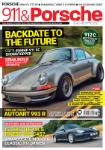
                    2 . 7 RS H : T H E R AREST REN NSP O RT!
25 YEARS OF 996:
THE ULTIMATE ROAD TRIP!
Nine 996s go on an epic pilgrimage back to Porscheplatz

www.total911.com

992 GT3 RS

IN-DEPTH REVIEW OF PORSCHE’S BREATHTAKING NEW RENNSPORT
ON THE PLAYGROUND IT WAS BUILT FOR: THE RACE TRACK

RS

ISSUE 224

992 GT3 RS CHASSIS
DEEP-DIVE
NEW CARRERA T
FIRST LOOK
VARIOCAM
EXPLAINED

SP
PE
EC
C IAL
IA L
IS S U E

RENNSPORT-INSPIRED
RESTOMODS!

NORBERT SINGER
INTERVIEW

Two modified backdates made with
Motorsport inspiration

Porsche’s legendary Motorsport chief
celebrates 40 years of Group C

3

Welcome

U

npopular opinion incoming: the Carrera T
is the most exciting new 992 release this
year, usurping the recent GT3 RS. Why? It’s
attainable for everyone – that is, anybody who
walks into a Porsche Centre and puts down a
deposit, even with no prior buying history, will get a build slot.
The same cannot be said of the GT3 RS.
Also, the T encompasses more of the essence of what a
Porsche 911 is all about: dexterity in performance both on the
road and the track. While the T is a heavily road-biased car,
it’ll certainly do a good job on the track, whereas the GT3 RS
really is a Cup car with an MOT. Fine if you’re driving to and
from a track, but for a simple coffee run, you and that KERS
system will look a bit silly…
I’ve said for some time, the base 992 Carrera is all the 911
you really need in the modern world. Its only shortcoming was
the lack of availability of a manual transmission, something
Porsche was saving for the T. With the Carrera T having
now finally arrived – a year later than originally planned – its

premise of a manual gearbox, sensibly powered engine and
lightweight concept means this is a car that should really
appeal to most of the 911 fanbase.
I’m sure the 992 Carrera T will sell in significant numbers.
My only hope is that we see more purist-spec cars this time
round. On the original 991, too many were specced with PDK,
a glass roof, rear axle steering and so on. Just like that, the
magic of the Carrera T was lost, with only a handful staying
loyal to the manual ‘box, buckets and fully tin-top roof the
‘Touring’ Carrera was intended to be. In the used marketplace,
there are relatively large fluctuations in values as a result,
because those specced as a ‘baby GT3 Touring’ are more
sought after than the fully loaded, head-scratcher examples.
In either regard, the Carrera T is a cracking package
and a real coup for those among us who still crave tangible
involvement and engagement from our road-based 911
experience. That’s why I’m more excited about the Carrera T’s
launch than the GT3 RS. I told you it’s a controversial opinion;
apologies if I made you spill your tea.

“The Carrera T is the
most exciting new 992
release this year for me”
Facebook

Twitter

YouTube

/total911magazine

@total911

/total911magazine

LEE SIBLEY • Editor at large
E: lee.sibley@futurenet.com

www.total911.com
Visit us for up-to-date news and debate

4 Vernot, Côte-d’Or, France

5

Photograph by Alisdair Cusick
Among the rural idyll of central France,
a 996 Carrera 4S is at play on an
entertaining squiggle of tarmac during
a special anniversary pilgrimage from
the UK back to Porsche’s production
line in Stuttgart, Germany. The road
in question might well be made for
the fifth-generation 911. Its name?
The D996, signposted here by a subtle
roadside marker.

6 Contents

Contents
I S S U E # 2 2 4 N OV E M B E R 202 2

ESSENTIALS

F E AT U R E S

Update
8

10

30

A comprehensive round-up of your latest Porsche-specific news,
including a look at unique Porsche for sale around the world

Views
Highlights from your Porsche correspondence
via email, social media and Total911.com

Subscriptions
Become a loyal subscriber and get the
magazine delivered right to your door

992 GT3 RS first drive
16

24

32

75

76

98

Real-world reports from our global
collective of 911 owners

42

50

Data file
Stats, specs and updated market values
for every 911 model from 1963 to 2022

Porsche has released the new 992 GT3 RS’s ‘Ring lap time,
and big gains have been made thanks to the car’s suspension

996 25th anniversary road trip
Total 911 joins 9WERKS on a journey across Europe, which sees a group
of 996 owners returning their cars to the Zuffenhausen production line

Steve Hall samples two air-cooled classics that have been remastered
in the spirit of the long-bonnet and impact-bumper RS eras

2.7 Carrera RSH: the unknown RS

Premier Porsche
All the industry contacts you need to buy,
tune, restore or upgrade your Porsche 911

GT3 RS chassis development

Rennsport restomods

Living the Legend
66

The most outrageous road-going Porsche Rennsport yet is
tested on track at Silverstone. What’s the Total 911 verdict?

Total 911 brings you the story of the rarest Porsche Rennsport,
with only 17 2.7 Carrera RSH models ever produced

Norbert Singer
56

Porsche’s legendary motorsport supremo celebrates 40 years of
Group C and his many engineering innovations by chatting to Total 911

Porsche Moment
Total 911 studies the details behind a significant
snapshot from Porsche’s fascinating past

YO U R 9 1 1 H O M E
For Total 911 back issues & subscriptions
visit www.magazinesdirect.com

32

56

7

16

42

24

50

8 Update

Update

Latest news, key dates, star products & race results from the world of Porsche

UK’s first Destination Porsche opens
The venerable Porsche Centre Reading has been transformed into the country’s
first ‘Destination Porsche’ – a retail destination for enthusiasts and customers alike
For 35 years, Porsche Centre Reading, located
just off the M4 in Calcot, Berkshire, has proudly
stood as Porsche GB’s headquarters, the primary
Porsche showroom of the 45 sites in the UK.
Following a lengthy programme of
redevelopment work, the site has been transformed
into the UK’s first Destination Porsche – a location
offering not just a sales venue but what Porsche
calls a “brand experience”. Porsche can trace its
history with the Calcot facility back to 1985, but its
history with the area began in 1977, while the ribbon
on its latest incarnation was cut in mid-October.
The Destination Porsche concept is intended
to entice customers, friends and fans of the brand
through the doors to experience Porsche in an
engaging way. From new customers searching
for advice, to enthusiast members of the Porsche

community who want to meet like-minded
individuals, the idea provides a driving destination
for current and future Porsche drivers alike.
As a result of the works, the Reading showroom
has more than doubled in size to over 2,000 square
metres, enabling up to 31 Porsche cars to be
displayed. While its aluminium exterior and interior
architecture resemble existing Porsche Centres,
there’s a mixture of fresh design features that help
to generate a new emotive atmosphere.
The reception area has an intentional lounge
feel, while a larger workshop features six workshopinspection ramps. These are visible from the main
space via a large glass partition, alongside two
‘Direct Dialogue Bays’ designed for customers to
be provided with a one-to-one walkaround of a car.
In essence, the aftersales area has become part of

the showroom, similar to the open kitchen concept
in a restaurant. Now with 18 ramps in total, the
service department’s capacity to accommodate
more Porsche Classic projects has been increased.
Adam Flint, managing director of Porsche
Retail Group, commented: “Everyone at Porsche
Centre Reading is proud of our new home and
we look forward to welcoming customers to the
first Destination Porsche in the UK. The Centre’s
stunning architecture and state-of-the-art facilities
will help support our fans and enthusiasts as they
follow their Porsche dream.”
One of five Centres within the Porsche
Retail Group, including West London, Guildford,
Hatfield and Mayfair, the Porsche Centre Reading
Showroom is open from 8:30am to 6:30pm
Monday to Friday, and 9am to 5pm on Saturday.

9

Luftgekühlt returns to Los Angeles
The popular celebration of air-cooled Porsche
came home to California for its 10th edition
Luftgekühlt, the Porsche gathering
created by Le Mans-winning racing
driver Patrick Long, returned to Los
Angeles for its 10th outing in October.
Patrick, Jeff Zwart and Howie Idelson
put together Luftgekühlt 8, which
took place at the 1940s warehouses
of CRAFTED – LA’s artisan market
in Long Beach. ‘Luft’, as it’s become
known, featured its trademark mix
of pristine Porsche, everything from
historic racers and museum-quality
911s, to more humble offerings driven
by local owners.
The 2020 event was cancelled
because of the pandemic, 2021 was

limited in size, and so Luftgekühlt 8
proved an opportunity to quench the
sizeable thirst of California’s Porsche
people. The 50th anniversary of
the 911 Carrera RS 2.7 couldn’t go
unrecognised, while the sell-out
event featured its fair share of
other curios, too. A handful of
endurance race winners with Le
Mans, Sebring and Daytona pedigree
were also on display.
“Patrick Long has such a vision
for these events and I always feel
like I have to up my game to support
that with visuals that allow the
show to live well beyond the first-

person experience,” said film and
photography expert Jeff. “This year
we were able to highlight from the
earliest 1951 split-window 356, all the
way through to the 959, and into the
last of the air-cooled RS models with
the 993. I was very happy when we
found out that we had three of the
original white 1973 Carrera RS cars
with the red, blue and green graphics

available. The arrangement on the
centre platform felt like the show
stage in 1973.
“These events are lots of work for
our incredible team, but when all the
cars have landed and the crowd rolls
in, it’s so satisfying to see how much
people just enjoy wandering around
with great music and cars to inspire
the air-cooled story.”

New RS laps ‘Ring in 6:49

Kiern Jewiss crowned Porsche champion

The 992 GT3 RS has lapped the Nürburgring
Nordschleife 10.6 seconds faster than the current GT3

The 20th Porsche Carrera Cup GB season came to a
close with a dramatic weekend at Brands Hatch

News of fresh Nürburgring
Nordschleife lap times are easy to
come by, but when a new 911 GT3
RS laps the 20.8km (12.9 mile)
circuit 10.6 seconds faster than
the current GT3, well, it’s worthy
of attention.
At the wheel of the latest
525hp GT3 RS, Jörg Bergmeister set an official time of six minutes 49.328
seconds. Fitted with the Weissach Pack and optional Michelin Pilot Sport
Cup 2 R tyres, the new Rennsport also completed the previously standard
shorter lap in six minutes 44.848 seconds. The quick time underlines the big
step this latest RS has made, chiefly in aerodynamics where it offers levels
three times greater than those of the GT3 at 177mph (285km/h).
“We lost a little downforce due to the strong, sometimes gusting wind, but
I’m still very happy with the lap,” said Jörg. “In the fast sections in particular,
the 911 GT3 RS is in a league of its own. Here it’s on a level usually reserved
for top-class racing cars.”

Porsche Carrera Cup GB arrived at
Brands Hatch for its 2022 finalé with
two drivers in overall championship
contention. Points leader Kiern Jewiss
took pole position on the longer Grand
Prix circuit setting, himself up against
chief rival Will Martin. Kent-based racer
Kiern took victory in the weekend’s first
race, which was cut short after Will’s 992 GT3 Cup spun off the track.
In his second year with the championship, Kiern took five overall wins,
appearing on the Pro category podium on a total of 11 occasions. The 20
year old, who switched from single seater racing to Porsche GT cars in 2021,
arrived as favourite for securing the title in the championship’s milestone
20th season and met all expectations. He takes home a winner’s cash prize
of £25,000 and enjoys the use of a Porsche 911 for a year while he eyes his
next steps up the Porsche Motorsport Pyramid. Fellow category champions
Charles Rainford (Pro-Am) and Josh Stanton (Am) also take their share of
the championship’s huge prize pot – and the use of a 911 for 12 months.

News in Brief
2023 911 calendar

2.7 RS TAG Heuer watches

New to the Porsche Shop is this
exclusive 911 calendar for 2023.
Paying tribute to the 911 across
the year, each month features a
different model from the car’s rich
history – from the early air-cooled
days to the present. The official
Porsche calendar measures
575x610x22mm, depicting the
iconic sports car via a series of
high-quality prints. The calendar
costs £46, it can be purchased at
https://shop.porsche.com.

Two new limited-edition chronograph
watches pay tribute to the iconic
Carrera RS 2.7, which is celebrating
its 50th anniversary in 2022. The
TAG Heuer Carrera x Porsche Limited
Editions are based on the 42-mm
TAG Heuer Carrera Chronograph. The
Sporty Blue Edition (£6,400) is limited
to 500 pieces, while only 250 Sporty
Red Edition (£19,550) watches will be
made. The collectors’ timepieces are
available via www.tagheuer.com and
selected outlets.

Future PLC Quay House, The Ambury
Bath, BA1 1UA, UK

Editorial
Editor-at-large Lee Sibley

Contact Total 911

lee.sibley@futurenet.com

Facebook
/total911magazine

Art Editor Jamie Schildhauer
Operations Editor Cliff Hope
Contributors
Andy Brookes, Alisdair Cusick, Berlin Motor Books, Kyle
Fortune, Scott Gardner, Steve Hall, Nick Jeffery, Ron Lang,
James McGrath, Max Newman, Ben Przekop, Peter Wilson

Email
editorial@total911.com

The very best of your Porsche opinions

Cover image
Steve Hall
Photography
All copyrights and trademarks are recognised and respected
Advertising
Media packs are available on request
Head of Commercial - Sports Richard Hemmings
richard.hemmings@futurenet.com
Account Manager Garry Brookes
garry.brookes@futurenet.com
International Licensing and Syndication
Total 911 is available for licensing and syndication. To find out
more contact us at licensing@futurenet.com or view our
available content at www.futurecontenthub.com.
Head of Print Licensing Rachel Shaw

CE
N
DE
N
PO
S
RE
R
CO

R
A
ST

Subscriptions
Email enquiries help@magazinesdirect.com
UK orderline & enquiries 0330 333 1113
Overseas order line and enquiries +44 (0) 3330 333 1113
Online orders & enquiries www.magazinesdirect.com
Subscription delays: Disruption remains within UK and International delivery
networks. Please allow up to 7 days before contacting us about a late delivery
to help@magazinesdirect.com.

Production
Head of Production Mark Constance
Senior Production Manager Matt Eglinton
Senior Ad Production Manager Jo Crosby
Digital Editions Controller Jason Hudson
Production Manager Nola Cokely
Ad Production Coordinator Emma Thomas
Management
Chief Financial Officer Penny Ladkin-Brand
Brand Director Paul Newman
Content Director Paul Douglas
Head of Art & Design Greg Whitaker
Printed by Wyndeham Bicester, Granville Way, Bicester,
OX26 4QZ
Distributed by Marketforce, 5 Churchill Place, Canary Wharf,
London, E14 5HU www.marketforce.co.uk Tel: 0203 787 9060
ISSN 1746-6130
We are committed to only using magazine paper which is derived from
responsibly managed, certified forestry and chlorine-free manufacture.
The paper in this magazine was sourced and produced from sustainable
managed forests, conforming to strict environmental and socioeconomic
standards. The manufacturing paper mill holds full FSC (Forest Stewardship
Council) certification and accreditation
All contents © 2022 Future Publishing Limited or published under licence. All
rights reserved. No part of this magazine may be used, stored, transmitted or
reproduced in any way without the prior written permission of the publisher.
Future Publishing Limited (company number 2008885) is registered in
England and Wales. Registered office: Quay House, The Ambury, Bath BA1
1UA. All information contained in this publication is for information only and
is, as far as we are aware, correct at the time of going to press. Future cannot
accept any responsibility for errors or inaccuracies in such information. You
are advised to contact manufacturers and retailers directly with regard
to the price of products/services referred to in this publication. Apps and
websites mentioned in this publication are not under our control. We are
not responsible for their contents or any other changes or updates to them.
This magazine is fully independent and not affiliated in any way with the
companies mentioned herein.
If you submit material to us, you warrant that you own the material and/or have
the necessary rights/permissions to supply the material and you automatically
grant Future and its licensees a licence to publish your submission in whole or
in part in any/all issues and/or editions of publications, in any format published
worldwide and on associated websites, social media channels and associated
products. Any material you submit is sent at your own risk and, although every
care is taken, neither Future nor its employees, agents, subcontractors or
licensees shall be liable for loss or damage. We assume all unsolicited material
is for publication unless otherwise stated, and reserve the right to edit, amend,
or adapt all submissions.

We are committed to only using magazine paper which is
derived from responsibly managed, certified forestry and
chlorine-free manufacture. The paper in this magazine was
sourced and produced from sustainable managed forests,
conforming to strict environmental and socioeconomic
standards. The manufacturing paper mill and printer hold full FSC and
PEFC certification and accreditation.

Future plc is a public
company quoted on the
London Stock Exchange
(symbol: FUTR)
www.futureplc.com

Chief executive Zillah Byng-Thorne
Non-executive chairman Richard Huntingford
Chief financial officer Penny Ladkin-Brand
Tel +44 (0)1225 442 244

History of RSR: some corrections
Dear Sir,
Love the magazine and read every issue. One key
correction I need to point out from your recent
History of the RSR feature: on page 55, Kieron
states, “But there would be no 993 RSR as such.”
And that, “A small number of naturally aspirated
993s with 340hp and racing specification were
delivered to Japan for a local race series, and
referred by some sources as RSRs.”
Actually, exactly 45 type 993 RSRs were made:
30 for 1997 model year, with the VIN numbers
mixed in with the 993 Cups, and 15 for the 1998
model year. For the 1998 model year, the cars
ending in VIN# 001-015 were Cup cars and the
cars ending in VIN# 016 to 030 were RSRs. 1998
was the last run of 15 Cup cars and 15 RSRs of the
air-cooled era. The 993 RSR was indeed based on
the 993 Cup, but was a separate and distinct car –
it was no different than many other versions of the
RSR throughout time. The 993 Cup was rated at
315hp and the 993 RSR was rated at 350hp (some
were restricted to 325hp, based on the race series).

The factory called these cars the “993 Cup 3.8
RSR”, because they were based on the 993 Cup,
but were not at all the same. Porsche even gave
them a separate type of DME, clearly labelled “993
Cup 3,8l/RSR”.
Furthermore, the Porsche factory prepared
specific 993 RSR parts, books, race manuals and
many other factory documents. In 1997 the fender
flares were optional; for 1998, they were standard.
I also have copies of invoices from Porsche
Motorsport North America for 993 RSR cars sold in
1997 and 1998.
Having driven both a 993 Cup and a 993 RSR
on track, I can assure you there’s a large difference
in performance, and the 993 RSR is noted in
Jürgen Barth’s book and many other sources.
Furthermore, in addition to the Japan race series,
it should be noted they ran very well in the USA at
the 24 Hours of Daytona and 12 Hours of Sebring in
GT3 class, with the big brother 993 GT2 running in
GT2 class, and in EVO spec, GT1 class.
Alan Benjamin

12 Views

Ask the expert
Got a question for our
Porsche technician? Email
us editorial@total911.com
Scott
Gardner
Job title
Technical director,
Bahnsport
Porsche
experience
15 years

Unimportance of retail value
Dear Sir,
The luck of the Irish! I live in southern California
where I have the opportunity to drive numerous
two-lane roads over hill and dale, always watching
out for bicyclists. Ortega Highway, Azusa Canyon,
Highway 33 to Pine Mountain, Hudson Ranch Road,
Decker Canyon Road... the list goes on forever.
My attitude toward my car (now a 997.2S with
a stick shift like the one pictured) is that I own it to
drive it, and don’t really care whether it ever has a
significant resale value. I put about 33,000 miles
a year on it, use it as my daily driver, and I believe
that I’ve driven to the moon and back (238,855
miles) more than three times in the six Porsches
that I’ve owned.
I’ve been driving Porsches, starting with a 914
2.0, for more than 46 years. Total 911 has taught
me a lot about these superbly designed machines.
There’s a reason why my chapter of Porsche Club
of America has a lot of retired space engineers.
Yet the most knowledge has come from being
tutored by my instructor friend, who has a 1975 911,

a GT3 and a GT4, and is willing to avoid the track
in favour of the natural beauty around us –
fir, pines, eagles, bobcats, even a bear or two –
and encourage me to follow along. I do think that
each of the six automobiles lived up to the promise
that it can be driven on the highway as well as on
the track.
My wife Linda has told me many times that (at
79), I am “...growing older but not up”, in the words
of Jimmy Buffett. She has a point. Yet with the top
down, surf music resonating and the forest trees
seeming to stream by, my response is that this
aspect of my life may just be – in Jimmy’s words –
a tire swing.
Mark M O’Brien
Thanks for getting in touch, Mark. The most
rewarding aspect of Porsche ownership is
driving these fantastic sports cars, not garaging
them away. It’s great to read that you’re still
enjoying a Porsche 911 on a daily basis, and long
may it continue.

In praise of the 993
Dear Sir,
Great to see a lovely collection of 993s taking
your cover slot last issue. Having owned four 993s
myself over the past 20 years, I still believe the 993
to be the best era of the 911: last of the air-cooled,
with exceptional build quality and engineering. If
you wanted to, you could still drive a 993 every day
(I believe one of the owners in your test still does),
and its size and power-to-weight means it’ll always
entertain on a spirited drive.
I’ve never quite understood why 964s seem to garner
such widespread adulation among fans when really the

car was a stop-gap to the 993, but
I accept my view may be biased. In any regard, great
work underlining the merits of the 993 – we look forward
to seeing more.
Geoff Lowe

Dear Sir,
How much oil is used between the top and
bottom indicators on the small digital screen
on my 996? I recently completed a lengthy
road trip around Scotland and before I did the
trip the oil was filled to one bar below top on
the digital gauge.
Back home and 1,800 miles later, and the
reading is below half, so how much oil have I
lost? And should I be concerned?
Jon Wooldridge
On the 996 the electronic oil level gauge is made
of eight segments, with six segments indicating
between the ‘minimum’ and ‘maximum’. If all
eight segments are filled, this indicates the
oil level is over-filled above the maximum; if
only one segment is illuminated then the oil is
under-filled below the minimum. It needs to be
between the minimum and maximum markers
and ideally one under the maximum, therefore
showing six or seven segments.
Each segment represents 200ml of oil, so
that’s roughly one litre between the minimum
and maximum markers. If your gauge is just
under half, that means it would estimate
approximately 600ml of oil has been used, lost
or burned over an 1,800-mile period.
Porsche advises one litre to 1,000 miles
as acceptable. However, in the real world this
is a lot and rarely do they use this amount of
oil. You’re therefore using one litre of oil every
3,500 miles which, in my opinion, is slightly on
the higher side but not yet cause for concern.
Driving style is a factor: if the car is driven very
hard then oil consumption can increase.
It’s always worth noting that the electronic
gauges are very sensitive and you must ensure
the engine is at operating temperature (oil
temperature, that is, not coolant temperature)
and that the check is carried out on level
ground. If you’re still concerned, there are a
few steps to consider: renewing the oil/air
separator; ensuring there are no external oil
leaks; or carrying out compression tests or a
bore scope. It might be useful to start logging
and monitoring more frequently, and assess the
consumption in case it increases.

14 Spotted

S otted

© Photograph courtesy of Audi

Total 911 assesses the rare and unusual Neunelfers
currently for sale from around the world

Forgive us this diversion, but whisper it… other car
brands do exist. Hell, there are even other Porsche
models out there, and there’s every chance you’ll
have one, or at least have experienced them at
some point. While we’re not going to stray too far
from our favourite brand here, this month’s trawl of
the classifieds has seen us take a bit of a tangent
because we’ve been looking at Audi RS2s.
It’s unlikely you’re unaware of the RS2, but
here’s a recap – just in case. In the early 1990s
Audi was keen to make a go-faster estate and
asked Porsche for a bit of help. The RS2 is the
product of that alliance. Porsche took an Audi 80
Avant – Audi-speak for estate – and upped the
power from its 2.2-litre, five-cylinder engine by
40 per cent, to give it 315hp and 410Nm of torque.
To achieve this Porsche changed the intake
and exhaust, added a 30 per cent larger KKK
turbocharger, a bigger intercooler, hotter cams,
new injectors and then fitted its own ECU to
control it. It tweaked the gearbox, too – a six-speed
manual – with the RS2’s power driving all via Audi’s
quattro four-wheel drive system. Porsche popped
its name on the top of the engine, as well as the

nose and boot lid. This was no silent partnership
like Porsche’s previous 1990’s collaboration with
Mercedes-Benz with its 500E. Like the Merc, the
Audi RS2 would actually be built by Porsche, with
the car running down the line at Zuffenhausen.
Along with the engine revisions Porsche added
17-inch Cup wheels, behind which were Porsche
brakes with Porsche lettering remaining on the
calipers. Inside there were Recaro sports bucket
seats in either blue or silver suede, which is as 90s
as it sounds. The indicators in the front bumper are
also Porsche parts, as are the wing mirrors, while
the red reflector bar that joins the lights across the
tailgate is a stylistic nod to the 911, which at the
time of the RS2’s launch would have been a 993.
The RS2 could beat the Carrera to 62mph.
Audi’s official 5.4 second time was bettered in
many contemporary tests, with most able to shave
over half a second from that. It was so accelerative
in Autocar’s performance testing that it improved
on the McLaren F1’s time from 0-30mph, taking
just 1.5 seconds. The top speed was a touch over
160mph, making it the fastest estate car in the
world at the time it was introduced.

The RS2 gave 911 drivers a fast Porsche family
car option long before the company succumbed
to selling SUVs. As such, it remains a car we’re
fascinated with here, and the car we’d buy and
leave at our European ski chalet if we had the
means. We’d be happy with a left-hand drive one
then, which is handy because there are a lot more
of them around, and at the time of writing we can
only find RS2s for sale in Europe, with a couple in
Spain and another for sale at Select Automobiles
(www.select-automobiles.fr). This dealer’s
example might have covered over 200,000km, but
it presents immaculately and is finished in Nogaro
blue, which is the must-have colour for the RS2 and
the same as the car pictured above.
Normal 911 pondering will be back here next
month, although if we’ve set you off on a Porsche
collaboration-inspired search of the classifieds,
go and read about how Porsche was responsible
for designing and engineering the seven-seater
Zafira for Vauxhall/Opel. That’s why, on occasion,
you’ll see one displayed at the Porsche Museum,
though rest assured, never again to be mentioned
on these pages.

16 992 GT3 RS first drive

17

992 GT3 RS:
Porsche’s most technically advanced GT3 RS is put through its paces on the
place it’s long called home: the race track. Total 911 delivers its definitive verdict
Written by Kyle Fortune Photography by Porsche AG

18 992 GT3 RS first drive

here’s a warning the 992 GT3
RS is running out of fuel, which
pops up on the central screen in
the dashboard as we’re lapping
the Silverstone GP circuit. We’re
approaching Maggots complex at
137mph (220km/h), and Porsche
ambassador and test driver Jörg Bergmeister casually
starts prodding at the screen to dismiss it, taps
the brakes before dispatching the fast direction
change and gets right back on the accelerator. I’m
dumbfounded – and pounded – as the car changes
direction in a manner that until today I’ve never
experienced in anything other than a pure racing car.
The additional mental capacity to deal with
things beyond what’s core to the driving task in hand
separates merely good drivers from the best. Me? I
would have kept driving around oblivious, until the
car ran out of fuel. That Jörg’s a handy driver was
never in doubt, but having just taken me around the
same track in the same car that I drove, save for the
fact that his is Weissach Pack-equipped and wearing
Cup 2 R tyres, opposed to the ‘mere’ RS on Cup 2s
I had at my disposal, it’s apparent that the GT3 RS
in his capable hands is an absolute weapon. It’s still
pretty damned quick in mine, too, which says more
about the car than it does me.
That previous evening, when I was given a lift by
Jörg from the hotel to PEC Silverstone for the press
conference, he did admit that when he first heard
of the concept of the GT3 RS being an ‘aero’ car he
was slightly concerned. Aero cars are utterly defined
by the way they shape the air around, through and
over them. While that’s fine in a racing car where the
variables are few (and known), for all its Rennsport
badging the GT3 RS wears licence plates and has to
be able to be driven on the road. We all know that
roads aren’t like race tracks. The vagaries of surfaces
are far, far greater, and while the RS’s maximum
downforce isn’t ever likely to be achieved on the road
– outside the Autobahn at least – the fundamental
engineering of the car needs to be such that it’s able
to cope with the prospect of all that force coming
into play. And that should bring compromises.
It’s not an insignificant amount of downforce,
either. Porsche says some 860kg of downforce
creates just shy of the GT3 RS’s 184mph top
speed. That’s more than McLaren achieved with
its pugnacious, overtly aero-styled Senna. It’s an
incredible achievement, especially because it’s still
obviously a 911, which isn’t a shape that’s ever been
particularly clever through the air. It’s achieved by
that overt, automatically adjusting rear wing working
in combination with the active front flaps fore of the
front wheels. That assisting weight is distributed
around 30 per cent at the front and 70 per cent at the
rear, and is enough to enable the GT3 RS to generate
greater G-forces in long corners than a slick-shod
Cup car. Yes, really.
The stat hounds among you will have spotted
that the top speed of the RS is less than the GT3’s by
around 13mph. That alone underlines how much work
the air’s doing, pushing the car into the road. And
this is even with the DRS (Drag Reduction System)

operating that flattens the rear wing, which occurs if
you’ve got your foot mashed to the firewall and you’re
running straight, or you’ve pressed the button on the
steering wheel to do so. The suspension has to cope
with that 860kg of downforce, which if you need a
point of reference is the equivalent of parking my
Peugeot 205 GTI on the RS’s roof, and crucially, it has
to manage that force in a manner that means there
are no sudden changes in the pitch, which would play
havoc with the aero balance.
Björn Racky, project manager, suspension and
vehicle dynamics GT model line, explains that
the GT Department’s changes to the suspension
geometry has been a key factor here. Similarly,
the damper’s quicker responses, allied to a wider
operating bandwidth, enables the RS to achieve its
greater control. The spring rates are significantly
stiffer, but as Björn explains, above 62mph (100km/h)
it’s the damper that’s doing the majority of the work.
All of which makes it possible for the aerodynamics
to do their job.
That work today is exclusively limited to the
track, with the RS’s launch undertaken on the smooth
tarmac of Silverstone in the UK. The odd run over
the kerbs at speed is about as rough as it gets,
although it does reveal that the GT3 RS can take the
bumps, or at least these ones. Porsche’s suspension
people are no strangers to the alchemy of taut wheel
and body control allied to ride comfort, and while
we’re not going to draw final conclusions about ride
comfort here, the potential for it to be good out on
the road does appear promising.
Having pored over the details for the previous
issue of Total 911,
911 I can’t deny being a little bit
overwhelmed by the GT3 RS’s looks. With a GT3 I’d
firmly be in the Touring camp and in the pictures the
RS looked very busy. Yet in reality there’s something
so intrinsically right with it that you could, as I did,
just stand mesmerised while absorbing all the details.
You don’t need a technical schematic to see how it
achieves what it wants to with the air moving around
it. Things like the vented topped, cut-out front

19

“After my first stint behind the wheel I need to
recalibrate. The GT3 RS… changes every preconceived braking and turn-in point as well as
altering the potential entry speed”

20 992 GT3 RS first drive

wheel arches with the deflecting uprights behind
them that escape and accelerates the air down the
bespoke carbon-fibre doors demonstrate, quite
obviously, what the air’s doing and where it’s needed
and exploited, and just how much time’s been spent
in the wind tunnel. Over 250 hours, by all accounts.
A lot more time than in the engine development,
laughs Thomas Mader, project manager, powertrain
GT-road cars. Thomas admits his budget was small
in comparison, and focused primarily on getting
what’s essentially a race engine through emissions
regulations, as well as enabling it to cope with the
greater G-loading it’ll encounter. Of course there’s
more power, but unlike the huge gain in aero –
around double the downforce of the previous RS and
three times that of the current GT3 – the engine’s
increase is marginal. It’s up from 520ps of the 991.2

GT3 RS to 525ps here. That peak is produced at a
heady 8,500rpm (peak torque of 465Nm coming in at
6,300rpm), on its way to a 9,000rpm redline.
That’s all within the familiar 4.0-litre capacity –
the RSR’s 4.2-litre’s not adopted here, nor ever likely
to be in the future. To the naturally aspirated flat six
Thomas’s people have added new camshafts that are
more aggressive above 6,000rpm, while there are
new heads and a new individual throttle valve on
the intake system. It’s mated to the familiar sevenspeed PDK, though with a shorter final drive to help
compensate for the RS’s bigger wheels. The engine
sends its spent gasses down an RS-specific exhaust,
which produces a wonderfully rousing note while the
flat six is producing maximum power. The ferocity by
which it gathers revs is such that it’s not unusual to
find yourself hitting the limiter, even with the arcing

rev-lights around the central rev-counter changing
their hue to signal a tug of the PDK paddle.
Those paddle shifts are normally, rather than
magnetically, actuated in ‘my’ RS today because it’s a
non-Weissach car. I’m up on weight then, marginally
over a Weissach car. Yet even with it the RS weighs
more than a GT3 and, indeed, the GT3 RS before it.
Let’s be honest here – who hasn’t added a bit of bulk
since 2019?
It’s forgivable, too, when you consider the
technical arsenal the RS is packing. While the
Weissach Pack car’s bonnet gains some visible carbon
fibre, as does the roof, suspension elements and a
few bits and pieces inside, the regular RS’s bonnet
is carbon fibre but fully painted and looks all the
better for it. I’d want the Weissach Pack for its cool
carbon cage over the standard steel Clubsport item,

21

and also because you need it to have the superlight
magnesium lightweight wheels that, to me, look the
best. With a bit less unsprung mass they’ll help with
the ride on the road, too.
Inside, it’s all familiar if you’ve sat in a 992, or
more correctly a 992 GT3, with the interior far
from austere and coming with Preuninger’s proper
‘gearstick’. Gone are the days of plastic dashboards
from customers who’d forgotten to tick an option
box on their RS, with all cars coming with extensive
leather/Race-Tex fabric covering surfaces inside, with
plenty of scope for further personalisation should you
desire. You’ll have a stereo and air-conditioning too,
because it’s no longer possible to build an RS, or GT3,
without it. What is specific to the RS is the steering
wheel. The single Mode Switch that you’ll be familiar
with in Sport Chrono-equipped cars is joined by

three more identical items, with all four configuration
dials being clustered around the bottom half of the
steering wheel.
That might sound messy, but it’s neatly integrated,
although it apparently caused all sorts of headaches
to get it to work in conjunction with the airbag.
They’re required to operate the RS’s significantly
increased configurability, with the damper control
swelling from the usual PASM choices to enable you
to dial up your preferred compression and rebound
settings on each axle. The coast (overrun) and drive
locking on the e-diff (electronic differential) and the
degree of traction and stability control intervention
are selectable over a variety of choices, with off being
the last one. GT3 RSs have always been configurable,
only previously you’d have to dig out a spanner to
make your adjustments. With this setup you can

be driver and race engineer on the fly, trying out
different settings on the track while you’re lapping.
Jörg explains that he finds it useful to compensate
for tyre wear, or find more grip if it’s damp, dialling
back the dampers to allow a bit more compliance to
let the tyre do its thing when grip and traction aren’t
optimum. I’ve used similar systems before on other
cars, typically in relation to the traction and stability
control, and found them genuinely useful – but the
RS takes it all a step further. There’s one tight lefthander that I’m getting a bit of push-on understeer,
so I open up the diff a bit. On the next lap the nose
tucks in more readily; the change as marked as it is
remarkable. If you’re the sort of person who enjoys
track days – and if you’re purchasing a GT3 RS then
you are that person – such configurability will enable
you to get more from your day, yourself and the car.

22 992 GT3 RS first drive

Eight laps. That’s what my driving impressions,
and everyone else’s are based on, so they’re not going
to be expansive. What’s immediately apparent is that
the GT3 RS, like a GT3, isn’t going to bend your mind
with its acceleration. If you want that, go and buy a
Turbo S. It’s fast, no question – 3.2 seconds to 62mph
underlines that – but it’s not so accelerative that it
falls in the category of shockingly so. Quick enough,
and it sounds absolutely sensational when you’re
wringing it out, too. What’s abundantly clear right
from the get-go is the intensity of the experience,
from the first turn of the steering wheel with its
fine heft and detailed feel, to the immediacy of the
response to your right foot that hints the GT3 RS is
special. A driver’s car. As it should be.
That’s amplified the first time you hit the brakes,
monstrously and embarrassingly early, such is their
ability to wash off speed. The GT3 RS is the sort of
car that requires you to throw out your preconceived
ideas of driving, such is its ability. It genuinely takes a
few laps to get your head around that. The RS is the
absolute definition of maintained rather than gained
momentum, approaching corners at speeds you’d
think impossible before turning in and carrying that
speed into, through and out of them. A GT3 does
this to a degree, but an RS elevates it to a different
level altogether. That it achieves the lofty highs

without denying you the sensations which combine
to generate the feel and poise fundamental to the car
this magazine celebrates is truly remarkable. Any
concerns that the aerodynamics would alter the RS
to the point where it’s unrecognisable – where it’s fast
but devoid of the elemental characteristics of a 911 –
can be parked. In a pit garage, of course.
After my first stint behind the wheel I need to
recalibrate. Silverstone, however many times I’ve
driven it, always takes a bit of time to reacquaint

myself with, the GT3 RS only compounding that as
it changes every pre-conceived braking and turn-in
point as well as dramatically altering the potential
entry speed. During the second session when
asking more of the car it never ceases to deliver. Its
immediacy and precision is astounding. Yet there’s
a playfulness that gives you the ability to coax the
grippy Michelins beyond their limits and enjoy the
inherent balance on offer – and revel in it, too.
In that regard the RS is an absolute triumph. It’s
a pure driver’s car that rewards and challenges you,
delivering a drive that’s never anything less than
absorbing and intoxicating, which will entertain
and amuse on any and every track. An RS then, as it
should be, and here at its very finest. What it’ll be like
on the road remains to be seen, but we’ll find out in
time, perhaps on a route between a couple of tracks,
just to reassert just how incredible this car really is.
Yeah, yeah, we say it every time an RS comes
along, how could it get any better than this? That it
does, but with this car more than any other wearing
an RS badge the leap is so vast that it really does feel
like Porsche has gone all in, it feeling somewhat of an
end-of-days celebration of a series of cars, perhaps
exiting on a high. Time will tell whether that’s the
case, but for now let’s just enjoy it for what it is,
which is quite simply, the best 911 yet.

24 Porsche GT3 RS suspension

THE RS’S SECRET WEAPON

The 992 GT3 RS’s aero might be the most obvious
means by which the latest 911 manages incredible lap
times, but Björn Racky, project manager suspension
and vehicle dynamics GT model line, explains how
the car’s chassis is where it matters…
Written by Kyle Fortune Photography courtesy Porsche AG

ix minutes and 49.328 seconds.
That’s the lap time we’ve all been
waiting to learn. Director GT cars,
Andreas Preuninger had promised
the Porsche 992 GT3 RS would
produce a sensational time around
the Nürburgring and that it would
be revealed at the press launch at Silverstone. The
weather in Germany had different ideas, though,
and so we departed Silverstone without that time to
drop into the first drive. The stopwatch has had its
moment now, or at least it’s been dry enough for the
GT3 RS to set a benchmark.
The RS’s driver on the day, Jörg Bergmeister, the
man who’s probably most familiar with the car given
his role in developing it, admits that the gusty wind
meant on occasion the car wasn’t able to produce
its best downforce. Andreas adds that along with a
strong headwind on the long drive up the Döttinger
Höhe, the tarmac, being autumn, was cooler than

ideal. A faster time will inevitably come, but that’s a
hugely impressive target.
It’s also a significant achievement. The RS is
obviously defined by its aero, so much so that gusty
conditions and a strong headwind can impact it, but
that overt aero can’t work in isolation. Indeed, for
all the talk of the active flaps, DRS and the 860kg of
downforce it can produce, there’s a lot more going
on to enable it to work – and work properly. Jörg’s
early concerns that such an aero-defined GT3 RS
would prove a tricky car to set a lap time around the
Nurburgring have proved unfounded, thanks in no
small part to the car’s suspension.
Cars with the levels of downforce that the GT3
RS produces are hugely sensitive to ride height, and
specifically pitch, and Germany’s most famous track
is notoriously bumpy. Porsche’s work in the wind
tunnel yielded incredible results, but to enable the
car to exploit it properly the chassis department has
been particularly busy.

25

ABOVE The GT3 RS’s double wishbone front and
multi-link rear suspension features a teardrop
profile for improved aerodynamic properties

26 Porsche GT3 RS suspension

BELOW Björn Racky reveals
there were one or two ‘happy
accidents’ when developing
the suspension for the GT3 RS

Björn Racky, project manager suspension and
vehicle dynamics GT model line, explains his
challenge with the car, saying: “It’s an advantage to
have over 800kg pushing your car down, but we lose
wheel travel to absorb the bumps. So we had to find
a stiff spring to support the chassis, but also one that
isn’t too stiff so the car is still useful on bumpy tracks
like the Nürburgring and also on country roads. It’s
still a car with a number plate.”
Fittingly for such a track-focused car, Björn’s
background is in motorsport, and he says the solution
was to work on the damper and the geometry to
meet Porsche’s goals with the car. “To achieve a good
compromise we needed a very powerful damper.
People think when the spring rate goes up, that’s a
negative impact on comfort. But as soon as you reach
let’s say 100 kilometres an hour, the damper becomes
dominant for the ride comfort. That’s why we
developed the 992 damper, which has a much wider
range for soft damping to high damping. It’s always
an active damper when you have a PASM [Porsche
Active Suspension Management], but compared to
the previous 991, the spread got a lot wider and the
reaction time got a lot better.”
Those changes are a result of revisions to the
manner in which the valving in the dampers work
in the double wishbone front and multi-link rear
suspension, which is mounted to the chassis via
motorsport-derived ball joints and fitted with
Porsche’s rear-axle steering system. The stiffer, faster,
wider spread of damping is only part of the solution,
because with all PASM cars there’s some additional
damping force applied when braking or turning in,

but with the aero concept of the GT3 RS it needed
additional mechanical support.
Björn explains: “We know from our RSR race
car experience that with a certain amount of
aerodynamic the car can get pitch sensitive. When
you pitch down on the front, downforce on the front
increases, which upsets the balance at the rear. It
was important for us to support the front, which is
why we’ve increased the anti-dive. That’s a geometry
change – the angles at which the wishbones are
attached to the chassis. We create an angle, and the
steeper the angle gets the more support we get, and
if I correctly recall the numbers we increased it from
34 to 78 per cent, which gives about half the pitch on
the front compared to the original design.”
That necessitated changes to the front subframe
and new wishbones. The wider track, by 29mm,
meant new forgings for the wishbones were required
and, serendipitously, allowed for the incorporation
of shaped wishbones to contribute the downforce at
the front of the car. With a Porsche 911 a 30/70 split
front-to-rear is optimum for downforce. That rear is
relatively simple to generate, but it’s trickier at the
front. Here, the suspension actually contributes.
More from Björn: “The aerodynamic department
was testing different wind covers for the wishbones.
So basically, we started with covers in the teardrop
design and they told us how efficient it is. At about
the same time we decided that we need to widen up
the track on the front. We needed longer wishbones,
so we said, ‘Okay, we need a new forging tool, let’s
do it teardrop design directly because you can have a
smaller shape.’ When you have a normal wishbone

BELOW The car’s suspension setup
needs to take into account the
immense downforce it generates

27

“We had to find a stiff spring to support the
chassis, but also one that isn’t too stiff…
it’s still a car with a number plate”

28 Porsche GT3 RS suspension

and then you cover it everything gets very bulky. But
if you include the teardrop design into the forging,
into the aluminium directly, you get a much better
result. That was a good coincidence.”
The direct result of those shaped wishbones is a
contribution of up to 40kg at the front axle which,
thanks to the 30/70 optimal aero split for a 911,
meant they could add 80kg at the rear. The reality
is that the front wishbones contribute to the overall
downforce by 120kg. Björn reveals to achieve this,
“we had to make the parts a little bit heavier, which
isn’t something that’s in your mind as a suspension
person. Normally, you try to make your suspension as
light as possible and as stiff as possible, to have good
mechanical grip, but the downforce that’s added has a
bigger impact on lap time than the two kilos we had
to add to the front suspension.”
Adding the Weissach Pack (WP) would help
mitigate that, with Björn explaining that carbon fibre
replaces “the stabiliser bar on the front, stabiliser bar
on the rear, the connection links of the stabiliser on
the rear, and there’s a sheer panel on the rear, which
stiffens up the whole rear of the car. So, basically,
the torsional stiffness of the chassis is increased by
this part. And it’s normally made from three pieces
in steel and aluminium plate, but for the Weissach
Pack we made it into one big, CFRP part.” Björn
adds that the Weissach Pack should be faster as a
result, but that’s down to the weight reduction, not
any difference in the setup, because those carbon
fibre anti-roll bars are just as stiff as their metal
counterparts in a non-WP car.
Another key change the 992 series GT3 RS
brings to the suspension is the possibility to change
the suspension characteristics beyond the familiar
Normal, Sport and Track modes via PASM. Previous
GT3 and GT3 RS models have always had the
potential for changing the suspension setup (as
well as wing angles). However, to do so requires a
workshop and tools. With the new GT3 RS that’s
possible in the Track mode setting. “We’re proud
of the Track mode. Of course, we have a very close
relationship to our race cars and we had the idea
to give the driver the same access to those systems
as the race driver, because basically we had all the
electronics in the car,” explains Björn.
The GT3 RS driver can, via four steering
wheel-mounted knobs, change the characteristics
of the electronic diff on coast and power, alter the
traction and stability controls, and select differing
compression and rebound settings for the dampers
on the front and rear axles from -4 to +4, with 0 being
the default setting. Björn says: “It gives the customer
a completely new possibility to play with the car to
learn the pros and cons of the different options and
also adapt to the different driving situations.”
It’s a neat system that’s easy to operate, with Jörg
pleased that its easy adjustability helps find traction
on the predominantly wet days at the car’s launch at
Silverstone and helping it produce that laptime
around the Nürburgring, too. There’s more to come
– how much we’ll find out sometime next year – but
for all the obvious aero with the RS, it’s what’s
underneath that counts.

ABOVE The blue areas indicate where carbon fiber-reinforced
polymer (CFRP) has been used to construct the chassis and aero

29

Globally delivered to
your door or device

EXCLU
S U B SC S I V E
RI
COVE BER
RS !

Great reasons
to subscribe
• PRINT & DIGITAL:
Pay only £18 every
3 months, saving 47%
• PRINT ONLY:
Pay only £14.25 every
3 months, saving 20%
• Never miss an issue
with delivery right
to your letterbox

Visit magazinesdirect.com/A17U
Call

0330 333 1113

Lines are open Monday-Friday, 9am-5pm, UK time

QUOTE A17U WHEN ORDERING

magazinesdirect.com

Terms and conditions: Offer closes 31 December, 2022. Advertised Direct Debit offers are available to UK
subscribers only. Please allow up to six weeks for delivery of your first subscription issue (up to eight weeks
overseas). The full subscription rate is for 12 months (13 issues) and includes postage and packaging. If the
magazine ordered changes frequency per annum, we’ll honour the number of issues paid for, not the term
of the subscription. For full terms and conditions, visit www.magazinesdirect.com/terms. For enquiries
and overseas rates please call +44 (0) 330 333 1113. Lines are open Monday-Friday 9am-5pm (UK time) or
email help@magazinesdirect.com. Calls to 0330 numbers will be charged at no more than a national
landline call and may be included in your phone provider’s call bundle.

32 996 anniversary road trip

´

25 YEARS OF 996:

THE ULTIMATE
ROAD TRIP
Total 911 joins 9WERKS in taking nine Porsche 996 examples on a
three-day, 1,300-mile pilgrimage back to the factory that made them,
via an aptly named driver’s road in France…
Written and Photographed by Alisdair Cusick

t’s mid-afternoon on a Sunday, late in
September. I’m in the passenger seat of
Editor Lee’s Irish green 996 Carrera as we
motor through northern France. To the
left and right, wide open vistas of rolling
farmland relentlessly creep past, stretching
as far as the eye can see. In the door
mirror there’s the entertaining sight of a line of 996s
behind us, weaving and bobbing in unison to our
lead. But it’s ahead that really matters, and what we’ve
come to savour for the next three days: the roads.
We’re one group of 911 enthusiasts all sharing the
same intention. Heading to the Porsche Museum in
Stuttgart for a one-off pilgrimage to return the watercooled cars to the place they each left all those years
ago: Werk 2 at Zuffenhausen. We’re returning 25 years
later almost to the very day that the first 996 was
manufactured, in celebration and recognition of the
following the car has built up over time.
We all know the 996’s history with enthusiasts.
As the air-cooled cars found their ascendency and

values rocketed, the 996 got somewhat left behind.
The first all-new 911, not merely the fifth generation
of a previous model, was a step change for the 911 in
both cooling and production. Designer Pinky Lai’s
sculptural, flowing creation had much in common
with the Boxster, thanks to cost-driven manufacturing
constraints. It was more aerodynamic, stiffer, lighter
and more powerful than the outgoing 993, but did so
without garish wings nor shouty graphics, nor the
trademark round headlights of the icon to that point.
Yet all that was forsaken because of the engine.
Nostalgics lusted after their air-cooled heritage, but
the reality was that water cooling was the future for
the 911 to meet emissions legislation – and achieve
profitability. As a new 911 it sold in great numbers
and turned the company into profit, but as an
enthusiasts’ car, it definitely lagged behind. “It’s just a
996,” you heard people say.
But that was then. Recent years have reset that
metric, and there’s now a niche following for the
overlooked model. The air-cooled kit has ploughed

TOP In the shadow of the
Porsche Museum, a select
group of 996s and their
owners revisit the car’s origins
ABOVE The Eurotunnel is just
the first leg of the drivers’ epic
journey to celebrate 25 years
of the Porsche 996

34 996 anniversary road trip

its own furrow, but there’s a growing enthusiast
movement for the 911 once derided for its ‘fried egg’
headlights, water-cooling and naff interiors. Today, the
cars are driven, enjoyed and modified, as our rolling
pilgrimage demonstrates.
The day started at an ungodly hour to meet
mid-morning at the Eurotunnel, merely a group of
strangers with their 911s. Half an hour or so later,
having enjoyed two carriages to ourselves, we roll on
to French soil as friends, each enjoying the spectacle
and enthusing over the adventure of the trip ahead.
Our group begins as eight, representing the 996
well, in 2022. There’s Nick in his C4S, fresh from a
Bahnsport exhaust fitting, with pal Sunil; another
Nick in a 996.2 C4S Cabriolet (with PSE) with
pal Rich; Matt and wife Clair in their Aerokitted
Millennium edition; Mike and Simon in their C4S;
Nigel in his C4 Tiptronic Cabriolet; Anthony in his
996.2 CSR; Sunil in his modified 996.2 C2, featuring
a Hartech engine, Bilstein PSS10s, 200 cell cats,
switchable exhaust, 997 seats and interior trim (and
more!); plus Lee’s car. Perhaps most suitably, we’ll be

joined mid-trip by Nürburgring-addict Abel, in his
very early-build C2. His Arctic silver car would have
left the gates of Werk 2 almost 25 years to the day of
our trip.
Much of northern France is treated as little more
than somewhere we punch through on le péage.
Efficient and well-surfaced, huge distances can be
racked up on those toll roads, with little but a stop
at an aire or spying the occasional buzzard to break
up the unending monotony. While it would be easy
to push straight to Zuffenhausen in a day like that,
today we’re taking our time and sticking instead to
the back roads. There, travelling in France takes on an
altogether different air. Quiet and sparsely populated,
sleepy French villages become increasingly more
rural as we thread steadily south-east towards
Reims. The roads are open, flowing, with a perfect
road surface for a 996. Indeed, once we rolled off
the Eurotunnel, the cars took on a totally different
character to that of being driven in England. Gone
is the jittering ride derived by pock-faced UK
Tarmacadam. Instead, we revel in a road surface so

smooth and even, Lee’s Carrera on and KW Variant 3
coilovers feels right at home.
We take in a traditional rite of passage for UK
road trips through France: the evocative grandstand
and pits of Reims-Gueux. A cheeky last stop before
the hotel that night, we catch the last light of the
day there. There’s a direct Porsche link to the
historic circuit, for its only foray into F1 was with
the legendary Dan Gurney in the 1960s. The historic
five-mile road loop was first raced in 1926 and was
reputedly one of the fastest of its day, thanks to long
straights that facilitated slip-streaming dogfights.
Atmosphere taken in, eight M96 engines are finally
tuned off in the underground car park, 192 miles after
crossing the Channel.
Day two is heralded with the raspy barks of
eight differing flat six exhausts on cold oil. After a
fuel stop we continue on the back roads, deep in
the Champagne region. On the distant hillsides,
the world-renowned vineyards of the greats like
Moët & Chandon relentlessly roll by. A chalky soil,
agreeable climate and gentle sloping plateaux

35

“For over 80km, each driver is lost in the moment,
pedalling their 996 through an endless presentation
of bends, scenery and altitude”

FACING PAGE With the
996s safely aboard the
Eurotunnel’s shuttles, the
group takes the opportunity
to get to know each other
ABOVE The convoy of 996s
makes short work of northern
France’s efficient motorway
network en route to Reims
LEFT As well as the D996, this
area of central France serves
up many road names which
appeal to the enthusiast

36 996 anniversary road trip

may provide the optimum environment for growing
the world’s best Champagne, but today our 996
pilgrims are revelling in the Champagne region’s
rather automotive-themed terroir: it’s all about roads
flowing, not the grapes growing.
Further south on the D396 we hit sections
characterised by long, straight, flat sections two miles
or more in length. The longest, Lee measures, is an
arrow-straight 4.7 miles between turns of the steering
wheel. In the UK, we just don’t get to experience
anything like it. Quiet villages seem all but deserted
as the convoy cruises through empty streets. A deer
idly chewing in a field lazily lifts its head to see what
the commotion is, as Lee enthusiastically pushes
around a glorious third-gear left-hander. Does it
distinguish between Gundo hack and PSE; 3.4 or
3.6, I wonder? For once, driving itself is part of the
destination, and these little details and experiences
are what we’ve come to enjoy.
This area of France is notable to Porsche fans for
the roads coinciding with Porsche model numbers.
We’ve already been on the D944, but the D959, D928
and D901 are all nearby, and great drives. Swinging
south, we deliberately aim for Gevrolles, where the
D396 becomes the aptly titled D996: the perfect
route to celebrate 25 years of our cars. For over
80km, each driver is lost in the moment, pedalling
their 996 through an endless presentation of bends,
scenery and altitude, offered up for all the world as if
the road were designed for the car. We can all name
famous Alpine passes, but out here we find our own
undiscovered idea of driving perfection.

It’s an endless driving road that gives constant
entertainment and becomes steadily more twisty
over the hour or so needed to drive it from north
to south. At times it’s like the Nürburgring, other
times Scotland or Wales, other times it could only be
France. Name a famous circuit bend and I bet you’ll
find the same arc here, but who wants to loop a
track? This is a real road, where every apex is unique,
every driver lost in getting the line just right. Near
Moloy the first hairpins appear and we cross the
D901, when switchbacks become a regularity. The
road simply gets better and better the further south

you go, serendipitously suited to the cars that it
shares a name with.
With hot tyres we punch to Mulhouse, eat
incredibly late, chatting, laughing and enthusing
about our past few days. Rising early the next day,
we’re set in a routine: eat, refuel, check the route into
Waze, then hit the road and get down to the business
of driving our 911s all day. Our group of eight
becomes nine as Abel joins us from Zurich in his
early build 996.1. Hopping the border into Germany,
we revel in driving derestricted Autobahn, which the
group enjoy to the full.

37

ABOVE LEFT The ReimsGueux’s grandstand serves as
an evocative backdrop for the
assembled 996s
ABOVE Narrow and widebodied Porsche 996s joined
the first 9WERKS roadtrip
LEFT Switchbacks on
the journey present an
exhilarating opportunity for
drivers to put their 996s
through their paces

“We’re returning 25 years later almost to the very day that
the first 996 was manufactured, in celebration and recognition
of the following the car has today with enthusiasts”

38 996 anniversary road trip

“We’ve each discovered new layers of the
996’s capabilities during our 1,300-mile drive”

BELOW LEFT The convoy
of 996s drive through
Germany’s Black Forest
region on roads that are close
to 1,000m above sea level
ABOVE The group of 996s
are parked on Porscheplatz,
the place where they were
assembled 25 years ago
LEFT The mirrored exterior
of the Porsche Museum lends
itself to the creation of a
striking photo composition

Exploring this corner of the car’s performance is
a lesson for us all. Cruising for long periods at up to
140mph, the cars run cooler on the gauge and feel
nothing but rock-solid and comfortable. All too soon
we swing off and head through the Black Forest,
where the road rises via meandering, sinuous curves,
ever higher and higher. Mist appears, but before we
know it we’re just short of 1,000m in altitude and
actually in the cloud itself, with fog atmospherically
streaming through the forest.
An hour later we’re taking the turn off the
Autobahn into Zuffenhausen, then Schwieberdinger
Straße to Porscheplatz and the Porsche Museum. As
we creep through traffic, Porsche Werk 1 employees
fill the pavements, heading home after a hard
day’s work. The museum comes into view and we
complete the pilgrimage, lining up our 996s in the
museum concourse, a quarter-century after the first
cars rolled off the production line, just over the road.
Parked under the superb architecture of the
Porsche Museum, our travel-stained Neunelfers are
an exhibit in themselves, attracting a constant stream
of selfie-snapping tourists. So distinctive are our 996s
that even a passing Grant Larson, head of special
projects at Porsche, stops for a look. That night,
Pinky Lai comments on the trip’s social media posts;
both timely reminders that Porsche is a company of
enthusiasts at heart.
It’s a strange thought that all our cars here rolled
out of the building opposite where we’re now sitting.
I point out to Lee that the last time they were here,
our cars were just boxes of components awaiting
assembly. Our nine 996s are the only cars to have
passed the doors of Werk 2 a second time.

40 996 anniversary road trip

In the interim, they’ve been driven all over, covering
between 60,000 and 130,000 miles, making memories
and, yes, no doubt experiencing a few mechanical
mishaps, too. These cars left Werk 2 all those years
ago heralding a new era for Porsche, in design,
cooling and manufacturing. Today, they return as cars
of a different era.
In 2022, the cars are now modified, readily.
Fuchs wheels, lowering springs and coilovers tune
handling and styling to taste, something Lee’s C2 and
Anthony’s RPM CSR aptly demonstrate. 997 seats
are a perfect, if not essential swap to transform
comfort. So fitted, added with modern infotainment,
it almost makes a 996.3; a half-way house between
this and the later water-cooled brethren. We get
classic car engagement, but with modern-era tech
and usability.
We’ve each discovered new layers of the 996’s
capabilities during our 1,300-mile drive here. Wet,
dry, hot, cold, C2, C4, Tip or manual, regardless
of weather, or road speed, the cars did it all,
comfortably and engagingly. Take a 996 out of
the UK road network, drive it on the continent
and you’ll appreciate why the cars were designed
and engineered as they were, all those years ago.
Returning home after a grand tour like this, and
you’ll have learnt a great deal more about your car’s
abilities. If you’ve never done it then frankly, you’re
missing out.
Okay, the water-cooled cars lose out on the
visceral drama and theatre of their air-cooled
predecessors. But I make the point to Lee that I’d
much rather have done this trip in his 996 than in my
old 964. The quieter cruising, greater interior space
and useful sixth gear of the fried-egg 911 make that
the weapon of choice, without doubt.
The reality is we shouldn’t be surprised the cars
are capable of performing so well. The cars originally
rolled out from Werk 2 into a new world for the 911.
A model for the future. Twenty-five years later, they
return as 911s with a cult following among
enthusiasts, and the 9WERKS road trip pays homage
to that. “Just a 996?” Just a terrific 911, more like.
TOP The line-up of 996s
attracts plenty of interest
from visitors to the Museum,
as well as a brief visit by
Porsche’s Grant Larson
LEFT Savouring the moment,
before the drivers and their
passengers embark on the
long return journey back
to England

42 911 restomods

Total 911 samples two home-built restomods inspired by the halcyon
Rennsport models of the short- and long-bonnet eras
Written and Photographed by Steve Hall

43

celebration of the 911.” It seemed
a reasonable reply to Lee
Sibley’s request. Total 911’s Editor
understandably likes stories that
have a theme, be it an upcoming
911 anniversary, measuring the
latest 911 against an older model,
or perhaps an in-depth racing feature for when the
magazine hits the shelves – just as said race is about
to rack up its 50th year on the calendar.
However, sometimes there’s no better reason than
finding a 911 so unique, so cool, that it simply has to
be shared with you, dear reader. And if you manage
to unearth two such cars owned by friends in the

same part of the world… well, we all like a ‘buy one,
get one free’ deal, right?
So this story is simply a celebration of the 911 and,
in particular, two fabulous cars that demonstrate a
depth of passion for our favourite Porsche. But what,
exactly, do we have here? Let’s start with the car in
the yellow corner (which makes this sound like a
comparison test; it isn’t), because I challenge anybody
to happen upon it and not be instantly drawn to
its presence. I mean, it just looks so damned good,
brooding in its Signal yellow hue, doesn’t it? You’d
be forgiven for assuming this is another restomod
911, perhaps 964-based – maybe even 993 given the
ever-increasing amount of such cars appearing in the

world of Porsche. We love a well-done restomod, and
there’s good reason why so many evoke the early ’70s
RS/RSR look, because it may just represent peak 911.
Were I to build one, it’s the style I’d want.
This car perhaps demands a nomenclature of
its own though, because it approaches the ‘ideal
911 for today’s roads’ conundrum from the opposite
direction. Given this car was built from a genuine 1971
race shell with all the right strengthening done and
the correct RSR pieces in place, I’m going to call it a
retromod. It proves just how important a couple of
letters in the right place can be.
When owner Alan Cookson acquired the car from
a local specialist in 2020 it was most of the way

through a restoration programme that would have
culminated in a raw, race car vibe. Covid and the
subsequent lockdowns put paid to plans for the thenowner to head to Le Mans in his road racer. Devoid
of carpets or soundproofing, its traditional halfhoop roll-cage and well-worn bucket seats signalled
the intended use as an out-and-out fast road/track
weapon. Alan was hooked by the colour, evoking
memories of a Daytona yellow Escort rally car owned
years prior. But colour alone wasn’t the only hook;
the potential to build the car he wanted was clear to
see. It had the right engine (more of which later), the
right mechanicals underneath, a beautifully wrought
915 gearbox and a limited slip diff.
Alan wanted to retain the core character, but use
the car for longer drives. The co-driver had to be
comfortable, because Alan’s road tour business (www.
www.
gttourz.co.uk)
gttourz.co.uk meant this 911 would be anything but a

high days and dry days car. Alan sums it up nicely: “I
wanted a modern day GT3 RS feel, but in a classic car
– what I call an RSR café racer.” The interior was the
first point of call in making the car more habitable,
starting with adding new plates for the base of the
Heigo full roll-cage, door crossbars and dash brace.
The extra rigidity will help for the sprints and hill
climbs Alan wants to do, but as he says – “Let’s face
it, the car is 50 years old!” – any rigidity is welcome.
In went new Recaros retrimmed in leather and
Alcantara by Lang & Potter of Plymouth, alongside
dash and door cards trimmed to match. Alcantara
roof-lining finished the interior beautifully. With
a fresh set of carpets and a modicum of sound
proofing put back in, the “café racer” remains a raw
experience, yet far more habitable than it would have
been. It’s a lovely place to sit, the dished Momo wheel
eschewing the de-rigueur Prototipo to get the driving

position spot on. Which it most certainly is. Now
ensconced in the driver’s seat, perhaps it’s time to go
for a drive…
Slot the key in to start (a feeling I’ll always
enjoy, you can keep your Keyless-go), a quick crank
clockwise and the motor chunters into a busy idle,
filling the cabin with a quick, bassy thrum. Throttle
response is razor sharp, so you need to measure your
inputs to avoiding kangarooing off the line or leaving
in a shroud of smoke (tyres or clutch – take your
pick). Having been busy with action shots for much
of the morning, temperatures are already where they
need to be and Alan instructs me to go for it – an
invitation I’m happy to cash in on.
But before we roll, let’s get into one of the two
things that define this car – one entirely expected,
the other less so. The engine in this car is an absolute
gem, entirely and wholly befitting the GT3 RS feel

45

ABOVE LEFT The interior
features leather and
Alcantara-trimmed Recaro
seats, and a Momo steering
wheel for improved driving
ABOVE Fuchs-style wheels
and 911R-inspired rear lights
help give this 911 a hot rod,
cafe racer feel
LEFT The 3.2-litre engine,
which was built by Porsche
motorsport partner Neil
Bainbridge, can achieve
around 300bhp

46 911 restomods

ABOVE RIGHT Driver and
passenger will have to step
over the Porsche G-model’s
half roll-cage to sit inside
the cabin
ABOVE Lyn Major spotted
his Porsche in a window of a
Devon garage, where it had
languished for four years
RIGHT The engine, which
is capable of 200bhp,
coupled with the car’s overall
weight reduction of 200kg,
contribute to an invigorating
driving experience

47

Alan wanted from it. While the finer details of the
engine are frustratingly lacking (lost in the mists of
time as the car changed hands), what we do know is
it was built by Neil Bainbridge, a company steeped
in Porsche motorsport history. So it comes with a
‘proper’ heritage: 3.2 litres, big valves, Wosner pistons,
twin spark ignition and (vastly expensive) high
butterfly MFI, power pegged around 300bhp with a
soundtrack to match. That’s the bare facts. Translate
that into the driving experience? It’s epic.
Like a GT3 motor it needs revs to give its best,
the torque curve a touch hollow below 3,000rpm. Yet
the lightness of the car (1,150kg) means it still gets a
move on, with nascent acceleration a suggestion of
what’s to come. By 3,500rpm things are really picking
up; you sit there with the throttle pinned, every
revolution delivering more power. It’s fabulously
linear, goading you into kissing the redline, all the

while backed by a wonderful soundtrack – that
chuntering, bassy growl we heard at idle quickly
morphing into the kind of hard-edged induction bark
redolent of an M3 CSL before overlaying that with a
serrated edge of exhaust noise in the final sweep of
the rev counter. And yes, it is properly quick, thanks
to a power-to-weight ratio within a whisker of a
996.1 GT3. In cross-country driving it’s an absolute
joy to use: the linearity of delivery and razor-sharp
precision of response meaning you really get into the
throttle as a means to dictate the attitude of the car.
And if that’s not enough to beguile, it’s operated by
the best 915 shift I’ve ever used. There’s a precision
and sharpness to this box that perfectly matches the
intent of the motor, encouraging and inspiring you
to punch in rapid upshifts and intuitively matched
downshifts as you keep the engine in its prime rev
band. After this, I’m convinced a Wevo shifter should

be the first thing on the shopping list for owners of
any 915-equipped car…
But this I expected; what comes as a delightful
surprise is the way the car addresses the road. The
looks hint at a rough-and-ready racer, but this 911
positively glides across the surface – beautifully
damped, seemingly unperturbed by mid-corner
bumps. And all the while you’re receiving the kind
of high-fidelity feedback you’d hope for – it’s just
that some of the unwanted stuff is filtered out so
that, if anything, you can attack a good road even
harder knowing you won’t be thrown off line by
imperfections. Now that I didn’t expect. With the
Bilstein Clubsport dampers it really is the perfect
setup for Alan’s desires, both wonderfully engaging
and perfectly useable over distance. Furthering the
retromod vibe, the interior sports a PCCM head
unit so it’s got some modern tech to cement that

48 911 restomods

long-distance usability, along with upgraded lights for
those early starts and long nights.
Philosophically, you could argue the ‘other’ car in
this test follows a similar path to Alan’s car, no matter
how different it is to look at – and to drive. Owner
Lyn Major had been trying to acquire it for a year
before the-then owner finally relented in late-2019. A
deal was done for Lyn to acquire a slightly shabbylooking G-model that had sat in a Paignton garage
for over four years. It, too, was an unfinished project
that was extremely stripped-out, featuring plexiglass
windows and such-like.
Priorities were two-fold: get the car running so
Lyn could glean a clear picture of how the car drove.
From there he’d be in a good position to make it the
911 he really wanted it to be, then get the car trimmed
to deliver the driving environment he’d envisaged all
along. This took a good three months: the continuous
injection system caused fuelling problems, while
compound brakes were far from perfect, which meant
a full rebuild of both. But the potential of the car was
clear to see. The now-fettled motor delivered a solid
200bhp thanks to the new exhaust and intake, and
shorn of 200kg the transformative effect on the G’s

performance was profound. Following the mantra of
day-to-day usability of Alan’s car, Lyn replaced the
plexiglass (which was by now scratched and faded)
with real glass, and retrimmed the interior that was
gutted at time of purchase. Out went the full roll-cage
for a half cage, carpets were replaced, and even new
door skins were fitted, including window winders
fashioned from VW Golf items.
And it drives as good as it looks. I mean, how
good do you think a more powerful, 200kg lighter
G-model is going to be? It’s nimble, changing
direction quickly with lively response from either end
of the car. The front-end response you might expect;
that the tail is so settled less so. It’s utterly confidence
inspiring, goading you into driving harder and harder
in a way that’s very rewarding.

911s have always been known for great steering
– that lightly loaded front end allowing for a subtly
assisted rack, and this car just streams feedback into
your wrists aided by the Alcantara-shod Moto-Lita
wheel. Braking is absolutely on point: the pedal solid
underfoot, giving confidence to just hammer the
brakes with the lightness on display every time you
hit the middle pedal. It does what you want, when
you want – which is pretty much the essence of a
good handling car, isn’t it?
Lyn has done a brilliant job of dialling in this
G-model to his desired fast road preference, with
enough power (and a boatload of torque in the midrange) to be fun alongside a weight reduction that
elicits performance and response everywhere you’d
want it. The interior is trimmed ‘just enough’ to be
every-day useable, eschewing unnecessary weight
where it’s not needed, those bucket seats and MotoLita wheel providing perfect touchpoints to get on
with the business of driving.
Both of these 911s demonstrate a passion for
the model that’s palpable. Both show their owners’
enthusiasm for all things 911, for nothing else would
quite do the job. And while they’re wildly different to
behold and to drive, there’s a clear thread that runs
through both of these unique projects: taking a 911
and making it very much your own.
So yes, I think it’s fair to say that both these
fabulous cars are absolutely a celebration of the
Porsche 911, probably the most enjoyable and
adaptable sports car ever made.

“There’s a clear thread that runs through
both of these unique projects: taking a 911
and making it very much your own”

50 Carrera 2.7 RSH

51

THE STORY OF THE

2.7 RSH
So rare you’ve likely never heard of it, Total 911 shares the
inside story of the 2.7 RS Homologation, brought to you by
the authors of Porsche Carrera RS 50 YEARS 1972-2022
Images and text courtesy Berlin Motor Books

52 Carrera 2.7 RSH

longside the Carrera 3.2
Clubsport from the G
series and the 911 Carrera 4
Lightweight from the 964
generation, the air-cooled
model series of the Porsche
911 includes another extremely
rare 911 that’s almost unknown, even to experts. This
is the homologation version of the 911 Carrera RS 2.7.
Only 17 examples of this Carrera RSH – where the H
stands for homologation – were ever produced.
All Carrera RS 2.7 cars were ultimately based on
the RSH version. A list price of 34,000 Deutsche
Marks (DM) was therefore set in August 1972.
After completion, the vehicles had to be driven to
Stuttgart’s municipal scales for weighing. Without
this official measurement appointment it would have
been impossible to meet the FIA’s strict requirements.
Once the vehicles had been individually weighed
and the result assigned to each vehicle’s identity
number, the cars were taken back to the Porsche
plant where they were then converted into the
versions requested by the customers. These included
the sporty lightweight M471 variant, which required

payment of a surcharge of DM 700; and the slightly
more comfortable Touring version with the M472
code and a surcharge of DM 2,500.
In total, excluding the 10 prototypes from the
pre-series, Porsche built 1,580 units of the 911 Carrera
RS 2.7 in the 1973 model year. These included 1,308
Touring version Carrera RS, 200 vehicles in the
Sports version and 55 units of the 911 RSR 2.8. Added
to these were the 17 virtually unknown RSH models
with conversion code ‘0’. This simply meant that
nothing had been done to the 2.7 Carrera RSH at all
– the vehicles remained virtually naked, without any
further equipment or specifications.
Whereas an RS Touring weighed 1,075kg, the
M417 Sports version tipped the scales at only
960kg. With the RSH, however, a concerted attempt
was made to save every additional possible gram.
Among the features dispensed with were the thick
floor carpets that came as standard and the glove
compartment lid, clock, tool set, adjustable backrest
on the passenger seat and the sun visors, to name
only the most important parts. Thin steel was chosen
for the body and a simple sticker was used in place
of the enamelled Porsche crest on the front luggage

compartment lid. Stickers could also be used at the
rear if necessary.
To reduce the weight still further, the RSH was
also fitted with much narrower wheels. 6J x 15 Fuchs
rims were mounted at the front with 165/15 VR 15
tyres. 6J x 15-inch Fuchs rims were also used on the
rear axle, although the assembly was completed
with slightly wider 185/70-15 tyres. The ultra-spartan
Carrera RSH thus weighed in at only 935kg.
The “0” code didn’t change the 2.7-litre engine.
The combination of a magnesium block and Nikasilcoated cylinder liners with Bosch petrol injection
generated an output of 210hp. With a new five-speed
manual transmission added to the mix, the Carrera
RS was capable of a top speed of 245km/h.
The RSH wasn’t restricted solely to the first 500
units. Five RSH vehicles were assigned to the first
500 series, but 12 more “0” cars also followed in the
next two series. Most of the 17 units were destined
for motor racing. The critical observer might now be
wondering whether these 17 Carrera RSH units really
are the exceptional rarities and absolute must-haves
they’re touted to be. At auctions, of course, these 17
vehicles will always fetch significantly higher prices

53

“The digit ‘0’ simply meant
nothing had been done to the
2.7 Carrera RSH at all – the
vehicles remained virtually
‘naked’, without any further
equipment or specifications”

54 Carrera 2.7 RSH

RENNSPORT
INSIGHTS

ABOVE The ultra-rare version of the
Carrera RS 2.7 commands a high price
on the after-sales market. One was sold
for over $1.5 million in 2021

than the Touring version, of which 1,308 vehicles
were built. However, can a Carrera RSH be classified
as more valuable than the M471 Sports version, of
which 200 vehicles were built?
It can be assumed that some of the 17 Carrera
RSH cars owe their unusual classification to a lack
of communication. It may be that not every seller
in other European countries knew that a Touring or
Sports version had to be ordered. Or perhaps some
of them were canny buyers who wanted to avoid
the surcharge of DM 2,500 for the M472 Touring
package or DM 700 for the M471 Sports package.
In some cases, the customers may have wanted to
convert their Carrera RSH themselves for racing
purposes. With its thin wheels, the RSH in this basic
configuration was quite a long way away from being
suitable for racing. If a buyer were really interested
in racing, the DM 700 for the M471 sports package
would have been money sensibly invested.
Be that as it may, Porsche delivered one of the
17 RSH units to Dutch importer Ben Pon on 1 June,
1973. Ben had a close working relationship with
Vasek Polak in California and shipped the 911 over to
him. According to the vehicle documents, the first
private owner of the car, a Texan, fell behind with his
instalment payments. As a result, his lending bank
sold the RSH to John Paul Sr. who, together with his
son, John Paul Jr., used the sports car at autocross
events and in a number of races. The 911’s ongoing
journey then took it via Tom Anderson, the head of
Carrera Motors in Bend, Oregon, to Monte Shelton.
During restoration, it was discovered that the
number 633 had been cast in the engine block instead
of 663. At first, even the experts at the Zuffenhausen
plant assumed that this was a production error.
But it transpired that Porsche had switched from
magnesium blocks to aluminium alloy in the second
quarter of 1973, and changed the marking accordingly.

This vehicle was offered for sale by the wellknown car auction house RM Sotheby’s in 2021 for
US$1,550,000. Whether this not-inconsiderable
surcharge for an M471 sports version of the Carrera
RS 2.7 is justified is best left to the judgement of the
individual collector.

This and many more fascinating stories behind the
Porsche 911 Rennsport’s lineage appear in Porsche
Carrera RS 50 YEARS 1972-2022, published by
Berlin Motor Books. Inside you’ll find all series and
special colours with vehicle animations, original
press releases and brochures, along with full
details on prototypes and test vehicles.
You can purchase one of the 500 limited copies
from www.berlinmotorbooks.de, each priced at
€228 (around £199).

56 Interview with Norbert Singer

INTERVIEW WITH

Porsche’s legendary Motorsport supremo talks to
Total 911 about the company’s Group C dominance
on the discipline's 40th anniversary
Total 911: This year, Porsche is celebrating
40 years of Group C. You were the engineer
who was responsible for the most decorated
period in the company’s racing history. How
do you look back on that period now?
Norbert Singer: It’s interesting because there were a
lot of details that I didn’t realise during that period.
I was too busy preparing and developing for the
next race and season. But now I’m trying to gather
information together for a book and I’ve found a lot of
interesting details that happened during that time. It’s
amazing because I’m talking to old colleagues from
those days and none of us really realised the big steps
in development that we did. Right now it’s 40 years
back, but in my mind and in some of my colleagues’
minds, it all only just happened.
You dominated Le Mans in the 1980s. Was it
the case that you didn’t realise the magnitude
and the legacy of what you and your team
were achieving?
No, not really. We had to make a new car because
the regulations had changed a lot. Things like
ground effect and consumption were introduced
for the season. With consumption, it’s fine to

introduce the ideology but it’s not like a number,
such as displacement of an engine. It was tricky. But
consumption is a valuable piece of the puzzle and we
had to do a lot of tests to realise it was working.
On the circuit it’s different, of course. It’s always
a new challenge to find out and over the years, you
knew what you had to do and the figures become
more and more concrete, and you know what you’re
going to get.
When the regulations for Group C were
announced, according to your book you were
building the car faster than the regulations
were forming…
The financial year began on 1 August and that was
when we started. We couldn’t get the money before
then so we couldn’t do a lot. I had some interesting
discussions with Horst Reitter, who was the chief
designer, and he said that on other cars they are
running these monocoques. Nobody had an idea how
to make a monocoque. It was a challenge, but we
wanted to do it and it was clear that we had to do it
in a very short time-frame.
It was the same with the ground effect. Ground
effect was known in Formula One and they were

58 Interview with Norbert Singer

BELOW Norbert Singer makes bodywork
adjustments to the 956 during its development,
with Jacky Ickx sitting inside the car

ABOVE Wearing the distinctive blue and white branding of
cigarette manufacturer Rothmans, a Porsche 956 driven by
Jacky Ickx and Derek Bell secures 1st place at Le Mans in 1982

59

running with skirts. So, of course, we started copying
what they were doing without skirts, but it didn’t
work (we did put skirts on one of the models, but it
was even worse).
We started thinking about how we could make
ground effects work on a sports car, because it had
to be completely different to an F1 car. We were
lucky and found solutions within two weeks. We
made a frame, the monocoque was designed, and
we ran basic checks by creating problems – bending
and distorting the material, for example. We needed
to make it within seven days so what was the best
solution? Luckily for us when making something
within that time-frame, it didn’t come out too bad.
When the Group C regulations came in, was
that a challenge that you relished?
Well, you always make a car for the regulations. Our
biggest challenge was to find out if the ground effect
would create more downforce, and were the ground
effects working on the 956. We realised we had more
downforce than the big Can-Am car, the 917/30 –
40 per cent more. Then the questions arose: do we
really need that much downforce because we had
to run on low consumption, with the resulting drag
affecting our consumption. It wasn’t really clear.
Everyone was really excited to run the first car
on the circuit. The engine guys were working on the
dyno, which improved the engine. As it moved, we
had to bring down that specific consumption and
we couldn’t run it at 9,000 revs because that was too
high. Everyone was concentrating on the numbers,
but the numbers didn’t fit the regulations. It was one
of the most interesting challenges because we could
make a car with certain specifications and we could
make parts of the car fit. But consumption was a
number that we didn’t know.
Of course there were simulations – I actually
made my own stimulation because I wanted to know
what the figures would be while testing the car on
the circuit. If you wanted to make some changes, you
had to go to an official telephone and talk to the guy
in the office because there wasn’t email in those days!

I explained that I wanted to create a simulation so
that I could use it whenever I needed to.
Those nine months were really interesting. We
did the first testing and saw that we were on the
right path, but we still weren’t using the full potential
of the car in the race.
At this time, Porsche didn’t have a wind
tunnel and you had to borrow one. How were
you able to test the aerodynamics of the 956
and how much of a challenge was it to do?
It was a big challenge. We went to the model wind
tunnel at the University of Stuttgart. The wind tunnel
was loaned to us, but it was a very simple model.
When you talk to people now who are looking at
aerodynamics for cars, they say that it’s impossible
to create ground effects in such a wind tunnel
because there was no moving belt, there were no
turning wheels, and it was very old. But still we
found the model had a very low ground layer – it
was only a few millimetres. That was the only tunnel
we had, though.
After a week we realised it was working because
the drag wasn’t high, but we weren’t sure whether
we would obtain that same data on the circuit. For
me, it was really important to also put the complete
car in the full-scale wind tunnel. So we went up to
Volkswagen for the day because they had a wind
tunnel. Everyone was really excited to find out
whether the result was what we expected, and it was
a relief that we found the numbers were the same as
they were in the small wind tunnel.
After a while, we stopped because we had the
same numbers and believed them to be realistic
because of the ground effects. We wanted to see
whether we would achieve the same results on the
road. I asked Jürgen Barth several times, “What
happens here, what happens there, what’s the car
doing?” He just looked at me and said that the car
was fine, that it was running well and why was I
asking such silly questions! I wanted to know what
was happening on the road because in those days
you didn’t have any data equipment in the car.

ABOVE Engineers Fritz Spingler, Valentin Schäffer, Peter Falk, Gerd
Schmid, Helmut Schmid, Hans Mezger, Norbert Singer, Horst Reitter and
Eugen Kolb gather for the 10-year anniversary of the 956 in Weissach, 1992

60 Interview with Norbert Singer

ABOVE Le Mans in 1983, when Jacky
Ickx and Derek Bell secured 2nd place
overall in a Porsche 956

Of course, we could make it; however, we didn’t have
time for that.
Jacky Ickx was the first to drive the car and I
asked him exactly the same questions. He said the
same thing: that the car was nice to drive. From the
first testing, I wasn’t really sure whether we would
generate the same data that we got in the small
tunnel, and the basic equipment, on the road. But the
car was fine and drove well.
What was it like working for Porsche in the
'80s and what technologies excited you?
Everyone who was responsible for certain areas of
the car weren’t just managers of the people doing the
job. We were also personally involved in working on
that part. I spent several days, from the morning to
the evening, in the wind tunnel. Nothing else was
on my agenda – no meetings, for example – because
I was doing the aerodynamics. There was a meeting
once a week so that everyone knew what they
needed to do, but other than that you got on with the
task at hand. That was the kind of working attitude in
Porsche in those days.
Ferry Porsche would come in and I’d say that I
needed to have a couple of people working on one

project, another couple working on another and he
would just ask me if I was crazy. Now, it’s completely
normal to have a team behind you, but back then I
was responsible for the project I was working on and
that was that.
When it came to testing and racing, if there was
a problem I didn’t report it to anyone because they
weren’t there, didn’t have the full context and couldn’t
understand what I was saying. So I had to figure out a
solution and fix it. There were no discussions on that
front. I just had to do it.
However, on the other hand, we had all kinds of
freedom. Of course, there were always restrictions
with budgets, but the technology was good. When
Horst was doing the monocoque, I was doing the
aerodynamics or Valentin Schäffer was doing the
engine. He was involved because Hans Mezger was
preparing the car for F1, which was more interesting
for him than Group C.
When it came to designing the monocoque, it
was Horst who started to design it. However, he had
no idea where to begin. He decided to visit other
companies – such as an aeroplane company or an
English monocoque manufacturer – and say to them
that we had the monocoque idea, could they make it?

He wanted us to create our own. He didn’t think that
we could do it better, but actually wanted to know
what happens. There were a few chats back and forth,
but we got it and it ended up in the workshop. So the
development road was very short.
The mechanics used to come up when they were
working on the car and say that they had ideas.
However, I needed that practical experience from
what we had used before. The development road
was very short. I was on the circuit and so I know
what happened.
Which technologies used for the development
of the 956 and 962 excited you the most?
Well, of course it was the aerodynamics because we
made them in a completely different way to all the
other race cars. We had a lot of downforce – more
than the 917 Can-Am car. Everybody asked if I
was sure and if we needed that kind of downforce.
“Should it be lower to reduce the drag because we
have a consumption problem?” they asked. They were
right because we weren’t as fast on the straight, but
we could run much faster through the corners. This
meant that when we did enter the straight, we were
already at a higher speed than the others. Also,

61

“It was one of the most interesting
challenges because we can make a car
with certain specifications and we could
make parts of the car fit. But consumption
was a number that we didn’t know”

ABOVE Norbert Singer (right) in discussions
with fellow engineer Valentin Schäffer, in a
photograph from 1987

62 Interview with Norbert Singer

when you came to the next corner, because we had
more downforce, you could brake much later than
everyone else. This made our philosophy completely
different to all the others. When you looked at the
other cars, we were talking about drag, but nobody
spoke about downforce.
Was the 962 more difficult to develop than
the 956?
We did the 962 for 1984, so we already had two
seasons of running the 956. In principle, it was a very
successful car. Then we wanted to give the US race
customers a car based on the 956. Unfortunately, it
wasn’t allowed in the US due to regulations regarding
the centre of the front axle and the pedal plates, so
we had to look at how to solve this. We couldn’t make
the car longer because the length was similar to what
we had in Group C. We had a choice of making the
wheelbase shorter to put the front axle back to the
pedal, or we could move it forward. To put the pedals
back wasn’t possible because when we had to change
the fuel tank, we had to change the rear of the car
and it was too much of a change, and the decision to
build a 962 came too late.
The 962 was done in three months. We started
it in September/October and it was finished in
January, so it was done in a very short time. The
discussions on how to solve this went on for some
time, but we decided to move the front axle forward.
Unfortunately, the front overhang was shorter, which
sounds simple but the ground effects were different.

We had optimised for a certain overhang and now
we made it a lot shorter. We had to do some testing
and work it out because we had a similar situation
with the 956.
We made some more configuration changes to
ensure we complied with IMSA rules: for example,
making sure the wheels were in the car’s bodywork,
along with other regulations with the placement
of the wing. We didn’t want to build brand new
bodywork – it wasn’t possible in that time-frame. Of
course, we made the 962 wider and we modified the
diffuser just to make the car better balanced.

What do you consider to be your most notable
achievement at Porsche?
The 956 and winning Le Mans three times. We never
stopped to comprehend our achievement; we were
already preparing for the next race. Yet now when I
think about it, it was unbelievable. I had a look into
the history of Le Mans. Le Mans started in 1923 and
as of 2000, only four factories had a three-time win at
Le Mans. The first was in 1926, we were the second in
1982, the third was in 1993 and then the fourth was
Audi in 2000. It makes you feel proud to be involved
in that success.

ABOVE Hans-Joachim Stuck behind the wheel of a Porsche 962 C
at the ADAC Würth Supercup, held at the Nürburgring in 1988

Go to Readly or the Apple App Store
and get great deals on brilliant
back issues and exclusive
special editions

INSTANT ACCESS TO BACK ISSUES

PLUS, SAVE
EVEN MORE
IF YOU
SUBSCRIBE

BOOKS & SPECIAL EDITIONS
GO TO THE APPLE APP STORE OR READLY

EDITOR’S
PICK
ALL AVAILABLE TODAY ON THE

APPLE APP STORE OR READLY

66 Living the Legend – 911 owner reports

the
Our contributing enthusiasts from
around the world share their real-life
experiences with their Porsche 911s

Nick Jeffery
Surrey, UK
@npjeffery
@npjeffery
Model
Year
Acquired

991.1 GTS
2015
AUGUST 2022

Model
Year
Acquired

997.1 GT3
2007
NOVEMBER 2019

In last month’s
column I revealed my
seventh Porsche in
eight years: a 2015
Agate grey 991.1
Carrera GTS PDK.
It’s a stunning example with only two
previous owners, 20,000 miles on the
odometer and a huge specification list.
The Agate grey paintwork is unblemished
and the GTS interior pack, which includes
two-tone seat belts, a grey rev counter,
fully extended leather with deviated
stitching and the usual Alcantara, plus
the full carbon pack, really set the vehicle
off. It also has the glass panoramic roof,
PSE/PASM/PSM, cruise control, Sport
Chrono Pack with Sports Plus, and the
DAB radio with Bluetooth phone/audio
and the Bose system.

As part of the pre-sales preparation,
Paragon carried out a 20,000 miles
service with spark plugs and brake fluid,
and a fresh 12-month MOT. Its engineers
had to address an interior rattle coming
from the offside rear, and replace the
driver’s side sill cover that was scuffed.
They also had to replace a split pipe
on the windscreen washers, one metal
clip from the bulkhead cover, the tyre
sealant, wax the brake pipes and replace
one coil pack. There were a couple of
marks on the leather and Alcantara seats,
which were addressed as part of the
interior/exterior detail carried out prior
to the car being sent to Supercar Paint
Protection (SPP) to cover the vehicle in
XPEL Ultimate Plus PPF with a ceramic
coat on top. Paragon also fitted a front
grill set to protect the front radiators.

So, how am I bonding with it now,
a month or so into my period of
ownership? The Agate grey paintwork
has grown on me and I love the glass
panoramic roof, which elevates the
interior even when closed and takes the
cabin ambience to a whole new level.
Because the car is no wider than the
997.2 Carrera 4 GTS it’s still easy to place
on the road and thread down an average
British B-road. However, it’s harder to
judge both the front and rear ends when
parking, and am therefore grateful for the
front and rear parking sensors.
The naturally aspirated 3.8-DFI flat six
sounds even better than the 997 GTS,
rising to a magnificent crescendo when
the car is approaching the 7,600rpm
redline. I said in my previous column
that it feels much closer to the same-

67

Peter Wilson
Adelaide, Australia
@peterwilson_oz
Model
Year
Acquired

generation GT3 and I stand by that
statement now, 850 miles on. Far closer
in fact than the previous 997 generation.
The second-generation PDK transmission
is considerably better than the earlier
version. I find myself being content to
leave the car in automatic mode when
getting the engine up to temperature or
when negotiating heavy traffic.
Any gripes or dislikes? While the
20-inch GTS rims are pretty, they’re an
absolute pig to clean. Other than that,
I’m a very happy chap. In fact, I can now
confidently say for the first time that I
have three very different Porsche in my
garage, to the extent that this latest car,
while totally standing up in its own right,
only makes the other two (997.1 GT3 and
987 Spyder) feel even more special when
I’m behind the wheel.

930 3.3
1980
2011

This month’s
instalment was
always going to be a
challenge because
I spent most of
September in
Scandinavia and the UK, about 15,000km
from home and, of course, the 930. So
I decided to fit in as much Porsche car
spotting as possible, figuring that the
roads closer to Stuttgart should be a
target-rich environment.
Firstly, in Stockholm there were a few
modern 911s in daily service, but nothing
classic or exotic until I spotted a 992 GT3
Touring on the island of Skeppsholmen.
I’d never seen one in Australia and it was
in a very interesting green that I’ve since
identified as Black olive.
After Norway’s Atlantic Road, next on
our itinerary was the Geiranger fjord and
the adjacent Eagle Road, inspired by a
feature in issue 220 written by Total 911
Editor Lee. The epic descent down into
the fjord certainly didn’t fall short of Lee’s
description, although our 7.5m camper
was a far cry from my ideal vehicle choice
on these roads. We had booked a compact
van conversion, but were forced into
taking this beast on the tortuous roads
of Fjordland by the hire company, which
was very disappointing for us (and other
road users).
For some driving relief, we hired an
electric Renault Twizy for a couple of
hours. I’m not sure if it was the standard
5hp version or the “hot” model with 17hp,
but it managed to climb the Eagle Road at
a steady 45kph and hardly needed to slow
for the corners. At 1.2 metres wide it was
much more agile than the campervan to
guide through the switchbacks, although
I longed for my tweaked 930 torque
monster with its 400-plus horsepower that
just doesn’t understand the word “hill”. The
short straights would have been just as
much fun as the corners!

I expected to see supercars aplenty
taking advantage of the amazing roads
around Geiranger and the amazing
weather when we were there, but maybe
we were too late in the season. There were,
however, two matching grey 991s (a C4S
and Cabriolet) parked at the upmarket
Hotel Union. What was immediately
noticeable, however, was the proportion of
electric cars in Norway. Definitely over 50
per cent, and with charging infrastructure
to meet the demand. The rest of the world
needs to pay attention to the electric
ownership incentives in Norway and the
amazing outcomes being achieved.
The only classic 911 spotted in Norway
was a lovely red SC Targa enjoying the
Sognefjellet alpine route across Fjordland.
It was clear that the driver was enjoying his
outing, because we spotted him travelling
the other way later in the day.
Next stop was London, where the
911s were much scarcer than I expected,
probably as a result of the traffic density
and congestion taxes. Then out to the
West Country, where we spotted a silver
991 Turbo Cabriolet with an unusual
burgundy soft top.
Our final Porsche episode of the trip
was to catch up for lunch with fellow
Living the Legend contributor Andy
Brookes with his striking 993 known as
Gustavo. Andy was kind enough to take me
for a blast down the narrow Dorset lanes,
complete with hedges and pheasants.
I was very impressed with his ability to
place the car accurately while sitting on
the wrong (left-hand) side of the car. I’ve
tried this in the past and found it quite
unnerving to be skimming past the hedges
when the remainder of the car hangs out
into the road.
I also noticed the lovely linear torque
delivery of Gustavo’s 993 atmospheric
engine up to the redline, compared with
the abrupt shove of the 930 when it comes
on boost. Another observation was the
famed 911 ker-thunk of the doors closing.
My 930 doesn’t sound anywhere near as
impressive, and I’ll need to examine my
door seals and latches to find out why.
More projects!

68 Living the Legend – 911 owner reports

Ben Przekop
Mercer Island, USA
@benjaminprzekop
Model
Year
Acquired

992 CARRERA S
2022
DECEMBER 2021

My Pacific Northwest
Region chapter
of the PCA held
its ninth annual
All Porsche Grand
Display at beautiful
Carillon Point in Kirkland, Washington,
this past Sunday. Thankfully, the weather
cooperated this year with dry and sunny
conditions, and some very welcome
offshore winds that cleared away the
worst of the wildfire smoke that had
moved into the area earlier in the week.
Unlike a fully judged Concours, this
is a much more relaxed affair with no
detailed examination of the car exteriors,
and none at all of the interior or storage/
engine compartments. The judges award
trophies to three cars in each group based
on which cars “stand out” in their mind
for uniqueness or impact, rather than the
strict rules of a full Concours, which put a
premium on originality and cleanliness.
Nevertheless, I still spent several
hours making sure my own 992 was
going to look its very best for this event.

As one of the event volunteers my role
was greeting the 103 registered cars as
they entered the Carillon Point complex,
answer questions and direct an even
flow into the display parking areas, where
other volunteers were lining up the cars
by colour (vs model). My wife Debbie also
volunteered and co-hosted the coffee and
pastry table with our friend Debbi Gillotti,
which was a great opportunity for them to
meet and chat with the participants.
The majority of the cars were 911s,
but there were also 356s, 912s, 928s,
944s, Boxsters, Caymans, Macans and
Taycans in every colour imaginable. This
event, held above the Carillon Point yacht
harbour, is a popular spectator event and
hundreds of folks annually show up to see
the cars and ask questions of the owners.
Once my greeting duties were over at
9am, I was able to return to my car in the
“red group” (21 cars!) carry out a quick
once-over with detail spray, and then chat
with folks who stopped to talk about my
car. This is my 14th Porsche, but I’ve never
had so many compliments about a car! I
attribute that to the Carmine red exterior
colour and the way it pops in the sunshine,
which seems to be enhanced by its
ceramic coating, as well as the classically
simple and beautiful lines of the 992.
A local jazz band provided some cool
music during the show, and our local
Porsche expert Nathan Merz (https://
cvluxurycars.com) gave his annual walkaround talk as he commented on the
uniqueness and current market values

of the various vintages and models of
Porsches on display. Nathan also brought
several of his own cars in vibrant and
unusual Porsche shades for a “rainbow
display”, which contrasted with the singlecolour groupings of all the other cars. As
always with these events, the cars are the
obvious attraction, but just as cherished
are the conversations one has with friends
old and new, about everything from our
shared Porsche passions to our latest
vacation or family happening.
A wonderful by-product of this event
is that the competitor registration and
visitor fees are used to fund scholarships
for our local Shoreline Community
College’s automotive technology
programme, whose graduates have a 100
per cent success rate securing jobs in the
automotive industry.
And in case you were wondering, no, I
didn’t win a trophy. However, all those who
did were excited to receive their plaque,
so to see their joyful smiles and join in the
hearty applause of congratulations was
the perfect ending to a wonderful day.

69

Andy Brookes
Poole, UK
@993andy
9WERKS Radio
Model
Year
Acquired

993 CARRERA
1995
SEPTEMBER 2018

My quest for the
perfect setup of
ride height and ride
quality continues. I
mentioned before
that I felt a little
bewildered in how to even begin choosing
the suspension setting that suits my type
of driving.
I’ve found a few videos on YouTube
that have pointed me in the right
direction, but the biggest help has been
the creation of a record sheet that

I created in Microsoft Word. Simple
pictures of my suspension, a few arrows
here and there, descriptions of the
adjustments that can be made, and
most importantly a table to record the
settings and how they felt to me in the
driver’s seat. Adam Savage from the TV
show MythBusters once said, “The only
difference between screwing around and
science is writing it down.” So true! The
gains have been huge: the punchy back
end that skipped about and pummelled
my back is gone.

With more driving I’ve found that the
driver’s side rear arch has been rubbing
when compressed by big undulations.
The suspension ride height seems to
have changed with more driving, too.
But going back to that quote about
science: I’d lost the piece of paper with
the ride heights that I had set during the
last alignment. Having the ramp in my
garage allows for easy adjustment – a
little tweak here and there to get it sorted
– but I was getting really weird results.
I was making adjustments without the
results I expected. What the hell?
The moral of the story is that you
should always check your tyre pressures
before messing with ride heights. The
valve on a couple of the wheels were
leaking slightly, which caused drops in
pressure and hence ride height. D’oh!
I’ve also fixed the wheel arch rub with a
little more adjustment to the arch, mainly
by releasing the bumper support and
pulling the wing and bumper out a few
millimetres, before tightening the screws.
I’ve been out for a few runs in the car
this month. Collecting Cars’ Coffee Run
at Bicester… what a great drive up that
was with the sun rising and the mist in
the air. Shame the weather had turned
by the time I arrived. Somehow I got
parked in the PTS area – it must have
been the PTS stripes! I was extremely
impressed by the Tuthill SC RS cars that
were unveiled, hiding 993s underneath,
no less.
I had a lovely lunch with fellow Living
the Legend columnist Peter Wilson and
his wife Alison, who were over here from
Australia on holiday. It was fantastic to
find out about Peter’s 930 and to take
him out for a drive in only the second
Porsche he’s ever been in. Great to
meet you both, Peter and Alison! My
parents were staying in Bridport for a
week, so I took the opportunity to blast
the coast road over to them. With the
nights drawing in it really shows up the
inadequate lighting that the older car
suffers from. I feel a project coming on…

70 Living the Legend – 911 owner reports

Ron Lang
Ashland, USA
@ronlangsport
Model
Year
Acquired

911S 2.4-LITRE
1972
2018

Model
Year
Acquired

930 3.3
1982
2020

Model
Year
Acquired

964 CARRERA 2
REIMAGINED BY
SINGER
1991
2016

Model
Year
Acquired

993 TURBO
1997
2015

Model
Year
Acquired

997.2 GT3 RS
2011
2015

Model
Year
Acquired

991.2 C4S
2017
2016

Model
Year
Acquired

991 GT3 TOURING
2019
2021

The more time one
spends around 911s,
the more one sees
and feels. This is
an aspect of the
kinetic art that is
the 911; there are always fresh aspects
to one’s understanding and appreciation
of the cars. I’m going to highlight a few
of these items that have caught my
attention of late.
First is the topic of air-conditioning in
air-cooled 911s. Porsche had reasonably
solved this requirement by the time the
964s arrived in 1989 and definitively in
the 993s of the mid-90s. Where I live and
drive, summer average temperatures
continue to increase, and having working
air-conditioning on a 32°C (or more) day
is increasingly part of the car’s usability.
I’ve made two attempts to get the
air-conditioning up to the job on the 1982
930. The vents are small on this car: a
couple of small rectangular outlets in
the centre of the dash and thin little slits
at the dash ends. Even after upgrading
to R134 from R12 gas recently, the airconditioning in this car is pretty useless
on anything above a 27°C day. Not for
lack of trying, this car stays in the garage
during the hot days.
On the other hand, the airconditioning on the 1972 911S works
great. The radiator mounted below the
engine cover is a nice piece, and the air
blows ice-cold on demand. There are two
caveats. The factory original under-dash
vents are primarily useful for freezing
your knee caps. No amount of fiddling
I’ve done with the vent positions changes

this. Furthermore, the blower motor at
higher speeds is quite loud and I don’t
want anything competing with the joyous
sounds of that 2.7-litre flat six. But the
cabin is comfortable on the hottest days,
so all good.
Second, I’ve been meaning to
highlight the embossed Porsche crest on
the bottom of the rear wing on the 1982
Turbo. It’s about an inch high and can
only be seen when the engine cover is

open. But I find it charming that Porsche
saw fit to place a crest in this innocuous
location. It’s a very Porsche-y thing to do.
Third, with the installation of the
Fabspeed exhaust system on the 930, I
also installed the company’s replacement
air filter intake and housing. The filter
is nothing special, though no doubt
functional. What strikes me is that with
the large OEM air filter box removed, the
fuel injection distributor is now visible on
top of the engine. To me, this piece looks
to be from the early industrial age before
computers took over so many regulatory
functions of our 911s. I enjoy staring at it.
Fourth, and continuing the theme
of seeing more and more of the cars
over time, are the different versions of
white paint that Porsche employs. In this
instance, I happened to have the 2019
GT3 Touring sitting next to the 2011
GT3 RS 3.8. The stark Carrera white
metallic of the Touring is so different
from the Carrara white of the 997.2. I like
both colours, but find the earlier colour
warmer and more inviting. Having the
cars side by side really highlighted this
difference for me.
Lastly, I’ve been thinking to rotate
through the cars and try each of them as
my daily driver for a few days. Recently, I
put the 930 to this task, driving to town
to meet a friend for lunch with a couple
of shopping stops. I really could lean
on this 40-year-old car for all my daily
chores, and I keep grabbing the keys to it
more often than I would have expected.
The versatility of 911s, even reaching
back to the older air-cooled cars, never
ceases to impress.

71

Max Newman
Aylesbury, UK
@maxripcor
9WERKS Radio
Model
Year
Acquired

991.1 CARRERA S
2013
SEPTEMBER 2020

I was relived to
be able to run the
991 without drama
during my recent
PADM malady. A
failure of the Porsche
Active Drivetrain Mount leaves it in its
stiffest setting – equivalent to a normal
solid mount. But the warning light each
time I started the car niggled me, and
I began to believe the car didn’t feel as
good during spirited driving.
Deciding it was time to act, I booked
the car in with Wrightune and left it
with them for the morning. It looks
as though the mount that’s failed this
time – the offside – is the same as last
time. This is not what we expected to
find, and the only theory I can offer is
that the torque reaction from the engine
puts more pressure on the offside?
That said, Porsche would have tested
PADM to loads far greater than I ever
generate, so one would have thought the
manufacturer would have accounted for
that in the car’s development.
Maybe I’ve just been unlucky, or do
PADM mounts need to be considered
not quite a consumable, but perhaps
a component that will wear out? If you
have any similar experiences or insights
we’d love to hear from you at Total 911.
In terms of cost, the job was
straightforward for the guys at Wrightune
in terms of labour, but the part itself

comes in at nearly £800 – over five
times more than a non-PADM solid
engine mount. Needless to say the
car feels fantastic. I think there’s less
vibration from the drivetrain and gearbox
transferred to the cabin, and the car
will dive for an apex with even greater
precision. I accept some of that could
just be my imagination, though!
I had the opportunity to square up
alongside a 991 GTS recently on a day
out with my friend and fellow Living the
Legend columnist, Nick Jeffrey. Nick will
talk more about his new car in his own
column I’m sure, but I must say it’s a

particularly well-appointed Agate grey
example. I think Agate is my favourite
GTS colour – with the possible exception
of rarely seen Night blue.
Alongside my C2S the GTS certainly
has more presence. The way the black
centre-lock wheels sit within the wider
body, behind the aero kit front bumper,
looks fantastic. It’s certainly a car I’d like
to own if I had the means. But there’s an
elegance to the slim-hipped ‘S’ model
that’s very appealing and certainly
doesn’t leave me feeling short-changed,
especially given the price differential
between the two.

James McGrath
Minneapolis, USA
@auto.amateur
Auto Amateur
AutoAmateur
Model
Year
Acquired

996.2 CARRERA
2002
2020

This month I got
to do one of my
favourite car events:
an annual pilgrimage
to the Smoky
Mountains to drive
the world-famous
stretch of US Highway 129, known as The
Tail of the Dragon (TOTD).
A lot of people refer to TOTD and
many assume car enthusiasts trek all
that way to drive one single 11-mile
stretch of road. Yes, that’s true, but
generally when people talk about taking
a trip to TOTD, what they usually mean
is that they’re spending the weekend
driving hundreds of miles on narrow,
curving, challenging roads through the
national forest, along cliff edges and
rivers, through valleys, gaining and losing
several thousand feet of elevation on

your way. I suppose you could say the
tourists come to drive TOTD. The car nuts
come to tour the area.
Four friends and I drove over 1,000
miles from Minnesota to join up with a
dozen other guys from other corners
of the country at TOTD. We had friends
coming in from Connecticut and New
York, New Orleans, Atlanta, Mississippi,
the Carolinas, Ohio and one from as
far as Portland, Oregon (big shout-out
to Alberto who hit 1,500 miles before
reaching us in Minnesota!).
We usually rent a cabin with a nice
view, an outdoor grill and enough room
for everyone to get some sleep. This
time we had a cabin right on top of a
peak – check out the view in the photo…
absolutely epic. The half-mile “off-road”
experience on a dirt road driveway, uphill
and with lots of potholes was one of the
many driving challenges presented to
us in the mountains. Not everyone loved
that particular trial, but #Bluey996 got
up and down without any issues.
This trip was the second test for
my 996 project car. The first was on a
2,000 mile trip up and down the Rocky
Mountains earlier in the year. Apart from
the sunroof motor breaking and losing
one of the plastic panels underneath the
car, it passed with flying colours. This trip

made the first test look like a cakewalk:
3,000-mile round trip, hundreds of nonstop action on extremely challenging
mountain roads (the Rockies were
surprisingly low on the old challenging
road count – mainly highways), and
Bluey did the TOTD every day.
The car held up perfectly. The engine,
new suspension, transmission, my
wheels, the new seat rails, centre console
delete… everything worked in perfect
harmony and synchronicity. What’s more,
I would state confidently that this manual
2002 996 C2 handled every bit as well on
the TOTD as my manual 2006 997 C2 did
back in 2018, and was a superior driving
experience and performer on those roads
than my beloved 2013 991 C2 with PDK.
That’s right – give me a 996 or a 997
over a 991 for driving TOTD any day of
the week. There’s something about the
slightly more modest wheel base, width
and curves that just edge the 991 out
of the running for those kind of narrow,
tight, mountain roads.
Now for the long winter nap. The
snow and ice will be arriving in Minnesota
shortly and won’t shift until May. This trip
was a perfect way to close out the driving
season, but don’t worry about me. This
just means that the wrenching and mods
season is about to start up again…

73

Lee Sibley
Poole, UK
@9werks_lee
9WERKS TV
9WERKS Radio
Model
Year
Acquired

996.1 CARRERA
1998
JANUARY 2019

You’d have read
about the 996
pilgrimage back
to the factory on
Porscheplatz earlier
in this issue, but I
wanted to share an alternative and more
personal viewpoint from it.
The trip marked one year and one
week since I was here on Porscheplatz
launching 9WERKS via a live broadcast
at the top of the Porsche Museum. The
year that’s followed has been incredibly
rewarding, but also challenging: many
hours have been spent creating a
worthwhile digital resource that brings
enthusiasts closer to the Porsche brand.
Of course, the majority of this revolves
around the website (www.9werks.co.uk),
but there’s also the events we’ve done,
along with many exciting editorial
projects across YouTube (9WERKS TV)
and podcast (9WERKS Radio).

Without doubt though, this trip has
proved to be one of the highlights for
me. As I mentioned, little over a year
on from launching this innovative new
platform, I was returning – in my own
911 – alongside a group who, a year
ago, had not heard of 9WERKS. Better
still, the group was full of remarkable
human beings who simply shared a
passion for the 996 sports car: there
were no look-at-me types or show
boaters, just all-out enthusiasts who
arrived as strangers to one another, but
left as friends. I’m incredibly proud to
contribute towards the cultivation of this
passionate community and moments
like this remind me just why I’m doing
it. If you haven’t done so, please join the
community – for free – by signing up at
the 9WERKS website.
Elsewhere, my 996 proved faultless
for the entirety of the trip, and
highlighted just how good these cars

are for all manner of driving. My 1998
Carrera proved comfortable enough,
agile enough, fast enough and compliant
enough over a sensational seven days
on the continent as another 1,500 miles
were added to its odometer, all while
giving me high levels of engagement.
As I neared home, a 992 C2S blitzed
passed me on the M25 London orbital,
and a thought popped into my head: I
wouldn’t swap my 996 for that 992, not
even if that new car was offered to me
without cost.
Because while that 992 is superior to
my 996 on a technical level in every way,
its infallibility also leads to its downfall
when compared to these older cars,
which boast oodles and oodles more
character and engagement, and at
sensible speeds, too. Here in the UK
where 70mph is the absolute maximum
on our tight, bendy and bumpy roads,
for me there’s only one winner.

75

PREMIERPORSCHE
E V E RY T H I N G YO U N E E D FO R YO U R 9 1 1
Data file
Full specs, ratings and
market values of every
Porsche 911 model from
1963 to 2022, including
all Rennsport models,
can be found starting
on page 76

Plus
Showroom
Looking for a new 911? The classifieds
from our independent specialist
partners are the first place where you
should start your search

Servicing & tuning
Get the very best from your
Porsche 911 with the help of
our selected performance and
maintenance specialists

Porsche lifestyle
Helping you make the right lifestyle
choices to complement you and
your 911. Don’t just drive Porsche,
live the brand

Insurance & finance
Get your Porsche covered
with the best insurance deals
for road and track to ensure happy,
safe motoring

76 Data file in association with Beverly Hills Car Club
(A series)

911R 1968

The lightest 911 of all time, the
R was essentially a prototype
racer fitted with a 906 flat six
engine producing 210hp. Of the
19 produced, four would stay at
the factory as works cars.

(0 series)

911 2.0-litre
1964-1967
The 911 that started it
all when the prototype
appeared in 1963, this car
set the style for all 911s
to follow. Developed to
replace the 356, a four-pot
912 was also made.

Production numbers
19
Issue featured
94
Engine capacity
1,991cc
Compression ratio
10.5:1
Maximum power
210hp @ 8,000rpm
Maximum torque 152Nm @ 6,800rpm
0-62mph
5.9 secs
Top speed
152mph
Length
4,163mm
Width
1,610mm
Weight
800kg
Wheels & tyres
F 6x15-inch; 185/70/R15
R 7x15-inch; 185/70/R15

W .com
NO lub
IT arc
T lsc 00
l
GErlyhi 52,5
$
ve
be

Definitive facts and figures
for every 911 model from
1964 to the present day

Production numbers
9,250
Issue featured
123
Engine capacity
1,991cc
Compression ratio
9.0:1
Maximum power
130hp @ 6,100rpm
Maximum torque
149Nm @ 5,200rpm
0-62mph
8.3 sec
Top speed
131mph
Length
4,163mm
Width
1,610mm
Weight
1,075kg
Wheels & tyres
F 4.5x15-inch; 165/80/R15
R 4.5x15-inch; 165/80/R15

(C & D series)

911S 1970-1971

An upgrade in engine size gave
the 911S 180bhp. Unlike the
911E, the S didn’t gain improved
low-down power and torque, so
you had to keep the revs up for
good power.
Production numbers
4,691
Issue featured
120
Engine capacity
2,195cc
Compression ratio
9.8:1
Maximum power
180hp @ 6,500rpm
Maximum torque 199Nm @ 5,200rpm
0-62mph
6.6 sec
Top speed
145mph
Length
4,163mm
Width
1,610mm
Weight
1,020kg
Wheels & tyres
F 6x15-inch; 185HR
R 6x15-inch; 185HR

(C & D series)

911T
1970-1971
Like the E, the 911T’s
torque curve was flatter,
making the car more
drivable. Ventilated discs
from the S were fitted,
and a five-speed gearbox
became standard.

Production numbers
15,082
Issue featured
107
Engine capacity
2,195cc
Compression ratio
8.6:1
Maximum power
125hp @ 5,800rpm
Maximum torque
169Nm @ 4,200rpm
0-62mph
7.0 sec (est)
127mph
Top speed
Length
4,163mm
Width
1,610mm
1,020kg
Weight
Wheels & tyres
F 5.5x15-inch; 165HR
R 5.5x15-inch; 165HR

W .com
NO lub
IT arc
T llsc 00
GErlyhi 86,5
ve $
be

(G series)

Carrera 3.0 RS 1974

Updated version of the 1973
2.7 RS, complete with impact
bumpers and Turbo-spec
whaletail rear wing. Steel arches
added by hand at the factory,
with 917 brakes.

(F series)

911T
1973

W .com
NO lub
IT arc 0
T llsc 95
GErlyhi 39,
ve $1
be

911s in the data file are organised in rows according
to release date, beginning with the very first model in
1964. Many models were available in Coupe, Targa
and Cabriolet forms, with the option of automatic
transmission. Here, data has been provided from the
Coupe variants unless stated. All data here has been
compiled, where possible, from Porsche’s own figures.

US-bound F series 911Ts
were the first 911s to
have Bosch K-Jetronic
fuel injection, improving
emissions. This was
mainly mechanical, with
some electronic sensors.

General valuations

Ratings
Each model is rated out of five in
our half-star system according
to their performance, handling,
appearance and desirability.

Production numbers
109
Issue featured
145
Engine capacity
2,994cc
Compression ratio
8.5:1
Maximum power
230hp @ 6,200rpm
Maximum torque 275Nm @ 5,000rpm
0-62mph
5.3 sec
Top speed
152mph
Length
4,135mm
Width
1,680mm
900kg
Weight
Wheels & tyres
F 8x15-inch; 215/60/VR15
R 9x15-inch; 235/60/VR15

930 3.0 1975-1977

Fitted with a KKK turbo,
this was the world’s first
production Porsche to be
turbocharged. Flared arches,
whaletail rear wing and fourspeed gearbox were standard.

930 3.3
1978-1983
This reflects the general market trend for a
model’s used value compared to the previous
financial quarter. The review for 2023 Q1 will be
January. The review for 2022 Q4 was October.

Production numbers
16,933
Issue featured
127
Engine capacity
2,341cc
Compression ratio
7.5:1
Maximum power
130hp @ 5,600rpm
Maximum torque
197Nm @ 4,000rpm
0-62mph
7.6 sec
Top speed
128mph
Length
4,163mm
Width
1,610mm
Weight
1,077kg
Wheels & tyres
F 5.5x15-inch; 165HR
R 5.5x15-inch; 165HR

A larger engine resulted
in extra 40bhp, and an
intercooler on top of the
engine led to the adoption
of a ‘teatray’. Brakes were
upgraded from 917 racer.

Production numbers 5,807 (plus ’78 to ’79
Cali cars)
Issue featured
116
Engine capacity
3,299cc
Compression ratio
7.0:1
Maximum power
300hp @ 5,500rpm
Maximum torque
412Nm @ 4,000rpm
0-62mph
5.4 sec
Top speed
160mph
Length
4,291mm
Width
1,775mm
Weight
1,300kg
Wheels & tyres F 7x16-inch; 205/55/VR16
R 8x16-inch; 225/50/VR16

Production numbers
2,850
Issue featured
157
Engine capacity
2,994cc
Compression ratio
6.5:1
Maximum power
260hp @ 5,500rpm
Maximum torque 343Nm @ 4,000rpm
0-62mph
5.5 sec
Top speed
155mph
Length
4,291mm
Width
1,775mm
Weight
1,140kg
Wheels & tyres
F 7x15-inch; 185/70/VR15
R 8x15-inch; 215/60/VR15

77
(A series)

(A series)

911S 1968

(A series)

911L 1968

911T 1968

911E 1969

(B series)

911E 1969-1971

(C & D series)

Porsche soon produced more
powerful variants. The first
of these was the 911S – for
Super – which had a higher
compression engine and twin
Weber 40IDS carburettors.

In 1967, the 911 was updated
and the range expanded:
the 911L (Lux) was standard
and sat alongside the
high-performance 911S and
entry-level 911T.

To save money, the 911T’s
engine used cast-iron cylinder
heads, unlike the Biral
aluminium/iron items, which
gave more efficient cooling, and
carbs instead of fuel injection.

The 911 received its first major
update, evolving into what is
known as the B series. The
911E replaced the 911L as the
‘standard’ car. The ‘E’ stood for
‘Einspritz’ (injection).

Engine improvements
included revised cylinder
heads, larger valves and
stronger con rods. The 1970
‘D’ series cars had hot-zinc
coated undersides.

Production numbers
4,015
Issue featured
148
Engine capacity
1,991cc
Compression ratio
9.8:1
Maximum power
160hp @ 6,600rpm
Maximum torque 179Nm @ 5,200rpm
0-62mph
8.0 sec
Top speed
137mph
Length
4,163mm
Width
1,610mm
Weight
1,030kg
Wheels & tyres
F 4.5x15-inch; 165/80/R15
R 4.5x15-inch; 165/80/R15

Production numbers
1,603
Issue featured
138
Engine capacity
1,991cc
Compression ratio
9.0:1
Maximum power
130hp @ 6,100rpm
Maximum torque 173Nm @ 4,600rpm
0-62mph
8.4 sec
Top speed
132mph
Length
4,163mm
Width
1,610mm
Weight
1,080kg
Wheels & tyres
F 5.5x15-inch; 185HR
R 5.5x15-inch; 185HR

Production numbers
6,318
Issue featured
127
Engine capacity
1,991cc
Compression ratio
8.6:1
Maximum power
110hp @ 5,800rpm
Maximum torque 156Nm @ 4,200rpm
0-62mph
8.8 sec (est)
Top speed
124mph
Length
4,163mm
Width
1,610mm
Weight
1,020kg
Wheels & tyres
F 5.5x15-inch; 185HR
R 5.5x15-inch; 185HR

Production numbers
2,826
Issue featured
n/a
Engine capacity
1,991cc
Compression ratio
9.1:1
Maximum power
140hp @ 6,500rpm
Maximum torque 175Nm @ 4,500rpm
0-62mph
7.6 sec
Top speed
130mph
Length
4,163mm
Width
1,610mm
Weight
1,020kg
Wheels & tyres
F 5.5x15-inch; 185HR
R 5.5x15-inch; 185HR

(B series)

911S
1969
Like the E, the S gained
a fuel injection, boosting
power to 170bhp. To
help cope with the extra
demands on the engine,
an additional oil cooler was
fitted in the front right wing.

Production numbers
2,106
Issue featured
n/a
Engine capacity
1,991cc
Compression ratio
9.1:1
Maximum power
170hp @ 6,800rpm
Maximum torque
183Nm @ 5,500rpm
0-62mph
7.0 sec (est)
Top speed
140mph
Length
4,163mm
Width
1,610mm
Weight
995kg
Wheels & tyres
F 6x15-inch; 185/70/R15
R 6x15-inch; 185/70/R15

Production numbers
4,927
Issue featured
107
Engine capacity
2,195cc
Compression ratio
9.1:1
Maximum power
155hp @ 6,200rpm
Maximum torque 196Nm @ 4,500rpm
0-62mph
7.0 sec
Top speed
137mph
Length
4,163mm
Width
1,610mm
1,020kg
Weight
Wheels & tyres
F 6x15-inch; 185HR
R 6x15-inch; 185HR

(E series)

(E series)

(E series)

911E 1972

911T 1972

911S 1972

Carrera 2.7 RS 1973

911S 1973

2,341cc was achieved by
increasing the stroke from
66mm to 70.4mm while at
the same time leaving the
bore unchanged. The new 915
transmission was stronger.

A lower compression ratio and
the inclusion of Zenith 40 TIN
triple-choke carburettors led
to the relatively lower power
output of 130bhp despite the
new 2,341cc engine size.

A 2.4-litre engine increased
torque. The mostly chrome
brightwork had a black decklid
grille with a ‘2.4’ badge. External
oil filler on right rear wing
confused some.

The RS had a 2,687cc engine
that developed 210bhp. The
body was lightened and fitted
with flared rear arches and an
optional ducktail. Sport and
Touring available.

The 911S had the same
upgrades as the 911E, including
deletion of the external oil filler. It
also adopted black trim around
the front and rear lights and
black front quarter grilles.

Production numbers
4,406
Issue featured
117
Engine capacity
2,341cc
Compression ratio
8.0:1
Maximum power
165hp @ 6,200rpm
Maximum torque 206Nm @ 4,500rpm
0-62mph
7.5 sec
Top speed
137mph
Length
4,163mm
Width
1,610mm
Weight
1,077kg
Wheels & tyres
F 6x15-inch; 185HR
R 6x15-inch; 185HR

Production numbers
16,933
Issue featured
107
Engine capacity
2,341cc
Compression ratio
7.5:1
Maximum power
130hp @ 5,600rpm
Maximum torque 197Nm @ 4,000rpm
0-62mph
7.6 sec
Top speed
128mph
Length
4,163mm
Width
1,610mm
Weight
1,077kg
Wheels & tyres
F 5.5x15-inch; 165HR
R 5.5x15-inch; 165HR

Production numbers
5,054
Issue featured
120
Engine capacity
2,341cc
Compression ratio
8.5:1
Maximum power
190hp @ 6,500rpm
Maximum torque 211Nm @ 5,200rpm
0-62mph
6.6 sec
Top speed
140mph
Length
4,163mm
Width
1,610mm
Weight
1,077kg
Wheels & tyres
F 6x15-inch; 185/70/R15
R 6x15-inch; 185/70/R15

Production numbers
1,590
Issue featured
145
Engine capacity
2,687cc
Compression ratio
8.5:1
Maximum power
210hp @ 6,300rpm
Maximum torque 255Nm @ 5,100rpm
0-62mph
5.8 sec
Top speed
152mph
Length
4,163mm
Width
1,652mm
Weight
975kg (Sport)
Wheels & tyres
F 6x15-inch; 185/70/R15
R 7x15-inch; 215/60/R15

(F series)

(F series)

W .com
NO lub
IT arc
T llsc 00
GErlyhi 56,5
ve $
be

(G, H, I, J series)

911
1974-1977
‘911’ was now the entry
level. Bumpers were
added to conform to US
regs. From 1976, all 911s
were hot-dip coated and
fitted with ‘elephant ear’
mirrors.

Production numbers
Issue featured
Engine capacity
Compression ratio
Maximum power

9,320
121
2,687cc
8.0:1
150hp @ 5,700rpm
(165bhp from ’76)
Maximum torque
235Nm @ 3,800rpm
(4,000 from ’76)
0-62mph
8.5 sec
Top speed
130mph
Length
4,291mm
Width
1,610mm
Weight
1,075kg
Wheels & tyres F&R 6x15-inch; 185VR

From 1978, the SC
was the only normally
aspirated 911. Developed
from the Carrera 3.0, but
produced less power.
Upgraded Sport options.

60,740
156
2,994cc
8.5:1/8.6:1/9.8:1
180/188/204hp @
5,500rpm
Maximum torque
265/265/267Nm
0-62mph
6.5 sec
Top speed
141/146mph
Length
4,291mm
Width
1,652mm
Weight
1,160kg (1978)
Wheels & tyres F 6x15-inch; 185/70/VR15
R 7x15-inch; 215/60/VR15

911S
1974-1977
911S was now a mid-range
model comparable to the
previous 911E. It had the
same body changes as
the base model, and came
as standard with ‘Cookie
Cutter’ rims.

Production numbers
17,124
Issue featured
n/a
Engine capacity
2,687cc
Compression ratio
8.5:1
Maximum power
173hp @ 5,800rpm
Maximum torque
235Nm @ 4,000rpm
0-62mph
7.0 sec
Top speed
142mph
Length
4,291mm
Width
1,610mm
Weight
1,080kg
Wheels & tyres
F 6x15-inch; 185VR
R 6x15-inch; 185VR

SC RS 1984

930 3.3 1978-1983

True homologation special built
so that Porsche could go Group
B rallying. Six Rothmans cars
used fibre glass front wings and
lid. Tuned 3.0-litre engine had its
basis in 930’s crankcase.

Larger engine resulted
in extra 40bhp, and an
intercooler on top of the
engine led to the adoption
of a ‘teatray’. Brakes were
upgraded from 917 racer.

Production numbers
21
Issue featured
158
Engine capacity
2,994cc
Compression ratio
10.3:1
Maximum power
255hp @ 7,000rpm
Maximum torque 250Nm @ 6,500rpm
0-62mph
4.9 sec
Top speed
153mph
Length
4,235mm
Width
1,775mm
Weight
940kg
Wheels & tyres
F 7x16-inch; 205/55/VR16
R 8x16-inch; 225/50/VR16

Production numbers 5,807 (plus ’78 to
’79 Cali cars)
Issue featured
116
Engine capacity
3,299cc
Compression ratio
7.0:1
Maximum power
300hp @ 5,500rpm
Maximum torque 412Nm @ 4,000rpm
0-62mph
5.4 sec
Top speed
160mph
Length
4,291mm
Width
1,775mm
Weight
1,300kg
Wheels & tyres F 7x16-inch; 205/55/
VR16 R 8x16-inch; 225/50/VR16

911E
1973
After incidents of people
filling E series 911s with
petrol via the external oilfiller, the filler returned to
under the engine decklid.
Fitted with the front spoiler
of the 911S.
(G & H series)

Production numbers
4,406
Issue featured
144
Engine capacity
2,341cc
Compression ratio
8.0:1
Maximum power
165hp @ 6,200rpm
Maximum torque
206Nm @ 4,500rpm
0-62mph
7.5 sec
Top speed
137mph
Length
4,163mm
Width
1,610mm
Weight
1,077kg
Wheels & tyres
F 6x15-inch ATS; 185HR
R 6x15-inch ATS; 185HR

Production numbers
5,054
Issue featured
120
Engine capacity
2,341cc
Compression ratio
8.5:1
Maximum power
193hp @ 6,500rpm
Maximum torque 211Nm @ 5,200rpm
0-62mph
6.6 sec
Top speed
140mph
Length
4,163mm
Width
1,610mm
1,075kg
Weight
Wheels & tyres
F 6x15-inch; 185/70/R15
R 6x15-inch; 185/70/R15

(G & H series)

911 Carrera 2.7 1974-1976

911 Carrera 3.0 1976-1977

959 1986-1988

From 1974, Carrera name was
given to range-topping 911.
Essentially the same engine
as previous year’s RS for all
markets except USA. Whaletail
available from 1975.

Not sold in the US, the Carrera
3.0 was basically the same
model as the previous Carrera,
only fitted with a new 2,994cc
engine, essentially from the
911 Turbo.

Had tech later used on 911s
including 4WD, ABS and
twin turbos. A 959S was also
available, featuring lighter
cloth Sport seats, five-point
harnesses and a roll cage.

Production numbers
1,667
Issue featured
134
Engine capacity
2,687cc
Compression ratio
8.5:1
Maximum power
210hp @ 6,300rpm
Maximum torque 255Nm @ 5,100rpm
0-62mph
6.3 sec
Top speed
148mph
Length
4,291mm
Width
1,652mm
Weight
1,075kg
Wheels & tyres
F 6x15-inch; 185VR
R 7x15-inch; 205VR

Production numbers
3,687
Issue featured
148
Engine capacity
2,994cc
Compression ratio
8.5:1
Maximum power
197hp @ 6,000rpm
Maximum torque 255Nm @ 4,200rpm
0-62mph
6.3 sec
Top speed
145mph
Length
4,291mm
Width
1,610mm
Weight
1,093kg
Wheels & tyres
F 6x15-inch; 185/70/VR15
R 7x15-inch; 215/60/VR15

Production numbers
337
Issue featured
142
Engine capacity
2,850cc
Compression ratio
8.3:1
Max power
450hp @ 6,500rpm
Max torque
500Nm @ 5,000rpm
0-60mph
3.9 sec
Top speed
196mph
Length
4,260mm
Width
1,840mm
Weight
1,450kg
Wheels & tyres
F 8x17-inch; 235/45/ZR17
R 9x17-inch; 255/40/ZR17

W .com
NO lub
IT arc
T llsc 500
GErlyhi 42,
ve $
be

W .com
NO lub
IT arc
T llsc 50
GErlyhi 59,9
$
ve
be

911 SC
1978-1983

Production numbers
Issue featured
Engine capacity
Compression ratio
Maximum power

(G, H, I, J series)

(F series)

930 SE 1986-1989

Slantnosed and based on
935 race cars, with pop-up
headlamps. Front spoiler
made deeper to accommodate
extra oil cooler, rear intakes fed
air to brakes.
(I & J series)

911 Carrera 3.2
1984-1989
Almost the same
galvanised body as the
SC. Engine was claimed to
be 80 per cent new, and
the first production 911 to
feature an ECU to control
ignition and fuel systems.

Production numbers
70,044
Issue featured
148
Engine capacity
3,164cc
Compression ratio
10.3:1
Maximum power
231hp @ 5,900rpm
Maximum torque
284Nm @ 4,800rpm
0-62mph
5.6 sec
Top speed
152mph
Length
4,291mm
Width
1,652mm
Weight
1,210kg
Wheels & tyres
F 7x15-inch; 195/65/VR15
R 8x15-inch, 215/60/VR15 (16” for ’89)

Production numbers
50 (UK only)
Issue featured
146
Engine capacity
3,299cc
Compression ratio
7.0:1
Maximum power
330hp @ 5,500rpm
Maximum torque 432Nm @ 4,000rpm
0-62mph
4.6 sec
Top speed
173mph
Length
4,291mm
Width
1,775mm
Weight
1,335kg
Wheels & tyres
F 7x16-inch; 205/55/VR16
R 9x16-inch; 245/45/VR16

78 Data file in association with Beverly Hills Car Club

Carrera 3.2 with a steeply
raked windscreen and
hood and stripped
interior. Porsche
claims the hood wasn’t
designed to be 100 per
cent watertight.

930 LE 1989

964 Carrera 2 1990-1993

Removing ‘luxuries’ sliced off
around 40kg of weight. Revised
engine management gave a
higher rev limit of 6,840rpm.
Suspension uprated and LSD
standard.

Essentially an SE but without a
slantnose front, the LE had the
same engine, front spoiler, sill
extensions and rear air intakes.
One made for every OPC of
the time.

Rear-drive Carrera 2 offered an
emphatically more traditional
911 experience, and was 100kg
lighter, but looked identical to
the Carrera 4. Tiptronic was a
new option.

Production numbers
340
Issue featured
126
Engine capacity
3,164cc
Compression ratio
10.3:1
Maximum power
231hp @ 5,900rpm
Maximum torque 284Nm @ 4,800rpm
0-60mph
5.1 sec
Top speed
152mph
Length
4,291mm
Width
1,650mm
Weight
1,160kg
Wheels & tyres
F 6x16-inch, 205/55/VR16
R 7x16-inch, 225/55/VR16

Production numbers
50
Issue featured
110
Engine capacity
3,299cc
Compression ratio
7.0:1
Maximum power
330hp @ 5,500rpm
Maximum torque 432Nm @ 4,000rpm
0-62mph
4.6 sec
Top speed
173mph
Length
4,291mm
Width
1,775mm
Weight
1,335kg
Wheels & tyres
F 7x16-inch; 205/55/VR16
R 9x16-inch; 245/45/VR16

Production numbers
19,484
Issue featured
119
Engine capacity
3,600cc
Compression ratio
11.3:1
Maximum power
250hp @ 6,100rpm
Maximum torque 310Nm @ 4,800rpm
0-62mph
5.6 sec
Top speed
162mph
Length
4,250mm
Width
1,652mm
Weight
1,350kg
Wheels & tyres
F 6x16-inch; 205/55/ZR16
R 8x16-inch; 225/50/ZR16

W .com
NO lub
IT arc
T lsc 950
l
GErlyhi 89,
$
ve
be

W .com
NO lub
IT arc 0
T llsc 00
GErlyhi 25,
ve $2
be

Speedster
1989

Production numbers 2,274 (for both wide
and narrow-bodied)
Issue featured
128
Engine capacity
3,164cc
Compression ratio
10.3:1
Maximum power
235hp @ 5,900rpm
Maximum torque
284Nm @ 4,800rpm
0-60mph
6.0 sec
Top speed
148mph
Length
4,291mm
Width
1,775mm
Weight
1,220kg
Wheels & tyres
F 6x16-inch; 205/45/VR16
R 8x16-inch; 245/60/VR16

3.2 Clubsport 1987-89

964 Carrera 4
1989-1993
Heavily revised bodywork,
deformable bumpers over
coil-spring suspension
and four-wheel-drive
marked this radical
overhaul of the ‘87 per
cent new’ 911.

Production numbers
13,353 (Coupe)
Issue featured
111
Engine capacity
3,600cc
Compression ratio
11.3:1
Maximum power
250hp @ 6,100rpm
Maximum torque
310Nm @ 4,800rpm
0-62mph
5.7 sec
Top speed
162mph
Length
4,250mm
Width
1,652mm
Weight
1,450kg
Wheels & tyres
F 6x16-inch; 205/55/ZR16
R 8x16-inch; 225/50/ZR16

W .com
NO lub
IT arc 0
T llsc 50
GErlyhi 69,
ve $1
be

964 C2 Speedster 93-94

Combined the 964 bodyshell
with the hood and windscreen of
the Carrera 3.2 Speedster, plus
RS interior. It’s thought Porsche
planned to build 3,000, but
demand fell.

(C & D series)

964 3.8 RS
1993
Identifiable by lightweight
Turbo bodyshell, large
rear wing and 18-inch
Speedline wheels. Power
came from a new 3.8-litre
unit with hot-film air
sensor and twin exhaust.

Production numbers
55
Issue featured
12
Engine capacity
3,746cc
Compression ratio
11.6:1
Maximum power
300hp @ 6,500rpm
Maximum torque
359Nm @ 5,250rpm
0-62mph
4.9 sec
Top speed
169mph
Length
4,250mm
Width
1,775mm
Weight
1,210kg
Wheels & tyres
F 9x18-inch; 235/40/ZR18
R 11x18-inch; 285/35/ZR18

964 Anniversary
1993-94
’30 Jahre’ anniversary
964 utilised a ‘Turbo’
wide body melded to the
four-wheel-drive Carrera
running gear. Available in
Viola metallic, Polar silver
or Amethyst.

Production numbers
911
Issue featured
112
Engine capacity
3,600cc
Compression ratio
11.3:1
Maximum power
250hp @ 6,100rpm
Maximum torque
310Nm @ 4,800rpm
0-62mph
5.7 sec
Top speed
162mph
Length
4,250mm
Width
1,775mm
Weight
1,470kg
Wheels & tyres
F 7x17-inch; 205/50/17
R 9x17-inch; 255/40/17

Offered in five colours,
fixed whaletail wing and
two cloth sports seats,
with just four options: aircon, sunroof, 90 per cent
locking rear differential
and stereo.

Production numbers
936
Issue featured
128
Engine capacity
3,600cc
Compression ratio
11.3:1
Maximum power
250hp @ 6,100rpm
Maximum torque 310Nm @ 4,800rpm
0-62mph
5.5 sec
Top speed
161mph
Length
4,250mm
Width
1,652mm
Weight
1,340kg
Wheels & tyres
F 7x17-inch; 205/50/ZR17
R 9x17-inch; 255/40/ZR17

W .com
NO lub
IT arc 0
T llsc ,00
GErlyhi 85
ve $2
be

W .com
NO lub
IT arc 0
T llsc 50
GErlyhi 18,
ve $1
be

993 Carrera RS 1995-1996

964 RS America
1993

Production numbers
701
Issue featured
157
Engine capacity
3,600cc
Compression ratio
11.3:1
Maximum power
250hp @ 6,100rpm
Maximum torque
310Nm @ 4,800rpm
0-62mph
5.5 sec
Top speed
164mph
Length
4,250mm
Width
1,650mm
Weight
1,340kg
Wheels & tyres
F 7x17-inch; 205/50/ZR17
R 8x17-inch; 255/40/ZR17

Lightweight body as per RS
tradition, teamed with a 3.8-litre
engine, VarioRam intake
system and remapped ECU to
create 300bhp, fed to the rear
wheels only.
Production numbers
1,014
Issue featured
119
Engine capacity
3,746cc
Compression ratio
11.5:1
Maximum power 300hp @ 6,000rpm
Maximum torque 355Nm @ 5,400rpm
0-62mph
5.0 sec
Top speed
172mph
Length
4,245mm
Width
1,735mm
Weight
1,279kg
Wheels & tyres
F 8x18-inch, 225/40ZR18
R 10x18-inch, 265/35ZR18

993 Carrera 4S
1995-1996
The 4S was effectively
a Carrera 4 with a Turbo
wide bodyshell, albeit
lacking a fixed rear wing.
Also boasted Turbo
suspension, brakes and
Turbo-look wheels.

Production numbers
6,948
Issue featured
109
Engine capacity
3,600cc
Compression ratio
11.3:1
Maximum power
285hp @ 6,100rpm
Maximum torque
340Nm @ 5,250rpm
0-62mph
5.3 sec
Top speed
168mph
Length
4,245mm
Width
1,795mm
Weight
1,520kg
Wheels & tyres
F 8x18-inch; 225/40/ZR18
R 10x18-inch; 285/30/ZR18

993 Turbo
1996-1998
Fitted with two KKK
turbochargers in order
to reduce lag. Power went
to all four wheels using
the Carrera 4’s
transmission system.
Brakes were ‘Big Reds’.

Production numbers
5,937
Issue featured
147
Engine capacity
3,600cc
Compression ratio
8.0:1
Maximum power
408hp @ 5,750rpm
Maximum torque
540Nm @ 4,500rpm
0-62mph
4.3 sec
Top speed
180mph
Length
4,245mm
Width
1,795mm
Weight
1,500kg
Wheels & tyres
F 8x18-inch; 225/40/ZR18
R 10x18-inch; 285/30/ZR18

993 Carrera S
1997-1998
The features that come
with the Carrera S are
similar to the Carrera 4S’s,
only this time in rear-wheel
drive. Sought after for its
superb handling and widebody looks.

Production numbers
3,714
Issue featured
118
Engine capacity
3,600cc
Compression ratio
11.3:1
Maximum power
285hp @ 6,100rpm
Maximum torque
340Nm @ 5,250rpm
0-62mph
5.4 sec
Top speed
168mph
Length
4,245mm
Width
1,795mm
Weight
1,450kg
Wheels & tyres
F 8x18-inch; 225/40/ZR18
R 10x18-inch; 285/30/ZR18

996 GT2 2001-03

A lightweight, Turbobodied 996 with uprated
turbocharged engine and
suspension. PCCB was
standard. Revised ECU later
gave an extra 21bhp.

996 Turbo
2001-2005
Distinguished by
wide rear arches, air
intakes and deep front
wing, plus part-fixed,
part-retractable rear
wing. Different engine to
3.6-litre 996 unit.

20,499
152
3,600cc
9.4:1
420hp @ 6,000rpm
560Nm @ 2,7004,600rpm
0-62mph
4.2 sec
Top speed
189mph
Length
4,435mm
Width
1,830mm
Weight
1,540kg
Wheels & tyres F 8x18-inch; 225/40/R18
R 11x18-inch; 295/30/R18
Production numbers
Issue featured
Engine capacity
Compression ratio
Maximum power
Maximum torque

996 Carrera 4S
2001-05
Basically a C4 featuring a
Turbo bodyshell, without
rear air intakes, but with
a full-width rear reflector
panel. Suspension and
brakes were similar to the
Turbo spec.

Production numbers
23,055
Issue featured
155
Engine capacity
3,596cc
Compression ratio
11.3:1
Maximum power
320hp @ 6,800rpm
Maximum torque
370Nm @ 4,250rpm
0-62mph
5.1 sec
Top speed
174mph
Length
4,435mm
Width
1,830mm
Weight
1,495kg
Wheels & tyres
F 8x18-inch; 225/40/R18
R 11x18-inch; 295/30/R18

Production numbers
1,287
Issue featured
127
Engine capacity
3,600cc
Compression ratio
9.4:1
Maximum power
462hp @ 5,700rpm
Maximum torque
620Nm @ 3,5004,500rpm
0-62mph
4.1 sec
Top speed
196mph
Length
4,450mm
Width
1,830mm
Weight
1,440kg
Wheels & tyres F 8x18-inch; 235/40/
R18 R 12x18-inch; 315/30/R18

996.2 C2 2002-2004
Facelifted with Turbostyle headlamps and
revised front and rear
bumpers, fitted with
more powerful 3.6-litre
engine and VarioCam
Plus. Manual and
Tiptronic ’boxes updated.

Production numbers
29,389
Issue featured
136
Engine capacity
3,596cc
Compression ratio
11.3:1
Maximum power
320hp @ 6,800rpm
Maximum torque
370Nm @ 4,250rpm
0-62mph
5.0 sec
Top speed
177mph
Length
4,430mm
Width
1,770mm
Weight
1,370kg
Wheels & tyres
F 7x17-inch; 205/50/R17
R 9x17-inch; 255/40/R17

79
964 Turbo S 1992-1993

180kg lighter than Turbo.
Intakes in the rear arches
funnelled air to the brakes,
while the engine power was
boosted by 61bhp. RS-spec
uprated suspension.

964 C4
Lightweight 1991
964 Leichtbau made
use of surplus parts from
953 Paris-Dakar project.
Highlights include four-way
adjustable differential,
short-ratio gearbox and
stripped interior.

Production numbers
22
Issue featured
131
Engine capacity
3,600cc
Compression ratio
11.3:1
Maximum power
265hp @ 6,720rpm
Maximum torque
304Nm @ 6,720rpm
0-62mph
4.5 sec
Top speed
125mph
Length
4,275mm
Width
1,652mm
Weight
1,100kg
Wheels & tyres
F 7x16-inch; 205/55/ZR16
R 9x16-inch; 245/55/ZR16

964 Turbo
1991-1992
This used the revised
964 bodyshell, extended
arches and ‘teatray’
wing. The engine was
essentially the 3.3-litre unit
from the previous model,
but updated.

Production numbers
3,660
Issue featured
160
Engine capacity
3,299cc
Compression ratio
7.0:1
Maximum power
320hp @ 5,750rpm
Maximum torque
450Nm @ 4,500rpm
0-62mph
5.4 sec
Top speed
168mph
Length
4,250mm
Width
1,775mm
Weight
1,470kg
Wheels & tyres
F 7x17-inch; 205/50/ZR17
R 9x17-inch; 255/40/ZR17

964 RS
1991-1992
120kg saved by deleting
‘luxuries’ and fitting
magnesium Cup wheels.
Power was boosted
by 10bhp, suspension
lowered by 40mm and
uprated, as were brakes.

Production numbers
2,405
Issue featured
131
Engine capacity
3,600cc
Compression ratio
11.3:1
Maximum power
260hp @ 6,100rpm
Maximum torque
310Nm @ 4,800rpm
0-62mph
5.4 sec
Top speed
162mph
Length
4,250mm
Width
1,650mm
Weight
1,230kg (Sport)
Wheels & tyres
F 7.5x17-inch; 205/50/ZR17
R 9x17-inch; 255/40/ZR17

Production numbers
81
Issue featured
108
Engine capacity
3,299cc
Compression ratio
7.0:1
Maximum power
381hp @ 6,000rpm
Maximum torque 490Nm @ 4,800rpm
0-62mph
4.6 sec
Top speed
180mph
Length
4,250mm
Width
1,775mm
Weight
1,290kg
Wheels & tyres
F 8x18-inch; 225/40/ZR18
R 10x18-inch; 265/35/ZR18

W .com
NO lub
IT arc 0
T llsc ,50
GErlyhi 64
$
ve
be

993 Carrera 4 1994-1997

As per the 993-model Carrera,
but with four-wheel-drive.
Transmission was half the
weight of the previous Carrera 4,
and was designed to give a more
rear-drive feel.

964 Turbo 3.6
1993-1994
Engine based on modified
3.6-litre 964 unit.
Distinctive 18-inch split-rim
Speedline wheels covered
the Big Red brake calipers.
Suspension lowered by
20mm.

Production numbers
1,437
Issue featured
120
Engine capacity
3,600cc
Compression ratio
7.5:1
Maximum power
360hp @ 5,500rpm
Maximum torque
520Nm @ 4,200rpm
0-62mph
4.8 sec
Top speed
174mph
Length
4,250mm
Width
1,775mm
Weight
1,470kg
Wheels & tyres
F 8x18-inch; 225/40/ZR18
R 10x18-inch; 265/35/ZR18

993 Carrera 1993-1997

Restyled bodywork had
swept-back headlamps,
curvaceous wings and
blended-in bumpers.
The 3,600cc engine
was revised, with
VarioRam available
from 1996.

Production numbers
38,626
Issue featured
160
Engine capacity
3,600cc
Compression ratio
11.3:1
Maximum power
272hp @ 6,000rpm
Maximum torque
330Nm @ 5,000rpm
0-62mph
5.6 sec
Top speed
168mph
Length
4,245mm
Width
1,735mm
Weight
1,370kg
Wheels & tyres
F 7x16-inch; 205/55/ZR16
R 9x16-inch; 245/45/ZR16

Production numbers
2,884 (Coupe)
Issue featured
111
Engine capacity
3,600cc
Compression ratio
11.3:1
Maximum power
272hp @ 6,000rpm
Maximum torque 330Nm @ 5,000rpm
0-62mph
5.8 sec
Top speed
166mph
Length
4,245mm
Width
1,735mm
Weight
1,420kg
Wheels & tyres
F 7x16-inch; 205/55/ZR16
R 9x16-inch; 245/45/ZR16

993 GT2
1995-1996
911 Turbo, but with
reduced equipment. Also
included rear-wheel-drive,
making it a better track
car. Fitted with huge front
and rear wings and bolton arch extensions.

Production numbers
173
Issue featured
131
Engine capacity
3,600cc
Compression ratio
8.0:1
Maximum power
430hp @ 5,750rpm
Maximum torque
540Nm @ 4,500rpm
0-62mph
3.9 sec
Top speed
189mph
Length
4,245mm
Width
1,855mm
Weight
1,290kg
Wheels & tyres
F 9x18-inch; 235/40/ZR18
R 11x18-inch; 285/35/ZR18

993 Turbo S 1998

The final hurrah for the last
air-cooled 911. With 450bhp for
UK models, it was the fastest
and most luxurious road-going
model Stuttgart had ever
produced. Manual only.
Production numbers
346
Issue featured
115
Engine capacity
3,600cc
Compression ratio
8.0:1
Maximum power
450hp @ 5,750rpm
Maximum torque 585Nm @ 4,500rpm
0-62mph
4.1 sec
Top speed
186mph
Length
4,245mm
Width
1,795mm
Weight
1,583kg
Wheels & tyres
F 8x18-inch; 225/40/18
R 10x18-inch; 285/30/18

996.1 Carrera
1998-2001
An all-new 911 with larger,
restyled bodywork and
a water-cooled engine.
Interior was redesigned
in order to enable better
ergonomic efficiency and
more room.

Production numbers
56,733
Issue featured
160
Engine capacity
3,387cc
Compression ratio
11.3:1
Maximum power
300hp @ 6,800rpm
Maximum torque
350Nm @ 4,600rpm
0-62mph
5.2 sec
Top speed
174mph
Length
4,430mm
Width
1,765mm
Weight
1,320kg
Wheels & tyres
F 7x17-inch; 205/50/R17
R 9x17-inch; 255/40/R17

996.1 C4 1998-2001

Four-wheel drive
transmission fed five per
cent of power in normal
driving, increasing to 40
per cent when required.
PSM used for first time,
rolled out across the
range in 2001.

Production numbers
22,054
Issue featured
111
Engine capacity
3,387cc
Compression ratio
11.3:1
Maximum power
300hp @ 6,800rpm
Maximum torque
350Nm @ 4,600rpm
0-62mph
5.2 sec
Top speed
174mph
Length
4,430mm
Width
1,765mm
Weight
1,375kg
Wheels & tyres
F 7x17-inch; 205/50/R17
R 9x17-inch; 255/40/R17

996.1 GT3
1998-2000
Commonly called the
Gen1 GT3, this was a
lightweight 996 with
power driving the rear
wheels. Suspension was
lowered by 30mm and
brakes were uprated.

Production numbers
1,886
Issue featured
117
Engine capacity
3,600cc
Compression ratio
11.7:1
Maximum power
360hp @ 7,200rpm
Maximum torque
370Nm @ 5,000rpm
0-62mph
4.8 sec
Top speed
188mph
Length
4,430mm
Width
1,765mm
Weight
1,350kg
Wheels & tyres
F 8x18-inch; 225/40/R18
R 10x18-inch; 285/30/R18

996 Anniversary 03-04

Available in GT silver, and
included a Turbo front bumper
and chrome Carrera wheels.
Powerkit, -10mm sports
suspension and mechanical
LSD standard.

996.2 C4
2002-2004
Facelifted in line with
rear-drive Carrera, though
the all-wheel-drive version
drives very much like
its rear-driven brethren.
Cabin received minor
updates over Gen1.

Production numbers
10,386
Issue featured
107
Engine capacity
3,596cc
Compression ratio
11.3:1
Maximum power
320hp @ 6,800rpm
Maximum torque
370Nm @ 4,250rpm
0-62mph
5.0 sec
Top speed
177mph
Length
4,430mm
Width
1,770mm
Weight
1,430kg
Wheels & tyres
F 7x17-inch; 205/50/R17
R 9x17-inch; 255/40/R17

Production numbers
1,963
Issue featured
112
Engine capacity
3,596cc
Compression ratio
11.3:1
Maximum power
345hp @ 6,800rpm
Maximum torque 370Nm @ 4,800rpm
0-62mph
4.9 sec
Top speed
175mph
Length
4,430mm
Width
1,770mm
Weight
1,370kg
Wheels & tyres
F 8x18-inch; 225/40/R18
R 10x18-inch; 285/30/R18

996.2 GT3
2003-2005
Based on facelifted
996 Carrera, but with
new wings. Suspension
lowered and uprated,
PCCB optional. Full-spec
interior unless Clubsport
option was ordered.

Production numbers
2,313
Issue featured
142
Engine capacity
3,600cc
Compression ratio
11.7:1
Maximum power
381hp @ 7,400rpm
Maximum torque
385Nm @ 5,000rpm
0-62mph
4.5 sec
Top speed
190mph
Length
4,435mm
Width
1,770mm
Weight
1,380kg
Wheels & tyres
F 8.5x18-inch; 235/40/R18
R 11x18-inch; 295/30/R18

996 GT3 RS
2004-2005
Same 3,600cc engine as
in GT3, but with weight
saving, offering 280bhp
per ton – an improvement
of four per cent over the
996 GT3 Clubsport.
PCCB optional.

Production numbers
682
Issue featured
161
Engine capacity
3,600cc
Compression ratio
11.7:1
Maximum power
381hp @ 7,400rpm
Maximum torque
385Nm @ 5,000rpm
0-62mph
4.4 sec
Top speed
190mph
Length
4,435mm
Width
1,770mm
Weight
1,360kg
Wheels & tyres
F 8.5x18-inch; 235/40/R18
R 11x18-inch; 295/30/R18

80 Data file in association with Beverly Hills Car Club

Sales debate
What is the market for
LHD 911s in the UK today?
996 Turbo S
2004-2005
A 911 Turbo with the
previously optional
30bhp power upgrade,
with larger turbochargers,
uprated intercoolers
and a revised ECU.
PCCB are standard.

Continuing last month’s Market Debate about the effect
of Brexit on the UK 911 market, this month we explore lefthand drive (LHD) cars. What’s the state of the market for
LHD cars sold in the UK today?
Jonathan Ostroff, sales manager at Hexagon Classics
(www.hexagonclassics.com), thinks it’s an interesting
topic. “There are two markets for LHD 911s. The first
is buyers with a home in Europe, who avoid triggering
import taxes because they use the car under a tourist
visa,” says Jonathan. “Then there are LHD buyers where
there is no LHD market.” Some cars, he rightly points
out, don’t offer a choice – such as selected GT2 or RS
models, for which RHD options may be rare. “Then there
are buyers who realise the LHD market for some models
is larger, so are happy to hold them,” he adds.
Relocating those 911s to a new country can trigger
import duty. “But that depends on the area,” Jonathan
clarifies. “Switzerland, for example, is unaffected, being
non-EU.” Over 25 years old, cars are open to the US
market, and depending on the strength of any currency –
a strong Dollar or a weak Pound, for example – that can
open up the cars to non-UK markets, he highlights.
“Strength of currency is a driver of other markets,” he
adds of the future.
Jonathan Aucott of Avantgarde Classics (www.
avantgardeclassics.co.uk) echoes the appeal of LHD in
certain models. “Anything LHD only, or low numbers in
RHD, like 964 RS or 2.7 RS, is unaffected,” he says. “Some
buyers are equally happy to pay a premium for RHD of
such cars, too.” In contrast, he points out that “cars which
are plentiful in RHD are almost unsellable in LHD in the
UK, like a 3.2 Carrera or SC.”
Historically, there’s always been a steady flow into the
UK of LHD cars, with buyers choosing to make a saving by
buying a European car and then driving it back to the UK.
It was a traditional way to get hold of a used 911 below the
UK market price. What of those? Hexagon’s Ostroff rightly
suggests a cheap car imported into the UK, often with
high milage, will always remain a cheap 911 – unlike the
collector-quality market. Avantgarde’s Aucott echoes this,
but says there will always be a buyer for the bottom of any
market, happy to take the saving from a LHD model.

997.1 GT3 RS
2006-2007
Similar to GT3, with
wider rear bodyshell of
the Carrera S. 20kg of
weight saved from GT3
thanks to carbon engine
cover and rear wing, and
plastic rear window.

Production numbers
Issue featured
Engine capacity
Compression ratio
Maximum power
Maximum torque

1,563
132
3,600cc
9.4:1
450hp @ 5,700rpm
620Nm @ 3,5004,500rpm
4.2 sec
191mph
4,291mm
1,830mm
1,590kg

0-60mph
Top speed
Length
Width
Weight
Wheels & tyres
F 8x18-inch; 225/40/R18
R 11x18-inch; 295/30/R18

Production numbers
1,106
Issue featured
156
Engine capacity
3,600cc
Compression ratio
12.0:1
Maximum power
415hp @ 7,600rpm
Maximum torque
405Nm @ 5,500rpm
0-62mph
4.2 sec
Top speed
194mph
Length
4,460mm
Width
1,808mm
Weight
1,375kg
Wheels & tyres
F 8.5x19-inch; 235/35/R19
R 12x19-inch; 305/30/R19

997.1 Carrera
2004-2008
Fully revised Porsche
911 with 993-influenced
bodywork and a new
interior. Engine was
like 996, but refined for
more power. Five-speed
Tiptronic option available.

997 GT2
2007-2009
Essentially a 997 Turbo
but with rear-wheel drive
only. Had a more trackorientated suspension
and brake setup, with
GT3-style interior and
extra power.

Production numbers
25,788
Issue featured
112
Engine capacity
3,596cc
Compression ratio
11.3:1
Maximum power
325hp @ 6,800rpm
Maximum torque
370Nm @ 4,250rpm
0-62mph
5.0 sec
Top speed
177mph
4,427mm
Length
Width
1,808mm
Weight
1,395kg
Wheels & tyres
F 8x18-inch; 235/40/R18
R10x18-inch; 265/40/R18

Production numbers
Issue featured
Engine capacity
Compression ratio
Maximum power
Maximum torque

1,242
127
3,600cc
9.0:1
530hp @ 6,500rpm
680Nm @ 2,2004,500rpm
3.7 sec
204mph
4,469mm
1,852mm
1,440kg

0-62mph
Top speed
Length
Width
Weight
Wheels & tyres
F 8.5x19-inch; 235/35/ZR19
R 12x19-inch; 325/30/ZR19

997.2 GT3 RS 2009-2012

997 Sport Classic 2010

Wider front arches and a larger
wing. Dynamic engine mounts
and PASM are standard.
Air-con is optional, with no
door handles, wheel brace or
sound proofing.

Based on 3.8-litre Powerkit,
rear-wheel-drive Carrera S, but
with 44mm wider rear arches.
Retro styling including iconic
ducktail and large Fuchs wheels.

Production numbers
1,500
Issue featured
125
Engine capacity
3,800cc
Compression ratio
12.2:1
Maximum power
450hp @ 7,900rpm
Maximum torque 430Nm @ 6,750rpm
0-62mph
4.0 sec
Top speed
192mph
Length
4,460mm
Width
1,852mm
Weight
1,370kg
Wheels & tyres
F 9x19-inch; 245/35/ZR19
R 12x19-inch; 325/30/ZR19

997 Turbo S
2011-2013
A standard 997 Turbo
but with more power and
higher level of standard
equipment including
PCCB, centre-lock wheels,
crested sports seats and
Sport Chrono Plus.

997 Speedster
2010
Built to mark Porsche
Exclusive’s 25th year.
Shorter windscreen, but
rake angle same as 997
Carrera. Wide body with
19-inch Fuchs wheels.
Rear-wheel drive.

Production numbers
2,000
Issue featured
123
Engine capacity
3,800cc
Compression ratio
9.8:1
Maximum power 530hp @ 6,250-6,750rpm
Maximum torque
700Nm @ 2,1004,250rpm
0-62mp
3.3 sec
Top speed
195mph
Length
4,435mm
Width
1,852mm
Weight
1,585kg
Wheels & tyres F 8.5x19-inch; 235/35/
ZR19 R 11x19-inch; 305/30/ZR19

356
128
3,800cc
12.5:1
408hp @ 7,300rpm
420Nm @ 4,4005,600rpm
0-62mph
4.4 sec
Top speed
190mph
Length
4,440mm
Width
1,852mm
Weight
1,540kg
Wheels & tyres F 8.5x19-inch; 235/35/
ZR19 R 11x19-inch; 305/30/ZR19
Production numbers
Issue featured
Engine capacity
Compression ratio
Maximum power
Maximum torque

991.1 Carrera
2011-2015
The first of the newest and
latest Gen7 911s, it takes
styling hues from the 993.
A redesigned chassis
with lengthened
wheelbase reduces the
overhang of the engine.

Production numbers
250
Issue featured
146
Engine capacity
3,800cc
Compression ratio
12.5:1
Maximum power
408hp @ 7,300rpm
Maximum torque
420Nm @ 4,2005,600rpm
0-62mph:
4.6 sec
Top speed:
187mph
Length:
4,435mm
Width:
1,852mm
Weight:
1,425kg
Wheels & tyres
F 8.5x19-inch; 235/35/ZR19
R 11x19-inch; 305/30/ZR19

Production numbers
Unknown
Issue featured
137
Engine capacity
3,436cc
Compression ratio
12.5:1
Maximum power
350hp @ 7,400rpm
Maximum torque
390Nm @ 5,600rpm
0-62mph
4.8 sec
Top speed
179.6mph
Length
4,491mm
Width
1,808mm
Weight
1,380kg
Wheels & tyres
F 8.5x19-inch; 235/40/ZR19
R 11x19-inch; 285/35/ZR19

81
W .com
NO lub
IT arc
T llsc 950
GErlyhi 89,
$
ve
be

997.1 Carrera S
2004-2008
As per the 997 Carrera,
but with more powerful
3.8-litre engine and
PASM. 19-inch wheels
as standard, with bigger
ventilated brakes. Featured
quad exhaust tailpipes.

997.2 Carrera
2008-2012
Revised with restyled
LED rear lights and front
driving lights. M97 engine
replaced with a 91 DFI unit,
using fewer parts – with
no problematic
Intermediate Shaft.

997 GT3 RS 4.0
2010
Engine was upgraded and
aerodynamically tweaked,
with the angle of the rear
wing increased and dive
planes on either side of
the front nose. A future
collectors’ gem.

Production numbers
41,059
Issue featured
107
Engine capacity
3,824cc
Compression ratio
11.8:1
Maximum power
355hp @ 6,600rpm
Maximum torque
400Nm @ 4,600rpm
0-62mph
4.8 sec
Top speed
182mph
Length
4,427mm
Width
1,808mm
Weight
1,420kg
Wheels & tyres
F 8x19-inch; 235/35/R19
R11x19-inch; 295/30/R19

Production numbers
10,500
Issue featured
144
Engine capacity
3,614cc
Compression ratio
12.5:1
Maximum power
345hp @ 6,500rpm
Maximum torque
390Nm @ 4,400rpm
0-62mph
4.9 sec
Top speed
179mph
Length
4,435mm
Width
1,808mm
Weight
1,415kg
Wheels & tyres
F 8x18-inch; 235/40/ZR18
R 10.5x18-inch; 265/40/ZR18

Production numbers
600
Issue featured
125
Engine capacity
3,996cc
Compression ratio
12.6:1
Maximum power
500hp @ 8,250rpm
Maximum torque
460Nm @ 5,750rpm
0-62mph
3.9 sec
Top speed
193mph
Length
4,460mm
Width
1,852mm
Weight
1,360kg
Wheels & tyres
F 9x19-inch; 245/35/ZR19
R 12x19-inch; 325/30/ZR19

997.1 Carrera 4 2005-08

997.1 C4S 2005-2008

997.1 Turbo 2005-2008

Like the 997 Carrera, but with
drive to all four wheels via a
multi-disc viscous coupling,
transferring between five and
40 per cent of traction to the
front. 44mm wider at rear.

The same 3.8-litre, 355bhp
engine as the Carrera S, with
four-wheel-drive system on C4.
44mm wider than Carrera S to
accommodate for wider rear
wheels and tyres.

Similar to 997 C4S body, but
with extra intakes at the front
and sides. Essentially the 996
Turbo engine, but with all-new
twin turbos. VTG gave best of
small/large turbos.

Production numbers
8,533
Issue featured
3
Engine capacity
3,596cc
Compression ratio
11.3:1
Maximum power
325hp @ 6,800rpm
Maximum torque 370Nm @ 4,250rpm
0-62mph
5.1 sec
Top speed
174mph
Length
4,427mm
Width
1,852mm
Weight
1,450kg
Wheels & tyres
F 8x18-inch; 235/40/R18
R 11x18-inch; 295/35/R18

Production numbers
30,973
Issue featured
111
Engine capacity
3,824cc
Compression ratio
11.8:1
Maximum power
355hp @ 6,600rpm
Maximum torque 400Nm @ 4,600rpm
0-62mph
4.8 sec
Top speed
179mph
Length
4,427mm
Width
1,852mm
Weight
1,475kg
Wheels & tyres
F 8x19-inch; 235/35/R19
R 11x19-inch; 305/30/R19

Production numbers
19,201
Issue featured
159
Engine capacity
3,600cc
Compression ratio
9.8:1
Maximum power
480hp @ 6,000rpm
Maximum torque
620Nm @ 1,9505,000rpm
0-62mph
3.9 sec
Top speed
193mph
Length
4,450mm
Width
1,852mm
Weight
1,585kg
Wheels & tyres F 8.5x19-inch;235/35/
R19 R 11x19-inch; 305/30/R19

997.2 Carrera S 2008-12

997.2 GT3 2009-2012

997.2 Turbo 2009-2013

Altered as per the Carrera, but
with larger 3.8-litre engine –
again using fewer components
and Direct Fuel Injection. Had
seven-speed PDK optional, like
the Carrera.

Updated as per the Carrera,
but with a unique front and rear
wing, revised PASM, centre-lock
wheels and better brakes.
2010 MY GT3s recalled to fix
rear hubs.

Same as the original 997 Turbo
but with new LED tail-lights
and front driver lights. Larger
tailpipes and DFI engine, with fuel
consumption cut by 16 per cent.

997.1 GT3
2006-2007
Track focused, but
based on narrow-bodied
Carrera with reworked
996 GT3 engine. PASM
as standard, revs to
8,400rpm, 200 higher
than the Gen2 996 GT3.

Production numbers
15,000
Issue featured
61
Engine capacity
3,800cc
Compression ratio
12.5:1
Maximum power
385hp @ 6,500rpm
Maximum torque 420Nm @ 4,400rpm
0-62mph
4.7 sec
Top speed
187mph
Length
4,435mm
Width
1,808mm
Weight
1,425kg
Wheels & tyres
F 8x19-inch; 235/35/ZR19
R 11x19-inch; 295/30/ZR19

997 918 Edition
2010
These exclusive 997 Turbo
S-spec 911s were only
available to those who
had paid a deposit for a
918 Spyder. Acid green
badging and
brake calipers.

Production numbers
2,378
Issue featured
117
Engine capacity
3,600cc
Compression ratio
12.0:1
Maximum power
415hp @ 7,600rpm
Maximum torque
405Nm @ 5,500rpm
0-62mph
4.3 sec
Top speed
192mph
Length
4,445mm
Width
1,808mm
Weight
1,395kg
Wheels & tyres
F 8.5x19-inch; 235/35/R19
R 12x19-inch; 305/30/R19

997.2 C4S
2008-2012
Body as per C4 but with
larger engine. Utilised 997
Turbo’s 4WD and PTM.
Viscous coupling gives
way to electromagnetically
controlled multiplate clutch.

Production numbers
121
Issue featured
74
Engine capacity
3,800cc
Compression ratio
9.8:1
Maximum power 530hp @ 6,250-6,750rpm
Maximum torque
700Nm @ 2,1004,250rpm
0-62mph
3.3 sec
Top speed
195mph
Length
4,435mm
Width
1,852mm
Weight
1,585kg
Wheels & tyres F 8.5x19-inch; 235/35/
ZR19 R 11x19-inch; 305/30/ZR19

Production numbers
2,200
Issue featured
117
Engine capacity
3,797cc
Compression ratio
12.2.:1
Maximum power
435hp @ 7,900rpm
Maximum torque 430Nm @ 6, 250rpm
0-62mph
4.1 sec
Top speed
194mph
Length
4,460mm
Width
1,808mm
Weight
1,395kg
Wheels & tyres
F 8.5x19-inch; 235/35/ZR19
R 12x19-inch;305/30/ZR19

Production numbers
3,800
Issue featured
152
Engine capacity
3,800cc
Compression ratio
9.8:1
Maximum power 500hp @ 6,000rpm
Maximum torque
650Nm @ 1,9505,000rpm
0-62mph
3.4 sec
Top speed
194mph
Length
4,450mm
Width
1,852mm
Weight
1,570kg
Wheels & tyres
F 8.5x19-inch; 235/35/ZR19
R 11x19-inch; 305/30/ZR19

997 GT2 RS 2010-2011

997 C2 GTS 2010-2012

997 C4 GTS 2011-2012

GT2 went back to its roots with
lightweight body and interior,
plus extra power. Recognisable
thanks to carbon fibre bonnet,
air intake and mirrors.

C4’s wider rear body, and
powered by the 3.8-litre Carrera
S engine, with a Powerkit
producing extra 25bhp. GTS is
laden with Porsche options.

Like C2 997 GTS but slightly
heavier and with 4WD. In either
C2 or C4 form, it represented a
great saving over optioning up a
997 Carrera counterpart.

Production numbers
500
Issue featured
155
Engine capacity
3,600cc
Compression ratio
9.0:1
Maximum power
620hp @ 6,500rpm
Maximum torque
700Nm @ 2,5005,500rpm
0-62mph
3.5 sec
Top speed
205mph
Length
4,460mm
Width
1,852mm
Weight
1,370kg
Wheels & tyres
F 9x19-inch; 245/35/ZR19
R 12x19-inch; 325/30/ZR19

Production numbers
Unknown
Issue featured
157
Engine capacity
3,800cc
Compression ratio
12.5:1
Maximum power
408hp @ 7,300rpm
Maximum torque
420Nm @ 4,2005,600rpm
0-60mph
4.6 sec
Top speed
190mph
Length
4,435mm
Width
1,852mm
Weight
1,420kg
Wheels & tyres
F 8.5x19-inch; 235/35/19
R 11x19-inch; 305/30/19

Production numbers
Unknown
Issue featured
125
Engine capacity
3,800cc
Compression ratio
12.5:1
Maximum power
408hp @ 7,300rpm
Maximum torque
420Nm @ 4,2005,600rpm
0-62mph
4.6 sec
Top speed
188mph
Length
4,435mm
Width
1,852mm
Weight
1,480kg
Wheels & tyres
F 8.5x19-inch; 235/35/ZR19
R 11x19-inch; 305/30/ZR19

Production numbers
7,910 (Coupe)
Issue featured
111
Engine capacity
3,800cc
Compression ratio
12.5:1
Maximum power
385hp @ 6,500rpm
Maximum torque
420Nm @ 4,400rpm
0-62mph
4.7 sec
Top speed
185mph
Length
4,435mm
Width
1,852mm
Weight
1,480kg
Wheels & tyres
F 8x19-inch; 235/35/ZR19
R 11x19-inch; 305/30/ZR19

991.1 Carrera 4 2012-2015

22mm wider body than C2,
with 10mm wider tyres and
connecting rear tail light as
standard. Also features a torque
distribution indicator on the
digital dash clock.

991.1 Carrera S
2011-2015
Same as Carrera, with
seven-speed manual
’box but utilising bigger
engine. Slightly larger
front brakes than the
standard Carrera, PASM
as standard equipment.

Production numbers
Unknown
Issue featured
114
Engine capacity
3,800cc
Compression ratio
12.5:1
Maximum power
400hp @ 7,400rpm
Maximum torque
440Nm @ 5,600rpm
0-62mph
4.5 sec
Top speed
188.9mph
Length
4,491mm
Width
1,808mm
Weight
1,395kg
Wheels & tyres
F 8.5x20-inch; 245/35/ZR20
R 11x20-inch; 295/30/ZR20

Production numbers
Unknown
Issue featured
98
Engine capacity
3,436cc
Compression ratio
12.5:1
Maximum power
350hp @ 7,400rpm
Maximum torque 390Nm @ 5,600rpm
0-62mph
4.9 sec
Top speed
177mph
Length
4,491mm
Width
1,852mm
Weight
1,430kg
Wheels & tyres
F 8.5x19-inch; 235/40/ZR19
R 11x19-inch;305/35/ZR19

991.1 Carrera 4S
2012-2015
Same wider body
styling as C4, coupled to
3.8-litre 400bhp engine.
Also features six-piston
brake calipers at front.
PTV spread torque
more evenly.

Production numbers
Unknown
Issue featured
118
Engine capacity
3,800cc
Compression ratio
12.5:1
Maximum power
400hp @ 7,400rpm
Maximum torque
440Nm @ 5,600rpm
0-62mph
4.5 sec
Top speed
185mph
Length
4,491mm
Width
1,852mm
Weight:
1,445kg
Wheels & tyres
F 8.5x20-inch; 245/35/ZR20
R 11x20-inch; 305/30/ZR20

991.1 GT3
2013-2015
Wide body from 991
Carrera 4 was used for the
first time. Mezger engine
from previous GT3s
replaced with revamped
DFI version of Carrera S
engine. PDK only.

Production numbers
3,000 (estimate)
Issue featured
143
Engine capacity
3,800cc
Compression ratio
12.9:1
Maximum power
475hp @ 8,250rpm
Maximum torque
440Nm @ 6,250rpm
0-62mph
3.5 sec
Top speed
196mph
Length
4,545mm
Width
1,852mm
Weight
1,430kg
Wheels & tyres
F 9x20-inch; 245/35/ZR20
R 12x20-inch; 305/30/ZR20

82 Data file in association with Beverly Hills Car Club
991.1 Turbo S 2013-2015

Technology explained
065

VARIOCAM

Total 911 explains how Porsche’s clever variable
timing chain system works, developed for the 996

Same dimensions as the 991
Turbo, but with a tweaked map
to provide extra 40bhp. Turbo
options standard, including
centre-lock wheels and PCCB.

991.1 Turbo
2013-2014
New Turbo marks
introduction of rear axle
steering, plus PDK-only
transmission to forcedinduction 991 models.

Production numbers
Unknown
Issue featured
109
Engine capacity
3,800cc
Compression ratio
9.8:1
Maximum power
520hp @ 6,000rpm
Maximum torque
660Nm @ 1,950rpm
0-62mph
3.4 sec
Top speed
195mph
Length
4,506mm
Width
1,880mm
Weight
1,595kg
Wheels & tyres
F 8.5x20-inch; 245/35/ZR20
R 11x20-inch; 305/30/ZR20

Unknown
115
3,800cc
9.8:1
560hp @ 6,5006,750rpm
Maximum torque 700Nm @ 2,100-4,250
0-62mph
3.1 sec
Top speed
197mph
Length
4,506mm
Width
1,880mm
Weight
1,605kg
Wheels & tyres
F 9x20-inch; 245/35/ZR20
R 11x20-inch, 305/30/ZR20
Production numbers
Issue featured
Engine capacity
Compression ratio
Maximum power

991.2 Carrera 4 2016-08

New 9A2 turbocharged engine
fused with all-wheel-drive
running gear, now electrohydraulically controlled.
Distinguishable by wider body
and full-width rear brake light.

991.2 Carrera S
2015-2018
For an engine to run, the intake and exhaust cams are timed to open and
close at set points and for set durations, with each rotation of the crank.
Each valve opens at a set point, to a set height and for a set duration relative
to the position. These valve settings were often a compromise, to balance
performance at low speed, high speed and to carefully meter emissions. The
results of this balance are clear in any early 911. We all know the rough, lumpysounding idle that instantly clears as we accelerate higher up the rev range.
That’s because the setup favours top-end performance, with the trade-off
being a less-than-smooth idle.
To combat this, Honda led the way with its VTEC system. Using three cam
lobes activated across the rev range, VTEC meant performance from tickover
to full scream was constantly optimised. Porsche needed its own answer to
the problem, and that came in the form of VarioCam on the 996. Patented by
Porsche, it first appeared on the four-cylinder 968 of 1991, but the water-cooled
996 was the first 911 to use the system, having the requisite twin-cam setup.
It works using an adjusting mechanism on the timing chain that connects
the intake and exhaust camshafts. By adjusting the tension between sides of
the timing chain, the chain effectively lengthens or shortens. This variance is
used to affect the timing of the intake cam, either advancing or retarding the
timing of that camshaft as required, while controlled by the Bosch Motronic
management. Note that the exhaust cam timing is fixed.
In varying the inlet camshaft timing, the time the inlet valve opens is brought
forward or later, altering the ‘overlap’, or the time and point the exhaust
and inlet valves operate. The result was an engine that was more flexible,
offering improved torque in the mid-range, while also reducing emissions and
generating a smooth, refined idle.
One benefit of VarioCam is that valve clearance is kept constant, which
means reduced operating noise, wear and maintenance. All useful benefits at
a time when Porsche was striving to bring the 911 into the new millennium. The
company later developed the system further, resulting in VarioCam Plus. This is
a more complicated system that also uses electronically operated hydraulics to
vary the amount of exhaust valve lift.
Don’t confuse either with VarioRam, which is an induction technology that’s
altogether different.

Shares Carrera’s
3.0-litre turbocharged
9A2 engine, and
features revised turbos,
exhaust and engine
management to produce
an additional 50hp.

Unknown
132
2,981cc
10.0:1
420hp @ 6,500rpm
500Nm @ 1,7005,000rpm
0-62mph
3.9 sec
Top speed
191mph
Length
4,499mm
Width
1,808mm
Weight
1,440kg
Wheels & tyres F 8.5x20-inch; 245/35/
ZR20 R 11.5x20-inch; 305/30/ZR20
Production numbers
Issue featured
Engine capacity
Compression ratio
Maximum power
Maximum torque

Production numbers
Unknown
Issue featured
133
Engine capacity
2,981cc
Compression ratio
10.0:1
Maximum power
370hp @ 6,500rpm
Maximum torque
450Nm @ 1,7005,000rpm
0-62mph
4.1 sec
Top speed
181mph
Length
4,499mm
Width
1,852mm
Weight
1,480kg
Wheels & tyres F 8.5x19-inch; 235/40/
ZR19 R 11.5x19-inch; 295/35/ZR19

991.2 C4 GTS 2017-2019

As 991.2 Carrera GTS but with
PTM four-wheel drive electrically
controlling drive between both
axles (rear always driven). Red
connecting strip on rear.

991.2 C2 GTS
2017-2019
Similar specification and
‘black accent’ styling as
per 991.1, available in both
rear-wheel and all-wheel
drive form. C4 GTS
quicker than C2 GTS.

Unknown
150
2,981cc
10.0:1
450hp @ 6,500rpm
550Nm @ 2,1505,000rpm
0-62mph
4.1 sec
Top speed
194mph
Length
4,528mm
Width
1,852mm
Weight
1,450kg
Wheels & tyres F 9x20-inch; 245/35/ZR20
R 12x20-inch; 305/30/ZR20
Production numbers
Issue featured
Engine capacity
Compression ratio
Maximum power
Maximum torque

Production numbers
Unknown
Issue featured
151
Engine capacity
2,981cc
Compression ratio
10.0:1
Maximum power
450hp @ 6,500rpm
Maximum torque
550Nm @ 2,1505,000rpm
0-62mph
3.8 sec
Top speed
193mph
Length
4,528mm
Width
1,852mm
Weight
1,515kg
Wheels & tyres
F 9x20-inch; 245/35/ZR20
R 12x20-inch; 305/30/ZR20

991.2 GT3 RS 2018-19

991 Speedster 2019

992 Carrera S 2019-

Latest GT3 RS gets GT3 facelift
but with NACA ducts and
suspension from GT2 RS. 20hp
increase over Gen1, with chassis
and aerodynamic revisions.

Limited-edition special from
Flacht to mark 70 years of
Porsche. Engine taken directly
from 991.2 GT3 with its sixspeed manual compulsory.

All-new eighth generation of
911 carries over 9A2 engine
from 991.2, though all cars are
now wide bodied with subtle
visual tweaks.

Production numbers 100 UK cars (est)
Issue featured
164
Engine capacity
4,000cc
Compression ratio
Unknown
Maximum power
520hp
Maximum torque
480Nm
0-62mph
3.2 sec
Top speed
193mph
Length
4,549mm
Width
1,880mm
Weight
1,420kg
Wheels & tyres
F 9.5x20-inch; 265/35/ZR20
R 12.5x21-inch; 325/30/ZR21

Production numbers
1,948
Issue featured
172
Engine capacity
3,996cc
Compression ratio
13.3:1
Maximum power
500hp @ 8,250rpm
Maximum torque 460Nm @ 6,000rpm
0-62mph
3.9 sec
Top speed
199mph
Length
4,562mm
Width
1,852mm
Weight
Unknown
Wheels & tyres
F 9x20-inch; 245/35/ZR20
R 12x12-inch; 305/30/ZR20

Production numbers
In production
Issue featured
174
Engine capacity
2,981cc
Compression ratio
10.5:1
Maximum power
450hp @ 6,500rpm
Maximum torque 530Nm @ 2-5,000rpm
0-62mph
3.5 sec
Top speed
191mph
Length
4,519mm
Width
1,852mm
Weight
1,515kg
Wheels & tyres
F 8.5x20-inch; 245/35/ZR20
R11.5x21-inch; 305/30/ZR21

83
991.1 Carrera GTS 2014-16

991.1 C4 GTS 2014-2016

991.2 Carrera 2015-2018

Big-spec GTS utilises wide
body and a host of good options
including Powerkit, PASM,
Sport chrono, Sport exhaust to
name a few, all for £7,000 more
than Carrera S.

Almost the same as the C2
GTS, but with additional traction
offered by four-wheel drive. As
a result, performance times
are altered slightly over its reardriven variant.

Facelift model substantially
changed underneath with
power coming from completely
new 3.0-litre 9A2 turbocharged
engine. PASM now standard.

Production numbers
Unknown
Issue featured
157
Engine capacity
3,800cc
Compression ratio
12.5:1
Maximum power
430hp @ 7,500rpm
Maximum torque 440Nm @ 5,750rpm
0-62mph
4.0 sec
Top speed
190mph
Length
4,491mm
Width
1,852mm
Weight
1,425kg
Wheels & tyres
F 9x20-inch; 245/35/ZR20
R 11.5x20-inch; 305/30/ZR20

Production numbers
Unknown
Issue featured
125
Engine capacity
3,800cc
Compression ratio
12.5:1
Maximum power
430hp @ 7,500rpm
Maximum torque 440Nm @ 5,750rpm
0-62mph
4.4 sec
Top speed
188mph
Length
4,491mm
Width
1,852mm
Weight
1,470kg
Wheels & tyres
F 9x20-inch; 245/35/ZR20
R 11.5x20-inch; 305/30/ZR20

Unprecedented aero
package now delivers 997
RS 4.0’s max downforce
at just 93mph. Features
modified 4.0-litre DFI
version of 991.1 GT3
engine; PDK-only.

991.2 Carrera 4S 2016-18

991.2 Turbo S 2016-2018

991 R 2016

As per C4 but using revised
turbos, exhaust and engine
management from C2S to
produce extra 50hp. Faster
0-62mph than C2S for first time.

991 GT3 RS engine mated
to revised six-speed manual
gearbox. Features Cabriolet
active rear wing with diffuser
aiding downforce. Lightweight

991 GT3 RS engine mated
to revised six-speed manual
gearbox. Features Cabriolet
active rear wing with diffuser
aiding downforce. Lightweight

Production numbers
Unknown
Issue featured
145
Engine capacity
3,800cc
Compression ratio
9.8:1
Maximum power
580hp @ 6,750rpm
Maximum torque
750Nm @ 2,2504,000rpm
0-62mph
2.9 sec
Top speed
205mph
Length
4,507mm
Width
1,880mm
Weight
1,600kg
Wheels & tyres F 9x20-inch; 245/35/
ZR20
R 11.5x20-inch; 305/30/ZR20

Production numbers
991
Issue featured
153
Engine capacity
3,996cc
Compression ratio
13.2:1
Maximum power
500hp @ 8,250rpm
Maximum torque 460Nm @ 6,250rpm
0-62mph
3.8 sec
Top speed
201mph
Length
4,532mm
Width
1,852mm
Weight
1,370kg
Wheels & tyres
F 9x20-inch; 245/35/ZR20
R 12x20-inch; 305/30/ZR20

991 Anniversary
2013-2014
Exuberantly styled
Carrera S with wide body
and generous spec. Many
styling cues inside and out
taken from original 901.
Powerkit only came as
standard spec in US.

Production numbers
Unknown
Issue featured
154
Engine capacity
2,981cc
Compression ratio
10.0:1
Maximum power
420hp @ 6,500rpm
Maximum torque
500Nm @ 1,7005,000rpm
0-62mph
3.8 sec
Top speed
189mph
Length
4,499mm
Width
1,852mm
Weight
1,490kg
Wheels & tyres
F 8.5x20-inch; 245/35/ZR20
R 11.5x20-inch; 305/30/ZR20

Production numbers
1,963
Issue featured
112
Engine capacity
3,800cc
Compression ratio
12.5:1
Maximum power
400hp @ 7,400rpm
Maximum torque
440Nm @ 5,600rpm
0-62mph
4.5 sec
Top speed
188mph
Length
4,491mm
Width
1,852mm
Weight
1,420kg
Wheels & tyres
F 9x20-inch; 245/35/ZR20
R 11.5x20-inch; 305/30/ZR20

991.2 Turbo
2016-2018
Revised 9A1 engine from
991.1, producing 540hp
thanks to modified inlet
ports in cylinder head,
new injection nozzles and
higher fuel pressure.

Unknown
135
3,800cc
9.8:1
540hp @ 6,400rpm
710Nm @ 2,2504,000rpm
0-62mph
3.1 sec
Top speed
199mph
Length
4,507mm
Width
1,880mm
Weight
1,595kg
Wheels & tyres F 9x20-inch; 245/35/ZR20
R 11.5x20-inch; 305/30/ZR20
Production numbers
Issue featured
Engine capacity
Compression ratio
Maximum power
Maximum torque

991.1 GT3 RS
2015-2017

991 GT2 RS 2017-2019

Fastest factory 911 of all time.
Highly modified Turbo S engine
with sprayed intercoolers. Rear
wheel drive, PDK only. New inlets
on bonnet feeds air to brakes.
Production numbers 2,000 (estimate)
Issue featured
161
Engine capacity
3,800cc
Compression ratio
9.0:1
Maximum power
700hp @ 7,000rpm
Maximum torque
750Nm @ 2,5004,500rpm
0-62mph
2.8 sec
Top speed
211mph
Length
4,549
Width
1,880mm
Weight
1,470kg
Wheels & tyres
F 9.5x20-inch; 265/35/ZR20
R 12.5x21-inch; 325/30/ZR21

The work of Porsche’s
Exclusive department,
with extensive use of
carbon on the bonnet,
roof and side skirts. Power
is hiked to 607hp, Turbo
Aerokit standard.

992 Carrera 4 2020-

992 Turbo S 2020-

992 Targa HDE 2020-

Same spec as the 992 Carrera,
albeit with variable torque sent to
the front wheels in an improved
multi-plate clutch AWD PTM
system over the 991.2.

3.8-litre version of 992 Carrera’s
engine, with intercoolers now on
top and air filters housed behind
side air intakes. PSE and Sports
chassis optional for first time.

First of four Heritage Design
specials from Porsche
Exclusive, inspired here by
Porsche sports cars of the
1950s and 1960s.

Production numbers
In production
Issue featured
N/A
Engine capacity
2,981cc
Compression ratio
10.5:1
Maximum power
385hp @ 6,500rpm
Maximum torque
450Nm @ 1,9505,000rpm
0-62mph
4.0secs
Top speed
180mph
Length
4,519mm
Width
1,852mm
Weight
1,555kg
Wheels & tyres F 8.5x19-inch; 235/40/
ZR19 R 11.5x20-inch; 295/35/ZR20

Production numbers
In production
Issue featured
190
Engine capacity
3,745cc
Compression ratio
8.7:1
Maximum power
640hp @ 6,750rpm
Maximum torque
800Nm @ 2,5004,000rpm
0-62mph
2.7 secs
Top speed
205mph
length
4,535mm
Width
1,900mm
weight
1,640kg
Wheels & tyres F 8.5x20-inch; 255/35/
ZR20 R 11.5x21-inch; 315/30/ZR21

991 Turbo S
Exclusive Edition

500
170
3,800cc
9.8:1
607hp
750Nm @ 2,2504,000rpm
0-62mph
2.9 sec
Top speed
205mph
Length
4,507mm
Width
1,880mm
Weight
Not specified
Wheels & tyres F 9x20-inch; 245/35/ZR20
R 11.5x20-inch; 305/30/ZR20
Production numbers
Issue featured
Engine capacity
Compression ratio
Maximum power
Maximum torque

Production numbers
992
Issue featured
193
Engine capacity
2,981cc
Compression ratio
10.5:1
Maximum power
450hp @ 6,500rpm
Maximum torque 530Nm @ 2-5,000rpm
0-62mph
3.6secs
Top speed
189mph
Length
4,519mm
Width
1,852mm
Weight
1,675kg
Wheels & tyres
F 8.5x20-inch; 245/35/ZR20
R 11.5x21-inch; 305/30/ZR21

991 Carrera T
2018
Purist take on the 991.2
Carrera with 20kg
of weight saved and
regearing of seven-speed
manual gearbox. Same
370hp engine as Carrera,
PDK optional.

992 GT3
2021New swan neck wing
design, double wishbone
front axle and GT3 R
diffuser. 50 per cent
more downforce over
991.2 GT3, sub sevenminute ‘Ring time.

5,000
162
2,981cc
10.0:1
370hp @ 6,500rpm
450Nm @ 1,7005,000rpm
0-62mph
4.1 sec
Top speed
183mph
Length
4,499mm
Width
1,808mm
Weight
1,410kg
Wheels & tyres F 8.5x19-inch; 245/40/
ZR19 R 11.5x19-inch; 295/35/ZR19
Production numbers
Issue featured
Engine capacity
Compression ratio
Maximum power
Maximum torque

Production numbers
Unknown
Issue featured
199
Engine capacity
3,996cc
Compression ratio
13.3:1
Maximum power
510hp @ 8,400rpm
Maximum torque
470Nm @ 6,100rpm
0-62mph
3.4secs
Top speed
199mph
Length
4,573mm
Width
1,852mm
Weight
1,418kg (manual)
Wheels & tyres
F 9.5x20-inch; 255/35/ZR20
R 12x21-inch; 315/30/ZR21

Production numbers
6,000
Issue featured
136
Engine capacity
3,996cc
Compression ratio
12.9:1
Maximum power
500hp @ 8,250rpm
Maximum torque
460Nm @ 6,250rpm
0-62mph
3.3 sec
Top speed
193mph
Length
4,545mm
Width
1,880mm
Weight
1,420kg
Wheels & tyres
F 9.5x20-inch; 265/35/ZR20
R 12.5x21-inch; 325/30/ZR21

991.2 GT3
2017-2019
New 4.0-litre engine from
991.2 Cup car. Retains
9,000rpm redline;
six-speed manual Sport
transmission now a
no-cost option. Revised
airflow to front and rear.

Production numbers
Unknown
Issue featured
137
Engine capacity
2,981cc
Compression ratio
10.0:1
Maximum power
370hp @ 6,500rpm
Maximum torque
450Nm @ 1,7005,000rpm
0-62mph
4.2 sec
Top speed
183mph
Length
4,499mm
Width
1,808mm
Weight
1,430kg
Wheels & tyres
F 8.5x19-inch; 235/40/ZR19
R 11.5x19-inch; 295/35/ZR19

Production numbers
222 (UK, est)
Issue featured
153
Engine capacity
3,996cc
Compression ratio
13.3:1
Maximum power
500hp @ 8,250rpm
Maximum torque
460Nm @ 6,000rpm
0-62mph
3.9 sec (manual)
Top speed
199mph
Length
4,562mm
Width
1,852mm
Weight
1,413kg (manual)
Wheels & tyres
F 9x20-inch; 245/35/ZR20
R 12x20-inch; 305/30/ZR20

992 Carrera 4S 2019-

992 Carrera 2020-

As with the 992 Carrera S,
but with active all-wheel drive
providing variable torque to the
front axle. Identifiable by silver
decklid slats (C2S has black).

The base 992 was revealed
some nine months after the
S. Visually different to the C2S
thanks to smaller wheels and
two single-exit exhaust tips.

Production numbers
In production
Issue featured
174
Engine capacity
2,981cc
Compression ratio
10.5:1
Maximum power
450hp @ 6,500rpm
Maximum torque 530Nm @ 2-5,000rpm
0-62mph
3.4 sec
Top speed
190mph
Length
4,519mm
Width
1,852mm
Weight
1,565kg
Wheels & tyres
F 8.5x20-inch; 245/35/ZR20
R11.5x21-inch; 305/30/ZR21

GT3 RS
2022 992 GT3-based albeit
with KERS system
used for the first time
on a Porsche road car,
adjustable damping and
a large, central radiator
in the front boot.

Production numbers
In production
Issue featured
189
Engine capacity
2,981cc
Compression ratio
10.2:1
Maximum power
385hp @ 6,500rpm
Maximum torque
450Nm @ 1,9005,000rpm
0-62mph
4.0 sec
Top speed
182mph
Length
4,519mm
Width
1,852mm
Weight
1,505kg
Wheels & tyres F 8.5x19-inch; 235/40/
ZR19 R 11.5x20-inch; 295/35/ZR20

Production numbers
Unknown
Engine capacity
3,996cc
Compression ratio
13.3:1
Maximum power
525PS @ 8,500rpm
Maximum torque
465Nm @ 6,300rpm
0-60mph
3.2 sec
Top speed
184mph
Length
4,572mm
Width
2,027mm
Weight
1,450kg
Wheels & Tyres
F 10x20-inch; 275/30/ZR20
R 13x21-inch; 335/30/ZR21

Issue 225 in shops and available for download from 06 Dec

991 SUPERTEST
C2S v 50th Anniversary v GTS: which is the best RWD, non-GT 911?

750KG 912
DRIVEN!

10 RS FACTS YOU
NEVER KNEW

HOW RUF MAKES
ITS MONOCOQUE

Is this the classic 911R you
CAN afford?

New secrets revealed by Porsche
Museum historians

Unique access to the build process
behind RUF’s modern-day SCR
*Contents may be subject to change

98 Porsche Moment

Porsche Moment
Total 911 recounts the story behind a famous picture from Porsche’s past…
Dating from its launch in 1990, this shot of the
964 Turbo also shows its principal creators,
Paul Hensler (left) and Friedrich Bezner. As 911
project manager, it was Friedrich’s idea of filling
the gap left by the abandonment of the 969 with
a 3.3 Turbo 964. Paul was readily supportive and
oversaw the modifications to the 930 engine
to ensure that it delivered a sufficient power
margin over the 250ps 964 Carrera.
Both career Porsche men, they arrived
at the company from different backgrounds.
Paul, born in 1929 in Freiburg, completed his
mechanical engineering degree before joining
Porsche’s tractor division. When Porsche sold
off its tractor interests in 1963, he moved to
Zuffenhausen as an engine builder and tester.
Paul’s first major project was to develop the 356’s
flat four for the 912. He progressed via Piëch’s

hothouse 917 racing programme to transaxle
project manager – the 924 is attributed to him
– before becoming what today would be called
chief of powertrain, a role that also saw him
involved in both the group C and TAG projects.
Friedrich had humbler beginnings. He began
at Zuffenhausen a decade earlier than Paul as
a 14-year-old apprentice from Ludwigsburg. By
1959 he was testing 356s at the Nürburgring with
Herbert Linge. As the 911 evolved, Friedrich was
made gearbox specialist and after five years as
engineering director Helmuth Bott’s assistant,
he became 911 project manager, overseeing the
development of the entire 911 range to the end
of air-cooling.
Ulrich Bez’s summary cancellation of the
969, leaving Porsche without a Turbo 911, was
a grievous blow to the men who had developed

the 911 through its first 25 years. Friedrich’s
solution, however interim, was a fully
engineered 911 and the 3,800 964 Turbo 3.3s that
were built earned Zuffenhausen profits far in
advance of projections for the defunct 969.
Paul retired soon after the 964 3.6 Turbo’s
launch. Yet the jovial engineer remained a
regular attendee at the Porsche Swap Meet and
other classic gatherings. Friedrich stayed until
his 60th birthday in 2001. His final project was
the 996 Turbo, its smooth rear quarters housing
intercoolers, oil radiators and silencers as well
as twin turbochargers. It was a packaging tour
de force. In his modest way Friedrich was proud
of this, but even more impressive is how two
disparate individuals could collaborate so
effectively and for so long – the essence of the
company Ferry Porsche created.

9000

9001