/


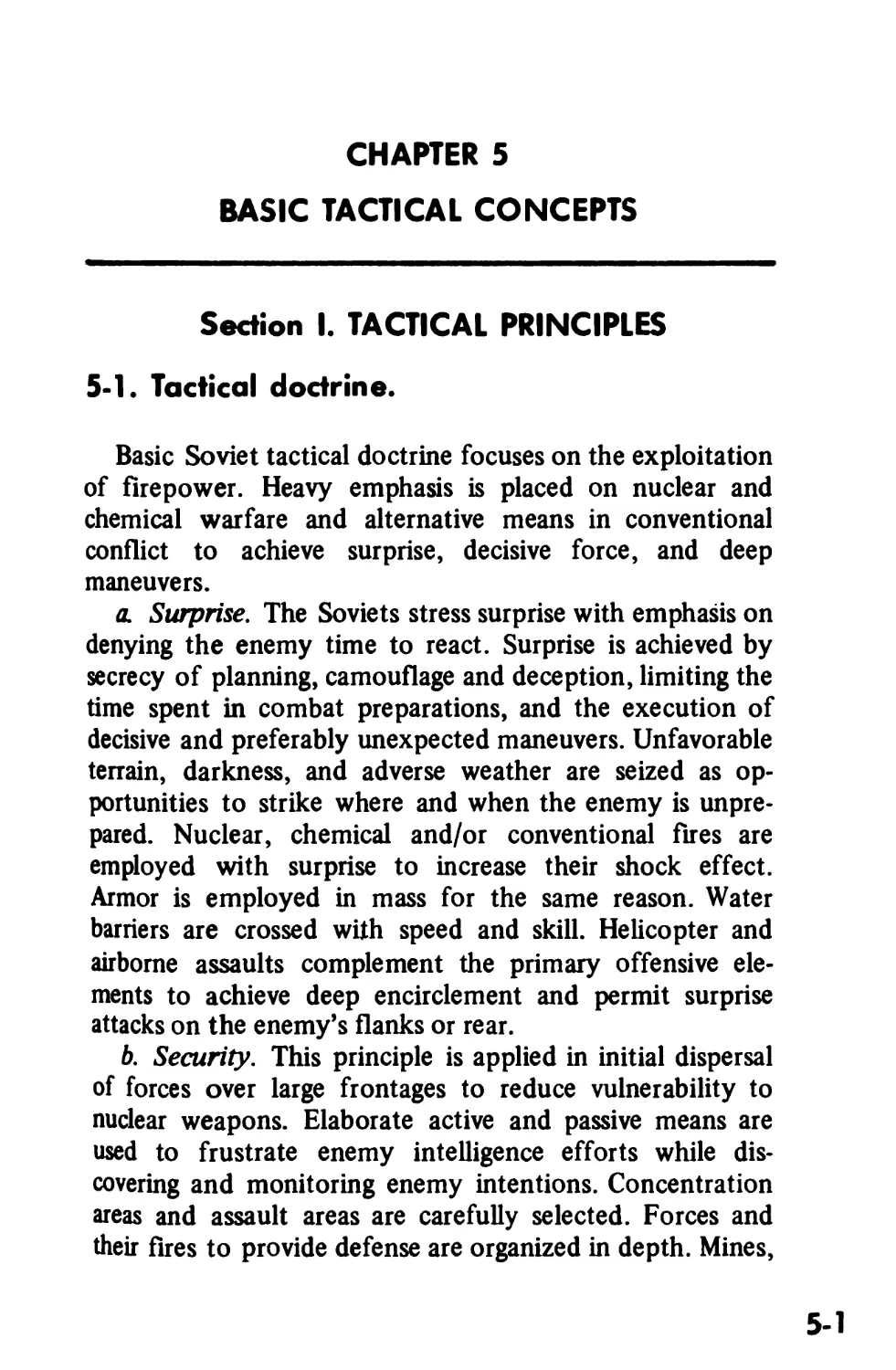
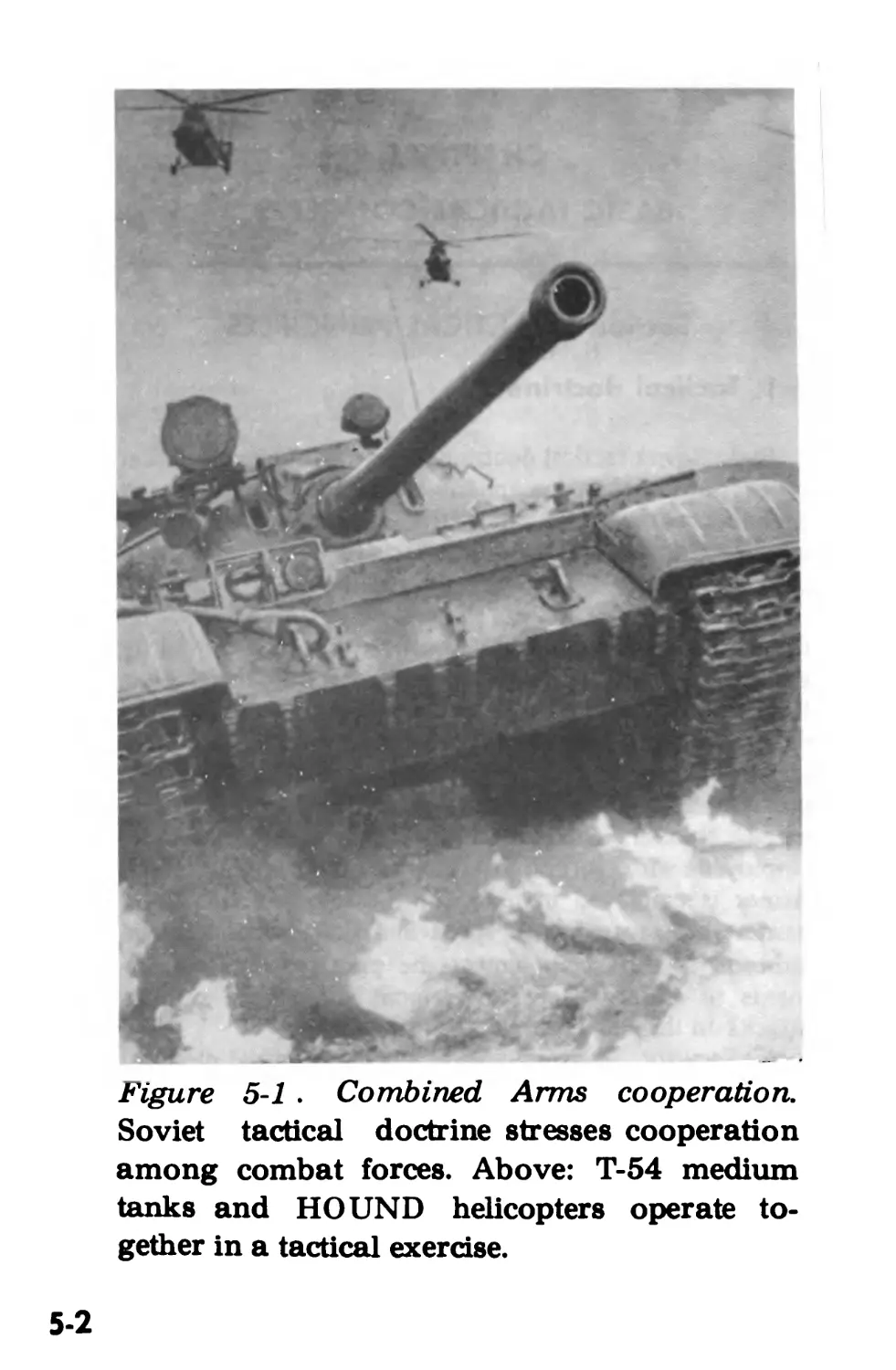
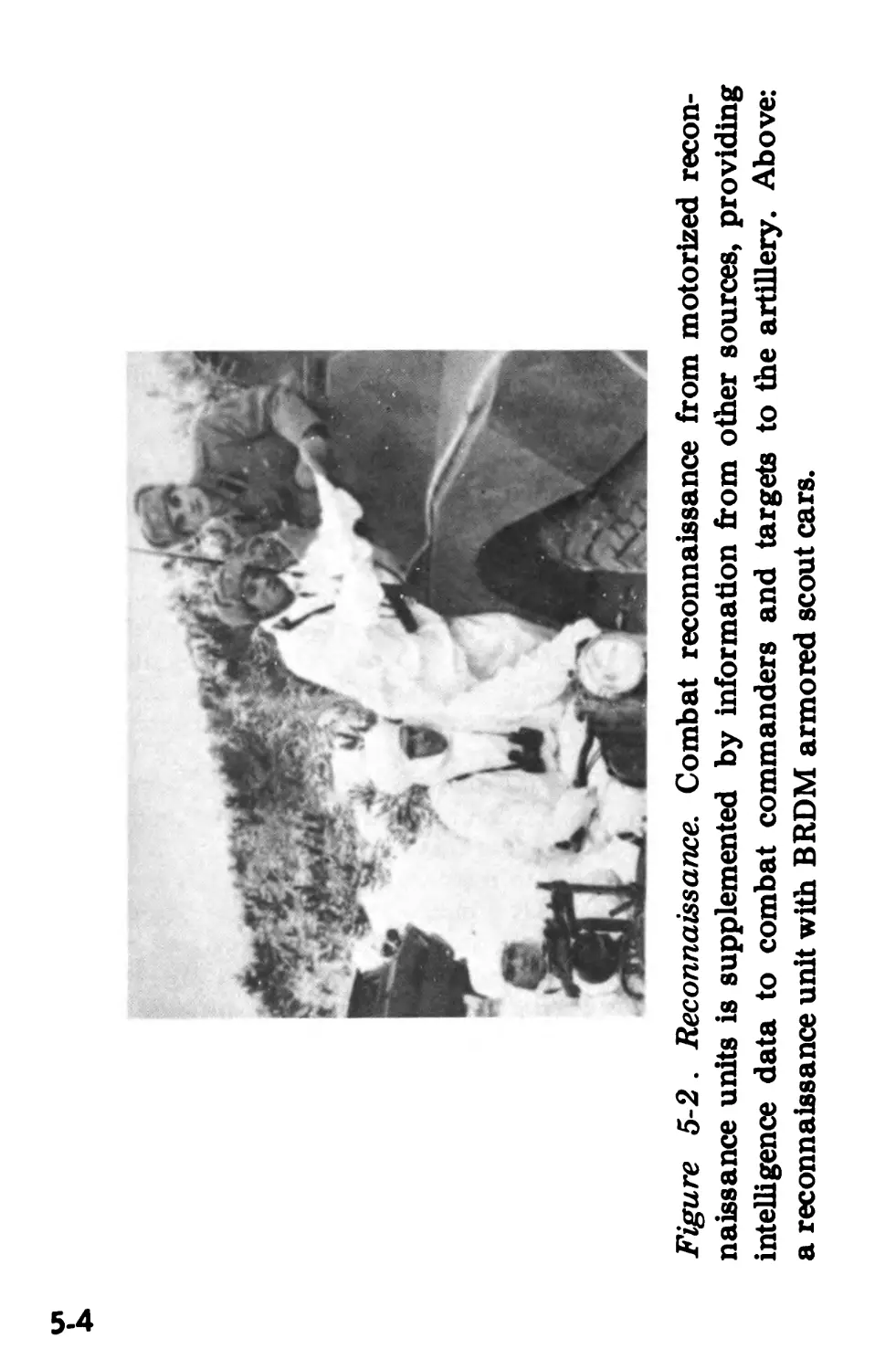
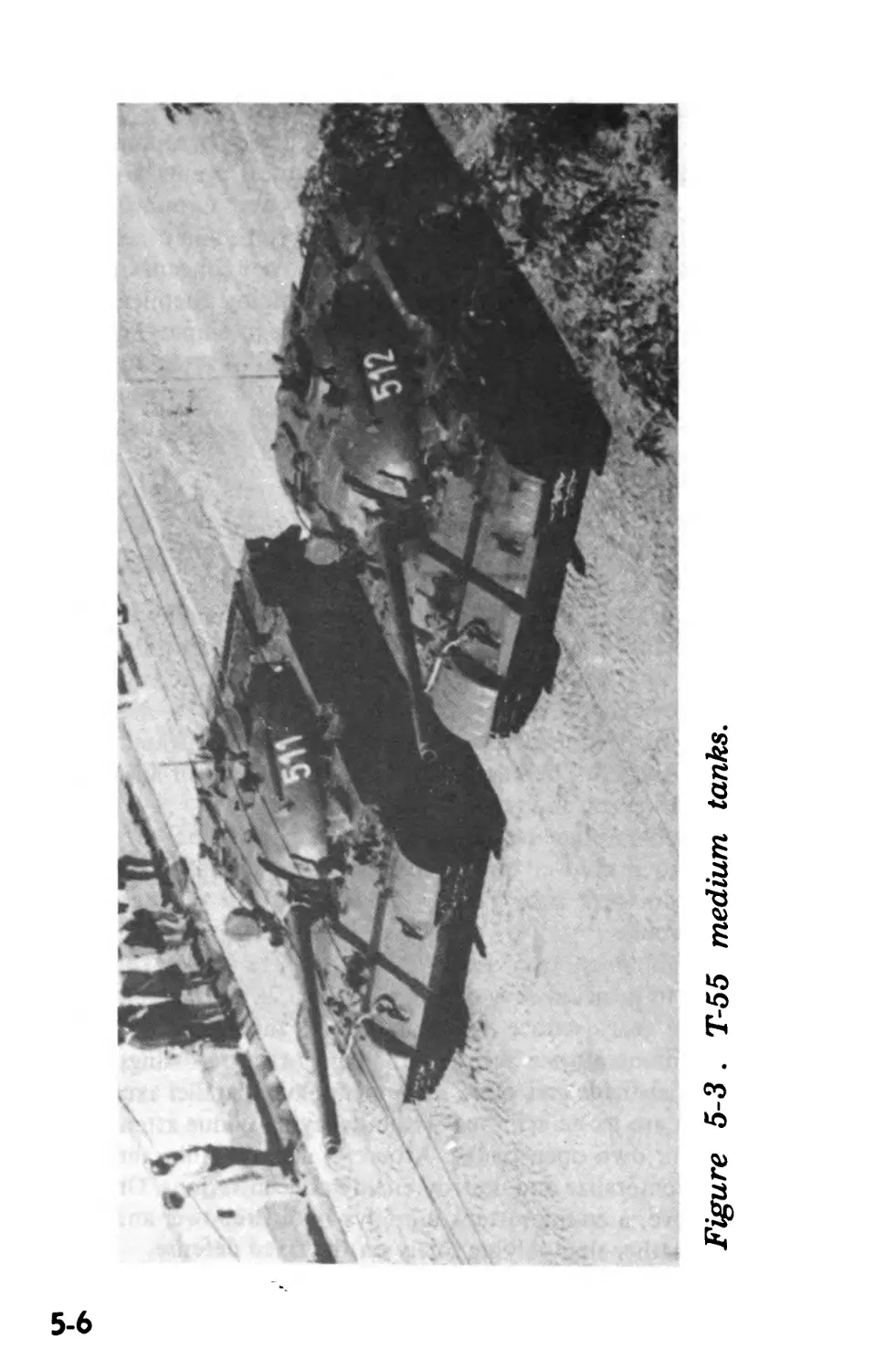
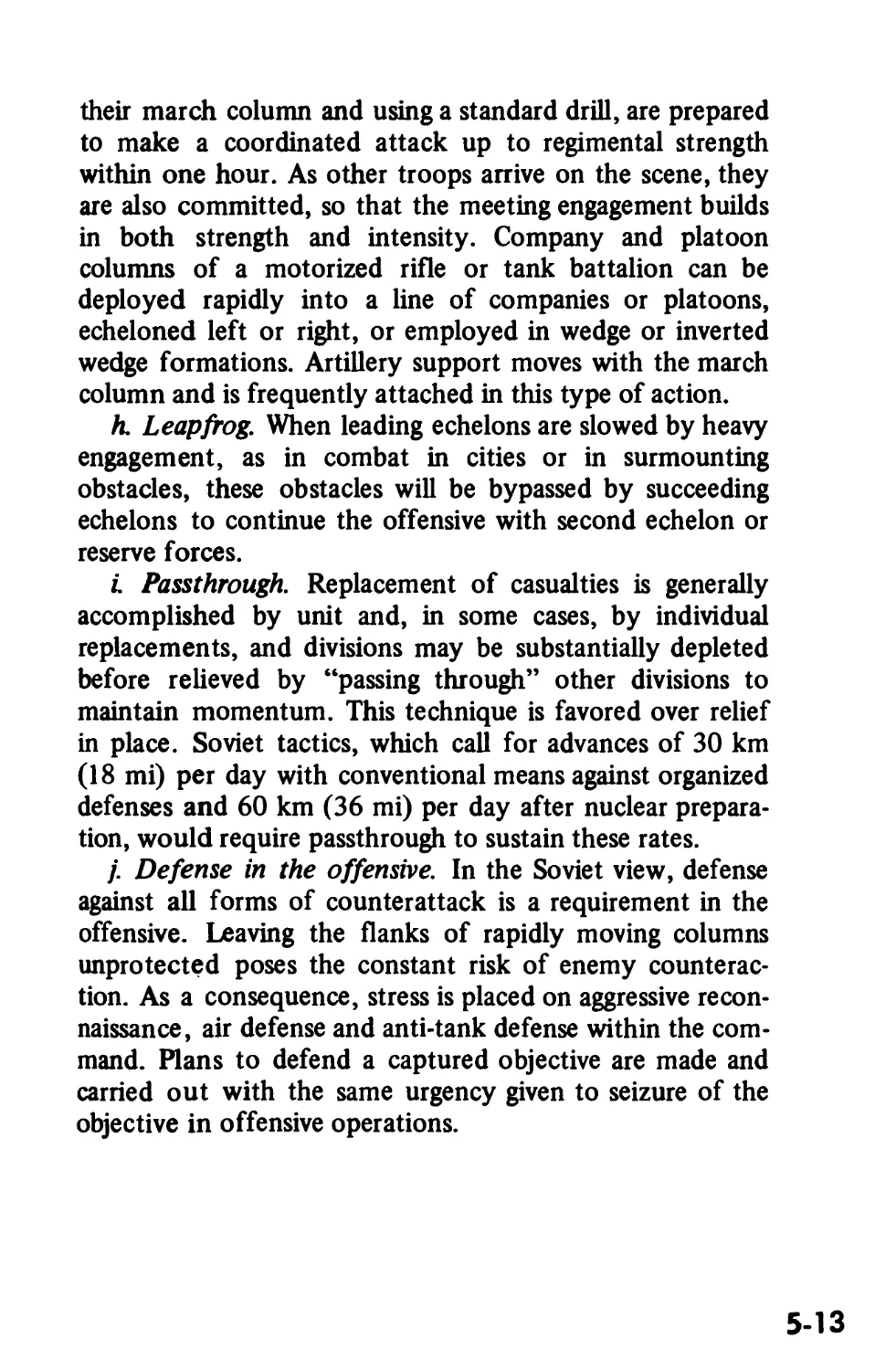
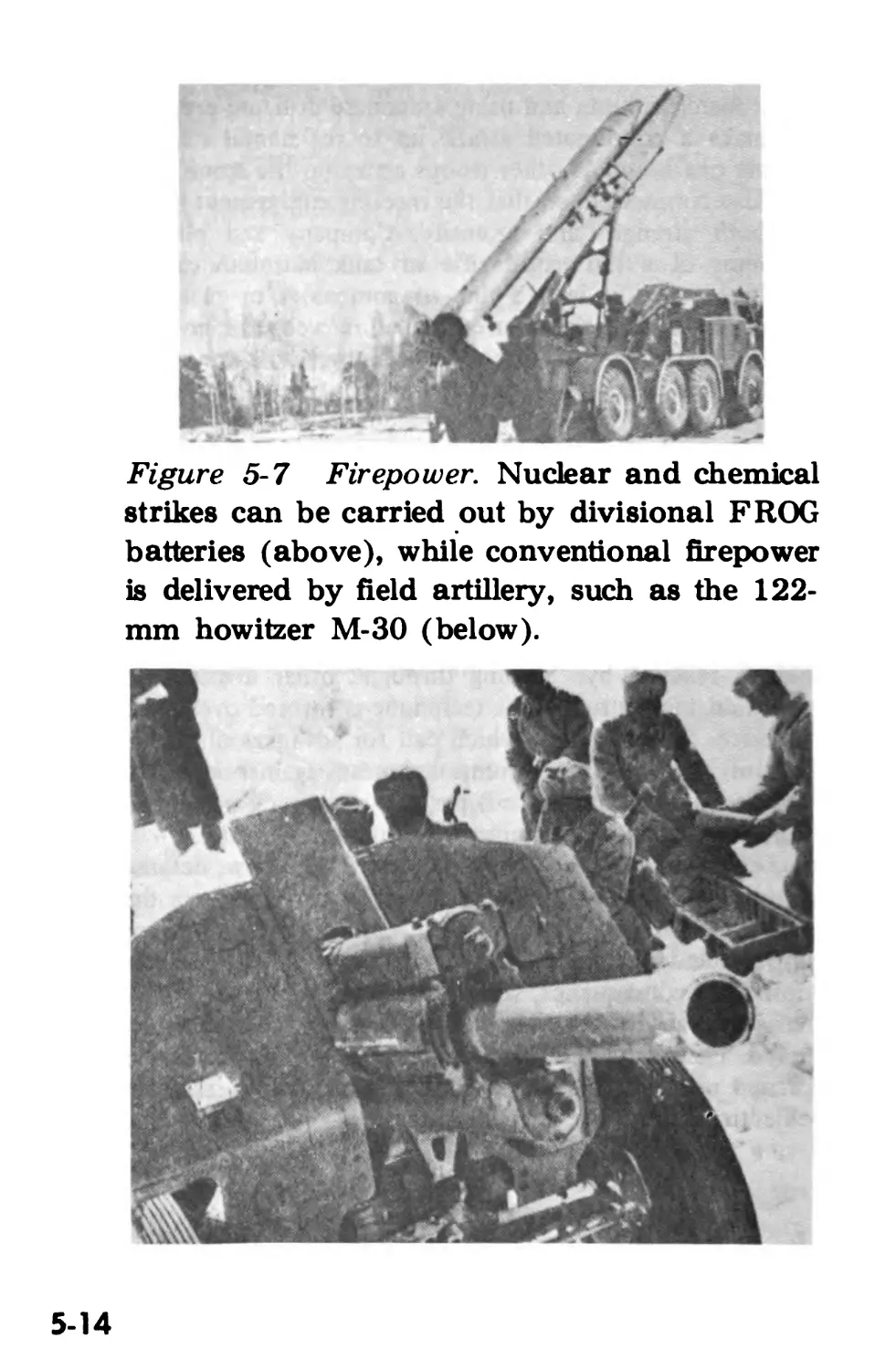
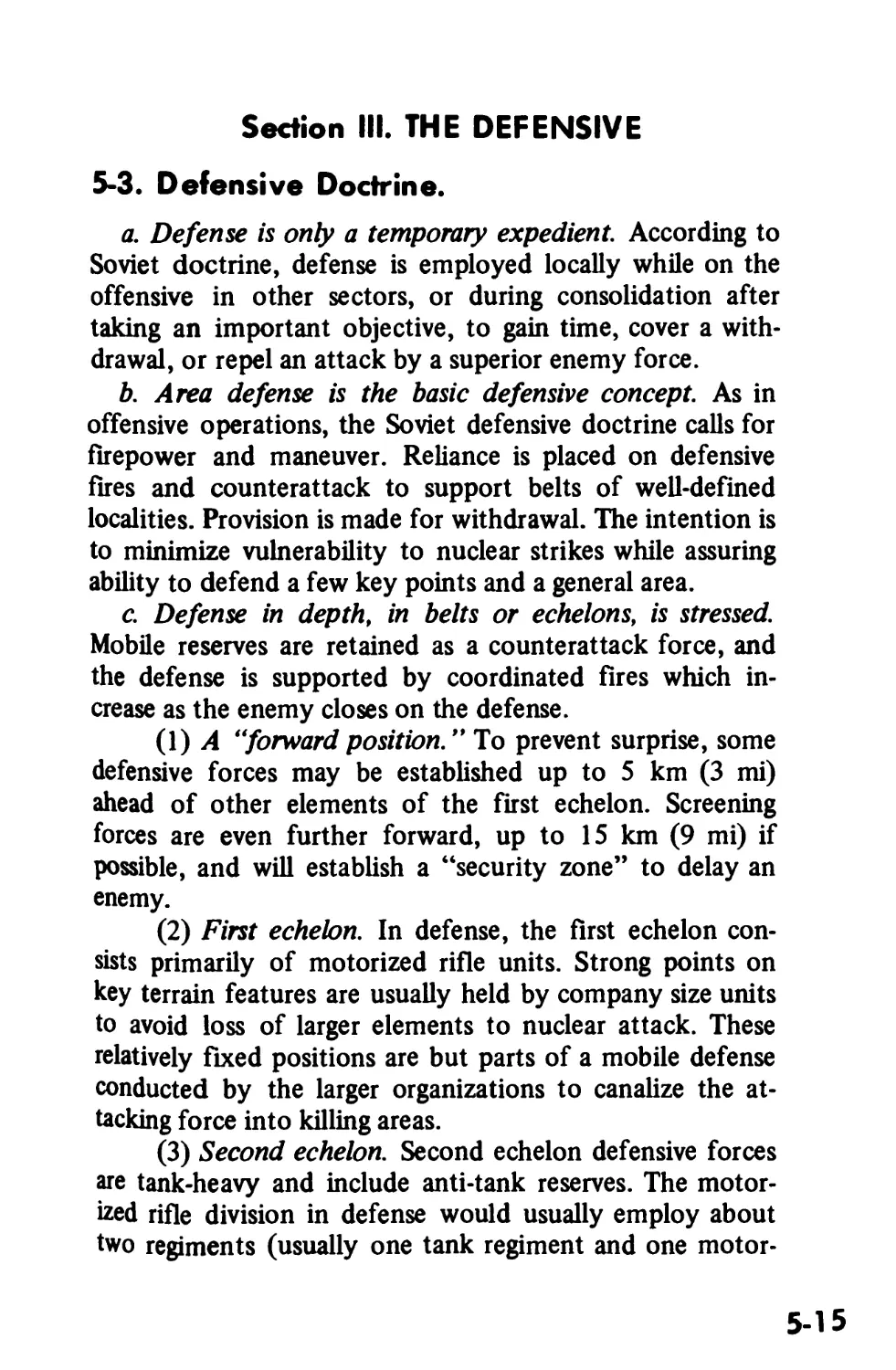
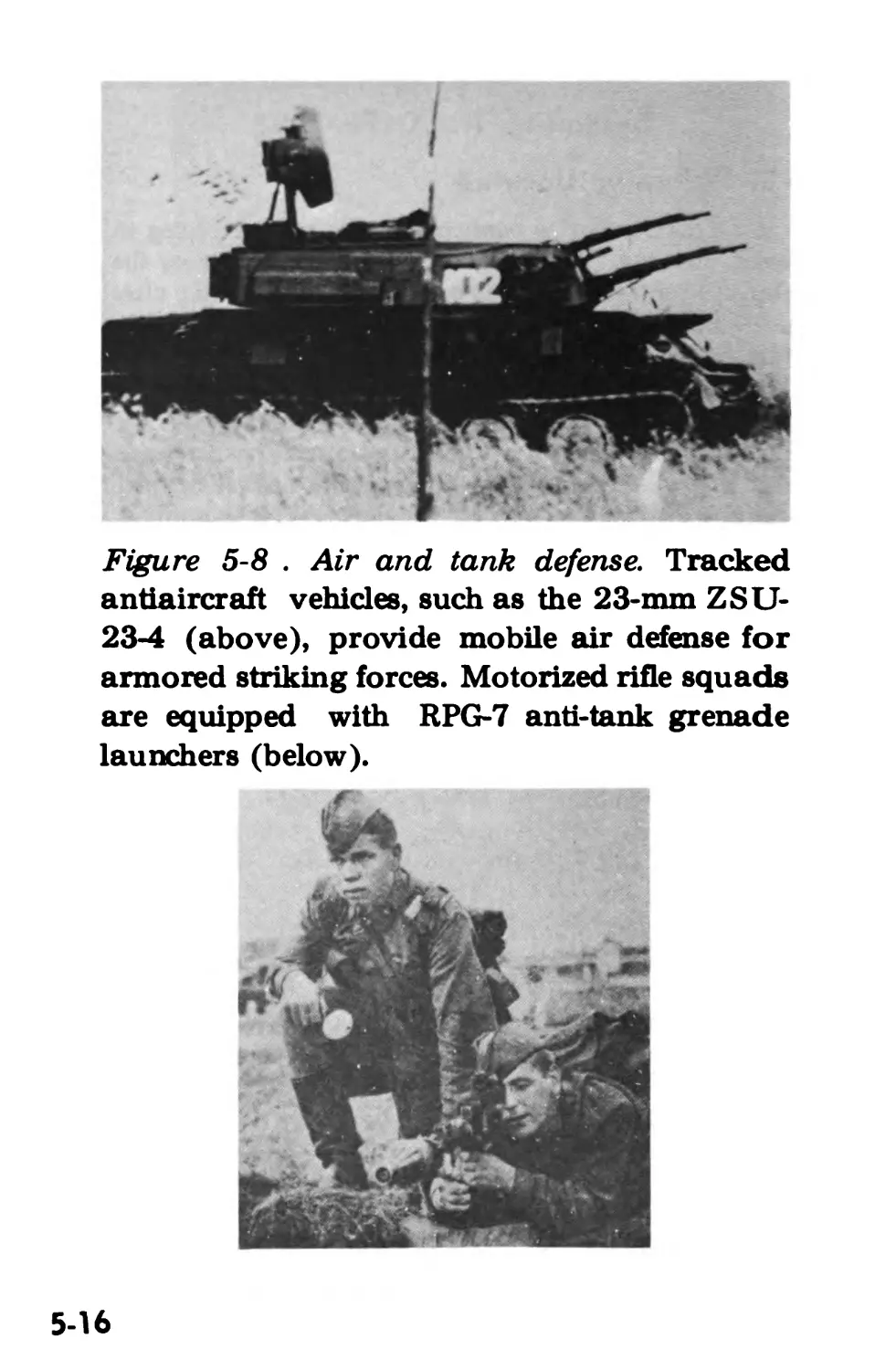
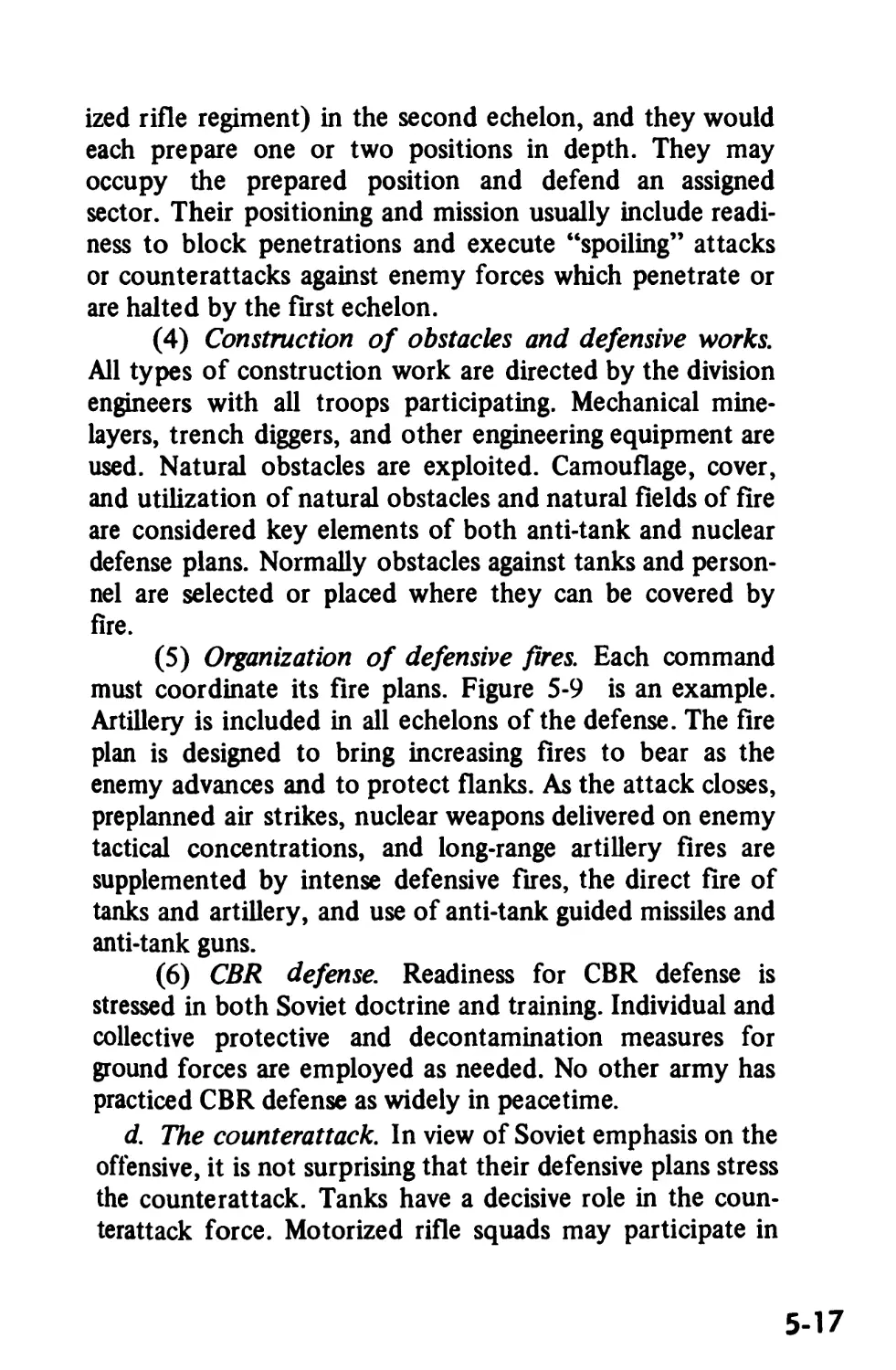
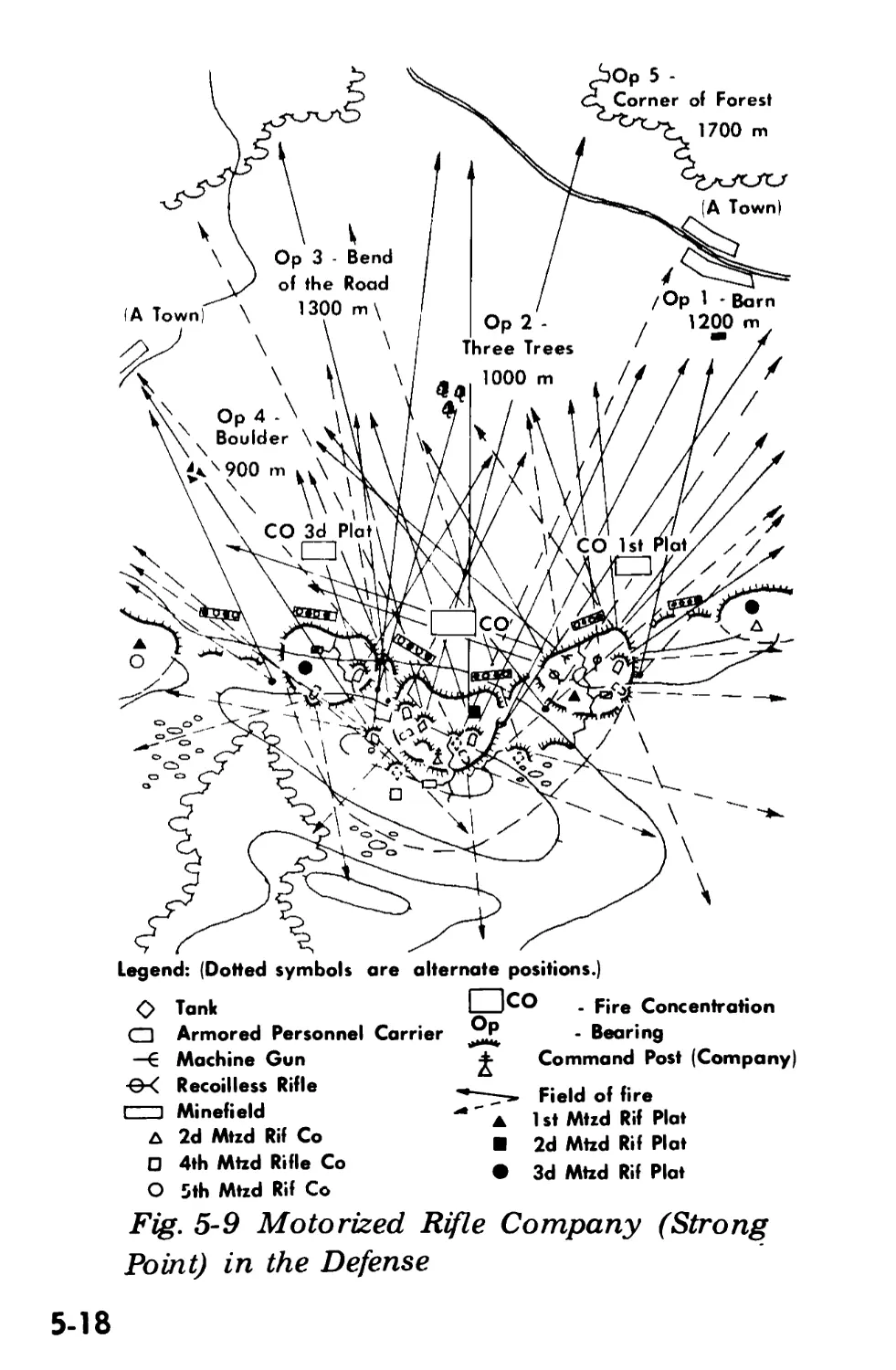
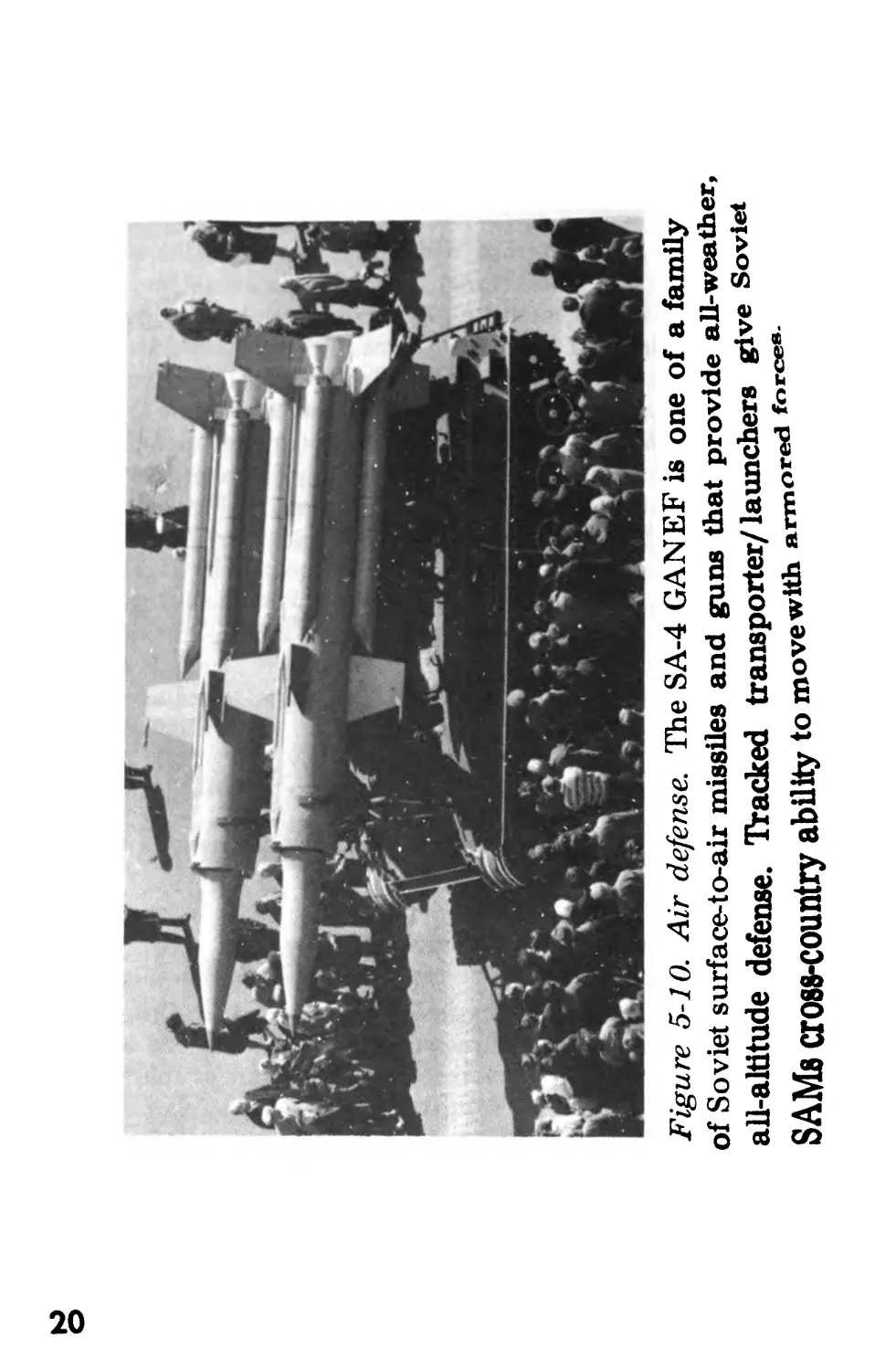
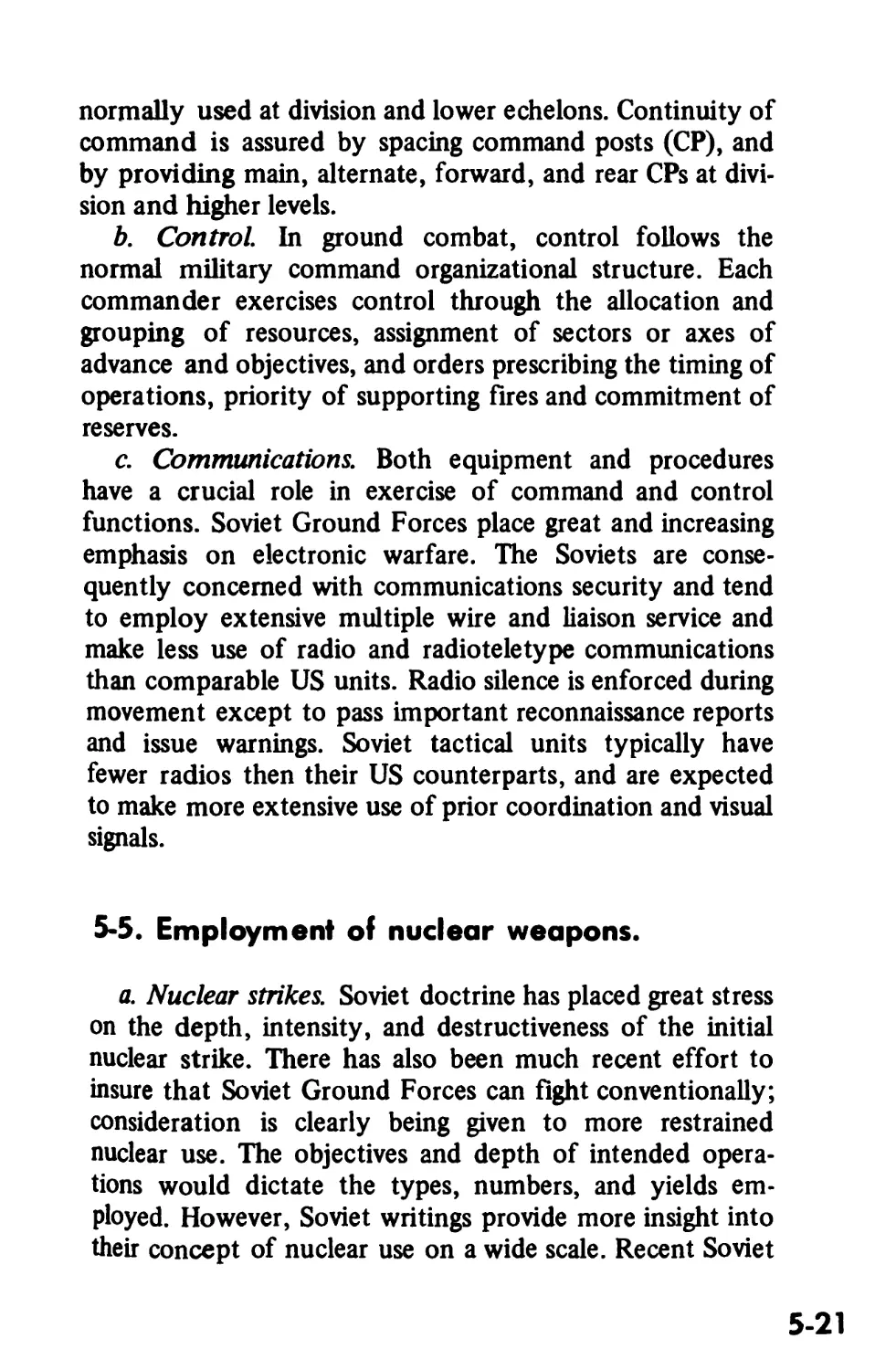
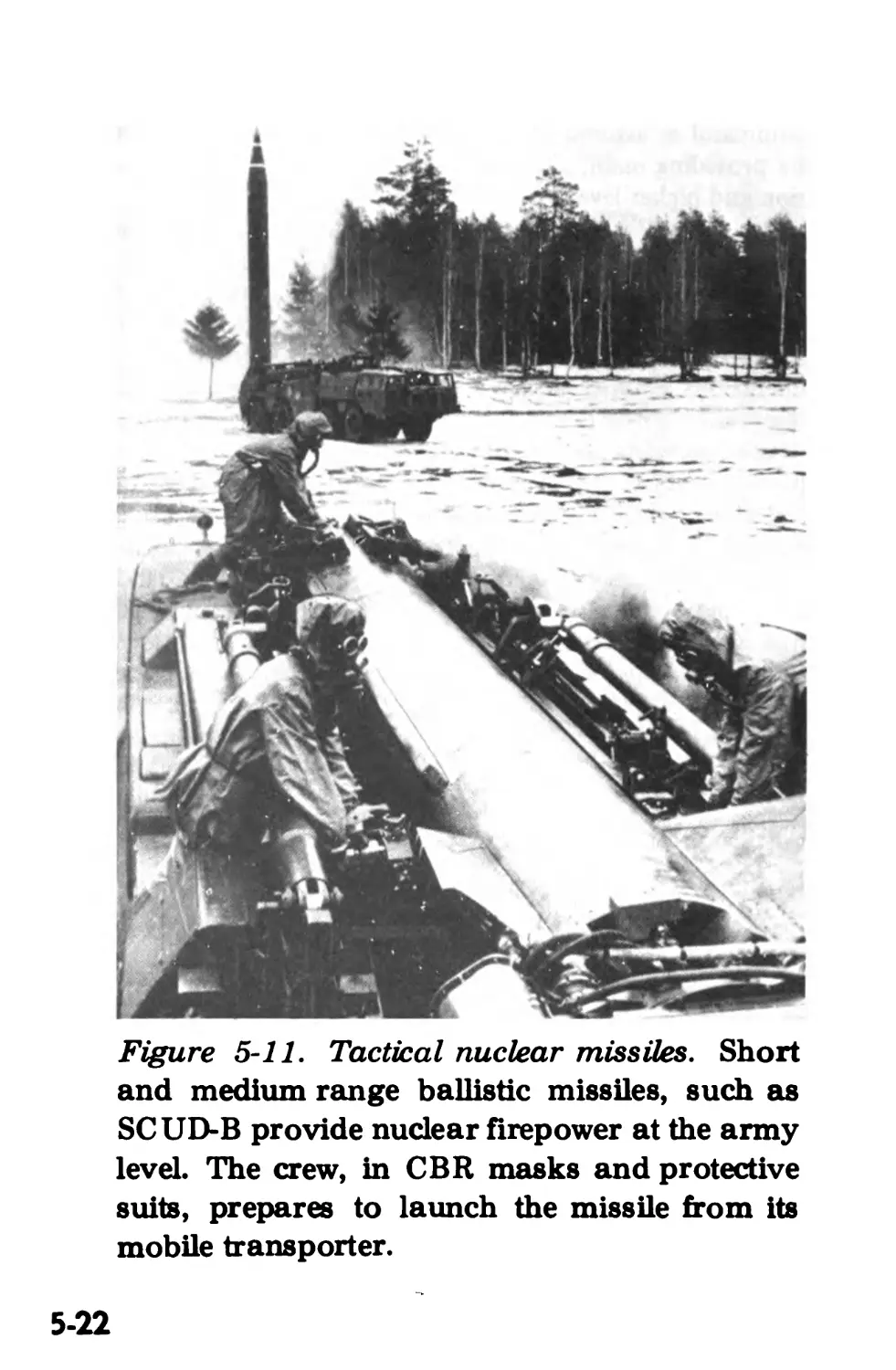
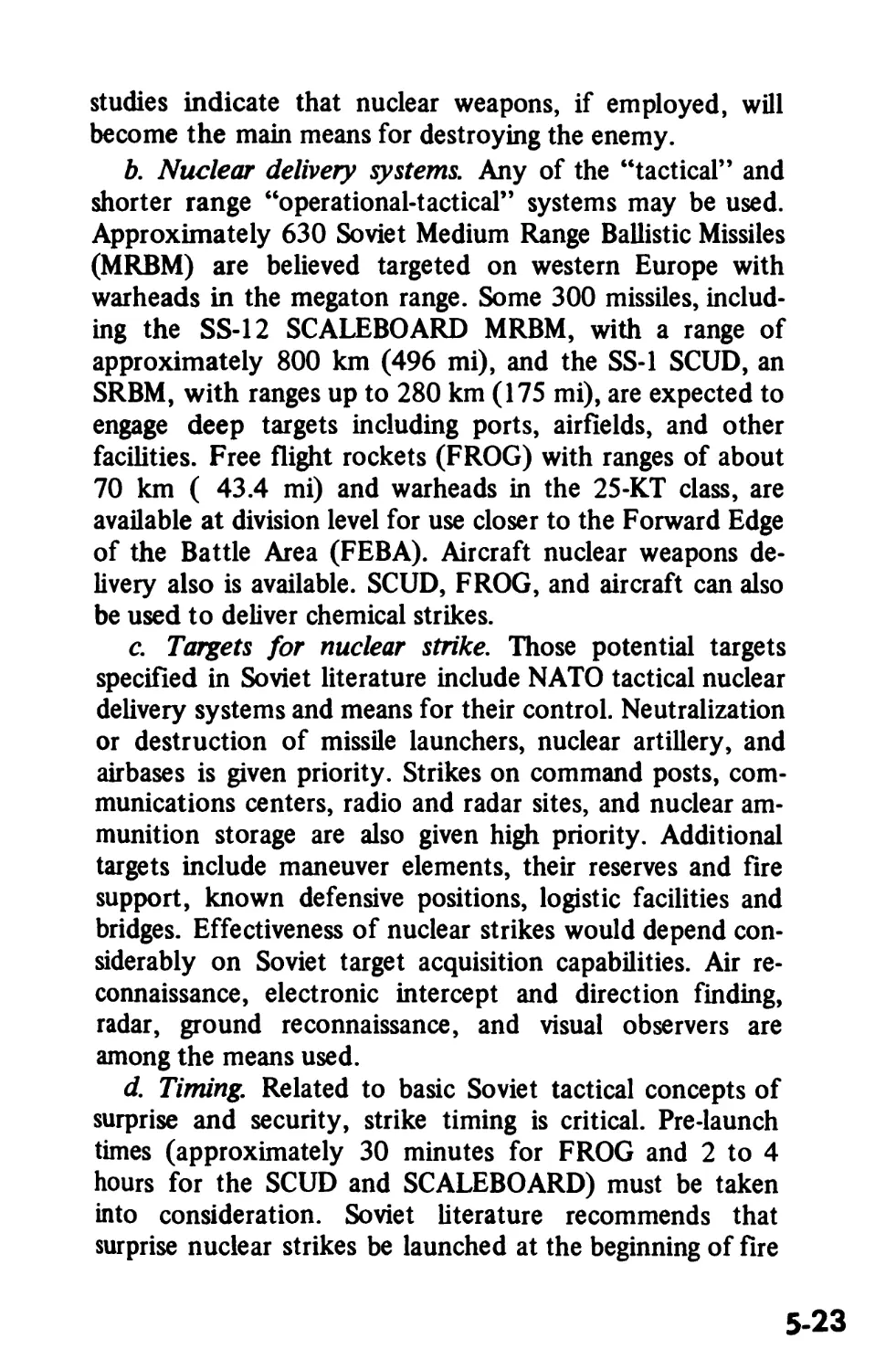
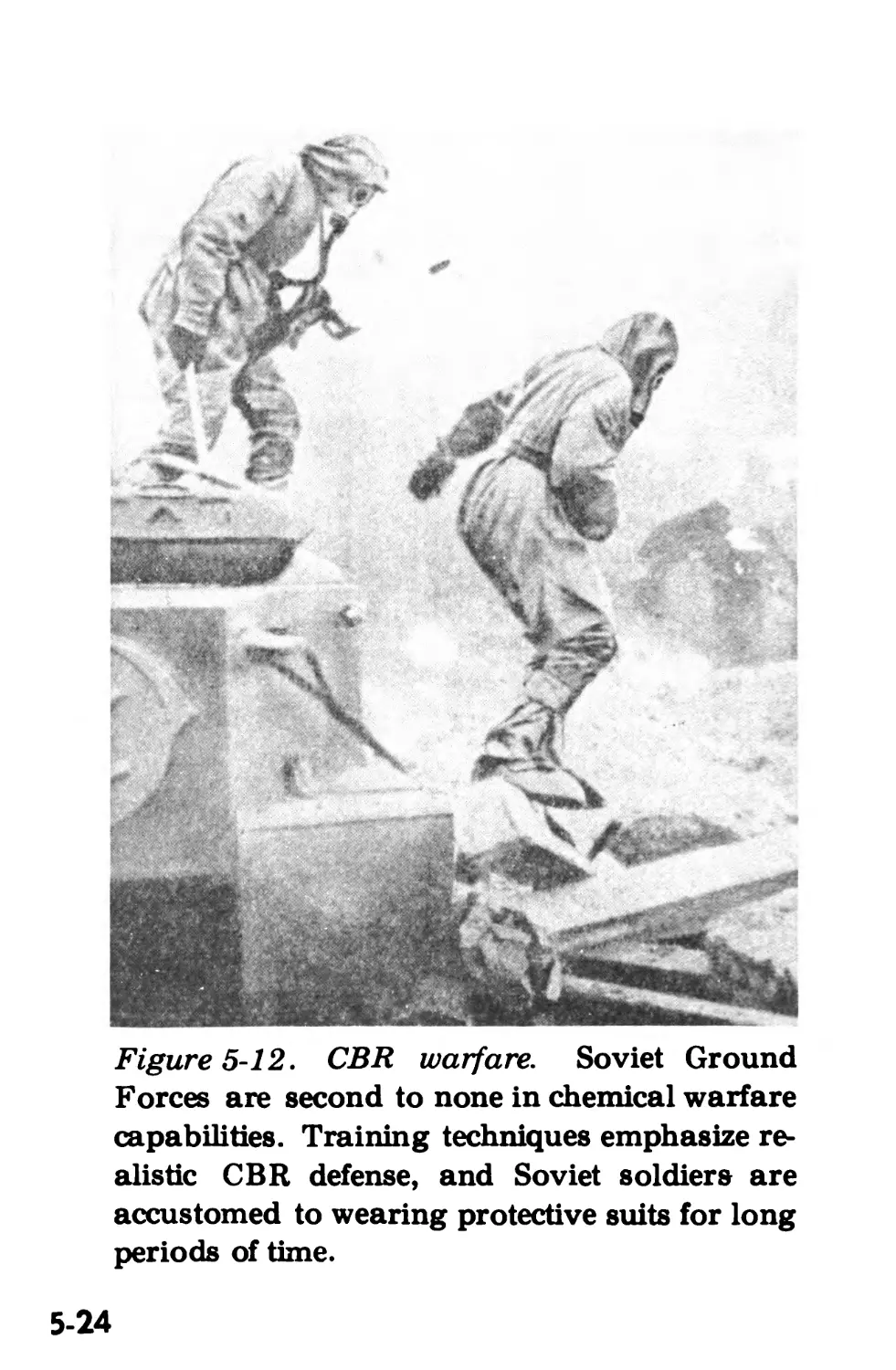

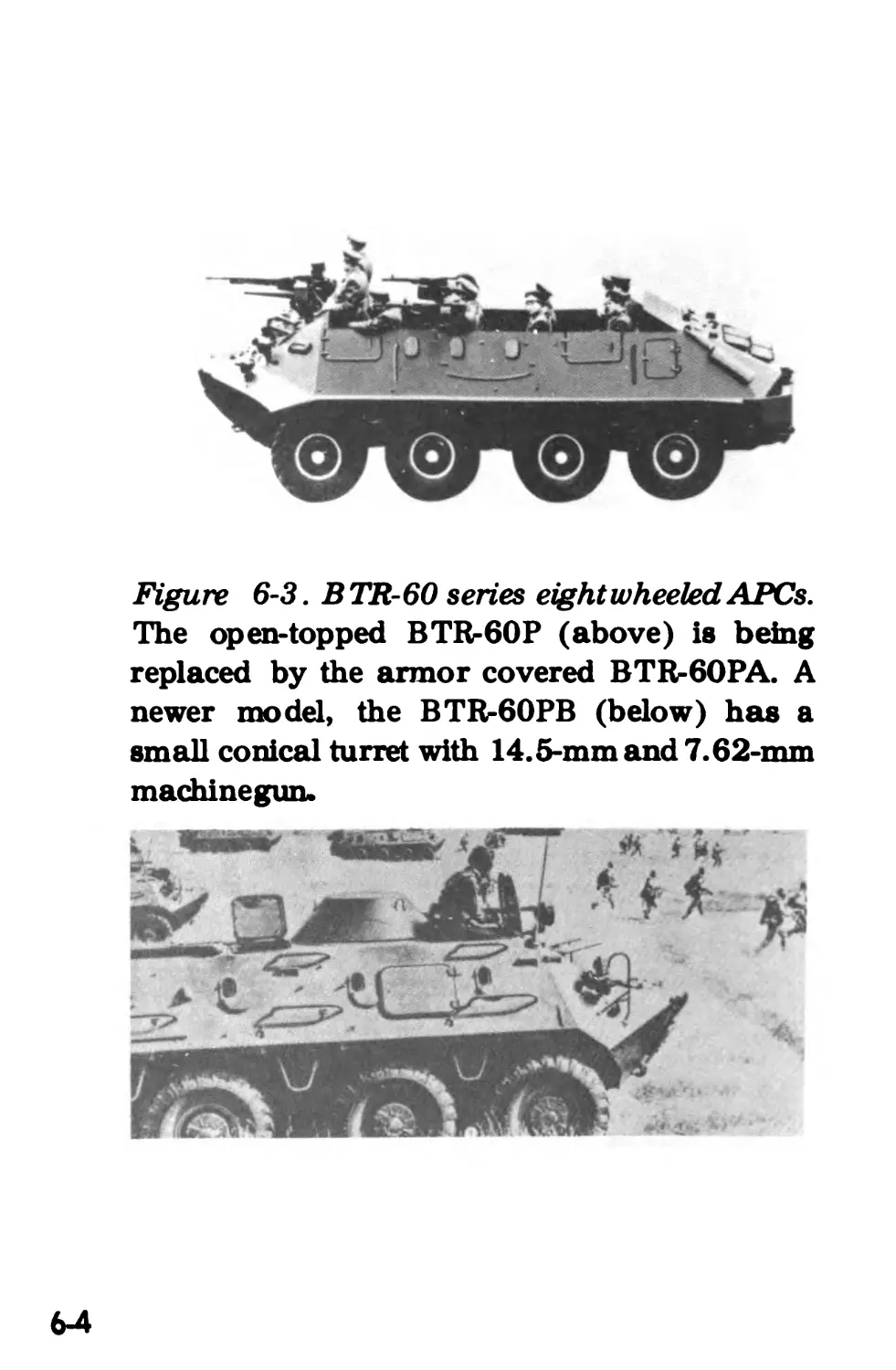
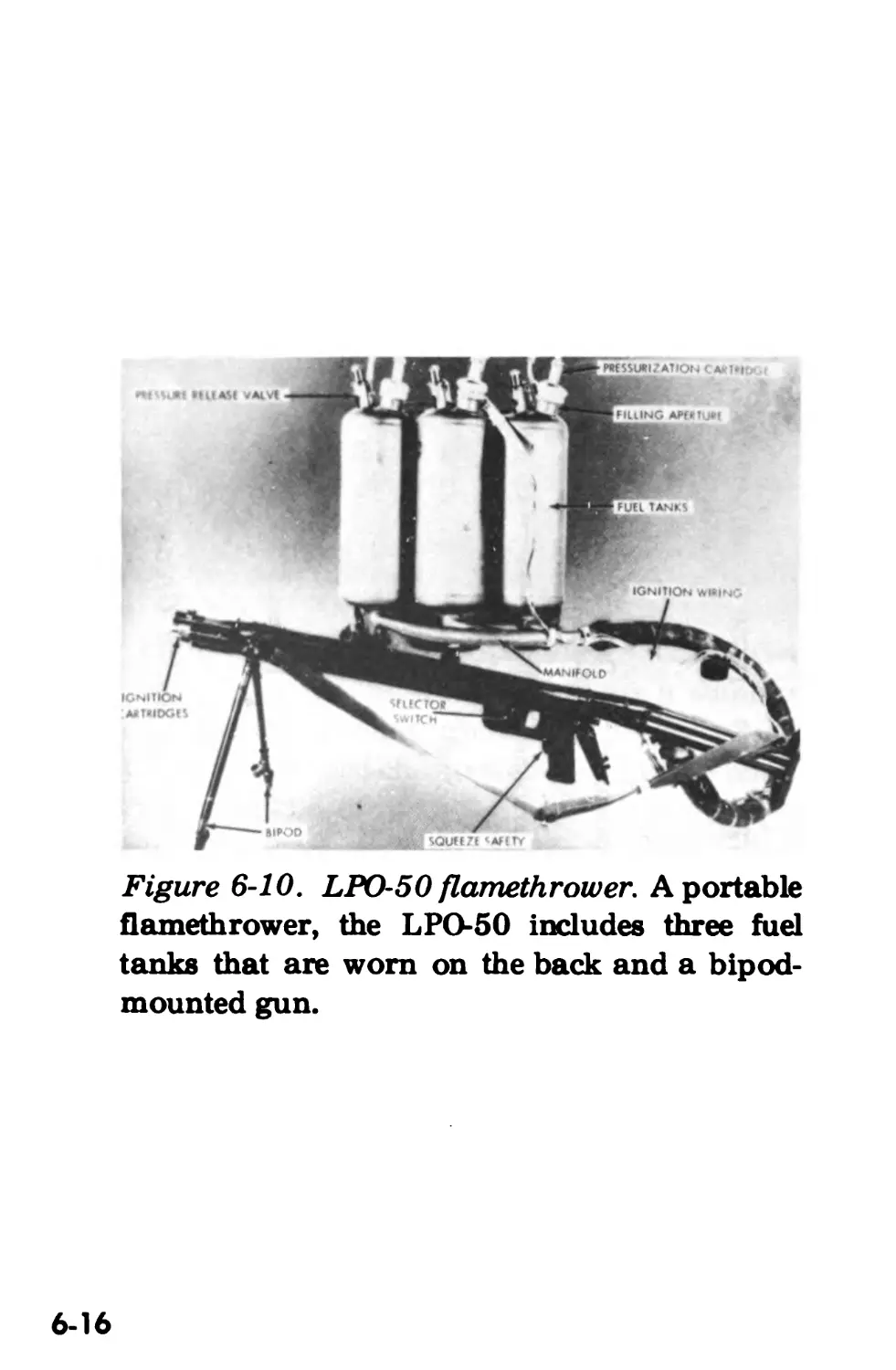
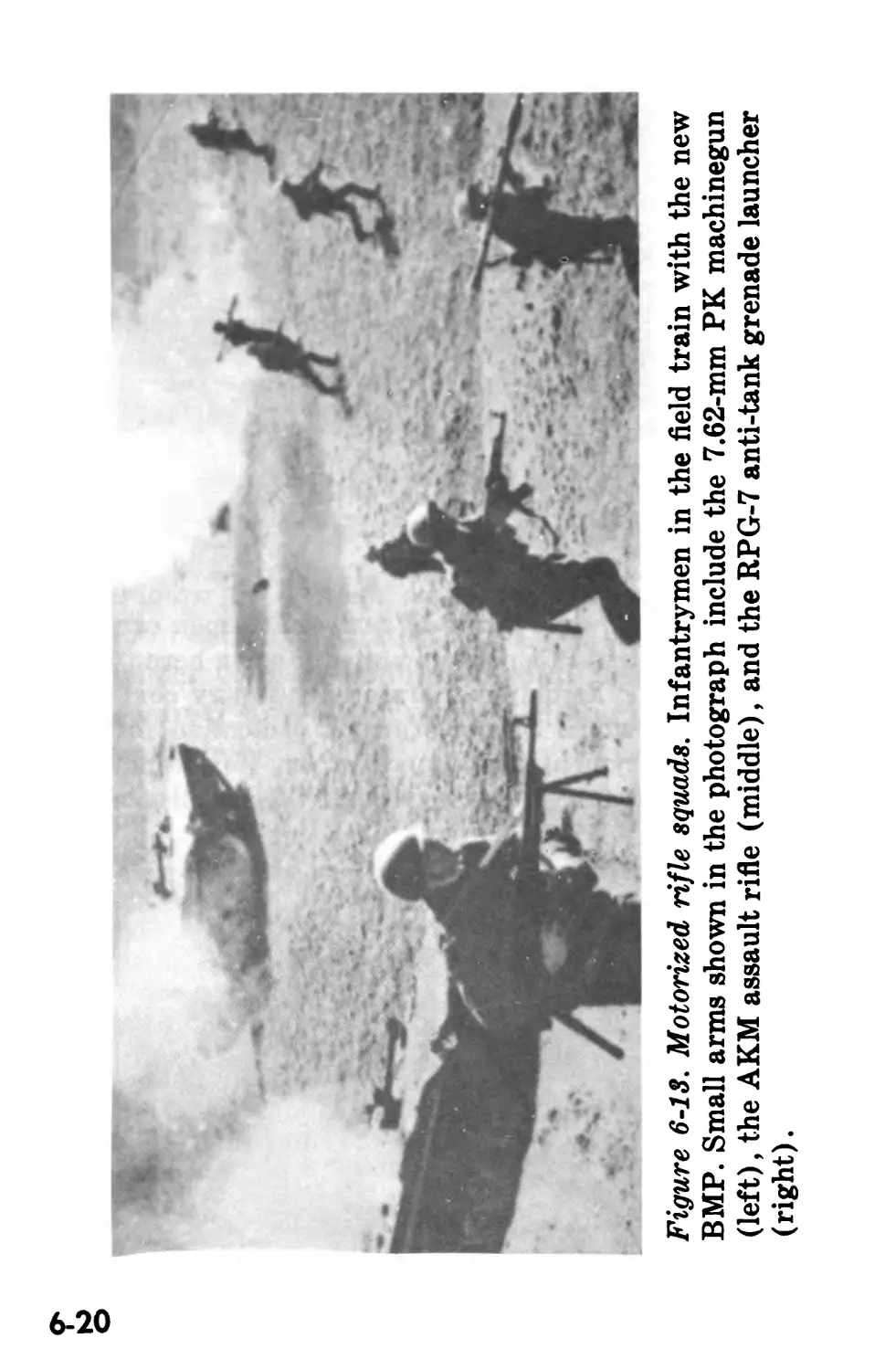
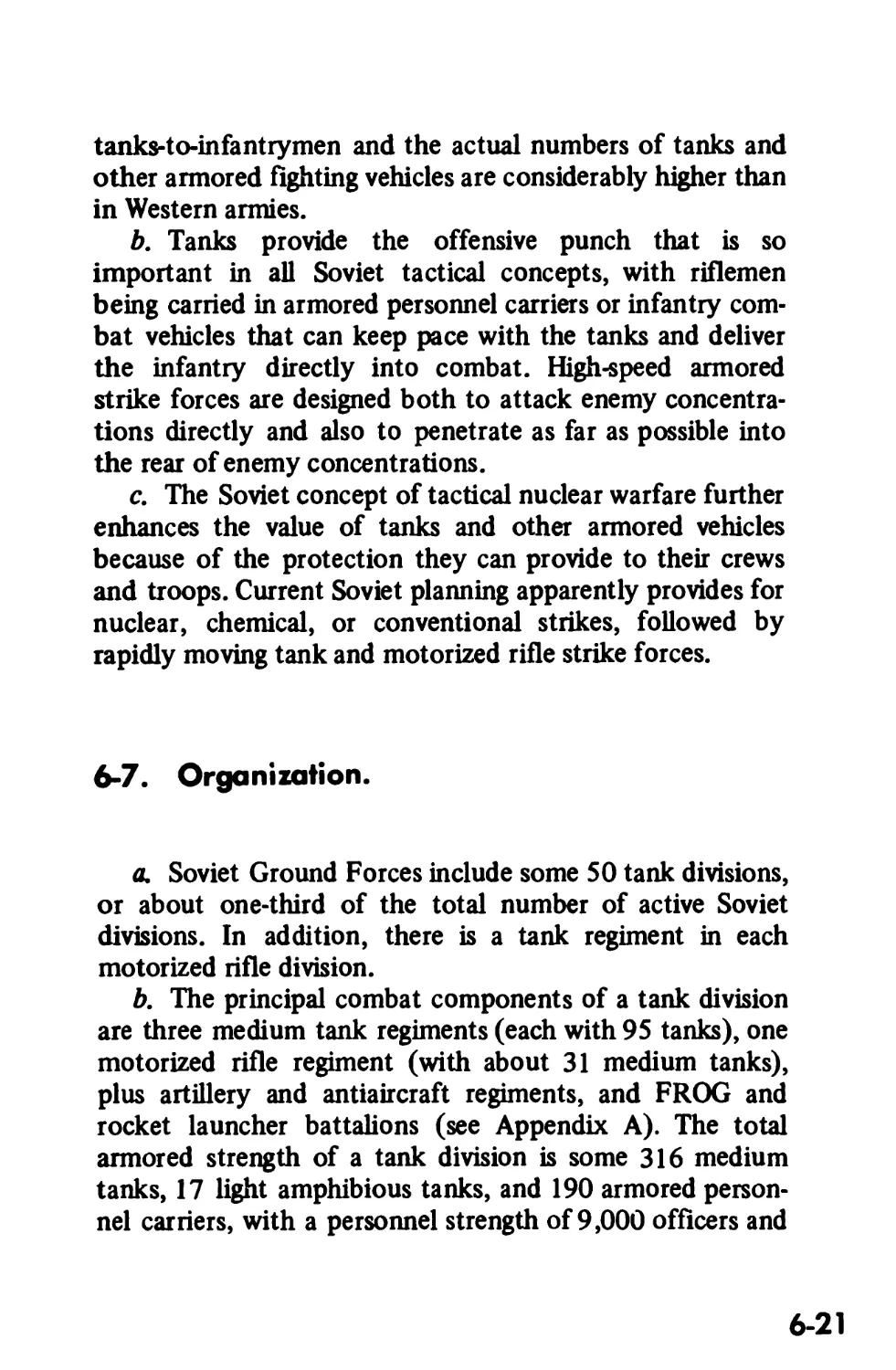
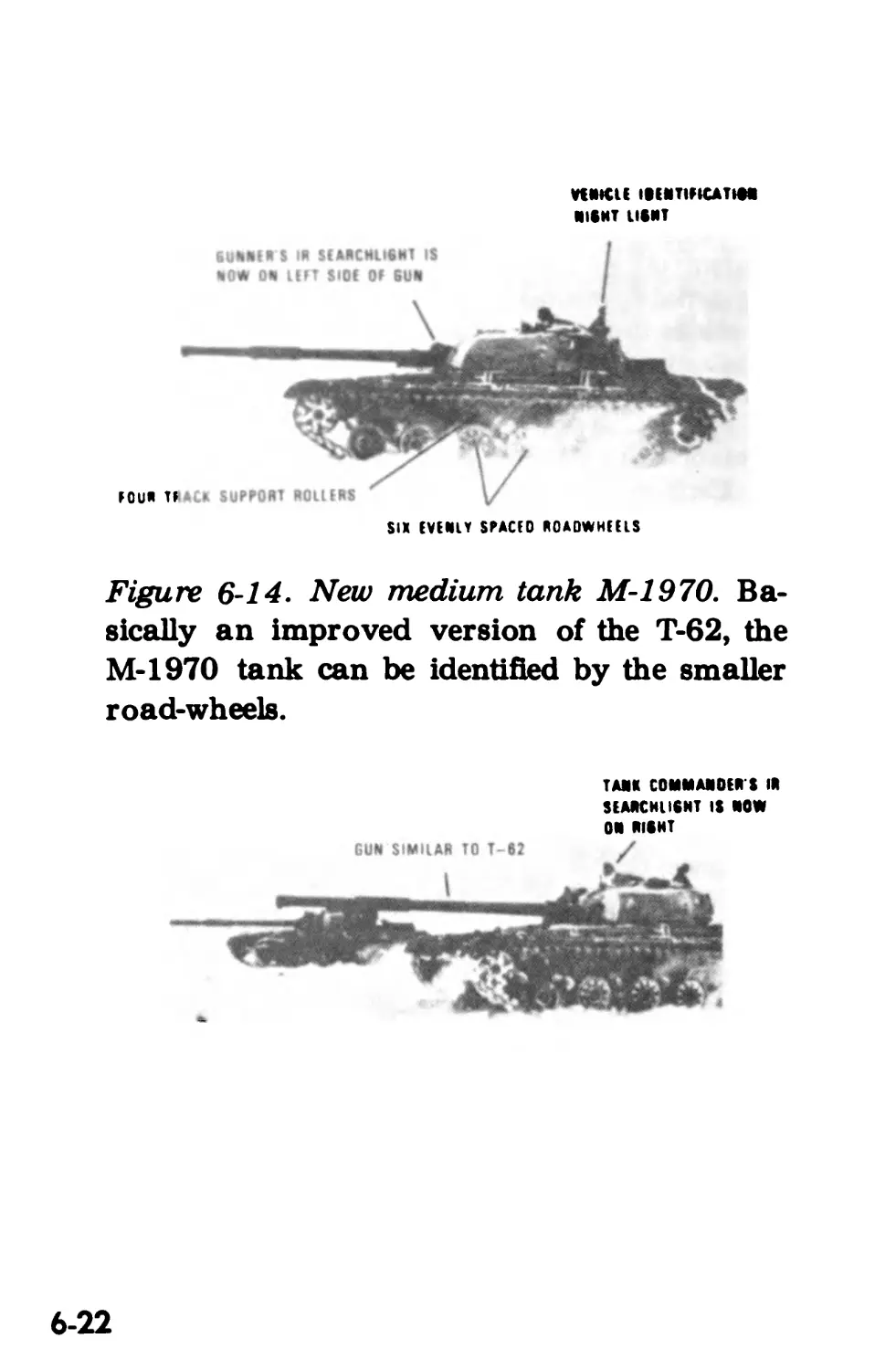
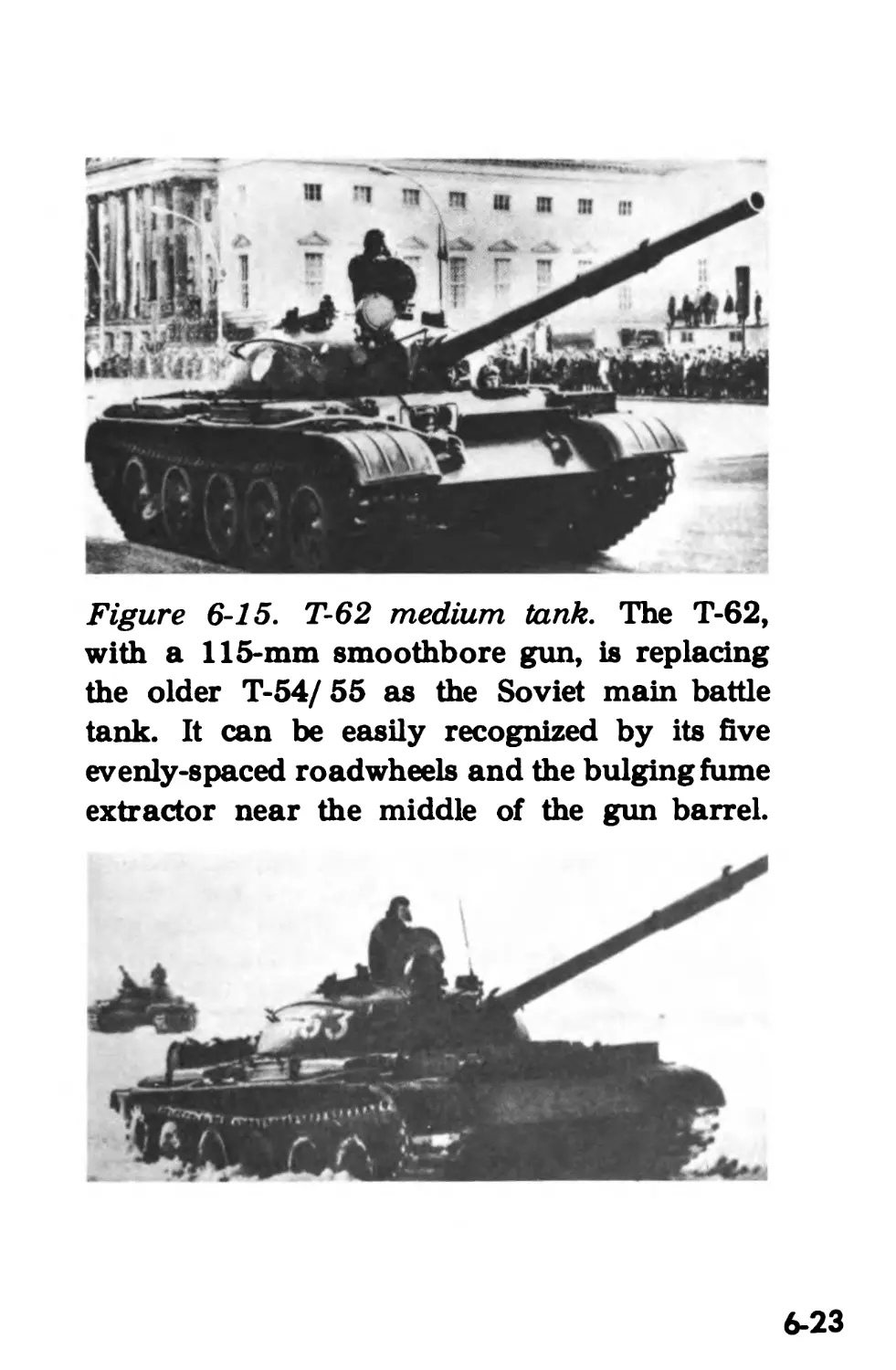
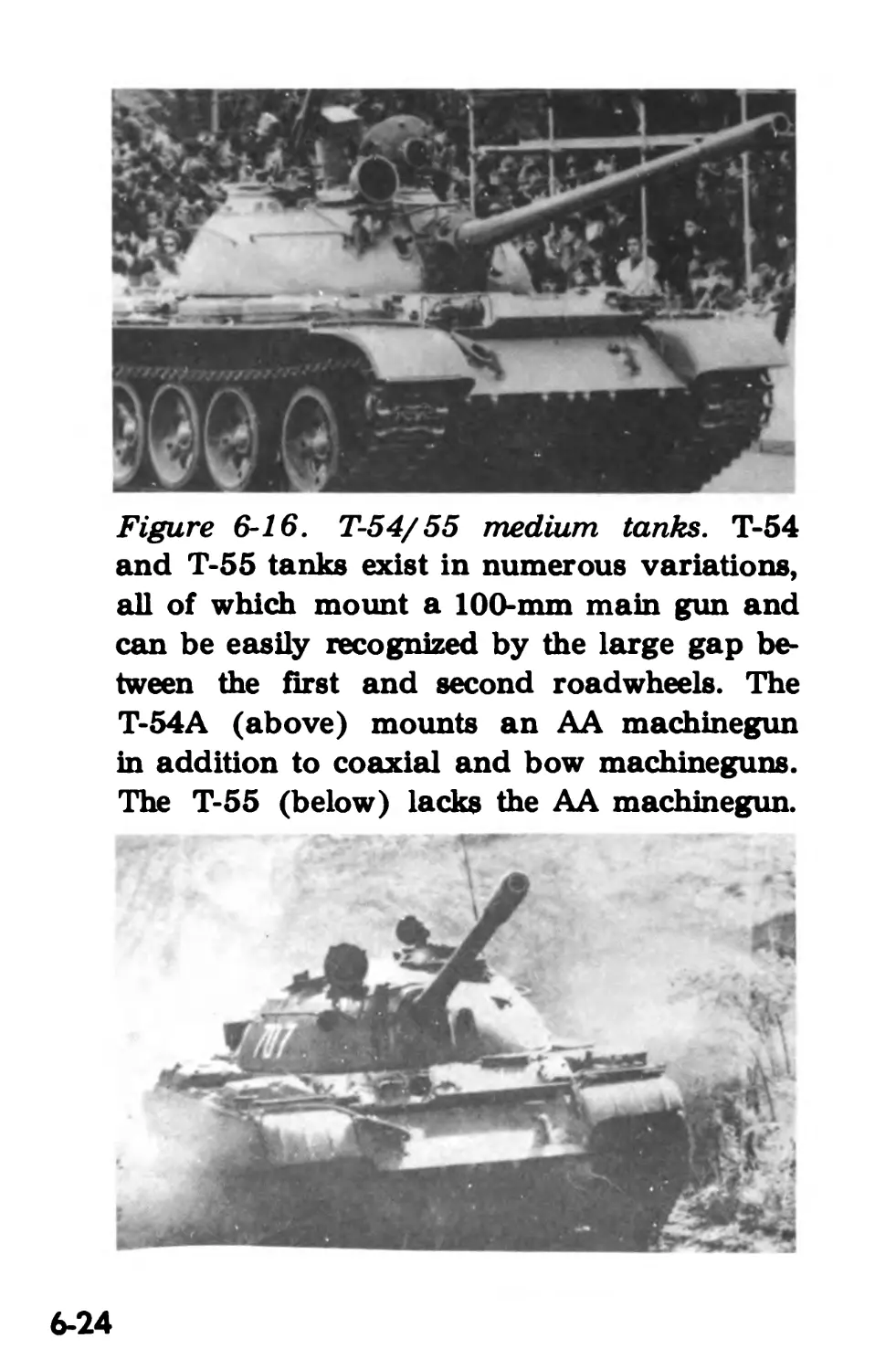
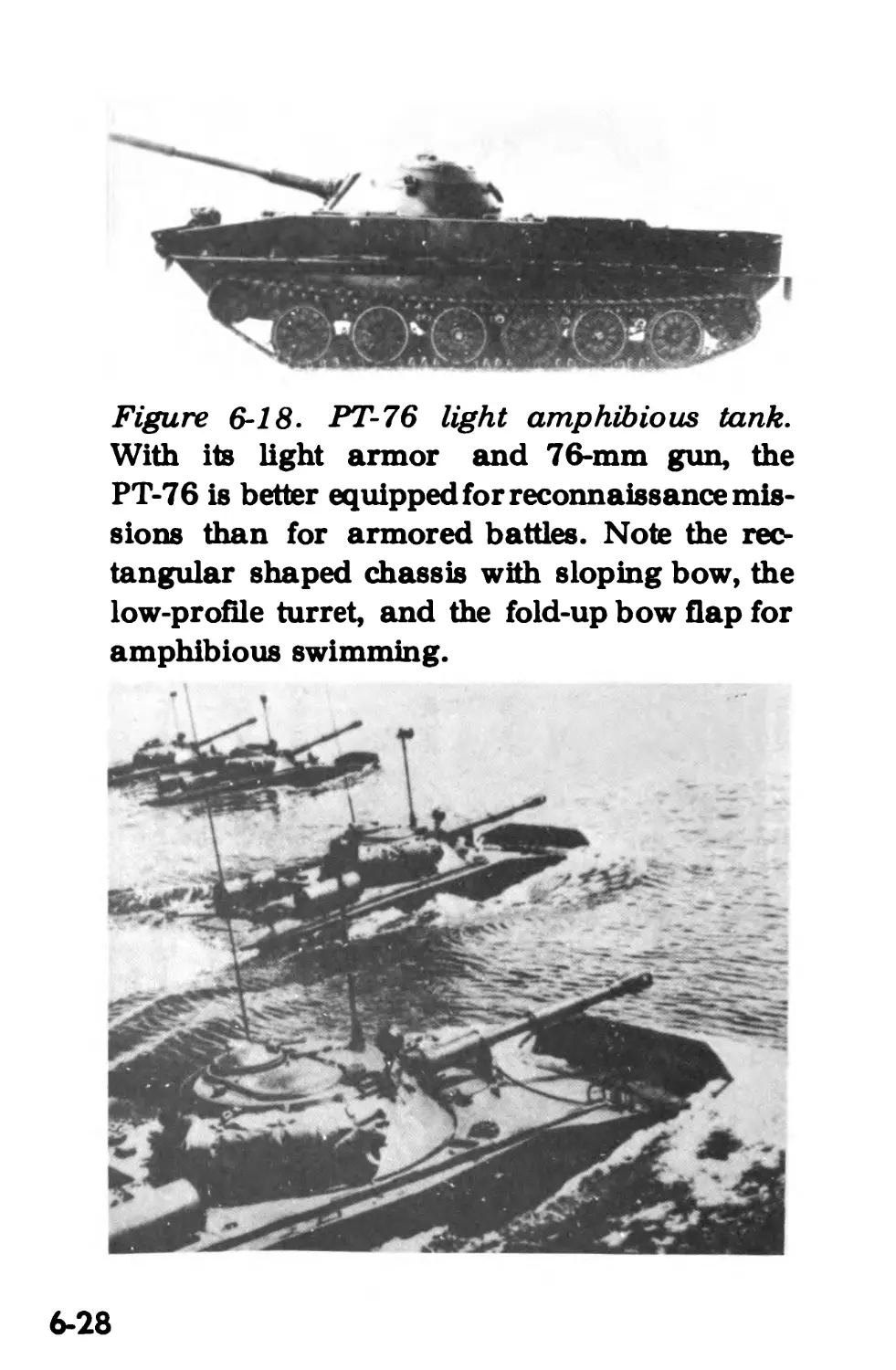
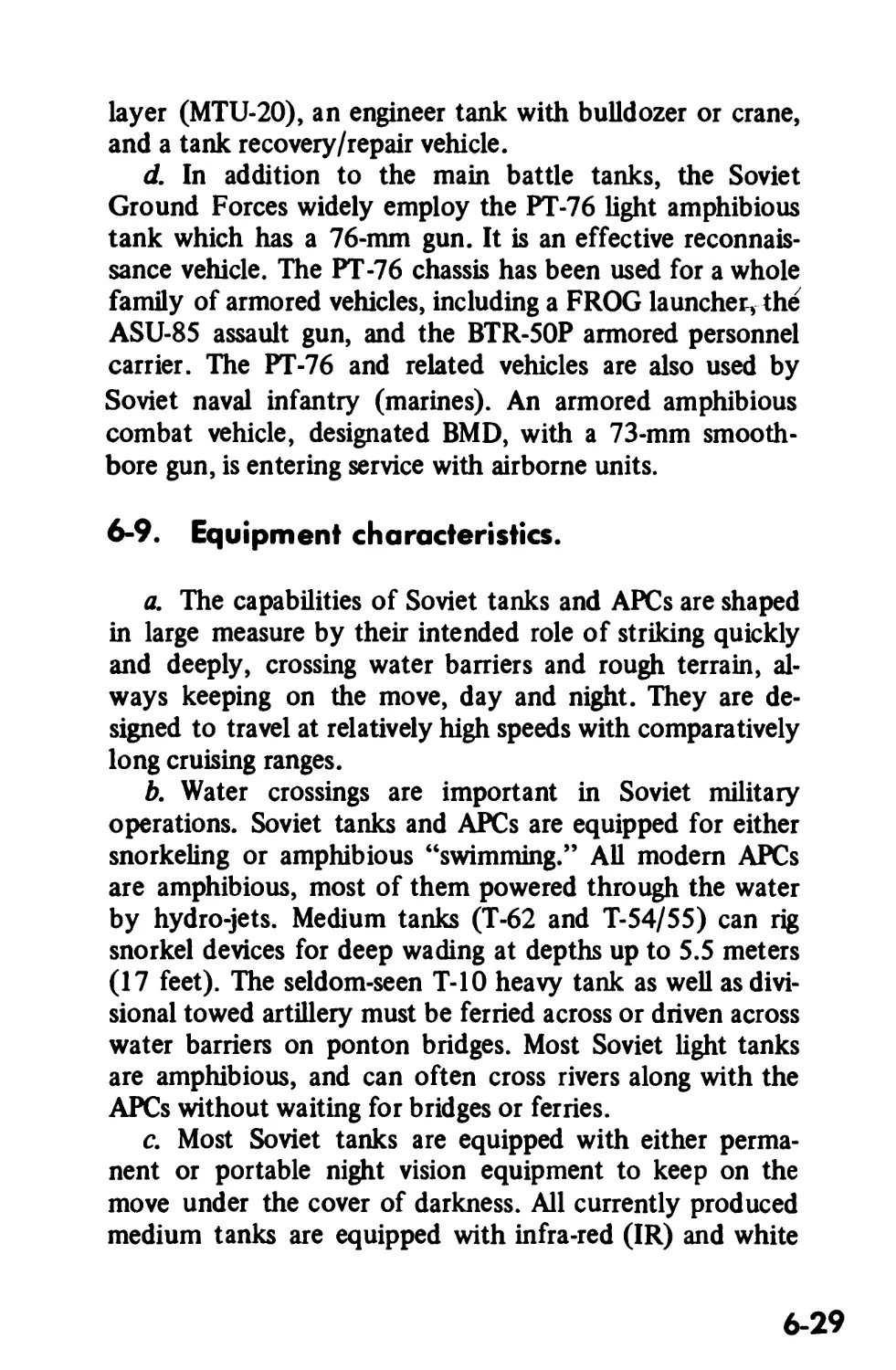
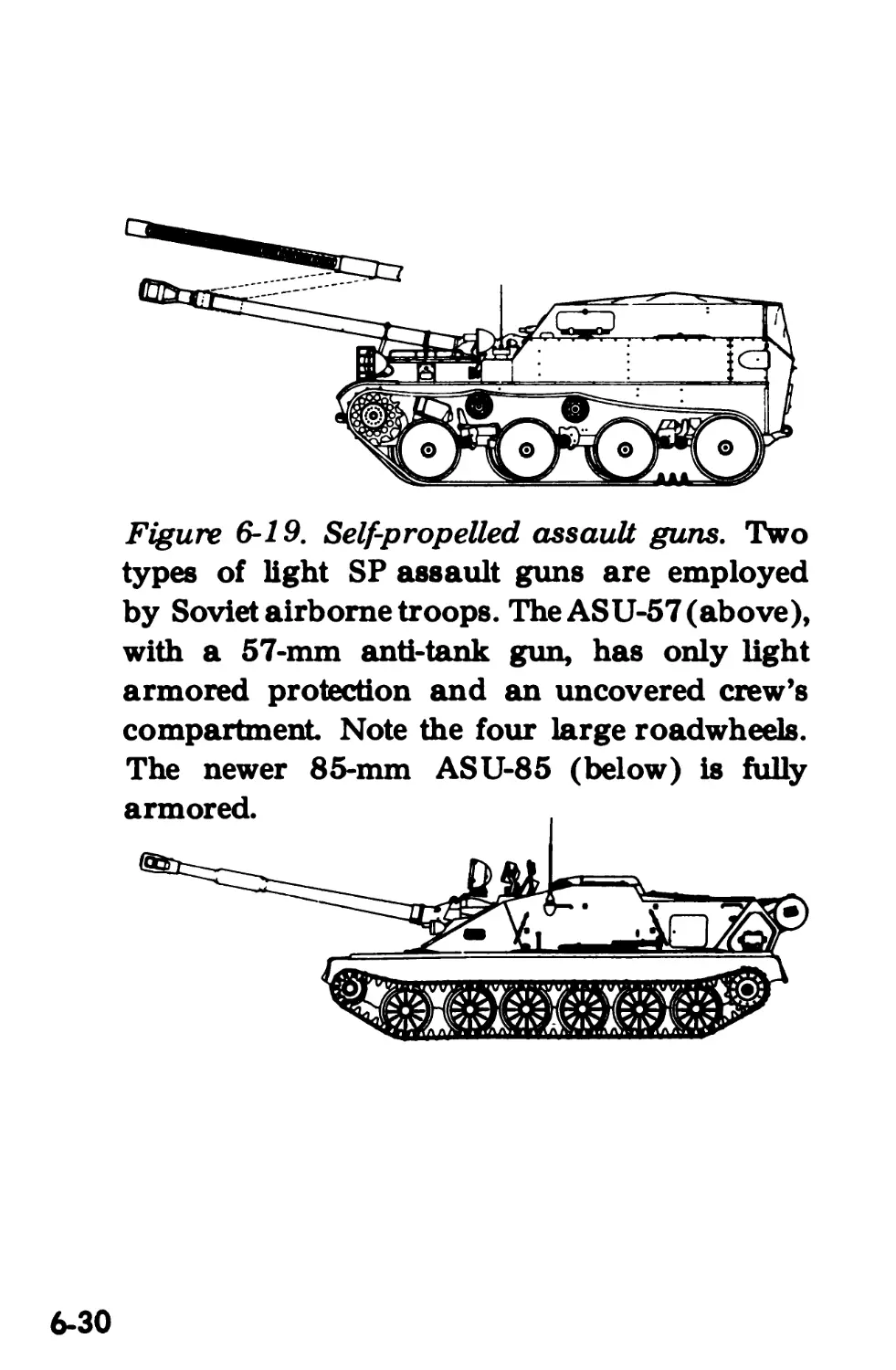
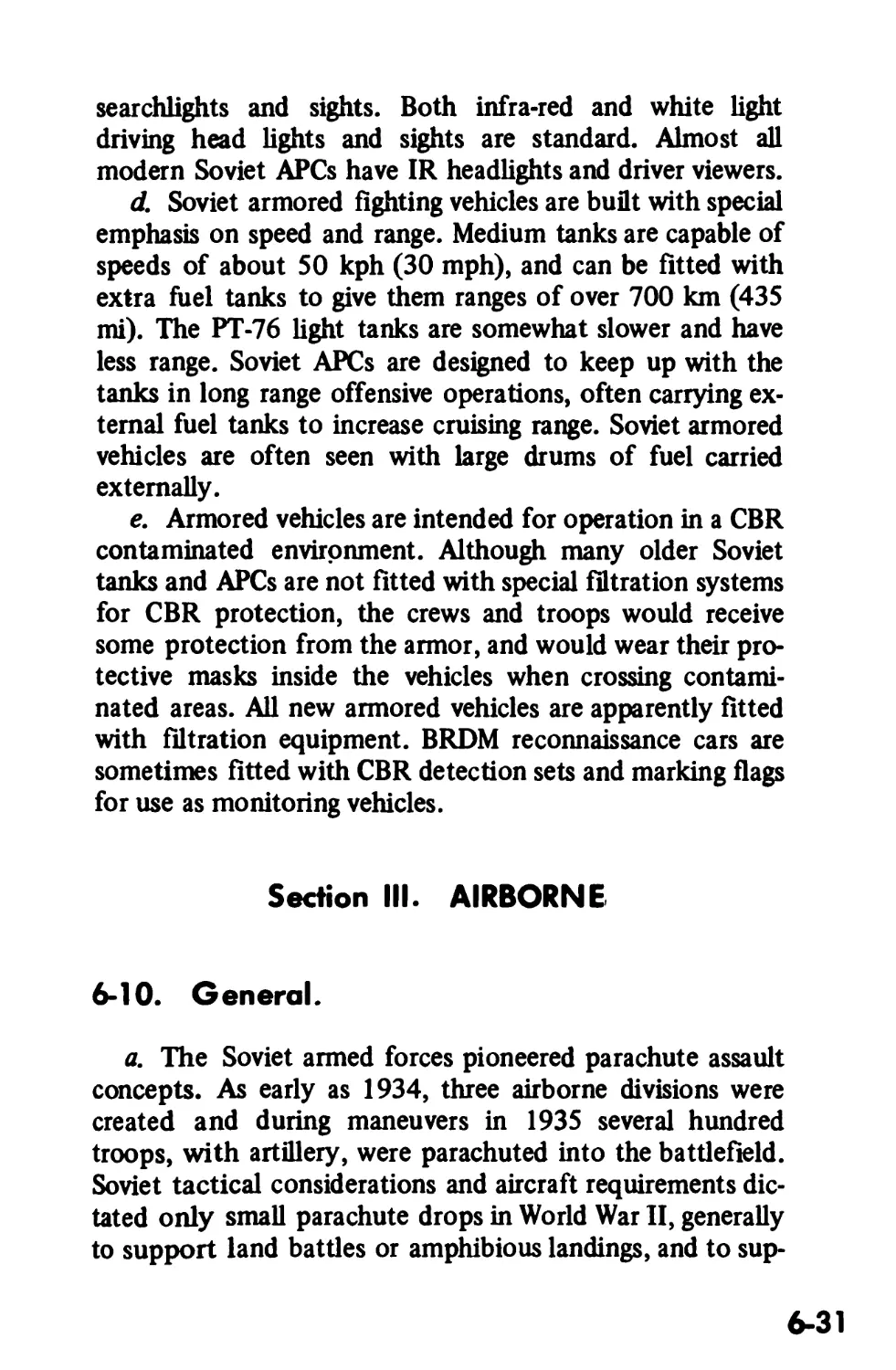
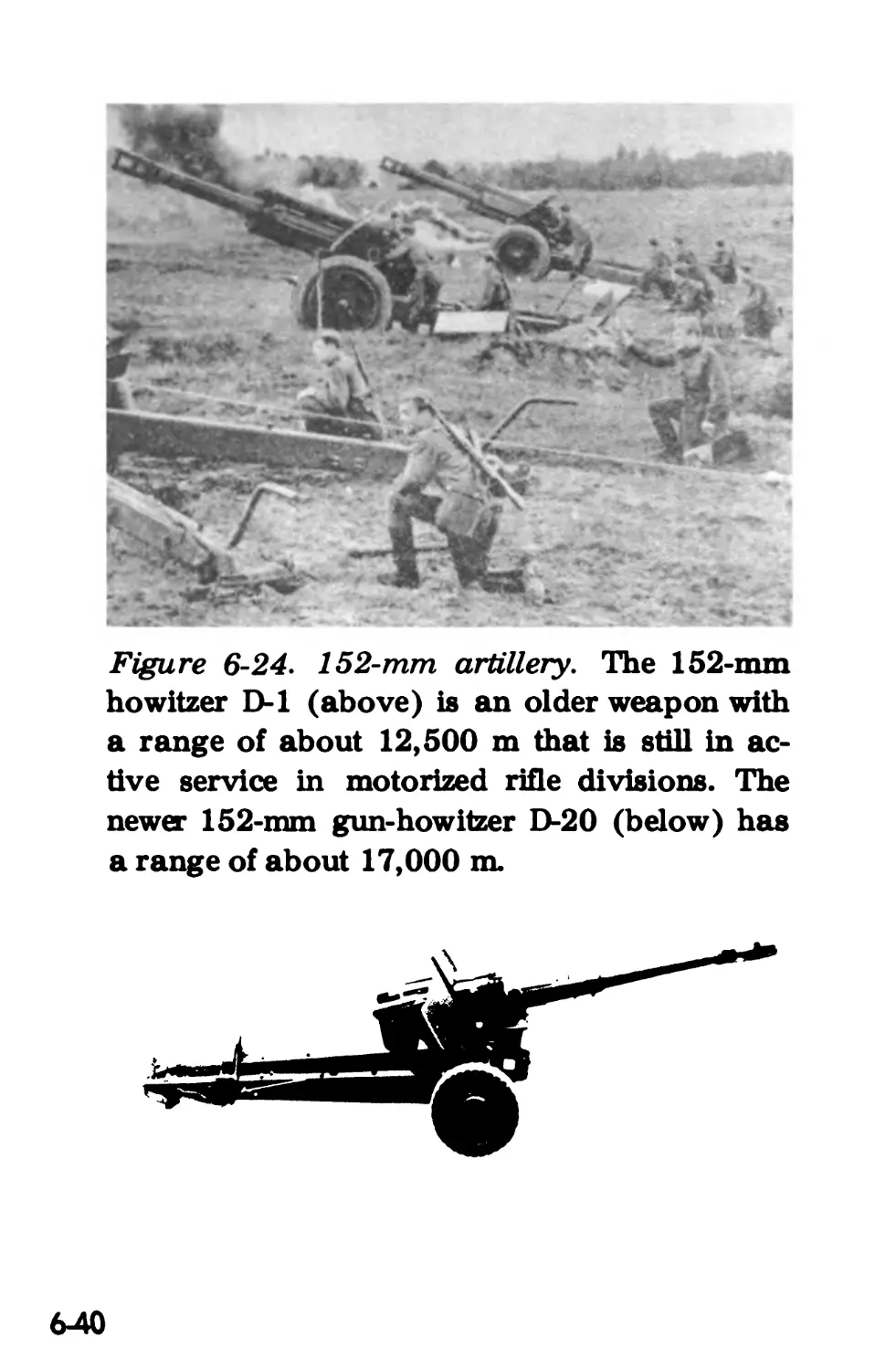
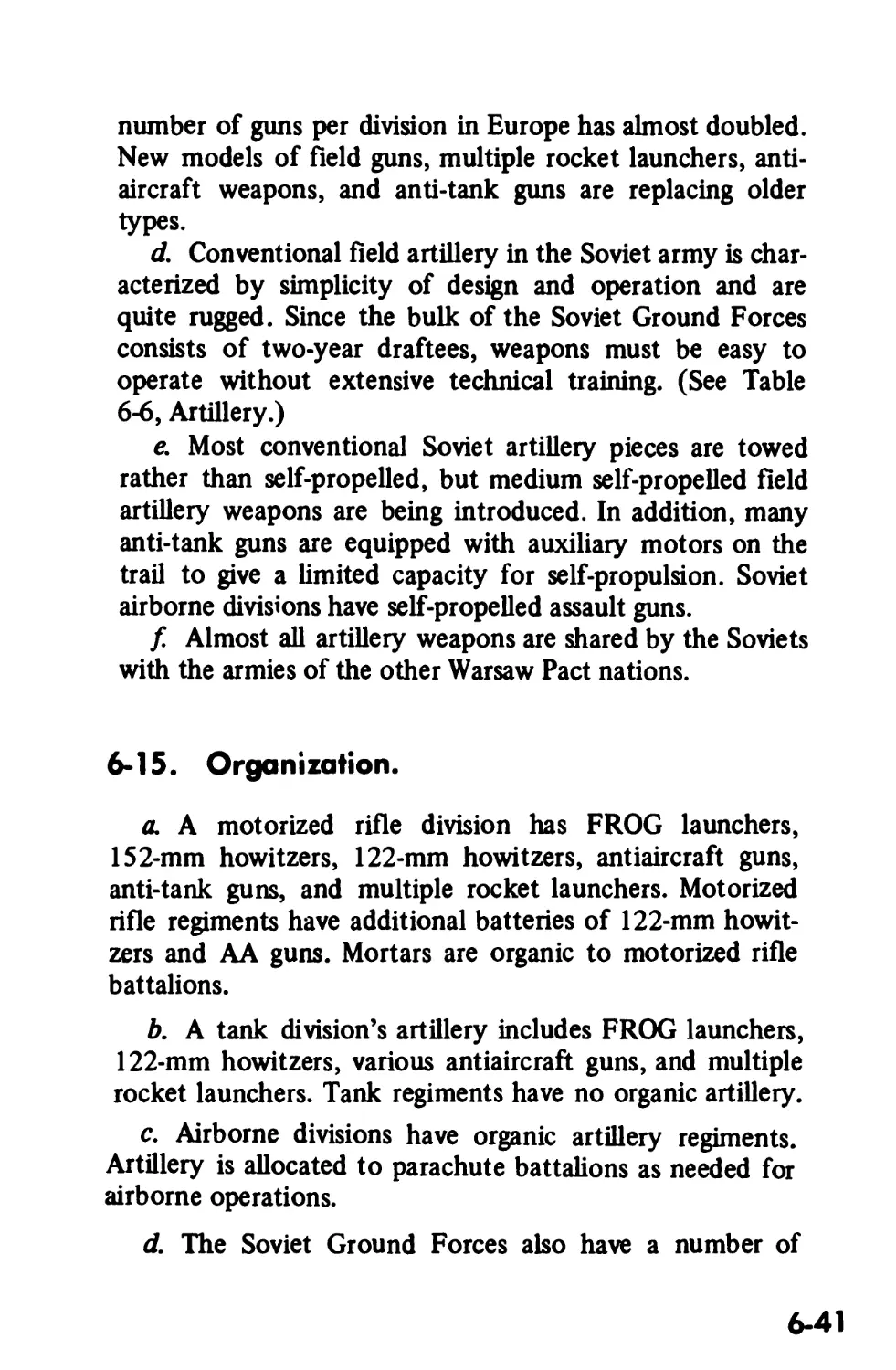
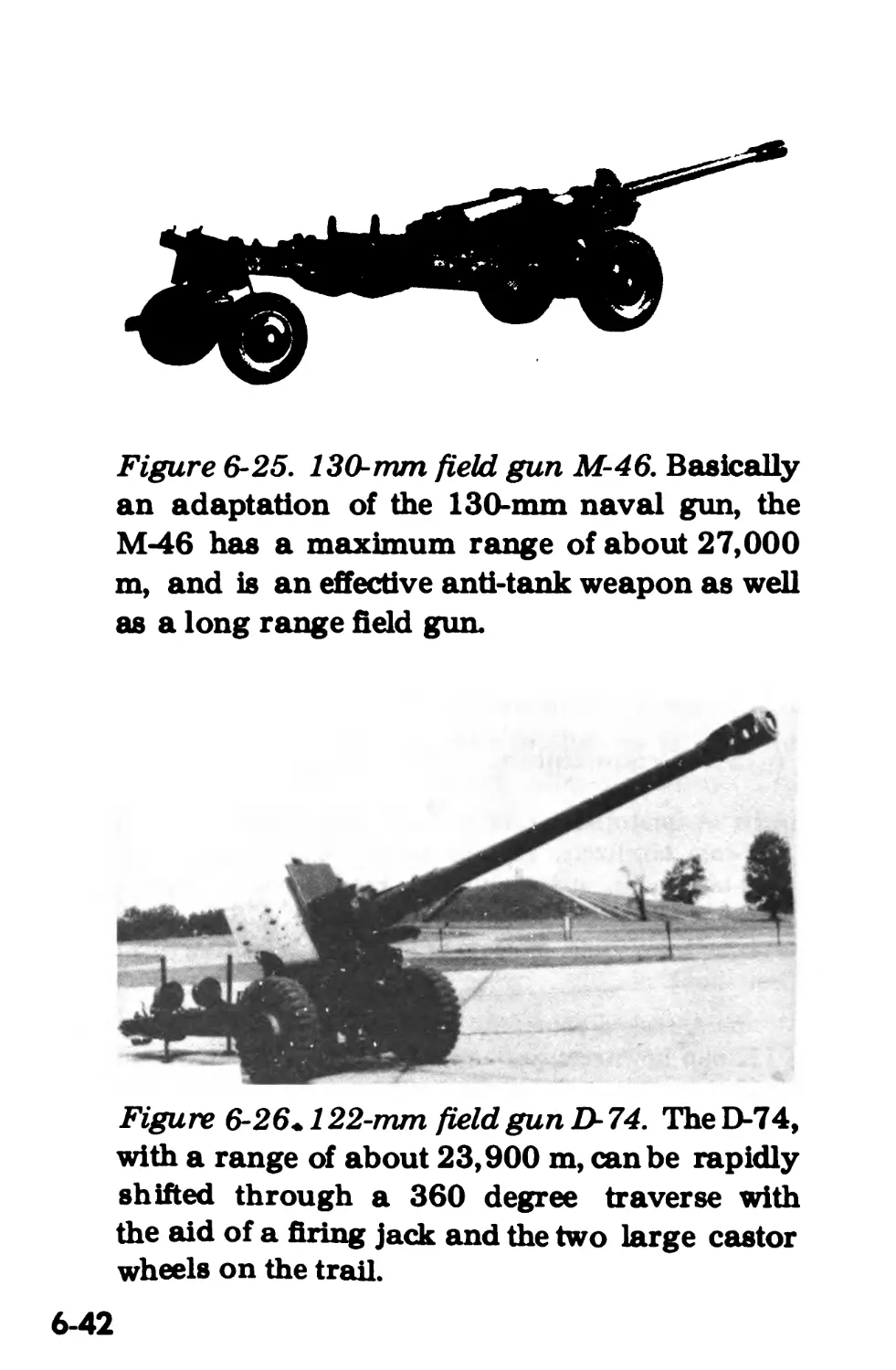
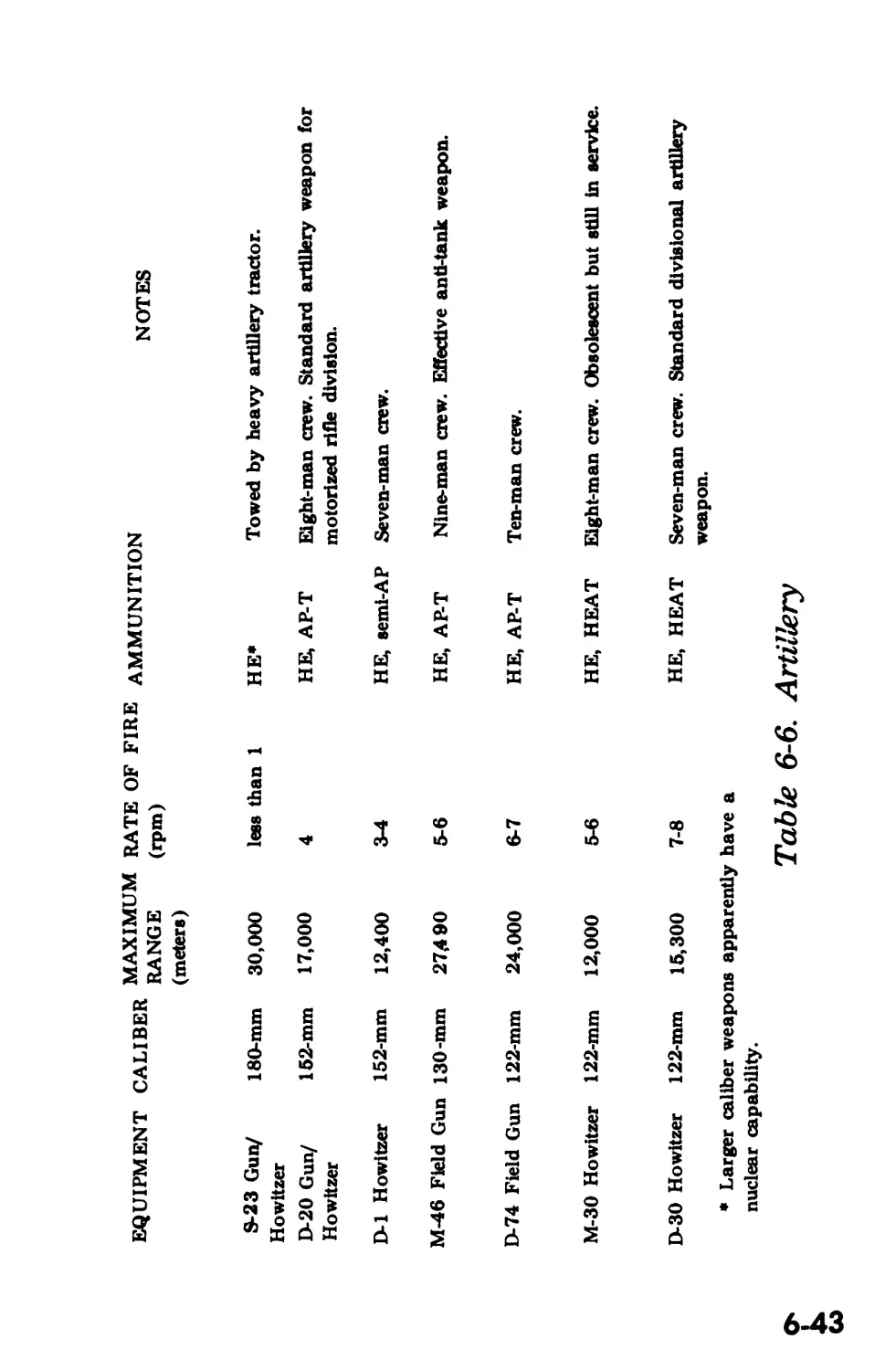
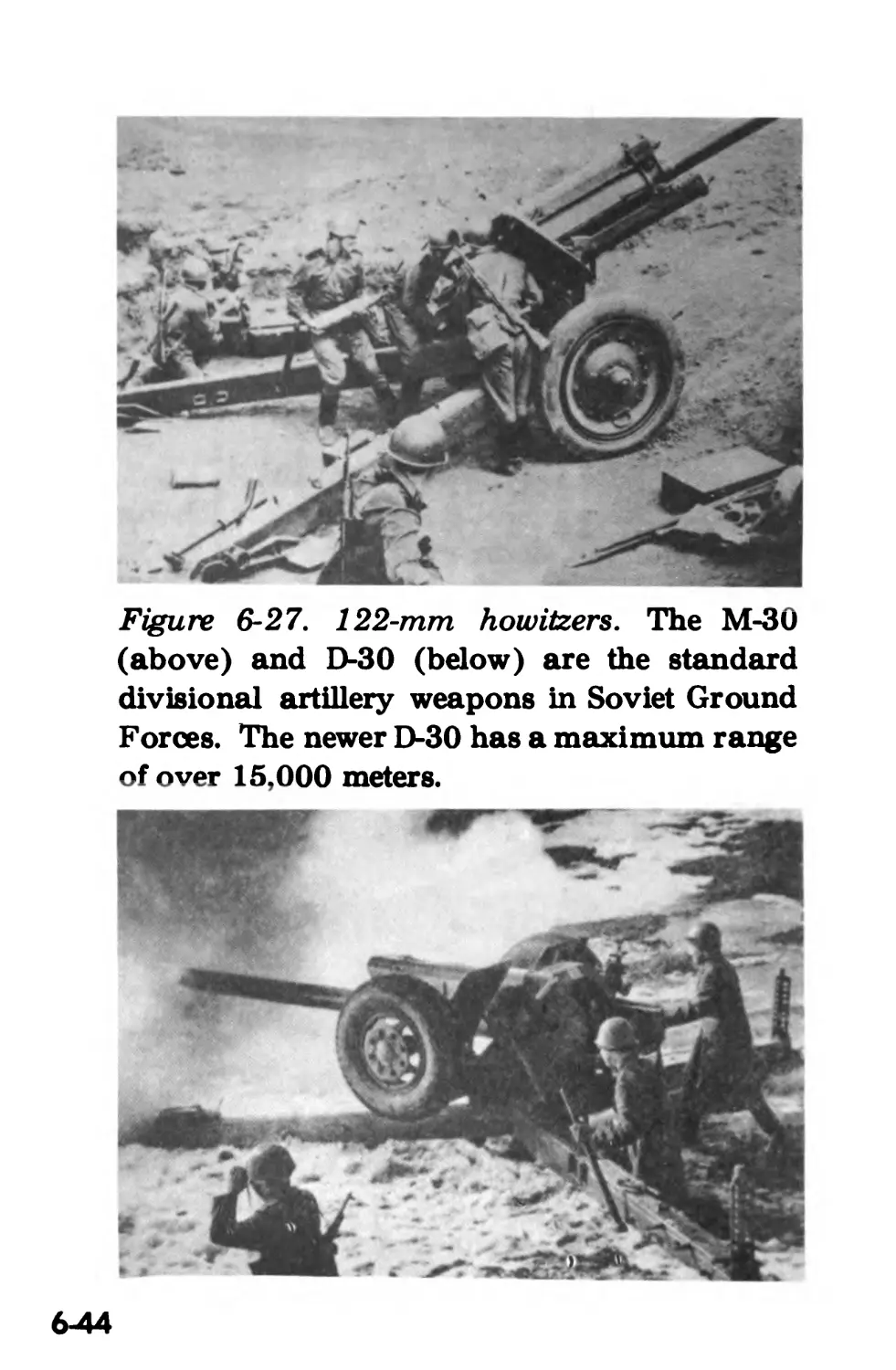
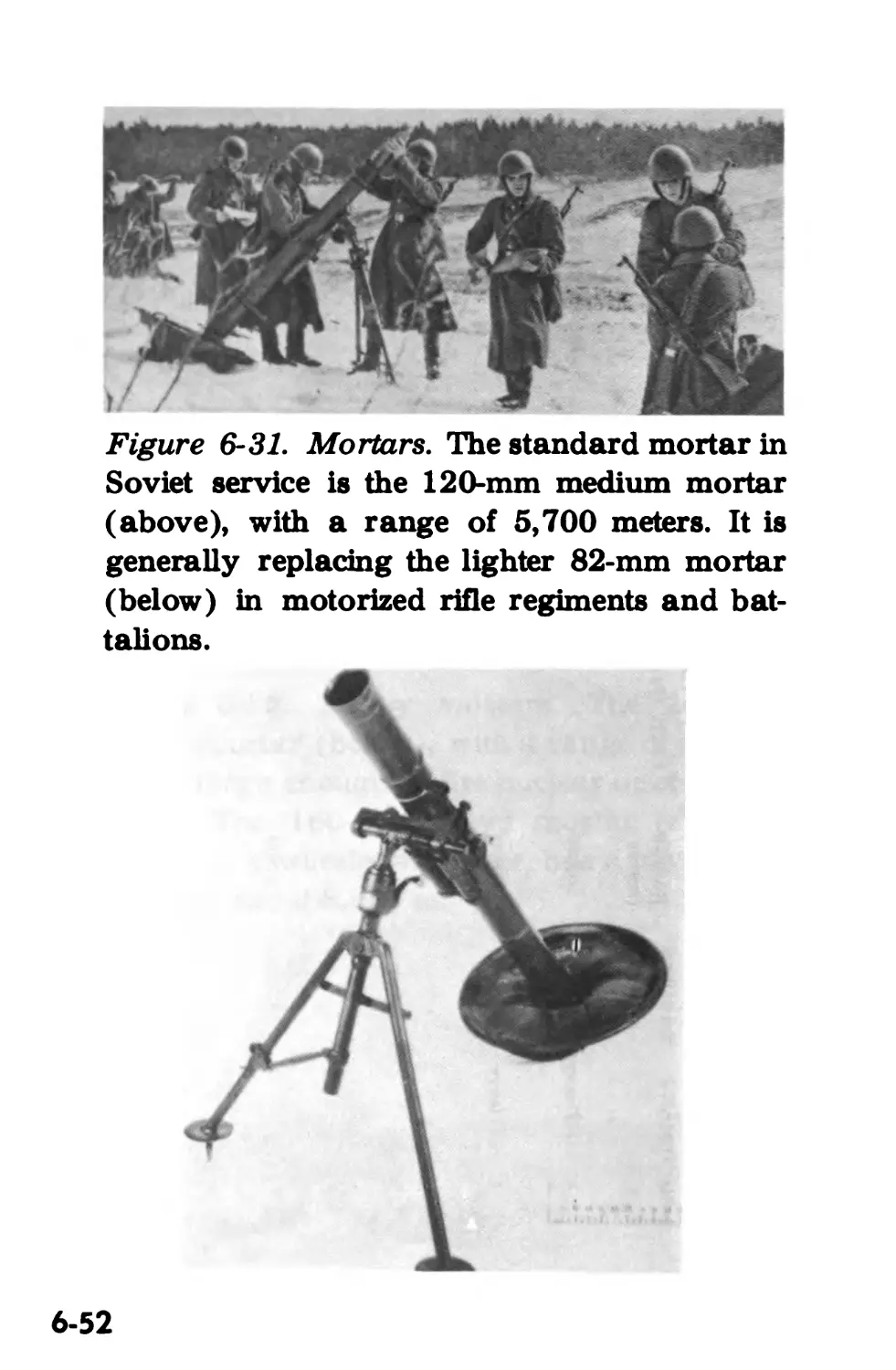
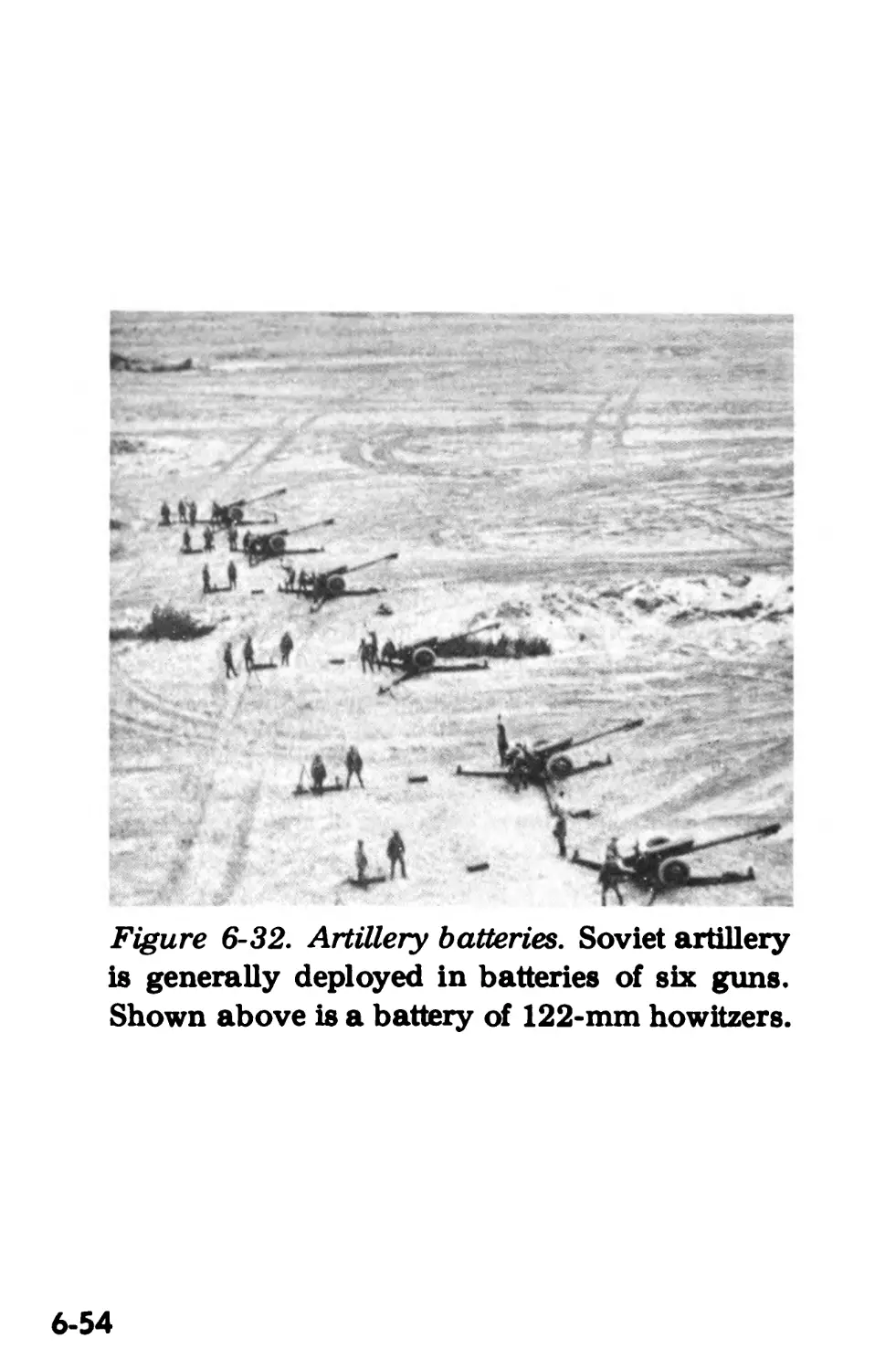
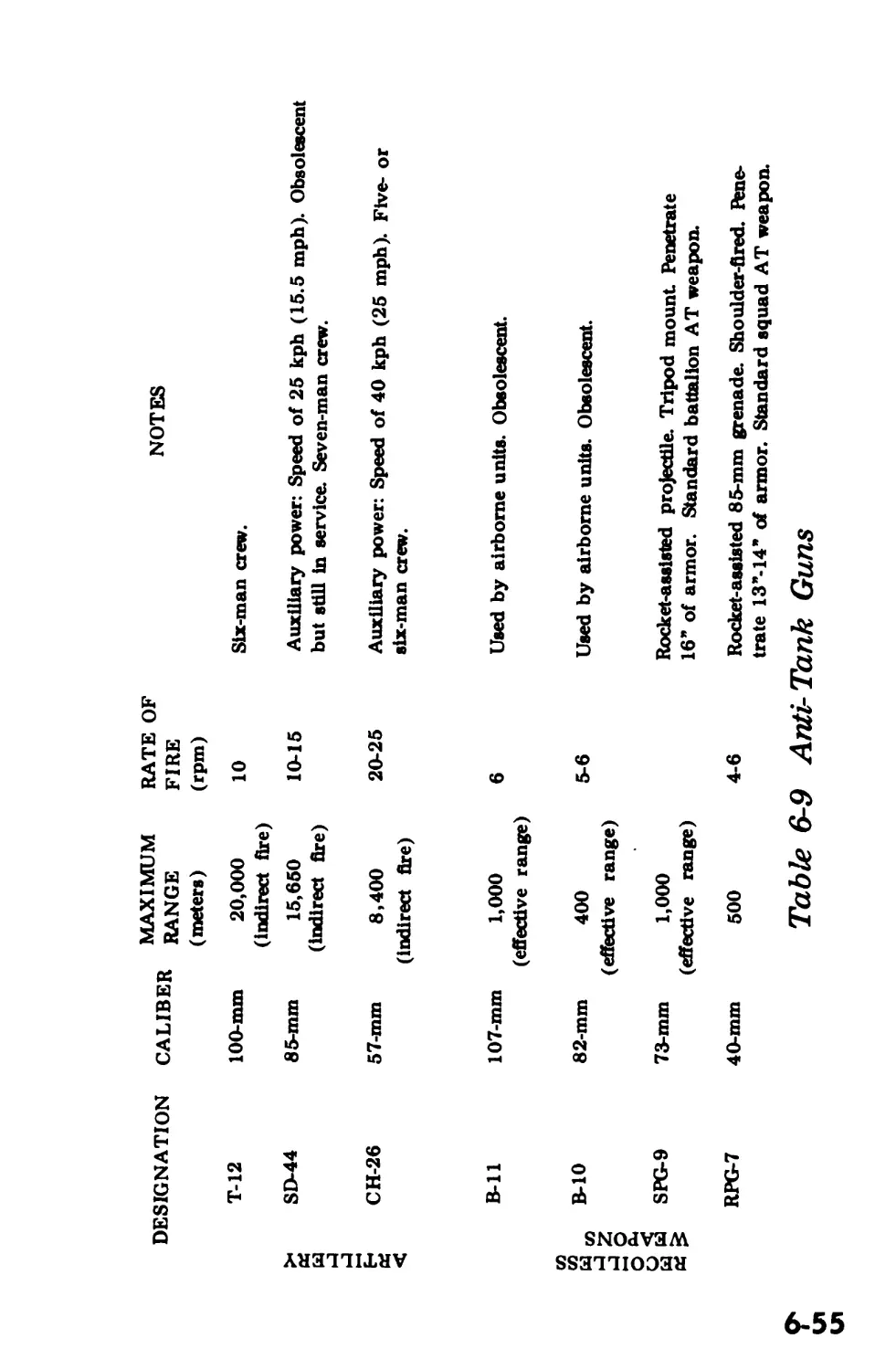
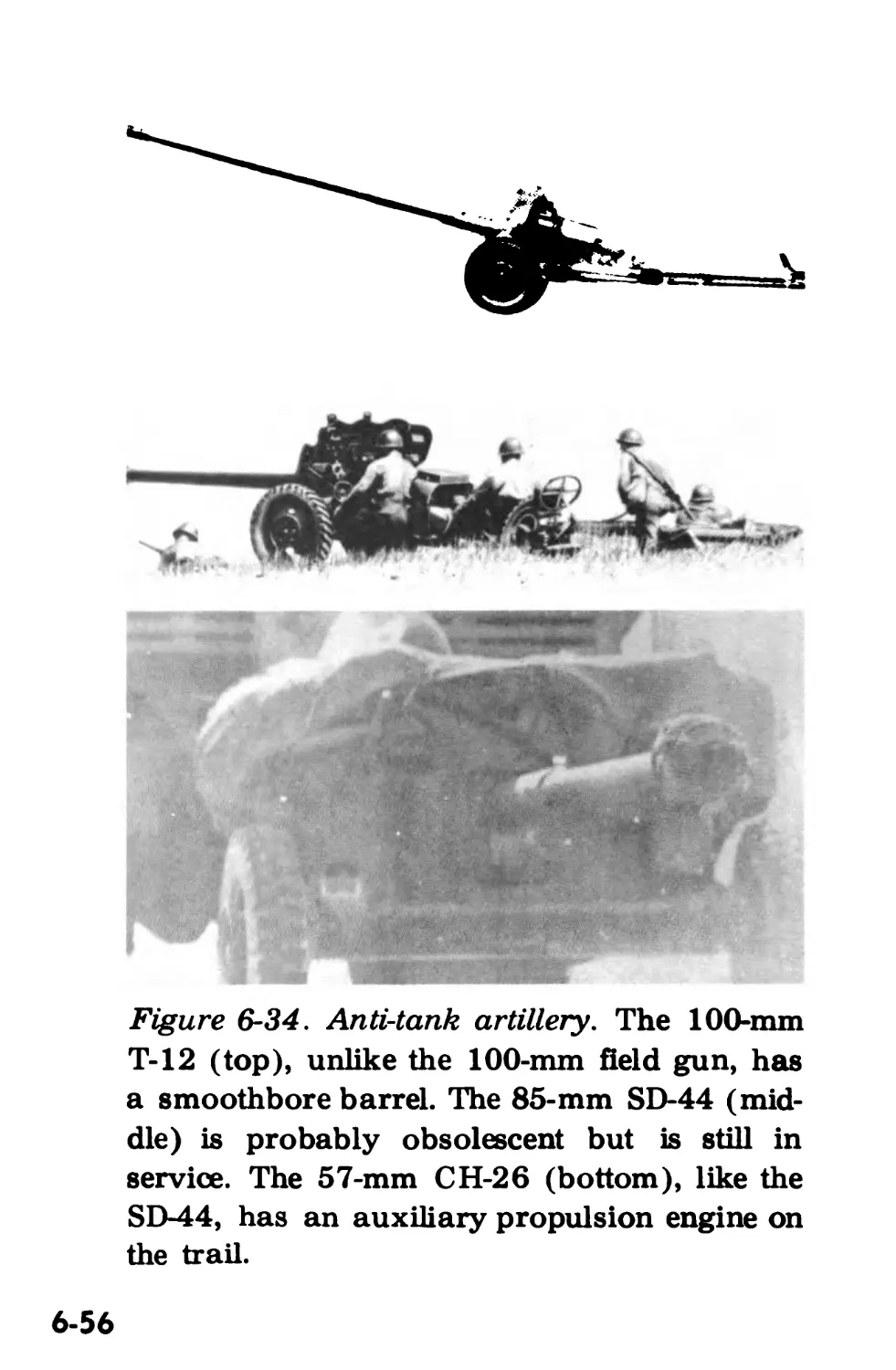
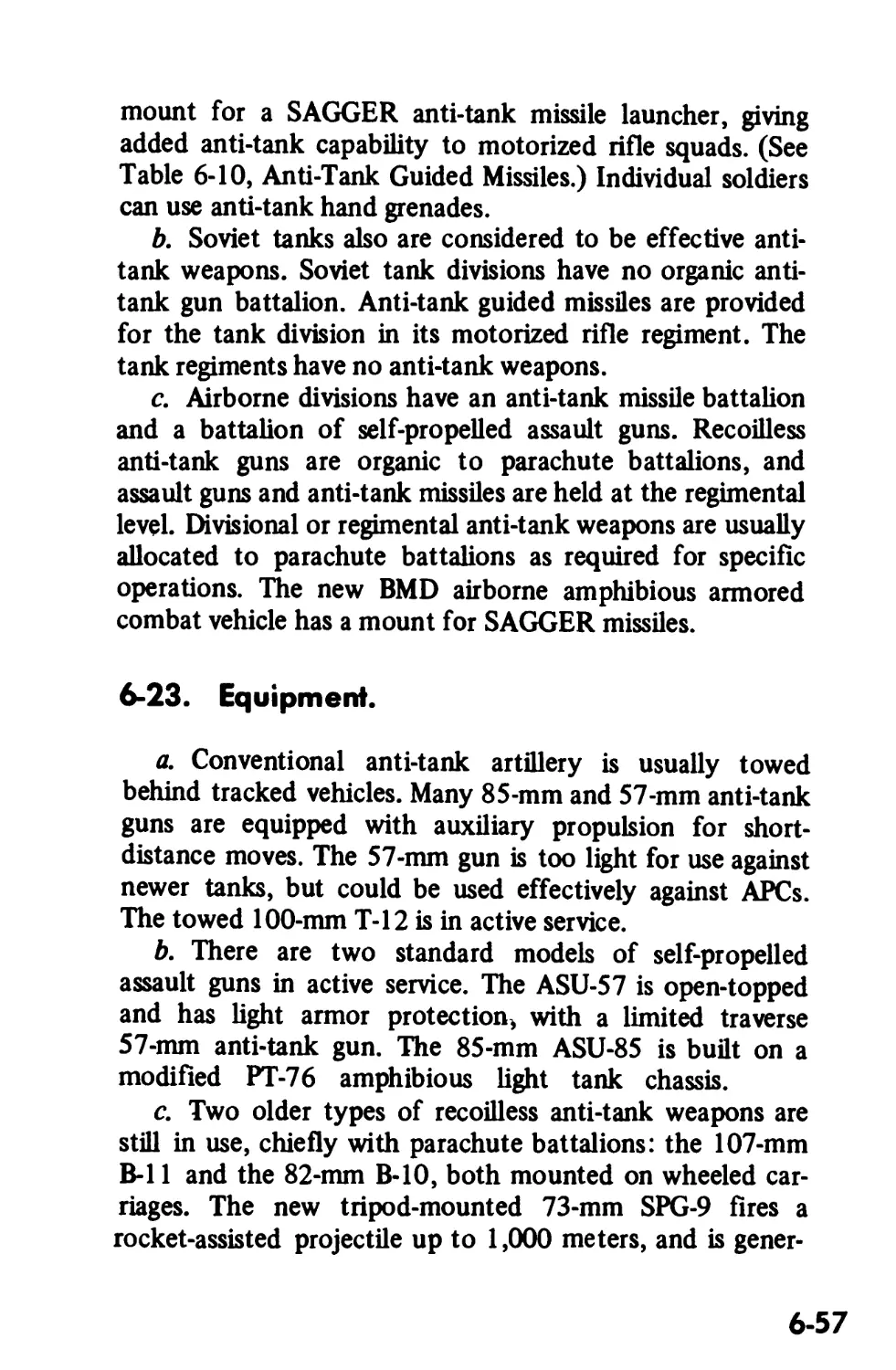
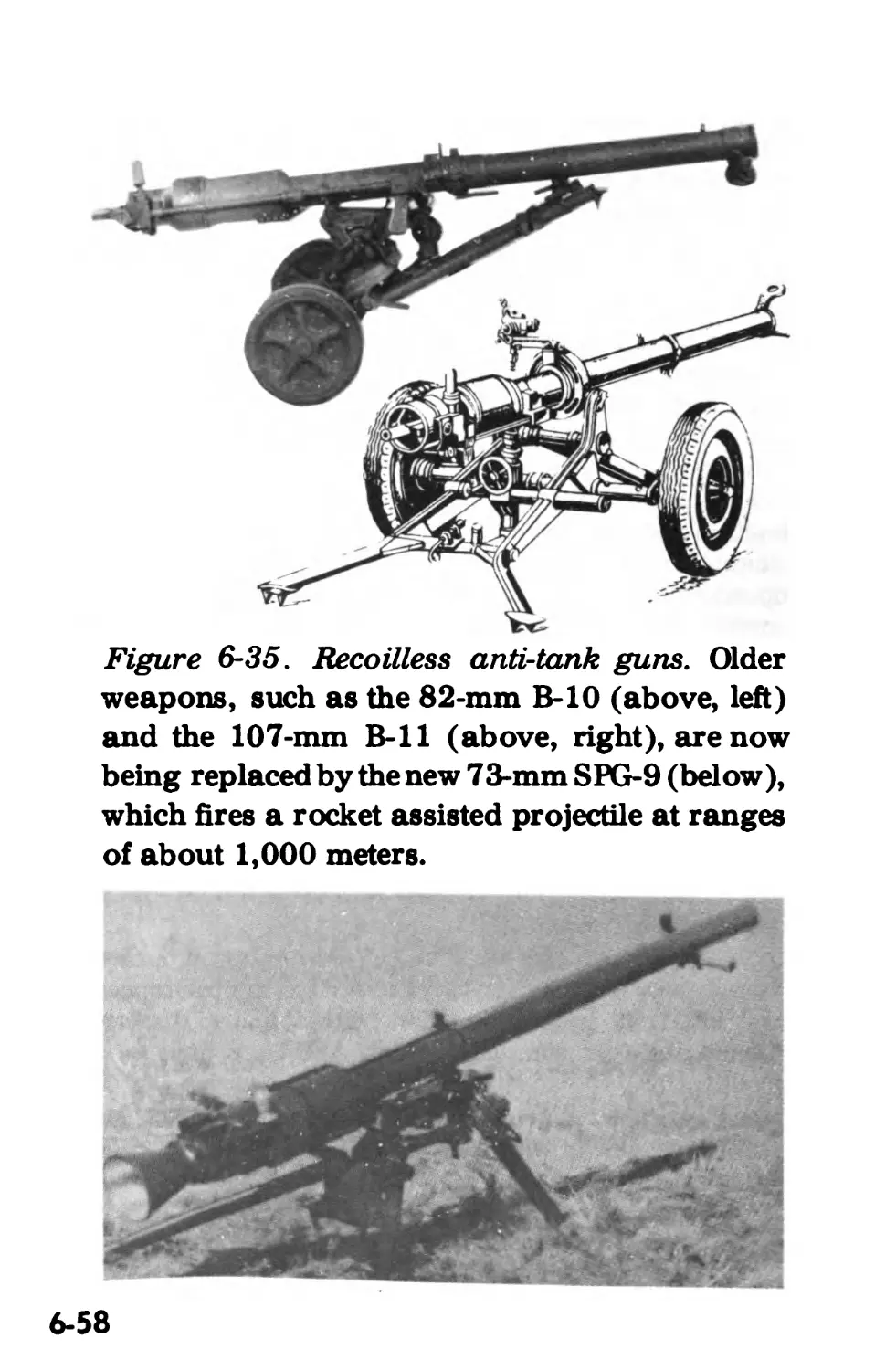
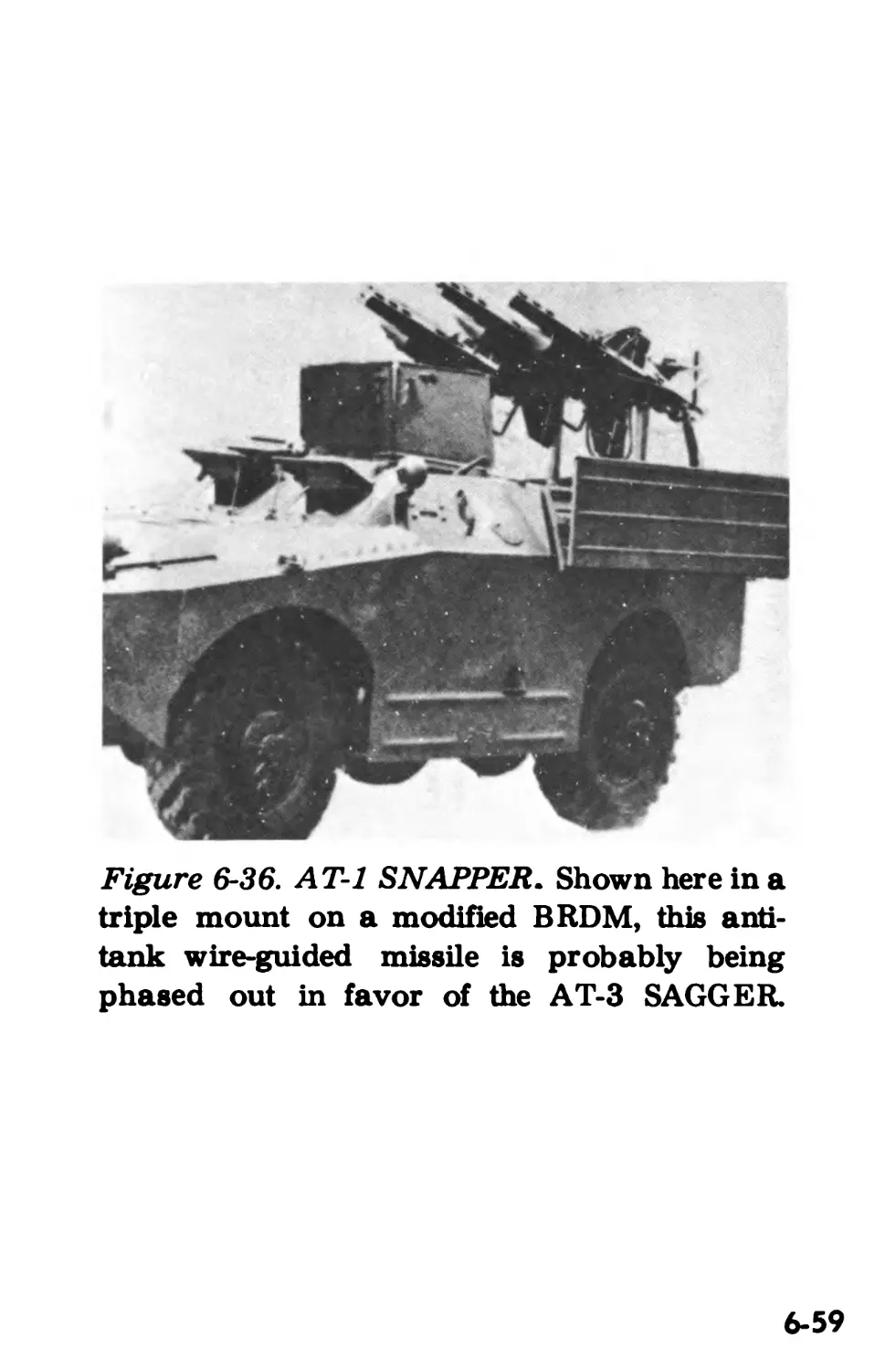
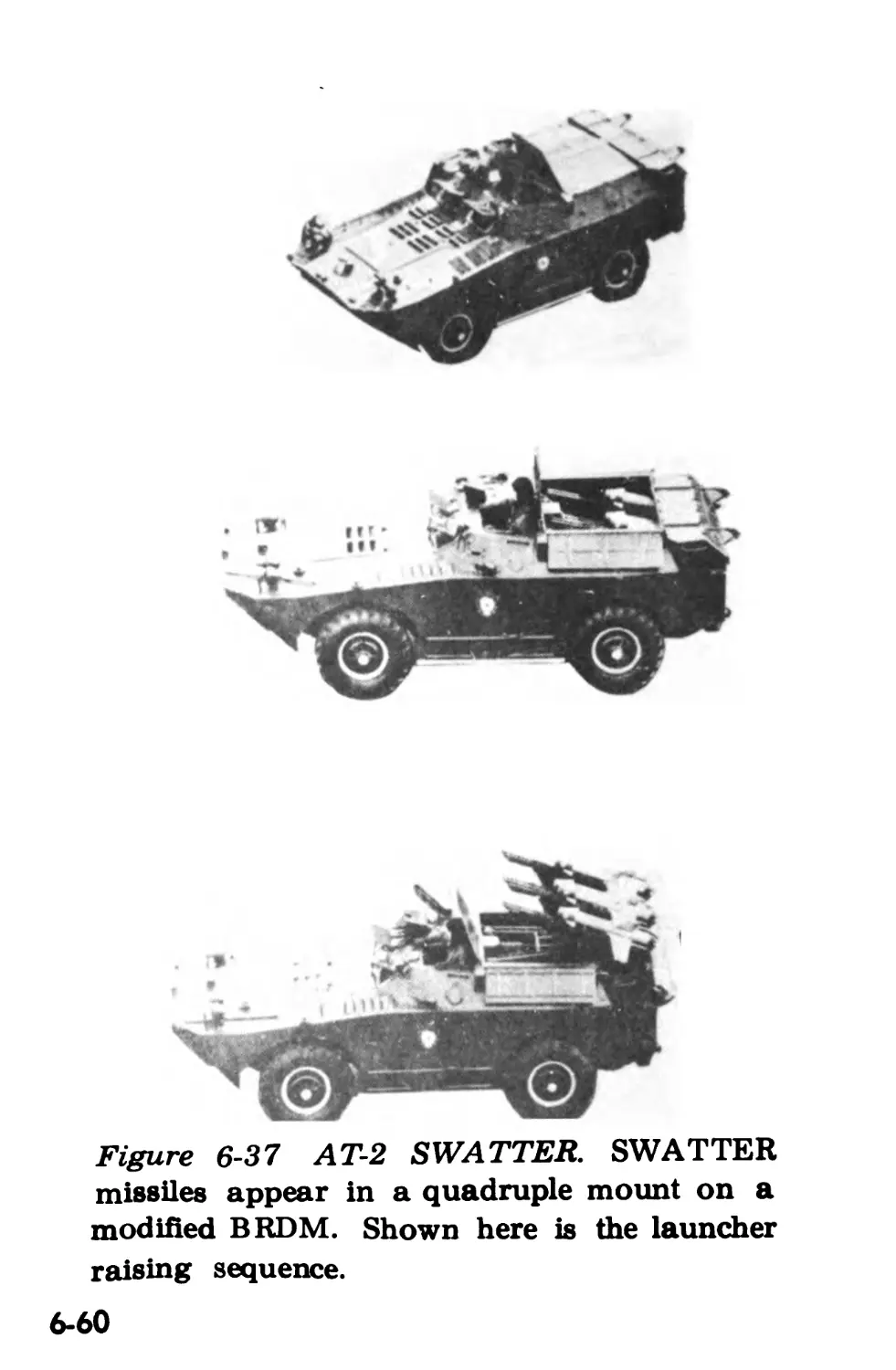
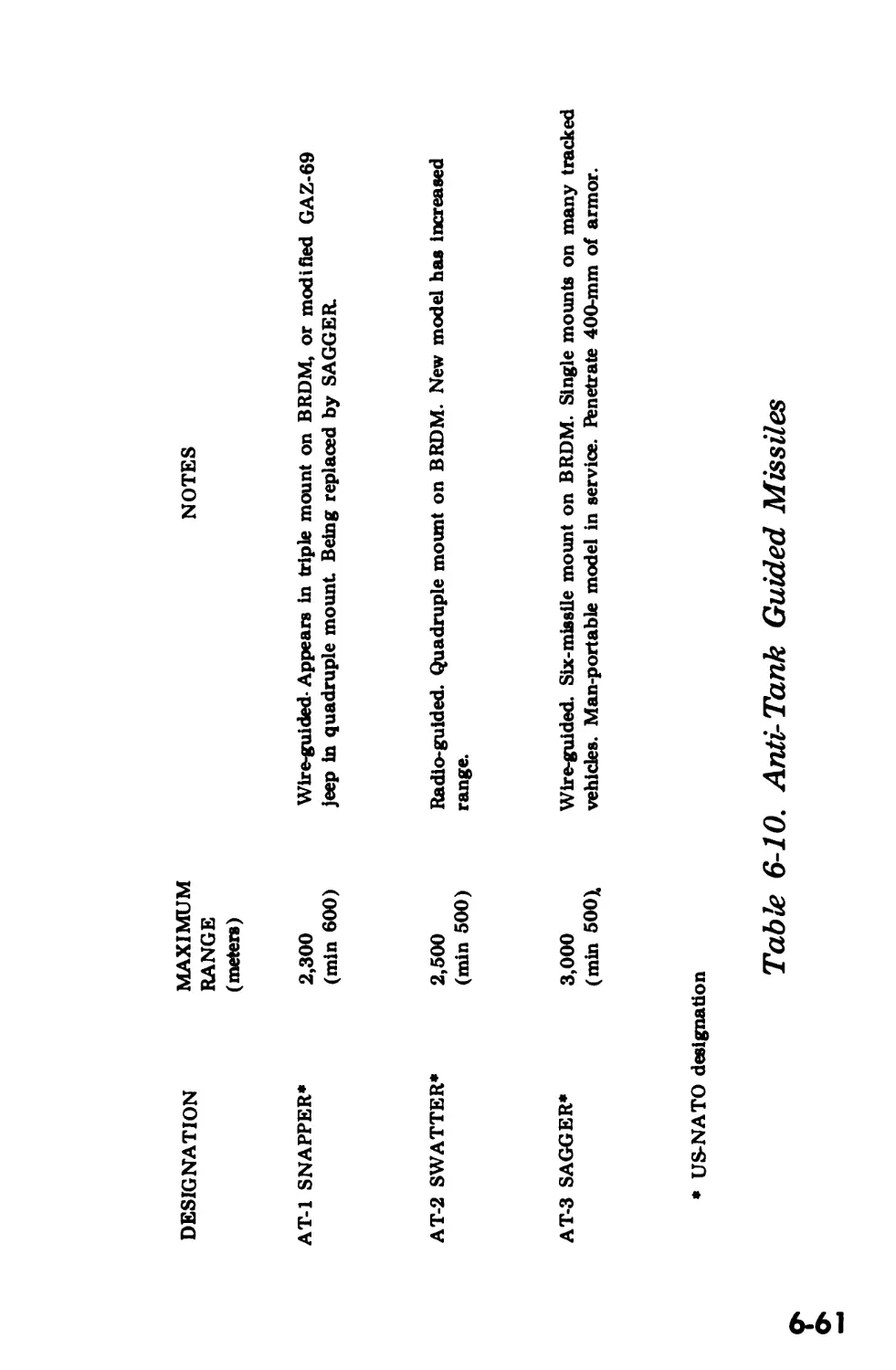
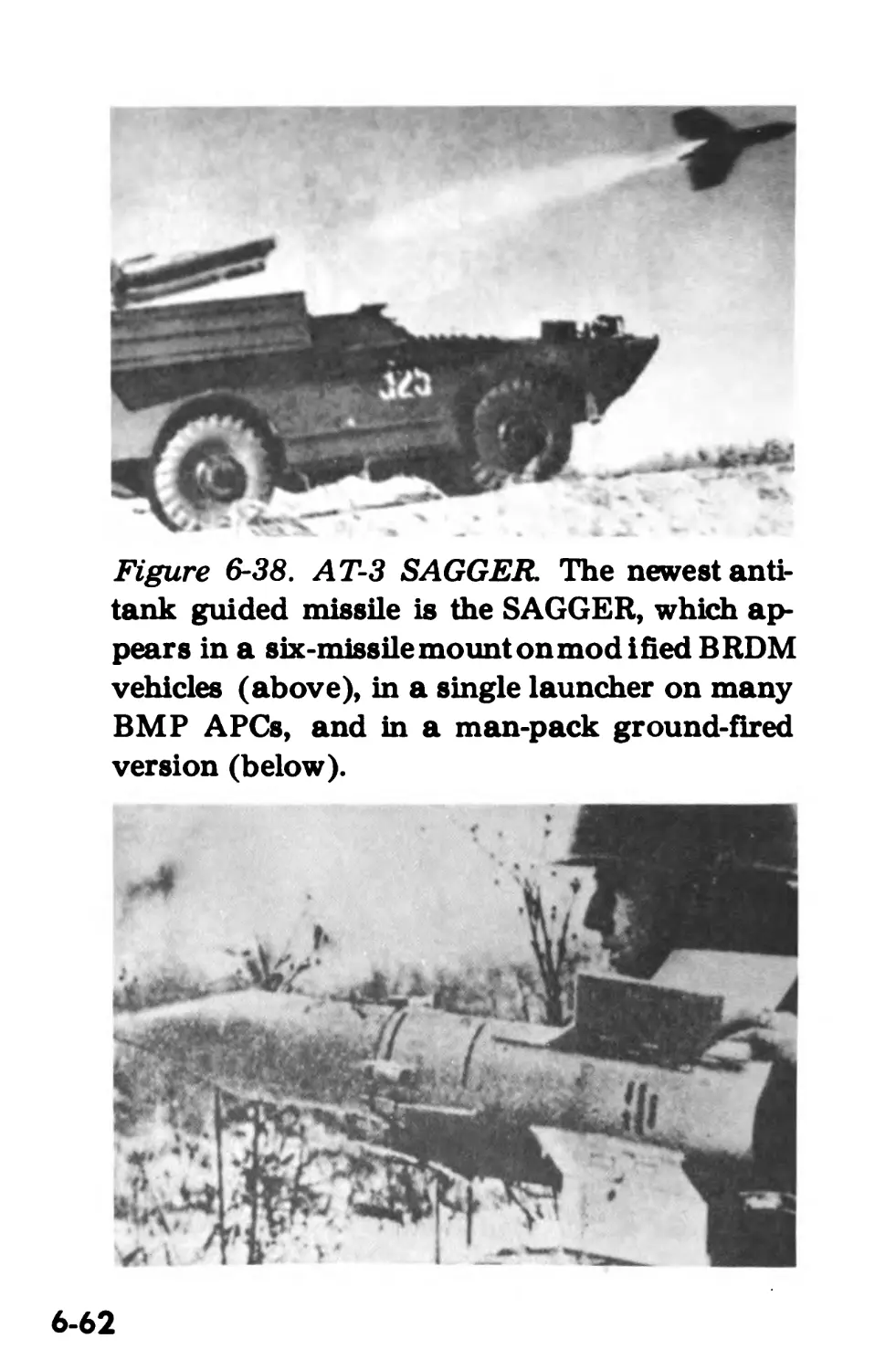
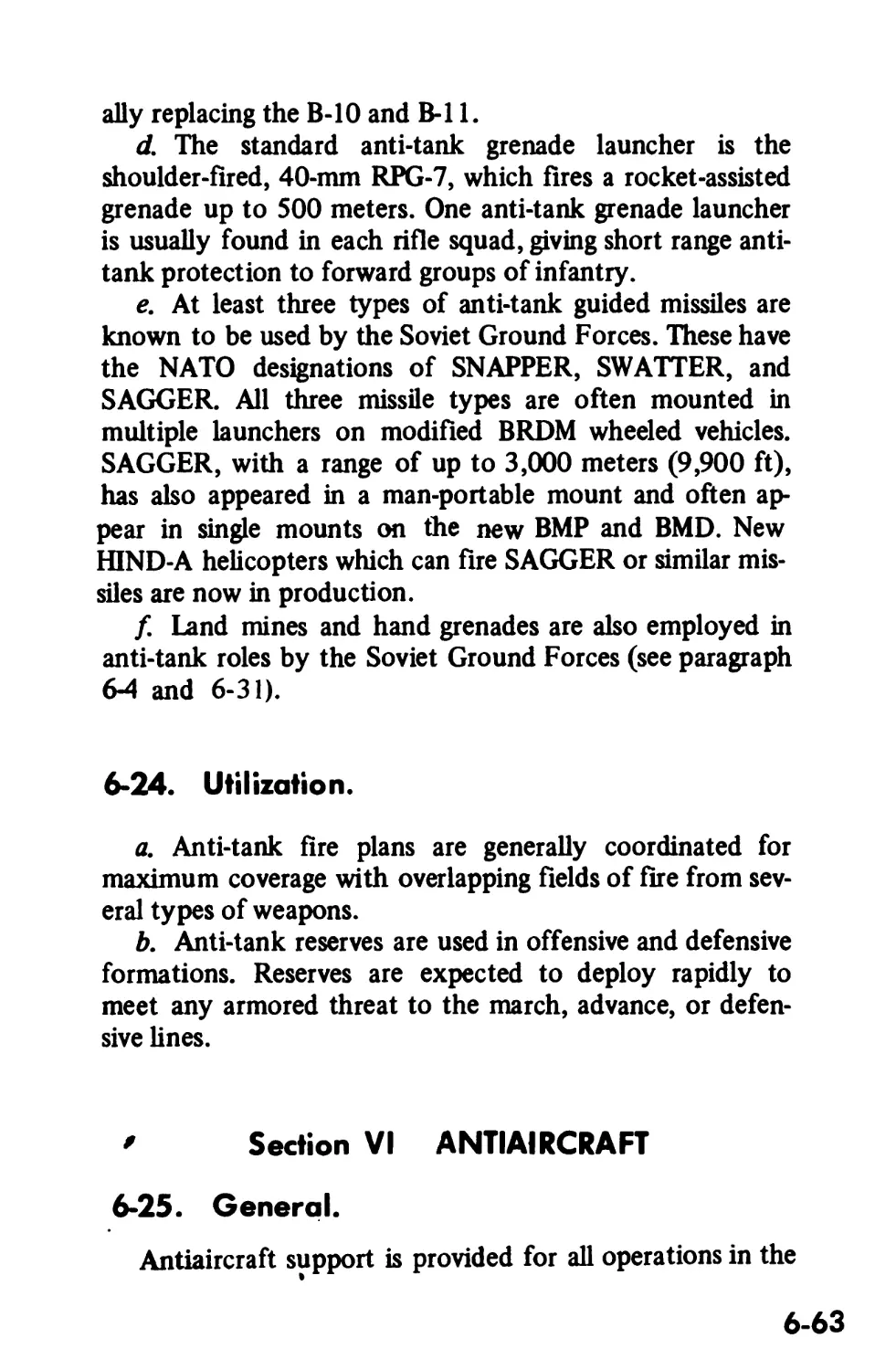
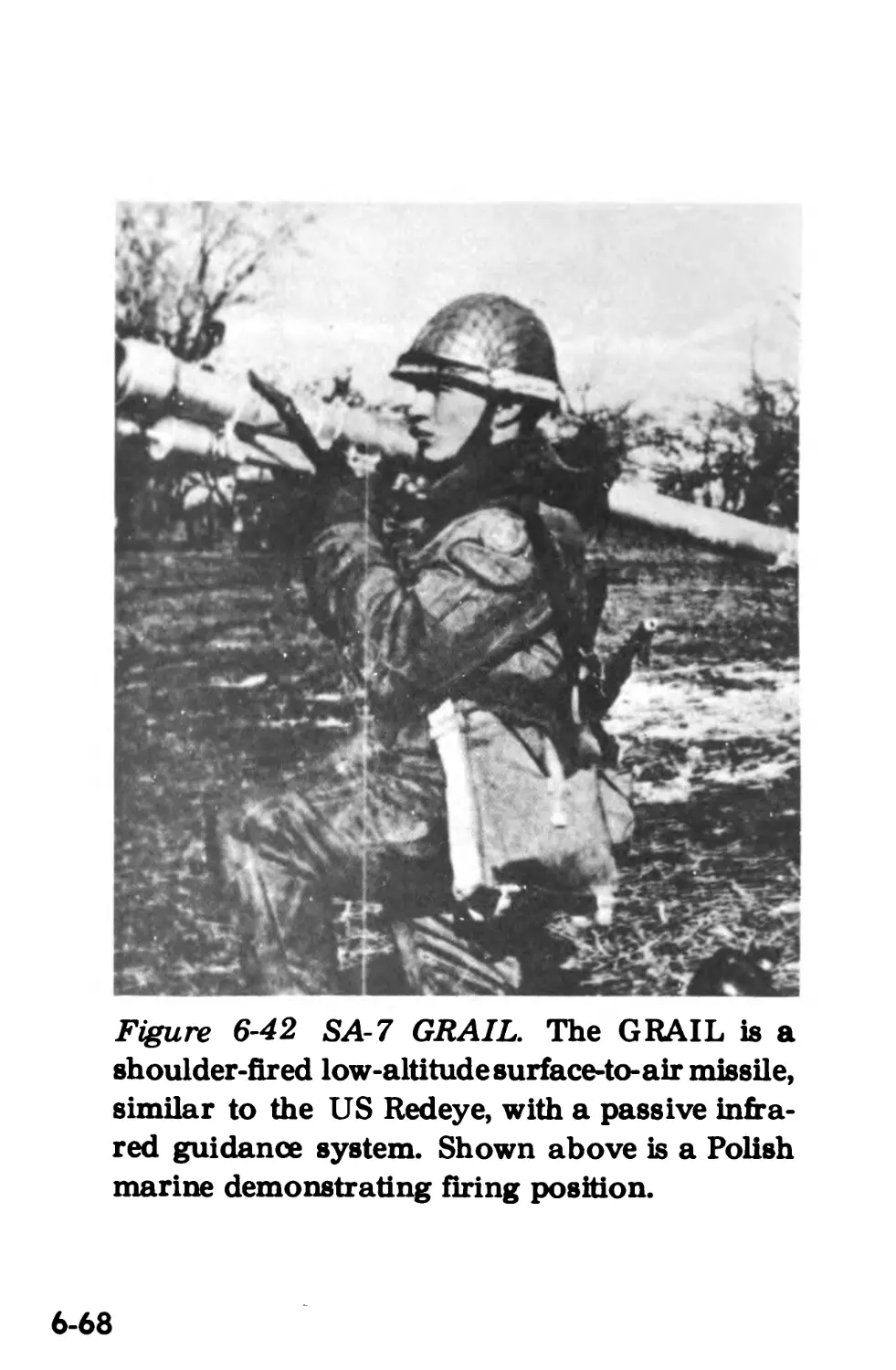
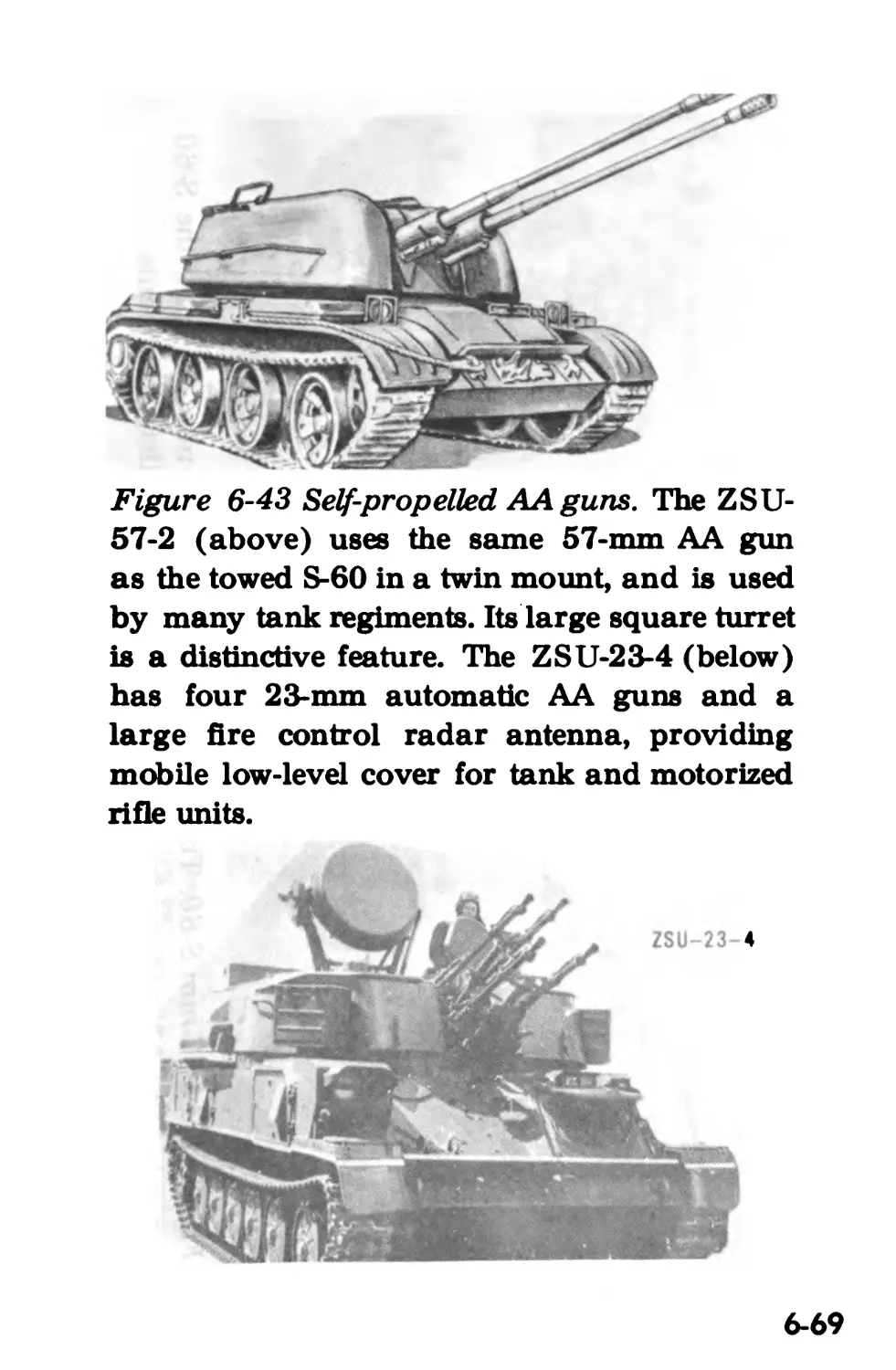
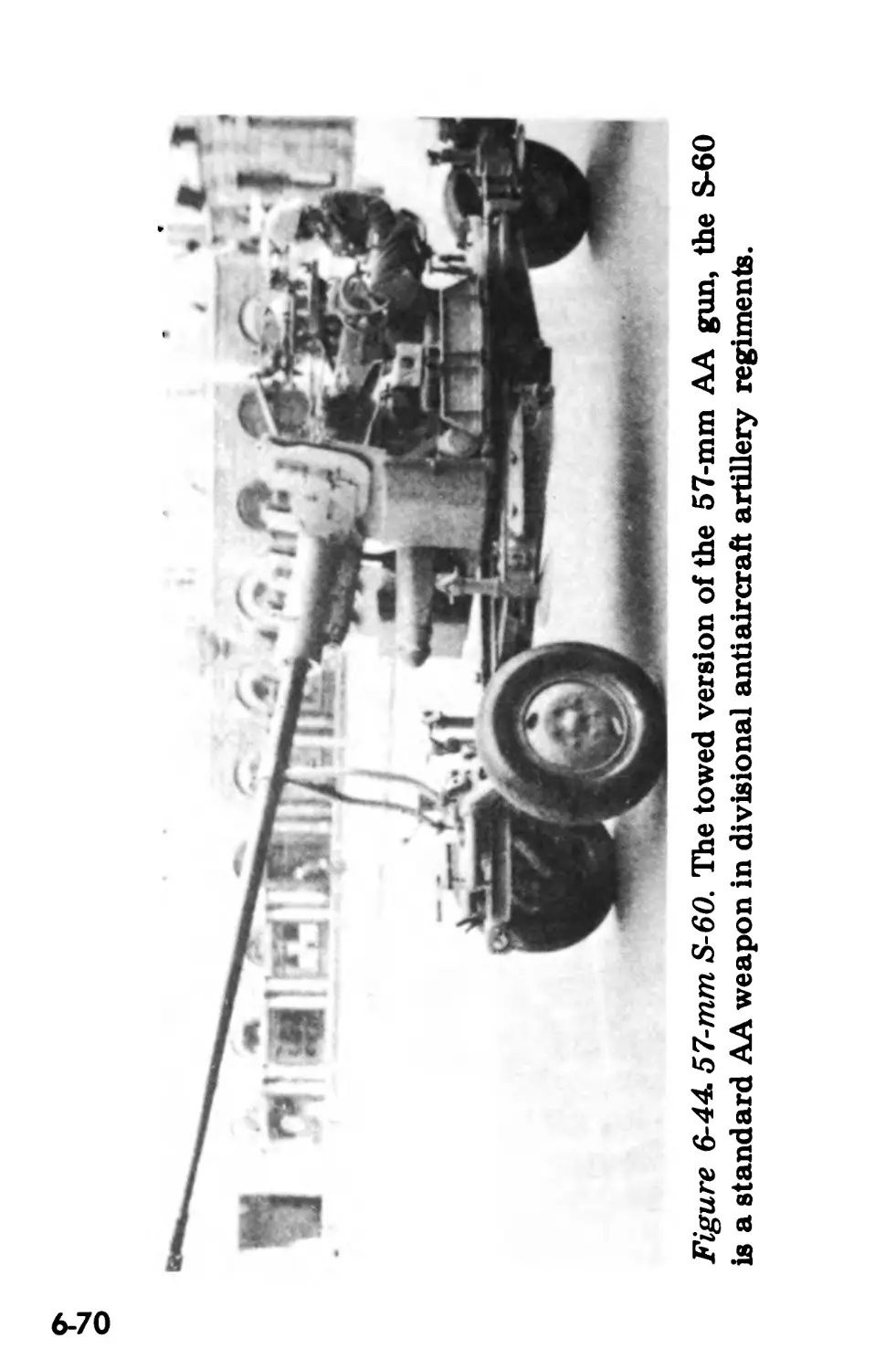
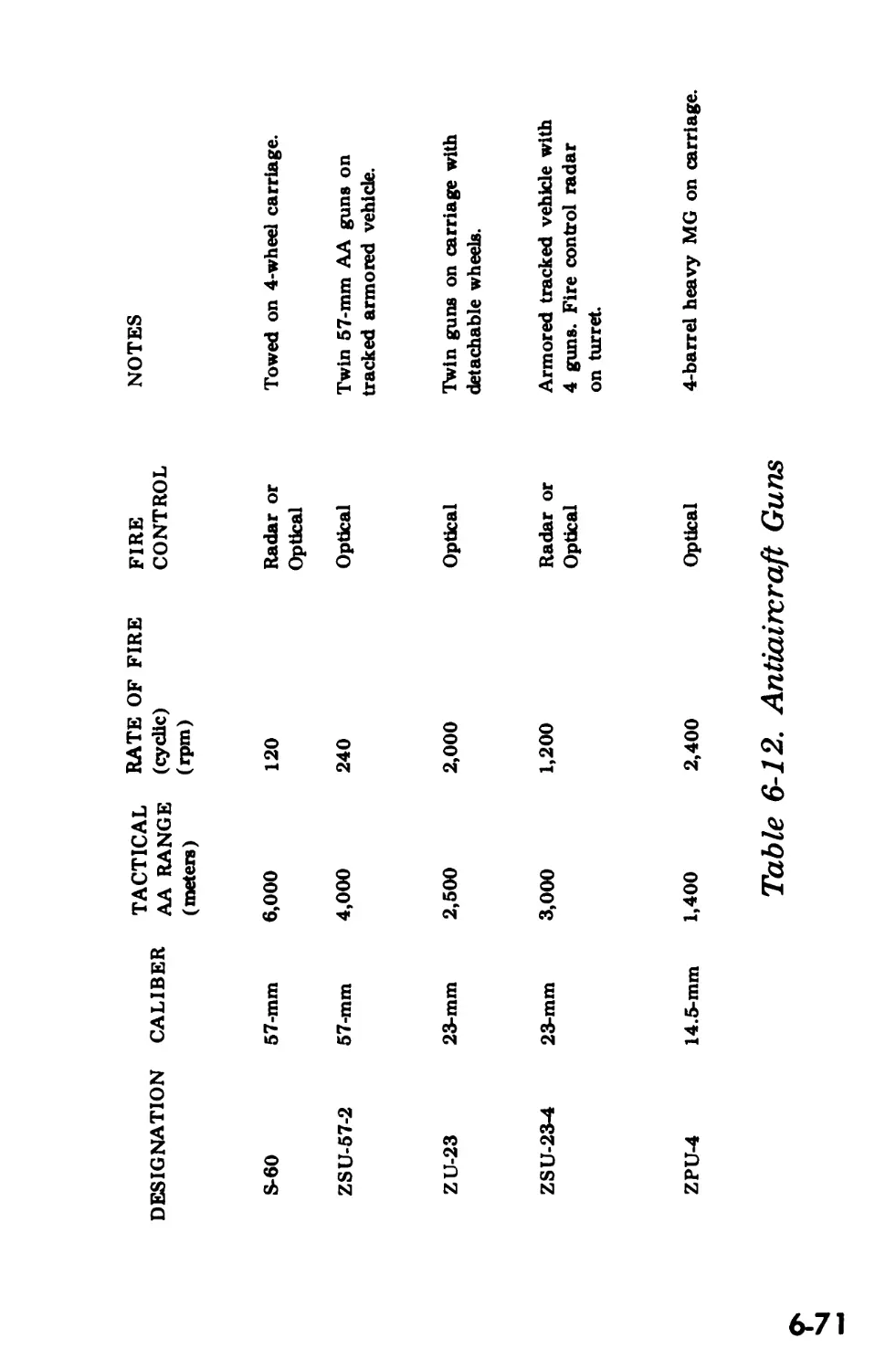
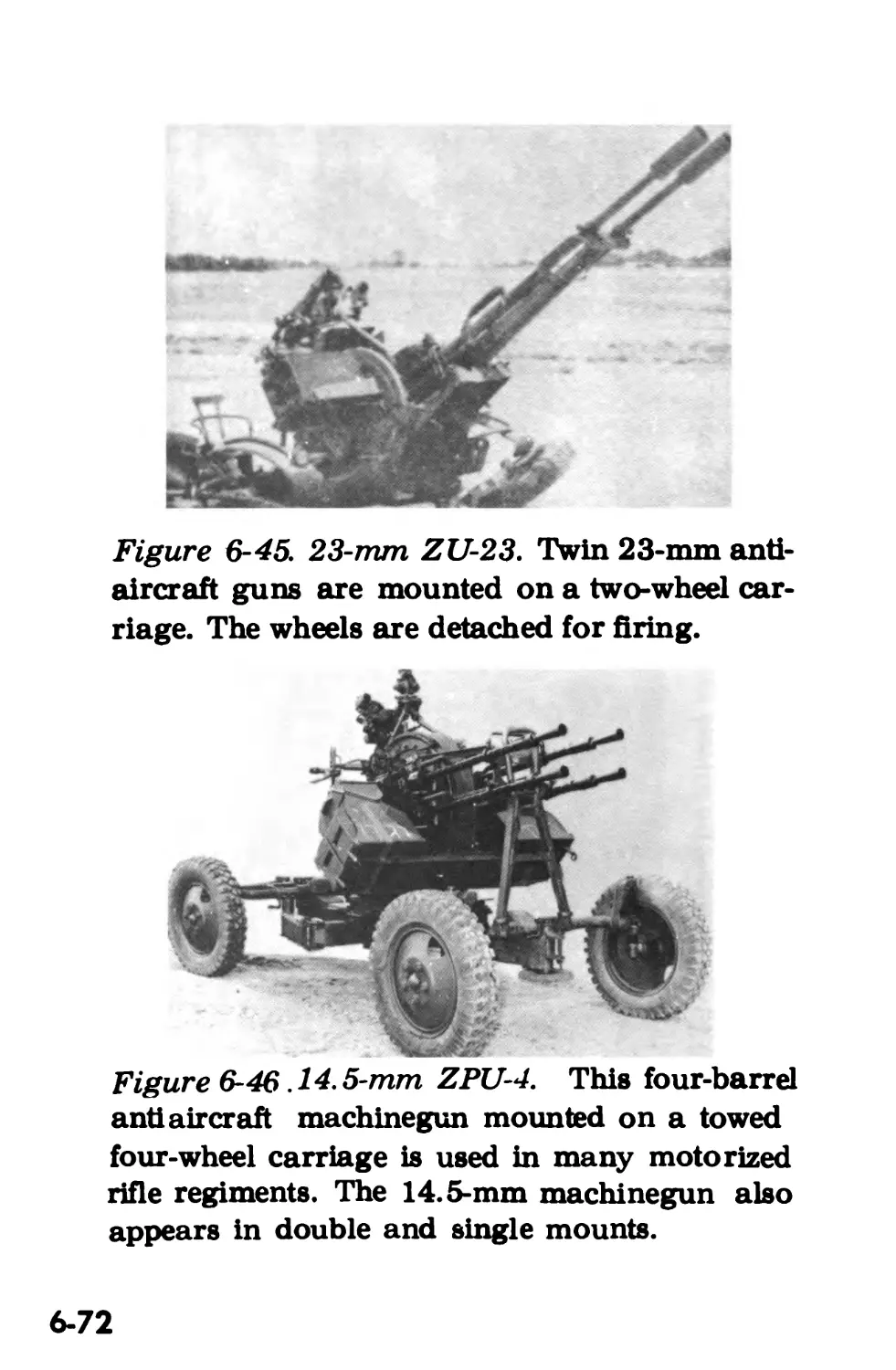
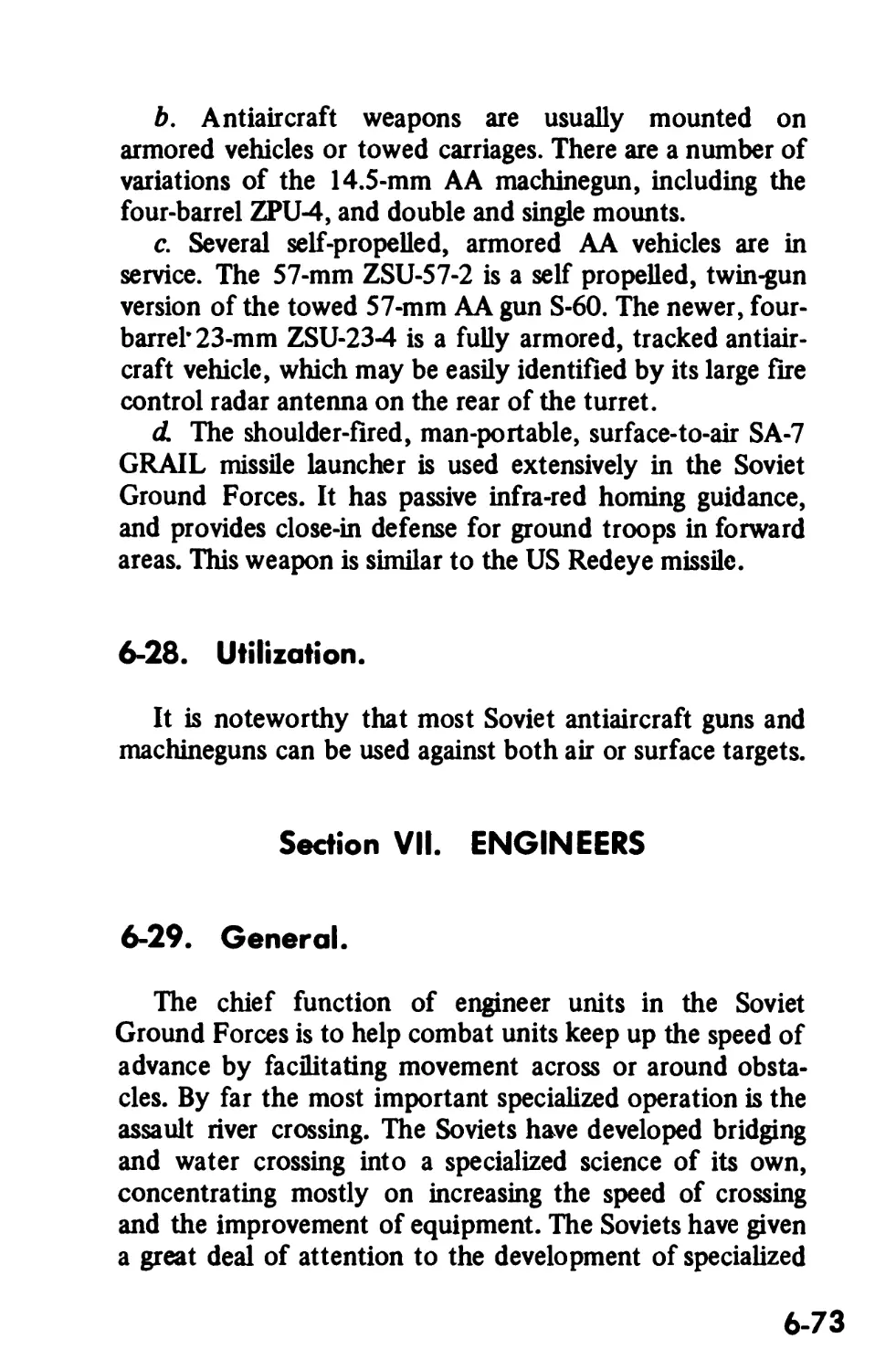
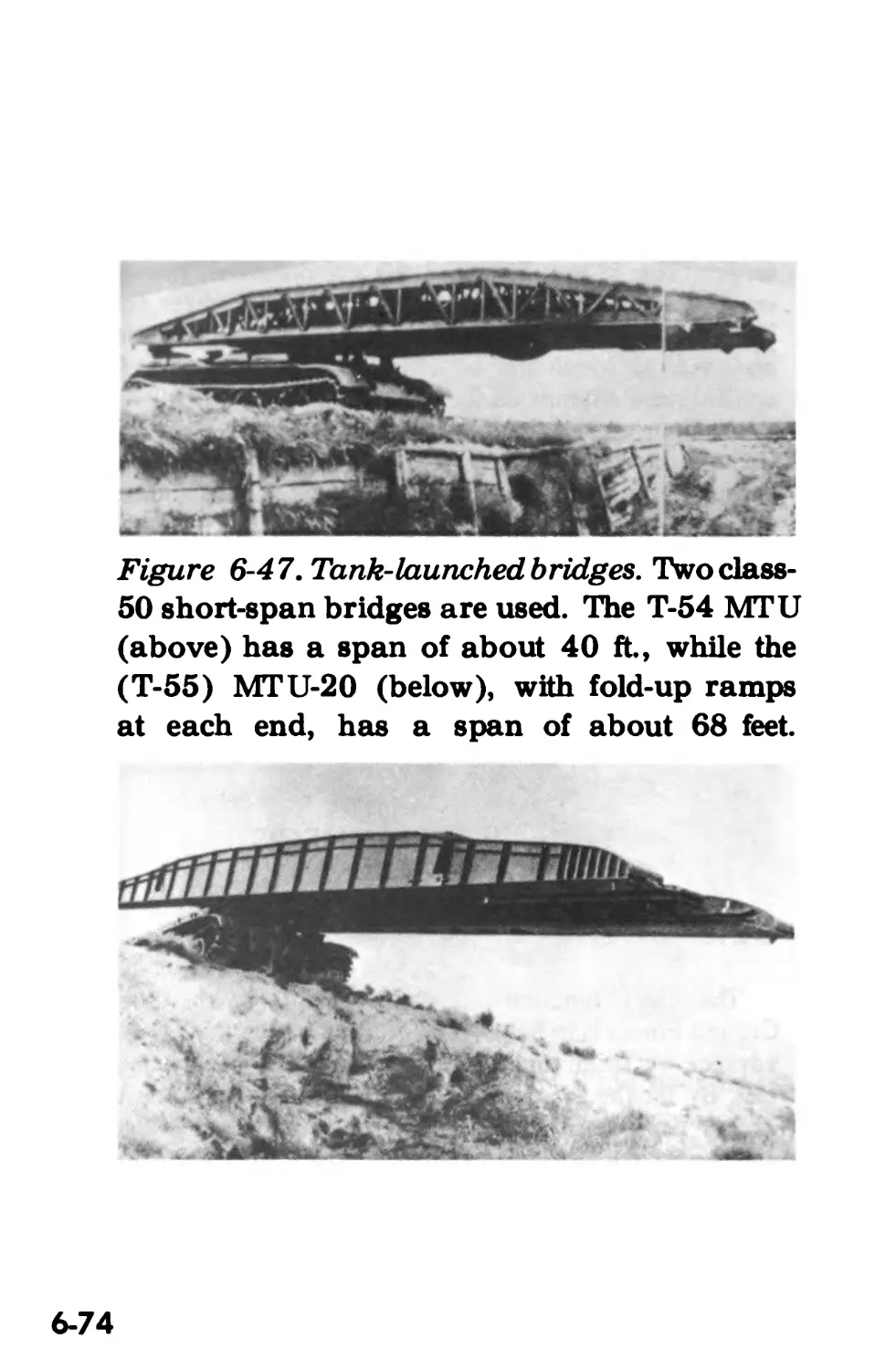
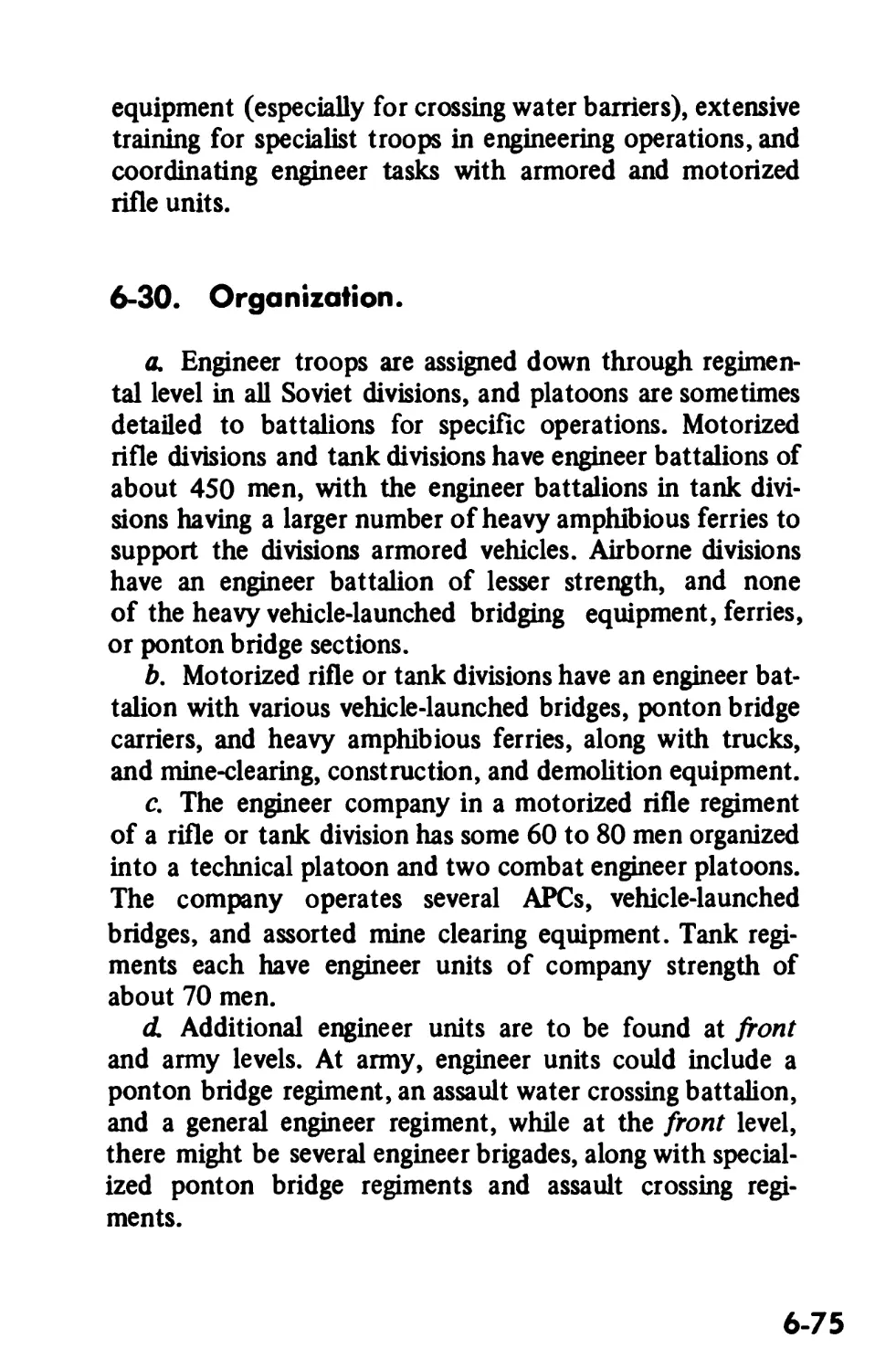
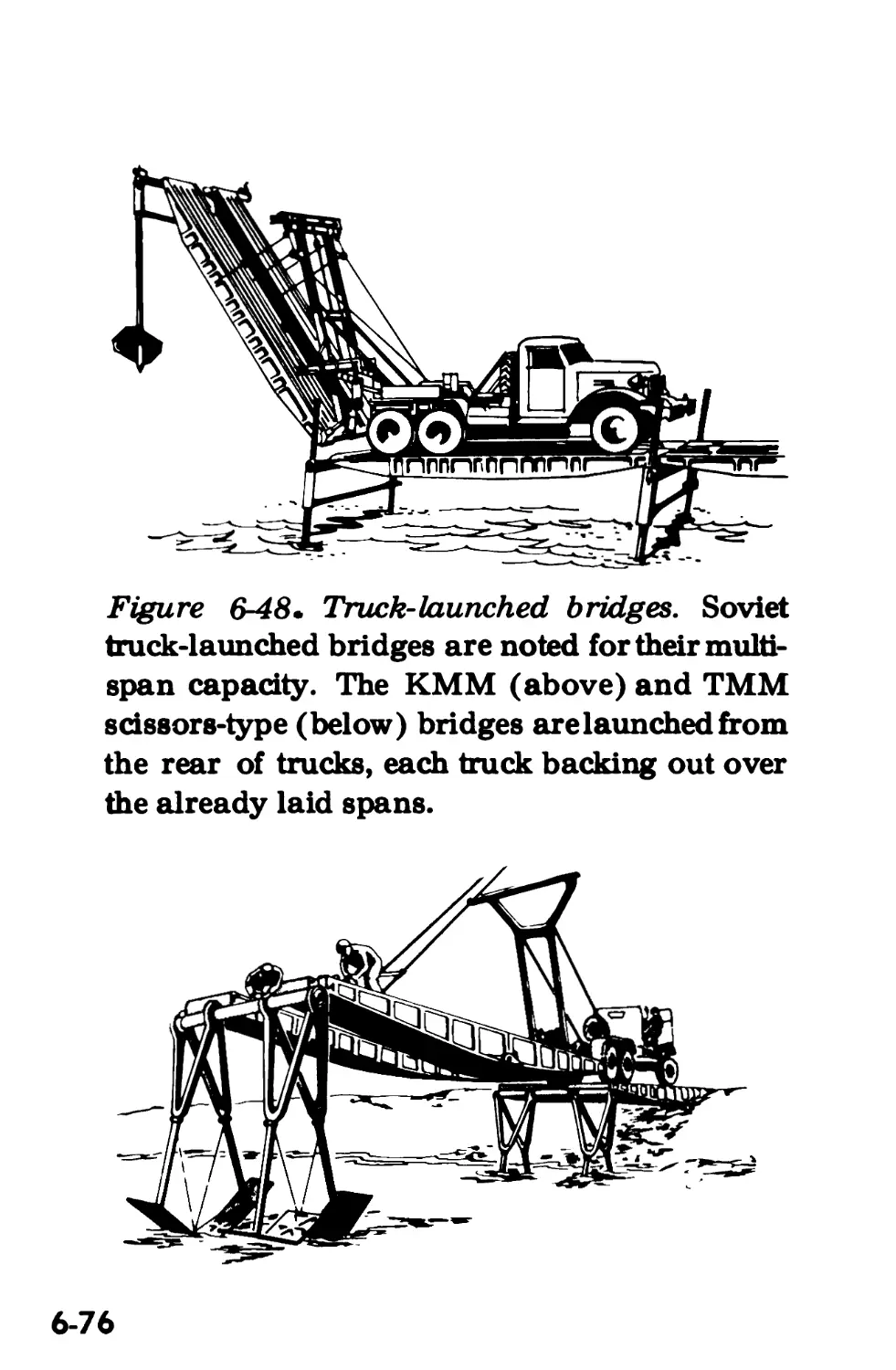
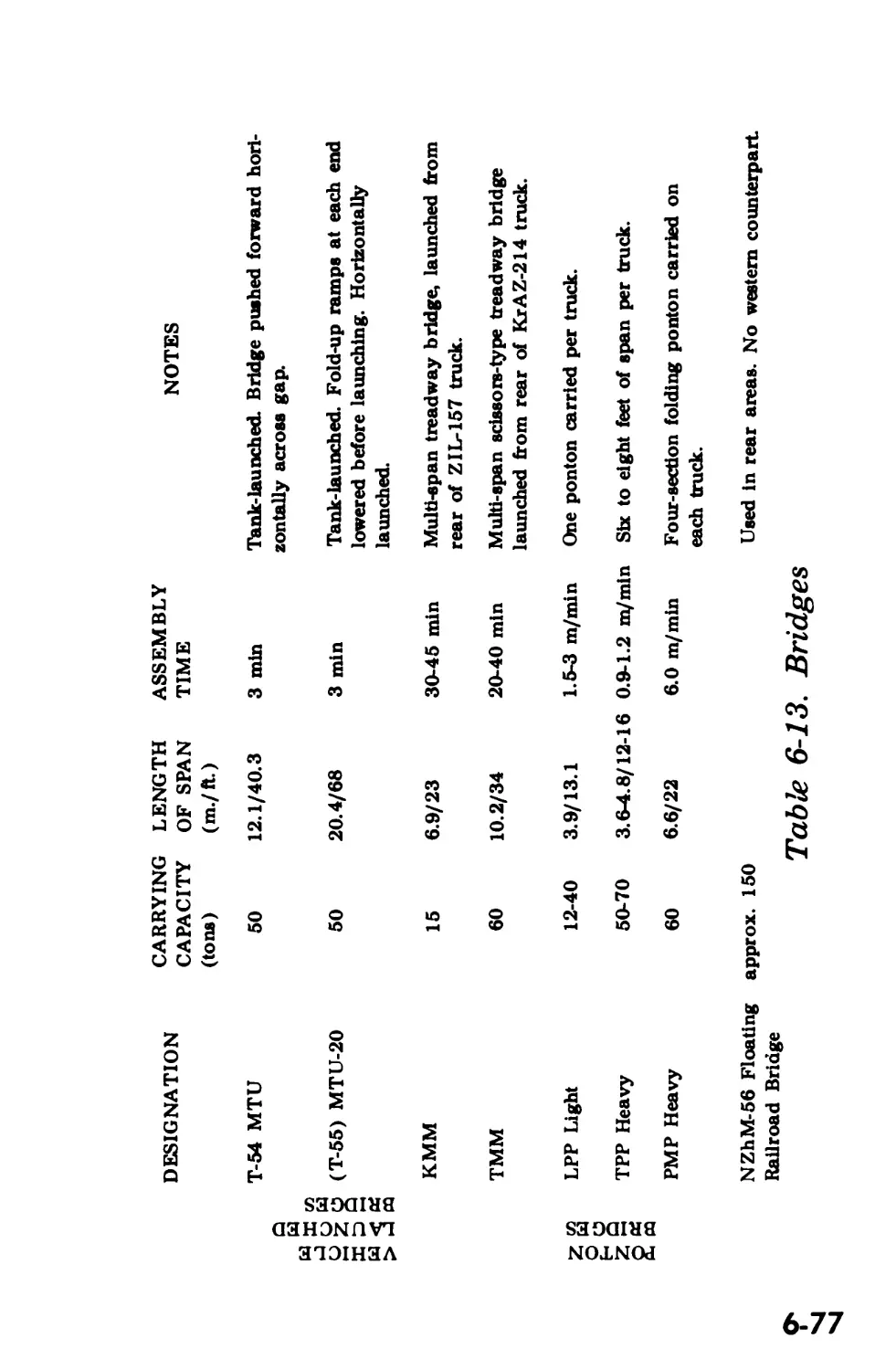
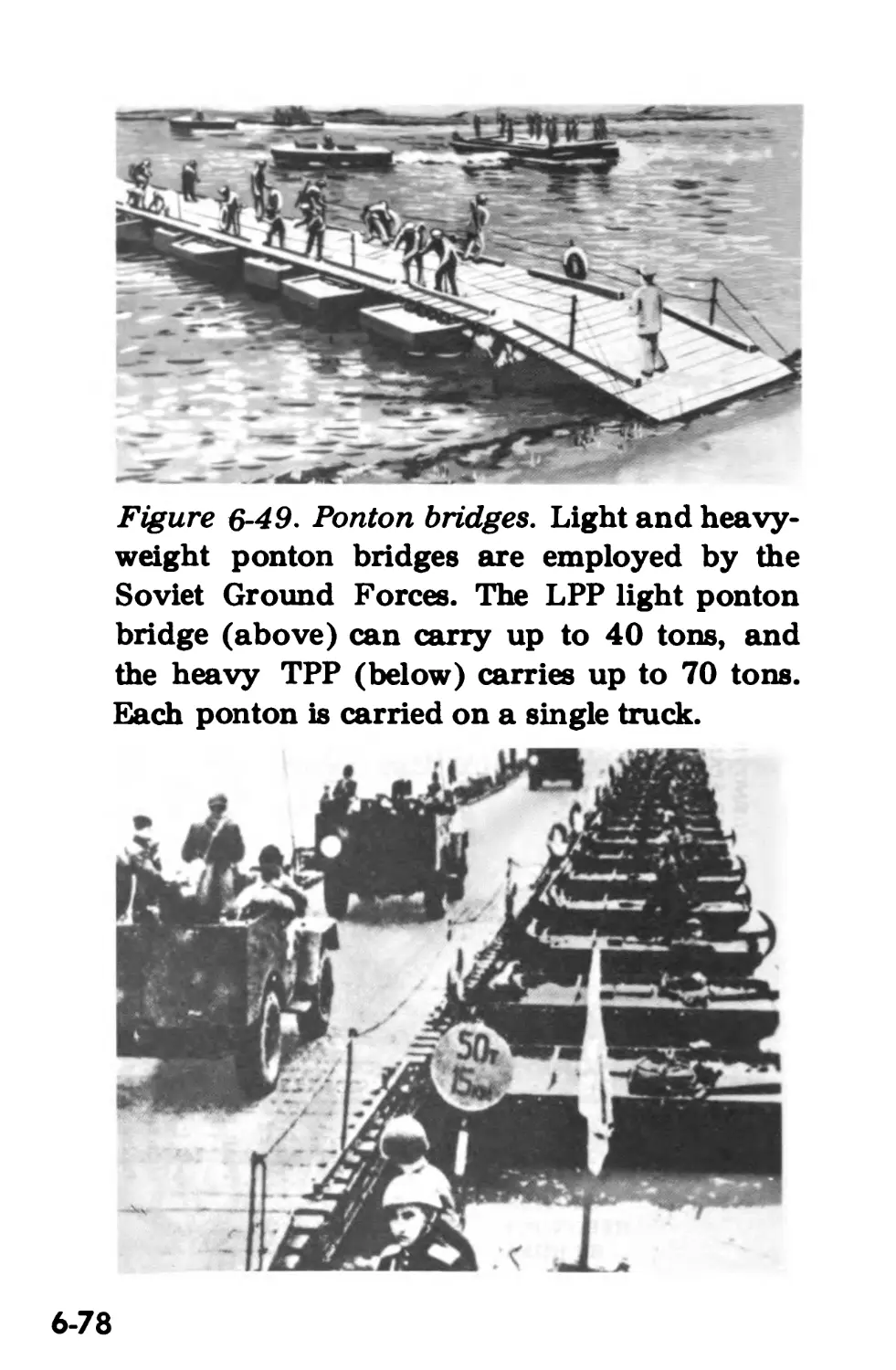
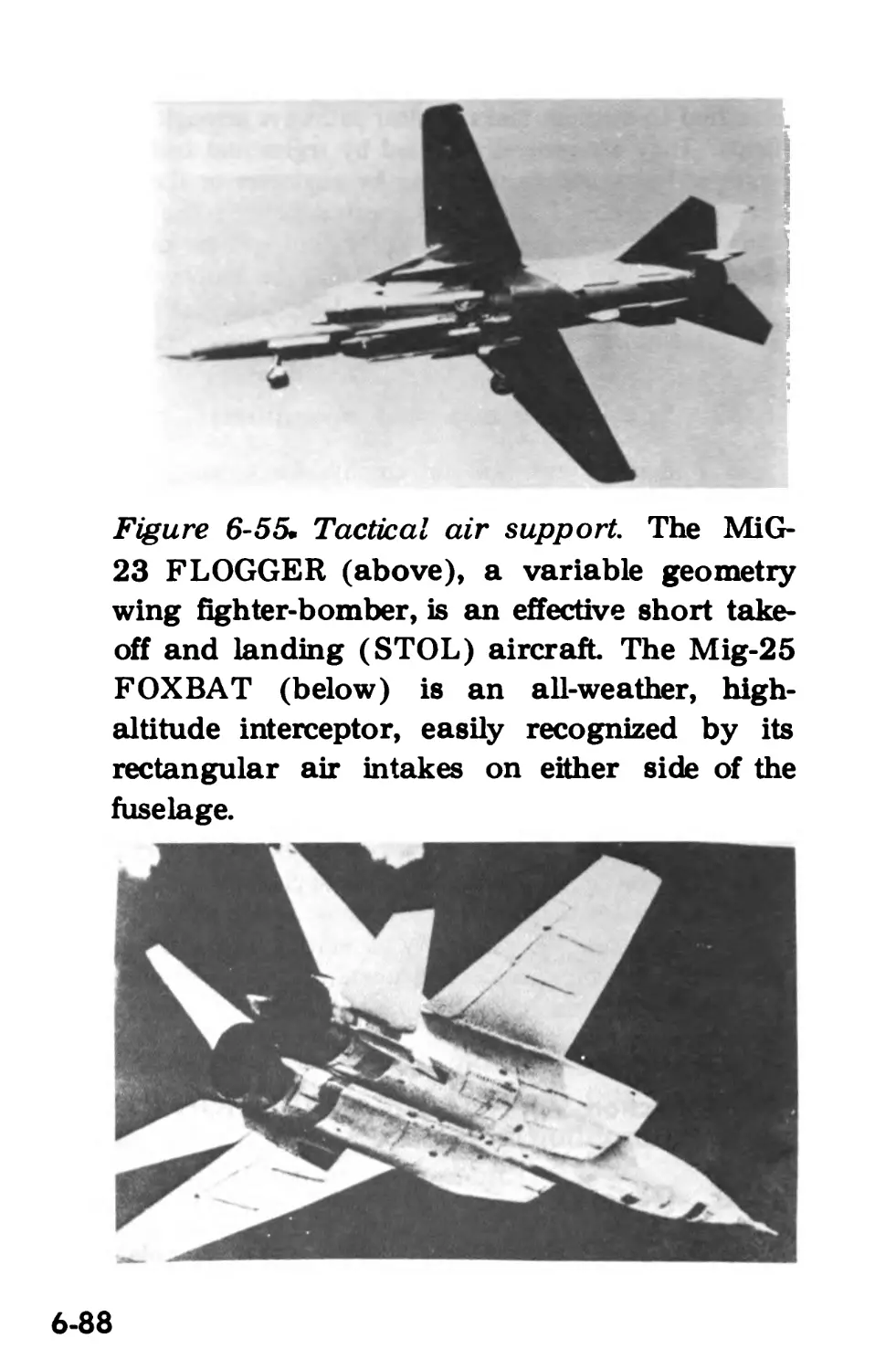
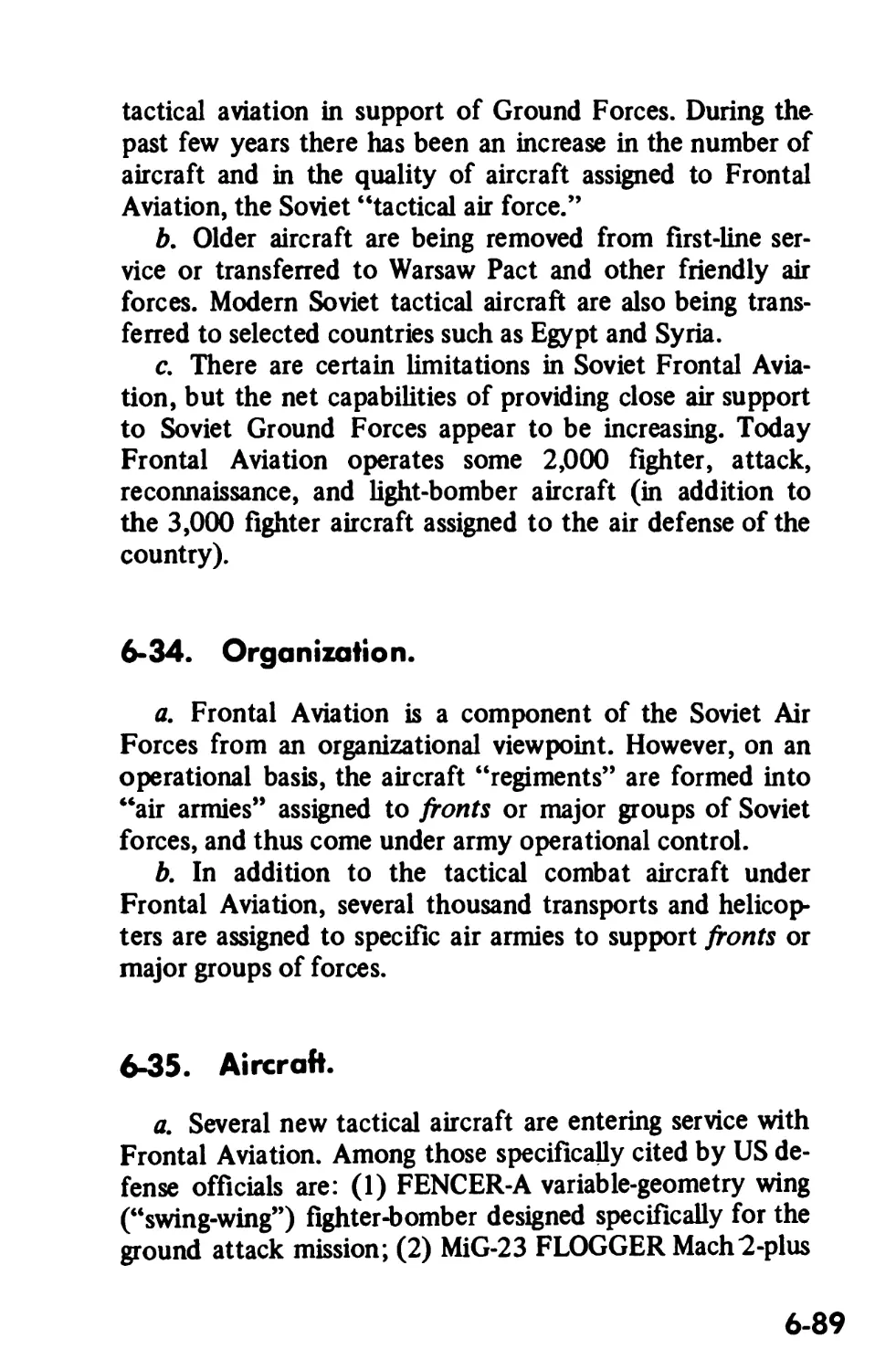
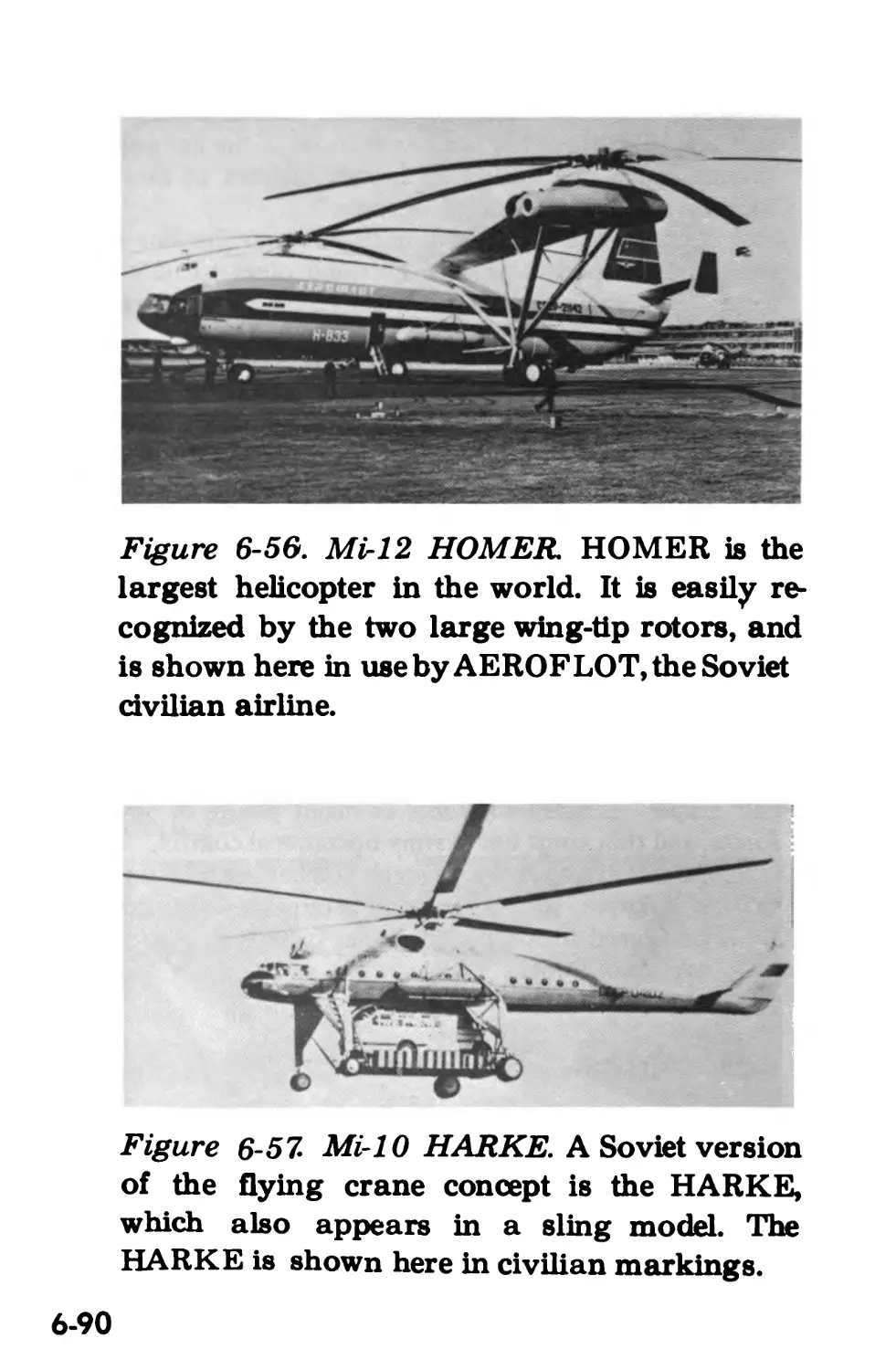
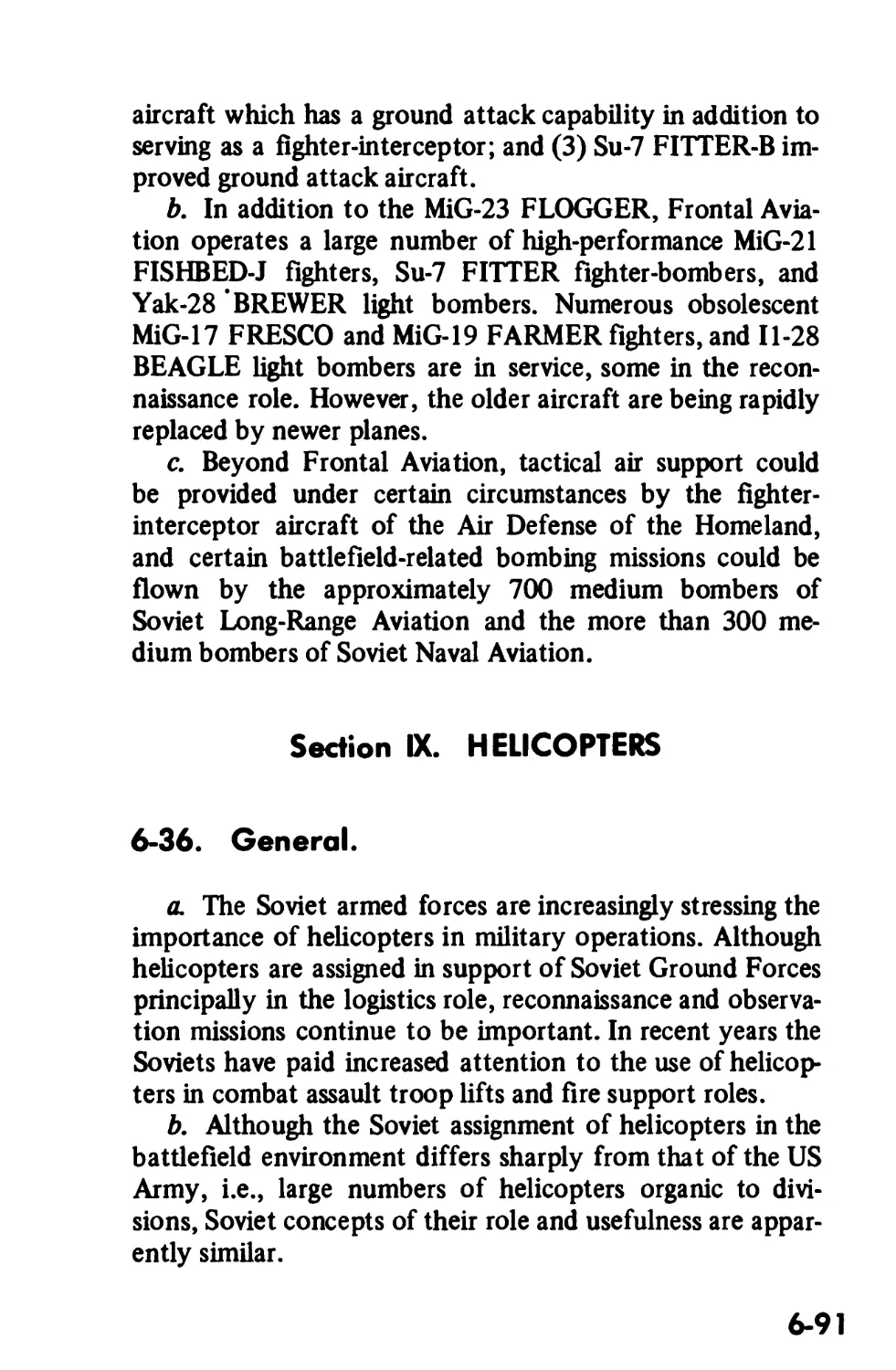
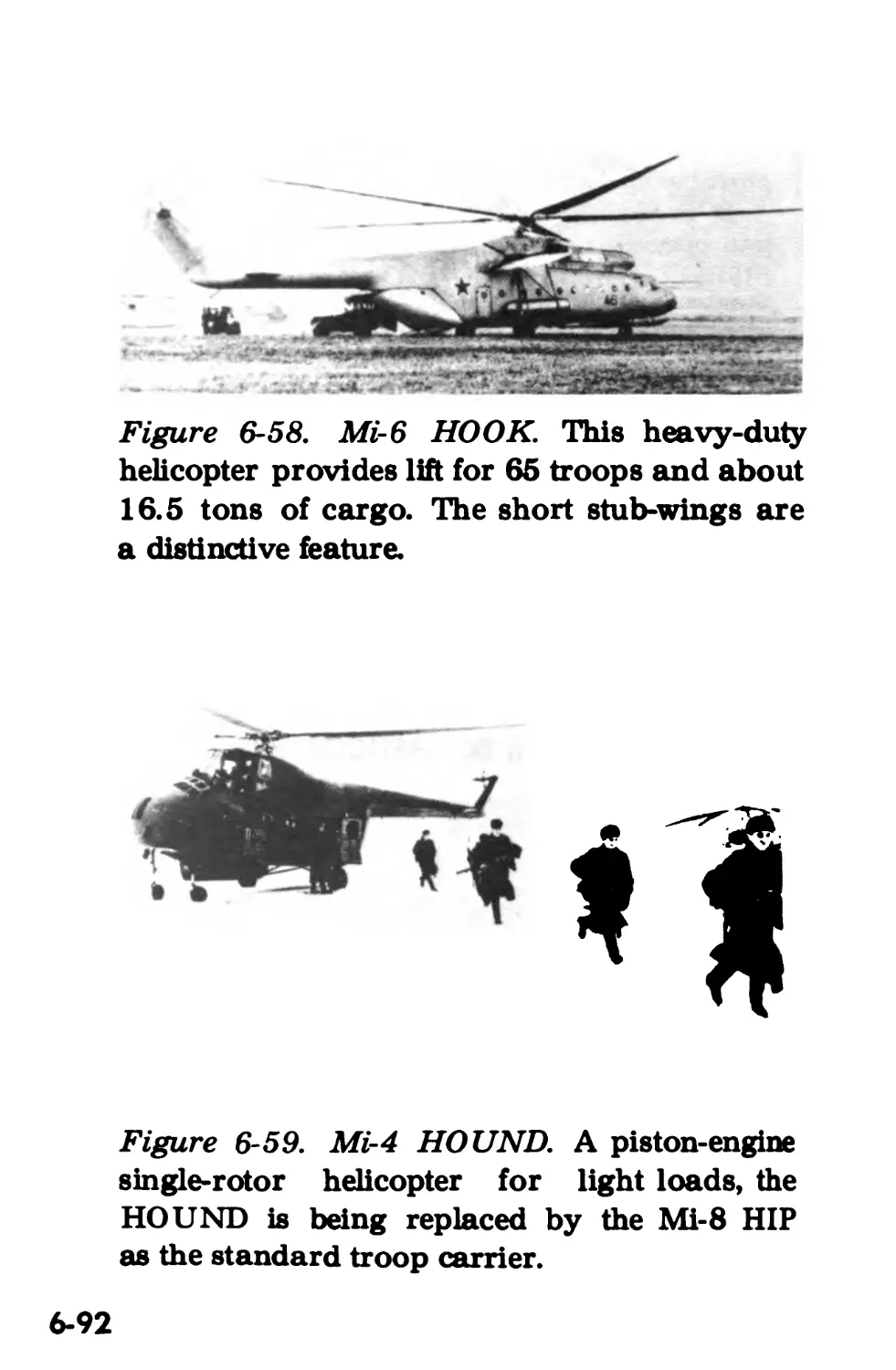
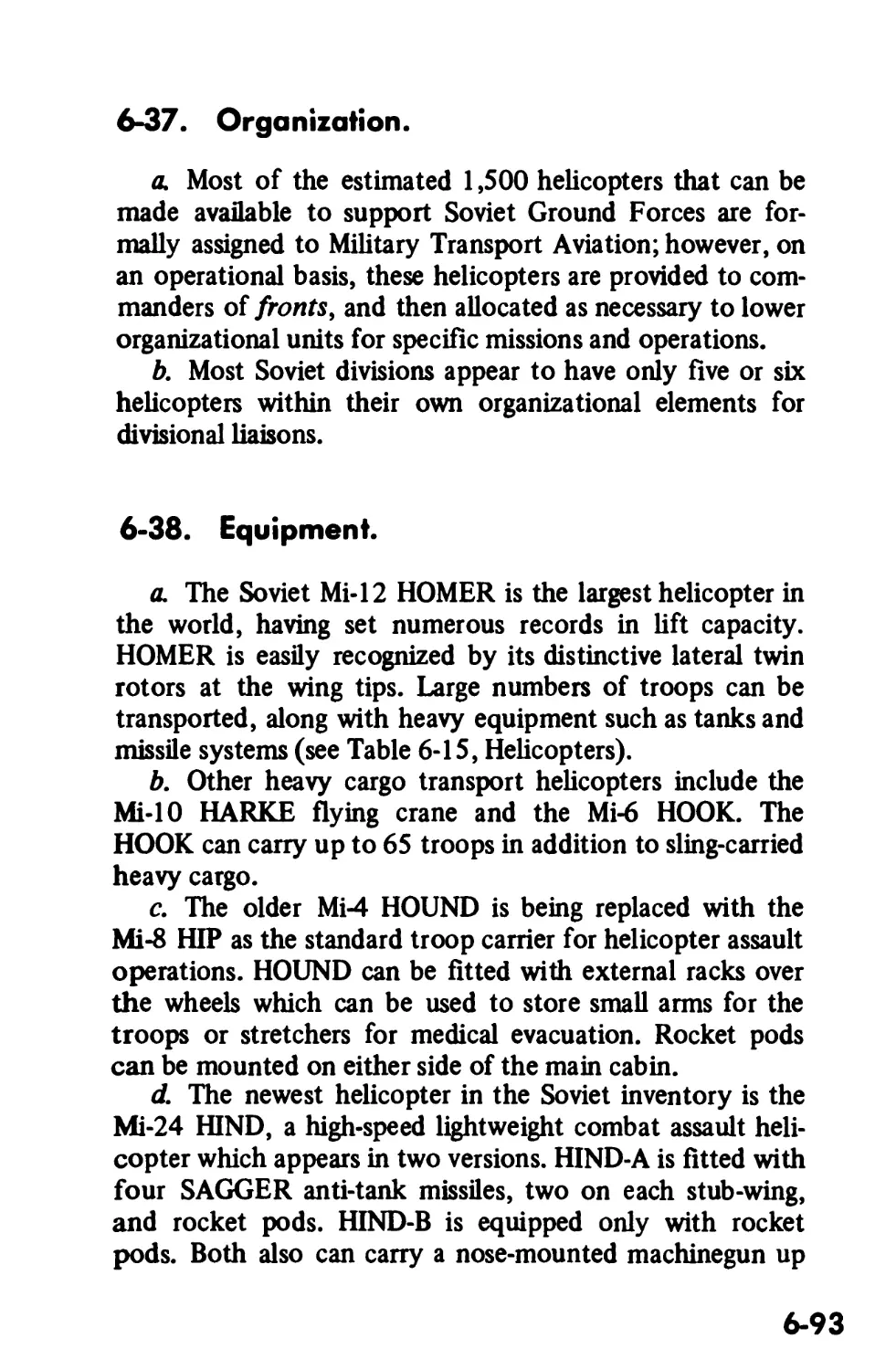
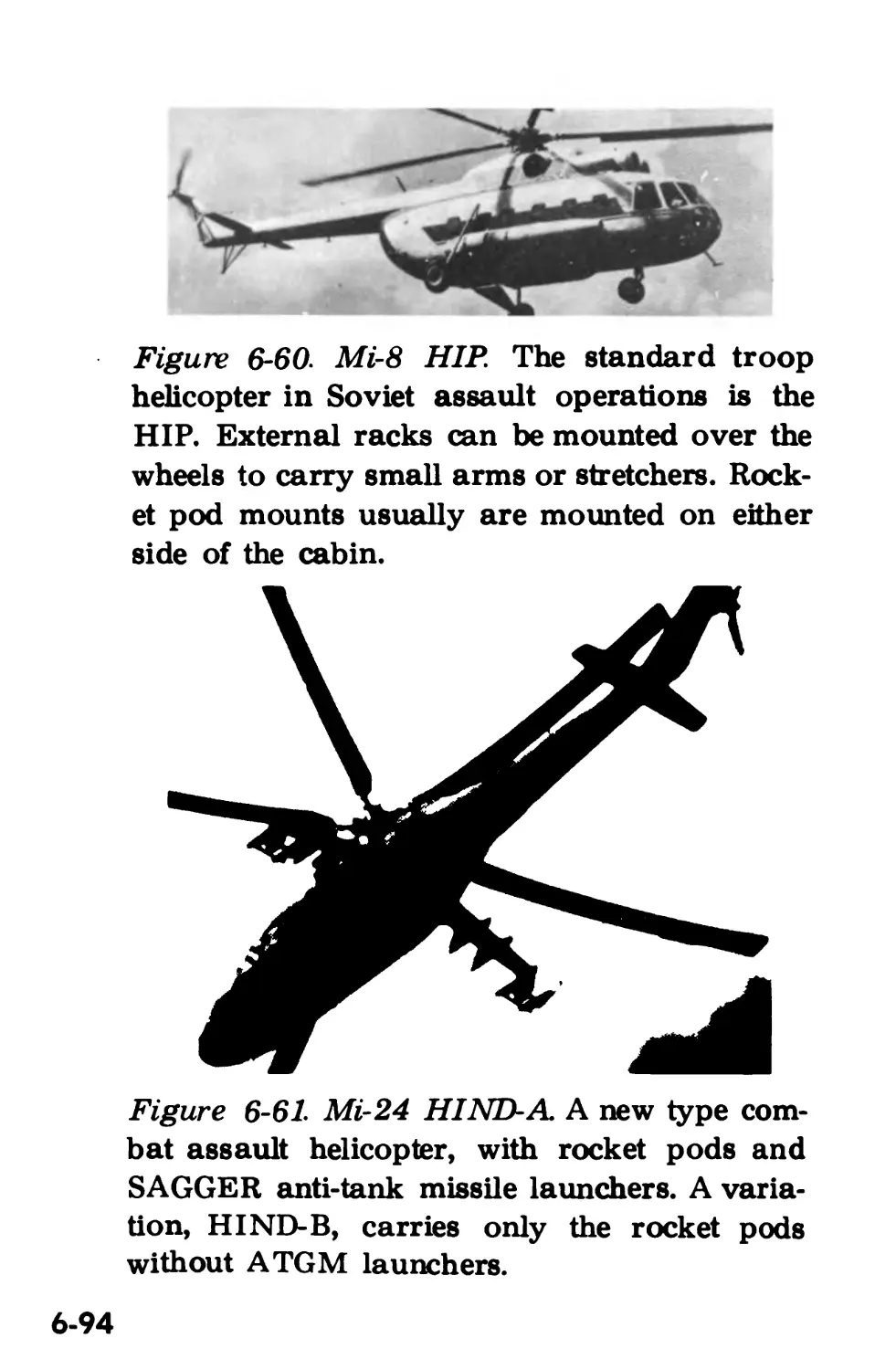
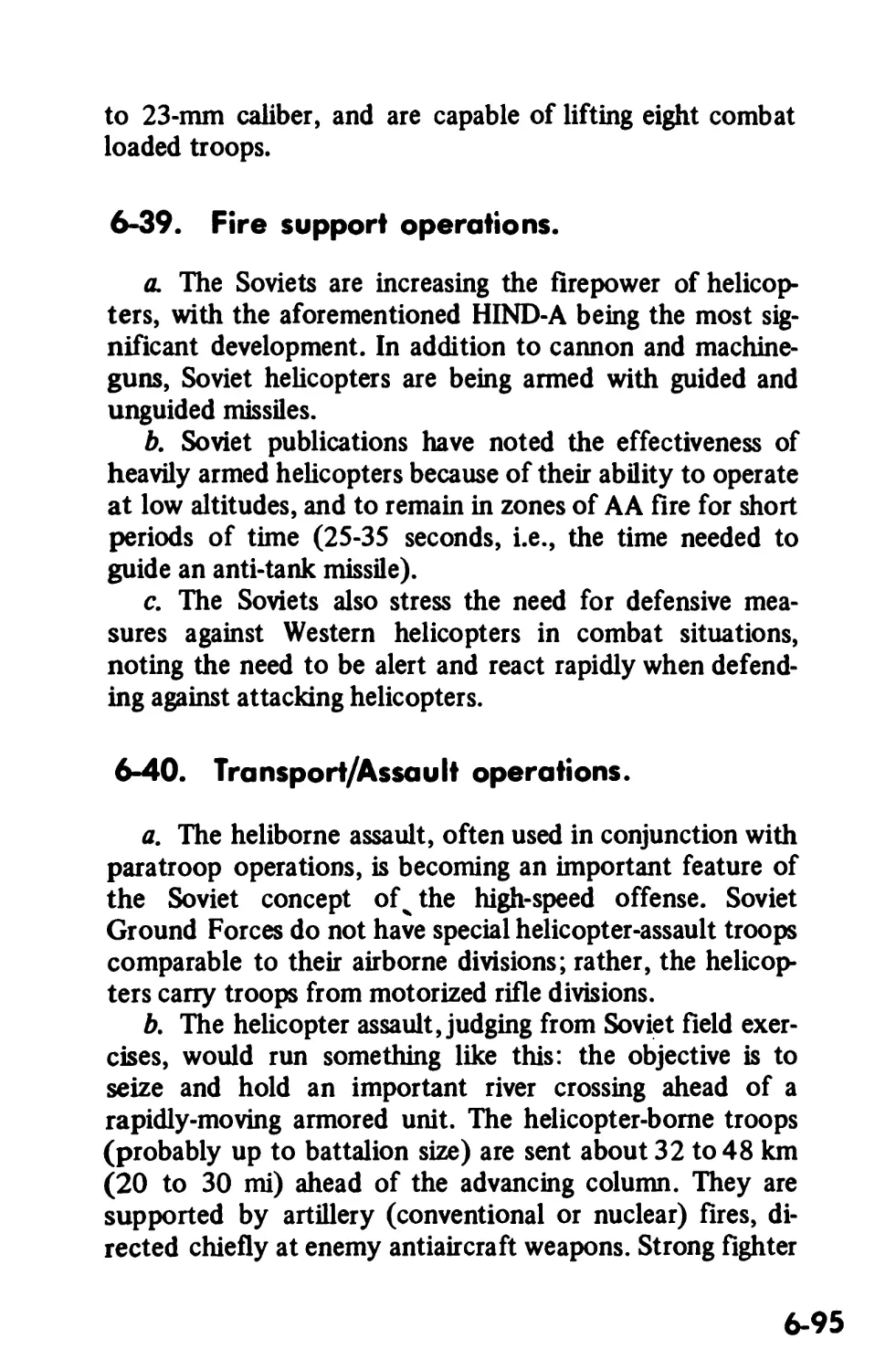
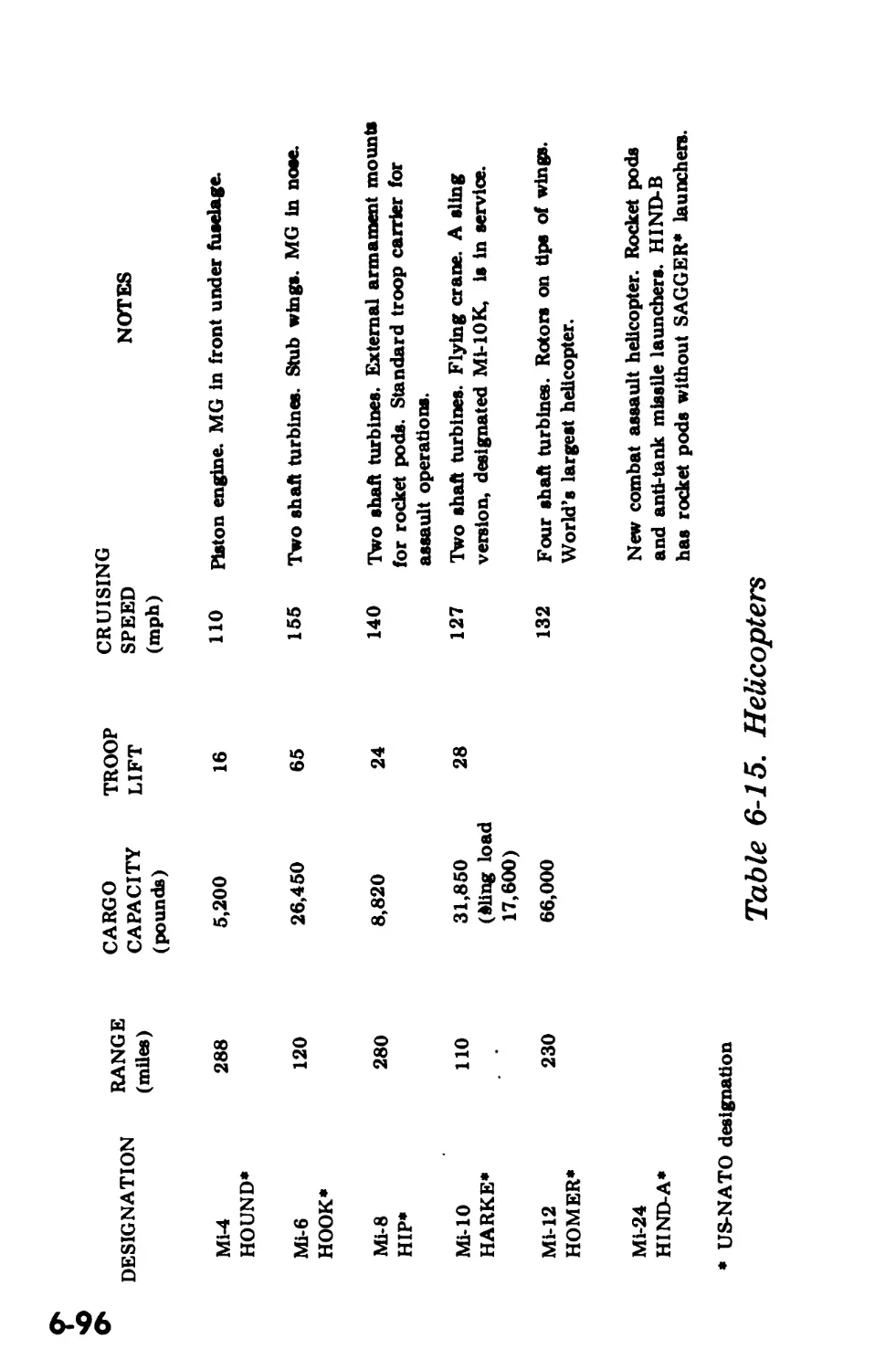
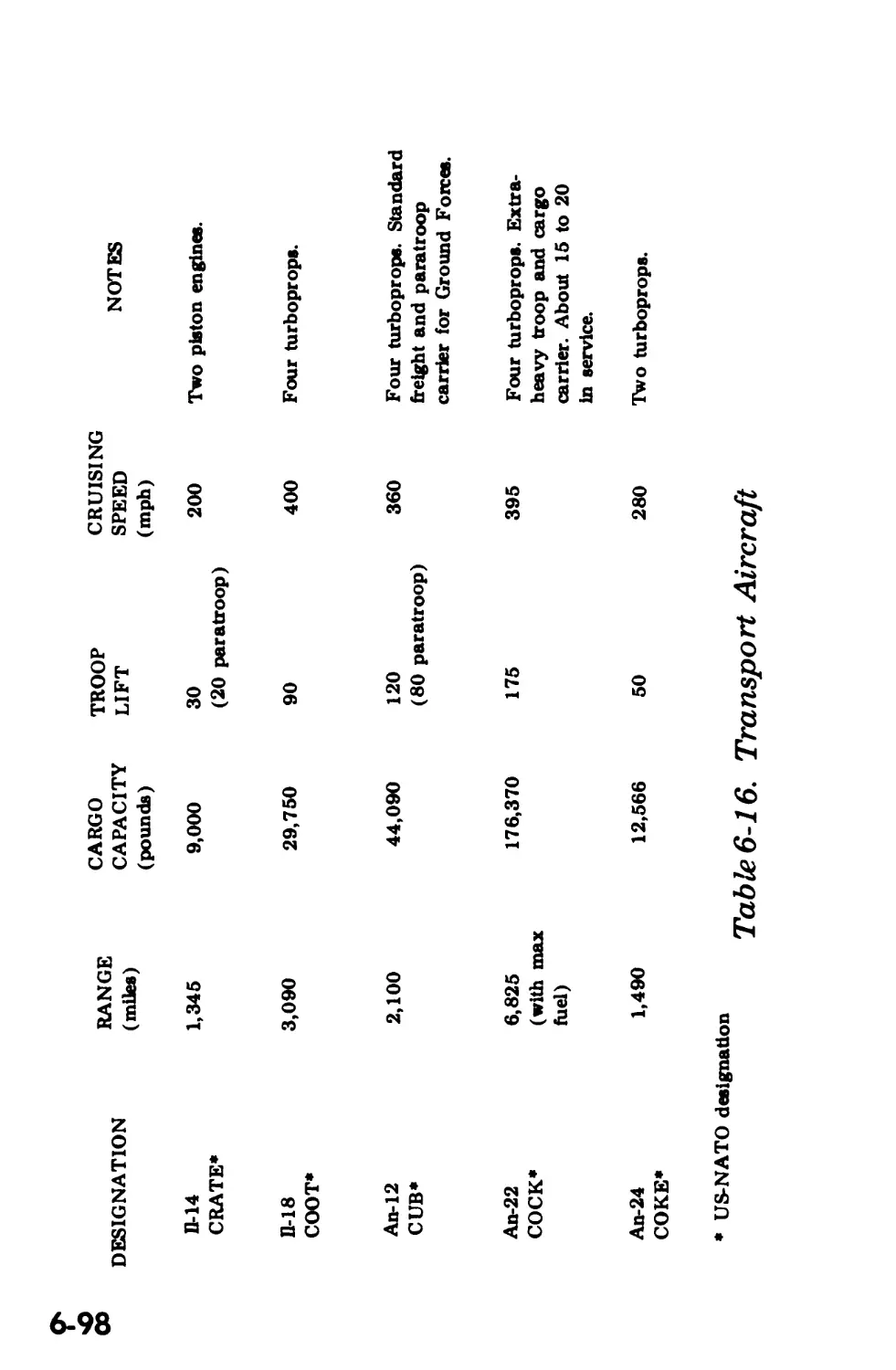
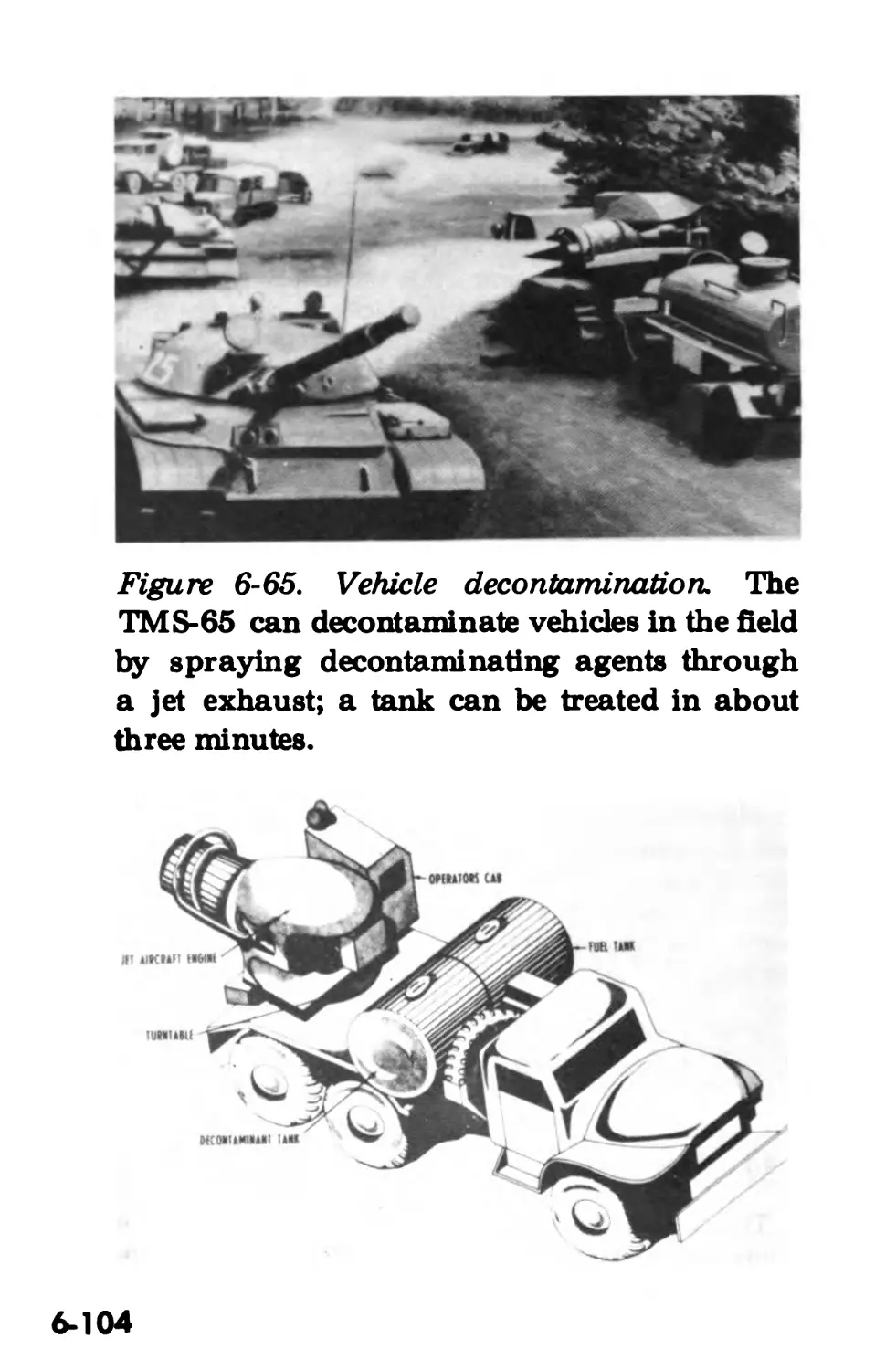
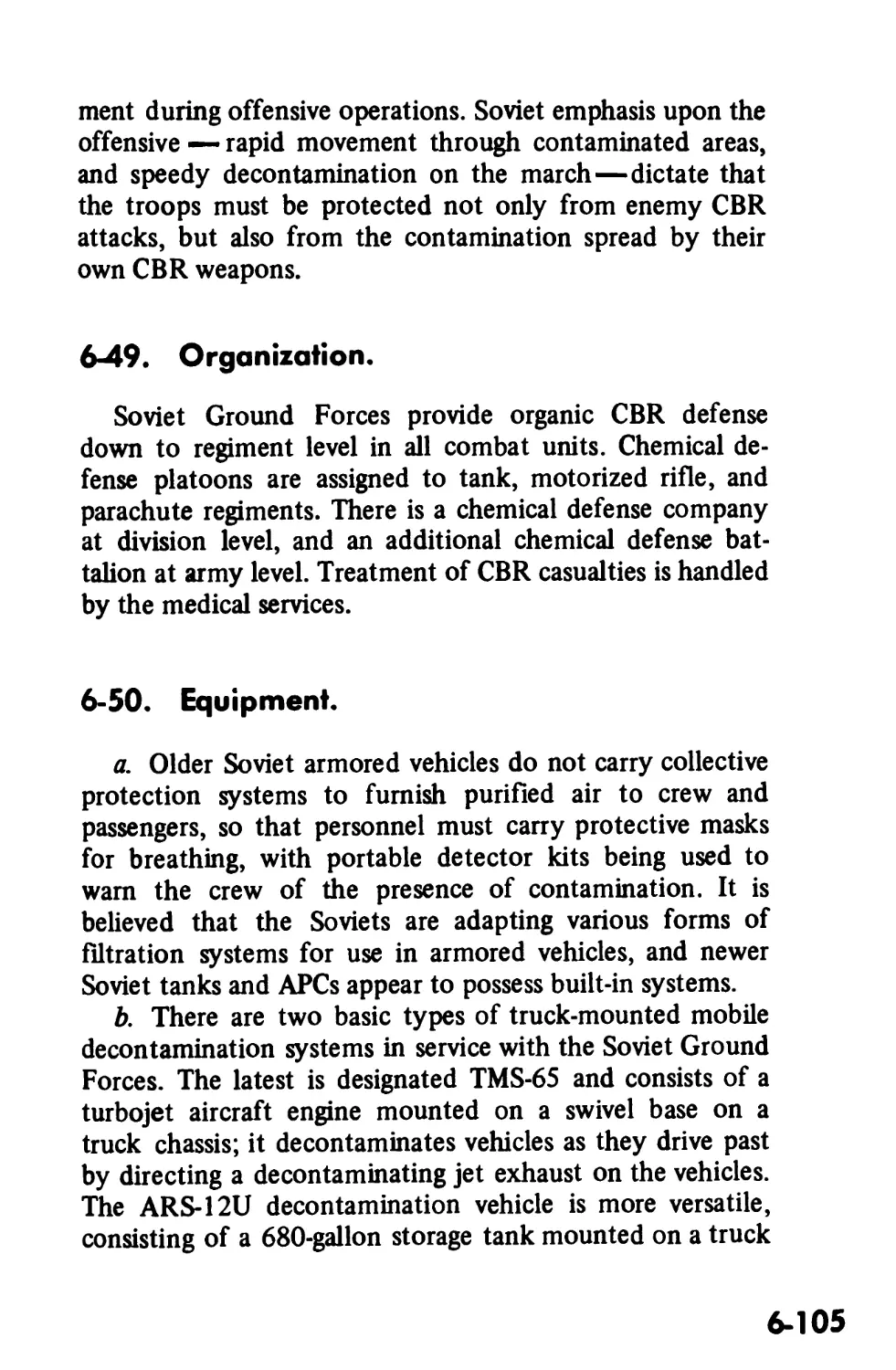
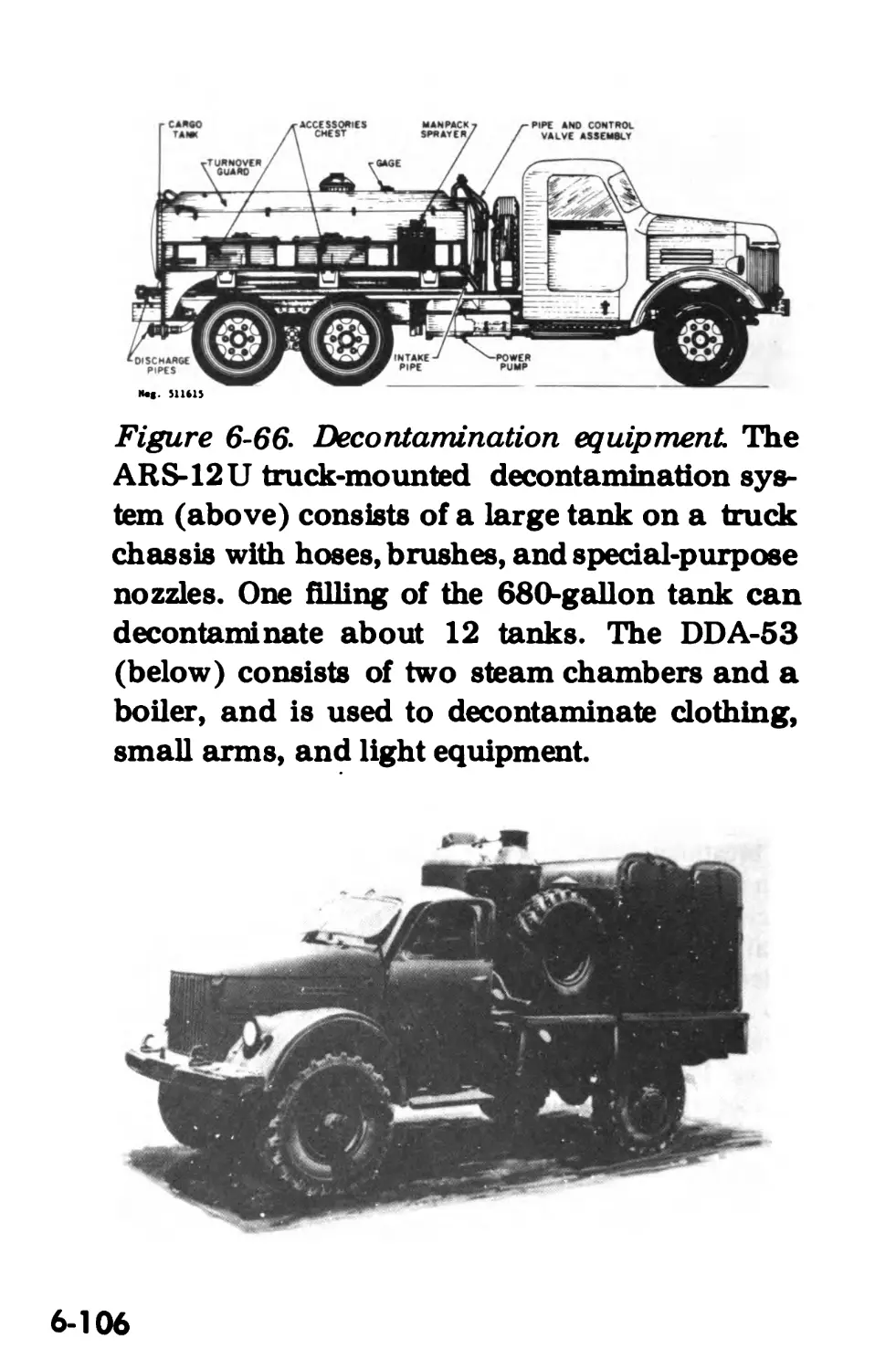
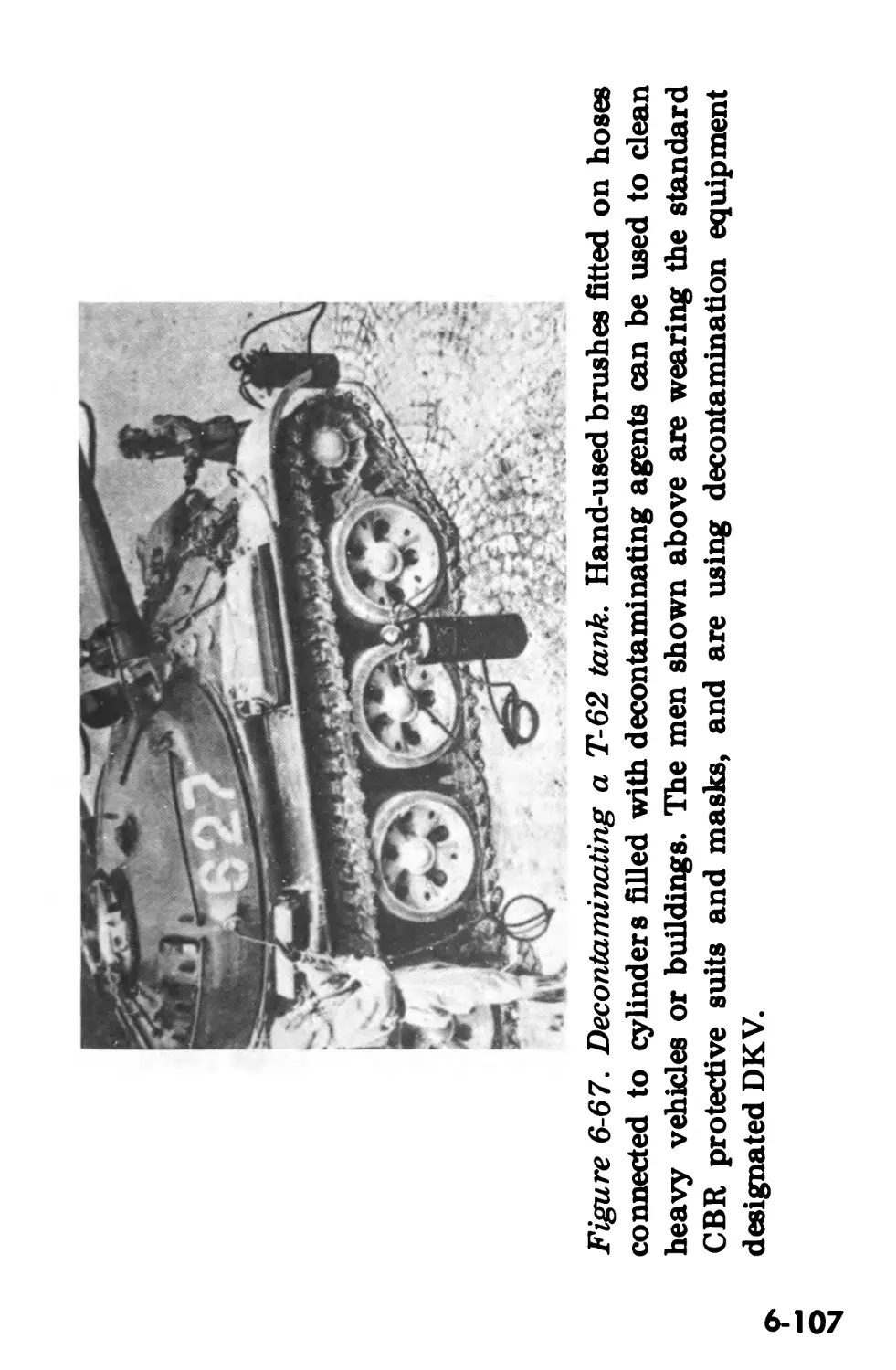
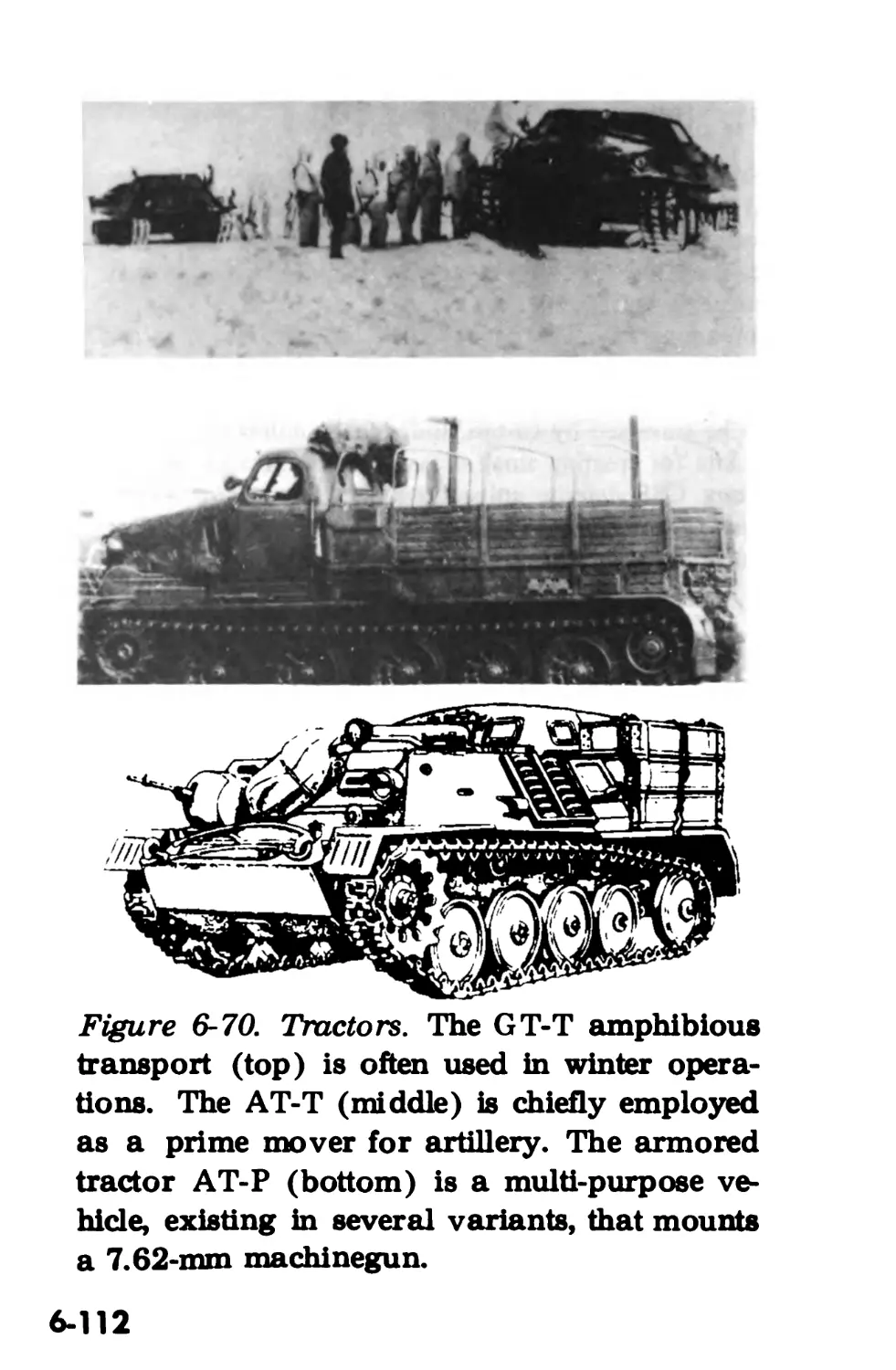
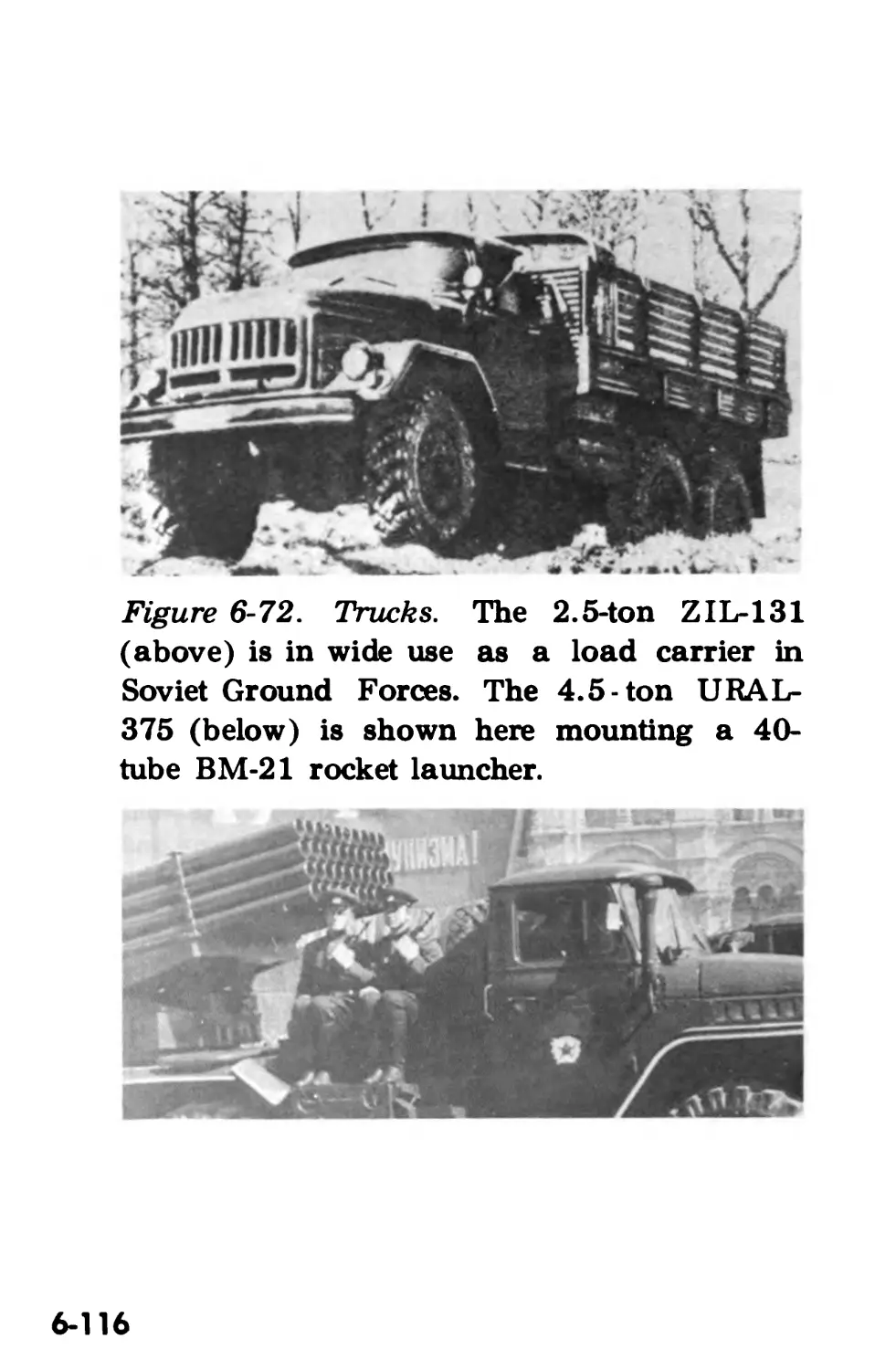
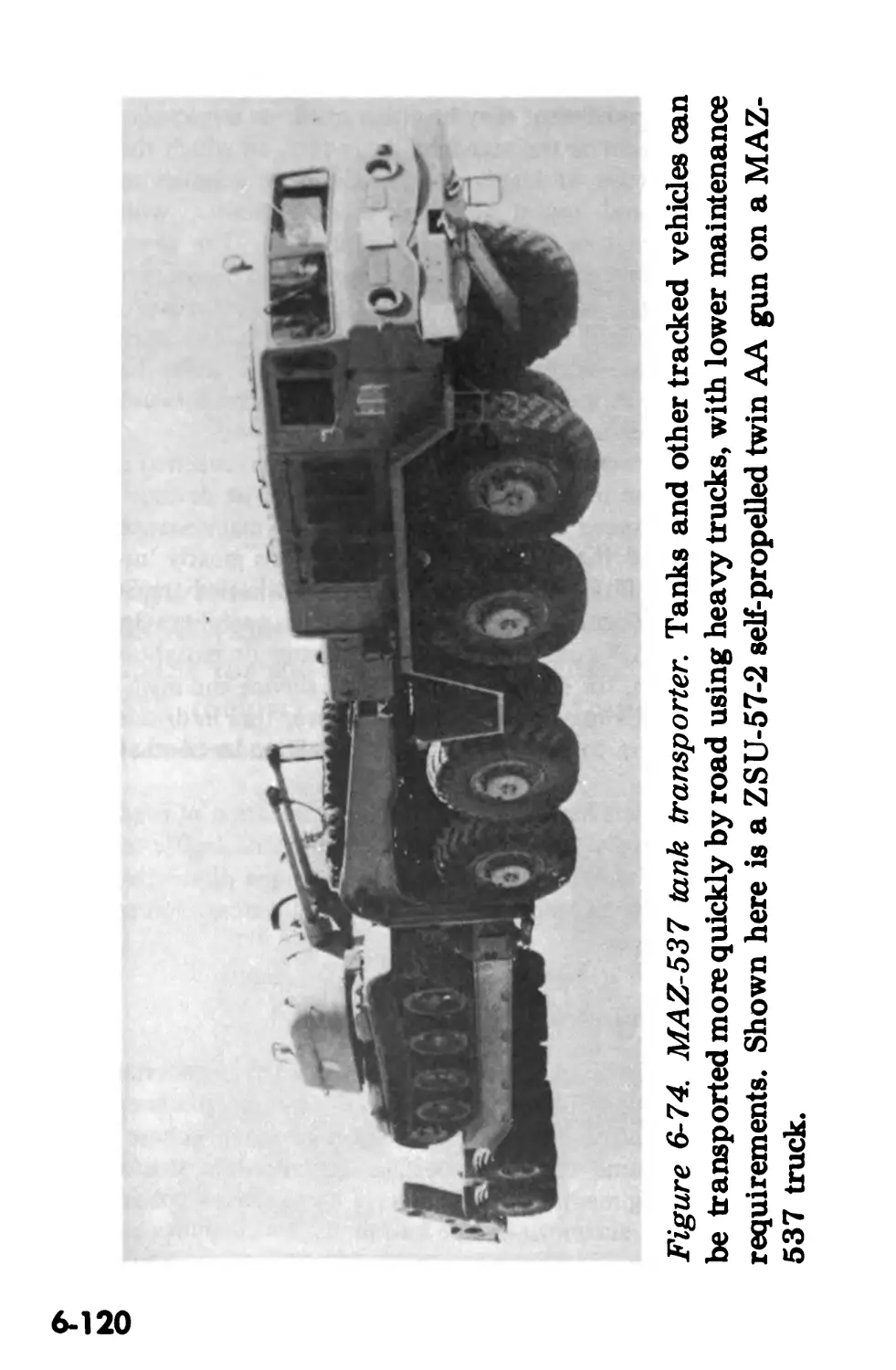

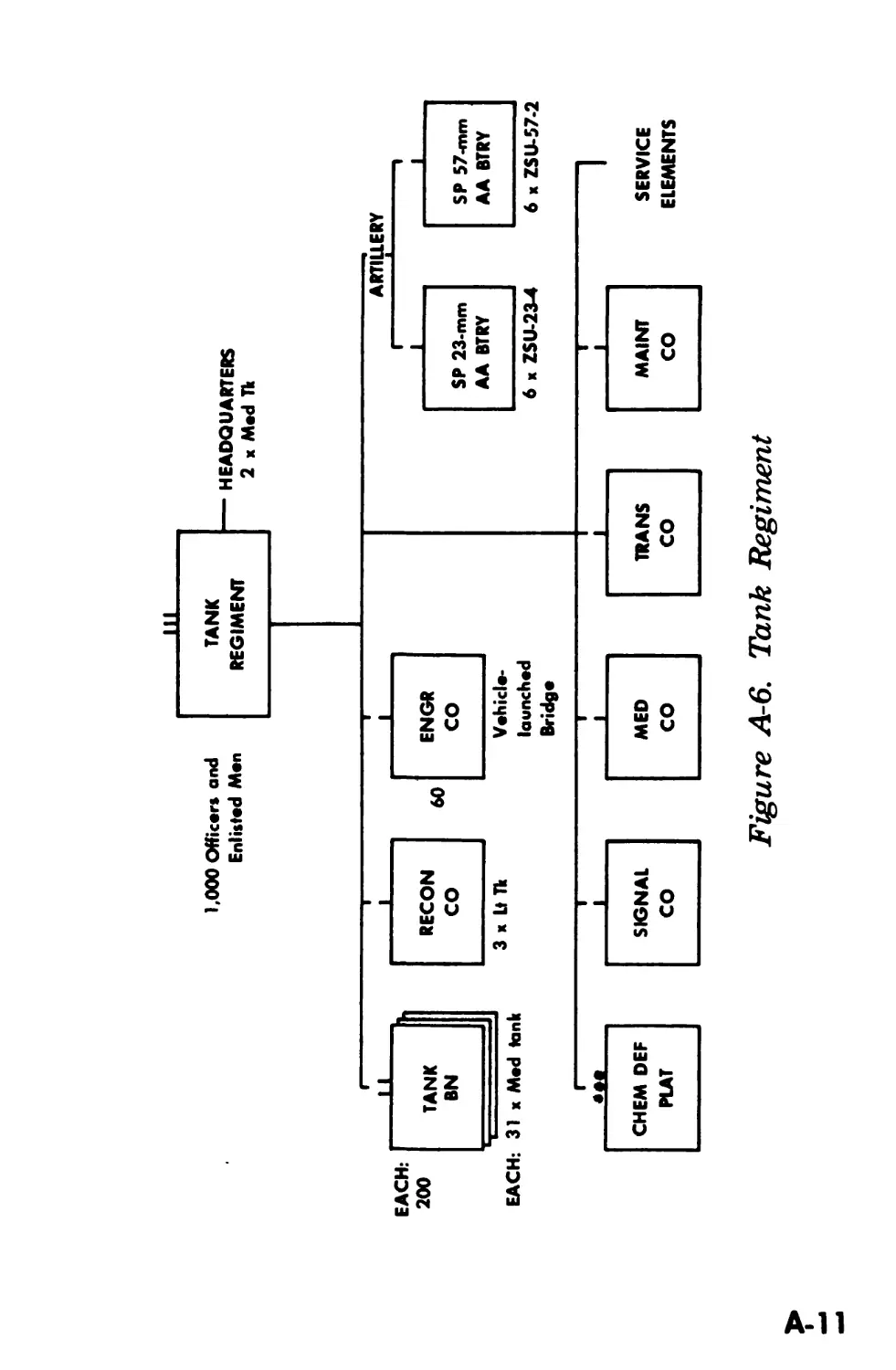
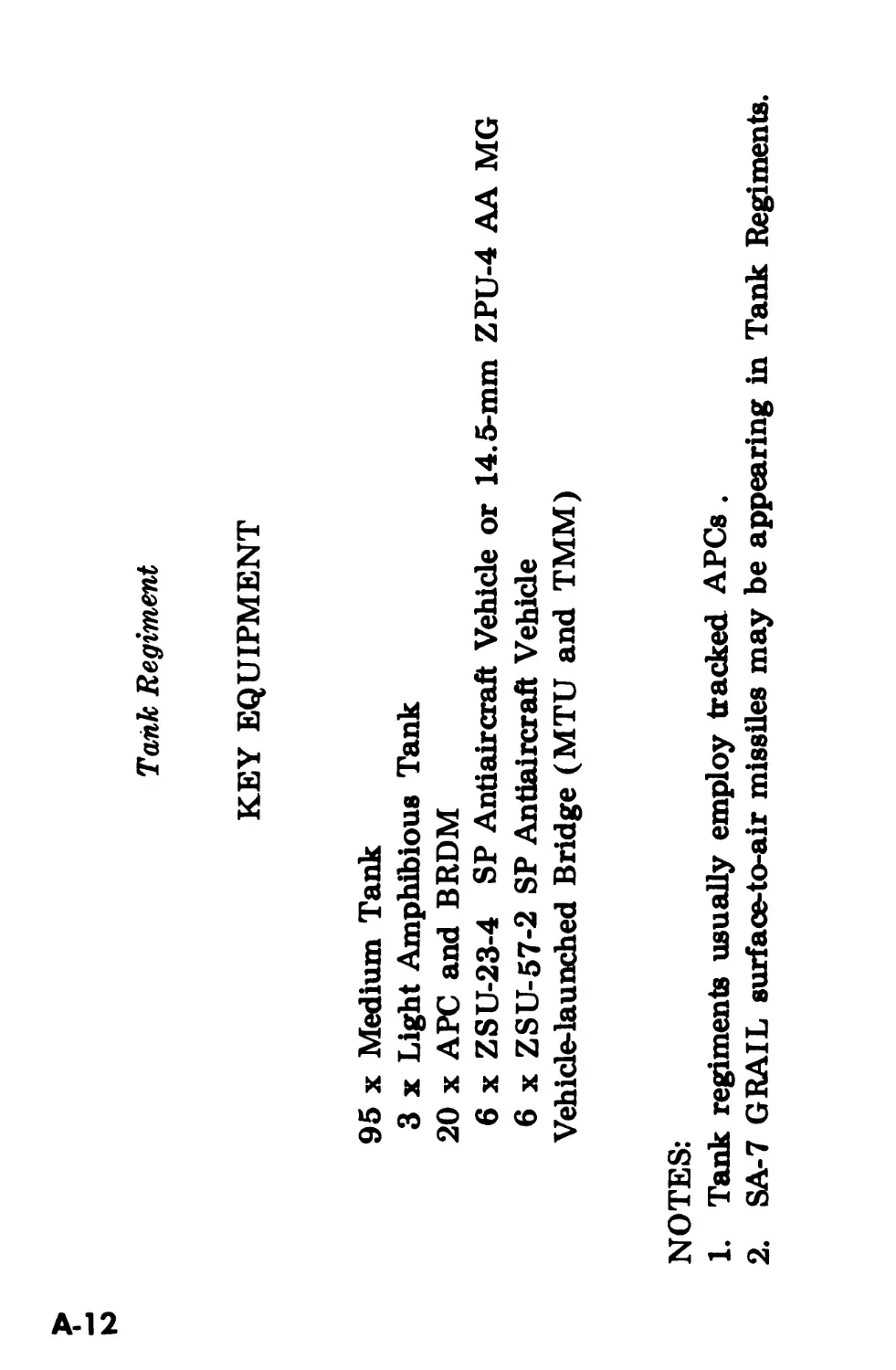
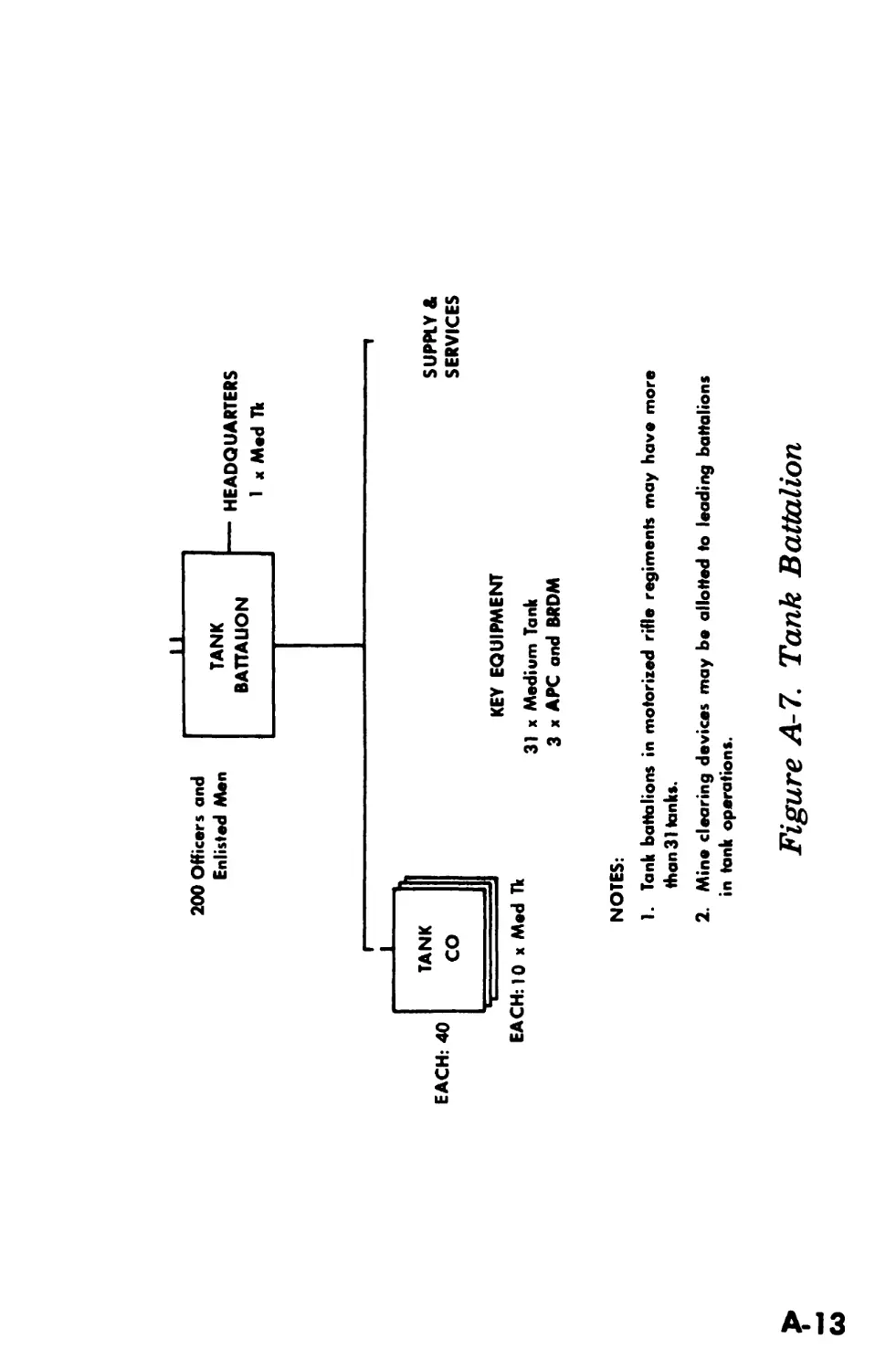
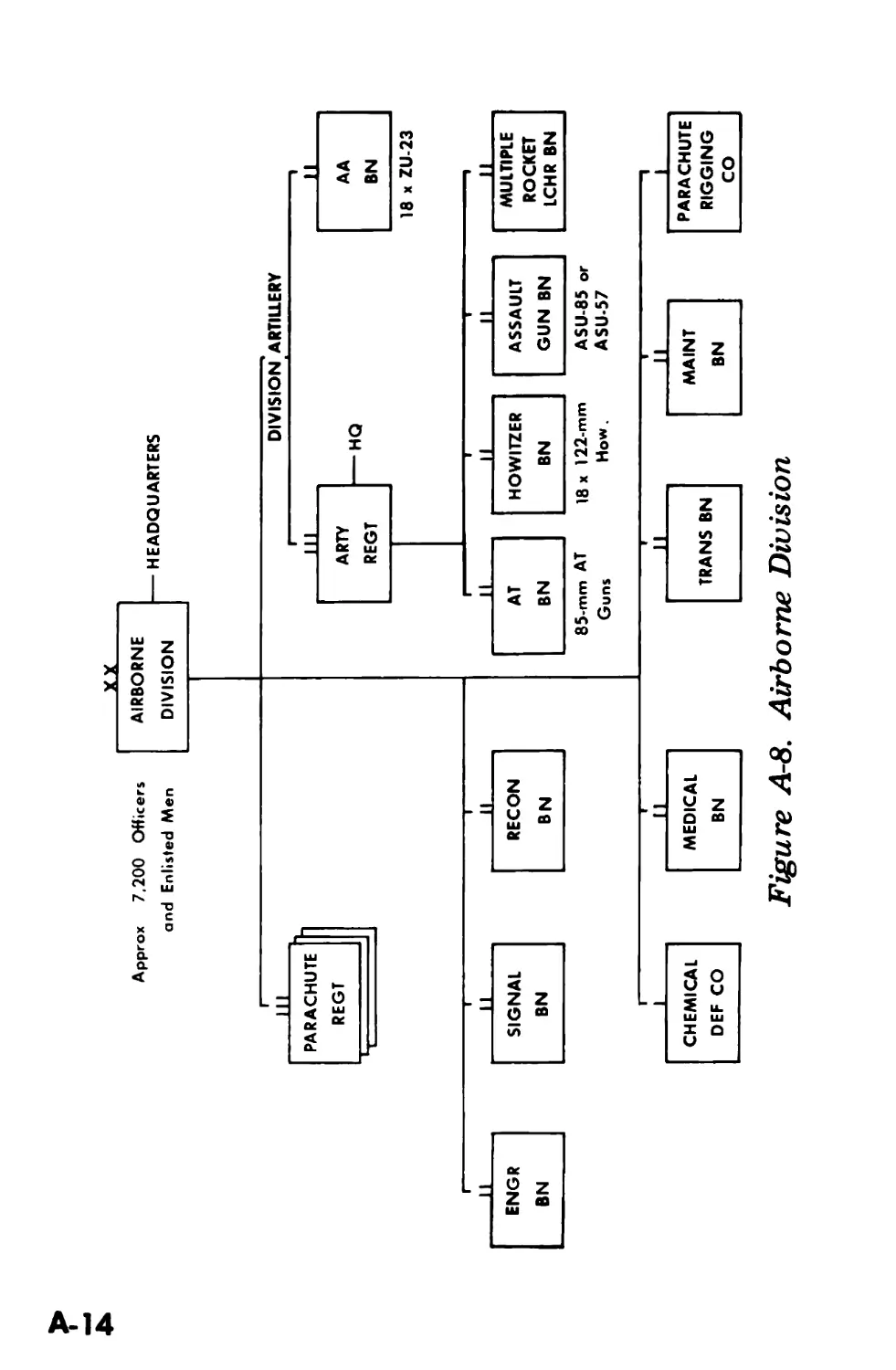



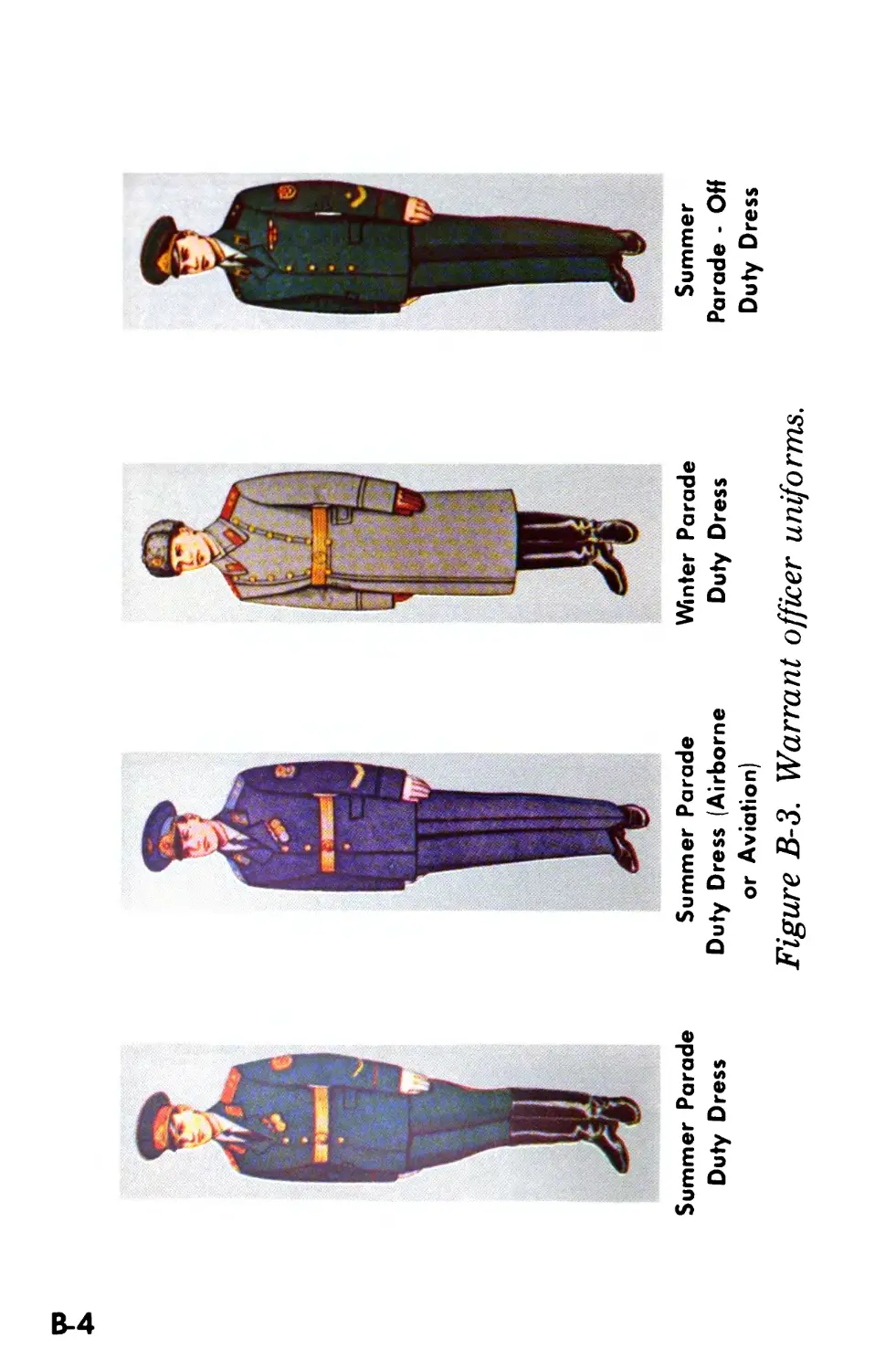
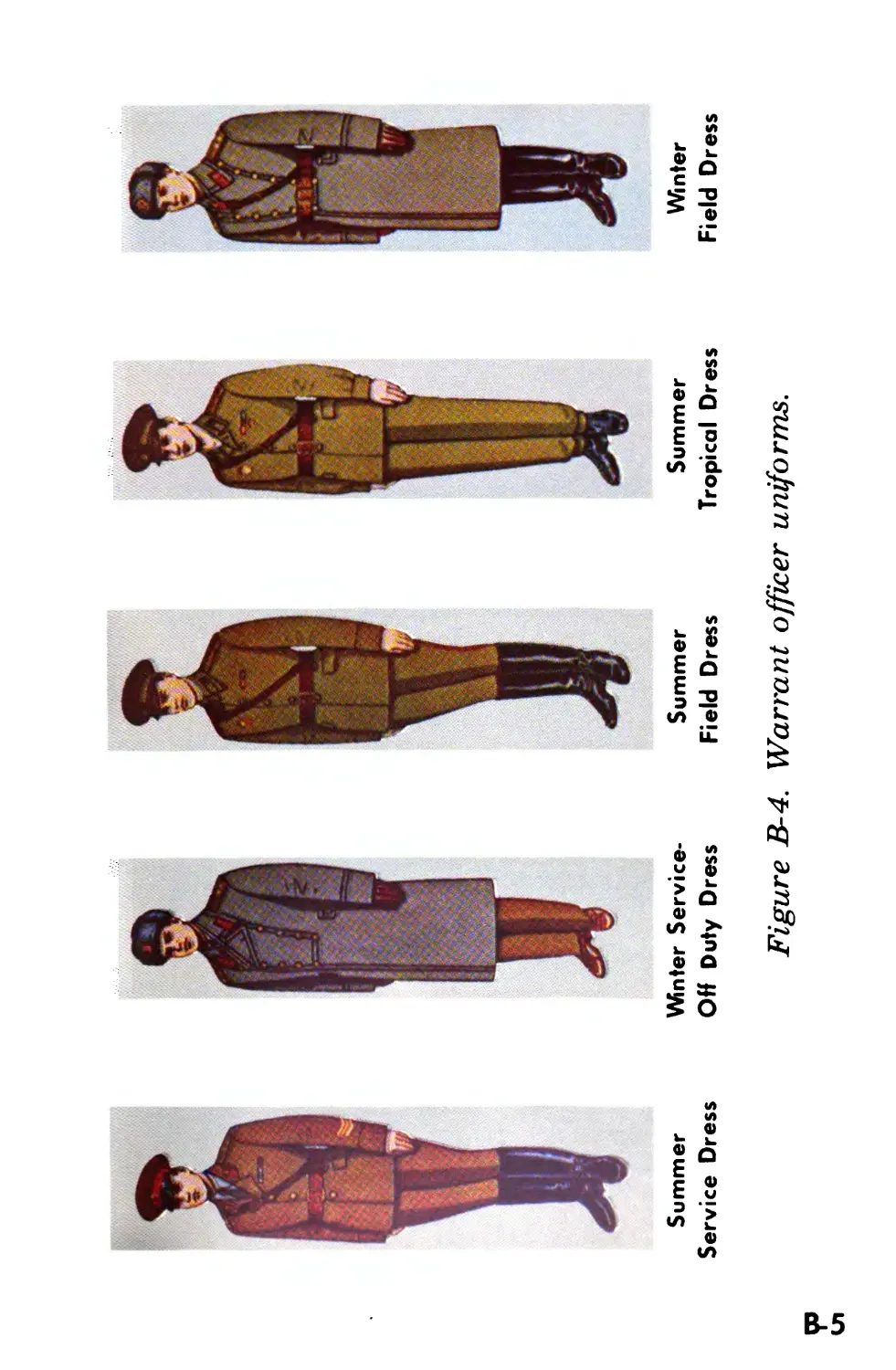
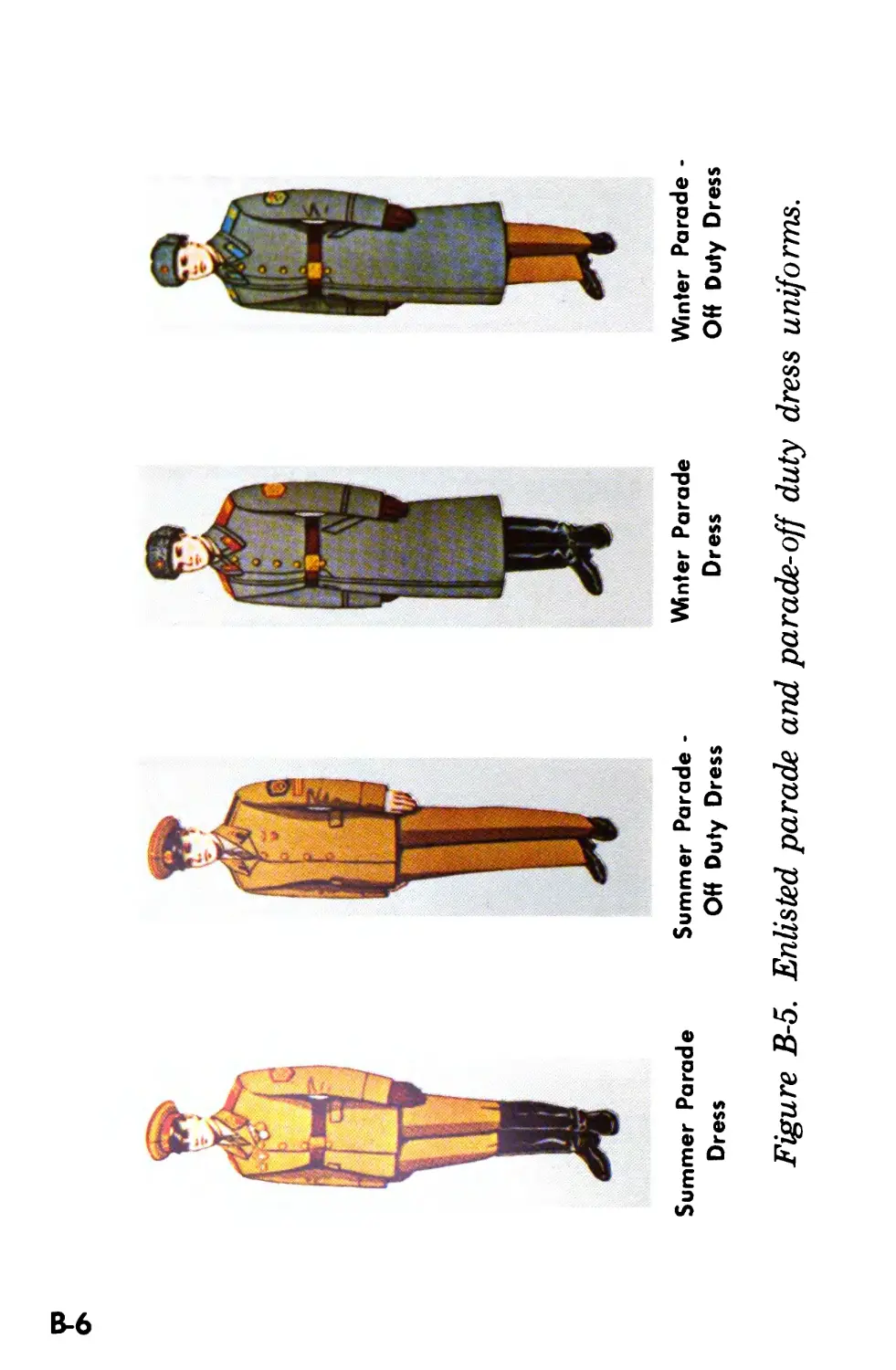
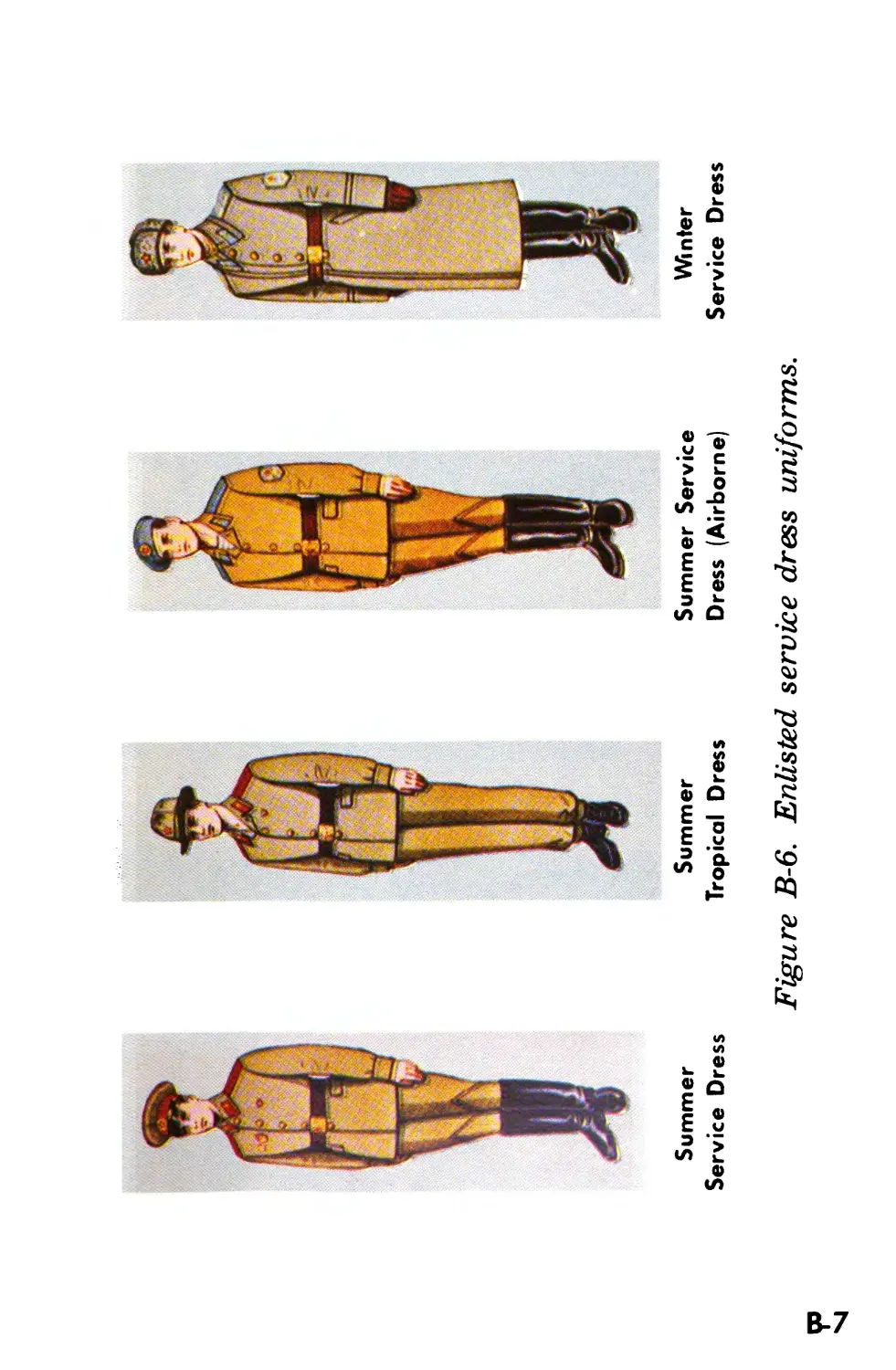


Tags: weapons military affairs tanks military equipment army soviet army
Year: 1975
Text
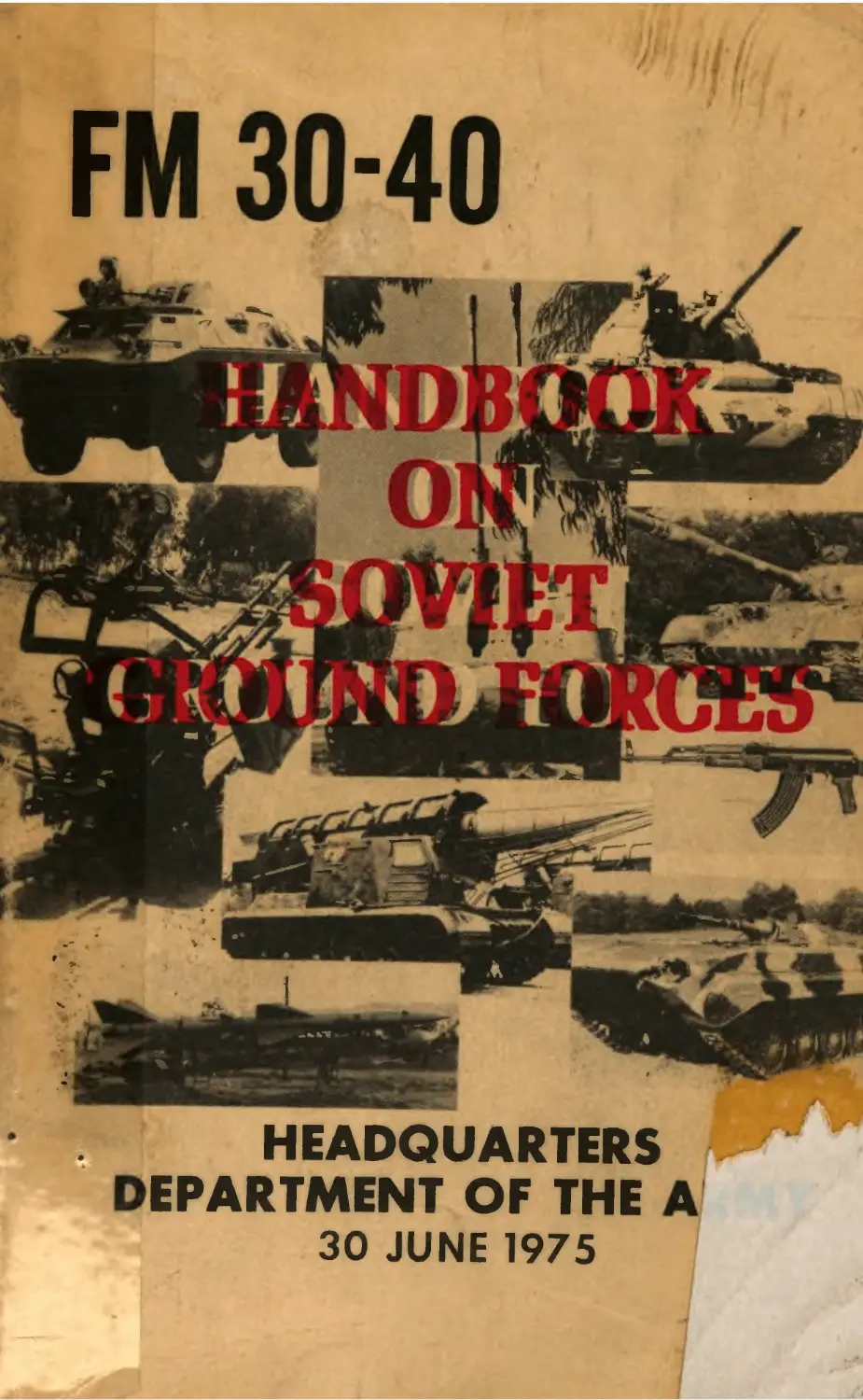
                    FM 30-40
HEADQUARTERS
DEPARTMENT OF THE A
30 JUNE 1975
SOVIET GROUND FORCES
TABLE OF CONTENTS
CHAPTER	Paragraph	Plage
1.	INTRODUCTION..........................1-1	1-1
CHAPTER
2.	BACKGROUND............................2-1	2-1
CHAPTER
3. PERSONNEL
Section L General............................3-1	3-1
II.	Military training.......................-3-4	3-9
III.	Personal traits erf the Soviet Soldier.3-10	3-24
IV.	Strengths and weaknesses...............3-13	3-25
CHAPTER
4. ORGANIZATION OF SOVIET GROUND
FORCES.......................................4-1	4-1
CHAPTER
5. BASIC TACTICAL CONCEPTS
Section I. Tactical principles......................5-1	5-1
II.	Emphasis on the offensive...............5-2	5-7
III.	The defensive..........................5-3	5-15
IV.	Tactical employment....................5-4	5-19
CHAPTER
6. CAPABILITIES
Section I. Infantry.................................6-1	6-1
II.	Armor (Armored Fighting Vehicles)----6-6	6-11
III.	Airborne................................6-10	6-31
IV.	Artillery......-........................6-14	6-37
V.	Anti-Tank...............................6-21	6-53
VI.	Antiaircraft............................ 6-25	6-63
VII.	Engineers.............................. 6-29	6-73
VIIL	Tactical Aviation......................6-33	6-87
IX.	Helicopters............................. 6-36	6-91
X.	Air Transport...........................6-41	6-97
XI.	Communications..........................6-44	6-101
XII.	CBR Defense- ..........................648	6-103
XIII.	Logistics..............................6-52	6-111
XIV.	Medical Services.......................6-59	6-123
APPENDICES
A.	ORGANIZATION CHARTS............................A-l
B.	SOVIET UNIFORMS AND INSIGNIA....................B-l
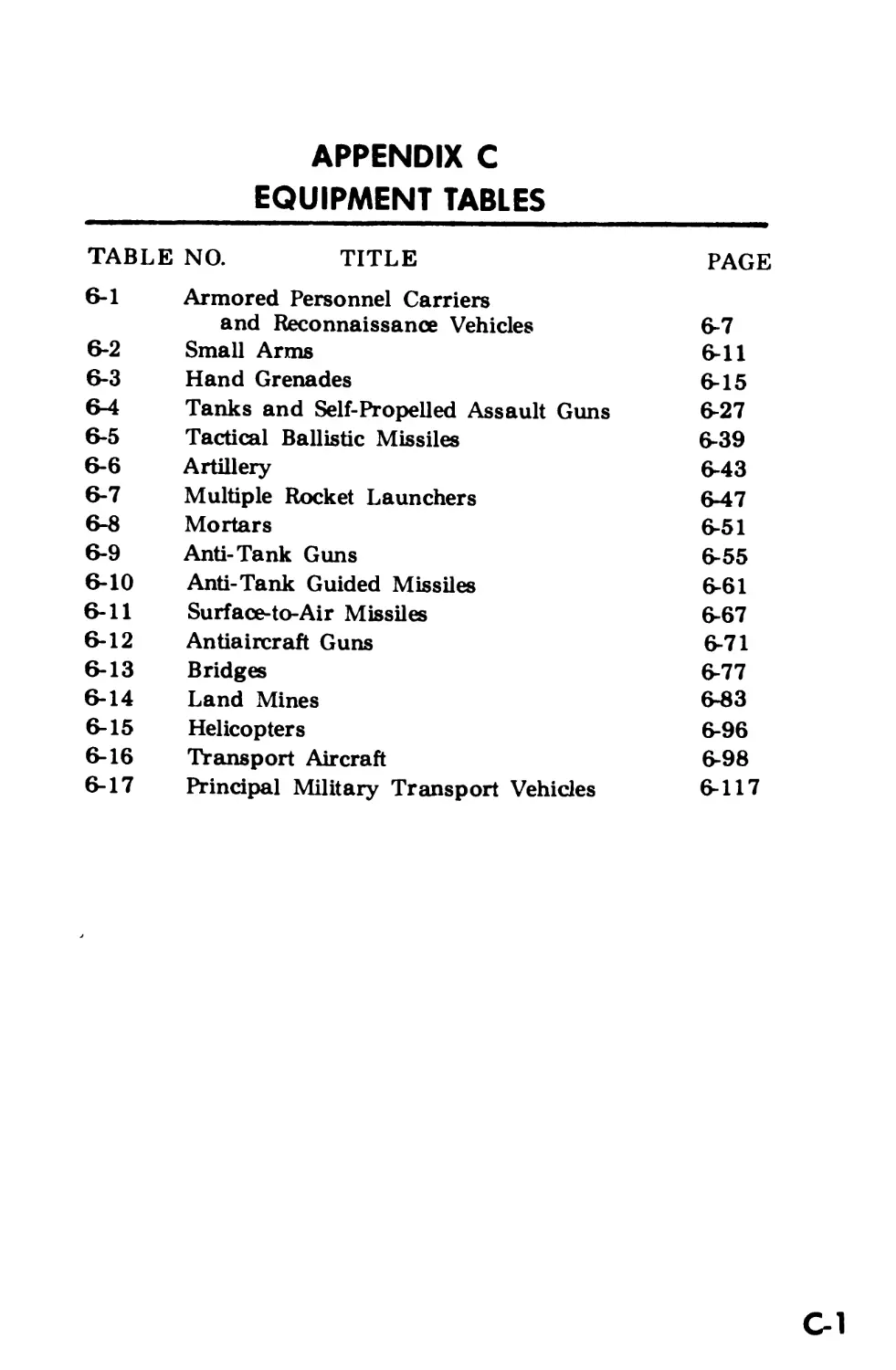
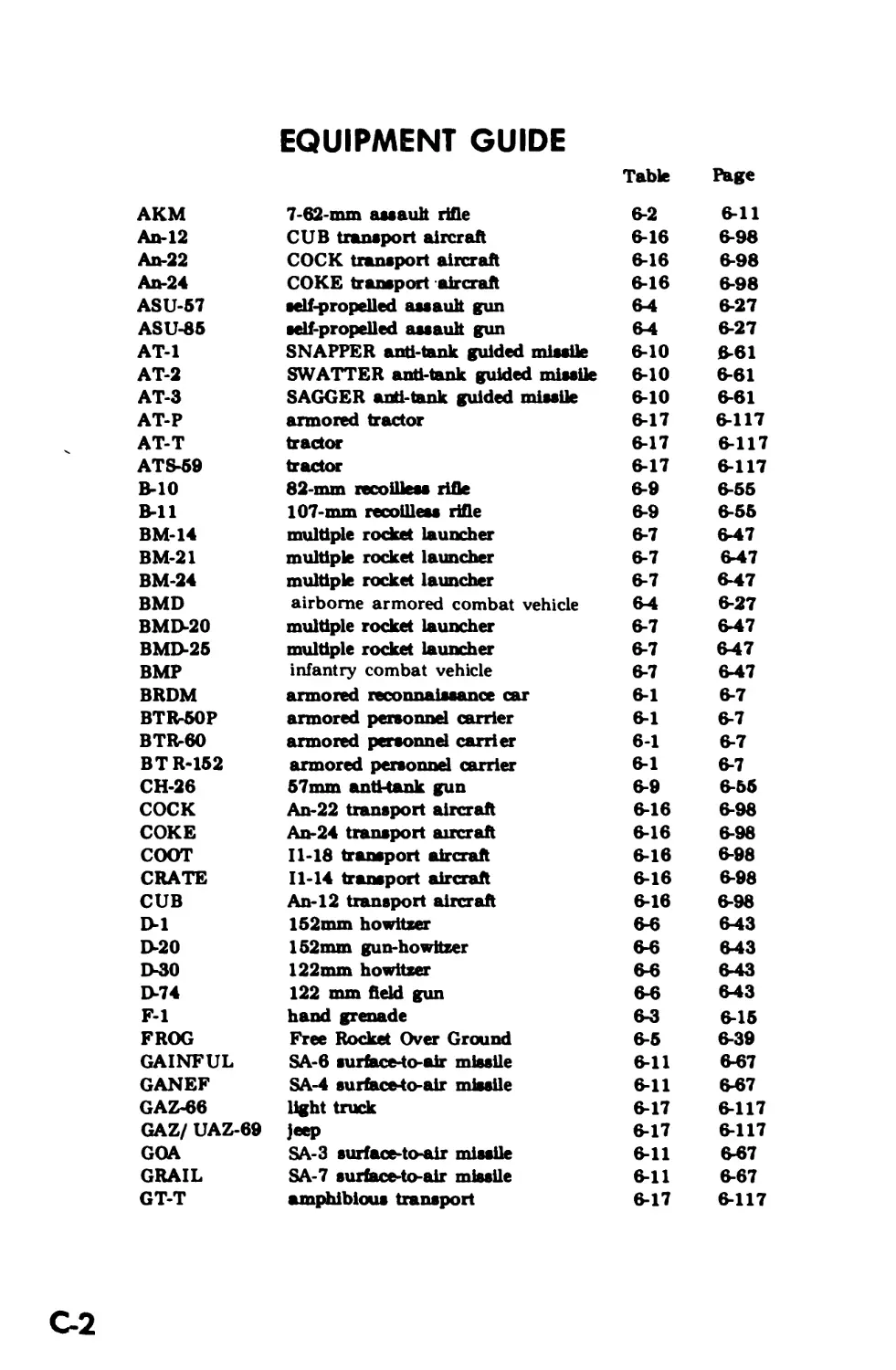
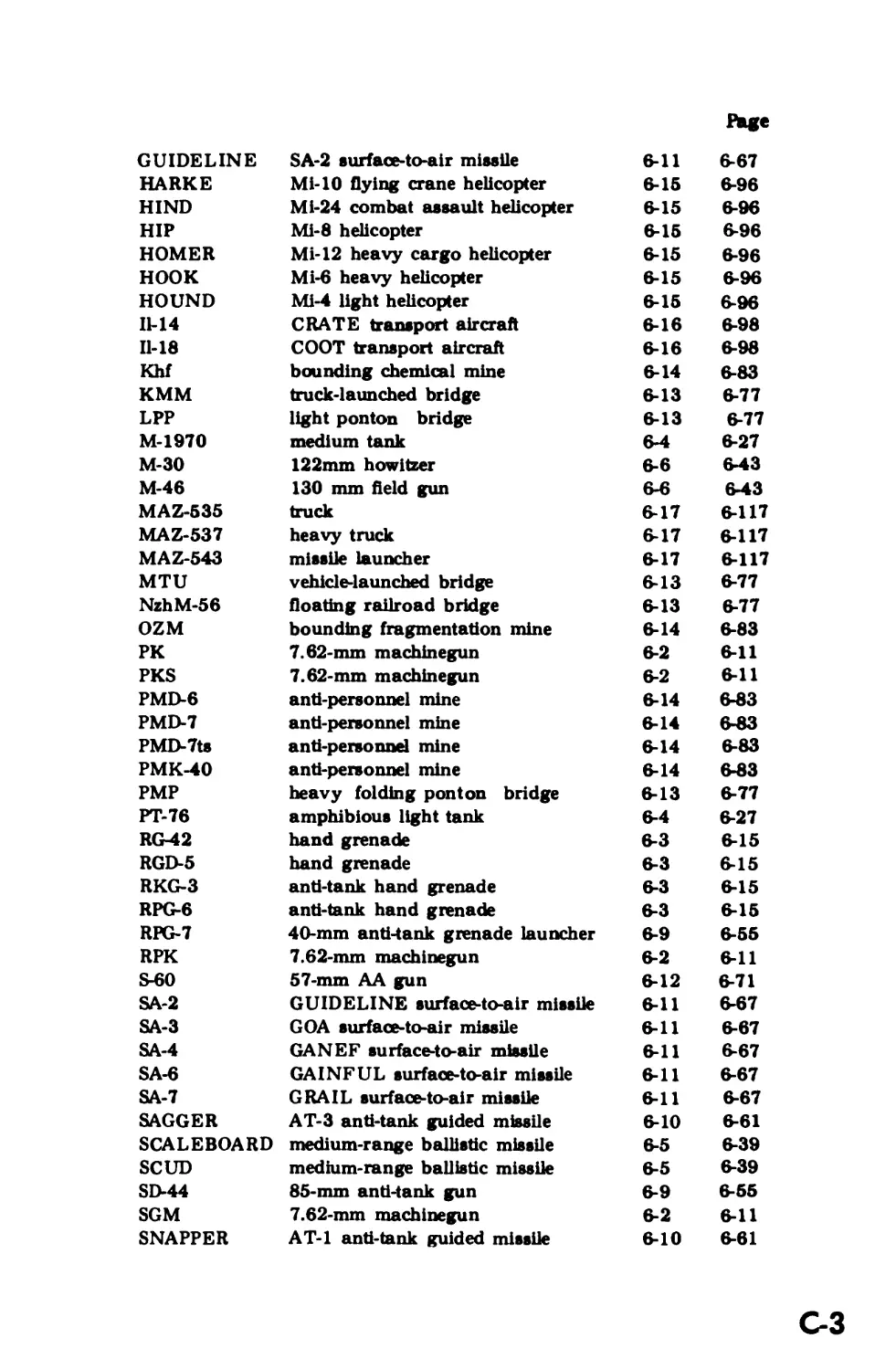
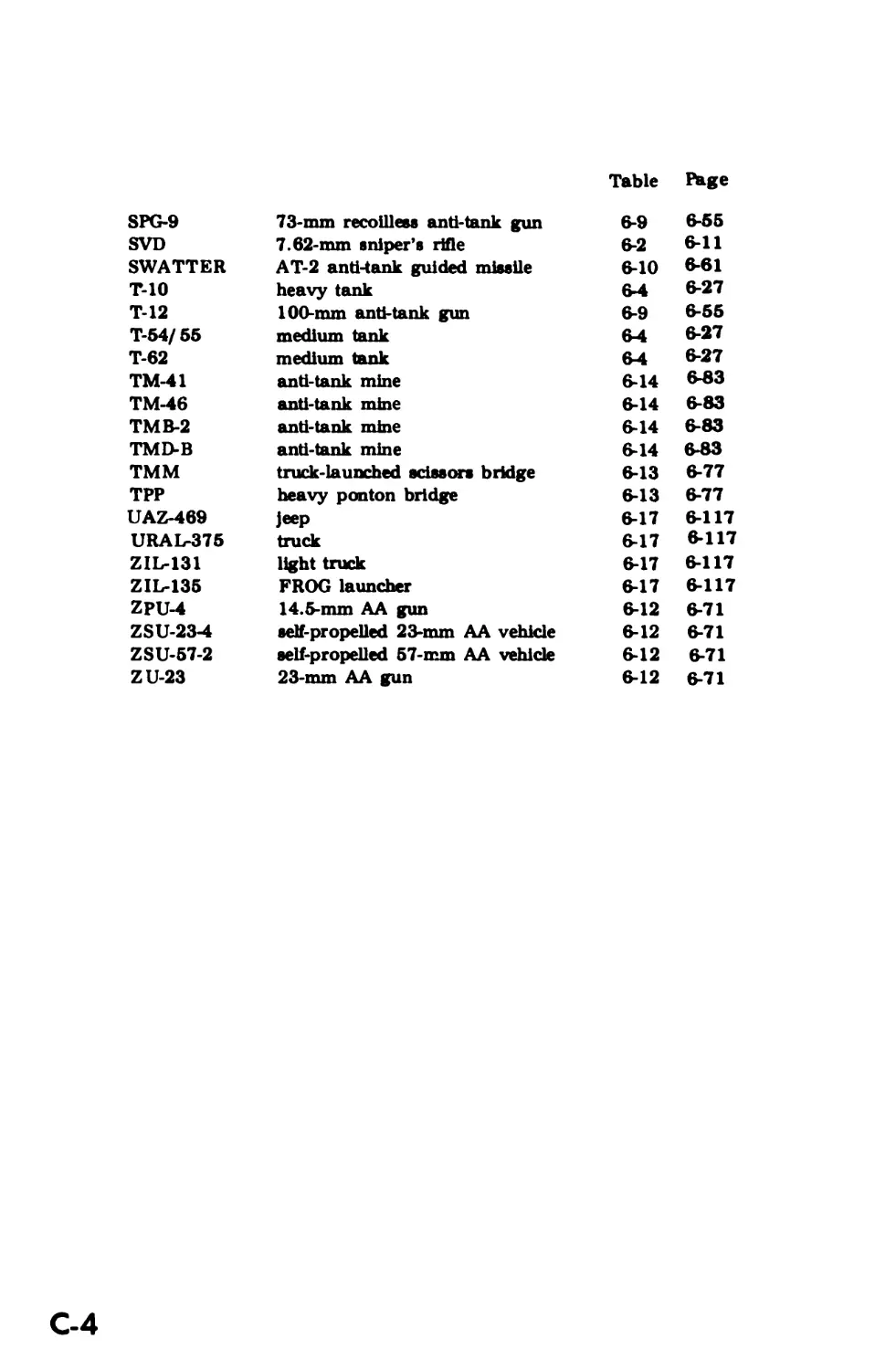
C.	EQUIPMENT GUIDE...................................C
D.	RECOMMENDED READING.............................D-1
INDEX.................................................I
CHAPTER I
INTRODUCTION
1-1. General.
a.	The Soviet Union maintains a very large “army” or
Ground Forces in active service. Numbering some two mil-
lion officers and enlisted personnel, the Soviet Ground
Forces are about twice the size of the US Army and Marine
Corps combined. In addition to size, the Soviet Ground
Forces also are noted for having received large quantities of
modern, high-firepower weapons during the past few years.
b.	Despite the recent growth of the Soviet Strategic
Rocket Forces and the Navy, the Soviet leadertfiip still con-
siders the Ground Forces to be of major importance to the
national security and other goals of the Soviet State and
Communist Party. Those goals are to be accomplished by
direct use of military power and by more subtle means as
well. The latter were described by the President of the
United States in these terms in 1971: “The most prevalent
Communist threats now are not massive military invasions,
but a more subtle mix of military, psychological, and
political pressures.”
c.	Large and modern Ground Forces are thus main-
tained by the Soviet Union, poised to carry out actions to
accomplish goals of the Soviet State and Communist Party
which are at once essentially the same and, in the context
of superpower competition, hostile to the goals of the
United States.
1-2. Observations.
a.	In general, most Western observers of the Soviet
armed forces have been impressed by the unexpected quan-
1-1
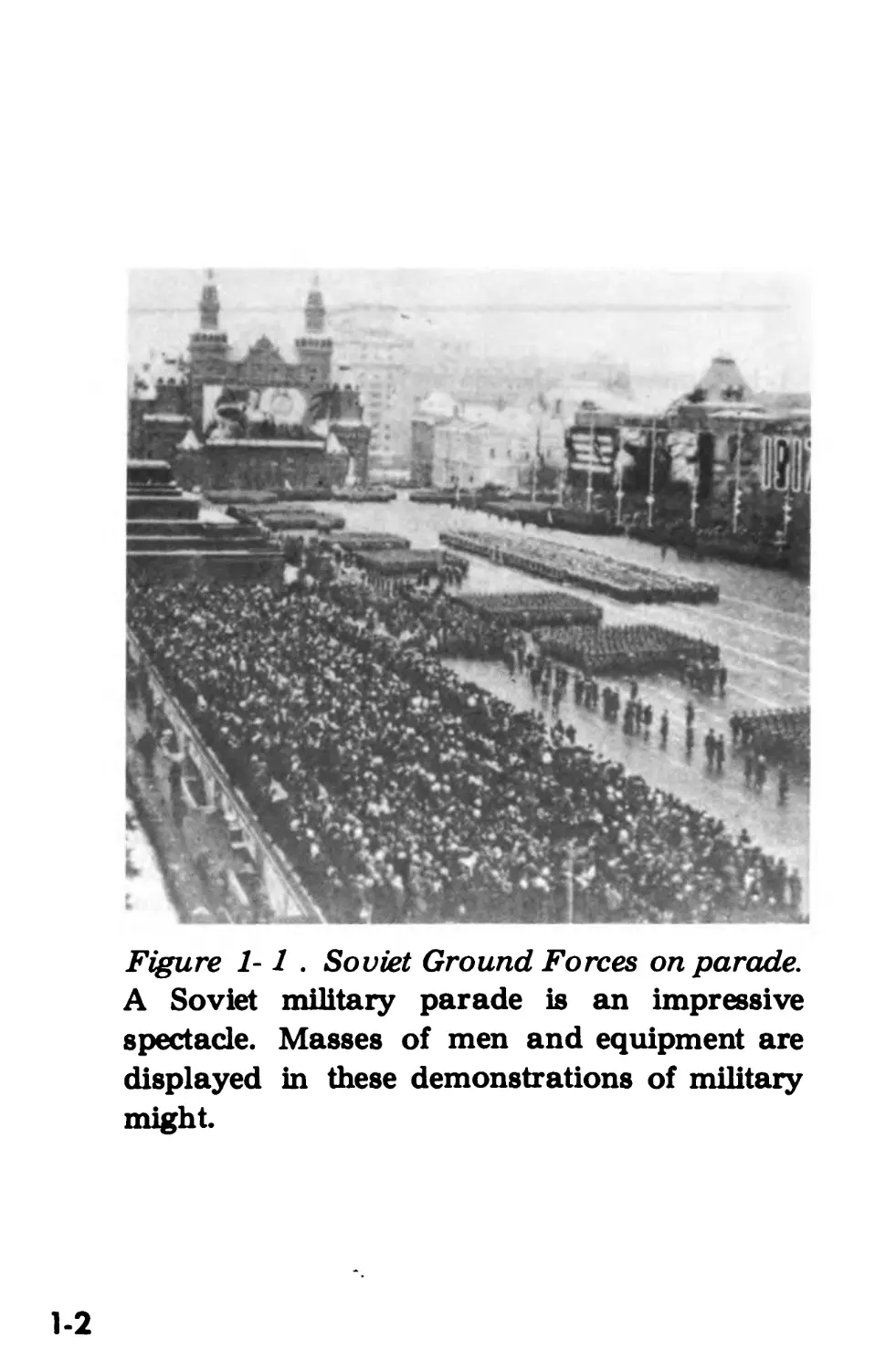
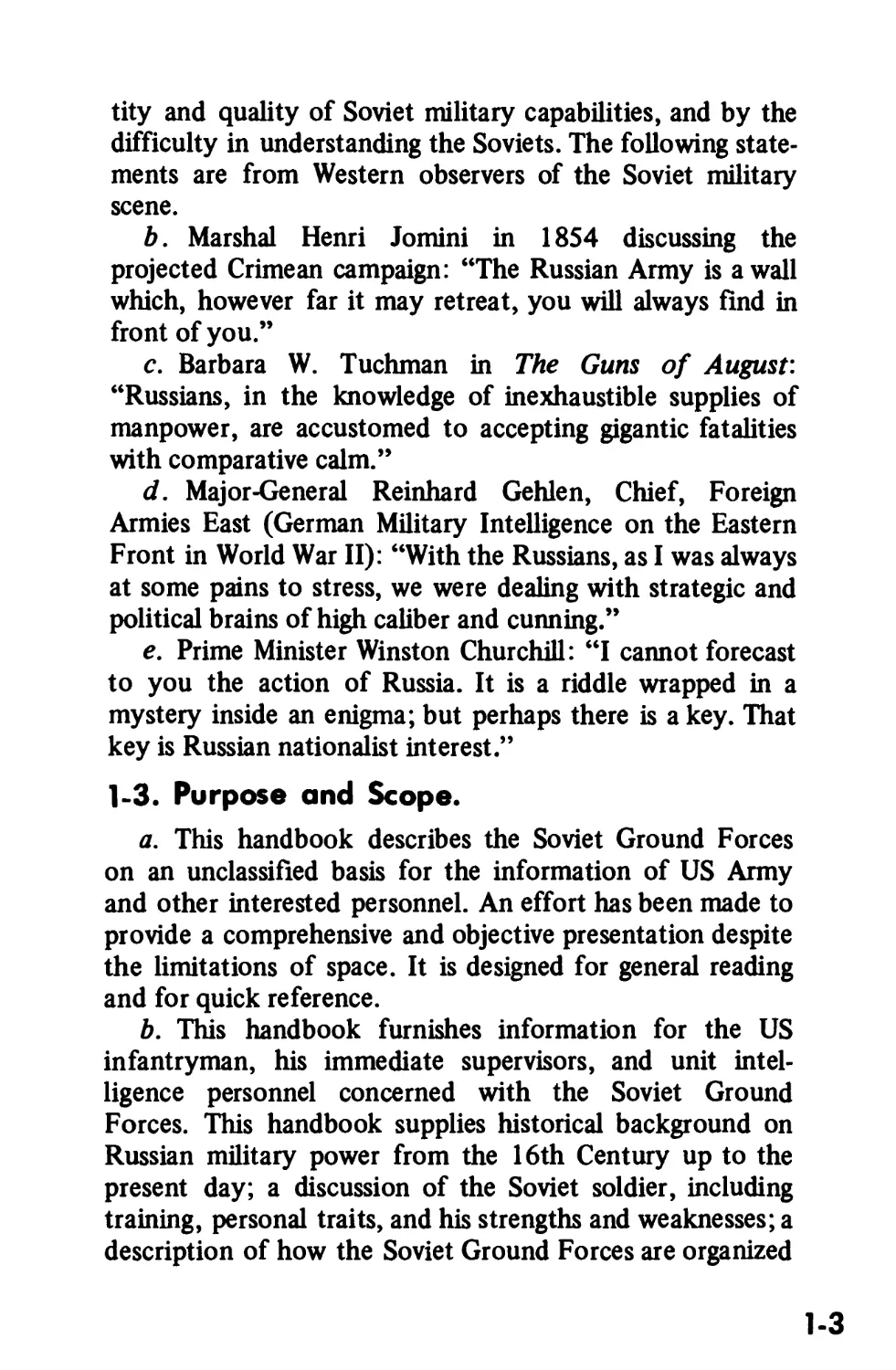
Figure 1-1 . Soviet Ground Forces on parade.
A Soviet military parade is an impressive
spectade. Masses of men and equipment are
displayed in these demonstrations of military
might
1-2
tity and quality of Soviet military capabilities, and by the
difficulty in understanding the Soviets. The following state-
ments are from Western observers of the Soviet military
scene.
b.	Marshal Henri Jomini in 1854 discussing the
projected Crimean campaign: “The Russian Army is a wall
which, however far it may retreat, you will always find in
front of you.”
c.	Barbara W. Tuchman in The Guns of August:
“Russians, in the knowledge of inexhaustible supplies of
manpower, are accustomed to accepting gigantic fatalities
with comparative calm.”
d.	Major-General Reinhard Gehlen, Chief, Foreign
Armies East (German Military Intelligence on the Eastern
Front in World War II): “With the Russians, as I was always
at some pains to stress, we were dealing with strategic and
political brains of high caliber and cunning.”
e.	Prime Minister Winston Churchill: “I cannot forecast
to you the action of Russia. It is a riddle wrapped in a
mystery inside an enigma; but perhaps there is a key. That
key is Russian nationalist interest.”
1-3. Purpose and Scope.
a.	This handbook describes the Soviet Ground Forces
on an unclassified basis for the information of US Army
and other interested personnel. An effort has been made to
provide a comprehensive and objective presentation despite
the limitations of space. It is designed for general reading
and for quick reference.
b.	This handbook furnishes information for the US
infantryman, his immediate supervisors, and unit intel-
ligence personnel concerned with the Soviet Ground
Forces. This handbook supplies historical background on
Russian military power from the 16th Century up to the
present day; a discussion of the Soviet soldier, including
training, personal traits, and his strengths and weaknesses; a
description of how the Soviet Ground Forces are organized
1-3
from the front through the company level, as well as the
interrelationships among the Soviet High Command and its
various components; a review of basic Soviet tactical con-
cepts, both offensive and defensive; and a description of
Soviet weapons and equipment, their capabilities and coun-
termeasures.
c.	The strength data provided in this handbook for
Soviet units are based primarily on previously published
data and, in general, are in rounded numbers. Accordingly,
the aggregate strength of subordinate units shown will not
necessarily total the strength listed for the parent organiza-
tion. The data are provided for perspective and for general
comparisons with US units.
1-4. Changes.
Users of this manual are encouraged to submit recom-
mended changes and comments for this publication. Com-
ments should be keyed to the specific page, paragraph, and
line of the text in which the change is recommended.
Reasons should be provided for each comment to insure
understanding and complete evaluation. Comments should
be prepared using DA Form 2028 (Recommended Changes
to Publication) and forwarded directly to the Assistant
Chief of Staff Intelligence, Department of the Army, Wash-
ington, D.C. 20310.
1-4
CHAPTER 2
BACKGROUND
2-1. The tsarist heritage.
a.	The form of Russian military power has changed con-
tinuously through the periods of Russian tsirs and Soviet
commissars. Still, certain constants can be seen throughout
the development of the armed forces. The Soviet state has
been greatly influenced by the harsh and forbidding cli-
mate, its northerly location, the vast size of its physical
territory, and the proximity of hostile nations on its south-
ern and western borders.
b.	Starting as a group of small feudal states and evolving
into the modern Soviet state was a long and restless jour-
ney. With growth and the consolidation of political power
came the need to defend the newly won territories. The
first ruler to take the title of tsar, Ivan the Terrible, devel-
oped a form of palace guard in the late 1500s called the
Streltsi. These were “musketeers” whose main mission was
to defend the ruler.
c.	In the early 1700s Tsar Peter the Great created the
first standing national army, based in part on Western mili-
tary concepts. He provided for conscription and a form of
universal military service. Replacing the old system of pro-
motion according to lineage, Peter instituted a form of
merit promotions for all ranks. Peter also knew the impor-
tance of developing a broad base of industrial support for
the new Russian military forces. Peter’s new army was
tested in the Great Northern War (1707-1721) when his
troops defeated the well-trained, well-equipped army of
young Charles XII of Sweden.
d.	Marshal A. V. Suvorov was not only a great Russian
general but ranks as one of the great generals in history. He
2-1
defeated some of Napoleon’s generals in Northern Italy
(1798-1799), and wrote one of the best early books on
Russian military science, The Science of Victory. Marshal
Kutuzov, one of his pupils, soundly defeated Napoleon’s
armies (with some help from a cruel, cold winter) after
Napoleon invaded Russia in 1812.
t. In the mid-1870s, Minister of War Milyutin instituted
a series of wide-ranging military reforms. He reduced the
term of service from 25 to 6 years (with an additional nine
years to be spent in the reserves), he softened the harsh
military discipline by forbidding officers to flog their sub-
ordinates to death, and he established the first cadet
schools.
f.	From the time of Peter the Great until the revolutions
of 1917, the performance of the Russian armed forces was
spotty. While it is true that the individual soldier’s perfor-
mance ranged from excellent to poor, the basic problems of
the Russian military remained more or less constant:
(1)	Military leadership was generally poor. (Notable
exceptions were Suvorov and Kutuzov.)
(2)	Troops were ill-trained and poorly educated.
(3)	Weapons, ammunition, and other military equip-
ment were usually of poor quality and in short supply (in
the Russo-Japanese War of 1904-1905, there was often only
one rifle for every three Russian soldiers in the attack).
(4)	There was little innovation or imagination shown
in the development of new tac’tics. Even in the era of
machinegun warfare, for example, the Suvorov tactic of
massed bayonet charges was attempted, with predictable
results.
g.	The Russian peasant army met its ultimate defeat in
the debacle of World War I. Here all of the shortcomings of
the Russian army were found in abundance. Added to these
problems was still another one: lack of support for the war
at home. The unsuccessful Russo-Japanese had almost top-
pled the autocratic Tsar Nicholas II and the defeats suffered
during World War I coupled with a wide-spread economic
2-2
collapse ultimately ended the 300-year reign of the
Romanov family in Russia.
2-2. The formation of the Red Army.
a.	Immediately after the February Revolution of 1917,
which removed Tsar Nicholas II, Order Number 1 was pub-
lished by the Council of Soldiers and Workers Deputies,
severely restricting the powers and privileges of the aristo-
cratic officers. Soldier and sailor committees were set up
with power to control the issue of arms, ammunition, and
rations. Any orders from the provisional Russian govern-
ment had to be countersigned by these committees before
they were to have the force of law. Saluting was abolished
as well as most ranks and other vestiges of military disci-
pline!
b.	The battles of World War I were going badly enough
for the Russian army. The erosion of military discipline and
the lack of support at home further weakened the military
position of armed forces in the war with Germany. At
home, factory workers, the so-called Red Guards, confis-
cated some rifles and pistols during the confusion of the
revolution, and became a military force in the major indus-
trial cities, especially in Petrograd (to be renamed Lenin-
grad).
c.	A second revolution in October 1917, this one under
the active direction of the Bolsheviks, brought the com-
munist forces to power. Almost immediately the new gov-
ernment came into conflict with other political factions in
the country.
d.	By January 1918, conscription had been abolished
and the nation was in chaos. The only organized domestic
force was the Red Guard under Bolshevik (Communist)
leadership. By now the Russian army had practically
disintegrated. The Bolsheviks formally established the Red
Army of Workers and Peasants on 23 February 1918.
e.	From this period until 1921, a bloody Civil War raged
in Russia between the forces of the monarchy and the
2-3
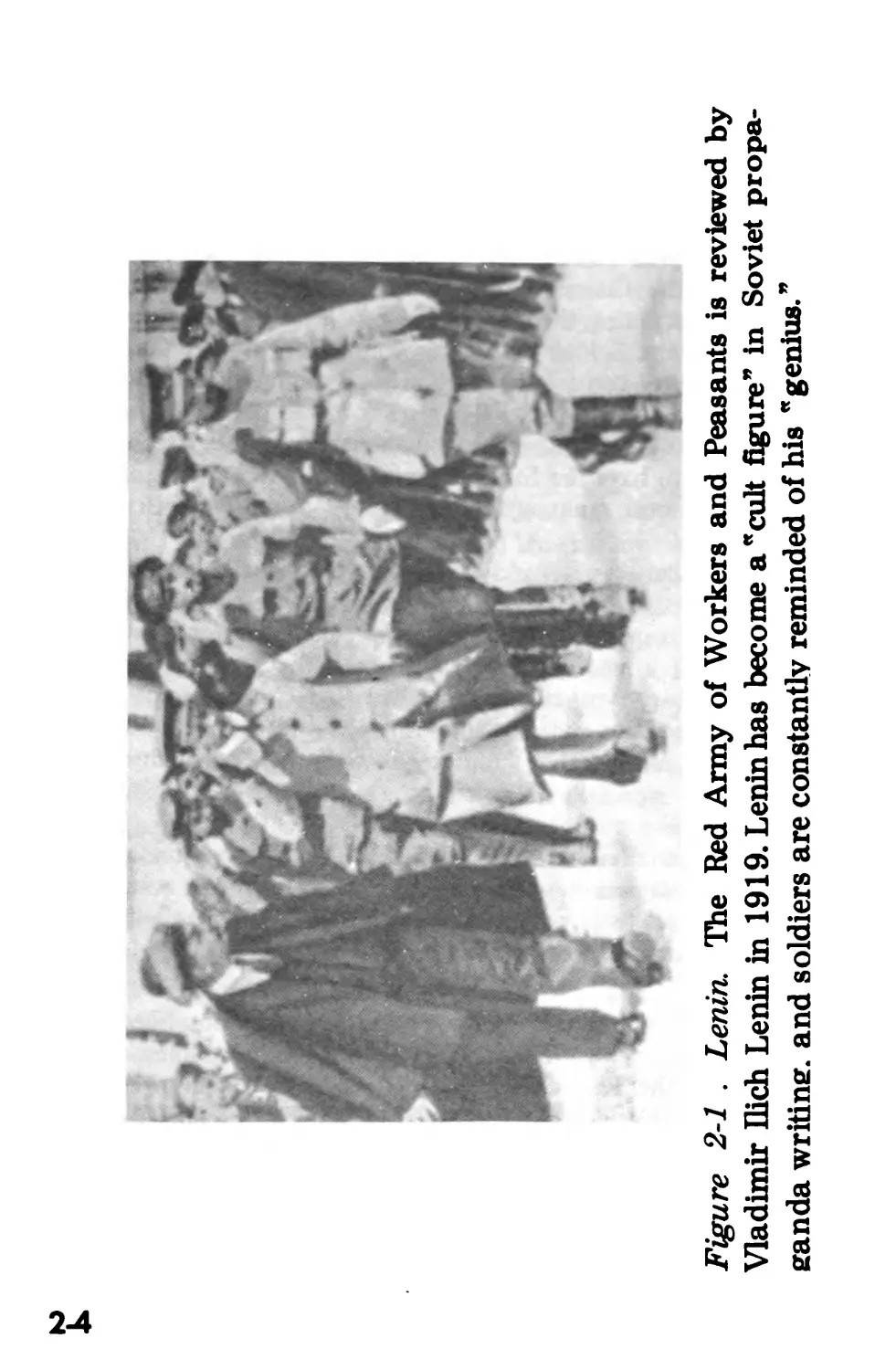
Figure 2-1 . Lenin. The Red Army of Workers and Peasants is reviewed by
Vladimir Hich Lenin in 1919. Lenin has become a "cult figure” in Soviet propa-
ganda writing, and soldiers are constantly reminded of his "genius.”
revolutionary lorces oi Bolshevism, ine civil war was
fought in many separate parts of the country. Support for
each side, Red or White, alternated from time to time, with
US, British, French, and Japanese troops landing in Russia
and Siberia to protect certain war supplies from the
Bolsheviks or to actively support the anti-Bolshevik forces.
2-3. The Red Army between the wars.
a.	The Red Army at the end of the Civil War was a badly
equipped, poorly trained, and ill disciplined force. The Civil
War had been won basically because the Red Forces con-
trolled the urban rail and telecommunications centers and
the White Forces were unable to mount coordinated attacks
against them.
b.	Once the Red Forces were firmly in control of Russia,
questions arose as to the form the peacetime army should
take. Communist ideology required that “peoples” army be
established, with direction by consensus and without ranks.
Dissenters from this view held that the army, if the revolu-
tion were to survive and be transmitted to other countries,
must be a conventional, well-trained and well-equipped
force. If guns, bullets, and training were considered im-
portant, then communist ideology was to play a lesser role.
Some generals wanted a large professional standing army
while others talked about a territorial militia with a small,
professional cadre. The supporters of the second position
stressed the importance of the party retaining positive and
firm control of the armed forces. A compromise was
reached providing for well-trained regular forces to defend
the borders with the smaller, regional militia forces pro-
viding the nucleus of the Soviet armed forces.
c.	The military leadership next turned its attention to
the development of an aircraft industry, the standardization
of artillery weapons and ammunition, the production of
trucks in sufficient numbers to provide transport for the
Red Army masses, and the production of many Soviet
tanks to provide the needed surprise and shock action. All
2-5
of tnese goals were severely hampered by the very poor
Soviet industrial base. Some of these problems were offset
by German technical assistance in the 1920s and 1930s,
whereby the Soviets allowed Germans to use Soviet ter-
ritory for pilot and paratrooper training in return for allow-
ing Soviet officers to attend German military schools and
helping establish war industries in Russia.
d.	Two events — the purge of high-ranking Soviet of-
ficers and Soviet participation in the Spanish Civil War—
seriously influenced the development of the Soviet armed
forces. Stalin, the Soviet dictator, removed (and in most
instances executed) 80-90 percent of the high ranking
officers in the Soviet armed forces in the late 1930s. He
purged three of the five marshals of the Soviet Union, all 11
deputy commissars for defense, 75 of the 80 military
council members, 57 of the 85 corps commanders, 110 of
the 195 division commanders and 186 of the 406 brigade
commanders. Some 15,000 to 30,000 of approximately
75,000 officers were removed and imprisoned or executed.
e.	Soviet participation in the Spanish Civil War
(1936-1939) was limited with the number of Soviet
military personnel numbering only in the hundreds. This
participation was a positive influence on weapons and
equipment development. The Sov^t Union, like Germany
and Italy, used the Spanish bati : ield as a testing ground
for airplanes, tanks, artillery, and tactics.
2-4. Great Patriotic or Fatherland War.
a.	The Soviet Union invaded Finland in 1939 in an
announced attempt to secure the Soviet Baltic area from
possible German invasion. In this preview of World War II,
the armed forces of the USSR displayed serious weaknesses
in military leadership, tactics, use of equipment and dis-
cipline. To many observers it appeared that the highly
touted Soviet fighting machine had already ground to a
halt. Only by sheer weight of numbers was the Soviet
Union able to force Finland to cede strategic territory.
2-6
b.	Germany, m violation oi a JNon-Aggression Fact,
invaded the Soviet Union on 22 June 1941. In Soviet
history, World War II started on that date as the Great
Patriotic or Fatherland War. Initially the German war
machine rolled over the Soviet Union as it had over Poland,
Norway, and France before. There were massive attacks on
major population and industrial centers such as Moscow
and Leningrad, and into the Ukraine (the “bread basket” of
the USSR).
c.	The Soviets retreated, trading space for time, and
took up defensive lines. They held for six months, through
December 1941, after which their counter-offensive began.
During these six months, the USSR had lost enormous
quantities of men, material, and territory. Entire factories
were evacuated and transported east of the Ural Mountains
in an attempt to salvage the limited war-making potential.
d By early 1942, the Soviet war industry had begun
producing tanks, guns, and aircraft. This production, along
with US and British lend-lease weapons, allowed the Soviets
to mount the counter-offensive which was begun in the
early months of 1942. Soviet successes in the counter-
offensive were aided by Hitler’s blind insistence on con-
tinuing his frontal assaults on Leningrad, Moscow,
Stalingrad, and other cities. Hitler continued the assault of
Stalingrad largely because the city bore Stalin’s name. A
better military decision would have allowed the German
troops to by-pass Stalingrad and move into the areas of
Soviet oil reserves. Instead, an entire German army battered
itself to death against the determined resistance of the
Soviet soldiers in Stalingrad during the winter of
1942-1943.
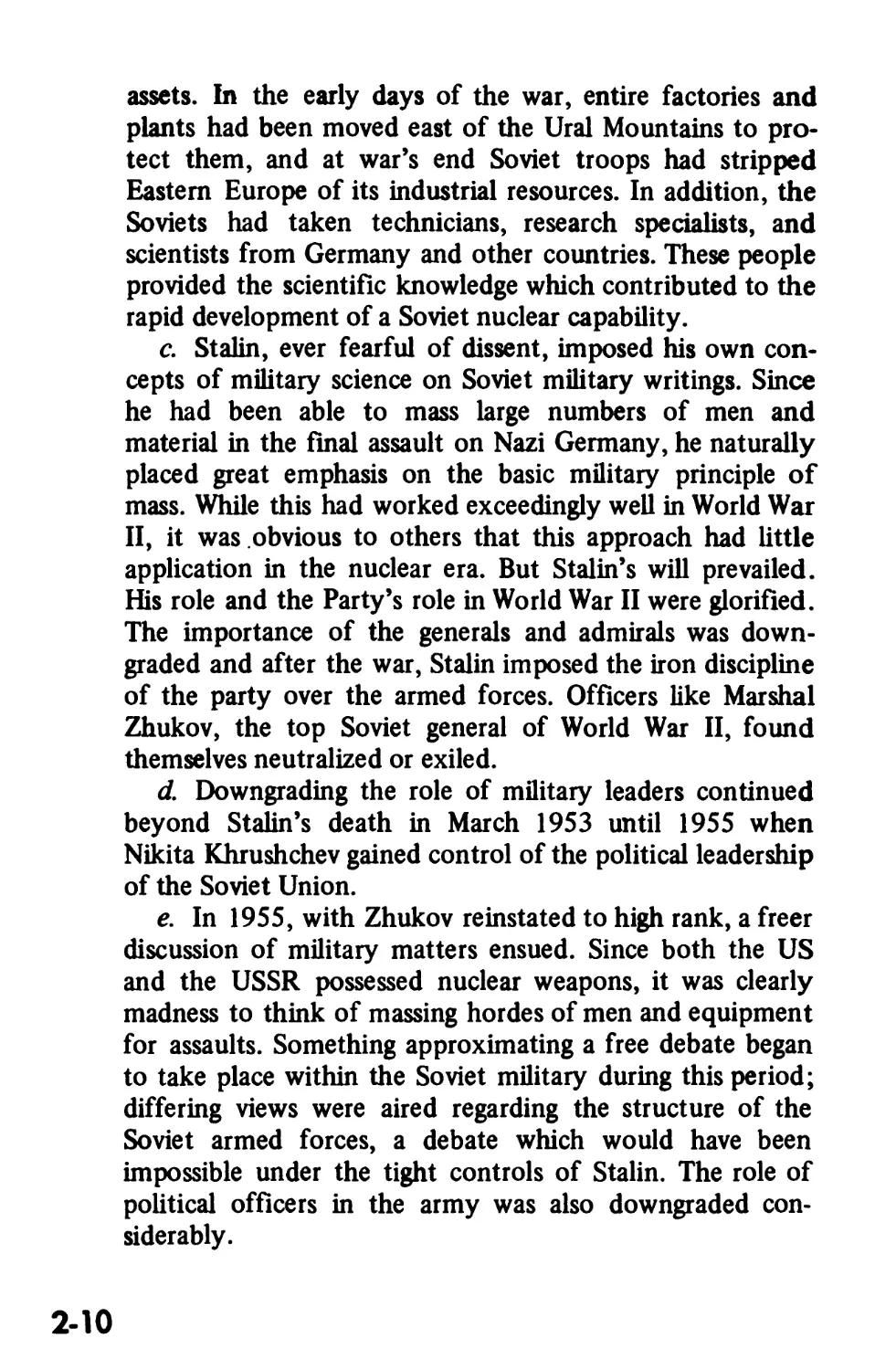
e.	Stalingrad was the turning point of the war. The
Germans suffered some 300,000 men killed or captured at
Stalingrad and lost millions of weapons. After Stalingrad,
the Soviet military machine maintained its impetus and the
ultimate defeat of Hitler’s armies was inevitable.
f.	The central series of battles after Stalingrad took
2-7
ю
со
Figure 2-2. Stalingrad, 1942. The battle of Stalingrad (1942-1943) was the
turning point in the Great Patriotic War against Germany. After surrounding and
defeating the German army at Stalingrad, the Red Army went on the offensive.
place in the area of Kursk. In history’s largest tank battle,
which lasted almost two months in mid-1943, the Germans
lost 500,000 men, some 1,500 tanks, 3,000 artillery pieces,
and more than 3,700 aircraft. Soviet losses were also large,
but after Kursk the Soviets still moved on towards Berlin,
relentlessly grinding down the weakened Nazi forces.
g.	The Soviet armies began a massive offensive in June
of 1944 that continuously pushed back the Germans. Red
soldiers entered Berlin in April 1945, and street fighting
continued until Soviet tanks were within a few hundred
yards of Hitler’s underground command post. The German
leader committed suicide rather than face capture and the
surviving German leaders surrendered on 8 May 1945. The
war in Europe was over.
h.	Soviet participation in the Pacific phase of World War
II had been determined by the agreement at Yalta, at which
Stalin had promised to enter the war against Japan 90 days
after the surrender of German forces in Europe. On 6
August 1945, the first atomic bomb was dropped on
Hiroshima and on 9 August, the Soviet Union declared war
against Japan. Soviet operations in Korea and Manchuria
basically were concerned with defeating the badly de-
moralized Kwantung Army. The Great Patriotic War ended
in the Kurile Islands on 1 September 1945 when 60,000
Japanese troops surrendered. Soviet troops stood in control
of Manchuria, half of Korea, and several northern Japanese
islands.
2-5. Post World War II.
a.	After the war, the Soviet leadership had to de-
mobilize more than 11 million troops, find a peacetime
configuration for the armed forces and insure that the
armed forces (and the nation) would remain loyal to Stalin
and the Communist Party.
b.	Despite the more than 20 million dead in World War
II and the savage destruction of towns and villages, the
Soviet Union emerged from the war with some material
2-9
assets. In the early days of the war, entire factories and
plants had been moved east of the Ural Mountains to pro-
tect them, and at war’s end Soviet troops had stripped
Eastern Europe of its industrial resources. In addition, the
Soviets had taken technicians, research specialists, and
scientists from Germany and other countries. These people
provided the scientific knowledge which contributed to the
rapid development of a Soviet nuclear capability.
c.	Stalin, ever fearful of dissent, imposed his own con-
cepts of military science on Soviet military writings. Since
he had been able to mass large numbers of men and
material in the final assault on Nazi Germany, he naturally
placed great emphasis on the basic military principle of
mass. While this had worked exceedingly well in World War
II, it was obvious to others that this approach had little
application in the nuclear era. But Stalin’s will prevailed.
His role and the Party’s role in World War II were glorified.
The importance of the generals and admirals was down-
graded and after the war, Stalin imposed the iron discipline
of the party over the armed forces. Officers like Marshal
Zhukov, the top Soviet general of World War II, found
themselves neutralized or exiled.
d.	Downgrading the role of military leaders continued
beyond Stalin’s death in March 1953 until 1955 when
Nikita Khrushchev gained control of the political leadership
of the Soviet Union.
e.	In 1955, with Zhukov reinstated to high rank, a freer
discussion of military matters ensued. Since both the US
and the USSR possessed nuclear weapons, it was clearly
madness to think of massing hordes of men and equipment
for assaults. Something approximating a free debate began
to take place within the Soviet military during this period;
differing views were aired regarding the structure of the
Soviet armed forces, a debate which would have been
impossible under the tight controls of Stalin. The role of
political officers in the army was also downgraded con-
siderably.
2-10
f.	Marshal Zhukov subsequently upgraded the ground
forces, adding more tanks to the tank divisions and more
Armored Personnel Carriers (APCs) to the mechanized
infantry divisions. The number of airborne divisions was
raised and new guns, rocket launchers, tanks, and amphibi-
ous armored vehicles were introduced.
g.	Khrushchev had come to power in mid-1950, em-
phasizing the continuing importance of heavy industry. He
had thus won the support of the military leadership who
saw Khrushchev as a champion of their point of view in the
Presidium (called the Politburo before and since Khrush-
chev), the highest ruling body of the Communist Party of
the Soviet Union. Marshal Zhukov and other military men
also rose in the hierarchy. In July 1957, Zhukov was
elected to full membership in the Presidium, the first pro-
fessional military officer in Soviet history to win this
honor. But his victory was short-lived since Khrushchev,
much like Stalin, feared the power of the military. Zhukov
was removed from his post as Minster of Defense (and his
seat on the Presidium) in November 1957. His successor as
Minister of Defense, Marshal Malinovsky, was not awarded
a seat on the Presidium.
h.	In 1957, the Soviets startled the world by launching
the first artificial earth satellite (Sputnik), Prior to this
launch, they had already demonstrated their ability to
launch ICBMs. Khrushchev used the Soviet ICBM threat in
his bullying over the Berlin question in 1958. In 1960 and
1961, he called for massive reductions in the sizes of the
armies of the US and the USSR and placed more reliance
on the Strategic Rocket Forces to the point where he began
to talk about the obsolescence of conventional armies.
Under Khrushchev the role of the Air Defense Forces (PVO
Strany) was enhanced, as well as all nuclear-related forces
and equipment.
2-11
i.	Subsequently, the Ground Forces were reinstituted as
one of the five combat services (along with Strategic
Rocket Forces, Air Defense Forces, Air Forces, and Navy),
and conventional and tactical nuclear fighting capabilities
of the Ground Forces and the Navy were increased
significantly.
2-6. The Soviet armed forces today.
a.	The Soviet armed forces today are equipped with
large numbers of modern weapons and are well trained field
forces. From the mid-1950s and continuing through the
1970s, Soviet equipment and weapons have been upgraded.
Other sections of this handbook address in detail the new
vehicles, weapons, and other equipment of today’s Soviet
Ground Forces.
b.	The Soviet Ground Forces are designed to fight on all
types of terrain under all weather conditions. In addition,
there appears to be a very high degree of coordination and
cooperation between the Ground Forces and other com-
ponents of the Soviet military establishment. For example,
Soviet military leaders continually write about the need for
cooperation between airborne and naval infantry (marine)
operations, and the tactical air armies of the Soviet Air
Forces are operationally subordinate to ground forces com-
manders in the field.
c.	From the political viewpoint, the Soviet military
forces today are a part of the Soviet “system”— political
and national — with political officers fully integrated into
military units from the Soviet High Command down to
company and battery level. General Yepishev, head of the
Main Political Directorate of the Army and Navy, is ap-
parently fully acceptable to the military leadership, having
held his position since May of 1962. At the same time, the
Soviet armed forces have increased their representation at
the highest levels of the Soviet political system. After
Marshal Malinovsky’s death in March of 1967, Marshal
Grechko was appointed in his place as Minister of Defense.
2-12
The top Soviet military/defense position again went to a
soldier, Grechko having been a World War II field comman-
der, and subsequently Commander-in-Chief of Ground
Forces (1957-1960) and Commander-in-Chief of the War-
saw Pact Forces (1960-1967). In the spring of 1973, Mar-
shal Grechko was appointed to full, voting membership in
the Politburo, the only professional military officer to
attain full membership in the ruling Soviet body except for
Marshal Zhukov’s abortive, four-month term in 1957.
2-7. Lessons.
a.	Since World War II, the Soviet leadership has used
military force on three occasions in Eastern Europe against
its own allies (East Germany, Hungary and Czechoslova-
kia) and several times on the Chinese border, the most
widespread actions taking place in 1969 on the Ussuri
River. In these military actions, troops and equipment were
concentrated as in World War II. It appears that the tradi-
tional doctrine of mass still holds true in the Soviet military
operations. The Soviet military leadership is not innovative
or adventuresome but rather more conservative than most
Western military leaders.
b.	The other lesson to be seen in these applications of
Soviet military power is that whenever the Soviet leadership
feels a serious threat to the security of the homeland or the
party it will act without regard for world opinion.
2-13

CHAPTER 3
PERSONNEL
Section I. GENERAL
3-1 Introduction.
a.	The value of the human element. “It is not equip-
ment alone, no matter how advanced it is, but man capable
of using it to the full extent, man distinguished for his high
morale that will secure victory in war.” This recent state-
ment of Soviet military policy declares that even on today’s
modern sophisticated, automated, and electronic battle-
field, the human element has not been discounted by mili-
tary planners. The man behind the trigger, the quality and
variety of his training, and his psychological preparation for
war are of vital interest to the Soviet military leadership.
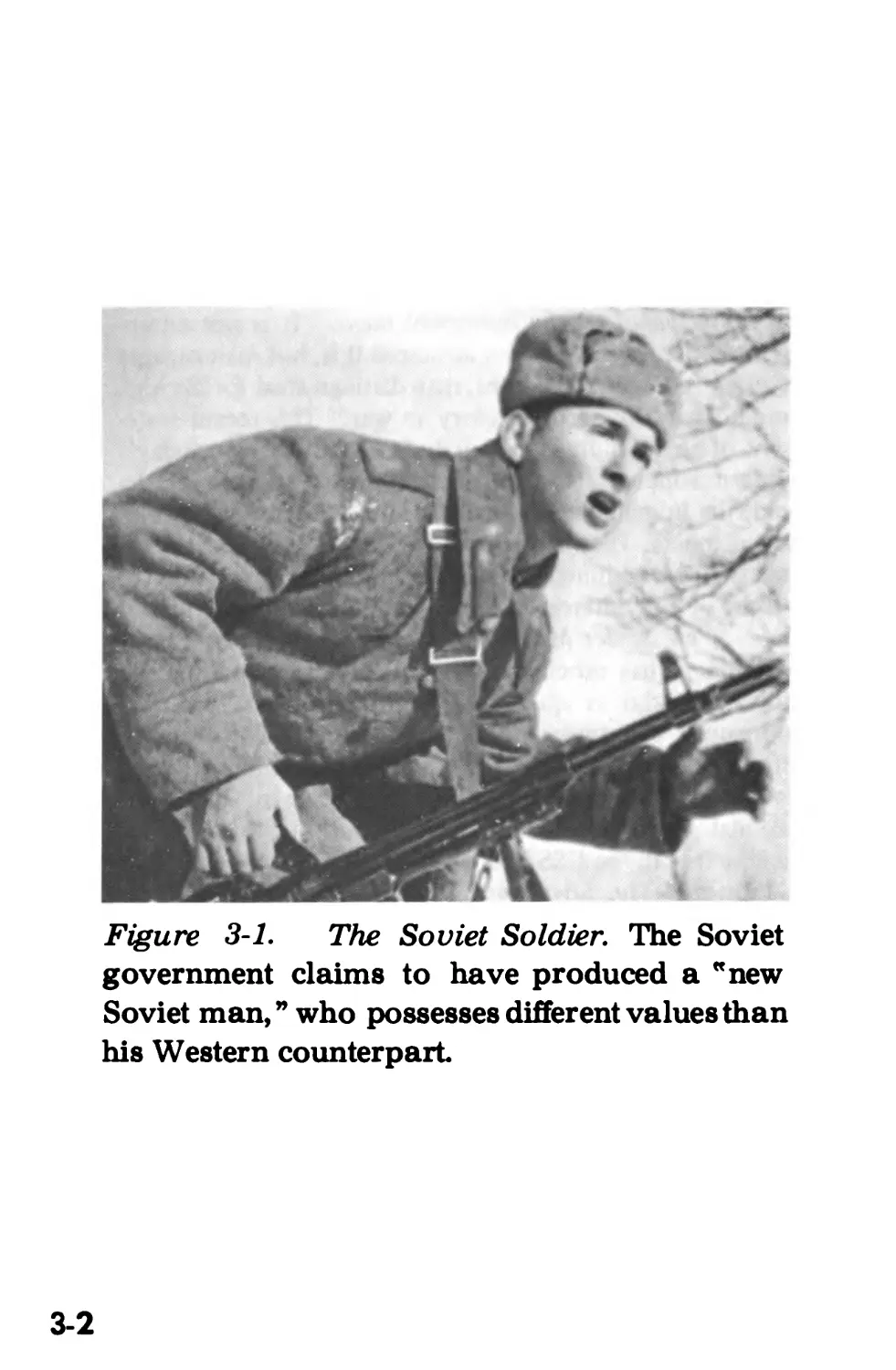
b.	“New Soviet Man.99 For several decades, the Soviet
government has proclaimed that its goal is to produce an
individual who is qualitatively different from his non-
communist counterpart. This “new Soviet man” possesses
different values than his Western counterpart. In the Soviet
view, he is concerned with the well-being of the inter-
national working man. Whether or not the “new Soviet
man” exists in the USSR remains a question to be answered
by history. The Soviet government and the Communist
Party of the Soviet Union clearly pursue this lofty goal with
vigor and determination. This attitude of the Soviet govern-
ment and Communist Party does produce the “Ivan” of
today’s Soviet Ground Forces.
c.	Universal military service. Exposing everyone to mili-
tary service is a Soviet political decision which clearly sees
as a goal of military service the shaping of attitudes held by
young people. During his two years of service the Soviet
soldier is subjected to heavy military discipline and inten-
sive indoctrination. The political indoctrination represents a
3-1
Figure 3-1. The Soviet Soldier. The Soviet
government claims to have produced a "new
Soviet man,” who possesses different values than
his Western counterpart
3-2
continuation of the constant propaganda which he encoun-
ters at all phases of Soviet life. Once he has served on active
duty without dependents or wanting higher education, he
might be more willing to be placed where he is needed by
the leadership of his country. This also has economic impli-
cations. The young man can now be placed where he is
needed, after his military service rather than demanding his
old job, as is provided by the draft law.
3-2. Demographic considerations.
a.	Geographical size. The Soviet Union is the largest
country in the world, occupying one-sixth of the land mass
and spreading across 11 time zones. The Soviet Union is
about three times the size of the United States. With
approximately 25,000 miles of border, and more than half
of these miles on the sea, the large size of the Soviet armed
forces is not surprising.
b.	Military strength With a population of over 250 mil-
lion, the leadership of the Soviet Union maintains approxi-
mately 3.4 million men and women under arms, including
some 300,000 uniformed border guards and secret police
(KGB). In comparison, the United States, with a population
of approximately 210 million, maintains an active military
strength of approximately 2.3 million men and women.
Soviet military planners are able to draw on a vast pool of
draft-age young men each year. One estimate gives the num-
ber of draft-age males through 1977 as approximately
2,360,000 per year. This large number of 18-year olds prob-
ably had a bearing on the 1968 Soviet decision to reduce
the term of active service for Ground Forces personnel
from three to two years.
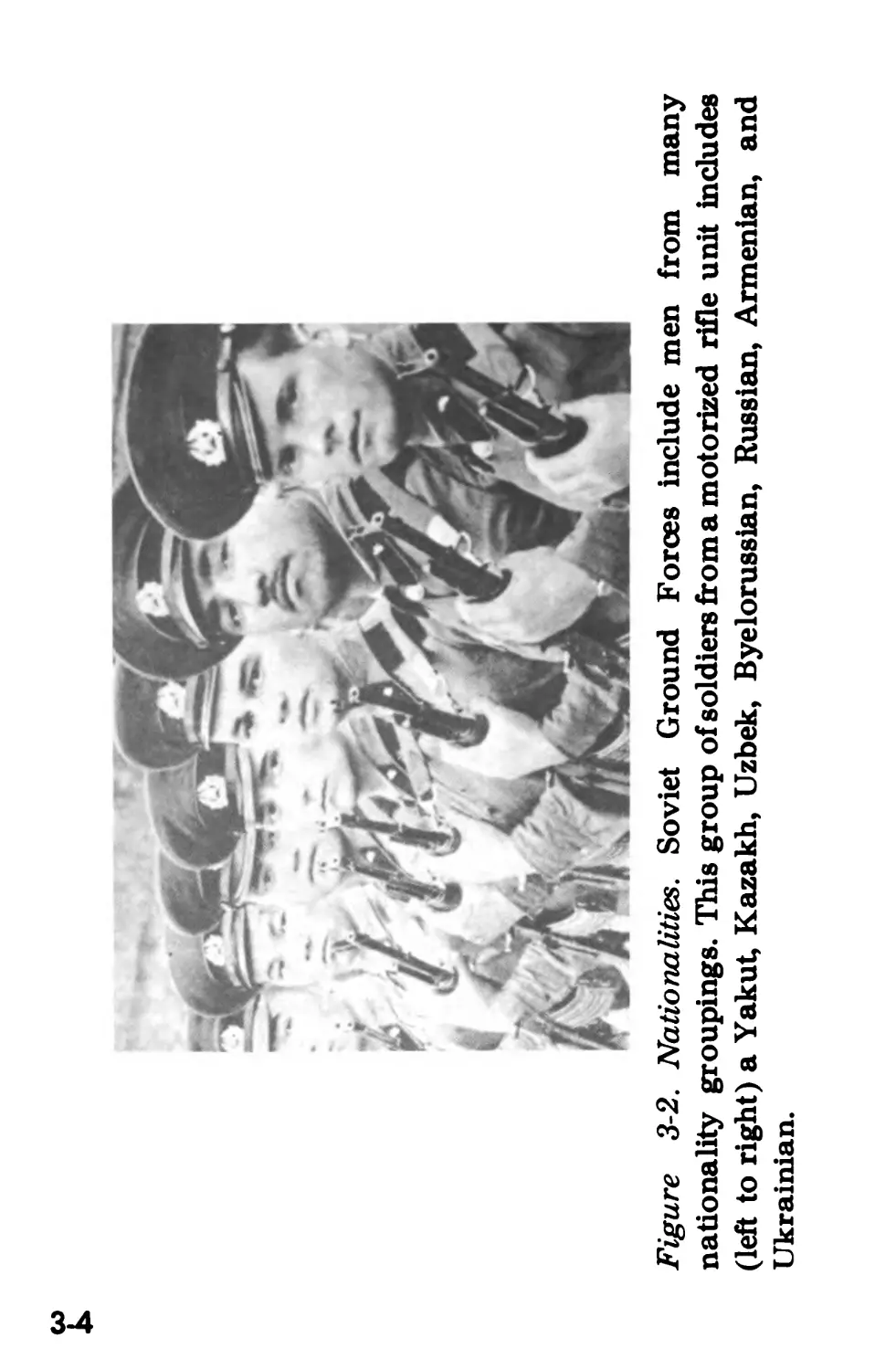
c.	Population groups. The Soviet manpower pool con-
sists of young men from more than 100 nationality group-
ings, men from farms and factories, from cities and rural
communities. Men from all of the nationality groupings,
whether Russian, Ukranian, Uzbek, Armenian, or Lithua-
nian are drafted into the Soviet armed forces. However, no
3-3
Figure 3-2. Nationalities. Soviet Ground Forces include men from many
nationality groupings. This group of soldiers from a motorized rifle unit includes
(left to right) a Yakut, Kazakh, Uzbek, Byelorussian, Russian, Armenian, and
Ukrainian.
“national” formations are allowed in contrast with the
policy during World War II when Georgian, Ukrainian, and
other units were permitted.
3-3. Draft Law.
a.	Provisions. AU Soviet young men register with the
local Military Commissariat on their 17th birthday. A new
Soviet universal military service law went into effect on 1
January 1968. It replaced a 29-year-old law which had been
adopted prior to World War II and received numerous mod-
ifications. Under the 1968 law aU able-bodied men are sub-
ject to military service on their 18th birthday, and must
serve two years in the armed forces except that men enter-
ing the Navy or sea-going border guards must serve three
years (a reduction from three and four years, respectively,
under the previous draft law). Men with coUege educations
are required to serve only one year. Upon leaving military
service, all men remain in the reserves until age 50; women
until age 40.
b.	Deferments. Although practicaUy aU eligible males
are liable for military service, the 1968 law does provide for
specific deferments. These deferments normaUy are granted
by the local draft boards. Specific reasons for deferment
include sole support of a disabled parent or wife, or two
disabled children, or various combinations of parents and
children, especiaUy if no institutional care can be provided;
students studying fuU-time or continuously on a part-time
basis; or for medical reasons. After an educational defer-
ment, a man is still eligible for the draft up to age 27, while
dependency and medical deferments are called to active
duty by age 27 or are then enrolled in the reserves.
c.	Women in uniform. According to law, Soviet women
between ages 19 and 40 with medical or other specialized
training can be inducted into military service in peacetime,
recruited for refresher training, or may volunteer for active
duty. Specialist training is not further clarified in the law,
but could include computer technicians, special equipment
3-5
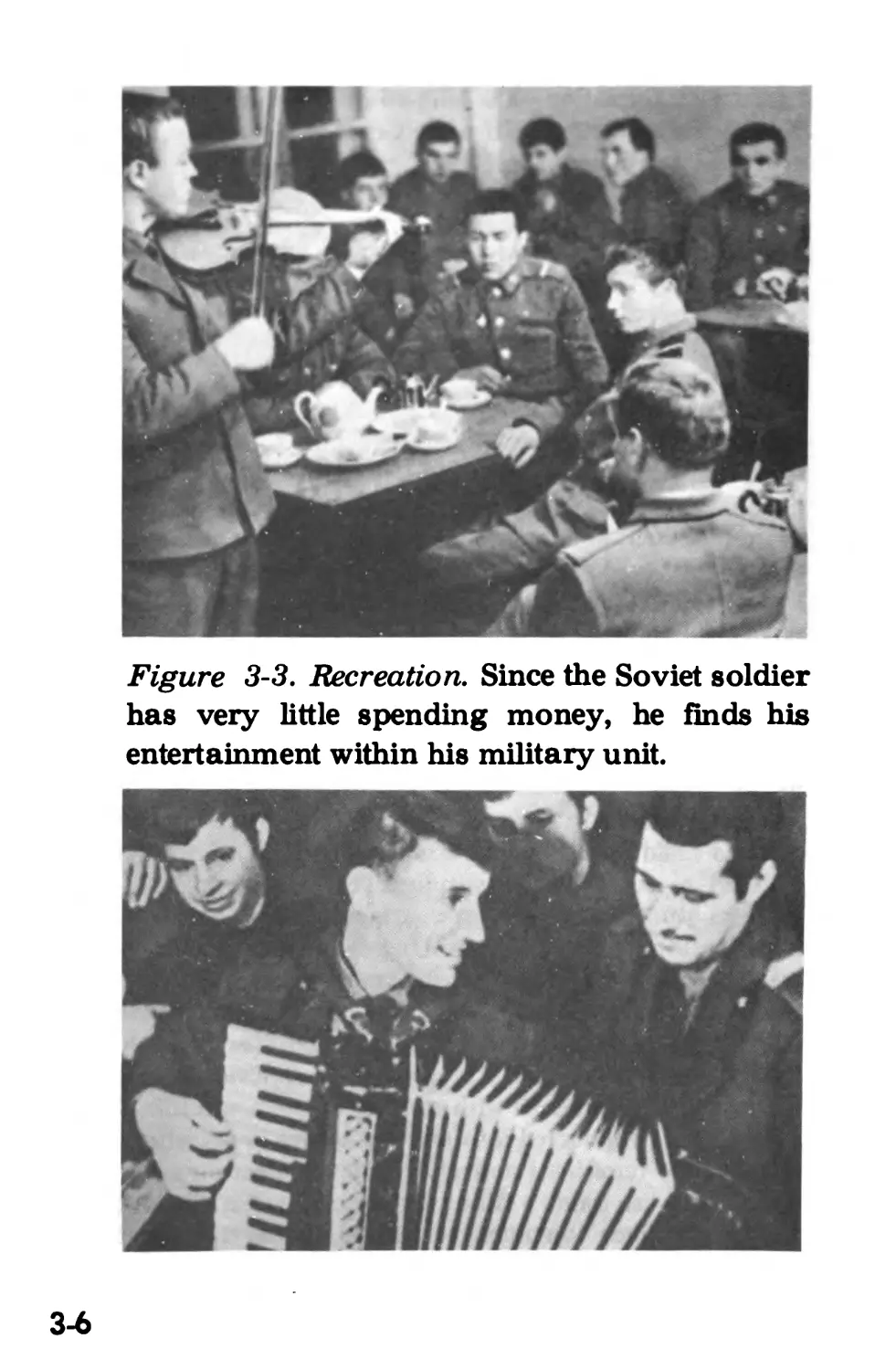
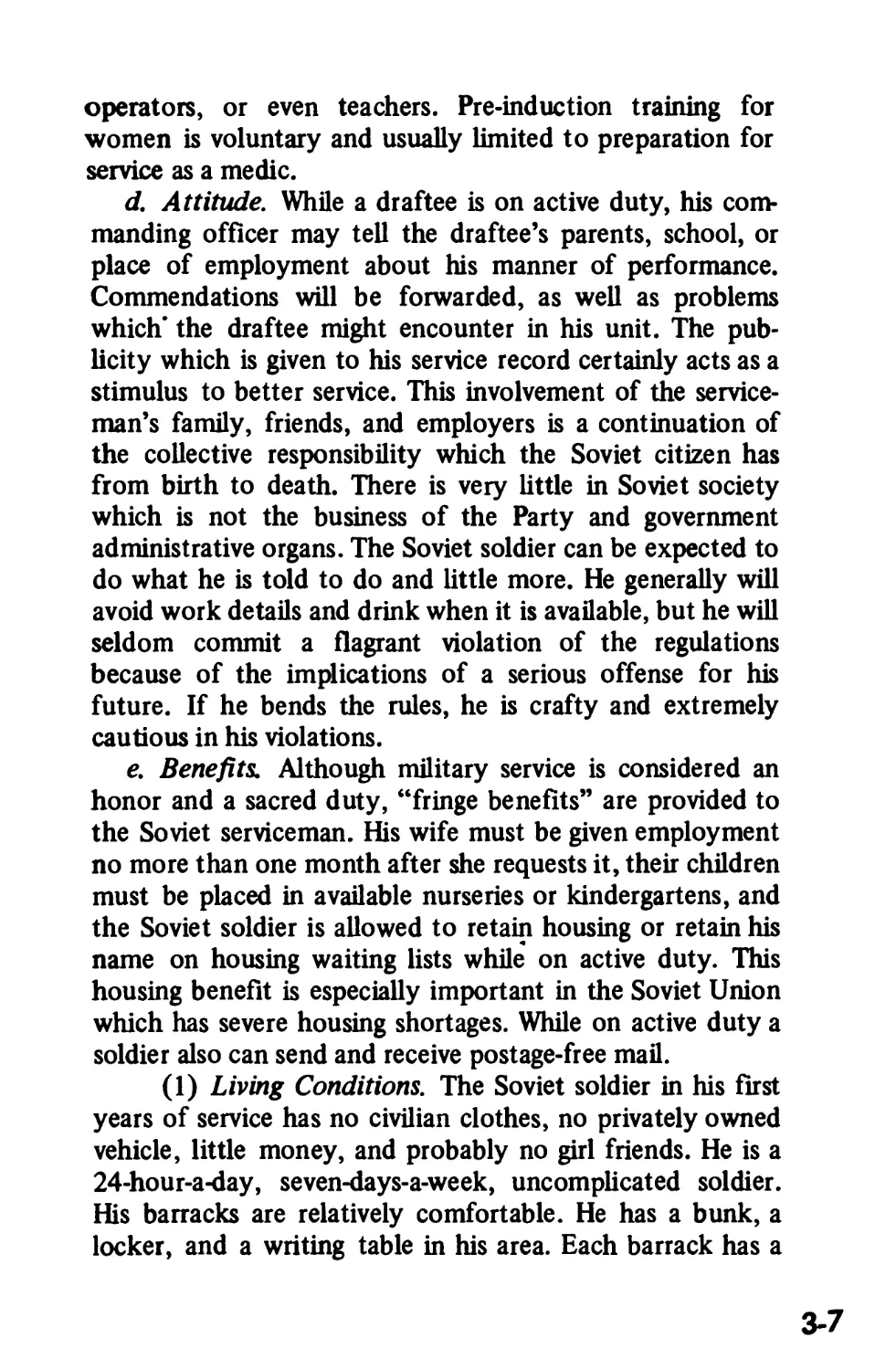
Figure 3-3. Recreation. Since the Soviet soldier
has very little spending money, he finds his
entertainment within his military unit.
3-6
operators, or even teachers. Pre-induction training for
women is voluntary and usually limited to preparation for
service as a medic.
d.	Attitude, While a draftee is on active duty, his com-
manding officer may tell the draftee’s parents, school, or
place of employment about his manner of performance.
Commendations will be forwarded, as well as problems
which’ the draftee might encounter in his unit. The pub-
licity which is given to his service record certainly acts as a
stimulus to better service. This involvement of the service-
man’s family, friends, and employers is a continuation of
the collective responsibility which the Soviet citizen has
from birth to death. There is very little in Soviet society
which is not the business of the Party and government
administrative organs. The Soviet soldier can be expected to
do what he is told to do and little more. He generally will
avoid work details and drink when it is available, but he will
seldom commit a flagrant violation of the regulations
because of the implications of a serious offense for his
future. If he bends the rules, he is crafty and extremely
cautious in his violations.
e.	Benefits. Although military service is considered an
honor and a sacred duty, “fringe benefits” are provided to
the Soviet serviceman. His wife must be given employment
no more than one month after she requests it, their children
must be placed in available nurseries or kindergartens, and
the Soviet soldier is allowed to retain housing or retain his
name on housing waiting lists while on active duty. This
housing benefit is especially important in the Soviet Union
which has severe housing shortages. While on active duty a
soldier also can send and receive postage-free mail.
(1)	Living Conditions. The Soviet soldier in his first
years of service has no civilian clothes, no privately owned
vehicle, little money, and probably no girl friends. He is a
24-hour-a-day, seven-days-a-week, uncomplicated soldier.
His barracks are relatively comfortable. He has a bunk, a
locker, and a writing table in his area. Each barrack has a
3-7
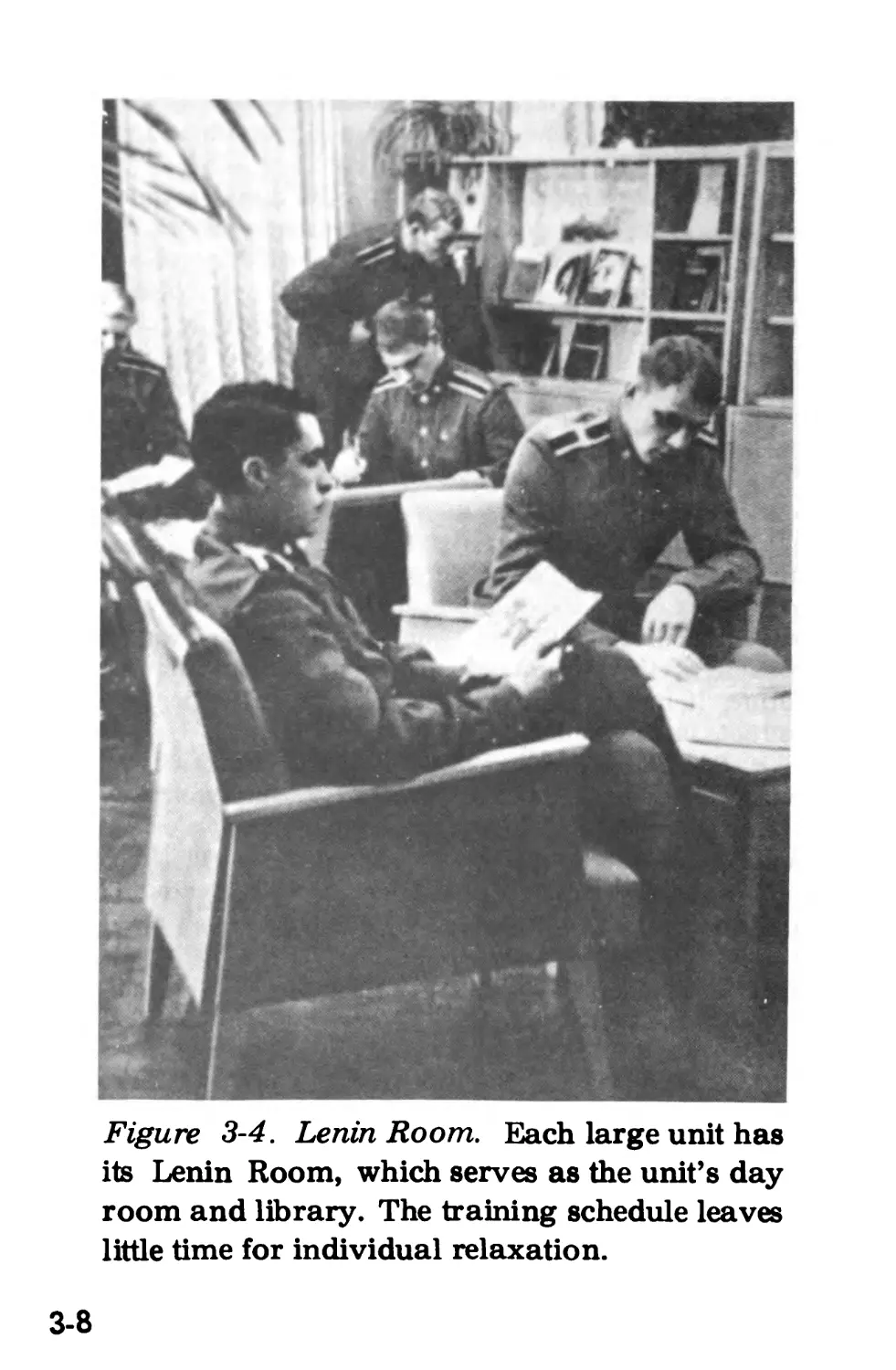
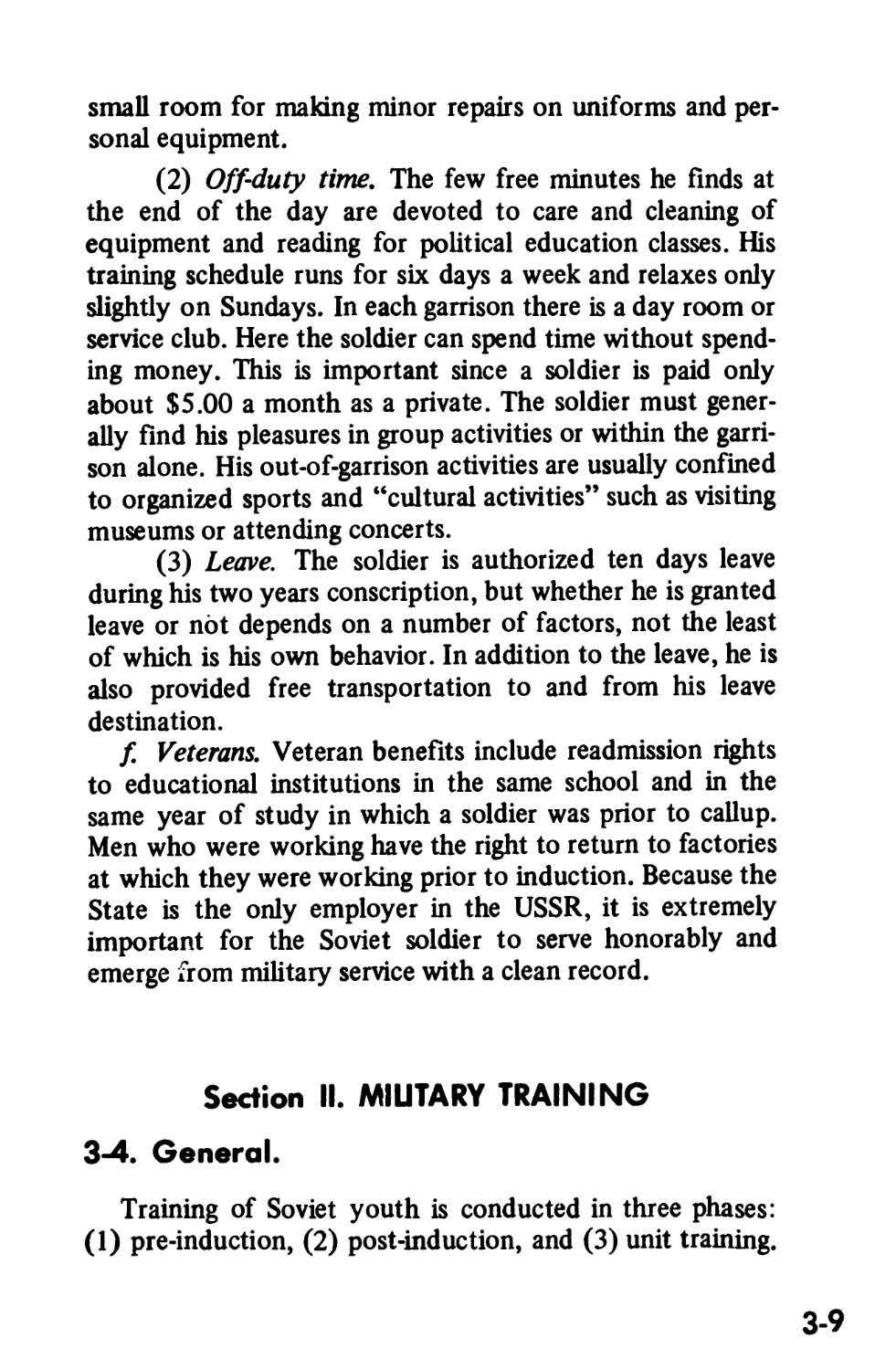
Figure 3-4. Lenin Room. Each large unit has
its Lenin Room, which serves as the unit’s day
room and library. The training schedule leaves
little time for individual relaxation.
3-8
small room for making minor repairs on uniforms and per-
sonal equipment.
(2)	Off-duty time. The few free minutes he finds at
the end of the day are devoted to care and cleaning of
equipment and reading for political education classes. His
training schedule runs for six days a week and relaxes only
slightly on Sundays. In each garrison there is a day room or
service club. Here the soldier can spend time without spend-
ing money. This is important since a soldier is paid only
about $5.00 a month as a private. The soldier must gener-
ally find his pleasures in group activities or within the garri-
son alone. His out-of-garrison activities are usually confined
to organized sports and “cultural activities” such as visiting
museums or attending concerts.
(3)	Leave. The soldier is authorized ten days leave
during his two years conscription, but whether he is granted
leave or not depends on a number of factors, not the least
of which is his own behavior. In addition to the leave, he is
also provided free transportation to and from his leave
destination.
f.	Veterans. Veteran benefits include readmission rights
to educational institutions in the same school and in the
same year of study in which a soldier was prior to callup.
Men who were working have the right to return to factories
at which they were working prior to induction. Because the
State is the only employer in the USSR, it is extremely
important for the Soviet soldier to serve honorably and
emerge from military service with a clean record.
Section II. MILITARY TRAINING
3-4. General.
Training of Soviet youth is conducted in three phases:
(1) pre-induction, (2) post-induction, and (3) unit training.
3-9
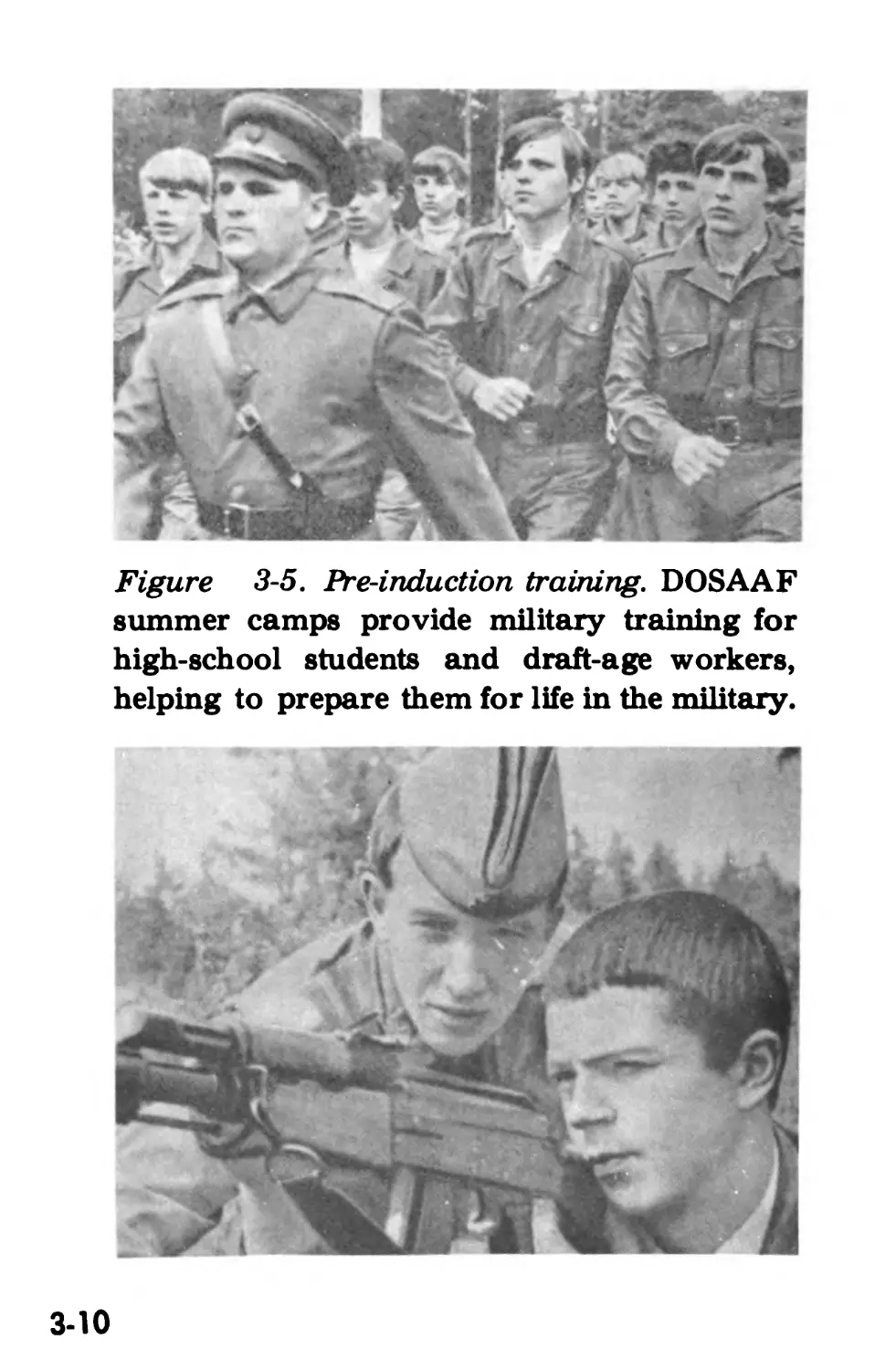
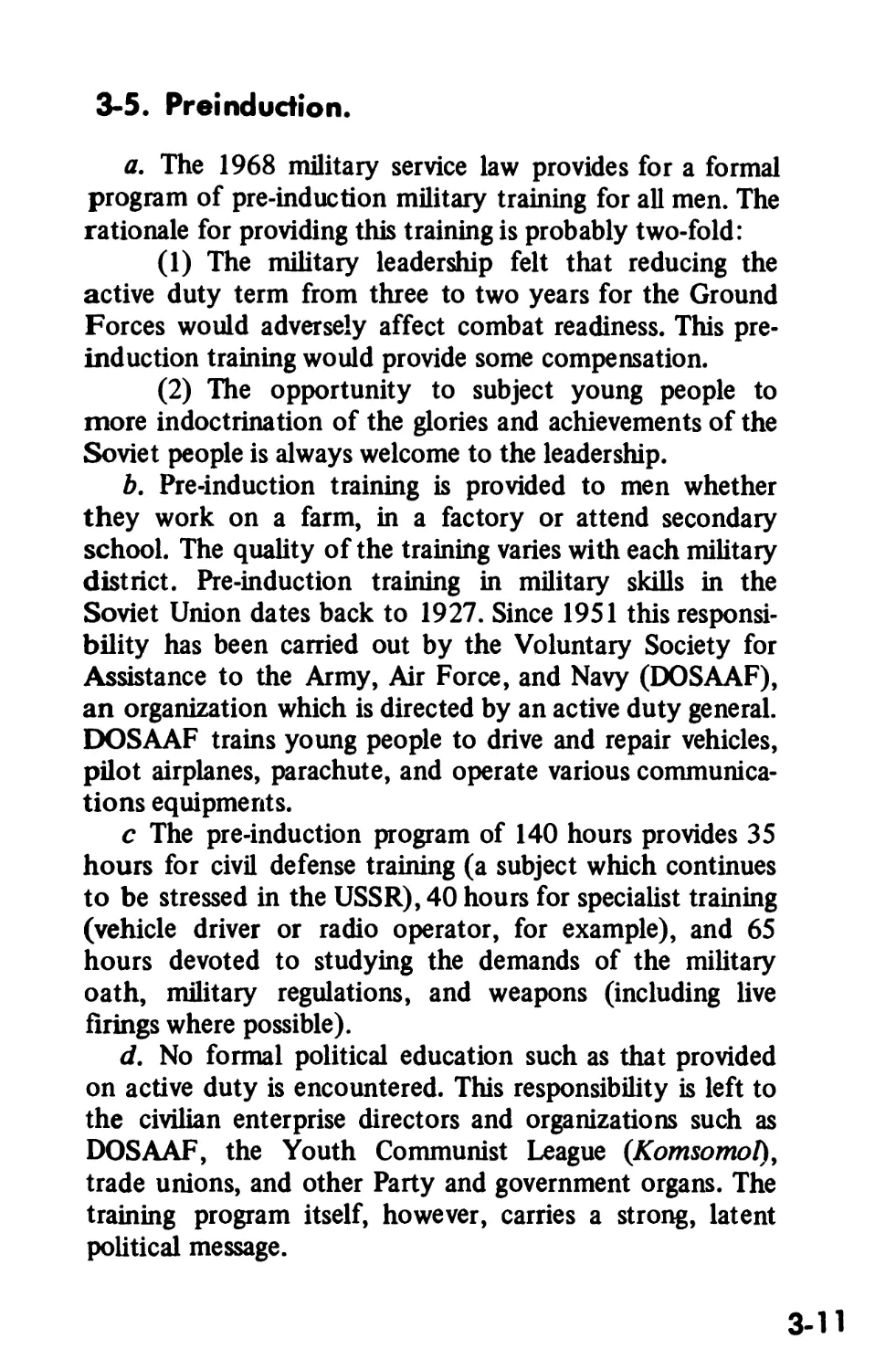
Figure 3-5. Pre-induction training. DOSAAF
summer camps provide military training for
high-school students and draft-age workers,
helping to prepare them for life in the military.
3-10
3-5. Preinduction.
a.	The 1968 military service law provides for a formal
program of pre-induction military training for all men. The
rationale for providing this training is probably two-fold:
(1)	The military leadership felt that reducing the
active duty term from three to two years for the Ground
Forces would adversely affect combat readiness. This pre-
induction training would provide some compensation.
(2)	The opportunity to subject young people to
more indoctrination of the glories and achievements of the
Soviet people is always welcome to the leadership.
b.	Pre-induction training is provided to men whether
they work on a farm, in a factory or attend secondary
school. The quality of the training varies with each military
district. Pre-induction training in military skills in the
Soviet Union dates back to 1927. Since 1951 this responsi-
bility has been carried out by the Voluntary Society for
Assistance to the Army, Air Force, and Navy (DOSAAF),
an organization which is directed by an active duty general.
DOSAAF trains young people to drive and repair vehicles,
pilot airplanes, parachute, and operate various communica-
tions equipments.
c The pre-induction program of 140 hours provides 35
hours for civil defense training (a subject which continues
to be stressed in the USSR), 40 hours for specialist training
(vehicle driver or radio operator, for example), and 65
hours devoted to studying the demands of the military
oath, military regulations, and weapons (including live
firings where possible).
d. No formal political education such as that provided
on active duty is encountered. This responsibility is left to
the civilian enterprise directors and organizations such as
DOSAAF, the Youth Communist League (Komsomol),
trade unions, and other Party and government organs. The
training program itself, however, carries a strong, latent
political message.
3-П
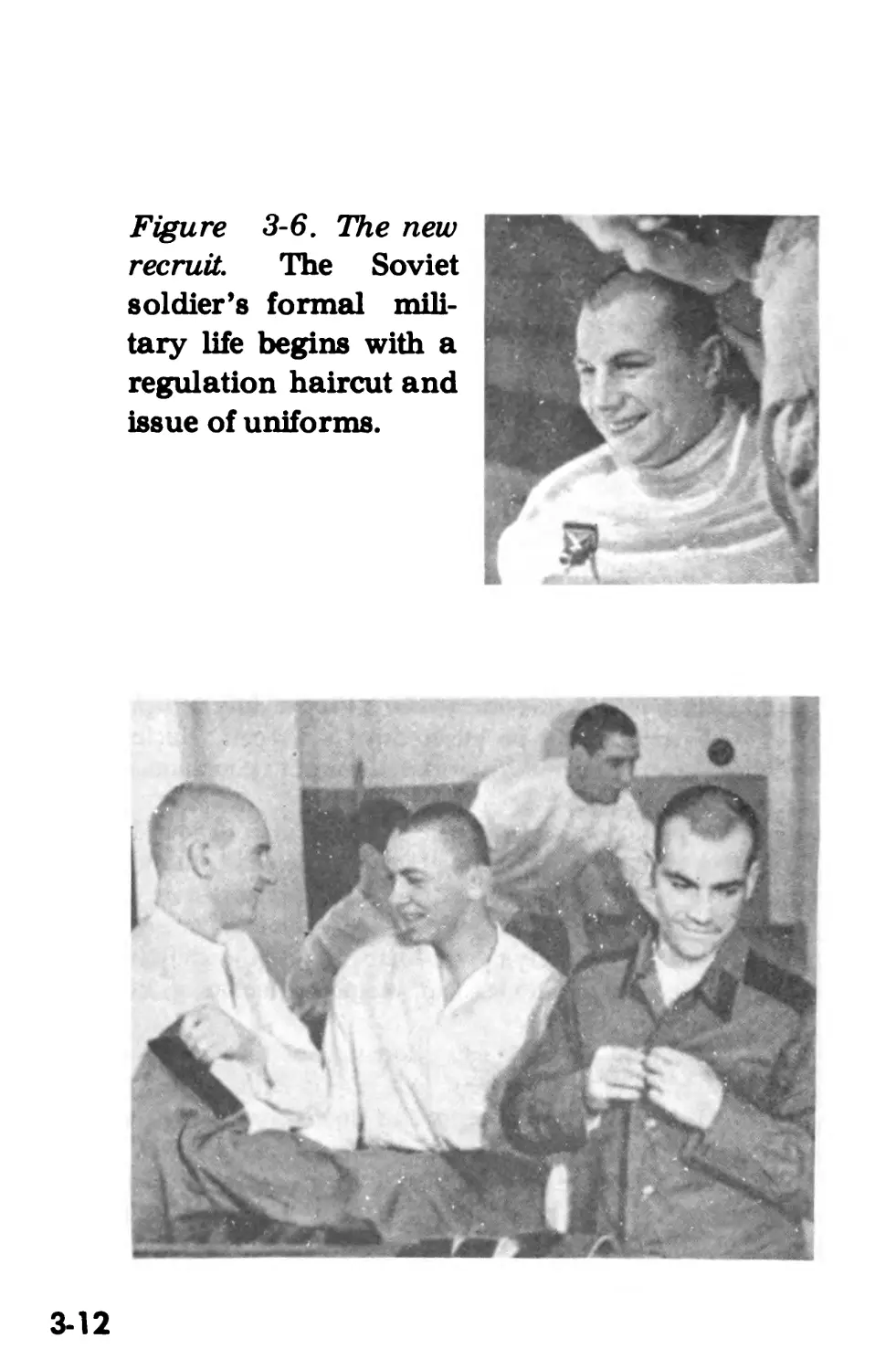
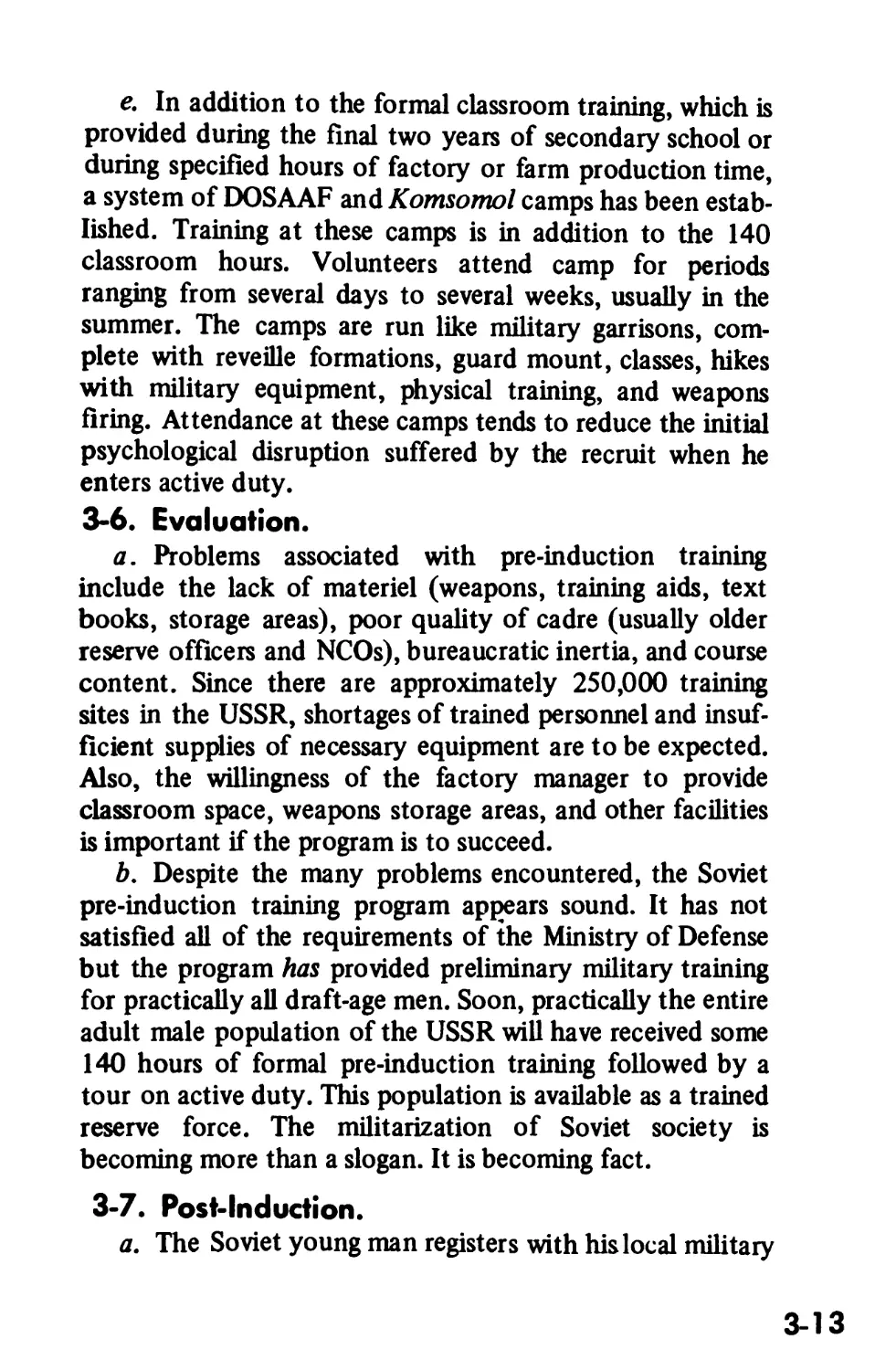
Figure 3-6. The new
recruit. The Soviet
soldier’s formal mili-
tary life begins with a
regulation haircut and
issue of uniforms.
3-12
e. In addition to the formal classroom training, which is
provided during the final two years of secondary school or
during specified hours of factory or farm production time,
a system of DOSAAF and Komsomol camps has been estab-
lished. Training at these camps is in addition to the 140
classroom hours. Volunteers attend camp for periods
ranging from several days to several weeks, usually in the
summer. The camps are run like military garrisons, com-
plete with reveille formations, guard mount, classes, hikes
with military equipment, physical training, and weapons
firing. Attendance at these camps tends to reduce the initial
psychological disruption suffered by the recruit when he
enters active duty.
3-6. Evaluation.
a.	Problems associated with pre-induction training
include the lack of materiel (weapons, training aids, text
books, storage areas), poor quality of cadre (usually older
reserve officers and NCOs), bureaucratic inertia, and course
content. Since there are approximately 250,000 training
sites in the USSR, shortages of trained personnel and insuf-
ficient supplies of necessary equipment are to be expected.
Also, the willingness of the factory manager to provide
classroom space, weapons storage areas, and other facilities
is important if the program is to succeed.
b.	Despite the many problems encountered, the Soviet
pre-induction training program appears sound. It has not
satisfied all of the requirements of the Ministry of Defense
but the program has provided preliminary military training
for practically all draft-age men. Soon, practically the entire
adult male population of the USSR will have received some
140 hours of formal pre-induction training followed by a
tour on active duty. This population is available as a trained
reserve force. The militarization of Soviet society is
becoming more than a slogan. It is becoming fact.
3-7. Posf-lnducfion.
a.	The Soviet young man registers with his local military
3-13
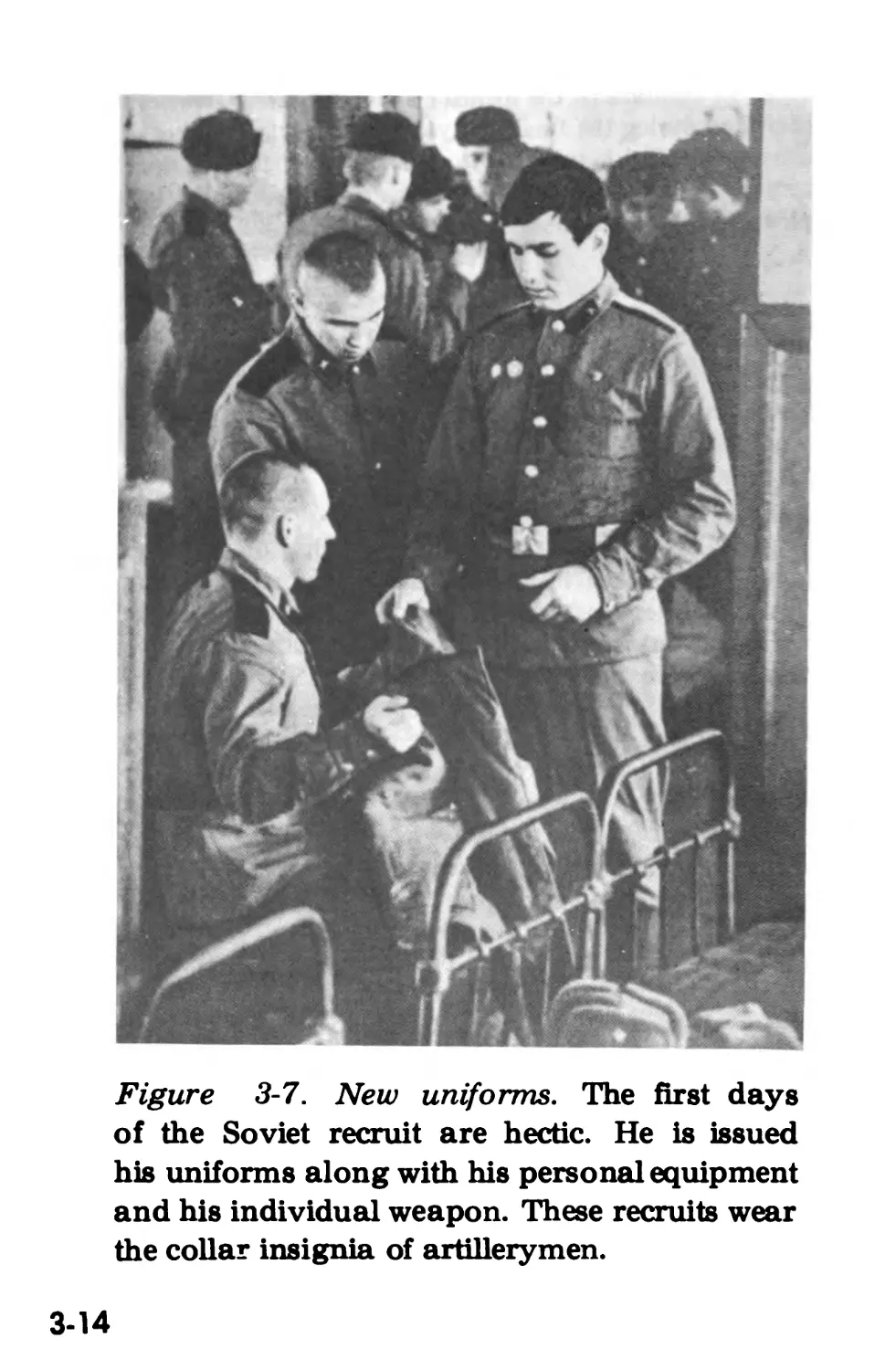
Figure 3-7. New uniforms. The first days
of the Soviet recruit are hectic. He is issued
his uniforms along with his personal equipment
and his individual weapon. These recruits wear
the collar insignia of artillerymen.
3-14
commissariat on his 17th birthday. Inductions take place
during May-June and November-December, with corre-
sponding releases from active duty of those soldiers whose
terms of service have expired.
b.	Newly inducted soldiers are transported to camps
which equate roughly to the reception centers of the US
Army. At these camps the recruit is given a thorough physi-
cal examination, issued his uniforms and equipment, and
begins a short session of initial military training.
c.	The recruit learns to drill, to march, and to integrate
himself into a military unit. Although wearing a uniform,
he is not sworn into the armed forces until the end of the
four-week period. The ceremony of swearing the oath is
impressive, with each soldier required to read the oath
aloud and sign it. Only after he has read the oath indivi-
dually is he in military service.
MILITARY OATH
I (name), a citizen of the Union of Soviet Socialist
Republics, by joining the ranks of the armed forces, take
an oath and solemnly swear to be an upright, brave,
disciplined, vigilant soldier, to strictly preserve military
and government secrets, and to execute without contra-
diction, all military regulations and orders of com-
manders and superiors. I swear to learn conscientiously
the trade of war, to protect with all means the military
and peoples’ property, and to be devoted to my people,
my Soviet homeland, and the Soviet Government to my
last breath. I will always be ready to report, by order of
the Soviet Government, as a soldier of the armed forces
for the defense of my homeland, the Union of Soviet
Socialist Republics. I swear to defend it bravely and
wisely with all my strength and in honor, without
sparing my blood and without regard for my life to
achieve a complete victory over the enemy. Should I
break my solemn oath, may the severe penalties of the
Soviet Law, the overall hatred, and the contempt of the
working masses strike me.
3-15
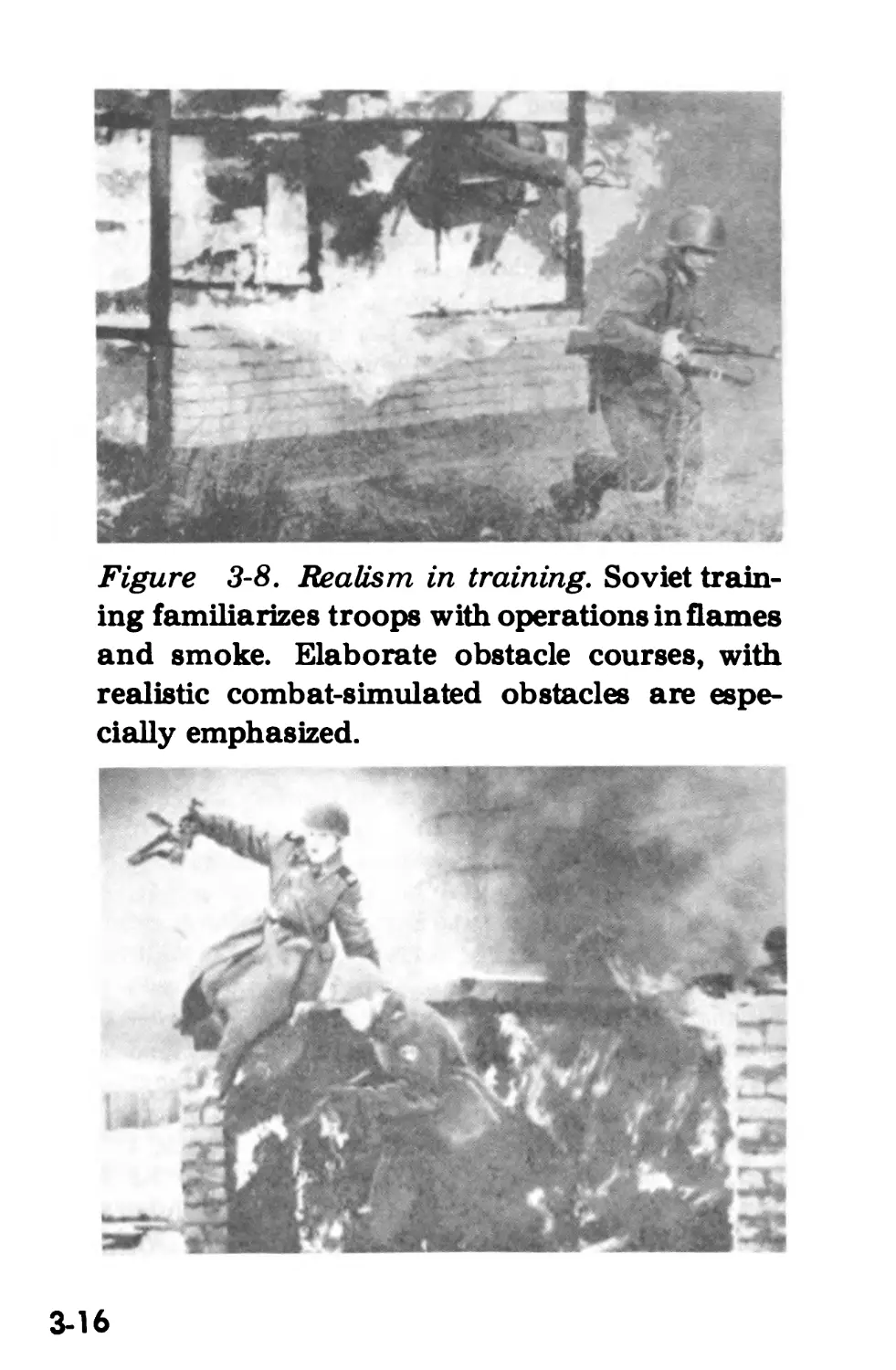
Figure 3-8. Realism in training. Soviet train-
ing familiarizes troops with operations in flames
and smoke. Elaborate obstacle courses, with
realistic combat-simulated obstacles are espe-
cially emphasized.
3-16
3-8. Unit Training.
a.	The Soviets now conduct two unit training cycles per
year to coincide with the twice yearly induction cycles.
b.	Before being integrated into the overall unit opera-
tional and training activities, the new recruits undergo a
period of individual training which builds upon his pre-
induction training. This constitutes the majority of his basic
training. Those new inductees who had been selected for
specialist training are assigned to their units after comple-
tion of courses at specialist and NCO training centers. These
new specialists and NCO’s are integrated into the units and
perform on the job training at the same time the new re-
cruits are undergoing their individual training.
c.	The second stage of the cycle is to integrate the new
inductees, specialists and NCO into the overall training of
their units. This is accomplished by a gradual progression
through crew served weapons and small unit training from
squad to platoon level. The emphasis is on field training and
frequent exercise.
d.	The final stage is to convert the large tactical units
and formations into integrated, smoothly running elements.
The same repetition and gradualism which mark the small
unit level training is applied. Company, battalion and regi-
mental exercises including combined arms training are con-
ducted as a cycle concludes. Division and higher levels of
exercises are also conducted periodically, though not neces-
sarily in concert with the gradual cycle described above.
These larger exercises are designed more for the exercise of
higher level command and control procedures than for the
conduct of unit training.
e.	Despite an impressive arsenal of the most modern and
complex weaponry, the Soviet military leadership still gears
its training to a low level. The individual Soviet soldier, if
one judges by the type of training he receives, is unable to
3-17
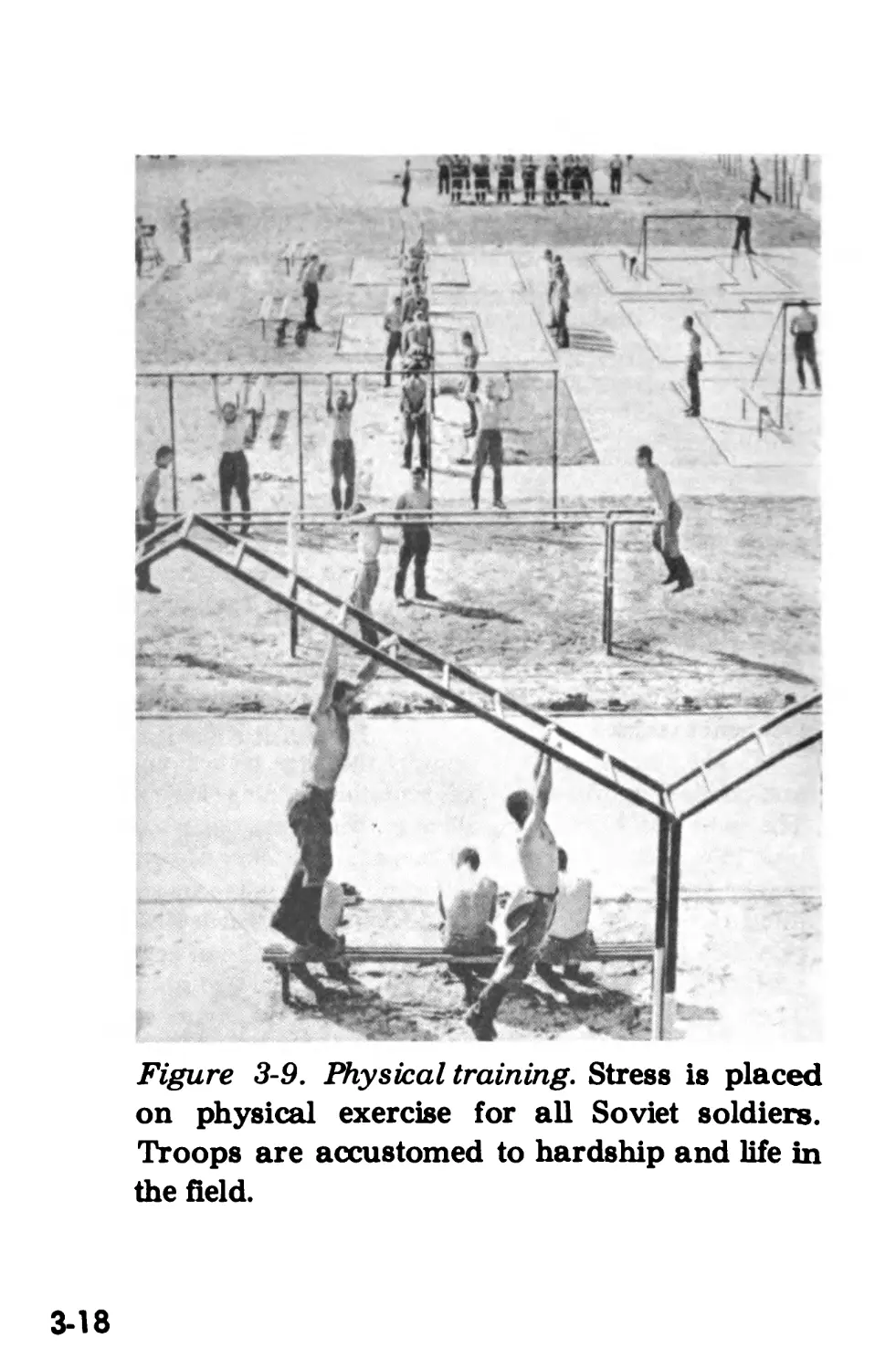
Figure 3-9. Physical training. Stress is placed
on physical exercise for all Soviet soldiers.
Troops are accustomed to hardship and life in
the field.
3-18
master complex training tasks. Soviet training is simple,
repetitious, and as realistic as possible. Each soldier is
taught a specific job for his wartime mission, and although
there are frequent references to cross-training, on-the-job
training in one skill appears to be the rule.
(1)	Repetition. The Soviet fighting man constantly
practices his skills, drilling until his actions become routine.
The stress on repetition insures that each soldier can per-
form his combat tasks automatically with high confidence.
To insure uniformity, and to reinforce repetition, the
annual training schedule varies little from year to year. The
obvious disadvantage of rote training, of repeating the same
tasks, is that training becomes stereotyped. This type of
training is opposed to the equally important Soviet require-
ment that all training be as realistic as possible.
(2)	Realism. The Soviet military leadership considers
it important for each soldier to be faced with realistic dif-
ficulties and obstacles as close as possible to those which
could be encountered in combat. Realism assists in the
psychological “steeling” of the soldier. All instruction and
drill includes psychological preparation so that the soldier
becomes stable and confident of his ability to withstand
stress and overcome fear.
(a) The Soviet soldier is told that Chemical, Bio-
logical or Radiological (CBR) weapons could be used on the
modern battlefield, thus he is not surprised to be ordered to
wear his protective mask and clothing for long periods of
time. He gains confidence in this equipment since he must
operate radios, drive a truck, or conduct weapons drill
while wearing his mask and protective clothing.*
(ft) An example of this realism and psychological
conditioning is seen in tactical exercises in which weapons
of mass destruction are simulated. In the attack zone, dry
♦Soviet soldiers are taught to perform reconnaissance of the
contaminated areas as well as to cross areas dressed in pro-
tective equipment. They are also taught to decontaminate
terrain, vehicles and equipment.
3-19
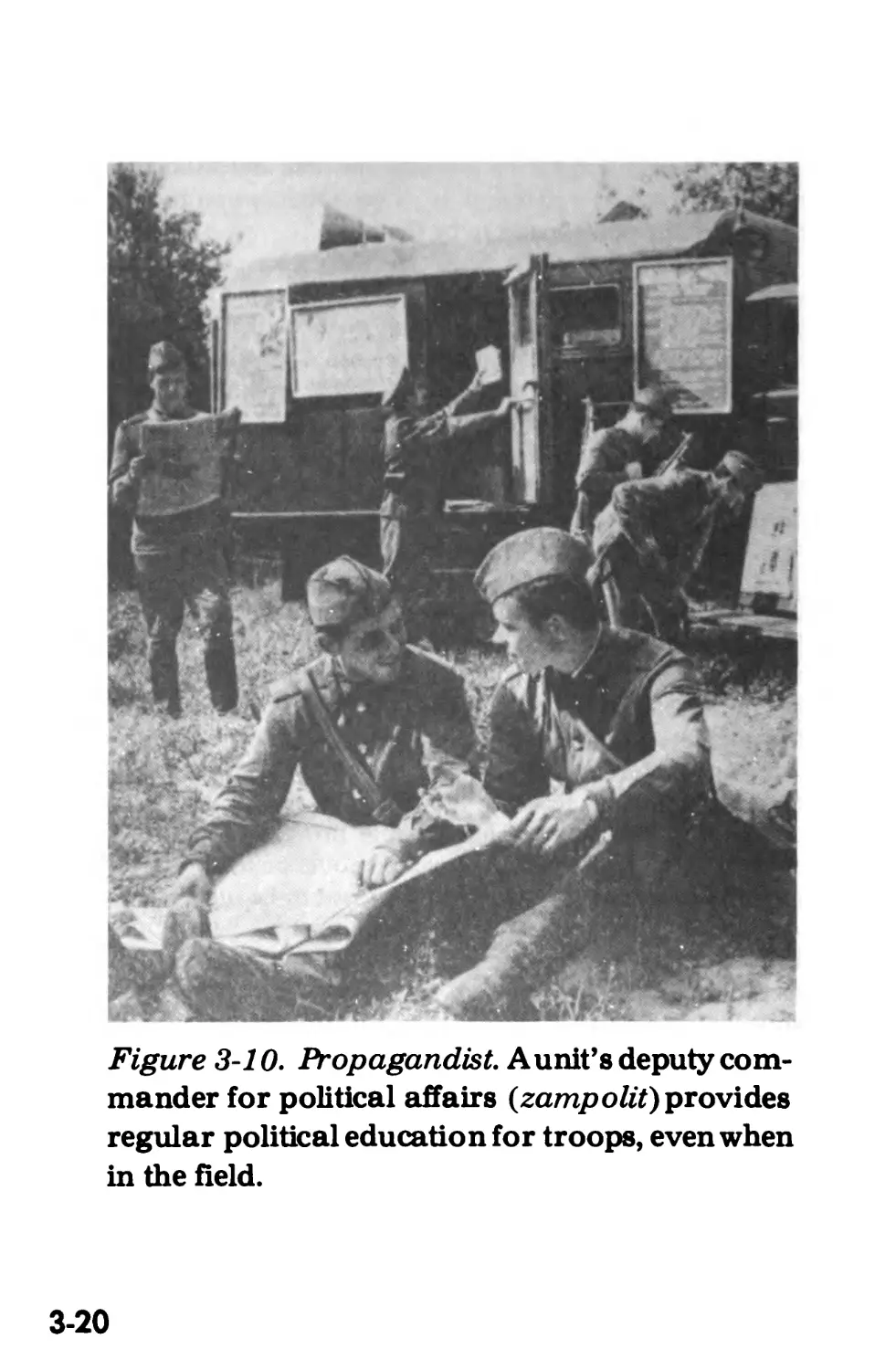
Figure 3-10. Propagandist. Aunit’s deputy com-
mander for political affairs (zampoltt) provides
regular political education for troops, even when
in the field.
3-20
grasses are set fire, and there is much smoke to simulate
walking over ground zero. It requires a greater effort on
their part but, in Soviet terms, this type training is a success
since the troops gain confidence in themselves and their
equipment.
(3)	Physical Training. The Soviet soldier is in excel-
lent physical condition. This is due largely to a way of life
in which the privately owned vehicle is the exception. His
training emphasizes physical conditioning throughout a day
which begins with vigorous calisthenics, followed by a long
run. The Soviet soldier is expected to move immediately
from a forced march into combat with the enemy.
(4)	Field Training. Approximately 75 percent of the
Soviet soldier’s training time is spent in the field. He learns
to live and fight in the field. Little time is wasted on frills
and little concern is evidenced for his physical comfort.
Since he is being trained to fight at any time and under all
weather conditions, adverse weather rarely causes cancel-
lation of training. In his field training, the soldier learns to
live and survive under natural conditions. The end product
of such training is a soldier who is confident of his ability
to fight under any conditions.
3-9. Political Training.
a.	The Soviet soldier is subjected to a continuing stream
of political education at all levels of training. The Soviet
leadership considers military service as the university of
Communism, i.e., the individual Soviet citizen is trained not
only to wage war but also in political awareness. In Soviet
terms, the main purpose of political training is to educate
servicemen to become “active builders of communism,
staunch patriots,” and concerned with international strug-
gles of the “working classes to be worthy inheritors of the
revolutionary and military traditions of their fathers and
skillful and staunch defenders, with the superb moral and
combat qualities of their socialist country.” Although it
3-21
Figure 3-11. The classroom. Political education
classes are an important part of the training
day of the Soviet soldier.
3-22
would be easy to dismiss such comments as propaganda the
importance attached to political training (indoctrination)
cannot be minimized. From 10 to 15 percent of the mili-
tary training day is devoted to political training. This in-
cludes formal classes ranging from the importance of
Marxism-Leninism to the international duty of all Soviet
fighting men. Practically every soldier is a member of the
Communist Party or the Komsomol, the youth auxiliary of
the party.
b.	All units of company/battery size or larger have a
political officer, or zampolit, assigned. The company com-
mander is in charge but he is assisted by the zampolit (a
contraction for deputy commanding officer for political
affairs) who is responsible for the political training of the
unit. From the company level up there is a zampolit. This
separate political chain of command culminates in the Main
Political Administration of the Army and Navy. Directed
by a general of the army (equivalent in grade to a marshal),
the Main Political Administration is a major component of
the Ministry of Defense (see Chapter 4).
c.	The company-level zampolit is not limited to purely
political matters. He also functions as an executive officer,
training officer, recreation officer, and even as the equiva-
lent of a Western chaplain. The zampolit is a positive force
for improving the unit’s combat readiness, its ability to
fulfill its wartime commitments.
d.	Although the average soldier may be turned off by
the incessant ideological indoctrination program, on bal-
ance, the political indoctrination program is probably effec-
tive in awakening the interest of the soldier in the external
world as the Soviet leadership perceives it. Also from the
Soviet point of view, the zampolit and his informants aid in
controlling any political dissidence, and serve as an effective
check on arbitrary and capricious conduct by commanding
officers.
3-23
Section III.	PERSONAL TRAITS
3-10. Inflexibility.
The Soviet soldier is a product of one of the most regi-
mented societies in history. He is accustomed to everything
proceeding according to plan. Alterations in the plan place
the individual in a precarious position. As long as the action
proceeds along known lines, there is strict compliance with
instructions. In the absence of orders, or in a situation
where conditions have changed, the soldier must devise his
own solution. The Soviet soldier, in a fluid situation, might
tend to follow the last order given regardless of how inap-
propriate it might be. This drive to persist on a course of
action despite the objective conditions appears to be a
major weakness of the Soviet soldier.
3-11. Discipline.
a.	Immediately upon entering military service, the
Soviet soldier becomes aware of the importance of swiftly
and strictly complying with orders. He is confronted with
slogans such as: “An order under any circumstances must
be carried out.... An order is sacred, both for those who
give them and for those whose duty is to carry them out.
... The responsibility is a mutual one.... A violation of
discipline, a cowardly retreat from the demands of military
duty— is treason.”
b.	No latitude is given and the authorities try to make
the soldier obey orders without question. Traditionally, the
stress has been on blind obedience, but with the rise in the
educational level of armed forces personnel it has become
necessary to explain some orders. It is no longer acceptable
to shout orders and expect quick and unquestioning com-
pliance. For some older members of the Soviet military this
is a difficult period. Traditionalists feel that abandoning
discipline based on fear and blind obedience may be harm-
ful to good order. The modem stress on self-discipline
allows too much flexibility in the relationship between the
3-24
commander and subordinates and is viewed as risky.
3-12. Initiative.
a.	The constant stress on discipline and strict com-
pliance with orders leads to one of the most noticeable
personality traits within Soviet society—an almost total lack
of initiative. The Soviet soldier is no exception. He is the
product of a society which places great reliance on direc-
tions “from above.” Such reliance has the effect of limiting
innovation and initiative at the intermediate and lower
levels. If there is such a lack of faith in subordinates as
might be indicated by the detailed and exact instructions
which leave little room for innovation, then it is difficult to
understand how the Soviet soldier can be expected to
innovate in a fluid situation.
b.	Another factor which tends to stifle initiative is a
tendency to oversupervise. Superiors, having uncovered
problems, often correct the problems on the spot in a
detailed manner. They seldom exercise the option of allow-
ing the subordinate to make the correction and then pro-
viding advice and assistance.
c.	Enlisted men are affected by the general lack of
initiative since they tend to avoid responsibility and “hide
behind their comrades.” They live according to the rule: “If
they order it, I’ll do it. If they don’t, I won’t volunteer.”
Avoidance or responsibility and lack of initiative appears to
be deeply rooted in the Soviet military.
Section IV.	STRENGTHS AND WEAKNESSES
3-13. Strengths and Weaknesses.
a.	In this section the Soviet soldier has been examined
as a product of his society. Although the approach is from
the Western point of view, an attempt has been made to
understand and to appreciate the difficulties inherent in
making such an evaluation.
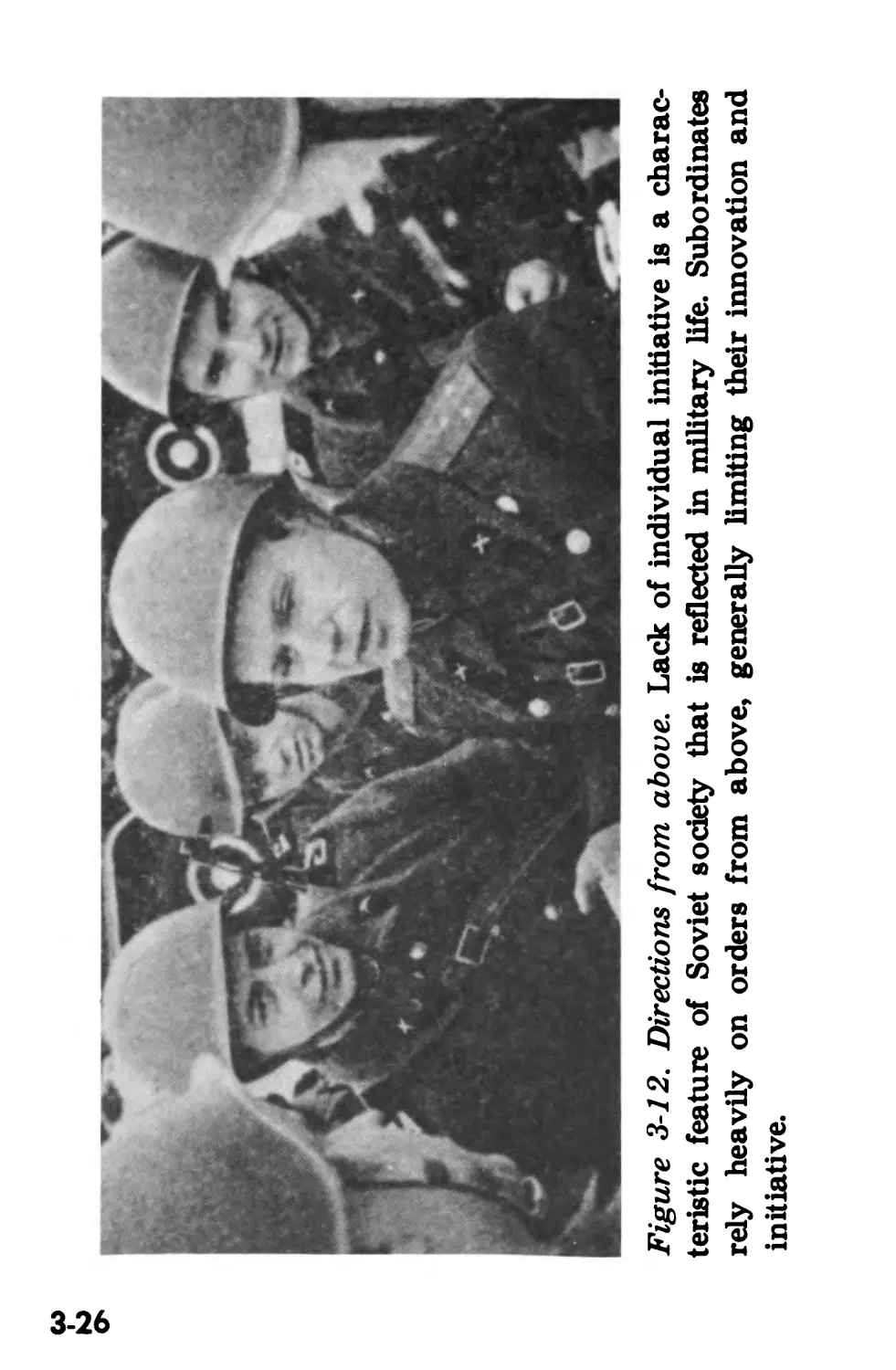
3-25
3-26
Figure 3-12. Directions from above. Lack of individual initiative is a charac-
teristic feature of Soviet society that is reflected in military life. Subordinates
rely heavily on orders from above, generally limiting their innovation and
initiative.
b.	The Soviet soldier has become more urbanized since
World War IL His level of education has risen, preparing
him for most tasks that he encounters in military life. This
increased level of his education sometimes creates problems
in the military training process. He approaches military ser-
vice with little enthusiasm, serves his two years, and
normally is not permitted to extend his active duty service.
Upon entry into the reserve forces, he tends to forget his
military skills and makes little effort to keep current in
technical matters.
c.	The political indoctrination process, although boring
at times, is effective. The enlisted man is concerned with his
fellow soldiers, and pays attention to the social pressures
within his unit. This does not imply absolute acceptance of
the political line, only that it does have a greater impact
than many people in the West would accept. There are
aspects of his political training which are counter-
productive such as the incessant meetings, endless discus-
sions of political writings of Lenin and others, and a general
preoccupation with formalism within the political hier-
archy. Nonetheless, the Soviet soldier is greatly influenced
by the massive propaganda machinery of the USSR.
d.	The Soviet soldier is an unsophisticated and relatively
simple man. His conception of life is limited by his own
experience, although he may be vaguely aware of life in
other societies. He knows that his life has improved steadily
and that certain basic improvements continue in his stan-
dard of living. Once on active duty, life is simple and
unfettered by many of the incidental comforts that sur-
round his Western counterpart. Since he is unsophisticated
and used to comparatively fewer comforts of life, he is an
uncomplaining soldier, one accustomed to living a spartan
existence—by Western standards. He makes a good line sol-
dier, one who obeys without question, and one who can
live under relatively primitive conditions.
e.	The Soviet soldier’s uncomplaining acceptance of life
in the military and his almost blind obedience to orders
3-27
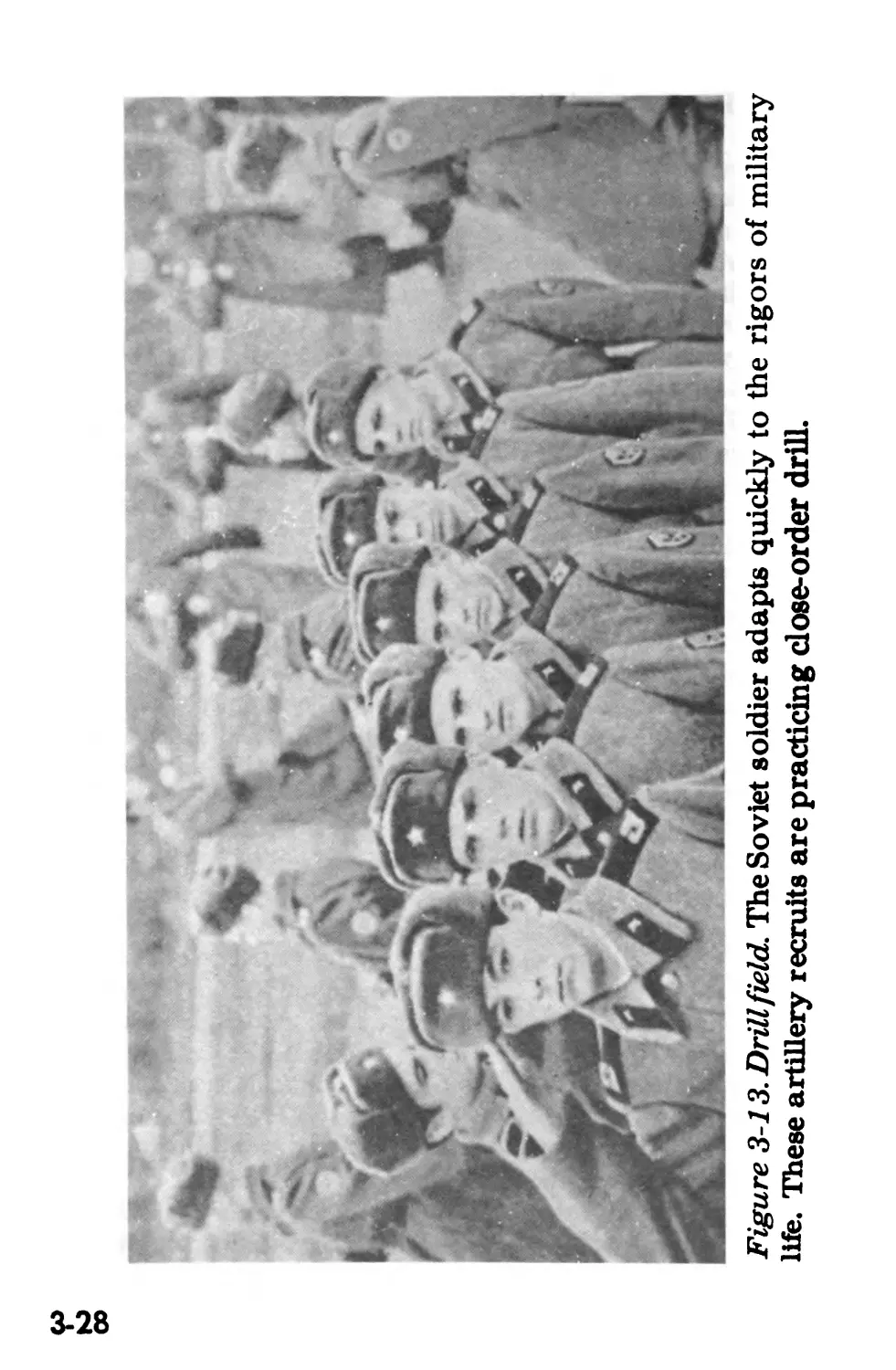
3-28
Figure 3-13. Drill field. The Soviet soldier adapts quickly to the rigors of military
life. These artillery recruits are practicing dose-order drill.
tend to sap him of his initiative. Orders are law and the law
must be obeyed. Since the soldier has this concept con-
stantly repeated to him, it is not difficult to understand
why he lacks initiative. Superior officers are responsible for
giving orders and if orders are not given, then the Soviet
soldier feels that he is not required to act. Failure, after
taking the initiative, is worse than failure by refusing to
take any action. Conformity and obedience are two of the
most outstanding characteristics of the Soviet soldier.
f.	Most of the Soviet soldiers are Russians (or at least
Slavic). The members of the other ethnic minority groups
serve alongside their Slavic brothers but often suffer from
linguistic and technological disadvantages. Slavic soldiers
occupy most leadership positions and most of the officers
of the Soviet army are Slavic. There are no serious ethnic
problems in the Soviet military; however, there is always a
potential for trouble when an army is composed of more
than 100 nationalities.
g.	The training which the Soviet soldier receives reflects
the conviction of the Soviet High Command that their sol-
diers are simple and unsophisticated. Training is designed to
impart minimal knowledge to the soldier and to make him a
member of the team. However, missile and rocket troops,
and other specialities, are trained differently owing to their
more technical equipment.
h.	Part of the difficulties encountered in the training
process may be offset by the formal instruction which is
conducted by DOSAAF. This preinduction training, while
meeting some difficulties, is ultimately an asset to the
Soviet commander. Recruits arrive in their units of assign-
ment with at least minimal military knowledge and should
be capable of fighting alongside the other soldiers in the
unit with only minimal formal training.
i.	The lack of recent Soviet combat experience is a seri-
ous weakness, despite indirect experience in Vietnam and
Middle East combat. This lack of combat experience is
compounded by the generation gap existing between the
3-29
newly inducted soldier and his senior officers and NCOs.
/. Universal military service, although perhaps initially
lowering the effectiveness of combat units by reducing the
Ground Forces term of service from three to two years, is
now producing a young, large and qualified reserve force.
k. The Soviet soldier, if led properly and if he has a
clear reason for fighting, will continue to be a formidable
opponent. The Soviet soldier’s greatest strength (obedience)
is perhaps his greatest weakness (lack of initiative).
3-30
CHAPTER 4
ORGANIZATION OF SOVIET GROUND FORCES
4-1. Minister of Defense.
a.	The senior military official of the Soviet Union is the
Minister of Defense. This office was held by a political
commissar or a military political officer from the Russian
Revolution of 1917 through 1955, after which the office
has been held by professional military officers.
b.	Marshal of the Soviet Union Andrei A. Grechko has
held the position of Minister of Defense since 12 April
1967. He became a full, voting member of the Politburo of
the Communist Party of the Soviet Union in April of 1973,
the only professional soldier to have ever served in this
body, except for the brief, four-month tenure of Marshal
Zhukov in 1957 (see Paragraph 2-5).
4-2. Defense Establishment.
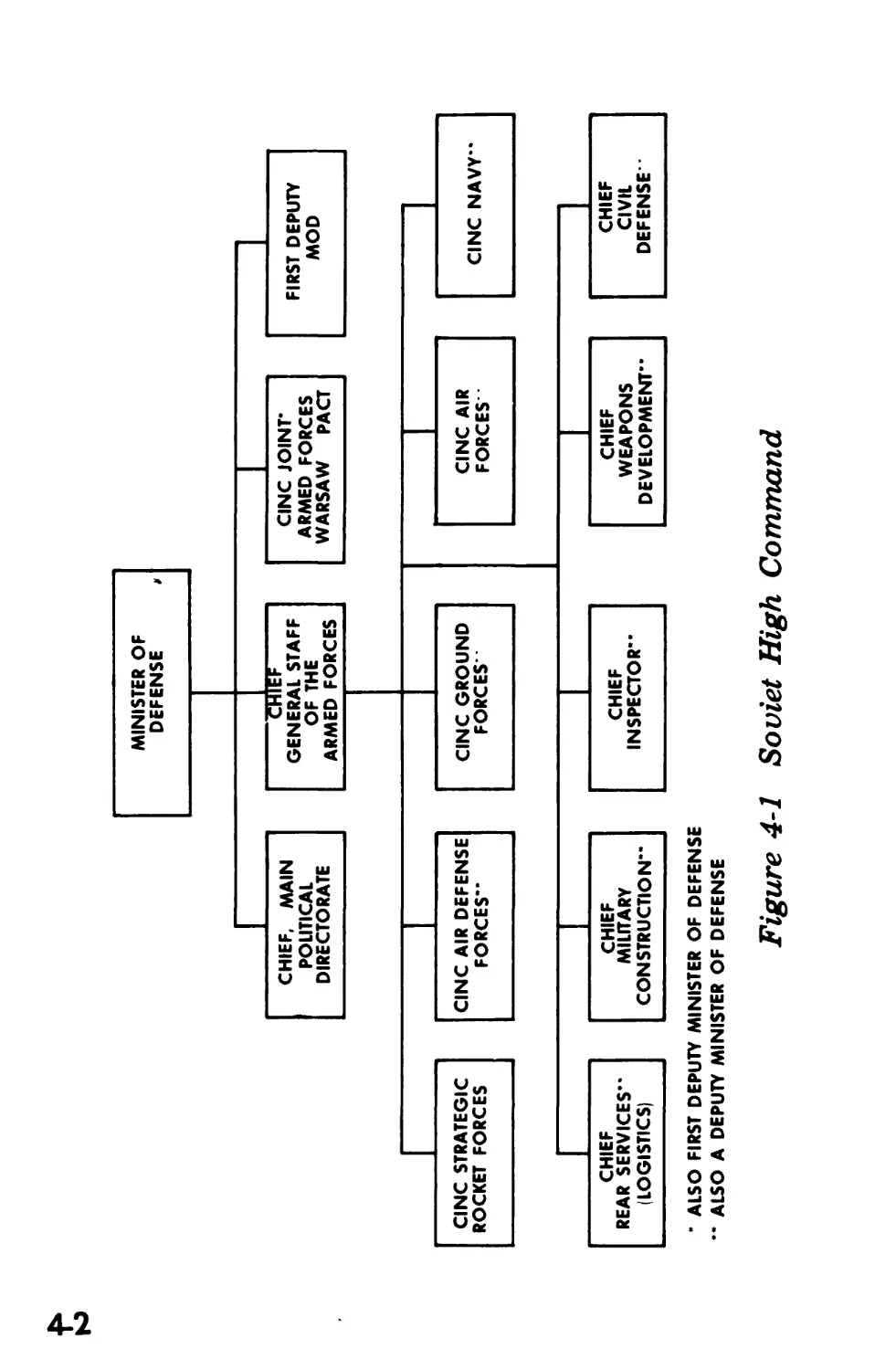
a.	The principal components of the Soviet defense
establishment are shown in Figure 4-1 . The General Staff
of the Armed Forces corresponds roughly to the US Joint
Chiefs of Staff, with respect to planning and operational
direction, and the Commander-in-Chief of the Joint Armed
Forces of the Warsaw Pact Nations equates in broad terms
to NATO’s Supreme Allied Commander Europe. Certain
other Deputy Ministers of Defense, such as that for Rear
Services (logistics), Military Construction, and Weapons
Development can be equated with US Assistant Secretaries
of Defense.
b.	The member of the Soviet high command who has no
counterpart in the US defense establishment is the Chief of
the Main Political Directorate. This directorate is under a
general of the army, a grade equivalent to marshal in the
Soviet rank structure. It provides the organizational
4-1
’ ALSO FIRST DEPUTY MINISTER OF DEFENSE
” ALSO A DEPUTY MINISTER OF DEFENSE
Figure 4-1 Soviet High Command
means by which the political and military leadership
of the Soviet Union is able to enforce strict Party con-
trol over the armed forces. From this directorate, there is a
direct line of control down to the deputy commander for
political affairs (zampolit) at the divisional, regimental,
battalion, and company or battery levels. As addressed in
Chapter 3, this officer is not an “outsider” but an integral
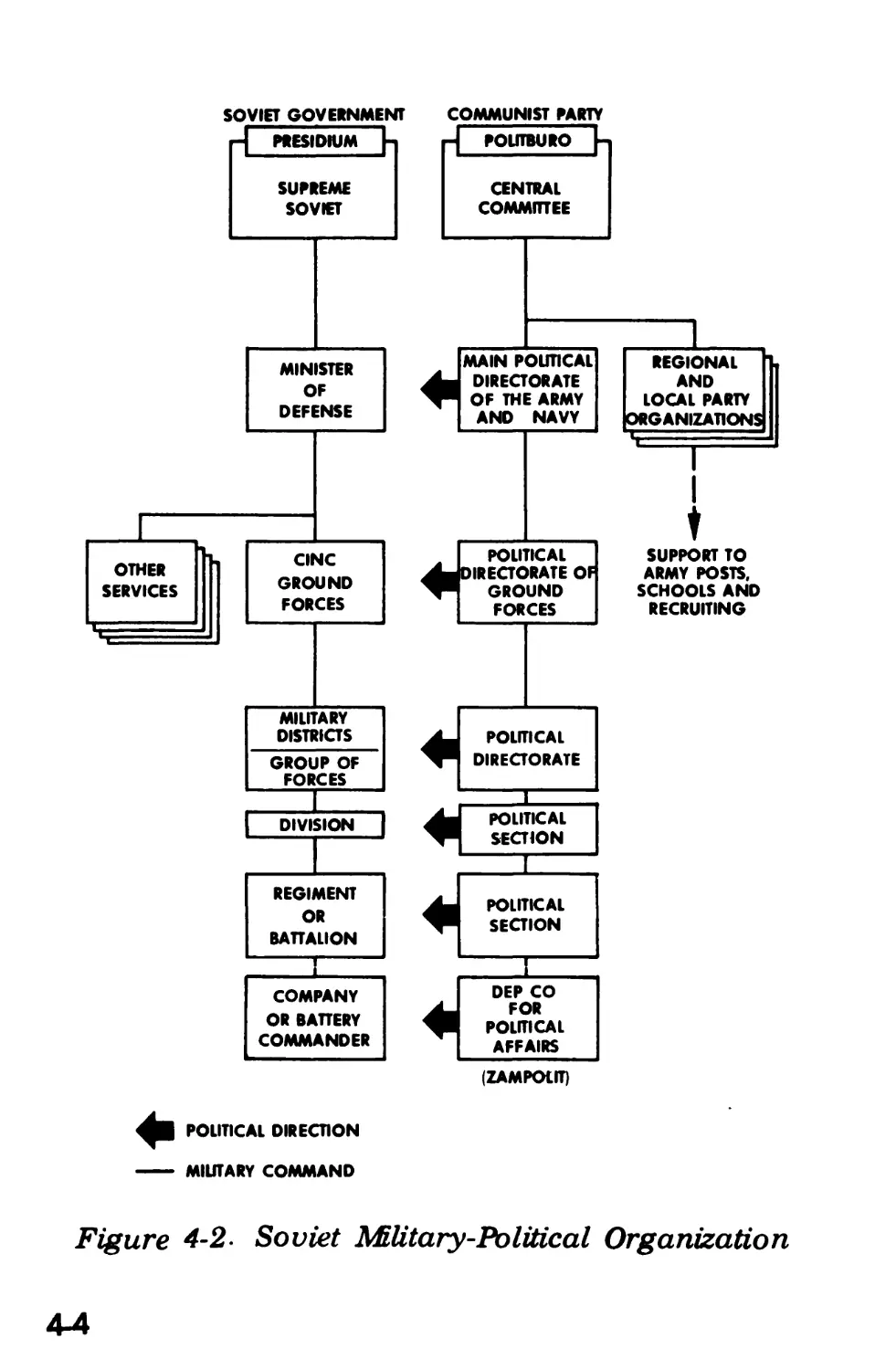
and working member of his military unit, striving to im-
prove the effectiveness of his unit (see Figure 4-2 , Soviet
Military Political Organization).
4-3. Combat Services.
Since 1960 the Soviet armed forces have been organized
into five separate combat services, each under a com-
mander-in-chief who also serves as a deputy minister of
defense, thus in effect combining the equivalent US posi-
tions of a service chief of staff and service secretary. The
Soviet combat services, in normal order of ranking are:
a.	Strategic Rocket Forces. Directs all Soviet units
possessing strategic missiles in the ICBM, IRBM, and MRBM
categories (but not the strategic bomber aircraft).
b.	Air Defense Forces. Responsible for all fighter-inter-
ceptor aircraft, surface-to-air missiles, antiaircraft guns, and
related warning and command systems of the Soviet home-
land defenses. Air defense elements of Soviet field forces do
not fall under Air Defense Forces, but rather under the
ground forces.
c.	Ground Forces. Controls all Soviet “army” units,
with operational control over most tactical air units (which
are administratively under the Soviet Air Forces) and Soviet
airborne troops (which also report directly to the Ministry
of Defense).
d.	Air Forces. Exercises administrative control of long
range, frontal (tactical) and military transport aviation less
air defense interceptors. Operational control of tactical
aviation is under the Ground Forces, and operational con-
4-3
COMMUNIST PARTY
SOVIET GOVERNMENT
(ZAMPOLIT)
POLITICAL DIRECTION
MILITARY COMMAND
Figure 4-2- Soviet MiUtary-Political Organization
4-4
trol of the strategic bombers and transport aviation is under
the Ministry of Defense.
e.	Navy. Directs all Soviet naval forces, including a naval
air arm, coastal defense forces, and naval infantry (ma-
rines).
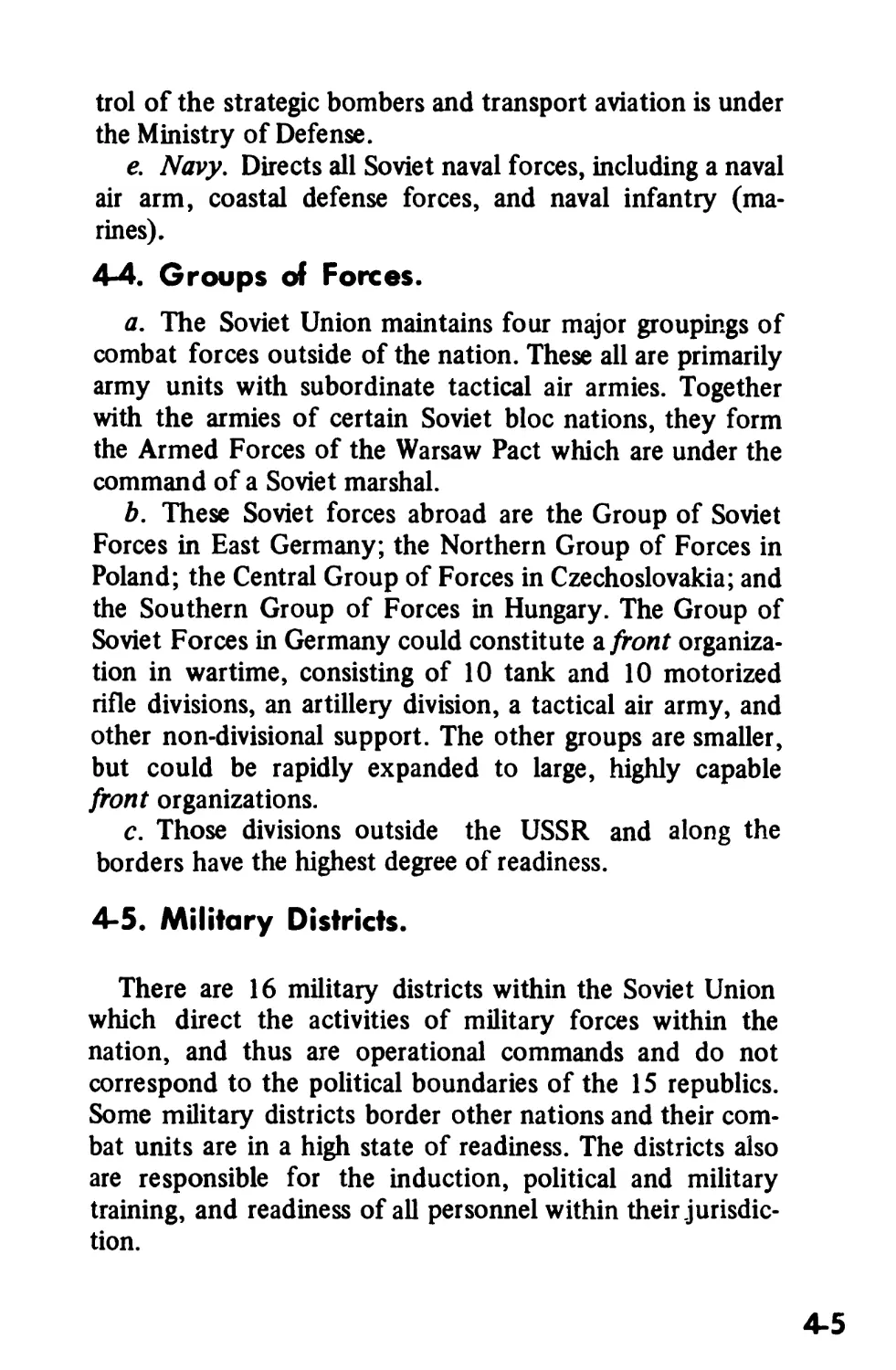
4-4. Groups of Forces.
a.	The Soviet Union maintains four major groupings of
combat forces outside of the nation. These all are primarily
army units with subordinate tactical air armies. Together
with the armies of certain Soviet bloc nations, they form
the Armed Forces of the Warsaw Pact which are under the
command of a Soviet marshal.
b.	These Soviet forces abroad are the Group of Soviet
Forces in East Germany; the Northern Group of Forces in
Poland; the Central Group of Forces in Czechoslovakia; and
the Southern Group of Forces in Hungary. The Group of
Soviet Forces in Germany could constitute a front organiza-
tion in wartime, consisting of 10 tank and 10 motorized
rifle divisions, an artillery division, a tactical air army, and
other non-divisional support. The other groups are smaller,
but could be rapidly expanded to large, highly capable
front organizations.
c.	Those divisions outside the USSR and along the
borders have the highest degree of readiness.
4-5. Military Districts.
There are 16 military districts within the Soviet Union
which direct the activities of military forces within the
nation, and thus are operational commands and do not
correspond to the political boundaries of the 15 republics.
Some military districts border other nations and their com-
bat units are in a high state of readiness. The districts also
are responsible for the induction, political and military
training, and readiness of all personnel within their jurisdic-
tion.
4-5
4-6. Arms and Services.
In Soviet Ground Forces there are combat arms, special
troops, and services. These are combined in the higher
tactical organizations, similar to the combinations of arms
and services in the US Army.
a.	The five combat arms are motorized rifle (me-
chanized infantry), tank, artillery, airborne, and air defense
of the Ground Forces.
(1)	Motorized rifle troops are the basic arm of
Ground Forces and closely parallel the mechanized infantry
of Western armies (see paragraph 6-2). Motorized rifle units
resemble US combined arms teams.
(2)	Tank troops are armored forces with significant
combined arms elements only at division level (see para-
graph 6-7).
(3)	Artillery troops are more prevalent in Soviet
Ground Forces than in most Western armies, including
artillery divisions as well as lesser tactical units. Their
weapons include conventional guns, howitzers, mortars,
multiple rocket launchers, free rockets, tactical ballistic
missiles, and anti-tank guided missiles (see paragraph 6-15).
(4)	Airborne troops are present in larger numbers in
Soviet Ground Forces than in any Western army. The
Soviet airborne divisions are primarily intended for rapid
use in an enemy’s rear or to secure friendly flanks. In recent
years, as Soviet capabilities to project military power have
increased, Soviet airborne troops have acquired added
significance (see Appendix A-9).
(5)	Air Defense of the Ground Troops provide air
defense within Ground Forces and are separate from the
troops who provide air defense of the country. Elements of
the Air Defense of Ground Troops are integrated in various
other combat commands and have mobile anti-aircraft guns
and surface-to-air missiles (see paragraph 6-25).
b.	The special troops of Ground Forces are engineer,
signal, chemical, motor transport, railway, road building,
and radio technical.
4-6
c.	The services of Ground Forces are intendance or
quartermaster, medical, highway commandant, veterinary,
topographic, transportation, administrative, justice, and
military bands.
4-7. Combat Units.
The organization of Soviet Ground Forces stresses rela-
tively small, basic units which are the building blocks for
forces that can be organized rapidly with minimum tailor-
ing before they are ready for combat.
a.	The front equates roughly to a US Army Group; a
typical front could have three or four combined arms
armies (15-20 divisions), one tank army (4-5 divisions), one
tactical air army, and supporting forces.
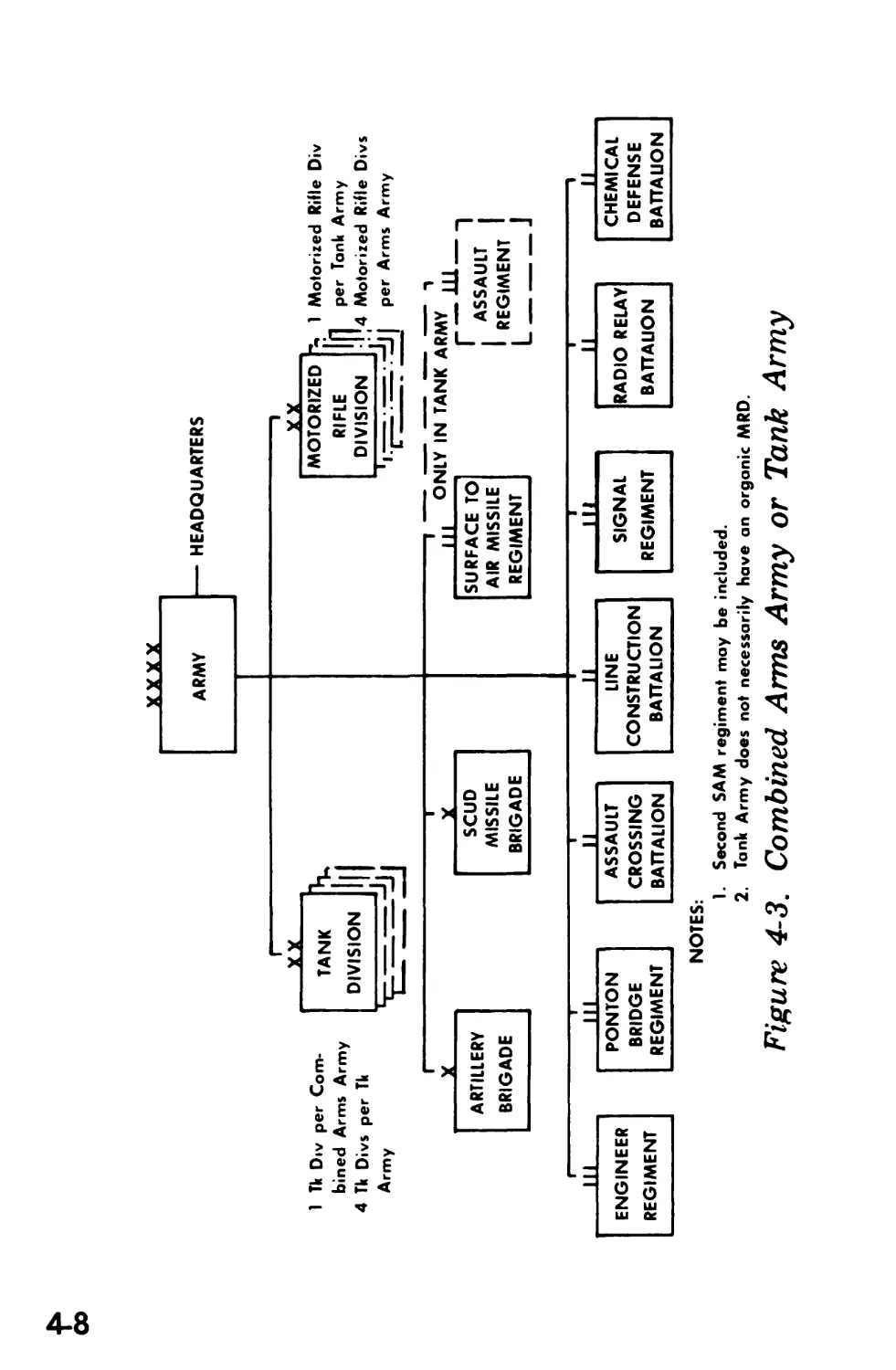
b.	The combined arms army is the basic Soviet field
army (see figure 4-3 , Combined Arms Army or Tank
Army). By mixing the number of component motorized
rifle and tank divisions and artillery support, the combined
arms army can function in either an offensive or defensive
role, and cope with geographic and other operational
constraints. The importance that Soviets place on these
special troops is demonstrated by the fact that they report
directly to the MOD.
c.	The tank army is an armor-heavy force which has
sufficient motorized rifle elements to punch through enemy
lines and exploit such breakthroughs by driving deep into
the enemy’s rear. Like the combined arms army, the tank
army’s size and exact divisional composition depends upon
the mission and area of operations (see’ figure 4-3 , Com-
bined Arms Army or Tank Army).
d.	Three different types of line divisions exist in the
Soviet Ground Forces: motorized rifle (approximately
110), tank (approximately 50), and airborne (7). The divi-
sions are organized on a triangular basis. For example, the
motorized rifle division has three rifle regiments (plus tank
and artillery regiments); each rifle regiment has three rifle
battalions; and each battalion has three companies. The
4-7
хххх
ARMY ------ HEADQUARTERS
1 Tk Div per Com-
bined Arms Army
4 Tk Divs per Tk
Army
у x
MOTORIZED
RIFLE
DIVISION
*4
Motorized Rifle Div
per Tank Army
Motorized Rifle Divs
per Arms Army
ENGINEER
REGIMENT
r—
X
ARTILLERY
BRIGADE
___Ш_____
PONTON
BRIDGE
REGIMENT
____1---
____X---
SCUD
MISSILE
BRIGADE
____LU
SURFACE TO
AIR MISSILE
REGIMENT
ONLY IN TANK ARMY_ щ
Г ASSAULT "J
^REGIMENT j
____U_____
ASSAULT
CROSSING
BATTALION
______H
LINE
CONSTRUCTION
BATTALION
SIGNAL
REGIMENT
RADIO RELAY
BATTAUON
II
CHEMICAL
DEFENSE
BATTAUON
NOTES:
1.	Second SAM regiment may be included.
2.	Tank Army does not necessarily have an organic MRD.
Figure 4-3. Combined Arms Army or Tank Army
artillery division is a fourth type found in a front and
consists of three artillery brigades, each containing three
battalions of varying caliber weapons. These include the
122-mm howitzer and 130-mm gun, and the 152-mm gun
howitzer.
e.	The “building block” concept is used extensively in
Soviet Ground Forces. For example, the tank regiment has
the same general organization, size, and equipment whether
assigned to a tank division or a motorized rifle division;
similarly, tank battalions and companies generally are the
same, facilitating training, exchange of personnel and equip-
ment, supply, etc.
f.	Soviet units generally are smaller in number of per-
sonnel than their Western counterparts, although not neces-
sarily in firepower. For example, the US mechanized
infantry division has 15,400 officers and enlisted men,
whereas, the Soviet motorized rifle division has about
11,500 personnel. Similar differences are evident in
subordinate infantry/rifle units:
	us	Soviet (approx.)
Rifle battalion	830	430
Rifle company	180	110
Rifle platoon	45	31
Rifle squad	10	10
g.	Readiness and mobilization are key factors when
considering Soviet Ground Forces. In peacetime the
160-170 divisions are maintained in three categories.
Category I is at near or full strength; Category II is at
reduced strength of personnel and equipment (combat
ready in a few days); and Category III is at cadre strength,
with most of the officers and noncommissioned officers,
most of the unit’s equipment, and a limited number of
enlisted men. The first phase of the Soviet mobilization
plan provides for the callup of fully trained reservists to
4-9
bring active duty units to full strength. In phase two the
partially trained reservists are used for the expansion of the
armed forces. There are various methods used in raising
Soviet military units to combat strengths; some units
simply receive qualified reservists from the vast Soviet
manpower pool. Others are formed by splitting existing
units and filling them out with reservists. A final method,
used by the Soviet Union during World War II, involves
creating entirely new units from the reserves with the key
command positions in the units being filled by regular army
officers and NCOs.
h.	Honors and decorations are publicized by the Soviet
armed forces for organizations as well as for individuals.
Many Soviet divisions and armies have been awarded the
honorary designation of “guards” for their outstanding
combat performance in World War II. The “guards”
designation is used whenever reference is made to the unit
and when addressing its officers and men. A major serving
in such a unit would be referred to as “guards major.” In
addition, some Soviet tank units have been awarded the
honor and designation of “shock” for wartime exploits, and
other honorary titles are used for specific units, such as the
Red Proletarian Division.
i.	In the civilian sector of the economy, sections of
plants and factories are earmarked for military production
in the event of war. A tractor factory might contain an
assembly line for the production of medium tanks. All of
the required tools and equipment are already on hand and
there is a military officer who is charged with the conver-
sion to wartime production. In addition, civilian equipment
and vehicles are designated for use in the event of mobiliza-
tion. Tractors, trucks, aircraft, even bicycles are earmarked
for use by individuals or military units. Some civilian truck
drivers, for example, were surprised to find themselves in
Czechoslovakia with their vehicles during the 1968
invasion. A civilian airplane quickly becomes a troop trans-
4-10
port since its pilot is a reserve officer and the aircraft is
owned by the State.
4-11

CHAPTER 5
BASIC TACTICAL CONCEPTS
Section I. TACTICAL PRINCIPLES
5-1. Tactical doctrine.
Basic Soviet tactical doctrine focuses on the exploitation
of firepower. Heavy emphasis is placed on nuclear and
chemical warfare and alternative means in conventional
conflict to achieve surprise, decisive force, and deep
maneuvers.
a.	Surprise. The Soviets stress surprise with emphasis on
denying the enemy time to react. Surprise is achieved by
secrecy of planning, camouflage and deception, limiting the
time spent in combat preparations, and the execution of
decisive and preferably unexpected maneuvers. Unfavorable
terrain, darkness, and adverse weather are seized as op-
portunities to strike where and when the enemy is unpre-
pared. Nuclear, chemical and/or conventional fires are
employed with surprise to increase their shock effect.
Armor is employed in mass for the same reason. Water
barriers are crossed with speed and skill. Helicopter and
airborne assaults complement the primary offensive ele-
ments to achieve deep encirclement and permit surprise
attacks on the enemy’s flanks or rear.
b.	Security. This principle is applied in initial dispersal
of forces over large frontages to reduce vulnerability to
nuclear weapons. Elaborate active and passive means are
used to frustrate enemy intelligence efforts while dis-
covering and monitoring enemy intentions. Concentration
areas and assault areas are carefully selected. Forces and
their fires to provide defense are organized in depth. Mines,
5-1
Figure 5-1 . Combined Arms cooperation.
Soviet tactical doctrine stresses cooperation
among combat forces. Above: T-54 medium
tanks and HOUND helicopters operate to-
gether in a tactical exercise.
5-2
anti-tank defense, and air defense are also important ele-
ments of the overall security effort.
c.	Cooperation. Coordination— termed “cooperation”
by the Soviets—among the forces is emphasized, from the
level of the motorized rifle squads cooperating with tanks
to the support of the Ground Forces by Frontal Aviation.
Coordination of combat operations is maintained by
specifying direction of attack, objectives and timing. Fire
support and tactical air support are coordinated with
actions of maneuver elements.
d.	Reconnaissance. Reconnaissance forces are deployed
well forward in the offensive. Fastest routes of advance are
sought. Details of the enemy force, disposition, and inten-
tions are vigorously sought and target acquisition is
stressed. Priority is given to location of enemy nuclear
weapons, anti-tank weapons, airfields, logistic depots, and
other decisive elements. Aircraft and reconnaissance satel-
lites are employed in addition to electronic devices, air-
borne reconnaissance parties, motorized reconnaissance
units, engineer reconnaissance patrols, and battlefield obser-
vation.
e.	Firepower. Superiority in firepower is a basic tenet,
reflected in the organization and weapons of Soviet units,
and stressed in their military doctrine. Every commander
from the front down to motorized rifle regiment is pro-
vided organic artillery as a means to influence the battle.
Soviet tactics have been geared to the chemical as well as
the nuclear battlefield, but the Ground Forces are in-
creasingly equipped and trained for conventional operations
as well.
(1)	An initial massive nuclear (and/or chemical)
strike in great depth has been viewed by the Soviets as a
means to gain surprise, achieve a major penetration, and
destroy effective resistance. Tactical use of nuclear weapons
within the zone of responsibility of the division or higher
command is possible with launchers which are organic at
those levels. Air operations, and the scheme of maneuver
5-3
Figure 5-2. Reconnaissance. Combat reconnaissance from motorized recon-
naissance units is supplemented by information from other sources, providing
intelligence data to combat commanders and targets to the artillery. Above:
a reconnaissance unit with BRDM armored scout cars.
are coordinated with nuclear and chemical fires.
(2)	Chemical weapons are also considered “weapons
of mass destruction” by the Soviets. Chemical agents are
delivered by air, FROG (Free Rocket Over Ground),
multiple-rocket launchers, tube artillery, mortars, and other
systems in a coordinated strike plan. The Soviet concept of
superior firepower requires the ability to employ chemical
agents in mass. They see possible advantage in employing
chemical and nuclear weapons together, but do not rule out
the use of persistent and non-persistent chemical agents on
the battlefield. Decisions as to air-burst or surface-burst
delivery depend upon the agent being delivered.
(3)	In non-nuclear situations similar stress is placed
upon a heavy artillery preparation, use of multiple rocket
launchers and air support in achieving the penetration or
creating the exposed flank which is a key element for
exploitation in a Soviet offensive. Firepower is employed
on a pre-planned basis and against targets of opportunity.
Tanks are to fire on the move, and conventional fire sup-
port is provided by organic cannon, mortars, and rocket
launchers. Air defense employs guided missiles and rapid-
fire guns. Anti-tank defenses include the firepower of anti-
tank missiles, guns, and grenade launchers.
f. Maneuver. Maneuver and the high degree of mobility
necessary to maneuver quickly are repeatedly emphasized
in Soviet doctrine and training. Soviet military planners
visualize rapid advance by mobile strike forces, moving by
day and night and taking water obstacles in their stride. The
concept is to project heavy concentrations of armor deep in
the enemy rear, reduce vulnerability of the force, and
maintain momentum. Seizure of major river crossings,
capture of airfields and rapid movement along parallel axes
of advance are to be achieved without paying undue atten-
tion to their own open flanks. Attack of enemy flanks and
rear is to demoralize and destroy enemy concentrations. On
the defensive, a counterattack employs both firepower and
maneuver rather than relying solely on the fixed defense.
5-5
VI
I
о
Figure 5-3. T-55 medium tanks.
Section II.	EMPHASIS ON THE OFFENSIVE
5-2. Offensive doctrine.
The historic emphasis of Russia on defense has changed
dramatically to the emphasis on the offensive in current
Soviet military doctrine.
a.	Types of offensive action. Three basic types of offen-
sive action are visualized in Soviet offensive doctrine:
(1)	Meeting engagement. Both opposing forces are
moving. Reconnaissance is employed extensively and the
maneuver is designed to hit the enemy flank and rear.
Forces are deployed directly from the march.
(2)	Engagement of defense. Against a hasty or pre-
pared defense Soviet forces seek to attain local superiority
and achieve deep penetrations. Penetration may be in con-
junction with or is exploited by attacks on the flanks or
rear areas.
(3)	Pursuit. A fleeing enemy is given no rest. Con-
tinuous contact is maintained to complete his defeat and
prevent reestablishment of a defense.
b.	Echelons. All major elements deploy in echelons. (See
Figure 5-4 , “Missions and Objectives at Battalion and
Regimental Levels.”) About two-thirds of the total strength
is assigned to the first echelon; it is the main attacking force
with the responsiblity for achieving primary objectives. The
second echelon follows the first and focuses on the
“subsequent” objective or other designated tasks. There is
no US Army equivalent to the second echelon. Comman-
ders withhold reserves from the main battle without a
designated objective until ordered into battle. At a selected
time, reserves are then assigned a mission or objective such
as the follow-up mission, or to meet unanticipated require-
ments. Two echelons are normally employed at regiment or
5-7
Legend:
►- Immediate Mission for Bn
Subsequent Mission for Bn
--► Mission of the Day at Bn Level
--'"E* Mission of the Day at Regt Level
--1Regimental Boundary
Fig. 5-4 . Missions and Objectives at
Battalion and Regimental Levels.
5-8
above. Battalions and below operate as a single echelon;
large formations may form three echelons.
c.	Continuity of operations. Round-the-clock combat in
all weather and terrain conditions is stressed. Riflemen are
trained to fight from their APCs, and tanks practice firing
on the move. Riflemen dismount (necessarily slowing the
attack) only when forced by the defense. In fact, the BMP
tracked armored personnel carrier is the embodiment of
this doctrine of mounted combat. Engineers are ready to
rapidly bridge streams and rivers and provide other support.
All preparations are intended to sustain the momentum of
the offensive. Typical combat formations of a motorized
rifle company in the attack are shown in Figure 5-5 .
d.	Firepower (nuclear, chemical, or conventional) is
exploited. With or without the use of nuclear and chemical
weapons, artillery (including conventional fires from
mortars, cannon, rockets, and multiple rocket launchers)
and manned aircraft are employed as a strike force to create
and support penetration of the enemy defenses. The deci-
sion to employ nuclear, chemical, and biological weapons
would be made at very high levels. The pre-planning of a
massive nuclear and/or chemical strike — as an initiative or
a response—would be done at front and army headquar-
ters. Most nuclear weapons would be air-burst. Chemical
weapons would be air-burst or surface-burst depending
upon the chemical agent being delivered. Fire plans for
biological or chemical weapons, if used, would be similar
to nuclear fire plans in overall objectives and levels of plan-
ning and execution. Provision is made at all levels for firing
nuclear and conventional weapons at targets of oppor-
tunity, but all fires—nuclear, chemical, or conventional—
are coordinated with the scheme of maneuver.
e.	Armor is massed in multiple formations. The tank
provides offensive punch and a shield against the effects of
nuclear strikes and possibly complete protection of the
crew against contamination. The tank division is the pri-
5-9
Ol'S
Fig. 5-5 . Combat Formation of A Motorized Rifle Company in Line in
the Attack, A—In Foot Formation	В—During Action in Armored
Personnel Carriers
тагу offensive maneuver element of the Ground Forces. It
may be used in the first echelon in exploitation of nuclear
use or gaps, or in the second echelon in the offensive to
exploit breakthrough achieved by the motorized rifle divi-
sion. It may also be used in the first echelon as a penetra-
tion force. Soviet armor can move through chemically or
radiologically contaminated areas. As in US doctrine, armor
is the primary counter-attack force in Soviet defensive
doctrine. If necessary, some armor may be employed as
part of the first echelon in the defense. In such instances
the armored units are assigned specific sectors to defend.
f.	Defensive positions are penetrated or bypassed. Com-
bined arms forces, consisting primarily of tanks and motor-
ized rifle troops, employ two basic offensive maneuvers.
(1)	Frontal attack. Penetration of the enemy’s for-
ward positions by frontal attacks is one method for break-
through. Frontal attack is used only when there are no
flanks open to attack. (See Figure 5-6.)
(2)	Envelopment. This maneuver is aimed at an open
flank. Envelopment may be either close or deep.
(a)	Close envelopment. This is used against one or
both enemy flanks, and is supported by fire from the same
units supporting the attacking troops.
(b)	Deep envelopment. Striking enemy flanks or
rear by highly mobile forces requires coordination with the
frontal attack force, but the deep maneuver is executed out
of range of most supporting fires. The Soviet front is likely
to favor this offensive maneuver into the rear and deep rear
whenever defenses are light, as in mountain or arctic
regions, or in exploitation of massive nuclear and chemical
fires.
g.	Meeting engagement. Soviet doctrine calling for speed
in the offensive leads inevitably to the “meeting engage-
ment” in which forces attack “off the march” upon contact
with an advancing enemy. It would be employed in ex-
ploitation of nuclear or chemical fires. Units deploy from
5-И
Fig. 5-6 . Soviet Concepts: Maneuvers of
Troops in the Offensive
5-12
CLOSE ENVELOPMENT
their march column and using a standard drill, are prepared
to make a coordinated attack up to regimental strength
within one hour. As other troops arrive on the scene, they
are also committed, so that the meeting engagement builds
in both strength and intensity. Company and platoon
columns of a motorized rifle or tank battalion can be
deployed rapidly into a line of companies or platoons,
echeloned left or right, or employed in wedge or inverted
wedge formations. Artillery support moves with the march
column and is frequently attached in this type of action.
Л. Leapfrog, When leading echelons are slowed by heavy
engagement, as in combat in cities or in surmounting
obstacles, these obstacles will be bypassed by succeeding
echelons to continue the offensive with second echelon or
reserve forces.
t Passthrough. Replacement of casualties is generally
accomplished by unit and, in some cases, by individual
replacements, and divisions may be substantially depleted
before relieved by “passing through” other divisions to
maintain momentum. This technique is favored over relief
in place. Soviet tactics, which call for advances of 30 km
(18 mi) per day with conventional means against organized
defenses and 60 km (36 mi) per day after nuclear prepara-
tion, would require passthrough to sustain these rates.
/. Defense in the offensive. In the Soviet view, defense
against all forms of counterattack is a requirement in the
offensive. Leaving the flanks of rapidly moving columns
unprotected poses the constant risk of enemy counterac-
tion. As a consequence, stress is placed on aggressive recon-
naissance, air defense and anti-tank defense within the com-
mand. Plans to defend a captured objective are made and
carried out with the same urgency given to seizure of the
objective in offensive operations.
5-13
Figure 5-7 Firepower. Nuclear and chemical
strikes can be carried out by divisional FROG
batteries (above), while conventional firepower
is delivered by field artillery, such as the 122-
mm howitzer M-30 (below).
5-14
Section III.	THE DEFENSIVE
5-3. Defensive Doctrine.
a.	Defense is only a temporary expedient. According to
Soviet doctrine, defense is employed locally while on the
offensive in other sectors, or during consolidation after
taking an important objective, to gain time, cover a with-
drawal, or repel an attack by a superior enemy force.
b.	Area defense is the basic defensive concept. As in
offensive operations, the Soviet defensive doctrine calls for
firepower and maneuver. Reliance is placed on defensive
fires and counterattack to support belts of well-defined
localities. Provision is made for withdrawal. The intention is
to minimize vulnerability to nuclear strikes while assuring
ability to defend a few key points and a general area.
c.	Defense in depth, in belts or echelons, is stressed.
Mobile reserves are retained as a counterattack force, and
the defense is supported by coordinated fires which in-
crease as the enemy closes on the defense.
(1)	A “forward position. ” To prevent surprise, some
defensive forces may be established up to 5 km (3 mi)
ahead of other elements of the first echelon. Screening
forces are even further forward, up to 15 km (9 mi) if
possible, and will establish a “security zone” to delay an
enemy.
(2)	First echelon. In defense, the first echelon con-
sists primarily of motorized rifle units. Strong points on
key terrain features are usually held by company size units
to avoid loss of larger elements to nuclear attack. These
relatively fixed positions are but parts of a mobile defense
conducted by the larger organizations to canalize the at-
tacking force into killing areas.
(3)	Second echelon. Second echelon defensive forces
are tank-heavy and include anti-tank reserves. The motor-
ized rifle division in defense would usually employ about
two regiments (usually one tank regiment and one motor-
5-15
Figure 5-8 . Air and tank defense. Tracked
antiaircraft vehicles, such as the 23-mm ZSU-
23-4 (above), provide mobile air defense for
armored striking forces. Motorized rifle squads
are equipped with RPG-7 anti-tank grenade
launchers (below).
5-16
ized rifle regiment) in the second echelon, and they would
each prepare one or two positions in depth. They may
occupy the prepared position and defend an assigned
sector. Their positioning and mission usually include readi-
ness to block penetrations and execute “spoiling” attacks
or counterattacks against enemy forces which penetrate or
are halted by the first echelon.
(4)	Construction of obstacles and defensive works.
All types of construction work are directed by the division
engineers with all troops participating. Mechanical mine-
layers, trench diggers, and other engineering equipment are
used. Natural obstacles are exploited. Camouflage, cover,
and utilization of natural obstacles and natural fields of fire
are considered key elements of both anti-tank and nuclear
defense plans. Normally obstacles against tanks and person-
nel are selected or placed where they can be covered by
fire.
(5)	Organization of defensive fires. Each command
must coordinate its fire plans. Figure 5-9 is an example.
Artillery is included in all echelons of the defense. The fire
plan is designed to bring increasing fires to bear as the
enemy advances and to protect flanks. As the attack closes,
preplanned air strikes, nuclear weapons delivered on enemy
tactical concentrations, and long-range artillery fires are
supplemented by intense defensive fires, the direct fire of
tanks and artillery, and use of anti-tank guided missiles and
anti-tank guns.
(6)	CBR defense. Readiness for CBR defense is
stressed in both Soviet doctrine and training. Individual and
collective protective and decontamination measures for
ground forces are employed as needed. No other army has
practiced CBR defense as widely in peacetime.
d.	The counterattack. In view of Soviet emphasis on the
offensive, it is not surprising that their defensive plans stress
the counterattack. Tanks have a decisive role in the coun-
terattack force. Motorized rifle squads may participate in
5-17
Legend: (Dotted symbols ore alternate positions.)
Tank
Armored Personnel Carrier
Machine Gun
Recoilless Rifle
Minefield
2d Mtzd Rif Co
4th Mtzd Rifle Co
5th Mtzd Rif Co
□co
Op
T 1
*	- Fire Concentration
- Bearing
Command Post (Company)
Field of fire
1 st Mtzd Rif Plat
2d Mtzd Rif Plat
3d Mtzd Rif Plat
О
□
о
Fig. 5-9 Motorized Rifle Company (Strong
Point) in the Defense
5-18
their APCs, or if the situation dictates, dismount and follow
the tanks. Supporting fires are delivered by cannon artillery
and multiple rocket launchers. Nuclear weapons or non-
persistent chemical agents may also be employed.
e.	Plans for withdrawal. Withdrawal plans are made when
planning the defense. Soviet doctrine stresses sudden dis-
engagement, preferably during darkness. A rear guard
covers withdrawal of the main force. Either a counterattack
or massed fires may be used to break contact, with with-
drawal to previously prepared positions when possible.
f Air defense. The Soviets consider air defense an im-
portant element of the total defense. The short range,
multi-barrel, antiaircraft guns may be employed for ground
support when not combatting air attack. An extensive
family of surface-to-air missiles is augmented by manned
fighter-interceptors. The overall result is a dense all-altitude
and largely all-weather defense against air attack. Provisions
are made in Soviet equipment and doctrine, such as fre-
quency diversity in radar and guidance links, to reduce the
vulnerability of air defense systems to enemy counter-
measures.
Section IV.	TACTICAL EMPLOYMENT
5-4. Command and control.
a.	Continuity of command. Details of Soviet Ground
Forces organization are presented in Chapter 4 and Ap-
pendix A. Headquarters and command posts are established
much like those in NATO forces at comparable levels. Com-
bat orders and instructions are prepared by staffs based
upon doctrine, instructions from higher headquarters, and
the commander’s guidance and decisions. Verbal orders,
confirmed by fragmentary written orders and overlays, are
5-19
Figure 5-10. Air defense. The SA-4 GANEF is one of a family
of Soviet surface-to-air missiles and guns that provide all-weather,
all-altitude defense. Tracked transporter/launchers give Soviet
SAMs cross-country ability to move with armorer! fo
normally used at division and lower echelons. Continuity of
command is assured by spacing command posts (CP), and
by providing main, alternate, forward, and rear CPs at divi-
sion and higher levels.
b.	Control, In ground combat, control follows the
normal military command organizational structure. Each
commander exercises control through the allocation and
grouping of resources, assignment of sectors or axes of
advance and objectives, and orders prescribing the timing of
operations, priority of supporting fires and commitment of
reserves.
c.	Communications, Both equipment and procedures
have a crucial role in exercise of command and control
functions. Soviet Ground Forces place great and increasing
emphasis on electronic warfare. The Soviets are conse-
quently concerned with communications security and tend
to employ extensive multiple wire and liaison service and
make less use of radio and radioteletype communications
than comparable US units. Radio silence is enforced during
movement except to pass important reconnaissance reports
and issue warnings. Soviet tactical units typically have
fewer radios then their US counterparts, and are expected
to make more extensive use of prior coordination and visual
signals.
5-5. Employment of nuclear weapons.
a.	Nuclear strikes. Soviet doctrine has placed great stress
on the depth, intensity, and destructiveness of the initial
nuclear strike. There has also been much recent effort to
insure that Soviet Ground Forces can fight conventionally;
consideration is clearly being given to more restrained
nuclear use. The objectives and depth of intended opera-
tions would dictate the types, numbers, and yields em-
ployed. However, Soviet writings provide more insight into
their concept of nuclear use on a wide scale. Recent Soviet
5-21
Figure 5-11. Tactical nuclear missiles. Short
and medium range ballistic missiles, such as
SCUD-B provide nuclear firepower at the army
level. The crew, in CBR masks and protective
suits, prepares to launch the missile from its
mobile transporter.
5-22
studies indicate that nuclear weapons, if employed, will
become the main means for destroying the enemy.
b.	Nuclear delivery systems. Any of the “tactical” and
shorter range “operational-tactical” systems may be used.
Approximately 630 Soviet Medium Range Ballistic Missiles
(MRBM) are believed targeted on western Europe with
warheads in the megaton range. Some 300 missiles, includ-
ing the SS-12 SCALEBOARD MRBM, with a range of
approximately 800 km (496 mi), and the SS-1 SCUD, an
SRBM, with ranges up to 280 km (175 mi), are expected to
engage deep targets including ports, airfields, and other
facilities. Free flight rockets (FROG) with ranges of about
70 km ( 43.4 mi) and warheads in the 25-KT class, are
available at division level for use closer to the Forward Edge
of the Battle Area (FEBA). Aircraft nuclear weapons de-
livery also is available. SCUD, FROG, and aircraft can also
be used to deliver chemical strikes.
c.	Targets for nuclear strike. Those potential targets
specified in Soviet literature include NATO tactical nuclear
delivery systems and means for their control. Neutralization
or destruction of missile launchers, nuclear artillery, and
airbases is given priority. Strikes on command posts, com-
munications centers, radio and radar sites, and nuclear am-
munition storage are also given high priority. Additional
targets include maneuver elements, their reserves and fire
support, known defensive positions, logistic facilities and
bridges. Effectiveness of nuclear strikes would depend con-
siderably on Soviet target acquisition capabilities. Air re-
connaissance, electronic intercept and direction finding,
radar, ground reconnaissance, and visual observers are
among the means used.
d.	Timing. Related to basic Soviet tactical concepts of
surprise and security, strike timing is critical. Pre-launch
times (approximately 30 minutes for FROG and 2 to 4
hours for the SCUD and SCALEBOARD) must be taken
into consideration. Soviet literature recommends that
surprise nuclear strikes be launched at the beginning of fire
5-23
Figure 5-12. CBR warfare. Soviet Ground
Forces are second to none in chemical warfare
capabilities. Training techniques emphasize re-
alistic CBR defense, and Soviet soldiers are
accustomed to wearing protective suits for long
periods of time.
5-24
preparation to attain the greatest effect. Soviet writing
indicates that preemption in launching a nuclear strike is
the decisive condition for the attainment of superiority and
the seizure of initiative.
e.	Employment of chemical weapons and CBR defense.
(1)	General Soviet ground forces are known to be the
best equipped, best trained, and most heavily armed nation
in the world in terms of chemical warfare. Chemical
weapons are viewed by the Soviets, along with nuclear and
bacteriological weapons as “weapons of mass destruction.”
Ground troops are extensively rehearsed in reconnaissance
of and movement through contaminated areas, and areas of
massive destruction, fires, and flooding caused by nuclear
strikes.
(2)	Concepts of chemical employment. Massive
chemical strikes, which may complement nuclear strikes or
be employed alone, are backed up with conventional fire-
power. Strikes are aimed at destroying the enemy’s offen-
sive capacity and paralyzing his logistic support. Chemical
weapons may be employed in an anti-personnel role and
against enemy defensive operations. Chemical agents, used
with surprise against unprepared troops, could be decisive.
Specific areas may be denied by saturation attack, but
other likely chemical targets are artillery units, troops in
reserve, airfields, and supply depots. By-passing chemically
or radiologically contaminated areas, or passing through
them in sealed tanks and APCs, maintains the high-speed
advance. As a last resort, troops wearing protective gar-
ments could be ferried across such areas as quickly as possi-
ble in open vehicles. Decontamination is provided in all
cases.
5-6. Electronic warfare.
Soviet Ground Forces give considerable attention to
electronic warfare. Much of the effort is directed at aircraft
5-25
►э
Figure 5-13. Night fighting. Operations at night are normal procedure for
Soviet Ground Forces. Here a combined arms team, with BMPs, exploits
surprise and firepower in the dark to maintain momentum in the offensive.
capabilities, but they possess equipment capable of jamming
ground-based radios, counter-mortar radars, and other
surveillance or target acquisition means. In the case of their
own air defense radars, the Soviets include equipment and
training to minimize the effect of hostile jamming. The
1968 invasion of Czechoslovakia, and the Middle East
conflicts have provided recent evidence of Soviet equip-
ment capabilities for electronic warfare, both offensive and
defensive.
5-7. Night fighting.
Unlike other “special operations” discussed in this sec-
tion, combat at night is considered normal to Soviet units.
Night limitations are acknowledged in their tactical
doctrine by reducing the average rates of march slightly
from 25 km/hr (15 mph) or more in daytime to 20 km/hr
(12 mph) or more at night. However, Soviet doctrine
stresses the opportunity for surprise, reduced losses in the
attack, easier clearing of minefields, and crossing obstacles
at night. Use of route markers, night vision devices, and
selective illumination is planned. Night sights are mounted
on many weapons. Extra care in warning of Soviet troops
prior to detonation of nuclear weapons at night is em-
phasized because of the greater hazard of temporary blind-
ness from sudden bright light. Exploitation of the same
effect against enemy troops is urged. Conventional il-
luminating shells are employed to serve as orienting points
as well as aids in target acquisition and direct fire. Infiltra-
tion and air-dropping of reconnaissance and combat forces
is easier at night. In this manner the Soviets hope to cause
confusion, destroy nuclear delivery means, capture and
hold critical objectives and—above all — to maintain
momentum in their offensive.
5-27
Figure 5-14. Winter. The Soviet soldier is used
to operating in cold weather, spending long
periods of time in the field during the winter.
Shown here are artillerymen with their BM-21
multiple rocket launcher.
5-28
5-8. Winter operations.
Most Soviet troops are no strangers to cold weather
because of the extreme winter weather conditions of much
of the USSR. The Soviet commanders expect to be able to
conduct major ground operations in winter. In some
marshy or tundra areas they expect cross-country mobility
to improve with freezing conditions. Fewer personnel are
exposed at a time, with more troops in vehicles in the
attack or in covered trenches and heated shelters in the
defense. Less air activity is expected on both sides. Skis,
sleds, and helicopters are used to increase mobility. Snow
and ice are exploited in constructing defenses and for cam-
ouflage. Snowfall is considered in emplacing mines, and
positioning of defenses seeks to exhaust, expose, and con-
fuse the attacker.
5-9. Combat in forests and woods.
a.	General Tree-covered terrain affords cover and con-
cealment. Larger trees are natural obstacles to wheeled
vehicle movement. Moreover, forested areas usually
coincide with rough terrain and other obstacles to rapid
movement of armor or infantry on or off the few roads.
Soviet tactical doctrine seeks to achieve surprise in forested
areas by bold maneuvers in the offensive, while exploiting
concealment for defensive positions in depth, each with
all-around defensive capabilities.
b.	Attack in forests. In wooded areas, motorized rifle
forces lead the attack with tank elements in the second
echelon. When nuclear strikes are used, tree blow-down is
considered in the light of planned tactical and logistical
movement. Tactical air support hammers likely enemy
artillery position clearings, hits forest fringes and interdicts
roads. Reconnaissance is stressed and flanking movements
5-29
are preferred at each level of command. In woods, APCs
follow advancing troops by about 500 meters (0.3 mi).
Mortars and direct-fire weapons are used more extensively,
with supporting tanks and artillery.
c.	Defense in forests. All-around defenses by battalions
or companies in concealed positions are the key. Defensive
forces exploit natural obstacles and cover access routes.
Artillery, tanks and anti-tank weapons are employed in a
direct-fire role from these defensive areas. Ambush patrols
in platoon strength and operations in trees augment usual
target acquisition and intelligence sources. Mines, barbed
wire, camouflage and overhead cover are used extensively in
prepared positions. Overlapping fields of fire and counter-
attack with tank-heavy reserve forces are intended to have
decisive shock effect. Reflecting Soviet concern for NATO
heliborne capabilities, potential enemy helicopter landing
sites in wooded areas are obstructed and both defensive
positions and fires are oriented to cover them.
5-10. Mountain warfare.
Standard Soviet divisions are expected to operate in
mountainous terrain. There are no special mountain troops.
Full use is made of the excellent observation and natural
obstacles presented by mountains. In the attack all available
routes are employed by forces in reinforced regimental or
battalion strength. Any penetration is quickly exploited to
outflank defenses and reach deeper objectives. Crossing a
mountain range is emphasized rather than seizure. In the
defense both forward and reverse slopes are used in devel-
oping all-around defenses. Artillery is decentralized, and
pieces may be moved by helicopter to sites not otherwise
accessible. Tank divisions and the tank regiments of motor-
ized rifle divisions are likely to be held in reserve, but tanks
with motorized rifle regiments are committed in the active
defenses. Air defense is considered especially important
where little concealment is possible, but camouflage and
other passive means are stressed.
5-30
5-11. Combat in cities.
a.	General. The Soviets generally plan to bypass major
cities to maintain the momentum of their attack. Clearly,
experience of the Soviet Ground Forces in World War II has
heavily influenced their present tactical concepts for battle
in urban areas. Minimal concern for the population of con-
tested cities indicates that direct nuclear attack is not ruled
out, although most Soviet literature concentrates on con-
ventional operations in cities.
b.	Characteristics. An offensive battle in town is charac-
terized by limited fields of view and fire, by complicated
control and by restricted maneuver. Frontages are small,
600 meters (0.4 mi) for a battalion and 300 meters (0.2 mi)
for a company. Battalions may use a two-echelon battle
formation, with artillery, tanks, and combat engineers in
each unit. Assault teams move under cover of smoke or
darkness after heavy artillery and air preparation. Infiltra-
tion is stressed. The plan is to split the city into isolated
sectors, destroy or capture centers of resistance and to gain
control of key buildings and facilities such as police sta-
tions, radio stations, and bridges. Frontal attack is under-
taken only if the city cannot be surrounded or is not
heavily defended. Attack may be undertaken by surprise or
by deliberate attack after heavy bombardment.
c.	Crossing of rivers and canals within towns. This re-
quires observation, assault and support from buildings close
to the near bank. Improvised materials and any available
bridges or craft are used. Buildings on the far shore are
seized and the FEB A after the crossing may be only 50 to
60 meters (160 to 200 ft) beyond the far bank. Objectives
seized are immediately prepared for perimeter defense.
Unlike most Soviet plans for immediate movement to con-
tinue the momentum of the offensive, they acknowledge
vulnerability to counterattack in the city and prepare for it.
d City defense. Soviets plan defenses of major cities in
5-31
5-32
Figure 5-15. Assault river crossings. Specialized equipment and well-rehearsed tac-
tics are employed in assault river crossings. This T-54A medium tank is deep-
wading with snorkel. A GSP amphibious ferry (background) carries another
tank.
terms of exterior and interior zones. Exterior zones cover
approaches to the city, while interior zones begin in the
outskirts and feature battalion and company strong points.
Defensive operations in a city stress continuous observation
and reconnaissance. Attention is focused on street cross-
ings, open areas, underground access routes, and any loca-
tions that might harbor artillery, mortars, direct fire
weapons, and snipers. Engineers are used to reinforce build-
ings against bombardment, to improve obstacles or fields of
fire, and to blow holes in walls to provide routes for coun-
terattack, patrols, and logistic support. Direct fire weapons
are sited to fire from concealed and covered positions.
Artillery and heavy mortars are employed for both suppres-
sive and destructive effect. Major tank elements (tank divi-
sions or regiments) are used as mobile counterattack forces
in defense of major cities.
5-12. Crossing wafer barriers.
a.	General. Central Europe is laced with numerous
estuaries, rivers, and streams. Accordingly, Soviet Ground
Forces are equipped, organized, and trained to cross water
obstacles rapidly. Their success will depend upon gaining
surprise or upon executing a carefully timed operation
when crossing against enemy fire.
b.	Vital factors. The Soviets view the following factors as
vital in crossing water barriers: (1) initial dispersion to
avoid nuclear fire; (2) aggressive reconnaissance to select
crossings; (3) transit without delay if lightly defended or
undefended; (4) detailed advance planning if the barrier is
extensive or well defended; (5) nuclear or heavy conven-
tional fire support as needed; (6) quick convergence,
crossing, and exploitation from the far bank; (7) extensive
use of organic amphibious equipment and bridging at
multiple sites; (8) effective counter-battery fire; and (9) air
defense.
c.	Types of river crossings. The Soviets categorize river
5-33
к
Battery of up to 152mm Artillery
Tank
Traffic Control Point
Bridge (destroyed)
Crossing Site
Mortar
Qf APC
Machinegun
Tank in position to fire across water
O-f K-61 Amphib Veh
&l GSP Ferry
Fig. 5-16. Assault River Crossing by Motorized Rifle Battalion (A Variation)
crossing operations as hasty or deliberate.
(1) Hasty crossings. Hasty crossings include seizure of
opportunities when bridges and ferries are not demolished
or close pursuit prevents the enemy from preparing effec-
tive defense. Fords are exploited and helicopters used to
move troops across the water. The reconnaissance and
security elements normally cross first, but motorized rifle
and even tank units could cross upon arrival to establish the
bridgehead. Assault crossings from the march are preferred
and are executed on a broad front.
(2) Deliberate crossings. These are large-scale opera-
tions, requiring detailed knowledge of the currents, crossing
depths, and characteristics of the banks and riverbed as well
as enemy defense. Soviet tanks normally do not ford in
currents exceeding 4 meters per second (13 ft/sec), nor can
they climb banks steeper than about 25 degrees. The assault
crossing with deliberate preparation is accomplished on a
wide frontage in darkness or daylight (dusk and dawn are
favored). Constant training, and equipment designed for the
purpose, facilitate water crossing operations. Motorized
riflemen cross rivers in amphibious APCs. In river crossing,
tanks generally follow APCs. With the addition of snorkel
tubes to carry air, most Soviet tanks can deep-wade up to
depths of 5.5 meters (17 ft). Some idea of the speed of the
crossing operation can be gained from the fact that 18 units
of folding ponton bridge can be assembled into a 119 meter
(390 ft) Class 60 bridge in about 20 minutes. See Figure
5-16 for an assault type river crossing plan in a battalion
sector.
5-13. Airborne and helicopter operations.
Details of airborne and helicopter operational capabili-
ties are given in paragraphs 6-10 and 6-36, respectively.
5-35
5-36
Figure 5-17. Airborne. The Soviet Air Forces provide airlift for
airborne operations. The An-12 CUB aircraft is the standard
troop and equipment carrier, providing lift for about 80 para-
troopers.
5-14. Relation to other military services.
a.	Navy. The Soviet Navy supports ground forces by fire
support and amphibious operations. Naval infantry
(marine) units are relieved by Ground Forces to secure and
expand beachhead operations. Naval Aviation may be em-
ployed to support Soviet Ground Forces.
b.	Air Forces. The Air Forces provide Soviet Ground
Forces with close air support, liaison aircraft, air recon-
naissance, air defense and airlift. In addition to the tactical
air army under the front commander, medium bombers
from Long Range Aviation and Naval Aviation may fly
against theater targets.
c.	Ground Forces. Ground Forces, in turn, frequently
are charged with providing ground security for naval and air
facilities in the combat area.
5-37

CHAPTER 6
CAPABILITIES
Section I. INFANTRY
6-1. General.
a.	There is no “foot soldier” in the Soviet Ground
Forces. All infantry units, from rifle squad to division, are
fully mechanized. Their troops are moved in personnel car-
riers and train to go right into combat in the APCs. Thus,
Soviet infantry units are called motorized rifle units, under-
scoring the emphasis on mechanization.
b.	The basic Soviet tactical philosophy calls for rapid
offensive and heavy striking power. Infantry must be able
to keep up with tanks. This emphasis on mobility is re-
flected in Soviet equipment, organization, and tactical doc-
trine.
6-2. Organization.
a.	The basic building block of Soviet infantry is the
motorized rifle battalion. It is the smallest infantry unit
with organic mortars, anti-tank weapons, communication
units, and support services. (See Appendix A-l.) The bat-
talion of about 430 officers and enlisted men contains three
companies of motorized rifle troops, with each company
having three platoons, and each platoon having three
squads.
b.	The motorized rifle squad is built around the armored
personnel carrier. The basic squad has about eleven men
(including the APC driver), and there is usually one APC to
6-1
Figure 6-1. BTR-50P series tracked APCs.
The original BTR-50P (above) has an opentop.
The newer BTR-50PK (below), with overhead
armor covering, is in more general use. Most
tank divisions use tracked APCs, either the
newer BMP or BTR-50P types.
6-2
co
Figure 6-2. BMP. This new amphibious armored infantry combat vehicle
represents a completely new type of vehicle in the Soviet Ground Forces,
carrying eight infantrymen with a crew of three. Note the small conical turret
with a 73-mm main gun, coaxial machine gun, and SAGGER launcher; tne
distinctive ridges on the sloped bow; the firing ports along the sides; and the
large rear exit doors.
Figure 6-3. BTR-60 series eight wheeled APCs.
The open-topped BTR-60P (above) is being
replaced by the armor covered BTRr60PA. A
newer model, the BTRr60PB (below) has a
small conical turret with 14.5-mmand 7.62-mm
machinegun.
a squad. In companies equipped with larger APCs there may
be fewer APCs, each carrying more men. Each squad gener-
ally has at least one light machinegun (RPK or PK) and one
RPG-7 anti-tank grenade launcher in addition to the in-
dividual AKM assault rifles. There are three squads to a
platoon and three platoons to a company, so that a motor-
ized rifle battalion has 27 APC-carried rifle squads. The
motorized rifle company is the basic fighting unit, with
only limited independent action being possible for platoons
and squads.
c.	About two-thirds of the Soviet divisions are motor-
ized rifle divisions, which have organic combat support
units such as engineers, CBR defense, reconnaissance, sig-
nals, as well as artillery, and rear services. A tank regiment
is added to three motorized rifle regiments to round out the
division’s combat strength.
6-3. Armored Personnel Carriers.
a The BTR-50P series tracked APCs appear in many
Soviet tank divisions. The new BMP amphibious armored
infantry combat vehicle is designed as a combination fire-
support vehicle and armored personnel carrier, and is
equipped with a 73-mm smoothbore gun, a coaxial ma-
chinegun, firing ports for small arms, and a launch rail for
SAGGER anti-tank missiles.
b. The standard wheeled APC is the eight-wheeled
BTR-60P series, which exists in several variations. The most
recent model, the BTR-60PB, has a small conical turret
with machineguns. Older wheeled APCs, such as the open-
topped BTR-152, are still in service, but are being phased
out in favor of the BTR-60P series.
c. Armored reconnaissance cars (BRDM and BRDM-2)
are used in reconnaissance companies, and are also used in
modified versions by other units. Anti-tank guided missiles
(SNAPPER, SWATTER, and SAGGER) are fitted in multi-
ple launchers on modified BRDM vehicles. There are also
6-5
Figure 6-4. BRDM reconnaissance cars. These
wheeled armored vehicles appear in numerous
variations, including ATGM launchers and
CBR reconnaissance cars. They are found in
almost all Soviet reconnaissance units. The old-
er BRDM (above) is probably being phased
out in favor of the BRDM-2 (below) which
mounts a turret similar to the BTR-60 PB.
<3
5!
RECON
VEHICLES
NOTES
EQUIPMENT
CRUISING
WEIGHT
GUNS ROAD SPEED
(ton»)		(kph/mph)		RANGE (w/o extra fuel; km/mi)	PASSENGERS
BMP	14	73-mm gun 7.62-mm coaxial MG	60/37	325/200	3/8	Amphibious. SAGGER AT missile launcher on top of gun tube. Tracked. Exit doors in rear.
BTR-50P	14	7.62-mm MG	44/27	240/150	2/20	Amphibious. Open-topped model being replaced by covered version BTR-50PK. Tracked. Troops dismount over top.
BTR-60PB	11	14.5-mm MG 7.62-mm MG	80/50	500/310	2/14	Amphibious. Many variations exist BTR-60PA does not have turret BTR-60P has open top. Eight wheels. Troops dismount over top.
BTR-152	9	7.62-mm MG	75/46	650/390	2/17	Obsolescent Six wheels. Troops dismount over top.
BRDM armored recon car	6	7.62-mm MG	80/50	500/310	2/5	Amphibious. Variants include ATGM launch- ers, CBR monitoring vehicle and command vehicle. Four wheels.
BRDM-2 armored recon car	7	14.5-mm MG 7.62-mm MG	95/60	750/450	2/4	Amphibious. MGs in turret. Replacing BRDM. Four wheels.
Table 6-1, Armored Personnel Carriers and Reconnaissance Vehicles,
Figure 6-5. Soviet rifles. The standard Soviet
infantry rifle is the AKM (above), a 7.62-mm
automatic or semi-automatic weapon with a 30-
round magazine. The weapon weighs a little
less than eight pounds. The 7.62-mm Dragunov
sniper’s rifle SVD (below) is semi-automatic.
6-8
command car and CBR monitoring versions. (See Table 6-1,
Armored Personnel Carriers and Reconnaissance Vehicles.)
6-4. Infantry weapons.
a.	Soviet small arms are characterized by their relatively
heavy weight and high reliability (see Table 6-2, Small
Arms). Weight is less important to an infantryman when
carried in an APC, thus the Soviets have generally sacrificed
weight for increased reliability. Emphasis is placed on sim-
plicity of design for easy training, handling, and mainte-
nance. Automatic weapons are generally shorter than US
models to facilitate use from inside APCs.
b.	The standard side arm is the 9-mm Makarov semi-
automatic pistol (PM), which uses an eight-round magazine.
c.	The standard rifle in motorized rifle units is the
7.62-mm AKM rifle, which appears in both fixed wood
stock and folding metal-stock versions. The AKM has a rela-
tively short sight length and open sights, and is essentially a
short range weapon. The AKM with a 30-round magazine is
replacing the older and heavier AK-47. There is also a semi-
automatic 7.62-mm sniper’s rifle (SVD), with a 10-round
magazine, in use with Soviet Ground Forces.
d.	The magazine-fed 7.62-mm RPK light machinegun is
an adaptation of the AKM assault rifle, but is equipped
with a longer barrel, a folding bipod, and an altered butt-
stock. A heavier and longer range machinegun is the
7.62-mm PK. This weapon can be mounted on a folding
bipod (PK) or a tripod (PKS). The tripod mounting permits
more effective and accurate fire at longer ranges. Heavier
machineguns may be mounted on some APCs for fire sup-
port to motorized rifle units. The 7.62-mm Goryunov
heavy machinegun (SGM) is used, but these older weapons
are being phased out in favor of new machineguns such as
the PKS. The new BMP has a 7.62-mm coaxial machinegun
in its turret.
6-9
Figure 6-6. 7.62-mm machineguns PK and
PKS. This 7.62-mm belt-fed machinegun ap-
pears in two versions. The bipod-mounted PK
(above) uses an ammunition box and weighs
about 20 lb. The tripod-mounted PKS (below)
weighs about 36 lb.
6-10
HINE-	RIFLES
DESIGNATION	CALIBER	WEIGHT (pounds)	FEEDING DEVICE	EFFECTIVE RANGE (meters)	PRACTICAL	NOTES RATE OF FIRE
AKM Assault Rifle	7.62-mm	6.9	30 round magazine	300	100 rpm No flash suppressor, (automatic) Standard motorized rifle infantry weapon.
SVD Dragunov Sniper's Rifle	7.62-mm		10 round magazine	800	30 rpm	Semi-automatic.
RPK Light MG	7.62-mm	11.1	40 round	800	600 rpm	Based on AKM rifle, with
			box or			bipod and larger barret
			75 round
			drum
PK or PKS Gen
Purpose MG
7.62-mm	36.3	100, 200 or
	(with tripod)	250 round belt
1,000
SGM Heavy MG
7.62-mm 59.3	250 round
1,000
belt
650 rpm PK and PKS identical
except for mounting:
PK mounted on bipod,
PKS on tripod.
650 rpm Carried on some APCs.
Table 6-2. Small Arms
I,:.
Figure 6-7. 7.62-mm light machinegun RPK.
An adaptation of the AKM assault rifle, using
a box or drum magazine, with a range di
about 400 m.
Figure 6-8. 7.62-mm heavy machinegun SGM
Mounted on many APCs, this weapon is belt-fed
and has an effective range of about 1,000 m.
6-12
e.	Soviet infantrymen use both fragmentation and
anti-tank hand grenades. The most common anti-personnel
fragmentation grenades are the F-l, RGD-5, and RG-42. All
have delay fuzes of about three to four seconds, with a
fragmentation radius of some 20 to 30 meters. Anti-tank
hand grenades, with shaped-charge explosives, have impact
fuzes. (See Table 6-3, Hand Grenades.)
f.	Medium mortars are carried by special mortar pla-
toons in motorized rifle battalions and at regimental level.
Very heavy mortars (up to 240-mm) can be made available
to augment divisional artillery (see paragraph 6-19).
g.	There are two basic types of flamethrowers in Soviet
service. The cart-mounted TPO-50M is fixed on a two-
wheeled cart, and requires a two-man crew. A newer, light-
weight LPO-50 model is now in service. This is a manpack
flamethrower with three upright cylinders and a bipod-
mounted flame gun. There is also a static-type flame-
thrower (FO) in more limited use, which is used almost
exclusively in defensive positions.
h.	See paragraph 6-23 for a discussion of infantry anti-
tank weapons.
i.	Soviet field equipment is characterized by its light
weight and simplicity. Heavy gear is carried in APCs along
with the men, but space limitations require that individual
gear be compact and not excessive. The usual issue of field
equipment to a Soviet infantryman includes steel helmet;
poncho/shelter half (carried in pack); entrenching tool
(hung from belt); medical kit (one sterilized bandage and
two compresses carried in pocket of overcoat or tunic);
protective mask, cape, gloves, and chemical decontamina-
tion packet for CBR protection (carried in fabric bag hung
from belt); field pack (mess kit, extra socks, etc.); and over-
coat (rolled and hung around pack during summer). Light
combat dress for the Soviet enlisted man involves altera-
tions in the basic full field load: the poncho folded and
fastened to shoulder harness and overcoat roll and field
6-13
Figure 6-9. Hand Grenades. The RG-42
(above), weighing about 0.9 lb., is a standard
anti-personnel hand grenade. The RKG-3 (be-
low) is a shaped-charge anti-tank hand grenade
weighing 2.6 lb.
6-14
DESIGNATION	WEIGHT (pounds)	TYPE	FUZE	THROWING RANGE	FRAGMENTATION RADIUS
F-l	1.54	Anti-personnel	Delay (3-4 sec)	34 m	15 m
RGD-5	0.68	Anti-personnel	Delay (3-4 sec)	45 m	25 m
RG-42	0.88	Anti-personnel	Delay (3-4 sec)	40 m	20 m
RPG-6	2.43	Anti-tank	Impact	20 m
RKG-3	2.6	Anti-tank	Impact	15-20 m
Table 6-3. Hand Grenades
O'
I
U1
mSSUtlZATlQN
Figure 6-10. LPO-50 flamethrower. A portable
flamethrower, the LPO-50 includes three fuel
tanks that are worn on the back and a bipod-
mounted gun.
6-16
pack left in vehicle. Officers carry a pistol in a belt holster,
field glasses, a protective mask, a leather map case,
poncho/shelter half, and a musette bag or field pack to
carry their mess kit, poncho, etc.
6-5. Infantry operations.
a.	The Soviet infantry is a mechanized force. The APC is
both a carrier and a fighting vehicle with soldiers trained to
ride directly into combat in the vehicles, firing their
weapons through side ports. In certain circumstances the
men may attack dismounted, especially if heavy anti-tank
fire is encountered. In such situations they would dismount
some 500 meters (1,650 feet) short of the objective, and
attack from behind supporting tanks, followed by their
APCs giving support with heavy machineguns. Infantry
units usually attack using tank support with the tanks as-
signed on a one-to-three ratio (one tank platoon to a motor-
ized rifle company, one tank company to a motorized rifle
battalion, etc.).
b.	Motorized rifle units are also used for a number of
specialized operations. There are no special mountain
troops, ski troops, or helicopter assault troops in the Soviet
Ground Forces; motorized rifle units are assigned to such
operations. Some motorized infantry elements are also ap-
parently assigned to amphibious landing specialization, to
augment or support the small Soviet naval infantry (marine
force).
Section II.
ARMOR (ARMORED FIGHTING VEHICLES)
6-6. General
a, Soviet Ground Forces employ large numbers of tanks
and other armored fighting vehicles. The ratio of
6-17
Figure 6-11. Field equipment. Shown above is
the basic light combat load with summer and
winter combat clothing. The full field load with
summer and winter combat clothing is illustra-
ted below.
6-18
Figure 6-12. Troops in the offensive. Riflemen can
attack in their APCs or dismounted. Shown here is
the new BMP amphibious armored infantry com-
bat vehicle, which provides armor protection for
eight infantrymen, fire support from its 73-mm
gun, and anti-tank defense with SAGGER missile
launchers.
6-19
6-20
Figure 6-13. Motorized rifle squads. Infantrymen in the field train with the new
BMP. Small arms shown in the photograph include the 7.62-mm PK machinegun
(left), the AKM assault rifle (middle), and the RPG-7 anti-tank grenade launcher
(right).
tanks-to-infantrymen and the actual numbers of tanks and
other armored fighting vehicles are considerably higher than
in Western armies.
b. Tanks provide the offensive punch that is so
important in all Soviet tactical concepts, with riflemen
being carried in armored personnel carriers or infantry com-
bat vehicles that can keep pace with the tanks and deliver
the infantry directly into combat. High-speed armored
strike forces are designed both to attack enemy concentra-
tions directly and also to penetrate as far as possible into
the rear of enemy concentrations.
c. The Soviet concept of tactical nuclear warfare further
enhances the value of tanks and other armored vehicles
because of the protection they can provide to their crews
and troops. Current Soviet planning apparently provides for
nuclear, chemical, or conventional strikes, followed by
rapidly moving tank and motorized rifle strike forces.
6-7. Organization.
a,	Soviet Ground Forces include some 50 tank divisions,
or about one-third of the total number of active Soviet
divisions. In addition, there is a tank regiment in each
motorized rifle division.
b.	The principal combat components of a tank division
are three medium tank regiments (each with 95 tanks), one
motorized rifle regiment (with about 31 medium tanks),
plus artillery and antiaircraft regiments, and FROG and
rocket launcher battalions (see Appendix A). The total
armored strength of a tank division is some 316 medium
tanks, 17 light amphibious tanks, and 190 armored person-
nel carriers, with a personnel strength of 9,000 officers and
6-21
vtaicii (•lariHttTiM
КИТ IIMT
Figure 6-14. New medium tank M-1970. Ba-
sically an improved version of the T-62, the
M-1970 tank can be identified by the smaller
road-wheels.
TANK COMMANDER S III
SEARCHLIONT IS NOW
ON Ш0ИТ
6-22
Figure 6-15. T-62 medium tank. The T-62,
with a 115-mm smoothbore gun, is replacing
the older Т-54/ 55 as the Soviet main battle
tank. It can be easily recognized by its five
evenly-spaced roadwheels and the bulging fume
extractor near the middle of the gun barrel.
6-23
Figure 6-16. Т-54/55 medium tanks. T-54
and T-55 tanks exist in numerous variations,
all of which mount a 100-mm main gun and
can be easily recognized by the large gap be-
tween the first and second roadwheels. The
T-54A (above) mounts an AA machinegun
in addition to coaxial and bow machineguns.
The T-55 (below) lacks the AA machinegun.

6-24
enlisted men. US armored divisions have about 325 medium
tanks but a total of IS,400 personnel.
c.	The Soviet motorized rifle division has a single
medium tank regiment with 95 tanks and a tank battalion
in each motorized rifle regiment, some 350 APCs for carry-
ing riflemen.
d.	Beyond Soviet emphasis on numbers of armored vehi-
cles, there are continuing and extensive modernization pro-
grams in the various armored vehicle categories.
6-8. Equipment.
a.	Heavy tanks, such as the 55 ton T-10 with its
122-mm main gun, apparently have been phased out of
active service. Some heavy tanks are still employed in inde-
pendent anti-tank battalions attached to front or army
commands (see Table 6-4, Tanks and Self-Propelled Assault
Guns).
b.	Soviet Ground Forces require cross-country, water-
crossing, and night-fighting capability from their battle
tanks. The most modern main battle tank is the T-62 medi-
um tank with a 115-mm smoothbore gun. It can be easily
identified by the placement of the bore evacuator approxi-
mately one-third of the way down the. gun tube from the
muzzle end. The 115-mm gun can fire four to six rounds
per minute, and the tank carries a basic load of 40 rounds.
A replacement for the T-62 has been under development
for several years. One prototype, designated the M-1970,
has been observed. There is some evidence that a new me-
dium tank may already be undergoing limited production.
c.	The older T-54/55 medium tanks are still in active
service. With a 100-mm main gun, several variations of these
vehicles exist. Large numbers of T-54/55 tanks are still used
in most Soviet tank units. Variants of the T-54/55 tank
chassis include an antiaircraft vehicle (ZSU-57), a bridge-
6-25
Figure 6-17. BMD. This new-type airborne ar-
mored amphibious combat vehicle, designated
BMD, mounts a new 73-mm smoothbore gun and a
SAGGER missile launcher. Little is yet known of
this vehicle, which has appeared in Soviet airborne
exercises.
6-26
SELF- PROPELLED	TANKS
ASSAULT GUNS
3SIGNATI0N	WEIGHT GUN (tone)		RATE OF FIRE/ RDS CARRIED (main gun)	ROAD SPEED (kph/ mph)	CRUISING RANGE (w/o extra fuel) (km/ mi)	NOTES
T-10 heavy	55	122-m gun	i 30 rds		250/155	Obsolescent Being replaced by medium tanks. T-10 may still be used in independent anti- tank bns. Mounts 14.5-mm coaxial MG and 14.5-mm AA MG.
M-1970 med						New medium tank. Expected to replace T-62.
T-62 med	40	115-mm	4-6 rpm	48/30	500/310	Standard main battle tank. Maximum snorkel
		smooth	40 rds			depth 5.5 meters. IR equipment Mounts
		bore gun				7.62-mm coaxial MG. T-62A mounts 12.7-mm MG in AA mode.
Т-54/ 65 med	40	100-mm	3-5 rpm	48/30	500/310	Exists in several variations. AA MG on some
		gun	34-43 rds			models. Snorkel depth 5.5 meters. IR equip-
		73-mm				ment Being replaced by T-62.
BMD	10	smooth bore gun				New airborne amphibious combat vehide.
PT-76 light	15.4	76-mm gun 6-8 rpm		40/25	260/160	Amphibious: Water speed 10 kph (6.4 mph).
			40 rds			Recon companies.
ASU-57	3.4	57-mm AT 30 rds		45/28	250/ 155	Light armor protection. No roof to crew’s com-
		gun				partment Limited traverse. Air-droppable. Ap- pears in anti-tank bn of airborne division.
ASU-85	14.0	85-mm AT	* 40 rds	44/27	250/155	Air-droppable and amphibious. Uses variant
		gun				on PT-76 chassis. Appears in anti-tank bn of airborne divisions.
Table 6-4. Tanks and Self-Propelled Assault Guns
Figure 6-18. PT-76 light amphibious tank.
With its light armor and 76-mm gun, the
PT-76 is better equipped for reconnaissance mis-
sions than for armored battles. Note the rec-
tangular shaped chassis with sloping bow, the
low-profile turret, and the fold-up bow flap for
amphibious swimming.
6-28
layer (MTU-20), an engineer tank with bulldozer or crane,
and a tank recovery/repair vehicle.
d.	In addition to the main battle tanks, the Soviet
Ground Forces widely employ the PT-76 light amphibious
tank which has a 76-mm gun. It is an effective reconnais-
sance vehicle. The PT-76 chassis has been used for a whole
family of armored vehicles, including a FROG launcher, the
ASU-85 assault gun, and the BTR-50P armored personnel
carrier. The PT-76 and related vehicles are also used by
Soviet naval infantry (marines). An armored amphibious
combat vehicle, designated BMD, with a 73-mm smooth-
bore gun, is entering service with airborne units.
6-9. Equipment characteristics.
a.	The capabilities of Soviet tanks and APCs are shaped
in large measure by their intended role of striking quickly
and deeply, crossing water barriers and rough terrain, al-
ways keeping on the move, day and night. They are de-
signed to travel at relatively high speeds with comparatively
long cruising ranges.
b.	Water crossings are important in Soviet military
operations. Soviet tanks and APCs are equipped for either
snorkeling or amphibious “swimming.” All modern APCs
are amphibious, most of them powered through the water
by hydro-jets. Medium tanks (T-62 and T-54/55) can rig
snorkel devices for deep wading at depths up to 5.5 meters
(17 feet). The seldom-seen T-10 heavy tank as well as divi-
sional towed artillery must be ferried across or driven across
water barriers on ponton bridges. Most Soviet light tanks
are amphibious, and can often cross rivers along with the
APCs without waiting for bridges or ferries.
c.	Most Soviet tanks are equipped with either perma-
nent or portable night vision equipment to keep on the
move under the cover of darkness. All currently produced
medium tanks are equipped with infra-red (IR) and white
6-29
Figure 6-19. Self-propelled assault guns. Two
types of light SP assault guns are employed
by Soviet airborne troops. The ASU-57 (above),
with a 57-mm anti-tank gun, has only light
armored protection and an uncovered crew’s
compartment Note the four large roadwheels.
The newer 85-mm ASU-85 (below) is fully
armored.
6-30
searchlights and sights. Both infra-red and white light
driving head lights and sights are standard. Almost all
modern Soviet APCs have IR headlights and driver viewers.
d.	Soviet armored fighting vehicles are built with special
emphasis on speed and range. Medium tanks are capable of
speeds of about 50 kph (30 mph), and can be fitted with
extra fuel tanks to give them ranges of over 700 km (435
mi). The PT-76 light tanks are somewhat slower and have
less range. Soviet APCs are designed to keep up with the
tanks in long range offensive operations, often carrying ex-
ternal fuel tanks to increase cruising range. Soviet armored
vehicles are often seen with large drums of fuel carried
externally.
e.	Armored vehicles are intended for operation in a CBR
contaminated environment. Although many older Soviet
tanks and APCs are not fitted with special filtration systems
for CBR protection, the crews and troops would receive
some protection from the armor, and would wear their pro-
tective masks inside the vehicles when crossing contami-
nated areas. All new armored vehicles are apparently fitted
with filtration equipment. BRDM reconnaissance cars are
sometimes fitted with CBR detection sets and marking flags
for use as monitoring vehicles.
Section III. AIRBORNE
6-10. General.
a.	The Soviet armed forces pioneered parachute assault
concepts. As early as 1934, three airborne divisions were
created and during maneuvers in 1935 several hundred
troops, with artillery, were parachuted into the battlefield.
Soviet tactical considerations and aircraft requirements dic-
tated only small parachute drops in World War II, generally
to support land battles or amphibious landings, and to sup-
6-31
Figure 6-20. Airborne operations. There are
seven or eight airborne divisions in Soviet
Ground Forces. These are specialist units with
their own air-portable artillery, equipment, and
vehicles.
6-32
ply partisan groups behind German lines.
b.	Since World War II the Soviets have continued to
emphasize airborne assault capabilities to a much greater
extent than Western armies, and today there are an esti-
mated seven Soviet airborne divisions in active service.
c.	The primary missions of Soviet airborne troops are
believed to be (1) helping the Ground Forces maintain mo-
mentum in the attack by dropping to the rear of enemy
defenses, possibly capturing or destroying key bridges and
other installations, and (2) independent operations in over-
seas areas, possibly in conjunction with amphibious land-
ings by naval infantry (marines).
6-11. Organization.
a The airborne division organization is triangular, like
tank and motorized rifle divisions. The airborne divisions
each have some 7,200 officers and enlisted men, compared
to 11,500 for a motorized rifle division and 9,000 for a
tank division.
b.	The basic components of the airborne division are
three paratroop regiments, an artillery regiment, an anti-
tank battalion, an anti-aircraft battalion, an engineer bat-
talion, a signal battalion, a medical battalion, a transporta-
tion battalion, and various support and service companies
(see Appendix A-14 through A-17).
c.	Airborne operations usually consist of both paratroop
drops and troop landings by helicopter or airplane. Only
paratroop specialists are included in the airborne divisional
organization. Troops landed by helicopter or aircraft, even
when used in conjunction with parachute drops, generally
are drawn from motorized rifle divisions.
d.	The planes for the parachute operations are supplied
by the Military Air Transport Forces. It is estimated that
Soviet Military Transport Aviation is capable of lifting two
or three fully-equipped airborne divisions over short or
medium distances, augmenting military air transport with
6-33
Figure 6-21. Airborne equipment. An air-drop-
pable ASU-57 assault gun is prepared for load-
ing into an An-12 medium transport. The drop-
ping sequence of an ASU-57 is shown above
right.
6-34
AEROFLOT (Soviet civilian airline) aircraft.
6-12. Equipment.
An airborne division has its own light artillery and vehi-
cles which can be dropped along with the paratroops. Addi-
tional artillery would probably follow the paratroop drop,
being brought in by helicopters or aircraft after the para-
troops have secured a landing site. Light armor may be
dropped, along with self-propelled assault guns, anti-tank
missile launchers, and light vehicles.
6-13. Tactics.
a.	The training of Soviet airborne troops emphasizes the
“nuclear battlefield” concept. They are trained for move-
ment through contaminated areas, with the function of ex-
ploiting the initial nuclear or chemical blow while the tanks
and motorized rifle troops advance. Airborne forces in-
crease the depth of thrust, add to the momentum of of-
fense, and aid the advancing tank and rifle divisions.
b.	Airborne troops may be used in large-scale operations
as a part of a general advance or in small-scale drops for the
purposes of reconnaissance or capturing or destroying
limited objectives.
c.	Reconnaissance plays a vital role in the Soviet scheme
of battle, providing needed information for nuclear strikes
and conventional offensive maneuvers. Small airborne
reconnaissance units may be dropped in the enemy’s rear,
possibly working with local guerilla or partisan groups, in
intelligence gathering. Soviet strategic and tactical doctrine
stresses the necessity for full intelligence in planning at every
level. Battlefield intelligence is especially important in
directing tactical nuclear strikes. Each airborne division in-
cludes a special reconnaissance company. Small-scale drops
may also be used for sabotage or other special missions.
d.	The standard procedure in airborne operations seems
to involve the dropping of battalion-size groups just over
6-35
6-36
Figure 6-22. Free Rocket Over Ground (FROG). FROG battalions give nuclear/
chemical striking power to tank and motorized rifle divisions. The older FROG-3
(left.) is carried on a tracked launcher, while the newest model, the FROG-7
(right), is transported on a single-rail launcher mounted on a ZIL-135 truck.
160 km (100 mi) beyond the battlefront, or regimental-size
units up to 320 km (200 mi) ahead. These airborne forces
are used to facilitate the movement of the ground strike
forces by seizing bridges and fords, capturing airfields for
follow-up landings of airlifted troops and heavy equipment,
and carrying out sabotage missions against enemy nuclear
launching and communications facilities. Operating in the
enemy’s rear, they may also divert the movement of enemy
reserve forces from the main battle zone, and generally dis-
rupt the enemy’s offensive and defensive capabilities.
Section IV. ARTILLERY
6-14. General.
a.	Massed artillery fire has traditionally played an im-
portant role in the Soviet ground operations. In line with
Soviet emphasis on offensive striking power as the primary
battlefield tactic, artillery is used to annihilate defensive
positions to open the way for their rapid-moving armored
and motorized rifle units. Guided missiles and nuclear/
chemical ammunition have greatly increased the range and
destructive power of Soviet artillery. Nuclear strikes deli-
vered by conventional field artillery, missiles, and even heavy
mortars have made possible deep strikes in an enemy’s rear,
at his communications, airfields, and nuclear launching
sites.
b.	Soviet Ground Forces never expect to take up defen-
sive positions, except as a temporary measure while pre-
paring for the overwhelming counterattack. Thus, defensive
artillery is never static, but always mobile.
c.	Artillerymen make up probably 15 percent of the
Soviet Ground Forces, a similar ratio to that found in West-
ern armies. In the last few years more than 1,000 additional
guns have been brought into the European area, and the
6-37
6-38
Figure 6-23. 180-mm gun/howitzer. This long range artillery weapon, towed by a
heavy tractor, is thought to be able to fire nuclear or chemical ammunition as
well as high explosive shells.
GO
FREE-FLIGHT	MISSILES
ROCKETS
EQUIPMENT	MAX. RANGE (METERS)	AMMUNITION	NOTES
SCALEBOARD*	800,000	Nuclear Warhead	Carried on truck launcher. Nuclear warhead in megaton range.
SCUD-A*	150,000	Nuclear, Chemical, HE	Carried on tracked vehicle-launcher, proximately one hour to prepare.	Takes ap-
SCUD-B*	280,000	Nuclear, Chemical, HE	Carried on tracked vehicle-launcher 543.	or on MAZ-
FROG-3*	35,000	Nuclear,	Chemical, HE	Tracked launcher (modified PT-76 chassis).
FROG-7*	70,000	Nuclear,	Chemical, HE	Single-rail launcher on ZIL-135 truck. Replac- ing older FROG models.
* US-NA TO designation
Table 6-5. Tactical Ballistic Missiles
Figure 6-24. 152-mm artillery. The 152-mm
howitzer D-l (above) is an older weapon with
a range of about 12,500 m that is still in ac-
tive service in motorized rifle divisions. The
newer 152-mm gun-howitzer D-20 (below) has
a range of about 17,000 m.
6-40
number of guns per division in Europe has almost doubled.
New models of field guns, multiple rocket launchers, anti-
aircraft weapons, and anti-tank guns are replacing older
types.
d.	Conventional field artillery in the Soviet army is char-
acterized by simplicity of design and operation and are
quite rugged. Since the bulk of the Soviet Ground Forces
consists of two-year draftees, weapons must be easy to
operate without extensive technical training. (See Table
6-6, Artillery.)
e.	Most conventional Soviet artillery pieces are towed
rather than self-propelled, but medium self-propelled field
artillery weapons are being introduced. In addition, many
anti-tank guns are equipped with auxiliary motors on the
trail to give a limited capacity for self-propulsion. Soviet
airborne divisions have self-propelled assault guns.
f.	Almost all artillery weapons are shared by the Soviets
with the armies of the other Warsaw Pact nations.
6-15. Organization.
a A motorized rifle division has FROG launchers,
152-mm howitzers, 122-mm howitzers, antiaircraft guns,
anti-tank guns, and multiple rocket launchers. Motorized
rifle regiments have additional batteries of 122-mm howit-
zers and AA guns. Mortars are organic to motorized rifle
battalions.
b.	A tank division’s artillery includes FROG launchers,
122-mm howitzers, various antiaircraft guns, and multiple
rocket launchers. Tank regiments have no organic artillery.
c.	Airborne divisions have organic artillery regiments.
Artillery is allocated to parachute battalions as needed for
airborne operations.
d.	The Soviet Ground Forces also have a number of
6-41
Figure 6-25. 130-mm field gun M-46. Basically
an adaptation of the 130-mm naval gun, the
M-46 has a maximum range of about 27,000
m, and is an effective anti-tank weapon as well
as a long range field gun.
Figure 6-26^ 122-mm field gun D-74. TheD-74,
with a range of about 23,900 m, can be rapidly
shifted through a 360 degree traverse with
the aid of a firing jack and the two large castor
wheels on the trail.
6-42
EQUIPMENT	CALIBER	MAXIMUM RANGE (meters)	RATE OF FIRE (rpm)	AMMUNITION
S-23 Gun/ Howitzer	180-mm	30,000	less than 1	HE*	Towed by heavy artillery tractor.
D-20 Gun/ Howitzer	152-mm	17,000	4	HE, AP-T	Eight-man crew. Standard artillery weapon for motorized rifle division.
D-l Howitzer	152-mm	12,400	3-4	HE, semi-AP Seven-man crew.
M-46 Field Gun	130-mm	27490	5-6	HE, AP-T	Nine-man crew. Effective anti-tank weapon.
D-74 Field Gun	122-mm	24,000	6-7	HE, AP-T	Ten-man crew.
M-30 Howitzer	122-mm	12,000	5-6	HE, HEAT Eight-man crew. Obsolescent but still in service.
D-30 Howitzer	122-mm	15,300	7-8	HE, HEAT Seven-man crew. Standard divisional artillery
weapon.
6-43
* Larger caliber weapons apparently have a
nuclear capability.
Table 6-6. Artillery
Figure 6-27. 122-mm howitzers. The M-30
(above) and D-30 (below) are the standard
divisional artillery weapons in Soviet Ground
Forces. The newer D-30 has a maximum range
of over 15,000 meters.
6-44
independent artillery brigades and divisions which are as-
signed to army or front commands as necessary or held in
reserve. A typical artillery division would consist of three
regiments of three battalions each, with a single type of
weapon, or a mixture of different types of weapons bat-
talions. Tank armies do not normally have artillery divisions
attached.
6-16. Missiles.
a.	Surface-to-surface tactical ballistic missiles make up
an integral part of the Soviet artillery plan. (See Table 6-5,
Tactical Ballistic Missiles.) Their missiles can deliver either
conventional, nuclear, or chemical munitions. The Soviet
Ground Forces are known to have SCALEBOARD
medium-range tactical missiles with estimated ranges of
approximately 800 km (500 mi) and shorter range SCUD
missiles with ranges of approximately 280 km (175 mi).
These are carried on large tracked or wheeled vehicle-
launchers.
b.	FROG tactical unguided missiles, with an estimated
range of 70,000 meters (43.4 mi), are organic to tank and
motorized rifle divisions, while SCUD and SCALEBOARD
are assigned to a front or army. FROG launchers are de-
ployed in batteries of two launchers each, with two firing
batteries per FROG battalion.
6-17. Field Guns.
Soviet Ground Forces have field artillery pieces which
can fire nuclear and chemical shells as well as conventional
shells (high explosive, armor-piercing, smoke, illuminating,
etc.). The standard artillery weapons for motorized rifle
divisions are the 152-mm and 122-mm howitzers.
6-45
Figure 6-28. Multiple rocket launchers. The
122-mm BM-21, shown here mounted on a
URAL-375 truck, has 40 tubes. Mass rocket
fires play an important part in the Soviet
doctrine of heavy firepower.
6-46
EQUIPMENT	CALIBER	MAXIMUM RANGE (meters)	RELOAD TIME (minutes)		NOTES
BM-14	140-mm	9,810	3-4	Older model with 17.	16 tubes. Newer weapon has
BM-21	122-mm	20,500	10	Forty tubes. Truck-mounted.
BM-24	240-mm	10,200	3-4	Twelve tubes.
BMD-20	200-mm	20,000	6-10	Four rocket mount Truck-mounted.
BM-25	250-mm	56,000		Six rocket mount	Truck-mounted.
Table 6-7. Multiple Rocket Launchers
Figure 6-29. Multiple rocket launchers. The
140-mm 16-tube BM-14 (above), towed on a
two-wheel carriage, is a standard weapon in
airborne divisions. Heavier rockets, such as
the 240-mm 12-tube BM-24 (below), are car-
ried on heavy trucks.
6-48
6-18. Rocket Launchers.
Massive rocket barrages have been a significant part of
the Soviet artillery attack since World War II. The Soviets
have a‘variety of multiple-tube rocket launchers in active
service at the divisional level. (See Table 6-7, Multiple
Rocket Launchers.) They are mounted on trailers or trucks.
Each launcher has from four to forty tubes. Lighter rockets
have ranges up to 20.5 km (12.7 mi), while heavy rockets
have fewer tubes and ranges up to 20 km (12 mi). Artillery
rockets can deliver heavy explosive power over a very short
sector in a short period of time, but they are usually not
used for direct support of maneuver elements.
6-19. Mortars.
The heaviest Soviet mortar is the 240-mm model which
can fire at targets up to 10 km (6 mi) but is not currently in
service in Soviet units. The standard mortar for motorized
rifle battalions is the 120-mm medium mortar. Most Soviet
mortars are difficult to turn rapidly over a wide traverse,
but can accommodate small angle shifts (up to 6 degrees)
without shifting the bipod. (See Table 6-8, Mortars.)
6-20. Tactics.
a.	The Soviet battle plan calls for offensive action, with
artillery fire directed in intense concentration upon small
sectors of the enemy lines, to be followed by the deep-
penetration tank and motorized rifle attack.
b.	Defensively, the role of artillery is to help halt the
enemy’s advance and prepare the way for the counter-
6-49
Figure 6-30. Heavy mortars. The 240-mm
heavy mortar (below), with a range of 10,000
m, is large enough to fire nuclear or chemical
shells. The 160-mm heavy mortar (above),
towed on a wheeled carriage, has a maximum
range of about 8,000 m.
6-50
EQUIPMENT	CALIBER	MAXIMUM RANGE (meters)	RATE OF FIRE (rpm)
M- 240 Heavy	240-mm	10,000	1
M-160 Heavy	160-mm	8,000	3
M-43	120-mm	5,700	15
M-37	82-mm	3,000	25
AMMUNITION
Table 6-8. Mortars
Г
U1
NOTES
Conventional	Largest mortar in service.
Conventional	Towed on wheeled carriage.
HE, Smoke	Wheeled carriage. Standard
Incendiary	regimental mortar.
HE, Smoke	Various models in service.
Figure 6-31. Mortars. The standard mortar in
Soviet service is the 120-mm medium mortar
(above), with a range of 5,700 meters. It is
generally replacing the lighter 82-mm mortar
(below) in motorized rifle regiments and bat-
talions.
6-52
attack. Withdrawal from engagement is likely to be accom-
panied by massed artillery fires, preferably under cover of
darkness, with contact broken off suddenly.
c.	Soviet armies usually employ their conventional field
artillery well forward, in order to strike targets at greater
depth.
Section V. ANTI-TANK
6-21. General.
Anti-tank weapons are considered by the Soviets to be
of prime importance in modern mechanized warfare. Soviet
tactical doctrine of high-speed striking forces depends
heavily on unobstructed movement of their tanks and
APCs, and they assume that an enemy will employ the same
tactics. The Soviet Ground Forces are equipped with a wide
range of weapons for use against armored vehicles. All mo-
torized rifle units down to the squad are equipped with
anti-tank weapons.
6-22. Organization.
a.	The anti-tank battalion of a motorized rifle division
has flat trajectory anti-tank guns (see Table 6-9, Anti-Tank
Guns). In addition, the motorized rifle regiment employs a
battery of anti-tank missiles. Motorized rifle battalions have
an anti-tank platoon which uses anti-tank missiles, SPG-9
recoilless guns, and RPG-7 grenade launchers. An anti-tank
grenade launcher is carried by each rifle squad. The new
BMP amphibious armored infantry combat vehicle has a
6-53
Figure 6-32. Artillery batteries. Soviet artillery
is generally deployed in batteries of six guns.
Shown above is a battery of 122-mm howitzers.
6-54
DESIGNATION	CALIBER	MAXIMUM RANGE (meters)	RATE OF FIRE (rpm)
T-12	100-mm	20,000 (indirect fire)	10
SD-44	85-mm	15,660	10-15
(indirect fire)
RECOILLESS	ARTILLERY
WEAPONS
CH-26	57-mm	8,400	20-25
		(indirect fire)
B-ll	107-mm	1,000	6
NOTES
Six-man crew.
Auxiliary power: Speed of 25 kph (15.5 mph). Obsolescent
but still in service. Seven-man crew.
Auxiliary power: Speed of 40 kph (25 mph). Five- or
six-man crew.
Used by airborne units. Obsolescent.
(effective range)
B-10	82-mm	400 (effective range)	5-6	Used by airborne units. Obsolescent.
SPG-9	73-mm	1,000 (effective range)		Rocket-assisted projectile. Tripod mount Penetrate 16* of armor. Standard battalion AT weapon.
RPG-7	40-mm	500	4-6	Rocket-assisted 85-mm grenade. Shoulder-fired. Bene-
trate 13*-14* of armor. Standard squad AT weapon.
Table 6-9 Anti-Tank Guns
Figure 6-34. Anti-tank artillery. The 100-mm
T-12 (top), unlike the 100-mm field gun, has
a smoothbore barrel. The 85-mm SD-44 (mid-
dle) is probably obsolescent but is still in
service. The 57-mm CH-26 (bottom), like the
SD-44, has an auxiliary propulsion engine on
the trail.
6-56
mount for a SAGGER anti-tank missile launcher, giving
added anti-tank capability to motorized rifle squads. (See
Table 6-10, Anti-Tank Guided Missiles.) Individual soldiers
can use anti-tank hand grenades.
b.	Soviet tanks also are considered to be effective anti-
tank weapons. Soviet tank divisions have no organic anti-
tank gun battalion. Anti-tank guided missiles are provided
for the tank division in its motorized rifle regiment. The
tank regiments have no anti-tank weapons.
c.	Airborne divisions have an anti-tank missile battalion
and a battalion of self-propelled assault guns. Recoilless
anti-tank guns are organic to parachute battalions, and
assault guns and anti-tank missiles are held at the regimental
level. Divisional or regimental anti-tank weapons are usually
allocated to parachute battalions as required for specific
operations. The new BMD airborne amphibious armored
combat vehicle has a mount for SAGGER missiles.
6-23. Equipment.
a.	Conventional anti-tank artillery is usually towed
behind tracked vehicles. Many 85-mm and 57-mm anti-tank
guns are equipped with auxiliary propulsion for short-
distance moves. The 57-mm gun is too light for use against
newer tanks, but could be used effectively against APCs.
The towed 100-mm T-12 is in active service.
b.	There are two standard models of self-propelled
assault guns in active service. The ASU-57 is open-topped
and has light armor protection* with a limited traverse
57-mm anti-tank gun. The 85-mm ASU-85 is built on a
modified PT-76 amphibious light tank chassis.
c.	Two older types of recoilless anti-tank weapons are
still in use, chiefly with parachute battalions: the 107-mm
B-l 1 and the 82-mm B-10, both mounted on wheeled car-
riages. The new tripod-mounted 73-mm SPG-9 fires a
rocket-assisted projectile up to 1,000 meters, and is gener-
6-57
w
Figure 6-35. Recoilless anti-tank guns. Older
weapons, such as the 82-mm B-10 (above, left)
and the 107-mm B-ll (above, right), are now
being replaced by the new 73-mm SPG-9 (below ),
which fires a rocket assisted projectile at ranges
of about 1,000 meters.
6-58
Figure 6-36. AT-1 SNAPPER. Shown here in a
triple mount on a modified BRDM, this anti-
tank wire-guided missile is probably being
phased out in favor of the AT-3 SAGGER.
6-59
Figure 6-37 AT-2 SWATTER. SWATTER
missiles appear in a quadruple mount on a
modified BRDM. Shown here is the launcher
raising sequence.
6-60
DESIGNATION	MAXIMUM	NOTES RANGE (meters)
AT-1 SNAPPER*	2,300	Wire-guided-Appears in triple mount on BRDM, or modified GAZ-69 (min 600)	jeep in quadruple mount Being replaced by SAGGER.
AT-2 SWATTER*	2,500	Radio-guided. Quadruple mount on BRDM. New model has increased (min 500)	range.
AT-3 SAGGER*	3,000	Wire-guided. Six-missile mount on BRDM. Single mounts on many tracked (min 500),	vehicles. Man-portable model in service. Penetrate 400-mm of armor.
* US-NATO designation
	Table 6-10. Anti-Tank Guided Missiles
О
Figure 6-38. AT-3 SAGGER. The newest anti-
tank guided missile is the SAGGER, which ap*
pears in a six-missile mount onmodified BRDM
vehicles (above), in a single launcher on many
BMP APCs, and in a man-pack ground-fired
version (below).
6-62
ally replacing the B-10 and B-l 1.
d.	The standard anti-tank grenade launcher is the
shoulder-fired, 40-mm RPG-7, which fires a rocket-assisted
grenade up to 500 meters. One anti-tank grenade launcher
is usually found in each rifle squad, giving short range anti-
tank protection to forward groups of infantry.
e.	At least three types of anti-tank guided missiles are
known to be used by the Soviet Ground Forces. These have
the NATO designations of SNAPPER, SWATTER, and
SAGGER. All three missile types are often mounted in
multiple launchers on modified BRDM wheeled vehicles.
SAGGER, with a range of up to 3,000 meters (9,900 ft),
has also appeared in a man-portable mount and often ap-
pear in single mounts on the new BMP and BMD. New
HIND-A helicopters which can fire SAGGER or similar mis-
siles are now in production.
/. Land mines and hand grenades are also employed in
anti-tank roles by the Soviet Ground Forces (see paragraph
6-4 and 6-31).
6-24. Utilization.
a.	Anti-tank fire plans are generally coordinated for
maximum coverage with overlapping fields of fire from sev-
eral types of weapons.
b.	Anti-tank reserves are used in offensive and defensive
formations. Reserves are expected to deploy rapidly to
meet any armored threat to the march, advance, or defen-
sive lines.
' Section VI ANTIAIRCRAFT
6-25. General.
Antiaircraft support is provided for all operations in the
6-63
6-64
Figure 6-39 RPG-7 grenade launcher. The standard squad anti-tank weapon,
providing anti-tank coverage at ranges up to 500 meters. The funnel-shaped
deflector at the rear of the tube is a distinctive feature.
Soviet Ground Forces. The antiaircraft guns and surface-to-
air missiles provide close fire support and air defense for
ground maneuvers.
6-26. Organization.
a.	An antiaircraft regiment is found at the division level,
with four firing batteries of light AA guns. The regiment
also has an assigned battery of AA weapons. The type of
weapon assigned depends on the regiment. (See Table 6-12,
Antiaircraft Guns.)
b.	The antiaircraft regiment of a tank division is similar
to that of a motorized rifle division, but the tank regiments
usually have self-propelled AA guns instead of towed guns.
Antiaircraft machineguns are often mounted on Soviet
tanks.
c.	Antiaircraft defense for an airborne division is pro-
vided by an organic AA battalion with light AA guns such
as the towed 23-mm gun. These guns are allocated by the
division to parachute regiments or battalions for special
operations. Antiaircraft machineguns are found in smaller
units.
d.	Surface-to-air missiles are held by independent AA
missile units attached to front, army, division, or regiment.
The hand-held SA-7 GRAIL is found in the motorized rifle
company. (See Table 6-11, Surface-to-Air Missiles.)
6-27. Equipment.
a.	Soviet Ground Forces are phasing out their heavier
85-mm and 100-mm AA guns in favor of lighter weapons
and surface-to-air missiles. These older weapons, however,
are widely distributed to Warsaw Pact nations, and are be-
lieved to be held in reserve.
6-65
Figure 6-40. SA-2 GUIDELINE. A medium-
range surface-to-air missile transported on a
truck-towed trailer/launcher. The main SAM
system in the Soviet Air Defense Forces (PVO
Str any), GUIDELINE is also deployed with
Soviet Ground Forces in Europe and has been
exported to satellite nations.
Figure 6-41. SA-6 GAINFUL. A low-altitude
surface-to-air missile, carried on a triple launch-
er on an armored tracked chassis, for mobile
SAM protection in the field.
6-66
APPROX
DESIGNATION
SLANT
RANGE
(km)
NOTES
SA-2 GUIDELINE*	40	High-altitude. Several variations. Standard SAM in Soviet Air Defenses.
SA-3 GOA*	24 Medium-low altitude. Carried in pairs on trucks.
SA-4 GANEF*	70	High altitude. Carried in pairs on tracked armored vehicle. Air-tr ansp ortable.
SA-6 GAINFUL*	30	Low altitude. Triple mount on tracked armored vehicle .
SA-7 GRAIL*	3.5	Low altitude. Shoulder-launched. Passive IR guidance.
♦ US-NATO designation
Table 6-11. Surface-to-Air Missiles
Figure 6-42 SA-7 GRAIL. The GRAIL is a
shoulder-fired low-altitude surface-to-air missile,
similar to the US Redeye, with a passive infra-
red guidance system. Shown above is a Polish
marine demonstrating firing position.
6-68
Figure 6-43 Self-propelled AAguns. The ZSU-
57-2 (above) uses the same 57-mm AA gun
as the towed S-60 in a twin mount, and is used
by many tank regiments. Its large square turret
is a distinctive feature. The ZSU-23-4 (below)
has four 23-mm automatic AA guns and a
large fire control radar antenna, providing
mobile low-level cover for tank and motorized
rifle units.
6-69
6-70
Figure 6-44. 57-mm S-60. The towed version of the 57-mm AA gun, the S-60
is a standard AA weapon in divisional antiaircraft artillery regiments.
DESIGNATION	CALIBER	TACTICAL AA RANGE (meters)	RATE OF FIRE (cyclic) (rpm)	FIRE CONTROL	NOTES
S-60	5 7-mm	6,000	120	Radar or Optical	Towed on 4-wheel carriage.
ZSU-57-2	5 7-mm	4,000	240	Optical	Twin 57-mm AA guns on tracked armored vehicle.
ZU-23	23-mm	2,500	2,000	Optical	Twin guns on carriage with detachable wheels.
ZSU-23-4	23-mm	3,000	1,200	Radar or Optical	Armored tracked vehicle with 4 guns. Fire control radar on turret.
ZPU-4
14.5-mm
1,400
2,400
Optical
4-barrel heavy MG on carriage.
Table 6-12. Antiaircraft Guns
Figure 6-45. 23-mm ZU-23. Twin 23-mm anti-
aircraft guns are mounted on a two-wheel car-
riage. The wheels are detached for firing.
Figure 6-46.14.5-mm ZPU-4. This four-barrel
antiaircraft machinegun mounted on a towed
four-wheel carriage is used in many motorized
rifle regiments. The 14.5-mm machinegun also
appears in double and single mounts.
6-72
b.	Antiaircraft weapons are usually mounted on
armored vehicles or towed carriages. There are a number of
variations of the 14.5-mm A A machinegun, including the
four-barrel ZPU-4, and double and single mounts.
c.	Several self-propelled, armored AA vehicles are in
service. The 57-mm ZSU-57-2 is a self propelled, twin-gun
version of the towed 57-mm AA gun S-60. The newer, four-
barrel’23-mm ZSU-23-4 is a fully armored, tracked antiair-
craft vehicle, which may be easily identified by its large fire
control radar antenna on the rear of the turret.
d The shoulder-fired, man-portable, surface-to-air SA-7
GRAIL missile launcher is used extensively in the Soviet
Ground Forces. It has passive infra-red homing guidance,
and provides close-in defense for ground troops in forward
areas. This weapon is similar to the US Redeye missile.
6-28. Utilization.
It is noteworthy that most Soviet antiaircraft guns and
machineguns can be used against both air or surface targets.
Section VII. ENGINEERS
6-29. General.
The chief function of engineer units in the Soviet
Ground Forces is to help combat units keep up the speed of
advance by facilitating movement across or around obsta-
cles. By far the most important specialized operation is the
assault river crossing. The Soviets have developed bridging
and water crossing into a specialized science of its own,
concentrating mostly on increasing the speed of crossing
and the improvement of equipment. The Soviets have given
a great deal of attention to the development of specialized
6-73
Figure 6-47. Tank-launched bridges. Two class-
50 short-span bridges are used. The T-54 MTU
(above) has a span of about 40 ft., while the
(T-55) MTU-20 (below), with fold-up ramps
at each end, has a span of about 68 feet.
6-74
equipment (especially for crossing water barriers), extensive
training for specialist troops in engineering operations, and
coordinating engineer tasks with armored and motorized
rifle units.
6-30. Organization.
a.	Engineer troops are assigned down through regimen-
tal level in all Soviet divisions, and platoons are sometimes
detailed to battalions for specific operations. Motorized
rifle divisions and tank divisions have engineer battalions of
about 450 men, with the engineer battalions in tank divi-
sions having a larger number of heavy amphibious ferries to
support the divisions armored vehicles. Airborne divisions
have an engineer battalion of lesser strength, and none
of the heavy vehicle-launched bridging equipment, ferries,
or ponton bridge sections.
b.	Motorized rifle or tank divisions have an engineer bat-
talion with various vehicle-launched bridges, ponton bridge
carriers, and heavy amphibious ferries, along with trucks,
and mine-clearing, construction, and demolition equipment.
c.	The engineer company in a motorized rifle regiment
of a rifle or tank division has some 60 to 80 men organized
into a technical platoon and two combat engineer platoons.
The company operates several APCs, vehicle-launched
bridges, and assorted mine clearing equipment. Tank regi-
ments each have engineer units of company strength of
about 70 men.
d Additional engineer units are to be found at front
and army levels. At army, engineer units could include a
ponton bridge regiment, an assault water crossing battalion,
and a general engineer regiment, while at the front level,
there might be several engineer brigades, along with special-
ized ponton bridge regiments and assault crossing regi-
ments.
6-75
Figure 6-48» Truck-launched bridges. Soviet
truck-launched bridges are noted for their multi-
span capacity. The KMM (above) and TMM
sdseore-type (below) bridges are launched from
the rear of trucks, each truck backing out over
the already laid spans.
6-76
		DESIGNATION	CARRYING CAPACITY (tons)	LENGTH OF SPAN (m./ft.)	ASSEMBLY TIME	NOTES
Ы о £ ы >	Q Ы К и Ы 3S	T-54 MTU (T-55) MTU-20	50 50	12.1/40.3 20.4/68	3 min 3 min	Tank-launched. Bridge pushed forward hori- zontally across gap. Tank-launched. Fold-up ramps at each end lowered before launching. Horizontal^ launched.
		KMM	15	6.9/23	30-45 min	Multi-span treadway bridge, launched from rear of ZIL-157 truck.
		TMM	60	10.2/34	20-40 min	Multi-span scissors-type treadway bridge launched from rear of KrAZ-214 truck.
z о	%	LPP Light	12-40	3.9/13.1	1.5-3 m/min	One ponton carried per truck.
z £	g £ ra	TPP Heavy PMP Heavy	50-70 60	3.6-4.8/12-16 6.6/22	0.9-1.2 m/min 6.0 m/min	Six to eight feet of span per truck. Four-section folding ponton carried on each truck.
		NZhM-56 Floating Railroad Bridge	approx. 150			Used in rear areas. No western counterpart
Table 6-13. Bridges
Figure 6-49. Ponton bridges. Light and heavy-
weight ponton bridges are employed by the
Soviet Ground Forces. The LPP light ponton
bridge (above) can carry up to 40 tons, and
the heavy TPP (below) carries up to 70 tons.
Each ponton is carried on a single truck.
6-78
6-31. Equipment.
a.	Soviet engineer equipment has undergone consider-
able improvement and diversification in recent years, with
emphasis' being given to specialized equipment for assault
river crossings. Mobility is important, since equipment must
be able to keep up with the high-speed advance of motor-
ized rifle and tank units (see Table 6-13, Bridges).
b.	The Soviets use special tracked and wheeled vehicles
to carry and launch light-weight bridge spans. Short-span
bridge launchers are a speciality; the US Army has no coun-
terpart to the Soviet KMM or TMM truck-mounted bridge
spans, which may be easfly linked to form longer bridges.
There are also short-span, tank-carried bridges, which are
fitted to the T-54/55 tank chassis. These may have spans of
up to 20 meters (65 feet), and are designed for rapid em-
placement.
c.	The Soviets have both light and heavy ponton bridge
systems which are truck-carried. The trucks back up to the
water and dump their pontons, which are then linked in the
water by the use of power boats. The light LPP ponton
bridge can support vehicles up to 24 tons, while the heavier
TPP bridge can support up to 70 tons. The Soviets have also
developed a “ribbon bridge” (PMP), which has a carrying
capacity of 60 tons and can be quickly assembled. The PMP
ponton bridge sections are carried folded on trucks with
each truck carrying a 7-meter (23-foot) section, which can
be assembled at the rate of 6 meters (20 feet) per minute.
d.	The Soviets also possess an extra-heavy floating rail-
road bridge that is the only military bridge of its kind. It is
used to replace damaged or destroyed bridges across wide
rivers.
e.	Soviet bridge-laying equipment is mobile and simple
for rapid deployment. Emphasis is on the reduction of the
numbers of vehicles required to carry bridge spans, increas-
ing their capacity from about 1.8 meters of span (6 feet)
per vehicle (LPP and TPP) to some 6.6 meters (22 feet) per
truck (PMP).
6-79
Figure 6-50. PMP heavy folding bridge. This
new-type “ribbon bridge” provides a rapid-
assembly heavy (class 60) bridge. The sections
are carried folded on the backs of trucks. The
trucks back up to the water’s edge and dump
their spans which open automatically as they
hit the water. The bridge is assembled in the
water along the shoreline and positioned by
power boats.
6-80
f.	The standard Soviet amphibious ferry is the GSP
heavy ferry which consists of two tracked vehicles, each of
which carries an outboard ponton. When launched the two
vehicles are placed side by side and linked, and the pontons
are folded out with built-in treadways. The amphibious ve-
hicles are rugged with excellent cross-country mobility, and
are easily assembled and disassembled. Its carrying capacity
is some 50 tons. The GSP is found in divisional engineer
battalions of motorized rifle and tank divisions.
g.	Engineers use a variety of conventional equipment for
the construction of shelters and defensive positions, in-
cluding entrenching machines and bulldozers. Many types
of attachments are available for tanks to do the work of
tractors and bulldozers, and there are a number of special-
ized engineer vehicles on the T-54/55 tank chassis.
К Most Soviet land mines are either anti-tank or anti-
personnel types, which are activated by MUV trip-wire or
MV-5 pressure-denotated fuzes. Controlled mines (electri-
cal, timed, or frequency induction) may be used to block
lanes left in minefields or to close up gaps in their own
defensive positions through which Soviet troops must pass.
There are a variety of special purpose mines, such as mag-
netic, delayed-action, vibratory, and unextractable-fuze
models, which are used to cover withdrawal movements or
to harass the enemy’s rear. Most land mines are in the stan-
dard metal cylinder form but wooden boxes and cardboard
cylinders that can be constructed in the field are also em-
ployed (see Table 6-14, Land Mines).
i. Mines are laid by hand or by machine. There are two
types of minelaying devices used by the Soviet Ground
Forces: the towed PMR-60 and the armored self-propelled
tracked vehicle. Automatic mine layers are held by engineer
brigades at the front level. The newer tracked mine layer
greatly improves the engineers’ ability to lay mines in rough
terrain without exposing troops to contamination or enemy
fire.
/. Rollers, plows, and other mine-clearing devices can be
6-81
Figure 6-51- GSP heavy amphibious ferry. Two
amphibious vehicles, with built-in roadway and
fold-out ramps, are driven into the water and
linked side-by-side to form a ferry for heavy
vehicles and equipment
6-82
NOTES
DESIGNATION EMPLOYMENT
TMD-B	Anti-tank	Wooden box with pressure board activating MV-5 pressure fuze. Obsolescent
TMB-2	Anti-tank	Two tar-covered cardboard cylinders. MV-5 pressure fuze.
TM-41	Anti-tank	Steel cylinder with MV-5 pressure fuze. Being replaced by TM-46.
TM-46	Anti-tank	Steel cylfrider with MV-5 or MV-5K pressure fuze. Hand or machine-laid»
PMD-6	Anti-personnel	Wooden box with MUV pull fuze.
PMD-7	Anti-personnel	Wooden box with MUV pull fuze.
PMD-7ts	Anti-personnel	Cylindrical charge in hollowed-out block of wood. MUV pull fuze.
PMK-40	Anti-personnel	Cardboard or sheet metal cylinder. Resembles shoe-polish can. Built-in spring- loaded striker.
OZM	Anti-personnel	Bounding fragmentation mine. Mortar or artillery shell buried atop propellant base.
KhF	Anti-personnel	Bounding chemical mine. Spreads liquid agents over ground.
Table 6-14. Land Mines
6-83
6-84
Figure 6-52. Automatic Mine Layer. The PMR-60 mine layer is towed by a
modified ВТ R-152 wheeled armored personnel carrier.
Figure 6-53. Mine clearing equipment. Mine
clearing devices can be fitted to tanks or wheel-
ed vehicles. Mine rollers (above) or plows
(below) are used to clear pathways through
minefields.
6-85
Figure 6-54. Ditching machine. Engineers use
specialized machinery such as this automatic
ditching machine, along with bulldozers, cranes,
and other heavy equipment
6-86
attached to medium tanks to clear pathways through mine-
fields. They are generally carried by regimental transport
units and attached to the tanks by engineers or the tank
crews themselves. T-54/55 tanks with mine rollers or plows
can maintain speeds up to 16 kph (10 mph) over smooth
terrain. Various explosive devices may be employed to
breach minefields, including hand-placed charges, explo-
sive-filled hoses attached to tanks, or missile exploders.
6-32. Specialized engineer operations.
a Bridging companies and amphibious companies are
units with specialized training and equipment (see para-
graph 5-12). Although special emphasis is placed on water
crossings, engineers are also expected to aid in the tra-
versing of other forms of obstacles, such as contaminated
areas (from chemical or nuclear attacks) or minefields. En-
gineering equipment will be required to clear these areas.
For instance, earth-movers might be called upon to clear an
entire area for artillery positions by scraping contaminated
soil aside or bulldozers might scrape a roadway through a
contaminated area for the movement of unprotected units
through the area.
b. Engineers also perform a multitude of tasks along the
lines of traditional engineering tasks, such as construction
of structures for the army on the move, and demolition of
special obstacles. The electricity generating plants for divi-
sional use are transported and operated by the division’s
engineer battalion.
Section VIII . TACTICAL AVIATION
6-33. General.
a.	The Soviet armed forces heavily stress the role of
6-87
Figure 6-55. Tactical air support. The MiG-
23 FLOGGER (above), a variable geometry
wing fighter-bomber, is an effective short take-
off and landing (STOL) aircraft The Mig-25
FOXBAT (below) is an all-weather, high-
altitude interceptor, easily recognized by its
rectangular air intakes on either side of the
fuselage.
6-88
tactical aviation in support of Ground Forces. During the
past few years there has been an increase in the number of
aircraft and in the quality of aircraft assigned to Frontal
Aviation, the Soviet “tactical air force.”
b.	Older aircraft are being removed from first-line ser-
vice or transferred to Warsaw Pact and other friendly air
forces. Modern Soviet tactical aircraft are also being trans-
ferred to selected countries such as Egypt and Syria.
c.	There are certain limitations in Soviet Frontal Avia-
tion, but the net capabilities of providing close air support
to Soviet Ground Forces appear to be increasing. Today
Frontal Aviation operates some 2,000 fighter, attack,
reconnaissance, and light-bomber aircraft (in addition to
the 3,000 fighter aircraft assigned to the air defense of the
country).
6-34. Organization.
a.	Frontal Aviation is a component of the Soviet Air
Forces from an organizational viewpoint. However, on an
operational basis, the aircraft “regiments” are formed into
“air armies” assigned to fronts or major groups of Soviet
forces, and thus come under army operational control.
b.	In addition to the tactical combat aircraft under
Frontal Aviation, several thousand transports and helicop-
ters are assigned to specific air armies to support fronts or
major groups of forces.
6-35. Aircraft.
a.	Several new tactical aircraft are entering service with
Frontal Aviation. Among those specifically cited by US de-
fense officials are: (1) FENCER-A variable-geometry wing
(“swing-wing”) fighter-bomber designed specifically for the
ground attack mission; (2) MiG-23 FLOGGER Mach2-plus
6-89
Figure 6-56. Mir 12 HOMER. HOMER is the
largest helicopter in the world. It is easily re-
cognized by the two large wing-tip rotors, and
is shown here in use by AEROFLOT, the Soviet
civilian airline.
Figure 6-57. Mi-10 HARKE. A Soviet version
of the flying crane concept is the HARKE,
which also appears in a sling model. The
HARKE is shown here in civilian markings.
6-90
aircraft which has a ground attack capability in addition to
serving as a fighter-interceptor; and (3) Su-7 FITTER-B im-
proved ground attack aircraft.
b.	In addition to the MiG-23 FLOGGER, Frontal Avia-
tion operates a large number of high-performance MiG-21
FISHBED-J fighters, Su-7 FITTER fighter-bombers, and
Yak-28 ‘BREWER light bombers. Numerous obsolescent
MiG-17 FRESCO and MiG-19 FARMER fighters, and 11-28
BEAGLE light bombers are in service, some in the recon-
naissance role. However, the older aircraft are being rapidly
replaced by newer planes.
c.	Beyond Frontal Aviation, tactical air support could
be provided under certain circumstances by the fighter-
interceptor aircraft of the Air Defense of the Homeland,
and certain battlefield-related bombing missions could be
flown by the approximately 700 medium bombers of
Soviet Long-Range Aviation and the more than 300 me-
dium bombers of Soviet Naval Aviation.
Section IX. HELICOPTERS
6-36. General.
a The Soviet armed forces are increasingly stressing the
importance of helicopters in military operations. Although
helicopters are assigned in support of Soviet Ground Forces
principally in the logistics role, reconnaissance and observa-
tion missions continue to be important. In recent years the
Soviets have paid increased attention to the use of helicop-
ters in combat assault troop lifts and fire support roles.
b. Although the Soviet assignment of helicopters in the
battlefield environment differs sharply from that of the US
Army, i.e., large numbers of helicopters organic to divi-
sions, Soviet concepts of their role and usefulness are appar-
ently similar.
6-91
Figure 6-58. Mi-6 HOOK. This heavy-duty
helicopter provides lift for 65 troops and about
16.5 tons of cargo. The short stub-wings are
a distinctive feature.
Figure 6-59. Mi-4 HOUND. A piston-engine
single-rotor helicopter for light loads, the
HOUND is being replaced by the Mi-8 HIP
as the standard troop carrier.
6-92
6-37. Organization.
a Most of the estimated 1,500 helicopters that can be
made available to support Soviet Ground Forces are for-
mally assigned to Military Transport Aviation; however, on
an operational basis, these helicopters are provided to com-
manders of fronts, and then allocated as necessary to lower
organizational units for specific missions and operations.
b. Most Soviet divisions appear to have only five or six
helicopters within their own organizational elements for
divisional liaisons.
6-38. Equipment.
a.	The Soviet Mi-12 HOMER is the largest helicopter in
the world, having set numerous records in lift capacity.
HOMER is easily recognized by its distinctive lateral twin
rotors at the wing tips. Large numbers of troops can be
transported, along with heavy equipment such as tanks and
missile systems (see Table 6-15, Helicopters).
b.	Other heavy cargo transport helicopters include the
Mi-10 HARKE flying crane and the Mi-6 HOOK. The
HOOK can carry up to 65 troops in addition to sling-carried
heavy cargo.
c.	The older Mi-4 HOUND is being replaced with the
Mi-8 HIP as the standard troop carrier for helicopter assault
operations. HOUND can be fitted with external racks over
the wheels which can be used to store small arms for the
troops or stretchers for medical evacuation. Rocket pods
can be mounted on either side of the main cabin.
d.	The newest helicopter in the Soviet inventory is the
Mi-24 HIND, a high-speed lightweight combat assault heli-
copter which appears in two versions. HIND-A is fitted with
four SAGGER anti-tank missiles, two on each stub-wing,
and rocket pods. HIND-B is equipped only with rocket
pods. Both also can carry a nose-mounted machinegun up
6-93
Figure 6-60. Mi-8 HIP. The standard troop
helicopter in Soviet assault operations is the
HIP. External racks can be mounted over the
wheels to carry small arms or stretchers. Rock-
et pod mounts usually are mounted on either
side of the cabin.
Figure 6-61. Mi-24 HIND-A. A new type com-
bat assault helicopter, with rocket pods and
SAGGER anti-tank missile launchers. A varia-
tion, HIND-B, carries only the rocket pods
without ATGM launchers.
6-94
to 23-mm caliber, and are capable of lifting eight combat
loaded troops.
6-39. Fire support operations.
a The Soviets are increasing the firepower of helicop-
ters, with the aforementioned HIND-A being the most sig-
nificant development. In addition to cannon and machine-
guns, Soviet helicopters are being armed with guided and
unguided missiles.
b. Soviet publications have noted the effectiveness of
heavily armed helicopters because of their ability to operate
at low altitudes, and to remain in zones of AA fire for short
periods of time (25-35 seconds, i.e., the time needed to
guide an anti-tank missile).
c. The Soviets also stress the need for defensive mea-
sures against Western helicopters in combat situations,
noting the need to be alert and react rapidly when defend-
ing against attacking helicopters.
6-40. Transport/Assault operations.
a.	The heliborne assault, often used in conjunction with
paratroop operations, is becoming an important feature of
the Soviet concept ofч the high-speed offense. Soviet
Ground Forces do not have special helicopter-assault troops
comparable to their airborne divisions; rather, the helicop*
ters carry troops from motorized rifle divisions.
b.	The helicopter assault judging from Soviet field exer-
cises, would run something like this: the objective is to
seize and hold an important river crossing ahead of a
rapidly-moving armored unit. The helicopter-borne troops
(probably up to battalion size) are sent about 32 to 48 km
(20 to 30 mi) ahead of the advancing column. They are
supported by artillery (conventional or nuclear) fires, di-
rected chiefly at enemy antiaircraft weapons. Strong fighter
6-95
96-9
DESIGNATION	RANGE (miles)	CARGO CAPACITY (pounds)	TROOP LIFT	CRUISING
				SPEED (mph)	NOTES
Mi-4 HOUND*	288	5,200	16	110	Piston engine. MG in front under fuselage.
Mi-6 HOOK*	120	26,450	65	155	Two shaft turbines. Stub wings. MG in nose.
Mi-8 HIP*	280	8,820	24	140	Two shaft turbines. External armament mounts for rocket pods. Standard troop carrier for assault operations.
Mi-10 HARKE*	110	31,850 (Ming load 17,600)	28	127	Two shaft turbines. Flying crane. A sling version, designated МИ0К, is in service.
Mi-12 HOMER*	230	66,000		132	Four shaft turbines. Rotors on tips of wings. World’s largest helicopter.
Mi-24 HIND-A*					New combat assault helicopter. Rocket pods and anti-tank missile launchers. HIND-B has rocket pods without SAGGER* launchers.
* US-NATO designation
Table 6-15. Helicopters
cover is provided when available. It would not be necessary
to have complete control of airspace, only enough to safely
move the helicopter-borne troops to their destination. A
dozen heavy-lift helicopters plus 25 to 30 smaller troop
carriers (HIP) would probably be sufficient to move an en-
tire mptorized rifle battalion of 430 men, including trucks
and 122-mm guns.
Section X. AIR TRANSPORT
6-41. General.
Soviet military transport aviation is closely associated
with the Ground Forces because of the intensive Soviet
interest in the use of transport aircraft for airborne (para-
chute), air landing, and aerial resupply operations. During
the past decade, Military Transport Aviation elements have
demonstrated Soviet airlift capabilities on various scales in
the 1968 invasion of Czechoslovakia, and the long range
airlift of supplies to the Middle East in connection with the
June 1967 and October 1973 wars.
6-42. Organization.
a.	Military Transport Aviation is the organization that
controls virtually all Soviet military transports, including
most of those nominally assigned to the Ground Forces and
other combat services. The commander of Military Trans-
port Aviation is operationally subordinate to the Soviet
General Staff and, on their direction, assigns aircraft to the
services. The commander of Military Transport Aviation is
administratively responsible to the commander of the
Soviet Air Forces.
b.	Military Transport Aviation has an aggregate of some
6-97
6-98
DESIGNATION	RANGE (miles)	CARGO CAPACITY (pounds)	TROOP LIFT	CRUISING SPEED (mph)	NOTES
D-14 CRATE*	1,345	9,000	30 (20 paratroop)	200	Two piston engines.
П-18 COOT*	3,090	29,750	90	400	Four turboprops.
An-12 CUB*	2,100	44,090	120 (80 paratroop)	360	Four turboprops. Standard freight and paratroop carrier for Ground Forces.
An-22 COCK*	6,825 (with max fuel)	176,370	175	395	Four turboprops. Extra- heavy troop and cargo carrier. About 15 to 20 in service.
An-24 COKE*	1,490	12,566	50	280	Two turboprops.
Table 6-16. Transport Aircraft
* US-NATO designation
1,700 transport aircraft and 1,500 helicopters. On a normal
basis, many of the transport aircraft and most of the heli-
copters are assigned to ground commanders, including the
commanders of the Soviet Groups of Forces in Eastern
Europe and specific military organizations within the
USSR.
c.	The transport aircraft are primarily short- and me-
dium-haul aircraft. (See Table 6-16, Transport Aircraft.)
6-43. Aircraft.
a.	The largest aircraft of Military Transport Aviation are
the some 20 An-22 COCK transports. Each can accommo-
date up to 175 troops or very heavy and bulky equipment,
including tracked vehicles and missile launchers. These air-
craft have a range of 2,700 miles with full payload of al-
most 90 tons, and the ability to operate from relatively
short, unimproved runways. With nominal payloads, they
have a range of about 6,000 miles unrefueled.
b.	The new, swept-wing, four-turbojet 11-76 CANDID is
entering Soviet commercial air transport and is viewed as a
probable candidate for military service. This aircraft has a
similar range to the COCK, but is smaller and faster (ap*
proximately 560 mph maximum compared to 395 mph for
the COCK).
c.	About half of the Soviet military transports are me-
dium range aircraft, principally the An-12 CUB, powered
by four turboprop engines (as is the COCK), and the 11-18
COOT, powered by four piston engines. The CUB, with a
rear-loading ramp/door for vehicles and bulky equipment,
can accommodate 80 combat-loaded paratroopers. The
older COOT, resembling the C-54 of Western air forces, can
transport about 90 men.
d.	The remaining aircraft found in large numbers in
Military Transport Aviation are the shorter-range An-8
CAMP and An-24 COKE aircraft, both twin engine aircraft,
6-99
Figure 6-62. An-12 CUB. The standard troop
carrier for airborne operations, the CUB has
rear-loading ramp for equipment and vehicles.
The rear-gunner’s turret is a distinctive feature
of this aircraft
Figure 6-63 An-22 COCK. The COCK is the
largest military aircraft in the world except for
the US C-5A. There are about 15 to 20 of
these long range aircraft in Soviet service.
6-100
and the small 11-14 CLOD, a twin-engine, 15-passenger air-
craft designed for Short Take-Off and Landing (STOL)
operation.
e.	A number of older transport aircraft remain in Soviet
service for limited cargo, utility, and liaison work.
f.	Helicopters are described in paragraph 6-36-
Section XI. COMMUNICATIONS
6-44. General.
The importance of communications is stressed in each of
the principles governing the operations of Soviet Ground
Forces (see paragraph 5-1). Surprise and security are
achieved through very strict communications discipline,
keeping radio broadcast to an absolute minimum. Coopera-
tion is provided through inter-linking command and control
networks. Reconnaissance effectiveness depends on the
accuracy and rapidity of reporting. Firepower accuracy and
effectiveness is guaranteed only through the completeness
of target acquisition and reporting. Maneuver requires that
orders to fast-moving striking forces from command posts
must reach them without delay.
6-45. Organization.
a.	Divisional signal battalions include a headquarters
company, a wire company, and a radio company, giving a
total of about 300 officers and enlisted men.
b.	Signal troops are organic at platoon strength to
motorized rifle and parachute battalions. A signal company
is organic to motorized rifle, tank, and parachute regiments,
and a signal battalion is organic to divisions.
6-101
Figure 6-64. Field radio equipment Soviet
tactical radio sets are generally rugged and
reliable, but somewhat heavy in weight
6-102
6-46. Equipment.
a.	Signal equipment used by Soviet Ground Forces in-
clude radio sets, wire and cable, and pyrotechnics.
b.	Soviet tactical radio equipment has been character-
ized by rugged, heavy construction and simplicity of opera-
tion. Several new manpack and vehicular type radios have
recently been introduced that reflect a more modern ap-
proach. These new radios offer several operational advan-
tages not provided by the older equipment in addition to a
significant reduction in size and weight.
c.	Soviet Ground Forces employ various forms of wire
and cable communications equipment, along with tele-
phone, teleprinter, and telegraph communications. Several
types of cable and wire-laying equipment are in service,
including manpack and truck-mounted wire drums.
6-47. Communications security.
Considerable emphasis is placed on security of all forms
of communications. The Ground Forces maintain excep-
tionally strict radio discipline; only the most essential infor-
mation is passed over the air. Whenever possible wire com-
munications are employed. Radio stations are generally set
up some distance from the actual command post, so that
enemy direction finders cannot pinpoint the command
posts.
Section XII.	CBR DEFENSE
6-48. General.
The Soviets conceive of CBR warfare defense as the
ability to protect and decontaminate personnel and equip-
6-103
Figure 6-65. Vehicle decontamination. The
TMS-65 can decontaminate vehicles in the field
by spraying decontaminating agents through
a jet exhaust; a tank can be treated in about
three minutes.
6-104
ment during offensive operations. Soviet emphasis upon the
offensive — rapid movement through contaminated areas,
and speedy decontamination on the march—dictate that
the troops must be protected not only from enemy CBR
attacks, but also from the contamination spread by their
own CBR weapons.
6-49. Organization.
Soviet Ground Forces provide organic CBR defense
down to regiment level in all combat units. Chemical de-
fense platoons are assigned to tank, motorized rifle, and
parachute regiments. There is a chemical defense company
at division level, and an additional chemical defense bat-
talion at army level. Treatment of CBR casualties is handled
by the medical services.
6-50. Equipment.
a.	Older Soviet armored vehicles do not carry collective
protection systems to furnish purified air to crew and
passengers, so that personnel must cany protective masks
for breathing, with portable detector kits being used to
warn the crew of the presence of contamination. It is
believed that the Soviets are adapting various forms of
filtration systems for use in armored vehicles, and newer
Soviet tanks and APCs appear to possess built-in systems.
b.	There are two basic types of truck-mounted mobile
decontamination systems in service with the Soviet Ground
Forces. The latest is designated TMS-65 and consists of a
turbojet aircraft engine mounted on a swivel base on a
truck chassis; it decontaminates vehicles as they drive past
by directing a decontaminating jet exhaust on the vehicles.
The ARS-12U decontamination vehicle is more versatile,
consisting of a 680-gallon storage tank mounted on a truck
6-105
N«(. 511615
Figure 6-66- Decontamination equipment The
ARS-12U truck-mounted decontamination sys-
tem (above) consists of a large tank on a truck
chassis with hoses, brushes, and special-purpose
nozzles. One filling of the 680-gallon tank can
decontaminate about 12 tanks. The DDA-53
(below) consists of two steam chambers and a
boiler, and is used to decontaminate clothing,
small arms, and light equipment.
6-106
Figure 6-67. Decontaminating a T-62 tank. Hand-used brushes fitted on hoses
connected to cylinders filled with decontaminating agents can be used to dean
heavy vehicles or buildings. The men shown above are wearing the standard
CBR protective suits and masks, and are using decontamination equipment
designated DKV.
UNS INS0H
Figure 6-68. Protective mask. The standard
mask used by Soviet Ground Forces, designa-
ted ShM, consists of a strapless headpiece
that covers the entire head, and external can-
nisters, connected by a hose.
6-108
chassis. Water or decontaminants can be sprayed on roads,
equipment, and vehicles. The ARS-12U can also supply
water and chemicals to fill smaller decontamination devices
or for showers, and water for steam cleaning of con-
taminated clothing. The ARS-12U is the basic equipment
for CBR defense companies in motorized rifle and tank
divisions. The newer ARS-14, with a larger tank on a
heavier truck, is replacing the ARS-12U. There are various
types of steam cleaning equipment, such as the truck-
mounted DDA-53, for the decontamination of clothing,
small arms, and light equipment. Field showers can be set
up for personnel. Hand-used equipment, such as the port-
able DKV, can be used with brushes and spray nozzles to
clean vehicles or equipment. Hand-carried personal decon-
tamination kits are provided for self-treatment in the field.
c.	The standard portable VPKhR CBR detector set is
carried with a shoulder strap and is operated while being
worn. It can detect most conventional chemical agents as
well as nerve agents. Automatic alarm systems mounted in
modified reconnaissance vehicles, designated BRDM-rkh,
are used in divisional reconnaissance battalions. The sys-
tems are vehicle-carried, since they are powered by large
heavy storage batteries, and are capable of detecting certain
types of nerve agents, but not most conventional agents.
d.	Soviet protective clothing is made from impermeable
materials such as rubberized fabric, worn with permeable
chemically treated clothing underneath. The Soviet outfit is
heavy and cumbersome, but provides complete protection
when worn with a protective mask. Parts of the suit may be
worn separately, thus providing less protection for short-
term exposure.
e.	The standard Soviet mask (ShM) consists of a
separate facepiece, hose, and canister. The strapless face-
piece covers the entire head; it is uncomfortable in hot
weather, and lacks voice transmitters, corrective lenses, and
eating/drinking openings. The ShM does allow the wearer to
change canisters rapidly, and the hose attachment contains
a double outlet valve to reduce back leakage.
6-109
OU-9
Figure 6-69. Protective clothing. The standard Soviet protective suit,
the OP-1, is an impermeable multi-purpose doak (above) with gloves.
6-51. Utilization.
Soviet CBR defense is tailored to fit the nuclear battle-
field concept. Ground troops are extensively trained in
movement through areas of contamination, massive destruc-
tion, fires, and flooding caused by nuclear strikes. Soviet
doctrine indicates that vehicles and personnel are to be
decontaminated on the march by mobile stations for spray-
ing vehicles, portable showers for personnel, steam for
clothing, and sprays for entire roadbeds and terrain that
must be traversed by troops. Individual soldiers carry port-
able kits for treating small areas of contaminated skin or
clothing. CBR defense units at regiment through front level
move along with the advance, providing mobile protective
and decontamination facilities on the spot.
Section XIII.	LOGISTICS
6-52. General.
a The development of mechanized warfare has required
major advancements in battlefield logistics. Vehicles require
maintenance, spare parts, repair, and fuel; new weapons
need new types of ammunition requiring special handling;
casualties need medical attention; troops must eat; an of-
fensive can only advance as fast as fuel can be brought up
to the vehicles.
b. The Soviet Ground Forces logistics system in recent
years has concentrated on increasing self-sufficiency of
combat units and sub-units, speeding up and increasing the
capacity of transport facilities, minimizing maintenance and
repair problems by means of standardization and, im-
proving efficiency of delivery to sub-units through greater
coordination of service and combat units.
6-111
Figure 6-70. Tractors. The GT-T amphibious
transport (top) is often used in winter opera-
tions. The AT-T (middle) is chiefly employed
as a prime mover for artillery. The armored
tractor AT-P (bottom) is a multi-purpose ve-
hicle, existing in several variants, that mounts
a 7.62-mm machinegun.
6-112
6-53. Principles of the logistics system.
a.	Soviet production of military equipment has em-
phasized increased standardization of parts, for easy repair
and maintenance. For example, the PT-76 light tank chassis
serves as the base for a variety of armored vehicles and
missile carriers, and the T-54/55 tank chassis is used for
bulldozers, bridge-layers, and other vehicles. The concepts
hold for small arms, such as the variants on the basic AK
model assault rifle. Small arms ammunition can be used in
several different types of rifles and machineguns. The
Soviets have always preferred an evolutionary approach to
the development of new weapons, preferring to develop
new variations of an older reliable weapon rather than to
throw away old equipment in favor of completely new
types. Also, the Soviets rarely discard outdated equipment.
Obsolescent equipment is stockpiled in strategic reserves,
and the policy of standardization of parts means that many
of these older weapons can be cannibalized for repair of
newer ones. The net result of standardization is easier field
repair and maintenance using standardized spare parts and
techniques.
b.	A great deal of effort has gone into organizing and
speeding up the transport of supplies and equipment to the
battlefield. Special attention has been given to improving
the cross-country ability of motor transport, so that the
supplies and services may keep up with combat units on the
march, across water barriers, and rough terrain. There are
indications that the Soviets are increasingly looking to air-
lift and helicopter transport to move supplies to forward
units. The idea is to keep the armored and motorized rifle
units moving ahead; delays while supplies catch up are
intolerable.
c.	The Soviets have also tried to improve the efficiency
of logistics by coordinating supply and services With com-
bat operations. Commanders of combat battalions and
regiments are extensively trained in problems of logistics.
6-113
Figure 6-71. Light vehicles. The UAZ-69 four-
wheel drive jeep (above) and the GAZ-66 two-
ton truck (below) are extensively used in air-
borne operations.
6-114
Staff officers work to ensure adequate communications
with logistics units in the field, to keep them informed of
the progress of the battle, and where their services are
needed. The emphasis here is on careful planning before
and during operations.
d.	Within the supply system, the order of priorities for
equipment and supplies appears to be: (1) nuclear/chemical
capable missiles, including their warheads and fuels; (2)
conventional ammunition; (3) POL; (4) stores and equip-
ment; and (5) food.
6-54. Transport.
a.	Air transport and helicopter transport are discussed in
paragraphs 6-42 and 6-37, respectively. With respect to
motor transport, the general governing principle is that
supplies move from higher to lower units with the higher
unit supplying the transport (see Table 6-17, Principal
Military Transport Vehicles). Thus, division transport
carries supplies to a regiment, regimental vehicles carry to
battalion, and battalions deliver to the sub-units in the
field. Supplies and equipment can be carried to the front
level by railroad or heavy airlift from the Soviet Union, and
are dispersed to the various units by truck (or possibly by
airlift). Smaller units are thus not saddled with large num-
bers of trucks and personnel. Motorized rifle battalions, for
instance, have supply and maintenance sections totalling
only about fifteen men with five or six vehicles. The result
of this approach is a relatively “light tail” for combat units,
allowing greater maneuverability and mobility in the field.
Divisions usually carry about five days’ stocks of supplies,
equipment, and rations with them on the march. Armies
usually carry one or two days’ more. Units replenish as
often as possible to maintain their ability to strike quickly
from the line of march.
6-115
Figure 6-72. Trucks. The 2.5-ton ZIL-131
(above) is in wide use as a load carrier in
Soviet Ground Forces. The 4.5-ton URAL-
375 (below) is shown here mounting a 40-
tube BM-21 rocket launcher.
6-116
DESIGNATION		CARGO LOAD (tons) 2	TOWED TROOPS		RANGE > (km/mi) 500/310	ROAD SPEED (kph/mph) 50/31	NOTES Amphibious transport used as snow vehicle,
			LOAD (tons) 4.5	CARRIEI 10
	GT-T
Q M *	ATS-59	3	14	14	350/217	40/25	observation post, or engineer vehicle. Tows medium artillery and SA-2 missile launcher.
О 1	ATT	5	25	14	700/434	35/22	Tows heavy artillery. Bulldozer blade, trenching
	AT-P	1.2	3.5	3-6	500/310	50/31	machine, or radar can be fitted. Armored tractor, fitted with 7.62-mm MG. Tows
100-mm AT gun.
	UAZ-469	0.6	0.9	5	650/400	100/ 62	4x4 jeep.
	GAZ/ UAZ-69	0.5	0.8	5	455/282	90/ 56	4x4 jeep. Air droppable.
	GAZ-66	2	2	18	750/465	85/53	4 x 4. Air droppable.
Q	ZIL-131	2.5	4	24	475/295	80/50	6x6.
M	URAL-375	4.5	10	24	475/295	80/50	6x6. Standard divisional load carrier. Many
И							variations.
И x	MAZ-535	7	54		650/403	70/ 43	8x8. Tows missile-carrying trailer.
£	KrAZ-255В	7.5	11	14	520/322	55/34	6x6. Carrier for PMP and TMM bridge sections.
	ZIL-135	10	18	16		64/ 40	8x8. Transporter/ launcher for FROG - 7
	MAZ-543	17			500/310	70/43	Transporter/launcher for.SCUD and SCALEBOARD missiles.
	MAZ-537	25	65		650/403	55/ 34	Similar to MAZ-535. Tows semi-trailer for tanks.
Table 6-17. Principal Military Transport Vehicles
Figure 6-73. Heavy trucks. The 7.5-ton KrAZ-
255B (above) is often used to carry bridge
spans for the PMP folding bridge. The MAZ-
535 (below) tows a launcheiytrailer for sur-
face-to-air missiles.
6*118
b.	Supply movement may be either cyclic or semicyclic.
Cyclic movement is the standard procedure, in which the
transport vehicles of higher formations move supplies to
lower ones, and return to their starting points, with
evacuated casualties and damaged equipment. The semi-
cyclic movement may be used when the rate of advance is
particularly fast, with supplies moved forward as usual to
the sub-units, and the vehicles returning to an advance
depot which is established after their departure from the
original depot in the rear. Rear services thus move forward
with the combat units.
c.	Improvement of cross-country mobility has received a
lot of attention in Soviet battlefield logistics. The develop-
ment of high-speed bridging techniques, road maintenance
and repair, and the use of tracked vehicles has greatly im-
proved this ability. In addition, the Soviet wheeled trans-
port fleet is designed for good cross-country capability. On
lower levels, APCs may be used as company or battalion
supply vehicles, for instance mobile food service and medi-
cal points. APCs may also be used to deliver fuel in drums
and ammunition to forward units in the field under combat
conditions.
d.	The Soviets have emphasized the organization of road
marches especially the disciplined movement of traffic to
designated areas. Special traffic control troops direct the
flow of motor transport through congested areas, across
ponton bridges, etc.
6-55. Ammunition.
Ammunition is second only to nuclear warfare material
in the Soviet list of supply priorities, although in later
phases of an offensive (the exploitation or pursuit phase)
fuel may become equally important. Ammunition stocks
are held at regimental level as reserve or mobile supplies.
Mobile supply accompanies the battalions, and includes an
6-119
6-120
Figure 6-74. MAZ-537 tank transporter. Tanks and other tracked vehicles can
be transported more quickly by road using heavy trucks, with lower maintenance
requirements. Shown here is a ZSU-57-2 self-propelled twin AA gun on a MAZ-
537 truck.
emergency supply, but the emergency supply may not be
expended except by special order of the regimental com-
mander. Like aU Soviet equipment, ammunition is standard-
ized, allowing the same ammunition to be used in different
weapons.
6-56. POL.
a.	Providing petroleum, oil, and lubricants (POL) to
keep troops moving is one of the most important jobs of
the logistics system. New and sophisticated fuels for
missiles and rockets have been added to the inventory,
adding to the problems inherent in large numbers of
armored vehicles.
b.	Tactical pipeline construction has become a special-
ized high-speed operation in the Soviet Ground Forces. A
special pipeline battalion can lay up to 30 km (19 mi) of
pipe in a single day, and a pipeline brigade (of several bat-
talions, attached at front level) can lay an average of some
70 km (43 mi) per day. Mobile pumping stations, normally
used to pump fuel through portable pipelines, are located at
approximately 15 km (9 mi) intervals when the tactical
pipeUne extends over flat terrain. In rough or mountainous
terrain, these stations would be more frequent. These field
pipelines are normaUy connected to portable tank farm
facilities.
c.	Rail transport may also be used to carry fuel from
rear areas to the front. In the field, divisions and regimental
levels are supplied a large part of their fuel requirements by
special-purpose tank trucks and by general-purpose vehicles
carrying portable bulk rigid and collapsible containers.
Below regimental level, most fuel deliveries are made by
fuel service trucks or by vehicles carrying portable bulk
rigid and collapsible containers. Packaged fuel deliveries are
employed in tactical situations, by means of 200-liter
(53-gal) drums and 20-liter (5.3-gal) cans which are trans-
6-121
6-122
Figure 6-75. Traffic Control. Special traffic control troops help to maintain march
discipline and to organize the flow of traffic. Shown above is an AT-S tracked
prime mover towing a 240-mm mortar to its firing site.
ported forward on general-purpose trucks or, in some cases,
by armored personnel carriers.
6-57. Food.
Soviet soldiers normally receive two or three hot meals a
day even when in the field. Field kitchen facilities and
mechanized field bakeries accompany sub-units into com-
bat zones. Food may be supplied to troops in combat situa-
tions in APCs. At least five days’ rations are carried by
divisions, and each man carries an emergency ration which
may only be consumed upon orders from the divisional
commander.
6-58. Recovery and repair.
The recovery procedure for damaged vehicles is to pass
them up the line to higher formations as the repairs become
more complicated. Regimental and divisional recovery
teams concentrate only on keeping open the routes of
advance and supply by removing damaged vehicles from
roads and bridges. Seriously damaged vehicles are left
behind for army and front recovery units. At regimental
level and below there are only limited facilities for repair,
but regular maintenance work is usually done at battalion
level or by the vehicle crews themselves. Many drivers are
also qualified mechanics, and can perform a number of
repairs on their own vehicles. Simplicity and standardiza-
tion of parts help speed repairs to Soviet vehicles, weapons,
and other equipment.
Section XIV. MEDICAL SERVICES
6-59. General.
Soviet battlefield medical services are concerned chiefly
6-123
6-124
Figure 6-76 Refueling. Tanks refuel in the field from mobile pumping stations,
or from fuel trucks. Refueling is organized so as to take as little time as possible.
Shown above are|T-54 tanks pausing to refuel on the march.
with evacuation of casualties from combat areas for treat-
ment farther to the rear. Evacuation always proceeds from
lower to higher units, with the higher units supplying the
transportation. This doctrine means that there are few
medical transport vehicles such as ambulances at the lower
levels. A battalion medical company has only one truck,
with higher units having more evacuation vehicles. Recent
Soviet emphasis on light aircraft and helicopters may
indicate that the Soviets are prepared to use such aircraft
for evacuation in emergencies.
6-60. Organization.
a.	Medical units are organic down to battalion level in
tank, motorized rifle, and airborne divisions. Company level
medical service provides only for first aid and evacuation,
to be administered by medics or by fellow soldiers.
b.	Soviet tank, motorized rifle, and airborne battalions
all have a small medical section of about five men. These
sections have facilities only for first aid treatment and
evacuation to higher units.
c.	At the regimental level is a medical company of some
30 men including two doctors, a dentist, several warrant
officers, along with medics, nurses, and drivers. The regi-
mental medical point is capable of performing emergency
surgery and giving blood transfusions.
d Divisions have medical battalions of some 150 men,
of whom 12 are officers. The divisional medical battalion is
commanded by a chief surgeon and is equipped to perform
major surgery. A medical battalion can handle a flow of
several hundred casualties per day. It has dental, transport,
medical supply, and other facilities.
e. At front and army levels, medical battalions and
hospitals are attached as needed to accept evacuated
casualties from divisional medical points. Casualties are
6-125
Figure 6-77, Field kitchen. Hot meals can be
delivered to troops in the field by mobile units.
Shown here is a two-kettle field kitchen.
6-126
usually kept at division level if a rapid recovery is expected
so that the troops may more quickly get back into combat.
More difficult cases are transferred to front and army or
base hospitals.
6-61. Equipment.
a.	Individual first aid kits are issued to soldiers. These
units are covered with rubberized cloth and are sewn into
the soldier’s tunic. Medical corpsmen carry kits with
bandages, tourniquets, splints, and other material, but no
medicine. More complete medical supplies are carried by
medical units and special kits may be used for amphibious
or airborne operations.
b.	Sanitation equipment, and disinfecting and decon-
taminating facilities, are found within the organic medical
battalion.
6-62. Personnel
Physicians are the highest ranking medical personnel, but
there are comparatively few in the Soviet Ground Forces.
Many of the functions of physicians are performed by
specialized para-medical officers called feldshers, men who
have usually graduated from junior colleges and have re-
ceived advanced training in medicine, but have not received
medical degrees. Nurses may be called up from civilian posi-
tions in case of emergency . Medical corpsmen are trained in
first aid and evacuation.
6.63. Evacuation procedures.
a.	Evacuation proceeds from lower to higher units. Am-
bulances from higher units will come as close to the front as
6-127
Figure 6-78. First aid. Company medics ad-
minister first aid in the field and prepare cas-
sualties for evacuation to the battalion medical
point using battalion transport
6-128
possible, and empty supply transport vehicles moving
toward the rear also are used to carry casualties. Evacuation
by helicopter from advanced areas is possible, although this
technique has not been as highly developed as in many
Western armies.
b.	Medical corpsmen or infantrymen bring casualties to
the company collection points from which they are evacu-
ated to the battalion medical point, usually by stretcher
since the battalion’s medical company section has few vehi-
cles available for medical evacuation. At the battalion medi-
cal point field dressings and first aid may be used, but
evacuation to regiment (by ambulances from the regimental
medical point) should follow quickly. There are no physi-
cians at levels lower than regiment. Most casualties must go
to divisional medical facilities for major treatment.
6-129

APPENDIX A
ORGANIZATION CHARTS
Figure No.	Title	Page
A-l	Motorized Rifle Division	A-2
A-2	Motorized Rifle Regiment	A-4
A-3	Motorized Rifle Battalion	A-6
A-4	Motorized Rifle Company	A-8
A-5	Tank Division	A-9
A-6	Tank Regiment	A-ll
A-7	Tank Battalion	A-13
A-8	Airborne Division	A-14
A-9	Parachute Regiment	A-16
A-10	Reconnaissance Battalion	A-18
A-ll	FROG Battalion and Multiple Rocket
	Launcher Battalion	A-19
A-12	Artillery Regiment	A-20
A-13	Antiaircraft Artillery Regiment	A-21
A-14	Anti-Tank Battalion	A-2 2
A-15	Engineer Battalion	A-23
A-l
>
NJ
Approx 11,500 Officers
and Enlisted Men
MOTORIZED
RIFLE
DIVISION
---HEADQUARTERS
EACH:
2,100
____Ш_____
MTZD RIFLE
REGT
1,000
-111
TANK
REGT
DIVISIONAL ARTILLERY
600
EACH: 3 ] x Med Tk
3 x Lt Tk
95 x Med Tk
3 x Lt Tk
. 111
AA
REGT
24 x 57-mm AA Gun
1,000
----1
____Ш____
ARTILLERY
REGT
54 x 122-mm How
152-mm
____U___
300 RECON
BN
300
___U___
SIGNAL
BN
___U_____
ENGINEER
BN
Ц .
FROG
BN
____U____
ANTITANK
BN
250
MULTIPLE
ROCKET LCHR
BN
20 x BRDM
5 x Lt Tk
150
MEDICAL
BN
_____I___
CHEMICAL
DEF CO
--------,--
11—
200 MAINT
BN
4 x FROG Lehr
Gun
24 x Rid Lehr
II
TRANS
BN
DIV REAR
SVC UNITS
Figure A-l. Motorized Rifle Division
Motorized Rifle Division
KEY EQUIPMENT
ARMORED VEHICLES
188 Medium Tanks (Т-54/ 55 and T-62)
17 Light Amphibious Tanks (PT-76)
(Approx.) 300 Armored Personnel Carriers
ANTI-TANK
18 100-mm Anti-Tank Guns
73-mm Recoilless Guns (SPG-9)
Anti-Tank Guided Missiles
Anti-Tank Grenade Launchers
(RPG-7)
ARTILLERY
4 FROG Launchers
24 Multiple Rocket Launchers
12-18 152-mm Howitzers
36-54 122-mm Howitzers
ANTIAIRCRAFT
57-mm AA Guns (S-60 and ZSU-57-2)
23-mm AA Guns (ZSU-23-4 and ZU-23)
14.5-mm AA Machineguns (ZPU-4)
SA-7 GRAIL Missiles
F
ы
NOTES:
1. The Motorized Rifle Regiment may have more than 31 Medium Tanks.
2,100 Officers and
Enlisted Men
____Ш_____
MOTORIZED
RIFLE
REGIMENT
HEADQUARTERS
EACH:
430
____IL____
MOTORIZED
RIFLE BN
200
11
TANK
BN
f
I
MORTAR OR
HOWITZER
BTRY
6 x 120-mm Mortars
 —1_.
ATGM
BTRY
6 x 120-mm Mortars	ZU-23, ZPU-4
or 122-mm How	or ZSU-23-4
—I____
RECON
CO
3 x It tk
__L_
ENGR
CO
____I__
SIGNAL
CO
____I___
MEDICAL
CO
__l_
TRANS
CO
___I__
MAINT
CO
SERVICES
CHEM
DEF PLAT
Figure A-2. Motorized Rifle Regiment
Motorized Rifle Regiment
KEY EQUIPMENT
31 x Medium Tank
3 x Light Tank (PT-76)
(Approx.) 100 x APC
6 x 122-mm Howitzer
18-24 x 120-mm Mortar
ZSU-23-4 SP Antiaircraft Vehicles
ZU-23 and ZPU-4 Antiaircraft Machineguns
Anti-tank Guided Missiles
NOTES:
1.	APCs in motorized rifle regiment of tank division are usually tracked
vehicles.
2.	The Motorized Rifle Regiment may have more than 31 Medium Tanks.
3.	The precise mixture of 23-mm and 14.5-mm AA guns may vary.
V ж RPG-7
Figure A-3. Motorized Rifle Battalion
Motorized Rifle Battalion
KEY EQUIPMENT
(Approx.) 31 x APC
6 x 120-mm Mortar
27 x RPK Machinegun
30 x SGM Heavy Machinegun
2 x SPG-9 Recoilless AT gun
27 x RPG-7 AT Grenade Launcher
SAGGER Manpack ATGM
NOTES:
1.	Battalions equipped with new BMP or BTR-60PB do not mount SGM
machineguns, but each BMP has, in addition to a 73-mm main gun, a
coaxial 7.62-mm machinegun and a SAGGER ATGM launcher.
2.	SA-7 GRAIL surface-to-air missiles are being introduced to battalion
level, and their numbers are uncertain.
3.	APC drivers are included in the figures for motorized rifle companies.
4.	The number of APCs in a motorized rifle battalion depends on the type
of APC used. Battalions equipped with the BMP have one APC per squad.
110 Officers and
Enlisted Men
MOTORIZED
RIFLE
COMPANY
HEADQUARTERS
MTZD RIFLE
PLAT
eee
MTZD RIFLE
PLAT
1 x RPG-7 AT Grenade Launcher
1.	Squads equipped with BMP probably consist of eight men plus APC crew.
2.	Some motorized rifle companies have an additional machinegun squad.
3.	The number of APCs per company depends on the type of APC used.
Figure A-4. Motorized Rifle Company
300
Figure A-5. Tank Division
Tank Division
ARMORED VEHICLES
316 x medium tank
17 x light amphibious tank
(approx.)200* APC and BRDM
ARTILLERY:
54 x 122-mm Howitzer
24 x Multiple Rocket.Launcher
4 x FROG Launcher
ANTI-TANK:
AT Guided Missiles (in
Motorized Rifle Regiment)
ANTIAIRCRAFT
24 x 57-mm S-60 AA Gun
18 x 57-mm ZSU-57-2 SP AA Vehicle
18 x 23-mm ZSU-23-4 SP AA Vehicle
NOTES:
1.	Tank divisions do not have organic anti-tank battalions.
2.	The motorized rifle regiment may have more than 31 medium tanks.
3.	Tank divisions usually employ tracked APCs.
Figure A-6. Tank Regiment
>
м
Tank Regiment
KEY EQUIPMENT
95 x Medium Tank
3 x Light Amphibious Tank
20 x APC and BRDM
6 x ZSU-23-4 SP Antiaircraft Vehicle or 14.5-mm ZPU-4 AA MG
6 x ZSU-57-2 SP Antiaircraft Vehicle
Vehicle-launched Bridge (MTU and TMM)
NOTES:
1. Tank regiments usually employ tracked APCs .
2. SA-7 GRAIL surface-to-air missiles may be appearing in Tank Regiments.
EACH: 40
EACH: 10 x Med Tk
31 x Medium Tank
3 x ARC and BRDM
NOTES:
1. Tank battalions in motorized rifle regiments may have more
than 31 tanks.
2. Mine clearing devices may be allotted to leading battalions
in tank operations.
>	Figure A-7. Tank Battalion
co
A-14
Approx 7,200 Officers
and Enlisted Men
AIRBORNE
DIVISION
HEADQUARTERS
I----
____Ш_____
PARACHUTE
REGT
DIVISION ARTILLERY
ARTY
REGT
HQ
_LL
AA
BN
I--
—11
ENGR
BN
___U___
SIGNAL
BN
II
RECON
BN
____U___
AT
BN
85-mm AT
Guns
____u_____
HOWITZER
BN
18 x 122-mm
How.
II
ASSAULT
GUN BN
ASU-85 or
ASU-57
____U____
MULTIPLE
ROCKET
LCHR BN
I
CHEMICAL
DEF CO
____1---
____u---
MEDICAL
BN
----1-----
____H
TRANS BN
---1--
11
MAINT
BN
I
PARACHUTE
RIGGING
CO
Figure A-8. Airborne Division
Airborne Division
KEY EQUIPMENT
ASU-57 SP Assault Gun
ASU-85 SP Assault Gun
ZU-23 Antiaircraft Gun
122-mm Howitzer
120-mm Mortar
Multiple Rocket Launcher
85-mm AT Gun
ATGM
>
PARACHUTE
REGIMENT
HEADQUARTERS
EACH:
450
_____L_____
MORT
BTRY
6 x 120 mm Mortar
ARTILLERY
-----1-----
I
AA
BTRY
6 x ZU-23
" '	I
r	i
AT
BTRY
6 x 85-mm AT Gun
I—
ENGR
CO
SIGNAL
CO
•••
CHEM DEF
PLAT
____1___
MEDICAL
CO
i
___I__
MAINT
CO
SUPPLY &
SERVICES
Figure A-9. Parachute Regiment
Parachute Regiment
KEY EQUIPMENT
85-mm AT Gun SD-44
AT guided missiles
RPG-7 squad AT weapons
120-mm and 82-mm Mortar
ASU-57 SP Assault Gun
ZU-23 AA Gun
NOTES
1. Elements of airborne division artillery may be allotted to battalions for
special operations.
A-18
300 Officers and
Enlisted Men
11-
RECONNAISSANCE
BATTALION
HEADQUARTERS
__I—
TANK
CO
5 x Lt Amphib Tk
 1—_
RECON
CO.
19 x BRDM
KEY EQUIPMENT
5 x Light Amphibious Tank
20 x BRDM
___L_
MOTOR
CYCLE
CO
NOTES
1. Modified BRDM for CBR detection included in total
Figure A-10. Reconnaissance Battalion
EACH: 8 x Rocket
Lehr
EACH: 2 х FROG
Lehr	NOTES:
1. The 40-tube 122-mm BM-21 is probably
the standard Soviet divisional rocket launcher.
А-19
Figure A-ll. FROG Battalion and Multiple Rocket Launcher Battalion
А-20
EACH: 300
EACH: 6 x How
Tank divisions do not usually have 152-mm artillory.
The precise mix of 122-mm and 152-mm weapons in motorized rifle
divisions may vary.
Soviet gun or howitzer batteries generally consist of six guns.
3.
Figure A-12. Artillery Regiment
EACH:
100
EACH: 6 x 57-mm
S-60 AA gun
Figure A-l 3. Antiaircraft Artillery Regiment
>
А-22
EACH: 6 к 100-mm AT gun
NOTES:
1. Tank division» do not have anti-tank battalions.
Figure A-14. Anti-Tank Battalion
PMP Ribbon	MTU Tank-
Bridge Spans	launched Bridges
TMM Truck-
launched Bridges
NOTES:
1. The amphibious company off the engineer
battalion in a tank division uses more GSP
amphibious terries than the motorized riffle
division.
Figure A-l 5. Engineer Battalion
A-23


APPENDIX В
SOVIET UNIFORMS AND INSIGNIA
Fig. No.	Title	Page
B-l	Uniforms and collar tabs of marshals and generals	B-2
B-2	Officer uniforms
B-3	Warrant officer uniforms	B-4
B-4	Warrant officer uniforms	B-5
B-5	Enlisted parade and parade-off duty dress uniforms	B-6
B-6	Enlisted service dress uniforms	B-7
B-7	Enlisted field and work dress uniforms	B-8
B-8	Officer and enlisted women’s uniforms	B-9
B-9	Collar tabs	B-10
B-10	Warrant officer and enlisted sleeve patches	B-ll
B-ll	Warrant officer and enlisted sleeve patches	B-12
B-l 2	Branch of service insignia on collar tabs and shoulderboards	B-13
B-13	Branch of service insignia on collar tabs and shoulderboards	B-14
B-14	Shoulderboards	B-15
B-l

к>
Summer
Field Dress
Winter
Field Dress
Soviet Union Combined Arms
Aviation
Artillery and
Armored
Engineer, Signal,
Technical, etc.
Figure B-l. Uniforms and collar tabs of marshals and generals.
Winter Parade
Duty Dress
Summer
Service Dress
Summer
Field Dress
Winter
Field Dress
Winter Field
Dress
(Short Coat)
Figure B-2, Officer uniforms.
Summer
Parade - Off
Duty Dress
Summer Parade
Duty Dress
Summer Parade
Duty Dress (Airborne
or Aviation)
Winter Parade
Duty Dress
Figure B-3. Warrant officer uniforms.
Summer
Service Dress
Winter Service-
Off Duty Dress
Summer
Field Dress
Summer
Tropical Dress
Winter
Field Dress
Figure B-4. Warrant officer uniforms.
U1
Summer Parade
Dress
Summer Parade -
Off Duty Dress
Winter Parade
Dress
Winter Parade -
Off Duty Dress
Figure B-5. Enlisted parade and parade-off duty dress uniforms.
Summer
Service Dress
Summer
Summer Service
Winter
Tropical Dress
Dress (Airborne)
Service Dress
Figure B-6, Enlisted service dress uniforms.
Т5
co
Summer Field
Dress
Winter Field
Dress
Summer
Work Dress
Winter
Work Dress
Summer Work
Dress (construction
workers)
Figure B-7. Enlisted field and work dress uniforms.
Summer Parade -
Off Duty Dress
(Officer)
Winter Field
Dress (Officer)
Summer Parade -
Off Duty Dress
(Enlisted)
Summer Field
Dress (Enlisted)
Winter
Field Dress
(Enlisted)
Figure B-8. Officer and enlisted women’s uniforms.
о
В-10
Artillery Armored Aviation
Motorized
Rifle
Medical Motorized Rifle
(Field Dress)
Figure B-9. Collar tabs.
Motorized
Rifle
Artillery
Armored
Aviation
Airborne
Engineer
Railroad
Figure B-10. Warrant officer and enlisted sleeve patches.
В-12
Chemical
Signal
Medical
Musician
Motor
Transport
Pipeline
Units
Military
Construction
Figure B-ll. Warrant officer and enlisted sleeve patches.
В-13
Airborne
Motorized
Rifle
Pipeline
Units
Figure B-12.
Artillery	Armored	Aviation
Construction
and Airfield
Engineer
Motor
Transport
Military
Topographical
Service
Railroad and
Military
Communications
Branch of service insignia on collar tabs and shoulder boards.
В-14
Engineer
Signal
Chemical
Aviation
Engineer-Technical
Military
Technical
Justice
Medical
Administrative
and Quartermaster
Military
Band
Veterinary
Figure B-13. Branch of service insignia on collar tabs and shoulder boards.
В-15
Private
Master
Sergeant
Junior	Sergeant
Sergeant
Warrant	Captain
Officer
(Motorized Rifle)
Figure B-14. Shoulderboards.
Senior
Sergeant
Colonel

APPENDIX С
EQUIPMENT TABLES
TABLE	NO.	TITLE	PAGE
6-1	Armored Personnel Carriers
	and Reconnaissance Vehicles	6-7
6-2	Small Arms	6-11
6-3	Hand Grenades	6-15
6-4	Tanks and Self-Propelled Assault Guns	6-27
6-5	Tactical Ballistic Missiles	6-39
6-6	Artillery	6-43
6-7	Multiple Rocket Launchers	6-47
6-8	Mortars	6-51
6-9	Anti-Tank Guns	6-55
6-10	Anti-Tank Guided Missiles	6-61
6-11	Surf ace-to-Air Missiles	6-67
6-12	Antiaircraft Guns	6-71
6-13	Bridges	6-77
6-14	Land Mines	6-83
6-15	Helicopters	6-96
6-16	Transport Aircraft	6-98
6-17	Principal Military Transport Vehicles	6-117
C-l
EQUIPMENT GUIDE
	Table		Page
AKM	7-62-mm assault rifle	6-2	6-11
An-12	CUB transport aircraft	6-16	6-98
An-22	COCK transport aircraft	6-16	6-98
An-24	COKE transport aircraft	6-16	6-98
ASU-57	•elf-propelled assault gun	64	6-27
ASU-85	self-propelled assault gun	64	6-27
AT-1	SNAPPER anti-tank guided missile	6-10	6-61
AT-2	SWATTER anti-tank guided missile	6-10	6-61
AT-3	SAGGER anti-tank guided missile	6-10	6-61
AT-P	armored tractor	6-17	6-117
AT-T	tractor	6-17	6-117
ATS-59	track»	6-17	6-117
B-10	82-mm recoilless rifle	6-9	6-55
B-ll	107-mm recoilless rifle	6-9	6-55
BM-14	multiple rocket launcher	6-7	6-47
BM-21	multiple rocket launcher	6-7	6-47
BM-24	multiple rocket launcher	6-7	6-47
BMD	airborne armored combat vehicle	64	6-27
BMD-20	multiple rocket launcher	6-7	6-47
BMD-25	multiple rocket launcher	6-7	647
BMP	infantry combat vehicle	6-7	6-47
BRDM	armored reconnaissance car	6-1	6-7
BTR-50P	armored personnel carrier	6-1	6-7
BTR-60	armored personnel carrier	6-1	6-7
ВТ R-15 2	armored personnel carrier	6-1	6-7
CH-26	57mm antMank gun	6-9	6-55
COCK	An-22 transport aircraft	6-16	6-98
COKE	An-24 transport aircraft	6-16	6-98
COOT	11-18 transport aircraft	6-16	6-98
CRATE	11-14 transport aircraft	6-16	6-98
CUB	An-12 transport aircraft	6-16	6-98
D-l	152mm howitzer	66	643
D-20	152mm gun-howitzer	6-6	643
D-30	122mm howitzer	66	6-43
D-74	122 mm field gun	66	643
F-l	hand grenade	6-3	6-15
FROG	Free Rocket Over Ground	6-5	6-39
GAINFUL	SA-6 surface-to-air missile	6-11	6-67
GANEF	SA-4 surface4o-air missile	6-11	6-67
GAZ-66	light truck	6-17	6-117
GAZ/ UAZ-69	jeep	6-17	6-117
GOA	SA-3 surface-to-air missile	6-11	6-67
GRAIL	SA-7 surface-to-air missile	6-11	6-67
GT-T	amphibious transport	6-17	6-117
C-2
		F»*e
GUIDELINE	SA-2 surface-to-air missile	6-11	6-67
HARKE	Mi-10 flying crane helicopter	6-15	6-96
HIND	Mi-24 combat assault helicopter	6-15	6-96
HIP	Mi-8 helicopter	6-15	6-96
HOMER	Mi-12 heavy cargo helicopter	6-15	6-96
HOOK	Mi-6 heavy helicopter	6-15	6-96
HOUND	Mi-4 light helicopter	6-15	6-96
11-14	CRATE transport aircraft	6-16	6-98
11-18	COOT transport aircraft	6-16	6-98
Khf	bounding chemical mine	6-14	6-83
KMM	truck-launched bridge	6-13	6-77
LPP	light ponton bridge	6-13	6-77
M-1970	medium tank	6-4	6-27
M-30	122mm howitzer	6-6	6-43
M-46	130 mm field gun	6-6	6-43
MAZ-535	truck	6-17	6-117
MAZ-537	heavy truck	6-17	6-117
MAZ-543	missile launcher	6-17	6-117
MTU	vehicle-launched bridge	6-13	6-77
NzhM-56	floating railroad bridge	6-13	6-77
OZM	bounding fragmentation mine	6-14	6-83
PK	7.62-mm machinegun	6-2	6-11
PKS	7.62-mm machinegun	6-2	6-11
PMD-6	anti-personnel mine	6-14	6-83
PMD-7	anti-personnel mine	6-14	6-83
PMD-7ts	anti-personnel mine	6-14	6-83
PMK-40	anti-personnel mine	6-14	6-83
PMP	heavy folding ponton bridge	6-13	6-77
PT-76	amphibious light tank	6-4	6-27
RG-42	hand grenade	6-3	6-15
RGD-5	hand grenade	6-3	6-15
RKG-3	anti-tank hand grenade	6-3	6-15
RPG-6	anti-tank hand grenade	6-3	6-15
RPG-7	40-mm anti-tank grenade launcher	6-9	6-55
RPK	7.62-mm machinegun	6-2	6-11
S-60	57-mm AA gun	6-12	6-71
SA-2	GUIDELINE surface-to-air missile	6-11	6-67
SA-3	GOA surface-to-air missile	6-11	6-67
SA-4	GANEF surface-to-air missile	6-11	6-67
SA-6	GAINFUL surface-to-air missile	6-11	6-67
SA-7	GRAIL surface-to-air missile	6-11	6-67
SAGGER	AT-3 anti-tank guided missile	6-10	6-61
SCALEBOARD	medium-range ballistic missile	6-5	6-39
SCUD	medium-range ballistic missile	6-5	6-39
SD-44	85-mm anti-tank gun	6-9	6-55
SGM	7.62-mm machinegun	6-2	6-11
SNAPPER	AT-1 anti-tank guided missile	6-10	6-61
С-3
	Table		Page
SPG-9	73-min recoilless anti-tank gun	6-9	6-55
SVD	7.62-mm sniper’s rifle	6-2	6-11
SWATTER	AT-2 anti-tank guided missile	6-10	6-61
T-10	heavy tank	6-4	6-27
T-12	100-mm anti-tank gun	6-9	6-55
Т-54/ 55	medium tank	64	6-27
T-62	medium tank	6-4	6-27
TM-41	anti-tank mine	6-14	6-83
TM-46	anti-tank mine	6-14	6-83
TMB-2	anti-tank mine	6-14	6-83
TMD-B	anti-tank mine	6-14	6-83
TMM	truck-launched scissors bridge	6-13	6-77
TPP	heavy ponton bridge	6-13	6-77
UAZ-469	jeep	6-17	6-117
URAL-375	truck	6-17	6-117
ZIL-131	light truck	6-17	6-117
Z IL-135	FROG launcher	6-17	6-117
ZPU-4	14.5-mm AA gun	6-12	6-71
ZSU-23-4	self-propelled 23-mm AA vehicle	6-12	6-71
ZSU-57-2	self-propelled 57-mm AA vehicle	6-12	6-71
ZU-23	23-mm AA gun	6-12	6-71
С-4
APPENDIX D
RECOMMENDED READING
D-l. General.
The following unclassified publications are recom-
mended for additional reading into the subject of Soviet
Ground Forces. Only publications in English that are read-
ily available in major military and civilian libraries are
listed.
D-2. Western Histories.
The classic study The Soviet High Command by John
Erickson (New York: St. Martin’s, 1962) provides a de-
tailed description of Soviet military development from
1918 to 1941. Detailed descriptions of the Soviet Union in
conflict are found in Russia at War 1941-1945 by Alexan-
der Werth, who was in the USSR during the conflict (New
York: E. P. Dutton, 1964), and The Russo-German War
1941-1945 by Albert Seaton (New York: Praeger, 1972). A
narrower study which goes into the post-war period is A
History of the Soviet Army by Michel Garder (New York:
Praeger, 1966). Malcolm J. Macintosh has written an excel-
lent book, Juggernaut: A History of the Soviet Armed
Forces (New York: Macmillan, 1967) which traces the
development of the Soviet Armed Forces to 1967.
D-3. Soviet Histories.
A comprehensive work describing all aspects of World
War II from the Soviet viewpoint is Stalin and His Generals
D-l
edited by Seweryn Bialer (London Souvenir Press, 1970)
which is a collection of 87 essays and book excerpts written
by Soviet military leaders. The memoirs of the leading
Soviet wartime general are contained in The Memoirs of
Marshal Zhukov (New York: Delacorte Press, 1973). An-
other broad Soviet look at the war is The Soviet General
Staff at War by General of the Army S. M. Shtemenko
(Moscow: Progress, 1970), who was on the Soviet General
Staff during the conflict and subsequently Chief of the
General Staff. Less broad battle histories include The Battle
for Stalingrad and The Fall of Berlin by Marshal Vasili I.
Chuikov, former Commander-in-Chief Soviet Ground
Forces (New York: Holt, Rinehart and Winston, 1964 and
1968).
D-4. Western Contemporary Waiting.
Soviet Power and Europe 1945-1970 by Thomas W.
Wolfe (Baltimore: Johns Hopkins Press, 1970), provides an
indepth analysis of the Soviet use of military force in the
post-war era. At the other end of the spectrum, The Soviet
Soldier published by US Army Europe as USAREUR Pam-
phlet 30-60-10 (1971) provides a detailed look at “Ivan,”
his background, education, training, goals, and capability.
Unclassified data on Soviet weapons and equipment can be
found in USAREUR Pamphlets of the 30-60-1 series, Iden-
tification Guides', and in USAREUR Pamphlet 30-60-11,
Military Intelligence (31 January 1974).
D-5. Soviet Contemporary Waiting.
During the past 15 years there has been a large number
of Soviet publications on post-war military strategy and
operations. The classic publication in this respect is the
volume edited by Marshal of the Soviet Union V. D. So-
D-2
kolovskiy, first published in Russian-language in Moscow in
1962, and subsequently available in two English-language
translations: Military Strategy: Soviet Doctrine and Con-
cepts (New York: Praeger, 1963) and Soviet Military Strat-
egy (Englewood Cliffs, NJ: Prentice-Hall, 1963). Twenty-
seven separate articles by Soviet military leaders have been
collected in The Nuclear Revolution in Soviet Military Af-
fairs by William R. Kintner and Harriet Fast Scott (Nor-
man, OK: University of Oklahoma Press, 1968), which,
with useful commentary by the editors, provides Soviet
military views of the 1960s. Three more recent Soviet
studies available in English provide insights into contempo-
rary Soviet approaches to military attitudes, War and Army
(Washington; Government Printing Office, 1973), The
Revolution in Military Affairs (Washington: GPO, 1974)
and The Offensive (Washington: GPO, 1974).
D-6. Western Periodicals.
The Military Balance, a paper bound published annually
(London: International Institute of Strategic Studies), pro-
vides a detailed listing of Soviet and Warsaw Pact military
strength in all categories while the reference book Jane's
Weapon Systems (New York: Franklin Watts) annually de-
scribes the equipment of Soviet Ground Forces. Articles on
various aspects of Soviet Ground Forces appear in almost
every issue of the monthly Military Review, (published by
the US Army Command and General Staff College Fort
Leavenworth, KS). This magazine also covers broader
aspects of Soviet military strategy as does the monthly
magazine Proceedings, published by the US Naval Institute
(Annapolis).
D-3
D-7. Soviet Periodicals.
Soviet Military Review is published in English monthly
by the Soviet Ministry of Defense specifically for non-
Russian readership, although many of its articles are re-
prints from internal Soviet military publications. This maga-
zine, available on direct subscription from the Krasnaya
Zvezda (Red Star) Publishing House, contains material on
historic, tactical, technical, biographic and political sub-
jects.
D-8. Additional Sources.
Personnel interested in additional reading on Soviet mili-
tary subjects are referred to USSR: Strategic Survey: A
Bibiliography (DA Pamphlet 550-6 dated 1969), which is a
comprehensive listing of Soviet subjects. Communist East-
ern Europe: Analytical Survey of Literature (DA Pamphlet
550-8 dated 1971) is another extensive and more recent
bibliographic survey. Both Military Review and the Pro-
ceedings publish book reviews and reading lists in each issue
that will provide further guidance to contemporary writings
on Soviet military subjects.
D-4
P&ragraphs	Page
INDEX
BACKGROUND
Bolsheviks.....................................2-2	2-3
Civil War......................................2-2	2-5
Great Patriotic War............................2-4	2-7
Grechko........................................2-6	2-13
Main Political Directorate..........2-6,	Fig. 4-2	2-12, 4-4
Naval Infantry (Marines).......................2-6	2-12
Pacific War................................... 2-4	2-9
Poet World War II..............................2-5	2-9
Red Army Established...........................2-2	2-3
Stalingrad.................................... 2-4	2-7
Warsaw Pact Forces............................ 2-6	2-13
World War II...................................2-4	2-6
Marshal G.I. Zhukov............................2-5	2-11
CAPABILITIES
Airborne.............................6-10,	Fig. A-8	6-31, A-14
Air Transport........................6-41,	Table 6-16	6-97, 6-98
Antiaircraft.............6-25, Fig. A-13, Table 6-12	6-65, A-21, 6-71
Anti-Tank........6-21, Fig. A-14, Tables 6-9 and 6-10 6-53, A-22, 6-55, 6-61
Armored Fighting Vehicles.............6-6, Table 6-1	6-21, 6-7
Artillery.................6-14,	Fig. A-12, Table 6-6	6-37, A-20, 6-43
CBR Defense......................................6-48	6-103
Communications...................................6-44	6-101
Engineers* *....6-29,	Fig. A-15, Tables 6-13 and 6-14 6-73, A-23, 6-77, 6-83
Flamethrowers.................................... 6-44	6-101
FROG.......................6-61,	Fig. A-ll, Table 6-5	6-45, A-19, 6-39
Helicopters...........................6-36,	Table 6-15	6-91, 6-96
Infantry...........6-1,	Fig. A-4, Tables 6-1 and 6-2	6-1 A-8, 6-7, 6-11
Logistics.............................6-52,	Table 6-17	6-111, 6-117
Machineguns............................6-4,	Table 6-2	6-9, 6-11
Medical..........................................6-59	6-123
Mine Warfare...............6-31,	Fig. A-15, Table 6-14	6-79, A-23, 6-83
Pistole..........................................6-4	6-9
Rifles.................................6-4,	Table 6-2	6-9, 6-11
Rocket Launchers..........6-18, Fig. A-ll, Table 6-7	6-49, A-19, 6-47
Tactical Aviation................................6-41	6-97
ORGANIZATION
Arms, and Services
Airborne Troops................4-6,	Figs. A-8 and A-9
Air Defense......4-6, Fig. A-13, Tables 6-11 and 6-12
Artillery Troops*...........4-6,	Fig. A-12, Table 6-6
Motorised Rifle Troops.................4-6,	Fig. A-4
Tank Troops.................4-6,	Fig. A-7, Table 6-4
4-6, A-14, A-16
4-6, A-21, 6-67, 6-71
4-6, A-20, 6-43
4-6, A-8
4-6, A-13, 6-27
I-l
Paragraphs Page
ORGANIZATION - continued
Combat Services
Air Defense Forces of Homeland.............4-3	4-3
Air Forces.........................................4-3	4-3
Group of Soviet Forces............................. 4-4
Military Districts................................. 4-5
Navy............................................... 4-3
Strategic Rocket Forces............................ 4-3
Combat Units
Airborne Division..........................4-7,	Fig. A-8
Combined Arms Army.........................4-7,	Fig. 4-3
Front.............................................. 4-7
Honors and Decorations............................. 4-7
Motorized Rifle Division................... 4-7,	Fig. A-l
Readiness and Mobilization............................ 4-7
Tank Army.................................. 4-7,	Fig.	4- 3
Tank Division.............................. 4-7,	Fig.	A-5
Defense Establishment
Soviet High Command.........................4-2,	Fig.	4-1
Soviet Military-Political Organization.....4-2,	Fig.	4-2
4-5
4-5
4-5
4-3
4-7, A-14
4-7, 4-8
4-7
4-10
4-7, A-2
4-9
4-7, 4-8
4-7, A-9
4-1, 4-2
4-1, 4-4
PERSONNEL
Attitude............................................3-3	3-7
Benefits............................................3-3	3-7
Deferments..........................................3-3	3-5
Draft Law.......................................... 3-3	3-5
Evaluation..........................................3-6	3-13
Personal Traits...................................3-10	3-23
Political Education............................................3-9	3-21
3-7	3-13
3-5	3-9
3-14	3-25
3-8	3-17
3-1	3-1
3-3	3-5
3-9	3-23
5-3	5-15
5-2	5-7
5-11	5-31
Post-induction Training...........................
Pre-induction Training............................
Strengths and Weaknesses..........................
Unit Training.....................................
Universal Military Service........................
Women in Uniform..................................
Zampolit..........................................
TACTICS
Defensive...........................................
Offensive.........................................
Tactical Employment
Combat in Cities.....................................
Combat in Forests..............................
Command and Control............................
Communications.................................
Crossing Water Barriers..........................
Electronic Warfare.............................
5-9	5-29
5-4	5-19
5-4	5-21
5-12	5-33
5-6	5-25
1-2
Paragraphs Page
TACTICS* Tactical Employment - continued
Mountain Warfare..........................5-10	5-30
Night Fighting...................................5-7
Nuclear Weapons.............................5-2,	5-5
Winter Operations................................5-8
5-27
5-9, 5-21
5-29
Tactical Principles
Cooperation....................................5-1	5-3
Firepower.................................5-1,	5-2	5-3, 5-9
Maneuver........................................5-1	5-5
Reconnaissance........................5-1,	Fig. A-10	5-3, A-18
Security........................................5-1	5-1
Surprise....................................... 5-1	5-1
1-3
Official:
FRED U. WETANU
General, United States Army
Chief of Staff
VERNE L. BOWERS
Major General, United States Army
The Adjutant General
Distribution:
Active Army, ARNG, USAR: To be distributed in accord-
ance with DA Form 12-1 IB, requirements for Handbook on
Aggressor Mili tary Forces (Qty rqr block no. 287).
☆ U.S. GOVERNMENT PRINTING OFFICE: 1977-227-151
For sale by the Superintendent of Documents, U.S. Government Printing Office
Washington, D.C. 20402 - Price |3.55
Stock Number 008-020-00600-9