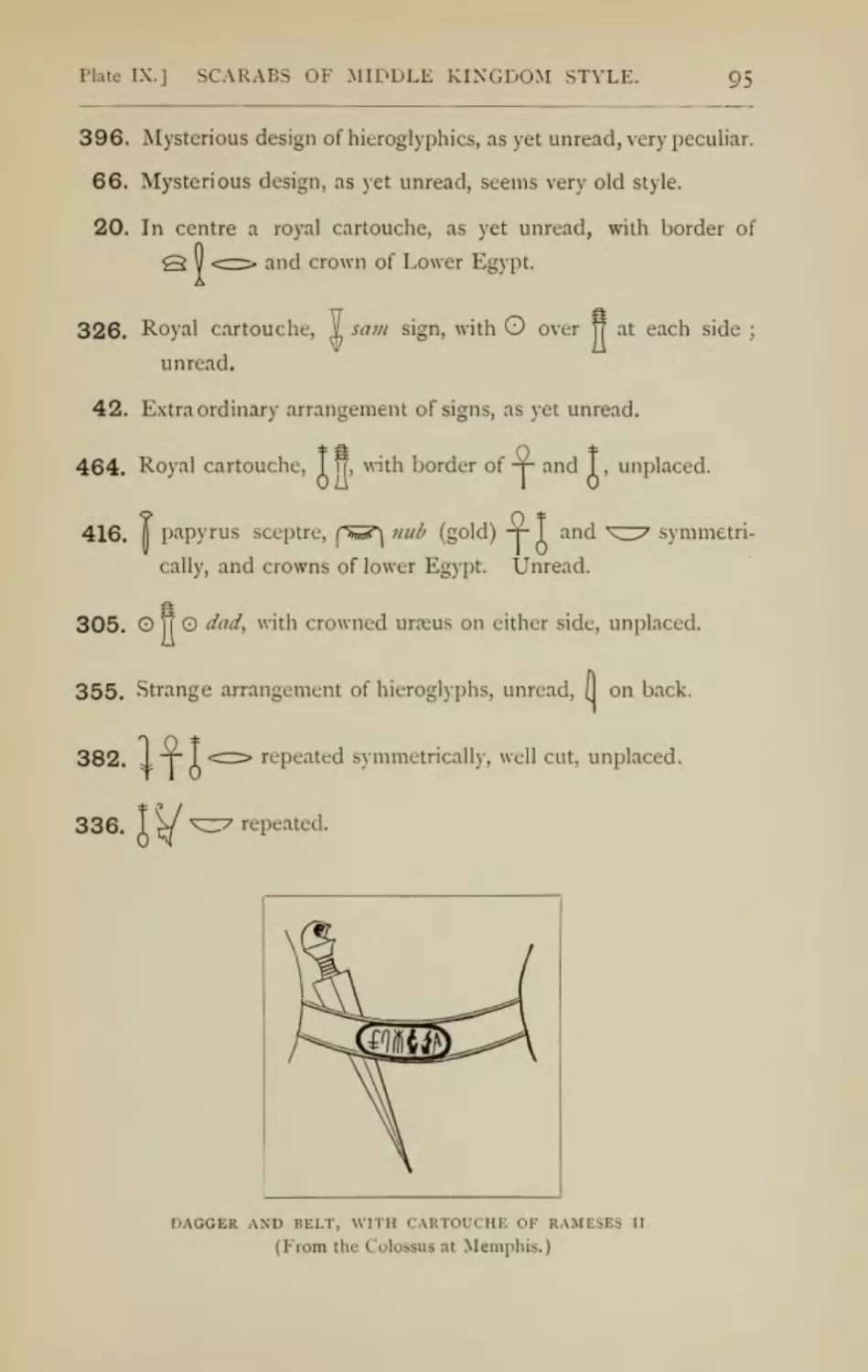
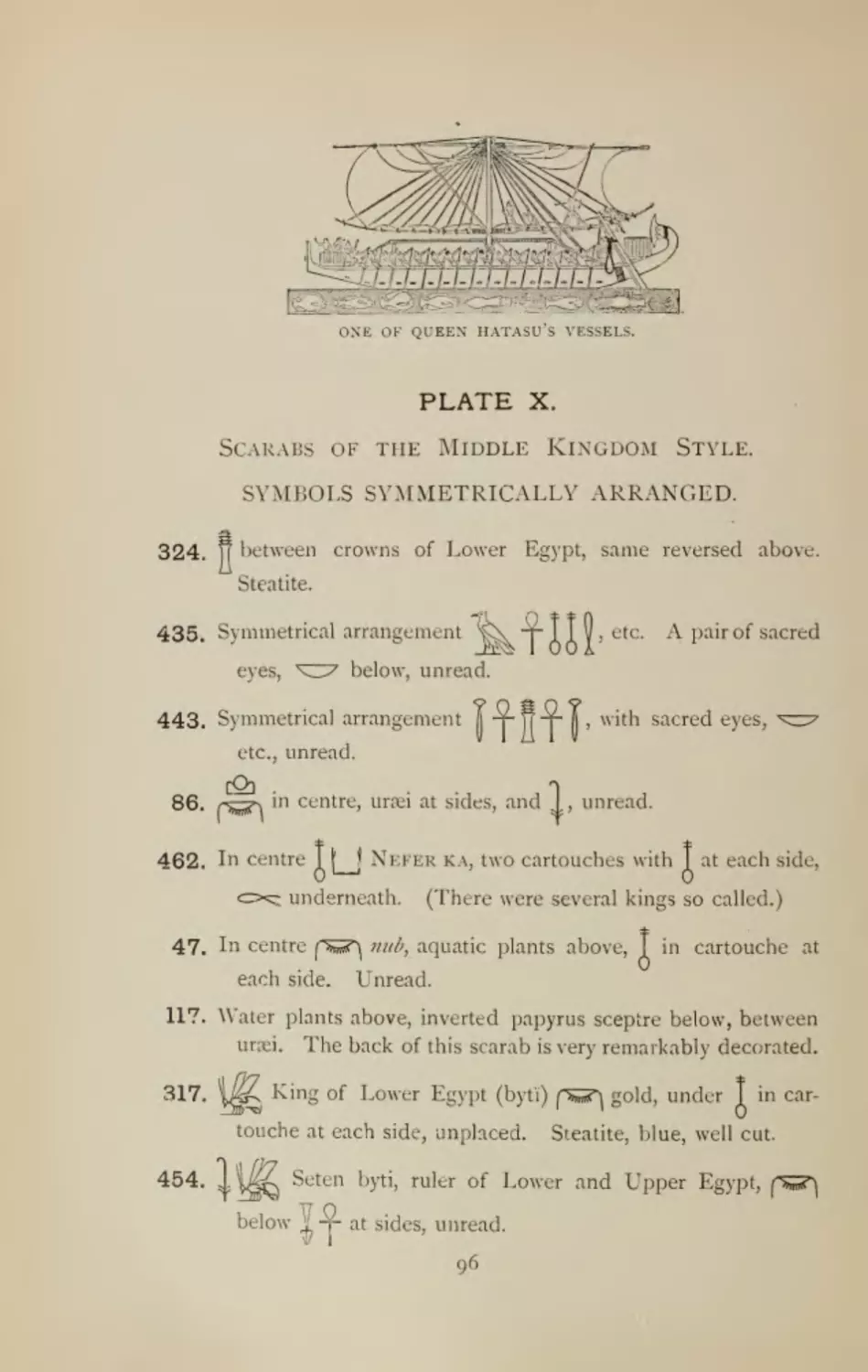
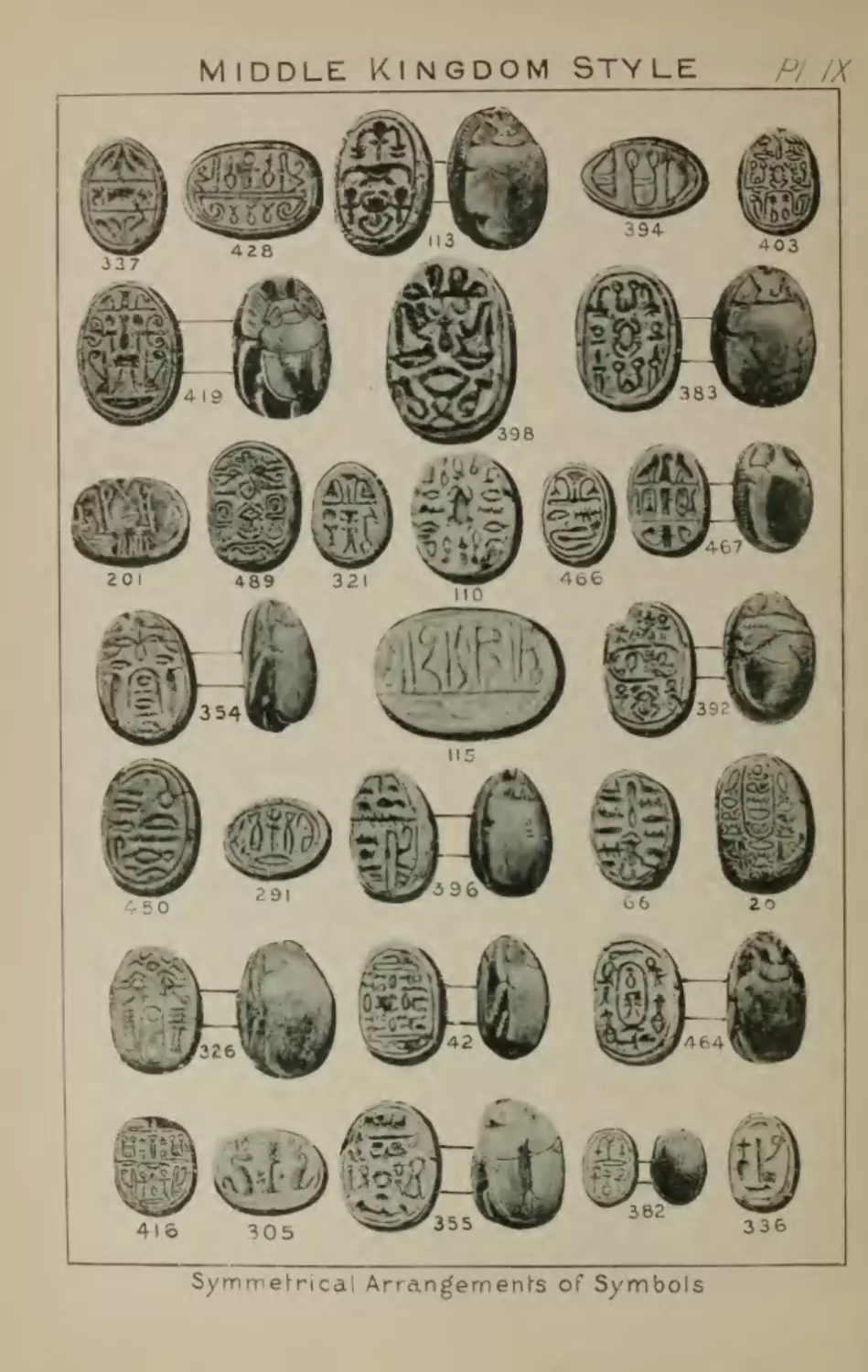
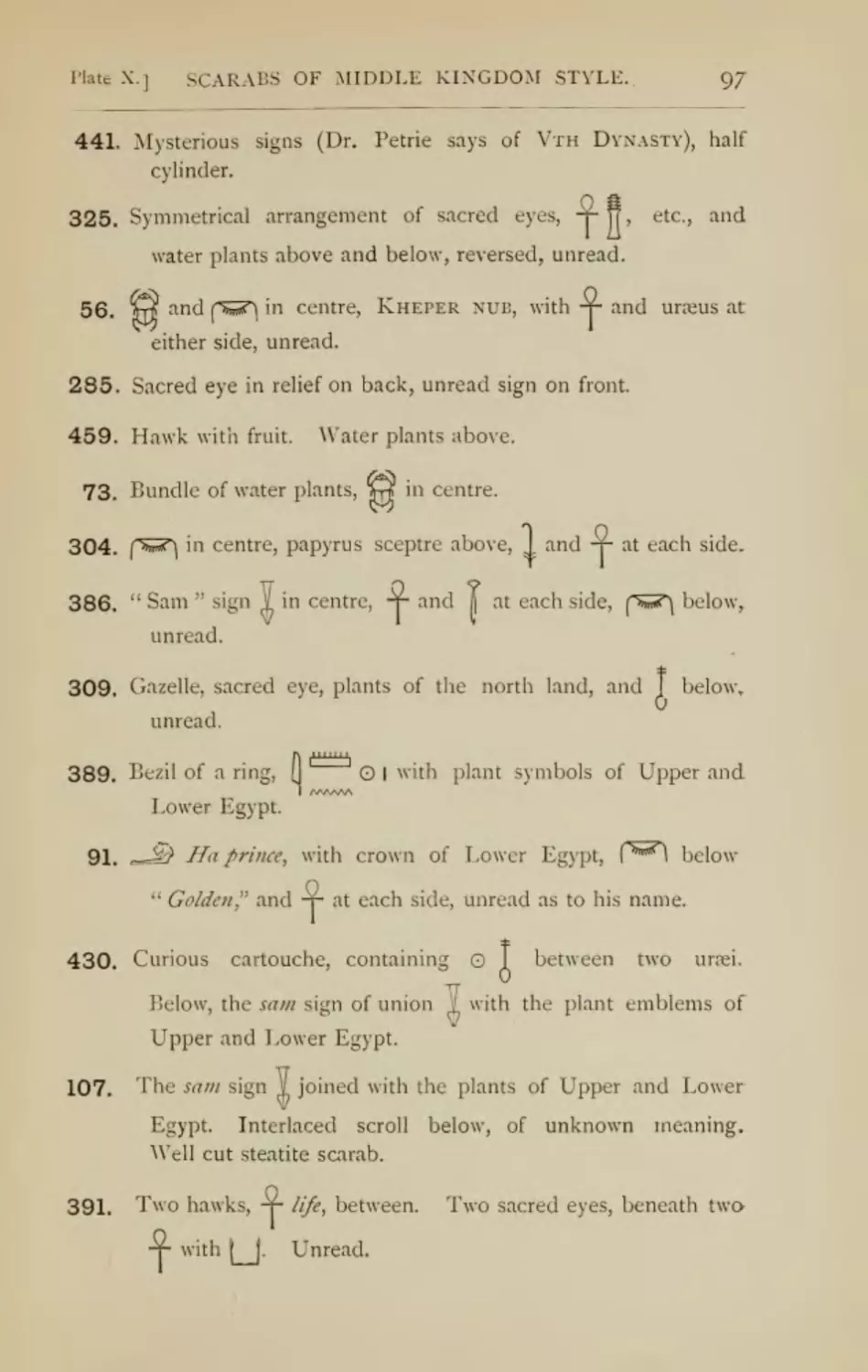
/






















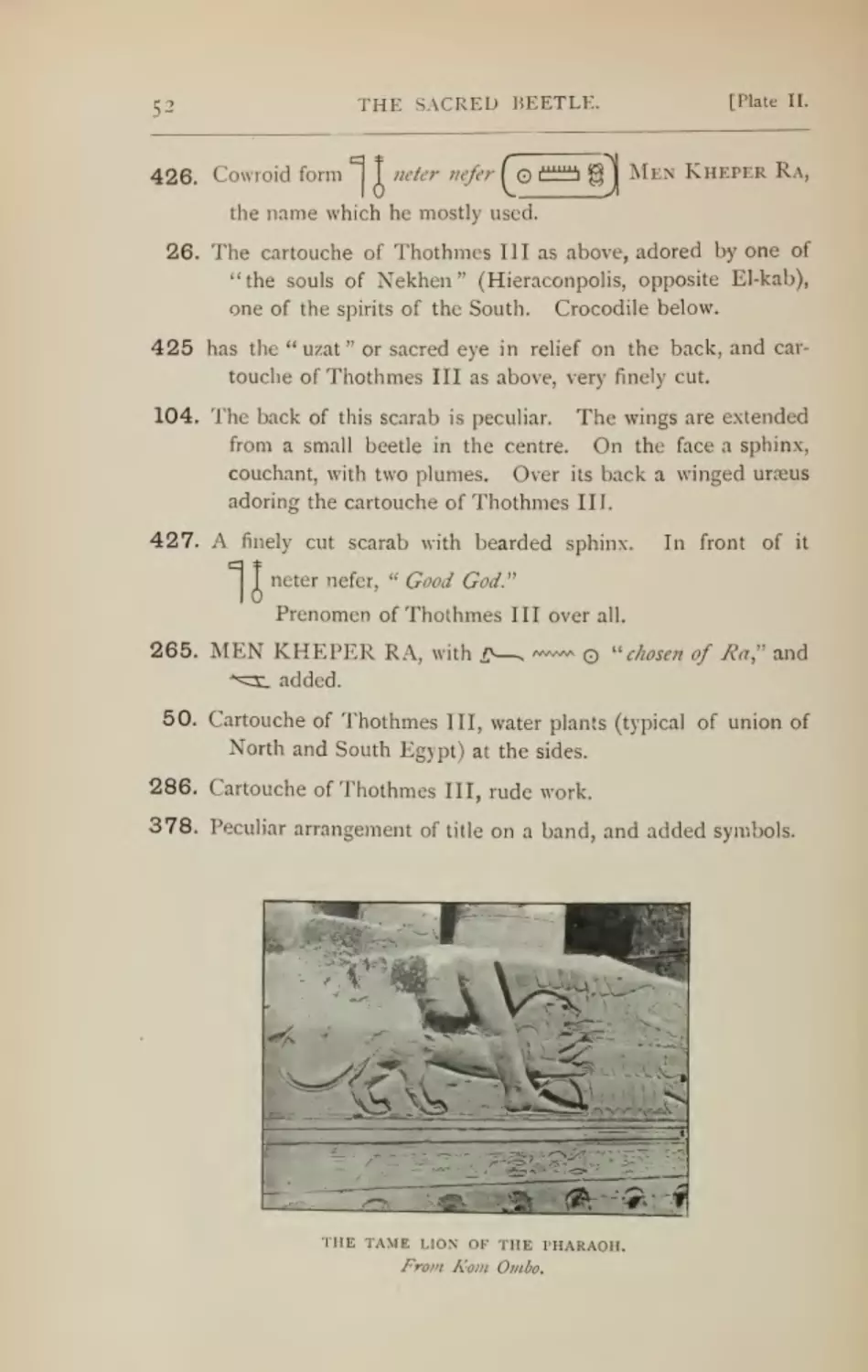
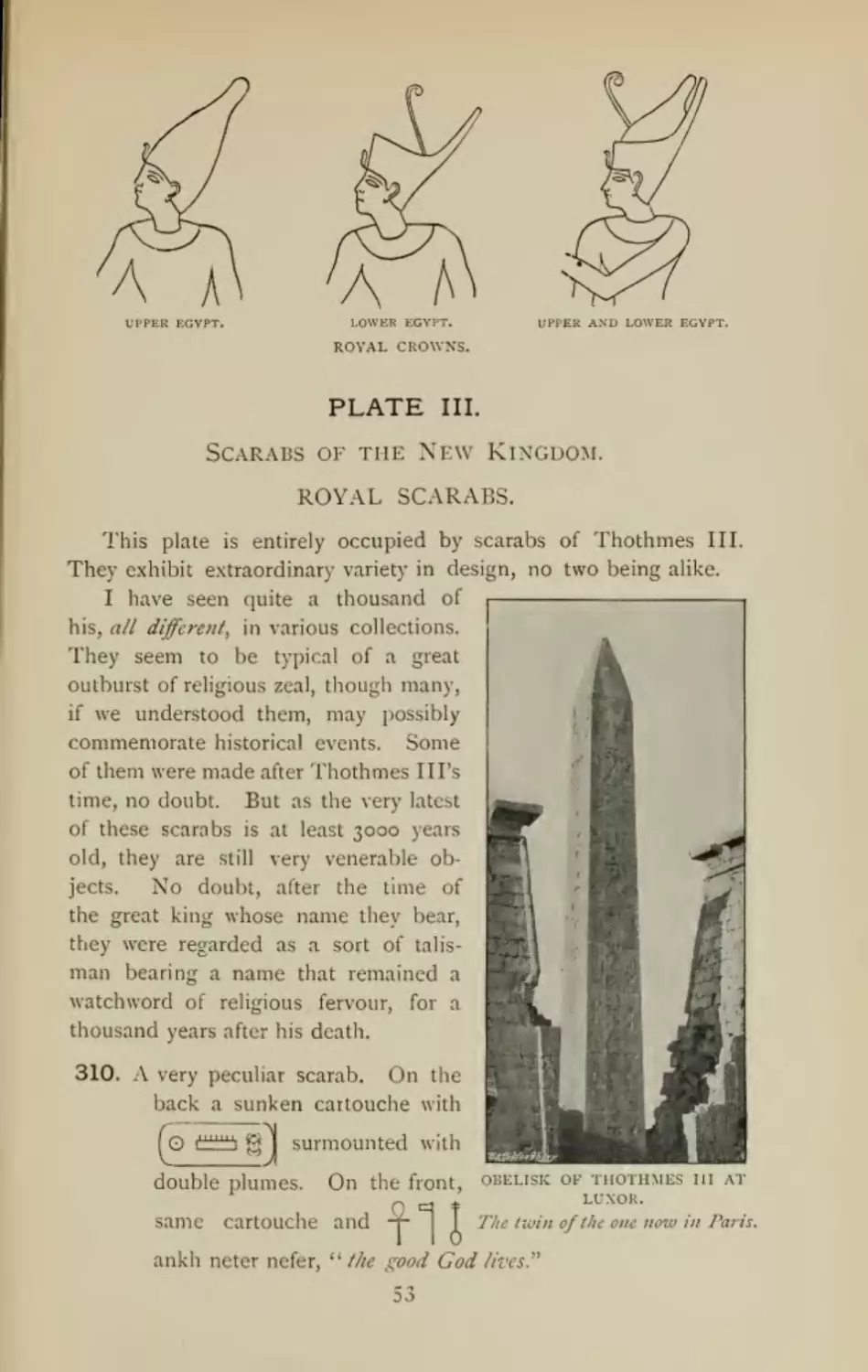
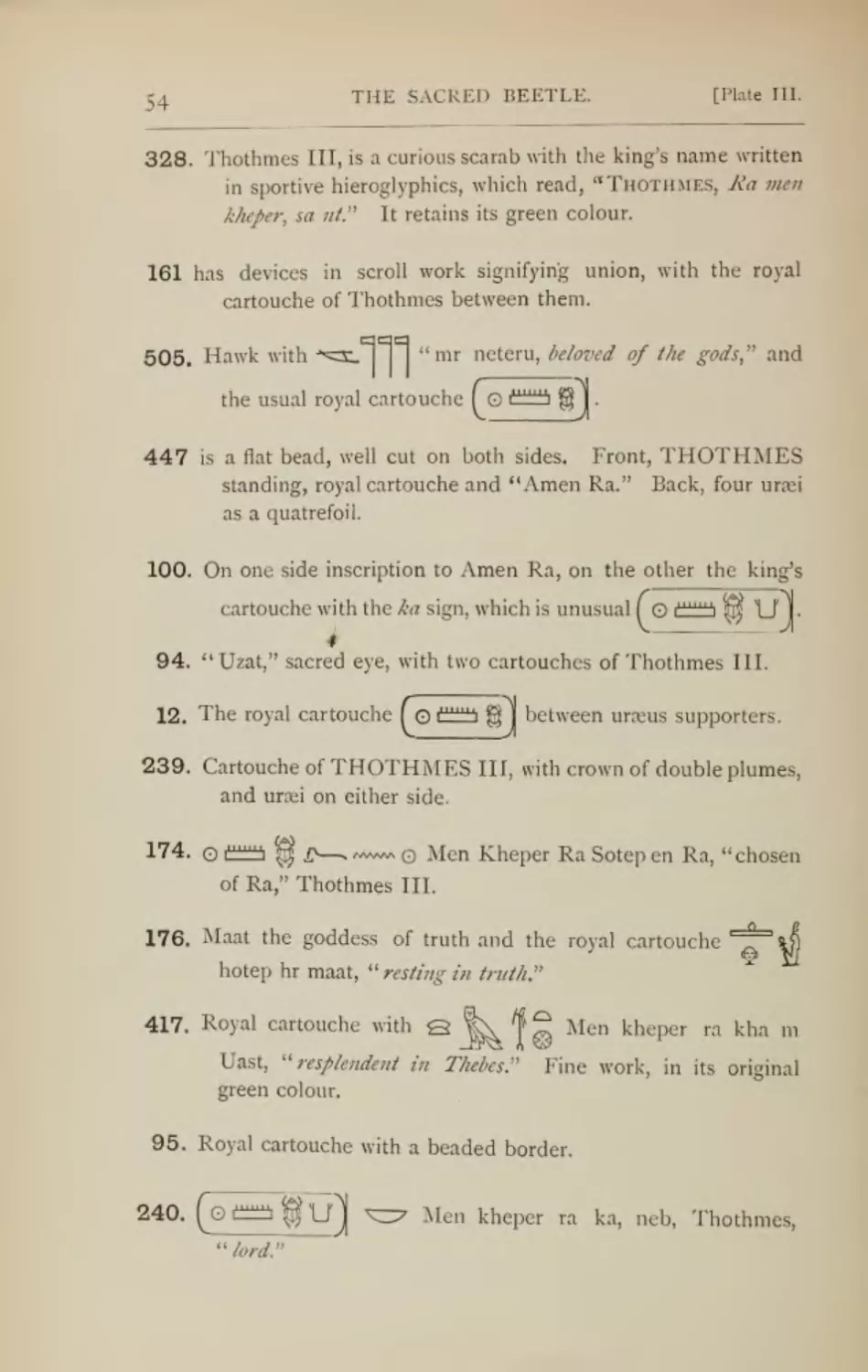
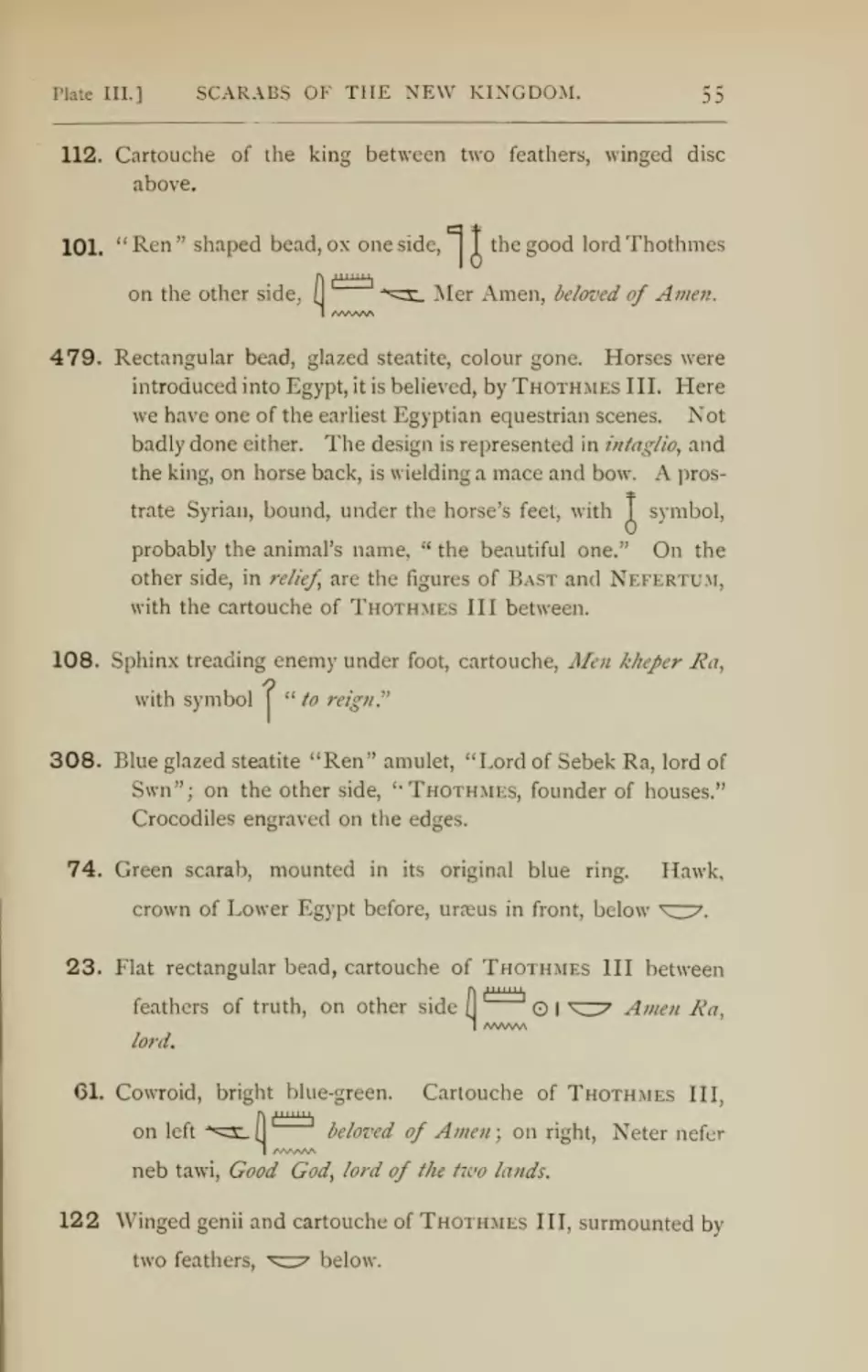






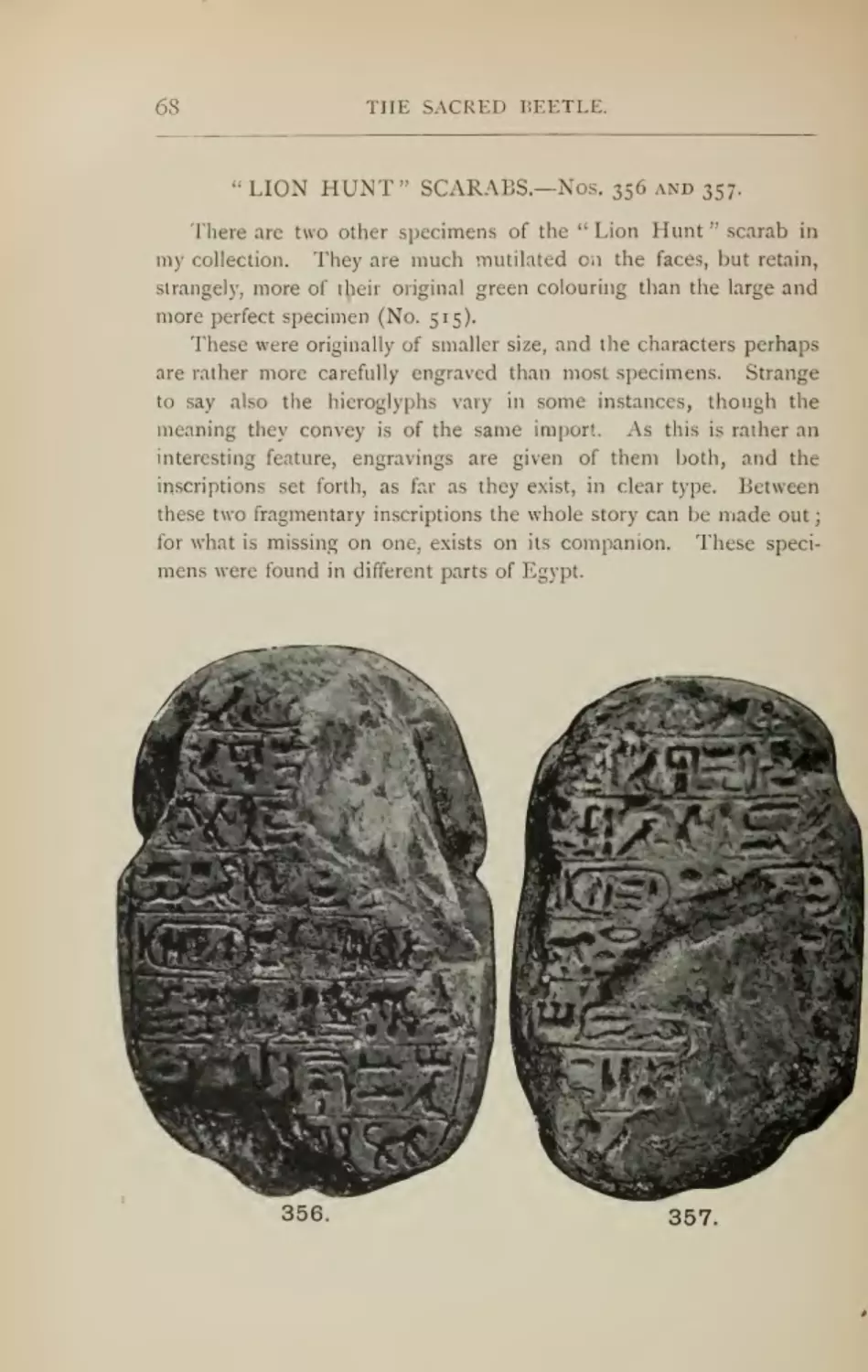

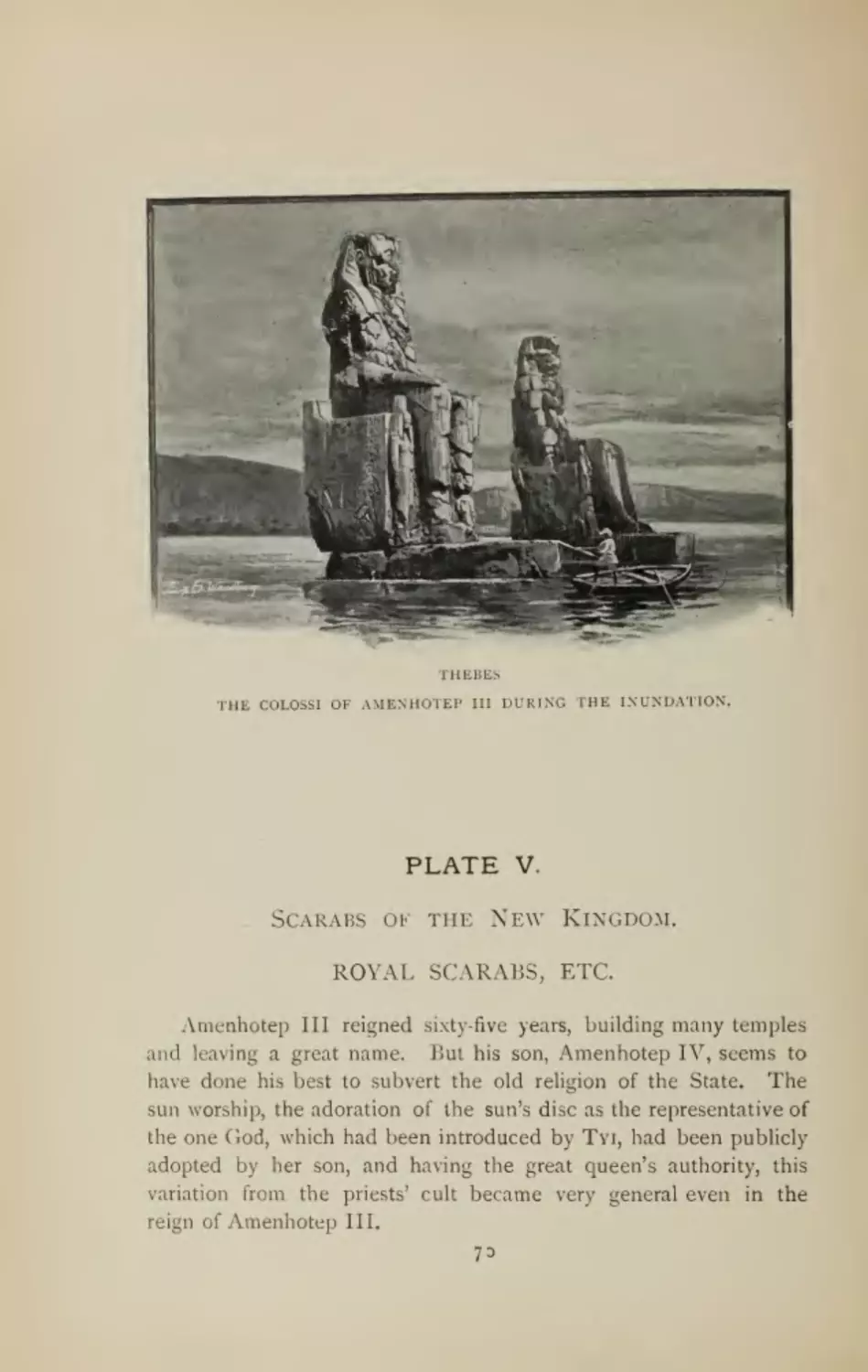
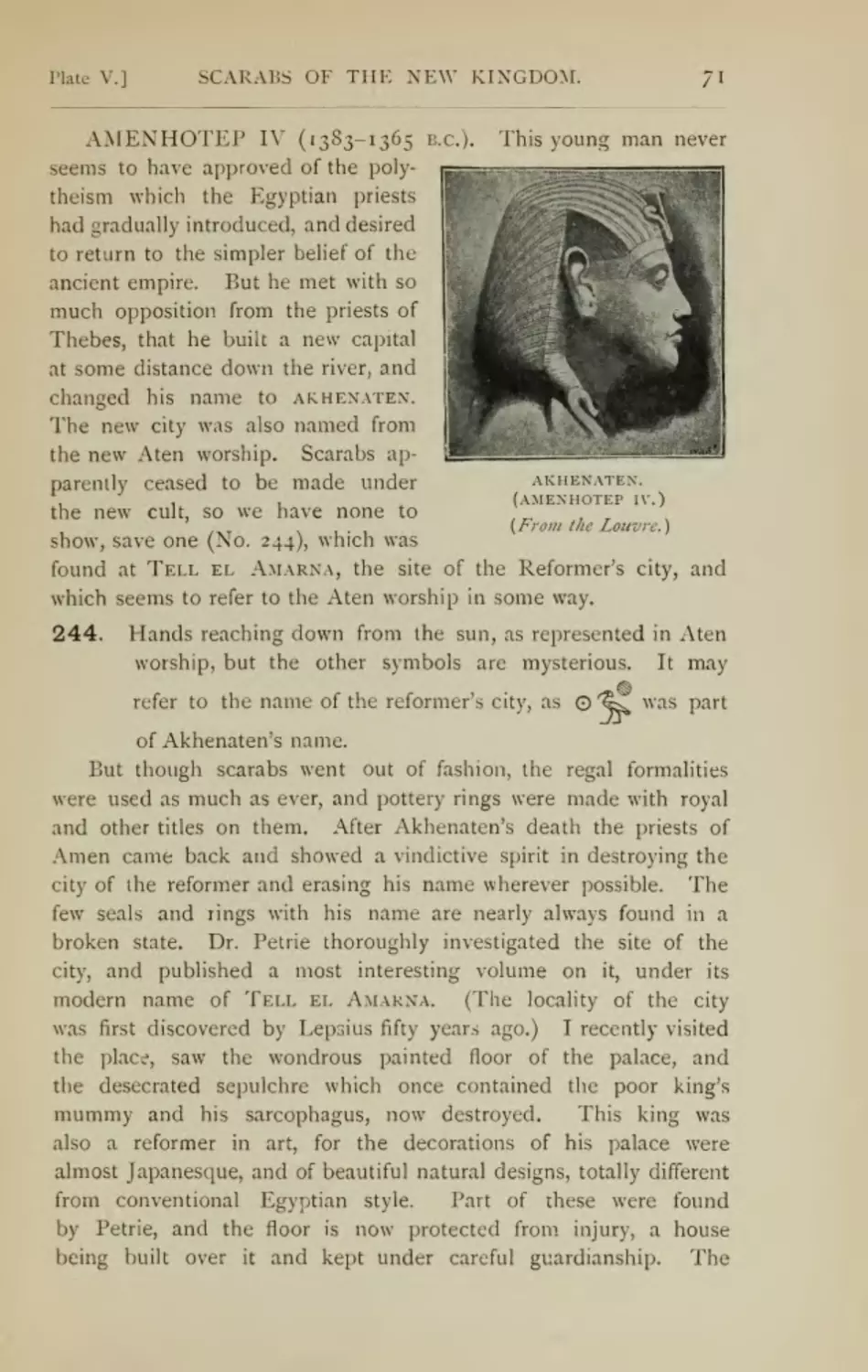

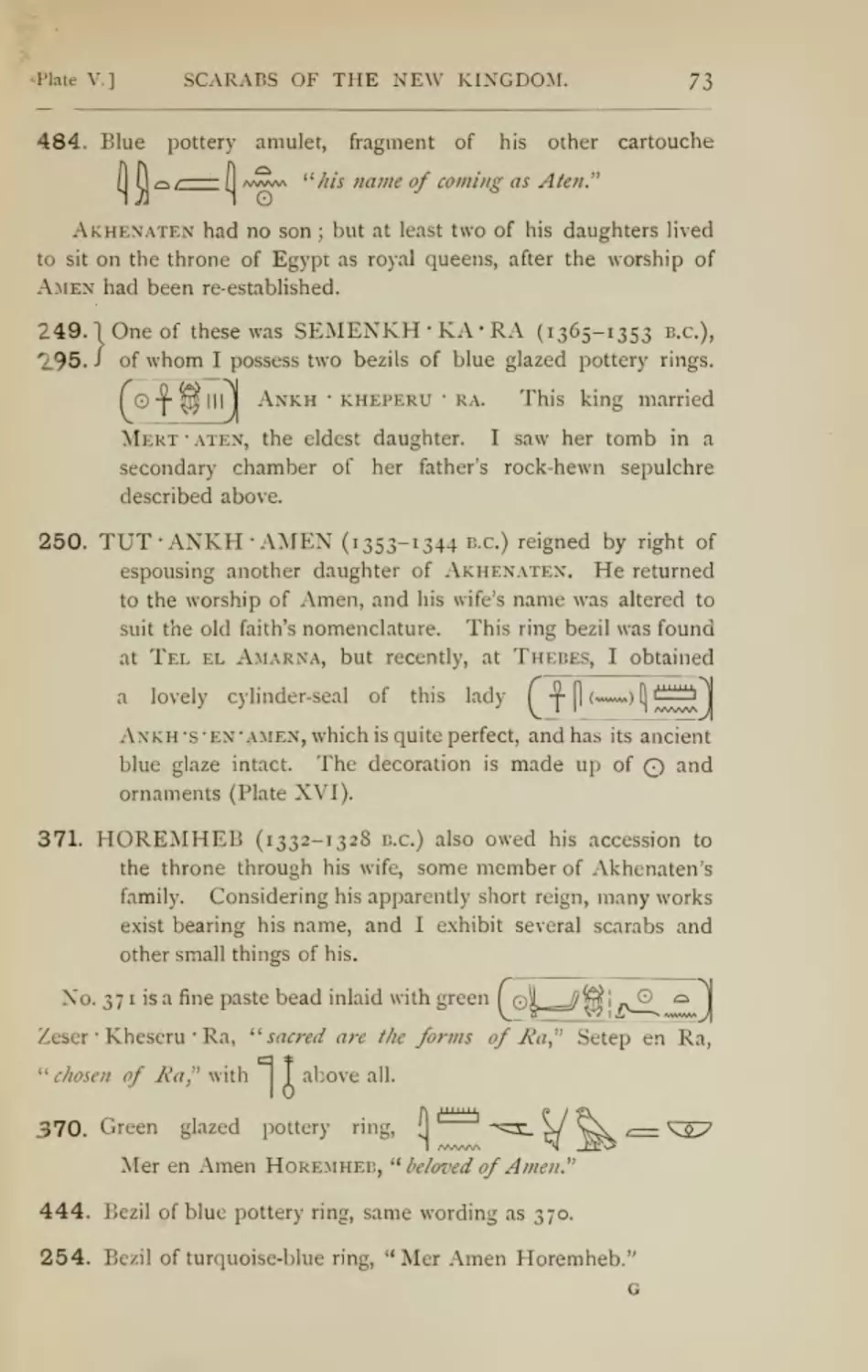





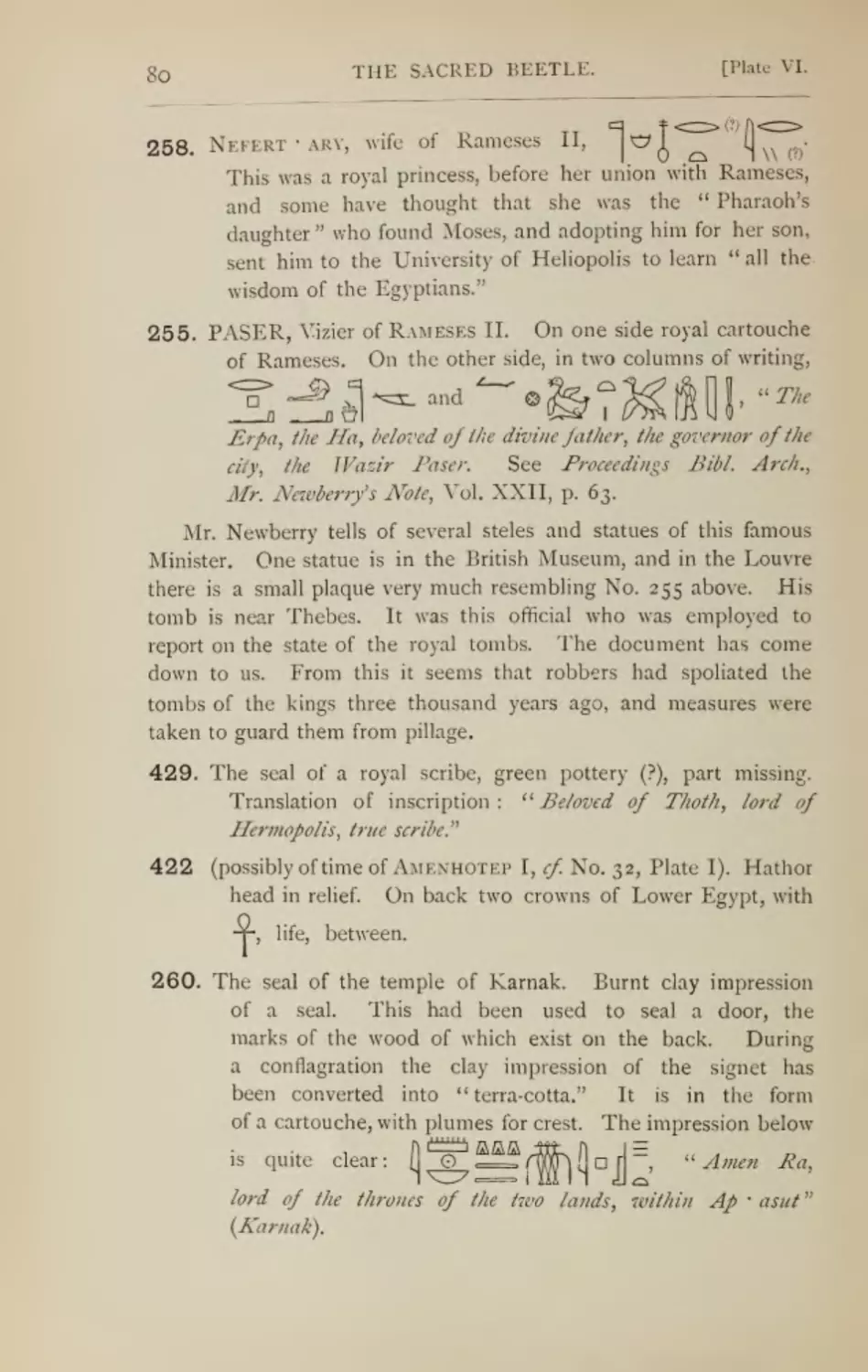
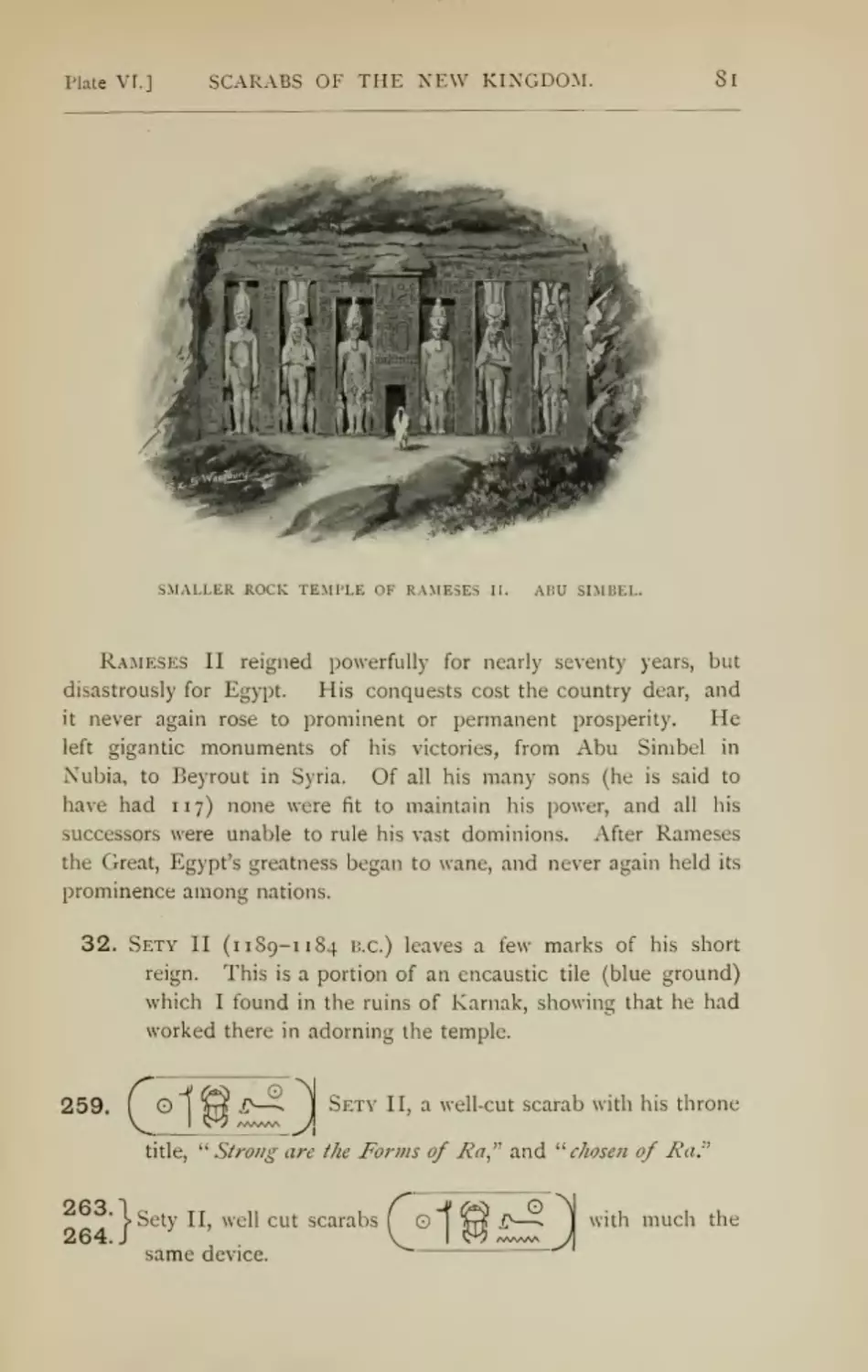
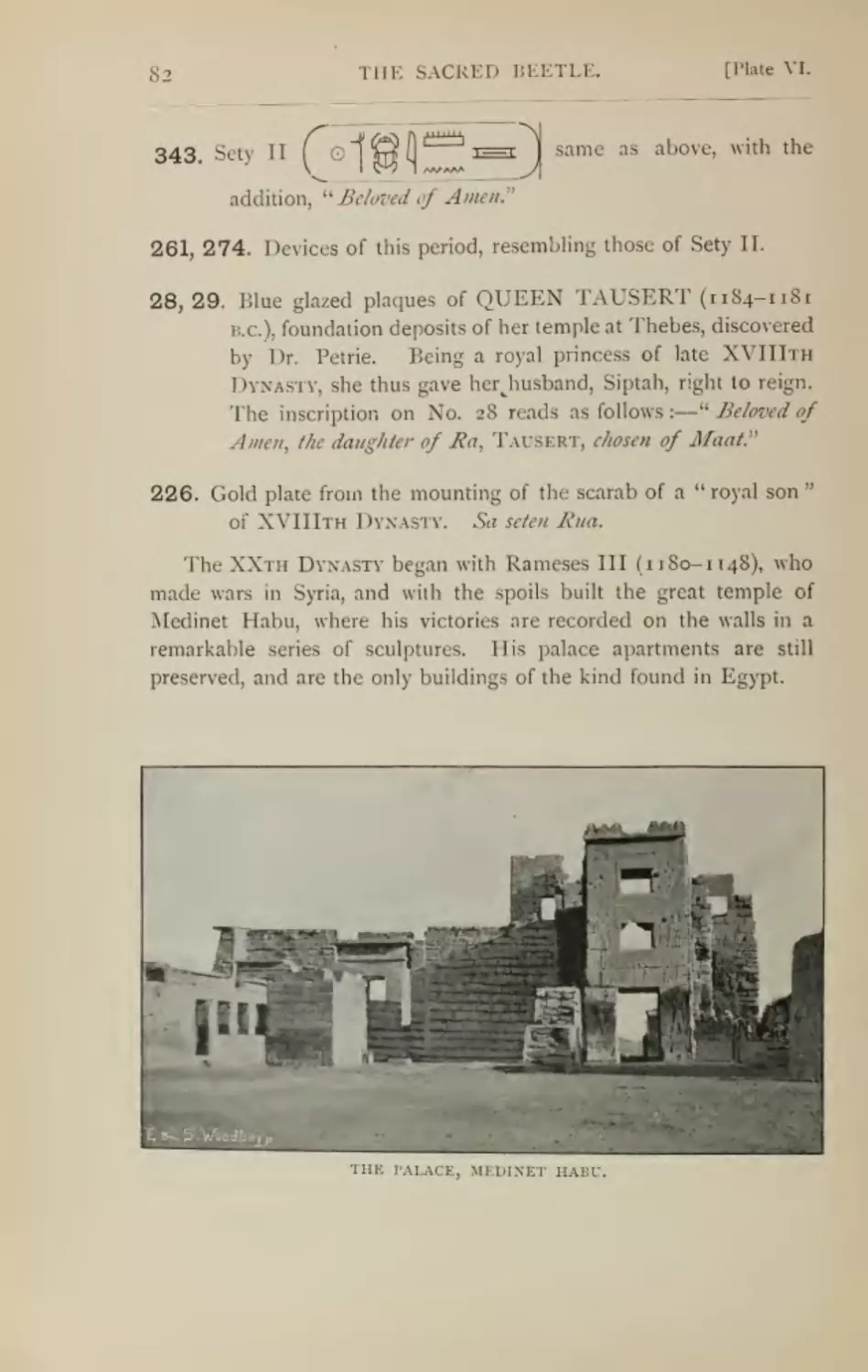
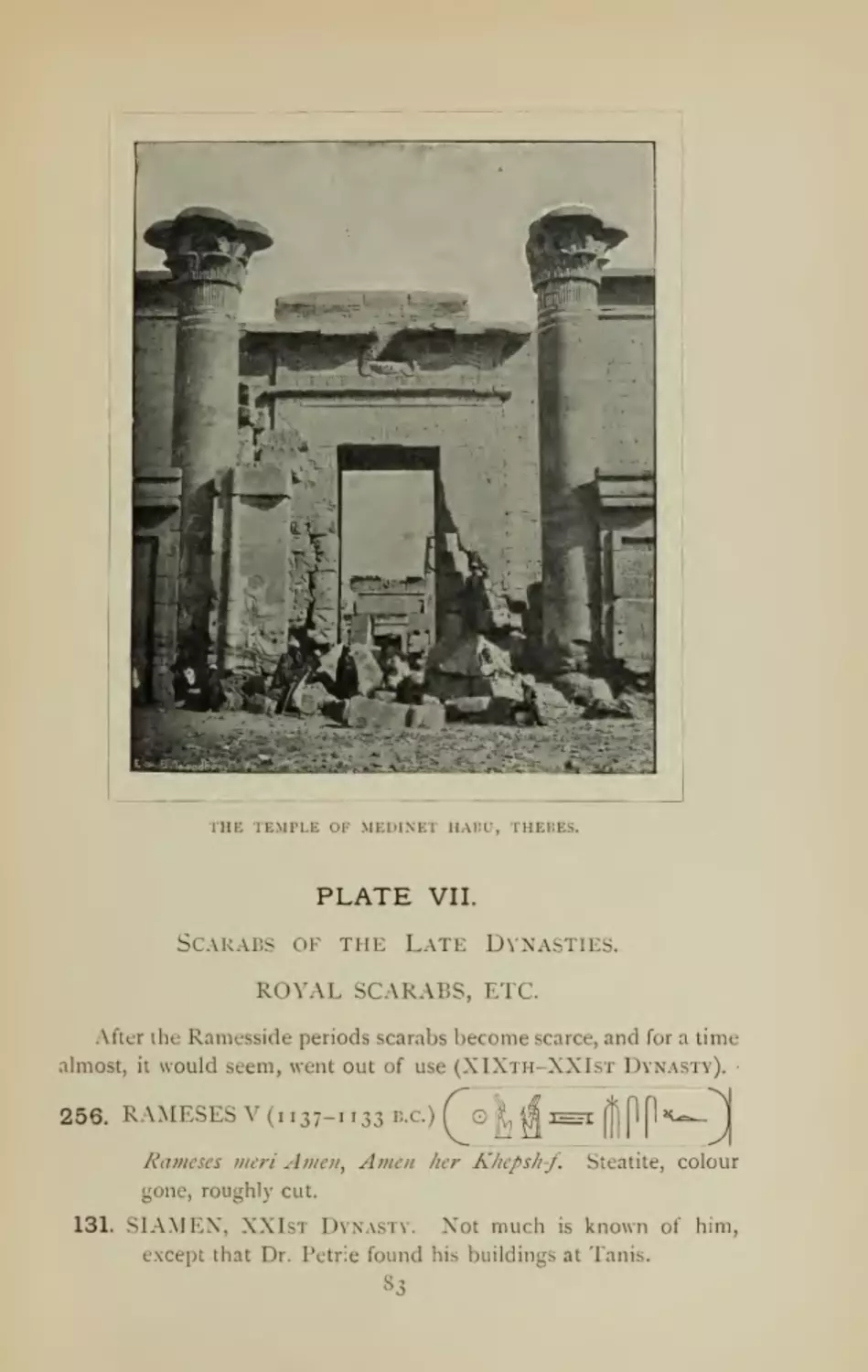
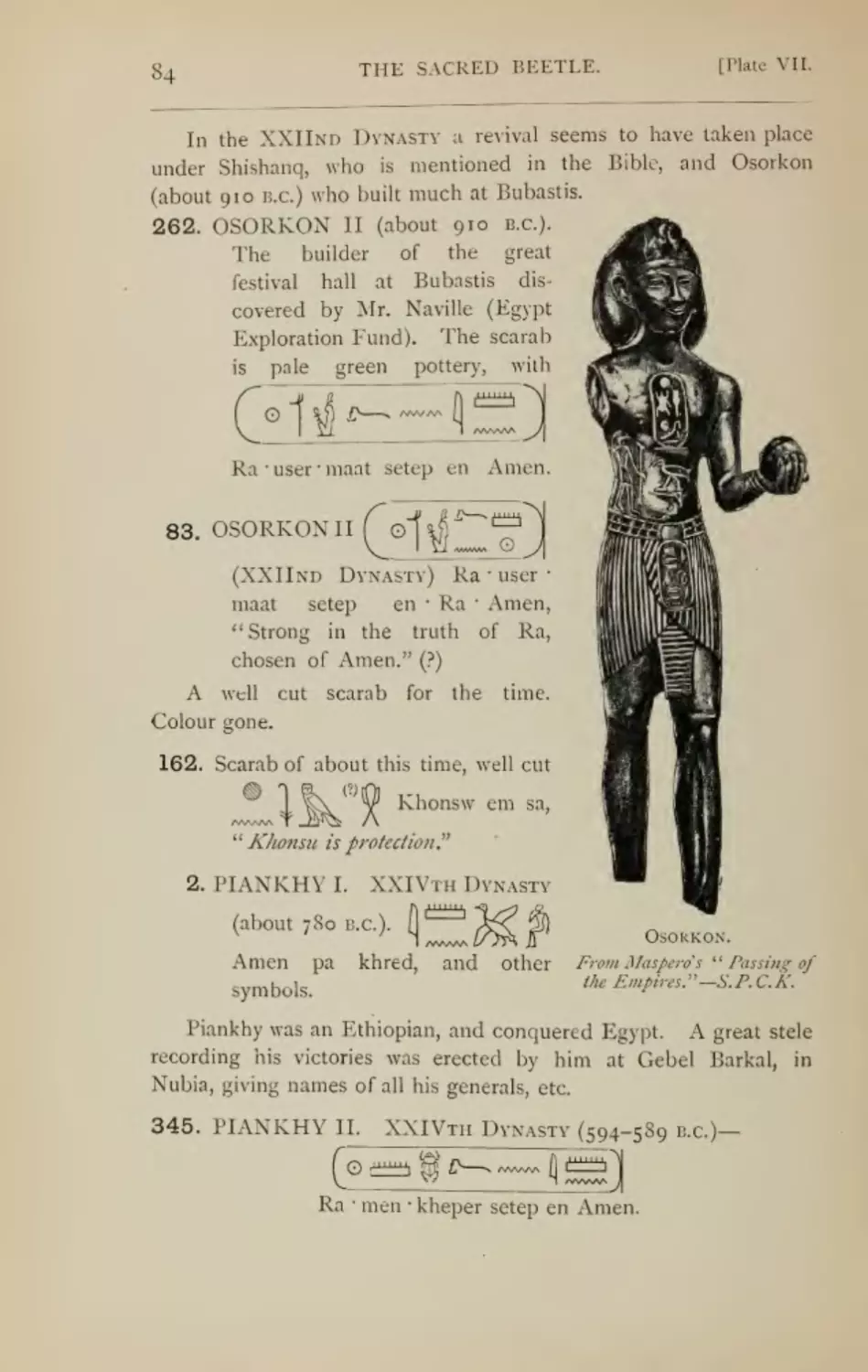

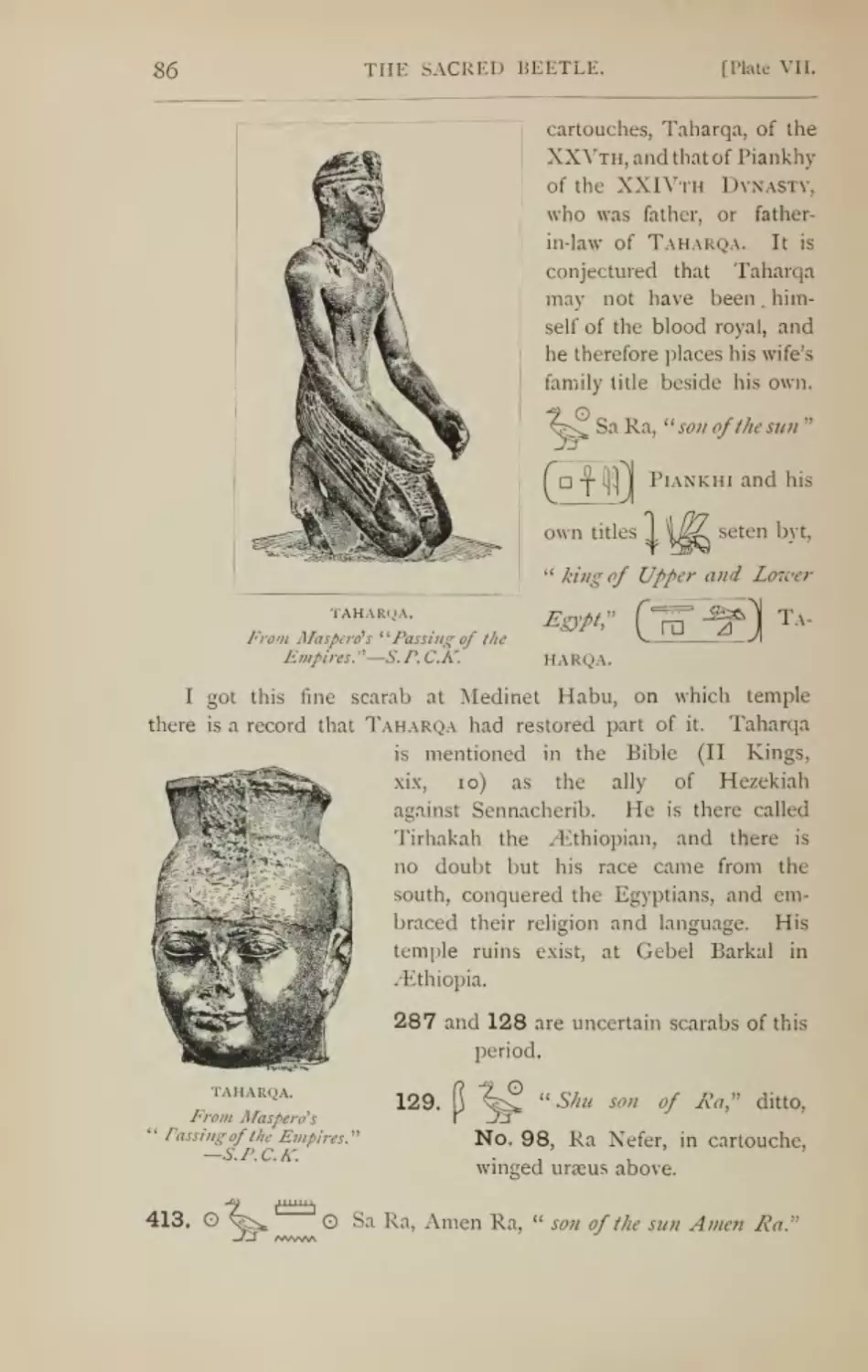
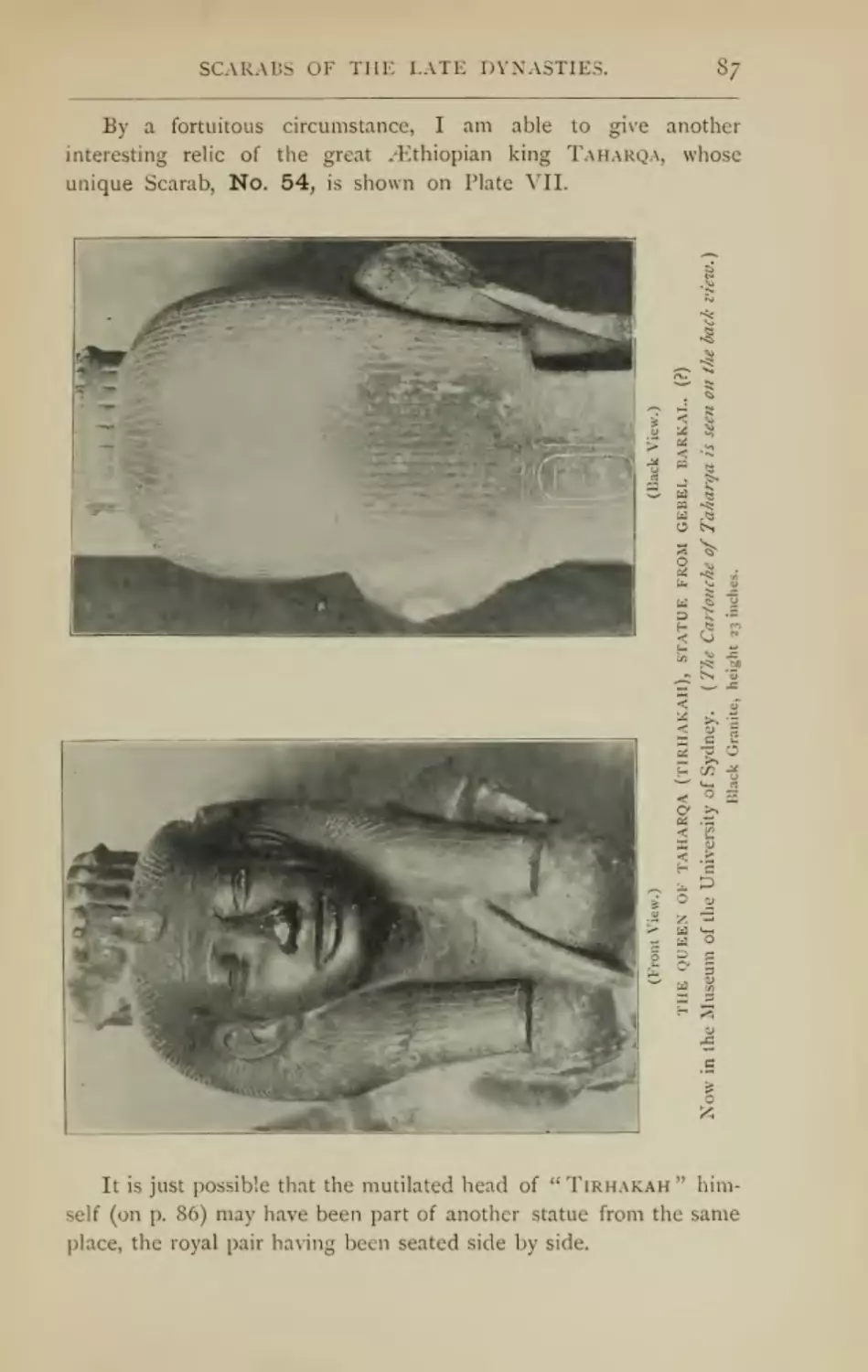
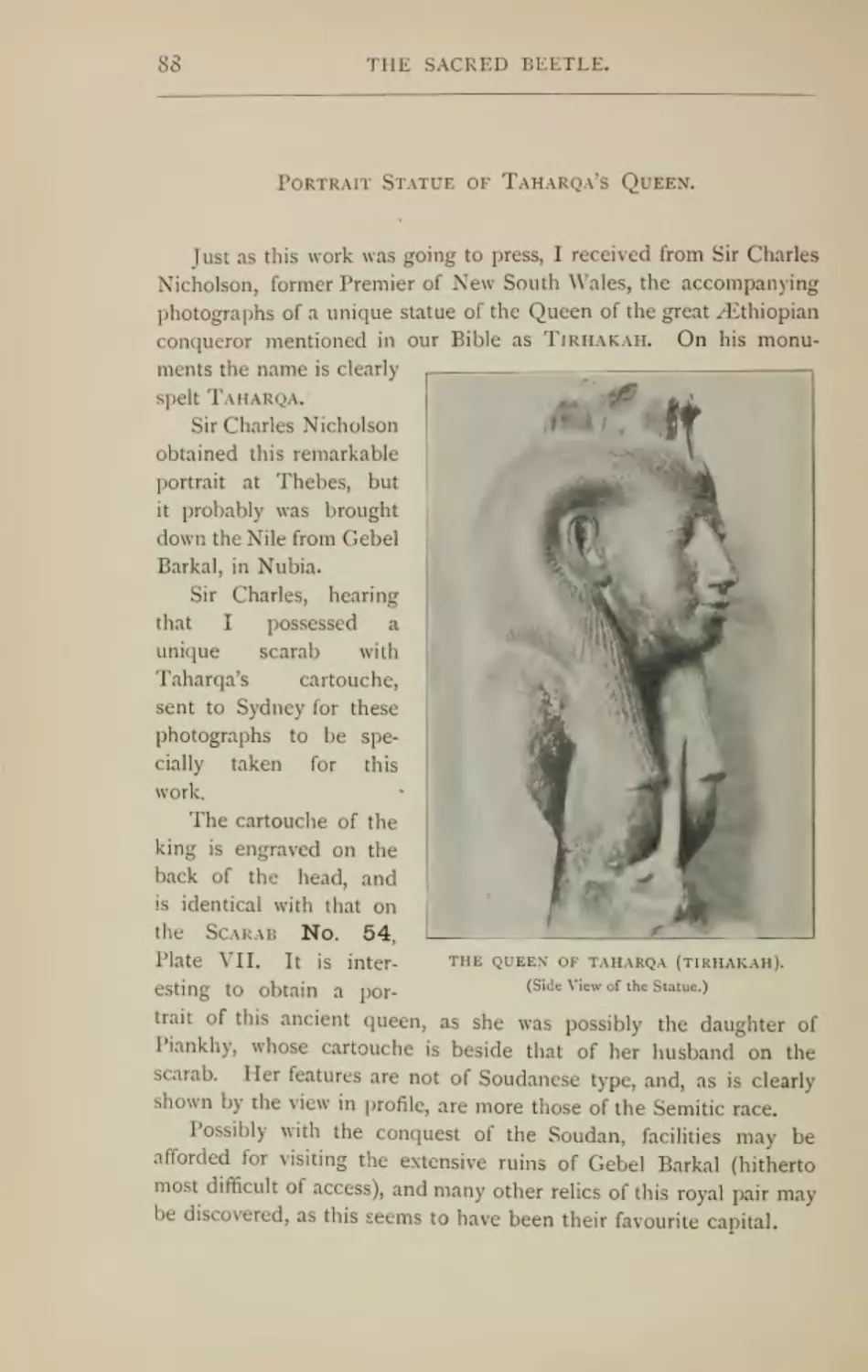












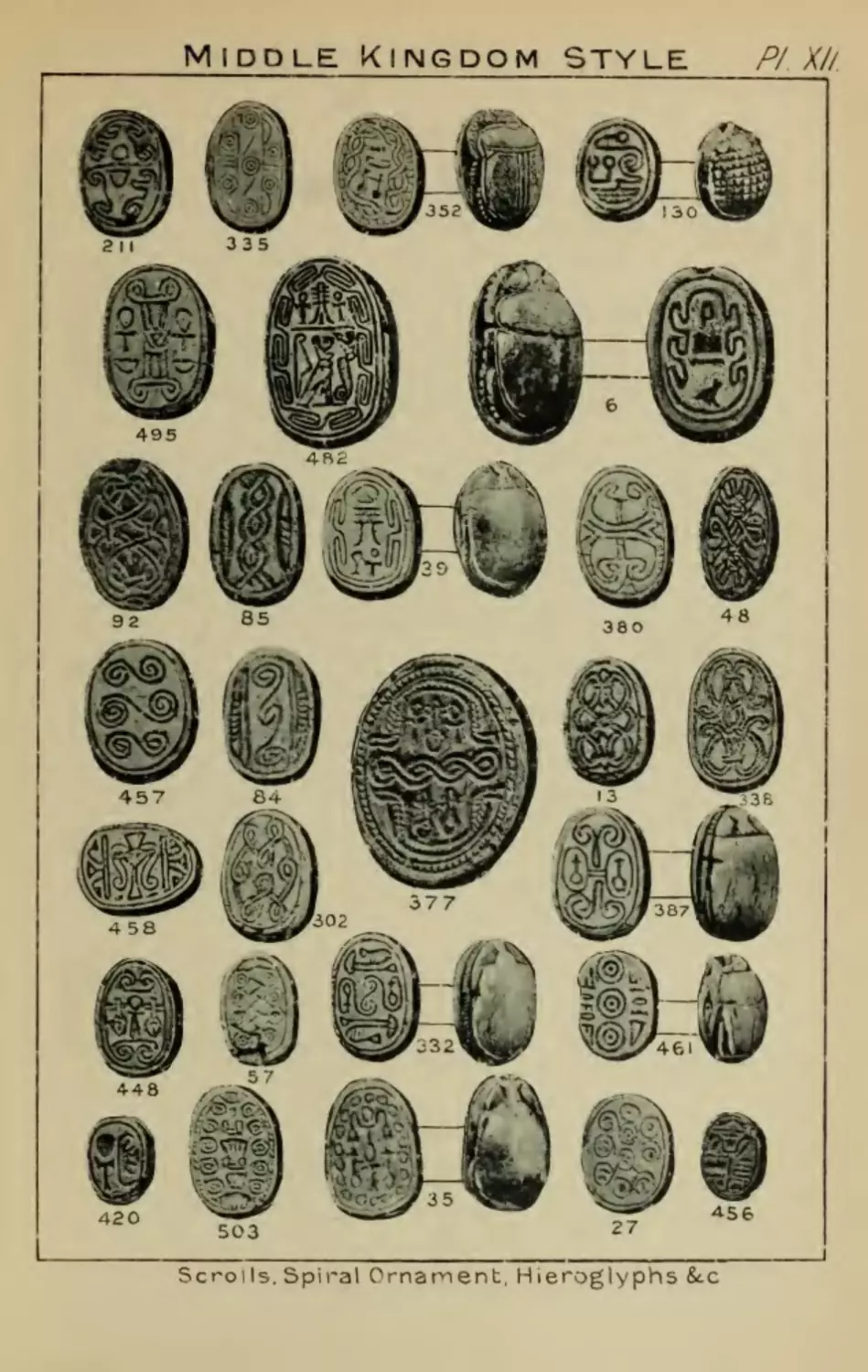

















Author: Ward J.
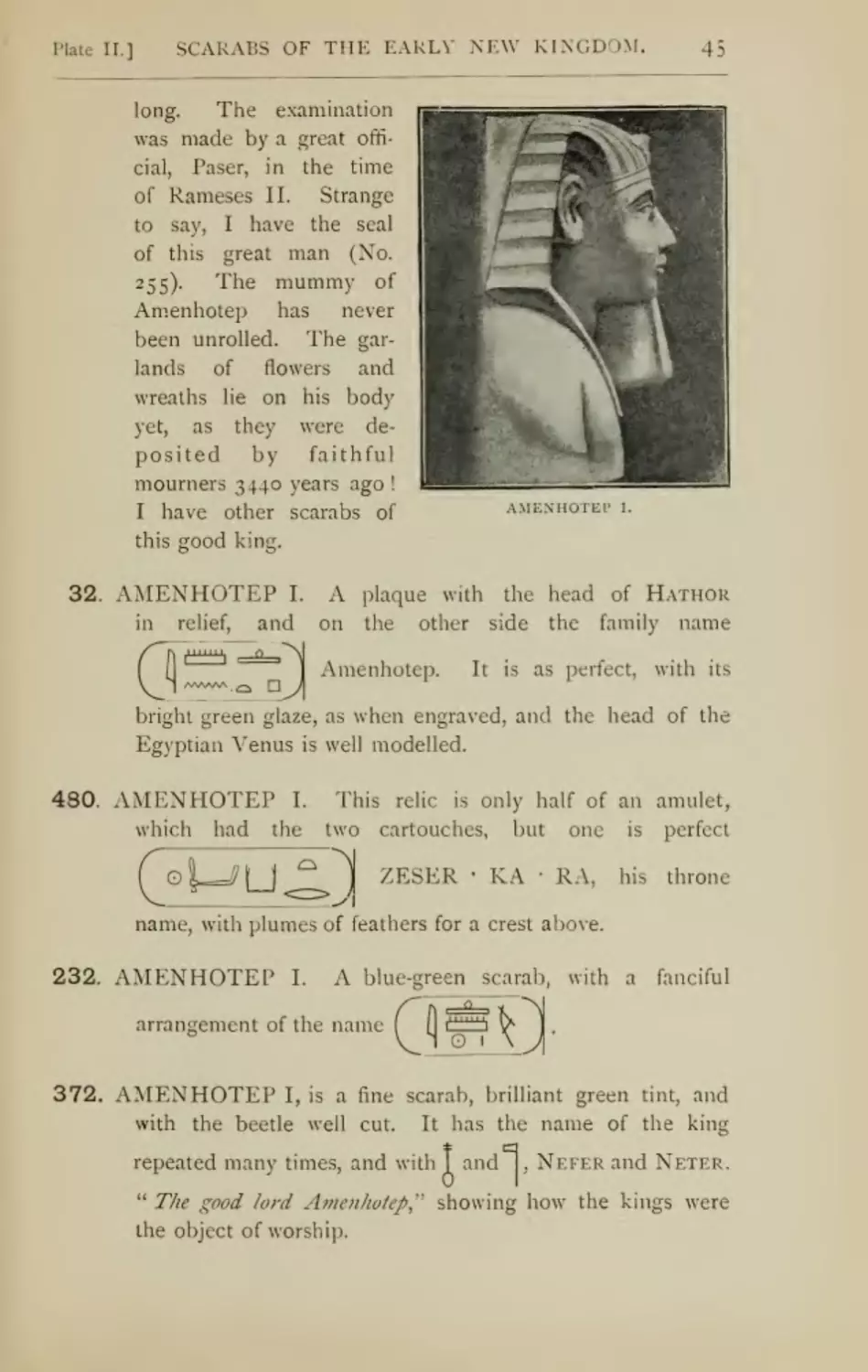
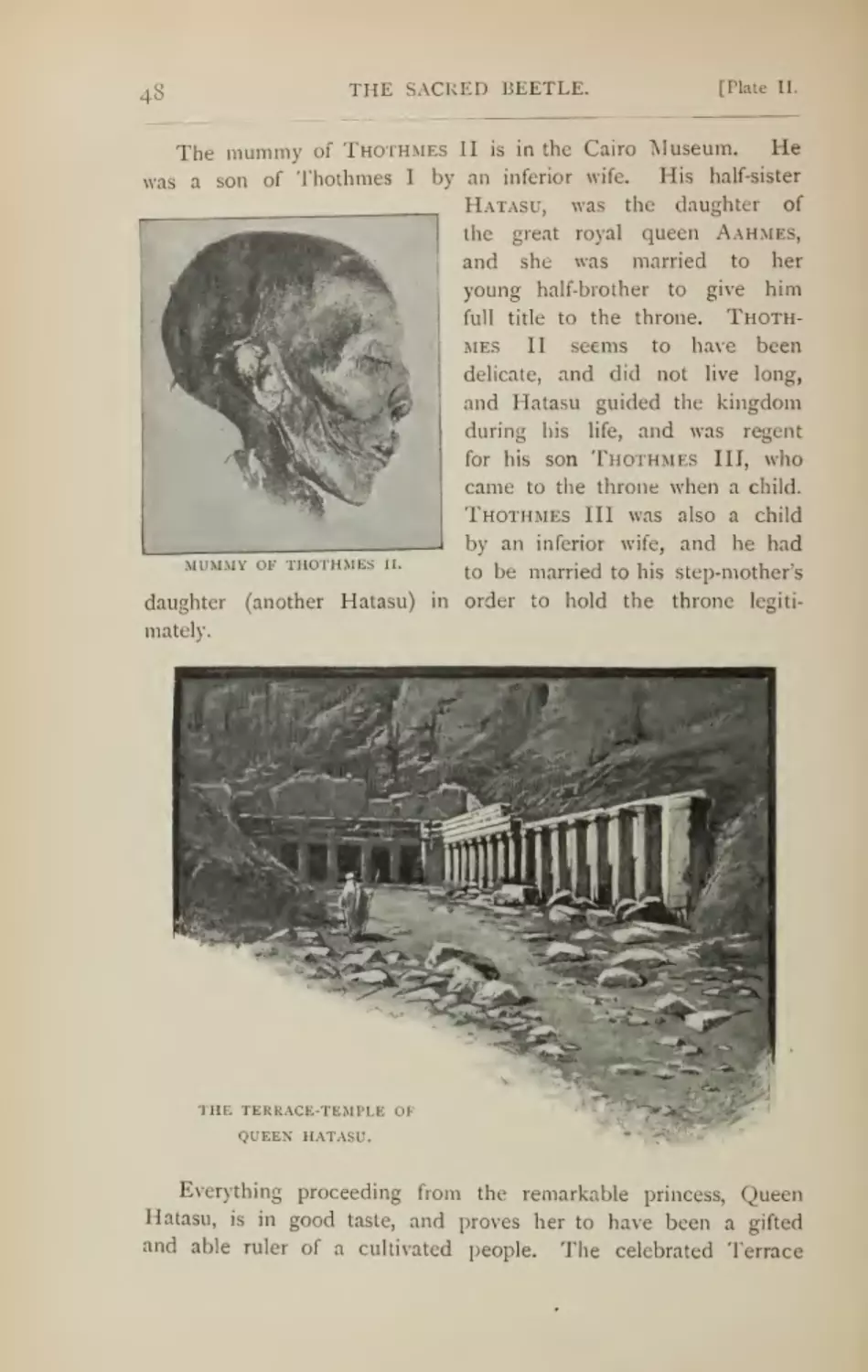
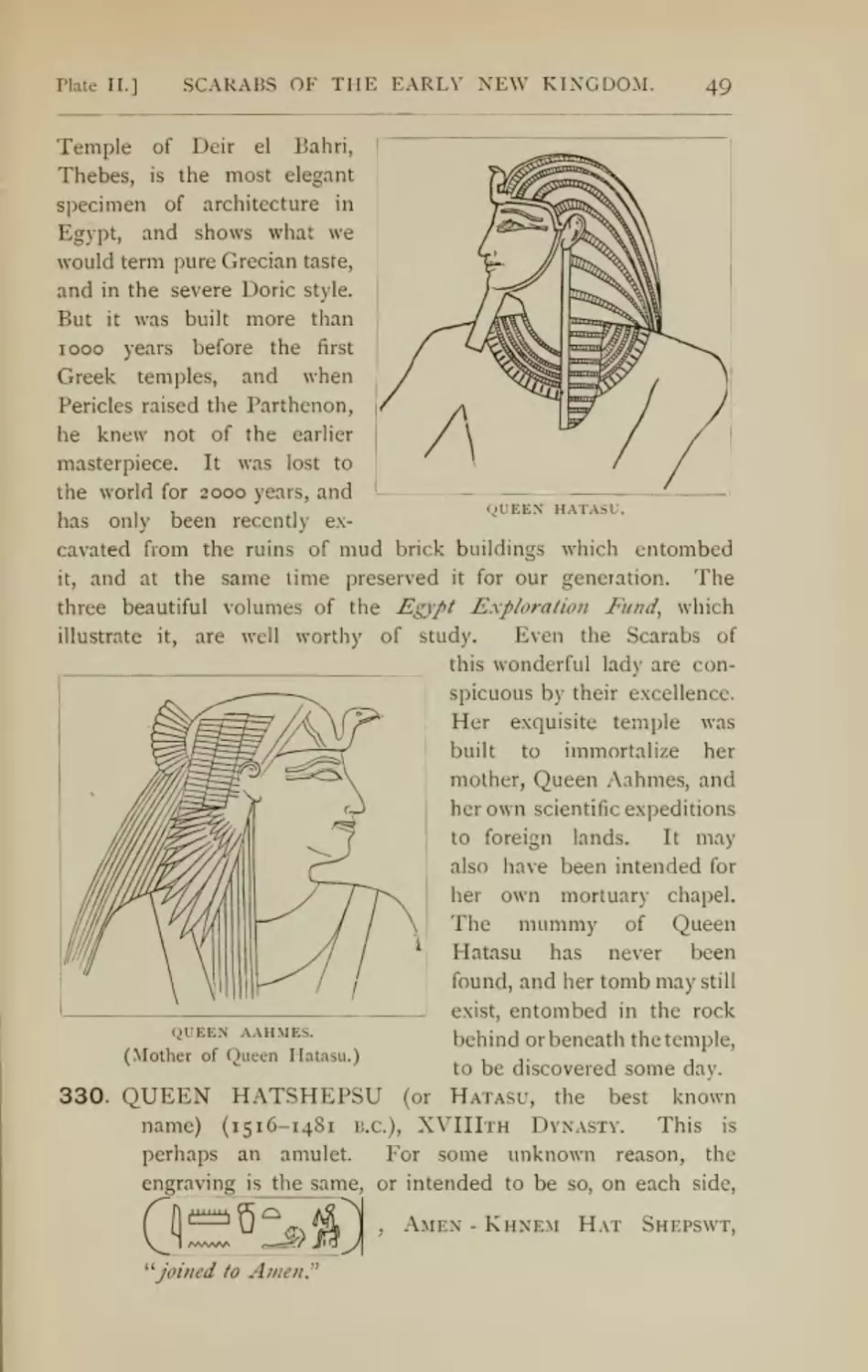
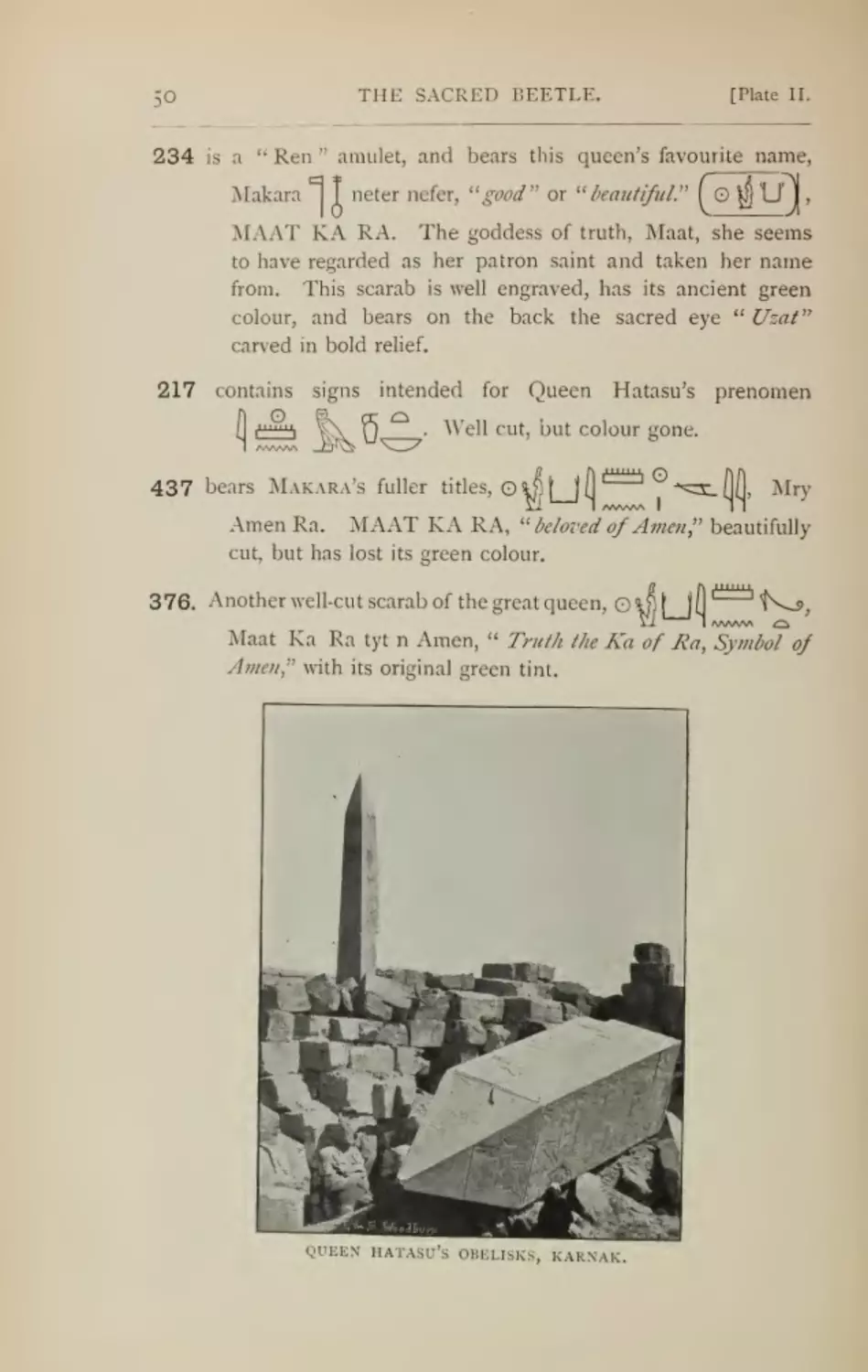
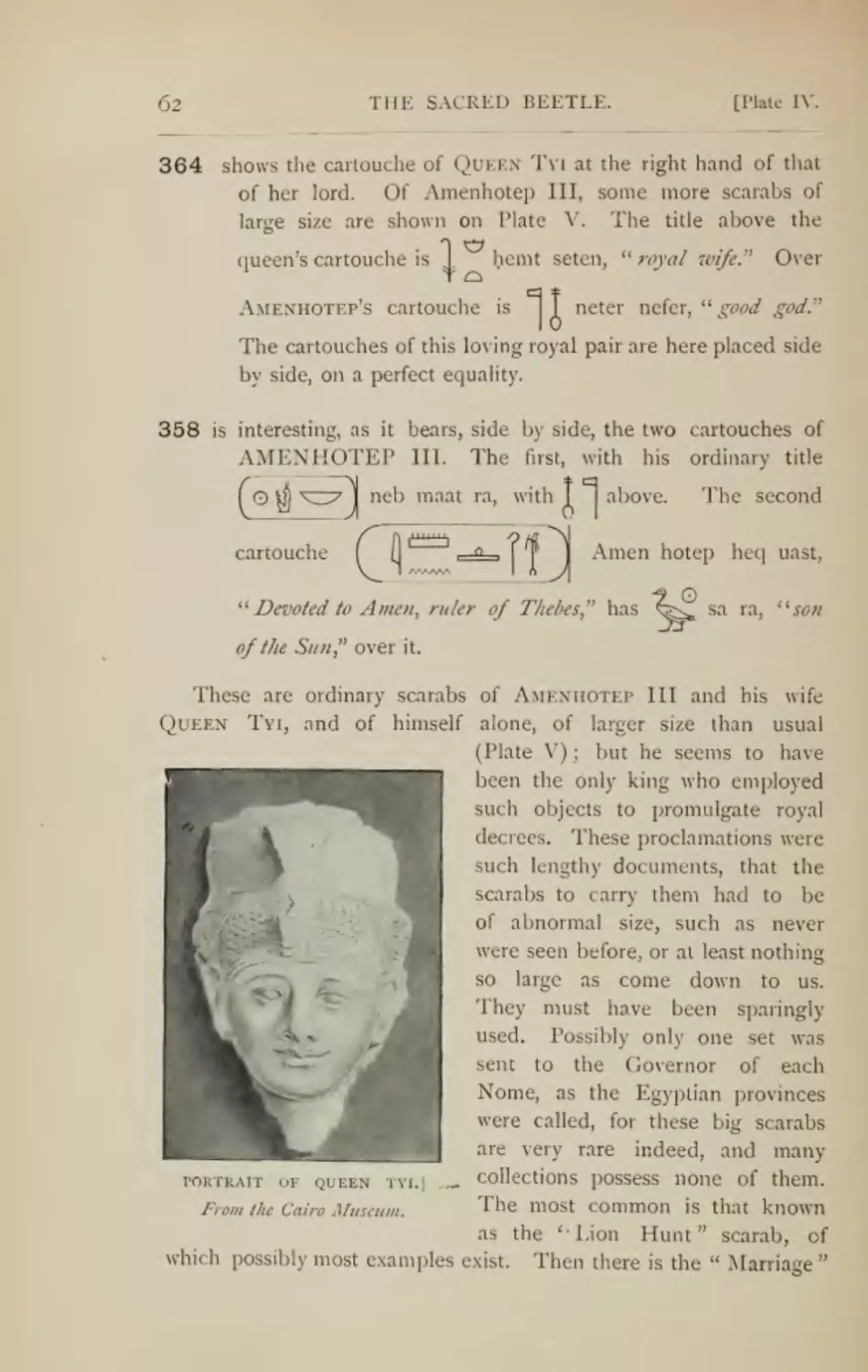
Tags: history ancient history culturology new york publisher egyptology history of ancient egypt
Year: 1902


Text
                    ..
^^:j,^. -
SISHSEEm
EETLE
^
C
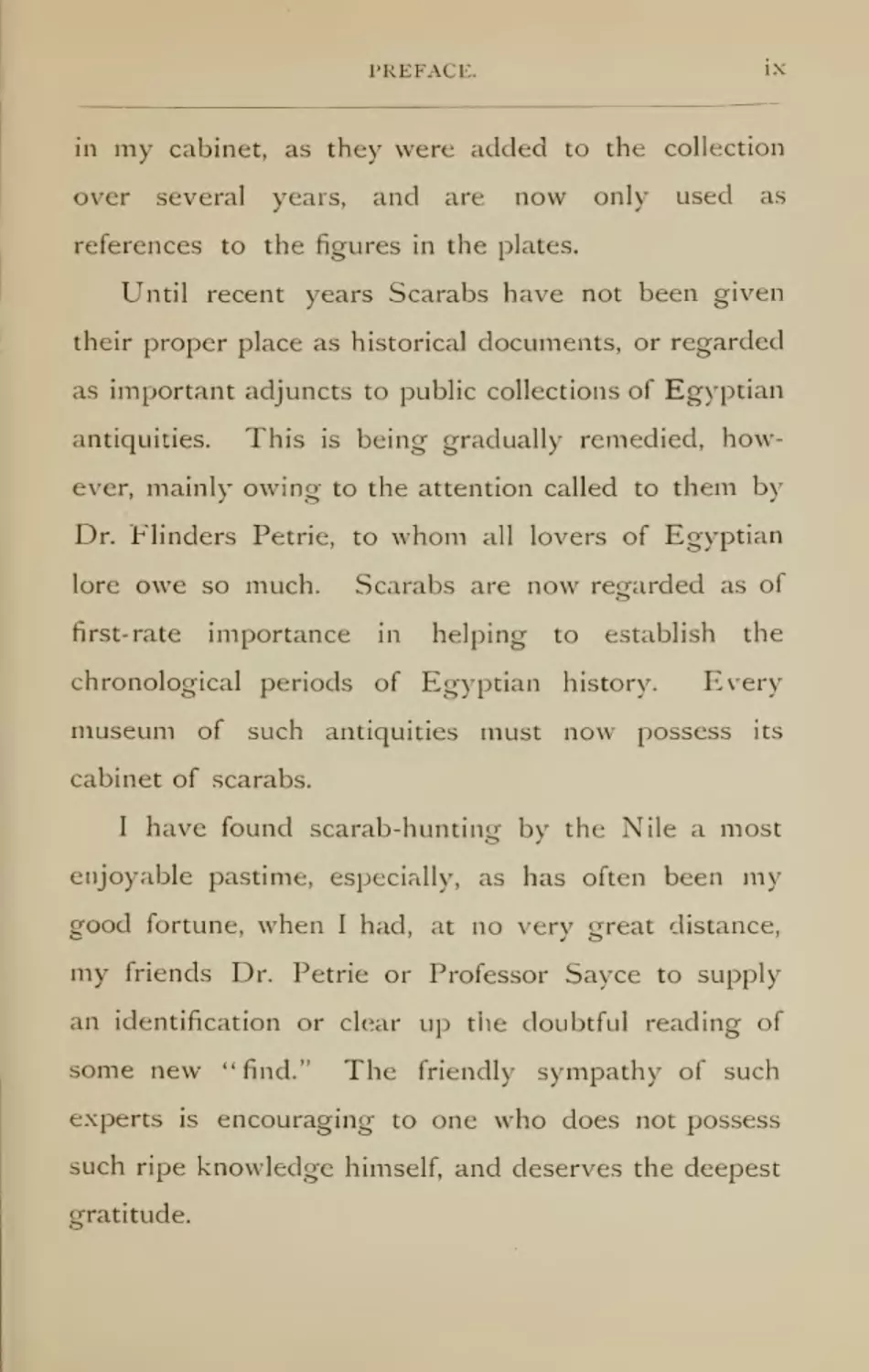
fi

DATE DUE
it
^^
^
m
mUt
Mt?5mi
LnUQ
KCTT
-m- 2
2003
DEOi M iU
^B« ifl^
«C7 4XJQi&
OCT 1 4 19IS5
6CT 5«7
IIAR
1 1989
W2» iwfy
m:-r
wm^''
^TTm?
JUL
rs i^wyi
TEBli 1 -i^n'v
DEC12W
"^
ttft.r^
4-MI98
4Ittr-oX.
J^
OCT!1VJ23
MAR28 1S97
tf^nivnnn
DEMCO 38-297

rvl
n'^
^
hfl
u
j::
Hr
Z
<ro
Oj
OU2
K/l
-
uC
• •-<
<
t-J
vn
m
^
5^.
to;
c
<u
FQ hJ
<
"-^
Pi
<
Ut/5
hJ
<
rn
rn
O
1-1
o
u

THE SACRED ^EETLE:
A POPULAR trpiai'isp:
ON KG\'PTIAN SCARABS
L\ ART. ANT) HIST()R\'.
BY JOHN WARD, F.S .A .
AUTHOR OF "pyramids AND PROGRESS," " GREEK COINS AND THEIR
PARENT CITIES," ETC.
FIVE HUNDRED EXAMPLES" OF SCARABS AND CYLINDERS,
THE TRANSLATIONS BV
F. LLEWELLYN GRIFFITH, M.A .
The distinction of the styles of Scarabs is as much a special subject as the
discrimination of the manner of painters^ and as invisible to those
who are tinfamiliar xuith the study.
Dr. Flinders Tktrie,
'•'
Historical Scarabs,^''
NEW YORK:
CHAREI'^ SCkl l^Xl'.K'S SONS,
153-157, Fifth Avenue.
1902.
{(Copyright reserved by the Author?^

DEDICATED TO
PROFESSOR FLINDERS PETRIE
D.C.L. LL.D. ETC.

RAMESES II.
BRITISH MUSEUM.
PREFACE.
During many wanderings by the Nile, I have made
a collection of several hundred Scarabs and Cylinders,
and these from time to time have been arranged syste-
matically, transliterated and translated by the kindness
of my friend Mr. F . Llewellyn Griffith.
He and
others learned In Egyptological studies have frequently
requested me to publish an Illustrated Catalogue of the
collection ; this Is my apology for Issuing the present
volume.
For they say there are few books, treating
of scarabs alone, to be obtained.
The Rev. W . J . Loftle published the first work
on the subject ;
this was a dainty little volume
''An Essay of Scarabs,'' Issued In 1884.

vi
THE SACRED BEETLE.
\
Subsequently a more comprehensive book ap-
peared, by Dr. Flinders Petrie, ''Historical Scarabs^
It contains a series of outlines of all scarabs known
at the time it was written.
The sketches in both
these books were all drawn by the indefatigable hand
of Petrie himself.
But both volumes are out of print
and unobtainable, even at second hand. Certainly
no one who has them wants to part with them.^'
In these and other publications scarabs have been
hitherto represented by hand-copies, drawn with pen
and ink.
I have preferred to obtain my illustrations
by the aid of photography, so as to reproduce the
actual signs on the face, and the form of the object
itself.
Hieroglyphics on scarabs are frequently done
in a careless manner, as if the ancient engraver were
himself illiterate.
Thus the inscriptions frequently
give doubtful readings, and many have not been
possible to translate.
From a representation of the
actual scarab itself, experts may be enabled to suggest
the true import of the signs.
The scarabs on the earlier
plates have been
* At the time this was being put in type Mr. Eraser's excellent
Catalogue of his Collection had not been announced.

PREFACE.
Vll
arranged
chronologically,
as
far
as
possible.
These (Plates I-VII) contain what are known as
"
Historical Scarabs,"
bearing the cartouches and
other attributes of kings, princes and dignitaries from
the IHrd Dynasty (about 4212 b.c .) till the XXI
I
nd
Dynasty (about 660 b.c).
There Is another Plate
(XVI) of the historical class, devoted to Cylinders
alone, most of which bear royal inscriptions.
The
scarabs shown on Plates VI 1 1 -XV are not such as
are known as " Historical," and, as far as possible, have
been arranged only according to style and subject.
It is difficult to assign their dates with any certainty,
though the form of the backs of the scarabs and the
style of the hieroglyphs or the ornament, may enable
experts to arrive at some conclusion regarding their
period. There is much character in the mode of the
original artist's treatment of the back, and the manner
in which the leo^s and shards of the beetle are enorraved.
Both sides of many specimens have therefore been
shown to help this research.
All are represented In
the actual size of the originals.
In order to add to the Interest of a rather dry
subject, portraits of the royalties whose names appear
A3

vlli
THE SACRED BEETLE.
on scarabs have, where possible, been given.
For
these
I
am mainly indebted to Dr. Petrie, who
allowed me to use many portraits from his " History
of Egypt,'' and to the Society for Promoting" Chris-
tian Knowledge, for permitting the use of several
from M. Maspero's volumes published by them.
Dr. Herbert Walker has given me his invaluable
assistance in supplying and arranging the parallel
translations, in writing out the hieroglyphics for the
printer, and in the correction of the proofs of these
difficult characters.
Illustrations of the subjects and localities named
in the text have been introduced, so as to eive some
idea of the present aspect of the ancient land for those
who have been unable to visit it themselves.
The
specimens have, as far as possible, been arranged
chronologically, and the epochs connected by informa-
tion so as to form a sketch of the history of
the most interesting periods of the country, evolved
or suggested by the study of the scarabs themselves.
The numbers appearing in the Catalogue do not
imply any order as to date or period.
They are
merely the consecutive numberings of the specimens

PREFACE.
IX
in my cabinet, as they were added to the collection
over several years, and are
now only used as
references to the figures in the plates.
Until recent years Scarabs have not been given
their proper place as historical documents, or regarded
as important adjuncts to public collections of Egyptian
antiquities.
This is being gradually remedied, how-
ever, mainly owing to the attention called to them by
Dr. Flinders Petrie, to whom all lovers of Egyptian
lore owe so much. Scarabs are now rerarded as of
first-rate importance in helping to establish the
chronological periods of Egyptian history.
Every
museum of such antiquities must now possess its
cabinet of scarabs.
I
have found scarab-hunting by the Nile a most
enjoyable pastime, especially, as has often been my
good fortune, when I had, at no very great distance,
my friends Dr. Petrie or Professor Sayce to supply
an identification or clear up the doubtful reading of
some new ''find."
The friendly sympathy of such
experts is encouraging to one who does not possess
such ripe knowledge himself, and deserves the deepest
gratitude.

X
THE SACRED BEETLE.
In addition to my own collecting I have been
indebted for some good specimens to several kind
friends.
My earliest helper was the Rev. W . J.
Loftie, the latest Mr. George Fraser, to both of whom
my thanks are tendered.
Mr. W . Harry Rylands,
F.S.A.,
aided me greatly in helping the
w^ork
through the press, while Dr. Wallis Budge kindly
permitted me to borrow some important matter from
his remarkable book " The Afinmnyy
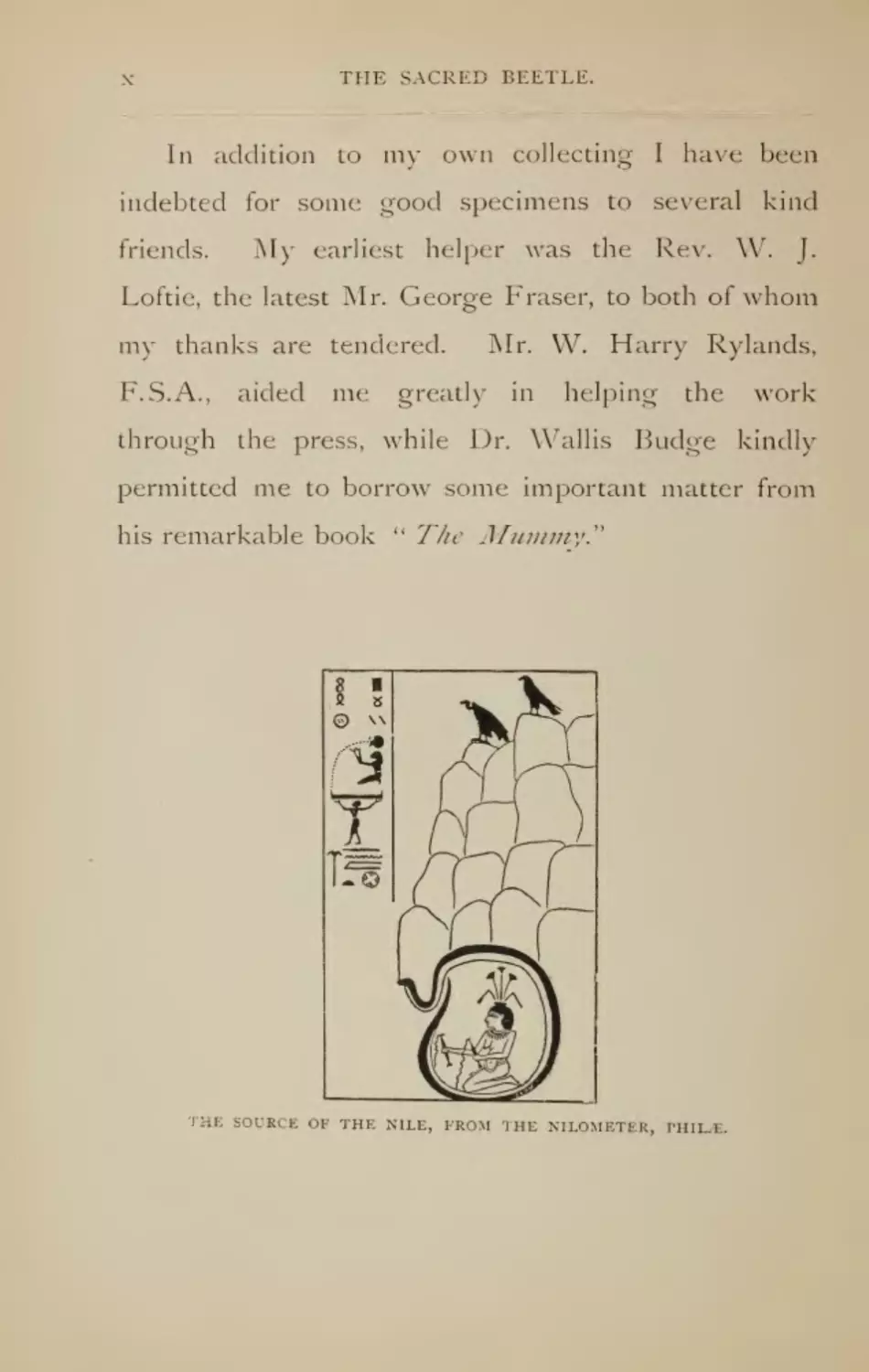
THE SOURCE OF THE NILE, FROM THE KILOMETER, THIL^.

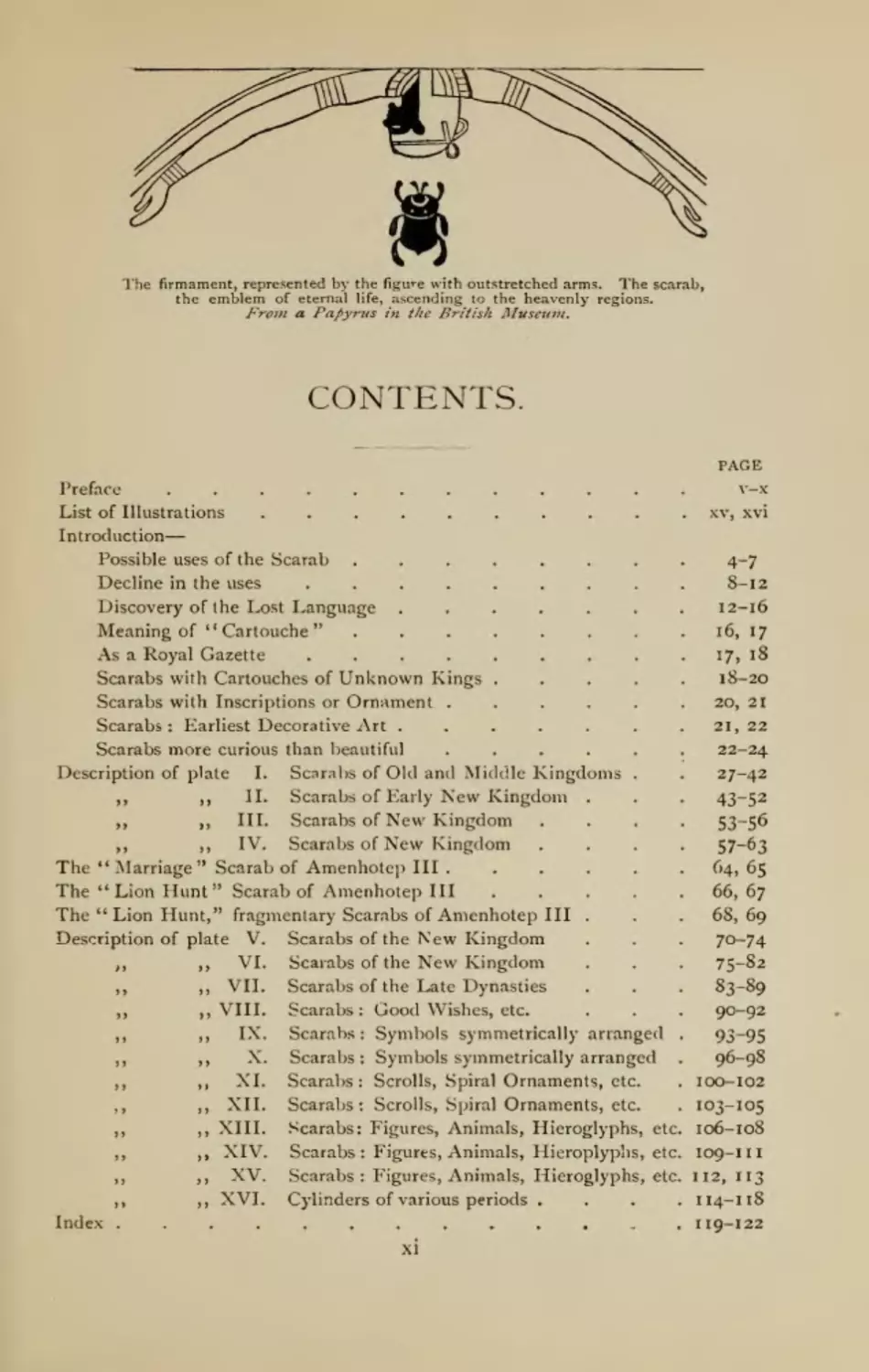
The firmament, represented by the figure with outstretched arms.
The scarab,
the emblem of eternal life, ascending to the heavenly regions.
From a Papyrus in the British Museum.
CONTENTS.
Preface
List of Illustrations
.....
Introduction
—
Possible uses of the Scarab
Decline in the uses
...
Discovery of the Lost Language .
Meaning of " Cartouche
"
As a Royal Gazette
....
Scarabs with Cartouches of Unknown Kings
Scarabs with Inscriptions or Ornament .
Scarabs : Earliest Decorative Art .
Scarabs more curious than beautiful
Description of plate
I.
Scarabs of Old and Middle Kingdoms
,,
,,
II.
Scarabs of Early New Kingdom
,,
,,
III.
Scarabs of New Kingdom
,,
,,
IV. Scarabs of New Kingdom
The " Marriage" Scarab of Amenhotep III .
The "Lion Hunt" Scarab of Amenhotep III
The " Lion Hunt," fragmentary Scarabs of Amenhotep III
Description of plate V. Scarabs of the New Kingdom
Scarabs of the New Kingdom
Scarabs of the Late Dynasties
Scarabs : Good Wishes, etc.
Scarabs :
Scarabs :
Scarabs
:
Scarabs
:
VI.
VII.
VIIL
IX.
X.
XL
XII.
XIII.
XIV.
XV.
XVI.
Index
Symbols symmetrically arranged
Symbols symmetrically arranged
Scrolls, Spiral Ornaments, etc.
Scrolls, Spiral Ornaments, etc.
Scarabs: Figures, Animals, Hieroglyphs, etc
Scarabs : Figures, Animals, Hieroplyphs, etc
Scarabs : Figures, Animals, Hieroglyphs, etc
Cylinders of various periods ...
XI
PAGE
v-x
XV, xvi
4-7
8-12
12-16
16, 17
17, 18
18-20
20, 21
21, 22
22-24
27-42
43-52
53-56
57-63
64, 65
66, 67
68, 69
70-74
75-82
83-89
90-92
93-95
96-98
100-102
103-105
106-108
109-111
112, 113
114-118
1 19-122

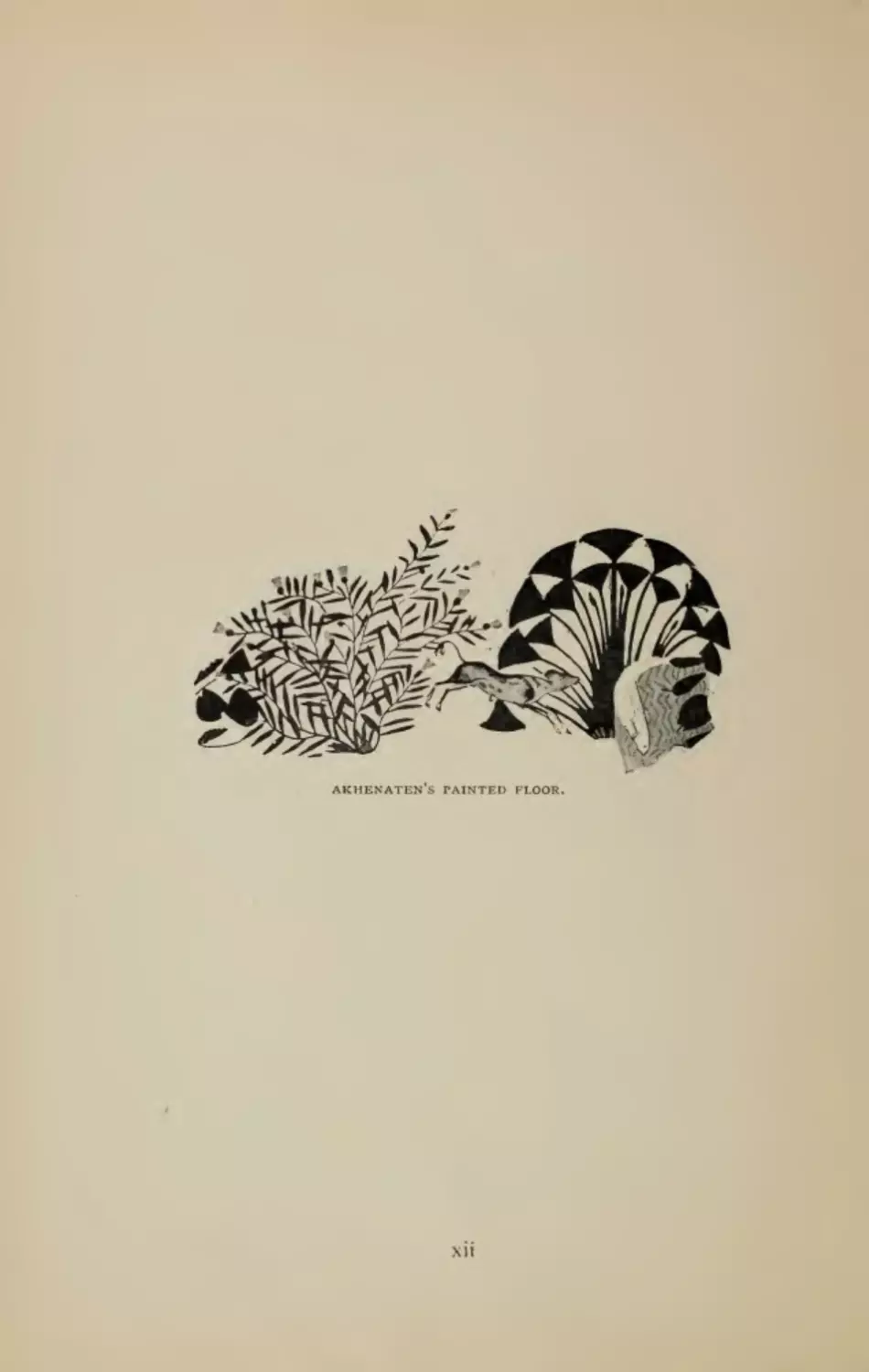
AKHENATEN S PAINTED FLOOR.
xn

LIST OF COLLOTYPE PLATES.
Plate
I.
Scarabs of Old and Middle Kingdom
II.
Scarabs of Early New Kingdom
III.
Scarabs of New Kingdom
IV. Scarabs of New Kingdom
V. Scarabs of the New Kingdom
VI. Scarabs of the New Kingdom
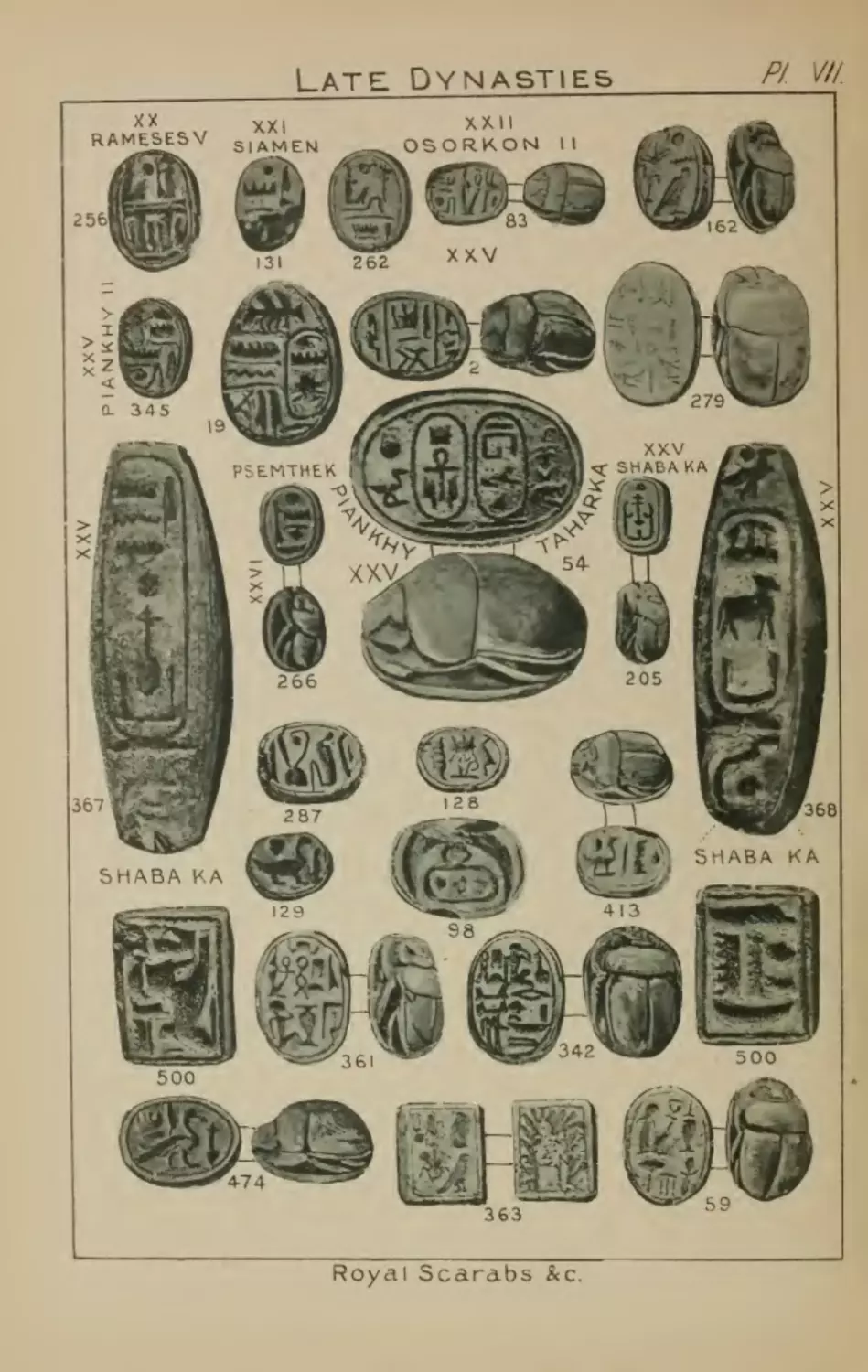
VII. Scarabs of the Late Dynasties
VIII. Scarabs: Good Wishes, etc.
IX. Scnrabs : Symbols symmetrically arranged
X. Scarabs : Symbols symmetrically arranged
XI. Scarabs : Scrolls, Spiral Ornaments, etc.
XII. Scarabs: Scrolls, Spiral Ornaments, etc.
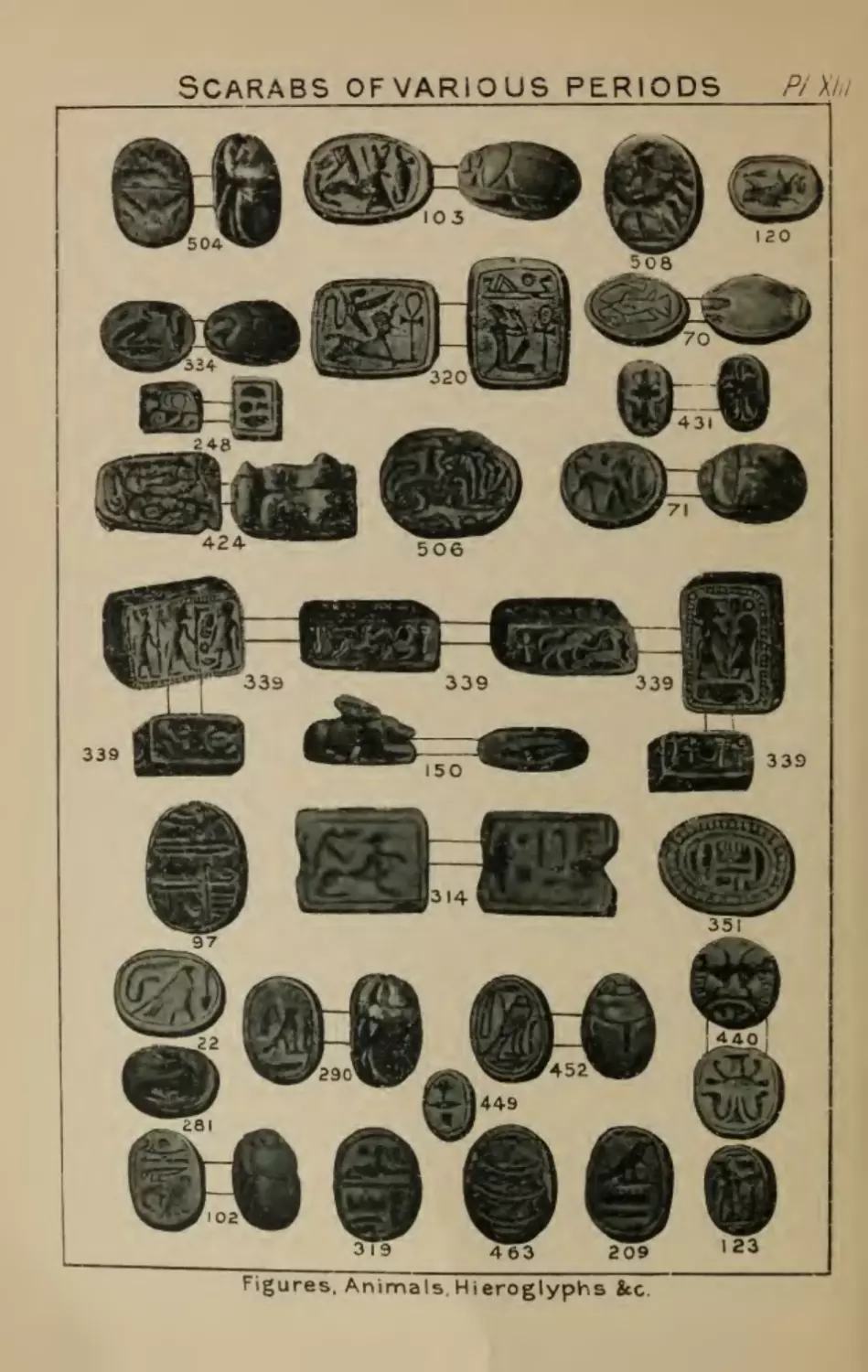
XIII. Scarabs : Figures, Animals, Hieroglyphs, etc
XIV. Scarabs : Figures, Animals, Flieroglyphs, etc
XV. Scarabs : Figures, Animals, Hieroglyphs, etc
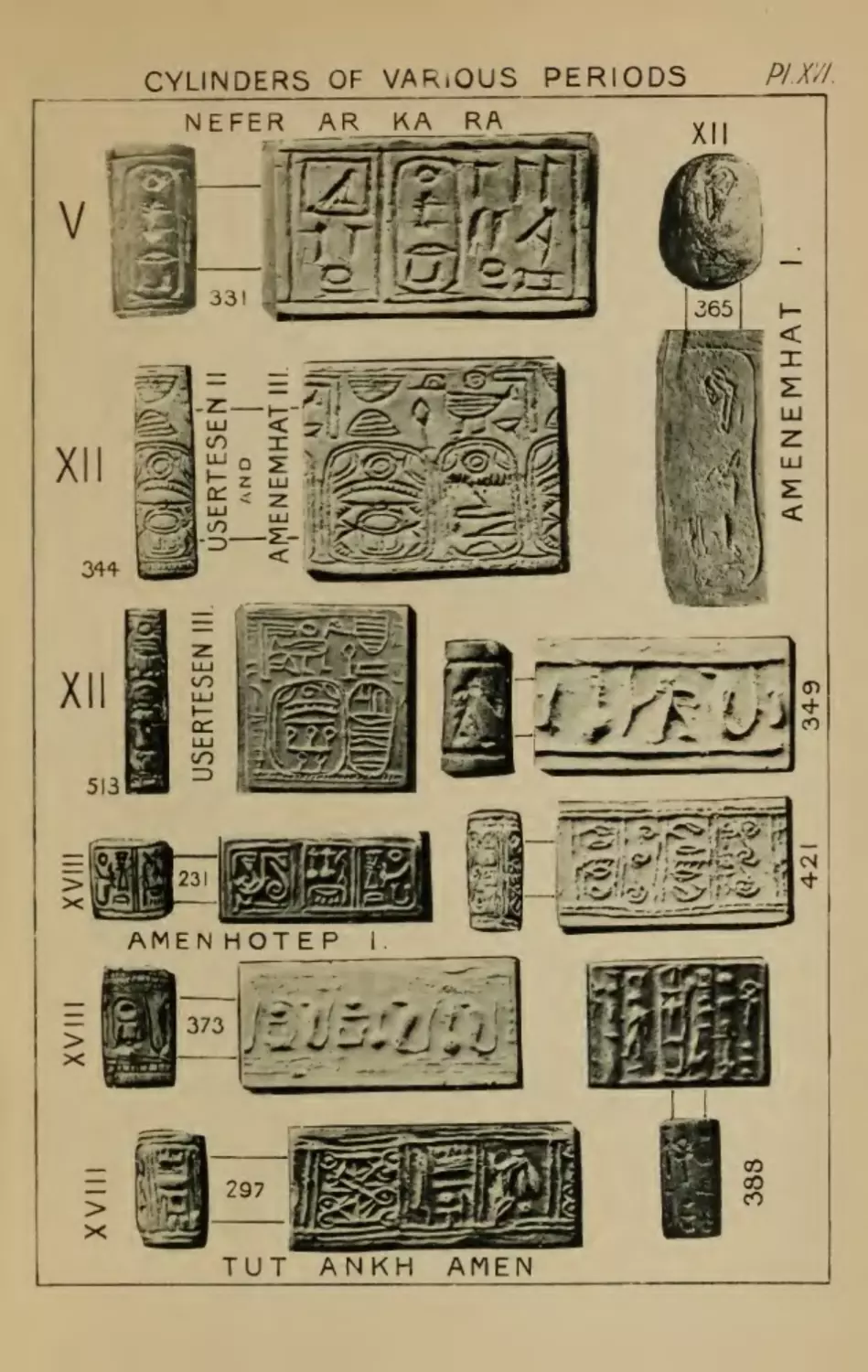
XVI. Cylinders of various periods .
TO FACE PAGE
27
43
53
57
70
75
83
90
93
96
100
103
106
109
112
114
Xlll

.J-\~..
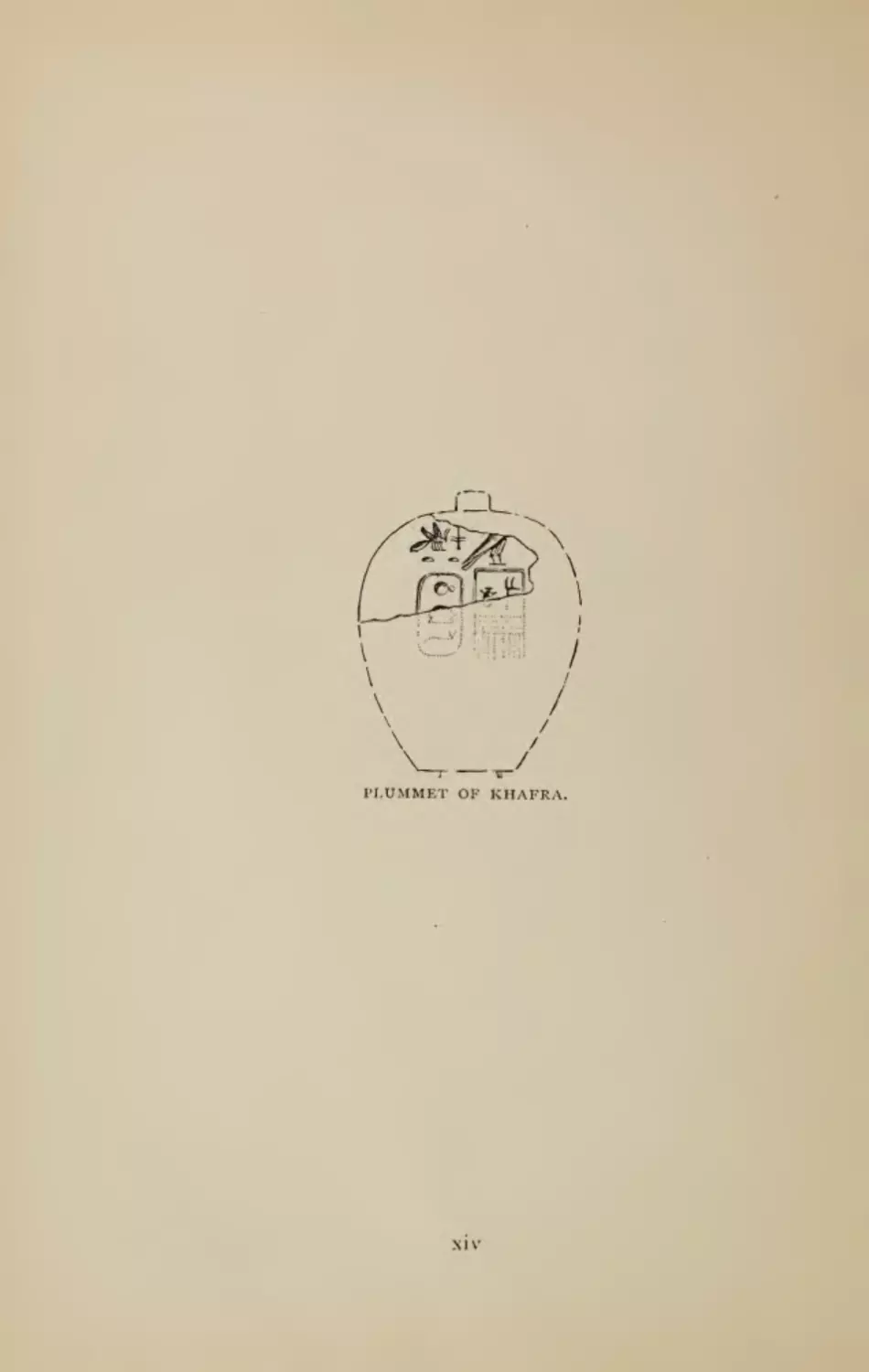
PLUMMET OF KHAFRA.
XIV

LIST OF ILLUSTRATIONS.
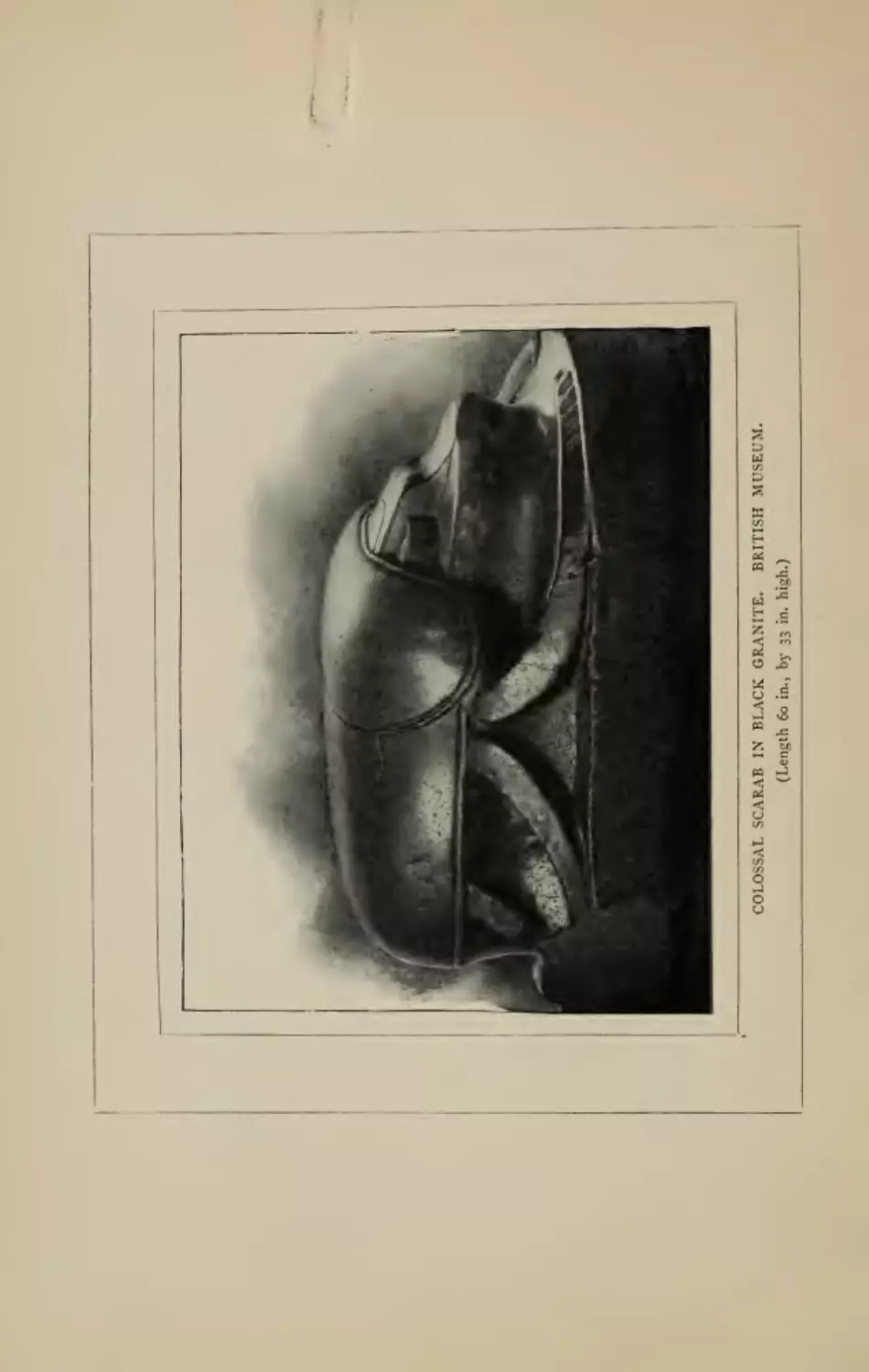
Colossal Scarab
........
(Frontispiece)
PAGE
Rameses II
..........
.
v
The Source of the Nile
........
x
Egyptian idea of the Firmament
.......
xi
Plummet of Khafra ..........
xiv
Model of the Sphinx
..........
xviii
Winged Scarab and Ra emblems
......
i
A Heart. Scarab
5
Palm Forest on Site of Memphis
.......9
Rosetta Stone
12
Cartouches of Ptolemy and Cleopatra
13
Pyramid-field of Ghizeh
..........27
Portrait of Khafra
28
Statuette of Menkaura
..........29
Unas's Pyramid, interior and exterior
.......30
Amenemhat I
............32
Obelisk of Usertesen I
.
-33
Usertesen I
............33
Map of Lake Moeris ...........34
Pectoral of Usertesen II
..........34
Pyramid of Iliahun ...........35
Pyramid of Dahshur ...........36
Amenemhat III
...........36
Restoration of Colossus
..........37
Hyksos king
............38
Ptahhotep's Son
...........39
Walls of El Kab
42
Dahabeahs off El Kab
.43
Queen Aahmes
..........44, 49
Amenhotep I
............45
Thothmes I
...........47
Thothmes II
............48
Terrace Temple
48
Queen Hatasu
49
Queen Halasu's Obelisk
.
.
50
Thothmes III ............51
Tame Lion of the Pharaoh
.
.
.
.
.
.
.
.
52
Royal Crowns ............53
Obelisk of Thothmes III ..........53
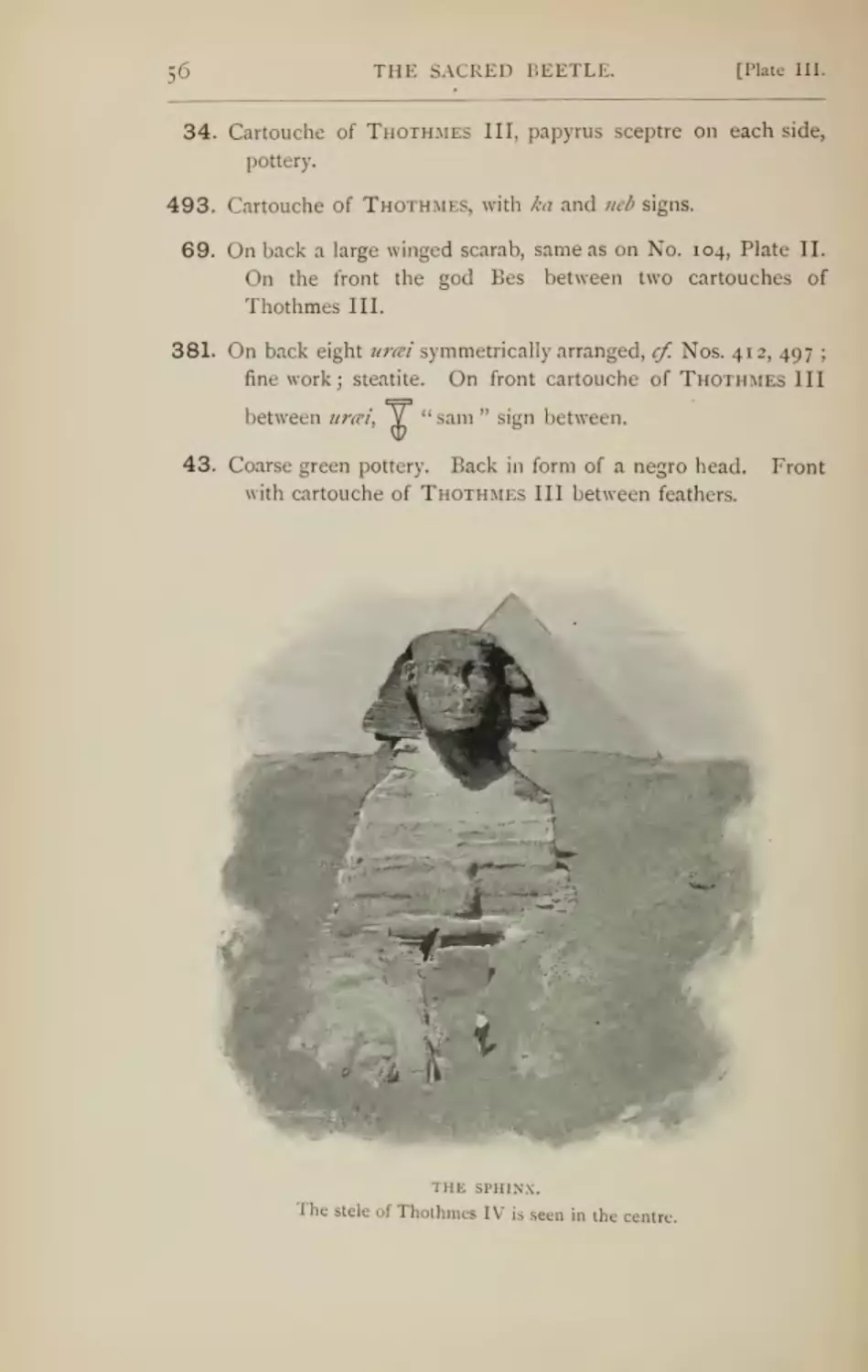
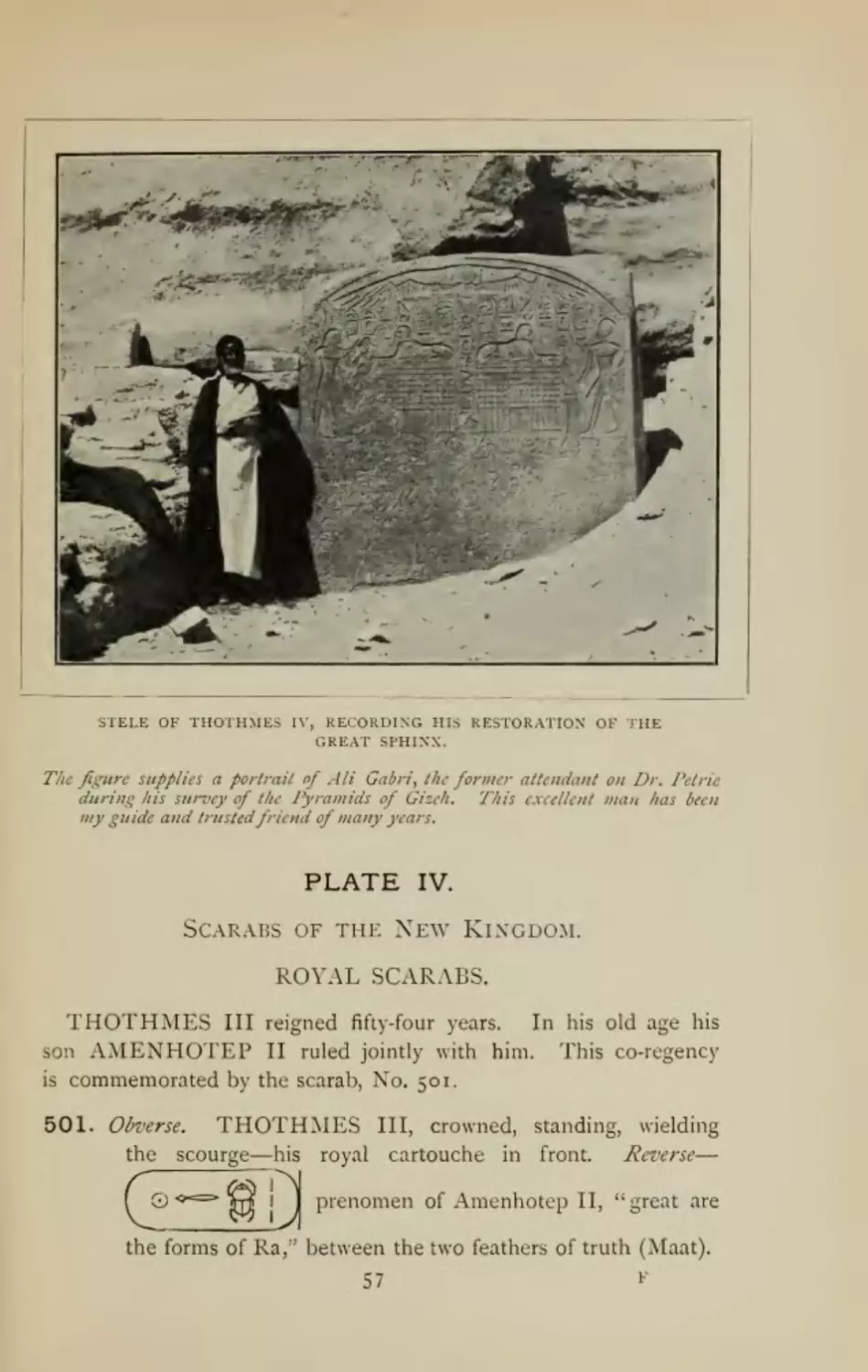
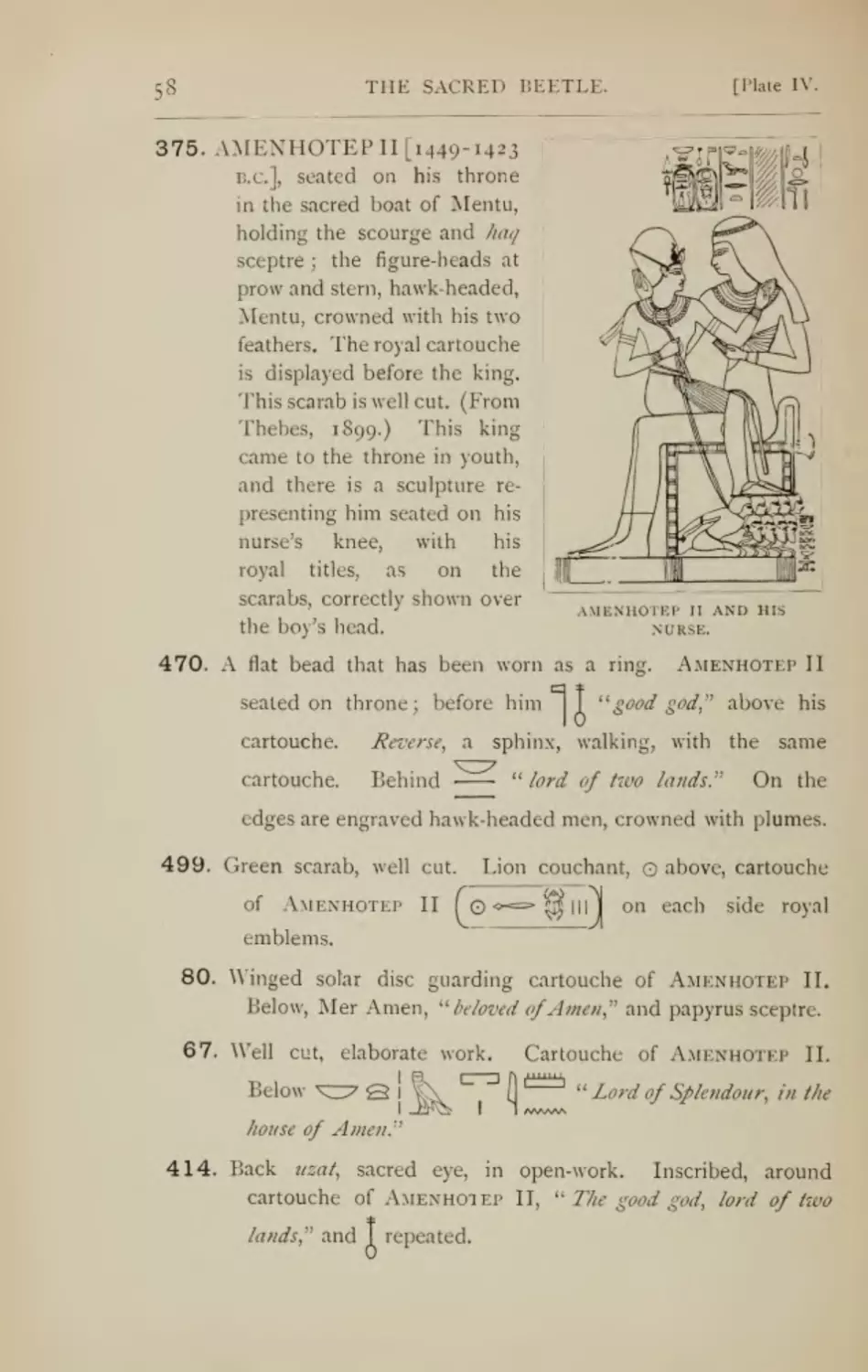
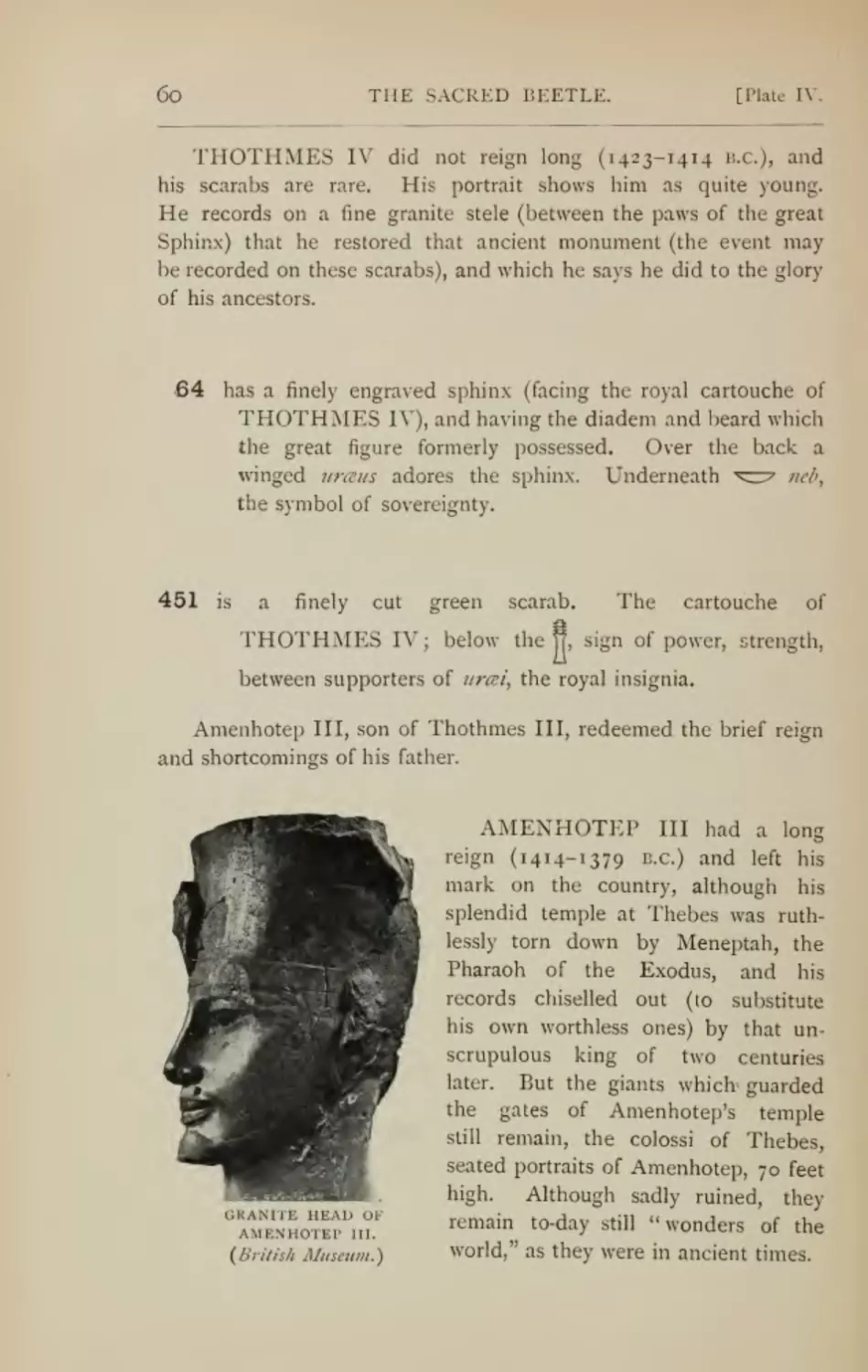
The Sphinx
............56
Stele of Thothmes IV
.
.
57
XV

XVI
LIST OF ILLUSTRATIONS.
Amenhotep II and his Nurse
Thothmes IV .
Amenhotep III
Queen Tyi
Queen Tyi
"Marriage" Scarab (2 cuts)
"
Lion Hunt " Scarab (2 cuts)
" Lion Hunt" Scarab (2 cuts)
Colosi ol Amenhotep III .
Akhenaten
Painted Floor .
Horemheb
Akhenaten and his Family
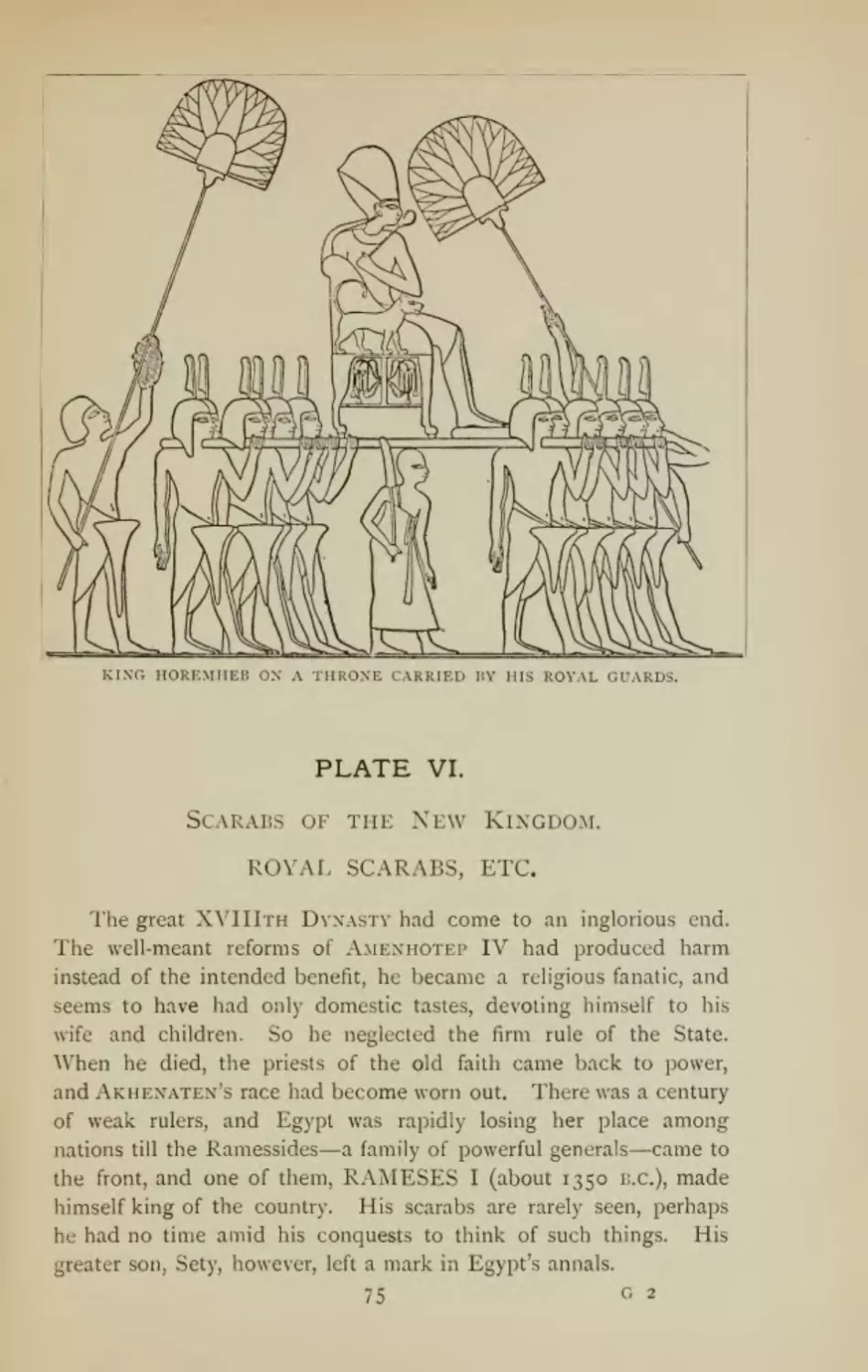
King carried by his Guards
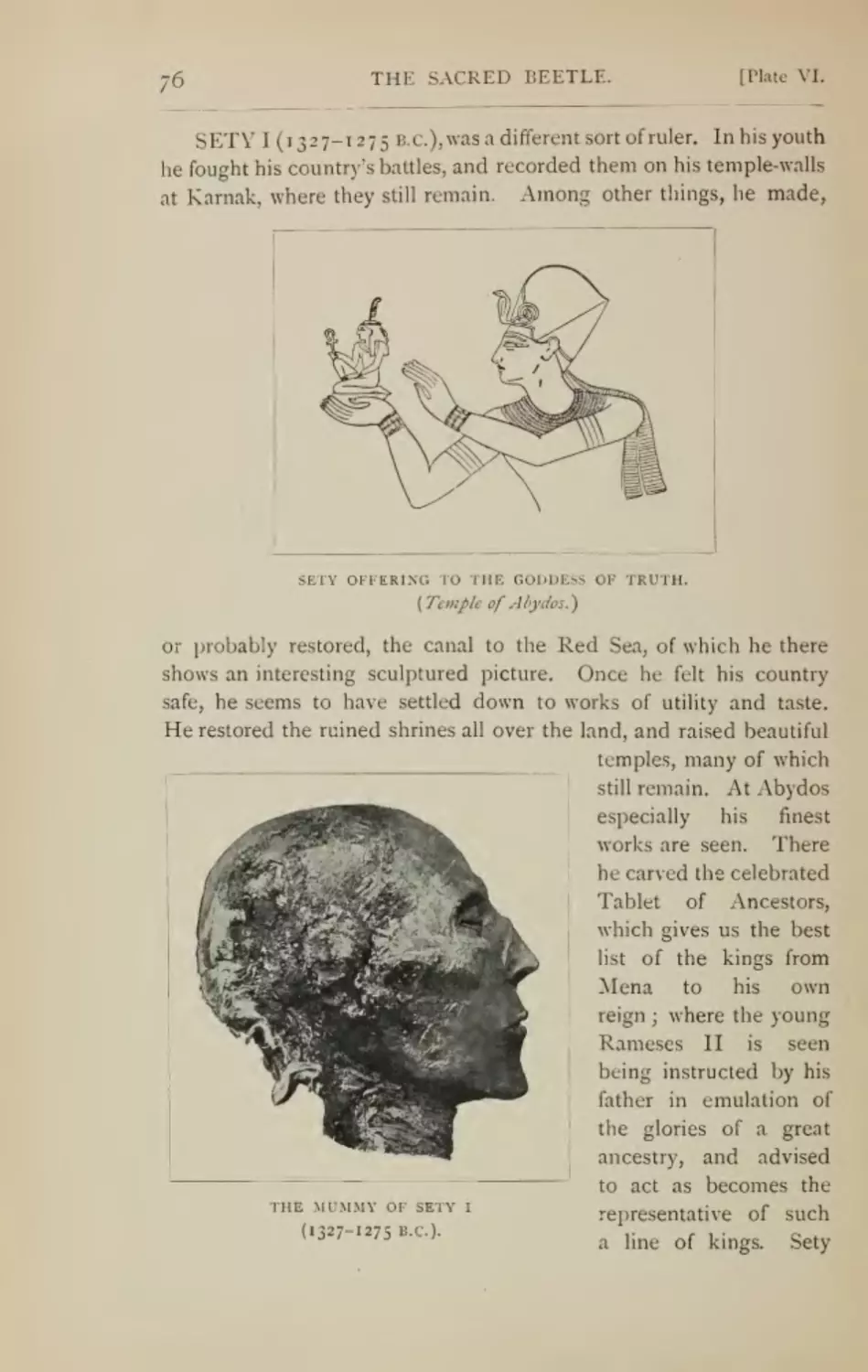
Sety Offering
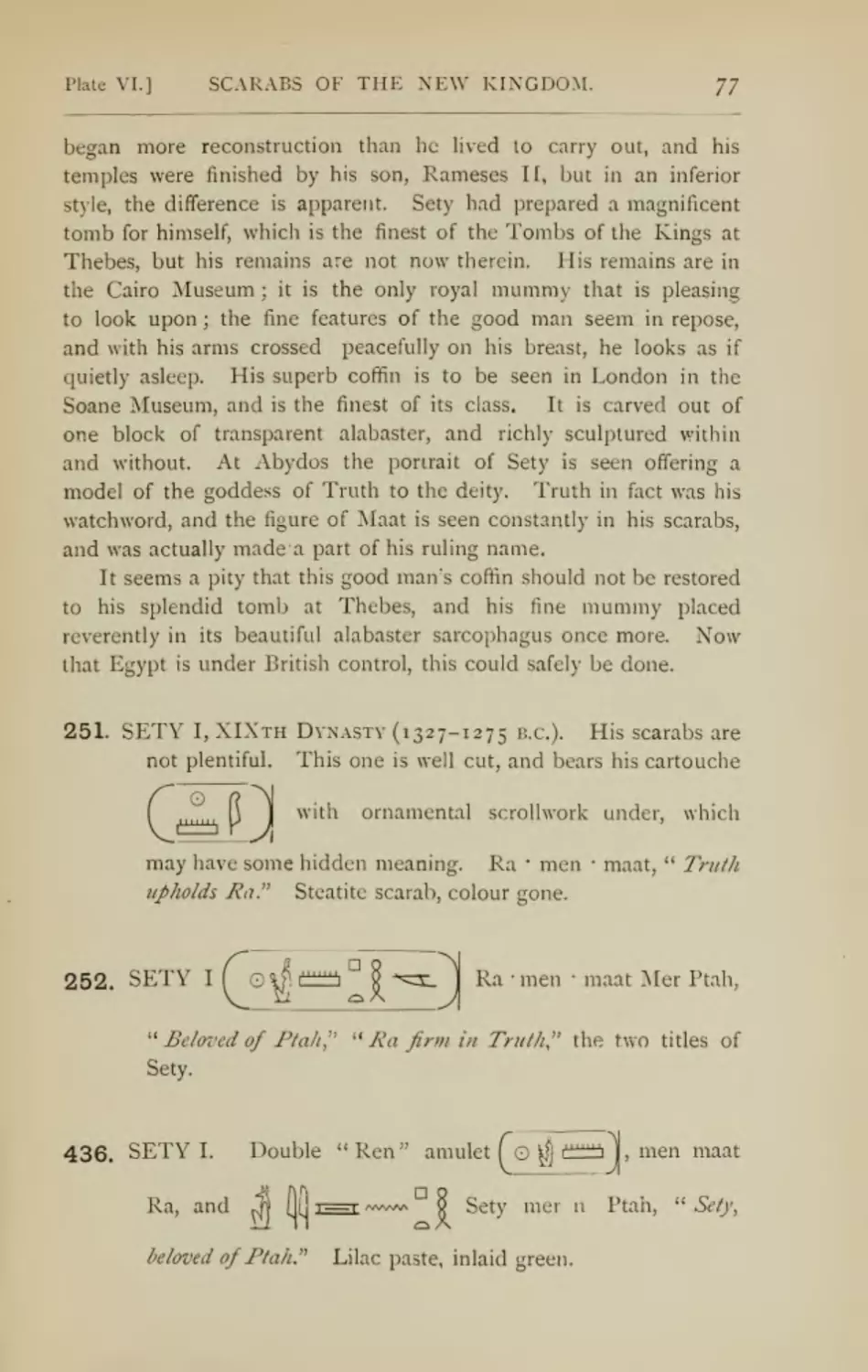
Sety's Mummy
Granite Colossus of Rameses th(
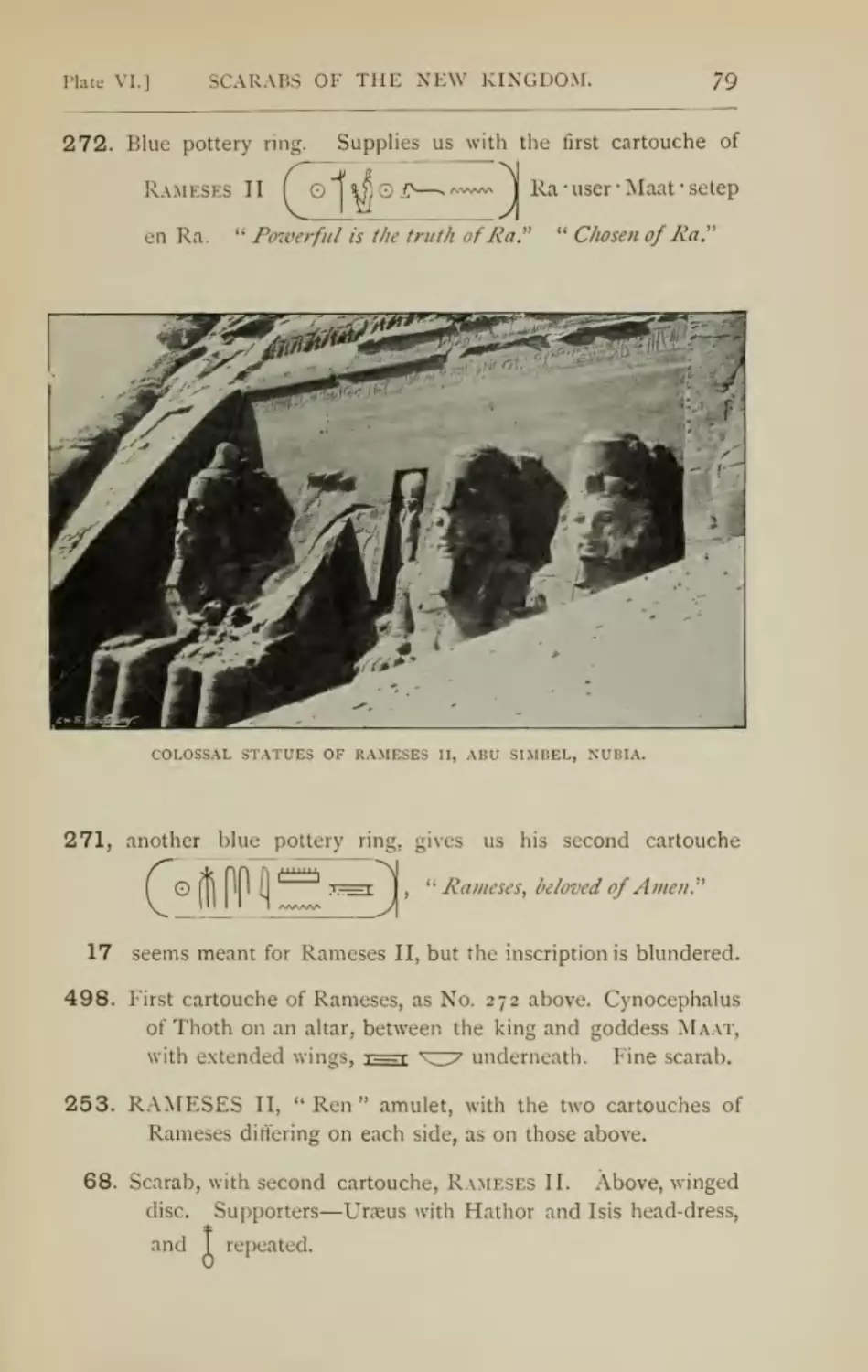
Colossal Statues of Rameses II
Smaller temple of Rameses II
Medinet H?bu Palace
Medinet Habu Temple
Osorkon ....
Shabaka .
.
Taharqa (2 cuts)
Portraits of Taharqa's Queen (3
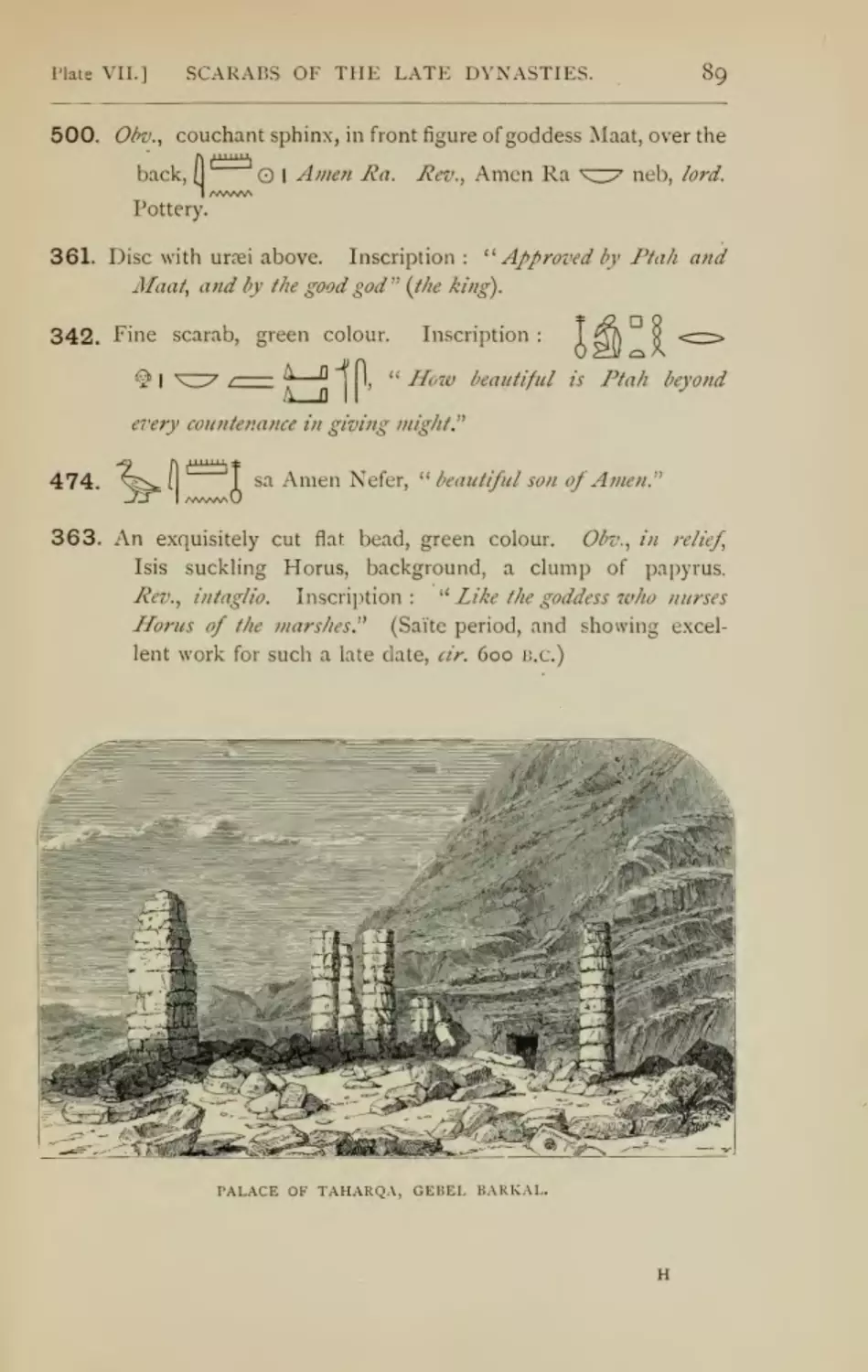
Taharqa's Palace
Abu Simbel
Colossal Head .
Pyramid : El Kuleh .
Rameses's Dagger
Queen Hatasu's Ship
Ornamental Slab
Egyptian and Greek Ornament
Scarabs with Spirals .
Greek decoration of a Ceiling
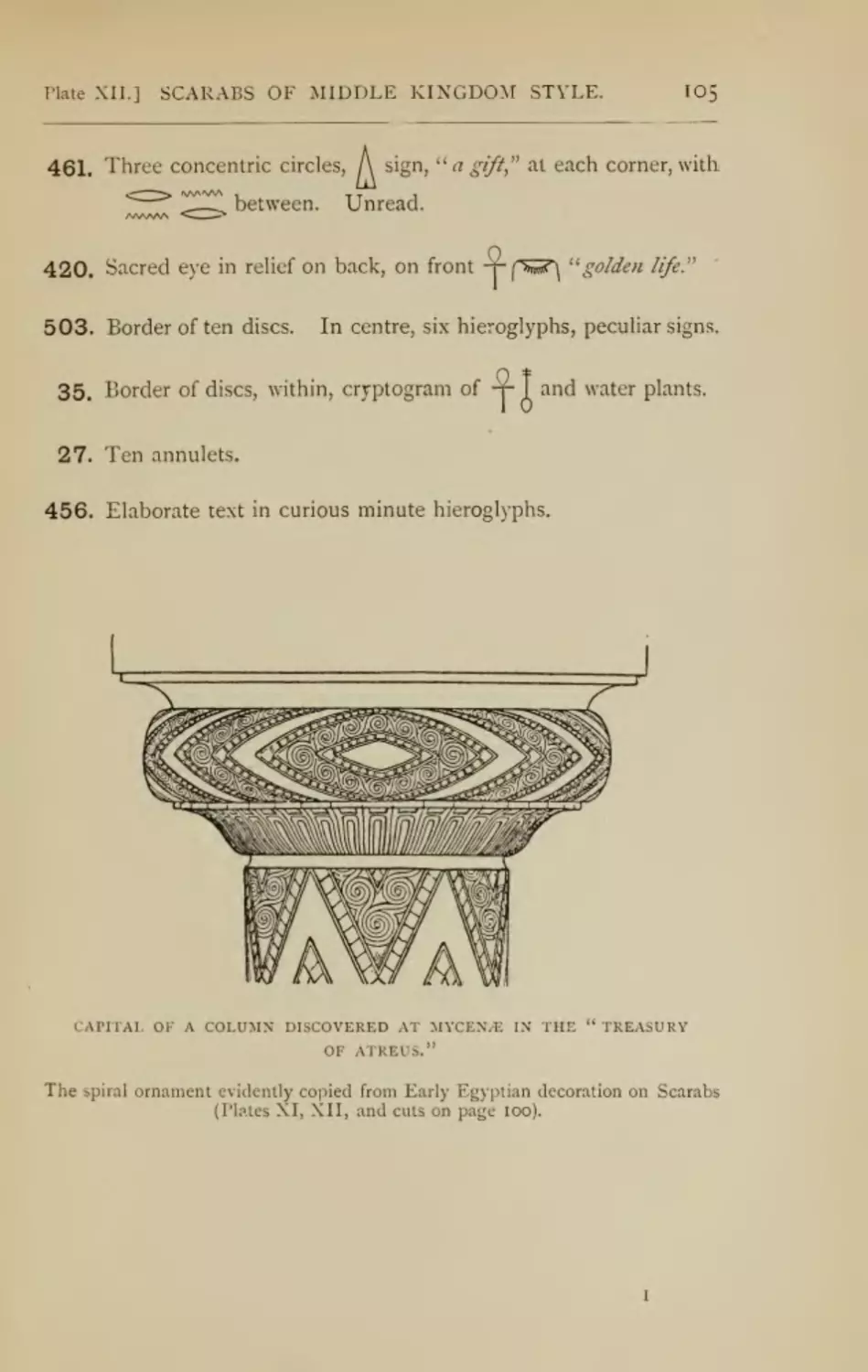
Capital from Mycenae
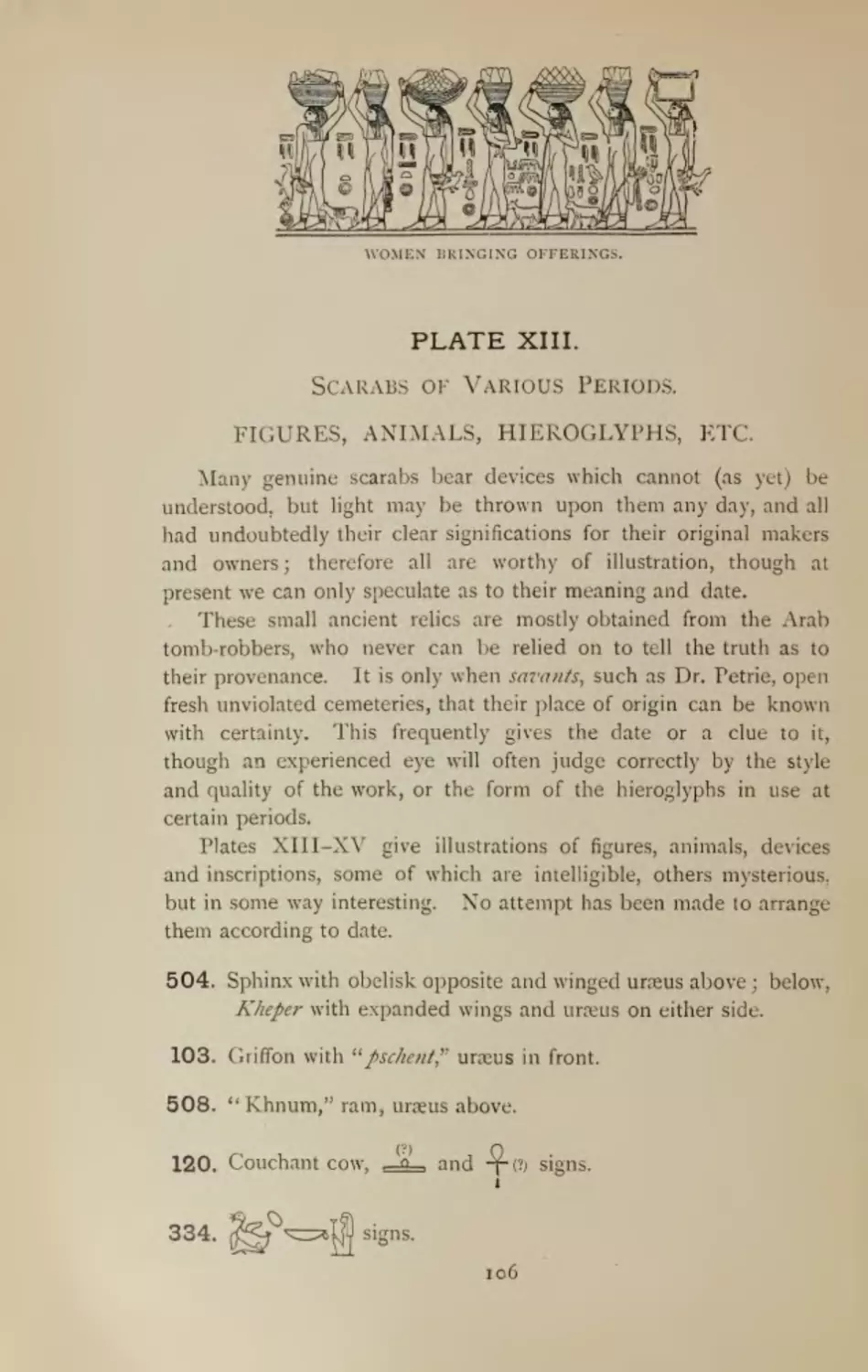
Women bringing Offerings
Ivory Tablet of Mena
Akhenaten's Garden
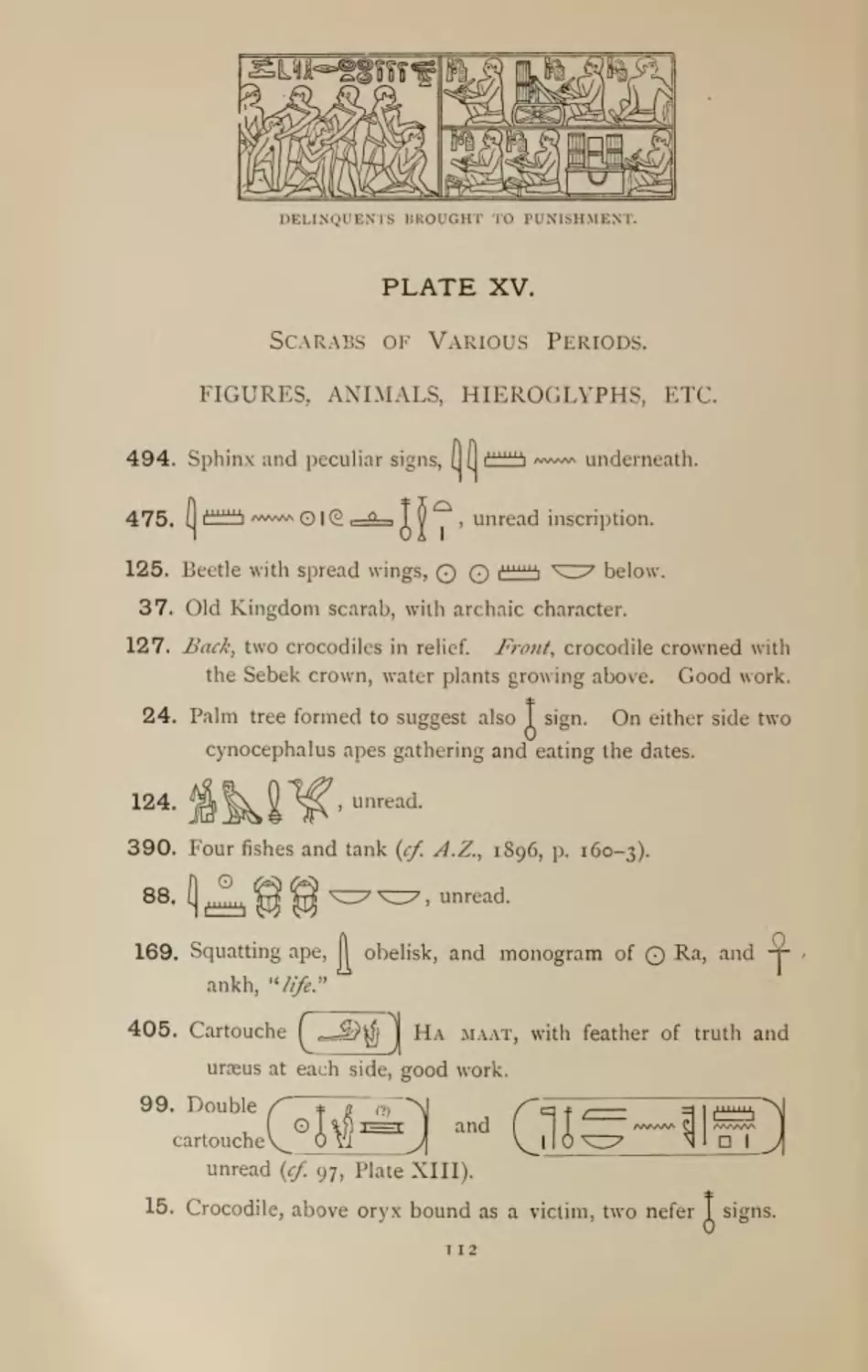
Delinquents punished
Akhenaten's Daughters
Cylinder No. 442
Usertesen I
.
.
.
Gold Pectoral of Usertesen III
Cylinders 298 and 350
Egyptian Scribes
Great
cuts
PAGE
59
60
61
62
64
66
68
70
71
ii, 26, 72
74
74
75
76
76
78
79
81
82
83
84
85
86
87,88
89
90
92
93
95
96
98
99
100
103
105
106
109
III
112
114
114
116
117
118
119

THE SACRED BEETLE
EGYPTIAN SCARABS
IN ART AND HISTORY.
PART I.
OF SCARABS IN GENERAL.
XVll

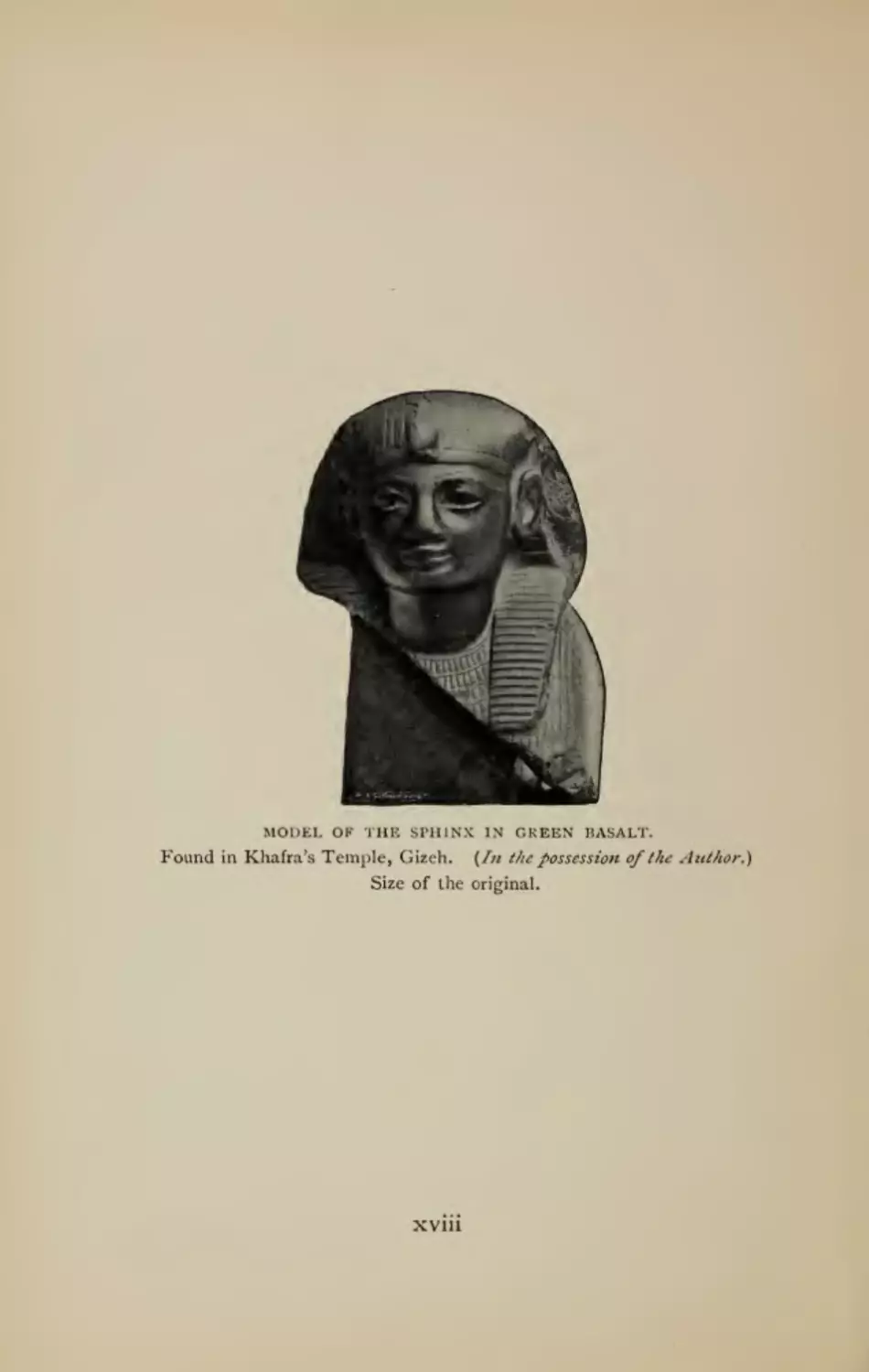
MODEL OF THE SPHINX IN GREEN BASALT.
Found in Khafra's Temple, Gizeh. (/;/ the possession of the Author.)
Size of the original.
XVIU

What is a Scarab ?
If we refer to Dictionaries and Cyclopaedias, we
do not get much information.
The EncyclopcEciia
BiHtannica does not even give the word under the
letter S.
In books treating of Egyptian antiquities
it is generally taken for granted that every one knows
what is meant by the term " Scarab."
I
myself
had published some sketches, literary and artistic,
describing my Egyptian wanderings, and gave for
frontispiece to the volume a collotype plate
of
"
Historical Scarabs.
""^
I
had assumed that every-
body knew what scarabs were, and so did not think
it necessary to explain.
But I received many letters
asking the question " What is a Scarab.^"
Some
of my correspondents had never seen one ; others
went so far as to say they had never heard of
them before.
It
may be desirable,
therefore,
to
give a few words on the subject, as far as I myself
understand these mysterious records of the past.
And as this work is intended more for the public
^a
Pyramids aiid Progress^ —
Eyre and Spottiswoode, 1900.
I
B

THE SACRED BEETLE.
than for experts, it may be well at the outset to say
a few words about scarabs in general.
The Earliest Scarabs.
It has been hitherto supposed that the oldest
scarabs were those bearing the names of Egyptian
kings.
Some small oval objects
recently found,
however, tend to prove that there were still earlier
relics, ol the form of the sacred beetle possibly, used
as amulets.
From the first, however, the scarab
seems to have had a mysteriously sacred character.
Royal Scarabs were certainly in use in the IIIrd
Dynasty, and possibly we may find some earlier, now
that the cemeteries of the 1st and IInd Dynasties
have been discovered. The early monarchs were heads
of the State Church, and were worshipped possibly
during life and certainly after death, either as deities,
or at least as a means of approaching the Deity.
Scarabs were originally cut out of soft stone,
generally steatite, and every one was separately en-
graved.
During and after the brilliant XVIIIth
Dynasty (i 587-1 328 b.c), they were often made
of pottery or engraved on hard stone, while the
original material, steatite (soap-stone), was still used.
The back of the scarab was nearly always cut in
the form of a beetle, hence the name (from the

THE EARLIEST SCARABS.
Greek word cr/capa^eio? = a beetle).
The name of
the king, and later, his titles
also, were engraved
on the flat oval face of the scarab.
The colour of various kinds of cockchafers and
beetles still abundant in Egypt, is often of an irides-
cent bluish-green.
Possibly in the attempt to imitate
this,
all scarabs have been so coloured originally.
But during the vicissitudes of thousands" of years,
those only which have been preserved in dry sandy-
soil retain their original green tinting ; those which
have been exposed to the salts with which Nile mud
is saturated, have generally lost all their colouring.
There has been a suggestion that the sacred
character attached to this insect may have arisen
from the habit of the dung-beetle of laying its eggs
in a small pellet of dirt, rolling it with its antennae
till it assumes the shape of a ball.
The creature
can often be seen on a sunny day pushing its
little ball before it, and then burying it in a warm
bank of desert sand.
After a time the sun's rays
hatch out the egg, and the creature thus seems to
emerge alive out of the sand. So the Egyptians,
being poor entomologists, may have supposed that the
beetle had the power of revivifying itself alter death,
and it thus was perhaps regarded as the emblem of
resurrection.
It has been remarked also that im-
B2

4
THE SACRED BEETLE.
mediately after
the inundation of the Nile has
subsided, the land is often found to possess as many
beetles as before.
The Egyptians may have sup-
posed that the creatures thus had perpetual life.
The Sun (Ra O) sign is almost always found on
Royal Scarabs —
and in wall-paintings the beetle is
often represented with a ball between its mandibles.
So there is little doubt but the egg of the beetle,
miraculously produced as they believed, had a refer-
ence to the sun,
the great manifestation of the
creative power of the universe.
Possible Uses of the Scarab.
The scarab was, in at least one of its uses,
an amulet, and was placed over the heart of the
mummy, or was used to replace the heart itself when
removed in the process of embalming, for the em-
balmers, from some unknown reason, did not replace
the heart in the body. Perhaps the "stony heart"
was supposed to have the power of restoring to
life the heart of the deceased"^
on the day of
* The Jews were familiar with this use of the scarab to
replace the heart after death, "I will take the stony heart out of
their flesh, and give them a heart of flesh,"
Ezekiel xi, 19; also
*'
Create in me a new heart, O God, and renew a right spirit
within me," Psalms li,
10.

POSSIBLE USES OF THE SCARAB.
a " heart scarab," with inscription, taken from the
"book of the dead."
resurrection, or it may have been the Idea to provide
the body with an artificial heart to replace its original
one, which had, with its life,
returned to the gods
who gave It.
These "stony-heart" scarabs were
specially made for the purpose, and are of large size.
An engraving Is appended of one of them.
They
are mostly composed of a hard yellowish or dark
green stone, and bear long Inscriptions on the face,
mostly taken from the " Book of the Dead."
Some
of these refer to
a " new heart " being supplied
In exchanore for the natural one when the deceased
comes to be "justified," and resurrection assured by
the act of this magical substitute.
The belief in the supernatural powers of the beetle
probably originated the use of this sign (^), known
as '' Khepej^'' in Egyptian, which signified both "a
beetle" and "transformation."
It also expresses the

THE SACRED BEETLE
verb ''to be," "to create," "to become," and ''Klieper''
possibly came to m.ean eternal life, as a noun.
It
is curious that in English (and German) an almost
identical word to the Egyptian " Kheper " should
be still in use for this insect, as found in ''cock-
chafer'' and „j\afer".
The ancient Egyptians were firm believers in a
future state, in which soul and body would be re-united,
and hence they were most anxious to preserve the
body for its future re-union with the spirit.
This
led to their efforts to preserve the corpse, which
they did with great skill.
And scarabs were buried
with the mummies in hope of facilitating this happy
result.
Scarabs were also suspended to the neck
and the wrists and put among the wTappings of the
mummy. They were also undoubtedly used and
worn during life,
for many bear the marks of long
wear previous to their being entombed with the
precious dead.
The original faith of the old Egyptians was
pure and simple,
and in many respects
vastly
superior to any other religion of early ages.
Some
have called it the best faith ever invented by man.
Recent discoveries seem to carry the date of this
early cult back to 5000 or 6000 B.C .
But in later
times the Egyptian religion deteriorated, and the

POSSIBLE USES OF THE SCARAB.
J
worship of one deity gradually degenerated into a
species of polytheism.
Each of the various attributes
of the one Great Being, represented by allegorical
figures, seem at last to have been regarded as repre-
senting separate personages worthy of worship, and
so a polytheistic belief gradually arose.
-s-
Scarabs, as sacred emblems, gradually became
neglected, and after the Persian period (about 500 b.c .)
almost ceased to be used as such. Long before
the Christian era, true scarabs had ceased to be
used or produced. But for more than three thousand
years they seem to have been extensively believed
in and used as emblems of the ancient relicrion.
As
the old faith waxed or waned, so they were plentiful
or scarce in use.
Of some of the known lines of Egyptian kings
only a few scarabs have been found, while of others,
when religious fervour was possibly in the ascendant,
there are many examples.
But as long as the old
Egyptian faith existed, the figure of the Scarabeus
was considered by its votaries as the sign of their
religion, much in the same way as the Cross became
the symbol of Christianity.

THE SACRED BEETLE.
Decline in the Use of Egyptian Scarabs in
THE Greek Period.
In the days of the Ptolemies (after 300 B.C.)
scarabs seem to have been neglected as religious
emblems,
and the Greeks and Romans,
who
possibly could not read the hieroglyphs upon them,
undoubtedly made use of scarabs only for trinkets
or charms, or perhaps superstitious talismans.
Imi-
tations of scarabs were undoubtedly made by the
Etruscans and others (perhaps about 1000 B.C.), and
are to be found In their tombs.
But these mostly
bear Ignorant arrangements of hieroglyphic characters,
entirely without meaning, and show that their makers
did not understand the Egyptian writing.
In some Instances, however, real Egyptian scarabs
have been found In early Grecian tombs, as In Rhodes
and Krete, where scarabs of XII-XIIIth Dynasty
(c. 2500 B.C.) have been discovered, and some of later
date.
The Egyptians were very jealous of their lan-
guage being understood by foreigners, and even In the
time of Herodotos, who visited Egypt 430 B.C. ,
their
written characters were quite unknown to the Greeks.
The Father of History tells us that the temples were
"covered with pictures;" this was all that the storied
walls with their elaborate hieroglyphic Inscriptions,
which we can now read, conveyed to him.

DECLINE IN THE USE OF SCARABS, GREEK PERIOD.
9
Herodotos was the first European traveller, an
account of whose visit to Egypt has come down
to us.
Egypt had been a closed land for thousands
of years, and, at the time of his visit, its greatness
was on the wane, the result of the disastrous in-
vasion of Cambyses a hundred years before, from
which it had never recovered.
The seclusive laws of the early Egyptian rulers
had, at least in the rich provinces at the mouth of the
Nile, been allowed to become lax.
The Greeks had
been permitted to settle there and build several cities.
So Herodotos was thus enabled to make a tour in
northern Egypt, and unveil some of its mysteries to
the outer world.
But Herodotos, a tourist with note-book in hand.
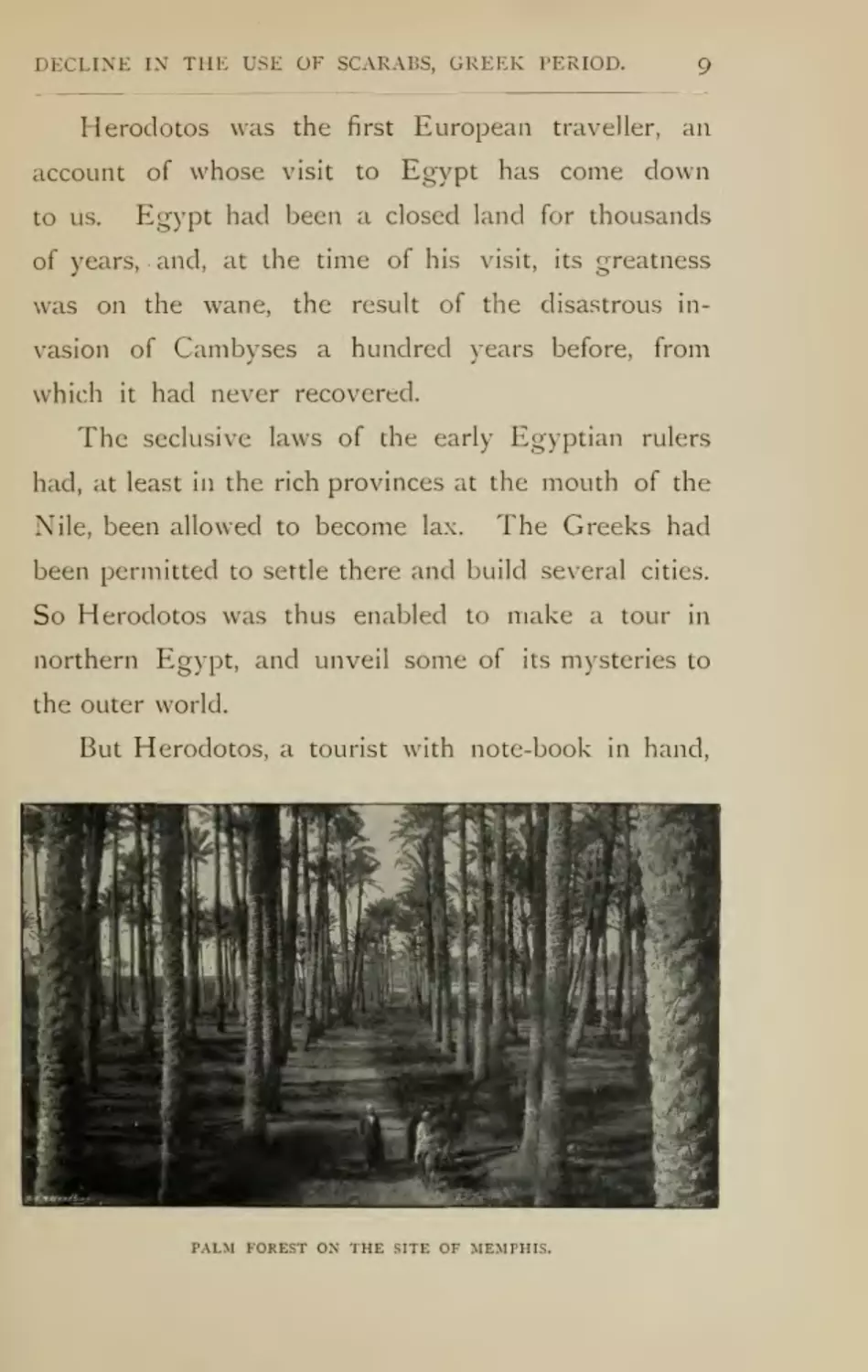
PALM FOREST ON THE SITE OF MEMPHIS.

10
THE SACRED BEETLE.
penetrated only into the Delta and adjacent nomes,
for the priests (who still controlled upper Egypt) would
not let him go up the Nile to Thebes, and so he had to
content himself with visiting Memphis, the Pyramids,
and the Fayum.
Memphis was then in all its glory,
the "White Wall" of its great fortress proudly
rising up out of the Nile,
which surrounded it.
The site of Memphis had been artificially won from
the Nile, the river having been diverted by Mena,
its founder, about 4770 B.C .
Some time after the visit of Herodotos, in a time
of war, the enemy may have cut the dykes that en-
closed Memphis.
However it happened, the Nile has
swept the whole city away, entombing the temples
and palaces in its mud. Tall palms wave over its
site to-day, and if any buildings still remain, their
ruins are buried underneath what is now cultivated
oround.
NauQfht remains to be seen save the two
great fallen statues of Rameses II, which stood before
the Great Temple of Ptah in the days of Herodotos."^
Cairo had sprung up sometime before the destruc-
tion of Memphis, lower down the river.
As a city
Cairo possibly had no importance till long after the
* The complete disappearance of Memphis is very extraordinary.
The two overthrown colossi are the only remains, and the site of
the great city is occupied by a flourishing forest of date palms. (See
page 78.)

DECLINE IN THE USE OF SCARABS, GREEK PERIOD.
II
time of the Greek traveller, although " Babylon," now
a part of Old Cairo, may have existed In his tlm.e .
The Pyramids, more than a hundred of them,
were then perfect, covered with their white polished
casing. The Sphinx was doubtless perfect too, though
Herodotos perhaps was so dazzled with pyramids
and temples, that he forgot even to mention the
existence of the oldest and most wonderful of monu-
ments !
His visit to Egypt was evidently hurried,
and he was harried by the priests, who told him as
little as they could, and w^anted him sent out of the
country as soon as possible.
So It Is no wonder,
\A'hen he forgot to name the Great Sphinx, that he
never said a word about Scarabs, which no doubt
abounded In his day.
Herodotos, the first European scientific tourist,
was shown round, possibly, by a countryman of his
own, perhaps a merchant living In one of the Greek
towns, such as Naucratis, that had been allowed to
spring up In the Delta.
His guide, most probably,
could not read Egyptian himself, just as an Arab or
Syrian dragoman of to-day cannot read a word of
hieroglyphic writing. So Herodotos gave no thought
to the storied walls, and in all probability collected no
scarabs, as they would have no meaning for him.
In any case, neither he nor any other ancient writer

12
THE SACRED BEETLE.
THE ORIGINAL IN THE
BRITISH MUSEUM.
THE ROSETTA STONE.
mi
THE HIEROGLYPHIC PORTION OF THE ROSETTA STONE.
tells us anything whatever about them.
Scarabs
are never mentioned in history.
The Discovery of the lost Language gives a
NEW interest to Scarabs.
Fortunately for us, 250 years later than the visit
of Herodotos, a Greek king, Ptolemy III, ruled the
land of the Nile, and there were then so many of
his countrymen settled there, that he had to issue his
decrees in the Greek and Egyptian tongues.
"^One
of these proclamations, engraved on stone in the
different languages, has come down to us.
This is
the celebrated Rosetta Stone, now in the British
Museum, and by its means the key to the Egyptian
* There were two separate scripts of Egyptian — one the Sacred
Hieroglyphs of the priests,
the other the cursive text called
Demotic, possibly better known to the people.
Both appear on
the Rosetta Stone.

THE DISCOVERY OF THE LOST LANGUAGE.
1
3
«
language, dead and lost to the world for two thousand
years, was, within the past century, re-discovered.
The royal titles and names of Ptolemy III were
very frequently repeated in this " document," and
when the same names in Greek underneath were
carefully examined, the corresponding words were
found expressed by hieroglyphics, and were observed
to be enclosed in ovals (called '' cartouches," as will
be explained further on) in the Egyptian version,
and thus certain letters, when spelt out, were seen to
convey the same ideas or sounds in both languages.
Later, another monument was found, with the name
of Cleopatra, in hieroglyphics and in Greek, and this
gave several more letters.
In process of time the
cartouches of other kings, in hieroglyphics, were found
and translated, and on the temples built in Roman
times the Emperors' names were seen to be spelt out
in Egyptian signs, and this added many more letters
to the alphabet.
Dr.
Budge lucidly explains these
early dis-
coveries ; we give his own words :
—
"
The names Ptolemaios and Cleopatra written
In hieroglyphics w^ere found to be as follows :
—
No.
I, Ptolemaios.
No. 2 , Cleopatra.
3'
2^ f}:^'M] ;i4fi-

14
THE SACRED BEETLE.
"
Now In No. 2 cartouche, sign No.
i, which
must represent K, Is not found In cartouche No. i.
Sign No. 2 , a lion lying down, Is Identical with sign
No. 4 In cartouche No. i.
This clearly Is L.
Sign
No. 3, a pen, represents the short vowel E ; two
of them are to be seen In character No. 6 In No. i
cartouche, and considering their position, their value
must be AI of ato?.
"
Sign No. 4 Is identical with
No. 3 In No. I cartouche, and must have the value O
In each name.
Sign No. 5 Is Identical with sign
No.
I
of No.
I
cartouche, which being the first
letter of the name of Ptolemy, must be P.
Sign
No. 6 is not found in No.
i
cartouche, but it
must be A, because it is the same sign as sign
No. 9, which ends the name KAEOPIATPA ; we
know that signs
10 and 11
always accompany
feminine proper names, because we see them follow-
ing the names of goddesses like
j]^ Isis, and[Jg
Nephthys.
Sign No. 7,
an open stretched out
hand, must be T.
It does not occur In No.
i
cartouche, but we find from other cartouches that
^ takes the place of ^=^:^,
and the reverse.
Sign
No.8mustbeR;
itisnotInNo.
i cartouche,
and ought not to be there.
In No.
i
cartouche
sign No. 7 must be S, because it ends the name
which in Greek ends with S.
Thus from these

THE DISCOVERY OF THE LOST LANGUAGE.
1
5
two cartouches we may collect twelve characters of
the Egyptian alphabet,
viz.,
A,AI,E,K,L,M,
O,P,R,S,T."^
This, as we see, gave certain letters or their
equivalents, and led to others being guessed. Then
some one suggested that the Copts, the undoubted
descendants of the ancient Egyptians, had still a
written laneuaofe of their own — a form of Greek used
to spell ancient Egyptian words which had come
Into use some two thousand years ago, when Greek
influence was paramount in Egypt.
The Copts had a language of their own, un-
doubtedly a survival of the old Egyptian tongue,
but this was lost by the people some centuries since,
and was only known to the priests.
It is nearly a
hundred years since any of the Coptic clergy could
even understand their own original language.
How-
ever, the Coptic names for many common objects
were still known to both the priests and their people.
The pronunciation of many old Egyptian names for
objects thus, when sought for, came to light, and even
their ancient spelling. This w^as followed up, and now
the old records, w^hich had been dumb for thousands
of years, have been gradually made to speak. Some
* By permission of Dr. Budge, from " 7Vie Mummy.
''^

l6
THE SACRED BEETLE.
of the later Greeks and Romans undoubtedly knew
hieroglyphics, but shortly after the Christian era the
knowledge seems to have been completely lost.
Meaning of the word '' Cartouche."
Returning to the Rosetta Stone ; it was discovered,
as has been told before, that in the Egyptian texts the
name of a king or queen was always included within an
oval space and surrounded by a line.
This we call a
*'
cartouche
"
— the Egyptians called the oval enclosure
*'
Ren."
The line engraved round the flat face of
the scarab either expresses this, or the '' cartouche
"
enclosing line is repeated whenever the royal name
appears among other signs, for in later scarabs there
are additional titles of royalty employed. Every
Egyptian king could thus have his private and royal
names, his titles, and sometimes also his crest, boldly
engraved on his various scarabs, in his proclamations
everywhere.
These royal emblazonments were also
carved on his weapons, and on the objects of
adornment of his royal person and of his family.
Any scarab we now pick up may thus become a
portable historical document, a record of the past
of a people who possessed a literature five thousand
or possibly (from Dr. Petrie's recent discoveries)
seven thousand years ago — long ere Homer's poetic

SCARABS USED TO PROMULGATE DECREES.
17
fire shone forth to illumine the Greek world. Many
of the characters on the Rosetta Stone are also those
of the early inscribed monuments of old Egypt,
but during four thousand years many new signs were
added to those in use in the early Pyramid times.
The most recent genuine scarab that we may pick up
is, however, more than two thousand years old, and
beside it we may find another scarab of the early
pyramid builders of six thousand years ago.
2000
Scarabs used as a Royal Gazette.
At least one great Egyptian monarch used Scarabs
for promulgating royal edicts.
This was Amenhotep
III, whose twin colossal statues, monoliths of seventy
feet high, still exist at Thebes.
These proclamations
are graven on the faces of scarabs of unusual size,
the largest known.
I
possess four of these rare
specimens.
One of them publishes this great king's
prowess in the hunting of lions, and records that he
himself slew "of lions fierce, one hundred and two,"
when he was a young man, before his marriage.
A_nother of these laro-e scarabs bears the record of
his union with a great Asiatic princess,
Tvi
by name.
Her native kingdom lay between the
Euphrates and the Orontes.
On the scarab, Amen-
hotep states that his dominion extended from this

1
8
THE SACRED BEETLE.
country to Nubia.
Two or three others have been
found, one describing a tank or sacred lake which
Amenhotep constructed, somewhere in the north.
But the largest scarab, one recently acquired by Mr.
George Fraser, and so far unique, describes the king's
prowess In a wonderful capture of wild cattle."^
In all of these, honourable mention is made of
his Queen Tyi, who Is
always called a king's
daughter, and is accorded the dignity of having
her name engraved within a royal cartouche.
If
other Egyptian kings made use of scarabs to publish
royal decrees, none as yet have been discovered.
This royal pair (Amenhotep III and Tvi) ruled the
Nile country from 14 14 to 1375 B.C .
Tyi seems to
have survived her lord, and for several years acted as
regent of her son Amenhotep IV, during his minority.
He subsequently changed his name to Akhenaten, as
is explained below.
Scarabs with Cartouches of unknown Kings.
Some well known kings have as yet offered
no scarabs to the collector ; to balance this, many
scarabs have been found with cartouches bearing
names of completely unknown potentates.
There are several ancient lists of Royal Dynasties.
* '"'
Catalogue of Scarabs belonging to G. Fraser.' '' ' — Quaritch, 1901.

SCARABS WITH CARTOUCHES OF UNKNOWN KINGS IQ
One, a papyrus preserved In the Turin Museum, Is
possibly the earHest. Then there are the Tablets of
Ancestors at Abydos, and other lists, likew^Ise engraved
on stone, which were found at Karnak, Sakkarah, and
elsewhere, the originals of which, or copies of them,
are to be seen In various museums.
But the lists of
kings supplied In history are still far from corresponding
with the actual discovery of remains.
There are yet
many blanks to fill up, but Petrle or Maspero may
any day find tombs, steles, or mummies to Identify
these lost soverelo-ns.
Dr. Petrle found live unknown
kings' tombs last year, and several other blanks have
been filled In by his work of 1 901, at Abydos.
It Is
to be feared, however, that these kings were earlier
still than the time of scarabs.
Many royal cemeteries
have not yet been properly explored; meanwhile we hold
to the truth of the names on the scarabs, and wait for
the kings themselves, or their tombs, to be discovered.
In the XIIIth Dynasty, and earlier perhaps,
the names and titles of o^reat officials beoan to be
engraved on scarabs.
However, their names were
never permitted to appear on '' Cartouches,"
this
honour was reserved for royalty alone.
These
dignitaries seem to have carried the royal cylinder
or scarab about with them as their badge of office
from their sovereign.
It has been found that some

20
THE SACRED BEETLE.
of these scarabs were worn as rings, and thus were
very possibly the royal sign manual, the ring or
signet given on appointment, or as a mark of favour
from the king, as mentioned in the Bible.''"
Some
scarabs seem to have been deeply engraved, and
intended to be used as seals.
One impression in my
collection, which had been originally made on clay,
has by some conflagration been actually converted
into " terra-cotta."
Of course it is only a small section of the scarabs
picked up every year that can be regarded as "proofs
of history."
There are far greater numbers found
without cartouches than with them. These are difficult
to date, but experts are learning to discriminate the
style of work of certain epochs.
Scarabs with Inscriptions only
OR with Ornament.
These have frequently the names of deities or
of places, sometimes personal names or mottoes.
Some bear friendly wishes, and seem to have been
gifts to friends.
But the greater part of them have
been evidently intended for some religious purpose.
They are frequently found strung together and were
* Genesis xlii, 42,
"
And Pharaoh took off his ring, and put it
upon Joseph's hand," &c.
This was when Joseph was appointed
prime minister of Egypt.

EARLIEST DECORATIVE ART FOUND ON SCARABS.
21
possibly used as a sort of rosary for the repetition of
prayers, as Is still done In many Christian countries.
The native Mahometans even now have string's of
beads, which they carry about with them, but only
use for trifling with as pastime.
Possibly this is a survival of the old Egyptian
custom of having scarabs strung together, the original
use of which has been lost in degenerate days.
The Earliest Decorative Art is found on
Scarabs.
Dr. Petrle believes this, and has published a very
interesting little volume to prove it
{^''Egyptian
Decorative Art''; Methuen and Co.), which he does
in his usual convincing style.
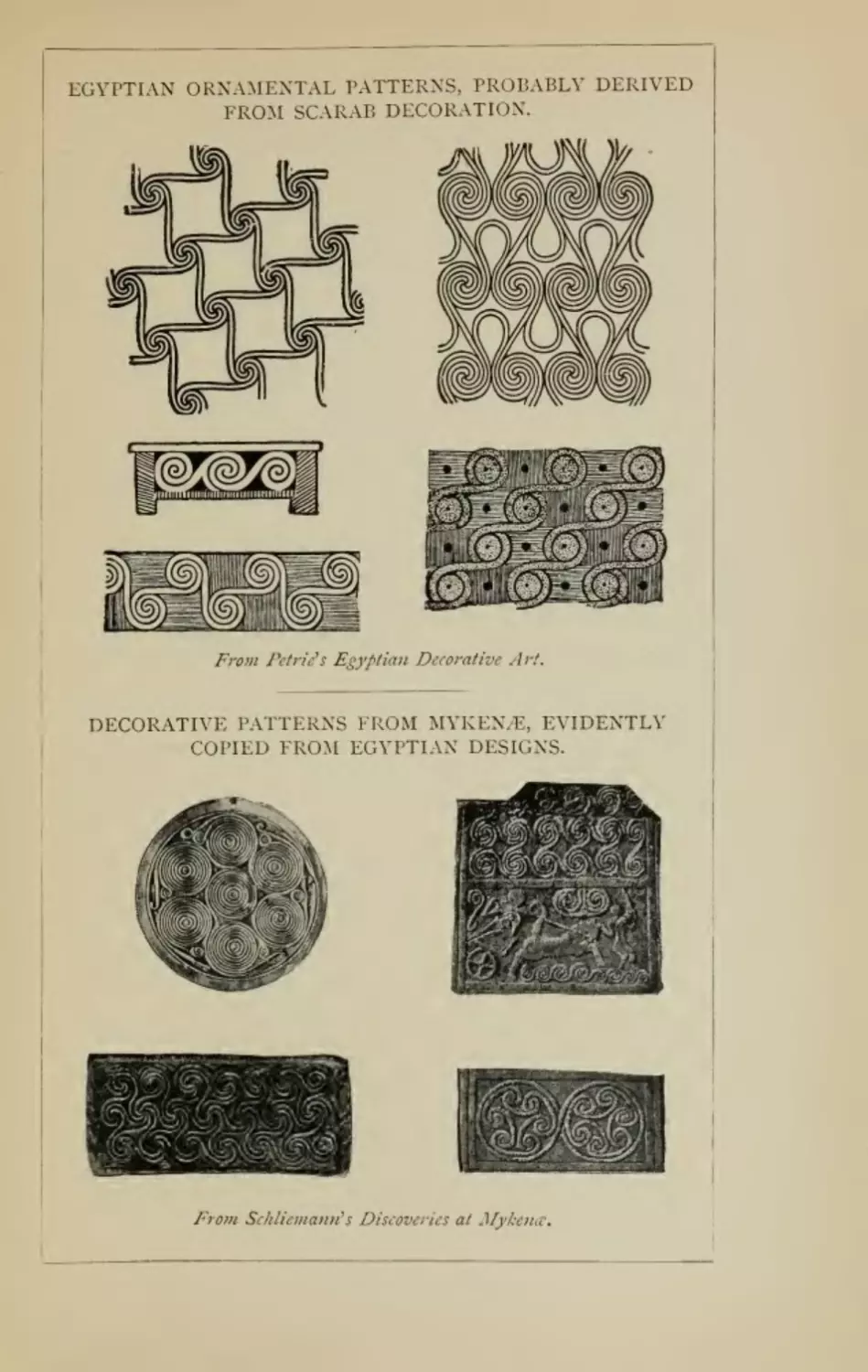
The spiral style of
ornament, he explains, is first found on scarabs,
and, undoubtedly, he argues, the practice gained in
ornamenting these small objects, led the Egyptians
to decorate their weapons, their garments, their wood
carvings and paintings with similar spiral and scroll
jDatterns.
There is no doubt that of these styles
of decoration we have no specimens as early as
Egyptian work, and with much ingenuity and many
interesting examples. Dr. Petrie believes he has solved
the mystery.
But, In my opinion, In addition to
the ornamental character of the scroll, spiral, twist
and key-patterns (connecting circular and oval forms

22
THE SACRED BEETLE.
in most ingenious and mysterious manner), these signs
may have had some other meaning. They may be
part of a script, the key to which is lost, but which may
some day be found again, just as Mr. Arthur Evans
has discovered in Krete clues to some ancient con-
nections between the Hittite, Kretan, and Phoenician
and other scripts.
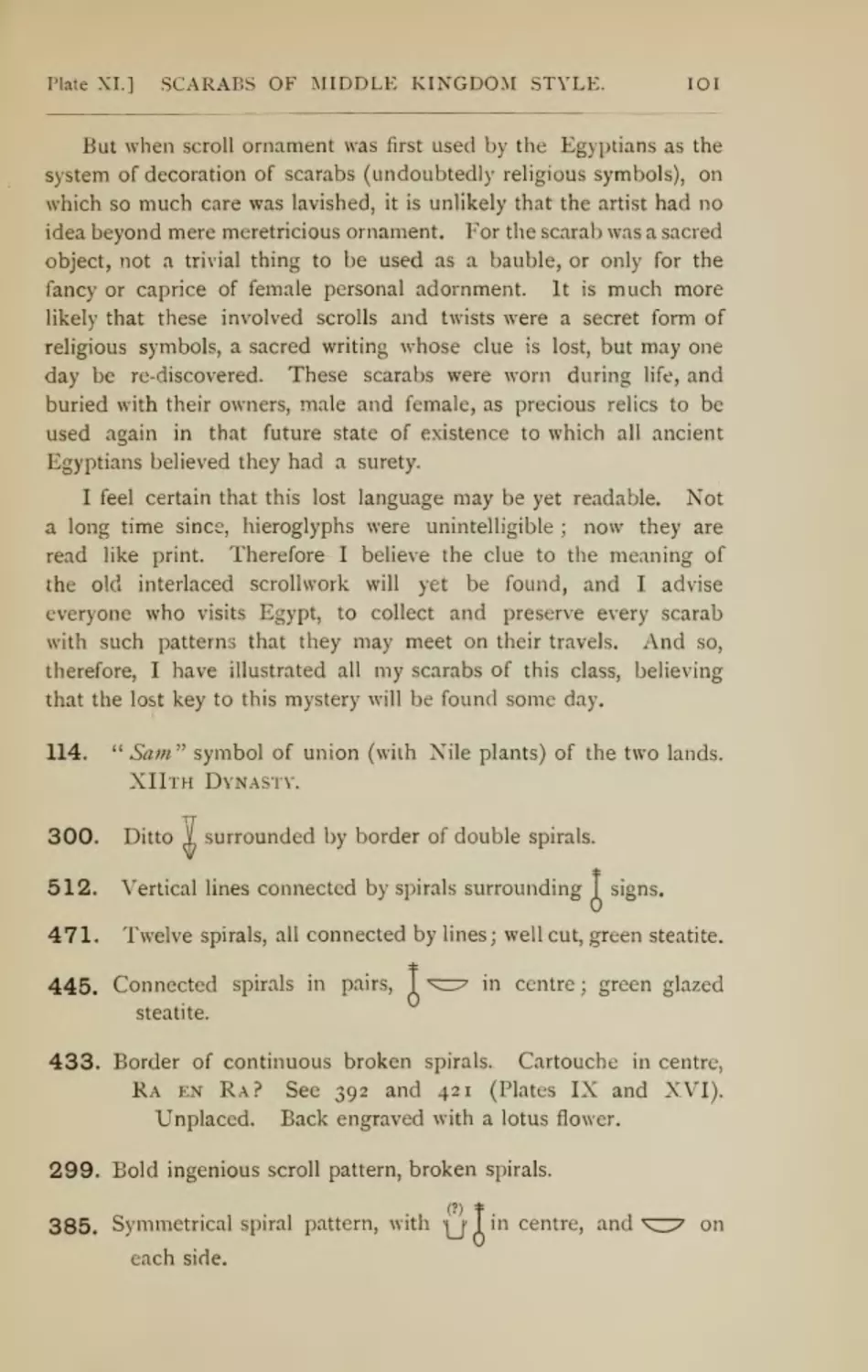
It is very unlikely that scarabs, re-
ligiously kept during life, and buried with their owners
after death, would be carved with carefully designed
patterns for
mere ornamental fancy.
Everything
the ancient Egyptians did so elaborately and well, had
undoubtedly a meaning.
In later days the Greeks
cleverly used spirals and key-patterns for
mere
artistic effect doubtless, but they derived them from
the Egyptians — a much earlier
race, with whom
everything was symbolic of some hidden motive
or idea.
The Greeks, however, only thought of such
designs as decorative ornament, while the Egyptians,
who invented the patterns, may have had a much
more intellectual idea, which is lost to us.
Scarabs more Curious than Beauth^ul.
I cannot claim, at least in the collection illustrated
in these pages, that scarabs possess much if any
artistic quality.
In very ancient times this feature
in a religious token might have been considered inap-

SCARABS MORE CURIOUS THAN BEAUTIFUL.
23
proprlate, but during and after the XIIth Dynasty
(2778-2565 B.C .) scarabs were skilfully and beautifully
made of gold and precious stones.
Only a few of
these have reached us.
The tombs of Egyptian monarchs have for ages
been rudely plundered of their treasures — the wonder
is that anything has been left to our time.
And yet
v/ithin the last few years jewels, pectorals, and scarabs,
to the value of ^100,000, have been rescued from the
rapacity of Arab plunderers for the enjoyment of the
intellectual world. These treasures were found by the
official authorities of the Egyptian Department of An-
tiquities, and were among the contents of two or three
tombs of early princesses, whose sepulchres had escaped
discovery by the thieves for four thousand years.
Had the tombs been found by the Arabs of to-day,
they would possibly have melted up the precious
objects for the specie they contained. Those who
wish to see scarabs of this artistic class, must visit the
Cairo Museum. The jewellery work is in exquisite
taste, and the workmanship shows wonderful skill.
The best specim^ens in gold and precious stones
were hitherto dated from B.C. 2660. But this year
(1901) Dr. Petrie discovered at Abydos some exquisite
jewellery, which belonged to the queen, or daughter, of
Mena, the first king of all Egypt, who lived 4770 B.C.

24
THE SACRED BEETLE.
One suggestion as to the possible use of scarabs
I omitted to mention.
Until the Greek rulers came
into Egypt, no money was known In the land.
The scarabs were made apparently In fixed sizes,
which may have represented values.
Certainly
money came Into use In Egypt about the time
that scarabs lost their religious aspect, or at least
when they went out of fashion.
But had scarabs
been applied to purposes of trade or barter, the fact
would probably have been mentioned in history.
In the catalogue of engraved gems in our National
Collection, a whole series of small stones are termed
"Scarabs."
This, however, is merely a designation
for oval flattened engraved gems, somewhat resembling
scarabs In form ; but the backs are seldom or never
shaped like a beetle, and their date Is generally too
late to appear to have any claim whatever to be of
native Egyptian workmanship. Some of them have
been undoubtedly found in Egypt, and probably were
executed in those towns in the Delta where the
Greeks obtained a footing during and after the reign
of Amasis, who had encouraged the foreigners to
settle at Naukratis and other places. In the sixth
century B.C .
John Ward, F.S.A.

THE SACRED BEETLE
EGYPTIAN SCARABS
IN ART AND HISTORY.
PART 11.
A COLLECTION OF SCARABS;
TRANSLATIONS BY
F. Llewellyn Griffith, M.A .
WITH NOTES AND ILLUSTRATIONS BY
John Ward, F.SA.
D

akhenaten's painted floor.

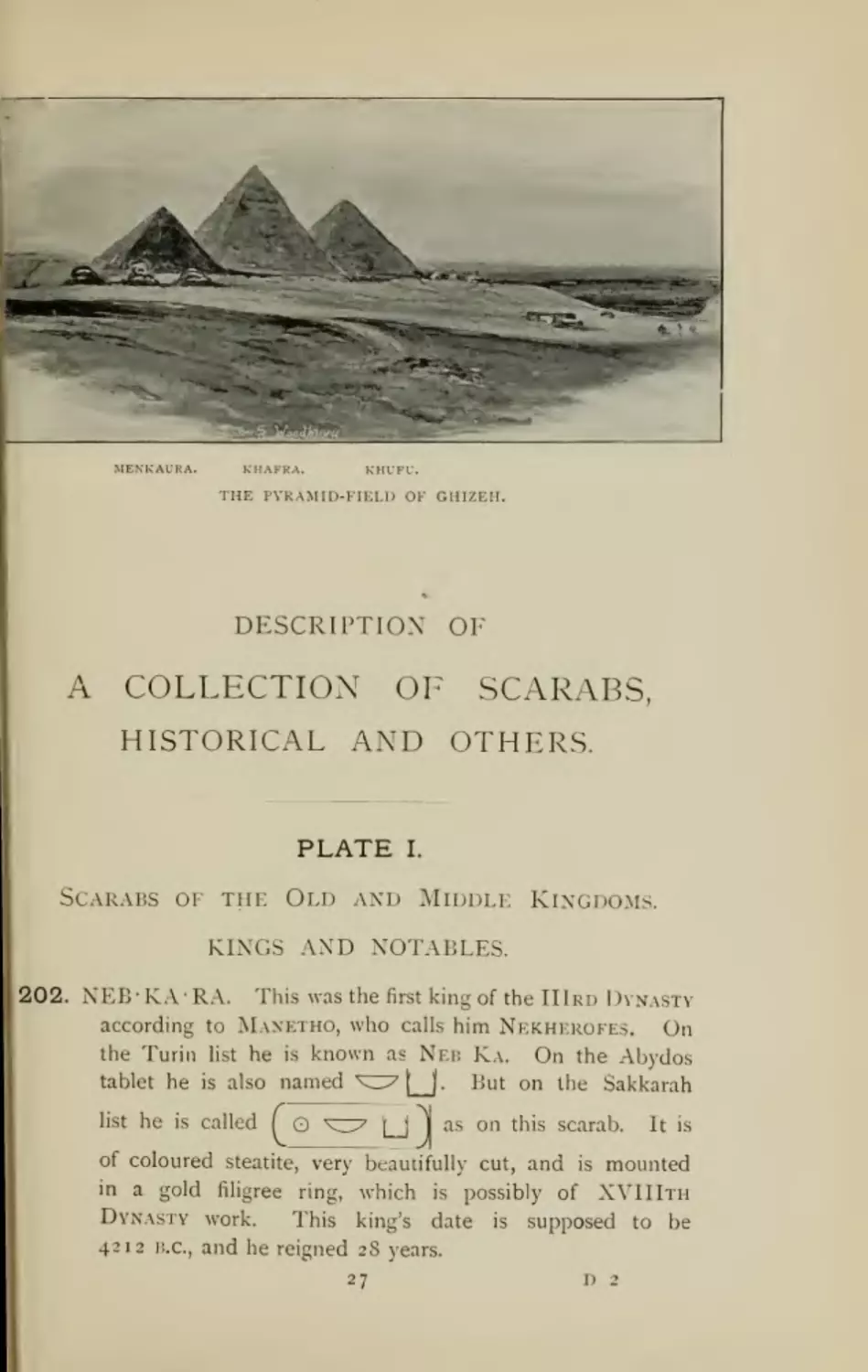
MENKAURA.
KHAFRA.
KHUFU.
THE PYRAMID-FIELD OF GHIZEH.
DESCRIPTION OF
A COLLECTION OF SCARABS,
HISTORICAL AND OTHERS.
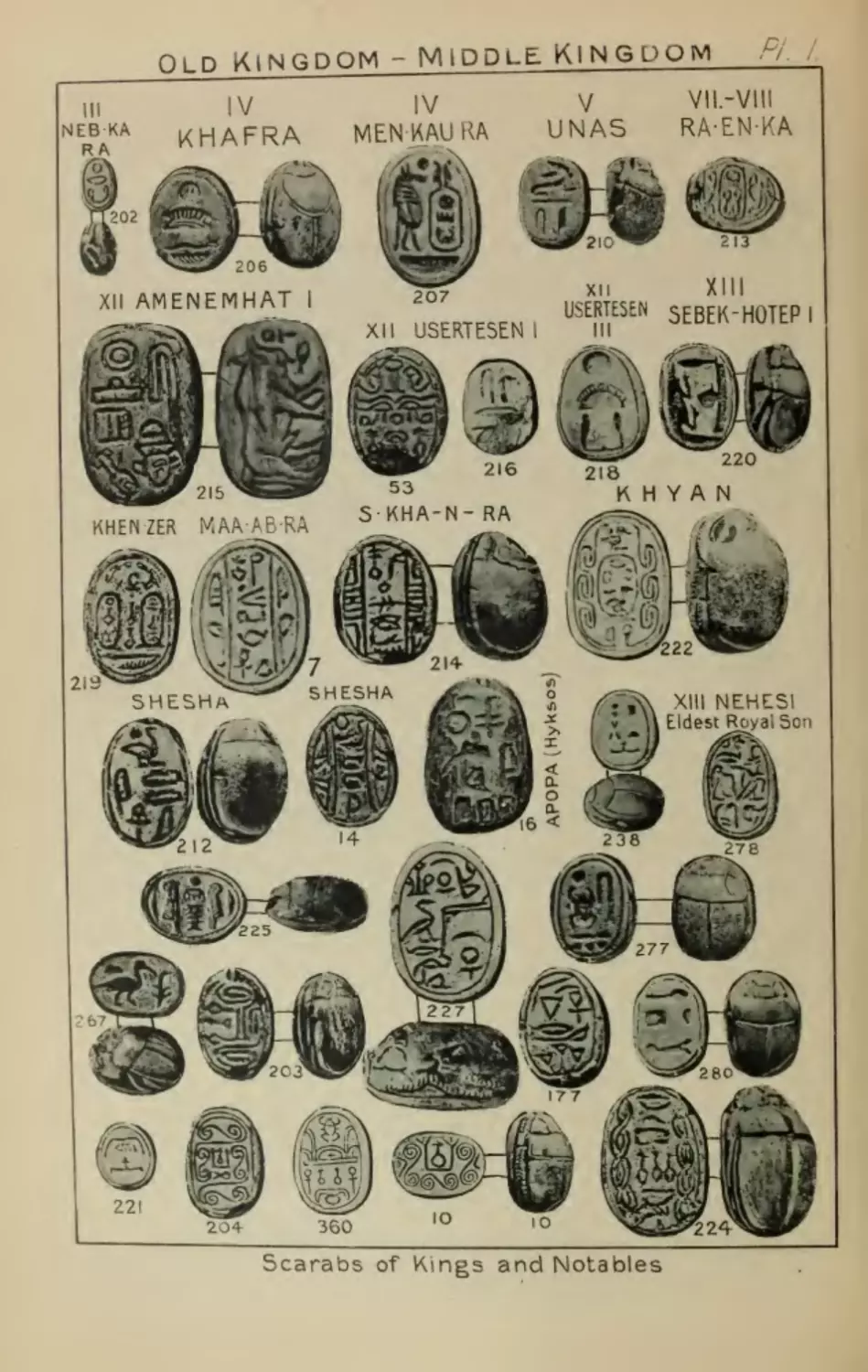
PLATE I.
Scarabs of the Old and Middle Kingdoms.
KINGS AND NOTABLES.
202. NEB-KA-RA . This was the first king of the IIIrd Dynasty
according to Manetho, who calls him Nekherofes.
On
the Turin list he is known as Neb Ka. On the Abydos
tablet he is also named "^37
[
j.
But on the Sakkarah
list he is called ( Q \ZZ7 [_J
1 as on this scarab.
It is
of coloured steatite, very beautifully cut, and is mounted
in a gold filigree ring, which is possibly of XVIIIth
Dynasty work.
This king's date is supposed to be
4212 B.C .,
and he reigned 28 years.
27
D2

28
THE SACRED BEETLE.
[Plate I.
But there is as yet much to investigate about the kings of the
IInd and IIIrd Dynasties, not only as to the order of their ruhng,
but as to their correct names and titles.
Petrie's recent discoveries
at Abydos (1900-1901) have done much to clear up the difficulties
surrounding the kings of the early dynasties, and there is little doubt
but, in due time, the tombs of all these kings will be discovered.
Dr. Petrie has already found the sepulchres and their records of
nearly a dozen kings, giving tangible reality to names which he
himself had regarded as mythical. The Step Pyramid of Sakkarah,
it
is now known, was built for Neter-khet, a king of the
IIIrd Dynasty.
Doubtless in that neighbourhood the last rest-
ing place of Neb'Ka'ra may be found, when that wide region of
sepulchres receives such exhaustive search and survey as has been
recently applied to the royal tombs of Abydos with such unexpected
results.
206. KHA'F'RA, IVth Dynasty (390S-3845 b.c). The builder
of the Second Pyramid of Ghizeh and of the beautiful granite
temple
near
the
Great Sphinx.
The
scarab, which is of
steatite, is well pre-
served, but has lost
its
green
colour
c
OQ
]
DIOKITE STATUE OF KHA'FRA.
Cairo Milsett m.
The king's name with
the additional title of
"
Lord "
-::37 . This
great monarch is
rendered familiar to
us by his fine por-
traits found in his
temple
and
pre-
served in the Cairo
Museum.
207. MEN-KAU-RA, IVth Dynasty (3845-3759 b.c).
Mr.
Griffith considers that this scarab is not of this king's actual
time, but made in memory of him.
The figure ""seems
of later date, but the cartouche, with the plumes over Jt,

Plate I.]
SCARABS OF OLD AND MIDDLE KINGDOMS.
29
[
Or^""^ \ J 1,givesthe
name as on his monuments,
with the royal title v_^
below the whole. Correctly,
within it should be !_/ U "Lf
,
but on scarabs the names
are often abbreviated. We
have a portrait of this king,
who was the builder of the
Third Pyramid of Ghizeh.
There was a priesthood
for the worship of Men-
kaura, of which traces have
been found for more than
a thousand years after his
death.
(The Pyramid of Abu Roash, supposed to have been built by
this king, has been proved, by further excavation this year, 1901,
to be that of Ra'dad of IVth Dynasty.)
331. NEFER-ARTvA-RA, Vth Dynasty (3680-3660 b.c),
(
O1I
j
].
A unique cylinder of this monarch is
shown on Plate XVI, along with illustrations of other
cylinders in the Collection.
(Dr. Petrie thinks this king
was also known as Ka Ka. See p. 1 13.)
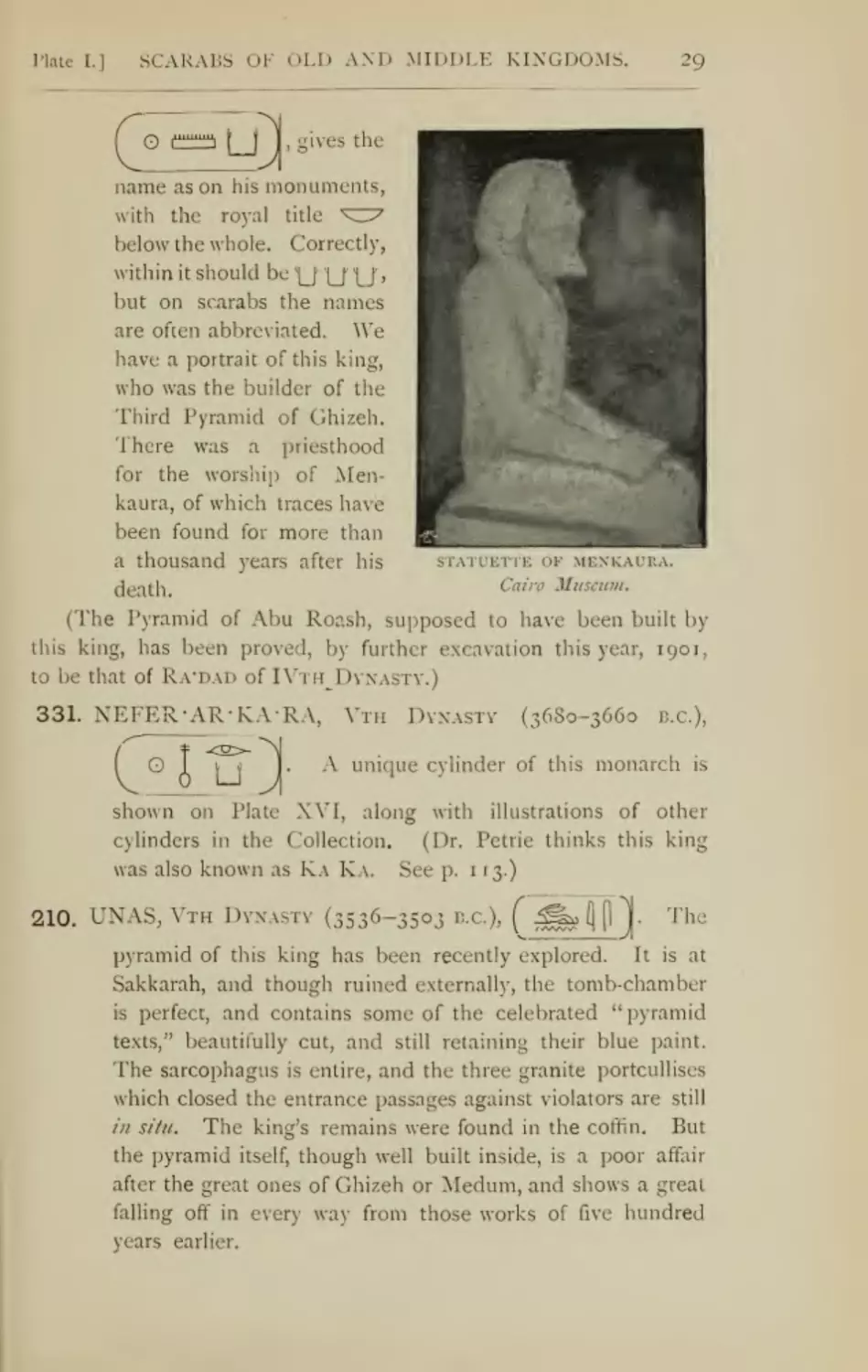
STATUETTE OF MENKAURA.
Cairo IMusetun.
210. UNAS, Vth Dynasty (3536-3503 b.c), { ^\\\\ The
pyramid of this king has been recently explored.
Itisat
Sakkarah, and though ruined externally, the tomb-chamber
is perfect, and contains some of the celebrated "pyramid
texts,"
beautifully cut, and still retaining their blue paint.
The sarcophagus is entire, and the three granite portcullises
which closed the entrance passages against violators are still
in situ.
The king's remains were found in the coffin.
But
the pyramid itself, though well built inside, is a poor affair
after the great ones of Ghizeh or Medum, and shows a great
falling off in every way from those works of ffve hundred
years earlier.

^o
THE SACRED BEETLE.
[Plale I.
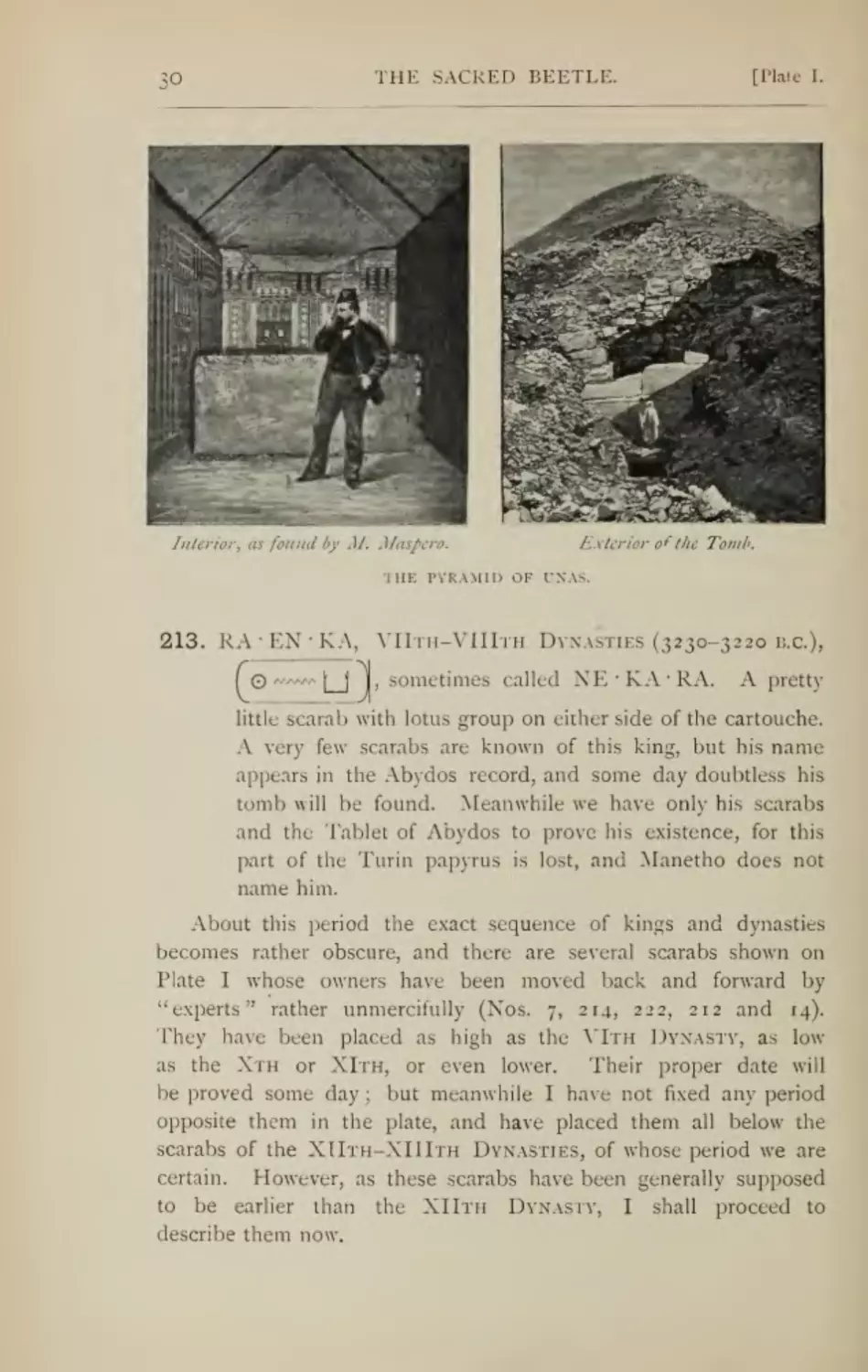
Ju:^,u.>., u.. /.,..,;.;
..J
J/. aLi.^civ.
Exterior 0^'
the Tomb.
THE PYRAMID OF UNAS.
213. RA -EN-KA, VIIth-VIIIth Dynasties (3230-3220 b.c),
( O ^^^^A
[_J \ sometimes called NE • KA
•
RA. A pretty
little scarab with lotus group on either side of the cartouche.
A very few scarabs are known of this king, but his name
appears in the Abydos record, and some day doubtless his
tomb will be found. Meanwhile we have only his scarabs
and the Tablet of Abydos to prove his existence, for this
part of the Turin papyrus is lost, and Manetho does not
name him.
About this period the exact sequence of kings and dynasties
becomes rather obscure, and there are several scarabs shown on
Plate I w^hose owners have been moved back and forward by
"experts" rather unmercifully (Nos. 7, 214, 222, 212 and 14).
They have been placed as high as the VIth Dynasty, as low
as the Xth or XIth, or even lower.
Their proper date will
be proved some day ; but meanwhile I have not fixed any period
opposite them in the plate, and have placed them all below the
scarabs of the XIIth-XIIIth Dynasties, of whose period we are
certain.
However, as these scarabs have been generally supposed
to be earlier than the XIIth Dynasty,
I
shall proceed to
describe them now.

Plate I.]
SCARABS OF OLD AND MIDDLE KINGDOMS.
3
1
7. MAA'AB'RA. This king is now believed to have been one
of the Hyksos rulers.
The specimen figured is a fine
one, engraved on steatite, its green colouring gone.
In
addition to the ordinary name of the king,
( O^=^
"O]
,
it also bears the signs ] I A "¥",
neter nefer dy ankh^ and
also other signs flanking the cartouche.
214. S
•
KHA•N
•
RA resembles the last in style — and belongs
to a king known only by his scarabs.
In addition to
his name, the scarab has the signs ^ '
neter nefer " thus
[ijO—H
—
Q fl /wwv^
I
.
The tomb of this king may
be found any day, and his place determined in the royal list.
222. KHYAN is now believed to have been a Hyksos king, and
the head on page 38 is doubtless his portrait.
This
monarch's granite statue was found at Bubastis, bearing his
name. This is one of the finest of his scarabs, containing the
king's name within scroll-work ( © U ^^ avwna | and
^^
soM of the Siifi^^ above, and " dy ankh," '''giving life,'^ A
-4-
below the cartouche.
This king must have been a great
conqueror, for a lion of granite, bearing his name, was found
at Baghdad, and his monuments are scattered over Egypt.
Mr. Arthur Evans discovered the name of Khyan on the
lid of an alabaster box in his excavations at Knosos, in
Krete, this year, 1901.
212. SHESHA may be more ancient than the last.
The inscription
reads, O^^^^son of the Sun'' i 1
w1
1
w1(|"Shesha"
A •¥-
''dy ankh,"
^'giving life."
This king is now believed
to have been the Assis of Manetho, the last king of the
Hyksos dynasty.
14 is another scarab of SHESHA with [ O ^^ 1 \v
1
r-r^i (|
|
^^
son of the Sun Shesha," within vertical fines of ornamental
signs.
The backs of these scarabs are well executed, and
they retain some of their original green colouring.

THE SACRED BEETLE.
[Plate I.
[Now we shall proceed to describe several interesting scarabs,
about whose period there is no doubt. They are of the glorious
XIIth and XIIIth Dynasties, the golden age of Egypt.]
215.:AMENEMHAT I, XIIth Dynasty (2778-2748 b.c). This
is,
strictly speaking, not a scarab but an amulet, if not a
royal signet, or perhaps used for both. The inscription is
clearly cut in bold characters, the throne-name or prenomen
( OP'=^ 'O'] Se•HOTEP•AB
•
RA, with T liefer added for
some reason.
On the other side is a well executed
engraving of the "strong bull, " which was the usual kingly
attribute of power and strength, with ¥" a7ik]i in front and T
below the head. A colossal portrait of this king was found
at Tanis, which shows a pleasing
expression of countenance com-
bined with high intellect.
He
erected great temples at Tanis,
Bubastis, Memphis, Koptos, and
as far as Korosko, in Nubia,
remains of his works are- to
be found still.
He possibly
commenced the great irrigation
works and reclamation of the
Fayum, and Dr. Petrie found
remains of a granite statue of
him at Crocodilopolis.
It
is
interesting to possess this great
king's signet, and to see from
his portrait "the manner of man
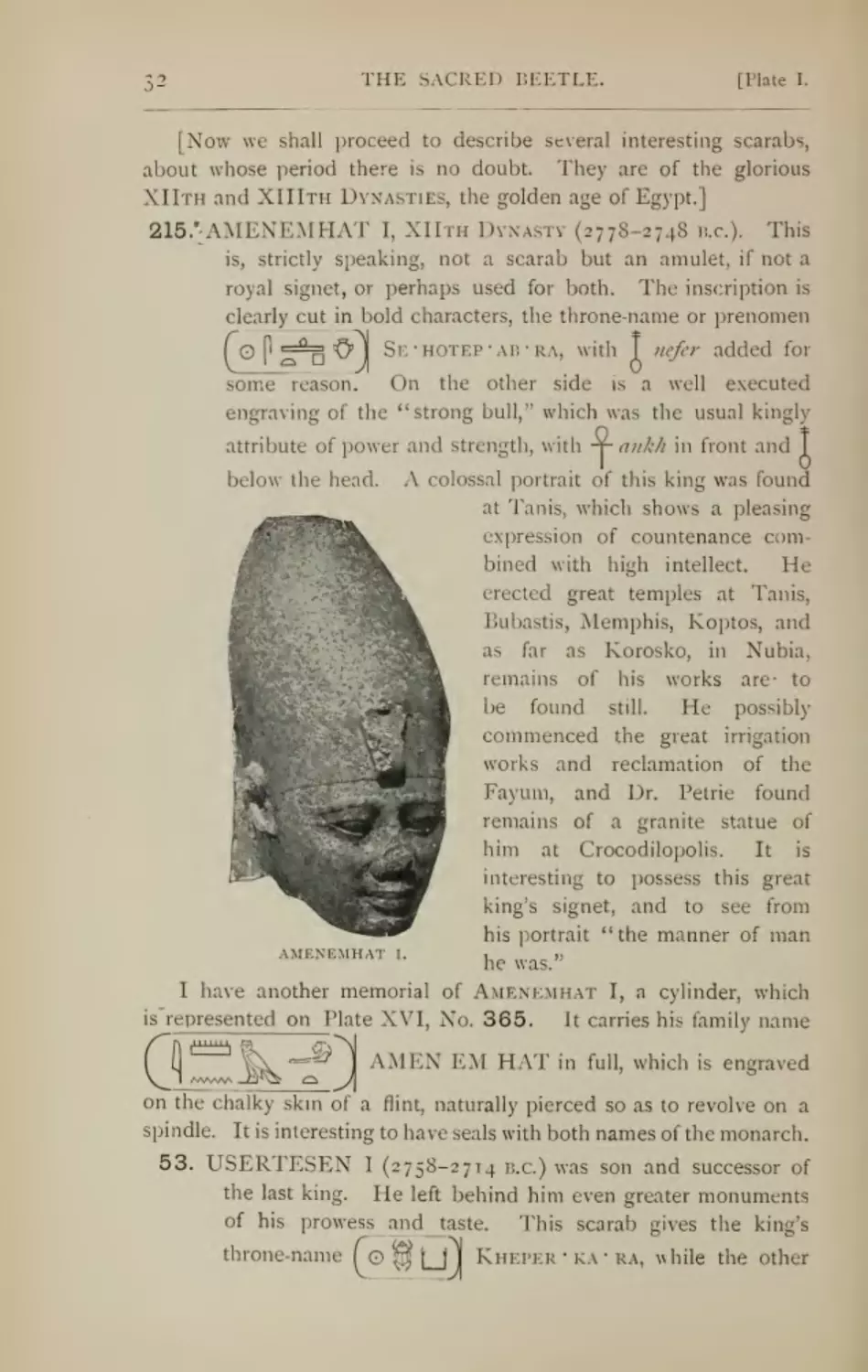
AMENEMHAT I.
,
„
he was.
I have another memorial of Amenemhat I, a cylinder, which
is r epresented on P late XVI, No. 365.
It carries his family name
AMEN EM HAT in full, which is engraved
on the chalky skm of a flint, naturally pierced so as to revolve on a
spindle. It is interesting to have seals with both names of the monarch.
53. USERTESEN I (2758-2714 b.c .) was son and successor of
the last king. He left behind him even greater monuments
of his prowess a nd t aste.
This scarab gives the king's
throne-name (o^Ljl Kheper * ka ra, while the other

Plate I.]
SCARABS OF OLD AND MIDDLE KINGDOMS.
33
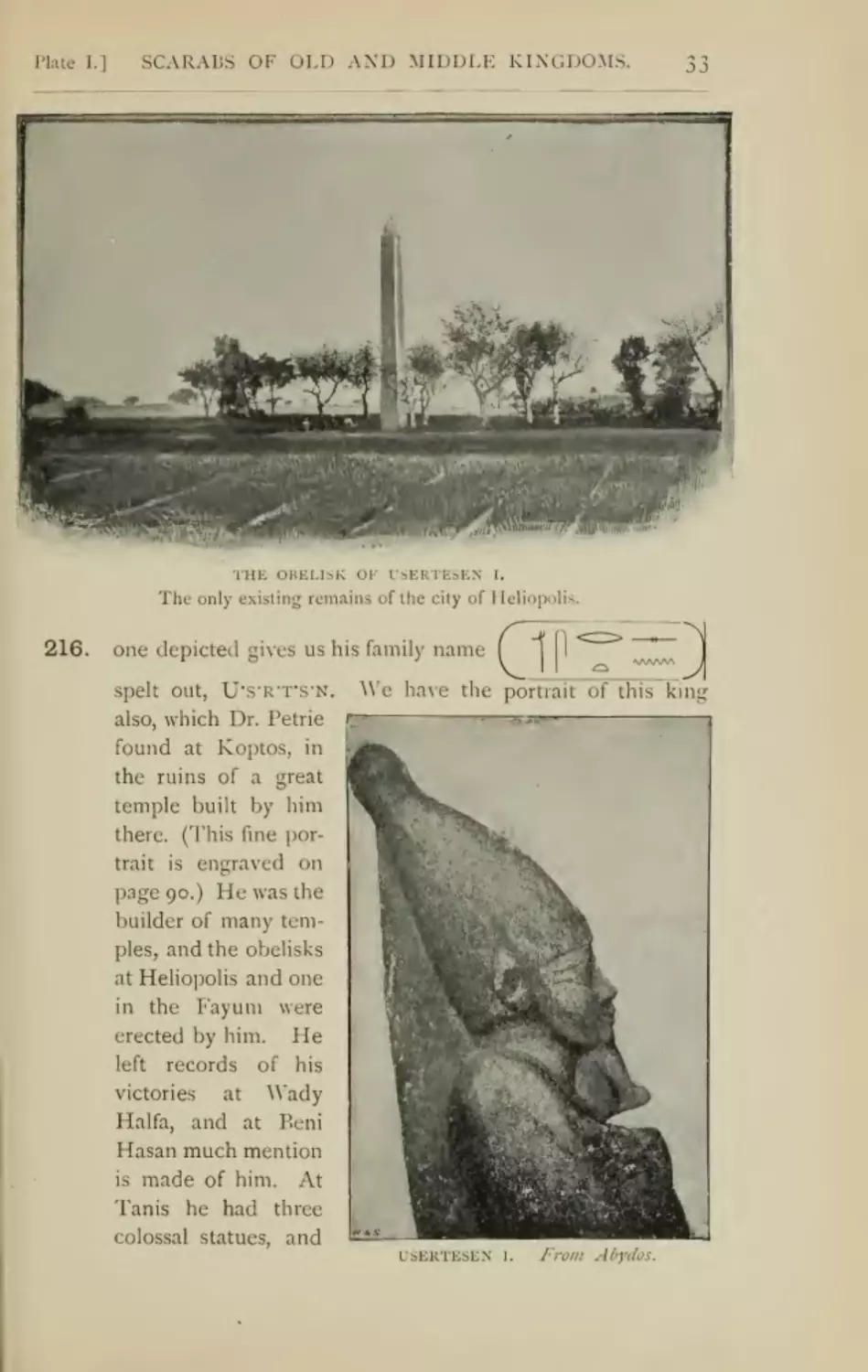
THE OBELISK OF USERTESEN I.
The only existing remains of the city of Heliopolis.
216. one depicted gives us his family name
spelt out, U'S"R'T*S'N.
also, which Dr. Petrie
found at Koptos, in
the ruins of a great
temple built by him
there. (This fine por-
trait is engraved on
page 90.) He was the
builder of many tem-
ples, and the obelisks
at Heliopolis and one
in the Fayum were
erected by him.
He
left records of his
victories
at Wady
Haifa, and at Beni
Hasan much mention
is made of him. At
Tan is he had three
colossal statues, and
n
We have the portrait of this king
USERTESEN 1.
Froiii Abydos.

34
THE SACRED BEETLE.
[Plate I.
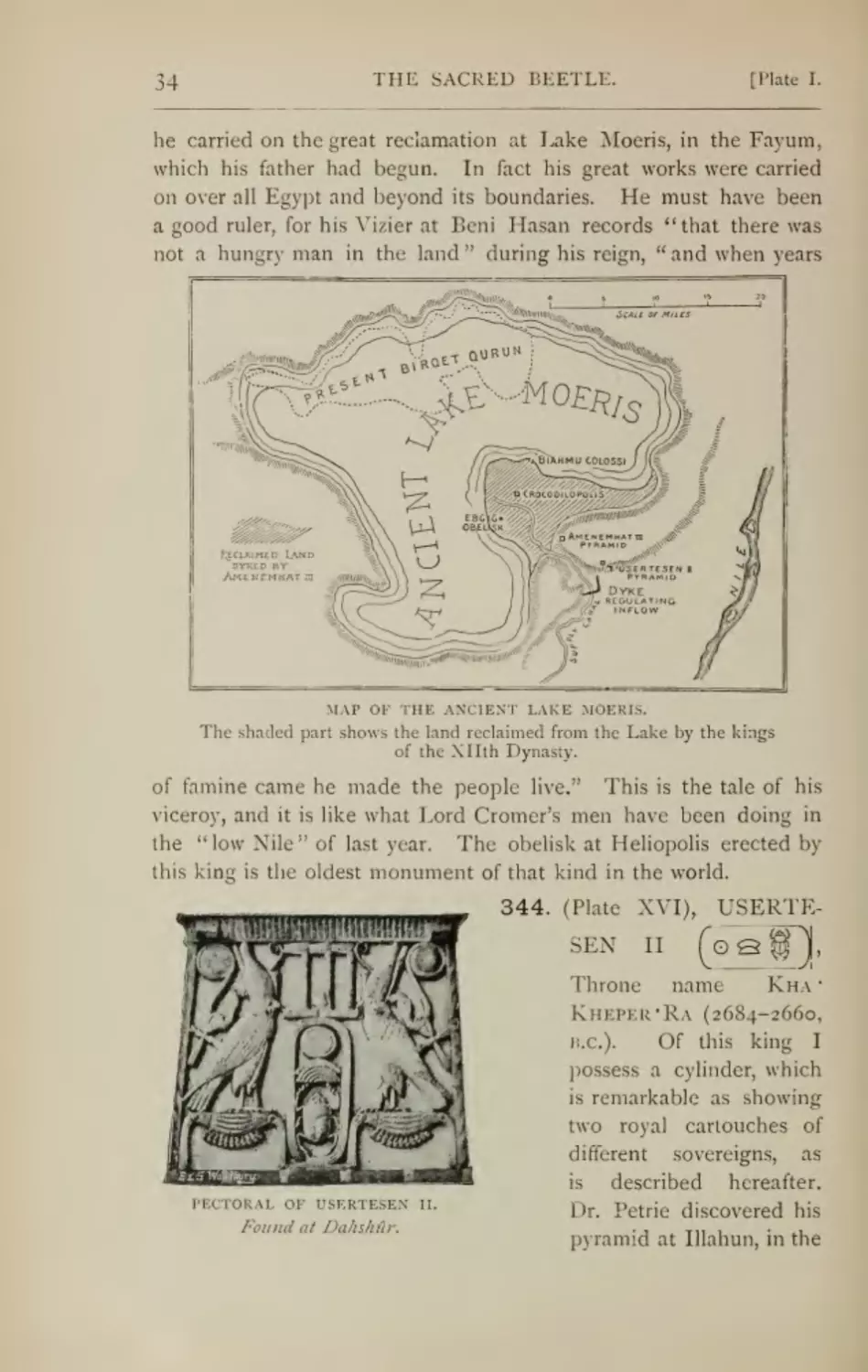
he carried on the great reclamation at Lake Moeris, in the Fayum,
which his father had begun.
In fact his great works were carried
on over all Egypt and beyond its boundaries.
He must have been
a good ruler, for his Vizier at Beni Hasan records "that there was
not a hungry man in the land " during his reign,
"
and when years
, -^«*w/,V,
..^
MAP OF THE ANCIENT LAKE MOERIS.
The shaded part shows the land reclaimed from the Lake by the kings
of the Xllth Dynasty.
of famine came he made the people live."
This is the tale of his
viceroy, and it is like what Lord Cromer's men have been doing in
the "low Nile" of last year.
The obelisk at Heliopolis erected by
this king is the oldest monument of that kind in the world.
USERTE-
OQ]
PECTORAL OF USERTESEN II.
Found at DahsMcr.
344. (Plate XVI),
SEN II
Throne
name
Kha •
Kheper'Ra (2684-2660,
P..C.).
Of this king I
possess a cylinder, which
is remarkable as showing
two royal cartouches of
different
sovereigns,
as
is
described hereafter.
Dr. Petrie discovered his
pyramid at Illahun, in the

Plate I.]
SCARABS OF OLD AND MIDDLE KINGDOMS.
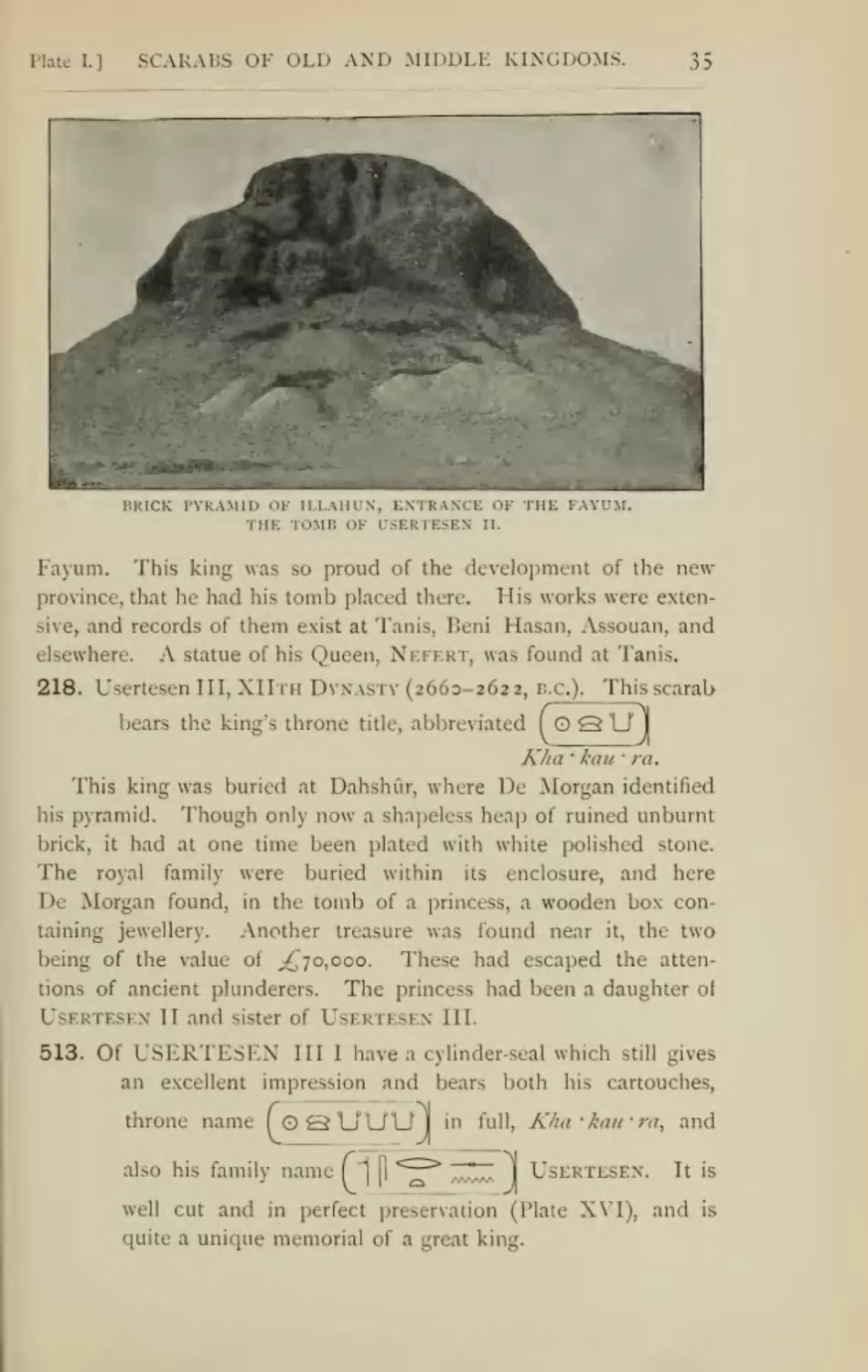
j;rici i'VKA.MlD OF ILLAHUN, ENTRANCE Ob UiE l-AVU.M .
THE TOMB OF USERTESEN II.
Fayum. This king was so proud of the development of the new-
province, that he had his tomb placed there.
His works were exten-
sive, and records of them exist at Tanis, Beni Hasan, Assouan, and
elsewhere.
A statue of his Queen, Nefert, was found at Tanis.
218. Usertesen HI, XHth Dvnastv (2660-2622, B.C .) . This scarab
Ijears the king's throne title, abbreviated ( O Q LJ |
J^/ta ' kau ' ra.
This king was buried at Dahshur, where De Morgan identified
his pyramid. Though only now a shapeless heap of ruined unburnt
brick, it had at one time been plated with white polished stone.
The royal family were buried within its
enclosure, and here
De Morgan found, in the tomb of a princess, a wooden box con-
taining jewellery.
Another treasure was found near it, the two
being of the value of ;^7o,ooo.
These had escaped the atten-
tions of ancient plunderers.
The princess had been a daughter of
Usertesen H and sister of Usertesen IH.
513. Of USERTESEN HI I have a cyhnder-seal which still gives
an excellent impression and bears both his cartouches,
throne name f O Q UU U | in full, Kha'kawra, and
Usertesen.
also his family name (
"]
1
It is
well cut and in perfect preservation (Plate XVI), and is
quite a unique memorial of a great king.

36
THE SACRED BEETLE.
[Plate I.
NORTH PYRAMID OF DAliSlILK, THE TOMl! OK USERTESEN III.
Maat•EN•RA in fall ( o
344. (Cylinder.)
Bears the cartouche of Amenemhat III
(2622-2578 ]!.c.), (Plate XVI), with his throne name
I
o /wwvv ^=^
aciI
^^ well as
the
cartouche
of
his
fxrandfather
USERTESEN II.
It
was possibly a royal
sign manual for the
Fayum province, in
which
these
two
kings took a great
interest,
and
had
their royal pyramid
tombs both placed
there,
at
Hawara
and
Illahun.
As
rORTRAIT OF AMENEMHAT III.
will
be SCCn On
Plate XVI, this remarkable seal makes a perfect im-
pression, despite its known antiquity.
The portrait of
Amenemhat III is subjoined.
Amenemhat seems to have completed the reclamation and the
irrigation works of Lake Moeris, and the fertile Fayum province,
which excited the admiration of Herodotos, two thousand years

Plate I.]
SCARABS OF OLD AND MIDDLE KINGDOMS.
3/
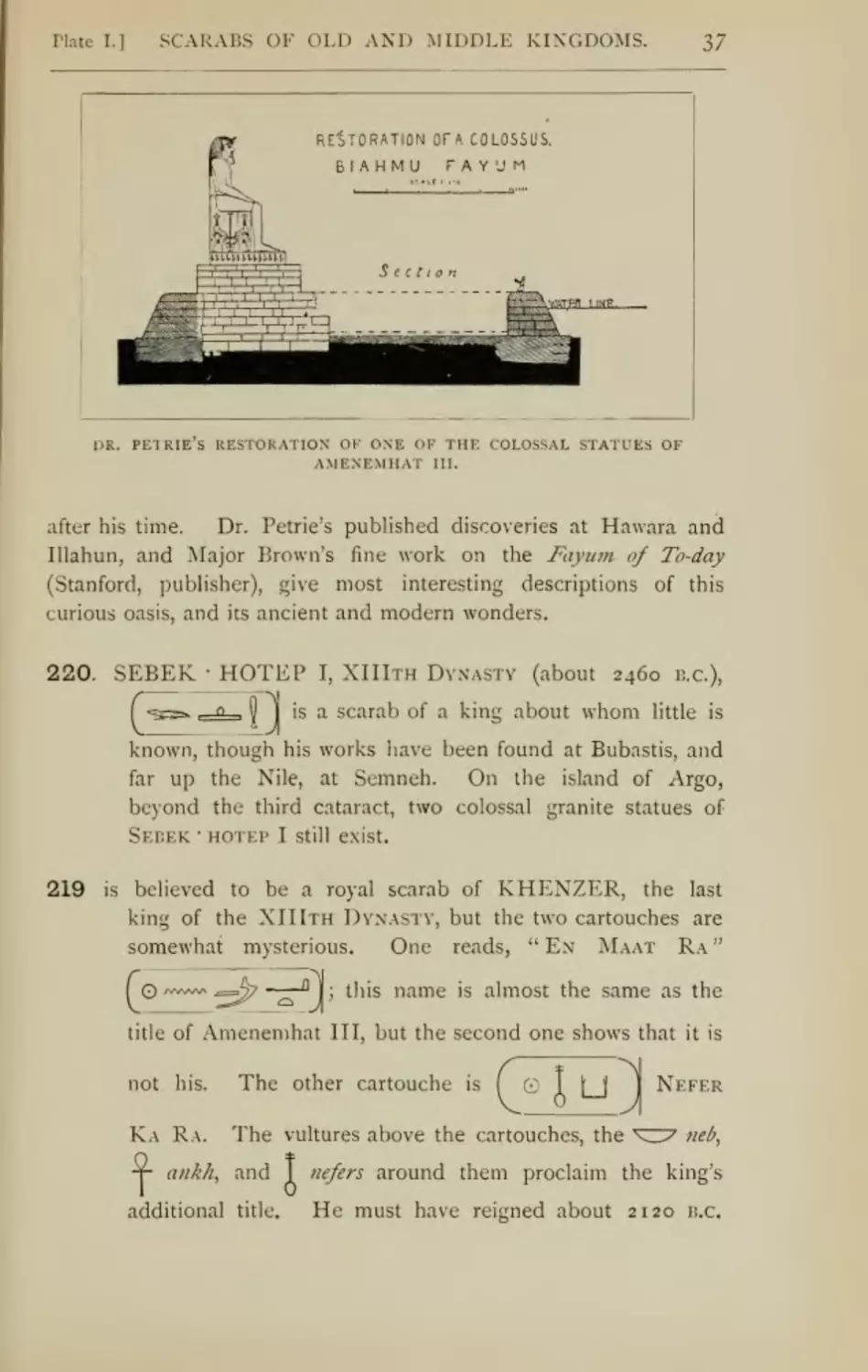
RESTORATION OTA COLOSSUS.
B!AHMU
FAYUM
n LINE.
DR. PEIRIE's restoration OF ONE OF THE COLOSSAL STATUES OF
AMENEMHAT IIL
after his time.
Dr. Petrie's published discoveries at Hawara and
Illahun, and Major Brown's fine work on the Fayiim of To-day
(Stanford, publisher), give most interesting descriptions of this
curious oasis, and its ancient and modern wonders.
220. SEBEK • HOTEP I, XIIIth Dynasty (about 2460 b.c),
( ^^:s=- r —Q-^ y
I
is a scarab of a king about whom little is
known, though his works have been found at Bubastis, and
far up the Nile, at Semneh. On the island of Argo,
beyond the third cataract, two colossal granite statues of
Sebek • HOTEP I still exist.
219 is believed to be a royal scarab of KHENZER, the last
king of the XIIIth Dynasty, but the tw^o cartouches are
somewhat mysterious.
One reads,
" En Maat Ra"
f
O /vwwv ,^^
~-^
I
;
this name is almost the same as the
title of Amenemhat III, but the second one shows that it is
not his.
The other cartouche is
(
CO1M
\ Nefer
neb^
Ka Ra. The vultures above the cartouches, the ^
- r- ankh, and T nefers around them proclaim the king's
additional title.
He must have reigned about 2120 B.C .

3^
THE SACRED BEETLE.
[Plate I.
But about this time Egypt seems to have become weak in
mihtary strength ; spoiled with wealth, which excited the cupidity
of its enemies, it became an easy prey to invasion from Asia, by
hordes of nomads or shepherds, called Hvksos, who seem to have
overrun the land, and held it in bondage for several centuries.
Manetho supplied names for the XIVth-XVIIth Dynasties, but the
kings during this interregnum have not been fully investigated yet.
The invaders eventually seem to have adopted the religion and
language of the old nation, and scarabs, of undoubted Hyksos
rulers, with hieroglyphic inscriptions, are found, but not by any
means common.
One of these, No. 16, is rather remarkable,
viz. :
—
}
peculiar scarab.
16. APEPA. XVth Dynasty (about 1898-1837 b.c .) —
I
J
,
royal friend^ Apepa. This is a very
I got it at Kom-Ombo, which shows that
the Hyksos rule
ex-
tended further south
than generally recog-
nized. The characters
are rude and the mean-
ing not clear, but it is
undoubtedly genuine,
a most curious and
unique scarab. Apepa
did much building at
Bubastis, and an in-
scription there records
that he built "many
columns and a gate of
brass."
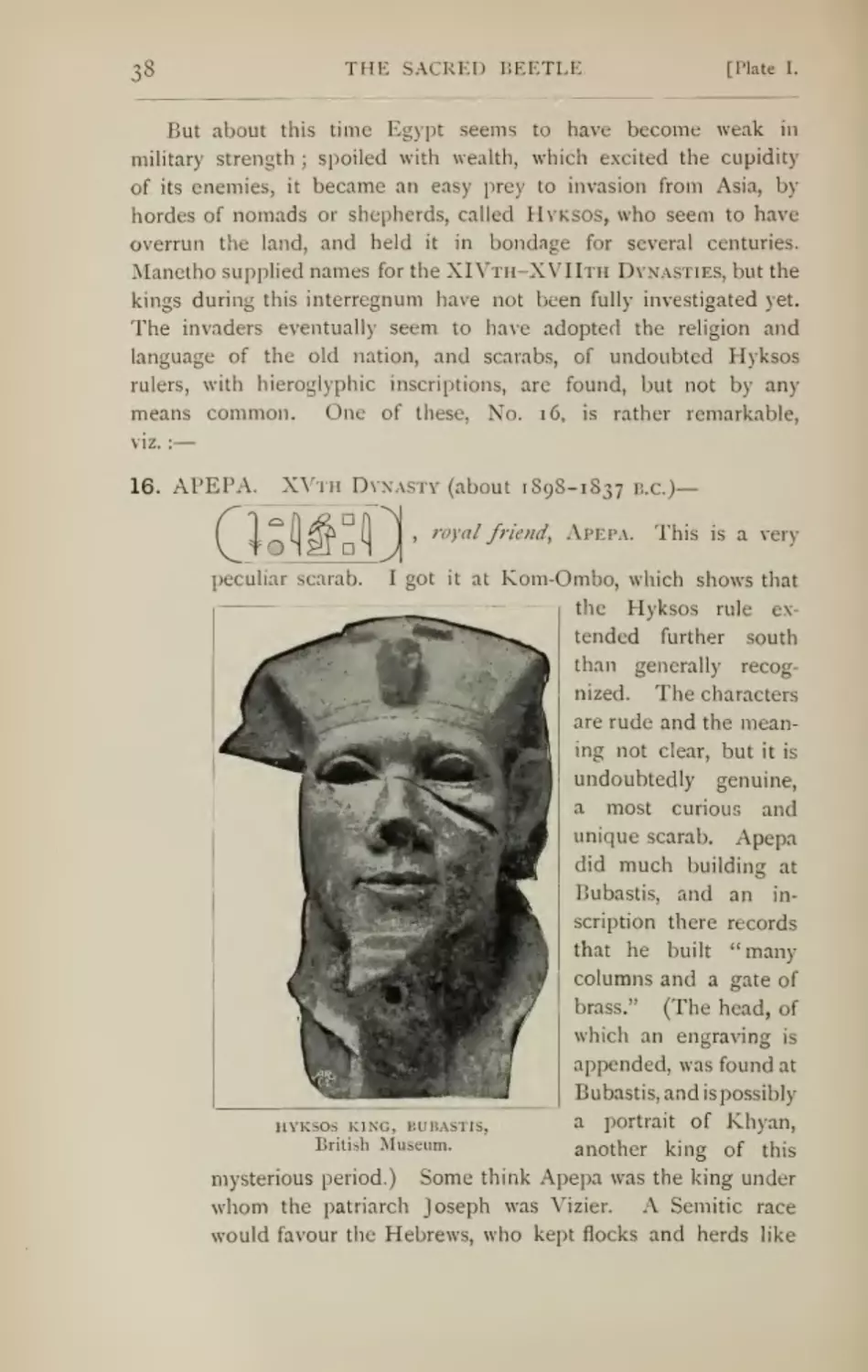
(The head, of
which an engraving is
appended, was found at
Bubastis, and ispossibly
a portrait of Khyan,
another king of this
mysterious period.) Some think Apepa was the king under
whom the patriarch Joseph was Vizier.
A Semitic race
would favour the Hebrews, who kept flocks and herds like
HYKSOS KING, BUBASTIS,
British Museum.

Plate I.]
SCARABS OF OLD AND MIDDLE KINGDOMS.
39
themselves, while "shepherds were an abomination to the
Egyptians."
This may account for the Hebrews being
allowed to settle in the land of Egypt, and one of their
tribesmen being permitted to rise to the position of Prime
Minister of the greatest country in the world. A century
afterwards, when the Hyksos rulers were driven away by
the ancient legitimate royal line, the Jews would lose their
friends, and when a king arose " who knew not Joseph,"
persecution of all foreigners would be the result, as befel
the Israelites in the XVIIIth Dynasty.
^' Before proceeding to this period, however, there are some scarabs
shown on Plate I which are worthy of mention, and which may be
placed more definitely when further discoveries are made of dated
tombs, such as are being found every year.
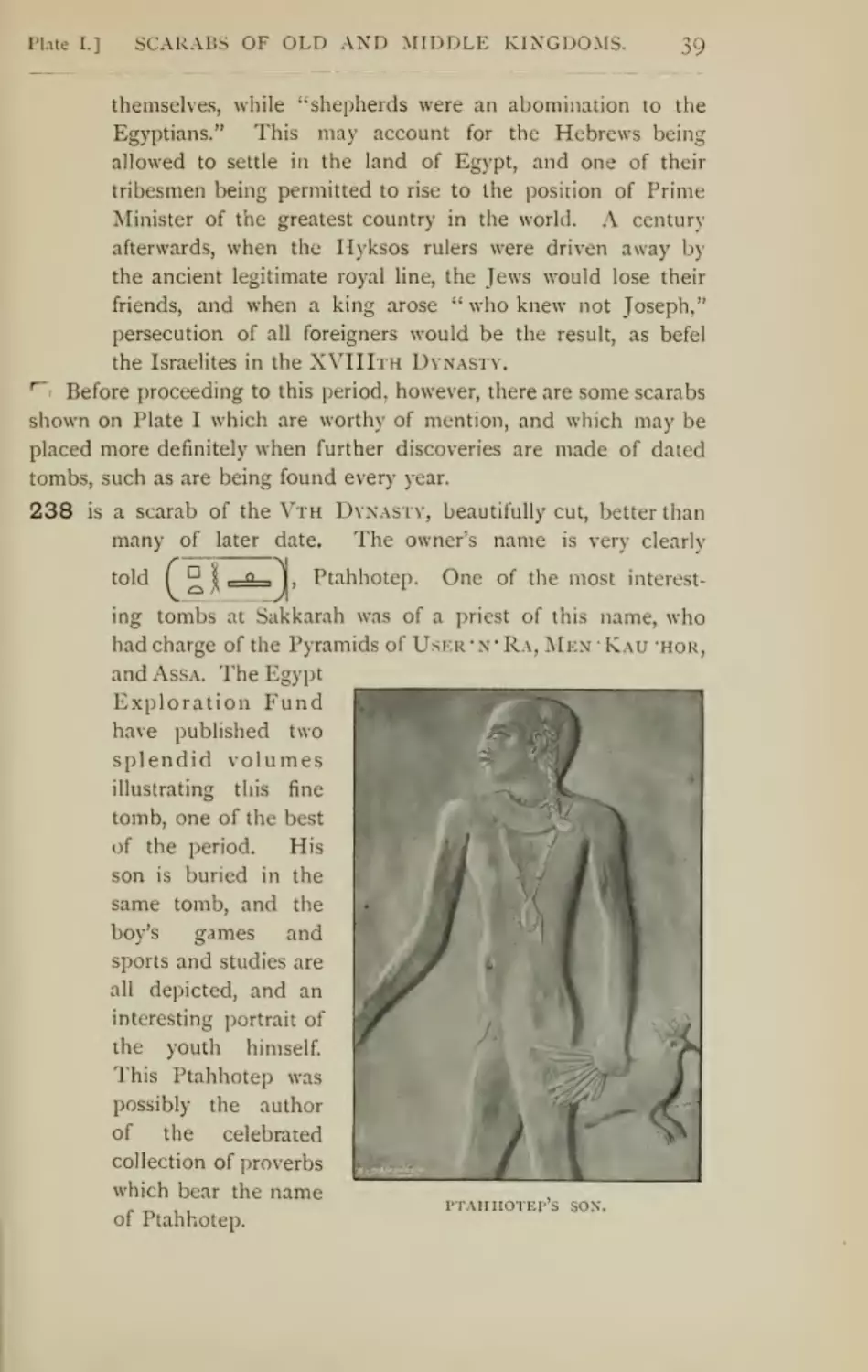
238 is a scarab of the Vth Dynasty, beautifully cut, better than
many of later date.
The owner's name is very clearly
told
(^I.—^^
I
,
Ptahhotep. One of the most interest-
ing tombs at Sakkarah was of a priest of this name, who
had charge of the Pyramids of User * n
*
Ra, Men • Kau 'hor,
and Assa. The Egypt
Exploration Fund
have published two
splendid volumes
illustrating this fine
tomb, one of the best
of the period.
His
son is buried in the
same tomb, and the
boy's
games
and
sports and studies are
all depicted, and an
interesting portrait of
the youth himself.
This Ptahhotep was
possibly the author
of
the
celebrated
collection of proverbs
which bear the name
of Ptahhotep.
PTAHHOTEP'S SON.

40
THE SACRED BEETLE.
[Plate I.
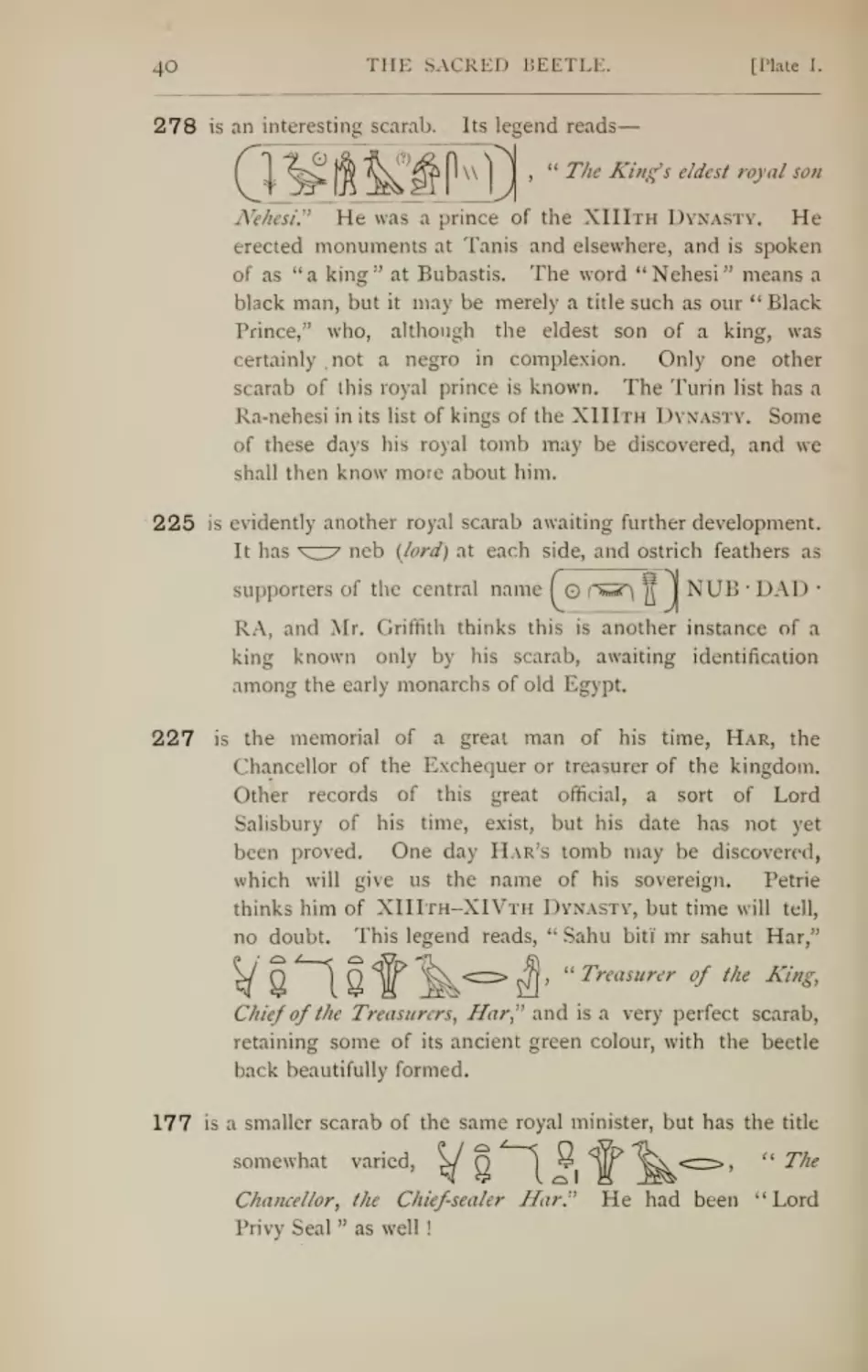
278 is an interesting scarab.
Its legend reads
—
iV"^^nw1
J
,
" 77^^ King's eldest royal son
JVekesiy He was a prince of the XIIIth Dynasty. He
erected monuments at Tanis and elsewhere, and is spoken
of as "a king*' at Bubastis.
The word "Nehesi" means a
black man, but it may be merely a title such as our "Black
Prince," who, although the eldest son of a king, was
certainly not a negro in complexion.
Only one other
scarab of this royal prince is known.
The Turin list has a
Ra-nehesi in its list of kings of the XHIth Dynasty. Some
of these days his royal tomb may be discovered, and we
shall then know more about him.
225 is evidently another royal scarab awaiting further development.
It has v_^ neb {lord) at each side, and ostrich feathers as
supporters of the central name ( © f^wc^
^ |NUB•DAD
•
RA, and Mr. Griffith thinks this is another instance of a
king known only by his scarab, awaiting identification
among the early monarchs of old Egypt.
227 is the memorial of a great man of his time, Har, the
Chancellor of the Exchequer or treasurer of the kingdom.
Other records of this great official, a
sort of Lord
Salisbury of his time, exist, but his date has not yet
been proved. One day Har's tomb may be discovered,
which will give us the name of his sovereign.
Petrie
thinks him of XIIIth-XIVth Dynasty, but time will tell,
no doubt. This legend reads,
"
Sahu biti mr sahut Har,"
VS^8^'^"'^
^'
" ^'^'"'''''^''^
^-^ *^''
^'""^^
Chief of the Treasurers, Har,^^ and is a very perfect scarab,
retaining some of its ancient green colour, with the beetle
back beautifully formed.
177 is a smaller scarab of the same royal minister, but has the title
somewhat varied, \J Q
|
^ ^^? ^^<^=>5 "' ^^'^^
Chancellor, the Chief-sealer Har J'
He had been "Lord
Privy Seal " as well !

Plate I.]
SCARABS OF OLD AND MIDDLE KINGDOMS.
4I
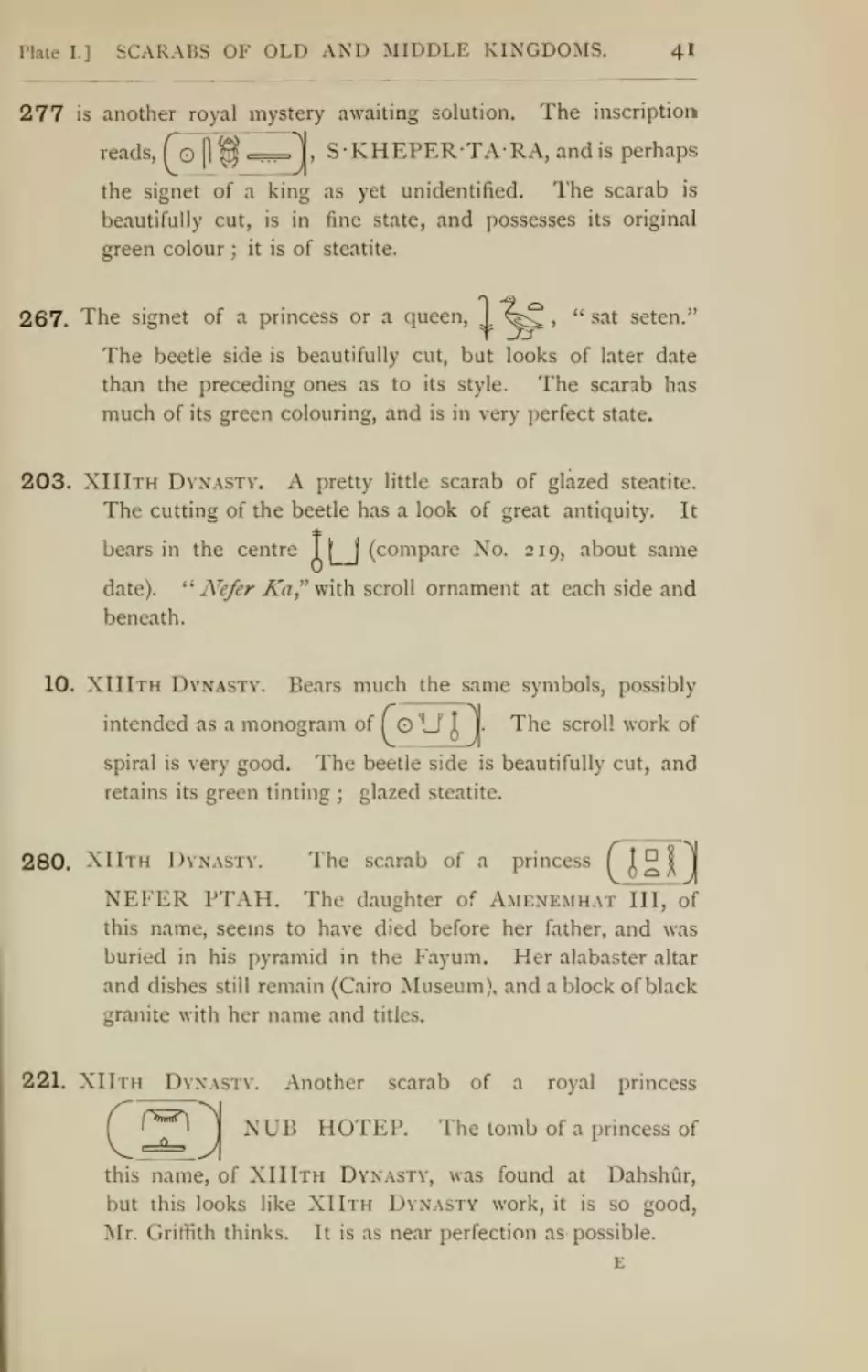
277 is another royal mystery awaiting solution.
The inscription
reads, (q p^===l, S-KHEPER-TA-RA, and is perhaps
the signet of a king as yet unidentified.
The scarab is
beautifully cut, is in fine state, and possesses its original
green colour ; it is of steatite.
,
" sat seten."
267. The signet of a princess or a queen,
The beetle side is beautifully cut, but looks of later date
than the preceding ones as to its style.
The scarab has
much of its green colouring, and is in very perfect state.
203. XIIIth Dynasty. A pretty little scarab of glazed steatite.
The cutting of the beetle has a look of great antiquity.
It
bears in the centre Tlf
j (compare No. 219, about same
date).
'^
A^e/er J^a,'' with, scroll ornament at each side and
beneath.
10. XIIIth Dynasty. Bears much the same symbols, possibly
intended as a monogram of ( O "^
J'
I|-
The scroll work of
spiral is very good. The beetle side is beautifully cut, and
retains its green tinting ; glazed steatite.
280. XIIth Dynasty.
The scarab of a princess ( I
°
||
NEFER PTAH. The daughter of Amenemhat III, of
this name, seems to have died before her father, and was
buried in his pyramid in the Fayum. Her alabaster altar
and dishes still remain (Cairo Museum), and a block of black
granite with her name and titles.
221. XIIth Dynasty. Another scarab of a
royal princess
fr^
J
NUB HOTEP. The tomb of a princess of
this name, of XIIIth Dynasty, was found at Dahshur,
but this looks like XIIth Dynasty work, it is so good,
Mr, Griffith thinks.
It is as near perfection as possible.
E

42
THE SACRED BEETLE.
[Plate I.
204. XIlTH Dynasty Q U'
^J
1 NEFER KA. Another pretty
scarab, resembling Nos. 219, 203, 10, etc.
All possibly
belong to same period, if not to the same king. The spiral
scroll ornament perhaps came in at this date and was
supposed to be the commencement of the Egyptian deco-
rative period, and beginning of all such ornamental design,
till the recent discoveries at Abydos, which carry it back
much further.
224. The scarab of a princess, Neferu, of high rank. The inscrip-
tion is very full, and well cut,
\:r~z\ TIT v_^ •^
^ '' Nebt per, Neferu, nebt aniakh,''
"The house mistress,
Neferu, possessing the reward of devotion."
Neferu may be
translated, "the most beautiful one."
(In Petrie's Historical
Scarabs, No. 425, there is another scarab of this lady, but
with a variation in the inscription.) The whole is surrounded
with a very peculiar interlaced scroll border.
360 is a XIIth Dynasty scarab of very fine work ; the inscrip-
tion is well cut.
^ 4'4* I AA T r^^' possibly an
unknown king's name, or that of some great personage yet
to be discovered.
The princes of the legitimate line had preserved their liberty in
retreat at El Kab, in the south, during the hated rule of the Shepherd-
kings, and after centuries of exile burst forth from their hiding
places, and drove the invaders from the throne.
This was about
the close of the XVIIth Dynasty, 1600 b.c .
THE WALLS OF THE CITY, EL KAB.
Looking through the northern and southern gates.

OLD KINGDOM - iVllDDLE KINGDOM Fi .
I.
Vll.-Vlll
111
IV
IV
V
NEBKA
n.L_|y.^p|^;>^
MENKAURA
UNAS
RA-EN-KA
XII AMENEIVIHAT I
213
207
XII
XIII
USERTESEN 5EBEK-H0TEP I
219
Scarabs of Kings and Notables

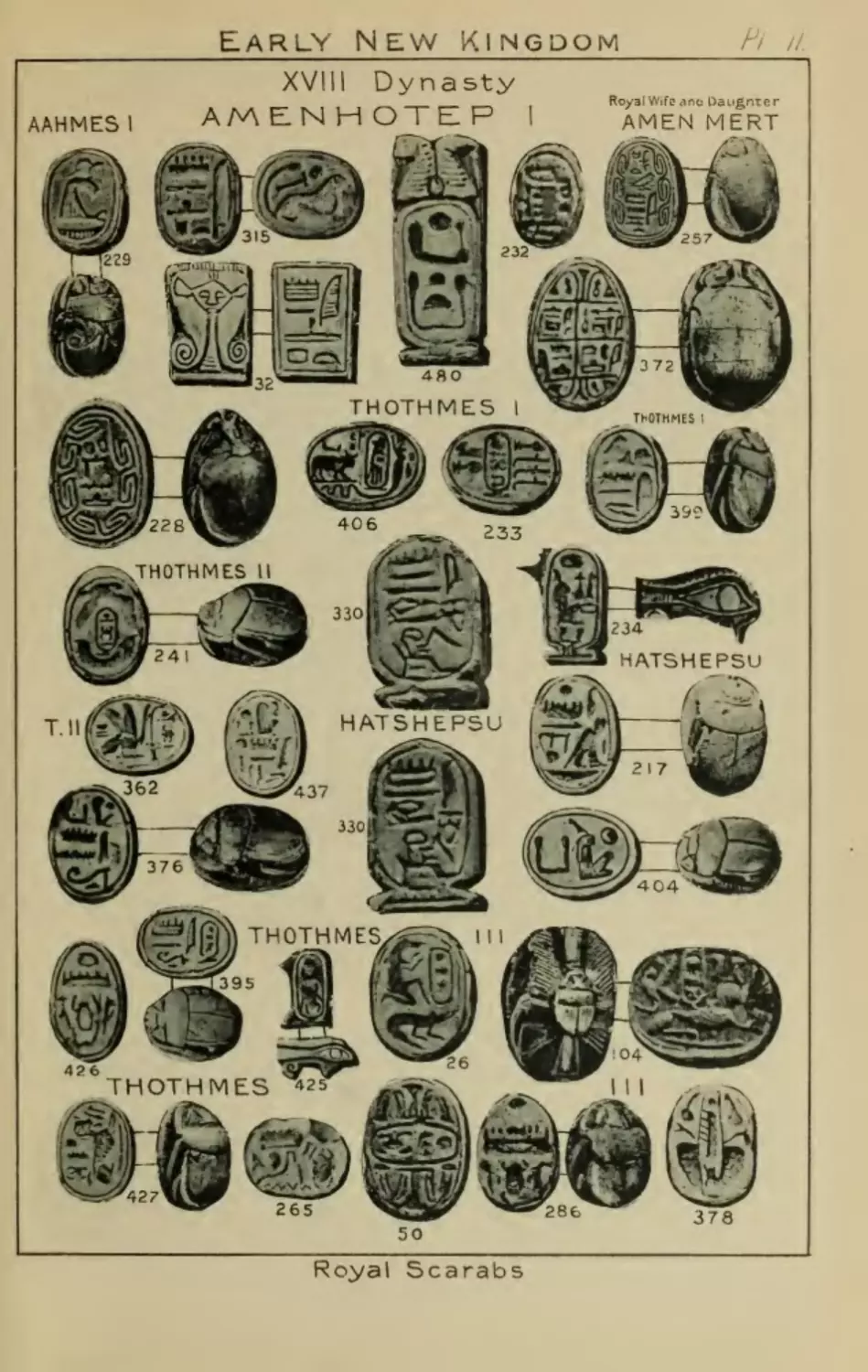
Early New kingdom
Pi 11.
AAHMES
XVlll Dynasty
AMENHOTEP
Royal Wife cine Oaugnter
AMEN MERT
Royal Scarabs

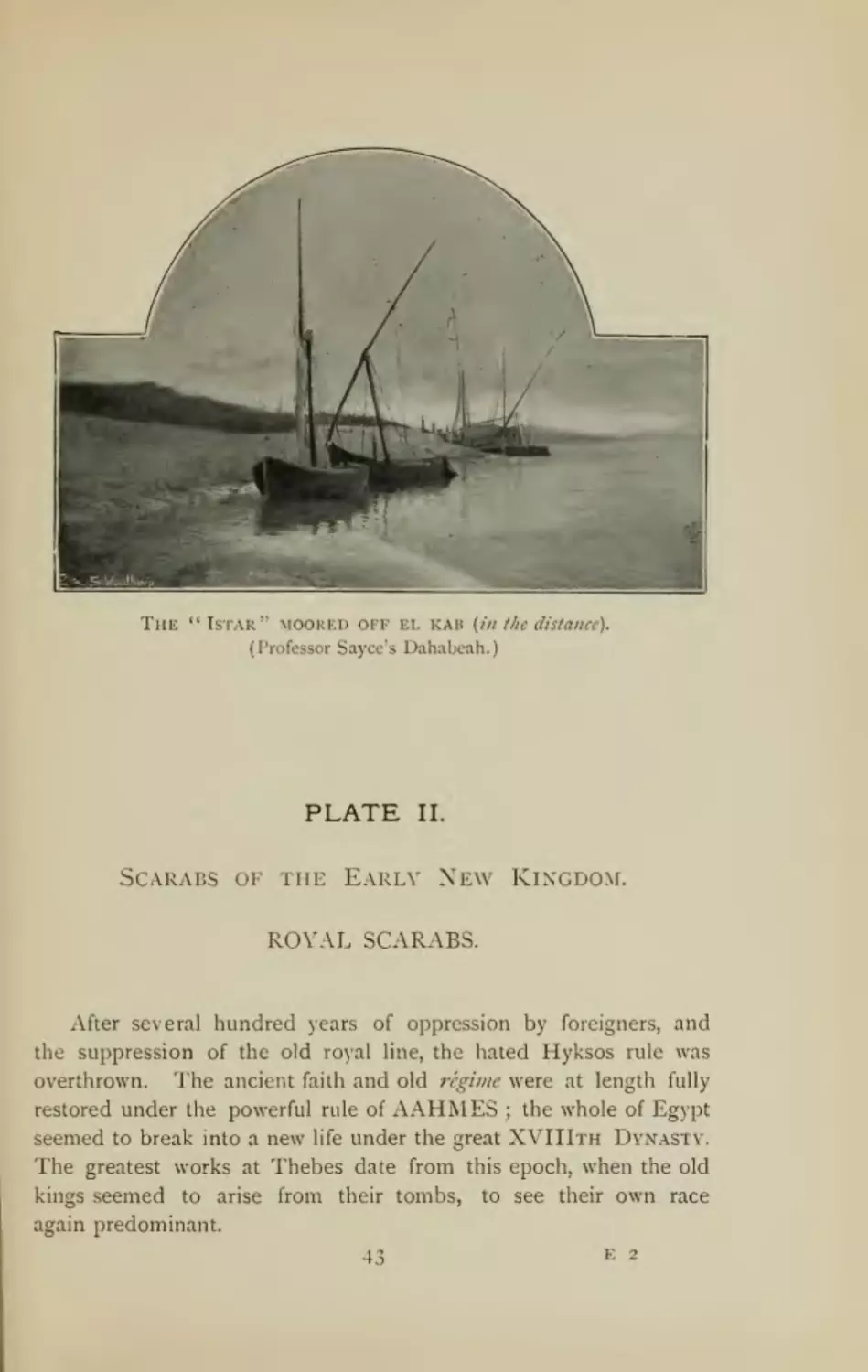
The "Istar" moored off el kab {in the distance).
(Professor Sayce's Dahabeah.)
PLATE II.
Scarabs of the Early New Kingdom.
ROYAL SCARABS.
After several hundred years of oppression by foreigners, and
the suppression of the old royal line, the hated Hyksos rule was
overthrown.
The ancient faith and old regime were at length fully
restored under the powerful rule of i\AHMES ; the whole of Egypt
seemed to break into a new life under the great XVIIIth Dynasty.
The greatest works at Thebes date from this epoch, when the old
kings seemed to arise from their tombs, to see their own race
again predominant.
43
E2

44
THE SACRED BEETLE.
[Plate II.
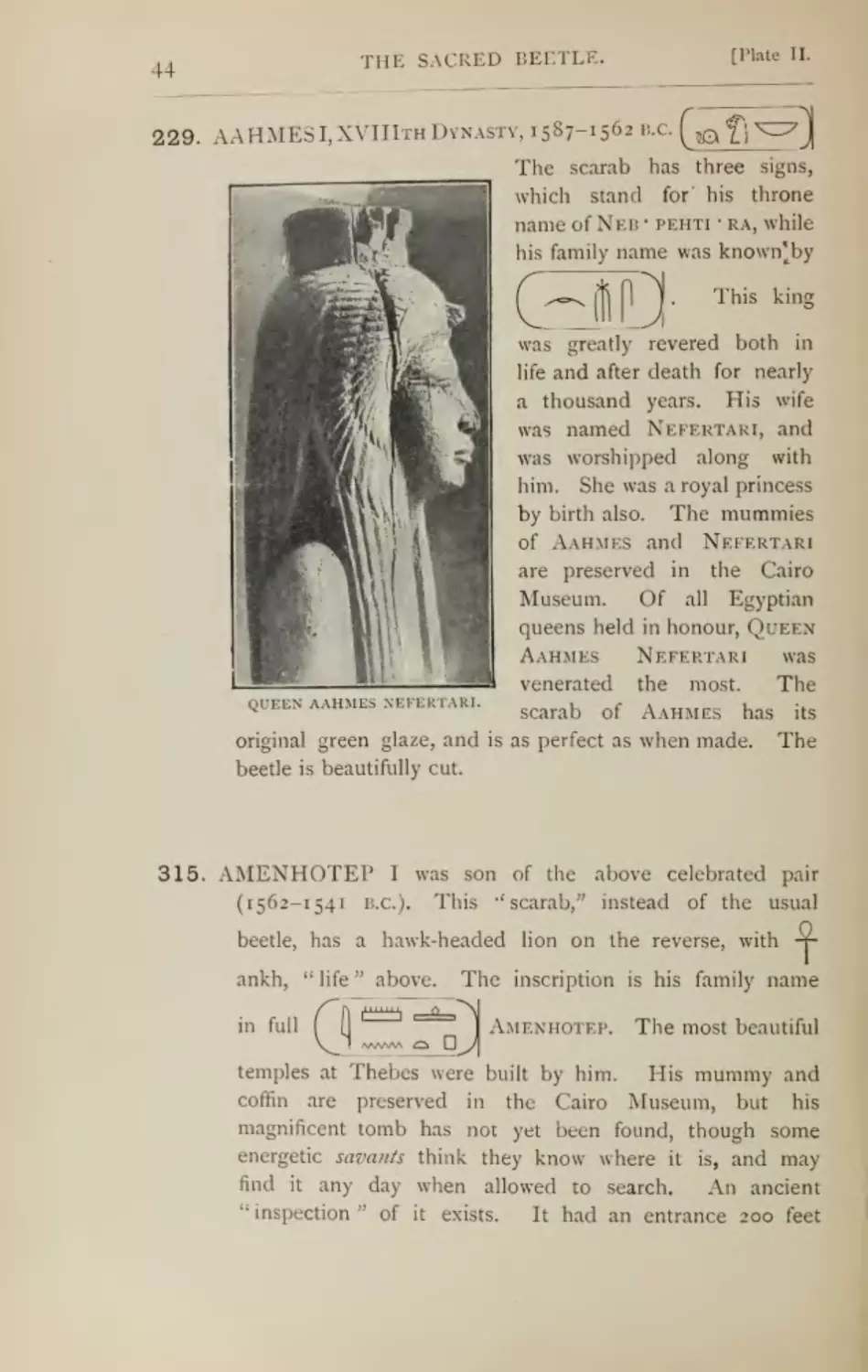
229. AAHMES I, XVIIlTH Dynasty, 1587-1562 b.c.
(^^afi^^J
The scarab has three signs,
which stand for his throne
name of Neb • pehti • ra, while
his family name was known'by
¥3 This king
was greatly revered both in
life and after death for nearly
a thousand years.
His wife
was named Nefertari, and
was worshipped along with
him. She was a royal princess
by birth also.
The mummies
of Aahmes and Nefertari
are preserved in the Cairo
Museum.
Of all Egyptian
queens held in honour, Queen
Aahmes
Nefertari
was
venerated the most.
The
scarab of Aahmes has its
original green glaze, and is as perfect as when made. The
beetle is beautifully cut.
QUEEN AAHMES NEFERTARI.
315. AMENHOTEP I was son of the above celebrated pair
(1562-1541 B.C.) . This "'scarab,"
instead of the usual
beetle, has a hawk-headed lion on the reverse, with -¥"
ankh,
" life " above.
The inscription is his family name
in full
Amenhotep. The most beautiful
temples at Thebes were built by him.
His mummy and
coffin are
preserved in the Cairo Museum, but his
magnificent tomb has not yet been found, though some
energetic savants think they know where it is, and may
find it any day when allowed to search.
An ancient
" inspection " of it exists.
It had an entrance 200 feet

Plate II.]
SCARABS OF THE EARLY NEW KINGDOM.
45
long.
The examination
was made by a great offi-
cial, Paser, in the time
of Rameses 11.
Strange
to say, I have the seal
of this great man (No.
255). The mummy of
Amenhotep has
never
been unrolled. The gar-
lands
of
flowers
and
wreaths lie on his body
yet,
as
they \vere de-
posited by faithful
mourners 3440 years ago !
I have other scarabs of
this good king.
A.MEMIUILI' I.
32. AMENHOTEP I.
A plaque with the head of Hathor
in
relief,
and on the
other side the family name
Amenhotep.
It is as perfect, with its
bright green glaze, as when engraved, and the head of the
Egyptian Venus is well modelled.
480. AMENHOTEP I.
This relic is only half of an amulet,
which had the two cartouches,
but one is
perfect
( o|=^U^1ZESER•KA
•
RA, his throne
name, with plumes of feathers for a crest above.
232. AMENHOTEP I.
A blue-green scarab, with a fanciful
arrangement of the name
m\}-
372. AMENHOTEP I, is a fine scarab, brilliant green tint, and
with the beetle well cut.
It has the name of the king
repeated many times, and withT and |, Nefer and Neter.
"
T/ie good lord Amenhotep ^^^ showing how the kings were
the object of worship.

46
THE SACRED BEETLE.
[Plate II.
228. AMENHOTEP I continued within a scroll border ; we find
some curious signs preceding " . . . nhetep."
The border
shows a return to the ornament of a previous period.
The beetle is beautifully cut, green colour preserved, steatite.
257. AMEN-MERT . The scarab of a princess-queen of early
XVIIIth Dynasty.
One of the most beautiful in the
collection ; colour bluish-green, well cut inscription ; within
O^
AAAAAA C:^
great royal wife Ame7imerty Some day we will find whose
queen she was.
231. AMENHOTEP I.
Being a cylinder, has to appear on Plate
X\ I, but may be mentioned here.
It is a very beautiful
piece, brilliant green in tint, and well cut.
On the flat
portion there is a peculiar scroll ornament. On the curved
part the inscription is ITT fWf^ and the king's royal
title f
O\ ^t
1
I
Zeser • KA
•
Ra, with the addition of
u dad^ stability, etc.
373. (Plate XVI) is another cyHnder of AMENHOTEP I, and
also very fine.
Prenomen ( o | fj
J
|j
Zeser•ka•Ra^
with j T neter fiefer ; the whole translates,
^^
Sacred is the
Ka of Ra, the good god,' ' repeated with ornamental detail.
406. THOTHMES I, XVIHth Dynasty (1541-1516 B.c .),sonof
Amenhotep I.
This scarab is in a fine preservation and
well cut.
The king's cartouche in centre
(
/^ fl
'
1
Thothmes, on one side, the figure of a bull on the other,
the uraeus crowned, which read ^^^^Jjl T,
" The good
god the strong bull, Thothmesr The stone is beautifully cut,
the beetle's legs being pierced through.
"The Strong Bull"
is the Hones title of the king.

Plate II.]
SCARABS OF THE EARLY NEW KINGDOM.
47
233. THOTHMES I.
The "golden Hawk" name or title is on
this scarab. Thecartouche f O|^U|Ra•aa
•
Kheper •
Ka, with the addition of
nf( neter nejer^ nefer
renpf, "Good god, good of years."
The engraving is
good.
399. THOTHMES I.
The name
is peculiarly spelt by an ape
and the symbol of birth,
and underneath [^
"-^csi.
Amen mer,
" beloved of
Amen.^^
This king did
much building at Karnak,
and erected one of the
great obelisks.
Records of
his works are found at
Assuan and far up the Nile.
His mummy is preserved
in the Cairo Museum. He
1
!
t
4'•^jmH 1
m¥'.
91Pi
^
^
Hr
'
^^^
i
L
.
^1^1^
t
MUMMY OF THOTHMES I.
was father of the great Queen Hatasu, who for reasons
state was married to her half-brother, King Thothmes W.
of
241. TPIOTHMES II (1516-1505 e.g .). The scarabs of this
king are rare.
This one has his cartouche with throne
nameAa•Kheper•en•Ra(O <-==>
V
extended wings is above the cartouche, and the usekht collar
below.
/w/v/vA I .
A hawk with
362. THOTHMES H. This scarab bears full titles
1
" Jzing of Upper and Lower Egypt^ Lord of the tivo la?ids,"
with the cartouche ( o| ^ ^^^^^ ] xAlA'Kheper'en -Ra. It
is a pretty device and well cut, but has lost its green
colour.

48
THE SACRED BEETLE.
[Plate II.
The mummy of Thothmes II is in the Cairo Museum.
He
was a son of Thothmes I by an inferior wife.
His half-sister
Hatasu,
was the daughter of
the great royal queen Aahmes,
and she was married to her
young half-brother to give him
full title to the throne.
Thoth-
mes
II seems to have been
delicate, and did not live long,
and Hatasu guided the kingdom
during his life,
and was regent
for his son Thothmes III, who
came to the throne when a child.
Thothmes HI was also a child
by an inferior wife, and he had
to be married to his step-mother's
daughter (another Hatasu) in order to hold the throne legiti-
mately.
MUMMY OF THOTHMES II.
THE TERRACE-TEMPLE OF
QUEEN HATASU.
.r r»H*-
Everything proceeding from the remarkable princess. Queen
Hatasu, is in good taste, and proves her to have been a gifted
and able ruler of a cultivated people.
The celebrated Terrace

Plate IL]
SCARABS OF THE EARLY NEW KINGDOM.
49
QUEEN HATASU.
Temple of Deir el Bahri,
Thebes, is the most elegant
specimen of architecture in
Egypt, and shows what we
would term pure Grecian taste,
and in the severe Doric style.
But it was built more than
looo years before the first
Greek temples,
and when
Pericles raised the Parthenon,
he knew not of the earlier
masterpiece.
It was lost to
the world for 2000 years, and
has only been recently ex-
cavated from the ruins of mud brick buildings which entombed
it, and at the same time preserved it for our generation.
The
three beautiful volumes of the Egypt Exploration Fiind^ which
illustrate it,
are well worthy of study.
Even the Scarabs of
this wonderful lady are con-
spicuous by their excellence.
Her exquisite temple was
built to immortalize her
mother, Queen Aahmes, and
her own scientific expeditions
to foreign lands.
It may
also have been intended for
her own mortuary chapel.
The mummy of Queen
Hatasu
has
never
been
found, and her tomb may still
exist, entombed in the rock
behind or beneath the temple,
to be discovered some day.
330. QUEEN HATSHEPSU (or Hatasu, the best known
name) (1516-1481 B.C .) , XVIIIth Dynasty.
This is
perhaps an amulet.
For some unknown reason, the
engraving is the same, or intended to be so, on each side,
Amen - Khnem Hat Shepswt,
QUEEN AAHMES.
(Mother of Queen Hatasu.)
^''joined to A?fiefiy

so
THE SACRED BEETLE.
[Plate IL
234is a
"
Ren " amulet, and bears this queen's favourite name,
Makara | T neter nefer, ''good'' or ''beautiful'' f O |§ "U' ] >
MAAT KA RA. The goddess of truth, Maat, she seems
to have regarded as her patron saint and taken her name
from.
This scarab is well engraved, has its ancient green
colour, and bears on the back the sacred eye " Uzat'^
carved in bold relief.
217 contains signs intended for Queen Hatasu's prenomen
n
O0.
rrO
Well cut, but colour gone.
'^.-^[t, Mry
437 bears Makara's fuller titles,
G^t \\\
Amen Ra.
MAAT KA RA, " beloved of Amen ;'
beautifully
cut, but has lost its green colour.
376. Another well-cut scarab of the great queen, O iS j )(
^^ ^^- ~^,
Maat Ka Ra tyt n Amen, " Trul/i the Ka of Ra, Symbol of
Amen," with its original green tint.
QUEEN hatasu's OBELISKS, KARNAK.

Plate II.]
SCARABS OF THE EARLY NEW KINGDOM.
51
404 is however the best of this lady's, good enough to have been
her own signet.
It is a beautiful blue-green colour, is
well cut, and as fresh as when made.
It bears simply
(GllU]
,
Ra•ma•ka, or Ma•ka•ra, her favourite
name. The little figure of truth bears the signific feather
on her head. The beetle's form is good, and the legs are
pierced through.
This interesting example of a great royal princess ruled with
Thothmes II for thirteen years, and with Thothmes III for upwards
of twenty years.
She spent her time in peaceful cultivation of the
arts and commerce.
THOTHMES III.
When Queen Hatasu left the scene,
THOTHMES III (1502-1449 b.c), the
greatest of Egyptian conquerors, carried
Egypt's sway into Asia and Europe, and
then built great temples all over Egypt,
erecting obelisks nearly equal to Hatasu's.
Those of London,
New York, Rome,
Constantinople, are of his work. He left
more traces of his great building in Egypt
than any other king. He posed as a great
pillar of the church, and in fact called
himself Defender of the Faith. Being thus
popular with the priests, his name became
a watchword of religious supremacy, and
so remained for many generations.
This
is possibly the cause of the scarabs with
the name of Thothmes III being so
plentiful.
AWkI
COLOSSAL GRANITE HEAD
OF THOTHMES IIL
( British M11 sen ni .
)
395. THOTHMES III.
A beautiful little scarab, retaining its
green glaze.
M
^V^c) Amen tyt, symbol of Amen, and
cartouche f O t^i^ g
J
Men Kheper Ra.

52
THE SACRED BEETLE.
[Plate II.
426.
26.
425
104.
427.
265.
50.
286.
378.
Cowroid form T T neter nefer (o^^g j Men Kheper Ra,
the name which he mostly used.
The cartouche of Thothmes III as above, adored by one of
"the souls of Nekhen" (Hieraconpolis, opposite El-kab),
one of the spirits of the South. Crocodile below.
has the " uzat " or sacred eye in relief on the back, and car-
touche of Thothmes III as above, very finely cut.
The back of this scarab is peculiar.
The wings are extended
from a small beetle in the centre.
On the face a sphinx,
couchant, with two plumes. Over its back a winged urseus
adoring the cartouche of Thothmes III.
A finely cut scarab with bearded sphinx.
In front of it
I
T neter nefer,
"
Good God.''
Prenomen of Thothmes III over all.
MEN KHEPER RA, with i>—
.
-^-- q
''chosen of Ra^' and
""^3;^ added.
Cartouche of Thothmes III, water plants (typical of union of
North and South Egypt) at the sides.
Cartouche of Thothmes III, rude work.
Peculiar arrangement of title on a band, and added symbols.
THE TAME LION OF THE PHARAOH.
From Koin Ombo.

UPPER EGYPT.
LOWER EGYPT.
ROYAL CROWNS.
UPPER AND LOWER EGYPT.
PLATE III.
Scarabs of the New Kingdom.
ROYAL SCARABS.
This plate is entirely occupied by scarabs of Thothmes III.
They exhibit extraordinary variety in design, no two being alike.
I have seen quite a thousand of
his, all different^ in various collections.
They seem to be typical of a great
outburst of religious zeal, though many,
if we understood them, may possibly
commemorate historical events.
Some
of them were made after Thothmes Ill's
time, no doubt. But as the very latest
of these scarabs is at least 3000 years
old, they are still very venerable ob-
jects.
No doubt, after the time of
the great king whose name they bear,
they were regarded as a sort of talis-
man bearing a name that remained a
watchword of religious fervour, for a
thousand years after his death.
310. A very peculiar scarab. On the
back a sunken cartouche with
Ot
ij
surmounted with
double plumes.
On the front, obelisk of thothmes hi at
LUXOR,
same cartouche and -j-
I
The tioin of the one now in Paris.
ankh neter nefer, " the good God lives.' '^
53

54
THE SACRED BEETLE.
[Plate III.
328. Thothmes III, is a curious scarab with the king's name written
in sportive hieroglyphics, which read, "Thothmes, Ra men
kheper, sa ntT It retains its green colour.
161 has devices in scroll work signifying union, with the royal
cartouche of Thothmes between them.
505, Hawk with ""^ ==3l
|
|
|
"mr neteru, beloved of the gods,^^ and
the usual royal cartouche f O t^^^ g 1
.
447 is a flat bead, well cut on both sides.
Front, THOTHMES
standing, royal cartouche and ^'Amen Ra."
Back, four uraei
as a quatrefoil.
100. On one side inscription to Amen Ra, on the other the king's
cartouche with the ka sign, which is unusual ( O t^^^^^ ^ U |.
i
.
^
^
94. ^'Uzat," sacred eye, with two cartouches of Thothmes III.
12. The royal cartouche f O
^^^^^
g j between urseus supporters.
239. Cartouche of THOTHMES III, with crown of double plumes,
and uraei on either side.
174. o t^^^^ ^ 1}—
.
r^^^ o Men Kheper Ra Sotep en Ra, "chosen
of Ra," Thothmes III.
176. Maat the goddess of truth and the royal cartouche
^~
hotep hr maat, "
resting in truth''
417. Royal cartouche with Q ^ ^ ^ Men kheper ra kha m
Uast, ''resplendent in ThebesT Fine work, in its original
green colour.
95. Royal cartouche with a beaded border.
240. [o^^u] ^^37 Men kheper ra ka, neb, Thothmes,
<« j^^^ 11
lord:

Plate III.]
SCARABS OF THE NEW KINGDOM.
55
112. Cartouche of the king between two feathers, winged disc
above.
101.
" Ren " shaped bead, ox one side,
|
T the good lord Thothmes
on the other side^ H
^"^^ ^^i. Mer Amen, beloved of Amen.
479. Rectangular bead, glazed steatite, colour gone. Horses were
introduced into Egypt, it is believed, by Thothmes III. Here
we have one of the earliest Egyptian equestrian scenes.
Not
badly done either.
The design is represented in intaglio., and
the king, on horse back, is wielding a mace and bow. A pros-
trate Syrian, bound, under the horse's feet, with T symbol,
probably the animal's name, " the beautiful one."
On the
other side, in reliefs are the figures of Bast and Nefertum,
with the cartouche of Thothmes III between.
108. Sphinx treading enemy under foot, cartouche. Men kheper Ra^
with symbol \
'•'•
to reign
T
308. Blue glazed steatite "Ren" amulet, "Lord of Sebek Ra, lord of
Swn"; on the other side, "Thothmes, founder of houses."
Crocodiles engraved on the edges.
74. Green scarab, mounted in its original blue ring.
Hawk,
crown of Lower Egypt before, uraeus in front, below v^^.
23. Flat rectangular bead, cartouche of Thothmes HI between
feathers of truth, on other side [
lord.
O I v_^/ Amen Ra,
AAAA/W
61. Cowroid, bright blue-green.
Cartouche of Thothmes HI,
on left -"^^ir-
[^
beloved of Amen ; on right, Neter nefer
neb tawi. Good God, lord of the two lands.
122 Winged genii and cartouche of Thothmes HI, surmounted by
two feathers, '^_^ below.

56
THE SACRED BEETLE.
[Plate III.
34. Cartouche of Thothmes III, papyrus sceptre on each side,
pottery.
493. Cartouche of Thothmes, with ka and neb signs.
69. On back a large winged scarab, same as on No. 104 , Plate II.
On the front the god Bes between two cartouches of
Thothmes III.
381. On back eight urmi symmetrically arranged, cf. Nos. 412, 497 ;
fine work; steatite.
On front cartouche of Thothmes III
between urcei^ Y
"
sam " sign between.
43. Coarse green pottery. Back in form of a negro head. Front
with cartouche of Thothmes III between feathers.
THE SPHINX.
The stele of Thothmes IV is seen in the centre.

New Kingdom
PI III
Koya! Scarabs

New Kingdom
P/.
IV.
THOTHMES 111 AMENHOTEP I
XVIil Dynasty
AMENHOTEP
fHME^ iV
<eP I!:
The Royal Wife TV
i
36
AMENHOTEP !il
237
Royal Scarabs

STELE OF THOTHMES IV, RECORDING HIS RESTORATION OF THE
GREAT SPHINX.
The figure supplies a portrait of AH Gabri, the former attendant on Dr. Petrie
during his survey of the Pyramids of Gizeh. This excelleiit man has been
my guide and trustedfriend of many years.
PLATE IV.
Scarabs of the New Kingdom.
ROYAL SCARABS.
THOTHMES HI reigned fifty-four years.
In his old age his
son AMENHOTEP II ruled jointly with him.
This co-regency
is commemorated by the scarab, No. 501.
501. Obverse.
THOTHMES III, crowned, standing, wielding
the scourge — his royal cartouche in front.
Reverse —
O
I
1 prenomen of Amenhotep II, "great are
the forms of Ra," between the two feathers of truth (Maat).
57
^^

58
THE SACRED BEETLE.
[Plate IV.
^gjr
? V//.
\f
^r^11
375. AMENHOTEPII[i449-i423
B.C.], seated on his throne
in the sacred boat of Mentu,
holding the scourge and haq
sceptre ; the figure-heads at
prow and stern, hawk-headed,
Mentu, crowned with his two
feathers. The royal cartouche
is displayed before the king.
This scarab is well cut. (From
Thebes, 1899.) This king
came to the throne in youth,
and there is a sculpture re-
presenting him seated on his
nurse's
knee,
with
his
royal
titles,
as
on
the
scarabs, correctly shown over
the boy's head.
470. A flat bead that has been worn as a ring.
Amenhotep II
seated on throne; before him | T
^^
good god,
'^
above his
cartouche.
Reverse, a sphinx, walking, with the same
cartouche.
AMENHOTEP II AND HIS
NURSE.
Behind
" lord of two lands J^
On the
edges are engraved hawk-headed men, crowned with plumes.
499. Green scarab, well cut.
Lion couchant, o above, cartouche
=*^lll| on each side royal
of Amenhotep II
emblems.
O
80. Winged solar disc guarding cartouche of Amenhotep II.
Below, Mer Amen,
''
beloved ofAmen,'' and papyrus sceptre.
67, Well cut, elaborate work
Below ^
QI ^.
IZ"^
Cartouche of Amenhotep II.
^'-
Lord of Splendour, in the
house of Anient
414. Back iizat, sacred eye, in open-work.
Inscribed, around
cartouche of Amenhoiep II,
''
The good god, lo?^d of tivo
lands,'' and T repeated.

Plate IV.]
SCARABS OF THE NEW KINGDOM.
59
400. Cartouche of Amenhotep II between feathers of Maat, initJi,
good work.
478 resembles No. 8o, but better cut,
"
Beloved of Amen Ra^'' and
cartouche.
9. AMENHOTEP II, enthroned in sacred boat. Urcei on either
side ; his cartouche before him.
He holds haq sceptre, with
other emblems.
236. Fine work. Sacred Eye.
Obv. Amenhotep's cartouche on a
ren panel ; green colour perfect.
235. AMENHOTEP TI
r— sfii-=i.
Ankh
neter nefer aa * Kheperu • Ra, neb tawi (" Live the good god
^
lord of the two lands, Amenhotep'').
481. Couchant sphinx; on back | T.
Below the royal cartouche
of AMENHOTEP II, and beside, -^3l[]
'^^^ ^
("^^/^^'^^
ofAmeji'\
^
'
242 is still mounted in the original bronze ring. Royal cartouche
of Amenhotep II, with winged disc above, beneath
"-^^^X. \\
^^^^
O " Beloved of Amen-Ra."
301 possesses the cartouche of the great Thothmes III on one
side, guarded by
a sphinx, passant,
with
I
T.
On the
other
side,
the
cartouche
of
THoTHMEs IV
(grandson of the
great
religious
warrior) calls him-
self
^^
son of Ame?i,"
and exhibits his
cartouche.
own
roe^^iiiT
THOTHMES IV.
But he relies on the powerful name of his great ancestor.
F2

6o
THE SACRED BEETLE.
[Plate IV.
THOTHMES IV did not reign long (1423-1414 b.c), and
his scarabs are rare.
His portrait shows him as quite young.
He records on a fine granite stele (between the paws of the great
Sphinx) that he restored that ancient monument (the event may
be recorded on these scarabs), and which he says he did to the glory
of his ancestors.
64 has a finely engraved sphinx (facing the royal cartouche of
THOTHMES IV), and having the diadem and beard which
the great figure formerly possessed.
Over the back a
winged ii?'ceus
adores the sphinx.
Underneath "v_y
;/<?/;,
the symbol of sovereignty.
451 is
a
finely
cut
green
scarab.
The cartouche
of
THOTHMES IV ; belo\v the u, sign of power, strength,
between supporters of itrcsi, the royal insignia.
Amenhotep HI, son of Thothmes IH, redeemed the brief reign
and shortcomings of his father.
GRANITE HEAD OF
AMENHOTEP III.
( British MusetiJ)i .
)
AMENHOTEP HI had a long
reign (1414-1379 b.c .) and left his
mark on the country, although his
splendid temple at Thebes was ruth-
lessly torn down by Meneptah, the
Pharaoh of the Exodus, and his
records chiselled out (to substitute
his own worthless ones) by that un-
scrupulous king of two centuries
later.
But the giants which guarded
the gates of Amenhotep's temple
still remain, the colossi of Thebes,
seated portraits of Amenhotep, 70 feet
high.
Although sadly ruined, they
remain to-day still "wonders of the
world," as they were in ancient times.

Plate IV.]
SCARABS OF THE NEW KINGDOM.
6l
296. AMENHOTEP III espoused a great Asiatic princess, of
which union he was proud. She was accorded an equal
position with himself, and given a
royal cartouche of her own. This scarab
testifies
to this fact, for it
bears
Amenhotep's cartouche
(53
neb maat ra,
^^
Lord of the truth of
I^a" on one side, and on the other his
wife's,
Queen Tyi
m
Seten hrat Tyi,
^' the royal wife TyiJ'
This scarab is well cut, and contains
the
original blue
enamel in the
characters.
QUEEN TYI.
From Tell el A7)iarna.
243. Tyi has here all the scarab to herself, with the inscription,
"The Royal wife Tyi," but in better engraving, though
exposure has taken away its original green colour.
469 is a fine blue-glazed scarab, with Amenhotep's cartouche, and
the addition of O ^^^wsa
princes.'"
OQO
Ra in hequ, ^'/ am among
63.
237
488
18.
A pretty little scarab with a good figure of Maat, goddess of
truth, and other emblems, possibly of Amenhotep III.
resembles the last, also Amenhotep Ill's signs.
is the bezil of one of the earliest known pottery rings, with the
symbols Neb Maat Ra, prenomen of Amenhotep III.
Bearded sphinx, passant, guarding Amenhotep's cartouche,
with
I
haq sceptre behind.
On reverse^
hawk of
,
Mentu, and a growing plant.
173. Fish, between two
Reverse,
Men mennu,
A^A^y^A OOO
'^
firm of fuonuments, ' '' '
and cartouche of Amenhotep III,
"
Ra, the Lord of TruthP

62
THE SACRED BEETLE.
[Plate IV.
364 shows the cartouche of Queen Tyi at the right hand of that
of her lord.
Of Amenhotep III, some more scarabs of
large size are shown on Plate V. The title above the
hemt seten,
" royal tvife.^''
Over
c^
queen's cartouche is
Amenhotep's cartouche is
] T neter ntier, ^^ good godr
The cartouches of this loving royal pair are here placed side
by side, on a perfect equality.
358 is interesting, as it bears, side by side, the two cartouches of
AMENKOTEP III.
The first, with his ordinary title
(Ol^v_^]nebmaatra, withT jabove.
The second
cartouche
f
[
,
o . Tt | Amen hotep heq uast,
'''
Devoted to Amen^ ruler of Thebes
^^''
has
of the Su?i^^ over it.
O
sa ra,
'^son
These are ordinary scarabs of Amenhotep III and bis wife
Queen Tyi, and of himself alone, of larger size than usual
(Plate V) ; but he seems to have
been the only king who employed
such objects to promulgate royal
decrees. These proclamations were
such lengthy documents, that the
scarabs to carry them had to be
of abnormal size, such as never
were seen before, or at least nothing
so large as come down to us.
They must have been sparingly
used. Possibly only one set was
sent to the Governor of each
Nome, as the Egyptian provinces
were called, for these big scarabs
are very rare indeed, and many
collections possess none of them.
The most common is that known
as the '-Lion Hunt" scarab, of
which possibly most examples exist.
Then there is the " Marriage
"
PORTRAIT OF QUEEN TYI.
From the Cairo Mtisatin.

Plate IV.]
SCARABS OF THE NEW KINGDOM.
63
scarab, about twenty of which are known.
It has obtained this name,
but really its object seems to have been not only to proclaim his union
with Tyi, but to set forth the boundaries of his own kingdom, as
extending from Mitanni (north-east of Syria) to Ethiopia. There
is also one of these large scarabs recording the making of a Great
Tank somewhere in the Delta, of which several are known. Another
large one came into Mr. Geo. Fraser's possession recently, relating
to a great hunting of wild cattle by Amenhotep. Even on it Tyi's
name appears.
Of this wild cattle hunt only the one scarab is
known so far.
In all of these mention is made of Queen Tyi, whose name is
always honoured by having the same royal cartouche as shown with
the king's titles.
She was the first queen ever accorded this mark
of supremacy, and she is always described as "a king's daughter."
She seems to have been regarded as part of the monarch she had
wed. The fame of Tyi had extended beyond Egypt, as in the deep
excavations by Schliemann at Mycenae, one of her scarabs was
found, thus proving, in a measure, the date of the objects found
beside it.
A fine portrait of Tyi is preserved in the Cairo Museum,
of which I give an engraving.
The "Marriage" Scarab and the "Lion Hux\t" Scarab
OF Amenhotep III.
On the next pages full-size engravings are given of two of the
finest of these celebrated scarabs, which only came into my posses-
sion in 1901. Mr. Llewellyn Griffith has supplied the translations ;
the hieroglyphs differ somewhat from other specimens, but the
meaning is the same.

64
THE SACRED BEETLE.
THE "MARRIAGE" SCARAB OF AMENHOTEP III
AND QUEEN TYI.
514. The illustrations of these peculiar scarabs of AMEN-
HOTEP III, being too large for introduction into Plate V, have
been inserted in the text, so as to be beside the transliterated
inscriptions, and their translations, by my friend Mr. F. LI. Griffith.

THE MARRIAGE SCARAB.
65
TRANSLITERATION AND TRANSLATION OF THE
"MARRIAGE SCARAB" OF AMENHOTEP III AND
QUEEN TYI.
Line i
f
'nh
Hr
K^
nht
h'
m
m^'t
Hives the Horus^
the stro?tg Inil/,
resplendent in
Truths
hpw
laws,
nbty
the double ruler.
^T~-^
smn
sgrh
establishing
pacifying
Hr nb
The golden Horns,
great
hps
0/ valour,
stn byty
CM]
nb mTt R'
hw
sniititig
o
R'
t>y
the two lands.
Stiw
the Asiatics^
Imn htp hq w^st
[ King of Upper and\ /!,,, . j jL.f .A Trr con of the Sun / Amenhetep \
\ Lower Egypt.
j
^"i^'i'^^^^P ^^^> ^^^^ OJ ine :^un,
| ^,^^;^^.^y- xhebcs, j
dy 'nh
giving life.
hmt stn
wrt
The royal wife,
the great one.,
Ty
Thy
'nh-ty
living.
ci
in
n»
tf-
s
The name of her father
7-
Twy?
Thuya.
t^S
-
f
Ywy?
Yivya,
rn
p
n
mwt-s
the name of her mother
hmt pw
She is the ivife
nt
of
T
nht
the mighty king.
stn
^II
rsy
r
His boundary the Southern one {reaches^ to
^ <=> nn^i\lo-
W
lU _m
II
W
mhty
r
Nh^
ry
ny
the Norther7i one to
Mesopotamia.
uiT^-1
Ol
r-^^
k^
r^
y
Kary,
^AAAAA \

66
THE sacrf:d beetle.
THE "LION HUNT" SCARAB OF AMENHOTEP HI.
515. This is perhaps the largest " Lion Hunt" scarab known.
It is boldly cut, slightly abraded at the upper right and lower left
corners.
It is of steatite, and well preserved, but has lost nearly all
its original green colouring.

THE LION HUNT SCARAB.
67
TRANSLITERATION AND TRANSLATION OF THE
"LION HUNT" SCARAB OF AMENHOTEP III.
Line i
f
lj
^
'nh
Hr
K^
nht
h'
m
m^'t
Lives
the Ho?'iis,
the strong bull,
resplendent
in
Truth,
2.
nbty
double ruler.
s-mn
establishing
n III
<=^A
hpw
s-grh
huvs.
^-r-^
t>y
pacifyifig
the two lands.
Hr nb
The golden Horns,
great
hps
0/ valour,
^rf\I
I
I
hw
Stiw
smiting
the Asiatics,
stn byty
Nb mrt R'
s^ R'
Imn htp hq w^st
i^Jo^fFoZ//'"^] Amcnhetep III, son of the Sun, [ f''''!%%, I
hmt stn
Ty
dy 'nh
hmt stn
\\rt
Ty
rht
giving life.
The royal it'ife,
the great o?ie
Thy.
The nund^er
5r7K 6.
K
III
-<J
I
I
I
m^vv
hn-f
J,
^
^^
A^AAAA
yn
n
hn-f
m
stt-f
zsf
of lions
take?!
by his Majesty
in
his hunting
himself
TmT
a7
beginni?ig
m
rnpt w'
nfryt -
r
from year
i
u?ito
o^
n
III
rnpt
mt
m^w
year 10.
Lions
^"^^
hs^w
fierce
(^
s^' sn
102.

6S
THE SACRED BEETLE.
"LION HUNT" SCARABS. — Nos. 356 and 357.
There are two other specimens of the " Lion Hunt " scarab in
my collection.
They are much mutilated on the faces, but retain^
strangely, more of rheir original green colouring than the large and
more perfect specimen (No. 515).
These were originally of smaller size, and the characters perhaps
are rather more carefully engraved than most specimens.
Strange
to say also the hieroglyphs vary in some instances, though the
meaning they convey is of the same import. As this is rather an
interesting feature, engravings are given of them both, and the
inscriptions set forth, as far as they exist, in clear type.
Between
these two fragmentary inscriptions the whole story can be made out
;
for what is missing on one, exists on its companion.
These speci-
mens were found in different parts of Egypt.
356.
357.

THE LION HUNT SCARAB.
69
"LION HUNT" SCARABS.
Fragmentary Inscriptions.
356. Line i. ^^
•\f;x>'s;\C>3
.1111111
ra^,„
fi^i::^
^t=:^
[f] (^]
O T=^
'^lllAfl
O
£1^1
357. Line i.
^ ^ [^] lip 2. rl^i S, nsrat^ III
n
^^^^
fWL -^.
:fc=^
I
M4-
C*i]V
r-.//>--.// X-.
5^ 6.^^
I
I
I
di)
K'/XX/zX-
<.;<^--.-N?2f-?v>
i:j
1 and 55 are scarabs of Amenhotep III, each with a large figure of
Maat, the goddess of truth, with © and \_^ forming Amen-
hotep's usual cartouche.
(These are shown on Plate V.)

THEBES
THE COLOSSI OF AMENHOTEP III DURING THE INUNDATION.
PLATE V.
Scarabs of the New Kingdom.
ROYAL SCARABS, ETC.
Amenhotep III reigned sixty-five years, building many temples
and leaving a great name. But his son, Amenhotep IV, seems to
have done his best to subvert the old religion of the State.
The
sun worship, the adoration of the sun's disc as the representative of
the one God, which had been introduced by Tyi, had been publicly
adopted by her son, and having the great queen's authority, this
variation from the priests' cult became very general even in the
reign of Amenhotep III.
7D

riate v.]
SCARABS OF THE NEW KINGDOM.
71
AKHENAl EN.
(AMENHOTEP IV.)
{from the Louvre.)
AMENHOTEP IV (1383-1365 b.c). This young man never
seems to have approved of the poly-
theism which the Egyptian priests
had gradually introduced, and desired
to return to the simpler belief of the
ancient empire.
But he met with so
much opposition from the priests of
Thebes, that he built a new capital
at some distance down the river, and
changed his name to akhenaten.
The new city was also named from
the new Aten worship. Scarabs ap-
parently ceased to be made under
the new cult, so we have none to
show", save one (No. 244), which was
found at Tell el Amarna, the site of the Reformer's city, and
which seems to refer to the Aten worship in some way.
244. Hands reaching down from the sun, as represented in Aten
worship, but the other symbols are mysterious.
It may
refer to the name of the reformer's city, as
^^ was part
of Akhenaten's name.
But though scarabs went out of fashion, the regal formalities
were used as much as ever, and pottery rings were made with royal
and other titles on them.
After Akhenaten's death the priests of
Amen came back and showed a vindictive spirit in destroying the
city of the reformer and erasing his name wherever possible.
The
few seals and rings with his name are nearly always found in a
broken state.
Dr. Petrie thoroughly investigated the site of the
city, and published a most interesting volume on it,
under its
modern name of Tell el Amarna.
(The locality of the city
was first discovered by Lepsius fifty years ago.)
I recently visited
the place, saw the wondrous painted floor of the palace, and
the desecrated sepulchre which once contained the poor king's
mummy and his sarcophagus, now destroyed.
This king was
also a reformer in art, for the decorations of his palace were
almost Japanesque, and of beautiful natural designs, totally different
from conventional Egyptian style.
Part of these were found
by Petrie, and the floor is now protected from injury, a house
being built over it and kept under careful guardianship. The

72
THE SACRED BEETLE.
[Plate IT
FROM THE I'AINTED FLOOR OF THE PALACE OF AKHENATEN.
scene of Akhenaten and his family worshipping the sun, is from
one of the tombs, where some of his relatives were buried.
These, and inscriptions carved on the rocky walls, alone remain
to tell the city's tale, but I picked up from the women and
children of the wretched village near, many beautiful fragments
of coloured pottery ornaments, and some bits of sculpture.
At
his tomb I found morsels of his granite coffin, and of his alabaster
monument. The sepulchre was in a lonely gorge away far from
the city's site, among the wildest desert scenery.
The situation
of the town, however, had been well chosen, a wide plain encircled
by the Nile, with fertile banks, and capable of being irrigated easily.
It w^ould have been a much healthier place for a great city than
Thebes.
340. AKHENATEN, Ring, of purple glazed pottery
—
)
I
Nefer Kheperu Ra, ua en Ra,
^^
Most
beautiful of the forms of Ra, the unique o?ie of RaT
294. AKHENATEN. Green glazed pottery, similar to No. 340
as to legend.
247. AKHENATEN. Blue glazed pottery, similar to No. 340
as to legend.
OiW
O
I
II
/WW\A
246. AKHENATEN. Part of his second cartouche, the whole
being .-=:
K^:_z=iz \X>0
/
[| /wwv.
''In
O
£1
^w
his name of Shu, which is AtenJ^
138. (Sandstone) Sculpture with the above inscription also.
485. Blue pottery amulet fragment with the same wording.
/VWA/VV.
o

Plate v.]
SCARABS OF THE NEW KINGDOM.
73
M
484. Blue pottery amulet, fragment of his other cartouche
r^/
1
A^AAAA
'-''his name of coining as Aten.^''
1O
Akhenaten had no son ; but at least two of his daughters lived
to sit on the throne of Egypt as royal queens, after the worship of
Amen had been re-established.
249.'! One of these was SEMENKH • KA* RA (1365-1353 b.c),
1f)b. J
of whom I possess two bezils of blue glazed pottery rings.
( 0*1 w'"1 Ankh • KHEPERU " RA.
This king married
Mert • ATEN, the eldest daughter.
Isawhertombina
secondary chamber of her father's rock-hewn sepulchre
described above.
250. TUT • ANKH • AMEN (1353-1344 b.c .) reigned by right of
espousing another daughter of Akhenaten. He returned
to the worship of Amen, and his wife's name was altered to
suit the old faith's nomenclature.
This ring bezil was found
at Tel el Amarna, but recently, at Thebes, I obtained
a
lovely cylinder-seal of this lady ( -^
|
(wwwv) \\ 1^^^^
|
Ankh 'S " en 'AMEN, which is quite perfect, and has its ancient
blue glaze intact.
The decoration is made up of Q and
ornaments (Plate XVI).
371. HOREMHEB (1332-1328 b.c.) also owed his accession to
the throne through his wife, some member of Akhenaten's
family.
Considering his apparently short reign, many works
exist bearing his name, and I exhibit several scarabs and
other small things of his.
No. 371 is a fine paste bead inlaid with green ( oL=^^l «0 ^ j
Zeser • Khescru • Ra, '^sacred are the forms of Ra^^'' Setep en Ra,
" chosen of Ra^,'' with | T above all.
370. Green glazed pottery
ring, M
--^c^l \J ^w^ ^=vo^
Mer en Amen Horemheb,
''^
beloved of Amen
y
444. Bezil of blue pottery ring, same wording as 370.
254. Bezil of turquoise-blue ring,
"
Mer Amen Horemheb."
G

74
THE SACRED BEETLE.
[Plate V.
HOREMHEB
245. Scarab from Tell el Amarna, with edge to imitate a gold
setting, pottery, dark blue, (o(i^t^^=:|| ].
It bears a
rather curious inscription.
AKHENATEN, HIS WIFE, AND SIX DAUGHTERS,
ADORING THE SUN's DISC.

New Kingdom
PI V.
5
244
Royal Scarabs Scc

New Kingdom
PI VI.
NEFERi \r- ERY
RAl^ t 5E5 II
Queen o*
RAMFSES
Royal Scarcibs &c

KING HOREMHEB ON A THRONE CARRIED KY HIS ROYAL GUARDS.
PLATE VI.
Scarabs of the New Kingdom.
ROYAL SCARABS, ETC.
The great XVIIIth Dynasty had come to an inglorious end.
The well-meant reforms of Amenhotep IV had produced harm
instead of the intended benefit, he became a religious fanatic, and
seems to have had only domestic tastes, devoting himself to his
wife and children.
So he neglected the firm rule of the State.
When he died, the priests of the old faith came back to power,
and Akhenaten's race had become worn out.
There was a century
of weak rulers, and Egypt was rapidly losing her place among
nations till the Ramessides — a family of powerful generals — came to
the front, and one of them, RAMESES I (about 1350 B.C.) , made
himself king of the country. His scarabs are rarely seen, perhaps
he had no time amid his conquests to think of such things.
His
greater son, Sety, however, left a mark in Egypt's annals.
75
G2

76
THE SACRED BEETLE.
[Plate VI.
SET VI (1327-1275 B.c .),was a different sort of ruler. In his youth
he fought his country's battles, and recorded them on his temple-walls
at Karnak, where they still remain.
Among other things, he made,
I
i£>
x^jMfi
yfe^*=^^ /
^'^^^y ^x
r
/'"''^
(^^-X^ ^^'
\
^^'
^^?2SZzr>,.
fx^
SETY OFFERING TO THE GODDESS OF TRUTH.
[Temple of Abydos.)
or probably restored, the canal to the Red Sea, of which he there
shows an interesting sculptured picture.
Once he felt his country
safe, he seems to have settled down to works of utility and taste.
He restored the mined shrines all over the land, and raised beautiful
temples, many of which
still remain. At Abydos
especially
his
finest
works are seen.
There
he carved the celebrated
Tablet
of Ancestors,
which gives us the best
list of the kings from
Mena to
his
own
reign ; where the young
Rameses II is
seen
being instructed by his
father in emulation of
the glories of a great
ancestry, and advised
to act as becomes the
representative of such
a line of kings.
Sety
THE MUMMY OF SETY I
(1327-I275 B.C.).

Plate VI.]
SCARABS OF THE NEW KINGDOM.
"JJ
began more reconstruction than he Hved to carry out, and his
temples were finished by his son, Rameses II, but in an inferior
style, the difference is apparent. Sety had prepared a magnificent
tomb for himself, which is the finest of the Tombs of the Kings at
Thebes, but his remains are not now therein.
His remains are in
the Cairo Museum ; it is the only royal mummy that is pleasing
to look upon ; the fine features of the good man seem in repose,
and with his arms crossed peacefully on his breast, he looks as if
quietly asleep.
His superb cofifin is to be seen in London in the
Soane Museum, and is the finest of its class.
It is carved out of
one block of transparent alabaster, and richly sculptured within
and without. At Abydos the portrait of Sety is seen offering a
model of the goddess of Truth to the deity.
Truth in fact was his
watchword, and the figure of Maat is seen constantly in his scarabs,
and was actually made a part of his ruling name.
It seems a pity that this good man's cofhn should not be restored
to his splendid tomb at Thebes, and his fine mummy placed
reverently in its beautiful alabaster sarcophagus once more.
Now
that Egypt is under British control, this could safely be done.
251. SETY I, XIXth Dynasty (1327-1275 b.c). His scarabs are
not plentiful. This one is well cut, and bears his cartouche
C .,,,,,,
I)
J
with ornamental scrollwork under, which
may have some hidden meaning. Ra * men • maat,
"
Truth
upholds Ra!' Steatite scarab, colour gone.
Ra • men • maat Mer Ptah,
" Beloved of Flak,''
'*
Ra firm i?i Truth^^' the two titles of
Sety.
436. SETY I.
Double "Ren" amulet To || tiii^l, men maat
Ra,andj|Mli—
1
/v^^w^
Sety mer n Ptah,
^''
Sety,
beloved of Ftahr Lilac paste, inlaid green.

78
THE SACRED BEETLE.
[Plate VI.
GRANITE COLOSSUS OF KAMESES THE GREAT, MEMPHIS.
R AMESES II (the Great) was a very different man from his
father, the gentle cultivated Sety. Rameses also did much building,
but it is of a gaunt ostentatious type, very different from Sety's fine
architecture.
Enormous statues of himself and vain-glorious records
of his great victories are most predominant. He even despoiled the
ancient royal tombs of Egypt of their treasures to pay for his wars.
In provoking reprisals by his wars in Asia Minor and other lands he
laid the foundation for that jealousy of foreign nations, which was
ultimately the ruin of his country.
The scarabs of RAMESES II, the Great (1275-1208 e.g .), are
not very common. In fact, these little " proofs of history " were
getting out of fashion.
People were growing less religious, perhaps,
though the best statue we possess of Rameses II represents him in
a most devout attitude, presenting a table of offerings to the gods
of the great temple of Abydos. Instead of this, he was a destroyer
of the ancient shrines, which he pillaged, creating instead vain
memorials of himself. Egypt seems never to have recovered from
his rapacious extravagance.
De Morgan, in his exploration of the
royal tombs of the XIItpi Dynasty at Dahshur, found indubitable
evidence that they had been systematically robbed of their treasures
by the emissaries of Rameses II.

Plate VI.]
SCARABS OF THE NEW KINGDOM.
79
272. Blue pottery ring.
Supplies us with the first cartouche of
Rameses II
QMO
AwwN
I
Ra•user•Maat•setep
en Ra.
" Pozverful is the truth of RaT " Chosen of RaT
COLOSSAL STATUES OF RAMESES II, ABU SIMBEL, NUBIA.
271, another blue pottery ring, gives us his second cartouche
Om
\—
1
J,
^ ' ' Rabieses, beloved of A nien. '''
17 seems meant for Rameses II, but the inscription is blundered.
498. First cartouche of Rameses, as No. 272 above. Cynocephalus
of Thoth on an altar, between the king and goddess Maat,
with extended vv'ings,
>—
»
v_^ underneath. Fine scarab.
253. RAMESES II, ''Ren" amulet, with the two cartouches of
Rameses differing on each side, as on those above.
68. Scarab, with second cartouche, Rameses II.
Above, winged
disc.
Supporters —Urseus with Hathor and Isis head-dress,
and T repeated.

So
THE SACRED BEETLE.
[Plate VI.
W (?)
258. Nefert • ARY, wife of Rameses II,
|
C;' T
I
This was a royal princess, before her union with Rameses,
and some have thought that she was the " Pharaoh's
daughter " who found Moses, and adopting him for her son,
sent him to the University of HeUopohs to learn " all the
wisdom of the Egyptians."
255. PASER, Vizier of Rameses II.
On one side royal cartouche
of Rameses. On the other side, in two columns of writing,
^ ..^ i^.^ and ^^©^"^^t^llL ''T/ie
Erpa^ the Ha, beloved of the divine father, the governor of the
city,
the Wazir Paser.
See Proceedings BibL Arch.,
Mr. Newberry's Note, Vol. XXII, p. (i2)'
Mr. Newberry tells of several steles and statues of this famous
Minister.
One statue is in the British Museum, and in the Louvre
there is a small plaque very much resembling No. 255 above.
His
tomb is near Thebes.
It was this official who was employed to
report on the state of the royal tombs.
The document has come
down to us.
From this it seems that robbers had spoliated the
tombs of the kings three thousand years ago, and measures were
taken to guard them from pillage.
429. The seal of a royal scribe, green pottery (?), part missing.
Translation of inscription:
''^Beloved of Thoth, loj-d of
Hermopolis, true scribe!'
422 (possibly of time of Amenhotep I, cf No. 32 , Plate I). Hathor
head in relief.
On back two crowns of Lower Egypt, with
life,
between.
f.
260. The seal of the temple of Karnak. Burnt clay impression
of a seal.
This had been used to seal a door, the
marks of the wood of which exist on the back.
During
a conflagration the clay impression of the signet has
been converted into " terra-cotta."
It is in the form
of a cartouche, with plumes for crest. The impression below
is quite clear:
(|
G) ££5 rffiS^
(|n
J
~,
''Amen Pa,
lord of the thro7ies of the tivo lands, within Ap ' asiit
"
{Karnak).

Plate Vr.]
SCARABS OF THE NEW KINGDOM.
8l
SMALLER ROCK TEMPLE OF RAME5ES 11.
ABU SIMBEL.
Rameses II reigned powerfully for nearly seventy years, but
disastrously for Egypt.
His conquests cost the country dear, and
it never again rose to prominent or permanent prosperity.
He
left gigantic monuments of his victories, from Abu Simbel in
Nubia, to Beyrout in Syria.
Of all his many sons (he is said to
have had 117) none were fit to maintain his power, and all his
successors were unable to rule his vast dominions.
After Rameses
the Great, Egypt's greatness began to wane, and never again held its
prominence among nations.
32. Sety II (i 189-1 184 B.C .) leaves a few marks of his short
reign.
This is a portion of an encaustic tile (blue ground)
which I found in the ruins of Karnak, showing that he had
worked there in adorning the temple.
259.
Sety II, a well-cut scarab with his throne
title,
''''
StroJig are the Forms of Ra^^^ and ^^ chosen of Rar
263 1
I
-^
J>Sety II, well cut scarabs
O1
264. J
^
'
VI
O
with much the
same device.

82
THE SACRED BEETLE.
[Plate VL
343. Sety II ( o"i'Q('~~^i^ 1 same as above, with the
addition, ''Beloved of Anient
261, 274. Devices of this period, resembling those of Sety II.
28, 29. Blue glazed plaques of QUEEN TAUSERT (1184-1181
B.C.), foundation deposits of her temple at Thebes, discovered
by Dr. Petrie.
Being a royal princess of late XVIIIth
Dynasty, she thus gave her^husband, Siptah, right to reign.
The inscription on No. 28 reads as follows :
—
" Beloved of
Amen, the daughter of Ra, Tausert, chosen of Maat"
226. Gold plate from the mounting of the scarab of a "royal son
"
of XVIIIth Dynasty. Sa seten Rna.
The XXth Dynasty began with Rameses III (1180-1148), who
made wars in Syria, and with the spoils built the great temple of
Medinet Habu, where his victories are recorded on the walls in a
remarkable series of sculptures.
His palace apartments are still
preserved, and are the only buildings of the kind found in Egypt.
THE PALACE, MEDINET HABU.

THE TEMPLE OF MEDINET HABU, THEBES.
PLATE VII.
Scarabs of the Late Dynasties.
ROYAL SCARABS, ETC.
After the Ramesside periods scarabs become scarce, and for a time
almost, it would seem, went out of use (XIXth-XXIst Dynasty).
•
256. RAMESES V(ii37-ii33 B.C .)
(o
-MK]
Ra7?ieses nieri Anien^ Amen her Khepsh-f . Steatite, colour
gone, roughly cut.
131. STAMEN, XXIsT Dynasty. Not much is known of him,
except that Dr. Petrie found his buildings at Tanis.
83

84
THE SACRED BEETLE.
[Plate VII.
In the XXIInd Dynasty a revival seems to have taken place
under Shishanq, who is mentioned in the Bible, and Osorkon
(about 910 B.C.) who built much at Bubastis.
262. OSORKON II (about 910 e.g .) .
The
builder
of
the
great
festival hall
at Bubastis dis-
covered by Mr. Naville (Egypt
Exploration Fund). The scarab
is
pale green
pottery,
with
O
i^""^
Ra'user-maat setep en Amen.
83. OSORKON II
C!M
r^
(XXIInd Dynasty) Ra * user
•
maat
setep
en•Ra*Amen,
^'Strong in the truth of Ra,
chosen of Amen." (?)
A well cut scarab for
the time.
Colour gone.
162. Scarab of about this time, well cut
Y Khonsw em sa,
'
'
KhonsiL is protectmi
.
"
2. PIANKHY I.
XXIVth Dynasty
(about 780 B.C.).
Osorkon.
Amen pa khred, and other
FromMasperos ' ^
Passing of
symbols.
the Empires.
"
—
S.P. C.K.
Piankhy was an Ethiopian, and conquered Egypt. A great stele
recording his victories was erected by him at Gebel Barkal, in
Nubia, giving names of all his generals, etc.
345. PIANKHY 11.
XXIVth Dynasty (594-589 B.C.) —
c
Or^
Jjju^-^
Ra * men • kheper setep en Amen.

Plate VII.]
SCARABS OF THE LATE DYNASTIES.
85
19. PIANKHYII. Cartouche
"
beloved of A?ne?i.^^
279. PIMAI, Prince of Busiris, mentioned on Piankhy's stele.
This is a remarkable signet of a great prince or official, an
historical personage of this time.
There is another scarab
of Pimai in University College.
d -==^
|
y
h
- ===''^\^ " The Erpa and Ha prince^ priest of
Osiris^ lord of Busiris the very great^ Pimai."
A well cut
scarab, colour gone.
SHABAKA, XXVth Dynasty (714-702 b.c). This king came
from Ethiopia, and his name is
found on the temples of Karnak.
No. 205 is a very beautiful
scarab, which shows there were still
artists in Egypt.
Its inscription is
(
oIU1^^^^^"^^ ^^-
^^
has its original sea-green colour.
367 is a pottery bead with
i\\Q prenomefi of Shabaka
\^ I AAAAAA
U
J\
Mer Amen, Nefer Ra, Ka
"Beloved of Amen'';
-¥-
SHABAKA.
From Alaspej'd's
'
'
Passing of the
Efiipires. "S. F. C .K.
below,
"
living for ever. '"
368. Another pottery bead, with Shabaka's other cartouche, his
nojnen, above '^\ Sa Ra,
" Son of the Sun" and the cartouche
T^T^T ^^ [ j Sha Ba Ka, and underneath ¥" ^^ ankh zt,
"
Living for ever."
Taharqa, XXVth Dynasty (690-664 b.c).
54 is one of the gems of my collection, and is unique.
It has all
the perfection of form and execution of the best period, yet
is one of the latest of royal scarabs.
It contains two royal

S6
THE SACRED BEETLE.
[Plate VII.
cartouches, Taharqa, of the
XXVth, and that of Piankhy
of the XXIVth Dynasty,
who was father, or father-
in-law of Taharqa.
It is
conjectured that Taharqa
may not have been . him-
self of the blood royal, and
he therefore places his wife's
family title beside his own.
Sa Ra, ^^son of the sun
"
C^]
own titles
PiANKHi and his
TAHARQA.
From Maspero's '"'' Passing of the
Empires.'^ —S. P. C.K.
seten byt,
"
king of Upper and Lo7L'er
Egyptr [^
HARQA.
I got this fine scarab at Medinet Habu, on which temple
there is a record that Taharqa had restored part of it.
Taharqa
is mentioned in the Bible (II Kings,
xix,
lo)
as
the
ally
of Hezekiah
against Sennacherib. He is there called
Tirhakah the Ethiopian, and there is
no doubt but his race came from the
south, conquered the Egyptians, and em-
braced their religion and language.
His
temple ruins exist, at Gebel Barkal in
^Ethiopia.
287 and 128 are uncertain scarabs of this
period.
O
taharqa.
From Maspero's
Passing of the Empires.'' '
—S.P.C.K.
129.
^
^ ''Shu son of jRo,"
ditto.
No, 98, Ra Nefer, in cartouche,
winged uraeus above.
413. O
OSaRa,AmenRa, "
son of the sun Amen Ra''

SCARABS OF THE LATE DYNASTIES.
87
By a fortuitous circumstance, I am able to give another
interesting relic of the great y^thiopian king Taharqa, whose
unique Scarab, No. 54, is shown on Plate VII.
Ml .to
««
J^
U)
«
pq <r
W1^
is,
§V
Pi r<5
iJ.
Vj
1)
J3
W^c
u)^
H^f
ro
<
0)
C/2
tVi
J2
r<
bl)
rv
S4J
r,^ ^_^
-i:
<
0)
>>
"^
<<u
rri
G
p<
Hm^
^—
^
U-,
rt
<ri
W
rv
>-.
P4 ."li
< t/3
W <L)
<>
HG
;;^
D
OJ
^f^ .
..-'
m l*H
td
Dr;
c3
td
CO
X
H
It is just possible that the mutilated head of " Tirhakah " him-
self (on p. 86) may have been part of another statue from the same
place, the royal pair having been seated side by side.

ss
THE SACRED BEETLE.
Portrait Statue of Taharqa's Queen.
Just as this work was going to press, I received from Sir Charles
Nicholson, former Premier of New South Wales, the accompanying
photographs of a unique statue of the Queen of the great y^thiopian
conqueror mentioned in our Bible as Tirhakah. On his monu-
ments the name is clearly
spelt Taharqa.
Sir Charles Nicholson
obtained this remarkable
portrait at Thebes, but
it probably was brought
down the Nile from Gebel
Barkal, in Nubia.
Sir Charles, hearing
that
I
possessed
a
unique
scarab
with
Taharqa's
cartouche,
sent to Sydney for these
photographs to be spe-
cially
taken
for
this
work.
The cartouche of the
king is engraved on the
back of the head, and
is identical with that on
the Scarab No. 54,
Plate VII.
It is inter-
esting to obtain a por-
THE QUEEN OF TAHARQA (TIRHAKAH).
(Side View of the Statue.)
trait of this ancient queen, as she was possibly the daughter of
Piankhy, whose cartouche is beside that of her husband on the
scarab. Her features are not of Soudanese type, and, as is clearly
shown by the view in profile, are more those of the Semitic race.
Possibly with the conquest of the Soudan, facilities may be
afforded for visiting the extensive ruins of Gebel Barkal (hitherto
most difficult of access), and many other relics of this royal pair may
be discovered, as this seems to have been their favourite capital.

Late Dynasties
PI VIL
Royal Scarabs &c.

Various periods
P/ VIII.
Good Wishes. Mobtoes &c

Plate VII.]
SCARABS OF THE LATE DYNASTIES.
89
500. Obv.^ couchant sphinx, in front figure of goddess Maat, over the
back, (
Pottery.
jXXUXUj
O I Ameti Ra. Rev., Amen Ra
neb, lord.
361. Disc with uraei above.
Inscription :
^''
Approved by Ptah and
Maat^ a?id by the good god ^^ {the kmg).
342. Fine scarab, green colour.
Inscription :
T^h
Q <cz>
I
1,
" How beautiful is Ptah beyond
q
474.
eiJery countenance in giving might
T
•(^^ (
T sa Amen Nefer,
"
beautiful son of A men.
363. An exquisitely cut flat bead, green colour.
Obv..,
in relief
Isis suckling Horus, background, a clump of papyrus.
Rev,.^ intaglio.
Inscription :
" Like the goddess who nurses
Horus of the marshesT (Saite period, and showing excel-
lent work for such a late date, cir. 600 B.C .)
PALACE OF TAHARQA, GEBEL BARKAL.
H

ABU SIMBEL : THRONE OF RAMESES THE GREAT, SOUTHERN FIGURE,
(His wife or daughter stands beside him, possibly the princess of Scarab No. 258.
The Cartouche on the Throne is same as Scarab No. 272.
)
PLATE VIII.
Scarabs of Various Periods.
GOOD WISHES, MOTTOES, ETC.
The scarabs in the succeeding plates (VIII to XV) are not
arranged in periods.
Their dates can only be guessed at, according
to the style of the work. Plate VIII exhibits scarabs mostly carrying
mottoes or wishes for some auspicious occasion.
Many of these
seem to bear the marks of wear durmg the lives of their owners,
perhaps they were worn as mementoes, and eventually buried with
the dead, for all of them were undoubtedly found in tombs, or at
least in mummy wrappings.
90

Plate VIII.]
SCARABS OF VARIOUS PERIODS.
9I
58. simply signifies ''Lord of truth and life,' '
\\M'^^ZZ:7^ Maat
ankh neb.
270.
"
There is a mother whose house feareth iiotP
109.
"
Golden Horns beloved of Isis.''
41. '' The gifts of the gods to kings'''
490.
'' Devoted to .
..."
374. Obv. God Khonsu seated, crowned with disc and crescent, and
holding the zvas sceptre.
Rev.
I
V\ T " approved
by Khonsii in Thebes "
;
pottery, glazed turquoise colour.
268. ^^z^ A ^ ^^"^^^^
tr
"-^ token from a journey to Thebes'^
52. Inscription not translated yet.
510.
""Devoted to Horus " (a beautiful little scarab).
492.
" Chancellor of the Ha prince. ''
The signet of a great official,
beautifully cut in glazed steatite.
408. T
'*^^^=^ "^^^ =^
]^^^^-
''Good oj plans."
(Perhaps an
architect. ! ?
Very beautifully cut.)
89. "=^4^111
""
(^bounding in graces."
(Very deeply cut as for a
seal.)
269. ''May thy name be established^ mayst thou have a so7i.^^
446. "May thy name be established, mayst thou have a son " (almost
identical with 269, but much better engraving).
178. "May thy tiam,e be established, mayst thou have a son " (almost
identical wMth the above, but more ancient).
96, 4, 511, 366. "Amen Ra, lord" (Engraved m various styles.)
311.
gods."
I
"A real doer of what is pleasing to the
H2

92
THE SACRED BEETLE.
[Plate VIII.
502. Inscription similar on front to 269, on back '^
{May) Ame?t
{grant) a good neiv year^
348.
" The eye of Ra without fear.
^^
(A remarkable scarab, pierced
through.)
316.
^''
Khonsu as protection.''''
(Very well cut, glazed steatite.)
O
468. ~\r"U^
^^ '' Ra is hehitid {thee), there is no fear.''
46. )[ I within ornamental border, "^(5"^^ j'/rtf^^/////."
282. [
®IAT
''
^^^^^(/^^ Amen Ra, giving life''
410. Not translated yet.
455. Blue paste " {May) Amen {grant) a good new year
T
*llb. (Inlaid) ''agoodday"—{?. holiday).
276. Yw mwt nefer maat, "^ mother is a truly good thing," or
''''Truth is a good mother."
126. Ikht neb nefer.
''
All good things"
3, On back cynocephalus ape squatting (pottery) [
O^
^''
praising Amen Ra."
COLOSSAL HE'^D OF RAMESES IL

PYRAMID OF EL KULEH. (The builder yet unknown.)
PLATE IX.
Scarabs of Middle Kingdom Style.
SYMBOLS SYMMETRICALLY ARRANGED.
This class of scarab came greatly into use in the Middle
Kingdom (XIth-XVIIIth Dynasty). Some may really be car-
touches of kings, or undiscovered royal names. No doubt special
meanings were conveyed by these symmetrical arrangements of
signs, which may be translated some day.
337. O r^^"^^ O
" Kheper men Khepcr^'^ with floral designs above
and below.
428. Ornamental treatment T ¥" T S S S ^J^d crowns of Lower
Egypt.
113. Ornamental treatment i^%^ I I ^H~ O XIIth Dynasty.
394. Ornamental treatment ^^3::^
j
j ^^Z^.
403. Ornamental treatment.
Possibly a royal cartouche
—
u\\
419. Scarab ; back peculiar ; wings not folded. Arrangement of
^37 and crowns of Lower Egypt ; possibly a royal
f
cartouche.
93

94
THE SACRED BEETLE.
[Plate IX.
398. Symmetrical arrangement T and curious signs with crowns of
Lower Egypt.
383. Symmetrical arrangement U "T 1 1 H^ ^ ' ^ ' ^ ^Y
t>e a royal name.
Green glazed, steatite.
201. Symmetrical arrangement
(
j'vZ^S? etc.
489. Pair of sacred eyes, ^^naaaa under each end, T between two -t - in
cartouches, W and (%i^ below ; may be a royal name.
Well cut, steatite of unusual dark colour.
321. Plant of the North, below "T ff 1 ^^^^ dad ivas : may be a
royal name.
110. Symmetrical bordering of •¥ " T
'wwva <::;2>,
etc.,
around m ;
unknown meaning.
466 Northern plants, I
1 <i:>t 1 below : well cut, green steatite.
(?)
(?)
467. Arrangement in three bands ; ^^ u | repeated with two T in
cartouches.
Green tint, well cut steatite.
Perhaps a royal
name.
354. Royal cartouche (as yet unread). Sacred eyes, supporters of
uraii. <ir:> and 1 above.
115. Inverted papyrus column between two feathers and T; unread.
392. Royal cartouche Ra en Ra (same cartouche is found on 421
and 433, Plates XI and XVI); arrangement of W "T "
v^
1
repeated ; above and below cartouches of a king not yet
"placed."
450. Mysterious design of hieroglyphics, unread, very old style.
291. Mysterious design, as yet unread. Cowroid.

Plate IX.] SCARABS OF MIDDLE KINGDOM STYLE.
95
396. Mysterious design of hieroglyphics, as yet unread, very peculiar.
66. Mysterious design, as yet unread, seems very old style.
20. In centre a royal cartouche, as yet unread, with border of
QY
<cz> and crown of Lower Egypt.
326. Royal cartouche, 1 sam sign, with O over Tr at each side ;
unread.
42. Extraordinary arrangement of signs, as yet unread.
464. Royal cartouche, T U, with border of ¥- and T , unplaced.
416. I papyrus sceptre, [%^ nii^ (gold) •¥- T and K_^ symmetri-
cally, and crowns of lower Egypt. Unread.
305. O )( O ^^^, with crowned ur?eus on either side, unplaced.
355. Strange arrangement of hieroglyphs, unread, [ on back.
382. 1 "T I <^^^> repeated symmetrically, well cut, unplaced.
336. T W "^^^^ repeated.
DAGGER AND BELT, WITH CARTOUCHE OF RAMESES II.
(From the Colossus at Memphis.)

ONE OF QUEEN HATASU S VESSELS.
324.
435.
443.
86.
462.
47.
117.
317.
454.
PLATE X.
Scarabs of the Middle Kingdom Style.
SYMBOLS SYMMETRICALLY ARRANGED.
w between crowns of Lower Egypt, same reversed above.
Steatite.
Symmetrical arrangement
eyes, v_^ below, unread.
I
AAI
'
^^^'
"^ P^^^ ^^ sacred
Symmetrical arrangement
J"T"M
1
i'
^^'^^^ sacred eyes^ ^^3^
etc., unread.
cQd .
.
.
1
P^jj^
m centre, uraei at sides, and I
,
unread.
In centre T
j
J
Nefer ka, two cartouches with T at each side,
c=> =^ underneath. (There were several kings so called.)
In centre f>ii;^ mib^ aquatic plants above, T in cartouche at
each side.
Unread.
Water plants above, inverted papyrus sceptre below, between
uraei. The back of this scarab is very remarkably decorated.
\m~^^ K^ing of Lower Egypt (byfi) [^iiiS^ gold, under T in car-
touche at each side, unplaced. Steatite, blue, well cut.
I\^ Seten byti, ruler of Lower and Upper Egypt, ^^^i^
below 1 T" at sides, unread.
V1
96

Middle kingdom style
PL IX
416
305
336
Symmet-ricdl Arrangemenl-s of Symbols

Middle Kingdom Style
p/ X.
Symmelrical Arrangements of Symbols

Plate X.]
SCARABS OF MIDDLE KINGDOM STYLE..
97
441. Mysterious signs (Dr. Petrie says of Vth Dynasty), half
cylinder.
325. Symmetrical arrangement of sacred eyes, n^U, etc. ,
and
water plants above and below, reversed, unread.
56. W and fwc^ in centre, Kheper nub, with ¥" and uraeus at
either side, unread.
285. Sacred eye in relief on back, unread sign on front.
459. Hawk with fruit.
Water plants above.
73. Bundle of water plants, O in centre.
304. f^^ in centre, papyrus sceptre above, ^, and -r* n.t each side,
386.
" Sam " sign V in centre, ¥- and I at each side, f>ni^ below^
unread.
309. Gazelle, sacred eye, plants of the north land, and
J
below^
unread.
r\ IIIIII'
389. Bezil of a ring, (1
O | with plant symbols of Upper and
1 /vvvw\
Lower Egypt.
91.
.=^ Ha prince^ with crown of Lower Egypt, P"^ below
" Golden^,'' and -r- at each side, unread as to his name.
430. Curious cartouche, containing o 1 between two
ursei.
Below, the sarn sign of union V with the plant emblems of
Upper and Lower Egypt.
107. The sani sign V joined with the plants of Upper and Lower
Egypt. Interlaced scroll below, of unknown meaning.
Well cut steatite scarab.
391. Two hawks, •¥* life^ between.
Two sacred eyes, beneath two
f with y. Unread.

98
THE SACRED BEETLE.
[Plate X.
171.
signifying ruler of Upper and Lower Egypt,
Unread.
439 resembles No. 107, but two crowns of Lower Egypt, reversed,
below.
29. Another arrangement of signs denoting union of the two lands.
465. Between two crowns of Lower Egypt T, above .
,
hotep,
'^offering,'' below ^37 neb,
^^
lord^
65. Group of water plants of Lower Egypt,
below.
above and
473. Obv.
Hawk with flail, crowned with diadem of Lower
Egypt.
Rev.
Design of water plants, perhaps a monogram of signs.
491. Sam symbol in centre, united by plant symbols of Upper
and Lower Egypt.
ORNAMENTAL DESIGN ON A SLATE TABLET OF NAR MER, A KING OF THE
EARLY EMPIRE, FOUND AT HIERACONPOLIS BY MR. QUIBELL.

Middle Kingdom Style:
P/. XI
.
1
4-15
60
Scrolls, 5piral Ornament. Hieroglyphs &c

Middle Kingdom Style
P/ XII.
503
Scrolls, Spiral Ornament, Hieroglyphs &.c

EGYPTIAN ORNAMENTAL PATTERNS, PROBABLY DERIVED
FROM SCARAB DECORATION.
From Pet Tie's Egyptian Decorative Art.
DECORATIVE PATTERNS FROM MYKEN^, EVIDENTLY
COPIED FROM EGYPTIAN DESIGNS.
From ScJiliemann^ s Discoveries at IMykeitcv.

•
THE SPIRAL DECORATION OF SCARABS.
Examples from Dr. Petrie's work, showing the gradual development of Egyptian
scroll ornament on Scarabs {about 3000 B.C.) .
PLATE XL
Scarabs of Middle Kingdom Style.
SCROLLS, SPIRAL ORNAMENTS, HIEROGLYPHS, ETC.
In the early Middle Kingdom (VIth Dynasty) scarabs with sym-
metrical designs are first found (Plates IX and X), and continue for
some centuries.
Gradually we begin to see scroll ornament appear,
with or without symbols, and culminating in intricate patterns of in-
genious and beautiful combinations. In Dr. Petrie's most interesting
little work, "
Egyptian Decorative Art " (^Methuen 6^ O.), these
mysterious scroll-works are shown to be the very beginnings of
ornamental design, the earliest attempts at art of the kind, either by
Egypt or any other ancient nation.
This is proved, and its gradual
development traced, and its culmination shown in the beautiful
ceiling and mural decoration and woven patterns, embroidery, engrav-
ing, and painted pottery, also wood carving of later Egyptian Art.
Recent discoveries, at Mycense, Orchomenos, and many other
places in Greece and Asia Minor, have gone far to prove Dr. Petrie's
theory. No doubt Mycenaean art got its earliest types of decoration
from Egypt, and it has been even possible to fix its date from the
scarabs found in Schliemann's excavations.
This Mycenaean orna-
ment in many cases seems identical with that of Egypt, produced
more than a thousand years before. That Greek decorative art had
thus its origin in Egypt seems clearly proved.
This year (1901) Dr. Petrie has found in the early tombs at
Abydos many objects bearing scroll patterns, such as appear on
scarabs of two thousand years later.
But this only proves the early
originality of Egyptian art.
100

Plate XL] SCARABS OF MIDDLE KINGDOM STYLE.
lOI
But when scroll ornament was first used by the Egyptians as the
system of decoration of scarabs (undoubtedly religious symbols), on
which so much care was lavished, it is unlikely that the artist had no
idea beyond mere meretricious ornament. For the scarab was a sacred
object, not a trivial thing to be used as a bauble, or only for the
fancy or caprice of female personal adornment.
It is much more
likely that these involved scrolls and twists were a secret form of
religious symbols, a sacred writing whose clue is lost, but may one
day be re-discovered. These scarabs were worn during life, and
buried with their owners, male and female, as precious relics to be
used again in that future state of existence to which all ancient
Egyptians believed they had a surety.
I feel certain that this lost language may be yet readable.
Not
a long time since, hieroglyphs were unintelligible ; now they are
read like print.
Therefore I believe the clue to the meaning of
the old interlaced scrollwork will yet be found, and I advise
everyone who visits Egypt, to collect and preserve every scarab
with such patterns that they may meet on their travels.
And so,
therefore, I have illustrated all my scarabs of this class, believing
that the lost key to this mystery will be found some day.
114.
" Sa??i" symbol of union (wiih Nile plants) of the two lands.
XIIth Dynasty.
300. Ditto 1 surrounded by border of double spirals.
512. Vertical lines connected by spirals surrounding T signs.
471. Twelve spirals, all connected by hnes; well cut, green steatite.
445. Connected spirals in pairs, T ^^^^^ in centre ; green glazed
steatite.
433. Border of continuous broken spirals.
Cartouche in centre,
Ra en Ra? See 392 and 421 (Plates IX and XVI).
Unplaced. Back engraved with a lotus flower.
299. Bold ingenious scroll pattern, broken spirals.
(?)f.
385. Symmetrical spiral pattern, with
1_f1incentre, andvyon
each side.

102
THE SACRED BEETLE.
[Plate XI.
483. Well cut border of broken spiral pattern, surrounding
1 fwf^ T in cartouche, with [^^
Q above.
Unread.
Scarab well formed.
208. Scroll patterns, two eyes, and T in centre.
44. Peculiar scroll pattern, two T, well cut, green tint.
106. Cross with four spirals, boldly cut.
38. Broken spirals connected, surrounding T nefer,
''^beautiful.''' '
45. Ditto,
Ditto,
Ditto
IL
" ^'^^^^ beautiful:'
40. Four double scrolls all connected around O T in centre.
Ra nefer.
(There was a king of this name.)
116. Double scroll between two T nefers.
497. Continuous scroll pattern surrounding T nefer sign, ^''beautiful:''
11. Continuous spiral, flower above, O I in centre.
Ra nefer.
333. Strange involved scroll design, enclosing ornamental panels.
477. Six double spirals, two of them ending with flowers.
223. Fine scroll pattern of most ingenious design.
121. Two scrolls between ¥- and T, ankh, nefer.
496. Lotus flower rising out of scrolls, ^ above.
411. Lotus flower with bud on either side ; well cut.
415. Ornamental floral design.
60. Four-lobed flower.
283. Group of three lotus flowers ; back of cowroid shape.

DECORATION ON THE CEILING OF A TOMB, ORCHOMENOS, GREECE.
Copiedfrom early Egyptian Ornament.
PLATE XII.
Scarabs of Middle Kingdom Style.
SCROLLS, SPIRAL ORNAMENTS, HIEROGLYPHS, ETC.
211. Curious vague spiral pattern, with two unknown symbols.
335. Seven annulets, possibly the planets, connected with lines.
352. Twisted border, surrounding peculiar hieroglyphic signs.
130. Curious scroll pattern rising from ^^ZZ7 neb,
" lord,'' \
\ka
in centre.
The back represents a hedgehog.
495. Interlaced design, typical of union.
-^ ankh, "
life,'' and ^^ziy
neb, " lord," at each side.
Unread.
482. Plawk, with crown of Lower Egypt.
Crowned urgeus
opposite and the feather of Maat, " Truth,"
behind.
U dat,
''strength,"
above, with ?- ankh,
' 'life,"
at each
side.
Well cut continuous scroll border around all.
The
beetle is beautifully cut, and the whole perfect as when
made. Green steatite.
103

104
THE SACRED BEETLE.
[Plate XII.
6. Hard stone.
Endless scroll border, around
Sa Amen,
^^
So?i of Amen.
^''
92. Cowroid. Interlacing pattern.
84, 85. Scarabs with roughly cut twisted patterns, ^^3:7 at each
side.
39. Elongated scroll border surroundinor
O!f
•¥-
Ra dad
f
ANKH, etc.
380. Scroll ornamental design.
(The beetle's legs pierced.)
48. Cowroid.
Complicated scroll occupying the whole field,
resembling two lotus flowers.
457. Cowroid. Three double spirals, boldly cut.
377. Large cowroid, boldly cut.
Double urcei above and below.
Horizontal twist pattern in centre.
Above it nr I "T",
and
beneath it T T.
Dotted border.
13, 338, 302. Ornamental designs typical of union.
458. Hathor head in centre.
Ends filled in with water plants.
387. Two spiral designs.
In centre cartouches with T connected
by a band.
.
In centre
"Y*
ankh, "
lifey
T nefer at each side.
448
57. Four discs of concentric circles down each side laced together
by a central plait.
332. Double scroll ornaments, connecting two T signs.
Water
plants at side, rising out of ^^3^ signs.

Plate XII.] SCARABS OF MIDDLE KINGDOM STYLE.
105
.
Three concentric circles, A sign, " a gift^'^ at each corner, with
461
^ between.
Unread.
420. Sacred eye in relief on back, on front -Y-f^iirtC^ '^golden life''
503. Border of ten discs.
In centre, six hieroglyphs, peculiar signs.
35. Border of discs, within, cryptogram of ¥- T
- ^nd water plants.
27. Ten annulets.
456. Elaborate text in curious minute hieroglyphs.
CAPITAL OF A COLUMN DISCOVERED AT MYCEN^ IN THE " TREASURY
OF ATREUS."
The spiral ornament evidently copied from Early Egyptian decoration on Scarabs
(Plates XI, XII, and cuts on page 100).

WOMEN BRINGING OFFERINGS.
PLATE XIII.
Scarabs of Various Periods.
FIGURES, ANIMALS, HIEROGLYPHS, ETC.
Many genuine scarabs bear devices which cannot (as yet) be
understood, but Hght may be thrown upon them any day, and all
had undoubtedly their clear significations for their original makers
and owners ; therefore all are worthy of illustration, though at
present we can only speculate as to their meaning and date.
These small ancient relics are mostly obtained from the Arab
tomb-robbers, who never can be relied on to tell the truth as to
their provenance.
It is only when savants^ such as Dr. Petrie, open
fresh unviolated cemeteries, that their place of origin can be known
with certainty. This frequently gives the date or a clue to it,
though an experienced eye will often judge correctly by the style
and quality of the work, or the form of the hieroglyphs in use at
certain periods.
Plates XIII-XV give illustrations of figures, animals, devices
and inscriptions, some of which are intelligible, others mysterious,
but in some way interesting. No attempt has been made to arrange
them according to date.
504. Sphinx with obelisk opposite and winged uraeus above ; below,
Kheper with expanded wings and uraeus on either side.
103. Griffon with ^^ pschent,^' uraeus in front.
508. ''Khnum," ram, uraeus above.
(?)
120. Couchant cow,
,—^^ and "Y" (?) signs.
1
^^zi^My Signs.
io6
334.

Plate XIIL]
SCARABS OF VARIOUS PERIODS.
I07
320. Obv.,
sphinx, winged uraeus above,
-r in front.
Rev.^ man
adoring -r - .
Sacred boat with Q above.
70. Cowroid. Fish with two lotuses in its mouth.
248.
" Uzat," sacred eye, in relief on back. On front ^^z^ •¥- ^^z^ (?),
' ' ^ Lord of life''^ (^). Mounted in its ancient gold ring.
424. On cartouche-shaped base, two lions and, across, at their tails,
a third animal. Face inscribed with a cartouche under each
lion, filled in with v I "T
^'^spectively.
Pierced. Very
curious.
Green glazed steatite.
506. Lion seated, looking back.
Uraeus in front.
Plant over
back of animal.
431. Obv.^ the sistrum of Hathor, two uraei below.
Rev., design of
uraei (similar to No. 412, Plate XIV), fine work.
Flat
green bead.
71. Sphinx, passant, Q above it, figure of deity _7| before.
339. Remarkable rectangular bead, steatite, with green grounding,
engraved in intaglio on obv. and rev.,
and in relief on four
edges. Obv., war-god Reshpu, with spear and mace ; smaller
figure opposite with Q i
"""'
i
above; nub ^>t^\ ^^ golden,''^
underneath. Rev.,
same figures with a third one, kiiig
crowned, for Lower Egypt.
Various hieroglyphs.
On
edges: (i) I grifiin hunting antelope )f, (2) ¥- lion hunting
oryx y, (3) kneeling figure with bird's head and fish's tail
<^and^n,(4)ri"TM1
•
Good work, especially fine on
edges.
No explanation has been found for this fine
specimen, which is unique.
Rro/n Sakkarah or Dahshtir.
Dr. Petrie thinks it shows Assyrian influence.
XVIIIth Dynasty, or earlier, beautifully executed.
150. Amulet in form of a hare, crocodile on base.
Green glazed
steatite.
I2

I08
THE SACRED BEETLE.
[Plate XIII.
97. Early scarab with strange inscription
—
I
Tr-
—
(
)\l
oil. Unread (compare No. 99,
Plate XV).
314. Bead of greenish glass or stone.
Obv.^ ibis-headed lion
crowned wath crescent and disc.
Hawk above.
Rev.,
Plr
"'""
|
r\
IIIrI
'
I
351. Blue glazed steatite.
Dotted border [
Q Q and ^^ZZ7
repeated ((/ 314 and 329).
22. Hawk, between m-?eus and T.
290. Crowned hawk with flail, uraeus and ^^37.
452. Hawk wMth flail, "^1:7, etc., well cut, green glazed steatite.
440. Obv.^ well carved head of Bes in bold relief.
Rev.^ design
similar to 412 and 431.
281. Well cut little scarab, Hare running.
449. Well cut little scarab, ^ <=> n, blue glazed steatite ''Herp;''
possibly a name.
102. Curious inscription.
\~OJ> "^^ >^, ^ seshem amakh ?
319. Sphinx, solar disc, and oval of cartouche.
Below [^
q
^''
Aineji Ra,' and peculiar sign under.
463. Three barks, one below another.
In top, hawk and uraeus, in
middle one, two hawks and solar disc ; in lowermost one,
ditto.
Curious.
209. Early scarab ; ^^
may be a king's name.
123. God, papyrus sceptre, and /
1
O.

SCARABS OFVARIOUS PERIODS
PIm
Figures. Animals, Hieroglyphs &c.

Scarabs oFVARious PERIODS Pi.ii\'.
Figures. Animals, Hieroglyph s &ic.

IVORY TABLET
OF
AHA-MENA,
B.C . 4777, FROM
HIS TOMB.
Discovered by de Morgan, translated by Borchardt.
PLATE XIV.
Scarabs of Various Periods.
FIGURES, ANIMALS, HIEROGLYPHS, ETC.
273. Outspread hand. LTnknown sign ; early scarab.
476. Seated female figure before a leaf or shade.
33. Figure with uraei, and
"
lordr
434. Woman worshipping an obelisk, two -V- between below v_^
.
148. Blue glazed bead. Hathor head between two ursei.
90. Jackal passant, uraeus in front.
78. Bes between adorning cynocephali and solar discs.
111. King before a deity.
172. King on throne, in sacred boat.
Behind him, winged figure,
uraeus before, etc.
312. Rude scarab, t
1
Unread.
327. Figure with //(^j-/ sceptre.
Maat, goddess of truth, haq sceptre,
and feather of truth.
166. Rude engraving of king in his chariot ; O ^ ^^^^ \ above (?).
109

no
THE SACRED BEETLE.
[Plate XIV.
407. Fine open work pottery (?) amulet; blue glaze, good work.
Obv.,
God Khonsu, seated, holding iiast sceptre.
Rev.,
King standing opposite his cartouche, wuth signs | and T,
below pnw?^ nub,
''^
golden'^
The cartouche is inscribed
(O
1^^^^^ ^—
-r
I 9 "^^^^ 1 > t>ut has not yet been identified. At
the sides serpents are depicted in pierced open work. (Re-
markable specimen, and of good execution.)
341. King, with flail and haq sceptre
|
I neter nefer,
^'^
good lord
^^
opposite, borne on a portable throne on the shoulders of his
soldiers.
(A representation of Horemheb {see page 75),
XVIIIth Dynasty, engraved in a tomb, is almost the same
as this in design, so this scarab may be of Horemheb's
time, but looks earlier.)
93. Large coarse work. Papyrus sceptre between Anubis and
(?) below the crocodile, Sebek.
353. Lioness, ur?eus, and unknown signs.
168. Seated king (or deity) receiving subject.
409. Obv.^ lion and solar disc.
Rev., urseus, and ^37.
509. Cowroid, curious figure holding serpents (?), scales on lower
part of body. Urseus before him.
323. Hawk-headed figure holding uraeus ; disc and serpent above.
175. Kawk-headed (Ra) with sceptre, uraeus, etc. ;
on back, sitting
ape, in relief, bright green tint.
30. Cynocephalus ape adoring, between two uraei, coarse work.
288. Ox or buffalo, T above.
n I'l
iiii '
i
(?)
397. ^^^i:^ \^
O I ^^37. Amen-Ra, lord, with sign cf a town.

Plate XIV.]
SCARABS OF VARIOUS PERIODS.
Ill
163, 164, 165. These three were bought together, and evidently
belonged to one person ; there are two hons and a man on
each, the characters ^,
etc.,
are very rude.
62. Squatting cynocephalus ape on stele-shaped bead. On front,
Ptah, in shrine with uas^ sceptre, uraeus, etc.
379. King between two deities, rude work, v_^ under.
507. Hawk with wings outstretched, over Q ^^^^^ ^^^^^ O n x\men-ra.
412. Squatting ape, eating, in relief.
On front four ura^i cruciform,
as in 381 and 431,
167. Maat, the goddess of truth, between her feather, O Ra and
uraeus.
472. t^^^, two ^^37 and crown of Lower Egypt.
THE GARDENS OF KING AKHENATEN S PALACE.

DELINQUENTS BROUGHT TO PUNISHMENT.
PLATE XV.
Scarabs of Various Periods.
FIGURES, ANIMALS, HIEROGLYPHS, ETC.
494. Sphinx and peculiar signs, I I
f^^^^ /wwvv underneath.
475. I
1^^^^ "^^^^^ O I <^
^
1
Y
,
unread inscription.
125. Beetle with spread wings, Q O t*^^^^ ^^^^^^ below.
37. Old Kingdom scarab, with archaic character.
127. Back, two crocodiles in relief.
Fro7it, crocodile crowned with
the Sebek crown, water plants growing above.
Good work.
24. Palm tree formed to suggest also T sign.
On either side two
cynocephalus apes gathering and eating the dates.
124.
,
unread.
390. Four fishes and tank {cf. A.Z., 1896, p. 160-3).
(J
°
'•
S11111
1
88.
unread.
r
I
169. Squatting ape,
11
obelisk, and monogram of Q ^^^ ^^'^^
\
ankh, ''life:'
405. Cartouche f .^"^
J
Ha maat, with feather of truth and
uraeus at each side, good work.
99. Double / T~a
^?^
\|
^^f,
^
cartouche
unread {cf. 97, Plate XIII).
^
DI
15. Crocodile, above oryx bound as a victim, two nefer T signs.
T12

Plate XV.]
SCARABS OF VARIOUS PERIODS.
113.
418. Cowroid, well cut, winged urasus with O ¥" T and ^:3:7
.
170. Oryx bound, serpent above, tortoise.
Curious.
423. Back, sacrificial calf, bound, boldly modelled. Face, water
(?)
(?)
(?)
plants, below monogram of
(
j
and t ^^^^^ ^^ww^
.
460. -¥-,
Ankh, " //)^," with outspread wings on either side, v
^
below.
329. l
,
^nd ^37 repeated, possibly Amenhotep,
blundered.
105. Large flat bead, much worn.
Two uraei on each side,
^and T.
Coarse.
384. Two cynocephalus apes and unknown symbol in centre.
318. Ur?eus, disc, and serpent, T with [^
a above.
289.
^^37 O O v_^, with flowering plant below
453. Cowroid, red paste.
Observe signs on back,
JJ
I \jf, etc.
72. Pottery seal, o (I r'^^^ ^^^^^^^ etc.
Coarse work.
393.
t
OIT
•¥-.
Amen-Ra nefer ankh.
AAAA/V\
U1
307. The Sun with his boat,
.LQJ, T ^, the goddess of truth, T
''''
beauty r
135. Well-cut plaque.
Obv. r\^ y=T
,
rev.
1 n rD -v«waa ^3^
unread.
419. Fragment of a seal of Thebes, [
r
"
Ypt'yst," a name of
the city.
^
347. The sun in his boat LCiS T \f\
^^^, unread.
21. Cynocephalus crowned with lunar crescent, symbol of Thoth,
^^vwvA \zi:7 |, j^ast sceptre.
I
3

THE DAUGHTERS OF AKHENATEN WITH THEIR NURSE.
PLATE XVI.
Cylinders of Various Periods.
Cylinders were in use in Egypt in very early times, but soon
were given up for scarabs.
In the XVIIIth Dynasty they seem to
have come again into fashion, for a short time only.
But they
never became popular objects, and are rarely found in Egypt. They
seem to have been used as seals, for which purpose they are
admirably adapted. Indeed, it is strange such a convenient form
of sealing, making an unlimited repetition of the device, ever went
out of fashion, and it would be well worth introducing into modern
business usages.
I have, in regard to the ten cylinders shown on
Plate XVI, given impressions of each.
It is wonderful to see how
sharp these are, from signets which left the engraver's hands so
many thousand years ago.
Mfit^ '"'''^fPiff^'JSf^-
442
•T'f•,.,
442. Large steatite cylinder, seems early, curious style.
Unread.
Unfortunately the Royal Cartouche which it once probably
possessed is defaced.
114

SCARABS OFVARIOUS PERIODS PI XV
o07
Figures Anirr.als.Hieroglyohs &.c.

CYLINDERS OF VARiOUS PERIODS
PIJ/I.
NEFER AR KA RA
V
/I-
t
331 .3-i
TUT ANKH AMEN

Plate XVI.]
CYLINDERS OF VARIOUS PERIODS.
II
5
331. NEFER'AR-KA -RA,Vth Dynasty (3680-3660 B.C .) . This
king appears in the " List " of Manetho as Nepher Kheres.
PI1S name is found also on monuments. He reigned, we are
told, twenty years.
We know he had a pyramid, for Thy,
whose fine tomb is one of the sights of Sakkarah, tells us he
was keeper of it, and w^e know of eleven other priests of his
cult. But this pyramid has not yet been identified, and there
is only one object of his reign now known — my cylinder
engraved on Plate XVI.
There was one in the Cairo
Museum, but it was different from this, and it disappeared
during the troubled time of 1878. So the one now shown
is a unique relic.
His pyramid was known as " Ba," and it
is supposed to be one of those at Abusir.
This group of
pyramids should be properly surveyed and mapped in the
same style as Petrie's fine work on the Ghizeh pyramid-field.
No similar scientific survey of the other pyramid-fields has
been published yet.
The cylinder is composed of a beautiful bit of almost
transparent steatite, and is very clearly engraved. The royal
cartouche,
(OI-<s>-U|Nefer•ar•Ka•Ra,beingvery
distinct.
The remainder of the inscription on the cylinder is
"'
Hen neter Hathor ra neb,"
" Priest of Hathor daily, ''^ and
"
Mery neteru Ra neb,"
^''
Beloved of the gods every dayT
Dr. Petrie believes that this king's second name was
Ka Ka, by w^hich title he is known on the tablet of
Abydos ; but this requires further proof, which the discovery
of his pyramid would perhaps elucidate.
A thousand years and more lie between this rare cylinder and
my next specimen.
365. AMENEMHAT I (XHth Dynasty, 2778-2748 b.c). A
cylinder of globular form.
This is curious, being a natural
nodule of flint, with a perforation through it, by which it can
revolve on a spindle.
It is coated naturally with a skin of
lime, and through this the ancient engraver has cut the
Cn
r
""
"
*!
^
<5^ Aj
(^
^v"""^ ) Amenemhat. The
meaning of Amenemhat is
''^
AiueJi to the front!''

Il6
THE SACRED BEETLE.
[Plate XVI.
AMENEMHAT, in his later years associated his son Usertesen
with him as co-regent. He reigned
with his father ten years, and after-
wards for
thirty-three years he
reigned alone as Usertesen I.
This fine portrait is to be seen at
University College.
The likeness
is beautifully carved, and seems
to speak.
Dr. Petrie discovered
it at Koptos.
Scarabs of Usertesen I (53 and
216), IV ho ruled as co-regent^ are
shown on Plate I.
344 is a unique cylinder bear-
ing the throne
title
of
Usertesen
II
(XIIth
Dynasty, 2684-2600 e.g .) ,
Kha'Kheper'
(i^],
Ra, " Shines forth the form
of Rar
USERTESEN I.
Reigned with Amenemhat I.
But this cylinder must really be of later date, that of
this king's grandson, Amenemhat III (2622-2578 B.C.),
for the cartouche of this later ruler is found beside the other
one.
His throne name was
(
O ^^VWNA ^=^ ^
fl
] Maat
]
EN RA,
""belonging to the truth of RaT The inscription
above the cartouches reads ^^ ® | I
^^-^' ^^ ' ^^
'^^^^^
nefer neb, " Son of the Sim^ the good Lord God.'^
It is possible that this seal was the sign-manual of the govern-
ment of the Fayum Province.
These two kings were buried there
in the pyramids built in their lifetime to commemorate their great
irrigation and drainage works, which had given another province to
Egypt. The Fayum is to this day one of the best paying districts
of Egypt, and under Major R. H . Brown's administration has
almost regained its ancient prosperity.

Plate XVL]
CYLINDERS OF VARIOUS PERIODS.
117
513. Another unique cylinder, USERTESEN III, XIIth Dynasty,
(2660-2622 B.C.). Above, it has ahnost the same inscription
as on the last cylinder— *^^ ® I A
^-—— ^^ —^
" ^'^^ ^f ^^^^
Sun, good Lordr but below it displays the two cartouches
of USERTESEN \\\—viz.,
foQUUUl Kha • Kau
Ra, and the second royal cartouche
USERTESEN.
USERTESEN 111.
Pectoral of Gold and Precious Stones.
Foiuid at Dahshur.
Another thousand years, and we find two cylinders of the
XVIIIth Dynasty.
231. AMENHOTEP I, XVIIIth Dynasty (1562-1541 b.c), the
inscription being f^^II 1 Nub Neferui uas,
^' The
beautiful goldeu sceptre',' — and the king's prenomen zeser.
Ka•Rar O\^U1 "Sacredis theKaofRa,'' with
n^ added.
This is a beautiful blue seal, well cut.
373 is another cylinder of AMENHOTEP I,
with the same
cartouche, and the inscription repeated, with T and ur^i.
It is beautifully cut, but does not give a sharp impression,
as the engraving is filled up v»^ith blue enamel or paint.

ii8
THE SACRED BEETLE.
[Plate XVI.
297 is a cylinder of f
l]
^^ -vvwvva
-^
jl |Ankh•s
•
en • Amen, wife
of Tut • ANKH Amen, XVIIIth Dynasty. She was daughter
of Amenhotep IV, who nearly destroyed Egypt by his
attempt to force a new and purer religion on the old country.
Then follow three cylinders whose dates have not been ascer-
tained yet.
349. Figures of urceus, and a man with sceptre or serpent.
421. Curious early cylinder, two scrolls running lengthwise, and
^
''^"^
I
Ra en Ra repeated.
I
between them
^
a
have in my collection several scarabs with signs resembling
this inscription.
All may belong to one unplaced king.
{Cf. No. 392, Plate IX, and No. 433, Plate XI.)
388. Hexagonal cylinder, period unknown, obscure inscription.
298. Long blae stone bead, inscribed as a badge or official seal
net uast,
" City of Thebes.
^^
298
impression
—
350. Part of the handle of a sistrum, inscribed-
350
^n
(and on the other
Seten dy hotep neb
side)
—
neteru.
" May the
°^^=^
'vd
^
king give an offej'ing
uH
uO
and the lord of the
zed mdwt yn Bast,
godsy
''
Speech of Bast:'
the "speech" referring, doubtless, to the sweet music of the
instrument.

EGYPTIAN SCRIBES.
(From a tomb at Thebes).
INDEX.
A.
Amenemhat I (Xllth Dynasty) ...
Ill (Xllth Dynasty)
Apepa (XVth Dynasty)
Abydos, tablet or the kings at (XVIIIth Dynasty)
Aahmes (XVIIIth Dynasty)
Amenhotep I (XVIIIth Dynasty)
Amen-mert, princess-queen
Amenhotep II (XVIIIth Dynasty)
III (XVIIIth Dynasty)
IV (XVIIIth Dynasty)
Akhenaten ...
B.
Budge, Dr., explanation of Rosetta Stone
.
.
C.
PAGE
32, 115 , 116
36, 37, 116
38
19
43, 44
44-46, 117
46
58, 59
60 -69
70 73
74, 75
13-15
Cairo, did not exist in times of Herodotos
10, II
Cartouche, meaning of
16, 17
Copts, Coptic language
15, i^
Cleopatra, spelling in hieroglyphics
14
Cairo Museum
23
Cylinders
114-118
Elkab
E.
42, 43
Eraser, George
Fayum visited by Herodotos
Griffith, Llewellyn
G.
119
X
10

I20
INDEX.
H.
Historical Scarabs ...
Heart Scarabs
Herodotos, first traveller in Egypt
,,
only visited Upper Egypt
,,
could not read hieroglyphics
,
,
account of Lake Moeris
Har, chancellor and treasurer
Horemheb (XVnith Dynasty) ...
PAGE
I
5
9
lO
8
37
40
73-75
K.
Khafra (IVth Dynasty)
,,
builder of the Second Pyramid
Khyan
,
,
lion of Bagdad
Khenzer (XHIth Dynasty)
Knosos, Krete
28
28
Loftie, Rev. W . J
Lost language re-discovered
,..
V,X
II
M.
Memphis
"White Wall"
Menkaura (IVth Dynasty)
,,
building of Third Pyramid
IVlanetho
Maa'ab'ra
Moeris, Lake
Medmet Habu
9. 10
10
28, 29
...
29
27, 38
...
31
34, 36
82,83
N.
Neb'ka-ra, king of HIrd Dynasty
Nefer-ar-ka'ra (Vth Dynasty)
Nehesi, scarab of king's son
Nub'dad'ra, royal scarab ..
Nefer Ptah scarab ...
Nefer ka scarab
Nub hotep, princess
Neferu, princess
...
27
29, 115
...
40
...
40
..
41
41, 42
...
41
...
42
O.
Osorkon (XXHnd Dynasty)
84

INDEX.
121
Petrie, Dr. Flinders
" Pyramids and Progress
"
Pyramids : one hundred perfect in time of Herodotos
Ptolemy and Rosetta Stone
Ptahhotep
Piankhy I (XXIInd Dynasty)
II
PAGE
vi
I
II
12
39
84
84,85
R.
Rylands, W. H
Rameses II, fallen statues of
III (XXth Dynasty)
„
IV
Rosetta Stone
Ra-en -ka (Vllth-VIIIth Dynasty)
10, 78-81, 90
82
83
12-17
30
S.
Sayce, Prof.
...
Scarabs, uses of
name from Greek
called " Kheper
"
resembling " chafer
"
decline of use of ...
symbol of religion
of a future state
...
found in Rhodes and Krete
name of engraved gems ...
Etruscan imitations of
...
a royal gazette
of unknown kings
of officials of Xlllth Dynasty . .
.
with inscriptions only
earliest ornament on
more curious than beautiful
may have had money values
good wishes, mottoes, etc.
symbols symmetrically arranged
scrolls, spirals, hieroglyphs
figures, animals, hieroglyphs, etc.
S'kha'n'ra
...
Shesha
Sebekhotep I
S'kheper'ta'ra, royal scarab?
Sat Seten, princess ...
IX
4
3
5
6
8
24
8
17
18
19
20
21
22, 23
...
24
90-92
93-98
99-105
106-113
31
31
37
41
41

122
INDEX.
Shepherd kings
Semenkh-Ka-Ra (XVIIIth Dynasty)
Sety I (XlXth Dynasty)
,,
II (XlXth Dynasty)
Siamen (XXIst Dynasty)
Shishanq (XXIInd Dynasty)
Shabaka (XXV th Dynasty)
Turin, papyrus with list of kings at
Thothmes I (XVIIIth Dynasty) ...
II (XVIIIth Dynasty) ...
III (XVIIIth Dynasty)
IV (XVIIIth Dynasty)...
Tufankh'amen
TelleVAmarna
Taharqa (Tirhakah) (XXVth Dynasty)
Taharqa's wife
Unas (Vth Dynasty)
,,
Pyramid
,,
discovered by Maspero
Usertesen I (Xllth Dynasty)
,,
obehsk
II (Xllth Dynasty)
III (Xllth Dynasty) ..
Walker, Dr. H
T.
U.
PAGE
41, 43
73
76-78
81, 82
83
84
85
18
46 47
47, 48
51 -59
59 60
71. 118
71, Vo 74
85-89
S7, 88
29
30.
w.
...
30
34, 116
•••
33
34, 116
35, 36, 117
vni
HARRISO.X AND SONS, PRINTERS IN ORDINARY TO HIS MAJESTY, ST. MARTIN's LANE, LONDON.

By the same Author — Fifth Thousand.
Dedicated by periiiission to EARL CROMER^ G.C.B.^ <jfc.
PYRAMIDS AND PROCxRESS
SKETCHES FROM EGYPT
By JOHN WARD, F.S.A.,
^yith an introduction
By the rev. professor SAYCE, D.D . LL.D. etc.
E'oolscap ^to. , 308//., 320 Illustrations.
ys. 6d. Net.
EYRE AND SPOTTISWOODE, LONDON, E.G. I90I.
OPINIONS OF THE PRESS.
T^e Times.
—
" Mr. John Ward will he found a pleasant guide.
His knowledge
of antiquities, added to a close acquaintance with Egypt and the Nile in their
present aspects, and to an eye for everything of interest, ancient or modern, gives
his pages variety, and they combine instruction with entertainment in a manner
that really calls for gratitude.
There is not a dull page in the book. A book to
be studied by all interested in Egypt."
Daily News.
—
" Exceedingly well illustrated.'"'
The Daily Graphic.
—
" Likely to prove the indispensable companion to all
who go to Egypt, and everyone goes to Egypt now-a -days.
Mr. Ward is no
mere tourist.
Pie not only knows his Egypt, but he is thoroughly abreast of the
work of the latest Egyptologists."
The St. James'' s Gazette.
—
" Drawn with the firm pencil of a man sure of his
facts."
The World.
—
"The volume is one that ordinary readers will enjoy no less
than those who are interested in the political outlook, the vast engineering
ventures, and general progress of the land of the Pharaohs."
Vanity Fair.
—
"Just what is wanted."
The Northern Whig.
—
" Ripe in research, and of deep pervading interest."
The Guardian.
—''
Mr. Ward's enthusiasm for Egypt and Egyptology is so
great that his readers must be infected by it."
The Pall Mall Gazette.
—
"A gossiping guide.
Mr. Ward has written an
extremely interesting book, which should not only be invaluable to anyone about
to visit Egypt for the first time, but forms very pleasant reading for those con-
demned to stay at home.
.
.
.
Ivlr. Ward has evidently looked on Egypt with
a tourist's eye, and tells one exactly those things which every tourist wants to know,
and on which no guide book ever gives any information."
The A7xhitectural Review.
—
" A record, free from pedantry, of what he would
like others to see and enjoy in the same land of wonders, under the same health-
giving air."
I'he Standard.
—
" A book of sterling value."
The Engineer.
—
" The engineer will obtain pleasure and instruction from the
account of the great irrigation works in course of construction."
The Scotsman.
—
" To glance through the illustrations is almost a liberal
education in matters relating to the arts and works of the Pharaohs, and the
progress and scenery of modern Egypt."
Manchester Guardian.
—
"There is hardly a portion of the Nile Valley that
is not pictured and described."

The Morning PosU — "A remarkable feature of this elegant publication is the
number of excellent illustrations, which tend to make it of exceptional use to
travellers, historians, and archaeologists."
Cook's Excursionist.
—
"Good to the superlative degree.
The best book on
Egypt for the general reader."
Tke Sketch.
—
"The author deals earnestly and thoughtfully with all about
which he writes."
Tlie Globe.
—
"Thoroughly graphic and interesting."
The Saturday Rcvieiv.
—
"Mr. Ward would appear to be equally at home
whether dealing with an ancient city or the present dynasty."
The Sunday School Chronicle.
—
"No more delightful guide to the threshold of
Egyptian studies can be found."
The Levant Herald,
—
" All who are interested in the subjecc may learn from
Mr. Ward."
The Gentlewoman.
—
" Learned, without being pedantic."
The Art Journal. — One of the most successful books in which art is allied to
travel."
The Yorkshire Post.
—
" Sure of a wide and enduring vogue.
Letterpress and
innumerable photographs leave upon one's mind the effect of travel in all but the
movement, colour, and sound."
Literature.
—
" It is something of an achievement to make a really valuable
addition to the existing body of Egyptian literature.
This feat, however, Mr.
Ward may fairly claim to have performed
The author has, in fact, suc-
ceeded in hitting the happy mean between the learned treatise and the picturesque
and lively record of travel. His volume abounds in information which is not
to be obtained from the account of the ordinary tourist — which, indeed, must have
been collected in places far away from the ordinary tourist's track — but which the
reader interested in Egyptology assimilates without any sense of being lectured to
in the process.
.
.
.
The illustrations, in particular, are admirably executed.
.
.
.
On the whole, Mr. Ward's ' Pyramids and Progress' may be safely recommended
both to the scientific and the general reader as one of the most accurately informed
and delightful books on Egypt which have appeared in recent years."
New York Times.
—
" A new and beautiful art book, printed on tine paper, and
containing a popular account, profusely illustrated, of ancient and modern Egypt
—
remarkably interesting.
It is one of those serious books which are spoken of as
being as ' interesting as novel.'
"
The Traveller.
—
" To me, as one who has journeyed in this land with curious
eyes, not pretending to be learned, this book is fascinating. Abraham and Moses
(the latter a University man), Joseph, Pharaoh, Cleopatra, hitherto shadowy
beings moving between the covers of the Family. Bible or dull school books,
appear once more. By reading Mr. Ward's book, you live where they lived, walk
the very roads they trod, see dimly what they saw, and understand better their
greatness and their falls.
Buy it.
The volume is not encumbered with long
references and footnotes, and is enriched v/ith endless illustrations of Egypt, Old
and New.
It is just a pleasant path to those weightier volumes, written for and
by Egyptologists, which one will want to read after."
'I he Lady.
—
" Under the guise of a description of a tour in Egypt, the author
gives in effect a complete resume of Egyptian history from the earliest times
'The Record.
—
" One of the most fascinating books of the season."
The Illustrated London News.
—
" This latest account is one of the best."
Ihe Ladies' Field.
—
" A vade mecum for tourist and expert alike."
The Church Times. — An excellent guide to those travelling on the Nile;
while for those who stay at home, and who feel an interest in this wonderful
country, there is to be found in this volume a popular account of all those objects
which give such a fascination to the land of the Pharaohs."
The Lrish l^imes. — SNe have a perfect picture of the country as it is to-day,
drawn in both pen and pencil, and by a master hand."
7he Daily Telegraph. —
" It is impossible to read it without wanting to start
upon a similar expedition."
The Egyptian Gazette.
—
" Not a book to be skipped ; it must be read care-
fully ; but the obligation is one of no tedium, for the work is fascinating.
It takes
possession of one and carries one on, and the interest deepens with every page."

HARRISON AND SONS,
PRINTERS IN ORDINARY TO HIS MAJESTY,
ST. martin's lane, LONDON.
iHE LIBRAJaV
BRIGHAM YOUNG UNlVERSir/
PROVO, UTAH
^