/






















































































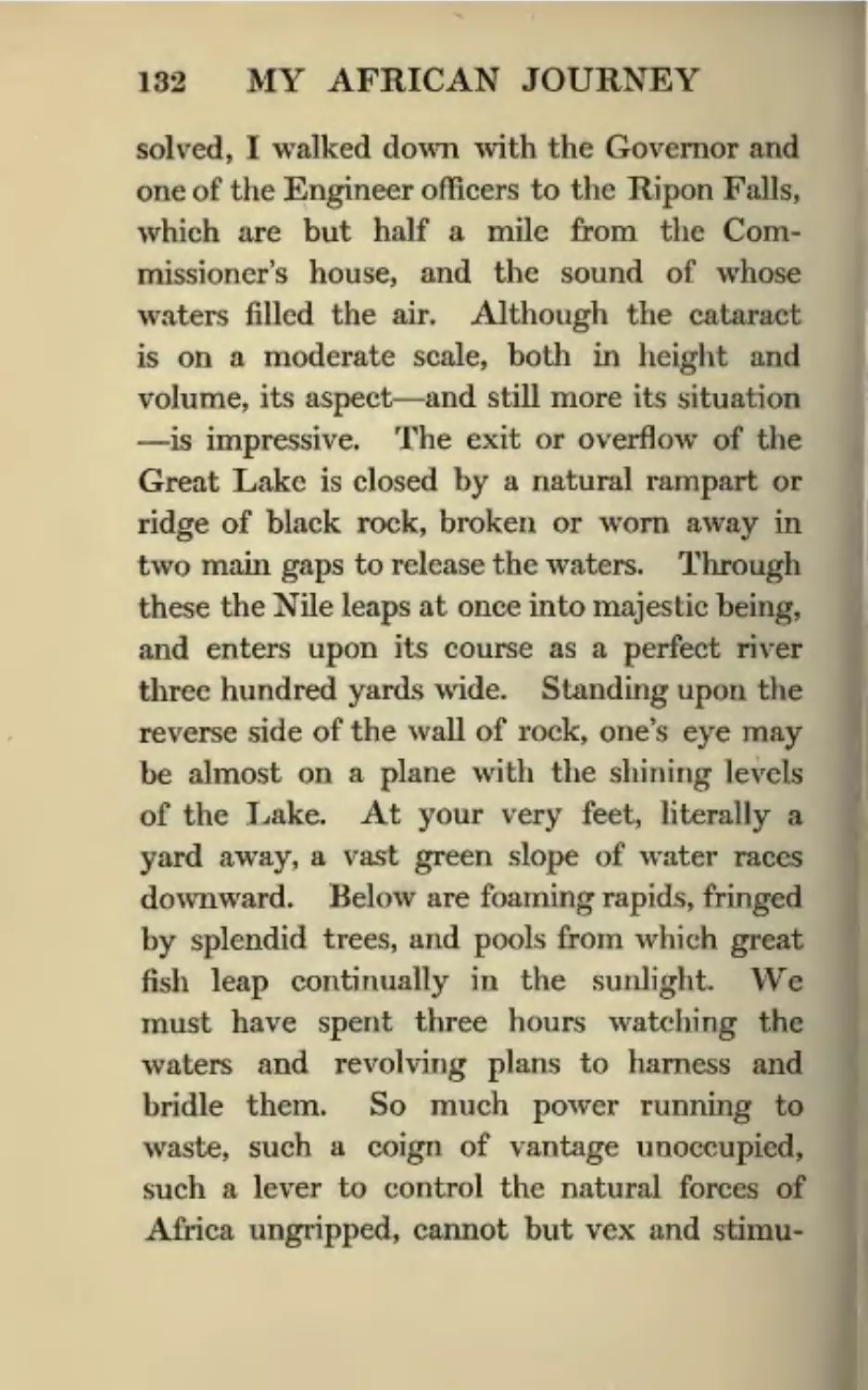


























































Text
MY AFRICAN JOURNEY
I
My
African Journey
BY
THE RIGHT HON.
WINSTON SPENCER CHURCHILL,
AXTTHOR OF
*«THE RIVER WAR,"
*'
«•
«'
M.P.
TUE STORY OF THE MALAKAND FOLD FORCE,"
LONDON TO LADYSMITH,"
SAVROLA,"
'*
IAN HAMILTON'S MARCH,"
"life OF LORD RANDOLPH CHURCHILL "
WITH SIXTY-ONE ILLUSTRATIONS FROM PHOTOGRAPHS BY
THE AUTHOR AND LIEUTENANT-COLONEL GORDON
WILSON,
TORONTO
WILLIAM BRIGGS
1909
Richard Clay & Sons, Limited,
bread street hill, e.c., and
eUNGAY, SUFFOLK,
I
PREFACE
In so
far as the collection of information is
concerned, the advantages of travel
be over-stated.
so
many
country,
often
So much has been written,
facts are
even
may
upon record about every
most
the
remote,
that
a
judicious and persevering study of existing
materials
fill
would no doubt enable a reader to
himself with knowledge almost to repletion
without leaving
his chair.
But
tion of opinion, for the stirring
for the forma-
and enlivenment
of thought, and for the discernment of colour
and proportion, the
of travel
on
gifts
of travel, especially
foot, are priceless.
It
was with
the design and in the hope of securing such
prizes, that I
undertook last year the pilgrimage
of which these pages give account.
tell
whether
I
have
succeeded
in
I
cannot
winning
PREFACE
vi
them
;
and
still less
transferable.
a modest eye.
long hot
whether,
I therefore
won, they are
view these letters with
They were
Uganda
if
written mainly in
afternoons, after the
march was done.
The
larger
day's
has
portion
already appeared in the Strand Magazine, and
what has been added was necessary to complete
the story.
They
fll
present a continuous narrative of the
lighter side of
ful
what was to me a very
and inspiring journey
that they
may
vivify
and
;
and
it is
delight-
in the
hope
fortify the interest of
the British people in the wonderful estates
they have recently acquired in the
eastern quarter of Africa, that I offer
north-
them
in
a connected form to the indulgence of the
public.
Winston Spencer Churchill
London, 19O8.
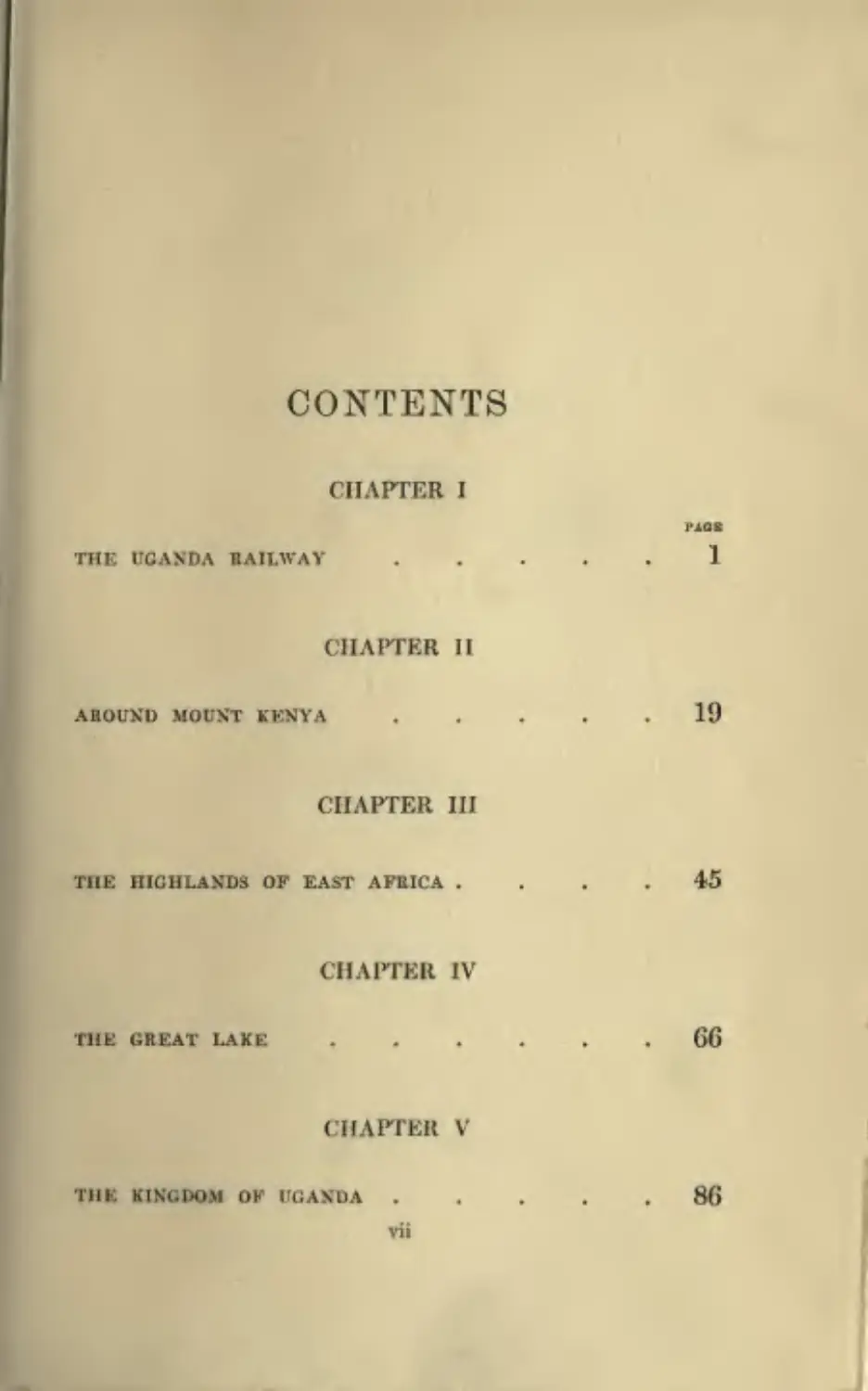
CONTENTS
CHAPTER
THE UGANDA RAILWAY
I
.....
CHAPTER
PAoa
1
II
AROUND MOUNT KENYA
19
CHAFfER
THE HIGHLANDS OF EAST AFRICA
CHAPTER
III
....
45
IV
THE GREAT LAKE
66
CHAPTER V
THE KINGDOM OF UGANDA
86
vii
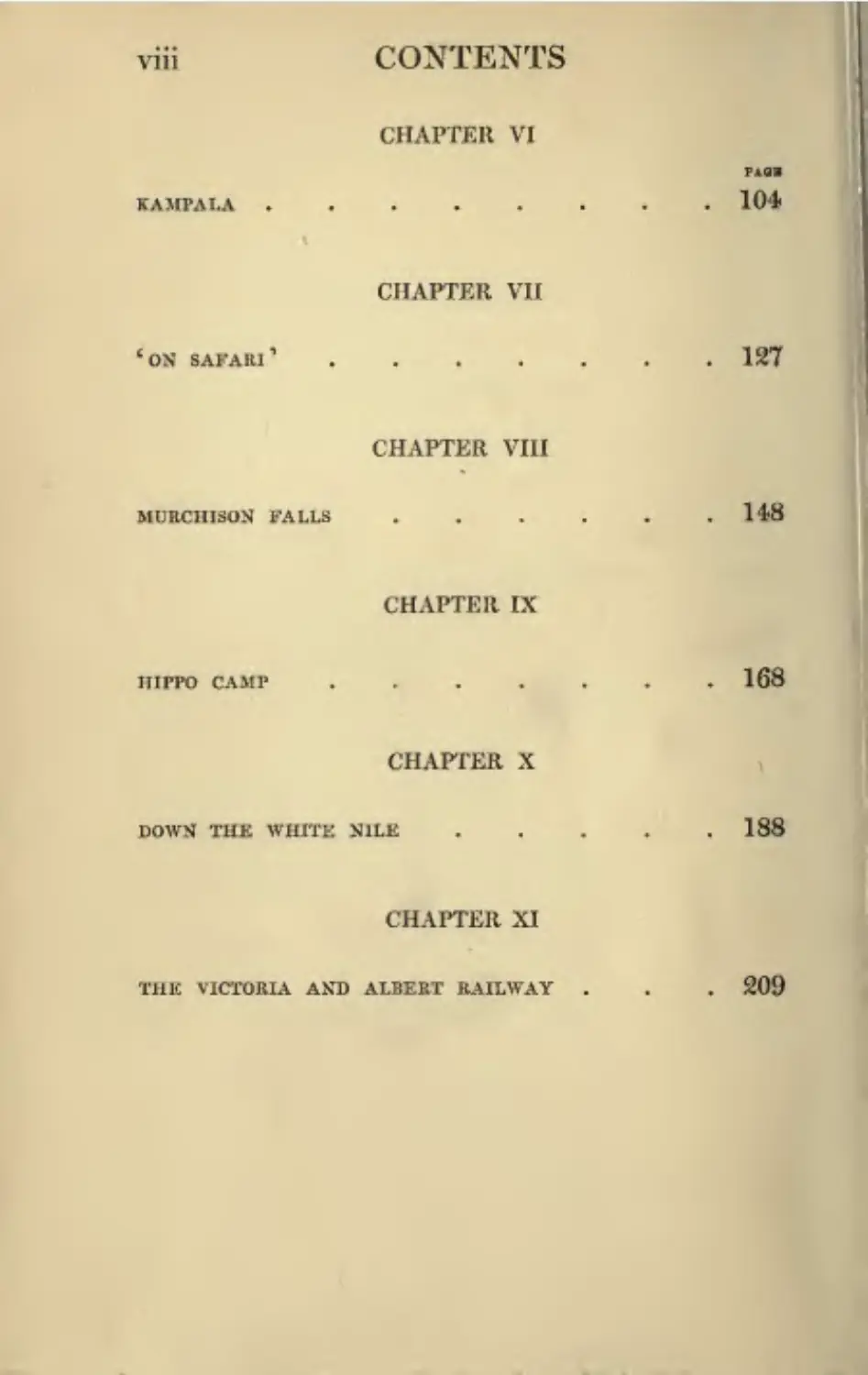
CONTENTS
viii
CHAPTER
VI
PAOB
104
KAMPALA
CHAPTER
VII
'on safari'
.
CHAPTER
127
VIII
148
MURCHISON FALLS
CHAPTER IX
HIPPO CAMP
.
.
.
.
.
.
.
168
CHAPTER X
DOWN THE WHITE NILE
188
CHAPTER XI
THE VICTORIA AND ALBERT RAILWAY
.
.
.
209
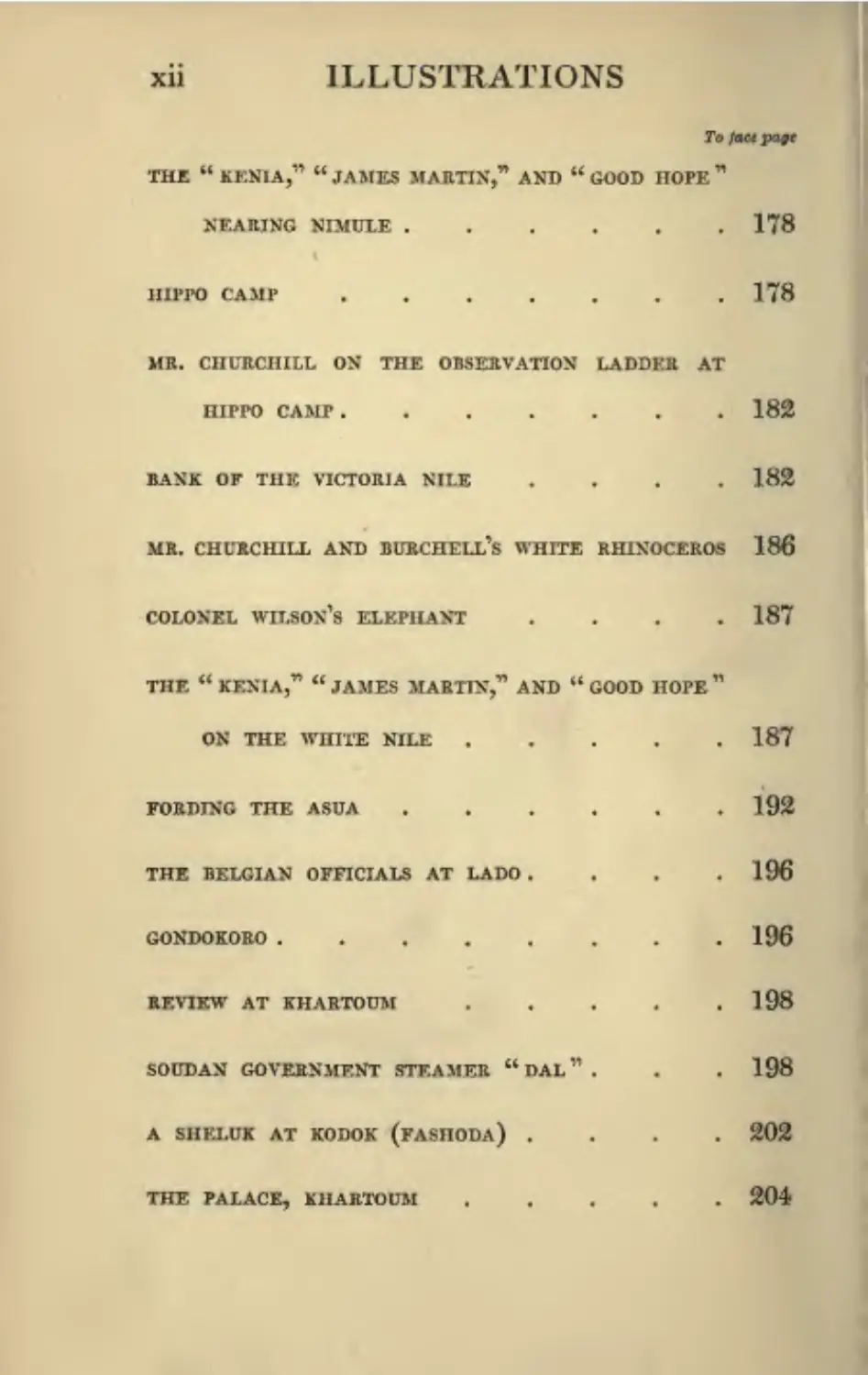
ILLUSTRATIONS
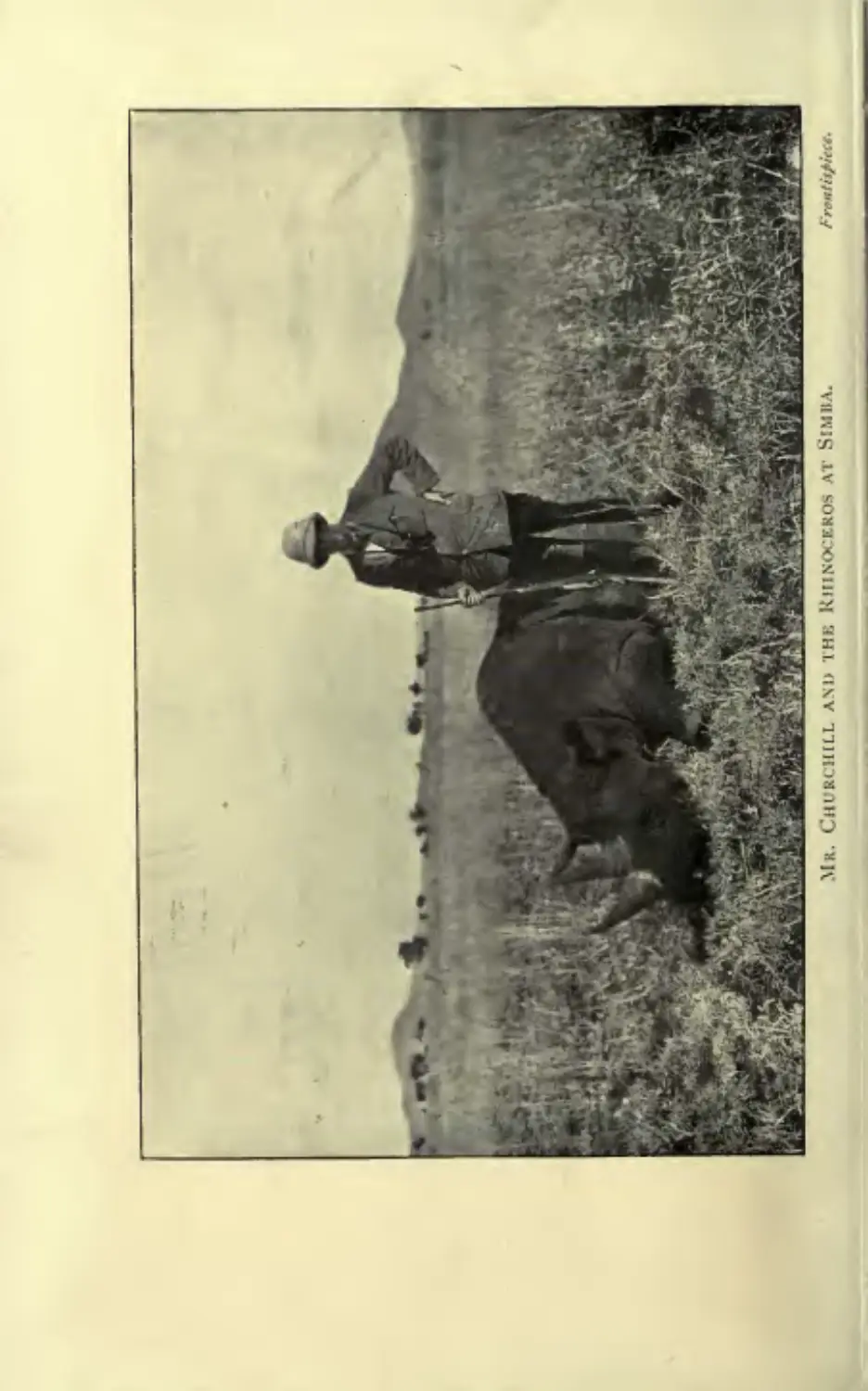
MR. CHURCHILL
AND THE RHINOCEROS AT SIMBA
Frontispiece
ON THE COW-CATCHER
.....
....
THE RHINOCEROS AT SIMBA
GUARD OF HONOUR,
KINg'*S
7
AFRICAN RIFLES
.
SO
BREAKDOWN ON THE WAY TO THIKA CAMP
SHOOTING PARTY AT THIKA CAMP
.
THE BANDA AT THIKA CAMP
.
COLONEL Wilson's lion
"durbar'*''
at kiambu
.
.
....
....
30
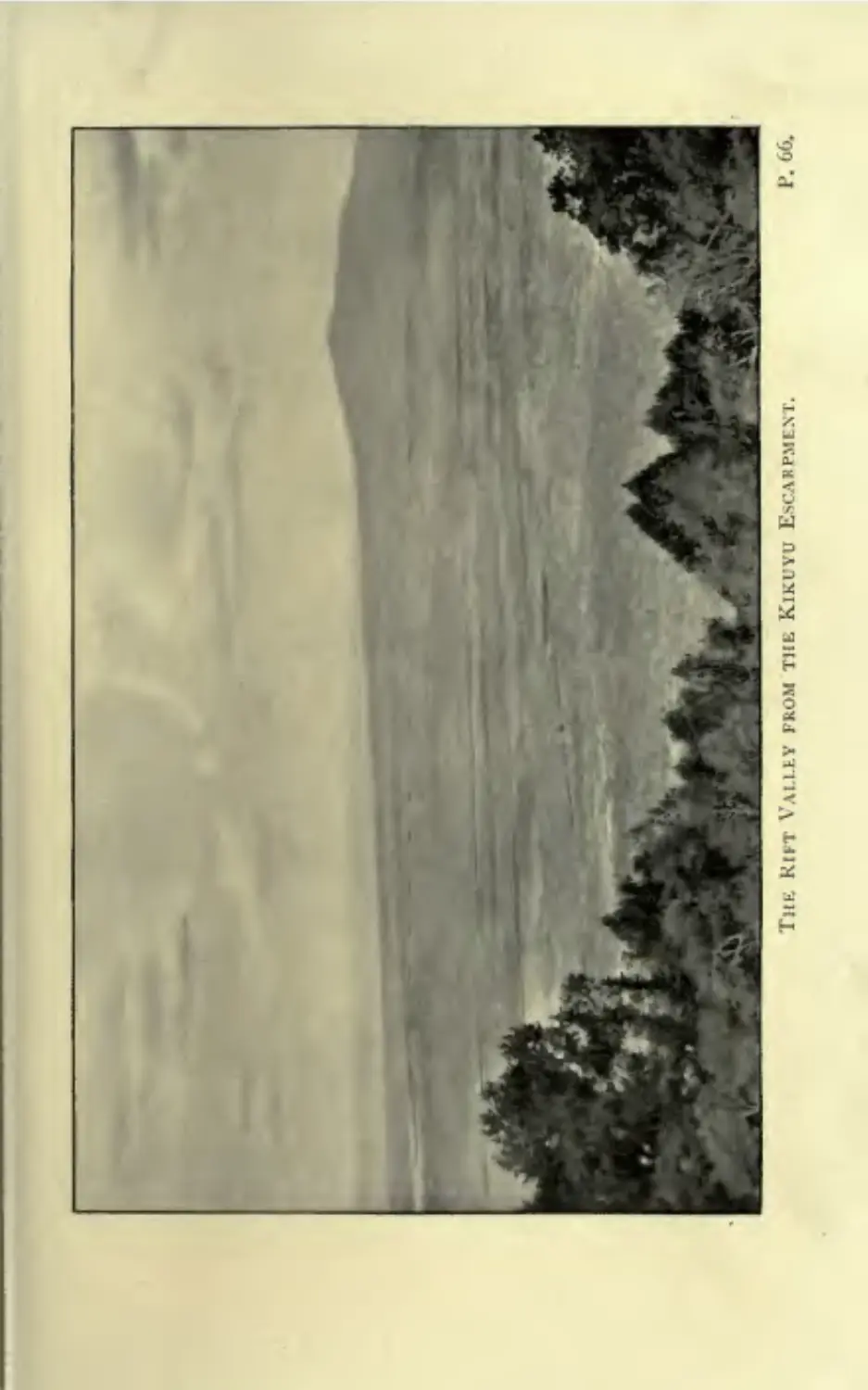
THE RIFT VALLEY FROM THE KIKUYU ESCARPMENT
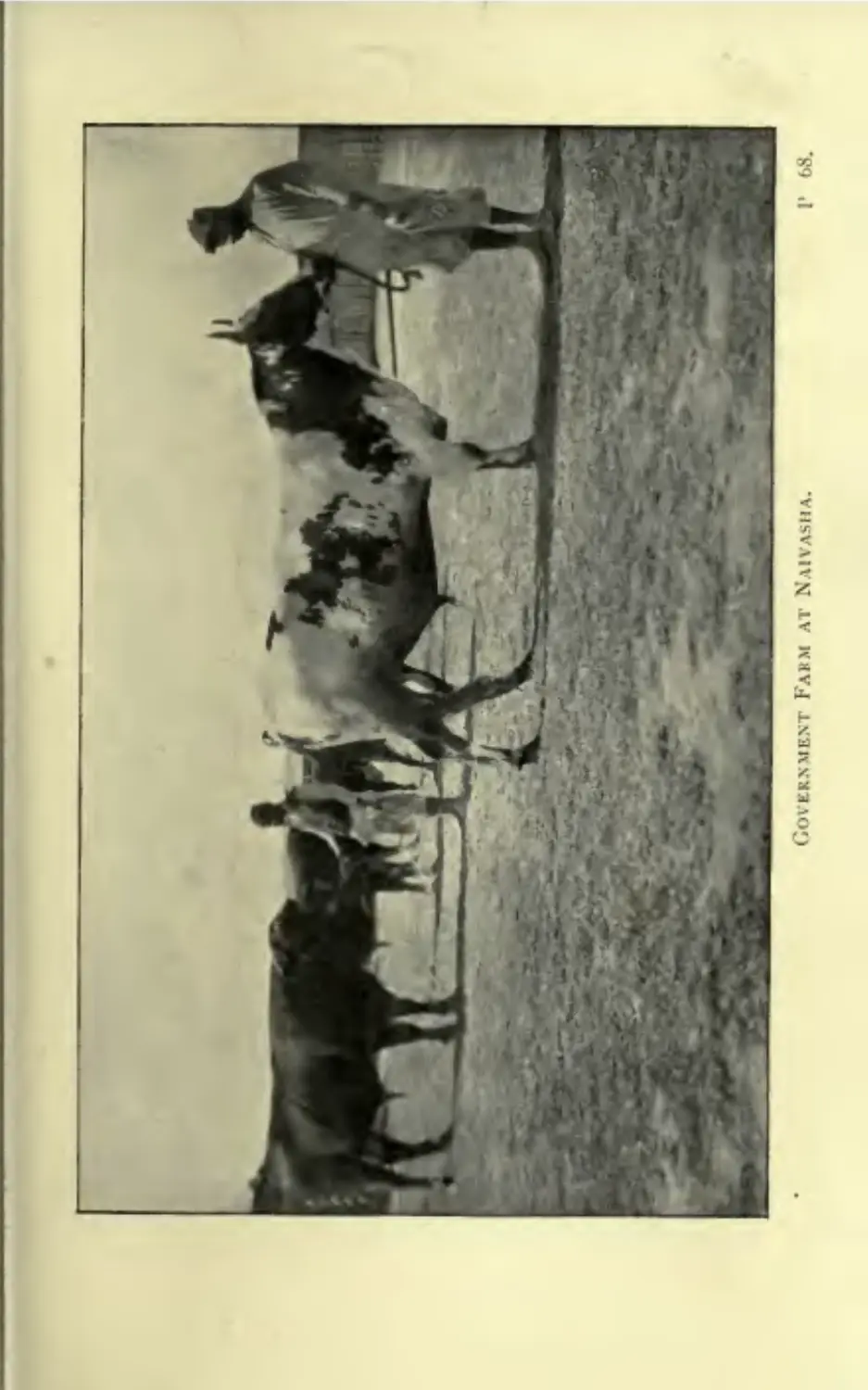
GOVERNMENT STOCK FARM AT NAIVASHA
68
THE
71
LAIBON'^S
WIVES
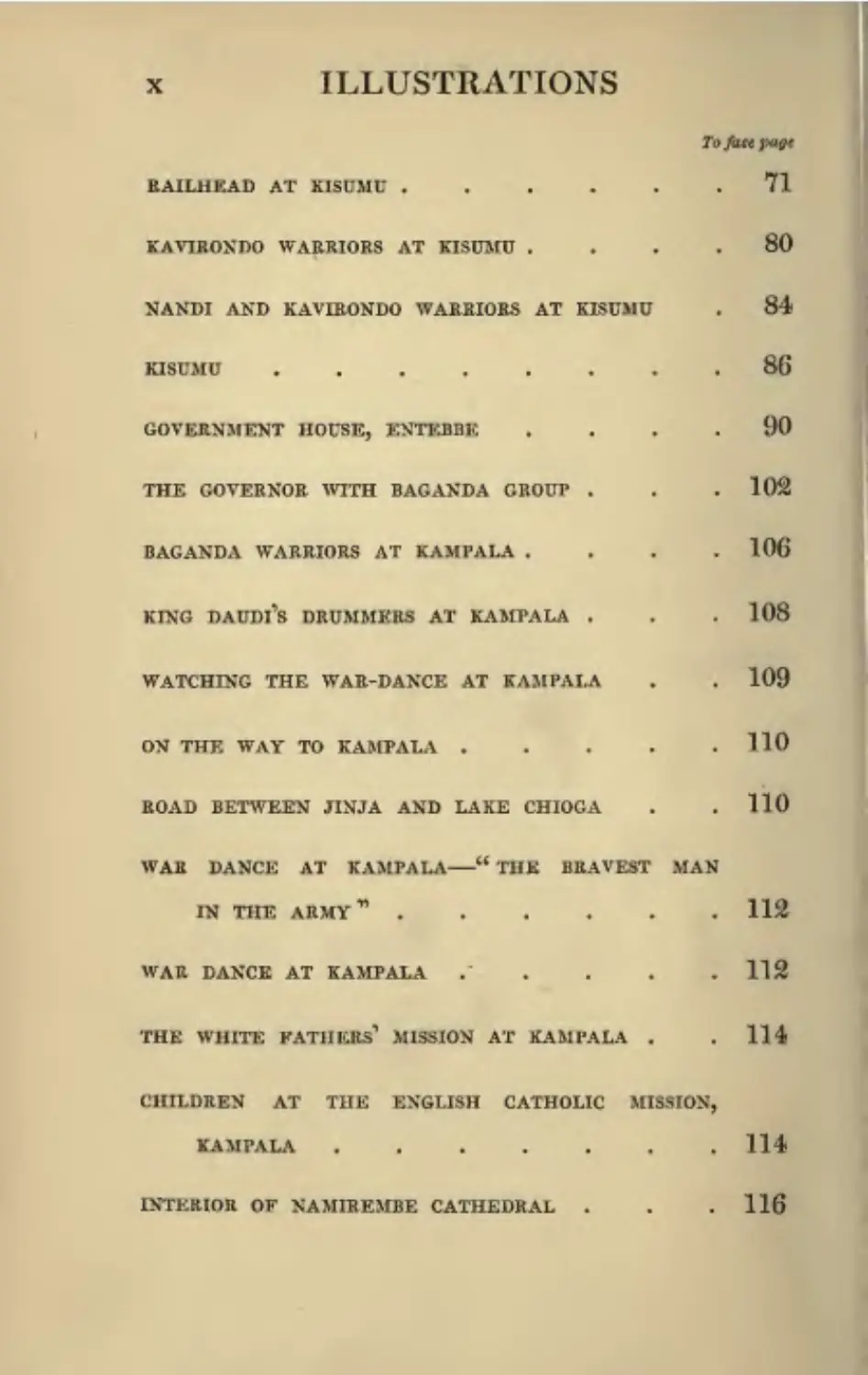
ILLUSTRATIONS
To face page
RAILHEAD AT KISUMU
71
KAVIRONDO WARRIORS AT KISUMU
80
.
NANDI AND KAVIRONDO WARRIORS AT KISUMU
84
KISUMU
86
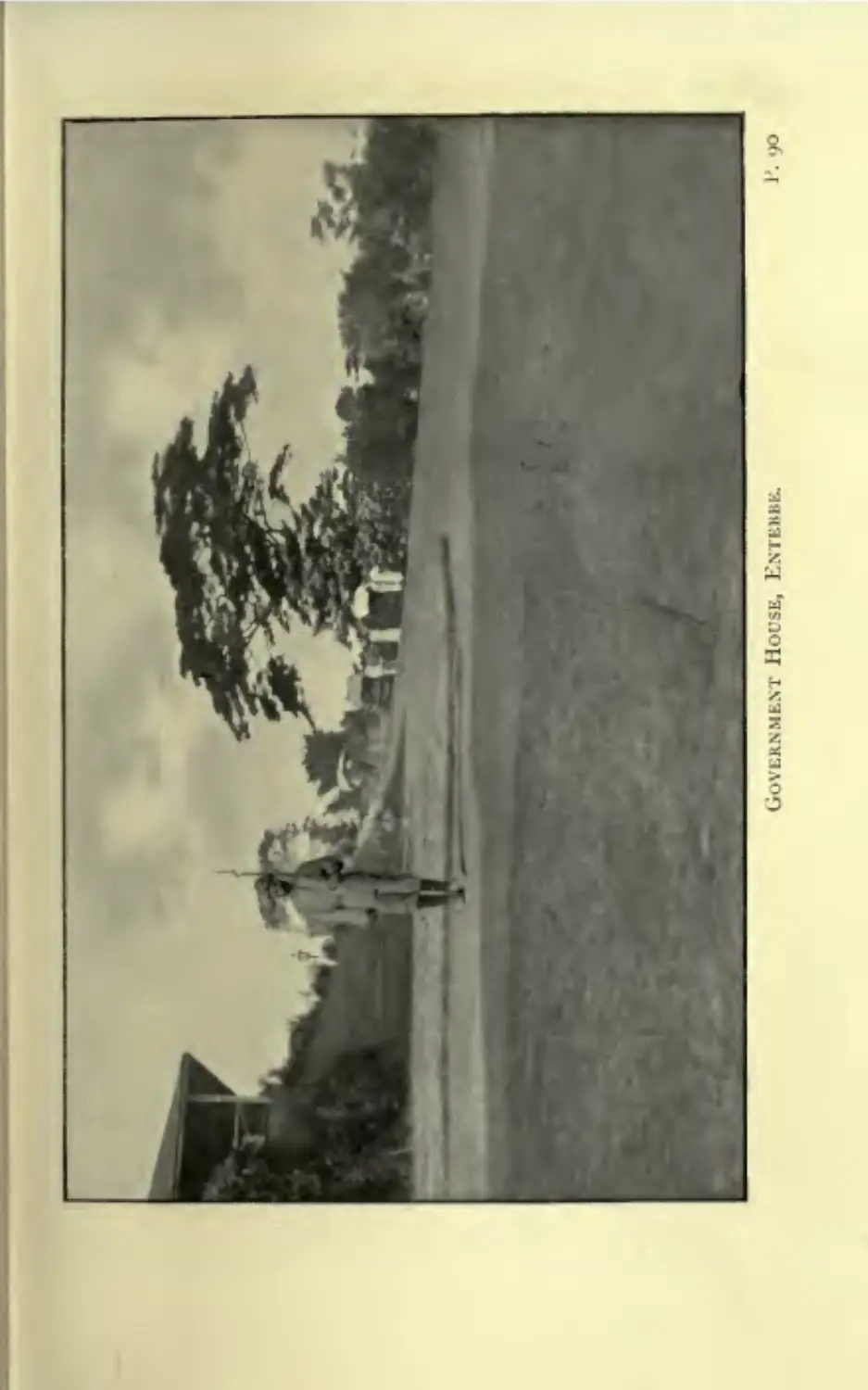
GOVERNMENT HOUSE, ENTEBBE
90
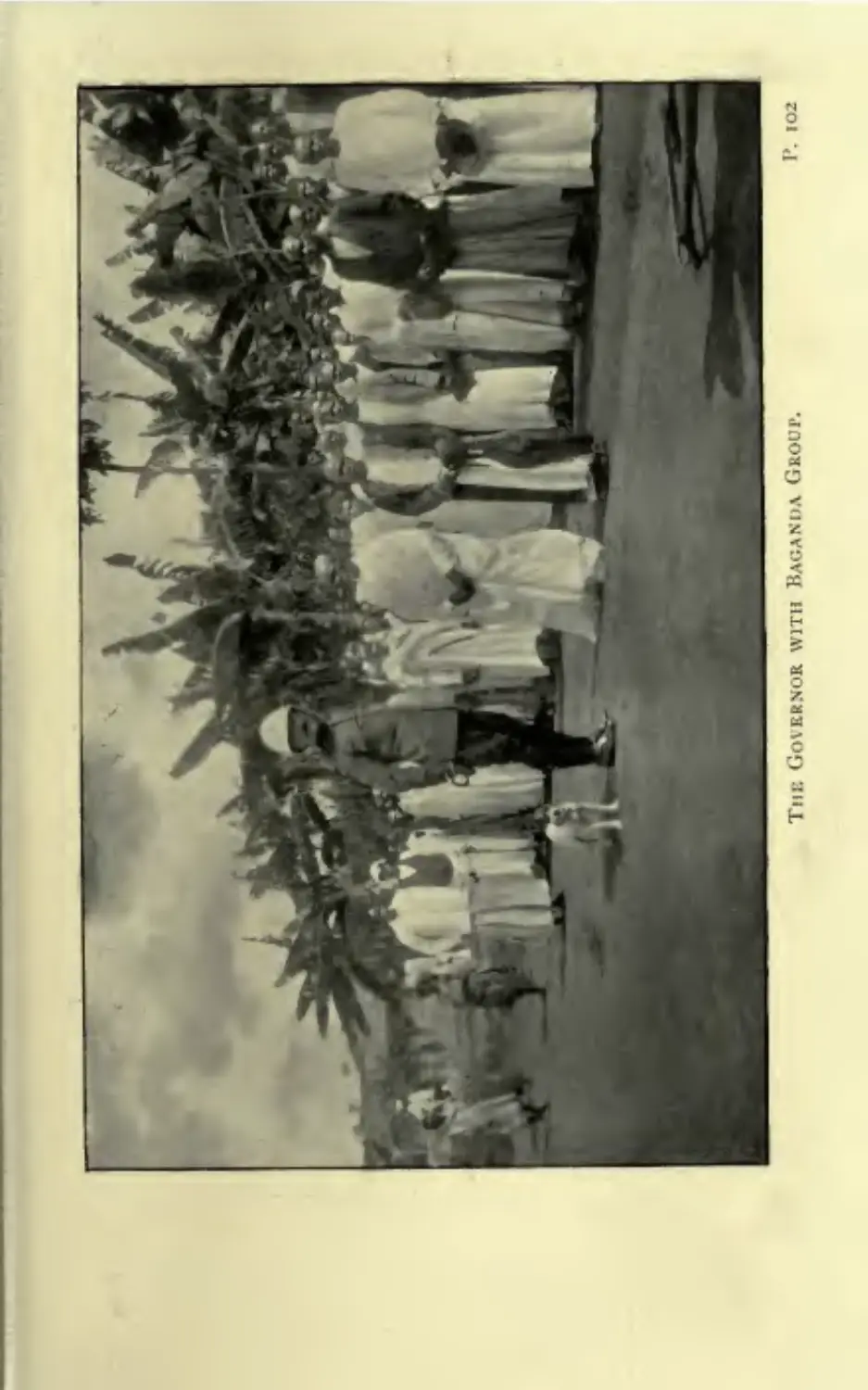
THE GOVERNOR WITH BAGANDA GROUP
102
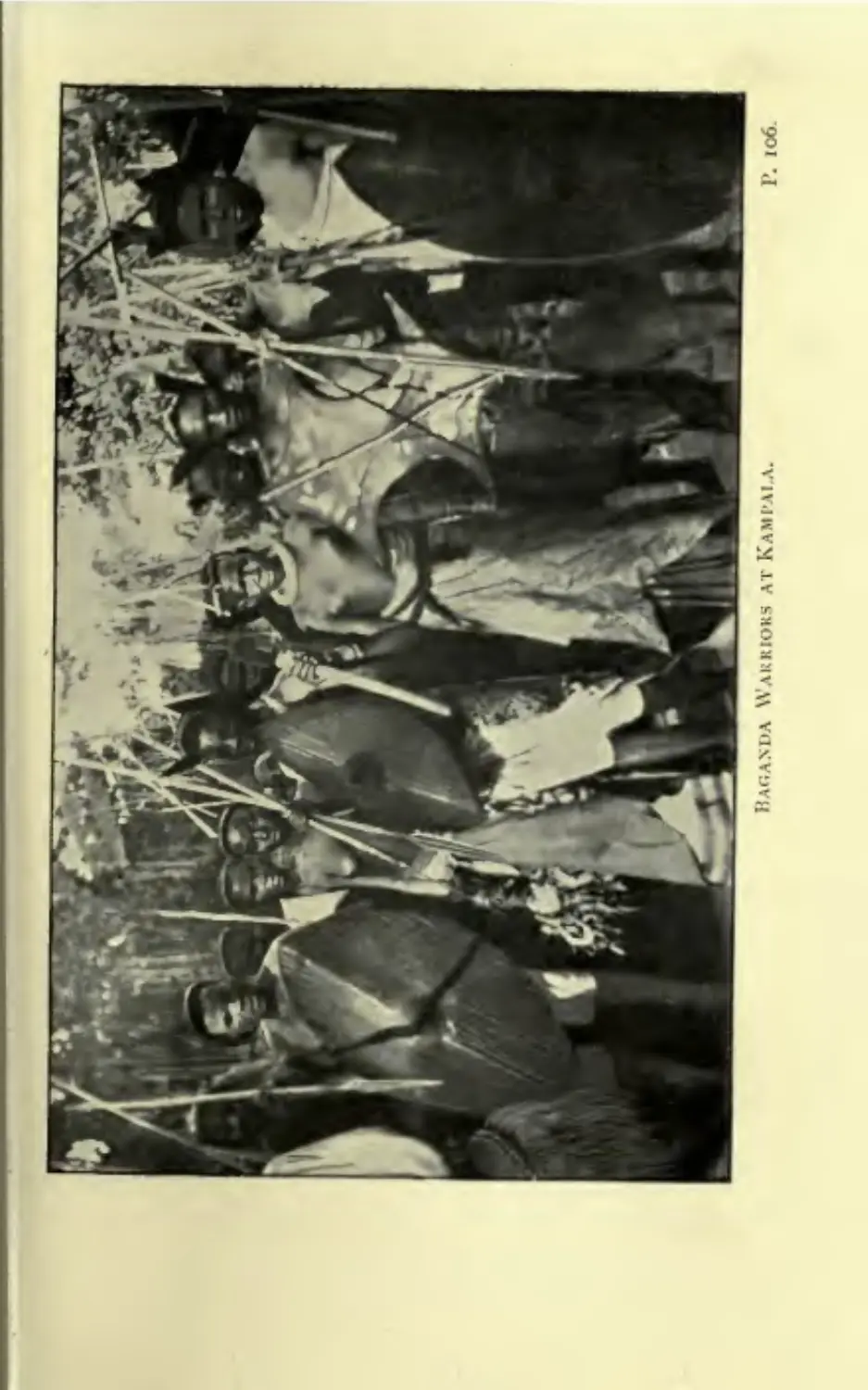
BAGANDA WARRIORS AT KAMPALA
106
.
KING DAUDl's DRUMMERS AT KAMPALA
108
WATCHING THE WAR-DANCE AT KAMPALA
109
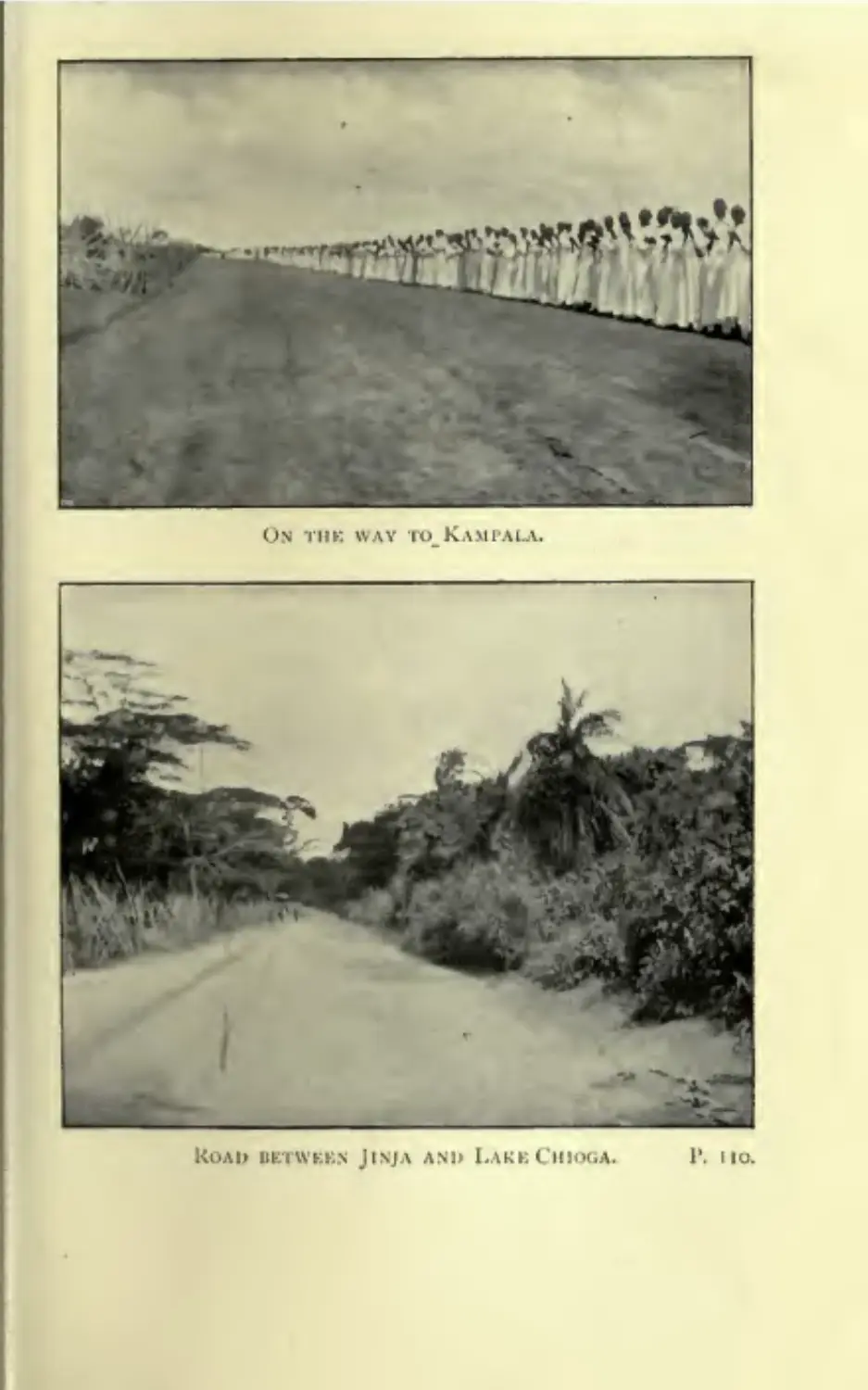
ON THE WAY TO KAMPALA
....
110
110
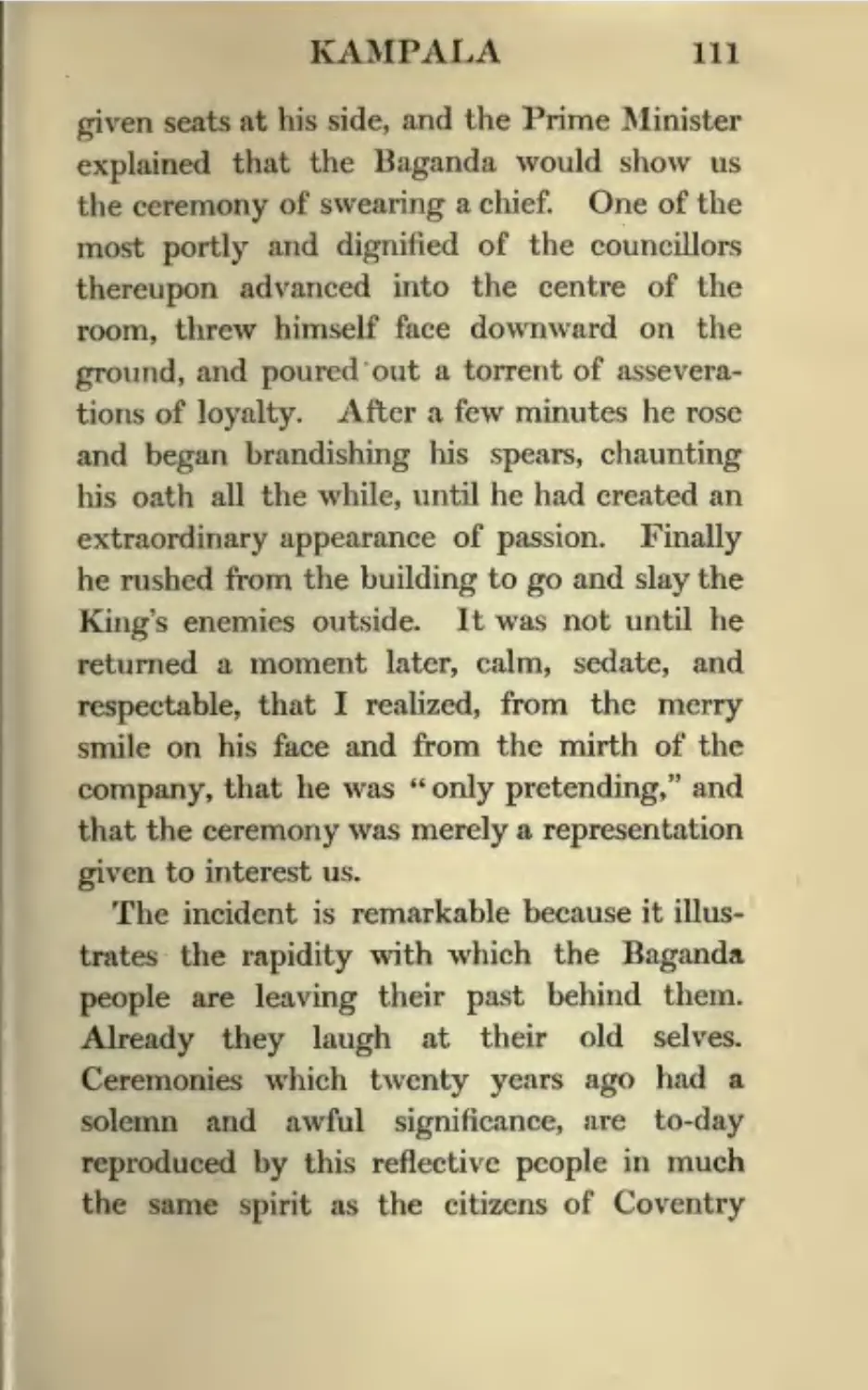
ROAD BETWEEN JINJA AND LAKE CHIOGA
WAR DANCE AT KAMPALA
IN
THE army"
" THE
BRAVEST
MAN
112
.
WAR DANCE AT KAMPALA
112
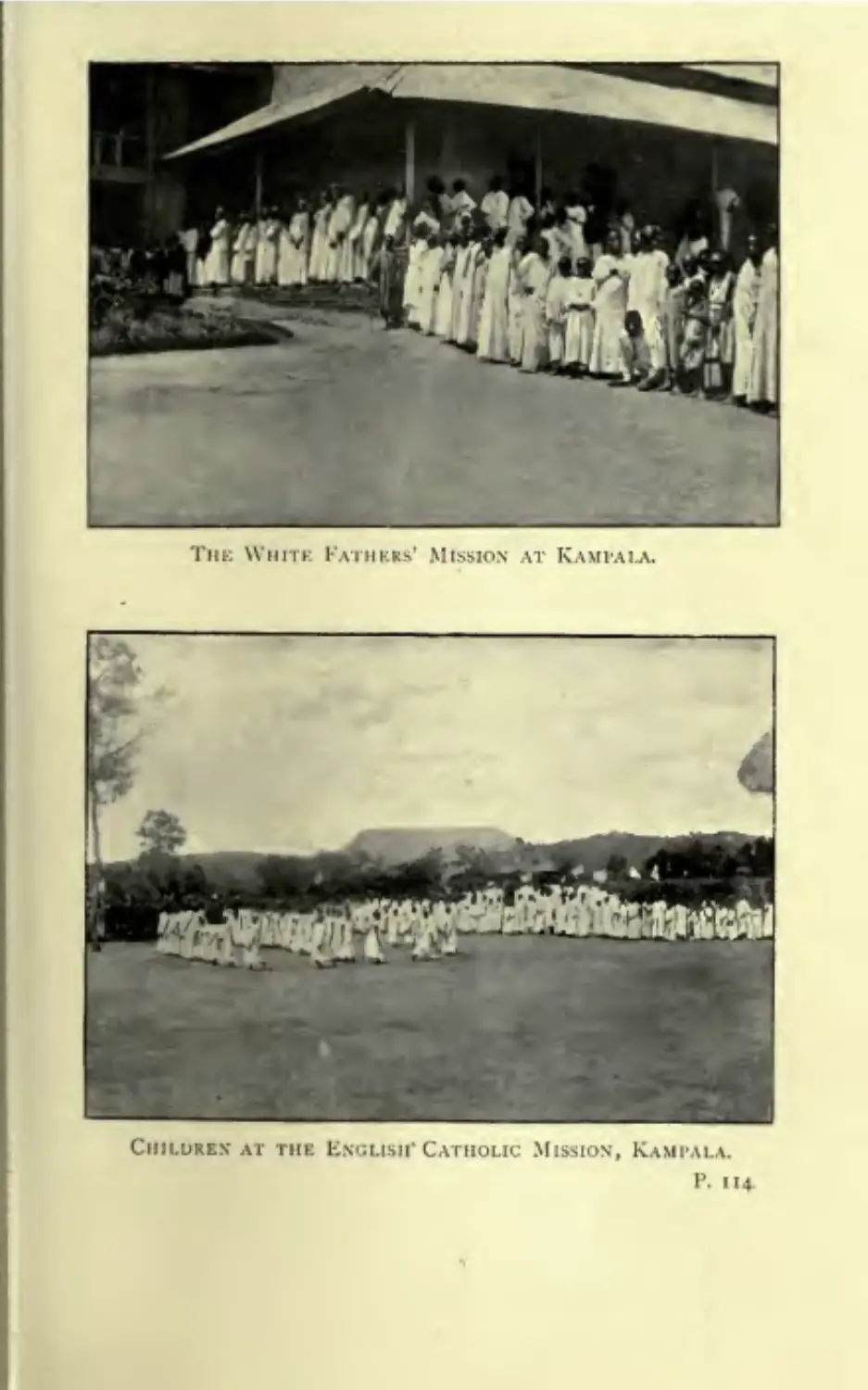
THE WHITE fathers' MISSION AT KAMPALA
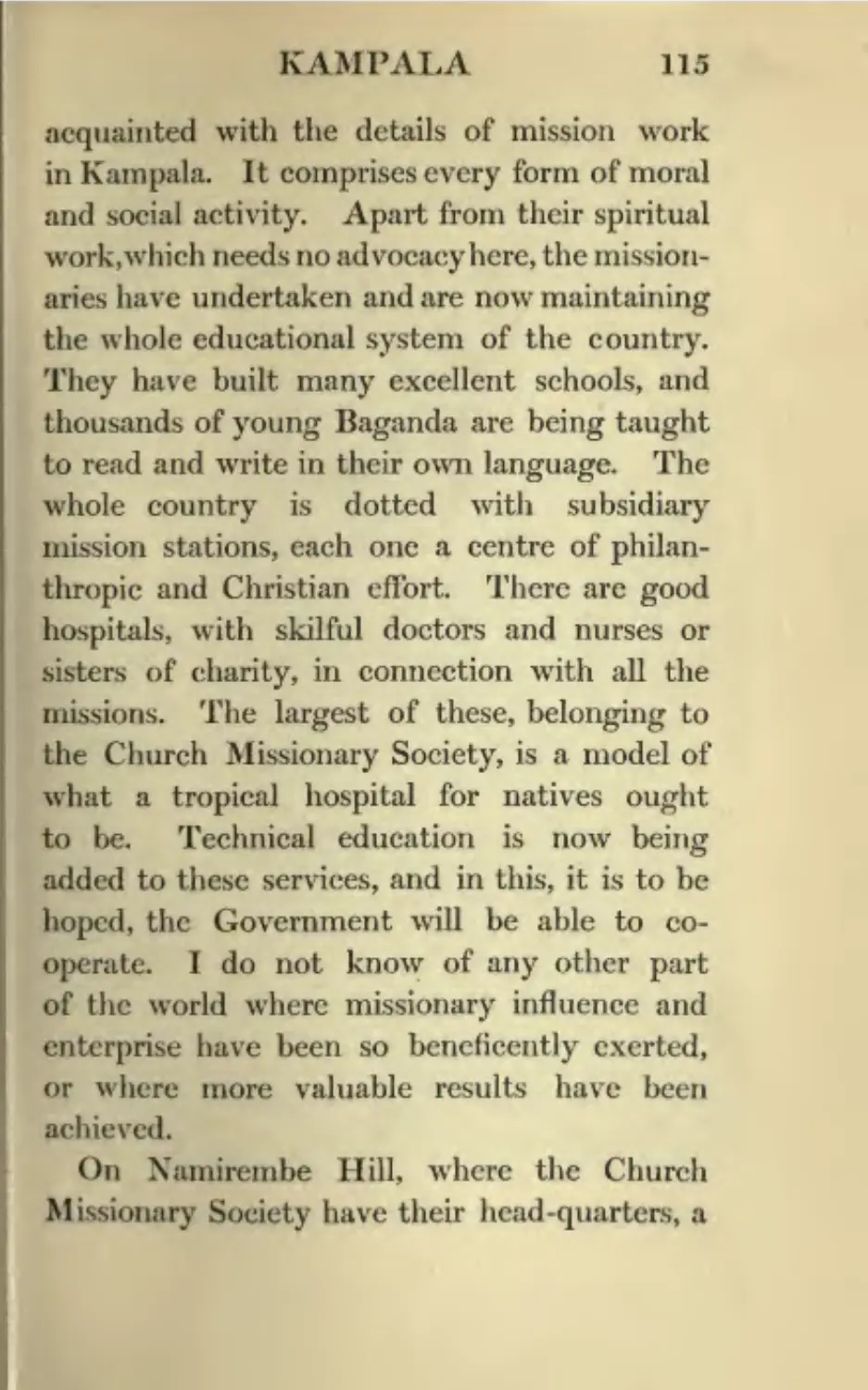
CHILDREN
AT
THE
ENGLISH
CATHOLIC
KAMPALA
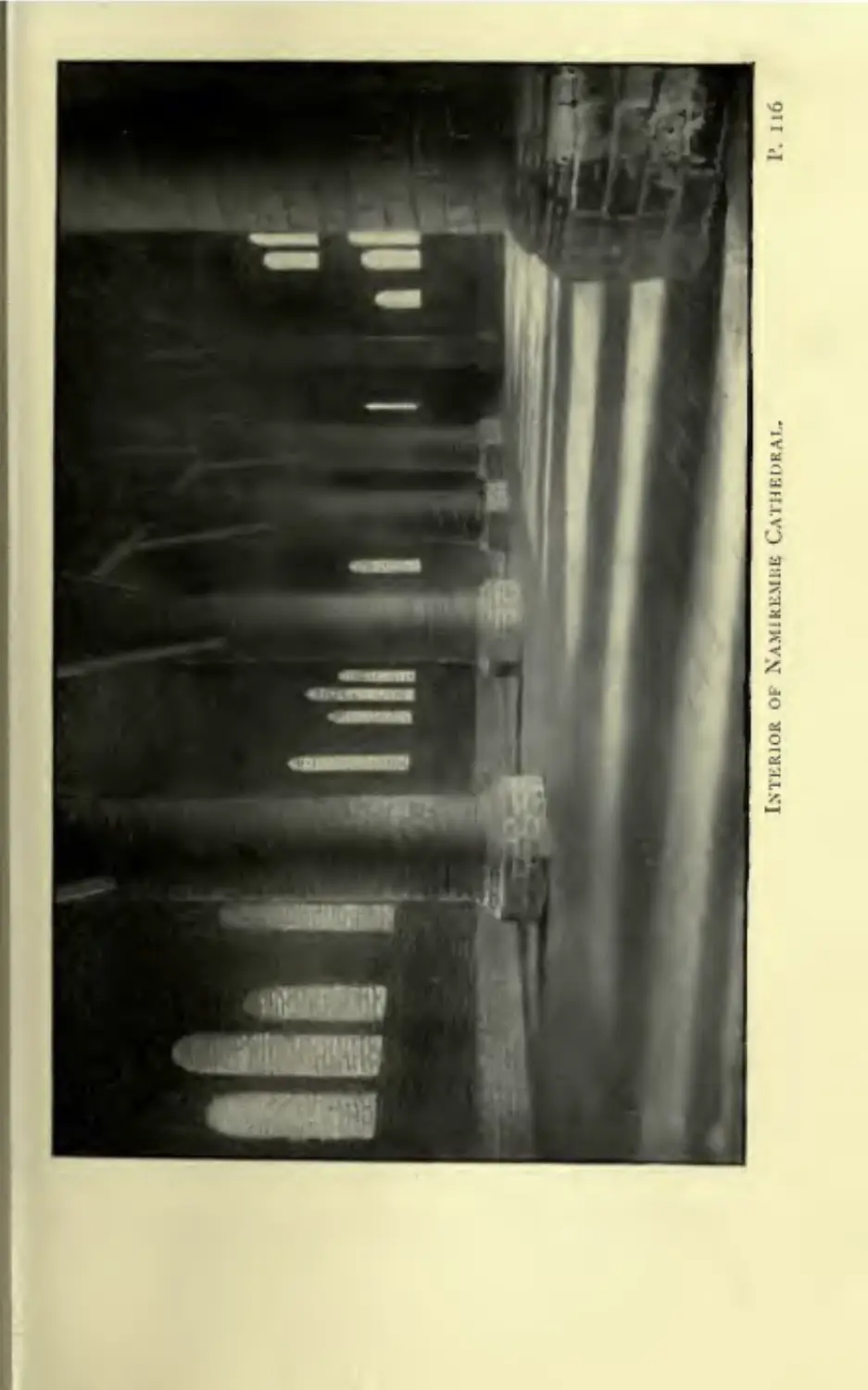
INTERIOR OF NAMIREMBE CATHEDRAL
.
114
MISSION
114
116
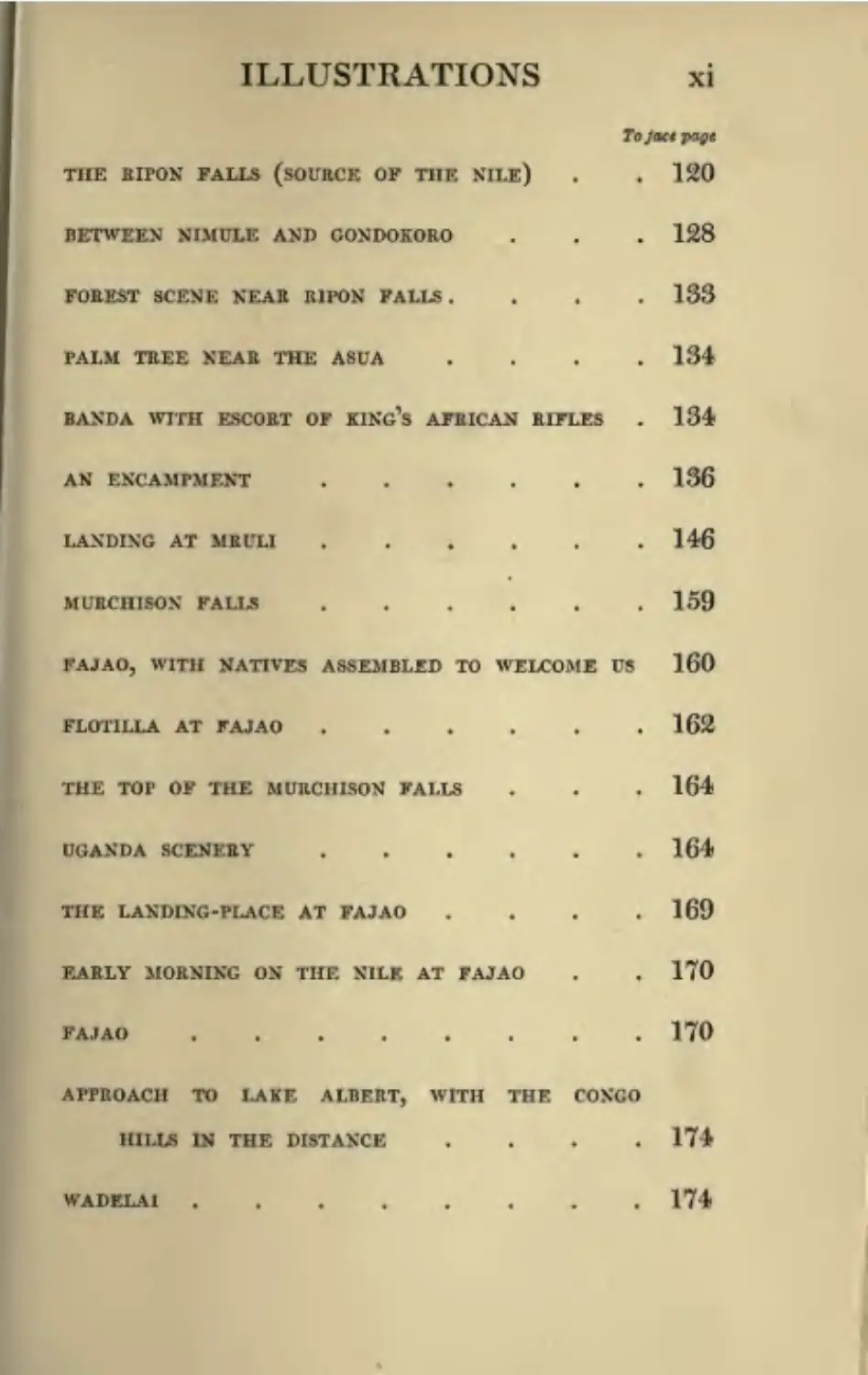
ILLUSTRATIONS
xi
Tojofit page
THE RIPON FALLS (sOURCE OF THE NILe)
.
.120
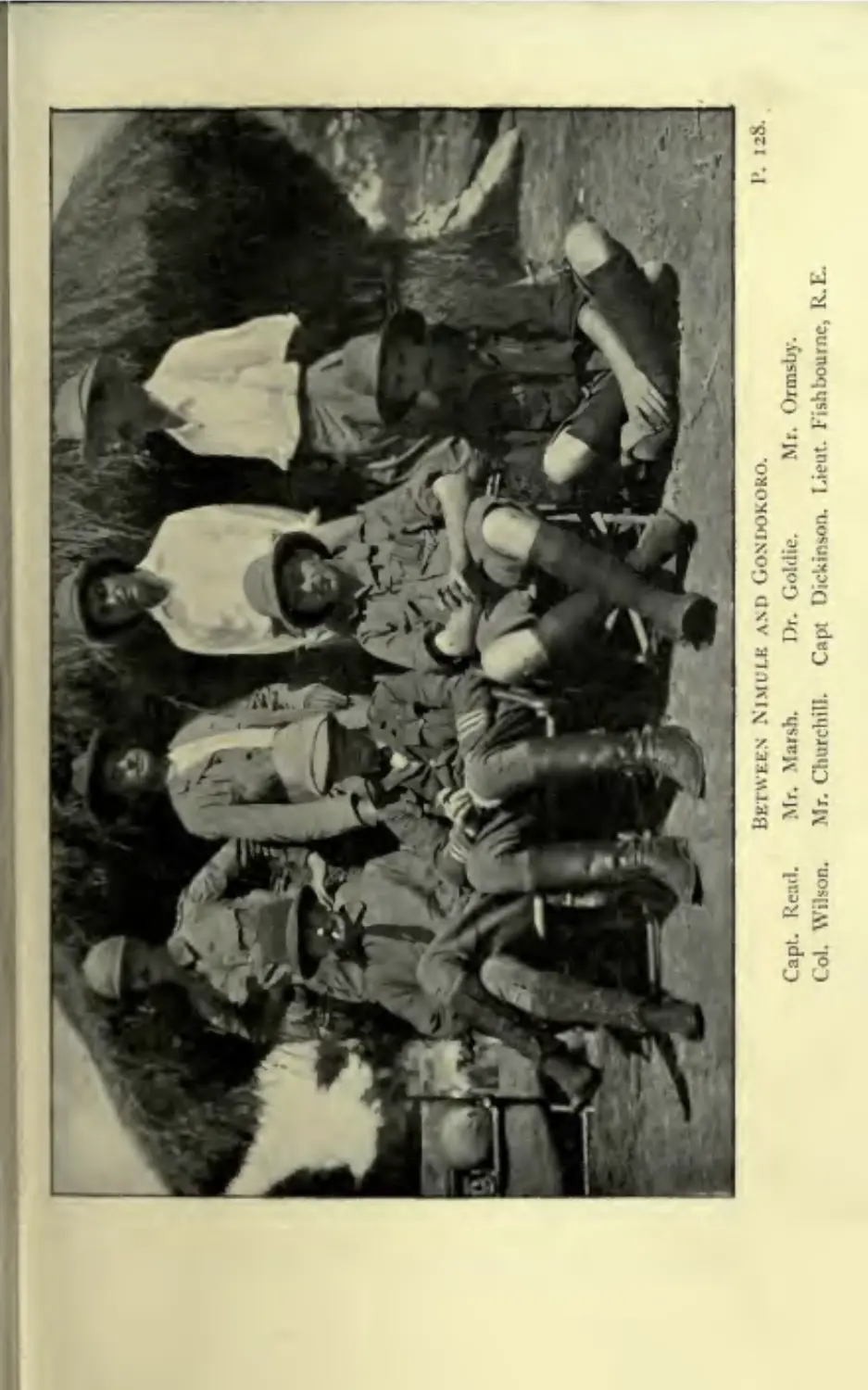
BETWEEN NIMULE AND GONDOKORO
.
.
.128
FOREST SCENE NEAR RIPON FALLS.
.
.
.133
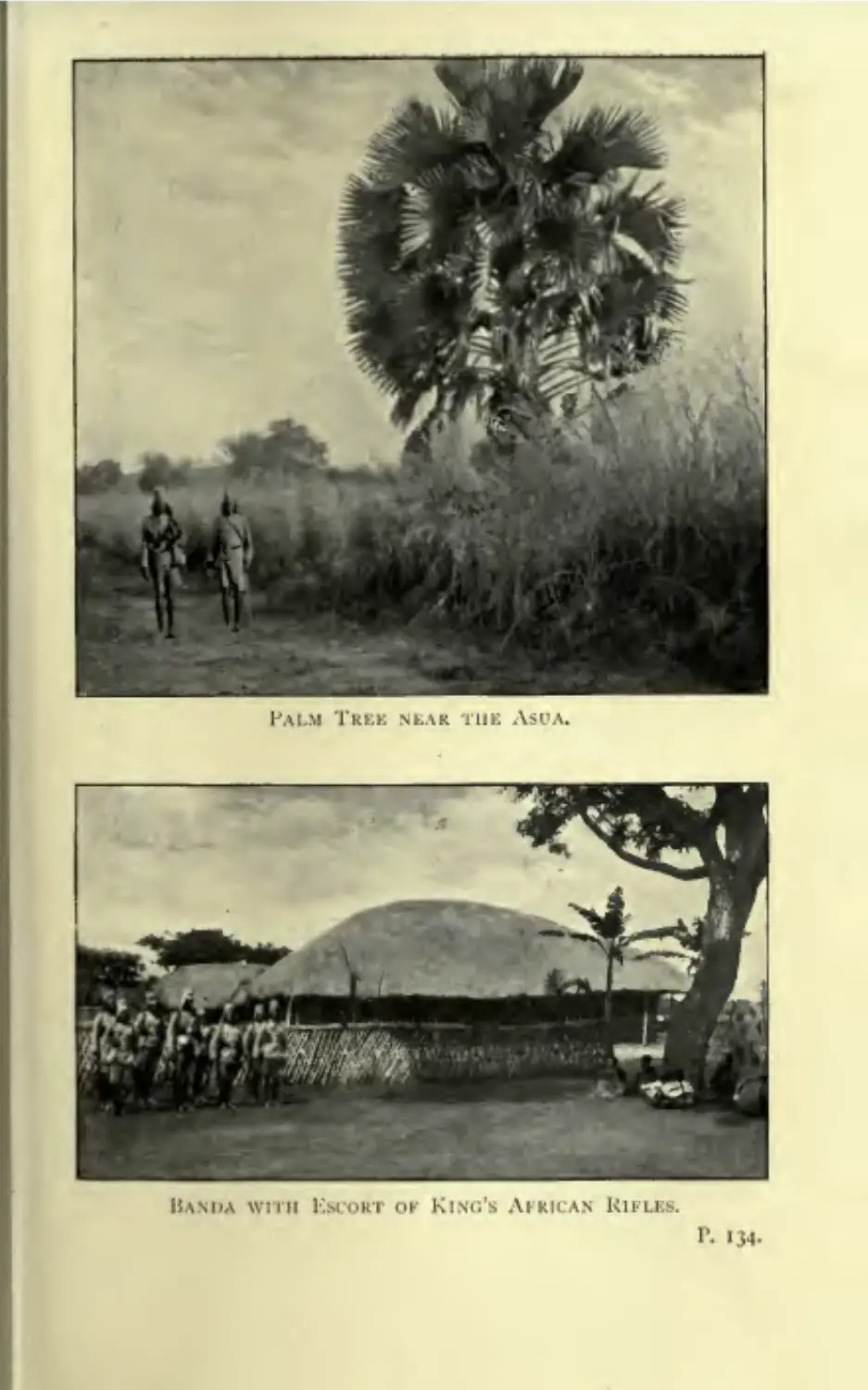
PALM TREE NEAR THE ASUA
.
.
.134
BAND A WITH ESCORT OF
.
KINg's
AFRICAN RIFLES
.
AN ENCAMPMENT
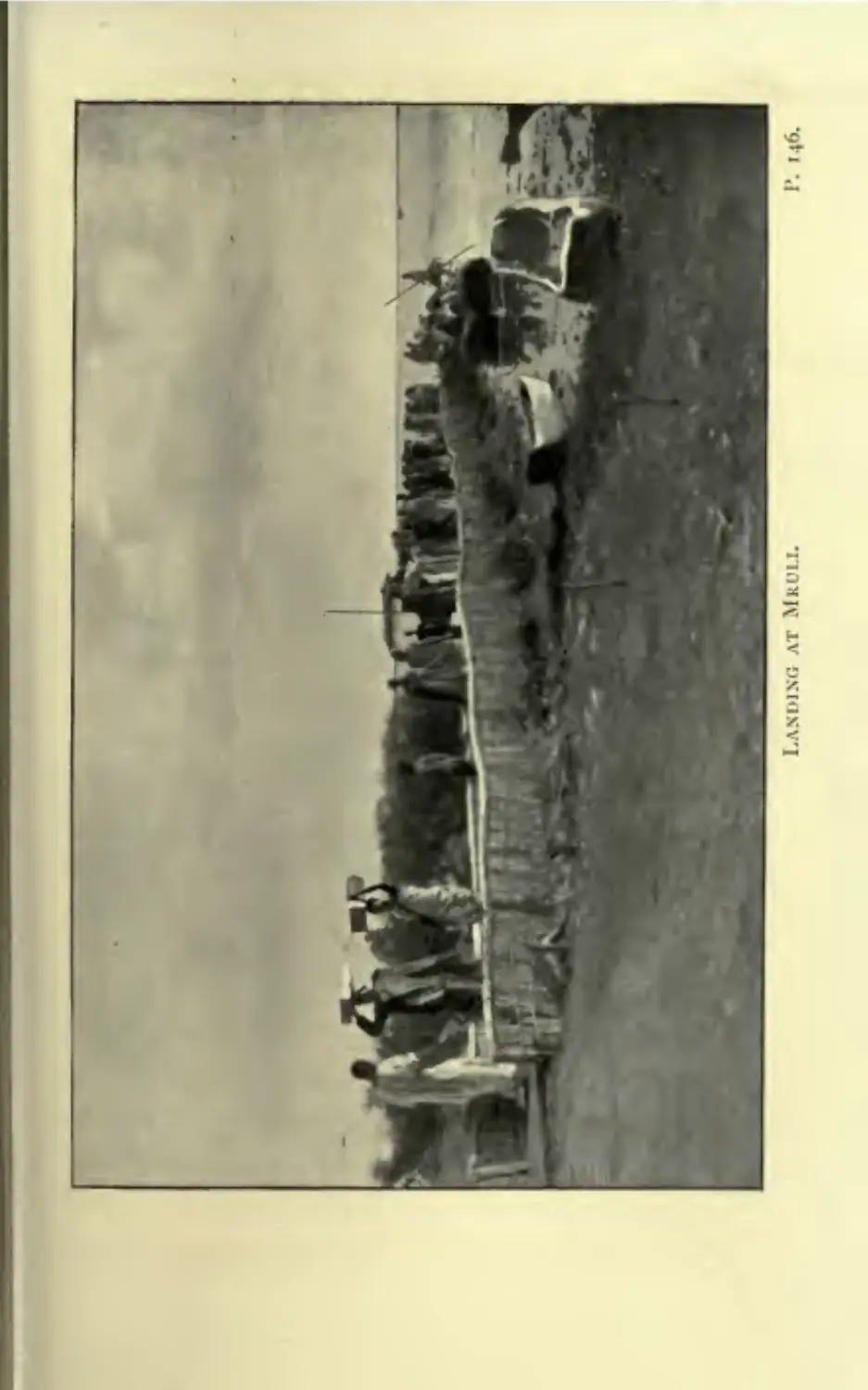
LANDING AT MRULI
134
136
.
.
.
.
.
.146
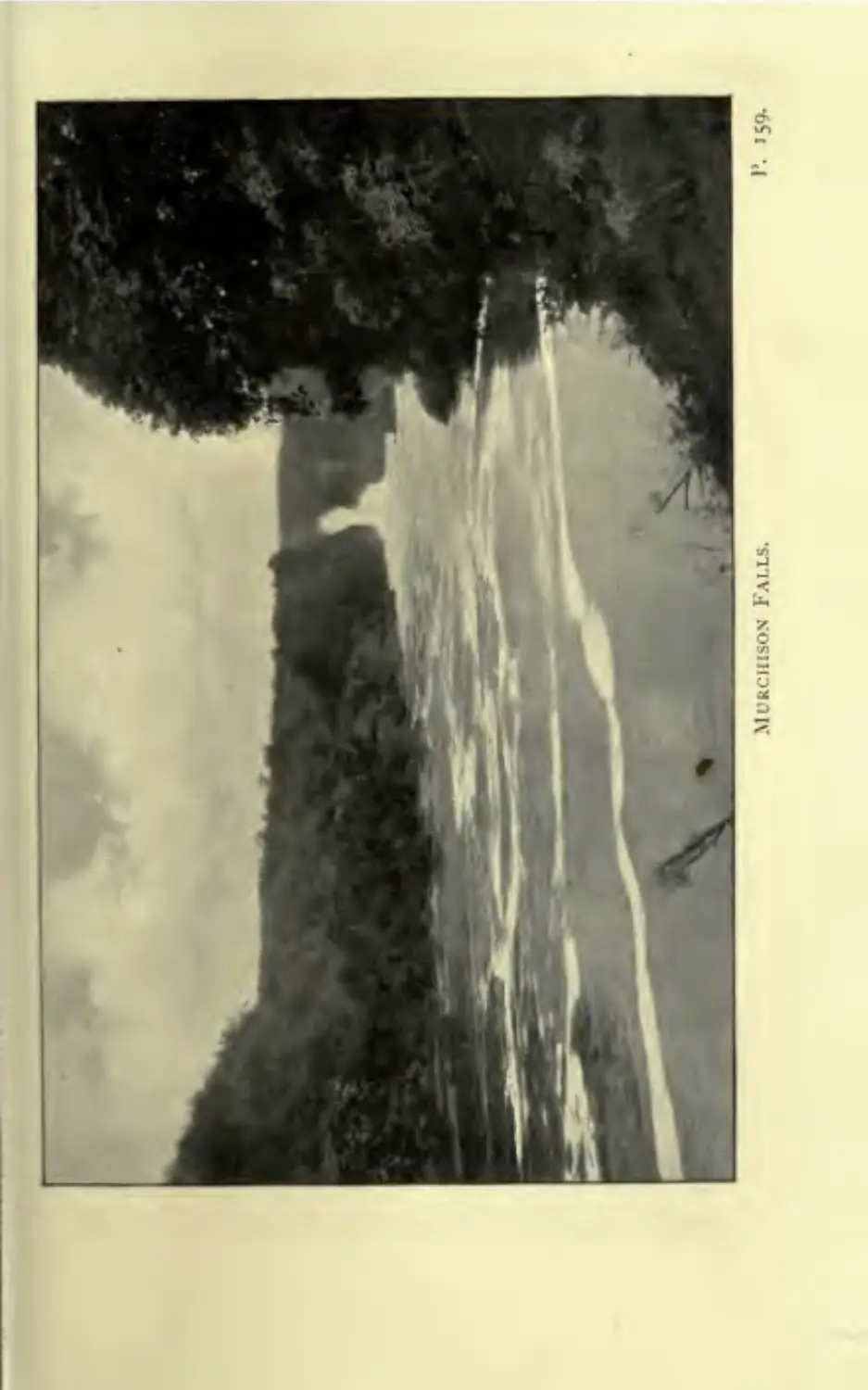
MURCHISON FALLS
159
FAJAO, WITH NATIVES ASSEMBLED TO WELCOME US
160
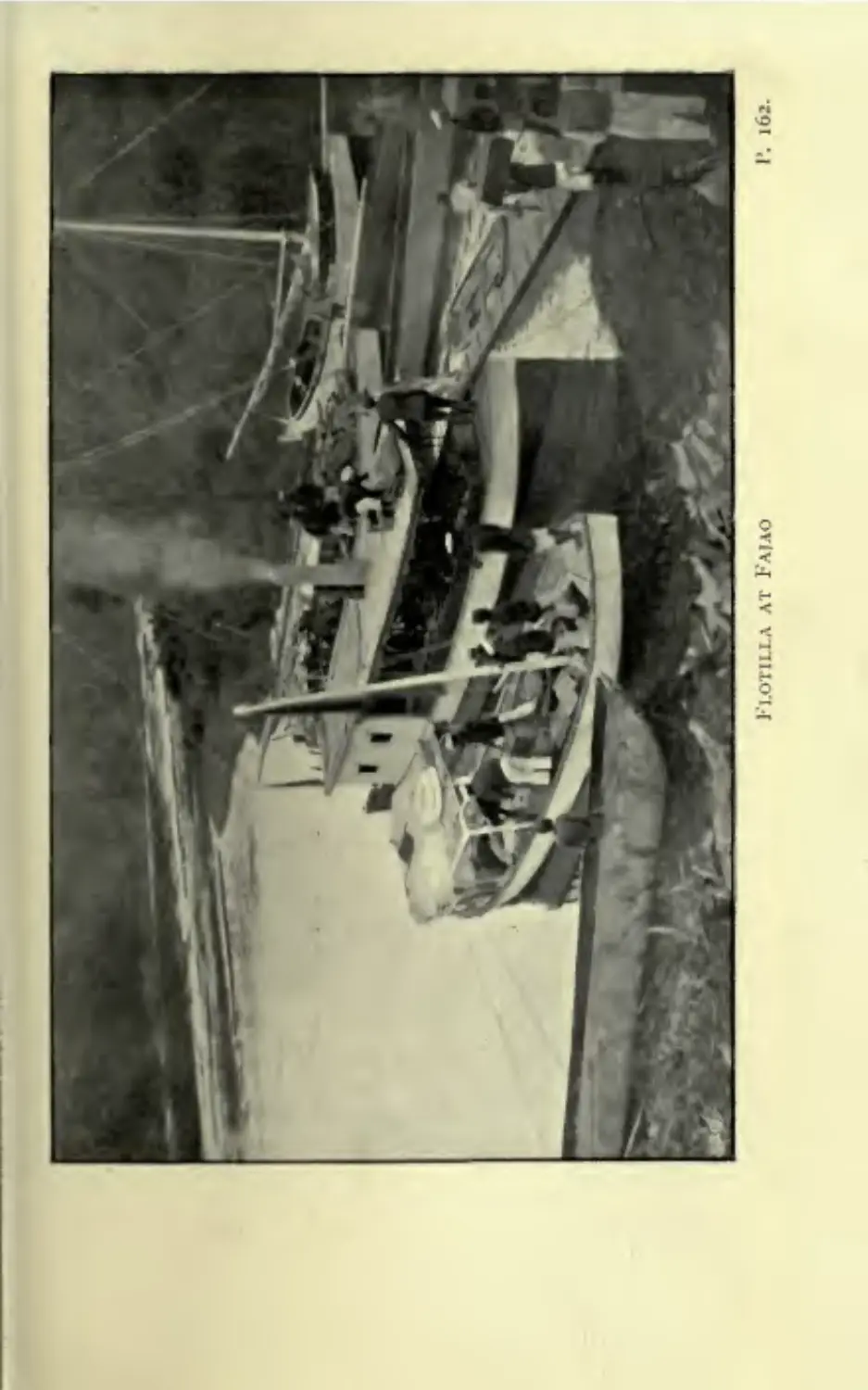
FLOTILLA AT FAJAO
162
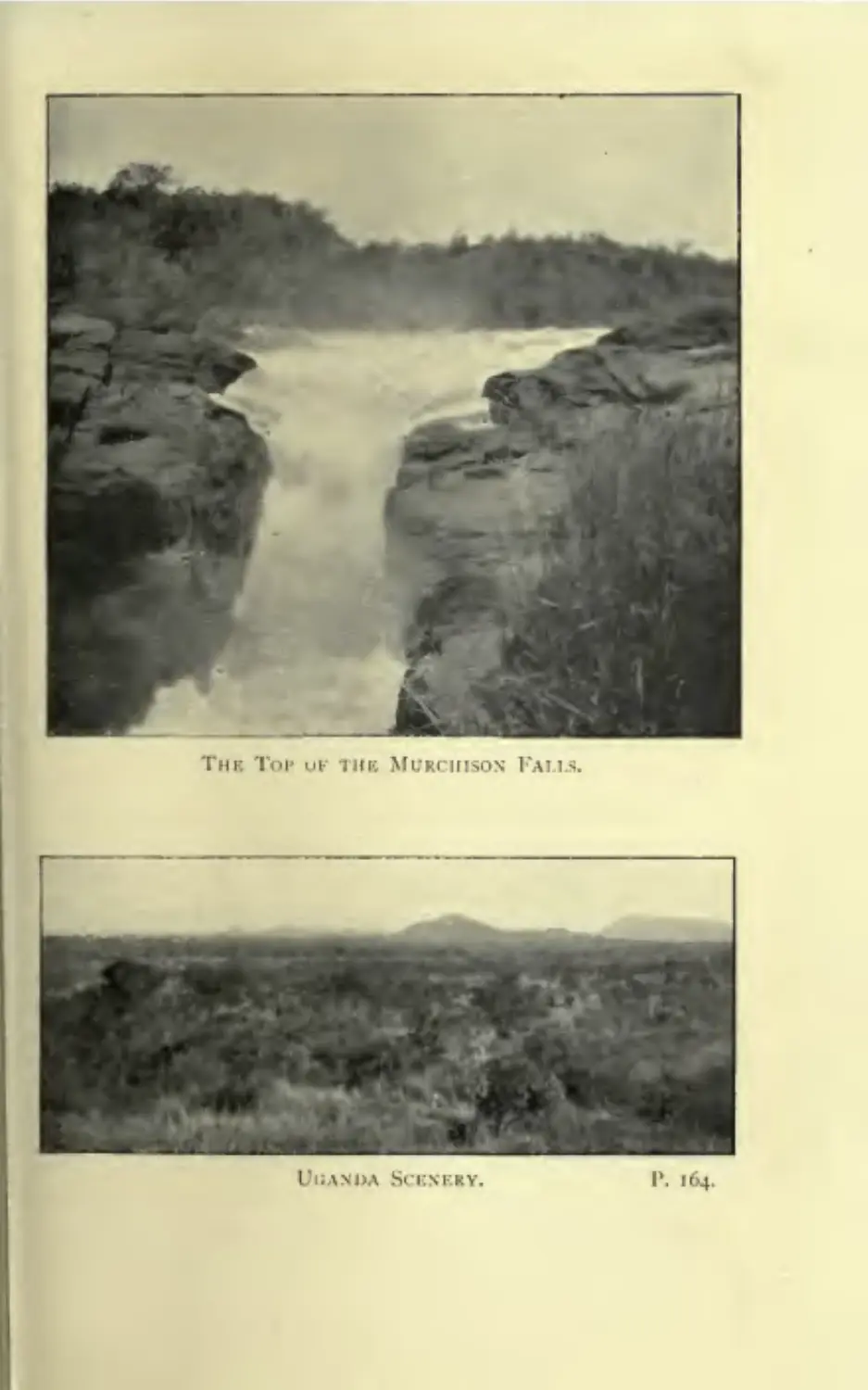
THE TOP OF THE MURCHISON FALLS
.
.
.164
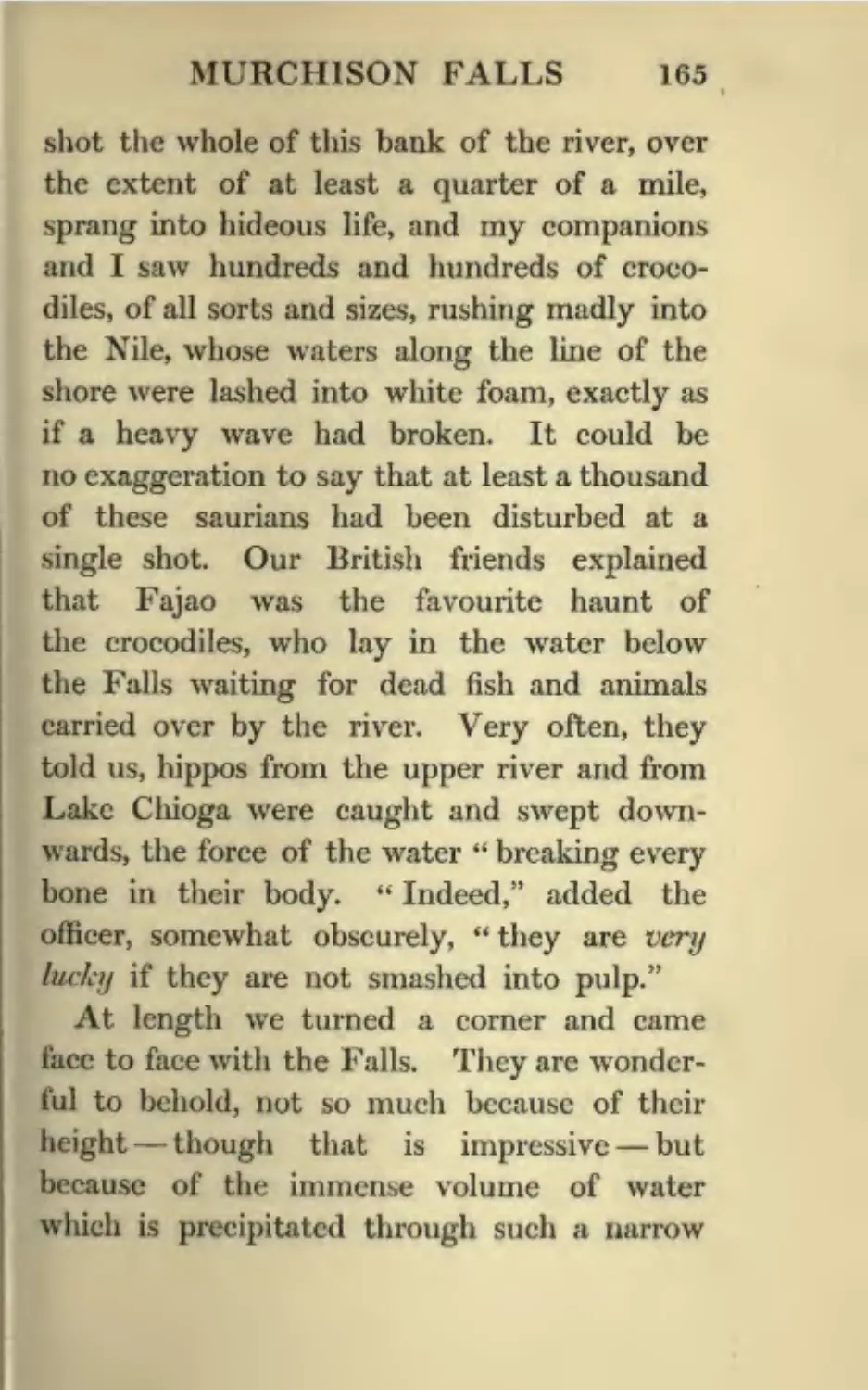
UGANDA SCENERY
164
THE LANDING-PLACE AT FAJAO
.
.
EARLY MORNING ON THE NILE AT FAJAO
.
.169
.
.170
FAJAO
APPROACH
170
TO
HILLS IN
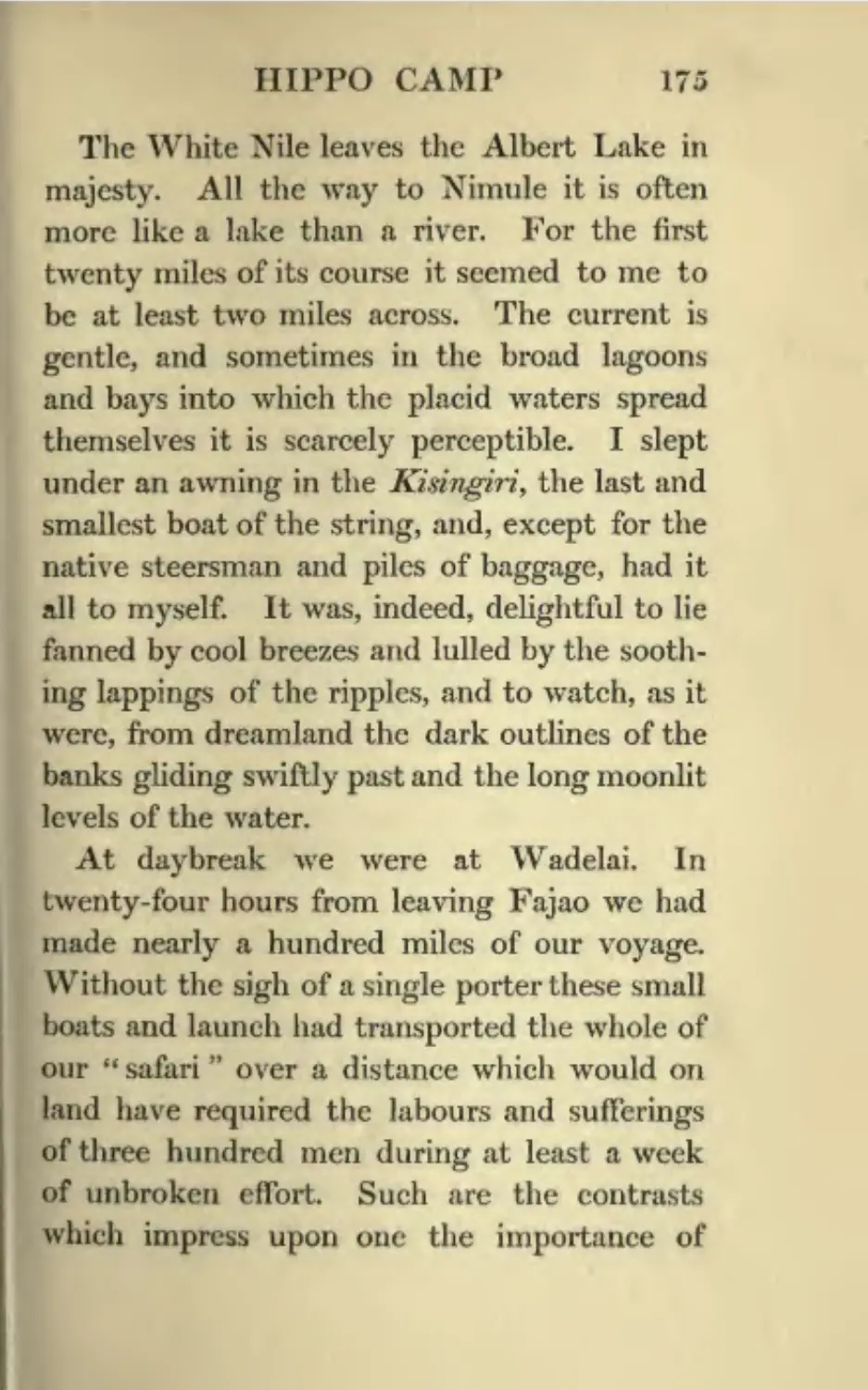
WADELAI
LAKE
ALBERT,
THE DISTANCE
WITH
.
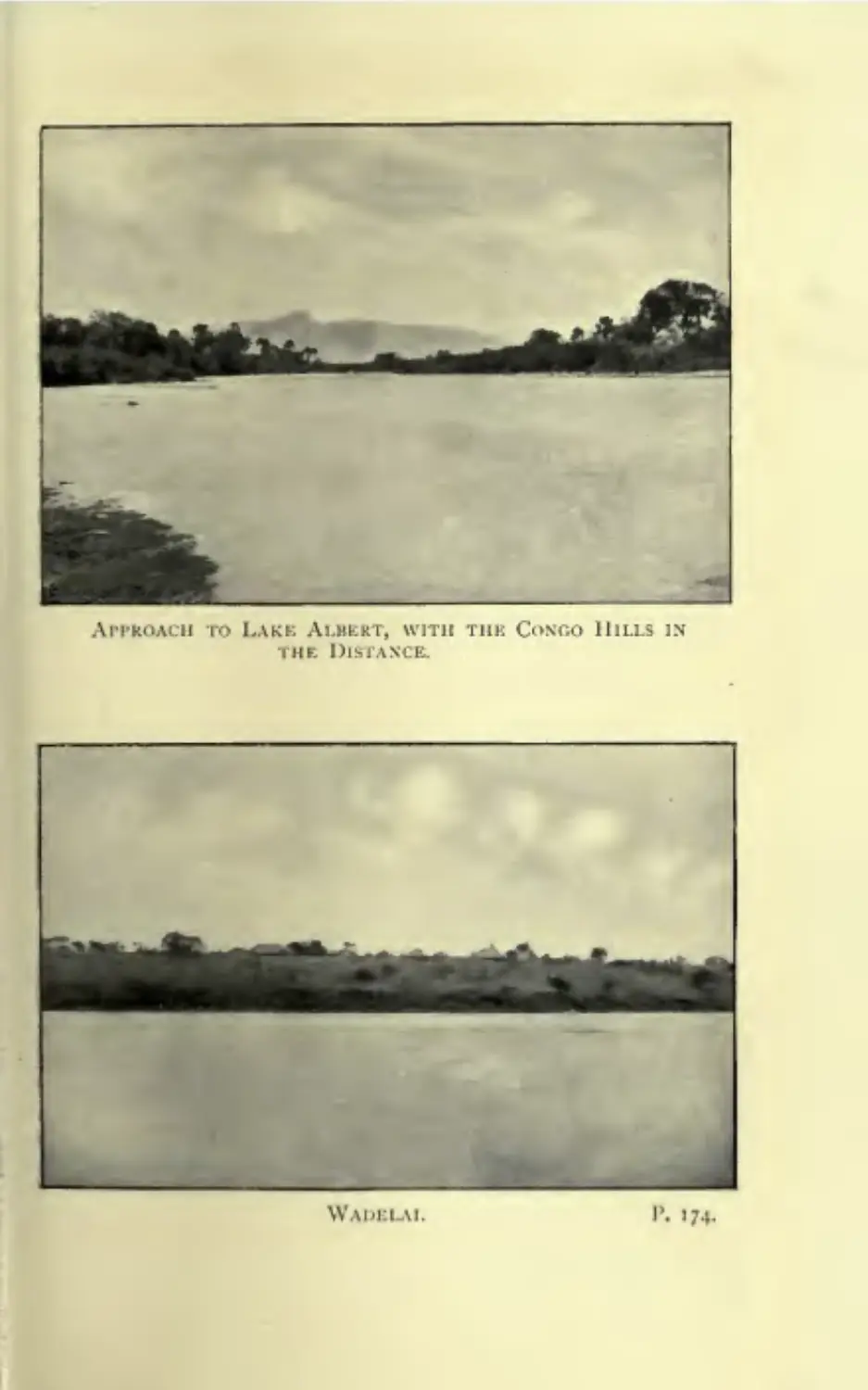
THE
.
CONGO
.
.174
........
174
ILLUSTRATIONS
xii
To
face
page
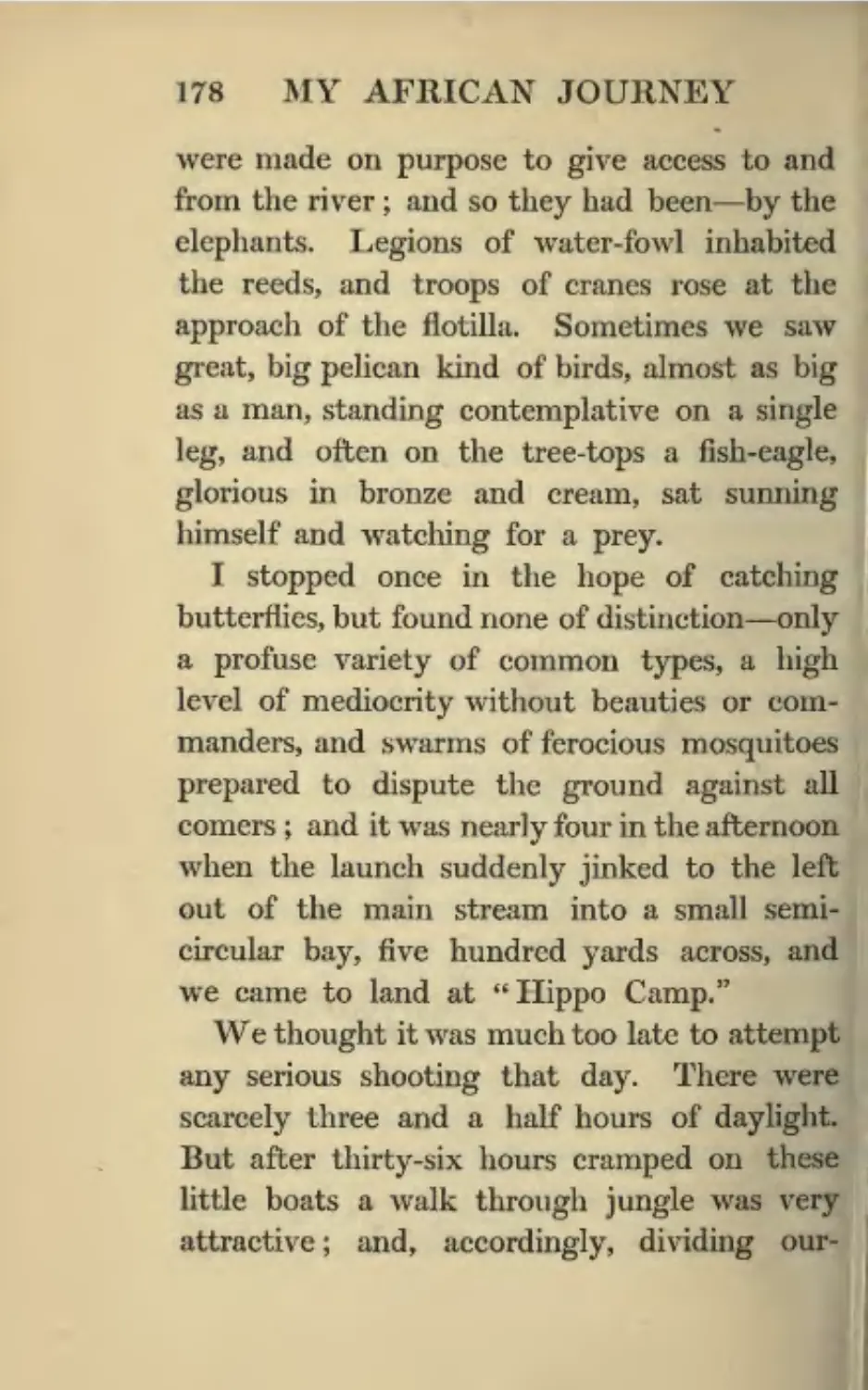
THE " KENIA," " JAMES MARTIN,"" AND " GOOD HOPE ""
NEARING NIMULE
178
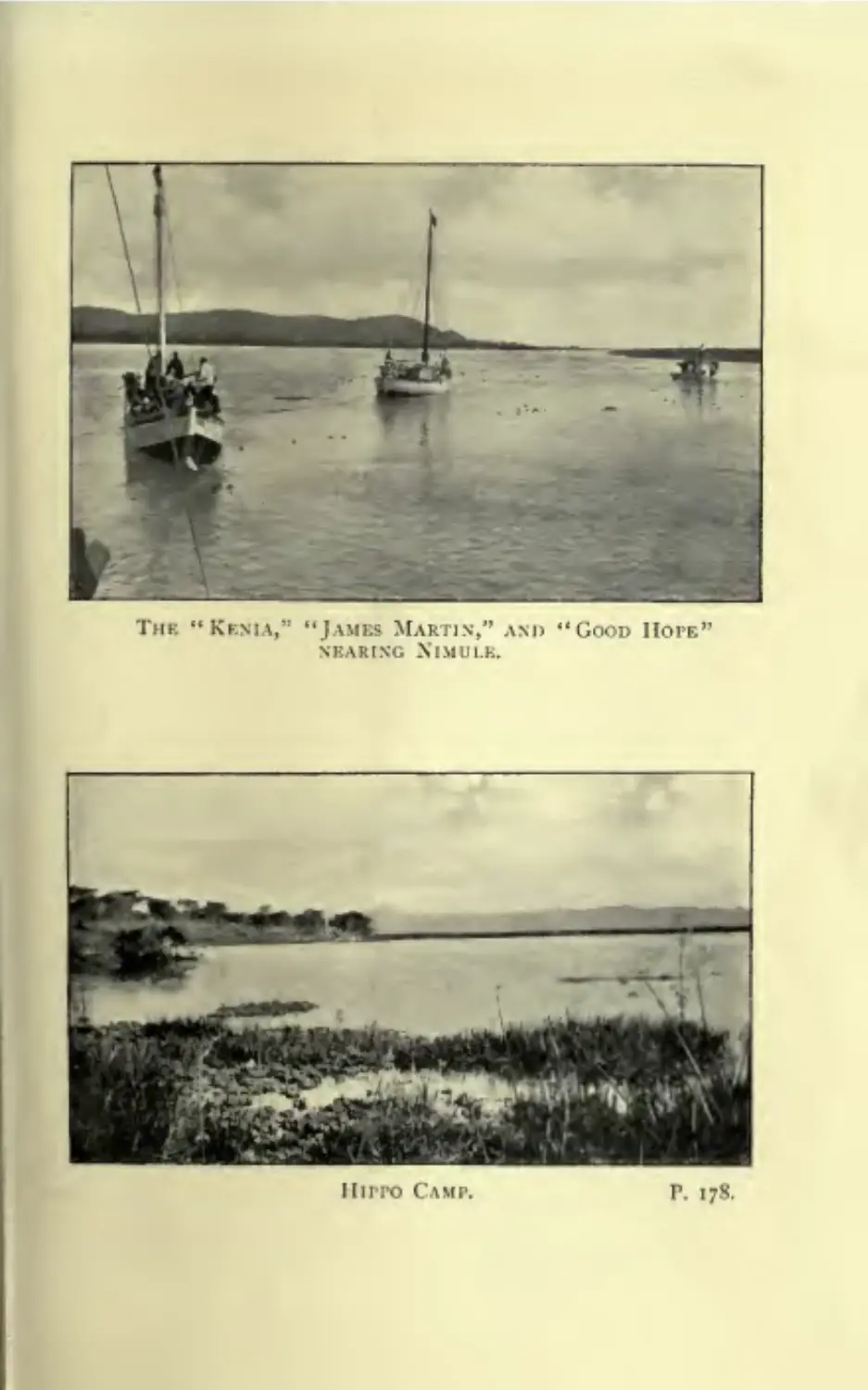
HIPPO CAMP
178
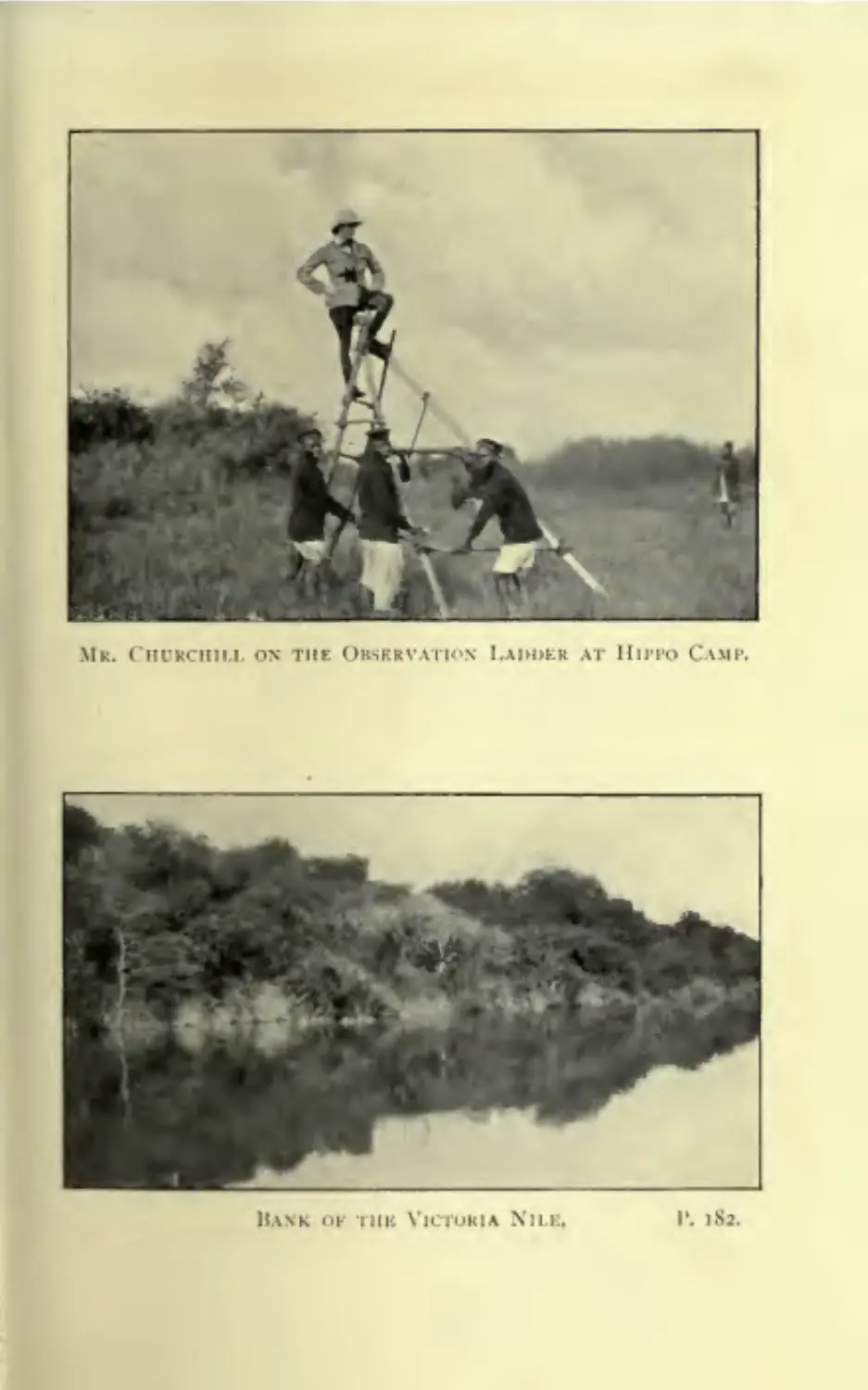
MR. CHURCHILL ON THE OBSERVATION LADDER AT
HIPPO CAMP
182
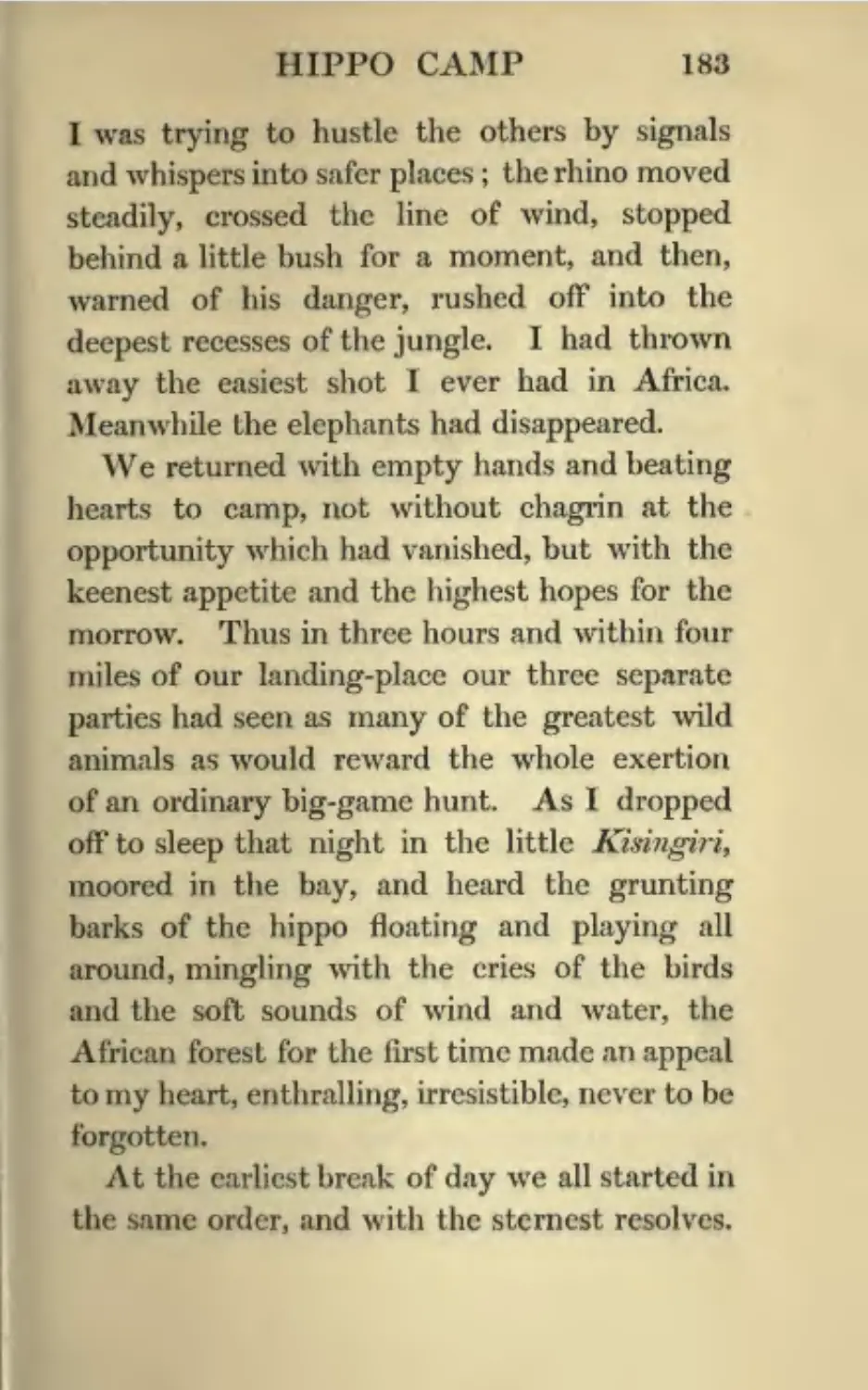
BANK OF THE VICTORIA NILE
.
.
.
.182
MR. CHURCHILL AND BURCHELL's WHITE RHINOCEROS
COLONEL
WILSON''s
ELEPHANT
.
.
.
186
.187
THE " KENIA," " JAMES MARTIN," AND " GOOD HOPE "
ON THE WHITE NILE
.
.
.
.
.
FORDING THE ASUA
THE BELGIAN OFFICIALS AT LADO
187
192
.
.
.
.
196
GONDOKORO
196
REVIEW AT KHARTOUM
198
SOUDAN GOVERNMENT STEAMER " DAL '"
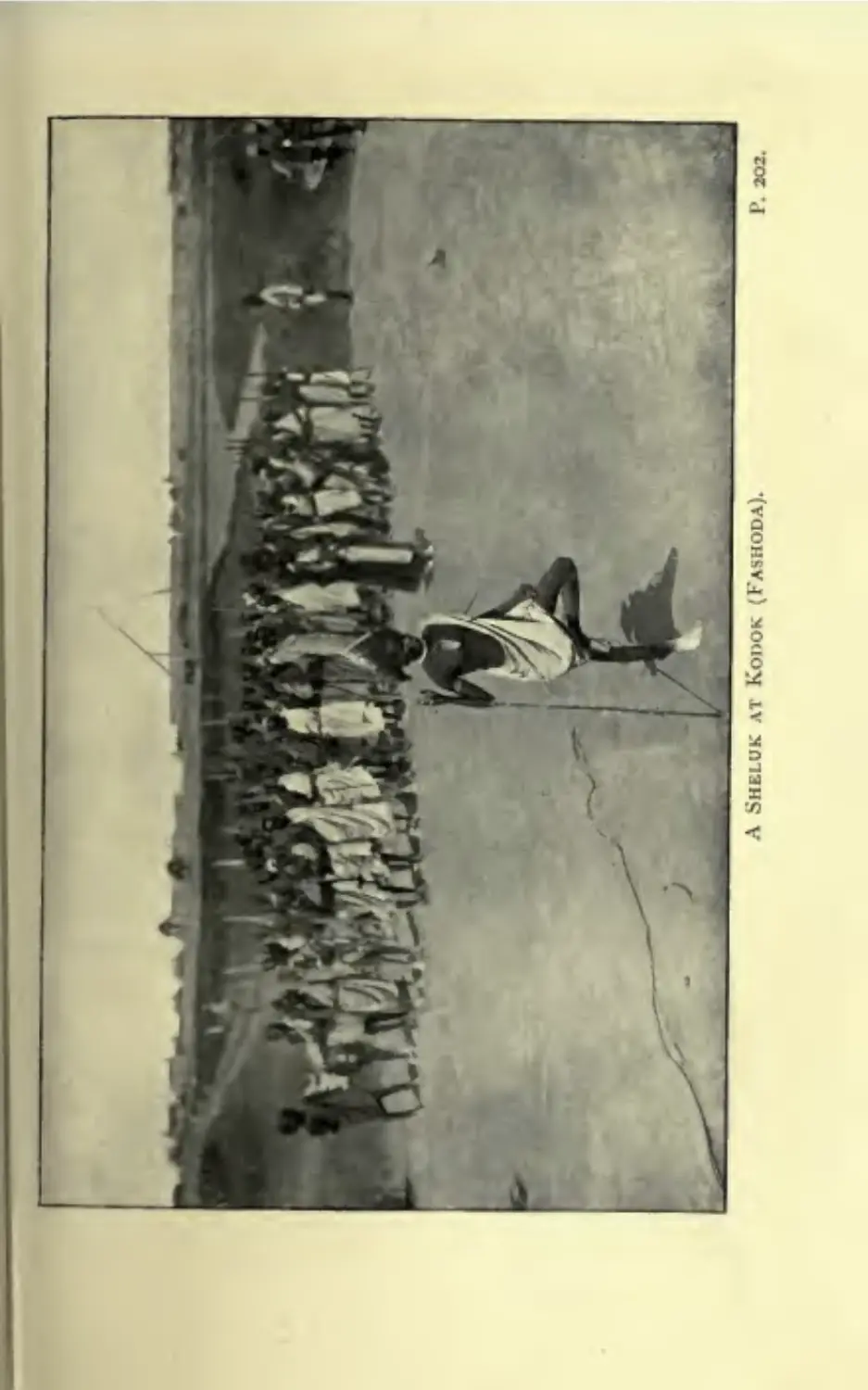
A SHELUK AT KODOK (fASHODa)
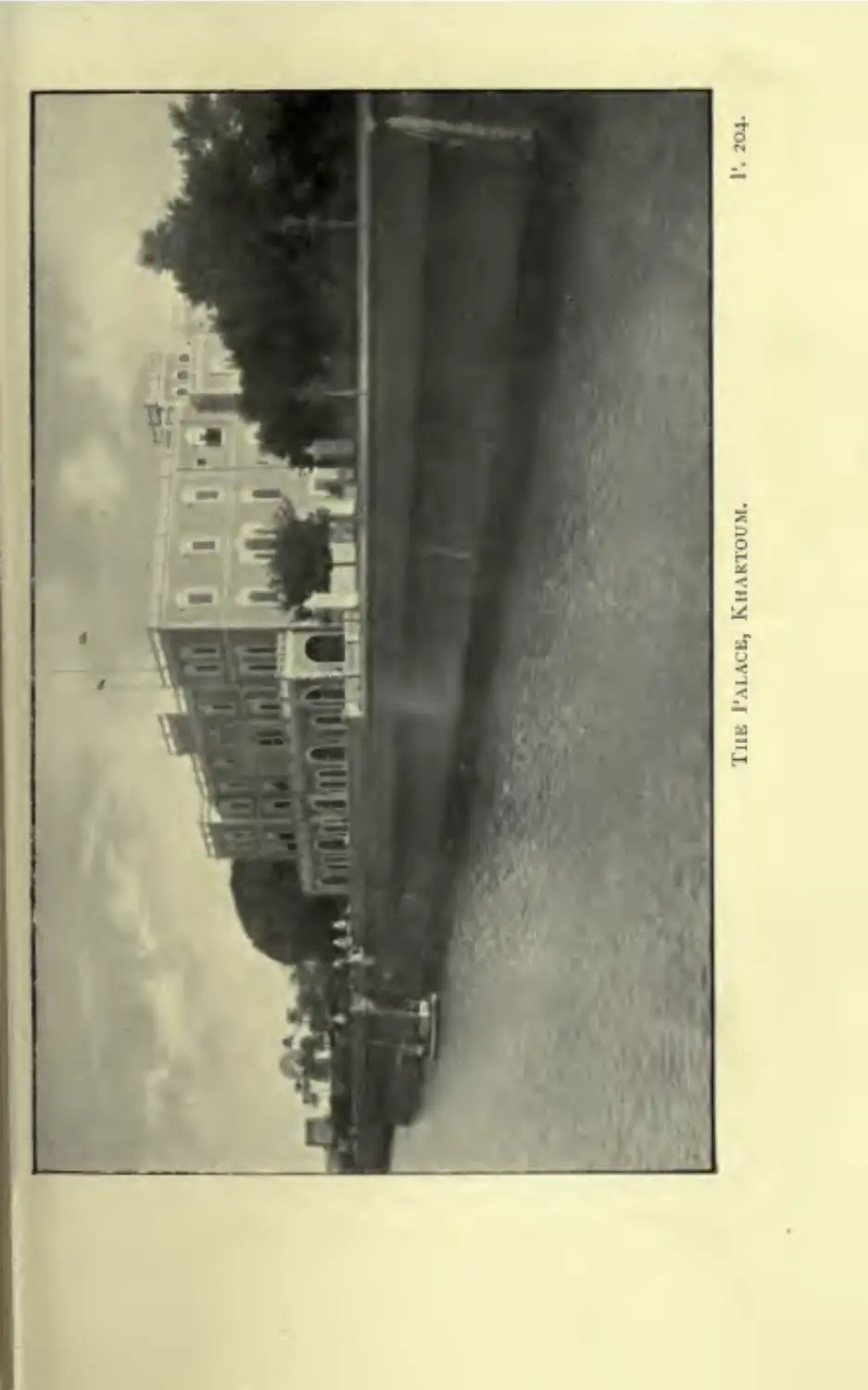
THE PALACE, KHARTOUM
.
.
.198
....
202
204
i
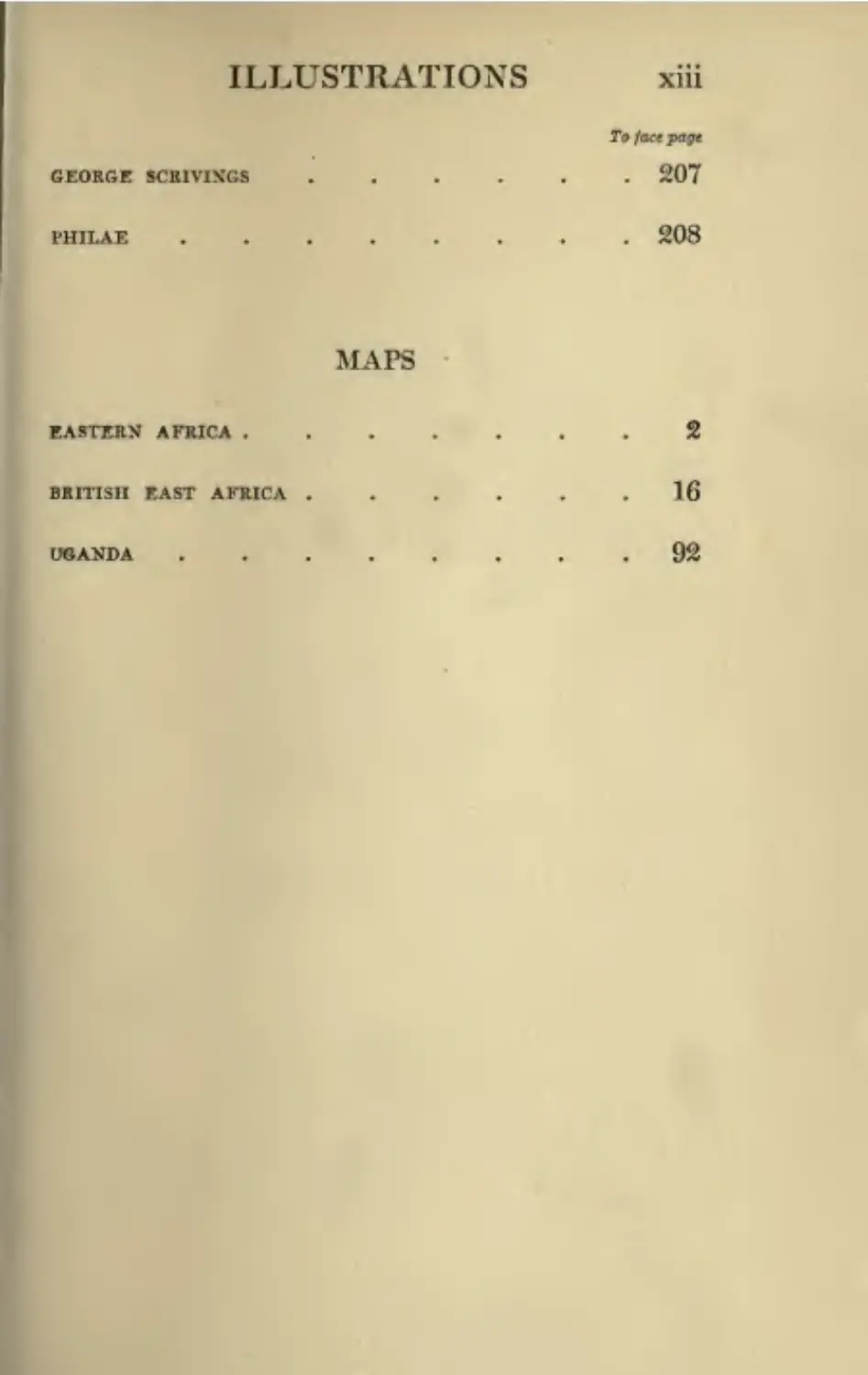
ILLUSTRATIONS
xiu
......
Tofacepagt
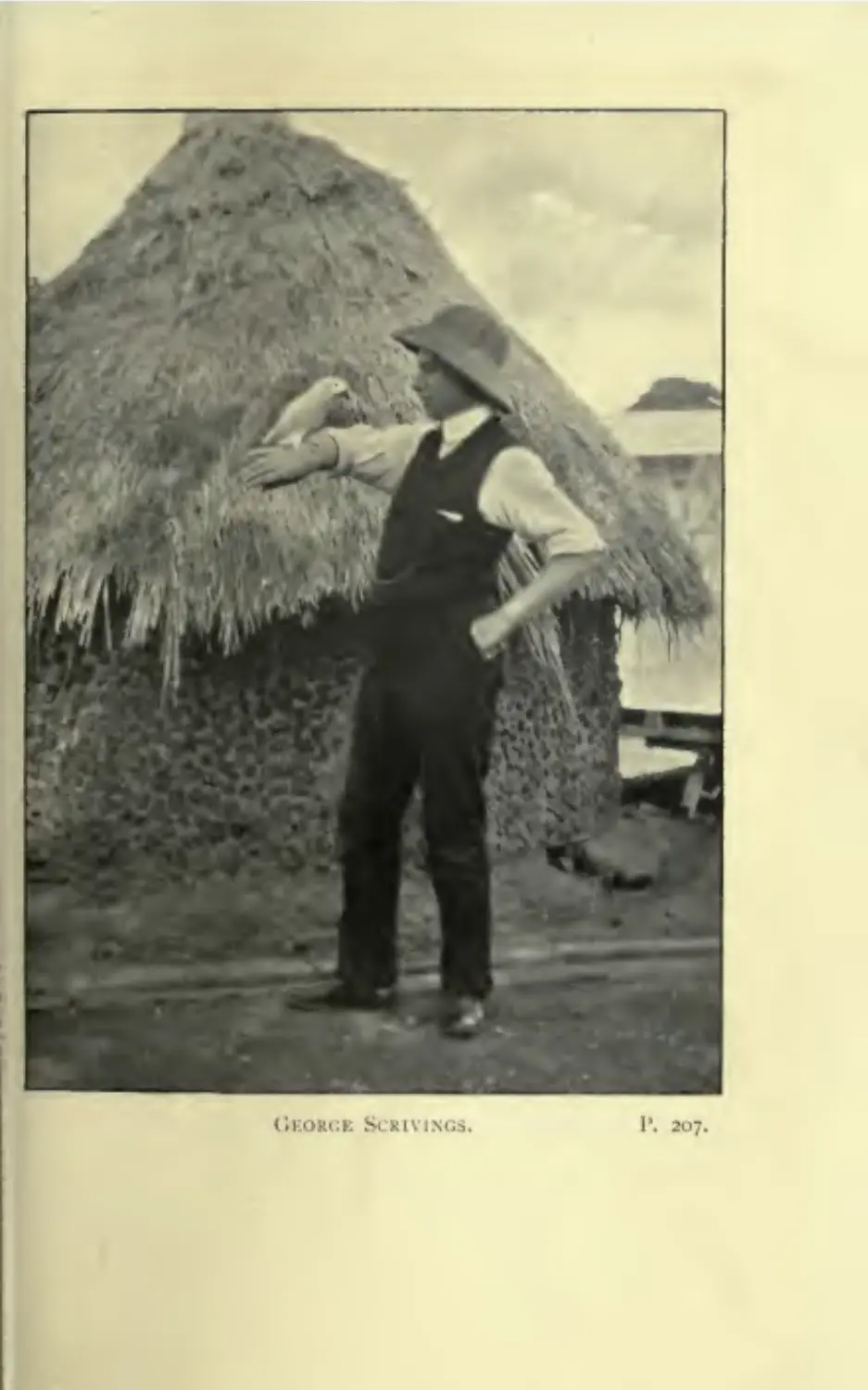
GEORGE SCRIVINGS
207
208
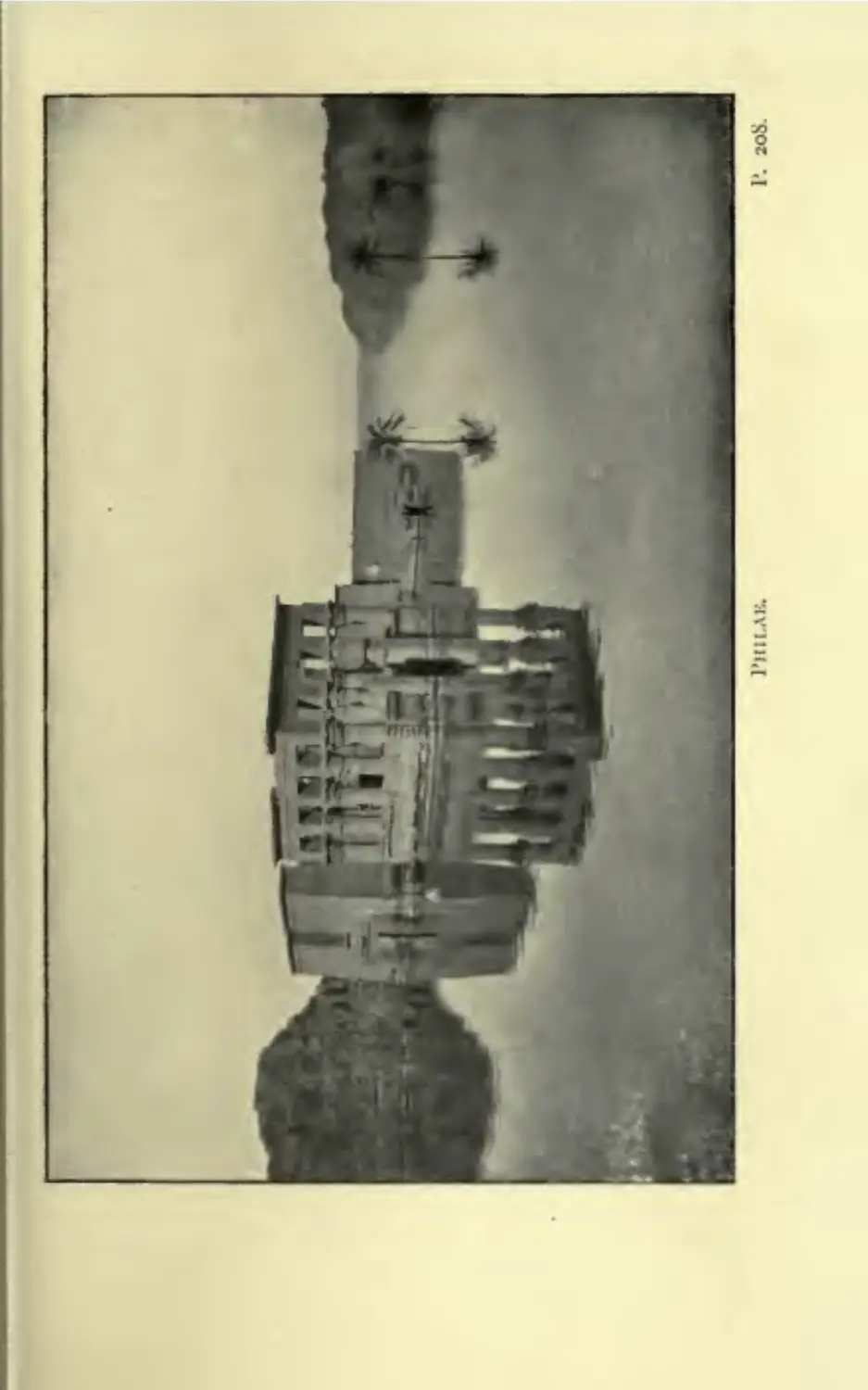
PHILAE
MAPS
EASTERN AFRICA
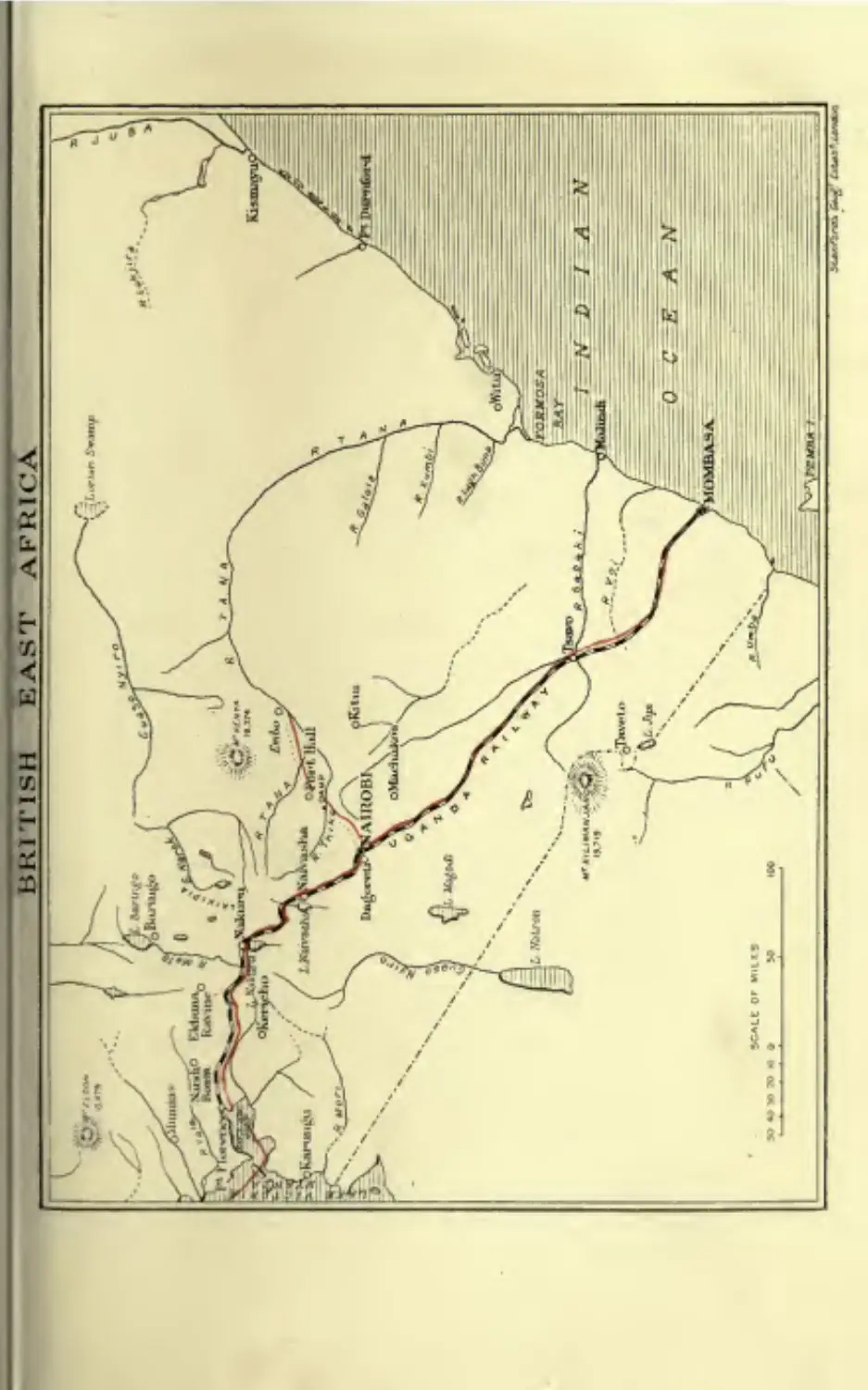
BRITISH EAST AFRICA
UGANDA
ft
16
.92
I
CHAPTER
I
THE UGANDA RAILWAY
The
Mombasa
from
the sea and clothes herself with form and
aspect of
as she rises
colour at the swift approach of the ship
alluring
ciate
all
and even delicious.
these charms the
come from the North.
He
But
to appre-
traveller
should
should see the hot
stones of Malta, baking and glistening
steel-blue
Mediterranean.
He
the Island of Cyprus before the
have
revived the
Plain
is
is
on a
should
visit
autumn
rains
when
the Messaoria
one broad wilderness of dust, when
every tree
—be
it
soil,
only a thorn-bush
loom, and every drop of water
is
—
is
an
a jewel.
heir-
He
should walk for two hours at midday in the
streets of
Port Said.
He
should thread the
long red furrow of the Suez Canal, and swelter
through the
trough of the
Red
Sea.
He
among the cinders of Aden,
and a week among the scorched rocks and
stones of Northern Somaliland
and then.
should pass a day
;
;
MY AFRICAN JOURNEY
2
open
after five days of
will
sea, his
eye and mind
be prepared to salute with feelings of
grateful
these
delight
On
exuberant green.
moist, tumultuous,
of vivid
shores
every side
and
is
Great
varied.
and
vegetation,
trees,
clad in dense foliage, shrouded in creepers,
springing from beds of verdure, thrust themselves
through the undergrowth
together by flowering trailers
tropical plant that lives
by
;
rain
;
palms laced
every kind of
and sunshine
;
high waving grass, brilliant patches of purple
bougainvillea,
and
in the midst, dotted about,
scarcely keeping their heads above the fertile
flood of Nature, the red-roofed houses of the
town and port of Mombasa.
The vessel follows a channel twisting
away between high bluffs, and finds a secure
anchorage, land-locked, in forty feet of water
at a stone's
throw from the
shore.
Here we
are arrived at the gate of British East Africa
and more, at the outlet and debouchment of
all
the trade of
all
the countries that lap the
Victoria and Albert Lakes and the head-waters
of the Nile.
Along the
now being built
Mombasa Island,
for many years, the
pier
at Kilindini, the harbour of
must flow, at any rate
main stream of East and Central African com-
Libvarv
f.iiabur^ (HogirtgUeti
London; TTodder nnd Stouthton.
THE UGANDA RAILWAY
3
Whatever may be the produce which
civiUzed government and enterprise will draw
from the enormous territories between Southern
Abyssinia and Lake Tanganyika, between
Lake Rudolf and Ruenzori, as far west as
merce.
the head-streams of the Congo, as far north as
whatever may be the needs
and demands of the numerous populations
the Lado enclave
;
comprised within those
along the
limits, it is
unpretentious jetty of Kilindini that the whole
traffic
For
must
pass.
Kilindini (or
mitted to
call it) is
Mombasa,
as I
may be
the most romantic and most wonderful
ways
that
per-
the starting-point of one of
rail-
The two iron streaks of rail
wind away among the hills and foliage of
in the world.
Mombasa
Island do not break their smooth
monotony
after
piercing
forests, stretching across
immense
until,
climbing almost to the level
snow-line, they pause
time
—upon
And
thus
is
—and
Equatorial
and
of the European
prairies,
that only for a
the edges of the Great Lake.
made
a sure, swift road along
man and all that he brings
for "good or ill, may penetrate into
which the white
with him,
the heart of Africa as easily and safely as he
may
travel
from London to Vienna.
MY AFRICAN JOURNEY
4
Short has been the
tudes, of the
life,
many
Uganda Railway.
the
vicissi-
The adven-
turous enterprise of a Liberal Government,
it
was soon exposed, disowned, to the merciless
criticism of its parents. Adopted as a cherished
foundling by the Conservative party, it almost
perished from mismanagement in their hands.
Nearly ten thousand pounds a mile were expended upon its construction and so eager
were all parties to be done with it and its
;
expense that, instead of pursuing
its
proper
and natural route across the plateau to the
deep waters of Port Victoria, it fell by the
way
into the shallow gulf of Kavirondo, lucky
to get so
far.
possible not
It
is
easy to censure,
to criticize, the
it is
im-
administrative
mistakes and miscalculations which tarnished
and nearly marred a brilliant conception. But
it is still more easy, as one traverses in fortyeight hours countries which ten years ago
would have
many
baffled the
toilsome marches of
weeks, to underrate the
difficulties
in
which unavoidable ignorance and astonishing
conditions plunged the pioneers.
The British
art of " muddling through " is here seen in one
of
its finest
—through
expositions.
Through everything
the forests, through the ravines.
I
THE UGANDA RAILWAY
through troops of marauding
lions,
5
through
famine, through war, through five years of
ParHamentary
excoriating
muddled
debate,
and marched the railway and here at last, in
some more or less effective fashion, is it arrived
at its goal.
Other nations project Central
;
African railways as lightly and as easily as
down
naval programmes but here
a railway, like the British Fleet, " in being "
they lay
;
is
not a paper plan or an airy dream, but an
iron fact grinding along through the jungle
and the
plain,
silences
of the Nyanza,
waking with its whistles the
and startling the
tribes out of their primordial
*'
Americani
Let
"
piece goods
us, then,
nakedness with
made
in Lancashire,
without waiting in
Mombasa
it well and to
and promise of the coastal
region, ascend this railway from the sea to the
lake.
And first, what a road it is Every-
longer than
admire the
is
necessary to wish
fertility
!
thing
is
in
apple-pie order.
The
track
is
smoothed and weeded and ballasted as if it
were the London and North- Western. Every
telegraph-post has
its
number; every
mile,
every hundred yards, every change of gradient
has
its
mark
;
not in soft wood, to feed the
white ant, but
in
hard,
well-painted
iron.
MY AFRICAN JOURNEY
6
Constant labour has steadily improved the
grades and curves of the permanent-way, and
the train
—one of those comfortable, practical
— along as evenly as upon a
Indian trains
European
rolls
line.
Nor should
it
be supposed that
standard of maintenance
is
The
line.
already doing what
is
high
not warranted by
the present financial position of the
Uganda Railway
this
it
was
never expected within any reasonable period
to do.
It
is
paying
to yield a profit
its
—
capital charge.
its
way.
It
is
beginning
albeit a small profit
— upon
Projected solely as a political
railway to reach Uganda, and to secure British
predominance upon the Upper Nile,
already achieved a commercial value.
it
has
Instead
of the annual deficits upon working expenses
which were regularly anticipated by those
most competent to judge, there is already a
substantial profit of nearly eighty thousand
pounds a year. And this is but the beginning,
and an imperfect beginning; for at present
the line
is
only a trunk, without
limbs and feeders, without
its
its
necessary
deep-water head
at Kilindini, without its full tale of steamers
on the lake
;
above
all,
without
its
natural and
necessary extension to the Albert Nyanza.
THE UGANDA RAILWAY
We may divide
stages
7
the journey into four main
—the jungles, the
plains, the
mountains,
an essential part
of the railway, and a natural and inexpensive
extension to its length. In the early morning,
and the
lake, for the lake
is
from Mombasa Station, taking
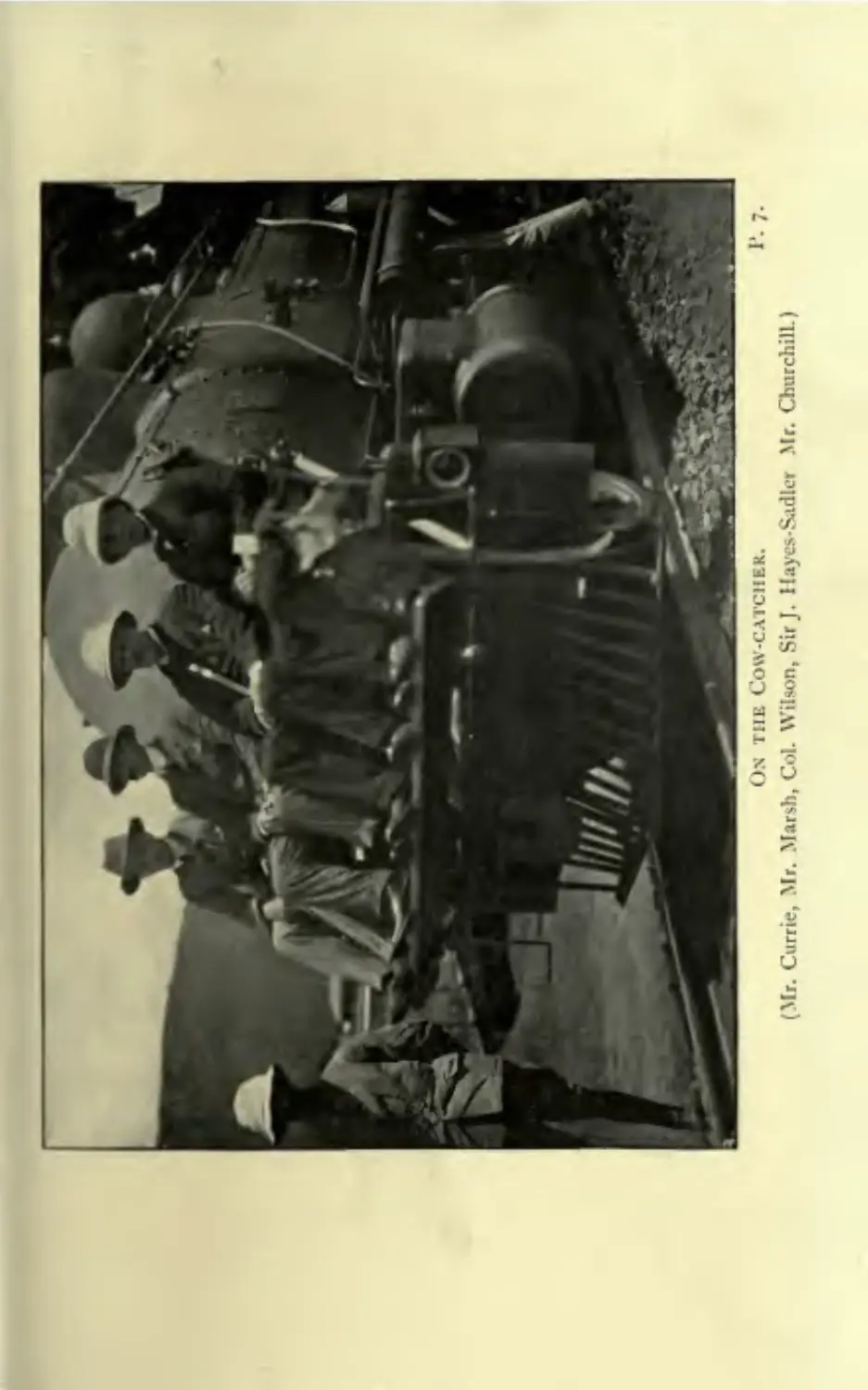
our places upon an ordinary garden seat fastened on to the cow-catcher of the engine, from
which position the whole country can be seen.
then,
we
start
For a quarter of an hour we are still upon
Mombasa Island, and then the train, crossing
the intervening channel by a long iron bridge,
addresses itself in earnest to the continent of
Into these vast regions the line winds
Africa.
perseveringly
land unfolds
after vaUey,
at
upon a
itself
till
stiff
up-grade, and the
ridge after ridge and valley
soon, with one farewell glance
the sea and at the fighting-tops of His
Majesty's ship Venus rising queerly amid the
palms,
we
are
embraced and engulfed com-
All day long the train runs upward
pletely.
and westward, through broken and undulating
ground clad and encumbered with superabundant
vegetation.
butterflies fly
flower.
in flood,
Beautiful
birds
and
from tree to tree and flower to
filled by streams
Deep, ragged gorges,
open out
far
below us through glades
MY AFRICAN JOURNEY
8
of palms and creeper-covered
there, at intervals,
which
Here and
become shorter
trees.
will
every year, are plantations of rubber,
fibre,
and cotton, the beginnings of those inexhaustible supplies which will one day meet the
yet unmeasured demand of Europe for those
indispensable commodities.
Every few miles
are little trim stations, with their water-tanks,
and flower-beds complete
of a pattern, backed by impenetrable
signals, ticket-offices,
and
all
In brief one slender thread of
bush.
civilization,
scientific
of order, authority, and arrange-
ment, drawn across the primeval chaos of the
world.
In the evening a
ing.
The humid
cooler, crisper air
is
blow-
coast lands, with their glories
and their fevers, have been left behind. At
an altitude of four thousand feet we begin
to laugh
comes
at
forest,
the Equator.
not
less luxuriant,
different in character.
palm.
The jungle
The whole
The
be-
but distinctly
olive replaces the
aspect of the land
is
more
more familiar, and no less fertile.
After Makindu Station the forest ceases.
The traveller enters upon a region of grass.
Immense fields of green pasture, withered and
whitened at this season by waiting for the
friendly,
THE UGANDA RAILWAY
by streams and watercourses
rains, intersected
densely
and
9
wooded with
gorse-looking
dark, fir-looking trees
scrub,
and
relieved
by
bold upstanding bluffs and ridges, comprise
the
new panorama.
wonderful and
And
unique
Uganda Railway
here
is
presented the
spectacle which
offers to the
The
European.
plains are crowded with wild animals.
the
From
the windows of the carriage the whole zoological gardens
can be seen disporting
Herds of antelope and
—sometimes
itself.
gazelle, troops of zebras
four or five hundred together
watch the train pass with placid assurance, or
scamper a hundred yards farther away, and
turn again.
With
Many
field-glasses
are quite close to the line.
one can see that
it is
the
same everywhere, and can distinguish long
files of black wildebeeste and herds of red
kongoni the hartebeeste of South Africa
and wild ostriches walking sedately in twos
and threes, and every kind of small deer and
gazelle.
The zebras come close enough for
their stripes to be admired with the naked eye.
—
We
have arrived at Simba,
of Lions," and there
is
"
The Place
no reason why the
passengers should not see one, or even half-adozen, stalking across the plain, respectfully
MY AFRICAN JOURNEY
10
observed by lesser beasts.
Indeed, in
the
was the custom to stop and sally
out upon the royal vermin whenever met with,
and many the lion that has been carried back
to the tender in triumph before the guard, or
driver, or any one else could think of timeearly days
it
tables or the block system, or the other in-
convenient restrictions of a regular service.
Farther up the
evening,
we
the twilight of the
line, in
saw, not a hundred yards away,
a dozen giraffes loUopping off
trees,
in
and
at
leisurely
daylight.
mood
six
across
and
after
scattered
yellow lions walked
the
one of
in broad
rails
Only the rhinoceros
rarely seen,
measured
Nakuru
among
absent, or
is
his species
had
his strength, unsuccessfully, against
an engine, he has confined himself morosely
to the river-beds and to the undisturbed
solitudes
which, at
a
distance
of two
three miles, everywhere engulf the
or
Uganda
Railway.
Our
carriage stopped
upon a
siding at
Simba
we might
more closely examine the local fauna. One of
the best ways of shooting game in this part of
Station for three days, in order that
the world, and certainly the easiest,
trolly
and run up and down the
is
to get a
line.
The
i
THE UGANDA RAILWAY
11
animals are so used to the passage of trains and
natives along the one great
highway that they
much notice, unless the
train or trolly stops, when their suspicions are
at once aroused. The sportsmen should, theredo not,
as a rule, take
fore, slip off
the
of
rest
moment
without allowing the vehicle or
the party to stop, even for a
and
;
in this
find himself within
way he
will frequently
two hundred and
three hundred yards of his quarry,
result will be
governed solely by
want of
There
with the
skill,
is
fifty
when
or
the
his skill, or
rifle.
another method, which
we
on
tried
the second day in the hopes of finding a water-
buck, and that
is,
to prowl about
among
the
and undergrowth of the river-bed. In a
minutes one may bury oneself in the
wildest and savagest kind of forest.
The air
becomes still and hot. The sun seems in an
trees
few
instant to assert his just prerogative.
glitters
The heat
over the open spaces of dry sand and
pools of water.
High
grass,
huge boulders,
tangled vegetation, multitudes of thorn-bushes,
obstruct the march, and the ground itself
is
scarped and guttered by the rains into the
strangest
formations.
Around you,
breast-
high, shoulder-high, overhead, rises the African
MY AFRICAN JOURNEY
12
There
jungle.
is
a brooding silence, broken
only by the cry of a bird, or the scolding bark
of baboons, and the crunching of one's
own
on the crumbling soil. We enter the
haunt of the wild beasts their tracks, their
traces, the remnants of their repasts, are easily
and frequently discovered. Here a lion has
passed since the morning. There a rhinoceros
has certainly been within the hour perhaps
within ten minutes. We creep and scramble
through the game paths, anxiously, rifles at
full cock, not knowing what each turn or step
feet
;
—
may
The wind, when
reveal.
now from
it
blows at
all,
now from
blows
fitfully,
that
so that one can never be certain that
will
;
this quarter,
it
not betray the intruder in these grim
domains to the beast he
other, less
to
some
welcome, before he sees him.
length, after
we emerge
seeks, or
two
At
hours' scramble and scrape,
breathless, as
from another world,
half astonished to find ourselves within a quarter of a mile of the railway line, with its trolly,
luncheon, soda-water,
But
if
ice, etc.
one would seek the rhinoceros in
his
open pastures, it is necessary to go farther
afield
and accordingly we started the next
morning, while the stars were still shining, to
;
*^
^Mi
%
rm'tx-. ^^^-
THE UGANDA RAILWAY
13
tramp over the ridges and hills which shut in
the railway, and overlook remoter plains and
The grass grows high from
valleys beyond.
ground honeycombed with holes and heaped
with lava boulders, and it was daylight before
we had stumbled our way to a spur commandHere we halted to search the
ing a wide view.
country with
ticks
field-glasses,
—detestable
resorts of the
insects
game
in
and to brush off the
which infest all the
innumerable swarms,
ready to spread any poison
cattle.
The
sequence.
glass
among
the farmers'
disclosed nothing of con-
Zebra, wildebeeste, and kongoni
were to be seen in troops and herds, scattered
near and far over the plains, but never a rhinoceros
So we trudged on, meaning to make
a wide circle. For an hour we found nothing,
1
and then, just as we were thinking of turning
homewards before the sun should get his full
power,
three
beautiful
oryx,
great,
dark-
coloured antelope with very long, corrugated
horns, walked over the next
to water.
Forthwith
we
brow on
their
set off in
way
pursuit,
crouching and creeping along the valley, and
hoping to intercept them at the stream.
passed safely over before
point.
The
we
third, seeing us,
Two
could reach our
turned back and
MY AFRICAN JOURNEY
14
disappeared over the
of
hour
an
later,
was
he
n
where, a quarter
hill,
and
stalked
wounded.
It
is
always the wounded beast that leads the
hunter into adventures.
Till the
quarry
is
hit
every one walks delicately, avoids going the
windward
side of unexplored coverts, skirts a
reed-bed cautiously, notices a convenient tree,
looks often this
prize
is
way and
that.
But once the
almost within reach, you scramble along
and
never trouble about remoter contingencies, be
they what they may. Our oryx led us a mile
after it as fast as
or
your legs
more over rocky
will carry you,
slopes,
always promising
and never giving a good chance for a shot,
until at last he drew us round the shoulder of
a hill and there, abruptly, was the rhinoceros.
—
A
wide
plain of white, withered grass stretched
away
The impression was
to low
hills
extraordinary.
broken with rocks.
The rhinoceros
stood in the middle of this plain, about five
hundred yards away, in jet-black silhouette
not a twentieth-century animal at all, but an
odd, grim straggler from the Stone Age. He
was grazing placidly, and above him the
vast snow dome of Kilimanjaro towered up
in the clear air of morning to complete
i
THE UGANDA RAILWAY
a
scene
unaltered
the
since
dawn
15
of the
world.
The manner
open
is
of killing a rhinoceros in the
crudely simple.
It
is
thought well
usually to select the neighbourhood of a good
where one can be founds as the centre of
the encounter. If no tree is available, you
tree,
him from any
side except the windward, and then shoot him
If you hit a vital
in the head or the heart.
happens,
as
sometimes
he falls. If you
spot,
hit him anywhere else, he charges blindly and
furiously in your direction, and you shoot him
walk up
as near as possible to
again, or not, as the case
Bearing
all this
may
be.
we
carefully in mind,
started
We
out to do battle with Behemoth.
had
advanced perhaps two hundred yards towards
him,
when
arrested us.
a cry from one of the natives
We
looked sharply to the right.
There, not a hundred and
fifty
paces distant,
under the shade of a few small
two other monsters.
trees,
stood
In a few more steps
we
should have tainted their wind and brought
them up with a rush and suppose this had
happened, when perhaps we were already compromised with our first friend, and had him
wounded and furious on our hands
Luckily
;
I
16
MY AFRICAN JOURNEY
warned
in time, to creep
of the
hill,
to skirt
its
back to the shoulder
crest, and to emerge
a hundred and twenty yards from this
new
was the work of a few minutes.
We
objective
hurriedly agree to
ing the other.
At
hit so great a target
I fired.
kill
;
The thud
one
first
before touch-
such a range
it is
but the bull's-eye
easy to
is
small.
of a bullet which strikes
with an impact of a ton and a quarter, tearing
through hide and muscle and bone with the
hideous energy of cordite, came back distinctly.
The
large rhinoceros started, stumbled, turned
directly towards the
then bore straight
trot,
sound and the blow, and
down upon
us in a peculiar
nearly as fast as a horse's gallop, with an
activity surprising
in
so
huge a
beast,
and
instinct with unmistakable purpose.
Great
is
the moral effect of a foe
who
ad-
Everybody fired. Still the ponderous
brute came on, as if he were invulnerable as if
he were an engine, or some great steam barge
vances.
;
impervious to bullets, insensible to pain or fear.
Thirty seconds more, and he will
impalpable curtain seems to
close.
roll itself
An
up
in
the mind, revealing a mental picture, strangely
still, where objects have new
a patch of white grass in the
where
and
values,
lighted, yet very
1
THE UGANDA RAILWAY
17
foreground, four or five yards away, seems to
possess astonishing
It
significance.
is
there
that the last two shots that yet remain before
of civiHzation
the resources
There
must be
some detachment
fired.
aggressors
;
we
is
that, after
it is
are
time to
who have
exhausted
reflect
with
we were
all,
the
forced the con-
by an unprovoked assault with murderous
intent upon a peaceful herbivore that if there
i^ such a thing as right and wrong between
man and beast and who shall say there is not ?
right is plainly on his side there is time for
this before I perceive that, stunned and dazed by
the frightful concussions of modern firearms,
he has swerved sharp to the right, and is now
moving across our front, broadside on, at the
same swift trot. More firing, and as I reload
some one says he is down, and I fire instead at
his smaller companion, already some distance
off upon the plain.
But one rhinoceros hunt is
like another, except in its details, and I will
flict
;
—
—
;
not occupy the reader with the account of this
new
pursuit and death.
Suffice
it
to say that,
in all the elements of neurotic experience, such
an encounter seems to me fully equal to half
an hour's brisk skirmish at six or seven hundred yards and with an important addition.
—
MY AFRICAN JOURNEY
18
In war there
is
is
a cause, there
the hope of glory, for
may
won
is
duty, there
who can
tell
what
But here at
the end is only a hide, a horn, and a carcase,
over which the vultures have already begun to
not be
wheel.
before night
?
CHAPTER
II
AROUND MOUNT KENYA
The town
of Nairobi, the capital of the
East Africa Protectorate, stands on the base
of wooded
hills
at the
three
hundred and
twenty-seventh mile of the railroad.
Origi-
nally chosen as a convenient place for assem-
bling the extensive depots and shops necessary
to the construction and
railway,
it
maintenance of the
enjoys no advantages as a residential
The ground on which the town is built
low and swampy. The supply of water is
site.
is
indifferent,
healthy.
A
and the situation generally unmile farther on, however, upon
the rising ground a finer position could have
been found, and
this quarter
is
already being
occupied sparsely by Government buildings,
and barracks. It is now too late
to change, and thus lack of foresight and of
a comprehensive view leaves its permanent
hospitals,
imprint
upon the countenance of a new
country.
19
MY AFRICAN JOURNEY
20
Our
Athi
train traverses the
plains,
more
crowded perhaps with game than any other
part of the hne, and approaches swiftly the
long rows ot one-storeyed tin houses which
constitute the town.
Nairobi
a typical
is
South African township. It might be Pietermaritzburg or Ladysmith of twenty years ago,
before blue gum-trees and stone buildings had
waxed and
multiplied.
perhaps
resembles Buluwayo most.
it
population
is
also
In
its
present stage
The
South African in its character
There are five hundred
and
and eighty whites, three thousand one hundred
Indians, and ten thousand five hundred and
The shops and stores
fifty African natives.
proportions.
are,
however,
much more
considerable than
these figures would appear to warrant, and are
fully capable of supplying the varied needs of
settlers
is
and planters over a wide
also the
Nairobi
area.
headquarters of a brigade of the
King's African Rifles, the central
office
and
depot of the Uganda Railway, and the seat of
the Administration, with
personnel.
its
The dinner
Association, to which
I
numerous
of
was
the
official
Colonists'
invited, afforded
the familiar, yet in Central Africa not unimpressive, spectacle of long
rows of gentlemen
AROUND MOUNT KENYA
I
in evening dress
Governor
;
21
while the ball given by the
to celebrate the
King's birthday
company gay with uniforms, and
pretty dresses, assembled upon a spot
revealed a
ladies in
where scarcely ten years before
lions
hunted
undisturbed.
Every white man in Nairobi is a politician
and most of them are leaders of parties. One
would scarcely believe it possible, that a centre
so
new should be
able to develop
so
many
divergent and conflicting interests, or that a
community
so small should be able to give to
each such vigorous and even vehement expres-
There are already
sion.
in miniature all the
elements of keen political and racial discord,
all
the
materials
Indian versus both
the
hot
The white man
debate.
planter
for
;
the
official
acrimonious
versus the black
;
the
the settler as against the
;
town contrasted with the country
class
against the unofficial
coast and the highlands
tration
and
;
;
the
the railway adminis-
and the Protectorate generally
;
the
King's African Rifles and the East Africa
Protectorate Police
;
all
these different points
of view, naturally arising, honestly adopted,
tenaciously held, and not yet reconciled into
any harmonious general conception, confront
22
MY AFRICAN JOURNEY
,
the visitor in perplexing disarray.
he be wise to choose
It
is
of
its
his part
Nor
will
with any hurry.
better to see something of the country,
quality and extent, of
forfeits,
of
realities
its
endeavouring
to
form
its
and
promises and
illusions,
even
a
before
provisional
opinion.
The snow-clad peak of Mount Kenya, a
hundred miles away, can on a clear morning
be easily seen from the slopes above Nairobi
a sharp, serrated summit veined with gleaming
white.
A
road
—passable,
albeit unmetalled,
—
wagons and even a motor-car
runs
thitherward by Fort Hall and across the Tana
for
River.
On
the
way
there
is
much
to see.
A
wild, ragged-looking, but fertile region, swell-
ing into successive undulations and intersected
by numerous gorges whose streams are shaded
by fine trees, unfolds itself to the eye.
Scattered about upon spacious estates of many
thousand acres are a score or two of colonists,
each gradually making himself a home and a
living in
his
own way.
One
raises
stock
another plants coffee, which grows so exuberantly in this generous
soil as
to threaten the
speedy exhaustion of the plant.
ostriches,
sheep,
and
Here
are
cattle standing placidly
AROUND MOUNT KENYA
23
together in one drove under the guardianship
There
of a native child of eleven.
a com-
is
One
dairy farm, admirably equipped.
plete
of the streams has been
dammed
and turbines are already
in position to light
with
Nairobi
another
of
Upon
electricity.
there
is
talk
effectively,
the banks
building
of
an
hotel.
At
one place I found a family of good
people from Hightown, Manchester, grappling
courageously with an enormous tract of ten
thousand
Hard
acres.
by, an old Boer,
who
has trekked the length of Africa to avoid the
smoking
British flag, sits
stolidly
by
his grass
by a
few months' experience of paternal government
house, reconciled to British rule at last
He
in a neighbouring Protectorate.
cattle
and
as to the
less cash,
and
—
;
there,
more-
wagon of the
an ark of refuge when all else
over, stands the
fails;
but he holds decided views
whereabouts of lions
Great Trek
has few
heavy
the
for
tilted
rest
there
is
plenty of
game, few people, and the family grows from
year to year.
In short, one sees a sparse, hetero-
geneous population engaged in varied labours
but
everywhere
sources, hopes
hard
work,
;
straitened
re-
many
dis-
persisting through
MY AFRICAN JOURNEY
24
appointments,
stout
hospitable
and
hearts,
the beginnings, at any rate, of progress.
A
camp has been prepared
for
me
in
a
very beautiful spot at the juncture of the
Chania and Thika rivers. Tents are pitched
and grass shelters are erected in a smooth
meadow. Southwards, a hundred yards away,
a
fine
waterfall
enormous boulders amid
The muffled
downwards
plunges
tall,
over
interlacing trees.
roar of another rises from a deep
ravine an equal distance to the north;
and
the Philistine computes, with a frown, four
thousand horse-power expending
upon
itself
the picturesque.
Nothing causes the East African colonist
more genuine concern than that his guest should
not
have been provided with a
The
lion.
knowledge preys upon his mind until it becomes a veritable obsession. He feels some
deep reproach
is
laid
upon
his
own
hospitality
and the reputation of his adopted country.
How to find, and, having found, to kill, a lion
is the unvarying theme of conversation
and
every place and every journey is judged by a
;
simple
the
standard
Thika
— "lions
camp,
or no
then, several
accomplished in this
lions."
At
gentlemen,
important sport, have
AROUND MOUNT KENYA
come together with
ponies,
25
Somalis,
rifles,
and all the other accessories. Some zebras
and kongoni have been killed and left lying
in likely-looking places to attract the lions
and at 4
a.m., rain or shine,
we
are to
go and
look for them.
The young Englishman, be he
settler in the
hardy
figure.
between:
officer
or
East African Highlands, cuts a
His clothes are few and far
a sun hat, a
brown
flannel
shirt
with sleeves cut above the elbow and open
to the chest, a pair of thin khaki knicker-
bockers cut short five inches
at least
—above
the knee, boots, and a pair of putties comprise
the whole
skin,
attire.
Nothing
else
is
exposed to sun, thorns, and
worn.
The
insects, be-
comes almost as dark as that of the natives,
and so hardened that it is nothing to ride all
day with bare knees on the saddle a truly
Spartan discipline from which at least the
;
visitor
This
may
is
be excused.
the
way
in
which they hunt
First find the lion, lured to a
kill,
lions.
driven from
a reed-bed, or kicked up incontinently by the
Once viewed he must never be lost
sight of for a moment.
Mounted on ponies
of more or less approved fidelity, three or
way.
MY AFRICAN JOURNEY
26
I
four daring Britons or Somalis gallop after
him, as in
is
to
say,
India
they ride the
neck or
nothing
holes, tussocks, nullahs,
pig
—across
—that
rocks,
through high
grass,
thorn scrub, undergrowth, turning him, shep-
way and
herding him, heading him this
until
lion
he
is
is
brought to bay.
For
no seeker of quarrels
described in accents of contempt.
throughout
is
save his skin.
to
unarmed, you meet
expectedly,
my
all
six
is
often
His object
being
If,
or seven lions un-
you need do
—
his part the
he
;
that
—according
to
them sternly
and they will slink away, while you throw a
few stones at them to hurry them up. All
the highest authorities recommend this.
But when pursued from place to place,
chased hither and thither by the wheeling
information
is
to speak to
horsemen, the naturally mild disposition of
the lion becomes embittered.
gins to growl and roar at his
order to terrify them, and
First
he be-
enemies,
make them
in
leave
Then he darts little short
charges at them. Finally, when every attempt
at peaceful persuasion has failed, he pulls up
abruptly and offers battle. Once he has done
him
in
this,
he
peace.
will
run no more.
He means
to fight,
AROUND MOUNT KENYA
and to
fight
charge
home
He
means to
and when a Uon, maddened
to the death.
;
27
with the agony of a bullet-wound, distressed
by long and hard pursuit, or, most of all, a
lioness
in
defence of her cubs,
definitely
is
committed to the charge, death is the only
possible conclusion.
Broken limbs, broken
jaws, a body raked from end to end, lungs
pierced through and through, entrails torn
and protruding none of these count.
It
must be death instant and utter for the
lion, or down goes the man, mauled by septic
claws and fetid teeth, crushed and crunched,
and poisoned afterwards to make doubly sure.
Such are the habits of this cowardly and
wicked animal.
—
—
—
when the lion has been
determinedly "bayed" that the sportsman
from London is usually introduced upon the
scene.
He has, we may imagine, followed
It
is
at the stage
the riders as fast as the inequalities of the
ground, his
own want
burden of a heavy
arrives at the spot
in
much
rifle
will allow him.
where the
the same
enters the arena,
of training, and the
manner
lion
as
is
He
cornered
the matador
the others standing aside
deferentially, ready to aid
him or
divert the
MY AFRICAN JOURNEY
28
If his bullet
lion.
proud.
If
For
no doubt, justly
forty yards the charge
avoid waiting
therefore, usually
riders,
But sometimes they do
within that distance.
;
is,
swifter than the gallop of a racehorse.
of a lion is
not
he
only wounds, the lion charges the
it
nearest horseman.
The
kills,
or sometimes the lion sees the
man who
has shot him or sometimes all sorts of things
happen which make good stories afterwards.
After this general description no particular
example is required, and the reader need not
;
—
be disappointed to learn that our lion escaped
what, no doubt, would have been his certain
destruction
by the breaking of a
single link in
He
the regular chain of circumstances.
not found upon the
by a
filthy
kill.
hyena, and
it
was
His place was taken
was not
until
we had
beaten thoroughly for two hours more than
three miles of reed-bed that
we saw him
—
splendid great yellow cat, looking as big as a
—
bounding away up the opposite hill.
Off started our riders like falcons but alas
bullock
!
;
if
" alas
I
"
impassable
large
is
the proper word
nullah
circuits
—a
intervened,
and long delays
deep and
necessitating
;
so that the
away
men,
and we were reduced to the slow and tedious
lion got clean
out of sight of all
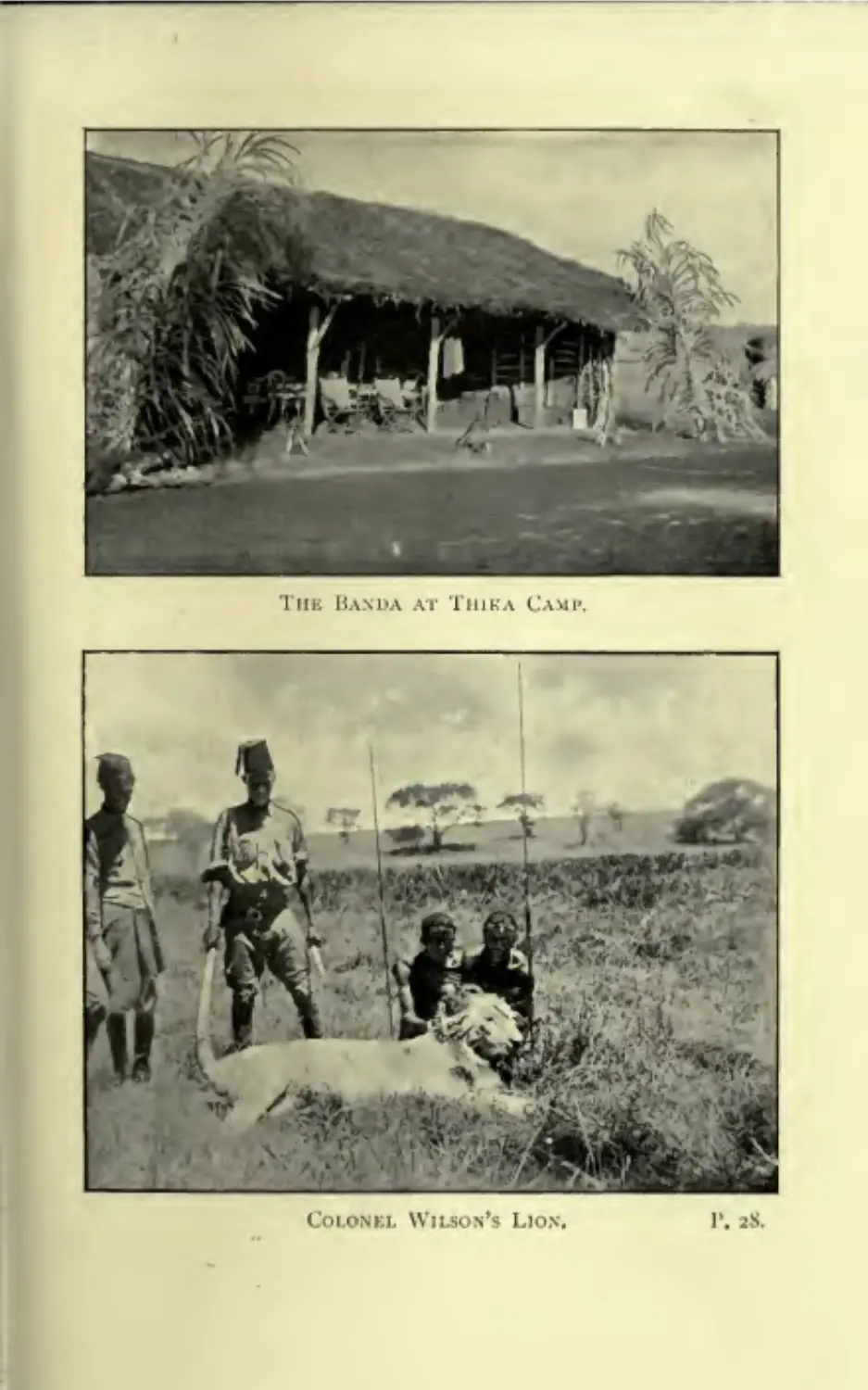
The Ban da at Thika Cam]
Colonel Wilson's
J'.
28.
AROUND MOUNT KENYA
process of tracking
him
29
by footprint
footprint
through waving grass, breast-high, hour after
on
hour, always expecting to tread
— disappointed
always
In the afternoon
and
!
had to
I
his tail,
ride to
Fort Hall,
where there was to be a great gathering of
Kikuyu chiefs and thousands of their warriors
and women. The country is much the same
as that traversed on the previous day, but
more pleasant-looking.
not a fort in any military sense,
greener, smoother, and
Fort Hall
is
but the Commissioner's house with a ditch
round
it,
a
jail,
The
bazaar.
a few houses, and an Indian
station
is
hardly well selected,
being perched up on a hiU out of the reach
of any railway
—and
unhealthy nevertheless.
The whole
their
place was crowded with natives in
most highly ornamented and elaborate
nudity, waiting for the war-dance.
ceremony was performed the
This
Long
morning.
of drums, the
rhythm
of
melodious
next
before daylight the beating
blowing
loud,
yet
of horns, and
not
altogether
chanting awakened
the
un-
the weariest
and when, at eight o'clock the indaba
began, the whole space in front of the fort was
densely packed with naked, painted, plumed.
sleeper
;
MY AFRICAN JOURNEY
30
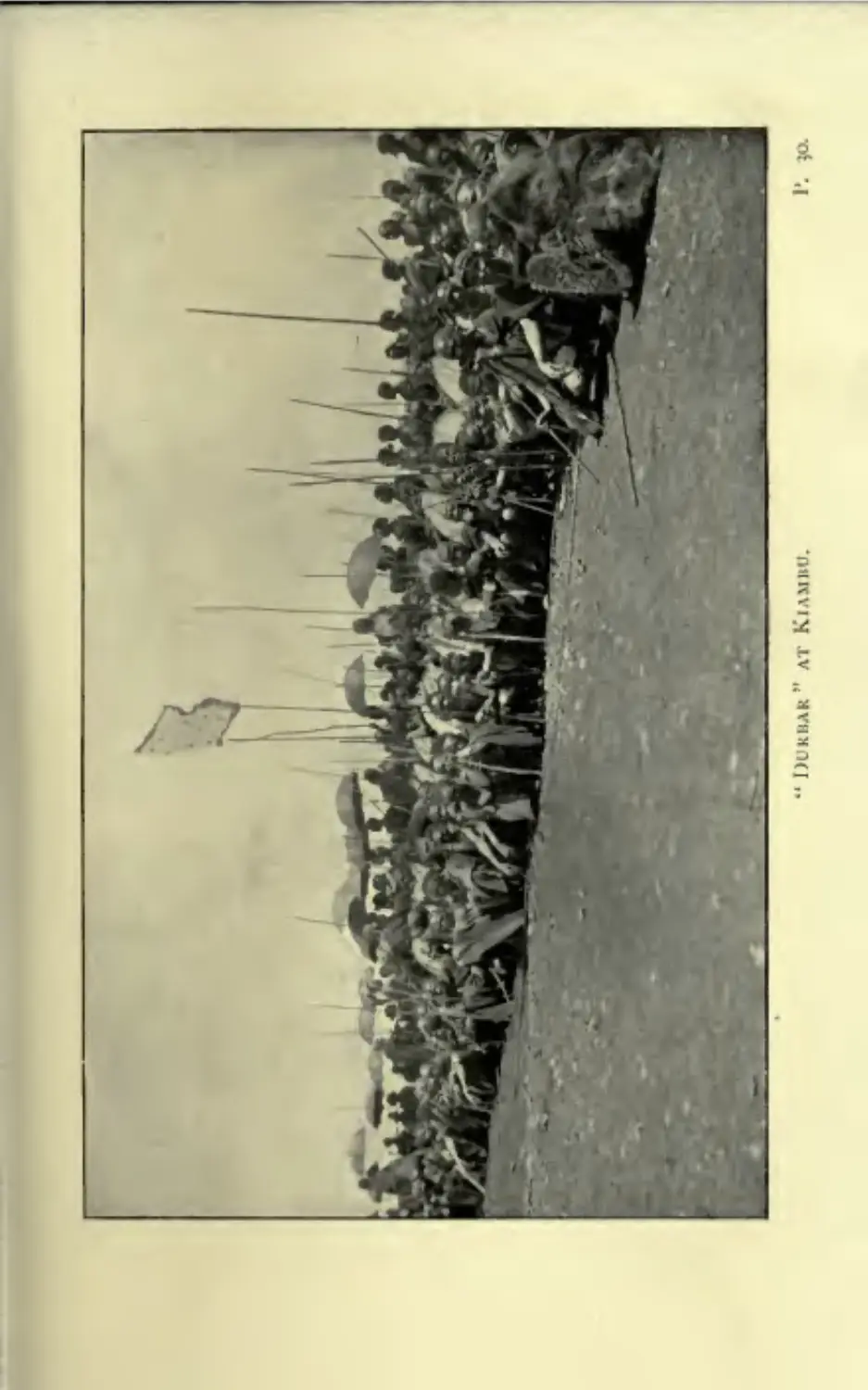
and gyrating humanity, which seethed continually to and fro, and divided from time to
time as particular chiefs advanced with their
and
followers, or as gifts of struggling sheep
war dress
the Kikuyu, and, still more, the Masai warrior,
His hair
is a striking, if not impressive, figure.
and body are smeared with the red earth of
his native land, compounded into a pigment
by mixture with the slimy juice of the castorFantastic headoil plant, which abounds.
dresses, some of ostrich feathers, others of
metal or leather armlets and leglets of twisted
In
were brought forward.
bulls
his
;
wire
stripes of
;
red pigment
;
white clay rubbed across the
here and there an old pot-hat or
some European garment, incongruously conand
trasted with leopard-skins
broad,
with
horns
bulls'
painted cow-hide shields, and
soft iron blades nearly four
;
spears
feet
long,
complete a grotesque and indecorous picture.
a sleek grace about these active
Still,
there
forms
—bronze statues but for their frippery
is
which defeats
themselves
all
their
hideous.
succeed in reducing
guys.
tattered
Any
pair
old,
own
The
efforts to
of trousers
;
however,
chiefs,
themselves
cast-ofF
make
to
regular
khaki jacket
or
any fragment of
AROUND MOUNT KENYA
31
weather-stained uniform, a battered sun-helmet
with a feather stuck lamely into the top of
a ragged umbrella,
is
induce them
plume and the leopard-
sufficient to
to abandon the ostrich
Among
skin kaross.
it,
their warriors in ancient
gear they look ridiculous and insignificant
more like the commonest kind of native sweeper
than the hereditary rulers of some powerful and
numerous
It
tribe.
unquestionably an advantage that the
is
East African negro should develop a taste for
civilized attire.
In no more useful and innocent direction could his wants be multiplied
and
his
process
desires
of
that
assimilation
gradually be
and
excited,
made more
varied, less crudely animal,
it
his
is
by
life
complicated,
this
will
more
and himself raised
utility.
But it
would surely be worth while to organize and
to a higher level of economic
guide this
new motive
force within graceful
A
Government runs
risks when it intrudes upon the domain of
fashion but when a veritable abyss of knowand appropriate
limits.
;
ledge and science separates the rulers from the
ruled,
race
when
still
authority
plunged in
is
its
dealing with a native
primary squalour, with-
out religion, without clothes, without morals.
MY AFRICAN JOURNEY
82
but willing to emerge and capable of emerging,
such risks
may
fairly
be accepted
Government might well
;
and the
prescribe or present
suitable robes for ceremonial occasions to the
chiefs,
and gradually encourage, and more
gradually
still
enforce, their adoption through-
out the population.
After the dance
it
had been arranged that
I
should go as far as the bank of the Tana River
Mount Kenya, and then
Thika camp before night.
to see the view of
return
to
the
But when the whole splendid panorama of
the trans-Tana country opened upon us, I
could not bring myself to stop short of the
promised land
;
and,
cares of luncheon
casting
away material
and baggage,
I
decided to
through to Embo, twenty-eight miles
from Fort Hall, and our most advanced post
in this direction.
We crossed the Tana by
a ferry which travels along a rope under the
ride
impulsion of the current.
The
ponies
swam
the deep, strong, sixty-yard stream of turbulent
red water.
is
On
the farther bank the country
really magnificent
in
quality and
aspect.
The centre of the picture is always Mount
Kenya; but there never was a mountain
It rises
which made so Uttle of its height.
AROUND MOUNT KENYA
33
by long gentle slopes, more like a swelling
of ground than a peak, from an immense
upland plain, and so gradual is the acclivity
that, but for the sudden outcrop of snow-clad
rock which crowns the summit, no one would
believe
It
is its
it
over eighteen thousand feet high.
gradual
rise
that imparts so great a
value to this noble mountain for about its
enormous base and upon its slopes, traversed by
hundreds of streams of clear perennial water,
;
there grows, or may grow, in successive, concentric belts,
every kind of crop and forest
in the world,
known
from the Equator to the Arctic
In beauty,
is superb.
The landscape
Circle.
in fertility, in verdure, in the coolness of the
lair,
in the
red
[rich
abundance of running water, in
soil,
in the variety of its vegetation,
scenery about
le
thing I have
Kenya
far surpasses
ever seen in
any-
India or South
and challenges comparison with the
.frica,
drest countries of
it it
its
Europe.
Indeed, looking
with an eye fresh from Italy, I was most
werfully reminded of the upper valleys of
:he
Po.
We
rode on
all
day through
this delicious
untry, along a well-kept native road, smooth
enough for a bicycle, except where it crossed
MY AFRICAN JOURNEY
34
On
stream after stream on primitive bridges.
was cultivated and covered
with the crops of a large and industrious popuevery side the
lation.
It
soil
only a year since regular control
is
was established beyond the Tana, not without
some bloodshed, by a small military expedition.
Yet so peaceful are the tribes now that
—
been stopped
their intertribal fighting has
that white officers ride freely about
their villages without
among
even carrying a
pistol.
All the natives met with on the road were
armed with sword and
spear,
and
us their customary salutations, while
up smiling and holding out
cate-looking hands for
quite enough of
it.
me
all
offered
many came
long, moist, deli-
to shake,
till
I
had
Indeed, the only dangers of
the road appear to be from the buffaloes which
infest the country,
and
traveller in real peril.
and
this reason,
also
after nightfall place the
We were very glad for
because
we had
eaten
nothing but a banana each since early morning,
to see at last
buildings of
on the top of the next
hill
the
Embo just as the sun sank beneath
the horizon.
Embo
old
—one
District
is
a model station, only five months
small, three-roomed
house for the
Commissioner, one for the military
AROUND MOUNT KENYA
officer,
an
office,
dressed stone
;
and a tiny
all in
jail,
two Indian shops
35
good
in corrugated
and seven or eight long rows of beehive
grass huts for a hundred and fifty soldiers and
iron
;
Two young
police.
and a
soldier
white
— preside
officers
from
— a civilian
this
centre of
from the telegraph, over the
peace and order of an area as large as an
English county, and regulate the conduct and
fortunes of some seventy-five thousand natives,
authority, far
who have
never previously
known
or acknow-
ledged any law but violence or terror.
They
were uncommonly surprised to see four horsemen come riding up the zigzag path to their
dwelhng; but their astonishment was no bar
and we were soon rewarded
our journey and our fasting in most excel-
to their hospitality,
for
lent fashion.
I
had just time before the darkness flooded
the land and blotted out the mighty mountain
and
wreaths of fire-tipped cloud to walk
its
round
this station.
single room, barred
prisoner
was to be
they were, and was
The
jail
consisted of a
and bolted.
seen.
I
Inside not a
inquired where
shown two
seated round fires in the open.
little
groups
They were
chained together by a light running chain, and
MY AFRICAN JOURNEY
36
after a hard day's miscellaneous
work about
the station they chatted peacefully as they
cooked and ate their evening meal.
The
prison was only their shelter for the night
—primitive
arrangements, no doubt, but are
they more barbarous than the hideous, long-
drawn
precision of an English convict estab-
lishment
?
The African protectorates now administered
by the Colonial Office afford rare scope for the
abilities
man
of earnest and intelligent youth.
of twenty-five
may
A
easily find himself
ruling a large tract of country
and a numerous
is too newly
The Government
population.
established to have developed the highly centralized
and
closely knit
knit — hierarchy
system.
It
is
poor to afford a complete
The
Commissioner
District
and be judged upon
must judge
for himself,
his actions.
Very often
make many
too closely
and control of the Indian
far too
Administration.
— perhaps
—
for tropical diseases
gaps in the ranks,
and men must
often return to England to recruit their health
—
^the
at
all,
officer is
not a District Commissioner
but a junior acting in
his stead or in
some one's stead, sometimes for a year or more.
To him there come day by day the natives of
AROUND MOUNT KENYA
the district with
and
intrigues.
all
37
their troubles, disputes,
Their growing appreciation of
the impartial justice of the tribunal leads
increasingly to carry
all sorts
them
of cases to the
When they
for medicine. When
District Commissioner's Court.
are
they come and ask
ill
they are wounded in their quarrels
white
man they go
it is
to the
to have the injuries dressed.
Disease and accident have to be combated
without professional
and forms of
skill.
legality
Courts of justice
must be maintained
Taxes have to be collected
influence.
Peace has to be kept
with only a shadow of force.
without lawyers.
by personal
All these great opportunities of high service,
and many
and daily placed
within the reach of men in their twenties on
the whole with admirable results.
It was most
pleasant to hear with what comprehension and
sympathy the officers of the East Africa Protectorate speak about their work and how they
others, are often
—
;
regard themselves as the guardians of native interests
and native rights against those who only
care about exploiting the country and
No
one can travel even for a
the
Kikuyu
for
these light-hearted,
tribes
little
its
people.
while
among
without acquiring a liking
tractable,
if
brutish
MY AFRICAN JOURNEY
38
without feeling that they are
or
children,
capable of being instructed and raised from
There are more
than four million aboriginals in East Africa
Their care imposes a grave, and I think
alone.
degradation.
their present
an inalienable, responsibility upon the British
Government. It will be an ill day for these
native races when their fortunes are removed
from the impartial and august administration
of the Crown and abandoned to the fierce selfSuch
interest of a small white population.
no doubt very remote. Yet the
speculator, the planter, and the settler are
knocking at the door. There are many things
which ought to be done good, wise, scientific,
If the Government
and justly profitable.
an event
is
—
cannot find the money to develop the natural
economic strength of the country, to make its
communications, to start its industries, can it
with any reason bar the
prise
?
Can
population
it
?
What
field to private enter-
prevent the ingress of a white
Ought
it
to do so, and for
how
happen when there are
thirty thousand white people in East AMca,
long?
is
to
instead of the three thousand or so
so
much
stir
at the present
time?
who make
Perhaps
the course of these chapters will lead us back
AROUND MOUNT KENYA
again to these questions.
whether
We
it
am
very doubtful
will supply their answers.
have a discussion in the evening on a
much more manageable
Embo
Commissioner at
the
I
39
High Court
The
District
has been ordered by
of the Protectorate to retry
case which he had settled
a criminal
months
subject.
before,
some
on account of an informality
which had
in the report of the proceedings,
excited the attention of the revising authority.
It
pointed out that neither the accused nor
is
his fellow-natives understand, or
made
to understand, the
tition of a trial
can ever be
meaning of
this repe-
that they are bewildered
;
;
that their confidence in their personal ruler
may
be weakened
culties
;
that endless practical
diffi-
—for instance, the collection of witnesses
scattered about in distant villages, and the dis-
quietude caused to them by a second
from
summons
power called
" Government
arise out of an error which
only a lawyer could detect, and which only
appears upon a piece of paper. " Some one,"
quaintly says a young civil officer, who has
the strange, mysterious
"
—
ridden over with us, " forgot to say
the right place."
"
Bo
I
*
Bo
It
is
in
ask the nature of the
!
"
I '
certainly
substantial.
No
MY AFRICAN JOURNEY
40
mention was made in the report of the trial
that the accused was given the opportunity of
There-
cross-examining the hostile witnesses.
although this
fore,
is
held to be no
Now,
tages
;
here
is
was
in fact done, the trial
and ordered anew.
trial,
again a balancing of disadvan-
but without here examining whether
a simple release would not have been better
than a
of the
retrial, I find
"
Bo
"
I
more important
—
than the exact
myself plainly on the side
There
in
scarcely anything
is
men
the government of
I will
even say the pedantic
observance of the regular forms by which the
guilt or innocence of accused persons
deter-
is
Those forms are designed to protect
the prisoner, not merely from the consequences
of honest forgetfulness in his judges, but from
systematic carelessness and possible oppression.
mined.
Once they
are allowed to be loosely construed
the whole system of civilized jurisprudence
begins to crumble, and in
its
place there
is
gradually erected a rough-and-ready practice
dependent entirely for
ness
its
efficiency
upon the character and
individual responsible.
and
fair-
intelligence of the
Necessary as
it
is
to
trust to personal authority in the control of
native races of the lowest standard,
it
is
not
1
AROUND MOUNT KENYA
41
well-marked limits to
less necessary to assign
that authority, and, above
all,
to place the
simple primary rights of accused persons to
what we
trial "
at
are accustomed to call a " fair
home
outside
its
Nor does
scope.
the admin-
from the
istrator really suffer in native eyes
apparition into his
The tribesmen
domain
of superior authority.
see that their ruler
all-powerful, the
man
—to
them
of soldiers and police,
of punishment and reward
—
is
himself obedient
some remote external force, and they wonder
what that mysterious force can be and marvel
to
dimly at
its
Authority
greatness.
is
enhanced
and not impaired by the suggestion of immense
reserves behind and above the immediate ruler
But upon this, as
strong though he be.
—
upon other matters,
it
is
not necessary for
every one to be of the same opinion
;
and even
lawyers are not always wise.
On
we
our homeward ride in the early morning
passed a Swahili village.
These
medans have penetrated deeply and
established
themselves widely in the Eastern
Africa.
Armed
Mohamparts
of
with a superior religion and
strengthened with Arab blood, they maintain
themselves without difficulty at a far higher
level than the
pagan aboriginals among
whom
MY AFRICAN JOURNEY
42
they
Their language has become a sort
live.
of lingua franca over
As
all this
part of the world.
traders they are welcomed, as fighting
men
they are respected, and as sorcerers they are
by
feared
the tribes.
all
Khan had
Their
supplied us with bananas on the previous day
with
many
expressions of apology that, as
we
were unexpected, he had no " European food."
To-day all this was repaired. The men of the
village, to the number of perhaps fifty, walked
sedately out to
smocks
in
meet
striking
painted barbarians
Khan
led
us,
their
contrast
to
long white
the
naked,
who surrounded them. The
up a white Arab
stallion,
of vicious
temper and tripling gait, to replace my wearied
pony; and then produced tea and a familiar
tin of mixed biscuits, which he had over-night
sent runners to procure, that his hospitality
might incur no reproach.
While we were eating and parleying with
the Khan there arrived on the scene a mounted
Kikuyu
chief,
with
chair, umbrella,
khaki hel-
met, and other insignia, and attended by about
a hundred warriors in
to
show
war-dance, and
hour
In order
began at once their
them a quarter of an
full feather.
their respect they
we
left
later still circling
and hopping to and
J
AROUND MOUNT KENYA
fro with quivering spears
43
and nodding plumes
monotonous chorus, while the whiterobed Swahilis stood gravely by and bade us
farewell in the dignified manners of the East.
I reflected upon the interval that separates
these two races from each other, and on the
centuries of struggle that the advance had
cost, and I wondered whether that interval
was wider and deeper than that which divides
the modern European from them both but
without arriving at any sure conclusion.
Our journey to Embo had been so delightful
that I was not inclined to hanker after rejected
alternatives.
But when we drove in to the
Thika camp as the sun was setting, tired out by
fifty miles of road, the first spectacle which
saluted my eyes was a lion's skin spread out
upon the ground and Colonel Wilson engaged in
to their
;
sprinkling
it
with arsenical powder.
were told the
tale,
which
in brief
Then we
was that they
were driving a long reed-bed, when the lion
sprang out and ran obliquely across the line of
Wilson fired and the lion bounded back
into the reeds, whence stones, fires, shoutings,
shots, and all other disturbances failed to move
him. Whereupon, after two hours, being impatient and venturesome, they had marched in
beaters.
MY AFRICAN JOURNEY
44
upon him shoulder to
shoulder, to find him,
fortunately, quite dead.
My
friends
endeavoured to console
me by
now been heard of in
and that we should be sure
the news that lions had
two other
places,
to find one in the morning; and next day,
we had driven three miles of reeds, it
seemed that their hopes were well founded,
for a large animal of some kind could be seen
moving swiftly to and fro under cover, and
every one declared this must be the lion. At
last only one more patch of reeds remained to
beat, and we took up our positions, finger on
trigger, about sixty yards from the farther
edge of it, while the beaters, raising an astonishing tumult with yells and the beating of
tin cans, plunged boldly in. Parturiunt monies
out rushed two enormous wart-hogs. Let no
one reproach the courage of the pig. These
great fierce boars, driven from their last shelter,
after
—
charged out in gallant style
tails
—and
perpendicular
—tusks
met
gleaming,
a fate prepared
With these and another which we
down and pistolled on the way home
for a king.
galloped
I
had to be content, and can now, so
am
far as I
concerned, sadly write, in the expressive
words of Renter, " No lions were bagged.'
'
CHAPTER
III
THE HIGHLANDS OF EAST AFRICA
"
Colour "
at Nairobi.
is
"
already the dominant question
We
mean
a white man's country,"
to
make East
Africa
cries, in strident tones,
the Colonists' Association on every occasion.
Truly a respectable and impressive policy
one which seems, at
first sight,
;
but
rather difficult
to achieve in a land where there are, so
far,
fewer than two thousand five hundred whites
and more than four million black
aboriginals.
Can East Africa ever become a white man's
Can even the Highlands, with
country?
and buoyant breezes and temperate,
unchanging climate, become a white man's
their cool
country
Canada,
?
or,
Never, certainly, in the sense that
indeed, the United
white men's countries
—that
is
Kingdom, are
to say, countries
inhabited wholly by white people and subsisting
upon an economic
skilled labour.
45
basis of white
un-
MY AFRICAN JOURNEY
46
worth while even to imagine
the Highlands of East Africa denuded of
their native inhabitants and occupied solely
It
is
scarcely
by Europeans. Such an idea is
possible.
Whatever may be the
utterly imincrease in
the white population in the future,
to say that
is
safe
be far more than counter-
will
it
it
balanced by the multiplication of the natives,
as
they are guarded against famine and pre-
from
vented
civil
war.
But were such a
would be almost the last
thing in the world desired by those who
clamour for "a white man's country."
For
solution possible,
observe
it
not against the black aboriginal
it is
that the prejudices and interests of the white
The
settler or trader are arrayed.
is
conceded,
country.
arisen or
No
is
welcome to stay
is
toil
Their spheres of activity
absolutely
;
present
the white
man
lie
do black man's work not for that
does he exile himself from the land
of his birth
his
own
between him and
wholly apart, for the white
harsh
in his
it
economic competition has yet
likely to arise
the new-comers.
refuses to
African,
;
while the native could not, in
state
man
in
of
development, displace
skilled
employments and
the superintendence and the organization of
HIGHLANDS OF EAST AFRICA
industry
farther
—even
from
if
he would
—and
47
nothing
is
his ambitions.
The
It is the brown man who is the rival.
European has neither the wish nor the power
to constitute a white proletariat in countries
like
In
East Africa.
his
view the blacks
should be the private soldiers of the army,
but the
non-commissioned
and
officers
the
This should
commanders must be white.
not be dismissed as a mere assertion of racial
arrogance.
It
is
an obstinate
already a grave defect for a
fact.
It
is
community to
upon the manual labour of an
and many are the complications
and perils that spring therefrom. But what
of the second storey ? If there is to be any
found
itself
inferior race,
kind of white society dwelling together year
after year
within the standards of
life
and
comfort to which Europeans have universally
been accustomed to aspire, and largely to
attain, this middle stage in the economic
system must provide that white society with
—as professional men, as
the means of earning
planters, merchants, traders, farmers, bankers,
overseers,
contractors,
accountants, clerks
and
their families.
—a
builders,
living
And
for
engineers,
themselves
here strikes in the
MY AFRICAN JOURNEY
48
In every single employment of this
Asiatic.
power of subsisting upon a few
shillings a month, his industry, his thrift, his
sharp business aptitudes give him the economic
superiority, and if economic superiority is to
class,
his
be the
final rule
—as
it
has never been and
never will be in the history of the world
there
not a single
is
middle
employment of
from which he
class,
will
this
not, to
a
very large extent, clear the white man, as
surely and as remorselessly as the
extirpated the black from British
brown
rat
soil.
Then what remains ? What sort of social
we be building up with so
much thought and labour in these new lands
under the British Crown ? There is already
organizations shall
no white working
white middle
class.
There
Room
class.
—
capitalist
pure and simple
describe
him.
labourers,
A
officered
vast
is
is left
if
to be
no
only for the
one
may
so
army of African
by educated Indians or
Chinese, and directed by a few individuals of
diverse nationalities employing cosmopolitan
capital
—that
is
the nightmare which haunts
the white population of South Africa, and at
which what there
East Africa
is
is
of a white population in
already shrieking vigorously.
HIGHLANDS OF EAST AFRICA
Yet hear the other
side.
claim of the British Indian
human being, his
49
How
stands the
His
rights as a
?
rights as a British subject, are
equally engaged.
It
was the Sikh
soldier
who
bore an honourable part in the conquest and
pacification of these
It
is
East African countries.
the Indian trader who, penetrating and
maintaining himself in
which no white
white
man
all
sorts of places to
man would go
or in which no
could earn a living, has more than
any one else developed the early beginnings of
trade and opened up the first slender means
of communication. It was by Indian labour
that the one vital railway on which everything
else depends was constructed. It is the Indian
banker
who
supplies perhaps the larger part
of the capital yet available for business and
enterprise,
and to
whom the white settlers have
not hesitated to recur for financial
Indian was here long before the
official.
He may point
to as
aid.
first
The
British
many generations
of useful industry on the coast and inland as
the white settlers
—especially the most recently-
arrived contingents from
loudest against
residence.
him of all)
South Africa (the
—can count years of
Is it possible for
any Government
with a scrap of respect for honest dealing
MY AFRICAN JOURNEY
50
between
man and man,
embark upon a
to
policy of deliberately squeezing out the native
of India from regions in which he has established himself
faith
under every security of public
Most of
?
all
policy possible to the
must we ask, is such a
Government which bears
sway over three hundred millions of our Indian
Empire ?
We
are in presence of one of those appar-
ently hopeless antagonisms of interests which
baffle
and
dispirit
their adjustment.
not confined
Africa.
A
all
who
And
are concerned in
these questions are
East Africa
to
whole
series
of
or to
South
new problems
has
and will grow graver and larger as the
immediate history of the British Empire
They erect themselves upon a field
unfolds.
almost wholly unstudied, and familiar only by
the prejudices which in every direction obarisen,
struct
movement and
view.
The entry of the
Asiatic as labourer, trader, and capitalist into
competition
in
only with, but
fact of first
industry and enterprise not
in,
the Western world
importance.
Cheap,
is
a
swift,
new
easy
means of communication, the establishment of
peace and order over land and sea, the evergrowing inter-dependence of all men and all
HIGHLANDS OF EAST AFRICA
countries
51
upon one another, have given wings
to Asiatic commercial ambition and rendered
Asiatic
manual labour
fluid, as
has never
it
before been fluid since the beginning of things.
Unless these
new elements
in the
economic
mankind can be scientifically and
harmoniously controlled and assimilated, great
and novel dangers menace alike the Asiatic and
On the one hand
the European he supplants.
of
life
we
see the possible exploitation under various
unhealthy conditions of immense masses of
Asiatic labour, to the moral injury of the
employer and to the degradation and suffering
of
the employed
on
;
turn of the standards
the other
the
of living laboriously
achieved or long obstinately battled for
Europeans.
over-
among
Superadded to these we must
fore-
see the confusion of blood, of manners, of morals,
amounting, where operative upon any extensive scale, almost to the disintegration of the
existing
order
of
very close behind
mobs
—
society.
lie
And
behind
the appeals to force, by
or Empires, to decide in a brutal fashion
the brutal question which
irreconcilable
interests
shall
of two
prevail.
sets
It
of
is
not easy to measure the degree of political
instability that will
be introduced into inter-
52
JNIY
national
'
AFRICAN JOURNEY
when
relations,
subjects of
the
a
powerful military and naval State are continually exposed to penal legislation and
and into private
violence,
artisan
to
invited
is
life
when the white
in his own
acquiesce
extinction, in virtue of laws
which he himself
by a competitor whom, he
controls,
he could
strike
open
down with
believes,
his hands.
Yet the Asiatic, and here I also include the
African native, has immense services to render
and energies to contribute to the happiness
and material progress of the world. There
are spacious lands whose promise can never be
realized, there are unnumbered harvests which
can never be garnered, without
active
his
There are roads and railways
reservoirs which only he can make.
co-operation.
and
There are mines and
for ever
without his
tinent of tropical
colonizing and
East.
All those
industry
forests
aid.
Africa
organizing
new
which
lies
could solve
the
open to the
capacities
of the
products which modern
measureless abundance to the
we
slumber
The mighty con-
demands
insistently
will
Sphinx's
are
offered in
West
—
riddle
if
only
in its
newest form.
And
is
it
after
all
beyond our reach to
i
HIGHLANDS OF EAST AFRICA
provide,
answer
if
not a perfect, at any rate a practical
There ought to be no insuperable
?
the
in
difficulty,
knowledge and
present
to the external activity of
The Great Powers have
different races.
titioned Africa territorially
man
to divide
it
many
co-operation of
is
of political
state
social organization, in assigning
different spheres
wit of
53
;
is
par-
beyond the
it
economically
The
?
men
different kinds of
needed for the cultivation of such a noble
estate.
Is
intricate
that
it
impossible to regulate in full and
co-operation
white
men
cannot.
can
Here
take
shall
me
bears
It
for
[I write as
between
all.
there they
The world
is
big
the stream of the Nile
the
immense spaces of
unpopulated country that
north of the Albert Lake.]
room
;
Here
a task for one, there the
is
beautiful, fertile,
place?
and thrive
live
opportunity of another.
enough.
under which
the conditions
detail
There
is
lie
plenty of
Why cannot we settle it fairly
?
must be noted that the question of Asiatic
immigration presents
itself
to the
Imperial
point of view in several quite distinct forms.
There
which stand on
the basis of a white proletariat, and whose
inhabitants, rich and poor, employers and
are, first
of
all,
colonies
MY AFRICAN JOURNEY
54
employed, are
all
such
to forbid
colonies
The
right of
the entry
of large
Europeans.
numbers of Asiatics, and to preserve themselves from the racial chaos and economic
disturbance inseparable from such immigration,
cannot be denied, although its exercise ought
no doubt to be governed by various prudential
and other considerations. But these colonies
differ markedly from those where the mass of
the population
is
not white, but black,
Again,
there are colonies which possess responsible
government, and where the number of the
white middle-class inhabitants very largely exceeds the Asiatic community.
It
is
evident
that these stand in a wholly different position
from that of places like the tropical Protectorates of East and West Africa.
Indeed,
it
may
be contended that the very
fact that the native of British India will un-
doubtedly,
wisely
or
unwisely,
rightly
wrongly, be refused access in any large
bers to several South African and
all
or
num-
Australian
Colonies
by
makes
all the
more desirable that the
Government should afford in the
it
Imperial
their
respective
tropical Protectorates outlet
enterprise
Governments,
and scope to the
and colonizing capacity of Hindustan.
HIGHLANDS OF EAST AFRICA
And, as
enough
I
55
have written, these countries are big
for
There
all.
is
no reason why those
Highland areas which promise the white man
a home and a career, and where alone he can
live in comfort, should not, as a matter of
practical administration,
be in the main reserved
Nor, on the other hand,
for him.
Asiatic, if only
natives evil
why
the
he does not teach the African
—a contingency which must
— should not be encouraged to
ways
not be forgotten
trade and settle as he will in the enormous
regions of tropical fertility to which he
Somewhere
naturally adapted.
tion —
is
in this direc-
—
the
do not wish to dogmatize
immediate course of sound policy would seem
to lie, and, guided by the lights of science and
I
tolerance,
we may
easily find
it.
But the course of these reflections has carried
me a good deal farther than the politics of
Nairobi would seem to justify
and I hasten
;
to return to the question with which I started
:
Can the Highlands of East Africa be made
a white man's country ? " Let us examine
"
*
this
'
by a fresh
process.
As one rides or marches
through the valleys and across the wide plateaux
of these uplands, braced by their delicious
air,
listening to the
music of their streams, and
MY AFRICAN JOURNEY
56
upon
feasting the eye
and
their natural wealth
beauty, a sense of bewilderment overcomes the
mind.
How
they have never become the
is it
home of some superior race,
prosperous, healthy,
and free ? Why is it that, now a railway has
opened the door and so much has been published
about them, there has not been one furious
river of immigration from the cramped and
insanitary jungle-slums of Europe ?
Why,
most of all, are those who have come the
pioneers, the men of energy and adventure, of
large ambitions and strong hands
why are
—
—
they in so
many
cases only just keeping their
heads above water?
Why
should complaint
and discontent and positive discouragement be
so general
I
among
this limited class
?
have always experienced a feeling of devout
thankfulness never to have possessed a square
yard of that perverse commodity called " land."
But
I will confess that, travelling in the
African Highlands for the
like.
estates,
offer to industry
air.
Yet
all
East
my life,
We may repress, but we cannot
escape, the desire to
and wide
time in
what the sensation of land-
I have learned
hunger is
first
peg out one of these
with
all
and inventiveness
around are
fair
the rewards they
men
in the
open
possessing thou-
HIGHLANDS OF EAST AFRICA
sands of
all
trees,
strugghng,
many
with mountains and rivers
fertile acres,
and shady
57
acquired for
all fretful,
nervous, high-strung,
some
disappointed,
or nothing,
little
some
despairing,
smashed.
What
behind
are the true
the
veil
of
lineaments concealed
promise
boundless
in
Are they not
which this land is shrouded ?
stamped with mockery ? Is not the eye that
regards you fierce as well as bright ? " When
I first saw this country," said a colonist to
me, "I
all
in
fell
love with
in
New
Zealand.
thought at
I
try.'
them
last I
wrote
to come.
I
I
had prospered
knew South
had struck
letters to all
I
had seen
I
it.
the best of AustraUa.
wrote a
'
Africa.
God's
my
I
own coun-
friends urging
series of articles in
the newspapers praising the splendours of
scenery and the excellence of
its
cUmate.
fore the last of the articles appeared
my
its
Be-
capital
was nearly expended, my fences had been
trampled down by troops of zebra, my imported
stock had perished, my title-deeds were stiU
blocked in the
Land
Office,
and
nearly died of a malignant fever.
I
have
left
Africa."
I
myself had
Since then
others to extol the glories of East
MY AFRICAN JOURNEY
58
These second thoughts err, no doubt, as
much on the side of extravagant depression as
the first impression was over-sanguine. But
that there
is
a rude reverse to the East African
medal is a fact which cannot be disputed, and
which ought not, in the interests either of the
immigrant or of the country to be concealed.
It is still quite unproved that a European can
make even the Highlands of East Africa his
permanent home that is to say, that he can
—
live there
without sensible degeneration for
fifteen or
twenty years at a stretch without
ever returning to the temperate zones
less that
still
he can breed and rear families through
several generations.
air
;
The
must not lead people
altitude of
from
to
five to eight
above the sea-level
producing
exhilaration of the
is
forget that an
thousand feet
an unusual condition,
not yet ascertained, upon the
results,
nervous system, the brain, and the heart.
Its
remove the fact that we are
upon the Equator. Although the skies look
so familiar and kindly with their white fleecy
clouds and passing showers, the direct ray of
coolness can never
the sun
—
—almost
vertical at all seasons of the
strikes down on man and beast
and woe to the white man whom he
year
alike,
finds
HIGHLANDS OF EAST AFRICA
uncovered
!
so rapidly,
ported
59
Although sheep and oxen multiply
although crossing them with improduces
stock
in
each
generation
astonishing improvements in quality, they are
subject to
often
fatal.
many
And
perils little
if
understood and
the landscape recalls to
the pensive traveller the peaceful beauties of
gentler climes at home,
that
it
let
him remember
nurses with blithe fecundity poisonous
reptiles,
and pest-spreading
insects,
and
terrible
beasts of prey.
no reason, however, for doubting
that modern science possesses, or will discover, the means of eradicating or mitigating
many of these evils. As the development of
the country and the scientific investigation
of tropical agriculture and tropical disease
proceed, the difficulties which beset the early
There
is
settler will gradually
learn
how
to plant,
be removed.
He
to clothe and house himself
what to breed, and what to
;
will
what
avoid.
The spread of East Coast fever, now carried
by the ticks from one animal to another, and
by the infected animals from one
to another, will be arrested, and
controlled by a proper system of wire-fencing
and quarantine. Remedies will be discovered
carried
district
MY AFRICAN JOURNEY
60
the
against
various
sheep or horses.
which attack
diseases
Zebra, rhinoceros, buffalo,
and other picturesque and fascinating nuisances will be driven from or exterminated
within the settled areas, and confined to
the ample reserves of uninhabited land.
The slow but steady growth of a white
population will create a market for local agriproduce.
cultural
Scientific
The powerfully equipped
Departments, the
Veterinary and
Forestry Departments, and the Department
of Agriculture newly established on a considerable
scale,
will
be able
to
guide and
the enterprise of the new-comer, and
assist
him from repeating the ill-starred experiments of the pioneer. Roads will improve,
and railways and mono-rail tramways will
Step by step life and the means
extend.
of living will become easier and more secure.
save
Still it will
not be proved that the pure-bred
European can
rear
his
children
under the
Equatorial sun and at an elevation of more
than
six
" the
thousand feet
white
man s
and
;
country
till
"
that
will
is
proved
remain a
white man's dream.
I
have written of Europeans and Asiatics.
What
of the African
?
About
four millions
HIGHLANDS OF EAST AFRICA
61
of these dark folk are comprised within the
East Africa
the
of
districts
Protectorate
which are actually or partially administered.
Many more lie beyond those wide and
What is to be their
advancing boundaries.
part in shaping the future of their country?
It
is,
after
going to do for
for
them
**
?
What
their Africa.
all,
and what
it,
The
are they
going to do
is it
natives," says the planter,
" evince a great reluctance to work, especially
to
work
work,"
say
whom ?
"
course,"
"
regularly."
others.
we
is
They must be made to
Made to work for
"
innocently
the
answer
ready
you think we meant ?
into another herd
"
ask.
"
And
;
For us, of
what did
"
here
we run
of rhinoceros questions
awkward, thick-skinned, and horned, with a
short sight, an evil temper, and a tendency
to rush blindly up wind upon any alarm.
Is the
native idle ? Does he not keep
himself and
pay his taxes ? Or does
he
loll
wives
at
till
ease while his three or four
his
the
earn his Hving
soil,
?
And
bear the
if idle,
burden, and
has he a right
—a naked and unconscious
philosopher, living " the simple
without
cares or wants, — a gentleman of
to remain
idle
life,"
leisure
MY AFRICAN JOURNEY
62
panting world
a
in
last
word
that
Is civilization to
?
when
made
his
man
shall
the
preserve
do
peace,
be
the
say definitely
kept
women keep
him,
upon him?
The
He
shall
tribes
may
native
she has no further claim
white
to
has
African
the
or
himself,
that
Is
?
the
rest.
the
that
His watchful and forestrained and weary with the effort,
prosper and multiply.
seeing eye,
shall
still
make
provision against famine; his
though he himself goes down in the
struggle, shall grapple with pestilence and cure
science,
disease.
Far from
he
hew
shall
his
home
or from his family
the trees and dig the wells, shall
dam
the streams and build the roads, with
anxious heart and " in the sweat of his brow,"
according to the curse laid upon the child of
many
wants, while the child of few wants
watches him from the shade and thinks him
mad.
And
to compare the
African aboriginal
life
—secure in
and
lot
of
the
his abyss of con-
tented degradation, rich in that he lacks everything and wants nothing
—with the long night-
mare of worry and privation, of dirt and gloom
and squalour, lit only by gleams of torturing
knowledge and tantalizing hope, which consti
HIGHLANDS OF EAST AFRICA
many poor
tutes the lives of so
63
people in Eng-
land and Scotland, is to feel the ground tremble
under foot. " It would never do to have a lot of
'
mean whites
'
in this country," I heard one
day a gentleman
say.
" It would destroy the
man, if he
saw what miserable people we have got at
home." So here, at any rate, the boot is on the
other leg, and Civilization is ashamed of her
respect of the native for the white
arrangements in the presence of a
embarrassed
he
lest
should
see
savage,
what
lies
behind the gold and purple robe of State, and
begin to suspect that the all-powerful white
man
I
But
a fraud.
is
am
an irrelevancy
this is
!
no man has a
whoever he be or wherever
is bound to go forward and
clearly of opinion that
right to be idle,
He
he Uves.
take an honest share in the general work of
And
the world.
native.
is
To
do not except the African
I
a very
often recognized
much
larger extent than
by some who
discuss these
questions, the natives are industrious, willing
to learn, and capable of being led forward.
Live
for
a few weeks, as
I
have done, in
close association with the disciplined soldiers
of the King's African Rifles, or with the smart
sailors of
the
Uganda Marine, and
it
seems
MY AFRICAN JOURNEY
64
wonderful to contrast them with the population from
how
strong,
are
How
!
of them
How
which they have emerged.
good-natured,
proud their
how
white
clever they
are
officers
What pains they take to please
whom they escort how frankly
!
the travellers
;
they are delighted by a word of praise or
thanks
ful
are
Just and honourable discipline, care-
I
education,
all
that
is
sympathetic
comprehension,
needed to bring a very large
proportion of the native tribes of East Africa
to a far
higher
level
social
than that
at
which they now stand. And why should
men only be taught to be soldiers ? Is war
always to have the best of everything ? Cannot peaceful industry be made as attractive,
be as highly organized, as carefully studied
as the combined use of deadly weapons ?
"Why,"
pride
in
as
Ruskin
asks,
"cannot
men
take
of
only
building villages instead
them ?
I wonder why my pen slips off into these
labyrinths, when all I set out to do was to
give some general idea of politics at Nairobi ?
But in truth the problems of East Africa are
carryi?ig
the problems
social,
racial,
of
the
world.
and economic
We
stresses
see the
which
HIGHLANDS OF EAST AFRICA
rack modern
but in miniature
model
the
work
society already at
;
when
and
if
the
we
65
here,
choose to study
whole
engine
is
at
on the smaller
clearly,
and because in
more
we
East Africa and Uganda the future is still
uncompromised. The British Government has
hand,
it
is
it
can
in its
because
scale
see
hands to shape the development and
destiny of these
new countries and
their varied
peoples with an authority and from an elevation far superior to that with which Cabinets
can cope with the giant tangles at home.
the fact
stirs
the mind.
But by
the reader will have had as
this
much
And
time
of East
African pohtics as I had when, after three
and
days
of
train
steamed out of Nairobi to take us to
the Great
deputations
disputations,
Lake and beyond.
the
CHAPTER
IV
THE GREAT LAKE
We are off again
on the Uganda Railway.
Interesting and beautiful as
through which the
to Nairobi,
it is
is
the country
line passes from
Mombasa
surpassed by the magnificent
scenery of the journey to the Lake.
order and in rank
is
curious fault in the
First in
the Great Rift.
earth's
surface,
This
which
geologists trace across the four thousand miles
and sea \^'hich separate us from
Palestine, and onward still to the southern
of land
end of Lake Tanganyika, is traversed by the
Uganda Railway at one of its most remarkable stages.
For
sixty miles the
Highland
plateau has been rising steadily by a succession
of wooded undulations to a level of over six
thousand
feet.
Now
it falls
abruptly, almost
more than two thousand feet.
This frowning wall of rock and forest, which
precipitously,
extends straight as a ruler farther than eye
66
THE GREAT LAKE
67
Kikuyu Escarpment. As the
train claws its way downwards by slant and
zigzag along its face, a majestic panorama
breaks upon the view. Far below, bathed in
sunshine, stretching away to misty purple
can
see, is
the
horizons, lie the broad expanses of the Rift
is broken by strangely
moulded volcanic hills and shattered craters.
The opposite mountain wall looms up in the
far distance, brown and blue.
We gaze down
upon the plain as from a balloon, mistaking
forests for patches of green grass, and mighty
Valley.
Its level surface
trees for thorn-scrub.
Another hour or so and Lake Naivasha
comes into view. This sheet of water is about
ten miles square, and the rim of a submerged
crater makes an odd, crescent-shaped island in
its
Its brackish waters repel the in-
midst.
habitants,
but afford shelter to
wild-fowl and
there
may
is
the
numberless
many hippopotami. At Naiv^asha
Government stock farm. One 7
see in their various
flocks
the
native
sheep, the half-bred English, the three-quarterbred, etc.
The improvement
native sheep
is
unpractised eye
is
amazing.
The
a hairy animal, looking to the
more
like a
goat than a sheep.
Crossed with Sussex or Australian blood, his
MY AFRICAN JOURNEY
68
descendant
is
transformed into a woolled beast
of familiar aspect.
progeny
is
At
the
next
cross
the
almost indistinguishable from the
pure-bred English in appearance, but better
adapted to the African sun and climate.
is
the same with cattle.
the
hump
In the
first
It
generation
of the African ox vanishes.
In the
second he emerges a respectable British Short-
The
horn.
first,
object of this farm
is
twofold:
to find the type best adapted to local
conditions
;
secondly, to supply the settlers
and the natives with a steadily broadening
f untain of good blood by which their flocks
and herds may be trebled and quadrupled in
The enthusiasm and zeal of those in
value.
charge of this work were refreshing. At
present,
however,
their
operations
are
re-
and by the precautions which must be taken against East
Coast fever. The first of these impediments
may be removed the second is less tractable.
East Coast fever came across the German
border a year and a half ago, and since then,
stricted
by
insufficient funds
;
in spite of such preventive measures
scanty means allow,
it
as our
has been gradually and
slowly spreading through the Protectorate.
diseased cow may take thirty days to die.
A
THE GREAT LAKE
In the meantime wherever
If,
goes the swarm-
They hold
ing ticks are infected.
for a year.
it
And
each
the curse
new
At
their poison
during that time, other cattle
pass over the ground the ticks
them and
69
upon
fasten
them with the sickness.
new victim wanders off to spread
to new ticks, who cast it back to
cattle,
inoculate
and so on
till
the end of the story.
each point fresh areas of ground become
distempered, and fresh cows begin to drop off
one by one, leaving their
inheritance to
evil
the ravening insects.
So here we see the two principles of Nature
at work simultaneously the blood-stock rams
and bulls spreading their healthy, fruitful life
—
in ever- widening circles
through the land
;
the
infected cattle carrying their message of death
in
all
attains,
Every point that
directions.
becomes
at
tions.
The
forward to limitless
native
advancing ruin.
is
centre of
Both processes march
vitality or dissolution.
deliberately
new
once a
either
multiplica-
helpless in the face of
Left to
itself
assuredly devour the good,
till
the evil would
the cattle were
exterminated and the sickness starved to death
for lack of prey.
But
white biped with
faculties
at
this
moment
the
of ratiocination
MY AFRICAN JOURNEY
70
intervenes from the
of Agriculture
Department
tin-roofed
discovers, for instance, that
;
ground may be purified by putting upon
sheep,
into
whom
it
the ticks discharge their
poison harmlessly and are thereafter purged
hundreds of miles of wire fencing to
cut the country up into compartments, as a
erects
warship
is
infected
areas
divided
;
by bulkheads
destroys
;
encloses
suspected animals
and ever more hopeprophylactics and remedies with one
searches methodically
fully for
hand
;
arrests the curse,
with the other speeds
the blessing, and in so doing
is
surely dis-
charging rather an important function from a
good many points of view.
My friends and I took four days in travelling
to the Victoria Nyanza, although the distance
can be covered in twenty-four hours
;
for
we
turned aside every day for sport or business,
while our train waited obligingly in a siding.
Of
the latter, indeed, there was no lack, for
the Governor and the heads of several depart-
ments were
faithfully
Then
and
in
the train, and
together
at the stations
many
came
laboured
prickly things.
farmers, surveyors,
words of welcome or comand a deputation of Boer settlers with
others, with
plaint,
at
we
^I^Mfc^fcii
'
in>iii
Aiim^jt
*v~v.
L.-
m'^^'S
THE GREAT LAKE
many
71
expressions of loyalty to the Crown, and
the chiefs of the
Lumbwa
and Nandi
tribes,
with a crowd of warriors, and their Laibon
with
as
his four wives, all in a row,
tired of
speeches as
till
I
was
making "brief and appropriate"
my companions must have been
of hearing them.
But Elmenteita was all holiday. Lord
Delamere met us at the station with Cape
and hog-spears, and we drove ofT
in search of pig over an enormous plain thickly
peopled with antelope and gazelle. I cannot
pretend to the experience of both countries;
necessary to compare the merits of pig-sticking
carts, ponies,
in India
and
in
East Africa in respect of the
fighting qualities of the animal, nor the
over which he
is
pursued.
But
ground
I should think
member of the Meerut
Tent Club would admit that the courage and
ferocity of the African wart-hog, and the
the most accomplished
extreme roughness of the country, heaped as
it is with boulders and pitted with deep antbear holes concealed by high grass,
sticking in East Africa a sport
make
pig-
which would
well deserve his serious and appreciative attention.
At
present
few even of the
it is
in its infancy,
officers
and very
of the King's African
MY AFRICAN JOURNEY
72
Rifles can boast the proficiency of the Indian
But everything
expert.
its first
in
East Africa
is
at
and besides, the wart-hog is,
any rate, regarded as dangerous
page;
at present at
vermin who does incredible damage to native
plantations, and whose destruction
by any
method, even the most difficult is useful as
—
—
well as exciting.
Our
first
pig was a fine fellow,
off with his tail straight
up
who gaUoped
and
in the air
his
tusks gleaming mischievously, and afforded a
run of nearly three miles before he was
The
risk of the sport consists in this
killed.
—that the
pig cannot be overtaken and effectively speared
except by a horse absolutely at
The ground
is
full gallop.
so trappy that one hardly cares
to take one's eyes
off" it
for a
moment.
Yet
hundred yards at a time the
during
ivhole attention of the rider must be riveted
on the pig, within a few yards of whom he is
at least a
riding,
and who may be expected to charge at
any second.
sarily
A fall at such a climax
is
neces-
very dangerous, as the wart-hog would
certainly attack the unhorsed cavalier
;
yet no
one can avoid the chance. I do not know
whether Anglo- India will shudder, but I should
certainly
recommend the intending hunter
in
THE GREAT LAKE
East Africa to strap a revolver on
case of
"You do
accidents.
73
his thigh in
want
not
it
" but
American observed
when
you do, you want it badly."
We passed a jolly morning riding after these
brutes and shooting a few Gazella Granti and
"
Gazella Thomsoni, or " Grants " and " Tommies
as they are familiarly called, and in looking for
eland in the intervals. At the end of Lake
often," as the
;
Elmenteita, a beautiful sheet of water, unhappily brackish, a feast had been prepared, to
which a number of gentlemen from Lord
Delamere's estates and the surrounding farms
had been bidden.
long array of flocks and
A
herds was marshalled on both sides of the
track
in
due order,
native-bred,
half-bred,
Through these insignia of patriarchal wealth, which would have
excited the keenest interest in any traveller
less hungry and more instructed in such
three-quarter-bred, pure.
matters than
we made our way
to an
was not
unaccompanied by the usual discussion on
I,
excellent luncheon, which, be sure,
East African
politics.
It was late in the afternoon when we started
back to the train, which lay eight miles off in
a siding.
On
the
way we
fell in
with a most
74
MY AFRICAN JOURNEY
and monstrous pig, who led us a nice
dance through bush and grass and boulder.
As he emerged into a patch of comparativelyfierce
smooth, open ground I
spear him, urged
my
made up my mind ta
pony to her top
speed,
and was just considering how best to do the
deed when, without the slightest provocation >
or, at any rate, before he had been even
pricked, the pig turned sharp round and
sprang at me, as if he were a leopard. Luckily, my spear got in the way, and with a solid
jar, which made my arm stiff for a week, drove
deep into his head and neck before it broke, so
that he was glad to sheer off with eighteen
inches of it sticking in him, and after a dash at
my companion he took refuge in a deep hole,
from which no inducements or insults could
draw him.
Later we rode and killed another pig and
chased a fourth unsuccessfully, and it was
nearly dark before the railway was reached.
As I was getting into my carriage they calmly
told me that six lions had walked across the
line a quarter of a mile away and a quarter of
settler who had been to
an hour before.
lunch at Elmenteita was loading a hastilyborrowed revolver before starting on his home-
A
THE GREAT LAKE
ward
Nakuru, and
ride to
as I
cartridges, I reflected that,
75
gave him some
may
whatever
be
the shortcomings of East Africa, the absence
of an interesting and varied fauna
not
is
certainly
among them.
Next day our train is climbing through dense
and beautiful forests to the summit of the Mau
Admiration of the wealth and
splendour of the leafy kingdom is mingled
with something very Hke awe at its aggressive
The great trees overhang the line.
fertility.
Escarpment.
The
creepers trail
the red
soil
plants.
is
foliage.
Every
are already covered.
densely overgrown with sinuous
But
for the ceaseless care
the whole line
is
with which
scraped and weeded
soon become impassable.
fingers
the cuttings, robing
with cloaks of flowers and
The embankments
clearing
down
As
it is,
it
would
the long
of the encroaching forest are every-
where stretching out enviously towards the
Neglect the Uganda Railway
bright metals.
for a year, and it would take an expedition to
discover where
At Nyoro
it
had run.
station
nearly
nine
hundred
work cutting timber for the
railway, which is entirely dependent on wood
fuel.
The contractor in charge, a young
natives were at
MY AFRICAN JOURNEY
76
English gentleman,
who was
me
described to
model employer of native labour in
Government contracts, had taken the trouble
as being a
to cut a path through the forest across a loop
of the line in order that I might see what
was
like
Through
inside.
this leafy tunnel,
about a mile and a half long,
the aspect of this forest, for
confusion.
we
There was nothing
ingly dived.
The
nificently to a
all its
hundred and
sinister in
density and
up mag-
fifty feet.
came the ordinary
forest
trees,
thickly clustered.
Below
this
;
accord-
all
great giants towered
layer of scrub and bushes
it
Then
much more
again was a
and under, around,
and among the whole flowed a vast sea of convolvulus-looking
four-fold
veil
creeper.
the
sunlight
Through
all
struggled
this
down
every twenty yards or so in gleaming chequers
of green and gold.
On
the
way
the
method of
fuel-cutting
is
So far as the labourer is concerned,
an elaborate system of piece-work, very
explained.
it is
accurately and fairly adjusted, and, as
is
so
often the case where the white employer takes
personal care of his men, there appeared to be
no difficulty in finding any number of natives.
But they are a plaguey company. Few will
THE GREAT LAKE
stay for
satisfied
77
more than a month or two, however
they may be with their work and
and just as they begin to get
skilful, off they go to their villages to cultivate
their gardens and their famiUes, promising to
rewards
its
;
come back another year, or after the harvest,
some other remote and indefinite date.
And meanwhile the railway must have its
or at
fuel
and
day
every
the remorseless
day
after
monotony of the
day,
with
industrial
machine.
But what a way to cut
fiiel
!
A
floating
population of clumsy barbarians pecking at
the trees with native choppers more like a
toy hoe than an axe, and carrying their loads
when completed
heads to
the
a quarter of a mile on their
wood-stack, while
laughs at the feebleness of man.
calculation.
employed
the
I
Each of the nine hundred
forest
made
a
natives
on the whole six pounds a
The price of a steam tree- felling plant,
year.
with a mile of mono-rail tram complete, is
about five hundred pounds. The interest and
sinking fund on this capital outlay represent
the wages of four natives, to which must
be added the salary of a competent white
costs
engineer, equal to
tlie
wage of
forty natives,
MY AFRICAN JOURNEY
78
and the working expenses and depreciation
roughly estimated
natives
natives.
in
feet
at
the wage
of twenty-
more in all the wage of
Such a plant, able to cut
;
diameter through
in
sixty-five
trees six
four
or
five
minutes, to cut timber as well as fuel, to saw
it
into the proper lengths for every purpose
with the utmost rapidity, and to transport
it
by whole truck-loads when sawn to the railway
siding, would accomplish a week's work of the
sixty-five natives
and
it
replaced in a single day,
effect a sevenfold multiplication of
power.
no good trying to lay hold of Tropical
Civilization must
be armed with machinery if she is to subdue
It
is
Africa with naked fingers.
these wild regions to her authority.
roads, not jogging porters
not weary men;
cheap
labour; steam and
skill,
bling: there
jungle
On
lies
;
tireless
Iron
engines,
power, not
cheap
not sweat and fum-
the only
way
to
tame the
—more jungles than one.
we talked— or at
least I talked
ythis
we scrambled
stumps of fallen
trees or waded in an emerald twilight fi:-om
while
across the
one sunbeam to another across the creeper
It is of vital importance that these
flood.
forests should
not be laid waste by reckless
THE GREAT LAKE
79
and improvident hands. It is not less important
that the Uganda Railway should have cheap
For a long time fuel alone was the object,
fiiel.
but now that an elaborate Forestry Department
has been established on the most scientific
lines,
there
is
a danger that forestry will be
the only object, and the cost of fuel so raised
by
regulations, admirable in themselves, that
the economy of the Uganda Railway may be
And let us never forget that the
impaired.
Uganda Railway
is
the driving-wheel of the
whole concern. What is needed here, as elsewhere, is a harmonious compromise between
That is
opposite and conflicting interests.
aU.
Presently our guide began to
strange creatures
who
tell
us of the
live in the forest,
and
by the fuelcutters
very rare antelope, enormous bufialoes,
and astonishing birds and butterflies beyond
imagination. He had managed to make friends
are sometimes seen quite close
—
—
Wandorobo a tribe of forest- dwelling
natives who live plunged in these impenetrable
shades, who are so shy that, if once a stranger
with the
does but set eye upon their village, forth-
with they abandon
it
;
yet
same time so teased by
who
are
at the
curiosity that
they
MY AFRICAN JOURNEY
80
cannot
peeping, peeping ever
resist
and nearer to the
nearer
one day
fuel-cutters, until
commercial relations are established on the
basis of sugar for skins.
interested
I
was just becoming
these wood-squirrels
in
when we
broke into the hot blaze of the noonday sun
beating
down on
the polished railway track,
and had to climb up on to our cowcatcher in
order to hurry on to a real steam saw-mill
ten miles farther up the
As
line.
the journey advances, the train mounts
steadily higher
The
changes.
and the aspect of the country
forest,
which has hitherto lapped
the line closely on every side,
now makes
division with rolling hills of grass.
is
this extraordinary feature
about
And
thero
it:
where
Thei e
the forest areas end, they end abruptly.
is
no
no ragged
transition.
belt of trees less thickly
Smooth
fair
grown
;
slopes of grass run Ujj
to the very edge of virgin forest, just as in
England the meadow runs to the edge of the
covert.
The
effect is to
surprisingly homelike.
through a
make
the landscape
like
travelhng
series of gigantic parks,
where the
It
is
hand of man has for hundreds of years decided
exactly where trees shall grow and where they
shall not.
THE GREAT LAKE
Towards the west great
misty
in
plateau.
At
length
plains are visible,
through
apparition,
we
81
rifts
in
the
summit
luncheon by
arrive at the
of the escarpment, and stop for
an indicator, which registers eight thousand
two hundred and ninety feet above the seaSouthward rises a hill perhaps five
hundred feet above us, from the top of which
level.
the waters of the Great
Lake can be
seen,
like the waters of a distant ocean.
Geographically
we have now
reached the
culminating point in this long j ourney.
forward,
to
find
Hence-
way home, we have
our
only to descend, guided by the force of gravity,
first
swiftly along the railroad to the Victoria
Lake, then sedately with the stream of the
Nile to the Mediterranean.
The lofty tablelands of East Africa, with their crisp, chill air
and English aspect, must
now
be
left
behind
—not without many regrets—and the traveller
will
ahght upon a middle world spread at a
level of
about four thousand
feet, in
which an
entirely different order of conditions prevails.
Downward then
at
thirty
miles
an
hour,
along the side of spacious valleys, around the
across thin-spun
shoulders of the
hills,
bridges, through
whose girders one glances
iron
MY AFRICAN JOURNEY
82
down
at torrents flashing far below,
onward to
Within an hour the temperature
has sensibly altered. An overcoat is no longer
necessary, even if you ride in front of the
engine.
In two hours the climate is warm
and damp with the steamy heat of the Tropics.
The freshness has gone out of the air, and in its
place is that sense of sultry oppression which
the Lake.
precedes the thunderstorms so
common
at this
season of the year.
In order to avoid a hot night on the Lake
shore
we
stopped at Fort Ternan, a placeless
name, some forty miles from Kisumu, and
rather more than a thousand feet above it.
And
all
here the storm which had been brooding
the afternoon over the western face of the
Mau Escarpment
burst
upon
us.
Even
after
ten months on the South African veldt I was
astonished by
For nearly two hours
the thunder crashed and roared in tremendous
its
fury.
peals
"Like water
some high crag.
with never a jag,
river steep and wide/'
flung from
The Hghtning
A
fell
while the rain dashed
down
in sheets of water,
one single gust of which would drench you to
the skin. But our train is an effective shelter.
THE GREAT LAKE
We
83
dine comfortably in the midst of the
tempest, and afterwards in a cooler atmosphere
look up towards repentant stars and a tearstained sky.
At dawn we
are at
Kisumu.
There
a
is
stir
of men, a crowded platform, soldiers in order,
groups of Indian traders, hundreds of Kavirondo
natives in their
ftillest
undress, bunting,
and
Large white steamers lie alongside the jetty, and beyond these the waters of
the Lake gleam their broad welcome to the
sunrise.
Kisumu, or Port Florence as it is
sometimes called, is the western terminus of
the Uganda Railway and the chief port on
Lake Victoria. It possesses what I am told is
the highest dockyard in the world, and is the
place at which all the steamers now plying on
the Lake have been put together.
One eightintroductions.
hundred-ton cargo boat
is
actually in process
of construction, and will be launched in a few
months' time to meet the growing
Nyanza.
The
traffic
of the
its
trim
houses and shady trees, backed against the
hills,
overlook the wide expanse of Kavirondo
Bay
and
is
its
station itself
is
pretty
encircling promontories.
unhealthy, for the climate
is
;
Unluckily,
it
depressing and
the sewage accumulates in the tideless and
shallow
inlet.
Some day one
of two things
MY AFRICAN JOURNEY
84
will
happen
either the waters of the Victoria
:
Nyanza will be raised by a dam across the
Ripon Falls and Kavirondo Bay will be proportionately deepened and cleansed,
the
or
railway will be deflected and prolonged to
its
natural terminus on the deep waters of the lake
at Port Victoria.
The Kavirondo
tribe,
the greatest in this
part of the country, had organized an imposing
In dense array they lined the
demonstration.
road from the station to the Commissioner's
house,
and our party walked through their
midst in a perfect hubbub of horns and drums
and
All the warriors carried
shrill salutations.
and war-paint, and most of
them wore splendid plumes of ostrich feathers.
The Kavirondo are naked and unashamed.
their spears, shields,
Both sexes
walk about in
the primitive simplicity of Nature.
Their
nudity is based not upon mere ignorance but
are accustomed to
They have
reasoned policy.
a very
strong
prejudice against the wearing of clothes, which
they
declare
Kavirondo
immorality
lead
to
woman
can
;
attire herself
and
no
even in
the most exiguous raiment without sullying
They
her reputation.
moral of
shore.
all
It
are said to be the
the tribes dwelling on the
is
a
pity
that
most
Lake
Herr Diogenes
THE GREAT LAKE
85
Teufelsdrockh, of the University of Weiss-
them
nichtwo, did not meet
in
his
rugged
wanderings, for they would surely have enabled
him to add another page to his monumental
work on the functions of the tailor.
I wake up the next morning to find myself
Its long and
afloat on a magnificent ship.
spacious decks are as snowy as those of a
pleasure yacht.
It
is
and
electric
light,
There
an excellent
is
equipped with baths,
modern
all
table, also a well-selected
Smart bluejackets
library.
—with
—are polishing the brasswork
British
We
are steaming ten
an immense sea
of
Ben
Nevis.
dapper, white-
miles an hour across
of fresh water as big as
uplifted higher than the
At
times
we
summit
are in a complete
of lake and sky, without a sign of land.
circle
At
and
;
ebon faces
naval officers pace the bridge.
clad
Scotland,
necessities.
we skirt lofty coasts covered with
and crowned with distant blue-brown
mountains, or thread our course between a
others
forest
multitude of beautiful islands.
and
fresh,
the scenery splendid.
The
air is cool
We might be
yachting off the coast of Cornwall in July.
We
upon the Equator, in the heart of
and crossing the Victoria Nyanza, four
are
Africa,
thousand feet above the sea
1
CHAPTER V
THE KINGDOM OF UGANDA
The
East Africa Protectorate
is
a country
of the highest interest to the colonist, the
traveller, or the
of
Uganda
is
sportsman.
a fairy
tale.
But the Kingdom
You climb up a
railway instead of a beanstalk, and at the end
there
is
is
a wonderful
different,
climate
is
new
the vegetation
different, and,
The scenery
world.
is
different,
the
most of all, the people
are different from anything elsewhere to be
seen in the whole range of Africa.
the breezy uplands
we
Instead of
enter a tropical garden.
In the place of naked, painted savages, clashing
their spears
tribal chiefs,
presented.
and gibbering in chorus to their
a complete and elaborate polity is
Under a
dynastic King, with a
Parliament, and a powerful feudal system, an
amiable, clothed, polite, and intelligent race
dwell together in an organized monarchy upon
the rich domain between the Victoria and Albert
86
1
THE KINGDOM OF UGANDA
87
More than two hundred thousand
and write. More than
Lakes.
natives are able to read
one hundred
thousand
There
Christian faith.
embraced the
have
is
a Court, there are
Regents and Ministers and nobles, there is a
regular system of native law and tribunals
there
discipline, there is industry, there is
is
culture, there
peace.
is
In
fact, I
ask myself
any other spot in the whole
earth where the dreams and hopes of the
negrophile, so often mocked by results and
whether there
stubborn
facts,
is
have ever attained such a happy
realization.
Three
separate
each of them
influences,
powerful and benevolent, exercise control over
the mass of the Baganda nation.
Imperial authority, secular,
First, the
scientific, disinter-
secondly, a native Govern-
ested, irresistible
;
ment and feudal
aristocracy, corrected of their
and
abuses,
yet
thirdly,
missionary enterprise on an almost
unequalled
British
internal
preserving
scale.
their
Under the
vitality
;
shelter of the
menace or
the child- King grows to a
Flag, safe from external
broil,
temperate
rounded by
and
instructed
maturity.
he presides
and Parliament,
his officers of State,
at the meetings of his council
Sur-
MY AFRICAN JOURNEY
88
or worships in the huge thatched cathedral
which has been reared on Namirembe Hill.
Fortified in their rights, but restrained from
tyrannical excess, and guided by an outside
power, his feudatories exercise their proper
The
functions.
people,
from
relieved
the
and confusions of times not long
severities
ago, are apt to learn and willing to obey.
among them
And
with patient energy toils a large
body of devoted Christian men of
different
nations, of different Churches, but of a
common
charity, tending their spiritual needs, enlarging
and moral conceptions, and advancing their education year by year.
An elegance of manners springing from a
their social
naive
of
simplicity
classes.
An
self-respect
is
The
authority.
to
monotony of the
Submission without
journey.
pervades
all
elaborate ritual of friendly saluta-
tions relieves the
of
character
accorded
wayfarer's
servility or loss
to
constituted
natives evince an eagerness
acquire knowledge and a very high ob-
servant
Uganda
and
is
imitative
faculty.
And
then
from end to end one beautiful
garden, where the staple food of the people
grows
almost
without
labour,
and
where
almost everything else can be grown better
THE KINGDOM OF UGANDA
and
easier
The planter
the West Indies is
than anywhere
from the best islands in
else.
astonished at the richness of the
Rubber,
grows everywhere.
namon, cocoa,
89
soil.
fibre,
Cotton
hemp,
cin-
coffee, tea, coca, vanilla, oranges,
lemons, pineapples are natural or thrive on
introduction.
As
for
our English garden pro-
ducts, brought in contact with the surface of
Uganda they simply
give one wild
efflorescence or fruition
and break
bound of
their hearts
Does it not sound a paradise on earth?
Approach and consider it more closely.
The good ship Clement Hill, named after a
for joy.
well-known African explorer, has carried us
smoothly and prosperously across the northern
corner of the Victoria Nyanza, and reaches the
pier of
Entebbe
its close.
The
as the afternoon
first
draws towards
impression that strikes the
eye of the visitor fresh from Kavirondo
is
the
spectacle of hundreds of natives all dressed in
long clean white garments which they wear with
dignity and ease.
At
the landing-place a sort
come
deputations from the Chamber of Commerce
of pavilion has been erected, and here
a limited body of Europeans
—
from the Goanese
community, and from the numerous Indian
colony of merchants.
tonga drawn by two
A
MY AFRICAN JOURNEY
90
mules takes
me
to
Government House, and
from a wide mosquito-proof veranda
I
am
to survey a truly delightful prospect.
most
beautiful plants
fusion
on
all sides.
purple, yellow,
and
trees
Beyond a
grow
able
The
in pro-
blaze of violet,
and crimson blossoms, and an
expanse of level green lawns, the great blue
lake
lies
in
all
its
beauty.
The
hills
and
on the horizon are just beginning to
The air is soft and cool.
Except that the picture actually looks more
English in its character, one would imagine
it was the Riviera.
It must be too good to
islands
flush to the sunset.
be
true.
It
is
too good to be true.
One can
believe that such an attractive
cursed with malignant attributes.
is
hardly
spot can be
Yet what
true of the East Africa Protectorate
is
even
The contrast between
appearance and reality is more striking and
more harsh. Behind its glittering mask Enmore true of Uganda.
tebbe wears a sinister aspect.
islands
which adorn and
These smiling
diversify the scenery
of the lake supported a few years ago a large
To-day they are desolate. Every
white man seems to feel a sense of undefinable
population.
oppression.
A
cut will not heal; a scratch
THE KINGDOM OF UGANDA
festers.
small
91
In the third year of residence even a
wound becomes
a running sore.
One
day a man feels perfectly well the next, for
no apparent cause, he is prostrate with malaria,
;
and with malaria of a peculiarly persistent
kind,
turning often in
attack
to blackwater
the third or fourth
fever.
In the small
European community at Entebbe there have
been quite recently two suicides. Whether,
as I have suggested in East Africa,
it
be the
downward ray of the Equatorial
sun, or the insects, or some more subtle cause,
there seems to be a solemn veto placed upon
altitude, or the
the white man's permanent residence in these
beautiful abodes.
There are many who advocate the abandonment of Entebbe as the administrative capital
and the restoration of the seat of Government
But the expense of transferring
to Kampala.
public offices and buildings lately erected to
another
site is
altogether beyond the slender
among the most urgent
Uganda Protectorate. Great
resources and not
needs of the
improvements have been effected recently in
the sanitation of Entebbe.
The bush and
trees, which added so greatly to its picturesque
appearance, have been ruthlessly cut
down
MY AFRICAN JOURNEY
92
and with them, mirahile dictu, have vanished
the mosquito and the sleeping-sickness tsetsefly.
Half a mile away on either side of the
settlement are groves which it might easily be
death to enter
but the inhabited area
;
is
now
quite clear.
Besides, the general
unhealthiness of the
country so far as the European
is
in
not local to Entebbe.
It
is
slightly different degrees
concerned
widely spread
is
throughout the
whole of Uganda and Kampala is certainly
not exempt. Finally, there is a reason of a
;
which ought to impose a
final bar on any return of the Imperial Govern-
different character
ment
to the native city.
state.
Much
Uganda
is
a native
of our success in dealing with
population arises from the fact that
we work
And
through and by the native Government.
that
if
if
Government could not
not
it
all,
of
its
to lose
fail
its
much,
separate and natural identity
were overwhelmed by the
immediate
proximity of the supreme Administration.
For a new
land, Entebbe
station in
an almost unknown
certainly presents
able evidences of progress.
many remark-
The
slopes of the
lake shore are covered with pretty
standing in
its
own
villas,
luxuriant garden.
each
There
u
LADO
a
SCALC or MiLts
THE KINGDOM OF UGANDA
93
an excellent golf course, and a very bright
and pleasant society. Guardian over all this
is
There are two companies of
stands the Sikh.
these soldiers, one at
Entebbe and the other
at Kampala, who, being entirely immune to
local influences of all kinds, constitute what
Mr.
used
Gladstone
muscle
"
to
the
call
of Imperial authority.
have always
I
admired the Sikh in India, both in
ments and
in
the
field.
"motor
his canton-
But somehow
his
graceful military figure and grave countenance
under the turban as he stands erect beside
on guard over British interests six
thousand miles from the Punjab, impresses
the eye and the imagination with an added
his
rifle
force.
He
is
a picked volunteer from
who
all
the
Uganda,
thrives under its, to him, milder sun, lives on
nothing, saves his doubled pay, and returns to
India enriched and proud of his service across
the sea.
If at any time considerations of
Sikh
regiments,
delights
in
expense, or the desire to obtain a complete
homogeneity
in the military forces of the
tectorate, should lead to the
Pro-
disbandment or
withdrawal of these two companies, those
who
take the decision will have incurred a responsibility
which few would care to share with them.
MY AFRICAN JOURNEY
94
So
far
human
as
power
British
force
is
concerned, the
in these regions
is
at present
beyond challenge.
No man can withstand
it.
But a new opponent has appeared and
will not be denied.
Uganda is defended by
its
insects.
It would even seem that the
arrival of the white man and the increased
movement and activity which his presence has
engendered have awakened these formidable
atoms to a realization of their powers of evil.
The dreaded Spirillum tick has begun to infest
the roads like a tiny footpad, and scarcely any
precautions avail with certainty against him.
This tick
a dirty, drab-coloured
is
creature
the size and shape of a small squashed pea.
When
he bites an infected person he does not
contract the Spirillum fever himself, nor does
he transmit
it
directly to other persons.
By
a peculiarly malevolent provision of Nature
this
power
descendants,
by him but by his
numbered in hundreds.
exercised not
is
who
are
So the poison spreads in an
Although this fever
progression.
it
is
exceptionally painful in
distressing in
its
five or six separate
fever, in
its
consequences.
incalculable
is
not
fatal,
course and
There
are
and successive attacks of
which the temperature of the victim
THE KINGDOM OF UGANDA
may
even to 107 degrees
rise
;
95
and afterwards
the eyes and hearing are temporarily affected
by a kind of
facial paralysis.
Road
after road
has been declared infected by this scourge,
and officer after officer struck down as he
moves on duty from place to place. The only
sure preventive seems to be the destruction of
all old grass-huts and camping-grounds, and
the erection
along the roads
of
a regular
system of stone-built, properly maintained and
disinfected rest-houses, in
may
which the
take refuge from the lurking
this will
traveller
peril.
And
have to be done.
But a far more terrible shadow darkens the
Uganda Protectorate. In July, 1901, a doctor
of the Church Missionary Society Hospital at
Kampala noticed eight cases of a mysterious
disease.
Six months later he reported that
over two hundred natives had died of it in the
Island of Buvuma, and that thousands appeared
The pestilence swiftly spread
to be infected.
through all the districts of the lake shore, and
the mortality was appalling.
No one could
tell where it had come from or what it was
caused by.
It resisted every kind
ment and appeared
Scientific
inquiries
to be
of
of treat-
universally fatal
various
kinds
were
MY AFRICAN JOURNEY
96
immediately set on
no
results
but for a long time
foot,
were obtained, and meanwhile the
and
disease ran along the coasts
the great lake like
islands
a high wind.
fire in
of
By
the middle of 1902 the reported deaths from
Trypanosomiasis, or " sleeping sickness," as it
has
come
to be called,
numbered over
thirty
was still spreading rapidly upon
all sides, and no clue whatever to its treatment
It seemed
or prevention had been obtained.
thousand.
certain
It
that
the
districts affected
On
entire
population
of
the
was doomed.
April 28th, 1903, Colonel Bruce, whose
services
had been obtained
tion of " sleeping sickness
for the investiga"
through the
in-
strumentality of the Royal Society, announced
that he considered the disease to be due to a
kind of trypanosome,
conveyed
from
one
person to another by the bite of a species of
tsetse-fly called G-hssina palpalis.
was strongly supported by the
His theory
fact that the
disease appeared to be confined to the localities
infested
by the
fly.
The
fly-belt
also
could be defined with precision, and was rarely
found to extend more than a mile or two from
water.
The news
that Europeans could no
longer consider themselves
immune from
the
THE KINGDOM OF UGANDA
97
might be imagined, much
consternation in the white community. Nearly
everybody had been bitten by tsetses at one
time or another, but whether by this particular
infection caused, as
species
when
actually infected, remained in
Moreover,
suspense.
such numbers on
all
tsetse-flies
abounded
in
parts of the lake shore
that their wholesale destruction seemed quite
What
impossible.
For a
almost paralyzed
the
all
Bruce's
end
of
over
discovery
preventive and restric-
The scourge
tive measures.
By
?
Colonel
time
numbered
then
1903
ninety
fell
unchecked.
the reported
thousand,
deaths
and the
lake shores were becoming fast depopulated.
Whole
were completely exterminated,
and great tracts in Usoga, which had formerly
been famed for their high state of cultivation,
The weakness of the
relapsed into forests.
victims and the terror or apathy of the survillages
vivors permitted
number of
a sudden
leopards,
increase
and these
fierce
in
the
animals
preyed with daring and impunity upon the
and the dead.
Further investigations, which were anxiously
living, the dying,
pushed on in
existence of
7
many
directions, revealed
the tsetse-fly over
the
widespread
98
MY AFRICAN JOURNEY
areas.
In the
many
interior of
Usoga, on the banks
swamps on the shores of the
Albert Lake and Lake Albert Edward, these
of
rivers, in
swarming emissaries of death were found to
All that was
be awaiting their message.
needed to arm them with their fatal power
was the arrival of some person infected with
the microbe. The Albert shores and several
parts of the Upper Nile soon became new
Thousands of deaths
centres of pestilence.
By the end of 1905
occurred in Unyoro.
considerably more than two hundred thousand
persons had perished in the plague-stricken
regions, out
of a population
in those regions
which could not have exceeded three hundred
thousand,
\
Any decrease
in the mortality in
up to the present time
is
any
district
due, not to any
diminution in the virulence of the disease, but
simply to the reduction of possible victims,
owing to the extermination of the inhabitants.
Buvuma, a few years ago one of the most
prosperous of
all
the islands, contains fewer
than fourteen thousand out of thirty thousand.
Some
lost
of the islands in the Sesse group have
every soul, while in others a few moribund
natives, crawling
about in the
last stages
of
THE KINGDOM OF UGANDA
the disease, are
all
that are left to represent a
once teeming population.
" It might have been
H. Hesketh
Sir
I
am
information
on
whom
to
99
Bell, the
expected," writes
Governor of Uganda,
indebted for
much
"that,
subject,
this
valuable
even
though the negroes showed inabihty to grasp
the theory of the transmission of disease
by
the agency of insects, the undeniable deadliness of the countries bordering on the lake
shore would have induced
them
to flee from
the stricken land and to have sought in the
healthier districts
pestilence that
An
inland a refuge from the
was slaying them by thousands.
extraordinary fatalism, however, seems to
have paralyzed the natives, and, while deploring the sadness of their
fate,
they appear to
have accepted death almost with apathy."
The
police of science, although arrived late
on the scene of the tragedy, were now following
many converging
Therapeutic investi-
clues.
gation into the treatment and origin of the
disease,
entomological
resorts,
habits,
the
and
of
fly,
drastic
dangers, and
thirdly
of
life-history
the
of
administrative measures
authority are
sternly forward.
1
examination
now
being driven
Knowledge has accumulated.
MY AFRICAN JOURNEY
100
Fighting the sleeping sickness
To make
a vampire.
Hke laying
is
work,
the spell
must be present
separate conditions
five
—water,
bushes, trees, the tsetse-fly {Grlossina palpalis),
Remove any one
and one infected person.
But let them
of these and the curse is lifted.
all be conjoined, and the sure destruction of
human
every
being in the district
is
only a
matter of time.
The Government
Uganda
of
now
is
pur-
suing a policy based on the appreciation of
these facts.
Wherever
it is
Ripon
Fajao,
Falls,
come
Munyonyo,
necessary to
to the lake shores, as at Entebbe,
etc.,
the
tsetse-fly
down
banished or eliminated by cutting
trees, clearing
its
is
the
away the bush, and planting
in
place the vigorous, rapid-growing citronella
grass, which,
own
it is
once firmly established, holds
Wherever
against invading vegetation.
not possible to clear the
its
sliores
of tsetse-
flies,
they must
And
the extraordinary operation of moving
be cleared
entire populations
new
places
from
of
inhabitants.
their
old
—often against their
will
homes
—has been
actually accomplished within the last year
a combined
dead-lift
tremendous
forces
effort
of
to
by
of these three
Government
which
THE KINGDOM OF UGANDA
101
regulate from such different points of view the
Uves and Hberties of the Baganda.
It does not follow that the lake shores will
have to be abandoned for ever. In a very
short time some say two days, some eleven
—
—
the infected tsetse is free from poison
and can no longer communicate it and once
the disease has been eradicated from the population, healthy people might return and be
hours
;
Nor, on
bitten with impunity.
hand, can
we
the
other
hope, unless some cure capable
of being applied on a large scale can be perfected, that the mortality in
the immediate
future will sensibly diminish.
many
and
thousands
persons
of
For there
still
for these segregation, nursing,
passion
comprise
the
present
are
affected,
and com-
resources
of
civilization.
One
thing
important.
is,
however, above
all
There must be no losing
At any moment
the
things
heart.
which are
researches
many laboratories, and
Koch has taken a leading
being conducted in so
which Professor
part, may produce an
in
remedy.
By
contact
therapeutic
the administrative measures
vigorously enforced
fatal
absolute
it
is
believed
now
that the
between infected persons and
MY AFRICAN JOURNEY
102
uninfected
flies,
between infected
and
flies
uninfected persons, will have been effectively
We cannot
broken.
The humble black
tsetse.
tinguishable
harmless
to
types,
the
pitiless
now under
from
on
wings
shut
are
scissors,
either side of his
a bright, searching, and
Who
What
are his enemies
What conditions are essential
existence ? What conditions are fatal
eye.
are his dangers
to his
observer
of
pair
instead of splaying out
is
indis-
casual
a
more of the
horse-fly,
except that his
neatly like
folded
back,
to learn
fail
or inimical
?
?
?
International Commissions dis-
him round green tables, grave men peer
him through microscopes, active
officers scour Central Africa to plot him out
on charts. A fine-spun net is being woven
cuss
patiently at
remorselessly around him.
And may
not
man
find allies in this strange implacable warfare
There are
?
which destroy mosquitoes,
there are birds which prey upon flies, there
are plants
fishes
whose scent or presence
is
abhorrent
or injurious to particular forms of insect
In what places and
tsetse continue to
for
fly,
as
how
he
is
life.
long will the
wont, over the
smooth, gleaming water, just above the reeds
and bushes, just below the branches of the
THE KINGDOM OF UGANDA
overhanging trees
?
103
Glossina palpalis contra
mundum I
I
have not sought to conceal the
the
describing
Uganda.
its
its
riches
The
the
beauties
of
harsh contrasts of the land,
noble potentialities,
fecundity
and
perils in
alike
of
its
life
capable of being illustrated
hideous diseases,
and
death,
are
by many more
and examples than I can here set down.
But what an obligation, what a sacred duty
is imposed upon Great Britain to enter the
to shield this trustful,
lists in person and
docile, intelligent Baganda race from dangers
facts
which, whatever their cause, have synchronized with our arrival in their midst
meanwhile,
let
science will
John Bull
us
be
And,
sure that order and
conquer, and
will
I
that in the end
be really master in
his curious
garden of sunshine and deadly nightshade.
CHAPTER
VI
KAMPALA
Two
days after I had arrived at Entebbe
the Governor took
me
over to Kampala.
The
distance between the ancient and the administrative
The
capital
is
about
twenty-four miles.
road, although unmetalled, runs over such
smooth sandstone, almost polished by the
rains, that, except in a few places, it would
carry a motor-car well, and a bicycle is an
excellent means of progression.
The Uganda
Government motor-cars, which are now running well and regularly, had not then, however, arrived, and the usual method was to
travel by rickshaw.
Mounted in this Ught
bicycle-wheeled carriage, drawn by one man
between the shafts and pushed by three
more from behind, we were able to make
rather more than six miles an hour in very
firm,
comfortable
The
style.
rickshaw-boys,
who were
104
neatly dressed
KAMPALA
in white
105
tunics and red caps, were relieved
They have
every eight miles.
From
of doing business.
the
own way
moment when
their
the travellers are seated in the rickshaw and
embark upon an
their labour begins, they
ever-
varying but absolutely interminable antiphony,
which,
if it
exhausts their breath, serves un-
doubtedly to keep their
lum," cry the pushers
;
spirits up.
"
Huma,"
" Burrusays
" Burrulum," say the pushers again,
puller.
the
and
so on over and over again for a very long time.
AU these
chaunts have their meanings, and
the traveller
is
if
found to be heavy or known to
be ignorant of the language, he would not
always be complimented by a correct transla-
The phrase
upon wood " and
tion.
I
;
iron of
its signification is
European strength and
skill,
that the
however
cannot get along without the
superior, yet
wood
have quoted means " iron
of native labour and endurance.
With
such unexceptionable sentiments no one would
Yet even
these lose their flavour by
repetition, and after half an hour of " Burruquarrel.
lum
"
and "
Huma "
I
was constrained to ask
the singers whether they could not possibly
manage
to convey us in silence.
their best,
but
I
They
tried
could see they were unhappy,
MY AFRICAN JOURNEY
106
and
after a while, out of
compassion and to
improve the pace, I withdrew the ban, and the
new and more
chorus was joyfully resumed in a
elaborate form.
The manners of the Baganda are ceremonious
They well deserve Sir Harry
to a degree.
Johnston's description of them as " the JapanGood morning "
If you say
ese of Africa."
*'
on an English road, it is as like
as not that his surprise will throw him into a
posture of self-defence but when two Baganda
to a stranger
;
meet they begin to salute each other as soon
"How are
as they come within earshot.
you ? " cries the one. " Who am I that you
should
"
care
to
know
Humble though
rejoins the
first.
"
I
?
"
replies
be, yet I
But say
continues the second.
"
first
The
the other.
have dared,"
how
are you,''
better for the
honour you have done me," is the answer.
By this they have already passed each other,
and
there
affability,
is
only time
"The honour
is
for
the
Parthian
mine, and
I
shall
and a quavering of delicatelymodulated, long-drawn "A a a's" of contentment and goodwill which gradually die
treasure
it,"
——
away in the distance, leaving neither of
them the worse circumstanced, nor the better
KAMPALA
informed.
I
must add,
for the reader s caution,
that the aforesaid dialogue
ritual.
107
is
not an invariable
The phrases may be varied ad
to suit the occasion
;
but
it
infinitum
will suffice as
an
illustration of these roadside courtesies.
you wish to make a Baganda perfectly
happy, all you need to do is to say, " Way
wally," which means a sort of supremely
earnest " Well done." The moment this taUsmanic expression has left your hps, the native
to whom it is addressed will probably fall on
his knees, and, clasping his two hands together,
will sway them from side to side, as if he were
If
playing a concertina, while
all
the time his face
beams with a most benignant and compulsive
smile, and he purrs, "A
o, a
o, a— o," as
much as to say, " My cup of joy is over-
—
—
flowing."
that
man
It
is
not in accordance with our ideas
should kneel to man, and one
uncomfortable to see
it
done.
Yet
it
feels
should
not be thought that the action, as performed by
the Baganda, involves or implies any servility.
—
good manners and meant to be no
more. Nor, once you are used to it, do they
seem to lose at all in dignity. Only they win
It
is
their
your heart.
The road from Entebbe
to
Kampala
passes
MY AFRICAN JOURNEY
108
Along
through delicious country.
whole
its
length a double avenue of rubber trees has just
been planted, and behind these on each side
are
broad
strips
looking
cotton plants,
of
beautiful with their yellow flowers or pinky-
white
in
American upland cotton grown
bolls.
Uganda
commands
actually
a higher price
Manchester market than when it is
grown in the United States. There appears
to be practically no natural difficulty in its
in the
throughout
cultivation
A
Uganda.
the
development
great
part
larger
question of organization and
of
only a
is
—money.
But I have forgotten that we have been
moving swiftly along the Kampala road, and
now we
are
almost in
Almost, but not quite
;
sight
for,
of the
city.
to tell the truth,
no one has ever seen Kampala. The traveller
sees the Government buildings and residences
neat and prim on one hill he sees the King's
house and his Ministers' houses on another.
;
Upon
a third, a fourth, or a fifth
hill
he
may
discern successively the Protestant Cathedral,
White Father's
But Kampala, the home of sixty
the Catholic Mission, and the
Monastery.
thousand
persons,
The whole town
is
is
permanently
invisible.
buried under the leaves
i
KAMPALA
banana
of innumerable
afford shade
which
and food to
their huts
109
which
people, and amid
plantations,
its
and
are thickly scattered
absolutely concealed.
We
were
began, and
between
three
still
" garden city
we
lines
miles
when the
"
chiefs,
of rickshaws
the roadside,
this
reception
white-robed Baganda,
of
hands in sign of welcome.
pavihon,
native
of
travelled for a quarter of a mile
mustered by their
cession
out
at
and clapping
At
reached
last
a
all
their
our pro-
hillock
by
the top of which stood a
constructed
beautifully
of
stout
elephant grass like thin polished canes
woven
together with curious
art.
Down
from
this
eminence, over a pathway stre^vn with rushes,
came
meet us the King and his notables
in a most imposing array.
Daudi Chewa,
the King or Kabaka of Uganda, is a graceful,
to
distinguished-looking
little
He
boy, eleven years
was simply dressed in a flowing
black robe edged with gold, and a little white
gold-rimmed cap.
Around him were the
Council of Regency
and at his right hand
stood the Prime Minister, Sir Apolo Kagwar,
a powerful, determined-looking man, wearing
a crimson, gold-laced robe, on which shone
old.
;
MY AFRICAN JOURNEY
110
many
decorations, several British
war medals,
and the Order of St. Michael and St. George.
We all shook hands, and were then led up
into the pavilion, where we took our seats on
wicker chairs and ate sweet jellies while we
The King, who
conversed.
carefully educated
is
by an English
being most
tutor, under-
stands and speaks English quite well, but on
this occasion
more
than "
he seemed too shy to say
Yes
much
" or " No," in a low, sweet
drawl, and this formal interview soon
came to
an end.
The
afternoon was consumed in ceremony
Commissioner of Uganda had to be
sworn in the rank of Governor, to which he
has been lately raised and there was a parade
of troops, in which some five or six hundred
for the
;
very smart-looking soldiers took part, headed
by the Kampala company of
Sikhs.
It
was
not until the shadows began to lengthen that
we
visited the
received
us
Hill.
He
Parliament House.
In
Kabaka on the Royal
in
his
and beautifully- constructed grass
building about seventy chiefs and Baganda
The little Kabaka
notables were assembled.
sat on his throne, and his subjects grouped
themselves around and before him. We were
this
large
On the way to Kampala.
KOAl) BEIVVEEN JiNJA
AND LaKE ChIOGA.
P.
HO.
KAMPALA
111
given seats at his side, and the Prime Minister
explained that the Baganda would show us
One
the ceremony of swearing a chief.
of the
most portly and dignified of the councillors
thereupon advanced into the centre of the
room, threw himself face downward on the
ground, and poured out a torrent of assevera-
After a few minutes he rose
tions of loyalty.
and began brandishing
spears,
his
chaunting
he had created an
his oath all the while, until
extraordinary appearance of passion.
Finally
he rushed from the building to go and slay the
was not
he
returned a moment later, calm, sedate, and
respectable, that I realized, from the merry
smile on his face and from the mirth of the
company, that he was " only pretending," and
King's enemies outside.
It
until
that the ceremony was merely a representation
given to interest us.
The
incident
is
remarkable because
trates the rapidity with which the
it illus-
Baganda
people are leaving their past behind them.
Already
they
laugh
at
their
old
selves.
Ceremonies which twenty years ago had a
solemn
and
awful
significance, are
reproduced by this reflective people in
to-day
much
the same spirit as the citizens of Coventry
MY AFRICAN JOURNEY
112
revive the
progress of
same thing happened
next
day.
Two
or
at
Lady Godiva.
The
the war-dance the
three
thousand
men,
naked and painted for war, rushed frantically
to and fro to the beating of drums and barbaric music, with every sign of earnestness
even frenzy.
Yet a few minutes
and
they
later
were laughing sheepishly at one another, and
bowing to us like actors before the curtain, and
the Prime Minister was making a speech to
explain that this was
meant
to be a pageant of
the bad old times reproduced for our
benefit.
Indeed, so unaccustomed to carry arms had the
warriors
become that not one
in ten could find
a spear to arm himself with, and they had to
come with sticks and other stage-properties.
Even a comic element was provided in the
shape of a warrior painted
all
over in a ridicu-
and held by two others with a
round his middle. This, we were
lous manner,
rope tied
told,
was " the bravest man
had to be restrained
battle too soon.
air of
It
lest
is
in the army,"
who
he should rush into
not easy to convey the
honest fun and good
humour which
pervaded these curious performances, or
to
progress which the
Baganda
towards
attitude of the
them implied.
measure the
intellectual
I
War Dance
ai Kamiala.
'The bravest man
War Dancl
in the
army."
ai Kami'ALA.
i'.
112.
KAMPALA
The Kabaka gave
113
us tea in his house.
It
is
a comfortable European building, quite small
and modest, but nicely furnished, and adorned
with familiar English prints and portraits of
King Edward. Gradually
he got the better of his shyness, and told me
that he liked football more than anything else,
and that his mathematical studies had ad-
Queen
Victoria and
far as "
which never
fail to stir disagreeable school-day memories
He can write a very good letter
in my mind.
in English, rides well on a nice pony, and will
vanced as
G.C.M.,"
initials
probably become a well-educated and accomplished man.
Altogether
it is
a very pleasing
and
and
of gentle manners and
spectacle to find in the heart of Africa,
amid
much
so
violence,
barbarism,
this island
squalour,
peaceful civilization.
I
The next day was one unending pilgrimage.
have described how Kampala lies under the
leaves of the plantain groves about the slopes
of
many
Each
hills.
pants and purpose.
hill
old days a
thought at
its special
Each of the
Christian missions has a
the bad
has
hill
to
occu-
different
itself,
and in
Maxim gun was
not
an inappropriate aid to Chris-
all
tian endeavour.
It would, however, be very
MY AFRICAN JOURNEY
114
unfair to charge the missionaries with having
created the feuds and struggles which convulsed
Uganda twelve
years ago.
The
accident that
French and
was also the line of cleavage
between Catholic and Protestant converts, imparted a religious complexion to what was
the
of
line
cleavage between
British influence
in reality
a
troubles are
arrival
fierce
now
political
dispute.
These
an end.
definitely at
The
upon the scene of an English Catholic
mission has prevented national rivalries and
from mutually embitter-
religious differences
another.
The erection of a stable
Government and the removal of all doubts
about the future of Uganda have led to an
ing one
abatement of strife among devoted
engaged in a noble work. Not only is
entire
men
there
peace
among
the
missions themselves, but the
Uganda, so
terprise
far
Government of
from watching missionary en-
with sour
disfavour,
is
alive to the inestimable services
been and are
Christian
different
thoroughly
which have
by the
daily being rendered
missions to the native population, and excellent
relations prevail.
In
duty bound
another
I
climbed one
and endeavoured to
hill
after
make myself
The Whitk Fathers' Mission at Kampala.
Children at the English" Catholic Mission, Kampala.
P. 114.
I
KAMPALA
115
acquainted with the details of mission work
in
Kampala.
and
It comprises every
form of moral
Apart from
their spiritual
social activity.
work, which needs no advocacy here, the missionaries
now maintaining
have undertaken and are
the whole educational system of the country.
They have
built
many
excellent schools, and
thousands of young Baganda are being taught
to read and write in their
whole country
is
own
The
language.
with
dotted
subsidiary
mission stations, each one a centre of philan-
There are good
doctors and nurses or
thropic and Christian effort.
with
hospitals,
sisters
skilful
of charity, in connection with
The
missions.
the Church Missionary Society,
what a
tropical
to be.
Technical education
added to these
all
the
largest of these, belonging to
hospital
services,
for
and
a model of
is
natives
is
now
in this,
it is
ought
being
to be
hoped, the Government will be able to co-
do not know of any other part
of the world where missionary influence and
operate.
I
enterprise have been so beneficently exerted,
or where
more valuable
results
have been
achieved.
On Namirembe
Hill,
where the Church
Missionary Society have their head-quarters, a
MY AFRICAN JOURNEY
116
really fine cathedral, with three tall, quaint,
thatched
has been built out of very
spires,
and this is almost the only
building in Uganda which offers the slightest
primitive materials
;
attempt at architectural display.
shadow of
this I
Under the
found myself on the afternoon
November engaged in opening
for scholars who are more ad-
of the 20th of
a high school
vanced than can be instructed
A
establishments.
in the existing
and
large
audience, native and European,
sized room.
The
scholars
well-dressed
filled
a good-
crowded together
in
a solid mass of white-dressed youths
who
upon the
Apolo Kagwar,
sons at the school, were
The Governor presided.
The Kabaka and
floor.
has himself five
upon the platform.
The Bishop made
Sir
The schoolboys
sang English songs and hymns in very good
tune and rhythm.
a speech.
was astonishing to look
at the map of the British Empire hanging on
the wall and to realize that all this was taking
place near the
It
north-western
corner of the
Victoria Nyanza.
It
its
is
eight miles from
Kampala to Munyonyo,
present port on the lake, and this distance
we covered in rickshaws over a shocking road.
Munyonyo is itself little more than a jetty and
i
KAMPALA
117
few sheds, but it affords a very good example of the salutary effects of cutting down
Mosquitoes and tsetses
the bush and forest.
a
have been absolutely banished from the cleared
area,
are
and a place which a year ago was a death-
now
now on
trap
is
perfectly safe
foot to
and healthy.
make
a
new
Plans
port a
little
farther along the coast at a point only five
away from Kampala
miles
been connected with the
by a
line of mono-rail
;
and when
capital, as it
tramway, there
this has
must
is
be,
every
reason to expect a substantial and growing
trade.
The Sir William MacMnnon, a venerable
the Uganda Marine, awaited our
party, and we steamed off on the smooth
vessel of
waters of the lake, through an archipelago of
beautiful islands
—and
—each one more inviting than
the other
sickness.
all
depopulated by sleeping
All day long
sheltered waters,
and
we voyaged
in these
in the evening the lights
of Jinja guided us to our destination.
cannot help admiring the
Speke to
luck
which
One
led
his thrilling discovery of the source
of the Nile.
inlets
There are five hundred gulfs and
on the northern shore of Lake Victoria,
and nothing distinguishes
this
one from the
118
rest.
MY AFRICAN JOURNEY
No current
is
perceptible to the ordinary
mariner until within a
few miles of the
rapids,
and although the presumption that so vast a
body of fresh water would have an overflow
somewhere had behind it a backing of strong
probability, the explorer might have searched
for a year without finding the spot.
Instead
of which he drifted and paddled gently along
until all of a
sudden the murmur of a distant
cataract and the slight acceleration in the pace
of his canoe drew him to the long-sought birthplace of the most wonderful river in the world.
It
was dark when we landed
at Jinja,
I could not properly see the preparations
for our reception
by the
Indian traders, of
whom
able crowd.
The
local chiefs
and
made
and the
there was a consider-
darkness, otherwise a cause
of disappointment, afforded the
for just the sort of brave act
a British officer ready to do.
opportunity
one so often finds
As
the baggage
was being landed from the steamer on to the
jetty, a poor coolie slipped under his load, and
in an instant was engulfed in the deep black
Whereupon, as a matter of
waters below.
course, a young civilian in the Political Department jumped in after him in the darkness and
among the crocodiles, and fished him out safe
KAMPALA
119
and sound, an act of admirable behaviour which
has since received the recognition of the Royal
Humane
Society.
I
am
not quite sure that
in all parts of Africa so high a standard of
honour and respect for the
native would prevail.
life
of the humble
become a very important
place in the future economy of Central Africa.
Situated at the point where the Nile flows out
of the Great Lake, it is at once on the easiest
line of water communication with Lake Albert
and the Soudan, and also where great waterIn years to come the
power is available.
shores of this splendid bay may be crowned
Jinja
is
destined to
with long rows of comfortable tropical
villas
and imposing offices, and the gorge of the Nile
crowded with factories and warehouses. There
is power enough to gin all the cotton and saw
all the wood in Uganda, and it is here that
one of the principal emporia of tropical produce
will certainly
stances
it is
be created.
a pity to handicap the
an outlandish name.
to call
derived.
It
town with
would be much better
Ripon Falls, after the beautiful
which lie beneath it, and from
it
cascades
whose
In these circum-
force
its
future
prosperity will
be
MY AFRICAN JOURNEY
120
The Ripon
well worth a
Falls are, for their
The Nile
visit.
Victoria Nyanza, a vast
own
sake,
springs out of the
body of water nearly
as
wide as the Thames at Westminster Bridge,
and this imposing river rushes down a stairway
of rock from fifteen to twenty feet deep, in
smooth, swirling slopes of green water.
It
would be perfectly easy to harness the whole
and
river
beneficent
let
the Nile begin
journey
through a turbine.
else in the
to
It
is
the
long and
by leaping
nowhere
enormous a mass
sea
possible that
world could so
of water be held up by so
Two
its
masonry.
little
dams from island to island
would enable, at an incon-
or three short
across
the
falls
ceivably small cost, the whole level of the
Victoria
and
fifty
—over an expanse of a hundred
thousand square miles —to be gradu-
Nyanza
ally raised six or seven feet
increase
the
available
;
would greatly
would
water-power
;
deepen the water in Kavirondo Bay, so
admit steamers of much larger draught
finally,
as to
;
and,
would enable the lake to be maintained
immense areas of
at a uniform level, so that
swampy
foreshore,
now submerged, now
exposed, according to the
rainfalls,
again
would be
converted either into clear water or dry land,
KAMPALA
man and
to the benefit of
121
the incalculable
destruction of mosquitoes.
As one watches
the surging waters of the
Ripon Falls and endeavours to compute the
mighty energies now running to waste, but
all
within the reach of modern science, the
problem of Uganda
the mind.
the State.
All this water-power belongs to
Ought
private persons
hand,
act
is
itself,
new form on
in a
rises
it
ever to be surrendered to
How
?
a Government,
not prepared to
if
entitled to bar the
This question
raised
is
on the other
long,
way
a
in
to others
?
multitude of
diverse forms in almost
all the great dependCrown.
But in Uganda the
of the
arguments for the State ownership and em-
encies
ployment
of
the
natural
resources
of the
country seem to present themselves in their
strongest and most formidable array.
Uganda
must not be compared with
any of those colonies where there is a white popu-
is
a native State.
It
lation already established, nor again with those
inhabited by tribes of nomadic barbarians.
finds its counterparts
among
the great native
States of India, where Imperial authority
exercised in the
name and
It
is
often through the
agency of a native prince and
his
own
officers.
MY AFRICAN JOURNEY
122
This combination of the external brain and
the native hand results in a form of govern-
ment often highly acceptable
body of the inhabitants, who
to the general
are confronted
with no sudden or arbitrary changes in the
But
long-accustomed appearances of things.
it
involves
all
the administration of affairs in
a degree of complexity and delicacy which
In
absent from simpler and cruder systems.
such circumstances
much
cannot be
there
is
opening for the push and drive of ordinary
The
commercial enterprise.
man— admirably
hustling business
and
tumble of competitive production in Europe
or America becomes an incongruous and
to
suited
rough
the
—
even
a
into the
dangerous
figure
smooth and
of a native State.
when introduced
leisurely
development
The Baganda
will
not be
by conwith modern money-making or modern
benefited either morally or materially
tact
money-makers.
When
for the profits of his
by the
financial
man
working only
company and is judged
a
results
is
alone, he
does not
often under the sun of Central Africa acquire
the best method of dealing with natives
;
and
aU sorts of difficulties and troubles will follow
any sudden incursion of business enterprise
KAMPALA
the
into
And
123
and gardens of Uganda.
the country is more rapidly-
forests
even
if
developed by these agencies, the profits will
not go to the Government and
Uganda, to be used
people of
new industries,
the sea, who have
in fostering
but to divers persons across
no concern, other than purely commercial,
This
fortunes.
its
arbitrary
exclusion
not to advocate the
of
private
from Uganda.
enterprise
and
is
narrowly
capital
and
Carefully directed
controlled
their activities will
in
opportunities
no doubt occur.
for
But the
natural resources of the country should, as
far as possible,
ment
be developed by the Govern-
even though that
itself,
assumption of
many new
may
involve the
functions.
would be hard to find a country
where the conditions were more favourable
Indeed,
it
than in Uganda to a practical experiment in
State Socialism.
The land
is
rich
;
the people
and industrious. There are no great
differences between class and class.
One
pacific
staple article of food meets the needs of the
whole population, and produces itself almost
without the aid of man.
There are no
European vested
Nowhere
interests to block the
are the powers of the
way.
Government
MY AFRICAN JOURNEY
124
to regulate and direct the activities of the
people more overwhelming or more comprehensive.
The
rulers
commanding.
is
the natives
knowledge
in the
Their control upon
exerted through almost every
and besides the secular authorities
native and Imperial there is the spiritual
channel
—
is
superiority of
;
—
and educative influence of the missionaries to
infuse human sympathy and moral earnestness
into the regular machinery of State.
The first, and perhaps the greatest, difficulty
which confronts the European Socialist is the
choosing of Governors to whom the positively
awful powers indispensable to a communistic
society are to be entrusted.
when and
beings could be obtained
quired
from a
practical
superiority in virtue,
universally
as
re-
neighbouring planet, whose
dom, and strength was
disappear,
If a race of
acclaimed,
and we
science,
wis-
so manifest as to be
this
might
would
composure
difficulty
with
await the decision of popular elections with
all
their defects
and advantages.
But
in the
absence of this dispensation the problem of
how
rulers are to
be selected, and how, having
been selected, they are to be controlled or
changed, remains the
first
question of politics.
KAMPALA
125
even in days when the functions of govern-
ment
are, in general, restricted to
hmits of
laissez-faire.
In Uganda, however,
not
the modest
exist.
A
class
this
of rulers
difficulty
is
does
provided by
an outside power as remote from and, in
all
that constitutes fitness to direct, as superior
to the
Baganda
have been to
is
in
The
its
as
Mr. Wells's Martians would
us.
The
personnel
British administration
absolutely disinterested.
draw their salaries, and that is
all.
They have no end to serve, except the
improvement of the country and the contentment of its people. By that test and that
officials
test alone are
In no other way
they judged.
can they win approbation or fame.
They
are
furthermore controlled in the exercise of their
functions
instructed
by a superior
in
this
authority,
class
of
specially
administration,
and itself answerable to a Parliament elected
on a democratic franchise. At no point in the
whole chain of command is there any room for
corruption, usurpation, or gross inefficiency.
It
is
clear that larger
powers could be en-
trusted to the State in regard to the labour
of
its
citizens
than would ever be accorded
to private employers.
The
subjects of every
126
MY AFRICAN JOURNEY
European Power have accepted the obhgation
!
of mihtary service to defend their respective
countries from external attack.
The Baganda,
reUeved from this harsh obsession, have no
higher duty than to cultivate and
the beautiful land they live
in.
develop
And
if
it
were desired to organize scientifically, upon
a humane and honourable basis, the industry
of an entire population, and to apply the
whole fruits of their labour to their own
enrichment and elevation, no better conditions
are likely to be discovered than those
now
which
Uganda.
any rate be worth while to
make such an experiment, if only as a prelude to those more general applications of
the principles of Socialism which are held in
some quarters to be so necessary.
It
exist in
might
at
i
CHAPTER
'
Now
map.
train
ON SAFARI
the reader
To
must
this point
'
really
look at the
we have proceeded by
and steamer with
swiftness of
VII
all
the
power and
modern communication.
If
have traversed wild and lonely lands,
been in a railway carriage.
it
we
has
We have disturbed
the hon with the locomotive, and
all
our ex-
cursions have but led back to the iron road.
But at Ripon Falls we are to let go our hold
upon machinery. Steam and all it means is
to be shut
off.
We are
" to cut the painter,"
and, losing the impulsion of the great ship,
upon a vast
expanse in a little cock-boat of our own. Back
towards Mombasa, three days' journey will
cover nine hundred miles. Forward, you will
be lucky to make forty in the same time.
Return at this moment is swift. and easy. In
a week it will be perhaps impossible. Going
on means going through.
are for a while to paddle about
127
MY AFRICAN JOURNEY
128
Everywhere great pathways are being cut
into Africa.
We
have followed for nearly a
thousand miles one leading from the East to-
wards the centre.
Far away from the North
another line has been thrust forward by British
peace and war.
efforts in
to Cairo, from Cairo to
From
Wady
Alexandria
from
Haifa to Berber, from Berber to Khartoum,
from Khartoum to Fashoda, from Fashoda to
Gondokoro, over a distance of nearly three
thousand miles, stretches an uninterrupted
Haifa,
and steamers. But between
the landing-stage at Jinja and the landingstage at Gondokoro there opens a wide gulf
service of trains
of yet unbridged, unconquered wilderness and
jungle, across which and through which the
must crawl painfully and at a foot's
pace, always amid difficulty and never wholly
without danger. It is this gulf which we are
traveller
now to traverse.
The distance from
Nyanza
is
direct line,
Lake
is
the Victoria to the Albert
about two hundred miles in the
and
it is all
downhill.
The Great
hoisted high above the highest
tops of England.
From
this
vast
hill-
elevated
inland sea the descending Nile water flows
through
a
channel of three thousand five
I
o
'S
J ^
o
:;
^
-
u
5
= 6
s^
'ON SAFARI'
129
The
hundred miles into the Mediterranean.
first
and steepest stage of
its
journey
to the
is
This second body of water,
Albert Lake.
which, except in comparison with the Victoria
Nyanza, would be impressive
a hundred miles long
—Ues
—
more than
at
an altitude of
it is
two thousand three hundred feet above the
So that in its first two hundred miles
sea.
the Nile exhausts in the exuberant improvi-
dence of youth about a third of the impulse
which
is
Yet
career.
hundred
steps.
carry
to
it
through
its
venerable
this considerable descent of
feet
is itself
There
is
twelve
accomplished in two short
one
series
of rapids, thirty
Ripon I'alls, and another
of equal extent above the Murchison Falls.
Between these two declivities long reaches of
open river and the wide, level expanse of Lake
miles long, below the
Chioga afford a
fine
waterway.
Our journey from one great
lake to the
other divided itself therefore into three stages.
Three marches through the forest to Kakindu,
the
first
point where the Victoria Nile
gable after the rapids
;
along the Nile and across
lastly, five
navi-
is
three days in canoes
Lake Chioga
;
and,
marches from the western end of
Lake Chioga to the Albert Nyanza.
Beyond
MY AFRICAN JOURNEY
130
this, again,
ing-boats,
four days in canoes and steel
sail-
towed by a launch, would carry us
to Nimule, where the rapids on the
White
Nile begin, and in seven or eight marches
we
from there
Soudan
steamers at Gondokoro. About five hundred
miles would thus be covered in twenty days.
It would take about the same time, if trains
and steamers fitted exactly, to return by
Mombasa and Suez to London.
Early in the morning of November 23rd our
party set off upon this journey. Travelling
by marches from camp to camp plays a regular
part in the
He
officer.
"on
life
trek."
which often
for
months.
" Safari " as
should
reach
of the average Central African
goes " on Safari
It
the
we
as
for
weeks, and sometimes
learns to think of ten days'
at
home
think of going to
Scotland, and twenty days' " Safari
were
less
the Boer
a recognized state of being,
is
lasts
He
"
than the journey to Paris.
" as if it
"
"
Safari
word of Arabic origin, meaning an expedition and all that pertains to it.
It comprises yourself and everybody and everything you take with you food, tents, rifles,
is itself
a Swahili
—
clothing, cooks, servants, escort, porters
especially porters.
—but
Out of the range of steam
the porter
is
*ON SAFARI'
131
the primary factor.
This ragged
figure, tottering
along under his load,
the
is
unit of locomotion and the limit of possibility.
Without porters you cannot move. With
them you move ten or twelve miles a day, if
all is well.
far
How much
can he carry
can he carry
How
?
These are the questions
it ?
which govern alike your calculations and your
fate.
Every morning the porters
are
into batches of about twenty, each
The
headman.
average
about
loads,
under
its
which are supposed to
sixty-five
As
roughly parcelled out.
off,
divided
pounds,
are
also
each batch starts
the next rushes up to the succeeding heap
of loads, and there
is
a quarter of an hour of
screaming and pushing
—the
strongest
men
making a bee-hne for the lightest-looking
loads, and being beaten off by the grim but
voluble headman, the weakest weeping feebly
beside a mountainous pile,
till
a distribution
has been achieved with rough justice, and the
troop in
its
ululations
spirit in
turn marches off with indescribable
testifying
and ministering to the
which they mean to accomplish the
day's journey.
While these problems were being imperfectly
132
MY AFRICAN JOURNEY
walked down with the Governor and
solved, I
one of the Engineer
officers to
the Ripon Falls,
which are but half a mile from the Com-
and the sound of whose
waters filled the air. Although the cataract
is on a moderate scale, both in height and
missioner's house,
volume,
—
is
its
aspect
impressive.
Great Lake
—and
The
still
more
its
situation
exit or overflow of the
by a natural rampart or
ridge of black rock, broken or worn away in
two main gaps to release the waters. Through
is
closed
these the Nile leaps at once into majestic being,
and enters upon its course as a perfect river
Standing upon the
three hundred yards wide.
reverse side of the wall of rock, one's eye
may
be almost on a plane with the shining levels
of the Lake. At your very feet, literally a
yard away, a vast green slope of water races
downward.
Below
by splendid
trees,
fish
leap
are foaming rapids, fringed
and pools from which great
continually in the
sunlight.
We
must have spent three hours watching the
waters and revolving plans to harness and
So much power running to
bridle them.
waste, such a coign of vantage unoccupied,
such a lever to control the natural forces of
Africa ungripped, cannot but vex and stimu-
Forest Scene near RiroN Falls.
r
I
*0N SAFARI'
And what
late imagination.
immemorial Nile begin
its
133
fun to
make
the
journey by diving
But to our tale.
The porters had by now got far on their road,
and we must pad after them through the full
The Governor of Uganda and
blaze of noon.
through a turbine
his officers
!
have to return to Entebbe by the
steamer, so
it
here I bid
is
them good-bye
and good luck, and with a final look at Ripon
Falls, gleaming and resounding below, I climb
the slopes of the river bank and walk oiF into
the forest.
The
native path struck north-east
from the Nile, and led into a
wooded
The
region.
hilly
and densely
elephant-grass on each
In the
side of the track rose fifteen feet high.
valleys great trees
grew and arched above our
heads, laced and twined together with curtains
of flowering creepers.
opened to the right or
Here and there a glade
left,
and patches of vivid
Around the
sunlight splashed into the gloom.
crossings of little streams butterflies danced in
Many
brilhant ballets.
about the
The jungle was haunted
trees.
by game
—utterly
ments.
And
these
lost in its
dense entangle-
I think it a sensation all
to walk on your
along
kinds of birds flew
own
feet,
mysterious
and
by itself
staff in hand,
paths,
amid
such
MY AFRICAN JOURNEY
134
beautiful, yet sinister, surroundings,
that one
is
and
realize
really in the centre of Africa,
and a
way from Piccadilly or Pall Mall.
Our first march was about fourteen miles,
and as we had not started till the hot hours
long
of the day were upon us,
was enough and to
spare so far as I was concerned. Up-hill and
down-hill wandered our path, now plunged in
the twilight of a forest valley, now winding up
the side of a scorched hill, and I had for some
time been hoping to see the camp round every
corner,
when
sisted of
at last
it
we
reached
two rows of green
it.
tents
It con-
and a large
" banda," or rest-house, as big as a large barn
in England, standing in a nice, trim clearing.
These " bandas
travel
" are
a great feature of African
and the dutiful chief through whose
we are passing had taken pains to
;
territory
make them on
was not long
presents
faced
the most elaborate scale.
in
making
his
of various kinds.
sheep,
with
a
fat
He
appearance with
A
tail
lanky, blackas
big
as
a
pumpkin, was dragged forward, bleating, by
two retainers. Others brought live hens and
earthenware jars of milk and baskets of
little
round
eggs.
intelligent-looking
The
man,
chief
with
was a tall,
the winning
Palm Tree near the Asua.
Banda with Escort of King's African
Rifles.
P. 134.
'ON SAFARI'
135
smile and attractive manners characteristic of
the country, and
made
fine air of dignity
and friendship.
his salutations
with a
The house he had prepared for us was
bamboo framework, supported upon
central row of Y-shaped tree-stems, with
built of
a
and
elephant-grass,
The
made
walls
of
wattled reeds.
floors of African " bandas "
;
clean,
and
the interior
often cunningly divided into various apart-
ments, and the main building
with kitchens and
substantial texture
In
when newly
smooth and
are beautifully
strewn with fresh green rushes
is
with
roof heavily thatched
a high-pitched
fact,
offices
is
connected
of the same un-
by veranda-shaded
passages.
they prove a high degree of social
knowledge
and
taste
in
make them with almost
the
who
natives,
incredible
rapidity
from the vegetation of the surrounding jungle
and the sensation of entering one of these lofty,
;
dim, cool, and spacious interiors, and sinking
into the soft rush-bed of the floor, with
thing to drink which
is,
at
any
rate,
not tepid,
well repays the glaring severities of a
under an Equatorial sun.
ever,
is
The
some-
march
" banda," how-
a luxury of which the traveller should
beware, for
if it
has stood for more than a
week
MY AFRICAN JOURNEY
136
becomes the home of innumerable insects,
many of approved malevolence and venom,
and spirillum fever is almost invariably caught
from sleeping in old shelters or on disused
it
camping-grounds.
Life " on Safari "
completeness
You
and
is
self-satisfied
have got to "do
over.
is
leaves nothing
Very
" so
many
have " done "
and when you
work
rewarded by a sense of
detachment.
miles a day,
them your
day's
'Tis a simple programme, which
more to be demanded or desired.
early in the morning, often an hour before
daybreak, the bugles of the King's African
Every one dresses
hurriedly by candle-light, eats a dim breakfast
tents collapse, and
while dawn approaches
Rifles
sounded
reveille.
;
porters struggle off with their burdens.
Then
The obvious thing is to
no surer way of keeping well
the march begins.
There is
in Uganda than to walk twelve or fourteen
walk.
miles a day.
the
But if the
traveller will not
effort, there are alternatives.
rickshaw, which
—
chapter
restful,
There
make
is
the
was described in the last
but tedious and the litter,
;
on the heads of six porters of different
sizes, and shifted every now and then, with a
disheartening jerk, to their shoulders and back
carried
'ON SAFARI'
again
—
this
sounds.
is
137
quite as uncomfortable as
it
Ponies cannot, or at least do not,
Uganda, though an experiment was
just about to be made with them by the Chief
live in
of the Police,
who
is
convinced that ^dth
management, undertaken
in detail by the owner himself, they could be
made to flourish. Mules have a better chance,
though still not a good one. We took one
with us on the last spell of " Safari " to Gondokoro, and were told it was sure to die but we
left it in apparently excellent condition and
really careful stable
;
spirits.
But the best of
in
Central
may seem
—
Africa
is
all
methods of progression
—however
the bicycle.
astonishing
In the dry season
the paths through the bush, smoothed
feet
by the
of natives, afford an excellent surface.
Even when the track is only two feet
and when the densest jungle rises on
side
it
wide,
either
and almost meets above the head, the
bicycle
grass
skims
along,
swishing through
the
and brushing the encroaching bushes,
fine pace; and although at every few
hundred yards sharp rocks, loose stones, a
at a
water-course, or a steep
ing, a
hill
compel dismount-
good seven miles an hour can usually
MY AFRICAN JOURNEY
138
be maintained.
And
From my own
experience I should suppose
think what this means.
that with a bicycle twenty-five to thirty miles
a day could regularly be covered in Uganda,
and,
if
only the porters could keep up,
all
journeys could be nearly trebled, and every
white
officer's
radius of action proportionately
increased.
Nearly
the British officers I
all
possessed and
used bicycles,
met already
and even the
native chiefs are beginning to acquire them.
But what
is
is
needed to make the plan
effective
a good system of stone, fumigated, insect-
proof rest-houses at stages of thirty miles
on all the main lines of communication.
Such a development would mean an enormous
saving in the health of white officials and a
valuable accession to their power.
known myself
before coming to
advantages which
should
have
this
method
Had
Uganda
presents,
been able to travel
far
I
the
I
more
widely through the country by the simple expedient of trebUng the stages of
my journeys,
and sending porters on a week in advance to
pitch camps and deposit food at wide intervals.
And then, instead of merely journeying from
one Great Lake to the other, I could, within
'ON SAFARI'
the
same
fertile
limits
time,
of
139
have explored the
and populous plateau of Toro, de-
scended the beautiful valley of the Semliki,
and traversed the Albert Lake from end to
end, and skirted the slopes of Ruenzori.
youth but knew
" If
!
.
.
.
But the march, however performed, has its
termination; and if, as is recommended, you
stop to breakfast and rest upon the way, the
new camp will be almost ready upon arrival.
During the heat of the day every one retires
to his tent or to the more effective shelter of
the " banda," to read and sleep
till
the even-
ing.
Then as the sun gets low we emerge to
smoke and talk, and there is, perhaps, just
time for the energetic to pursue an antelope,
or shoot a few guinea-fowl or pigeons.
With
the approach of twilight comes the
mosquito, strident- voiced and fever-bearing;
and the most thorough precautions have to
be taken agamst him and other insect dangers.
We
dine in a
large
mosquito-house made
and about twelve feet
bedding, which should if
entirely of fine gauze,
cubically.
The
possible be
packed in
tin boxes,
is
unrolled
during the day, and carefully protected by
mosquito-nets well tucked
in,
against
all
forms
MY AFRICAN JOURNEY
140
of
Every one puts on mosquito-
vermin.
boots
—long,
the hips.
soft, leather leggings,
You
recommended not
are
on cane-bottomed
reaching to
chairs without
to
sit
putting a
wear
a cap, a scarf, and possibly gloves, and to
Thus one
carry a swishing mosquito-trap.
newspaper or a cushion on them,
to
moves, comparatively secure, amid a chorus
of ferocious buzzings.
To these precautions are added others.
You must never walk barefoot on the floor,
no matter how clean it is, or an odious worm,
called a " jigger," will enter
your foot to
raise
a numerous family and a painful swelling.
On
the other hand, be sure
when you put
on boots or shoes that, however
turn them upside down and look
hurried,
you
inside, lest a
scorpion, a small snake, or a perfectly frightful
kind of centipede
may
be lying in ambush.
Never throw your clothes carelessly upon the
ground, but put them away at once in a tin
box, and shut it tight, or a perfect colony of
And,
fierce-biting creatures will beset them.
above all, quinine To the permanent resident
in these strange countries no drug can be
!
of
much
avail;
for
either its
protection
is
diminished with habit, or the doses have to
*ON SAFARI'
be increased to impossible
traveller,
who
is
141
But the
limits.
passing through on a journey
of only a few months,
may
recur with safety
and with high advantage to that admirable
Opinions
prophylactic.
should be taken.
differ
to
as
how
The Germans, with
it
their
most
grains on
love of exactness even in regard to the
uncertain things, prescribe thirty
each seventh day and eighth day alternately.
We followed
lar
left
No
a simpler plan of taking a regu-
moment we
ten grains every day, from the
Port Said
one in
till
we
my party
arrived at
suffered
Khartoum.
from fever even
day during the whole journey.
day's march was about the same
in length and character, except that we were
nearer the river, and as the path led through
the twilight of the forest we saw every now
and then a gleam of broad waters on our left.
for a
Our second
At
frequent intervals
the day
— long
—
five or six
times during
caravans of native porters were
met carrying the produce of the fertile districts between Lake Chioga and Mount Elgon
into Jinja.
Nothing could better show the
need of improved communications than this
incipient and potential trade
ready to begin
—
and thrusting forward along bush-paths on the
MY AFRICAN JOURNEY
142
For the rest, the
seemed the densest and
heads of tottering men.
country near the river
most impenetrable jungle, hiding in
alike its inhabitants and its game.
its
recesses
The third morning, however, brought us
among "shambas," as the patches of native
cultivation
among
are
called
;
and
the
road
was
plantations of bananas, millet, cotton,
and chilies. Here in Usoga,
throughout Uganda, the one staple crop
castor-oil,
as
is
and as this fruit, when once
planted, grows and propagates of its own
accord, requiring no thought or exertion, it
the banana;
special
finds
natives,
favour with
the
improvident
and sustains them year after year in
till a sudden failure and
leisured abundance,
a fearful famine restore the harsh balances of
the world.
After a tramp of twelve miles, and while
it
was
still
comparatively early
started before
The
dawn
—we
—
we had
for
reached Kakindu.
track led out of the forest of banana-
groves downwards into more open spaces and
blazing sunlight, and there before us was the
Nile.
Already
—forty
miles from
near four thousand from
its
its
mouth
source,
—
it
was
a noble river: nearly a third of a mile in
*0N SAFARI'
breadth of
clear,
majestically
The
verdure.
deep water rolling forward
between
"
143
banks of foliage
Chioga
flotilla,"
and
consisting of
the small steam launch, Victoria, a steel boat,
and two or three dug-out canoes, scooped out
of tree-trunks, awaited us and after the long,
;
hot business of embarking the baggage and
crowding the native servants in among
completed,
escorts
we
and
parted from our
porters,
and
first
drifted out
it,
was
relay of
on the
flood.
The next
on the water
Nile
till it
three days of our
—
first
cruising
life
down
were spent
the Victoria
flows into Chioga, and then travers-
ing the smooth, limpid expanses of that lake.
Every evening we landed at camps prepared
by the Busoga chiefs, pitched our tents, lighted
our fires, and erected our mosquito-houses,
while dusk drew on, and thunderstorms
frequent at this season of the year
in
vivid
—wheeled
splendour about the dark horizon.
All through the hot hours of the day one lay
bottom of massive canoes, sheltered
from the sun by an improvised roof of rushes
and wet grass. From time to time a strange
at the
bird, or, better
still,
the rumour of a hippo
nose just peeping above the water
—enlivened
MY AFRICAN JOURNEY
144
the slow and sultry passage of the hours
and one great rock, crowded with enormous
crocodiles, all
of
whom — a
score at least
leaped together into the water at the
afforded
shot,
at
first
one really striking
least
spectacle.
As the Victoria Nile approaches Lake Chioga,
it
broadens out into wide lagoons, and the
sloping banks of forest and jungle give place
to unbroken walls
of papyrus-reeds, behind
which the flat, surrounding country is invisible,
and above which only an isolated triangular
hill may here and there be descried, purple in
the distance.
The
lake itself
is
about
fifty
miles long from east to west, and eleven broad,
but
its
by a
area and perimeter are greatly extended
series
of long arms, or rather fingers,
stretching out in every direction, but especially
to the north, and affording access
very wide and various
districts.
by water
to
All these
arms, and even a great part of the centre of
the lake, are
lilies,
for
filled
with reeds, grass, and water-
Chioga is the
first
of the great sponges
upon which the Nile lavishes
its
waters.
Al-
though a depth of about twelve feet can usually
be counted on, navigation is impeded by floatand when thq
ing weeds and water-plants
;
i
*ON SAFARI'
145
storms have swept the northern shore, numerous
papyrus -tangled
islands,
complete with their
populations of birds and animals, are detached,
and swim
erratically
about the lake to block
accustomed channels and puzzle the
pilot.
For one long day our little palpitating launch,
towing
its flotilla
of canoes, plashed through
this curious region, at
times winding through
a glade in the papyrus forest scarcely a dozen
yards across, then presently emerging into wide
flood, stopping often to clear
our propeller from
tangles of accumulating greenery.
The middle
of the lake unrolls large expanses of placid
The banks and
water.
distance,
reeds recede into the
and the whole universe becomes a
and water,
vast encircling blue globe of sky
rimmed round its middle by a thin band of
vivid green.
Time vanishes, and nothing is
but space and sunhght.
All this while we must carefully avoid the
left
northern, and particularly the north-western
shore, for the natives are altogether
stered,
and nearly
To pursue
unadmini-
all the tribes are hostile.
the elephants which, of course (so
they say), abound in these forbidden precincts
would
be dangerous, and even to approach might
is
impossible
lO
;
to land for food or fuel
MY AFRICAN JOURNEY
146
draw a
musketry or a shower of
splutter of
spears from His Majesty's yet unpersuaded
subjects.
The
Nile leaves the north-west corner of the
lake at Namasali and flows along a broad
channel above a mile in width,
still
enclosed
by solid papyrus walls and dotted with floating
Another forty miles of steaming and
islands.
we
reach Mruli.
African
village.
Mruli
Its
is
a representative
importance
is
more
marked upon the maps than on the ground.
An imposing name
up the
in large black letters calls
idea of a populous and considerable
All that meets the eye, however,
township.
are a score of funnel-shaped grass huts, sur-
rounded by dismal swamps and labyrinths of
reeds, over which clouds of mosquitoes danced
feverishly.
A long wattled pier had been built
from terra firma to navigable water, but the
channel by which it could be approached had
been wholly blocked by a floating island, and
had to be towed painfully out of the way
Here we were met by
before we could land.
this
a fresh escort of King's African Rifles, as spick
and span
in uniform, as precise in their military
by a mob
by the only friendly
bearing, as if they were at Aldershot
of fresh porters, and,
lastly,
;
i
'ON SAFARI'
147
from the northern bank of the river and
while tents were pitched, baggage landed, and
cooking-fires began to glow, these four hundred
tribe
:
wild spearmen, casting
skins,
aside
their
danced naked in the dusk.
leopard
CHAPTER
VIII
MuRCHisoN Falls
We had intended, on leaving the Nile where
march directly
across to Hoima, on the Albert Lake and this
journey, by way of Masindi, would have
required four marches.
But tales of the
beauty and wonder of the Murchison Falls
had captivated my mind, and before embarking
at Kakindu a new plan had been resolved.
Runners were sent back to the telegraph wire
at Jinja, and thence a message was flashed by
Kampala to Hoima, directing the flotilla which
awaited us there, to steam to the north end of
the Albert and meet us by the foot of the
Murchison Falls at Fajao. Thither we were
now to proceed by five marches two to
Masindi and three more turning northward
it
turns northward at Mruli, to
;
—
to the Nile.
The road from MruU consists of a sort of
embanked track through low-lying and desolate
148
MURCHISON FALLS
The heavy black cotton
scrub and jungle.
soil,
cracked
offered
at
by the heat,
time a hardened if uneven
and
this
149
granulated
surface to the bicycle; but in the rains such
As one
paths must become utterly impassable.
advances
westward
countiy
the
The dismal
rapidly in aspect.
South Chioga shore are
more
traveller discovers
left
Before
Masindi
is
of the
behind, and the
characteristic
scenery in a region of small
trees.
improves
flats
Uganda
and great
hills
we
reached
again in a rich and beautiful land.
are
Pools of
shining water, set in verdant green, flash back
the sunbeams.
Bold
bluffs
and ridges
rise
on
from amid the unceasing undulations
Streams plash merrily downof the ground.
all sides
wards through rocky channels.
grass
roofs
of frequent villages
The yellow
from
peep
underneath their groves of bananas
among
broad streaks of cultivated ground, and chiefs
and headmen salute the stranger with grave
yet curious politeness as the long "safari"
winds beneath the
The heat grows
trees.
as the altitude dwindles,
even in the early morning the sun
sits
and
hard
and heavy on the shoulders. At ten o'clock
its power is tremendous.
So long as the
MY AFRICAN JOURNEY
150
roadway consisted of nobbly lumps of black
cotton soil bicycling, though possible in places,
was scarcely pleasant. But the change in the
landscape arises from the change in the soil.
The
fields
now
are
of bright red earth, the
paths of red sandstone washed in places almost
smooth and as firm as asphalt by the rains
and sparkling with crystalline dust and when
the ridges which form the watershed between
Lake Chioga and Lake Albert had been
as
;
topped,
my
impulsion
into
bicycle
down
four miles of gradual descent
This
Masindi.
station
residence of a collector
—
lies
wide bay of gently-sloping
noble trees.
There are
without
almost
glided
It
is
—which
is
embosomed
hills
the
in a
clothed with
indeed a pleasant spot.
real houses, standing
on high stone
platforms, with deep verandas and wire gauze
The
windows.
geometry
roads are laid out in bold
of broad
avenues of planted
red
lines.
There
trees, delicious
are
banks of
flowers, a prepared breakfast, cold, not cool,
drinks, a telegraph office,
Times,
What more
or the Fates accord
We were
now
and a
file
of the
could an explorer desire
?
to strike northwards to the
Nile at Fajao in three long marches (for the
MURCHISON FALLS
151
Upon
Hoima road some preparations had been
made to make the journey easier by clearing
porters) of about sixteen miles each.
the
the encroaching jungle from the track and
constructing rest-houses.
But
my
change of
plan had disconcerted these arrangements, and
on the new route we had to clear our own
paths from the overgrowth by which even in
a season, if unused, they are choked, and to
trust to tents
and improvised
shelters.
Pro-
was therefore slow and camps unpretenBut all was redeemed by the wonders
tious.
gress
of the scene.
For a whole day we crept through the
skirts of the Hoima forest, amid an exuberance of vegetation which is scarcely describI had travelled through tropical forests
able.
in Cuba and India, and had often before
admired their enchanting, yet
But the
ance.
nificence,
for
for
profusion
insect,
reptile,
sinister, luxuri-
Uganda, for magof form and colour,
forests of
variety
of
briUiant
beast
—
life
—plant,
for the vast
scale
bird,
and
awful fecundity of the natural processes that
are
beheld
at
work, echpsed,
effaced, all previous impressions.
and indeed
One becomes,
not without a secret sense of aversion, the
MY AFRICAN JOURNEY
152
spectator of an intense convulsion of
and
life
Reproduction and decay are locked
death.
struggling
in
slum huge
glittering Equatorial
one another for room to
upwards
stretch
—as
In
embraces.
infinite
live
towards sunlight and
trees jostle
slender growths
;
seems
it
in
The
life.
this
with irrepressible vegetations.
agony
soil
bursts
Every
victor,
trampling on the rotting mould of exterminated
antagonists,
soars
only
aloft
another host of aerial
rivals,
with masses of parasitic
to
encounter
to be burdened
foliage,
smothered in
the glorious blossoms of creepers, laced and
bound
and
tangles
of vines
and
bright as butterflies
birds.
The
the earth
with
interwoven
air
;
trailers.
Birds are as
butterflies are as big as
hums with
crawls
interminable
beneath
flying
your
telegraph-wire runs northward to
through
poles
this
vegetable labyrinth.
had broken into bud
As we
creatures
;
The
foot.
Gondokoro
Even
its
!
advanced, continually rising or falling
with the waves of the land, and moving in
rapid alternations
from a blazing patch of
sunshine into a cloistered dimness, every
now
and then the path became smooth, broad, and
of firm sandstone.
And
here one could watch
MURCHISON FALLS
153
the columns of marching soldier-ants.
Perhaps
in a
hundred yards the road would be crossed
by these fierce armies. They move
and upon purposes at once
inscrutable and unswerving.
A brown band,
perhaps two inches broad and an inch and a
half deep, is drawn across your track.
Its
four times
in regular array,
ends are lost in the recesses of the jungle.
It
moves unceasingly and with a multiplied
rapidity; for each ant runs swiftly forward,
whether upon the ground or upon the backs
of his already moving comrades.
About
a
yard away, on each side of the main column,
are the
and
screening lines of the flank-guards,
beyond this every inch is
is examined by tireless
for five yards
searched, every object
and
the
No
fearless
reconnoitring patrols.
enemy who
is
matter what
his
size
of assailants, each one of
the
flesh,
to
overtaken by these hordes.
or nature,
attacked at once by an ever -increasing
less instinct,
Woe
he
is
number
whom, upon remorse-
plunges his strong mandibles in
and
will
his shoulders rather
have
than
his
head pulled off
let go.
These ant armies fascinated me. I could
not resist interfering with them. With my
walking-stick I gently broke the
column and
MY AFRICAN JOURNEY
154
pushed the swarming
march.
rope
off
Une of
its
Their surprise, their confusion, their
indignation were extreme.
But not
for
an
In a second the scouts
instant did they pause.
were running all over my boots eagerly seeking
an entry, and when I looked back from this
was already
With a gesture so nimble that it might
alive.
have been misunderstood, I cast it from me
and jumped back out of the danger circle
until I found refuge on a large rock at a
The Soudanese sergeantrespectful distance.
to the walking-stick
major of the
I held
it
escort, a splendid negro, drilled
as smart as a Grenadier
Guardsman and with a
good long row of medal ribbons on his khaki
tunic, so far forgot himself as to grin
to ear.
when
stick,
But
his
gravity was fully restored
him
I invited
to rescue
my
which lay abandoned on the
mandibles
devoted
of
man
from ear
the
victorious
was,
walking-
field in
however, equal
the
The
enemy.
to
the
crisis.
I
have a sad tale also to
of butterflies.
fairies.
They
tell
of the perversity
Never were seen such
in inconceivable varieties of colour
in
flying
flaunted their splendid liveries
our faces at
every
step.
and pattern
Swallow-tails,
i
I
MURCHISON FALLS
admirals, tortoise-shells, peacocks,
jfritillaries,
orange-tips
—
executed in at least a dozen
all
novel and contrasted
more
with
styles,
our British species
—flitted
from
shadow of great
in sunshine
flower to flower, glinted in the
on the path to suck the
trees, or clustered
moisture from any swampy patch.
a dirty feeder, and
putrescent
sure
it
greedy
many even
but bearing no resemblance to
beautiful,
fly is
155
filth
if
The butter-
ever some piece of
lay odorous
on the ground, be
would be covered with a cloud of these
insects,
come
such sorry meat.
I
in such
gay
found them sometimes so
intoxicated with feasting that I
them up
attire to eat
quite gently in
the need of any net at
To any one who has
the modest and now all
my
could pick
fingers
without
all.
ever tried to collect
too rare and scattered
butterflies of Britain, these sights could
not
For a week I
not because it was not easy
but be a hard temptation.
had
resisted
it,
enough to make a
net,
but because of the
and preserving the prizes
and it was not until the end of our first
day's march out from Masindi that I was
difficulty of setting
told
that
butterflies
much the
home from
;
best
way
of
sending
Africa was to enclose
MY AFRICAN JOURNEY
156
them
in neatly-folded triangles of paper
them
leave
to be set in London.
and
Forthwith,
out of telegraph-wire and mosquito-curtain, a
net was made, and before another dawn I was
equipped.
fully
It
is
almost
incredible to
from that very moment, except near
the Murchison Falls, I scarcely ever saw a
state that
really
butterfly again
fine
Gondokoro.
Whether
this
all
the
way
to
was due to the
intelligent perversity of these insects, or to the
fact that
the
fact
we had
left
forest region, I
remains,
butterflies
of
and
the deeper recesses of
do not inquire; but the
carry away from the
I
Uganda
only
the
haunting
memories of unrealized opportunity.
This first day's march from Masindi was a
long one, and our porters panted and toiled
under their loads through the heat of the day.
was not till the afternoon that the main body
came into camp, and stragglers trickled through
Meanwhile the local natives
into the dusk.
built under our eyes, with extraordinary speed
and cleverness, a spacious dining-hall and two
or three quite excellent bedrooms from the surrounding elephant-grass and bamboo groves
and we fared as comfortably in these two
humble dwellings as if we dwelt in kings'
It
MURCHISON FALLS
The
palaces.
was a
forest
157
thinner on
little
the second day, although the jungle was of
the same dense and
tangled fertihty.
started an hour before sunrise,
o'clock
We
and by eight
had climbed to the saddle of the high
rocky wall which contains the valley of the
Victoria Nile.
six
hundred
From this elevation of, perhaps,
above the general level of the
feet
plain a comprehensive view of the landscape
was
for
the
In every
time possible.
first
direction spread a wide sea of foliage, thinning
here into bush, darkening there into forest,
rising
and
falling
with the waves of the land,
and broken only by occasional peaks of rock.
Far away to the north-west a long silver
gleam, just discernible through the haze of
the horizon, revealed to our eyes the distant
prospect of the Albert Nyanza.
The camera
cannot do justice to such a panorama.
photographs these vast expanses
look
In
like
mere scrubby commons, inhospitable and
monotonous to the eye, melancholy to the
soul.
One has to remember that here are
Kew Gardens and the Zoo combined on an
unlimited scale
;
that Nature's central
ductive laboratory
day at
full blast
;
is
pro-
here working night and
and that the scrubby common
MY AFRICAN JOURNEY
158
of the picture
is
really a fairyland of glades
and vistas, through which an army of a
hundred thousand men might march without
the glint of a bayonet, or even the dust of an
artillery
column, betraying their presence to
the watcher on the crag.
Our camp
this night lay in
a tiny patch
cleared in the heart of this wild world.
cluster of
tents
The
under a canopy of palms,
illumined by the watch-fires, bright with lan-
and busy with the moving figures of
men and the hum of human activity, seemed
at a hundred yards' distance an island of society
terns,
amid an ocean of Nature. To what strange
perils
apart altogether from the certainty of
losing your way would a walk of a quarter of
a mile in any direction expose the wanderer ?
To withdraw from the firelight was to be en-
—
—
gulfed in the savage conditions of prehistoric
Advance, and the telegraph-wire would
you the latest quotations of the London
time.
tell
markets, the figures of the newest by-election.
An odd
sensation
We had scarce proceeded for an hour on our
when just as it grew daylight a
low vibrant murmur began to be perceptible
in the air.
Now it was lost as we descended
third march,
MURCHISON FALLS
159
some moist valley, now it broke even
more strongly on the ear as we reached the
summit of some ascent the sound of the Nile
plunging down the Murchison Falls. And by
into
—
nine o'clock,
miles
off,
when we were
still
about ten
a loud, insistent, and unceasing
hum
These Falls are certainly the
had developed.
most remarkable in the whole course of the
Nile.
At Foweira the navigable reaches
stretching from Lake Chioga are interrupted
by cataracts, and the river hurries along in
foam and rapid down a gradual but continuous
stairway, enclosed by rocky walls, but still a
broad
flood.
Two
miles above Fajao these
walls contract suddenly
yards
apart,
and
till
through
they are not six
this
strangling
from the nozzle of a hose, the
whole tremendous river is shot in one single
portal,
as
down an abyss of a hundred and sixty feet.
The escarpment over which the Nile falls
curves away in a vast bay of precipitous, or
jet
almost precipitous,
by more gradual
cliffs,
broken here and there
and forms the eastern
wall of the Albert Lake, from whose waters it
rises
abruptly in
six or
rifts,
many
seven hundred
places to a height of
feet.
Arrived at the
verge of this descent, the lower reaches of the
160
MY AFRICAN JOURNEY
Victoria Nile could be discerned, stretching
away mile
mile in a broad, gleaming
after
ribbon almost to
mouth on
its
the lake.
The
Falls themselves were, indeed, invisible, con-
cealed behind a forested bluff, but their roaring
left
no doubt of
zigzag path led
their presence.
down by long
Below me a
descents to the
on an open meadow a row
of tents and grass houses had already been set
water's edge, and
up.
Fajao as a native town was no more.
Uganda
hardly any point in
sickness
six
made such
At
has the sleeping
frightful ravages.
At
thousand persons had perished in the
least
last
Almost the whole population had
two
been swept away. Scarcely enough remained
years.
to form the deputation, who, in their white
robes, could be distinguished at the entrance to
the cleared area of the camping-ground.
this cleared area
was
portance
around
;
for all
itself
it
the powers of evil
were strong.
The groves which
overhung the
river
maUgnity, and
except at a
no
risk.
fringed and
swarmed with
of newly-replenished
And
of the utmost im-
tsetse flies
venom and approved
could enter them
man
After pausing for a few
minutes to watch a troop of baboons
who
MURCHISON FALLS
161
were leaping about from tree to tree on the
opposite hill, and who seemed as big as men,
I climbed
down
the zigzag, photographed the
deputation, and shook hands with the chief.
—
He
was a very civiUzed chief by name James
Kago who wore riding-breeches and leather
gaiters, and who spoke a few unexpected
He seemed in
sentences of excellent English.
did
the
spirits,
and
so
remnant of
best
of
the
—
who
the population
gathered
behind
him,
though whether this was due to stoical philosophy or good manners, I could not tell. All
was smiles and bows and gurglings of guttural
gratification.
The district officer who had
me
travelled with
explained that the chief
had had the path up to the top of the Falls
we had
improved, and that he proposed, after
lunched and rested, to guide us along
it
to
the very edge of the abyss, but that the forest
along the river-bank was so dangerous because
of the tsetses that
veils
we
should in prudence wear
and gloves before entering
of this I
In a
made no
little
already arrived.
With
all
quarrel.
rocky
natural harbour
it.
we
inlet
forming
a
found the Albert
It consisted of the
small
flotilla
Kenia,
a steam-launch about forty feet long, decked,
II
MY AFRICAN JOURNEY
162
and with a cabin, and drawing four feet of
water, and three steel saiHng-boats of different
sizes
to wit, the James Martin, the Good
Intent, and the Kisingiri. These small vessels
—
were to carry us down the Victoria Nile into
the Albert Nyanza, across the top end of this
lake, and then down the hundred and seventy
White Nile till navigation
They
is barred at Nimule by more cataracts.
were manned by a crew of jolly Swahili tars
miles' reach of the
smartly dressed in white breeches and blue
on whose breasts the words " Uganda
Marine " were worked in yellow worsted. The
jerseys,
engineer of the steam-launch
commanded
whole with plenary powers of
discipline
the
and
was by means of this little
group of cock-boats that trade and communications with the Nile province and
around the whole of Lake Albert were alone
diplomacy
;
maintained.
its
and
it
The
flotilla,
nestling together in
harbour and sheltered by a rocky break-
water from the swift current, made a pretty
picture
;
and behind
it
the Nile, streaked and
foam of the
majestic flood six hundred
often covered with the creamy
Falls,
swept along in
yards from brim to brim.
We began our climb
to the
summit of the
MURCHISON FALLS
163
and for
Falls in the blazing heat of the day,
the
first
time
was forced to confess the
I
Central African sun as formidable
moments
it
for the breeze does not
that
Yet even
which beats on the plains of India.
at the worst
as
more endurable,
you with the
is
stifle
breath of a furnace. First the path led through
the deadly groves
most beautiful
across the wings
times
;
and
here, of course, the
—some
five
inches
—floated tantalizingly.
Some-
butterflies
we descended
to where the river lapped
along the rocks and curled in eddies under
floating
islands
Precautions were
of froth.
required against diverse dangers.
The
Nile
below the Murchison Falls swarms with crocodiles,
some of an enormous
hippopotamus are found
so
;
so that,
size,
and herds of
every half mile or
what with the
rifles
which
necessary to take for great beasts,
it
was
and the
gloves and veils which were our protection
against even
more
villainous
were painfully encumbered.
small ones,
we
Indeed, the veils
were such a nuisance and the heat was so
great that I resolved to hazard the tsetse and
took mine
off.
But
after
menacing buzzings, and
half an hour of
after a fly
—had
of the worst character
—presumably
actually settled
164
MY AFRICAN JOURNEY
my shoulder, brushed off by the promptness
of my companion, I changed my mind again.
on
As we were
thus scrambUng along the
brink of the river a crocodile was discovered
basking in the sunshine on a large rock in
mid-stream, about a hundred and fifty yards
from the shore. I avow, with what regrets
may be necessary, an active hatred of these
It was a
brutes and a desire to kill them.
tempting shot, for the ruffian lay sleeping in
the sun-blaze, his mouth wide open and his
and scaly flanks exposed. Two or three
attendant white birds hopped about him,
looking for offal, which I have been assured
fat
(and does not Herodotus vouch for
sometimes pick from
What
his
very teeth.
the result of the shot
may
it ?)
they
I fired.
have been I
do not know, for the crocodile gave one leap
of mortal agony or surprise and disappeared
But then it was my turn to
in the waters.
be astonished.
from
the
The
Falls
at
river
was
not
this
distance
broader
than
hundred yards, and we could see
the whole shore of the opposite bank
appeared
hitherto
It had
quite plainly.
which
mud,
on
of
brown
line
to be a long
three
the sun shone dully.
At
the sound of the
i
The Top uf the Murchisox
UGANDA Scenery.
Falls.
P. 164.
MURCHISON FALLS
165
shot the whole of this bank of the river, over
the extent of at least a quarter of a mile,
sprang into hideous
life,
and
my
companions
saw hundreds and hundreds of crocodiles, of all sorts and sizes, rushing madly into
the Nile, whose waters along the line of the
shore were lashed into white foam, exactly as
if a heavy wave had broken.
It could be
no exaggeration to say that at least a thousand
of these saurians had been disturbed at a
and
I
Our
single shot.
was
Fajao
that
British
the
who
the crocodiles,
explained
friends
haunt
favourite
of
lay in the water below
the Falls waiting for dead fish and animals
carried over
by the
told us, hippos
river.
Very
from the upper
often, they
river
and from
Lake Chioga were caught and swept downwards, the force of the water " breaking every
bone in their body. " Indeed," added the
somewhat
officer,
lucky
At
if
obscurely, " they are very
they are not smashed into pulp."
length
we
turned a corner and came
face to face with the Falls.
ful to behold,
not so
height — though
that
much
is
They
are wonder-
because of their
impressive
immense volume
— but
because
of the
which
precipitated through such a narrow
is
of
water
MY AFRICAN JOURNEY
166
Indeed, seeing the great size of the
outlet.
seemed impossible to
believe that it was wholly supplied from this
single spout.
In clouds of rainbow spray and
below the
river
Falls, it
amid thunderous concussions of sound we
set to work to climb the southern side of the
rock wall, and after an hour achieved the
summit. It was possible to walk to within an
inch of the edge and, lying on one's face
with a cautious head craned over, to look
actually down upon the foaming hell beneath.
The narrowness of the gorge at the top had
I doubt whether it is
not been overstated.
from sheer rock to sheer
rock.
Ten pounds, in fact, would throw an
But
iron bridge across the Nile at this point.
fifteen
it is
feet
across
evident that the falling waters must have
arched and caved away the rock below their
surface in an extraordinary degree, for other-
wise there could not possibly be
whole
room
for the
river to descend.
We waited long at this strange place, watching the terrible waters, admiring their magnificent
Who
which
or
fury,
trying
to
compute
can doubt that the bridle
shall
that
the
their
is
force.
preparing
hold and direct their strength,
day
will
come when
forlorn
MURCHISON FALLS
Fajao
lict
—now
—will
and almost derethrob with the machinery of manu^
depopulated
and
electric
believe that
modern
facture
to leave these
or
that
equalled
1(57
production
cannot
I
science will be content
mighty
forces
untamed, unused,
inexhaustible
regions
of
fertility,
capable
sorts of things that
in greater
?
and un-
supplying
of
civilized industry
all
needs
quantity every year, will not be
—in spite of their insects and their
Certain
climate —into cultivated subjection.
brought
it is
that the
economy of the world remains
hopelessly incomplete
while
these
neglects
would be wasteful and
would be more wasteful
prevail, and, while it
foolish to hustle, it
and more fooUsh to abate the steady progress
of development.
From
was roused
abruptly by the Nile, a wave of whose turbulent waters cast up by some unusual
commotion as they approached the verge
these
reflections
I
—
boiled suddenly over a ledge of rock hitherto
high and dry, carrying an ugly and perhaps
indignant swish of water to
my
very
feet.
CHAPTER IX
HIPPO CAMP
It took
no
time to stow
little
all
our
baggage, food and tents upon the launch and
and though our camp was astir
at half-past three, the dawn was just breaking
when we were able to embark. And then the
James M^artin wedged herself upon a rock a
few yards from the shore of the sheltering
its steel
boats,
and seemed to have got herself hard and
fast
for pull as we might with all the force of
the launch at full steam, and the added weight
of the current to help us, not an inch would
inlet,
;
she budge.
Everything had, therefore, to be
unloaded again from the straggler, and when
she had thus been lightened and her freight
transferred to the
Kago ordered
his
attendant canoes, James
tribesmen to leap into the
water, which was not
and push and
lift
steamer tugged.
more than
five feet deep,
the
little
vessel whilst the
But
this
task the natives
168
1
HIPPO CAMP
169
were most reluctant to perform out of fear of
the crocodiles,
who might at any moment make
a pounce, notwithstanding
all
the noise and
Thereupon the energetic chief seized
hold of them one after another round the waist,
and threw them full-splash into the stream, till
at least twenty were accumulated round the
boat, and then, what with their impatience to
finish their uncomfortable job and our straining
tow rope, the James Martin floated free, was
clatter.
reloaded, and
As we
we were
off.
drifted out into mid-stream the
beautiful view of the falls broke
upon
most
us.
It
was already almost daylight, but the sun had
not yet actually topped the great escarpment
over which the Nile descends.
The banks on
both sides of the river, clad with dense and lofty
forest
and
rising
Woods from
shadow.
about twice as high as Cliveden
the water's edge, were dark in
The
river
was a broad sheet of
grey veined with paler streaks of foam.
rock portals of the
falls
steel
The
were jetty black, and
between them, illumined by a single shaft of
sunlight, gleamed the tremendous cataract
a thing of
wonder and
We
glory,
well
worth
way to see.
were soon among the hippopotami.
travelling all the
MY AFRICAN JOURNEY
170
Every two or three hundred yards, and at every
bend of the river, we came upon a herd of from
five to
twenty.
To
us in a steam launch they
But
threatened no resistance or danger.
their
inveterate hostihty to canoes leads to repeated
loss of life
among
frail craft
are crumpled like eggshells in the
the native fishermen, whose
snap of enormous jaws.
Indeed,
all
the
way
from here to Nimule they are declared to be
the scourge and terror of the Nile.
Fancy
—almost the largest
a water
the world—
mistaking a hippopotamus
surviving
lily.
mammal
Yet nothing
in
is
for
more
river is dotted with floating
easy.
lilies
The whole
detached from
any root and
drifting along contentedly with
the current.
It
loll in
is
the habit of the hippo to
the water showing only his eyes and the
tips of his ears,
glimpse of his
silhouette
is,
and perhaps now and again a
nose, and thus concealed his
at three
hundred yards, almost
indistinguishable from the floating vegetation.
I
thought they also looked
like
giant cats
So soon, however, as they saw us
coming round a corner and heard the throbbing
of the propeller, they would raise their whole
heads out of the water to have a look, and then
immediately dive to the bottom in disgust.
peeping.
Early Morning on the Nile at Fajao.
Fajao.
P. 170.
HIPPO CAMP
Our
practice
drift silently
was then to shut
down upon them.
171
off
steam and
In
this way-
one arrives in the middle of the herd, and when
curiosity or want of air compels them to come
up again there is a chance of a shot. One
came up to breathe within five
yards of the boat, and the look of astonishment,
great fellow
of alarm, of indignation, in his large, expressive
eyes
—as with one vast snort he plunged below
—was comical to
easy to
see.
pected quarters, and
One
second.
These creatures are not
in the most unex-
They bob up
kill.
are
down
again in a
does not like to run the risk of
merely wounding them, and the target presented
is
small and vanishing.
sunk with a harsh
striking bullet.
for
for
sort of
I shot
one who
scream and thud of
We waited about a long time
him to float up to the surface, but in vain,
he must have been carried into or under a
bed of reeds and could not be retrieved.
The Murchison,
natives
call
or
Karuma,
them, are
Falls, as
about
thirty
the
miles
distance from the Albert Lake, and as with
the current
we made
this part of
six or
seven miles an hour,
our journey was short.
Nile offers a splendid waterway.
channel
is
at least ten feet deep,
Here the
The main
and navigation.
172
MY AFRICAN JOURNEY
in spite
of shifting sandbanks, islands,
and
entanglements of reeds and other vegetation,
not
The
difficult.
river itself
is
sweet water, and flows along in
half-a-mile
broad.
banks
Its
is
of delicious,
many
for
places
the
first
twenty miles were shaded by beautiful
trees,
and here and there contained by bold headlands,
deeply scarped by the current. The serrated
outline of the high mountains
on the
far side of
the Albert Nyanza could soon be seen painted
in
shadow on the western
sky.
As
the lake
is
approached the riparian scenery degenerates
the
became more intricate
banks are low and flat, and huge marshes
encroach upon the river on either hand. Yet
even here the traveller moves through an
the sandbanks
;
imposing world.
At length, after five or six hours' steaming,
we cleared the mouth of the Victoria Nile
and swam out on to the broad expanses of
the lake.
quite calm.
Happily on
How
this occasion
it
I wished then that I
was
had
not allowed myself to be deterred by time
and croakers from a longer voyage, and that
we
could have turned to the south and,
cumnavigating
the
Semliki river with all
Albert,
its
ascended
cir-
the
mysterious attractions,
HIPPO CAMP
173
have visited the forests on the south-western
and caught, perhaps, a gleam of the
But we were in the fell
shores,
snows of Ruenzori
!
grip of carefully-considered arrangements, and,
Uke children
in a Christmas toy shop always
looking back, were always hurried on.
Yet progress
Some
delay.
offered
of
my
its
prizes
party had
as
won
well as
the con-
who
fidence of the engineer of the launch,
had revealed to them a valuable
secret.
It
"somewhere between Lake
Albert and Nimule " not to be too precise
there was a place known only to the elect, and
not to more than one or two of them, where
elephants abounded and rhinoceros swarmed.
appeared
that
—
And
these rhinoceros, be
observed, were
it
none of your common black variety with two
stumpy horns almost equal in size, and a pre-
Not
hensile tip to their noses.
were what are called " white
white rhinoceros,^ that
one long,
^
"
I
am
thin,
is
"
rhino
their full
they
informed by the courtesy of Mr. Lydekker of
Museum,
that the true
the white rhinoceros found in Uganda
'
;
—Burchell's
style—with
enormous horn, perhaps a yard
the British Natural History
Cottoni.
at all
Burchell's white rhinoceros
of the southern race
'
name
of
is
Rhinoceros Simus
is
the designation
have preserved in the text the
name commonly used in Uganda."
;
but
I
MY AFRICAN JOURNEY
174
— on
long
upper
their noses,
Naturally
lips.
and with broad, square
we were
all
much
very
day on our
itinerary to study these very rare and remarkexcited,
and
able animals
in order to gain a
more
closely,
we
decided not to
land and pitch a camp, but to steam on
through the night.
Meanwhile our
all
friend the
engineer undertook to accomplish the difficult
feat of finding the channel,
with all
its
windings,
in the dark.
The
we
scene as
entered the
left
the Albert
White Nile was of
Lake and
surpassing
The sun was just setting behind the
high, jagged peaks of the Congo Mountains to
the westward. One after another, and range
beauty.
behind range, these magnificent heights
perhaps to eight or
—
thousand
nine
rising
feet
unfolded themselves in waves of dark plumcoloured rock, crested with golden
lake stretched
like the sea,
fire.
away apparently without
The
limit
towards the southward in an ever-
broadening swell of waters
—flushed
outside
the shadow of the mountains into a delicious
pink.
Across
its
four on a string
surface our tiny flotilla
—paddled
its
way towards
the
narrowing northern shores and the channel of
the Nile.
Approach to Lake Alhert, with the Congo Hills
THE Distance,
in
174.
HIPPO CAMP
The White Nile
175
leaves the Albert
way
Lake
in
Nimule it is often
For the first
more
twenty miles of its course it seemed to me to
be at least two miles across. The current is
majesty.
All the
to
like a lake than a river.
and sometimes in the broad lagoons
and bays into which the placid waters spread
gentle,
themselves
it is
scarcely perceptible.
under an awning in the Kisingiri, the
I slept
last
and
smallest boat of the string, and, except for the
native steersman and piles of baggage, had
all
to myself.
it
It was, indeed, delightful to lie
fanned by cool breezes and lulled by the soothing lappings of the ripples, and to watch, as
it
were, from dreamland the dark outlines of the
banks gliding swiftly past and the long moonlit
levels of the water.
At daybreak we were
at
Wadelai.
twenty-four hours from leaving Fajao
made nearly
Without the
In
we had
a hundred miles of our voyage.
sigh of a single porter these small
boats and launch had transported the whole of
our " safari " over a distance which would on
land have required the labours and sufferings
of three hundred
of unbroken
men
effort.
during at least a week
Such are the contrasts
which impress upon one the importance of
MY AFRICAN JOURNEY
176
water-ways of Central Africa, of
utilising the
establishing a complete circulation along them,
and of using railways in the first instance merely
them together.
Wadelai was deserted.
to link
Upon
of the river stood a long row of
a high
tall,
bank
peaked,
fort, and buildconstruction.
All was newly
European
ings of
abandoned to ruin. The Belgians are evacu-
thatched houses, the walls of a
ating
posts in the
all their
Lado
itself,
constructed,
and these
so long
Lado enclave except
stations, so laboriously
maintained, will
soon
be swallowed by the jungle.
The Uganda
Government
garrisons
also
is
reducing
its
and
administration in the Nile province, and the
traveller
sees,
not without melancholy, the
spectacle of civilization definitely in retreat
after
more than
half a century of effort
and
experiment.
We
disembarked and climbed the slopes
through high rank grass and scattered boulders
till
we
stood amidst the rotting bungalows
what had been a bold bid for
the existence of a town. Wadelai had been
occupied by white men perhaps for fifty years.
For half a century that feeble rush-light of
and
shanties of
modernity, of cigarettes,
of newspapers,
of
I
HIPPO CAMP
whisky and
pickles,
177
had burned on the
lonely-
banks of the White Nile to encourage and
beckon the pioneer and
Now
followed.
when
its
it
None had
settler.
was extinguished
;
I surveyed the spacious landscape
green expanses,
its
and majestic
moment
river,
with
lofty peaks, its trees, its
verdure, rising from the brink of the
a
and yet
mighty
I could not bring myself for
to believe that civilization has done
with the Nile Province or the Lado Enclave,
no future for regions which
promise so much.
All through the day we paddled prosperor that there
is
ously with the stream.
lost
itself
in
labyrinths
At
times the Nile
of papyrus, which
reproduced the approaches to Lake Chioga,
and through which we threaded a tortuous
course, with
the bends.
many bumps and
brushings at
But more often the banks were
good, firm earth, with here and there beautiful cliffs of red
water,
and
by the
sandstone, hollowed
rising
abruptly from
its
brim,
crowned with luxuriant foliage. In places
these cliffs were pierced by narrow roadways,
almost tunnels, winding up to the high
ground, and perfectly smooth and regular in
their construction.
12
They looked
as
if
they
MY AFRICAN JOURNEY
178
were made on purpose to give access to and
from the river and so they had been by the
elephants.
Legions of water-fowl inhabited
—
;
the reeds, and troops of cranes rose at the
approach of the
flotilla.
Sometimes we saw
great, big pelican kind of birds, almost as big
man, standing contemplative on a single
leg, and often on the tree-tops a fish-eagle,
glorious in bronze and cream, sat sunning
himself and watching for a prey.
as a
I
stopped once in the hope of
butterflies,
catching
but found none of distinction
a profuse variety of
level of mediocrity
common
— only
types, a high
without beauties or com-
manders, and swarms of ferocious mosquitoes
prepared to dispute the ground against
comers
when
;
and
it
was nearly four
all
"
in the afternoon
the launch suddenly jinked to the
left
out of the main stream into a small semi-
hundred yards across, and
we came to land at "Hippo Camp."
We thought it was much too late to attempt
any serious shooting that day. There were
circular bay, five
and a half hours of daylight.
But after thirty-six hours cramped on these
little boats a walk through jungle was very
scarcely three
j
attractive
;
and,
accordingly,
dividing
our-
i
TiiK "
Kkn
.>1.\K
I
IN," .\Si> "
(.i<M.l)
1
lul
J,
N EARING NiMULE.
Hippo Camp.
P. 178.
1
HIPPO CAMP
we
selves into three parties,
different directions
Captain
—
179
started in three
like the spokes of a wheel.
who commanded
Dickinson,
the
went to the right with the doctor;
Colonel Wilson and another officer set out
at right angles to the river bank and I went
to the left under the guidance of our friend
the engineer.
1 shall relate very briefly what
happened to each of us. The right-hand party
got, after an hour's walking, into a great herd
of elephants, which they numbered at over
sixty.
They saw no very fine bulls they
found themselves surrounded on every side
by these formidable animals and, the wind
being shifty, the hour late, and the morrow free,
escort,
;
;
;
they judged
shooting.
it
wise to return to
The
centre
Colonel Wilson
suddenly,
after
walk,
upon a
They
stalked
^moved
off,
and
about
fine
him
party,
his
consisting
of
companion, came
a mile and a halfs
solitary
for
camp without
bull
elephant.
some time, but he
and, on perceiving himself followed,
iddenly, without the slightest
warning on
his
and no great provocation on theirs, he
up his trunk, trumpeted, and charged
iriously down upon them; whereupon they
ist had time to fire their rifles in his face
irt
irew
180
MY AFRICAN JOURNEY
and spring out of his path. This elephant
was followed for some miles, but it was not
for three months afterwards that we learned
that he had died of his wounds and that the
natives had recovered his tusks.
So much
for
party prowled
my
off,
Our
friends.
third
slanting gradually
left
away
was a regular
grass and
boulders and many moderate-sized trees and
bushes, interspersed every hundred yards or
so by much bigger ones.
Near the Nile extensive swamps, with reeds fifteen feet high,
ran inland in long bays and fingers, and these,
we were told, were the haunts of white rhino.
We must have walked along warily and
laboriously for nearly three-quarters of an
hour, when I saw through a glade at about
two hundred yards distance a great dark
animal. Judging from what I had seen in
East Africa, I was quite sure it was a rhinoceros.
We paused, and were examining it carefully
with our glasses, when all of a sudden it
seemed to treble in size, and the spreading
inland from the river's bank.
wild
scrub
country,
of two gigantic ears
with
— as
It
high
big,
the flaps of French windows
they seemed, as
—proclaimed the
presence of the African elephant.
The next
HIPPO CAMP
moment
came
into
another and another
and
another
swinging
view,
straight towards us
181
along
leisurely
—and the wind was almost
dead wrong.
We changed
our position by a flank march
of admirable celerity, and from the top of a
neighbouring ant-bear
watched, at
hill
the
distance of about one hundred and fifty yards,
the stately and awe-inspiring procession of
eleven
On
elephants.
along from foot to foot
of no
great
females, and
merit,
two
they
loafing
—two or three tuskers
large
several
tuskless
On
or three calves.
back of every elephant sat at
ful
came,
least
the
one beauti-
white egret, and sometimes three or four,
about two feet high,
hide
—
I
presume
for
who pecked at the tough
very small game or sur-
—
veyed the scene with the consciousness of
pomp. These sights are not unusual to the
African
hunter.
Those who dwell
wilderness are the heirs of
me
its
in
wonders.
the
But
seemed a truly marvellous
thrilling experience to wander through
a forest peopled by these noble Titans, to
watch their mysterious, almost ghostly, march,
to
I confess it
and
to see around
snapped off
on every side, in large trees
a few feet from the ground, in
182
MY AFRICAN JOURNEY
enormous branches torn down
for sport, the
And
evidences of their giant strength.
while
we watched them roam down
the water,
then,
towards
heard a soft swishing sound
I
immediately behind
us,
and turning saw, not
forty yards away, a splendid full-grown rhi-
noceros, with the long, thin horn of his rare
tribe
—the famous white rhinoceros
himself— strolling placidly home
upon him
—Burchell
after his
evening drink and utterly unconscious
of the presence of stranger or foe
We had very carefully
I
judged our wind
relation to the elephants.
It
was
in
in conse-
quence absolutely wrong in relation to the
rhinoceros.
I
he would walk
saw that
in another fifty yards
right across
For
it.
my own
upon the apex of a ten-foot antbear cone, I need have no misgivings. I was
But my companions, and the
perfectly safe.
native orderlies and sailors who were with us,
enjoyed no such security. The consequences
part, perched
of not killing the brute at that range and with
that wind would have been a
directly
through our party.
A
mad
charge
sense of re-
no doubt restrained me but I
must also confess to the most complete astonishment at the unexpected apparition. While
sponsibility
;
Mr. Churchill on thk
Ok.ii:kvati(>n
UaNK of IHE
Ladder at Hipfo Camp.
\'lCTORIA NlLK.
1'.
1S2.
i
HIPPO CAMP
183
was trying to hustle the others by signals
and whispers into safer places the rhino moved
I
;
crossed the line of wind,
steadily,
behind a
little
warned of
bush
his
for a
stopped
moment, and then,
danger, rushed off into the
had thrown
away the easiest shot I ever had in Africa.
Meanwhile the elephants had disappeared.
We returned with empty hands and beating
deepest recesses of the jungle.
I
camp, not without chagrin at the
opportunity which had vanished, but with the
hearts to
keenest appetite and the highest hopes for the
Thus
morrow.
in three hours
and within four
miles of our landing-place our three separate
had seen as many of the greatest wild
animals as would reward the whole exertion
of an ordinary big-game hunt. As I dropped
parties
off to sleep that night in the little Kisingiri,
moored
in the bay,
and heard the grunting
barks of the hippo floating and playing
all
around, mingling with the cries of the birds
and the
soft
sounds of wind and water, the
African forest for the
to
first
time made an appeal
my heart, enthralling, irresistible, never to be
forgotten.
At
the earliest break of day
we
all
started in
the same order, and with the sternest resolves.
MY AFRICAN JOURNEY
184
During the night the
sailors
had constructed
out of long bamboo poles a sort of light tripod,
which, serving as a
tower
of
observation,
enabled us to see over the top of the high
grass
and
reeds,
convenience
and
and
this
proved of the greatest
advantage,
troublesome
though it was to drag along. We spent the
whole morning prowling about, but the jungle,
which twelve hours before had seemed so
all kinds, seemed now
At last, through a telescope
we saw, or thought we saw,
crowded with game of
utterly denuded.
from a
tree-top,
some
They
kind, grazing about two miles away.
were the other side of an enormous swamp,
and to approach them required not only
four or five elephants, or big animals of
traversing this, but circling through
it
for the
sake of the wind.
We plunged accordingly into this vast maze
of reeds, following the twisting paths
made
through them by the game, and not knowing
what we might come upon at every step. The
ground under foot was quite firm between the
channels and pools of mud and water. The
air was stifling.
The tall reeds and grasses
seemed to smother one and above, through
;
their interlacement, shone the full blaze of the
HIPPO CAMP
185
To wade and waddle through
noonday sun.
such country carrying a double-barrelled '450
rifle,
not on your shoulder, but in your hands
for instant service, peering
round every corner,
suspecting every thorn-bush, for at least
hours,
is
not so pleasant as
sounds.
it
two
We
on the farther side under a
glorious tree, whose height had made it our
beacon in the depths of the swamp, and
emerged
at last
whose far-spreading branches offered a delicious
shade.
It
was three
for nine hours
nothing.
brilliant.
o'clock.
We had
been toiling
—
and had seen nothing
literally
this moment our luck was
we watched two wild boars
But from
First
—a
most
delightful spectacle, which I enjoyed for two
or three minutes before they discovered us and
fled.
Next a dozen splendid water-buck were
seen browsing on the crest of a little ridge within
easy shot, and would have formed the quarry
of any day but this but our ambition soared
above them, and we would not risk disturbing
playing at fighting in a
little
glade
;
the jungle for
thirdly,
we came
How many
We
all
I
their beautiful horns.
slap
am
up against the
not certain
Then,
rhinoceros.
— four,
at least.
had actually walked past them as they
MY AFRICAN JOURNEY
186
stood sheltering under the trees.
Now, here
they were, sixty yards away to the
left rear
dark, dim, sinister bodies, just visible through
the waving grass.
When
you fire a heavy rifle in cold blood it
makes your teeth clatter and your head ache.
At
moment
such a
unconscious alike
as
this
one
is
almost
of report and recoil.
It
The nearest rhino was
hit him hard with both barrels,
might be a shot-gun.
broadside on.
and down
struggles
I
he went, to
—head, ears,
rise
again in hideous
horn flourished agoniz-
ingly above the grass, as
if
he strove to advance,
while I loaded and fired twdce more.
That
saw myself. Two other rhinos
escaped over the hill, and a fourth, running the
was
I
all
other way, charged the native sailors carrying
our observation tower,
drop
it
To
and
very glad to
scatter in all directions.
shoot a good specimen of the white
rhinoceros
is
in the life of a
which
who were
it
an event
sufficiently
important
sportsman to make the day on
happens bright and memorable in his
But more excitement was in store
us before the night. About a mile from
calendar.
for
the spot where our victim lay
rest
and
rejoice, and,
not
we
stopped to
least, refresh.
The
i
as
'
i-^
T','?/^»'V
fl''
f,'*">/
'
A
Colonel Wilson's Elephant.
The "Kenia," "James Martin," and "Good
ON THE White Nile.
IIoi'E
P. 187.
HIPPO CAMP
tower of observation
—which had been dragged
up, and,
day— was
so painfully along all
climbing
it,
I
saw
187
set
at once
swamp no fewer than
on the edge of the
four
more full-grown
hundred yards away.
tall ant-hill, within easy range, gave us
cover to stalk them, and the wind was exactly
But the reader has dallied long enough
right.
It is enough to say
in this hunter's paradise.
rhinoceros, scarcely four
A
two more of these monsters,
while one escaped into the swamp, and the
fourth charged wildly down upon us and
that
we
killed
galloped through our party without apparently
being touched himself or injuring any one.
Then, marking the places where the carcasses
through the
lay, we returned homeward
swamp, too triumphant and too
tired to
worry
who lurked in its
late when we reached
had already hewn the
about the enraged fugitives
recesses.
It
was very
home, and our friends
tusks out of a good elephant which Colonel
Wilson had shot, and were roasting a buck
which had conveniently replenished our
Hippo Camp, to which
recommended to
is
when he can get some one to show him
Such was our day
the
ardent
repair,
larder.
the way.
at
sportsman
CHAPTER X
DOWN THE WHITE NILE
We
for
lingered lovingly around
two more
days,
Hippo camp
moving to other lagoons
and overflows of the river with the launch,
and striking out inland in search of the great
But although
herd of elephants.
their recent
by
snapped-ofF trees and trampled ground, and
broad lanes cut through the grass, we saw
none of them and a tribe of natives who
helped to carry home a variety of buck one
afternoon, informed us upon expert authority
that the whole herd had been alarmed by the
arrival of strangers and the sound of firing,
and had retired three days' journey from the
presence
was
on
all
sides
proclaimed
;
river's
bank.
Enclave
These natives
— were
— of
the
gentleman-like folk,
parleyed long with
them upon
Lado
and
I
their affairs.
They were stark naked and very
dignified,
with graceful athletic bodies, long tapering
188
DOWN THE WHITE
NILE
189
well-bred hands, and bright keen eyes.
The
local chief exhibited all these characteristics
in
a
superior degree,
and
natural pre-
his
eminence was recognized with instantaneous
We
obedience by his followers.
with
hides
First,
gifts.
quantities
then chocolate
;
sweet things
— three
at least one
empty
all
loaded
them
of meat and
round
— they
love
pieces of sugar for each,
bottle per
man, and
tin
pots and card -board boxes almost without
limit.
The
these
things,
showed a
and annexed
chief
fine taste in all
at
once in the
Imperial style whatever took his fancy, to
w^homsoever
it
belonged.
I cast
about for
some means of doing him especial honour, and
remembered that I had bought a
luckily
Japanese kimono for a dressing-gown in passing through Port Said on the journey out.
With
this
he was forthwith enrobed, and
I
must say he assumed the flowing garment
with that easy grace and natural self-possession
which are the gifts of a wilderness life. Thus
the fabrics of Cathay were by the enterprise of
Europe introduced into the heart of Africa.
When,
finally,
left this attractive
with
much
reluctance
we
place and pushed off deter-
minedly into the stream, we
lost
no time
in
190
MY AFRICAN JOURNEY
1
making Nimule. Steaming throughout the
night and all next day along a broad flood
contained by high and healthy slopes now
—
clothed with forest,
we
now
with waving grass
approached, at about four in the afternoon,
the mountains beneath which
trative station of
Nimule.
is
the adminis-
Hitherto the course
it left the Albert Lake had
been smooth and open a broad, steady-flowing river everywhere navigable to vessels of not
of the Nile since
—
more than four
after a reach
feet draught.
But
at Nimule,
of more than a hundred and
seventy miles of unobstructed waterway, the
river turns a sharp right angle
long succession of granite
and enters a
through
gorges,
which it plunges in ceaseless cataract for a
hundred and twenty miles. It is here at the
head of these rapids that one of the great
reservoirs of the
be constructed.
Upper Nile must some day
"I spent hours," said Sir
William Willcocks, the "practical mystic"
of hydraulic engineering, " looking at the
and seeing
in a vision a great regulating
of the future."
And indeed
site,
work
the exact scientific
control of the whole vast system of Central
African waters, of the levels of every lake, of
the flow of every channel, from
month
to
DOWN THE WHITE
NILE
191
day throughout the
year, is a need so obvious and undisputed
as to leave argument unemployed.
The change in the character of the river
From
separated us finally from our flotilla.
Nimule to Gondokoro we must again proceed
by land, and the swift and easy progress of the
month and from day
last
to
few days must be exchanged for the steady
grind of marches.
It
was
always been painted to
this stage
me
gerous and unhealthy in
which had
most danour whole journey,
as the
had pictured to myself eight days of toil
through swamp and forest amid miasma and
and
I
mosquitoes.
Of
tained.
These anticipations were not susthe disadvantages of the track
along the river bank I cannot speak
;
upper road over the
excellent
hills is certainly
but the
and healthy, and runs throughout over firm
dry undulations of a bright, breezy, scrubcovered country.
At Nimule we touched
the telegraph wire
again,
and from the Reuters accumulations
which
I
learned that Parliament
studied, I
would not meet
till
the 19th of January.
gave another ten days' more rope, and
to realize
how much
derful lands
I
This
began
the spirit of these won-
had taken possession of me,
for
it
MY AFRICAN JOURNEY
192
1
was only with the greatest reluctance and
difficulty, that I forced
myself to continue
homeward journey without
first
my
turning back
with the launch and circumnavigating Lake
No
Albert.
exertion or inconvenience seemed
too great to win a few more glimpses of these
enchanted seas and gardens, on which
1
may
perhaps not look again, but from whose spell I
Porters to be fed from day
can never be
free.
to day, the
Sirdar's
Soudan
in
onward
regret
public
frontier,
heavily
;
the
steamer waiting at the
far-off
meetings
distance,
looming
drove
me
and with feelings of keen and genuine
we
addressed ourselves to the march
to Gondokoro.
This was accomplished uneventfully in six
which were double marches.
The country was pleasant and healthy, the
scenery imposing, and, under a fierce sun, the
stages, three of
was cool. Each morning we started before
dawn, and by noon had camped by the side of
one of the tributary rivers or streams which
Of these the Asua was
flow into the Nile.
air
the most important, and the picture of the
and coming into camp
among the palm-trees of the southern bank is
one which lingers pleasantly in my memory.
long safari fording
it
il
DOWN THE WHITE
NILE
193
—
must say somehow after Nimule
the charm was broken, and none of the regions
But
this I
through which the traveller passes in the long-
any degree
those delicious sensations of wonder and
novelty which are associated with the great
lakes and the kingdoms of Uganda, Usoga,
and Unyoro, to say nothing of what I have
drawn descent of the Nile revive
in
—
Toro,
enough to see
Ankole, the Semliki, and the Mountains of
the Moon.
At the end of the sixth day we arrived at
Gondokoro. The last march had been long
and scorching. The moisture seemed to have
gone from the air, and the vegetation, abundant though it was, seemed parched and
stunted.
The approaches to Gondokoro are
beset by a herd of three hundred elephants
not been fortunate
of peculiar ill-fame.
Nearly
all
the eligible
The females and
young bulls are fierce and wary, and, taught
by frequent contact with the white man, and
protected by the sacred game laws, exercise
a lawless and tyrannical power over the whole
tuskers have been killed.
region.
On
to be seen.
less
sport,
every side their depredations are
Great trees pushed over in carenative plantations
trampled into
MY AFRICAN JOURNEY
194
ruin,
the roads rendered precarious for the
traveller, the mails often interrupted for
at a time,
and occasional
days
loss of life, are the
And
features of this domination.
likely to last a long time, for I
it
seems
was informed
would not be sufficiently
about forty years, and even then, as
young
that the
grown for
the two white
bulls
officers in
the station are not
allowed to shoot more than one elephant apiece each year, the nuisance will only gradually
be abated.
Rogue
elephants are of course fair
game
at
any time, and the day before we arrived at
Gondokoro, the young civil officer of the station I
had encountered one in a manner which he was I
scarcely likely to forget.
For, having pursued
some time, he at last got
position, and was about to
this evil-doer for
an excellent
at a distance of thirty yards
into
fire
when suddenly
the elephant, without even trumpeting rushed
tion to
upon him, and, paying no attenthe two heavy bullets which struck
him
the head,
furiously
in
chased the
officer
round an uncommonly small bush
distracted
by the
;
spectacle of the native gun-
bearer in flight, turned off after this
and, overtaking
twice
and then,
the
new
prey,
poor wretch, smashed
jl
DOWN THE WHITE
him
" Cet animal est
trunk.
on
pieces with one
to
I'attaque,
il
NILE
blow of his
tres m^chant
se defend."
We
195
terrible
;
quand
reached the
bungalow, which serves as the seat of government, in time to see the tusks of this man-slayer,
who had
died of his wounds, brought in
by
the tribe whose plantations he had so often
ravaged.
Gondokoro, Uke most of the names which
figure so imposingly upon the African map, is
There are
not a numerously populated town.
about six houses and a number of native huts.
There
is,
however, a telegraph station, a prison,
company of
and King s African Rifles. Here
a court-house, and the lines of a
native police
the Nile again becomes navigable, and offers an
unbroken waterway open to large vessels until
the Shabluka cataract is reached, a hundred
miles below
Khartoum and
miles from Gondokoro.
fifteen
hundred
And here at the river's
bank, seen through a tracery of palms, were
the white funnel and
Sirdar's
steamer
superstructure of the
all
the
letters
and
and which, instead of pursuing us
Uganda, had '* come through the other
newspapers
across
with
;
way."
"
Had come
through the other way "
—
it is
MY AFRICAN JOURNEY
196
an easy phrase to write
signifies in
the
modern
:
how much
but
history of Africa
I
or eleven years ago this journey which I
now
able to
make
Wady
have
been
The Dervish empire,
Haifa or
Ten
was
so easily, so prosperously, so
comfortably, would
possible.
it
utterly
im-
stretching from
Abu Hamed
to Wadelai,
interposed a harsh barrier which nothing but a
could sweep away
stricken field
long reaches of the Nile w^hich
fleet
of
fifty
steamers were
;
and these
now
silent
bore a
in
the
A
embrace of a devastating barbarism.
grim
slaughter which had strewn the sands of
hundred miles to the North,
with Jibba-clad corpses "like snow-drifts" had
Kerreri, twelve
blasted a passage, and the Nile was free.
Embarked
at
Gondokoro we passed out of
the sphere of the Colonial Office into the
domain of that undefined joint authority
which regulates the Soudan, which flies two
flags side by side on every public building, and
which you can only correspond with through
the British Foreign Office.
Henceforward our journey was comfortable,
and regular. Yet though I had no official
do and was merely coming home the
shortest way, I could not traverse the Soudan
work
to
i
I
lU6iMimimBKKKIBKk
The Belgian
Ofi-icials
GONDOKORO.
at Lado.
W
196.
DOWN THE WHITE
NILE
197
interest.
When one has
from
Cairo
and
padded
up the Nile to
started
without the keenest
Wady
Haifa, crossed the desert railway to the
Atbara, marched thence two hundred miles to
Omdurman, one feels one has seen
something of the Nile. Yet now we had
followed it the other way from its source for
the battle of
hundred
nearly five
miles,
and yet twelve
hundred more intervened before even Omdurman was reached and as the mighty and
;
peerless
river
unrolled
its
length and im-
memorial history, the feelings of reverence,
without which no traveller can drink
waters,
grew
its
sweet
in intensity.
no one in recognition of the
constructive and reconstructive work which
Sir Reginald Wingate and his able officers
have, with scanty means and in spite of grave
military dangers, wrought in the Soudan.
Yet
I
it is
yield
to
not possible to descend the Nile con-
tinuously from
its
source
at
Ripon
without realizing that the best
Uganda
lies
Falls
behind
is the pearl.
The Nile proLado Enclave present splendid
and alluring panoramas.
Even the march
from Nimule to Gondokoro is through a
fertile and inspiring region.
But thereafter
one.
vince and the
MY AFRICAN JOURNEY
198
the beauty dies out of the landscape and the
from the land. We leave the regions
of abundant rainfall, of Equatorial luxuriance,
richness
of docile peoples, of gorgeous birds and butter-
and
flies
We
flowers.
enter stern realms of
and forbidding aspect, where nature is
cruel and sterile, where man is fanatical and
sinister
Cultivation
often rifle-armed.
tion,
is
but a
—nay,
vegeta-
along the river bank
strip
:
and
even there thorn-bushes and prickly aloes are
its
chief constituents.
deserts
We enter two successive
contrasted in their character,
as
as
redoubtable in their inhospitality, as Dante's
Circles of the Inferno
:
the Desert of
Sudd
and the Desert of Sand.
About a hundred miles from Gondokoro
White Nile
enters and spills itself in a vast
swamp.
Of the action of this
and appalling
tremendous sponge, whether beneficial in
the
regulating the flow, or harmful in wasting
the water through evaporation, nothing need
here be
dismal
But
said.
and
it
steamer,
with the
a
at least seven miles
was
full,
we
aspect
weird
is
that
terrifying
so
through
is
its
at once
to
experience.
favouring current,
an hour, and,
travelled night
as the
and day.
so
travel
Our
made
moon
For
Review at Kharioum.
Soudan Go\kknmknt Stkamkk
*•
Dal
P. 19S.
DOWN THE WHITE
three days
tinuously in
NILE
199
and three nights we were conthis horrible swamp into which the
whole of the United Kingdom could be easily
By day from the roof of the high
packed.
pilot-house a commanding view revealed hour
after
hour, in
every direction, one uninter-
rupted ocean of floating vegetation spreading
to far horizons.
a beautiful,
To
The papyrus-plant
graceful,
in itself
and venerable
travel through the sudd,
evermore.
is
is
to hate
thing.
it
for
Rising fifteen feet above the level
of the water, stretching
its
roots twenty or
even thirty feet below, and so matted and
tangled together that elephants can walk safely
upon
its
springy surface, papyrus
is
the begin-
ning and end of this melancholy world. For
hundreds of miles nothing else is to be
perceived not a mountain-ridge blue on the
—
no habitation of man,
The silence is broken only
horizon, scarcely a tree,
no sign of beast.
by the croaking of innumerable frog armies,
and the cry of dreary birds.
The vigorous
operations of the mtdd-cuttevs
have opened, and the constant
traffic
of steamers
has preserved and improved, a channel about a
hundred yards wide, winding by loops and
corkscrews through the swamp. The river
MY AFRICAN JOURNEY
200
presents a depth of thirty feet along this course,
and greater vessels could thread its length for
nearly a thousand miles. The navigation is
intricate and peculiar.
Indeed, it would seem
by
itself.
pilots,
who
to be an art
the
Arab
avoid
collisions
No
made by
effort is
alone are employed, to
with
the
On
banks.
the
upon them as an essential
management of the steamer.
contrary, they rely
feature of their
The
vessel
bumps
regularly at almost every
corner from one cushion of sudd to the other,
or plunges
its
nose into the reeds and waits for
the currents to carry
its
bumps
stern round,
Sometimes
where the twists were very sharp we would
turn completely round, not once but two or
three times, and our movements round an
again and recovers
its direction.
The
S-curve were even more complicated.
bumps
occasionally swept us out of our chairs
and sent us sprawling on the deck.
strange fashion
we waltzed
along at
In
full
this
speed
for about seventy or eighty hours.
Meanwhile the Nile was accomplishing
destiny.
Its vast tributary rivers, the
and the Bahr-el-Ghazal, came
flow.
The
its
Sobat
to reinforce its
miles spread out behind us in a long
succession of hundreds.
At
length the sudd
DOWN THE WHITE
expanses begin to contract.
river.
201
Distant moun-
the steel-blue sky in serrated
tains rise against
silhouette,
NILE
and gradually draw
upon the
in
Islands of earth and trees, peaks of
sharp rock break here and there the awful
monotony of waving reeds. At last the banks
become firm and clear-cut walls of yellow
sand, fringed in places with palms and shady
trees, and everywhere bristling with under-
We
growth of thorns.
of moisture,
drought.
we
But
leave the wilderness
approach the wilderness of
first,
in a
middle region, vast
areas of dusty scrub-covered plains, not wholly
incapable of cultivation in the rainy season,
supporting always flocks and herds,
both sides of the
river.
now
flank
The camel caravans
pad slowly across them under the blaze and
glitter of the heat.
The mirage
begins to twist
and blur the landscape with deceptive waters.
At
intervals of forty
stations of the
or fifty miles are the
Soudan Government, each trim
and regular with
its
public buildings,
its
store-
houses, the lines of beehive huts of its garrison,
a tangle of native sailing-craft, and always, or
nearly always, one or
war-time days
river.
now
two white gunboats of
turned policemen of the
MY AFRICAN JOURNEY
202
Thus we reach
Kodok
for
in
old
time Fashoda
sake's
clusters of Shillooks
sake
who
—now
callec
and here are
;
(by request) stand
pensively on one leg in their natural attitude,
and smart companies of Soudanese troops and
British officers, civil and military the whole
clear-cut under sun-blaze dry light, veiled only
—
in dancing
dust-devils
strong hot winds.
piteously whipped
All this was like a piece
Omdurman campaign
of the
familiar
Soudan,
by
so
often
to
me —the
old
made known
to
minds by pen, pencil, and photograph
during nearly twenty years of war, unfolded
Yet we were still
itself feature by feature.
British
five
hundred miles south of Khartoum
At
Meshra-er-Zeraf
we stopped
I
for
two
days to shoot, by the Sirdar's invitation, in
the extensive
in securing
game reserve, and were
a buffalo and various
fortunate
antelope.
We
wandered through a harsh country, of
white sand and tussocks of coarse grass, more
grey than green, with
leafless
black thorn-trees
seemed full of game.
In three hours' walk on the second morning
I shot a fine waterbuck, two reed-bucks, and
densely tangled
two of a
;
yet
it
beautiful herd of roan antelope,
who
walked slowly down to water past our ambus-
DOWN THE WHITE
And, be
cade.
NILE
203
remembered, that the plea-
it
sure and excitement of such sport are in these
lands always heightened
by the
possibility that
at any moment the hunters may come upon
game of much more serious quality lion or
—
no one cares to be more than
a few yards from his heavy rifle or give his
mind wholly to the buck he stalks. Surely
buffalo
they
so that
;
perverse, unenterprising folk
are
who
spend fortunes each year in preserving with
much
so
artificial
care,
and to the incon-
venience of other dwellers in a small island,
well-counted herds of more or less tame deer,
when
in a
month, and
the year's rent
of
expense than
for less
their
forests,
they could
pursue wild animals of every kind in their
natural haunts and gain experiences that
last
I
them
all
would
their lives.
was so much elated by this jolly morning's
and the near approach of civilized con-
sport
ditions
—for after
pleasure
— that
I
all,
contrast
an element in
is
permitted myself to rejoice
and happy outcome of this long
journey, and to exult in our complete immuat the safe
nity from serious accident or illness or even
fever.
How
extravagant were the accounts
of the dangers of African travel
I
How
easy to
MY AFRICAN JOURNEY
204
avoid the evil chances of the road
!
Reasonable
precautions, steady exercise, regular quinine
were these not in themselves the guarantees of
safety? Thus I reckoned, and with specious
reasons, but in a
bad hour.
We were not yet
at our journey's end.
Twenty-four hours' steaming from Meshra-
The
er-Zeraf brought us near Khartoum.
racter of the country was unchanged.
sand-slopes drank at the Nile brim
cha-
Yellow
;
thorn-
scrub fringed the river on either side
;
but
date-palms mingled even more frequently and
numerously with the vegetation, and brown
mud-built villages with brown mud-coloured
populations multiplied
swiftly by.
At
as
the miles slipped
length a solitary majestic tree,
beneath whose spacious branches and luxuriant
foliage a
shelter
hundred persons might have found
relentless sun
Gordon's tree
—
from the
—advertised us of the proximity of Khartoum.
Soon on the one bank came
mud
labyrinth of
into view the vast
Omdurman, with
forests of
masts rising along the shore, and on the other,
among palm-groves
ever
clustering thicker,
sprang the blue and pink and crimson minarets
of
new Khartoum. Khartoum
toum, risen from
its
—the new Khar-
ruins in wealth
and beauty
DOWN THE WHITE
—a smiling
NILE
205
queen throned
and
city sitting like a
at the confluence of the Niles, the heart
centre of a far-reaching and formidable authority,
disclosed herself to the
traveller's
eye.
Sharp to the right turns the steamer, leaving
the dull placid waters of the sovereign river
we have
so long followed,
and shouldering a
more turbulent current of clearer water, swings
up-stream along
Nile.
And
its
noble feudatory, the Blue
passing by the side of high stone
embankments crowned by palms, the steamer
enters into a modern Oriental port and city,
and is soon surrounded by its palaces, its
mosques,
its
warehouses and
Nearly ten years
Dervish
quays.
have passed
domination was
tered on the field of
its
since
irretrievably
the
shat-
Omdurman, and every
year has been attended by steady and remarkable progress in every sphere of governmental
activity
in
the Soudan.
every province of
Order has been established, and
is
successfully,
though precariously, maintained even
remotest parts of Kordofan.
The
in the
railway has
reached the Southern bank of the Blue Nile,
connects
Red
Khartoum with Cairo and with the
Sea, waits only for the construction of a
bridge to cross the river and enter the fertile
206
MY AFRICAN JOURNEY
regions of the Ghezireh.
A numerous fleet of
steamers maintains swift and regular communication along the great waterways.
The revenue
has risen from a few thousands a year in 1899
to considerably over a million pounds in 1907.
Improved methods of agriculture have
creased the wealth of the country
;
in-
the pre-
vention of massacre and famine has begun
to restore
abolished,
its
population.
Slavery has been
and without affronting the
or seriously disturbing the
religion
customs of the
people, a measure of education
and
crafts-
manship has been introduced.
These great changes which are apparent
throughout the whole Soudan are nowhere
presented in so striking and impressive form
as in the capital.
A spacious palace,
standing
in a beautiful garden, has risen from the ruins
where Gordon perished. Broad thoroughfares
lighted by electricity, and lined with excellent
European shops, lead with geometrical precision
through the city.
system of steam tramways
A
in connection with ferry boats, patronized chiefly
by the
communication easy
throughout Khartoum, and between Khartoum,
natives, renders
Omdurman, and Halfyah.
A
substantial barracks, arranged
upon a defensive
semi-circle
of
(iKORCE SCKIVINGS.
V.
207.
DOWN THE WHITE
scheme, protects
NILE
landward
the
207
approaches.
The Gordon College hums with
activity
Moslem and Christian,
—
scholarly
letters
or
and seven thousand soldiers of all dress
march past the British and Egyptian flags on
crafts
;
occasions of ceremony.
Yet
neither these inspiring facts
impressive by contrast with
ten years before
—nor
my
—the more
memories of
the gracious hospitality
of the Sirdar
— more responsible than any other
man
whole of
for the
tremendous task of
this
reconstruction and revival
me from
taking
of Khartoum.
—were
to prevent
away a sombre impression
As our
steamer approached
the landing-stage I learned that
my
English
George Scrivings, had been taken
ill, and found him in a condition of
prostration with a strange blue colour under his
skin.
Good doctors were summoned. The
hospital of Khartoum, with all its resources,
was at hand. There appeared no reason to
servant,
suddenly
apprehend a
fatal termination.
But he had
been seized by a violent internal inflammation,
some poisonous thing which
we apparently had escaped, and died early next
morning after fifteen hours' illness, with almost
the result of eating
every
symptom
of Asiatic cholera.
MY AFRICAN JOURNEY
208
Too
soon, indeed,
had
I
ventured to
rejoice.
and so the
four white men who had started together from
Mombasa returned but three to Cairo.
Africa always claims
its forfeits
;
A
military interment involves the union of the
two most impressive rituals in the world. The
day after the Battle of Omdurman it fell to
my
lot
Lancers,
to
bury those
who had
the night.
soldiers
died of their
Now
after
of the
21st
wounds during
nine years, in very
from the other end of
Africa, I had come back to this grim place
where so much blood has been shed, and again
different circumstances,
I
found myself standing at an open grave,
while the yellow glare of the departed sun
still
lingered over the desert, and the sound of
funeral volleys broke
^
?|J
The remainder
its silence.
t5"
W
'^
of our journey lay in tourist
and the comfortable sleeping-cars of the
Desert Railway, and the pleasant passenger
steamers of the Wady Haifa and Assouan reach
soon carried us prosperously and uneventfully
to Upper Egypt; and so to Cairo, London,
and the rest.
lands,
CHAPTER XI
THE VICTORIA AND ALBERT RAILWAY
My
journey
at an end, the tale
is
is
told,
and the reader who has followed so faithfully
and so far has a right to ask what message I
It can be stated in three words.
bring back.
Concentrate upon
Uganda
Over the greater part of the north-east
quarter of Africa, British influence or authority
in
one form or another
my
I turn
mind over
excluding only
which
is
supreme.
all
those vast expanses,
Egypt, there
offers prospects to
But when
is
compare
no
region
in hopeful-
ness with those of the Protectorate of Uganda.
The Soudan
is
far greater in extent
and Great Britain
tance,
respect to
it.
But the
inferior in fertility.
and impor-
at no charge in
Soudan is clearly
is
The East African Pro-
tectorate possesses not only
enormous
coast-
lands of great value, but noble plateaux where
the air
14
is
as cool as
an English spring.
209
But
MY
210
we
AFRICAT^
JOURNEY
already spend on East Africa
the needs of
its
— and
expensive white settlers
more than the whole revenue of Uganda
yet the promise
Somaliland
is
not so bright.
Northern
by
rifle-armed fanatics,
which we spend nearly half as much
whole annual grant-in-aid of Uganda.
contrast presented in
its
crudest form
land with dangerous inhabitants
with a
docile
people.
worth having, is most
is most worth having,
The union under
Uganda (and
;
And
is
is
this
—a barren
and a
What
fruitful
is
hold
difficult to
on
as the
between Somaliland and Uganda there
land
and
;
a desert of rocks and thorn
is
peopled
bushes
upon
:
leastB
what*
easiest.
scientific
direction
I include in this popular
in
name
Usoga, Unyoro, Toro and Ankole, etc.) of unequalled fertility with a population of high
intelligence
and
social quality, in a region of
extraordinary waterways,
grievous
error
or neglect should
result in remarkable
intervene,
economic developments.
Already more than half the
down
must, unless some
traffic
which passes
Mombasa comes from
Yet scarcely any money has
the railway to
beyond the lake.
ever been spent on Uganda. No European
roads exist, no railways have been built, no
THE RAILWAY
211
no public works of
description have been undertaken.
waterfalls are harnessed,
any
serious
A poor
little
grant-in-aid has barely supported
the day-to-day cost of European administra-
and practically nothing in cash or credit
has been available for the development of the
country.
But it is aUve by itself. It is vital
tion,
and
in
my
diseases,
view, in spite of
its
insects
and
its
ought in the course of time to
it
become the most prosperous of all our East and
Central African possessions, and perhaps the
financial driving
world.
East
It
is
far
African
wheel of
from
all
this part of the
my desire to disparage
Protectorate,
or
to
the
suggest
Both Pronecessary to each other and
diminution of activity or support.
tectorates
are
should advance together
relative positions,
as
it is
to-day,
;
but in view of their
and looking
at the situation
my counsel plainly is — " Concen-
upon Uganda " Nowhere else in Africa
will a little money go so far. Nowhere else will
the results be more brilliant, more substantial
or more rapidly realized.
trate
1
Cotton alone should make the fortune of
Uganda. All the best quaUties of cotton can
be grown in the highest perfection, a hundred
thousand intelligent landowners occupying
212
MY AFRICAN JOURNEY
twenty thousand square miles of suitable
are eager to engage in the cultivation.
soil
An
industrious and organized population offers the
Merely at the request of
the Government cotton has been planted experimentally on a considerable scale throughout
necessary labour.
The
Uganda.
figures of production
of course they are only the
show a
first
surprising expansion.
required,
—though
beginnings
Great care
is
and steps have already been taken to
secure that the quality of cotton exported
from Uganda
is
not deteriorated or
its
reputa-
tion prejudiced by hasty or untutored action,
that only the seeds which yield the best results
should
be
distributed,
and
that
no
criminate mixture should be permitted.
indis-
The
Ex-
Government must control the culture.
perts must watch the ginneries and educate
the native cultivator. Roads must be made
The
to enable the crop to be marketed.
scientific organization
resources of
undertaken.
Uganda
A
of the cotton-growing
has
special
now been
definitely
grant of £10,000 a
year will in future be devoted to this purpose,
and the whole process will be supervised by
European officers in close touch through the
Colonial Office with the highest Manchester
THE RAILWAY
213
and the British Cotton-Growing
Association.
In the opinion of the ablest
authorities
observers the next five years will see a very
remarkable development in cotton production,
even though the means available to foster
it
continue to be slender.
But cotton
is
only one of those tropical
demand of
products for which the
is
nowhere
in the
more
civilized
almost insatiable, and which can
industry
world be grown more cheaply,
more perfectly than between the
waters of the two great lakes.
Rubber, fibre,
easily,
cinnamon, cocoa,
coffee,
sugar
vated upon the greatest scale
may all be culti;
virgin forests
of rare and valuable timber await the axe
even though mineral wealth
lend
hectic glory to
its
foundations of
upon a
rich
country
it
its
;
and
may perhaps never
Uganda, the economic
prosperity will stand securely
and varied agriculture.
can never be.
A settler's
Whatever may be
the destinies of the East African Highlands,
the shores of the great lakes will never be the
permanent residence of a white race.
It is
a planter s land, where the labours of the
native population may be organized and
directed by superior intelligence and external
capital.
For
my own
part I rejoice that the
MY AFRICAN JOURNEY
214
physical conditions of the country are such as
to prevent the growth in the heart of happy
Uganda
of a petty white community, with the
harsh and
selfish ideas
which mark the jealous
contact of races and the exploitation of the
Let
weaker.
remain a
it
'*
planter's
land."
Let the planters, instead of being the agents of
excited syndicates with minds absorbed in the
of
profits
shareholders
thousands
of
miles
away, be either Europeans of substance and
character who have given proofs of their
knowledge of natives and their ability to deal
skilfully and justly with them, or better still
say I
—
let
them be the
disinterested officers of
the Government, directing the development
of the country neither in their own, nor any
other pecuniary interest, but for the general
good of
it
its
people and of the Empire of which
forms a part.
But
if
the immediate inflexion of British
policy in Eastern Africa should be, without
prejudice,
but
with
precedence
of
other
provinces, to accelerate the economic and social
development of Uganda, what are the
steps to take
Forestry
?
I
first
might have much
of an extended
and Agriculture
to say of
;
system of technical education similar to that
THE RAILWAY
215
given at the Gordon College at Khartoum, here
perhaps in part to be achieved through grants in
aid of the existing missionary schools
;
of road-
making, indispensable to progress, of motor-
and of water-power. But let me make
message brief and unclouded, and as before
transport,
my
expressed in three words, " Build a Railway."
The
clusters of colonial possessions
which
have been acquired on the east and west coasts
of Africa, so rapidly and with so
little
cost or
bloodshed, will unquestionably prove an invaluable, if
not indeed a necessary feature of the
From
British Empire.
will
these vast plantations
be drawn the raw materials of
our most important industries
;
to
many
them
of
will
flow a continuous and broadening train of
British products
;
and
in
them the
peculiar
and high civic virtues
a healthy and an honour-
gifts for administration
of our race
able scope.
may find
Some of
these great estates, like
Southern Nigeria on the west coast, are already
so prosperous as not only to be self-supporting,
but able to
assist
with credit and subvention
the progress of neighbours less far advanced.
Others are
still
a charge
upon our
estimates.
We are annually put to the expense of grantsin-aid
more or
less considerable for
Northern
I
MY AFRICAN JOURNEY
216
Somaliland, the East African
Nyassaland and Uganda.
finance of
all
Heavy upon
Uganda Railway.
will these charges be eased or
rise
the
the East Coast hangs the capital
charge of the
by the
Protectorate,
of one or
In no way
removed except
more of the
territories
concerned to economic buoyancy, or by the
growth of railway traffic down the Uganda
trunk consequent upon development. Under
present conditions the progress made from
year to year
is
steady and encouraging.
The
charges upon the Colonial Estimates diminish
Every year the administration of the different Governments increases
in elaboration, in efficiency and consequently
in cost.
The extra charge is met ever more
fully by the returning yield of a grateful
soil.
Except for the chances of war, rebellion,
pestilence, and famine which brood over the
regularly every year.
infancy of tropical protectorates, but
may
be averted or controlled,
to calculate a date
all
it
which
would be easy
—not too remote—by which
contribution from the British tax-payer
would be unnecessary.
events
is
encouraging
;
The movement
but there
is
of
one method
by which it can be made far more sure and far
more swift, by which all adverse chances are
THE RAILWAY
minimized, and
and multiplied
all
217
existing resources stimulated
—railways.
would go so far as to say that it is only
wasting time and money to try to govern, or
still more develop, a great African possession
I
There can be no security,
progress, or prosperity without at least one
without a railway.
communication driven
through the heart of the country. Where, as
in Northern Somaliland, the land itself is
central
line
of rapid
mere desert of rocks and
where the military dangers are
excessive and utterly disproportioned to any
results that can ever be reaped
withdrawal
and concentration are the true policy. But if
utterly valueless, a
scrub,
or
—
for
any reason
it
be decided to remain and to
administer, a railway
becomes the prime of
absolute necessities.
Till
then
all
civilized
government is extravagant and precarious,
and all profitable commerce practically impossible.
a British
These considerations have
Government
sive railways, nearly
lately led
to sanction the exten-
600 miles long, now being
rapidly constructed in Northern and Southern
and the same arguments apply,
though in my view with increased force, to
Nigeria;
the
Uganda
Protectorate.
MY AFRICAN JOURNEY
218
It
is
not usually realized that the Uganda
railway does not pass through Uganda.
the railway to
It
is
Uganda and not of Uganda.
from which it takes
name, and falls exhausted by its exertions
and vicissitudes, content feverishly to lap the
It stops short of the land
its
Uganda
waters of the Victoria Nyanza.
reached, but not traversed by steam
is
communi-
Yet the extension of the
cation in any form.
railway from the western shores of the Victoria
Nyanza would not only carry it
through much of the most valuable and fertile
country within its radius, but as I shall show
could far more than double its effective scope.
It may be accepted as an axiom that in the
to the Albert
present state of development in these African
protectorates,
it is
scarcely ever,
and indeed I
think never, worth while to build railways in
competition with waterways.
in
new
Railways should
countries be in supplement
in substitution for, lakes
of,
and not
and navigable
rivers.
No
doubt direct through-routes of railway,
where bulk is not broken and all delays and
changings
are
avoided,
show an imposing
advantage in comparison with a mere alternation of water stages
and railway
links.
could be no doubt which was the better
There
if
only
THE RAILWAY
219
you leave out the question of cost. But it is
just this question of cost which cannot be left
out, which clamorously dominates the proposition from the beginning.
For first-class
countries may afford first-class railways and
traiJis de luxe, but second-class countries must
be
and young new jungle-born
less ambitious,
countries are satisfied, or ought to be,
get any railway at
all.
The
differences
if
they
between
the best railway in the world and the worst,
are
no doubt impressive
utterly insignificant
difference
when
but they become
contrasted with the
between the worst railway
world and no railway at
the
;
comparison
is
in the
For observe,
all.
not with perfect lines of
European communication, nor with anything
like them, nor even with a waggon on a turnpike road.
It
is
with a jogging, grunting,
panting, failing line of tottering coolies,
reduced to beasts of burden, that the
—
men
new
must be compared that is to say,
with the most painful, most degrading, slowest
and feeblest method of transportation which
has ever disgraced the world. And compared
with that, any line of steam-communication,
however primitive, however light, however
pioneer line
interrupted,
is
heaven.
MY AFRICAN JOURNEY
220
I
am
endeavouring to guide the reader to a
positive proposal of a
character, I
mean
modest and
practical
the construction of a
new
railway which might be called The Victoria
and Albert Railway," although it would virtually be an extension of the existing Uganda
''
This railway should traverse the country
line.
between the great
two noble
these
lakes,
and join together
reservoirs with all their respec-
tive river connections.
The
distance
is
not
Two
hundred and fifty miles would
exceed the largest computation and perhaps
a line of one hundred and fifty miles would
suffice.
If the cost of this railway were esti-
great.
;
mated, as I
maximum
sum
am
informed
is
reasonable, at a
figure of £5,000 a mile, the total
involved would be between £1,250,000
and £750,000.
The supreme advantage of making a railway
debouch upon a great lake, is that every point
on the lake shore is instantly put in almost
equal communication with railhead. Steamers
coast round on circular tours, and whatsoever
trade or traffic
may
cumference,
carried swiftly to the railway.
is
offer
along the whole
cir-
Lakes are in fact the catchment areas of trade,
and it is by tapping and uniting them that the
THE RAILWAY
economic
easily
life
221
of Central Africa can be most
and swiftly stimulated.
Two
routes present themselves with various
competing advantages by which the Victoria
and Albert Railway may proceed. The first,
the most obvious, most desirable and most expensive,
straight across
is
the Highlands of
Toro, through the best of the cotton country,
from a point on the Victoria Lake in the neighbourhood of Entebbe, to where the Semliki
river runs
southern end of Lake
into the
The second would
Albert.
practically follow
the footsteps recorded in these pages.
not offer a direct
the whole of
its
It does not pass during
line.
length through cultivated 'and
country.
inhabited
It does
does not
It
reach the
But
Albert Lake at the most convenient end.
it is
far
cheaper than the other.
miles long instead
nects not only the
Lake Chioga wdth
taries, in
It
is
of nearly 250.
two great
all
its
only 135
It
lakes,
con-
but also
channels and tribu-
one system of unbroken steam com-
munication.
Briefly this latter project
two
links
of railway: the
miles long from Jinja
Kakindu, the
first
(or
would
first
consist of
about sixty
Ripon
Falls)
to
point where the Victoria Nile
MY AFRICAN JOURNEY
222
becomes navigable
five
:
the second about seventy-
miles long from the neighbourhood of
Mruli to the Nile below the Murchison Falls
and near
two
mouth on the
its
By
Albert.
these
sections of railway, together only 135 miles
in length, a wonderful extent of
would be commanded; to wit
:
1.
waterways
Thirty miles
of the Victoria Nile navigable from Kakindu to
Lake Chioga.
2.
Lake Chioga
with
itself,
its
long arms and gulfs stretching deeply into the
whole of the
of
fertile
regions to the south-west
Mount Elgon, and
affording a perimeter of
navigable coastline accessible by steamers, of
certainly not less than 250 miles.
3.
All that
reach of the Victoria Nile navigable from
Lake
Chioga to Foweira when the rapids ending
the Murchison Falls begin again
4.
Thirty miles from below the
—
— 70
miles.
falls
to the
The whole of the Albert Lake
250 miles. 6. The Semliki river navi-
Albert Lake.
shores
in
5.
gable (once a sandbar has been passed) for sixty
The glorious open reach of the White
Nile from the Albert Lake to Nimule 120
Thus by the construction of only 135
miles.
miles of railroad, swift modern communication
miles.
7.
—
would be established over a
miles or for
:
total range of
800
an addition of one-fifth to its length
THE RAILWAY
and one-eighth to
Such railway propositions are few
doubled.
and
far
cost the effective radius
railway would be more than
Uganda
of the
its
223
between.
do not prejudge the choice of these two
routes. Both are now being carefully surveyed.
I
The advantages of the longer and more amToro are perhaps
bitious line across
But the
cost
is
ment
more
cost
is
superior.
also nearly twice as great
and
;
—not merely to the govern-
a vital factor
called
upon to
commercial
the
to
which
enterprise
find
is
money, but
still
soundness of an
permanently crippled,
if its
original capital charges are allowed notably to
exceed what the estimated
The question is one which
sustain.
severe and
balancings
the
patient examination,
practical
But
and the
let
will require
the nicest
between competitive advantages,
compromises
smoothest
I trust,
earnings would
us
between
the
ideal.
—
now look forward to a time not,
—when by one route or the other
remote
the distance between the Victoria and Albert
Lakes has been spanned by a railway, and when
the Mountains of the Moon are scarcely four
days' journey from Mombasa.
The British
Government
will
then be possessed of the
224
MY AFRICAN JOURNEY
shortest route
Uganda
Congo.
to the Eastern
The
railway will be able to offer rates for
merchandise and railway material with which
no other
will
ever
line
that
can ever be constructed
The whole
be able to compete.
of that already considerable, though as yet
stifled trade,
which feebly
across Africa
by Boma
is
looking
trickles
back half
to the Atlantic, which
desperately
an
for
outlet
to
the northward, which percolates in driblets
through
Uganda
to-day,
will
flow
and abundantly to the benefit of
concerned
down
the
Uganda
all
swiftly
parties
trunk, raising
that line with steady impulse from the status of
a political railway towards the level of a sound
commercial enterprise.
In no other way will
the British tax -payer recover his capital.
The
advantages are great and the expense moderate.
Larger considerations may postpone, and the
imperative need of the fullest surveys will in
any case delay construction but I cannot
doubt that the Victoria and Albert railway is
now the most important project awaiting
action in the whole of that group of Protectorates which Sir Frederick Lugard used
proudly to call " our East African Empire."
But let us proceed one step further in the
;
THE RAILWAY
225
development of the communications of northWhen an extension of the
east Africa.
Uganda railway has reached the Albert Nyanza,
only one link will be missing to connect the
whole of the rail and waterway system of East
Africa and Uganda with the enormous system
of railways and riverways of Egypt and the
Soudan, to
Uganda with
connect the
the
Desert railway, to join the navigation of the
great lakes to the navigation of the Blue and
White Niles. Only one link will be missing,
and that a very short one the distance of 110
miles from Nimule to Gondokoro, where the
Of the comNile is interrupted by cataracts.
mercial utility of such a link in itself I have
nothing to say but as a means of marrying
two gigantic systems of steam communication,
it will some day possess a high importance
and
thereafter over the whole of the north-east
quarter of the African continent under the
influence or authority of the British Crown,
comprising a total mileage by rail and river of
;
;
;
perhaps
20,000
communication
miles,
uninterrupted
steam
will prevail.
The adventurous and the imaginative may
peer out beyond these compact and practicable
steps into a
15
more remote and speculative
region.
MY AFRICAN JOURNEY
226
Perhaps by the time that the junction between
the Uganda and Soudan rail and water systems
has been effected, the Rhodes Cape to Cairo
railway will have reached the southern end of
Lake Tanganyika and then only one compara:
tively short hiatus will bar a complete transcon-
tinental line, if not wholly of railroad, at least
of steam
traffic
and of comfortable and speedy
travel.
Then, perhaps
another journey
;
it
will
be time
but as the reader,
no doubt take care to secure a
ticket, will
no longer require
make
who will
to
first-class tourist
my
services as
guide, I shall take this opportunity of
him
making
my bow.
THE END
f
73^
SEP
1
*87
PLEASE DO NOT REMOVE
CARDS OR SLIPS FROM THIS POCKET
UNIVERSITY OF
TORONTO LIBRARY