/
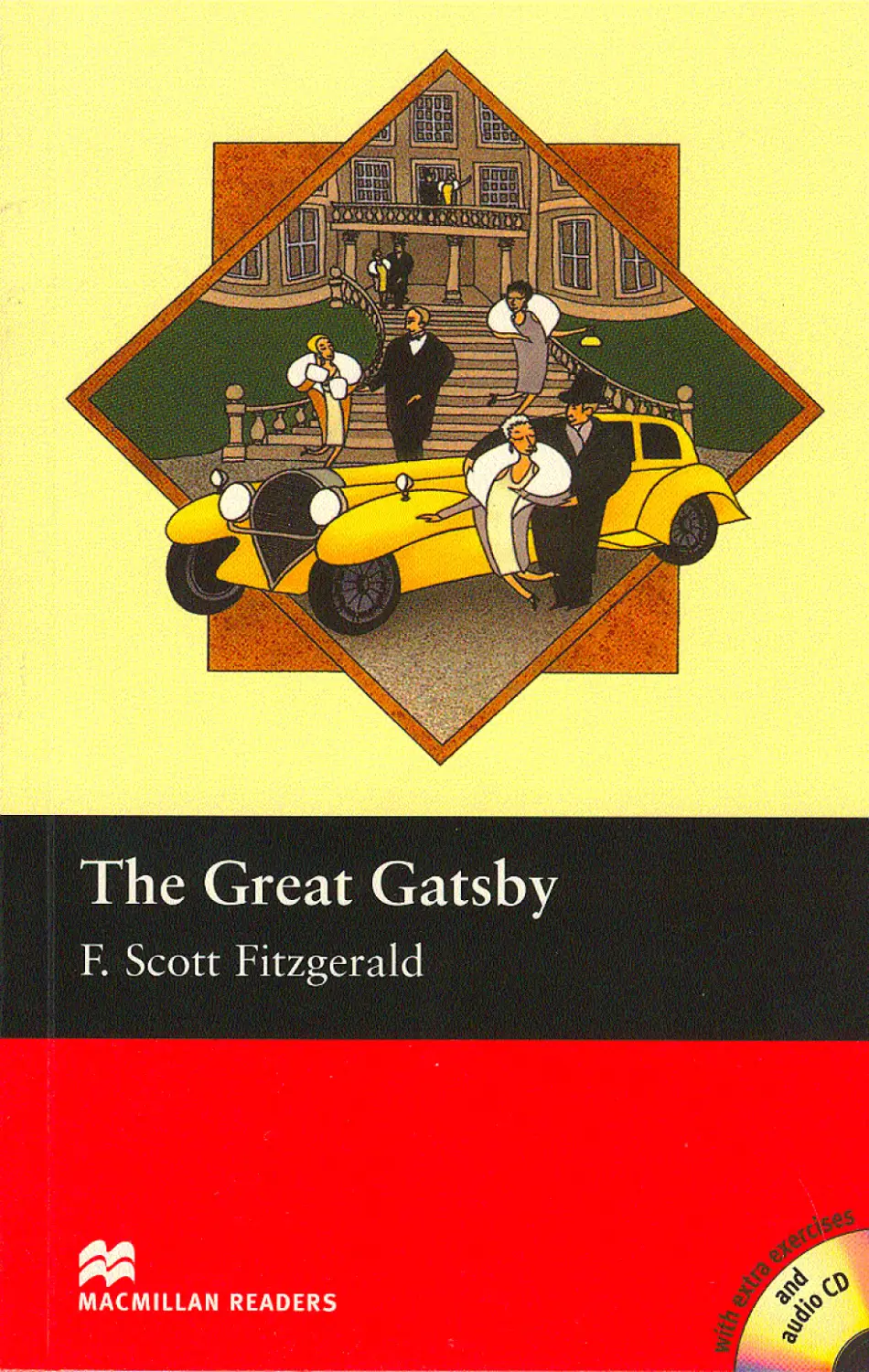


Author: Fitzgerald F.S.
Tags: english novel fiction language learning american literature



Text
                    The Great Gatsby

E Scott Fitzgerald

MACMILLAN READERS

INTERMEDIATE LEVEL

F. SCOTT FITZGERALD

The Great Gatsby

Retold by Margaret Tarner

Й? MACMILLAN
INTERMEDIATE LEVEL

Founding Editor: John Milne

The Macmillan Readers provide a choice of enjoyable reading
materials for learners of English. The series is published at six levels
- Starter, Beginner, Elementary, Pre-intermediate, Intermediate
and Upper.

Level control

Information, structure and vocabulary are controlled to suit the
students’ ability at each level.

The number of words at each level:

Starter	about 300 basic words
Beginner	about 600 basic words
Elementary	about 1100 basic words
Pre- intermediate	about 1400 basic words
Intermediate	about 1600 basic words
Upper	about 2200 basic words

Vocabulary

Some difficult words and phrases in this book are important for
understanding the story. Some of these words are explained in the
story and some are shown in the pictures. From Pre-intermediate
level upwards, words are marked with a number like this: ..?. These
words are explained in the Glossary at the end of the book.
Contents

Introduction	5

1	Tom and Daisy	6

2	Myrtle Wilson	12

3	I Meet Gatsby	19

4	I Have Lunch With Gatsby	26

5	Daisy and Gatsby: Start of the Dream	32

6	Daisy Comes to Tea	36

7	Gatsby’s Last Party	41

8	The Hottest Day of Summer	45

9	Death in the Evening	53

10	The End of a Dream	58

11	I Go Back to the West	66

Points for Understanding	68

Glossary	73

List of titles at Intermediate Level	79

Introduction

My name is Nick Carraway. I was bom in a big city in the

Middle West1. My family has been well-known there
for seventy years. My father’s university was Yale at New Haven,
Connecticut and I went there, too. I graduated2 in 1915 and then
went to fight in the Great War.

When I came back from the War, life in the Middle West
was dull. I could not settle down3. I decided to go East and learn
the bond business4. My father agreed to pay my expenses for
the first year. So, in 1922, I went to New York. I had planned
to stay in the East for several years, but I was there for only one
summer. This book is the story of that summer.

I arrived in New York in spring. The weather was already
warm and the city was hot and uncomfortable. I looked around
for somewhere cheap to live. I found a little house about twenty
miles from New York, near the village of West Egg.

My house was on Long Island, near the sea. It stood
between two enormous5 houses that had been built for
millionaires. The house on the right of my house had a
swimming pool and was surrounded by beautiful lawns and
gardens. It was Gatsby’s house. And this is Gatsby’s story, but
of course, I didn’t know Gatsby then . . .
1_

Тот and Daisy

That spring, the sun shone every day. I was lonely at first in
the East. But I felt that this was the real beginning of my
life. I walked in the fresh air. I bought books. I worked hard. I
was trying to make myself a successful businessman.

One evening, the phone rang. It was my cousin, Daisy.

‘Hallo, Nick,’ she said in her soft voice. ‘Do you know we
are neighbours? Tom and I are living across the bay6, in East
Egg. I think we’ve settled down at last. Do come to dinner,
Nick. I’d love to see you.’

Of course, I agreed. I wanted to see my cousin Daisy again.
She had married Tom Buchanan, a man I had known at Yale
University. Tom had been a famous football player at college.
His family was very rich and Tom had spent money carelessly.
Now he and Daisy had left Chicago, where I had last seen them.
After the War, they had travelled around America and Europe.
I did not believe they had really settled down. They were too
rich and too restless7.

So, a few days later, I drove over to East Egg. The
Buchanan’s house was a big one, overlooking the bay. The
lawns and gardens started at the house and went down to the
sea. It was late afternoon and the weather was warm and windy.
All the windows at the front of the house were wide open.

Tom Buchanan stood on the porch8, his legs wide apart.
He was a fainhaired man of about thirty. He wore smart riding
clothes9 and his body looked strong and cruel.

We talked for a few minutes on the sunny porch.
‘I’ve got a nice place here,’ Tom told me. He took
hold of my arm and showed me the outside of the house.
Then we looked at the rose garden and walked down to
the sea. There was a big motorboat at the end of the
dock10.

‘Come inside now and see Daisy,’ Tom said.

We walked into the house and into a high room with
windows at either end. The windows were open and the wind
blew the curtains up towards the ceiling, then down towards
the thick carpet.

Two young women were sitting on an enormous couch11.
Their white dresses blew about in the wind until Tom shut the
windows.

The younger girl on the couch was Miss Baker. The other
girl was my cousin, Daisy. Daisy leant forward and gave a
charming12 little laugh.

‘I’m so very happy to see you again,’ Daisy said. Her eyes
were bright and exciting, but her smile was sad. I told Daisy
that I had stayed in Chicago on my way to New York. Lots of
friends had sent her their love.

‘That’s wonderful,’ Daisy cried. ‘Let’s go back, Tom.
Tomorrow!’

‘I’m staying here, in the East,’ Tom said firmly. ‘I’ll never
live anywhere else.’

At that moment, drinks were brought in. Miss Baker did
not take one.

‘No, thanks,’ she said. ‘I’m in training13.’

Tom looked at her in surprise.

‘You are?’ He took his drink and drank it quickly. ‘I don’t
know how you get anything done.’

I looked at Miss Baker and wondered what she did. She was
Two young women were sitting on an enormous couch.
slim, with grey eyes and a pale, unhappy face. I was sure I had
seen her before.

‘You live in West Egg/ Miss Baker said to me. ‘I know
somebody there. Gatsby. You must know Gatsby/

‘Gatsby?’ Daisy asked quickly. ‘What Gatsby?’

Before I could answer, we were told that dinner was ready.
Tom Buchanan led14 me from the room. We were dining
outside, on the porch. Four candles were burning on the table.

‘Why candles?’ said Daisy, putting them out. ‘It’s not dark
enough for candles.’

Miss Baker sat down at the table and yawned.

‘We ought to do something,’ she said in a tired voice.

‘All right,’ said Daisy. ‘What shall we do? What do people
do, Nick?’ she asked me.

When dinner was nearly over, the phone rang in the house.
The butler15 came out and said something quietly to Tom.
Tom stood up without saying anything and went inside. Daisy
smiled at me across the table. Then she suddenly stood up and
walked quickly into the house. Miss Baker leant forward in
her chair.

‘Mr Gatsby is my neighbour,’ I began.

‘Shhh . . .! Don’t talk. I want to see what happens,’ Miss
Baker said.

‘Is something happening?’ I asked.

‘Don’t you know?’ Miss Baker said. ‘Tom’s got a woman in
New York. I thought everyone knew. But she shouldn’t phone
him at home, should she?’

At that moment, Daisy and Tom came back together.

‘So sorry we had to leave you,’ Daisy said.

The candles were lit again. We sat for a while in silence,
finishing our wine. Then Tom and Miss Baker walked back
into the house. Daisy put her elbows on the table and rested
her head in her hands.

‘We don’t know each other very well, Nick,’ she said softly.
‘You didn’t come to my wedding.’

‘I wasn’t back from the War.’

‘That’s true. Well, Nick, I’ve had a very bad time. I don’t
really care about anything any more. Shall I tell you what I said
when my daughter was born?’

‘Do.’

‘Well, when I knew I had a girl - I cried. Then I was glad.
I hope she’ll be a fool. That’s the best thing for a girl to be,
a beautiful little fool. I think life’s terrible, Nick. I’ve been
everywhere and done everything. And I hate it all!’

When Daisy was speaking, I believed her. I felt sorry for her,
too. Then I saw an unpleasant little smile on her lovely face and
I knew she had not been telling the truth.

Inside the house, Tom and Miss Baker were sitting on the
long couch. She was reading aloud from a magazine and the
light shone on her golden hair.

As Daisy and I came in, Miss Baker threw down the
magazine and stood up.

‘It’s ten o’clock,’ she said. ‘Time for me to be in bed.’

‘Jordan’s playing in the big golf match tomorrow,’ Daisy
explained.

‘Oh, you’re Jordan Baker,’ I said. I had seen her picture in
the newspapers. I had heard a story about her, too - how she
had behaved badly in a golf match.

‘Goodnight, Mr Carraway,’ Jordan said softly. ‘I’ll see you
again sometime.’

‘Of course you will,’ said Daisy. ‘I think I’ll arrange your
marriage. I’ll always invite you together and . . .’
‘Goodnight/ Miss Baker called from the stairs. ‘I haven’t
heard a word/

‘She’s a nice girl/ said Tom after a moment, ‘but she
shouldn’t travel round the country alone?

‘But Nick’s going to look after her now, aren’t you, Nick?’
said Daisy. ‘Jordan’s from my home town, Nick. We grew up
together?

Tom looked hard at Daisy.

‘Have you been telling Nick secrets?’ he asked.

‘Have I?’ said Daisy, smiling at me. ‘What did we talk
about, Nick? 1 can’t remember?

‘Don’t believe everything she tells you, Nick,’ Tom said.

A few minutes later, I went home. Tom and Daisy came
to the door and stood there together. Two rich people, with
everything they wanted. But Daisy had told me she was
unhappy. And Tom had a woman in New York.

When I got back to West Egg, I sat for a while outside my
house. In the bright moonlight, a cat moved silently across
the garden. As I turned my head to watch it, I saw that 1
was not alone. Fifty feet away, someone was standing on the
lawn of Gatsby’s house. The man stood very still, his hands in
his pockets. I was sure it was Mr Gatsby himself.

I almost called out to him. But he seemed happy to be
alone. He slowly stretched out his arms to the dark water. I
looked out to sea, too. There was one green light, very small
and far away.

When I looked back to Gatsby again, he had gone. I was
alone now, in the dark night.
_2_

Myrtle Wilson

About half-way between West Egg and New York, the
railroad16 crosses a dirty, narrow riven Trains always
wait there. It was because of this that I met Tom Buchanan’s
mistress17 for the first time.

One Sunday afternoon Tom and I were going up to New
York by train. I could see that Tom had been drinking. When
we got to the river, the train stopped as usual. A dusty road ran
by the side of the railroad. It was an ugly place.

Suddenly, Tom stood up and took my arm.

‘Come on,’ he said. ‘I want you to meet my girl. Jump
down!’ And he pulled me off the train, onto the dusty road.
I followed Tom to the only building in sight. There were three
shops in the building and one was a garage. The sign said -

“Repairs GEORGE B. WILSON Cars bought and sold”

Tom and I went into the garage. There was one dusty old
car in the corner. As I was looking around in surprise, a thin
man came out of the office.

‘Hallo, Wilson, old man18,’ Tom shouted. ‘How’s busi-
ness?’

‘Not bad,’ said Wilson unhappily. ‘When are you going to
sell me that car?’

‘Next week. My driver’s working on it now.’

‘He works slow, doesn’t he?’ said Wilson.

‘No, he doesn’t. And if you feel like that, I can sell it to
someone else,’ Tom said angrily.
‘I don’t mean that,’ said Wilson. ‘I . . .’

His voice stopped. I heard footsteps on the stairs. Then a
woman was standing in the doorway.

She was in her middle thirties. She was not beautiful, but
her face and body were full of life. She smiled slowly and walked
past her husband. She shook hands with Tom and looked into
his eyes.

‘Why don’t you get some chairs, George, so everyone can
sit down?’ she said.

‘All right,’ said George Wilson hurriedly and he went
towards the little office.

‘I want to see you,’ Tom said quickly to the woman. ‘Get on
the next train. I’ll meet you in New York.’

‘All right.’

She moved away. George Wilson came out with two dusty
chairs. But Tom had already turned to go.

‘It’s good for Myrtle to get away,’ Tom said, as we were waiting
for the next train.

‘Doesn’t her husband care?’

‘Wilson? He thinks she goes to New York to meet her sister.
He’s a fool.’

And so Tom Buchanan, his girl and I went up to New York.
But Mrs Wilson sat in another part of the train. At the station
in New York, she bought magazines and perfume. We all got
into a taxi. Almost at once, Mrs Wilson told the driver to
stop. An old man was standing by the roadside with a basket
of puppies.
9 «* ,'Hi

««•Ч	*м|

I heard footsteps on the stairs. Then a woman was standing
in the doorway.
*1 want one of those dogs/ Mrs Wilson said. ‘It will be nice
to have one in the apartment19* What kind are they?’ she asked
the man. ‘I want a police dog.’

The old man looked into the basket.

‘I got all kinds, ma’am,’ he said, pulling out a puppy.

‘That’s not a police dog,’ said Tom.

‘No,’ said the old man.

‘I think it’s cute20,’ said Myrtle Wilson. ‘How much is
it?’

‘Ten dollars, ma’am.’

‘Here’s your money,’ said Tom impatiently to the man.
‘You can get ten more dogs with it.’

We drove over to Fifth Avenue21 and I tried to leave
them there.

‘No, you don’t,’ said Tom quickly. ‘Myrtle wants you to see
the apartment, don’t you, Myrtle?’

‘Sure22,’ Myrtle Wilson said. ‘I’ll phone my sister,
Catherine. People say she’s beautiful.’

So we drove on until we came to the apartment house.
Myrtle Wilson got out of the taxi like a queen.

‘I’m going to ask the McKees to come up,’ she said in the
elevator23. ‘They live in the apartment below. And I’ll phone
my sister, too, of course.’

The apartment was four small rooms on the top floor. The
living room was crowded with furniture. Mrs Wilson sent the
elevator boy24 out to buy food for the dog. Tom took a bottle
of whisky from a locked cupboard.

I have been drunk only twice in my life. The second time
was that afternoon. I remember Myrtle Wilson sitting on
Tom’s knee. After a time, I went out to buy some cigarettes.
When I came back, the living-room was empty. So I sat
there smoking and reading the magazines* Just as Tom and
Myrtle came out of the other room, the sister, Catherine,
arrived. She was about thirty, thin and red haired, with a
white face. Then the McKees came up from the apartment
below.

Myrtle Wilson had changed her dress. It was very tight and
looked expensive. Her laughter and the way she moved had
changed, too. She spoke and walked like a rich, fashionable
woman.

‘I like your dress,’ said Mrs McKee.

‘This old dress? I’ve had it for years,’ Myrtle laughed.

‘Have something to drink,’ Tom said to the McKees. ‘Get
some more ice, Myrtle, before everyone goes to sleep.’

‘I told the boy about the ice,’ Myrtle said angrily. ‘These
people! You have to tell them all the time.’

Myrtle’s sister, Catherine, sat down beside me on the
couch.

‘Do you live down on Long Island, too?’ she asked me.

‘I live at West Egg.’

‘Really? I was at a party there about a month ago. At the
house of a man called Gatsby. Do you know him?’

‘I live next door to him.’

‘Do you? He’s awfully rich, you know. People say he got his
money from Germany. In the War. I’m afraid of him.’

Catherine moved closer and looked across the room at
Tom and Myrtle.

‘Both of them are unhappily married,’ she said. ‘But Tom’s
wife is a Catholic. She won’t divorce25 him.’

I knew this was untrue and I was shocked.

‘Why did you marry Wilson, Myrtle?’ Catherine called
across the room. ‘Nobody made you do it.’

Myrtle laughed.

‘Well, I thought he was a gentleman. I must have been
crazy!’

Tom now sent the elevator boy to buy some sandwiches
and a second bottle of whisky. I wanted to go home. I went
to the window and looked down into the dark street. Were
people looking up at our lighted window and wondering what
was going on?

Myrtle Wilson called to me to sit down again. She began to
tell me about her first meeting with Tom.

‘It was on the train,’ she said. ‘We couldn’t stop looking
at each other. When we got to New York, we got into a taxi
together. I was so excited that I couldn’t see where we were
going. But I didn’t care. You can’t live forever, you know. You
can’t live forever.’

The room was filled with Myrtle’s loud, false26 laughter.
She turned to Mrs McKee.

‘My dear,’ Myrtle said, ‘I’m going to give you this dress.
I’m getting another tomorrow. I’ve got so many things to buy
- a collar for the dog, an ashtray . . . and I must go to the
hairdresser’s.’

It was nine o’clock. Then I looked at my watch again - it
was ten. The room was full of smoke. People were coming and
going, shouting to each other across the room.

At about midnight, Tom and Myrtle started to argue.

‘Daisy! Daisy! Daisy!’ Myrtle Wilson was shouting. ‘I’ll say
her name whenever I want to. Daisy! Dai. . .’

With a short, hard movement, Tom Buchanan hit her
across the nose. Myrtle cried out with pain. Someone got
towels. Then the towels, covered with blood, were all over
the floor. People were screaming and shouting. Myrtle Wilson
The room was filled with Myrtle’s loud, false laughter.
lay on the couch. Her nose was still bleeding and she was crying
loudly*

Mr McKee woke up and walked towards the door* I picked
up my hat and followed him out* We went down in the elevator
together*

Then I was on the station, half-asleep, waiting for the early
morning train to West Egg*

_3

I Meet Gatsby

My neighbour, Mr Gatsby, gave parties all through the
summer* Nearly every night his house and gardens were
full of music* Men and women walked among the beautiful
flowers, laughing, talking and drinking champagne27*

In the afternoons, Gatsby’s guests28 swam in the sea or sat
on his beach* His motorboat roared across the bay* Every
weekend, Gatsby’s cars carried his guests to and from the city*

Coloured lights hung from the trees in Gatsby’s gardens.
Food was brought from New York - rich, beautiful food - and
it was put on long tables under the trees. There was every kind
of drink.

At seven o’clock, the band started to play* Cars from New
York were parked outside Gatsby’s house. Soon, everyone was
a little drunk and talking to people they had never met before.

As it became dark, the lights grew brighter. The music and
laughter were louder now. More and more people arrived* A
girl began to sing with the band* The party had started!
Not all these people had been invited to Gatsby’s house.
All kinds of people drove out to Long Island and stopped
outside Gatsby’s door. Then they joined the party and started
to have a good time. Sometimes they were introduced to
Gatsby. Sometimes they never saw him.

One day, I was invited to one of Gatsby’s parties. As soon
as 1 arrived, I began to look for Gatsby to thank him for his
invitation. But no one knew where he was.

As I went to get a drink, I saw Jordan Baker. I walked
towards her, glad to see someone I knew.

‘I thought you might be here,’ Jordan said.

We took our drinks and sat down at a small table under a
tree. Jordan began to talk to a girl in a yellow dress.

‘Do you come to these parties often?’ Jordan asked her.

‘I come here when I can,’ the girl said. ‘No one cares what I
do, so I always have a good time. Last time I was here, I tore my
dress. Do you know, Gatsby sent me a new one! It cost him 265
dollars!’

‘There’s something strange about a man like that,’ another
girl said. ‘He doesn’t want any trouble from anybody.’ She
leant across the table and said, ‘Somebody told me that
Gatsby killed a man!’

‘I heard he was a German spy,’ a man added.

‘Oh, no, he was in the American army in the War. But
I’m sure he’s killed a man!’ someone else said. And the girls
laughed excitedly.

Supper was now being served. Jordan and I left our table
and went to look for Gatsby.

The bar in the garden was crowded, but Gatsby wasn’t
there. We walked into the house, opened a door and found
ourselves in a library. A fat, middle-aged man was leaning

against the table. He stared at us through his round glasses.

‘What do you think?’ he asked. ‘All these books - they’re
real29!’

‘Are they?’

‘Sure. I thought they were made of cardboard. Here, look!
Gatsby is smart30, he does everything right!’ And the man held
up a book in front of our faces.

‘How did you get here?’ the fat man asked. ‘I was brought.
I’ve been drunk for a week.’

He shook hands with us and smiled. Jordan and I left him
and went back into the garden.

People were dancing now. The voices and the laughter
were very loud. The moon was high in the sky. Champagne
was being served in big glasses.

Jordan and I sat down at a table with a well-dressed man of
my own age. I was enjoying myself, now. The music stopped for
a moment. The man at our table looked at me and smiled.

‘I think I know your face,’ the man said. ‘Weren’t you in
France during the War?’

‘Yes, I was.’

‘Me too,’ he said. We talked about the War for a few
minutes. Then the man told me that he had a new motorboat.

‘Want to go out with me in the morning, old sport31?’ he
asked*

‘Sure, what time?’

‘Let’s say nine o’clock.’

I looked around the garden and smiled.

‘This is an unusual party,’ I told the man. ‘I haven’t seen
my host32 yet. Gatsby sent me an invitation this morning. I
ought to thank him.’
People were dancing now. The voices and the laughter were
very loud.
The man stared at me in surprise.

‘I’m Gatsby,’ he said. *1 thought you knew, old sport. I’m
not a very good host, am I ?’

Gatsby smiled. He had a pleasant smile. His smile made
me feel important. I looked at Gatsby with interest. He was
a tough-looking young man, but he had beautiful clothes and
beautiful manners.

At that moment, the butler hurried up to our table. Gatsby
stood up and bowed to each of us.

‘Chicago’s on the phone, you must excuse me,’ he said
politely. ‘Please ask for anything you want, old sport. I will see
you again later.’

When Gatsby had gone into the house, I said, ‘Who is he,
Jordan? Does anyone know?’

‘He’s a man called Gatsby. That’s all I know.’

‘But where is he from? What does he do?’

‘Now you’ve got interested in him,’ Jordan smiled. ‘Every
one does. He told me once he was educated at Oxford,
England. But I don’t believe it.’

‘Why not?’

‘I don’t know. But who cares? He’s got good manners and
he gives big parties. I like big parties.’

There was a crash on the drums and the bandleader spoke.

‘A new jazz tune for Mr Gatsby,’ he cried.

The band began to play. I looked up and saw Gatsby
standing alone on the white steps in front of his house. His
face was tanned33 and his hair was cut short. Gatsby stood
there, very straight, his hands in his pockets. I wondered why
people seemed a little afraid of him.

When the jazz tune ended, every girl kissed the nearest
man and fell into his arms, half-drunk. But there was no girl
in Gatsby’s arms. He stood there, on the steps, alone.

The butler came back to our table.

‘Miss Baker,’ he said, ‘Mr Gatsby would like to speak
to you.’

‘To me?’ Jordan got up slowly and walked into the house.

It was almost two o’clock now. Someone was singing. I
went into the house to listen. A tall woman was standing by
the piano, very drunk. As she sang, she cried. Suddenly, she
dropped her glass and fell back into a chair, fast asleep.

It was time to go home. As I walked towards the door,
Jordan Baker and Gatsby came out of the library together.

‘I’ve heard the most surprising thing,’ Jordan told me
quietly. ‘But I can’t tell you about it - it’s a secret!’ She
yawned. ‘I must go. My friends are waiting. Do phone me.’

A few guests were standing near Gatsby. 1 went up to him to
say goodbye.

‘Don’t forget we’re going out in the boat, old sport,’ he
said. ‘At nine o’clock.’

Then the butler said, ‘Philadelphia wants you on the phone,
Mr Gatsby, sir.’

‘All right, wait a minute.’

Gatsby smiled at me.

‘Goodnight, old sport, goodnight.’

I walked down the steps. The lights of a dozen cars shone on
the gardens. Drunken voices were saying goodnight.

I walked across the lawn in the moonlight. The cars drove
away. The gardens were quiet and empty.

All alone, Gatsby stood on the white steps, waving
goodbye.
4

I Have Lunch With Gatsby

I worked hard that summer. I met a lot of business people and
began to understand my job. I enjoyed living in the East. I
liked New York and its crowds of people.

I didn’t see Jordan Baker for a while. Then, about midsum-
mer, we met again. Was I in love with Jordan? I don’t think so,
but I enjoyed being with her.

Gatsby went on giving parties and Jordan and I went to
some of them. All the most fashionable people went to Gatsby’s
parties. They came to Gatsby’s house, drank his wine and told
each other crazy stories about him: ‘He’s a bootlegger ... a
crook ... a gambler . . .34 he’s killed a man . . .’

All these things were said about Gatsby. But no one knew
the truth about him. And, while he went on giving parties, no
one cared.

One morning, late in July, Gatsby’s car stopped outside my
door. It was the first time Gatsby had called on me.

‘Good morning, old sport,’ he said. ‘You’re having lunch
with me today. We can drive up to New York together.’

Gatsby got out of his beautiful yellow car and stood beside it
proudly.

‘It’s pretty, isn’t it, old sport?’ he said. ‘Have you seen it
before?’

Of course I’d seen it. Everyone in West Egg knew Gatsby’s
car. Yellow and silver, it shone in the morning sun. We made
ourselves comfortable on the green leather seats and set off for
New York.
I hadn't talked much to Gatsby before. I was interested
in him, but I knew very little about him. As he drove
along, Gatsby didn’t say anything at first. Then suddenly he
spoke.

Took here, old sport,’ he said, ‘what do you think
of me?’

Before I could answer, Gatsby went on, ‘You must
have heard a lot of stories about me. Well, now you’re
going to hear the truth. I’m the son of rich people in
the Middle West - they’re all dead now. I grew up in
America, but I was educated at Oxford. All my family went
there.’

Gatsby looked at me for a moment. He was talking quickly
and I didn’t believe a word he was saying.

‘What part of the Middle West are you from?’ I asked.

‘San Francisco.’

‘San Francisco? But that’s not. . .’

‘My family died,’ Gatsby went on in a slow, sad voice.
‘After that, I lived all over Europe. I travelled, collected jewels,
hunted animals ... I was spending money to forget something
very sad.’

I was so sure now that Gatsby was lying, that I almost
laughed.

‘Then the War came, old sport,’ Gatsby said. ‘I was glad.
I tried to die, but I couldn’t. I was a success. I won medals35.
Look, here’s one of them.’

Gatsby took a medal out of his pocket. I looked at it in
surprise.

‘Major Jay Gatsby,’ I read, ‘for Valour Extraordinary36.’

Then Gatsby took out a photograph.

‘I always carry this, too. Taken at Oxford.’
Gatsby took a medal out of his pocket. I looked at it in
surprise.
In the photograph, some young men were standing outside
a college gate, I recognised Gatsby. Was he telling the
truth, then?

‘Гт going to ask you a favour37,’ Gatsby said, putting the
photograph away. ‘That’s why I’ve told you about myself.
You’ll hear more this afternoon.’

‘This afternoon?’

‘Yes, when you have tea with Miss Baker. I’ve asked her to
speak to you . . . about a certain matter.’

Gatsby drove faster. As we passed Wilson’s Garage, I saw
Myrtle Wilson selling gas38.

We raced on towards the bridge. There was New York on
the other side of the river. I felt excited, as I always did, when
I saw the city.

‘Anything can happen in New York,’ I thought, ‘anything.
I can even believe Gatsby’s story!’

At noon, I left work to go to the restaurant where I was having
lunch with Gatsby. He was already there, talking to a small
dark man with a large head.

‘Mr Carraway,’ Gatsby said, ‘this is my friend, Mr Meyer
Wolfsheim.’

Gatsby led us to a table and ordered drinks.

‘This is a nice restaurant,’ said Mr Wolfsheim, looking
round. ‘But the place across the street is better.’

‘What place is that?’ I asked.

‘The old Metropole,’ Mr Wolfsheim said sadly. ‘I remem-
ber the night they shot Rosy Rosenthal over there. Shot him
four times and then drove away . . . Poor Rosy, he was a good
friend of mine.’

The food arrived and Mr Wolfsheim began to eat greedily.
All the time he was eating, he was watching everyone in the
room. Gatsby suddenly looked at his watch. He stood up and
hurried out.

‘He has to phone,’ said Mr Wolfsheim. ‘He does a lot of
business with Chicago. Gatsby’s a fine fellow, isn’t he? Good
looking, and a perfect gentleman39. He’s an Oxford man, you
know.’

‘Oh, is he? Have you known Gatsby for long?’ I asked.

‘Several years,’ Wolfsheim answered. ‘I met him after the
War. He comes from a good family. He’s a gentleman to
everyone, especially women. He’d never look at another
man’s wife.’

When Gatsby came back to our table, Mr Wolfsheim got to
his feet and looked round the room.

‘I have enjoyed my lunch,’ he said, ‘but I’ve got to leave you
two young men now.’ And he hurried away.

‘Wolfsheim’s well-known on Broadway40,’ Gatsby told me.

‘Who is he, then - an actor?’

‘No, Meyer Wolfsheim’s a gambler. He’s clever, but he’s
done a lot of dangerous things.’

‘Has he ever been in jail?’

‘They can’t prove anything, old sport. He’s too smart.’

It was time to go. As we stood up, I saw Tom Buchanan on
the other side of the crowded room. When he saw me, Tom
came over.

‘Where’ve you been?’ he asked me angrily. ‘Daisy wants to
know why you haven’t phoned.’

‘This is Mr Gatsby, Mr Buchanan,’ I said.
When Gatsby came back to our table, Mr Wolfsheim got to
his feet and looked round the room.
The two men shook hands without speaking. There was a
strange look on Gatsby’s face,

‘How are you?’ Tom asked me. ‘And why are you eating
here?’

‘I’ve been having lunch with Mr Gatsby , . .’

And I turned to speak to Gatsby, but he had gone.

5

Daisy and Gatsby: Start of the Dream

Later that afternoon, I met Jordan Baker at the Plaza Hotel.

After tea, she told me that Gatsby had known Daisy. They
had known each other in the Middle West, five years before.

‘Daisy and I grew up in the same town,’ Jordan began. ‘In
1917, Daisy was eighteen. She was the most beautiful and the
most popular girl in Louisville. Her family was very rich. Daisy
always dressed in white and she had a little white car. She went
out with all the young officers. The telephone in her house rang
all day long,

‘One day in October, I was walking past Daisy’s house.
Daisy was sitting in her car with an officer I hadn’t seen
before. They were so busy talking that they didn’t see me.
But I remember the way the young officer looked at Daisy, To
him, she was the most beautiful thing in the world.

‘About a month later, Daisy’s mother found her packing
her bag to go to New York. Daisy wanted to say goodbye to
an officer who was going overseas. Her family stopped her, of
course.’

'Was the officer Gatsby?’ I asked.

'Of course,’ said Jordan. 'Daisy was sad for a time and
didn’t go out much. By the following autumn, she was gay
again. In February, she got engaged to a young man from
New Orleans. But in June, she married Tom Buchanan
from Chicago. It was the biggest wedding our town had
ever seen.’

'Were you there?’ I asked.

'I was a bridesmaid41,’ Jordan said. 'On the day before
the wedding, Tom gave Daisy some pearls, worth 350 000
dollars. That evening, Daisy’s family was giving a big din-
ner.

‘Half an hour before the dinner started, I went up to
Daisy’s room,’ Jordan went on. 'The pearls were on the
floor. Daisy was lying on the bed with a bottle of wine
in one hand and a letter in the other. She was very
drunk.

‘Never had a drink before,’ Daisy said, 'but how I enjoy
it!’ She picked up the pearls and said, "Here, take them
downstairs. Tell them Daisy’s changed her mind.” Then
she began to cry. She cried and cried. I found her mother’s
maid and we got Daisy into a cold bath. The letter in her
hand came to pieces in the water. Half an hour later, Daisy
walked downstairs. She looked very beautiful and the pearls
were round her neck.

'Next day, Daisy married Tom Buchanan and they went
on their honeymoon. I met them again when they came back.
I’ve never seen a girl so in love with her husband. That was in
August.
‘She picked up the pearls and said, “Here, take them downstairs.
Tell them Daisy’s changed her mind.” ’
‘A week later, Tom crashed his can The girl with him broke
her arm and the story got into the papers. The girl was a maid
from the hotel.

‘The following April, Daisy had a baby girl and the
family went to France for a year. Then they went back to
Chicago.

‘Well, about six weeks ago, I asked you about Gatsby,’
Jordan went on. ‘Daisy heard me. She knew he was the same
man she had known in Louisville.’

‘It’s strange that Gatsby came East, too,’ I said.

‘But it isn’t strange at all,’ Jordan replied. ‘Gatsby
came here to be near Daisy. He can see her house across
the bay.’

Then there was a reason for all those parties. Gatsby
had hoped that one evening, Daisy would walk into his
house.

‘Gatsby wants you to do something for him,’ Jordan was
saying. ‘He wants you to invite Daisy to tea. Then he’ll call in,
too. He wants to show Daisy his house.’

I thought for a moment. Gatsby wasn’t asking very
much. He had waited five years. He had given big par-
ties to strangers. And why? To see Daisy, one afternoon,
at tea.

‘Does Daisy want to meet Gatsby again?’ I asked.

‘Oh, she doesn’t know about it,’ Jordan answered. ‘Gatsby
wants it to be a surprise.’

It was dark outside by now. I asked Jordan out to dinner and
we took a taxi. It was a beautiful night.

I had heard enough about Daisy and Gatsby.

I put my arm around Jordan, looked into her grey eyes and
kissed her.
6

Daisy Comes to Tea

It was nearly two o’clock in the morning when I got home. For
a moment, I thought my house was on fire. Then I saw that
all the lights were on in Gatsby’s house. But everything was
silent. There was no music and no happy laughter.

As I stood there, Gatsby walked across the lawn towards
me.

‘I thought it was a party,’ I said.

‘No, I’m all alone, old sport. Why not come for a drive in
my car?’

‘It’s too late.’

‘Well, what about a swim? I haven’t used the pool all
summer.’

‘I’ve got to go to bed,’ I said.

‘All right, old sport.’ But Gatsby did not move. I knew what
he wanted to ask me.

‘I’ve had a talk with Miss Baker,’ I said. ‘I’ll phone Daisy
tomorrow. What day would be best?’

‘1 don’t want to put you to any trouble . . .’ Gatsby began
quickly.

‘How about the day after tomorrow?’

‘Fine,’ Gatsby said. ‘I must get the grass cut . . . get a few
flowers. We must have everything right, old sport.’

When the day of the tea came, it was pouring with rain. Gatsby
had sent a man to cut my lawn. At two o’clock, Gatsby sent
over enough flowers to fill every room in my little house. An
hour later, Gatsby himself arrived. He was wearing a white suit,
silver shirt and gold tie. He looked pale and tired.

Gatsby sat down and tried to read. But he looked up at
every sound. Suddenly, he stood up and said, ‘I’m going home.
Nobody’s coming.’

‘Don’t be silly,’ I said. ‘It’s only two minutes to four.’

So Gatsby sat down again and at that moment we both
heard the sound of a car.

As I opened the front door, Daisy stopped her car and
got out.

‘Why did I have to come alone?’ Daisy said with a little
smile. ‘Are you in love with me, Nick?’

I took Daisy’s hand and led her into the living-room.
Gatsby stood there, very pale, his hands in his pockets.

For half a minute there was silence. Then Daisy gave a little
laugh and said, ‘I’m so very glad to see you again, Jay. It’s been
a long time.’

‘Five years next November,’ said Gatsby, staring at Daisy.

I went into the kitchen to get the tea. After a few minutes,
Gatsby came after me and closed the door.

‘This is a terrible mistake!’ he said. ‘It’s too late, old sport,
too late.’

‘Nonsense. Go back and talk to her. You’re both shy42,
that’s all.’

I decided to leave them alone for half an hour. I went to the
window. The rain had stopped now and the sun was shining.

When I took in the tea, I made a lot of noise. But I don’t
think they heard a sound.

Daisy and Gatsby were both sitting on the couch. There
were tears on Daisy’s face, but she was smiling. Gatsby’s face
was shining with joy. Their happiness filled the room.

‘Oh, hallo, old sport,’ Gatsby said, as if he hadn’t seen me
for years. ‘I want you and Daisy to come over to my house.’

‘You’re sure you want me to come?’

‘Sure of it, old sport.’

And so Daisy saw Gatsby’s enormous house for the first
time.

‘That’s your house over there, Jay?’ she cried excitedly.
‘Do you live there alone? It’s so big!’

‘I always keep it full of famous, interesting people,’ Gatsby
told her.

We wandered through the gardens. Daisy admired every
flower, every tree, everything she saw.

We came at last to the white steps in front of the house. It
was strange to see them quiet and empty.

Inside the house, we wandered through room after room.
We admired the books in the library. All the beautiful rooms
were empty and silent. We went upstairs and looked at bed-
rooms and bathrooms, painted in pale, rich colours. Finally,
we came to Gatsby’s own rooms, where we sat down to have
a drink.

Gatsby had never stopped looking at Daisy. Once, he
nearly fell downstairs. He was trying to see everything in his
house through her eyes. He was like a man walking in his sleep.

‘It’s a funny thing, old sport,’ Gatsby said slowly, ‘when I
see ... 1 can’t. . . believe . . .’

He put down his drink and opened two big cupboards. He
began to take out shirts, suits, ties . . .

‘I’ve got a man in England who buys me clothes,’ Gatsby
explained. ‘He sends things over twice a year . . .’
The brightly coloured clothes covered the table and fell
onto the floor. Silk, wool, cotton - the pile grew higher and
higher.

Suddenly, Daisy hid her face in the shirts and began to cry.

‘I don’t know why I’m crying,’ she said. ‘But they’re such
beautiful shirts, Jay. I’ve never seen such beautiful shirts before
in all my life!’

It was getting darker now and the rain had started again. Daisy
and Gatsby stood together, looking out of the window. I began
to walk round the room in the half darkness.

On Gatsby’s desk was a photograph of a tough-looking old
man. The man was dressed in sailing clothes.

‘Who’s this?’ I asked Gatsby.

‘That’s Mr Dan Cody, old sport. He used to be my best
friend, years ago. He’s dead now. Dan Cody had a big yacht43
and we sailed around together for nearly five years. He was like
a father to me.’

This was one of the few things that Gatsby told me about
himself that was really true. But 1 did not know that then.

I was going to ask Gatsby more about Mr Cody, but Daisy
suddenly cried out, ‘Come back here, Jay, quick!’

In the west, pink and golden clouds had formed over
the sea.

‘Look at that,’ Daisy said softly to Gatsby. ‘I’d like to put
you in one of those clouds and push you around in it!’

I tried to go then, but they wouldn’t let me.

‘I know what we’ll do,’ Gatsby said. ‘We’ll have
Klingspringer play the piano.’
Tve never seen such beautiful shirts before in all my life!"
Gatsby found Klingspringer. He was a young man who
lived in the house. In the music room, Gatsby turned on a lamp
beside the piano. He lit Daisy’s cigarette with a shaking hand.
They sat down together on a couch, away from the light.

Klingspringer sat down at the piano and began to play.

'In the morning
In the evening
Ain't we got fun . . .’he sang softly.

When I went over to say goodbye to Gatsby, he had a
look of surprise on his face. Gatsby had dreamed of Daisy for
almost five years. Now his dream was beside him. He could not
believe it.

They had almost forgotten I was there. Daisy looked up as
I spoke and held out her hand. Gatsby looked up too, but he
didn’t seem to know me.

I went out of the room quietly, leaving them together.

7

Gatsby’s Last Party

I didn’t see or hear from Gatsby for several weeks after this. I
was working hard and spending my free time with Jordan.

But this was the time when everyone was talking about
Gatsby. More and more strangers went to his parties. More and
more strange and crazy stories were told about him. Everyone
seemed to be talking about Gatsby.

Then, one Saturday, I was invited to another of Gatsby’s
parties. Daisy was there too, and Tom had decided to come
with her. Perhaps it was because Tom was there, but the
party seemed different. There was an unpleasant, uneasy
feeling about it. But all the same people were there. They
were drinking champagne as usual, dancing and laughing as
before.

Tom and Daisy arrived as darkness was falling. Gatsby
went over to them at once. Then he took them slowly
round the gardens, pointing out his most famous guests
proudly.

Daisy and Gatsby danced together - I had never seen
Gatsby dance before. Then they walked over to my house
and sat there together for about half an hour. Tom didn’t
seem to care. He found a girl he wanted to talk to and the
evening passed as usual.

I could see that Daisy was not happy at the party. She hated
all these laughing, shouting strangers. They didn’t seem to care
for anybody or about anything.

By the time the Buchanans were ready to leave, Tom was in
a bad temper.

‘Who is this Gatsby anyway?’ Tom asked, as he and Daisy
were waiting for their car. ‘Is he a bootlegger? A crook? He
knows a funny lot of people! Where does he find them? Where
does he get his money from?’

‘Lots of people come who haven’t been invited,’ Daisy said.
‘He’s too polite to tell them to go.’

‘I’d like to know who Gatsby is and what he does,’ Tom
repeated. ‘And I’m going to find out.’

As they got into their car, Daisy looked back at the house
Daisy and Gatsby danced together.
sadly. Gatsby was nowhere to be seen.

I stayed late that night because Gatsby wanted me to. When
everyone had gone, we sat on the steps together.

‘Daisy didn’t enjoy herself,’ Gatsby said.

‘Of course she did.’

‘No, she didn’t have a good time. I couldn’t talk to her. I felt
farther away from her than ever. It’s hard to make her
understand.’

And then Gatsby told me what he wanted. He wanted Daisy
to ask Tom for a divorce. He wanted her to tell Tom that she
didn’t love him - that she had never loved him. That she loved
only Gatsby.

Gatsby wanted to take Daisy back to Louisville, where they
had first met. Gatsby and Daisy would be married. Gatsby
wanted the last five years to be completely forgotten.

Gatsby didn’t seem to understand how much he was asking.

‘Don’t ask Daisy for too much at once,’ I told him. ‘You can’t
repeat the past.’

‘Can’t repeat the past?’ Gatsby said in surprise. ‘Of course you
can! Everything’s going to be the way it was before. She’ll see!’

Gatsby began to talk about the time when he had first met
Daisy. He told me about the first time he had kissed her. That
was when Gatsby’s dream had begun. And he had spent his life
trying to make that dream come true.

But no woman can be turned into a dream. I could see this,
but Gatsby could not. He could see no reason why he and Daisy
should not be happy forever.
8

The Hottest Day of Summer

It was when everyone was talking about Gatsby that his parties
suddenly came to an end.

One Saturday, there were no lights in Gatsby’s house or
in his garden. A few cars drove up to the house, but almost
immediately drove away.

I wondered what was the matter. I decided to go over and
find out.

A new servant opened the door.

‘Is Mr Gatsby sick?’ I asked.

‘No,’ he said rudely.

‘Well, tell him Mr Carraway called.’

‘Carraway. OK,’ and he shut the door in my face.

Next day, Gatsby phoned me.

‘Are you leaving?’ I asked.

‘No, old sport, of course not. I’ve sent all my old servants
away. Daisy comes over in the afternoons. I didn’t want them
to talk about her in the village. Some friends of Wolfsheim are
looking after me now.’

Gatsby was phoning with an invitation from Daisy. She
wanted me to have lunch at her house the following day.
Jordan would be there and, of course, Gatsby too.

Daisy phoned me half an hour later. She seemed glad that
I had accepted the invitation. But her voice was nervous and
excited.

The next day was the hottest day of the summer. The
smallest movement made you hot and tired.
I drove over to the Buchanan’s house with Gatsby in his
big, yellow can Its green leather seats were too hot to touch.

The room where Daisy and Jordan were sitting was dark
and cool. The two girls, both dressed in white, raised their
hands lazily.

‘It’s too hot to move,’ they said together.

Gatsby stood in the middle of the room in his elegant44,
pink suit. He could not believe that he was in Daisy’s own
house. Daisy watched him and gave her sweet, exciting
laugh.

At that moment, Tom opened the door noisily and hurried
into the room.

‘Ah, Mr Gatsby! Hallo, Nick,’ he said, holding out his
hand to me.

‘Make us all a cold drink!’ Daisy cried.

As Tom left the room again, Daisy went over to Gatsby and
kissed him on the mouth.

‘You know I love you,’ she said softly.

When Tom brought in the drinks, we all drank greedily.
We had lunch in the darkened dining-room and drank a lot of
cold beer.

‘What are we going to do this afternoon?’ asked Daisy.

‘And the day after that and the next thirty years?

‘Oh, it’s so hot,’ Daisy went on, almost crying. ‘I know
why don’t we drive to New York?’

She looked across the table into Gatsby’s eyes.

‘Ah,’ Daisy cried, in her soft, exciting voice, ‘you always
look so cool!’

They looked at each other as though they were alone in
the room.

Suddenly, Tom Buchanan understood. His wife, Daisy,
‘You know I love you/ she said softly.
was in love with Gatsby. Tom’s mouth opened a little. He
looked first at Gatsby and then at Daisy.	’

Tom stood up.

‘All right then,’ he said in a hard voice. ‘We’re going to
town. Let’s go!’	<

The girls went upstairs to get ready. We went out onto the	;

porch. ‘Shall we take anything with us to drink?’ Daisy called

down.	;

Til get some whisky,’ Tom answered.

Gatsby turned to me and said, ‘I can’t say anything to him
in his house, old sport.’

‘I think Daisy’s voice told him everything,’ I said.

‘She’s always had everything she’s wanted,’ Gatsby went
on. ‘Daisy’s voice is . . . full of money,’ he added.

That was it. Daisy’s charm was the charm of the rich and
spoilt45.	;

Tom came out of the house with the whisky wrapped in
a towel. Daisy and Jordan followed him, looking cool and {
charming in their white dresses.

‘Shall we all go in my car?’ said Gatsby.	i

‘You take my car,’ Tom said in a loud voice to Gatsby. i
‘Come on, Daisy, I’ll take you in this yellow one,’ he added,
walking towards Gatsby’s car.	s

But Daisy moved away from her husband.

‘No, Tom. You take Nick and Jordan. We’ll follow you.’	’

And she pushed Gatsby towards the Buchanan’s small	:

blue car.	;

Jordan, Tom and I got into the front seat of Gatsby’s car.	§

‘Did you see that?’ Tom asked us angrily. ‘Where did Daisy	j

find a man like that?’

‘He’s an Oxford man,’ said Jordan.
‘Like hell46 he is! He wears a pink suit!’ Tom said angrily.
‘I’m beginning to find out the truth about Gatsby. And it’s not
very pleasant.’

We were all hot and bad-tempered by now. When Tom
reached Wilson’s garage, he had to stop for gas.

Wilson came out slowly and stood in the hot sun. He
looked very ill.

‘Well, come on,’ Tom shouted. ‘Have I got to get the gas
myself?’

‘I’m sick,’ said Wilson. ‘I’ve got to get away. When can you
sell me your old car?’

‘Next week,’ Tom said quickly. ‘What about buying this
yellow one? I got it last week. Why are you going away?’

‘My wife and I are going West,’ Wilson said. ‘I’m getting
her away from here. I’ve found out something . . .’

Tom stared at him.

‘Never mind about that. What do I owe you?’ he said in a
hard, cold voice.

As Tom was giving Wilson the money, Gatsby and Daisy
drove by in the blue car.

At the same moment, I saw Myrtle Wilson looking down at
Jordan from an upstairs window.

There was a look of terrible jealousy on Myrtle Wilson’s
face. She thought Jordan was Tom’s wife.

Tom did not see Myrtle. He was thinking about what
Wilson had said. In one afternoon, Tom seemed to be losing
his wife and his mistress too. He drove on, much too fast, until
he was beside the blue car.

Gatsby stopped and Daisy called out, ‘Where are you
going? It’s so hot. We’ll drive around and meet you later.’

But Tom wanted to stay near Daisy and Gatsby. After some
argument, we all drove to the Plaza Hotel. We took a room
there so that we could have a drink. It was a crazy idea.

The room was large, but it was very hot. We opened all the
windows, but it made no difference.

‘Oh, it’s so hot!’ said Daisy. ‘Why did we come here?’

‘Stop talking about the heat. You make it worse!’ said
Tom, putting the bottle of whisky on the table.

‘Why not leave her alone, old sport?’ said Gatsby. ‘You
wanted to come, you know.’

‘I don’t like being called old sport,’ said Tom, in a bad-
tempered way. ‘Where did you learn to say that?’

‘If you’re rude, Tom, I won’t stay a minute,’ Daisy said.
‘Why don’t you phone for some ice?’

We sat in silence, waiting for the waiter to bring the ice.

Then Tom looked at Gatsby and said, ‘By the way, Mr
Gatsby, you were at Oxford, weren’t you?’

‘Yes ... I went there.’

The waiter came in with the ice. When he had gone, Tom
said, ‘When were you there, exactly?’

‘It was in 1919,’ Gatsby replied quietly. ‘I was only there for
five months. American officers were able to go to an English
university after the War.’

So that story was true. I was glad.

Daisy got up with a smile.

‘Open the whisky, Tom,’ she said, ‘and I’ll make everyone
a drink.’

‘Wait a minute,’ said Tom. ‘I’ve one more question to ask
Mr Gatsby.’

‘Go on,’ said Gatsby politely.

‘What kind of trouble are you trying to make between me
and my wife?’
‘Stop it, please, Tom,’ said Daisy quickly

‘Why should 1?’ Tom shouted. ‘Have I got to watch
a nobody from nowhere47 make love to my wife and say
nothing?’

‘Now, listen,’ said Gatsby. ‘I’ve got something to tell you,
old sport.’

‘Oh, please don’t say anything,’ Daisy said. ‘Why don’t we
all go home? It’s too hot to argue.’

‘I want Mr Gatsby to give me an answer to my question,’
Tom said loudly.

‘Your wife doesn’t love you,’ said Gatsby. ‘She’s never
loved you. She loves me.’

‘You’re crazy!’ cried Tom, jumping to his feet.

‘It’s the truth,’ said Gatsby. ‘We’ve loved each other for
five years, old sport, and you didn’t know!’

‘I tell you you’re crazy,’ Tom shouted again. ‘Daisy loved
me when she married me and she loves me now. And I love
Daisy too. I always have. She knows that.’

Gatsby walked over to Daisy and stood beside her.

‘Tell him the truth. Tell him you never loved him,’ he said.

Daisy looked at each one of us unhappily.

‘I never loved him,’ she said slowly. Then Daisy turned to
Gatsby with a frightened, unhappy look in her eyes.

‘Oh, you want too much, Jay!’ she cried. ‘I love you now.
Isn’t that enough?’ She began to cry. ‘I did love Tom once, but
I loved you, too.’

‘You loved me, too . . .’ Gatsby repeated slowly.

‘I can’t say I never loved Tom. It wouldn’t be true,’ Daisy
said sadly.

‘Of course it wouldn’t,’ said Tom. ‘Now I’m taking you
home, Daisy.’
‘You don’t understand,’ Gatsby said quickly, ‘Daisy’s leav-
ing you/

‘Nonsense?

‘Yes, I am,’ said Daisy, speaking with difficulty,

‘You’re leaving me for a little crook!’ Tom shouted. ‘He’s
a bootlegger. He’s a friend of Meyer Wolfsheim. I’ve been
hearing all about you, Mr Gatsby! You and your friends ought
to be in jail!’

I looked at Gatsby. His face was hard, with a terrible
expression. I could believe then that he had killed a man.
He started to talk to Daisy, quickly, excitedly, Daisy did not
seem to be listening. On that hot afternoon, Gatsby’s dream
was slipping farther and farther away from him.

‘Please, Jay,’ Daisy said suddenly, ‘don’t say any more. You
must stop all this, please.’

Tom smiled. He knew that he had won,

‘You go home, Daisy,’ he said in a quiet voice. ‘Go with Mr
Gatsby in his car. He won’t trouble you again.’

And slowly, sadly, Daisy and Gatsby had gone ...

It was seven o’clock when Jordan and I left the hotel with Tom.
As we drove back over the bridge, I remembered that it was my
thirtieth birthday. I felt sad and tired.
9

Death in the Evening

We saw the quiet crowd of people outside Wilson’s garage
from some distance away.

‘Looks like an accident,’ Tom said. ‘Wilson will have some
repair work at last.’

Tom slowed down. When he saw the looks on the people’s
faces, he stopped the car.

Inside the garage, someone was crying, ‘Oh, my God, oh,
my God,’ over and over again.

‘There’s some bad trouble here!’ Tom said excitedly. We
got out of the car and Tom pushed through the crowd into the
garage.

Myrtle Wilson’s body, wrapped in a blanket, lay on a table
by the wall. Her mouth was open and a little blood was coming
from it. Tom stood there, looking down at her.

‘Oh, my God, my God!’ repeated Wilson, his hands over
his face.

Tom looked round the garage slowly. He went up to a
policeman who was writing in a notebook.

‘What happened?’ Tom asked him.

‘Car hit her,’ the policeman said. ‘She ran out into the road
and was killed at once. The car didn’t stop.’

‘The car was coming from New York,’ said someone in the
crowd. ‘It was a big, yellow car, going about sixty . . .’

Wilson looked up and shouted out, ‘You don’t have to tell
me what colour it was! I know it was a yellow car all right!’

‘Listen,’ Tom said, going over to Wilson. ‘I’ve just got
Inside the garage, someone was crying, ‘Oh, my God, oh,
my God/ over and over again.
here. That yellow car I was driving this afternoon wasn’t mine,
do you hear?’

Wilson took no notice.

‘Let’s get out,’ Tom said to me and we pushed our way back
through the crowd.

Tom drove on slowly at first, then faster. When I looked at
him, I saw that he was crying.

‘That Gatsby, the Goddamned48 coward!’ Tom cried. ‘He
killed Myrtle. He killed her and he didn’t stop his car!’

Later, I heard what had happened.

Wilson had at last found out that Myrtle had a lover. She
refused to tell Wilson the man’s name. So Wilson had locked
her in her bedroom for several hours.

Just before seven, someone had heard Myrtle cry out, ‘Beat
me, hit me, you dirty little coward!’

Then Myrtle had rushed out into the evening darkness.
She had been shouting and waving her arms. Had she wanted
the yellow car to stop?

Myrtle Wilson was killed instantly and her blood ran onto
the dusty road.

Tom stopped his car outside his house and looked up at a
lighted window.

‘Daisy’s home,’ he said. Then he looked at me and said,
‘I’m sorry, Nick, I should have taken you to West Egg. I’ll
phone for a taxi to take you home. Come in and have some
supper.’

‘No, thanks,’ I said. ‘I’ll wait outside.’

Jordan put a hand on my arm.

‘Do come in. It’s only half past nine,’ she said.
I shook my head, I was feeling tired and sick, I had had
enough of the Buchanans for one day,

Jordan looked at me for a moment. Then she followed Tom
quickly into the house. That was the last time I saw her.

I walked slowly down the drive to wait for the taxi by
the gate.

Gatsby stepped out onto the path in front of me. His pink
suit shone in the moonlight.

‘What are you doing here?’ I asked in surprise,

‘Just standing here, old sport. Was . , . was she killed?’
Gatsby asked slowly.

‘Yes.’

‘I thought so. That’s what I told Daisy,’

‘I got back to West Egg and put the car in the garage,’
Gatsby went on. ‘I don’t think anyone saw us . . .’

I stared at Gatsby, feeling that I hated him.

‘How the hell did it happen?’ I asked angrily.

‘Well, I tried to turn the wheel,’ Gatsby began . . .

I suddenly guessed the truth.

‘Was Daisy driving?’

‘Yes,’ said Gatsby after a moment, ‘but of course, I’ll say I
was. Daisy was very upset when we left New York, I thought
driving would calm her down,

‘That woman rushed into the road just as a car was coming
the other way, I think she wanted us to stop. Daisy turned
towards the other car and then turned back. She was very
frightened, I put my hand on the wheel, but the woman was
already under the car,

‘Daisy wouldn’t stop,’ Gatsby explained. ‘Then she felt
faint and I drove home. I’m waiting here now in case Tom
makes any trouble.’
'That woman rushed into the road just as a car was coming
the other way/
‘Tom’s not thinking about Daisy,’ I said.

Then I thought for a moment. What would Tom do if he
found out that Daisy had been driving? Would he believe that
Myrtle’s death had been an accident?

‘You wait here,’ I said to Gatsby. ‘I’ll go back to the house
and see what’s going on.’

The light was on in the kitchen. Daisy and Tom were sitting
opposite each other at the kitchen table.

Tom was talking and holding Daisy’s hand. Daisy looked
up at Tom and nodded her head. They looked as though they
belonged to each other. They looked as though they were
planning something.

1 went back to Gatsby, who was standing where I had left
him. I could hear the sound of my taxi.

‘It’s all quiet,’ I said. ‘You’d better come home with me.’

Gatsby shook his head.

‘I’ll wait here till they go to bed. Daisy may need me.
Goodnight, old sport.’

Gatsby put his hands in the pockets of his pink suit. 1 left
him standing there, in the moonlight.

10

The End of a Dream

Islept badly that night. I had terrible, frightening dreams. Just
before dawn, I heard a taxi driving up to Gatsby’s house. I
dressed and went over there at once.
The front door was open* Gatsby was sitting in the hall, still
wearing his pink suit.

‘Nothing happened,’ said Gatsby sadly. ‘At four o’clock,
she came to the window for a moment. Then she turned out
the light.’

We looked round the house for a cigarette. There was dust
everywhere. We sat smoking in the darkness.

‘You ought to go away,’ I told Gatsby. ‘The police are sure
to find out the yellow car is yours.’

‘Go away? Of course I can’t, old sport. I must find out what
Daisy wants to do.’

Gatsby began to tell me about Daisy. He told me how he
had first been excited by her beauty and by her money. Gatsby
had been a young man without money. And he had no hope
of getting any. One October night, he and Daisy had become
lovers. Then he had fallen in love with Daisy. And Daisy, a girl
who had everything she wanted, fell in love with him.

Life, for Gatsby, became more and more unreal. He spent
hours telling Daisy about his dreams for the future. And, of
course, she listened to him.

Then Gatsby had to go to the War. When he came back,
Tom and Daisy were on their honeymoon.

The house began to fill with the pale light of dawn. Birds began
to sing in Gatsby’s garden.

‘I don’t believe she ever loved him,’ Gatsby said. ‘You
mustn’t take any notice of what she said this afternoon. She
was excited and Tom frightened her.’

Gatsby and I had breakfast together, and then we went into
the garden* The air was cooler. Summer was nearly over.

The gardener came up to us and said, ‘Гт going to take the
water out of the swimming pool, Mr Gatsby. The leaves will be
falling soon.’

‘Don’t do it today,’ Gatsby said. ‘I haven’t used that pool
all summer.’

It was time for me to go to work. But I didn’t want to work
and I didn’t want to leave Gatsby alone.

‘I’ll phone you,’ I told him.

‘Do, old sport. I suppose Daisy will phone, too.’

‘I suppose so.’

We shook hands and I began to walk away. Then I stopped
and shouted back across the lawn, ‘They’re no good, Gatsby!
You’re better than all of them!’

It was the only compliment49 I ever paid Gatsby. But I’ve
always been glad I said it.

Gatsby gave me a big smile and raised his hand. His pink
suit was bright against the white steps.

‘Goodbye!’ I called. ‘Thank you, Gatsby.’

Wilson had cried for Myrtle all night. Then he began to talk
to his neighbours. Two months ago, Myrtle had come back
from New York with a bruised face. Later, Wilson had found
an expensive dog collar in Myrtle’s desk.

‘He bought it for her,’ Wilson said. ‘He bought it for her
and then he killed her! He murdered her, the man in the yellow
car! She ran out to speak to him and he wouldn’t stop!’

Somehow, Wilson found out who owned the yellow car. At
half past two on the day after Myrtle had been killed, Wilson
went to West Egg. He asked the way to Gatsby’s house.

At two o’clock, Gatsby had gone down to his swimming
pool with an airbed50. He told his servants to call him if anyone
phoned.

No one phoned. His dream was over.

I couldn’t do much work that day. I got back to West Egg
by about half past four. Gatsby wasn’t in the house. One
of the servants told me he had not come back from the
swimming pool.

We hurried down to the pool. The airbed was moving
slowly round and round. There was a little blood in the water
and Gatsby lay on the airbed - dead.

As we carried Gatsby’s body up to the house, we saw
Wilson lying on the grass. Wilson had shot Gatsby and had
then shot himself.

At the inquest51, Myrtle’s sister swore that Myrtle had never
known Gatsby. She said, too, that Wilson and his wife had
been completely happy. So Wilson was called ‘a man made
mad with grief52’ and the case was closed.

About half an hour after we had found Gatsby, I phoned
Daisy.

‘Mr and Mrs Buchanan went away this afternoon,’ a
servant told me. ‘They will be away for some time.’

‘Did they leave an address?’ I asked.

‘No,’ the servant replied.

‘Have you any idea where they are?’
There was a little blood in the water and Gatsby lay on the
airbed - dead.
‘I don’t know, sin I’m very sorry.’

I felt that I had to tell someone about Gatsby. I thought of
Meyer Wolfsheim. I phoned him, but he had already left his
office.

The following morning, I sent a servant to New York with a
letter. Wolfsheim sent back a very short answer.

Dear Mr Carraway,

This has been a great shock tome. I cannot go to the funeral53, as
I am very busy. I would rather not visit the house. Гll remember him
as he was.

Yours truly,

Meyer Wolfsheim

All that day and the next, I had to answer the questions of
the police and the reporters. The news of Gatsby’s death was in
all the papers. But Daisy didn’t phone.

Then a telegram arrived from Henry Gatz. He had read the
news of his son’s death in a Chicago newspaper. He was coming
to the funeral.

The truth was that Jay Gatsby had started life as James
Gatz. He was the son of a poor farmer in the Middle West.
He had left home when he was sixteen. For a year, James Gatz
had lived near Lake Superior, working as a fisherman.

Gatz had become a good-looking young man, popular with
women. He had gone to college, but had only stayed there
for two weeks. James Gatz was already ambitious - he was
dreaming of success.

One morning, Gatz saw Dan Cody’s big white yacht near
the shore. Gatz found a boat and sailed over to the yacht to ask
for a job.

Dan Cody asked a few questions. Gatz told Dan Cody that
his name was Jay Gatsby. Cody saw that the young man with
the pleasant smile was quick and ambitious. When the yacht
sailed, Jay Gatsby went with it.

Gatsby stayed with Cody for five years, until the old man
died. Gatsby didn’t get any of the old man’s money. But
Gatsby had learnt how the rich live. Gatsby now knew what
he wanted.

Mr Henry Gatz was already in tears when he arrived for the
funeral. He was an old man and was so upset that he could
hardly stand. But when he had looked round the house, he
became more cheerful.

‘Jimmy did well out here in the East,’ Mr Gatz said. ‘This is
where he made all his money. He was a good boy and he had a
great future. He could have done something really good for his
country. I was proud of my boy, Mr Carraway. This has been a
terrible shock to me.’

On the day of the funeral, it rained and rained.’ At three
o’clock, the minister arrived. Gatsby’s father and I waited for
the other mourners. After half an hour, the minister began to
look at his watch. We waited a little longer, but nobody came.

It was raining hard when we reached the cemetery. As we
walked towards the grave, I heard someone following us. It was
the fat man with glasses I had seen in Gatsby’s library three
months before.

As we stood by the grave, I saw that Daisy hadn’t sent a
flower or a message.

After the funeral, the fat man said, ‘I’m sorry I couldn’t get
to the house.’
As we stood by the grave, I saw that Daisy hadn't sent a
flower or a message.
‘That’s all right/ I said. ‘Nobody came to the house.’

The fat man stared.

‘My God!’ he said, ‘and hundreds of people used to go
there! What friends!’

11

I Go Back to the West

And that is the end of Gatsby’s story. After Gatsby’s death,

I couldn’t live on Long Island any longer. I wanted to go
back to the West. I wanted to go back to where we all came
from. I wanted to return to the place where I felt happiest.

I saw Tom Buchanan once more in New York before I left.
When he stopped and held out his hand, I put my hands behind
my back.

‘What’s the matter, Nick?’ he asked. ‘Won’t you shake
hands with me?’

‘You know what I think of you,’ I answered. ‘What did you
say to Wilson that afternoon?’

Tom stared at me and I knew I had guessed right. Tom took
hold of my arm.

‘Listen,’ he said. ‘I told Wilson the truth. He came into our
house with a gun. He would have killed one of us if I hadn’t told
him who owned the yellow car.

‘And why shouldn’t I have told him?’ Tom went on. ‘That
Gatsby made a fool of you and of Daisy, too. But he was tough
and he killed Myrtle like a dog!’

There was nothing I could say. I knew the truth, but I could
never tell it. Tom had done what he wanted to do - got rid of
Gatsby.

Tom and Daisy were rich, careless people. They took what
they wanted and destroyed54 what they didn’t need. Then they
went away, leaving others to clear up the mess55.

Gatsby’s house was empty when I left, and the grass had grown
very long. On my last night, I stood in the garden, thinking
about Gatsby and his dream.

Gatsby had believed in his dream. He had followed it and
nearly made it come true.

Everybody has a dream. And, like Gatsby, we must all
follow our dream wherever it takes us.

Some unpleasant people became part of Gatsby’s dream.
But he cannot be blamed for that.

Gatsby was a success, in the end, wasn’t he?
1

2

3

1

2

3

4

5

1

2

 Points for Understanding____________________

Introduction

Nick Carraway was bom in a big city in the Middle West. When
he came back from the War, he decided to go East.

(a)	Why did he decide to go East?

(b)	What did he plan to do there?

(c)	How long did he plan to stay there?

(d)	How long did he actually stay?

Where did Nick find a house?

Who lived in the house on the right of Nick Carraway’s house?

1

Why did Nick think that his cousin, Daisy, and her husband, Tom
Buchanan, had not settled down?

Who did Miss Baker think was phoning Tom Buchanan?

Daisy told Nick that she hoped her daughter would be a beautiful
little fool.

(a)	What reasons did she give for saying this?

(b)	Did Nick believe her?

Why was Miss Jordan Baker well known?

When Nick Carraway got back home, he stood for a while on
the lawn outside the house. Someone was standing on the lawn
outside Gatsby’s house.

(a)	Who did Nick think it was?

(b)	Why did Nick not call out to him?

(c)	What did the man do?

(d)	What did Nick see far away, over the dark water?

2

When the train stopped at the river, Tom Buchanan got off with
Nick.

(a)	Where did Tom take Nick?

(b)	Who did Nick meet there?

Myrtle Wilson joined Tom and Nick in the station at New York.

(a)	Where did Tom and Myrtle take Nick?
(b)	What did they drink there?

(c)	What happened to Nick?

3	Myrtle’s sister, Catherine, had been at a party at Gatsby’s house.
What did she tell Nick about Gatsby?

4	Tve got so many things to buy . . Myrtle said to Mrs McKee.

(a)	What did Myrtle want to buy?

(b)	Do you think they were necessary or useful things?

5	At about midnight, Tom and Myrtle started to argue.

(a)	What were they arguing about?

(b)	What did Tom Buchanan do?

(c)	What did Nick do?

3

1	Lots of people came to the parties at Gatsby’s house.

(a)	What kind of food did they eat and what did they drink?

(b)	Had everyone who came to the parties been invited?

2	Nick Carraway was invited to one of Gatsby’s parties. At the
party, he heard people speaking about Gatsby.

(a)	What did they say about him?

(b)	Did anyone really know anything about him?

3	After Nick met Gatsby, he asked Jordan Baker about him.

(a)	What did Jordan say she knew about Gatsby?

(b)	What had Gatsby once told Jordan about himself?

(c)	Did Jordan believe Gatsby?

(d)	What did Jordan think was the important thing about Gatsby?

4	The butler came up to Nick’s table and spoke to Jordan. What did
the butler say to her?

4

1	People went to Gatsby’s parties, drank his wine and told each
other stories about him. What kind of things did they say about
Gatsby?

2	Everyone in West Egg knew Gatsby’s car. What colour was it?

3	Gatsby drove Nick to New York in his car. Gatsby showed Nick a
photograph of himself.

(a)	What did Gatsby tell Nick about his past life?

(b)	Where was the photograph taken?

(c)	Did Nick believe what Gatsby told him?
4

5

6

7

1

2

3

4

1

2

3

1

2

3

What did Nick notice as they drove past Wilson’s garage?

How did Nick always feel as he came into New York?

Nick and Gatsby had lunch with Meyer Wolfsheim. What did
Gatsby tell Nick about this man?

Tom came over and spoke to Nick. Nick introduced Tom to
Gatsby. How did Gatsby behave?

5

Jordan Baker had lived in the same town as Daisy. Jordan told
Nick about something that had happened to Daisy when she was
eighteen.

(a)	Who was the officer who had been sitting with Daisy in
her car?

(b)	What did Daisy’s family do when Daisy wanted to go to
New York to say goodbye to the officer?

On the day before Daisy’s wedding, her family gave a big dinner
party.

(a)	What did Jordan find when she went up to Daisy’s bedroom?

(b)	What was Daisy holding in her hands?

‘It’s strange that Gatsby came East too,’ Nick said to Jordan.

What was Jordan’s reply?

‘Gatsby wants you to do something for him,’ Jordan told Nick.

What was it Gatsby wanted Nick to do?

6

Why was Gatsby waiting for Nick when he came back home?
How did Gatsby feel when he was showing Daisy round his
house?

What did Gatsby tell Nick about Dan Cody? Was Gatsby telling
the truth?

7

‘I’d like to know who Gatsby is and what he does,’ Tom told
Daisy and Nick. What was Tom going to do to get the answers to
his questions?

Gatsby told Nick what he wanted Daisy to do. What did Gatsby
want her to do?

What advice did Nick give Gatsby?
8

1

2

3

4

5

6

7

8

1

2

3

1

2

Why had Gatsby sent all his old servants away?

What was the weather like when Nick drove over with Gatsby to
the Buchanan’s house for lunch?

How did Tom come to realise that Daisy was in love with Gatsby?
On the way to New York, Tom stopped at Wilson’s garage.

(a)	Why did he stop?

(b)	Whose car was he driving?

(c)	What did he say to Wilson about the car?

(d)	What did Wilson tell Tom about their plans?

(e)	Who was watching from an upstairs window?

What was the truth about Gatsby being a student at Oxford
University?

Gatsby asked Daisy to tell Tom that she had always loved Gatsby
and had never loved Tom. What was Daisy’s reply?

Who drove back to West Egg in Gatsby’s car?

That day was Nick Carraway’s birthday.

(a)	How old was he?

(b)	How did he feel about life?

9

Why had Wilson locked Myrtle in her bedroom?

Myrtle Wilson ran out onto the road and was knocked down by
the yellow car and killed.

(a)	Who did Myrtle think was in the yellow car?

(b)	Who, in fact, had been driving the car?

(c)	What did Tom Buchanan tell Wilson about the yellow car?
‘It’s all quiet,’ Nick told Gatsby. ‘You’d better come home with
me.’

(a)	What was Nick talking about, when he said: ‘It’s all quiet.’?

(b)	What was Gatsby’s reply?

10

What two things about Daisy had first excited Gatsby?

Did Gatsby believe what Daisy had said in the hotel room in New
York?
3	‘He bought it for her, and then he killed her/ Wilson told his
neighbours.

(a)	Who did Wilson mean by ‘he’?

(b)	What had ‘he’ bought for Myrtle?

(c)	Who did Wilson think had been driving the yellow car?

4	Nick and the servants hurried down to the swimming pool. The
airbed was moving slowly round and round.

(a)	What had happened to Gatsby?

(b)	Whose body was lying in the grass?

5	When Nick tried to phone Daisy, a servant answered the phone.

(a)	What did Nick want to tell Daisy?

(b)	What did the servant say to Nick?

6	‘Then suddenly a telegram arrived from Henry Gatz? Who was
Henry Gatz?

7	When did James Gatz change his name to Jay Gatsby?

8	How long did Gatsby stay with Dan Cody?

9	Gatsby did not get any of Cody’s money when Cody died. But
what had Gatsby learned from Cody?

10	Only one man turned up to be with Nick and Henry Gatz at
Gatsby’s funeral.

(a)	Who was the man?

(b)	What did he say about Gatsby’s friends?

11

1	‘I knew the truth, but I could never tell it.’

(a)	Who did Tom Buchanan believe had been driving the car
when Myrtle Wilson was killed?

(b)	Why could Nick never tell Tom the truth?

2	‘Gatsby was a success, in the end, wasn’t he?’ Nick Carraway ends
his story of Gatsby with this question. What is your answer to
Nick’s question?
Glossary

A note on the 1920s

After the Great War ended in 1918, young people in America wanted
to enjoy themselves. They also wanted plenty of money. Clothes,
music and ideas were all new and different. A law was passed at this
time which said that people could not buy or sell alcohol. But many
people broke this law. A great number of people got rich very quickly.
They often broke laws to make their money. People enjoyed
themselves at parties by dancing to the new jazz tunes.

At this time, New York was the most modem and fashionable city
of America. People went there from all over the United States. They
did what they wanted to and did not care what other people thought.

1	The Middle West (page 5)

the northern, central part of America. Chicago is one of the big
industrial cities in the Middle West. People in the Middle West
worked hard and did not like modem ideas.

2	graduate (page 5)

to get a degree after studying at a university.

3	settle down (page 5)

to decide to live in one place.

4	the bond business (page 5)

Nick was going to learn about investments and insurance.

5	enormous (page 5)
very large.

6	bay (page 6)

a big curve in the coastline.

7	restless (page 6)
they did not want to live in one place or settle down (see
Glossary no. 3 above).

8	porch (page 6)

a raised, covered place at the front or sides of a house.

9	riding clothes (page 6)
clothes worn when riding a horse.

10	dock (page 7)

a place where a boat is tied up.

11	couch (page 7)

a long seat for sitting or lying on.
12

13

14

15

16

17

18

19

20

21

22

23

24

25

26

27

28

29

charming (page 7)

Daisy had a very pleasant way of talking and behaving.

be in training (page 7)

to be practising for a competition in sport.

lead someone (page 9)

to take someone somewhere.

butler (page 9)

the most important male servant in a big house.

railroad (page 12)

an American word for railway. A track for trains to run on.

mistress (page 12)

a woman loved by a man, but not married to him.

old man (page 12)

a friendly expression used by one man to another.

apartment (page 15)

several rooms to live in, usually on one floor of a big building.

cute (page 15)

an American expression meaning attractive.

Fifth Avenue (page 15)

a famous street in New York with many expensive shops and
hotels.

sure - to be sure (page 15)

an American expression meaning ‘of course".

elevator (page 15)

the American word for lift. A machine to take people from one
floor to another in large buildings.

elevator boy (page 15)

someone who looks after the elevator (see Glossary no. 23 above).

divorce someone (page 16)

to end a marriage by an agreement in law.

false (page 17)
not honest.

champagne (page 19)

an expensive sparkling white wine.

guests (page 19)

people invited to a house.

real (page 21)

Gatsby’s library was full of books. Some rich people put only the
covers of many books in their bookshelves, to show they were
well-educated. But Gatsby’s books were real, they could be read.
30

31

32

33

34

35

36

37

38

39

40

41

42

43

44

45

46

smart (page 21)

clever.

old sport (page 21 )

an expression like old man (see Glossary no. 18 above).

host (page 21)

a man who invites guests to his home (see Glossary no. 28 above).
tanned (page 24)

to be made brown by the sun.

bootlegger . . ♦ crook . . . gambler (page 26)

at this time, it was against the law to make, buy or sell alcohol in
America. People who broke this law were called bootleggers. A
crook is someone who makes money dishonestly. A gambler is
someone who plays games for money.

medal (page 27)

a piece of metal, shaped like a coin. It is given for bravery.

Valour Extraordinary (page 27)

unusual bravery.

ask someone a favour (page 29)

to ask someone to do something for you.

gas (page 29)

gasoline, petrol.

perfect gentleman (page 30)

someone who has good manners and is very polite.

Broadway (page 30)

a street in New York, famous for its many theatres.

bridesmaid (page 33)

when a girl gets married, her best friend is her bridesmaid. She
stands behind the bride in church.

shy (page 37)

unable to talk or behave easily with people.

yacht (page 39)
a sailing boat.

elegant (page 46)

smartly and fashionably dressed.

spoilt (page 48)

Daisy is spoilt because she has always had everything she wanted.
like hell (page 49)

a strong expression meaning that you do not believe something.
47	a nobody from nowhere (page 51)

Tom is being rude. Gatsby had become rich when he moved East.
Before this time, he had been a poor man from a small town in
the Middle West.

48	Qoddamned (page 55)

an expression of anger and disgust. Tom thinks Gatsby is a
coward.

49	to pay a compliment (page 60)
to say something nice about someone.

50	airbed (page 61)

a mattress filled with air.

51	inquest (page 61 )

a court which describes the cause of death. When this is decided,
nothing more can be said - the case is closed. People are asked
questions and agree, or swear, to tell the truth.

52	a man made mad with grief (page 61)

someone so sad and unhappy that he is driven mad.

53	funeral (page 63)

the ceremony when a dead person is buried - or put in their grave
in a cemetery.

54	destroy (page 67)

to break something completely.

55	to clear up the mess (page 67)
to put things right again.
Exercises

People in the Story

Nick Carraway Jay Gatsby Tom Buchanan
Daisy Buchanan Myrtle Wilson

Write the correct name from the box next to each picture below.

Then read the sentences and write T (True) or F (False).

a Jay Gatsby

1

2

3

4

5

6

He said he came from a very
rich family

He said he was an officer
during the First World Wan
He said he studied at Oxford.
He had a degree from Harvard
University

He was married to Daisy
He drove a yellow car.

7

8

9

10

He worked in an office in New
York.

He graduated from Yale University.
He came from San Francisco.

He lived next to Gatsby near West
Egg*

His cousin Daisy married Gatsby.
12

13

14

15

She married a very rich man.
She travelled around Europe
with her husband.

She had never met Jay Gatsby
before she married.

She and her friend Jordan grew
up in the same town.

d

16

17

18

19

20

She was married to a garage
owner.

She and her husband were
happy together.

She often went to New York
City.

Her sister lived in New York
City.

She had a lover.

21

22

23

24

25

26

He was married to Daisy.

He went to Yale University.

He had a mistress called Myrtle.

He had an apartment in New
York City.

He first met Myrtle in a

restaurant.

He wanted to marry Myrtle.
At Gatsby’s Party

Complete the gaps. Use each word in the box once.

excuse stared afraid cares host
bowed feel parties interest short
manners educated alone butler

anything smile
announced play
front tanned

The man 1...................... at	me in surprise. ‘I’m Gatsby/ he said. ‘I

thought you knew, old sport. I’m not a very good 2......................,

am I?’

Gatsby smiled. He had a pleasant 5....................His smile made

me 4.................important. I looked at Gatsby with

5....................He was a tough-looking young man, but he had

beautiful clothes and beautiful'...................

At that moment, the 7...................hurried up to our table.

Gatsby stood up and 8...................to each of us.

‘Chicago’s on the phone, you must9....................me,’ he said

politely. ‘Please ask for '°................you	want, old sport. I will

see you again later.’

When Gatsby had gone into the house, I said, ‘Who is he, Jordan?
Does anyone know?’

‘He’s a man called Gatsby. That’s all I know.’

‘But where is he from? What does he do?’

‘Now you’ve gotten interested in him,’ Jordan smiled. ‘Everyone does.
He told me once he was !l....................at	Oxford, England. But I

don’t believe it.’

‘Why not?’
‘I don’t know. But who 12.................?	He’s got good manners and

he gives big parties. I like big 13............’

There was a crash on the drums and the bandleader spoke. ‘A new jazz
tune for Mr Gatsby,’ he 14.................

The band began to 15.................I	looked up and saw Gatsby

standing 16...............on the white steps in 17..............of

his house. His face was 18..............and	his hair was cut

19.................Gatsby	stood there, very straight, his hands in his

pockets. I wondered why people seemed a little 20.............of	him.

Who Said What?

Match the people with the things they said.

Gatsby Tom Daisy Myrtle	Wolfsheim

1		Nick.‘Anything can happen in New York, anything.’

2	................said, ‘Have I got to watch a nobody from

nowhere make love to my wife and say nothing?’

3	................said, ‘You can’t live forever, you know. You can’t

live forever.’

4	................said, ‘I don’t know why I’m crying, but they’re

such beautiful shirts. I’ve never seen such beautiful shirts before in
all my life.’

5	.................said, ‘He’s a gentleman to everyone, especially

women. He’d never look at another man’s wife.’

6	................said, ‘She’s always had everything she’s wanted.

Daisy’s voice is full of money.’
Making Sentences

Write questions for the answers.

1	Who did Gatsby want to come to his house?

Gatsby wanted Daisy to come to his house.

2	Where

Gatsby first met Daisy in her hometown Louisville.

3	Why

Tom kept an apartment in New York to give parties and entertain
Myrtle.

4	Who

Gatsby had lunch with Meyer Wolfsheim in New York.

5	How

Gatsby travelled to New York by car.

6	What

Gatsby’s car was yellow and silver.

7	What

Myrtle hoped that Tom would take her away from the garage
and her husband.

8	Why

No one cared that Gatsby was a liar because he had a lot of
money and gave big parties.

9	Where

People thought that Gatsby’s money came from crime.

10	Who

Jordan was the bridesmaid at Daisy and Tom’s wedding.
What Happened Next?

Number the sentences in the correct order.

Tom didn’t like the way Gatsby and Daisy looked at each other.

Daisy told Tom that she was leaving him.

Gatsby took Daisy in Tom’s car, and the others went in Gatsby’s car.

Tom suggested they all went to New York City.

Tom stopped at Wilson’s garage to get some gas.

George Wilson shot himself.

1 Gatsby and Nick drove to Tom and Daisy’s house for lunch.

Later that afternoon, Tom argued with Gatsby.

Daisy and Gatsby drove back to Long Island in Gatsby’s yellow car.

Near Wilson’s garage Myrtle ran into the road to stop the yellow car.

Only Gatsby’s old father, Nick and the fat man with glasses
went to Gatsby’s funeral.

Daisy, who was driving, killed Myrtle Wilson and didn’t stop.

Myrtle Wilson saw Tom in the yellow car with Jordan.

George Wilson went to Gatsby’s house and shot Gatsby in the
swimming pool.

Multiple Choice

Tick the best answer.

1	What was Jay Gatsby’s real name?

a | | Dan Cody

b | | E Scott Fitzgerald

С и James Gatz

d | | Nick Carraway
2	When did he change his name to Jay Gatsby?

a | | When he joined the army.

b | | After Daisy married Tom.

c | | After he met Meyer Wolfsheim.

d □ When he met Dan Cody.

3	What happened while Gatsby was working with Dan Cody?

a | | He inherited all Dan Cody’s money.

b Д He learned how to behave like a rich gentleman.

c | | He met Daisy.

d I I Dan Cody gave him his yacht.

4	Who was Henry Gatz?

a | | Gatsby’s brother.

b | | Gatsby’s father.

с О Gatsby’s oldest friend.

d | | A journalist.

5	Who did Gatsby really want to come to his parties?

a I I Famous people.

b | | Jordan Baker.

c | | Daisy Buchanan.

d | | Nick Carraway.

6	What were Nick’s final feelings about Tom and Daisy?

a	|	|	He	thought Daisy was right to stay with Tom.

b	|	|	He	thought they were selfish and careless.

c	|	|	He	thought they were right to go away.

d	|	|	He	didn’t think they were responsible for Gatsby’s death.

7	Why do we not know the name of the fat man with glasses?

a □ Because he was a bootlegger.

b □ Because he was a criminal.

C □ Because he was a gambler.

d □ Because he was a nobody who walked in off the street.
Unanswered Questions

Tick the correct answers.

1	Which of these could Gatsby not buy?

a | | a yellow and silver car

b | | Daisy’s love

c | | books for his library

d Ц the knowledge contained in the books

e | | friendship

2	What did Gatsby really want?

a | | To have another car.

b | | To be somebody.

c | | To win Daisy back.

Choose the Verb

Complete the gaps with the correct verb form from the brackets.

Gatsby’s house was empty when I left, and the grass J(has grown / had
grown).......................very long. On my last night, 12(stood /

stand)......................in	the garden, thinking about Gatsby and

his dream.

Gatsby 3(had believed / was believing)....................in	his

dream. He had followed it and nearly 4(made / was made)
.....................it	come true.

Everybody 5(has / have).....................a	dream. And, like

Gatsby, we must all follow our dream wherever it 6(would take / takes)
...................us.

Some unpleasant people became part of Gatsby’s dream. But he cannot
7(blame / be blamed).....................for that.

Gatsby was a success in the end,8(wasn’t / was)................he?